


DiamondCentric
-
Posts
2,631 -
Joined
-
Last visited
Never
Content Type
Profiles
Forums
Events
News
Tutorials & Help
Major League Baseball Videos
Guides & Resources
Store
Downloads
Gallery
Everything posted by DiamondCentric
-

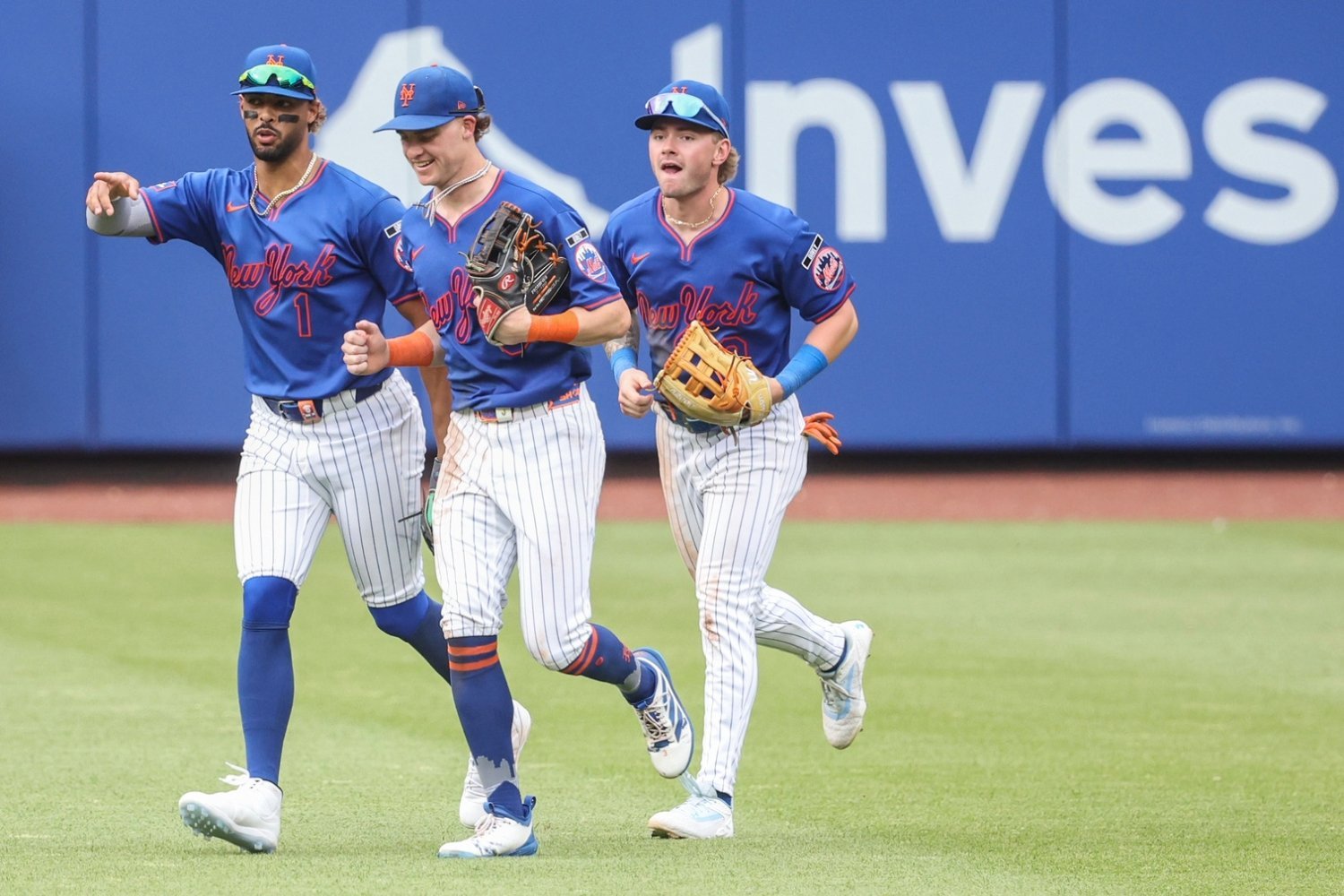 New York Mets Weekly Snapshot Record Last Week: 3-3 Runs Scored Last Week: 23 Runs Surrendered Last Week: 29 Standings: 5th in NL East (29-36) 15.5 GB of 1st Place, 5.0 GB of a Wild Card Transactions: 6/2 New York Mets sent 1B Jorge Polanco on a rehab assignment to Syracuse Mets. 6/3 New York Mets recalled RHP Joey Gerber from Syracuse Mets. 6/3 New York Mets optioned RHP Jonah Tong to Syracuse Mets. 6/9 New York Mets optioned C Hayden Senger to Syracuse Mets. 6/9 New York Mets acquired C Jack Scanlon from the New York Boulders of the Frontier League. 6/10 New York Mets recalled RHP Jonathan Pintaro from Syracuse Mets. 6/10 New York Mets optioned RHP Joey Gerber to Syracuse Mets. 6/11 New York Mets sent RHP Kodai Senga on a rehab assignment to Binghamton Rumble Ponies. Scores: Game 65: NYM 0, STL 7 Game 66: NYM 3, STL 9 Game 67: NYM 5, STL 4 Game 68: NYM 7, ATL 5 Game 69: NYM 1, ATL 3 Game 70: NYM 8, ATL 1 Series Breakdown/Highlights Cardinals Series: The Mets returned home to start the week, finding out why the Cardinals have been able to escape a rebuild. In game one, the offense never got started. Freddy Peralta gave up six earned runs over six innings of work. He struggled with the long ball against the up-and-coming Redbirds lineup. Game two did not go better for the Mets. On one hand, Francisco Alvarez hit a two-run home run in the game, so the offense scored. On the other, Austin Warren took the loss as the opener plan for the Mets did not work yet again, and David Peterson gave up six runs over his 3.2 innings of work as his season-long struggles continued. Game three was home run derby day at Citi Field, and the Mets found themselves on the right side of the onslaught. There were four home runs across the first two innings. The Mets came back against the Cardinals' bullpen, and Juan Soto had the go-ahead home run against JoJo Romero to salvage the series. Braves Series: The Mets had their most impressive series of the season, taking two out of three games against the Braves. In game one, the Mets' offense wasted no time getting started against their division rivals. Bo Bichette powered the lineup with a massive six-RBI performance, including a grand slam and a solo home run, while Juan Soto added a solo shot of his own to secure a 7-5 victory over the major-league-leading Braves. Game two was a much quieter affair for the Mets' bats, as they struggled to solve Martín Pérez, managing just one run over six innings. Sean Manaea pitched well, but the offense couldn't back him up, and a potential ninth-inning rally fell short after a Juan Soto home run was overturned due to fan interference, resulting in a 3-1 loss. Game three was all about the Mets bouncing back in a big way to secure the series. Freddy Peralta rebounded from a rough previous outing to deliver five solid innings, while A.J. Ewing led the offensive explosion with a home run and a two-run double. Juan Soto capped off the 8-1 blowout with a two-run single in the eighth, sending the Citi Field crowd home happy. Website Highlights A Seller's Guide To Buying At The Trade Deadline: The Mets’ Path Back Into the Race How Huascar Brazobán Became A Timing Trap David Stearns' Offensive Acquisitions Have Become Mets Liabilities Looking Ahead June 15th: at CIN (7:10pm) June 16th: at CIN (7:10pm) June 17th: at CIN (12:40pm) June 18th: at PHI (6:40pm) June 19th: OFF June 20th: at PHI (7:15pm) June 21st: at PHI (7:20pm) View the full article
 -
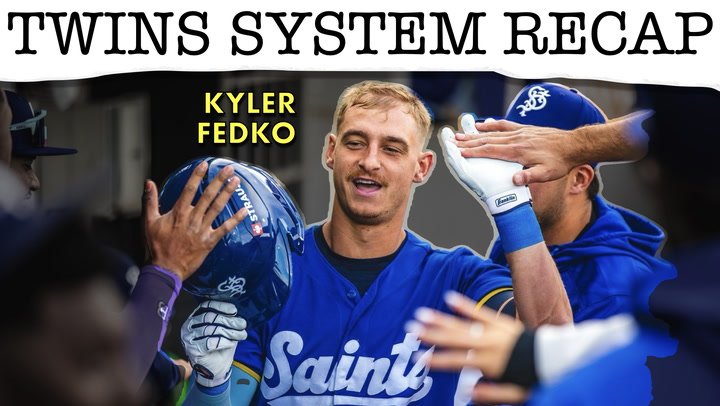 Twins System Recap: Breakout hitter of 2025 Kyler Fedko has kept rolling this season and is being promoted up to the big leagues to make his Major League debut. It was tough for him to just find playing time with the Saints to open this season, but opportunities opened up and he's taken advantage of them. Today's recap starts with some discussion on Fedko, how long he figures to stick around and why Kaelen Culpepper wasn't promoted. Down on the farm, Walker Jenkins started a rehab assignment, Kala'i Rosario helped break Wichita's losing streak, the Kernels scored 23 runs in a game and the Saints went unbeaten over the weekend thanks to some help from guys called up from A-Ball, including a monster game from Graham Brown in his Triple-A debut. View the full article
 -
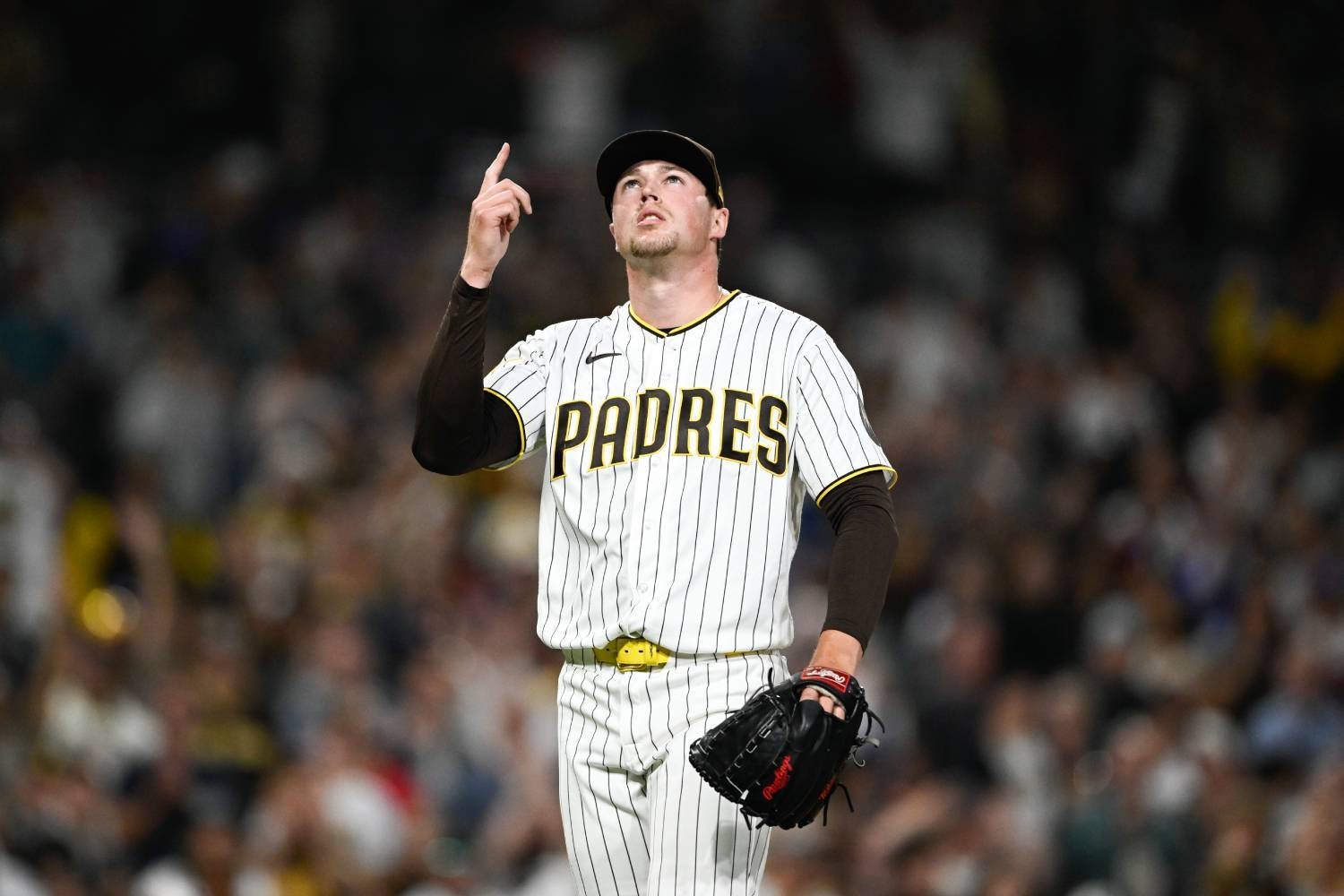 Baseball's best closer will be away from the San Diego Padres for a few days. Right-hander Mason Miller was placed on the bereavement-family medical leave list Monday by the Friars, who called up left-hander Kyle Hart from Triple-A El Paso. Also, outfielder Bryce Johnson, who was designated for assignment Friday, cleared waivers and was outrighted to Triple-A. The Padres open a three-game road series against the St. Louis Cardinals on Monday. Miller is second in MLB with 19 saves in 19 chances with a 0.37 FIP (0.90 ERA) after earning a four-out save in Sunday's 5-2 victory over the Baltimore Orioles. Miller, who fanned three Sunday, has 59 strikeouts in 30 innings, has an incredible 51.8% strikeout rate. Hart is with the Padres for a second time this season after making the Opening Day roster. In 12 MLB appearances and 16⅔ innings this year, Hart has a 3.35 FIP (5.40 ERA) with an 8.8% walk rate and 14.7% strikeout rate. At Triple-A, Hart has pitched 14⅔ innings over 11 games for a 7.36 ERA, with nine walks and 15 strikeouts. View the full article
 -
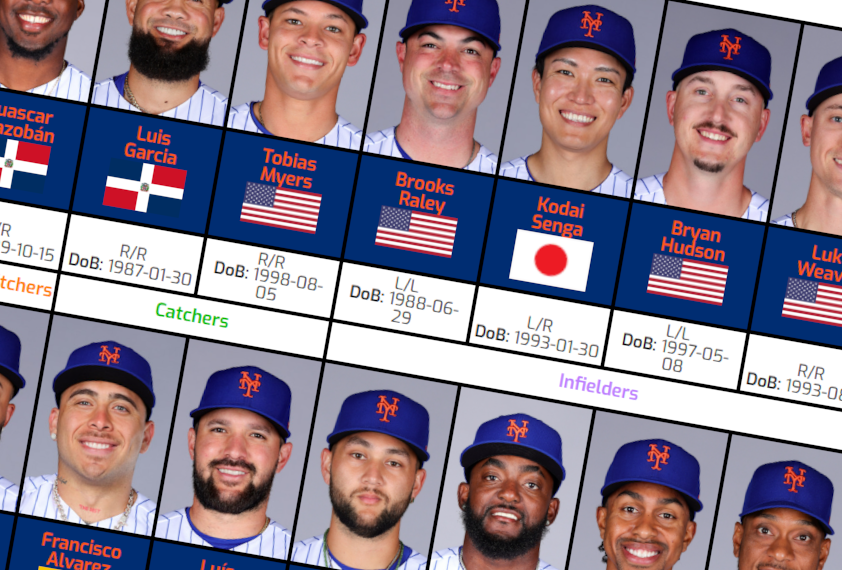 Since former Mets' general manager Billy Eppler was disciplined for improperly using the Injured List to stash otherwise healthy players, it has been something folks are wary of, as suspicious transactions continue. One may suspect that the punishment Eppler received didn't make front offices adverse to the practice so much as make them more careful about dotting their i's and crossing their t's when doing so. Transactions, 6/11/2026 COMING Signed as International Amateur Free Agent out of Mexico, Assigned to DSL Orange Starting Pitchers Victor Gallegos R/R DoB: 2007-07-14 High Level: Academy (2026) Before we get to Injured List considerations, let us first welcome young Victor Gallegos to the organization. Victor hails from Sonora, Mexico; his name means "Gallician Winner"; and he appears to be from a professional baseball family, but we have not been able to suss out just who he is related to. You can watch him get the news of his first professional contract here, complete with dramatic music to heighten the mood, and what sounds like a mother's sobs. Transactions, 6/15/2026 GOING COMING Placed on 15-Day IL with Right Hip Soreness Promoted from Syracuse and Transferred from Bullpen Starting Pitchers Christian Scott Tobias Myers R/R DoB: 1999-06-15 High Level: MLB (2026) R/R DoB: 1998-08-05 High Level: MLB (2026) When Tobias Myers went down to Syracuse two weeks ago, it was reported that they were trying to get some controlled scheduling over his usage, but there were hints that they were trying to stretch him into a starting role, and "get some controlled scheduling over his usage" sure sounds like a euphemism for that, especially if, you know, that controlled usage plays out in progressively longer workdays. And that is just what has happened, as Tobias has made three minor league appearances (all scoreless, with only one hit yielded), totaling 1 1/3, 2, and 2 2/3 innings. He returns after having sat since June 11, and as he is replacing a cog in the starting rotation, it's not crazy to suspect that his schedule start this evening is a start in fact, and not an opening. Christian Scott, for his part, has been consistently perfectly effective in his first season back from UCL surgery, and it makes perfect sense that the Mets would want to give him a two-week break to help ensure he will still be available come September, Billy Eppler be damned. It's a theory. To believe it means you need to accept that the Mets, already with five big-league starters on the IL, chose to stash a sixth there. But some version of Kodai Senga seems to be nearing a return, and if the theory turns out to be true, well, we won't tell if you won't. Your 2026 New York Mets Starting Pitchers Sean Manaea Tobias Myers Nolan McLean Freddy Peralta David Peterson R/L DoB: 1992-02-01 R/R DoB: 1998-08-05 R/R DoB: 2001-07-24 R/R DoB: 2996-06-04 L/L DoB: 1995-09-03 Relief Pitchers Huascar Brazobán Daniel Duarte A.J. Minter Cionel Pérez Brooks Raley Austin Warren Luke Weaver R/R DoB: 1989-10-15 R/R DoB: 1996-12-04 L/L DoB: 1993-09-02 R/L DoB: 35176 L/L DoB: 1988-06-29 R/R DoB: 1996-02-05 R/R DoB: 1993-08-21 Relief Pitchers Catchers Infielders Devin Williams Francisco Alvarez Luís Torrens Bo Bichette Brett Baty Vidal Brujan Marcus Semien R/R DoB: 1994-09-21 R/R DoB: 2001-11-01 R/R DoB: 1996-05-02 R/R DoB: 1998-03-05 L/R DoB: 1999-11-13 S/R DoB: 1998-02-09 R/R DoB: 1990-09-17 Infielders Outfielders Mark Vientos Eric Wagaman Carson Benge A.J. Ewing MJ Melendez Juan Soto Jared Young R/R DoB: 1993-12-11 R/R DoB: 1997-08-14 L/R DoB: 2003-01-20 L/R DoB: 2004-08-10 L/R DoB: 1993-11-29 L/L DoB: 1998-10-25 L/R DoB: 1995-07-09 Also on 40-Player Roster Starting Pitchers Relief Pitchers Clay Holmes Tylor Megill Christian Scott Kodai Senga Zach Thornton Jonah Tong Alex Carrillo R/R DoB: 1993-03-27 R/R DoB: 1995-07-28 R/R DoB: 1999-06-15 L/R DoB: 1993-01-30 L/L DoB: 2002-01-17 R/R DoB: 2003-06-19 R/R DoB: 1997-06-06 Relief Pitchers Catchers Reed Garrett Justin Hagenman Tobias Myers Dedniel Núñez Jonathan Pintaro Dylan Ross Hayden Senger R/R DoB: 1993-01-02 R/R DoB: 1996-10-07 R/R DoB: 1998-08-05 R/R DoB: 1996-06-05 R/R DoB: 1997-11-07 R/R DoB: 2000-09-01 R/R DoB: 1997-04-03 Infielders Outfielders Francisco Lindor Ronny Mauricio Jorge Polanco Nick Morabito Luis Robert, Jr. Tyrone Taylor S/R DoB: 1993-11-14 S/R DoB: 2001-04-04 S/R DoB: 1999-11-13 R/R DoB: 2003-05-07 R/R DoB: 1997-08-03 R/R DoB: 1994-01-22 Your Mets Coaching Staff Manager Bench Coach Pitching Coach Hitting Coordinator Third Base Coach First Base Coach Bullpen Coach Ass't Pitching Coach Carlos Mendoza Kai Correa Justin Willard Jeff Albert Tim Leiper Gilbert Gomez José Rosado Dan McKinney DoB: 1979-11-27 DoB: 1989-07-14 DoB: 1990-09-09 DoB: 1992-08-16 DoB: 1996-07-19 DoB: 1992-03-08 DoB: 1974-11-09 DoB: 1989-06-06 Hitting Coach Strategy Coach Catching Coach Coaching Assistant Bat'g Practice Pitcher Equipment Manager Bullpen Catchers Bullpen Catchers Troy Snitker Danny Barnes J.P. Arencibia Rafael Fernandez Kevin Mahoney Kevin Kierst Eric Langill Dave Racaniello DoB: 1988-12-05 DoB: 1989-10021 DoB: 1986-01-05 DoB: 1988-08-03 DoB: 1987-05-11 DoB: 1964-07-09 DoB: 1979-04-09 DoB: 1978-06-03 Your Mets Training Staff Director of Player Health Head Athletic Trainer Assistant Athletic Trainer Reconditioning Coordinator Reconditioning Therapist Head Performance Coach Assistant Performance Coach Performance Coordinator Soft Tissue Specialist Brian Chicklo Joseph Golia Bryan Baca Sean Bardanett Josh Bickel Dustin Clarke Tanner Miracle Jeremy Chiang Hiroto Kawamura DoB: 1972-07-17 DoB: 1978-??-?? DoB: Circa 1980 DoB: 1988-06-23 DoB: 1996-??-?? DoB: 1987-??-?? DoB: 1991-??-?? DoB: ????-??-?? DoB: 1962-07-19 View the full article
 -
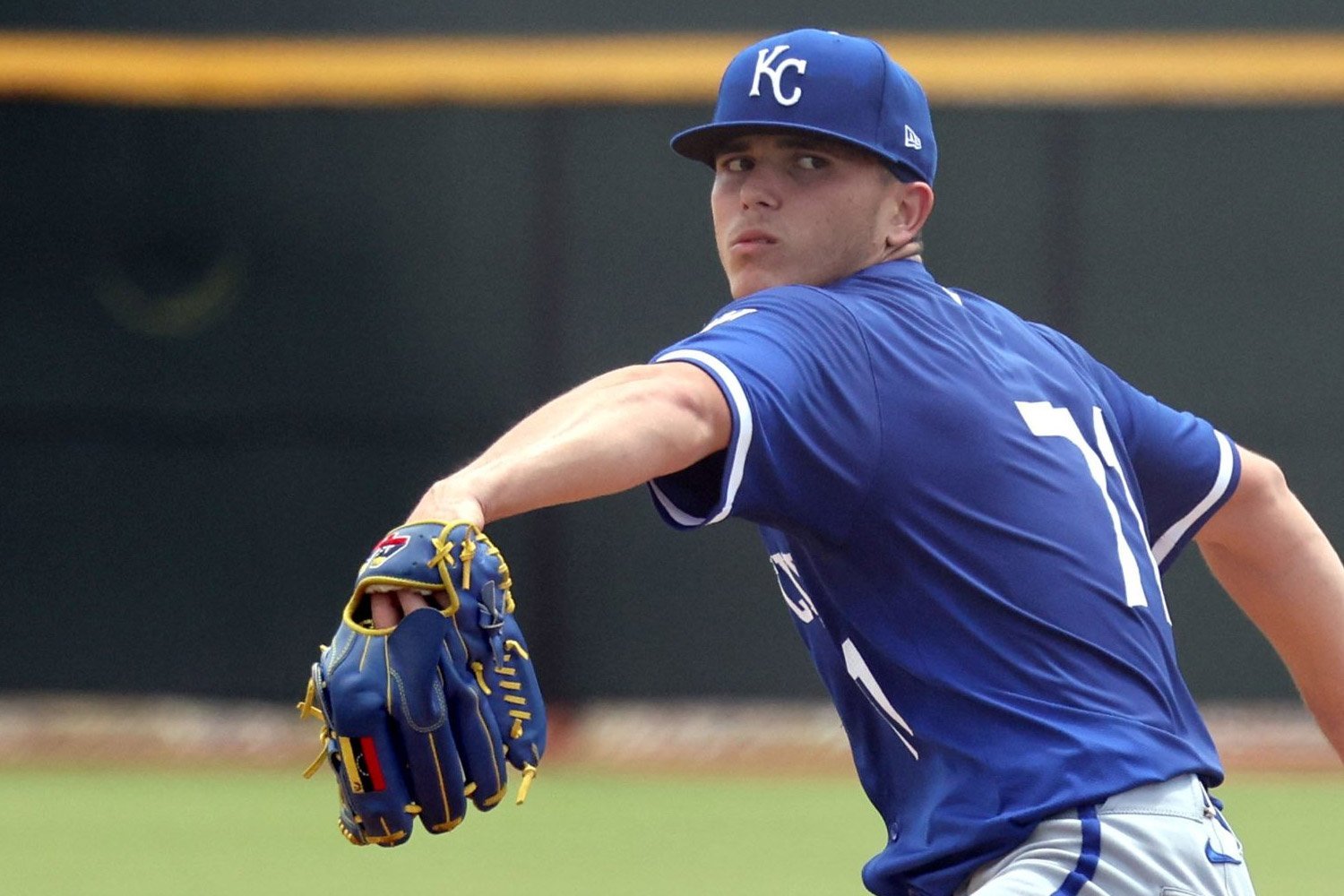
 On Monday afternoon, the Royals' Player Development account announced that pitcher Kendry Chourio would be promoted to the High-A Quad Cities River Bandits. Chourio is the No. 1 Royals prospect at Royals Keep and is a Top-100 prospect according to many outlets, including Baseball America and MLB Pipeline. He will join lefty David Shields, our No. 2 Royals prospect, in the River Bandits rotation. In 11 starts and 48 IP with the Columbia Fireflies this year, the 18-year-old Venezuelan-born pitcher posted a 1.88 ERA, a 0.92 WHIP, a 23.4% K%, and 18.6% K-BB%. His 3.56 FIP in Low-A was higher than his ERA, but Chourio possesses elite stuff and showcased strong ability to generate grounders (43.8% GB%) and pop-ups (25% IFFB%). Chourio's fastball sits in the upper 90s, and many believe he could be a starter in the mold of Yordano Ventura at the MLB level. No word has been made on who will replace Chourio in the Columbia rotation or if Shields will be moving up to Northwest Arkansas soon to join fellow lefty Justin Lamkin, who was recently promoted from Quad Cities to Northwest Arkansas. Royals fans can vote on where Chourio, Shields, Lamkin, and other prospects rank in our June prospect rankings in the Tweet below. View the full article
 -
 The Blue Jays designated Connor Seabold for assignment last week when Max Scherzer returned from the injured list. Today, the right-hander's time in DFA limbo came to an end. The Jays have shipped Seabold off to the Royals in exchange for minor league right-hander Denis Samudio. Toronto also gets cash considerations in the deal. Seabold appeared in five games for the Blue Jays this season. He gave up three runs in 3.1 innings, striking out one and walking two. Presuming he gets in a game for the Royals, they will be his seventh MLB team. Samudio signed with Kansas City as an international free agent in January 2025. He pitched well in the Dominican Summer League last season (1.72 ERA, 30.6% strikeout rate), earning an honourable mention on FanGraphs' list of the Royals' top prospects. According to Brendan Gawlowski's write-up, the righty was touching 95 with "some of the best vertical break" in Kansas City's system. After starting the 2026 season in the Arizona Complex League, Samudio earned a promotion to the Single-A Columbia Fireflies in May. In four outings for the Fireflies, he struck out 17 and walked eight in 14 innings of work, pitching to a 4.50 ERA. His latest outing was his best. The 21-year-old earned his first professional win with four innings of scoreless relief work. Samudio will remain at the Single-A level for now and report to the Dunedin Blue Jays. View the full article
 -
 In an attempt to fortify the bullpen, the Kansas City Royals have found a possibility on the MLB merry-go-round. The Royals on Monday traded for right-handed reliever Connor Seabold, who had been designated for assignment by the Toronto Blue Jays. The Royals sent minor-league right-handed starter Denis Samudio and cash to the Jays. To make room on the 40-man roster, right-handed closer Carlos Estevez was transferred from the 15-day injured list to the 60-day IL. A spot on the 26-man roster for Seabold will need to be made once he reports, which will likely be Tuesday. The Royals also promoted right-hander Mitch Spence from Triple-A Omaha and optioned right-handed reliever Eli Morgan to Triple-A. Morgan was sent down Sunday. Seabold is on his third MLB team this season. After being released by the Jays in spring training, Seabold made the Detroit Tigers' Opening Day roster, but was designated for assignment May 24 after a 4.13 FIP (3.45 ERA) in 11 appearances and 15⅔ innings. He was dealt to the Jays, where he pitched in five games to a 4.31 FIP (8.10 ERA) in 3⅓ innings. The 21-year-old Samudio has pitched in two games in the Arizona Complex League, giving up five runs (two earned) in 5⅔ innings. View the full article
 -
 Unlike other publications, Royals Keep enables all users to contribute to our top prospect rankings. Anyone with a Royals Keep account can participate and give their input on who they think should be in the Royals' top prospects list. Before you vote, you can hit our top prospects page for the latest stats and news on Royals prospects, while on the voting page, every name is a clickable link that brings up their current stat card. Voting is simple, just follow the instructions below! Here's the rundown on how to participate: 1. You must have an account and be logged in to vote. If you don't have an account, click here. It requires only 60 seconds to create an account. 2. Review our current top 20 prospect list, catch up on stats, rankings, etc. (you can do so from the voting page link below) 3. Have your prospect list in your filthy little paws? Then flip on over to the new prospect voting page (after reading the rest of this, please). https://royalskeep.com/prospect-voting 4. Voting is super simple; you drag and drop players in the order you wish them to be. After you move a prospect, the list automatically renumbers so you don't lose track of the order. This works on mobile devices, but it's a *vastly* better experience on desktop. Sorry, that's just how this kind of thing works. There's no excellent way to make something like this as awesome on a phone screen. 5. Each prospect has a comment section where you can add any commentary you have on that player. At the bottom of the list, there is a general comment section to explain over-arching things you'd like to mention. 6. Don't see a prospect you want to put on the list? Just pop back here and give me a mention (in a comment, start typing @Brock Beauchamp and select my name after it appears). Please mention the prospect you would like added, and I will do so as soon as possible. 7. Once you're done with all of it, click Save. You've now voted! 8. When the voting closes, a new thread will automatically generate in the minor league forum with all of your rankings and comments for everyone to read and talk about. 9. You can only vote once. If you have voted in error, pop back here and tag Brock to ask to have your vote deleted. It will be removed, and you can vote again. Voting closes Wednesday, June 17. View the full article
 -
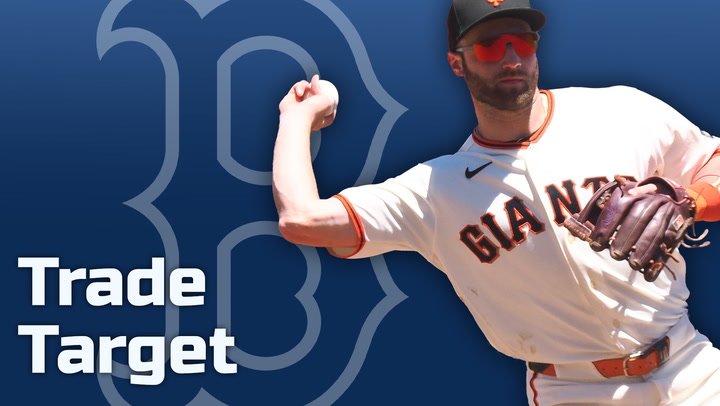 As the Red Sox attempt to salvage their season by looking for a right-handed bat, the San Francisco Giants may have a player available. Casey Schmitt has been on a tear this season, and has positional flexibility that may interest the Red Sox. View the full article
 -
 Unlike other publications, Jays Centre enables all users to contribute to our top prospect rankings. Anyone with a Jays Centre account can participate and give their input on who they think should be in the Blue Jays' top prospects list. Before you vote, you can hit our top prospects page for the latest stats and news on Blue Jays prospects, while on the voting page, every name is a clickable link that brings up their current stat card. Voting is simple, just follow the instructions below! Here's the rundown on how to participate: 1. You must have an account and be logged in to vote. If you don't have an account, click here. It requires only 60 seconds to create an account. 2. Review our current top 20 prospect list, catch up on stats, rankings, etc. (you can do so from the voting page link below) 3. Have your prospect list in your filthy little paws? Then flip on over to the new prospect voting page (after reading the rest of this, please). https://jayscentre.com/prospect-voting 4. Voting is super simple; you drag and drop players in the order you wish them to be. After you move a prospect, the list automatically renumbers so you don't lose track of the order. This works on mobile devices, but it's a *vastly* better experience on desktop. Sorry, that's just how this kind of thing works. There's no excellent way to make something like this as awesome on a phone screen. 5. Each prospect has a comment section where you can add any commentary you have on that player. At the bottom of the list, there is a general comment section to explain over-arching things you'd like to mention. 6. Don't see a prospect you want to put on the list? Just pop back here and give me a mention (in a comment, start typing @Brock Beauchamp and select my name after it appears). Please mention the prospect you would like added, and I will do so as soon as possible. 7. Once you're done with all of it, click Save. You've now voted! 8. When the voting closes, a new thread will automatically generate in the minor league forum with all of your rankings and comments for everyone to read and talk about. 9. You can only vote once. If you have voted in error, pop back here and tag Brock to ask to have your vote deleted. It will be removed, and you can vote again. Voting closes Wednesday, June 17. View the full article
 -
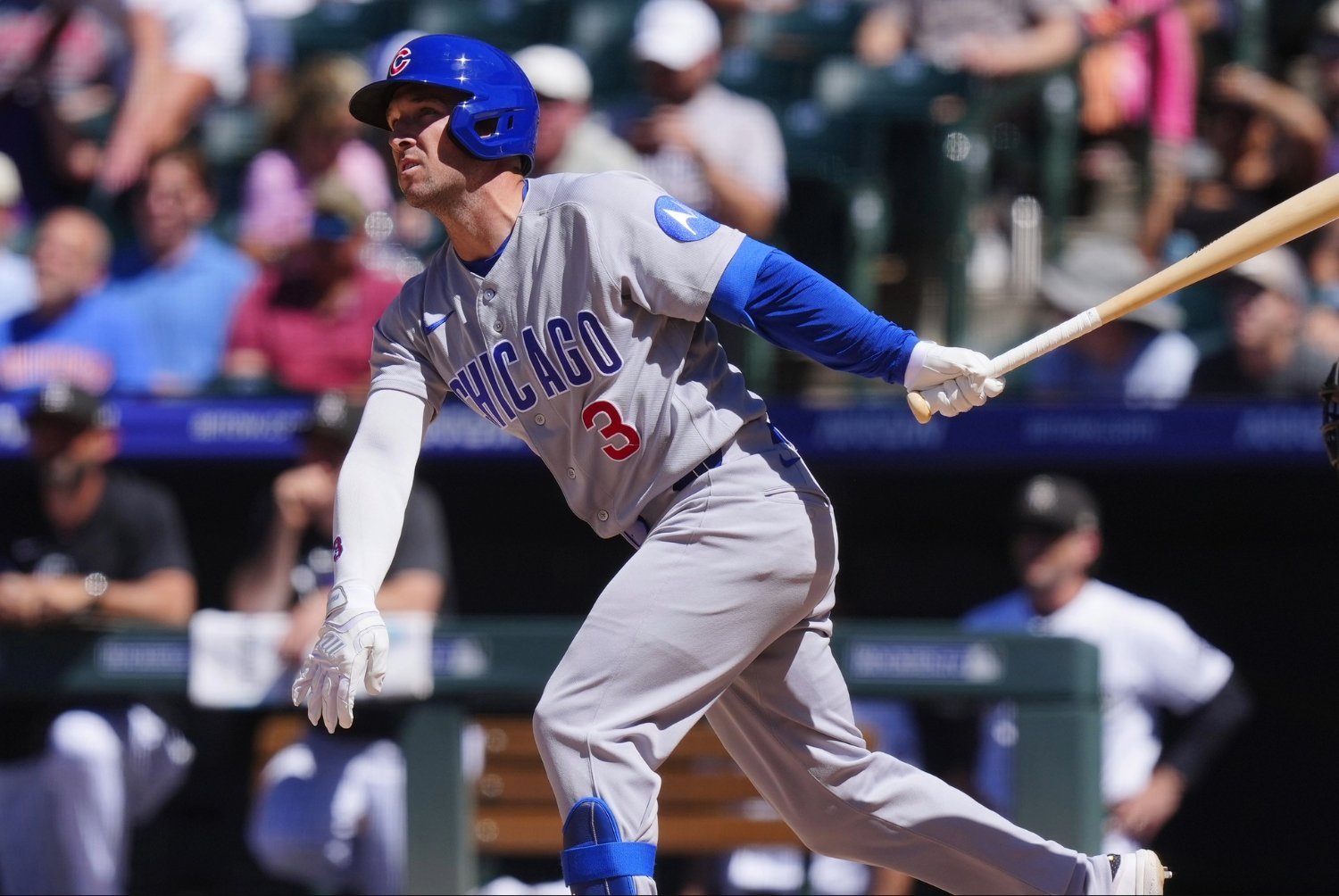 I have written about this phenomenon before. Our brains are built to recognize patterns. Close your eyes and picture Nico Hoerner swinging at a pitch. In all likelihood, he is making contact with that pitch in your head, because almost every time he swings, he is making contact with that pitch. Except for when he doesn’t, and it leaves me very confused. I had another one of these moments this past week while watching Chicago Cubs highlights. I didn’t get to watch any of Thursday’s win over the Rockies live because of my full-time job, however, I did get to watch the condensed game. I was happy to see that Alex Bregman hit a home run, even if something about the highlight seemed odd to me: Breggy.mp4 Bregman has found success over his career with a very flat bat path, or as it is known on Baseball Savant, swing path tilt. He typically hits home runs on pitches middle up. With a flat bat path and short swing, Bregman has an easier time getting to those pitches and driving them in the air to the pull side of the field for home runs. It’s incredibly rare to see him go down and get a ball that is that low and power it over the fence. That is usually reserved for hitters with a steeper bat path, like Mike Trout, for example. In fact, according to Baseball Savant, that pitch was the fourth-lowest pitch he has ever hit for a home run, and two of the three examples that were lower were from 2017. That long ball was very much something we haven’t seen very often, and certainly not in more recent memory. We can see that on this chart showing every home run of Bregman’s career. That tiny little bottom right-most blue hex is where the home run against the Rockies was: So, what does this mean going forward? The former Astro has been served a steady diet of breaking balls to this point in the season: 40.2 percent of his pitches seen have been some form of breaking ball. That is the highest mark of his career, and is up from 31.3 percent last season. This has come at the expense of fastballs. Only 50.4 percent of the pitches he has seen have been fastballs, which is down from 57.1 percent last season, and is also the lowest mark of his career. I assume you already know this, since you’re willingly reading an article about baseball, but just in case: When a pitcher throws a breaking ball, they typically want it to end up down in the zone. More breaking balls means more pitches down in the zone, and less pitches up and out over the plate where Bregman prefers them. Pitchers have profited from this strategy, as Bregman is slugging just .281 on breaking balls. Using the new swing timing data at Baseball Savant, we can see that he is way early on breaking balls more often than he was in 2024, when he slugged .479 on those pitches: In 2024, which is in orange, he was on time much more often, which is that big peak in the middle. In 2026, which is in blue, we can see a large blue section that peaks out from behind the orange on the far right. That is bad. Those are the swings where Bregman is disastrously early. This is what that looks like: Breggy 2.mp4 The new Cub said as much himself, telling Patrick Mooney “I am out in front on soft and late on fastballs.” This would certainly back that up. Last week, our own Randy Holt did a deep dive on Bregman, and ultimately concluded he was being way too patient and needed to try to jump at pitches out over the plate more often. That, most certainly, is a solution to this problem. On Thursday, he simply decided to just go down and get the pitch that was thrown to him. If he wants to start doing that instead, that could also work. View the full article
 -
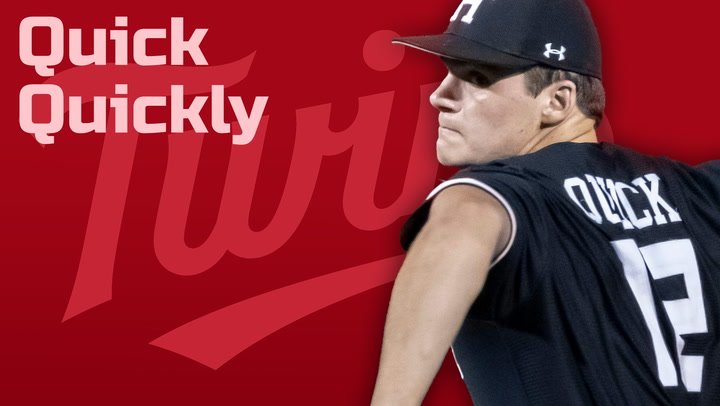 The Twins have every reason to be patient with Riley Quick. He keeps giving them reasons not to be. View the full article
 -
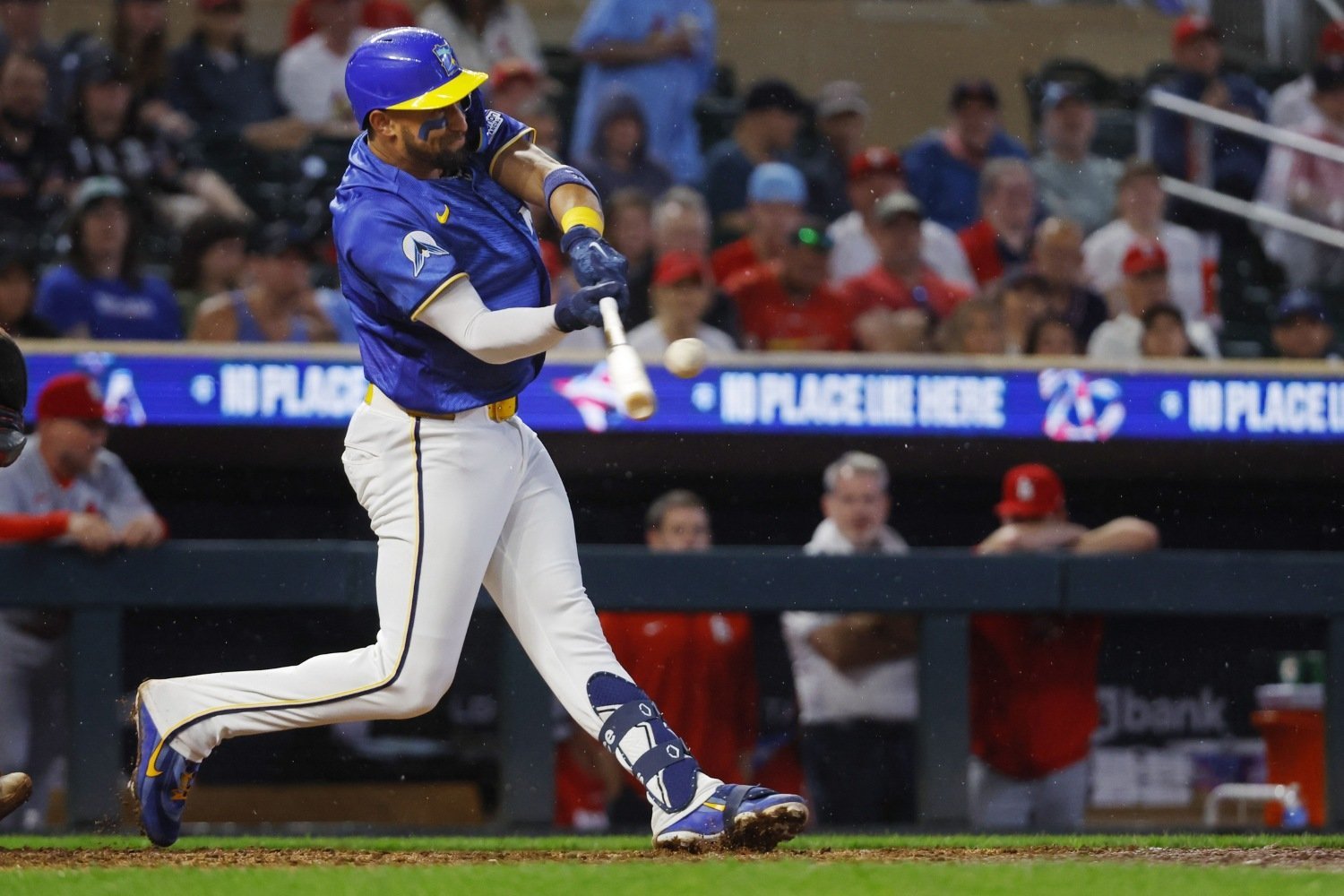 For the past several seasons, Royce Lewis has been one of the most frustrating players in all of baseball. And unfortunately, there are multiple reasons why. Since 2021, Lewis has been plagued by lower-body injuries, including multiple ACL tears that have cost him significant chunks of development time. Every time it seems like he's gaining momentum, another setback happens. While the flashes of superstar potential have always been there, the consistency hasn't been. When a player misses that much time during crucial developmental years, it's hard not to wonder what could have been. Those injuries haven't just kept Lewis off the field. They've also made it difficult for him to establish rhythm, make adjustments, and build on previous success. As a result, his performance at the major-league level has been a roller coaster. That frustration reached a new level during the first two months of the 2026 season. Through May 17, Lewis was hitting just .163 with a .261 on-base percentage and a 53 wRC+. He wasn't just struggling; he was producing runs roughly half as well as an average major-league hitter. Eventually, the Twins decided something needed to change. Lewis was optioned to Triple-A, in hopes that he could reset both mechanically and mentally. While some viewed the move as a concerning development for a former No. 1 overall pick, it may end up being one of the most important decisions the organization has made all season. Once Lewis arrived in Triple-A, he immediately caught fire. Over a 13-game stretch, he hit .340 and launched eight home runs, reminding everyone exactly what he’s capable of. That hot streak earned him a quick return to the major leagues. And since being recalled on June 6, Lewis has looked like a completely different hitter. In a small sample of 33 plate appearances, he's hitting .379 with a .424 on-base percentage, five extra-base hits, and a stolen base. More importantly, the quality of his at-bats has looked dramatically different. The biggest difference? He's making contact. Before his demotion, He was striking out 31% of the time. Since returning, that number has plummeted to 13%. That's an enormous shift for any hitter, especially one who looked completely lost just a few weeks ago. So what's changed? For starters, it appears Lewis made a notable mechanical adjustment to his swing. While he's always had a small leg kick when he plants his front leg, that leg kick is now much larger. Leg kicks are a funny thing in baseball. Some hitters will have one, but abandon it to simplify their mechanics. Some hitters add one to help with timing and explosion. If the early results are any indication, that extra leg kick is working for Lewis. He's been a much more powerful hitter while remaining on time, and the swing data backs it up. Before being sent down, Lewis was averaging 73.8 mph of bat speed. That's not necessarily a bad number, but since being recalled, it's gotten even faster. Lewis is now averaging 76 mph of bat speed, a mark that's among the best of all major-league hitters. A bigger leg kick means more sheer force transferred into his front side, without necessarily losing control of his stroke. Not only is he swinging the bat faster, but the improved bat speed is translating into better results across the board. He's hitting the ball harder, he's making significantly more contact (which is likely a result of just trusting his swing more), and he looks much more like the version of Royce Lewis that Twins fans fell in love with a few years ago. But the changes don't stop there. In addition to swinging a faster bat, there appears to be a clear shift in what Lewis is trying to accomplish at the plate. One of the most telling indicators is his pulled fly-ball rate. Before his demotion, just 19.1% of the balls he put in play were in the air to his pull side. That's not a terrible number by any means, but pulled fly balls are one of the easiest ways for hitters to generate extra-base power. For a player with Lewis's strength and bat speed, you'd like to see that number a little higher. Since returning to the majors, that number has jumped. Over the past week and a half, his pulled fly-ball rate is up to 27%, which currently is in the 97th percentile of all major-league hitters. That may not sound like a huge gap on the surface, but it's a substantial adjustment in approach. It’s allowing his raw power to play up in games. As a result, his barrel rate has surged as well, and the overall quality of contact has taken a significant step forward. It genuinely feels like Lewis's swing has leveled up since returning from Triple-A. Now, it's important to remember that we're still talking about a very small sample size. Pitchers will make adjustments, and Lewis will inevitably cool off at some point. That's just how baseball works. The higher leg kick has helped him catch the ball with his barrel more often when he's been on time; here's the timing distributions for him by month for swings on which he's on time. Since his recall, he lines up the ball better on those swings, which is why we're seeing that pulled fly-ball contact. What this doesn't show you, though, is that Lewis is still early very often—in fact, a hair more so than before he went down. He's on time for the fastball, but still early on other stuff. Pitchers will start forcing him to sit back a bit more again, and he'll have to adapt. But even if the production regresses, the underlying changes are encouraging. The bat speed is up, the contact rate is up, and the quality of contact is up. But perhaps most importantly, his confidence appears to be back. Lewis looks like a different player right now, and when he's in a groove, he legitimately looks like one of the best hitters in the league. We've seen flashes of that before, where he looks capable of carrying an offense all by himself. The challenge has always been finding a way to sustain it. For now, though, Twins fans should enjoy what they're watching. Because this version of Royce Lewis is the player everyone has been waiting for. Let's hope he's here to stay, because my gosh, is this fun to watch. View the full article
 -
 Unlike other publications, Talk Sox enables all users to contribute to our top prospect rankings. Anyone with a Talk Sox account can participate and give their input on who they think should be in the Red Sox top prospects list. Before you vote, you can hit our top prospects page for the latest stats and news on Red Sox prospects, while on the voting page, every name is a clickable link that brings up their current stat card. Voting is simple, just follow the instructions below! Here's the rundown on how to participate: 1. You must have an account and be logged in to vote. If you don't have an account, click here. It requires only 60 seconds to create an account. 2. Review our current top 20 prospect list, catch up on stats, rankings, etc. (you can do so from the voting page link below) 3. Have your prospect list in your filthy little paws? Then flip on over to the new prospect voting page (after reading the rest of this, please). https://talksox.com/prospect-voting 4. Voting is super simple; you drag and drop players in the order you wish them to be. After you move a prospect, the list automatically renumbers so you don't lose track of the order. This works on mobile devices, but it's a *vastly* better experience on desktop. Sorry, that's just how this kind of thing works. There's no excellent way to make something like this as awesome on a phone screen. 5. Each prospect has a comment section where you can add any commentary you have on that player. At the bottom of the list, there is a general comment section to explain over-arching things you'd like to mention. 6. Don't see a prospect you want to put on the list? Just pop back here and give me a mention (in a comment, start typing @Brock Beauchamp and select my name after it appears). Please mention the prospect you would like added, and I will do so as soon as possible. 7. Once you're done with all of it, click Save. You've now voted! 8. When the voting closes, a new thread will automatically generate in the minor league forum with all of your rankings and comments for everyone to read and talk about. 9. You can only vote once. If you have voted in error, pop back here and tag Brock to ask to have your vote deleted. It will be removed, and you can vote again. Voting closes Wednesday, June 17. View the full article
 -
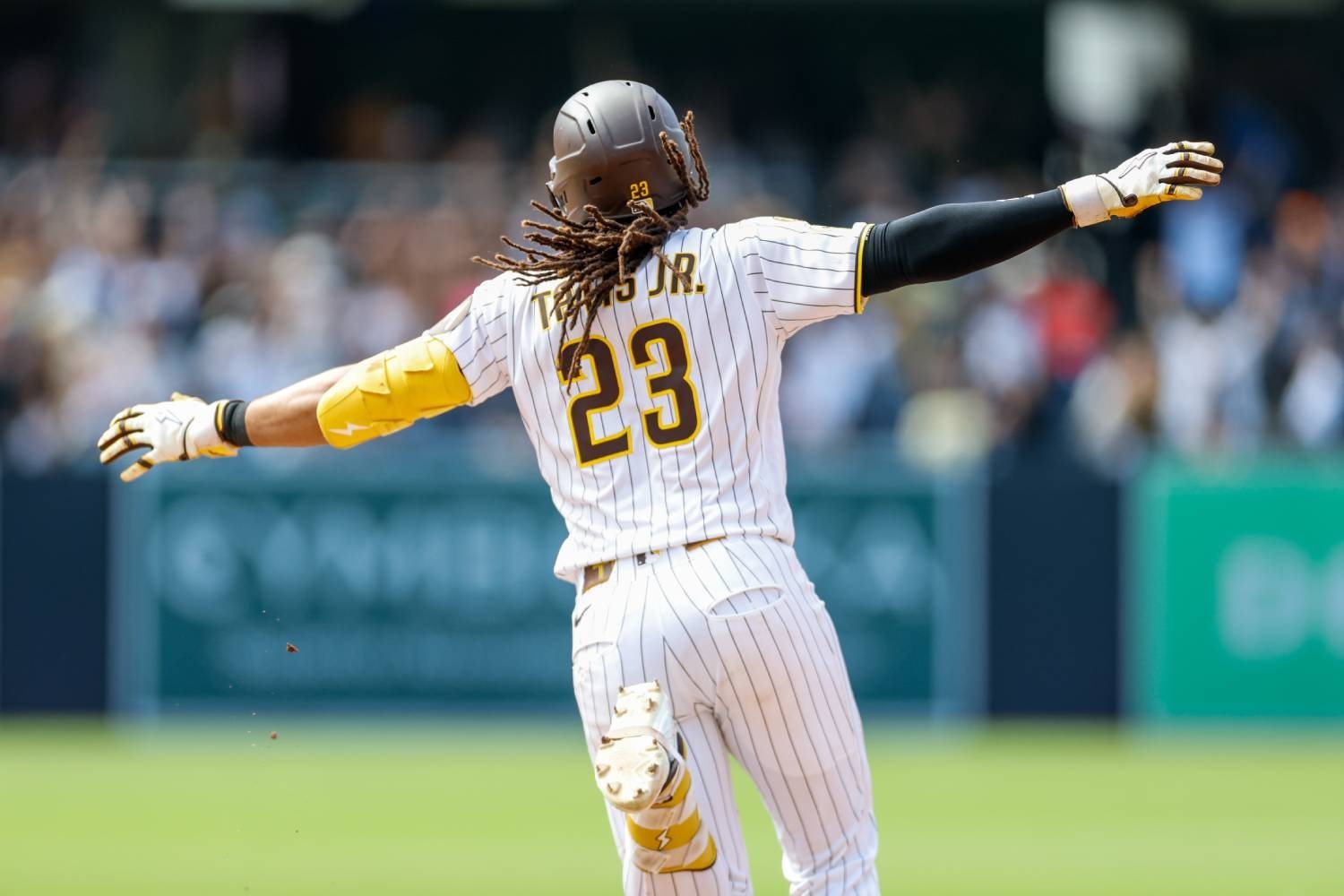 San Diego Padres Weekly Snapshot Record last week: 4-2 Runs scored last week: 31 Runs allowed last week: 23 (season run differential: minus-10) Scores Game 65 (Monday): Padres 6, Reds 2 Game 66 (Tuesday): Reds 5, Padres 3 (11 innings) Game 67 (Wednesday): Padres 5, Reds 4 Thursday: Off Game 68 (Friday): Orioles 7, Padres 3 Game 69 (Saturday): Padres 9, Orioles 3 Game 70 (Sunday): Padres 5, Orioles 2 Week in Review and Highlights Reds series Game 1: Maybe Freddy Fermin should be hitting cleanup. OK, that is a joke, but Fermin appears to fully be out of his hitting slump. The catcher homered for the third straight game and the Padres used some small-ball tactics to help produce runs in a 6-2 victory over the Cincinnati Reds. Fermin had been in an 0-for-30 funk when he went deep Saturday, then followed that with another long ball Sunday and made it three in a row when he started the scoring with a solo shot Monday. He now has back-to-back games with multiple hits and is 5-for-9 over the last three games. But it was also the guys brought up from Triple-A last week to provide energy and speed that were in the middle of the offense on this night. The Reds led 2-1 entering the bottom of the seventh, then tied the game on back-to-back doubles by Xander Bogaerts and Gavin Sheets. Then came the bunts. Jase Bowen put down what should have been a sacrifice bunt but turned out to be a single, then Samad Taylor, who like Bowen was at Triple-A El Paso until last week, put down a sac bunt that plated Sheets when it wasn't handled cleanly by the first baseman for a 3-2 lead. Fermin followed with a bunt in front of the plate that the pitcher couldn't pick up in time to make a play, loading the bases. But the threat ended there as Fernando Tatis Jr. flew out to shallow right field and Jackson Merrill hit a grounder to third for a force out. In the eighth, Bogaerts had a one-out single and Bowen a two-out single to put runners on the corners, then stole second. Taylor then broke it open with a soft two-run single to left to bring both runners home. After Taylor stole second, Fermin singled him home for a 6-2 cushion. Padres right-handed starter Walker Buehler wasn't great, but he battled to minimize the damage. Buehler was reached for eight hits and two walks in 4⅔ innings, however only allowed one run. After right-hander Bradgley Rodriguez gave up a run on a hit and a walk in two-thirds of an inning, left-hander Adrian Morejon (1⅔ innings), right-hander Jason Adam (one inning) and closer Mason Miller (one inning) didn't allow a hit, with Adam and Miller punching out three. Game 2: Getting six hits from Machado and Tatis and having their most in just more than a month, the Padres had 20 at-bats with runners in scoring position. And still couldn't break out. While it could be a sign that things are about to change, on this day, it proved to be another frustrating day by the offense. The Friars dropped a 5-3 decision in 11 innings to the Reds as they were able to get a hit just three times in those 20 opportunities. It really stood out from the eighth inning on. Machado's leadoff double in the eighth went for naught as Gavin Sheets, grounded out with Machado moving to third, pinch-hitter Ty France was walked, then, after a pitching change, Taylor struck out and Bowen hit a broken-bat fly to shallow right field that was snagged on a sliding catch. In the ninth, Sung-Mun Song and Tatis had one-out singles. Merrill, after a pitching change, reached on an infield single to load the bases before Machado and Sheets struck out. After the Reds scored once in the top of the 10th, Taylor tied the game on a one-out single. He stole second, Bowen struck out and Fermin, who homered in the previous three games, flew out to the warning track in left, just missing a walk-off. The Reds got a Sal Stewart homer in the 11th, while Song, Tatis and Merrill went down in order. For the second game in a row, the Padres' starting pitcher had to battle himself through a short outing. This time, it was right-hander Lucas Giolito, who only allowed two hits but walked five and gave up two runs (one earned) and had three strikeouts. He threw 85 pitches, only 43 of which were strikes. That was the second-most pitches he has thrown in his five starts this season and the third straight start where he didn't get an out in the fifth inning. The bullpen of right-hander David Morgan, Morejon, Adam and Miller was very good, punching out 10 and giving up three hits in five innings (Adam did walk two). Right-hander Bradgley Rodriguez handled the 10th and left-hander Yuki Matsui the 11th. Game 3: This was the moment that had been missing. For all the good things that happened in the first month of the season when things were going right, the entire first two-plus months were missing a Tatis moment. In a 4-4 game and one out from heading to extra innings, Tatis hit a walk-off homer—just his second long ball of the season—gave the Padres a 5-4 victory over the Reds. It was a line-drive shot to left, but the meaning of it was bigger than anything a Wednesday afternoon game in June could have. Tatis could really exhale. His teammates could, too, after the team's best player, carrying the burden of not being the home run hitter he has been, came through when the Friars needed him most, giving them their first series victory in five tries. But it also came after his teammates put him in that position. The Padres were down 4-2 in the bottom of the eighth after the Reds scored once in the seventh and another in the eighth. Merrill doubled, Sheets drove him in with a one-out double before Bowen came on to run for him. One out later, Taylor came through again, singling to center and sending Bowen streaking for home without a throw for the tying run. Tatis came up in the ninth with two outs. Two 97 mph four-seamers missed inside to begin the at-bat. The third pitch was a slider at the top outside corner of the zone to bring the count to 2-1. The right-hander Chase Petty put an 89.8 mph slider where you shouldn't to any hitter: right in the middle of the zone. Nando drilled it into the first row of the bleachers and set off a celebration that quickly saw him shirtless as his teammates mobbed him. Again, the starting pitching wasn't great, but didn't suck, either. Right-hander Michael King went 6⅔ innings, but he allowed three runs on a pair of homers. He gave up seven hits altogether with three walks and three strikeouts. That was just enough for the overworked bullpen, which got 1⅓ innings from right-hander Ron Marinaccio and one inning from Wandy Peralta, who picked up the win. A day off to soak in the vibes of the walk-off win before a nine-game road trip seems well-timed. Orioles series Game 1: After a day off to swim in all the positivity created by Tatis' walk-off, the Padres opened a nine-game road trip with a chance to make some headway. But the roadie got off to a rocky start as right-hander Griffin Canning struggled early in a 7-3 loss to the Baltimore Orioles. Canning surrendered three runs in each of the first two innings and allowed his second homer of the game in the fourth. He gets credit for battling through and completing five innings, but the quality of his start was poor and didn't give the Padres a chance. It was a career-worst seven runs on six hits and five walks with six punchouts. The walks were the biggest contributor to Canning's catastrophe. He has walked two or more in seven of his eight starts and has 22 in 37⅔ innings (13.5% walk rate) Again, there were some small signs of the offense starting to wake up. Machado had a pair of doubles in his return to Baltimore, where he began his career, while Sheets, who got a rare right field start, drove in a pair, including an RBI double in the first inning. Tatis singled, had a stolen base, scored a run and drove in another. But the team was 4-for-14 with runners in scoring position. Game 2: Perhaps it was due to the East Coast heat and humidity, but the Padres sure needed an offensive outburst like they had Saturday. On the strength of a season-high five home, including first-inning blasts from Merrill and Taylor, the Padres rolled to a 9-3 triumph. Taylor's shot, part of a three-hit day, was the first of his MLB career. Sheets, Rodolfo Duran and Machado also went deep. Merrill and Sheets are from the Baltimore area with Sheets' dad, Larry, having played for the Orioles. But the win could come at a bit of a price. Bogaerts left the game in the bottom of the sixth after being hit on the left earflap by a fastball in the top of the fifth. Fermin sustained a freak injury when he turned his head as left-hander Yuki Matsui spiked a warmup pitch in the sixth. Manager Craig Stammen seemed more concerned with Fermin's status, but both are in the concussion territory so nothing is a given with that type of injury as we have seen with Jake Cronenworth. While that was the bad news, the rest of the day was filled with positives. Merrill and Taylor each followed walks with long balls as the Padres had their highest-scoring first inning of the season with four runs. In the fifth, leading 4-2, they loaded the bases on a pair of walks and Bogaerts' hit by pitch set the stage for Taylor to come through again with a run-scoring single to boost the lead to 5-2. Pinch-hitter Nick Solak, called up before the game as Miguel Andujar went on the 10-day injured list with a strained left hamstring, lofted a sacrifice fly to a 6-2 advantage. Sheets homered in the seventh, his 11th, to make it 7-2, Duran hit his second career homer in the eighth and Machado tacked on his team-leading 12th in the ninth. Meanwhile, Padres right-handed starter Randy Vasquez turned in five solid innings, but it didn't start well. Staked to that 4-0 lead, Vasquez couldn't turn in a shutdown inning as Pete Alonso homered, Samuel Bassallo walked and Leody Taveras tripled off the right-field wall to pull the Orioles within 4-2. But he was good from there, finishing by allowing six hits and two walks with five strikeouts. The home runs and Bogaerts being hit in the head led to an ejection of Padres right-hander Ron Marinaccio in the eighth inning after he plunked Orioles star Gunnar Henderson in the ninth. Henderson was also buzzed by right-hander Bradgley Rodriguez in the seventh, which likely played into the ejection. Stammen also got tossed following a lengthy argument. Game 3: In a series in which the Padres faced some adversity with injuries, they came out with their second straight series victory following a 5-2 victory over the Orioles. Duran, suddenly thrust into the No. 1 catcher's role as Fermin went on the seven-day concussion list before the game, played hero as he homered for the second day in a row and also had a run-scoring double as part of a three-RBI day out of the No. 9 spot. Tatis also had a pair of hits and drove in the other two runs. While they didn't score in the first inning (after putting up a season-high four Saturday), the Friars did threaten as Merrill singled with one out and Bogaerts walked with two outs. But that set the stage for the second inning as Taylor had a leadoff bunt single and took second on Solak's groundout. After Bowen struck out, Duran hit a grounder up the middle that caromed off second base and into right-center, bringing in Taylor with Duran racing into second for a hustle double. Tatis then grounded one past the shortstop and into center to plate Duran for a 2-0 edge. After an Orioles run in the fifth, Duran made it 4-1 with a two-run homer after a Will Wagner walk, a 432-foot shot into the Friars' bullpen in left-center. Duran was in the middle of things again in the ninth. Wagner reached on an error by Henderson, the shortstop, and went to third when Duran benefited from second baseman Jackson Holliday's error. Tatis hit a sacrifice fly to right that Wagner, upon replay review, beat the throw home with a nice slide. Buehler again battled, but was better than he was Monday. He made it through five innings on 86 pitches (60 strikes), with six hits and no walks, striking out five. The only run came on a fifth-inning leadoff homer by Jeremiah Jackson. Adam gave up a run in the seventh and Miller was again called upon to get a four-out save, which he did with three strikeouts for his 19th of the year. Now the nine-game road trip continues against the St. Louis Cardinals and then the Texas Rangers. Marvelous Mason Miller Some of the amazing stats for the Padres' closer: Season stats: 1-1, 0.90 ERA, 29 games, 19 saves (19 chances), 30 IP, 12 H, 4 R, 3 ER, 12 BB, 59 K, .119 opponent average Has 19 saves, which is second-most in MLB behind the 23 (in 25 opportunities) by Cade Smith of the Cleveland Guardians. Sunday marked his fifth four-out save of the season and 14th of his career. Has finished 25 of the Padres' 37 victories. Has not allowed an earned run in 51 of his 53 appearances as a Padre, including the postseason. Random Stats With his 2-for-3 game Monday vs. the Reds, Jase Bowen became the first Padre to notch his first run, first walk, first stolen base and first multi-hit game of his career in the same game. Bowen had two steals, becoming the first player to do all of that with two steals since Tom Shopay of the New York Yankees on Sept. 23, 1967, vs. the Minnesota Twins. Padres relievers struck out 13 on Tuesday vs. the Reds, the second time this season they had that many in a single game. The other came May 6 against the San Francisco Giants, a game in which the Friars used an opener and Matt Waldron fanned seven. Will Wagner went 3-for-4 with a double and two walks in his first two games after being called up. After being acquired from the Toronto Blue Jays at the trade deadline last year, Wagner went 2-for-15 with no extra-base hits and two walks in 15 games. Samad Taylor's first career homer Saturday came in his 107th plate appearance, spanning the last four seasons with the Kansas City Royals (69 PAs in 2023), Seattle Mariners (.14 in 2024-25) and now Padres (23 entering the game). Randy Vasquez notched his sixth win of the season Saturday, matching his previous career high set last year. He had 12 wins in the previous three years entering the season. Transactions Tuesday: Placed SS Xander Bogaerts on the paternity list. Tuesday: Recalled IF Will Wagner from Triple-A El Paso. Wednesday: Signed free agent 1B Nick Pratto to a minor-league contract and assigned him to Triple-A El Paso. Friday: Activated SS Xander Bogaerts from the paternity list. Friday: Designated OF Bryce Johnson for assignment. Saturday: Placed DH Miguel Andujar on the 10-day injured list retroactive to Thursday with a strained left hamstring. Saturday: Selected the contract of 1B-OF Nick Solak from Triple-A El Paso. Sunday: Placed C Freddy Fermin on the 7-day concussion list. Sunday: Selected the contract of C Blake Hunt from Triple-A El Paso. Sunday: Designated RHP Ty Adcock for assignment. Sunday: Sent RHP Matt Waldron on a rehab assignment to Triple-A El Paso. Website Highlights Desperate Padres might as well lean into Taylor's skill set — Randy Holt Padres trade chips: What prospects could be available in a trade? — Steve Drumwright Padres' lack of punch threatening to tank season — Tom Gatto Padres are still waiting for the Bogaerts who dominated in Boston — Yirsandy Rodriguez Offseason budget restrictions proving to be Padres' undoing in 2026 — Randy Holt Buehler back on the upswing with Padres — Yirsandy Rodriguez Looking Ahead Monday: Padres (Lucas Giolito) at Cardinals (Dustin May), 4:45 p.m. Tuesday: Padres (Michael King) at Cardinals (Andre Pallante), 4:45 p.m. Wednesday: Padres (Griffin Canning) at Cardinals (Kyle Leahy), 11:15 a.m. Thursday: Off Friday: Padres (Randy Vasquez) at Rangers (Jacob deGrom), 5:05 p.m. Saturday: Padres (Walker Buehler) at Rangers (Nathan Eovaldi), 1:05 p.m. Sunday: Padres (Lucas Giolito) at Rangers (MacKenzie Gore), 11:35 a.m. View the full article
 -
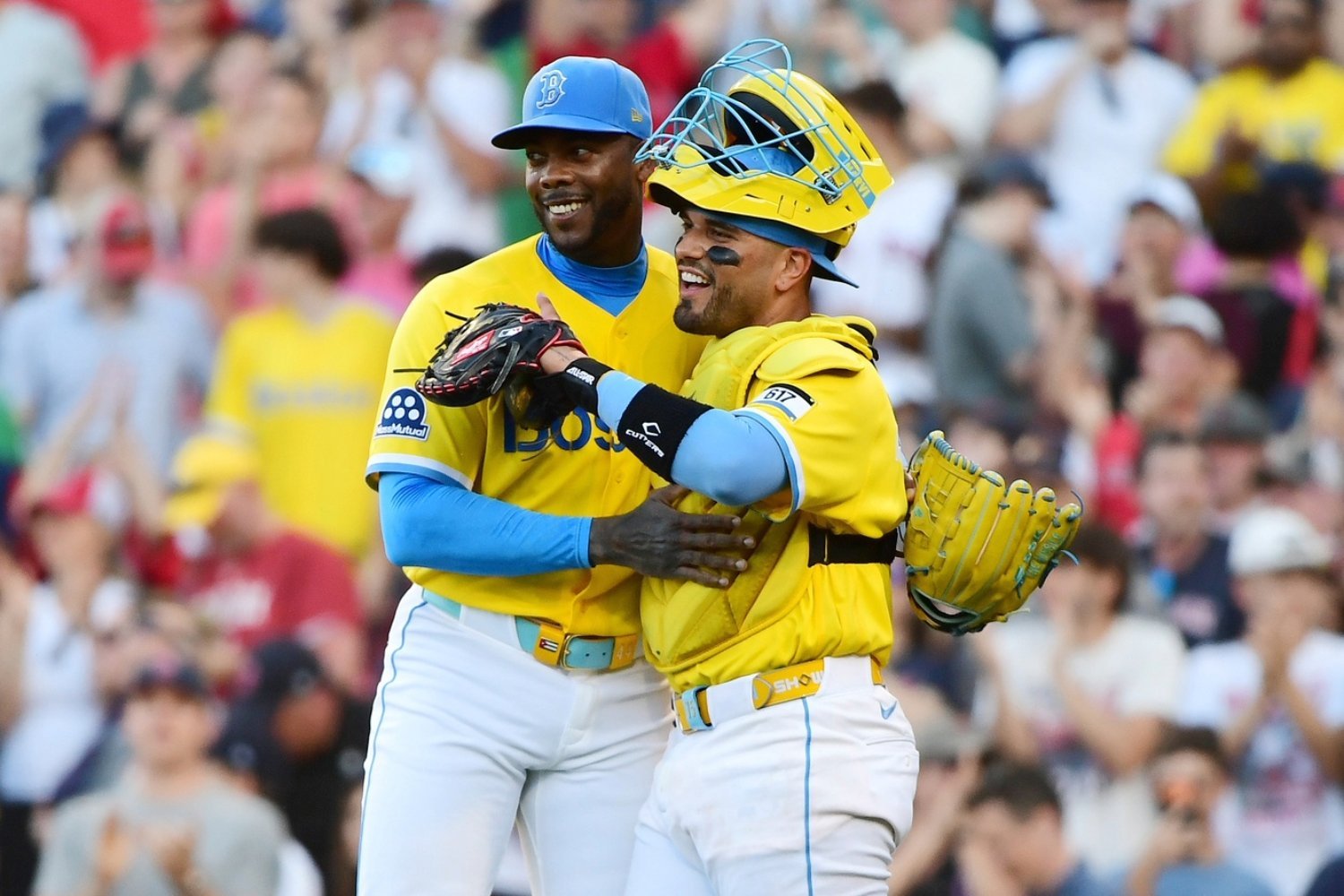 Boston Red Sox Weekly Snapshot Record Last Week: 2-4 Runs Scored Last Week: 29 Runs Surrendered Last Week: 24 Standings: 5th in AL East 13.5 GB First Place Transactions: 06/08/26: Boston Red Sox recalled OF Nate Eaton from Worcester Red Sox. 06/08/26: Boston Red Sox acquired LHP Tyler Davis from the Washington Wild Things of the Frontier League. 06/08/26: Boston Red Sox optioned LHP Joe La Sorsa to Worcester Red Sox. 06/09/26: Boston Red Sox optioned 2B Anthony Seigler to Worcester Red Sox. 06/09/26: Boston Red Sox activated RHP Garrett Whitlock from the 15-day injured list. 06/10/26: Boston Red Sox recalled LHP Jake Bennett from Worcester Red Sox. 06/10/26: Boston Red Sox optioned LHP Alec Gamboa to Worcester Red Sox. Scores: Game 64: BOS 1, TB 3 Game 65: BOS 3, TB 4 Game 66: BOS 5, TB 7 Game 67: BOS 10, TEX 1 Game 68: BOS 6, TEX 3 Game 69: BOS 4 , TEX 6 Series Breakdown/Highlights Rays Series: This series against the Rays gave us more of the same that we've become accustomed to here in 2026. The Red Sox got down early, staged a late game comeback, and then ultimately lost each game because either they could plate runners after they got on base or the bullpen couldn’t keep runners from scoring. In game one, Connelly Early tossed another short outing, only going 4.2 innings and giving up two earned runs while striking out six. Marcelo Mayer went deep against another lefty (and off a slider) early in the game, but the rest of the offense couldn’t keep it up. Game two was particularly disheartening, with Payton Tolle turning in a rare weak start. He tossed six innings, striking out three while allowing four earned runs. Garrett Whitlock was reinstated from the injured list and worked a one-strikeout inning. Jarren Duran and Mayer accounted for the three runs Boston scored. Game three didn't bring anything new to the table. Rookie Jake Bennett’s line looks worse than the eye test showed, but the Rays were ready for him. He tossed five innings, allowing four earned runs and four strikeouts. Justin Slaten is arguably the story out of the bullpen as he has now had back-to-back rough outings. The Sox made a late push to make the box score seem closer than it was, but overall, the series as a whole was fairly noncompetitive. Credit to Caleb Durbin, who seems to have found an offensive approach that works. His two home runs in game three were absolute bombs. Rangers Series: Now this is how the Red Sox are supposed to play at Fenway Park. The Sox tagged youngster Jack Leiter for five earned runs and reliever Cal Quantrill kept up his history of plunking Red Sox’s players by hitting both Connor Wong and Willson Contreras. Sonny Gray was great after giving up an earned run in the first inning. He struck out seven over six, giving the bullpen a bit of a much needed rest after the short outings in the Rays series earlier in the week. Ceddanne Rafaela, Wilyer Abreu, and Contreras all went yard in game one to tie a bow on the performance. Game two solidified the series as the Ceddanne Show, as he continued to hit the cover off the ball. He’s started to show that dreaded whiff in his swing that has plagued his career, but he’s still playing out of his mind this season. Duran provided some late insurance runs with a two-run shot in the eighth inning to put the game out of reach. Ranger Suarez got BABIP’d quite a bit during his start by allowing six hits, two earned runs, and seven strikeouts over five innings pitched. In the finale on Sunday Night Baseball, Connelly Early turned in the worst start of his career. He allowed 11 hits, six earned runs, two walks, and three strikeouts over 4.2 innings of work. His entire pitch mix didn’t look sharp and the Rangers were ready to pounce on him. The bats went a bit quiet again, except for Contrearas who belted two massive solo home runs off old friend Nathan Eovaldi. Website Highlights Ranger Suarez Isn’t the Pitcher the Red Sox Signed - He’s Better by Yirsandy Rodriguez Red Sox For Sale: Boston’s Top 3 Pieces to Move if They Are Sellers at the Trade Deadline by Ryan Salvaggio Why Craig Breslow’s Past Trade Deadlines Suggest More of the Same for Red Sox in 2026 by Alex Mayes Looking Ahead 06/15/26: Off Day 06/16/26: Blue Jays (TBD) @ Red Sox (Payton Tolle): 6:45 PM EDT 06/17/26: Blue Jays (TBD) @ Red Sox (Jake Bennett): 6:45 PM EDT 06/18/26: Blue Jays (TBD) @ Red Sox (Sonny Gray): 1:35 PM EDT 06/19/26: Red Sox @ Mariners: 10:10 PM EDT 06/20/26: Red Sox @ Mariners: 10:10 PM EDT 06/21/26: Red Sox @ Mariners: 4:10 PM EDT View the full article
 -
Blue Jays have NO CLUTCH As They Lose Two Of Three to the Yankees
DiamondCentric posted an article in Jays Centre
 Well, that was frustrating. The Blue Jays entered the ninth inning tied in BOTH game two and three, yet found ways to lose both of them. Owen and Jesse spend the first chunk of the episode venting their frustrations about this team and looking to solve some of their RISP woes. Next, they say Welcome back to Alejandro Kirk and celebrate Kazuma Okamoto hitting the first Blue Jay home run into the fifth deck since 2017! Plus, share some thoughts on Davis Schneider and Charles McAdoo, and also touch on Trey Yesavage and some of the issues he's been going through, and what it's going to take to turn it around. All that and more! Listen on Apple Podcasts: https://podcasts.apple.com/us/podcast/the-jays-centre-podcast/id1846108462 Listen on Spotify: https://open.spotify.com/show/3Bi7SzfpcqMo5xYWnbCeoL Listen on iHeartRadio: https://www.iheart.com/podcast/263-the-jays-centre-podcast-300304824/ Listen on Pocket Casts: https://pca.st/2qk9wqxd Watch on YouTube: https://www.youtube.com/@jayscentre View the full article
 -
 Unlike other publications, Twins Daily enables all users to contribute to our top prospect rankings. Anyone with a Twins Daily account can participate and give their input on who they think should be in the Twins' top prospects list. Before you vote, you can hit our top prospects page for the latest stats and news on Twins prospects, while on the voting page, every name is a clickable link that brings up their current stat card. Voting is simple, just follow the instructions below! Here's the rundown on how to participate: 1. You must have an account and be logged in to vote. If you don't have an account, click here. It requires only 60 seconds to create an account. 2. Review our current top 20 prospect list, catch up on stats, rankings, etc. (you can do so from the voting page link below) 3. Have your prospect list in your filthy little paws? Then flip on over to the new prospect voting page (after reading the rest of this, please). https://twinsdaily.com/prospect-voting 4. Voting is super simple; you drag and drop players in the order you wish them to be. After you move a prospect, the list automatically renumbers so you don't lose track of the order. This works on mobile devices, but it's a *vastly* better experience on desktop. Sorry, that's just how this kind of thing works. There's no excellent way to make something like this as awesome on a phone screen. 5. Each prospect has a comment section where you can add any commentary you have on that player. At the bottom of the list, there is a general comment section to explain over-arching things you'd like to mention. 6. Don't see a prospect you want to put on the list? Just pop back here and give me a mention (in a comment, start typing @Brock Beauchamp and select my name after it appears). Please mention the prospect you would like added, and I will do so as soon as possible. 7. Once you're done with all of it, click Save. You've now voted! 8. When the voting closes, a new thread will automatically generate in the minor league forum with all of your rankings and comments for everyone to read and talk about. 9. You can only vote once. If you have voted in error, pop back here and tag Brock to ask to have your vote deleted. It will be removed, and you can vote again. Voting closes Wednesday, June 17. View the full article
 -
Has Emmanuel Rodriguez Become a Victim of Prospect Fatigue?
DiamondCentric posted an article in Twins Daily
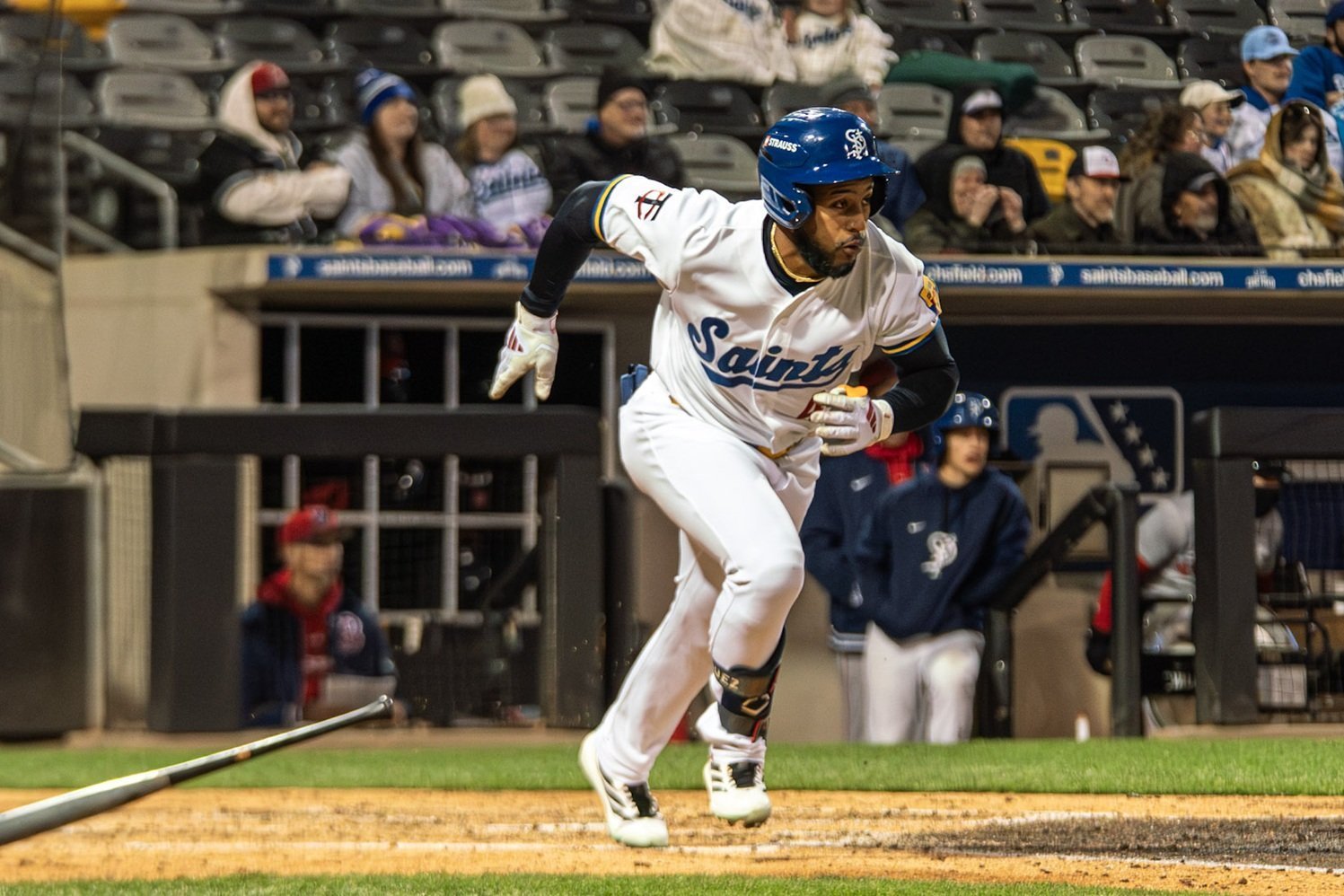 For years, Emmanuel Rodriguez has occupied a fascinating space in prospect circles. Few players in baseball have generated as much excitement, and as much frustration, as the talented Twins outfielder. Since signing with Minnesota for $2.5 million during the 2019 international signing period, Rodriguez has consistently flashed the type of tools that make evaluators dream about an impact major leaguer. He combines power, patience, athleticism, and an advanced understanding of the strike zone that few young hitters possess. The problem, of course, is that those flashes have rarely come uninterrupted. Now 23 years old, Rodriguez has already reached Triple-A and did so at just 21 years old during the 2024 season. That accomplishment alone speaks to the level of talent involved. Yet injuries and developmental hurdles have prevented him from taking the final step toward becoming a cornerstone of Minnesota's future. Recently, FanGraphs released its top-50 Twins prospects list. While Rodriguez remains highly regarded nationally and still carries top-100 prospect recognition in many circles, FanGraphs ranked him eighth in the organization. That placement isn't necessarily unreasonable given the depth of Minnesota's system, but it does reflect a growing trend among national outlets that seem increasingly hesitant to buy into Rodriguez's long-term outlook. Some of that skepticism is understandable. Some of it may simply be prospect fatigue. Players who sign as teenagers often spend years on prospect lists. Eventually, evaluators begin focusing more on what hasn't happened than what has. Rodriguez may be reaching that stage of his prospect journey. Here are three reasons why national outlets may be cooling on one of the Twins' most talented young players. Reason 1: Injuries The most obvious explanation is also the most significant. Rodriguez has never appeared in 100 games during a professional season, and 2026 will almost certainly continue that trend. His latest setback, a torn UCL in his left thumb that required surgery, pushed him to the IL after only 25 games with Triple-A St. Paul. The injury was particularly frustrating because it came just one year after surgery on his opposite thumb. Unfortunately, thumb injuries are only the latest additions to a growing medical file. Previous seasons have included time lost to issues involving his hip, oblique, abdomen, and knee. Every time Rodriguez appears ready to build momentum, another injury seems to interrupt his progress. At some point, evaluators stop viewing injuries as isolated incidents and begin factoring durability into the overall projection. That's a difficult reality for Rodriguez. Availability is a skill, and his inability to stay on the field consistently has become a defining aspect of his prospect profile. The talent remains undeniable. The track record of staying healthy does not. Reason 2: Unique Offensive Approach Even when healthy, Rodriguez has never been a universally loved prospect. His offensive profile is unlike almost anyone else in professional baseball. For a player listed at 5-foot-11 and 210 pounds, he resembles a speedy table setter from bygone generations. Instead, he has the offensive profile of a middle-of-the-order slugger. Across his minor-league career, Rodriguez owns a .253/.423/.490 slash line while walking in more than 20 percent of his plate appearances and striking out over 30 percent of the time. Those numbers tell the story of an extremely patient hitter who generates power and reaches base at elite rates. They also reveal a player whose approach leaves very little margin for error. Some evaluators love the elite on-base skills. Others worry that his passive tendencies let too many hittable pitches go by. Entering 2026, there was a growing belief that Rodriguez needed to become more aggressive earlier in counts and attack pitches he could drive rather than constantly working deep counts. Unfortunately, his injury occurred before anyone could determine whether those adjustments would stick. Early returns suggested he was attempting to make changes, but they also came with increased chase rates and declining contact numbers. The development process was essentially frozen before meaningful conclusions could be reached. For prospect evaluators who already had concerns about his unconventional offensive style, the lack of answers only adds to the uncertainty. Reason 3: Trouble With Fastballs The biggest on-field concern remains Rodriguez's ability to handle velocity. His swing mechanics are unique, featuring a pronounced bottom-hand dominant path and a frequent one-handed finish. The setup helps generate impressive bat speed and power, but it also creates vulnerabilities that upper-level pitchers have increasingly exploited. Triple-A pitchers have found success attacking Rodriguez with fastballs, particularly at the top of the strike zone. Elevated velocity has consistently generated swings and misses, exposing a weakness that scouts have discussed for years. The concern isn't simply that he struggles against certain pitches. It's that major-league pitchers are likely to attack the same weakness even more aggressively. Big-league organizations spend enormous resources identifying hitter vulnerabilities, and Rodriguez's issues against elevated fastballs are well documented. Unless he finds a way to improve his coverage in that area, opposing pitchers will have little reason to challenge him differently. That doesn't mean he can't become a productive major leaguer. Plenty of successful hitters have built careers while carrying specific weaknesses. However, it does create another layer of risk that evaluators must weigh when projecting his future value. The Clock Is Starting to Matter While injuries, strikeouts, and concerns about the fastball all contribute to the growing skepticism, the biggest issue may be timing. Prospect rankings are ultimately forward-looking exercises. Evaluators aren't simply asking whether a player is talented; they're asking how likely that player is to become a productive major leaguer and when that might happen. Rodriguez's injury history has dramatically complicated that timeline. Where the setbacks have truly begun to hurt is in roster management. Rodriguez will be out of minor league options next spring, putting significant pressure on him and the organization. The Twins will soon need to determine whether he deserves a permanent major-league roster spot, despite having limited Triple-A experience over the past two seasons. That's an uncomfortable position for any organization. The talent that made Rodriguez one of baseball's most exciting prospects hasn't disappeared. He still possesses elite plate discipline, legitimate power, and the upside of an impact everyday player. But after years of interrupted development, national evaluators appear increasingly focused on the risks rather than the ceiling. Maybe that's fair. Maybe it's prospect fatigue. The Twins would gladly settle for Rodriguez proving everyone wrong by finally staying healthy long enough to show what he's capable of becoming. Does Rodriguez have prospect fatigue? Leave a comment and start the discussion. View the full article
 -
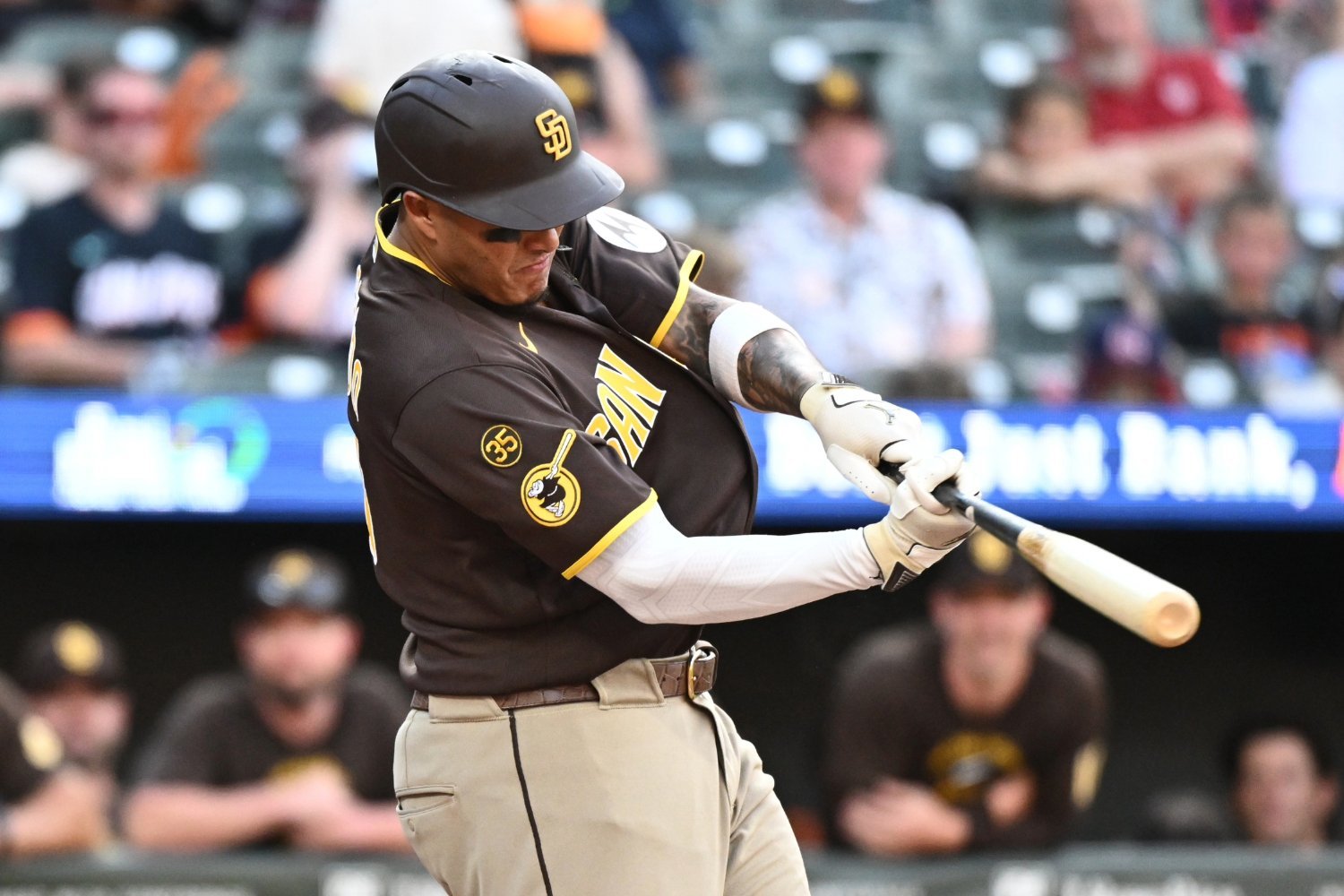 In just about every way possible, the 2026 season has been Manny Machado's worst of his major-league career. The last time Machado even flirted with the threshold constituting an average hitter was 2017, well before he was a member of the San Diego Padres. This year has represented something much worse, however, as Machado's wRC+ of just 73 has his offensive value among the 10-worst qualified hitters in the sport. Amid those struggles, concerns over age have begun to emerge. Unlike Fernando Tatis Jr. or Jackson Merrill, each of whom are also experiencing their own woes in 2026, Machado is at the point in his career where the aging curve looms as a factor. His bat speed has declined in the last few seasons while his power output is threatening to decrease for a sixth consecutive campaign. It's an entirely reasonable concern given how things have transpired in San Diego. The most surefire of the concerns would have manifested in the form of issues against fastballs. Waning bat speed unable to keep up with increasing velocity could be indicative of such age-related issues, especially given that Machado's best work has come against the hard stuff. His hard-hit rate has been highest against fastballs every season of his big league career. His best outcomes in terms of batting average have come against fastballs in five of the last seven seasons prior to 2026 and, with the exception of 2022, have always been within just a few percentage points of whatever pitch type did end up atop the list. They've also represented the lowest source of swing-and-miss for Machado throughout his career. Until 2026, at least. This year, Machado is hitting a mere .192 against the hard stuff. Of course, that number's relative given the .167 average he's produced against off-speed and .135 average versus breaking pitches. Nevertheless, it's a sharp decline combined with a swing-and-miss rate of 22.8 percent that, for the first time, rests narrowly above the off-speed stuff for the lowest among the three groups. His whiff rate is also cause for concern, as a 21.4 percent swing-and-miss rate on fastballs inside the zone represents a slight increase of last year's number that served as a big jump from 2024. However, before we start to get too wrapped up in Machado's fight against the aging curve, there are a couple of things to consider. The first is the luck component. Machado's .210 batting average against fastballs comes despite a .272 xBA. His .320 wOBA against that pitch type sits far lower than his .371 xwOBA indicates. He's still making hard contact over half the time against fastballs (53.4 percent), but not finding fortune in doing so. Perhaps more important, though, is Statcast's new data around swing timing and miss distances. This new information informs us not only about a hitter's timing against each of the three prominent pitch groups but how much they're missing in the event that they're not making contact. As easy as it could be to find concern over Machado's performance against fastballs, this new data tends to lean the other direction. Here is Machado's performance against fastballs specifically: Machado is centering the ball effectively. He's getting slightly under it in a way that you want to be against fastballs. Most importantly, though, he's not that late on fastballs. The middle graph in the above indicates that he's a touch late, but mostly on time. Given his declining bat speed and the velocity against which he's going, this is not an unreasonable trend quite yet. Certainly not one that would offer genuine concern for his ability to handle heat. Further, Machado's average miss distance against fastballs sits at 0.9 inches. That's below the big-league average of 1.3 inches. He has a flawed swing — characterized as a swing that does none of the three above components correctly — just seven percent of the time while generating perfect contact at a 24 percent clip. His competitive swing rate of 92.9 percent is one of the top rates for any Padre hitter against any pitch type. Reason for optimism exists here, borne out of the fact that Machado isn't as overmatched by fastballs as other bits of information may have us believe. It's possible that there's a bit of a timing issue at play, certainly. Perhaps even a pitch recognition issue. But between the luck element and the information wrought by the new Statcast data, we can stave off thoughts of Manny Machado's retirement for at least another day. View the full article
 -
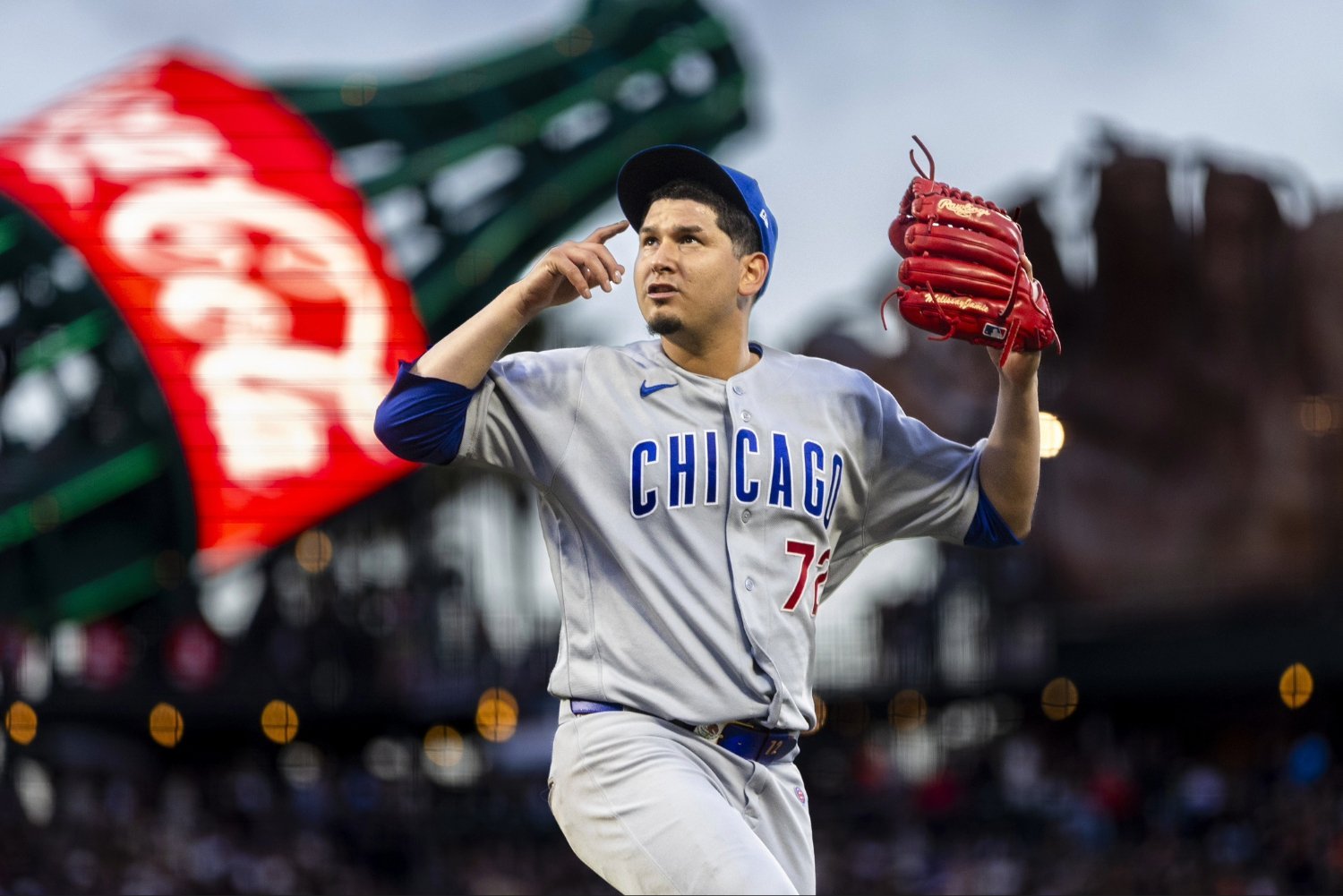 If you stick with something long enough, eventually, you will see the fruits of your labor. Until very recently, as they flirted with a losing record, it seemed the 2026 North Siders were the glaring exception to that rule. The Chicago Cubs' persistent hardships have sent expectations for this squad speeding in the wrong direction. If Javier Assad is thinking about that, he certainly doesn't show it. Though buffeted by the baseball gods, injuries, and (at times) his own organization, Assad has remained unflappable. At no point was this clearer than in his outing Friday night in San Francisco. For any successful big-league pitcher, prosperity originates from having a steady, repeatable process that doesn't change much from game to game. Yes, the strategy for attacking a specific offense or an individual batter may change, but the routine, delivery, and execution do not. What's made Assad such an attractive option for Craig Counsell as he navigates the club's pitching plight is his righty's nasty, increasingly unhittable off-speed pitches. To date, Assad has logged 38 1/3 innings on the mound in the majors, with a critical 6 1/3 of them coming in their tilt with the Giants at the start of the weekend. Before fans in the ballpark could even settle into their seats with Ghirardelli sundaes in hand, Assad treated the many Chicago enthusiasts in attendance to something just as sweet as the ice cream in those bowls. For his second straight start, Assad clocked at least six innings with no runs allowed, halting a string of games in which the Cubs' pitching made mediocre lineups look much more threatening. His arsenal focuses primarily on breaking stuff, with six of his seven pitch types leaning toward movement rather than velocity, but his sinker is his nastiest and most confident weapon. Per Baseball Savant, Assad deploys his sinker 40.5% of the time, with his cut fastball sitting in a distant second at 16.3%. What makes these and his other pitches so effective is what he allows batters to do with them, which (lately) isn't much. Assad cruised through quick, mostly harmless innings because opponents aren't getting a good piece of the bat on the ball. Though his barrels are slightly up from last season, Assad has been forcing batters to top the ball at a staggering rate. He's getting batters to hit the top of the ball at a 33.6% clip, resulting in weak grounders or otherwise painless outcomes for the defense. The nature of these pitches puts less stress on him, creating more low-leverage situations per inning and allowing him to stay within his game plan. The squad's best-laid plans haven't materialized for over a month at this point, but with Assad toeing the rubber, the offense is resurfacing in at least a facsimile of its expected imposing form. Cashing in on early run-scoring opportunities changes the entire complexion of a contest, and with heartening production from the likes of Michael Busch, Assad had an easier time getting his feet under him, with knowledge that his squad's offense was ready to do their part. Punching in good work while punching out the opposition has the murmurs of this club's resurgence growing just a little louder. While it's far too early to call Chicago's few encouraging contests last week a trend, it has at least provided convincing evidence that the version of this team we thought was lost without a trace still exists. Assad, who got this latest start because Matthew Boyd still isn't ready (and might not be for a while) will be key to their efforts to be that club for the foreseeable future. View the full article
 -
Mets Minor League Report: Reimer And Voit Power Affiliates
DiamondCentric posted an article in Grand Central Mets
 Jacob Reimer's two-run homer lifted Binghamton to a 7-6 win in 10 innings, and Mitch Voit went 3-for-4 with three steals, including a steal of home, in Brooklyn's 7-4 victory. JT Benson added a three-run shot for the Cyclones, while Jose Chirinos struck out six over five innings. Jonah Tong fanned six but took the loss for Syracuse, and Christian Rodriguez earned the win in relief for St. Lucie. Mets Transactions No Roster Moves Syracuse Drops One-Run Game In Buffalo Despite Rortvedt's Three Hits The Syracuse Mets fell 4-3 to the Buffalo Bisons, leaving seven runners on base in a rain-shortened six-inning game. Ben Rortvedt led the offense with three hits, including a double, and Andy Ibáñez added two hits with a double. Matt Rudick also collected two hits, and Hayden Senger drove in two runs. Syracuse scratched out a run in the first when Cristian Pache grounded out to score Nick Morabito, then added another in the second on a Senger single that brought home Rortvedt. Jonah Tong allowed four runs on eight hits over five innings, walking one and striking out six, but the home half of the third proved decisive. Buffalo took the lead there on a two-run homer, having tied the game in the second on a double. The Bisons added an insurance run in the fourth on an RBI single. Syracuse pulled within one in the sixth when Senger lifted a sacrifice fly to score Jackson Cluff, but the comeback stalled. Jefry Yan worked a scoreless inning in relief, allowing no hits and striking out two. Player AB R H RBI BB K Nick Morabito 2 1 0 0 0 1 Yonny Hernández 4 0 1 0 0 1 Andy Ibáñez 3 0 2 0 0 0 Cristian Pache 3 0 0 1 0 0 Jackson Cluff 3 1 1 0 0 1 Grae Kessinger 3 0 0 0 0 2 Ben Rortvedt 3 1 3 0 0 0 Hayden Senger 2 0 1 2 0 0 Matt Rudick 3 0 2 0 0 0 Player IP H R ER BB K HR Jonah Tong 5 8 4 4 1 6 1 Jefry Yan 1 0 0 0 0 2 0 Reimer's Homer Caps Binghamton's Extra-Inning Win In Somerset The Binghamton Rumble Ponies fell to the Somerset Patriots 7-6 in 10 innings, stranding eight runners. Jose Ramos went 3-for-5 with two RBI, Jacob Reimer homered and drove in two, and TT Bowens added two hits with a double and an RBI. Chris Suero scored twice from the leadoff spot. Binghamton struck first in the second, when Kevin Villavicencio singled home a run, and Bowens doubled in another. Somerset answered in a big way against Max Green, scoring three in the third on an RBI single and a two-run double, then three more in the fourth on three straight run-scoring hits. Green was charged with six runs on eight hits over 3 1/3 innings, striking out one. Binghamton clawed back with two in the fifth on Ramos's single, then tied it in the seventh on Reimer's two-run homer that scored Suero. The bullpen kept it level, as Zach Peek, Carlos Guzman, and Saul Garcia combined for five scoreless innings, but Somerset pushed across the winning run in the 10th when the zombie runner scored on a throwing error. Player AB R H RBI BB K Chris Suero 4 2 1 0 0 0 Jacob Reimer 4 1 1 2 1 2 Jose Ramos 5 0 3 2 0 1 Vincent Perozo 5 1 1 0 0 3 Jaylen Palmer 4 0 1 0 1 1 Wyatt Young 5 0 0 0 0 0 Kevin Villavicencio 4 1 1 1 1 1 TT Bowens 4 1 2 1 0 0 Diego Mosquera 4 0 0 0 0 2 Player IP H R ER BB K HR Max Green 3 1/3 8 6 6 0 1 0 Felipe De La Cruz 2/3 2 0 0 1 2 0 Zach Peek 2 0 0 0 2 2 0 Carlos Guzman 2 0 0 0 0 1 0 Saul Garcia 1 1 0 0 1 2 0 Dan Hammer 0 0 1 0 0 0 0 Voit Steals Home, Benson Goes Deep As Brooklyn Beats Frederick The Brooklyn Cyclones defeated the Frederick Keys 7-4, leaving five runners on base. Leadoff man Mitch Voit went 3-for-4 with two RBI and three stolen bases, while JT Benson drove in three runs with a homer. The third inning broke the game open as Brooklyn plated five. Voit started the scoring with an RBI single that scored Sam Biller, then stole home as part of a double steal, and Benson capped the frame with a three-run blast to left center. Jose Chirinos turned in a strong start, allowing two runs, one earned, on six hits over five innings, walking two and striking out six. Frederick chipped away with two runs in the fourth, one on a solo homer and one on an error, and added single runs in the sixth and seventh. Brooklyn answered the sixth-inning pressure with two of its own, as Nick Roselli singled home a run and Voit added another RBI single. Danis Correa and Gregori Louis closed it out, with Louis recording the save. Player AB R H RBI BB K Mitch Voit 4 1 3 2 0 0 Yonatan Henriquez 4 0 0 0 0 0 John Bay 2 1 0 0 2 1 Daiverson Gutierrez 3 1 0 0 1 0 JT Benson 4 2 1 3 0 0 Colin Houck 4 0 1 0 0 0 Trace Willhoite 4 0 1 0 0 2 Sam Biller 3 2 1 0 1 0 Nick Roselli 4 0 1 1 0 2 Player IP H R ER BB K HR Jose Chirinos 5 6 2 1 2 6 1 Justin Armbruester 1 1 1 1 0 1 0 Bryce Jenkins 1 1 1 1 0 1 0 Danis Correa 1 0 0 0 0 1 0 Gregori Louis 1 1 0 0 1 2 0 St. Lucie's Bats Stifles Palm Beach Bats In 3-1 Win The St. Lucie Mets won a 3-1 decision over the Palm Beach Cardinals, managing four hits and leaving five runners on base. Simon Juan provided the lone extra-base hit with a solo homer in the second, his fifth of the year, and Trey Snyder added two hits. Leadoff hitter Elian Peña reached and scored twice. After Juan's homer staked St. Lucie to an early lead, the team added a run in the third when Antonio Jimenez grounded out to score Peña. Cam Tilly was sharp in his start, allowing one unearned run on two hits over 3 2/3 innings with three strikeouts and no walks. Christian Rodriguez followed with 2 1/3 scoreless innings, allowing one hit and striking out three to earn the win. Miguel Mejias and Joe Scarborough combined for two more scoreless frames, with Scarborough notching the save. St. Lucie pushed across a final run in the eighth when Yohairo Cuevas grounded into a force out to score Peña, but the offense could not generate enough against Palm Beach, striking out 11 times. Player AB R H RBI BB K Elian Peña 4 2 1 0 0 1 Trey Snyder 4 0 2 0 0 0 Antonio Jimenez 4 0 0 1 0 1 Yohairo Cuevas 3 0 0 1 1 2 Simon Juan 4 1 1 1 0 3 Chase Meggers 3 0 0 0 0 2 Jeremy Rodriguez 3 0 0 0 0 0 Jackson Hauge 3 0 0 0 0 0 Jack Scanlon 2 0 0 0 1 2 Player IP H R ER BB K HR Cam Tilly 3 2/3 2 1 0 0 3 0 Christian Rodriguez 2 1/3 1 0 0 1 3 0 Miguel Mejias 1 2/3 0 0 0 1 1 0 Joe Scarborough 1/3 0 0 0 1 0 0 Top-20 Prospect Performance Carson Benge: DNP A.J. Ewing: DNP Jonah Tong: 5 IP, 8 H, 4 R, 4 ER, 1 BB, 6 K, 1 HR Elian Pena: 1-for-4, 2 R, K Jack Wenninger: DNP Ryan Clifford: DNP Jacob Reimer: 1-for-4, HR, 2 RBI, BB, 2 K Nick Morabito: 0-for-2, R, K Mitch Voit: 3-for-4, 2 RBI, 3 SB Jonathan Santucci: DNP Chris Suero: 1-for-4, 2 R Zach Thornton: DNP Wandy Asigen: DNP Will Watson: DNP Eli Serrano III: DNP Randy Guzman: DNP Ryan Lambert: DNP Dylan Ross: DNP Antonio Jimenez: 0-for-4, RBI, K R.J. Gordon: DNP View the full article
 -
 For the week, Wisconsin (4-2) and Biloxi (4-3) were series winners, while Nashville (3-3) and Wilson (3-3) earned series splits. Transactions (per credible sources): SS Cooper Pratt promoted to MLB Brewers from AAA Nashville 3B Andrew Fischer promoted to AA Biloxi from High-A Wisconsin OF Josh Adamczewski promoted to AA Biloxi from High-A Wisconsin Game Action: Nashville Pre-Game Media Notes Final: Durham (Rays) 3, Nashville 2 Box Score Via the Sounds’ website, game details and we encourage readers to review affiliate write-ups as part of their Link Report routine: Sounds Split Series with Durham While the big news (Pratt’s promotion to the Show) took place off the field after the 5th inning, 2B Eddys Leonard (3-for-4, HR, 2 RBIs; .304 AVG, .930 OPS) valiantly led the attempted comeback on the field, as covered in detail by Nishant Brahme in the linked game report. RHP Tyson Hardin (5 IP, 2 R, 3 H, 2 BB, 5 Ks; 1.89 ERA in 33 1/3 AAA IP; peak velocity 95.7mph) deftly avoided blow-ups in the first two innings (e.g. sac fly, GIDP to end the 2nd frame) before earning 12 outs from the final 11 batters he faced. He exited after 70 pitches with the game tied 2-2. Although LHP Jared Koenig (1 IP, 1 R, 1 K) took the Loss by allowing a run in the 6th inning, his velocity was better (peak 94.1, 10 pitches 92mph or higher) than his previous rehab outing. The Sounds did not put a runner in scoring position after the 4th inning, though they did out-hit Durham 8-to-6 and get a player on base in each of the final 4 frames, the last being Leonard’s 2-out single in the bottom of the 9th. Sounds’ Extras: 1B Luke Adams had 2 singles, though he was picked off base in the 2nd inning and ground into a double play to end the 8th inning. RHPs Will Childers (1 2/3 IP, 0 R, 2 H, 0 BB, 1 K; peak velocity 96.2mph) and Lyon Richardson (1 1/3 IP, 0 R, 0 H, 0 BB, 2 Ks; peak velocity 94.6mph) were solid in the bullpen, combining to deliver 3 scoreless innings. Next week’s outlook: This 3rd straight loss dropped Nashville 2 games behind first place Rochester and Memphis in the 20-team International League. The Sounds travel to Memphis to battle the Cardinals’ affiliate for 6 games this week, commencing on Tuesday. Biloxi Pre-Game Media Notes Final: Biloxi 6, Birmingham (White Sox) 5 Box Score Via the Shuckers’ website, game details: Cruz Cruises to Seal Shuckers Series Win in Birmingham After Biloxi’s early 6-0 advantage was reduced to 6-4 with the bases loaded and 1-out in the bottom of the 6th inning, RHP Stiven Cruz entered to save the day. Cruz induced an RBI ground out and pop out to escape that inning, commencing his string of retiring 11 consecutive batters faced to close out the road win and series victory. The Shuckers’ first five batters had terrific days, led by DH Blake Burke’s 4 RBIs (3-for-5, HR, double, SB) and 1B Mike Boeve (2-for-3, 2 walks, RBI) reaching base 4 times. OF Jacob Hurtubise, SS Jesus Made and 3B Eduardo Garcia combined for 5 hits, 2 walks and an RBI. Making his second start of the week, 20-year old RHP Manuel Rodriguez (5 IP, 3 R, 3 H, 1 BB, 8 Ks) faced the minimum number of batters through 4 1/3 innings before allowing home runs to 2 of the last 5 batters he faced, exiting with a 6-3 lead. Bullpen catcher Edgardo Ordonez (1-for-4) made his first start since September 2025, throwing out the Barons’ only attempted basestealer. Shuckers’ Extras: RHP Ryan Birchard’s 22 pitches didn’t go so well (14 balls, 8 strikes), allowing 4 of 5 batters to reach, but Cruz managed to strand 2 of 3 inherited baserunners to help him out. Rodriguez has now conceded 16 home runs in 61 1/3 innings, which is the most in the Southern League (second: 12). However, he also has a stellar 0.98 WHIP and the league has seen a massive year-over-year power leap (1.8% of batters homered in 2025; 2.8% thus far in 2026). Hopefully next week will see the full return to action of INF/OF Dylan O’Rae (started 1 of last 9 games) and C Darrien Miller (exited Wednesday’s game early). Next week’s outlook: Biloxi enter the final week of the first half of the 2026 campaign in first place by a half-game over Montgomery and 1-game over Pensacola. They welcome Braves’ affiliate Columbus for seven games, with RHP Tanner Gillis (3.53 ERA, 0.95 WHIP, 6.9 K/9 in 43 1/3 IP) expected to start Tuesday’s series opener. Wisconsin Pre-Game Media Notes Final: Wisconsin 7, Great Lakes (Dodgers) 3 Box Score Via the Timber Rattlers’ website, game details: Rattlers Win Game & Series on Sunday We thank the Timber Rattlers’ terrific media team for compiling video highlights of their Sunday victory: Don’t miss the 19-minute post-game podcast from Chris Mehring and Jonathan Timm, featuring OF Braylon Payne, RHP Jayden Dubanewicz and Manager Nick Stanley As you’ve read, seen and heard, 20-year old Dubanewicz (5 IP, 3 R, 6 H, 0 BB, 5 Ks) made a successful High-A debut, RHP Quinton Low (3 IP, 0 R, 0 H, 1 BB, 5 Ks) was exceptional in relief and RHP Garrett Hodges (1 IP, 0 R, 0 H, 1 BB, 0 Ks) closed it out. The game was tight until the half-way point, with Great Lakes cutting the lead to 4-3 with 1 out and a runner on in the top of the 5th inning, before Dubanewicz escaped via a fly out and pop out, followed by Payne’s 3-run homer just 3 batters into the bottom half of the inning. All 9 position players reached base via hit, walk or hit-by-pitch, led by 1B Tayden Hall (1-for-2, HR, 2 walks, RBI, SB; .971 OPS in High-A ball), Payne (1-for-4, HR, 3 RBIs; .929 OPS) and 2B Daniel Dickinson (1-for-3, double, walk, RBI). Timber Rattlers’ Extras: As Wisconsin trail South Bend by 5 games in the Midwest League West division with only 3 first half contests left in the first half (which is a different half-year ending date than the higher MILB levels), their entry into the 2026 playoffs will have to come via their second half performance. I encourage readers again to listen to the Payne and Dubanewicz interviews in the podcast, as both were particularly insightful. Although Wisconsin will be on the road next week, their home stadium will be hosting the WIAA State Baseball Championship, with quarterfinals commencing Monday, June 15 at 9:00am and finals starting at 9:05am on Thursday. Next week’s outlook: Wisconsin (33-26) travel to Quad Cities (28-32) to face the Royals’ affiliate, with RHP Braylon Owens (4.26 ERA, 1.30 WHIP, `11.5 K/9 in 50 2/3 IP) scheduled to start the series opener on Tuesday. Wilson Pre-Game Media Notes Final: Wilson 11, Hill City (Guardians) 6 Box Score Via the Warbirds’ website, game details: Wilson Bounces Back to Earn Series Split The linked game report details Wilson’s early 8-run outburst, the rough 7th inning which tightened the contest at 8-6 and the late 3-run homer for OF Nick Monile (1-for-2, HR, 2 walks, 1 HBP, 3 RBIs) to restore healthy breathing room. Wilson’s 7-8-9 hitters DH Jayden Fielder (1-for-3, HR, 2 walks, 2 RBIs), C Yannic Walther (1-for-2, 2 walks, 1 HBP) and Monile were the major offensive contributors on Sunday. Walther singled and scored the game’s first run in the 3rd inning, then walked and scored in each of the 4th and 8th innings. The trio of starting LHP Andrew Healy (1 2/3 IP, 0 R, 1 H, 2 BB, 1 K), RHP Bryce Schaum (1 1/3 IP, 0 R, 0 H, 2 BB, 1 HBP, 0 Ks) and RHP Carlos Carra (3 IP, 1 R, 3 H, 2 BB, 3 Ks) successfully stifled the Howlers’ bats for six innings, with Carra getting in some make-up time after his planned Friday start was rained out. Healy managed to strand the bases loaded when the game was still scoreless in the first inning, while Carra limited damage despite allowing the first two batters aboard in each of the 4th and 5th innings. 21-year old RHP Jose Meneses (2 1/3 IP, 0 R, 0 H, 0 BB, 2 Ks; 2.25 ERA – promotion candidate?) later came through in a huge way to stand the potential-game tying runners at 2nd and 3rd to end the 7th inning. Warbirds’ Extras: RHP Ismael Yanez (2/3 IP, 5 R, 4 H, 2 BB, 1 HBP, 2 Ks) ended his difficult outing on a good note by registering back-to-back strikeouts when the game was 8-6 with two runners on base. Monile made the most of his first action in one week’s time, putting his early season struggles further into the rear-view mirror (5-for-13 with 7 walks over last 5 games after a 1-for-43 start to 2026). The Warbirds stole 4 bases without being caught, committed no errors, picked off a baserunner and had no passed balls or balks, though they did likely cost themselves a run by having a baserunner doubled off of first base on a fly out to right field. Three of the team’s six hits went for extra bases, including OF Pedro Ibarguen’s 2-run double, while RBIs for OF Handelfry Encarnacion and 3B Juan Ortuno are available via video: Next week’s outlook: Wilson (34-29) return home for 6 games against Rays’ affiliate Charleston (36-27), commencing on Tuesday. We hope that you enjoy the Minor League Link Report. On Monday, DSL Brewers Gold (3-7) plays at DSL Cubs Blue (6-4) at 10:00am CST and ACL Brewers (16-16) play at the ACL Rockies (23-8) at 8:00pm CST. The Milwaukee Brewers aren’t back in action until Tuesday evening, hosting the Guardians. Organizational Scoreboard including starting pitcher info, game times, MiLB TV links, and box scores Current Milwaukee Brewers Organization Batting Stats and Depth Current Milwaukee Brewers Organization Pitching Stats and Depth View the full article
 -
Cooper Pratt to Make MLB Debut on Tuesday: What to Expect
DiamondCentric posted an article in Brewer Fanatic
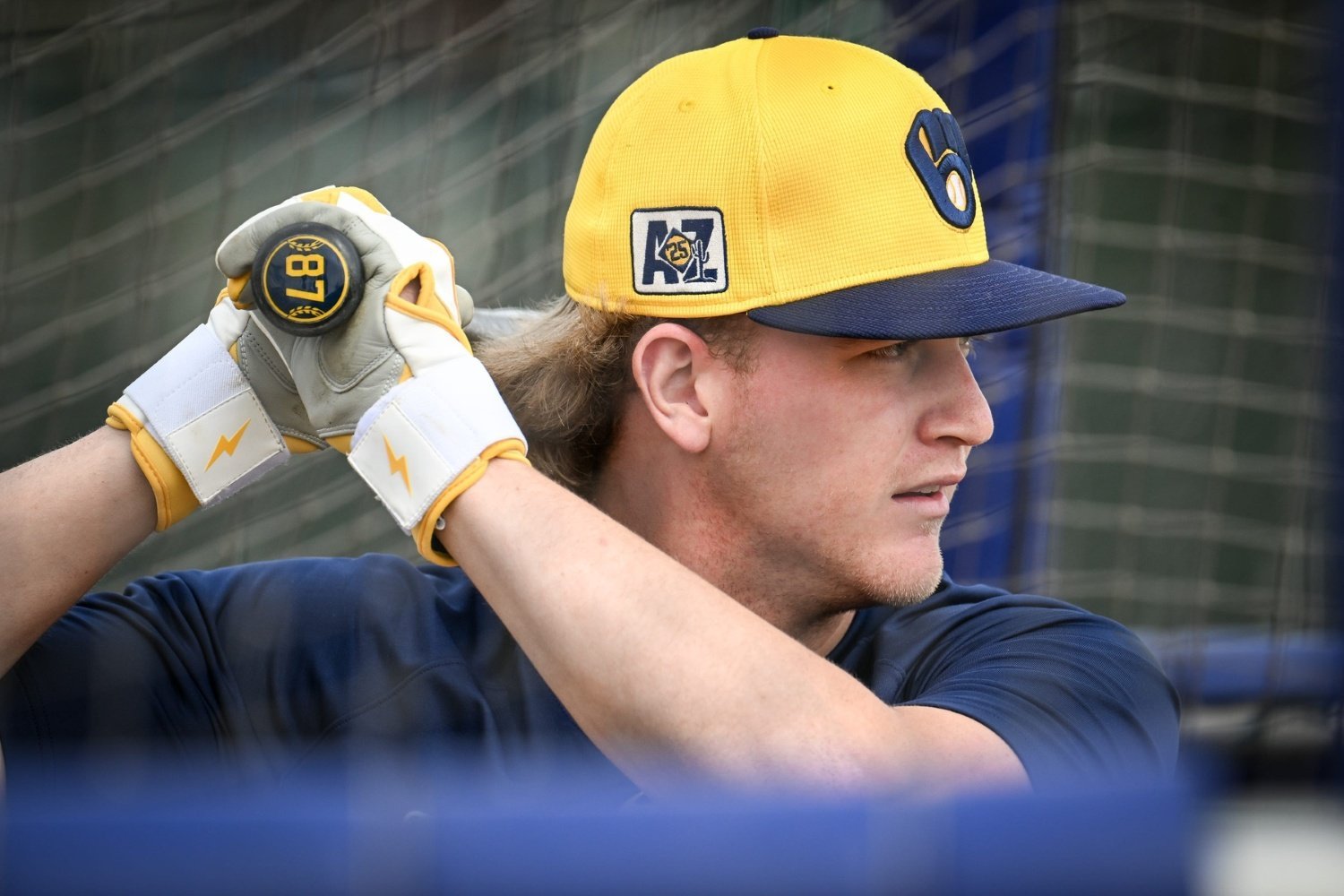 Cooper Pratt signed an eight-year, $50.75-million contract extension in April, and he got the call to the big leagues over the weekend. A lot happened between then and now, with many fans wondering when Pratt would come up—mainly due to the lack of production from the trio who have been patrolling the left side of the infield since Opening Day, in David Hamilton, Joey Ortiz, and Luis Rengifo. All of that is in the past now, though. Pratt is on his way to Milwaukee, and is expected to debut on Tuesday, June 16. As of this writing, a follow-up move on the 26-man roster has not been announced. Now, though, a new question arises. What should fans (realistically) expect from a rookie Cooper Pratt at the big-league level? On the field, one of the more reasonable expectations for any player is that good defense will translate at any level. Pratt was a 2024 Rawlings Gold Glove Award winner at shortstop, awarded to the best defensive player at each position in all of Minor League Baseball. While there is reasonable skepticism about these awards and how they are decided, the prevailing opinion on Pratt is that he is an above-average shortstop, or better. Baseball America gives him a 55 grade on the 20-80 scale, as does FanGraphs, while MLB Pipeline labels him as a 60-grade defender (considered "plus"). At Pratt's height of 6-foot-4, he can appear to be a bit slower going after groundballs than many smaller shortstops do, but his range is strong, due in part to his tremendous ability to read swings and read the ball off the bat. His arm garners 60s from all three sites as well, and he has shown a strong ability to make "off-platform" throws while on the run, or even airborne. Pratt Throw 2.mp4 Another tool that should translate well at the big-league level will be Pratt's baserunning. In terms of straight-line speed, he's an average runner, maybe a bit above average. However, he shows great instincts on the bases, and will pick pitchers apart if they don't pay close enough attention to him. He has successfully stolen nearly 90% of the bases he has attempted in his minor-league career (79/88), including 17 of 18 in Triple-A this season. Pratt 2 SBs - 1 Inning.mp4 At the plate, there will be more questions for Pratt in the immediate future. After a very slow start to the season, with a 41 wRC+ in his first 70 plate appearances, Pratt posted a 125 wRC+ in his next 188 plate appearances. The chart below, courtesy of TJStats, shows the difference in some of the peripherals during those same two time periods. The contact quality still does not indicate much game power, even during the much better stretch, but he does show tremendous bat-to-ball skills, and the angles at which the ball leaves the bat have improved over the course of the season. Pratt will probably not hit for much power in MLB this season, except on the rare occasions when he gets an opportunity to pull his hands in and pull a pitch, but his bat-to-ball skills have the potential to translate pretty well. Pratt HR.mp4 One thing to keep an eye on with Pratt will be how he handles the better breaking balls he will see in MLB. Handling fastball velocity has not been an issue for him this season, despite that being a concern of some evaluators heading into the season. When facing fastballs, in general, he posted a .358 xwOBA and only whiffed on 10.8% of his swings. To further emphasize the lack of struggle with velocity, he has seen 132 fastballs thrown at least 95 MPH, and against those offerings, he has posted an even better .393 xwOBA, while only whiffing on 9.8% of his swings. Breaking balls, on the other hand, have been a different story. When thrown a breaking ball, he's posted a .270 xwOBA, with a whiff rate of 26.3% in 325 pitches seen. Big-league teams will look to expose that more often than Triple-A pitchers did, and teams will have more pitchers equipped to do so. The Brewers believe there is power to come down the line, and Brice Turang could provide a blueprint for eventually realizing it. The Brewers believe Pratt can follow a similar path in that regard, but Turang also provides a crystal ball for how Pratt's inaugural season could go. Turang finished his rookie season with a 61 wRC+, 12 Defensive Runs Saved, and he went 24 of 30 on stolen base attempts. He did that over 137 games, meaning Pratt's first campaign will need to be scaled down for comparison, as the Brewers will only have 93 games remaining when he debuts. The general scope of the production, though, is most likely going to look similar to Turang's rookie year. Pratt's value will be derived from his defense and his baserunning, and the Brewers will hope that they get a bit more out of the bat than Turang gave them. That said, even the Brewers' internal projections probably project Pratt as a below-average hitter in 2026. The good news for Pratt is that he won't have a very high bar to clear at the position. A 59 wRC+ is all the Brewers have received from the shortstop position in 2026. Pratt is capable of clearing that mark, and could still be a relatively significant upgrade, even if he only winds up posting a 75-80 wRC+ line in 2026. That's what the Brewers are hoping for here. Patience could prove to be challenging for fans and the Brewers alike. Struggles at the plate should not come as a surprise when they crop up. As Turang has shown, though, patience can be rewarded in a major way. The former surprise sixth-round pick, Cooper Pratt, is officially a big leaguer. He earned the opportunity. Now, it's all about how he continues to grow while at the highest level, and how quickly he can show that growth. View the full article
 -
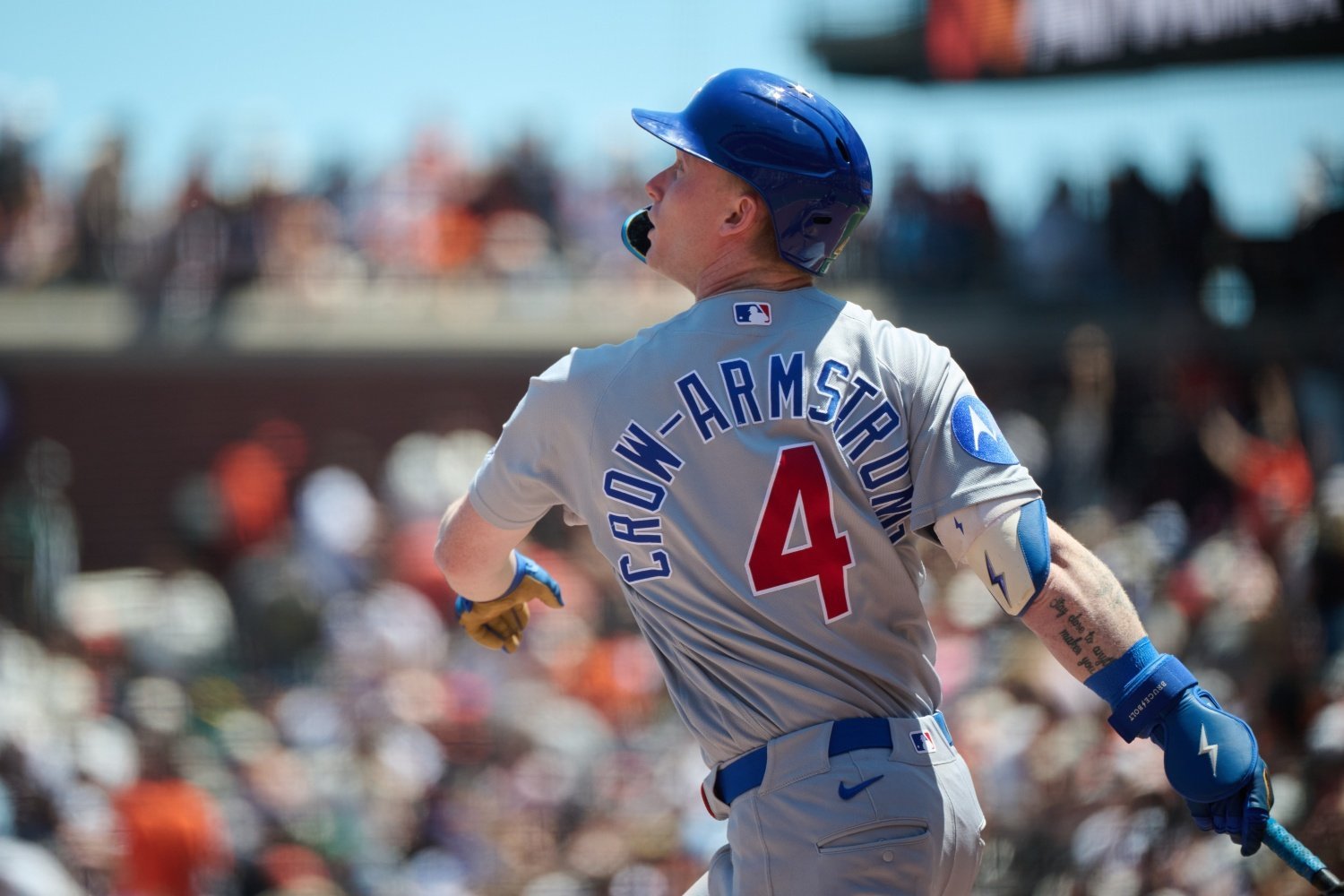 Over the course of a 162-game season, all 30 MLB teams find themselves tasked with overcoming various levels of adversity. What the Chicago Cubs have been mired in since the end of the first week of May is far more sinister: it's become a complex. By failing to produce in nearly every facet of the game, the Cubs have become their own worst enemies. Despite encouraging signs of life, that hard truth was further reinforced in another underwhelming week of baseball. The Cubs' arrival in the Mile High City was the continuation of a much lighter part of the club's schedule. A three-game set with the Rockies was a chance for the team to dig in, shed some of their worst habits, and notch a comfortable win or two. Such was not the case in the opener. Beleaguered starter Colin Rea did little to quell concerns about his viability as a starter. He surrendered seven earned runs in 4 2/3 innings of work. His offense didn't fare much better, stranding eight baserunners in an eight-hit performance wherein Michael Busch deposited a souvenir into the seats of Coors Field. The Rockies prevailed by 7-3. Not long ago, a start from Shota Imanaga was met with great exuberance. His outing in a losing effort in Game 2 of the series in Denver was actually not far off from the brand of pitching that delivered him to a place of prominence in the big leagues to begin with. The Pitching Philosopher logged five innings of scoreless baseball. Yet again, the game's frustrations belong at the feet of this inconsistent lineup, which only scratched across two runs, one of which came in the form of a game-tying solo shot from Ian Happ. Along with Pete Crow-Armstrong, Happ's frequent heroics have gone a long way in carrying the team on his back, but it's not clear the encumbered team-haulers are getting anywhere. Chicago dropped the middle game and the series by a score of 3-2. When this club's offense clicks, good things happen. Well, it clicked in Thursdsy's getaway game, with the visitors exploding for a 10-hit, 9-run performance. A fourth-inning grand slam from the ascending Seiya Suzuki seized the momentum from the home team and offered catharsis to a visiting dugout that had been waiting and pressing to break through. Despite coughing up two long balls, Edward Cabrera held steady in a 5 1/3-inning outing. While this starting rotation continues its search for stability, it needs Cabrera to find the groove that made him an attractive target in trade. The Cubs rolled to a 9-3 victory to escape Coors Field with some pride and hope. The squad's westward trek landed them in San Francisco for a three-game weekend series with Willy Adames and the Giants. For the first time since mid-May, the Cubs notched a victory in a series's opening tilt, with their 5-1 triumph over the Giants at Oracle. Spot starter Javier Assad stepped up impressively. His scoreless six-inning performance paved the way for this offense, led by a three-run blast into McCovey Cove from Busch. The bullpen enjoyed one of its quieter outings in some time, with the only trouble being a solo shot surrendered by Trent Thornton to Bryce Eldridge in the home half of the ninth. Ben Brown's breakout season remains one of the shining beacons of hope for this Cubs organization in 2026. His series-clinching showing in the middle game of this tilt proved only to reinforce this point. Though his five-inning, seven-hit performance wasn't his sharpest, he still only allowed one run to score, backed up by a superb defense on Saturday night in the Bay Area. Pete Crow-Armstrong led the offensive campaign for his club, launching a first-pitch, opposite-field homer to give his club an early lead. The All-Star center fielder came just a triple away from the cycle. He's not only back to his best form, but showing signs that he might be even better than anything he's shown in the past. If the rest of the team can follow suit, they might just be back in business. Slightly eroding all the goodwill from its first series win in ages, Rea and the Cubs faltered on a lazy Sunday in San Francisco. The opener, Ryan Rolison, gave way to Rea, and he was as perplexing as ever. A disastrous, marathon fifth inning dug a hole the offense could not fight its way out of. More stranded runners and empty at-bats kept the North Siders from a much-desired sweep in the series finale. The Cubs now return to the Friendly Confines for a six-game homestand. First up, they welcome the Rockies to town for a three-game tilt. Their rematch with the Rockies will set the stage for a three-game weekend series opposite Vladimir Guerrero Jr. and the Toronto Blue Jays. While it's difficult to see the forest through the trees with this frustrating ball club, by earning its first series win in over a month this week, the team showed it has plenty to play for, and plenty of resilience to make the play worthwhile. View the full article
