


DiamondCentric
-
Posts
2,631 -
Joined
-
Last visited
Never
Content Type
Profiles
Forums
Events
News
Tutorials & Help
Major League Baseball Videos
Guides & Resources
Store
Downloads
Gallery
Everything posted by DiamondCentric
-

 Nick Morabito launched two home runs, and Cristian Pache walked it off as Syracuse rallied past Norfolk, 6-5, in 10 innings. Jonathan Santucci spun six scoreless innings with seven strikeouts to lead Binghamton, where Chris Suero and Jose Ramos homered in an 8-1 win. Joel Lara struck out seven over four hitless frames as St. Lucie cruised 8-5 behind Simon Juan's three RBI. Brooklyn fell 5-4 to Wilmington despite Colin Houck's three RBI and Corey Collins' three hits. Mets Transactions New York Mets sent SS Ronny Mauricio on a rehab assignment to St. Lucie Mets. New York Mets sent SS Vidal Bruján outright to Syracuse Mets. Morabito's Two Homers And Pache's Walk-Off Lift Syracuse In Extras Syracuse erased a two-run deficit in the ninth and won in the 10th, beating the Norfolk Tides, 6-5. Trailing 5-3 in the bottom of the ninth, Jihwan Bae homered to right center, and Nick Morabito followed with a home run to right to tie the game. It was Morabito's second of the night, after he had pulled Syracuse within 4-3 with a solo shot in the seventh. Morabito finished 2-for-5 with two home runs and two RBI. In the 10th, with Ryan Clifford aboard as the zombie runner, Cristian Pache singled to center to score Clifford for the win. Pache went 2-for-5 with a double and two RBI. Hayden Senger added a solo home run in the third. Nate Lavender opened the game and allowed two runs on one hit in 1 1/3 innings, walking one and striking out four. Daniel Duarte worked a scoreless 10th, allowing one hit with two strikeouts, to earn the win and improve to 1-1. Dan Hammer was strong in relief, throwing 2 2/3 scoreless innings with one hit, one walk, and five strikeouts. Syracuse left 8 runners on base. Player AB R H RBI BB K Ji Hwan Bae 5 1 1 1 0 2 Nick Morabito 5 2 2 2 0 1 Ryan Clifford 4 1 0 0 1 4 Andy Ibáñez 4 1 2 0 1 1 Yonny Hernández 3 0 1 0 0 1 Cristian Pache 5 0 2 2 0 3 Jackson Cluff 1 0 0 0 0 1 Grae Kessinger 1 0 0 0 1 0 Hayden Senger 4 1 1 1 0 1 Kevin Parada 3 0 0 0 0 1 Ben Rortvedt 1 0 0 0 0 0 Player IP H R ER BB K HR Nate Lavender 1 1/3 1 2 2 1 4 0 Dan Hammer 2 2/3 1 0 0 1 5 0 Felipe De La Cruz 2 2 2 2 0 3 1 Guillo Zuñiga 2 2 0 0 1 2 0 Jefry Yan 1 0 1 1 3 3 0 Daniel Duarte 1 1 0 0 0 2 0 Santucci Dominates And A Six-Run Second Powers Binghamton Binghamton broke the game open early and beat the New Hampshire Fisher Cats, 8-1. After scoring once in the first, the Rumble Ponies erupted for six runs in the second. Jaylen Palmer doubled and later scored on a Nick Lucky single. Chris Suero followed with a two-run home run, and after Jose Ramos walked and Nick Lorusso doubled, Vincent Perozo delivered a two-run double. Wyatt Young capped the rally with a sacrifice fly. Perozo went 3-for-5 with two RBI, while Suero finished 1-for-3 with a home run, two RBI, and two walks. Lucky added two hits. Jonathan Santucci was excellent, allowing no runs on five hits over six innings, walking two and striking out seven to earn the win and improve to 2-5. The only blemish on the day came in the seventh, when Danis Correa allowed a run. Carlos Guzman closed the ninth with three strikeouts. Binghamton left 10 runners on base. Player AB R H RBI BB K Chris Suero 3 1 1 2 2 1 Jose Ramos 3 2 1 1 1 1 Nick Lorusso 4 1 2 0 1 1 JT Schwartz 4 1 0 0 0 1 Vincent Perozo 5 0 3 2 0 1 Wyatt Young 4 1 0 1 0 1 Jaylen Palmer 3 1 1 0 1 0 Nick Roselli 3 0 0 1 1 1 Nick Lucky 4 1 2 1 0 0 Player IP H R ER BB K HR Jonathan Santucci 6 5 0 0 2 7 0 Danis Correa 1 1 1 1 1 2 0 Justin Armbruester 1 0 0 0 0 1 0 Carlos Guzman 1 0 0 0 0 3 0 Houck And Collins Lead A Late Push, But Brooklyn Falls Short Brooklyn rallied late but could not overcome an early deficit, losing to the Wilmington Blue Rocks, 5-4. The Cyclones trailed 4-0 before pushing across two runs in the seventh. Ronald Hernandez walked, Corey Collins singled, and Daiverson Gutierrez brought home a run with a sacrifice fly. Yonatan Henriquez doubled, and Colin Houck added a second sacrifice fly to make it 4-2. In the ninth, Houck homered with Collins aboard to pull within 5-4, but the comeback ended there. Houck finished with three RBI, while Collins went 3-for-4. Henriquez added two hits. Daviel Hurtado took the loss, falling to 2-1 after allowing four runs on six hits over 4 1/3 innings with five strikeouts and no walks. Hunter Hodges followed with 1 2/3 scoreless innings, allowing one hit with two strikeouts. Brooklyn stranded 12 runners on base. Player AB R H RBI BB K Mitch Voit 4 0 0 0 1 1 Ronald Hernandez 3 1 1 0 2 1 Corey Collins 4 2 3 0 1 0 Daiverson Gutierrez 4 0 0 1 0 1 Yonatan Henriquez 4 0 2 0 1 1 Colin Houck 3 1 1 3 1 1 JT Benson 5 0 1 0 0 3 Trace Willhoite 2 0 0 0 2 2 Sam Biller 2 0 1 0 2 0 Player IP H R ER BB K HR Daviel Hurtado 4 1/3 6 4 4 0 5 1 Hunter Hodges 1 2/3 1 0 0 0 2 0 Bryce Jenkins 1 0 0 0 0 0 0 Gregori Louis 1 1 1 1 1 0 0 A Six-Run Second And Lara's Hitless Start Carry St. Lucie St. Lucie built a big early lead and held on to defeat the Daytona Tortugas, 8-5. After Antonio Jimenez doubled home Elian Peña in the first, the Mets scored six times in the second. Jeremy Rodriguez singled home a run, and after a bases-loaded walk to Julio Zayas and another to Chase Meggers each forced in a run, Simon Juan cleared the bases with a three-run double. Juan finished with three RBI, while Peña went 2-for-4 with a walk, a run, and an RBI, reaching base three times. Jimenez and Jackson Hauge each doubled. Joel Lara was outstanding in his start, throwing four hitless innings with one walk and seven strikeouts. Luis Alvarez earned the win to improve to 2-0, allowing one run on two hits over two innings with three strikeouts. The Tortugas chipped away late against the bullpen but never drew even. St. Lucie left 9 runners on base. Player AB R H RBI BB K Elian Peña 3 2 1 1 2 1 Ronny Mauricio 3 1 1 0 0 0 Branny De Oleo 2 0 0 0 0 0 Antonio Jimenez 5 0 1 1 0 3 Julio Zayas 3 1 1 1 2 2 Chase Meggers 3 1 1 0 2 0 Simon Juan 4 0 1 3 0 0 Jack Scanlon 3 1 0 0 0 2 Jackson Hauge 3 1 1 0 1 0 Jeremy Rodriguez 3 1 1 1 1 1 Player IP H R ER BB K HR Joel Lara 4 0 0 0 1 7 0 Luis Alvarez 2 2 1 1 1 3 1 Elwis Mijares 1 2 1 1 0 0 0 Joe Scarborough 1 1 1 1 2 0 0 Ernesto Mercedes 1 3 2 2 0 2 0 Top-20 Prospect Performance Carson Benge: DNP A.J. Ewing: DNP Jonah Tong: DNP Elian Pena: 1-for-3, 2 BB, RBI Jack Wenninger: DNP Ryan Clifford: 0-for-4, BB, 4 K Jacob Reimer: DNP Nick Morabito: 2-for-5, 2 HR, 2 RBI Mitch Voit: 0-for-4, BB Jonathan Santucci: 6 IP, 5 H, 0 R, 2 BB, 7 K (W) Chris Suero: 1-for-3, HR, 2 RBI, 2 BB Zach Thornton: DNP Wandy Asigen: DNP Will Watson: DNP Eli Serrano III: DNP Randy Guzman: DNP Ryan Lambert: DNP Dylan Ross: DNP Antonio Jimenez: 1-for-5, 2B, RBI, 3 K R.J. Gordon: DNP View the full article
 -
Citing Success of Kody Clemens, Twins Sign Trent Hrbek, Chad Radke
DiamondCentric posted an article in Twins Daily
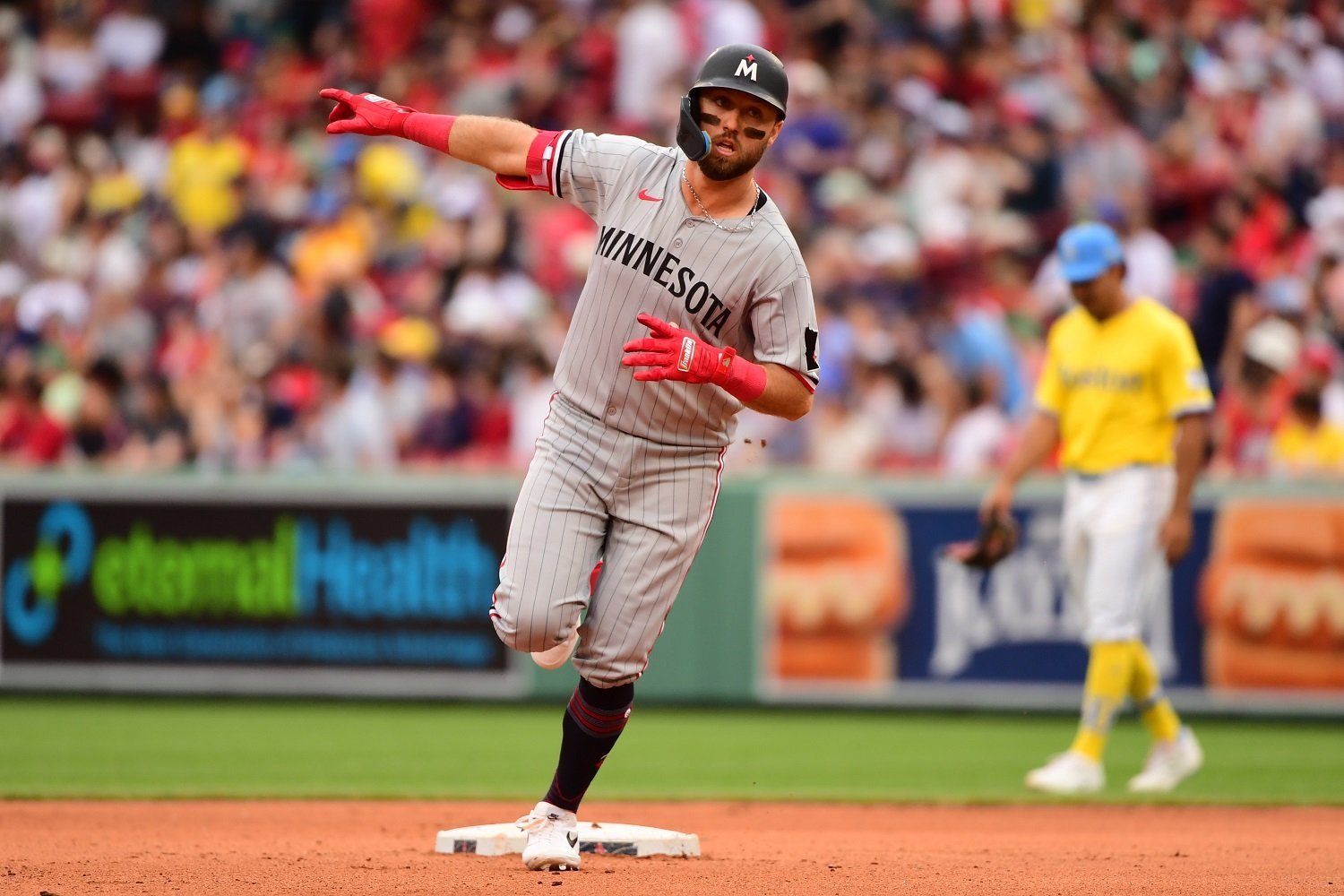 The Minnesota Twins' endless bargain-bin shopping has resulted in precious few finds, but it feels safe to say that acquiring Kody Clemens for cash in April 2025 was an unqualified success. Clemens has played close to every position on the field, hit for unexpected power, and is a clubhouse favorite. Has the thriving journeyman taught the Twins any lessons about scouring for talent on a budget? Maybe it's in the genes. On Thursday, the team announced it was signing Trent Hrbek and Chad Radke, sons of Twins greats Kent Hrbek and Brad Radke, to minor-league deals. Both players will report to Single-A Fort Myers this weekend. "The naysayers will call it nepotism," said a front office source. "We call it building a contender. Part of that is finding talent where others aren't looking." Those naysayers aren't just calling it that, but they're also concerned that the players aren't as they seem. "Neither Hrbek nor Radke have children with those names," said Aaron Gleeman of AaronGleeman.com, a local website for (baseball) perverts. "No photos or stats exist of either player. Also, my friend Dana (Wessel, notorious sicko shock jock at 93X) said he bought a couple fake mustaches at the party store for his quote 'baseball project' unquote. It's obviously one of his dumb bits." Wessel was unavailable for comment. "It's hard for small-market teams like the Twins to compete with the Dodgers and Yankees of the world," said the front office source. "So when someone cold-calls us and says that he's Trent Hrbek, starts laughing, clears his throat, then says that he and his buddy Chad Radke want to help us hit dingers, throw shutouts, and crush beers with the boys just like their dads used to, we'd be foolish not to follow up. "We also have a voicemail from Todd Carew and are performing due diligence." The Twins begin a 3-game series in Arizona versus the Diamondbacks this evening. View the full article
 -
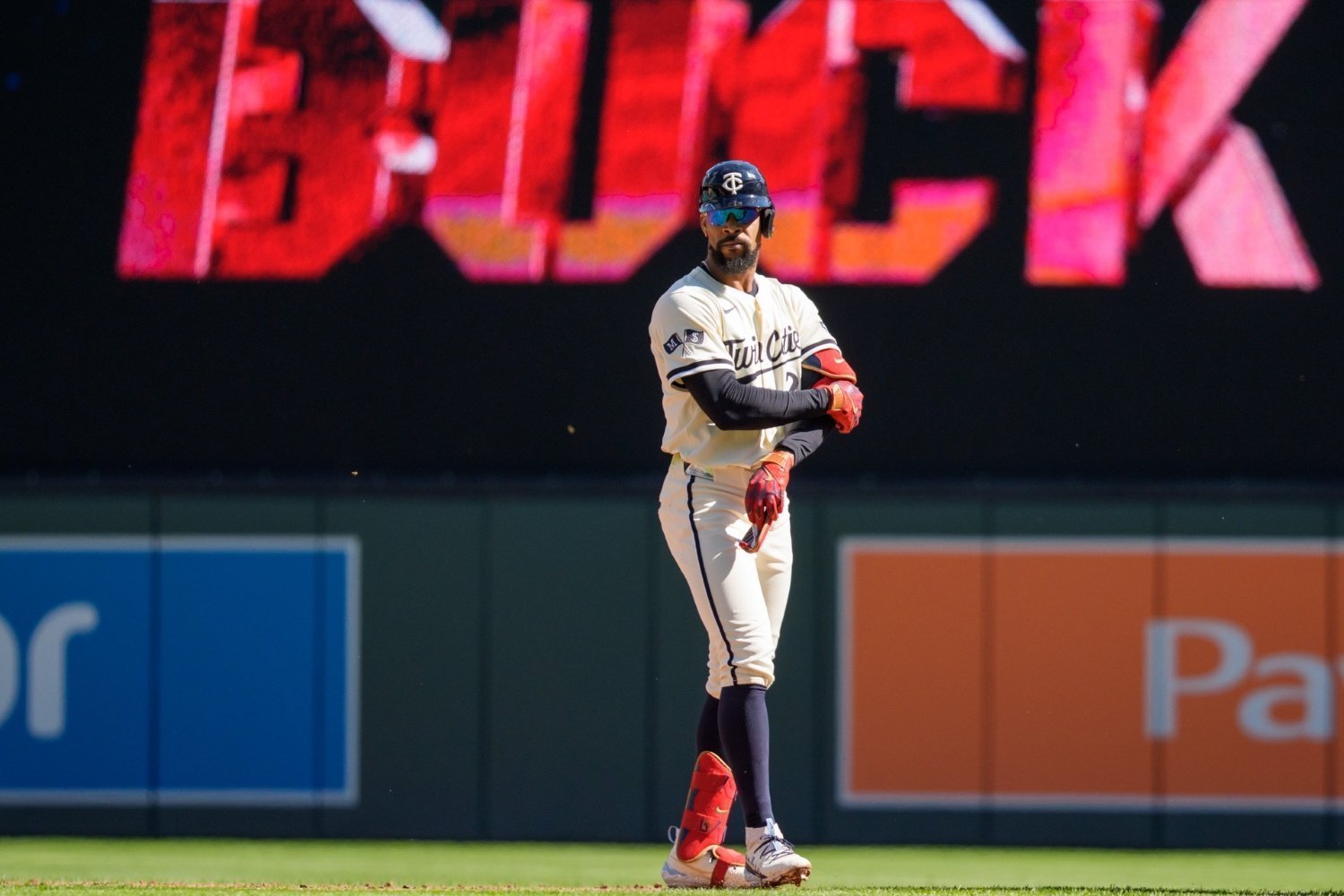 As MLB’s August 3 trade deadline inches closer, the Minnesota Twins continue to occupy baseball's uncomfortable middle ground. They're not out of the race. They're not exactly contenders either. At 36-40, Minnesota sits third in the American League Central, 4 1/2 games behind the division-leading Cleveland Guardians and lingering on the outskirts of the Wild Card picture. FanGraphs gives them a 28.7% chance of reaching the postseason, which is enough hope to keep the front office from making any easy decisions over the next six weeks. That uncertainty has naturally fueled trade speculation, and one name that continues to generate national attention is Byron Buxton. ESPN recently ranked the top trade candidates ahead of the deadline, placing Buxton second overall behind Detroit ace Tarik Skubal. While ESPN acknowledged the hurdles involved, they still assigned a 30% chance that Buxton could be moved before the deadline. There's just one problem with that prediction. Buxton doesn't sound remotely interested. When asked by The Athletic about his name surfacing in trade rumors, the Twins center fielder didn't leave much room for interpretation. Buxton said, "I don't give a f---." He wasn't finished. "End of the day, nobody's in my shoes. Nobody can say anything about what I'm going to do. I know what I'm a doing. The only way I'm getting out of here -- they're going to have to come talk to me and tell me something else. Simple as that. ... I ain't said nothing about leaving, nor will I. I'm a Twin." That's about as definitive as a player can be. Of course, Buxton has backed up those words before. During the 2025 All-Star festivities, he repeatedly stated his desire to spend his entire career in Minnesota. Every time the topic has surfaced over the last couple of seasons, his answer has remained remarkably consistent. He's a Twin, and he wants to stay a Twin. That matters because Buxton isn't just another player with trade value. He controls much of the situation himself. The 32-year-old has two seasons remaining after this year on the seven-year, $100 million extension he signed before the 2022 season. More importantly, he possesses a full no-trade clause and reached 10-5 rights earlier this season. Any potential deal would require his approval. That's a significant obstacle for rival executives dreaming up blockbuster scenarios. Could Buxton waive that protection under the right circumstances? Sure. Every no-trade clause comes with an asking price. But based on everything he's said publicly, there is currently no indication that he's looking for a way out. And from Minnesota's perspective, trading him would be complicated even if they wanted to explore the possibility. The Twins already endured a painful teardown last summer when they moved 10 players at the trade deadline. Ownership then followed by trimming approximately $38 million from payroll during the offseason. Asking fans to watch another sell-off while simultaneously moving the most popular player in the organization would be difficult to justify. It would also mean parting with one of the best seasons of Buxton's career. Through 64 games, he's batting .270 with 23 home runs and 36 RBIs while once again providing elite defense in center field. When healthy, he's still capable of impacting games in ways very few players can. That's why national outlets continue to mention his name. Teams would line up for the opportunity to acquire a player with Buxton's talent. The challenge is that the player himself doesn't seem interested in joining that conversation. The Twins still have plenty of time to determine whether they'll buy, sell, or attempt something in between. Their performance over the next six weeks will likely dictate the direction of the deadline. But unless Buxton experiences a dramatic change of heart, the trade rumors surrounding him may be generating far more noise outside Minnesota than inside the clubhouse. For now, Buxton's stance remains exactly what it has been for years. He's a Twin. And he seems perfectly happy keeping it that way. View the full article
 -
 Transactions: N/A Game Action: Nashville Pre-Game Media Notes Final: Memphis (Cardinals) 7, Nashville 3 Box Score Via a Sounds’ press release, game details: Ethan Murray Homers in Sounds Loss – Nashville's Playoff Hopes Dwindle Nashville dropped Thursday's game 7-3 at AutoZone Park. Ethan Murray (1-for-4, HR, 3 RBIs) provided all three Sounds runs with his third home run of the season but a four-run first was too much to overcome for Nashville who now sit three-games back entering the final three games of the first half. Video of Murray’s blast RHP Gerson Garabito (2 IP, 4 R, 3 H, 2 BB, 1 HBP, 2 Ks) made his first AAA start of 2026, after recovering from a foot injury suffered in spring training. He surrendered two singles that allowed the first run of the night to score for Memphis ahead of a hit by pitch. Bligh Madris put Memphis up 4-0 with a three-run home run. OF Greg Jones (1-for-4, SB) was the first Nashville player to reach base with a two-out single in the top of the second. The first Memphis error allowed Brock Wilken to reach and sent Murray to the plate. He jumped on the first pitch of his at-bat to bring Nashville within a run; the closest the Sounds would get. Following a leadoff walk in the bottom of the third, RHP Lyon Richardson (3 IP, 2 R, 3 H, 4 BB, 1 HBP, 1 K) relieved Garabito and worked a double play and a ground out to get out of the inning. Richardson stranded the bases loaded in the fourth after a leadoff single and two-out walk and hit batter. Memphis hit their second home run of the night with a solo shot by Joshua Baez in the bottom of the fifth. Two walks and another hit batter by Richardson once again loaded the baes. An RBI single pushed the deficit to six with Jones throwing out a runner at the plate to keep it 6-3. Memphis hit their third home run of the night with a one-out solo home run off Will Childers (2 IP, 1 R, 2 H, 0 BB, 2 Ks; 3.10 ERA) in the bottom of the sixth. The right-hander worked a scoreless seventh despite a two-out double. SS Eduardo Garcia (2-for-4) recorded a multi-hit game for Nashville with a pair of singles. His second hit of the game was Nashville's final hit when he singled in the top of the seventh. The final seven Sounds batters were retired as Nashville went scoreless over the last seven innings. RHP Reiss Knehr continued his solid relief work (1 IP, 0 R, 1 H, 0 BB, 1 K; 2.66 ERA), but there was no comeback for Nashville this particular night. Sounds’ Extras: Despite the 84-degree weather, it was a cold evening for Nashville’s 1-3 hitters, as 3B Jett Williams, DH Tyler Black and OF Luis Lara combined to go 0-for-10 with a walk. Apart from Murray, C Jeferson Quero had the team’s sole other extra-base hit, leading off the 5th inning with a double as the team only trailed 4-3 at that point. Unfortunately, he was stranded alongside Jones as the Sounds went 1-for-10 with runners in scoring position. Murray clubbed his third home run of the season and first since game two of a doubleheader at Louisville on May 7. Garcia earned the first multi-hit game of his Triple-A career, notching a hit in both games he's gotten an at-bat since joining Nashville. Friday’s outlook: The Sounds and Redbirds continue their series on Friday night with first pitch scheduled for 7:05 p.m. RHP Garrett Stallings (3-2, 3.59 ERA) will get the start on the mound with Nashville needing to win each of the last three to keep any playoff hopes alive. Biloxi Pre-Game Media Notes Rain Out: Columbus (Braves) at Biloxi Via the Shuckers’ website, rain out details: Shuckers, Clingstones Doubleheader Postponed on Thursday The doubleheader washout didn’t hurt Biloxi in the standings, as they now sit one game ahead of Montgomery and Pensacola with three days left in the season’s first half. Friday’s outlook: The Shuckers and Clingstones take another shot at playing a doubleheader. Red-hot RHP Jaron DeBerry (20 IP, 4 R, 24 Ks over last 4 starts) is slated to start one of the games, while RHPs Yorman Galindez and Travis Smith are likely to tag-team the other contest. Wisconsin Pre-Game Media Notes Final: Quad Cities (Royals) 9, Wisconsin 3 Box Score Via the Timber Rattlers’ website, game details and we encourage readers to review affiliate write-ups as part of their Link Report routine: Wisconsin’s First Half Ends with a Loss at Quad Cities As you’ve read in the linked game report, OF Braylon Payne (2-for-4, triple, double) drove home 3 runs in the first 3 innings to tie things up 3-3, before a challenging 4th inning put Wisconsin in too deep of a hole to recover from. Four of the runs against starting RHP Ethan Dorchies (3 2/3 IP, 7 R (3 ER), 6 H, 4 BB, 4 Ks) were unearned, but they count just the same. On the bright side, RHP Daniel Corniel’s return to High-A ball was a smashing success (3 IP, 0 R, 2 H, 2 BB, 2 Ks; 44 pitches), while OF Josiah Ragsdale (2-for-3, double, walk) remains on-fire atop the lineup. Timber Rattlers’ Extras: Credit the River Bandits’ staff, as they retired 15 consecutive Timber Rattlers (as mentioned in the linked game report) after Payne’s game-tying 3rd inning triple. In fact, they registered 15 strikeouts in total versus just 1 walk issued. Corniel had last pitched at this affiliate level on April 9, 2025, but the 21-year-old is now fully recovered from Tommy John surgery. Time will tell if and when he’ll re-join the starting rotation. Even with the warts (4 unearned runs, 1 error, 1 passed ball, 1 caught stealing, 1 wild), Wisconsin’s defense still delivered a line out double play (Payne with the assist) and two ground ball double plays. Friday’s outlook: RHP Jason Woodward (5.67 ERA, 1.70 WHIP, 10.0 K/9 in 27 IP) gets the call, with Wisconsin needing a victory to even this week’s series at two games apiece. Wilson Pre-Game Media Notes Final: Wilson 6, Charleston (Rays) 5 Box Score Via the Warbirds’ website, game details: Rodriguez Rakes Wilson to Walk Off Win One rough inning (a 5-run third frame which tied the contest) did not derail Wilson’s road to victory, as their three relievers combined on six scoreless innings to set the stage for 1B Tyler Rodriguez’s walk-off blast. Rodriguez had also doubled in the Warbirds’ 5-run second inning, though the big blasts in that frame came from 2B Luis Lameda (1-for-3, HR, walk, RBI, SB) and OF Jose Anderson (2-for-4, HR, 2 RBIs). After RHP Miqueas Mercedes (3 IP, 5 R, 8 H, 0 BB, 0 Ks) struggled a bit, RHP Eric Prado restored order with his bulk relief effort (3 1/3 IP, 0 R, 2 H, 3 BB, 2 Ks), as the Warbirds prevailed despite running into three outs on the basepaths in the 5th and 8th innings. Warbirds’ Extras: C Kevin Garcia had an all-around productive evening, going 2-for-3 with a walk, while also catching a baserunner to help RHP Ismael Yanez (1 2/3 IP, 0 R, 1 H, 2 BB, 0 Ks) get out of the 8th inning unscathed. RHP Jose Meneses was his usual lock-down self, delivering a 1-2-3 top of the 9th inning on 10 pitches (1 K; 2.18 ERA; 4-0 record). Friday’s outlook: RHP Tyler Renz (3.66 ERA, 1.35 WHIP, 8.0 K/9 in 51 2/3 IP) is Wilson’s scheduled starter, with the team aiming to claim a 3-1 series advantage. Final: ACL Brewers 15, ACL Athletics 8 (in 7 innings) Box Score OF Alexander Frias (2-for-4, double, HBP, 3 RBIs; 1.144 OPS), 2B Juan Martinez (2-for-3, double, walk, HBP, 4 RBIs; 1.107 OPS) and C Jonathan Rangel (1-for-3, triple, walk, HBP, 3 RBIs; 1.048 OPS) continued their season-long assault on ACL pitching by combining to drive in 10 of the winning side’s 15 runs on Thursday. DH Malachai Halterman’s 2-out, 3-run double in the first inning set the early tone for the game, which saw the Zona Crew take a 4-0 lead, cough up 4 runs in the second frame as the Athletics tied it 5-5, then respond with a 5-run third inning capped by Martinez’s 2-out, 2-run double. Every position player reached base via the team’s 7 hits, 14 walks(!) and 5 hit-by-pitches(!!), including Martinez and Halterman (1-for-2, double, 2 walks, HBP, 3 RBIs) reaching base 4 times. INF Cristopher Acosta missed out on the fun (last played June 8), as the Brewers now boast a winning record (18-17). The pitching staff was less successful, though they did well to ensure that 4 errors only resulted in 1 unearned run: RHPs Chase Bentley (2 IP, 5 R, 1 K), Cesar Espinal (2 IP, 1 R, 3 Ks; 3.86 ERA), Luke Roupe (2 2/3 IP, 2 R (1 ER), 2 Ks) and Josue Toledo (1/3 IP; 0.96 ERA). Final: DSL Tampa Bay 1, DSL Brewers Blue 0 (in 7 innings) Box Score Top 2026 signing DH/INF Diego Frontado (2-for-3) doubled, singled and stole his 11th base, but was pinch run for in the 6th inning, so we’ll have to monitor his status. Trailing 1-0 in that penultimate frame, the Blue Men loaded the bases with one out, but were unable to push the game-tying run across. The team’s combined on only 8 hits and 5 walks as pitching ruled the day. RHPs Luis Aguayo (2 IP, 0 R, 0 H, 0 BB, 4 Ks) and Steven Duran (4 IP, 1 R, 4 H, 2 BB, 2 Ks) were both stellar, with a 5th inning solo homer being the sole damage allowed. Unfortunately, that was enough for Tampa as Brewers Blue fell to a 9-3 record. Final: DSL Orioles Orange 5, DSL Brewers Gold 2 Box Score Big 2026 signing 3B Ricki Moneys (3-for-4, HR, double, 2 RBIs, SB) was the Gold squad’s standout performer, nearly hitting for the cycle as he collected 3 of the team’s 4 hits. Despite ultimately being outhit 12-4, the game was tied 2-2 entering the 8th inning, with RHP Gustavo Garcia delivering a strong start (5 IP, 2 R, 7 H, 2 BB, 1 K). Moneys’ 2-out solo homer tied the game in the 5th inning and 2B Santiago Garcia doubled with one out in the following frame but was stranded (Golden men: 1-for-7 with runners in scoring position, stranding 8 baserunners). RHP Miguel Andrade registered 6 strikeouts in relief (4 IP, 3 R, 5 H, 1 BB), though was also touched for 3 runs in the 8th inning as the Goldmembers fell to 3-10 on the still-young DSL season. We hope that you enjoy the Minor League Link Report. On Friday, eight contests are scheduled for Brewers’ minor league affiliates, with the 3 rookie squads playing early (DSL: 10:00am CST, ACL: 1:00pm CST) and the full season affiliates playing late (e.g. Biloxi doubleheader from 5:05pm CST). The Milwaukee Brewers also play at the Braves from 6:15pm CST. Organizational Scoreboard including starting pitcher info, game times, MiLB TV links, and box scores Current Milwaukee Brewers Organization Batting Stats and Depth Current Milwaukee Brewers Organization Pitching Stats and Depth View the full article
 -
Byron Buxton Has Become a Legitimate AL MVP Contender
DiamondCentric posted an article in Twins Daily
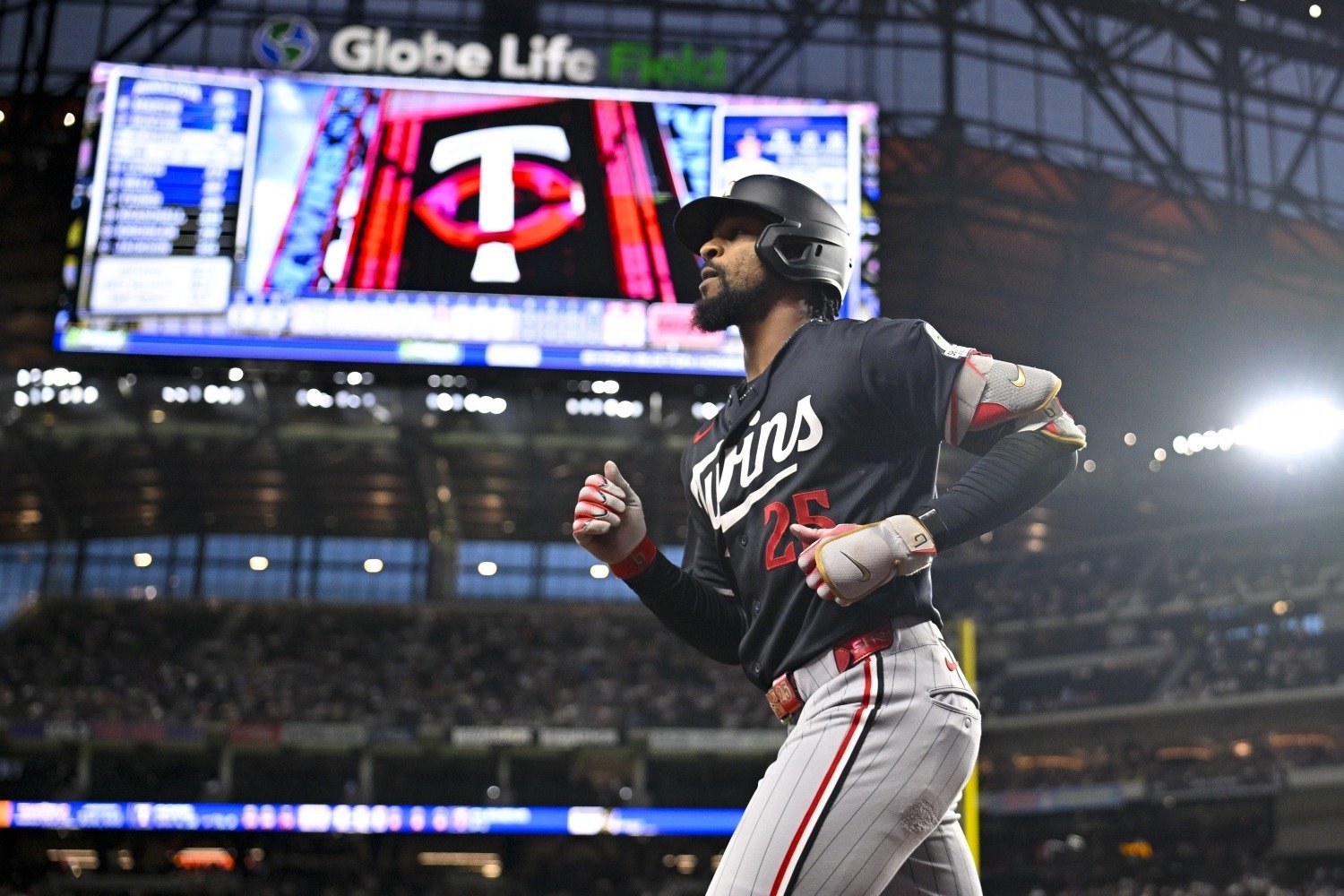 On June 5, New York Yankees outfielder Aaron Judge was placed on the 10-day IL with a right rib stress fracture, sidelining the perennial All-Star for six to eight weeks. Before hitting the shelf, the 34-year-old was hitting .248/.375/.533 with 17 home runs and a 148 wRC+. Performing 48% better than league average, Judge was clearly one of the best hitters in the league. However, he was meaningfully worse than in 2024 and 2025, when he generated a combined 212 wRC+ and 111 home runs over 1,383 plate appearances, winning back-to-back AL MVP awards. Given the downtime he faces, the future first-ballot Hall of Famer is all but guaranteed not to earn his third consecutive MVP, opening the door for a new winner. At first glance, Kansas City Royals shortstop Bobby Witt Jr. and Houston Astros designated hitter Yordan Alvarez appear to be the co-favorites. Headlined by his Platinum Glove-caliber defense at shortstop, Witt has generated the most Wins Above Replacement at Fangraphs (fWAR) among position players in baseball, with 4.5. Putting together a Judge-esque season himself (24 home runs over 327 plate appearances; 190 wRC+), Alvarez is close behind Witt, generating 3.6 fWAR. West Sacramento (occasionally Las Vegas) Athletics first baseman Nick Kurtz has generated the third-most fWAR in the AL, with 3.3, and a pair of Detroit Tigers in Dillon Dingler and Kevin McGonigle round out the top five, each at 3.1. Colson Montgomery of the White Sox is sixth, at 3.0. Coming in with the seventh-most fWAR, however, is Minnesota Twins center fielder Byron Buxton. Earning AL Player of the Week honors for the week of June 8-14, Buxton has been one of the hottest hitters in baseball this month, hitting .340/.389/.760 with six home runs and three doubles over 54 plate appearances. Buxton’s performance this June has been the peak of his best offensive season in the majors, wherein the 32-year-old has hit .275/.336/.601 with 23 home runs (third-most in MLB) and a 154 wRC+ over 283 plate appearances. Buxton hasn’t been the same caliber of hitter as Alvarez or Kurtz this season. Kurtz has been phenomenally consistent in the OBP department, and Alvarez, as mentioned earlier, is the only AL batter with more home runs than Buxton this season, while also hitting for average. What separates Buxton from Kurtz and Alvarez, however, is that he's playing solid defense at an up-the-middle position, while Kurtz plays first base and Alvarez is almost exclusively a DH. If Buxton can continue his elite performance at the plate while being a plus defensive center fielder, he could surpass Kurtz and Alvarez in this race over the second half of the year. As mentioned earlier, Dingler and McGonigle have generated more fWAR than Buxton. Yet, Buxton is outhitting both Tigers' position players. McGonigle is a rookie who has consistently been one of baseball’s best hitters this season. Dingler has undergone a recent offensive renaissance while catching almost every game, helping him jump up the fWAR leaderboard. Still, given that McGonigle is the heavy-favorite to win the AL Rookie of the Year Award, and Dingler should regress at the plate soon, the Tigers' star duo likely aren’t legitimate AL MVP Award contenders. Witt has meaningfully outperformed Buxton in terms of fWAR. However, a significant portion of his fWAR accumulation has come from his stellar defense at shortstop. Witt might be the best defensive shortstop in the league right now. Still, just like how hitting alone likely won’t be enough for Alvarez to win with just his bat, it's going to be exceptionally difficult for Witt to do so based primarily on his elite defense. Through 335 plate appearances, Witt Jr. has hit .290/.365/.451, which is good for a 128 wRC+. The 26-year-old has performed well offensively, but he hasn’t been a world-class hitter, which is a trait that should be necessary for any MVP award winner. It's a relative dearth of power slowing Witt at the moment. He's only hit 10 home runs. There's a chance Witt turns on the jets offensively and hits closer to the 169 wRC+ over 709 plate appearances he put together in 2024. If so, he could run away with this—literally, since he also leads the big leagues with 28 steals. The difference in how much value the two provide is probably being overstated a bit by fWAR, though—and Witt left the Royals' game Thursday after tweaking his knee, so another injury could be opening the door for Buxton. The final consideration when discussing potential MVP award winners is team performance. Right now, the Twins have better playoff odds than the Royals and Astros. The Tigers have better playoff odds than Minnesota, according to FanGraphs. The Twins are still five games up on Detroit in the AL Central and Wild Card standings, however. Only 1.5 games out from the third AL Wild Card spot, Minnesota is very much in postseason contention. If Minnesota does make the postseason, Buxton will have had to play a significant role, meaning he avoided any serious injuries while maintaining his elite production at the plate. Again, a lot has to go right for both Buxton and the club. Still, given that Judge is hurt; Alvarez doesn’t play the field; Witt hasn't hit for great power, and may now be hurt; Dingler, and McGonigle are likely due for regression while playing on a worse club; and Kurtz plays a position much lower on the defensive spectrum while hitting for less power than Buxton, the long-time Twins star could win his first AL MVP award this season. However slim the chances, if that does happen, it would be a triumphant display of perseverance for a player who was once one of the most injury-riddled players in the sport. View the full article
 -
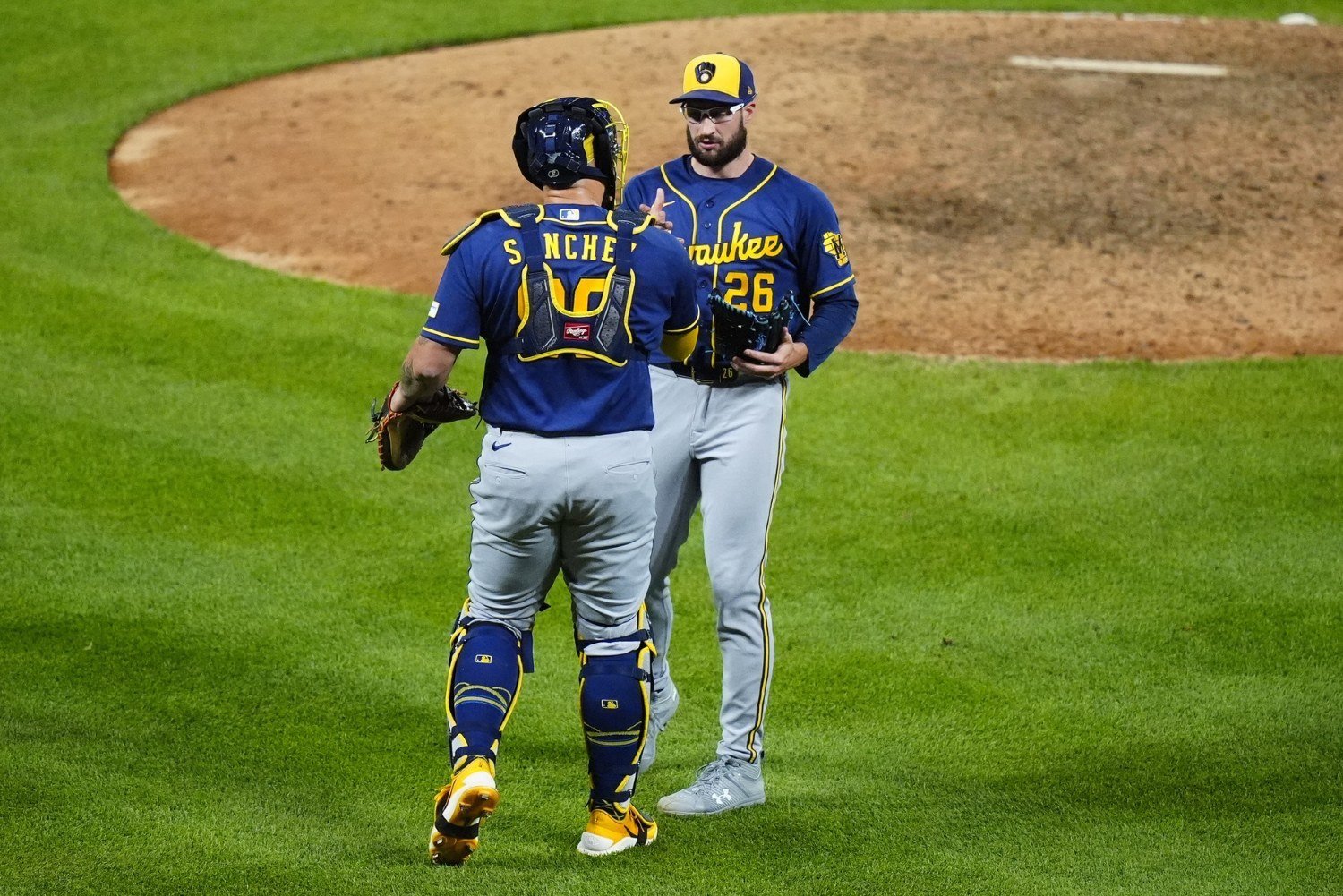 For most pitchers, reaching 10 wins is a milestone that reflects months of taking the ball every fifth day. Aaron Ashby has taken a far different path. The Brewers’ versatile left-hander became the first pitcher in Major League Baseball to reach double-digit victories in 2026, despite working out of the bullpen, turning timely appearances and shutdown innings into one of the season’s most unlikely storylines. While wins are hardly the definitive measure of pitching success, Ashby’s perfect 10-0 record has become a fascinating subplot in Milwaukee’s season and provides the perfect excuse to revisit 10 memorable moments, fun facts, and questions from the Brewers' campaign so far. No. 1 – Opening Day Excellence The Brewers pitching staff started off the season with a bang. Jacob Misorowski, Ashby, Grant Anderson, DL Hall, and Jake Woodford combined for 20 strikeouts, tied for the major-league record in a standard nine inning game, while the offense amassed 14 runs on 12 hits. It was a tone-setter for the year and a sign of great things to come for Milwaukee. No. 2 – Brewers Reach 40 Wins in Only 63 Games The Brewers have set a lot of records so far this year, but the most impressive may be that no other Brewers team has ever reached 40 wins in their first 63 games. It is a testament to all the players and coaches that have contributed to this season so far, and if this keeps going, they'll top the franchise high for regular-season wins set by the team last year, at 97. Time will tell if this squad can keep it up, but all signs point to that with an offense third in runs scored, a young rotation with the lowest FIP in the league, and a great manager at the helm in Pat Murphy. No. 3 – Starting Rotation First in FIP, Less Career Starts Than MLB Notables Milwaukee’s young rotation has been dominant throughout the first part of the season, with Misiorowski and Kyle Harrison leading the charge. Just how young is this rotation, though? Well, combining the 5 current starters (Misiorowski, Harrison, Robert Gasser, Brandon Sproat, and Shane Drohan) gives you 110 career starts. Add in the veteran of the staff, Brandon Woodruff, who should be back with the big-league club soon, and you get 243 career MLB starts. That's still far fewer than these high-profile arms all by themselves: Justin Verlander (556), Max Scherzer (480), former Brewer Jose Quintana (366) and Gerrit Cole (322). This hopefully shows just how good a position the Brewers’ rotation is in, now and for the future. No. 4 - Miz’s Maddux Misiorowski struck out 15 in a 95-pitch complete-game shutout against the Phillies last Friday. It was the most strikeouts in a Maddux ever, topping Tarik Skubal and Clayton Kershaw, who had 13 each. He threw the fastest pitch ever recorded by a starting pitcher (104.5 MPH) to Kyle Schwarber in the first inning, and in the end, he only surrendered only one hit to Schwarber in the top of the fourth. It was one of the greatest pitching performances in baseball history. Games like this are proof that the Miz is one of the best pitchers in baseball, if not the best. No. 5 – First Base Platoon Is Working The Brewers are currently 8th in the league in fWAR at first base. Much of this is due to Jake Bauers, who carried the load while Andrew Vaughn was out with an injury. Both are playing at very high levels, with Bauers slashing .270/.372/.507 in 250 plate appearances and Vaughn hitting .354/.429/.535 in 112 plate appearances. Both guys have been great so far and will be needed as middle-of-the-order bats down the stretch for the Brewers. No. 6 – 182 That’s the number of pitches it takes an individual to scroll on the pitch velocity by a starter leaderboard until you find a player (Jared Jones of the Pittsburgh Pirates) who isn’t Misiorowski. His five hardest-thrown balls came in his last start against the Phillies. He may have been a little fired up due to their comments about his All-Star appearance last season. Overall, this is just another example of how elite Misiorowski is; expect this number to grow further as the season goes along. Get your Blink-182 jokes in this morning. No. 7 – Youth Impact Here and Growing? Cooper Pratt recorded his first MLB hit, run scored, RBI, and stolen base Wednesday night against the Guardians. Called up as the corresponding move for the DFA’d Luis Rengifo, Pratt may signal a movement of calling up young prospects to replace struggling veterans. Players such as Jett Williams or the recently extended Luis Lara could contribute down the stretch for the Brewers if struggling veterans like Sal Frelick keep their performance up from this year. Even without having yet leaned into that possibility, though, Milwaukee is the fifth-youngest team in baseball, proving that their ability now may not be the ceiling for this team. No. 8 – Turang’s Continued Development A two-homer day on April 12 against the Nationals signified a new, more powerful version of Brice Turang. He’s slashing .266/.381/.472 with 11 home runs and has been worth 2.8 fWAR, most in baseball for a second baseman. He is firmly in contention to start the All-Star game for the National League at second base, despite struggling in May (.231/.355/.363). He deserves it for providing a steadying presence while the Brewers dealt with injuries to Christian Yelich, Jackson Chourio, and Vaughn. Turang has turned himself into one of the more exciting players in baseball to watch, while still being a consistent offensive presence for a team that desperately needed it to start the year. No. 9 – Milwaukee Struck Gold Again The trade of Caleb Durbin to the Red Sox before the season was surprising to many, but it has continued to pay dividends for the Brewers this year. Kyle Harrison was the main piece of the package for Durbin, and he has been electric, pitching to a 2.47 ERA (3.05 FIP) in 65 2/3 innings. Harrison surpassed CC Sabathia (1.59) for the lowest ERA through 10 starts with the Brewers, before having his numbers rudely inflated by a visit to Las Vegas. Shane Drohan, the other pitcher acquired from Boston, has been solid as well, pitching in 14 games (4 starts) with a 3.59 ERA (2.72 FIP) in 42 2/3 innings. The lone position player acquired, David Hamilton, hasn’t been great at the plate this year (76 OPS+), but he does currently lead the team in stolen bases with 15. No. 10 – Can Ashby Catch Roy Face? Who is Roy Face, you ask? Well, he holds the record for most wins in a single season by a reliever, with 18 back in 1959 for the Pirates. Can Ashby top that? The conservative, realistic answer is no, but hey, wouldn’t that just fit who the Brewers are as a team? Ashby has the most appearances so far this season, so why not him? Who knows if it’ll happen, but it would be cool. He's on pace to sail past Face, so for a while, at least, we're all allowed to keep dreaming on this. Whether Ashby finishes with 10 wins or somehow chases down Face’s seemingly untouchable record, his season has already become one of the most unique stories in baseball. More importantly, it reflects what has made the 2026 Brewers so much fun to watch: unexpected contributors, a fearless young pitching staff, savvy roster moves, and stars emerging everywhere. From Misiorowski’s historic dominance to Jake Bauer’s breakout and Kyle Harrison’s immediate impact, this team has produced a ton of memorable moments. Ashby’s perfect record may have inspired this list, but it’s the collective effort of a talented and exciting roster that has Milwaukee positioned for what could be a truly special season. View the full article
 -
Daniel Lynch IV Finally Found His Place In Kansas City
DiamondCentric posted an article in Royals Keep
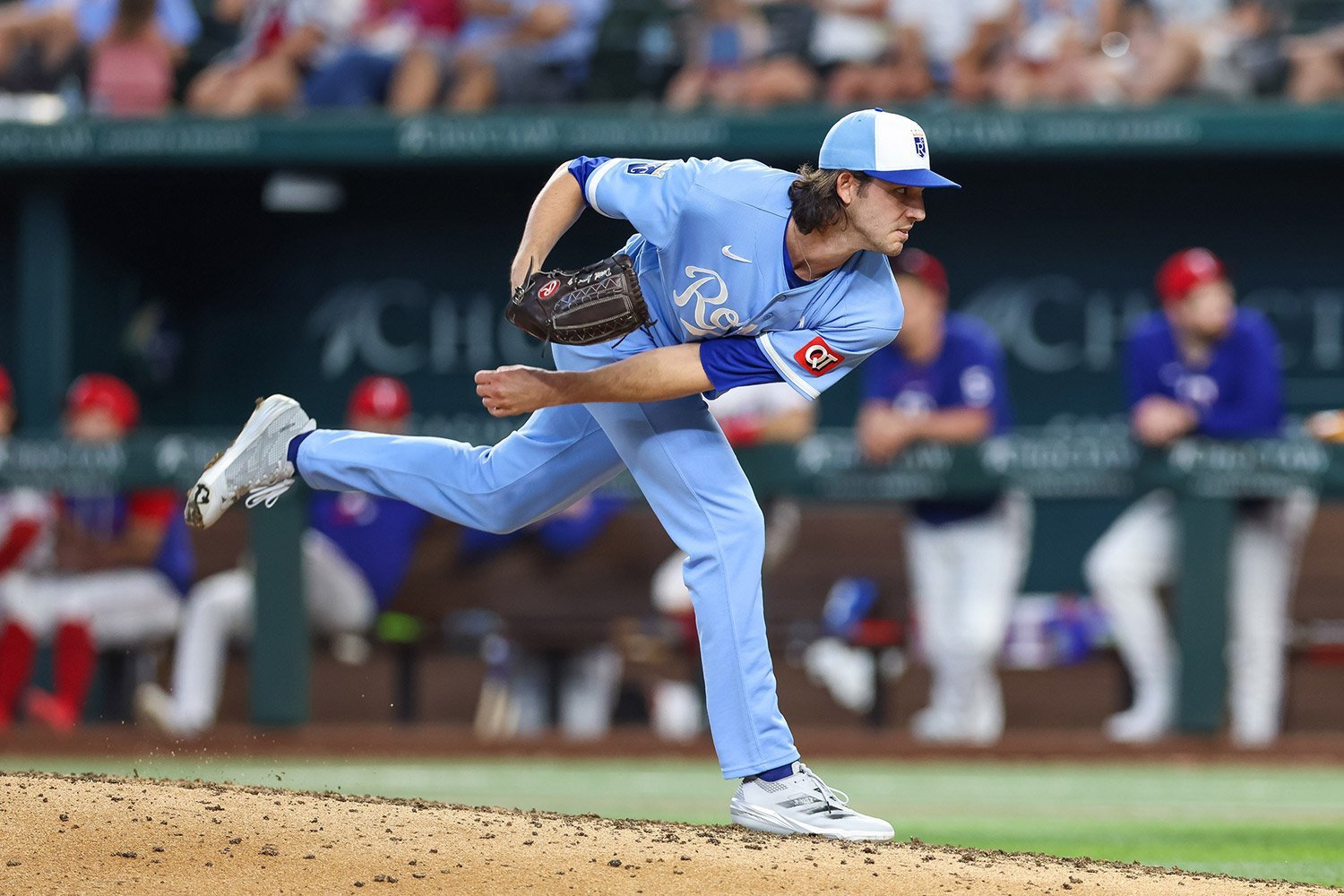 Few players spend as much time caught between promise and production as Daniel Lynch IV did. The talent was always evident. Establishing himself in the role the Royals envisioned for him proved far more difficult. The Royals invested in him, hoping he would become an important piece of their rotation. There were flashes. There were promising starts. There were also injuries, inconsistencies, and seasons in which the results never quite reflected the potential that once made him one of the organization’s top prospects. In 2026, however, the story is different. Not because Lynch has finally become the starter many envisioned years ago. The transformation has come in another form. After making a permanent move to the bullpen, the left-hander appears to have found the identity he spent years searching for. The results are difficult to ignore. Through his first 30 appearances of the season, Lynch owns a 1.80 ERA, has allowed just 18 hits across 30 innings, and is holding opposing hitters to a .170 batting average. More importantly, the indicators behind those numbers suggest this is something deeper than a simple hot streak. The evolution begins with the quality of his pitches. table { border-collapse: collapse; font-family: Arial, sans-serif; font-size: 28px; width: 100%; } th { background-color: #4472a8; color: #ffffff; text-align: left; padding: 10px 14px; border: 1px solid #ffffff; } td { padding: 10px 14px; border: 1px solid #d0d0d0; color: #000000; } .stuff-2025 { background-color: #6c93c9; } .loc-2025 { background-color: #eef2f8; } .pitch-2025 { background-color: #eef2f8; } .stuff-2026 { background-color: #f4948c; } .loc-2026 { background-color: #fbf0ef; } .pitch-2026 { background-color: #f06b62; } Season Stuff+ Location+ Pitching+ 2025 95 99 97 2026 107 100 109 The table highlights one of the most significant changes in Lynch’s season. For much of his major-league career, the left-hander relied on command to compensate for an arsenal that rarely graded above average. In 2026, that equation has flipped. His command remains largely unchanged, but the quality of his pitches has taken the biggest step forward of his career. The development of his sinker, slider, and changeup has completely altered the way hitters interact with his repertoire. And that’s where the story becomes particularly interesting. The improvement is not limited to traditional metrics. It is also visible in the quality of swings he is generating. table { border-collapse: collapse; font-family: Arial, sans-serif; font-size: 28px; width: 100%; } th { background-color: #4472a8; color: #ffffff; text-align: left; padding: 10px 14px; border: 1px solid #ffffff; } td { padding: 10px 14px; border: 1px solid #d0d0d0; color: #000000; } .oswing-2025 { background-color: #fbeceb; } .contact-2025 { background-color: #6c93c9; } .swstr-2025 { background-color: #e8554d; } .oswing-2026 { background-color: #f4f0f5; } .contact-2026 { background-color: #7fa0cf; } .swstr-2026 { background-color: #f4948c; } Season O-Swing% Contact% SwStr% 2025 25.8% 79.4% 8.6% 2026 31.6% 69.0% 14.3% Opponents are chasing pitches outside the strike zone more often than ever before. At the same time, they are making significantly less contact when they decide to swing. That combination is often one of the clearest signs that a pitcher has genuinely improved the quality of his arsenal. For Lynch, the slider appears to be playing a central role. After several seasons of inconsistent results, the pitch has regained its ability to generate whiffs, producing a whiff rate north of 45% in 2026. His changeup continues to deliver strong results as well, while his 94.4 mph sinker allows him to generate uncomfortable contact even when he does not record a strikeout. Bat Tracking data helps visualize that evolution. It shows not only more swing-and-miss against several of his pitches, but also a significant reduction in ideal contact. In other words, when hitters are not missing, they are not striking the ball with the authority they once did. That distinction is important because it helps explain one of the most intriguing aspects of his season. Lynch has recorded 29 strikeouts in 30 innings, a strong figure for any reliever. Yet his success does not depend exclusively on swing-and-miss. In fact, he entered mid-June having gone five consecutive appearances without recording a strikeout. For most modern relievers, that would raise concerns. For Lynch, it simply demonstrates that there is more than one path to success. His ability to limit damage when the ball is put in play has been nearly as valuable as his ability to generate whiffs. Left-handed hitters, for example, are batting just .118 against him in 51 at-bats, the lowest mark in the American League among pitchers who have faced at least 50 left-handed batters this season. That ability to neutralize specific matchups has dramatically increased his value within the bullpen. The same can be said for his work in high-leverage situations with runners on base. Lynch has inherited 14 runners this season, and only two have come around to score. The Royals are not simply using the left-hander to absorb low-risk innings. They are using him to put out fires. That detail helps explain why his impact extends far beyond ERA. The most valuable relievers often share a common trait: the trust of the coaching staff. They are the pitchers called upon when the game is still hanging in the balance, when a runner on second can be the difference between a win and a loss, and when the opposing team’s best hitters are about to step to the plate. Lynch has earned that level of responsibility. Perhaps the most remarkable part of this evolution is that it comes after years in which his future appeared uncertain. Many pitchers spend much of their careers trying to become successful starters. Some never get there. A much smaller group discovers that their best version was waiting somewhere else all along. Everything points to Lynch belonging to that second category. The 1.80 ERA is unlikely to last forever. Few relievers sustain numbers that extreme over a full season. The changes driving those results, however, appear far more sustainable than the ERA itself. Hitters are chasing more pitches outside the zone. They are making less contact. They are producing weaker contact. And Lynch is accomplishing all of that with the best arsenal he has shown since reaching the major leagues. For years, Kansas City waited for Daniel Lynch IV to find his place within the organization. The answer turned out to be much simpler than anyone expected. It wasn’t in the rotation. It was in the bullpen. View the full article
 -
 Josh Rojas and Gavin Cross each homered as the Omaha Storm Chasers took both ends of a doubleheader in St. Paul, 12-4 and 6-2. Ramon Ramirez crushed two home runs and drove in four to lead Quad Cities to a 9-3 win, while David Shields struck out 10 over five innings. Rudy Martin Jr. delivered a walk-off single to lift Northwest Arkansas past Tulsa, 6-5, and Columbia rallied for a 6-4, 10-inning win behind Stone Russell's three RBIs. Royals Transactions Kansas City Royals placed LHP Cole Ragans on the 60-day injured list. Left elbow impingement. Seattle Mariners traded RHP Randy Dobnak to Kansas City Royals for cash. Rojas And Cross Power Omaha In Game One Rout The Omaha Storm Chasers opened their doubleheader in St. Paul with a 12-4 win over the Saints. Leadoff man Rojas went 3-for-4 with a home run, three runs, and four runs batted in. Cross added three hits, a home run, and three runs in a 3-for-3 day with a walk, and Peyton Wilson doubled twice while driving in two. The decisive frame was the sixth, when Omaha plated five runs. Rojas singled home Drew Waters to start the scoring, Wilson doubled in two more, Rojas later scored on a Brett Squires groundout, and Matthew Lugo singled in another to break the game open. Bailey Falter started and worked four innings, allowing two runs on three hits with three walks and four strikeouts. Génesis Cabrera earned the win with a perfect inning, striking out two, and Luke Jackson finished with two innings, two runs, one walk, and four strikeouts. Omaha left three runners on base and went 6-for-13 with runners in scoring position. They improved to 31-39 after the game one victory. Player AB R H RBI BB K Josh Rojas 4 3 3 4 0 1 Peyton Wilson 4 2 2 2 0 1 Brett Squires 4 0 1 1 0 2 Matthew Lugo 4 0 1 2 0 1 Abraham Toro 4 0 0 0 0 1 Drew Waters 4 1 1 0 0 1 Gavin Cross 3 3 3 1 1 0 Luke Maile 2 2 1 0 2 0 Kevin Newman 4 1 1 1 0 1 Player IP H R ER BB K HR Bailey Falter 4 3 2 2 3 4 1 Génesis Cabrera 1 0 0 0 0 2 0 Luke Jackson 2 3 2 2 1 4 1 Squires And Drury Go Deep In Omaha's Nightcap Win The Omaha Storm Chasers completed the sweep with a 6-2 win in the second game. Squires homered and drove in two runs, and Brandon Drury went 2-for-2 with a home run, a walk, and two runs batted in. Lugo collected two hits, including a double. Omaha built its lead with a three-run second inning, when Luca Tresh, Drury, and Rojas all delivered run-scoring singles. The Storm Chasers added a pair in the fifth on Squires' solo homer and a Waters single that brought home Lugo. Henry Williams started and went 3 2/3 innings, allowing four runs on five hits with four walks and five strikeouts. Ben Sears picked up the win with 1 1/3 scoreless innings, Jose Cuas struck out two in a perfect inning, and Eli Morgan worked the ninth for the save. Omaha left five runners on base and went 4-for-12 with runners in scoring position. After sweeping the doubleheader in St. Paul, the Storm Chasers' record is now 32-39. Player AB R H RBI BB K Josh Rojas 4 0 1 1 0 1 Peyton Wilson 4 0 0 0 0 1 Brett Squires 3 1 1 1 1 2 Matthew Lugo 4 2 2 0 0 0 Luca Tresh 4 1 1 1 0 2 Drew Waters 2 1 1 1 1 1 Gavin Cross 3 0 0 0 0 1 Brandon Drury 2 1 2 2 1 0 Elih Marrero 3 0 0 0 0 3 Player IP H R ER BB K HR Henry Williams 3 2/3 5 4 4 4 5 1 Ben Sears 1 1/3 1 0 0 0 2 0 Jose Cuas 1 0 0 0 0 2 0 Eli Morgan 1 2 0 0 0 1 0 Martin Jr. Walks Off The Naturals In Extras The Northwest Arkansas Naturals walked off the Tulsa Drillers, 6-5, in 10 innings. Martin Jr. finished 2-for-5 and delivered the winning single, scoring the zombie runner Spencer Nivens from third. Daniel Vazquez went 2-for-4 with a run batted in, and Omar Hernandez drove in two. The Naturals built their early lead in the fourth, when Vazquez singled home Sam Kulasingam, and Hernandez followed with a two-run single to plate Nivens and Vazquez. After Tulsa pushed the game to extras, Vazquez moved the zombie runner to third with a sacrifice bunt before Martin Jr. ended it. Steven Zobac started and allowed four runs on four hits over three innings, walking one and striking out three. Oscar Rayo followed with three scoreless innings, Tommy Molsky gave up one run across two innings, and Augusto Mendieta earned the win with two scoreless frames and five strikeouts. The Naturals left nine runners on base and went 4-for-13 with runners in scoring position. Northwest Arkansas improved its record to 29-35. Player AB R H RBI BB K Carson Roccaforte 5 0 0 0 0 4 Jack Pineda 4 0 0 0 1 1 Sam Kulasingam 3 1 1 0 2 0 Spencer Nivens 4 2 0 0 1 1 Daniel Vazquez 4 1 2 1 0 1 Rudy Martin Jr. 5 2 2 1 0 1 Colton Becker 2 0 1 1 2 0 Omar Hernandez 4 0 1 2 0 1 Justin Johnson 3 0 0 0 0 2 Player IP H R ER BB K HR Steven Zobac 3 4 4 4 1 3 1 Oscar Rayo 3 0 0 0 1 3 0 Tommy Molsky 2 3 1 1 1 1 0 Augusto Mendieta 2 0 0 0 1 5 0 Ramirez's Two Homers And Shields' 10 Strikeouts Carry Quad Cities The Quad Cities River Bandits rolled to a 9-3 win over the Wisconsin Timber Rattlers. Ramirez was the story, going 2-for-4 with two home runs and four runs batted in. Blake Mitchell drove in two, and Asbel Gonzalez led off with a 2-for-5 effort and a run batted in. The fourth inning blew the game open as Quad Cities scored five. Gonzalez singled home a run, Mitchell followed with a two-run single, and Ramirez capped the rally with a three-run homer. Shields was dominant on the mound, striking out 10 over five innings while allowing three runs on five hits and one walk to earn the win. Max Martin followed with three scoreless innings, and L.P. Langevin closed with a perfect inning and three strikeouts. Quad Cities left seven runners on base and went 3-for-10 with runners in scoring position. They are 30-33 for the season. Player AB R H RBI BB K Asbel Gonzalez 5 1 2 1 0 0 Nolan Sailors 4 1 0 0 1 1 Blake Mitchell 4 1 1 2 1 1 Ramon Ramirez 4 2 2 4 1 0 Derlin Figueroa 3 0 0 0 1 2 Erick Torres 3 0 0 0 1 2 Tyriq Kemp 4 1 1 0 0 0 Connor Rasmussen 3 2 2 1 1 0 Trevor Werner 3 1 2 1 1 1 Player IP H R ER BB K HR David Shields 5 5 3 3 1 10 0 Max Martin 3 1 0 0 0 2 0 L.P. Langevin 1 0 0 0 0 3 0 Russell's Three RBI Lift Columbia In 10-Inning Comeback The Columbia Fireflies came from behind to beat the Hickory Crawdads, 6-4, in 10 innings. Russell led the way, going 2-for-4 with two doubles and three runs batted in. Hyungchan Um homered and drove in a run, and Josh Hammond scored twice. After Um's solo homer accounted for one of two Columbia runs in the fourth, the Fireflies broke a tie in the 10th. Ivan Sosa struck out swinging but reached when the zombie runner JC Vanek scored on a throwing error, and Russell followed with a two-run double to plate Sosa and Hammond. Ryan McDonagh started and allowed two runs on one hit over five innings, walking two and striking out four. Andy Basora and Hunter Alberini combined for three scoreless innings out of the bullpen, and Dash Albus earned the win in the 10th despite allowing two unearned runs while striking out three. Columbia left five runners on base and scored six runs despite going 1-for-10 with runners in scoring position. The victory improved the Fireflies' record to 34-32. Player AB R H RBI BB K Yandel Ricardo 5 0 1 0 0 1 Josh Hammond 4 2 1 0 1 1 Stone Russell 4 0 2 3 0 2 Hyungchan Um 4 1 1 1 1 1 Sean Gamble 4 0 1 0 0 1 Roni Cabrera 4 1 1 0 0 0 JC Vanek 4 1 0 0 0 1 Angel Ramirez 3 0 0 0 0 1 Ivan Sosa 4 1 0 0 0 2 Player IP H R ER BB K HR Ryan McDonagh 5 1 2 2 2 4 0 Andy Basora 1 2/3 1 0 0 2 3 0 Hunter Alberini 1 1/3 1 0 0 0 1 0 Dash Albus 2 2 2 0 0 3 0 Top-20 Prospect Performance Kendry Chourio: DNP David Shields: 5 IP, 5 H, 3 R, 3 ER, 1 BB, 10 K Sean Gamble: 1-for-4, 1 K Blake Mitchell: 1-for-4, 2 RBI, 1 BB, 1 K Josh Hammond: 1-for-4, 1 BB, 1 K Ramon Ramirez: 2-for-4, 2 HR, 4 RBI, 1 BB Drew Beam: DNP Asbel Gonzalez: 2-for-5, 1 RBI Ben Kudrna: DNP Carson Roccaforte: 0-for-5, 4 K Yandel Ricardo: 1-for-5, 1 K Felix Arronde: DNP Blake Wolters: DNP Michael Lombardi: DNP Luinder Avila: DNP Steven Zobac: 3 IP, 4 H, 4 R, 4 ER, 1 BB, 3 K Frank Mozzicato: DNP Daniel Vazquez: 2-for-4, 1 RBI, 1 K Warren Colcano: 0-for-4, 1 K Shane Panzini: DNP View the full article
 -
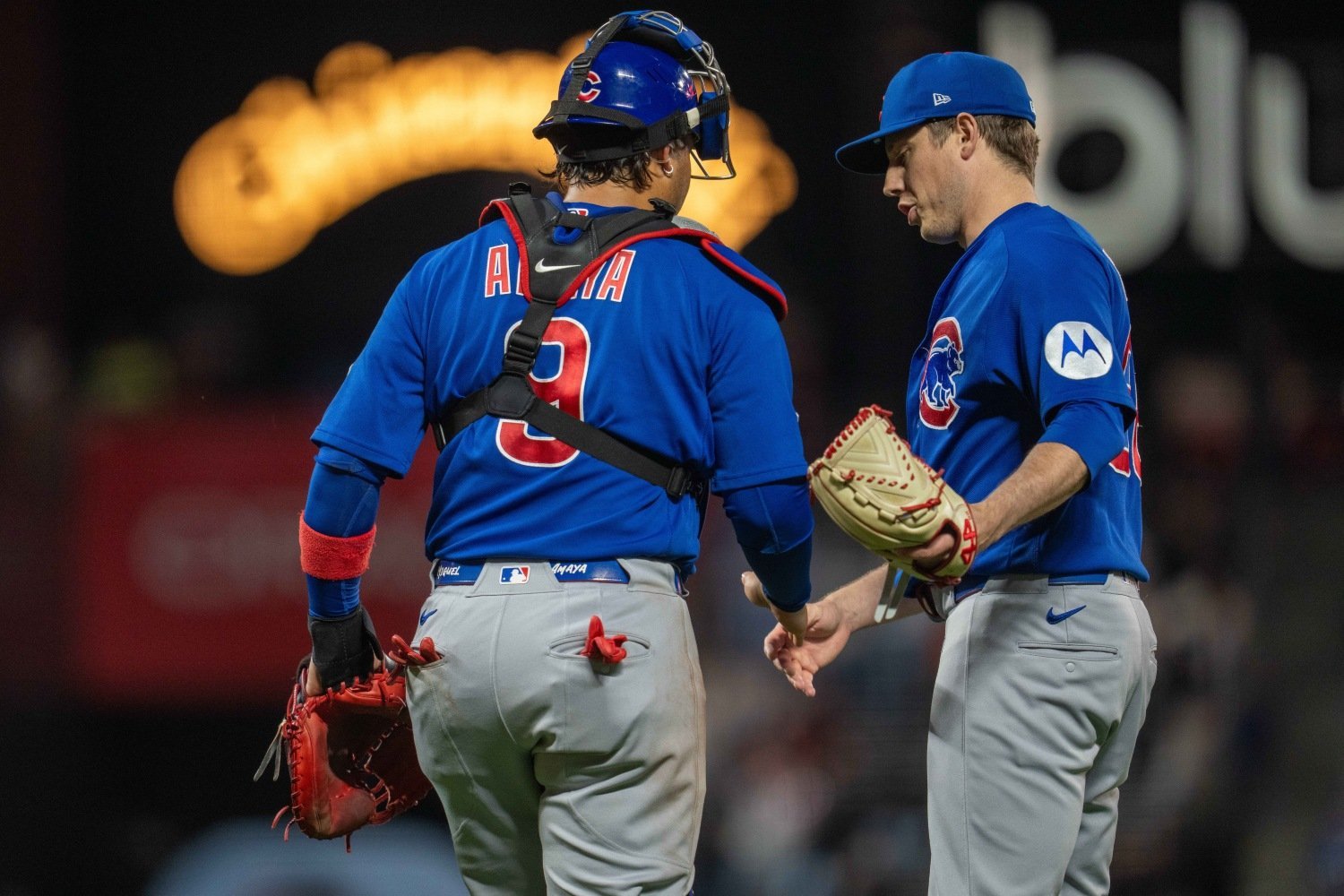 When the Cubs gave Phil Maton a two-year contract worth $14.5 million over the winter, they expected him to solidify the back end of the bullpen and be a bridge to Daniel Palencia. It was an understandable contract for a reliever who has been pretty consistent since the 2020 season. Unfortunately, the contract is not off to a good start, as Maton has not been the steadying presence the Cubs hoped. What's gone wrong for the veteran reliever this year? In 2025, Maton turned in arguably his best season yet, with the highest bWAR of his career and the lowest FIP. He lit up his Baseball Savant page in red, despite one of the slowest fastball velos in the league at 89.6 MPH. That does feel like a pitcher who will age pretty well; he was already getting away with lower velocity. Primarily a two-pitch pitcher with nearly 75% of his pitches being the curveball and cutter, he was a master at messing with hitters' timing. The new Statcast timing metrics give us some really clear examples. At just 17%, batters were on time for Maton’s curveball less often last year than on any other major-league pitcher’s pitch. Only two pitches were under 22%! When you narrow the list to only fastball pitch types, hitters were on time for just 53% of Maton’s fastballs, good for 4th-best in MLB. His sinker and sweeper were less impressive, but he just didn’t throw them as much. With him throwing 38% curveball and 36% cutter, he rarely let hitters be on time with their swings. So far in 2026, Maton’s curveball has been even better, at a paltry 11% on-time swings. This is great! His fastballs tell a different story, though. Batters are no longer late on his cutter or sinker, with both dropping 10 percentage points. His fastball velo, however, is higher than it was last year. You read that right. He is throwing his fastballs harder and yet, he is getting many fewer late swings. What gives? The clearest issue is Maton’s pitch mix. He is throwing 10% fewer curveballs and has replaced those pitches with fastball pitch types. Batters are also swinging at only half of his curveballs, a rate lower than any year since 2020. Batters seem to have decided it doesn’t benefit them to swing at the curveball that was the highest run value curveball in the major leagues last year. I can’t blame them! The Cubs and Maton have decided to throw that pitch less often this year, despite it still generating the best results of any of his pitches. Since he is throwing less breaking stuff, hitters are able to time the fastballs better; hence the jump in the number of on-time swings on his fastballs. Why the Cubs would spend the money to acquire a veteran reliever coming off his best season and have him go away from what made him so valuable is anyone’s guess. If the Cubs want to get the Maton they signed, they should let him be the pitcher he was last year. Unless and until they do, the floggings will continue, and morale will not improve. View the full article
 -
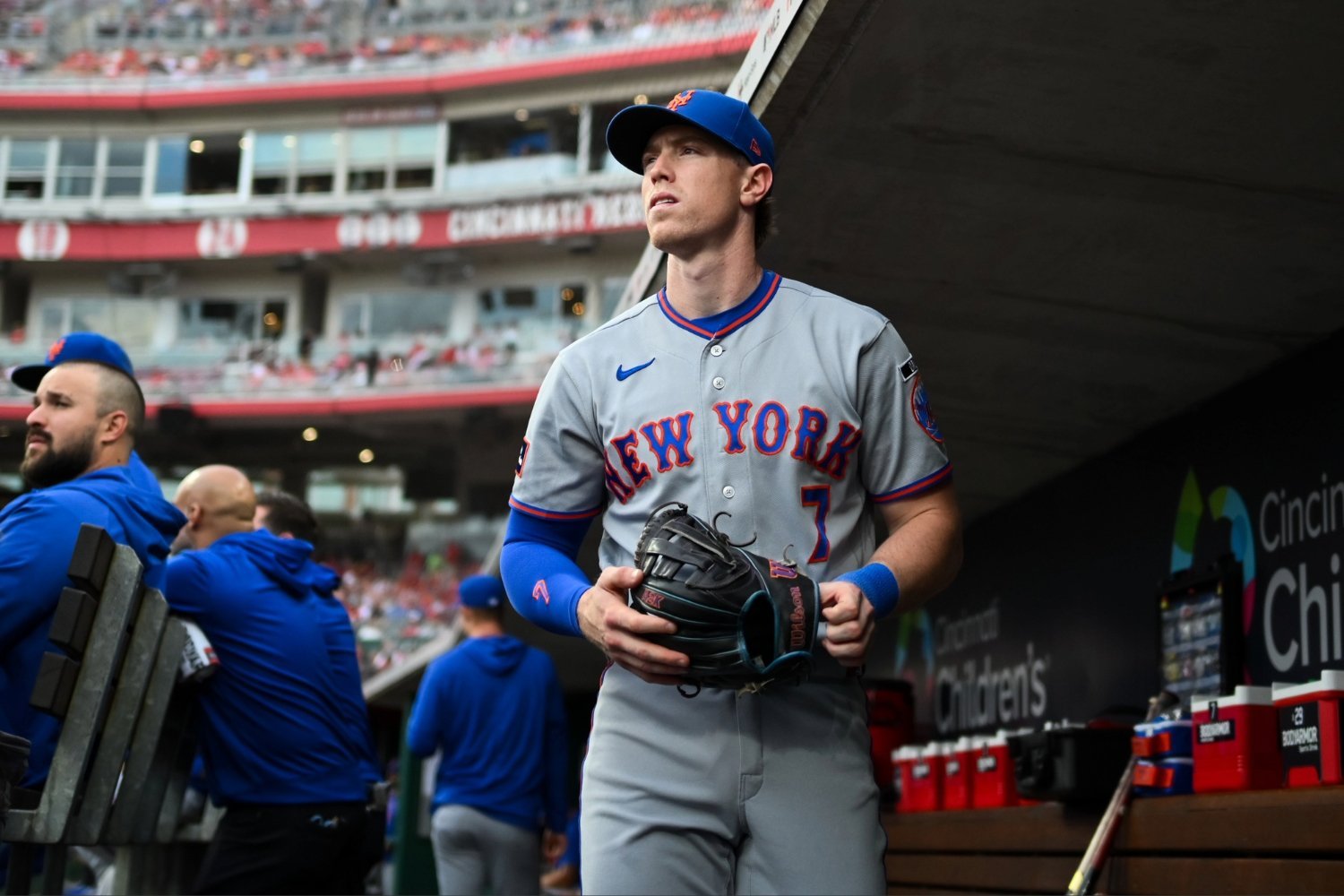 Brett Baty entered 2026 with far fewer questions surrounding his future than he had a year earlier. After finally translating his offensive tools into production during a breakout 2025 season, he appeared to have established himself as a meaningful part of the New York Mets' long-term plans. A few months later, much of that certainty has disappeared. The former first-round pick entered 2025 carrying many of the same questions that had followed him since his debut. The tools were obvious. The raw power was obvious. The talent that once made him one of the most highly regarded prospects in the Mets' system was obvious. What had never fully arrived was the production. From 2022 through 2024, Baty never posted a season above an 83 wRC+. He hit just .212 in 2023 and managed a .327 slugging percentage in 2024. Every slump seemed to reinforce the same concern: maybe the skills that made him such an intriguing prospect simply would not translate consistently against major-league pitching. Then came 2025. For the first time, Baty looked like a player capable of turning potential into production. He hit 18 home runs, posted a .435 slugging percentage, and finished the season with a 111 wRC+, comfortably above league average. More importantly, his .334 xwOBA actually exceeded his .324 wOBA, a sign that much of his success was supported by genuine improvements in his offensive profile. For a player whose future had often seemed tied to unanswered questions, that season felt different. It felt like a breakthrough. Which is why his 2026 season has been so perplexing. At first glance, it looks like a return to the player the Mets thought they had finally left behind. The easy conclusion is tempting. Baty finally broke through in 2025, then slipped right back into old habits. A deeper look at the numbers, however, points toward a much more specific explanation. The swing metrics paint a different picture than the results. His bat speed, his rate of fast swings, and the overall quality of his contact remain remarkably similar to what they were a year ago. Nor has there been a meaningful decline in his plate discipline that would fully explain such a sharp drop in offensive production. The problem begins after contact. His ISO has fallen from .181 to .092, while his home run-to-fly-ball rate has collapsed from 22.5% to just 6.0%. What's particularly striking is that Baty is actually hitting more fly balls than he did a year ago. His fly-ball rate has increased from 27.9% to 33.6%, while his ground-ball rate has declined significantly. So, where has the punch gone on his fly balls? The most interesting clue emerges when examining the types of pitches he faces. Before 2025, Baty's offensive success tended to come against a relatively narrow group of pitch types, particularly sinkers. What made last season different was his ability to expand that profile. For the first time, he consistently did damage against four-seam fastballs, forcing opposing pitchers to rethink how they could attack him. That improvement has clearly diminished in 2026. The difference against four-seamers is especially revealing. In 2025, Baty produced a 127 wRC+ against the pitch. This year, that figure has fallen to 92. It's not that he has stopped making contact against fastballs altogether. The issue is that he is no longer punishing them with the same authority. Even so, the numbers do not support the idea that the 2025 version of Baty has completely disappeared. His .360 xSLG comfortably exceeds his actual .318 slugging percentage, while his .296 xwOBA also sits above his .283 wOBA. Those aren't massive gaps, but they are large enough to suggest that the quality of his contact has been somewhat better than the final results indicate. And that brings us to the central question. In 2025, Baty found a way to punish four-seam fastballs with a consistency he had never shown before. That ability expanded his margin for error and allowed him to compensate for other weaknesses that remain part of his game. Can he get back to being that player? That's why the rest of the season will be so revealing. The future of his career, at least in New York with the Mets, may will be determined by how well he adjusts to his new deficiencies against the hard stuff. View the full article
 -
Ranking Red Sox Trade Candidates If They Sell at MLB Trade Deadline
DiamondCentric posted an article in Talk Sox
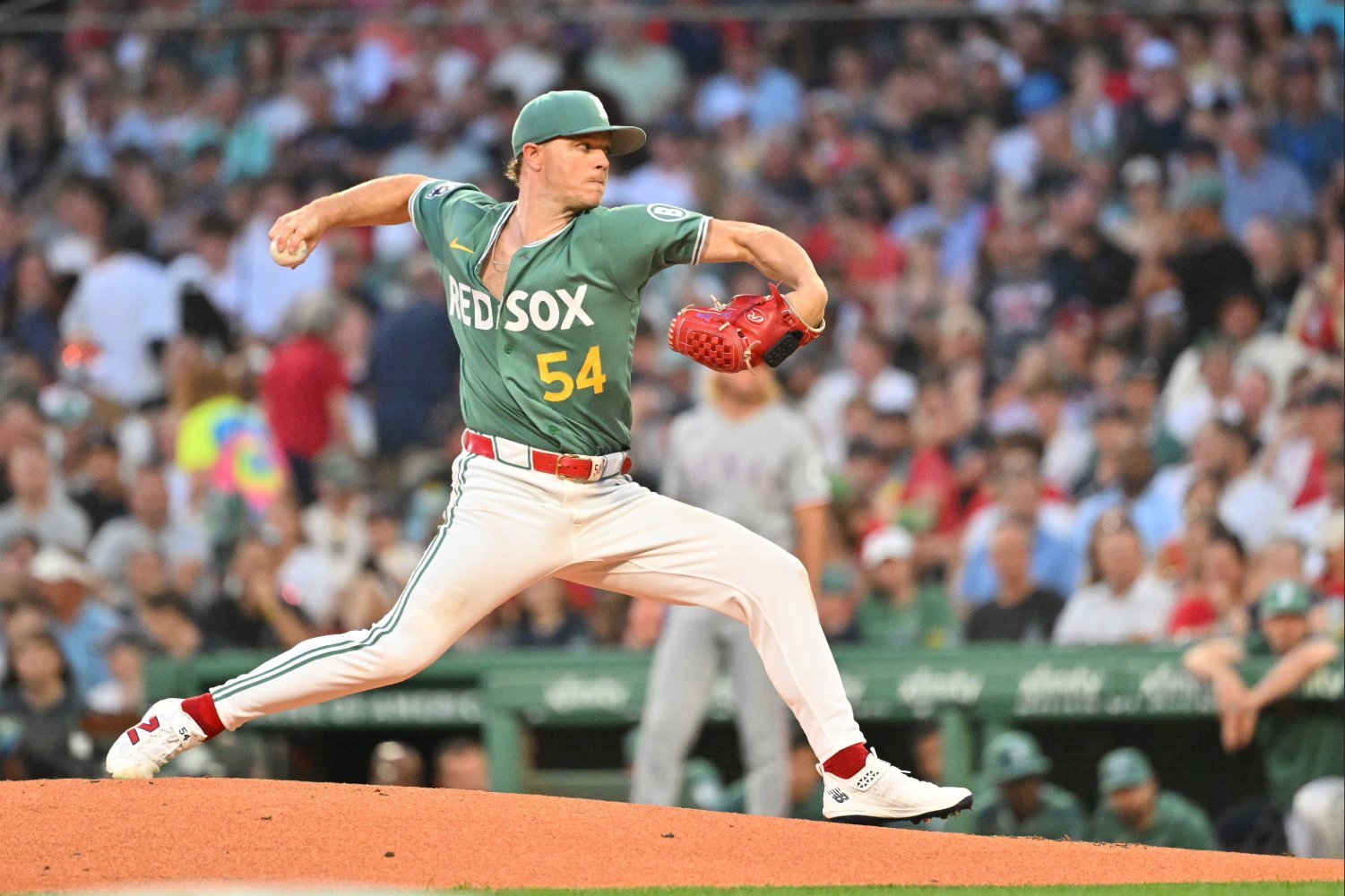 The American League is an absolute mess, and yet the Boston Red Sox find themselves on the outside looking in and even further behind in the AL East standings after being swept at home by the Blue Jays. They are 0-39 in games in which they trail by three and, once they return to Fenway Park, seem to forget how to play cohesive baseball on a daily basis. It feels like we’re quickly approaching the “pivot” that President and CEO of the Red Sox Sam Kennedy spoke about just last week. The negativity is growing louder and louder with each loss, and the players you’d expect to be the most outspoken about it are nowhere to be found when the cameras are on in the clubhouse. Craig Breslow seems to be keeping an eye on buying at the deadline, but that pathway feels like the worst possible decision given the direction this team is headed. While there is time before any final decisions have to be made, the Red Sox look like clear sellers at this point and these names are the most likely to be involved. Ranking Red Sox Trade Chips We'll rank these players by group, starting with those who are certain to be gone and ending with those who should be super-glued to the locker room beneath Fenway. Definitely Will Be Traded CL Aroldis Chapman Team Control: Through 2026 with 40 inning vesting option for 2027 2026 Stats: 21 G, 14 S, 23.5 K-BB%, 0.9 fWAR Chapman has seen a career resurgence since signing with the Red Sox before the 2025 season, but his time in Boston is likely coming to an end sooner than later. He’s almost guaranteed to represent the Sox in the All-Star Game this year (if he is still on the team by then). Even though he was tagged with the loss in the series finale against the Blue Jays, he’s arguably the best closer in the American League. When he’s officially put on the trade block, he will be the best reliever available and contending teams will likely line up to acquire his 100+ mph fastball for a late season push. The last time Chapman was moved, from the Royals to the Rangers, he wasn’t nearly the player he has been over the last season and a half but he still netted LHP Cole Ragans in return. If the goal is to retool the upper minor leagues with players who can contribute next season, there’s no better trade chip than the future Hall of Famer himself. SP Sonny Gray Team Control: Through 2026, Mutual Option for 2027 2026 Stats: 12 G, 3.53 FIP, 13.7 K-BB%, 1.1 fWAR Gray has been an incredibly bright spot for the Red Sox for the majority of the season. He has started focusing on his “Dr. Spin” persona and throwing stuff with some ridiculous movement. It’s allowed him to generate a ton of swing and miss during his starts while inducing weak contact when the batter does manage to put the ball in play. In turn, he’s pitching deep into most games and is turning in quality start after quality start. The appeal of Gray is that he’s a dependable veteran that will come relatively cheap considering the Cardinals are paying half of his salary this season and, once the trade deadline gets here, the Red Sox will have paid more than half of the remaining salary left for this season. He'll be an affordable rental who will provide a spark in the middle of a contender's rotation. Given his status as a starter, he should return a similar (if not better) package than Chapman. Possibly Could Be Traded OF Jarren Duran Team Control: Through 2028 2026 Stats: 66 G, .293 wOBA, 79 wRC+, 0.7 fWAR I’ve already gone in depth on why the Red Sox need to move on from Duran here, so I’m not going to go into a ton of depth with this piece, but it’s time to move on from Duran. Once Roman Anthony returns from the injured list, Duran will be squeezed out of his starting job in left field again. His offensive numbers have taken a nose dive this season, but there’s still glimpses of an every day hitter there. His speed is top tier and will be useful for a contending team down the stretch. The ship has sailed on him returning multiple star prospects, but he'll still fetch a decent price given his remaining team control. UTIL Isiah Kiner-Falefa Through 2026 2026 Stats: 46 G, .310 wOBA, 90 wRC+, 0.9 fWAR Kiner-Falefa feels like the type of player that this team needed if they were able to repeat last season’s success. He’s a journeyman veteran that plays solid defense and has, almost inexplicably, woken up at the plate and come through in some clutch moments. He has been incredibly vocal with the media over the last few weeks, and seems to almost be the only veteran presence on the defensive side of the ball who is willing to speak on a regular basis. That was a role Rob Refsnyder filled during his tenure with the Red Sox and Kiner-Falefa has stepped into those shoes well this year. He seems to almost be at his wit’s end though, and as the season slips further and further away, he is likely looking at less and less playing time. Moving him in a small trade to clear the remainder of his $6 million off the books is the move here, but his veteran presence may cause him to stick around for the rest of the season. RP Justin Slaten Team Control: Through 2029 2026 Stats: 15 G, 5.57 FIP, 19.7 KK-B%, -0.2 fWAR Slaten has been an interesting case study since he arrived as a trade via the Rule 5 draft in 2023. He has an electric fastball and a curveball that, when it’s on, ranks as one of the top pitches for all relievers. The biggest knock against him has been his health. He has landed on the injured list for stints during every season he’s been with the Red Sox and has typically struggled to return to form once he is activated to the big-league club. He has the potential to be the next closer for the Red Sox but that role is likely occupied by someone else we’ll get to here later. Still, his raw stuff would surely interest some contender in need of high-leverage help. Thanks to his status as a pre-arb player, Slaten should net the Sox something useful, though that cheap team control also makes him an attractive reliever to keep around. 1B Willson Contreras Team Control: Through 2027, Club Option for 2028 2026 Stats: 69 G, .408 wOBA, 157 wRC+, 2.6 fWAR Contreras has been the best hitter on the Red Sox this season, without a doubt. Imagining this season without his presence in the lineup is even more depressing than the current reality. Should Contreras hit the trade block, he would be the best right-handed hitter available on the market and should bring a king’s ransom in return. That being said, the clubhouse would suffer if he was dealt and it would significantly harm the team's chances of bouncing back next year. Contreras is on a fairly friendly deal for the 2027 season with a team option for the 2028 season. He’s finally hitting in a ballpark that suits his swing and he’s been a leader for this club through a down season. While it’s possible he’s traded, I consider it unlikely unless the team is blown away by the offer. C Connor Wong Team Control: Through 2028 2026 Stats: 28 G, .340 wOBA, 111 wRC+, 0.5 fWAR There have already been rumblings that the team is shopping backup catcher Connor Wong, so he had to show up somewhere on this list. He’s played far better than he did during his injury-shortened 2025 season, but he’s failed to live up to the starting catcher potential so many predicted for him after he took the reins of the position after Christian Vazquez was traded in 2022. He’s a serviceable backup catcher at this point in his career, but the fact the team is willing to listen to offers on him indicates that they prefer Mickey Gasper in the backup role, or starter role if recent trends are any indication. Wong won’t net much, but he could be a throw-in piece as part of a larger package returning several prospects. Unlikely To Be Traded OF Wilyer Abreu Team Control: Through 2029 2026 Stats: 70 G, .337 wOBA, 109 wRC+, 1.6 fWAR Abreu is a two-time Gold Glove winner in right field who has finally been moved out of the platoon role and thrived for it. He’s arguably the second-best hitter on the team and should be considered a foundational piece of the organization moving forward. It would be shocking to see the team move off of Abreu, but he'd instantly become the team's most valuable trade chip if they put up him for auction. RP Garrett Whitlock Team Control: Through 2026, Team Options for 2027 and 2028 2026 Stats: 22 G, 2.64 FIP, 23.9 K-BB%, 0.6 fWAR Whitlock is the shining example of everything that can go right with a Rule 5 draft selection. While there is likely going to be a ton of interest in him, he’s far too valuable to the organization as they look to retool to compete in 2027 and beyond. He is likely the closer-in-waiting once the team moves on from Chapman, and he’s proven capable of handling that pressure. Teams in contention would likely pay a high price for Whitlock, and an overpay shouldn’t be ignored, but the best bet is to hang onto him for the remainder of his contract. SS Trevor Story Team Control: Through 2027, Club Option for 2028 2026 Stats: 41 G, .243 wOBA, 45 wRC+, -0.5 fWAR While moving on from Story before the end of his contract makes a ton of sense, he’s making far too much money ($23.33MM AAV) and has spent too much time on the injured list during his stint in Boston for any team to even consider bringing him in mid-season. He has likely lost his starting shortstop role to Marcelo Mayer, so there could be movement on him whenever the offseason gets underway in a pre-lockout world, or even after the lockout comes to an end in 2027, but his deal is almost certainly unmovable at this current juncture. View the full article
 -
 Welcome to Shape of the Blue Jays, my column where I dig into Statcast numbers to analyze recent pitch shape and swing shape trends for Toronto Blue Jays players and discuss how they have impacted their performance. Click here to read the last edition. Quick Hits: Another Rising Prospect After his first taste of big league spring training was followed by a .993 OPS in 49 games at Double-A New Hampshire, Toronto's 2024 fourth-rounder Sean Keys was promoted to Triple-A Buffalo earlier this month. Keys had never played above High-A before this year and was named the 20th-best prospect in the Jays' system by Baseball America in their preseason report. In 11 games so far with the Bisons, he's continuing to lay waste to opposing pitchers, slashing .343/.465/.771 with three homers. BA has already bumped him up to 14th in the system in their latest rankings. All Triple-A parks log Statcast data, meaning Keys's advanced stats are now available to the public. Since the promotion, his 90th-percentile exit velocity is a loud 108.7 mph. His hard hit rate is at 52%, his barrel rate is 12%, and his hard-hit balls are averaging a launch angle of 16°, indicating he's making his loudest contact in the air. To achieve these incredible batted ball numbers, he's had to fork over some discipline and contact, as his chase rate is a hair above the MLB average at 29.2%, while his zone contact rate is 79.7%. It's more than worth the tradeoff, though, if he's going to do this much damage. Keys is a lefty bat who just turned 23 and is limited to the corner infield positions, which somewhat limits the chances he'll play an immediate role in the majors in 2026, unless he picks up a new position like Charles McAdoo did. Still, his progression this year has nonetheless been exciting to see. George Springer George Springer is starting to look more like himself at the plate (122 wRC+ in June). It starts with his selectivity, as his chase rate this month is down to 19.2%, a decrease of 10% compared to May and the first time he's been under 20% in a month since August of last year. His mechanics have slightly changed too. His swing length this month is down a couple of inches from his season average without any material sacrifice to his bat speed. George Springer Bat Tracking Stats, 2026 overall vs 2026 June {C}%3C!%2D%2Dtd%20%7Bborder%3A%201px%20solid%20%23cccccc%3B%7Dbr%20%7Bmso-data-placement%3Asame-cell%3B%7D%2D%2D%3E--> Sample Bat Speed Swing Length Contact Point vs Center of Mass Attack Angle Attack Direction YTD 2026 72.5 mph 7.4' 21.9" 9° 0° June 2026 72.1 mph 7.2' 18.9" 7° 5° oppo The recurring issue with Springert early in the season was similar to what we saw in his down year in 2024: too many ground balls rolled over to the pull side. He has launched a couple towering pull-side dingers this past week, with one of them being his 300th career long ball, but he's been looking to use the whole field again in an effort to move away from those slow rollers to the left side of the infield. Springer already lets the ball travel more than almost every hitter in baseball, and this month, he's doubling down on that approach and shooting more hits the other way. This approach often leads to a decrease in power output, but his recent success indicates it might be what he has to do in order to avoid an abundance of weak contact. Louis Varland After finally reminding us that he was human last week, Louis Varland went right back to dominating in the first two games of the Boston series. On Wednesday night, he struck out the side on 10 pitches, one shy of an immaculate inning. The night before, Varland had to enter a three-run game for a four-out save after Tommy Nance struggled in the eighth, adding to the increasing concerns about his workload. Despite that, his stuff looked about as good as we've ever seen it the very next day. His fastball averaged 99.8 mph, and his slider was up a couple ticks in velocity to around 94 mph while adding some vertical drop. It feels like the Blue Jays have to turn to him every day, but that hasn't stopped his average fastball velocity from increasing each month of the season. Through 40 innings this year, Varland is rocking a 0.90 ERA, 1.50 FIP, 1.99 xFIP, and 1.8 FanGraphs WAR, tied with Cade Smith for the highest reliever WAR in the AL. Among every single Blue Jays relief pitcher season in history (max. 100 IP), Tom Henke has the highest fWAR at 3.5, a mark he reached in 1986. In terms of the best ERA, it's B.J. Ryan, who had a 1.37 in 2006. Varland is on pace to match Henke's fWAR in a slightly smaller sample, and his ERA is still on the right side of 1.00. I'll keep saying it until it isn't true: Appreciate this while you can. The Jays have never had a closer this good, and it'll be a long time before the stars align like this again. Andrés Giménez Andrés Giménez's hot streak has lengthened out the lineup quite nicely (146 wRC+ in his last seven games). His ability to occasionally surprise everyone with an absolute missile off a lefty pitcher is delightful on the rare occasion it happens, and in Tuesday's series opener, he took a Payton Tolle cutter deep to Fenway's cavernous right-center field, going back-to-back with Davis Schneider for the first instance of back-to-back homers the Jays have had in 2026. On balls in play, Giménez's xwOBA against changeups and splitters is a whopping .547 so far in June. A few things stand out from his bat tracking stats of late. Giménez is standing a tad farther back in the box, and his stance is both more open (12° open in June, compared to 2° open in 2026 overall) and more upright, with a smaller gap in between his feet in recent weeks. The visual comparison below shows that his front foot is slightly offset from his back foot, something we didn't see at the start of the year, as he's facing the pitcher more directly. When he first got to Toronto and immediately opened 2025 on a productive note, his stance was more open than it was in Cleveland. Hitting is a game of constant adjustments, so it makes sense this didn't last all year, but he's trying the same thing again right now, and it's working. Andrés Giménez Batting Stance Comparison, April 2026 (left) vs June 2026 (right) All stats entering June 18, 2026 View the full article
 -
 San Diego Padres affiliates went 4-1 Thursday as the Triple-A El Paso Chihuahuas lost to Reno 8-1, the Double-A San Antonio Missions surged to an 11-7 win over Corpus Christi, the High-A Fort Wayne TinCaps swept a doubleheader from South Bend 5-2 and 4-3 and the Low-A Lake Elsinore Storm cruised to a victory over San Jose 7-1. Padres Minor-League Transactions LHP Ryan Och activated from 7-day injured list and assigned to Fort Wayne TinCaps from San Antonio Missions. Chihuahuas Done In By Aces' Big Inning Nate Mondou hit a solo homer, but that would be the lone highlight as the host Triple-A El Paso Chihuahuas gave up a sixth-run fifth inning en route to an 8-1 loss to the Reno Aces. Chihuahuas left-handed starter JP Sears was tagged for seven runs (six earned) on eight hits and no walks with four strikeouts in four innings. The bullpen came up with a strong effort, with right-hander Justin Yeager allowing a run in two innings and right-handers Misael Tamarez, Triston McKenzie and Ty Adcock each tossing shutout innings. Mondou had two of the Chihuahuas' four hits, going deep in the bottom of the sixth, his fifth of the season. EP_0618.mp4 Player AB R H RBI BB K Bryce Johnson 2 0 0 0 1 1 Carlos Rodríguez 4 0 0 0 0 0 Mason McCoy 4 0 1 0 0 1 Marcos Castañon 4 0 0 0 0 0 Nick Pratto 4 0 0 0 0 0 Clay Dungan 4 0 1 0 0 2 Nick Schnell 2 0 0 0 0 1 Nate Mondou 3 1 2 1 0 1 Anthony Vilar 3 0 0 0 0 1 Colton Vincent 0 0 0 0 0 0 Player IP H R ER BB K HR JP Sears 4.0 8 7 6 0 4 1 Justin Yeager 2.0 3 1 1 1 2 1 Misael Tamarez 1.0 1 0 0 0 0 0 Triston McKenzie 1.0 1 0 0 2 0 0 Ty Adcock 1.0 1 0 0 1 0 0 Romeo Sanabria Leads 3-HR Parade In Missions' Victory Romeo Sanabria went 3-for-4 with three RBIs and four runs scored, including one of three homers as the Double-A San Antonio Missions toppled the host Corpus Christi Hooks 11-7. Luis Verdugo and Tirso Ornelas also went deep for the Missions, with Verdugo having two hits and three RBIs and Ornelas two RBIs and two runs scored. Francisco Acuna scored twice after singling and walking. Sanabria and Ornelas have eight homers and Verdugo four this year, with Ornelas hitting his second in three games. Missions left-handed starter Jagger Haynes, Padres Mission's No. 11 prospect, surrendered five runs on seven hits, including four homers, and a pair of walks with four strikeouts in 5⅓ innings. Ornelas drilled a two-run homer in the first inning with Sanabria aboard, then, after the Hooks took a 4-2 lead, Verdugo doubled home Sanabria in the top of the fourth, with the Hooks pulling within 4-3 in the bottom of the fourth. The Missions then pulled away on Sanabria's three-run homer in the fifth, Verdugo's two-run shot in the sixth and two more runs in the seventh for a 10-5 advantage. SA_0618.mp4 Player AB R H RBI BB K Ryan Jackson 5 1 1 0 0 1 Francisco Acuna 3 2 1 0 1 0 Romeo Sanabria 4 4 3 3 1 0 Tirso Ornelas 4 2 1 2 0 0 Braedon Karpathios 4 1 1 0 1 1 Luis Verdugo 4 1 2 3 1 0 Kai Murphy 5 0 1 2 0 0 Kai Roberts 3 0 0 0 1 2 Chris Sargent 5 0 0 0 0 2 Player IP H R ER BB K HR Jagger Haynes 5.1 7 5 5 2 4 4 Andrew Moore 0.2 0 0 0 0 1 0 Andrew Thurman 1.0 3 2 2 0 1 0 Omar Cruz 2.0 1 0 0 0 3 0 Walk-Off Completes TinCaps' Doubleheader Sweep To End First Half Lamar King Jr. singled home the tying run and Jack Costello the winning run with one out in the bottom of the eighth inning as the host High-A Fort Wayne TinCaps walked off the South Bend Cubs 4-3 to sweep a doubleheader. In the opener, Alex McCoy and Jake Cunningham drove in a pair of runs in a four-run sixth inning as the TinCaps won 5-2. The win came as the TinCaps, who had lost 11 of 12 coming into the day, completed the first half with a 27-39 record, fifth in the six-team Midwest League East Division. The Cubs won the West Division at 39-23. Kavares Tears homered in the second inning of the first game, his eighth of the season. South Bend scored one each in the third and fourth innings. In the bottom of the sixth, the TinCaps loaded the bases on walks to Kasen Wells and Justin DeCriscio and Rosman Verdugo being hit by a pitch. One out later, McCoy hit an opposite-field go-ahead two-run double down the right-field line. Cunningham followed with a two-run single to left for a 5-2 lead. FW1_0618.mp4 In the nightcap, TinCaps right-hander Maikel Miralles pitched five shutout innings, giving up a pair of hits but walking four and striking out three. Right-hander Tucker Musgrove, Padres Mission's No. 14 prospect, gave up a pair of runs while punching out two in the top of the sixth as the Cubs took a 2-1 lead. Cunningham homered in the bottom of the sixth to tie the game 2-2. With the game in extra innings, South Bend scored once in the top of the eighth on a wild pitch by right-hander Ryan Och. In the bottom half, Wells was the zombie runner and was bunted to third by Rosman Verdugo. King, Padres Mission's No. 10 prospect, grounded a single to left to plate Wells. After a McCoy single moved King to second, Cunningham walked to load the bases and, after a dropped foul popup by the first baseman, Costello took advantage of the second chance by hitting a slow chopper to the third baseman and King raced home with the winning run before a play could be made. FW2_0618.mp4 FIRST GAME Player AB R H RBI BB K Justin DeCriscio 2 1 0 0 1 1 Rosman Verdugo 2 1 0 0 0 1 Lamar King Jr. 2 0 0 0 1 1 Alex McCoy 3 1 1 2 0 1 Jake Cunningham 2 0 1 2 1 1 Kavares Tears 3 1 1 1 0 1 Jack Costello 3 0 0 0 0 1 Zach Evans 2 0 1 0 0 1 Kasen Wells 1 1 0 0 1 0 Player IP H R ER BB K HR Carson Montgomery 4.0 3 2 1 2 3 1 Will Varmette 2.0 0 0 0 2 2 0 Javier Chacon 1.0 0 0 0 0 2 0 SECOND GAME Player AB R H RBI BB K Kasen Wells 3 1 1 1 1 1 Rosman Verdugo 2 0 0 0 1 0 Lamar King Jr. 4 1 1 1 0 2 Alex McCoy 4 0 1 0 0 0 Jake Cunningham 2 1 1 1 2 1 Jack Costello 3 0 1 1 0 1 Zach Evans 2 1 1 0 1 0 Oswaldo Linares 2 0 0 0 0 0 Carlos Rodriguez 1 0 0 0 0 0 Wyatt Hoffman 2 0 0 0 1 1 Player IP H R ER BB K HR Maikel Miralles 5.0 2 0 0 4 3 0 Tucker Musgrove 1.0 1 2 2 1 2 0 Clay Edmondson 1.0 0 0 0 0 1 0 Ryan Och 1.0 0 1 0 2 3 0 Bryan Balzer, Kerrington Cross Fuel Storm To 5th Straight Win Right-handed starter Bryan Balzer threw five strong innings, while Kerrington Cross had three hits and was one of three players with two RBIs as the Low-A Lake Elsinore Storm rolled to a 7-1 victory over the San Jose Giants, their fifth straight win. The Storm, winners of the California League's South Division, finished the first half 39-27. San Jose won the North Division at 37-29. Qrey Lott also had three hits and scored twice, with Jorge Quintana and Yoiber Ocopio driving in a pair. Dawson Willis singled, walked and scored twice. The Storm struck early for four runs in the second inning as Quintana had a sacrifice fly, Yimy Tovar an RBI single and Cross a two-run double. The Giants got one back in the bottom of the second, then Quintana made it 5-1 with a run-scoring single in the top of the third. Ocopio boosted the lead to 7-1 on a two-run single. Balzer allowed one run on five hits and a walk with a pair of strikeouts in five innings. Right-hander Rordy Mejia followed with two shutout innings and three punchouts and left-hander Cal Riehl and right-hander Sean Barnett each had a shutout inning. LE_0618.mp4 Player AB R H RBI BB K Ryan Wideman 5 1 1 0 0 0 Kerrington Cross 5 0 3 2 0 1 Jose Verdugo 5 0 1 0 0 0 Luke Cantwell 5 1 1 0 0 2 George Bilecki 0 0 0 0 0 0 Dawson Willis 4 2 1 0 1 3 Qrey Lott 4 2 3 0 0 0 Jorge Quintana 3 0 1 2 0 1 Yoiber Ocopio 4 0 1 2 0 2 Yimy Tovar 3 1 1 1 1 0 Player IP H R ER BB K HR Bryan Balzer 5.0 5 1 1 1 2 0 Rordy Mejia 2.0 1 0 0 0 3 0 Cal Riehl 1.0 1 0 0 0 1 0 Sean Barnett 1.0 2 0 0 0 2 0 Padres Mission Top 20 Prospect Performance Ethan Salas: DNP Kash Mayfield: DNP Miguel Mendez: DNP Kruz Schoolcraft: DNP Ryan Wideman: 1-for-5 Jorge Quintana: 1-for-3, K Ty Harvey: On injured list Kale Fountain: Injured, out for season Braedon Karpathios: 1-for-4, K Lamar King Jr.: Game 1: 0-for-2, K; Game 2: 1-for-4, 2 K Jagger Haynes: 5⅓ IP, 7 H, 5 R, 5 ER, 2 BB, 4 K (W) Alex McCoy: Game 1: 1-for-3, 2B, K; Game 2: 1-for-4 Truitt Madonna: DNP Tucker Musgrove: 1 IP, 1 H, 2 R, 2 ER, 1 BB, 2 K Garrett Hawkins: DNP Michael Salina: DNP Eric Yost: DNP Rosman Verdugo: Game 1: 0-for-2, K; Game 2: 0-for-2 Bryan Balzer: 5 IP, 5 H, 1 R, 1 ER, 1 BB, 2 K (W) Deivid Coronil: DNP View the full article
 -
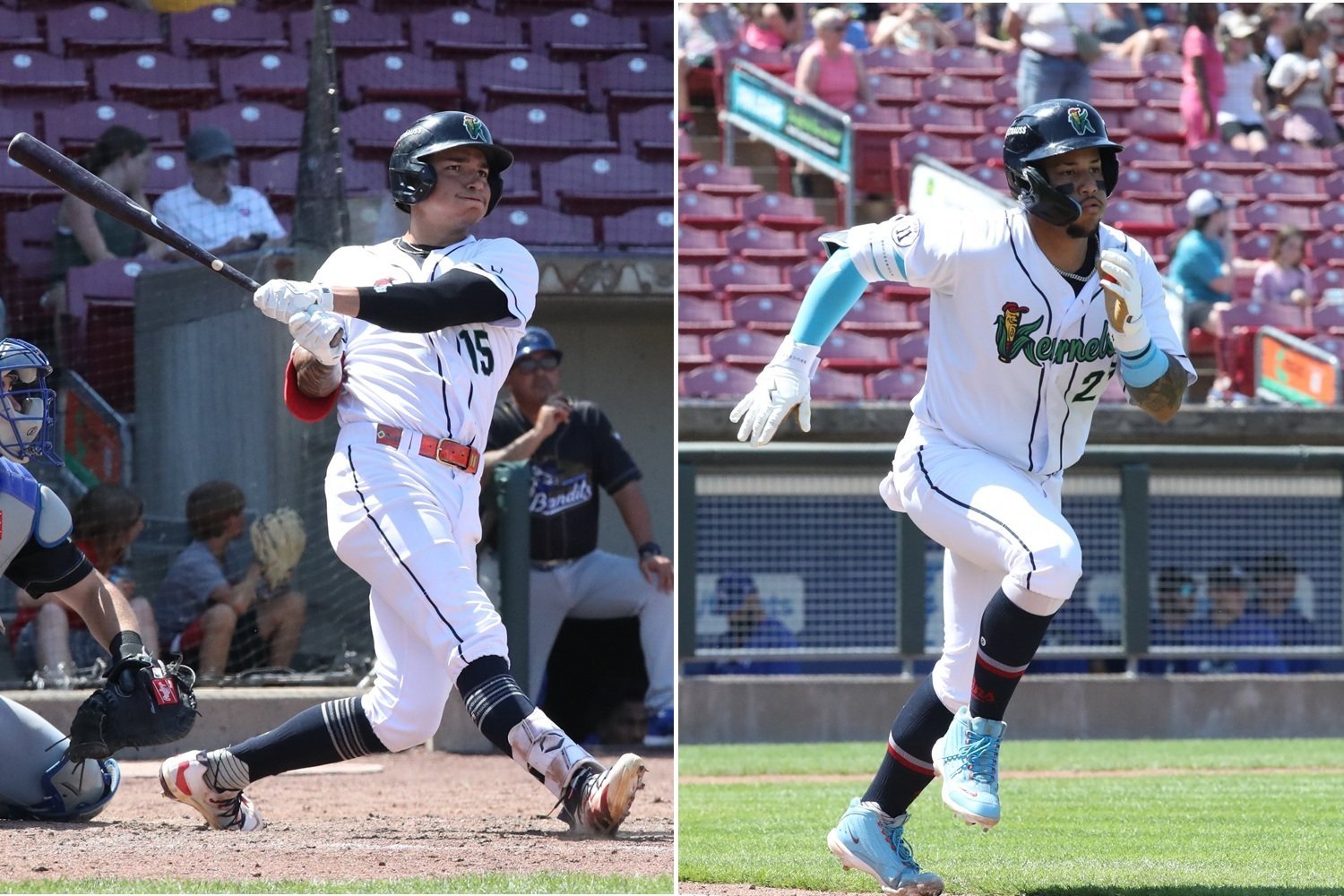 TRANSACTIONS RHP Jesse Bergin was assigned to the Cedar Rapids Kernels. Outfielder Ricardo Paez was assigned to the Fort Myers Mighty Mussels. Both players were with the FCL Twins. The Mussels also placed RHP Matthew Dalquist on the seven-day injured list. Finally, infielder Orlando Arcia was outrighted after clearing waivers and sent to the Saint Paul Saints. SAINTS SENTINEL Game 1: St. Paul 4, Omaha 12 Box Score Game 1 today as St Paul was pretty ugly for the hometown team. They gave up two runs in the first inning, four in the fourth inning, and five in the sixth inning on their way to a 12-4 loss to Omaha. For the Saints, Gabriel Gonzalez was 2-for-3 with a walk. He also hit his 11th home run of the season. The Saints team had just six hits, and they walked four times. The only other extra base hits included a Noah Cardenas home run, his fourth of the season, and Ben Ross doubled for the 14th time in a Saints uniform. On the mound, Austin Voth started and went four innings. He gave up six runs (5 earned) on six hits and two walks. He had five strikeouts. Grant Hartwig struck out two in a scoreless fifth inning Then rehabbing Kendry Rojas came in. He gave up five runs on five hits and a walk in just 1 1/3 innings. Drew Smith came on and got the final two outs but not before giving up another run on two hits. Game 2: St. Paul 4, Omaha 12 Box Score Game 2 started out well for the Saints. Ricky Castro threw a zero on the board in the top of the first, and Ben Ross led off the bottom half of the first inning with a home run, his fifth with the Saints. However, Castro gave up three runs in the top of the second inning, but the Saints were able to match that in the bottom of the third frame when Henry Kusiak came to the plate with the bases loaded and knocked his third Saints double to clear the bases and give his team a 4-3 lead. Ricky Castro gave up three runs on four hits and two walks in two innings. He struck out two batters. John Klein came in and went the next three innings. He gave up three runs on four hits (2 homers). He struck out five batters without issuing a walk. Alejandro Hidalgo walked one and struck out two batters in a scoreless inning. Marco Raya struck out two batters in a perfect seventh inning. The Saints had eight hits in the second game. Gabriel Gonzalez went 3-for-3 and was hit by a pitch. Cody Morissette was 1-for-2 with two walks. Tanner Schobel hit his 12th double. WIND SURGE WISDOM Wichita 6, Springfield 8 Box Score This was an interesting game in Wichita on Thursday night. The Cardinals scored six runs in the top of the third inning. However, the Wind Surge responded in the bottom of the fourth inning with five runs of their own. From there, however, things settled in, and Wichita was never able to tie the game up or take the lead and Springfield won the game 8-6. Preston Johnson made the start for the wind surge the right hander fell to oh and three. He gave up six earned runs on four hits and two walks in just two and 1/3 innings. Sam Ryan came on in relief and got five outs. He gave up three hits but no walks and no runs. Jose Olivares came in for the fifth inning and walked four batters to give up a run in his one inning pitched. Paulshawn Pasqualotto settled things down. He struck out two over two perfect innings in relief. Jacob Webb gave up a run on two hits and two walks in his inning. Lefty Zach Vennaro struck out three batters in his half of the ninth inning. Down 6-0 going to the bottom of the fourth inning, the Wind Surge mounted their one big rally of the game. Kala’i Rosario singled up the middle to lead things off. After a ground out moved Rosario to second base, Jorel Ortega flew out to right field, deep enough for Rosario to advance to third base. Two outs and a runner on third base, Jose Salas hit his fifth double of the season to drive in Rosario and put the Surge on the scoreboard. Maddux Houghton followed with a walk, and Quinn McDaniel was hit by a pitch to load the bases. That's when Andrew Cossetti stepped up to the plate and drilled his eighth home run of the year, a grand slam that cut the wind surge deficit to just one run. The next three batters walked (Khadim Diaw, Billy Amick, and Rosario), but they were unable to score that tying run. With two outs in the bottom of the seventh inning, Ortega hit his third home run of the season but that only made it 7-6 Cardinals. That was the last of the Wind Surge scoring opportunities. The Wind Surge scored their six runs on eight hits and six walks. Jose Salas was the lone Wichita batter with a multi-hit game. He was 2-for-4 with a double. Diaw was 1-for-3 and walked twice. Houghton added his third triple. KERNELS CHRONICLE Cedar Rapids 13, Beloit 10 Box Score This was another crazy game in Cedar Rapids on Thursday night. There have been a lot of unique, high scoring, back-and-forth games throughout the minor leagues the last few weeks, but several have happened in Cedar Rapids. Down 3-0, the Cedar Rapids Kernels scored seven runs in the bottom of the second inning. With one out, Enrique Jimenez started things with a single. With two outs, Caden Kendle walked. Jacob McCombs came up next and drilled his fourth home run of the season to tie the game at 3-3. One pitch later, Danny De Andrade followed with his seventh home run of the season to give the Kernels a 4-3 lead. With the bases cleared, Marek Houston singled to right field and stole second base. Walker Jenkins walked. Brandon Winokur singled to left to drive in Houston and make it a 5-3 game. Eduardo Tait drove in Jenkins and Winokur with a double to give the Kernels the 7-3 lead. Beloit scored a run in the top of the third, but the Kernels added on in the bottom of the fifth inning. Winokur led off the inning with a double off the wall in right field. He scored when Tait lined a single to center and made it 8-4 Cedar Rapids. After one out, there was a pitching change. Jay Thomason welcomed the new pitcher with a walk as did Caden Kendle to load the bases. McCombs followed by singling to center field which drove in two more runs and gave the Kernels a 10-4 lead. But the game wasn't over. In the top of the seventh, Beloit scored a run making it a 10-5 game. But the Kernels added another three runs in the bottom of the eighth inning. It all started with two outs. Graham Brown walked, and Brandon Winokur reached on catcher's interference. That brought Tait to the plate, and he launched his 14th home run of the season to give the Kernels a 13-5 lead. This is the Midwest League. Games aren't over until the last out is recorded. The Sky Carp weren’t quitting. They scored five runs in the top of the ninth, but the Kernels had plenty of cushion and hung on for the 13-10 win. Lefty Cesar Lares started for Cedar Rapids. In 3 1/3 innings, he gave up four runs (3 earned) on four hits. He walked two batters and struck out two batters. Xavier Kolhosser came in and tossed 2 1/3 scoreless innings. He gave up just one hit, walked one, and struck out two batters. Nolan Santos gave up one run in the sixth inning on a hit and two walks. Yehizon Sanchez pitched a scoreless eighth inning, but he faced four batters in the ninth inning. All four reached, and all four scored. Mitch Mueller came on to get the final three outs, but not before he allowed all three inherited runners plus a run of his own to score. Eduardo Tait and Jacob McCombs were the heroes on offense. Tait went 3-for-5 with his 11th double and 14th home run. He scored twice and had six RBI. McCombs went 2-for-4 with his fourth home run. He had five RBI in the game. Brandon Winokur was the other Kernels hitter that had a multi-hit game He went 2-for-4 with his 11th double He scored three runs. Walker Jenkins went 1-for-3 with a walk as his rehab continues. De Andrade's home run was his seventh of the season. Houston's stolen base was his 23rd of the season. MIGHTY MATTERS Ft. Myers 16, Tampa 5 Box Score Did I mention earlier that there have been a lot of runs scored in Minor League Baseball recently? It is interesting to note that some online are starting to research and investigate if the baseball's used in minor-league games in 2026 are different than they have been in the past. I'll let smarter people than me try to figure all that out, I just enjoy watching all the runs score… when they're being scored by the Twins affiliates Through two innings, this game was scoreless. After that, the Mussels scored in five of their next six innings and went on to a 16-5 win. They scored three runs in the third inning, three in the fifth inning, four in the seventh inning, and five in the eighth inning. Oh, they had a one run fourth inning too (if you want to count that!). Fort Myers scored their 16 runs on 20 hits and six walks. It will come as no surprise that Dameury Pena led the way by going 4-for-6. Byron Chourio went 3-for-4 with a walk and his second home run. He drove in four runs. Ramiro Dominguez went 2-for-4 with a walk and three RBI. Jayson Bass had two hits. Luis Fragoza was 3-for-5 and scored three runs. He hit his eighth double. Ricardo Paez was 2-for-4 with two walks. He scored three runs and hit two doubles. Ryan Sprock came off the bench and went 2-for-2 with his sixth double and his fourth home run, a three-run blast. In addition, Fort Myers stole seven bases, including two by Dominguez who now has 15 on the season. Nine out of the 10 Mussels batters had at least one hit in the game. Most had more than one. So we won't mention that Quentin Young went 0-for-6 with five strikeouts. Don't forget that he hit home runs in his last two games. Kolten Smith started. He gave up two runs on three hits and two walks over 3 1/3 innings. He had five strikeouts. Brent Francisco came on and gave up only a walk over 1 2/3 scoreless innings. Eric Hammond gave up two runs on three hits over two innings. He walked one and had two strikeouts. Michael Hilker gave up one run on two hits over his two innings. He walked on and had two strikeouts. COMPLEX CHRONICLES FCL Twins 9, FCL Rays 3 Box Score In an unusual turn, the score of this FCL game was 1-1 going into the fifth inning. However, the Twins scored three in the top of the fifth and three more in the sixth inning and then added one more run in each the seventh and eighth innings to take a commanding lead and an eventual win over the Rays. On the mound to start for the FCL Twins was Frederick Hiciano. The 18-year-old gave up one run on one hit in 2 1/3 innings. He walked three and had four strikeouts. Carter Holjes came on and gave up two runs on two hits and a walk over the next 3 1/3 innings. He had one strikeout. Brad Rudis came in and was a hit batter from three perfect innings. He recorded three strikeouts. Jake Covey got the final out of the game after issuing a walk. The Twins scored their first run in the top of the fourth inning. Back-to-back-to-back singles by Miguel Caraballo, Carlos Taveras, and Teilon Serrano scored the first run. In the top of the fifth inning, Daiber De Los Santos walked. Following a pitching change, Yovanny Duran singled him to third base. Jhomnardo Reyes followed by reaching on a fielding error by the left fielder. De Los Santos scored. However, Duran was thrown out at third. That brought Miguel Caraballo to the plate, and he drilled his fourth home run of the short season to give the Twins the 4-1 lead. You might recall Caraballo came to the Twins in the infamous Daniel Susac trade in December. The top of the sixth inning started with a Darwin Almanzar walk. Jose Barrios doubled to advance him to third base. Following another De Los Santos walk, the bases were loaded, and the Rays made a pitching change. Duran walked to score Almanzar with the first run of the inning. Then Reyes was hit by a pitch to score the second run. The third run scored on a wild pitch. Welcome to FCL baseball! In the top of the seventh inning, Jose Barrios’s first Stateside home run gave the Twins an 8-3 lead. The 18-year-old had two homers last season in the DSL. In the top of the eighth inning, Caraballo walked and stole second. With one out, he stole third base. And after a Serrano walk, they executed a successful double steal with Caraballo stealing home to record his third steal of the inning, and his 10th stolen base of the season. The Twins scored their nine runs on 12 hits and nine walks. Duran went 3-for-5 with a walk. Caraballo was 2-for-5 with a walk and his fourth home run. Tavares was 2-for-5 with his fourth double. Serrano was 2-for-4 with his third triple. Barrios was 2-for-5 including his fifth double and first home run. De Los Santos walked three times. DSL Twins 1, DSL Diamondbacks 2 Box Score I may have to whisper-type about this game. I'm not sure if scoring just three total runs in a game is actually legal to write about or talk about much less play. So this could be quick. Both teams scored a single run in the third inning. The Diamondbacks affiliate scored a single run in the top of the seventh to take a 2-1 lead, and that's what the final score was. In the bottom of the first inning, the Twins got a leadoff double from Jendy Martinez. With one out, he went to third on a balk. He was left stranded. In the second inning, Abel Sosa, Jeferson Abreu, and Fabian Ulloa all walked to load the bases but the team was unable to score again. Like Diamondbacks in the top of the third, the Twins got on the board in the bottom of the third. Daiyer Barboza was hit by a pitch to lead off the inning. He went to second on a wild pitch. Jhon Gonzalez grounded out to first base for the first out, but Barboza advanced to third. And in dramatic fashion, he scored on a wild pitch. Anibal Beltre followed with a single as if to show that he could have driven in the run himself. However, opportunities just stopped arriving after that. They had two consecutive 1-2-3 innings. Beltre singled to lead off the sixth inning, but he was unable to advance even to second base. Diamondbacks prospect Ismael Mejia led off the top of the seventh inning with his first home run which gave them a 2-1 lead. That takes us to the bottom of the seventh inning. The first two batters flew out. But Jendy Martinez followed with a line drive double to center field. Unfortunately, he attempted to make it a triple, and a perfect center field-to-shortstop-to-third baseman relay ended the threat before it even really started. 19-year-old Fernando Hernandez started for the Twins. He gave up one run on three hits over the first 2 2/3 innings. He struck out two batters. Yolcar Garcia was next for the Twins. The 18-year-old tossed 3 1/3 scoreless innings in relief. He gave up one hit, walked one and had four strikeouts. Alam Soriano came in for the seventh inning and gave up the solo homer and a double, but just one run, in the inning. The Twins scored their one run on four hits and three walks. Martinez hit his fifth and sixth doubles. Beltre went 2-for-3. And the walks came back-to-back-to-back in the second inning. . PLAYERS OF THE DAY Hitter(s) of the Day Gabriel Gonzalez (St. Paul): 5-for-6, HBP, HR(11), 2 R, 1 RBI, K. Eduardo Tait (Cedar Rapids): 3-for-5, 2B(1!), HR(14), 2 R, 6 RBI. Jacob McCombs (Cedar Rapids): 2-for-4, HR(4), R, 5 RBI, K. Dameury Pena (Fort Myers): 4-for-6, R, SB(19). Byron Chourio (Fort Myers): 3-for-4, BB, HR(2), 3 R, 4 RBI, SB(14). Pitcher(s) of the Day Brad Rudis (FCL Twins): 3 IP, 0 H, 0 R, 0 BB, 1 HBP, 3 K, 51 pitches, 32 strikes (62.7%) Yolcar Garcia (DSL Twins): 3 1/3 IP, 1 H, 0 R, 1 BB, 4 K. PROSPECT SUMMARY Check out the Prospect Tracker for much more on our Twins Top 20 prospects after seeing how they did today. #1 - OF Walker Jenkins (St. Paul) - Rehab in CR: 1-for-3, BB, R, K (batted second, played CF) #5 - C Eduardo Tait (Cedar Rapids) - 3-for-5, 2B(11), HR(14), 2 R, 6 RBI, K (batted fourth, played DH). #7 - SS Marek Houston (Cedar Rapids) - 1-for-5, R, K, SB(23) (batted first, played SS) #9 - LHP Kendry Rojas (Minnesota) - Rehab in SP, Game 1: 1 1/3 IP, 5 H, 5 ER, 1 BB, 1 K, 33 pitches, 22 strikes (66.7%) #10 - OF Gabriel Gonzalez (St. Paul) - Game 1: 2-for-3, BB, HR(11), R, RBI, K (batted second, played 1B, Game 2: 3-for-3, HBP, R, (batted second, played DH) #12 - RHP Andrew Morris (Minnesota) - 2/3 IP, 0 H, 0 R, 0 BB, 0 K, 8 pitches, 5 strikes (62.5%). #14 - 3B/SS Quentin Young (Ft. Myers) - 0-for-6, 5 K (batted third, played DH) #15 - 3B/CF Brandon Winokur (Cedar Rapids) - 2-for-4, 3 R, RBI, E(10) (batted third, played 3B) #19 - C/OF Khadim Diaw (Wichita) - 1-for-3, 2 BB (batted second, played C) #20 - 2B/SS/CF Kyle DeBarge (Wichita) - Temporary Inactive List UPCOMING PROBABLES Friday, June 19 Omaha @ St. Paul (7:07 pm CT) - LHP Aaron Rozek (1-0, 2.53 ERA) vs Randy Dobnak making his first start since being traded from the Mariners to the Royals. Springfield @ Wichita (6:35 pm CT) - The Return of RHP Chris Vallimont (0-0, 0.00 ERA) Beloit @ Cedar Rapids (6:35 pm CT) - LHP Garrett Horn (0-0, 2.08 ERA) Ft. Myers @ Tampa (5:30 pm CT) - RHP Ramiro Villanueva (0-2, 4.55 ERA) FCL Red Sox @ FCL Twins (11:00 am CT) - DSL Twins @ DSL Blue Jays (10:00 am CT) - CURRENT W-L Records Minnesota Twins: 36-40 (3rd place (of 5) in AL Central, 4.5 GB)) (The first half of the minor league seasons ended on Thursday. None of the Twins affiliates are first-half champions, so they'll have to win the second half title to make the playoffs.) St. Paul Saints: 40-29 (3rd place (of 10) in IL West Division, 4.5 GB)) Wichita Wind Surge: 25-39 (5th place (of 5) in TL North Division, 17.0 GB)) Cedar Rapids Kernels: 31-33 (4th place (of 6) in MWL West Division, 9.0 GB)) Fort Myers Mighty Mussels: 37-28 (2nd place (of 6) in FSL West Division, 2.5 GB)) FCL Twins: 19-15 (2nd place (of 6) in FCL South Division, 1.0 GB)) DSL Twins: 4-9 (6th place (of 7) in DSL East Division, 5.0 GB)) Please feel free to ask questions about the teams, the rosters, and discuss today’s games, or anything else Twins minor-league related! View the full article
 -
Cubs Send Slumping Moises Ballesteros Down To Triple-A
DiamondCentric posted an article in North Side Baseball
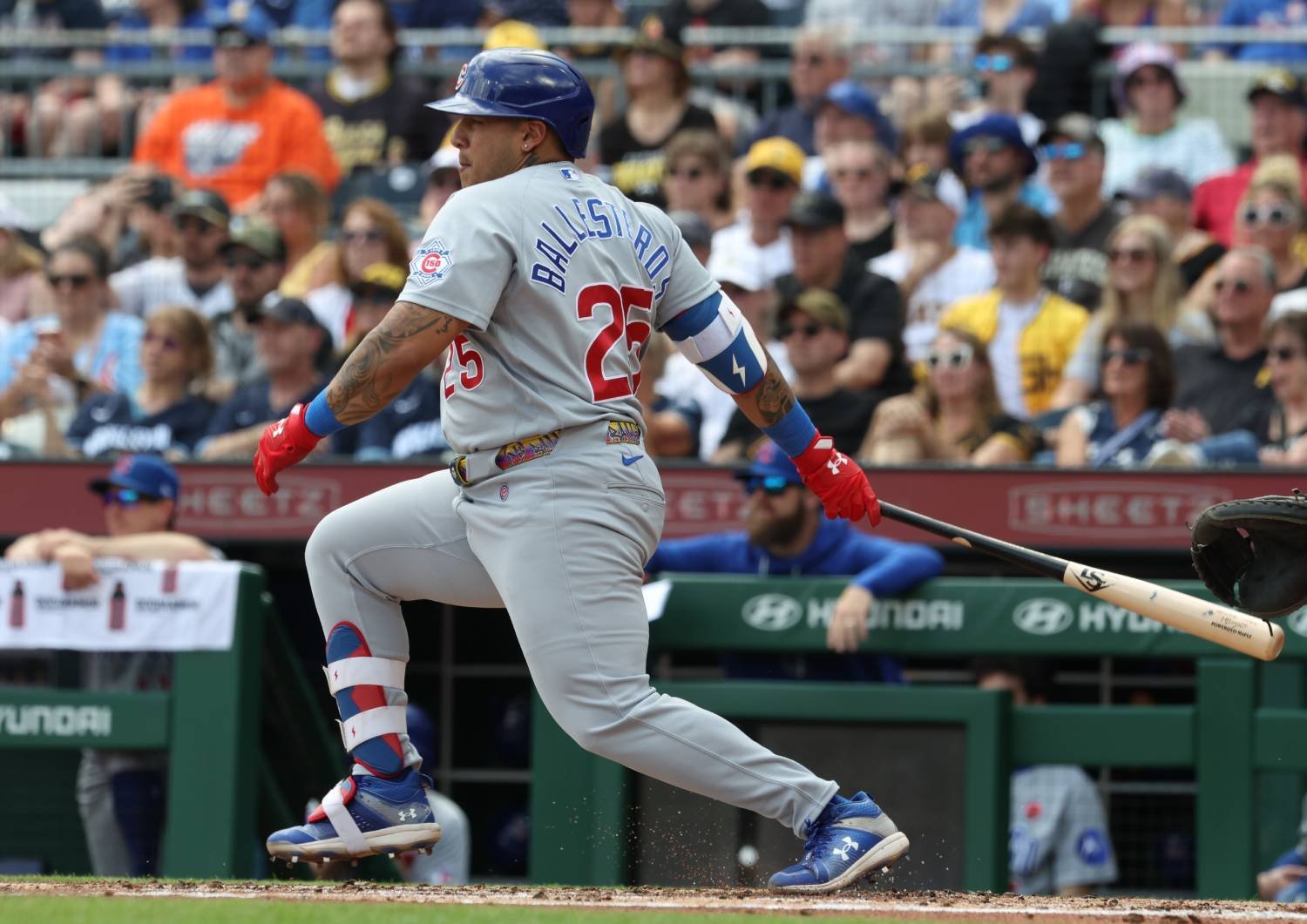 The Chicago Cubs have decided that Moises Ballesteros needs a reset. The 22-year-old designated hitter was optioned Thursday to Triple-A Iowa by the Cubs. A move to fill Ballesteros' spot on the 26-man roster will need to be made before Friday's series opener against the Toronto Blue Jays at Wrigley Field. Ballesteros has a slash line of .231/.303/.385 with six homers and 23 RBIs in 59 games. Those numbers would be better had it not been for an awful month of May, where he slashed .102/.206/.153 with just six hits in 59 at-bats. His June has been better at .231/.286/.269, already matching his hit total for May in 26 at-bats. The left-handed hitter was thought to be an offensive star in the making after making his MLB debut last year and putting up a .298/.394/.474 slash line, hitting two homers and driving in 11 in 20 games. But that has not been the case and the Cubs, at 39-36 and 7½ games behind the NL Central-leading Milwaukee Brewers, decided it was time for Ballesteros to restore some confidence in the minors. View the full article
 -
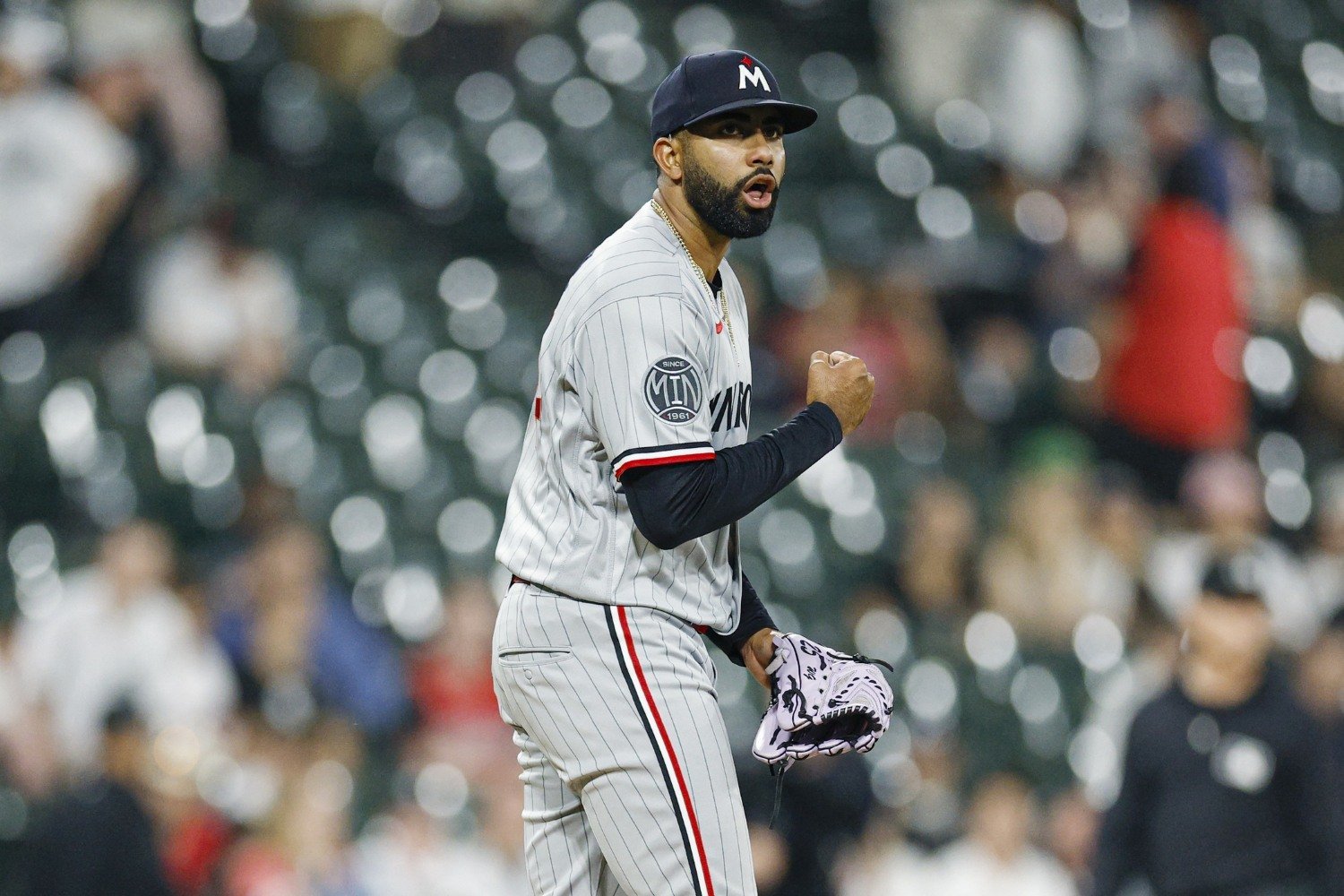 Yoendrys Gómez has me wondering: Can we have nice things? With the scars of last year’s trade deadline selloff still mending, I’m not ready to get hurt again. That’s why I’m shielding myself from falling for Gómez, a breakout bullpen sensation. Gómez has been brilliant since being plucked from the scrap heap. Perhaps this is outdated logic I’m applying to the current Twins brass, but I believe he’s more likely to be pitching for a contender come August than to be a long-term piece here. If the Twins continue to operate with the same mentality that Derek Falvey and Joe Pohlad did last July, Gómez is as good as gone. Will Jeremy Zoll and Tom Pohlad take a different approach? We’ll see. The thirst for bullpen help at the trade deadline is nearly unquenchable. Twins fans know this as well as anyone. The Twins may end up being among the teams seeking relief help. Thanks to a middling American League, they’re just two games out of a Wild Card spot despite being 35-40 entering Thursday's play. But, as Cody Christie recently wrote, decision time is coming, one way or another. Should the Twins fall further from contention, Gómez will be a commodity. Given his lack of a track record, he wouldn’t be any team’s first choice, but there will be no shortage of suitors if he continues to pitch well. Gómez had been used as a long-,relief mop-up man with the Rays, pitching at least two innings in six of his nine outings. After the Twins acquired him in early May, he worked himself into high leverage in short order. The role looks good on him, and a few minor adjustments are doing wonders. As Matthew Lenz recently pointed out, the Twins have Gómez throwing more sweepers and fewer of his other secondaries. Also, among the many items Aaron Gleeman recently called out in his lengthy profile of Gómez was that he dropped his arm slot (link to article here, subscription required but highly recommended). Gómez has a 1.53 ERA, 1.02 WHIP, and 29.2 K% in 17 2/3 innings as a Twin. In 20 outings, he’s already earned seven saves and five holds. This is exactly the type of guy the Twins desperately needed to find. As if the early returns weren’t exciting enough, the righty is also under team control for ages. Though this is the fourth season in which he's pitched in the majors, he didn't even start the campaign with one full year of official service time. He's likely to become artbitration-eligible as a Super Two guy after 2027, but he still won't hit free agency until the end of 2031 campaign. Relievers are frustratingly fickle, and Gómez embodies that. Still, there’s a real chance he could be a high-leverage reliever for the Twins for another five seasons. On the other hand, he could turn back into a pumpkin at any moment. After all, this guy had pitched so poorly that the Twins were able to acquire him for cash considerations. In the past two seasons, he has been claimed off waivers twice and traded twice. Before joining the Twins, Gómez had 93 1/3 career innings in the big leagues. In that time, he had a 5.11 ERA, 5.60 FIP, 20.2 K% and 10.5 BB%, and had recorded just a pair of saves (one of them being a three-inning save in a 9-2 blowout). In his pre-Twins days, Gómez particularly struggled to keep the ball in the park. From the start of the 2023 season to the point that he joined the Twins, he was among 524 pitchers to log 90+ innings. Among that sample, he had … The fourth-worst Barrel% (12.6%). The 20th-worst HR/9 (1.83). The 24th-worst xERA (5.52). It was easier to envision him being DFAd again by now, rather than him even simply finding his footing. Is this run he’s on sustainable? The one thing we can say for certain is that Gómez will eventually give up another home run. It might not feel like there’s any rush for the Twins to come to a conclusion on Gómez’s future outlook, but that conversation changes once teams start to ask about him. And they will. Maybe things will be different this time around. Jeremy Zoll inherited a mess. Even with Gómez stabilizing the late innings, this bullpen is in disorder. You can’t build a good team around a bullpen, but you also can’t build a good team without one. Zoll and his front office clearly saw something in Gómez. Maybe he’ll want to relish in this victory of an addition and keep him around as a building block of a more functional future bullpen. While he hasn’t done much to back it up, Tom Pohlad has talked a lot about the Twins' intention to win. Since he’s been every bit as penny-pinching as all his relatives before him, the fact that Gómez will be dirt-cheap over the coming several seasons should endear him to Pohlad. This is an affordable potential building block, albeit a minor one. If the payroll is going to continue to be limited, these are the types of players the Twins need to prioritize holding onto. At the end of the day, everyone has a price. It all comes down to value. Perhaps trading Gómez would turn out to be the smart move, but the Twins' bullpen is in dire straits due to a series of previous “smart moves.” If Zoll and Pohlad are content to simply sell off Gómez to the highest bidder, it’ll be a signal to expect more of the same. But if they aren't, maybe there's something genuinely different happening. View the full article
 -
 Getting the call-up to the majors in place of Culpepper was Kyler Fedko, who has gone 0-for-4 with a sac fly RBI in his first two MLB games. Jamie and Jeremy discuss the role Fedko will play in the Twins' lineup during his first stint in the Majors. View the full article
 -
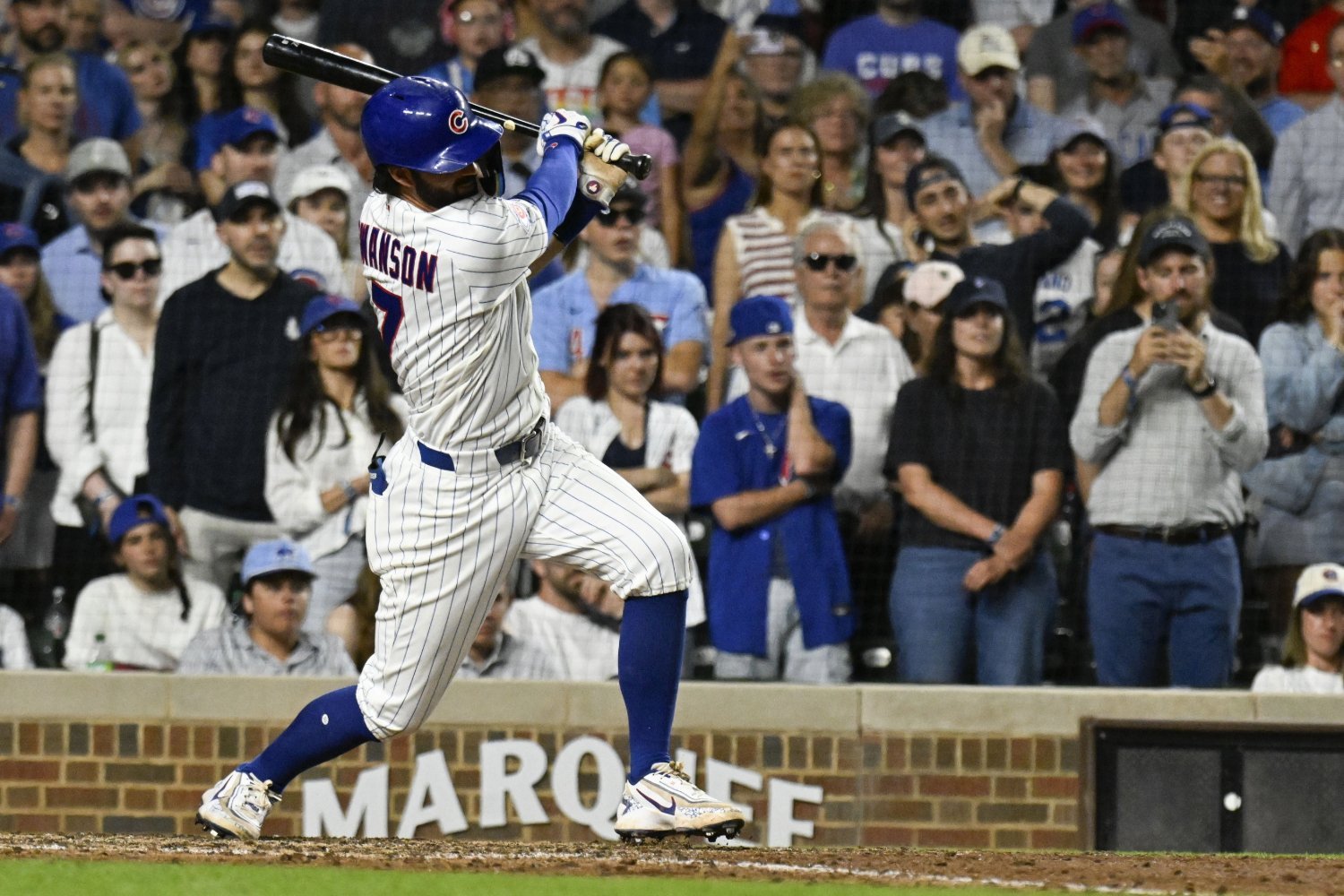 Despite a home run on Wednesday night, Dansby Swanson has been one of the more consistently broken components of a collectively broken Chicago Cubs lineup. His line of .176/.280/.318 features career worsts across each of the three categories while his wRC+ of just 71 is indicative of a player performing well below average at the plate. Despite the value he's still able to provide with his plate approach (and with his work with the glove and on the basepaths), he's been objectively bad as a hitter in 2026. Swanson has long been considered a player who needs to sit on four-seam fastballs to find success. The 2025 campaign notwithstanding, his run value — indicating his runs added or prevented within a specific situation or specific pitch — has landed on the positive end of the spectrum in each year of his career. In most of those cases, that pitch has served as his highest mark in that category. Things started to shift last year, when Swanson posted a run value of -10 against four-seam heat. While he was still able to generate hard contact (62.1 percent of the time) and find some positive outcomes (.409 slugging percentage) against it, he also whiffed more than 30 percent of the time, a career-worst rate by a wide margin. His chase rate jumped up to 27.1 percent (his highest since 2018), indicating a potential over-reliance on four-seamers, at least in the sense that it didn't necessarily matter where it landed in the zone, he was going for it. Nevertheless, the fastball still represented an area of success when you consider the volume he was getting against the outcomes. The run value came as more of a byproduct of his aggression rather than a regression against the pitch itself. Unfortunately for Swanson, opposing pitchers are keen to his history. For the third consecutive season, Swanson has seen a decrease in four-seamers his way, with the rate he's seeing the pitch sitting at 24.0 percent in 2026. Worse yet in his case, that rate has continued to decline as the season has progressed: Not only is Swanson seeing far fewer four-seam fastballs, it's happening while he's getting pounded with sinkers. The rate of four-seamers he's seeing has dropped by about seven percent while the sinker rate has jumped by about the same. This presents a couple of different issues for Swanson. The first is his actual outcomes against the sinker. He's putting the ball on the ground 44.1 percent of the time, feeding directly into what the pitch is designed to do. Of course, that's when he actually makes contact. He's had a tremendously difficult time adapting to this world of increased sinkers, with a swing-and-miss rate that sat at 12.5 percent in May now resting at an obscene 52.9 percent in June. It's no mystery what's happening here: The swing timing data only shows fastballs, with May and June illustrated above. Swanson's distribution in May looks largely like it should, but when you shift attention to the orange portion of the above (indicating June), it gets rather messy. The veteran shortstop is swinging over the baseball 24 percent of the time in June. That's an alarmingly high rate that is 11 percent higher than the next closest hitter against that pitch type. When you consider that data along with the visual above, it's clear that this is an exclusive byproduct of the increase in sinkers. A central issue within all of this is that we haven't seen the appropriate adjustment from Swanson. There hasn't been anything in his approach to help mitigate this. Nearly all of his mechanics that we can track (tilt, attack angle, etc.) remain nearly identical to what we've seen in the past few seasons. That there hasn't been a discernible change as the year has wore on and this has become more evident represents a paramount concern actively working against hope for Swanson to work his way out of this. There was this perception of Swanson that he, a hitter who needed the hard stuff to survive, was getting hit heavily with breaking and off-speed pitches as a means for opposing pitchers to minimize his impact at the plate. Instead, the call is coming from inside the house. It's the heaters proving to be his enemy this year. Coming at him in this new form appears to be something he's not yet ready to combat. View the full article
 -
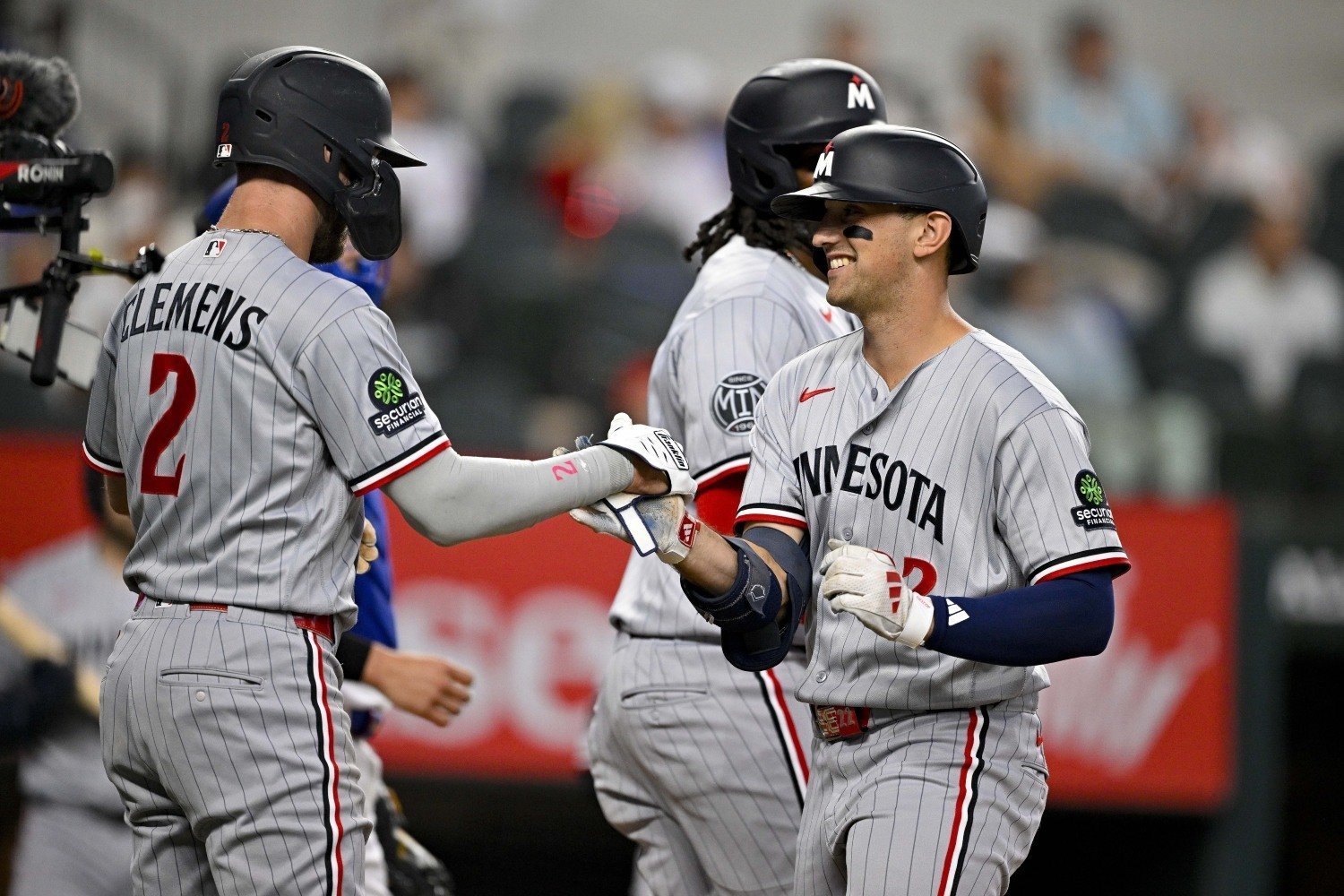 Box Score SP: Joe Ryan - 5 IP, 3 H, 0 R, 2 BB, 7 K (97 pitches, 67 strikes (69% strikes)) Home Runs: Brooks Lee, Trevor Larnach, Ryan Kreidler Top 3 WPA: Brooks Lee (0.20), Joe Ryan (0.15), Josh Bell (0.11) Win Probability Chart The Twins entered Thursday afternoon’s series finale against the Rangers looking to complete a three-game sweep and make it four straight wins. With Joe Ryan on the mound and the offense swinging hot bats, the Twins delivered one of their more complete performances of the season, rolling to a 9-3 victory and securing the sweep in Texas. EARLY OFFENSIVE EXPLOSION PUT THE RANGERS IN A HOLE The Twins wasted no time jumping on Rangers starter Jack Leiter. Trevor Larnach opened the game by lining the very first pitch into center field for a single, and after Kody Clemens followed with a base hit of his own, Minnesota quickly put pressure on the young right-hander. Royce Lewis struck out swinging for the second out of the inning, but Josh Bell continued his torrid stretch by ripping a two-strike changeup into right field to score Larnach and give the Twins a 1-0 lead. The big blow came moments later. After Leiter used his changeup to punch out both Byron Buxton and Lewis earlier in the frame, Brooks Lee got a changeup that stayed over the plate and didn't miss it. The rookie crushed it 104 MPH over the wall in right field for a three-run homer, extending Minnesota's lead to 4-0 before Joe Ryan even took the mound. The Twins sent eight hitters to the plate in the inning, forcing Leiter to throw 28 pitches and immediately placing the Rangers in catch-up mode. LARNACH STAYS RED HOT Minnesota's offense cooled briefly over the next couple innings, but Trevor Larnach made sure the lead continued to grow. After Luke Keaschall worked a two-out walk in the fourth inning and swiped second base, Larnach stepped in and capped off an eight-pitch at-bat by launching a two-run homer to center field. Initially, it looked like Alejandro Osuna might have a chance to bring it back, but the ball carried just over the wall, giving the Twins a commanding 6-0 advantage. An inning later, he added another RBI with a bloop single to left field that scored Victor Caratini and pushed the lead to 7-0. Larnach finished the afternoon with three hits, including the homer, continuing what has been one of the hottest stretches of his season. JOE RYAN BENDS BUT DOESN'T BREAK While the offense provided plenty of support, Joe Ryan had to work harder than usual to keep the Rangers off the board. Texas put multiple runners on base in both the second and third innings, forcing Ryan to navigate traffic throughout much of his outing. His pitch count climbed quickly, reaching 65 pitches through three innings and 83 through four. Still, whenever the Rangers threatened, Ryan found a way to make the big pitch. He struck out Joc Pederson three times, froze Kyle Higashioka with a front-door sweeper, and worked around several baserunners to complete five scoreless innings. It wasn't his most efficient start, as he needed 97 pitches to record 15 outs, but he generated 13 whiffs, threw 69% of his pitches for strikes, and most importantly, left the game without allowing a run. BULLPEN WEATHERS A BRIEF STORM The only real blemish on the afternoon came in the sixth inning. Justin Lawrence entered in relief and immediately surrendered a solo homer to Wyatt Langford on the first pitch he threw. Two batters later, Ezequiel Duran added another solo shot, trimming the lead to 7-2. Any thoughts of a Rangers comeback were short-lived. Taylor Rogers worked around trouble in the seventh before Andrew Morris entered and promptly induced a 6-4-3 double play to erase a potential rally. Eric Orze escaped a two-on situation in the eighth, and Cody Laweryson closed things out in the ninth despite allowing a late solo homer. TWINS ADD INSURANCE AND FINISH THE SWEEP The Twins made sure Texas never got any closer. Ryan Kreidler provided the biggest insurance of the day in the eighth inning, turning on a middle-middle cutter and driving a two-run homer. The blast extended the lead to 9-2 and effectively put the game out of reach. Caratini added three hits in the victory, Keaschall reached base four times, and Bell continued his impressive series with another multi-hit performance. Even with Royce Lewis enduring a difficult afternoon that included four strikeouts, the Twins' lineup produced 15 hits and consistently applied pressure throughout the game. By the time the final out settled into Keaschall’s glove at second base, Minnesota had completed the series sweep and continued its recent surge. After a pair of disappointing divisional series against the Royals and Tigers, the Twins responded exactly how they needed to, taking five of six games against the Cardinals and Rangers. At 36-40, Minnesota remains within striking distance in the American League Central and will carry some much-needed momentum into the weekend. What’s Next? The Twins travel to Phoenix, Arizona to take on the Diamondbacks in a three-game weekend series, starting Friday night. Connor Prielipp is set to throw for the good guys, and right-hander Mike Soroka is the probable starter for the Diamondbacks. First pitch is set for 8:45 PM on Apple TV. Postgame Interviews Coming Soon! Bullpen Availability Chart View the full article
 -
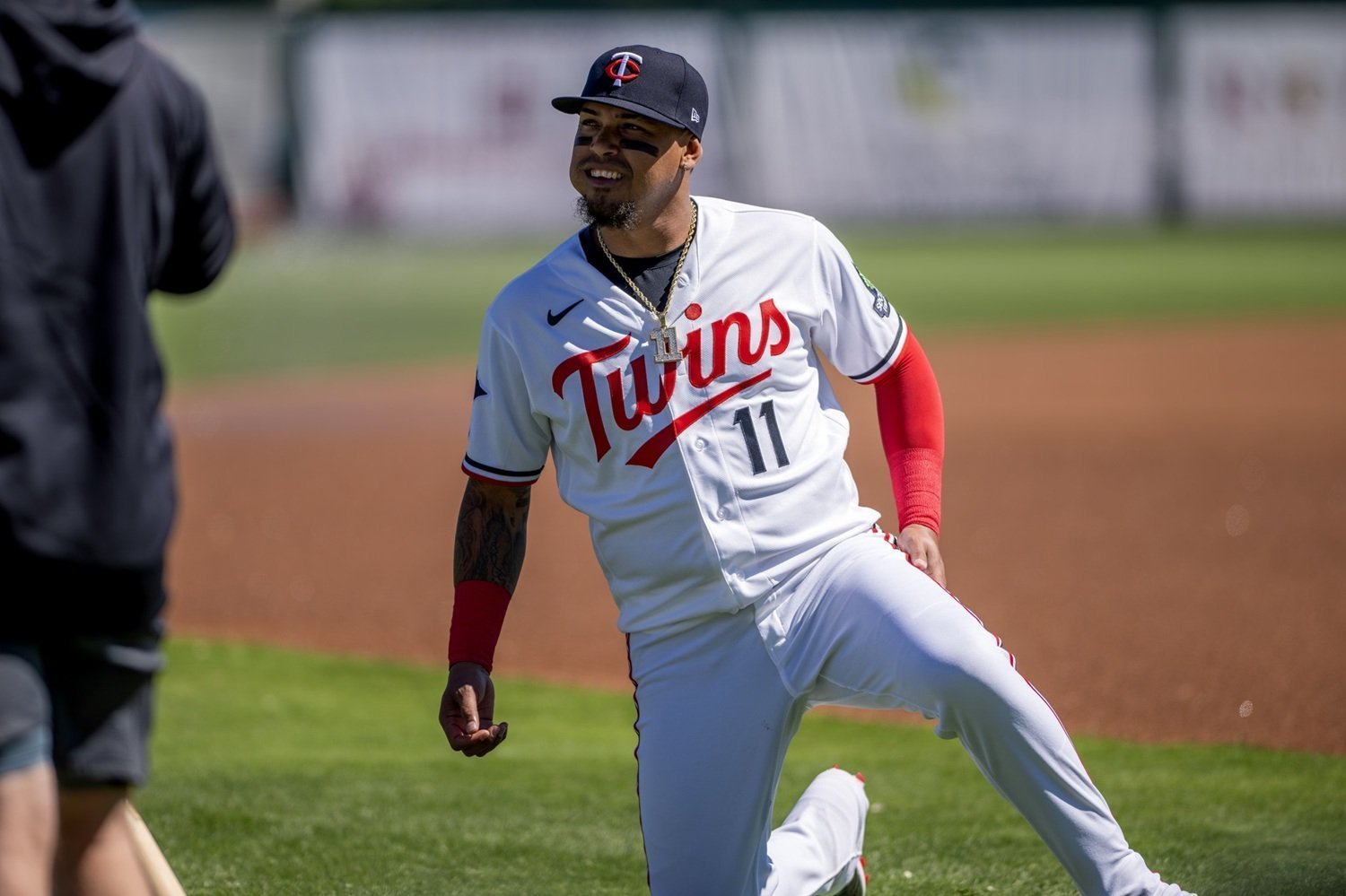 When the Twins designated Orlando Arcia for assignment earlier this week, there was at least a chance another club would take a flier on a veteran with nearly a decade of major league experience. Instead, Arcia passed through waivers unclaimed and will remain in the organization. According to The Athletic's Dan Hayes, Arcia has accepted an outright assignment to Triple-A St. Paul rather than electing free agency. That keeps a familiar depth piece in Minnesota's system as the club navigates the second half of the season. Arcia's latest stint with the Twins lasted just under a month. Minnesota promoted him after reshuffling the infield, a move that coincided with Royce Lewis being sent to Triple-A and Brooks Lee taking over at the hot corner. During his time with the big-league club, Arcia appeared in 19 games and collected 50 plate appearances, posting a .271/.300/.354 slash line with one home run. While his major league opportunity was brief, Arcia had done plenty to earn a look. Before his promotion, he was one of St. Paul's most productive hitters, batting .318/.376/.556 with eight home runs in 165 plate appearances for the Saints. The 31-year-old has built a lengthy major league résumé over parts of 11 seasons. Arcia carved out a respectable career and enjoyed a resurgence with the Braves, hitting .258/.319/.419 across the 2022 and 2023 seasons. Offensive production has been harder to find in recent years. Since the start of 2024, Arcia owns a .217/.265/.338 line in the majors, bringing his career numbers to .240/.292/.369 over more than 3,500 plate appearances. His return to St. Paul comes at a useful time for the organization. Top prospect Kaelen Culpepper is currently sidelined with a hip strain, creating regular at-bats in the Saints' infield. Even after Culpepper returns, Arcia provides valuable insurance for a Twins club that has dealt with its share of injuries and roster turnover. Minnesota doesn't currently have an obvious opening on the major league roster, but that can change quickly. If another infielder lands on the injured list or the Twins need a more reliable defensive option, Arcia's experience and familiarity with the organization could put him right back on the shuttle between St. Paul and Target Field. For now, the Twins keep a veteran depth piece in the fold, and Arcia keeps alive the possibility of adding another chapter to a major league career that has already spanned more than a decade. View the full article
 -
What are your Marlins vs. Giants series predictions?
DiamondCentric posted an article in Fish On First
 Once again in 2026, I will be monitoring Miami Marlins predictions from our valued SuperSubs, Fish On First staffers and livestream guests. Individual article pages like this one will be created prior to every Marlins series and featured prominently on the FOF site. Consistent participation is key if you want to win this annual contest. Submissions only take a few seconds. Scoring system A "perfect" series is worth three points: Earn one point for predicting which team will win the upcoming series Earn one point for predicting the precise number of victories for each team Earn one point for predicting the “Series MVP” who accumulated the highest win probability added (WPA) during the series as calculated by FanGraphs (could pick a player from either team) FOF staffer Jeremiah Geiger is currently atop the 2026 season leaderboard, which will be updated between every Marlins series. If you are a SuperSub, leave a comment with your Prediction Time picks on this page, or join the Marlins Discord Server and submit there. We'll feature them on the upcoming Fish On First LIVE episode and track your points throughout the season! Any picks submitted prior to the first pitch of the series opener will be counted. If you are not a SuperSub, please consider signing up here to support the FOF staff. Series preview notes Probable starting pitchers: TBA (MIA) vs. TBA (SF) on Friday RHP Max Meyer (MIA) vs. TBA (SF) on Saturday TBA (MIA) vs. TBA (SF) on Sunday Ryan Gusto likely to pitch bulk innings The Marlins rank 18th in MLB with a 97 wRC+ and 10th in MLB with a 3.99 FIP. They are 7-3 in their last 10 games and have a 23-16 record at home this season. The following Marlins players are on the injured list: Griffin Conine (60-day IL), Josh Ekness (15-day IL), Ronny Henriquez (60-day IL), Janson Junk (15-day IL), Adam Mazur (60-day IL), Andrew Nardi (60-day IL), Eury Pérez (15-day IL) and Robby Snelling (60-day IL). The Giants rank 12th in MLB with a 103 wRC+ and 18th in MLB with a 4.25 FIP. They are 5-5 in their last 10 games and have a 17-23 record on the road this season. The following Giants players are on the injured list: Harrison Bader (10-day IL), Hayden Birdsong (60-day IL), José Buttó (60-day IL), Jason Foley (60-day IL), Tyler Mahle (15-day IL), Jared Oliva (60-day IL), Joel Peguero (60-day IL), Heliot Ramos (10-day IL), Randy Rodriguez (60-day IL), Rowan Wick (60-day IL) and Keaton Winn (15-day IL). View the full article
 -
 Fish On First staffers react to the latest Miami Marlins series and prepare you for what lies ahead. Wednesday's show was hosted by Jeremiah Geiger and featured panelist Alex Krutchik. The following topics were covered: The Marlins rebounding from two miserable losses The latest on the starting rotation's holes MLB fans voting for undeserving players to be MLB All-Star Game starters Appreciating how Miami's bullpen has stepped up in June Previewing and predicting the next series against the San Francisco Giants You can find Fish Unfiltered and Fish On First LIVE on the Fish On First YouTube channel, Apple Podcasts, Spotify or wherever else you get your pods. Our next FOF LIVE episode will be Sunday at approximately 5:30 p.m. ET following the Marlins-Giants series finale. View the full article
 -
 In this week's episode, Nick goes over how things have been for Greenville, Salem, and even the FCL, discussing some standouts such as Franklin Primera and Sadbiel Delzine in the FCL, along with slugger Jack Winnay of the Drive. From the pitching standpoint he once more talks about the young pitchers such as Marcus Phillips, Christian Foutch, Kyson Witherspoon, and Barrett Morgan, and how they've been doing so far in June. Listen on Apple Podcasts: https://podcasts.apple.com/us/podcast/the-talk-sox-podcast/id1783204104 Listen on Spotify: https://open.spotify.com/show/3qPrPXEngu0CxgTmlf0ynm Listen on iHeartRadio: https://www.iheart.com/podcast/263-the-talk-sox-podcast-244591331/ Listen on Pocket Casts: https://pca.st/4tmd121v Watch on YouTube: https://www.youtube.com/@talksox View the full article
 -
Ranking Twins Trade Candidates If They Sell At MLB Trade Deadline
DiamondCentric posted an article in Twins Daily
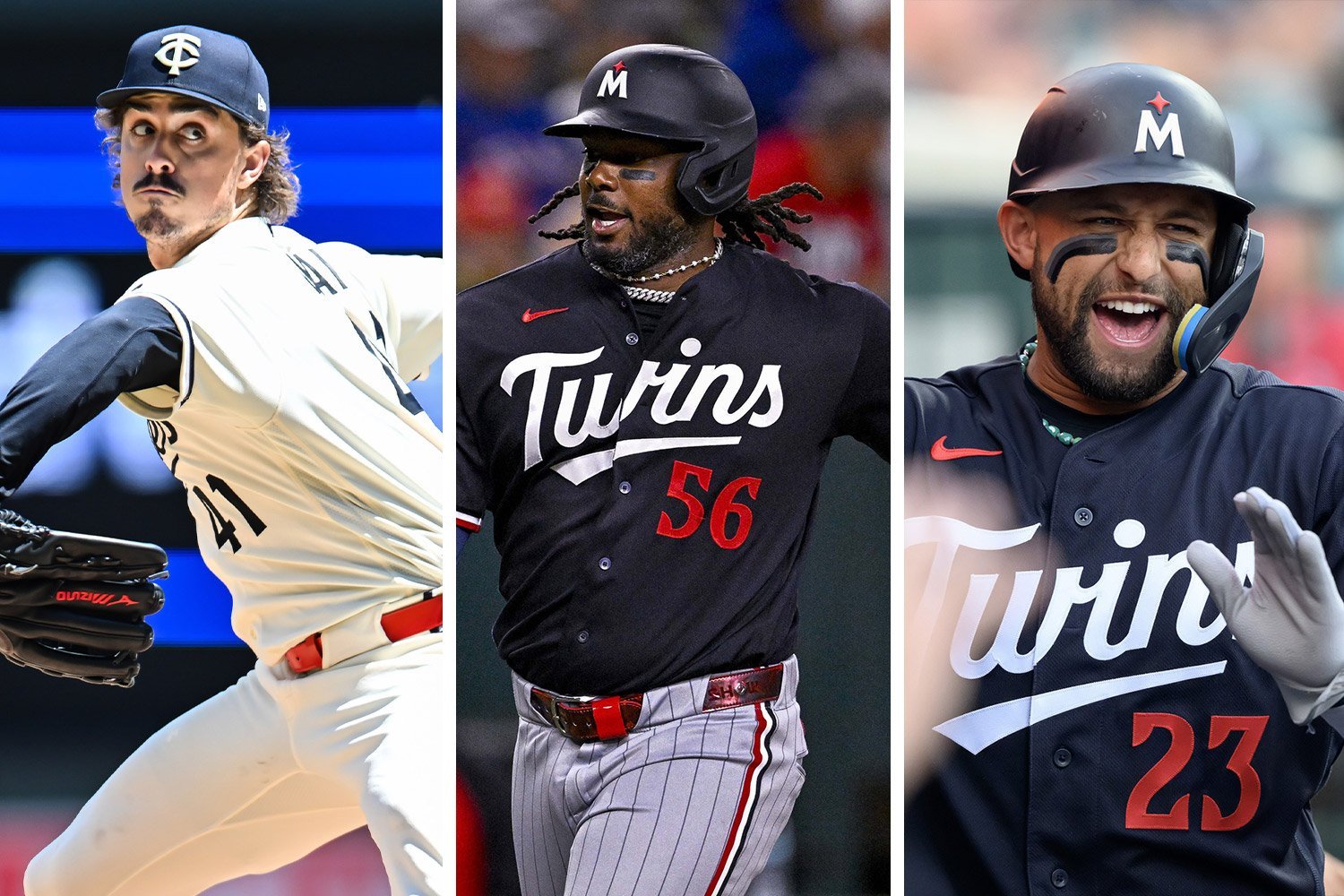 The American League remains a mess. Despite an inconsistent first half, the Minnesota Twins have played better over the last week and continue to hang around the Wild Card race. Entering the middle of June, Minnesota sits just 1.5 games behind the final playoff spot, which is close enough to dream about a second-half run. The problem is that simply staying close may not be enough. The Twins will likely need to play well above .500 baseball over the final three months and finish somewhere in the mid-80s in wins to secure a postseason berth. Given the current roster, ongoing injury concerns, and a lack of impact reinforcements arriving soon, that path feels increasingly difficult. Jeremy Zoll and the front office still have time before making any final decisions, but if Minnesota ultimately chooses to sell at the trade deadline, these are the players most likely to be involved. Definitely Traded SP Joe Ryan Team Control: Through 2027 2026 Stats: 15 G, 2.89 FIP, 22.9 K-BB%, 2.4 fWAR Ryan was one of the few core players who survived last year's deadline selloff, but that may not be the case this summer. The right-hander is putting together another All-Star caliber campaign and would immediately become one of the most coveted starting pitchers on the market. With another full season of team control remaining after 2026, Ryan offers contenders something most deadline acquisitions do not: certainty beyond October. If Minnesota decides to move him, the return could rival or exceed any prospect package the organization has received in recent years. C Ryan Jeffers Team Control: Through 2026 2026 Stats: 37 G, .411 wOBA, 163 wRC+, 1.7 fWAR Before suffering a broken hamate bone, Jeffers was in the middle of the best offensive stretch of his career. Over the last three seasons, he has established himself as one of baseball's most productive offensive catchers, a profile that always attracts interest at the deadline. Catching remains one of the thinnest positions in the sport, and contenders are constantly searching for upgrades behind the plate. As a pending free agent, Jeffers is exactly the type of player rebuilding or retooling teams often move. 1B Josh Bell Team Control: Through 2026 2026 Stats: 72 G, .300 wOBA, 87 wRC+, -0.3 fWAR Bell followed a familiar script this season. He struggled through the first two months, posting a .609 OPS over his first 53 games before catching fire recently. Over his last 19 contests, Bell owns an .883 OPS and has looked much closer to the productive hitter many expected when he signed. At 33 years old and headed toward free agency, Bell does not fit Minnesota's long-term plans. If he continues swinging the bat well, he could become a useful depth addition for a contender seeking lineup help. LHP Taylor Rogers Team Control: Through 2026 2026 Stats: 32 G, 3.39 FIP, 12.5 K-BB%, 0.4 fWAR Rogers' return to Minnesota has gone about as expected. The veteran left-hander continues to generate weak contact and provide quality innings against difficult matchups. Contending teams always search for bullpen upgrades in July, and left-handed relievers are among the most sought-after commodities. Given his age and place in the Twins' competitive timeline, Rogers appears like a logical trade candidate if Minnesota pivots toward selling. RHP Yoendrys Gómez Team Control: Through 2031 2026 Stats: 29 G, 4.73 FIP, 11.0 K-BB%, 0.2 fWAR This may be the most intriguing name on the list. After acquiring Gómez for cash considerations from Tampa Bay, Minnesota helped unlock another level by making mechanical adjustments. The results have been significant enough that he has worked his way into the closer's role. Relievers are notoriously volatile, and Gómez's value may never be higher than it is right now. If the Twins believe his current performance has maximized his trade value, cashing in could make a lot of sense. Possibly Traded OF Trevor Larnach Team Control: Through 2027 2026 Stats: 60 G, .343 wOBA, 117 wRC+, 1.0 fWAR Minnesota quietly explored Larnach's market during the offseason but never found a deal worth making. His 2026 season looks a lot like the previous few years: solid offensive production, quality at-bats, and enough defensive limitations to create questions about his long-term fit. Still, left-handed power remains valuable, and there are always contenders searching for lineup upgrades. A move would not be surprising, but neither would a decision to keep him. UTL Kody Clemens Team Control: Through 2029 2026 Stats: 62 G, .350 wOBA, 121 wRC+, 1.2 rWAR Clemens has become one of Minnesota's most important role players. He has provided production at the plate, competent defense at multiple positions, and the type of clubhouse presence every contender values. The challenge for the Twins is determining whether his current production represents a peak value opportunity. With three additional years of control after this season, Minnesota has no urgency to move him. However, his versatility and affordability could make him attractive to a wide range of playoff hopefuls. LH RP Anthony Banda Team Control: Through 2027 2026 Stats: 34 G, 4.16 FIP, 9.7 K-BB%, 0.1 fWAR Banda's overall numbers do not jump off the page, but his recent performance certainly does. After a difficult start to the season, the left-hander has posted a 0.56 ERA in 18 appearances since May 5. Teams looking beyond traditional statistics will notice the improvement. The additional year of team control only increases his appeal and gives Minnesota flexibility when evaluating potential offers. UTL Royce Lewis Team Control: Through 2028 2026 Stats: 41 G, .295 wOBA, 83 wRC+, 0.1 fWAR Lewis may be the toughest player on this list to evaluate. His struggles earlier this season resulted in a reset at Triple-A, but he has looked considerably better since returning to the major leagues. The talent that once made him the organization's top prospect is still present. At the same time, the fit has become more complicated. Injuries, position changes, and inconsistent production have created uncertainty about his long-term role. If another organization believes it can unlock Lewis' star potential, Minnesota could listen. A change-of-scenery trade remains a possibility. Unlikely To Be Traded CF Byron Buxton Team Control: Through 2028 2026 Stats: 63 G, .397 wOBA, 153 wRC+, 2.9 fWAR Buxton's name has already surfaced in national trade speculation, which is understandable given the season he is having. The problem is that a trade remains highly improbable. Buxton possesses full no-trade protection and has repeatedly stated his desire to remain in Minnesota. More importantly, the Twins are under no pressure to move him. He remains the face of the franchise and is arguably putting together the best offensive season of his career. Unless Buxton initiates those conversations himself, expect him to stay exactly where he is. C Victor Caratini Team Control: Through 2027 2026 Stats: 53 G, .287 wOBA, 78 wRC+, 0.2 fWAR Caratini's offensive production has been disappointing, but that alone makes a trade difficult. Minnesota signed him to a two-year contract with the expectation that he could help bridge the transition if Jeffers eventually departed in free agency. That need still exists today. The Twins would almost certainly be willing to move the second year of his contract if another team expressed interest, but finding that team could prove difficult. For now, he looks more likely to remain in Minnesota than leave. The Twins have done enough recently to keep their postseason hopes alive, which is why the next few weeks are so important. A strong stretch could push Minnesota firmly into the buyer category. Another extended slump could force the front office to continue the organizational reshaping that began last summer. If that happens, Ryan and Jeffers stand out as the most likely headliners. Beyond them, the Twins have a collection of veterans, relievers, and intriguing controllable pieces who could generate significant interest around the league. For now, Minnesota remains stuck between buying and selling. The standings will determine which direction Zoll ultimately chooses. View the full article
 -
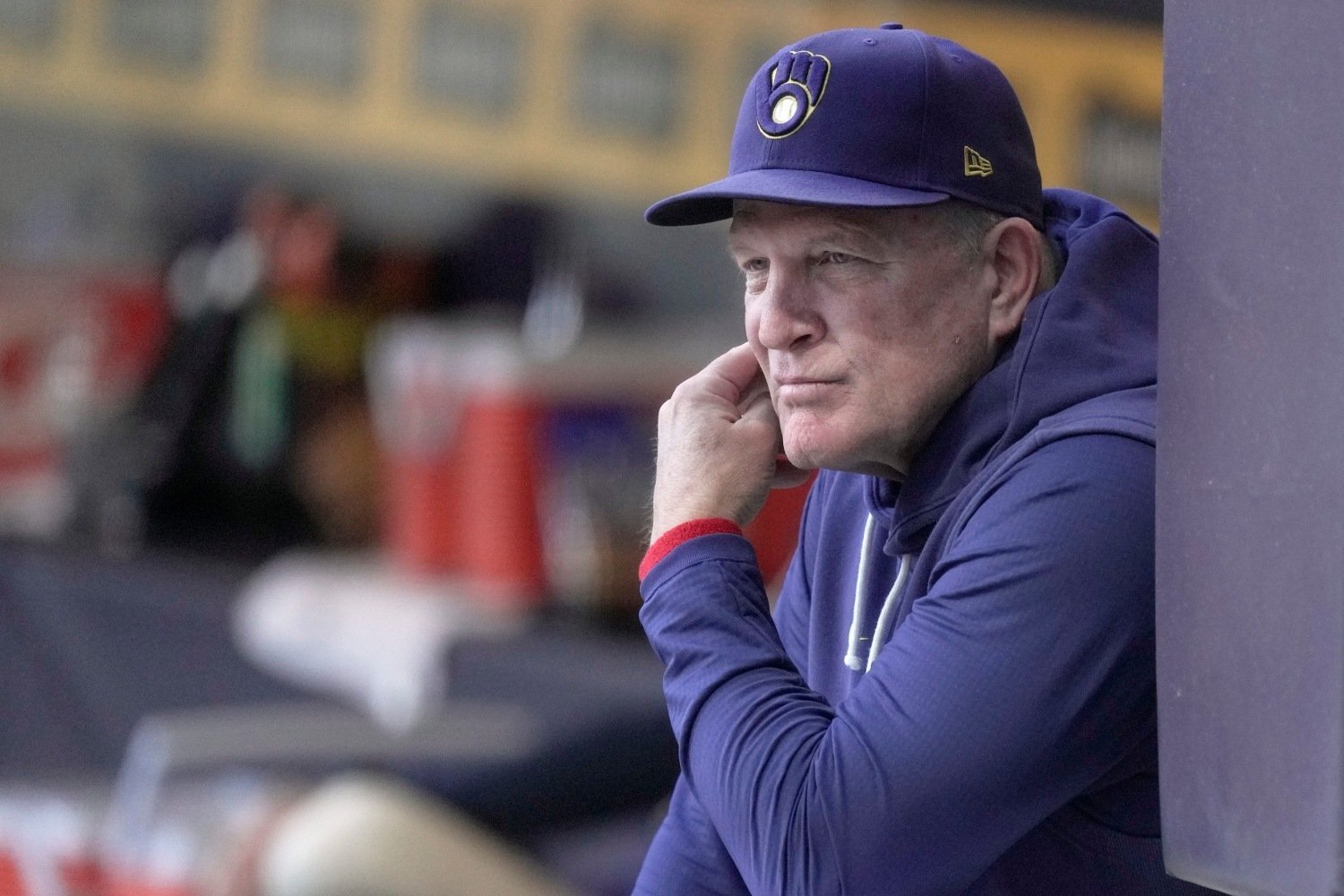 It would be hubris—hideous hubris—to suggest that the NL Central race is over already. Sure, the season starts early these days, so even though it's only June 18, the Brewers have already played 71 of their 162 games. Sure, they have a comfy 5.5-game lead in the standings table, and the teams who looked most likely to give them a run for their money this year (the Pirates and the Cubs) are even further back. Much can happen in 100 days, though, and that's how much time is left in this long season. One year and one day ago, I wrote an article entitled "The Brewers Can Absolutely Catch the Cubs," and that turned out to be true. They were 5.5 games behind Chicago at the time. That said, though: this thing is pretty close to over. The 2026 Cardinals aren't the 2025 Brewers; those Brewers were better. The 2026 Brewers aren't the 2025 Cubs; these Brewers are better. Milwaukee is a well-run, deep, dynamic team that hasn't even had everything go right this year, and that is dominating, anyway. They're 104-58 in their last 162 regular-season games. They're going to win this division. Even the news that Quinn Priester won't be back this year (hardly news, by now, really) doesn't change that. Specifically, FanGraphs gives the Crew an 83% chance to win the NL Central, the highest point they've reached this year. The projection system there gives the Cardinals, Cubs and Pirates each about a 5% chance to catch Milwaukee, but if you have an 83% chance of winning something, you'd also rather have three rivals dividing the rest of the pie than see one more serious one lurking. There's little the Crew could do to press the pedal harder to the floor, anyway, but these data make it clear: they don't need to. They can afford, for instance, the slightly risky maneuver of designating Luis Rengifo for assignment to install Cooper Pratt at shortstop. They can afford not only to lose Priester, but to give Jacob Misiorowski extra rest between starts so he can still be fully operational come October. This team is living on Easy Street. That doesn't mean they should slow down, or that they shouldn't be proactive as the summer wears on. Whether it's another prospect promotion that encourages medium-term development as well as patching a hole on the roster, or making a trade before the deadline on August 3, the team should work hard to improve their chances. It's just that the chances they work hard to improve should be those of remaining a thriving Midwestern hegemon for many more years, and those of winning a World Series soon. If they make a major addition later this summer, it should be someone who materially bolsters their hopes of getting past the Dodgers this time, rather than a depth starter or fortifying secondary setup man. If they turn over Sal Frelick's job to Luis Lara or replace Brandon Sproat in the starting rotation, it should be because that serves the long-term development of the players they most believe are part of their future, not because it might help them win one or two more games before the end of September. Some teams build great farm systems and string together a few division titles, but find they can't get over the hump in October. Eventually, many of them decide to go 'all-in' and swap some future wins for the chance at present glory. The Brewers almost certainly won't do that, and they almost certainly shouldn't, either. However, they also shouldn't remain unduly conservative. The freedom allowed by a nice cushion in the division standings isn't the freedom not to act; it's the freedom to act with precision and patience. This is the golden era of Milwaukee Brewers baseball. It's never been better than this, and it might never be better than this again. But 'this' isn't confined to this summer. It's also about last year, and the one before, and the two or three or five to come. The Brewers' responsibility over the next six weeks is to show that they understand all of that—that they prove to the fans that they understand the hunger for a championship, without overdoing it and giving up the delirious joy of a team that wins the division almost every year. That sounds difficult, but if you're the Brewers, it's really not. What was difficult was building the best organization in the game, in terms of scouting, development, instruction and execution. After doing all that, risk management is just about rolling the dice and not counting the bounces. View the full article
