


DiamondCentric
-
Posts
2,631 -
Joined
-
Last visited
Never
Content Type
Profiles
Forums
Events
News
Tutorials & Help
Major League Baseball Videos
Guides & Resources
Store
Downloads
Gallery
Everything posted by DiamondCentric
-

José Berríos Feels Sore, Set for Another MRI on Elbow
DiamondCentric posted an article in Jays Centre
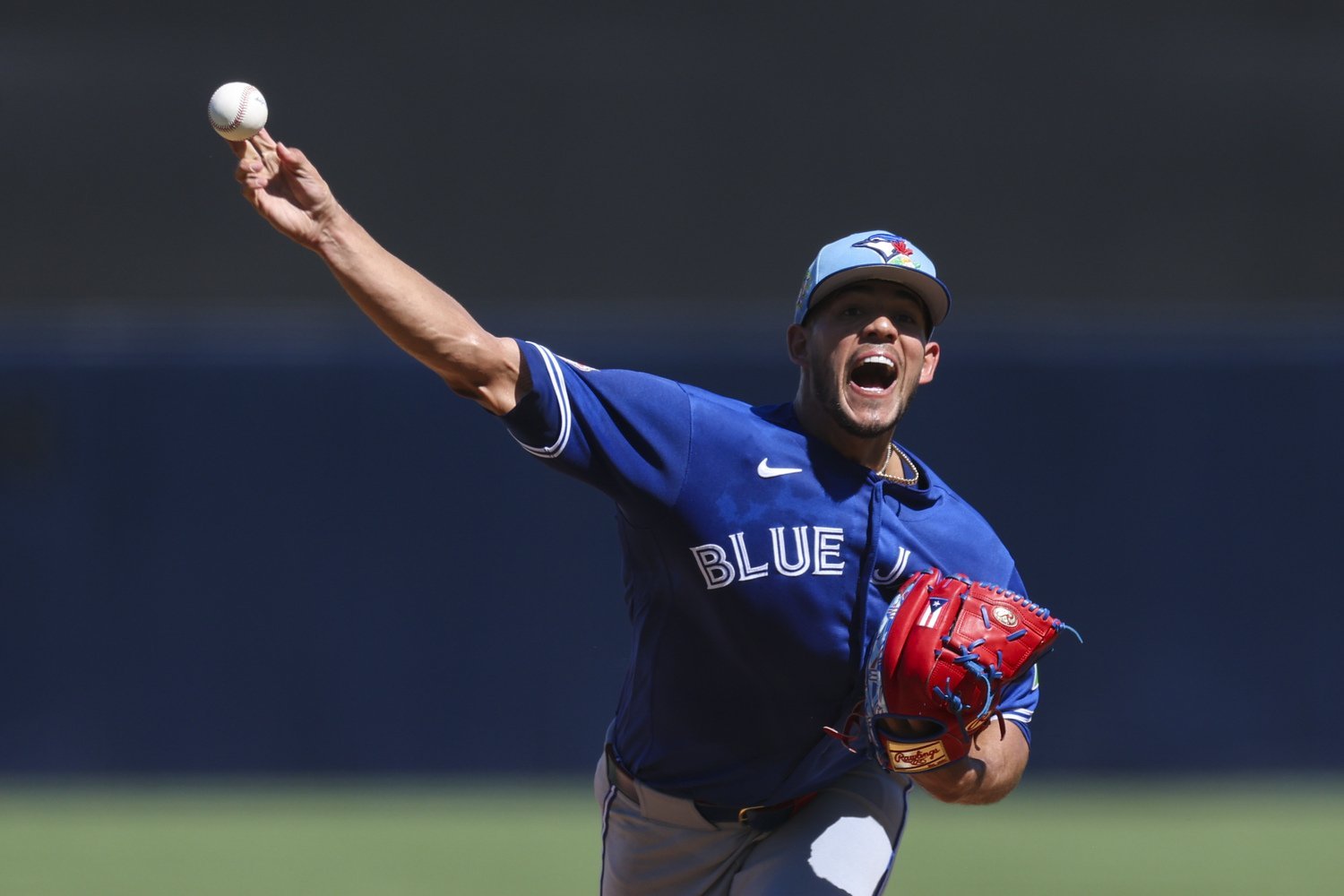 Speaking to reporters before Tuesday's game against the Tampa Bay Rays, Toronto Blue Jays manager John Schneider revealed that José Berríos is going for an MRI on his pitching elbow. The right-hander has been on the injured list all season with a stress fracture. Although he claimed to feel fully healthy entering the spring, Berríos was shut down after testing revealed the fracture in his elbow. He started a rehab assignment in mid-April. In four minor league outings, he has given up 17 runs in 14.1 innings, struggling with control and failing to miss bats. His velocity was noticeably down in his latest appearance. Presumably, the team will have more information to offer tomorrow. While we can only speculate what this means for Berríos until we learn the results of his MRI, it seems likely that the Jays will need Eric Lauer for at least one more turn through the rotation. View the full article
 -
Joe Ryan Had a "Clean MRI" Sunday, Will Throw Bullpen Wednesday
DiamondCentric posted an article in Twins Daily
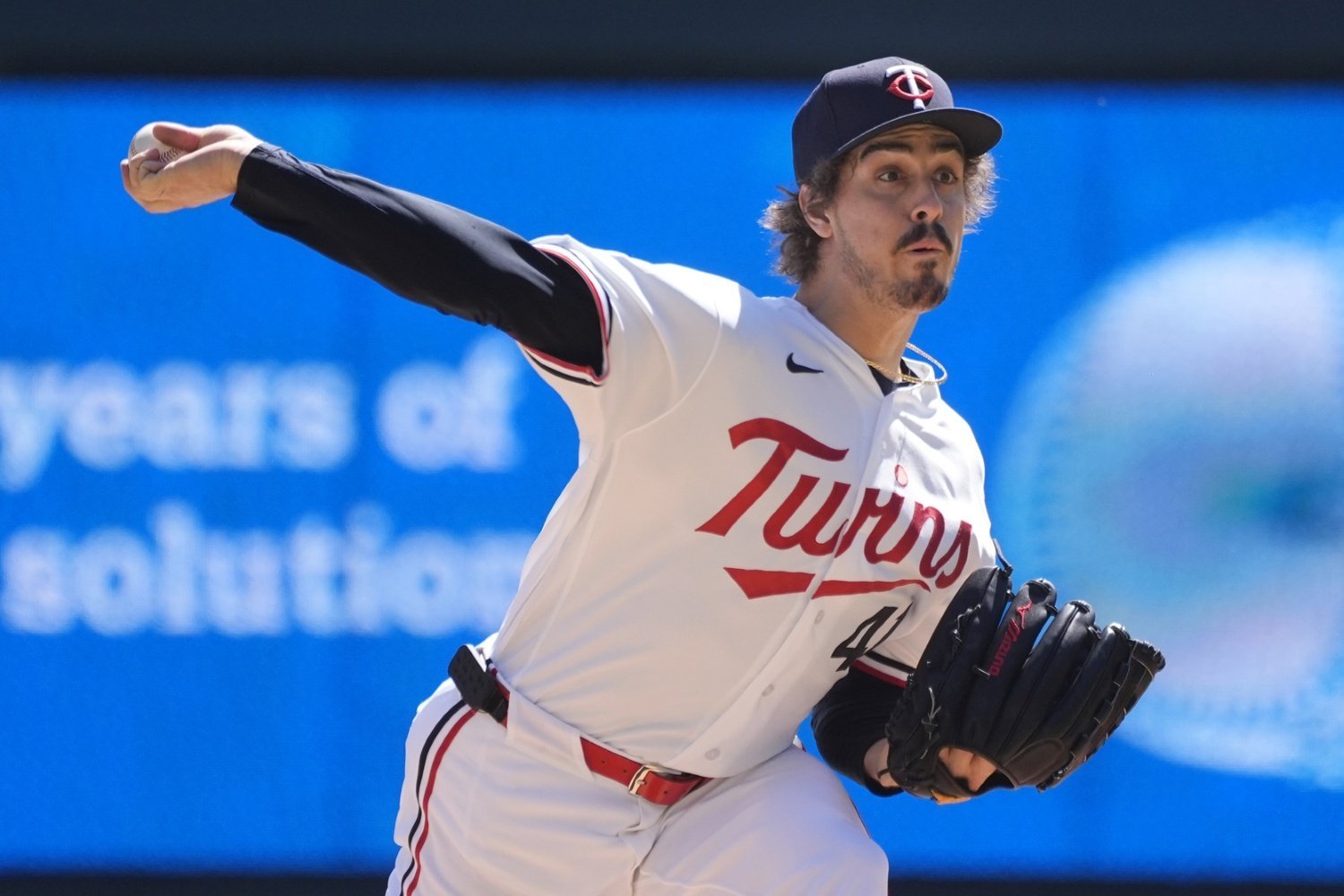 Joe Ryan's MRI Sunday came back clean, a Twins source confirmed to Twins Daily Tuesday. As first reported by Dan Hayes of The Athletic, Ryan played catch Tuesday and will throw a bullpen session Wednesday, after which the team will evaluate when he might make his next start. Ryan left his last start Sunday after just two batters faced, with what the team called "elbow soreness". His scan revealed no damage to his UCL, but until he gets back onto a mound and pitches pain-free, the next steps in getting him back into the starting rotation will not become clear. Wednesday is the last day on which the team can make an injured list stint retroactive to Sunday, so the bullpen session will be important. If it goes well (and Ryan recovers from it well), the team might choose to skate by without placing him on the injured list. If, however, there's any lingering discomfort, a stint on the IL is likely. View the full article
 -
Stephen Kolek Comes Off IL, Set To Start Tonight For Royals
DiamondCentric posted an article in Royals Keep
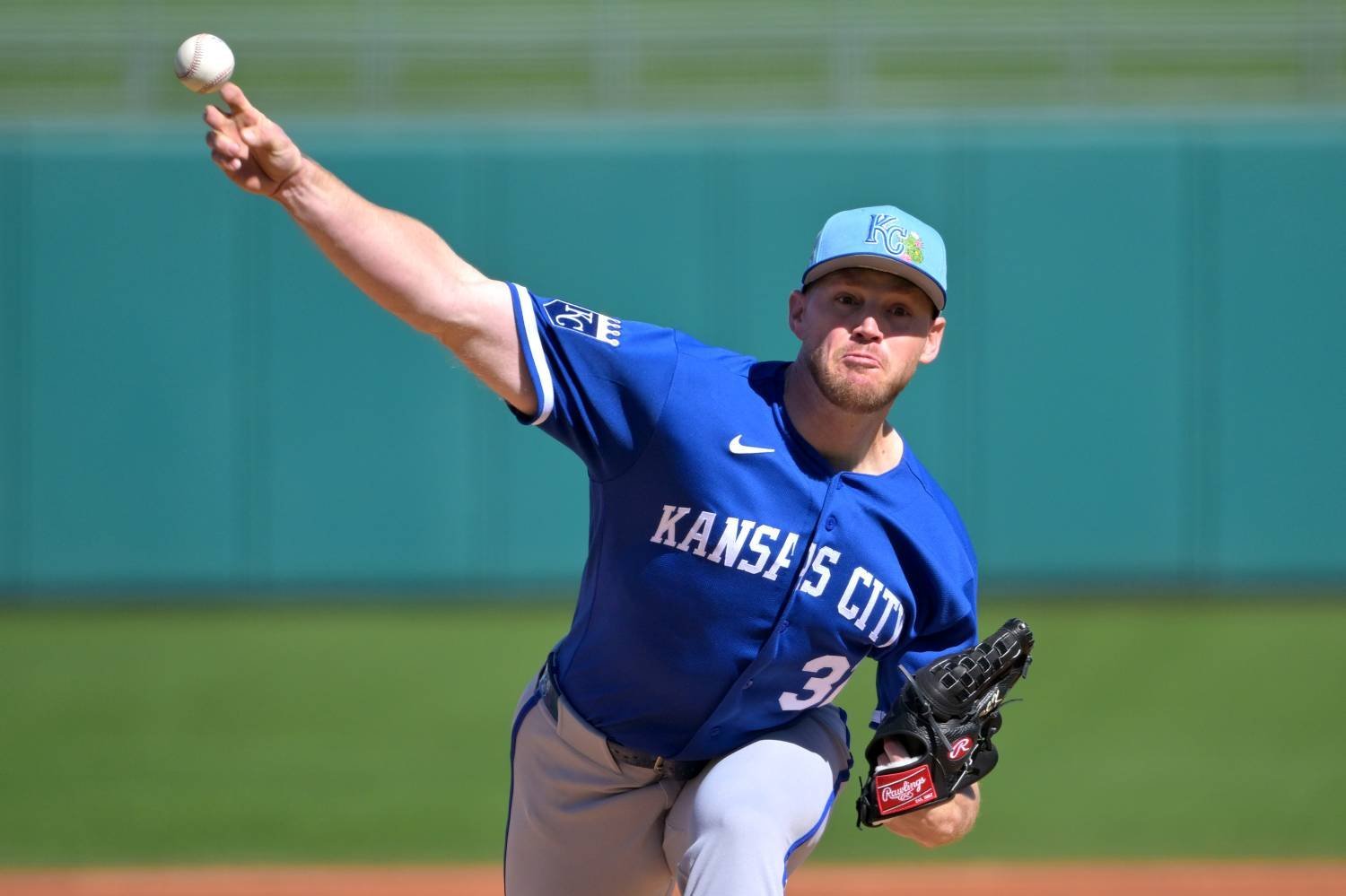 It is Stephen Kolek's turn to see what he can do in the Kansas City Royals' rotation. The right-handed starter was activated from the 15-day injured list following an oblique injury and will start Tuesday's home game against the Cleveland Guardians. Right-handed reliever Mason Black was optioned to Triple-A Omaha. The Royals' rotation has had trouble with consistency this season, just one of the reasons the team sits at 16-19. Kolek, acquired from the San Diego Padres at last year's trade deadline in the Freddy Fermin deal, was impressive in five starts for the Royals in 2025. In 33 innings, he had a 4% walk and 16.8% strikeout rate with a .168 opponent batting average. Kolek had a 2.76 ERA in four rehab appearances with Omaha. Black didn't allow a run in his four relief appearances, walking two and striking out five in 4⅔ innings. View the full article
 -
Brewers' Angel Zerpa To Have Season-Ending UCL Surgery
DiamondCentric posted an article in Brewer Fanatic
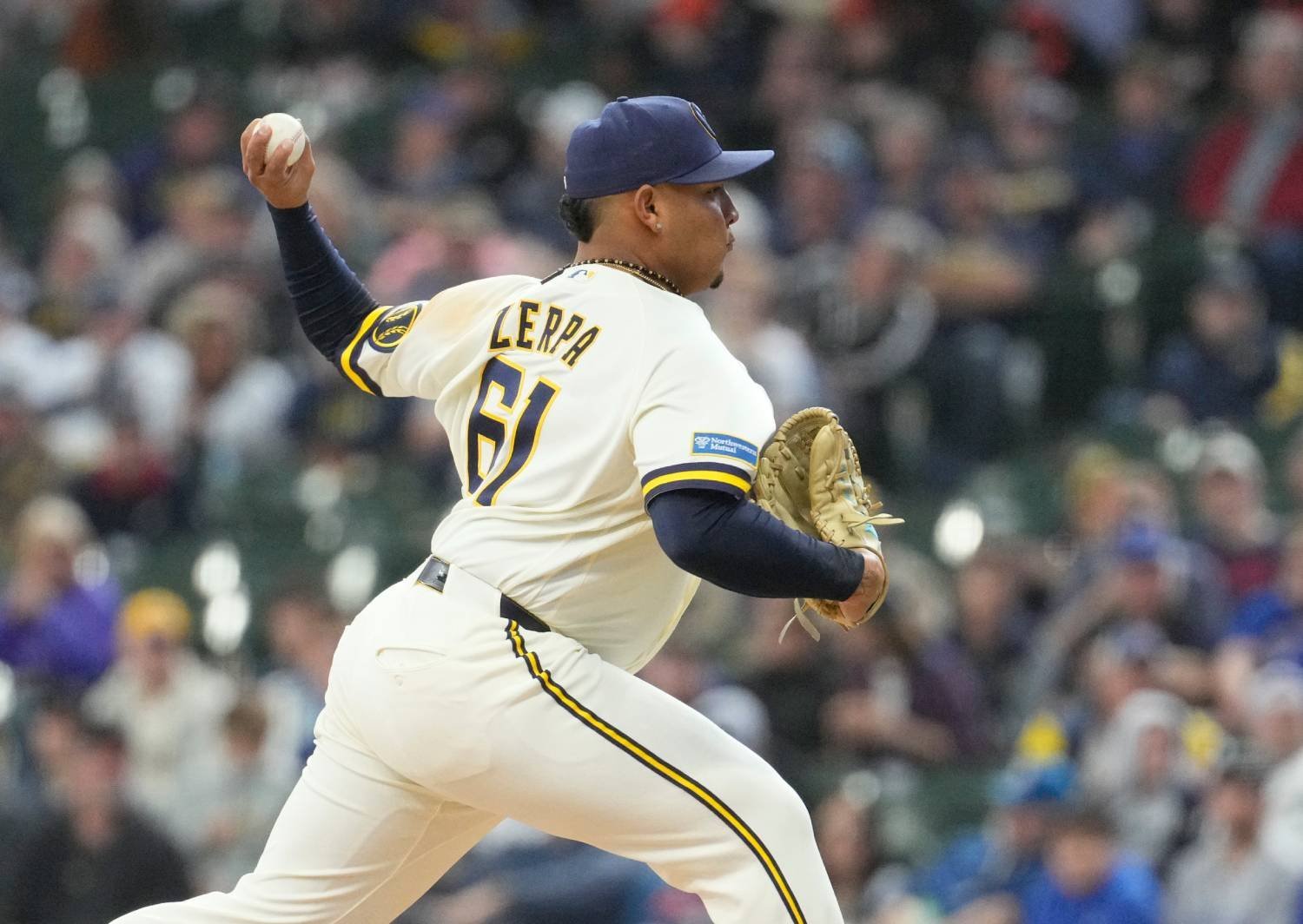 Angel Zerpa won't be pitching again for the Milwaukee Brewers until 2027. The left-handed reliever will undergo UCL surgery on his left elbow next week. The recovery time will depend on whether Zerpa has the internal brace procedure or full-blown Tommy John surgery. The internal brace provides a shorter recovery time as opposed to Tommy John surgery, which is a 12- to 15-month recovery. Zerpa was a big offseason acquisition, coming over in a trade from the Kansas City Royals for outfielder Isaac Collins and right-handed reliever Nick Mears. Zerpa showed out in the World Baseball Classic for Venezuela, pitching 5⅓ scoreless innings over six appearances, allowing three hits with two walks and eight strikeouts. That performance raised expectations going into his first season with the Brewers as another potential late-inning weapon. Zerpa didn't allow a run in his first four appearances covering 4⅔ innings, walking two and striking out three. He then allowed runs in three straight and six of his next eight before hitting the 15-day injured list last week. Zerpa has a 5.35 FIP (6.39 ERA) in those 12 games with 10.9% walk and 14.5% strikeout rates, both worse than his career numbers (7.2% and 19.4%). View the full article
 -
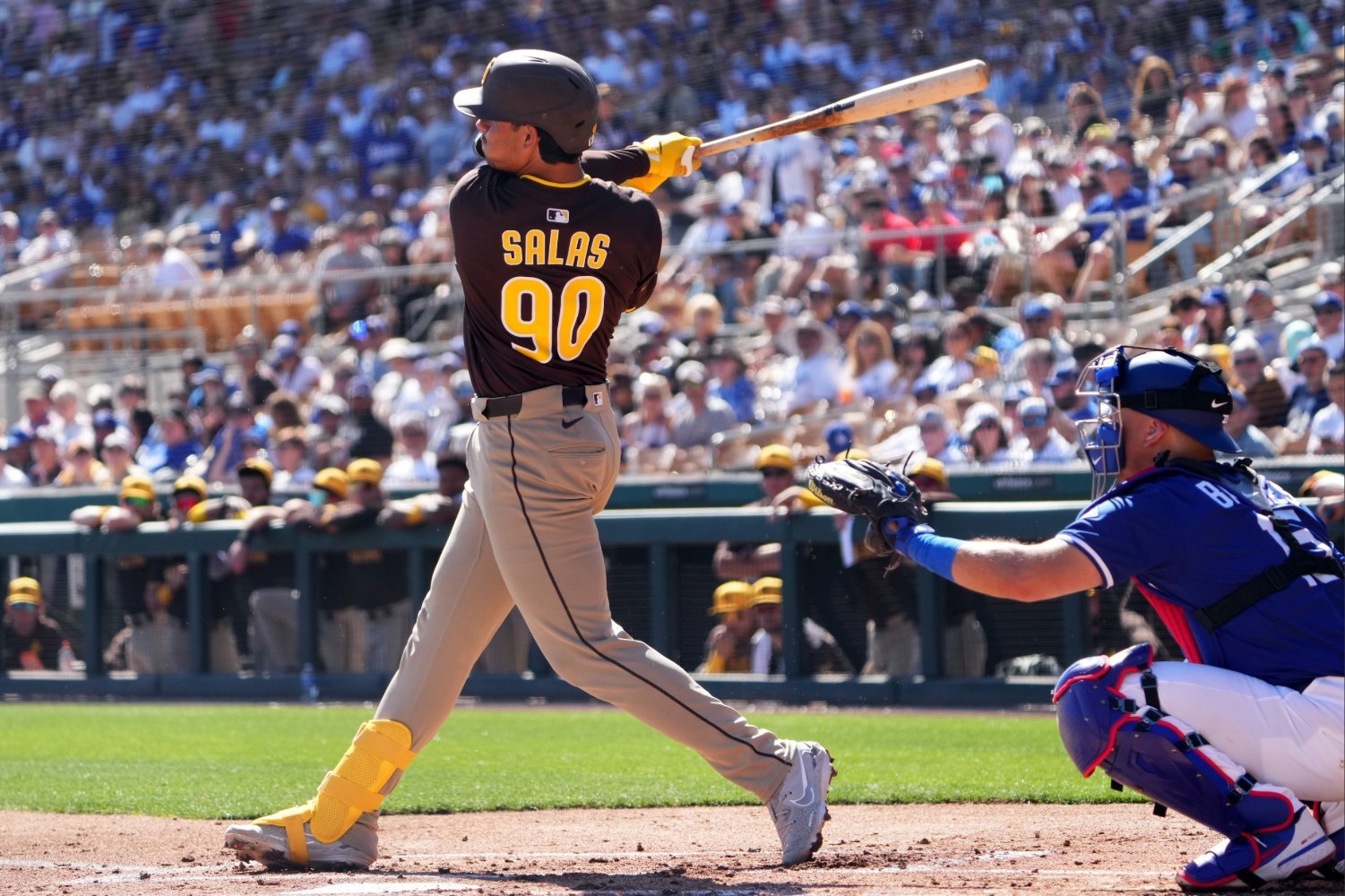 Checking in on the San Diego Padres prospects who made a mark in the last week: Ethan Salas, C, Double-A San Antonio Season stats: 22 games, .307/.402/.573, 12 R, 5 2B, 0 3B, 5 HR, 14 RBI, 12 BB, 21 K, 6 SB, 0 CS Why he's hot: The first week of the season was not kind to Salas, as he got off to a 2-for-12 start (.125/.176/.188 slash line). But since April 10, he has hit in 14 of 18 games—two were 0-for-1 pinch-hit appearances—to raise his slash line to where it is now. More recently, the 19-year-old, who is Padres Mission's No. 1 prospect, has found his power stroke, having a stretch where he homered in five of the seven games in which he played. All have been pulled homers by the left-handed hitter, who has often been slotted into the leadoff spot. Salas, who made his pro debut in 2023 as a 16-year-old after being the top international free-agent signing, has eight multi-hit games, three of which came this past week against the Tulsa Drillers. He was 7-for-21 with five runs scored, three homers and five RBIs. His stretch of five homers in seven days included going deep in three straight games, then blasts in back-to-back games. Salas also walked five times last week, all coming in the final three games, including three in Sunday's series finale when he went 0-for-2. These developments are obviously very positive considering Salas was coming off a serious back injury that sidelined him for all but 10 season-opening games in 2025. Also, while his defense has been considered elite, his offense has had mixed results. After a very good start to his career at Low-A Lake Elsinore, he finished 2023 with a .248/.331/.421 slash line as a 17-year-old and .206/.288/.311 at High-A Fort Wayne in 2024. While many might be clamoring for a promotion, Double-A often provides the better competition due to the wealth of prospects at the level. Perhaps a June promotion would be in line if his offensive production continues. Sung-Mun Song, 2B, Triple-A El Paso Season stats: 25 games, .293/.364/.354, 14 R, 3 2B, 0 3B, 1 HR, 15 RBI, 11 BB, 27 K, 1 SB, 0 CS Why he's hot: While Song doesn't fit the typical prospect profile, he is expected to be a big part of the Padres at some point in the near future. Initially sent to the Chihuahuas on a rehab assignment after re-aggravating an oblique injury in spring training, Song was optioned to Triple-A when that assignment expired. He hasn't pouted at the decision. Song, who signed as a four-year, $15 million contract this offseason after a career in the Korea Baseball Organization, has been a steady contributor for El Paso. That includes hitting in all five games last week that he played in, with back-to-back two-hit games and capping the week with his first homer since signing with the Padres. He has hit in eight straight games at Triple-A and only once gone consecutive games without a hit. He had a brief call-up to the Padres as the extra player for the Mexico City Series, but only appeared as a pinch-runner in one game. Song hit a solo homer in the seventh-inning of Sunday's 4-3 loss to the Albuquerque Isotopes. That was just his fourth extra-base hit in 25 games and second since a double April 10. He also only has one stolen base. In his last two seasons in the KBO, he had a combined 45 homers and 46 stolen bases (in 48 attempts). His positional versatility—he can play second, third or shortstop—would be beneficial for the Padres, who have played Fernando Tatis Jr. out of position (albeit successfully) at second base six times this year. Clay Edmondson, RHP, High-A Fort Wayne Season stats: 10 games (all in relief), 0-1, 0.75 ERA, 5 saves, 12 IP, 6 H, 2 R, 1 ER, 3 BB, 16 K, 0.75 WHIP, .136 opp. avg. Why he's hot: The 22-year-old, who was a 14th-round draft choice in 2025 out of North Carolina-Asheville, went 3-for-3 in save opportunities last week against the South Bend Cubs. He made those three appearances, going 3⅓ innings with three hits, no walks and seven strikeouts. The 6-foot-2, 195-pounder allowed both of the runs he has allowed this season in his third outing April 7 vs. Lansing, not allowing a run in his last seven appearances. His three walks came in three straight games and hasn't issued a free pass in his last four outings. On Friday against South Bend, he came on in the eighth and struck out all four batters he faced. Edmondson's five saves in as many chances lead the Midwest League. Edmondson made seven appearances after being drafted last year, six at Lake Elsinore and one at Triple-A El Paso at the end of the season. In 12⅔ innings, he gave up six runs on 11 hits with five walks and 11 strikeouts with a .239 opponent batting average. His brief audition at El Paso shows the Padres are keeping a close on on Edmondson, making him a candidate to be a quick mover. Jake Cunningham, OF, High-A Fort Wayne Season stats: 23 games, .325/.391/.636, 17 R, 6 2B, 0 3B, 6 HR, 16 RBI, 7 BB, 22 K, 4 SB, 1 CS Why he's hot: The 23-year-old, drafted by the Baltimore Orioles in the fifth round out of North Carolina-Charlotte and signed this offseason after being released, has hits in nine of his last 10 games, including five of six last week vs. South Bend. That included driving in a career-high five runs Wednesday in a 7-4 TinCaps win. Fort Wayne was in an 0-for-14 funk with the bases loaded when Cunningham delivered a two-run single for the game's first runs. He added a two-run homer the next inning. Cunningham had two more hits Sunday, his eighth multi-hit game this year, including his team-best sixth homer, a solo shot. After starting the season 0-for-8, Cunningham is hitting .362 with 12 extra-base hits. His six homers are already a career high after hitting eight in 182 games while with the Orioles. He is part of a talented TinCaps outfield that also has Alex McCoy and Kavares Tears (Padres Mission's No. 16 prospect). He dealt with injuries each of the last two seasons that limited him to 92 and 76 games, respectively, but has unlocked more of his potential since joining the Padres. Qrey Lott, OF, Low-A Lake Elsinore Season stats: 8 games, .400/.500/.750, 8 R, 1 2B, 0 3B, 2 HR, 9 RBI, 4 BB, 3 K, 3 SB, 0 CS Why he's hot: Anytime you go 5-for-5 with a pair of homers and six RBIs, you can be considered hot. That is the day Lott turned in Sunday as the Lake Elsinore Storm pulled out a 12-10, 10-inning victory over the Ontario Tower Buzzers. It was his first pro game with multiple hits. The 21-year-old hit a go-ahead two-run homer in the top of the ninth inning after opening the game with a two-run homer in the second inning. Lott also had an RBI singles in the fourth inning and and seventh inning. He was replaced for the bottom of the ninth as the Storm made defensive changes, otherwise Lott would have come up in the 10th inning with a chance for a third homer. He had 11 total bases in the game. Lott is making his professional debut this year. He joined the Storm roster when outfielder Kale Fountain went down with a season-ending shoulder injury after he crashed into a wall. Initially drafted by the Orioles in the 15th round in 2023 out of high school, Lott didn't sign. He signed with the Padres last year after playing two years of junior college at Northwest Florida State and going undrafted despite participating in the MLB Draft League. View the full article
 -
Craig Counsell Only Trusts One of His Catchers Right Now
DiamondCentric posted an article in North Side Baseball
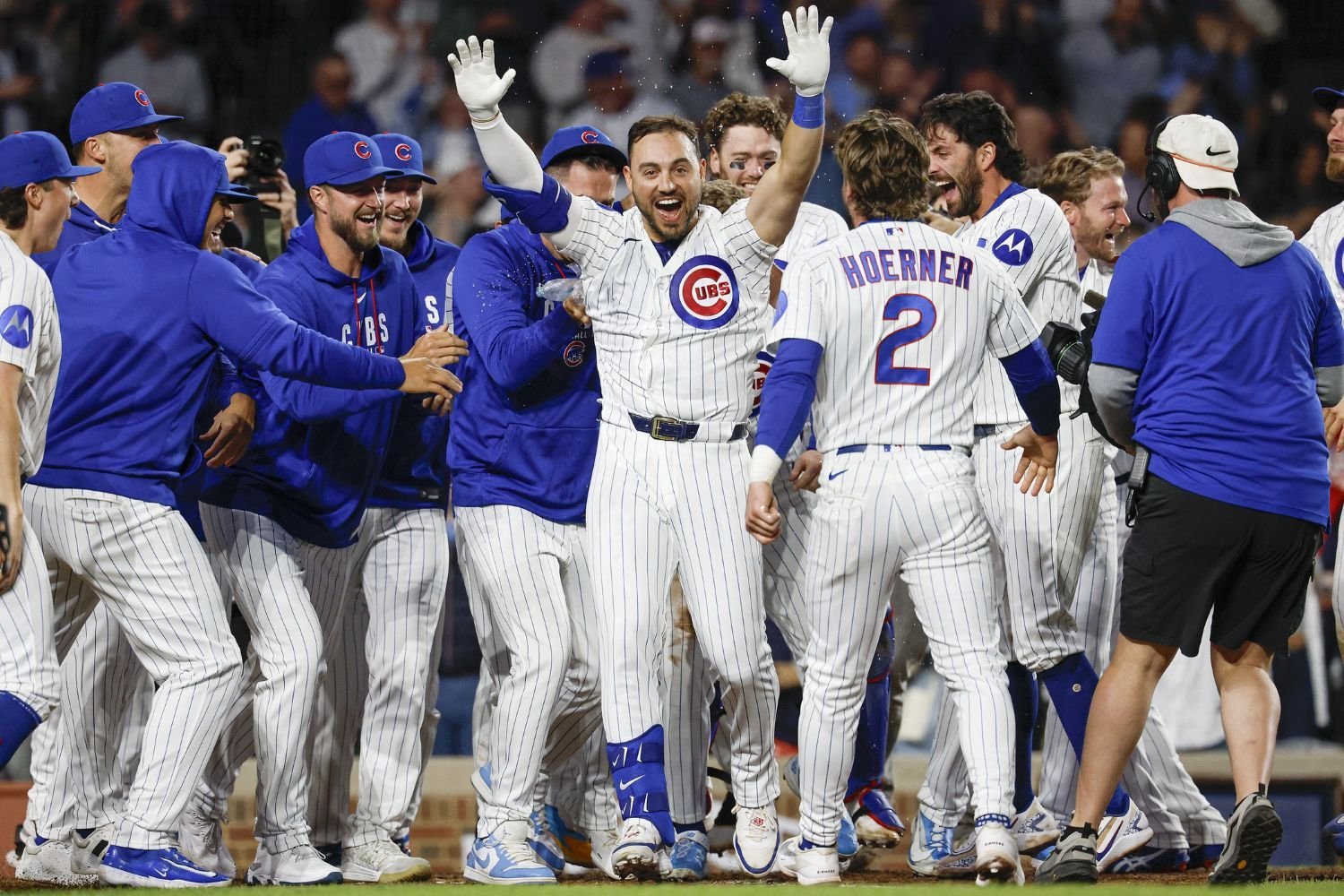 With the game on the line Monday night, Craig Counsell placed his trust in Carson Kelly—not because he gave them the best chance for a game-breaking hit, but because there would be more outs left to get, either way. It looked like a decision that might cost the Cubs the game, but the team pulled it out, after all, so the only major takeaway from the sequence is what it revealed about where Counsell's mind runs as he considers his current roster. The bases were loaded with two outs in the bottom of the eighth inning, with the Cubs trailing 4-3. Graham Ashcraft was on the mound for the visiting Reds. Counsell had a choice. Kelly's place in the batting order was due, but left-handed batter Michael Conforto was still available on the bench. Ashcraft is a nightmare of a matchup for Kelly, given the former's stuff and the latter's swing path. Conforto, however, is a good option against what Ashcraft throws. Specifically, the big Reds righty was using a cutter that sat around 97.5 MPH Monday night, with good carry—12 inches of induced vertical break (IVB). He also throws a slider that sits just above 90 MPH, playing off that cutter. Here are the run values per 100 pitches seen for both of the hitters Counsell had available for that moment since the start of 2025, on offerings fitting those criteria from right-handed hurlers. Conforto: 1.39 Kelly: -2.10 Given an average at-bat lasting four pitches, that means that Conforto was likely to be worth about 0.14 runs more than Kelly in that moment. If you take a little air out of that to account for the pinch-hit penalty (whereby most players perform worse when pinch-hitting than they do the rest of the time), we can all it 0.10 runs. That sounds small; it isn't. Managers design entire gameplans around the chance to increase their run expectancy by 0.1 runs in late, close situations. In reality, of course, runs will either score or not, but the results we see are the result of each side making dozens of choices to nudge the probabilities in their direction. A 0.1-run boost in an at-bat that had a Leverage Index of 7.91 (according to FanGraphs) is astronomical; it's a no-brainer to pursue that. Counsell didn't pull the trigger on the move, though. Kelly struck out on three sliders from Ashcraft, looking thoroughly overmatched, and the Reds had escaped the jam with the lead intact. In a vacuum, that's a managerial blunder. In a broader context, though, it's easy to understand. You just have to put yourself in Counsell's mindset—which is to say, you have to trust Kelly a lot more than Miguel Amaya behind the plate, and you have to badly want days off to be full days off for the latter. Whether Kelly or Conforto had batted (and whether or not they had delivered), the Reds had one turn left to try to add to their four runs. Counsell had to think a bit about the cost of pinch-hitting Conforto for Kelly there, because if he did so, his bench would be depleted, and Amaya would have to catch whatever was left of the game. That's a potential problem, for two reasons: Counsell clearly trusts Kelly much more as a defensive catcher right now, in addition to leaning into the veteran's second straight strong start at the plate. Kelly has caught 186 innings this season; Amaya has only caught 116. When the season began, it looked like the two would share time pretty evenly. Already, Kelly has seized as regular a starting gig as almost any catcher enjoys in the modern game. With high-leverage defensive outs left to get, Counsell would prefer his stronger backstop be in there. Monday's was the fourth of 10 straight games for the Cubs, and the midpoint of a seven-game homestand sandwiched between two demanding road trips. Days off are precious, and any player who gets one at a demanding position (like catcher) is best served if they get the full day. Using Amaya to finish out the game would have compromised his rest, in the middle of a rough schedule patch. Thus, Counsell chose to let Kelly try to collect the key hit. The strategy failed, but thanks to a great at-bat by Pete Crow-Armstrong to lead off the bottom of the ninth, the other reason why it made sense to withhold Conforto came tidily into view. Counsell was able to take down right-hitting Matt Shaw (who had pinch-run for Moisés Ballesteros) and send up Conforto against the Reds' Emilio Pagán, with two outs in the bottom of the ninth. This was actually a much lower-leverage situation. With nobody on base and two down, the odds of scoring were poor; the game was likely to go to extra innings. Pinch-hitting Conforto was a pronouncement of real faith in his hitting ability, even in the pinch, because the team needed him to spark a game-winning rally to make the move worth it. If he'd been retired (or even if he'd reached, but been stranded), the Cubs would have started the bottom of the 10th with a much slower runner on second base than Shaw would have been if he'd simply made the last out of the ninth. It looks like a bit of a paradox, on the part of Counsell—like he should have trusted Conforto in the eighth, if he was going to trust him in the ninth. That Conforto hit the walkoff homer to cash in a longshot bet isn't what redeems or explains the move, though. Rather, it's the question of Kelly vs. Amaya, and of managing rest during what looks like a trying segment of the schedule. We know much more about how Counsell views his roster and his team's progress through this season now than we did in the middle of the eighth inning last night. The signals were subtle, but real. More importantly, of course, we also have new evidence to incorporate as the team moves forward: that Kelly really does get overmatched by many tough righties, but also that Conforto still has meaningful pop left in his bat, and that Kelly's defensive value to the team is worth deploying him at times when it seems not to make sense, just as it's worth doing so with Crow-Armstrong during his slumps at the plate. View the full article
 -
Toronto Blue Jays Defensive Plays of the Month - March/April 2026
DiamondCentric posted an article in Jays Centre
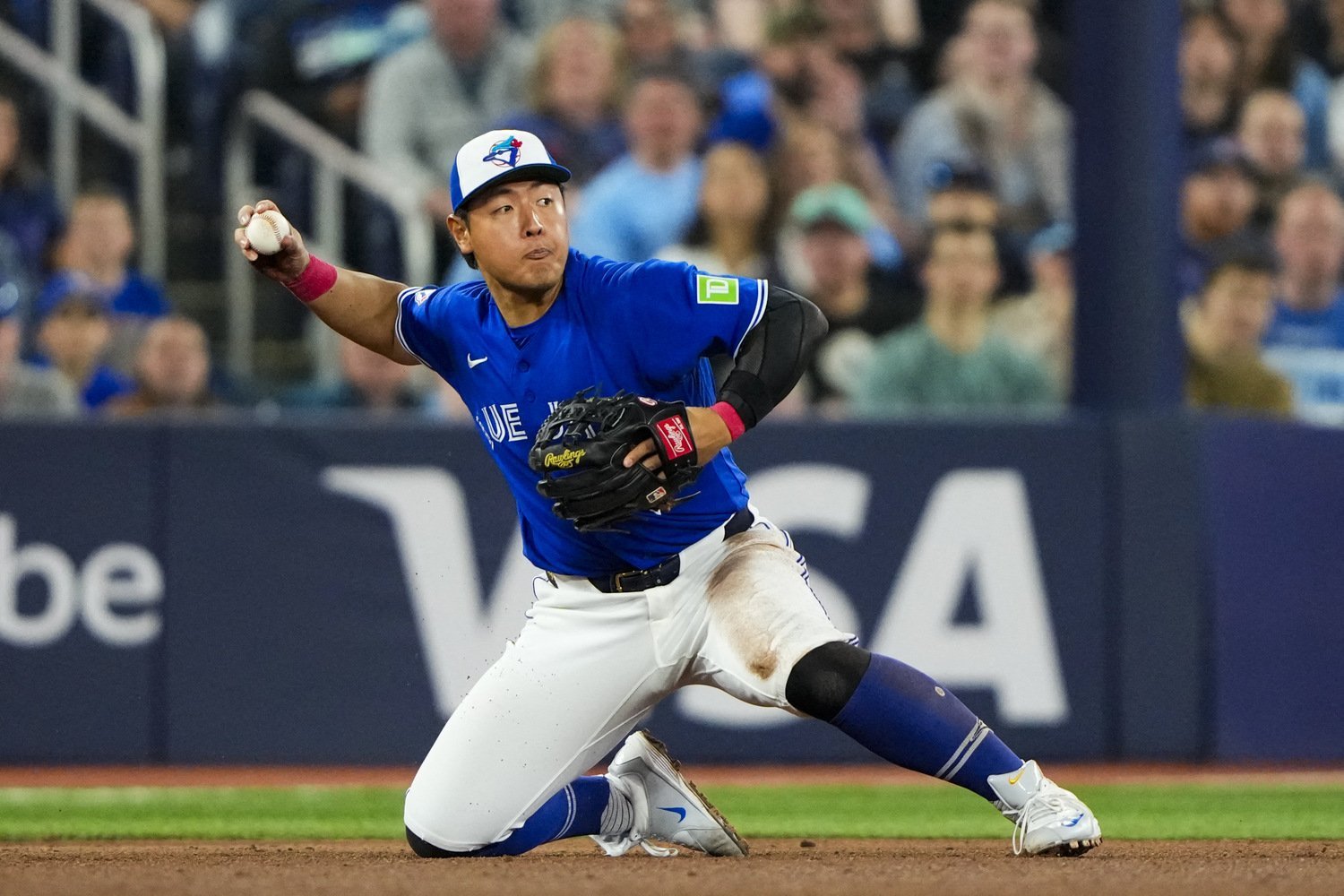 The Toronto Blue Jays are one of the best defensive teams in the league. While they didn't claim a third straight Gold Glove Team Award last season, they led the majors in Baseball Savant's Fielding Run Value. Infielders Ernie Clement and Andrés Giménez turned tough plays into easy outs and impossible plays into highlight-reel moments. Outfielders Daulton Varsho and Myles Straw covered every inch of center field ground, and plenty of right and left for good measure. Catchers Alejandro Kirk and Tyler Heineman were in complete control behind the plate. The 2026 Blue Jays haven't looked quite as impenetrable. Catching remains their biggest strength, with rookie Brandon Valenzuela stepping up (or crouching down) admirably in place of an injured Kirk. Past home plate, the everyday defense hasn't been quite as spectacular as we've come to expect, whether you're judging by traditional stats, advanced metrics, or the eye test. However, that doesn't mean we haven't seen some darn good plays. I was hoping to have this piece finished sooner than five days into May, but life gets in the way, and I think that's okay. After all, there's never a bad time to re-watch diving catches, behind-the-back throws, and bang-bang plays. Five Stars for Barger Addison Barger is best known for his artillery arm, but he didn't need to use it here. The right fielder recorded the first out of this game with a spectacular catch. According to Statcast, the ball had a catch probability of just 25%, making this the Blue Jays' first (and so far only) "five-star" grab of the season. Lukes Gets the Credit, but Giménez Gets the Out The Blue Jays finished second in the majors with 31 outfield assists in 2025. So far in 2026, they only have two, and one of them deserves a big fat asterisk next to it – it started with one of the costliest errors of Toronto's season. The other assist was credited to right fielder Nathan Lukes, who also earned the Jays' only outfield throwing run of the year on the play. However, his throw was short, and if it weren't for a great read and an even better dive by Giménez, Geraldo Perdomo would have slid into second base safely. Well, It Looked Impressive The award for "play that technically should have been routine but turned into a diving catch" goes to this effort from Davis Schneider. While the ball shot off Jarren Duran's bat at 104.4 mph, Statcast tells us that Schneider was already so well-positioned that a better read and a faster jump could have prevented the dive that sent him sliding onto the warning track. While this catch didn't boost his metrics, it sure looked cool, and it earned him a nice ovation from the Blue Jays bullpen behind him. More Points for Style I'm not convinced Clement needed to flip this one behind his back, and the execution wasn't perfect. Still, the Jays got the out, and I do appreciate the effort, even if it wasn't as pretty in practice as it sounds in theory. Infield Superman It's usually outfielders who make Superman-style leaps. Typically, when an infielder jumps, he's either going straight up or moving laterally and staying close to the ground. Of course, if anyone knows how to be a superhero, it's Vladimir Guerrero Jr. The first baseman got some serious air on this tag play to retire a sprinting Joey Ortiz. Everything Working As It Should Andrés Giménez is so damn cool. On the first double-play ball to shortstop in his first full season at the position, Giménez looked like he's been doing this his whole career. He started a run-saving double play with a spin as smooth as butter in a game the Jays went on to win in extra innings. Talk about a pivotal play. The Okamoto Show Scouting reports were mixed on Kazuma Okamoto's third base defense before the season started, and the picture hasn't gotten much clearer. He's made a few costly errors, and Statcast suggests he's been a net negative in the field. Yet, no Blue Jay made more highlight-worthy plays in the first month of the season than Okamoto. He can run in, he can dive to either side, he can make tough throws, and, most importantly, he reacts with the kind of speed that the hot corner demands. I've put together a compilation of some of his best defensive moments from March/April. The final two clips in the compilation show him catching the two hardest-hit balls a Blue Jays infielder has had to handle this season. Any Blue Jays defensive moments from March and April that you think I missed? Please share them in the comments below! View the full article
 -
Chicago Cubs Minor League Pitchers of the Month: April 2026
DiamondCentric posted an article in North Side Baseball
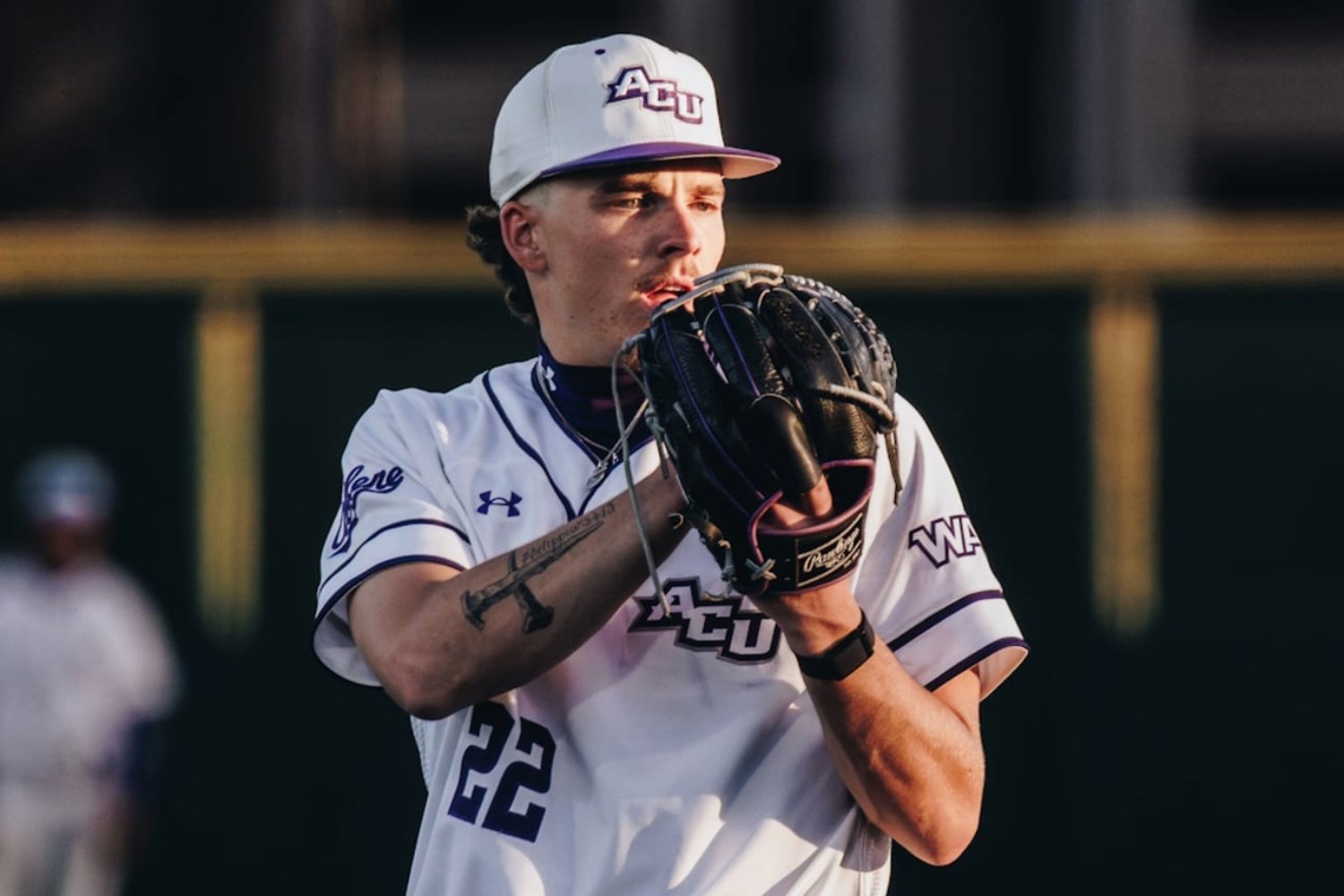 The cupboard is not quite stocked with pitching for the Chicago Cubs. Per Baseball America, just five pitchers rank among the top 20 prospects for the Cubs, with just one in the top 12. Brandon Birdsell (14th), is not expected to pitch this season after elbow surgery. Jaxon Wiggins (third) hit the IL on April 15th with elbow soreness. No one on the following list is in the upper minor leagues, so this is a system that will require patience on the pitching side. With April officially in the books, which prospects stood out and increased their stock? Honorable Mention: Brooks Caple (RHP) — South Bend Taken in the ninth round in 2024, Caple made his debut in 2025 with a good seven-start stretch in Myrtle Beach before getting promoted to South Bend and turning in 14 starts to finish his season. Back to South Bend to start 2026, Caple had a quality month on the bump. In his four April starts, Caple posted a 24-to-3 strikeout:walk ratio while limiting opponents to just six runs on 12 hits in 18.2 innings. Near the top of the Midwest league in WHIP and strikeouts, Caple has both increased his strikeout rate and lowered his walk rate, an excellent combination. Third Place: Edwardo Melendez (RHP) — Myrtle Beach An older international signing at 20 years of age out of the Dominican Republic, Melendez made his debut stateside in 2025 with stops in Arizona and Myrtle Beach after a year in the Dominican Summer League. While consistently posting high strikeout numbers and limiting hits, Melendez has paired that with extremely high walk rates that led to unimpressive box score lines. He looks to have potentially unlocked something so far in 2026 as he walked just seven in his 15.2 innings between the bullpen and the rotation in Myrtle Beach, a huge improvement. That, combined with 23 strikeouts and just seven hits allowed, has led to a 1.15 ERA in April for the 22-year-old that should open some eyes. Runner-up: Dominick Reid (RHP) — Myrtle Beach With Jostin Florentino (15th) and Kaleb Wing (17th) not yet debuting in affiliated ball this season, the only Cubs top-20 prospect entering 2026 to qualify for this list winds up the runner up. Drafted in the third round of last season’s draft out of Abilene Christian in Texas, Reid did not make his professional debut until this season. Starting the season in Myrtle Beach, Reid made five starts for the Pelicans in April. In 18.1 innings, he struck out 21 while allowing 10 runs on 19 hits and 7 walks. Reid opened the season with nine scoreless innings with 10 strikeouts against just one walk. The average ERA in the Carolina league is 5.38, so his 4.91 ERA looks better with that context. The hope is that as the season progresses Reid can settle in a bit and find the middle ground between his first nine innings of the month and the last nine innings. Winner: Mason McGwire (RHP) — Myrtle Beach You may have heard, Mark McGwire’s son is racking up strikeouts on the mound for the Cubs. An eighth-round pick out of high school in 2022, Little Mac is pitching for the first time since 2024 due to injuries, and he is turning some heads. He started the month in the bullpen and finished with two starts, striking out 18 and allowing just two runs on five hits in 12 innings. His velocity looks to be up higher than it was pre-injury and he has doubled his strikeout rate and cut his walk rate in half in his return to the mound. While the 22-year-old looks to be years away from Wrigley, the thought of Big Mac’s son pitching in Cubbie blue is pretty entertaining. View the full article
 -
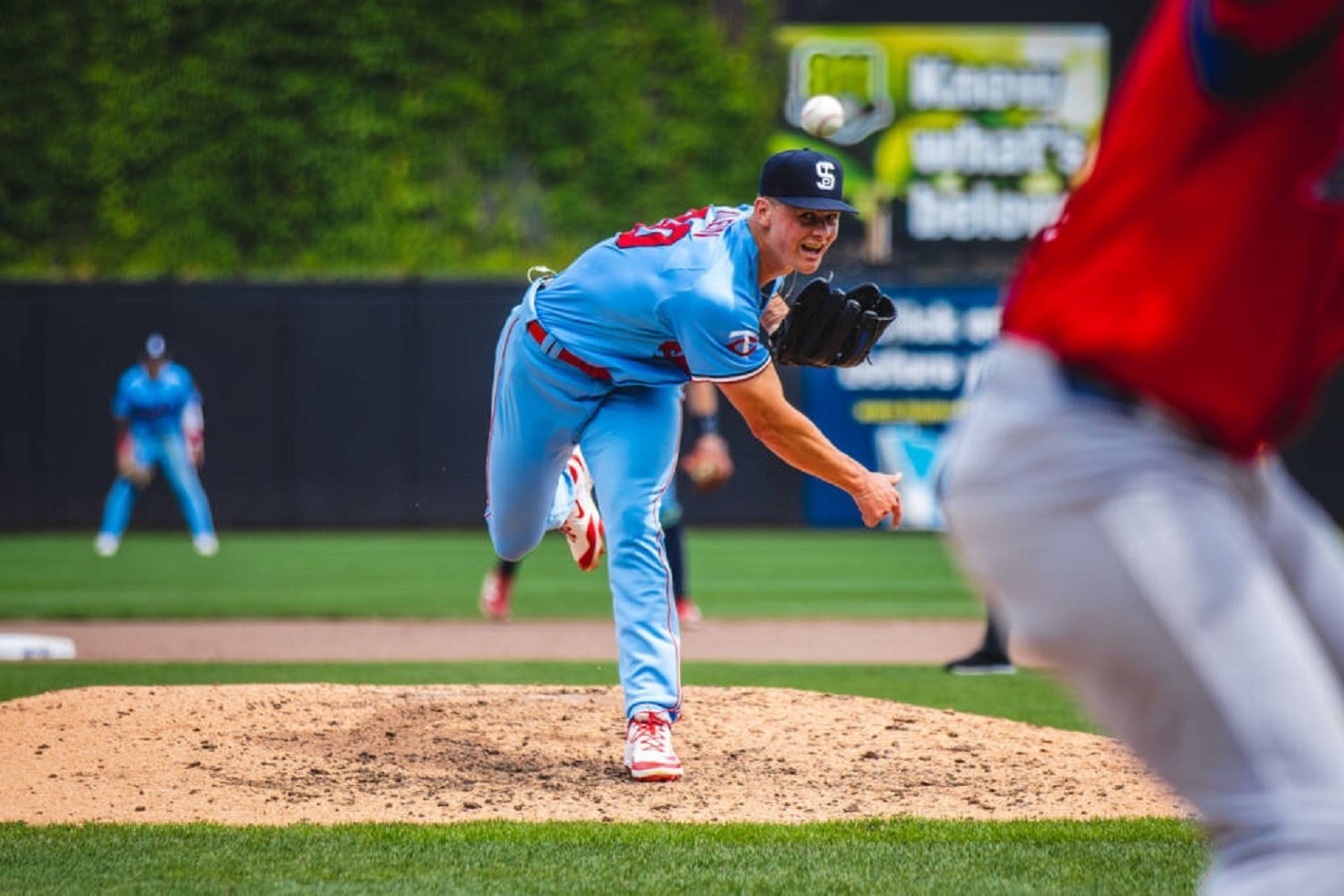 Not every prospect arrives with hype, signing bonuses, or a clear path to the majors. Some take the scenic route, winding through back fields, small schools, and relative anonymity before forcing their way into the conversation. John Klein fits that description perfectly. After a breakout 2025 season, he is no longer flying under the radar. A Minnesota native from Brooklyn Park, Klein’s baseball journey started without much fanfare. He went undrafted out of Iowa Central Community College in 2022, eventually signing with the Twins as a free agent after showing promise in the Northwoods League. At the time, he looked like organizational depth: a tall right-hander with projection, but limited present stuff. What has happened since then is a steady and impressive climb. Klein spent the next two seasons quietly working his way through A ball, refining his mechanics and building strength. In 2023, he moved from Rookie ball to High-A. He posted a 4.17 ERA, with a 23.9 K% and a 9.0 BB% across 58 1/3 innings. Minnesota had him return to Cedar Rapids for the entire 2024 season. In 100 1/3 innings, he posted a 4.57 ERA with a 20.4 K% and an 8.6 BB%. He wasn’t overpowering or putting himself on the prospect radar. That changed in 2025, when everything started to click. Pitching for Double-A Wichita, Klein posted a 3.12 ERA with 95 strikeouts across 80 2/3 innings, establishing himself as a legitimate arm in the system. A late-season promotion to Triple-A brought mixed results, but he still managed 33 strikeouts in 25 2/3 innings against more advanced competition. The transformation is not just statistical. At 6-foot-5 and now around 225 pounds, Klein has added noticeable strength to his frame. Early in his pro career, he sat around 90 mph with his fastball. By 2025, that number had climbed into the mid-90s, averaging 94 and touching 97. The Twins’ development system deserves credit here—particularly their velocity programs, which have unlocked more from previously modest arms. Klein’s delivery adds deception, allowing the fastball to play up even further. His arsenal has grown alongside the velocity. What once was a limited mix has evolved into five distinct pitches. The biggest development has been his curveball, now sitting around 80 mph with sharper break and the potential to miss bats when located well. He's also worked in a splitter in the mid-80s and an upper-80s cutter, giving him multiple looks against hitters from both sides of the plate. That said, there are still questions about his long-term role. While Klein has the repertoire of a starter, he doesn't yet possess a consistent put-away pitch. The curveball flashes that potential, but can be inconsistent, and without a true swing-and-miss offering, he may struggle to turn lineups over multiple times at the highest level. Some within the organization believe his stuff could tick up even more in a bullpen role, where shorter outings might allow everything to play at peak intensity. Even with that uncertainty, Klein has already forced his way into the Twins’ plans at the highest level. After being added to the 40-man roster this offseason, he didn't have to wait long for his opportunity, making his big-league debut on Saturday. The early look confirmed what the organization has believed for a while now: that his development has put him in a position to contribute in a meaningful way. There's something fitting about Klein’s trajectory. A local kid who grew up a short drive from Target Field now is pitching there, not as a highly touted draft pick, but as a player who earned every step along the way. Whether he settles into a rotation spot, a swingman role, or a multi-inning relief job, Klein has already exceeded expectations and reshaped his outlook. For an organization constantly searching for pitching depth, stories like this matter. And for Klein, the next chapter could be the most meaningful yet. View the full article
 -
Gary Sánchez is a Traitor to the Masked Brotherhood
DiamondCentric posted an article in Brewer Fanatic
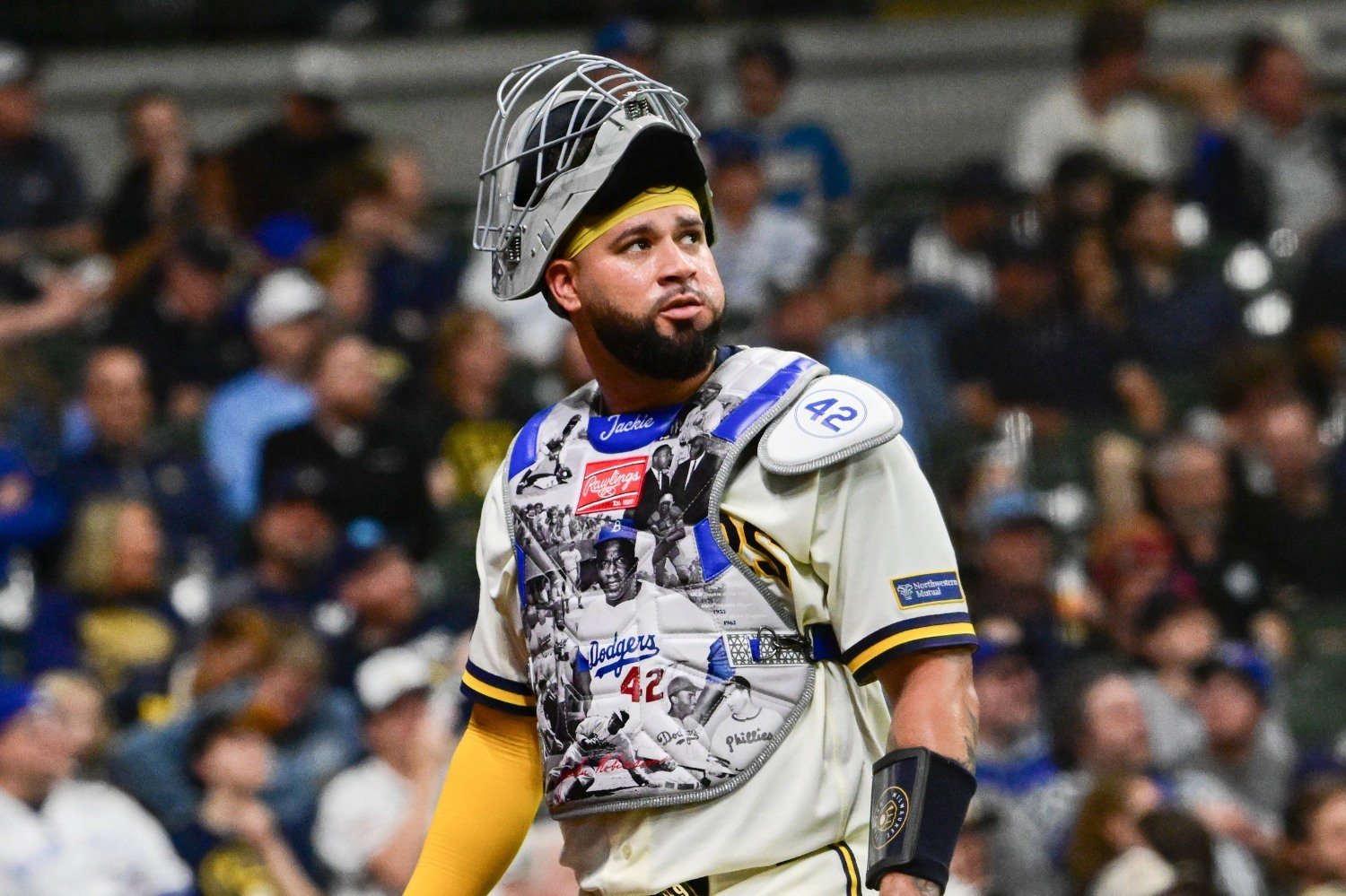 Gary Sánchez has challenged 14 called strikes this season. No other batter in the majors has challenged more than 11. Sánchez should probably challenge less often, based solely on the fact that he's only 6-for-14. He thinks he knows the outside edge of the strike zone, but he's wrong. Thirteen of the 14 challenges he's mounted came on pitches on that side of the zone. Sánchez, an extreme pull hitter trying to get a pitch up and on the inner half to generate damage, wants to stop pitchers from stealing strikes on him in a sector where he can't do much, anyway. That makes sense in a vacuum, but he's cost the Brewers one of their challenges several times. In fact, Sánchez has challenged 17.7% of all called strikes against him this season. That number is an outlier for any group; only Josh Naylor and Mark Vientos have higher challenge rates. However, it's especially notable given the subgroup to which Sánchez belongs, within the broader population of hitters: catchers. For as long as there has been a strike zone, catchers have tried to shape and expand it, and that has always been (in part) a political endeavor. Yes, there are vital physical aspects to pitch-framing, but catchers also work umpires with conversations between pitches and the long, slow development of relationships. That's not to say that umpires consciously favor catchers they like; it's just a reflection of reality. Good communication with the ump helps them understand what you're trying to do, and what you're not trying to do (i.e., bamboozle them). Listen to any color commentator over the last 40 years (many of them former catchers!), and you'll hear talk about a catcher being more deferential than most batters when they're at the plate. Why? Because they want that call for their pitcher, too. It shouldn't be a surprise, then, that catchers challenge pitches less often than any other position group under the ABS system. It's a noticeable gap, too. Here's the share of all initially called strikes challenged by hitters, split by defensive position. Catcher: 2.65% First Base: 4.54% Second Base: 3.34% Shortstop: 4.16% Third Base: 3.63% Outfield: 3.87% Designated Hitter: 4.19% It's not just blather from old, leathery baseball men anymore. Here is concrete evidence that when catchers take their turns in the batter's box, they're still politicking for their pitchers. They might see the ball and understand the edges of the zone a bit better than some of their counterparts at other positions, too, but inarguably, catchers are trading some potential offensive value at the margins for the odd call when they're working the zone themselves, behind the dish. Even Sánchez feels this pressure. Of those 14 challenges, three came when he was playing first base, and another nine came on days when he was serving as the Brewers' DH. Only twice has he challenged a call on a day when he was actually catching, and one of those came on a pitch that missed the zone by the width of a baseball—one egregious enough that Sánchez dared not even dream of getting the call himself on a consistent basis. QndSNnJfWGw0TUFRPT1fVlFnRUJseFJYbFlBV1FRRUFnQUhCQVpRQUZsV1ZsY0FCMTBCQVFNRVZBWUJCQVlI.mp4 That's a fascinating insight into the nature of this dynamic. If a player sometimes catches but is serving in a different capacity that day, what drives them to be more challenge-prone? Is it a greater sense of pressure to deliver value offensively? Is the understanding between catchers and umps deep and tangled enough that a batter-catcher knows their zone at the plate is truly tied to the one they'll get behind it, in a way that doesn't transfer to the same player on days when they're not the backstop? Either way, it's interesting that Sánchez is opting out of any efforts at diplomacy—but only when he's not the catcher for that day. Unwritten though they might be, rules are rules, and there are real, unwritten rules growing around ABS. For one, catchers have agreed not to waste the ump's time or challenge their acuity as eagerly when they're in the batter's box, instead of the catcher's box. Sánchez is defying those frameworks, but even he can't flout them outright—at least, not when it's his turn to catch. View the full article
 -
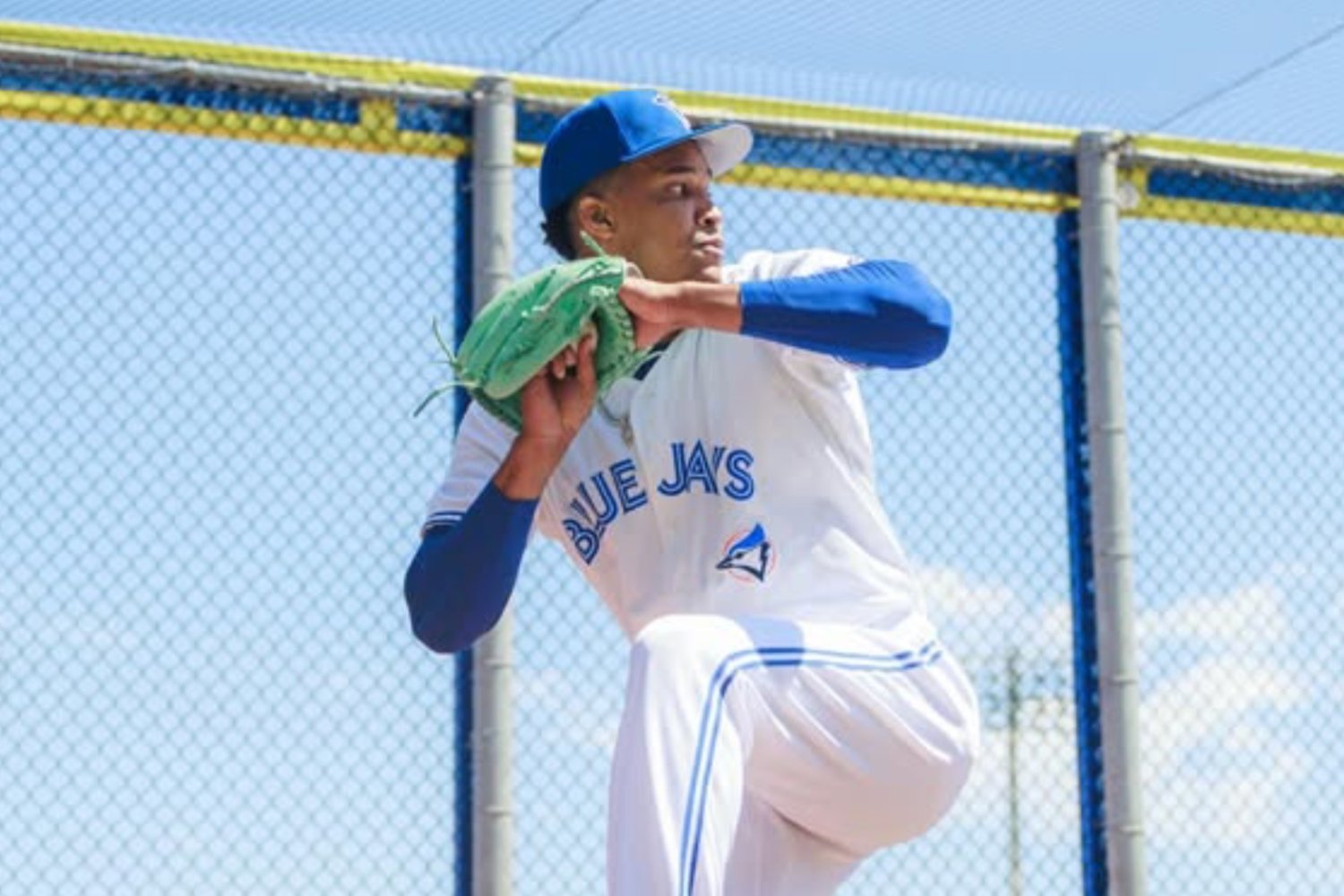 Blue Jays Affiliate Overview (May 2-May 4) Triple-A Buffalo Bisons Series vs Scranton/Wilkes-Barre RailRiders (New York Yankees): 2-4 Season Record: 15-18 Double-A New Hampshire Fisher Cats Series vs Binghamton Rumble Ponies (New York Mets): 5-2 Season Record: 15-10 High-A Vancouver Canadians Series vs Hillsboro Hops (Arizona Diamondbacks): 2-4 Season Record: 11-16 Single-A Dunedin Blue Jays Series vs Jupiter Hammerheads (Miami Marlins): 2-4 Season Record: 11-16 FCL Blue Jays Week Record: 2-0 Season Record: 2-0 Triple-A Buffalo Bisons Season Record: 15-18 Series Opponent: Scranton/Wilkes-Barre RailRiders (New York Yankees) May 2: Saturday's game against the RailRiders was a true team win. All across the diamond, players did their part to take down one of the better Triple-A teams. The offense was paced by newly cemented lead-off hitter Ismael Munguia. He had two hits in the game, a double in the first and an RBI single in the third to get the scoring started for the Bisons. After a double by Rafael Lantigua to begin the sixth, Munguia laid down a sacrifice bunt to move him over to third base. Josh Kasevich cashed in the run with a single to left field, tying the game up at two. All eyes would turn to the bullpen when CJ Van Eyk exited in the sixth. Van Eyk pitched relatively well; he went five innings, gave up six hits and two earned runs, walked two, and struck out six. His only real blemish was giving up a home run to Yanquiel Fernandez in the bottom of the third. Once the bullpen came into the game, the arms were relentless, not surrendering a single run the rest of the game, and that included two extra frames. In the 11th, Munguia was the ghost runner that started at second base. He moved to third on a Kasevich single and then scored on an RJ Schreck sacrifice fly. The next batter, Willie MacIver, would knock in Kasevich with a single, giving the Bisons a 4-2 lead. That would eventually be the final score, as Tanner Andrews came into the game and recorded two groundouts and a strikeout to earn the save. May 3: José Berríos was on the mound, completing another rehab start. The outing had a lot of ups and downs to it, as Berríos started the game off by surrendering a monster blast to the second batter he faced, Spencer Jones. It had an exit velocity of 117.4 mph and went 422 feet to right field. From there, Berríos would work through the next 10 batters with relative ease, only giving up a single and three walks. In the bottom of the fourth, it all unraveled quickly for Berríos. He gave up a two-run home run to Seth Brown and then loaded the bases up for Jones. Berríos left a sinker over the middle of the plate, and Jones hammered it for his second home run of the game, this one a grand slam. In the fifth, Josh Fleming came into the game and pitched flawlessly, only giving up one walk, zero hits and striking out four. The lead was too much for Buffalo to come back from though, as they only recorded six hits on the day. Their lone run came on a Je'Von Ward RBI single in the top of the second, scoring Charles McAdoo. Buffalo fell 7-1 in a game that was decided by Berríos and his inability to keep the ball in the park. Double-A New Hampshire Season Record: 15-10 Series vs Binghamton Rumble Ponies (New York Mets) May 2: Suspended May 3, Game 1: New Hampshire and Binghamton started the day completing Saturday's game that had been suspended. New Hampshire had taken the lead in the bottom of the second inning with a two-run home run to left field by Nick Goodwin. In the fourth, a sacrifice fly by the Rumble Ponies brought the game within one. Eddie Micheletti Jr. changed that in the sixth though, with his fourth home run of the season. In the ninth inning, Binghamton made it close by scoring two runs on an RBI single and an RBI double. Conor Larkin finished the game by getting the last out on a line drive to right field. It was good for the save and the 4-3 win for the Fisher Cats. May 3, Game 2: In the Sunday finale and the second game of the doubleheader, New Hampshire never really got going. Adrian Pinto continued a good start to his season with New Hampshire by getting on base four times on two singles and two walks. Sean Keys had a single, and Cutter Coffey added a single as well, but neither of them brought in any runs. Jackson Wentworth pitched well, but surrendered two runs in the first inning. Binghamton would add a sacrifice fly in the seventh and go on to win. New Hampshire only managed four hits and four walks in this one and lost a pitching-dominant game, 3-0. High-A Vancouver Season Record: 11-16 Series vs Hillsboro Hops (Arizona Diamondbacks) May 2: It was a big comeback for the Canadians, as Vancouver went down early. With the bases loaded, Kendry Chirinos made a throwing error to home, allowing the first run to score. Slade Caldwell knocked in the second run for the hops on an RBI single off the wall, but got hung up in between first and second. Dub Gleed made a great tag to get Caldwell out, then threw out the runner at home for a crucial double play to stop the bleeding. Landen Maroudis pitched well heading into the fifth inning, but allowed a single and a walk before getting replaced by Gilberto Batista, who gave up a three-run homer. He then gave up a walk to Caldwell, and two wild pitches allowed him to score as well, giving the Hops a six-run lead. Gleed once again made a big play, this time with his first homer in the Jays organization, to get two runs. Arjun Nimmala added another run on an RBI double, bringing the Canadians within three runs. Batista gave up his second homer in the seventh inning, but the Canadians once again fired back in the bottom of the same inning, with Jacob Sharp hitting his first homer of the year to bring it within two. Vancouver was still down going into the ninth inning, but patient approaches prevailed, as four of the first batters walked, and Manuel Beltre hit a walk-off single to win the game after being down by six. May 3: The Canadians once again went down early after an error from Manuel Beltre allowed two runs to score in the first. Peyton Williams got a run back with an RBI single, and in the fifth inning, Dub Gleed tied it with an RBI single of his own. Vancouver’s bullpen woes continued with Juanmi Vasquez and Eminen Flores walking seven batters and allowing three runs to score. Matt Scannell was able to score on a balk in the seventh, but the Canadians couldn’t complete the comeback. Single-A Dunedin Season Record: 11-16 Series vs Jupiter Hammerheads (Miami Marlins) May 2: The D-Jays took it to extra innings, with Troy Guthrie having another decent start, allowing only two runs in over four innings. The Jays got to an early lead off an Aldo Gaxiola RBI single and an error to put them up three. Guthrie did give up a two-run homer, but the Jays were still up one. In the seventh and eighth, things changed, as the bullpen would give up two more homers. Austin Smith hit a clutch homer to tie the game in the ninth, and in the 10th inning, Blaine Bullard hit a walk-off single for the first time in his career. May 3: Silvano Hechavarria finally made his return, working his way back in a rehab start in Dunedin, where he pitched four perfect innings before handing it off to the 'pen. Addison Barger also made his return to game action, hitting a two-run homer in the fourth, which helped Dunedin get out a bit earlier. The Jays bullpen could not hold on to the lead though, as shaky command led to 10 walks and eight runs scored against just the bullpen in five innings of work. Dunedin scored three runs in the bottom of the ninth to make it interesting, but the Jays lost once again, along with the series. FCL Blue Jays Season Record: 2-0 May 2: The FCL Blue Jays kicked off their season on Saturday against the Phillies' Rookie ball team. The Phillies squad took the early lead on a wild pitch, but 2025 draftee Tim Piasentin brought home the tying run in the bottom of the first on a groundout. David Guzman put the Blue Jays team up two with an RBI double in the third, which was followed by a Piasentin RBI double. Franklin Rojas had an RBI groundout to put the Blue Jays up four. Angel Guzman singled home a run in the sixth, and again Piasentin drove in another run with a groundout. Andres Arias would cap off the scoring with an RBI single, giving the Blue Jays eight runs. The Phillies would make it close, scoring on a few singles and groundouts of their own in two three-run innings, but fell short, as the Blue Jays won this opener 8-7 May 4: The Rookie ball team was in action again on Monday afternoon and looked good for a second straight game to open the season. Giacomo Taschin was on the mound for the Jays, and he was lights out in his first professional start. He went four innings, struck out three, walked one, and only gave up two hits. He kept the opposing team off the scoreboard entirely after a rough first inning, in which he coughed up a single, a walk, and a double, but no one scored. He had three 1-2-3 innings after the trouble and handed it off to the bullpen with a 5-0 lead. The scoring for the Jays came off of an Angel Guzman RBI single in the second, before Owen Gray added a run on a balk. Gray drew a bases-loaded walk in the third, which was followed by Pascual Archila driving in a run on a fielder’s choice. Their fifth and final run came on a Guzman sacrifice fly. Tim Piasentin was hitless on the day, with two strikeouts. The Jays won 5-1 over the Phillies' Rookie ball team. View the full article
 -
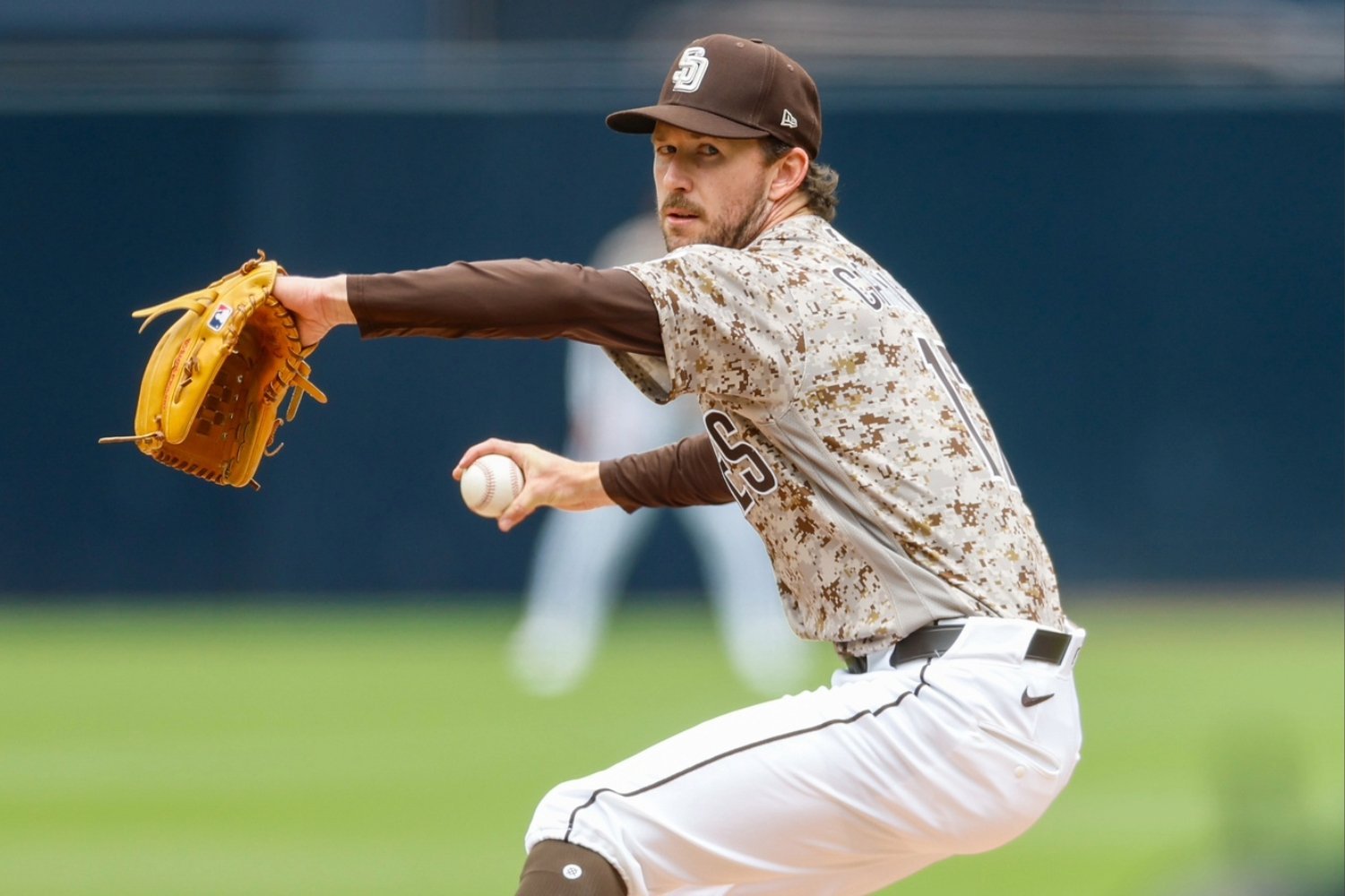 There was a time when a first start of the season coming against the Chicago White Sox would've represented as soft a landing as possible. But with the San Diego Padres having dropped the first two of three against a Sox team that has been surging over the past week, Griffin Canning didn't quite get the calm welcome of a bad team standing opposed to him. Nevertheless, he managed. Sunday afternoon was Canning's first start in a Padres uniform after signing a one-year deal late in the offseason. After working through five rehab starts following last year's Achilles injury, it was an opportunity for the team to get someone else in the mix given the struggles of the Walker Buehler, Germán Márquez, Matt Waldron contingent in the latter portion of the starting five. If Canning's first start was any indication, some of that trio could be on the outs in fairly short order. Canning worked five innings (73 pitches), allowing three hits and three walks while striking out seven. He allowed one run on a Drew Romo solo homer, but did enough to leave with the lead (which was later surrendered by Adrian Morejon). Craig Stammen was intentional with how he used the deployed the newest Friars starter, limiting both his pitch count and his amount of turns through the order. Canning, for his money, was smart about usage, too. The changeup was his most frequently used pitched of the afternoon (40 percent) with the four-seam following it up at 34 percent (his slider/sweeper comprised the rest of his distribution). The first time through the order, though, Canning was heavy on the four-seamer (48 percent) before pivoting to the off-speed (47 percent) & breaking (26 percent) pitches more the second time through. Here is how things broke down for Canning in the start: The stuff played, to be sure. Canning was able to generate consistent whiffs with all three pitches and generated a fair bit of chase with the changeup and slider. The former was particularly effective given the volume of its usage and the raw number of whiffs he was able to garner with it. The location breakdown also offered reason for optimism surrounding his presence in the rotation: The fastball worked up, the changeup primarily worked down, and the slider moved around horizontally. For a starting pitcher making his first start of the season against a team on a bit of a run, it's not a bad looking distribution. If this is the version of Canning that the Padres are going to get moving forward, then he's absolutely someone who can offer the stability that the back end of the rotation has lacked. As easy as it may be to remember Canning as the starter who never realized his potential with the Los Angeles Angels, it's also easy to forget that he was beginning to break out with the New York Mets in 2025. In 16 starts, he'd posted a 3.77 ERA, a solid whiff rate, and an elite groundball rate. If he's going to simplify the arsenal so that his changeup and slider — pitches which have graded out as his best in his career by Stuff+ — are his primary offerings to play off the four-seam, then there's reason to think he could build on that small sample from Queens. At the same time, it's only one start. The Padres have had a tough time stabilizing their rotation with the volume approach. With Canning now in the mix and Lucas Giolito on the way, the former's first start is as good a reason as any in recent weeks for some optimism on that front. View the full article
 -
Minnesota Twins Minor League Pitcher of the Month: April 2026
DiamondCentric posted an article in Twins Daily
It was a solid month for pitching in the Twins minor leagues, in general. As you'll see below, there are some pitchers who have pitched well in Triple-A and have been able to make their major-league debuts. You will also find several pitchers making their professional debuts in Fort Myers, mostly 2025 draft picks. One other thing you'll notice is that our minor-league writing core made the decision to only have a Pitcher of the Month. In the past, we have always had separate awards for Relief Pitcher and Starting Pitcher of the month. However, at this stage of baseball, what is the difference between a starting pitcher and a reliever? That is especially true with the Twins who have gone to having starters and relievers being able to work three or four innings at a time with more frequency. This isn't the "olden days" of two-to-three years ago where starters would hope to work five or six innings and top relievers would get an inning at a time. We will attempt to make sure that we recognize the variety of roles pitchers can have in the minor leagues in our Pitcher of the Month articles. HONORABLE MENTIONS LHP Kendry Rojas - St. Paul Saints - 10 1/3 IP, 0.00 ERA, 1.16 WHIP, .229 BAA, 30.0 K%, 10.0 BB%, 4.18 xFIP. LHP Connor Prielipp - St. Paul Saints - 13 IP, 2.30 ERA, 1.21 WHIP, .200 BAA, 34.9 K%, 7.7 BB%, 2.96 xFIP. RHP Michael Hilker - Fort Myers Might Mussels - 12 IP, 0.00 ERA, 1.33 WHIP, .100 BAA, 30.2 K%, 22.6 BB%, 5.39 xFIP. LHP Aaron Rozek - Wichita Wind Surge/St. Paul Saints - 13 IP, 1.38 ERA, 1.31 WHIP, .264 BAA, 15.5 K%, 5.2 BB%, 4.65 xFIP. RHP Matt Bowman - St. Paul Saints - 16 1/3 IP, 1.65 ERA, 1.29 WHIP, .246 BAA, 24.6 K%, 8.7 BB%, 4.15 xFIP. RHP Merit Jones - Fort Myers Mighty Mussels - 18 2/3 IP, 1.93 ERA, 1.12 WHIP, .188 BAA, 23.4 K%, 11.7 BB%, 5.05 xFIP. RHP Jacob Wosinski - Cedar Rapids Kernels - 12 1/3 IP, 2.19 ERA, 0.81 WHIP, .178 BAA, 34.0 K%, 4.3 BB%, 3.14 xFIP. RHP C.J. Culpepper - Wichita Wind Surge - 19 2/3 IP, 2.75 ERA, 1.27 WHIP, .213 BAA, 28.2 K%, 10.5 BB%, 4.20 xFIP. RHP Eli Jones - Cedar Rapids Kernels - 4.70 ERA, 1.11 WHIP, .246 BAA, 24.2 K%, 3.1 BB%, 3.92 xFIP RHP Darren Bowen - Wichita Wind Surge - 11 1/3 IP, 3.18 ERA, 0.79 WHIP, .122 BAA, 26.7 K%, 8.9 BB%, 4.62 xFIP RHP Kolten Smith - Fort Myers Mighty Mussels - 11 IP, 3.27 ERA, 0.91 WHIP, .171 BAA, 43.2 K%, 6.8 BB%, 1.89 xFIP. THE TOP FOUR PITCHERS Number 4 RHP Reed Moring (21) - Fort Myers Mighty Mussels 3 G, 2 GS, 13 IP, 0.00 ERA, 1.15 WHIP, .229 BAA, 34.5 K%, 7.7 BB%, 2.96 xFIP. Moring was the Twins 15th round draft pick in 2025 out of UC-Santa Barbara. Like other 2025 drafted pitchers (other than Jonathan Stevens), Moring didn’t pitch at all in 2025. He began the 2026 season with Fort Myers. In his pro debut, he came out of the bullpen and worked four scoreless innings. He gave up two hits, walked none and had seven strikeouts. Six days later, he made his first start and again threw four scoreless innings. He gave up three hits, walked three, and had five strikeouts. Five days later, he made another start. He gave up six hits and one walk over five shutout innings. He struck out six batters. That was his final start of April. He returned to the mound about 2 1/2 weeks later with two perfect relief innings. Moring uses a four-seam fastball that averages 93 mph and tops out around 95 mph. He also has a slow curveball between 79 and 82 mph. He also throws a slider, a cutter and a changeup in the 83-87 mph range. Number 3 RHP James Ellwanger (22) - Fort Myers Mighty Mussels 3 G, 3 GS, 11 2/3 IP, 0.00 ERA, 0.69 WHIP, .077 BAA, 34.1 K%, 11.4 BB%, 2.96 xFIP. The Twins have done a job in the past decade of drafting college pitchers and working with them to add velocity. In 2025, they drafted a couple of college pitchers with Top 100 picks, guys that already threw hard, so it’ll be interesting to see how they develop. The Twins drafted James Ellwanger in their third round pick out of Dallas Baptist. He signed and this spring made his official professional debut with the Mighty Mussels. As you might expect, he dominated in his three starts. In his first game, he gave up two hits and a walk while striking out four batters in three innings. His second game was in Jupiter. He tossed four shutout innings and gave up one hit and one walk. He struck out five. His third start was in Fort Myers. He walked three and struck out six batters in 4 2/3 scoreless innings. Ellwanger has really good stuff. In his first game, he topped out at 98.7 mph and averaged 96.2 mph. He also throws cutters in the upper 80s and low 90s. He has a slow curveball that sits in the low 80s, which is nice for giving him a pitch that alters a batter’s timing. He throws a low-90s changeup which he’ll want to work on to slow down a few ticks. Unfortunately, he came out of the game and soon after it was announced that he was placed on the 60-Day Injured List with a right elbow sprain. We can certainly hold out hope that he can be back on the mound this season. Number 2 RHP Cole Peschl (23) - Cedar Rapids Kernels 7 G, 0 GS, 10 2/3 IP, 0.00 ERA, 0.09 WHIP, .030 BAA, 27.3 K%, 0.00 BB%, 3.61 xFIP. If you want to tell me that Cole Peschl should be the pitcher of the month for April, you’re not going to get much of an argument from me. The 23-year-old was the Twins 15th round pick in 2024 out of Campbell University. He began the 2025 season with six games in Fort Myers, but he moved up to Cedar Rapids fairly quickly. With the Kernels, he made nine starts. He went 4-1 with a 3.40 ERA. However, his season came to an end before August. He is back in Iowa this season and working out of the bullpen. Just look at those numbers. He faced 33 batters during the month and gave up just one hit. No walks. No hit batters. I’ve never seen a WHIP of 0.09. Could a promotion to Double-A Wichita be in the near future? And the Twins Minor League Pitcher of the Month for April 2026 is: RHP Riley Quick - Fort Myers Mighty Mussels/Cedar Rapids Kernels 5 G, 5 GS. 12 IP, 0.00 ERA, 0.42 WHIP, .054 BAA, 45.0 K%, 7.5 BB%, 2.33 xFIP Riley Quick grew up in Trussville, Alabama. He attended Hewitt-Trussville High School, the same school that fellow 2025 first round draft pick Steele Hall (Reds, ninth overall pick). When Quick was in high school, he was the top-ranked right-handed pitcher and the number six overall prospect in Alabama according to Perfect Game. He ranked #2 according to Prep Baseball Report. He was also a four-star recruit, one of the top offensive line prospects in the country. His brother Pierce played football at Georgia Tech and Alabama. Quick signed pretty quickly following the draft last July. He spent the summer and much of the offseason in Fort Myers continuing to work, getting himself in better shape and working on pitching. When the 2026 season began, he was assigned to Low-A Fort Myers. As expected, his time there was very short. He made three starts and worked a total of eight innings for the Mussels. He gave up zero runs, one hit, walked three and had 13 strikeouts. The 6-6 righty was promoted to Cedar Rapids where he made one more start in April. He tossed four shutout innings. He gave up just one hit, walked none, and had five strikeouts. Using an upper-90s (four-seamer and sinker), Quick can be dominant. His highest velocity in a game this season is 98.7 mph. However, when you add in a cutter in the low 90s, a slider in the low-to-mid 80s slider, he’s got four or five above average pitches that can get swings and misses. Literally and figuratively, Quick is one of the biggest pitching prospects that the Twins have selected in a long time. We want to congratulate Riley Quick, Twins Daily’s choice for Minor League Pitcher of the Month for April of 2026. Feel free to share your thoughts and ask questions. How would you rank the top pitchers in the Twins organization in April? View the full article -
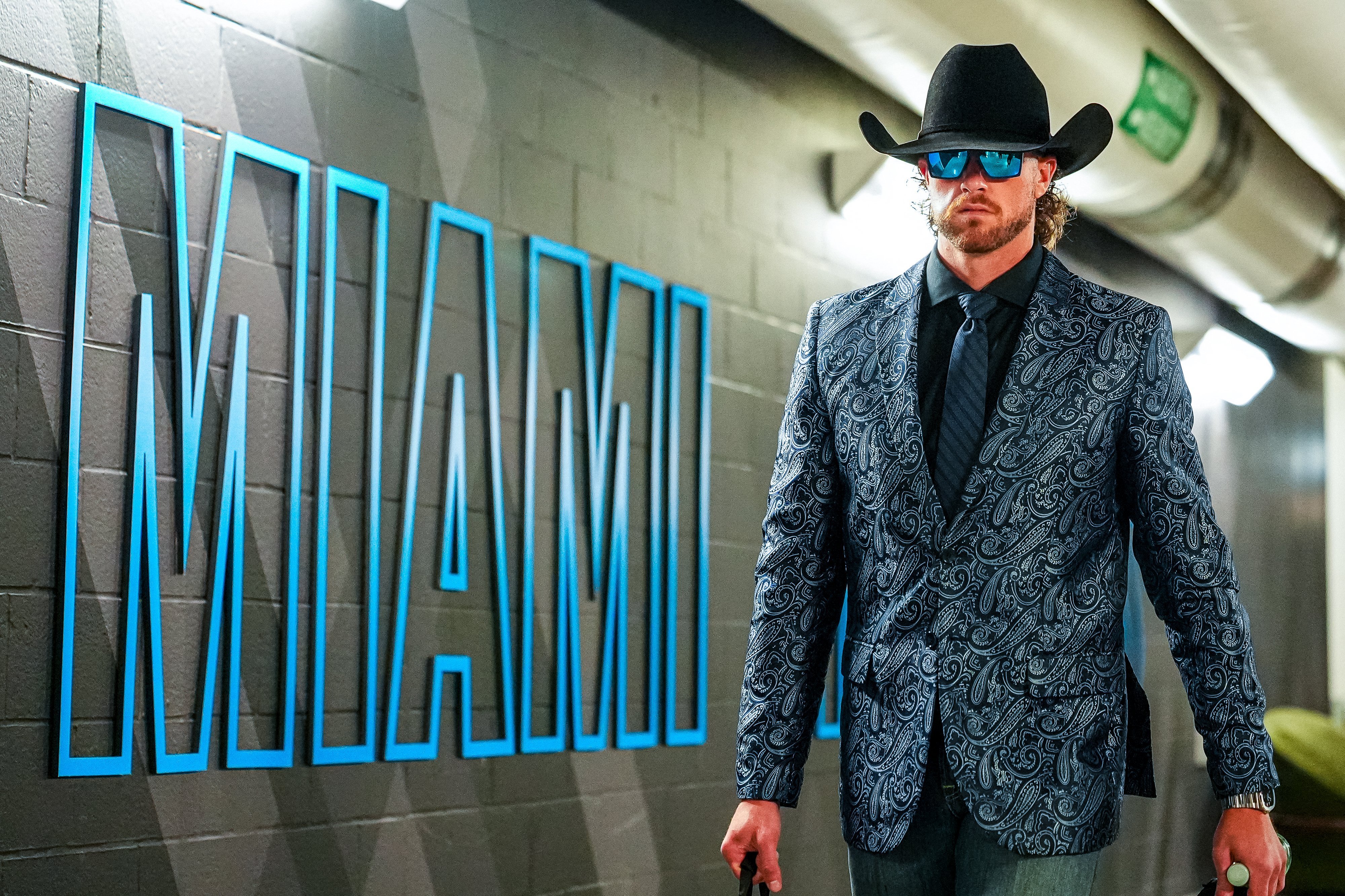 Less than three months after signing Chris Paddack in free agency, the Miami Marlins designated him for assignment on Tuesday, as first reported by The Athletic's Ken Rosenthal. The veteran right-hander has been the glaring weak link in an otherwise effective Marlins starting rotation. In 30 ⅔ innings pitched this season, Paddack has a 7.63 ERA and 5.00 FIP. This past Sunday against the Philadelphia Phillies was rock bottom (2.2 IP, 6 H, 7 ER, 3 BB, 1 K). In addition to being completely ineffective, his four-seam fastball velocity plummeted to 91.3 mph, the lowest average velo he's ever had in a game across part of eight MLB seasons. The Marlins on Monday evaluated Paddack for a potential injury, per Barry Jackson of the Miami Herald, but ultimately did not find anything to justify an IL stint. Instead of moving forward with an untrustworthy arm, they are turning the page. Unless another pitcher-needy team values the 30-year-old enough to claim him off waivers and take responsibility for what remains of his $4 million salary, the Fish are on the hook for it. The Marlins won on April 5 when Paddack served as the bulk guy out of their bullpen against the New York Yankees, but they lost all six of his traditional starts. To fill Paddack's active roster spot for Tuesday's game, the Marlins will recall right-handed reliever William Kempner from Triple-A Jacksonville, according to MLB.com's Christina De Nicola. Kempner owns a bonkers 47.9% strikeout rate this season, but he's struggling with his control, hence a 6.46 ERA in 15 ⅓ innings pitched. Kempner is a placeholder until the Marlins bring up a new starter in the coming days to fill Paddack's rotation spot. That job will go to either Braxton Garrett or Robby Snelling. The latter is not yet on Miami's 40-man roster, but the DFA has created an opening for him to be selected. View the full article
 -
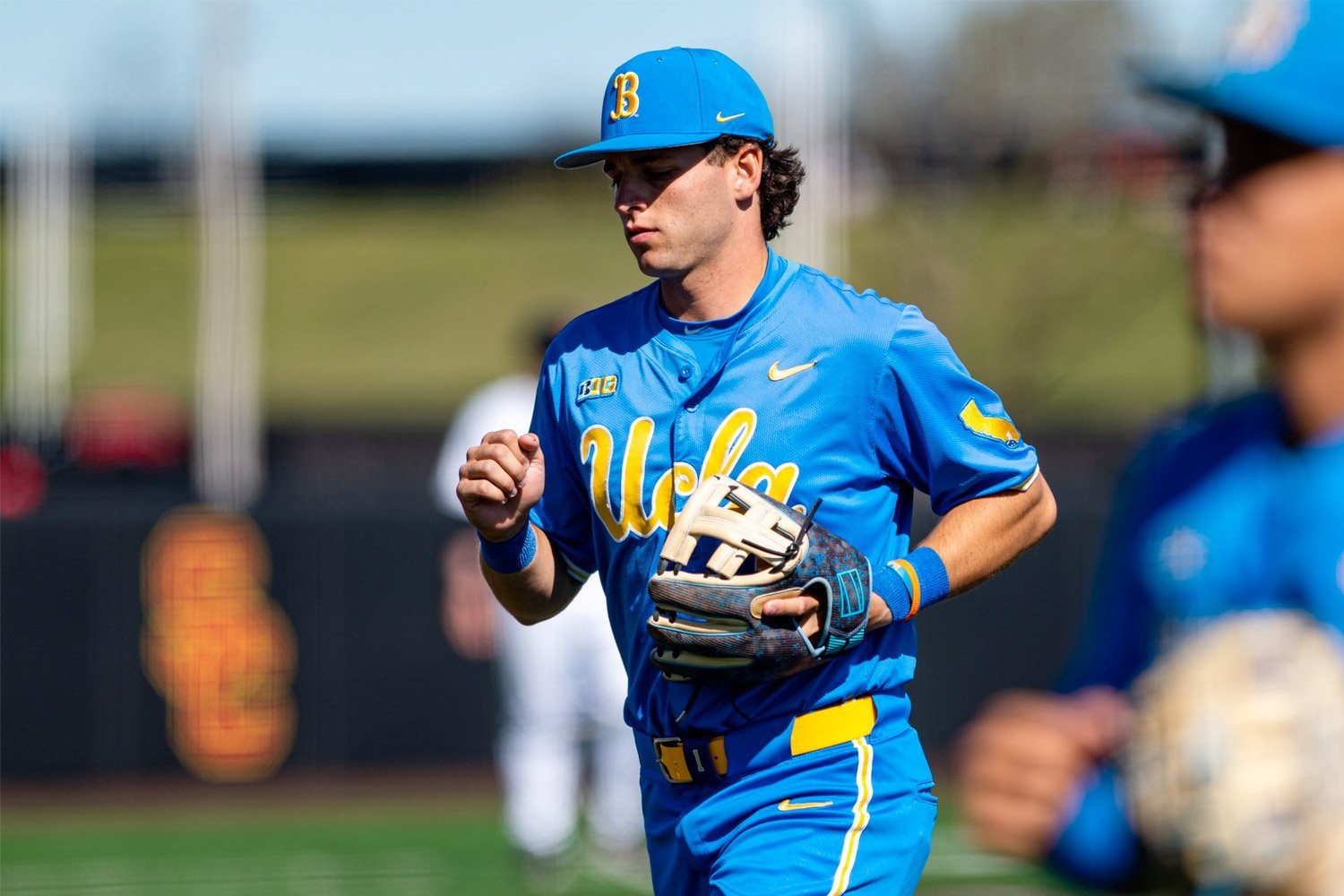 There have been a few prospects who have started the year strong, and a handful of pitchers who have stood out throughout the minor leagues in the Royals organization in the first month of the season. There are a handful of starters and a couple of relief prospects who have stood out at various levels. Choosing the minor league pitcher of the month was not easy, but I have chosen to highlight Michael Lombardi, who is pitching with Single-A Columbia. He started the year as the #18 prospect in the Royals system and has turned some heads over his first four appearances, two of them being starts. He has thrown 12 1/3 innings and has recorded 24 strikeouts on the season. While his 2.92 ERA might not be the lowest, the strikeout percentage numbers are hard to ignore. Lombardi was drafted by the Royals in the second round of the 2025 draft, so he is pitching in his first professional season this year. He was mostly a reliever in college, pitching at Tulane, but he has been tried as a starter in two of his appearances this year. He’s yet to throw more than 4 innings in a single appearance, but this is not uncommon for young pitchers. At 22 years old, Lombardi has plenty of upside, and the Royals may look to try him as a starter, and if that doesn’t work out, a bullpen role is a very realistic option for him down the line. One thing to keep an eye on is his walk rate, as he has walked 9 batters in the 12 1/3 innings pitched so far this year. If he can reign in the control and still strike guys out at a high rate, the upside is quite high for him. While I chose to highlight Lombardi’s first month, there were a few other names that I wanted to give a shoutout to for their performance over the first month of the season. Honorable Mentions Single-A: Blake Wolters - 5 games, 5 starts, 1-1, 1.66 ERA, 21.2 IP, 24 SO, .179 avg against High-A: Justin Lamkin - 4 games, 4 starts,1-0, 1.02 ERA, 17.2 IP, 24 SO, .153 avg against Emmanuel Reyes - 4 games, 4 starts, 1-0, 1.13 ERA, 16 IP, 12 SO, .154 avg against Yimi Presinal - 7 games, 0 starts, 2-0, 0.84 ERA, 10.2 IP, 12 SO, .156 avg against Double-A: Caden Monke - 8 games, 0 starts, 2-0, 2.51 ERA, 14.1 IP, 22 SO, .128 avg against Triple-A: Eric Cerantola - 11 games, 0 starts, 1-0, 1.54 ERA, 11.2 IP, 17 SO, .233 avg against View the full article
 -
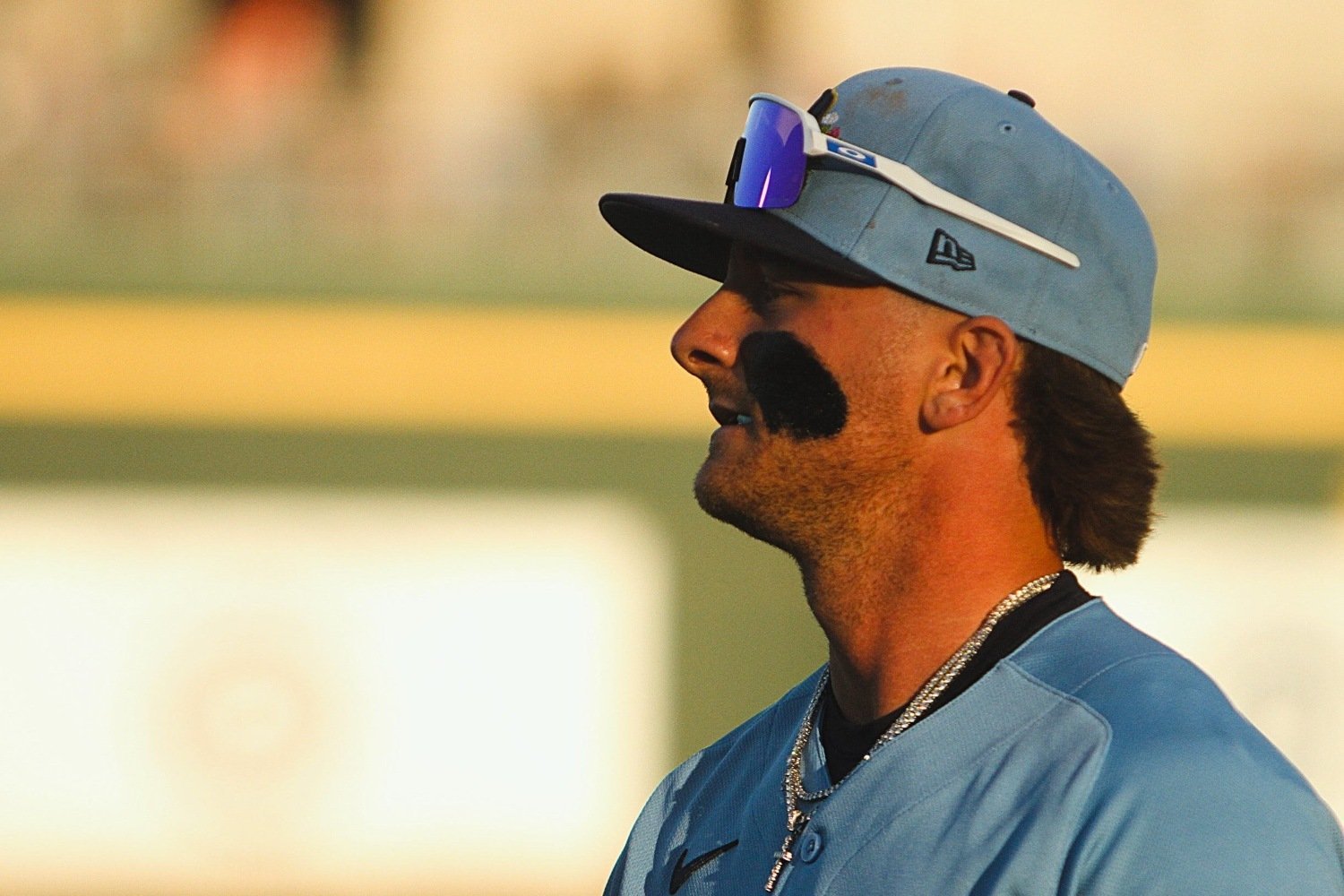 Nashville Sounds’ Prospects in Brewer Fanatic Top 20 Prospects: Jett Williams #3, Cooper Pratt #4, Jeferson Quero #7, Luis Lara #11, Luke Adams #13, Brock Wilken #15 It was a tepid week for the Sounds’ offense, as the team started out with a seven-run outburst on Wednesday and scored just 17 runs in 5 other games. Jett Williams had one of the highlights of the season so far with his walk-off three-run home run in Wednesday’s contest: The homer was one of three extra-base hits for Williams, who registered a .300/.417/.550 line for the week. Looking deeper at Williams’s plate discipline metrics, his Z-Swing rate (swings at pitches inside the strike zone) has jumped to 65.7% in 2026, compared to 61.2% in 2025 and 50.0% in 2024. Simultaneously, his Z-Contact rate has climbed to a career-high 87.8%. Williams is no longer just being patient for the sake of drawing walks (though his 13.2% walk rate remains excellent). By increasing his swing rate on strikes while maintaining a solid 22% O-Swing (chase) rate, he's demonstrating mastery of the strike zone. This would suggest Williams is identifying strikes earlier and committing to them, which is a hallmark of a prospect maturing out of a passive approach into a selectively aggressive one. The jump to nearly 88% contact on strikes indicates that Williams has likely tightened his swing mechanics, or is seeing the ball significantly better at the Triple-A level. The Brewers often prioritize damage and high-quality contact for prospects at this stage of their development, so it would seem Williams is adjusting to the “Brewers Way” the last few weeks. Luis Lara has already tripled his home run total from all of last year in about a quarter of the time, with this blast over the weekend. A player who was previously seen as a glove-first speedster, Lara has raised his ceiling this year. Usually, when a young player (Lara is only 21) starts swinging for more power, their strikeout rate balloons. Lara's has done the opposite. He's cut his strikeout rate from 16.2% to 12.9%. He's making contact on an absurd 96.2% of pitches he swings at inside the strike zone. Lara has transformed from a slap hitter who steals bases into a legitimate top-of-the-order threat in Nashville. With an elite eye and newly discovered power, he may end up forcing the Brewers' hand for a major-league promotion much sooner than expected. Biloxi Shuckers’ Prospects in Brewer Fanatic Top 20 Prospects: Jesus Made #1, Blake Burke #14 Though not considered a top prospect, Damon Keith was the Shuckers’ best hitter last week, on his way to earning Southern League Player of the Week honors: It seems like the Brewers may have uncovered something in Keith when they acquired him in late March from the Dodgers in exchange for cash considerations. Both Jesus Made and Blake Burke scuffled this week, combining for just nine hits in 44 at-bats atop the Shuckers’ lineup. Both prospects bookended the week with home runs, with Made going yard on Sunday and Burke homering on Tuesday. One of the more impressive parts of Made’s 2026 season is the refinement of his hit tool. Despite jumping two levels in a year, he has significantly improved his contact metrics. Made has slashed his strikeout rate from 20.6% in 2025 to 14.8% in Double-A. His overall contact rate has climbed to 80.6%, proving that his swing is short and efficient enough to handle advanced velocity and breaking stuff. Made is posting a .182 ISO, a significant jump from his .128 mark across MiLB last year. One look at Made this season and you can see that his 6-foot-1 frame has filled out, and his raw power (currently graded 50/60 by FanGraphs) has translated into games. Burke is currently a three-true-outcomes threat who has added bizarrely effective base-stealing (10/11 in attempts this season) to his game, despite a 20-grade speed tool. It's somewhat similar to what Luke Adams did earlier in his pro career. This season, Burke’s pull percentage has spiked to 54.7% (up from 31.7% in 2025). He is clearly looking to turn on pitches and drive them, which explains the high home run volume, but also some of the volatility in his batting average. While Burke’s 11.3% walk rate shows he isn't just hacking blindly, his swing-and-miss issues have persisted at Double-A. His strikeout rate has ticked up to 26.6% this year. To reach the majors as a 1B/DH, he’ll likely need to bring that strikeout rate closer to the 20-22% range to ensure his elite power plays consistently. His overall contact rate has dipped to 69.1%, indicating he is struggling to put the ball in play consistently when he does swing. However, Burke’s average is being dragged down by a low .269 BABIP. Given his power, you would expect more balls to fall for hits, suggesting he might be hitting into some bad luck. Wisconsin Timber Rattlers’ Prospects in Brewer Fanatic Top 20 Prospects: Luis Pena #2, Andrew Fischer #8, Marco Dinges #10, Josh Adamczewski #12, Braylon Payne #16 The Rattler’s offense slowed last week, ranking last in runs and OPS among 12 teams in the Midwest League. With a few of the team’s star prospects cooling down amid frigid temps in Grand Chute, we look beyond the Top 20 Prospects to highlight Josiah Ragsdale’s emergence. Ragsdale has gone from a player who hit almost exclusively singles (one XBH in 92 plate appearances) last year to a legitimate extra-base threat. Ragsdale has doubled both his fly ball rate and pull rate this season. However, he has nearly doubled both his strikeout rate and swinging strike rate. He is essentially trading some of his 2025 "contact-first" stability for a more impactful, power-oriented approach. That approach has paid off with a .471 slugging percentage on the season and highlighted by this opposite field home run on Saturday: Bitonti and Fischer each homered twice last week, including Fischer’s walk off blast on Friday. Both players also struck out in 50% of their at-bats this week, including Fischer’s four strikeout performance prior to Friday’s walk-off. Payne was just 2/20 on the week. Wilson Warbirds’ Prospects in Brewer Fanatic Top 20 Prospects: Brady Ebel #19 The hottest affiliate in the Brewers system last week was the Wilson Warbirds, who smashed seven homeruns on their way to a four win week. Handelfry Encarnacion was the star of the week, with seven hits, three homeruns and 12 RBI. He might also lead all of MiLB in time spent pimping home runs, with some truly bombastic celebrations: Jadyn Fielder carried a 1.396 OPS in four games for the week, highlighted by his first home run at the level. Brady Ebel collected a triple and double among his six hits last week and also drove in six runs. After such a slow start to the inaugural season for the Warbirds’ offense, its good to see them heating up and having fun. Join the Discussion: Are you worried about the high strikeout rates for power-hitters like Burke and Fischer, or are you willing to live with the "Three True Outcomes" if the home runs keep coming? Are you a fan of the over-the-top celebrations we're seeing from guys like Encarnacion, or do you prefer the old-school approach? Also, which "under-the-radar" prospect like Damon Keith or Josiah Ragsdale has impressed you the most so far this season? View the full article
 -
Chicago Cubs MiLB Hitters of the Month: April 2026
DiamondCentric posted an article in North Side Baseball
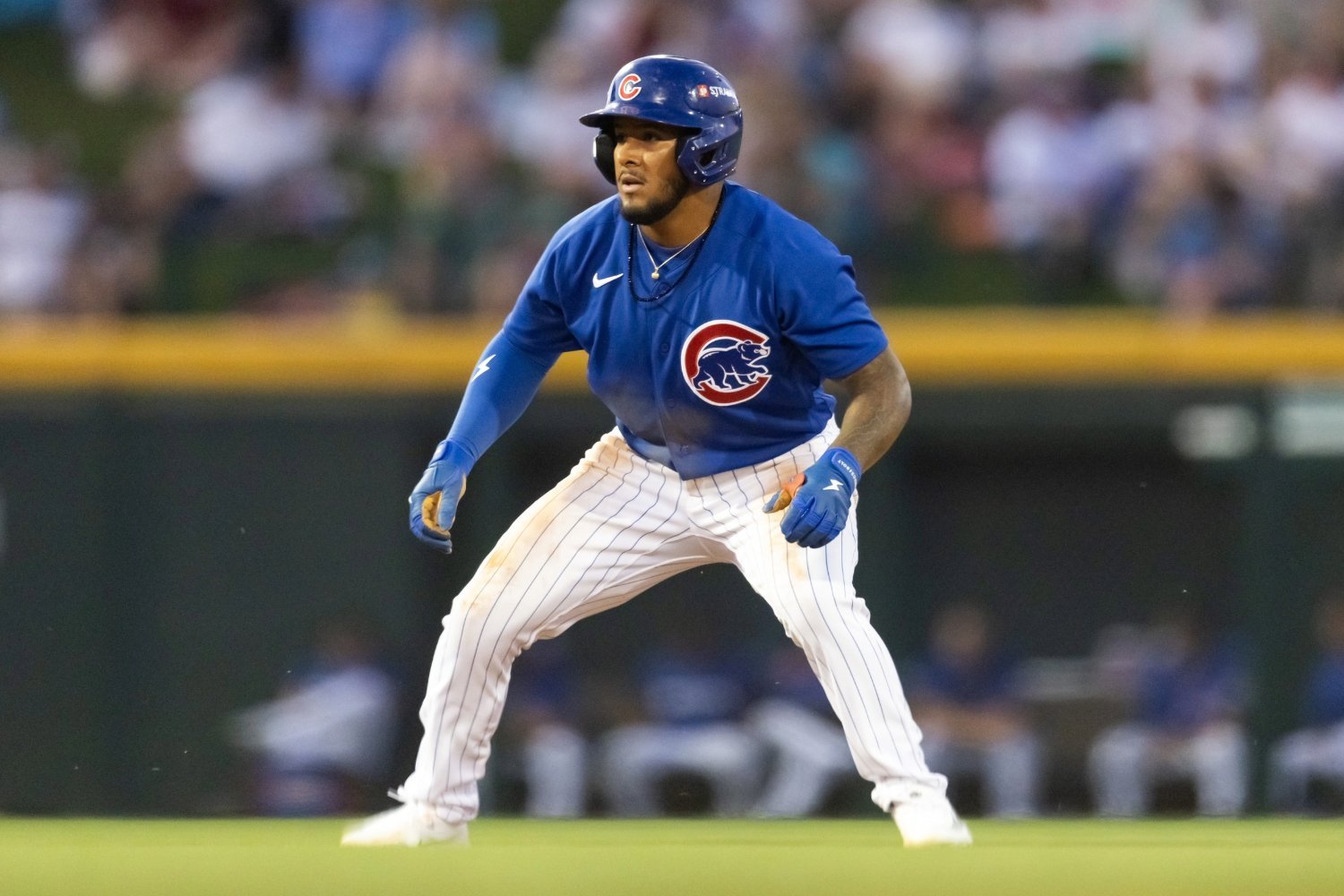 With April officially in the books, let’s take a look at some of the Chicago Cubs' top performing hitting prospects through the first month of the 2026 season. Honorable Mention: Josiah Hartshorn (OF) — Myrtle Beach Drafted as a sixth-rounder out of powerhouse SoCal high school Orange Lutheran, Hartshorn did not play last year after being selected, so 2026 is the first look we get at the outfielder the Cubs went well over slot to sign last year. The good news: He hasn’t disappointed. He is slashing .263/.429/.438 through 22 games while being 1.5 years younger than the Carolina League average. What is most promising is he is doing this while walking more often than striking out. Third Place: James Triantos (2B) — Iowa There really is not a way to sugar coat it, 2025 was a rough year for Triantos. The 2021 second-rounder motored through the minors to make his debut in Iowa in 2024 at just 21, performing well at the highest level of affiliated ball in a 26-game sample. Triantos played all of 2025 at the Triple-A level, but turned in a career-worst season in all three slash line categories. Still just 23, he has rebounded very well in Iowa in 2026, turning in a .305 batting average and .348 on-base percentage that is much more in line with his previous performances. The .467 slugging percentage would also be the highest of his career in full-season ball; his four home runs in just 26 games look very promising for a hitter that has never hit more than seven homers in a full season. Runner-up: Jefferson Rojas (SS) — Knoxville A staple on most Top 100 prospect lists before the season, Rojas started the year in Knoxville after debuting there for 39 games to end 2025. His first taste of AA was a bit of what you’d expect from a 20-year-old at the level, but it seems like this time around he feels much more comfortable. Although he is running a higher strikeout rate and lower walk rate than in previous years, the aggressiveness that implies has led to a .547 slugging for a hitter who has previously hovered around the .400 mark. He went from an extra-base hit every four games to one every other game. That is a pretty good start to the season! Winner: Pedro Ramirez (2B) — Iowa Pedro Ramirez had the best month of any Cubs prospect in April. He slashed .310/.385/.595 with eight home runs and 11 stolen bases in Iowa as a 22-year-old while splitting his time between 2B and 3B. Signed out of Venezuela in 2021, the diminutive utility man has climbed the ladder one rung at a time, spending full-seasons in A, A+, and AA in 2023, 2024, and 2025, respectively, before tackling AAA in 2026. Four years younger than the average Triple-A hitter, he is turning in his best year yet in all three slash categories. Like Jefferson Rojas, he has traded in a slightly higher strikeout rate for a large increase in slugging. He has had 30, 30, and 33 extra-base hits in each of the last three full seasons; in 2026, he has 16 in just 29 games. A switch hitter who provides speed and defensive versatility is a profile that already carries a lot of value. If Ramirez can maintain his improved slugging numbers, he could be an All-Star in the big leagues. View the full article
 -
Is Billy Amick Entering the Minnesota Twins' Long-Term Plans?
DiamondCentric posted an article in Twins Daily
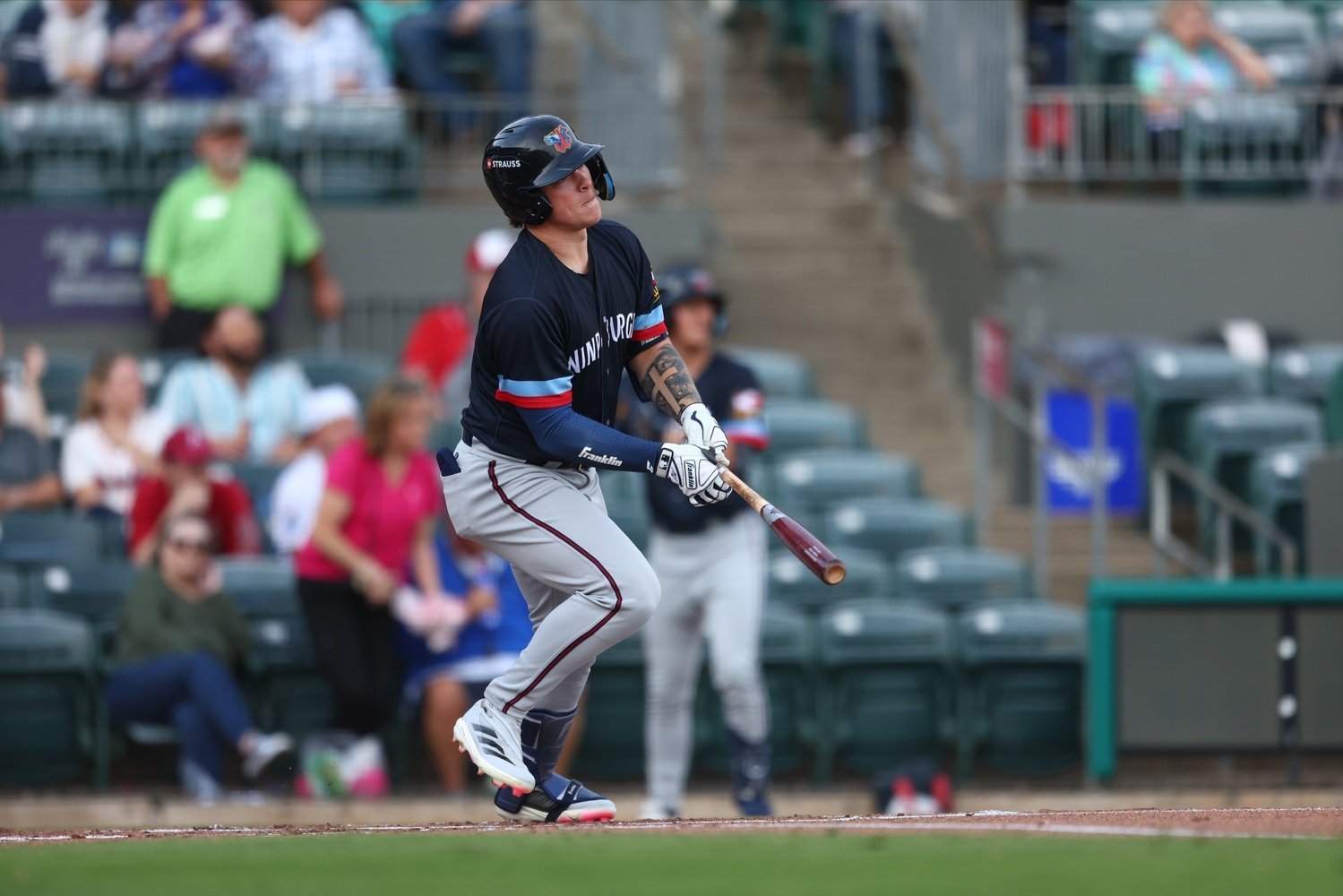 Upon arriving at Clemson University in 2021, Billy Amick quickly became one of college baseball’s best hitters. He batted .414/.464/.772 with 13 home runs over 192 plate appearances in 2022. The right-handed-hitting corner infielder transferred to the University of Tennessee for the 2023 season, where he hit a less-impressive (but still excellent) .306/.387/.639 with 23 home runs over 292 plate appearances, playing a role in Tony Vitello’s club winning the College World Series. Sporting a keen approach and plus power during his college career, Amick was projected to be selected in the back half of the first round in the 2024 MLB Draft. Instead, he slipped to the second round, where he was selected 60th overall by the Minnesota Twins. Since joining the organization, Amick has become an afterthought for those who monitor Twins prospects—understandably so. Recent draft selections Walker Jenkins, Kaelen Culpepper, Connor Prielipp, Marek Houston, and Riley Quick have excelled in the organization’s minor-league system, entering Top 100 prospects lists and operating as engines for optimism surrounding the club’s long-term success. International free agent signees Emmanuel Rodriguez, Kendry Rojas, Eduardo Tait, and Hendry Mendez have also demonstrated flashes of becoming plus major-league contributors, effectively clogging the available headspace of Twins Territory prospect perverts. The tools for some sort of breakout remain, however, and Amick is beginning to piece them together. Appearing in 18 games with Single-A Fort Myers after being selected in 2024, he hit .222/.351/.413 with three home runs over 77 plate appearances. He then generated a 101 wRC+ with Fort Myers before being promoted to High-A Cedar Rapids in late March 2025. Amick excelled with Cedar Rapids, hitting .310/.418/.455 with four home runs and a 152 wRC+ over 244 plate appearances. The now-23-year-old is again performing well at a higher level this season, hitting .235/.309/.482 with six home runs and a 100 wRC+ over 97 plate appearances with Double-A Wichita. Amick’s impressive Double-A numbers have largely been accumulated since Apr. 18, with four home runs and a 128 wRC+ over 41 plate appearances during that stretch. As he did during his college career, Amick has hit the ball hard and in the air the past couple of weeks, which is always key to unlocking latent power. The 23-year-old's success in Double-A is especially encouraging, given that he is over a year younger than the average position player at the level. High whiff and strikeout rates have been and always will be a concern. He has whiffed 40.5% of the time and struck out 28.9% of the time at Double-A. Still, his swing-and-miss concerns can be forgiven if he hits the ball hard on contact, a trend he has continued during his first month-plus in the high minors. He's not ready to play in the majors right now, by any means. If he makes it, it will be as a late bloomer who turns a corner with regard to contact skills. The risk that he's a poor man's Matt Wallner is real. He plays third base well enough to be more valuable than Wallner defensively, though. Given the club’s long-term uncertainty at both corner infield spots; lack of right-handed-hitting position-player prospects; and Amick’s sustained success between Low-A, High-A, and Double-A the past three seasons, the 23-year-old could climb up the Twins’ top prospects lists, inserting himself into the club’s long-term plans after all. View the full article
 -
 Starting pitching has been key to the Kansas City Royals' success over the past two years. In 2024, the Royals ranked second in starting pitching fWAR with a 16.5 mark, behind only the Atlanta Braves (17.4). They also ranked second in ERA (3.55) and fourth in FIP (3.68). That excellent rotation was a big reason why the Royals won 86 games, a 30-win turnaround from the previous season. In 2025, Kansas City went 82-80, a four-win regression from 2024. However, the starting pitching remained a strength of the ballclub. The Royals' rotation ranked 6th in starting pitcher fWAR at 13.8. They also ranked 7th in starting pitcher ERA (3.80) and 10th in FIP (4.00). While that wasn't as elite as the previous season, their rotation was a big reason the Royals had another above-.500 season last year, the first time they have done that since 2014 and 2015. This season, the results have been a little more mixed for the Royals' starting pitching. Going into Monday's games, Kansas City ranks 13th in fWAR (2.7). Royals starters also rank 14th in ERA (4.01) and 16th in FIP (4.16). Granted, that's serviceable, especially with the offense and bullpen trending in the right direction recently. Conversely, the Royals' rotation has shown many flaws recently, especially over the past couple of weeks. Thus, let's see why the Royals' starting pitchers have been struggling as of late, which ones have been particularly bad, and what Royals management could do to address and rectify these recent starting pitching woes. The Royals' Rotation Struggles Over the Past Two Weeks Since April 19th, the Royals' rotation has particularly struggled. Though they rank 19th in SP fWAR with a 0.9 mark, they also rank 25th in ERA (5.16). Their FIP is slightly better at 4.53, ranking 17th. Nonetheless, the Royals' rotation hasn't been as strong as it was at the beginning of the season, when they ranked 5th in SP ERA (3.25), 14th in FIP (3.91), and 11th in SP fWAR (1.9). When it comes to the individual Royals starting pitcher results, here's how they have fared since April 19th, according to Fangraphs. Luinder Avila only had a one-start sample, and he likely will remain in the bullpen for the remainder of the year. However, the other numbers from the Royals' starting pitchers from March 26th to April 18th are intriguing for a variety of reasons. While Wacha has been the worst Royals starting pitcher since April 19th, he was the best Royals starting pitcher from Opening Day to April 18th. In 27 IP, he had a 1.00 ERA, 7.7 K/9, 2.7 BB/9, and 3.41 FIP. He experienced some positive batted-ball luck, with a .172 BABIP and 99% LOB%. Those weren't going to be sustainable marks, but it showed that Wacha was at least efficient and crafty enough to eat innings and minimize the runs. Ragans' line is a little more interesting. The ERA was better at 3.78, but his K/9 (8.6) and FIP (5.37) were worse, and his BB/9 (5.4) wasn't much better either. That said, he had a better groundball rate at 46.3%, and his ability to keep the ball on the ground seemed to minimize the LOB% (79.8) and HR/9 (1.6). It would be nice to see if Ragans can get back to those groundball-generating ways, even if it means that his K/9 takes a bit of a hit in the process. Lastly, Cameron's line was pretty similar to his post-April 19th numbers. His ERA was mediocre at 5.40, and his FIP was worse at 5.60. He struggled to strand runners (68.2%), and he had a much harder time generating groundballs as well (25.8%). The positive? He struck out a decent amount (7.7 K/9) and didn't walk a lot either (2.7 BB/9). That said, those K/9 and BB/9 numbers were pretty similar to the ones he produced after April 19th as well. That shows what we're seeing from Cameron may be who he is: a plus-five ERA starting pitcher. Can This Rotation Improve? (Limiting the Walks Will Be Key) The good thing is that Lugo and Bubic have been solid, not just since April 19th but also before then. While neither guy is a frontline ace, they can take the ball and keep the Royals in the ballgame consistently. That's all you can ask from a No. 2-3 caliber starting pitcher. The main question marks are Wacha, Ragans, and Cameron, who arguably were the three best Royals pitchers coming into the 2025 season. On a positive note, it seems like Wacha took a step in the right direction on Monday, as he went seven innings and produced a winning effort. While he gave up a two-run homer to David Fry, he limited the Guardians to just four hits and one walk. While he didn't generate a ton of chase, Wacha did a great job generating chase and limiting hard contact, as illustrated in his TJ Stuff+ summary. With Wacha bouncing back, the honus will now fall on Ragans to do the same, especially in this crucial homestand against the Guardians and Tigers. Cameron was initially slated to get the first shot on Tuesday against Gavin Williams (tough). The St. Joseph, Missouri product has some good stuff on his secondary pitches, but his four-seamer is lackluster. He has an overall TJ Stuff+ of 97, but his four-seamer has a TJ Stuff+ of 92. That has had an effect on his results, both in terms of the four-seamer and overall, as illustrated below in his TJ Stats season summary. However, after Monday's 6-2 win over Cleveland, the Royals announced that Cameron was dealing with lower back tightness and that Stephen Kolek, who is pitching in Omaha on a rehab assignment, will replace him in the rotation. No word yet on whether Cameron will go on the IL or replace someone else on the active roster. Kolek's TJ Stuff+ profile is similar to Cameron's, but Kolek has done a much better job of generating chase and minimizing xwOBACON in Triple-A Omaha this season. If Kolek does well in Cameron's absence, it's possible that the former Padres righty could replace Cameron in the rotation (or at least piggyback with Cameron). Lastly, Ragans will go on Wednesday against fellow Joey Cantillo. Despite Ragans' overall struggles this year, he's been much better at home than on the road. In 12 IP at Kauffman Stadium, Ragans has a 0.75 ERA, 14.25 K/9, 19.00 K/BB ratio, and 1.31 FIP. On the road? In 20.1 IP, he has a 7.97 ERA, 9.74 K/9, 1.10 K/BB, and 9.69 FIP. Thus, the lefty will at least get one start at home this week, where he has seemed to be more comfortable on the mound. With Ragans, it's not a question of stuff, as his TJ Stuff+ marks remain solid despite inconsistent results. That said, despite strong TJ Stuff+ marks, the chase, whiff, and xwOBACON have not been as stellar, as illustrated below. If Ragans can find the zone a bit more (44.2% zone rate), especially with his slider (19.2% zone rate), then I think Ragans can induce hitters to chase more. More chases could lead not just to more whiffs, but also to a lower xwOBACON. If those three trends happen, then it's possible that Ragans will get back to that 2024 form, which he has shown at home this year, sooner rather than later. Overall, the Royals need better performances from Wacha, Ragans, Cameron, and Kolek, especially during this homestand (Wacha is expected to pitch twice; whether Kolek goes twice this week depends on how Tuesday's outing goes). That said, the Royals' rotation overall needs to improve its control, as they have simply walked too many batters over the past two weeks. Since April 19th, the Royals' pitching staff ranks 27th in BB/9 (4.56), tied with Atlanta and ahead of only Houston (5.03) and Arizona (5.33). Wacha and Ragans have been the main culprits. However, Cameron (and now, Kolek), Lugo, and Bubic can certainly do their part to flood the strike zone more consistently as well. All the pitchers in the Royals' rotation have had outings and stretches where they have allowed too many free passes, and it's often bitten them in the butt. The Royals have struggled with BB/9 at home, ranking 27th at Kauffman Stadium compared to 23rd on the road. Could the Kansas City starting pitchers begin to reverse that trend this week? They allowed only one walk among Wacha, Matt Strahm, and Alex Lange on Monday against Cleveland. Thus, the Kansas City pitching staff, starters especially, have gotten off to an encouraging start in this homestand. View the full article
 -
Craig Kimbrel Is Justifying His Spot On the Mets' Roster
DiamondCentric posted an article in Grand Central Mets
 Back in the offseason, the New York Mets signed legendary closer and future Hall of Famer Craig Kimbrel to a minor-league deal with an invitation to spring training. When he didn’t make the team out of camp, people started to question whether the experiment was worth it and whether he would choose to stay and win a spot. He stuck around and, on April 11, the Mets called him up to see if he could, at least, replicate the form he showed in a brief stint with the Houston Astros after the Atlanta Braves designated him for assignment last year; in Houston, Kimbrel posted a 2.45 ERA in 11 innings, striking out 16 and walking six. That kind of reliever certainly has a home in a major-league bullpen. Is Kimbrel still of at least that caliber? Can Craig Kimbrel Still Get MLB Hitters Out? The Mets knew that the soon-to-be 38-year-old wasn’t a flamethrower anymore, but they believed he could still get MLB hitters out and, so far, they have been proven right. In seven games and 6.1 frames, the right-hander has a 4.26 ERA that comes with a much better 2.04 FIP. He has fanned eight and walked three, with a fastball averaging 93.1 mph. That’s a bit slower than last year’s 93.5 mph on average, but not catastrophically so. Can the Mets, whose bullpen has actually produced a decent 3.69 ERA that ranks ninth in baseball, keep counting on Kimbrel being a serviceable MLB-caliber reliever? Well, yes, but it depends on expectations. If you are expecting Kimbrel to return to being the pitcher that terrorized hitters and posted ERAs below 3.00 year in and year out while flirting with a 40 percent strikeout rate, you will be disappointed. If you lower the bar a bit and simply look for someone who can bridge the gap from the rotation to the leverage guys, then we may have a winner on our hands. Kimbrel can still miss some bats, but there are a few developments to pay attention to. His four-seamer currently has a 29.7 percent whiff rate, which is not bad, and his sweeper is getting swings and misses at a 50 percent rate, which is excellent but likely to go down a bit with a larger sample. The knuckle curve, one of his signature pitches, still hasn’t generated a whiff, though. It’s just 6.1 innings. The sample is tiny, almost too small to matter. But it’s worth monitoring that knuckle curve and its ability to miss bats, as Kimbrel’s success this year could hinge on it. It's important to note, however, that he can still pump his four-seamer up to the 96 mph range up in the zone when he needs to: Kimbrel Is Allowing Too Many Line Drives Another important development around Kimbrel is his groundball and fly ball ratios. From 2011 to 2015, the man with 440 saves was a groundball and strikeout behemoth. Then, from 2016 to this point, he morphed into a fly ball inducer, also with lots of punchouts, of course. This year, he has given up 0.60 groundballs for every ball in the air. That’s actually not that far from the trend that started in 2016, but the problem is that he is surrendering lots of line drives at the moment. A 40 percent line drive rate is just too high to think he can get away with it over a long stretch of games, and if he wants to achieve sustained success this year with the Mets, it will have to come down. If the contact in the air starts going further, Kimbrel is going to become unplayable. For now, all things considered, the profile is good enough for Kimbrel to be a good middle reliever, and that’s not bad considering age and other circumstances. Overall, the Mets should be happy with what they have gotten out of their former nemesis. View the full article
 -
Boston Red Sox Minor League Pitchers of the Month: April 2026
DiamondCentric posted an article in Talk Sox
 While the month of April may not have been as memorable for the Boston Red Sox as fans had hoped for, there was more to be hopeful of in the minor leagues. The pitching development infrastructure, which saw an overhaul by Craig Breslow since his hiring following the 2023 season, showed its progress last season, but 2026 has been a whole different animal. Triple-A Worcester alone has seen several of its pitchers get off to great starts that led to promotions to the major-league squad, while the other levels of the organization have seen their own pitchers get off to incredible starts. With that, we’ve narrowed this award down to the three best pitchers in the Red Sox's minor-league system. Special Mention: Portland Sea Dogs No-Hitter On Sunday, April 26, the entire Red Sox organization was dealing with the fallout of the coaching layoffs that had occurred the day prior. Despite the mass changes in staff across all levels of the organization, the Sea Dogs made sure that Kyle Sasala’s first day as acting manager was as special one. Led by Hayden Mullins who tossed five hitless innings, the Sea Dogs went on to pitch a no-hitter and win 3-2. Mullins started the game and allowed two unearned runs that came around to score on a third inning error. Across his entire start he walked five and struck out five before giving way to the bullpen. Caleb Bolden was the first to come on in relief, pitching two hitless innings and striking out three before handing the ball over to Reidis Sena who concluded the no-hitter as he tossed the final two innings. The no-hitter was the ninth in the history of the Portland Sea Dogs. #3: Devin Futrell (Single-A Salem/High-A Greenville) Futrell has been on the receiving end of Boston’s pitching depth across the minor leagues, and not in a positive way. Opening the season with the Salem RidgeYaks due to a lack of room in Greenville, Futrell forced his way up to the Drive after just two appearances in Salem. Since the promotion, his time with Greenville has been just as dominant. Having split April between the two levels, the left-hander made four appearances and tossed 17 2/3 innings as he allowed just one run on six hits and three walks. He also struck out 18 batters. Futrell opened the season on a 13-inning scoreless streak. Futrell has been an arm of interest since his professional debut in 2025, but after holding opposing batters to a .115 batting average and striking them out at a 27.7% rate, he’s continued to show that he is ready for a chance against tougher competition. #2: Jake Bennett (Triple-A Worcester) Bennett had a stellar April with the organization that, when mixed with unforeseen injuries to the major-league squad, led to the left-hander making his major league debut sooner than anyone expected. Pitching in four games, Bennett absolutely was in control as he limited opposing batters to a .161 batting average across 18 innings. During that time, he allowed just two earned runs on 10 hits and three walks while striking out 11. What really stood out for Bennett in the month of April was his ability to limit the hard contact. Utilizing a five-pitch mix, Bennett typically led the way with his sinker and four-seam fastball, using the two pitches for 51.7% of his pitches. It led to opposing batters getting a hard hit just 25.5% of the time with an expected slugging percentage of just .198. #1: Anthony Eyanson (High-A Greenville) It goes without saying that Eyanson would be the top pitching prospect for the month of April. Anyone who watched him throughout the month should have had an idea, especially as he put the baseball world on notice with the start to his professional career. Making four starts in April, the third-round pick pitched in a manner befitting of a first-rounder as he allowed just six hits and one earned run across 16 2/3 innings pitched. In that same span he struck out 27 batters while walking none. Following his first professional outing, Eyanson allowed two or fewer hits in each of his outings, including 4 1/3 no-hit innings in his second start. Overall, Eyanson struck out 48% of the batters he faced in April while his strikeouts to walk ratio was infinity thanks in part to his excellent command. On top of that, when batters did manage to put the ball in play against him, Eyanson found a way to keep it on the ground, as he had a 59.4% ground ball rate. The right-hander is now being promoted to Double-A Portland after a fantastic start to his career as first reported by Chase Ford of MiLB Central. View the full article
 -
 Despite overflowing rosters and an idle day Sunday - eleven Brewers pitchers await their season debut - the Milwaukee and San Diego front offices agreed that Monday's game would be a seven-inning affair. Or perhaps the Padres simply waved the white flag after a five-run 6th for the Crew produced what would be the final score a half-inning later. Transactions: OF Jackson Chourio reinstated to MLB Brewers from minor league rehab 1B Andrew Vaughn reinstated to MLB Brewers from minor league rehab OF Blake Perkins optioned to AAA Nashville from MLB Brewers RHP Quinn Priester returned to MLB Brewers’ 15-day injured list from minor league rehab OF Kay-Lan Nicasia released by AA Biloxi RHP Luke Roupe placed on ACL Brewers’ 7-day injured list retroactive to May 3 RHP Johandry Ramirez placed on ACL Brewers’ 7-day injured list retroactive to May 3 As we aim to do consistently for released players, a post within our Transaction Thread spotlighted Nicasia here. Also, please feel free to see past highlights from Nicasia's pro career when you scroll to the bottom of his linked page listed above. 19-year-old Luke Roupe was drafted in the 17th round last summer out of a North Carolina high school. Johandry Ramirez made five starts among his seven Dominican Summer League appearances in his debut 2025 season, with those starting assignments normally an indication that the organization sees promise for that role in the future. Ramirez is stateside after that one campaign. Hopefully both youngsters will be active before too long. From @Spencer Michaelis' 2025 "Day Two" Draft Recap article: Luke Roupe's repertoire is largely built around his fastball and his curveball. Those two offerings helped him pitch his way to a 2.01 ERA over 62 2/3 innings, striking out 100 along the way. The fastball gets up to 94 MPH and has good carry and is pretty high spin. The curveball spins in the 2400 RPM range, and has some good depth and sweep to it, in the low-80s. Roupe will also mix a sweeper in at times, thrown a bit harder than the curve, and has a changeup that will need development. Committed to South Carolina, Roupe will likely be looking for a pretty big bonus to sign (NOTE: bonus was $225,000). His pitchability and the starting point of his fastball and curveball combination will make him an interesting name to follow. Final: ACL Brewers 12, ACL Padres 0, seven innings Box Score and Game Log All three phases in high gear, as the Brew Crew played error-free ball for a consecutive game. Remaining atop the order, now-18-year-old Cristopher Acosta shifted from shortstop to third base here and stole his first base. The $1.1 million signing from the 2025 class underwhelmed in 50 DSL games, sporting only a .172/.349/.243 line, so his three walks in this box score, along with a base on balls Saturday, have him off to a fine OBP start. Fellow bonus baby Brailyn Antunez has the early lockdown on center field and the #2 spot in the lineup. Along with all others in Monday's lineup (everyone reached base despite the team coming to the plate only in six frames), Antunez' contributions were a single, a walk, two HBP's, two RBI. The buzz around RF Alexander Frias and his LH power bat is real, and he homered for a second straight game, also doubled, walked and stole a base. The other two position players to appear in both games thus far were CJ Hughes, who shifted to shortstop from second base, as the 11th round pick from a California high school clubbed his first professional home run, and Rylan Mills, catcher to first base, singled, walked. May I comment how pleased I am to be a part of the infatuated Brewers farmhand-follower community? Each day, we initiate an "as it happens" thread on our Minor League Forum, and now, given Statcast availability in all the complex league ballparks, our diehards are more than eager to share insights from these games. You are strongly encouraged to visit the 14-post thread here, hardly a difficult chore, and you'll pick up multiple insights beyond what I could add here. You'll learn about RHP's Caleb Nieman and Ma'Kale Holden, who covered all seven innings wonderfully. We await the pro debut of Taiwanese infielder Yu-Lin Liao. Maybe I'm overlooking the obvious, but Baseball Reference isn't properly displaying 2026 stats yet, as Alexander Frias' page shows as an example. Scrolling down reveals splits and such, but we'll be relying on MiLB Player Pages for much of our content for the time being. It's back to a full slate of five games on Tuesday, including a Timber Rattler matinee. We have already kicked off our Tuesday daily thread that includes the tricky to find box score location of the next Arizona game, hosting the Dodgers tykes in Maryvale. Enjoy Cinco de Mayo, everyone! Organizational Scoreboard including starting pitcher info, game times, MiLB TV links, and box scores Current Milwaukee Brewers Organization Batting Stats and Depth Current Milwaukee Brewers Organization Pitching Stats and Depth View the full article
 -
What are your Marlins vs. Orioles series predictions?
DiamondCentric posted an article in Fish On First
 Once again in 2026, I will be monitoring Miami Marlins predictions from our valued SuperSubs, Fish On First staffers and livestream guests. Individual article pages like this one will be created prior to every Marlins series and featured prominently on the FOF site. Consistent participation is key if you want to win this annual contest. Submissions only take a few seconds. Scoring system A "perfect" series is worth three points: Earn one point for predicting which team will win the upcoming series Earn one point for predicting the precise number of victories for each team Earn one point for predicting the “Series MVP” who accumulated the highest win probability added (WPA) during the series as calculated by FanGraphs (could pick a player from either team) Here is a reminder of what the 2025 season leaderboard looked like. FOF staffer Sean Millerick currently sits atop the 2026 leaderboard, which will be updated between every Marlins series. If you are a SuperSub, leave a comment with your Prediction Time picks on this page, or join the Marlins Discord Server and submit there. We'll feature them on the upcoming Fish On First LIVE episode and track your points throughout the season! Any picks submitted prior to the first pitch of the series opener will be counted. If you are not a SuperSub, please consider signing up here to support the FOF staff. Series preview notes Probable starting pitchers: RHP Sandy Alcantara (MIA) vs. RHP Chris Bassitt on Tuesday RHP Eury Pérez (MIA) vs. RHP Brandon Young on Wednesday RHP Max Meyer (MIA) vs. LHP Cade Povich on Thursday The Marlins rank 11th in MLB with a 100 wRC+ and 11th in MLB with a 3.91 FIP. They are 4-6 in their last 10 games and have a 11-9 record at home this season. The following Marlins players are on the injured list: Griffin Conine (10-day IL), Pete Fairbanks (15-day IL), Ronny Henriquez (60-day IL) and Adam Mazur (60-day IL). The Orioles rank 13th in MLB with a 99 wRC+ and 22nd in MLB with a 4.48 FIP. They are 3-7 in their last 10 games and have an 6-11 record on the road this season. The following Orioles players are on the injured list: Félix Bautista (60-day IL), Zach Eflin (60-day IL), Ryan Helsley (15-day IL), Yaramil Hiraldo (60-day IL), Jackson Holliday (10-day IL), Heston Kjerstad (10-day IL), Dean Kremer (15-day IL), Ryan Mountcastle (60-day IL), Trevor Rogers (15-day IL), Colin Selby (60-day IL) and Jordan Westburg (60-day IL). View the full article
 -
 Fish On First staffers react to the latest Miami Marlins series and prepare you for what lies ahead. Monday's show was hosted by Jeremiah Geiger and featured panelists Ely Sussman and Isaac Azout. The following topics were covered: Joe Mack makes major league debut What comes next for Agustín Ramírez defensively Chris Paddack expected to make his next start More frustrating in-game maneuvers by Clayton McCullough How Janson Junk and Max Meyer have stepped up this season Level of concern with unproductive outfielders Jakob Marsee and Owen Caissie Previewing and predicting the next series against the Baltimore Orioles You can find Fish Unfiltered and Fish On First LIVE on the Fish On First YouTube channel, Apple Podcasts, Spotify or wherever else you get your pods. Our next FOF LIVE episode will be Thursday at approximately 10:00 p.m. ET following the Marlins-Orioles series finale. View the full article
 -
 MIAMI -- Aaron Nola is still a good pitcher. Maybe there was some doubt when the 32-year old came into Monday’s bout against Miami with a 6.03 ERA in six starts in 2026. He was also coming off a two-game stretch against the Chicago Cubs and Atlanta Braves that saw him allow 11 earned runs and seven walks across nine combined innings. It seems he just needed a trip to south Florida to get back on track. Nola shut out the Marlins over six innings in a 1-0 Phillies win. He struck out five and didn’t allow a walk. All five hits the right-hander surrendered were singles -- some aided by poor defense by shortstop Trea Turner. Only one Marlins baserunner got into scoring position: Jacob Marsee moved to second base on a Kyle Stowers groundout in the sixth. “He’s always been able to really spin the ball,” Marlins manager Clayton McCullough said postgame. “And it's unique how he can get in the low 70s, but the amount of spin and break that he's able to put on it … he executed well and was able to move the ball around.” The Phillies bullpen continued carving through the Marlins lineup, allowing just two hits and no runs over the next three innings. As good as Nola was on Monday, he was only one pitch better than Marlins starter Janson Junk. Junk’s only run allowed was a solo home run to Bryce Harper in the third inning. Harper, (2-for-3 with a double) was the only Phillies batter to get an extra-base hit against Junk. The 30-year-old right-hander allowed five hits and zero walks, and struck out a season-high six hitters. Harper continued his tear against the Marlins as his home run was the 17th of his career at loanDepot park and his 39th against Miami overall. Junk has excelled in his role at the back end of Miami’s rotation, capitalizing even further on last year’s breakout season that saw him post a 2.68 ERA in the first half. He has a similar mark of 2.82 in seven starts this year. He’s allowed one run in his last three starts, one of which was a shutout against a Los Angeles Dodgers lineup that's second in the majors in batting average and OPS. “Overall, I thought it was solid. I left the game in a good spot and a chance to score some runs.(Relief pitcher John) King coming in and getting out of the inning for me was big time. Just unfortunate we couldn't come away with it.” Joe Mack debut: The No. 3 prospect in the Marlins organization made his Major League debut on Monday night. Batting 7th and catching, Mack went 0-for-3 with a fielder's choice. Mack told reporters postgame that every Phillies hitter offered him some type of congratulations as they stepped to the plate for the first time. "Yeah, that was really cool. They'd say hey to the umpire and then tell me congrats," Mack said. He also was able to make small talk with Bryce Harper while standing at first base, which the 23-year-old rookie will remember forever. Mack had several family friends and family in attendance for his start, and they will be there throughout the home stand. Notes: John King has stranded 16 of 18 inherited runners this year. Connor Norby subbed in at third base in the ninth inning. It was his second inning in that spot this season. Pregame, Clayton McCullough told reporters that he expects Mack to receive a solid amount of playing time. Liam Hicks will most likely start behind the dish against left-handed starters and will be at 1B/DH against righties. Agustin Ramirez, who was optioned to Triple-A Jacksonville, will continue to see reps at catcher to further his development. View the full article
