


DiamondCentric
-
Posts
2,631 -
Joined
-
Last visited
Never
Content Type
Profiles
Forums
Events
News
Tutorials & Help
Major League Baseball Videos
Guides & Resources
Store
Downloads
Gallery
Everything posted by DiamondCentric
-

 Ethan Salas homered for the fourth time in eight days in the San Antonio Missions' 7-2 loss at Tulsa, while Jack Costello drove in four runs and homered in the Fort Wayne TinCaps' 6-2 win at South Bend. The Lake Elsinore Storm rode a five-run seventh inning to a 10-7 win at Ontario, where Justin DeCriscio doubled three times, and Pablo Reyes homered in El Paso's 26-8 loss at Albuquerque. Padres Minor-League Transactions San Diego Padres sent 3B Will Wagner on a rehab assignment to El Paso Chihuahuas. El Paso Chihuahuas transferred RHP Justin Yeager to the Development List. Chihuahuas Blasted By Isotopes All seven pitchers for the Triple-A El Paso Chihuahuas gave up runs as the host Albuquerque Isotopes had two seven-run innings en route to a 26-8 throttling. The Isotopes scored four in the second inning, seven in the third, seven in the fifth, two in the sixth, two in the seventh and four in the eighth. Eight of the nine Isotopes hitters had multiple hits and all nine drove in at least one run and scored at least one run. Missions pitchers surrendered 23 hits and issued 13 walks. The only pitcher who didn't allow a walk was second baseman Nate Mondou, who came on to pitch the ninth. Left-handed starter Marco Gonzales allowed four runs in two innings, right-hander Triston McKenzie gave up six without recording an out, left-hander Miguel Cienfuegos one run in two innings, right-hander Garrett Hawkins six runs in two-thirds of an inning, right-hander Ethan Routzahn three runs in 1⅓ and right-hander Eli Villalobos two runs in one inning. Mondou gave up four runs in the eighth. Offensively for the Missions, Carlos Rodriguez and Nick Solak each had three-hit games, while Pablo Reyes drove in three, including a two-run homer in the ninth, Jose Miranda had a two-run double in the seventh to pull the Missions within 20-5 and Marcos Castanon also drove in a pair. EP_0501.mp4 Player AB R H RBI BB K Carlos Rodríguez (CF) 6 0 3 0 0 0 Will Wagner (2B) 2 1 1 0 1 1 Clay Dungan (2B) 1 0 0 0 0 0 Samad Taylor (RF) 5 1 2 0 0 1 Nick Solak (LF) 5 2 3 0 0 0 Pablo Reyes (3B) 5 1 2 3 0 0 Jose Miranda (1B) 3 1 1 2 1 0 Mason McCoy (SS) 5 2 2 1 0 0 Marcos Castañon (DH) 4 0 2 2 1 0 Rodolfo Durán (C) 4 0 0 0 1 1 Player IP H R ER BB K HR Marco Gonzales (L, 1-2) 2 5 4 4 2 1 0 Triston McKenzie 0 2 6 6 4 0 0 Miguel Cienfuegos 2 2 1 1 1 1 0 Garrett Hawkins 2/3 4 6 6 2 0 1 Ethan Routzahn 1 1/3 3 3 3 3 2 1 Eli Villalobos 1 1 2 2 1 1 1 Nate Mondou 1 6 4 4 0 0 0 Ethan Salas Homers Again, Jagger Haynes K's 8, But Missions Fall The Ethan Salas power show continued and Jagger Haynes struck out a season-high eight, but the Double-A San Antonio Missions dropped a 7-2 decision to the host Tulsa Drillers, who scored four times in the seventh inning. Salas, Albert Fabian and Braedon Karpathios each had two hits for the Missions. The 19-year-old Salas, Padres Mission's No. 1 prospect, hadn't homered until he went deep a week ago Friday. That was the first of three consecutive games he played in which he homered. After two more homerless games, one as a pinch-hitter, Salas cranked out his fourth homer of the season when he drilled a homer to lead off the game on an 0-2 pitch. It stayed 1-0 until the Drillers scored twice in the fourth. In the top of the sixth, Leandro Cedeno walked, Fabian singled him to third and Ryan Jackson had an RBI single to right to tie it 2-2. But the Drillers took control in the seventh. Three of the first four batters walked then, after a lineout, a hit by pitch snapped the tie and a bases-clearing double made it 6-2. Two singles and two more walks put the Drillers up 7-2 in the eighth. Haynes, Padres Mission's No. 7 prospect, went a season-high six innings, allowing two runs on three hits with a walk and his season-best eight strikeouts, with his last two being two of the Los Angeles Dodgers' key prospects in Josue De Paula and Zyhir Hope. Haynes had a season-high six strikeouts last week against Amarillo. SA_0501.mp4 Player AB R H RBI BB K Ethan Salas (C) 4 1 2 1 1 0 Romeo Sanabria (1B) 5 0 0 0 0 1 Leandro Cedeño (DH) 3 1 0 0 1 0 Albert Fabian (LF) 4 0 2 0 0 0 Ryan Jackson (SS) 4 0 1 1 0 1 Braedon Karpathios (RF) 3 0 2 0 1 0 Luis Verdugo (3B) 4 0 0 0 0 2 Carson Tucker (2B) 4 0 1 0 0 0 Kai Murphy (CF) 4 0 0 0 0 1 Player IP H R ER BB K HR Jagger Haynes 6 3 2 2 1 8 0 Andrew Dalquist (L, 0-2) 2/3 0 4 4 3 0 0 Andrew Thurman 1 1/3 3 1 1 2 1 0 Jack Costello Homers, Drives In 4 Late To Lift TinCaps Former University of San Diego star Jack Costello drove in four runs, including a tiebreaking two-run single in the seventh inning, and a homer as the High-A Fort Wayne TinCaps topped the host South Bend Cubs 6-2. The TinCaps trailed 2-0 after the Cubs scored twice in the second inning, and trimmed it to 2-1 in the fourth. Carlos Rodriguez walked and Zach Evans singled him to third. Dylan Grego bounced into a double play that scored Rodriguez. In the seventh, there were two outs when Lamar King Jr. walked and stole second and Alex McCoy, who singled earlier and has reached base in 20 straight games, walked. A wild pitch advanced the runners to second and third and Jake Cunningham was hit by a pitch to load the bases. A wild pitch tied the game and Costello hit a line-drive single to center to put the TinCaps up 4-2. That hit extended his hitting streak to seven games. Costello, a 10th-round draft choice in 2023 whose career high of five RBIs came in his fourth professional game with the Low-A Lake Elsinore Storm that same year, put a nail in this one in the ninth. With two outs, Cunningham singled and Costello hit his third homer of the season for a 6-2 lead. His four RBIs are the most he has had in 131 games with Fort Wayne. Left-hander Kash Mayfield, Padres Mission's No. 2 prospect, started and went 3⅔ innings, giving up two runs on three hits with five walks and four strikeouts. The bullpen did a terrific job, getting out of three jams and leaving the Cubs 0-for-12 with runners in scoring position. Right-hander Tucker Musgrove had the bases loaded in the seventh when he struck out a pair and got a groundout. Clay Edmondon picked up his Midwest League-best fourth save by coming on in the eighth and striking out all four batters he faced. FW_0501.mp4 Player AB R H RBI BB K Kasen Wells (CF) 5 0 0 0 0 1 Rosman Verdugo (2B) 5 0 1 0 0 1 Lamar King Jr. (DH) 3 1 0 0 2 0 Alex McCoy (LF) 3 1 1 0 2 0 Jake Cunningham (RF) 2 2 1 0 2 0 Jack Costello (1B) 4 1 2 4 1 1 Carlos Rodriguez (C) 4 1 0 0 1 2 Zach Evans (3B) 4 0 2 0 0 0 Dylan Grego (SS) 3 0 0 0 1 1 Player IP H R ER BB K HR Kash Mayfield 3 2/3 3 2 2 5 4 0 C.J. Widger 1 1/3 0 0 0 1 0 0 Luis Germán (W, 1-0) 1 2 0 0 1 0 0 Tucker Musgrove (H, 2) 1 2/3 1 0 0 1 3 0 Clay Edmondson (S, 4) 1 1/3 0 0 0 0 4 0 Trio Helps Storm Make Late Push To Get Past Tower Buzzers Justin DeCriscio doubled three times, while Victor Duarte and Luke Cantell each had three hits and drove in three runs as the Low-A Lake Elsinore Storm scored five times in the seventh inning to pull out a 10-7 victory over the host Ontario Tower Buzzers. Truitt Madonna walked twice and scored twice and Qrey Lott also scored two runs for the Storm. Lake Elsinore trailed 4-1 after three innings and it was still that score entering the sixth. Lott had a leadoff single and DeCriscio hit his second double of the game to put Lott on third. One out later, Duarte looped a two-run single to left to make it 4-3. The Storm took control in the seventh. Kerrington Cross drew a one-out walk and Lott and Ryan Wideman were hit by pitches to load the bases. DeCriscio hit a sacrifice fly to center to tie the game. Lott and Wideman pulled a double steal to put them on third and second, then a balk brought in Lott with the go-ahead run. Madonna walked and Duarte pulled a double down the third-base line, scoring Wideman. Another balk brought in Madonna to make it 7-4. Cantwell then singled home Duarte to cap the five-run outburst for an 8-4 advantage. In the ninth, the Storm added two more runs on DeCriscio's third double of the game, a Madonna walk, Duarte's bunt single to load the bases and Cantwell's two-run single to right. The Tower Buzzers scored twice in the bottom of the ninth. Storm left-handed starter Kruz Schoolcraft, Padres Mission's No. 3 prospect, allowed four runs on four hits with three walks and five strikeouts in 3⅓ innings. Right-hander Daichi Moriki and left-hander Javier Chacon combined for 3⅔ shutout innings. Right-hander Will Koger picked up his first save of the season despite allowing the two ninth-inning runs, pitching the final 1⅓ innings. LE_0501.mp4 Player AB R H RBI BB K Ryan Wideman (CF) 4 1 1 0 0 1 Justin DeCriscio (LF) 4 2 3 1 0 0 Truitt Madonna (C) 3 2 0 0 2 2 Victor Duarte (1B) 5 1 3 3 0 1 Luke Cantwell (DH) 4 0 3 3 1 1 Jorge Quintana (SS) 5 0 0 0 0 1 Jose Verdugo (2B) 4 1 0 0 1 1 Kerrington Cross (3B) 3 1 1 0 1 1 Qrey Lott (RF) 3 2 1 0 0 0 Player IP H R ER BB K HR Kruz Schoolcraft 3 1/3 4 4 3 3 5 1 Daichi Moriki 1 2/3 1 0 0 2 2 0 Javier Chacon (W, 4-0) 2 2 0 0 3 3 0 Sean Barnett 2/3 1 1 1 3 1 0 Will Koger (S, 1) 1 1/3 2 2 2 1 4 0 Top-20 Prospect Performance Kash Mayfield: 3⅔ IP, 3 H, 2 R, 2 ER, 5 BB, 4 K Ethan Salas: 2-for-4, 2B, HR, RBI, BB Kruz Schoolcraft: 3⅓ IP, 4 H, 4 R, 3 ER, 3 BB, 5 K, HR Bradgley Rodriguez: DNP Humberto Cruz: DNP Miguel Mendez: DNP Ty Harvey: DNP Jorge Quintana: 0-for-5, K Kale Fountain: DNP Ryan Wideman: 1-for-4, R, K, SB Jagger Haynes: 6 IP, 3 H, 2 R, 2 ER, 1 BB, 8 K Lamar King Jr.: 0-for-3, R, 2 BB, 2 SB Romeo Sanabria: 0-for-5, K Truitt Madonna: 0-for-3, 2 R, 2 BB, 2 K Michael Salina: DNP Garrett Hawkins: ⅔ IP, 4 H, 6 R, 6 ER, 2 BB, HR Kavares Tears: DNP Deivid Coronil: DNP Francis Pena: DNP Bryan Balzer: DNP View the full article
 -
Twins Minor League Report (5/1): The Doubles Machine and The Streak
DiamondCentric posted an article in Twins Daily
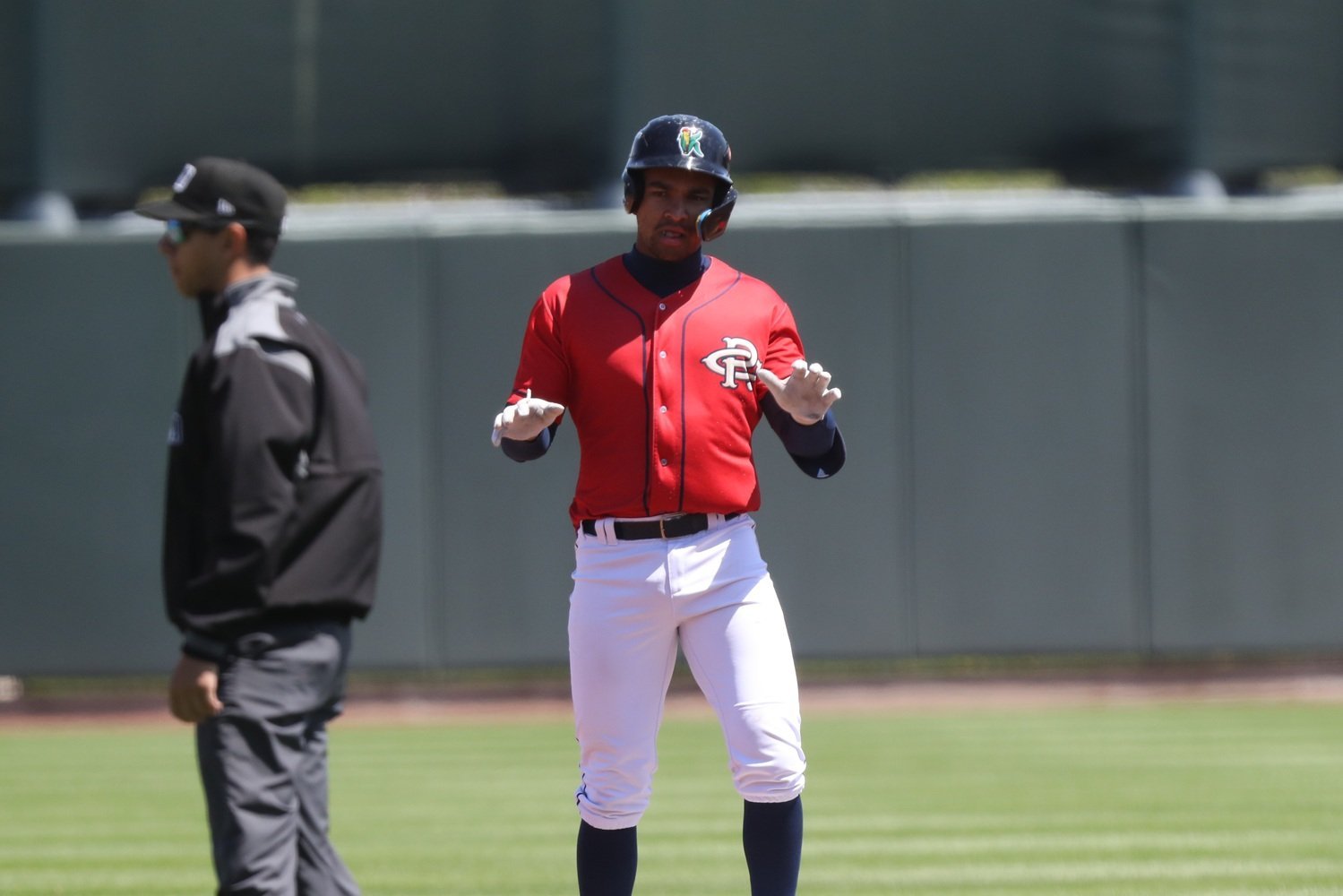 Happy Opening Day in the Florida Complex League!! TRANSACTIONS Fort Myers announced before their Friday night game that Eduardo Beltre has been shifted from the 7-Day IL to the Full-Season Injured List with his knee injury. SAINTS SENTINEL St. Paul 5, Iowa 6 Box Score The Saints went with an opener again on Friday night. John Brebbia gave up two runs on two hits and three walks over 1 1/3 innings. Kendry Rojas gave up an inherited run and two runs of his own on four hits and two walks in 3 1/3 innings. He had three strikeouts. Trent Baker gave up two runs on four hits over 2 1/3 innings. Grant Hartwig and Christian Roa each tossed a scoreless inning in relief. Down 1-0, the Saints tied it up in the bottom of the first frame. Walker Jenkins led off with a double. He advanced to third on a Kaelen Culpepper fly out to right and scored on an Emmanuel Rodriguez sacrifice fly. Down 2-1 going to the bottom of the third inning, Noah Cardenas led off with a walk. Jenkins hit a ground-rule double. Culpepper followed with another ground rule double to score both runners and give the Saints the 3-2 lead. After an Emmanuel Rodriguez walk and a fly out, Culpepper scored on a Kyler Fedko force out. In the fourth inning, Cardenas started with a double, and Walker Jenkins doubled for the third time in the game to give the Saints a 5-2 lead. Jenkins went 3-for-5 and doubled his doubles total from three to six. Culpepper went 2-for-4 with a walk and his fifth double. Emmanuel Rodriguez left the game in the fifth inning. He had grounded out to first base. Jonathon Long flipped to the pitcher for the out. Unfortunately, Rodriguez dove headfirst into first base and hurt his thumb. WIND SURGE WISDOM Wichita 1, Arkansas 5 Box Score The Wind Surge had the, umm, opportunity to face lefty Kade Anderson again on Friday night. The last time they faced the Mariners top pitching prospect, the #3 overall choice in last summer’s MLB Draft out of LSU, was on April 10th. In that game, Anderson tossed five scoreless innings and had 11 strikeouts. On this night, the southpaw threw 5 2/3 scoreless innings and notched eight strikeouts. But the Wind Surge managed four hits. Overall, Anderson has made five starts. He’s 2-0 with a 0.37 ERA and a 0.70 WHIP. In 24 1/3 innings, he’s given up one run on 13 hits and four walks. Ty Langenberg started for Wichita. He gave up three runs on four hits and two walks. He had six strikeouts. Ricky Castro came on next and gave up one run on two hits over the next two innings. Jaylen Nowlin worked two innings and gave up one run on no hits but two walks. He had three strikeouts. Jake Rucker went 2-for-3 with two doubles, both against Anderson. Billy Amick went 1-for-3 with a walk. The Wind Surge didn’t get on the board until the bottom of the ninth inning when Ricardo Olivar hit his sixth home run of the season. KERNELS CHRONICLE Cedar Rapids 8, West Michigan 4 Box Score The Two’s were wild for Khadim Diaw and the Kernels on Friday night. Cedar Rapids scored two runs in the home half of the first, second, third, and sixth innings. The bottom of the first began with walks by Marek Houston and Khadim Diaw. Brandon Winokur singled to center to drive in Houston and tie the game at one. Diaw scored the second run on a ground out off the bat of Danny De Andrade. With two outs in the second inning, Jaime Ferrer and Marek Houston hit back-to-back singles. Diaw followed with his third double of the season to drive in both runners and make it 4-1. In the bottom of the third, Jay Thomason knocked his third home run of the season, a two-run blast to make it 6-2. West Michigan cut the lead in half at 6-3. In the bottom of the sixth inning, Rayne Doncon led off with a walk. Ferrer followed with his fourth homer to make it 8-3. Michael Ross started and gave up one run on two hits in four innings. He walked two and had three strikeouts. Sam Rochard gave up two runs on two hits and a walk in his inning. Christian Becerra struck out four batters over two scoreless innings. Jacob Wosinski struck out three batters over the final two innings. How good has Khadim Diaw been of late? Wednesday: 4-for-4, 2B, R, RBI. Thursday: 2-for-2, 2 BB, R Friday: 2-for-2, 2 BB, 2B, R, 2 RBI When they were taking batting practice before Wednesday’s game, Diaw was hitting .192/.352/.247 (.599). Three games later, he is now hitting .272/.427/.346 (773). MIGHTY MATTERS Ft. Myers 4, Daytona Beach 5 Box Score The Mussels had 20 less runs on Friday than they did on Thursday. Just a short sentence to remind us all how crazy the Mussels 24-run game on Thursday really was. The Torgugas took a 3-0 lead in the second inning. The Mussels got on the scoreboard in the top of the fifth. With two outs, Yasser Mercedes singled. After a pitching change, Ramiro Dominguez singled Mercedes to second. Ryan Sprock drove in the run with a single to right. Down 4-3 going into the seventh inning, Dameury Pena and Bruin Agbayani started the inning with singles. With two outs, the runners had advanced to second and third base. Ryan Sprock came to the plate and drilled his first home run of the season. The three-run blast tied the game at 4-4. Merit Jones started and gave up three runs (2 earned) on seven hits. In four innings, he walked one and struck out one. Michael Hilker gave up an unearned run over two innings. He had three strikeouts. Matthew DesMarets gave up two hits but no runs in the seventh inning. Mike McKenna pitched a scoreless eighth inning. He began the ninth, but before getting an out, the bases were loaded. Brian Zeldin came on and gave up a single to end the game. Sprock led the offense, going 2-for-4 with a homer and four RBI. Mercedes and Dominguez each had two hits. Dominguez added his sixth double. Bruin Agbayani went 1-for-3 with two walks. PLAYERS OF THE DAY Hitter of the Day Walker Jenkins (St. Paul): 3-for-5, 3-2B(6), 2 R, RBI, 2 K Khadim Diaw (Cedar Rapids): 2-for-2, 2 BB, 2B(3), R, 2 RBI. Ryan Sprock (Ft. Myers): 2-for-4, HR(1), R, 4 RBI. Pitcher of the Day Christian Becerra (Cedar Rapids): 2 IP, 2 H, 0 R, 0 BB, 4 K, 28 pitches, 21 strikes (75.0%) PROSPECT SUMMARY Check out the Prospect Tracker for much more on our Twins Top 20 prospects after seeing how they did today. #1 - OF Walker Jenkins (St. Paul) - 3-for-5, 3-2B(6), 2 R, RBI, 2 K. (batted first, played CF) #2 - IF Kaelen Culpepper (St. Paul) - 2-for-4, BB, 2B(5), R, 2 RBI (batted second, played 3B) #3 - OF Emmanuel Rodriguez (St. Paul) - 0-for-1, BB, SF RBI (Batted third, played RF). #4 - C Eduardo Tait (Cedar Rapids) - Did Not Play. #5 - LHP Connor Prielipp (Minnesota) - Did Not Pitch #6 - LHP Dasan Hill (Cedar Rapids) - Did Not Pitch #7 - OF Gabriel Gonzalez (St. Paul) - 0-for-5, 2 K (batted fourth, played DH) #8 - LHP Kendry Rojas (St. Paul) - 3 1/3 IP, 4 H, 2 R, 2 BB, 3 K, 65 pitches, 44 strikes (67.7%) #9 - SS Marek Houston (Cedar Rapids) - 1-for-4, BB, 2 R (batted leadoff, played SS) #10 - RHP Charlee Soto (Cedar Rapids) - Injured List #11 - RHP Riley Quick (Ft. Myers) - Did Not Pitch #12 - RHP Andrew Morris (Minnesota) - Did Not Pitch #13 - 3B/CF Brandon Winokur (Cedar Rapids) - 1-for-3, BB, RBI (batted third, played CF) #14 - 3B/SS Quentin Young (Ft. Myers) - Did Not Play. #15 - RHP Marco Raya (St. Paul) - Did Not Pitch. #16 - OF Hendry Mendez (Wichita) - Did Not Play. #17 - 2B/OF Kyle DeBarge (Wichita) - 0-for-4, 3 K (batted fifth, played SS) #18 - RHP C.J. Culpepper (Wichita) - Did Not Pitch. #19 - C/OF Khadim Diaw (Cedar Rapids) - 2-for-2, 2 BB, 2B(3), R, 2 RBI, SB(2) (batted second, played C) #20 - RHP James Ellwanger (Ft. Myers) - 60 IL (right elbow sprain) UPCOMING PROBABLES Saturday: Iowa @ St. Paul (6:37 pm CT) - RHP Zebby Matthews (1-2, 5.91 ERA) Arkansas @ Wichita (6:35 pm CT) - RHP Jose Olivares (0-0, 0.00 ERA) West Michigan @ Cedar Rapids (6:05 pm CT) - RHP Jason Doktorczyk (2-3, 10.57 ERA) Ft. Myers @ Daytona (5:35 pm CT) - TBD FCL Red Sox @ FCL Twins (9:00 am CT) - TBD CURRENT W-L Records Minnesota Twins: 14-19 St. Paul Saints: 13-17 Wichita Wind Surge: 13-12 Cedar Rapids Kernels: 12-13 Fort Myers Mighty Mussels: 16-9 FCL Twins: 0-0 (Opening Day!) DSL Twins: 0-0 (season begins Monday, June 1) Please feel free to ask questions about the teams, the rosters, and discuss today’s games, or anything else Twins minor-league related! View the full article
 -
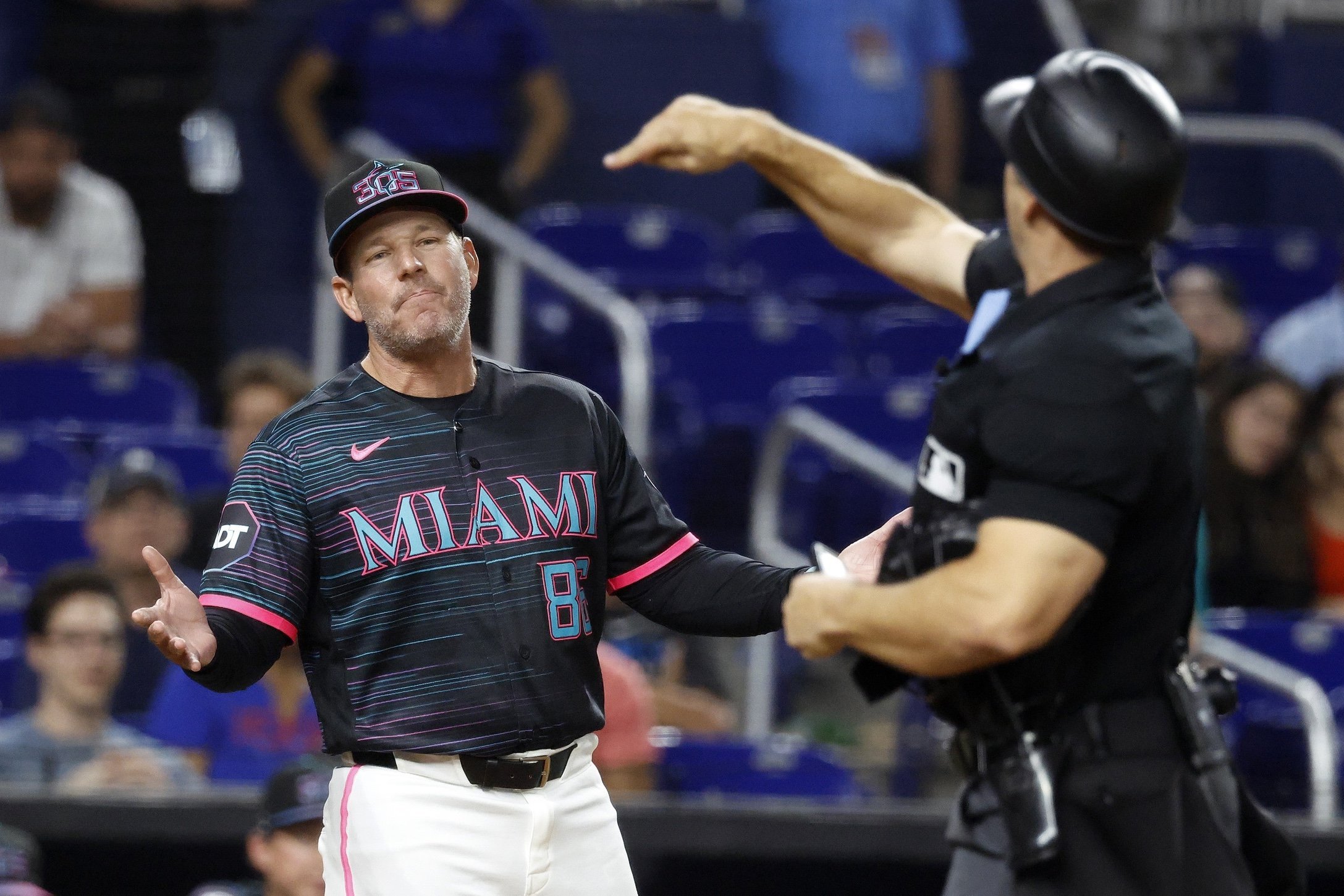 MIAMI — The Miami Marlins dropped their series opener to the Philadelphia Phillies, 6-5, in a ballgame that got very interesting at the end. The Phillies had a 6-1 lead in the eighth inning, but Miami scored four runs and were 180 feet away from tying the game in the bottom of the ninth. "We see with the group day in and day out, they will just continue to hang in there," Marlins manager Clayton McCullough said postgame. "We came up short, but I loved how we were able to finish that one off." The Phillies remain undefeated with Don Mattingly as their interim manager. They have a perfect 4-0 record since Donnie Baseball took over for Rob Thomson, who was fired at the beginning of this week. That includes three straight one-run wins. Right-handed pitcher Eury Pérez got the start and loss for the Marlins in the series opener. Pérez was pitching well through the game, but got into trouble in the top of the fourth. After giving up a single to Brandon Marsh and walking Bryson Stott, Pérez gave up back-to-back RBI hits to give Philadelphia the lead. Third baseman Alec Bohm tied the ballgame with an RBI single to center field and rookie outfielder Justin Crawford scored Stott with an RBI double. Overall, Pérez threw five innings, allowing four hits, two runs, two walks, and six strikeouts. The 23-year-old Dominican right-hander now has a 2-3 record on the season. "In general, I thought I had a good outing," Perez said after the loss. "My pitches were working very well, but they got aggressive, mostly on the first pitch and there was some damage." The Phillies would add to their lead in the top of the seventh with two outs. Facing newly recalled left-hander Cade Gibson, Edmundo Sosa hit a liner to center that scored Bryce Harper, making it 3-1. The final dagger would come from Stott's three-run home run to right field, breaking the game open 6-1. After laboring in his 50-pitch outing, Gibson is already headed back down to Triple-A Jacksonville. Right-handed relief pitcher Lake Bachar pitched very well in his 2 ⅓ innings of work, allowing no hits, no runs, no walks, and three strikeouts. He improves his ERA to 2.81 on the season. At the plate, the Marlins got to Zack Wheeler early. In the bottom of the first, Xavier Edwards doubled down the right field line and drove in Otto Lopez, who had hit a ground-rule double the at-bat before. They didn't have any answers for Wheeler after that, as he retired 15 of the last 16 batters he faced. In the bottom of the eighth, Miami’s offense showed some fight and made it a much closer ballgame. Lopez drove in Jakob Marsee on an RBI single that deflected off Stott’s glove and rolled into shallow left field. Liam Hicks drove in Stowers on a sacrifice fly that was torched but directly at Adolis Garcia in right field. Agustin Ramirez kept the inning alive with a two-out RBI single through the right side that scored Lopez and made the game 6-4. Connor Norby would enter the game as a pinch-hitter for Owen Caissie and delivered a double down the left field line. The Marlins had two runners in scoring position with the tying run 180 feet from home and the winning run at the plate. However, Christopher Morel watched three pitches go by and struck out without taking the bat off his shoulder. After a 1-2-3 ninth inning from Bachar, the Marlins got an early baserunner with Javier Sanoja drawing a leadoff walk on four pitches. That was followed by back-to-back strikeouts of Jakob Marsee on a 3-2 check swing and Kyle Stowers on a borderline 3-2 pitch that grazed the outside corner. Stowers and McCullough were both ejected arguing the called third strike. Lopez kept the game alive with an RBI single to RF. However, Edwards lined out to center, which ended the ballgame and prevented what would've been the biggest comeback of Miami's season. What’s next? The Marlins will look to even the series in game two of the four-game series. Right-handed pitcher Max Meyer will be on the mound for the Marlins. The former third overall pick in the 2020 MLB Draft has pitched well this season. Meyer has posted a 1-0 record with a 3.30 ERA, 1.20 WHIP, 9.9 K/9, a .207 opponent batting average, and a 128 ERA+. The Phillies will hand the ball to veteran right-handed pitcher Aaron Nola. The former All-Star right-hander has struggled dating back to the 2025 season, including a 1-3 record so far in 2026 with a 6.03 ERA, 1.56 WHIP, 10.1 K/9, and a .286 opponent batting average. The first pitch for Saturday’s game is at 4:10 pm EST. View the full article
 -
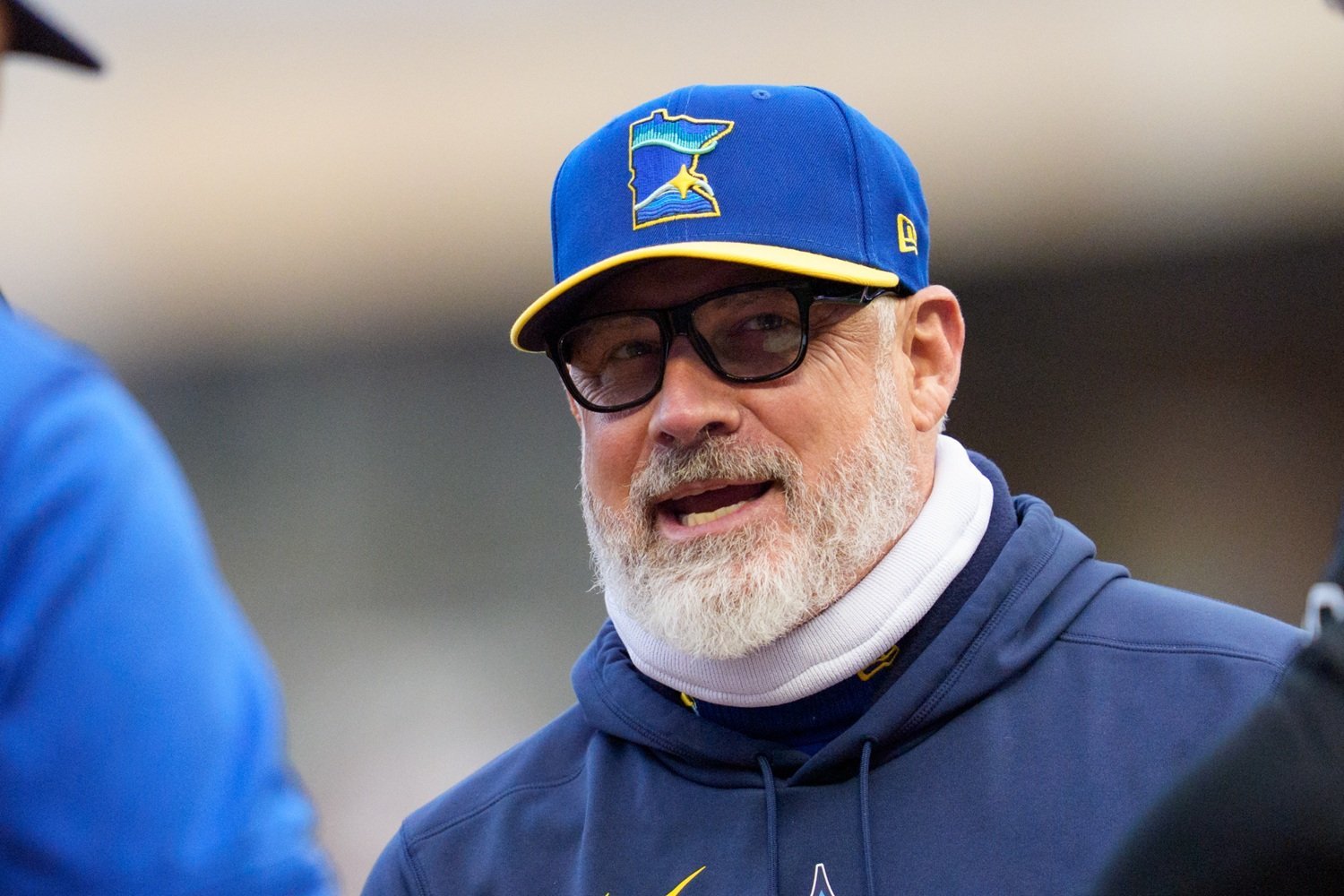 Box Score Simeon Woods Richardson: 4 ⅔ IP, 9 H, 4 ER, 1 BB, 2 K Home Runs: Byron Buxton (9) Bottom 3 WPA: Simeon Woods Richardson (-0.410), Ryan Jeffers (-0.090), Josh Bell (-0.090) Win Probability Chart (via FanGraphs) One day after the Great Night in Minnesota Sports, life went on. The Twins - by far the least glorious member of the previous day’s winning association - returned to Target Field to play the Blue Jays. Champagne and celebrations occurred elsewhere; at the ballpark, it was business as usual. That business was spearheaded by Simeon Woods Richardson, owner of the starting rotation’s most ghastly ERA. 2026 hasn’t been kind to him: the young righty has seen his swing-and-miss ability plummet while his earned runs have ballooned. He entered the day with 15 strikeouts. All season. Across 30 innings. Even a product of the public education system could see he had issues. Would they continue on Friday? The two teams exchanged a gentleman’s shutout first inning before Toronto struck in the second. Two singles and a wild pitch placed runners at second and third. A chopper hit to Josh Bell should have cut off the runner to home. It did not. Bell unleashed a Tyler Rogers sinker that grew wings and flew beyond the grasp of catcher Victor Caratini, forcing the poor backstop into a Daulton Varsho collision as the ball caromed out of bounds, allowing the trailing runner to score as well. The blunder gave the Blue Jays the early advantage, but Minnesota had a trick up its sleeve: Byron Buxton. Although considering his name was on the lineup hours before the game started, precisely how tricky his appearance was appears dubious. In any case, Buxton stepped up to the plate in the third, correctly guessed how a Patrick Corbin breaker would spin, and blasted the low-and-inside offering just over the left field wall, scoring two. The good news ends there. For a time. The Blue Jays flocked with two more in the fourth, two in the fifth, and… one in the seventh. Kazuma Okamoto homered twice. Woods Richardson tried in vain to find an offering that would fool Toronto’s hitters, yet hard contact followed him with each selection. He continued to stumble with two outs in the fourth before Derek Shelton called it a day for the hurler and went to his bullpen. Meanwhile, Twins hitters could do little. Not nothing, but only a little. Corbin proved too tricky on Friday. As did Toronto’s onslaught of relievers—Minnesota did load the bases against Jeff Hoffman in the eighth, but a sacrifice fly served as the only run they could net off the struggling former closer. They probably should have done more. Toronto sent Louis Varland out for the ninth. They didn't just rub salt in the wound: they widened the gash before dropping enough sodium to salt McDonald's French Fries for the next decade. Despite a pair of baserunners, Minnesota couldn't get a rally going, and they fell to the Blue Jays in a sloppy contest. Notes: Post-Game Interview: What’s Next? The Twins and Blue Jays continue their Great Northern Battle with a mid-day foray on Saturday. Connor Prielipp starts opposite Dylan Cease. First pitch is at 1:10 PM. Bullpen Usage Spreadsheet MON TUES WED THUR FRI TOT Orze 0 0 28 0 33 61 Morris 40 0 0 19 0 59 Banda 0 0 22 14 0 36 Rogers 14 0 13 0 8 35 Garcia 0 23 0 0 9 32 Funderburk 0 15 0 0 0 15 Sands 0 13 0 0 0 13 Topa 0 0 0 12 0 12 View the full article
 -
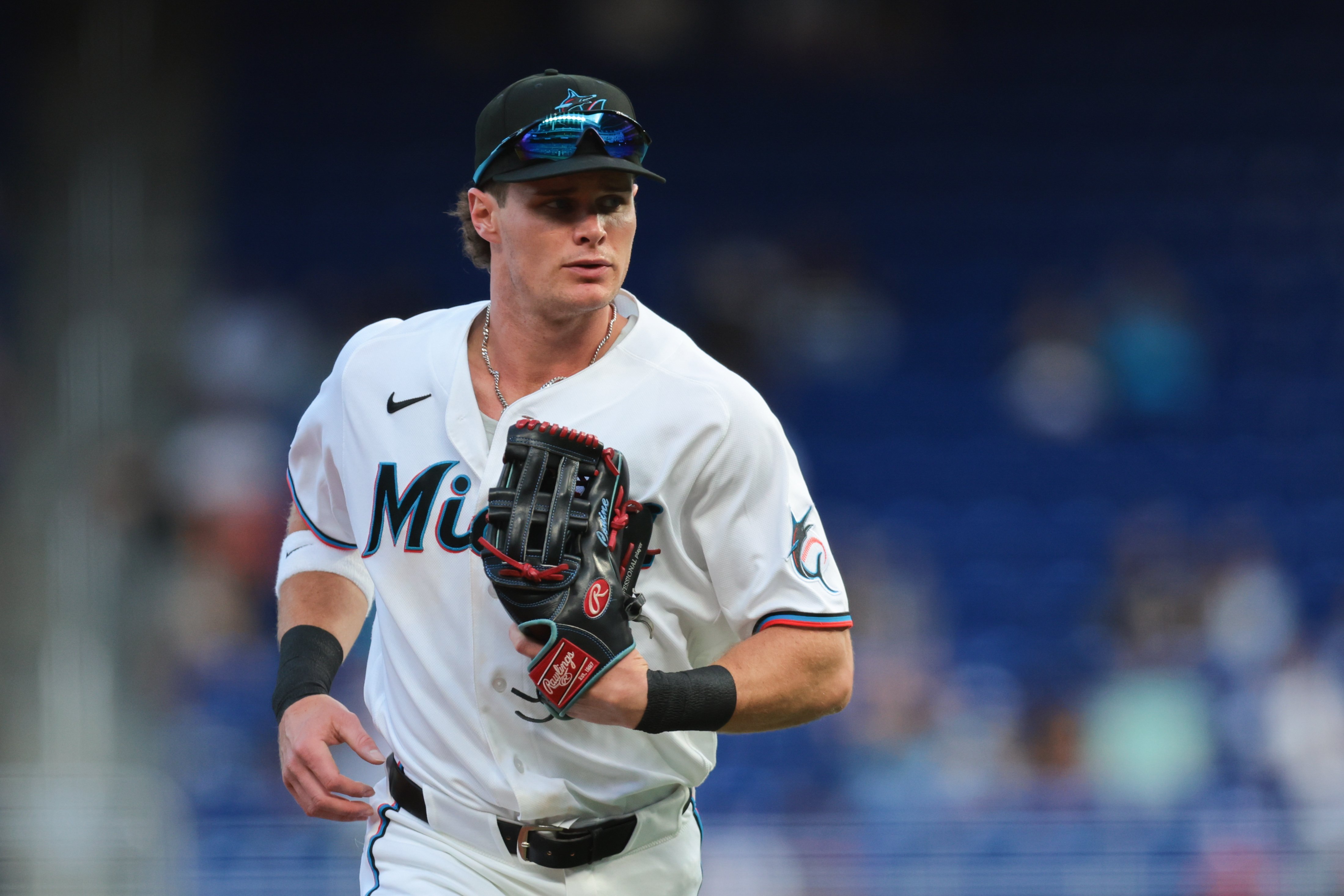 MIAMI, FL — On Friday, before the Miami Marlins and Philadelphia Phillies kicked off a four-game set, outfielder/first baseman Griffin Conine was spotted putting his injured left hamstring through various baseball activities. Conine, who is only three weeks removed from suffering a hamstring tear and undergoing surgery, finds himself ahead of schedule in his rehab and has a target date for his reinstatement from the IL. "The one thing I haven't done yet is defensive work outfield-wise, but I'm throwing and hitting again today," Conine told Fish On First. "I'm in a good spot. Just building up, stacking days like this—basically where every day running, we get a little bit faster, the strength just comes back a little bit more." Before landing on the IL, Conine played in 11 games, slashing .273/.360/.591/.951 with two home runs, four RBI and a 160 wRC+. He suffered the injury on April 9 while playing attempt a diving catch in left field. "It sucked, for sure," Conine told Fish On First. "I think the prognosis could have been worse, so I'm trying to look at the positive side. Compared to last year's rehab, this is super easy. It's very basic. I just don't want to get back quicker than the timeline says, which we're on pace to do that." As Conine referenced there, he suffered a dislocated shoulder last season that kept him out for most of 2025. It was originally announced as a season-ending procedure, but he sped through the rehab process and returned in late September. Fortunately, the hamstring tear won't cost him nearly as much time. Barring setbacks, Conine told Fish On First that his goal is to return during the month of May. "I haven't talked to (the Marlins) about that, but just in my head with the timeline that the doctor gave me, I think that's very doable. That means I'm back in a big league game before June, which would mean [begin the rehab assignment] 10-12 days before that. That's what I'm shooting for and I don't know if they're on board with that, but I think that's doable. We're gonna take it week to week and see how it goes." When asked about Conine, Marlins manager Clayton McCullough jokingly said that he "defies modern medicine," then acknowledged that the 28-year-old is "tracking to be back probably to the lower end of the timeline." View the full article
 -
Mets Roster Central: Eric Wagaman — Hot Potato
DiamondCentric posted an article in Grand Central Mets
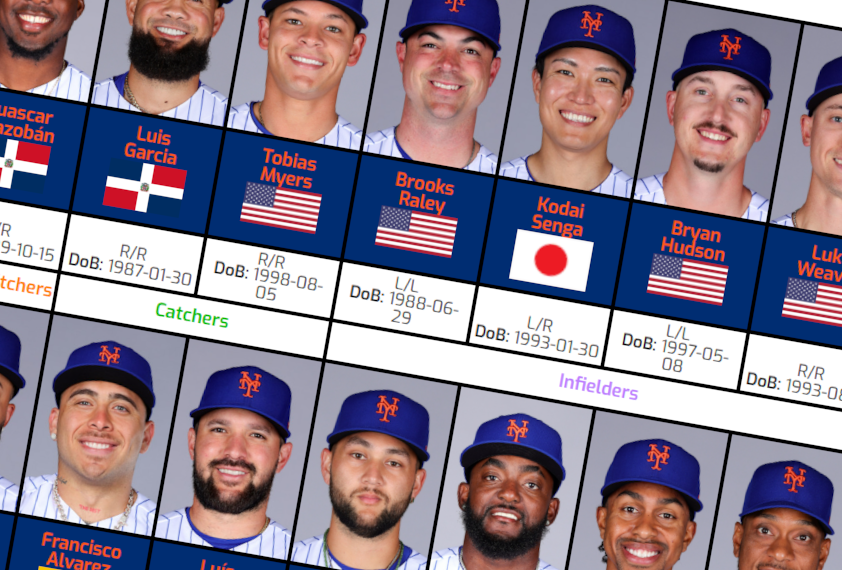 How embarrassing is it when the commentary about a transactions runs longer than the tenure that the transaction effected? Because that is the awkward situation that Mets Roster Central is in right now. Transactions, 5/1/2026 GOING COMING Demoted to Syracuse Activated Infielders Infielders Eric Wagaman Andy Ibáñez R/R DoB: 35656 High Level: MLB (2026) R/R DoB: 1993-04-03 High Level: MLB (2026) Eric Wagaman was grab bed off waivers and Mets Roster Central assured you he would just be a minor-league placeholder unless a cascading emergency took place. Wagaman was then called up without getting a single appearance in AAA. Mets Roster Central then speculated about what role he could hold. Wagaman was then sent down without getting a single appearance as a Met. And we say, hey! — if you don't get into a game, you can't fail. And that's perhaps not much of a calling card, but it's more than a lot of Mets can claim. Hey, don't blame me! I was in the air at the time! Waggy's demotion is all to make room for Andy Ibáñez — Cuban backup infielder and the new José Iglesias to anybody who cares to pay attention to these things. Godspeed to both. Your 2026 New York Mets Starting Pitchers Clay Holmes Nolan McLean Freddy Peralta David Peterson Christian Scott R/R DoB: 1993-03-27 R/R DoB: 2001-07-24 R/R DoB: 2996-06-04 L/L DoB: 1995-09-03 R/R DoB: 1999-06-15 Relief Pitchers Huascar Brazobán Craig Kimbrel Sean Manaea Tobias Myers Brooks Raley Austin Warren Luke Weaver R/R DoB: 1989-10-15 R/R DoB: 32291 R/L DoB: 1992-02-01 R/R DoB: 1998-08-05 L/L DoB: 1988-06-29 R/R DoB: 1996-02-05 R/R DoB: 1993-08-21 Relief Pitchers Catchers Infielders Devin Williams Francisco Alvarez Luís Torrens Bo Bichette Andy Ibáñez Ronny Mauricio MJ Melendez R/R DoB: 1994-09-21 R/R DoB: 2001-11-01 R/R DoB: 1996-05-02 R/R DoB: 1998-03-05 R/R DoB: 1993-04-03 S/R DoB: 2001-04-04 L/R DoB: 1993-11-29 Infielders Outfielders Marcus Semien Mark Vientos Brett Baty Carson Benge Austin Slater Juan Soto Tyrone Taylor R/R DoB: 1990-09-17 R/R DoB: 1993-12-11 L/R DoB: 1999-11-13 L/R DoB: 2003-01-20 R/R DoB: 33951 L/L DoB: 1998-10-25 R/R DoB: 34356 Also on 40-Player Roster Starting Pitchers Relief Pitchers Tylor Megill Kodai Senga Jonah Tong Alex Carrillo Reed Garrett Joey Gerber Justin Hagenman R/R DoB: 1995-07-28 L/R DoB: 1993-01-30 R/R DoB: 2003-06-19 R/R DoB: 1997-06-06 R/R DoB: 1993-01-02 R/R DoB: 1997-05-03 R/R DoB: 1996-10-07 On 60-Day Injured List with torn right UCL. On 15-Day Injured List with Lumbar Spine Inflammation With Syracuse With Syracuse On 60-Day Injured List — right UCL surgery and nerve relocation surgery. With St. Lucie on Rehab Assignment On 60 Day Injured List with fractured rib. Relief Pitchers Catchers Infielders A.J. Minter Dedniel Núñez Jonathan Pintaro Dylan Ross Hayden Senger Francisco Lindor Jorge Polanco L/L DoB: 1993-09-02 R/R DoB: 1996-06-05 R/R DoB: 1997-11-07 R/R DoB: 2000-09-01 R/R DoB: 1997-04-03 S/R DoB: 1993-11-14 S/R DoB: 1999-11-13 With Syracuse on Rehab Assignment On 60-Day Injured List — right UCL surgery. With Syracuse With Syracuse With Syracuse On 10-Day Injured List with Strained Left Calf On 10-Day Injured List with right wrist contusion. Infielders Outfielders Eric Wagaman Nick Morabito Luis Robert, Jr. Jared Young R/R DoB: 35656 R/R DoB: 2003-05-07 R/R DoB: 1997-08-03 L/R DoB: 1995-07-09 With Syracuse With Syracuse On 10-Day Injured List with Lumbar Spine Disc Hernitaion On 10-Day Injured List with torn left meniscus. Deslgnated for Assignment 5/1/2026 Carl Edwards, Jr. R/R DoB: 33484 DFA'd, 2026-04-30. Your Mets Coaching Staff Manager Bench Coach Pitching Coach Hitting Coordinator Third Base Coach First Base Coach Bullpen Coach Ass't Pitching Coach Carlos Mendoza Kai Correa Justin Willard Jeff Albert Tim Leiper Gilbert Gomez José Rosado Dan McKinney DoB: 1979-11-27 DoB: 1989-07-14 DoB: 1990-09-09 DoB: 1992-08-16 DoB: 1996-07-19 DoB: 1992-03-08 DoB: 1974-11-09 DoB: 1989-06-06 Hitting Coach Strategy Coach Catching Coach Coaching Assistant Bat'g Practice Pitcher Equipment Manager Bullpen Catchers Bullpen Catchers Troy Snitker Danny Barnes J.P. Arencibia Rafael Fernandez Kevin Mahoney Kevin Kierst Eric Langill Dave Racaniello DoB: 1988-12-05 DoB: 1989-10021 DoB: 1986-01-05 DoB: 1988-08-03 DoB: 1987-05-11 DoB: 1964-07-09 DoB: 1979-04-09 DoB: 1978-06-03 Your Mets Training Staff Director of Player Health Head Athletic Trainer Assistant Athletic Trainer Reconditioning Coordinator Reconditioning Therapist Head Performance Coach Assistant Performance Coach Performance Coordinator Soft Tissue Specialist Brian Chicklo Joseph Golia Bryan Baca Sean Bardanett Josh Bickel Dustin Clarke Tanner Miracle Jeremy Chiang Hiroto Kawamura DoB: 1972-07-17 DoB: 1978-??-?? DoB: Circa 1980 DoB: 1988-06-23 DoB: 1996-??-?? DoB: 1987-??-?? DoB: 1991-??-?? DoB: ????-??-?? DoB: 22846 View the full article
 -
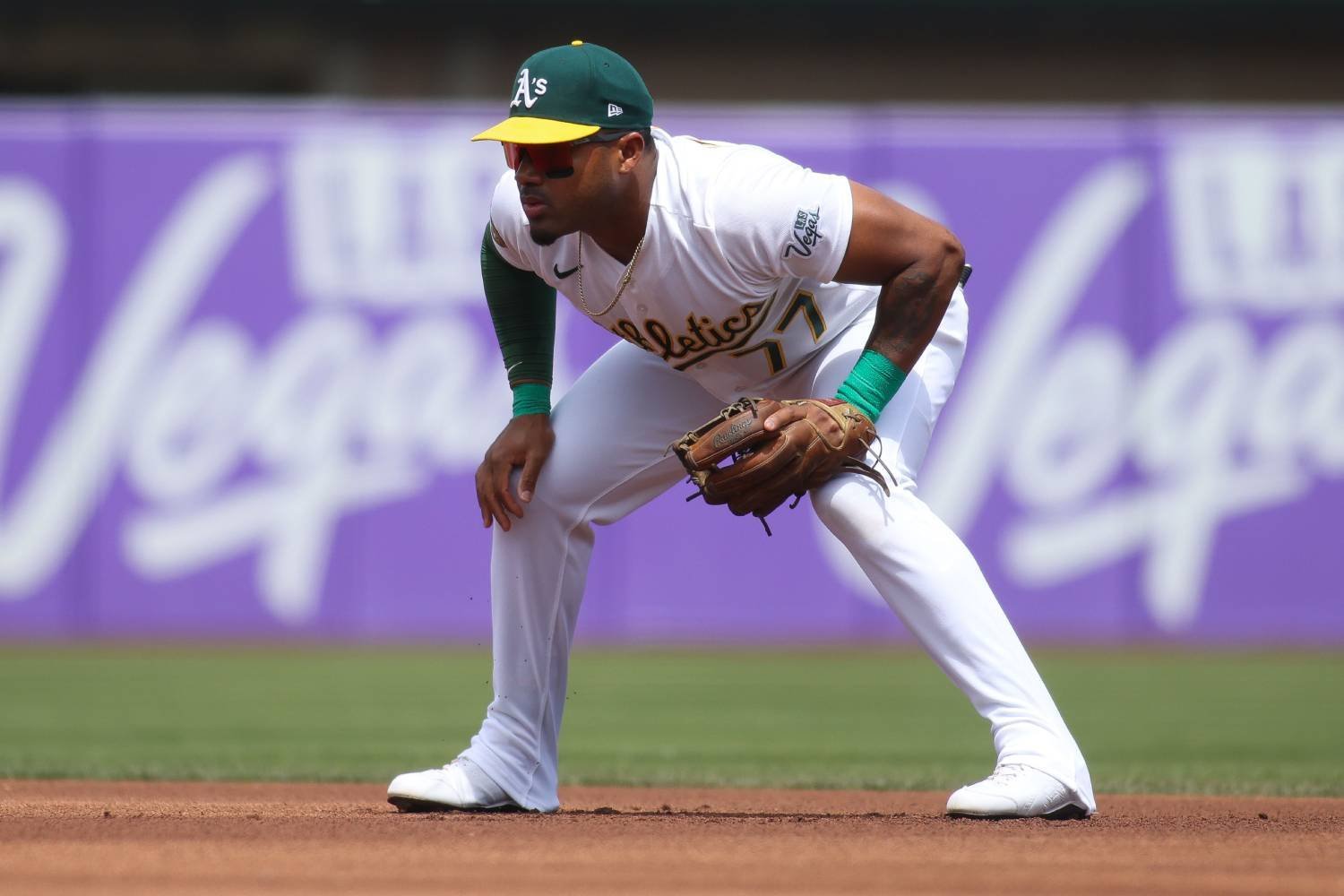 In the latest move around the edges of the roster, infielder Andy Ibanez joined the New York Mets' roster a day after being claimed off waivers. To make room, first baseman Eric Wagaman was optioned to Triple-A Syracuse. Ibanez was claimed Thursday off waivers from the A's, who had designated him for assignment. In 11 games for the A's this season, Ibanez was 2-for-17 with three RBIs and two runs scored with a walk and two strikeouts. That resulted in a slash line of .118/.167/.118. Ibanez made his MLB debut in 2021 and has a career .252/.303/.385 slash line with 28 homers and 131 RBIs in 431 games with the Texas Rangers, Detroit Tigers and A's. Wagaman had been called up Thursday when Luis Robert Jr. went on the 10-day injured list with a lumbar spine disc herniation. Wagaman did not play in Thursday's 5-4 loss to the Washington Nationals. View the full article
 -
Ty France Is Suddenly the Padres' Most Important Hitter
DiamondCentric posted an article in Padres Mission
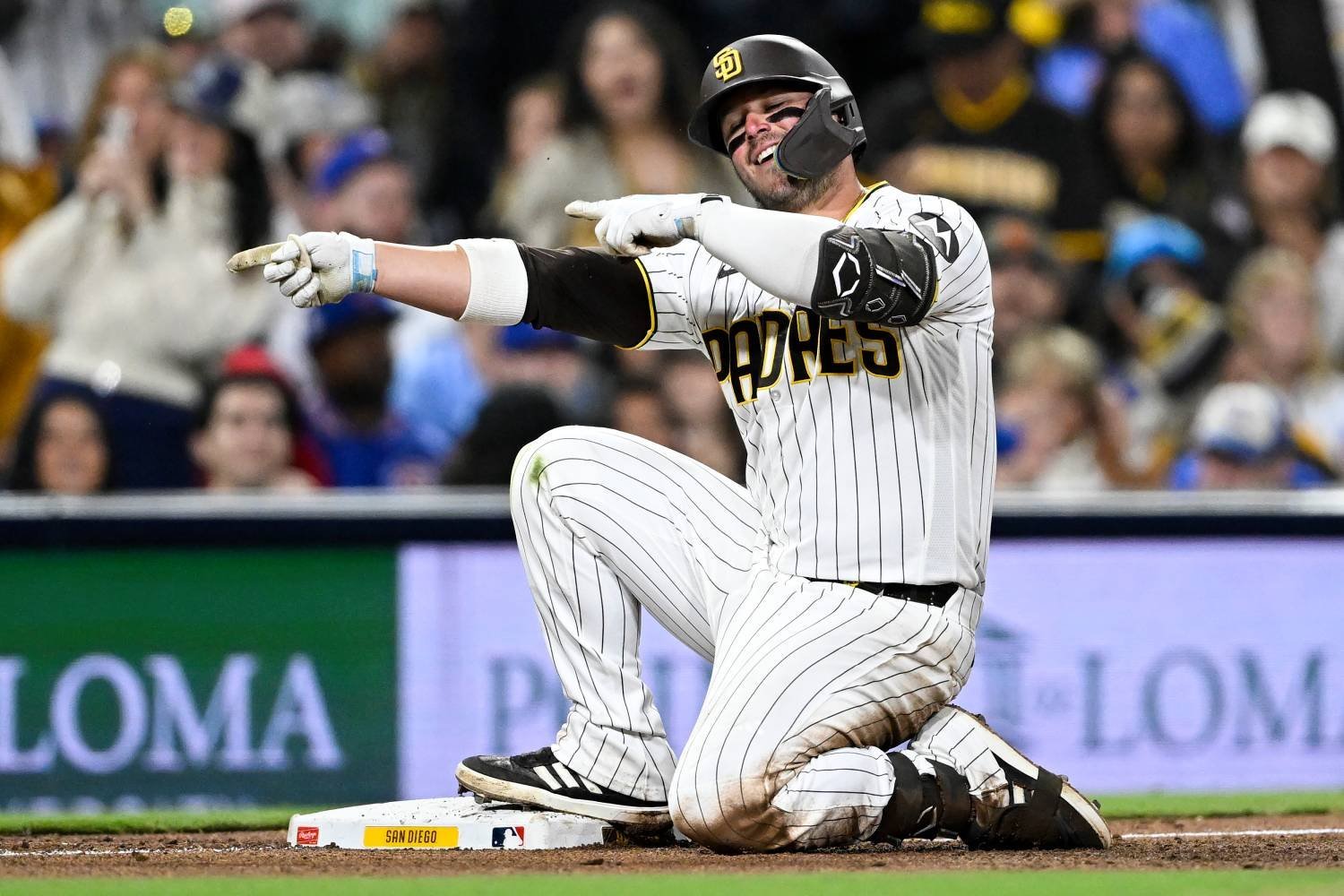 There have been several offensive surprises in the first month of this season for the San Diego Padres. Catcher Luis Campusano has a team-leading 1.054 OPS, shortstop Xander Bogaerts is showing why he is being paid $280 million, superstar right fielder Fernando Tatis Jr. has yet to hit a home run and Jake Cronenworth has one of the worst OPS in MLB among qualified players. Then there is Ty France. The former San Diego State star, born in the Los Angeles suburb of Downey and a West Covina High School alum, had to settle for signing a minor-league contract as spring training began with the team that drafted him in the 34th round in 2015. This came after he won the 2025 AL Gold Glove for first basemen and was part of the World Series runner-up Toronto Blue Jays after a trade from the Minnesota Twins. But France has made the most out of his second chance with the Padres. As a non-roster invite to spring training, he didn't have a major-league job guaranteed. But he showed a worthy bat, putting together a .306/.352/.510 slash line with two homers and 12 RBIs in 19 Cactus League games. That performance allowed France to take advantage of infielder Sung-Mun Song's oblique injury and snag the final bench spot. Still, he seemed third on the depth chart at first base behind left-handed-hitting Gavin Sheets and right-handed-hitting Nick Castellanos, who had never played first base before as an MLB player but was up for anything after being released by the Philadelphia Phillies. It was France's defense that would get him any playing time. If he could produce offensively, that would be a bonus. He even tried his hand at second and third base in spring training to make himself more valuable. The knock on France was that he doesn't produce the offense expected out of a first baseman. It is typically a power position, but France came into 2026 with a grand total of 81 homers in seven seasons, with a peak of 20 in 2022 with the Seattle Mariners, meaning that he averaged about 10 homers a year otherwise. His career slash line entering this year was .262/.334/.400, which made him a slightly above-average hitter with a 108 OPS+. He doesn't walk much, nor does he strike out a ton. This year has been different, though. The 31-year-old, whether he just relaxed and let his play do the talking or became more focused knowing his playing days could be coming to an end, has thrived with the Padres. In fact, France might be the most indispensable player they have had in the opening month. Entering this weekend's series against the Chicago White Sox, France is second to Campusano in OPS with .911, including a slash line of .289/.333/.578. His OPS+ is at a career high of 148. He already has three homers after hitting seven a year ago. In particular, France has been very integral to the offense in the last week. He had three straight multi-hit games entering Wednesday, going 6-for-11 with a walk and seven RBIs. Four of those RBIs came in Monday's series-opening 9-7 victory over the Chicago Cubs, with a two-run double and a two-run triple plus a stolen base. It was his first triple since 2022. That came two days after hitting two solo homers in Mexico City in a 6-4 win over the Arizona Diamondbacks, just his third career multi-homer game, so France is one of the few Friars in a good groove offensively. He has been valuable when in the starting lineup. Entering Wednesday, he had a slash line of .325/.372/.650 in 12 starts (1.022 OPS), hitting safely in seven of his previous nine starts. That production has proven valuable for a Padres offense that is still waiting on its main cogs, Tatis, Cronenworth and superstar third baseman Manny Machado, to get going. The Padres' .693 team OPS ranked 22nd in MLB after Wednesday's action, a far cry from what they were hoping for entering the season. Still, they rank in the top half in runs per game (13th, 4.63) thanks to the contributions of players like France. While still not having enough plate appearances to officially rate in Statcast categories, you can see that his numbers this year are much better than last year. In particular, his average exit velocity this year is at 92.9 mph, up from 89.5; likewise, his hard-hit percentage is at 56.1%, up from 44.2%. His barrel rate has also increased from 7.7% last year to 17.1% this year. France has been a nice right-handed complement to Sheets at first base, with Castellanos now the bench player in the most vulnerable position on the roster. Castellanos started in left field Wednesday and hit his first homer of the season, which might signal he is finally adjusting to his bench role after being a career starter. Only two of those starts have been at first due to France's presence—Castellanos has mainly been a designated hitter when he has started. When Song, currently at Triple-A El Paso, was brought up as the extra player for the Mexico City Series, there was chatter that Castellanos' time with the Padres could be coming to an end. Song would bring more versatility to the bench as he can play third, second and shortstop. Castellanos, though, had a couple big hits in the Cubs series. But that has been the trickle down from France's good spring and continued contributions through the first month of the regular season. If France can keep this up for the remainder of the season, he'll effectively supply the Friars with what they were hoping to get out of Castellanos, only with better defense. Once Tatis, Machado and Cronenworth get going, France's production may not be as noticeable, but it will make this offense that much better. View the full article
 -
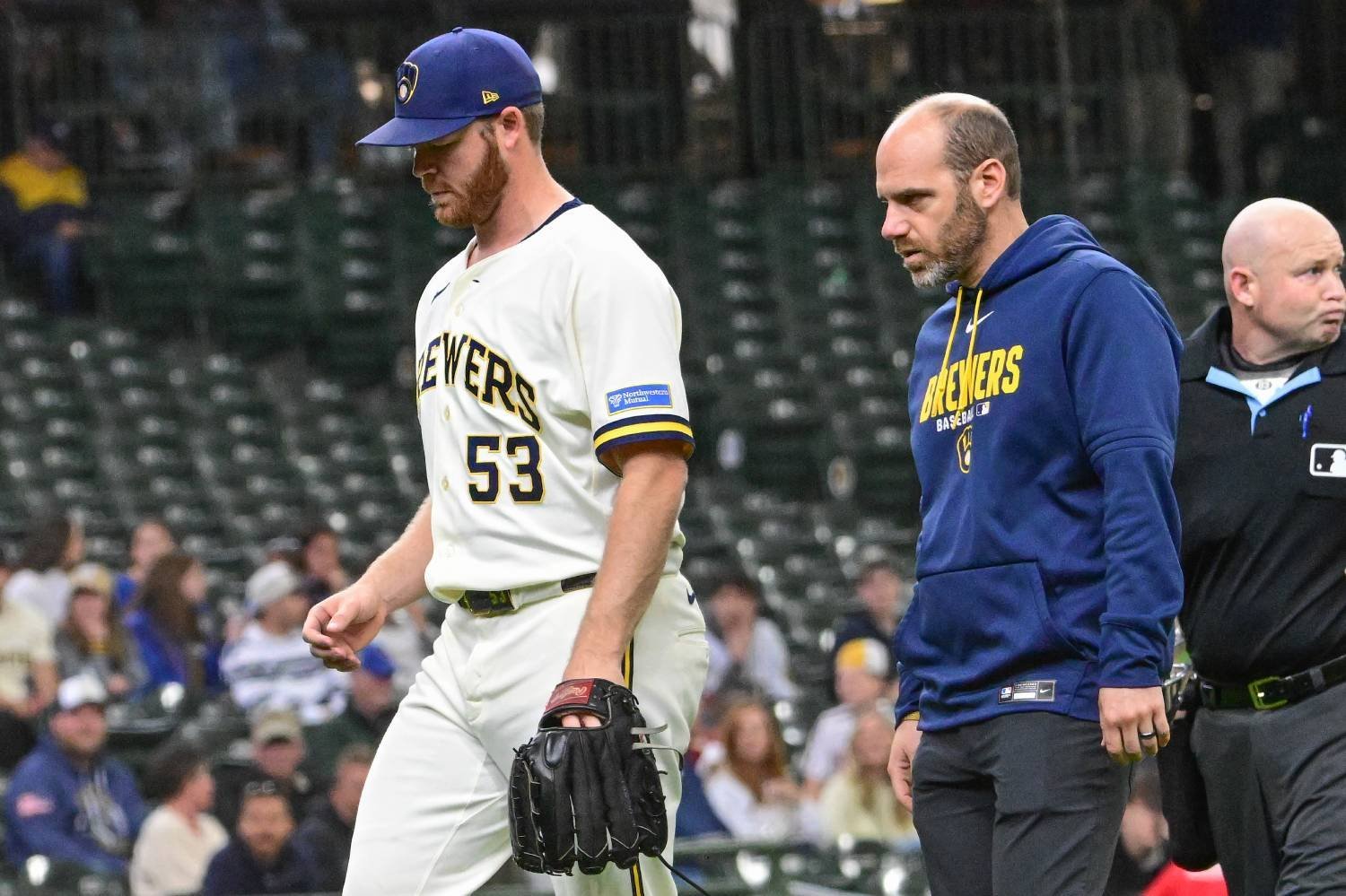 Following another bout with his velocity dropping, Brandon Woodruff is sidelined again. The Milwaukee Brewers placed the veteran right-handed starter on the 15-day injured list with right shoulder inflammation. Right-handed reliever Easton McGee was called up from Triple-A Nashville. Woodruff left his start Thursday against the Arizona Diamondbacks in the second inning. That came after a noticeable drop in his velocity in the first inning. In five starts this season, Woodruff had been averaging 92.5 mph on his four-seam fastball, which was down to 85.4 mph Thursday with a high of 86.9. While the Brewers won the game 13-1, there was concern about Woodruff's status. The 33-year-old underwent an MRI exam while the game was still going and it was obvious he was headed for the injured list based on manager Pat Murphy's postgame comments. Woodruff was set to hit free agency after last season, but accepted the qualifying offer of $22.025 million in the offseason to remain for what appears to be his final season with the Crew. He is one of the most iconic pitchers in franchise history. Woodruff underwent major shoulder surgery after the 2023 season, which caused him to miss all of 2024. After some other ailments pushed back the start of his 2025 to July, Woodruff returned almost as if he was never gone. But last season ended early due to a lat strain that caused him to miss the Brewers' postseason for the third straight year. Now the Brewers must decide how to proceed without Woodruff. Left-hander Shane Drohan, who pitched four innings of relief following Woodruff's early exit, is one candidate. Right-hander Logan Henderson, currently at Triple-A Nashville, is another. Still, Woodruff's leadership and presence will be felt in the short term. View the full article
 -
 Iowa Bullpen Shines But Bats Strand Eight In 3-1 Loss The Iowa Cubs collected eight hits at St. Paul but stranded eight runners in a 3-1 loss to the Saints. James Triantos went 2-for-4 with a run scored, while Jonathon Long also went 2-for-4 and drove in the team's only run. Charlie Barnes took the loss after five innings, allowing two hits, three earned runs, three walks, and a home run while striking out four. Luke Little, Ethan Roberts, and Tyler Beede combined for three scoreless innings out of the bullpen, with Little issuing two walks, Beede issuing one, and the trio combining for three strikeouts. The Saints jumped ahead in the bottom of the third on a solo home run. Iowa's deficit grew in the bottom of the fifth when, with the bases loaded, a walk forced in the second run and a sacrifice fly drove in the third for a 3-0 lead. Iowa cut the lead in the top of the eighth. With one out, Triantos singled, advanced to third on a fielding error, and scored when Long lined a single to left field. Chas McCormick flied out to end the inning, and the Cubs went down quietly in the ninth. Player AB R H RBI BB K Brett Bateman, CF 3 0 1 0 1 0 James Triantos, 3B 4 1 2 0 0 0 Pedro Ramírez, 2B 4 0 1 0 0 1 Jonathon Long, 1B 4 0 2 1 0 0 Hayden Cantrelle, LF 0 0 0 0 0 0 Chas McCormick, DH 4 0 0 0 0 1 Dylan Carlson, LF-1B 4 0 1 0 0 0 Scott Kingery, SS 4 0 0 0 0 3 Christian Bethancourt, C 4 0 1 0 0 2 Justin Dean, RF 4 0 0 0 0 1 Player IP H R ER BB K HR Charlie Barnes (L) 5.0 2 3 3 3 4 1 Luke Little 1.0 0 0 0 2 1 0 Ethan Roberts 1.0 0 0 0 0 1 0 Tyler Beede 1.0 0 0 0 1 1 0 Smokies Held To Two Hits In 4-1 Loss At Rocket City The Knoxville Smokies managed just two hits in a 4-1 loss to Rocket City. Jefferson Rojas doubled, and Alex Madera singled. Jordan Nwogu drew two walks and scored Knoxville's lone run, Owen Ayers picked up the team's only RBI on a sacrifice fly, and Andy Garriola and Edgar Alvarez each walked. Grant Kipp took the loss after 1 2/3 innings, surrendering five hits, four earned runs, and three walks while striking out two. The bullpen kept the deficit at four. Luis Martinez-Gomez tossed 2 1/3 scoreless innings with three strikeouts, two walks, and a hit allowed, and Frankie Scalzo Jr. followed with two scoreless frames, allowing one hit, two walks, and striking out two. The Trash Pandas got on the board first in the bottom of the first when an RBI single brought home a run. They tacked on three more in the bottom of the second. A walk preceded a wild pitch by Kipp that allowed a run to score, and a two-run single capped the rally to push the lead to 4-0. Knoxville's only run came in the top of the sixth. With one out, Nwogu walked, Rojas doubled to right field to put runners on second and third, and Ayers lifted a sacrifice fly to center to bring Nwogu home. Garriola walked to extend the inning, but Alvarez struck out to leave two runners stranded. Player AB R H RBI BB K Jordan Nwogu, CF 1 1 0 0 2 1 Jefferson Rojas, SS 3 0 1 0 0 1 Owen Ayers, C 2 0 0 1 0 0 Andy Garriola, RF 2 0 0 0 1 1 Edgar Alvarez, 1B 2 0 0 0 1 2 Carter Trice, LF 3 0 0 0 0 1 Ethan Hearn, DH 3 0 0 0 0 1 Devin Ortiz, 3B 3 0 0 0 0 0 Alex Madera, 2B 2 0 1 0 0 0 Player IP H R ER BB K HR Grant Kipp (L) 1 2/3 5 4 4 3 2 0 Luis Martinez-Gomez 2 1/3 1 0 0 2 3 0 Frankie Scalzo Jr. 2.0 1 0 0 2 2 0 Espinoza's Two-Hit Night Lone Bright Spot In South Bend's 6-1 Loss The South Bend Cubs were limited to four hits in a 6-1 home loss to Fort Wayne, with Leonel Espinoza accounting for two of them and the team's only run. Espinoza finished 2-for-2 with a double, a solo home run, and an RBI. Cole Mathis added a single and a walk, Matt Halbach singled, and Reginald Preciado was hit by a pitch before being lifted for Espinoza. Koen Moreno took the loss after 4 2/3 innings, allowing seven hits, five earned runs, one walk, and a home run while striking out five. The bullpen held Fort Wayne off the board for a stretch. Nate Williams worked 1 1/3 scoreless innings with three strikeouts, a walk, and a hit allowed. The TinCaps scored single runs in the second, third, and fourth innings, then broke the game open in the top of the fifth on a two-run home run that pushed the lead to 5-0. Espinoza got South Bend on the board in the bottom of the eighth with a home run to left center field that pulled the Cubs within 5-1. Player AB R H RBI BB K Kade Snell, CF 4 0 0 0 0 0 Cole Mathis, 1B 3 0 1 0 1 0 Cameron Sisneros, LF 3 0 0 0 1 0 Matt Halbach, 3B 4 0 1 0 0 0 Reginald Preciado, DH 0 0 0 0 0 0 Leonel Espinoza, DH 2 1 2 1 0 0 Drew Bowser, 2B 3 0 0 0 0 2 Miguel Useche, C 3 0 0 0 0 1 Geuri Lubo, RF 3 0 0 0 0 3 Christian Olivo, SS 2 0 0 0 1 1 Player IP H R ER BB K HR Koen Moreno (L) 4 2/3 7 5 5 1 5 1 Nate Williams 1 1/3 1 0 0 1 3 0 Ethan Bell 2.0 0 0 0 0 4 0 Kenyi Perez 1.0 1 1 1 1 2 0 Pelicans Plate Four In Second, Hold Off Columbia 4-2 The Myrtle Beach Pelicans plated all four of their runs in the bottom of the second inning and held off Columbia 4-2 at home. Alexey Lumpuy led the offense, going 2-for-4 with a double and two RBIs. Michael Carico and Eli Lovich each added two hits, Alexis Hernandez tripled and walked, and Derniche Valdez singled, walked, and drove in a run. Jairo Diaz contributed an RBI on a sacrifice fly. Edwardo Melendez delivered four innings of one-hit ball, walking one, striking out four, and allowing one unearned run. Victor Zarraga earned the win after 3 1/3 innings, giving up two hits and one earned run while issuing three walks and striking out six. Braylon Myers picked up the save with 1 2/3 scoreless innings, allowing two walks while striking out three. Columbia scored an unearned run in the top of the second when a runner came home from third on a groundout that was extended by an error. Myrtle Beach answered immediately. Carico and Lovich opened the bottom half with back-to-back singles, and Hernandez walked to load the bases. Valdez walked to force in Carico, and Diaz lifted a sacrifice fly to score Lovich. After a lineout, Ty Southisene was hit by a pitch to reload the bases, and Lumpuy lined a two-run double to right field to make it 4-1. The Fireflies pulled within two with an RBI sacrifice fly in the top of the eighth, but Myers stranded the bases loaded with a strikeout to end the threat and retired Columbia in order in the ninth. Player AB R H RBI BB K Ty Southisene, SS 3 0 0 0 0 0 Alexey Lumpuy, CF 4 0 2 2 0 0 Josiah Hartshorn, RF 4 0 0 0 0 0 Michael Carico, 1B 4 1 2 0 0 0 Eli Lovich, LF 4 1 2 0 0 1 Alexis Hernandez, 2B 3 1 1 0 1 2 Derniche Valdez, 3B 3 1 1 1 1 0 Jairo Diaz, C 2 0 0 1 0 1 Edward Vargas, DH 3 0 0 0 0 1 Player IP H R ER BB K HR Edwardo Melendez 4.0 1 1 0 1 4 0 Victor Zarraga (W) 3 1/3 2 1 1 3 6 0 Braylon Myers (S) 1 2/3 0 0 0 2 3 0 Cubs Transactions No Roster Moves Top-20 Prospect Performance Moises Ballesteros: DNP Jaxon Wiggins: DNP Jefferson Rojas: 1-for-3, 2B, K Kevin Alcantara: DNP Jonathon Long: 2-for-4, RBI Ethan Conrad: DNP Pedro Ramirez: 1-for-4, K, SB Kane Kepley: DNP Josiah Hartshorn: 0-for-4 James Triantos: 2-for-4, R Brandon Birdsell: DNP Cole Mathis: 1-for-3, BB Angel Cepeda: DNP Kaleb Wing: DNP Will Sanders: DNP Juan Cabada: DNP Jostin Florentino: DNP Dominick Reid: DNP Ty Southisene: 0-for-3 Erian Rodriguez: DNP View the full article
 -
 Boston Red Sox Affiliate Recap (April 28 - 30) Triple-A Worcester Red Sox Season Record: 17-12 Series Opponent: Rochester Red Wings (Washington Nationals) Series Record: 2-1 April 28: Worcester was blown out in the first game of the series, 10-1, against the Rochester Red Wings. The WooSox bats had trouble getting anything going in this game, especially with runners on base, 0-6 RISP. Worcester’s only run of the game came in the first inning when Anthony Seigler hit an RBI groundout with the bases loaded. Everything else went downhill from there as the pitchers struggled to find any swing and misses. Kristian Campbell had a solid day at the plate, collecting two hits. Campbell showed improvement by hitting the ball hard, a 101.6 MPH lineout to the shortstop and a 102.5 MPH double to center. Jake Bennett was slated to start but was scratched in hopes of possibly making his debut with the big league club. Seth Martinez filled in and did not last very long this game as he threw three innings and gave up four runs. Veteran pitcher Tayron Guerrero continued to look excellent this season after throwing 1 ⅔ innings without giving up any runs to lower his ERA to 0.90. April 29: Postponed, makeup on April 30. April 30: With a busy day for Worcester as they played a doubleheader, the WooSox leaned on their pitching staff in the first game with a 4-3 win over the Red Wings in a 7-inning contest, and afterwards piled up 10 hits and 7 walks in a commanding 7-3 victory over the Red Wings in the second game of their doubleheader. The WooSox struck fast in the 1st, Nick Sogard led off with a single, Mickey Gasper walked, and a fielding error by Rochester loaded the bases with nobody out. Kristian Campbell drew an RBI walk to make it 1-0, and Allan Castro followed with a sacrifice fly to center to push it to 2-0. Worcester loaded the bases again with another walk to Vinny Capra, but Braiden Ward grounded out to strand three runners. The Red Wings hit a solo homer to make it a 2-1 game in the bottom half of the 1st. Matt Thaiss added insurance in the 2nd, launching a solo homer to center field, his second of the year, to extend the lead to 3-1. Worcester hit across one more run in the 3rd. Campbell singled, Tsung-Che Cheng singled to put runners on the corners, and Capra delivered with an RBI groundout to make it 4-1. Starter Alec Gamboa was very solid, pitching 5 ⅔ innings, striking out six, giving up just two earned runs and only one walk on 73 pitches to earn the win and improve to 1-1 on the season. Key Performances: Alec Gamboa: 5 ⅔ IP, 4 H, 2 ER, 6 K Matt Thaiss: HR, R, RBI To start off the second game of the doubleheader, Vinny Capra set the tone immediately, drilling a solo homer to left in the 1st inning to put Worcester up 1-0. Capra was sensational all day, going 3-for-5 with a homer and two doubles, scoring twice. The 3rd inning blew the game open. Braiden Ward led off with a solo shot to right-center, his first homer of the season, which made it 2-0. Capra followed with a double, Kristian Campbell walked, then Anthony Seigler crushed a two-run double to center to push it to 4-0. Worcester kept adding on in the 4th, Jason Delay and Nathan Hickey drew back-to-back walks, and Mikey Romero singled to center to plate Delay for a 5-1 lead. In the 5th, Seigler led off with a triple ripped to right field, and Allan Castro singled him home. Delay followed with an RBI single of his own (deflected off the pitcher), which made it 7-1 to put the game completely out of reach. Key Performances: Angel Bastardo: 2 IP, 1 H, 0 ER, 3 K Devin Sweet: 3 IP, 3 H, 1 ER, 4 K Vinny Capra: 3-for-5, HR, 2B, 2 R, RBI Double-A Portland Sea Dogs Season Record: 12-12 Series Opponent: Somerset Patriots (New York Yankees) Series Record: 1-3 April 28: The Portland Sea Dogs lost a close game 2-1 to the Somerset Patriots. In an uneventful game for Portland, Franklin Arias stayed hot with a multi-hit day and brought in the Sea Dogs' only run of the game with an RBI single in the top of the 7th, tying the game 1-1. Although he suffered the loss, Gage Ziehl had a nice day on the mound. He threw seven innings, struck out three batters, unfortunately, the two runs he gave up were a couple of mistake pitches taken deep from a batter he could not find an answer for. Cooper Adams came into the game and threw a scoreless 8th inning. Key Performances: Franklin Arias: 2 H, RBI, SB Gage Ziehl: 7 IP, 5 H, 2 ER, 3 K April 29: It was a busy day at the office for the Portland Sea Dogs as they played a doubleheader makeup game from 4/5. They got crushed 13-1 in the first game and won the makeup game 6-5. For the first game, it was a nightmare outing for Portland's pitching staff, as the Somerset Patriots pounded out 15 hits and scored in five consecutive innings to run away with a 13-1 blowout in this seven-inning contest. The Sea Dogs managed just 4 hits all game and were never competitive after the third inning. Will Turner provided the lone bright spot, launching a solo homer to right-center in the top of the 3rd, his first of the season, to briefly cut the deficit to 3-1. But that was the only run Portland would muster. Turner also drew a walk in the 7th and finished as the only Sea Dog with an extra-base hit. In the second game (makeup game from 4/5), Portland gutted out a road win against Somerset, tagging a rehabbing Gerrit Cole before holding on late for a 6-5 victory in a seven-inning game. The Sea Dogs were shut down early. Cole looked sharp through three innings, retiring Portland in order in the 1st, 2nd, and 3rd innings. The bats woke up in the 4th, Ronald Rosario broke through with a single, and Johanfran Garcia followed up and jumped on one, launching a two-run homer to left-center, his first of the year, which now flipped the game 2-1. Max Ferguson added another run for Portland with a solo blast to right field in the 5th to extend the lead to 3-1. Just like that, the Sea Dogs tagged Cole for 3 earned runs. Somerset clawed back later in the 5th inning to tie up the game 3-3. The 7th inning was where Portland seized the game, with two outs and nobody on, Nelly Taylor drew a walk to put a baserunner aboard. The bottom of the order would then explode. Ferguson laced a double to right to score Taylor, Will Turner doubled to right to score Ferguson, and Tyler McDonough doubled to right to score Turner. Three consecutive doubles, all hammered to right field. It was a stunning three-run rally with two outs that blew the game open 6-3. The Portland bullpen held on in the bottom half of the inning for a final score of 6-5. Key performances: Max Ferguson: HR, 2B, 2 R, 2 RBI Johanfran Garcia: HR, 2 RBI April 30: Portland clawed back from a 5-1 deficit to tie the game in the top of the 9th, then watched the Patriots crush a three-run walk-off homer in the bottom half to end it 9-6. The Sea Dogs faced Carlos Rodon for his rehab assignment; the bats were quiet until the 8th inning. Miguel Bleis belted his second homer of the year off of Rodon in the 5th to make it 2-1 Somerset. Portland's bats finally erupted in the top of the 8th, Marvin Alcantara reached on a throwing error, Nate Baez singled, and Brooks Brannon unloaded a three-run homer to right-center to slash the deficit to 5-4 in one swing. Just like that, a game that had felt over was suddenly alive. Somerset added another run in the bottom of the 8th to make it 6-4 entering the 9th. The top of the 9th was pure magic. With one out, Ahbram Liendo drew a walk. Boston Red Sox top prospect Franklin Arias stepped up and launched a two-run homer to center, his 8th of the season, to tie it 6-6. The comeback from 5-1 down was complete. Sadly, it fell apart in the bottom of the 9th when the Patriots walked it off with a three-run homer, 9-6. High-A Greenville Drive Season Record: 13-11 Series Opponent: Hub City Spartanburgers (Texas Rangers) Series Record: 2-1 April 28: The Greenville Drive defeat the Hub City Spartanburgers 12-6 thanks to a seven-run inning. Down two runs entering the bottom of the 3rd inning, Justin Gonzales hit a single while Henry Godbout advanced him to third base with another single. Gonzales would then score due to a wild pitch. With the bases loaded, Jack Winnay tied the game 2-2 with a sacrifice fly. Yoeilin Cespedes stayed hot as he broke open the lead for Greenville with a three-run homer in the 6th to make it a 5-2 game, his fourth home run of the year. The Spartanburgers earned their first lead of the game in the top of the 8th with a four-run inning, 6-5 Hub City. The one-run deficit would not last long as Greenville had a monster seven-run 8th inning, hammering back-to-back-to-back homers. Yophery Rodriguez led off the inning and hit his third home run in the last four games. Gonzales and Godbout each followed up with solo shots to make it three home runs in a row. The Drive loaded the bases after Cespedes hit a single, Gerardo Rodriguez earned his third hit of the game with a single, and Isaiah Jackson. Freili Encarnacion came up to the plate and belted a grand slam to put Greenville on top with a commanding 12-6 lead. Jojo Ingrassia started on the mound and was not too sharp, finding the zone, walking four batters, and throwing 34 of 63 pitches for strikes. Although he had trouble finding the zone, he worked around the traffic on the bases, only giving up two runs in the three innings he pitched. Key Performances: Yophery Rodriguez: HR, 2 R, RBI, 2B, SB Yoeilin Cespedes: HR, 2 R, 3 RBI, BB Justin Gonzales: HR, 2 R, RBI, BB Freili Encarnacion: HR, 4 RBI, BB April 29: The Greenville Drive rallied for a thrilling 8-7 walk-off victory over the Hub City Spartanburgers in 10 innings. After trailing in the 10th, the Drive clawed back to walk it off. Down 2-0 entering the 2nd, Freili Encarnacion hammered a solo homer, his second homer in two straight days. Adonys Guzman followed up with a homer as well to tie the game and make it back-to-back home runs for Greenville. Yoeilin Cespedes continued to look incredible, hitting a solo shot in the 3rd inning to give the Drive a 3-2 lead. The Spartanburgers tied the game again, but Greenville did not let up as they scored another two runs in the 6th, Jack Winnay hit an RBI double, and Isaiah Jackson scored on a throwing error, 5-3 Drive. Hub City fought back in the 9th, tying the game 5-5 to head into extra innings. The Spartanburgers appeared to seize control in the 10th with a two-run blast, but Cespedes answered with a game-tying two-run homer of his own. Encarnacion then drove in the winning run on a force-out grounder to complete the comeback. Six total home runs were hit in the contest. Alex Bouchard came into the game to pitch the 3rd inning and still looked impressive as he threw 5 ⅓ innings, struck out four batters, and only gave up one run. Key Performances: Yoeilin Cespedes: 4-for-5, 2 HR, 2 R, 3 RBI Jack Winnay: HR, 2B, R, RBI Freili Encarnacion: HR, 2 RBI Alex Bouchard: 5 ⅓ IP, 5 H, 1 ER, 1 BB, 3 K April 30th: A frustrating night for Greenville, who were 0-for-12 with RISP in a 6-2 loss to the Hub City Spartanburgers. Gerardo Rodriguez brought in a run with a sacrifice fly to tie the game up 1-1 in the 1st. But the 2nd inning flipped the game. Red Sox 2025 1st round pick Kyson Witherspoon couldn't find the zone, walking two batters. The Spartanburgers then lined a three-run homer to center to give Hub City a 4-1 lead. Witherspoon was wild all night, 5 walks in just 2 ⅔ innings. He took the loss to fall to 0-2 on the season. Jack Winnay drew an RBI walk in the 3rd inning to cut the deficit to 4-2 with the bases loaded and two outs. Mason White lined out, and the inning died. Justin Gonzales was one of the only bright spots, reaching base all five times and scoring both of Greenville's runs. Single-A Salem RidgeYaks Season Record: 12-12 Series Opponent: Wilson Warbirds (Milwaukee Brewers) Series Record: 2-1 April 28: The RidgeYaks shut out the Wilson Warbirds 6-0 in the first game of the series. Salem scored six runs on only six hits, but they showed off the long ball this game. Starlyn Nunez led off the game with a walk, Luke Heyman followed up with a two-run homer to put the RidgeYaks on the scoreboard early 2-0. Andrews Opata gave Salem more breathing room with a sacrifice fly in the 3rd inning to make it a 3-0 game. Enddy Azocar collected two hits, including a solo home run in the 5th inning, to keep his seven-game hitting streak alive. In the 8th, Opata earned his second and third RBIs of the game by hitting a two-run homer. The RidgeYaks pitched excellently, led by Myles Patton and Jacob Mayers. Patton earned the win by throwing five innings, allowing two hits and striking out six batters. Mayers earned a four-inning save, struck out four batters, and allowed only one hit. Key Performances: Enddy Azocar: HR, 2 R, RBI Luke Heyman: HR, 2 RBI, BB Andrews Opata: HR, 3 RBI Myles Patton: 5 IP, 2 H, 0 ER, 2 BB, 6 K Jacob Mayers: 4 IP, 1 H, 0 ER, 1 BB, 4 K April 29: A pitcher's duel through seven innings turned into heartbreak for Salem in the eighth, as the Wilson Warbirds exploded for four runs to pull away with a 5-1 win. The first seven innings were frustrating for the RidgeYaks; they managed just two hits, an Enddy Azocar double in the 1st inning and a D’Angelo Ortiz single in the 3rd. Salem kept shooting themselves in the foot; a strikeout-caught stealing double play killed a rally in the 3rd after Ortiz singled, and Ty Hodge grounded into a double play in the 5th with a runner on base. The RidgeYaks were 0-for-9 with RISP and had 5 LOB, which tells the story of the game for Salem. The real bright spot was starting pitcher Dylan Brown, who was brilliant, throwing 5 ⅔ innings, three hits, one unearned run, and seven strikeouts on 82 pitches. He kept Salem in the game and gave the offense every chance. April 30: The RidgeYaks erupt for 10 unanswered runs to stun the Warbirds 10-5. The first five innings were brutal; Salem's bats were asleep against the Warbirds pitchers. The RidgeYaks managed two singles from Starlyn Nunez and Enddy Azocar in the 1st inning but couldn't score, then went quietly in the 2nd through 5th. Starlyn Nunez tried to ignite the comeback, his solo homer to right in the 6th got Salem on the scoreboard 4-1, but Wilson answered back immediately with a homer to make it 5-1. Ty Hodge kept the pressure on with a solo shot in the 7th to cut it to 5-2. The 8th inning was electric for Salem. Anderson Fermin was hit by a pitch with one out. Nunez would then crush his second homer of the game, a two-run blast, and suddenly it was 5-4, a one-run game. Azocar singled, Heyman singled to put two on, and after a force out, moved runners to the corners with Kleyver Salazar at first. A passed ball tied the game up 5-5, and Salazar walked to load the bases. Hodge came through with a clutch two-run single to give Salem its first lead of the game at 7-5. Salem poured it on in the 9th for good measure. Nunez singled to make it his fourth hit of the game. Azocar singled, and Heyman demolished a three-run homer to left-center to blow it open 10-5. Ethan Walker deserves enormous credit for what he did on the mound. He entered in the 4th with the game at 3-0 and threw 5 ⅓ innings of two-run ball, striking out 9 on 74 pitches. He kept Salem in the game long enough for the bats to wake up and earned the win to improve to 2-1. Key Performances: Ethan Walker: 5 ⅓ IP, 4 H, 2 ER, 9 K Starlyn Nunez: 4-for-5, 2 HR, 3 R, 3 RBI Enddy Azocar: 3-for-5, 2 R Luke Heyman: HR, 3 RBI Ty Hodge: HR, 3 RBI View the full article
 -
 Boston Red Sox Affiliate Recap (April 28 - 30) Triple-A Worcester Red Sox Season Record: 17-12 Series Opponent: Rochester Red Wings (Washington Nationals) Series Record: 2-1 April 28: Worcester was blown out in the first game of the series, 10-1, against the Rochester Red Wings. The WooSox bats had trouble getting anything going in this game, especially with runners on base, 0-6 RISP. Worcester’s only run of the game came in the first inning when Anthony Seigler hit an RBI groundout with the bases loaded. Everything else went downhill from there as the pitchers struggled to find any swing and misses. Kristian Campbell had a solid day at the plate, collecting two hits. Campbell showed improvement by hitting the ball hard, a 101.6 MPH lineout to the shortstop and a 102.5 MPH double to center. Jake Bennett was slated to start but was scratched in hopes of possibly making his debut with the big league club. Seth Martinez filled in and did not last very long this game as he threw three innings and gave up four runs. Veteran pitcher Tayron Guerrero continued to look excellent this season after throwing 1 ⅔ innings without giving up any runs to lower his ERA to 0.90. April 29: Postponed, makeup on April 30. April 30: With a busy day for Worcester as they played a doubleheader, the WooSox leaned on their pitching staff in the first game with a 4-3 win over the Red Wings in a 7-inning contest, and afterwards piled up 10 hits and 7 walks in a commanding 7-3 victory over the Red Wings in the second game of their doubleheader. The WooSox struck fast in the 1st, Nick Sogard led off with a single, Mickey Gasper walked, and a fielding error by Rochester loaded the bases with nobody out. Kristian Campbell drew an RBI walk to make it 1-0, and Allan Castro followed with a sacrifice fly to center to push it to 2-0. Worcester loaded the bases again with another walk to Vinny Capra, but Braiden Ward grounded out to strand three runners. The Red Wings hit a solo homer to make it a 2-1 game in the bottom half of the 1st. Matt Thaiss added insurance in the 2nd, launching a solo homer to center field, his second of the year, to extend the lead to 3-1. Worcester hit across one more run in the 3rd. Campbell singled, Tsung-Che Cheng singled to put runners on the corners, and Capra delivered with an RBI groundout to make it 4-1. Starter Alec Gamboa was very solid, pitching 5 ⅔ innings, striking out six, giving up just two earned runs and only one walk on 73 pitches to earn the win and improve to 1-1 on the season. Key Performances: Alec Gamboa: 5 ⅔ IP, 4 H, 2 ER, 6 K Matt Thaiss: HR, R, RBI To start off the second game of the doubleheader, Vinny Capra set the tone immediately, drilling a solo homer to left in the 1st inning to put Worcester up 1-0. Capra was sensational all day, going 3-for-5 with a homer and two doubles, scoring twice. The 3rd inning blew the game open. Braiden Ward led off with a solo shot to right-center, his first homer of the season, which made it 2-0. Capra followed with a double, Kristian Campbell walked, then Anthony Seigler crushed a two-run double to center to push it to 4-0. Worcester kept adding on in the 4th, Jason Delay and Nathan Hickey drew back-to-back walks, and Mikey Romero singled to center to plate Delay for a 5-1 lead. In the 5th, Seigler led off with a triple ripped to right field, and Allan Castro singled him home. Delay followed with an RBI single of his own (deflected off the pitcher), which made it 7-1 to put the game completely out of reach. Key Performances: Angel Bastardo: 2 IP, 1 H, 0 ER, 3 K Devin Sweet: 3 IP, 3 H, 1 ER, 4 K Vinny Capra: 3-for-5, HR, 2B, 2 R, RBI Double-A Portland Sea Dogs Season Record: 12-12 Series Opponent: Somerset Patriots (New York Yankees) Series Record: 1-3 April 28: The Portland Sea Dogs lost a close game 2-1 to the Somerset Patriots. In an uneventful game for Portland, Franklin Arias stayed hot with a multi-hit day and brought in the Sea Dogs' only run of the game with an RBI single in the top of the 7th, tying the game 1-1. Although he suffered the loss, Gage Ziehl had a nice day on the mound. He threw seven innings, struck out three batters, unfortunately, the two runs he gave up were a couple of mistake pitches taken deep from a batter he could not find an answer for. Cooper Adams came into the game and threw a scoreless 8th inning. Key Performances: Franklin Arias: 2 H, RBI, SB Gage Ziehl: 7 IP, 5 H, 2 ER, 3 K April 29: It was a busy day at the office for the Portland Sea Dogs as they played a doubleheader makeup game from 4/5. They got crushed 13-1 in the first game and won the makeup game 6-5. For the first game, it was a nightmare outing for Portland's pitching staff, as the Somerset Patriots pounded out 15 hits and scored in five consecutive innings to run away with a 13-1 blowout in this seven-inning contest. The Sea Dogs managed just 4 hits all game and were never competitive after the third inning. Will Turner provided the lone bright spot, launching a solo homer to right-center in the top of the 3rd, his first of the season, to briefly cut the deficit to 3-1. But that was the only run Portland would muster. Turner also drew a walk in the 7th and finished as the only Sea Dog with an extra-base hit. In the second game (makeup game from 4/5), Portland gutted out a road win against Somerset, tagging a rehabbing Gerrit Cole before holding on late for a 6-5 victory in a seven-inning game. The Sea Dogs were shut down early. Cole looked sharp through three innings, retiring Portland in order in the 1st, 2nd, and 3rd innings. The bats woke up in the 4th, Ronald Rosario broke through with a single, and Johanfran Garcia followed up and jumped on one, launching a two-run homer to left-center, his first of the year, which now flipped the game 2-1. Max Ferguson added another run for Portland with a solo blast to right field in the 5th to extend the lead to 3-1. Just like that, the Sea Dogs tagged Cole for 3 earned runs. Somerset clawed back later in the 5th inning to tie up the game 3-3. The 7th inning was where Portland seized the game, with two outs and nobody on, Nelly Taylor drew a walk to put a baserunner aboard. The bottom of the order would then explode. Ferguson laced a double to right to score Taylor, Will Turner doubled to right to score Ferguson, and Tyler McDonough doubled to right to score Turner. Three consecutive doubles, all hammered to right field. It was a stunning three-run rally with two outs that blew the game open 6-3. The Portland bullpen held on in the bottom half of the inning for a final score of 6-5. Key performances: Max Ferguson: HR, 2B, 2 R, 2 RBI Johanfran Garcia: HR, 2 RBI April 30: Portland clawed back from a 5-1 deficit to tie the game in the top of the 9th, then watched the Patriots crush a three-run walk-off homer in the bottom half to end it 9-6. The Sea Dogs faced Carlos Rodon for his rehab assignment; the bats were quiet until the 8th inning. Miguel Bleis belted his second homer of the year off of Rodon in the 5th to make it 2-1 Somerset. Portland's bats finally erupted in the top of the 8th, Marvin Alcantara reached on a throwing error, Nate Baez singled, and Brooks Brannon unloaded a three-run homer to right-center to slash the deficit to 5-4 in one swing. Just like that, a game that had felt over was suddenly alive. Somerset added another run in the bottom of the 8th to make it 6-4 entering the 9th. The top of the 9th was pure magic. With one out, Ahbram Liendo drew a walk. Boston Red Sox top prospect Franklin Arias stepped up and launched a two-run homer to center, his 8th of the season, to tie it 6-6. The comeback from 5-1 down was complete. Sadly, it fell apart in the bottom of the 9th when the Patriots walked it off with a three-run homer, 9-6. High-A Greenville Drive Season Record: 13-11 Series Opponent: Hub City Spartanburgers (Texas Rangers) Series Record: 2-1 April 28: The Greenville Drive defeat the Hub City Spartanburgers 12-6 thanks to a seven-run inning. Down two runs entering the bottom of the 3rd inning, Justin Gonzales hit a single while Henry Godbout advanced him to third base with another single. Gonzales would then score due to a wild pitch. With the bases loaded, Jack Winnay tied the game 2-2 with a sacrifice fly. Yoeilin Cespedes stayed hot as he broke open the lead for Greenville with a three-run homer in the 6th to make it a 5-2 game, his fourth home run of the year. The Spartanburgers earned their first lead of the game in the top of the 8th with a four-run inning, 6-5 Hub City. The one-run deficit would not last long as Greenville had a monster seven-run 8th inning, hammering back-to-back-to-back homers. Yophery Rodriguez led off the inning and hit his third home run in the last four games. Gonzales and Godbout each followed up with solo shots to make it three home runs in a row. The Drive loaded the bases after Cespedes hit a single, Gerardo Rodriguez earned his third hit of the game with a single, and Isaiah Jackson. Freili Encarnacion came up to the plate and belted a grand slam to put Greenville on top with a commanding 12-6 lead. Jojo Ingrassia started on the mound and was not too sharp, finding the zone, walking four batters, and throwing 34 of 63 pitches for strikes. Although he had trouble finding the zone, he worked around the traffic on the bases, only giving up two runs in the three innings he pitched. Key Performances: Yophery Rodriguez: HR, 2 R, RBI, 2B, SB Yoeilin Cespedes: HR, 2 R, 3 RBI, BB Justin Gonzales: HR, 2 R, RBI, BB Freili Encarnacion: HR, 4 RBI, BB April 29: The Greenville Drive rallied for a thrilling 8-7 walk-off victory over the Hub City Spartanburgers in 10 innings. After trailing in the 10th, the Drive clawed back to walk it off. Down 2-0 entering the 2nd, Freili Encarnacion hammered a solo homer, his second homer in two straight days. Adonys Guzman followed up with a homer as well to tie the game and make it back-to-back home runs for Greenville. Yoeilin Cespedes continued to look incredible, hitting a solo shot in the 3rd inning to give the Drive a 3-2 lead. The Spartanburgers tied the game again, but Greenville did not let up as they scored another two runs in the 6th, Jack Winnay hit an RBI double, and Isaiah Jackson scored on a throwing error, 5-3 Drive. Hub City fought back in the 9th, tying the game 5-5 to head into extra innings. The Spartanburgers appeared to seize control in the 10th with a two-run blast, but Cespedes answered with a game-tying two-run homer of his own. Encarnacion then drove in the winning run on a force-out grounder to complete the comeback. Six total home runs were hit in the contest. Alex Bouchard came into the game to pitch the 3rd inning and still looked impressive as he threw 5 ⅓ innings, struck out four batters, and only gave up one run. Key Performances: Yoeilin Cespedes: 4-for-5, 2 HR, 2 R, 3 RBI Jack Winnay: HR, 2B, R, RBI Freili Encarnacion: HR, 2 RBI Alex Bouchard: 5 ⅓ IP, 5 H, 1 ER, 1 BB, 3 K April 30th: A frustrating night for Greenville, who were 0-for-12 with RISP in a 6-2 loss to the Hub City Spartanburgers. Gerardo Rodriguez brought in a run with a sacrifice fly to tie the game up 1-1 in the 1st. But the 2nd inning flipped the game. Red Sox 2025 1st round pick Kyson Witherspoon couldn't find the zone, walking two batters. The Spartanburgers then lined a three-run homer to center to give Hub City a 4-1 lead. Witherspoon was wild all night, 5 walks in just 2 ⅔ innings. He took the loss to fall to 0-2 on the season. Jack Winnay drew an RBI walk in the 3rd inning to cut the deficit to 4-2 with the bases loaded and two outs. Mason White lined out, and the inning died. Justin Gonzales was one of the only bright spots, reaching base all five times and scoring both of Greenville's runs. Single-A Salem RidgeYaks Season Record: 12-12 Series Opponent: Wilson Warbirds (Milwaukee Brewers) Series Record: 2-1 April 28: The RidgeYaks shut out the Wilson Warbirds 6-0 in the first game of the series. Salem scored six runs on only six hits, but they showed off the long ball this game. Starlyn Nunez led off the game with a walk, Luke Heyman followed up with a two-run homer to put the RidgeYaks on the scoreboard early 2-0. Andrews Opata gave Salem more breathing room with a sacrifice fly in the 3rd inning to make it a 3-0 game. Enddy Azocar collected two hits, including a solo home run in the 5th inning, to keep his seven-game hitting streak alive. In the 8th, Opata earned his second and third RBIs of the game by hitting a two-run homer. The RidgeYaks pitched excellently, led by Myles Patton and Jacob Mayers. Patton earned the win by throwing five innings, allowing two hits and striking out six batters. Mayers earned a four-inning save, struck out four batters, and allowed only one hit. Key Performances: Enddy Azocar: HR, 2 R, RBI Luke Heyman: HR, 2 RBI, BB Andrews Opata: HR, 3 RBI Myles Patton: 5 IP, 2 H, 0 ER, 2 BB, 6 K Jacob Mayers: 4 IP, 1 H, 0 ER, 1 BB, 4 K April 29: A pitcher's duel through seven innings turned into heartbreak for Salem in the eighth, as the Wilson Warbirds exploded for four runs to pull away with a 5-1 win. The first seven innings were frustrating for the RidgeYaks; they managed just two hits, an Enddy Azocar double in the 1st inning and a D’Angelo Ortiz single in the 3rd. Salem kept shooting themselves in the foot; a strikeout-caught stealing double play killed a rally in the 3rd after Ortiz singled, and Ty Hodge grounded into a double play in the 5th with a runner on base. The RidgeYaks were 0-for-9 with RISP and had 5 LOB, which tells the story of the game for Salem. The real bright spot was starting pitcher Dylan Brown, who was brilliant, throwing 5 ⅔ innings, three hits, one unearned run, and seven strikeouts on 82 pitches. He kept Salem in the game and gave the offense every chance. April 30: The RidgeYaks erupt for 10 unanswered runs to stun the Warbirds 10-5. The first five innings were brutal; Salem's bats were asleep against the Warbirds pitchers. The RidgeYaks managed two singles from Starlyn Nunez and Enddy Azocar in the 1st inning but couldn't score, then went quietly in the 2nd through 5th. Starlyn Nunez tried to ignite the comeback, his solo homer to right in the 6th got Salem on the scoreboard 4-1, but Wilson answered back immediately with a homer to make it 5-1. Ty Hodge kept the pressure on with a solo shot in the 7th to cut it to 5-2. The 8th inning was electric for Salem. Anderson Fermin was hit by a pitch with one out. Nunez would then crush his second homer of the game, a two-run blast, and suddenly it was 5-4, a one-run game. Azocar singled, Heyman singled to put two on, and after a force out, moved runners to the corners with Kleyver Salazar at first. A passed ball tied the game up 5-5, and Salazar walked to load the bases. Hodge came through with a clutch two-run single to give Salem its first lead of the game at 7-5. Salem poured it on in the 9th for good measure. Nunez singled to make it his fourth hit of the game. Azocar singled, and Heyman demolished a three-run homer to left-center to blow it open 10-5. Ethan Walker deserves enormous credit for what he did on the mound. He entered in the 4th with the game at 3-0 and threw 5 ⅓ innings of two-run ball, striking out 9 on 74 pitches. He kept Salem in the game long enough for the bats to wake up and earned the win to improve to 2-1. Key Performances: Ethan Walker: 5 ⅓ IP, 4 H, 2 ER, 9 K Starlyn Nunez: 4-for-5, 2 HR, 3 R, 3 RBI Enddy Azocar: 3-for-5, 2 R Luke Heyman: HR, 3 RBI Ty Hodge: HR, 3 RBI View the full article
 -
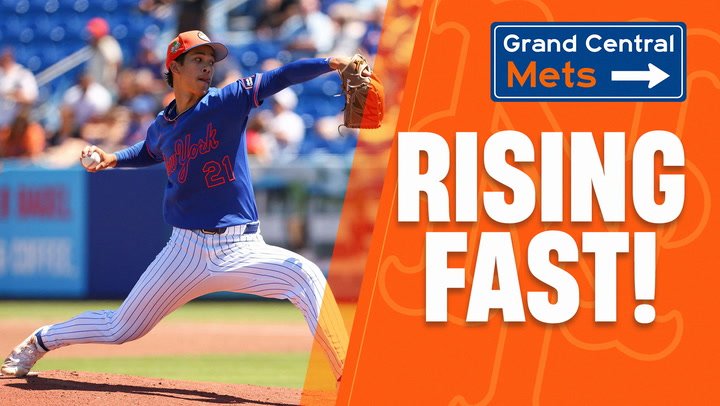 The New York Mets have some top-end prospect names who could be making their Big Apple debut soon. Jonah Tong has one of the better K/9 marks in all of minor league baseball, A.J. Ewing continues to showcase his flashing speed upon his Triple-A promotion, and Dylan Ross looks like he could be a lockdown reliever. View the full article
 -
Toronto Blue Jays Pitchers of the Month - March/April 2026
DiamondCentric posted an article in Jays Centre
 The Toronto Blue Jays' pitching staff has been a tale of two extremes. There have been some outstanding performances by the guys in this article, but then there have been absolute snoozefests like Brendon Little and his 24.55 ERA. All the injuries the staff has endured haven't helped matters. Trey Yesavage, José Berríos, Shane Bieber, Yimi García, and Bowden Francis all started the season on the injury list. However, Yesavage made his first start of the season on April 28, and Berríos is making rehab starts with a return to the Blue Jays in sight. Unfortunately, more pitchers have joined the injury list. Cody Ponce suffered an ACL injury in his first start this season, and, more recently, Max Scherzer was added to the injury list with forearm tendinitis and ankle inflammation. Eric Lauer has been filling in as a member of the starting rotation, but he's struggled with a 6.00 ERA, a 1.52 WHIP, and a 20:13 strikeout-to-walk ratio over 27 innings. The Blue Jays were so desperate for arms that they signed Patrick Corbin in free agency, a name no Blue Jays fan thought they'd see on the team. His first start was rough, allowing four earned runs to the Minnesota Twins, but he has settled down since then, allowing only four earned runs over three starts. However, that's enough doom and gloom. These were the bright spots on the Blue Jays' pitching staff in March and April. Honourable Mentions Braydon Fisher - 17 IP, 1.59 ERA, 16 K, 6 BB, 4 holds, 3.25 FIP In his second MLB season, Braydon Fisher has been thrust into high-leverage situations at times, converting four holds in 13 relief appearances. His latest high-leverage situation was on April 29 against the Boston Red Sox. He replaced Lauer in the fifth inning of a 5-1 game with the bases loaded and one out. The first batter up was Willson Contreras, who already had homered in the game, but Fisher got Contreras to line into a double play. His four holds are one short of last year's total, when he made 51 relief appearances. The one issue Fisher has had is allowing free passes. He has a 2.67 strikeout-to-walk ratio, which is fewer than his 3.26 ratio last season. However, Fisher has proven to be able to get out of innings with runners on base. Kevin Gausman - 40.2 IP, 3.10 ERA, 40 K, 8 BB, 3.35 FIP Kevin Gausman has been a prototypical ace, delivering dominant performances to start the season. He has thrown six innings or more in four of his seven starts and was able to keep his pitch count under 92 in each of those four games. In three of those, he didn't walk a batter, which supported his low pitch count. The ace accumulated 21 strikeouts through his first two starts, but that was against the Athletics and Chicago White Sox. Over his next five starts, he totaled 19 strikeouts, though he faced some tougher competition: the Los Angeles Dodgers, Milwaukee Brewers, and Arizona Diamondbacks. March/April Pitchers of the Month #3 - Tyler Rogers - 15.1 IP, 0.59 ERA, 8 K, 4 BB, 7 holds, 2.87 FIP The submariner, Tyler Rogers, has been electric since signing with Toronto in free agency, allowing only one earned run this season. His deceptive arm motion usually leads to a high strikeout-to-walk rate, but this season, his 6.8 percent K-BB% is a career low over his eight MLB seasons. Though the sample is small, this is just the second time that rate has been below 12.5 percent. Rogers was a candidate to close games once Jeff Hoffman was removed from the role, but Louis Varland has seemingly been cemented into the closer role. This setup allows Rogers to continue thriving, entering the game in the eighth inning and helping to hold the lead. #2 - Dylan Cease - 31.1 IP, 2.87 ERA, 49 K, 17 BB, 1.82 FIP Dylan Cease has been worth every penny the Blue Jays gave him in the offseason. He ranks fourth in strikeouts among all MLB starting pitchers, but he's the only one to have thrown 12 strikeouts in a game twice. In fact, there's only been one other pitcher to strike out 12 batters in a game, the Brewers' Kyle Harrison. Allowing walks has always been a struggle for Cease, and this season is no different. He's given up two or more free passes in all six of his starts. With the high walk and strikeout totals, the righty builds up a high pitch count, which means he has only pitched six innings once. However, he's thrown more than 165 innings in five straight seasons, so he should continue to provide a Blue Jays team that's bleeding from injuries with a stable top-of-the-rotation arm. #1 - Louis Varland - 16 IP, 0.56 ERA, 26 K, 4 BB, 3 holds, 4 saves, 0.62 FIP The MVP of the bullpen has been Louis Varland. He has been thrust into games in high-leverage, mid-inning situations and has been outstanding. It's not his first time being used in high-leverage situations, as he had 17 holds for the Minnesota Twins over 49 innings before being traded to the Blue Jays at last season's trade deadline. Though it's come in a small sample, his 43.3 strikeout percentage is a career high over his five MLB seasons. His success has made him the man to take over the ninth inning after Hoffman's struggles got him removed from the closer role. Varland has converted all four of his save chances while allowing only one run and striking out seven in those outings. He has a firm grasp on the role and doesn't look like he'll relinquish his duties anytime soon. View the full article
 -
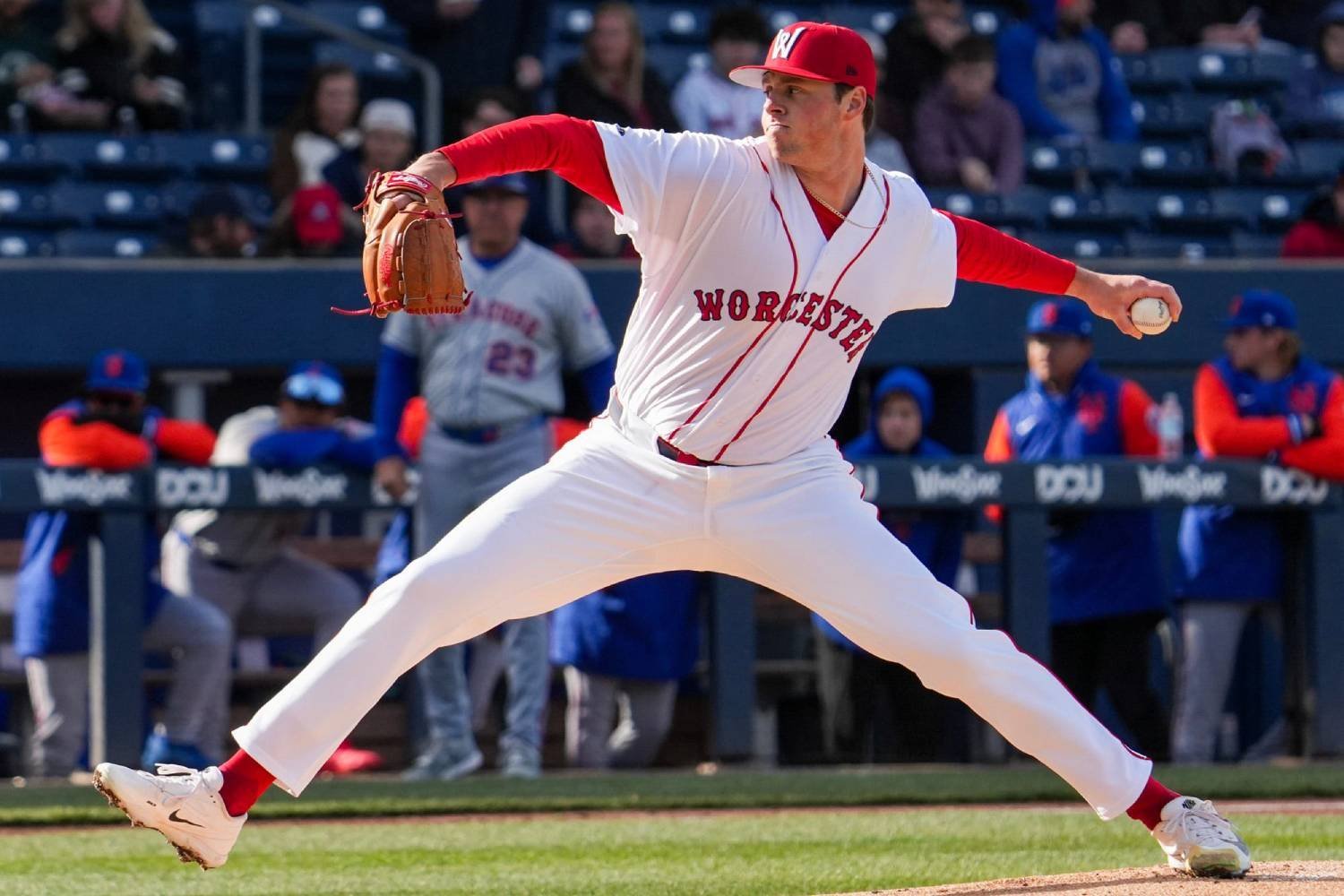 It is Jake Bennett's day. The Boston Red Sox called up Bennett, a left-hander, from Triple-A Worcester to make his MLB debut as the starter in Friday's game against the Houston Astros. Infielder Nate Eaton was optioned to Triple-A on Thursday. Bennett, Talk Sox's No. 12 prospect, was acquired from the Washington Nationals in the offseason in a trade for another top prospect, right-hander Luis Perales. In five starts at Worcester, Bennett had a sparkling 0.86 ERA in 21 innings, allowed just three runs (two earned) on 12 hits with three walks and 16 strikeouts. He has a chance to stick in the rotation with the recent injury to ace Garrett Crochet. Bennett was a second-round pick of the Nationals in 2022 out of Oklahoma. Bennett missed the entire 2024 season after undergoing Tommy John surgery in September 2023. He returned in 2025 to appear in 19 games (one in relief) and compiled a 2.27 ERA in 75⅓ innings with 19 walks and 64 strikeouts. View the full article
 -
Jeremiah Estrada Comes Off Injured List, Rejoins Padres' Bullpen
DiamondCentric posted an article in Padres Mission
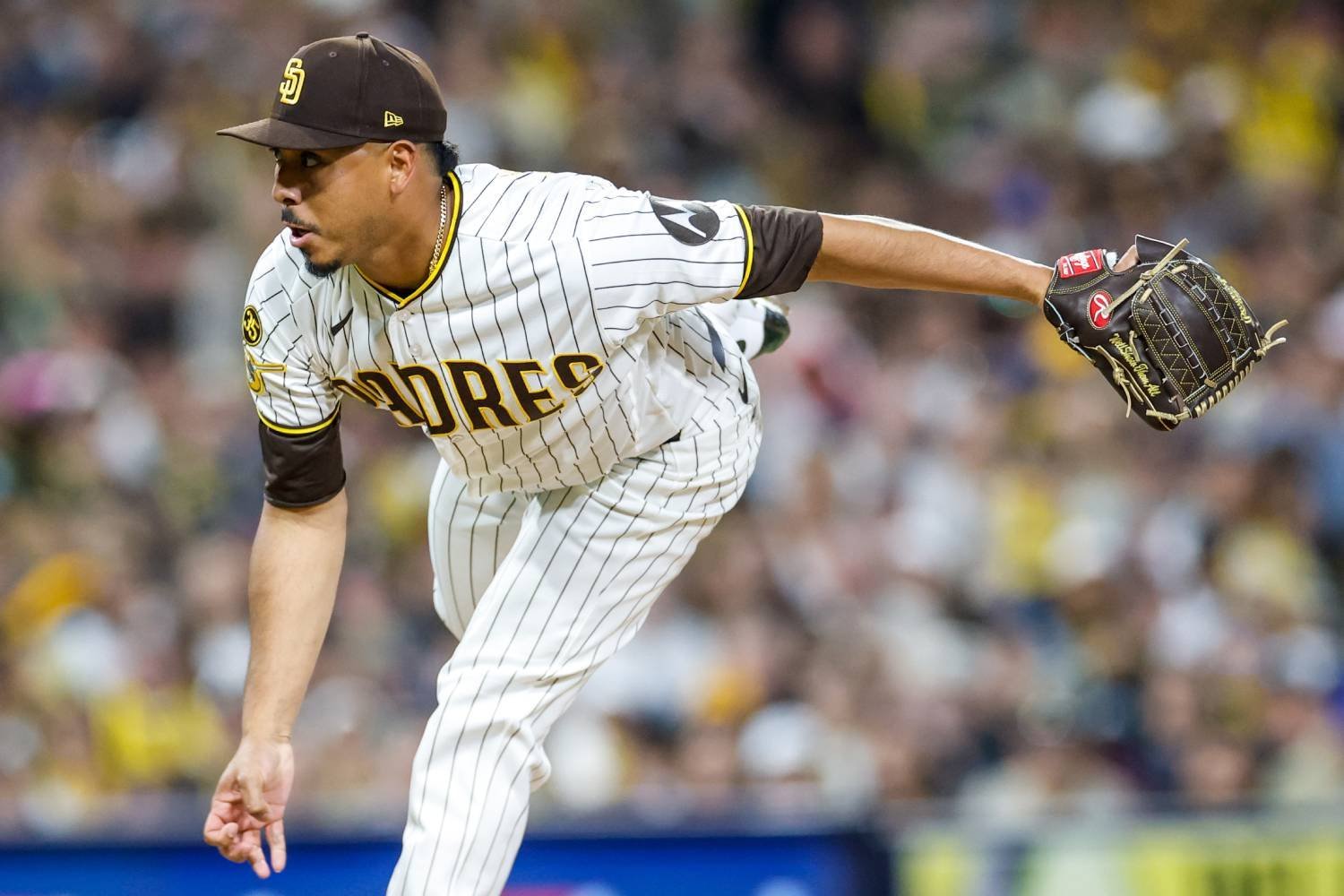 Jeremiah Estrada's stay on the injured list wasn't very long. The right-handed reliever was activated from the 15-day injured list Friday by the San Diego Padres, who formally announced right-handed reliever David Morgan being optioned to Triple-A El Paso, which happened Thursday. Estrada, a vital piece of the Friars' bullpen, had been on the IL since April 10 with tendinitis in his right elbow. He made just two rehab appearances, one last Friday for Low-A Lake Elsinore and another Tuesday for El Paso. Estrada pitched one inning in each appearance and didn't allow a hit or a run, walking one and striking out two combined. Estrada's velocity, which in part led to his IL placement, was back to its regular upper 90s after being about 5 mph slower before going on the IL. Activating Estrada still leaves left-hander Yuki Matsui on the verge of returning from his strained left groin. Matsui's rehab assignment started April 4, meaning it runs through this weekend before expiring. View the full article
 -
Mets Roster Central: Itinerant Infielders Assemble
DiamondCentric posted an article in Grand Central Mets
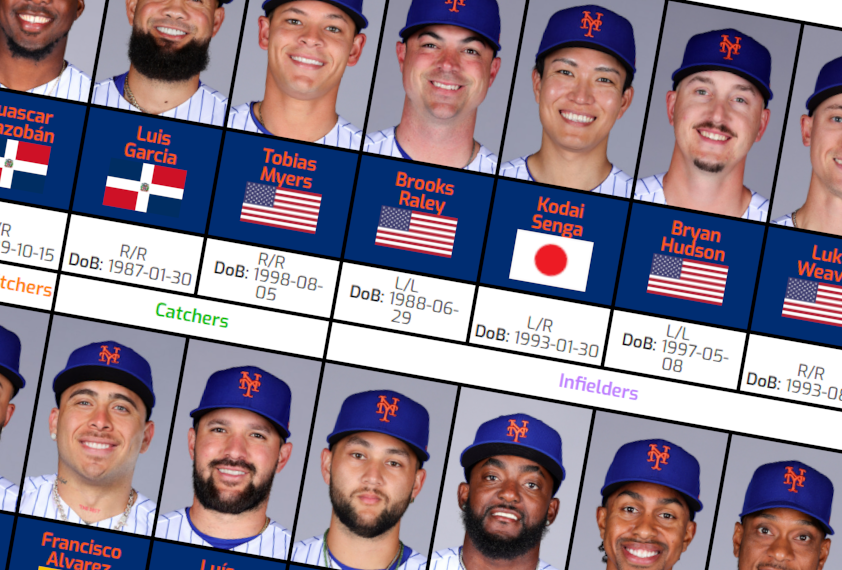 The Mets' odorous play of late (and beyond late, at this point) hasn't really been the result of health mishaps, but injuries are starting to mount. Interestingly, they have been bringing in a series of veteran reinforcements in the infield department, both at the MLB and minor-league levels. The redundancy has led to speculation in the Mets Roster Central Ranks. Is this all simply to fill in gaps for injured players or is some dealing in the works? Transactions, 4/27/2026 COMING Signed away from Veracruz (Mexican League) to Minor-League Contract, Assigned to Binghamton Infielders TT Bowens R/R DoB: 1998-05-27 High Level: AAA (2026) Joining Binghamton will be new shortstop TT Bowens. While his name speaks of some legendary Nashville picker of the Ryman Auditorium stage, TT (Terry) hails from Connecticut by way of an extended tenure with the Orioles organization. His Baby Bird career was marked by alternating seasons of excellence and disaster. Really — he'd have seasons of OPSes in the .800s followed by campaigns in the .300s. Let's hope his glove was enough to keep his career going in those lean times — although he mostly plays corner spots. Scouts agree that he's big and strong (6'4", 240) and has excellent teeth. Transactions, 4/29/2026 COMING COMING Signed away from Southern Maryland (Atlantic League) to Minor-League Contract, Assigned to St. Lucie Cleared Waivers, Assigned to Syracuse Infielders Outfielders Jamari Baylor Tommy Pham R/R DoB: 2000-08-25 High Level: MLB (2026) R/R DoB: 32210 High Level: MLB (2026) Oft-observed here is that Tommy Pham never really got a pre-season, and while his failures as 2026 Met are certainly noted, he kind of was set up to fail. So it's good to see him clear waivers and get a chance to get some work in. If he joins the big-league club again, hopefully it is with his game honed. MLB injuries creating a sucking effect throughout the minors. When a guy is promoted from AAA to fill in for Flushing, somebody has to be promoted from every level to fill in at the level above, often pushing someone beyond their depth. But never fear, St. Lucie has added 25-year-old shortstop Jamari Baylor, exile from three MLB organizations and two Atlantic League clubs. Jamari hadn't had an employer yet this season, so his stay at St. Lucie is probably a temporary assignment to get in shape for a stint in the upper minors that may or may not come. Jamari profiled through most of his career as a plus runner who worked counts well and avoided strikeouts, but last year in The Atlantic League, he started aiming for the fences, and while his strikeouts ballooned to 100 in 98 games, he became one of the league's top hitters with an eye-opening .303 / .421 / .552 // .973 line, slugging 21 homers and driving in 77. Fun Fact: One of Jamari's teammates with The Southern Maryland Blue Crabs was 2016 Met Alejandro De Aza, still grinding it out at 41 years old! Transactions, 4/30/2026 GOING GOING NEUTRAL COMING COMING Designated for Assignment Added to 10-Day Injured List Retroactive to April 26 with Lumbar Spine Disc Herniation Transferred from Infield Promoted from Syracuse Claimed off Waivers from SAC, Not Yet Activated Relief Pitchers Outfielders Outfielders Relief Pitchers Infielders Carl Edwards, Jr. Luis Robert, Jr. Brett Baty Austin Warren Andy Ibáñez R/R DoB: 33484 High Level: MLB (2026) R/R DoB: 1997-08-03 High Level: MLB (2026) L/R DoB: 1999-11-13 High Level: MLB (2026) R/R DoB: 1996-02-05 High Level: MLB (2026) R/R DoB: 1993-04-03 High Level: MLB (2026) COMING Promoted from Syracuse Infielders Eric Wagaman R/R DoB: 35656 High Level: MLB (2026) As the Mets closed out a disastrous (disastrous!) April, the organization made a pile changes to the player roster as all eyes looked to manager's office. Luis Robert, for whom an extended outage is expected, has been replaced by backup corner infielder Eric Wagaman, who tends to hit like a backup shortstop, and we had falsely expected was to reside in Syracuse until a BREAK GLASS alarm went off, but these times are perhaps more alarming than expected. This seemingly pushes underperforming (as if that is a distinguishing characteristic) infielder Brett Baty back to the outfield. Robert, it must be noted hits the Injured list having done and impressive job of finding his level in a small sample size: 2024: .657 OPS and 86 OPS+ in 425 PA 2025: .661 OPS and 85 OPS+ in 431 PA 2026: .655 OPS and 87 OPS+ in 98 PA One is tempted to make a cheap crack about water finding its level. But cheap is cheap and Luis ain't water. Please heal up and come back and stick it to the haters, Lu. Astounding no one, Carl Edwards, Jr. surrendering one paltry run in six innings while striking out 11 (!!) has ironically but predictably earned him a ticket on DFA train. Odds are high that he will have a new employer this time next week. We are happy to see the equally impressive Austin Warren back in uniform but will always deplore this depraved game of Reliever Roulette. After yesterday's debackle deboccle debacle, the Mets made a waiver claim on yet another infielder — Andy Ibáñez, who had struggled in sporadic use with the Athletics this year, but had a serviceable career going with the Tigers before that. A corresponding move is on the horizon, as Andy is out of options, so expect the Mets to (a) throw him right back on the waiver wire, (b) demote Ronny Maurcio, or perhaps (c) announce a deal (with Mauricio's contract being one of their more tradeable commodities). The remains of the day will tell us much, but it is clear that Ibáñez brings a strong diacritical markings game — with an accent acute followed by a tilde recalling fond memories of the back of Rey Ordóñez' jersey. But here at Mets Roster Central, we are seeing a strategy even more subtle than the Mets nakedly ambitious attempt to put lovers of punctuation in the seats. We are seeing a throwback to 2024 when the team added a late-career Cuban reserve secondbaseman at a similar point in the schedule and turned their season around. You heard it here first. Start saving for playoff tickets NOW!!!! Your 2026 New York Mets Starting Pitchers Clay Holmes Nolan McLean Freddy Peralta David Peterson Christian Scott R/R DoB: 1993-03-27 R/R DoB: 2001-07-24 R/R DoB: 2996-06-04 L/L DoB: 1995-09-03 R/R DoB: 1999-06-15 Relief Pitchers Huascar Brazobán Craig Kimbrel Sean Manaea Tobias Myers Brooks Raley Austin Warren Luke Weaver R/R DoB: 1989-10-15 R/R DoB: 32291 R/L DoB: 1992-02-01 R/R DoB: 1998-08-05 L/L DoB: 1988-06-29 R/R DoB: 1996-02-05 R/R DoB: 1993-08-21 Relief Pitchers Catchers Infielders Devin Williams Francisco Alvarez Luís Torrens Bo Bichette Ronny Mauricio MJ Melendez Marcus Semien R/R DoB: 1994-09-21 R/R DoB: 2001-11-01 R/R DoB: 1996-05-02 R/R DoB: 1998-03-05 S/R DoB: 2001-04-04 L/R DoB: 1993-11-29 R/R DoB: 1990-09-17 Infielders Outfielders Mark Vientos Eric Wagaman Brett Baty Carson Benge Austin Slater Juan Soto Tyrone Taylor R/R DoB: 1993-12-11 R/R DoB: 35656 L/R DoB: 1999-11-13 L/R DoB: 2003-01-20 R/R DoB: 33951 L/L DoB: 1998-10-25 R/R DoB: 34356 Also on 40-Player Roster Starting Pitchers Relief Pitchers Tylor Megill Kodai Senga Jonah Tong Alex Carrillo Reed Garrett Joey Gerber Justin Hagenman R/R DoB: 1995-07-28 L/R DoB: 1993-01-30 R/R DoB: 2003-06-19 R/R DoB: 1997-06-06 R/R DoB: 1993-01-02 R/R DoB: 1997-05-03 R/R DoB: 1996-10-07 On 60-Day Injured List with torn right UCL. On 15-Day Injured List with Lumbar Spine Inflammation With Syracuse With Syracuse On 60-Day Injured List — right UCL surgery and nerve relocation surgery. With St. Lucie on Rehab Assignment On 60 Day Injured List with fractured rib. Relief Pitchers Catchers Infielders A.J. Minter Dedniel Núñez Jonathan Pintaro Dylan Ross Hayden Senger Andy Ibáñez Francisco Lindor L/L DoB: 1993-09-02 R/R DoB: 1996-06-05 R/R DoB: 1997-11-07 R/R DoB: 2000-09-01 R/R DoB: 1997-04-03 R/R DoB: 1993-04-03 S/R DoB: 1993-11-14 With Syracuse on Rehab Assignment On 60-Day Injured List — right UCL surgery. With Syracuse With Syracuse With Syracuse Not Yet Activated On 10-Day Injured List with Strained Left Calf Infielders Jorge Polanco Nick Morabito Luis Robert, Jr. Jared Young S/R DoB: 1999-11-13 R/R DoB: 2003-05-07 R/R DoB: 1997-08-03 L/R DoB: 1995-07-09 On 10-Day Injured List with right wrist contusion. With Syracuse On 10-Day Injured List with Lumbar Spine Disc Hernitaion On 10-Day Injured List with torn left meniscus. Deslgnated for Assignment Carl Edwards, Jr. R/R DoB: 33484 DFA'd, 2026-04-30. Your Mets Coaching Staff Manager Bench Coach Pitching Coach Hitting Coordinator Third Base Coach First Base Coach Bullpen Coach Ass't Pitching Coach Carlos Mendoza Kai Correa Justin Willard Jeff Albert Tim Leiper Gilbert Gomez José Rosado Dan McKinney DoB: 1979-11-27 DoB: 1989-07-14 DoB: 1990-09-09 DoB: 1992-08-16 DoB: 1996-07-19 DoB: 1992-03-08 DoB: 1974-11-09 DoB: 1989-06-06 Hitting Coach Strategy Coach Catching Coach Coaching Assistant Bat'g Practice Pitcher Equipment Manager Bullpen Catchers Bullpen Catchers Troy Snitker Danny Barnes J.P. Arencibia Rafael Fernandez Kevin Mahoney Kevin Kierst Eric Langill Dave Racaniello DoB: 1988-12-05 DoB: 1989-10021 DoB: 1986-01-05 DoB: 1988-08-03 DoB: 1987-05-11 DoB: 1964-07-09 DoB: 1979-04-09 DoB: 1978-06-03 Your Mets Training Staff Director of Player Health Head Athletic Trainer Assistant Athletic Trainer Reconditioning Coordinator Reconditioning Therapist Head Performance Coach Assistant Performance Coach Performance Coordinator Soft Tissue Specialist Brian Chicklo Joseph Golia Bryan Baca Sean Bardanett Josh Bickel Dustin Clarke Tanner Miracle Jeremy Chiang Hiroto Kawamura DoB: 1972-07-17 DoB: 1978-??-?? DoB: Circa 1980 DoB: 1988-06-23 DoB: 1996-??-?? DoB: 1987-??-?? DoB: 1991-??-?? DoB: ????-??-?? DoB: 22846 View the full article
 -
Kody Clemens' Breakout is Exactly What the Twins Need
DiamondCentric posted an article in Twins Daily
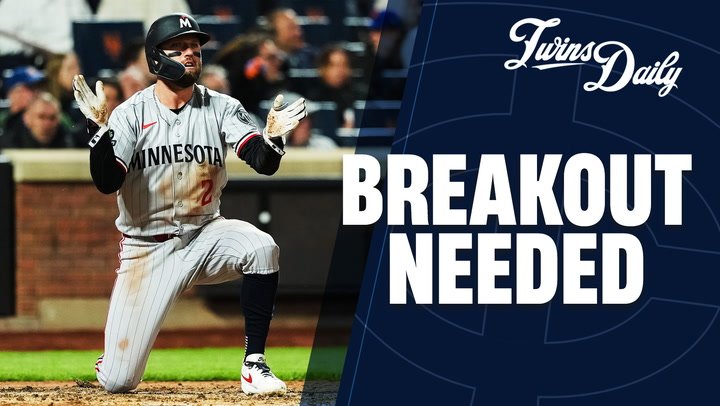 After a brutal start to the year, Kody Clemens is starting to find his footing. While he's not a household name, his skill set is one that this Twins team could use in the lineup every day. View the full article
 -
 David Shields and Drew Beam led a strong day on the mound for the Royals' affiliates. Shields struck out six over five scoreless innings as the Quad Cities River Bandits completed a doubleheader sweep of Wisconsin, and Beam tossed a quality start in Northwest Arkansas's 4-2 win over Springfield. Ramon Ramirez homered in game one and added two RBI in game two. The Omaha Storm Chasers walked off Louisville, and the Columbia Fireflies lost. Royals Transactions: No Roster Moves Storm Chasers Walk Off Bats With Two-Out Ninth-Inning Rally The Omaha Storm Chasers rallied for two runs in the bottom of the ninth to walk off the Louisville Bats, 8-7. Trailing 7-5 entering the final frame after Louisville plated three unearned runs in the top half, Omaha mounted a two-out rally. With two outs, Tyler Tolbert singled, and Kameron Misner followed with a game-tying RBI single. Cleanup hitter Drew Waters then delivered the walk-off RBI single to bring home the winning run. Leadoff hitter John Rave got Omaha on the board first with a two-run home run in the fifth inning. Waters reached base three times, finishing 2-for-4 with a double, an RBI, and a walk. Luca Tresh provided the biggest blow before the ninth, launching a three-run homer in the eighth to put Omaha in front 6-4. Misner finished 1-for-4 with a walk, an RBI, and a stolen base, while Tolbert went 2-for-5 with a stolen base of his own. Abraham Toro added a triple, and Luke Maile drove in a run. Ryan Ramsey started and worked five innings, allowing two runs on four hits with four walks and two strikeouts. Shane Panzini gave up a two-run homer in his only inning of work. Anthony Gose and Chazz Martinez each tossed a scoreless frame. Steven Cruz earned the win despite blowing the save when his throwing error opened the door for three unearned runs in the ninth. Omaha left six runners on base. Player AB R H RBI BB K John Rave, RF 5 1 1 2 0 1 Tyler Tolbert, SS 5 1 2 0 0 1 Kameron Misner, CF 4 2 1 1 1 0 Drew Waters, LF 4 1 2 1 1 1 Luca Tresh, DH 4 1 1 3 0 1 Abraham Toro, 1B 3 1 1 0 1 0 Luke Maile, C 3 1 0 1 1 1 Josh Rojas, 2B 3 0 0 0 1 1 Kevin Newman, 3B 4 0 1 0 0 1 Player IP H R ER BB K HR Ryan Ramsey 5 4 2 2 4 2 0 Shane Panzini 1 2 2 2 0 0 1 Anthony Gose 1 0 0 0 0 0 0 Chazz Martinez 1 0 0 0 0 0 0 Steven Cruz 1 3 3 0 0 2 0 Naturals Hold Off Cardinals Behind Beam's Quality Start The Northwest Arkansas Naturals defeated the Springfield Cardinals 4-2 behind a quality start from Drew Beam and timely two-out hitting. Beam tossed six innings of one-run ball, allowing just two hits with two walks and a strikeout to earn his first win of the season. The Naturals broke through in the fourth inning. Brett Squires singled, Spencer Nivens followed with a double, and Canyon Brown's RBI groundout drove in the first run. Justin Johnson then delivered an RBI double to make it 2-0. Springfield got one back with an RBI single in the fifth, but Northwest Arkansas answered in the seventh with a two-out rally. Justin Johnson drew a leadoff walk, and after two strikeouts, Sam Kulasingam and Squires drew walks to load the bases. Nivens then ripped a two-run single to break the game open at 4-1. Nivens led the offense, going 2-for-4 with a double, two RBI, a stolen base, and a run scored. Justin Johnson finished 1-for-3 with a double, an RBI, a walk, and a stolen base. Colton Becker reached base twice with a double and a walk, and Squires reached three times with a hit and two walks. Leadoff hitter Carson Roccaforte added a walk and a stolen base. Beam earned the win with his quality start. Dennis Colleran Jr. struck out two in a hitless seventh for the hold. Zachary Cawyer surrendered a run on two hits in the eighth, and Brandon Johnson struck out three to earn the save in a two-walk ninth. The Naturals stranded eight runners on base. Player AB R H RBI BB K Carson Roccaforte, CF 2 0 0 0 1 2 Rudy Martin Jr., RF 4 0 0 0 0 2 Sam Kulasingam, 2B 2 1 0 0 2 0 Brett Squires, 1B 3 1 1 0 1 2 Spencer Nivens, LF 4 1 2 2 0 2 Canyon Brown, C 4 0 0 1 0 2 Connor Scott, DH 4 0 0 0 0 1 Colton Becker, SS 2 0 1 0 2 1 Justin Johnson, 3B 3 1 1 1 1 0 Player IP H R ER BB K HR Drew Beam 6 2 1 1 2 1 0 Dennis Colleran Jr. 1 0 0 0 0 2 0 Zachary Cawyer 1 2 1 1 0 2 0 Brandon Johnson 1 0 0 0 2 3 0 River Bandits Pound Out 11 Runs With Four-Homer Second Inning In Game One The Quad Cities River Bandits exploded for 10 runs across the first two innings on their way to an 11-5 victory in game one of the doubleheader, hammering four home runs in a six-run second inning alone. After a four-run first capped by Derlin Figueroa's three-RBI double, Quad Cities turned the second into a homer derby. Tyriq Kemp led off with a solo shot. Cleanup hitter Ramon Ramirez followed with a three-run blast, scoring Nolan Sailors and Blake Mitchell. Austin Charles added a solo home run, and Figueroa capped it with a solo homer of his own. Figueroa finished 2-for-3 with a double, a home run, four RBI, and a walk. Charles went 2-for-3 with a triple, a home run, two RBI, three runs scored, and a walk. Cleanup hitter Ramirez added a 1-for-3 line with the three-run shot, two runs scored, and a walk. Kemp went 1-for-3 with the homer and a walk. Leadoff hitter Sailors added a double in a 1-for-5 line. Mitchell drew three walks and scored twice. Asbel Gonzalez walked twice, scored a run, and stole a base. Mason Miller started but exited after 3 2/3 innings, allowing one run on a hit with five walks and three strikeouts. Cory Ronan recorded one out and earned the win. Aiden Jimenez closed it with three innings, surrendering four runs on seven hits, including two home runs, with two strikeouts to record his first save. The Quad Cities left five runners on base. Player AB R H RBI BB K Nolan Sailors, RF 5 1 1 0 0 1 Asbel Gonzalez, CF 2 1 0 0 2 0 Blake Mitchell, C 1 2 0 0 3 1 Ramon Ramirez, DH 3 2 1 3 1 0 Luke Pelzer, LF 4 0 0 0 0 1 Austin Charles, SS 3 3 2 2 1 1 Derlin Figueroa, 3B 3 1 2 4 1 0 Jose Cerice, 1B 4 0 1 0 0 2 Tyriq Kemp, 2B 3 1 1 1 1 1 Player IP H R ER BB K HR Mason Miller 3 2/3 1 1 1 5 3 0 Cory Ronan 1/3 0 0 0 0 0 0 Aiden Jimenez 3 7 4 4 0 2 2 Shields, Bullpen Combine For Two-Hit Shutout In Game Two David Shields was dominant on the mound as the Quad Cities River Bandits cruised to an 8-0 victory in game two of the doubleheader, completing a sweep of the Timber Rattlers. Shields fired five scoreless innings, scattering two hits with six strikeouts and two walks to earn his second win. Quad Cities scored in three different innings. Trevor Werner singled to start the third, Asbel Gonzalez and Blake Mitchell drew back-to-back walks, and Ramon Ramirez singled home Werner. Cleanup hitter Jose Cerice followed with a sacrifice fly to drive in Gonzalez, and Luke Pelzer added an RBI single to score Mitchell. In the fifth, Cerice ripped a two-run single to plate Mitchell and Ramirez. The Bandits added three more in the sixth, when bases-loaded walks plated three runs after Charles, Werner, and Diego Guzman set the table. Cleanup hitter Cerice led the offense, going 1-for-2 with three RBI and a walk. Ramirez finished 2-for-3 with a double, two RBI, two runs scored, and a walk. Pelzer added two hits and an RBI. Austin Charles went 2-for-4. Mitchell reached base three times with a hit, two walks, two runs, and an RBI. Werner went 1-for-3 with two runs scored. Gonzalez walked twice and scored. Behind Shields, Kamden Edge worked a hitless inning with a strikeout, and Yimi Presinal closed it with a walk-aided scoreless ninth. The trio combined for a two-hit shutout. The Bandits left seven runners on base. Player AB R H RBI BB K Asbel Gonzalez, CF 2 1 0 0 2 2 Blake Mitchell, DH 2 2 1 1 2 0 Ramon Ramirez, C 3 1 2 2 1 0 Jose Cerice, 3B 2 0 1 3 1 0 Luke Pelzer, LF 4 0 2 1 0 1 Austin Charles, SS 4 1 2 0 0 0 Erick Torres, RF 4 0 0 0 0 2 Trevor Werner, 1B 3 2 1 0 0 0 Diego Guzman, 2B 3 1 0 0 1 2 Player IP H R ER BB K HR David Shields 5 2 0 0 2 6 0 Kamden Edge 1 0 0 0 0 1 0 Yimi Presinal 1 0 0 0 1 0 0 Fireflies Fall To Pelicans After Four-Run Second Inning The Columbia Fireflies dropped a 4-2 decision to the Myrtle Beach Pelicans, unable to recover from a four-run second inning that put them in an early hole. Columbia struck first at the top of the second. Yandel Ricardo doubled, Roni Cabrera walked, and Jhosmmel Zue's groundout drove in Ricardo for the early lead. The Pelicans answered with four runs in the bottom half. Hiro Wyatt was pulled mid-inning with the bases loaded after issuing a hit-by-pitch that forced in a run. All four runs were charged to him as earned. The Fireflies didn't get back on the board until the eighth, when leadoff hitter Henry Ramos reached and cleanup hitter Hyungchan Um lifted a sacrifice fly to plate him. Columbia couldn't muster anything in the ninth. Ricardo led the offense, finishing 1-for-3 with a double, a run scored, and a walk. Josh Hammond added a hit in a 1-for-3 line with a walk. Zue went 1-for-4 with a double and an RBI. Ramos walked, scored, and reached once. Cabrera drew a walk and stole a base. Wyatt took the loss after 1 2/3 innings, allowing four earned runs on two hits with two walks. Henson Leal stabilized things with 3 1/3 scoreless innings, allowing two hits with a strikeout. Brandon Herbold and Max Martin combined for three additional hitless and scoreless innings, striking out four batters between them. Columbia left seven runners on base. Player AB R H RBI BB K Henry Ramos, LF 3 1 0 0 1 0 Sean Gamble, CF 3 0 0 0 1 2 Josh Hammond, 3B 3 1 0 1 2 Hyungchan Um, C 3 0 0 1 0 1 Yandel Ricardo, SS 3 1 1 0 1 0 Stone Russell, 2B 3 0 0 0 1 1 Roni Cabrera, RF 3 0 0 0 1 3 Jhosmmel Zue, 1B 4 0 1 1 0 1 Ivan Sosa, DH 4 0 0 0 0 3 Player IP H R ER BB K HR Hiro Wyatt 1 2/3 2 4 4 2 0 0 Henson Leal 3 1/3 2 0 0 0 1 0 Brandon Herbold 1 2 0 0 0 2 0 Max Martin 2 2 0 0 0 2 0 Top-20 Royals Prospect Performances Carter Jensen — DNP Blake Mitchell — Game 1: 0-for-1, 2 R, 3 BB, 1 K | Game 2: 1-for-2, 2 R, 1 RBI, 2 BB David Shields — 5 IP, 2 H, 0 ER, 6 K, 2 BB, W Kendry Chourio — DNP Ben Kudrna — DNP Sean Gamble — 0-for-3, 1 BB, 2 K Josh Hammond — 1-for-3, 1 BB, 2 K Ramon Ramirez — Game 1: 1-for-3, 2 R, HR, 3 RBI, 1 BB | Game 2: 2-for-3, 1 R, 2B, 2 RBI, 1 BB Drew Beam — 6 IP, 2 H, 1 ER, 1 K, 2 BB, W (Quality Start) Asbel Gonzalez — Game 1: 0-for-2, 1 R, 2 BB, SB | Game 2: 0-for-2, 1 R, 2 BB, 2 K Yandel Ricardo — 1-for-3, 1 R, 2B, 1 BB Felix Arronde — DNP Luinder Avila — DNP Daniel Vazquez — DNP Steven Zobac — DNP Carson Roccaforte — 0-for-2, 1 BB, 2 K, SB Blake Wolters — DNP Michael Lombardi — DNP Warren Calcaño — DNP Frank Mozzicato — DNP View the full article
 -
Unfiltered's 100th episode! Full Marlins analysis entering May
DiamondCentric posted an article in Fish On First
 Coming off a gutsy road series win against the reigning World Series champions, AJ Ramos, Kevin Barral and Isaac Azout bring you the 100th episode in Fish Unfiltered history. They cover a ton of ground on this one, including Xavier Edwards' game-clinching double play on Wednesday, how the Miami Marlins will navigate high-leverage situations while Pete Fairbanks is on the shelf, putting Liam Hicks' breakout in historical context and what to expect from Don Mattingly as Philadelphia Phillies interim manager. You can find Fish Unfiltered and Fish On First LIVE on the Fish On First YouTube channel, Apple Podcasts, Spotify or wherever else you get your pods. Next up for the Fish, they host Mattingly and the Phillies for a rare four-game wrap-around series, beginning on Friday and continuing through Monday. Last season, the Phillies went 9-4 against Miami in head-to-head competition. View the full article
 -
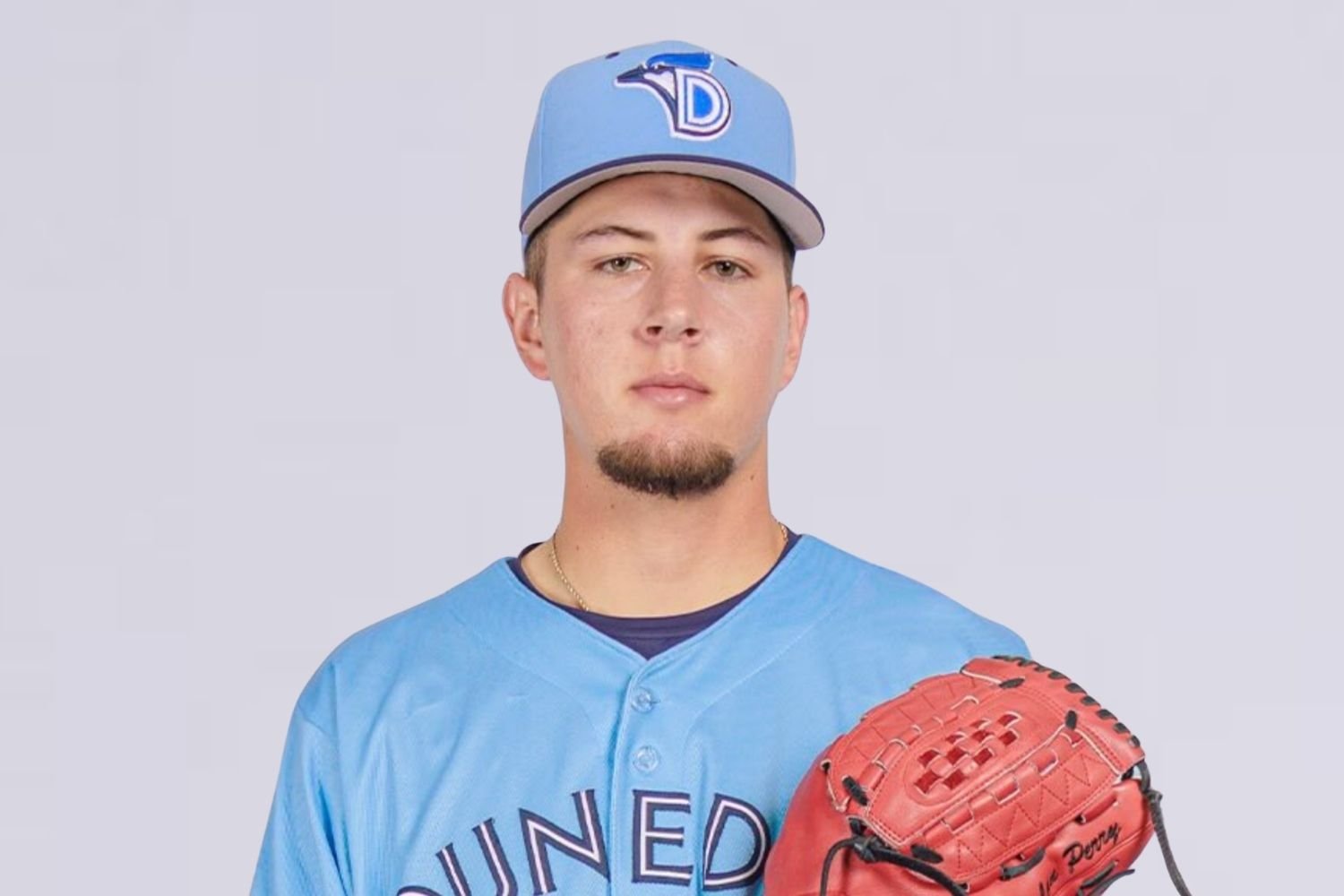 Welcome to the season's first installment of Minor League Starting Pitchers of the Month here on Jays Centre! While Toronto's farm system hasn't exactly been at the top of the league for a few years now, things definitely appear to be trending upward, especially on the pitching side. Lately, the Blue Jays have acquired and developed arms like Trey Yesavage, Mason Fluharty, and Braydon Fisher in short order. Now, thanks in part to the work of key figures in the front office such as veteran amateur scouting director Marc Tramuta and pitching director Justin Lehr, their prospect pool is full of intriguing starters, especially in the lower levels of the minors. Here's who stood out from the first month of games in 2026. Honourable Mentions Richard Gallardo, RHP (AA): 4 GS, 17.0 IP, 1.06 ERA, 4.28 FIP, 4.77 xFIP, 24.4% CSW The underlying numbers suggest the 24-year-old Gallardo's microscopic ERA is a bit of a red herring, but he has still been the centerpiece for a New Hampshire rotation that doesn't currently have anyone else with an ERA under 4.20. The Blue Jays took him from the Cubs in the minor league portion of the 2024 Rule 5 draft, and he missed all of 2025 with an elbow injury, but he has come back strong. Thanks to his ability to pound the zone with a mid-90s sinker, he's running a 60% groundball rate for the Fisher Cats, and opponents are hitting just .176 against him. Landen Maroudis, RHP (A+): 5 GS, 16.0 IP, 1.69 ERA, 3.23 FIP, 5.07 xFIP, 24.2% CSW After losing more than a calendar year due to elbow surgery, the 2023 fourth-round pick has fared well in his first stretch outside the player development complex in Florida. FanGraphs gave him 55 future value grades on his sinker, changeup, and slider, and the fact that his walk rate is down to ~7% after control issues plagued him following his return from injury is a good sign. He's not overpowering and gets hitters out in a variety of different ways, although a next step for him would be to keep the ball down, as opposing hitters are elevating, hence the bloated xFIP. Still, this is a promising development for a pitcher coming off a major injury who wasn't quite himself upon his immediate return. Hitters are 5 for their last 32 against him. Top 3 #3. Daniel Guerra, RHP (A+): 5 GS, 24.1 IP, 2.22 ERA, 3.63 FIP, 3.50 xFIP, 32.6% CSW Signed as an 18-year-old minor league free agent from Venezuela back in 2022, Guerra has quickly become a riser on the edges of Toronto's system and a workhorse for the Vancouver Canadians. He first broke out last season with a solid year in Dunedin, and his promotion to the Northwest League, where he's still younger than the average pitcher, has been quite the success so far. Standing at 6-foot-6 and 230 lbs, he's striking out 34.7% of opposing hitters so far, armed with a powerful high-90s fastball. He failed to crack FanGraphs' preseason top 40 Jays prospects list due to his underdeveloped secondaries and high walk rates, but he's turning heads after an excellent start that included an 11-strikeout performance on April 16 and an 18-whiff outing on the 27th. #2. Johnny King, LHP (A+): 5 GS, 14.1 IP, 0.63 ERA, 2.61 FIP, 3.29 xFIP, 33.1% CSW It's been a while since the Blue Jays have drafted and developed a lefty starter. The jury's still out on whether hot draft commodities Ricky Tiedemann and Brandon Barriera can make the leap, but it's looking more and more like Johnny King could be that guy. The 2024 third-round pick out of high school jumped all the way to No. 4 in Baseball America's latest preseason ranking of the Jays' top 30 prospects, with BA diagnosing him as a viable mid-rotation option once he gets to the big leagues. He's walking too many batters at the moment but has been effective thanks to a 38.6% K rate in Vancouver. In Dunedin last year, his mid-90s fastball averaged 17.6" of iVB from a low slot, making it a swing-and-miss pitch thanks to its deceptive flight path. He doesn't even turn 20 until late July, but he already looks like the class of the pitching prospect pool now that Yesavage is back in the big leagues. #1. Nolan Perry, RHP (A): 4 GS (5 G), 21.0 IP, 1.71 ERA, 2.43 FIP, 2.58 xFIP, 33.0% CSW The unanimously unranked Perry is bursting onto the scene with Dunedin in 2026. If this keeps up, it'll be a remarkable player development victory for the Blue Jays, who drafted him out of high school in the 12th round in 2022 and signed him to a bonus worth only $200,000. He had Tommy John surgery late in 2024 and has taken off since his return, with a ludicrous 38.7% K-BB% so far. The movement on his 94-mph fastball might be even more deceptive than King's at the moment, with 18.1" of iVB from a similarly low slot on the other side of the mound. His mid-80s slider and massive high-70s curveball are both running swing-and-miss rates over 50% on the young season as well. We're still quite early into his ascension, but making the most out of late-round picks is a hallmark of a successful front office. Let's hope Perry continues to dominate. View the full article
 -
 Modern defensive metrics aren't particularly kind to Twins center fielder Byron Buxton. He's decidedly...average, if you believe what they say. Do you? Does it matter? I'm not sure if you heard...or remember...the Twins made a couple deals last summer at the deadline. The whole thing seemed to fly under the radar, almost unnoticed. So it might be time to look back at one of those deals, Louis Varland to Toronto. Thoughts on this largely unnoticed transaction? Narratives. They can change, but they sure drive perceptions. Time for your take. Get your comment on! View the full article
 -
 Kansas City Royals masher Jac Caglionone seems to be turning the corner with a much improved slash line compared to the one he put up in 2025, but his advanced analytics show that he's on the cusp of breaking out in 2026. In this video, we dive into his bat speed, and how he's used it to translate spikes in exit velocity, barrel percentage, hard-hit rate and more. We also touch on what he needs to improve on in order to make that next leap as a power hitter in today's game. View the full article
 -
Forum Friday: Optimism, Trade Targets and ACL Action
DiamondCentric posted an article in Brewer Fanatic
 The opening month of the season ended on a high note, with the Brewers trouncing the Diamondbacks. There have been plenty of injuries to start the year, but there is still so much to look forward to in May. Here is a recap of three of the best community thread topics from the end of April: Brewers: 2026 Brewers Optimism! There are plenty of places on the internet for snark and cynicism, but not here. The optimism thread is where Brewer Fanatic shares unbridled enthusiasm for the current season. It is easy to find reasons to be excited when your glass is more than half full. For example, one poster noted Milwaukee went 76-40 after last season’s cribbage board giveaway night. This week, a group of intrepid fans tested American Family Field’s spaghetti policy. The result? A series win. Andrew Vaughn and Jackson Chourio are both expected back from injuries this week. Tyler Black and Gary Sánchez will certainly maintain their 157 OPS+ until Yelich returns. Milwaukee already leads the division in run differential. It is only a matter of time before the Brewers retake the division lead. Optimism! Rumors: 2026 Trade/Waiver Targets Every fan dreams of becoming a general manager. This thread is the place to identify players the Brewers should consider claiming or trading for. Would acquiring Jeremy Peña from Houston to fill a near-term need at shortstop be brilliant or unwise? Peña already costs $9.4 million and becomes a free agent after next season. Is it too late for Trevor Megill to regain enough value for other teams to be interested? What about all of our first basemen? Could another team be interested in Bauers, Black, or Vaughn? Lastly, it seems like Milwaukee’s prospects are burning a hole in our collective pockets. As always, it would be fun to exchange surplus minor leaguers for big league help. Come share your ideas. Who would make the Brewers better? Minors: ACL Starts Saturday! The Arizona Complex League season starts tomorrow. This is where recent draft picks and international prospects make their stateside debut. There is plenty of buzz surrounding a number of players, but the clear consensus centers on the hype around Brailyn Antunez. Antunez is an 18-year-old outfielder from Maracaibo, Venezuela. The Brewers have seen impressive results with similar outfielders. Other names to watch include Alexander Frias, Kenny Fenelon, and Diustin Mayorquin. If you do not feel old enough today, most of Milwaukee’s ACL roster was born after Ryan Braun made his major league debut. It is a great day to be a Brewers fan at Brewer Fanatic! View the full article
 -
 Jack returns to the show as he and Spencer discuss the concern level for Angel Zerpa and Brandon Woodruff, who could step up on the pitching staff, the significance of how the Pirates pitched Garrett Mitchell, and more. Apple Podcasts: https://podcasts.apple.com/us/podcast/the-brewer-fanatic-podcast/id1740648724 Spotify: https://open.spotify.com/show/5CY8mWsQayqjDXqw9OT2Td iHeartRadio: https://www.iheart.com/podcast/263-the-brewer-fanatic-podcast-166534588/ Pocket Casts: https://pca.st/ommzz627 Watch On YouTube: https://www.youtube.com/@brewerfanatic View the full article
