


DiamondCentric
-
Posts
2,631 -
Joined
-
Last visited
Never
Content Type
Profiles
Forums
Events
News
Tutorials & Help
Major League Baseball Videos
Guides & Resources
Store
Downloads
Gallery
Everything posted by DiamondCentric
-
 Jake McKibbin and Jason Wang talk about the Brewers' showing in week 6. Apple Podcasts: https://podcasts.apple.com/us/podcast/the-brewer-fanatic-podcast/id1740648724 Spotify: https://open.spotify.com/show/5CY8mWsQayqjDXqw9OT2Td iHeartRadio: https://www.iheart.com/podcast/263-the-brewer-fanatic-podcast-166534588/ Pocket Casts: https://pca.st/ommzz627 Watch On YouTube: https://www.youtube.com/@brewerfanatic View the full article
 -
 Despite having below-average fastball velocity, whiff rate, chase rate, and a Baseball Savant page full of blue, Seth Lugo is dominating MLB hitters in his age-36 season. How is he doing it? In this video, we dive into his elite command, nine-pitch mix, and other attributes that help this veteran defy the odds. View the full article
 -

Juuuuuust a bit outside: Prospects who just missed our Top 30
DiamondCentric posted an article in Fish On First
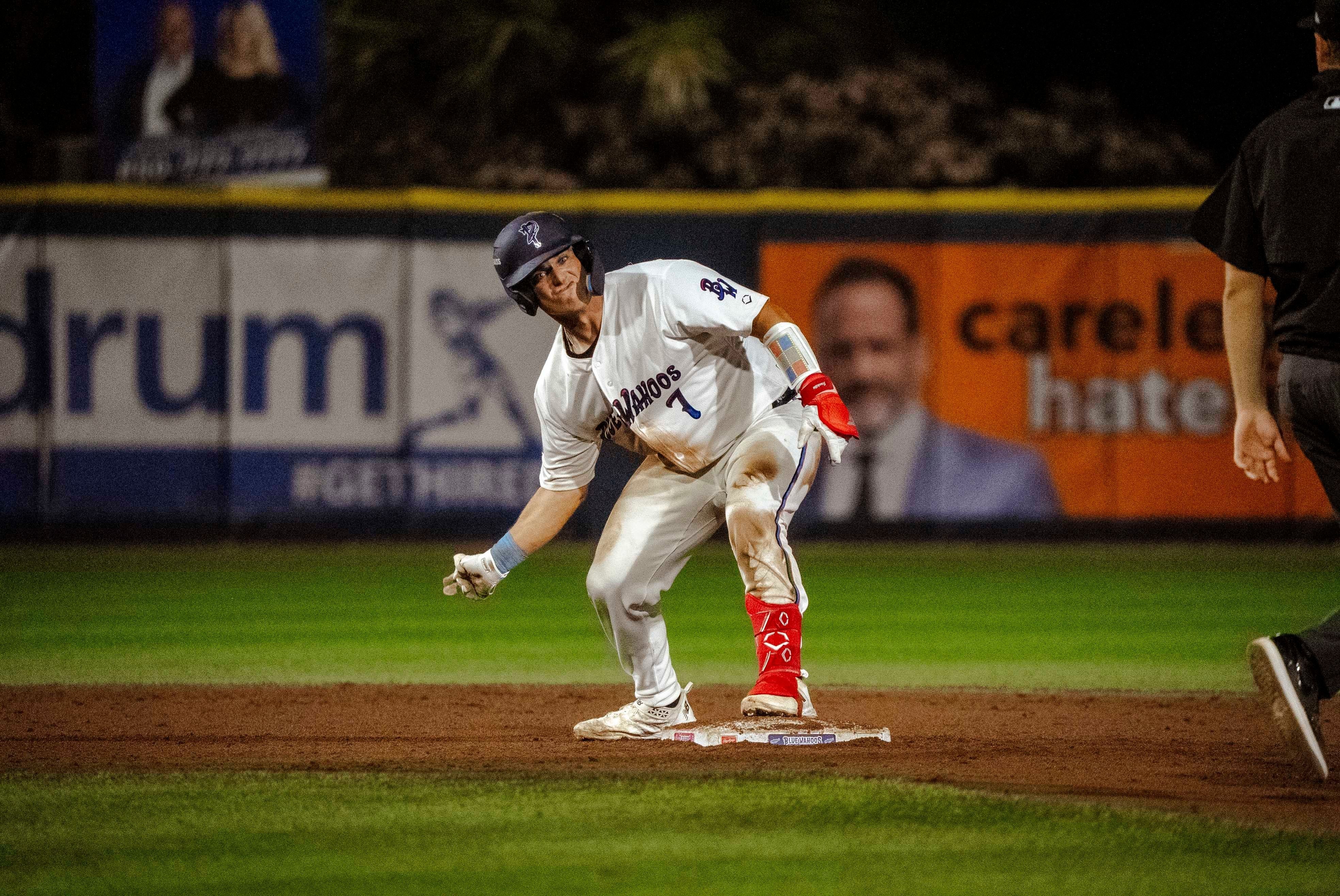 Hey Siri, define “good problems to have.” As the Marlins’ minor league system continues to improve and deepen, top prospect rankings become harder and harder to decide. Before the latest release of our Fish On First Top 30 consensus list this past week, several players were highly considered to make the cut, but just missed. Herein, we give those players their flowers and ensure you know their names and skill sets. C Ryan Ignoffo Current level: Double-A Ignoffo is the ultimate team player. An unheralded 20th-round selection as a two-way player, he played virtually every single position except catcher as an amateur. Upon his arrival in Miami, he was tasked with exactly that. With confidence in his bat to succeed at the next level, the Marlins converted Ignoffo full-time to backstop. Ignoffo took the challenge in stride, continuing to hit well as he did, even amidst the call-up to the upper minors last season. After a bit of a slow start this year at the plate, Ignoffo is performing close to his norms at the plate by slashing .273/.310/.485. Overall, Ignoffo is a contact-oriented hitter who lengthens at-bats and limits whiffs by way of great timing and bat control. He shows a true penchant to make contact at an above-average frequency, with career rate norms above 80%. Because of his ability to cover the plate, he doesn’t walk a ton so his on-base numbers are largely driven by balls put in play. Keeping the ball off the ground and hitting line drives at a good clip, his career slash is well-earned proven by his BABIP, which sits at .282. Ignoffo won’t hit a ton of home runs, and with such low walk rates, he will need to be able to continue to make good contact at the next level to be effective, leaving him little room for error. Defensively, Ignoffo went through an atypical learning process as a backstop. The organization saw in him a plus throwing arm that execs and his teammates continue to rave about. This offseason, Ignoffo put a ton of focus on his lateral movement, framing and pop times. So far this season, the results are good: he’s allowed just one passed ball and thrown out 24% of potential base-stealers. Ignoffo shouldn’t have an issue sticking at catcher and he also offers positional flexibility, although he'd have to shake off years of rust to contribute elsewhere on the diamond. Ignoffo has been repeating the Double-A level because he was blocked by Joe Mack. Now that Mack’s promotion has occurred, Ignoffo is in line to make his Triple-A debut imminently, sharing catching reps with the optioned Agustín Ramírez and veteran Brian Navarreto. Going on 26, we place Ignoffo’s floor pretty high, but due to the lack of plus contact and walks, his ceiling is a bit low. That said, he could still be of great service to any organization as a backup catcher or utility type player, especially if he continues to make contact when he breaks into MLB. He could rejoin our Top 30 amidst the upcoming graduations of Mack and Josh Ekness. RHP Carson Laws Current level: High-A Laws is a 6’1”, 186-pound righty who was selected by the Marlins in the 14th round of last year’s draft out of Texas State. Laws didn’t have an extremely long track record as a hurler in college. He came into Miami’s organization having only pitched 37 NCAA innings on top of another 34 at JuCo, so even as he embarks on his first full professional season, he is very raw. What Miami does have in Laws, though, is a high ceiling rooted in a plus-plus stuff profile. Laws’ primary weapon is a four-seamer that sits at 98 mph and can touch triple digits. After the draft, he went to work on his secondary arsenal, adding a curveball and altering the grip on his changeup into a kick-change. Laws still maintains his best secondary, a high-80s slider with wipeout action. At this point, Laws needs reps and experience. That is why the Marlins currently have him working as a starter in High-A Beloit. As he fully learns his craft, Laws will need to rein in his control and command. At 23, the late-bloomer will need to learn quickly, but if he can, he has the upside of a shutdown high-leverage reliever. Because of the low floor though, Laws just misses our list for now. IF Edgardo De Leon Current level: FCL De Leon is a 19-year-old infielder who came to the Marlins in the trade that sent Edward Cabrera to Chicago. De Leon signed with the Cubs in 2024 for an undisclosed amount, which normally signifies the figure wasn’t very significant. What has been significant is what De Leon has done over his first two seasons pro. After slashing .277/.431/.433 in the DSL in 2024, the 6’, 170 righty proved his skill set could translate well stateside. Last season with the AZL Cubs, he hit .276/.353/.500. De Leon split time evenly at corner infield for the Cubs, playing 37 games at first and 35 at third. While De Leon has performed very well thus far, he has some questions to answer for as he begins his Marlins tenure, the most pressing being where will his defensive home be, can he solve for a high whiff rate as he matriculates through levels against better stuff and how much power can he grow into. If he can build up a strong but raw arm and stick at third base, be taught to select swings a bit better and make the most of stateside facilities physically, he will be part of future Top 30 lists. For now, stats aside, he remains a bit of a lottery ticket. RHP Aiden May Current level: High-A May, a 23-year-old righty, is the Marlins’ Competitive Balance Round B pick from 2024. Barely recruited as a high schooler, May built his stock basically from the ground up as an amateur, playing at three colleges over three years. That journey culminated with May holding down a sparkling 3.05 ERA and 84/23 K/BB in the PAC-12, earning him top-100 draft pick honors. Unfortunately for May, his tenure as a pro has only spanned 14 MiLB games. He did not pitch after signing due to a forearm strain and then underwent surgery to remove loose bodies from his throwing elbow, keeping him off the mound until July of last season. When back at full strength, he participated in the Arizona Fall League. It's been an inconsistent opening month for May with Beloit in 2026, including six no-hit innings on April 19. However, he was unable to complete four frames on April 26 and missed his most recent scheduled start on Sunday. May is just an average-sized 6’2”, 196, and doesn’t shorten the distance to the plate, but he throws from a funky low arm slot which allots him some deception. He has a deep arsenal which includes a sinker that sits 94 and can touch 96. His best pitch is a sweeper that can garner him whiffs in and out of the zone. With the Marlins, he’s strayed away from using his changeup in favor of a new cut fastball that he’s building confidence in. If May is going to stick as a starter, he will need to be able to consistently use that third pitch for strikes and be able to maintain his control throughout starts. He could still reach a ceiling as a back-end starter but at this point in his injury-marred career, it’s more likely he moves to the bullpen long term. That said, May’s plus velo and sweeper and the aforementioned tricky mechanics could be effective in shorter stints making the floor decently high. IF Ronny Muñoz Current level: DSL Muñoz is one of the newest Marlins in the organization, having joined the club in January as part of the current international signing period. The 27th-ranked prospect in the class per MLB Pipeline, his deal with Miami was worth $1 million, matching Santiago Solarte (FOF #18). Unlike Solarte, Muñoz is limited in size, but he comes by good power via elite bat speed stemming from quick hands that evaluators graded at the very top of the 20-80 scale. Those same hands serve Muñoz well in the infield where he has the athleticism to stick at shortstop. Once Muñoz can prove himself against pro stuff, it is likely he will shoot up our list. For now, his limited size, being built more for line drives than homers, and the fact that he will need to be on time and stay on time against pro stuff have him on the outside looking in. View the full article
 -
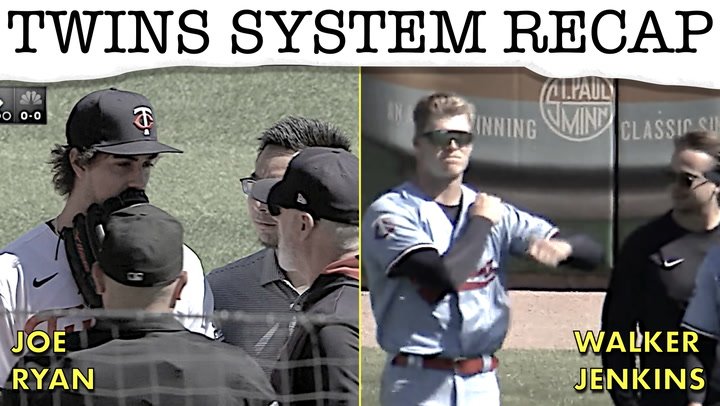 Twins System Recap: Well, this sucks. Both Joe Ryan and Walker Jenkins exited their games on Sunday due to injury. For Ryan, it's his elbow, which is obviously always spooky. For Jenkins, it was his shoulder as he crashed into the wall after making a great catch. Anyway, tonight's three stars are Ricardo Olivar, Quentin Young, and Justin Mitrovich. View the full article
 -
Breaking Down The Catcher Luis Torrens Extension
DiamondCentric posted an article in Grand Central Mets
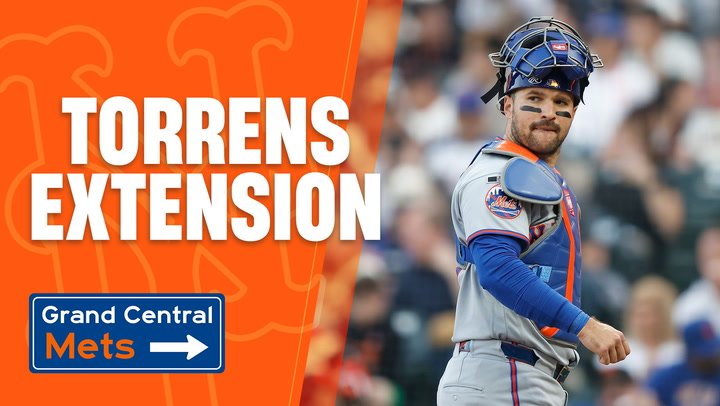 Luis Torrens celebrated his 30th birthday by signing a two-year extension worth $11.5 million. Torrens continues to serve as the primary backup to Francisco Alvarez, and is widely regarded as one of the best defensive catchers in baseball, leading the league in several caught stealing metrics over the past two years. View the full article
 -
 The Mets affiliates posted a 3-2 night with a pair of shutouts and a comeback. Syracuse beat Lehigh Valley 5-0 as Cristian Pache homered and Jonathan Pintaro fanned five over two innings of relief to earn the win. Binghamton split a doubleheader, dropping the resumption of a suspended game 4-3 and winning the nightcap 3-0 behind Zach Thornton's seven-strikeout start. Brooklyn fell 4-1 at home, while St. Lucie rallied from down 6-2 to win 7-6. Mets Transactions New York Mets designated 1B Eric Wagaman for assignment. New York Mets placed SS Ronny Mauricio on the 10-day injured list. Left thumb fracture. New York Mets sent RHP Carl Edwards Jr. outright to Syracuse Mets. New York Mets selected the contract of 3B Vidal Bruján from Syracuse Mets. Syracuse Blanks Lehigh Valley As Pintaro Strikes Out Five In Relief Syracuse rolled to a 5-0 shutout of Lehigh Valley behind a balanced offensive showing and a six-pitcher combined effort that allowed only four hits and 14 strikeouts across nine innings. The Mets pushed across single runs in the second and eighth innings and broke the game open with a three-run sixth that decided things. Daniel Duarte opened with two scoreless innings, allowing one hit and three walks while striking out two. Carlos Guzman handled the fourth and fifth, working two scoreless innings on two hits and two strikeouts. Dylan Ross fanned two, and Jonathan Pintaro earned the win with two innings of no-hit, no-run relief in the sixth and seventh that featured five strikeouts. Alex Carrillo finished with one inning of one-hit, two-strikeout work to close out the shutout. Cristian Pache, hitting sixth, finished 1-for-3 with a solo home run, two RBI, two runs scored, a stolen base, and a walk to lead the offense. Nick Morabito went 2-for-3 with two runs, a walk, and two stolen bases from the second spot in the order. Yonny Hernández added a 2-for-3 line with an RBI, while Christian Arroyo drew two walks and drove in a run. A.J. Ewing, batting leadoff, finished 1-for-4 with a strikeout, and Ryan Clifford added a hit. Syracuse drew three walks and struck out eight times, but cashed in when it mattered. Syracuse Hitting Player AB R H RBI BB K A.J. Ewing 4 0 1 0 0 1 Nick Morabito 3 2 2 0 1 0 Ryan Clifford 4 1 1 0 0 1 Christian Arroyo 2 0 1 1 2 1 Ji Hwan Bae 4 0 1 0 0 1 Cristian Pache 3 2 1 2 0 1 Yonny Hernández 3 0 2 1 0 0 Hayden Senger 3 0 0 0 0 0 Jackson Cluff 3 0 0 0 0 3 Syracuse Pitching Player IP H R ER BB K HR Daniel Duarte 2 1 0 0 3 2 0 Carlos Guzman 2 2 0 0 0 2 0 Dylan Ross 1 0 0 0 1 2 0 Jonathan Pintaro (W) 2 0 0 0 1 5 0 Alex Carrillo 1 1 0 0 1 2 0 Binghamton Falls 4-3 In Resumed Suspended Game The completion of Friday's weather-suspended game went the way of New Hampshire, with Binghamton stranding twelve runners and falling 4-3 despite drawing ten walks. The Rumble Ponies could not cash in their chances, leaving the bases occupied repeatedly across the game's nine innings. Jonathan Santucci took the loss, allowing one hit, two earned runs, six walks, and one home run while striking out five across three and two-thirds innings. He surrendered a two-run home run in the bottom of the second that gave the Fisher Cats an early 2-0 lead. Brian Metoyer settled things with one and one-third clean innings, but Jefry Yan was tagged for two runs on a home run in the bottom of the sixth that pushed the lead to 4-1. Zach Peek and Matt Turner each tossed a clean frame to close the staff's work. Binghamton plated single runs in the fourth on a Jacob Reimer double and a Jose Ramos RBI single, then made noise in the top of the ninth with two runs that pulled them within one. The rally ended with the tying run on base. Reimer led the offense at 2-for-4 with a double and a walk, while Ramos went 2-for-4 with an RBI and a walk. Nick Lorusso added a 1-for-5 line with a double and an RBI, and Diego Mosquera contributed a 1-for-3 effort with an RBI. TT Bowens drew three walks and reached base in all five trips without recording a hit. Binghamton Hitting (Game 1) Player AB R H RBI BB K Jacob Reimer 4 1 2 0 1 0 Jose Ramos 4 1 2 1 1 0 Kevin Parada 4 0 0 0 1 3 JT Schwartz 3 0 0 0 2 1 Nick Lorusso 5 0 1 1 0 0 TT Bowens 2 1 0 0 3 1 Matt Rudick 2 0 0 0 2 0 Wyatt Young 4 0 0 0 0 2 Diego Mosquera 3 0 1 1 0 2 Binghamton Pitching (Game 1) Player IP H R ER BB K HR Jonathan Santucci (L) 3 2/3 1 2 2 6 5 1 Brian Metoyer 1 1/3 0 0 0 0 1 0 Jefry Yan 1 1 2 2 2 1 1 Zach Peek 1 0 0 0 0 0 0 Matt Turner 1 0 0 0 0 1 0 Thornton Strikes Out Seven As Binghamton Blanks New Hampshire In Nightcap Binghamton answered the suspended-game loss with a 3-0 shutout in the nightcap, riding Zach Thornton's dominant start and a four-pitcher combined four-hitter to even the doubleheader split. The Rumble Ponies grabbed the lead in the top of the first when Reimer singled, Chris Suero doubled to put runners on second and third, Kevin Parada grounded out to score Reimer, JT Schwartz singled in Suero, and TT Bowens added a single before the inning closed with two runs in. Thornton fired four innings, allowing three hits and no runs while striking out seven and walking two. Ben Simon followed with a clean fifth that included a strikeout and earned the win. Douglas Orellana worked a one-hit sixth with two strikeouts, and Saul Garcia closed it out with a clean seventh and a strikeout. Binghamton tacked on insurance in the top of the seventh, when Reimer drew his second walk, Suero was hit by a pitch, Parada walked to load the bases, and Schwartz hit into a sacrifice double play that scored Reimer for the third run. Schwartz led the offense at 2-for-3 with two RBI, and Reimer reached base three times, going 1-for-2 with two walks, two runs scored, and a stolen base. Suero added a 1-for-3 line with a double and a run, while Bowens, Lorusso, Rudick, and Wyatt Young each chipped in a single. The Rumble Ponies stole three bases as a team and held the Fisher Cats to four hits across the seven-inning game. Binghamton Hitting (Game 2) Player AB R H RBI BB K Eli Serrano III 4 0 0 0 0 1 Jacob Reimer 2 2 1 0 2 0 Chris Suero 3 1 1 0 0 0 Diego Mosquera 0 0 0 0 0 0 Kevin Parada 3 0 0 1 1 0 JT Schwartz 3 0 2 2 0 0 TT Bowens 3 0 1 0 0 1 Nick Lorusso 3 0 1 0 0 1 Matt Rudick 3 0 1 0 0 1 Wyatt Young 3 0 1 0 0 0 Binghamton Pitching (Game 2) Player IP H R ER BB K HR Zach Thornton 4 3 0 0 2 7 0 Ben Simon (W) 1 0 0 0 1 1 0 Douglas Orellana 1 1 0 0 1 2 0 Saul Garcia 1 0 0 0 0 1 0 Brooklyn Bats Silenced In 4-1 Loss To Frederick Brooklyn could not get its bats going against Frederick and dropped a 4-1 decision at home, with the Cyclones managing just two hits across the nine-inning contest. Frederick scored a run in each of the first two innings, then closed the window with a two-run seventh. Noah Hall started and took the loss after four innings of two-hit, two-run work that featured six strikeouts but also three walks and a home run. Nate Lavender followed with a clean fifth that included a strikeout, and Joe Charles surrendered the two damaging runs in the seventh on two hits and a walk. Garrett Stratton entered to provide one and one-third innings of three-strikeout, hitless relief, and Cristofer Gomez closed it out with a one-strikeout ninth. The Cyclones' lone run came in the bottom of the second, when Trace Willhoite, Vincent Perozo, and Sam Biller all drew walks to load the bases, and Yonatan Henriquez followed with a bases-loaded walk to force in a run. Brooklyn could not push another runner across the rest of the way, finishing with five walks and 13 strikeouts. Ronald Hernandez and Colin Houck collected the only Brooklyn hits, each going 1-for-4. Houck struck out three times. Henriquez and Daiverson Gutierrez also fanned three apiece, and Brooklyn struck out 13 times overall. Brooklyn Hitting Player AB R H RBI BB K Yonatan Henriquez 3 0 0 1 1 3 John Bay 4 0 0 0 0 1 Ronald Hernandez 4 0 1 0 0 0 Daiverson Gutierrez 4 0 0 0 0 3 Colin Houck 4 0 1 0 0 3 Trace Willhoite 3 1 0 0 1 1 Vincent Perozo 3 0 0 0 1 1 Kevin Villavicencio 3 0 0 0 0 0 Sam Biller 2 0 0 0 1 1 Brooklyn Pitching Player IP H R ER BB K HR Noah Hall (L) 4 2 2 2 3 6 1 Nate Lavender 1 1 0 0 0 1 0 Joe Charles 1 2/3 2 2 2 1 1 0 Garrett Stratton 1 1/3 0 0 0 1 3 0 Cristofer Gomez 1 0 0 0 0 1 0 St. Lucie Rallies From Down Four To Win 7-6 At Tampa St. Lucie overcame a 6-2 deficit and committed three early errors but stormed back with five unanswered runs to take the game 7-6 at Tampa. Three Mets pitchers held the Tarpons scoreless over the final four innings to preserve the comeback. The Mets scratched out two runs in the top of the second, when Julio Zayas walked, Sam Robertson singled to put runners at first and second, and Branny De Oleo doubled to left to drive in both. Tampa answered with three of its own in the bottom half, aided by two St. Lucie errors. The Tarpons added a run in each of the first, third, and fifth innings to push the lead to 6-2, with the early errors fueling much of the damage. The comeback began in the top of the sixth, when Randy Guzman singled, AJ Salgado walked, JT Benson singled to score Guzman, Chase Meggers singled to plate Salgado, and a third run scored on a fielder's choice. Two more came in the top of the eighth: Edward Lantigua reached on a hit-by-pitch, Guzman doubled to drive him in, and Zayas doubled to bring Guzman home for a 7-6 lead. Christian Rodriguez earned the win with three perfect, hitless innings of three-strikeout relief. Nicolas Carreño, Emilio Obispo, and Zack Mack handled the start and middle innings between them. Guzman finished 2-for-3 with two doubles, two runs, an RBI, and a walk to lead the offense, while Robertson went 2-for-4 with a stolen base, and Branny De Oleo added a 1-for-3 line with a double, two RBI, and a walk. Zayas drove in another run with his eighth-inning double. St. Lucie Hitting Player AB R H RBI BB K Elian Peña 5 0 0 0 0 2 Edward Lantigua 3 1 0 0 0 2 Randy Guzman 3 2 2 1 1 0 AJ Salgado 3 1 0 0 1 0 Julio Zayas 3 1 1 1 1 2 JT Benson 4 1 1 1 0 3 Chase Meggers 4 0 1 1 0 3 Sam Robertson 4 1 2 0 0 2 Branny De Oleo 3 0 1 2 1 1 St. Lucie Pitching Player IP H R ER BB K HR Nicolas Carreño 3 2 1 1 3 5 0 Emilio Obispo 2 2 4 1 1 2 0 Zack Mack 1 2 1 1 1 3 0 Christian Rodriguez (W) 3 0 0 0 0 3 0 Top-20 Prospect Performance Nolan McLean: DNP Carson Benge: DNP A.J. Ewing: 1-for-4, K Jonah Tong: DNP Ryan Clifford: 1-for-4, R, K Jacob Reimer: 3-for-6, 2B, 3 R, 3 BB, SB Jack Wenninger: DNP Elian Pena: 0-for-5, 2 K Mitch Voit: DNP Nick Morabito: 2-for-3, 2 R, BB, 2 SB Jonathan Santucci: 3 2/3 IP, 1 H, 2 ER, 6 BB, 5 K, HR (L) Chris Suero: 1-for-3, 2B, R Zach Thornton: 4 IP, 3 H, 0 ER, 2 BB, 7 K Wandy Asigen: DNP Will Watson: DNP Eli Serrano III: 0-for-4, K Ryan Lambert: DNP Dylan Ross: 1 IP, 0 H, 0 ER, 1 BB, 2 K Antonio Jimenez: DNP R.J. Gordon: DNP View the full article
 -
Another Ace Injured: Joe Ryan Leaves Start With Elbow Soreness
DiamondCentric posted an article in Twins Daily
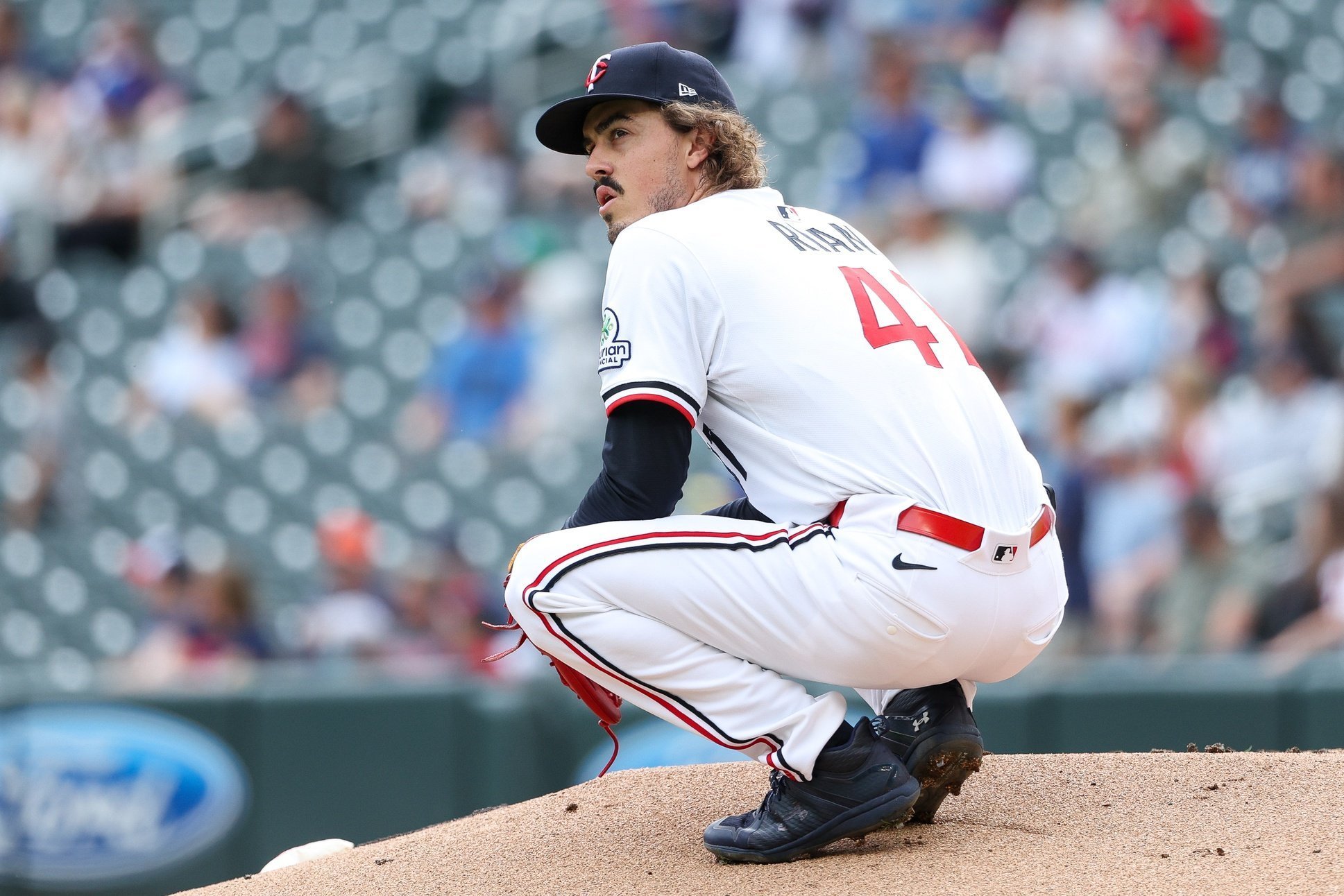 After an eight-run implosion turned a potential win into a blowout loss Saturday, Twins fans might have wondered how much worse things could get. They didn't have to wait long to find out. Just two batters into Sunday's game, Joe Ryan was walking off the mound and heading toward the clubhouse, leaving behind more questions than answers. Ryan struck out the first hitter he faced and appeared to be settling in. However, after issuing a walk to Toronto third baseman Kazuma Okamoto on his ninth pitch, the right-hander signaled to the dugout. Moments later, his day was done. The Twins quickly announced that Ryan exited with right elbow soreness, a phrase that immediately grabs attention for any pitcher. “He walked out and said he felt something in his elbow,” Twins manager Derek Shelton said during an in-game interview. “It’s unfortunate, especially this early in the game, but it’s something we’ve got to deal with. Hopefully Joe’s in a good spot.” Back on February 21, Ryan was forced out of what was supposed to be his first spring outing due to lower back tightness. He worked his way back by March 10, made three spring starts, and did not miss a turn once the regular season began. Now, it's anyone's guess when he might take the mound again. Over the course of his career, Ryan has quietly been one of the more reliable starters in the league. From 2022-25, he averaged 27.5 starts and 153.6 innings per season, consistently taking the ball every fifth day. There have been minor bumps along the way, including back inflammation, a minor shoulder injury, and a groin issue he attempted to pitch through in previous seasons, but nothing that significantly derailed his availability. That reliability has been paired with strong performance in 2026. Entering Sunday, Ryan owned a 3.76 ERA with a 118 ERA+ and a 1.04 WHIP. His underlying numbers painted an even more encouraging picture. A 25.2% strikeout rate and a 5.8% walk rate highlight his command, and a 2.99 FIP suggests he has pitched better than his ERA indicates. All of that makes this early exit feel even heavier. The Twins aren't just losing innings if Ryan misses time. They are potentially losing one of the most stable and effective arms in their rotation. In the immediate aftermath, Andrew Morris was asked to pick up the pieces out of the bullpen. Morris has been operating in a long relief role, a somewhat awkward middle ground for a pitcher who many believed was next in line for a rotation spot. If Ryan is sidelined, Morris could be stretched back out into a starting role, though that transition is rarely seamless. Beyond Morris, the Twins do have reinforcements, but each comes with its own level of uncertainty. Mick Abel is nearing a return from the injured list and was off to an impressive start before going down. Zebby Matthews, already on the 40-man roster, endured early struggles this season but has begun to show signs of progress. Kendry Rojas, who debuted earlier this year in a relief capacity, has been building back up as a starter after missing time. None of those options fully replace what Ryan provides when he is right. That's what makes the coming days so critical for Minnesota. Elbow soreness can mean many things, ranging from precautionary rest to something far more serious. The Twins will be hoping this leans toward the former. For now, the focus shifts from Sunday’s game to the status of one of their most important pitchers. The Twins have navigated adversity before, but losing Ryan for any stretch would test their depth in a significant way. It would probably prove more than they could handle, without freefalling toward another summer deconstruction. This story will be updated as more information becomes available. View the full article
 -
 Sweet Lou and Ol Gregg provide a recap of the last week of Twins baseball. Injuries are piling up, and so are bullpen blowups. Is this the bottom, or will it get worse from here? And can you name all 21 Twins pitchers to get a save since 2022? Listen using Apple Podcasts: https://podcasts.apple.com/us/podcast/the-twins-off-daily-podcast/id1741266056 Listen using Spotify: https://open.spotify.com/show/4tb78XlurcPTYYSsARdbD7 Listen using iHeartRadio: https://www.iheart.com/podcast/263-the-twins-off-daily-podcas-167548600/ Listen using Pocket Casts: https://pca.st/nvclbt0w Watch on YouTube: https://www.youtube.com/@twinsdaily View the full article
 -
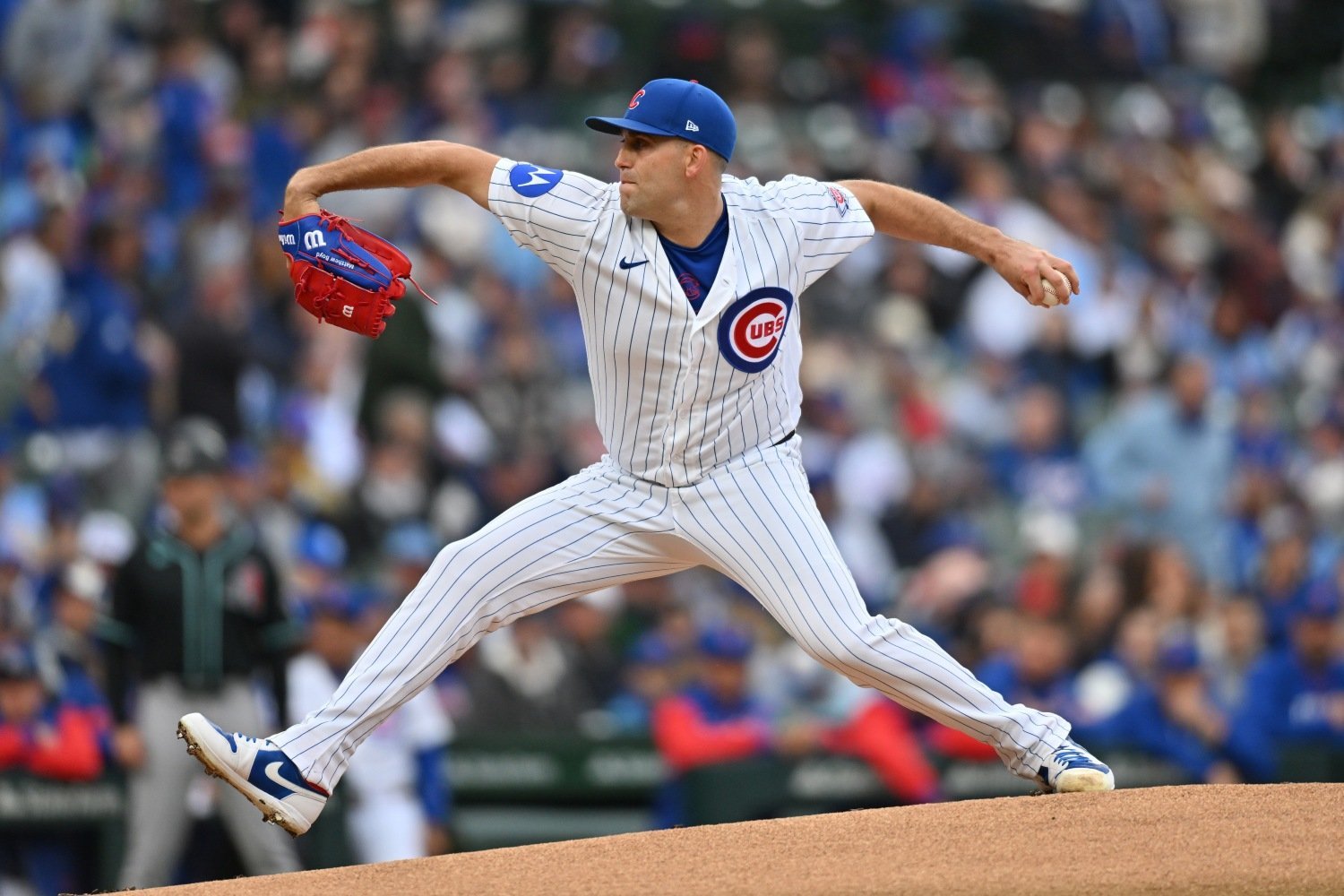 This has been a strange spring for Matthew Boyd. He missed a chunk of Cubs camp to join Team USA for the World Baseball Classic, but returned after pool play so he could prepare for the honor and duty of starting on Opening Day. Unfortunately, the Nationals had a good plan against him that day, and he struggled mightily. He looked better the next time out, against the Angels, striking out 10 in 5 2/3 innings, but then he hit the injured list with a triceps strain and lost three weeks. Since re-joining the rotation, he's been uneven. He entered Sunday's start against the Diamondbacks with a 7.00 ERA for the season. In a solid win to extend the Cubs' winning streak to five, Boyd brought that ERA down to 6.00. He pitched six innings of two-run ball, allowing four hits and a walk but striking out five. It was a great way to reassert his place at (or near) the top of the team's rotation, made all the more welcome by the news that Justin Steele won't be back as soon (or, we might fairly speculate, as strong) as previously hoped. Chicago won't go far without a strong season from Boyd, and Sunday brought some evidence that he can step into the breach and be the stopper (or, in this case, the perpetuator) the team needs him to be. Specifically, the changeup was a reliable, even devastating weapon. Boyd threw 35 of them, the highest single-outing total of his Cubs tenure, and it worked wonders. Diamondbacks hitters whiffed on seven of 18 swings against it and watched another seven sail by for called strikes. The change earned Boyd three of his five punchouts and eight total outs, but Arizona didn't collect a hit against it. Some of that can be chalked up to working against a team that leans heavily on switch-hitters and some veteran right-handed bats, but another key consideration is this: Boyd will have to pitch backward more this year. That's not because his stuff is down, though his fastball is sitting much more at 91-92 than the 93-94 he often had early in starts last year. He threw at least 95.0 MPH 81 times last regular season, getting as high as 96.9. So far this season, he's only touched 95.0 four times, and never gotten above 95.3. Velocity isn't the whole story with Boyd, especially because he changes speeds so well with his changeup, curveball and slider. Hitters have to respect those much slower offerings, so they can't take full advantage of a heater that lacks elite heat. Rather, the reason why Boyd might need to pitch off the changeup more is his fastball's location. Boyd likes to use that four-seamer to ride the top rail of the strike zone, inducing chases and whiffs by forcing hitters to stretch their strike zone vertically in both directions. Last season, 45.6% of Boyd's fastballs were between 2.8 feet and 4.0 feet above the ground when they crossed the plate, just above the league's average. This season, that number is nearly 60%, in a small sample. As we've discussed, though, the top of the strike zone has come down. That's a problem for Boyd, and pitchers like him. He needs hitters to climb the ladder with him, both to set up his softer stuff and to get the ball above their barrels. He doesn't have elite carry on his fastball, nor overpowering velocity. He gets value from the way his low arm slot flattens out the approach angle of a high fastball, and the way it thus tantalizes and thwarts a hitter. But look what's happened to pitches in the aforementioned height zone, under ABS standardization (and the umpires' responses thereto). A much higher percentage of those balls are now above the zone, or close enough thereto that batters need not chase them. That's made it hard for Boyd either to get quick outs or put away hitters there, or to set opponents up for a change of eye level using that pitch. Working backward might be the best and only salve, for now. If Boyd can establish the bottom edges of the zone and/or get hitters behind in the count with his slow stuff, he can speed them up and fool them with the high fastball afterward. That was always one option, but because of the aforementioned lack of velocity or extreme raw movement, it was never a great one. Now, it might be the way he needs to go for a while. On Sunday, at least, he showed he can be that flexible and clever, but more adjustments lie ahead. View the full article
 -
Brandon Compton is getting the Nick Kurtz treatment
DiamondCentric posted an article in Fish On First
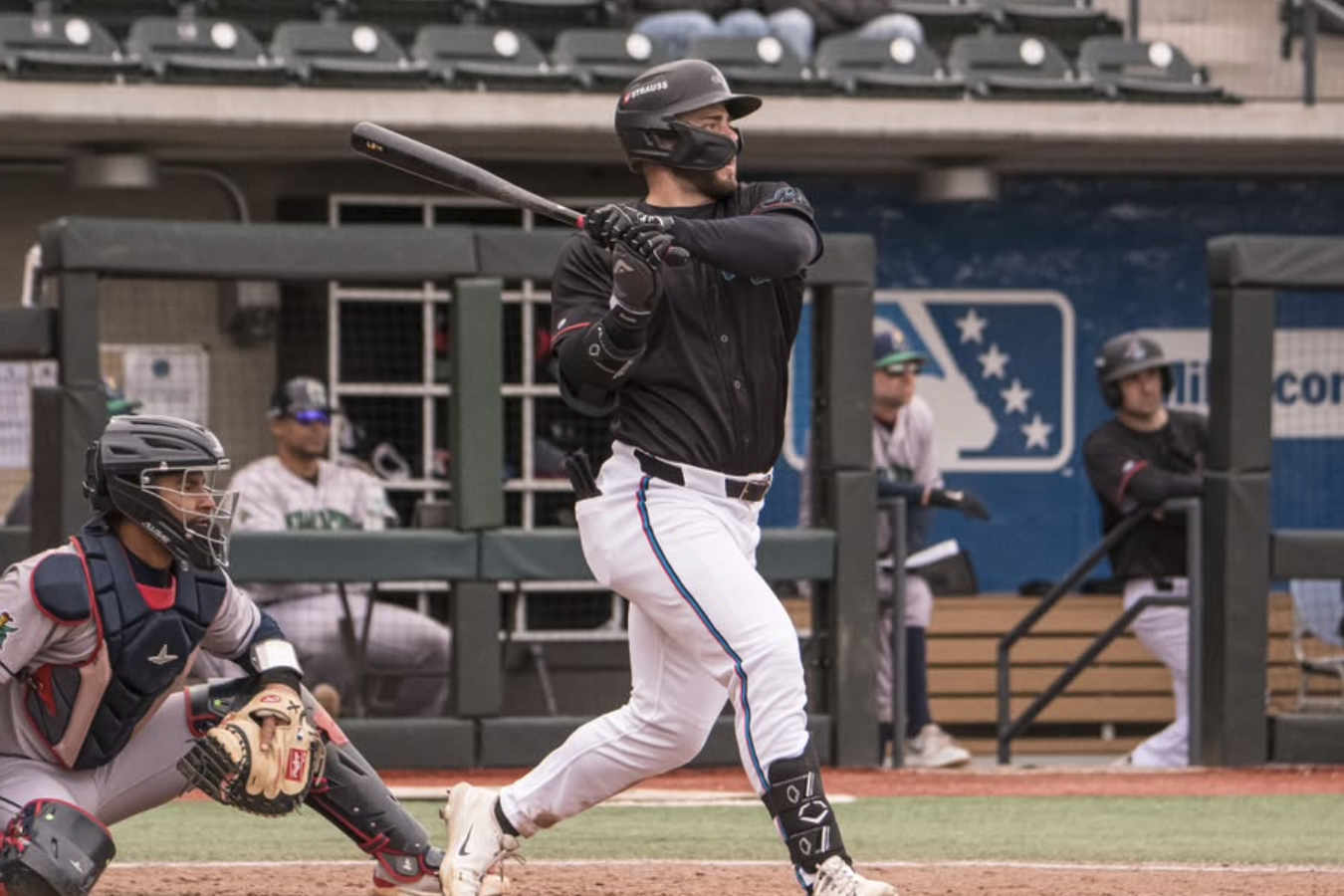 A pair of bizarre yet impressive streaks came to an end last weekend. The longer and far more publicized streak belonged to Athletics first baseman Nick Kurtz. From April 10 through May 1, the reigning American League Rookie of the Year drew walks in 20 consecutive games. He became the first MLB player in nearly a quarter-century to do so (Barry Bonds, 2002-03). Brandon Compton had a 12-game walk streak to close out his month of April. While the duration was modest by comparison, the concentration of his free passes was absurd enough to merit an entire article, in my view. The 2025 Miami Marlins draftee averaged nearly two walks per game, while Kurtz averaged only 1.20, and he did it without the benefit of any intentional walks. Compton's streak ended Friday night, but he promptly began a new one on Saturday. He walked thrice more on Sunday. One month into his season with High-A Beloit, Compton has been the second-most productive qualified hitter in the Marlins organization in terms of wRC+. His on-base percentage is a cool .500. Unsurprisingly, his MiLB-leading 35.4% walk rate is doing most of the heavy lifting. Where are all of these walks coming from and what does this statistical oddity mean for his long-term outlook? Compton is Fish On First's 25th-ranked prospect largely due to his power-hitting potential. We have seen flashes of that in 2026 as he's slugging .434 (the Midwest League average is .401). Utilizing a tiny leg kick, the 22-year-old generates massive exit velocities to his pull side. However, there is no reasonable expectation of Compton becoming the next Kurtz. Drafted fourth overall the year before Compton, Kurtz slugged nearly .700 between minor league ball and the Arizona Fall League. The latter is four inches taller and effortlessly blasts balls over the fence to all fields. With few exceptions, Compton uses the first pitch of his plate appearances to gather information on the opposing pitcher. He has stepped to the plate 82 times this season and put the first pitch in play only once. Using this past series as an example, Compton swung just 10.3% of the time in 0-0 counts. To put that in perspective, the lowest first-pitch swing rate among qualified MLB hitters belongs to Steven Kwan at 9.7%. Compton is a product of his environment to some extent. The Midwest League has a 13.4 BB% this season, which is higher than any other affiliated full-season league. A combination of weather, pitching injuries and umpiring is leading to more pitches missing the strike zone. Only 52.0% of total pitches thrown to Compton have been strikes. Going back to Kurtz as a reference point, his strike rate is 55.3%, and that is despite being universally feared. The left-handed Compton sees the ball well against fellow southpaws, drawing 11 walks in 26 plate appearances. On the other hand, he's still hitless against them (0-15 with 10 K). Showing competency in that area will be an important box for him to check before being considered for a promotion to Double-A. Compton is on pace to draw approximately 146 walks this season, which would obliterate the Marlins MiLB record (114 BB by Kerwin Moore in 1993). Since comprehensive record-keeping across all minor leagues began in 2006, Jack Cust has posted the highest single-season total (143 BB in 2006). All things considered, Cust is a useful Compton comp with a similar skill set and physical attributes. He slashed .242/.374/.439 (123 wRC+) with 105 home runs in 670 MLB games—that'd be an optimistic outcome for Compton's career. View the full article
 -
Week In Review: Royals Perhaps Turn Corner With 4-2 Road Trip
DiamondCentric posted an article in Royals Keep
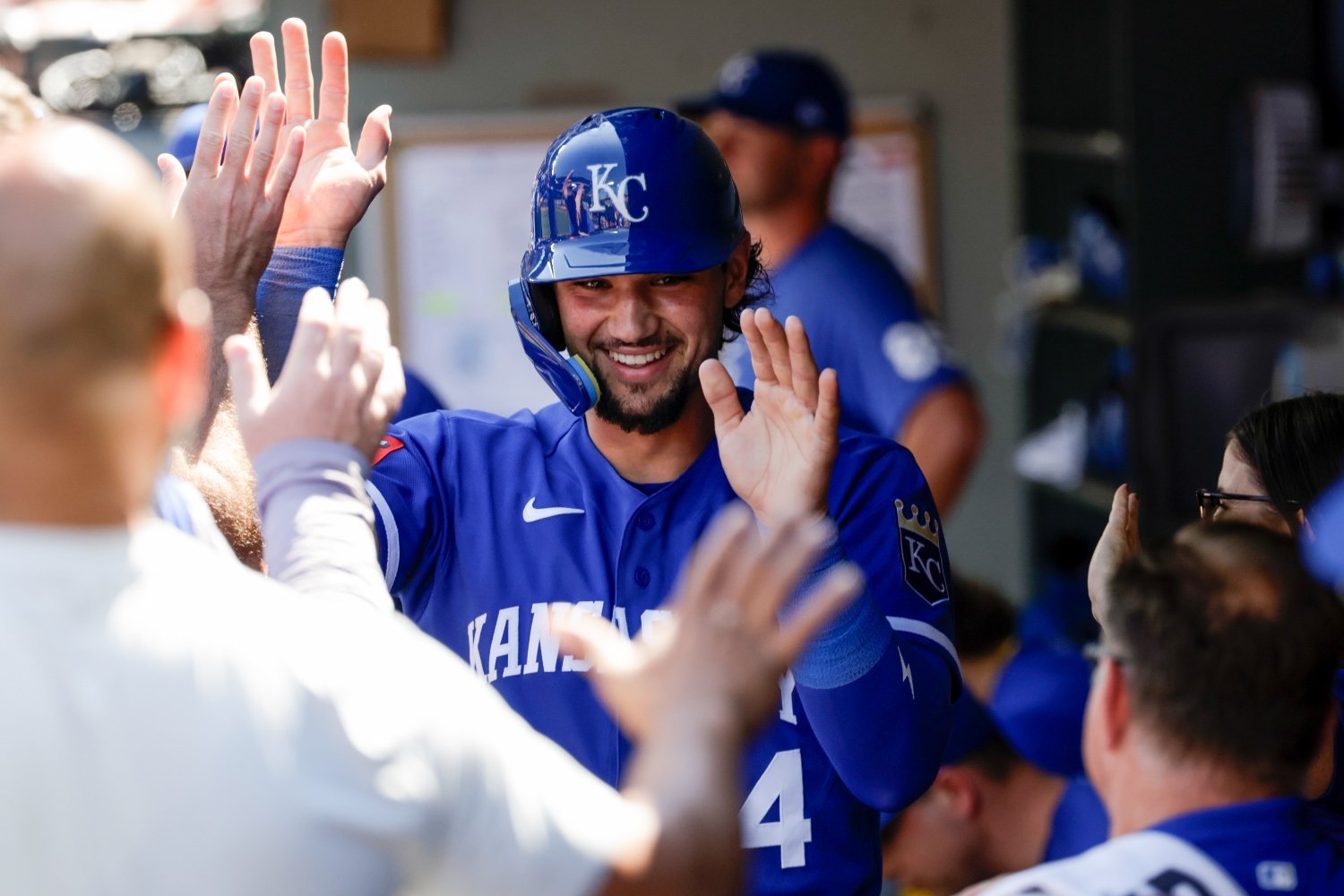 Week in a Nutshell After going 4-2 at home in the previous week against the Baltimore Orioles and Los Angeles Angels, the Royals produced the same record this week on the road against the Sacramento Athletics and Seattle Mariners. Like the Royals' previous homestand, Kansas City lost two of three in their first series against the Athletics, but finished strong by sweeping the Mariners at T-Mobile Park in Seattle over the weekend. With the winning road trip, the Royals improved their road record to 6-12 and overall record to 15-19. That puts them 2.5 games behind the AL Central-leading Cleveland Guardians and only 1.5 games out of an AL Wild Card spot. Record this Week: 4-2 Run Differential for the Week: +2 Record for the Year: 15-19 Run Differential for the Year: -17 Standing: 4th in the AL Central Game 29: KC 4, ATH 1 Kris Bubic struggled with control, walking four batters and going only five innings against the Athletics. However, he struck out six batters and allowed only one run on four hits. Salvador Perez got the scoring going early with a solo blast, and Bobby Witt Jr. had a clutch three-run home run in the top of the 10th that propelled the Royals to the win. Game 30: ATH 5, KC 2 The Royals started early by scoring a run in the top of the first on a fielder's choice by Salvador Perez. However, Michael Wacha wasn't quite as sharp. He allowed four runs on eight hits and four walks while striking out five. Witt was the only Royals player with multiple hits (two). Game 31: ATH 6, KC 3 Kansas City dropped the rubber game, with a four-run second inning putting the game out of reach. Noah Cameron allowed five runs (four earned) on nine hits and two walks while striking out five in 5.2 IP. Maikel Garcia hit his third home run of the year, while Elias Diaz hit his first. Despite the Royals having 10 hits, they left 12 runners on base and went 1-for-8 with runners in scoring position. Game 32: KC 7, SEA 6 The Royals parlayed a four-run first inning to help them win an offensive battle, even though Cole Ragans and Bryan Woo pitched for Kansas City and Seattle, respectively. Perez, Vinnie Pasquantino, and Jac Caglianone went yard, and Lane Thomas had a clutch pinch-hit single that gave them the lead for good in the top of the 8th. Lucas Erceg locked down his eighth save of the year. Game 33: KC 3, SEA 2 Emerson Hancock was elite, as he struck out 14 batters in 7 IP, and allowed only one run on six hits. However, Seth Lugo put up a solid performance himself, going six innings, allowing two runs, seven hits, and two walks while striking out six. Caglianone came up clutch at the top of the ninth, getting an RBI triple off Mariners closer Andres Munoz to send the game into extra innings. Garcia hit a sacrifice fly to bring in Michael Massey, and Erceg closed the door to earn the save for a second-straight game. Game 34: KC 4, SEA 1 Bubic looked much sharper in Seattle than he did in Sacramento. He went seven innings and allowed just one run on four hits and two walks while striking out seven. Most of the Royals' offense came in the fourth, as they scored three runs on Mariners starter Luis Castillo in a variety of ways, including a walk and a fielder's choice. Isaac Collins had a double in the 6th inning that scored Caglianone from second and gave them a three-run lead. John Schreiber and Daniel Lynch IV locked down the eighth and ninth, with Lynch getting his first save of the year. News and Notes The Royals received tough news at the beginning of the week, as the team announced that Jonathan India received labral repair surgery, effectively ending his 2026 season. If that wasn't enough, they also received some discouraging news regarding right-handed pitchers Ryan Bergert and Ben Kudrna, who both began the year in Omaha. Both received surgeries, and while nothing official has been said, it seems likely that both pitchers will miss the remainder of the 2026 season. On a positive note, on April 28th, the Royals promoted right-handed pitcher Luinder Avila from Omaha to Kansas City and optioned Eli Morgan back to Triple-A. Avila was previously working as a starter this year, not just starting in Omaha, but also filling in for Michael Wacha for a spot start. However, it seems like the Royals will be utilizing Avila in the bullpen full-time for the time being. The Venezuelan-born righty in two outings this week went three innings and struck out three batters and issued no walks while allowing one run on two hits. Highlights The Royals got some nice weeks from Garcia and Perez, who have struggled on the road in previous road trips. In 28 at-bats, Garcia hit .296 with a .903 OPS, and his eight hits led all Royals hitters on the road trip. As for Salvy, he hit .292 with an .846 OPS. Both hit home runs, and they combined for seven RBI this week. Another strong performer was Vinnie, even though he accumulated just 17 at-bats this road trip. He sat out a couple of games in the Athletics series as he nursed a sore back. However, when he got back in the linuep, he was a force in the Royals' batting order in the No. 3 spot. Vinne had six hits and posted a .977 OPS. He also had a clutch home run of Bryan Woo, his fourth of the year, that helped extend the Royals' lead in game one of their series on Friday night against the Mariners. Pasquantino's overall numbers aren't great, as he is hitting .188 with a .633 OPS so far this season. However, it seemed like he was more locked in against the Mariners, and his two-hit game on Sunday should help build some momentum for him in the upcoming homestand at Kauffman Stadium. Even though he only had four hits in 18 plate appearances and posted a .689 OPS, Caglianone had a couple of clutch hits in the Mariners series. That included a home run off Woo on Friday, and a game-tying triple off Munoz, who was one of the game's best closers a season ago. Some other key hitters for the Royals this week were Starling Marte, who had a three-hit game in the series finale against the Athletics, and Isaac Collins, who finally got his first hits on the road this season. Collins also had a key double that extended the Royals' lead in their 4-1 win on Sunday. On the pitching end, Erceg bounced back to have a tremendous week on the mound, re-establishing himself as the Royals' closer with Carlos Estevez out. Erceg appeared three times and collected three saves in three innings pitched, with two coming against the Mariners and one against the Athletics, his former team. He allowed no runs, just one hit, and one walk while striking out four this week. The strikeouts were encouraging, especially considering his chase and whiff rate issues back in April. In addition to his excellent performance in the late innings this week, the 30-year-old reliever also had quite the viral moment in the Royals' postgame interview with Joel Goldberg. Erceg wasn't the lone Royals reliever to have a solid week. In three innings of work, Matt Strahm allowed no runs on two hits and two walks while striking out four. Nick Mears allowed no runs in two appearances and 1.2 IP while striking out two and allowing no hits and just one walk. John Schreiber looked closer to his 2024 and 2025 form, allowing just one run on two hits and two walks in 3.1 IP. Lastly, Lynch blew a two-run lead in game one, but he closed the Mariners out in the series finale, going 1.1 IP and striking out three. As a result, he earned his first save of the year and had his own viral postgame interview moment. The Royals' bullpen ranks 27th in ERA, 25th in WHIP, and 26th in BB/9 and HR/9. Hopefully, this strong performance this week, especially in the Mariners series, can carry over to this upcoming homestand. Lowlights Carter Jensen received some good news this week, as he was named Royals Offensive Player of the Month (Lugo was named Pitcher of the Month). Unfortunately, the week was not a stellar one for the Royals' rookie catcher. In 18 at-bats, Jensen hit .056 with a .246 OPS. He had only one hit, and his nine strikeouts led all Royals hitters this week. As a result, he's hitting .230 with a .752 OPS, a far cry from where he was at the end of the Royals homestand in the previous week. That said, while he didn't get a hit, Jensen did draw a crucial walk against Castillo on Sunday that brought home a key run. Another hitter who struggled was Michael Massey, who will be a key player going forward for India, out for the remainder of the season. In 18 at-bats, Massey hit .056 with a .156 OPS. He had just one hit and one walk while striking out seven times. Like many Royals hitters, the 28-year-old has struggled on the road this season. In 32 at-bats away from Kauffman Stadium, he is hitting .094 with a .268 OPS. At home? Massey is hitting .300 with an .846 OPS in 30 at-bats. He also has 12 strikeouts on the road compared to just six at home. Safe to say, Massey is looking forward to returning to Kauffman Stadium on Monday. On the pitching end, Ragans, Wacha, and Cameron had rough performances this week. All three starters allowed four earned runs and pitched fewer than six innings in their respective outings. Ragans and Wacha at least have a track record that should earn them some patience, but Cameron is a tougher situation for the Royals' coaching staff. In six starts and 31.2 IP, Cameron has a 5.40 ERA and 1.61 WHIP. He has been particularly hit hard this year, and it's unlikely that he will improve upon that trend in the near future, especially with a four-seamer that profiles as subpar, according to TJ Stuff+. The Royals don't have a ton of options right now in Omaha, especially with Bergert and Kudrna going under the knife. However, a possible option that the Royals could piggyback with Cameron is Stephen Kolek, who's been on rehab in Omaha. Like Cameron, Kolek doesn't have a great four-seamer. It has a 93 TJ Stuff+ and generates a 13.6% whiff rate, both lackluster marks. However, the former Padres pitcher generates a decent amount of chase and minimizes hard contact, making him a possible long-relief option that could relieve Cameron after the lefty gets through the lineup a couple of times. Another option who could piggyback or replace Cameron is Bailey Falter, who's been looking good in a rehab stint in Omaha. In 9.2 IP with the Storm Chasers, he has a 3.72 ERA, 1.14 WHIP, 2.63 FIP, and 30% K%. He also has displayed some promising TJ Stuff+ metrics as well as solid chase and whiff rates. Falter's rehab stint is coming to an end soon, so it'll be interesting to see how the Royals will utilize Falter on the pitching staff when he returns from the IL. Looking Ahead The Royals have a full week ahead. They have four games against the Cleveland Guardians this week and a weekend series against the Detroit Tigers. The Royals do not have a single off day this week. The Tigers and Guardians are both tied at the top of the AL Central division with identical 18-17 records. The Tigers are technically the better team, based on run differential and xW-L. Detroit has a +18 run differential with a 19-16 xW-L. On the flip side, Cleveland has a -3 run differential and 17-18 xW-L. While the Tigers edge the Guardians in run differential, Cleveland has been the better road team this year. The Guardians have a 9-10 record on the road, compared to the Tigers' 6-14. Thus, the Royals could have a tougher series at the start of the week, especially considering how well the Guardians have played away from Progressive Field this season. Wacha and Cameron will make multiple starts this week, with both also predicted to pitch in the first two games against Cleveland on Monday and Tuesday, respectively. Considering their rough recent road trip performances, solid starts from these two pitchers, especially against the Guardians, will be key to the Royals' chances to win their homestand against their division rivals. View the full article
 -
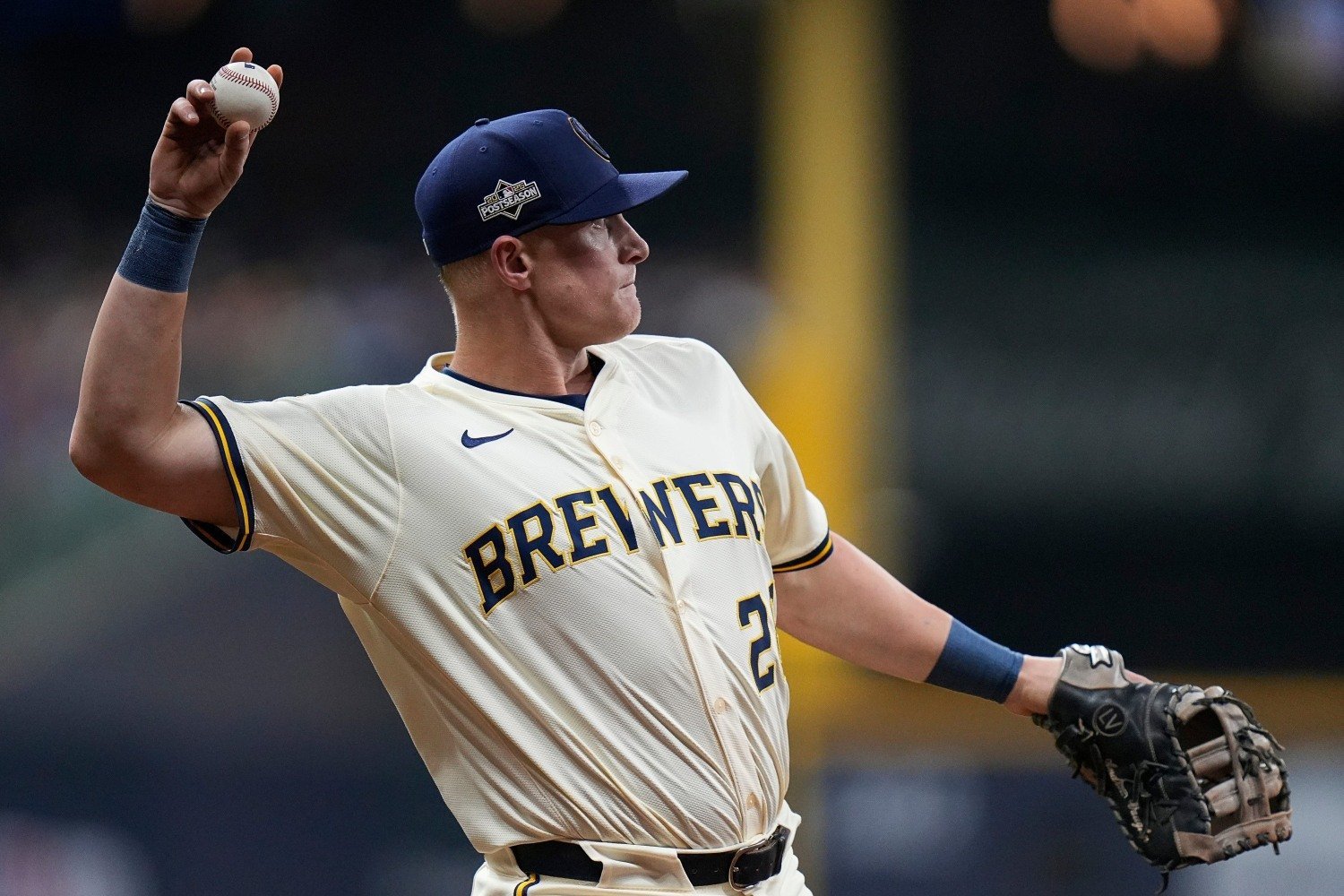 It's not yet clear whether Jackson Chourio will get back into the Brewers lineup Monday night against the Cardinals. He fouled a ball off his foot during a rehab start over the weekend and could be delayed another few days while he shakes off the soreness. However, all systems are go for Andrew Vaughn, who was sidelined by a broken hamate bone on Opening Day and has missed the last five-plus weeks. The Brewers will receive Vaughn gratefully into a lineup that needs more length. While Vaughn was on the shelf, many of the reps against left-handed pitchers went to Gary Sánchez. The team's backup catcher became its de facto short-side platoon first baseman over the first fortnight. He hasn't played first since April 11, after his defense there proved costly, but he's still been in the lineup often as the designated hitter. At the end of play on April 14, that was fine with everyone: he was batting .259/.412/.815. That was the day Sánchez hit his last home run, though, and in the three weeks since, he's batting .182/.333/.273. Having Vaughn take some playing time from Sánchez is one way the team can get its mojo back offensively. In selected matchups, Vaughn's at-bats could come at the expense of Jake Bauers, instead. Bauers didn't disappoint during his first month of everyday playing time, but nor did he seize the job in a way that precludes Vaughn shoving him to the bench on occasion over the next few weeks. Bauers is batting a respectable .243/.317/.423 on the season, and his whiff and strikeout rates are down. On the other hand, in a league walking more, he's walking less. He's gotten incrementally but importantly more aggressive early in counts, sometimes getting himself out because he's still trying to avoid getting into a two-strike situation. Bauers has strill been fairly productive, though, and on the right days, Vaughn could man first base while Bauers slides to the outfield. Presumably, Chourio will be back within a few days, if not Monday, so the team ought not to need Bauers out there very often. While they do, though, he can be an offensive upgrade in the corners. Ultimately, what the team needs is more length in its lineup. That trademark relentlessness that makes the Brewers great when they're going right has shown up only in flashes so far. They're getting a league-worst .239 slugging average from the bottom third of their order. Neither Vaughn nor Chourio can directly replace Joey Ortiz or David Hamilton, two of the key culprits in that lack of power from those spots, but they can lessen the team's need to use Blake Perkins. Even slightly more danger at the bottom of the order could restore the consistency the team has turned into so many wins over the last few years. Vaughn's return engenders that. Chourio's will do so, too. After weeks of waiting, Pat Murphy will have some good dilemmas when filling out his lineup card. View the full article
 -
 For the week, Wilson (4-2) was the sole series winner and Nashville (3-3) managed a draw. Wisconsin (2-4) and Biloxi (1-5) battled but dropped their series. Transactions: RHP Logan Henderson recalled to MLB Brewers from RHP Easton McGee optioned to AAA Nashville from MLB Brewers C Andrick Nava activated by AAA Nashville from Development List Game Action: Nashville Pre-Game Media Notes Final: Nashville 5, Norfolk (Orioles) 1 Box Score and Game Log Via the Sounds’ website, game details and we encourage readers to review affiliate write-ups as part of their Link Report routine: Five Different Sounds Earn RBI to Split Series with Norfolk While the story of this game centered on Sounds’ middle relievers LHP Drew Rom (2 1/3 IP, 0 R, 0 H, 0 BB, 2 Ks) and RHP Craig Yoho (2 IP, 0 R, 0 H, 1 BB, 3 Ks) carving up the Tides, internet watchers were primarily curious about SS Cooper Pratt’s late scratch from the starting lineup. If and when we have an update on Pratt’s status, we’d be sure to share it. After starting RHP Carlos Rodriguez successfully navigated relatively heavy traffic (2 2/3 IP, 0 R, 2 H, 4 BB, 3 Ks), Rom and Yoho retired 13 of the next 14 batters while the offense took advantage of 8 walks and a hit-by-pitch to grab a 5-0 lead. Rom’s entry with the bases loaded, 2 outs and the game scoreless in the top of the 3rd inning was particularly pivotal, getting ahead 0-and-2 before inducing a shallow fly out to help Rodriguez escape the jam. Leadoff hitter 2B Eddys Leonard (2-for-5) set the table well on Sunday, singling but stranded in the first inning, singling and scoring in a 2-run third inning, then adding an RBI groundout to extend the lead to 4-0 in the 6th frame. OFs Luis Matos (2-for-3, walk) and Luis Lara (1-for-2, walk, HBP) both reached base thrice, though Matos was caught stealing and also thrown out attempting to go first-to-third on a Lara single to end the 6th inning. Sounds’ Extras: Rodriguez (58 pitches on Sunday after 42 pitches on Wednesday) is one of a number of Sounds’ bulk innings men who are not quite fully stretched out, including Robert Gasser, Coleman Crow, Thomas Pannone and rehabbing Quinn Priester. Henderson was part of that list before he threw a season-high 76 pitches for the Brewers on Sunday. RHP Blake Holub (2 IP, 1 R, 2 H, 0 BB, 4 Ks) was Nashville’s hardest thrower on the afternoon (peak velocity 96.7mph), striking out 4 of 8 batters faced. Next week’s outlook: Nashville travel to Louisville to battle the Reds’ affiliate for 6 games, with the series commencing on Tuesday. Biloxi Pre-Game Media Notes Final: Pensacola (Marlins) 9, Biloxi 4 Box Score and Game Log Via the Shuckers’ website, game details: Keith Continues First Inning Terror, Shuckers Drop Finale to Blue Wahoos This was an active and exciting affair through 4 1/2 innings (tied 3-3 by that point), with the teams trading extra-base hits and extra outs on the bases. OF Damon Keith had the loudest blast, while SS Jesus Made had already singled, been picked off, made an error and homered by that point of the game. Starting 21-year old RHP Bishop Letson wasn’t able to stack success (4 IP, 3 R, 4 H, 3 BB, 2 HBP, 4 Ks; 76 pitches), though he was throwing on 4 days’ rest for the first time this season (5 IP, 1 R, 6 Ks on Tuesday). He also helped himself out in the first inning by initiating a 1-4-3 ground ball double play after loading the bases with nobody out. C Darrien Miller can be happy with his 7th inning solo shot and the caught stealing in the 3rd inning, but he’ll probably be disappointed with the Blue Wahoos’ six stolen bases in the contest. Shuckers’ Extras: After starting the 2026 campaign on the injured list, RHP Nick Merkel’s second outing went a lot better than his season debut last week, as he retired all 4 batters faced (1 1/3 IP, 1 K). LHP Mark Manfredi (2 IP, 3 R, 3 Ks) commenced the season blistering hot (8 Ks, 0 runs in first 3 innings pitched), but has now conceded at least one earned run in 4 of his last 5 games. LHP Anthony Flores also struggled (2/3 IP, 3 R, 0 Ks), taking the Loss in this game. Jheremy Vargas, who has principally been an infielder in his minor league career, struggled a bit in left field this time out. He’ll learn and improve of course. Next week’s outlook: Biloxi host Braves’ affiliate Columbus this week, with the Shuckers needing to snap their 5-game skid. Wisconsin Pre-Game Media Notes Final: Quad Cities (Royals) 12, Wisconsin 3 Box Score and Game Log Via the Timber Rattlers’ website, game details: Bandits End Series with 12-3 Win over Wisconsin Though the team came up short, the talented Wisconsin media team still have the video highlights packaged for us: Be sure to also listen to the Chris Mehring and Jonathan Timm recap podcast, featuring Manager Nick Stanley. Of particular note is the commentary on RHP Jason Woodward’s early exit, including the scare of a 106mph line drive off of his pitching forearm and Stanley’s relatively encouraging quote that he doesn’t think it will be “anything major”. Starting RHP Ethan Dorchies (4 IP, 4 R (3 ER), 6 H, 1 BB, 5 Ks), making his 2nd start of the week, was effective through 3 frames before the Quad Cities’ 4th and 5th batters opened their 3-run 4th inning with a triple and a double to grab a 4-2 lead. OF Josh Adamczewski keeps making his case for a possible promotion (2-for-3, walk, RBI), while OF Josiah Ragsdale continued his excellent run of form (2-for-4 Sunday with a double; 17-for-45 over last 14 games). The contest was 5-2 by the time Woodward (3 batters faced) departed and 7-2 before RHP Michael Fowler (2 1/3 IP, 3 R (1 ER), 3 H, 1 BB, 3 Ks) could really settle in, creating too wide a gap to make up in front of 3,556 home fans on a 63-degree afternoon. Timber Rattlers’ Extras: Stalwarts 3B Andrew Fischer (1-for-15 last 4 games) and C Marco Dinges (1-for-19 last 5 games) ended the series on tough stretches. Quad Cities seriously put the hurting on Wisconsin pitching in their 4 wins, scoring 45 runs in 32 innings on those contests. Late inning relievers LHP Bjorn Johnson and RHP Quinton Low conceded 3 runs in their combined 2 1/3 IP in this game. Next week’s outlook: Wisconsin head down to Illinois to take on Cardinals’ affiliate Peoria for six games, with RHP Chandler Welch (4.09 ERA, 0.82 WHIP, 8.2 K/9 in 11.0 IP) scheduled to make his first start since June 2025 in a Tuesday matinee. Wilson Pre-Game Media Notes Final: Wilson 4, Salem (Red Sox) 3 (in 10 innings) Box Score and Game Log Via the Warbirds’ website, game details: Walk-Off Win Secures Series for Wilson 18-year old OF Handelfry Encarnacion (2-for-4, HR, double, walk, 2 RBIs) is rightfully the lead story for his 2-run walk-off blast (homering for a 3rd straight day) on a 2-0 count as the first batter of the bottom of the 10th inning: We also need to credit the terrific work of Wilson’s bullpen, as LHP Anfernny Reyes (2/3 IP), LHP Enderson Mercado (3 IP, 5 Ks), RHP Eric Prado (2 IP, 2 Ks) and RHP Joshua Quezada (1 IP, 3 Ks) combined to allow no earned runs over 6 2/3 innings, while striking out 10 RidgeYaks along the way. This tight Sunday contest had to go to extras after both teams missed numerous opportunities to grab an extra run, with a combined 5 caught stealings hurting their causes. Salem also went 1-for-14 with runners in scoring position, stranding 11 baserunners. 1,660 home fans got to see Salem fail to score in the 8th inning despite 2 walks and 2 hit-by-pitches, with Salem stranding a runner at 2nd base in the 9th inning and the Warbirds stranding Eric Martinez (who’d doubled) at 3rd base to end the 9th inning. An error, hit-by-pitch and passed ball weren’t too much for Quezada to overcome in the top of the 10th inning, as only the Manfred Man came around to score for Salem. Wilson’s ‘X’ page has more video highlights, including another angle of Encarnacion’s walk-off and a nice double play converted by SS Brady Ebel. Warbirds’ Extras: Starting RHP Miqueas Mercedes (3 1/3 IP, 2 R, 4 H, 0 BB, 3 Ks) exited after a strikeout and injury delay in the top of the 4th inning. Hopefully he’s okay and was simply on a pitch limit (51, with 36 strikes), given that he was throwing on 4 days’ rest. Wilson’s box score batting averages are beginning to look healthier, with 3B Luis Lameda (1-for-3, walk) at .320, DH Pedro Ibarguen (2-for-4) at .289, 2B Juan Ortuno (1-for-3, walk) at .220 and Encarnacion at .214. The team average is now .193 through 27 games, with a .620 team OPS. That said, OF Jose Anderson is in a 2-for-35 drought at the plate, while C Kevin Garcia is 0-for-12 after joining the squad late due to a minor injury. Next week’s outlook: Wilson go back on the road, travelling to Astros’ affiliate Fayetteville for six games starting Tuesday. We hope that you enjoy the Minor League Link Report. On Monday, the ACL Brewers have the sole minor league affiliate game, hosting the ACL Padres at 8:00 pm CST. The Milwaukee Brewers also commence their series at St. Louis at 6:45pm CST. Organizational Scoreboard including starting pitcher info, game times, MiLB TV links, and box scores Current Milwaukee Brewers Organization Batting Stats and Depth Current Milwaukee Brewers Organization Pitching Stats and Depth View the full article
 -
Minnesota Twins Minor League Hitter of the Month: April 2026
DiamondCentric posted an article in Twins Daily
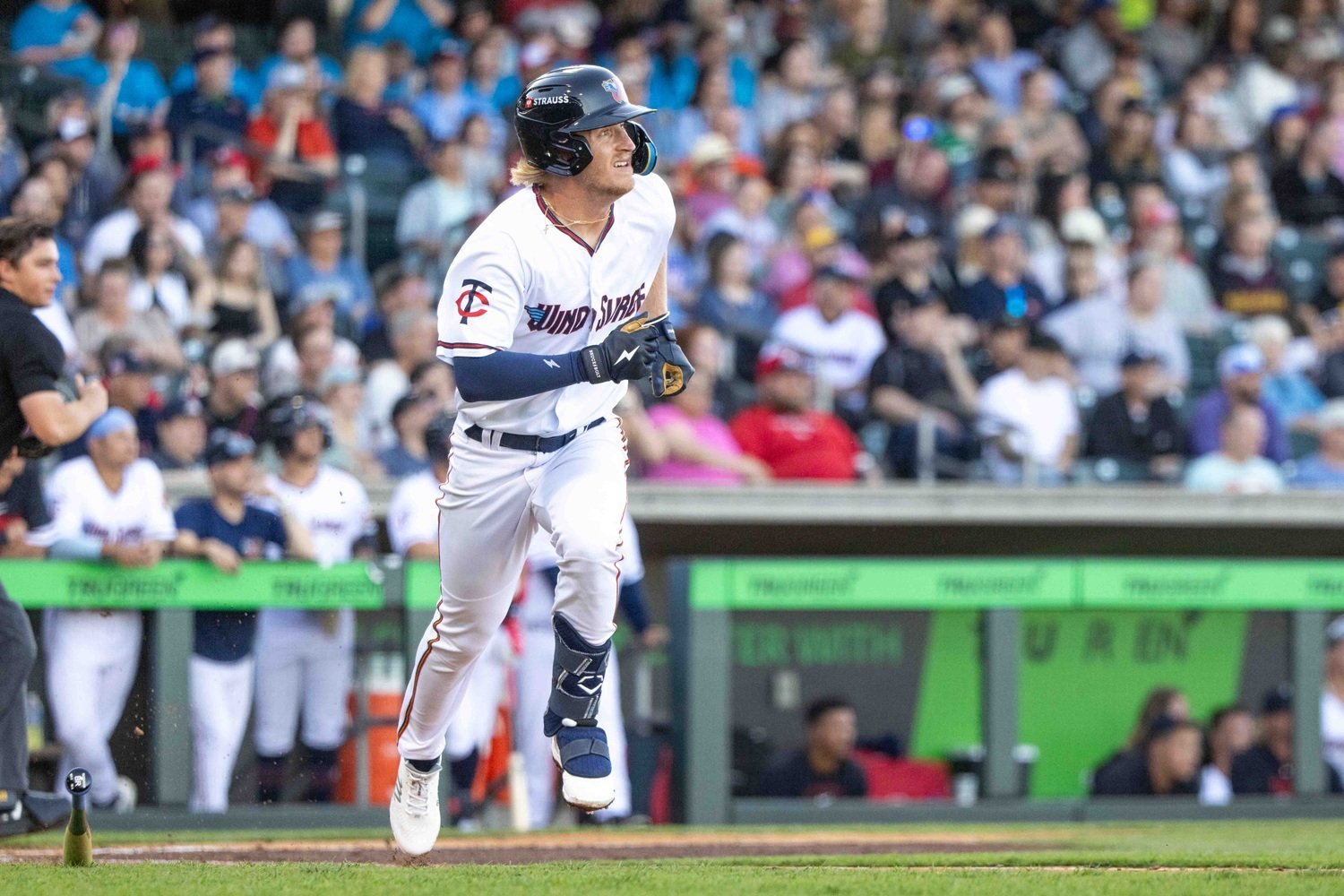 One month of the minor-league season is now complete. Despite cool temperatures, especially early, there have been quite a few really strong offensive performances already. Today we take a look at the top hitting performances of the season's first month. Before we jump to the Top 5 hitters, there are several Honorable Mentions. HONORABLE MENTIONS OF Kyler Fedko - St. Paul Saints - 25 G, 18-for-78, .231/.291/.551 (.842) with 2 doubles, 1 triple, 7 home runs, 12 R, 21 RBI, 5 BB, 24 K. UT Dameury Pena - Fort Myers Might Mussels - 20 G, 25-for-73, .342/.417/.397 (.939) with 2 doubles, 1 triple, 0 home runs, 9 R, 8 RBI, 9 BB, 8 K. SS Marek Houston - Cedar Rapids Kernels - 23 G, 29-for-93, .312/.375/.473 (.948) with 2 doubles, 2 triples, 4 home runs, 16 R, 7 RBI, 10 BB, 25 K. OF Alan Roden - St. Paul Saints - 19 G, 189-for-69, .275/.425/.464 (.889) with 4 doubles, 3 home runs, 9 R, 15 RBI, 17 BB, 14 K. OF Jacob McCombs - Cedar Rapids Kernels - 13 G, 13-for-46, .283/.377/.587 (.964) with 5 doubles, 3 triples, 1 home run, 5 R, 12 RBI, 1 BB, 14 K. OF Yasser Mercedes - Fort Myers Mighty Mussels - 13 G, 14-for-49, .286/.417/.592 (1.009) with 1 double, 1 triple, 4 home runs, 13 R, 16 RBI, 11 BB, 15 K C Ricardo Olivar - Wichita Wind Surge - 18 G, 16-for-65, .246/.342/.554 (.896) with 5 doubles, 5 home runs, 12 R, 18 RBI, 10 BB, 10 K. THE TOP FIVE HITTERS Number 5 - Wichita Wind Surge - OF Hendry Mendez (22) - 22 G, 23-for-81, .284/.372/.519 (.891), 5 doubles, 1 triple, 4 home runs, 10 R, 17 R, 19 RBI, 9 BB, 20 K. The Twins acquired Mendez and 17-year-old RHP Geremy Villoria from the Phillies at the 2025 trade deadline. Following the season, he was added to the team’s 40-man roster. With the Twins left-handed hitting outfield depth, both in the big leagues and at St. Paul, he returned to Double-A Wichita to start the season. There was also talk about him getting some time at first base, but to this point, he hasn’t played two full games at the position. What he can do is hit, and he generally knows the strike zone. He appears to be pushing for more power with 10 extra base hits in the month. Can he turn a great eye and contact skills into more power? That’ll be the question we’ll check on at the end of the season. Number 4 - St. Paul Saints - OF Emmanuel Rodriguez (23) - 24 G, 20-for-80, .250/.419/.513 (.932), 3 doubles, 6 home runs, 15 R, 17 RBI, 22 BB, 31 K. It seems as though we have been talking about Rodriguez for years and years. His power potential. His speed and defense. Stolen bases. Lots of walks and lots of strikeouts. We know the scouting report as it has been similar for years. But he only turned 23 two months ago. Part of it is that he finished the 2024 season with seven games in St. Paul. And, he had an inside-the-park grand slam. We see his heart, his enthusiasm and his passion for the game and want to see it at Target Field. But injuries have kept him sidelined much of his career. In 2022, he played just 47 games. In 2024, he played in just 47 games including rehab games. In 2025, he played in just 65 games, including 13 rehab games. He got off to a fast start with the Saints in April. While he may never hit for a real high average (because of all the strikeouts), he gets on base (because of all the walks). He’s got tremendous power, not only hitting home runs, but in just hitting the ball really, really hard. It isn’t rare for him to have exit velocities over 110 mph, and he hit two over 117 mph during the month. He is playing mostly right field, some center field, and has made two starts in left field. Number 3 - Cedar Rapids Kernels - OF/1B Jaime Ferrer (23) - 23 G, 19-for-64, .297/.444/.484 (.929), 3 doubles, 3 home runs, 16 R, 7 RBI, 14 BB, 18 K. Ferrer was born in Bayamon, Puerto Rico, the same hometown as former Twins pitcher Jose Berrios. He went to high school in Orlando and then spent three seasons at Florida State. In 2024, he was the Twins fourth-round draft pick. There was an effort to move him behind the plate the last couple of seasons, but to this point this season, he has played both corner outfield spots and first base. Last year in Cedar Rapids, he hit .216/.296/.339 (.634) with 20 doubles, two triples, and five home runs. Note that his April stats above do not include the three home runs he hit over two games on May 1st and 2nd. While he’s been batting ninth for the Kernels, it gives them a very professional hitter at the bottom of the order. His quality of plate appearance has been much improved and he’s putting up the kind of numbers that captured scouts’ attention at Florida State. Number 2 - Wichita Wind Surge - OF Garrett Spain (25) - 19 G, .271/.354/.629 (.983), 5 doubles, 1 triple, 6 home runs, 16 R, 7 RBI, 9 BB, 21 K. Spain came to the Twins in December’s minor-league portion of the Rule 5 draft. He had spent the 2024 season with the Brewers organization. He played in 120 games for Double-A Biloxi and hit .207/.282/.377 (.659) with 17 doubles, four triples and 16 home runs. He also played 11 games at Triple-A Nashville. Spain grew up in Clarksville, Tennessee, and then he stayed home and attended Austin Peay. He was the Blue Jays 15th round pick in 2021. After two seasons at High-A Vancouver, and hitting .167 over 103 games at Double-A in 2024, the Blue Jays let him go,and the Brewers signed him before the 2025 season. Spain is a max effort type of player, but the hard work has kept him in affiliated ball. He generally takes quality at-bats. He has shown improved power. He’s a smart player. He was 5-for-5 in stolen base attempts in April. And the Twins Minor League Hitter of the Month is: Wichita Wind Surge/St. Paul Saints - IF Ben Ross - 20 G, 27-for-74, .365/.460/.676 (1.084), 8 doubles, 5 home runs, 16 R, 16 RBI, 12 BB, 13 K. Ben Ross grew up in Springfield, Ohio. In high school, he starred on the soccer pitch and the baseball diamond. Upon graduation, Ross made the 200 mile drive north and east to South Euclid, Ohio, a city of almost 22,000 people, a suburb east of Cleveland, adjacent to Cleveland Heights. It is the home of Notre Dame College, a Division II school in the Mountain East Conference. As a freshman in 2020, he hit .389 with three doubles in 110 games before the season came to an abrupt end. In 2021, he hit .426/.494/.844 (1.338) with 20 doubles, three triples, and 11 home runs. In 52 games as a junior, he hit .392/.452/.747 (1.200) with 20 doubles, two triples, and 14 home runs. He also had 15 stolen bases. That summer, he played for Wisconsin Rapids in the Northwoods League. In 42 games, he hit .421/.502/.649 (!.152) with seven doubles and 10 homers. He also stole 17 bases. In July of 2022, the Twins were thrilled to be able to make Ross their fifth round draft pick. He played in 22 games for the Mighty Mussels that summer. He made the jump to Cedar Rapids to start the 2023 season and hit .240/.322/.455 (.777) with 25 doubles, two triples, and 19 homers in 103 games. He ended the season with 10 games in Wichita. Between 2024 and 2025, he played in 244 games for the Wind Surge. With a full infield to start the season at St. Paul, Ross was sent back to Kansas to start this season. He could have been down, could have moped. Instead, he does what he’s always done. First and foremost, Ross has always played great defense. He can legitimately play shortstop, but he’s had opportunities all around the infield and in center field as well. He began the 2026 season with 16 games in Wichita. In that time, he hit .424/.528/.797 (1.324) with seven doubles, five homers, and 16 RBI. He had 12 walks to 10 strikeouts. He was 8-for-9 in stolen base attempts. He began the season with a 13-game hitting streak. He reached base in all 16 games. He had nine multi-hit games including two, three-hit games. A little over a week ago, Ross told Twins Daily, “I think a huge piece of hitting is the mentality going up to the plate. It’s super tough day in and day out to feel confident for every at-bat which is why it’s important to have a plan tailored to the situation.” He put in the time and put in the work and earned his first promotion to St. Paul. He played in four games for the Saints in April, and went just 2-for-15 which hurt his overall month stats, but what he did in Wichita is undeniable. Also, on May 1, he went 0-for-4 to start 2-for-19 with the Saints. But in two weekend games, Ross went a combined 3-for-5 with four walks, two doubles, a home run, five runs scored and four RBI. We want to congratulate Ben Ross, Twins Daily’s choice for Minor League Hitter of the Month for April of 2026. Feel free to share your thoughts and ask questions. How would you rank the top five hitters in the Twins organization in April? View the full article
 -
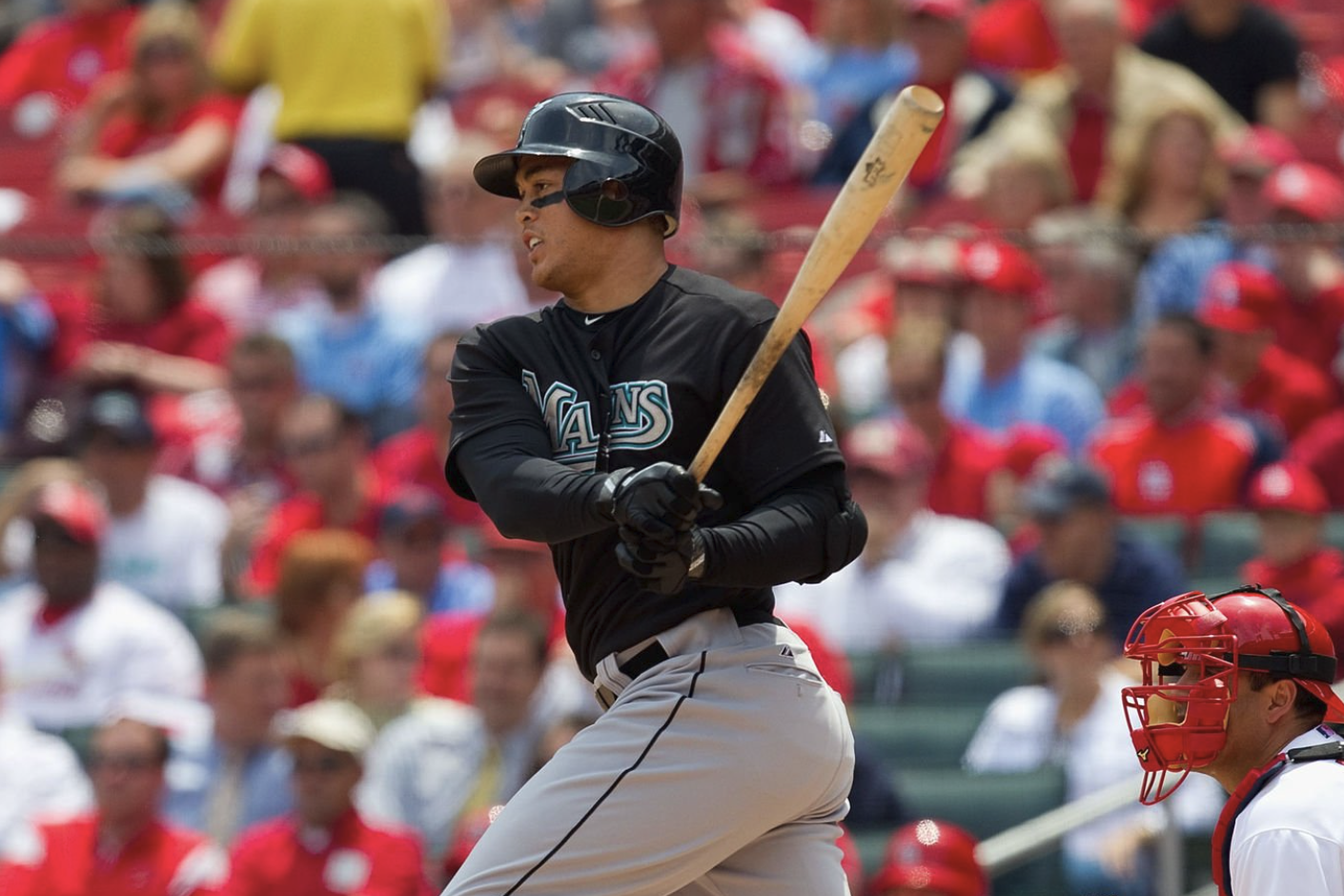 As the club’s all-time home run leader with 267 bombs as a member of the Florida/Miami Marlins, Giancarlo Stanton had his fair share of clutch homers as well over seven seasons with the Fish. One of those came on this day 15 years ago. Against the St. Louis Cardinals at Busch Stadium, Stanton, then known as Mike, came through with a two-run home run in the ninth inning to break a tie and lift the Florida Marlins to an eventual 8-7 victory. Neither team had scored since the sixth inning as the Marlins came to the plate in the top of the ninth to face St. Louis right-hander Eduardo Sánchez on May 4, 2011. With the score tied 6-6, Hanley Ramírez walked to open the inning. Gaby Sánchez followed by striking out. With one on and one out, Stanton came to the plate. After taking the first pitch for a ball, Stanton got a fastball middle-in and didn’t miss it. St. Louis outfielders barely moved as Stanton belted a no-doubter to left-centerfield, giving Florida an 8-6 lead. Juan Carlos Oviedo, then known as Leo Núñez, came in to try to close it out. After retiring the first batter he faced, Oviedo allowed a solo home run to Jon Jay that cut the deficit to 8-7. Oviedo then walked Albert Pujols but was able to get Matt Holliday to ground into a game-ending double play to collect the save. The Marlins never trailed in the contest but did let a four-run lead slip away. After the teams traded two-spots in the first inning, Florida took a 6-2 lead with four runs in the third inning. St. Louis answered with two in the bottom of the frame before drawing even with two more in the sixth. Emilio Bonifácio finished 3-for-5 with a triple and a run scored in the win. Gaby Sánchez and Chris Coghlan each added two hits. Ramírez scored three runs in the victory. Holliday finished with two hits for St. Louis. Although Florida would finish just 72-90 and in last place in the National League East in 2011, the thrilling win put the Marlins at 19-10 for the season. That win came courtesy of a no-doubter from Stanton and on this day 15 years ago. View the full article
 -
Minor League Report (5/3): Royals Affiliates Split A Sunday Slate
DiamondCentric posted an article in Royals Keep
 The Quad Cities River Bandits and Columbia Fireflies posted wins on Saturday, with Asbel Gonzalez and Derlin Figueroa each launching two home runs in a 12-3 Quad Cities romp. Emmanuel Reyes worked five innings of two-run ball for the win. Columbia's five-run first carried Kendry Chourio's four-strikeout start to victory. Omaha fell 14-8 despite Luca Tresh's 4-for-5 day, and Northwest Arkansas dropped a 7-6 heartbreaker as Hunter Owen took the loss. Royals Transactions No Roster Moves Storm Chasers Drop Slugfest To Bats Despite Tresh's Four-Hit Effort Omaha fell 14-8 to Louisville on Saturday, undone by a Bats lineup that pulled away with a six-run seventh inning. Cleanup hitter Luca Tresh paced the Storm Chasers offense, going 4-for-5 with two doubles, two runs, and two RBIs. Abraham Toro added two hits, including a two-run homer, while Kameron Misner went 2-for-4 with a double, a triple, and an RBI. The Storm Chasers tied the game in the third inning, when Misner tripled home Tyler Tolbert, Tresh doubled in Misner, and Toro followed with a two-run shot to right field that knotted things 4-4. Louisville broke the game open in the seventh, scoring six runs on three hits, three walks, and a string of small mistakes that turned a tight game into a comfortable lead. Starter Aaron Sanchez took the longest turn for Omaha, allowing four runs on six hits over three innings, walking two and striking out three. Anthony Gose struggled with command in his outing, walking five over two-thirds of an inning, and Chazz Martinez allowed six runs on three hits in his lone inning of work. Helcris Olivárez and Steven Cruz combined for two scoreless innings out of the bullpen. The Storm Chasers stranded ten runners on base. Player AB R H RBI BB K Tyler Tolbert 5 1 2 0 0 2 Drew Waters 5 1 1 1 0 2 Kameron Misner 4 2 2 1 0 2 Luca Tresh 5 2 4 2 0 0 Abraham Toro 5 1 2 2 0 1 Gavin Cross 2 1 0 0 2 2 Luke Maile 3 0 0 0 0 2 Elih Marrero 2 0 1 1 0 0 Dustin Dickerson 4 0 0 0 1 1 Colton Becker 4 0 0 0 1 0 Player IP H R ER BB K HR Aaron Sanchez 3 6 4 4 2 3 1 Shane Panzini (L) 2 1 2 2 2 2 0 Anthony Gose 2/3 0 2 2 5 1 0 Chazz Martinez 1 3 6 6 3 1 0 Jose Cuas 1/3 2 0 0 0 0 0 Helcris Olivárez 1 1 0 0 0 1 0 Steven Cruz 1 0 0 0 0 0 0 Naturals' Late Rally Falls One Run Short In Loss Northwest Arkansas dropped a 7-6 decision to Springfield on Saturday despite a three-run rally in the bottom of the eighth inning that brought the Naturals within one. Leadoff hitter Carson Roccaforte went 2-for-5 with a triple, an RBI, and a stolen base, while Jack Pineda added two hits, including a solo home run and an RBI triple. The Naturals scored their first three runs in the second inning, when Pineda homered, Canyon Brown singled, and Roccaforte cashed in another run with a single. After Springfield went ahead in the third with a four-run inning, Northwest Arkansas mounted its final push in the eighth. Brett Squires reached on an error, Daniel Vazquez walked, and Spencer Nivens reached on another error that allowed two runs to come home. Pineda then tripled to bring in Nivens and trim the deficit to one, but the rally ended with a groundout. Owen took the loss for Northwest Arkansas, allowing four runs on six hits in three innings with three strikeouts. Zachary Cawyer threw two scoreless frames out of the bullpen, and Brandon Johnson finished with a scoreless inning and a third. The Naturals committed one error and struck out ten times. Player AB R H RBI BB K Carson Roccaforte 5 1 2 1 0 2 Rudy Martin Jr. 5 0 1 0 0 1 Sam Kulasingam 4 0 0 0 0 2 Brett Squires 3 1 0 0 1 1 Daniel Vazquez 3 1 0 0 1 1 Spencer Nivens 4 1 1 0 0 0 Jack Pineda 4 1 2 2 0 1 Canyon Brown 4 1 1 0 0 0 Omar Hernandez 0 0 0 0 0 0 Justin Johnson 3 0 0 0 1 2 Player IP H R ER BB K HR Hunter Owen (L) 3 6 4 4 0 3 1 Andrew Morones 2/3 1 1 0 2 1 0 Augusto Mendieta 1/3 0 0 0 0 0 0 Dennis Colleran Jr. 1 2 1 1 0 2 1 Zachary Cawyer 2 0 0 0 0 1 0 Chase Jessee 2/3 1 1 1 3 1 0 Brandon Johnson 1 1/3 0 0 0 0 1 0 Gonzalez And Figueroa Each Slug Two Homers In River Bandits Rout Quad Cities pounded Wisconsin 12-3 on Saturday behind a pair of two-homer nights from Gonzalez and Figueroa. Gonzalez finished 2-for-5 with three RBIs and two runs scored, while Figueroa went 2-for-5 with three RBIs and three runs. Tyriq Kemp added two hits, two RBIs, and two stolen bases. Cleanup hitter Luke Pelzer went 2-for-5 with a triple and two runs, and Angel Acosta also collected two hits and an RBI. The River Bandits broke a 1-2 deficit open with a three-run fourth, when Pelzer tripled, Jose Cerice doubled him in, an error allowed Cerice to score, and Acosta singled in Kemp. Quad Cities tacked on three more in the fifth, with Gonzalez leading off with his second homer of the year and Figueroa following with a two-run shot. Gonzalez added a second homer in the eighth, capping a five-RBI night between the two power bats. Starter Emmanuel Reyes earned the win with five innings of two-run ball, allowing four hits, walking one, and striking out five. Kamden Edge tossed an inning and a third of scoreless relief with three strikeouts. The River Bandits stranded seven runners. Player AB R H RBI BB K Nolan Sailors 4 0 1 0 2 0 Asbel Gonzalez 5 2 2 3 0 3 Blake Mitchell 3 1 1 0 1 1 Luke Pelzer 5 2 2 0 0 0 Jose Cerice 4 2 1 1 0 1 Derlin Figueroa 5 3 2 3 0 1 Tyriq Kemp 5 1 2 2 0 0 Erick Torres 5 0 1 1 0 1 Angel Acosta 4 1 2 1 1 2 Player IP H R ER BB K HR Emmanuel Reyes (W) 5 4 2 2 1 5 1 Jacob Widener 2/3 0 0 0 1 1 0 Kamden Edge 1 1/3 0 0 0 0 3 0 Cory Ronan 1 2 1 1 1 1 0 Yimi Presinal 1 1 0 0 1 1 0 Five-Run First Sends Fireflies Past Pelicans Columbia jumped on Myrtle Beach for five runs in the first inning and never trailed in a 7-3 win on Saturday. The Fireflies opened the game with a Henry Ramos single, a Yandel Ricardo hit-by-pitch, and a Josh Hammond walk to load the bases. Cleanup hitter Brooks Bryan walked in the first run, Sean Gamble walked in the second, Hyungchan Um walked in the third, and Roni Cabrera capped the inning with a two-run single. Bryan finished 1-for-3 with two walks, two RBIs, two stolen bases, and a run scored. Hammond went 1-for-3 with a double, two walks, and two runs. Connor Rasmussen added two hits and an RBI, while Cabrera also drove in two. Starter Kendry Chourio worked three and two-thirds innings for Columbia, allowing one run on three hits with no walks and four strikeouts, the lone blemish a solo home run. Jordan Woods earned the win, allowing two runs on three hits over three innings with five walks and eight strikeouts. Andy Basora picked up a hold with an inning and a third of scoreless relief and two strikeouts, and Max Martin finished the night with a clean ninth. The Fireflies stole seven bases and stranded ten runners. Player AB R H RBI BB K Henry Ramos 5 1 1 0 0 0 Yandel Ricardo 4 1 0 0 0 0 Josh Hammond 3 2 1 0 2 0 Brooks Bryan 3 1 1 2 2 0 Sean Gamble 3 1 0 0 2 1 Hyungchan Um 3 1 1 1 2 2 JC Vanek 5 0 1 0 0 3 Roni Cabrera 4 0 1 2 0 2 Connor Rasmussen 4 0 2 1 0 1 Player IP H R ER BB K HR Kendry Chourio 3 2/3 3 1 1 0 4 1 Jordan Woods (W) 3 3 2 2 5 8 0 Andy Basora (H) 1 1/3 0 0 0 0 2 0 Max Martin 1 1 0 0 0 0 0 Top-20 Prospect Performance Carter Jensen: DNP Blake Mitchell: 1-for-3, BB, R, K David Shields: DNP Kendry Chourio: 3 2/3 IP, 3 H, 1 R, 1 ER, 0 BB, 4 K, 1 HR Ben Kudrna: DNP Sean Gamble: 0-for-3, 2 BB, R, K Josh Hammond: 1-for-3, 2B, 2 BB, 2 R Ramon Ramirez: DNP Drew Beam: DNP Asbel Gonzalez: 2-for-5, 2 HR, 3 RBI, 2 R, 3 K Yandel Ricardo: 0-for-4, R, SB Felix Arronde: DNP Luinder Avila: DNP Daniel Vázquez: 0-for-3, BB, R, K Steven Zobac: DNP Carson Roccaforte: 2-for-5, 3B, RBI, R, SB, 2 K Blake Wolters: DNP Michael Lombardi: DNP Warren Calcaño: DNP Frank Mozzicato: DN View the full article
 -
 Much like most of the offense, the Boston Red Sox's pitching staff left quite a bit to be desired in April. For a team that was built around elite starting pitching, the rotation has been surprisingly ineffective thus far. As the month closed the top two arms in the rotation, Garrett Crochet and Sonny Gray, were on the injured list and were working their way back to form. That leaves us a limited group of pitchers to choose from, but there are a few standouts who deserve their flowers for trying to hold things together before May. Ranking Red Sox's Best Pitchers In April #3: Aroldis Chapman Chapman gets the number three spot because he’s seen fairly limited action, but he’s been mostly solid when called upon. For the month of April, he posted a 1.35 ERA, 2.25 FIP, a 12.15% K/9, and a 4.05 BB/9. He’s been less sharp than he was last year, but he’s still a dependable closer for the team. There was some initial concern about his lack of velocity early in the season, but he’s been ramping back up to his usual high-90s fastball that tops out above 100 mph when he needs it to. What’s interesting is he seems to be throwing his off-speed pitches a bit more this year instead of just reaching back and throwing gas, so he may be looking to ease some of the stress that years of hurling fireballs has put on his left arm. #2: Connelly Early Early appeared in five games in April and posted a 3.08 ERA, 5.16 FIP, 7.52 K/9, 4.10 BB/9, and an impressive 42.5% groundball percentage. The rookie southpaw has been arguably the most consistent arm throughout April and posted the best start of his career against the Orioles to close the month out. He’s lost a bit of velocity this season, but has showcased his ability to get into the upper-90s when necessary. The biggest knock against Early right now is that he seems quite impacted by the weather on his start days, and he’s sometimes struggled to get past the fourth inning, even when things are going well. That being said, he’s shown a ton of potential so far this season and has the makings of a top-of-the-rotation arm as long as he can remain durable enough to turn over a lineup more than twice. #1: Ranger Suarez Suarez had a rough start to the season, but he has settled down nicely to end the month. He turned in a 2.35 ERA over 30 2/3 innings in April, posting a 2.66 FIP, 1.0 fWAR, and a .208 BABIP. He left 72% of runners on base during the month and worked deep into a handful of games. It’s likely no coincidence that the team’s strongest offers often coincided with Suarez’s best starts of the season. He’s almost the antithesis of the program that Craig Breslow and Andrew Bailey are running; he’s not a fireballer and his K/9 only sits at 7.63 for the month, but he’s effective at getting groundball outs, so long as the defense behind him plays up to par. Suarez felt like a panic signing after the team missed on bringing back Alex Bregman but as April waged on, we started to see the same version of Suarez that helped bring the Phillies to the postseason over the last few seasons. While his contract may be a bit of an albatross in a few years, if he’s going to continue to produce numbers like he did in April, then he’s going to be someone that fans enjoy supporting while he’s on the mound, regardless of what happens during the games he doesn’t start. Not all hope has been lost in Boston, as Crochet and Gray are both nearing their returns and as long as they are able to pitch like we’ve seen in the past, then the Red Sox should be in a better place. The offense can’t be ice cold forever, so everyone on this list should get ample opportunities to either put games away or pitch their way late into games behind multiple runs of support. Chapman, Early, and Suarez weren’t the only bright spots on the pitching side of things, but their performances in April offered the kind of optimism that has been sorely lacking over the past six weeks. View the full article
 -
Blue Jays Clutch Plays: Kazuma Okamoto Is Taking Charge
DiamondCentric posted an article in Jays Centre
 Welcome back to Blue Jays Clutch Plays, a recurring post that highlights the six most pivotal plays (three pitching, three hitting) from the past week of Blue Jays baseball, according to MLB's win probability model. Click here to read last week's edition. For the second consecutive week, the Blue Jays climbed a little closer to .500 after digging themselves quite a hole in early April. Things started well with a key series win against a divisional opponent in the form of the hapless Red Sox, and they had a chance to take 3 of 4 from the Twins on the weekend but were stymied on Sunday by a bullpen they spent the previous two games feasting on. After settling for the split, they're now 16-18 and are 9-5 in their last 14 games. Here are the plays most worth remembering from this past week. Pitching 3. Dylan Cease: Ceddanne Rafaela Groundout, Top 4, 4/27 (+5.5% wPA) Last Monday's opener against Boston had the makings of an all-time pitcher's duel, but Dylan Cease ultimately failed to outdo Ranger Suárez in the end. At the time of this play, though, the Jays were still very much in it. Even against the bottom of the order, a 3-2 pitch with runners on the corners and two outs in a 1-0 game is highly consequential, and Cease got Ceddanne Rafaela to roll over a slider just off the high-and-outside corner to escape the threat. 2. Dylan Cease: Ryan Jeffers Flyout, Bot 3, 5/2 (+5.8% wPA) With a runner on third and one out, Cease was not looking to induce anything in the air past the infield, especially with his team already down by a run, although a sac fly might've been considered a victory against Ryan Jeffers, who tormented the Blue Jays in April. And yet, even with Daulton Varsho's weaker throwing arm in center field, Jeffers couldn't quite get this one deep enough to score Trevor Larnach, and the game remained 3-2. 1. Braydon Fisher: Willson Contreras GIDP, Top 5, 4/29 (+11.7% wPA) It wasn't the most notable week for Jays pitchers in the single-play win probability department, due to the way the club's wins played out on the scoreboard, so Braydon Fisher getting Willson Contreras to ground into a double play on Wednesday afternoon stands as the Clutch Play of the Week for the staff. Of course, had Contreras even singled, Toronto's lead would've gotten uncomfortable in a hurry, so this was a timely grounder that set the stage for the offense to break the game open in the later innings. Hitters 3. Kazuma Okamoto: 2-RBI Single, Bot 3, 4/29 (+16.1% wPA) Kazuma Okamoto's stance adjustment to cover the outer half of the plate paid dividends here, as Brayan Bello's backdoor sinker leaked a little too far into the zone. He didn't try to do too much with it, rifling it into left-center field for a base hit to give the Blue Jays a lead they wouldn't relinquish. These bases-loaded situations gave Okamoto fits at the outset of his MLB career, but after this week, it's safe to say he's built for the moment. 2. Kazuma Okamoto: 2-RBI Single, Bot 3, 4/28 (+17.5% wPA) Red Sox lefty Payton Tolle made Okamoto look silly the pitch before this, blowing a perfectly located fastball by him to even the count. He doubled down with two strikes but couldn't elevate, and his reaction as soon as he let it go says it all. Okamoto turned on it, lacing it over the head of Roman Anthony and off the left field wall on a bounce. He tried to stretch it into a double but was thrown out, a call which surprisingly wasn't overturned after video review. Still, this hit was all the pitching staff needed; they shut Boston out and evened the series. 1. Kazuma Okamoto: RBI Single, Top 8, 5/2 (+25.4% wPA) It's a clean sweep for Okamoto, who was a man possessed last week. This wasn't even close to his farthest hit of the week, but by WPA, it was the most important, tying the game in the eighth and setting the stage for what would become an eight-run inning as the Jays stormed back to win 11-4 on Saturday. What's ironic is that Luis Garcia got the groundball he wanted here, but Okamoto hit it hard enough and took it right back up the middle to avoid the double play. The Jays simply wouldn't have been able to make it a winning week if it weren't for his efforts. View the full article
 -
 Three of four San Diego Padres affiliates won Sunday. Eric Yost struck out seven across four innings as San Antonio held off Tulsa 8-7, and Tirso Ornelas drove in the go-ahead run. Lamar King Jr. drove in four runs, and Igor Gil delivered three hitless innings as Fort Wayne edged South Bend 11-10. Qrey Lott went 5-for-5 with two home runs and six RBIs as Lake Elsinore won 12-10 in 10 innings. El Paso fell 4-3. Padres Minor-League Transactions No roster moves Sung-Mun Song Homers, But Chihuahuas Drop Finale For Split After being on the wrong end of two blowouts, the Triple-A El Paso Chihuahuas found themselves in a tight one during the series finale. Unfortunately, this one ended like the previous two: with a loss. The host Albuquerque Isotopes scored an eighth-inning run to pull out a 4-3 triumph, splitting the six-game series. Left-handed starter Jackson Wolf kept things from getting out of hand like they did the previous two games, allowing three runs in 4⅔ innings on five hits and two walks with a strikeout. The bullpen of right-handers Garrett Hawkins, Ethan Routzahn and David Morgan only gave up one run on four hits with two walks and three strikeouts over the final 3⅓ innings. El Paso jumped out to a 1-0 win in the top of the first as Will Wagner, in his second game of a rehab assignment following a spring training right oblique strain, doubled and took third on a throwing error, then scored on Samad Taylor's single to left. Albuquerque took a 3-1 lead in the bottom of the third, which stood until the Chihuahuas came to bat in the seventh. Sung-Mun Song hit his first home run as a member of the Padres organization, driving the first pitch of the inning over the fence in right. Mason McCoy singled and stole second, Pablo Reyes walked and a groundout moved the runners to second and third. Rodolfo Duran then lined an opposite-field single through the infield to right to score a pair and tie the game 3-3. But the Isotopes put together a rally in the bottom of the eighth against Morgan, making his first appearance since being demoted by the Padres, that proved to be the difference. Six players had hits for the Chihuahuas, but none had more than one. Reyes walked twice and has reached base in all 22 games he has played. Wagner was also hit by a pitch. EP_0503.mp4 Player AB R H RBI BB K Jase Bowen, CF 3 0 0 0 1 3 Will Wagner, 3B 2 1 1 0 1 0 Samad Taylor, RF 4 0 1 1 0 0 Nick Solak, LF 4 0 1 0 0 0 Sung-Mun Song, 2B 4 1 1 1 0 1 Mason McCoy, SS 4 1 1 0 0 0 Pablo Reyes, DH 2 0 0 0 2 0 Jose Miranda, 1B 4 0 0 0 0 1 Rodolfo Durán, C 4 0 1 1 0 1 Player IP H R ER BB K HR Jackson Wolf 4 2/3 5 3 3 2 1 0 Garrett Hawkins 1 1/3 1 0 0 0 1 0 Ethan Routzahn 1 1 0 0 0 0 0 David Morgan (L, 0-1) 1 2 1 1 2 2 0 Leandro Cedeno, Tirso Ornelas Lead Missions To Victory While wins have been hard to come by for the Double-A San Antonio Missions, that doesn't mean they don't have some talent on the roster. Leandro Cedeno hit a three-run homer and Tirso Ornelas also homered and drove in three, including the tiebreaking run in the eighth, as the Missions won the series finale 8-7. The Missions (7-20) won two games in a series for just the second time this year. Cedeno, Ornelas, Romeo Sanabria and Braedon Karpathios each had two of the 10 hits for the Missions, who also were issued eight walks. The Missions held a 6-1 lead in the top of the fourth before needing the late heroics. Ornelas homered leading off the second, his fourth of the year, and a wild pitch made it 2-0. Karpathios tacked on an RBI single in the third for a 3-0 lead. After a pair of walks in the fourth, Cedeno cranked a no-doubt three-run blast, with a nice little bat flip, to deep left to make it 6-1. It was Cedeno's third homer of the season. Ornelas made it 7-1 when he drew a bases-loaded walk in the sixth, but Tulsa scored three in the bottom of the sixth and three more in the seventh to tie it 7-7. In the eighth, Sanabria got things going with a two-out single and was pinch-run for by Kai Roberts. Ornelas then laced a double on an 0-2 pitch to right-center to easily score Roberts from first. Missions right-handed starter Eric Yost didn't allow a hit, but did give up a run on three walks while striking out seven in four innings. Johan Moreno picked up the win with 2⅓ hitless innings. SA_0503.mp4 Player AB R H RBI BB K Ethan Salas, C 2 2 0 0 3 0 Ryan Jackson, 2B 3 1 0 0 2 1 Leandro Cedeño, DH 5 1 2 3 0 1 Romeo Sanabria, 1B 3 1 2 0 1 1 Kai Roberts, CF 0 1 0 0 0 0 Tirso Ornelas, LF 3 1 2 3 2 0 Braedon Karpathios, RF 5 1 2 1 0 1 Luis Verdugo, 3B 5 0 1 0 0 2 Albert Fabian, 1B 5 0 0 0 0 0 Francisco Acuna, SS 5 0 1 0 0 1 Player IP H R ER BB K HR Eric Yost 4 0 1 1 3 7 0 Omar Cruz 1 2/3 3 3 3 0 2 2 Francis Peña 0 0 0 0 2 0 0 Harry Gustin 1 3 3 2 1 2 0 Johan Moreno (W, 1-0) 2 1/3 0 0 0 1 4 0 Lamar King Jr. Leads Homer Brigade As TinCaps Win 5th Straight The Padres have another catcher on a bit of a hot streak. Lamar King Jr., Padres Mission's No. 13 prospect, homered and matched his career high with four RBIs as the High-A Fort Wayne TinCaps won their fifth in a row, fending off the host South Bend Cubs 11-10. Carlos E. Rodriguez hit a three-run homer, while Rosman Verdugo and Jake Cunningham also homered and had a pair of RBIs. King, Rodriguez, Verdugo and Cunningham each had two of the TinCaps' 10 hits. Fort Wayne also drew seven walks. Coming off his first career four-hit game, King, at designated hitter Sunday, homered on the first pitch he saw for a two-run homer for a quick 2-0 lead. It was his second homer of the season. Rodriguez continued the big first inning with his three-run blast and a 5-0 lead, his third homer this year. South Bend scored five in the third to tie it. Verdugo led off the top of the fourth with his fourth homer and Cunningham doubled home a pair for an 8-5 lead. South Bend countered with two runs in the bottom of the fourth, then King went back to work in the fifth with his two-run double and a 10-7 TinCaps lead. After the Cubs made it 10-8 in the bottom of the fifth, Cunningham led off the top of the sixth with his sixth homer this year, making it 11-8. South Bend scored twice in the bottom of the sixth, but both bullpens shut out the offenses over the final three innings. TinCaps starter Abraham Parra was tagged for five runs on five hits and two walks with two strikeouts over 2⅔ innings. Igor Gil came in during the sixth inning and pitched three scoreless innings, while Clay Edmondson picked up his Midwest League-best fifth save with a scoreless ninth. FW_0503.mp4 Player AB R H RBI BB K Kasen Wells, CF 4 3 1 0 1 0 Rosman Verdugo, 2B 4 1 2 2 1 0 Lamar King Jr., DH 4 2 2 4 1 1 Alex McCoy, LF 5 0 0 0 0 3 Jake Cunningham, RF 4 2 2 2 1 0 Jack Costello, 1B 5 1 1 0 0 1 Carlos Rodriguez, C 4 2 2 3 1 1 Zach Evans, 3B 4 0 0 0 1 1 Dylan Grego, SS 4 0 0 0 1 2 Player IP H R ER BB K HR Abraham Parra 2 1/3 5 5 5 2 2 2 Clark Candiotti 1 1 2 2 2 1 0 C.J. Widger (H, 1) 1 1/3 0 1 1 3 1 0 Luis Germán (H, 2) 0 1/3 4 2 1 0 0 1 Igor Gil (W, 2-0) 3 0 0 0 0 3 0 Clay Edmondson (S, 5) 1 1 0 0 0 2 0 Qrey Lott's Huge Day Helps Storm Rally To Win In 10 You don't have to look far to find the Low-A Lake Elsinore Storm in the California League standings. And it is because of wins like this. Down to the final strike of the game, Qrey Lott hit his second homer of the game, a go-ahead two-run homer in the top of the ninth, and Luke Cantwell singled home the go-ahead run in a three-run 10th inning as the Storm surged past the host Ontario Tower Buzzers 12-10. The Storm have won five straight after dropping the series opener. Lott's two homers were part of a 5-for-5, six-RBI day. Lott also homered in the second inning, a two-run shot as part of the best day of his young career. Lott had no homers and three RBIs in the first seven games of his career. Lott went undrafted in 2025 and signed with the Padres in July. Cantwell went 4-for-5 and scored a pair of runs, while Truitt Madonna and George Bilecki each went 3-for-6, with Bilecki driving in a pair and scoring twice. Justin DeCriscio also homered. Lake Elsinore trailed 5-4 entering the top of the seventh when Jorge Quintana's one-out RBI single tied it, Bilecki singled home Quintana with the go-ahead run and Lott drove in Bilecki to make it 7-5. But Ontario scored three runs of its own in the eighth to reclaim the lead at 8-7. In the ninth, Kerrington Cross drew a two-out walk and Lott hit a towering two-run blast to center on a 2-2 pitch to flip the script and take a 9-8 lead. But Ontario tied it with two outs in the bottom of the ninth to force extra innings. DeCriscio was the zombie runner and went to third on a wild pitch, then scored on Cantwell's one-out single to right to put the Storm up 10-9. A two-out passed ball put Cantwell on third and Quintana doubled to left that was misplayed to make it 11-9. Bilecki capped the outburst with a single to center for a 12-9 lead. LE_0503.mp4 Player AB R H RBI BB K Ryan Wideman, CF 3 0 0 0 0 1 Conner Westenburg, CF 1 0 0 0 1 1 Justin DeCriscio, LF 6 2 1 1 0 1 Truitt Madonna, 1B 6 0 3 0 0 1 Luke Cantwell, DH 5 2 4 1 0 1 Yoiber Ocopio, C 5 0 0 0 0 1 Jorge Quintana, SS 4 3 2 2 2 2 George Bilecki, RF 6 2 3 2 0 1 Kerrington Cross, 3B 3 1 1 0 3 0 Qrey Lott, LF 5 2 5 6 0 0 Jose Verdugo, 2B 1 0 0 0 0 0 Player IP H R ER BB K HR Carlos Medina 3 5 2 2 1 4 0 Joseph Herrera 2 2 2 2 0 2 1 Nick Falter 2 1 1 1 1 1 1 Vicarte Domingo (W, 1-0)(BS, 1) 2 4 4 4 2 1 1 Rordy Mejia (S, 1) 1 2 1 0 0 1 0 Top-20 Prospect Performance Kash Mayfield: DNP Ethan Salas: 0-for-2, 3 BB, SB Kruz Schoolcraft: DNP Bradgley Rodriguez: DNP Humberto Cruz: DNP Miguel Mendez: DNP Ty Harvey: DNP Jorge Quintana: 2-for-4, 2B, 2 BB, 2 RBI, SB, 2 K Kale Fountain: DNP Ryan Wideman: 0-for-3, K Jagger Haynes: DNP Lamar King Jr.: 2-for-4, 2B, HR, BB, 4 RBI, K Romeo Sanabria: 2-for-3, BB, SB, K Truitt Madonna: 3-for-6, K Michael Salina: DNP Garrett Hawkins: 1 1/3 IP, 1 H, 0 R, 0 ER, 0 BB, 1 K Kavares Tears: DNP Deivid Coronil: DNP Francis Pena: 0 IP, 0 H, 0 R, 0 ER, 2 BB, 0 K Bryan Balzer: DNP View the full article
 -
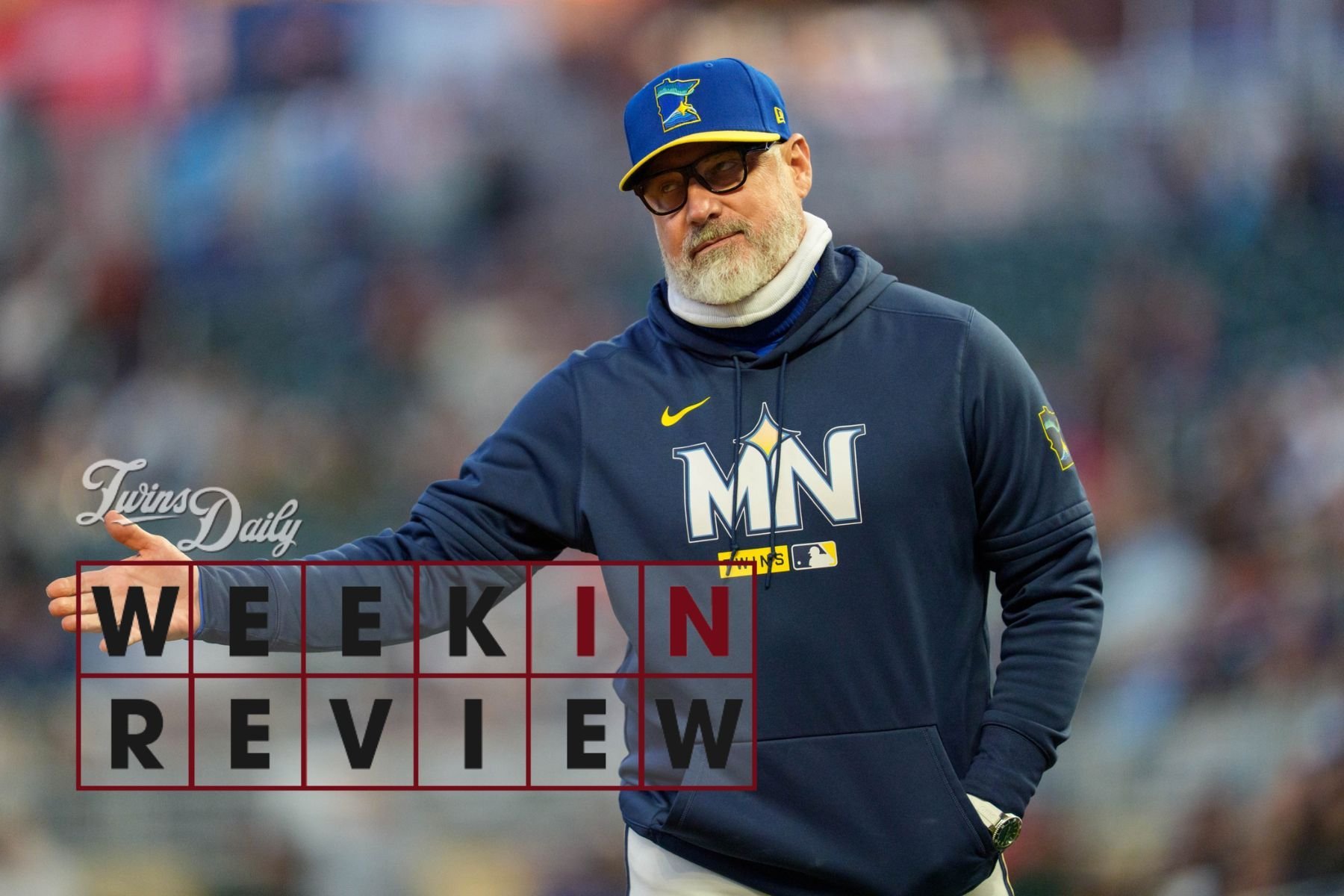 The Weekly Nutshell: For a second consecutive week, the Minnesota Twins opened up with an impressive victory, and then it was pretty much all downhill from there. They dropped four of the next five, sinking further below .500 as their leaky relief corps turned the late innings into a recurring horror show. There have been some small positive developments and positive signs mixed in for this club, but they are being vastly overshadowed by setbacks and failure. Sunday's series finale against Toronto brought yet another devastating gut-punch; the modest morale boost of a split-clinching victory was derailed by Joe Ryan exiting with right elbow soreness after just two batters faced. Vibes are bad, and the season already feels like it's on life support here in early May. Weekly Snapshot: Mon, 4/27 through Sun, 5/3 *** Record Last Week: 3-4 (Overall: 15-20) Run Differential Last Week: -5 (Overall: +5) Standing: 5th Place in AL Central (4.0 GB) Latest Game Results Game 29 | MIN 11, SEA 4: Bats Awaken as Twins Snap 5-Game Losing Streak Clemens: 2-5, 5 RBI Game 30 | SEA 7, MIN 1: Bullpen Collapses Behind Ryan, Lineup Gets Shut Down Twins offense: 0-10 RISP Game 31 | SEA 5, MIN 3: Bullpen Caves in Late Innings Again, Wasting Bradley Rebound Orze: 0.1 IP, 2 H, 3 BB, 3 ER Game 32 | MIN 7, TOR 1: Ober Combines with Relievers to Keep Blue Jays in Check Ober: 6 IP, 1 ER, 4 H, 2 BB, 2 K Game 33 | TOR 7, MIN 3: SWR Struggles Again, Twins Can't Escape Early Hole Woods Richardson: 4.2 IP, 9 H, 6 R (4 ER) Game 34 | TOR 11, MIN 4: Bullpen Surrenders Eight in the Eighth to Lose Yet Again García, Banda: 1 IP, 8 R (7 ER), 5 H, 2 BB, 0 K Game 35 | MIN 4, TOR 3: Twins Salvage Split with Win, But Lose Ryan to Elbow Injury Morris: 3.2 IP, 0 R, 2 H, 1 BB, 3 K IF YOU'D RATHER LISTEN TO THE WEEK IN REVIEW THAN READ IT, YOU CAN GET IT IN AUDIO FORM! FIND THE LATEST EPISODE ON OUR PODCAST PAGE, AS WELL AS ON APPLE AND SPOTIFY. SUBSCRIBE TO OUR CHANNELS SO YOU DON'T MISS OUT! NEWS & NOTES Nine pitches into his eighth start of the season, Ryan motioned to the dugout for trainers and quickly headed for the clubhouse. Soon after, the Twins announced that the right-hander was removed due to soreness in his right elbow, which is obviously quite alarming. As we anxiously await details regarding the official prognosis, it's difficult not to despair, given how these things tend to go and how this season has gone. Needless to say, in the event this is a significant arm injury for Ryan, it's going to place a lot of heat on the front office's questionable call to hold both him and Pablo López heading into a doomed campaign. For at least a while, the rotation is going to have to proceed without its top pitcher, and that's also true of the bullpen, which lost Cole Sands to the injured list with a forearm strain on Saturday. Sands hasn't been very good this year but was undoubtedly the team's most trusted option, and his loss stretches an overmatched relief corps even thinner. Earlier in the week, the bullpen lost fellow right-hander Garrett Acton to a shoulder strain. Replacing Acton: 39-year-old right-hander Luis García, who'd been signed to a minor-league deal days earlier after being released by the Mets. Replacing Sands: 24-year-old righty John Klein, one of the last remaining healthy depth options on the 40-man. Klein tossed a scoreless inning in his MLB debut on Saturday. Zak Kent was designated for assignment to make room on the roster for García. Eric Wagaman, who was DFA'ed the previous week to make room for waiver pickup Christian Roa, was himself claimed off waivers by the Mets. HIGHLIGHTS The rotation has been the clear and decisive strength of this team through 35 games. This past week we saw Connor Prielipp build upon his impressive debut, Taj Bradley bounce back admirably from his stumble on the prior road trip, and Bailey Ober continue to defy convention with a sub-90s fastball. Let's take a closer look at each of their performances. Prielipp recorded his first big-league win on Monday against the Mariners, allowing two runs over five innings, and he posted the same line on Saturday against Toronto. His control wasn't as sharp in these two starts as in his debut, as Prielipp issued five walks across 10 innings, but he continued to look comfortable and confident on the mound, allowing just four hits. His slider has proven to be a dominant pitch thus far, as anticipated, and his changeup shows great promise as well. Bradley's last outing against the Rays, in which he allowed four home runs, raised some concerns of a major regression backslide getting underway. He quelled those fears with an excellent outing on Wednesday, holding the Mariners to two runs over seven innings with seven strikeouts, two walks, and four hits allowed. The overall numbers from Taj this year have obviously been impressive, but what has really stood out to me about the right-hander — even when he struggled during his initial stint with the Twins late last year — is his durability and stamina. He's gone on the injured list only once in his major-league career, back in spring of 2024. He's completed five or more innings in 11 of his 13 starts with Minnesota, including six-plus in five of seven turns this year. Bradley not only throws the hardest fastball for a starter in Twins history, but he's able to maintain upper-90s velocity very deep into games, even beyond 100 pitches. He has surpassed that threshold four times this year, and his 114 pitches thrown against Seattle on Wednesday were the most by a Twins starter since Kenta Maeda back in 2020. Traditionally-inclined fans are surely loving this shift. Speaking of appeal to old-school fans, Ober is turning back the clock with his stunning level of success despite a lack of velocity. Against the Blue Jays on Thursday, his fastball averaged 88 MPH and never topped 89.1 MPH. His average FB velo is the lowest in the major leagues, but it hasn't mattered lately. On Thursday he worked through six innings of one-run ball, with a solo homer representing the only damage. Ober's ERA is now down to 3.55 on the season, including 1.47 in his last three starts. We'll see how long he can make it last, but right now Ober is effectively offsetting the death of his fastball by embracing his offspeed arsenal. Opponents are batting .173 against his changeup, and .125 against his sweeper. Nothing short of remarkable. Offensively, it was an absolute monster week for Byron Buxton, who was 10-for-30 with five home runs in seven games. For whatever reason he just seems far more locked in when he's hitting leadoff; he shifted there after batting second in his first eight games (with a .415 OPS), and since the switch has batted .288 with a .615 slugging percentage. A few other hitters worth highlighting from the home stand: Trevor Larnach is starting to see steadier playing time as the parade of opposing lefty starters dissipates, and he's still not losing steam. He notched eight hits, including a pair of doubles, in 21 at-bats last week and kept on controlling the zone with four strikeouts against three walks. His fielding has also been drastically improved, providing a rare defensive bright spot for the Twins. Sticking it to the skeptics who wanted to see him shipped out during the offseason, Larnach's been one of the team's most valuable players thus far. Ryan Jeffers is up there as well, tied with Larnach for second among Twins position players behind Buxton in fWAR (0.9). Jeffers opened the week with three consecutive multi-hit games, finishing 7-for-20 with a homer and five RBIs. Kody Clemens posted a five-RBI night on Monday, and during the home stand he tallied three extra-base hits (two doubles and a home run). His OPS had dropped down to .581 entering the week, but is back up to a more reasonable, albeit unexceptional, .675 following Sunday's game. Austin Martin went 6-for-17 (.353) with two walks and two stolen bases. His .484 on-base percentage leads all big-leaguers with 90+ PA, and nobody else is within 40 points. LOWLIGHTS The consistently strong work from Minnesota's rotation and occasional flashes from the offense are too often going to waste thanks to a bullpen that is predictably one of the least dependable in the game, and in recent Twins history. The late innings have been full of misadventures, featuring a rotating cast of culprits. On Tuesday night Ryan exited in the seventh inning with the score tied 1-1. Kody Funderburk allowed his inherited run to score, and then combined with Sands and García combined to surrender five more, turning a close game into a lopsided loss. The following night saw Bradley in position to pick up the win before Eric Orze melted down in a save opportunity, entering with a one-run lead in the ninth to cough up three earned runs while recording just one out in an eventual 5-3 loss. Saturday's game really took the cake though. The Twins were once again on track for a potential victory, leading 4-3 in the eighth before handing the ball over to García up one. The Jays went single-walk-single-single to chase the veteran from the game. In came Anthony Banda, who committed an error on a comebacker before yielding a walk, a double and a home run. By the time the Twins were able to record a single out in the inning, Toronto had scored eight times and taken an 11-4 lead. García had been released by the lowly Mets a couple weeks earlier. Banda had been designated for assignment by the Dodgers in February despite posting a 3.18 ERA last year. Orze was likely at risk for a DFA by the Rays if Minnesota hadn't acquired him in a low-wattage trade in November. These pitchers had been essentially rejected by their previous teams and were not in demand. For the Twins to be turning to them in high-leverage situations this early in the season is simply an embarrassing reflection of how the team was constructed. And you know, it'd be just as well if it aligned to a coherent larger strategy. When you're not even trying to compete, a capable bullpen isn't going to make much of a difference. The problem is that the Twins openly held onto this notion that they would be competitive despite their lack of investment and effort, and elected not to shop either of their top veteran starters during the offseason as a result. Pending a prognosis on Ryan, this aimless decision-making is at risk of looking like a total disaster, made all the more upsetting by how foreseeable the outcome was. The pitching staff has been mediocre overall, mainly thanks to starters pulling weight, but will be hard-pressed to maintain even that level in the absence of Ryan and Sands. In order to make any inroads back toward .500, the offense — rarely able to muster more than four runs — will need to come alive, and too few hitters appear up to the task. Josh Bell has spiraled after a strong start, with a 4-for-25 week dropping his OPS to .640 on the season. Victor Caratini, the other "big ticket" signing from the offseason, is slashing .217/.317/.265. Matt Wallner snapped an 0-for-19 skid with two hits on Sunday but is still treading dangerously close to a demotion. Royce Lewis looks utterly hopeless, and was justifiably batting ninth in three of his five starts. He managed just two singles and a walk in 19 plate appearances. It's a bad team with a bunch of players performing dreadfully. Aside from Buxton and a few bright spots in the rotation, there's not much here to stoke interest or create a compelling experience for fans. On top of it all, top prospects Walker Jenkins and Emmanuel Rodriguez were both forced out of games for the Saints due to injuries over the weekend. (Rodriguez jammed his thumb sliding into first base on Saturday, and Jenkins hurt his shoulder colliding with the wall on Sunday.) TRENDING STORYLINE Joe Ryan's health is clearly the biggest topic for the Twins heading into a new week. Presumably we will learn on Monday or Tuesday the severity of what he is dealing with. I'm mindful that we've already had a false-alarm health scare with Ryan this year, when he came out of his first spring start with what turned out to be a minor back issue. But of course, elbows are a different animal. And the initial indicators — how quickly he signaled for trainers, how brief the discussion was before he came out of the game, how defeated he looked coming off the mound — all point toward bad news. For now, the Twins and their fans will have to hope for the best and prepare for the worst. No matter what imaging tells us, it seems all but certain Ryan will at least be landing on the injured list for some period of time. It's a major blow for a rotation that has already seen its admirable preseason depth whittled away by injuries to López, David Festa and Mick Abel. We can look to Abel as an optimistic example vis-à-vis Ryan's situation. He was scratched from his scheduled start on the previous road trip after experiencing some elbow soreness in a bullpen but his scans came back clean and he was diagnosed with light inflammation. He's already started playing catch and could advance to a rehab stint soon. In the meantime, though, the Twins are probably going to need to find someone else to fill Ryan's rotation spot. They've already called up their top pitching prospect in Prielipp, whose grasp on a rotation spot just got firmer. Andrew Morris, who threw 57 pitches in relief of Ryan on Sunday, could theoretically shift back into a starting role, but that would subtract from a bullpen that is already woefully short on anything resembling power arms. As of now, Zebby Matthews is the most likely candidate to get the call. Really the only credible candidate. He has shaken off a rough start at Triple-A with a string of solid outings, including his most recent on Saturday: 5 IP, 1 ER, 3 H, 3 BB, 7 K. His stuff has been ticking up and unlike, say, Kendry Rojas, Matthews is built up to handle the rigors of starting and pitching five-plus innings in the majors, LOOKING AHEAD The Twins are back on the road, heading to Washington after the day off on Monday to face a Nationals team that has gone 4-12 at home so far this year. Next up will be their first showdown of the season with Cleveland. We'll see who gets the nod for Ryan's turn on Saturday, since it feels safe to assume it won't be him. TUESDAY, MAY 5: TWINS @ NATIONALS — RHP Taj Bradley v. RHP Cade Cavalli WEDNESDAY, MAY 6: TWINS @ NATIONALS — RHP Bailey Ober v. RHP Miles Mikolas THURSDAY, MAY 7: TWINS @ NATIONALS — RHP Simeon Woods Richardson v. RHP Jake Irvin FRIDAY, MAY 8: TWINS @ GUARDIANS — LHP Connor Prielipp v. LHP Parker Messick SATURDAY, MAY 9: TWINS @ GUARDIANS — TBD v. RHP Tanner Bibee SUNDAY, MAY 10: TWINS @ GUARDIANS — RHP Taj Bradley v. RHP Gavin Williams View the full article
 -
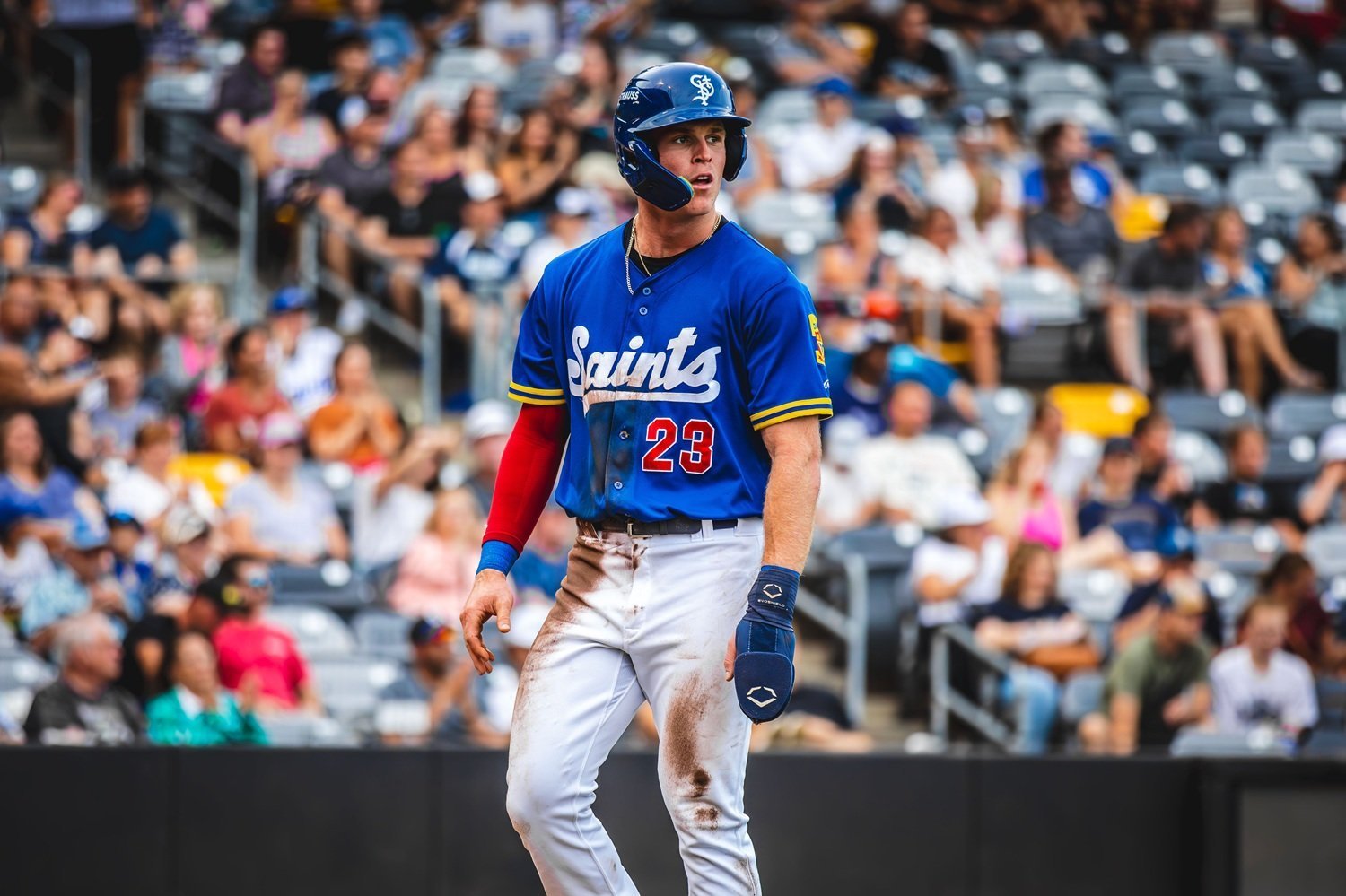 There is a certain point in every season when the conversation shifts from what a team could be to what it actually is. For the Minnesota Twins, that moment is arriving earlier than anyone hoped. A slow start in the standings has already created urgency, and the idea of reinforcements from St Paul offered a sense of optimism. Over the weekend, that optimism took a hit. Walker Jenkins, Twins Daily’s top-ranked prospect, exited Sunday’s game for Triple-A St Paul after a frightening collision in the outfield. With two outs in the sixth inning, he tracked a deep drive into right-center, made the catch, and slammed hard into the wall. Jenkins got to his feet but immediately reached for his left shoulder. He was removed from the game without delay, and the initial concern was evident. At just 21 years old, Jenkins is navigating his first full season at Triple-A, and the early returns have been a mix of adjustment and recent progress. After a slow start, he had begun to find a rhythm at the plate with a 1.400 OPS over the last week, showing why he is viewed as a potential impact bat in Minnesota’s future lineup. That momentum now pauses, at least temporarily, as the organization evaluates his shoulder. He is not alone. Emmanuel Rodriguez, another top 100 prospect and Twins Daily’s number four-ranked player in the system, also landed on the injury report this weekend. Rodriguez suffered a muscle strain in his left thumb on Friday night when he dove headfirst into first base. The 23-year-old outfielder left the game early, adding another layer of concern for a team already lacking offensive consistency. There is at least some reason for cautious optimism with Rodriguez. He was seen taking batting practice on the field at CHS Field on Sunday, suggesting the injury may not require an extended absence. Before the injury, Rodriguez had been one of the Saints’ most productive hitters, posting a .247/.417/.506 slash line across 25 games. His blend of patience and power has long made him a candidate to be the next call when the Twins need a boost. That need is becoming more obvious by the day. Minnesota’s lineup has struggled to generate consistent pressure. In that context, the presence of Jenkins and Rodriguez at Triple A represented more than just long-term upside. They were potential solutions, players capable of injecting energy and production into a stagnant offense. For a Twins team searching for a spark, the timing could not be worse. Jenkins was beginning to heat up. Rodriguez looked close to forcing the conversation. Now, both timelines are on hold, even if only briefly. In the big picture, fans will still need to wait for further news on the injuries. Still, these two players are viewed as key pieces of the organization’s future. In the short term, however, it slows what felt like an inevitable push toward their major league debuts. And for a Minnesota club that could use a breath of fresh air, that delay is more than just inconvenient. It is another obstacle in a season that is already trending in the wrong direction. View the full article
 -
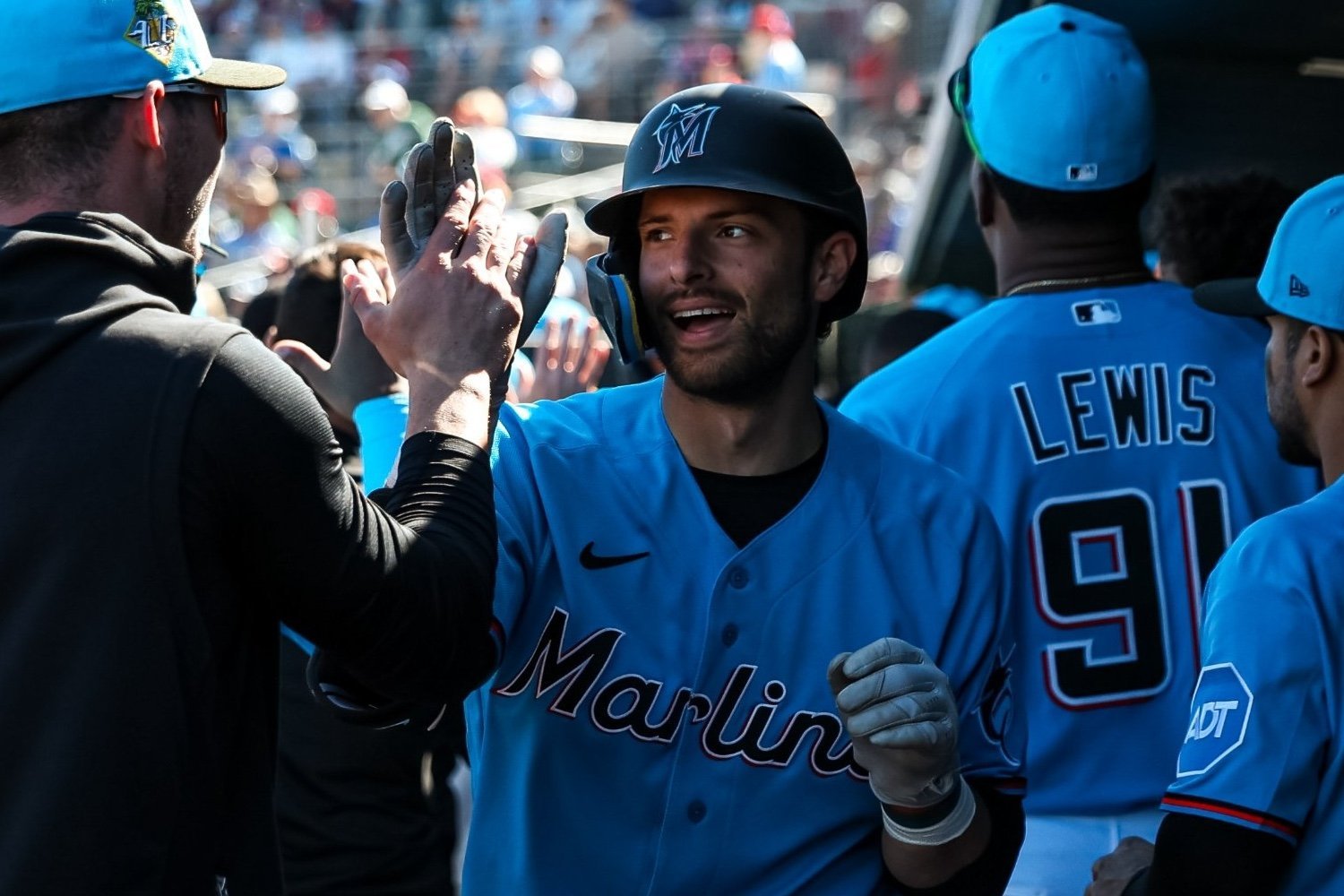 The Miami Marlins are addressing an immediate weakness by promoting somebody who they hope will prove to be a long-term building block. Catcher Joe Mack is being recalled from Triple-A Jacksonville, as first reported by Craig Mish of Marlins.TV following Sunday's loss. The corresponding roster move will be optioning Agustín Ramírez to Jacksonville. The Marlins won't be announcing the move until Monday. Mack was the 31st overall pick of the 2021 MLB Draft. It wasn't until the 2024 season that he began emerging as an impact player in their farm system. Now ranked third on the Fish On First Top 30, he has spent more than a full year at Triple-A. In those 123 games, he is slashing .249/.334/.444 with 21 home runs and nine stolen bases. But the 23-year-old projects to be even more valuable on defense. Minor League Baseball's 2024 Gold Glove award winner at catcher, Mack possesses a plus-plus arm and at least average ability as a receiver, blocker and framer. In 23 games at catcher this season, he has a 29% caught stealing rate (the International League average is 22%). Without Mack's services, the Marlins have allowed an MLB-high 42 steals. They also were the league's worst in that department in 2025. Not only does Mack stand out among Marlins position player talent, he's ranked 50th overall on Baseball America's Top 100 MLB prospects list and 54th on MLB Pipeline's. Meanwhile, second-year backstop Liam Hicks has dramatically boosted his stock, emerging as the Marlins' leading run producer. Mack figures to start the majority of games behind the plate moving forward, but Hicks should get ample playing time at designated hitter and first base while still catching about twice per week. Although demoting Ramírez is entirely justified, the timing of this move came as a surprise because the Marlins had been continuing to give him regular reps. Playing in 31 of a possible 34 games, the "Gus Bus" is slashing .239/.328/.358 (86 wRC+). He has homered only twice despite being gifted with elite raw power. Ramírez had all three of his minor league options intact entering this year. View the full article
 -
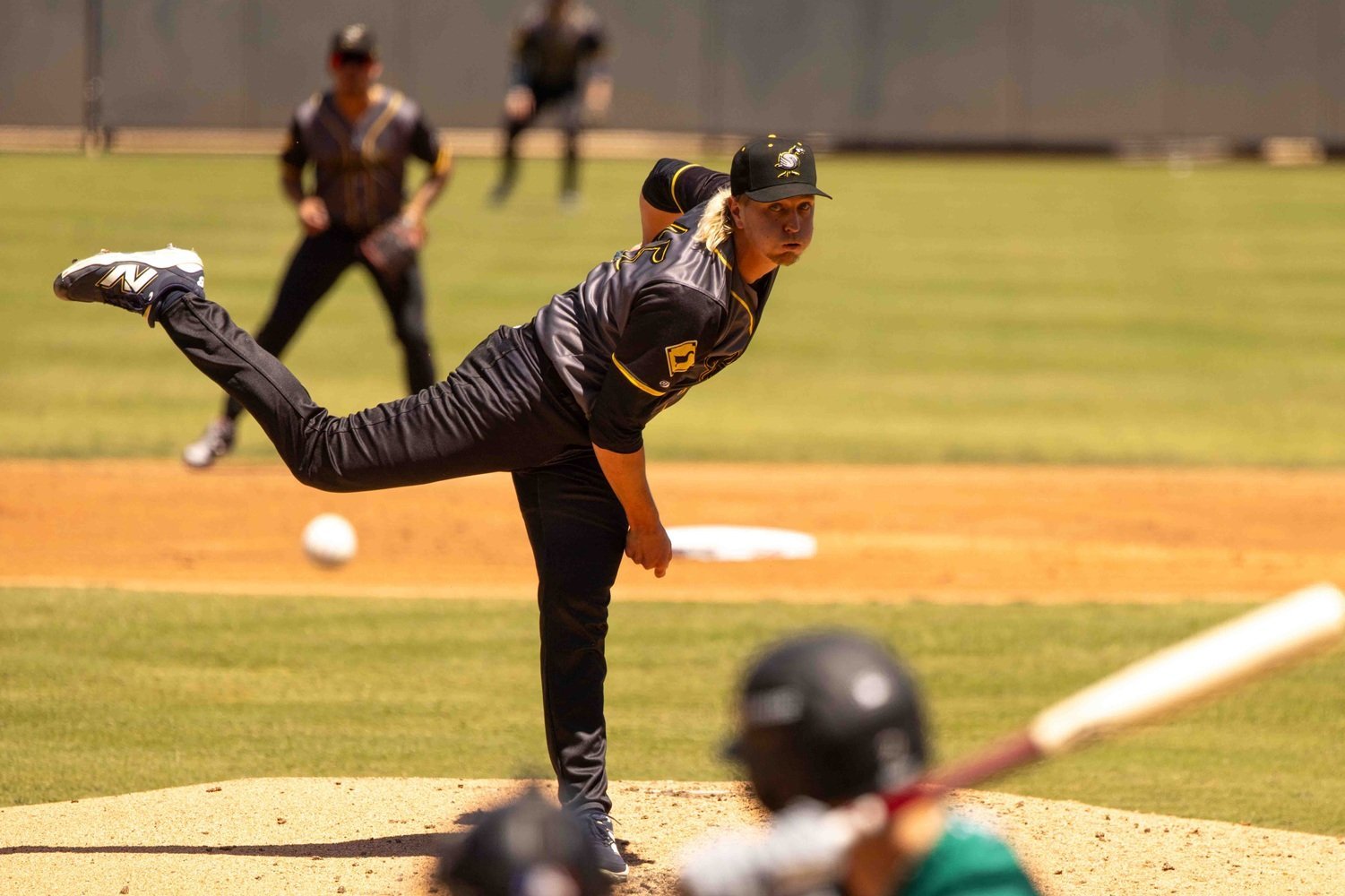 TRANSACTIONS INF Murphy Stehly assigned to Double-A Wichita Saints Sentinel St. Paul 8, Iowa 7 Box Score SP: Andrew Bash: 3 IP, 1 H, 0 ER, 1 BB, 6 K HR: Ben Ross (1), Ryan Kreidler (4) Multi-hit games: Ryan Kreidler (2-for-4, HR, R, 2 RBI, BB), Orlando Arcia (3-for-5, 2B, R, RBI), Alex Jackson (2-for-4, 2B, R) Andrew Bash was magnificent in his start. The righty authored his finest appearance as a Saint, collecting six strikeouts across three innings with just a hit and a walk earned against him. Even the walk ended up not mattering; Bash immediately picked off the runner. Evidently, the Saints felt inspired by their starter’s dominance, as they scored a flurry of runs in the game’s opening act. Ryan Kreidler and Orlando Arcia collected RBI knocks in the first, then—in an effort to diversify their offensive ability—St. Paul flexed some power. Rather, Ben Ross popped his biceps; the shortstop sent a three-run homer over the elevated right-center wall, his first AAA blast. Aaron Sabato then tripled (!?!?) with the help of an odd carom, and scored off a Tanner Schobel sacrifice fly. That’s six runs across three innings. Times were good, and vibes were great until disaster struck in the sixth: while making an excellent running catch, Walker Jenkins collided with the outfield wall. He was pinch-hit for the next half-inning. The injury must have caused a dire grief to fall upon the Saints, as they nearly blew their tremendous lead. St. Paul pitchers coughed up runs in every inning from the sixth through the ninth, resulting in Grant Hartwig standing on the mound in the ninth with the bases loaded and two outs in a one-run game. St. Paul was once up 7-1. Hartwig ran the count full to Eric Yang—of course—before blowing a 93 MPH sinker past the batter for the game’s final out. There’s no such thing as an easy win. Cubs prospect Kevin Alcántara ranks third in their system; the 23-year-old outfielder homered once in five at-bats. The lanky outfielder homered for the third straight game and hit one in four of the five games he played this week. He leads the International League with 12 homers. Wind Surge Wisdom Wichita 4, Arkansas 8 Box Score C.J. Culpepper: 2 ⅔ IP, 2 H, 2 ER, 1 BB, 2 K HR: Murphy Stehly (1), Ricardo Olivar (7) Multi-hit games: Ricardo Olivar (3-for-4, HR, R, RBI), Jorel Ortega (2-for-3, R, BB) The Wind Surge were bested on Sunday. Lazaro Montes followed up his three-homer decimation of the Wichita pitching staff with a first-inning two-run shot. Perhaps C.J. Culpepper’s wisest option was to flash four fingers and move on with his day. While the Wind Surge answered back with three unanswered runs to take the lead—thanks to a Murphy Stehly solo shot, and a two-run single by Hendry Mendez—the Travelers fought back with a furious vengeance (or, they should be referred to as the “Mad Mallards,” as that was the name the team took on for the day. No reason was given for why the waterfowls were so upset.) Aaron Rozek took over for the blonde hurler but surrendered two runs in as many innings. Darren Bowen allowed a score as well. Jarrett Whorff escaped unharmed, but Luis Quiñones and Kyle Bischoff couldn’t say the same. By the time the dust settled, the Mad Mallards had crossed home plate eight times off the strength of 15 hits. The aforementioned Montes is the 37th-ranked prospect in MLB, thanks in large part to his titanic power, which—as Wichita pitchers now know—can be game-breaking. Kernels Nuggets Cedar Rapids 6, West Michigan 5 (10 Innings) Box Score SP: Ivran Romero: 4 IP, 4 H, 1 ER, 1 BB, 3 K HR: Miguel Briceno (3), Eduardo Tait (5) Multi-hit games: None The Kernels won on a walk-off on Wednesday. So, they did on Wednesday as well; something about this author possesses Cedar Rapids to be victorious in dramatic fashion. For a time, it appeared this outcome was out of reach for our heroic ears of corn. They entered the ninth down 4-1, as a Miguel Briceno solo shot provided the team’s only run. Yet, the team rallied, coming alive for three runs in a do-or-die scenario, merely three outs away from failure. Eduardo Tait homered. Then Brandon Winokur singled, Jacob McCombs did the same, and a stolen base/throwing error combo allowed Winokur to cut the deficit to one with the trailing runner advancing to third. A simple Rayne Doncon infield hit completed the comeback. The Whitecaps plated their complimentary Manfred runner but did no more—a missed opportunity for the away team as Cole Peschl’s wildness could have portended more. Cedar Rapids’ rally in the 10th was furious. Marek Houston was hit by a pitch, and Tait chopped a grounder the opposite way, pushing the third baseman to “oley” the game-tying run. Danny De Andrade singled in the winning run two batters later. MLB’s 30th-ranked prospect played for the Whitecaps on Sunday. Shortstop Bryce Rainer was Detroit’s first-round pick in 2024; he’s developed into one of the finest infield youngsters the sport has to offer. He doubled once in five at-bats. Mussel Matters Fort Myers 2, Daytona 5 Box Score SP: Justin Mitrovich: 4 IP, 3 H, 0 ER, 2 BB, 5 K HR: None Multi-hit games: Ryan Sprock (2-for-4, 2 R), Quentin Young (4-for-4, 2B) The Mighty Mussels struggled to find offense on Sunday. “Not I,” said Quentin Young, probably. The 19-year-old collected a career-high four hits, totaling half of the team’s knocks on the day. The outburst was a nice pick-me-up for the youngster, as he entered the day slashing .184/.263/.276 on the season. Unfortunately, the bottom third of the Fort Myers lineup couldn’t take advantage of the clogged bases; they went a combined 1-for-11 on the day, which is somehow better than the first five hitters, as they put up a 1-for-16 mark. Justin Mitrovich made his Twins system debut. The 2025 ninth rounder out of Elon posted an impressive Freshman season in 2023, holding a 3.68 ERA across 63 ⅔ innings with 66 strikeouts. His next two years were forgettable—and his 2024 summer league foray was dreadful—but the Twins still saw enough in the righty out of Trenton to select him in last year’s draft. Our scouting report on him can be found here. You can also see his 45-minute Twins Spotlight interview here. And in his first start, he was great. Mitrovich scattered three singles and two walks across his four frames, punching out five with just 60 pitches. He never allowed a baserunner to reach third. Ryan Sprock, Fort Myers’ DH in the game, was a teammate of Mitrovich's in college, and the Twins selected him one round before the hurler. Cincinnati’s ninth-ranked prospect, pitcher Sheng-En Lin, entered as a reliever and tossed four innings while allowing one run. He struck out four. TWINS DAILY PLAYERS OF THE DAY Twins Daily Minor League Pitcher of the Day – Justin Mitrovich Twins Daily Minor League Hitter of the Day – Ricardo Olivar PROSPECT SUMMARY Here’s a look at how the Twins Daily Top 20 Twins Prospects performed: #1 – Walker Jenkins (St. Paul) - 1-2, R, BB #4 – Eduardo Tait (Cedar Rapids) - 1-5, HR, R, RBI #7 – Gabriel Gonzalez (St. Paul) - 0-2, K #9 – Marek Houston (Cedar Rapids) - 1-4, R, K #12 – Andrew Morris (Twins) - 3 2/3 IP, 2 H, 0 ER, 1 BB, 3 K #13 – Brandon Winokur (Cedar Rapids) - 1-5, R, 2 K #14 – Quentin Young (Fort Myers) - 4-4, 2B #16 – Hendry Mendez (Wichita) - 1-3, 2 RBI #18 – C.J. Culpepper (Wichita) - 2 ⅔ IP, 2 H, 2 ER, 1 BB, 2 K #19 – Khadim Diaw (Cedar Rapids) - 0-0, R MONDAY’S PROBABLE STARTERS FCL Pirates @ FCL Twins (11:00 am CT): TBD View the full article
 -
Kazuma Okamoto Hits Four Homers as Blue Jays Split With Twins
DiamondCentric posted an article in Jays Centre
 Owen and Jesse marvel at Kazuma Okamoto's power outburst before taking stock of where the Jays find themselves after an injury-riddled first month of the season. The guys then get into how the roster will look as the Jays continue to get healthy, and dig deep on Brandon Valenzuela versus Tyler Heineman. Jesse has thoughts on Jesús Sanchéz and Vladimir Guerrero Jr.'s quiet series before the guys break down the starting pitching performances of Kevin Gausman, Patrick Corbin, Dylan Cease, and Trey Yesavage and preview the upcoming series in Tampa against the Rays. Listen on Apple Podcasts: https://podcasts.apple.com/us/podcast/the-jays-centre-podcast/id1846108462 Listen on Spotify: https://open.spotify.com/show/3Bi7SzfpcqMo5xYWnbCeoL Listen on iHeartRadio: https://www.iheart.com/podcast/263-the-jays-centre-podcast-300304824/ Listen on Pocket Casts: https://pca.st/2qk9wqxd Watch on YouTube: https://www.youtube.com/@jayscentre View the full article
 -
Brewers Week In Review: Big Innings And Pitching Injuries
DiamondCentric posted an article in Brewer Fanatic
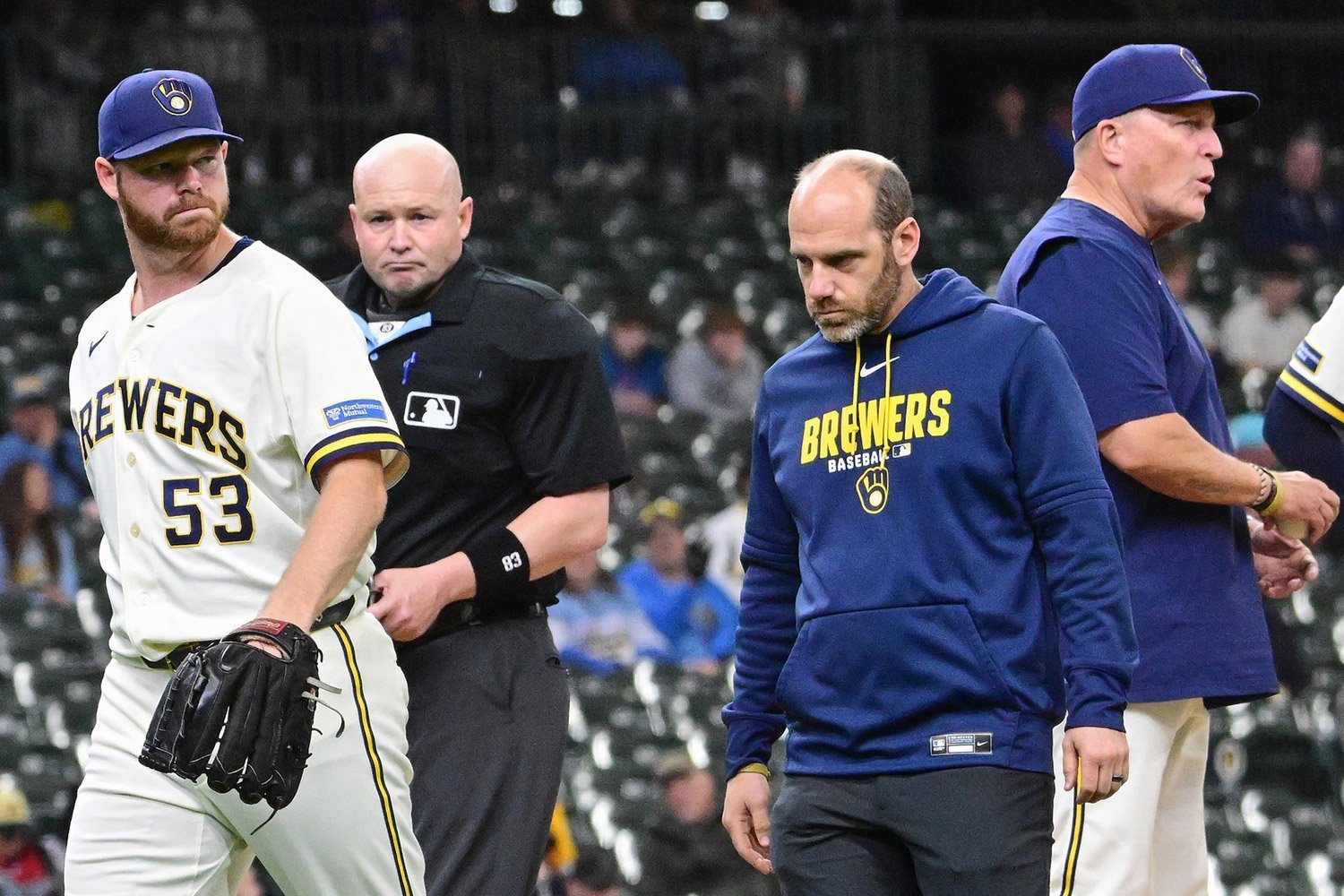 Weekly Snapshot: Record Last Week: 4-2 (Overall: 18-15) Run Scored Last Week: 40 Runs Surrendered Last Week: 14 Standing: 4th in NL Central *** Game 28 (4/28) | MIL 13, AZ 2 Game 29 (4/29) | AZ 6, MIL 2 Game 30 (4/30) | MIL 13, AZ 1 Game 31 (5/1) | MIL 6, WSN 1 Game 32 (5/2) | MIL 4, WSN 1 Game 33 (5/3) | WSN 3, MIL 2 *** Game 28 | Brewers 13, Diamondbacks 2 MIL Starter: Chad Patrick (5.0 IP, 1 H, 5 BB, 1 ER, 5 K) Top Performers: Tyler Black (3 H, 3 RBI) David Hamilton (2 H, 2 B, 2 RBI) Brice Turang (2 H, BB, 2 B) The Brewer offense was all over both Merrill Kelly and Andrew Hoffman in Tuesday's series opener, tallying 14 hits and 13 runs against the Snakes before the sixth inning had concluded. That provided a nice blanket of coverage for Chad Patrick, who struggled with his command through five innings, walking five but coming away with the win while only surrendering a single run. Sal Frelick finds the bleachers (+10.5 WP%) Game 29 | Diamondbacks 6, Brewers 2 MIL Starter: Brandon Sporat (4.1 IP, 6 H, 2 BB, 4 ER, 5 K) Top Performers: Brice Turang (2 H, 2 2B, RBI) DL Hall (2.1 IP, H, BB, 0 ER, 3 K) Brian Fitzpatrick (1.1 IP, 2 H, BB, 0 ER) Arizona roughed up Brandon Sproat, who, despite a dominant start, coughed up four runs in the 4th inning. Meanwhile, the combination of DBack starter Eduardo Rodriguez and four relievers was able to keep the Brewers' offense in check, keeping the Brewers at just two runs of scoring to even the series. Brice Turang’s RBI double (+10.6 WP%) Game 30 | Brewers 13, Diamondbacks 1 MIL Starter: Brandon Woodruff (1.1 IP, H, BB, 0 ER, 2 K) Top Performers: William Contreras (4 H, BB, 2B, HR, 4 RBI) Shane Drohan (4.0 IP, 5 H, 1 ER, 4 K) Brice Turamg (2 H, 2 BB, RBI) It was a short turnaround for the Crew to get back to their hitting ways, as once again, they hung 13 runs on the Diamondbacks to win the series rubber match. There was some bad news, though, as Brandon Woodruff exited the game in the 2nd inning with an injury, souring the Brewers' 13-1 win. William Contreras leaves the yard (+7.5 WP%) Game 31 | Brewers 6, Nationals 1 MIL Starter: Jacob Misiorowski (5.1 IP, 0 H, 0 R, 2 BB, 8 K) Top Performers: William Contreras (4 H, 3 RBI) Tyler Black (2 H, 2 2B, RBI) David Hamilton (2 H, BB) Jacob Misiorowski was at his best as the Brewers traveled to the nation's capital to play the Nationals, twirling 5 1/3 innings of no-hit baseball before a cramp ended his start prematurely. That was plenty for the rest of the team, as William Contreras recorded his second straight game with four hits, while the bullpen closed the door behind the Miz for a 6-1 win. Misiorowski’s dominant outing Game 32 | Brewers 4, Nationals 1 MIL Starter: Kyle Harrison (6.0 IP, 7 H, BB, 1 ER, 5 K) Top Performers: Brandon Lockridge (2 H, 2 RBI) Trevor Megill (1.0 IP, 0 H, 0 ER) Kyle Harrison had a busier day than Misiorowski the day before, but the results were much the same in Saturday’s game. That being the Nationals scoring only a single run, this time to a different tune of Kye Harrison working around seven hits and a walk in his six innings of work, while a three-run first inning made up the majority of the Brewer offense in a 4-1 win. Brandon Lockridge plates a pair (+14.2 WP%) Game 33 | Nationals 3, Brewers 2 MIL Starter: Logan Henderson (6.0 IP, 3 H, 2 ER, 8 K) Top Performers: Brandon Lockridge (2 H, 2B) Sunday's game was headlined by Logan Henderson's return to the big leagues, and as he's proven to be in his young career so far, he was effective. Henderson tossed six innings of 2-run ball on just 76 pitches. On the other side, though, Washington was able to avoid the sweep, using five pitchers to hold the Brewers' offense to just 2 runs of their own. Henderson's strong outing Transactions: 05/03/26 - Recalled RHP Logan Henderson from AAA Nashville. 05/03/26 - Optioned RHP Easton McGee to AAA Nashville. 05/01/26 - Placed RHP Brandon Woodruff on the 15-day injured list with right shoulder inflammation. 05/01/26 - Recalled RHP Easton McGee from AAA Nashville. 04/29/26 - Sent 1B Andrew Vaughn on a rehab assignment to AAA Nashville. 04/29/26 - Placed LHP Angel Zerpa on the 15-day injured list with left forearm tightness. (Retroactive to April 26, 2026) 04/29/26 - Sent CF Jackson Chourio on a rehab assignment to AAA Nashville. 04/29/26 - Selected the contract of LHP Brian Fitzpatrick from AAA Nashville. Notes Brandon Woodruff left his start on April 30th in the 2nd inning with his velocity down significantly. Tests showed Woodruff avoided any arm damage, and it is believed that his IL stint will be short. Jacob Misiorowski left his start on May 1st with leg cramps. He was not placed on the IL, although his next scheduled start against St. Louis is currently TBA. Angel Zerpa is currently mulling over season-ending Tommy John surgery. Jackson Chourio’s rehab hit a roadblock after Chourio fouled a ball off his foot. X-Rays are negative, but the Brewers need to see how the injury progresses before he is reinstated from the IL. Brice Turang was scratched from Sunday’s game with an illness. Looking Ahead: 5/4 - Brewers @ Cardinals - 6:45 PM CDT 5/5 - Brewers @ Cardinals - 6:45 PM CDT 5/6 - Brewers @ Cardinals - 12:15 PM CDT 5/8 - Yankees @ Brewers - 6:40 PM CDT 5/9 - Yankees @ Brewers - 6:10 PM CDT 5/10 - Yankees @ Brewers - 1:10 PM CDT View the full article
