


DiamondCentric
-
Posts
2,631 -
Joined
-
Last visited
Never
Content Type
Profiles
Forums
Events
News
Tutorials & Help
Major League Baseball Videos
Guides & Resources
Store
Downloads
Gallery
Everything posted by DiamondCentric
-

Padres Minor League Report: Chihuahuas Win Doubleheader
DiamondCentric posted an article in Padres Mission
 El Paso swept a doubleheader behind Sung-Mun Song, Marcos Castañon, Griffin Canning, Evan Fitterer, Eli Villalobos, and Logan Gillaspie, while Misael Tamarez, Yuki Matsui, Justin Yeager, and Alek Jacob also delivered key innings. Ian Koenig, Francis Peña, Andrew Thurman, Tyler Schmitt, and Jamie Hitt turned in work despite losses. Ryan Wideman homered for Lake Elsinore, Luke Cantwell drove in a run, and Kai Murphy led San Antonio’s offense with two hits and a steal. Song Drives In Two, Chihuahuas Break Tie In Eighth Box Score The El Paso Chihuahuas broke a tie in the eighth inning and held on for a 5-2 win over Tacoma on Saturday at Cheney Stadium in the first game of a doubleheader. El Paso fell behind in the first, but answered in the third. Pablo Reyes singled, Samad Taylor followed with a hit, and Sung Mun Song lined a double to right that scored Reyes and tied the game at 1-1. The Chihuahuas threatened again in the sixth when Nick Schnell tripled with two outs, but the game remained even until the extra frame. With the zombie runner at second to open the eighth, Jase Bowen reached on a throwing error that brought home Taylor and moved Bowen to second. Song followed with an RBI single to left, then Nick Solak walked and Schnell was hit by a pitch to load the bases. Rodolfo Durán added the decisive swing of the inning, lining a two-run single to center to stretch the lead to 5-1. Song finished 2-for-4 with a double and two RBIs. Durán went 1-for-4 with two RBIs, while Schnell had a triple, was hit by a pitch, and stole a base. Reyes singled, walked, stole a base, and scored, and Taylor added a hit, a run scored, and another stolen base. Griffin Canning started for El Paso and worked 2 1/3 innings, allowing one run, two walks, and striking out four. Misael Tamarez followed with 1 2/3 scoreless innings and one strikeout. Yuki Matsui struck out two in one inning, Justin Yeager earned the win with 1 1/3 scoreless innings and one strikeout, and Alek Jacob allowed one run in the eighth while striking out three. Castañon Homers, Fitterer, And Villalobos Lead Chihuahuas Past Tacoma Box Score The El Paso Chihuahuas scored all their runs in the first inning and rode strong pitching to a 2-1 win over Tacoma on Saturday at Cheney Stadium. El Paso struck with two outs in the opening frame. Nick Schnell drew a walk, Jase Bowen reached on a force play, and Marcos Castañon drove both home with a two-run homer to right. Carlos Rodríguez followed with a double, but the Chihuahuas would not score again. That early swing proved enough for El Paso’s pitching staff. Evan Fitterer started and worked three scoreless innings, allowing one hit, one walk, and striking out four. Eli Villalobos followed with two scoreless innings, giving up one hit, one walk, and striking out two. Logan Gillaspie handled the final two innings, allowing one run, two walks, and striking out four for the save. Tacoma threatened in the fourth after an error, a single, and a walk loaded the bases with two outs, but El Paso escaped without allowing a run. The Rainiers broke through in the sixth on a solo home run, trimming the lead to 2-1, but the Chihuahuas kept them off the board in late innings. Jakson Reetz doubled in the seventh and Rhylan Thomas stole second after reaching on a force play, putting the tying and go-ahead runs in scoring position. Gillaspie struck out Connor Joe to end that threat and close out the win. Castañon finished 2-for-3 with the homer and two RBIs. Rodríguez doubled, Samad Taylor had a double, and Schnell drew two walks. Koenig Strikes Out Five, Missions Shut Out In Tulsa Box Score The San Antonio Missions were held without a run in a 4-0 loss to Tulsa on Saturday at ONEOK Field. San Antonio managed five hits and put runners on throughout the night, but could not break through against the Drillers staff. Kai Murphy finished 2-for-4 and stole a base, while Luis Verdugo went 1-for-2 with two walks. Romeo Sanabria and Albert Fabian each added a hit, and Francisco Acuna drew two walks. The Missions threatened in the third when Murphy singled, stole second, and Acuna walked, but Tulsa escaped the inning with a strikeout. San Antonio also put two on in the fifth after Verdugo walked and Murphy singled, only to leave both aboard. In the seventh, Verdugo singled and Murphy reached on an error before Acuna reached on a force play, but the Missions again came away empty. Fabian singled in the ninth, and Verdugo walked to bring the tying run to the plate, but Tulsa closed out the game with another strikeout. Ian Koenig started for San Antonio and worked five innings, allowing four runs, three earned, with no walks and five strikeouts. Tulsa scored its first run on a solo home run in the first, then added three more in the fourth after a throwing error opened the door before a two-out, three-run homer stretched the lead to 4-0. Francis Peña followed Koenig with 1 1/3 scoreless innings, allowing no hits, two walks, and striking out two. Andrew Thurman covered the final 1 2/3 innings, allowing no hits, no walks, and one strikeout. Wideman Homers, Cantwell Drives In Run In Storm Loss Box Score The Lake Elsinore Storm carried a lead into the late innings, but Inland Empire scored twice in the eighth to hand the Storm a 6-4 loss on Saturday at ONT Field. Lake Elsinore opened the scoring in the third. Jose Verdugo singled and stole second before Ryan Wideman walked. Ty Harvey then lined a single to right that brought home Verdugo, and a passed ball later in the inning scored Wideman to make it 2-0. The 66ers answered with a two-run homer in the fourth, but Wideman put the Storm back in front in the fifth with a solo home run to left center. After Inland Empire moved ahead 4-3 in the bottom of the fifth, Lake Elsinore pulled even in the sixth. Kale Fountain walked and moved up on a wild pitch and passed ball, George Bilecki walked, and Luke Cantwell followed with an RBI double to left that scored Bilecki. Wideman finished 1-for-4 with a home run, an RBI, a walk, and two runs scored. Harvey went 2-for-5 with an RBI and a stolen base, while Cantwell was 2-for-4 with a double and an RBI. Verdugo added a hit and a stolen base, and Justin DeCriscio collected two hits. Tyler Schmitt started for Lake Elsinore and worked 3 1/3 innings, allowing two runs, four walks, and striking out seven. Jamie Hitt followed with two scoreless innings, allowing one hit and striking out four. Landry Jurecka took the loss after allowing two runs in one inning with one walk and three strikeouts. View the full article
 -
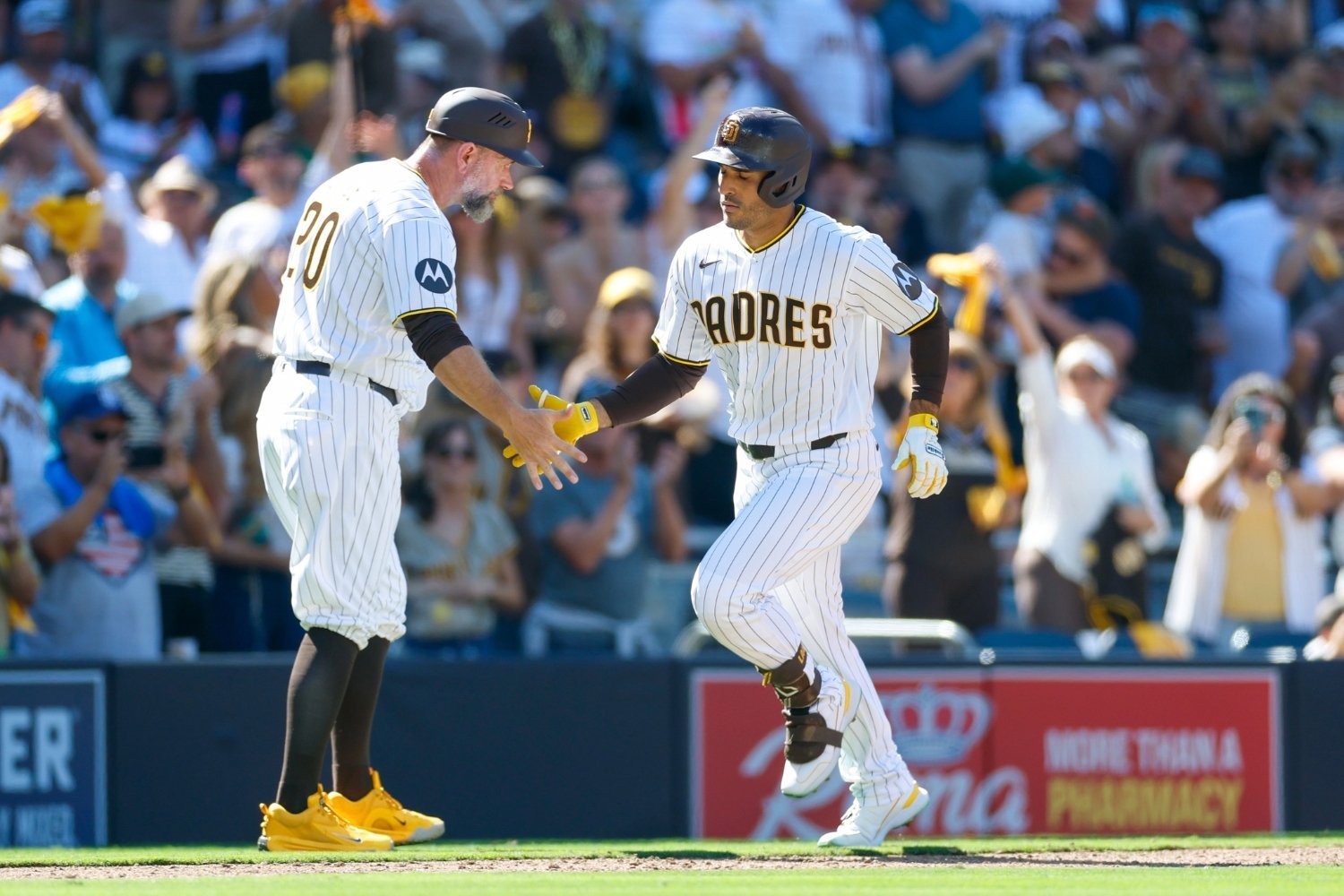 Seven games into the season, the San Diego Padres ranked dead last in the MLB in runs scored. That's not the stat fans expected to see, especially with an offense featuring all-stars like Manny Machado, Fernando Tatis Jr., Jake Cronenworth and Jackson Merrill. Despite the firepower in San Diego, the bats have come out of the gate extremely cold... just like they were last year when the team was eliminated in the NL Wild Card Round. Not only are the Padres last in runs, they are also last in hits, home runs, OBP, SLG, and OPS. They rank 22nd in walks and 29th in batting average. The Friars are not scoring because they are not getting on base, hitting for average, or hitting for power. Their offense is failing in every element of the game. Not everyone on the offense is struggling, however. Ramon Laureano is playing some of the best baseball of his career. Laureano has been good for a while now. He had an .832 OPS and 1.3 bWAR in 67 games with the Braves in 2024, and followed that up with an impressive 2025 season, which saw him slash .281/.342/.512 with 3.8 bWAR split between Baltimore and San Diego. It was the best season of his career, but 2026 has been an even better start for the veteran outfielder. So, what is behind Laureano's hot start, and what is he doing right that the rest of the team is doing wrong? Padres Breakdown: Ramon Laureano's Scorching Hot Start Finding the Sweet Spot One number that jumps out from Laureano's Baseball Savant page is his launch-angle sweet-spot percentage of 52.9%. That ranks in the 94th percentile in the MLB. That means that the veteran outfielder's bat path and swing plane are on point, and he's producing contact at the ideal time in his swing. That explains the .318 batting average. The xBA backs it up, as his expected average of .308 almost perfectly matches the actual production. Laureano's also boasting a barrel rate of 17.6%, placing him in the 85th percentile of the league. That has helped raise his xSLG to .677, even better than his current .636 slugging percentage. Laureano has hit two of the Padres' three home runs in 2026, and his barrel rate is a big reason why. Laureano is hitting the ball hard, barreling it up at an above-average rate, and hitting the ball in the air consistently. It's almost surprising that his .984 OPS isn't higher. Taking A Page Out of Ramon Laureano's Book The Padres, as a team, rank dead last in barrels. In fact, San Diego only has seven barrels this season. Laureano is responsible for three of those. It's never a good sign when one player accounts for half of his team's production, but that has almost been the case for San Diego. The Braves already have 25 barrels, more than three times as many as the Friars. What is interesting is that San Diego's 41.3% hard-hit rate is fine, 11th best in the league so far. While they might not be barreling up the ball, they are at least hitting it hard. The team's expected stats are also significantly better than their actual stats, so that's another silver lining. San Diego's xBA as a team is .239 (17th) compared to their actual team average of .192 (29th). Their xSLG of .348 is still not great, ranking 27th in the league, but it's still nearly 60 points higher than their actual team SLG of .290, the worst in baseball. Ultimately, this team is going to need to take a page out of Laureano's book and start barreling the ball up more. Right now, the Padres 5.2% weak contact rate is the seventh-highest in the league. They are topping the ball 34.1% of the time, the fourth-most often, while they make solid contact just 6% of the time (13th). Improving contact quality is easier said than done, but there's more than enough firepower in Craig Stammen's lineup to make it happen. Ramon Laureano is leading by example, but he can't keep the offense afloat on his own. View the full article
 -
Marek Houston, Brandon Winokur Lead Kernels To Victory
DiamondCentric posted an article in Twins Daily
 Twins System Recap: Marek Houston and Brandon Winokur fueled the Cedar Rapids Kernels to victory Saturday. Unfortunately, they were the only team to win across the system. Houston reached safely four times and had a double and a triple. Winokur had three hits, stole two bases, and opened the game with a diving catch in center field to record the first out. Here's more info on those two performances and an overview of all of the night's action. View the full article
 -
 Transactions: RHP Logan Henderson recalled to Milwaukee LHP Sammy Peralta claimed by Colorado LHP Rob Zastryzny returned to Milwaukee from rehab Rob Z's initial placement was for a left shoulder strain. Not specifically a transaction, bot oh-so-encouraging: Nashville Press Release: The Nashville Sounds have postponed their Saturday night game against the Charlotte Knights due to inclement weather. They are still expected to play on Sunday, April 5 at First Horizon Park. The game will be made up when the team plays in Charlotte for their series from April 21 to April 26. The exact date of the makeup game will be determined by the Charlotte Knights and announced at a later time. As for Sunday, no expected change with LHP Tate Kuehner scheduled to be on the bump. Biloxi Pre-Game Media Notes Final: Rocket City (Angels) 9, Biloxi 4 Box Score and Game Log Catch up with the latest Biloxi pre-game audio interview archives - Manager Mike Guerrero's chat from Friday night is available as of Sunday AM Via the Shuckers, game details, and we encourage readers to always review affiliate write-ups as part of their Link Report routine: Shuckers Fall Behind Early in 9-4 Loss to Trash Pandas - Shuckers handed first loss of 2026 after Rocket City runs out to early lead The bat of organizational newcomer Damon Keith sacrificed itself for the lone posted Biloxi highlight of the evening - Tough outing for RHP Bishop Letson, who retired only four of the ten batters he faced. Rocket City was up 1-0 in the initial frame with runners on 1st and 3rd with two outs when Letson left this pitch up. Center fielder Dasan Brown took a slightly off-kilter route, but it was still a pitch that was hard hit for a two-run triple and a 3-1 deficit. 25-year-old Tanner Gillis made his AA debut, and this was the first of two home runs he would surrender, although he provided 3.2 innings of needed length relief behind Letson and RHP Stiven Cruz (who allowed a Letson inherited runner to score along with one of his own). Only LHP Anthony Flores, who will be pitching all of 2026 at age 21, had a truly positive mound night, stranding a runner for Gillis and retiring all four men he faced. Flores issued 56 free passes (48 BB, 8 HBP) in 91 innings - 32 appearances (11 starts) - with Wisconsin last season. Given his youthfulness, if the control is better moving forward, he'd elevate his prospect status immensely. At the plate, it seems it won't be often we see a team strikeout total that isn't double digits, and that's the story across all of MiLB, not just the Crew's system. Shuckers batters fanned ten times here. Those batters also walked eight times and were plunked thrice. It's going to take some time to recognize that HBP (Adams) in Biloxi box scores refers to newcomer OF Jordyn and not career pincushion Luke. Mike Boeve committed a throwing error in his first fielding chance at third base since the 2024 season. Blake Burke mishandled a Gillis pickoff attempt for the other Biloxi miscue, though that did not lead directly to any unearned runs. Jesus Made was the only Shucker not to reach base, 0-for-5 with two K's. When the ball was in play, Made was eliminated on a dribbler in front of the plate, flied out to left field (as a LH batter), and grounded back to the pitcher. Utility man Jheremy Vargas and 22-year-old catcher Edgardo Ordonez are the two position players yet to see action after two games. You may have felt as though only the negative aspects of the game were spotlighted above. With that, we say: Jacob Hurtubise RBI double in the 6th Jordyn Adams bases-loaded walk in the 7th Hurtubise sacrifice fly in the 8th *In addition to reading the Wisconsin game summaries and taking in the full video highlights, the best gift you can give yourself from a knowledge standpoint is to listen to the Postgame Podcast featuring comments from Nick Stanley, Tayden Hall, Eric Bitonti, and Quinton Low The Spotify audio, including the four interviews, runs only 19 minutes so you can squeeze it in now, and best of all, new Assistant Broadcaster Jonathan Timm (welcome, Jonathan!) learned that the exits for both Josh Adamczewski and Braylon Payne were related to cramping, and both will be fine. Wisconsin Pre-Game Media Notes Final, Game One: Beloit (Marlins) 5, Wisconsin 4, seven innings as scheduled Box Score and Game Log Beloit’s Late Home Run Beats Wisconsin If it seemed as though the bases were loaded around the clock for both teams within those three-and-a-half minutes you just watched, it's because this contest featured (featured? Yeah, we guess) 23 walks, a HBP, five wild pitches (all by the Beloit starter, along with his balk) - remember, all within just seven innings! The teams combined to go 1-for-19 with runners in scoring position which added to the U-G-L-Y nature of the contest, and yet, there was drama throughout. A whole bunch of fans in the stands were lulled into the determination that they were good with heading home after this one (opening pitch was 39 degrees, though a balmy 43 by the time Game Two got underway). As you review the four box score pitching lines, let's just wait for some semblance of a next chance in better conditions analysis. *** Final, Game Two: Wisconsin 8, Beloit 7, seven innings as scheduled Box Score and Game Log (Just scroll down at the link below to get to the write-up) Rattlers Power Up to Take Nightcap - Wisconsin hits three homers in comeback win over Sky Carp My oh my, check out how close the final out came to ruining the fun. Only 3rd catcher David Garcia failed to see the field in the twinbill among the 15 position players on the squad. Wisconsin was the recipient of another seven free passes (6 BB, 1 HBP), so there are plenty of healthy OBP's throughout the roster after Day One. RHP Ethan Dorchies powered through four innings in the Game Two start and did so on just 59 pitches (37 strikes). As originally scheduled, the T-Rats are idle on Easter Sunday. Wilson Pre-Game Media Notes Final: Fayetteville (Astros) 6, Wilson 5 Box Score and Game Log Fayetteville Rallies Past Warbirds to Level Series - Woodpeckers Score twice in the eighth to win Frederi Montero will be just 19 years old for the 2026 season. The corner infielder has started 60 games at first base, including Saturday, and 45 at third base in his first two pro seasons. You'll find additional highlights here: Juan Ortuno checks his swing and walks to drive in the tying run in the 7th Brady Ebel immediately walks as well to give the Warbirds a fleeting lead Yannic Walther's sacrifice fly brings in a diving Frederi Montero in this back-and-forth contest Down to their final out, Handelfry Encarnacion doubles in Ortuno to make it a 6-5 deficit Unfortunately, CF Jose Anderson would strike out to end the evening, capping his platinum sombrero 0-for-5 night. Warbirds batters fanned 13 times. Here's a non-player specific interview with the Voice of the Warbirds Chris Edwards from a general baseball and military significance perspective. Cortez was worth watching to be sure - three scoreless innings, 2 hits, one BB, 2 K. Welcome back, young man. This guy killed the Warbirds all evening - watch as Grasshoppers leadoff RF nets four base knocks against all three Wilson hurlers - Cortez, Enderson Mercado (twice), and Joshua Quezada. Congrats to 22-year-old OF Nick Monile, a non-drafted free agent signing last August out of the University of North Florida. He walked once in four trips to the plate in his professional debut. I'll be back Monday AM with the three Easter Sunday games on tap. Biloxi RHP Tyson Hardin joins the previously noted Tate Kuehner among scheduled starters, while 20-year-old RHP Jarrette Bonet, picked up from the independent but MLB-sponsored "Draft League", makes his formal pro debut for Wilson. To those who celebrate, a blessed Easter, and everyone have a wonderful Sunday. Organizational Scoreboard including starting pitcher info, game times, MiLB TV links, and box scores Current Milwaukee Brewers Organization Batting Stats and Depth Current Milwaukee Brewers Organization Pitching Stats and Depth View the full article
 -
Twins Minor League Report (4/4): CJ Culpepper Shines in Wichita
DiamondCentric posted an article in Twins Daily
 TRANSACTIONS RHP Garrett Acton was officially added to the Saints roster. To make room, LHP Christian MacLeod was released by the organization. In addition, LHP Kendry Rojas began a rehab assignment with the Mighty Mussels on Saturday. SAINTS SENTINEL St. Paul 3, Worcester 5 Box Score The Saints and Woo Sox were finally able to get another game in at CHS Field. It was cold, and especially early, the Saints arms and bats were very cold. The Saints attempted a comeback late in the game, but it fell short. Zebby Matthews was on the mound to start for the Saints. He was touched up for five runs on seven hits and two walks over the first 3 1/3 innings. Four of those hits left the ballpark. Former teammate Mickey Gasper lined a two-run homer over the right-field wall in the first inning. In the third inning, Nick Sogard and Nate Eaton hit back-to-back solo homers. Tsung-Che Cheng added another solo shot in the fourth. Drew Smith got the final two outs of the fourth inning. Eduardo Salazar walked three but struck out two in a scoreless fifth inning. That’s when the Saints turned to Connor Prielipp who was scheduled to start on Thursday and Friday when weather caused rainouts. He tossed 3 1/3 scoreless innings and gave up two hits, walked two and had four strikeouts. Trent Baker got the final two outs of the ninth, one on a strikeout. With one out in the bottom of the eighth inning, Gabriel Gonzalez hit his first homer of the season to cut the deficit to 5-2. Eric Wagaman followed with a single and scored on an Orlando Arcia double. Arcia led the offense. He went 2-for-4 with a double. Ryan Kreidler and Alan Roden each walked twice. WIND SURGE WISDOM Wichita 3, NW Arkansas 9 Box Score C.J. Culpepper got the starting nod for the Wind Surge and was fantastic. He tossed four no-hit innings. He walked one and had one struck out. Unfortunately, the pitching after Culpepper was not helped by their defense, and the pitchers were unable to minimize the damage. Sam Armstrong came out of the bullpen and tossed three innings. He was charged with seven runs, but just two were earned. He gave up four hits, walked two and had two strikeouts. Luis Quinones came on and gave up an unearned run. He walked three and struck out two batters in his inning. Jarret Whorff gave up one run on two hits in the ninth inning. He struck out one batter. Wichita took the early lead in the second inning when Billy Amick lined a ball that the left fielder let bounce past him and to the wall. Amick raced around the bases. The play at the plate was close, but the corner infielder beat the throw to give the Surge a 1-0 lead. Down 4-1 going to the bottom of the sixth inning, Kyle DeBarge and Kala’i Rosario walked to start the inning. They were successful on a double steal. Amick drove in a run on a sacrifice fly. With two outs, Ben Ross doubled in Rosario to make it 4-3. Ross led the Surge offense, going 2-for-4. The double was his second of the season. Rosario and DeBarge each had a single, a walk and a stolen base. KERNELS CHRONICLE Cedar Rapids 8, Peoria 4 Box Score Peoria jumped out to an early 3-0 lead, but the Kernels put a Six on the board in the fifth inning to claim the lead and held on for the Win. Let’s jump to the bottom of the fifth. Caden Kendle led off with a double. He went to third on a Jaime Ferrer single. Marek Houston walked to load the bases. With one out, Khadim Diaw walked to put the Kernels on the board. Brandon Winokur lined a single to center that drove in two runs and tied the game at 3. Following a pitching change, Diaw and Winokur were successful on a double steal. Danny De Andrade responded with a single to drive in both runners. Jacob McCombs singled. Then with two outs, Kendle hit his second double of the inning to drive in the sixth run. The bottom of the sixth inning began with a Houston triple. Eduardo Tait followed with a sacrifice fly to make it 7-3. The Kernels added one more run in the eighth inning. Tait led off with a double, advanced to third on a ground out, and scored on a Winokur single. It was a good day for the Kernels offense. Eight of their nine hitters had at least one hit. Winokur led the way to a 3-for-5 day and had three RBI. Houston was 2-for-3 with two walks, his first double and his first triple of the season. De Andrade had two hits and two RBI. Kendle hit his first two doubles in the fifth inning. They were also his first two doubles of the season. Jaime Ferrer also had two hits. Adrian Bohorquez started and gave up three runs on three hits and a walk over 3 2/3 innings He had five strikeouts, and Twins fans will enjoy hearing that he touched 98 a couple of times. Nick Trabacci allowed both runners he inherited before recording the final out of the fourth frame. Michael Ross tossed a scoreless fourth inning. Brent Francisco came in and gave up one run on three hits and a walk over four innings to earn the save. MIGHTY MATTERS Ft. Myers 5, Clearwater 7 Box Score On Saturday, Kendry Rojas made his first rehab start as he prepares to rejoin the Saints. In 1 1/3 innings, he gave up two unearned runs on two hits. He walked two and had two strikeouts. Mike McKenna came in and finished the second inning, but not before allowing both of Rojas’s runners to score. He gave up his own unearned run as well. Jonathan Stevens came in and was charged with three runs on two hits and three walks in 2 2/3 innings. He had four strikeouts. Mitch Mueller got the next four outs, two an strikeouts. Jake Murray gave up one run on one hit and a walk in one inning. Adam Falinski struck out three batters over the final two scoreless, one-hit innings. After a combined two hits over their first two games on Friday, the Miracle doubled that total with four hits in this single game on Saturday. They also managed to walk 12 times. Harry Genth and Jayson Bass each had a double. JP Smith had a single and two walks. Ryan Sprock walked in three plate appearances. Bryan Acuna and Dameury Pena each walked twice as well. PLAYERS OF THE DAY Hitter of the Day Brandon Winokur (Cedar Rapids): 3-for-5, R, 3 RBI, K. Pitcher of the Day CJ Culpepper (Wichita): 4 IP, 0 H, 0 R, BB, K, 43 pitches, 24 strikes (58.8%) PROSPECT SUMMARY Check out the Prospect Tracker for much more on our Twins Top 20 prospects after seeing how they did today. #1 - OF Walker Jenkins (St. Paul) - 0-for-3, HBP, K (batted first, played CF, 7 innings) #2 - IF Kaelen Culpepper (St. Paul) - 1-for-4, HBP, R, K (batted second, played SS) #3 - OF Emmanuel Rodriguez (St. Paul) - 1-for-3, HBP, 2 K, SB (batted sixth, played LF) #4 - C Eduardo Tait (Cedar Rapids) - 1-for-4, 2B(1), R, RBI, K, SF (batted second, DHd #5 - LHP Connor Prielipp (St.Paul) - 3 1/3 IP, 2 H, 0 R, 2 BB, 4 K, 63 pitched, 37 strikes (58.7%) #6 - LHP Dasan Hill (Cedar Rapids) - DNP #7 - OF Gabriel Gonzalez (St. Paul) - 1-for-4, HR(1), R, 2 RBI (batted fourth, DHd) #8 - LHP Kendry Rojas (St. Paul) - Rehab in FM ( #9 - SS Marek Houston (Cedar Rapids) - 2-for-3, 2 BB, 2B(1), 3B(1), 2 R, K, E (batted first, played SS) #10 - RHP Charlee Soto (Cedar Rapids) - Injured List #11 - RHP Riley Quick (Ft. Myers) - DNP #12 - RHP Andrew Morris (St. Paul) - Sunday probable. #13 - 3B/CF Brandon Winokur (Cedar Rapids) - 3-for-5, R, 3 RBI, K (batted fourth, played CF) #14 - 3B/SS Quentin Young (Ft. Myers) - 0-for-4, BB, R, 2 K #15 - RHP Marco Raya (St. Paul) - DNP #16 - OF Hendry Mendez (Wichita) - 1-for-4, K (batted third, played LF) #17 - 2B/OF Kyle DeBarge (Wichita) - 1-for-3, BB, R, SB(1), E (led off, played SS), #18 - RHP C.J. Culpepper (Wichita) - 4 IP, 0 H, 0 R, 1 BB, 1 K, 43 pitches, 24 strikes (55.8%) #19 - C Khadim Diaw (Cedar Rapids) - 0-for-4, BB, R, RBI, K (batted third, catcher) #20 - RHP James Ellwanger (Ft. Myers) - DNP UPCOMING PROBABLES Sunday: Worcester @ St. Paul (DH attempts @ 12:37 pm CT) - RHP Andrew Morris, RHP John Klein Peoria @ Cedar Rapids (1:05 pm CT) - RHP Nolan Santos CURRENT W-L Records Minnesota Twins: 3-5 St. Paul Saints: 3-3 Wichita Wind Surge: 1-2 Cedar Rapids Kernels: 1-1 Fort Myers Mighty Mussels: 1-2 Please feel free to ask questions about the teams, the rosters, and discuss today’s games, or anything else Twins minor-league related! View the full article
 -
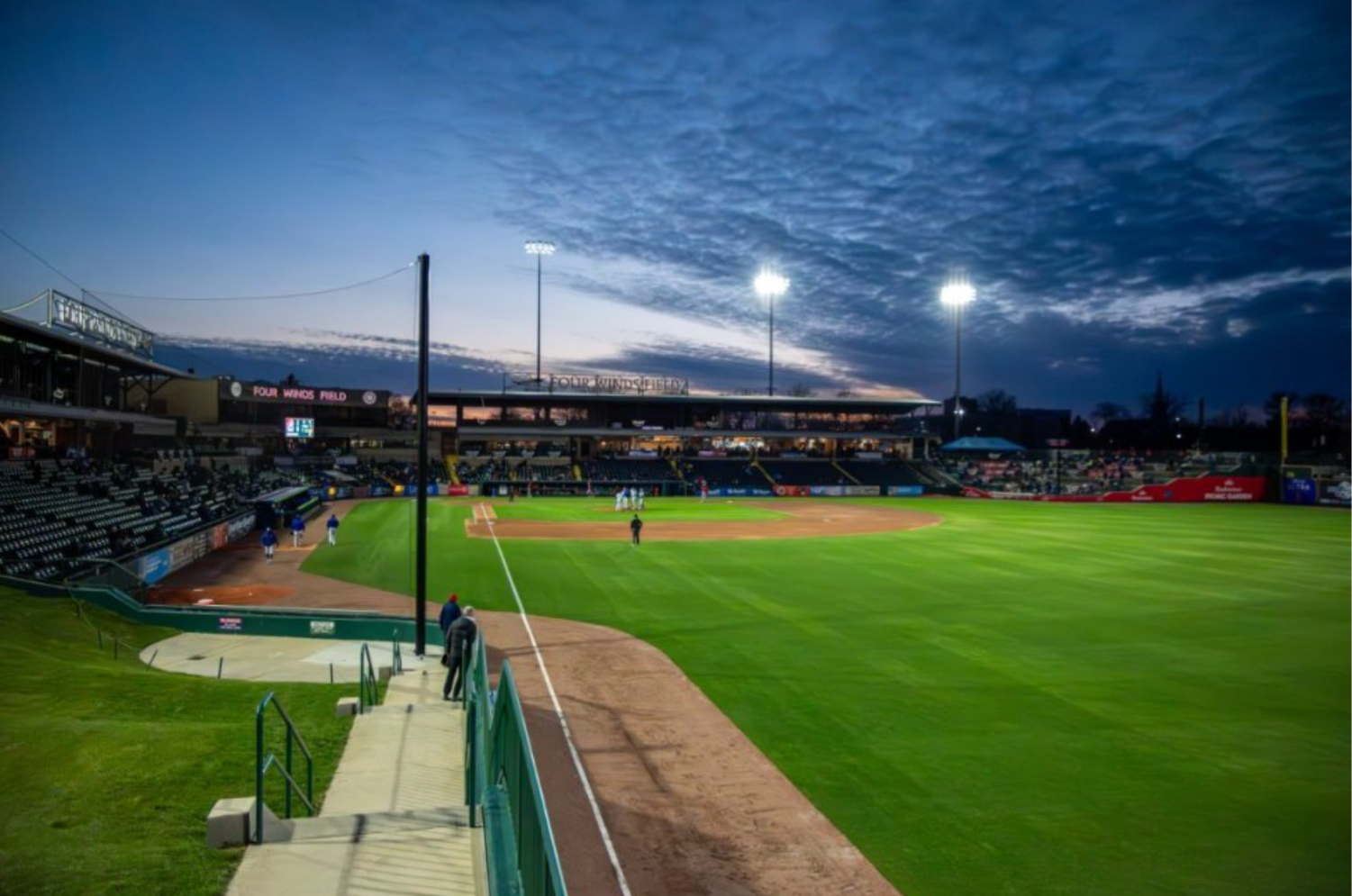 There’s a certain magic unique to baseball. Something that only exists in rumors and tall tales. That kind of magic is what gave birth to baseball in South Bend, Indiana. A Ghost and a Glove (1860-1920) On the eve of the Civil War, a man named Henry Benjamin arrived in South Bend, carrying only a worn glove and rules to an unknown game. Before long Henry captivated South Bend with the game of baseball and soon established the first South Bend team, “The Hoosiers”. By 1870, South Bend was steeped in baseball and Henry Benjamin had vanished without a trace — no photos, no newspaper clippings; he was never registered on the census. All that remained of him was the game he brought. In the rusted iron dust and earth of factory back lots, amidst the deafening hum of machinery at the turn of the 19th century, baseball took root and found its rhythm and for over 100 years, grew with the city. In that time, another legend helped take South Bend’s pastime and solidify it as a cornerstone of the city. If Henry Benjamin was the soul of baseball in South Bend, Stanley Coveleski was its flesh and blood. Born to Polish immigrants in the coal-mining town of Shamokin, Pennsylvania. at the age of 12, Stanley Coveleski began working in those coal mines. On his breaks, when he had them, he often honed his aim by throwing rocks at cans. Later in life, he used that arm to secure the win in three games of the 1920 World Series. He finished his career with over 200 wins. When the time came to hang the glove it wasn’t New York or Cleveland where he chose to settle. It was South Bend. Coveleski made this factory town his home, where he offered free pitching lessons to local youth for decades. His impact in the community may have been greatest in backlots, sandlots, and neighborhood ball diamonds where the kids put Coveleski’s lessons to use for years to come, and when the time came, teaching it to kids of their own. The Studebaker Era (1920-1980) In the early days following Coveleski’s retirement in 1929, South Bend had already seen the rise of several early baseball clubs — yeams like the Whitecaps and the legendary Green Stockings. These teams were supported by local business. Factories like the famous Studebaker Company contributed to the construction of many stadiums and fields for their workers. Coveleski’s presence, along with the booming investment from South Bend’s auto industry, helped build a thriving baseball culture. That era, and Coveleski's influence, brought legends like Babe Ruth and later Satchel Paige to town for exhibition games. But no good thing lasts forever. Late into the 1950s, the economy had come to a standstill. As Studebaker struggled to survive, they desperately reclaimed the fields it had built (invoking contract clauses to reclaim ownership). This collapsed the adult, semi-pro, and casual leagues throughout the city. Ball diamonds became land assets and were sold off; Studebaker closed regardless. A City Asleep (1980–2010) Through to the 1980s, baseball had disappeared as South Bend spent decades trying to recover economically from the collapse of local businesses. In 1984, the city turned to a nontraditional approach for change, bringing baseball back. In 1986, yhe city’s first High-A baseball team came to town and in 1988, Stanley Coveleski Stadium was opened next to the ruins of the old Studebaker buildings as a testament of endurance. The pride of a baseball town was reignited with South Bend winning the Midwest League Championships in 1989 and 1993. By 1994, the South Bend Silver Hawks, affiliate for the Diamondbacks replaced the original team. “The Cove” became a community staple and went on to win the City its third Midwest title in 2005. Around that time, word spread that the Diamondbacks were leaving risking a blow to the city that it could not afford. Former Indiana Governor, Joe Kernan, a South Bend native, ballplayer, and POW, led a group of investors to purchase the team in 2006 and “The Cove” celebrated its 4 millionth fan. While the stadium was saved, maintenance slipped and attendance went with it. This was in no small part due to the recession of 2008 which destroyed any economic progress South Bend made since Studebaker. Unemployment skyrocketed and sections of the city rapidly decayed, particularly south of the city where “The Cove” was located. The odds weren’t with the ball club, but the city persisted — they'd unfortunately been in this situation before. Berlin’s At-Bat The former governor found a potential buyer and here is where Andrew Berlin enters the frame. Berlin's initial impression of Coveleski Stadium was that “There were just a couple hundred people there and the place didn’t look that great... Gov. Kernan joked with me that it was Friends and Family Day. As charming and as thoughtful as he was… it was kind of hard to see what we could do with this stadium. It was in a tough place in 2011. [Source: South Bend Tribune] Berlin was hesitant to purchase the team at first but, “Joe convinced me it was a diamond in the rough. Once in, I was all in. I leaned in hard because I wasn’t going to go into a business and not try to be successful." In 2011, Berlin purchased the team and focused on keeping the team in South Bend. With Berlin’s backing and a newfound enthusiasm, attendance skyrocketed by 68% the first year and a new team store was established in left field after the conversation of an old synagogue. The transformation was completed in 2013 with the renaming of the field to “Four Winds Field at Coveleski Stadium” to honor Caveleski and the local band of Potatwomi tribe. “Four Winds” comes from the Pokagon Band of Potawatomi and represents beginnings, strength, reflection, wisdom, and endurance. Those winds now carry the sound of the game, the roar of the crowd, and the sense that something that was lost has found its way home. The city had its ball team. Now it had to prove it could work. The Cubs Arrive The proof came quickly. On Sept 25, 2014, the South Bend Silver Hawks were re-branded again and “The Cove” had a new team. The South Bend Cubs found their home, with a clear goal — to make Four Winds Field their very own ‘Little Wrigley’. Andrew Berlin contributed several million dollars in investment into the team and its infrastructure by fully renovating the field with new natural turf for first pitch on April 9th, 2015. The next month, the South Bend Cubs opened their state-of-the-art Performance Center; a 17,000-square-foot facility built for top-of-the-line development. Plasters get Major League level analysis and training to make the adjustments and tuning to make it to the professional level. It’s also one of the few places where professional-level instruction is open to the public alongside future Cubs as they refine their game. Its proximity to Wrigley Field and its high-end performance center makes South Bend a natural stop for rehab assignments, where established players return to form alongside those still working to make it to The Show. Where The Road to The Show Begins Since becoming the High-A affiliate of the Chicago Cubs in 2015, South Bend has become a true proving ground in the Cubs’ system. Some of the most notable players who have played in South Bend include players like: Nico Hoerner, Christopher Morel, Pete Crow-Armstrong, Miguel Amaya, Brennen Davis, and Owen Caissie who all came through as top prospects that's given South Bend a particular point of pride. This isn’t just a stop along the way though. It’s where the wheat is separated from the chaff, where performance starts to matter, where adjustments take shape, and where potential turns to talent. What happens in South Bend isn’t accidental – it’s built into the level. It’s close enough to Chicago that players get their first glimpses of light from the Marquee while progressing on the long road ahead. There’s no hiding here, only repetition, failure, and the slow process of becoming something that can last. What started with player development didn’t just happen on the field. For the next two years, the South Bend Cubs set attendance record after attendance record, earning recognition for their facilities and securing their place in the Cubs’ system over the long term. But the growth didn’t stop there. The South Bend Cubs were voted best Class A ballpark in the country in 2017 and was given the privilege of hosting the 55th Annual Midwest League All-Star Game and Home Run Derby for the efforts. Something that hadn’t happened in more than 30 years. That momentum rolled right into more investment. The Ivy at Berlin Place rose beyond the outfield wall, the addition of rooftop seating brought a familiar Wrigley feel to South Bend, and the stadium itself expanded to meet the demand. The latest expansion, a $48 million project, will push capacity over 10,000 and position South Bend to make the case for AA or even reach for AAA designation after 2030. This expansion adds a new upper deck level, expanded concourses, and a year-round event space. The new upper deck’s exposed steel support beams were designed to intentionally replicate those at Wrigley Field, furthering the “Little Wrigley” moniker. The city recently purchased the historic Union Train Station across from the ballpark with the hopes of someday connecting a train line to Chicago emulating taking the redline to Wrigley Field. In total, more than $60 million has been invested into Four Winds Field. This investment didn’t just change the stadium — it’s changed the city around it. New apartments with rooftop stands, bars, restaurants are all planned to rap the stadium South Bend has been many things over the decades; a booming factory town, a city shaken by collapse, and now its a baseball town again. This team doesn’t just play in the city. It plays for it. Loyal fans cheer at every crack of the bat, you can feel time reaching back — from Henry Benjamin’s quiet arrival, to Stanley Coveleski’s lasting presence, to the Cubs’ next generation taking shape just a short ride from Chicago. The Cubs didn’t just bring baseball back to South Bend. They helped bring the city back to itself. This is more than a field to the city. It’s more than a game to us. View the full article
 -
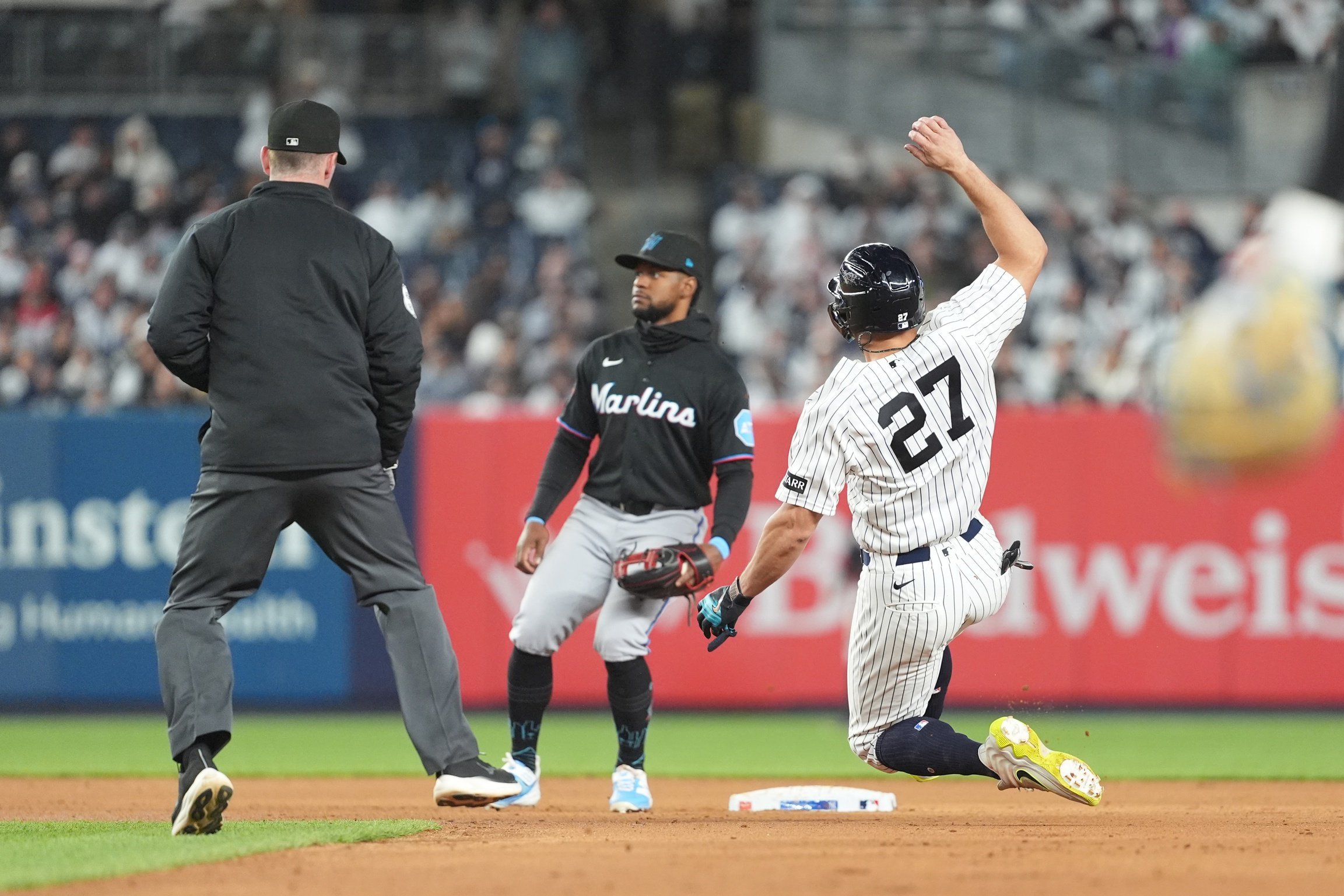 NEW YORK — It has been more than 8.5 years since Giancarlo Stanton last competed in a Miami Marlins uniform. That is an eternity in the baseball world. So when approximately 20% of "Yankees Trivia" participants selected anybody other than Stanton as the Marlins' all-time home run leader, I gave them a pass. It's understandably difficult to process that a player who was traded away shortly after his 28th birthday had enough time to set that record (among numerous others for offensive excellence). Stanton didn't homer against his former club on Saturday night, but he is well-positioned to earn Series MVP honors after stealing a base to help manufacture a run in the seventh inning and putting the Yanks ahead for good with a two-out, two-run single in the eighth. Although the latter moment proved more consequential, Stanton's success on the bases was particularly noteworthy considering that a series of injuries have sapped his agility. Since 2024, he ranks dead last among MLB players with a 24.3 ft/sec Sprint Speed (min. 100 "competitive runs" tracked by Statcast). He had not even attempted to steal in a regular season game since 2020. With Stanton on first base and the Yankees leading 5-4, he noticed inexperienced first baseman Connor Norby playing far behind him and extended his lead accordingly. He was more than 30 feet off the bag by the time that right-hander Calvin Faucher released the ball. Catcher Agustín Ramírez was slow to notice Stanton in motion, delaying his transition from receiving to throwing and resulting in a glacial 2.44-second pop time. "If they're gonna give it to me, I gotta go get it," Stanton told reporters postgame. "I put that one on me," Marlins manager Clayton McCullough said. "Just felt like there was less likelihood that he would go," so Norby was directed to back up, maximizing his range to cover a potential ground ball to the right side of the infield. On the next pitch, J.C. Escarra fittingly grounded out to the right side, advancing Stanton to third. Then, a passed ball by Ramírez allowed Stanton to score a crucial insurance run. The three players traded to Miami in exchange for Stanton—Starlin Castro, José Devers and Jorge Guzman—are long gone from the Marlins organization. None of them even work in affiliated baseball anymore. Meanwhile, the Yankees continue to receive good, albeit part-time production from the 36-year-old designated hitter. He has a 125 wRC+ since the trade, not to mention a 147 wRC+ in the MLB postseason, which his new club qualifies for on a near-annual basis. There was a cash component of the deal as well. The Yankees took responsibility for 90% of the $300 million that Stanton was still owed at the time, with the Marlins agreeing to assist with the back end of his contract. Those payments began this year—$10M in 2026, $10 in 2027 and $10M in 2028. In stark contrast, no current Marlins position player makes a salary above $2M (Christopher Morel). In 20 career games against his original employer, Stanton has generally been held in check with a .222/.333/.389 slash line and two long balls. The Yankees narrowly hold the edge in those head-to-head matchups with an 11-9 record. View the full article
 -
Three Names, One Question: Who Should the Twins Extend?
DiamondCentric posted an article in Twins Daily
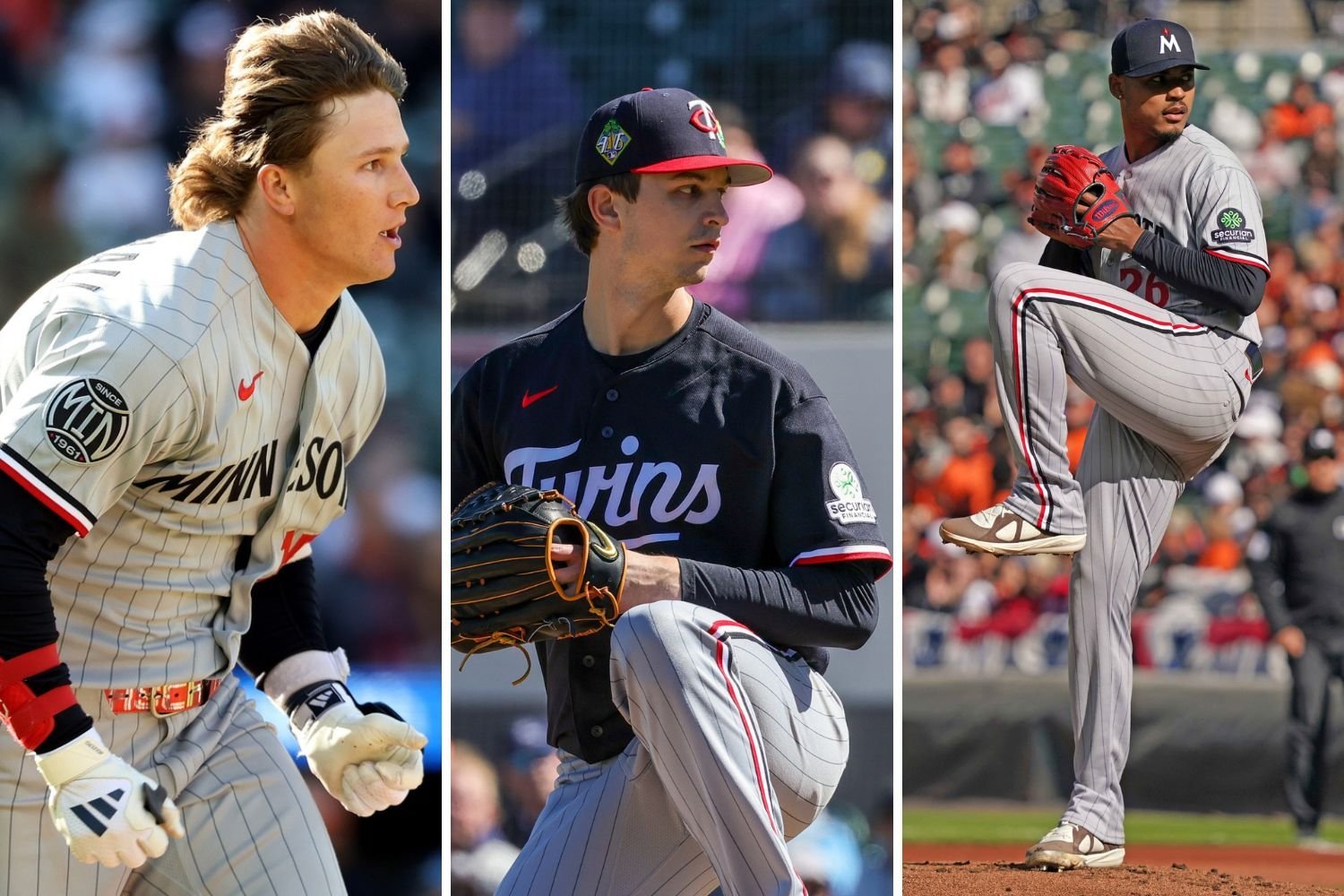 As part of the Twins’ 2026 Home Opener, Twins owner Tom Pohlad sat down with the media and discussed the outlook for the upcoming season. Naturally, the conversation turned toward the organization’s young talent and how to keep that group invested long term. “I think, again, what we’ve done from a culture standpoint, the relationships we’re building in the clubhouse, the leadership changes that you’ve seen, particularly with Derek Shelton at the helm, I think those things matter and as we go throughout the year here, there’s going to be more and more opportunities for us to put words into action and ultimately I think that’s what will make the Luke Keaschalls of the world and everybody else want to be a Twin for a lot longer.” When pressed about whether the organization had already approached players about extensions, Pohlad kept things close to the vest. “I’m not going to get into what we have or haven’t done.” Still, he tipped his hand just enough by naming Taj Bradley, Luke Keaschall, and Mick Abel as players the Twins would like to keep around for the long haul. That trio represents three very different extension cases, and each comes with its own set of risks and rewards. Taj Bradley: Electric Arm, Uneven Track Record Bradley has looked like the best pitcher on the roster through the first couple turns of the rotation. The raw stuff has always been there, but now it is jumping off the page. He even became the first Twins pitcher in the pitch tracking era to reach triple digits on a fastball, a milestone that speaks to just how loud his arsenal can be. The Twins believe they unlocked something after acquiring him at last year’s trade deadline. Mechanical tweaks and pitch usage changes appear to be paying early dividends. If that version of Bradley is real, then locking him up before arbitration gets expensive could be a savvy move. But this is where things get tricky. Bradley already has nearly 400 big league innings under his belt, and the results have been inconsistent. A 4.75 ERA paired with a 4.32 FIP, along with a 25.0 K% and an 8.7 BB%, paints the picture of a pitcher who has flashed but not sustained success. Committing long-term to that profile requires a strong belief that the recent changes are permanent, not just a short-term spike. An extension here would be a bet on development. The upside is a frontline starter at a discounted rate. The downside is paying for a version of Bradley that has not consistently existed yet. Luke Keaschall: Dynamic Bat, Lingering Questions Keaschall might be the most exciting player of the bunch right now. He has been electric at the big-league level, showing the ability to hit for average, tap into power, and impact the game on the bases. Early returns in 2026 suggest his bat speed has taken another step forward, which could unlock even more pop. That kind of offensive profile is exactly what teams look to build around. From a team control standpoint, there is less urgency. Keaschall is under control through 2031, which gives the Twins plenty of runway. However, that also creates an opportunity. If the organization truly believes he is a foundational bat, extending him early could buy out arbitration years at a lower cost and potentially secure a few free agent seasons. The hesitation comes from durability and defensive uncertainty. Keaschall has already dealt with multiple injuries, including Tommy John surgery and a broken arm. That is not something to ignore, especially for a player whose value is tied to athleticism and bat speed. There is also the question of where he ultimately plays. He has been a below-average second baseman, and while versatility can be valuable, not having a clear defensive home complicates long-term projections. Extending Keaschall would be a bet on the bat carrying the profile regardless of position. If he hits like a middle-of-the-order threat, it works. If injuries linger or the defensive fit never settles, it becomes more complicated. Mick Abel: High Ceiling, Wide Range of Outcomes Abel might be the most fascinating case of the three. He earned the fifth starter role out of spring training, beating out Zebby Matthews after an impressive camp. The biggest development was improved control, something that had eluded him at times in the upper-minors (10. BB% in 2025). Pair that with his ability to miss bats, and you start to see why the Twins dream on him as a potential front-of-the-rotation arm. That is the version of Abel that makes an extension enticing. If everything clicks, the Twins could be looking at a cost-controlled starter with top-of-the-rotation upside. Those are the types of players organizations try to lock up early, before the price tag reflects the ceiling. But there is a reason he was available in the first place. The Phillies were willing to move Abel in the deal that brought Jhoan Duran to Philadelphia, and part of that calculus was risk. Abel’s control has been inconsistent, and there is still a real possibility that he settles in as more of a back-end starter rather than an ace. The gap between those outcomes is significant, both in value and in how an extension would age. For the Twins, it comes down to confidence in their player development. If they believe the control gains are real, extending Abel early could look brilliant. If not, it is another example of paying for projection rather than production. The Bigger Picture What Pohlad said without saying it is that the Twins are at a crossroads with their young core. Extending players early can be a powerful tool. It builds goodwill, creates cost certainty, and can lock in cornerstone talent before prices escalate. It also comes with risk, especially when the players involved have not fully established themselves. Bradley, Keaschall, and Abel each represent a different version of that gamble. One has electric stuff but an uneven résumé. One looks like a budding star but carries injury and positional questions. One offers frontline upside with a wide range of outcomes. The Twins do not need to rush. But if they are serious about turning words into action, these are exactly the types of decisions that will define what this next competitive window looks like. Which player makes the most sense for an extension? Leave a comment and start the discussion. View the full article
 -
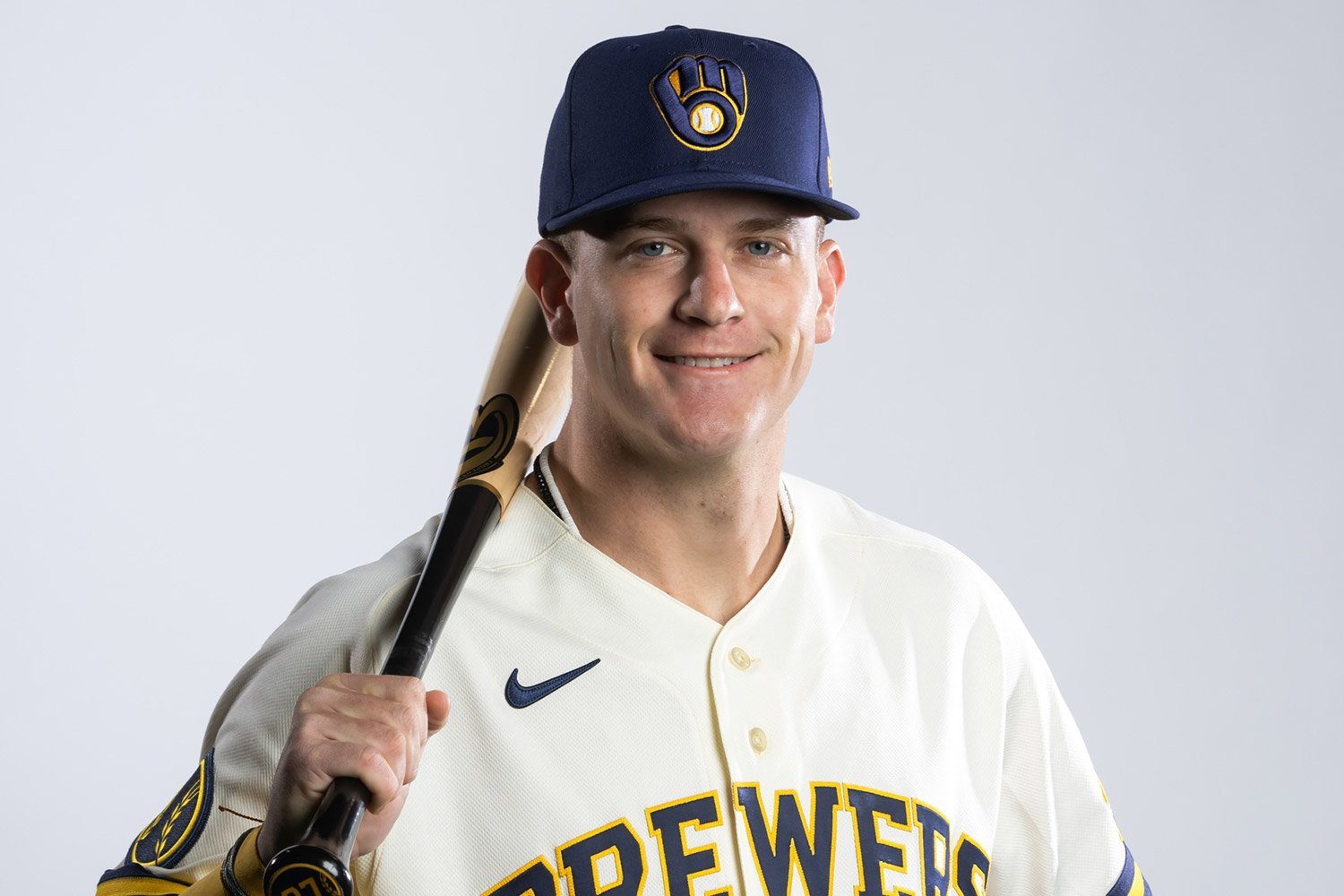 After reports last week that the Brewers were nearing an eight-year, $50.75 million extension with shortstop prospect Cooper Pratt, the club announced the deal on Friday afternoon. Pratt’s deal also includes club options for the 2034 and 2035 seasons, which could keep the 21-year-old in Milwaukee for up to the next 10 seasons. “There have been so many people that from our perspective have had nothing but positive things to say about Cooper throughout his tenure as a Brewer, and even before he was a Brewer,” president of baseball operations Matt Arnold said. “So all of the arrows pointed in the right direction for us to commit to something like this.” “We're super excited to be able to do this with the Brewers and to be able to hopefully be a longtime Brewer, for sure,” said Pratt, who rejoined the Nashville Sounds over the weekend after traveling to Milwaukee to complete his physical and sign the deal. It’s the second investment the Brewers have made in Pratt, who is ranked by Brewer Fanatic as the club’s No. 4 prospect. Milwaukee crafted its draft strategy around him in 2023, saving its bonus pool money in the first few rounds and convincing him to forgo his college commitment with a $1.35 million bonus as its sixth-round pick. This extension reaffirms what was true three seasons ago: the Brewers are high on Pratt’s makeup. Despite his youth, Pratt has a high baseball IQ and feel for the game, which he pairs with well-rounded athleticism, even if none of his tools have developed into standout skills just yet. He’s already a solid defender, baserunner, and contact hitter. With that profile, it’s unsurprising the club sought to extend Pratt through his prime seasons. The timing, however, was unusual. Pratt was in just three games into his first stint at Triple-A, and the Brewers have a full big-league infield in front of him. He didn’t appear especially close to a promotion and did not need to be added to the 40-man roster until after the 2027 season. The extension forced the Brewers to select Pratt’s contract and option him to Triple-A. Arnold said the contract will not expedite his timeline to Milwaukee, which means Pratt will burn his first option season and spend most of the deal’s first year in the minor leagues. It’s an unusual upfront concession, but Arnold indicated that the length of the contract and Pratt’s potential make it worthwhile. “I think when you talk about a deal that has a potential to last for 10 years, it’s not just something that we want to think about in the moment,” he said. “Certainly, there’s an opportunity there to bring a guy up if we want to, but we don’t have to force it. He hasn’t been in Triple-A that long. We want to continue to let him develop there at his own pace, but we want to take the long view here with Cooper.” While Pratt’s glove at shortstop gives him a high floor and could make him a capable big-leaguer right now, more time in Triple-A may be best for his offensive development. His strong bat-to-ball skills helped him post a 123 DRC+ with Double-A Biloxi last year, according to Baseball Prospectus, but reducing his chases outside the strike zone and leveraging his 6-foot-4 frame for more power will make the difference between a glove-first infielder and one of the sport’s most well-rounded shortstops. “I think that we believe in the bat,” Arnold said. “We believe in the glove, certainly. And again, this guy is really toolsy, too. He’s very athletic. He’s a big, physical kid, so we think there’s a chance to grow into some power, and he can really run. So when you have that kind of athletic foundation, it’s a really good thing.” “There’s always something that you can get better at," Pratt said. "There’s always room to improve at some position of the game. And if I can improve every year at something, then I’ll be perfectly fine.” It was also an unusual deal for Pratt’s agent Scott Boras. His clients are typically known for avoiding extensions, preferring to enter free agency as scheduled to pursue a market-value contract. Pratt’s extension delays his free agency, but in this early stage of his career, he felt that squaring away the business side of the game for up to the next decade would help his on-field focus and development. “That was one of the biggest reasons why I kind of decided to do this,” he said. “I can just play and not have to worry about other stuff, all of the transactional stuff, and just play. When I do get called up to the show, I can just be ready to play in the show and not worry about any other outside things.” “For Cooper, how and why he played had a lot to do with this decision,” Boras said. “What it meant for him to move ahead and to advance to the big leagues, in his mind, quicker. What it meant for him to approach the game in a way that allowed him to develop appropriately.” Boras believes the stability secured by this contract could better position Pratt for that payday down the line. “We want to optimize Cooper,” Boras said. “And I felt after listening to him and his family that this was a deal that will allow him to be his best. And if we make Cooper his best, contractually, the risk on the back side of this will allow us optimization in the next contract. The risk of seven or eight years of play before [free agency] happens is immense. But I also know that the height of his performance, after listening to Cooper, will be enhanced because he made this decision.” The Brewers want Pratt to be a linchpin in their infield for years to come, and Pratt wants to develop into the best player he can be. Both sides feel his contract accomplishes those goals. “I feel like in my heart I made a good decision,” Pratt said. View the full article
 -
Marlins rough up old friend Ryan Weathers, but bullpen implodes
DiamondCentric posted an article in Fish On First
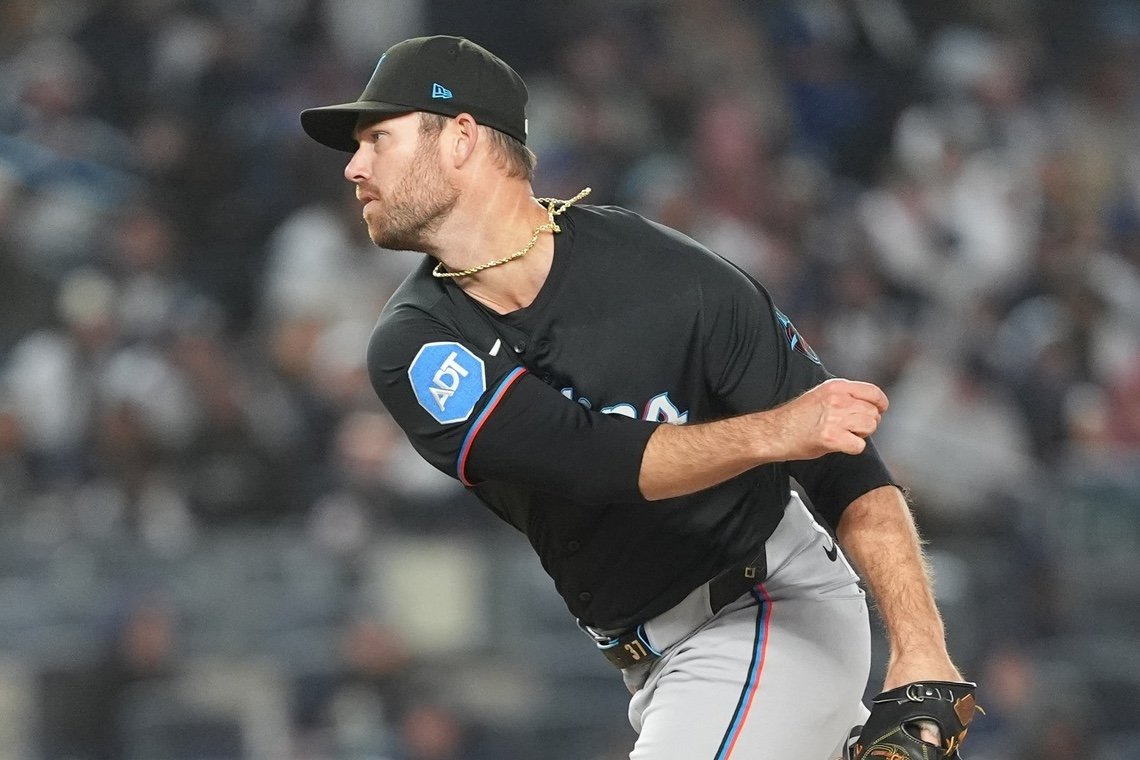 NEW YORK — In the two previous Miami Marlins losses of 2026, observers could recognize early what the outcome would be. Saturday night followed a much different script, as a 4-0 lead suggested that they were firmly in control midway through the game evaporated. Alas, largely capitalizing on their visitor's inability to find the strike zone, the Yankees scored nine runs over their final four trips to the plate in a series-clinching victory. Close friends Meyer, Weathers equally underwhelming This was supposed to be the main storyline of the game, right? Marlins teammates from 2023-25, Max Meyer and Ryan Weathers are both under the microscope, as the former tries to preserve his spot in the starting rotation and latter tries to ingratiate himself to a new organization that holds itself to the highest standard. Another interesting twist: Meyer describes Weathers as "one of my best friends last year," so he was excited to see their pitching schedules align this way. Weathers started the night on an impressive note, striking out unorthodox leadoff man Austin Slater on three pitches. However, from that point forward, a Marlins lineup that generally stunk against left-handed starters in 2025 founds its spark. With two outs in the first inning, Heriberto Hernández caught up to a 99 mph fastball and drove it to the right-center gap for a two-run triple. The Marlins stretched their lead to 3-0 in the next inning with an assist from the Automated Ball-Strike challenge system. Slater was initially called out on strikes to end the top of the second, but the 3-2 pitch was overturned to ball four after review. That set up an Agustín Ramírez RBI single. It was an inefficient outing for the talented left-hander, throwing 88 pitches in just 3 ⅔ innings. Meyer held the Yanks scoreless entering the fifth, but that was misleading. He allowed baserunners in all but one of his innings and never really found his rhythm. The bottom of the third was particularly adventurous. The first two batters reached base in front of Aaron Judge, who punished a middle-middle changeup with a 112 mph exit velocity. Fortunately for Meyer, it was directed to center field, so 387 feet later, Jakob Marsee had room to run it down for a long, loud out. Later from the frame, with the bases loaded, Meyer fell behind 3-0 in the count to Giancarlo Stanton, but rallied back to induce an inning-ending popout. More notes and takeaways - The Marlins had nine more hit than the Yankees (15 to six), but their baserunners totals were very similar due to all of the free passes. Going back to Friday's game, the Fish have tied a franchise record by issuing 21 walks in a two-game span. - Agustín Ramírez wasn't gun shy after carelessly getting picked off late in Friday's game. He showed good awareness in the fourth inning, taking third base on Jakob Marsee's single when he noticed that the base was unoccupied. An errant throw allowed him to score on the play. At the plate, he went 2-for-3 with a pair of walks, raising his season wRC+ to 131. - In the second inning, Leo Jiménez recorded his first hit as a Marlin, a soft, well-placed grounder off of Weathers. He added another infield single in the sixth. - Speaking of Weathers, let's do a brief check-in on the prospects who the Marlins acquired in exchange for him. Outfielders Brendan Jones (.750 OPS) and Dillon Lewis (.250 OPS) and infielder Dylan Jasso (.833 OPS) have each begun 2026 with Double-A Pensacola. High-A infielder Juan Matheus went 0-for-4 with four walks in the Beloit Sky Carp's season-opening doubleheader on Saturday. Sunday's series finale is scheduled for 1:35 p.m. ET, but inclement weather in the forecast puts that start time and the game itself in jeopardy. If they're able to play through the raindrops, the starting pitchers will be Chris Paddack (Marlins) and Max Fried (Yankees). While Paddack was shelled for eight runs (all earned) in his season debut, Fried owns a shiny 0.00 ERA on the heels of back-to-back scoreless starts. View the full article
 -
Toronto Blue Jays 2026 Top Prospect Rankings: No. 5 Johnny King
DiamondCentric posted an article in Jays Centre
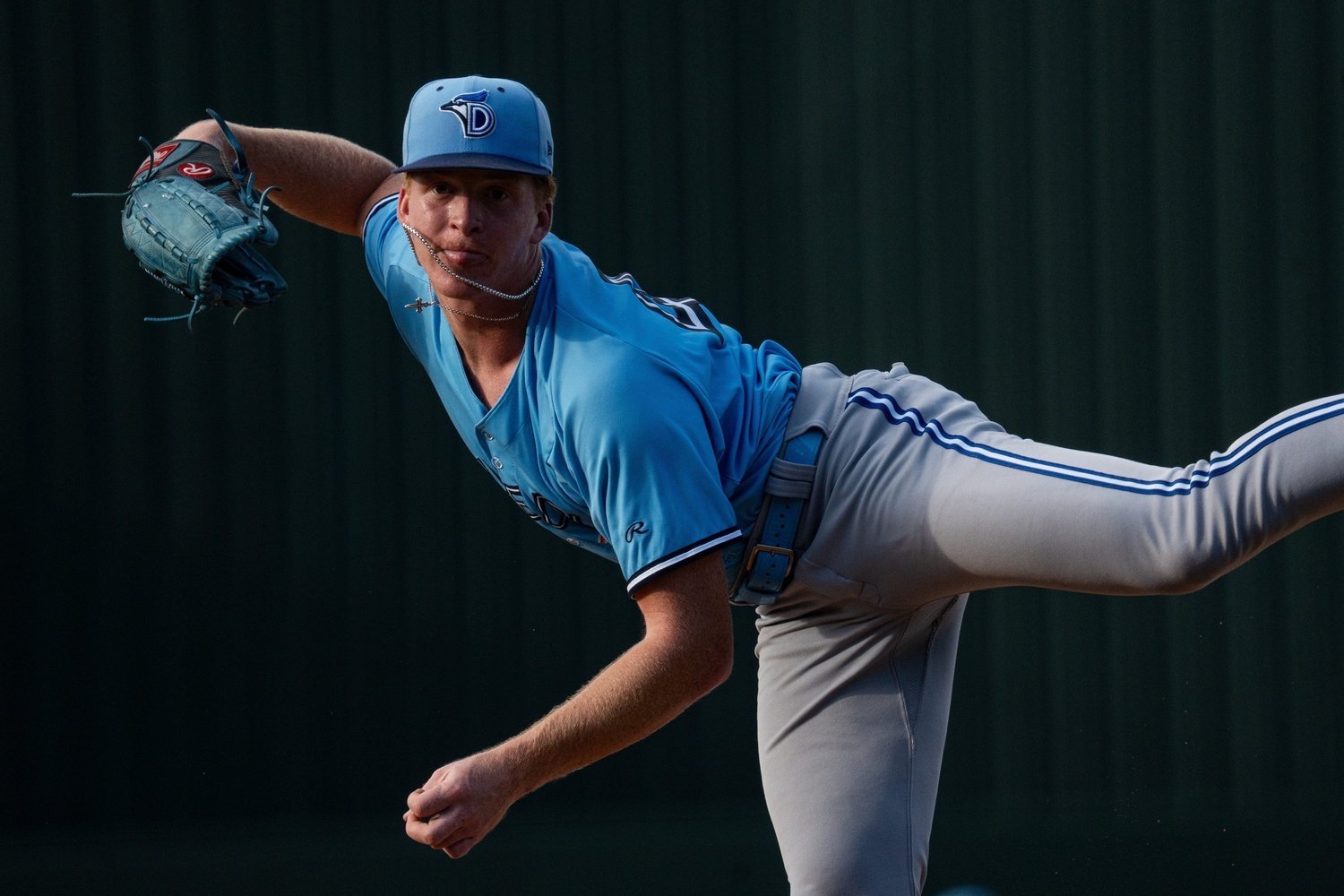 Jays Centre is counting down the top 20 prospects in the Toronto Blue Jays organization. Check out prior entries in the series here: No. 20 to 16 No. 15 to 11 No. 10 No. 9 No. 8 No. 7 No. 6 The minor league season is finally here, and we have reached the final five of our top 20 prospects. It has been a windy and interesting road from #20-16, #15-11, and then into our top 10 with Jake Bloss, Yohendrick Pinango, Victor Arias, Juan Sanchez, and Gage Stanifer. Now we come to one of the fastest-rising Toronto Blue Jays prospects: Johnny King. No. 5: SP Johnny King – FCL, Dunedin (2025), Vancouver (2026) table.stats { border-collapse: collapse; font-family: Arial, sans-serif; text-align: center; } table.stats th, table.stats td { border: 1px solid #333; padding: 8px 12px; } table.stats th { font-weight: bold; background-color: #f2f2f2; } IP G GS ERA FIP xFIP K% BB% 61.2 18 15 2.48 3.18 2.88 39.5% 13.9% At just 19 years old, Johnny King is the epitome of a starting pitcher in stature, standing 6-foot-3 and weighing 210 pounds. He was drafted by the Toronto Blue Jays during the 2024 MLB draft in the third round, 95th overall. He kicked off his minor league career with a stellar performance in the Florida Complex League last season. He completely dominated hitters across seven games and 24 innings. His ERA was 1.13, with his FIP and xFIP equally standing out at 1.53 and 1.83, respectively. What should be highlighted above all was his propensity to strike batters out. He was one of the best strikeout pitchers in Rookie ball, ending his time there with a 41.8% strikeout rate. He was able to pair that with solid command as well, only walking 7.1% of the batters he faced. King was quickly promoted to Single-A Dunedin and continued to show a top-notch ability to generate whiffs. Over 11 games and 37.2 innings to finish the season, he struck out 38.1% of hitters as an 18-year-old facing mostly more advanced batters. He didn't give up many hits either, only seeing his batting average against rise from .195 at Rookie ball up to .201 at Single A. His ERA and FIP took a jump up, to 3.35 and 4.24, respectively. The main issue with the promotion was that his command routinely slipped at Single A. He had a somewhat concerning 17.1% walk rate, though he was able to finish the season strong, with a 4.2-inning performance, giving up just one hit and zero earned runs, while striking out seven and walking three. What To Like As an 18-year-old last season, King showed a rare ability to have exceptional stuff at such a young age and to be able to command it enough to strike out hitters at Single A. He has a great frame and still projects to get stronger and add velocity on his fastball. He already possesses two plus pitches in his four-seam fastball and curveball. Both were virtually unhittable in 2025, with the fastball having a batting average against of .213 and a whiff rate of 36.3%. The pitch has very good ride up in the zone, and he generates close to 18 inches of induced vertical break on it. The curveball had one of the best whiff rates in the minor leagues at 49.4%, and hitters could only hit .193 off of the pitch. King also gets above-average extension on the pitches, in the range of 6.5 feet. That will give him an exceptional base to pitch from to continue improving his repertoire as he gets older. His third pitch was his changeup, and while decent, it needs some work. It was a good pitch, which he used to limit the success of batters, but he didn't get as many swings and misses on it, with only a 22.2% whiff rate at Single A. It is a great pitching foundation to have two plus pitches to go with a third serviceable one, something not often seen from an 18-year-old. What To Work On As the season wore on, King's command took a hit, and his walk rate was simply worrisome at times. Jumping from 7.1% at Rookie ball up to 17.1% at Single A shows he needs to work on getting batters out in the zone to go with his elite ability to generate swings and misses. His 60% strike rate at Single A was in the 39th percentile in the minor leagues and will need to take a step up if he is to continue to get older hitters out while moving up levels. Another area King will need to focus on in 2026 will be getting hitters back on the ground. When he jumped from Rookie ball to Single A, his groundball rate dropped from 59.1% to 33.8%. He will want to get batters to hit the ball on the ground more like he did at the start of his 2025 season, to help limit damage overall. What Is Next King will begin the 2026 season at High-A Vancouver. It could be a rocky/challenging start given the wild Northwest weather this time of year, but he has the potential to vault up prospect rankings due to his young age and plus stuff on the mound. If everything goes right for him, expect him to spend a couple of months at High A before getting a late-season crack at Double-A New Hampshire. Everything is pointing towards a huge season for him, and he could be the next great pitching prospect in the Toronto Blue Jays organization. View the full article
 -
Rays 7, Twins 1: Rays Run Wild Over Abel and the Twins
DiamondCentric posted an article in Twins Daily
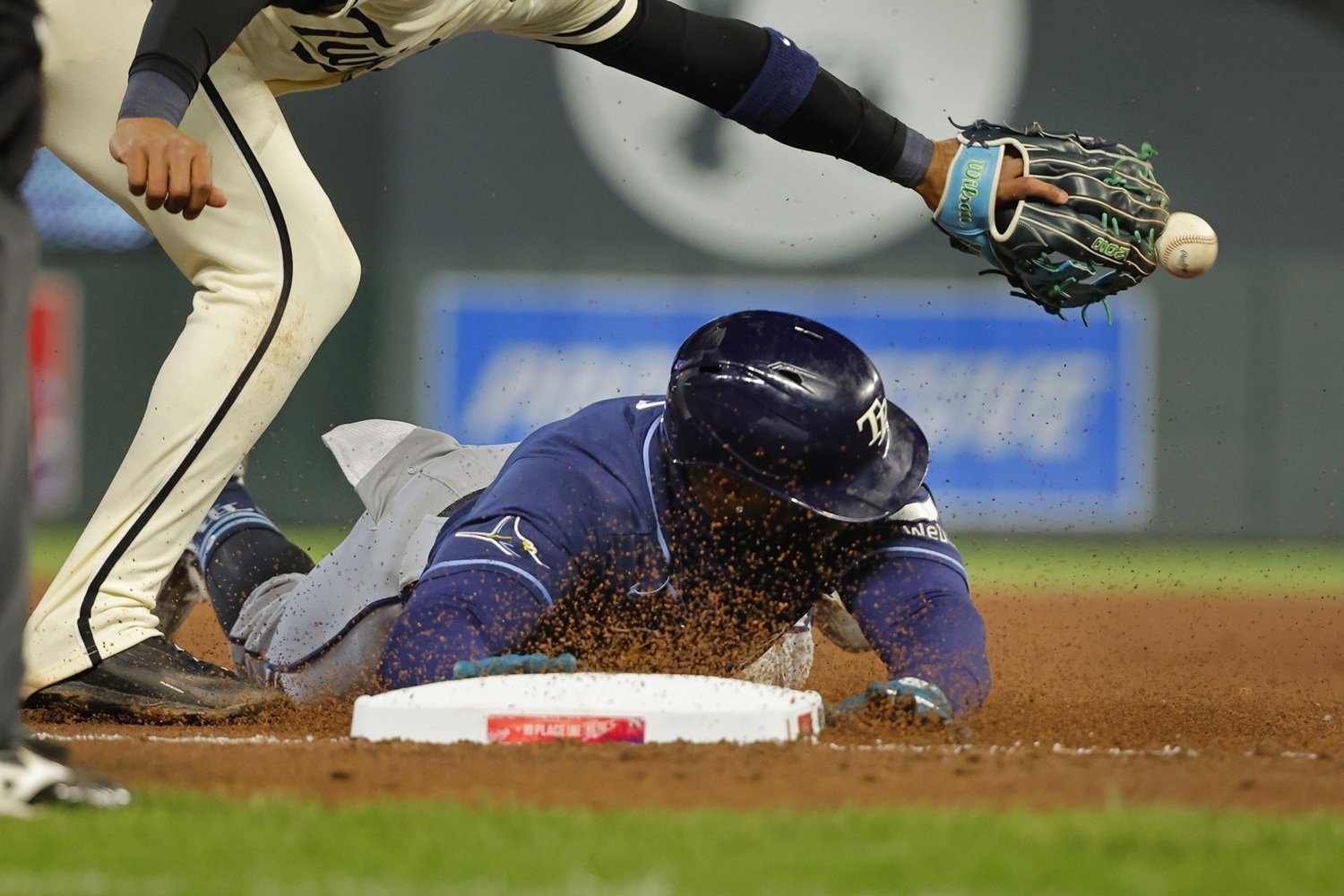 Box Score SP: Mick Abel 4.0 IP, 6 H, 4 ER, 3 BB, 3 K (69 pitches, 43 strikes (62%) Home Runs: N/A Bottom 3 WPA: Abel (-.23), Taylor Rogers (-.09), James Outman & Victor Caratini (-.08) Win Probability Chart (via BaseballSavant) Abel Gets of to a Slow Start in the Snow Mick Abel took the mound in his first start of the season and his first Target Field start with snowflakes flying and temperatures plummeting. After pitching around a walk and a single in the top of the first, Abel froze up against the Rays hitters in the top of the second. The first baserunner really wasn't his fault, as Royce Lewis couldn't make the charging throw successfully on a Chandler Simpson leadoff swinging bunt, and Josh Bell couldn't dig out the throw in his first chance at first base. With the speedy Simpson now on second, Abel went rogue walking Ben Williamson on four pitches and hitting number nine batter RIchie Palacios on an 0-2 pitch to load the bases. With Yandy Diaz at the plate, another off-speed delivery went astray and plunked in the first run of the ballgame. With the bases still loaded, Jonathan Aranda delivered a missile off the right field wall to plate two more Rays for a 3-0 lead. One day after the Twins bullpen needed to toss 83 pitches, it looked like they were going to have to dig deep again if the Twins were going to make a comeback after Abel spun 57 pitches just to escape the first two innings. Twins Try to Craft a Comeback The Twins hoped to stage another comeback victory, but they faced Steven Matz in the finale of the "week of crafty lefties." With the newly minted Silver Slugger, Byron Buxton, out of the lineup due to last night's pitch off of his forearm, the Twins faced an uphill battle. After a lifeless first inning, the Minnesota bats got some momentum moving in the bottom of the second. Matt Wallner snuck a single up the middle, and Ryan Jeffers worked a walk. Victor Carantini struck out, and Lewis got robbed on a diving catch by centerfielder Cedric Mullins. Brooks Lee returned to the lineup and delivered a clutch RBI single, which Mullins booted to put runners at second and third with two out. The Buxton replacement, James Outman, in all his left-handedness, struck out quickly to make Twins fans wonder what might have been. Small Ball Stings Abel...and Rogers... The Rays immediately regained their three-run lead in the top of the third, as Mullins dropped a successful bunt and quickly stole second base. Simpson threatened to bunt, and opted to lace a single to right instead to put runners on the corners with nobody out. Surprisingly, Simpson didn't attempt to steal, and Williamson shot a grounder to a drawn-in Lee. Lee opted for the double-play, and Mullins scored to make it 4-1 Tampa. Taylor Rogers made his first Target Field appearance in a Twins jersey since 2021 in the top of the fifth inning. The Rays greeted him rudely with a single, a stolen base, a single, a stolen base, and a single to expand the lead to 6-1. ABS...and Matz...Sting Twins After Josh Bell lost a challenge in the first inning in an attempt to avoid a strikeout, Luke Keaschall lost a challenge in the third inning in an attempt to avoid a 1-2 count. This loss really stung when a 3-2 sinker looked to cruise outside of the zone, but strike three was the call, and there was no recourse left for the protesting young Twin. The Twins were going to have to fight the rest of the way with an expanded strike zone and no more challenges. WIth the border of the strike zone fully at his disposal, Matz proceeded to take down ten Twins batters in a row, cruising through six innings on 97 pitches. Rays Keep On Running While the Twins failed to take advantage of the Rays bullpen entering the scene in the bottom of the seventh, the Rays continued to take advantage of Caratini's arm behind the plate. After stealing only two bases in their first seven games, Tampa swiped the fourth base of the evening in the top of the eighth inning. With Palacios now in scoring position, Diaz blasted a ball deep to right-center that went into and out of Outman's glove for a "Buxton on the bench" triple, plating Palacios and adding insurance to insult at 7-1. It's hard to place the blame for this loss upon any one Twin when only Lee, Jeffers, and Banda had positive WPA"s. Luckily only a few hundred fans had to witness it in person, and tomorrow's always another day. What’s Next? The Twins look to take their first series of the season in an Easter Sunday matchup against the Rays. Twins righty Simeon Woods-Richardson (0-1, 3.60 ERA) will get his second start of the season, after taking a hard-luck loss against the Royals earlier in the week. The Rays will counter with righty Nick Martinez (0-0, 3.00 ERA) in the rubber game. First pitch is scheduled for 1:10pm CDT. Postgame Interviews Bullpen Usage Spreadsheet TUE WED THU FRI SAT TOT Kent 0 47 0 0 34 47 Laweryson 0 36 0 10 9 46 Banda 0 12 0 17 15 44 Funderburk 0 0 15 2 0 43 Topa 0 0 13 17 0 40 Orze 0 0 0 37 0 37 Rogers 0 0 4 0 23 18 Sands 0 0 11 0 0 11 View the full article
 -
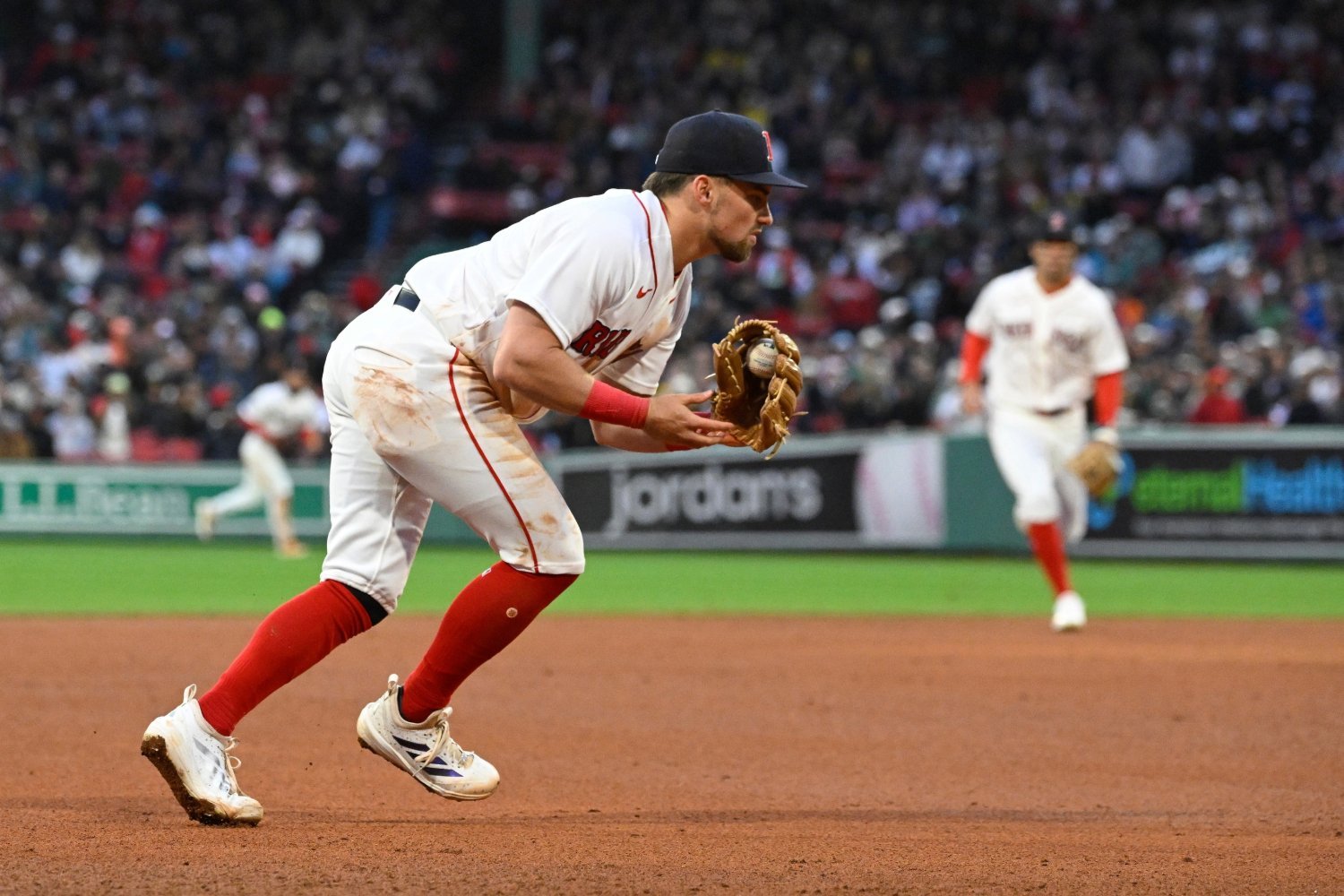 Boston, MA – As fans prepared for the home opener between their beloved Boston Red Sox and the visiting San Diego Padres, there was a consistent feeling shared between them. “You have to win today.” The sentiment, shared between several fans who were waiting in anticipation for the game at the Section 10 podcast pregame show, was not surprising. The Red Sox returned home with a 1-5 record after the first week of the season, including a three-game sweep at the hands of the Houston Astros. Everyone, from pundits to the players, was growing impatient despite being just six games into the campaign, which can be traced back to the team's rollercoaster offseason. “It’s clear [Craig] Breslow had a plan for what he wanted. But it’s also obvious it didn’t go how he wanted. You lose [Alex] Bregman and replace him with [Caleb] Durbin. Now after saying you wanted to add power, you go and switch it to [the team] being all about run prevention,” one fan passionately said when asked about their thoughts on the team's direction. Others in the area agreed, wondering why the team didn’t make a bigger push for a player like Pete Alonso or how Masataka Yoshida remained with the team despite the outfield already having a logjam for playing time. Despite the tough start to the season, though, there's no lack of belief in the team. “It’s kind of disappointing, but at the same time it’s only been six games. They still have over 150 games to go and now they’re back at Fenway. Hopefully they can get some momentum,” another fan shared. “Garbage, but garbage can always be taken out to the curb, and you can start clean and fresh. Have to start playing better, there’s just been a lot of bad starts happening at the same time. I’m not worried — there’s a lot of baseball left to be played." One player who has struggled mightily in the early going is offseason trade acquisition Caleb Durbin, the infielder entering the day as the only qualified hitter in the majors without a hit. Fans were growing impatient with him, and it showed as some booed the infielder upon hitting into a double play in his first at-bat that he didn’t immediately run on. The play in question resulted in what looked to be a foul ball that went a grand total of one foot in front of the plate that the ump signaled was actually fair. During his next time up, fans were playfully teasing him from the stands. “Are you a man or a mouse, Durbin? Prove them wrong, Durbin,” one fan could be heard yelling. Another joined in, claiming that “IKF [Isiah Kiner-Falefa] will replace you mid-game if you don’t get a hit.” Durbin’s second at-bat was more productive, as he hit a single to drive in Jarren Duran and give the Red Sox a 2-0 lead. The entire team entered the day under fire, and they responded to the call. Starter Sonny Gray delivered in his Fenway debut, tossing six dominant innings. Allowing just two runs on four hits, he struck out three and didn’t walk a batter as he allowed the Red Sox offense a chance to finally break through in the bottom of the sixth inning. And break through they did, crushing two home runs in the frame and handing the Red Sox a 5-2 lead. The bullpen, led by Greg Weissert, Justin Slaten and Aroldis Chapman, tossed three scoreless innings as the Red Sox won their home opener and snapped their five-game losing streak. Fans cheered with excitement but weren’t ready to say things were turned around just yet. One fan pointed out that the team continued to make the same mistakes that have been issues the past few seasons, while another reminded everyone that “It’s only one game; love seeing them win, but they have to do this consistently,” A loss in the subsequent contest certainly didn't help to rattle any nerves, but the friendly confines of Fenway have clearly woken this team up from their early season slumber. Hopefully, the rest of the homestand will prove just as productive as the first game against the Padres. View the full article
 -
Byron Buxton Avoids Major Injury After Another Hit By Pitch Scare
DiamondCentric posted an article in Twins Daily
Durability has never quite matched the talent for Byron Buxton. Over the course of his 12-year big league career, he has dealt with a wide range of injuries, many of them coming in ways that are hard to prevent. Whether it is crashing into walls, colliding with teammates, or wearing pitches, Buxton’s all-out style has often come at a physical cost. That reality made Friday night feel all too tense. In the seventh inning of Minnesota’s home opener against the Tampa Bay Rays, Buxton was struck on the right forearm by a 92 mile per hour fastball from Kevin Kelly. The reaction was immediate. He signaled for assistance and headed off the field, leaving a quiet concern hanging over the ballpark. It was not the first time this spring that Buxton had been in that situation. While playing for Team USA in the World Baseball Classic, he was hit in a game against Team Brazil and forced out shortly after. That incident ultimately proved minor, with imaging showing no structural damage. This one followed a similar path. Shortly after exiting Friday’s game, the Twins announced that Buxton’s X-rays came back clean. The official diagnosis was a forearm contusion, meaning the injury is more about soreness than anything long-term. Buxton did not make much of it in his postgame remarks, keeping his outlook straightforward. “It’s an arm,” he said. “It ain’t broken, so I’m good.” That kind of update is about as positive as it gets, given the circumstances. On the field, Minnesota made sure the game itself did not slip away. After Buxton departed, the lineup came alive with a seven-run inning that flipped the night completely. Tristan Gray delivered the biggest swing with his first career grand slam, helping push the Twins to a comfortable 10-4 win. Even with the victory, Buxton’s status remains the real storyline. The Twins are still finding their rhythm with a 3-3 record to open the year, and his presence plays a major role in what this team can be. His early numbers at the plate have been modest, but his impact extends well beyond the box score when he is healthy and in center field. For now, the organization appears to have avoided a worst-case outcome. Buxton missed Saturday's game, but the early signs point to a manageable situation. Considering his history, that alone is enough to feel like a win. View the full article -
 Jase Bowen and Jose Miranda powered El Paso, while Albert Fabian, Ryan Jackson, and Carson Tucker sparked San Antonio. On the mound, Marco Gonzales gave El Paso five steady innings, Triston McKenzie added two scoreless frames, and Kash Mayfield and Isaiah Lowe combined for six strong innings for Fort Wayne. Jose Verdugo collected two hits for the Storm, and Carlos Rodriguez led the TinCaps. Bowen Drives In Four, Miranda Hits Grand Slam In Chihuahuas Win Box Score The El Paso Chihuahuas broke through quickly in a 10-5 win over Tacoma on Thursday at Cheney Stadium. El Paso scored four times in the first inning, all on Jose Miranda’s grand slam to left after Jase Bowen singled and both Nick Solak and Rodolfo Durán walked. Tacoma answered with four runs in the bottom of the inning, but the Chihuahuas moved back in front in the second. Samad Taylor singled, stole second, and scored on Bowen’s double, then Sung Mun Song followed with an RBI single to make it 6-4. Bowen finished 4-for-5 with a double, a triple, a home run, four RBIs, and four runs scored. Song went 3-for-5 with two RBIs, while Miranda drove in four runs. Taylor scored twice, walked twice, and stole a base, and Mason McCoy added a hit, a run scored, and a stolen base. Bowen added to the lead with a solo home run in the seventh, then delivered a two-run triple in the eighth for Rancho Cucamonga’s biggest late blow. Song followed with another RBI single in the inning to stretch the lead to 10-4. Marco Gonzales started for El Paso and worked five innings, allowing four runs with no walks and four strikeouts. Triston McKenzie followed with two scoreless innings, walking three and striking out two. Garrett Hawkins struck out one in one inning, and Ethan Routzahn allowed one run in the ninth. Fabian Homers, Missions Draw 15 Walks In Win Over Tulsa Box Score The San Antonio Missions built an early lead, then held off a late push for an 11-9 win over Tulsa on Friday at ONEOK Field. San Antonio struck in the second inning when Carson Tucker doubled home Romeo Sanabria, then Albert Fabian followed with a three-run homer to left center to make it 4-0. The Drillers got one run back in the third, but the Missions answered again in the fourth. Francisco Acuna walked, moved to second on a disengagement violation, and scored on Ryan Jackson’s two-run double, which also brought home Kai Murphy for a 6-1 lead. Fabian finished 2-for-4 with a home run, three RBIs, and a walk. Jackson went 1-for-5 with a double, three RBIs, and a walk, while Tucker had two doubles, scored twice, and drove in a run. Murphy scored twice, walked three times, drove in a run, stole a base, and was also caught stealing. Acuna scored twice and drew three walks, and Chris Sargent added a hit and an RBI. The Missions broke the game open in the seventh with five runs. Sargent’s RBI single started the inning, then Murphy, Jackson, Sanabria, and Braedon Karpathios each drew a run-scoring walk as San Antonio pushed the lead to 11-2 against the Tulsa bullpen. Miguel Mendez started for San Antonio and worked 3 2/3 innings, allowing one run, two walks, and two strikeouts. Sadrac Franco gave up three runs in 1 1/3 innings with no walks and one strikeout, and Michael Flynn recorded the final two outs for the save. King Jr. Drives In TinCaps’ Lone Run In Loss To Great Lakes Box Score The Fort Wayne TinCaps matched Great Lakes for most of this game, but the Loons pushed ahead in the seventh and held on for a 2-1 win Friday at Dow Diamond. Fort Wayne was limited to four hits, two by Carlos Rodriguez, who finished 2-for-3 with a walk. Alex McCoy added a double, Kasen Wells singled and scored the club’s only run, and Lamar King Jr. drove in the TinCaps’ lone tally while drawing two walks. The TinCaps fell behind in the fifth when Great Lakes got a solo home run, but they answered in the sixth. Wells opened the inning with a single, moved to second on a wild pitch, and advanced as Zach Evans and Rodriguez drew walks. King then worked a bases-loaded walk to force in Wells and tie the game at 1-1. Fort Wayne could not push across another run after loading the bases in that frame. In the seventh, Midland moved in front when Logan Wagner doubled, Jose Meza singled and stole second, and Victor Rodrigues drew a walk that brought home the go-ahead run. The Loons added pressure in the inning, but Braian Salazar helped keep it a one-run game with a double play that erased a runner at the plate. Kash Mayfield started for Fort Wayne and threw three scoreless innings, allowing no hits, two walks, and striking out four. Isaiah Lowe followed with three innings, allowing one run, no walks, and striking out four. Salazar gave up one run in one inning, and Clay Edmondson struck out one in a scoreless eighth. 66ers Hand Storm Shutout Loss Despite Verdugo’s Two Hits Box Score The Lake Elsinore Storm were held to three hits in a 16-0 loss to Inland Empire on Friday at ONT Field. Jose Verdugo had the only notable offensive performance for the Storm, going 2-for-3, while Kerrington Cross added a hit. Lake Elsinore’s best scoring chance came in the fifth inning when Cross and Verdugo singled with one out, but the 66ers kept the Storm off the board. Inland Empire struck for two runs in the first, then added five more in the second. Jaron Elkins, Emil Morales, and Landyn Vidourek all reached before the lead grew to 5-0 on a single to center. The 66ers made it 7-0 later in the inning, then pushed across another run in the third after Elkins walked, stole second, and moved to third on a throwing error before scoring on a sacrifice fly. The 66ers added four runs in the fourth, helped by two sacrifice flies and a passed ball, then scored twice in the fifth and two more in the eighth. Kruz Schoolcraft started for Lake Elsinore and lasted one inning, allowing six runs, four walks, and one strikeout. Jesus Tillero threw five scoreless innings for Inland Empire with eight strikeouts. Nick Falter gave the Storm two scoreless innings, allowing one hit, one walk, and striking out three. Lake Elsinore pitchers issued 12 walks, and the defense committed six errors and three passed balls in the game. View the full article
 -
Short Starts, Long Nights: The Twins Have An Efficiency Issue
DiamondCentric posted an article in Twins Daily
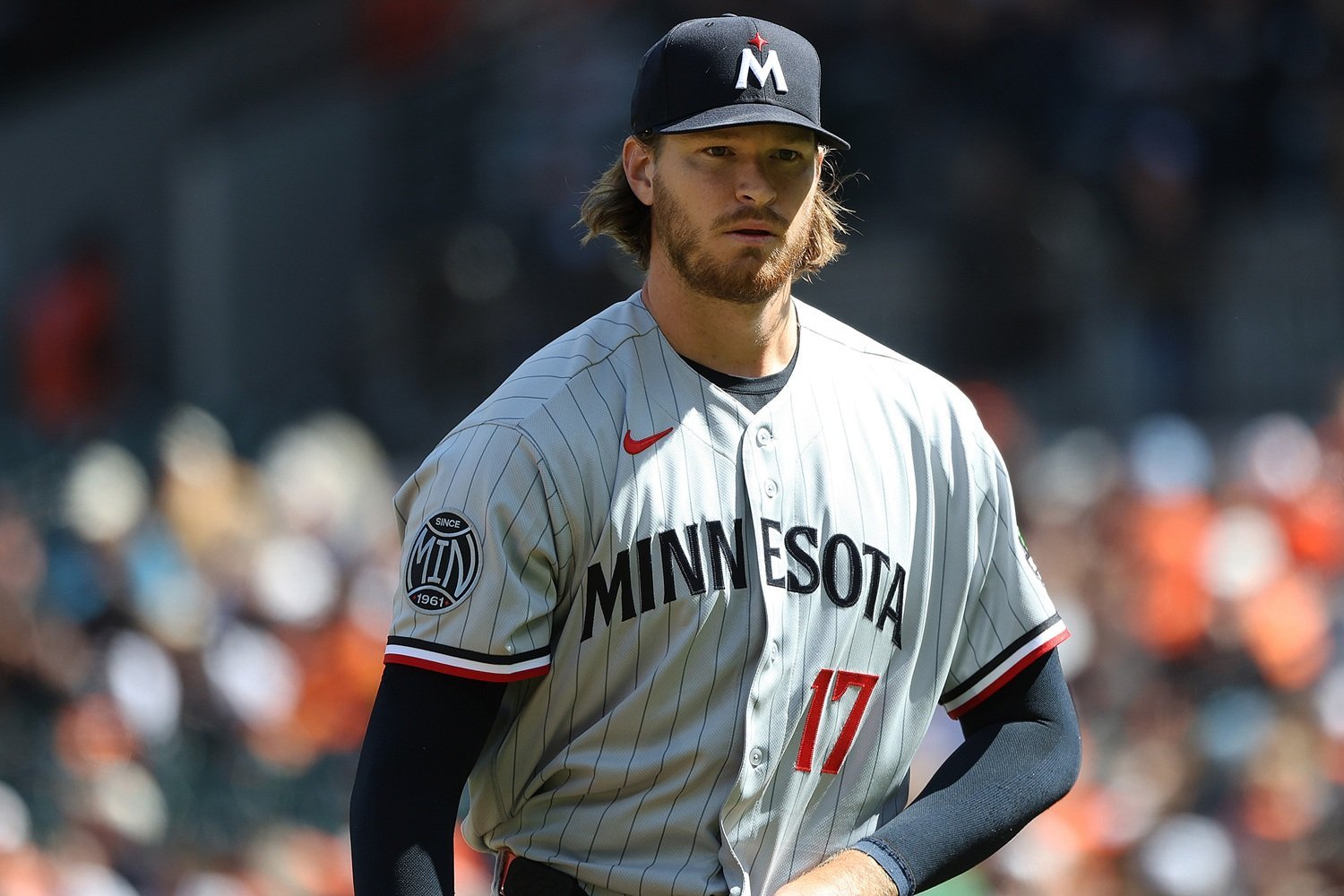 It’s still very early in the season, but it doesn’t take long for certain patterns to start showing up. And for the Minnesota Twins, one of those patterns is already becoming pretty clear. The starting rotation has struggled to work efficiently through lineups, and as a result, they are not pitching deep into games. That’s something we’ve seen from this team in previous seasons and now appears to be carrying over into the early part of this year. So far, Taj Bradley’s outing on Thursday stands out for one simple reason, as it was the first time a Twins starter has completed six innings. Even that came with some context that is worth paying attention to. Bradley needed 100 pitches to get through those six innings, and what makes that number even more notable is how his outing finished, as he threw just 21 pitches combined across his final two innings. So while he was able to give the Twins some length, it was not exactly efficient length, and that distinction matters. When you zoom out and look at the rest of the rotation, the trend becomes even more noticeable. Joe Ryan went four innings on Wednesday, Bradley, in his first start, made it through just four and a third, and Bailey Ober also gave the team four innings in each of his two starts. Mick Abel, who wasn’t technically making a start, still serves as another good example. He needed 81 pitches to record just 10 outs out of the bullpen, which further reinforces the point that this has been a group-wide issue rather than a one-off performance. Individually, those outings might not raise too many alarms, especially this early in the season when pitch counts are still being built up and teams are generally cautious with their starters. But collectively, it starts to paint a much more concerning picture. Right now, the Twins have been able to manage it because their early schedule has included a couple of off days, which has helped keep the bullpen relatively fresh. That cushion isn’t going to last much longer, with no off day now until April 16th. That’s where this starts to become a real concern, because a lack of efficiency from your starting pitchers doesn’t just affect their individual outings, it has a ripple effect across the entire pitching staff. If your starters are consistently giving you four or five innings instead of six, you’re asking your relievers to cover at least four innings on a regular basis, and over the course of a long season, that kind of workload adds up quickly. Even in the short term, it can start to create problems. Relievers need rest and time between outings to stay sharp and healthy. If they're being used heavily night after night, you either run out of available arms or you end up putting pitchers into situations where they are not at their best. Neither of those outcomes is ideal, especially for a bullpen that already has some question marks. It’s also important to point out that this issue doesn’t fall entirely on the starting rotation. Defense plays a significant role in all of this, and when routine plays are not converted into outs, innings get extended, which leads to more pitches, longer at-bats, and ultimately shorter outings for your starter. Wednesday night in Kansas City provided a clear example of how quickly that can spiral. There was a tailor-made double play ball hit right to Victor Caratini at first base. It should have resulted in two quick outs and an inning that was firmly under control. Instead, there was a throwing error, and rather than having two outs and nobody on, the Twins suddenly found themselves with no outs and two runners on base. From there, things continued to unravel. A walk followed, and then a strikeout that should have ended the inning if the double play had been turned. But instead, the inning stayed alive. Bases loaded with one out, and the next at-bat resulted in a grand slam. The Twins lost that game by four. Moments like that highlight just how costly inefficiency can be, even when it is not entirely self-inflicted by the pitcher. One missed play can turn into an extended inning, that extended inning turns into a higher pitch count, and that higher pitch count leads to an earlier exit, which then forces the bullpen to cover even more ground. That’s where everything starts to connect. The rotation needs to be more efficient, not just for their own sake, but to protect the rest of the pitching staff. There are areas where the starters themselves can improve, such as getting ahead in counts, putting hitters away more quickly, and avoiding unnecessary walks, all of which can help keep pitch counts down and allow them to work deeper into games. At the same time, the defense needs to support them by making routine plays and avoiding mistakes that extend innings. Those small moments can have a much larger impact over the course of a game. Right now, it’s a combination of factors, with some of it falling on the pitchers and some of it not. But the end result is the same: the Twins are not getting enough length from their starting rotation. And while it may not feel like a major issue just yet, it’s the kind of trend that can become a problem in a hurry, especially as the schedule tightens and the games start to stack up. If the Twins can’t start getting deeper outings from their starters, the strain on the bullpen will only increase. Over the course of a long season, that’s not a path that usually leads to success. View the full article
 -
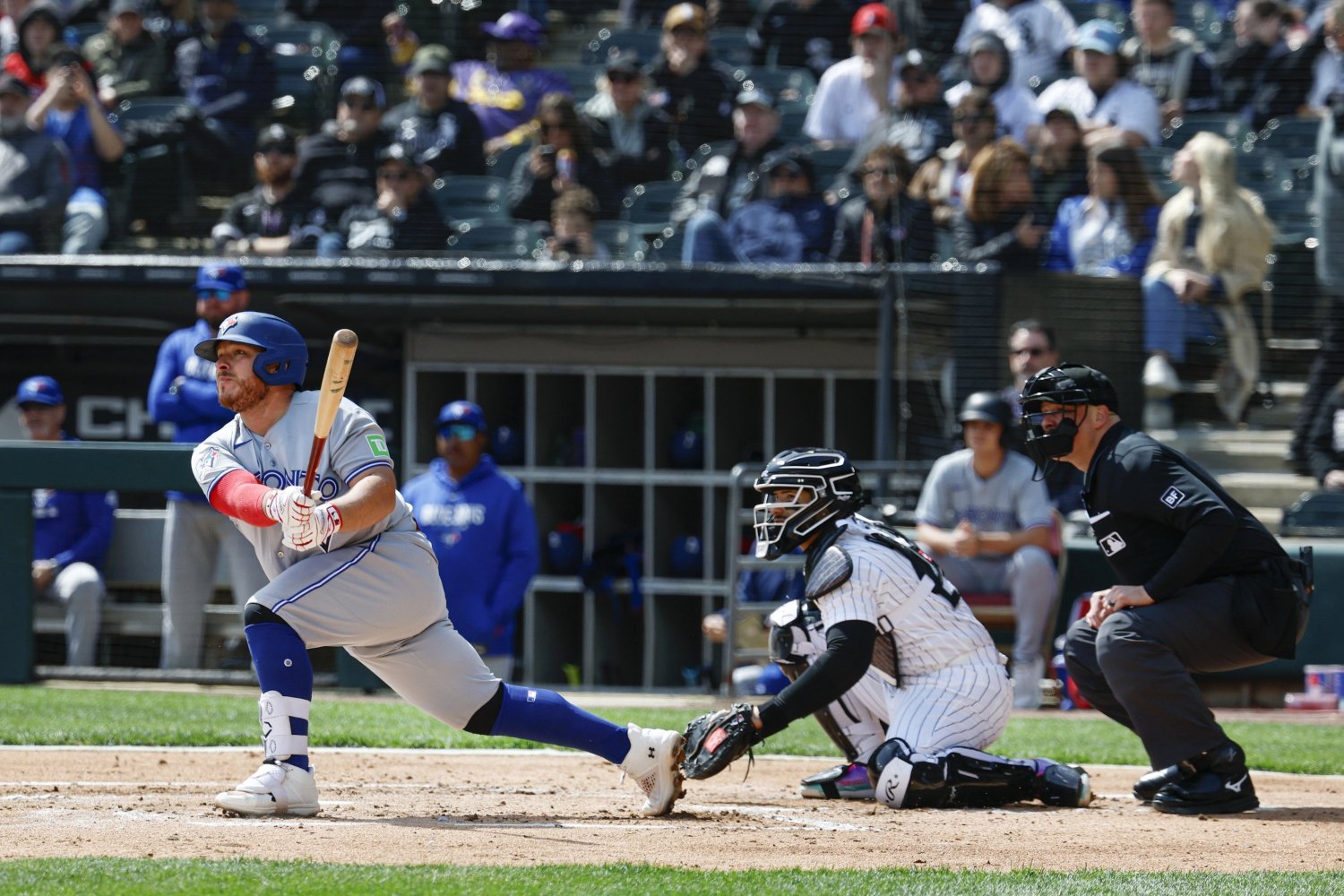 The injury nightmare continues. The Toronto Blue Jays have announced that starting catcher Alejandro Kirk will be heading to the injured list with a fractured left thumb. Kirk has also been diagnosed with a dislocation in his thumb and is set to meet with a doctor in the coming days to plan out next steps. Kirk sustained the injury during the 10th inning of Friday’s 5-4 loss to the Chicago White Sox. With one out and the tying run on third base, Austin Hays foul-tipped a Jeff Hoffman splitter down onto Kirk’s catching hand, which resulted in the fracture. Kirk left the game immediately and was replaced by Tyler Heineman. Through five games this season, Kirk is batting .150 with one home run and two RBI’s across 20 at-bats. The 27-year-old is coming off a strong 2025 season, during which the catcher was named an All-Star for the second time in his career. In 130 games last season, he batted .282 with a career-high 15 home runs and 76 RBI’s. In a corresponding move, the Blue Jays announced that they called up Brandon Valenzuela from Triple-A Buffalo. The 25-year-old was acquired last season at the trade deadline for infielder Will Wagner. In four games this season with the Bisons, Valenzuela has hit .200 with one home run and four RBI’s. Valenzuela does bring offensive upside to the Blue Jays, as he is coming off a season in which he hit .224 with 15 home runs and 58 RBI’s split between both Double-A and Triple-A. In Kirk’s absence, Heineman and Valenzuela are expected to get the lion's share of playing time behind the plate as the Blue Jays try to survive the early-season injury bug. In 2026, Heineman has three hits across seven at-bats as the 34-year-old looks to build on his career year in 2025. The switch-hitting Heineman appeared in 64 games, batting .289 with three home runs and 20 RBI’s. Heineman is starting and batting ninth during the second meeting of the Blue Jays and White Sox’s three-game series. More to come... View the full article
 -
 The Twins' rotation isn’t going deep into games, and it’s already starting to put pressure on the bullpen. With outings from Joe Ryan, Bailey Ober, Taj Bradley, and Mick Abel falling short on length, this is a trend that could become a real problem if it continues. View the full article
 -
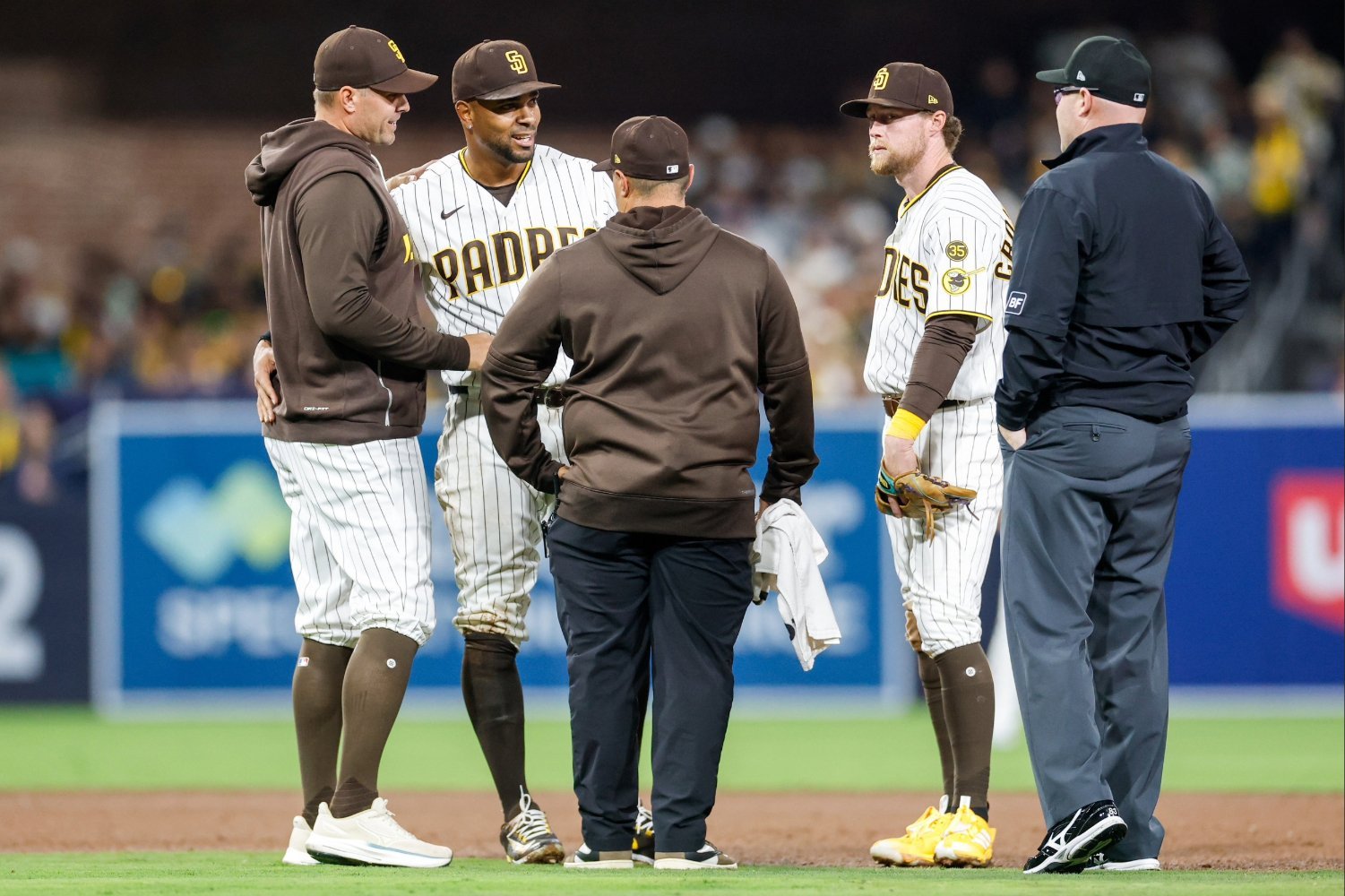 On a veteran-laden team such as the San Diego Padres, it might be tough to figure out when it is appropriate to challenge a call under MLB's new automated ball-strike system. But the Friars have a bit of a secret weapon. That would be catcher Luis Campusano, who played most all of last season at Triple-A, which had ABS. So, he was comfortable with the system and was the most experienced player on the Padres' Opening Day roster with it. He was a source of wisdom on best practices—situational awareness, counts, no-doubters—on when to tap the helmet and ask for a video replay of the pitch to see whether is was a ball or a strike. Through their first six games, the Padres have neither been great nor horrible with the challenges they have requested. Friars hitters are 2-for-4, while the catchers are 4-for-7. But maybe the Padres should be challenging a bit more. First-year manager Craig Stammen said during the season-opening homestand that he would prefer not to finish the game with any challenges remaining. Two games in particular stand out in that regard: Opening Day and the series finale vs. the San Francisco Giants. The Padres didn't have a single challenge in the opener, perhaps a nod to Detroit Tigers left-hander Tarik Skubal, the winner of the last two AL Cy Young Awards; likewise, they had just one in that Giants game. Digging into some of the metrics on Statcast, the Padres have an offensive challenge rate of 3.4%, which ranks 17th in MLB, and an expected challenge rate of 5.7%, which ranks fourth. Hence Stammen's prompt of trying to get his hitters to be more aggressive with the challenges. As of this writing, the Minnesota Twins led MLB with 12 offensive challenges, winning nine times, and a whopping 10.2% challenge rate. Superstar third baseman Manny Machado and second baseman Jake Cronenworth each turned a called strike into a ball, while superstar right fielder Fernando Tatis Jr. and shortstop Xander Bogaerts each unsuccessfully challenged a called third strike. Defensively (catchers and pitchers), the Friars rank eighth at 2.1% in challenge rate and 15th in expected challenges at 2.1%. So, the catchers are doing what they should be doing, but also nothing more. The Twins and Chicago White Sox have an MLB-best 10 defensive challenges, with the Minnesota successful seven times and the White Sox just four. Campusano has been responsible for flipping a walk by getting a strike on a challenge and also flipping a ball into a strikeout. No. 1 catcher Freddy Fermin has yet to do either. But Fermin has gone 2-for-3 in challenges to Campusano's 2-for-4. Campusano challenged three times in his first start, successful on his first two before missing. Let's review how the Padres' 11 challenges in their first six games of the 2026 season unfolded: Challenge 1: March 27 Scenario: Top of the third inning, game tied 0-0, runner on second, two outs, 1-1 count. The call: Padres starter Michael King's 81.5 mph sweeper to the Tigers' Gleyber Torres was called a ball, low. Result: Padres catcher Luis Campusano challenged and ABS showed half of the ball was in the zone, shifting the count from 2-1 to 1-2. Torres struck out swinging on the next pitch. Challenge 2: March 27 Scenario: Top of the fourth, game tied 0-0, bases empty, two outs, 3-1 count. The call: King's 93.6 mph four-seamer to the Tigers' Spencer Torkelson was called a ball, on the lower outside corner. Result: Campusano challenged and the pitch was shown to have just clipped the bottom of the zone, erasing a walk and turning the count to 3-2. Torkelson struck out swinging on the next pitch. Challenge 3: March 27 Scenario: Top of the ninth, Tigers lead 5-2, bases empty, one out, 3-2 count. The call: Padres reliever David Morgan's 81.1 mph curveball to the Tigers' Kerry Carpenter was called a ball, low. Result: Campusano challenged and the pitch was shown to be less than 0.1 of an inch below the zone, confirming ball four and the walk. Challenge 4: March 28 Scenario: Bottom of the sixth, Padres lead 3-0, runners on first and second, two outs, 2-2 count. The call: Tigers reliever Connor Seabold's 96.1 mph four-seamer to the Padres' Jake Cronenworth was called a strike, at the bottom of the zone. Result: Cronenworth challenged and the pitch was 2.2 inches below the zone, reversing a strikeout and making the count 3-2. Two pitches later, Cronenworth grounded out to shortstop. Challenge 5: March 28 Scenario: Bottom of the seventh, Padres lead 3-0, bases empty, no outs, 2-2 count. The call: Seabold's 94.3 mph four-seamer to the Padres' Fernando Tatis Jr. was called a strike, at the bottom of the zone, for a strikeout. Result: Tatis challenged and the pitch barely clipped the bottom of the zone, confirming the strikeout. Challenge 6: March 28 Scenario: Top of the ninth, Padres lead 3-0, runner on first, two outs, 0-1 count. The call: Padres closer Mason Miller's 86.9 mph slider to the Tigers' Kevin McGonigle was called a ball, high. Result: Padres catcher Freddy Fermin challenged the most of the pitch was shown to have hit the top of the zone near the outside corner, changing the count from 1-1 to 0-2. McGonigle struck out swinging to end the game on the next pitch. Challenge 7: Monday Scenario: Top of the third, Giants lead 1-0, runner on first, one out, 1-0 count. The call: Padres starter Walker Buehler's 76 mph knuckle curve to the Giants' Willy Adames was called a ball, low. Result: Campusano challenged and the pitch was confirmed a ball, 1.4 inches below the zone, keeping the count at 2-0. Four pitches later, Adames struck out looking, a call that was upheld after Adames challenged. Challenge 8: Monday Scenario: Bottom of the fourth, Giants lead 3-0, runner on first, no outs, 1-0 count. The call: Giants starter Landen Roupp's 91.8 mph sinker to the Padres' Manny Machado was called a strike, on the inside corner. Result: Machado challenged and the pitch was overturned to a ball, shifting the count from 1-1 to 2-0. Two pitches later, Machado grounded out to Roupp. Challenge 9: Tuesday Scenario: Top of the third, Giants lead 4-0, runner on first, two outs, 0-2 count. The call: Giants starter German Marquez's 86.1 mph knuckle curve to the Giants' Casey Schmitt was called a ball, just high and outside. Result: Campusano challenged and the pitch just clipped the outside corner, striking out Schmitt instead of a 1-2 count. Challenge 10: Tuesday Scenario: Bottom of the eighth, Giants lead 8-3, bases empty, two outs, 1-2 count. The call: Padres reliever JT Brubaker's 81.8 mph curveball to the Padres' Xander Bogaerts was called a strike at the top of the zone for a strikeout. Result: Bogaerts challenged and the strikeout was confirmed to end the inning. Challenge 11: Wednesday Scenario: Top of the third, Padres lead 1-0, bases empty, two outs, 0-1 count. The call: Padres starter Nick Pivetta's 95 mph four-seamer to the Giants' Rafael Devers was called a ball, high. Result: Fermin challenged and the pitch was confirmed a ball, 1 inch above the zone, keeping the count at 1-1. On the ninth pitch of the at-bat, Devers struck out swinging. Summary The Padres haven't exactly been shy about challenging calls, but they're also not approaching this system with reckless abandon, either. This is a veteran ballclub with a lot of players getting grandfathered into a new era of technology, so perhaps it's not too surprising to see some hesitancy from the stalwarts. Expect this team to get more aggressive as they become more comfortable with ABS. View the full article
 -
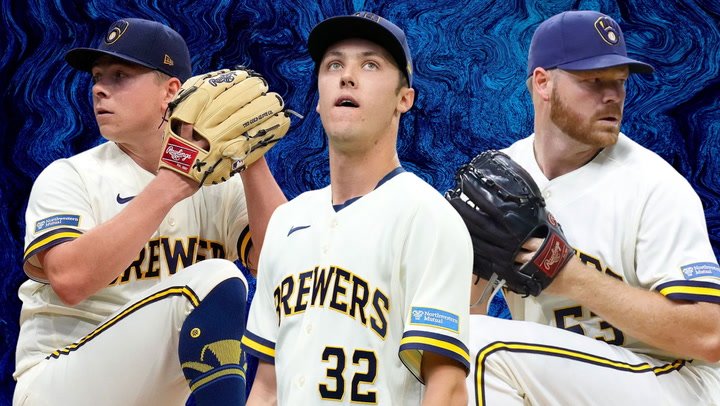 The Brewers' pitching staff was dominant throughout the first week. Jacob Misiorowski looked like an ace in both his starts. Brandon Woodruff is back and healthy. Kyle Harrison is on the list for most impressive after just one start, and Chad Patrick did his job on Saturday! View the full article
 -
Twins Minor League Report (4/3): Dueling One-Hitters
DiamondCentric posted an article in Twins Daily
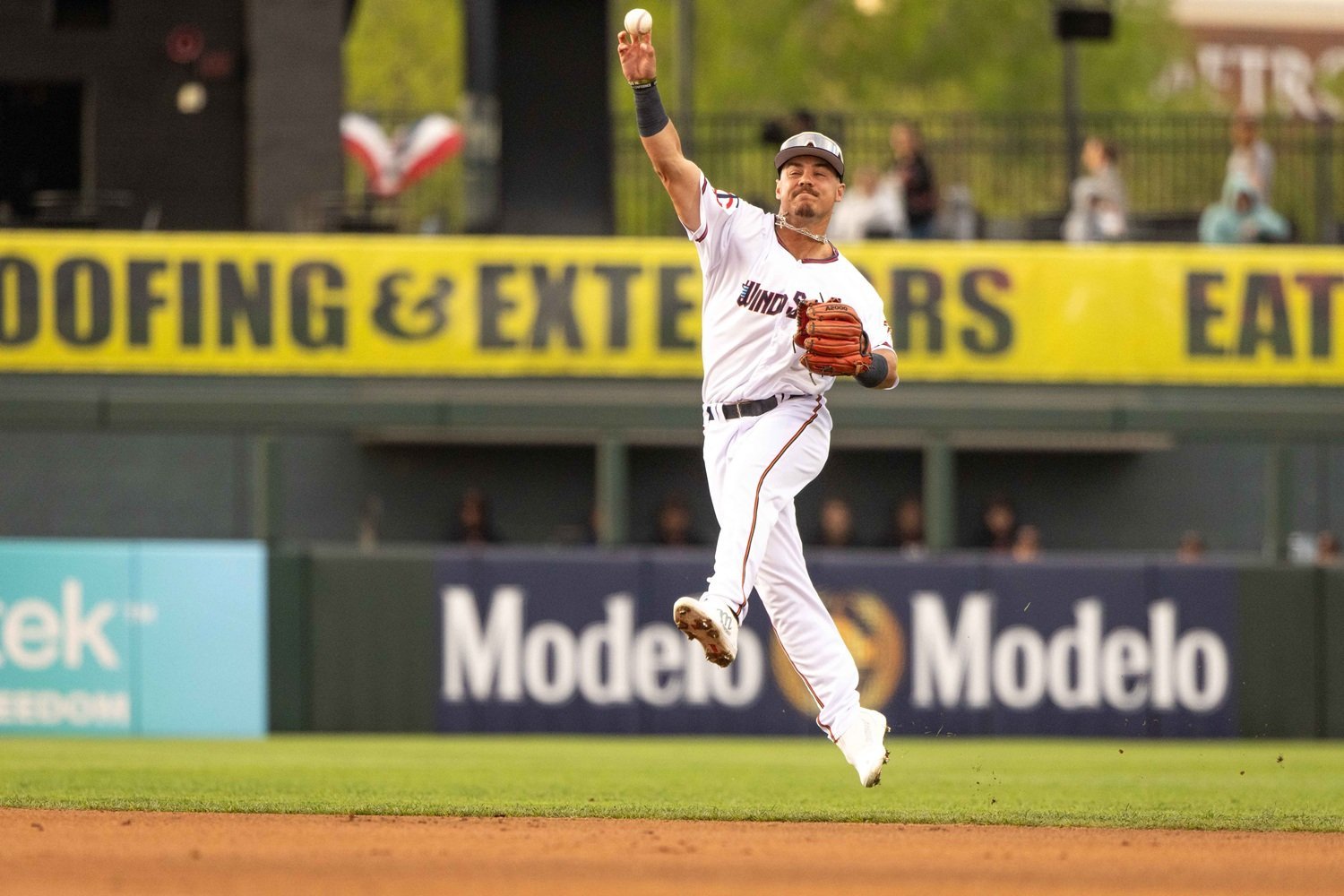 TRANSACTIONS No transactions. SAINTS SENTINEL St. Paul, Worcester Box Score For the second straight day, the Saints were unable to play due to weather conditions being non-good. Friday’s game has officially been canceled for two reasons. First, the Saints and WooSox aren’t on each other’s schedule again this year, and second, International League rules do not allow doubleheaders on back-to-back days. WIND SURGE WISDOM Wichita 1, NW Arkansas 2 Box Score Ty Langenberg made his Double-A debut on Friday night in Wichita. He gave up two runs (1 earned) on five hits over four innings. He had three strikeouts and no walks. Ricky Castro struck out two batters over two perfect innings. Sam Ryan had two walks in a scoreless inning. Ruddy Gomez walked two over two scoreless innings. Down 2-0 after three innings, the Wind Surge got on the board in the fourth inning. Kyle DeBarge singled and later scored on a Billy Amick single. DeBarge received his 2025 Minor League Gold Glove Award before the game. The Wind Surge had five hits and seven walks. Jose Salas went 1-for-1 with two walks. He also stole two bases. Amick, Hendry Mendez, and Ben Ross each had a single and a walk. KERNELS CHRONICLE Cedar Rapids 2, Peoria 8 Box Score The Kernels played their season opener on Friday night. When the Kernels came to bat in the bottom of the second inning, they were down 2-0. When they came to the plate to start the bottom of the fourth inning, they were down 8-0. But Cedar Rapids did win the final five-and-a-half innings 2-0! Dasan Hill made the start for the Kernels. He worked a 1-2-3 first inning but gave up two runs in the top of the second. He struck out two in a scoreless third frame. The fourth inning began with a walk and two stolen bases. After a groundout, Hill gave up a single and reached his pitch count. Eston Stull came in and gave up a single but got a pop up, just one out from getting out of the inning with the score 3-0. Unfortunately, it was followed by a three-run homer. 6-0. And then there was a walk, and then another home run, and the score was 8-0. Hill was charged with four runs on five hits and a walk in 3 1/3 innings. He had two strikeouts. Stull was charged with four runs on three hits in 2/3 of any inning. We’ll see how things match up at the end, but it’s hard to believe that tonight’s Pitcher of the Day might have been a Kernels pitcher. Eli Jones came on and tossed five shutout innings. He gave up one hit and walked one batter. He had four strikeouts. Jones was the Twins seventh round pick in 2024 out of South Carolina. He struggled last year to a 2-10 record with a 4.89 ERA in Fort Myers. In the bottom of the fourth, the Kernels scored their two runs. Eduardo Tait reached on an error to lead off the inning. Khadim Diaw doubled him to third base. Brandon Winokur walked to load the bases. After one out, Jacob McCombs was hit by a pitch to drive in the first run of the Kernels’ season. After a second out and a pitching change, Caden Kendle walked to drive in the second run. The Kernels managed just three hits and had five walks. Jacob McCombs was twice hit by a pitch. Kendle walked twice and stole a base. Khadim Diaw walked once to go along with his double. Jay Thomason also had a double and a stolen base. MIGHTY MATTERS Game 1: Ft. Myers 0, Clearwater 2 Box Score They had to wait an extra day to play their season opener. Unfortunately, the Mussels offense was not too busy in this game. Things started alright. Dameury Pena led off with a walk. But the next two batters struck out and Pena was thrown out attempting to steal second for the third out. With two outs in the third inning, Byron Chourio singled, but was forced out at second pitches later. So the Mussels left just one runner on base in the game. Joel Garcia was given the opening game nod. The right-hander gave up two runs (1 earned) on four hits, a walk, and two hit batters. He had four strikeouts. 2025 draft pick Kolten Smith, a right-hander who pitched at Georgia, threw three perfect innings in his professional debut. He had three strikeouts. Game 2: Ft. Myers 2, Clearwater 0 Box Score As we learned from Game 1, it can be hard to win a baseball game when your team has just one hit. But that’s just what the Mussels did in the second game of the doubleheader. That’s right. They were one-hit in game one and lost. They were one-hit in game two, and it was enough for the win. We’ll get to “The Hit” in a bit, but the Mussels tossed a shutout. Let’s talk pitching. James Ellwanger pitched for the Twins in the Breakout game during spring training, but Friday he made his first official professional start. He did well. He tossed the first three innings. He gave up two hits, walked one, and had four strikeouts. Fellow 2025 draft pick Reed Moring. He was the Twins 15th round pick out of UC-Santa Barbara. He threw the final four innings and gave up just one hit. He had no walks and struck out seven batters. With one out in the bottom of the first, right fielder Jayson Bass walked and stole second base. Quentin Young came up and drilled a triple to drive in the first run. Ryan Sprock followed with a sacrifice fly to make it 2-0. And that was it for the scoring in Game 2. Harry Genth walked twice in the game. PLAYERS OF THE DAY Hitter of the Day Khadim Diaw (Cedar Rapids): 1-for-3, 2B(1), R, RBI, K. Pitcher of the Day Eli Jones (Cedar Rapids): 5 IP, H, 0 R, BB, 4 K, 54 pitches, 39 strikes (72.2%) PROSPECT SUMMARY Check out the Prospect Tracker for much more on our Twins Top 20 prospects after seeing how they did today. #1 - OF Walker Jenkins (St. Paul) - DNP #2 - IF Kaelen Culpepper (St. Paul) - DNP #3 - OF Emmanuel Rodriguez (St. Paul) - DNP #4 - C Eduardo Tait (Cedar Rapids) - 0-for-4, R, K #5 - LHP Connor Prielipp (St.Paul) - Didn’t pitch again #6 - LHP Dasan Hill (Cedar Rapids) - 3 1/3 IP, 5 H, 4 ER, 1 BB, 2 K, 61 pitches, 38 strikes (62.3%) #7 - OF Gabriel Gonzalez (St. Paul) - DNP #8 - LHP Kendry Rojas (St. Paul) - Injured List (hamstring) #9 - SS Marek Houston (Cedar Rapids) - 0-for-5, K #10 - RHP Charlee Soto (Cedar Rapids) - Injured List #11 - RHP Riley Quick (Ft. Myers) - DNP #12 - RHP Andrew Morris (St. Paul) - DNP #13 - 3B/CF Brandon Winokur (Cedar Rapids) - 0-for-3, BB, 2K. #14 - 3B/SS Quentin Young (Ft. Myers) - Game 1: 0-for-3, 2K, Game 2: 1-for-3, 3B(1), R, RBI, 2K. #15 - RHP Marco Raya (St. Paul) - DNP #16 - OF Hendry Mendez (Wichita) - 1-for-3, BB, 2K #17 - 2B/OF Kyle DeBarge (Wichita) - 1-for-4, R, BB, 2K (led off, played 2B), #18 - RHP C.J. Culpepper (Wichita) - 3 IP, 2 H, 0 R, 1 BB, 4K, #19 - C Khadim Diaw (Cedar Rapids) - 1-for-3, 2B(1), R, BB, K #20 - RHP James Ellwanger (Ft. Myers) - 3 IP, 2 H, 0 R, 1 BB, 4 K, 57 pitches, 31 strikes (54.4%) UPCOMING PROBABLES Saturday: Worcester @ St. Paul (2:07 pm CT) - RHP Zebby Matthews NW Arkansas @ Wichita (4:05 pm CT) - Peoria @ Cedar Rapids (1:05 pm CT) - RHP Adrian Bohorquez Clearwater @ Ft. Myers (DH @ 5:05 CT) - CURRENT W-L Records Minnesota Twins: 3-4 St. Paul Saints: 3-2 Wichita Wind Surge: 1-1 Cedar Rapids Kernels: 0-1 Fort Myers Mighty Mussels: 1-1 Please feel free to ask questions about the teams, the rosters, and discuss today’s games, or anything else Twins minor-league related! View the full article
 -
Stolen Bases Are Fueling Brewers' Quick Start To Season
DiamondCentric posted an article in Brewer Fanatic
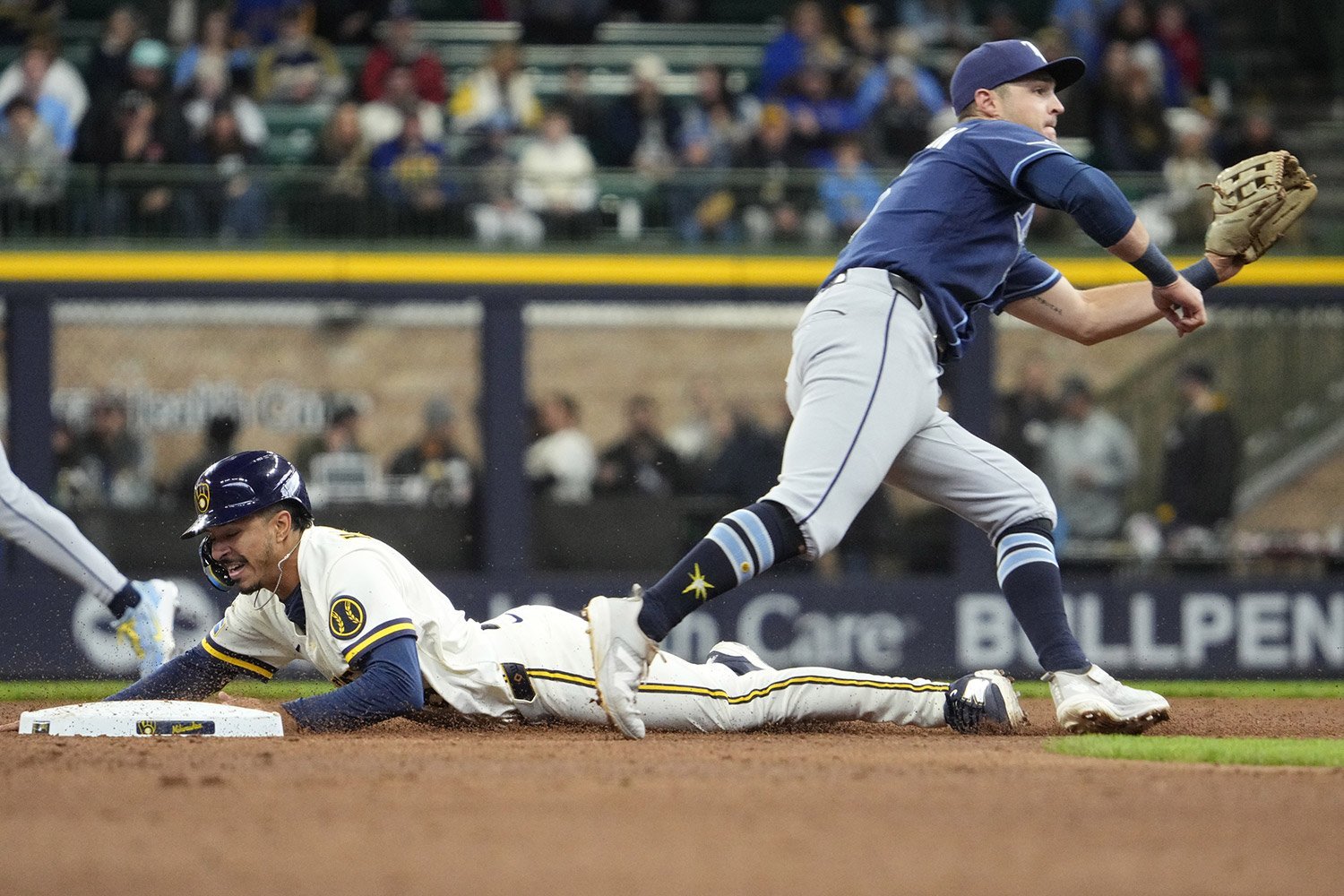 Should we be surprised that the Milwaukee Brewers are leading MLB in stolen bases? Probably not. After all, the Crew finished second in MLB last year with 164 steals, 30 behind the Tampa Bay Rays. It is more the frequency—and the success rate—that the Brewers are swiping bases. After six games, the Brewers had 15 steals in 16 tries. The Colorado Rockies (double-checks notes, yes, the Rockies) are second with nine in 12 attempts. Those are the only teams to have double-digit attempts entering the weekend. At this rate, 2.5 per game, the Brewers are on pace for 405 steals, which would easily break the MLB record of 347 set by the 1911 New York Giants. But, of course, it is too early to even consider that. We are talking about six games. David Hamilton, thought to be the utility infielder entering the season, is the early ringleader of this band of thieves. The former Brewers prospect who was shipped away before the 2022 season and then brought back in the six-player Caleb Durbin trade with the Boston Red Sox this spring has four stolen bases, tied for the MLB lead. Hamilton has started four times, three at third base and another at shortstop, and is just off to a 2-for-12 start, meaning he has twice as many steals as hits. Hamilton has also walked four times. Center fielder Garrett Mitchell is right behind with three steals, which is the same or better total than 14 teams. Is it just because Hamilton is a better base stealer than Durbin is? Or Mitchell than Blake Perkins? That might be part of the answer. Hamilton swiped 55 bases over the last two seasons with the Red Sox, getting 33 in 98 games (317 plate appearances) in 2024 and 22 in 91 games (194 PAs) in 2025. Durbin, meanwhile, had a minor-league reputation of being a base-stealer, getting 31 in 105 games in 2022, 36 in 69 games in 2023, and 31 in 90 games in 2024. But it was in the 2024 Arizona Fall League where he really stood out. In just 24 games, Durbin swiped 29 bases in 30 attempts. But Durbin didn't flash that ability in his only season with the Crew. He tried to steal just 24 times and was successful 18 times in 136 games. Maybe Durbin didn't have the green light to run? Or maybe he didn't feel comfortable running as a rookie? Durbin tried to steal after getting his first hit with the Red Sox this year. It could be a change in mindset, too, for the Brewers in 2026. Especially now, with not having the injured Jackson Chourio and Andrew Vaughn, manager Pat Murphy may have decided to be more aggressive without two of his more dependable power hitters. It could also be a tool to get the Crew's offense ignited early in the season. Remember, the Brewers didn't hit their stride last year until around Memorial Day weekend and needed 11- and 14-game winning streaks to win the NL Central by five games. The Brewers entered this weekend averaging 7.5 runs per game, again an unsustainable rate. But that could help players loosen up in the early stages of the season, hoping that more power follows later on. Mitchell is another interesting case. Speed is definitely part of his talent toolbox. He has 26 steals in his 146-game start-and-stop four-plus-year career in the majors and 41 in 158 minor-league games. That 41 is more indicative of the type of trouble Mitchell can create on the basepaths when healthy. He has begun 2026 with three steals in five games, including two in the second game of the season against the Chicago White Sox, the same game Hamilton stole a pair. That game saw the Crew steal seven times against the White Sox, including another pair by Joey Ortiz. They all came against catcher Reese McGuire, who had been in camp with the Brewers this spring before opting out of his contract just before Opening Day, so maybe they knew they could run wild. McGuire would have begun this year as a backup at Triple-A Nashville had he stayed with the Crew. Nick Fortes, whom the Tampa Bay Rays acquired for his defense last year, allowed a pair of two-steal games when he was behind the plate in the second series of the season. Whatever the reason, the aggressiveness to begin the season has been noticeable and helped the Brewers be one of three MLB teams to jump out to a 5-1 start. View the full article
 -
 In January, as their search for an established big bat to boost their offense seemed stalled again, the Kansas City Royals suddenly gave manager Matt Quatraro a three-year contract extension. Clearly calculated to help sustain the franchise renaissance triggered in the fall of 2022 by the replacement of head baseball man Dayton Moore with J.J. Picollo, and then manager Mike Matheny with Matt Quatraro, the extension kicks in next season. On its face, the deal gives Quatraro, whose 2023 Royals lost 106 games only to shockingly end the club’s pitiful 35-year absence from the playoffs in 2024, a big vote of confidence and some job security. But as an old baseball saying goes, managers are hired to be fired, a fate that Ned Yost, despite leading Kansas City to two straight World Series and winning one, might have met after his Royals never again had a winning season and lost over 100 games in each of the last two years before he retired. And major league history is replete with examples of managers axed well before their multi-season contracts expired. So, just how secure is Quatraro? Perhaps not as much as his extension suggests. What Could Happen This Season to Threaten Matt Quatraro’s Royals Future? Probably not much … with the emphasis on “probably”. At least in the short term, skippering the Royals to two consecutive winning seasons (2024 and 2025) after they hadn’t posted one since 2015 puts Quatraro on good ground. Only a monstrously catastrophic season, like the Chicago White Sox suffered by losing 121 times in 2024, could compel Picollo to fire the only manager he’s hired since taking the club’s reins from Moore. And that’s not likely to happen. Barring the uncanny string of injuries that dealt the starting rotation such a collective blow last year, Kansas City’s starters appear set to give this club plenty of chances to win. The bullpen might be a different matter. The major league season is so new, and the sample size consequently so small, that trying to draw any firm conclusions about the relief corps is folly. But Quatraro’s bullpen management has been an oft-criticized aspect of his in-game decision-making, and his recent ill-fated decision to summon Carlos Estévez to protect last Saturday night’s slim ninth-inning 2-0 lead against Atlanta further fueled that fire. Predictably bad after his disconcerting Cactus League performances, Estévez choked up the lead and a walk-off grand slam that handed the Braves a 6-2 win and Quatraro a blistering dose of criticism. Not unless the Royals miss the playoffs by a half-game or a full game, though, will that gut-punch loss make a difference in the season. But an accumulation of additional questionable bullpen decisions in high-leverage, late-game situations won’t help Quatraro or his club. (Fortunately, he has Lucas Erceg and Matt Strahm to fall back on should Estévez not regain his major league-leading 42-save form of 2025). Then there’s the offense, a sore spot the Royals can’t seem to solve. Yes, they battered Minnesota for 13 runs in Wednesday night’s Kauffman Stadium fog, but because the season is so young, there’s more than enough time for the bats to soften. It won’t be Quatraro’s fault if they do, but big league managers too frequently suffer from their players’ faults and flaws. Finally, a return to mediocrity will spell trouble for Quatraro. No one blames him for his club’s franchise record-tying 106 losses in 2023 — after all, the Royals conceded even before the season began that it would be an “evaluation” year, and Quatraro had never managed in the big leagues before. But a trip to the playoffs, two straight winning seasons, and some important offseason acquisitions tend to irreversibly raise expectations. So, finishing well below .500 in 2026 — an unlikely event, to be sure — will move Quatraro toward shakier ground. This season, then, could prove pivotal for Quatraro. Although the three-year contract extension he received this winter demonstrates the club’s confidence in its skipper, front office faith in big league managers can be stunningly fragile. So fragile, in fact, that his contract extension notwithstanding, Quatraro’s seemingly secure seat in Kansas City’s dugout could heat up before this season ends. View the full article
 -
 Twins System Recap: James Ellwanger made his official pro debut today, but it was another 2025 draftee who stole the show in Fort Myers. Reed Moring, the 15th-round pick of that class, had an incredible pro debut. Hear all about his performance in addition to the other stars of the day, plus more Twins prospect talk. View the full article
 -
 The Chicago Cubs wrapped up their second home series of the season earlier this week, taking two of three from the Los Angeles Angels. This early season bout between interleague non-rivals has two points of trivial significance. The first being that the Angels were the Cubs’ opening series of the 2016 season, although that one was in Anaheim. Ten years later, the Cubs are back in a competitive window and have taken advantage of perennially rebuilding Angels squad to jump start 2026. The second point, one that I will be diving into here, has to do with the Angels’ DH: old friend Jorge Soler. The Cuban outfielder and designated hitter defected from Cuba in 2011 and made his debut for the Cubs as a 22-year-old in 2014. He was one of the first prospects called up that would eventually lead them to the 2016 World Series. He was also part of a massive trade following the 2016 season; just over a month after the championship was won, Soler was traded to the Kansas City Royals for their two-time All Star closer Wade Davis, who was hand-picked to replace Aroldis Chapman. At the time, Davis was coming off a year where he transitioned into being a full-time closer, saving 27 games and posting an elite-level ERA of 1.87. Though Davis was a one-year rental, the Cubs needed a proven, high-leverage arm at the back end of the bullpen to properly defend their title. Davis ended up being worth every penny during his lone season in Chicago. He saved 32 games with a 2.30 ERA, struck out 79 hitters in under 60 innings pitched, and made his third consecutive All-Star team. Most notably, he carried the team on his back for 2 1/3 innings to close out game 5 of the NLDS versus the Nationals. After the season, he signed a three-year contract with the Rockies, where he pitched about as well as you’d imagine for a Colorado reliever not named Brian Fuentes. Although the Cubs did not repeat as World Series champs in 2017, that season represents the last time the Cubs had a closer with 30 saves. It has been eight campaigns and counting that the Cubs have been looking for an anchor in the ninth inning. To give them credit, they signed frequently injured flamethrower Brandon Morrow to replace Davis, and he did save 22 games while battling injuries in 2018. In 2019, Craig Kimbrel came aboard in what would eventually become the last major free agent splash orchestrated by Theo Epstein. Kimbrel’s 23 saves in 2021 before his deadline trade to the White Sox represents the highest of any Cubs’ closer since Davis in 2017. His 3.22 ERA with the Cubs from 2019-2021 was a far cry from his time in Atlanta and Boston, but he’s still the only player to lead the Cubs in saves for more than one year since the Hector Rondon days. His tenure remains somewhat forgettable since it happened during the span that we saw the championship core eventually disband, but he was at least a reliable ninth-inning fireman. After Kimbrel was traded and the Epstein era officially ended, we began to see the Jed Hoyer bargain-bin bullpen approach, which is still alive today. After the 2021 roster blow up, it did not make sense to pay for any difference-making relievers. Then. 37-year-old David Robertson joined the bullpen in 2022, saving 14 games, which lead the team, before being traded to the Phillies. That started the Cubs trend of bringing in a few different veterans with closing experience and hoping one of them can hold onto the job. Former Orioles closer Mychal Givens, as well as Chris Martin, were also in the bullpen that season. In 2023, former closer Brad Boxberger and former-top-prospect-turned-reliever Michael Fulmer were meant to compete for the closer job; instead, it ended up going to the first in-house candidate since Hector Rondon. Adbert Alzolay saved 22 games with a 2.67 ERA, and gave the fans a reason to be excited about the 2024 bullpen. The optimism lasted a few weeks, as Alzolay was booted from the closer role before the calendar even turned to May. Arm issues took him out for the rest of 2024 that he suffered in May, and he has not pitched in the majors since. The 2024 Cubs saves leader ended up being veteran Hector Neris with 17, but there was another homegrown reliever making his presence felt: right-hander Porter Hodge. Hodge converted nine saves with a 1.88 ERA in 43 innings and was giving fans the same sense of optimism heading into last season. Instead, the injury bug bit yet again and he regressed to an ERA over 6.00 in only 33 innings. Hodge was never penciled in as the closer, however, as the Cubs made a trade with the Astros to acquire two-time All-Star Ryan Pressly. The problem with Pressly was that he was 36 years old and undeniably washed by the time he made his way to Chicago. After being pulled from the closer role in early May, he was eventually released before the trade deadline. He totaled five saves in his last season before retiring. Now, the buck seemingly has stopped here with the 2025 Cubs saves leader and 2026 WBC champion Daniel Palencia. Team Venezuela’s closer was a mid-range prospect for the Cubs after being acquired in the 2021 Andrew Chafin trade and pitched sparingly in the majors from 2023-2024. As aforementioned, he was not meant to be the closer last season, but Craig Counsell trusted Palencia’s triple-digit fastball enough to replace the out-of-gas Pressly. For the 2025 postseason, he was used as the first reliever out of the pen, with Brad Keller closing out the games. With Keller on the Phillies, Palencia is the only reliever with any closing experience for 2026. Over the first six games of the season, he has no saves (hasn’t had an opportunity) but has not allowed a run in four innings pitched. In those appearances, he has shown more confidence and poise on the mound, which could be attributed to closing out the WBC for Venezuela’s upset win. That injury bug remains a pesky problem, but there's no denying that Palencia has the bravado to finally cross that 30-save threshold... assuming the Cubs can give him enough opportunities to get there. View the full article
