


DiamondCentric
-
Posts
2,631 -
Joined
-
Last visited
Never
Content Type
Profiles
Forums
Events
News
Tutorials & Help
Major League Baseball Videos
Guides & Resources
Store
Downloads
Gallery
Everything posted by DiamondCentric
-

Padres' 2026 MLB Draft Bonus Pool Announced, Ranks 21st
DiamondCentric posted an article in Padres Mission
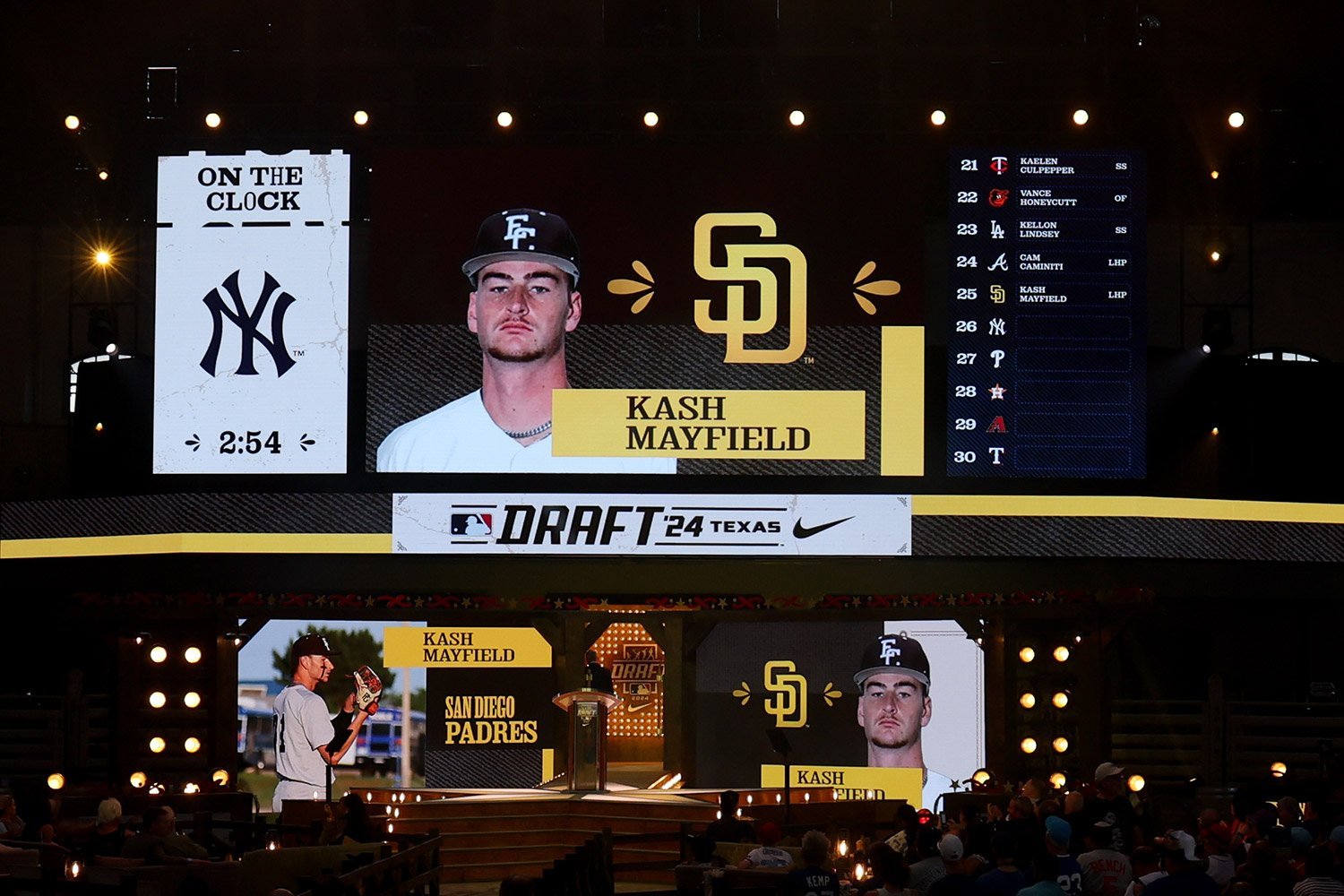 As the San Diego Padres try to replenish their farm system, the Friars will have the 21st-most money in their draft bonus pool for 2026. MLB informed clubs of the slot values and bonus pools for this year's draft, which is July 11-12. For the Padres, whose prospect list has gone down in overall quality due to a variety of trades in recent years, that means having a bonus pool of $9,479,000. The bonus pool for each team covers the first 10 rounds. In 2025, the Friars' bonus pool was $6,569,100. The Padres have the No. 21 pick in the first round after having No. 25 each of the last two years, when they selected left-handed starters Kash Mayfield in 2024 and Kruz Schoolcraft in 2025. The slot value for this year's 21st pick is $4,224,700. The Pittsburgh Pirates have the largest bonus pool at $19,130,700, while the Los Angeles Dodgers have the smallest at $3,951,900. The Dodgers were one of four teams that had their top pick moved back 10 spots as a penalty for surpassing the second threshold in the competitive balance tax. The Chicago White Sox hold the No. 1 pick, with a slot value of $11,350,600, and the No. 3 bonus pool of $17,592,100. Each slot value went up 2.5% based on increased MLB revenue. 2026 MLB Draft bonus pools Pittsburgh Pirates: $19,130,700 Tampa Bay Rays: $19,009,300 Chicago White Sox: $17,592,100 Minnesota Twins: $16,929,600 St. Louis Cardinals: $16,612,300 Kansas City Royals: $15,954,000 Atlanta: $15,870,800 Colorado Rockies: $15,557,600 San Francisco Giants: $14,080,400 Athletics: $13,840,300 Houston Astros: $13,712,700 Arizona Diamondbacks: $13,603,100 Baltimore Orioles: $13,114,000 Cleveland Guardians: $12,573,900 Washington Nationals: $12,278,300 Miami Marlins: $11,960,100 Los Angeles Angels: $11,755,400 Cincinnati Reds: $10,758,500 Texas Rangers: $10,219,200 Chicago Cubs: $9,644,100 San Diego Padres: $9,479,000 Detroit Tigers: $9,165,100 Boston Red Sox: $8,219,200 Seattle Mariners: $8,218,200 Milwaukee Brewers: $8,042,900 Philadelphia Phillies: $7,773,000 New York Yankees: $7,342,800 New York Mets: $6,730,900 Toronto Blue Jays: $5,543,100 Los Angeles Dodgers: $3,951,900 View the full article
 -
 Major League Baseball dropped another sign that draft season is officially here on Wednesday, announcing updated bonus pools and slot values for all 30 clubs. Minnesota enters the 2026 draft cycle with a total bonus pool of $16,929,600, the fourth-largest in the sport. Only the Pirates, Rays, and White Sox sit ahead of them, putting the Twins in a position to be aggressive, flexible, and maybe even a little opportunistic when July rolls around. Holding the third overall pick certainly helps. That selection alone carries a slot value of $9,740,100, giving Minnesota a massive chunk of spending power right at the top. It is the kind of pick that can shape an entire draft class, whether the Twins choose to go with the best player available or try to manipulate the board with an underslot deal. The next key checkpoint comes at pick 43, where the assigned value sits at $2,333,200. That is another meaningful piece of the puzzle, especially for a front office that has not been shy about moving money around the board in recent years. Add in the Competitive Balance Round B selection at 74th overall, valued at $1,138,600, and the Twins suddenly have multiple pressure points to build out a deeper strategy. Around the league, the headlines start at the very top. The White Sox landed the No. 1 overall pick and with it a record-setting slot value of $11,350,600, the largest since the bonus pool system was introduced in 2012. Despite that, it is the Pirates who control the biggest overall pool at $19,130,700, another record and a reminder that volume still matters as much as position. This year’s increases were modest but notable. Slot values rose by 2.5% across the board, a reflection of the game’s continued revenue growth. In total, the 30 clubs combine for $358,662,500 in bonus pool money, up from $350,357,700 a year ago. Of course, teams rarely treat those numbers as strict guidelines. The system is built for creativity. Each pick in the first 10 rounds comes with an assigned value, and exceeding the total pool triggers penalties, but there is plenty of room to maneuver within those boundaries. If a player in the top 10 rounds does not sign, his slot value disappears from the pool entirely, raising the stakes on every negotiation. That is where things get interesting for teams like Minnesota. Clubs picking near the top often look to save money on their first selection, signing a player for less than slot value and redistributing those savings to later picks. It is a strategy that can turn a strong class into a deep one, especially when paired with extra selections like the Twins have this year. Recent spending trends suggest teams are more willing than ever to push the limits. Clubs handed out $392,533,711 in signing bonuses in 2025, shattering the previous record set just one year earlier. The Orioles led the way with a staggering $21,150,840, showing just how aggressive teams can be when the right opportunities present themselves. All of this sets the stage for a fascinating summer. The Twins are not just picking high. They are picking often, and they have the financial flexibility to take risks. In a draft that rarely follows a script, Minnesota has the resources to be creative with their spending. View the full article
 -
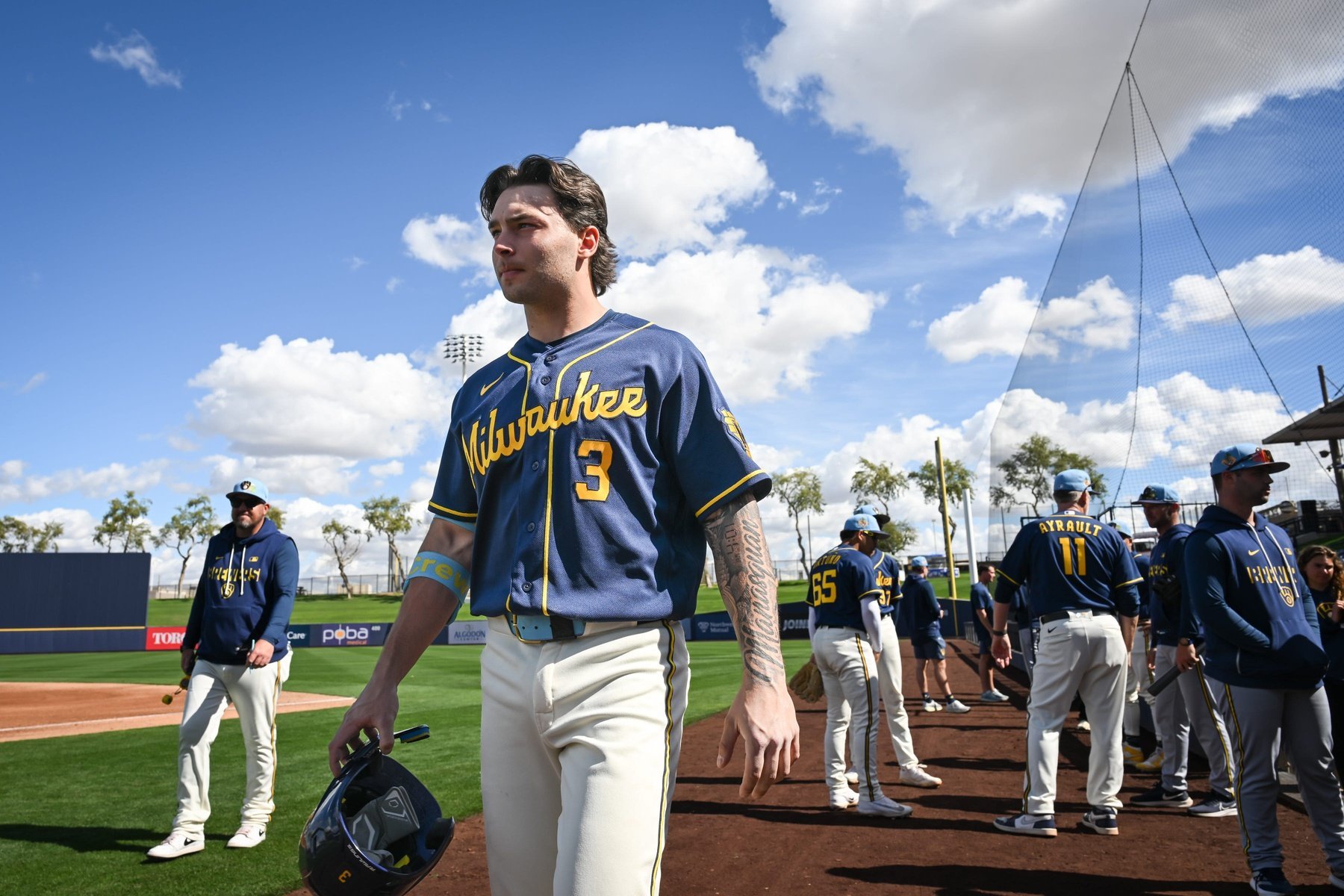 After a tremendous 2025 regular season in which they had MLB's best record, the Milwaukee Brewers won't have a lot to work with regarding a 2026 draft bonus pool. But when has that ever mattered to the Crew? The Brewers were informed that they will have $8,042,900 in their pool this year, which ranks 25th among the 30 MLB teams. They also have the No. 25 pick in the draft, which moved up due to four teams being penalized for eclipsing the second competitive balance tax threshold. The slot value for the Crew's top pick is $3,696,000. Last year, when the Brewers picked 20th and selected corner infielder Andrew Fischer, their pick had a value of $4,268,100. The top bonus pool belongs to the Pittsburgh Pirates at $19,130,700, while the smallest pool goes to the Los Angeles Dodgers, one of those four teams who had their top pick moved back 10 spots as a CBT penalty. The Chicago White Sox hold the No. 1 pick, which has a slot value of $11,350,600. They also have the No. 3 bonus pool of $17,592,100. Each slot value went up 2.5% based on increased MLB revenue. 2026 MLB Draft bonus pools Pittsburgh Pirates: $19,130,700 Tampa Bay Rays: $19,009,300 Chicago White Sox: $17,592,100 Minnesota Twins: $16,929,600 St. Louis Cardinals: $16,612,300 Kansas City Royals: $15,954,000 Atlanta: $15,870,800 Colorado Rockies: $15,557,600 San Francisco Giants: $14,080,400 Athletics: $13,840,300 Houston Astros: $13,712,700 Arizona Diamondbacks: $13,603,100 Baltimore Orioles: $13,114,000 Cleveland Guardians: $12,573,900 Washington Nationals: $12,278,300 Miami Marlins: $11,960,100 Los Angeles Angels: $11,755,400 Cincinnati Reds: $10,758,500 Texas Rangers: $10,219,200 Chicago Cubs: $9,644,100 San Diego Padres: $9,479,000 Detroit Tigers: $9,165,100 Boston Red Sox: $8,219,200 Seattle Mariners: $8,218,200 Milwaukee Brewers: $8,042,900 Philadelphia Phillies: $7,773,000 New York Yankees: $7,342,800 New York Mets: $6,730,900 Toronto Blue Jays: $5,543,100 Los Angeles Dodgers: $3,951,900 View the full article
 -
Which Twins Pitching Prospect Gets Called Up First In 2026?
DiamondCentric posted an article in Twins Daily
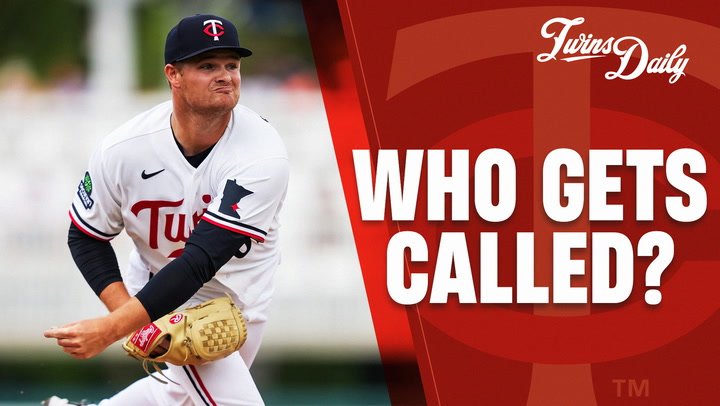 Three of the most intriguing arms in the Twins system are on the verge, but who gets the call first? Connor Prielipp, Kendry Rojas, and Andrew Morris are all pushing the timeline, and the answer might come down to who forces the issue. View the full article
 -
 Joe Ryan struggled Wednesday night against the Royals. That had something to do with the weather, and it's not worth worrying much about him; the 2026 Twins give you plenty of more urgent things about which to stress out. However, as Taj Bradley takes the mound for the series finale on Thursday afternoon, he does so with a window opening for him. This guy might just be the Twins' new ace, and not because Ryan had a minor wobble or because Pablo López is hurt. He might have the upside to compete for the American League Cy Young Award—not in a few years, but right now. He could, of course, take it on the chin Thursday and make this sound quite foolish. But before he starts, let's take a moment to consider just how real the possibility is. Bradley struck out nine in his season debut Saturday in Baltimore. He did it with a four-pitch mix that has undergone some slight but important improvements since last year. His fastball sat at 97.4 miles per hour, touching 99. Despite his high arm slot, he showed impressive depth on his splitter, and what was previously a cutter has been reengineered. It's now a true slider, serving as a halfway point between his high-rise heater and a sharp knuckle-curve. All four of his offerings rated better than average, by a healthy margin, according to Baseball Prospectus's StuffPro metric. The values that make up the scale on the left are runs per 100 pitches thrown, so (for instance) for every 100 heaters like the ones he threw Saturday Bradley throws, he reduces the expected number of runs an opponent will score by 0.7. As you can see, both the splitter and that cutter-turned-slider are more than a run better than average per 100 thrown. It wasn't like this last year, or the year before that. Stuff this dominant is new, and it's special. Here are his pitch-by-pitch StuffPro values since 2024. Season StuffPro Pitch Type 2024 2025 2026 4-Seam Fastball -0.2 -0.1 -0.7 Cutter/Slider -0.3 -0.5 -1.3 Curveball 0.2 -0.2 -0.4 Splitter -0.9 -0.1 -1.4 Sinker 0.4 It's not just about Bradley improving, though. Only one starter has a better StuffPro so far this season, and it's Brewers superstar Jacob Misiorowski. Bradley can't quite hope to keep pace with him, but he's ahead of everyone else in the league—at least through one start. It's a bit more plausible that Bradley could perform the way Dylan Cease or Hunter Brown do over a full season, and that would be plenty. Cease and Brown are both high-slot right-handed hurlers with arsenals similar to Bradley's. If you wanted to distinguish them, you'd be forced to admit that Cease throws even harder and that Brown has a plus sinker, but you could also note that Bradley's splitter is better than any form of changeup thrown by either of the other two. Cease got a $200-million contract from the Blue Jays this winter. Brown finished third in AL Cy Young Award voting in 2025. Bradley, 25, isn't even arbitration-eligible yet, so if he emerges as a credible ace, it would be franchise-altering for the Twins. This is a bit of a López situation. Bradley doesn't quite have the same demonstrated upside, but he's young; he's under long-term team control; and being with the Twins has already made him better. Don't scoff too confidently at the notion that he could be the next López, or that the Twins might move to extend him now, on a deal even more team-friendly than López's. Of course, if he gives up six runs against the Royals in a few minutes, do feel free to mock me, but there's real evidence of a breakout afoot. View the full article
 -
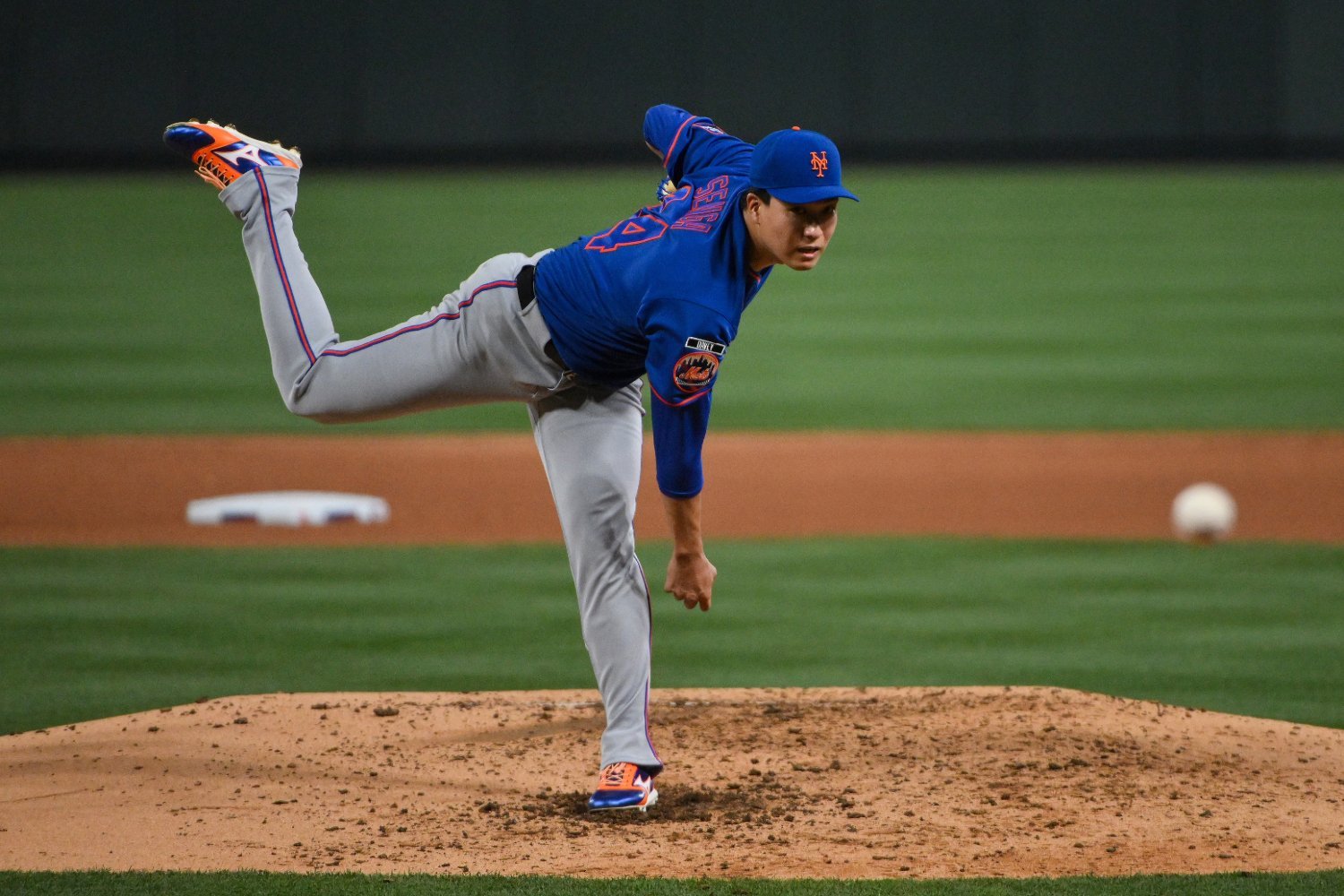 The New York Mets are in the midst of a seven-game road trip that opened with them dropping two games to the St. Louis Cardinals. Now, they head to San Francisco for four games against the Giants. The Mets' offense has not been great in the early going outside of Opening Day, but one of the biggest takeaways from the Cardinals series was how good Kodai Senga was in the second contest. Last season did not end well for Senga, with the Mets having to send him to AAA to end the season. Now, Senga looks like a new man. While it was just one start during what is now coined as overreaction week, the veteran right-hander looked really good in his outing against the Redbirds. He pitched six innings, giving up just two runs -- which you can argue would not have scored if Luis Robert Jr. did not misplay two balls in center field -- while striking out nine. He used his fastball and cutter more than any pitch, which set up the forkball as a true out-pitch. His velocity topped out at 99.2 on his fastball, which is a strong explanation for how he generated a 30.4% whiff rate on the pitch. But velocity only gets you so far; perhaps the most impressive statistic from his start was the average launch angle against his fastball, which sat at -4° during the outing. By consistently attacking the upper third of the zone with that upper-90s heat, Senga forced hitters into weak, rolled-over contact, preventing them from squaring up the barrel. This vertical approach created the perfect tunneling effect for his fork ball which naturally drops out of the same plane. Because hitters were so focused on catching up to the increased velocity of the heater and the horizontal movement of his cutter, the forkball's 38 inches of vertical drop became nearly impossible to track, leading to a chase rate well above his career average. Senga's performance was good to see for a Mets team that needs him as much as anybody. For New York to be successful in 2026, they are going to need all their starters behind Freddy Peralta and Nolan McLean to do their part. In his first start, Senga did; it was the first time he went six innings in an outing since June 6 last year. Availability is the best ability, and Senga being able to give innings on a consistent basis will be a big deal for the Mets, trickling down to their bullpen which got worn down in 2025 because of starters not going deep into games. It's one game, but the data supports the impressive results. Now, he'll have to prove capable of replicating this performance over the course of a full season again. View the full article
 -
 The Toronto Blue Jays won't have a ton to work with during the 2026 MLB Draft. Of course, that's for the best of reasons. As the 2025 AL pennant winners, the Jays were originally slated to make their first pick in the 29th slot. However, because their luxury tax payroll was more than $40 million above the CBT threshold last season, their first pick dropped down 10 spots to 39th overall. As MLB revealed on Wednesday, the 39th overall pick this summer has a slot value of $2,571,700. That's $698,500 less than the 29th overall pick ($3,270,200) and, just for context, $8,778,900 less than the first overall pick ($11,350,600), which belongs to the Chicago White Sox. Meanwhile, the Blue Jays sacrificed their second-highest selection by signing a free agent who received the qualifying offer (Dylan Cease) this past winter. So, after picking 39th overall, they won't have another chance until pick No. 103 (slot vlaue $762,900). Toronto Blue Jays 2026 Draft Order and Slot Values Here's when the Blue Jays will make their picks through the first 10 rounds of the draft, along with the slot value for each of those picks: No. 39: $2,571,700 No. 103: $762,900 No. 131: $581,100 No. 164: $421,300 No. 193: $330,300 No. 222: $262,300 No. 252: $219,500 No. 282: $202,100 No. 312: $191,900 Picks from the 11th to 20th rounds are governed by a slightly different system. A player drafted between rounds 11 and 20 can sign for as much as $150,000 without counting toward his new team's bonus pool. Any amount over $150,000 will count toward the bonus pool. Players taken in the first 10 rounds can also sign for more than their assigned slot value, but teams cannot spend more than the value of their bonus pool (the combined slot value of their top 10 picks) without facing harsh penalties. That means that to sign one player to an "over-slot" bonus, a team must sign at least one other player to an "under-slot" bonus – unless that team is willing to pay a high overage tax and possibly sacrifice future draft selections. If a player does not sign at all, his slot value is subtracted from the bonus pool of the team that drafted him. The Blue Jays will have a $5,543,100 bonus pool at their disposal this year. That's the second-lowest bonus pool in the draft, ahead of only the Los Angeles Dodgers ($3,951,900). The Pittsburgh Pirates have the largest bonus pool at $19,130,700, while the Tampa Bay Rays have the largest bonus pool in the AL at $19,009,300. Elsewhere in the AL East, the Orioles have a $13,114,000 pool, the Red Sox an $8,219,200 pool, and the Yankees a $7,342,800 pool. In 2025, the Blue Jays had the eighth overall pick in the draft and a $10,314,600 bonus pool to work with. They signed 18 of their 19 picks, including first-rounder JoJo Parker ($6,200,000 bonus). The year before, Toronto had the 20th pick in the first round and an $8,987,000 bonus pool. Their top selection was Trey Yesavage ($4,177,500 bonus), and they also signed third-rounder Johnny King well over-slot ($1,247,500 bonus, $767,200 slot value). All told, the Jays came to terms with 19 of their 21 selections in 2024. Although slot values are up by 2.5% compared to 2025, the Blue Jays' high payroll and high finish last season (plus their signing of Cease) mean they'll have less to spend than in recent years. I doubt anyone is complaining, considering why the team is in this position, but it could make this summer's draft a little less exciting than we've come to expect. The front office will have to work a little harder and a little smarter if the Jays are going to strike gold. View the full article
 -
Minnesota Twins Boast 4th-Largest Bonus Pool in 2026 MLB Draft
DiamondCentric posted an article in Twins Daily
 Bonus pools were announced for the 2026 MLB Draft on Wednesday. The Minnesota Twins are in great shape ahead of July, for what promises to be a class rich in both impact talent and depth. The Twins have the fourth-highest bonus pool total, at $16,929,600, behind only the Pirates, Rays, and White Sox. Slot values have increased 2.5% from 2025. The Twins' bonus pool is heavily weighted toward the No. 3 overall pick, which comes with a slot value of $9,740,100. In a strong class, Minnesota is likely to have several good options, including prep shortstop Grady Emerson, UC Santa Barbara ace Jackson Flora, or impact college bats like Justin Lebron, Vahn Lackey, or AJ Gracia. Listed below are all 11 of the Twins' slotted picks with their allotted bonus values. 1st Round, 3rd pick: $9,740,100 2nd Round, 43rd pick: $2,333,200 Comp B, 74th pick: $1,138,600 3rd Round, 79th pick: $1,052,700 4th Round, 107th pick: $733,100 5th Round, 139th pick: $536,900 6th Round, 168th pick: $406,800 7th Round, 197th pick: $319,600 8th Round, 227th pick: $253,300 9th Round, 257th pick: $215,400 10th Round, 287th pick: $199,900 Teams can spend up to $150,000 on player bonuses in rounds 11-20, with any amount spent over $150,000 being counted toward their bonus pool. Teams are permitted to spend up to 5% over their total bonus pool, incurring only a tax penalty on the overage. The total they have to spend can be spread around however they'd like, though, so (for instance) if the wealth of options at No. 3 gives them the leverage to sign someone for $7.7 million instead of $9.7 million, they can use the remainder on one or more of their other picks. Typically, teams at the very top of the draft do at least some of this. Last year, the Mariners saved $700,000 against the slot value of the third pick. Over the last four drafts, the top three picks have delivered their teams an average savings of $937,000. However, when the Twins picked fifth in 2023, they were so happy to have Walker Jenkins fall to them that they signed him for the full slot allotment. If you were picking for the Twins today, who would you select at number three overall? View the full article
 -
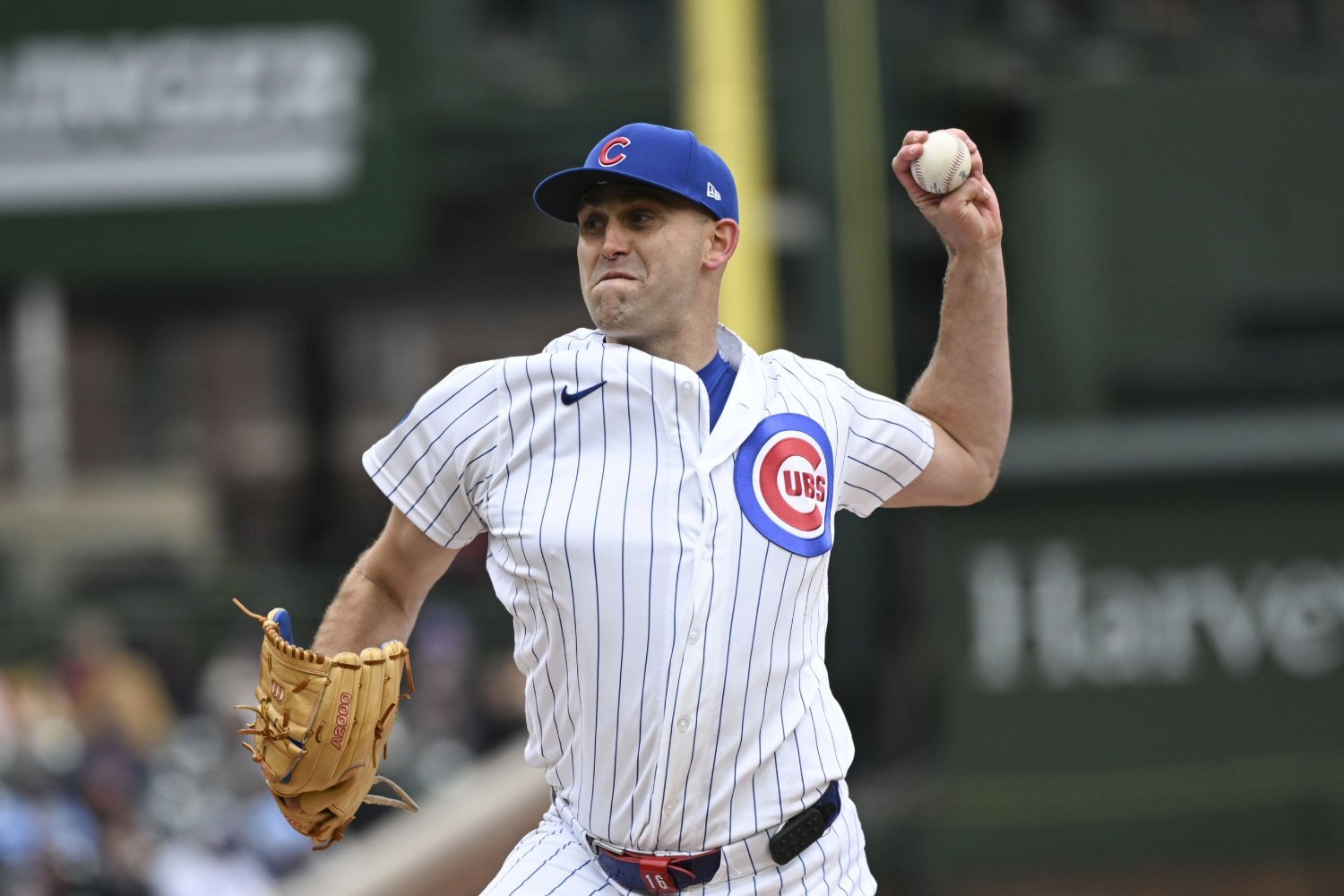 For the second time this young season, Matthew Boyd stepped onto the bump against an inferior opponent. Unlike his first one, however, the Chicago Cubs were able to put said opponent to bed. Rather than needing to overcome Boyd in doing so, they did so on the strength of this year's Opening Day starter. After his first start, Matthew Trueblood examined Boyd's outing. There was a lot of good to take from it. Most notably, he generated a high rate of whiffs against the Washington Nationals (20 on 37 swings to be exact) but was unable to avoid opposing barrels. As Trueblood pointed out, five pieces of contact came off the bats of Nats hitters at a speed of at least 103.8 MPH. It was chalked up in the piece as a sequencing issue above all, as Washington was able to key in on specific pitches in between the whiffs. The second time around, against the Los Angeles Angels, Boyd didn't have quite the dominance across individual pitches. But he was able to keep opposing hitters off balance enough to run up the strikeout column on his line while minimizing damage in a way that he couldn't in start No. 1. Here are the particulars in that first start on Opening Day: We've already noted the positive of the whiffs, but Boyd clearly got too reliant on his four-seam. Even for a player that had a 24 percent gap between that and his most-used secondary pitch (the changeup) in 2025, 67 percent is still screaming sequencing issues. That's much too reliant on one pitch type, especially because he only threw it 47 percent of the time last year. That's how you get a 100.8 MPH average exit velocity and four of the seven total hard hit balls in the start. Obviously, feel matters on a cold day at Wrigley, but the results are the results. The second start, though, offered a far more sensible plan of attack: The four-seam is the primary pitch. He's always going to lean on it. But throwing it at a clip 12 percent under his first start, especially given the effect of the changeup on the day, is encouraging. There was a tradeoff with fewer whiffs against the former, but the changeup came in strong by running that rate up on its own. As a result, Boyd cut his hard contact against in half (more than half, technically) with only three pieces of hard contact against him and a cumulative average exit velocity against of just 90.1 MPH (his total figure in the first start was 98.6 MPH). Against the fastball specifically, Angels hitters went for an average exit velocity of 94.8 across a similar number of batted ball events. Boyd was also able to avoid the barrel entirely, not ceding a single piece of barrel contact after allowing it one-third of the time in his first outing. The stuff itself is playing just fine. Boyd's K% through a pair of starts is at 45.9 and trails only Kevin Gausman here in the early going. His 21.1 percent swinging strike rate is behind only Jack Leiter. We already knew the first start wasn't an issue with the stuff itself, but the predictability of it. A little more variety can go a long way, as Boyd's two-run line in his second start can attest. View the full article
 -
Why Liam Hicks is a totally different hitter this season
DiamondCentric posted an article in Fish On First
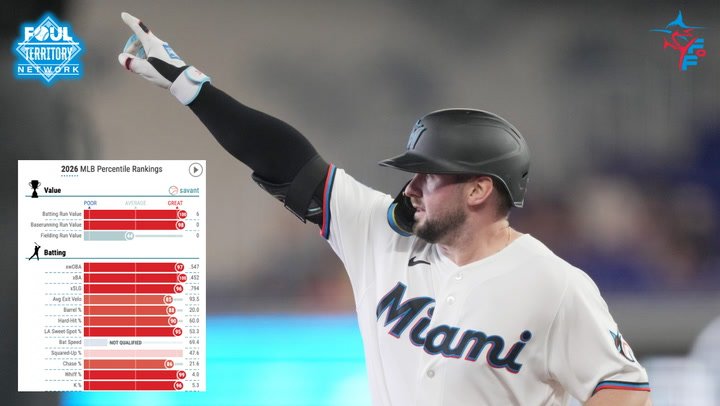 Fish On First LIVE discusses how Marlins catcher Liam Hicks has raised his offensive ceiling after adding strength during the 2025-26 offseason. View the full article
 -
Opening Day Roster For Low-A Lake Elsinore Revealed
DiamondCentric posted an article in Padres Mission
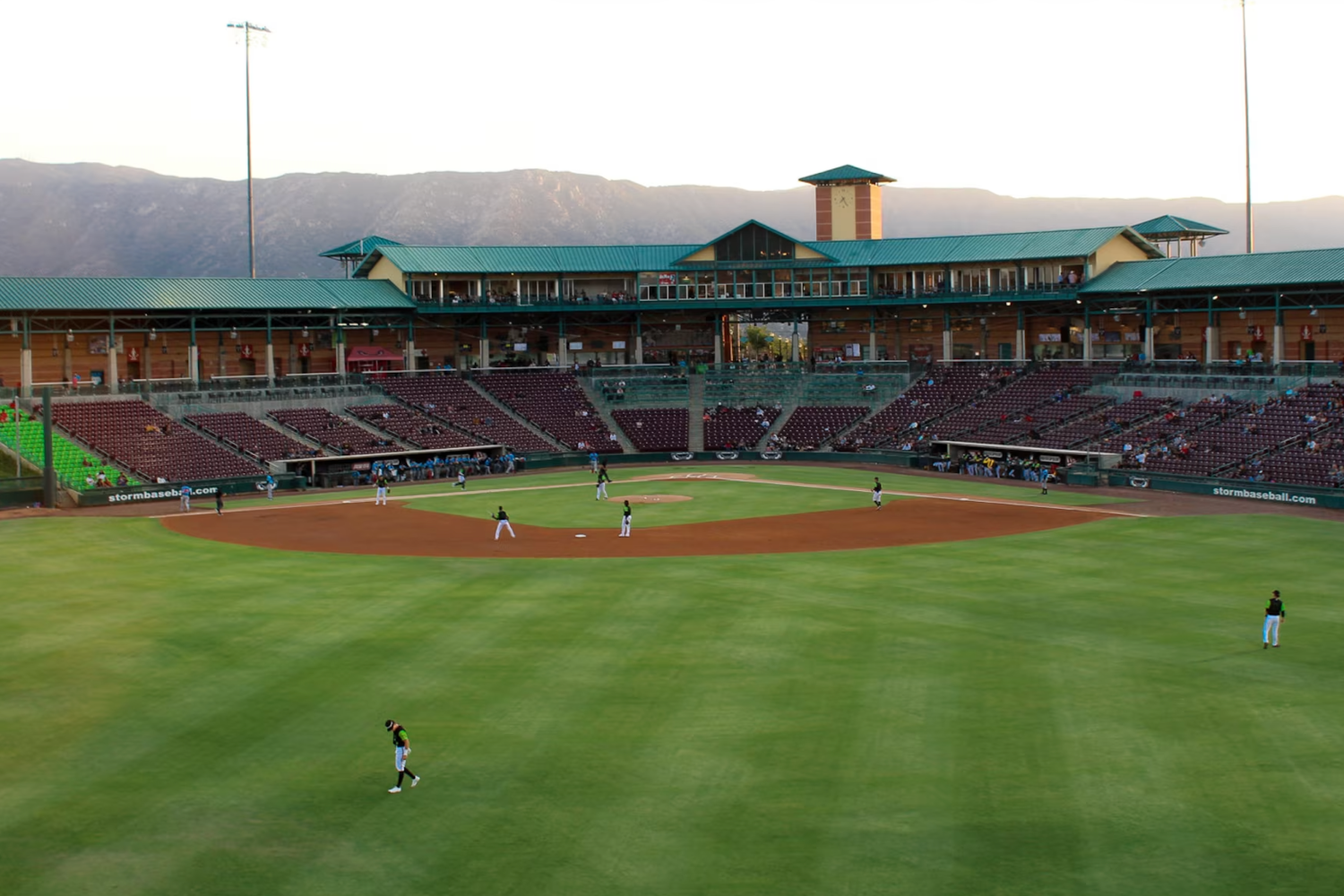 If you like prospects, more specifically San Diego Padres prospects, Lake Elsinore will be the place to be this summer. The Storm, a member of the Low-A California League, will sport seven of Padres Mission's top 20 prospects to begin the season. Lake Elsinore begins its season Thursday against the Ontario Tower Buzzers, a Los Angeles Dodgers affiliate. Three of the Padres' four farm teams opened against Dodgers affiliates. Ontario is a new entry in the Cal League after the Modesto Nuts moved to San Bernardino and set off an affiliate shuffle. Left-hander Kruz Schoolcraft leads the Storm's prospect parade. He was the Padres' first-round draft choice last year. Outfielder Ryan Wideman, at No. 9, and corner infielder Kale Fountain, at No. 10, are other top-10 prospects on the Lake Elsinore active roster. Of note, two-way player Sean Barnett's transaction page shows him being assigned to the Storm, but he does not appear on the roster. Ethan Long, a 2023 undrafted free agent, had previously been a first baseman, but is listed on the roster as a right-handed pitcher. Pitcher (14) Bryan Balzer, RHP Javier Chacon, LHP Winyer Chourio, RHP Nick Falter, RHP Joseph Herrera, LHP Jamie Hitt, LHP Landry Jurecka, RHP Brandon Langley, RHP Ethan Long, RHP Carlos Medina, RHP Rordy Mejia, RHP Daichi Moriki, RHP Tyler Schmitt, RHP Kruz Schoolcraft, LHP (Padres Mission's No. 3 prospect) Catcher (2) Ty Harvey (No. 8 prospect) Truitt Madonna (No. 17 prospect) Infield (8) Luke Cantwell Kerrington Cross Justin DeCriscio Victor Duarte Kale Fountain (No. 10 prospect) Bradley Frye Jorge Quintana (No. 12 prospect) Jose Verdugo Outfield (3) George Bilecki Conner Westenburg Ryan Wideman (No. 9 prospect) Other (3) RHP Humberto Cruz, restricted list (No. 6 prospect) LHP Matt Lachappa, 60-day injured list RHP Mario Zabala, 60-day injured list View the full article
 -
Minnesota Twins Introduce New Food Offerings at Target Field
DiamondCentric posted an article in Twins Daily
 The Minnesota Twins hosted their annual Taste of the Twins event Tuesday, ahead of Friday’s home opener against the Tampa Bay Rays. The event acts as a preview of what’s to come at Target Field for the upcoming season, including enhancements to the fan experience. It also allowed attendees to taste-test the new food and beverage options. As has long been true, Target Field offers some of the best ballpark fare that you will find in all of Major League Baseball, and they’re adding excellent options to an already impressive list. What I particularly enjoy about the food offerings is that so many of them come from small, locally-owned businesses around the Twin Cities. Whether it’s a sausage from Kramarczuk’s, a slice from Pizza Luce, or street tacos from La Tapatia, Target Field has made it a point to give fans variety and an opportunity to support a local haunt. This season will be no exception. In addition to new local vendors (such as a soon-to-open Japenese restaurant called Izakaya Kazama or exican cuisine from La Madre), Red Cow adds a popular burger to their kitchen in section 223 that previously could only be found in their brick-and-mortar restaurants. Moreover, Target Field will have additional gluten-friendly and vegan options to create a more inclusive set of food offerings. So, without further ado, let's get into the specifics of the new food and beverage options at Target Field. Double Barrel Burger from Red Cow Red Cow brings their Double Barrel Burger to Target Field in 2026, featuring two 4-ounce beef patties, white American cheese, and grilled onions. However, what sets this burger apart from the rest of the menu (and made it my favorite savory item at the event) was the burger butter and horseradish cream sauce slathered between the beef patties. Even if horseradish isn’t your jam [Ed. note: it really is more of a sauce; I can't make the case that it's a jam], I can’t recommend trying this burger enough. Mixed with the burger butter, it adds a creamy, tangy flavor to the burger and isn’t overpowering as horseradish can sometimes be. You can find this burger at their normal location, in section 223 on the center field porch. Elote from La Madre Disclaimer: I LOVE me some elote (or Mexican street corn), so trust me when I say this: the elote from La Madre was rather bland. With a booth in section 110, La Madre will offer the following varieties of the popular corn-based dish. After slathering it in mayonnaise, you can choose to coat your corn on the cob in cotija cheese, tajín and arbol spice, crushed Flamin’ Hot Cheetos, or crushed “hot blue” corn chips. As someone who would be hard-pressed to bypass the traditional toppings of mayo, cotija cheese, and chili powder, I took this opportunity to try the two unique offerings coated in crushed chips. I found both the Flamin’ Hot Cheetos and “Hot Blue” corn chips to lack the flavor punch that I expected. Additionally, with the way the event is set up, the dish had been sitting for an extended period of time, causing the mayo to make the chips less crunchy—a texture I thought would be a nice touch to a normally creamy dish. Now, I’m not saying the elote was bad, but it was a little underwhelming. It’s definitely something I’d like to try again when the toppings are added at the time of ordering. Mac and Yes Please A new vendor to Target Field, Mac and Yes Please can be found in section 113, where you will find a plethora of options to level up your bowl of mac and cheese. With a base of cavatappi pasta and a creamy white cheddar sauce, fans will have the option to add buffalo chicken, brisket, blue cheese crumbles, shredded cheddar, green onion, bacon bits, sliced hot peppers, fried onion crisps, a buffalo ranch sauce, and/or a barbecue drizzle. If you’re looking for something simpler, they also offer a kids mac and cheese. I had the opportunity to try a bowl that included brisket, green onion, peppers, blue cheese and BBQ. In short, it was phenomenal. The brisket was tender, the green onion and sliced hot peppers added just the right amount of kick, and the drizzle pulled it all together. I will say, as someone who likes blue cheese, I found it to be very overpowering in this dish. If you like blue cheese but don’t love it, I’d recommend you skip that choice of topping; swap it out with the shredded cheddar. Chocolate Fish on a Stick from Izakaya Kazama Holy. Smokes. This was by far my favorite item at the event and will be a must-have item every time I visit Target Field. Chef Matthew Kazama of Izakaya Kazama (a restaurant opening soon at the corner of 34th Street and Nicollet in south Minneapolis) deep-fries a fish-shaped waffle filled with a sweet, chocolate filling. It's served with a scoop of vanilla ice cream and topped with a drizzle of chocolate sauce. Found in Town Ball Tavern, the flavor and texture of this dish were absolutely divine. The outside of the waffle is crisp, while the inside is soft and gooey with the sweet chocolate filling. The waffle, which is placed on a pair of chopsticks, could stand by itself as a 10/10 dish, but then you elevate it with the ice cream and chocolate drizzle, and hoo boy. What you get is one of the most delectable desserts you’ll find in the Twin Cities…served at Target Field Justin’s Candied Popcorn Bar Sticking with the sweet treats, new to section 106 will be fresh-popped popcorn that you can top with upwards of a dozen different toppings. From Reese’s Pieces and M&Ms to Nerds clusters or mini marshmallows, there are a plethora of combinations to add to satisfy that salty and sweet craving at the ballpark. Other Inclusive Offerings Target Field continues to add to its expansive cuisine offerings by introducing the Grand Slam Shawarma (section 114), a Mediterranean bowl or wrap that includes steamed rice topped with chicken shawarma, diced red onion, tomatoes, cucumber, feta cheese, and tzatziki sauce. For those who may have dietary restrictions, you can find a variety of gluten-free options, whether it be an entree, a snack, or a beverage. In section 112, you’ll find No Gluten Way, which offers a beef burger with white American cheese, grilled onions and a “bistro” sauce or an all-beef hot dog with grilled onions, both served on a gluten-free bun. I tried the burger, and it was very good, though the bun was a little dried out (again, could have just been the way the event was set up, having it sit under a warmer for an extended period). They also feature gluten-free cookies (chocolate chip and oatmeal cherry coconut) from the local Atuvava Bakery. Look, we’re north of 1200 words, and I’ve only covered the featured items at the Taste of the Twins and didn’t even touch on the beverage menu. Lately, there haven't been a lot of good things to say about the Minnesota Twins. However, if there is one thing that has rung true for years, it’s that they more than make up for the struggles on the field with triumphs on the concourse. A new season may not bring newfound hope, but it does bring new food that’s worth the price of admission. (Just keep in mind that you also have to pay for the food itself.) What new food item are you looking forward to trying at Target Field this year? Join the conversation in the comments! View the full article
 -
Young Arms and 2025 MLB Draft Picks Will Lead Fireflies in 2026
DiamondCentric posted an article in Royals Keep
 Shortly after the High-A Quad Cities River Bandits' roster was posted on the Raising Royals social media account, the Low-A Columbia Fireflies roster was revealed. The position player group is highlighted by Sean Gamble and Josh Hammond, the Royals' first two selections in the 2025 MLB Draft. They are ranked No. 6 and No. 7, respectively, in our Top-20 Prospect Rankings. Gamble is a multi-tool athlete who could stick in center field long term (he played center field in the Spring Breakout). Hammond may be a corner infielder, but he has an interesting contact and power profile. Neither Gamble nor Hammond played professional ball last year, so this will be their first taste. They did get some action in the Instructional League, holding their own, which explains why they're starting the season in Low-A ball. Another ranked position-player prospect in Columbia is Yandel Ricardo, one of the top international signees in 2024. This is a repeat of Low-A for the Cuban shortstop, as he played in 50 games with the Fireflies last year. After hitting .342 with a 151 wRC+ in 33 games in the Complex League, he only hit .212 with a 61 wRC+ in the Carolina League. Despite his initial struggles, he showed some flashes of promise for an 18-year-old playing in full-season affiliated ball. With a full offseason, he could be due for a bounce-back in his second swing of Low-A competition. A couple of sleeper position player prospects to watch are outfielder Roni Cabrera and first baseman JC Vanek. Cabrera was included in the Cole Ragans deal back in 2023 and has developed slowly in the Royals system. He struggled in 26 games with the Fireflies last year, hitting .092 with a 22 wRC+. However, he fared much better in the Complex League, hitting .302 with a 134 wRC+ and six home runs. He's a bit free-swinging, as evidenced by his 0.32 BB/K ratio between the Complex and Carolina League. That said, there's an intriguing power potential there with Cabrera, and he's still relatively young at 20 years old. As for Vanek, he was a 14th-round pick in the 2025 MLB Draft out of Chipola College, a junior college in Florida. He made his name in the MLB Draft League and ended up debuting with Low-A Columbia last year. He hit only .250, but he posted a .388 wOBA, an 18.4% walk rate, and a 0.53 BB/K ratio. The power lagged a little bit in his transition to the Carolina League, as he had no homers and a .050 ISO. He also struck out a lot at 34.7%. That said, he has a patient approach, and I think having a full spring with the Royals player development staff could help him cut down the strikeouts and tap into the power more in 2026. The pitching staff may be the strength of this Fireflies team, especially the rotation. Three of our Top-20 prospects will be featured in the Fireflies rotation, including Kendry Chourio (No. 4), Blake Wolters (No. 17), and Michael Lombardi (No. 18). Chourio is the most high-profile of this bunch, as he struck out 63 batters in 51.1 IP across the DSL, Complex, and Carolina Leagues. He faced more challenges in Columbia, posting a 5.16 ERA and 3.66 FIP with the Fireflies in 22.2 IP. That said, he didn't have issues striking batters out, as evidenced by his 25% K% in Low-A. He also limited free runners on the basepaths, as demonstrated by his 20.8% K-BB%. The 18-year-old righty also impressed in the Spring Breakout, impressing scouts with a fastball that touched 98 MPH. He still has to work on his pitch location and shape a bit, which explains why he is starting in Low-A. He could make a move to High-A by midseason if he fixes those issues. Wolters will pitch in Low-A for the third time. He had a 3.99 ERA in 47.1 IP last year, but his FIP was much higher at 5.43. A big issue was command, as he had a 19.3% BB% last year and zero K-BB%. It would be nice to see Wolters generate more chase and whiffs, especially since the stuff has always been intriguing. The last-ranked pitching prospect in Columbia is Lombardi, a Tulane product who posted a 2.14 ERA and 43.5% K% in 42 IP with the Green Wave. He didn't pitch in professional ball, but he's one of the more talked-about pitching prospects this spring, due to his incredible stuff and ability to pitch in both the bullpen and rotation. The Royals will likely develop him first as a starter, but he could move to the bullpen if the results and his stuff warrant it. He could move through the system like Luinder Avila, who also has that hybrid ability. One sleeper pitching prospect to watch is Justin Lamkin, who just missed out on our Top-20 list. Lamkin was drafted 71st overall in the 2025 MLB Draft and excelled at Texas A&M, posting a 3.42 ERA and a 22.6% K-BB% in 84.1 IP. The 21-year-old lefty started in the Spring Breakout and excelled with six strikeouts in three innings of work. Lamkin doesn't have elite stuff, but he is a workhorse who has impeccable command and can generate whiffs in bunches. His profile is similar to that of Noah Cameron or Kris Bubic, and he could move quickly in the Royals system because of that. The Fireflies' first game will be today at 7 p.m. on the road against the Hickory Crawdads, the Low-A affiliate of the Texas Rangers. View the full article
 -
What are your Marlins vs. Yankees series predictions?
DiamondCentric posted an article in Fish On First
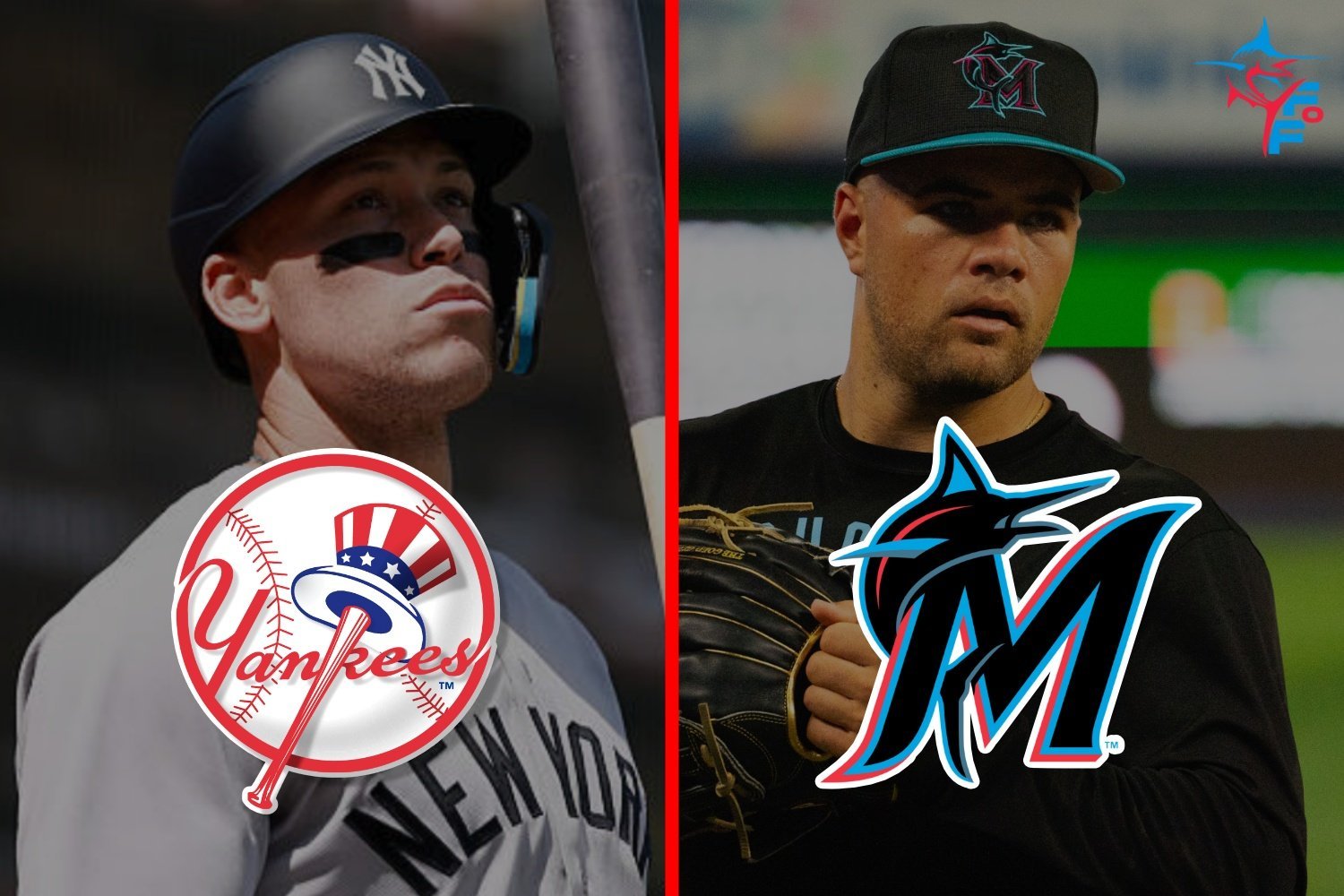 Recent history tells us that the Miami Marlins are difficult to predict, but that won't stop us from trying. Welcome to a new season of Prediction Time. Once again in 2026, I will be monitoring the prognostications from our valued SuperSubs, Fish On First staffers and livestream guests. Individual article pages like this one will be created prior to every Marlins series and featured prominently on the FOF site. Consistent participation is key if you want to win this annual contest. Submissions only take a few seconds. Scoring system A "perfect" series is worth three points: Earn one point for predicting which team will win the upcoming series Earn one point for predicting the precise number of victories for each team Earn one point for predicting the “Series MVP” who accumulated the highest win probability added (WPA) during the series as calculated by FanGraphs (could pick a player from either team) Here is a reminder of what the 2025 season leaderboard looked like. There is currently an eight-way tie atop the 2026 leaderboard, which will be updated between every Marlins series. If you are a SuperSub, leave a comment with your Prediction Time picks on this page, or join the Marlins Discord Server and submit there. We'll feature them on the upcoming Fish On First LIVE episode and track your points throughout the season! Any picks submitted prior to the first pitch of the series opener will be counted. If you are not a SuperSub, please consider signing up here to support the FOF staff. Series preview notes Probable starting pitchers: RHP Eury Pérez (MIA) and RHP Will Warren (NYY) on Friday RHP Max Meyer (MIA) and LHP Ryan Weathers (NYY) on Saturday RHP Chris Paddack (MIA) and LHP Max Fried (NYY) on Sunday The Marlins rank second in MLB with a 140 wRC+ and second in MLB with a 2.58 FIP. They haven't played on the road yet this season. The following Marlins players are on the injured list: Maximo Acosta (10-day IL), Ronny Henriquez (60-day IL), Adam Mazur (60-day IL), Christopher Morel (10-day IL), Esteury Ruiz (10-day IL) and Kyle Stowers (10-day IL). The Yankees rank 20th in MLB with a 91 wRC+ and first in MLB with a 1.89 FIP. They haven't played at home yet this season. In addition to Weathers, their roster includes former Fish Giancarlo Stanton and Jazz Chisholm Jr. The following Yankees players are on the injured list: Gerrit Cole (15-day IL), Carlos Rodón (15-day IL), Clarke Schmidt (60-day IL) and Anthony Volpe (10-day IL). View the full article
 -
Royals Receive 6th-Largest Bonus Pool for 2026 MLB Draft
DiamondCentric posted an article in Royals Keep
 On Wednesday, Major League Baseball informed all 30 MLB clubs of the size of their bonus pools for the upcoming MLB Draft in July. Joe Doyle of Overslot Baseball had a complete breakdown of all 30 teams' bonus pools and the slot value at each pick in an article on Overslot Baseball yesterday. According to Doyle, the Royals will have $15,954, 000 in bonus money for the upcoming draft. That is just ahead of the Atlanta Braves ($15,870,800) and just behind the St. Louis Cardinals ($16,612,300). The Royals will select sixth in the 2026 MLB Draft. The slot value at that pick is $7,746,100. Kansas City has gone over its slot in the past couple of drafts. In 2024, they selected Jac Caglianone out of Florida and gave him a signing bonus of $7,497,500. The slot value for the Royals' pick that season was $7,213,800. Last year, the Royals had a slot bonus value of $3,852,100. They drafted prep utility player Sean Gamble in their slot and signed him to a bonus of $3,997,500. Perfect Game USA, in their latest Mock Draft, is linking Georgia Tech outfielder Drew Burress to the Royals. The Yellow Jackets outfielder hit .332 with 19 home runs last year and is currently hitting .295 with five home runs in 143 plate appearances. The MLB Draft is scheduled for July 11-12th in Philadelphia during the All-Star Break. Stay tuned to Royals Keep for any MLB Draft rumors and updates relating to the Kansas City Royals! View the full article
 -
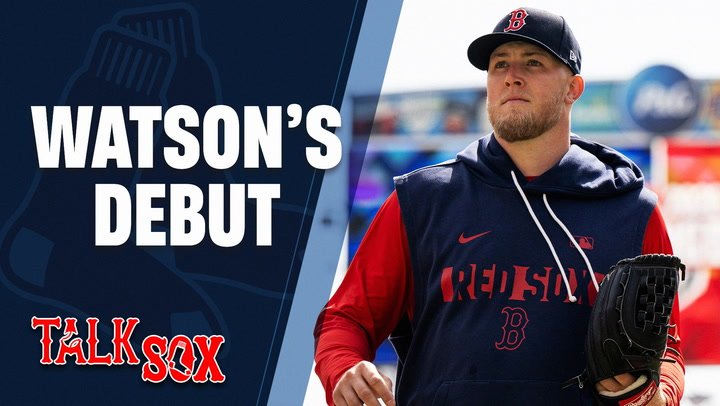 Ryan Watson is a relief pitcher for the Boston Red Sox who recently made his MLB debut. He signed with the Baltimore Orioles as an undrafted free agent in June 2020. He was selected by the Athletics with the sixth overall pick from the San Francisco Giants in the Rule 5 Draft. The Red Sox saw promise in Watson so they traded for him immediately. Let's talk about his stuff, and how he might slot into the Sox bullpen. View the full article
 -
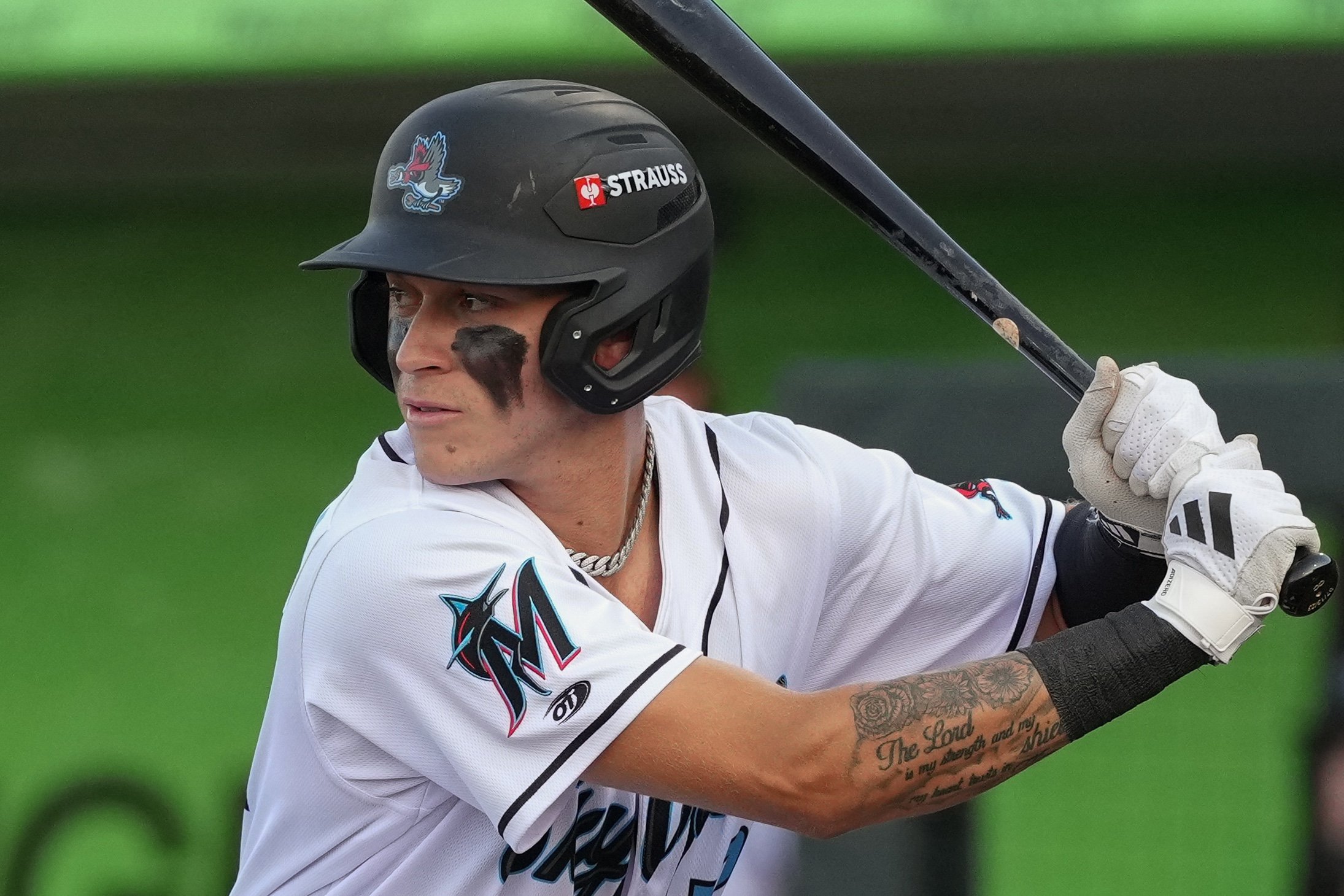 Members of the 2025 Miami Marlins MLB Draft class are on the cusp of an important career milestone, as they'll be experiencing their first Opening Day as minor leaguers. Because this draft class was comprised only of college players, the vast majority of them have unsurprisingly progressed to full-season MiLB affiliates. None of them are on an especially fast track, though—do not expect to see them on the Marlins major league roster until 2027 at the earliest. INF Aiva Arquette (Round 1): assigned to High-A Beloit (injured list) OF Cam Cannarella (Competitive Balance Round A): assigned to High-A Beloit OF Brandon Compton (Round 2): assigned to High-A Beloit OF Max Williams (Round 3): assigned to Low-A Jupiter (injured list) INF Drew Faurot (Round 4): assigned to High-A Beloit 1B/OF Chris Arroyo (Round 5): assigned to Low-A Jupiter LHP Joey Volini (Round 6): assigned to High-A Beloit RHP Jake Clemente (Round 7): assigned to Low-A Jupiter INF Emilio Barreras (Round 8): assigned to Low-A Jupiter LHP Kaiden Wilson (Round 9): assigned to FCL Marlins (injured list) UTIL Jake McCutcheon (Round 10): assigned to Low-A Jupiter RHP Jadon Williamson (Round 11): assigned to Low-A Jupiter C Wilson Weber (Round 12): assigned to High-A Beloit RHP Chase Renner (Round 13): assigned to FCL Marlins RHP Carson Laws (Round 14): assigned to High-A Beloit UTIL Josh Hogue (Round 15): assigned to Low-A Jupiter LHP RJ Shunck (Round 16): assigned to Low-A Jupiter RHP Xavier Cardenas (Round 17): assigned to High-A Beloit LHP Hayden Cuthbertson (Round 18): assigned to High-A Beloit RHP Peyton Fosher (Round 19): assigned to High-A Beloit RHP Cannon Pickell (Round 20): assigned to High-A Beloit The Beloit Sky Carp's season opener, which was originally scheduled for Thursday, has been postponed due to inclement weather. The Jupiter Hammerheads will play their opener in Daytona at 6:35 p.m. ET. The Florida Complex League season doesn't begin until May 2. View the full article
 -
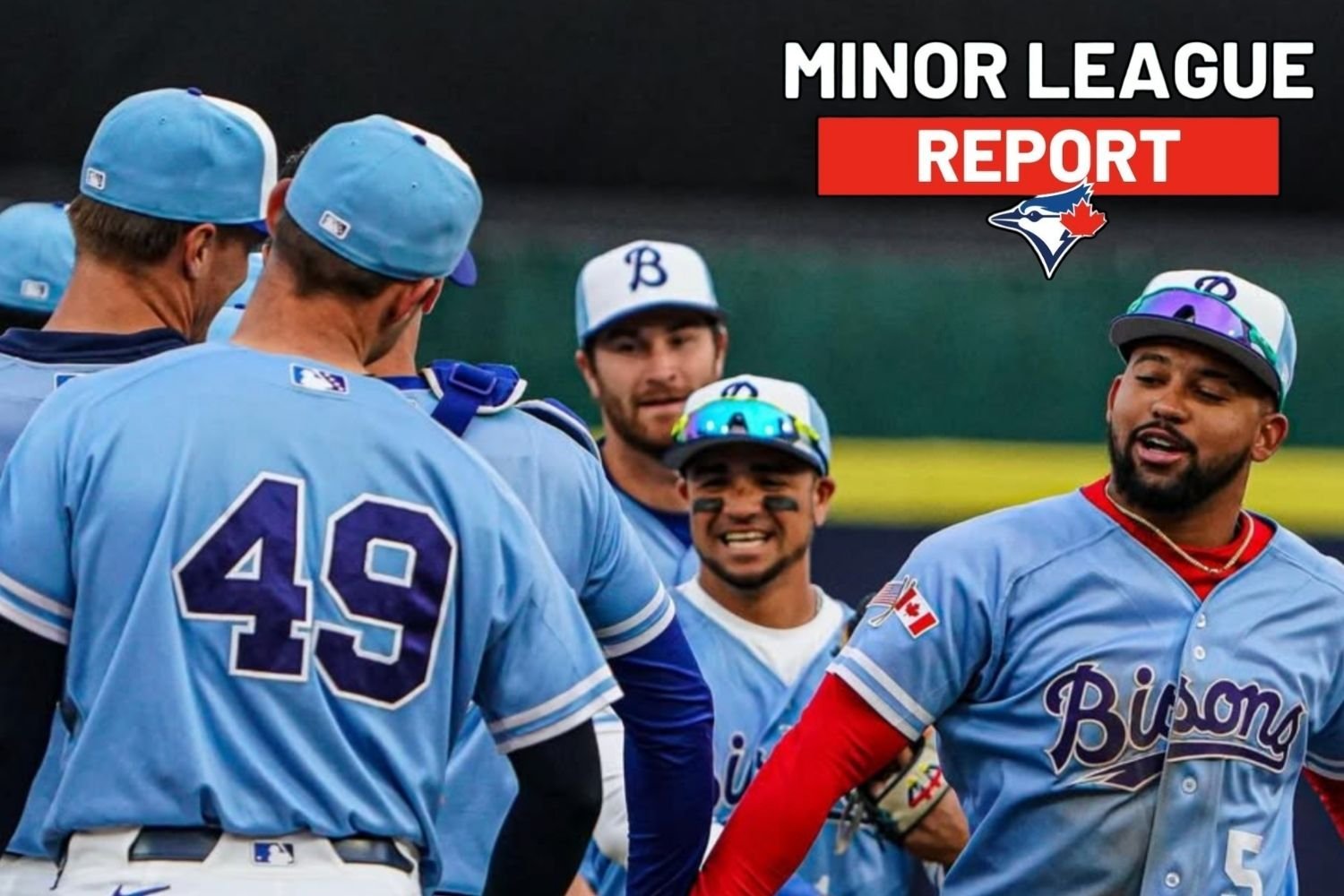 Blue Jays Affiliate Overview (March 27-April 1) Triple-A Buffalo Bisons Series vs. Scranton/Wilkes-Barre (New York Yankees): 1-2 Series vs. Omaha Storm Chasers (Kansas City Royals): 1-1 Season Record: 2-3 Double-A New Hampshire Fisher Cats Season begins Friday, April 3 High-A Vancouver Canadians Season begins Friday, April 3 Single-A Dunedin Blue Jays Season begins Thursday, April 2 Triple-A Buffalo Bisons Season Record: 2-3 Series Opponents: Scranton/Wilkes-Barre (New York Yankees) and Omaha Storm Chasers (Kansas City Royals) Series Standing: 1-2 vs. SWB, 1-1 vs. Omaha March 27: The Buffalo Bisons opened the 2026 season in abysmal fashion, taking a thumping from the Scranton Wilkes-Barre RailRiders. Grant Rogers started the game for the Bisons and made it through the first inning with ease before surrendering six runs over the next two innings. The highlight of the scoring barrage came off the bat of New York Yankees star prospect Spencer Jones, a two-run double to left field. Lazaro Estrada (recently promoted to the Blue Jays) and Adam Macko came on in relief and held the RailRiders in check over the next 4.2 innings, only allowing one hit. The Bisons’ bats were non-existent, though, striking out 12 times and looking completely overmatched against Brendan Beck, who tallied nine of those punch-outs himself. The Bisons nearly got on the board in the seventh when they loaded the bases with two singles and a walk, but Josh Rivera grounded into a double play, ending the scoring threat. An Opening Day loss was all but fitting for the Bisons after their terrible year in 2025. March 28: Postponed March 29 Game 1: Chad Dallas returned to the mound after completing his rehab from Tommy John surgery and was magnificent in his three innings. He struck out five, giving up only three hits, zero walks, and one run. Jonatan Clase got the Bisons on the scoreboard for the first time in 2026 with a sacrifice fly in the third. Eloy Jiménez extended his hit streak to two games with his second single of the year. Josh Kasevich also had himself a nice game, scoring two runs after getting on via a single and a walk. Unfortunately, the back end of the Bisons’ bullpen faltered in extra innings, with Chase Lee and Jorge Alcala surrendering runs in the ninth and 10th innings, leading to Buffalo falling to 0-2 to start the season. March 29 Game 2: Jonatan Clase and his running shoes helped to lead the Bisons to their first win of the year in Game 2 of the doubleheader on Sunday. He had two singles and a walk, while also stealing two bases and scoring two runs. RJ Schreck and Riley Tirotta got in on the fun as well, swiping a bag each themselves on their way to also scoring runs. The Bisons’ big inning came in the fourth, where they scored six runs, which was highlighted by Tirotta's two-RBI single. On the mound, Austin Voth got the start and had some struggles, coughing up solo home runs to Spencer Jones and Yanquiel Fernandez. Devereaux Harrison and Michael Plassmeyer wrapped up the game in relief, finishing the final four innings and only allowing one run. The Bisons finally got in the win column with a 7-3 victory over the RailRiders. March 31: Buffalo kicked off their series with the Omaha Storm Chasers in winning fashion. CJ Van Eyk got the start for Buffalo and put together a strong four innings, only surrendering six hits, one run, one walk, and striking out five batters. Adam Macko tossed 1.1 innings after Van Eyk; he didn't allow a run and struck out two. The batters got things going in the second inning, when Brandon Valenzuela hit a 112 mph RBI single, scoring two runs. Jonatan Clase added a home run the next inning, and Charles McAdoo continued his hot start with an RBI triple. Yohendrick Pinango smacked a 115.4 mph RBI double to cap off the scoring for the Bisons, while Chase Lee finished the game with a two-inning save. April 1: The Bisons were on the losing end of this one, as the bats were silent the entire game. Buffalo only managed three hits, with Charles McAdoo accounting for two of them. Josh Fleming took the loss, as he gave up one run over 3.2 innings. Michael Massey of the Storm Chasers had the big hit of the day, hitting a home run off of Buffalo's Devereaux Harrison. View the full article
 -
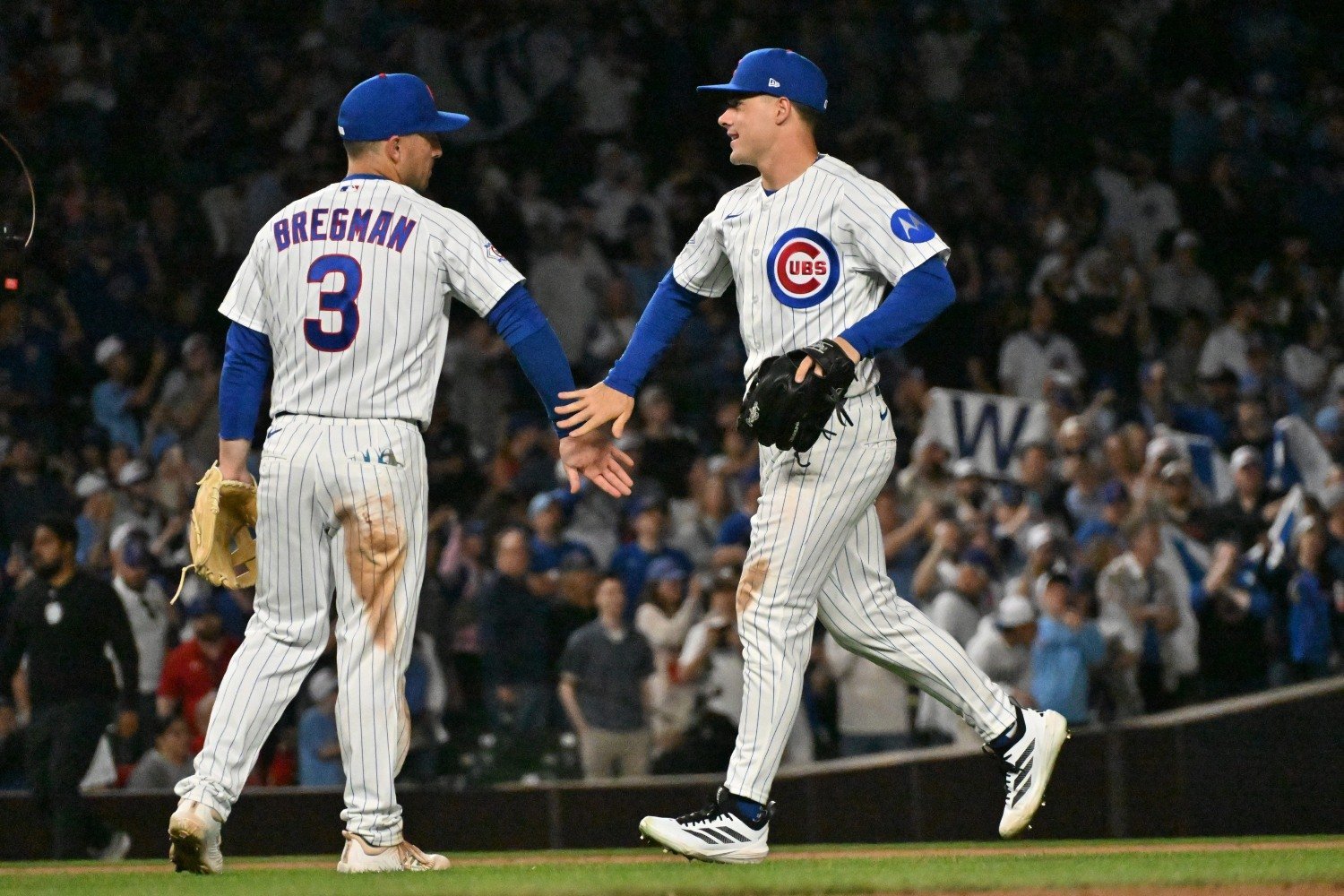 It takes a lot of reps to become a good big-league outfielder. A good, instinctive athlete can go to those positions and avoid embarrassing themselves, using speed, leaping ability and/or that great eye for ballistic movement that every baseball player must have to get this far, but those only allow one to make up for mistakes and for slow first steps on ordinary plays. A good outfielder, of course, is one who can be acutely aware of the situation (where a throw should go in each of several scenarios in which they get the ball, for instance) and who can turn balls with a real chance to be hits into outs, but that takes time. With no fewer than a few hundred fly balls (and often, a thousand or more) can a player learn to anticipate and read swings, or to intuit the way spin and wind will change the trajectory of a ball. Those things make the difference between a tolerable outfielder and a genuinely helpful one. Unsurprisingly, Matt Shaw is merely the former, so far. He's navigated some cold, windy days during his first stint in right field in the majors, and no hit has fallen in on which it felt like there was even a remote chance of making a play. However, although it has sometimes looked like it, Shaw also hasn't been challenged. The Nationals and the Angels obligingly hit all their really dangerous fly balls out of the park, altogether. Every chance Shaw has had has been easy. We can't draw overly confident conclusions from those reps, because one thing any smart novice will do is avail themselves of their margin for error. Still, it's impossible not to notice the slow (and often mistaken) first steps and the meandering routes Shaw has taken toward every fly ball hit his way so far. He's done two things exceptionally well: Keep his feet moving, thereby letting him constantly adjust as he figures out the ball's flight plan and as it's pushed and pulled by the wind; and React and move at the end of plays, putting himself in position to catch the ball and sure-handedly spearing it. Neither of those things is to be taken for granted. More experienced outfielders often make the mistake of planting a foot too soon or stopping under the ball on a windy day; Shaw knows better than to trust his own eyes. Meanwhile, most newbies to the outfield will slightly panic or show less instinctive capacity to adjust their final movement, leading to bobbles and drops. Impressively, Shaw has actually used that final moment of flight to make up for mistakes, a couple of times, rather than to compound them. NXk5bk1fWGw0TUFRPT1fQlFkUUFBWUdYd1lBRFFRQVZ3QUhCdzlYQUFCV1dnTUFCbFFHQWxZSEF3VlFVUVJU.mp4 An underrated raw athlete, Shaw showed good late explosion here. Even as he jumped, though, he realized he still didn't have the ball judged quite right. His initial thought was to go straight up and catch the ball above his head, but it was carrying past him. With a subtle turn and good body control, he caught the ball behind his body, instead. It was a really good play, with the elements and his inexperience working against him. However, it also shouldn't have been necessary. Part of the reason he misread the ball as he leapt is because he leapt too soon, which was a means of recovering after a shaky route. For all but the very most routine play Shaw has made so far, I went to the video clip and captured the first moment after Marquee switched from the center-field camera to the one high and behind home plate. (Marquee is not especially good at doing this quickly. so we're often missing a blink's worth of extra time that another broadcast might give us to see how the fielder first reacts to the ball off the bat, but we'll do what we can with what we have.) I then traced, as best I could, the route Shaw took to the place where he eventually made the play. This route looks relatively direct, and it's far from his most adventurous of the season, as we'll soon see. Part of that is because it was hit hard and to his left, in a fairly obvious way. Shaw has, so far, thought just about everything hit to him was going to be more to his right (toward center field, that is) than it really proved to be. That problem was mitigated on this play, because even though he had to make a late adjustment to get far enough toward the line and far enough back, it was clear right away that those were the directions he needed to head. You've seen the result already, so we'll move on. Again, the leap wasn't quite timed right or oriented right, but only a part of that goes to Shaw's lack of nous for the outfield. Another, larger part must be put down to the wind. Here's another play from the same Opening Day contest. Arguably, this is the toughest ball hit his way so far, and he still caught it fairly easily. It, too, was easier than he made it look, though. Shaw is playing the outfield a bit the way he played third base, in that his first step is always in. At third, his signature move last year was to come in with an angled step, then give ground to stab a ball even as it passed him. Though it hasn't burned him yet, that won't work long-term in the outfield. On this play, he came in perhaps 5-8 feet before bending back as he chased the ball toward the gap. He also had to make a secondary redirection, because he'd been so focused on turning around from coming in to get deep enough that he hadn't angled enough toward the 'Hefty' door in right-center. He still flagged it down, though. In between those two plays came this one, which really helps one see how well he adjusts—and how much work lies ahead to reduce the need for adjustments. This ball was hit very high, so he had more than enough time to get beneath the ball, but look at the way he (again) starts with a step in, forcing himself to turn around when it's hit over his head, and the way he turns the wrong lateral direction and has to loop back toward the line. We can, again, ascribe some of that to the wind, and Shaw should be commended for taking a route close enough to correct to be able to scamper under the ball when the wind pushed it a bit. Still, a more experienced outfielder can anticipate some of this. Shaw is still learning. Let's be done with Opening Day. Here's a play from Tuesday night. Already, a little learning is evident, though it almost costs him this time. Shaw takes a long time to draw a bead on this ball, but holds his position while he does so, so he doesn't get going in the wrong direction. He comes in readily but soon realizes he needs to tack harder toward the line, and jogs under the ball. The wind did a little bit of redirection here, but this is a clear case of Shaw needing to read the spin of the ball better, too. He didn't have this one off the bat. If it were less of a lazy fly ball, it probably would have been the first should-be out to fall in against him. Finally, let's look at two plays from Wednesday's win. The first is another instance of Shaw taking a long time to get a first read and then having to adjust his route toward the line, though it's all in a smaller space and with slightly less hangtime than on the previous play. The second is more similar to the final play we studied from Opening Day. Again, Shaw's default step is in and to his right, and he eventually find that he needs to go back and to his left. Route efficiency is not all it was cracked up to be, in the earliest days of Statcast and before that. Just as catchers have found that a more kinetic, seemingly obvious and noisy set of mechanics are at least as effective a way to frame pitches as the old freeze-and-hold method, modern outfielders prize the ability to get themselves moving. Last summer, Brewers outfielder Isaac Collins (another diminutive converted infielder) found considerable success by hopping in time with the delivery of each pitch, as infielders do. He sometimes took the wrong first step, but his jumps were so good—that is, he got moving so effectively, sometimes before the ball even met the bat—that he was a plus-plus left fielder for much of the season. That's the goal for Shaw, too. Collins was a few grosses ahead of Shaw in reps even by this time last year, though, having played over 2,000 innings in the outfield during his long minor-league career. Shaw, then, is doing something that can work, even if he'll sometimes look a little bit lost or overzealous. He's not yet ready to convert those fledgling skills into real value, in the form of catching anything that isn't routine, but he's demonstrated a strong grasp of the rudiments. He hasn't actually helped the Cubs win any games with his glove, and that's probably months away from happening—but it's fair to be encouraged by what we've seen so far, anyway. View the full article
 -
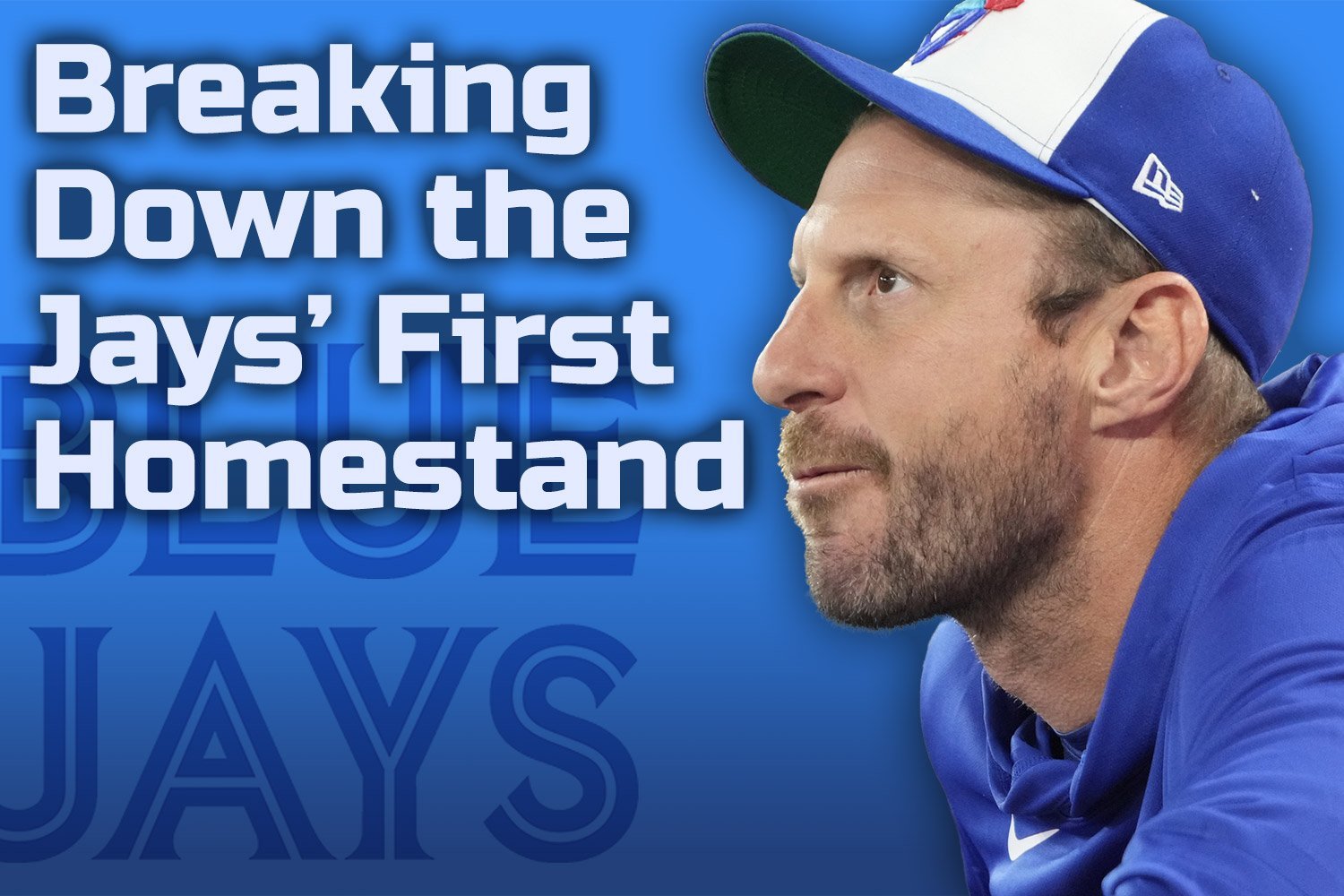 Owen and Jesse are live to break down the first homestead of the season. They'll talk about what they liked and didn't like from Cody Ponce's first start as a Blue Jay, Max Scherzer's first start of the season, and recap the storylines from the first six games. The guys will be taking questions and comments from the chat and discussing trends to keep an eye on going forward. Listen on Apple Podcasts: https://podcasts.apple.com/us/podcast/the-jays-centre-podcast/id1846108462 Listen on Spotify: https://open.spotify.com/show/3Bi7SzfpcqMo5xYWnbCeoL Listen on iHeartRadio: https://www.iheart.com/podcast/263-the-jays-centre-podcast-300304824/ Listen on Pocket Casts: https://pca.st/2qk9wqxd Watch on YouTube: https://www.youtube.com/@jayscentre View the full article
 -
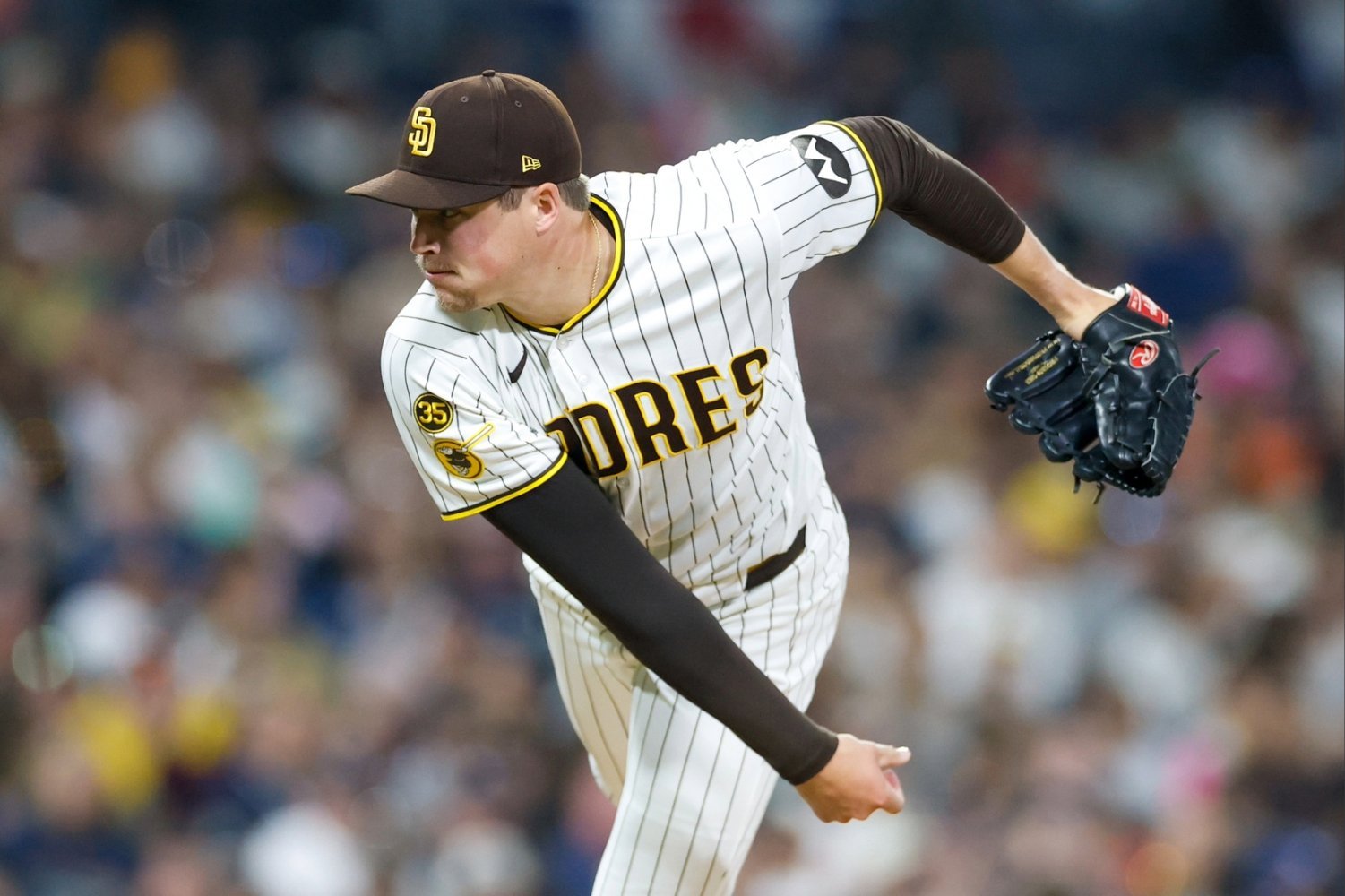 After watching closer Mason Miller finish off the Detroit Tigers and secure the San Diego Padres' first win of the season, I saw the following post on social media from Michael Baumann, who writes for FanGraphs: How Teams Beat Unbeatable Padres Closer Mason Miller May 23 vs. Philadelphia Phillies Facing a pretty good Phillies team, 32-18 entering the game, in the not-so-friendly confines of Sutter Health Park, Miller, who hadn't pitched since May 17, opened the top of the ninth with the A's down 1-0, facing the 5-6-7 hitters. J.T. Realmuto battled Miller for nine pitches before hitting a 101..3 mph four-seamer for a slow chopper that he beat out for a single. But shortstop Jacob Wilson's throw was also off the mark and went for a two-base error, putting Realmuto at third. Alec Bohm then hit a 101.1 mph four-seamer for a double to center field, scoring Realmuto to make it 2-0. Edmundo Sosa grounded a slider to first base, moving Bohm to third with one out. Brandon Marsh struck out on five pitches, the last two strikes swinging and missing at sliders. With two outs, Johan Rojas flared an 0-1 slider for an opposite-field single, scoring Bohm for a 3-0 Phillies lead. That brought up the top of the Phillies order in Trea Turner. Rojas stole second. Miller quickly got out in front of Turner at 0-2 before missing with his put-away slider for ball one. Two more fouls followed before another slider was very inside, putting the count at 2-2. The next pitch was another slider, but middle-in and Turner laced it to center for an RBI single and a 4-0 Phillies lead. Miller was yanked after 27 pitches. The poor outing hurt more as the A's scored three runs in the bottom of the ninth before falling 4-3. May 24 vs. Philadelphia Phillies Getting another shot vs. the Phillies the next day, Miller came on for the ninth, protecting a 4-3 A's lead. This time, he was facing the 8-9-1 hitters in Marsh, Max Kepler, and Trea Turner. Marsh again struck out on five pitches as he did the day before. Hitting .229 entering the game, Kepler ambushed a first-pitch four-seamer, sending the 101.4 offering deep to right field for his sixth homer of the season and tying the game 4-4. Miller bounced by by striking out Turner on five pitches, but then yielded a first-pitch single to Bryce Harper on a changeup. The patient Kyler Schwarber drew a five-pitch walk to put runners on first and second before Miller struck out future Padres teammate Nick Castellanos on four pitches to end the threat. June 13 vs. Kansas City Royals Miller had been off for four days after making three appearances in four games. This time, it wasn't a save situation, as the A's had a comfortable 6-1 lead entering the ninth inning. The bullpen was rested, as the A's had the previous day off and used only two relievers in their last game. So, this was simply an outing to get work in. Due up were the 5-6-7 hitters. Salvador Perez led off with a six-pitch walk that featured five four-seamers. That brought up rookie slugger Jac Caglianone, who isn't exactly a patient hitter (7.8% walk rate in 2025). Yet he also walked on six pitches, all but one a four-seamer. Little-used Nic Loftin followed by lacing an 0-1 four-seamer for a liner to left-center that skipped past left fielder Tyler Soderstrom for a two-run triple, his second three-bagger in as many nights. John Rave made it a 6-4 game with a sacrifice fly, before Miller struck out Kyle Isbel on four pitches and Drew Waters popped out on the first pitch to end the game. June 19 vs. Houston Astros Less than a week later and two more appearances under his belt, Miller was called upon to put out a fire with two outs in the top of the eighth inning, clinging to a 4-1 lead. Runners were on first and second when Miller replaced J.T. Ginn and No. 8 hitter Victor Caratini due up. The switch-hitting Caratini, after going 0-for-3 with three strikeouts against left-handed starter Jacob Lopez, was aggressive and launched a first-pitch four-seamer that was down but in the middle of the plate for a game-tying three-run homer. Miller's four-seamer was down in velocity at 98.4 mph. He then struck out Mauricio Dubon on seven pitches to end the eighth. In the top of the ninth, Jeremy Pena led off with a single before Miller, relying more on his slider in this appearance, got the next three hitters—Isaac Paredes, Jose Altuve and Yainer Diaz—to pop out. The A's would win 6-4 in 10 innings. Aug. 5 vs. Arizona Diamondbacks In the only one of his 22 appearances with the Padres in which Miller allowed a run, he came into the game in the bottom of the eighth inning in his new role as a setup man. The Friars had a 5-3 lead and the top of the Diamondbacks' order was due up. Corbin Carroll lined out to right on the first pitch, then Ketel Marte struck out on five pitches, four of which were sliders. Geraldo Perdomo saw all four-seamers in a five-pitch walk to bring up Lourdes Guerriel Jr. He took a first-pitch ball and a second-pitch strike before fouling off four straight pitches. On the seventh pitch, the fifth four-seamer of the at-bat, a 103.9 mph offering, Gurriel launched a 439-foot game-tying homer. Miller struck out the next batter and the Padres scored five runs in the top of the 11th to win 10-5. Conclusion Is there a common theme in these outings? There doesn't seem to be. Two of the three homers Miller gave up were first-pitch four-seamers, both in different locations. Two of these five outings saw him give up runs in the eighth inning, once in a fireman's role in which he would get four outs and the other in his second game in a Padres uniform as he got used to a new role. If anything, His pitch usage is fairly similar between right-handed batters and left-handed batters. Against righties in 2025, he used his four-seamer 51% of the time and his slider 48% with an occasional changeup. Against lefties, his four-seamer use was 53%, his slider at 42%, and his changeup up to 5%. Miller's four-seamer lights up the radar guns, but doesn't move much differently from other four-seamers. But his slider has significantly more break (4.2 inches) and drop (3.3 inches). Perhaps relying more on the slider would erase the few negative outings that Miller does turn in each season, but weird things are bound to happen in frequent one-inning samples. Frankly, it's amazing that Miller is so adverse to blowup outings, which tend to sink most other reliever's stats. Miller is as good as any other closer in MLB, perhaps the best. In a long line of elite door slammers, he may emerge as one of the Padres' all-time greats. View the full article
 -
Emmanuel Rodriguez Blasts Grand Slam; Marco Raya Blows Save
DiamondCentric posted an article in Twins Daily
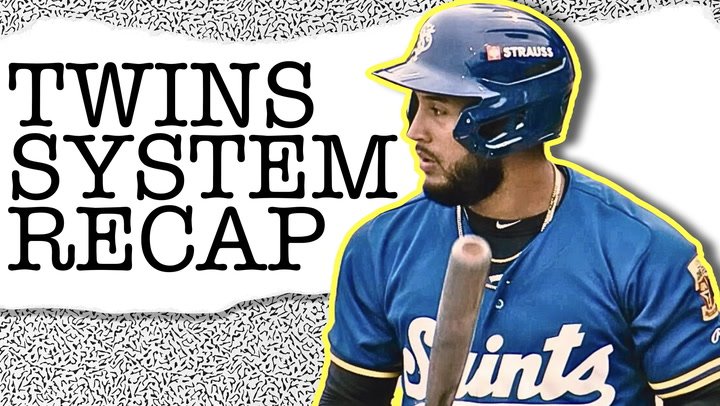 Twins System Recap: The St. Paul Saints woke up from the nightmare game they played yesterday, but didn't snap back sharply enough to win today. Emmanuel Rodriguez provided all the offense with a grand slam he tattooed. Marco Raya got another save chance but blew it. View the full article
 -
 Transactions: None Game Action: Nashville Pre-Game Media Notes Charlotte (White Sox) 9, Nashville 3 Box Score Via the Sounds’ website, game details, and we encourage readers to review affiliate write-ups as part of their Link Report routine: Sounds drop second game of series 9-3 a{text-decoration:none;color:#464feb}tr th,tr td{border:1px solid #e6e6e6}tr th{background-color:#f5f5f5} The Nashville Sounds lost 9–3 to the Charlotte Knights on Wednesday night, dropping to 2–3 on the season. Despite the loss, Luis Lara had a standout performance, going 3-for-4 with a home run and two RBIs. Charlotte struck first in the second inning after a pickoff error by Sounds starter Carlos Rodriguez led to an unearned run. Nashville answered immediately when Lara hit a solo home run to tie the game 1–1. The Knights then took control by scoring four runs across the third and fourth innings, chasing Rodriguez after 3.1 innings. He allowed five runs on eight hits with two strikeouts in his first start of the season. Nashville’s bullpen initially kept the game close. Peter Strzelecki escaped a bases-loaded jam and tossed 1.2 scoreless innings, and Brian Fitzpatrick added two more scoreless frames. The Sounds mounted a brief rally in the seventh inning, highlighted by an RBI single from Lara and a bases-loaded hit-by-pitch to Ethan Murray, cutting the deficit to 5–3. Charlotte put the game away in the ninth inning, scoring four insurance runs off Kaleb Bowman to extend the lead to 9–3. The Sounds will continue the six-game series Thursday, April 2, with Garrett Stallings making his first start of the season. That will be our last solo spotlight of the Sounds, as the other minor league affiliates will all open play on Friday April 3. Organizational Scoreboard including starting pitcher info, game times, MiLB TV links, and box scores Current Milwaukee Brewers Organization Batting Stats and Depth Current Milwaukee Brewers Organization Pitching Stats and Depth View the full article
 -
The Brewers Love the Eighth Inning; Who Even Needs the Ninth?
DiamondCentric posted an article in Brewer Fanatic
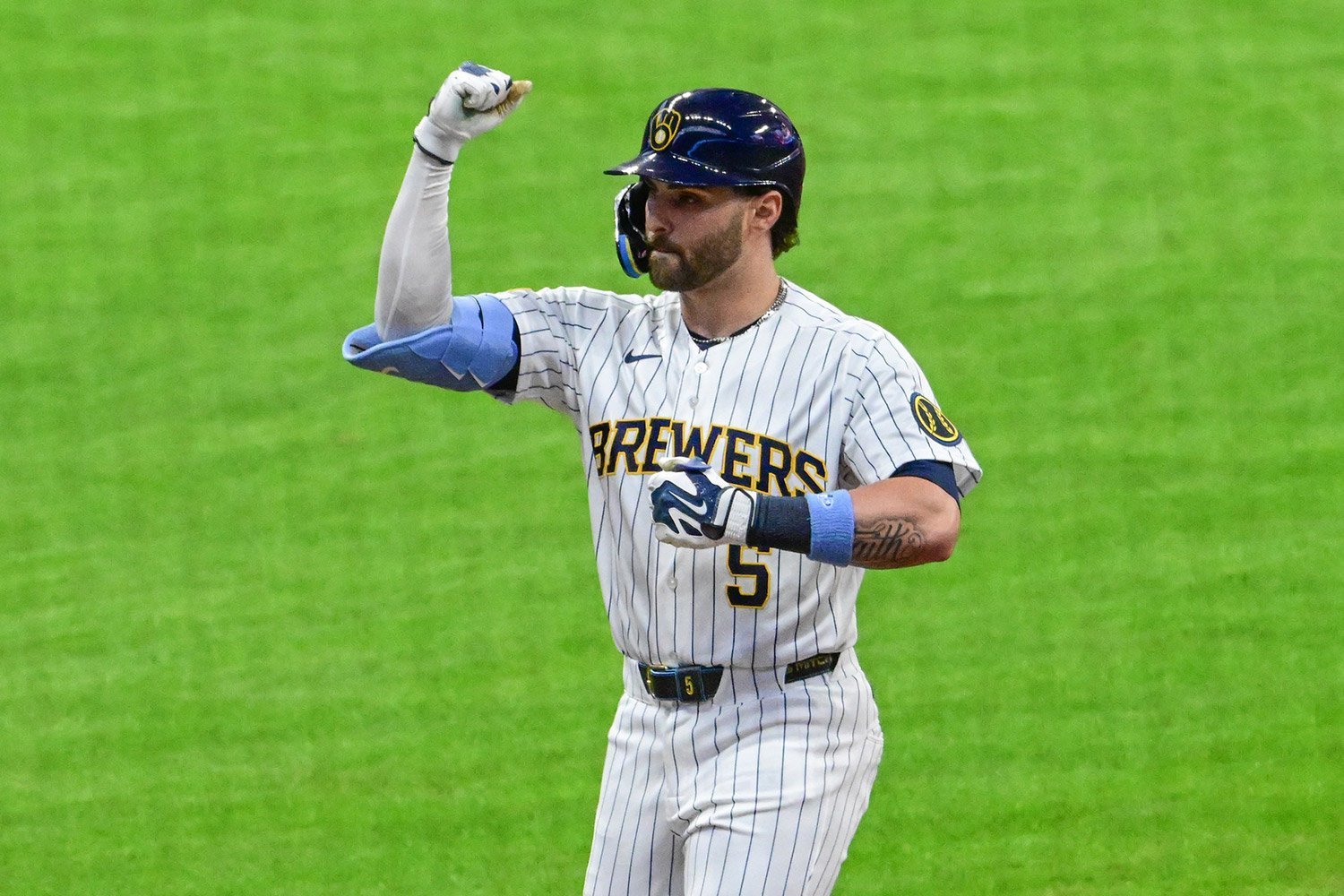 Twice in the last four games, the Milwaukee Brewers exploded in the eighth inning to score six runs. In the final game of the Chicago White Sox Opening Week series, the Brewers' six-pack gave them a 9-7 comeback win. Today’s game was slightly less dramatic, but their sixer broke a 2-2 tie in an 8-2 triumph over the pesky Tampa Bay Rays. Let’s take a look at the ‘Eighth Inning Heroes.’ The White Sox held a 7-3 lead going into the penultimate inning of the final game of the three-game series. Southpaw Chris Murphy came on for the Sox and gave up a single to Joey Ortiz and then wild-pitched him to second. Jake Bauers struck out, and then Brandon Lockridge got aboard via an infield base hit. Blake Perkins walked to load the bases before Brice Turang singled to left, scoring Ortiz to make it 7-4. Murphy went to the showers as Seranthony Domínguez came on. William Contreras popped to third, and the Sox appeared to have an exit ramp in sight. Not so fast. Luis Rengifo made his first hit as a Brewer count, knocking in Lockridge and Perkins to cut the lead to 7-6. Christian Yelich pinch-hit for Gary Sánchez and blasted a three-run bomb that traveled 421 feet and gave the Brewers a 9-7 lead. Sal Frelick walked, and Ortiz struck out to end the inning. Trevor Megill allowed a scratch single but retired the side after that. In Wednesday’s rubber match with Tampa Bay, both teams scored a pair of runs in the third inning on two-run homers by Yandy Díaz and Turang, respectively. Other than that, Drew Rasmussen and Jacob Misiorowski held the opposing teams in check, although a foul ball off the bat of Nick Fortes took out beleaguered home plate ump C.B. Bucknor on a ‘mask shot.’ Former long-time Twinkies pitcher Griffin Jax took over to start the bottom of the eighth, and once again, Ortiz began the frame with a single. Turang bunted to third, and the throw to first was dropped by first baseman Junior Caminero, who had moved over from third after a pair of throwing miscues at the hot corner. Will Bild singled to jam the sacks before Yeli singled to drive in two runners to make it 4-2. Bauers walked, and once again the bags were full, bringing on new Rays pitcher Mason Englert. Garrett Mitchell promptly doubled to score Contreras and Yelich to give the Crew a 6-2 lead. Frelick fouled out, and then Perkins got an RBI groundout on a 3U by Caminero. David Hamilton singled to knock in Mitchell, and once again, Joey O. was the spoilsport, grounding out to end the inning. DL Hall sandwiched three strikeouts amongst a hit-by-pitch and a single to win the series, two games to one. Yelich (2-for-2) and Ortiz (2-for-4) have been effective. Ironically, Ortiz led off each of the innings with hits and then finished them with outs. The Brewers have been very successful this year, putting up crooked numbers in 13 of the 49 innings they have batted in this year. Milwaukee and Houston have each scored 45 runs this season, leading MLB. My question, maybe too early, but can this be a magical season for the Brewers? Time will tell, but let’s make sure to enjoy it. View the full article
 -
Ranking 2026 Twins Prospects with the Best Power Tools
DiamondCentric posted an article in Twins Daily
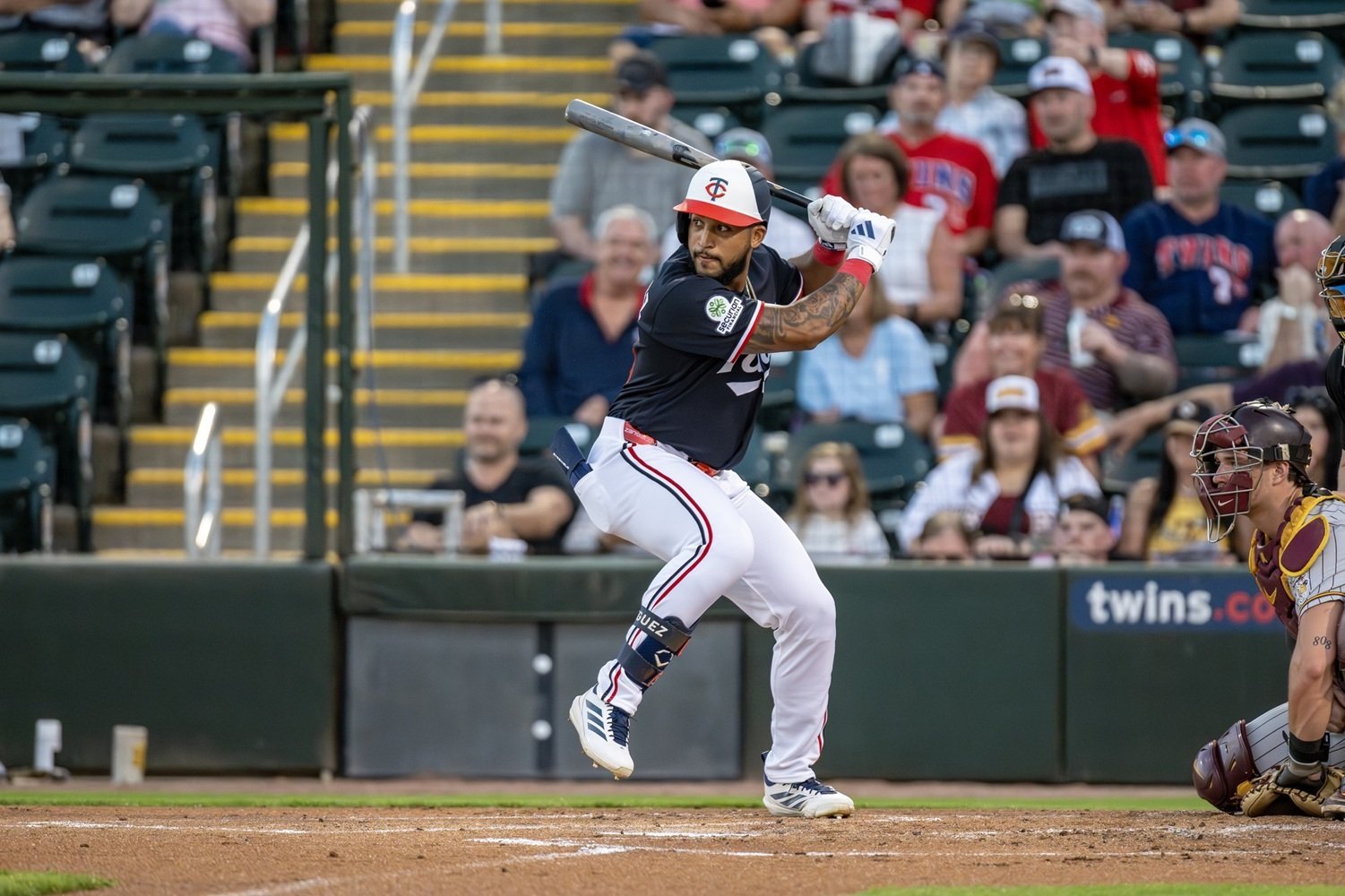 Evaluating power in a prospect is about more than just counting home runs. It's about projection, bat speed, physicality, and the ability to translate raw strength into game action. It also requires separating raw power from game power. Plenty of hitters can light up batting practice, but the real value comes from how often that strength shows up against live pitching in competitive situations. Approach, swing decisions, and contact quality all play a role in determining whether a player can consistently access that power. Context matters, as well. Age, level, and environment can all influence how power production looks on the surface. A younger player holding his own against advanced pitching or driving the ball in a pitcher-friendly league can be just as encouraging as eye-popping home run totals in a more favorable setting. For the Twins, that context is especially important, given how many of their top power bats are still developing in the lower minors. The tools below are graded on the traditional 20-to-80 scouting scale, where 50 represents the big-league average. To qualify for this list, each player appears on MLB Pipeline’s Top 30 Twins prospects. Honorable Mentions Kala’i Rosario narrowly misses the cut with a 55-grade power tool and remains one of the more intriguing bats in the system. Kaelen Culpepper and Billy Amick also fall just shy of average game power at this stage, though both have room to grow as they gain experience. 5. IF/OF Brandon Winokur: 60-grade power tool Winokur’s first taste of full-season baseball over the last two years has been a mix of flashes and growing pains, but the underlying tools remain loud. His combination of strength and athleticism showed up in a big way at High-A Cedar Rapids, where he paired 17 home runs with 26 stolen bases and proved he can impact the game in multiple ways. The power itself is not in question. It shows up easily in batting practice and in spurts during games. The next step is refining his swing so that the impact becomes more consistent. At times, his bat path has led to weak contact, especially on balls pulled on the ground or softly hit the other way. If he can make the necessary adjustments to find the barrel more often, there is legitimate middle-of-the-order upside here. 4. OF Walker Jenkins: 60-grade power tool Jenkins entered pro ball with questions about how much power he would ultimately produce, and that debate still exists, depending on the outlet. What has become clear is that his overall offensive profile continues to trend in the right direction. Despite missing time, he was one of the most productive hitters in the organization last season, posting a 135 wRC+ over a significant sample. His left-handed swing is polished and repeatable, allowing him to consistently square the ball up while maintaining strong plate discipline. As he has gotten more comfortable, the power has started to show up more frequently, particularly to his pull side. He's also shown the ability to drive the ball the other way, giving him a well-rounded approach that should translate against advanced pitching. If the power continues to tick up, he has a chance to develop into a true impact bat. 3. C Eduardo Tait: 60-grade power tool Tait brings an interesting blend of contact ability and raw strength to the plate. He can produce impressive exit velocities and has shown the ability to drive the ball to all fields, though most of his home run damage comes when he turns on pitches. His aggressive approach is both a strength and a limitation. Tait puts the ball in play at a high rate, but that comes with a tendency to expand the zone and limit his walk totals (7.4 BB%). When he gets a pitch to hit, he can do serious damage, but refining his approach will be key to unlocking more consistent game power. There is no doubt about the bat speed or the strength. The focus now is on finding a balance between contact and selectivity so that the power can play more regularly in games. 2. IF Quentin Young: 60-grade power tool Few hitters in the system can match Young’s raw power potential. Some evaluators believed it could reach the top of the scale when he was an amateur, and the Twins are now focused on helping him translate that into game production. His 6-foot-6 frame creates natural leverage, but it also introduces challenges with swing length and contact. To his credit, Young has already taken steps to simplify things, dedicating significant time to reworking his mechanics. By quieting unnecessary movement and improving his bat path, he's giving himself a better chance to consistently reach his power potential. There will probably always be some swing-and-miss in his game, but if the adjustments stick, he has a chance to be one of the more dangerous power hitters in the system. 1. OF Emmanuel Rodriguez: 60-grade power tool Rodriguez continues to stand out as one of the most electric hitters in the organization. Even with injuries limiting his development time, he reached Triple-A at just 21 years old and continued to produce when he was on the field, including a strong showing in winter ball. The power comes from elite bat speed and natural strength, allowing him to drive the ball with authority when he connects. He pairs that with an advanced understanding of the strike zone, drawing walks at a high rate (20.6 BB%) and forcing pitchers to challenge him. The biggest hurdle remains contact consistency. Strikeouts have been a part of his profile (31.8 K%), and missed time has not helped his overall development. Still, the combination of patience and power gives him a chance to profile as a middle-of-the-order hitter if he can make enough contact to maximize his tools. It's remarkable how much power exists throughout this system. Three of the five players on this list are still in the lower levels and have significant development ahead of them. Rodriguez and Jenkins, meanwhile, are knocking on the door and could bring that power to Minnesota in the near future. Power is one of the hardest tools to develop, which makes the Twins' current pipeline especially encouraging. This is not just a group with raw strength, but one with multiple paths to impact at the big-league level. Some will need mechanical adjustments, others will need to refine their approach, but the foundation is already in place. If even a couple of these bats reach their ceiling, Minnesota could be looking at a lineup capable of changing games quickly and often. Other rankings in the series: Hit Tool Fielding Tool Do you agree with the above rankings? Who is too high? Too low? Leave a comment and start the discussion. View the full article
