


DiamondCentric
-
Posts
2,631 -
Joined
-
Last visited
Never
Content Type
Profiles
Forums
Events
News
Tutorials & Help
Major League Baseball Videos
Guides & Resources
Store
Downloads
Gallery
Everything posted by DiamondCentric
-
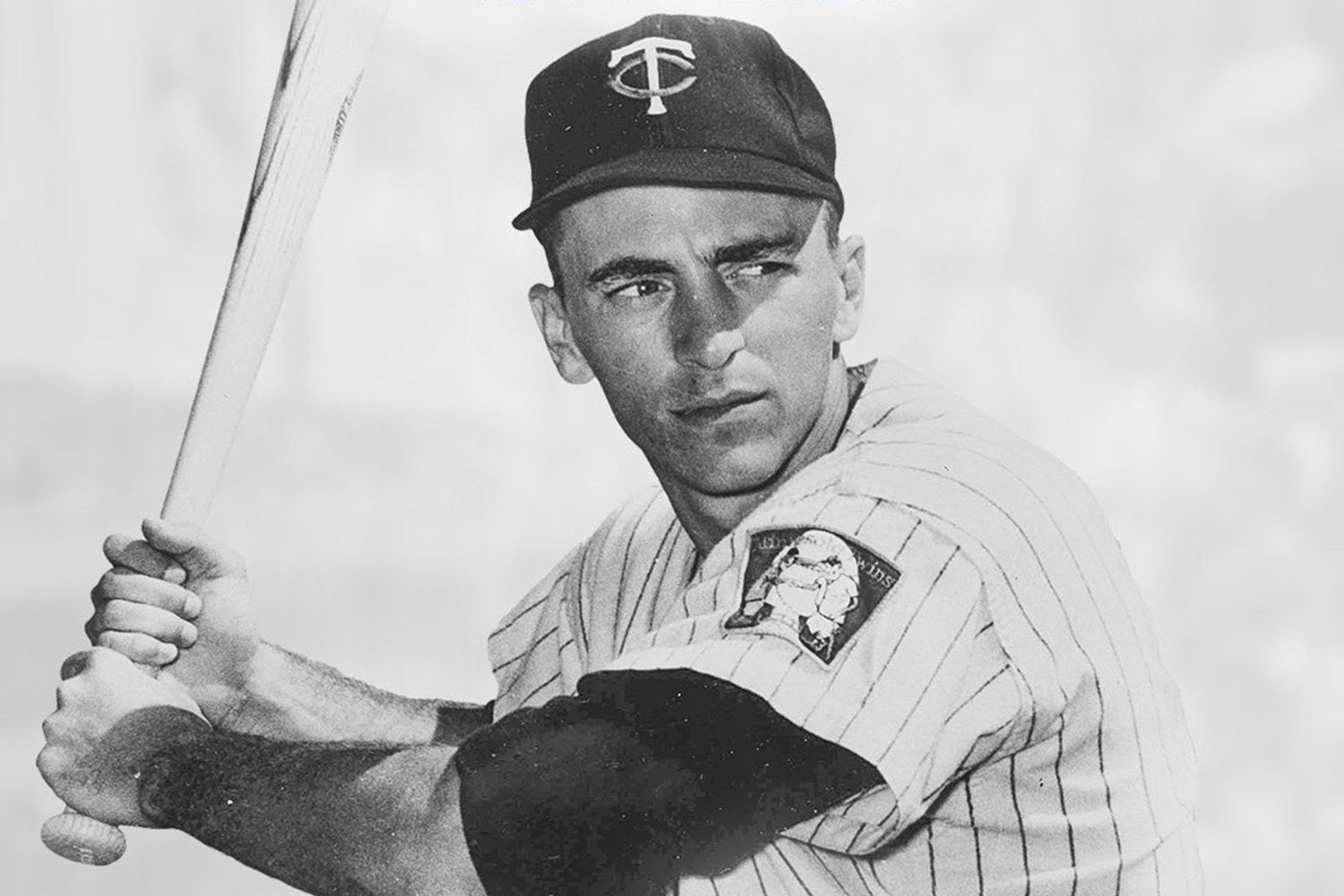 The Minnesota Twins lost a member of their extended family this week with the passing of former outfielder and coach Joe Nossek. While his time as a player may not stand alongside some of the more recognizable names in franchise history, his role in one of the most important seasons the organization has ever experienced ensures that his impact will not be forgotten. Nossek joined the Twins during their early years in Minnesota and quickly became part of a club that was building toward something special. The 1965 season remains a defining moment in franchise history, and Nossek was a member of that American League pennant-winning team. That group, led by stars like Harmon Killebrew and Tony Oliva, captured the imagination of baseball fans across the Upper Midwest and helped solidify Major League Baseball in Minnesota following the franchise’s relocation just a few years earlier. Nossek appeared in 87 games for the Twins during that 1965 campaign, serving primarily as a depth outfielder and defensive replacement. While his contributions did not always show up in the box score, his presence on a roster that went on to win the American League pennant connected him forever to one of the greatest teams the organization has fielded. During Game 7 of the 1965 World Series, Nossek was involved in a controversial play. AL MVP Zolio Versalles singled with one out in the sixth inning and tried to steal second base. As Nossek swung, Versalles broke and had the base stolen easily, but umpire Ed Hurley ruled that Nossek had interfered with catcher John Roseboro’s throw. Versalles had to return to first base, and Nossek was called out for interference. Nossek denied that he interfered: “I just went for an outside pitch. I tried to duck when I heard Roseboro coming.” The Dodgers, behind Koufax’s three-hit, 10-strikeout performance, defeated the Twins 2-0 to win the World Series. Following his playing career, Nossek remained involved in the game and returned to the Twins organization in a coaching capacity. He served as the third base coach during the 1976 season but was released following a disappointing season (85-77, 3rd place in the AL West). Nossek bounced around to multiple other organizations during his coaching career, including the Indians, White Sox, Brewers, Mariners, Royals, and Astros. Baseball is built on more than just the stars who dominate headlines. It is shaped by role players, coaches, and lifelong contributors who help create a culture inside the clubhouse and maintain continuity across eras. Nossek’s career represented exactly that type of impact. His connection to the 1965 pennant winners ensures that his name will always be part of Twins history. As the organization reflects on the legacy of that era, Nossek’s passing serves as a reminder of how many individuals helped build the foundation that still exists today. His contributions to the Minnesota Twins, both on the field and in the dugout, remain an important chapter in the story of baseball in Minnesota. View the full article
 -

 In 2025, the Brewers’ starting rotation was a shambles for the first few weeks of the season due to injuries. It got so bad that the team dealt minor-league phenom Yophery Rodriguez, a competitive balance A pick, and John Holobetz to Boston for Quinn Priester. By the end of 2025, the rotation was so deep, early-season hero Chad Patrick was first sent to Triple-A Nashville, then kept hidden in the bullpen. How will it shake out in 2026? 2025 In Review The Brewers overcame early-season injuries to DL Hall, Nestor Cortes, Aaron Civale, Tobias Myers, and Aaron Ashby – all of whom were contenders for starting rotation spots – as well as the continued convalescence of Brandon Woodruff and Robert Gasser and Jose Quintana’s delayed signing in spring training. Part of that was by embracing the worst-case scenario in trading for Priester, who became a mainstay in the Milwaukee rotation, while Patrick stepped up huge in the early part of the season. Combined with top prospects Logan Henderson and Jacob Misiorowski contributing, while Freddy Peralta became the team’s ace, and Woodruff returned in a new form that still dominated, the rotation became a strength, so much so that after they’d recovered, Myers, Ashby, Hall, and Patrick spent their time in the bullpen, while Cortes and Civale were dealt mid-season. Current Roster Situation Jose Quintana is still a free agent. Peralta and Myers were traded to the Mets. Yet despite those departures, the Brewers still have a lot of options. Woodruff, Misiorowski, Patrick, Priester, Gasser, Henderson, Ashby, Hall, and Carlos Rodriguez return to Maryvale, joined by acquisitions Kyle Harrison, Shane Drohan, Brandon Sproat, and (possibly) Angel Zerpa. Then there is prospect Cameron Crow, added to the 40-man to shield him from the Rule 5 draft. Non-roster invitee Tate Kuehner is a top prospect who’s been dominating in the minors, while Drew Rom could be an emergency option. Bishop Letson is the only other starter on the Brewer Fanatic Top 20 Prospects list, but the team’s pitching prospects who reached Double-A Biloxi or Triple-A Nashville in 2025 include Alexander Cornielle, Brett Wichrowski, K.C. Hunt, Tyson Harbin, Bishop Letson, and Manuel Rodriguez. We’re not even talking about some high-ceiling prospects further down like Melvin Hernandez, Bryce Meccage, Ethan Dorchies, Jayden Dubanewicz, Steven Duran, and Joan Pena. Milwaukee is stacked in the rotation, despite the trades. Best-Case Scenario The Brewers settle in with a six-man rotation of Woodruff, Misiorowski, Priester, Gasser, one of Patrick or Sproat, and Harrison for the bulk of the season. The team’s depth could be leveraged in two ways: First, it reduces the strain on Woodruff and Gasser, both of whom are not-that-far removed from their return from extended absences due to arm trouble. Second, it would give Milwaukee very fresh pitchers down the season. The Brewers have a lot of ways to make their rotation work out and work out well. One or two injuries will not disrupt the team horribly, especially with the depth in the minors added to what is already on the 40-man roster. The big challenge will be managing the options and figuring out a way to cash in on some of the pitchers who lack the roster flexibility the Brewers may need. Worst-Case Scenario The Brewers make a panic trade for a starter in the early weeks of the season. As was the case in 2025, it would mean that the team’s rotation has been riddled with injuries. With the team’s incredible depth in the rotation just on the 40-man roster, not to mention the prospects at Biloxi and Nashville, a trade for a starting pitcher really should not be occurring in the early part of 2026. Milwaukee’s model is to have a large stockpile of talent and depth to address injuries and ineffectiveness internally, while cashing in on the pitchers they have developed or rebuilt. Panic trades tend to deplete that stockpile at times and in ways not of Milwaukee’s choosing. Overview Oddly enough, after dealing Peralta and Myers while letting Quintana walk, the Brewers came into the 2026 season with more depth and some very clear talent in the rotation. There are arguably 14 legitimate options for spots in the rotation, perhaps as many as 16. Brewers fans should not be surprised to see one or two get moved in a deadline deal if the Brewers want to bulk up for another run in October. View the full article
 -
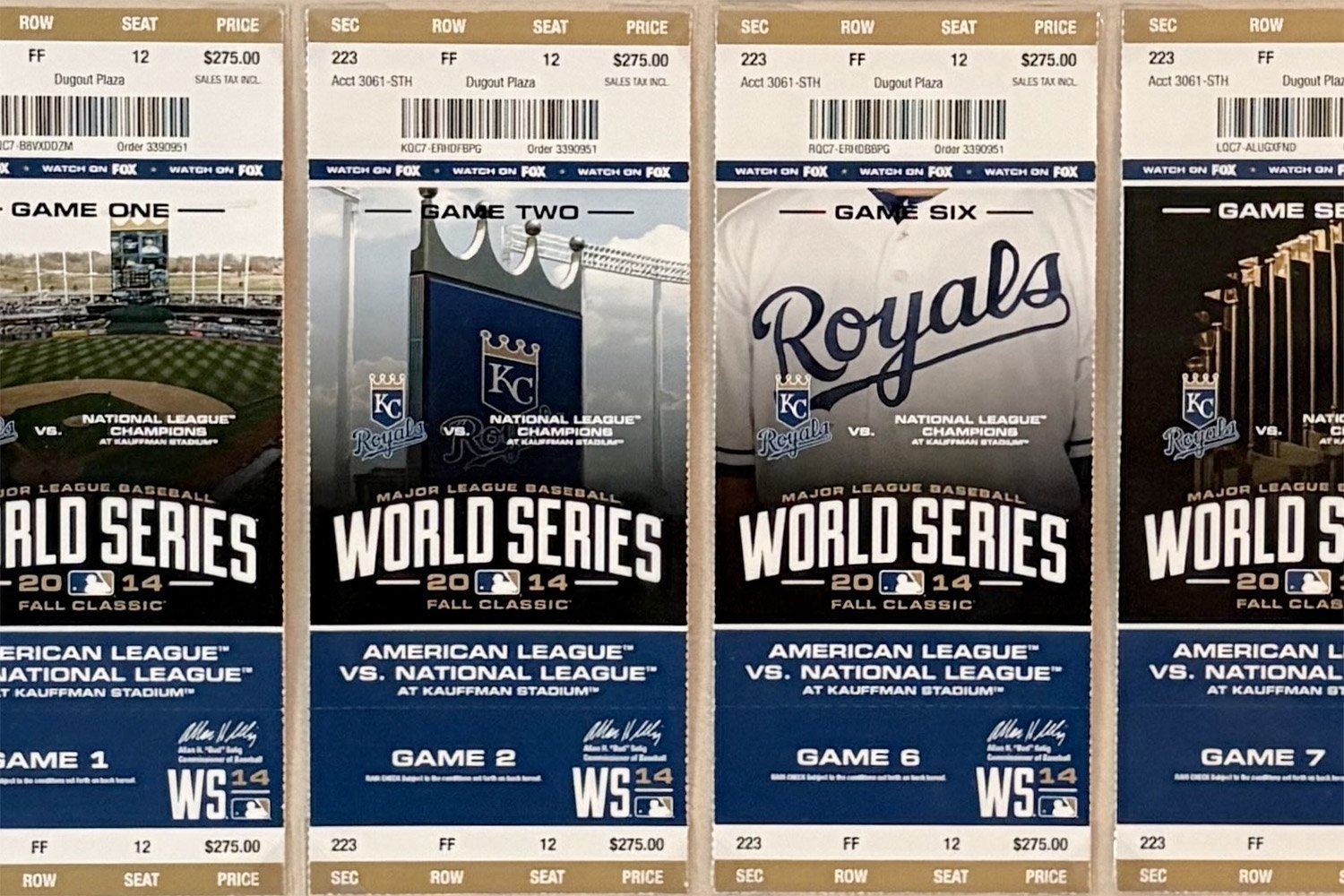 It’s a shame that physical tickets don’t exist anymore. Their branded designs and omnipresence made them easy mementos. When I was a kid, my dad had a 20-game Royals season ticket package, and all of our tickets and parking passes came in a bound book. Dad would tear off each game’s necessities, and away we went, making the drive from Liberty to the K. We took alternate routes and backroads in September and October 2014, as we joined thousands of other fans watching the team’s first playoff run in 29 years. In this series at Royals Keep, I’m looking back on Royals history from this century through the lens of memorabilia. Dad’s season ticket package was just a quarter of the team’s home games, but it allowed him the ability to purchase postseason tickets. Our regular seats were section 232, row BB, seats 3, 4, 5, and 6. I will remember those numbers for the rest of my life! For the playoffs, however, we shifted to the third base side and section 223. We barely sat in our seats during the Wild Card Game, forever the best baseball game I will ever watch in person. In 2019, the Royals switched from paper tickets to the MLB Ballpark app. “If a fan wants a paper copy of their ticket, the ticket office will print a stub for a $5 fee,” according to this KSHB 41 release announcing the change. My family and thousands of other Royals fans are lucky that this adjustment occurred years after the 2014-15 playoff runs. I’m so fortunate to have had that shared experience, for it produced my favorite baseball gift I’ve ever received. My mom took our playoff tickets and had them matted and framed, turning each collection of tickets into a one-of-a-kind Christmas gift. For my dad, she combined her tickets with his and included the parking passes, while my brother and I got our tickets to the Wild Card Game, ALDS Game 3, ALCS Game 3, ALCS Game 4, and World Series games 1, 2, 6, and 7. What’s your favorite baseball gift you’ve ever received? Because I watched those games in person, I think I actually have more affection for the 2014 American League champions than the 2015 World Series winners. Does anyone else feel this way? I still cried when Wade Davis struck out Wilmer Flores to end World Series game 5, but that 2014 team was incredibly special. Ten years later, the 2024 Royals shocked baseball by improving by 30 games and sneaking into the playoffs as a Wild Card team, just as they did in 2014. Before 2024 kicked off, I asked my brother if we should take our dad to the next Royals home playoff game, whenever that may be. Now grown adults who still love baseball, my thought was we can begin to pay back our dad for the literal hundreds of Royals games he took us to in the summer heat. Little did I think we’d make it to the K that October! Aaron and I bought upper-deck tickets for us and our dad to attend ALDS Game 3, where the mighty Yankees beat the Royals 3-2. Too bad we don’t have a paper ticket, although we have this great photo and memories of saying hi to Jeff Passan before the game. Bonus: I remain shocked by the amount of niche baseball memorabilia available online. Upon searching “Royals season ticket book” on eBay, this gem popped up: a 2014 Royals season ticket book. This can be yours for the low price of $24.99 plus shipping. View the full article
 -
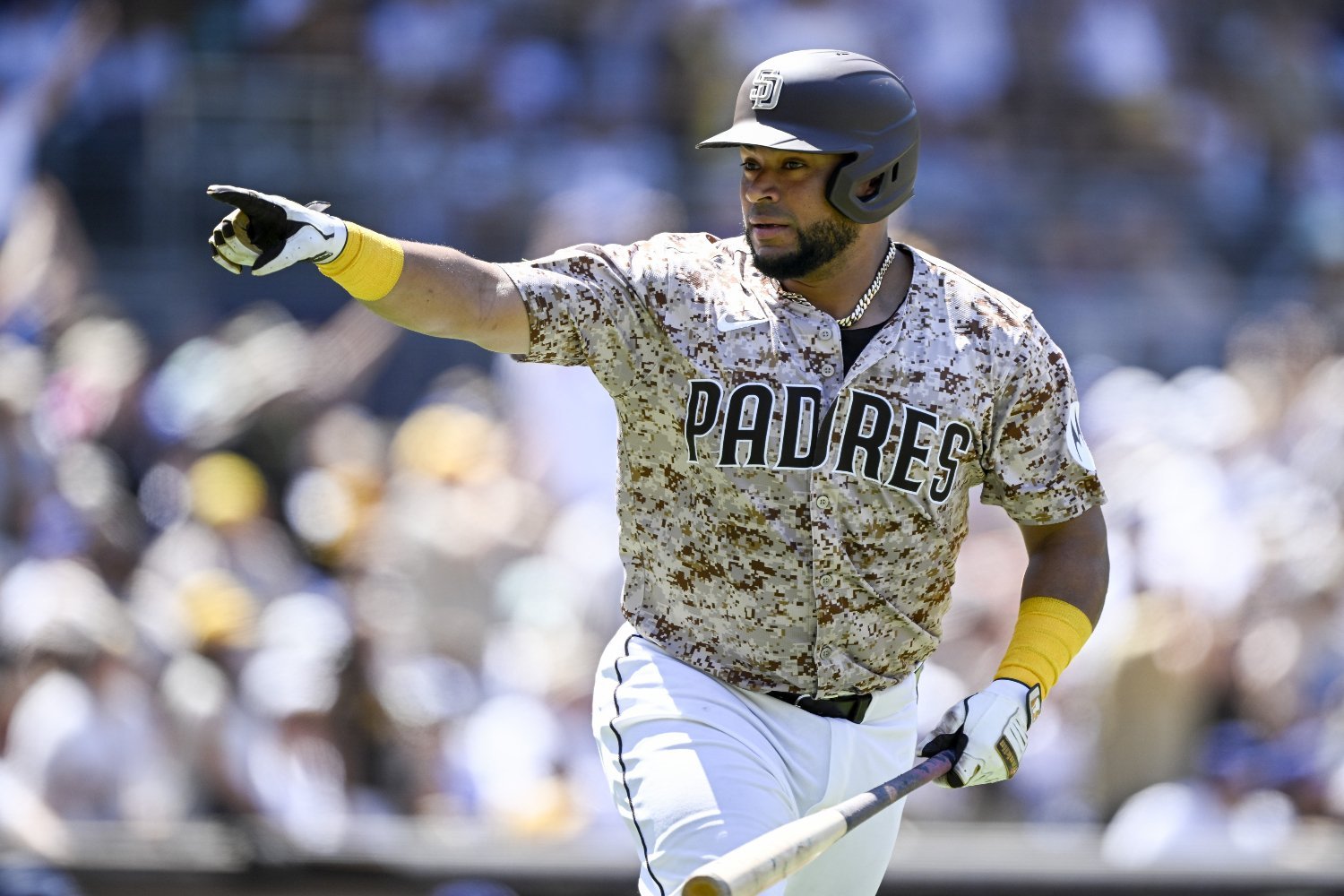
 Matt Waldron is in contention to be the San Diego Padres’ fifth starter for the 2026 season. He will need to be consistent during spring training to earn that spot, and the Padres’ catchers will need to learn how to handle a knuckleball pitcher. That may be a lot to ask in what's become a suddenly crowded competition, but that knuckleball is Waldron's key back to San Diego. Waldron and Padres manager Craig Stammen were never on the same pitching staff. Waldron spent the entire 2021 season in the minor leagues during his first year in the Padres organization. Stammen was on the major league roster and had 63 relief appearances and four starts. For reference, Stammen didn’t pitch poorly in his 2021 starts. Padres manager Jayce Tingler utilized multiple “bullpen days” and Stammen was the formal starter while Tingler had no intent of having Stammen pitch more than once through the order. Those bullpen days, along with Tingler's habit of removing effective starters before the sixth inning resulted in eventual bullpen fatigue, and Maxwell’s silver hammer came down on the Padres’ head late in the season. Had the Padres’ rotation in 2021 included a knuckleball pitcher who could last into the sixth or seventh inning, the Padres might have obtained a wild card berth in the National League playoffs. The success of the 2026 Padres will be based in part on whether the team’s fourth and fifth starters can last long enough into the game to give the bullpen sufficient rest for subsequent outings. In 2021, Waldron made 20 starts for the Padres’ Class AA and High-A farm teams. He threw 103 2/3 innings in those outings, an average of more than five innings per start. Waldron’s 25 Triple-A and Double-A starts during 2022 totaled 113 2/3 innings, which still created an average of lasting into the fifth inning. Waldron pitched in 20 Class AAA games in 2023, starting 18 of those. On multiple occasions, he was briefly called up to the Padres, and on August 28 of that year, he was recalled by the Friars and stayed with the major-league team after the roster limit expansion took effect in September. In his first major league start, he was removed after 4 2/3 innings, but his other five starts that year were between five and six innings. He came to the mound from the bullpen twice in 2023, pitching five innings in his first relief appearance and 4 2/3 frames in the other one. Waldron began 2024 on the Padres and stayed with the major-league club until being sent to El Paso on August 22. His 26 starts totaled 142 2/3 innings for an average of more than five once again. In his worst 2024 outing, he allowed eight runs in three innings. On two other occasions he was removed after four innings. On seven occasions he pitched at least five innings; there was also a streak in there where he allowed three or fewer hits including three consecutive starts in which he allowed two hits in 6 1/3 innings, three hits in six innings, and three hits in seven innings. The two starts sandwiched around those three games were both seven-inning outings. Waldron had streaks of six and four starts in which he pitched at least six innings. In seven of his 26 starts during 2024, Waldron lasted less than five innings. The final one of those, a 4 1/3-inning outing on August 21, was the 32nd career start for the second knuckleball pitcher in Padres history and broke Joe Niekro’s team record for most starts by a knuckleball pitcher. An oblique muscle strain delayed Waldron’s 2025 debut to the second half of May, when he pitched in three rehabilitation assignments. Waldron was activated from the 60-day disabled list June 1 and sent to El Paso. His 18 starts with the Chihuahuas totaled 82 1/3 innings for an average of, you guessed it, more than five frames. He was called up to the Padres for a June 30 start in which he allowed four runs in 4 2/3 innings before being returned to El Paso. Martin Maldonado, who is no longer with the club, was Waldron’s catcher during his one major-league appearance last year. Waldron’s career major league totals of 179 innings in 33 starts average out to him pitching into the sixth inning. Stammen, who experienced first-hand the Padres 12-34 finish in 2021, recognizes the value of a pitcher who can avoid overtaxing the bullpen. If Waldron can regain his consistency and if the Padres’ catchers can figure out how to handle a knuckleball, there may be a dark horse yet for that fifth starter job in camp. View the full article
 -
Starter or Reliever: Where Should Andrew Morris Fit In?
DiamondCentric posted an article in Twins Daily
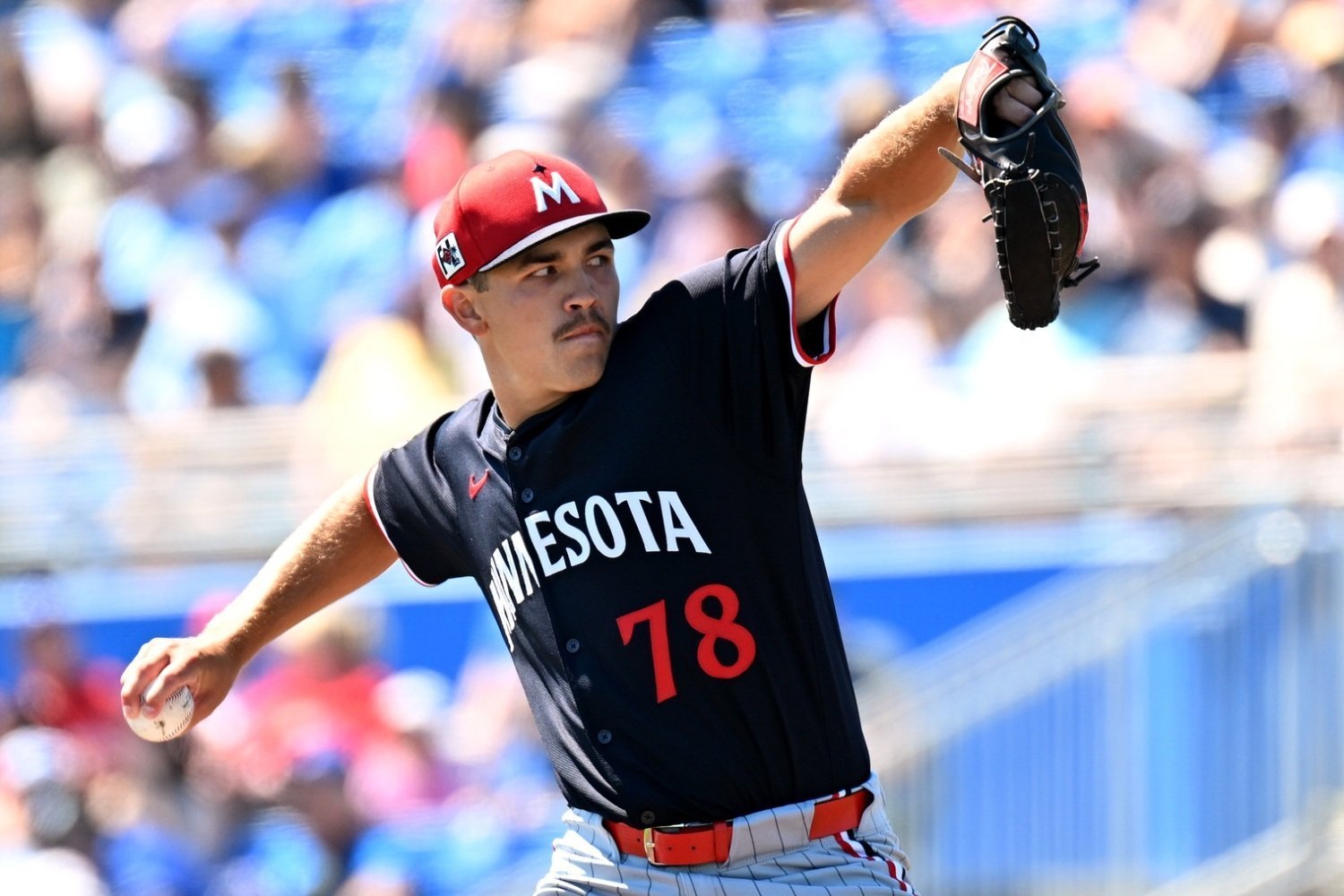 The Minnesota Twins are looking for pitchers in their gutted bullpen and now in their rotation, which had its depth shaken up by the now-official news that Pablo López will undergo Tommy John surgery on Wednesday. That leaves a prospect like Andrew Morris in a unique place. With the subtraction of López, Morris moves up the starter pecking order, but if the darts thrown at veteran relievers don’t work out, should Morris be considered as a reliever? The 24-year-old right-hander has drawn plenty of comparisons to fellow Twins starting pitcher Zebby Matthews. Both have added considerable velocity to their four-seam fastball, and both had a quick ascension through the minor league system. In 2024, Morris began the season at High-A and closed it out at Triple-A St. Paul as he threw 133 innings across three levels. His 2025 season was interrupted by a forearm strain, but he threw 94 ⅔ innings with a 4.09 ERA and still showed encouraging developmental signs. Two aspects of Morris’ game that are clear positives for him are that he has a good four-seam fastball and has been good at limiting walks. Morris also has a vast pitch mix in addition to his four-seamer (sinker, cutter, curve, slider, and change), which could help him continue to develop and profile as a starter as long as each of those pitches performs well against MLB hitters. The effectiveness of Morris’ entire arsenal seems to be something the Twins still need more confidence in before he can make the jump to the majors. His fastball has average pure vertical break at 16.33 inches and vertical run at 5.36 inches. Morris’ four-seamer is his most used pitch at 29.8% last season, sits at 94-96 MPH, but has touched 98 MPH when needed. While Morris’ fastball looks like his best pitch in many ways, it is also the pitch that has been hit the hardest, with a 47.67% hard hit percentage. The rest of Morris’ mix outside of his sweeper seems to fall within the pitching “dead zone” when it comes to movement, making them much less deceptive and easier for opposing batters to hit. Across the board, Morris would be well served if he could develop more shape to his pitch mix, helping him as he mixes and matches against opponents. Image from Prospect Savant The site Prospect Savant gives Morris an overall good score, but in its ranking of each pitch individually, that ranking gets interesting. The site uses a psStuff+ stat, which mimics the Stuff+ stat we're all more familiar with. Using psStuff+, only Morris’ cutter (104) and sweeper (103) rank above the 100 threshold. This makes Morris’ cutter a very interesting pitch. As psStuff+ highlights, the cutter may have the best characteristics of any of Morris’ pitches, but it has produced some of the worst expected results of any of his pitches. This seems like an immediate area where improvement could yield big gains for the right-hander and boost his ranking as a starter in the Twins system. If Morris were to move to being a one-inning reliever, we could expect the velocity on his fastball to improve, and he would also likely focus on trimming down his pitch mix and could lean into his sweeper, which is the one other good movement pitch outside of his four-seamer and the aforementioned cutter. Completely cutting out the other secondary pitches wouldn’t be absolutely necessary, as other starters turned relievers have kept their full arsenal to help them with their effectiveness. There's a chance that cutting some of those secondary pitches may negatively affect how he attacks left-handed hitters. Based on the recent developments in the Twins free agency activity and Lopez’s injury, it doesn’t make sense at this point to move the 24-year-old Morris away from starting. If the time came later in his career or late in the season where the team needed a talented arm to move into the pen, Morris is a pitcher who could follow a long line of one-time starters to make that transition, whether it would be permanently or for a shorter stint. For now, more time starting in St. Paul makes the most sense for Morris. What would be your plan for handling Morris going forward? What role do you believe will unleash his maximum effectiveness? View the full article
 -
What Can Stephen Kolek Do To Make the Royals' Opening Day Roster?
DiamondCentric posted an article in Royals Keep
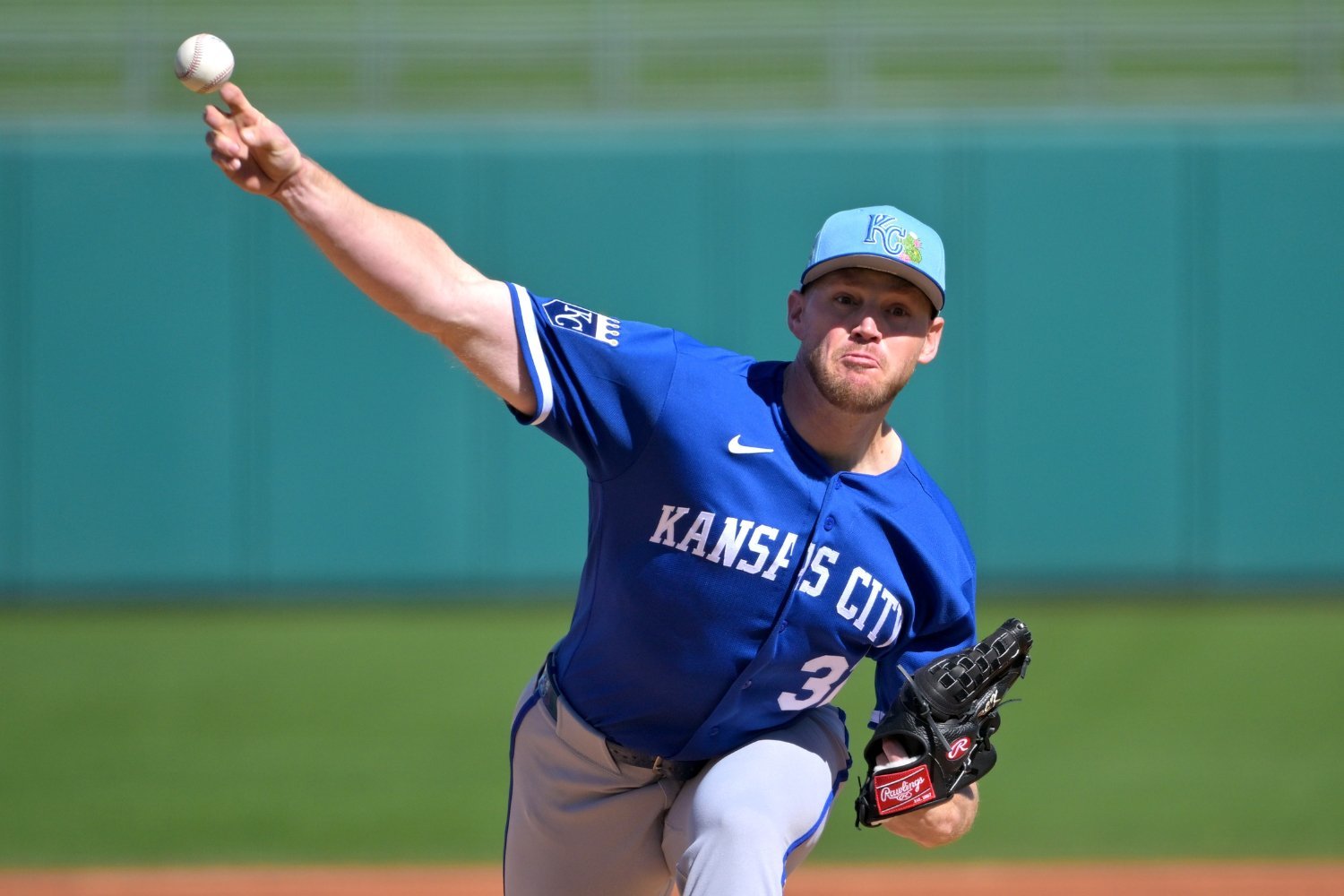 The Royals are 1-1 so far in the Cactus League in 2026. After winning their Spring Training opener against the Texas Rangers, Kansas City had a much rougher day on Saturday, losing 10-3 to the Padres. One pitcher that stood out in the Royals' first couple of games was Stephen Kolek, who started Kansas City's Cactus League opener on Friday. In two innings of work, he allowed one run on three hits and one walk while striking out two. He threw a total of 36 pitches in his first Spring Training start of the season. When it came to his advanced metrics, Kolek did a decent job of finding the zone, but struggled when it came to generating chases and whiffs. And yet, his TJ Stuff+ metrics were decent overall, especially considering it was his first Spring Training start and his diverse pitch mix. Below is a look at what his outing looked like via his TJ Stats summary from Friday's outing. Kolek posted a 102 overall TJ Stuff+ with four of his pitches sporting TJ Stuff+ marks over 100 (his sinker, changeup, sweeper, and slider). His sinker and changeup graded 68 and 75, respectively. However, that didn't translate much into his other metrics, as his 16.7% chase rate, 7.1% whiff rate, and .387 xwOBACON were mediocre marks, to put it nicely. Still, stuff is what one wants to see from early Spring Training starts, especially as pitchers get ramped back up after a long offseason. Kolek showing solid TJ Stuff+ marks demonstrates that he's ready to go, and could put up better numbers in Cactus League play once his command irons out over more outings. Nonetheless, one has to wonder where Kolek fits on this Royals pitching staff for 2026. The 28-year-old had a solid debut for Kansas City in 2026, posting a 1.93 ERA, 2.71 FIP, and 0.9 fWAR in 33 IP after coming over from San Diego at the Trade Deadline. That said, he has a lot of competition for a spot on the pitching staff, especially with the rotation that consists of Cole Ragans, Michael Wacha, Seth Lugo, Kris Bubic, and Noah Cameron. In addition to that projected five, Kolek also will be competing with Ryan Bergert (who started today), Mason Black, Ben Kudrna, Luinder Avila, and Mitch Spence. Despite all that competition, Kolek has a chance to break with the club at the conclusion of Spring Training. Here are three pitch-related trends to pay attention to with Kolek this spring, as they could determine his chance to make Kansas City's Opening Day roster. Kolek's Four-Seamer vs. Sinker Kolek's primary two pitches are his four-seamer and sinker. He threw the pitches 26% and 24% of the time, respectively, last season. When it came to the metrics on those pitches, this is how they fared, according to his season-long TJ Stats summary. Kolek's sinker rated as a better offering than his four-seamer a season ago. The sinker had a 99 TJ Stuff+ and 58 grade, and produced a 58.5% zone rate, 31.4% chase, and a .308 xwOBACON. Conversely, the four-seamer had only a 92 TJ Stuff+ and 41 grade, and produced a 52.5% zone rate, 17.1% chase rate, and .446 xwOBACON, all worse marks in those categories than the sinker. That said, the four-seamer had a slightly better whiff rate (15.4%) than the sinker (13.1%). Below is the heatmap data of the four-seamer, which also includes split results, in addition to heatmaps against hitters from each side of the plate. Kolek threw the four-seamer more against lefties and tended to locate the pitch up and away. While the four-seamer CSW numbers against lefties (26%) were similar to those against righties (26.7%) and the chase rate was slightly better (17.4% to 16.4% O-Swing%), he also had a lower whiff rate (13.1% to 22.2%) and a higher xwOBACON (.452 to .428). Thus, one has to wonder if that four-seamer usage gap (15.8%) will close a bit in 2026. Now, let's take a look at the TJ Stats heatmap data with the sinker below. The sinker was less of a whiff-inducing pitch than the four-seamer overall. Furthermore, it produced a 26.9% CSW against lefties and a 26.4% mark against righties. Those rates are not all that different from his four-seamer. However, his sinker was a much better chase-inducing offering, producing a 34.1% O-Swing% against righties and 23.9% mark against lefties. Thus, it's not surprising that his xwOBACON was .274 against righties, as hitters had a hard time squaring up against a pitch they chased nearly 35% of the time. His xwOBACON was less stellar against lefties at .422. However, he also threw the sinker 30% less against lefties (11.2% against lefties; 41.2% against righties). It appears that his sinker is his go-to fastball offering against righties, and his four-seamer is his go-to against lefties. However, I wonder whether closing that gap a bit and mixing more sinkers against righties could be beneficial in the long term. Granted, the sinker is a more horizontal offering, which makes it less of a whiff-inducing pitch compared to the more vertical four-seamer. That said, it's intriguing how Kolek locates both pitches and how they can work effectively when commanded effectively, as seen in the clip compilation below. How Kolek's sinker and four-seamer usage fare this spring should be watched closely by Royals fans. If changes in this mix lead to better results (especially in chase and whiff), he could find himself stealing a rotation or bullpen spot by Opening Day. Mixing the Changeup In Effectively Kolek's changeup was one of the most impressive pitches, stuff-wise, in his 2026 Spring Training debut. It sported a 75 grade and 113 TJ Stuff+. However, it had a zone rate of 16.7%, a chase rate of 20%, and a 0% whiff rate. In 2025, the pitch had a 102 TJ Stuff+, a 60 grade, and a .270 xwOBACON. However, the zone (29.1%), chase (31.7%), and whiff (24.7%) rates were all a bit meager. It would also be nicer to see that chase rate up, especially if the zone is going to remain low. Here's the heatmap data on his changeup, and how it was thrown against lefties and righties last season. His changeup was primarily thrown against lefties, as it had an 18.3% usage against lefty hitters compared to a 2.8% usage against righties. Regardless, it was primarily a pitch designated to generate chase, as it was thrown in the chase zone 35.8% of the time and waste zone 13.6% against lefties. While it didn't produce a ton of CSW (19.3%) against lefties, hitters didn't do much against Kolek's offspeed offering either, as evidenced by the .225 xwOBACON. Below is a clip of his changeup located in that chase zone, effectively against left-handed Twins hitter James Outman. Kolek forces Outman to not only chase but also whiff badly. Kolek's changeup is a unique weapon, even if it doesn't generate many called or swinging strikes. It would be nice to see him utilize this offering more with the sinker, especially since they sport similar movement. The changeup's 6.1 MPH difference from the sinker could lead to more whiffs on the offspeed pitch this spring and in 2026. Which Breaking Offering is More Effective? Kolek sports a slider (16.6% usage) and a sweeper (6.8% usage) as his primary breaking pitches. The slider has produced better results, especially in terms of xwOBACON (.378 to sweeper's .461) and chase (32.6% to sweeper's 20.7%). That said, the sweeper had slightly better stuff, with a 103 TJ Stuff+ (the slider had a 102). Here's a look at the slider's heatmap data via TJ Stats. The encouraging characteristic with Kolek's slider is that he generates strong chase against lefties (29.3%) and righties (36.2%). While the pitch is a better whiff-inducing offering against righties (23%), the whiff rate isn't that bad against lefties, as it is only 3.3% lower. When Kolek is able to locate the slider knee high and into lefties, he can produce effective whiffs like this one below against Freddie Freeman. That said, the sweeper is an intriguing pitch, and I think it could be a more worthwhile offering, especially against righties. Below is a look at his sweeper heatmap data via TJ Stats. He only threw the sweeper 9.2% against righties last year. However, it induced a 27.8% O-Swing% and a .265 xwOBACON. That xwOBACON was 93 points better than his slider's xwOBACON against righties. The sweeper is a much "loopier" breaking offering, averaging 82.5 MPH last year, 1.9 MPH slower than his slider. That said, the sweeper shape and velocity may make it a nice change of pace, especially when paired with the sinker and four-seamer. Below is an example of Kolek pulling the strings on Angels catcher (and former Royal) Sebastian Rivero last year on a sweeper. Rivero whiffs because he's sitting on a four-seamer or sinker. I don't think Kolek needs to add a traditional curveball to his pitch mix. He has a slider, a harder cutter, and a sweeper in addition to the sweeper. However, utilizing his sweeper more could help make his breaking offerings more effective in 2026. The sweeper is the kind of pitch that can really get right-handed hitters swinging out of their shoes badly, as Rivero demonstrated in the clip above. Kolek threw the sweeper 13.9% of the time in his first Catcus League start, which is 7.1% more than his sweeper usage in 2025. Thus, pitching coaches Brian Sweeney and Mike McFerran may also believe that Kolek should be throwing his sweeper more in 2026 and are getting that process started with Kolek in Arizona. View the full article
 -
Will Gabriel Gonzalez Become A Dependable Top Of The Lineup Hitter?
DiamondCentric posted an article in Twins Daily
 Gabriel Gonzalez was one of the best all-around hitters in the Twins farm system last year. He earned himself a 40-man spot in the offseason and has a real shot to make the majors in 2026, but can he maintain the same success in the Majors and become a dependable top of the lineup hitter for the Twins once he makes it to the majors full-time? View the full article
 -
Will Gabriel Gonzalez Become A Dependable Top Of The Lineup Hitter?
DiamondCentric posted an article in Twins Daily
 Gabriel Gonzalez was one of the best all-around hitters in the Twins farm system last year. He earned himself a 40-man spot in the offseason and has a real shot to make the majors in 2026, but can he maintain the same success in the Majors and become a dependable top of the lineup hitter for the Twins once he makes it to the majors full-time? View the full article
 -
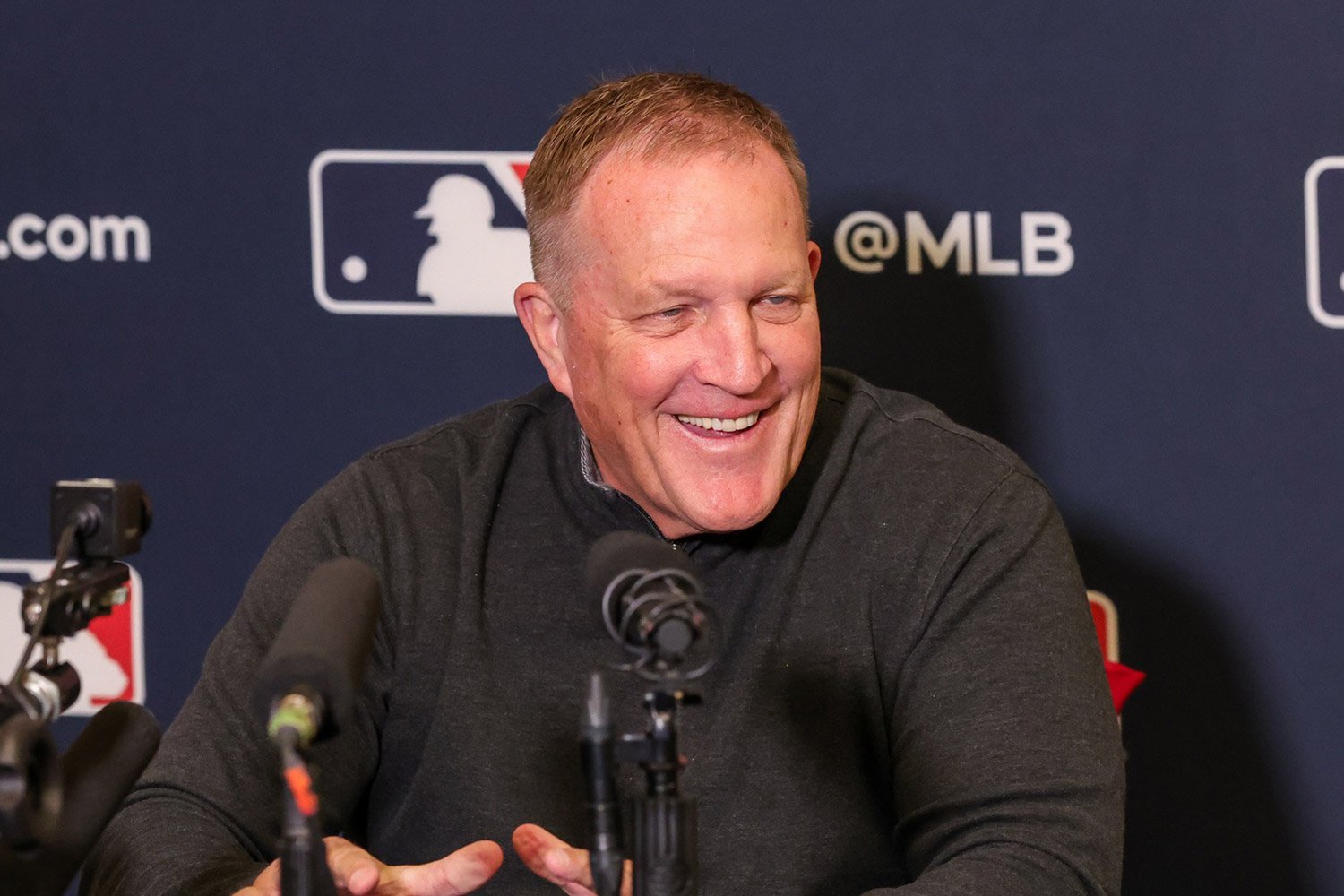 There was little question that Pat Murphy remained the best fit to manage the Brewers beyond 2026, but it's now official. Instead of managing this season as a lame duck, Murphy and the Brewers signed a new three-year contract with a club option for 2029. "I feel lucky. I feel fortunate," Murphy said from his office at American Family Fields of Phoenix on Friday morning. "I know how tough it is to get here, but I think with it comes a responsibility. I didn't need to be certain that I was wanted. I didn't need this to happen. I just felt like it probably is the best to get it done, and I don't want to be with any other organization. I feel really connected. Going on my 11th season, I feel really part of it, and I feel like this is where I'm supposed to be." In two seasons under Murphy, the Brewers have gone 190-134 in the regular season and won a franchise-record 97 games last season. The 67-year-old moved into the manager's chair in November 2023 after Craig Counsell signed with the division-rival Cubs and has kept the club highly competitive amid what could have been more tumultuous turnover. "Things didn't change a ton when he took over," said Christian Yelich. "Obviously, him and 'Couns' have different personalities and different ways of going about things, but he was familiar with us and the way we did things. I was glad that he was the one that was taking over. Obviously, it went really well for a couple of years." Murphy has been specifically hailed for his leadership in the clubhouse, balancing his trademark humor with a no-nonsense, straight-shooting approach to the game that has resonated with players. "I think players know when it's time to have fun with him and joke around, but know when it's time to lock it in, and you have to do your job," Yelich said. "There's high expectations, and you have to meet those expectations, or there's going to be some discussions if you don't. I think it's fine knowing where you stand with the manager and knowing that you don't ever have to wonder. With Murph, he's going to tell you good or bad." A longtime college coach before joining the professional ranks, Murphy's reputation as an old-school coach seemed to clash with a forward-thinking front office that relies heavily on analytics. However, he has proven he understands the modern game enough to effectively blend his perspective with the information he receives from the ivory tower. "I think there's value in the old school mentality, absolutely," president of baseball operations Matt Arnold said. "But he's not completely old school. He's not closed-minded. There's a difference between those two. I think he's very open to ideas and continuing to get better. I think that's the goal here for all of us. We all want to get better." "I've learned so much about how the game is run," Murphy said. "How the game is run from the top down. I'm constantly growing myself. I think of myself coming out of college, trying to be a college coach, and then turn into a major league coach, like, wow. The education that I needed in order to do that, I've learned so much." Some of those college elements are still evident in Murphy's style. Because those players are far less polished than professionals, the college playing environment is an unpredictable bloodbath condensed into a 60-game season. Coaching in that setting for nearly 30 years solidified Murphy's "win tonight" approach, which often prompts him to green-light aggressive player workloads, even as many teams set strict usage guardrails as part of load-management plans. "Every game might be the difference between a seeding in the postseason," Murphy said. "Every game, no matter where it is and what the environment. It's a good thing to build into your computer, you know? And I can't shake it. So that's why every game means so much. "Sometimes, perspective-wise, that's not the best, but I think as a core value, I think it really rubs off, and it resonates with people that these all matter. There's no reason to believe that you can give anything away. It's that competitive. So I think that part. But the season is so much longer, it really challenges you." Murphy acknowledged last October that such a hard-nosed approach may have worn some players down by the postseason, where the Brewers were swept by the Los Angeles Dodgers in the NLCS. Finding the right balance between winning tonight and planning for the future may still be his greatest weakness, but he's been self-aware and open to feedback. "That's part of the job," he said. "You've got to try to stay the course in the right way. I'm hungry. I'm still hungry. I still want to learn. I still want to impact people." He could have the opportunity to continue impacting people in Milwaukee for up to four more seasons. "I think it's important to know where you're going to be. I really didn't have any doubt that this was going to work out, and I'm really grateful, really thankful." View the full article
 -
The Twins’ Identity Is Shifting, And It Starts on the Bases
DiamondCentric posted an article in Twins Daily
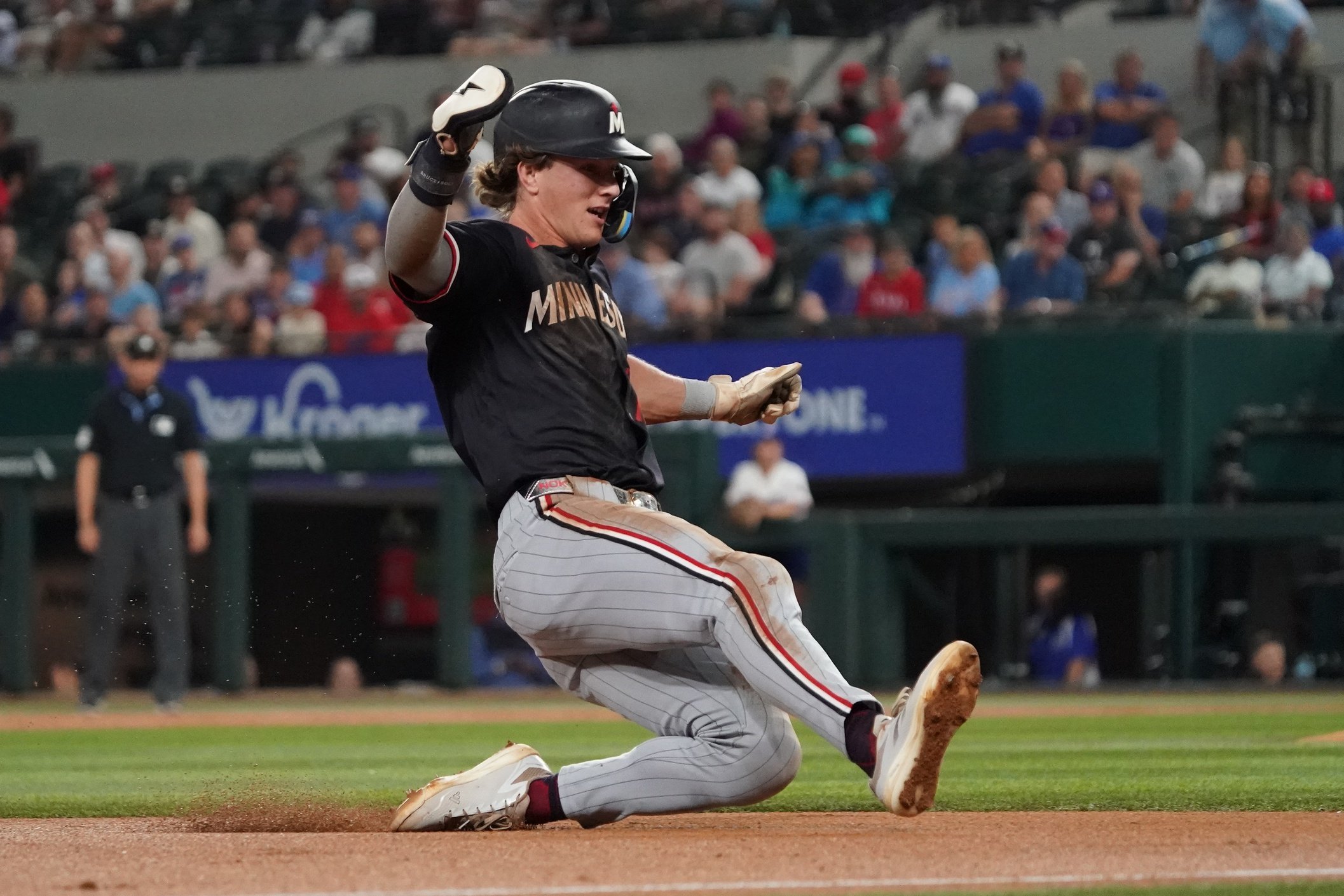 For years, the Minnesota Twins have largely played a station-to-station brand of baseball. They’ve relied on power, damage in the gaps, and waiting for the big swing. The Twins have never really built their game around stealing bases; it’s always been more of an afterthought. That could change in 2026. With Derek Shelton stepping in as manager, there’s real reason to believe the Twins are going to force the issue more on the basepaths. Shelton has a reputation for being more aggressive than most managers, and he hasn’t exactly hidden his intentions for the upcoming season. “I think the first thing is, I’m going to build off what happened in September,” Shelton told reporters in the early days of camp. “I really like what happened in September. Ultra-aggressive on the bases. Started to push the envelope a little bit. I think we have to continue on that. That’s proven to be good.” That’s a very clear directive: continue what worked, and put pressure on opponents. So, who can you expect to be aggressive on the basepaths this year? There are a couple of very safe bets to start with, beginning with Byron Buxton. We’ve known about Buxton’s speed for over a decade. Even as injuries have forced adjustments to his game, the speed has never disappeared. Last season, he stole 24 bases without being thrown out once. That’s elite efficiency, and efficiency is what earns a consistent green light. If Buxton is healthy, he’s going to run. It’s that simple. And hitting near the top of the lineup means more chances to turn a walk or single into immediate scoring position. Shelton’s philosophy, paired with Buxton’s track record, feels like a natural match. Then there’s Luke Keaschall, who might have the most upside in this entire conversation. Keaschall stole 14 bases in 49 MLB games last season. He added 11 more in just 28 games at Triple-A before his call-up. The speed translated instantly, but more importantly, the aggressiveness did too. He wasn’t waiting around to see how the league would adjust; he was forcing the issue. Here’s what really stands out: Keaschall has played exactly 162 minor league games in his pro career. In those 162 games, he stole 45 bases on 53 attempts. That’s an 85% success rate over what amounts to a full season. You don’t have to project anything – he’s already shown he can maintain that pace over time. The Twins haven’t had a player steal 40 bases in a season since Ben Revere did it in 2012. Keaschall is the type of player who could end that drought. If he and Buxton are batting one-two, expect movement, and expect action. That alone changes how opposing pitchers operate from the first inning on. The potential uptick doesn’t stop there, though. The next name, however, comes with a major caveat: Royce Lewis. Lewis has never been a high-volume base stealer in the majors. From 2022 through 2024, he stole just six total bases. Then, seemingly out of nowhere, he swiped nine just in the month of September. For his career, he’s 18-for-21 in stolen base attempts. That tells you he’s capable. The instincts are there, and his athleticism is obvious. The question isn’t whether he can run, it’s whether he’ll be healthy enough to attempt it consistently. That’ll be the tricky part. Staying in the lineup doesn’t automatically mean he’s physically able to explode out of a lead and slide aggressively into second. If he’s fully healthy, Shelton could absolutely encourage more attempts. But that hinges on durability. Another intriguing piece is Austin Martin. Martin isn’t likely to be an everyday player, and is not even a lock for the Opening Day roster, but he’s one of the better pure athletes in the team's mix. He stole 11 bases in 50 MLB games last year. Earlier in his minor league career, he swiped 35 bases in 2022, followed by 19 in 2023 and 15 in 2024 before totaling 14 between the minors and majors last season. The attempts have dipped, which likely reflects role more than ability. If he’s used as a platoon option against lefties or as a late-game pinch-runner, Shelton could weaponize him situationally. That’s where aggression can show up in smaller, but meaningful, bursts. And then there’s the pipeline. Emmanuel Rodriguez stole 10 bases in 65 games last season and could see time in the majors this year. Walker Jenkins has the athleticism to contribute on the bases when he arrives. Kaelen Culpepper stole 25 bases on 29 attempts in the minors last season. The larger point is this: the roster will have some speed. It’s just a matter of philosophy. The Twins haven’t been a high-volume stolen base team in recent years. Even when they’ve had individual speed threats, the overall approach has leaned conservative. That’s not necessarily wrong. But in today’s MLB environment, with rules that favor runners and limit pickoff attempts, being selectively aggressive can create a tangible edge. Encourage Buxton and Keaschall to run at the top. Mix in opportunistic aggression from Lewis when healthy. Use Martin strategically. Sprinkle in contributions from Rodriguez, Jenkins, or Culpepper as the season unfolds. It doesn’t require the Twins to suddenly lead the league in stolen base attempts, as they did after the deadline last year. It just requires them to make pitchers uncomfortable and defenses rushed. This feels like the year that could change. Not because the Twins are trying to become the fastest team in baseball, but because the manager and the personnel finally align with a more aggressive style. View the full article
 -
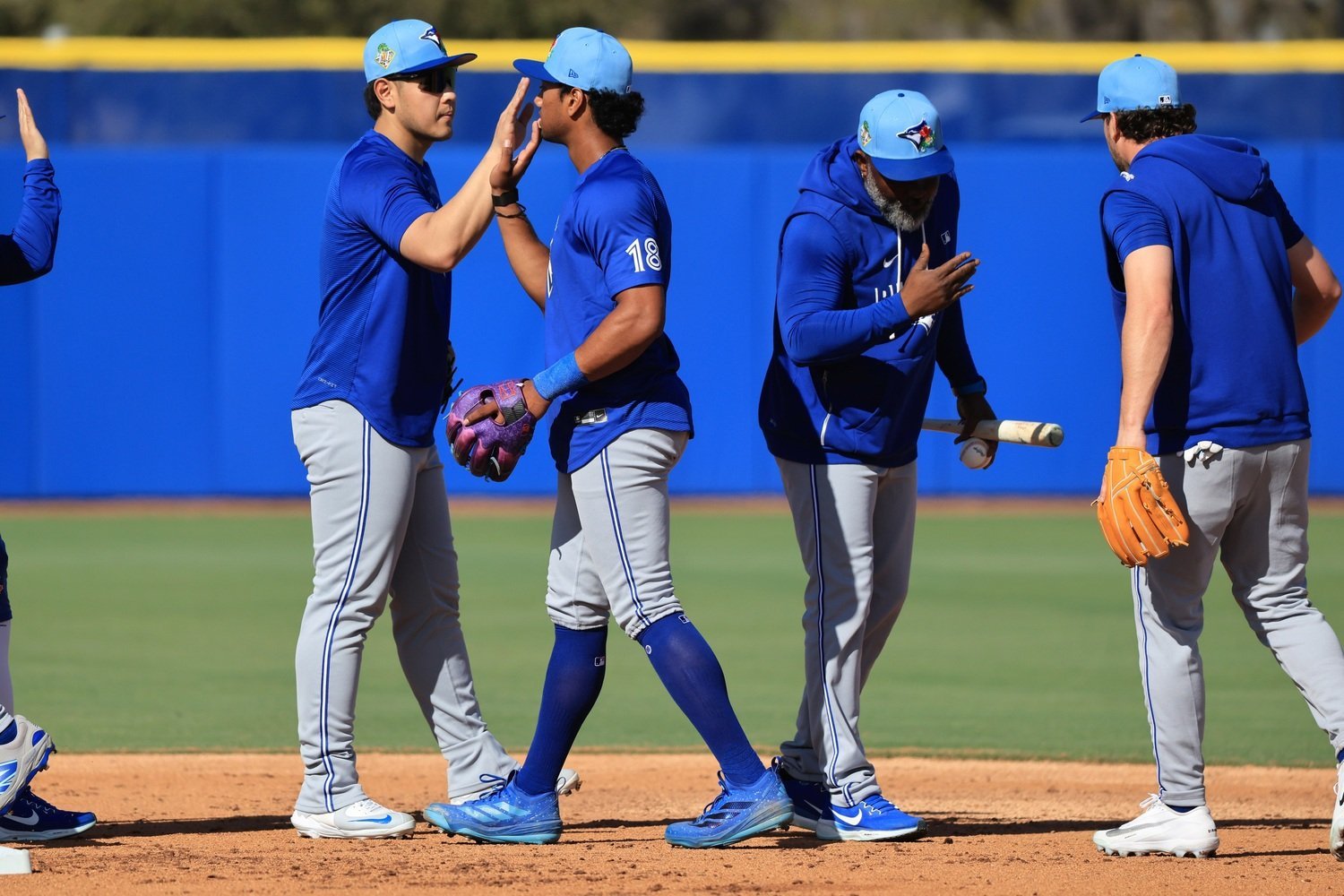 The Toronto Blue Jays start this spring with some clarity at shortstop and unusual luxury in their succession plan. In the wake of Bo Bichette’s free agent departure this offseason, the Jays opted for Plan B (though really, it seemed like their plan all along) of having the sure-handed Andrés Giménez take over as the club’s everyday shortstop. Ernie Clement, who will get most of his starts at second, will also serve as the backup at short, while Davis Schneider will likely fill in for him at second base from time to time, depending on matchups. Giménez is under guaranteed contract through 2029, with a club option for 2030 as part of the seven-year, $106.5 million deal he signed with the Guardians. The decision to cement Giménez at shortstop works largely because of his defense. In Cleveland, he stacked three straight American League Gold Gloves at second base from 2022 through 2024 and added the 2023 AL Platinum Glove as the league’s top overall fielder. His elite run prevention metrics, like Defensive Runs Saved and Outs Above Average, illustrate why he earned those accolades. His first step, angle, exchange and arm accuracy translate well to shortstop. For the front office, the expectation is that having a stronger defender at short will complement a deeper run-producing lineup. It is challenging to directly compare Giménez and Bichette, especially when it comes to offensive output. For everyone hoping that Giménez would return to his 2022 level, his 2025 was a disappointment at the plate (.210/.285/.313). However, the Jays don’t need him to replicate Bichette’s production (.311/.357/.483 in 2025). According to FanGraphs, Bichette was worth 3.8 Wins Above Replacement (WAR) in 2025, compared to Giménez, who was worth 1.0. However, he only played 101 games. In his last full season (2024) he racked up 2.8 fWAR, and he earned 3.8 the year before that. In 2026, Giménez will be responsible for converting balls in play into outs, reaching a league‑average batting line, and letting the bigger bats shoulder the run creation. The occasional explosive swing, like his home run in Game 4 of the ALCS, will be considered a bonus. The Jays never wavered in their support for Giménez to be the Opening Day shortstop. There were no rumours about anyone but Bichette, and those talks just never seemed to gain momentum. When the team signed Kazuma Okamoto, the infield seemed set. Okamoto will primarily play third, Giménez will stand to his left at short, and Clement will play second and float around as the infield’s connective tissue. Whether Toronto’s strategy of having a glove-first shortstop works will be totally reliant on the rest of the lineup producing. If that doesn’t happen, a queue of middle infielders is beginning to form in the team’s minor league pipeline. These replacements are untested at the major league level but could offer more offensive upside. Josh Kasevich is the Jays' 11th-ranked prospect, with a handful of other infielders ahead of him, but he is the oldest among that group and probably the closest to being MLB-ready. The 2022 second‑rounder out of Oregon reached Triple‑A Buffalo in 2024 and did exactly what his Oregon resume forecast: .325/.382/.433 in a 41‑game sample, for a .296/.348/.385 line across Double A and Triple A combined that year. He has elite zone contact and low chase that he pairs with a 90th‑percentile exit velocity hovering in the 103–104 mph band. His lack of power might hold him back, as might his health. Last season, he battled back and ankle issues and struggled badly when he took the field. The real focus for the Jays is their younger prospects. Arjun Nimmala is embracing the spotlight. A first‑round pick in 2023 out of Florida’s Strawberry Crest, the 19-year-old spent last season at High‑A Vancouver. His .224/.313/.381 line with 13 home runs and 17 steals across 120 games might not seem overly impressive, until you figure in that he was consistently one of the youngest players on the field. Independent scouting grades him in the 55 range for power, field, and arm, with quick‑twitch bat speed and a knack for pulling the ball in the air when sequencing and approach cooperate. Although he is Toronto’s third-ranked prospect, most estimates suggest he won’t be ready for prime time until 2028 at the earliest. Nimmala arrived early to camp this spring, roughly 15 pounds heavier after losing weight over the grind of 120 games last year. He has been attached to Giménez during infield reps. That connection has resulted in Nimmala following Giménez’s example of using a smaller, pre-game glove to sharpen pocket awareness and transfers. That small learning is exactly the kind of detail that helps a teenage shortstop’s defense take the next step while the bat matures and makes the “upper minors by mid‑summer” path a real possibility. Regardless of the level Nimmala starts at this year, if his chase rate stabilizes and he builds upon his exit velocity, he’ll be pushed into Double A and even Triple A by late in the season. A late 2027 debut with the Jays would be a successful outcome for a player who was one of the youngest first‑rounders in his class and has retained true shortstop traits throughout. JoJo Parker, selected eighth overall in 2025, is the second pillar and the complement to Nimmala, especially if Nimmala doesn’t meet expectations. Parker is the left‑handed hit‑tool archetype: a 60‑grade bat with strike zone control, 55 power that should grow into 20–25 homers, and enough arm for the left side. The Jays definitely feel he could play an important role in the future. They signed him for $6.19 million and began the transition plan that mirrors their prior work with top shortstop prospects. The open question with Parker is not the bat, but whether the better long‑term defensive fit is second or third base. That open question does not diminish the probability he becomes an everyday player; it simply frames the infield chess Toronto can play if the bat is as advertised. The other name that matters, and might matter quickly, is Leo Jiménez. Once a top‑10 prospect in the system, Jiménez debuted in 2024 and showed the outline of a bench piece. Across 63 games, his line was .229/.329/.358. The structural reason he’s in this conversation is roster status, as he is out of options. He’ll either be on the Opening Day roster, traded, or potentially lost on waivers. At this point, he is basically a short‑term defensive safety net at shortstop, allowing the Jays to absorb an injury or two without pulling Kasevich or asking Parker or Nimmala to cut the developmental line. He won’t raise the position’s offensive ceiling, but he can keep the floor where Toronto needs it in a 26‑man roster world. The beauty of where the Blue Jays find themselves is that they don’t have to choose between present and future. They can win the run‑prevention battle at shortstop in 2026 and build a deeper run‑creation mix in the years that come. The plan holds up even when you stress‑test it. If Giménez’s defense remains elite and the bat sags, the most likely outcome is that Toronto simply stays the course, relying upon others offensively to carry that load. If the club loses Giménez to injury, Clement or Jiménez can handle the workload, and Kasevich or the newly-claimed Ben Cowles becomes the next man up if it stretches longer than expected. Only a full-season, underperformance scenario would necessitate a larger structural change, such as sliding Giménez back to second while Clement, Kasevich or Cowles shoulder shortstop innings, or an unexpected mid‑season leap from Nimmala if he forces the issue for months in the upper minors. Shopping for a short‑term external rental at the deadline is another option in this scenario. They say defense wins championships, but a consistent bat never hurts. In 2026, there will be plenty of eyes on Giménez and those knocking on the door. View the full article
 -
Main takeaways from 2026 Marlins Grapefruit League opener
DiamondCentric posted an article in Fish On First
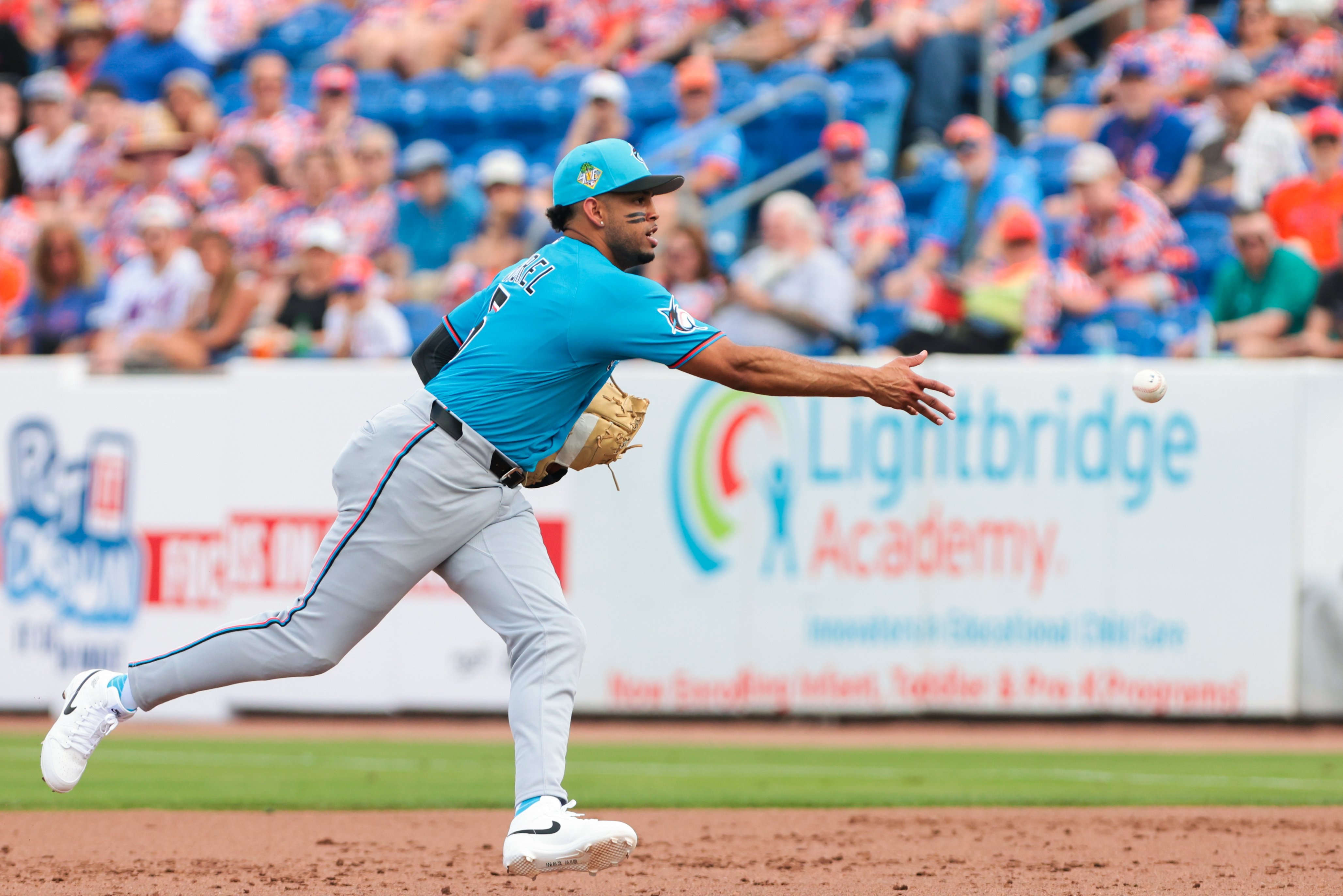 PORT ST. LUCIE, FL—Miami Marlins baseball returned on Saturday as they faced off against the New York Mets. The teams combined for four total hits in the 2-1 Marlins exhibition game win. We were able to see Robby Snelling make his first spring training start, Christopher Morel play first base and the automated ball-strike challenge system in play. Snelling makes first spring start Fish On First's number three prospect Robby Snelling took the mound for the first inning. He threw 10 pitches, setting the top of the Mets order down in 1-2-3 fashion. That included Marcus Semien, Juan Soto and Bo Bichette. Snelling went with a fastball/curveball combo, with his fastball topping out at 96.4 mph and generating one swing with the curveball. "It's always tough getting one inning, small sample sizes, only 10 pitches through the entire inning," said Snelling. "I go back and look that I didn't get to show the entire repertoire, but being able to go out and have a scoreless inning to start the spring, that is a big confidence builder. Even happier to be in the zone, like I was against a really good starting three." Snelling, who isn't on the 40-man roster, still enters spring with a real chance at cracking the Marlins Opening Day rotation. "If you don't go into spring with that mindset, I don't want to say you don't belong there, but you got to have a little competitive fire in you," said Snelling. Early on in camp, it's been the "nine pockets," which are meant to help you target certain spots in the strike zone. "This helped me big time last year," Snelling said. "I've been doing that throughout spring and I think if you fall 2-0 to a really, really good hitter, you can't leave anything middle-middle in the danger zone. Being able to know where your stuff's going to end up is throwing it into the nine pocket. I pictured a nine pocket back there, and (Agustin Ramirez) was my nine pocket." Marlins "bullpen" After Snelling, the following pitchers each threw one inning: Ryan Gusto, Tyler Phillips, Cade Gibson, Zach Brzykcy, Jack Ralston, Josh Ekness, Nigel Belgrave and Stephen Jones. Gusto recorded the first strikeout of the spring for the Marlins, getting MJ Melendez to swing on a 95.0 mph fastball. This offseason, Gusto tweaked his sweeper and added a completely new changeup. "We were really moving the pointer finger on the sweeper, just figuring out a way for me to get to the front of the ball a little bit better, make that spin a little bit tighter and more efficient, so it can help them move and be more consistent," Gusto said following his outing. He threw the sweeper twice, generating one whiff with it. After attempting many different changeup grips, Gusto has finally settled on one that "will be able to work with the way that I leverage the ball individually for me." Before using it in game action, he was able to throw is in his most recent live and hitters told him it was "moving a lot, just wasn't locating it well enough." On Saturday, he threw it three times, generating three whiffs. "He got a little bit everything too," McCullough said. "It was nice that first one, he had a deep at-bat, was able to finish that off. To get some working out of the stretch and probably most importantly, he felt healthy. He came into camp feeling good and then to have this first one go that way, it's a good start." Phillips struck out Marcus Semien swinging with his splitter. His fastball topped out at 97.8 mph, which was faster than any pitch of his MLB career. The Marlins expect to stretch Phillips out given his prior experience as a starting pitcher and extensive pitch mix. "We talked last year on even the potential of him starting," McCullough said. "I think he has those capabilities and we'll see how that plays out. I think we'll just want to continuously increase him, whether that's giving us really good length out of the ‘pen and you can certainly pitch him in short bursts, and as crazy as things can get during the season, also the ability to even go through the lineup a couple of times." Plan at first base On Saturday, free agent signing Christopher Morel started at first base with Griffin Conine playing right field, both for five innings. That will be the plan until the Marlins feel comfortable with Conine playing first base in a game. Morel will move around the field as well, per McCullough. Morel looked comfortable in his first ever start at first base, making a couple of nice plays, specifically in the bottom of the first inning to get the final out. He finished the day hitless, but was able to drive in the Marlins’ second run of the game on a sac fly in the top of the sixth inning, scoring Jakob Marsee. "Probably in a lot of ways couldn't have been any better for Christopher (Morel)," said Marlins manager Clayton McCullough. "Not only making the plays, but some of them were not just your garden variety, leaving the first, the high chopper that takes him kind of going into foul territory, get himself under control and make a nice read. He attacks some other ones very well and gave himself some good hops to play with. He's looked great on the backfields, and certainly knew that he was going to prepare himself as best he could coming into camp for this and I'm glad he got a lot of chances, and hope he just continues to get more of those in spring training." ABS challenge system strategy New York Mets manager Carlos Mendoza told his players to "be aggressive" with the ABS challenge system this spring—that way they can create a strategy for the regular season based on who’s getting calls overturned. McCullough plans on using it in a similar way, at least with the position players. "I've told our position players that they have the ability to challenge in spring training," McCullough said pregame. "You need to meet a percentage threshold that you feel pretty certain that this is. If you get it wrong, there'll be a tax you have to pay me and if you get it right, then you don't get anything from me, other than you get to build some equity and trust in myself and the staff. “If a guy goes 5-for-5 in spring training, what does that mean for the season? I think everyone will look at the samples in their own way. We're talking through actively some more team philosophy and some team things that we'll be thinking about rolling out for the season." On Saturday, each team challenged once and both were unsuccessful. Brian Navarreto, who entered the game in place of Agustín Ramírez, challenged for Miami. Mets catching prospect Kevin Parada challenged while batting in the bottom of the ninth inning. What's next? The Marlins begin a stretch of four straight games at Roger Dean Chevrolet Stadium, located in Jupiter, Florida. Sandy Alcantara will take the mound for the Marlins on Sunday, as they welcome the Washington Nationals. First pitch is slated for 1:10 pm. The game will not be televised, but you can listen to it on MLB.com. View the full article
 -
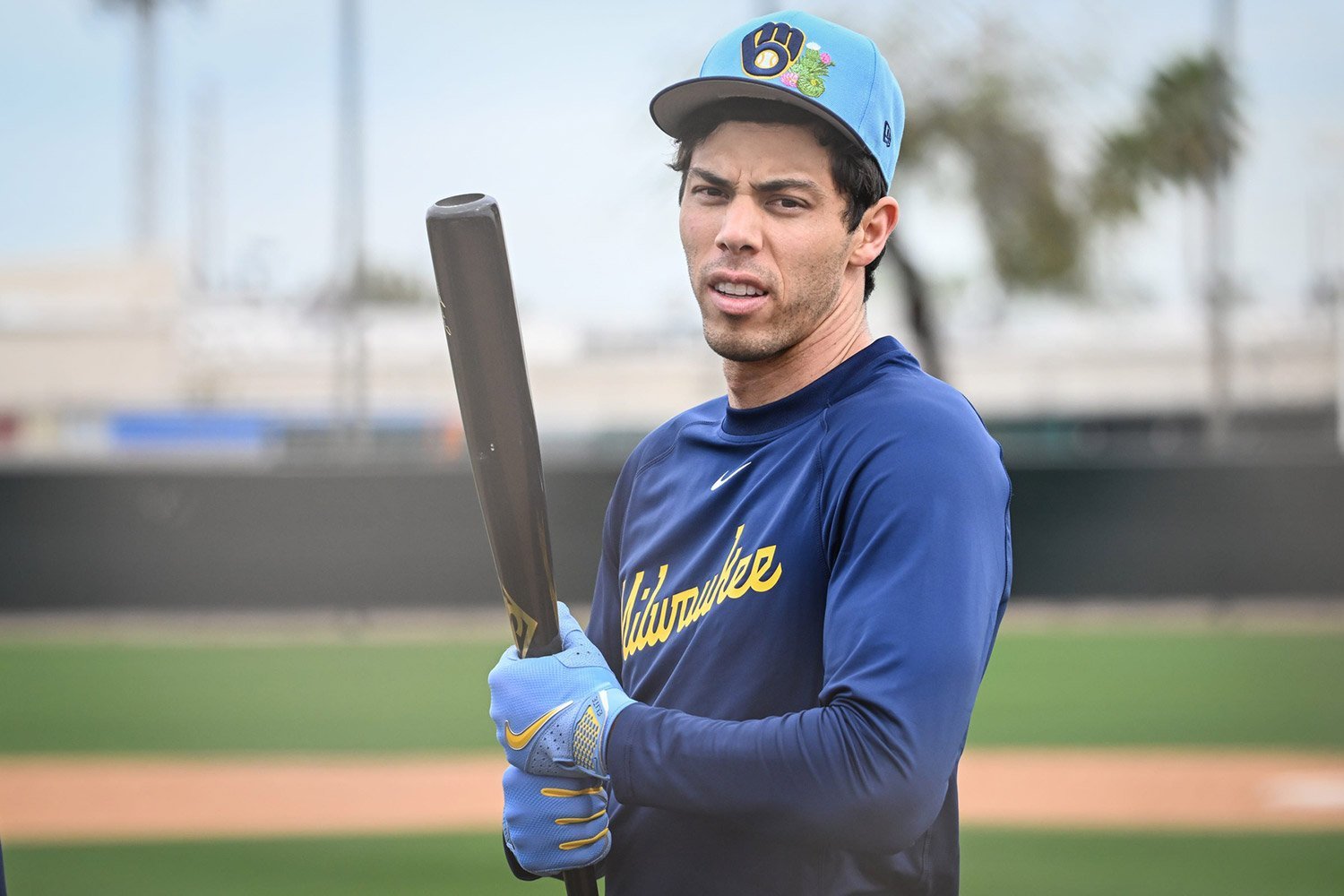 Designated hitter has long been handled in one of two ways by the Brewers: Either it’s been filled by one-year deals for a “primary” DH (Andrew McCutchen, Jesse Winker, and Gary Sanchez being recent examples) or it was handled “by committee” (multiple players with over 25 starts as the DH). The Brewers took a rare approach in 2025, using Christian Yelich as their DH 131 times. Will that be the case in 2026? 2025 In Review Yelich put together arguably his best season since 2019 as the Brewers’ primary designated hitter, leading the team in homers and RBI and generating 3.1 Wins Above Replacement, according to Baseball Reference. It was an excellent recovery from a 2024 season where he missed over half the games due to back issues. The only other Brewer to see significant time at DH was catcher William Contreras, who served in that role for 22 games, often when Yelich was playing some left field or needed a day off. Jake Bauers saw seven games at DH, but nobody else reached five appearances at the position. Designated hitter was one position where things went well for the Brewers. Current Roster Situation Yelich is under contract through 2028, with a 2029 mutual option. He will likely be the primary DH for as long as he is in Milwaukee – not because he can no longer field, but because the Brewers have multiple capable options for all three outfield spots. Contreras and 2024 primary DH Sanchez are also options for when Yelich may need a day off or when he is patrolling left field, but those should be few and far between. Players who are behind the “break in case of emergency” glass include Tyler Black and Jake Bauers, with a few of their regular players from other positions as options. Best Case Scenario Yelich handles 85-90% of the starts at designated hitter and produces at his 2024 level, being another year removed from back surgery. If Yelich is “relegated” to designated hitter, it means that the Brewers are getting solid, if not better, production from the other positions on the field, particularly the corner outfield spots and first base, and that the team has avoided injuries. Against left-handers, Sanchez can step in occasionally and be an effective DH against southpaws. In this case, it should be noted that Yelich at DH is not so much a bad thing, particularly when it is seen as a statement of the depth and talent the Brewers have in the outfield. If he gets 140-150 starts on “partial rest,” the Brewers are likely to be doing very well in 2026. Worst Case Scenario Christian Yelich is somehow not the primary designated hitter. If Yelich is on the injured list, it means one of Milwaukee’s best hitters is on the shelf – and their $26 million a year man is one of those they can ill afford to lose. If he’s in the field for more than 10 starts, then it’s likely because of injuries or ineffectiveness from other players – unless Black has performed in such a manner than the Brewers decide to move Yelich to left field or first base on a semi-regular basis, but that’s about as likely as a stray unicorn walking onto American Family Fields at Maryvale and having triplet foals. Seriously, though, if Yelich is broken free from the DH role to play the field, then the Brewers are in for a rough time – not just because of other players being hurt, but because in the field, Yelich is more likely to re-injure his back – or something else. Overview If things go well for the Brewers, Christian Yelich may etch himself another claim to history: As one of the best, if not the best, primary designated hitters in team history. As we’ve discussed years earlier, Dick Davis is the Brewers ' player with the most seasons as the team’s primary starter at the position, with three, as the team has often rotated the position among its starters. While there are other players who could be very competent at the position, including Contreras, Sanchez, Black, and Bauers, and while Milwaukee also retains the option to rotate players, how much time Yelich spends as the DH will perhaps be the best indicator of how Milwaukee’s 2026 season is progressing. View the full article
 -
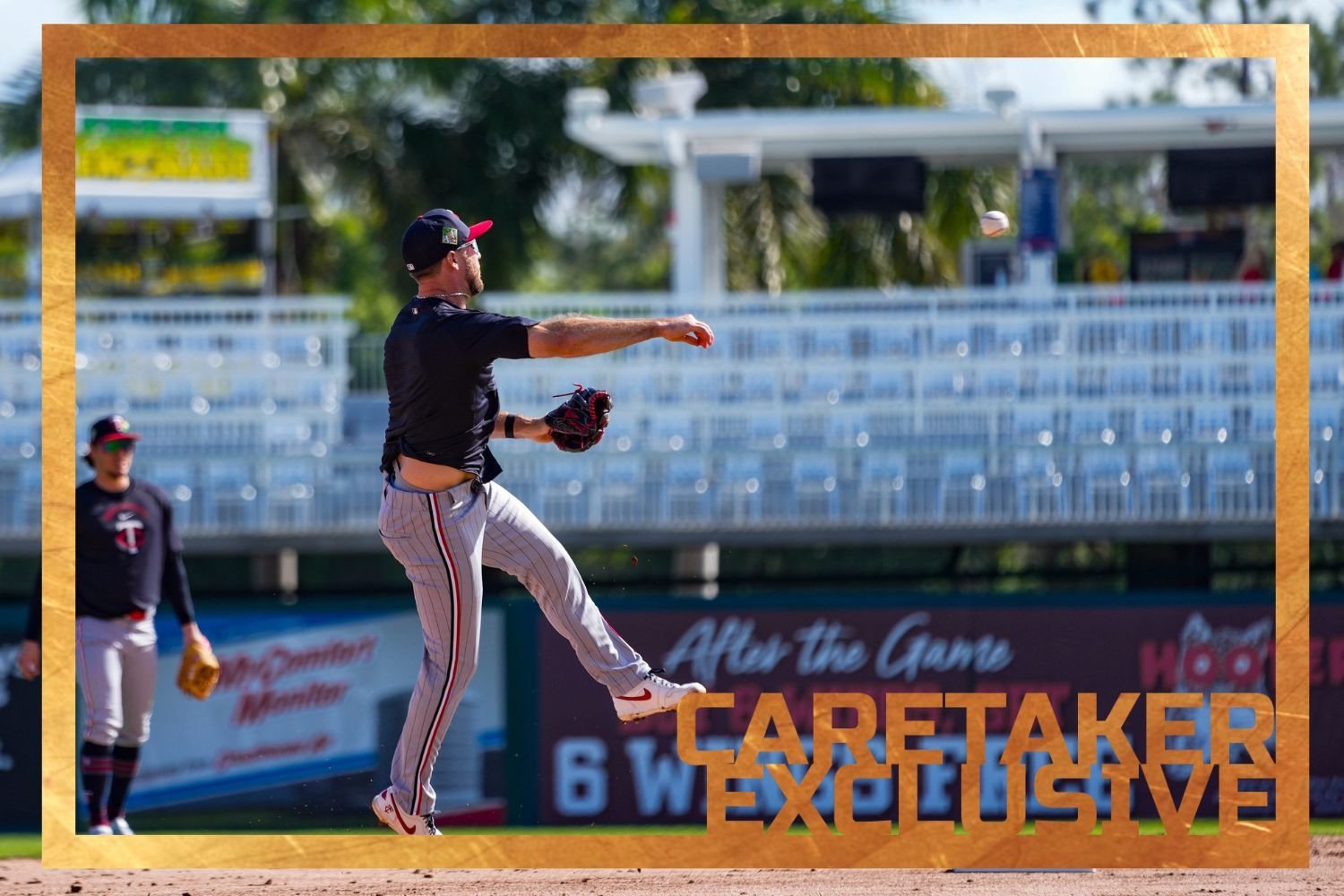 FORT MYERS - The Twins kicked off their spring training Grapefruit League season with a home opener against the crosstown rival Red Sox. Besides the disconcerting news about Joe Ryan's scratched start, here are some other things the nearly 8000 fans at Hammond saw: Royce’s Work Paying Off In the first inning, Royce Lewis made a nice play on a bouncing ball up the third base line, reminding everyone that, despite his offensive struggles last year, he at least put to rest some concerns about his defense at third base. Then, in the fifth inning, his throw to first base was wild and resulted in an error. This last week on Twins Daily’s Live show from Fort Myers, I was asked if it was possible that Royce Lewis would grade out as the second-best defender on the Twins this year, behind only Byron Buxton. I don’t think that’s unlikely at all. That’s partly damning of the Twins' overall defensive level, but I also think that the work he put in last year paid off and will continue to do so. The work he put in this latest offseason around his swing looks like it might pay off, too. He drilled a 96-mph fastball from southpaw Payton Tolle into left-center field to give the Twins a 1-0 lead in his first at-bat. Simeon’s Splitter Simeon Woods Richardson finished the year with a 4.04 ERA over 23 starts, his second year of providing solid production in the rotation. But while he clearly tired late in the season in 2024, he finished the 2025 season with a 2.33 ERA in September. This coincided with him leaning into his splitter more. It looks like he plans to do the same this season. View the full article
 -
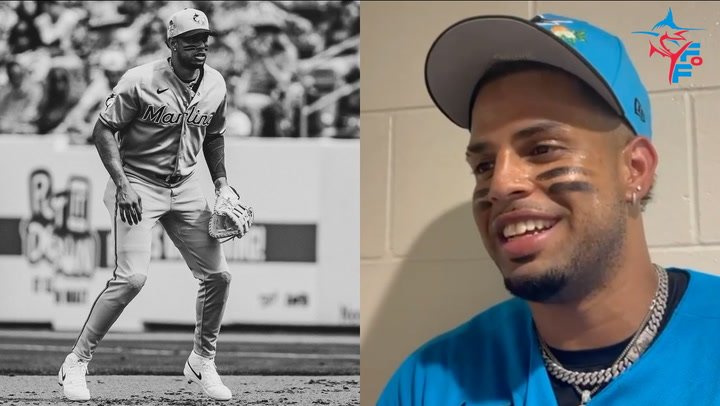 Following his Marlins spring training debut on Saturday, first baseman Christopher Morel speaks with the media about his comfort level at his new position and where he can still improve before the regular season begins. View the full article
 -
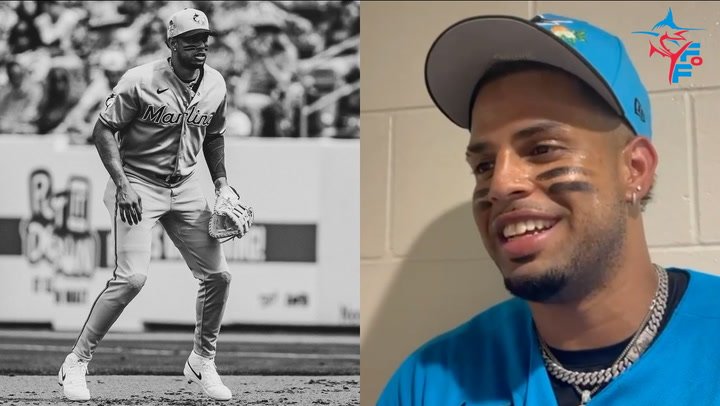 Following his Marlins spring training debut on Saturday, first baseman Christopher Morel speaks with the media about his comfort level at his new position and where he can still improve before the regular season begins. View the full article
 -
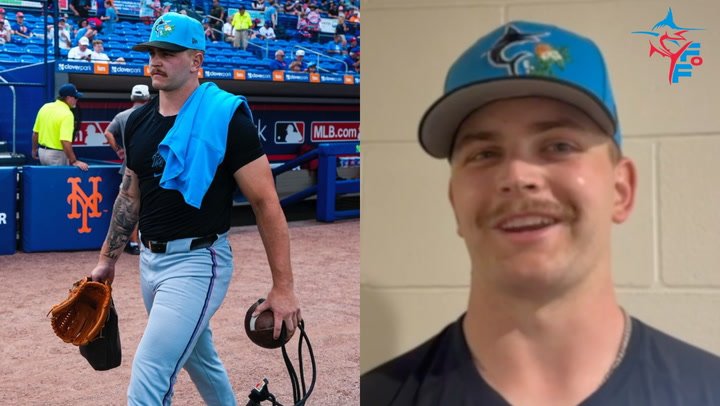 Following Saturday's scoreless start against the New York Mets, Marlins left-hander Robby Snelling speaks with the media about his main takeaways from the outing and competing for a big league job.View the full article
 -
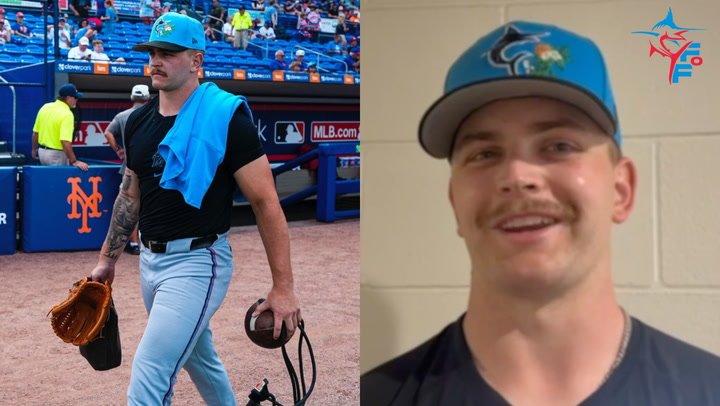 Following Saturday's scoreless start against the New York Mets, Marlins left-hander Robby Snelling speaks with the media about his main takeaways from the outing and competing for a big league job.View the full article
 -
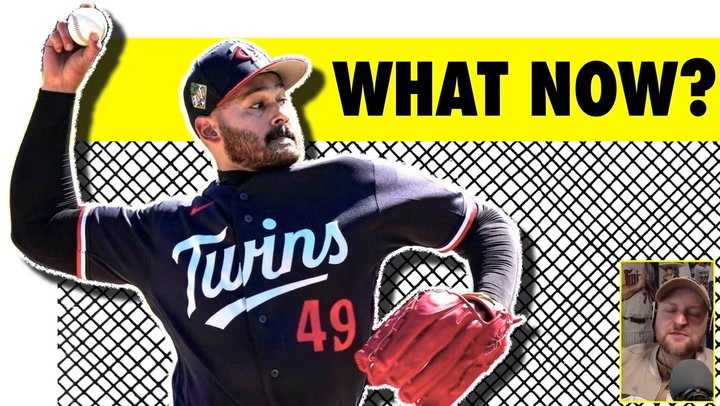 Minnesota Twins ace Pablo López is expected to miss the entire 2026 season. How do the Twins move forward? In this video, I discuss the Plan B options for both the rotation and the bullpen. I also previewed this year's class of top contenders for Sire of Fort Myers down in spring training. View the full article
 -
Joe Ryan Scratched From First Spring Start with Back Tightness
DiamondCentric posted an article in Twins Daily
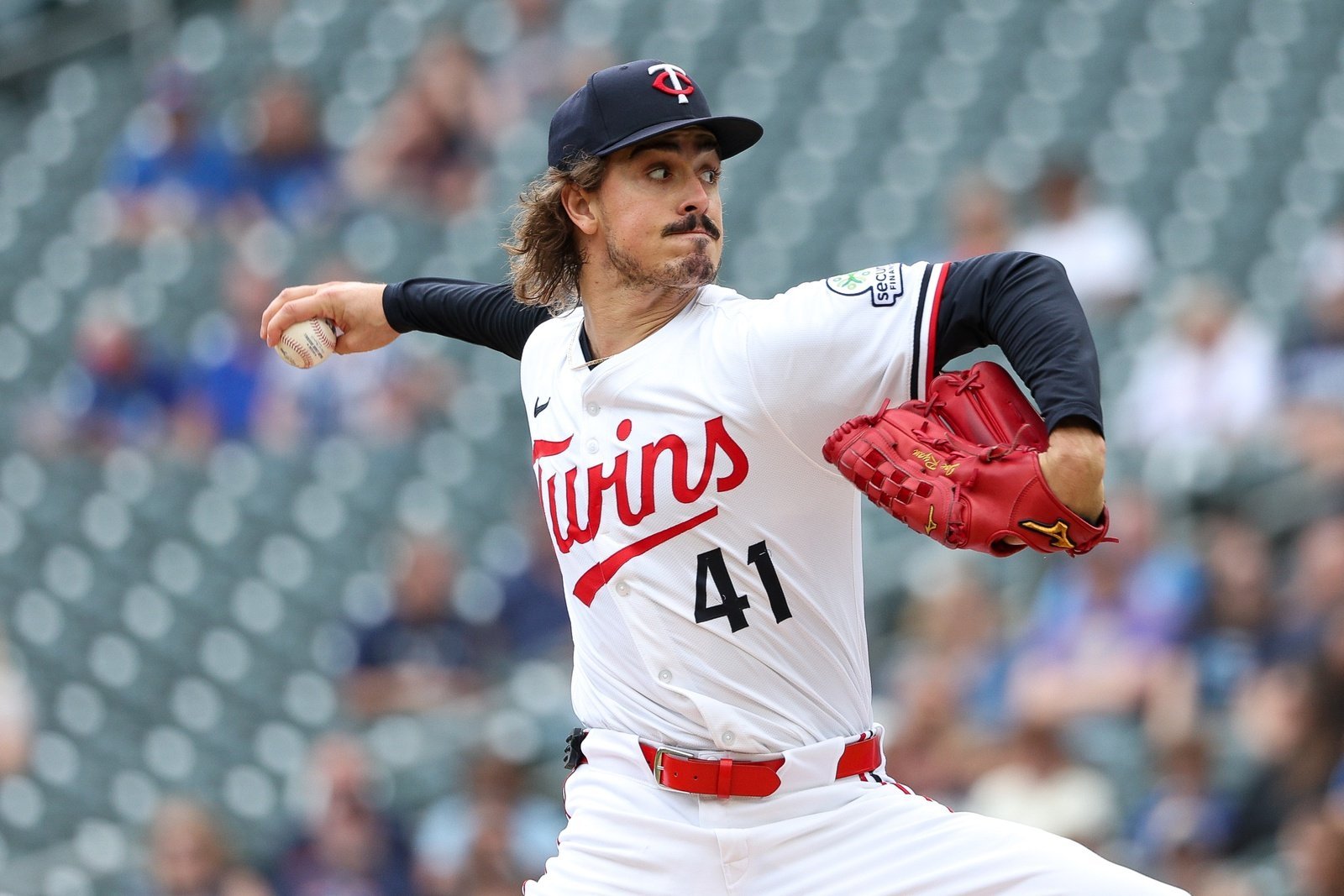 The Twins were gearing up to face the Boston Red Sox in their first Grapefruit League game on Saturday afternoon when, around 10 minutes before the scheduled first pitch, the team shared news that scheduled starter Joe Ryan had been scratched. Soon after, we learned the reason: lower back tightness on the right side. No further information was available as of game time, but Twins Daily's John Bonnes is live on the scene in Fort Myers and will update this article (or a new one) with additional details and quotes from team officials, so be sure to check back in a bit. During the minutes in between the announcement of Ryan being scratched and the revelation of the cause, a wide range of possibilities passed through the minds of bamboozled Twins fans – still reeling from the bombshell of Pablo López going down the 2026 season due to elbow surgery. A trade? Another injury? Turns out it's the latter, although initial indications don't necessarily point to anything overly serious. The fact it's not an arm issue is, on its own, fairly relieving. That's not to say one can safely dismiss or downplay any back-related discomfort, but naturally, the Twins are going to be taking every precaution at this early stage of spring training. Ryan has generally proven extremely durable for the Twins, rarely missing a start or facing any limitation outside of a teres major strain in 2024 that cost him most of the second half. Last year, he set a career high with 171 innings pitched over 31 outings (30 starts). With López going down, the Twins are counting on him to be the steady, dependable workhorse atop their rotation. This isn't a great first step, and the timing is almost surreal coming just days after López suffered a season-ending injury in his first live BP. The Twins came into this spring with that duo as the foundation of their faint contention hopes. But at this point there's no reason to panic, and I'd suggest mentally separating this situation from any lingering López-related despair, even if it feels tempting to lump it all together. With that said, Ryan's planned participation for Team USA in the World Baseball Classic would certainly seem to be in doubt. We'll have more info for you as it becomes available. For now, feel free to sound off with your reactions to the early-spring health woes for the top of the Twins rotation. View the full article
 -
 On Friday, the Royals acquired free-agent catcher Elias Diaz, signing the 35-year-old to a Minor League deal. He is not expected until next week, according to the announcement on the Royals' social media account. Diaz made the All-Star team with the Rockies in 2023. That season, he hit 14 home runs and collected 72 RBI, but only posted an 82 wRC+ and -0.1 fWAR. Last year, he played 106 games with the Padres and had nine home runs, 29 RBI, a 74 wRC+, and a 0.4 fWAR in 283 plate appearances. In terms of Statcast, Diaz didn't excel in any particular areas, though he is aggressive on pitches in the strike zone, as illustrated in his Statcast summary below. Since debuting with the Pirates in 2015, he has played 830 career games and had 2,800 plate appearances at the Major League level. In that time span, he has 71 home runs and 326 RBI, but a career 78 wRC+ and 0.3 fWAR. At this point in his career, he may be a Major League backup catcher, at best. The Royals seem set at catcher with Salvador Perez and Carter Jensen on the big league roster. Perez showed he is ready for the upcoming season in Kansas City's first Spring Training game of the year, hitting a 441-foot home run on Friday against the Rangers' Nathan Eovaldi. However, the Royals may need some catching depth this spring, as they have been down a couple of catchers. Jorge Alfaro has not been able to report yet due to visa issues. Luke Maile hasn't reported due to personal reasons. Thus, Diaz likely was acquired due to the issues with those two catchers, who both were signed on Minor League deals in the offseason. Diaz will likely start the year in Triple-A Omaha, though he may opt out of his deal if he doesn't make the Opening Day roster. It is unlikely Diaz will have a shot at making the active roster unless an injury happens to Perez or Jensen in Spring Training. View the full article
 -
The Friar Anthology: Gold Standard Padres, Starting Rotation
DiamondCentric posted an article in Padres Mission
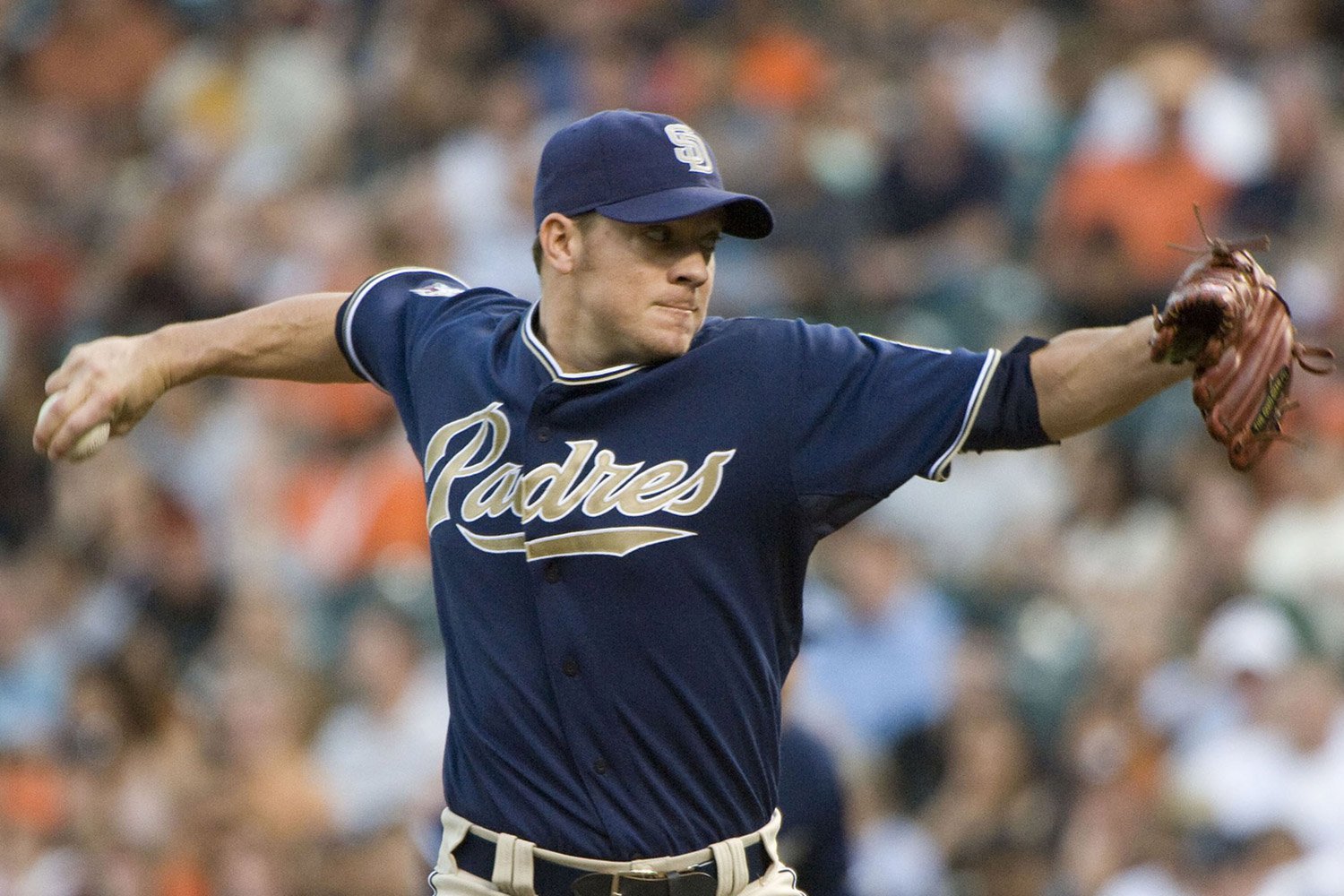 Before diving into this article, we recommend reading previous entries in this series, along with an introduction in part one. With that said, let's look at the gold standard Padres, starting rotation. Part one: Gold Standard Padres, Infield Edition Part two: Gold Standard Padres, Outfield Edition Part three: Gold Standard Padres, Bench Edition The Starting Rotation: The Masters of the Hill The architects of the rubber. These arms took the ball every fifth day, carrying the hopes of the city for nine innings at a time. Through heat, movement, control, deception, and sheer will, they turned the mound into a sanctuary and defined the different eras of Padres baseball. Kevin Brown "Brownie" "The Hired Gun" 1998 (8.6 WAR) The Sinkerball Assassin W-L: 18-7 | ERA: 2.38 | FIP: 2.23 | SIERA: 2.71 | SO: 257 | IP: 257.0 | CG: 7 | SHO: 3 | WHIP: 1.07 | K/BB: 5.24 | K%: 24.9% | K-BB%: 20.2% | ERA+ 164 NL All-Star (1998) | NL Player of the Week (Aug 16 & Sept 20, 1998) | Clyde McCullough Pitcher of the Year Award (1998) | Padres Chairman's Award (1998) The Five Pillars of Brownie Innovation: Brown was the architect of the modern "power sinker," a pitch that defied the laws of physics in the late 90s. While most sinkerballers of the era sat in the high 80s, Brown’s clocked in at a staggering 96-98 MPH with a violent, late horizontal run. Under the specific guidance of pitching coach Dave Stewart in 1998, Brown perfected a devastating split-finger fastball that mimicked the exact arm speed and tunnel of his sinker before falling off a table. This two-pitch tunnel made it impossible for hitters to distinguish between a ball breaking into their hands or one diving into the dirt. He effectively weaponized the ground ball and the strikeout simultaneously in a feat rarely seen before the Statcast era—a combination of power and precision that paved the way for the high-velocity, high-spin specialists of today's game. Impact: Kevin Brown’s presence changed the entire culture of the 1998 clubhouse. His "bulldog tenacity" was contagious, leading the staff to an imposing identity. In the playoffs, he famously outdueled Randy Johnson in Game 1 of the NLDS with 16 strikeouts—setting a franchise postseason record and the tone to upset the 102-win Astros. He followed that by silencing the 106-win Braves in the NLCS, throwing a three-hit, 11-strikeout complete game shutout in Atlanta that gave San Diego a commanding 2-0 series lead. During the regular season, he led the National League with 8.6 WAR and set a Padres franchise record with 257 strikeouts, a mark that still stands today. He finished the year with 7 complete games and 3 shutouts, while leading all of Major League Baseball with a microscopic 0.3 HR/9. Legend: Kevin Brown's 1998 season is widely regarded by historians as the most dominant single-season pitching performance in San Diego history. Beyond the record-breaking stats, he provided the psychological edge the franchise needed to transition from a divisional contender into a legitimate national juggernaut. He remains the only pitcher in club history to anchor a World Series run while simultaneously leading the entire Major Leagues in overall value with an 8.6 WAR. Brown arrived as the ultimate "hired gun," and though his tenure lasted only one summer, he established an impossible standard of excellence that remains the benchmark for every San Diego ace who has followed. His 1998 campaign is the definitive chapter of Padres pitching lore, representing a moment when the best pitcher on the planet belonged exclusively to San Diego. Iconic Look: Brown was the intimidating face of the Padres' 1998 "pinstripe" era in navy blue and orange. On the mound, he was a study in controlled aggression, standing 6'4" with a menacing, stoic expression and a traditional clean-shaven look that highlighted his intense, focused game face. His appearance was anchored by the team's navy blue crown cap featuring the iconic white-and-orange interlocking "SD" logo, a color scheme that became the visual hallmark of the 1998 World Series run. In an era where many pitchers were moving toward loose, baggy styles, Brown maintained a sharp, athletic appearance with high-set shoulders and a deliberate, high-leg kick. He exclusively used a dark Rawlings heart-of-the-hide pitcher’s glove with a closed web to hide his grips on his legendary sinker and split-finger pitches. The finishing touch to his look was his signature intensity; he rarely smiled, and his jersey was often stained with sweat and dirt, reflecting the grit he brought to every start. The "Did You Know Factor": Kevin Brown’s 1998 season was so dominant that he finished in the top four of the National League in every major pitching category: Wins (18), ERA (2.38), and Strikeouts (257). He was the only pitcher in the Senior Circuit to achieve that level of "Triple Crown" consistency that year. Despite his dominance, Brown finished 3rd in the Cy Young voting behind Tom Glavine and teammate Trevor Hoffman. This created a historical rarity: Brown and Hoffman became the only pair of teammates to finish second and third in the voting while the award went to a player from a different team. Perhaps most impressively, Brown surrendered only 8 home runs across 257.0 innings; he famously struck out twice as many batters in a single playoff game (16) as he allowed home runs over the entire 162-game regular season schedule. Randy Jones "The Junkman" "Jonesie" 1976 (7.8 WAR) The Workhorse of Mission Valley W-L: 22-14 | ERA: 2.74 | FIP: 3.16 | SIERA: 3.42 | SO: 93 | IP: 315.1 | CG: 25 | SHO: 5 | WHIP: 1.027 | K/BB: 1.86 | K%: 7.4% | K-BB%: 3.4% | ERA+ 119 NL Cy Young Award (1976) | Sporting News NL Pitcher of the Year (1976) | Baseball Bulletin NL Pitcher of the Year (1976) | NL All-Star (1975, 1976) | NL Player of the Month (April & May 1976) | NL Player of the Week (May 22, 1976) | Padres Team MVP (1975, 1976) | Clyde McCullough Pitcher of the Year Award (1975, 1976) | Padres Chairman's Award (1975, 1976) | No. 35 Retired by Padres (1997) | Padres Hall of Fame (1999 - Inaugural Class) The Five Pillars of Jonesie Innovation: Jones was the master of the "sinker-slider" approach, a style of pitching that served as a radical, cerebral departure from the high-heat dominance that defined the mid-70s. Relying on impeccable control and late, biting movement rather than raw velocity, Jones innovated through a blend of psychological warfare and relentless tempo. He famously worked with a rapid-fire cadence that bordered on the obsessive, often completing nine full innings in under two hours. By weaponizing the diving action of his sinker and varying its speeds to create a "ghost" effect, he forced the opposition to play at his speed, turning aggressive swings into a record-setting parade of weak ground balls and demoralizing double plays. He proved that a pitcher could dominate the strike zone and dismantle an order without ever needing to touch 90 miles per hour on a radar gun. Impact: He was the ultimate "workhorse" during a fragile era where the Padres franchise was still desperately fighting for respect and a foothold in the National League. In 1976, Jones got a season started that remains statistically unprecedented; he became the first pitcher in National League history to be named Player of the Month in back-to-back months (April and May). This early-season blitz anchored the entire organization, as he went on to lead the major leagues in Wins (22), Starts (40), Innings Pitched (315.1), and Complete Games (25). His efficiency was unmatched, finishing the year with a league-best 1.027 WHIP, proving he could maintain elite precision despite the massive workload. This output single-handedly preserved a thin bullpen and gave a young, often outmatched San Diego team a legitimate chance to win every fifth day. Legend: In 1976, Randy Jones became a literal folk hero, cementing his place in San Diego lore as the first pitcher in franchise history to capture the Cy Young Award. Following a 20-win season in 1975, where he was arguably snubbed for the honor, he returned with a quiet vengeance, capturing the hearts of the city during a historic summer where "Randy Jones Day" became a mandatory local holiday. He was the first true superstar the city could claim as entirely their own—a home-grown icon who provided a symbol of hope for a young expansion franchise. His legacy is defined by his "weapon of choice"—a sinker with a distinct screwball tilt that baffled the era's greatest hitters. This unique movement, combined with a superior mental plan, allowed him to out-duel Hall of Fame flamethrowers with surgical precision. Iconic Look: With his trademark blonde curls flowing out from beneath his cap and his classic brown and gold #35 jersey, Jones was the visual pulse of San Diego in the 70s. His calm, methodical presence on the mound provided a perfect contrast to the high-pressure situations he mastered, moving through innings with a smooth, repeatable delivery that looked effortless. He was the visual embodiment of the Swinging Friar era, frequently seen in the team’s signature brown-sleeved home whites or the solid chocolate brown road jerseys with gold sleeves. On the mound, he utilized an oversized, deep-pocketed tan glove to hide his finger grips and a short, controlled follow-through that left him in a perfect, square-ready defensive stance. His relaxed, West Coast swagger became as recognizable to fans as the Mission Valley skyline itself. The "Did You Know Factor": Jones started the All-Star Game for the National League and earned the win, pitching three dominant innings against an American League powerhouse. This performance came on the heels of his 1975 season, where he led the league in ERA, making him the only pitcher in franchise history to win an ERA title and a Cy Young Award in back-to-back campaigns. During the 1976 season, he went 68 consecutive innings without walking a single batter, tying a 63-year-old National League record set by the legendary Christy Mathewson in 1913. Furthermore, Jones set a major league record for the most total defensive chances by a pitcher in a single season (112) without committing an error. He also entered the All-Star break with a 16-3 record, a National League mark for most wins before the break. His dominance was so total that he finished 10th in the 1976 NL MVP voting. Dave Roberts "The Unlucky Lefty" 1971 (7.1 WAR) The Quiet Professional W-L: 14-17 | ERA: 2.10 | FIP: 2.89 | SIERA: 3.11 | SO: 135 | IP: 269.2 | CG: 16 | SHO: 3 | WHIP: 1.050 | K/BB: 2.21 | K% 12.4% | K-BB% 6.8% | ERA+ 151 NL Cy Young - 6th Place (1971) The Five Pillars of The Unlucky Leftie Innovation: The tendency of the era was toward high-strikeout smoke, but Roberts operated with a surgical precision that stood in stark contrast to his peers. He innovated through the art of the calculated contact game, utilizing a heavy, bowling-ball sinker that bore in on the hands of right-handed hitters with such violent downward action that it was widely considered the most physically taxing pitch to square up in the National League. He weaponized a unique cross-fire delivery, stepping slightly toward the third-base dugout to create an angled release point that hid the ball until the last possible millisecond, thriving in the expansive, marine-layer-heavy dimensions of San Diego Stadium. By mastering tunneling—maintaining an identical arm slot for both his biting slider and his fading changeup—he dictated the pace of every at-bat, forcing hitters into late, defensive swings. Impact: Roberts’ 1971 campaign remains the gold standard for hard luck brilliance in Major League history. Despite a losing record of 14-17, his 2.10 ERA was the second-best mark in the league, trailing only Tom Seaver, and remains a franchise record that still stands. His impact was defined by his role as the first true stabilizer for a fledgling Padres rotation; he threw nearly 270 innings and completed 16 games, single-handedly shielding a young, overmatched bullpen from exposure. His value was most visible in his 24 Quality Starts, a mark of consistency that was routinely sabotaged by a historically stagnant Padres offense that finished dead last in the NL in runs and hits. Roberts was forced to pitch with zero margin for error, as evidenced by his 11 starts in which his offense provided zero or one run of support, yet he still posted the third-highest WAR (7.1) of any pitcher in the league. Legend: Before the arrival of Cy Young winners like Randy Jones and Gaylord Perry, Dave Roberts was the quiet foundation upon which San Diego pitching was built. He was the franchise’s first legitimate Ace, a southpaw who carried the dignity of a last-place team on some of the worst rosters in team history. His legacy is etched in the 1971 leaderboards, where he stood toe-to-toe with Hall of Fame giants, earning a 6th-place Cy Young finish that served as the first legitimate mark of excellence in Padres history. To this day, he is remembered by San Diego purists as the Unlucky Lefty—a man who once pitched 28 consecutive innings without allowing an earned run across four starts, yet failed to record a single victory during that stretch due to an utter lack of support. He didn't just play for the Padres; he validated them, proving a pitcher could achieve immortality even while pitching for a 100-loss club. Iconic Look: Roberts was the personification of the early "Mustard and Mud" era, cutting a lean, focused figure on the mound in the Padres’ original 1971 uniforms. In contrast to the shaggier looks of the later 70s, Roberts maintained the clean-shaven, traditional appearance of a quiet professional. He wore the solid brown cap featuring the bold, gold SD logo and a gold button on top—the gritty, definitive look of the team's infancy. He donned the high-waisted, classic white flannels with the brown Padres script across the chest, often seen with his stirrups pulled high to show a flash of the white sanitary socks underneath. He used a dark, deep-pocketed Rawlings leather glove he kept tucked tight to his chest, emphasizing a windup as compact and unshakeable as his personality. The "Did You Know Factor": On August 11, 1971, Roberts participated in arguably the greatest pitching duel in franchise history, out-dueling Tom Seaver in a 1-0 masterpiece by throwing a 12-inning complete-game shutout and allowing only 5 hits while striking out 10. During that historic season, Roberts went on an incredible tear where he made 15 consecutive starts without allowing a single home run, a stretch spanning over 93 innings that remains a franchise record that stands to this day. His mastery extended to the running game; with a lightning-quick slide step and a deceptive pickoff move, he allowed only five players to successfully steal a base against him all season. He remains the only pitcher in major league history to finish a season with an ERA at or below 2.10 while pitching at least 250 innings and still finishing with a losing record. Jake Peavy "The Alabama Hammer" "The Gunslinger" 2007 (6.7 WAR) The Triple Crown Champion W-L: 19-6 | ERA: 2.54 | FIP: 2.62 | SIERA: 3.01 | SO: 240 | IP: 223.1 | CG: 0 | SHO: 0 | WHIP: 1.061 | K/BB: 3.53 | K% 26.8% | K-BB% 19.2% | ERA+ 158 NL Cy Young Winner - Unanimous (2007) | Pitching Triple Crown (2007) | NL All-Star Game Starter (2007) | Padres Team MVP (2007) | Clyde McCullough Pitcher of the Year (2007) The Five Pillars of The Gunslinger Innovation: Peavy was a "max-effort" right-hander with a violent, cross-fire delivery. Working closely with pitching coach Darren Balsley and veteran Greg Maddux, he refined his command to the point where he could pinpoint a "nasty" two-seamer that broke late and sharp, leaving the league's best hitters flailing. He mastered pitch tunneling, ensuring his 95-mph heater and his 10-to-4 slider looked identical until the last moment for the batter. By landing his lead foot toward the third-base side, he created a horizontal angle that made his sinker effectively run away from lefties and jam righties, leading to a league-best 0.52 HR/9. This mechanical precision transformed him from a pure thrower into a tactical surgeon who could dismantle lineups without ever giving up a barrel, marking the fifth-best ERA season in franchise history. Impact: He was the heartbeat of the mid-2000s Padres. Peavy didn't just pitch; he competed with a visible, fiery intensity that galvanized the entire stadium. His 2007 campaign kept the Padres in the hunt until the final breath of the season. Beyond his energy, he was the statistical anchor of the staff, taking the ball 34 times and leading the National League with a 1.06 WHIP. During the high-pressure stretch of September, Peavy went 4-1 with a 1.20 ERA, single-handedly carrying the rotation through a brutal race that ended in the 163rd tie-breaker game. He finished the season holding opponents to a measly .208 batting average, serving as the ultimate "stopper" every fifth day for a club that eventually fought into a 163rd tie-breaker game, providing the workhorse stability that allowed a heavy-use bullpen to survive. Legend: In 2007, Jake Peavy reached a level of dominance rarely seen in the modern era. By leading the National League in wins, ERA, and strikeouts, he secured the only Pitching Triple Crown in Padres history. He was the unanimous choice for the Cy Young, cementing his place as the greatest homegrown arm to ever wear the jersey. His 2007 season remains a mountaintop in franchise lore, as he received all 32 first-place votes to become a unanimous selection. He is one of only two NL pitchers since 1985 to sweep all three Triple Crown categories, joining Randy Johnson in that elite tier. His transformation from a 15th-round draft pick into the undisputed premier pitcher in the world solidified his status as the most important arm developed in San Diego history. Iconic Look: Often pitching with a face red from exertion and grit, Peavy was a blur of motion in the navy blue and sand uniforms. His jersey was usually stained with dirt and sweat by the fifth inning, a testament to his "bulldog" mentality. This high-octane visual was punctuated by a distinct, audible grunt that accompanied every single max-effort delivery, a sound that echoed through the stadium and signaled his absolute physical commitment to the pitch. His aggressive follow-through, where his flat-back finish left him staring down hitters through a sweat-streaked cap pulled low over his eyes, showcased the sheer torque of his delivery. The sight of him shouting into his glove after a massive strikeout became the definitive image of the Petco Park era, personifying a high-tension performer who exerted every ounce of physical torque into every single delivery to connect with a fan base that thrived on his gritty persona. The "Did You Know Factor": On April 25, 2007, he struck out 16 Arizona Diamondbacks, including a stretch where he fanned nine consecutive batters—just one shy of the all-time MLB record set by Tom Seaver. By winning the ERA title in 2007, he became the youngest pitcher since Dwight Gooden to win two career ERA crowns. Further adding to his 2007 legacy, he outdueled reigning Cy Young winner Brandon Webb in that 16-K performance and tied the franchise single-game record he had previously set in 2006. In a strange statistical anomaly, he also became the first pitcher in the live-ball era to win a Pitching Triple Crown without recording a single complete game. This 2007 run also included a stretch of four consecutive games with double-digit strikeouts, one of the most dominant stretches in franchise history, highlighting his status as the most feared arm in the National League. Gaylord Perry "The Spitter" 1978 (6.6 WAR) The Ageless Alchemist W-L: 21-6 | ERA: 2.73 | FIP: 3.19 | SIERA: 3.82 | SO: 154 | IP: 260.2 | CG: 5 | SHO: 2 | WHIP: 1.178 | K/BB: 2.33 | K% 14.6% | K-BB% 8.3% | ERA+ 122 NL Cy Young Award (1978) | Sporting News NL Pitcher of the Year (1978) | NL Pitcher of the Month (September 1978) | Clyde McCullough Pitcher of the Year (1978) The Five Pillars of The Spitter Innovation: Perry was the undisputed master of psychological warfare on the mound. Whether it was the legendary "spitball" or simply the threat of one, he kept hitters completely unsettled. He was a master of gamesmanship. By turning his pre-pitch routine into a theatrical performance, he forced batters to hunt for a "wet" ball rather than focusing on his actual release point. This mental manipulation enabled him to weaponize a high-leverage pitching style that disrupted a hitter's rhythm and intent. He effectively used an agonizingly deliberate pace to make his sinking fastball and hard slider even more devastating because the batter was often mentally defeated before the ball was even released. He mastered the art of the "decoy," understanding that in the heat of a pennant race, the suspicion of a doctored baseball was just as lethal as the pitch itself, forcing hitters to fight a ghost that may or may not have been there. Impact: His arrival provided a veteran championship pedigree that the 1978 Padres desperately needed. He gave the rotation an anchor and taught the younger staff how to "pitch with their heads," using 21 wins to lead the team to its first-ever winning season. Perry’s presence professionalized a clubhouse that had known only losing, serving as a de facto coach for young starters like Bob Shirley and Bob Owchinko. By eating 260 2/3 innings, he stabilized the rotation and protected the rest of the staff. His 21 wins accounted for 25% of the team's total victories, a workload that earned him the Cy Young over Burt Hooton and Vida Blue. This shift in culture resulted in an 84-78 finish—the first time in the franchise's 10-year history they finished above .500. His 1978 campaign wasn't just a statistical outlier; it was the blueprint that proved the Padres could compete for a pennant. Legend: In 1978, at the age of 39, Gaylord Perry became the first pitcher in MLB history to win the Cy Young Award in both leagues, proving that "Spitter" still had plenty of magic left in his right arm when he arrived in San Diego. This achievement made him the oldest pitcher to win the award at the time, a record that stood for 26 years until Roger Clemens won it at 42. His 1978 campaign remains the gold standard for veteran acquisitions in Padres history, as he defied the physical decline expected of a player his age through intelligence and craftiness. This dominance was recognized across the league, as he was voted the NL's top starting pitcher by his peers in The Sporting News. By the time he moved on from San Diego, he had climbed to 3rd all-time on the strikeout list, trailing only Walter Johnson and Bob Gibson, cementing his status as a first-ballot Hall of Famer who used the 1978 season to prove that the "Ageless Alchemist" longevity was no fluke. Iconic Look: With his weathered face and the 1978 home white pullover with its distinct brown sleeves, Perry looked like a veteran of a thousand battles. His left sleeve featured the 1978 All-Star Game patch, which famously introduced the "Swinging Friar" logo to the Padres' game uniform for the first time, placing him right in the center of the design. At 6'4" and 215 pounds, Perry was famous for having sweat on his forehead and neck; he used the San Diego heat to his advantage, making sure everyone saw the moisture he might be using for his spitter. It was a visual intimidation tactic that left hitters more focused on his fingers than his sinking fastball. His deliberate, methodical motion and legendary pre-pitch ritual—touching his hat, belt, and jersey—made him a fascinating spectacle that often prompted opposing managers to demand that umpires search him for hidden substances. The "Did You Know" Factor: Perry once famously said, "I'd give them a look at the dry side, the wet side, and the side they hadn't even thought of yet." He leaned so far into this reputation that he published an autobiography in 1974 titled Me and the Spitter, in which he detailed his methods for doctoring the ball. Because of this, opposing managers often asked umpires to perform mid-game inspections. These searches included peering into his cap and feeling behind his ears and along his neck. During one famous search, an umpire even made Perry pull up his pant legs to check his knees. His Padres catcher, Gene Tenace, later joked that the ball was sometimes so greasy he couldn't even throw it back to the mound, forced instead to walk it out and hand-deliver it to Perry. When he wasn't using grease, he used a "Puffball" tactic, caking the ball in rosin so it would explode in a cloud of white dust upon release, a move that forced MLB to pass a rule in 1981 specifically banning the practice. Blake Snell "Snellzilla" 2023 (6.0 WAR) The Cy Young Specialist W-L: 14-9 | ERA: 2.25 | FIP: 3.44 | SIERA: 4.06 | SO: 234 | IP: 180.0 | CG: 0 | SHO: 0 | WHIP: 1.189 | K/BB: 2.36 | K% 31.5% | K-BB% 18.2% | ERA+ 182 NL Cy Young Award (2023) | All-MLB First Team (2023) | NL Pitcher of the Month (June & September 2023) | Players' Choice NL Outstanding Pitcher (2023) | Sporting News MLB Starting Pitcher of the Year (2023) | Clyde McCullough Award (2023) The Five Pillars of Snellzilla Innovation: Snell mastered the "tunneling" of his four-pitch mix to a degree rarely seen in the Statcast era. He utilized a high-velocity four-seam fastball with "ride" to effectively set up three distinct "out" pitches: a devastating 12-6 curveball, a sharp slider, and a fading changeup. This approach focused on mirroring his release points to ensure that no pitch was ever located over the heart of the plate, keeping hitters off balance. In a shift from traditional usage, he reduced his fastball frequency to a career-low (under 50%), instead utilizing those secondary offerings as primary weapons. While traditional pitching emphasizes pounding the strike zone, Snell and pitching coach Ruben Niebla adopted a philosophy in which walks were a calculated risk, proving that a pitcher could dominate by using the space just outside the zone. Impact: During a season of high expectations, Snell became the ace of the Padres. He was a master of escaping jams, posting an 86.7% left-on-base rate—the seventh-highest mark by a starting pitcher in history—anchored by a Major League-best .152 opponent average with runners in scoring position. This was fueled by 234 strikeouts and a 37.3% whiff rate. He also led the majors with just 5.75 hits allowed per nine innings. This season was punctuated by an NL Pitcher of the Month performance in September—his second of the season (June and September)—where he went 3-0 with a 0.58 ERA and ended the year with 19 consecutive scoreless innings. Beyond his league-leading .181 opponent batting average, Snell also led all of Major League Baseball in opponent slugging (.286) and opponent OPS (.579). Legend: In 2023, Blake Snell produced one of the most dominant seasons in baseball history. He became just the seventh pitcher to win a Cy Young in both leagues, joining the elite company of Gaylord Perry as the only two players to accomplish the feat while wearing a Padres uniform. This achievement placed him in a rare circle alongside icons like Randy Johnson and Pedro Martinez. For months, he was essentially a brick wall, posting a historic 1.20 ERA over his final 23 starts. In the last century of Major League history, the only pitcher to post a lower ERA over a similar span in a single season was Bob Gibson (0.85 ERA), a feat not seen since the "Year of the Pitcher." In 1968. Iconic Look: Although he hails from the Pacific Northwest, Blake Snell brought a distinct, laid-back energy to the mound that resonated perfectly with the Friar Faithful. He became a staple of the modern Padres era, pulling off the vibrant City Connect pink and mint or the classic brown pinstripes. His signature look was defined by a loose-fitting jersey, his blingy Jaxxon gold chains, and a delivery where he holds his hands high before an explosive leg kick that hides the ball behind his frame. To complete the look, he wore custom gear that turned a childhood nickname he stole from his brother, Dru, at age eleven into a massive personal brand. This included his signature Snellzilla belt and hand-painted cleats featuring everything from Kobe Bryant tributes to The Simpsons—specifically Bart and Homer playing catch. The "Did You Know Factor": In his 2023 Cy Young campaign, Blake Snell became the first pitcher since the ERA became an official stat in 1913 and the first in Major League history to lead all of baseball in both ERA (2.25) and walks (99) in the same season. This ability to ignore negativity was built early on. Growing up, Blake was often smaller than his peers and doubted he could keep up, but his father, Dave—a former pro in the Giants and Mariners systems—guided him through those years at their family training facility, Showcase Sports NW. Having now passed that torch by launching "Zilla National," a youth travel team in Seattle, where he personally coaches and outfits players with neon gear and custom Jaxxon jewelry. His competitive edge translates to the digital world, too—Snell is a world-class gamer who dominated the delay in a shortened 2020 COVID season by winning the inaugural MLB The Show Players League championship, sweeping the virtual World Series 3-0. View the full article
 -
Life After Jhoan Duran: Sizing Up the Spring Closer Competition
DiamondCentric posted an article in Twins Daily
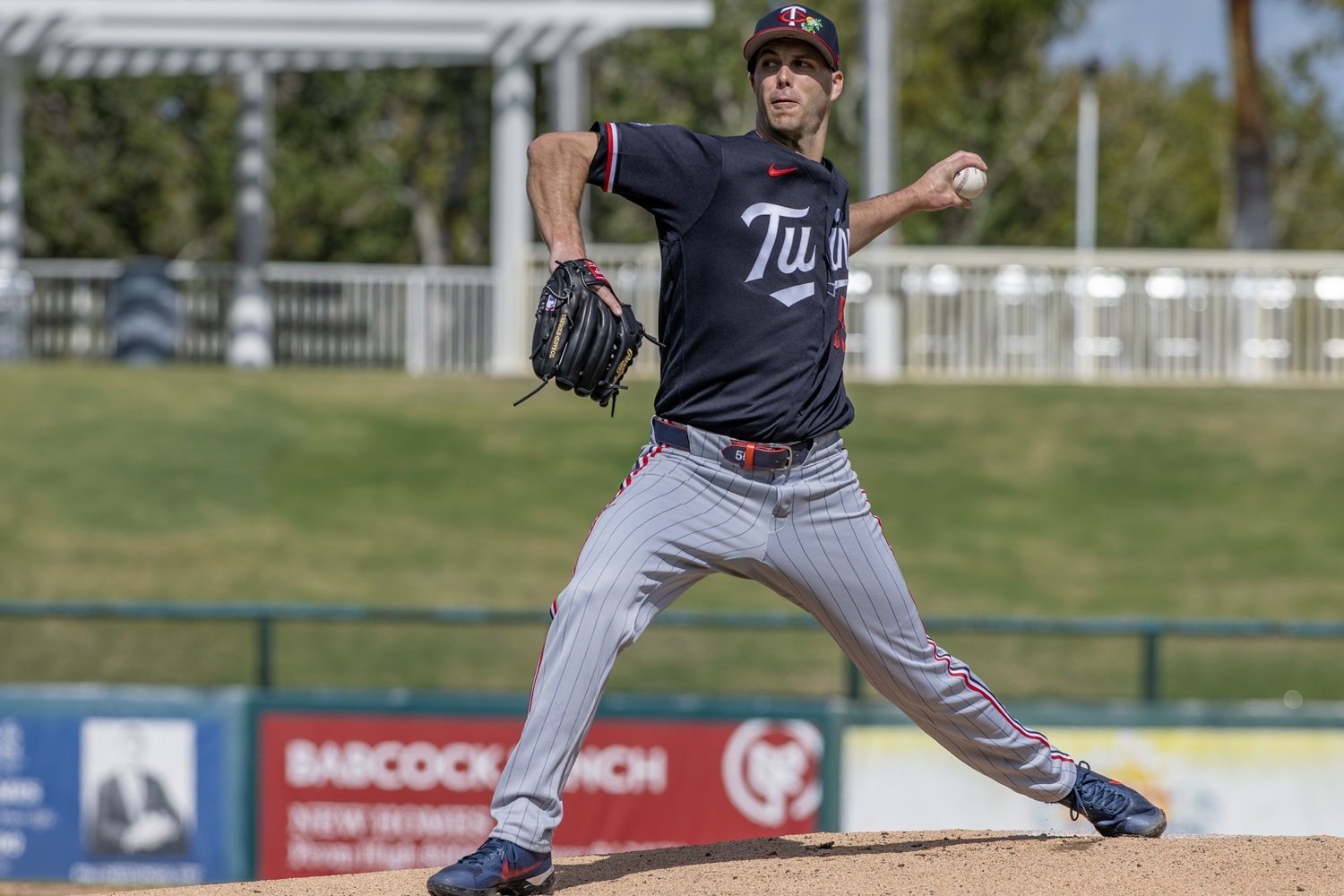 For the better part of the last few seasons, the Minnesota Twins did not have to think very hard about how they were going to finish games. When a lead made it to the ninth inning, the ball went to Jhoan Duran, and the rest of the league usually understood what came next. Duran developed into one of baseball’s most dominant closers thanks to his overpowering fastball and splinker combination that made even elite hitters look overmatched. He brought consistency to a bullpen that had spent years searching for a true shutdown presence. When he took the mound in save situations, there was a level of calm that had been missing in Minnesota for a long time. That stability is now gone. At last year’s trade deadline, the Twins made the difficult decision to part ways with Duran, along with Griffin Jax and Louis Varland. All three had experience pitching in high-leverage roles, and any one of them could have entered spring training as the favorite to close games in 2026. Instead, Minnesota will attempt to piece together the ninth inning with a mix of veteran reclamation projects and internal arms looking to take the next step. LHP Taylor Rogers Minnesota signed Rogers to a one-year, $2 million deal, but that does not mean the left-hander cannot provide value in the closer role to begin the season. In fact, it probably makes the most sense for the Twins to lean on his experience early in the year, given the number of other lefties projected to make the bullpen, like Kody Funderburk and Anthony Banda. On a recent episode of Inside Twins, Rogers spoke about the adjustments he has made later in his career to rely more on sequencing and pitchability as his velocity has dipped. He also mentioned that new bullpen coach LaTroy Hawkins has been a valuable resource when it comes to finding ways to extend a reliever’s career and remain effective in high-leverage spots. Rogers seems to have the inside track to the closer role, but he’s told Twins manager Derek Shelton that he must earn the spot. RHP Liam Hendriks Hendriks has been one of the best closers of his generation, but the reality is that he has thrown fewer than 20 innings over the last three seasons. Since 2022, Hendriks has dealt with seemingly constant adversity, beginning with a diagnosis of non-Hodgkin's lymphoma that offseason, which delayed his 2023 debut until May 29. He was only able to make five appearances that year before suffering an elbow injury that ultimately required Tommy John surgery. “[He’s a] veteran guy that people speak so highly of in the game in terms of who he is as a human being,” Shelton said. “Obviously, he’s had some challenges in his life over the last couple years. Just talking about the person, [we're] excited to add him into that group.” If Hendriks can rediscover anything close to his previous form, he could quickly move to the front of the closer conversation. RHP Cole Sands Sands might possess the highest upside of anyone currently projected to make the Twins’ bullpen. However, he also seems like a candidate to slide into the fireman role that Jax occupied in recent seasons, which takes him out of the full-time closer conversation. Minnesota may prefer to keep Sands flexible enough to enter during the middle innings to escape a jam or bridge the gap to one of the more traditional ninth-inning options. He has been working on adding a gyro slider that could help neutralize left-handed hitters more consistently. “So the big idea here is just try and put lefties away," Sands told reporters this past week. "And that's kind of where the gyro came into play. And we're always going to continue to push all, you know, all these pitches to try and execute lefties as well as I [do against] righties.” RHP Justin Topa Topa arrived in the Jorge Polanco trade after a breakout season with the Mariners that saw him post a 152 ERA+ and a 3.15 FIP. He has recorded a handful of saves throughout his career, which gives him at least some credibility in late-inning situations. However, his 18.3 K% last season suggests his skill set is better suited for a setup role. Minnesota will need reliable right-handed options throughout the year, which should still allow Topa to carve out meaningful opportunities even if they do not come in the ninth inning. Dark Horse Candidates David Festa and Connor Prielipp Festa and Prielipp are both expected to begin the year building starter workloads, but the reality is that each comes with injury concerns, and the Triple-A rotation is likely to be crowded. Both pitchers feature electric arsenals that have allowed them to succeed as starters in the minors. Limiting their pitch mix in shorter bullpen stints could unlock additional velocity and give Minnesota another potential late-inning weapon. The organization has already seen how that transition can work with pitchers like Jax, Varland, and Sands in recent seasons. Replacing a talent like Duran is not something that can be done with a single move. The Twins are not just searching for someone who can collect saves but for someone who can bring a sense of stability to the bullpen’s most important moments. That responsibility could shift month to month depending on performance and health. There is also value in keeping the role fluid early in the season. Locking in a closer on Opening Day might provide clarity, but it could also limit the Twins’ ability to deploy their best relievers in the highest leverage spots, regardless of inning. Minnesota has leaned into that philosophy at times over the last few years and may now be forced to embrace it more fully. Ultimately, this bullpen will look very different from the one that opened last season. New opportunities often create unexpected outcomes, and the Twins will be hoping that one of these veterans or emerging internal options can seize the ninth inning and make it their own. If that happens, Minnesota might not completely replicate what Duran provided at the back end of games, but they could still find a path toward building their next trusted late-inning presence. Who should be the team’s closer on Opening Day? Who will have the most saves for the Twins in 2026? Leave a comment and start the discussion. View the full article
 -
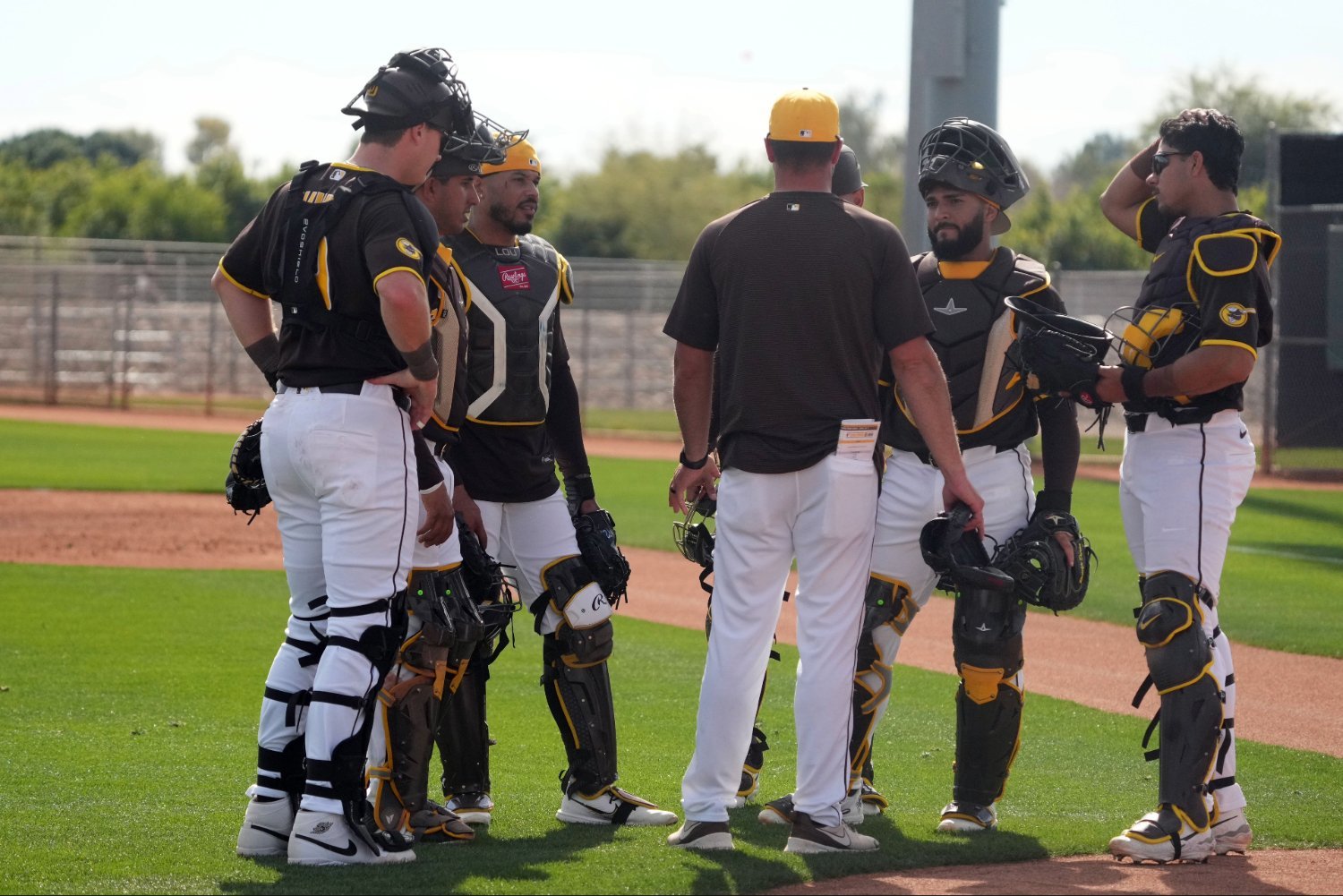 There was perhaps no need that was more evident, for any team in Major League Baseball, than starting pitching was this winter for the San Diego Padres. They lost Dylan Cease early in free agency and appeared poised to do the same with Michael King. Yu Darvish was quickly declared out for the entirety of 2026, if he doesn’t call it a career it a career altogether. Nestor Cortes was a virtual non-factor upon his acquisition at last year’s trade deadline and never really merited discussion of a return. In short, the situation was dire for the Padres’ 2026 rotation. As the offseason progressed, however, they started to shift the narrative, at least a bit. King was, surprisingly, re-signed to what could amount to a one-year deal (though reads three on paper). Joe Musgrove is going to be close to a full-go for the regular season from the jump as he works back from Tommy John surgery. Adding those two to Nick Pivetta provided at least some stability to the top of the group. Questions remained, however. Sure, Randy Vásquez finished the year strong. But his profile is still flawed given some command woes against a lack of upside in his stuff. Even if he is able to build on that finish, the absence of anything resembling certainty helps to make this the murkiest positional group on the roster. With the team more recently opting for a pure volume approach in addressing it, though, they might have an opportunity to capitalize on that lack of clarity in seeking a more creative solution: the six-man rotation. Last week, the team signed Griffin Canning and Germán Márquez to one-year deals. They join in-house holdovers JP Sears, Kyle Hart, and Matt Waldron and non-roster invitees Triston McKenzie, Marco Gonzales, Sean Boyle, and Walker Buehler to create a competition that presents plenty of intrigue, even if it’s lacking in upside. If you’re keeping count, that’s 13 names for five spots. Pared down based on the more certain aspects, that’s 10 names for two spots. It’s not a terribly favorable probability for those that are on a deal of the minor-league variety or lacking in upside altogether. For example, it’s much more likely that we see a name like Hart in the bullpen or El Paso on the guaranteed contract side, with Boyle serving a similar role off the 40-man roster. However things shake out, though, it’s an opportunity to the Padres to explore the possibility of the six-man setup. The concept of a six-man rotation is floated throughout the league with decent regularity, but few teams actually adopt it. Pitchers being as routine oriented as they are stifles at least some of its usage, while another share of the responsibility goes to simply not having six options with which to work in the context of some organizations. In the Padres’ case, though, there’s real logic in exploring the possibility. From the standpoint of the certain aspects of the rotation, King is coming off a season in which he made only 15 starts. Musgrove hasn’t thrown a big-league inning since 2024. Pursuing such an avenue as a six-man rotation allows each of the two to settle back into regular work without putting too much stress on either arm early in the season. That’s the primary reason the team would even consider it. But it may not be the only one. As an added benefit, it also provides the Padres with runway beyond the spring to sort through some of the volume they’ve accrued. If they like what they see from the likes of Triston McKenzie or Walker Buehler – two pitchers that have performed at a high level in the past – they could structure the rotation in such a way that allows them sufficient time to evaluate whether some of the upside still persists within either pitcher. With Griffin Canning likely needing some time to work his way back from the Achilles injury, too, they get additional coverage from an innings standpoint. FanGraphs’ prognostication indicates that, in some way, the Padres will heavily feature at least six starters in 2026. Their list includes Canning grabbing 11 percent of the available starts, which is the lowest among the six starters playing on a guaranteed contract. That amounts to roughly 18 starts. While the depth charts are predictive and don’t necessarily always factor in context, this at least suggests that the thought isn’t entirely unreasonable. The Padres represent as good a case as any for the six-man rotation. The situation is always different when these conversations manifest around different organizations. But considering their lack of certainty at the back end of the rotation and their group of pitchers recovering from injury, the merits of the approach are at least visible to the naked eye. View the full article
 -
 While Ben Brown was hit around and struggled to control at-bats with a two-pitch mix in 2025, there are a few signals pointing towards a bounce-back campaign in 2026. If all goes to plan, and Brown expands his arsenal, Tommy Hottovy eluded that Brown could be a pivotal part of the future of this Cubs rotation. View the full article
