


DiamondCentric
-
Posts
2,631 -
Joined
-
Last visited
Never
Content Type
Profiles
Forums
Events
MLB News, Rumors & Analysis
DiamondCentric Tutorials & Help
Major League Baseball Videos
MLB Fan Guides & Resources
Store
Downloads
Gallery
Everything posted by DiamondCentric
-
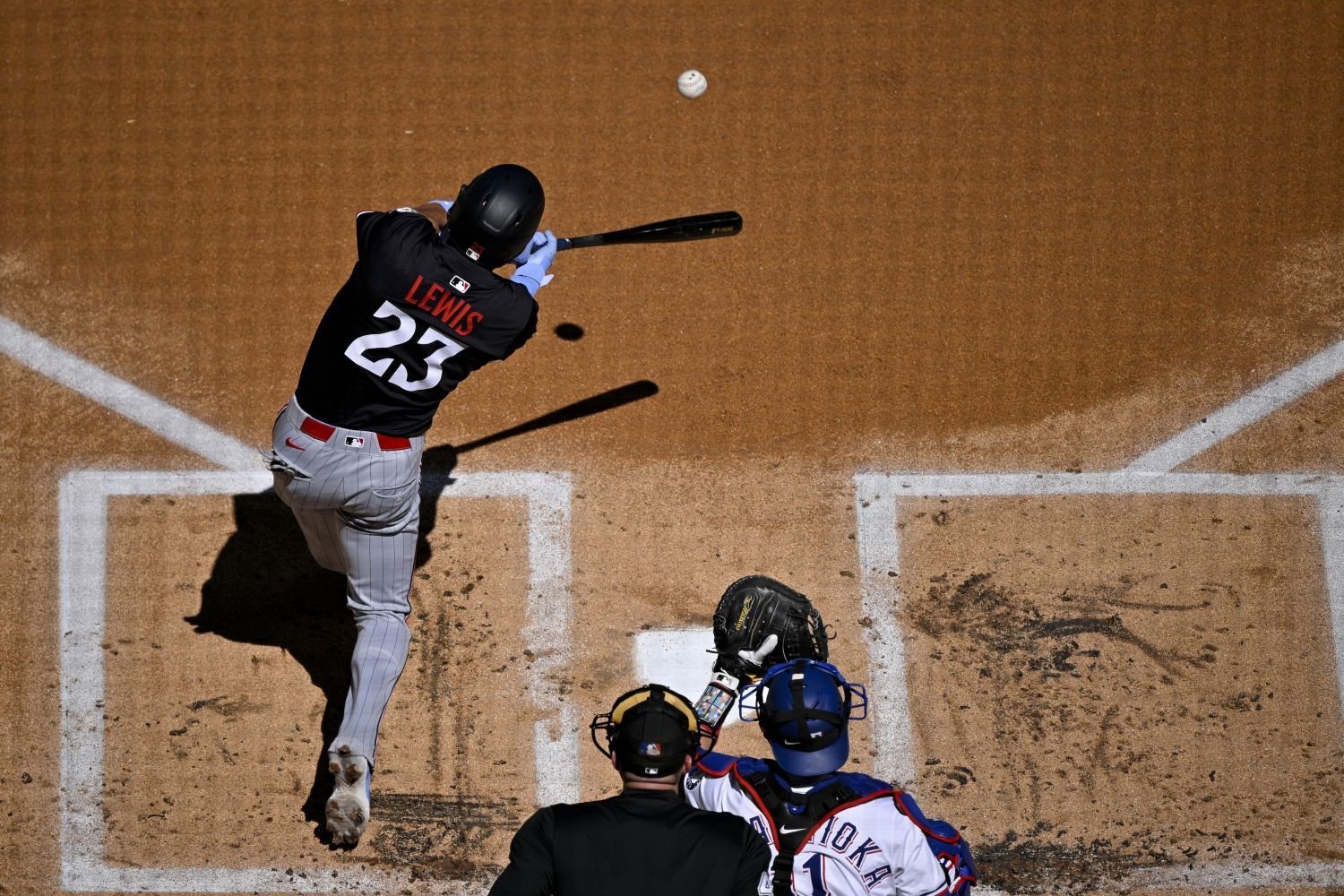 When Royce Lewis was selected first overall in the 2017 MLB Draft, the expectation was simple. He was supposed to be a future superstar and the face of the Twins franchise. Alas, his journey in professional baseball has been anything but a smooth ascent to the firmament. Multiple ACL tears and a lengthy injury history have interrupted his development at nearly every turn, forcing him to spend more time rehabbing than refining his game. Even so, the flashes have always been there. The moments that remind you exactly why he went No. 1 overall have not been hard to find, especially when the lights were brightest. That's the version of Lewis everyone has been waiting to see over a full season, which is why this spring has drawn some attention for the wrong reasons. In 45 at-bats this spring, Lewis batted .133/.160/.289, with 2 home runs, 2 stolen bases, 2 walks and 11 strikeouts. The surface-level production was rough, and even when you look a little deeper, the contact quality offered little reassurance. Lewis did post a reasonably strong 107.4 MPH 90th-percentile exit velocity, but his average exit velocity was just 88.7 MPH and he hit just over 35% of his balls in play at 95 MPH or higher. For a player whose value comes from the damage he can do when he connects, that lack of consistent authority stands out. It's also worth noting that this has not come against top-tier pitching. According to Baseball Reference’s opponent quality metric, Lewis faced a 7.9 out of 10 level of competition this spring, with 10 representing a typical major-league pitcher. In simple terms, much of his playing time came against minor-league arms, rather than big leaguers, which only adds to the concern one feels at first glance. That's really where this conversation starts. It's fair to ask whether these struggles are simply a rough stretch or something more meaningful, but the answer depends on how much weight you want to give a handful of spring at-bats. There are several reasons to believe this was basically a fluke. The most obvious place to start is his batting average on balls in play, which was an atrocious .114. That number isn't just low; it's essentially impossible to sustain. Even hitters who are consistently overmatched don't run a mark that low over time, which means some level of correction is inevitable as the sample grows. Beyond that, there are still signs that the underlying impact ability has not disappeared. Lewis produced a 13.5% barrel rate this spring, according to Statcast, which tells us that his high EV90 wasn't fueled by hammering the ball into the ground. That figure would have placed him comfortably above the league average last season, and suggests that when he does square the ball up, the quality of contact is still there. The disconnect comes from the inconsistency in getting to that contact. His overall exit velocity and strikeout rate point to a hitter who is not consistently on time or fully comfortable in the box. That would not be unusual, given the context of his offseason. Lewis made adjustments to both his stance and approach over the winter, and that type of change often comes with an adjustment period. Even established hitters can look out of sync in spring training when they are working through mechanical tweaks, especially when the focus is on process, rather than immediate results. Pile the question of sample size on top of these considerations, and it's easy to downplay the problem. Lewis has already shown that he can perform at a high level against major-league pitching, and he has done it in meaningful moments. The raw talent that made him the top pick in the draft is still present, and the underlying metrics suggest that his ability to impact the baseball has not disappeared. As we've already documented, though, there are reasons beyond the stat line to be concerned, too. What matters more is how he looks once the games begin to count, when the focus shifts from adjustments to execution. For now, the results are not pretty, but they're also not especially predictive. It is fair to acknowledge the slow start, and it's reasonable to monitor how he looks early in the season. At the same time, the combination of a tiny sample, an unsustainably low BABIP, and ongoing adjustments makes it difficult to treat this as anything more than a temporary lull. If you have to choose between the two, view this as an unimportant (though not strictly encouraging) spring blip. As the season begins, though, he sure hasn't answered the questions that hung over him all winter. View the full article
-

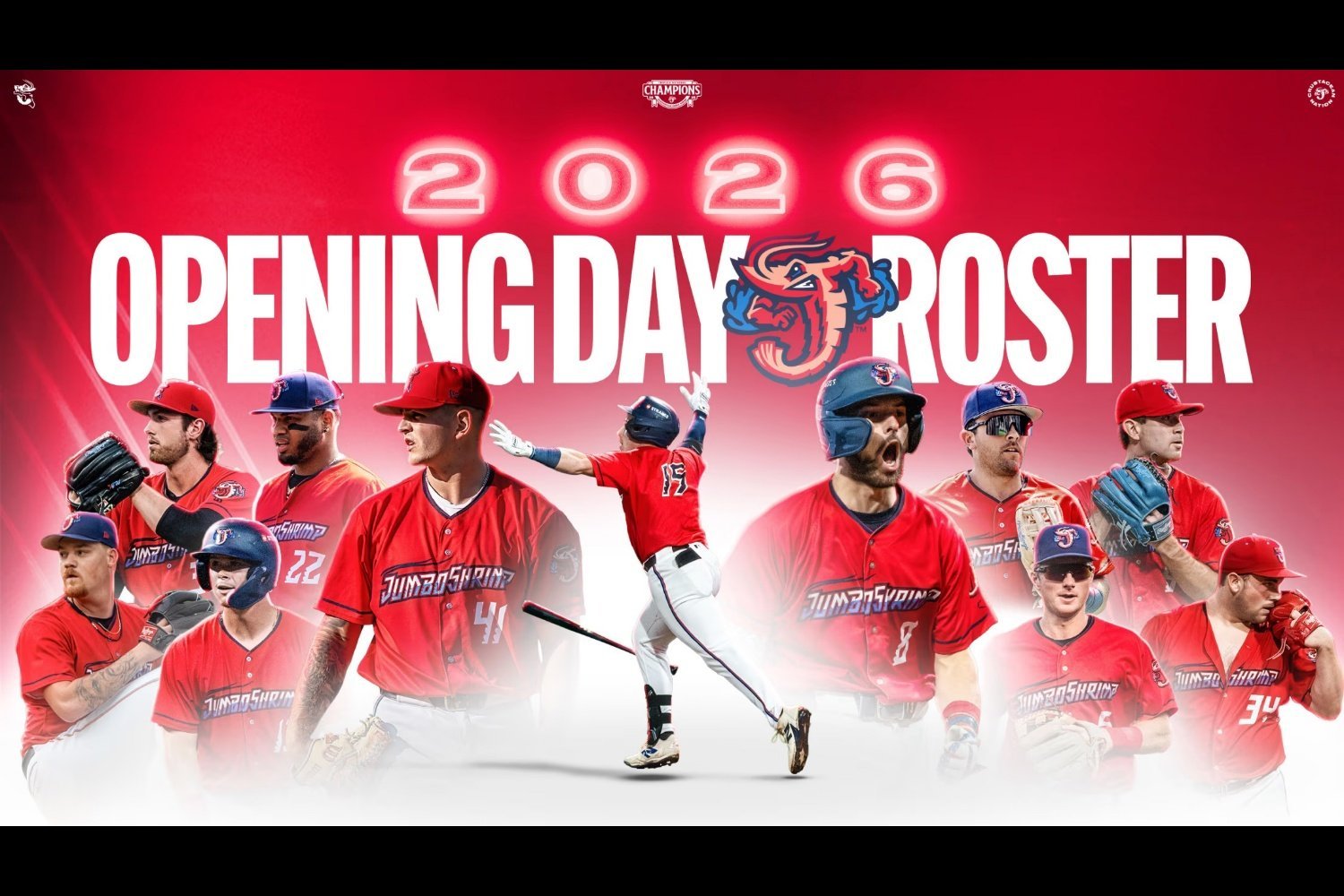 One quirk of the 2026 Miami Marlins schedule is that the organization's first minor league game begins before its major league opener. The Jacksonville Jumbo Shrimp host the Rochester Red Wings this Friday at 7:05 p.m. ET, while first pitch of Opening Day in Miami will be approximately five minutes later. The Jumbo Shrimp announced their initial 30-man active roster on Wednesday afternoon. Don't get too attached to this group, though, as Triple-A rosters tend to churn constantly throughout the course of the season. Seven of our Fish On First Top 30 prospects have been assigned to Jacksonville as indicated in parentheses below. That's without including Maximo Acosta (FOF #15), who will likely be optioned to Triple-A once he recovers from his left oblique strain. Pitchers (15): Garrett Acton, Bradley Blalock, Josh Ekness (FOF #27), Dax Fulton, Braxton Garrett, Cade Gibson, Ryan Gusto, William Kempner, Zach McCambley, Patrick Monteverde, Jack Ralston, Robby Snelling (FOF #3), Jake Walkinshaw, Josh White (FOF #25), Tyler Zuber Catchers (3): Bennett Hostetler, Joe Mack (FOF #2), Brian Navarreto Infielders (7): Jesús Bastidas, Jacob Berry, Deyvison De Los Santos (FOF #28), Nathan Martorella, Cody Morissette, Johnny Olmstead, Jared Serna Outfielders (5): Kemp Alderman (FOF #10), Matthew Etzel, Daniel Johnson, Ethan O’Donnell, Andrew Pintar 7-day IL: Evan McKendry, Jesús Tinoco, Thomas White (FOF #1) Notable prospects who finished the 2025 season with the Shrimp but didn't crack this roster include right-hander Nigel Belgrave and left-hander Dale Stanavich. Expect them to start off with Double-A Pensacola. Pensacola's full roster will be announced next week. View the full article
-
Pants Down and Laughs Up as Twins Broadcast Goes Viral
DiamondCentric posted an article in Twins Daily
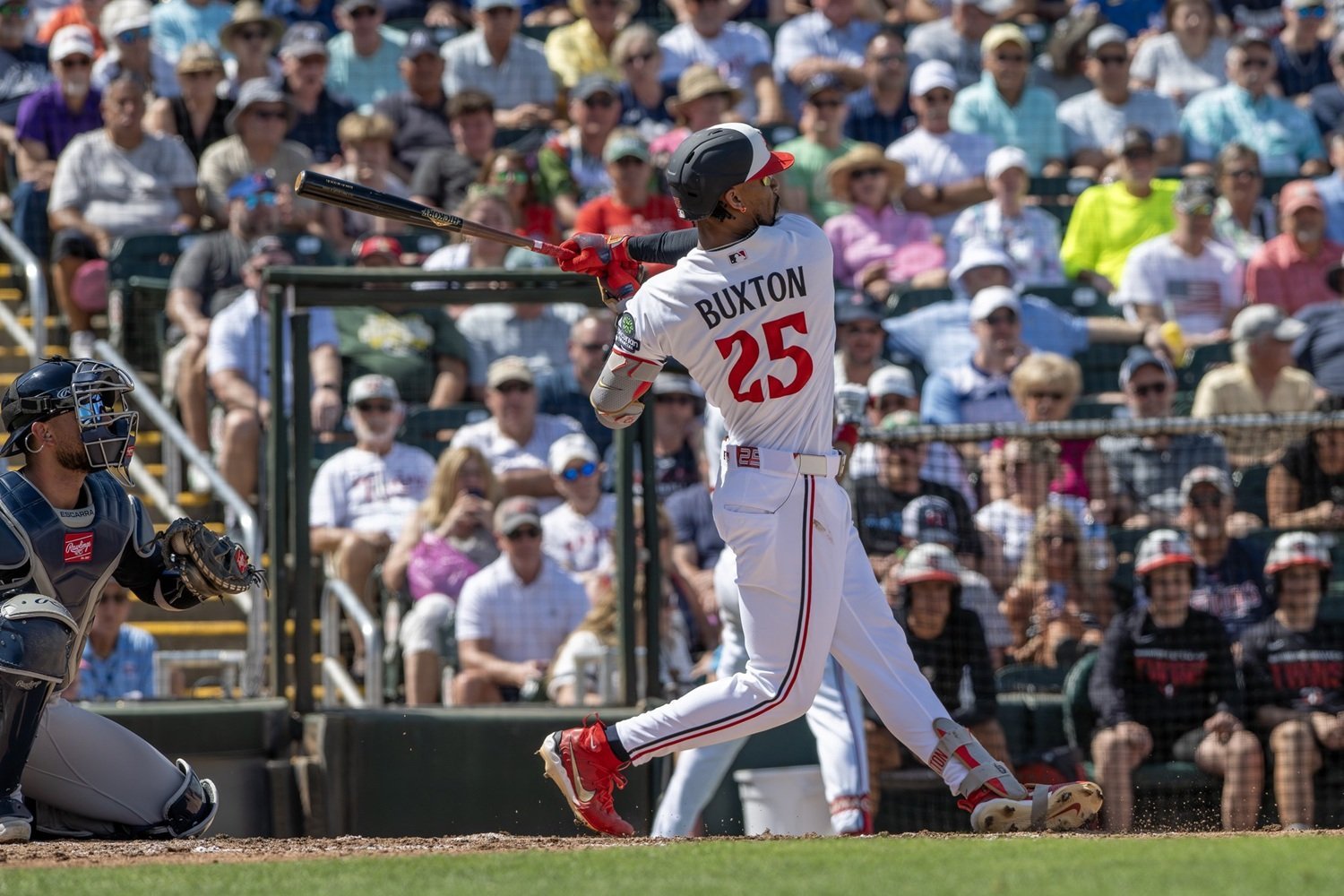 Spring training is a time for timing to return, for mechanics to sharpen, and for everyone around the game to find their rhythm again. That does not just apply to hitters and pitchers. Broadcasters are shaking off rust too, and sometimes that leads to moments that take on a life of their own. That is exactly what happened in the Twins television booth when Glen Perkins and Cory Provus found themselves tangled in an exchange about Byron Buxton and his uniform style. It started innocently enough. Or at least it was supposed to. Perkins attempted to describe Buxton’s preference for wearing his baseball pants all the way down rather than pulled up to show high socks. Instead, he delivered a question that immediately veered off course. Perkins (GP): “You ever seen Buck with his pants down?” Provus, caught off guard, tried to clarify. Provus (CP): “Uh, no. Like in shorts?” GP: “No, like he’s got…he doesn’t have his,... no socks showing.” CP: “Ah, I see what you’re saying.” From there, the moment snowballed. Perkins tried to explain. Provus tried to recover. The booth never quite found its footing again, and within hours, the clip was circulating far beyond the usual Twins audience. It is the kind of exchange that lives in the uncomfortable middle ground between confusion and comedy. No one involved meant anything beyond a simple observation about uniform style, but the phrasing turned it into something else entirely. That disconnect is exactly why it spread. To their credit, Perkins and Provus leaned into it. During the spring training finale against the Boston Red Sox, they revisited the moment with a level of self awareness that made it even better. CP: “Take a look at that sharp uniform today, and just because we are thorough, the baseball pants the baseball pants are down at the bottom.” Perkins followed with a line that perfectly captured the absurdity of the entire situation. GP: “He has got his pants up around his waist, but also down around his ankles at the same time.” CP: “Baseball pants” GP: “Baseball pants” CP: “Baseball pants. Well that became a thing” At that point, everyone was in on the joke. Even Derek Shelton, who joined the broadcast, admitted the moment had taken on a life of its own. He said his phone lit up with messages from fellow parents in his volleyball circles, all reacting to what they had heard. His reaction was about what you would expect from someone trying to process the unexpected. "The first time I heard it, I was like, 'Good God, I don't know how to comment on this or think about it.' So, yeah, I don't know," Shelton said. "I was actually going to say last inning that Buck looks good with his pants down, not his pants on." Shelton even joked about nearly adding his own line to the chaos, saying he considered pointing out that Buxton looked good with his pants down, before wisely thinking better of it. Most importantly, he recognized what the moment had become. DS: “You guys definitely caught people’s attention. And the one thing about it is no one got canceled, which is the most important thing. And number two, you guys decided that you were going to bring the Twins to the forefront of the viral universe for about four or five hours.” That might be the most accurate summary of all. For his part, Buxton handled it exactly how you would expect from a veteran who has seen just about everything at this point. According to Perkins, the center fielder could not do anything but laugh when the two crossed paths afterward. Spring training can feel long. The games do not count. The repetitions can blur together. But every now and then, something breaks through the routine and reminds everyone that baseball is still a game, and the people around it are still human. This was one of those moments. It was awkward. It was unintentionally hilarious. It was completely harmless. And in a sport that often takes itself very seriously, it was a reminder that sometimes the best content is the kind no one plans. All it took was one question, one misunderstanding, and one pair of baseball pants to give the Twins their most unexpected viral moment of the spring. View the full article
-
Kansas City Royals 2026 Position Analysis: Third Base
DiamondCentric posted an article in Royals Keep
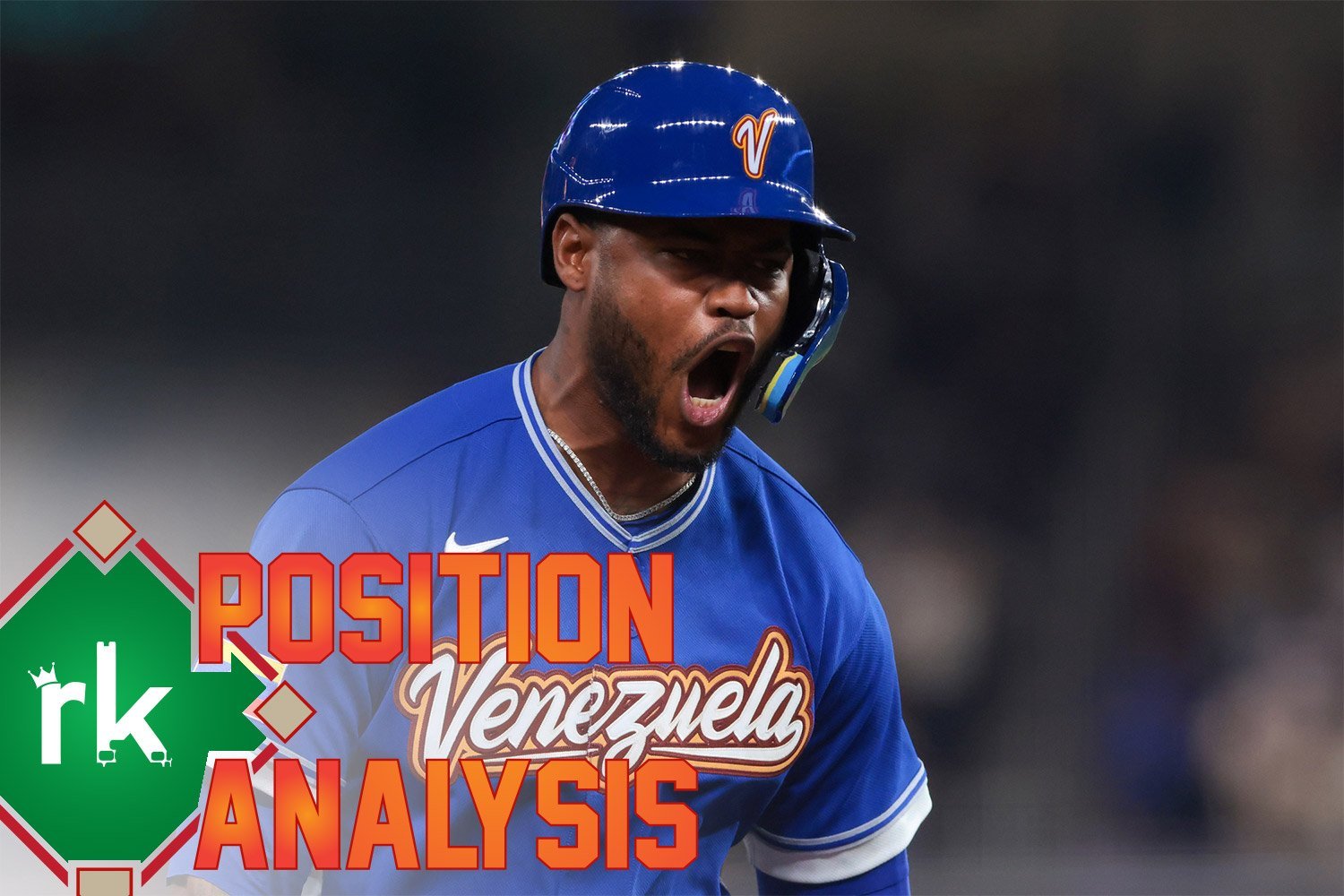 With the emergence of Maikel Garcia as an everyday starter at third base in 2025, Garcia has locked down the position for 2026, barring injury. If Garcia needs a day off, there are a few options in the Royals system to give him a break. Royals Centerfielders At A Glance Starter: Maikel Garcia Backups: Nick Loftin Depth: Tyler Tolbert Prospects: Peyton Wilson, Colton Becker, Sam Ruta, Austin Charles Non-Roster Invites: Josh Rojas, Brandon Drury, Kevin Newman Royals fWAR Ranking Last Year: 2nd out of 30 Royals fWAR Projection This Year: 7th out of 30 The Good Garcia is coming off a career year in which he posted 5.6 fWAR and slashed .286/.351/.449 with a 121 wRC+. In 2025, Garcia earned his first career All-Star selection, won a Gold Glove at third base, and finished 14th in AL MVP voting. Following his stellar season, the Royals rewarded him with a five-year contract extension that will keep him in Kansas City until 2030 with an option for 2031. Garcia carried that production into the World Baseball Classic. Representing his home country, Garcia led Venezuela to win its first-ever WBC championship in 2026. In seven games, Garcia slashed .385/.393/.577, earning tournament MVP honors. Following his contributions to the Venezuelan national team, the Royals will hope he can carry the momentum into the 2026 regular season. Garcia excels at getting on base, posting a wOBA of .345 last season. His plate discipline was borderline elite with chase, whiff, strikeout, and walk rates all grading in the 91st percentile or better. While he does not swing at a very high rate, he excels at getting contact when he does swing, with a zone contact rate of 90.5% (90th percentile). Near the end of 2025, Garcia began spending more time in the leadoff spot and has been hitting there often during his spring training games. After the Royals had struggled to find a consistent threat in the leadoff spot in 2025, Garcia looks to be the leading contender to fill that role and combine with Bobby Witt Jr. at the top of the order. With his on-base abilities combined with his elite plate discipline, Garcia and Witt could become one of the most dangerous one-two punches in the league. The Bad If Garcia can repeat his production from 2025 and remain healthy, the Royals will not have too much to worry about at third base. With the 7th best projection from Fangraphs going into 2026, there’s reason to remain optimistic. If there was an area where Garcia could improve, it is his power profile. barrel rate, max exit velocity, and pull-air percentage are all below league average, which limits his power potential. This is a minor nitpick, and if Garcia can maintain his production in other areas, it will not be a concern. While the backups would offer a sizable drop-off in production, there are a few players whom the Royals could turn to if needed. Nick Loftin will be the primary backup at third base. While his production during spring training has been good, slashing .282/.364/.513 with a 131 wRC+, projections are not as high on him going into 2026. Projections range his wRC+ between 75 and 98, and his projected fWAR ranges from 0.0 to 0.8. The other depth option, Tyler Tolbert, has even lower projections. There have been a couple of standout non-roster invitees in Kevin Newman and Josh Rojas, but they are both looking to bounce back from disappointing 2025 seasons of their own. The Royals will certainly hope that they do not need to rely on either for meaningful innings in 2026, if they even make the final roster. The Bottom Line Maikel Garcia looks like he could be a star in the making following his 2025 and WBC performances and is now a foundational piece for the Royals. If he can remain healthy in 2026, Garcia looks to be poised to continue his stellar form. The Royals do have MLB experience to back up Garcia, should the need occur, but they will offer a noticeable decline in production if called upon. Previous Installments: Second Base Position Analysis Catcher Position Analysis First Base Position Analysis Corner Outfield Position Analysis Center Field Position Analysis View the full article
-
The 10 Best Chicago Cubs Rookie Seasons Since 1947
DiamondCentric posted an article in North Side Baseball
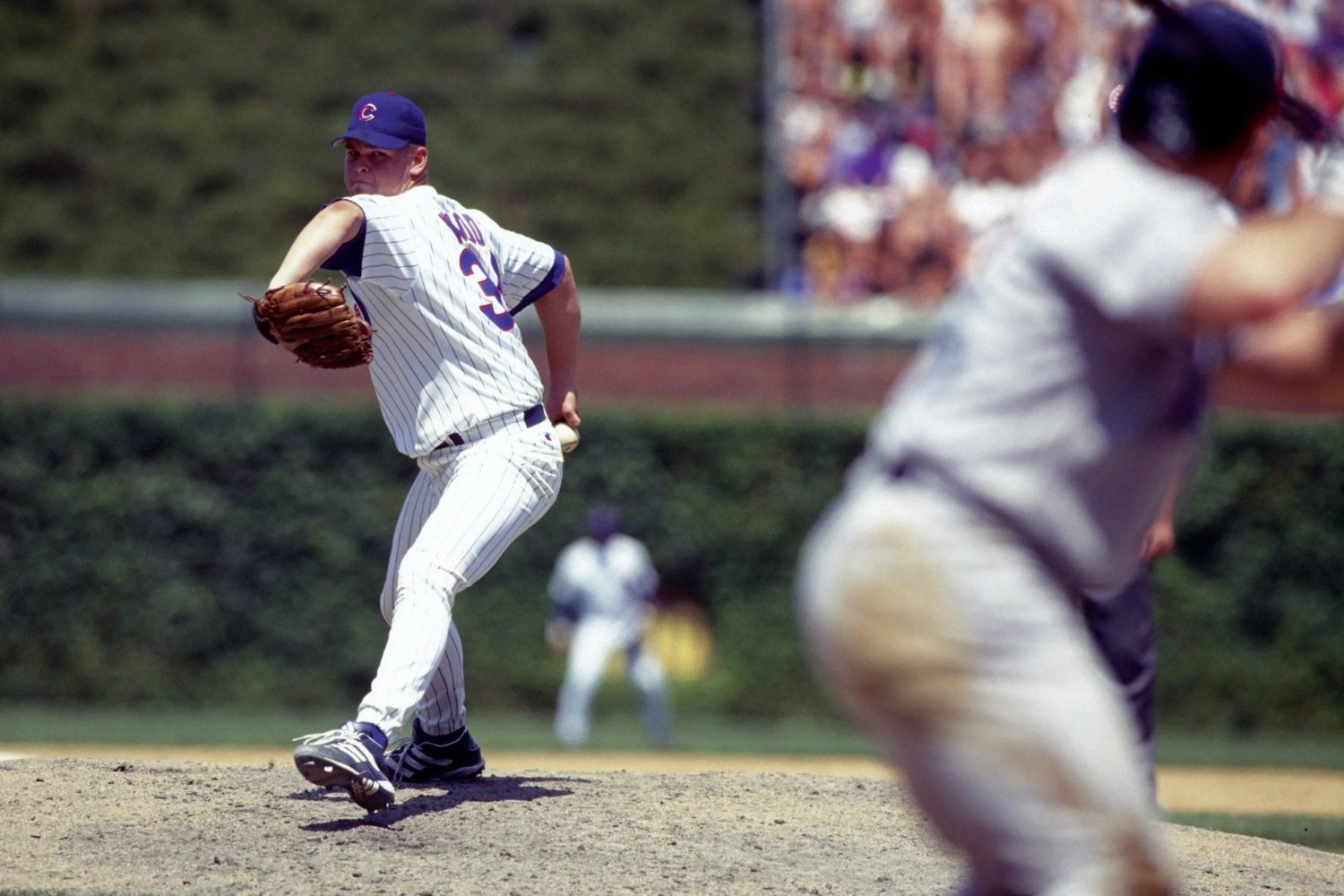 The initial field for the 2026 National League Rookie of the Year award is crowded. One of the entrants is Chicago Cubs catcher-designated hitter Moisés Ballesteros. The 22-year-old made his debut in 2025 but kept his rookie status, as he stayed below the thresholds of 130 at-bats and 45 days on an active roster. Ballesteros's competitors include New York Mets right-hander Nolan McLean, Cincinnati Reds first baseman Sal Stewart, Miami Marlins outfielder Owen Caissie (hey, we know him), Mets outfielder Carson Benge and St. Louis Cardinals second baseman J.J. Wetherholt. Pittsburgh Pirates shortstop Konnor Griffin will join this group as soon as he's promoted from the minor leagues, but the head start the others will have is sure to make things tougher on the teenaged Griffin. If Ballesteros bests his competition, he will become the seventh Cub in franchise history to be voted Rookie of the Year. Previous winners include a Baseball Hall of Famer and a franchise icon. Three Hall of Famers got votes, but fell short. The Rookie of the Year award, which is voted on by members of the Baseball Writers' Association of America, was first given out in 1947. Jackie Robinson was the first recipient, for both leagues. Awards for each league began in 1949. North Side Baseball went through club and Rookie of the Year history to determine the Cubs' 10 best rookie seasons since the award's inception. Results are ranked based on season stats, excitement surrounding the player, and the players who finished behind or ahead of them in the voting. The player's finish in the voting is listed in parentheses. Chicago Cubs 10 Best Rookie Seasons Since 1947 10. Ken Hubbs, 1962 (Rookie of the Year) Hubbs pulled off a huge feat in his ROY season: he beat out Bill Mazeroski for the National League Gold Glove at second base. Mazeroski had won the award the previous two years and would take home the next six. Teammates saw star potential in Hubbs, but tragedy kept it from being realized. Hubbs died on Feb. 13, 1964, when the single-engine Cessna 172 plane he was piloting crashed into Utah Lake in Provo, Utah. He was 22 years old. 9. Randy Hundley, 1966 (4th in voting) The Cubs acquired Hundley in a trade with the San Francisco Giants in December 1965 and named him their No. 1 catcher the following spring. He ran with the opportunity, taking 144 starts behind the plate; hitting 19 home runs; and nabbing a major league-leading 51 baserunners. In hindsight, he deserved better than fourth in the voting. He finished behind middling middle infielders Tommy Helms, Sonny Jackson and Tito Fuentes. 8. Jerome Walton, 1989 (Rookie of the Year) Walton had two things going for him in the voting: he played center field for a division winner, and he set a modern (since 1900) franchise record with a 30-game hitting streak that began in July after the All-Star break. (He still holds that record.) His main competition in the balloting was teammate Dwight Smith, but Walton won comfortably, receiving 22 of the 24 first-place votes. Smith received the other two. Walton also finished 13th in MVP voting. 7. Geovany Soto, 2008 (Rookie of the Year) Soto was a September callup in 2005, 2006 and 2007, so he already knew his way around Wrigley when the club anointed him its No. 1 catcher in 2008. At the plate, Soto delivered premium production: a 120 wRC+, an .868 OPS and 23 homers in 583 plate appearances. Behind the plate, he was a workhorse, making 131 starts. He was an All-Star and he finished 13th in MVP voting. Oh, and he also beat out a fellow named Joey Votto for ROY (probably indefensibly, because Votto batted .297/.368/.506, already flashing his Hall of Fame talent), garnering 31 of 32 first-place votes. 6. Shota Imanaga, 2024 (Fourth in voting) Imanaga joined Kosuke Fukudome and Seiya Suzuki as Japanese stars who had big rookie seasons for the Cubs. The left-hander put up a 2.91 ERA, a 3.72 FIP, a 25.1% strikeout rate and a 4.0% walk rate in 173 1/3 innings; made the NL All-Star team; and finished fifth in NL Cy Young Award voting. He just ran into a loaded rookie class, finishing behind Pittsburgh Pirates ace Paul Skenes, San Diego Padres center fielder Jackson Merrill and Milwaukee Brewers outfielder Jackson Chourio in the voting. 5. Mark Grace, 1988 (Second in voting) Grace gave Cubs fans a preview of what he would bring to the field during his entire 13-year run in Chicago: elite line-drive hitting and bat control, and Gold Glove-caliber defense at first base. That combination wasn't enough for him to beat out Cincinnati Reds third baseman Spuds McKenzie—er, Chris Sabo (as always, Google it)—for Rookie of the Year. In the end, however, Grace had, by far, the better career. Between Sabo beating out Grace and Soto beating out Votto, we can call it even between the Cubs and Reds. 4. Ernie Banks, 1954 (Second in voting) Banks made history the previous September when he, along with fellow infielder Gene Baker, integrated the Cubs. In 1954, he established himself as the franchise's long-term answer at shortstop. Banks played in all 154 games, hitting 19 home runs and a posting a 7.7% strikeout rate. Curiously, he finished 16th in NL MVP voting but second in Rookie of the Year voting to St. Louis Cardinals outfielder Wally Moon, who received no points in the MVP balloting. 3. Billy Williams, 1961 (Rookie of the Year) The sweet-swinging Williams was still eligible for the award in '61 after being up with the Cubs in both 1959 and 1960. He broke camp as the starting right fielder, and then he made the most of the chance: 25 home runs and a .278/.338/.484 slash line in 147 games. The '61 season launched Williams's Hall of Fame career, which ended with him collecting 2,711 hits and 426 home runs. He is, beyond debate, the greatest living Cub, and the proudest remaining symbol of the team's long history. 2. Kris Bryant, 2015 (Rookie of the Year) Imagine how good his rookie season would have been if he had debuted on Opening Day, instead of 12 days later. (That's for the people who are still salty about the service time manipulation). The delay did not affect Bryant. He posted a 136 wRC+, an .858 OPS, 26 home runs and 13 stolen bases in 151 games. He snagged an All-Star berth and finished 11th in MVP voting. Maybe the club was right about his defense at third base, though. Manager Joe Maddon played Bryant at third, first and all three outfield positions, and didn't always play stellar defense at the hot corner. 1. Kerry Wood, 1998 (Rookie of the Year) Wood became a rookie legend in his fifth career outing. On a damp May afternoon at Wrigley Field, the 20-year-old right-hander tied Roger Clemens' nine-inning MLB record with 20 strikeouts in a one-hit, no-walk shutout of the Houston Astros. Wood's feat would be overshadowed that summer by Sammy Sosa's pursuit of Roger Maris' home run record, but the kid from Texas kept putting up strikeouts in the background (33.3% strikeout rate in 166 2/3 innings). He edged out a future Hall of Famer, Colorado Rockies first baseman Todd Helton, for ROY. View the full article
-
San Diego Padres 2026 Position Analysis: Third Base
DiamondCentric posted an article in Padres Mission
 Manny Machado has held down the hot corner for the San Diego Padres since signing a 10-year, $300 million contract before the 2019 season. He has played third base well and, for the most part, been the player Friars fans expected when he left the Los Angeles Dodgers. He hasn't hit fewer than 27 homers, his 2025 total, in any of the full seasons since, being either the No. 1 or No. 2 item on the checklist for opposing pitchers to be aware of in the Padres lineup. There is veteran depth to give Machado some rest and keep his bat fresh, but there is nothing imminent in the prospect pipeline. Padres Third Basemen At A Glance Starter: Manny Machado Backup: Sung Mun Song, Miguel Andujar Depth: Jose Miranda Prospects: Jorge Quintana, Deivid Coronil Padres fWAR ranking last year: Ninth out of 30. Padres fWAR projection this year: Ninth out of 30. The Good One of the anchors of the Padres' offense, Machado bounced back from a subpar, by his standards, 2023 season due to a constant pain in his right elbow to put together similar campaigns in 2024 (.275/.325/.472 slash line) and 2025 (.275/.335/.460). Even the home runs (29 and 27) we nearly identical, while he drove in 105 runs in 2024 to 2025's 95, while reversing that trend when it came to runs scored (77 and 91). He earned down-ballot NL MVP votes each of those seasons. Machado enters 2026 as a 33-year-old, meaning the right-handed hitter should still be producing as the elite hitter that he has been in his career. While he might have lost a little from his 7.1 fWAR season of 2022, when he finished second in NL MVP voting following a .298/.366/.531 slash line with 32 homers and 102 RBIs, he still is an impact bat in the middle of the Padres' order. Part of the reason new manager Craig Stammen is tinkering with the top four in his lineup during spring training is to make sure that not only is the offense maximized, but that Machado has the protection he deserves. Defensively, Machado remains solid. He makes a lot of plays seem routine and never panics. Every throw seems to be a perfect chest-high toss to the first baseman. He also posts every day, having played in 150 or more games every full season (except 2023 with the ailing elbow) since 2014, when a knee injury ended his year early. With reinforcements brought in to play third base in Song and Andujar in particular, Machado could get some time off his feet and still remain in the lineup as the designated hitter, not only keeping him at the top of his game defensively, but more importantly offensively as well. The Bad Machado turns 34 in July. He signed an 11-year, $350 million contract that began in 2023, which means he is on the books through 2033. That deal is light on the front end, with Machado having earned $17.09 million each of the last two years, increasing to $25.09 million this year and jumping to a franchise-record $39.09 million next season, the figure he will make until the deal expires when he is 41 years old. The Padres certainly won't be getting MVP-caliber performances for the final eight years of that contract, but he has also been underpaid the last three seasons and will be this year, too. The Friars are hoping to get another three or four good seasons out of Machado offensively before any decline starts to take place. He struck out 131 times in 2025, two shy off his career worst in 2022. How that affects him defensively is something else to consider seeing as his metrics have slipped in recent years, but that is a discussion to be had down the road. For now, Machado is easily the best defensive option at the hot corner on the roster. The Bottom Line Machado is the present and the future at third base until he proves he can't handle the position, at which time he either moves to first base, left field, or DH. But again, that is at least a few years away. Machado's fewest games at third base with the Padres and playing for a full season was the 100 he played in 2023, when he served as the DH 51 times. He'll be expected to take the majority of starts in 2026, though his backups will determine how much rest he can really get. View the full article
-
What to Expect From New Brewers Reliever Jake Woodford
DiamondCentric posted an article in Brewer Fanatic
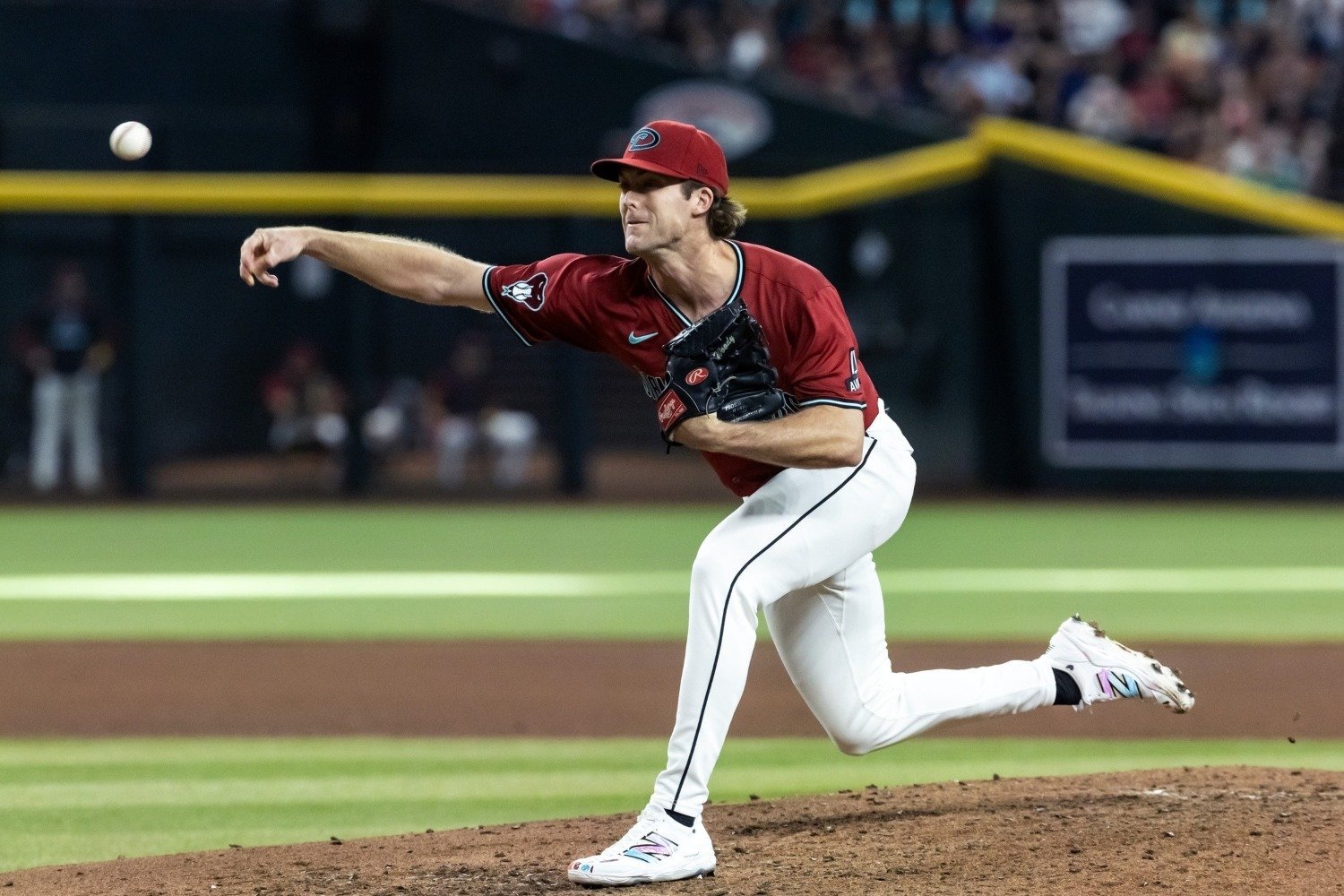 The final days of spring training include plenty of roster movement across baseball, as non-roster invitees exercise the opt-out and upward mobility clauses in their minor-league contracts. The Brewers are not strangers to adding some of those newly available players to their roster shortly before Opening Day. They did it again on Tuesday afternoon, acquiring right-hander Jake Woodford from the Tampa Bay Rays in exchange for minor-league pitcher K.C. Hunt and cash considerations. Woodford, 29, has pitched in parts of six big-league seasons for the St. Louis Cardinals, Chicago White Sox, Pittsburgh Pirates, and Arizona Diamondbacks. He spent the spring in Rays camp, where he recently exercised his upward mobility clause after they reassigned him to minor-league camp. He'll get a big-league opportunity in Milwaukee, which added him to its 40-man roster while placing outfielder Akil Baddoo on the 60-day injured list with a left quad strain. Woodford, who has primarily started in the minor leagues but has made 86 of his 111 big-league appearances out of the bullpen, is expected to fill a multi-inning relief role. "I think he's built up to 40-plus pitches," manager Pat Murphy said. "He definitely has a history, and obviously, we're excited about acquiring him." "We have some history with him," president of baseball operations Matt Arnold said, referring to Woodford's time in St. Louis. "He's an interesting arm that can play a valuable role in a number of different spots in our bullpen, or potentially even at the front of games." A former first-round pick by the Cardinals in the 2015 draft, Woodford showed flashes of his potential during his first few big-league seasons, but he has since struggled while working as a low-leverage innings eater. In 256 career innings, he's pitched to a 5.10 ERA, 4.84 FIP, and 111 DRA-, according to Baseball Prospectus. Woodford has reinvented himself over the last couple of years, lowering his arm slot and modifying his arsenal. Now working from a low-three-quarters delivery, his sinker has more depth, and his four-seamer plays better at the top of the zone as a flat, upshoot fastball. A few years ago, he replaced his slider with a cutter and ditched his curveball, and he developed what appears to be a kick changeup last season. Finally, Woodford averaged a career-best 93.2 mph with his sinker and four-seamer in 2025. After those changes, Woodford profiles as a platoon-neutral reliever whose stuff may be closer to clicking than last year's 6.44 ERA suggests. The Brewers seem to believe he'll be more than a temporary mop-up reliever, as they parted with Hunt—who had an unremarkable showing in Double-A last year but was the organization's co-Minor League Pitcher of the Year in 2024—to acquire him. "We like the platoon flexibility there," Arnold said. "Obviously, being right-handed, with us having a few more lefties, makes some sense. And his ability to be built up and pitch multiple innings is also something we value." The Brewers do not make sweeping changes to a pitcher's arsenal or identity during the season, and that need not be the case for Woodford. All that's left for his development is plugging him into the right run-prevention unit and finding the best way to sequence his pitches. The Rays already had him on the right track this spring. Woodford excelled at missing barrels last year, allowing just a 6.9% barrel rate, 33.6% hard-hit rate, and an average exit velocity of 86.1 mph. His .365 expected wOBA on contact was slightly lower than the league average of .369. His sinker flashed potential to eat up right-handed hitters, yielding an average launch angle of -3 degrees and inducing plenty of chases inside. The issue was that Woodford allowed too much contact, in front of a Diamondbacks defense that ranked 23rd in baseball with -4 Defensive Runs Saved and posted -2 Outs Above Average while he was on the mound. His stuff was difficult to square up, but it wasn't deceptive. Except for those inside sinkers to righties, none of his other pitches to other locations generated truly uncomfortable swings. Woodford's 16.4% whiff rate ranked in the 2nd percentile among all pitchers, and his 24.4% chase rate ranked in the 12th percentile. Throwing more cutters could help alleviate that problem. It produced a decent 24.0% whiff rate last season, held hitters to a .276 xwOBA, and was one of the two pitches in Woodford's arsenal with a positive run value. Baseball Prospectus's pitch tunneling metrics estimated that hitters only had a 48.1% chance of recognizing it as a cutter by the time they had to decide whether to swing, meaning it was also his most difficult pitch to identify. That was because it spun very similarly to his other fastballs before separating from them with slight glove-side movement. The cutter was Woodford's least-used pitch last year, but throwing it more could make pitch recognition tougher for hitters, potentially leading to fewer comfortable swings and more chases against his other pitches. Woodford doubled his cutter usage with the Rays this spring, even making it his primary pitch against left-handed hitters. Peripherals from small spring training samples are hardly a reliable measure of improvement, but there are signs that throwing more cutters is making Woodford more effective. His chase rate jumped to an above-average 31.6% in his 7 1/3 Grapefruit League innings. To account somewhat for facing lower-level hitters in exhibition games, it was still a better mark than his 27.5% chase rate in Triple-A last season. The Brewers could still make a few more tweaks after Woodford arrives in Milwaukee, including throwing more high four-seamers to introduce more swing-and-miss into his game. Knowing how they usually operate, though, they'll likely lean into his sinker and cutter to induce batted balls that their defense can turn into outs. Because he is out of options, Woodford will join the big-league roster, but he may not be active on Opening Day. Traded players get a 72-hour grace period to travel to their new club. "It's a possibility," Arnold said of Woodford being active by Thursday afternoon. "The logistics around getting him here are something we're still working through." If he doesn't arrive in time, it seems the Brewers will begin the year with the current group of 26 players they have left on the active roster, with Easton McGee occupying the final spot in the bullpen. McGee looks like the obvious candidate to be optioned to Triple-A once Woodford joins the team, but with Arnold emphasizing adding a right-hander to balance a lefty-heavy relief corps, the club could feasibly option DL Hall instead. Either way, the front office still has a few moving parts to navigate with the start of the regular season one day away. View the full article
-
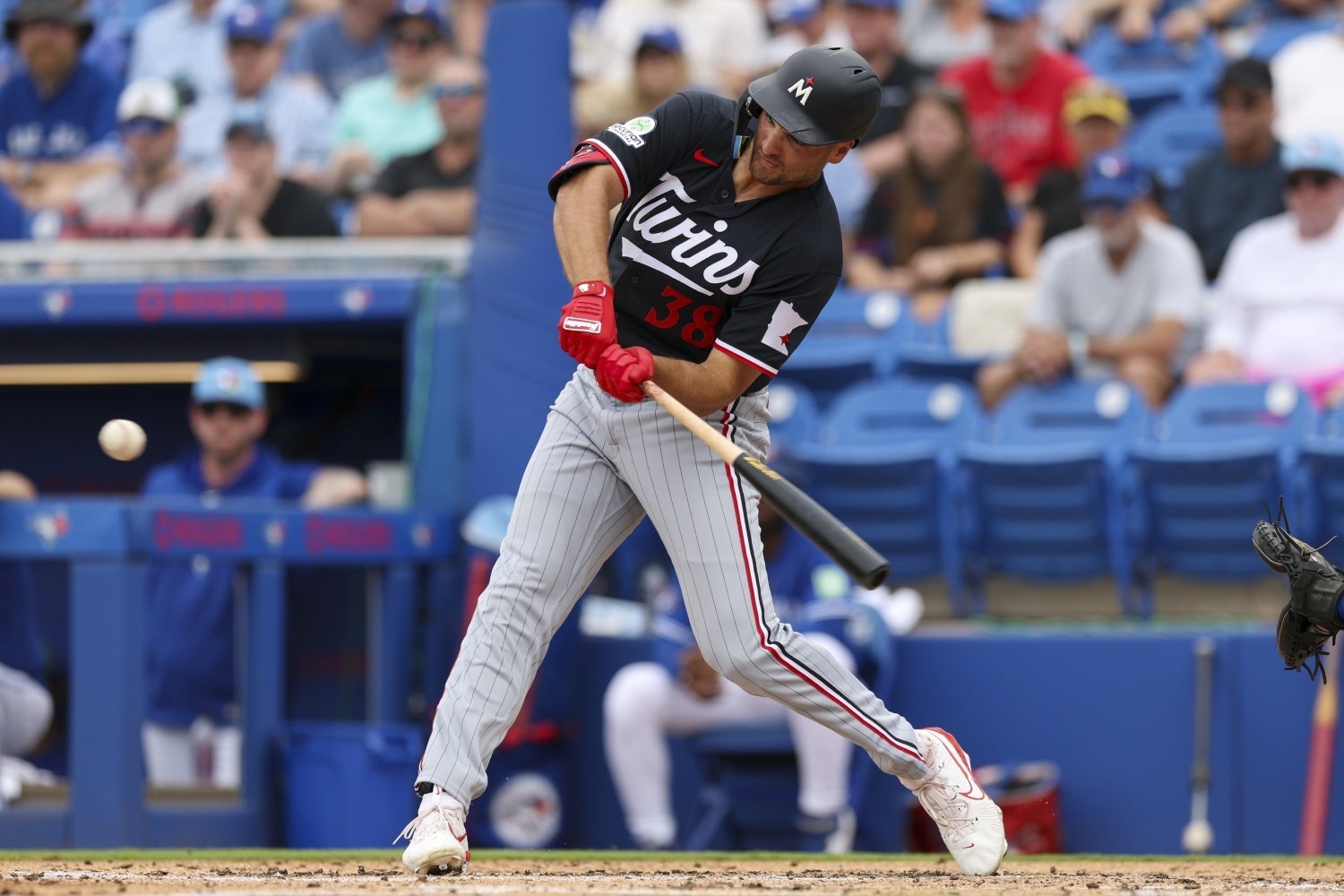 Another Twins spring training has come and gone, and although every spring brings new storylines, a select few tend to reappear again and again. It’s time to hand out Twins Daily’s Golden Grapefruit Awards, presented by Greggory T. Masterson of the Twins Off-Daily Podcast, a Twins Daily subsidiary, sponsored by No One, Are You Insane?. Miguel Sanó Memorial "Best Shape of His Life" Award: Brooks Lee If you close your eyes and look up spring training clichés in the dictionary, this is what you see—er, after you open your eyes again. Every spring, one guy or another shows up 15 pounds lighter or with an alleged 40 pounds of muscle. It’s such a cliché that Twins manager Derek Shelton actually requested that no one use the words “best shape of his life.” Well, too bad for Shelton, we provide unbiased, independent coverage, and we’re not afraid to ruffle some feathers, awarding Brooks Lee the Best Shape of his Life Award. Lee showed up weighing the same amount as last season, but the weight has been “better proportioned” as he has tried to improve his lateral foot speed and quickness in hopes of improving his defense at shortstop. Congratulations, Brooks! Previous winners: Jhoan Duran (2025), Byron Buxton (2024), José Miranda (2023) "Newest Pitch" Award: Connor Prielipp This spring, there was little news of new pitches among Twins pitchers. Maybe it’s because everyone was more concerned with who was pitching (or who wasn’t pitching) than they were about what those pitchers were throwing. There was no big story about six guys learning a splitter at Driveline or anything. There was one notable pitch added, though: Connor Prielipp added a curveball. Prielipp, who is fighting to remain a starter, has been working on adding a fourth pitch to complement his fastball, slider, and changeup. He’s already tried mixing in a sinker, and it looks like the Twins are also working with him on a curveball with more depth and glove-side movement than his gyro slider. Here’s hoping it helps him remain a rotation option! Previous winners: Jorge Alcala (2025), Joe Ryan (2024, 2023), Griffin Jax (2023) "Most Revamped Swing" Award: Matt Wallner Matt Wallner was probably the Twin most fans were convinced needed a swing overhaul this offseason, even after his 110 OPS+ last season. One of the biggest issues Wallner dealt with last season was his performance against fastballs in the upper third of the zone. This offseason, he made an effort to simplify his swing, working to expand the range of pitches he can damage without sacrificing the power his offensive profile is built on. To date, none of the Most Revamped Swing winners have turned around their offensive performance, but none of them have had the floor Wallner established last season. Previous winners: Ty France (2025), Brooks Lee (2024), Max Kepler (2023) "Weirdest Injury" Award: Pablo López For some reason, it seems like every spring some very stupid injury occurs, like Byron Buxton chipping his tooth eating steak or Jordan Balazovic being sucker-punched at a Fort Myers bar. Sadly, there were no ha-ha funny injuries this spring. There was an existentially funny injury, though. Just hours into spring training, Pablo López exited the mound with soreness in his arm. Within days, it would be determined that the Twins’ ace had a torn ulnar collateral ligament and would miss the entire season. Really. The first day, the first practice, just hours into camp. Not funny, but pretty funny. Previous winners: Mickey Gasper (stepped on playing second base, 2025), Pete Maki (ruptured bicep doing pullups, 2024), Jordan Balazovic (broken jaw, bar fight, 2023) "Honey, Grab My Program" Award: Kyler Fedko Somewhere between the 4th and 7th inning in nearly every spring training game, a wave of players wearing number 87 with no name on the back of their jersey take over for the big-leaguers. Every year, there are a couple of guys who do so in almost every game. Sometimes it’s for positional flexibility, other times they’re top prospects. And other times, the team doesn’t really have any other center fielders to play instead of them. Only players who have never appeared in MLB and are not on the 40-man roster qualify for this award. Both Kyler Fedko and Tanner Schobel appeared in 18 games, tied for the most on the team, including big leaguers. Fedko amassed 25 plate appearances, though, and had a few starts, so he wins this year. Fedko played all three outfield spots and first base, providing real coverage. He may have been the biggest surprise last season, nearly accumulating a 30-30 season in the minors, but he struggled in his opportunities this spring, batting just .130. Already 26, he may debut this season, though none of the other winners of this award were still in the organization the following season. Previous winners: Jeferson Morales (2025), Chris Williams (2024), Andrew Bechtold (2023) "First Cliché Statement" Award: Bailey Ober We’d like to take a moment of silence to mourn the trade of Carlos Correa, who (if he were still in a Twins jersey) would have surely been the betting favorite for this award. Alas, Correa had no opportunity to avenge his 2025 loss. Instead, this award goes to an unlikely winner, one Bailey Ober. As far as I can tell, Ober was among the first, if not the first, player to be interviewed this spring. When asked if he needed to win a rotation job, he said, “I always enjoy proving to myself that I'm here and that I every single day continue to try and get better and not necessarily be complacent with what I have. I'm always pushing myself and trying to be the best I can be, do whatever means necessary to accomplish that.” Everyone’s always excited to do the work on February 12. We’ll see if it paid off. Previous winners: Rocco Baldelli (2025), Carlos Correa (2024, 2023) "Grainiest Video" Award: Josh Norris Finally, my favorite award—the media can’t help themselves, and we, as fans, will eat up whatever they give us. When baseball’s back, we need proof. Grainy videos taken through a fence at the beginning of camp are a spring training staple. Dan Hayes tried to defend his crown, but I simply think phone cameras are too good. There wasn’t much to choose from this season. Instead of a beat writer, this year’s award goes to Josh Norris of Baseball America, who posted a video of Twins prospect Marek Houston with about a third of the frame obscured by a chain link fence. You can still see most of the swing, and the video is of good quality, but it doesn’t get more spring training than a slow-motion video obscured by a fence on a back field. Previous winners: Dan Hayes (2025, 2024), Do-Hyoung Park (2023) View the full article
-
 Jays Centre is taking a close look at every position on the Toronto Blue Jays heading into the 2026 season. Check out prior entries in the series here: Catcher First Base Second Base Third Base Left Field Right Field Toronto Blue Jays Shortstops at a Glance Starter: Andrés Giménez Backup: Ernie Clement Depth: Leo Jiménez, Addison Barger, Davis Schneider Prospects: Josh Kasevich, Arjun Nimmala, JoJo Parker, Juan Sanchez Blue Jays SS fWAR in 2025: 12th out of 30 Blue Jays SS FGDC Projection for 2026: 17th out of 30 Entering 2026, the Toronto Blue Jays can expect their shortstop position to be constantly under the microscope. After all, the departure of star shortstop Bo Bichette in free agency most certainly has left a huge void for the Blue Jays to fill going forward. Fortunately for Toronto, shortstop is one of those positions at which the team has sufficient pieces to potentially overcome the dire situation. So, what does the depth chart look like for the Blue Jays for now and the future? The Good With Bichette leaving the organization, there is one clear benefit that the Jays can capitalize on, which is the instant boost in defense at the shortstop position. With multiple-time Gold Glove winner (at second base) Andrés Giménez taking over as the team’s everyday shortstop and multiple-time Gold Glove finalist (at third base and utility) Ernie Clement as the trusted backup, the Blue Jays have perhaps their best defensive unit at the position since Troy Tulowitzki left town. Not to mention the fact that they have also had the defensively sound Leo Jiménez knocking on the door the past couple of years, waiting for his chance. Moreover, with Toronto valuing positional versatility in recent years, they could potentially even slot Addison Barger or Davis Schneider in at shortstop if an emergency arises. On top of that, in a situation in which Giménez, Clement and Jiménez all falter in taking on the role, Toronto appears to have an MLB-ready shortstop waiting in the wings in Josh Kasevich. Kasevich showed exactly what he could provide to the team with a strong spring showing in training camp. In 20 games of action, the 25-year-old infielder impressed with a .306/.375/.500 slash line (.875 OPS) with four runs scored, one home run and five RBIs. He also added two stolen bases, along with showing strong plate discipline with three walks and only two strikeouts in 40 total plate appearances. If that wasn’t enough, the Jays also have three more promising top prospects deep in their system that could be potential stars when they make the majors: Arjun Nimmala, JoJo Parker and Juan Sanchez. All three players are currently ranked among the top 10 prospects in the Jays’ organization, with both Nimmala and Parker among the top 100 prospects in all of baseball, according to MLB Pipeline. With a pipeline of riches at the position, the Blue Jays should be set for the foreseeable future. The Bad Even with their immense depth at the position, remember that the Blue Jays lost a superstar in Bichette, who has averaged 20+ home runs and 90+ RBIs per season, along with a career OPS of .806 and bWAR of 20.9. With the current setup at shortstop for Toronto, one shouldn’t expect that kind of offensive output from the position for a while, at least not with the likes of Giménez and Clement at the helm. Giménez is coming off a dismal offensive campaign in 2025; his .598 OPS was among the worst in the league for those who played a minimum of 100 games. His best MLB season came in 2022 when he managed career highs in home runs (17) and RBIs (69). As for Clement, he has posted back-to-back 9+ home runs and 50+ RBIs campaigns, while setting his career-best mark in runs scored with 83 last season. But as one can see, those numbers are far from the elite offensive production that Bichette provided on an annual basis during his time with Toronto. In addition, Jiménez has yet to secure a permanent MLB gig with the Jays after struggling to perform offensively during the past two years. As for Kasevich, he has yet to make his major league debut, so whether or not his spring training and limited minor league success could actually translate to the majors is still a question to ask. As for those that could ultimately reach Bichette’s potential, all three of Parker, Nimmala and Sanchez could one day become that player. But, unfortunately, they are still years away from their eventual arrival in the big leagues. The Outlook With the Toronto Blue Jays in win-now mode after a successful 2025 campaign that saw the team make it all the way to the World Series, the pressure will be on Giménez to make significant contributions right from the get-go when he officially takes over as the starting shortstop on Opening Day (March 27). The Blue Jays can ill afford to experiment with their lineup too much in their quest to repeat as World Series contenders. At the same time, the shortstop position could very well be in flux throughout this season, as any struggles by the starter could lead to other options being utilized to hopefully rectify the issue promptly. As a result, it is possible Jays fans will see a carousel of players utilized at the position, including the possibility of the Jays trading for a new shortstop at the deadline if all of their MLB-ready options falter. But one thing is for sure: in the not-so-distant future, the shortstop position will no longer be a worry for years to come, once names like Nimmala, Parker, and Sanchez start to reach the big show. View the full article
-
Chicago Cubs 2026 Position Analysis: First Base
DiamondCentric posted an article in North Side Baseball
 The Chicago Cubs officially have one of the better first basemen in baseball, the first time they can say that since the departure of Anthony Rizzo back in 2021. Things seemed bleak at first base for some time; we saw Frank Schwindel and Patrick Wisdom for too long. Past-their-prime veterans Eric Hosmer and Trey Mancini were supposed to be the bridge to slugging prospect Matt Mervis, but he is long gone as well. Most were a bit stumped prior to the 2024 season when the Cubs traded teenage pitching prospect Jackson Ferris and top outfield prospect Zyhir Hope for an aging prospect without a clear defensive position. Then, when they almost immediately announced he would be transitioning to first, it made their outlook even more confusing. Michael Busch was regarded as one of best hitters of the 2019 draft when the Dodgers selected him out of UNC with the 31st overall pick. He made his debut in 2023 and hit .167 in 81 plate appearances while playing a subpar second and third base. Going into 2024, the Dodgers had Busch, Kike Hernandez, Miguel Vargas, Chris Taylor, Gavin Lux and Miguel Rojas competing for work in the infield behind Mookie Betts, Freddie Freeman and Max Muncy. Although Busch was expendable at that point, he was still the 51st ranked prospect in baseball, and would become the Cubs’ number four organizational prospect behind Cade Horton, Pete Crow-Armstrong, and Owen Caissie. Fast-forward two seasons and now Busch is picking up down-ballot MVP votes and leading the Cubs in home runs. First starting off as a platoon player, Busch began starting everyday early in 2025 and is one of the set-it-and-forget-it players in the lineup. Chicago Cubs First Basemen At A Glance Starter: Michael Busch Backup: Tyler Austin (On IL), Jonathon Long Depth: Moises Ballesteros, Owen Miller (minors), Christian Bethancourt (minors) Prospects: B.J. Murray The Good: Well, Michael Busch is pretty darn good. The 28-year-old lefty broke out massively in 2025, slashing .261/.343/.523 with 34 home runs, 90 RBIs, and serving as the leadoff hitter for the Cubs’ first postseason run since 2020. You’d have to go back all the way to 2019 when Kyle Schwarber hit 38 homers to find a higher total than Busch’s. His 4.6 WAR was tied for third on the team, trailing only Crow-Armstrong and Nico Hoerner. As for first basemen league-wide, he was tied with Bryce Harper and only trailed Matt Olson, Freddie Freeman, Vladimir Guerrero Jr., and Pete Alonso. Under the hood, the statcast numbers show a player who is blossoming into one of the top offensive forces in the game. His average exit velocity of 92.2 was tied for 18th in baseball, his barrel percentage of 17.1 was 11th, and he finished 10th in xwOBA at .378. In a game where luck is certainly a factor, Busch is showing consistent, quality contact that cannot be considered a fluke. In fact, Busch’s wOBA of .369 shows he was a little unlucky last season. Defensively, Busch posted a .996 fielding percentage and 2 DRS that placed top six amongst MLB first basemen. He is not going to win four gold gloves like Rizzo, but he will make the routine plays while bailing out a few bad throws from the Cubs' excellent infield. For 2026, Busch is an integral part of a lineup that is half proven veterans and young studs who need to establish themselves as bona fide contributors. He is the team’s most important left-handed bat who will be relied upon to play 150+ games again (he played in 155 last season). The Bad: Did you notice how the entire previous section only mentioned Michael Busch? That is because he is the the majority of what is good about the Cubs’ first base situation. Across the infield, Matt Shaw is lined up to backup at any of the three other spots, with top prospect Pedro Ramirez looking close to MLB ready. In the outfield, Kevin Alcantara is deserving of an extended look, if one of the starters goes down. But first base? It really seems like Busch or bust, since offseason signee Tyler Austin will be missing the first month or more of the season. Even if Austin was healthy to start the year, he's still a 34-year-old with 0.9 career WAR, who hasn’t played in the majors since 2019. He’s had a cumulative .945 OPS in the NPB over the last six seasons, but banking on any sort of production in his return stateside is wishful thinking. After Austin, the cupboard runs bare very quickly. Craig Counsell’s old friend Owen Miller is down in the minors and has first base experience. He went 8-30 this spring and brings an extra element of speed to the table. One-game wonder Christian Bethancourt is back with the organization and has enough experience at the cold corner to be considered another unexciting option. Moises Ballesteros played four innings of first base last season, but is currently penciled in as the starting DH. From a fan’s perspective, the most exciting option if Busch were to miss time would be prospect Jonathan Long. The Long Beach State alum is coming off an excellent AAA season where he hit .305 with an .883 OPS and 20 homers, but needs to hit the ball in the air more to reach his power potential. Long sits outside of the top 100 MLB prospects and has a long-term outlook of being a potential role player, rather than a difference maker in the middle of the lineup. The point here is that Busch needs to stay healthy or else there becomes a massive hole in the lineup. The Bottom Line: There are depth questions here after Busch, but the Cubs have an ascending star at first base. Even if his home run total isn’t as high as last season, the Cubs are counting on their leadoff hitter to propel them back to the postseason. In terms of his contract, he is still pre-arbitration and has four years of team control remaining. There are few other first basemen in baseball producing like Busch and not taking up a huge portion of their team’s payroll. He won’t be this cheap forever, so fans need to enjoy this while it lasts. First base is a position of strength for the Cubs again. View the full article
-
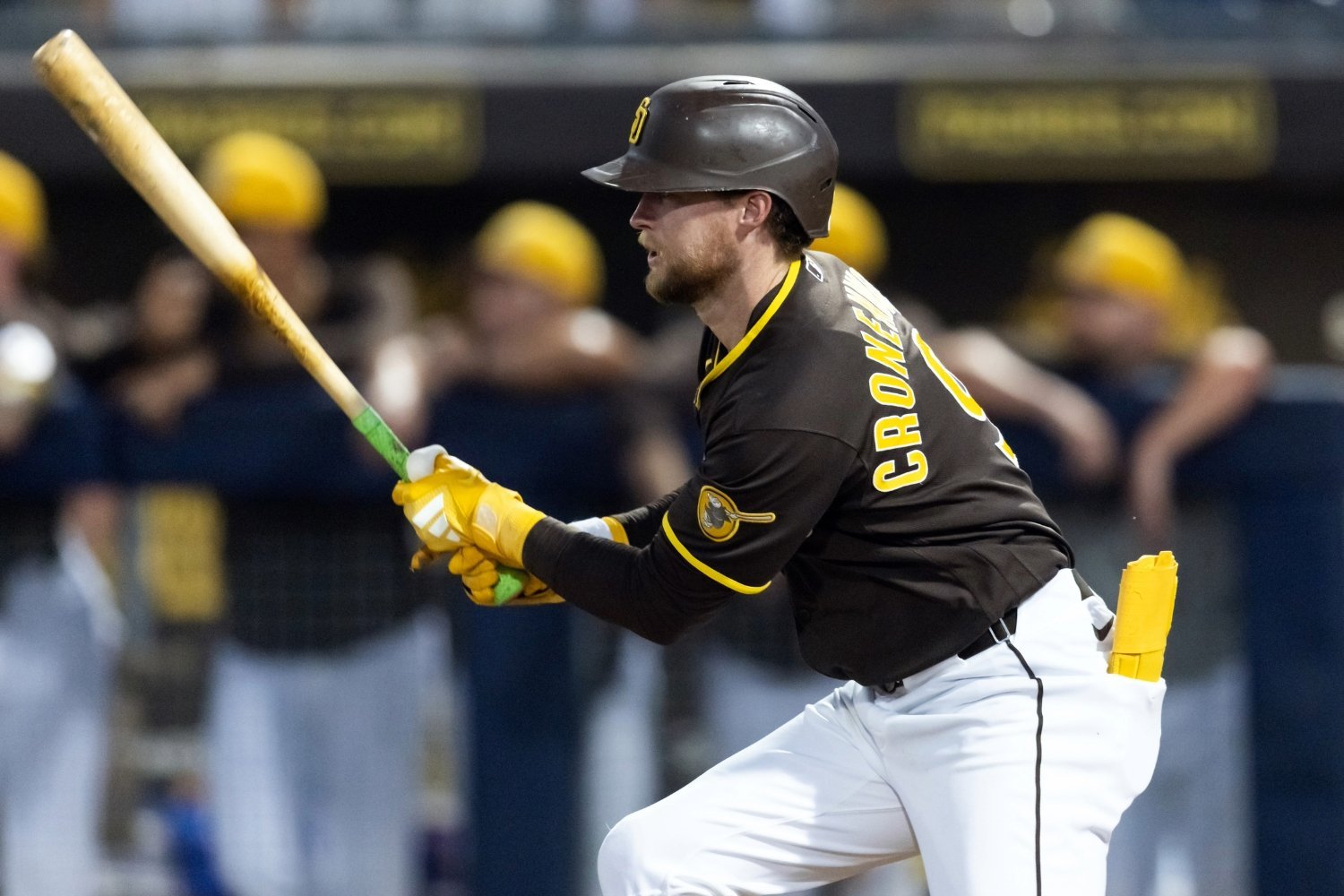 The 2025 San Diego Padres were one of the meekest teams in Major League Baseball. As a collective, both their 152 home runs and .138 isolated power ranked 28th in the league. Plenty of context goes into that, of course. Regardless of the particulars, though, this was a team that was not built for power. It remains to be seen how much the on-paper dynamic has changed ahead of 2026. Yes, the team went out and signed Sung Mun Song, Miguel Andujar, and Nick Castellanos to shore up their offensive depth. But Song's game may need time to adjust, Andujar is more platoon-dependent on the power side, and Castellanos is coming off some of the worst offensive production of his career. The volume approach could very well work, but there's also a wide array of outcomes for the team's current construction. Which is why the offensive progression of someone like Jake Cronenworth becomes essential in the broader context of the latest iteration of the Padres. It was four full seasons ago now that Cronenworth peaked in the power game. His .194 ISO in 2021 isn't just a mark that he's failed to top since then, but one that he hasn't come within 40 points of in subsequent seasons. Cronenworth's 11 home runs in 2025 were his second-fewest in a full season, while his .131 ISO last year represented a bottoming-out in that regard. That doesn't mean Cronenworth has been without value, however. In the years since he last demonstrated such consistent power, Cronenworth's earned his keep via patience. His 10.3 percent walk rate since 2022 ranks 65th among 306 qualifying players, and his walking at a 13.4 percent clip in 2025 ranked 12th. It helped that only six players in the league saw more pitches than Cronenworth's 4.22 per plate appearance last year, while his chase rate finished in the 86th percentile. There's value in that, even as an average baserunner for the bigger bats in the lineup. But with vastly different potential outcomes awaiting the Padres offense in 2026, it'd behoove him to adjust in a way that taps into the power of old at least on occasion to drive up his value beyond what it reads in the on-base percentage column. Luckily, Cronenworth appears poised to do just that. The following is a distribution of the various swing factors Cronenworth demonstrated in 2025: There isn't a whole lot in there to indicate that Cronenworth should be finding power outcomes upon contact. His attack angle was below league average and the swing path was right around it. So, while the latter indicates he was steeper to the ball, he wasn't gaining elevation upon contact. Additionally, he posted an attack direction that generated up-the-middle-contact. Low line drives up the middle yield base hits, certainly. But produce power outcomes they do not. Toss in a swing that sits just below league average in its speed while operating with a length that isn't exactly short, and there aren't really any factors lending themselves to the idea of power in Cronenworth's case. Thus far in the spring, though, Cronenworth has concentrated on improving in a few of these areas. His bat speed, for one. A more consistent bat path — perhaps one that doesn't invoke a steep angle to shallow contact — is on the agenda as well via improving his lower half balance throughout the swing. While bat tracking data isn't widely available for exhibition games, the results have been there thus far for Cronenworth. Now on the verge of Opening Day, his spring output included a .167 ISO and 57.4 percent hard-hit rate. He started elevating, too, with a 34.4 percent groundball rate that sits lower that any regular season clip he's posted in his career. He also hit the first opposite field homer of his career earlier in the month (even if the spring training of it all doesn't allow it to count). It's a small sample (50 plate appearances), but the adjustments have been on display within the spring window. It'll be interesting to see not only how the improvement sustains, but whether the changes are later reflected in his visual mechanics. It cannot be overstated how valuable such improvements sustaining into the regular season would be for both Cronenworth and for the Padres. While their volume approach to the roster could lead to some improvement in the power game, an everyday player getting back to his previous upside in that regard would be absolutely massive. Parlaying patience with improved quality of contact could very well have Jake Cronenworth among the most important pieces of this roster in 2026. View the full article
-
Seiya Suzuki's Injury Could Change Everything For The Cubs
DiamondCentric posted an article in North Side Baseball
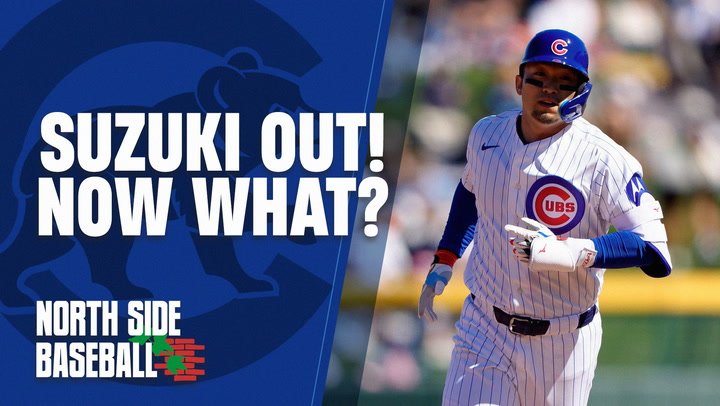 Seiya Suzuki will start the season on the Cubs' Injured List, Craig Counsell announced. Chicago's veteran slugger is a key piece in their starting lineup, and his injury tips over a few dominoes. Suzuki spent the majority of 2025 as the Cubs' designated hitter, which could open up some availability for the squad's top prospect in Moises Ballesteros. He also spent some time in right field, which means a former first-rounder in Matt Shaw may be in line for some more playing time. View the full article
-
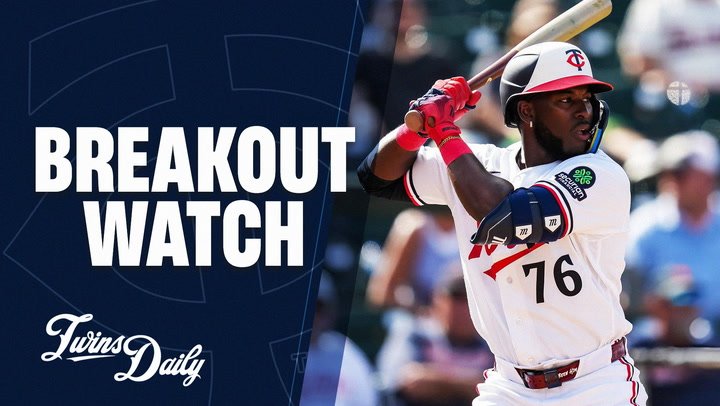 Kaelen Culpepper, Mick Abel, and John Klein all have the tools and opportunity to take a big step forward in 2026. Each could make a real impact on the Twins' season, and even one breakout performance could change how this team looks long-term. View the full article
-
Exclusive Interview With Red Sox Pitching Prospect Jason Gilman
DiamondCentric posted an article in Talk Sox
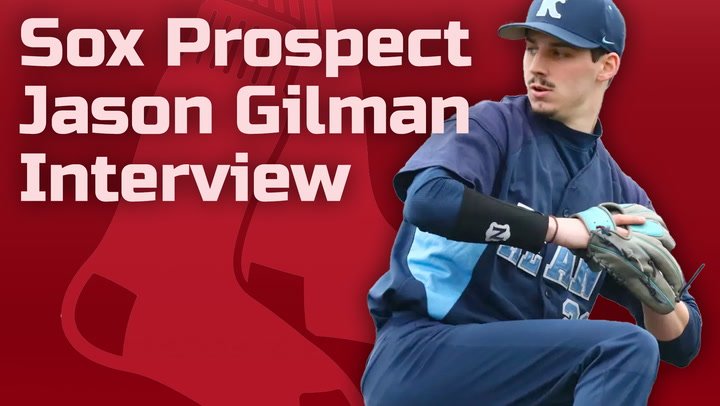 It isn't often that a Division III player gets drafted. Jason Gilman did just that, and it was thanks to his mindset and ability on the mound. The left-handed pitcher will begin his first professional season in 2026 and will look to continue from where he left off at Kean University. Talk Sox's Nick John sits down and has a conversation with the young hurler. View the full article
-
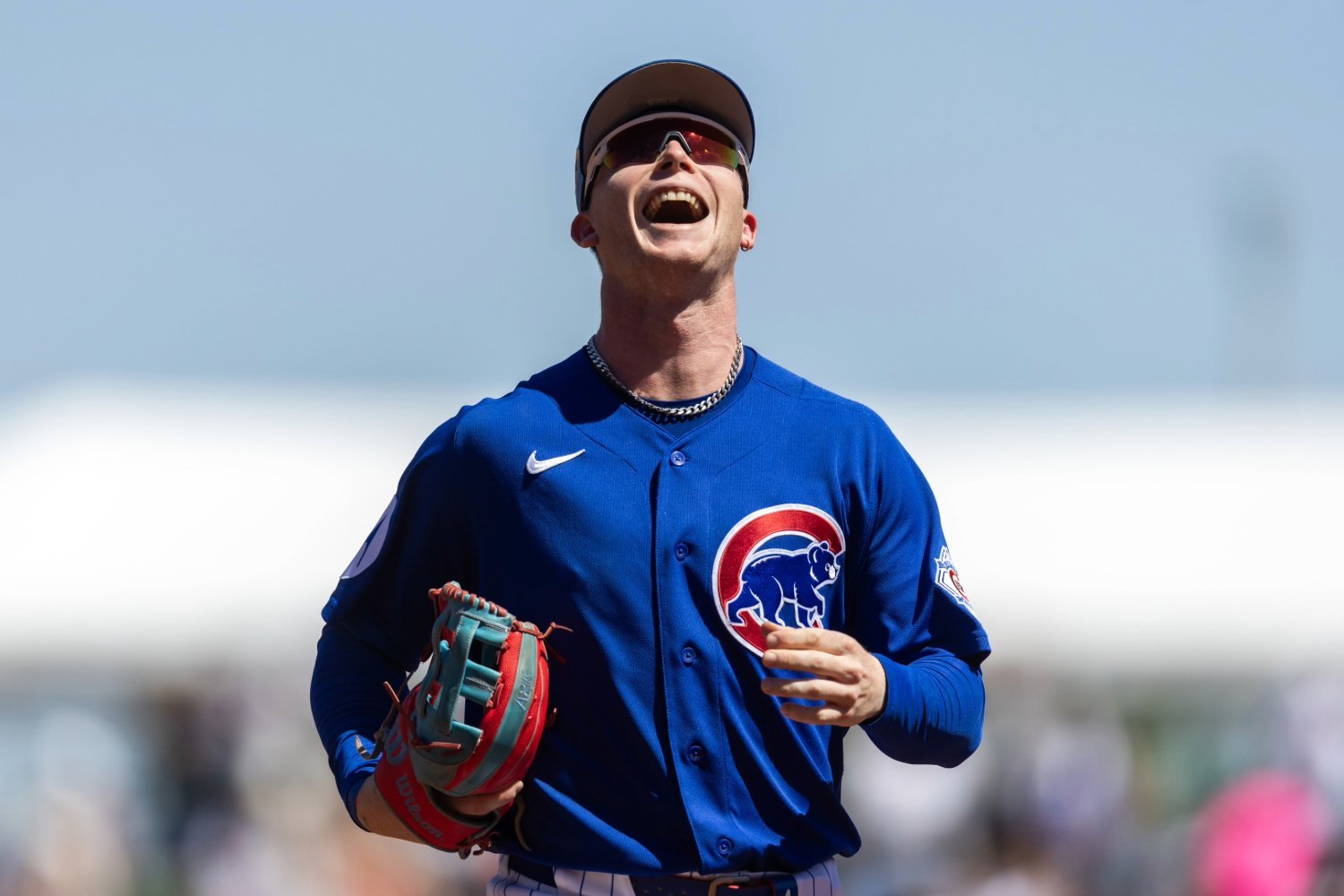 The week ahead of Major League Baseball's Opening Day always carries a certain sanguine energy to it. The optimism that permeates throughout each fanbase at the outset, typically juxtaposed against the transition from winter into spring, is unique to baseball. Of course, a team can always add some extra juice to that by extending one of its most exciting players. The Chicago Cubs have done just that, by striking an agreement on a long-term agreement with Pete Crow-Armstrong. The budding star will now be a Cub for even longer than the five years for which they controlled him before arriving at a deal. Mind you, Crow-Armstrong wasn't the only player the Cubs could have opted to extend ahead of the season. Nico Hoerner is a free agent after 2026. Ian Happ and Seiya Suzuki are, too—to say nothing of Shota Imanaga, Matthew Boyd, and Jameson Taillon. We could discuss the merits of each sticking around (or not sticking around) beyond this season, but there was no question that Crow-Armstrong would be the player best-positioned for this kind of deal this spring. There are a few things to consider when deeming a player to be worthy of an extension, especially within the framework of a team with multiple candidates for one. The context of their current deal is likely at the top. Players far from free agency (like Crow-Armstrong) and those bordering on indispensable but nearing free agency (like Hoerner, Happ and Suzuki) fit at opposite ends of the spectrum. Projectability is another key issue. You want to ensure a player is going to sustain or improve their levels of performance for at least a certain portion of a contract. Then, you get into the more unquantifiable narrative impact. While payroll and performance are going to rank at the top of a team's considerations, a player who adds a certain vibe and positive attention to the organization is going to have value that extends beyond either sheet. Some of that is an oversimplification. The farm system bears an impact. The condition of the payroll beyond the individual player does, too, in addition to myriad other factors that the average outsider mind may not even consider. But it's the broad criteria that feeds into an easy rationale as to what made Crow-Armstrong such an appealing extension candidate. The context of his current contract is an easy component to navigate. Crow-Armstrong hasn't yet hit arbitration; he's eligible for his first year of it next winter. From there, it's four years of arbitration prior to free agency following the 2030 season. With continued improvement at the plate (read: plate discipline), it's possible that growth could work in conjunction with the areas in which he already excels to drive a high, continually-ascending price in arbitration. As such, the Cubs were able to ensure cost certainty with one of the most important players on their roster as they continue to build toward the future. It should be noted that the phrase "continued improvement" is also doing quite a bit of heavy lifting in that previous paragraph. Age alone, however, indicates that a certain degree of projectability still exists within Crow-Armstrong's profile. It's big speed, big power, and elite defense, yes. It's also wild aggression and, subsequently, a whole lot of swing and miss. It may be unreasonable to suspect improvement is nigh there; aggressive hitters generally tend to remain aggressive throughout their career. Any refinement in the approach, though, should be able to yield offensive outcomes that aren't necessarily better on the whole, but at least more sustained after he began to fizzle some in the second half. Stronger outcomes would be nice, but Crow-Armstrong extending last year's pace through September would also serve the same purpose of offensive ascension. In either scenario, you're talking about a 30-homer, 30-steal player with a Gold Glove in his back pocket building on those benchmarks. Locking that in is essential. From there, you get into the narrative impact. This is where Crow-Armstrong really begins to lend credence to the idea of extension worthiness. The Cubs are not completely constructed for aesthetic appeal. They are comprised of several good players that are fundamentally sound in multiple respects. However, they don't do anything loud. It's a collection of largely reserved personalities relying on efficiency in multiple aspects of their game to drive success. From that perspective, Crow-Armstrong is easily the most exciting player the Cubs have to offer. A blend of elite defense, upper-percentile speed, and 30-homer power will do that. This is true to the extent that he's in the same Javier Báez tier of stop-what-you're-doing-and-watch television. In doing so, he transcends Chicago baseball in capturing attention at a more national level. Marketability matters, especially for a league that doesn't do it particularly well. Pete Crow-Armstrong might not be the Chicago Cubs' best player. He may not be their most important player. But the compounding of the different elements he brings, along with the context of his career and contractual trajectory, all feed into the idea that he was absolutely the right person, in the right place, at the right time to offer this kind of extension. Even in the face of others that might merit the same kind of offer. The narrative favors him as a "face of the franchise" type, succeeding the likes of Kris Bryant and Anthony Rizzo while managing to secure an even longer-term future within the organization. In all, not a bad return for in that fateful trade for Báez five years ago. View the full article
-
Royals Fans Should Be Concerned About Carlos Estevez
DiamondCentric posted an article in Royals Keep
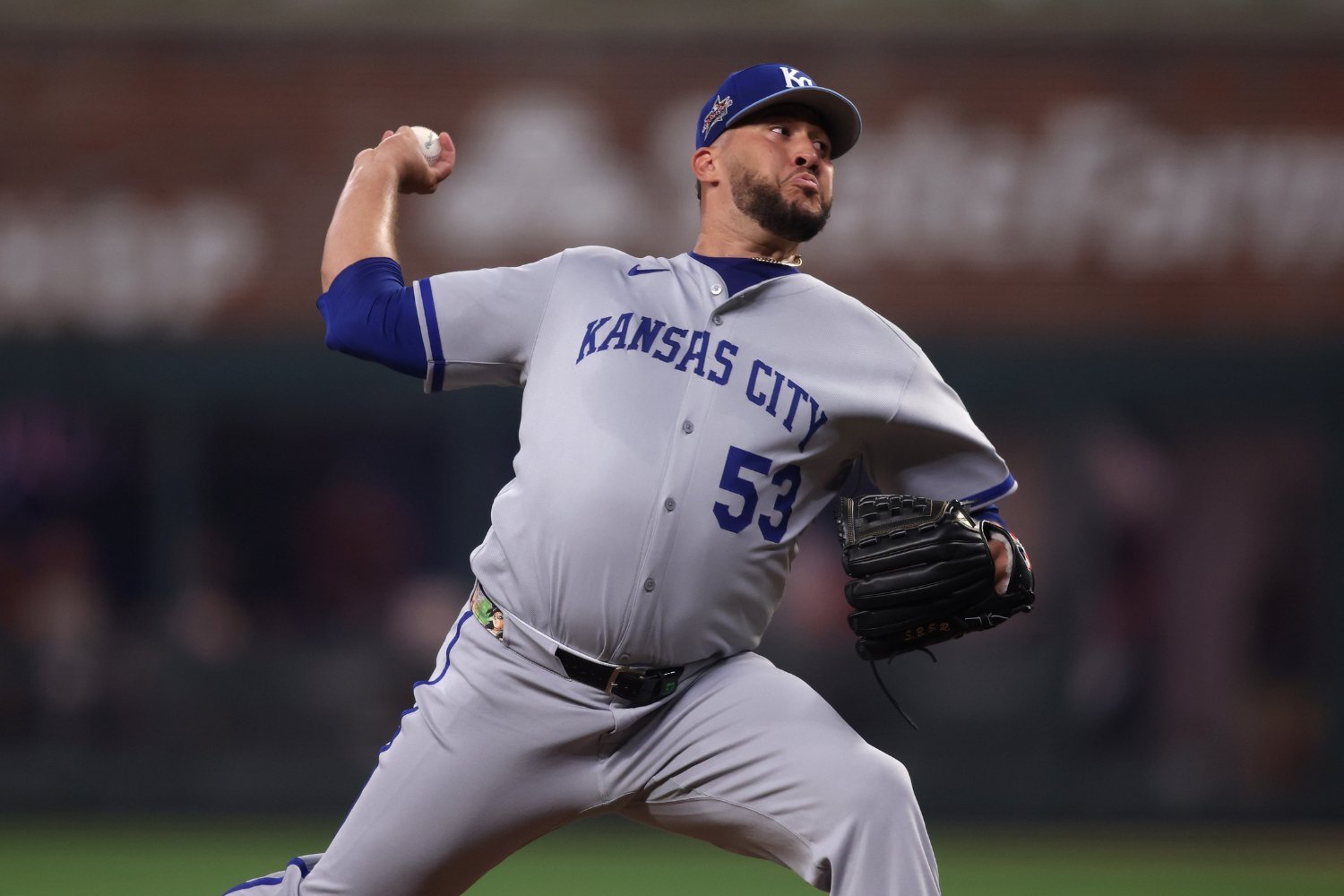 The Kansas City Royals have finished their Spring Training season, which concluded with a two-game set in Arlington against the Texas Rangers. The Royals went 9-21, which was the worst record in the Cactus League. However, as Royals Review mentioned today, poor performance in Spring Training doesn't always correlate to regular-season futility. Despite the poor results in Arizona (mostly due to many key Royals players participating in the World Baseball Classic), Kansas City is looking to improve on its 82-80 record from a season ago. A key to that will be the bullpen, which ranked 7th in reliever ERA last season. Carlos Estevez, acquired in free agency, was key to that bullpen's overall success in 2025. In 67 outings and 66 IP, he posted a 2.45 ERA, 1.06 WHIP, and saved 42 games. Those stellar metrics helped him earn a spot on the American League All-Star roster. Additionally, Estevez was the first Royals closer to lead the league in saves since Dan Quisenberry. Thus, the Dominican-born righty became a fan favorite in Kansas City due to his late-inning prowess and end-of-game celebration (which was a hat tip to Dragon Ball Z). Unfortunately, it has not been a rosy spring for Estevez in his second season in Kansas City. In five outings and innings pitched, he posted a 7.20 ERA, 1.80 WHIP, and 12.70 FIP. He also had a -4.0% K-BB%, a 30% HR/FB rate, and a mere 49% strike rate. Safe to say, even for a veteran pitcher, who is "ramping up" this spring, the results were especially poor and have gotten the attention of worried Royals fans. Thus, let's dive deeper into what Estevez has produced this spring, and why the Royals may need to brace for some serious regression from their 33-year-old closer in 2026. The TJ Stuff+ Metrics Have Been Brutal for Estevez This Spring When it comes to evaluating pitchers in the spring, looking at pure results can be misleading at times. Often, pitchers toy with different grips or pitch mixes to prepare for the upcoming season. They do this because Spring Training results matter a whole lot less to the club than regular-season ones. As a result, they try these changes in a relatively pressure-free environment. However, one constant that can give fans an idea of how a spring went for a pitcher is their velocity and "stuff". When using TJ Stuff+, TJ Stats' pitch modeling metric, Estevez fared pretty poorly this spring, as illustrated in his TJ Stats summary below. Overall, Estevez posted a TJ Stuff+ of 92, which is eight points below average. His four-seamer, which he threw the most at 49.6%, had an 89 TJ Stuff+, which is alarming. Furthermore, his slider and changeup didn't fare much better in TJ Stuff+, with marks of 95 and 94. The highest grade he had of his three pitches this spring was his changeup, which had a 46 grade (his four-seamer and slider had 37 and 33 grades, respectively). For context, here's a glance at his TJ Stats summary last season. Estevez's four-seamer was 15 points higher in TJ Stuff+, and his overall TJ Stuff+ was 11 points higher. His slider had a 107 TJ Stuff+, which was 12 points higher than his mark this spring. There wasn't much difference between last year's changeup and this spring's. His changeup had a 95 TJ Stuff+ a season ago, only one point better than his changeup TJ Stuff+ in Spring Training. A big factor in this TJ Stuff+ difference is velocity. His four-seamer last year averaged 95.9 MPH. This spring? It averaged 89 MPH. The slider averaged 87.4 MPH last year, but only 81 MPH this spring. Lastly, the changeup averaged 87.9 MPH last season and only 82 MPH this season. Basically, he's seen a 5-6 MPH decline in all of his pitches, a huge red flag. A couple of MPH difference? Okay, maybe he's still getting ramped up. However, those bigger MPH differences signify either a lingering injury or that the stuff just isn't there. Some have pointed out that this is "normal" for Estevez and that he has traditionally shown these kinds of velocity issues as he ramps up and prepares for the regular season. However, his TJ Stuff+ and velocity last spring, while down, weren't as alarming as what we have seen this spring. Below is his TJ Stats summary for 2025. His overall TJ Stuff+ was 98, with his four-seamer having a 95 mark, his slider having a 104 mark, and his changeup having a 99 mark. Those are all considerably better than what Estevez demonstrated stuff-wise this spring. Furthermore, Estevez's four-seamer velocity was four MPH higher, his slider was 4.9 MPH higher, and his changeup was 1.5 MPH higher. Even though his pitch TJ Stuff+ and velocity were down last spring, they were at reasonable levels where a bounceback was feasible. In terms of TJ Stuff+ and pitch velocity, unfortunately, Estevez hasn't demonstrated that same promise this spring. What Has Contributed to Estevez's Stuff and Velocity Issues? I wanted to see, in his last outing of the spring against the Rangers, if the TJ Stuff+ or velocity would look any better than what we saw in Arizona or at the World Baseball Classic. However, it was more of the same in those two areas, though Estevez did a good job generating whiffs against Texas. Now, the TJ Stuff+ was two points better than his Spring Training average, which was encouraging. However, the velocity was pretty much the same on the pitch (89.3 MPH), and the TJ Stuff+ wasn't that much better on the slider or changeup. Overall, Estevez posted a 92 TJ Stuff+, which matched his overall TJ Stuff+ this spring. In terms of velocity in his last outing, his pitch velocity chart showed him sitting around 89-90 MPH, with him topping out around 91 MPH by the end of his outing, as illustrated below. For a power pitcher who relies on his four-seamer, that kind of middling velocity is concerning. It becomes even more maddening when compared to his pitch velocity chart from Opening Day a year ago. Last year, his four-seamer sat in the mid-90s. And that was DOWN from what fans were expecting, mostly due to Estevez overcoming some nagging injuries in the spring. He saw an uptick later in the year, once he was fully recovered. Which makes one wonder: Is Estevez dealing with a lingering injury that is causing this velocity problem? If so, the Royals have kept a lid on it. To be fair, that has been a trademark of the Royals since JJ Picollo and Matt Quatraro took over as general manager and manager, respectively. They have often shared little detail about injuries, keeping the media and fans in the dark until the last possible moment. A key example of this is Michael Massey, whose Opening Day status remains in flux even though he's been out of commission with a calf injury sustained a couple of weeks ago. Is it possible that Estevez is dealing with something that's affecting his velocity and stuff? It's hard to imagine that he's seen such a dramatic drop from last year to this spring due to "age" or "not being warmed up." While regression was to be expected for Estevez this year, this kind of stuff and velocity decline feels like a massive anomaly. The Royals will need to finalize their roster by Wednesday. Thus, one has to wonder if Estevez may be put on the IL to deal with whatever is affecting his velocity. What Do the Royals Do With Estevez? If Estevez is dealing with an injury, even a minor one, he will likely be put on the 15-Day IL. The Royals can't afford to give away losses, especially in a division that will remain competitive, especially in the wake of the Detroit Tigers adding their top prospect to the Opening Day roster. Thankfully, the Royals have reinforcements in the bullpen to handle a short Estevez stay on the IL. After all, Picollo made adding to the bullpen a priority this offseason, which made sense when looking at Estevez's Statcast percentiles from a year ago. While he was effective, many of his lackluster Statcast percentiles suggested he also benefited from some luck a season ago. His .330 xwOBA last year, especially given his .254 actual wOBA, is a sign that he was due for regression in 2026. Thus, Picollo was wise to add to the bullpen this offseason with Alex Lange and Matt Strahm, both of whom have closing experience. They also have Lucas Erceg, who closed games in 2024 and returns for his third season with the Royals. (Spoiler alert: In my Bold Predictions piece, I predicted that Erceg would have more saves than Estevez.) Another one who could contribute in Estevez's possible absence is Eli Morgan, who's had a fantastic spring as a non-roster invitee. In nine outings and 10.1 IP, the former Guardians setup man is posting a 0.87 ERA, 1.06 WHIP, 1.94 FIP, 29.3% K%, and 19.5% K-BB%. While the fastball velocity isn't great, and he doesn't generate as many groundballs as one would hope for a pitcher with his stuff profile, he pretty much exceeded in every other area this spring with the Royals, as illustrated below. Morgan has earned a spot on the Opening Day roster, and he would be a nice fill-in for Estevez as he recovers on the IL. Furthermore, when Estevez is ready to return, the Royals can send Morgan to the Minor Leagues because he still has a Minor League option remaining. If they do not add him to the 40-man roster on Wednesday, he could opt to become a free agent and could sign with another team. After his stellar spring, a team likely would take a waiver on Morgan. Starting Estevez on the IL wouldn't be the start the Royals expected back when pitchers and catchers reported in February. However, the Royals' bullpen has the depth to absorb this loss for now, especially with Erceg, Strahm, and Lange all capable of handling spot duties in the ninth inning. Furthermore, resting Estevez for a little bit also gives an opportunity to Morgan, who could be a sleeper reliever for this Royals bullpen in 2026. View the full article
-
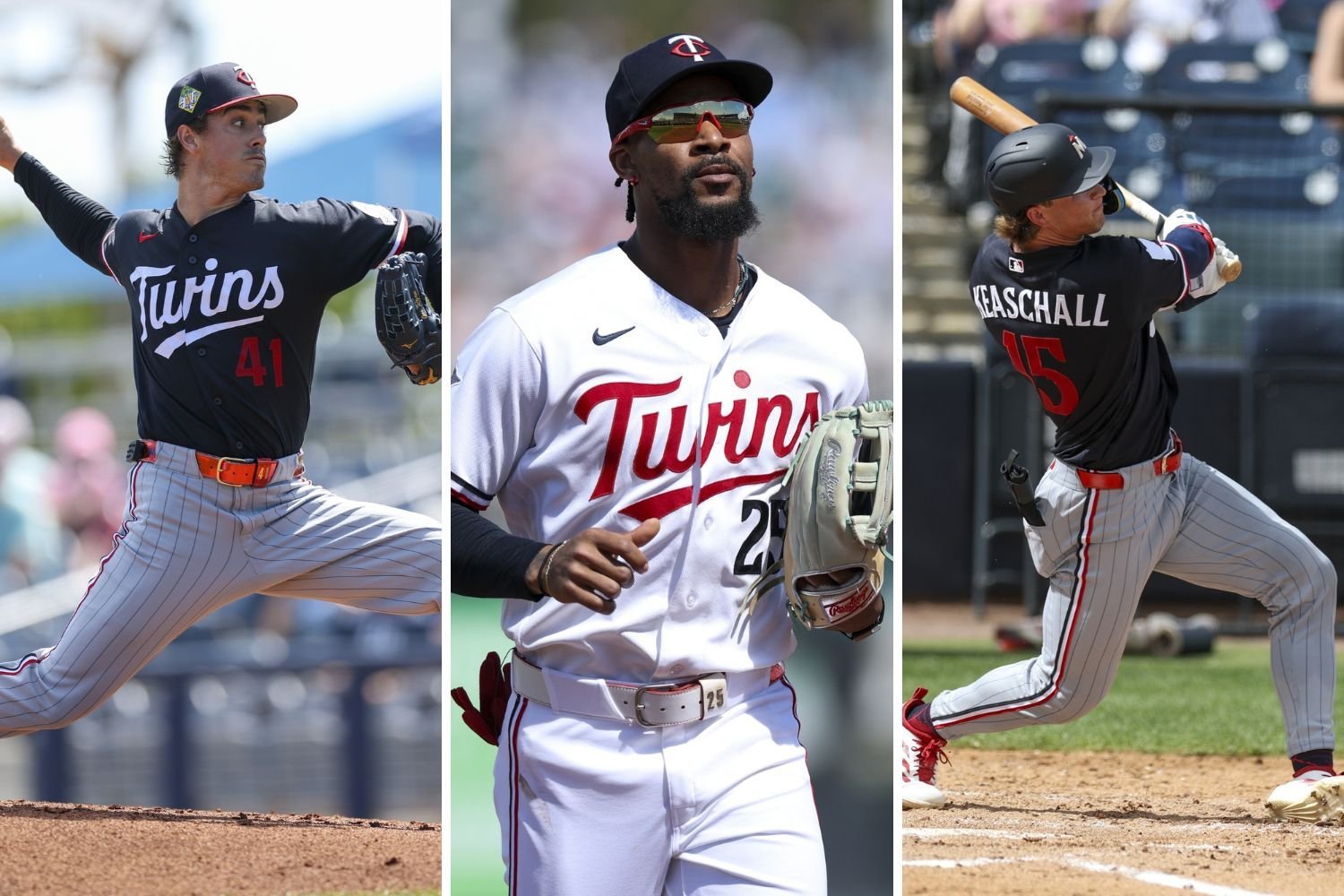 Hired during the offseason to replace Rocco Baldelli as Minnesota Twins manager, Derek Shelton brought with him a new mantra: hunt the good. The idea is that, in a game where failure is relentless, players should make a concerted effort to focus on positives and growth rather than dwelling on negativity and frustration. It will be a valuable mindset for fans to adopt here in 2026. Despite proclamations from new ownership figurehead Tom Pohlad that the Twins hope and expect to be competitive this year, the reality is that projection systems forecast them as a sub-.500 team, and betting lines in Vegas have them pegged as one of the worst teams in all of baseball. Anything can happen, and there are certainly pathways to being a surprise contender in the lukewarm AL Central, but especially after losing their No. 1 starter at the beginning of camp, the odds of the 2026 Twins being a good team are slim. My personal expectation is that they will lose close to 100 games. But even if that comes to fruition, it doesn't mean we as fans can't have a lot of fun this season, or find meaning within the action. (I will remind you that the Twins lost 90+ games in four of the first five years in this website's life. And we were having a ball!) But we'll have to know where to look. With that in mind, this season preview special will spend less time focusing on the anticipated sub-par overall results for the 2026 Twins, and more time helping elevate the interesting narratives and stories worth of your attention — many of which will have major implications on the team's ability to resurrect as a contender in 2027. Let's hunt the good. Expected Opening Day Roster Catchers: Ryan Jeffers, Victor Caratini Infielders: Josh Bell, Kody Clemens, Luke Keaschall, Brooks Lee, Royce Lewis, Tristan Gray Outfielders: Trevor Larnach, Byron Buxton, Matt Wallner, Austin Martin, James Outman Starting Pitchers: Joe Ryan, Taj Bradley, Bailey Ober, Simeon Woods Richardson, Mick Abel Relief Pitchers: Cole Sands, Taylor Rogers, Justin Topa, Anthony Banda, Eric Orze, Kody Funderburk, Zak Kent, Cody Laweryson Position by Position Roster Preview Throughout spring training, I gradually rolled out breakdowns of the outlook and depth of each position on the Twins. Below you can find a quick summary of each, and click through for the full story. Catcher: Entering his free agency walk year, a motivated Jeffers takes over as primary starter while newcomer Caratini joins the timeshare. First Base: Expect a heavy rotation (with middling upside) that features Bell, Clemens, Caratini, and at some point Eric Wagaman. Second Base: Keaschall's presence makes it one of the most exciting, high-upside positions. He'll look to evade sophomore regression and improve defensively. Third Base: Twins need Lewis to at least stay on the field, because they are lacking for immediate contingencies behind him. But we know what he can do. Shortstop: Searching for a new SS identity in the post-Carlos Correa era, Twins are putting all their eggs in the Lee basket for now. Left Field: The old guard (Larnach, Martin) look to fend off newcomers (Outman, Alan Roden) and top prospects for playing time. Center Field: Coming off his best season and a run with Team USA in the WBC, Buxton is locked in and hoping to keep building on his health and production. Right Field: Wallner figures to play almost everyday, with an underrated track record of production and limited platooning possibilities in right. Designated Hitter: At least three players on the roster are probably best suited for DH, which is not a great reflection of the club's general defensive aptitude, but sets a stable floor here. Starting Pitcher: Injuries and question marks plague the veteran rotation core, increasing the urgency for promising younger arms to turn the corner. Lots to like there. Relief Pitcher: The journey to rebuild the bullpen after completely dismantling it at last year's deadline begins, and it's bound to a bumpy road. Key Stories of Follow in 2026 Okay, I'll admit that tour through the roster was perhaps not the cheeriest exercise, but we had to keep it real. As we turn our attention to the people and storylines worth following closely this year, we'll shine a spotlight on some legitimately exciting and intriguing areas of focus. Sorting through a deep and talented pitching group The Twins are hopeful their wave of emerging arms — acquired largely through high draft picks and bold trades — will carry them back to the contention. There's a lot of promise to be found here. Pitchers like Taj Bradley, Mick Abel, Zebby Matthews, Simeon Woods Richardson, and maybe even prospects like Connor Prielipp and Kendry Rojas should have no shortage of runway if healthy. In tough competitive times, a baseball season becomes much easier to follow when you're looking forward to watching the starting pitcher almost every day. The new young core arrives Whether or not the Twins want to admit it, they're rebuilding. But I can see why they'd bristle at the connotation of the term. Selling hope in a rebuild is difficult when the prospects meant to drive it are still many years away, and their impact remains entirely theoretical. Luckily, Minnesota's pipeline is about to start paying off. Three of their top five prospects (Walker Jenkins, Emmanuel Rodriguez, Prielipp) have already reached Triple-A and a fourth (Kaelen Culpepper) is likely to start there this year. It's not always going to be pretty right away, but fans are going to get to start seeing these vaunted talents in 2026 rather than just hearing about them. And in cases like Rodriguez, who dazzled everyone in spring camp before being optioned, it's not hard to envision immediate success and notoriety. Read more: Twins Daily 2026 Top 20 Prospects: Recap and Analysis Royce Lewis at a career crossroads Lewis remains closely connected to the last truly great moment in Twins history — that 2023 postseason breakthrough where his home-run swing carried the offense. Lewis' early emergence remains ingrained in our memories, and he's fully focused on tapping back into that form. The stakes are extremely high for him, and for the team. Peak Royce elevates this team in a dramatic way. Even a rebound to solidly above-average would make a big difference over last year's 83 OPS+. If we get more of the same, this lineup is going to struggle, and his days in Minnesota are likely numbered. But right now we can dream on much more, even in the wake of a quiet spring. Meet the new bosses, same as the old bosses? During the offseason, the Twins implemented new leadership at every level. Derek Shelton replaced Rocco Baldelli as manager. Jeremy Zoll replaced Derek Falvey as head of baseball ops. Tom Pohlad replaced his brother Joe as executive ownership chair. It remains to be seen how much will actually change, especially since none of these none of these new titleholders seem to represent a remotely radical departure from the previous occupant. But any kind of shakeup is welcome in the aftermath of a total two-year collapse. Let's embrace this opportunity for a fresh start and hope these newly appointed leaders can earn back the shattered confidence of fans. Behold the greatness of Byron Buxton This is what's got me most invigorated. Buxton finally turning the corner on injuries and blossoming as a true superstar has been easily the most uplifting aspect of the last two years, and hopefully it will continue to be a resounding source of joy in the season ahead. Let's hear from you as we count down the hours until first pitch of the 2026 season. Are you feeling more optimistic about the team's outlook than me? If not, what's going to be compelling you to tune in and follow along this year? It's been a long and weird offseason, but baseball is finally back. View the full article
-
 Opening Day is here, and the Twins Daily Social Club is ready to celebrate. Tomorrow, we’re coming together at BlackStack Brewing to celebrate the start of the 2026 season as the Minnesota Twins face off against the Baltimore Orioles. After a long offseason, the first pitch is finally here, and we’re excited to kick things off with all of you! If you joined us last year, you know how special this setting is. BlackStack brings the perfect mix of space, energy, and great beer, making it an ideal home for a full afternoon of baseball, community, and celebration. And for those coming for the first time, you’re in for a good one. We can’t wait to kick off the season together, and we’ve got a full lineup of fun planned from first pitch all the way through the final out (and beyond). Expect games, raffles, and plenty of prizes. And getting in on it is easy. Just RSVPing and showing up puts you in the running, and jumping into the games throughout the day gives you even more chances to win! Among the highlights: free 2026 Winter Meltdown pint glasses for attendees (make sure you RSVP to snag yours), plus a chance to win BlackStack gift cards or merch and a pair of tickets to the Twins Home Opener at Target Field when they face the Tampa Bay Rays. Not a bad way to start the season. More than anything, though, this day is about being together again. Sharing a drink, reacting to every big moment, and settling back into the rhythm of baseball with people who get it. We’re excited to see you all. Opening Day only comes once a year – let’s make it count! EVENT DETAILS RSVP: bit.ly/4sgSTnG What: Twins Daily Social Club's Opening Day Watch Party Cost: Free When: 1 pm, March 26, 2026 Where: Blackstack Brewing, 755 Prior Ave N, St Paul, MN View the full article
-
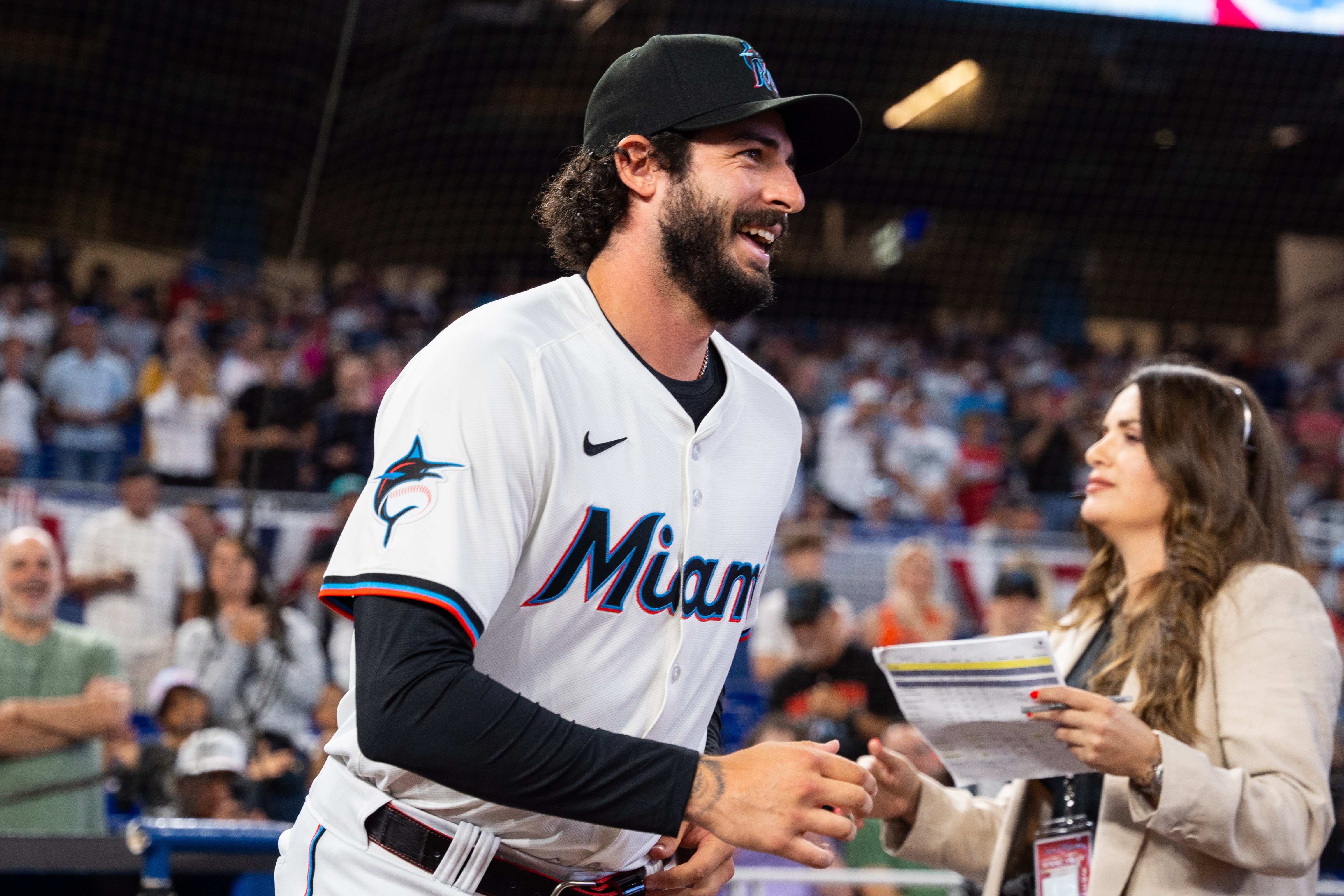 MIAMI, FL — At one point, Andrew Nardi "did not see the light at the end of the tunnel." Lower back inflammation took away not only his entire 2025 season, but prevented him from doing "normal life stuff" without experiencing pain. But after an impressive showing in spring training, the left-handed reliever will find himself back on the Miami Marlins 26-man active roster for Opening Day. "Seeing last year the difficulty he went through, did everything he could to try to get back, and there were times when it was just hard to pinpoint what was going on," said manager Clayton McCullough. "(Physical therapist) Mike Chamberlain deserves a lot of credit as well. Him and Nardi kept trying to find a way to figure this thing out. I think our excitement grew as spring training begun because he started to hit some markers that he hadn't hit. He was able to throw more regularly." The 2025 season, which saw the Marlins win 79 games and remain in the National League Wild Card race up until the very end, was a very tough one for Nardi. He had to watch it all unfold from the dugout. There were low points when he couldn't even put his socks on. Early in the 2025-26 offseason, the Marlins had enough doubts about his recovery that they reportedly considered non-tendering him. "I was struggling, but I stayed positive as much as possible and kept grinding through it," Nardi told Fish On First. "Thankfully, took a turn." It wasn't until the 27-year-old started doing pilates that he noticed a change. Then, one of his buddies recommended posture restoration, which is a specialized physical therapy approach that identifies and corrects common, asymmetrical postural patterns caused by habit, muscle imbalance, and uneven neurological function. "From the first one, I just felt decompression in my spine for the first time in almost a year," Nardi said. "That definitely got the ball rolling and eventually, got my body to just trust the process and trust itself more." Part of maintaining his physical health is doing posture exercises three times a day. Nardi still entered 2026 with some ongoing discomfort. It wasn't until early February that he started to feel better, then his timeline was pushed back again due to a blood blister on his left hand. The first couple pitch design and live batting practice sessions hadn't lived up to what he expected, with his fastball velocity sitting in the high 80s, but in his first Grapefruit League outing on March 10, he struck out the side, averaging 93.8 mph and topping out at 94.6 mph. "It was the first time in a while where I had some jitters going, so I was definitely super excited," Nardi said. Nardi would finish spring training tossing 5 ⅓ shutout innings, allowing just one hit, which came in his second outing. He struck out nine total against three walks, and he only surrendered a hard-hit rate of 28.6%. It came down to the final days of camp, but on Sunday, right before the final spring game, the Marlins announced that they optioned Cade Gibson (the other lefty competing for a spot) to Triple-A and reassigned Tyler Zuber to minor league camp. WU9ZbERfWGw0TUFRPT1fVWdGV0FWRURVZ0FBQ0FBQVVnQUhDVlZRQUZoUlVsSUFCd1pSVlF0UkJnQlVWZ0JV.mp4 Nardi's goal this upcoming season is to "go back to my 2023 self," which consisted of a 2.67 ERA, 3.60 FIP, 11.46 K/9 and 3.30 BB/9 in 57 ⅓ innings pitched. He was especially successful when coming into games with inherited runners that season, but struggled with that in 2024. "We will try to be judicious with these back-to-backs early on in the season," McCullough said regarding the bullpen in general. "We'll see how (Nardi) feels after. It's going to be different the first time he gets into a major league game again and expend some of that energy. Andrew is a healthy pitcher that we'll have to go post, but also, like him and the others, will always read and react with what information they're telling us, how they're recovering to then help guide us to availability." Along with John King, Nardi will be one of two left-handed pitchers in Miami's bullpen for the time being. Last season, Marlins lefty relievers combined for only 107 innings pitched, the fifth-lowest total in the majors. "Having a couple of them, some battle-tested, high quality left-handed pitchers to go in and help us get out of a particular jam against a left handed hitter or a particular part of the lineup that it's more advantageous to have them? Sure, I think that's great," McCullough said. "But it's just as important—or more—that they're just two really good pitchers that give our bullpen a lot of depth and flexibility." The Marlins will have two more workout days at loanDepot park before their highly anticipated Opening Day matchup against the Colorado Rockies on Friday at 7:10 p.m. View the full article
-
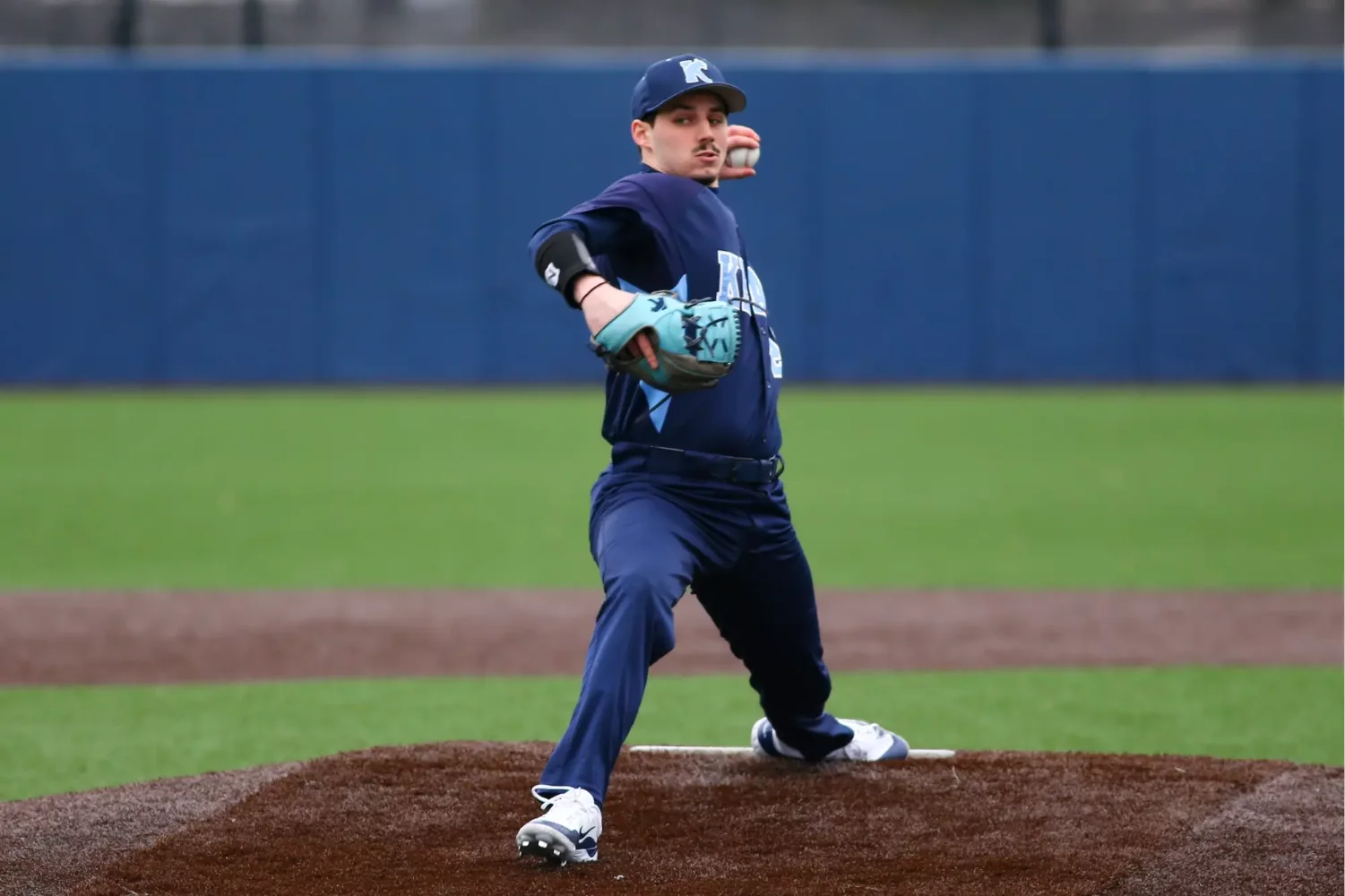 “I would say it’s probably a very unique story.” Jason Gilman never imagined that one phone call after his season with Division III Kean University ended would change the trajectory of his baseball career. Gilman, who wound up being a 16th-round pick in the 2025 draft by the Boston Red Sox, recalled the events that brought him to pro baseball. “I was actually on my way touring University of Virginia and I get a call. I wound up answering it and it winds up being an agent... at the time, I would say advisor. I took it [the call]. Learning about the draft process, learning what it entails. I’m very new to the [draft] scene, I don’t know many people who were drafted around me. Being a D3 [athlete], it’s not like teammates get that look often. And this is actually 12 days before the draft,” Gilman explained. To say things quickly changed for Gilman is an understatement. His 2025 season was one of complete dominance for the left-handed pitcher, helping to lead Kean University to a 41-11 record and making it all the way to the NCAA Division III College World Series. Gilman himself pitched like an ace for the team, going 14-1 in 15 games, 14 of them starts. He finished the season with a 2.08 ERA in 112 1/3 innings and struck out 150 batters while walking just 32. And when it mattered most, Gilman stepped up. With his team facing elimination after losing their first game of bracket play in the finals, Gilman took the mound against top-seeded Johns Hopkins University and left everything out on the field. “We were facing elimination and we’re playing the number one seed. It was a do-or-die game and win or lose, I knew it would probably be my last outing at Kean. So, it was definitely leave it all out on the field,” the southpaw reflected. And he did just that. Leading the team from the mound, Gilman pitched a complete game, allowing three runs, two earned, on eight hits and striking out 14. He would not leave the mound until his team won the game, tossing a whopping 152 pitches as he led them to a 5-3 victory and keeping their championship dreams afloat. Although Kean lost the next game 5-4 and was eliminated by Endicott College, Gilman can always say he gave it his all. And while his plans for the draft changed drastically with less than two weeks to go, Gilman prepared for his future, committing to Ole Miss to play a fifth year of baseball at the NCAA level. Instead, the Red Sox called and altered everything. After signing, Gilman did not get into any games but instead was assigned to the team’s complex in Fort Myers. During his time there, he was slowly eased back into baseball shape and was placed on the same throwing program as others in his draft class. It was an opportunity to learn what it was like to be in a professional organization and what was expected from them. And, in a sense, it was a precursor to his first spring training. “It helped me a lot. I became familiar with the staff, the people, other players and my draft class. We started to create some bonds. It’s been helpful,” Gilman said about the two months down at the complex. But it wasn’t just forming bonds that occurred, as the team had Gilman begin to work on his physical conditioning. “If you look at me, I was one of the smaller pitchers in our draft [class]. Right away I needed to gain weight and throw harder. It wasn’t stuff right on the mound but taking care of your body, eating the right way and working hard in the weight room. As we got closer to spring training and in spring training, we’ve done a lot of stuff for velocity. That’s been my number one goal." And now that he’s had the taste of his first spring training, Gilman has better expectations of professional ball. A pitcher who only had Division III experience has now made his way to the best league in the world. He will likely pitch in affiliated ball once the minor-league season kicks off. For a pitcher who grew up loving baseball, nothing beats it. “I was a kid and I just started throwing a ball. Apparently, it was my first toy, so that’s pretty cool.” Pretty cool indeed. View the full article
-
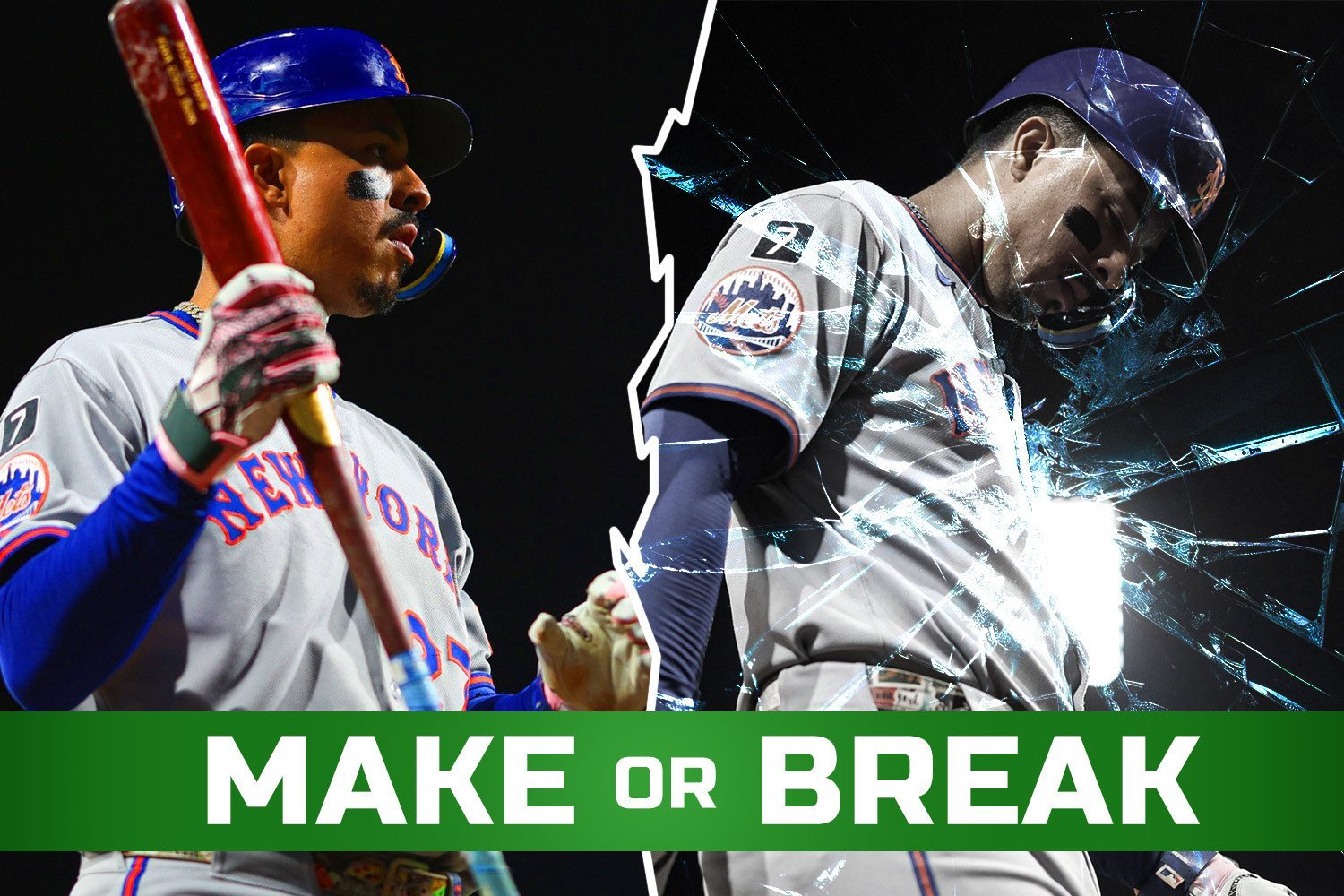 It was not long ago that fans, pundits, and everyone in between were praising New York Mets third baseman Mark Vientos for his play during the 2024 campaign and the magical postseason run that followed. But, as the team enters a 2026 season that may be largely defined by new faces, the 26-year-old will have a chance to become an essential part of an October push. “We’re not putting too much into results right now,” Mets manager Carlos Mendoza told reporters of Vientos. “The biggest thing for him is just continue to see the ball well, continue to make hard contact, and continue to work hard defensively. The corner infielder struggled badly in spring training, hitting a paltry .057/.108/.171 in 11 games. His -34 wRC+ suggests he was 134% worse than the average hitter during the exhibition slate. And yet, Mendoza's faith seemingly hasn't wavered. “He’s going to be a big player for us. He’s going to be a big bat, and we’re counting on him. I’m pretty confident that we’re going to get a really good version of Mark Vientos.” Mark Vientos' Make-or-Break Case In 2026 What Went Wrong in 2025 After a 2024 season that saw him crank 27 home runs, bring in 71 RBIs, and post a .837 OPS, Vientos regressed last season, only hitting 17 home runs, collecting 61 RBIs, and recording a .702 OPS despite playing in more overall games. Put simply, Vientos found fewer barrels in 2025. According to Baseball Savant, he posted a barrel% of 11.5% last season. This was down from 14.1% in 2024. Additionally, the former second-round pick saw his walk rate dip. Vientos spoke openly about falling short of expectations last season and was aware that his name was being discussed ahead of the trade deadline. “I see it as it’s a good thing,” Vientos told MLB.com last season. “It’s a good thing that I’m being talked about. You can see it as like, ‘Damn, it’s bad.’ But I see it as, ‘Man, I’m that important in the league that I’m being talked about in trade rumors.’ There's value in a 26-year-old player with a 132 wRC+ season on his résumé, but the Mets didn't feel strongly enough about his prospects to come back from a down year to avoid signing Jorge Polanco and Bo Bichette to cover the infield corners. Vientos will have to work his way up the depth chart after losing his starting spot last year. What Can Go Right in 2026? At a bare minimum, Vientos will have to find the same swagger and comfort that made him thrive two summers ago. It is possible that a revamped clubhouse culture that is not fresh off a run to the NLCS could be an environment that allows that youngster to find his footing. From a more granular perspective, there were aspects of his metrics last season that could be viewed as positive developments. While he struggled to find as many barrels and work as many walks, his HardHit% rose while his K% went down. At his best, Vientos could be a player who mashes more than 30 home runs per year. Any path towards becoming this kind of slugger would require him to avoid strikeouts and continue to hit the ball hard. Adjustments could help place 2025 in the rear-view mirror without having to completely overhaul what has made him an intriguing bat. How Will This Impact the 2026 Mets? The franchise’s decision to move on from longtime first baseman Pete Alonso has placed the 2026 club in a position where any kind of slugging would be a welcome sight. While David Stearns and the front office acquired players like Bo Bichette and Marcus Semien, who boast solid track records as it pertains to hitting in the clutch, there is still value in having an individual whose strength is hitting the ball over the fence. It's fastest way to produce runs, after all. If Vientos can be that for the Mets, the structure of the lineup will change. He'll have to move beyond his horrid spring training quickly in order to remain relevant in a bench or platoon role, but his potential remains, at the very least, untapped. We'll have to see if he can respond to the pressure of a make or break season in 2026. View the full article
-
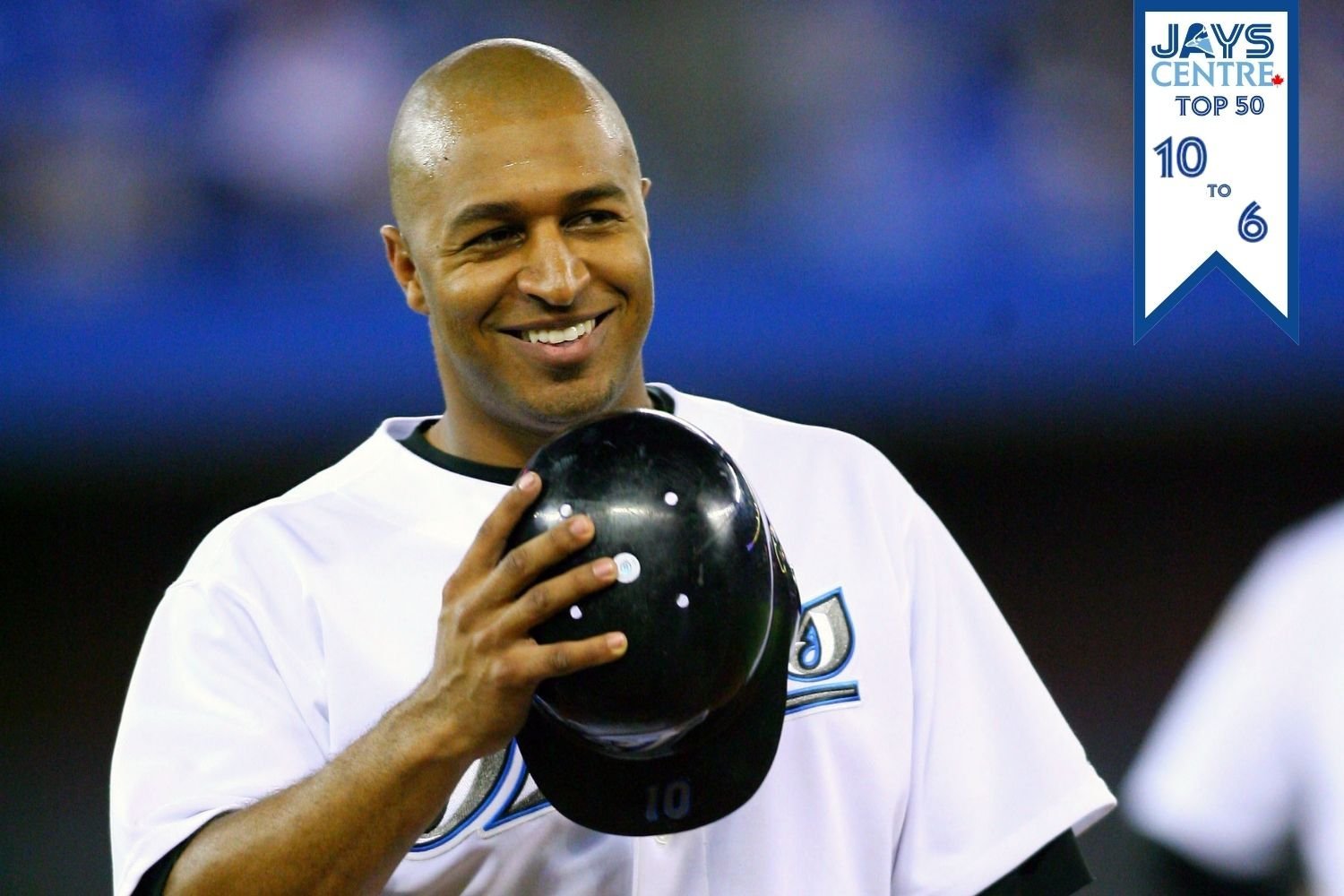 Jays Centre is counting down the top 50 Blue Jays in franchise history. Check out prior entries in the series here: Introduction 50 to 46 45 to 41 40 to 36 35 to 31 30 to 26 25 to 21 20 to 16 15 to 11 When ranking the greatest players in Toronto Blue Jays history, the top 10 is where subjectivity truly takes over. By this point, every name carries All‑Star credentials, franchise records, postseason moments, and plenty of fans ready to defend them. Unless you were there for the franchise’s first pitch, how can one possibly compare players from different eras? But that’s the fun of this top 50 list. Players 10 through 6 capture the '80s to the present day. Jesse Barfield, George Bell, Tom Henke, Vernon Wells and Vladimir Guerrero Jr. all feel “right” in the top 10. Yet, we can still argue the exact order. On my personal ballot, I had several of these players placed quite differently within the top 25. That doesn’t diminish their legacies. Instead, it highlights how rich and layered Blue Jays history has become. This tier represents the bridge between franchise icons and generational cornerstones. Each player defined an era, shaped the identity of the team, and left a mark that still resonates. No. 10: Jesse Barfield Accolades & Notes All-Star Two-time Gold Glove winner Led AL outfielders in assists four times Key contributor to multiple AL East contenders One of the strongest throwing arms in franchise history Jesse Barfield at No. 10 is where the real debate begins. There is no question Barfield was an elite defender and a crucial piece of the Blue Jays’ rise in the mid-to-late 1980s. His throwing arm was legendary. Runners didn’t test him, and when they did, they often paid for it. Offensively, he had power, patience and stretches where he looked like one of the most complete outfielders in baseball. That said, this is the ranking that feels most aggressive. On my personal ballot, I had Barfield closer to #25, not because he wasn’t great, but because his peak was relatively short compared to others in this tier. He never finished higher than ninth in MVP voting, never won a Silver Slugger and was gone before the team achieved true relevance. Because he was part of the Jays’ best-ever outfield along with George Bell and Lloyd Moseby, he definitely deserves a spot in the top 25. Barfield represents excellence, not transcendence. His defense elevates his case significantly, but when stacked against players who either carried the franchise offensively or defined championship moments, #10 feels like the upper limit of his case rather than the natural fit. Still, he absolutely belongs in the top 50, and his role in establishing a winning culture cannot be ignored. No. 9: George Bell Accolades & Notes 1987 American League MVP Three-time All-Star Three-time Silver Slugger Led MLB in home runs and RBI (1987) One of the most feared power hitters of his era George Bell is the most decorated hitter on this list, and perhaps the most underappreciated. An MVP Award matters. It always does. Bell’s 1987 season remains one of the greatest offensive years in Blue Jays history: 47 home runs, 134 RBI, and a relentless middle-of-the-order presence that powered a division-winning club. For several seasons, pitchers approached Bell with genuine fear. Despite that, I had Bell higher than this… at No. 6. Who doesn’t remember the start of the 1988 season? On April 4, 1988, Bell became the first player in Major League Baseball history to hit three home runs on Opening Day (against the Royals in Kansas City). Bell’s best seasons were elite by any standard. He was a top-five hitter in baseball, not just on the Blue Jays. While his defense and longevity weren’t strengths, his offensive impact during the franchise’s first true powerhouse era was immense. His catch to clinch the 1985 American League East title is indelibly etched into Blue Jays lore. Bell’s legacy suffers slightly from timing. He didn’t win a World Series ring or enjoy a farewell tour. However, when evaluating pure dominance in a Jays uniform, his resume stacks up with almost anyone. Ranking him ninth feels conservative, even if understandable. No. 8: Tom Henke Accolades & Notes Franchise leader in saves (217) Two-time All-Star AL saves leader (1987) World Series champion (1992) One of the most reliable closers in MLB history Tom Henke is the gold standard for relief pitching in Toronto. And one of the nicest people you will ever meet. Before the era of specialized bullpens and velocity-obsessed closers, Henke simply went out and ended games. His calm demeanor, consistency and durability made him a manager’s dream. Sure, he might have looked like your grade nine science teacher, but his fastball and forkball earned him the nickname “The Terminator.” When the ninth inning arrived, the game was effectively over. I personally ranked Henke at No. 9, just one spot lower, and that speaks to how tightly packed this group is. Relievers are always tricky on all-time lists. Their impact is enormous, but their opportunities are limited. Henke maximized every one of those opportunities. What elevates Henke into the top 10 is his role in championship baseball. While his peak came slightly before the World Series years, his presence helped build the bullpen culture that carried Toronto to back-to-back titles. He wasn’t flashy, but he was foundational. No. 7: Vernon Wells Accolades & Notes Three-time All-Star Three-time Gold Glove winner Silver Slugger Award Over 1,000 hits and 200 home runs with Toronto Franchise cornerstone during a difficult era Vernon Wells is one of the most polarizing great players in Blue Jays history. During his prime, Wells was everything you want in a franchise player: power, defense, leadership and durability. He played hard, represented the organization well, and carried some less-than-quality rosters. His best seasons placed him among the elite centre fielders in baseball. However, context matters. I had Wells at No. 12, not No. 7. The reason is simple: His prime coincided with one of the least successful stretches in franchise history. That’s not his fault, but legacy rankings inevitably account for team impact. Wells never played in a postseason game with Toronto, and his late-career decline was steep. His final contract with the Jays was a seven-year, $126 million extension signed in 2006. At the time, it was the richest deal in franchise history. That contract was a reflection of his contributions during his peak. For several seasons, he was the face of the franchise, and his all-around game earns him a legitimate spot in the top 10, even if this ranking feels slightly generous. No. 6: Vladimir Guerrero Jr. Accolades & Notes Five-time All-Star 2021 AL MVP runner-up Silver Slugger and Gold Glove winner One of the best offensive seasons in franchise history Face of the modern Blue Jays era Vladimir Guerrero Jr. is the most difficult player to rank on this list, because his story is still being written. Guerrero has already delivered one of the greatest seasons any Blue Jay has ever had. His combination of power, plate discipline, and charisma has redefined what a modern franchise star looks like. He is the centrepiece of the current era and the player opposing teams game-plan around. I personally had Guerrero at No. 7, not No. 6, simply because longevity still matters. He hasn’t yet compiled the counting stats or postseason resume of others in this tier. But if his career continues on its current trajectory, this ranking will age well and may soon look conservative. Guerrero’s inclusion here is less about what he’s done and more about what he represents: a generational talent who has already met the moment and seems poised for even greater heights. What makes rankings like this meaningful isn’t precision, it’s conversation. Barfield may feel too high. Bell may feel too low. Wells might be overrated by some, Henke underrated by others, and Guerrero still premature. All of those viewpoints can coexist, because each player here earned their place through excellence, not circumstance. Ranks 10 through 6 aren’t just a list. They’re a reflection of eras, values and evolving standards of greatness. And that’s exactly how it should be. View the full article
-
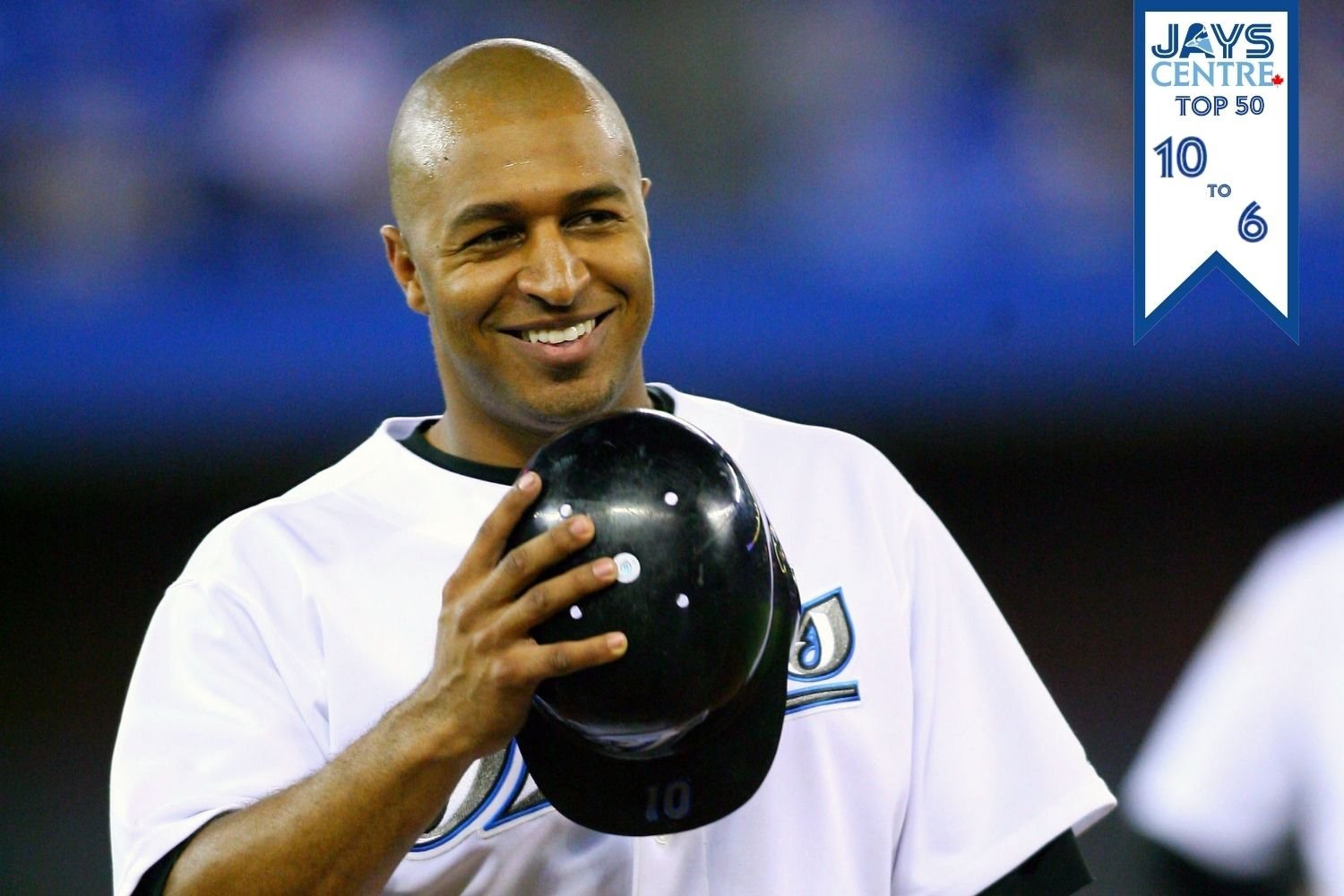 Jays Centre is counting down the top 50 Blue Jays in franchise history. Check out prior entries in the series here: Introduction 50 to 46 45 to 41 40 to 36 35 to 31 30 to 26 25 to 21 20 to 16 15 to 11 When ranking the greatest players in Toronto Blue Jays history, the top 10 is where subjectivity truly takes over. By this point, every name carries All‑Star credentials, franchise records, postseason moments, and plenty of fans ready to defend them. Unless you were there for the franchise’s first pitch, how can one possibly compare players from different eras? But that’s the fun of this top 50 list. Players 10 through 6 capture the '80s to the present day. Jesse Barfield, George Bell, Tom Henke, Vernon Wells and Vladimir Guerrero Jr. all feel “right” in the top 10. Yet, we can still argue the exact order. On my personal ballot, I had several of these players placed quite differently within the top 25. That doesn’t diminish their legacies. Instead, it highlights how rich and layered Blue Jays history has become. This tier represents the bridge between franchise icons and generational cornerstones. Each player defined an era, shaped the identity of the team, and left a mark that still resonates. No. 10: Jesse Barfield Accolades & Notes All-Star Two-time Gold Glove winner Led AL outfielders in assists four times Key contributor to multiple AL East contenders One of the strongest throwing arms in franchise history Jesse Barfield at No. 10 is where the real debate begins. There is no question Barfield was an elite defender and a crucial piece of the Blue Jays’ rise in the mid-to-late 1980s. His throwing arm was legendary. Runners didn’t test him, and when they did, they often paid for it. Offensively, he had power, patience and stretches where he looked like one of the most complete outfielders in baseball. That said, this is the ranking that feels most aggressive. On my personal ballot, I had Barfield closer to #25, not because he wasn’t great, but because his peak was relatively short compared to others in this tier. He never finished higher than ninth in MVP voting, never won a Silver Slugger and was gone before the team achieved true relevance. Because he was part of the Jays’ best-ever outfield along with George Bell and Lloyd Moseby, he definitely deserves a spot in the top 25. Barfield represents excellence, not transcendence. His defense elevates his case significantly, but when stacked against players who either carried the franchise offensively or defined championship moments, #10 feels like the upper limit of his case rather than the natural fit. Still, he absolutely belongs in the top 50, and his role in establishing a winning culture cannot be ignored. No. 9: George Bell Accolades & Notes 1987 American League MVP Three-time All-Star Three-time Silver Slugger Led MLB in home runs and RBI (1987) One of the most feared power hitters of his era George Bell is the most decorated hitter on this list, and perhaps the most underappreciated. An MVP Award matters. It always does. Bell’s 1987 season remains one of the greatest offensive years in Blue Jays history: 47 home runs, 134 RBI, and a relentless middle-of-the-order presence that powered a division-winning club. For several seasons, pitchers approached Bell with genuine fear. Despite that, I had Bell higher than this… at No. 6. Who doesn’t remember the start of the 1988 season? On April 4, 1988, Bell became the first player in Major League Baseball history to hit three home runs on Opening Day (against the Royals in Kansas City). Bell’s best seasons were elite by any standard. He was a top-five hitter in baseball, not just on the Blue Jays. While his defense and longevity weren’t strengths, his offensive impact during the franchise’s first true powerhouse era was immense. His catch to clinch the 1985 American League East title is indelibly etched into Blue Jays lore. Bell’s legacy suffers slightly from timing. He didn’t win a World Series ring or enjoy a farewell tour. However, when evaluating pure dominance in a Jays uniform, his resume stacks up with almost anyone. Ranking him ninth feels conservative, even if understandable. No. 8: Tom Henke Accolades & Notes Franchise leader in saves (217) Two-time All-Star AL saves leader (1987) World Series champion (1992) One of the most reliable closers in MLB history Tom Henke is the gold standard for relief pitching in Toronto. And one of the nicest people you will ever meet. Before the era of specialized bullpens and velocity-obsessed closers, Henke simply went out and ended games. His calm demeanor, consistency and durability made him a manager’s dream. Sure, he might have looked like your grade nine science teacher, but his fastball and forkball earned him the nickname “The Terminator.” When the ninth inning arrived, the game was effectively over. I personally ranked Henke at No. 9, just one spot lower, and that speaks to how tightly packed this group is. Relievers are always tricky on all-time lists. Their impact is enormous, but their opportunities are limited. Henke maximized every one of those opportunities. What elevates Henke into the top 10 is his role in championship baseball. While his peak came slightly before the World Series years, his presence helped build the bullpen culture that carried Toronto to back-to-back titles. He wasn’t flashy, but he was foundational. No. 7: Vernon Wells Accolades & Notes Three-time All-Star Three-time Gold Glove winner Silver Slugger Award Over 1,000 hits and 200 home runs with Toronto Franchise cornerstone during a difficult era Vernon Wells is one of the most polarizing great players in Blue Jays history. During his prime, Wells was everything you want in a franchise player: power, defense, leadership and durability. He played hard, represented the organization well, and carried some less-than-quality rosters. His best seasons placed him among the elite centre fielders in baseball. However, context matters. I had Wells at No. 12, not No. 7. The reason is simple: His prime coincided with one of the least successful stretches in franchise history. That’s not his fault, but legacy rankings inevitably account for team impact. Wells never played in a postseason game with Toronto, and his late-career decline was steep. His final contract with the Jays was a seven-year, $126 million extension signed in 2006. At the time, it was the richest deal in franchise history. That contract was a reflection of his contributions during his peak. For several seasons, he was the face of the franchise, and his all-around game earns him a legitimate spot in the top 10, even if this ranking feels slightly generous. No. 6: Vladimir Guerrero Jr. Accolades & Notes Five-time All-Star 2021 AL MVP runner-up Silver Slugger and Gold Glove winner One of the best offensive seasons in franchise history Face of the modern Blue Jays era Vladimir Guerrero Jr. is the most difficult player to rank on this list, because his story is still being written. Guerrero has already delivered one of the greatest seasons any Blue Jay has ever had. His combination of power, plate discipline, and charisma has redefined what a modern franchise star looks like. He is the centrepiece of the current era and the player opposing teams game-plan around. I personally had Guerrero at No. 7, not No. 6, simply because longevity still matters. He hasn’t yet compiled the counting stats or postseason resume of others in this tier. But if his career continues on its current trajectory, this ranking will age well and may soon look conservative. Guerrero’s inclusion here is less about what he’s done and more about what he represents: a generational talent who has already met the moment and seems poised for even greater heights. What makes rankings like this meaningful isn’t precision, it’s conversation. Barfield may feel too high. Bell may feel too low. Wells might be overrated by some, Henke underrated by others, and Guerrero still premature. All of those viewpoints can coexist, because each player here earned their place through excellence, not circumstance. Ranks 10 through 6 aren’t just a list. They’re a reflection of eras, values and evolving standards of greatness. And that’s exactly how it should be. View the full article
-
San Diego Padres 2026 Position Analysis: Shortstop
DiamondCentric posted an article in Padres Mission
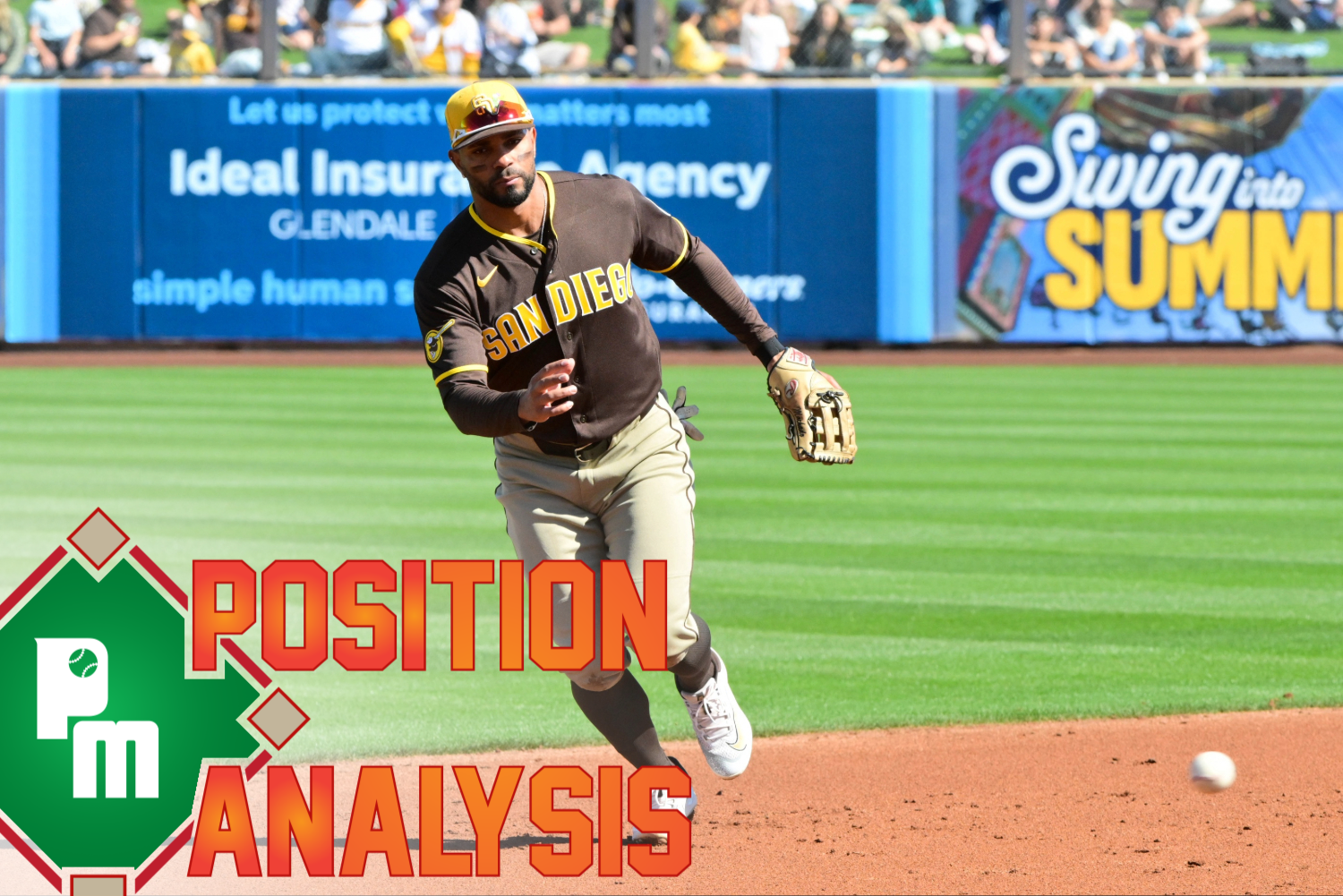 The San Diego Padres are counting on Xander Bogaerts to hold down the shortstop position in 2026, but recent history says he won't be out there every day. Injuries have sidelined him for long stretches in each of the past two years, and he'll be playing his age-33 season this year. Those are troubling signs for a player who's entering Year 4 of an 11-year, $280 million contract. Utility man Mason McCoy and second baseman Jake Cronenworth are next on the depth chart, but each player has his drawbacks. McCoy is a glove-first infielder with a .494 OPS in 84 career plate appearances, while Cronenworth was regularly replaced for defense late in games when he filled in for Bogaerts last year. Sung-mun Song will also factor into the equation eventually, but he'll open the season on the injured list while tending to a lingering oblique strain. Here's how the position looks heading into Opening Day: Padres Shortstops At A Glance Starter: Xander Bogaerts Backup: Jake Cronenworth, Sung Mun Song Depth: Mason McCoy Prospects: Francisco Acuna, Ryan Jackson Padres' fWAR Ranking Last Year: 16th out of 30 Padres' fWAR Projection This Year: 16th out of 30 The Good Bogaerts remains a plus defender according to the metrics. Statcast put him in the 93rd percentile in outs above average (OAA) and the 87th percentile in fielding run value last year. Both marks were, by far, career highs. Statcast's plus-7 run value was also a career best. His offense was not very exciting, but he remained a solid contact hitter, with a 17.0 percent K rate (76th percentile). His 89.0 mph average exit velocity and 11.1-degree launch angle were both his highest since 2021, and his 39.2 percent hard-hit rate was his highest since 2022. Those peripherals contributed to a .267 xBA, his highest since '21. He handled certain off-speed and breaking pitches well, posting a plus-8 run value against sliders and a plus-6 run value against changeups. Interestingly, Bogaerts has put speed back to his game in his 30s. Last year, he set a career high with 20 stolen bases and was caught just twice. He has posted double-digit steals in each of his first three seasons with the Padres. The Bad Bogaerts' offensive prime with the Boston Red Sox is a distant memory. Last year, he put up a pedestrian 104 wRC+ and .720 OPS in 552 plate appearances. He was the least effective against fastballs, even though his whiff rates against them were better than his career norms. He registered a minus-9 run value against four-seamers and a minus-10 run value against sinkers. Not so coincidentally, his bat speed was in the 50th percentile. There was also a further decline in durability. Last year, he missed almost a month in August and September with a foot fracture. In 2024, he was out from mid-May to late July with a left shoulder fracture he suffered while diving for a ball. He has appeared in 136 and 111 games, respectively, the past two seasons. There isn't much at the position in the upper levels of the farm system. Francisco Acuna, 26, posted a 1.119 OPS with two homers in 12 games at Triple-A El Paso last season, but just a .706 OPS in 109 games at Double-A San Antonio. Ryan Jackson, 24, played at three levels last year in his first full pro season, getting as high as Double-A. He produced a .494 OPS in 19 games for San Antonio. The Padres took him in the 17th round of the 2024 MLB Draft. The return of Song will be key to the entire infield picture, but he'll also have to displace someone (likely Ty France) on the active roster when he returns, limiting depth elsewhere on the roster. The Bottom Line Bogaerts will be the starter if healthy -- a big if after the injuries. If Song remains out or limited by his oblique, San Diego could stand to add a backup who would be an upgrade over McCoy. View the full article
-
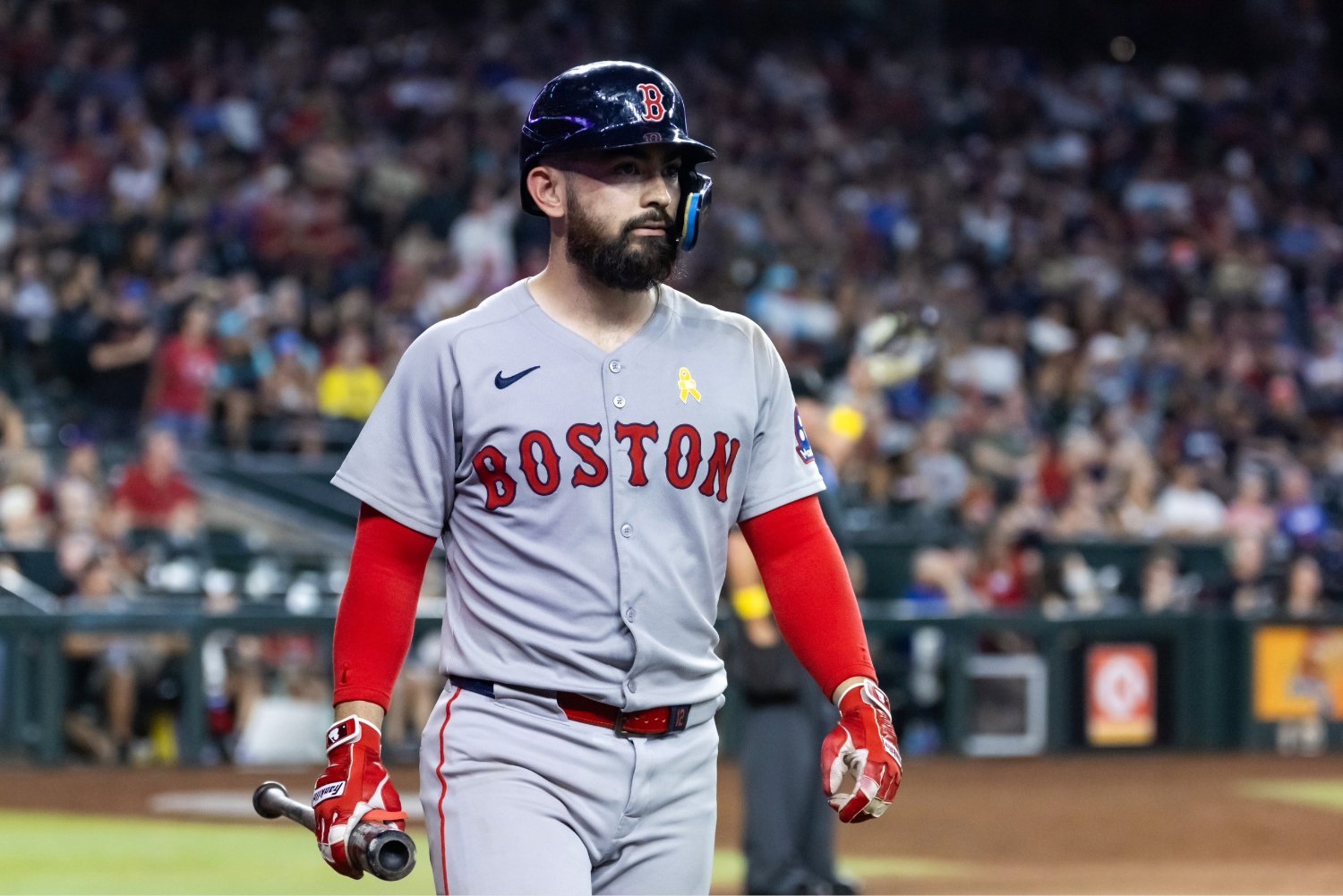 The Boston Red Sox have made their final decision on who the No. 2 catcher will be, reassigning everyone but Connor Wong prior top Opening Day. From a track record standpoint, that makes sense; the was the starting catcher in 2024 and again in 2025 before an injury had him lose the job to Carlos Narváez. However, his performance across 2025 in spring training allowed a competition to form with veteran Matt Thaiss. A competition that Rob Bradford of WEEI said on air was a “legit competition” as of March 8. Wong in 2025 saw his stock within the organization fall due to two factors, the first being his broken left pinkie finger that occurred in early April, and then just an overall subpar season that saw him hit .190/.262/.238 with eight doubles and seven RBIs. After the season concluded, Wong underwent a right-hand carpal boss excision which some felt could have influenced his hitting. Coming back from a hand injury isn’t always easy for a batter, especially during the season, and while no one expected Wong to replicate his 2024 season, his regression in 2025 was much worse than anyone could have imagined. Thankfully for the Red Sox, Carlos Narváez stepped up during Wong’s absence and claimed the starting catcher’s position for himself. When Wong returned from the injured list in early May, Narváez remained as the starting backstop while Wong became the backup. Wong has struggled at times behind the plate when it pertains to blocking pitches and framing, though he did improve upon the latter last year. Prior to 2025, he was, at worst, average when it came to pop time and throwing out baserunners, but both areas of his game regressed in 2025. Offensively, Wong did not play enough to qualify for any rankings, but if he did, he would have been near the bottom of the league in exit velocity, hard-hit percentage, barrel percentage, squared-up percentage and launch angle sweet spot percentage. That's simply an unplayable profile for someone who isn't an elite defender behind the plate. While some have hoped that Wong could bounce back in 2026, his performance in spring training left many wondering if the Red Sox might go in a different direction. In 13 games of action, he hit .129/.229/.161, good for a 3 wRC+. Of course, it’s spring training and you shouldn’t look too much into statistics from it (remember how Trayce Thompson looked like one of the best hitters in the spring of 2025?), but you can’t help but wonder if Wong’s time as the backup catcher is nearing its end. The biggest factor that leads to this conversation is that Wong still has an option left. Should the Red Sox lose faith in his abilities, the team can stash Wong in Triple-A and see if they can’t get him back on track offensively. While he’s unlikely to put up numbers like 2024 again (.280/.333/.425 with 24 doubles, a triple, 13 home runs and 52 RBIs), he could be much closer to how he was in 2023 (.235/.288/.385). Not perfect, but serviceable as a backup. Thaiss, who is in camp as a non-roster invitee, signed a minor-league contract with the Red Sox on January 31. Prior to his demotion, he appeared in 10 games. While he also struggled offensive (.190/.346/.190 with one RBI), he made a lasting impression on the coaching staff with far-improved defensive work and a patient plate approach. Thaiss is not the greatest offensively with a career stat line of .210/.320/.332, but those numbers would be an improvement over Wong’s 2025 season and would come with a (marginally) better defensive catcher. In a previous statement, Alex Cora spoke highly of Thaiss, saying he was “impressing people here” per Tim Healey of The Boston Globe. “His swing is really good. He’s left-handed. He’s been able to control the pitching staff. He’s a guy who has been catching our eye.” Besides Cora being impressed with how Thaiss has been in camp, the biggest reason that the conversation has grown is due to Thaiss’ upward mobility clause. If that clause is triggered, Thaiss can be offered to the other 29 teams and if one of them are willing to give him a roster spot, then the Red Sox are forced to either promote him or trade him to the team that offered him the spot. If no one offers him a spot, then he can still be sent to Triple-A and be stashed in Worcester. However, should the Red Sox look to add Thaiss to their active roster, there will need to be a corresponding 40-man roster move. For the past two seasons, the team has struggled to get offensive production from their backup catchers and have tried an array of players to fix the issue. Thaiss may not be perfect, but after a 2025 season that had the Red Sox try out options such as Blake Sabol and Ali Sanchez behind the plate due to injuries, Thaiss may end up being an upgrade for the backup position if chosen. For now, Wong remains Plan A, but his leash with the team is shorter than ever before. View the full article
