


DiamondCentric
-
Posts
2,631 -
Joined
-
Last visited
Never
Content Type
Profiles
Forums
Events
News
Tutorials & Help
Major League Baseball Videos
Guides & Resources
Store
Downloads
Gallery
Everything posted by DiamondCentric
-

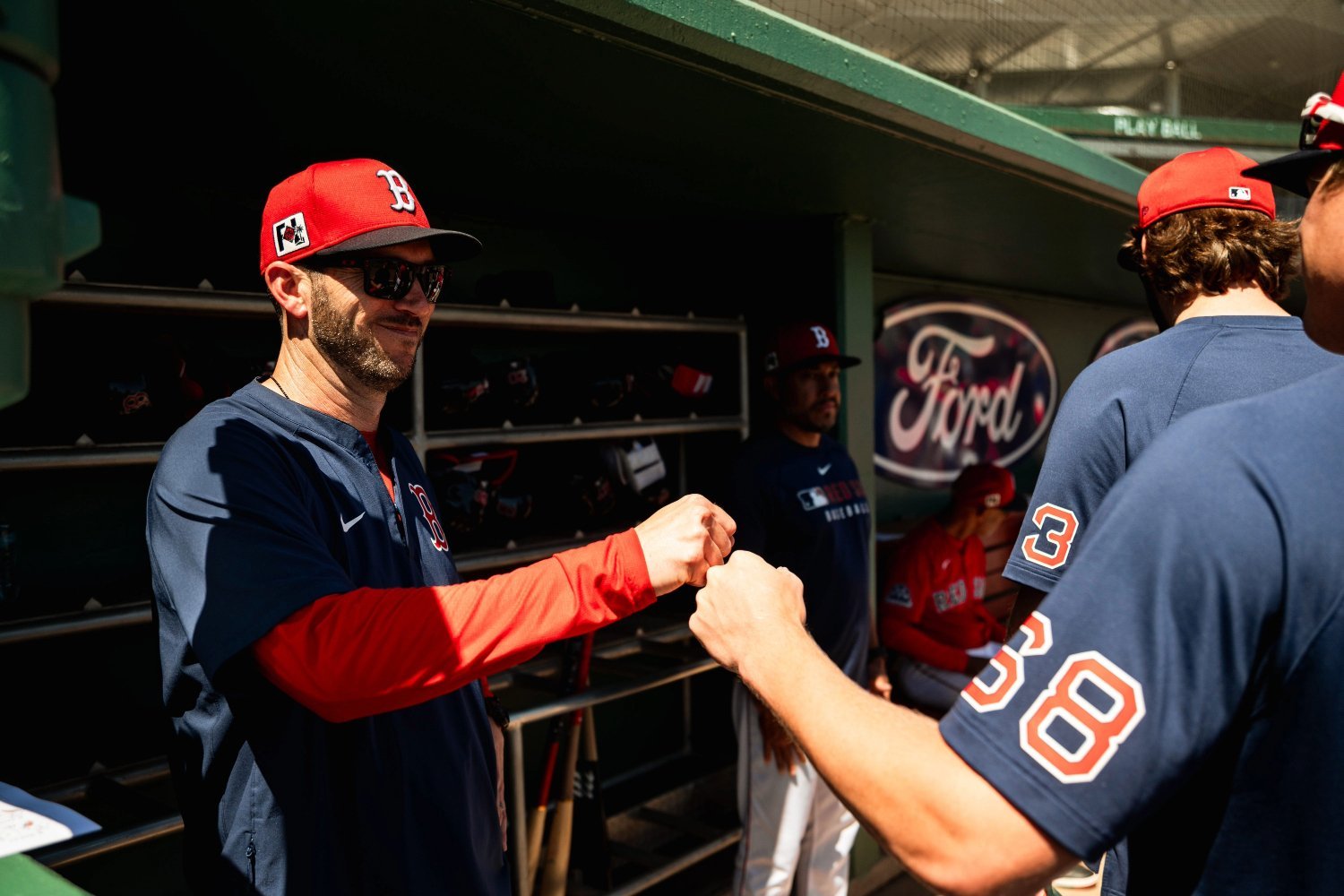 Spring training is officially here as pitchers and catchers have reported to Fort Myers. Along with those on the 40-man roster, the Red Sox have invited quite a few players to their spring training camp as non-roster invites. Every season, teams manage to find key contributors through this process, as many veterans try to catch on with a team by signing a minor-league deal with an invitation to spring training. Along with veterans, teams tend to bring prospects into big league camp in similar fashion. Last season the Red Sox saw contributions from a handful of non-roster invitees in the form of Nate Eaton, Abraham Toro, and Sean Newcomb. This season, the team has currently invited 24 players to spring training, though that number could increase in the days leading up to the first days of practice. Here is an overview of the players invited to camp: Red Sox Non-Roster Invitees: Pitchers RHP Osvaldo Berrios Berrios signed with the Red Sox on a minor-league deal back on November 18 while the team was making several trades prior to the Rule 5 protection deadline. Berrios, who was drafted in 2017 by the Athletics had previously been acquired by the St. Louis Cardinals in June of 2024 after playing in the Independent Frontier League. Berrios split the 2025 season between Double-A Springfield and Triple-A Memphis where he appeared in a total of 40 games, going 4-4 with a 5.12 ERA in 58 innings. He struck out 62 batters and walked 24. In seven minor league seasons, Berrios has appeared in 155 games with 56 of them being starts. Overall, he’s gone 23-34 with 16 saves and a career 5.44 ERA in 420 1/3 innings pitched. In 2025, the 26-year-old struck out 9.62 batters per nine innings and throws four pitches: a fastball that tops out at 94 mph, a 78 mph curveball, a low to mid-80s changeup and a mid-80s slider. LHP Alec Gamboa Gamboa is a former ninth-round pick by the Los Angeles Dodgers who played in their organization until getting released in early 2025. The left-handed pitcher mainly appeared out of the bullpen during his time with the Dodgers, making his way up to Triple-A by 2023 and spending parts of three seasons there before finishing 2025 in the Korean Baseball Organization with the Lotte Giants. During his time in Korea, Gamboa moved to the rotation where he pitched rather well in 19 starts. Going 7-8, he tossed 108 innings with a 3.58 ERA and struck out 117 batters. With the Dodgers’ organization, Gamboa appeared in 131 games and made 41 starts going 28-22 with a 4.23 ERA in 359 2/3 innings with 315 strikeouts. Gamboa’s biggest weakness is subpar control which limits his swing-and-miss potential, though he's good at keeping the ball on the ground. RHP Tayron Guerrero Guerrero is one of the older players coming into camp with the Red Sox as a non-roster invitee at the age of 35 years old. The reliever has had some experience in the majors though not with the best results. He made his debut in 2016, pitching one game with the San Diego Padres before being traded to the Miami Marlins near the trade deadline. Guerrero would see himself appear in 112 games between 2018 and 2019 with Miami to less-than-stellar results. During his time with the Marlins, the right-hander tossed 104 innings and struck out 111 batters while walking 67. He finished his time in Miami with a 5.80 ERA before being selected off waivers by the Chicago White Sox following the 2019 season. He would not play in the 2020 COVID shortened season and would then spend 2021 at the White Sox’s Triple-A team before heading overseas to play for the Chiba Lotte Marines in 2022. Guerrero would return state side in 2023 where he pitched for the Cincinnati Reds’ Triple-A team before finishing the season pitching in the Mexican League. 2024 was more of the same this time with the Los Angeles Angels’ Triple-A team before returning to Japan for the 2025 season where he rejoined the Chiba Lotte Marines. Overall, he pitched in 39 games with the Marines' main team and their farm team tossing 39 2/3 innings and striking out 37 batters. RHP Hobie Harris Harris spent the 2025 season in the Red Sox organization after being selected in the Triple-A portion of the Rule 5 Draft. The 32-year-old made 31 appearances with Triple-A Worcester, and one rehab start in the Florida Complex League despite not being active from the injured list until mid-June. In those 32 appearances, he went 1-3 with a 4.05 ERA across 40 innings where he struck out 45 batters. The right-hander was drafted back in the 31st round of the 2015 draft by the New York Yankees and pitched in their organization through the 2019 season. Starting in 2021, Harris bounced around pitching for the Triple-A teams of Toronto, Milwaukee, Washington and Minnesota before signing with the New York Mets. He never pitched a game for them as the Red Sox took him in the Rule 5 Draft as previously mentioned. Harris has made 16 appearances in the majors, all with the Nationals back in 2023. In those appearances, he tossed 19 1/3 innings and struck out nine. RHP Kyle Keller Keller was one of Boston’s later invites, signing with the team on February 3. The 32-year-old was drafted in the 18th round of the 2015 draft by the Miami Marlins and would make his debut with them in 2019. He would be traded after the season to the Los Angeles Angels though he would only pitch in two games before being purchased by the Pittsburgh Pirates in 2021. For his career, Keller has pitched in 44 games and tossed 46 1/3 innings with a career 5.83 ERA. He also struck out 48 batters while walking 32. Since the end of the 2021 season, Keller has pitched in the Nippon Professional Baseball league for the Hanshin Tigers and Yomiuri Giants, where he revitalized his career and generated interest by the Red Sox. In those four seasons, Keller was a key bullpen arm as he appeared in 186 games between the farm teams and parent organizations. In that span, he threw 179 1/3 innings with a 2.21 ERA while striking out 206 batters in the pitcher-friendly league. RHP Seth Martinez Martinez may be the pitcher with the best major league track record on the list, as he was once a key arm in Houston’s bullpen. Drafted by the Astros in the Rule 5 Draft back in 2020, Martinez appeared in just three games in 2021 before pitching in 108 games over the next three seasons. For his career with the Astros, he threw 137 1/3 innings with a 3.93 ERA and 122 strikeouts to 54 walks. Following the 2024 season, Martinez bounced around on waivers, being claimed by the Diamondbacks, then the Marlins, Mariners and Marlins once more before the start of the 2025 season. The right-hander spent most of 2025 with Triple-A Jacksonville where he appeared in 41 games and tossed 43 2/3 innings with a 3.71 ERA. He would also make six appearances with the Marlins where he struck out four in 6 2/3 innings. RHP Vinny Nittoli A 35-year-old pitcher who has made a total of 15 appearances across four seasons, Nittoli hasn’t pitched in the majors since 2024 and split the 2025 season between the Triple-A teams of Baltimore and Milwaukee. The Red Sox are now the 12th organization he’s been a part of in his career. In 37 games, Nittoli tossed 39 1/3 innings with a 4.58 ERA. He also struck out 46 batters while walking just 15. In his major league career, he’s tossed 18 2/3 innings with a 2.41 ERA and 13 strikeouts. Nittoli is an addition that continues Craig Breslow’s interest in big extension, as the right-hander’s extension last season was 7-foot-2 and also saw an increase after joining Milwaukee’s organization. The main difference being more usage for his cutter which went from a 35% usage rate all the way up to 53% upon joining Milwaukee. Across the entire 2025 season, the cutter generated a .172 expected batting average and had a 31% whiff rate. RHP Wyatt Olds Olds was drafted by the Red Sox in the seventh round of the 2021 draft and has split the past two seasons between Portland and Worcester, though he spent the majority of 2025 at Triple-A. The 25-year-old dominated in eight appearances early on with Portland, going 4-2 with a 2.50 ERA across 18 innings out of the bullpen. His promotion to Worcester saw some growing pains, as he appeared in 34 games and had an ERA of 5.91 across 53 1/3 innings. Currently, Olds is viewed as organizational depth due to his need to work on his command and control, though his fastball and slider look promising. Olds throws three pitches, the previously mentioned fastball (that tops out at 98 mph), the slider and a changeup that can touch 90 mph. LHP T.J. Sikkema Sikkema, who was a former New York Yankees draft pick, was traded by the team to the Kansas City Royals for Andrew Benintendi back in 2022 before being taken by the Cincinnati Reds in the Rule 5 Draft in 2023. A left-hander, Sikkema made it to Triple-A for the first time last season after 18 appearances at Double-A Chattanooga. Overall the left-hander went 8-4 in 23 appearances, 15 starts as he tossed a career high 86 2/3 innings. For his career, he’s made 100 appearances in the minors and thrown 311 innings with a 4.57 ERA. He doesn’t throw hard, his fastball averaging 88 to 91 mph but can hit mid-90s but not consistently. Along with that, he also throws a slider that is in the low to mid-80s and an average changeup. RHP Noah Song Song has been someone the Red Sox have liked for a long time, but various events have kept him from being able to reach his full potential. Drafted in the fourth round of the 2019 draft, Song showcased a strong start to his professional career by tossing 17 innings with a 1.06 ERA in 2019 before losing the 2020 season due to it being cancelled from COVID. That was followed by missing both the 2021 and 2022 seasons due to his petition to delay his active service with the Navy being denied. Following the 2022 season, Song was drafted in the Rule 5 Draft by the Philadelphia Phillies and the man who drafted him originally, Dave Dombrowski. He was granted his request to delay his active service time in February 2023 and finally reported to spring training with the Phillies. Back tightness sent him to the injured list in spring training before he made his first appearance in four years on June 28 with Single-A Clearwater. Song was eventually returned to the Red Sox after being designated for assignment and clearing waivers where he would finish the season with Greenville. He would go on to miss the 2024 season due to Tommy John surgery. 2025 saw him pitch in all five minor league levels (Complex League, Single-A, High-A, Double-A, Triple-A) with his longest stay being 23 appearances with Portland where he tossed 43 innings with a 4.19 ERA and struck out 44 batters. RHP Devin Sweet Sweet has been in professional baseball since 2018 as part of the Seattle Mariners’ organization. The right-hander pitched his way up to majors with Seattle in 2023, making two appearances with them before the Athletics selected him off waivers and he made five more appearances with them. Overall, he pitched in seven games with a 10.38 ERA and struck out six batters in 8 2/3 innings. Since then, Sweet spent the 2024 season with Detroit’s Triple-A team and the 2025 season with Philadelphia’s Triple-A team. Last year, he pitched in 46 games and tossed 51 1/3 innings with a 5.08 ERA. He also struck out 49 batters and walked 27. Sweet throws three pitches: a four-seam fastball, a slider and a changeup. RHP Jacob Webb Webb was drafted by the Red Sox in the 14th round of the 2021 draft. Last season, Webb split the year between Greenville, Portland and Worcester, making a total of 25 appearances. He would end up tossing 40 1/3 innings with a 3.57 ERA (though it was 6.35 in 11 1/3 innings with Worcester) and struck out 46 batters. This is the second consecutive spring training that Webb received an invitation to spring training from the Red Sox, having been invited in 2025 as well. He has a low release point and a high induced vertical break on his fastball. Webb tosses four pitches: a fastball that tops out at 96 mph, a slider that can vary in shape and velocity, a sweeper and a changeup that can touch 90 mph. LHP Jeremy Wu-Yelland Wu-Yelland was drafted back in the fourth round of the 2020 draft by Boston and has had a tough time staying on the field after his debut season in 2021. After making 23 starts between Salem and Greenville, Wu-Yelland would miss 2022 due to needing Tommy John surgery. Upon his return in 2023, he would only make three appearances in the Florida Complex League before another injury would shut him down for the rest of the season. 2024 saw a move to the bullpen for the left-hander but he still opened the season on the injured list due to stiffness. He would make 23 appearances out of the bullpen with a 5.67 ERA in 33 1/3 innings for Greenville. 2025 saw Wu-Yelland miss just under a month with lower back stiffness, but he still made 25 appearances between Greenville and Portland where he threw 45 2/3 innings with a 3.15 ERA and struck out 71 batters. Wu-Yelland throws four pitches: a fastball that tops out at 97 mph, a cutter which is his most thrown pitch, a sweeper that has a very high spin rate and a changeup that sits in the low-80s. Red Sox Non-Roster Invitees: Catchers Nate Baez Acquired from the Minnesota Twins for Tristan Gray, Baez split the 2025 season between High-A and Double-A where it was two different stories offensively for the catcher. Overall, he would play in 96 games and hit a combined .278/.371/.423 with 17 doubles, four triples, eight home runs, and 54 RBIs. Though, in Double-A his numbers were .237/.297/.400 with eight doubles, four triples, five home runs, and 31 RBIs. Despite that, Baez showed an ability to put the ball in play last season, striking out just 65 times in 338 at-bats and walking 45 times as well. Defensively, he split time between catcher, first base and designated hitter. While with Double-A, he threw out 23% of potential base stealers while allowing just two passed balls. Jason Delay Signed by Boston to be catching depth, Delay is a former fourth-round pick in 2017 by the Pittsburgh Pirates. Delay would go on to make his major league debut in 2022 and would play in the majors with the Pirates from 2022 until a short stint in 2024. In total he played 134 games, hitting .231/.295/.315 with 20 doubles, one triple, two home runs, and 35 RBIs. Offensively, there isn’t much power to his game, and he has a tendency to strike out (94 strikeouts in 337 at-bats) while not walking enough to offset it (26 career walks). 2025 saw Delay split the season between Atlanta’s Double-A and Triple-A teams where he hit a combined .200/.261/.257 in 68 games. He also had 10 doubles, one home run, and 14 RBIs. Ronald Rosario Rosario was signed as an international free agent by the Red Sox in July of 2019 as a 16-year-old, though he missed the 2020 season due to the minor league season being cancelled. The young catcher spent 2021 and 2022 in the Dominican Summer League and Florida Complex League respectively before playing for Salem and Greenville in 2023. 2024 saw Rosario begin the year with Greenville, playing 99 games before a promotion to Portland where he was placed on the development list. 2025 saw Rosario play 98 games with Portland where he hit .201/.278/.321 with 10 doubles, 11 home runs, and 56 RBIs. Offensively, he is viewed as having an average hit tool with average power but mostly as a doubles hitter. Defensively, he could be an average catcher depending on how he develops. He doesn’t have soft hands and in 2025 he made six errors and allowed 10 passed balls. Though, he has good, fluid motions and threw out 24% of potential base stealers and was part of seven double plays. Max Stassi Stassi has the most MLB experience out of the listed catchers, having been drafted way back in the fourth round of the 2009 draft by the Athletics. Stassi made it to the majors with the Astros in 2013 and played with them until being traded to the Angels in 2019. Stassi would remain with the Angels until the end of 2022. After not playing in 2023, Stassi has spent the last two seasons in Triple-A with the White Sox organization in 2024 and the Giants organization in 2025. For his career, Stassi played in 403 games at the major league level and hit .212/.295/.361 with 42 doubles, two triples, 41 home runs and 128 RBIs. For his career, he’s thrown out around 20% of potential base stealers and has allowed 31 passed balls. Red Sox Non-Roster Invitees: Infielders Nathan Hickey Originally drafted as a catcher in the 2021 draft, Hickey has primarily played first base or DH since mid-2024 and only appeared in four games as a catcher in 2025 after getting a non-roster invitation to spring training that year. Defensively, he struggled at catcher and was viewed as being below average when it came to receiving while also having trouble with blocking pitches in the dirt. He has looked better at first base than he did behind the plate, having made just four errors in 610 defensive chances. Offensively, Hickey is coming off of a decent season with Worcester, having appeared in 128 games where he hit .234/.325/.408 with 23 doubles, two triples, 17 home runs and 75 RBIs. He does strike out a lot as shown by his 141 punchouts last season. He also knows the strike zone well but often whiffs on pitches in the zone and struggles against left-handed pitching. Vinny Capra Capra is a four-year veteran who made his debut in 2022 after getting drafted by the Toronto Blue Jays back in 2018. Prior to 2025, he appeared in just 20 MLB games. Last year, he split the season between Milwaukee and the Chicago White Sox, appearing in a career high 47 games and struggling at the plate. He ended up hitting a combined .125/.157/.177 with two doubles, one home run, and six RBIs. Defensively, Capra has mainly played second base, shortstop and third base during his time in the majors but also has limited experience playing left field in the minors. In the minors, he’s hit well enough to keep getting chances, having played in 511 career minor league games and hitting .270/.355/.397 with 111 doubles, 10 triples, 33 home runs, and 240 RBIs. Max Ferguson Acquired from San Diego as part of the Eric Hosmer trade, Ferguson quickly became organizational depth as he jumped from Greenville all the way to Worcester when the Triple-A team needed bodies at the end of the 2023 season. Since then, he’s been shuttled back and forth between Portland and Worcester the past two seasons depending on which team needed him more. Offensively, there isn’t much to talk about. Little power and a high strikeout rate means Ferguson’s value will come from his glove. Though to at least partially make up for it, he tends to walk a decent amount. Last season, he played a career high 118 games between Portland and Worcester as he hit .205/.323/.313 with 13 doubles, one triple, nine home runs, and 42 RBIs. In 2025 Ferguson, played every position besides catcher and pitcher at least once. The majority of his playing time came between second base and left field, however, moving between positions as needed. Mikey Romero A former first-round pick by the Red Sox in 2022, Romero dealt with injuries early on in his career before finally appearing fully healthy in 2025. Drafted as a shortstop, Romero has mostly played second base and third base since early 2025 and seems likely to have his best fit be at second base due to his arm. Offensively, Romero has put together back-to-back decent seasons showcasing power in his game as he hit 16 home runs in 2024 and followed that up with 17 in 2025. Overall, he wound up hitting .245/.300/.452 in 111 games between Portland and Worcester in 2025. He also had 33 doubles, four triples, 17 home runs and 76 RBIs. Though, he does tend to strike out a lot as shown by 132 strikeouts. Romero impressed during spring training in 2025 and now in 2026 has a chance to showcase his skills even further. Tyler McDonough Drafted in the third round of the 2021 draft, McDonough quickly made his way through the system, making it to Triple-A Worcester by the end of the 2023 season. Since then, he’s split time between Portland and Worcester, as he’s provided upper-minors depth for the organization while playing multiple positions. Last year with Worcester, McDonough appeared in 79 games and hit .254/.328/.369 with 12 doubles, two triples, five home runs and 27 RBIs. He won’t hit for much power and is just average when it comes to zone contact and chasing but has good bat speed. Defensively, the utility player saw time at second base, shortstop, right field, left field and appeared in one game in center field. He’s viewed as an above average, all-around fielder. Red Sox Non-Roster Invitees: Outfielders Allan Castro Signed out of the Dominican Republic back in 2019, Castro was originally signed as an infielder before being moved to the outfield prior to his professional debut. Just 22 years old, Castro spent all of 2025 at Double-A where he played in 92 games and hit .268/.353/.400 with 20 doubles, two triples, seven home runs, and 37 RBIs. Offensively, he improved from his 2024 numbers and showed growth as a hitter, though the switch hitter still has room to grow. While he doesn’t chase and has shown an ability to make contact on pitches in the zone, he still struggles against off-speed pitches and can get too aggressive. Defensively, he split time between all three outfield positions, though the majority of his playing time came in center field where in 150 defensive chances he made just one error. With the Red Sox missing three outfielders due to the World Baseball Classic, Castro should see a lot of playing time early in camp. Braiden Ward Ward was acquired by the Red Sox in a Rule 5 Draft protection deadline trade, as they sent reliever Brennan Bernardino to the Rockies. Ward, who was drafted by the Rockies in 2021, split last season between Double-A and Triple-A where he appeared in 97 games. The utility player slashed .290/.395/.391 with 17 doubles, four triples, two home runs, 37 RBIs and he also stole 57 bases. Offensively, Ward does not have much power as he’s hit just 14 home runs in 414 minor league games, but he puts the ball in play and has shown an ability to earn a walk. He’s at his best when taking advantage of his speed and using it to either stretch a hit or to steal a base. Defensively, he mainly played center field and left field last year but got some action at both second and third base and will likely be used in a utility role. With Jarren Duran, Ceddanne Rafaela, and Wilyer Abreu all leaving camp to join the World Baseball Classic, Ward should see plenty of playing time. View the full article
 -
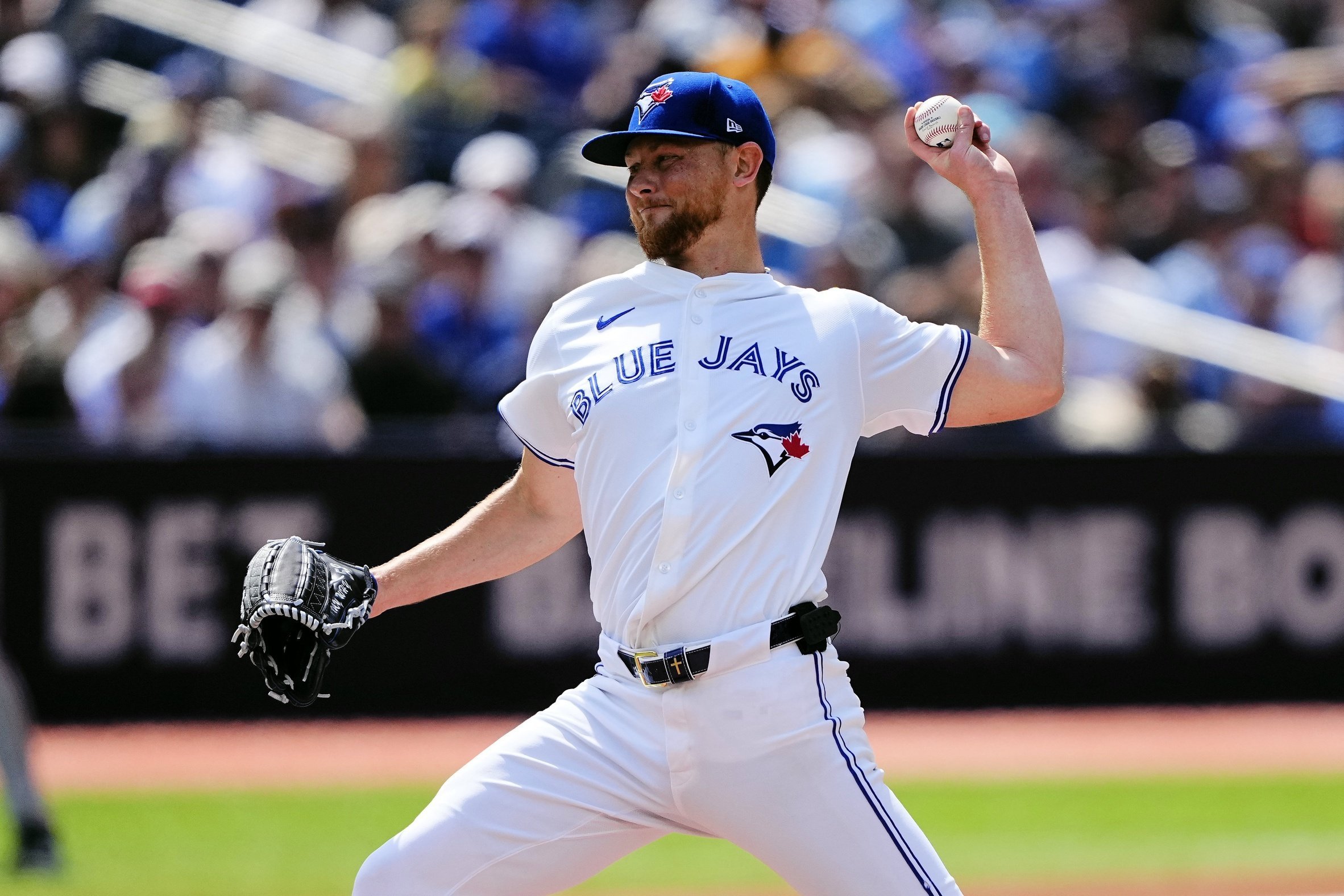 Last week, Eric Lauer and the Blue Jays argued their cases in front of an arbitration panel. Earlier today, Sportsnet’s Shi Davidi and Ben Nicholson-Smith reported that the Jays won the hearing. That means Lauer will earn $4.4 million for the 2026 season instead of the $5.75 million figure he filed at. Ultimately, $1.35MM in savings is pocket change for the Blue Jays, as is the $1.215 million this will save them on their 2026 luxury tax bill. However, this result is interesting because of the precedent it sets. As I wrote last week: The fact that Lauer will make less money in 2026 (his third year in the arbitration system) than he earned in 2023 (his second year in the system) is bad news not just for Lauer, but for future players who find themselves in a similar position. View the full article
 -
Welcome Back: Twins Sign Free-Agent Reliever Liam Hendriks
DiamondCentric posted an article in Twins Daily
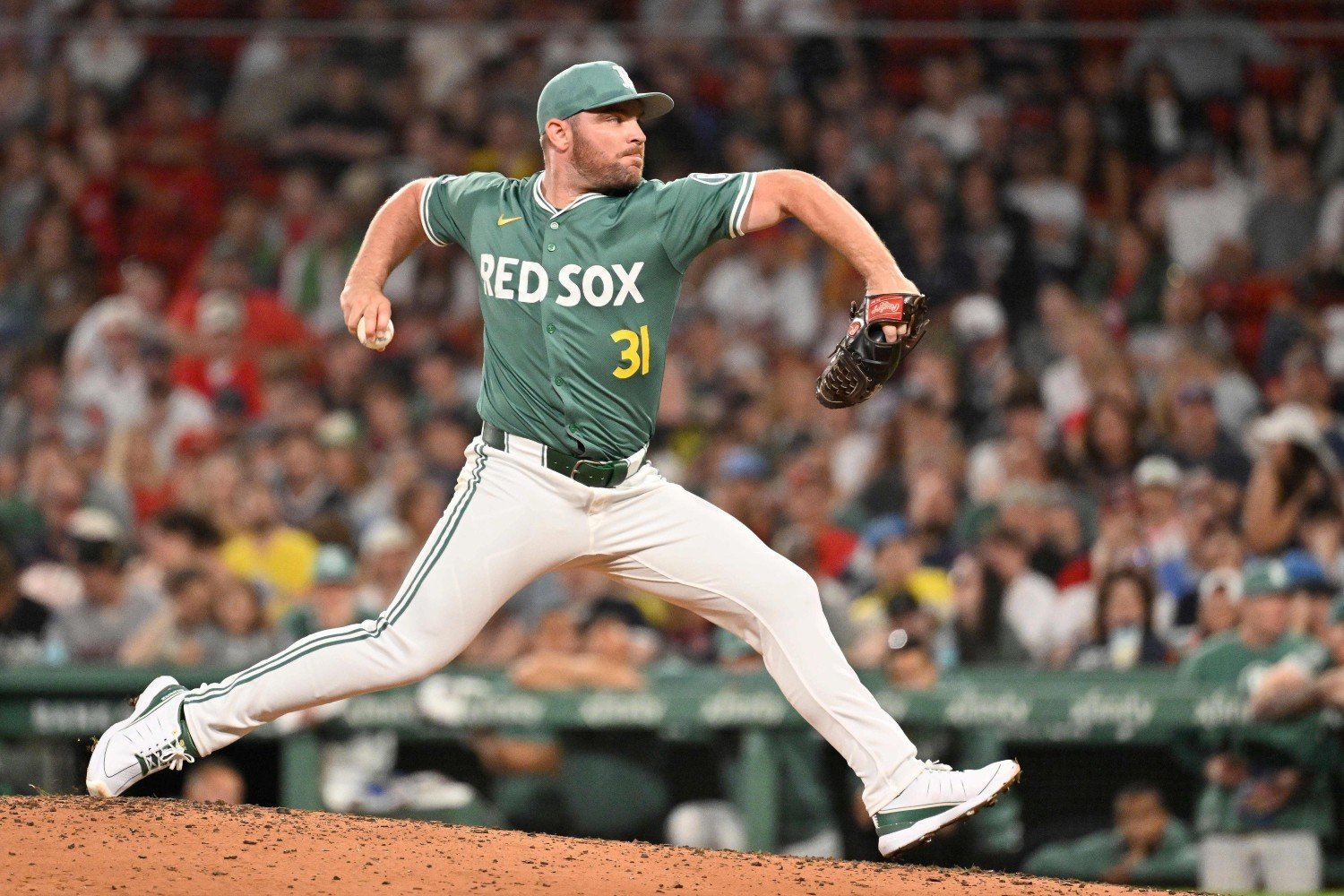 Letting Liam Hendriks slip away from them before he morphed into a bulldog of a closer was one of the most regrettable failures of the Twins' front office in the final days of the Terry Ryan regime. Bringing him back as a reclamation project in a weak bullpen doesn't make up for it, but it's a feel-good story, anyway. Robert Murray of FanSided was first with the news. Hendriks isn't getting a guaranteed big-league deal. He'll be invited to big-league camp to compete for a place in the bullpen, but the Twins don't have to expend big money or (for now) even a 40-man roster spot. More to come. View the full article
 -
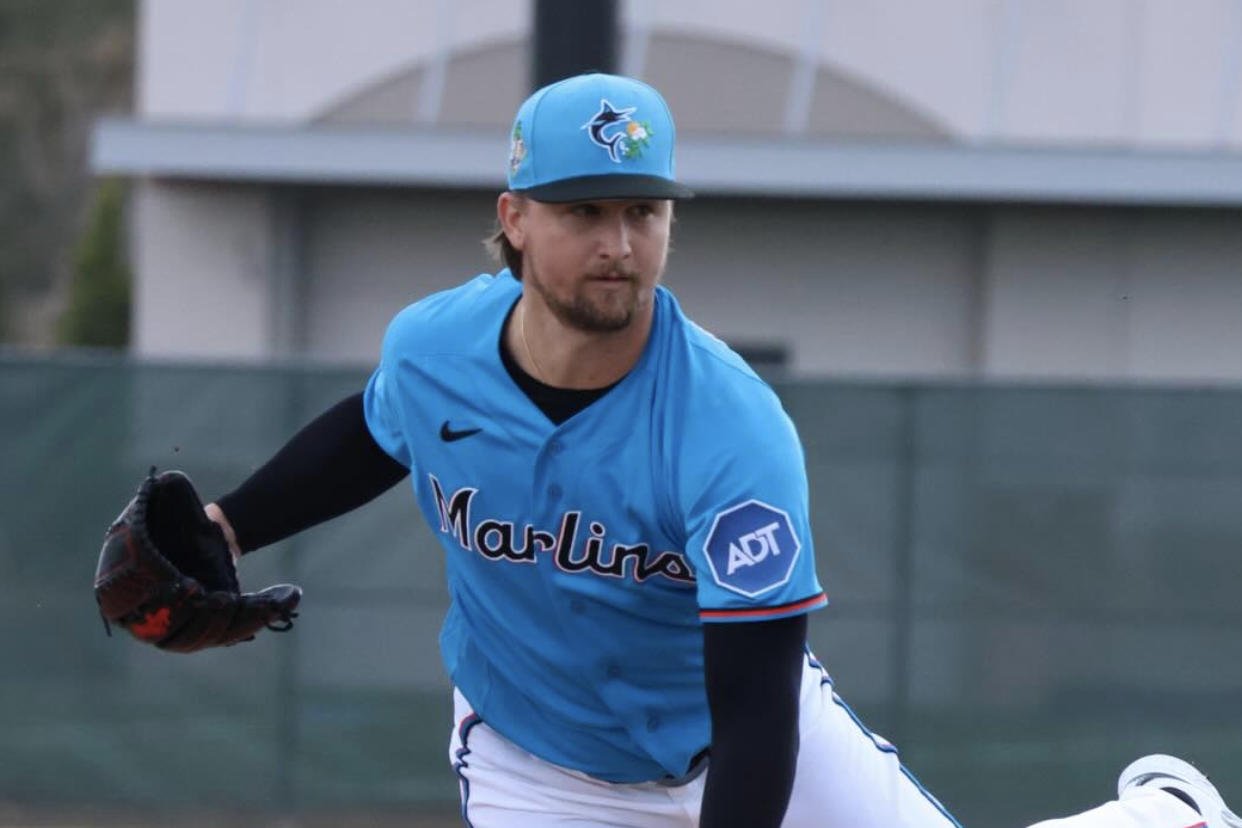 JUPITER, FL—The Miami Marlins adjusted their approach to spring training in 2025, putting their players in competitive environments from day one. That has carried over into 2026. With pitchers and catchers reporting to camp for the first time on Wednesday, left-hander Braxton Garrett was thrown into the fire despite missing all of last year recovering from elbow UCL surgery. He was among a small group of Marlins pitchers who threw live batting practice sessions. Garrett hasn't appeared in a major league game since early in the 2024 season. In seven starts, he posted a 5.35 ERA, 3.82 FIP, 8.27 K/9 and 0.97 BB/9. The long layoff has been "tough," he admitted to the media on Wednesday morning, "but as I've said a couple times, my teammates, just being around in Miami, the new facilities we have down there really made it a lot easier. My (physical therapist), Mike Chamberlain, really made it easy for me. Worked with me on a schedule that was comfortable for me...Thanks to the organization, it wasn't as bad as it could be." Agustín Ramírez caught Garrett and the opposing batters were Graham Pauley, Liam Hicks, Javier Sanoja and Connor Norby. "I was talking to him after and was just telling him to continue going through the process and he's looking really good," Ramírez said, noting that the 28-year-old used most of his pitch mix, including his changeup, slider and cutter. "He went through a lot last year, trying to come back, and it's good seeing him back on the mound," Pauley said. "It looks good and ready to compete." Although Garrett has been in the Marlins organization for a while and showed he could hold up as a quality starter for a full-length season in 2023, he believes nothing is "going to be handed to me." He feels like he needs to earn back his spot in the rotation. "I worked really hard this offseason," Garrett said. "I'm really excited. Here to compete, do the best I can and help the team the best I can." Sandy Alcantara, Eury Pérez and newly signed Chris Paddack are viewed as locks for the Marlins Opening Day rotation. That leaves Garrett battling with the likes of Max Meyer, Janson Junk, Robby Snelling, Adam Mazur and others for the two other spots. Marlins manager Clayton McCullough considered this "an exciting day" for both Garrett and lefty reliever Andrew Nardi on their journey to re-establish themselves coming off injuries. "We'll just go from each outing they have and see how those two in particular just continue to respond, recover and help us map out and guide what's next." Additional Notes - Outside of Garrett, Max Meyer, Cade Gibson and Josh Ekness also threw live BP sessions. Nardi, Tyler Phillips, Zach Brzykcy and Nigel Belgrave each threw pitch design sessions. - Every Marlins pitcher and catcher reported on Wednesday except for Calvin Faucher, who is awaiting the verdict of his arbitration hearing. McCullough expects him in camp this weekend. - The workload for World Baseball Classic participants will be different. "We'll ramp them up here early in camp and not try to push the gas too much because what's coming," McCullough said. - Outside of the WBC position players, some notables who have reported early are Xavier Edwards, Graham Pauley, Griffin Conine, Connor Norby, Maximo Acosta, Daniel Johnson, Dillon Lewis, Brendan Jones, Fenwick Trimble, Andrew Pintar and Kemp Alderman. - Following the workout, the Marlins reached an agreement with left-handed reliever(!!!) John King on a one-year, $1.5M deal. View the full article
 -
 Enjoy new episodes of our Miami Marlins livestreams throughout 2026 spring training. Every week, Fish On First staffers answer your questions and provide in-depth analysis of the team leading up to Opening Day. Wednesday's show was hosted by Ely Sussman and featured panelists Isaac Azout, Kevin Barral, Alex Carver and Jeremiah Geiger. The following topics were covered: Signings of free agents Chris Paddack and John King Potential corresponding roster moves Key features of the new "Jupiter Academy" Takeaways from the first pitchers and catchers workout Overview of Marlins.TV You can find Fish Unfiltered and Fish On First LIVE on the Fish On First YouTube channel, Apple Podcasts, Spotify or wherever else you get your pods. Follow Ely (@RealEly), Isaac (@IsaacAzout), Kevin (@kevin_barral), Alex (@FOFProspects), Jeremiah (@JeremiahGeiger2) and Fish On First (@FishOnFirst) on Twitter. View the full article
 -
Five Players Who Could Change The Twins’ 2026 Season
DiamondCentric posted an article in Twins Daily
 Yes, the Twins were a 70-win ball club last year, but these five players truly could be gamechangers in 2026. In this video, we dive into how Zebby Matthews, Josh Bell, Luke Keaschall, James Outman, and Taylor Rogers can add to Minnesota's on-field performance this upcoming season. View the full article
 -
The Sad, Painful Career of Kris Bryant After the Cubs
DiamondCentric posted an article in North Side Baseball
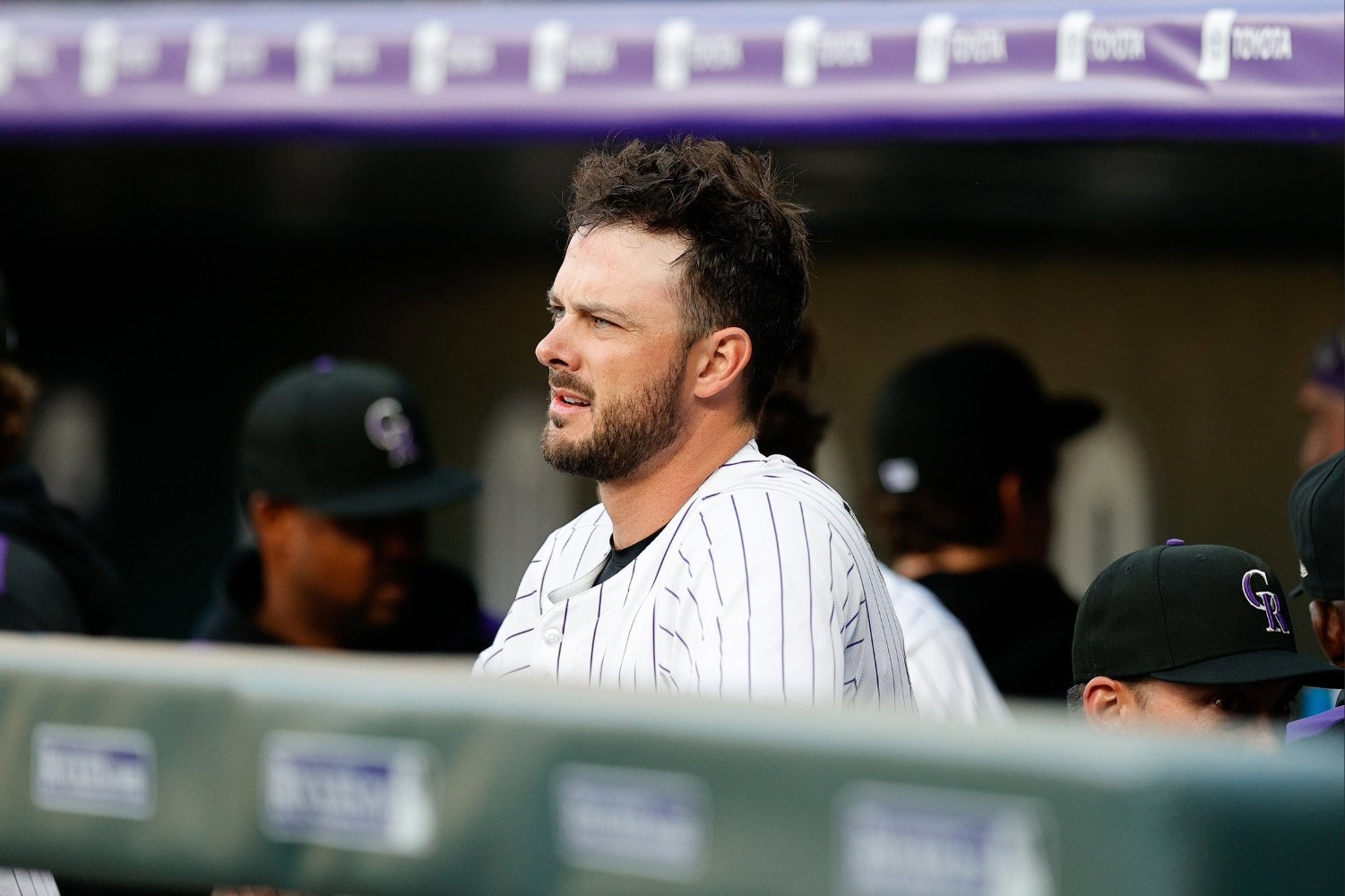 A Dick Howser Trophy and Golden Spikes Award. The second overall pick who became the Minor League Player of the Year. A National League Rookie of the Year, MVP, and curse-busting World Series champion. Kris Bryant accomplished all of that within a four-year span, by the time he was 24 years old. He was the golden child, the chosen one. The man who delivered the Chicago Cubs from the depths of championship purgatory to the promised land. That 2016 season, in particular, was something special, as Bryant led the senior circuit in WAR (7.3) and runs scored (121), hitting 39 home runs and posting a .939 OPS for good measure. He was just as valuable in the postseason, slashing .308/.400/.523 on the way to the team's World Series victory. For a fuller look at Bryant's career before and during his tenure with the Cubs, I encourage you to look at our Player's Project biography of him. Today, we're here to focus on what has transpired since he was sent to the San Francisco Giants at the 2021 trade deadline in exchange for Alexander Canario and Caleb Killian. That trade was one of many made during the Great Chicago Fire Sale of 2021, though by that time, a lot of the shine had worn off on Bryant. Injuries and failed contract negotiations robbed him of some of the luster that once made him so legendary, and by the time he was sent on his way to the Bay Area, most fans were already numb from trades involving Anthony Rizzo, Javier Báez, and other members of the 2016 core. For what it's worth, Bryant more or less lived up to his billing with the Giants, posting a 113 wRC+ in the middle of the lineup. By some miracle, San Francisco rode their veteran core to 107 wins, outlasting the Los Angeles Dodgers in the regular season and breaking up their NL West reign of terror. That 2021 division title is the only one the Dodgers haven't won since 2012. Once his new team fell in Game 5 of the NLDS (to the Dodgers), Bryant became a free agent for the first time in his career, arguably a year later than he should have given the Cubs' not-so-subtle manipulation of his service time back in 2015. That lost year didn't end up mattering much, as he found a seven-year, $182 million deal with the Colorado Rockies. It was a bizarre turn of events after the Rockies had traded franchise third baseman Nolan Arenado to St. Louis less than a year earlier, but it at least suggested that the franchise wasn't interested in being the runt of the NL West litter. Unfortunately for both Bryant and Colorado, the deal has flamed out in historic fashion. The Rockies — who last appeared in the playoffs in 2018, when they knocked out Bryant's Cubs in the NL Wild Card Game — haven't won more than 68 games in any of the four seasons that the former champ has spent with them. They've finished last in the division in each campaign, and are currently rocking a streak of three consecutive 100-loss seasons that would go down in the infamy of ineptitude had it not directly clashed with the somehow-more-disastrous stretch the Chicago White Sox find themselves mired in. Bryant, of course, isn't directly responsible for the gross mismanagement of the franchise. His onerous contract remains the largest one on their books, but the front office has been so incompetent for so long that they are now being replaced by Paul DePodesta of both Moneyball and Cleveland Browns fame. The Rockies are simply the most irrelevant team in baseball, a painful truth that Bryant was supposed to help alleviate. But pain is really the only thing that's been true about the 34-year-old's tenure in Colorado. A degenerative lumbar disc disease (lower back) has all but sapped his effectiveness on the field, and more often than not held him off of it. He's played in 170 games out of a possible 648 since joining the Rockies, and he's not going to improve that percentage any time soon. Bryant hasn't played in more than 80 games in any of his four campaigns since joining the Rockies. He's been worth -1.6 bWAR (-1.9 fWAR) in his time on the field. It's hard not to feel overwhelming sympathy for him — he told the Denver Post after last season that his chronic back issues affect his daily life off the baseball field as well — but he also isn't willing to contemplate retirement. Since 2022, he's missed time due to back, foot, glute, heel, finger, rib, and lumbar injuries. His whole body seems to be failing him at this point. With just three years (and $81 million) remaining on his contract, there's almost no way Bryant can make up for so much lost time. Much like the White Sox's struggles masking what has plagued the Rockies, Anthony Rendon's contract has shielded the former Cubs legend from most worst-contract-in-baseball discussions. But now that the Angels have bought that deal out, it's almost impossible to suggest that anyone is less deserving of the money he's being paid than Bryant. Is this really how his story ends? One of the great young players in the history of baseball fading into injury-fueled obscurity in Colorado? Reconciling this battered and bruised version of him with the 24-year-old MVP who broke the greatest drought in sports isn't feasible. It's practically like discussing two different players. His health is most important, and his legacy in Chicago was secured on Nov. 2, 2016. With any luck, he'll be able to add a little bit to his ledger before he has to call it quits. But luck isn't the only thing that appears to have escaped him since he put pen to paper on his current contract. View the full article
 -
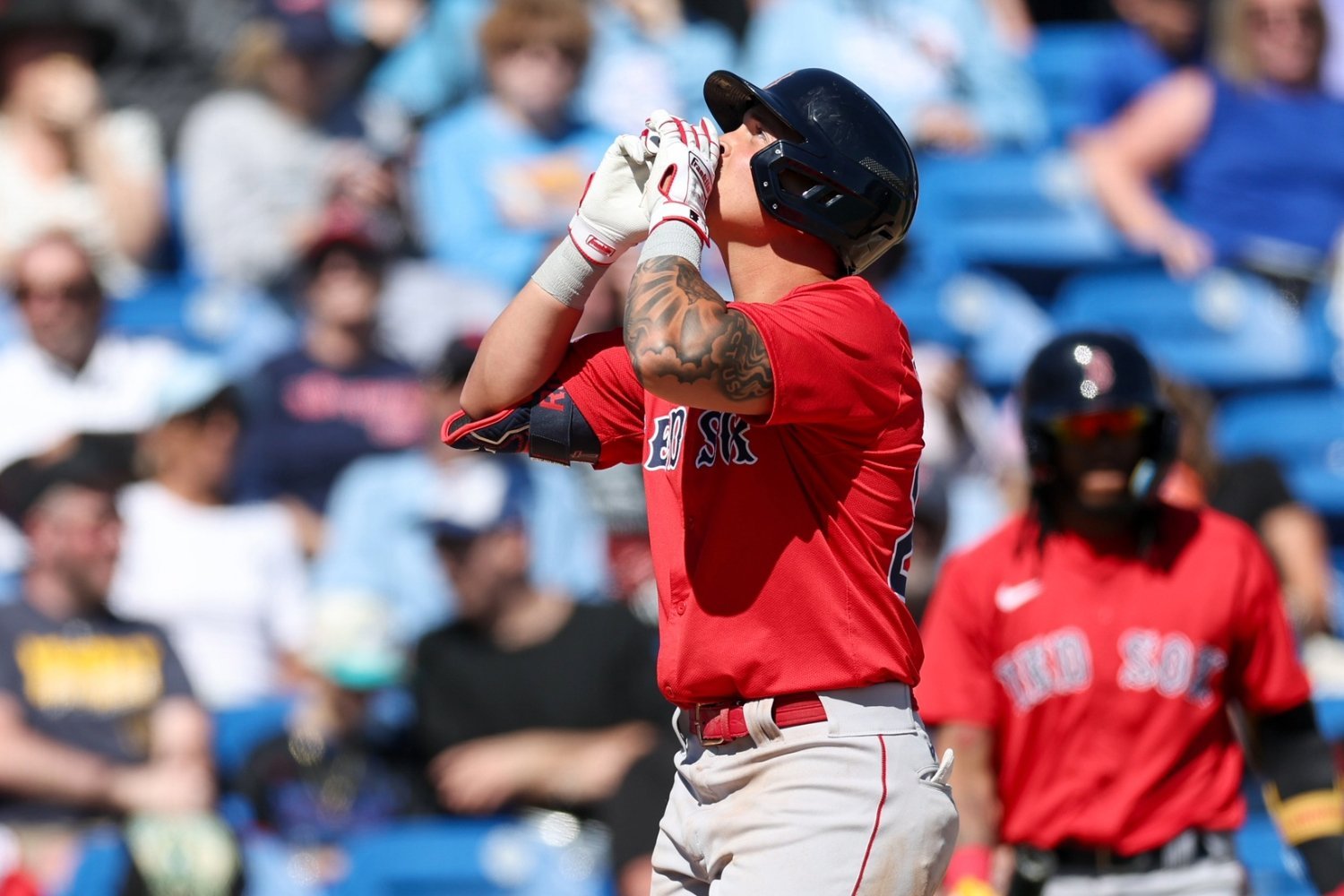 With the preamble to spring training officially underway, the Boston Red Sox have finally returned to the diamond after a long offseason. During this period, less heralded players often have a great chance of breaking out. Sometimes, it allows them to force their way onto the opening day roster, just as Kristian Campbell did last season. Thanks to the World Baseball Classic occurring this year, many Red Sox players will be disembarking from major-league camp and playing for their countries in the pursuit of winning the entire tournament. Because of this, the Red Sox have invited quite a few minor leaguers to spring training, including some notable prospects fans should get familiar with. Below we’ll breakdown three prospects that fans should keep an eye on during spring training this season. 3 Red Sox prospects most likely to break out at spring camp Jeremy Wu-Yelland Wu-Yelland is someone who hasn’t had the easiest professional career. After a promising professional debut in 2021 that saw him make 23 starts between Salem and Greenville (3.91 ERA in 76 innings pitched), he’s had to deal with multiple injuries. His 2022 campaign was lost due to Tommy John surgery, 2023 was cut short after three rehab appearances due to an injury, he started 2024 on the injured list, and 2025 saw him miss just around a month due to lower back stiffness. Despite that, he has some potential as a left-handed reliever. Following 2023, Wu-Yelland has been pitching strictly out of the bullpen and in 2025 he managed to flash potential of the weapon he could be in the bullpen. Now with an emphasis on throwing his cutter to get ahead, Wu-Yelland was able to dominate with his fastball and finish the season with 71 strikeouts in 45 2/3 innings, good for 14.0 strikeouts per nine innings. Currently, the Red Sox need left-handed reliever help in the bullpen, and should Wu-Yelland remain healthy and build off of the foundation he built in 2025, there’s a chance he could be given an opportunity at some point in 2026. He throws four pitches with his cutter averaging between 90-92 mph; he improved his command with the pitch last year, which has allowed him to take a step forward. Along with the cutter is his fastball that tops out at 97 mph and can get on hitters quickly while also being good at missing bats. Add to it a sweeper with a high spin rate and batters will continue to have a hard time figuring out which pitch could be coming. And while he also has a changeup, Wu-Yelland has rarely thrown it since moving to the bullpen. A good spring training could see the young southpaw begin the season with Worcester. At that point, all it takes is a good month or two for him to potentially be knocking on the door of the majors, especially given the current state of the Red Sox's righty-heavy bullpen. Mikey Romero Romero is entering his first major league spring training as a non-roster invite after putting together a strong 2025 season. Splitting the year between Double-A and Triple-A, the former first-round pick played in a career high 111 games. In that span, he hit a combined .245/.300/.452 with 33 doubles, four triples, 17 home runs, and 76 RBIs while also transitioning off of shortstop. Since around May, the infielder had instead played mainly second base and third base over his original position. Romero did spend time playing in Red Sox spring training games in 2025 (though without a non-roster invite) and already impressed manager Alex Cora. Last spring training, when asked which prospect stood out to him other than Boston’s Big Three of Roman Anthony, Marcelo Mayer, and Kristian Campbell, the manager responded with Romero. “Yeah, he’s a good player. A really good player. Just a baseball player. Good at-bats. Good defender. Mikey Romero is a good player,” Cora stated. For Romero, this is a chance for him to get at-bats against others competing for a roster spot. While he is likely to open the season in Worcester barring a combination of trades and injuries, the young infielder can shoot his way up the depth chart with a good showing this spring. Red Sox fans should know him by now considering he was the team’s first-round pick back in 2022 before injuries slowed him in 2023 and caused him to miss time to open 2024. Now, the infielder is finally completely healthy and has a chance to showcase his true potential. While the Red Sox infield seems set thanks to the Caleb Durbin trade, the team could always use impact players, especially someone like Romero who has shown an increase in power since getting healthy. Over the past two seasons, the infielder has averaged 28 doubles and 16 home runs, a display of power the major-league team would love if it carried over to the highest level of competition. Noah Song There is no way Song breaks camp with the Red Sox, but seeing him finally make it to a major-league spring training with the team that drafted him back in 2019 is a great storyline. Everyone who has followed Song knows that he lost nearly four years of development between the cancellation of minor league baseball in 2020, being denied a waiver request to transfer his service to the Navy Reserve, being taken by the Phillies in the Rule 5 Draft and then spending most of the year on the injured list before being returned to the Red Sox, and then undergoing Tommy John surgery in 2024. Song may not be the same pitcher he was originally viewed as, but now he has a chance to continue his dream. His first steps back on that path were taken in 2025, when he pitched at every minor league level. He’ll get chances to pitch during the spring exhibition slate, and in turn chances for the Red Sox to see what kind of pitcher they drafted over a half-decade ago. It’ll be hard for anyone to not find interest in his performance and even harder not to root for his success. Should he do well enough in spring training. he could put his name in the conversation for one of the first names called upon should injury or inconsistency hit the Red Sox's bullpen. Currently, Song tosses four pitches. A fastball that tops out at 97 mph and is still working to regain the feel he had for it prior to his military service, a slider that is his most comfortable pitch at the moment, a changeup that averages 86-88 mph, and a curveball that has a 12-to-6 break to it. View the full article
 -
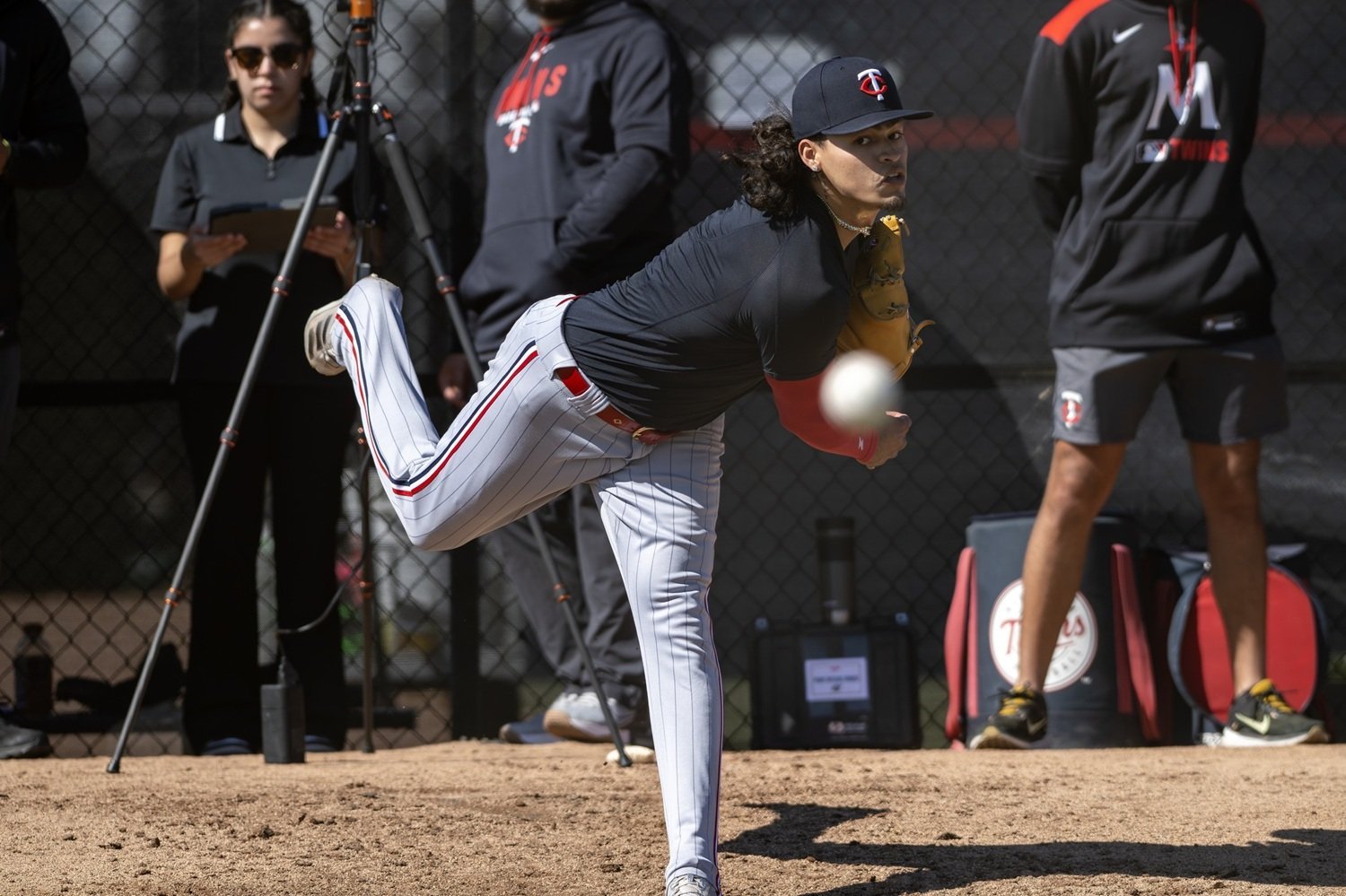 Pitchers and catchers report this week, which means optimism is officially back on the menu in Fort Myers. Every organization arrives believing that this will be the year injuries cooperate, prospects take the leap, and depth charts magically sort themselves out. For the Twins, spring training feels especially important, because there are real decisions to be made on the mound. Roles are open, and a few arms could reshape how this staff looks by Opening Day. Pitching should be one of Minnesota’s clear strengths. The Twins have more usable arms than rotation spots, a good problem to have after years of scrambling for innings. Last summer’s trade deadline played a major role in that shift, as the front office targeted pitching help that could impact both the short- and long-term future. With more than five starters capable of handling big-league innings and a bullpen that is lacking upside options, spring training will be less about finding warm bodies and more about determining the right fit for everyone. That depth makes the following three pitchers particularly interesting to watch over the next few weeks. RHP Bailey Ober Why Watch: Can his velocity return? Joe Ryan and Pablo López will be away with their national teams for the World Baseball Classic, which quietly places Ober at the top of the Twins rotation this spring. That alone makes him worth paying attention to, but there is more going on here than spring training optics. The 2025 season was a frustrating one for Ober. A lingering hip injury sapped velocity from a pitcher who already lives on precision rather than raw power. In 2024, his four-seamer averaged 91.7 mph; that dipped to 90.3 mph last season. It was never about dominance disappearing overnight. It was about margins shrinking. The Twins believed the injury would resolve itself over the winter without surgery, and that belief will be tested immediately once Ober starts stacking outings in camp. Traditionally, he's run higher velocities in February and March than in August and September, so if he doesn't have any juice in his arm in the spring, he's unlikely to discover it later. RHP Marco Raya Why Watch: How does he transition to the bullpen? Over the last week, Twins general manager Jeremy Zoll discussed Raya as one of the former starting pitchers in the organization who is transitioning to a bullpen role. It's a notable pivot for a pitcher who has been one of the Twins' top prospects since being drafted out of high school in the shortened 2020 MLB Draft. Raya’s 2025 season at Triple A was rough. A 6.02 ERA and 5.48 FIP came alongside a 22.6 K% and a career-worst 12.6 BB%. That last number is the one that really matters now. Moving to the bullpen can unlock velocity and simplify pitch usage, but free passes become even more damaging in shorter stints. As the old Metrodome video board famously reminded everyone, walks will haunt. LHP Connor Prielipp Why Watch: Will he be a starter or a reliever for the long term? Prielipp has been one of the most dominant pitching prospects in the system when healthy, but that qualifier—'when healthy'—has followed him since before he turned pro. Drafted in the second round in 2022, Prielipp made just two starts in A ball before undergoing Tommy John surgery that wiped out his 2023 season. He returned in limited fashion in 2024 before finally getting a chance to build momentum last year. The results were encouraging. Across Double and Triple A, Prielipp posted a 4.03 ERA with a 3.54 FIP and a 98:31 strikeout-to-walk ratio over 82 ⅔ innings. The organization used him almost exclusively as a starter, while carefully monitoring his workload. His stuff and injury history naturally invite bullpen speculation. Spring training may not provide a definitive answer, but how the Twins deploy him will be telling. Spring training is rarely about results, but it is always about information. For the Twins, these three pitchers represent different questions that need answering before the games start to count. Is a veteran starter healthy again? Can a former top prospect reinvent himself in a new role? And where does a talented but injury-tested arm fit best going forward? If pitching is going to carry Minnesota in 2026, the clues will start showing up this spring. What pitchers will you be watching in spring training? Leave a comment and start the discussion. View the full article
 -
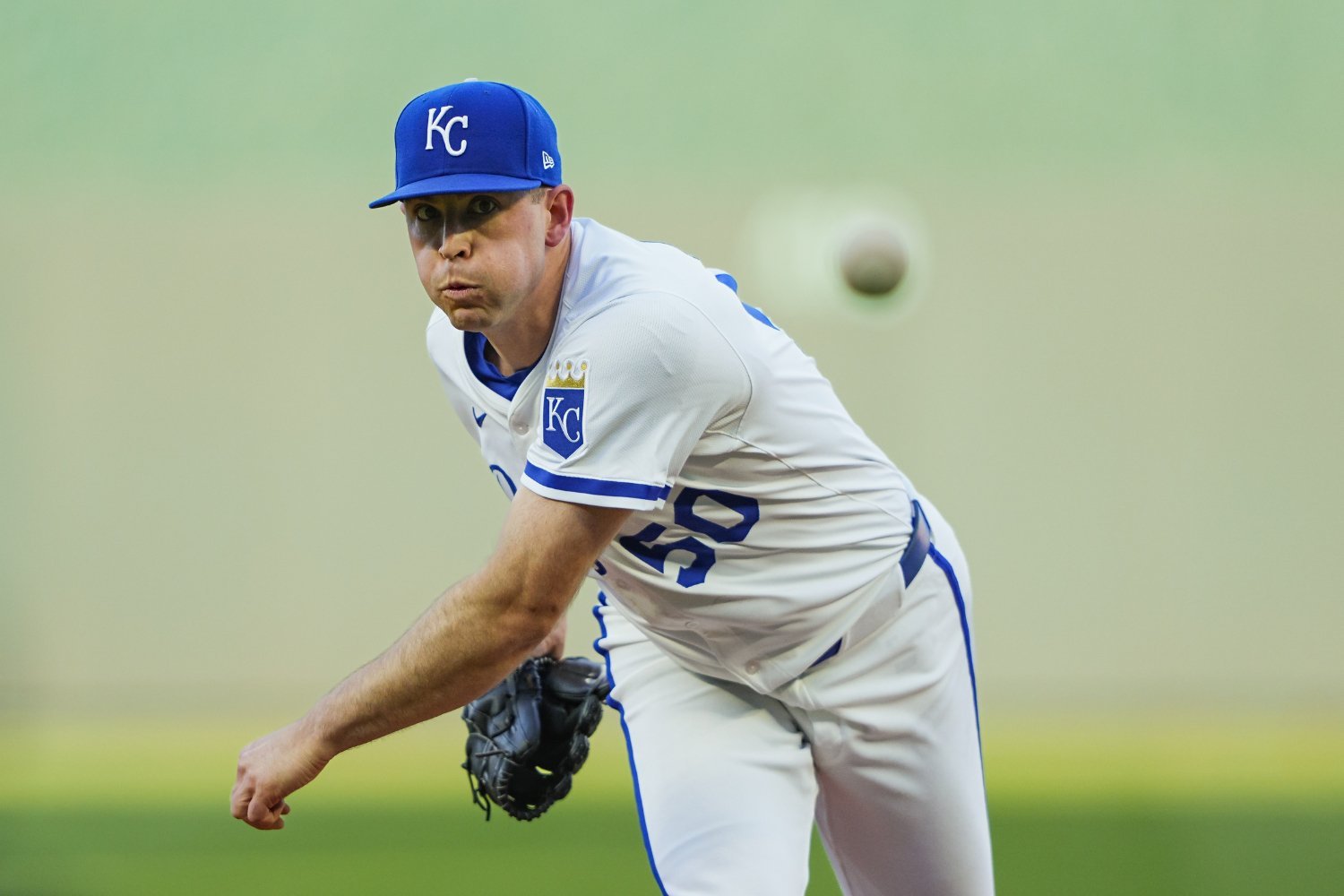 Royals pitchers and catchers began workouts on Wednesday, and many of the Royals' beat writers were sharing video of players back in action in camp in Surprise, Arizona. While pitchers and catchers reporting was the biggest news of the day, another big story was Kris Bubic and his arbitration case getting settled. According to Mark Feisand, Bubic was awarded $6.15 million for the upcoming season. That is $1 million higher than what the Royals filed this offseason. Bubic underwent Tommy John surgery in 2023, which limited him to just 16 IP that season. He ended up returning to the Royals in 2024, but primarily pitched in the bullpen. However, the role suited him, as he posted a 2.67 ERA and 1.95 FIP in 30.1 IP. He was a key setup man for Kansas City down the stretch and in the postseason in 2024. Fully healthy, the Royals returned Bubic to the rotation in 2025, and the early results were solid. The Stanford lefty posted a 2.55 ERA and 2.89 FIP in 20 starts and 116.1 IP. That performance helped him earn his first-ever appearance in the All-Star game. Unfortunately, he only pitched 7.2 innings in the second half before suffering a shoulder injury that shut him down for the remainder of the season. With Bubic working out in Surprise on Wednesday, it seems he's fully recovered and ready to go for 2026. He is entering his last year of team control with the Royals (he will be a free agent after this season), and because of that, his name has been frequently floated in trade talks. As of now, Bubic is still on the Royals' roster, and he should start the season in the rotation, though it will be interesting to see if manager Matt Quatraro manages his innings load to keep him healthier this season. View the full article
 -
Marlins get their veteran lefty, signing John King to 1-year deal
DiamondCentric posted an article in Fish On First
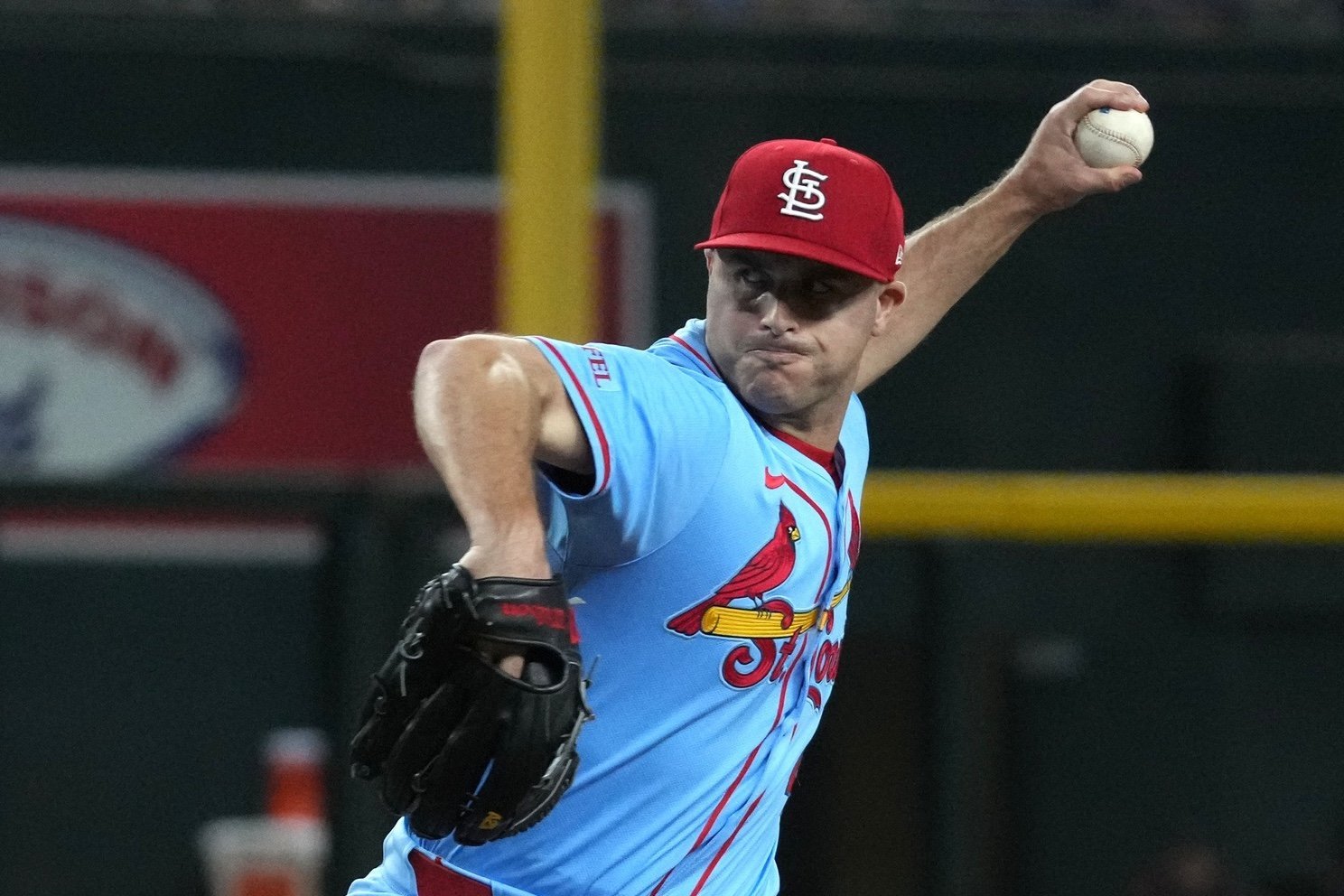 For the second time this week, the Miami Marlins have bolstered their pitching depth via free agency. They reached a one-year deal with right-handed starter Chris Paddack on Monday, followed by another one-year deal with left-handed reliever John King on Wednesday afternoon. King is guaranteed $1.5 million. Jeff Passan of ESPN was first to report the contract details, though the Marlins have not announced it yet. King, 31, has split his major league career between the Texas Rangers (2020-2023) and St. Louis Cardinals (2023-2025), with practically identical workloads for each franchise in terms of innings pitched. Across 214 total appearances (all of them in relief), he owns a career 3.80 ERA and 4.04 FIP, never issuing more than 14 walks in a single season. He doesn't have any postseason experience. King's command is particularly sharp against left-handed batters, issuing walks to them at only a 4.4% rate in his career (1.9 BB% in 2025). He's a welcome addition to a Marlins team that ranked 30th in Major League Baseball last season with only 98 relief appearances from lefties. Why was King still on the market this deep into February? He performed poorly in 2025, allowing a lot of hard contact, particularly against his sinker. A career-high eight home runs by his opponents contributed to a 4.66 ERA and 5.00 FIP. The Cardinals non-tendered King rather than pay him a projected $2.1 million via arbitration. Entering this season with four years and 148 days of MLB service time, he'll be arbitration-eligible again in 2027, so the Marlins can turn this one-year deal into two years of club control if they're satisfied with how he performs. Accommodating Paddack on the Marlins 40-man roster seemed simple enough now that Ronny Henriquez (right UCL surgery) is eligible to be placed on the 60-day injured list. With no other major league players known to be suffering from significant injuries, making room for King will require designating somebody for assignment. The Paddack signing is expected to be made official on Thursday. View the full article
 -
Sung Mun Song Will Play All Over the Diamond For The Padres
DiamondCentric posted an article in Padres Mission
 As spring training gets underway, the San Diego Padres have no shortage of infield options. In fact, they would be remiss not to attempt to move one of these options if they really want to bolster their starting rotation. However, they may be looking at the possibility of one of those players getting reps in the grass. To a pool of reporters on Wednesday, Sung Mun Song shared that he was told he'll be "covering third, second, first, and also maybe outfield." He adds that while his primary position is third, his "goal is to be out there every single day and play any position that they want [him] to be out there for." Sung, 29, played all over the infield (except shortstop) for the Kiwoom Heroes of the Korean Baseball Organization (KBO). However, in 2025, he didn't play first base, and he's never played the outfield in his career. His mindset is exactly what you want to hear from a player trying to establish himself in the States after a successful career in the KBO. Sung holds a career slash line of .283/.347/.431 with 80 home runs and 51 stolen bases across 3,236 plate appearances, various projection models have him being a below average hitter in his rookie campaign. Whether that will be the case remains to be seen, but his positional versatility could make up for what he may lack at the plate if he can produce even a mid-80s wRC+. Do you think Sung should focus on a single position in the short term, or do you think he can handle the adjustment to Major League Baseball well, also moving all around the diamond? Let us know in the comments! View the full article
 -
Brewers Sign Gary Sanchez to One-Year Major-League Deal
DiamondCentric posted an article in Brewer Fanatic
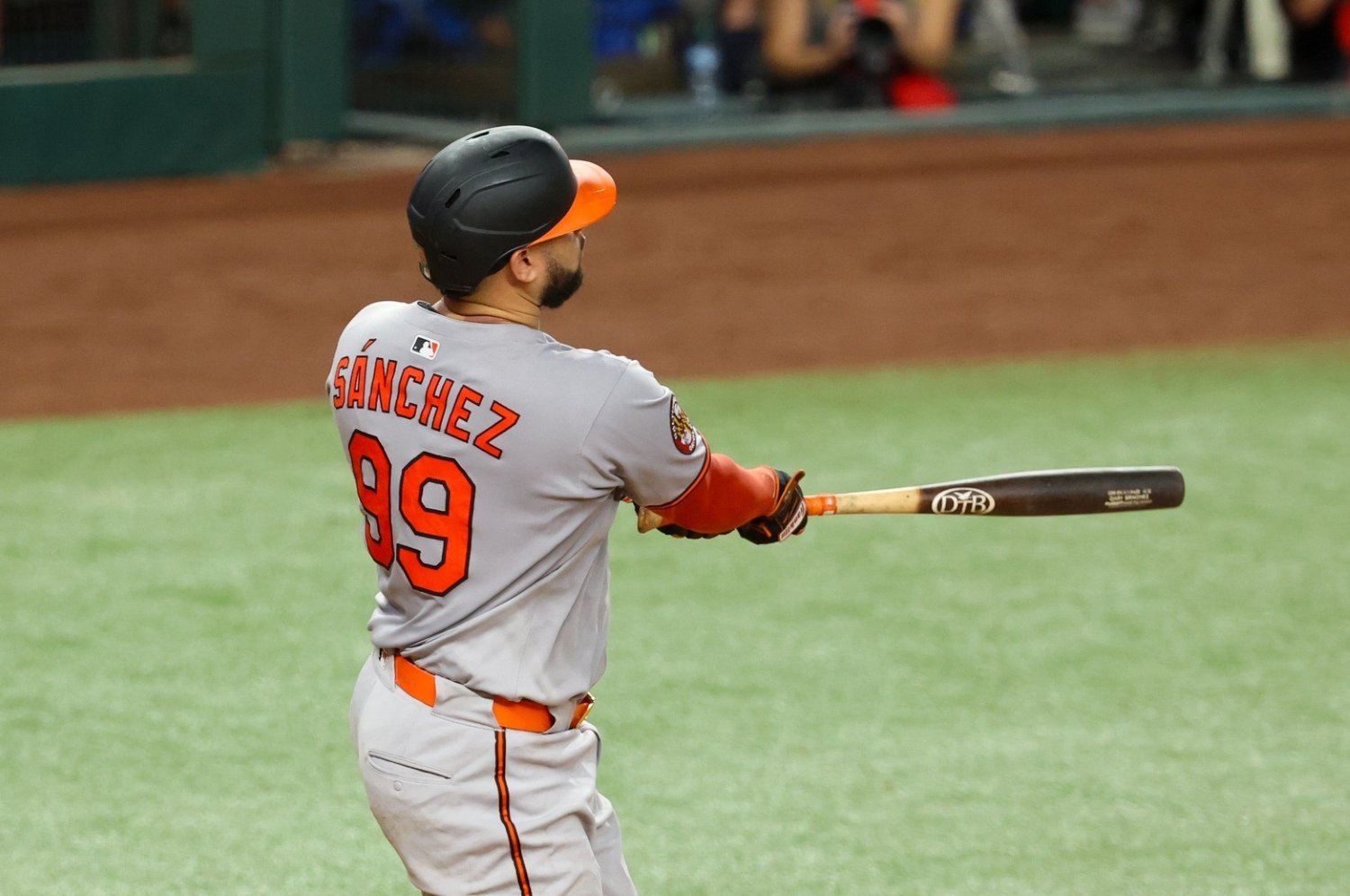 Whether the Brewers would pursue a backup catcher was a hot topic over the final few weeks of the offseason. As they opened camp to pitchers and catchers Wednesday, the team answered the question more forcefully than they had to that point, signing old friend Gary Sánchez to a one-year deal worth $1.75 million. Two years after spending a campaign with the Brewers as a slugging backstop and occasional DH, Sánchez will reprise the role, though for one-fourth of the money he made last time around. More to come. View the full article
 -
Brewers Agree To Sign Gary Sanchez to One-Year Major-League Deal
DiamondCentric posted an article in Brewer Fanatic
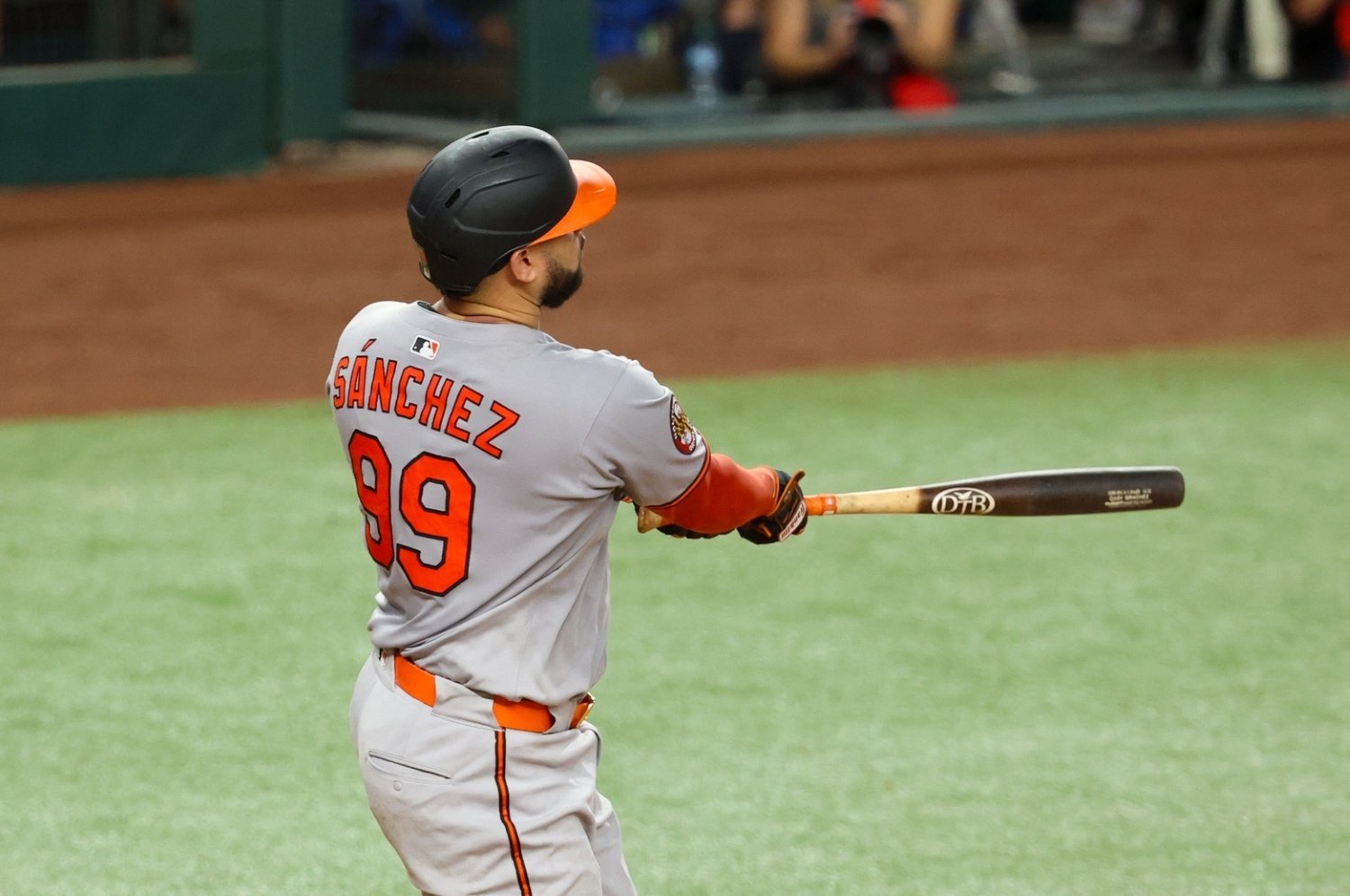 Whether the Brewers would pursue a backup catcher was a hot topic over the final few weeks of the offseason. As they opened camp to pitchers and catchers Wednesday, the team answered the question more forcefully than they had to that point, signing old friend Gary Sánchez to a one-year deal worth $1.75 million. Two years after spending a campaign with the Brewers as a slugging backstop and occasional DH, Sánchez will reprise the role, though for one-fourth of the money he made last time around. Jon Heyman of the New York Post had the news first. Sánchez, 33, batted .220/.307/.392 and swatted 11 home runs for the Brewers in 2024. Last year, with the Orioles, he played in just 29 big-league games and had only 101 plate appearances, but he hit .237/.297/.418. Though big and sluggardly, he plays acceptable defense at catcher, and his power remains a helpful threat. He's played for five teams in the last four years, but after having a comfortable and useful season as William Contreras's understudy in Pat Murphy's first campaign, Sánchez will get a second stint with the club. This makes the path to a spot on the Opening Day roster much tougher for both Reese McGuire (who signed a minor-league deal last month) and Jeferson Quero. Presumably, Quero will be the starting backstop for Triple-A Nashville to open the season, and the team will try to convince McGuire to stick around as a depth piece. Alternatively, Quero could be involved in a trade that brings Milwaukee a replacement for just-traded third baseman Caleb Durbin, but for now, that possibility feels remote. If nothing else, Sánchez brings power and a veteran presence to a young team with below-average raw pop. View the full article
 -
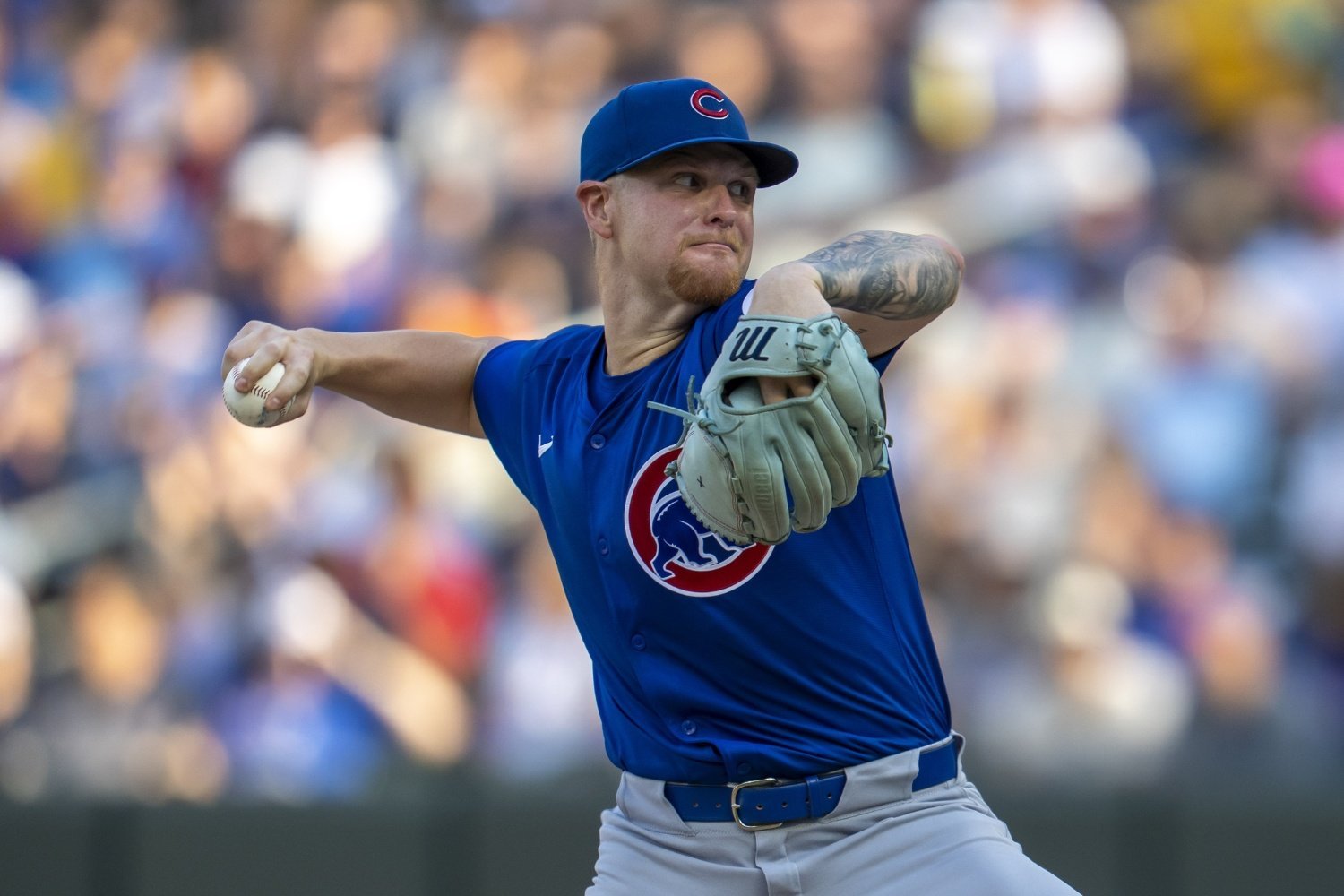 It's an awkward time of year to review (or even preview) a starting rotation. Teams often go into camp with up to nine potential starters and (if they're very lucky) a couple of intriguing prospects. At least one projected member of the 26-man roster usually hits the injured list before Opening Day. There's still the chance for trades and signings, but what we see right now is the Cubs' Plan A for the rotation. The pitching injury rates of the current era necessitate serious depth. Last season was a good lesson for the Cubs on that score, as three members of their Opening Day rotation—Justin Steele, Shota Imanaga and Jameson Taillon—missed significant time due to injuries. Matthew Boyd didn't miss time, but that was the first time in over half a decade that he'd stayed healthy all year; he's unlikely to do so again. Hence, we see the Cubs remaining interested in additions to their starting depth chart. For now, though, let's taxonomize the guys who are coming to camp as rotation candidates. Measuring Aces vs. Mid-Rotation Contenders In the top tier of starting pitching, you don't want to make any longwinded excuses for anyone. You want the statistics to leap off the page and command confidence. Ideally, you want at least one such stud at the front of a rotation. Do the Cubs have one? Let's define an ace arm in very simple terms. An ace arm should rank in the top 40 in the league in terms of long-term fundamentals. You don't want the guy to be too dependent on finesse and luck against the world's best hitters. We'll use two stats for fundamentals: Expected ERA (xERA), and Pitching+, via Fangraphs, the latter of which combines Stuff+ and Location+ modeling. A player with fundamentals below these expectations (even one who manages to get results) is showing a red flag: Those ace-caliber results may be inconsistent going forward. Still, there are plenty of dudes who have a complex approach to hacking the fundamentals, and the Cubs specialize in finding those guys. More importantly, perhaps, an ace will rank in the top 25 in basic results. We'll combine three measures to rank pitchers on that front: Earned Run Average (ERA), Home runs per nine innings (HR/9), and walks per nine innings (BB/9). One's ERA is the natural statistic for how reliable a player is, but it can sometimes overlook an elite player because of a few bad outings, or poor defensive support. Homer rate is less important during the regular season, except in extreme cases, but it becomes very important for assessing a player's ability to face elite slugging lineups in the postseason. Meanwhile, limiting walks is essential for amassing quality starts during the season but has a bit less impact against elite contact hitters in postseason. I computed total indices as an average of all five statistics, but with ERA weighted three times as heavily as the other two. After all, we want to emphasize run prevention in this portion. We'll also give a pitcher some extra credit if they play good defense, including controlling the running game well. For a World Series hopeful like the Cubs, you'd like to see the top 5 starting options to rank in the top 75 in both xERA and ERA (out of 127 players in the year 2025 who had 100 or more innings), and all of them, obviously, should be as highly ranked as possible. Without further ado, let's evaluate the leading three options for ace quality, based on their 2025 statistics. (Note, in the case of Boyd, adding in 2024 would inflate his overall results into clearer ace territory, but it was a small sample). The Top Trio: Cade Horton, Matthew Boyd, and Edward Cabrera Horton ERA: 12th (2.67) HR/9: 18th (0.76) BB/9: 51st (2.52) xERA: 44th (3.88) Pitching+: 70th (97) TOTAL WEIGHTED RANK, 2025: 31 An elite pitcher rarely peaks in their rookie year. Ideally, a hurler loses some "major-league jitters" their sophomore season. Horton had ace-like numbers in ERA and HR/9 in his debut. He was appropriately showered with affection during Rookie of the Year voting. His best results came during the second half of the season ,when you most need it. His overall stuff and expected ERA should both be better this year, as we have seen him do better in minor-league performances with clean bill of health. If you're an optimist, you see an ace in the making. I expect top-40 fundamentals and top-25 results in 2026. It's worth remembering, though, that "sophomore slumps" are as real as those jitters we mentioned earlier. Boyd ERA: 29th (3.21) HR/9: 29th (0.95) BB/9: 23rd (2.10) xERA: 33rd (3.75) Pitching+: 76th (96) TOTAL WEIGHTED RANK, 2025, including good fielding bonus: 25 Boyd is famous for his nice guy attitude and leadership on the mound. Here's a mid-velocity lefty with very good breaking pitches, who really remade himself last year. I believe his career year in 2025 has some chance to be repeated, but his stuff has hit a hard ceiling. His Gold Glove-level defense makes him a borderline ace; he kept runners in check as well as anyone in baseball last year. His results are quite fringy for an Ace, without factoring in defense. However, as a lefty with 5 decent or good pitches, we can give him quite a bit of leeway on velocity, too. Cabrera ERA: 42nd (3.53) HR/9: 51st (1.11) BB/9: 80th (3.14) xERA: 56th (4.05) Pitching+: 21st (107) TOTAL WEIGHTED RANK, 2025: 47 Cabrera is virtually the opposite of the typical Cubs starter: a guy whose raw ingredients hint at an ace, but who has yet to put it all together for a full season. His numbers profile as classic third option, but with good enough momentum to be a trusted No. 2. The bad news is that he drags the Cubs down from an elite walk rate; the good news is his results should improve in the Friendly Confines, and with the pitcher-friendly Cubs defense behind him. The even better news is that he's young and has showed steady improvement three seasons in a row. He had a four-month stretch last year wherein he was in the top 5 in ERA. The 4-6 Rotation Arms: Justin Steele, Shota Imanaga, and Jameson Taillon Breaking down the less starrish arms can lead to many arguments. You'll see cases of very high WAR and xERA paired with a bad ERA (Ben Brown, 2025), or a consistently impactful starter with a deceptively low WAR and stellar ERA (Jameson Taillon's 2024). Overall, the Cubs can be proud of their fourth through sixth guys; they're better than the back half of many rotations. The best of the bunch, Steele, certainly belonged to the first tier of the team's starters before his injury last year, but that very thing now makes it harder to gauge what the team will get from him and when. We'll judge him based on his 2024 stats, since he essentially lost 2025. Steele ERA: 17th (3.07) HR/9: 19th (0.80) BB/9: 52nd (2.47) xERA: 7th (2.81) Pitching+: 52nd (102) TOTAL WEIGHTED RANK, 2024: 26 Steele's 2024 self was as good as the team can reasonably hope for Horton, Boyd or Cabrera to be. However, two problems restrict his ranking in 2026. First, pitchers rarely play their best ball when they come back midseason from injury, especially in terms of fundamentals (Pitching+). Second, his results were a just below the desirable cutoff of top 40 in Pitching+, and thus, he's likely to face regression. He succeeded so much with precision before shredding his elbow that it's hard to expect him to be as good afterward. Between these two factors, we must expect Steele to have a shortened and diminished 2026. If he can reclaim health, he'll still be atop the rotation in 2027. Imanaga ERA: 20th (3.28) HR/9: 108th (1.64) BB/9: 4th (1.53) xERA: 28th (3.66) Pitching+: 39th (104) TOTAL WEIGHTED RANK, 2024 AND 2025: 34 Here, by the way, I've used his last two seasons' numbers taken together. I wish we could just roll with his 2024 stats, because he flashed ace-level results in his first major-league year. It's safer, though, to assume that he'll be somewhere between the stud he was that year and the suspect he was down the stretch of 2025. His velocity really became a problem last season, as he lost over 1 mph while navigating a stubborn hamstring strain. Still, the upside is real. We've seen it relatively recently, and he's a tenacious and creative competitor. Taillon ERA: 28th (3.45) HR/9: 83rd (1.37) BB/9: 12th (1.83) xERA: 46th (3.95) Pitching+: 60th (100) TOTAL WEIGHTED RANK, 2024 AND 2025: 41 We'll look at each of the last two seasons again here, to accentuate the reliability of the team's veteran workhorse. Taillon has put together two very impressive seasons, with a near-ace ERA and an elite walk rate that is confidence-inspiring. Still, his low strikeout rate hurts his xERA. In addition, those darn homers keep him out of postseason primacy. The only good news in that category is that he had a career-worst HR/9 year in 2025 and regression should be expected. Taillon has the exact profile of a season-long innings eater who wins many games with ruthless efficiency. He's definitely worth his $18-million salary, but he won't carry you in October like $30-million arms do. The Rest of the 40-Man Starters Colin Rea, Ben Brown, and Javier Assad: Better Than You Think Let's look at the rest of the important arms quickly. Colin Rea and Ben Brown finished last season with xERAs of 4.52 (85th) and 4.53 (86th), respectively. This means each team has, on average, three better pitchers capable of giving 100+ innings. When we look closer, it gets better. In BB/9, Rea was 50th (2.49), and Brown was 55th (2.71). Rea was tied for 52nd in HR/9 (1.13), whereas Brown can brag about his Pitching+'s 70th rank (97) being a floor, not a ceiling. In the case of Assad, you've got a guy who is much like Rea in junk pitching style, but somehow always outperforms Rea's (and his own) fundamentals. In terms of players with at least 250 innings pitched from 2023-2025 (134 results), Assad's ERA is shockingly good, at 29th-best (3.47). Adding to that, he boasts a HR/9 (1.10) that ranks 52nd, despite a sad xERA of 4.98 (117th) and equally bad BB/9 of 3.56 (117th). His horrendous Pitching+ scrapes the bottom of qualified players, and explains why he rarely strikes anyone out. This huge gap between actual and expected performance is why most analysts believe Assad will never again repeat his best two seasons. His best role on a good team is in long relief, although a non-contending team would immediately stick him into the back of the rotation. Caveats Clearly there's no exact science for projecting results from prior history. Pitching can be rather volatile across a season, let alone multiple seasons. The simplest evaluation is the most recent healthy year, though in some cases, two years is more appropriate. Comparisons: Who Potentially Has Three or Four Aces? Instead of thoroughly evaluating all 30 ballclubs, let's just compare six of the scariest rotations on highly complete contending squads: the Dodgers, Braves, TIgers Mariners, Phillies, and Red Sox. The point here is merely to illustrate how good the Cubs really are, rather than predict the relative quality of these teams. The Dodgers Stand Alone Los Angeles has an embarrassment of riches, of course. Yoshinobu Yamamoto, Shohei Ohtani, Tyler Glasnow and Blake Snell stand clearly above the Cubs' top four, although not by as much as you may think. It's hard to make statistical comparisons, because three of the four didn't have 100+ innings in 2025 or 2024. It will be interesting to see if they actually meet their lofty expectations. Of course, it doesn't end there. Roki Sasaki and River Ryan could blossom into deadly weapons this year. Four Top-Quality Performers, When Healthy: The Mariners, Tigers and Braves Seattle still has its deadly ace trio of Bryan Woo, Logan Gilbert, and George Kirby. Luis Castillo, who has some fringe ace stats at his best, is comparable to Cabrera in ERA and xERA. However, their next three guys can't compete with the Cubs' fifth through seventh options (Imanaga, Taillon, and Rea). Detroit can go man-for-man with Seattle, after signing Framber Valdez and Justin Verlander to complement their previous top duo of Tarik Skubal and Jack Flaherty. Skubal is, without controversy, the best pitcher in baseball. Valdez is an ace in his own right, and Verlander and Flaherty are solid mid-rotation pieces. The team won't have Reese Olson to round out their staff this year, as Olson is set to undergo season-killing surgery, but they have a handful of other young arms and former No. 1 pick Casey Mize to brace them against the risk of an injury to Verlander. Until camp opened, it looked like Atlanta would fit into this tier, too, although more tenuously. Chris Sale remains dominant at times, but is starting to age. Spencer Strider returned from Tommy John surgery, but wasn't his best self. Reynaldo López missed last season with shoulder trouble, and now Spencer Schwellenbach will spend at least the first two months of the year on the IL, too. The upside is very high for the Braves, but the downside is coming after them. Two Studs, One Fringe Ace: The Red Sox and Phillies Philadelphia's Christopher Sánchez, Zack Wheeler, and Jesús Luzardo (fringe) are good enough to top Horton, Boyd, and Cabrera, but Wheeler is coming off thoracic outlet syndrome and won't be ready to start the season. Similarly, Boston's Garrett Crochet, Ranger Suárez, and Sonny Gray (fringe) trio can strike fear in batters' hearts. Boston has better depth; Philadelphia has better upside. Neither is clearly superior to the Cubs, though. Conclusion Though other teams have truer aces, the Cubs blend depth and upside as well as almost anyone. They'll have to prove that they can hold up, and Cabrera and Horton have to take the next step after their quasi-breakouts in 2025, but this is an October-ready starting rotation. Unless and until they run into the Dodgers, they can hang with anyone. View the full article
 -
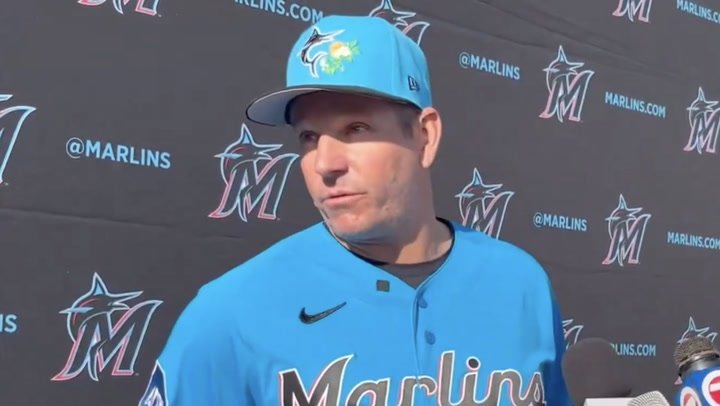 Beginning his second season on the job, Marlins manager Clayton McCullough speaks to the media on the first day of spring training, describing his pitching staff as the backbone of the 2026 team.View the full article
 -
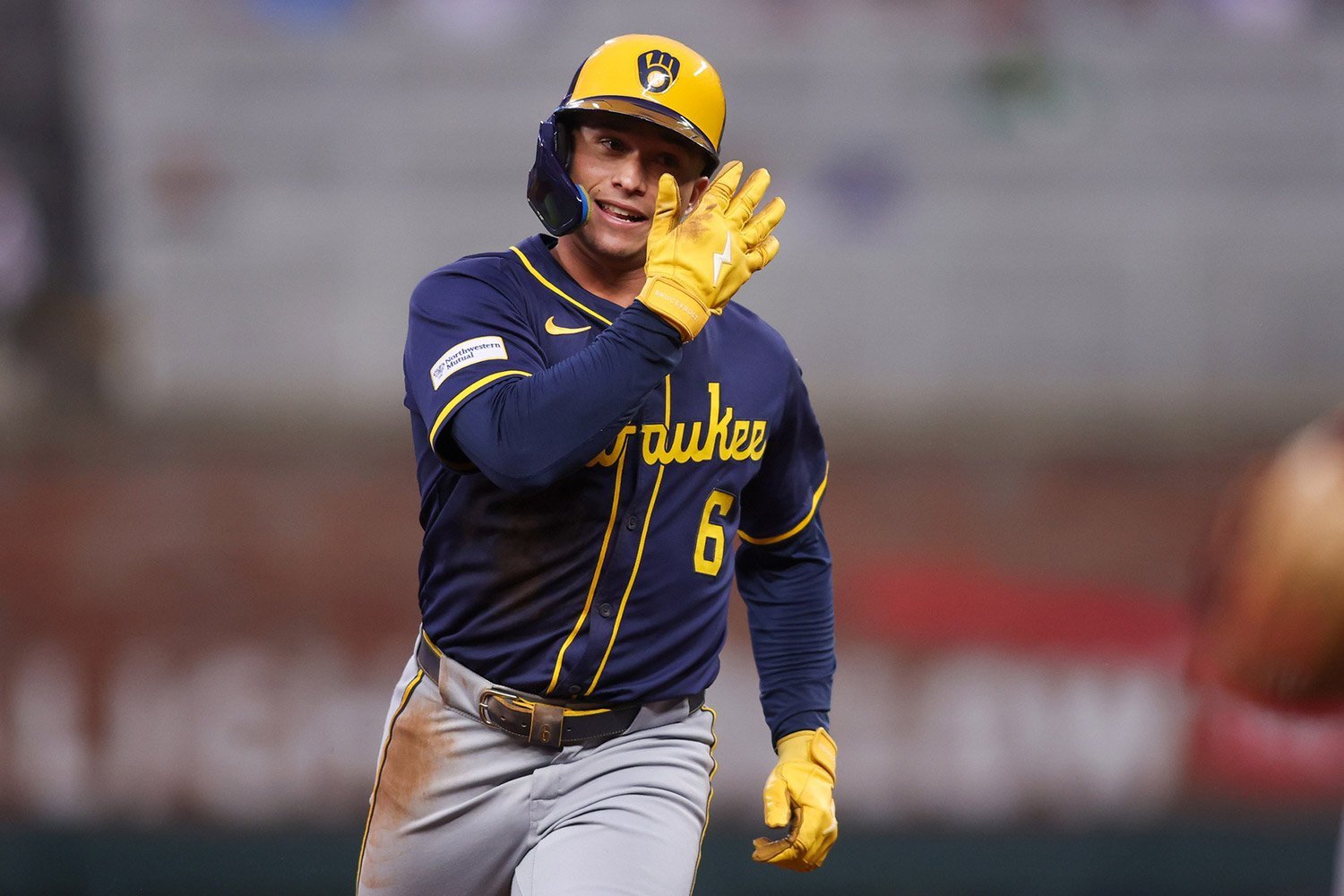 The American League Central has been relatively quiet this offseason. Have the Royals done enough to make a push for the playoffs? The Tigers are the presumed favorite to win the division, but have the Royals done enough to be a lock for second place? Barring any pushes from a non-roster invite, the only additions the Royals made at the major-league level have come in the outfield and bullpen. How much should we anticipate these additions' impact on the team’s performance? Last week, Fangraphs published a breakdown of the ZiPs projections for 2026, which had the Royals tied with the Tigers at the top of the AL Central with 83 wins each, though the Tigers had a slightly higher chance to make the postseason. Since that article was published, the Tigers signed Framber Valdez to a three-year contract with the highest average annual value for a left-handed pitcher in MLB history. Now, as of writing this post, ZiPS has adjusted its projections, dropping the Royals to 81 wins and boosting the Tigers to 86.7 wins and a significantly higher chance to win the division at 59.3%. Looking at the rest of the AL Central, the Guardians’ biggest move has been to extend superstar Jose Ramirez, but their lineup and rotation remain largely unchanged. The Twins made relatively modest additions in Josh Bell, Victor Caratini, and Taylor Rogers, while the White Sox have been very active this offseason with the additions of Munetaka Murakami, Austin Hays, and Seranthony Dominguez. Though the White Sox still have considerable room for improvement after finishing last season 60-102. With those adjustments to the projections, the Royals now have the seventh-best odds to make the postseason in the American League. If the Royals need to battle for a wildcard spot, they will have a tough battle, particularly with the AL East teams, which currently have four teams with better projections than the Royals. How have the offseason moves impacted the Royals’ outlook? In 2025, the Royals’ offense produced 15.0 fWAR, ranking 22nd best in MLB. For 2026, Fangraphs projects the Royals to have 22.2 fWAR on offense, which would still rank only 20th. On the pitching side, the Royals finished 2025 with 17.5 fWAR (ninth best in MLB) and are projected to post 16.7 fWAR (11th best) in 2026. Combined, those projections have the Royals with the 15th most fWAR league-wide. This fWAR projection perfectly mirrors their current projected total of 81 wins and a 50% winning percentage. While the projections aren’t 100% accurate, they do provide useful insight into league-wide expectations. Given that the offense represented the clearest area for improvement, it’s worth looking into how the Royals’ offensive additions have impacted their outlook for 2026. The most significant addition to the offense in the offseason, Isaac Collins, is projected to regress in his second big-league season. Last year, Collins slashed .263/.368/.411 with a 122 wRC+ and 2.6 fWAR. The most optimistic projections have him slashing .245/.345/.384 with a 104 wRC+ and 1.1 fWAR. Collins does not offer much upside for power, but he gets on base and shows strong plate discipline. His walk-rate ranks in the 90th percentile, and his chase rate grades in the 98th percentile. Even with his projected regression, an fWAR of 1.1 would place him tied for 5th-best fWAR in the Royals' 2025 offense. However, with the departure of Mike Yastrzemski, Collins’ arrival likely only replaces the production from Yastrzemski rather than improving on it. The only free agent signing that is projected to make an impact at the major-league level is Lane Thomas. After a disappointing 2025 campaign that was plagued by injuries, Fangraphs projections have him bouncing back to around 0.5 to 0.9 fWAR. The Royals will certainly be banking on Thomas returning to his 2022-2024 production, where he was good for at least 1.4 fWAR each year and close to or above average in wRC+. Even at positions with stability, the projections are underwhelming. With Vinnie Pasquantino at first base and the tandem of Salvador Perez and Carter Jensen at catcher, the Royals are projected to rank 21st and 18th in fWAR at first base and catcher, respectively. The rankings in the outfield and at second base are even less encouraging. The Royals rank 23rd, 29th, and 23rd on projected fWAR in left, center, and right fields, respectively. They also rank 28th at projected fWAR at second base. The Royals have clearly indicated that they anticipate growth from Jac Caglianone and in right field, in addition to a bounce-back season from India at second. If these players are unable to meaningfully improve, there will be increased pressure on high performers Bobby Witt Jr. and Maikel Garcia to carry the offensive burden for yet another season. The Royals have not completely ignored second base this season after tendering India a contract worth $8 million in his last season before free agency. The Royals have signed a variety of middle infielders to minor league deals with invitations to spring training, signaling an openness to competition at second base. Veterans Abraham Toro, Peyton Wilson, Josh Rojas, Brandon Drury, Kevin Newman, and Connor Kaiser all will have the ability to challenge for this spot on the major league roster or even assume India’s starting role. Even if one or more of them show signs of a resurgence in Spring Training, the Royals’ outlook at second base will still be one of the lowest in the league. Are there any players still available who could make an impact? While the Tigers have addressed one of their needs in adding a strong partner, Tarik Skubal, at the top of their rotation, the Royals have largely bet on improvements from their current roster to raise their ceiling on offense. The Royals will likely need to make another addition on offense if they are serious about competing in 2026. With Spring Training starting, the available players who can make an impact are dwindling, but below are a couple of options. Veteran outfielder Jesse Winker could be a potential option. His 2025 season was impacted by an oblique strain, but in 2024, he was in the 79th percentile in batting run value. His chase and walk rates were both in the 95th percentile, which is in line with trends seen in the acquisitions of Collins and Thomas. His speed and defense have declined over the years, but the Royals don’t currently have an everyday designated hitter. If he can return to full fitness, Winker could potentially make an impact on this offense. The Royals could pursue him in a low-risk move with a minor-league contract with an invitation to the major league camp. Another option is veteran outfielder Mike Tauchman, who similarly has a low chase rate and strong on-base skills. While he does offer the power potential that Winker could, Tauchman’s ability to get on base is still well above average as he enters his age-35 season. In only 93 games played last season, he accumulated 1.4 fWAR and was still able to provide league-average defense in right field with 0 Outs Above Average. Like Winker, he could be another low-risk option with a minor-league contract with an invitation to the major league camp. As the rest of the league’s rosters continue to shape out, there could be more opportunities to find upgrades in the trade market. With many teams still looking to find improvements to their starting rotation, the Royals should still be exploring trades that will improve their lineup. While there is still time in Kansas City to make these types of moves, time is certainly running out. If they are unable to find meaningful improvements to the offense, there will continue to be uncertainty around the Royals' chances to make a push for the playoffs. Another season on the outside, looking in, could be a costly missed opportunity to compete during Bobby Witt Jr.’s prime years. View the full article
 -
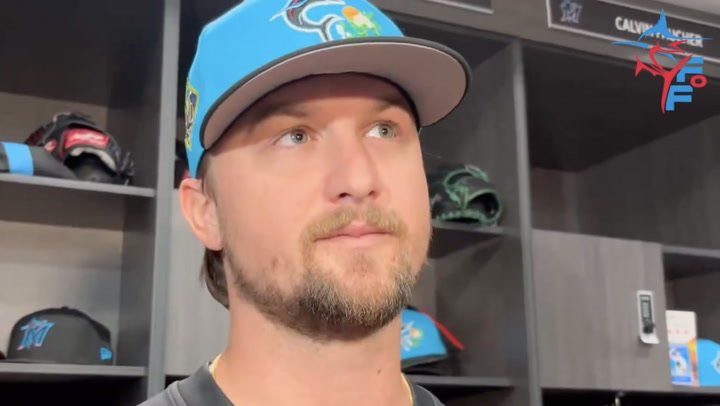 Marlins left-hander Braxton Garrett speaks to the media on the first day of spring training about the team's much-improved spring training facilities and how he hopes to reclaim his starting rotation spot.View the full article
 -
 During the offseason, contending teams are always searching for hidden gems. In the case of right-handed starter Triston McKenzie, the San Diego Padres are looking to see if they can work some magic and restore some of the early-career luster to the once highly rated Cleveland Guardians prospect. If so, the Friars could have a cheap addition for their rotation, which needs some fortification at the back end. McKenzie signed a minor-league contract with the Padres in December after being designated for assignment and outrighted to Triple-A following a rough beginning to last year. McKenzie's struggles last year, in which he pitched just 16 minor-league games including eight appearances in the rookie-level Arizona Complex League, could be remnants of his 2023 decision to choose rehab instead of having Tommy John surgery. The troubles since then are in stark contrast to his 2022 season. Following a bumpy 2021 as a rookie with the Guardians, McKenzie put things together and posted a 3.59 FIP (2.96 ERA) in 31 games, all but one a start, and 191⅓ innings. That included a 5.9% walk and 25.6% strikeout rate. He started twice in the postseason, including a really good outing versus the Tampa Bay Rays in the AL Wild Card Series (6 IP, 2 H, 0 R, 2 BB, 8 SO) in a 15-inning triumph, then getting knocked around a bit by the New York Yankees in Game 3 of the AL Division Series (5 IP, 4 H, 4 R, 1 BB, 4 SO) in a walk-off win. It is that enticing season that makes McKenzie such an attractive wild card for the Padres entering spring training. Due to two injuries in 2023, he has pitched in 24 MLB games (20 starts), tossing 97⅓ innings and notching a 6.21 FIP (5.46 ERA) and a horrendous 15.6% walk rate to go along with a 21.2% strikeout rate over the past three seasons combined. That is where Ruben Niebla, the Padres' well-respected pitching coach who worked with McKenzie when he was in the Cleveland system, comes into play this spring. How much can the Friars fix in McKenzie and can he be an immediate contributor to the team or does he need time at Triple-A El Paso to work on his issues? While the Guardians are a pitching development machine, sometimes a player just needs a change of scenery. Triston McKenzie's Stuff Entering 2026 as a 28-year-old, McKenzie should have plenty of gas in his arm, especially with as much time that has elapsed since his a shoulder injury in March 2023 and elbow injury in June 2023. Since he pitched just 5⅔ innings over four relief appearances at the MLB level in 2025, everything has to be taken with a grain of salt. McKenzie has three pitches, which he has had most of his career, and his struggles in 2025 can be seen in the limited results from Statcast. As an example, his four-seam fastball had 4.1 inches less tail than the average MLB right-hander but did have 4.9 inches more rise. His curveball was his most consistent pitch and right around league average, but his slider tended to hang a bit with 4.7 inches less drop. Reminder that this is data from just four MLB relief appearances. Triston McKenzie's Arsenal Leaning on three pitches, McKenzie offers a four-seamer, curveball and slider. He did have a changeup that he ditched after his rookie season of 2021 and then had his best season (and only full season since) in 2022. His four-seamer was at career-high 93.7 mph in 2025, which was in the 39th percentile, and used it a whopping 80.5% of the time. That compares to 91.1 mph and 52.4% in 2024, 92.4 mph and 63.3% in 2023, 92.5 mph and 56.1 mph in 2022 and 92.1 mph and 61.6% in 2021. McKenzie's curve has been pretty consistent velocity-wise, checking in at 79.5 mph and 13% usage, 77.7 mph and 26.6% in 2024, 78.8 mph and 16.7% in 2023, 79.4 and 21.9% in 2022 and 79.3 mph and 21% in 2021. Finally, his slider, his least-used pitch, was at 86.6 mph and 6.5% usage in 2025, while at 85.4 mph and 21% in 2024, 85.2 mph and 20% in 2023, 87.3 mph and 21.9% in 2022 and 86.4 mph and 19.1% in 2021. The lack of sustained time over the last three seasons leaves little to take away from much of this, other than his velocity hasn't suffered and perhaps is a tick better. What Should Triston McKenzie's Role Be In 2026? Unless McKenzie blows the doors off in spring training or injuries force the Padres' hand, it would be prudent to have McKenzie gain a little confidence by starting at Triple-A El Paso. He also doesn't have any minor-league options remaining, which is why he was DFA'd by the Guardians early last year, which makes a trip to El Paso even more likely. But if McKenzie can smooth out whatever has ailed him, as his velocity would portend, he is definitely the non-roster arm to watch this spring. View the full article
 -
 Pitchers and catchers report to Twins camp in Ft. Myers Wednesday. With that milestone comes the annual ritual of looking back at what the Twins did (or didn’t do) over the winter. This offseason was not defined by splashy headlines or aggressive spending. Instead, it was marked by modest depth additions and a series of transactions that mostly reshuffled the bottom of the roster. Minnesota thus enters spring training with many of the same questions it had when the season ended—and, perhaps, with a bit more business left to do. Free Agents 1B/DH Josh Bell 1-year, $7 million C Victor Caratini 2-years, $14 million LHP Taylor Rogers 1-year, $2 million The most notable additions came through free agency, starting with Bell. Signing the slugger to a one-year deal worth $7 million was a strong way to open the winter. He provides an immediate offensive upgrade for a lineup that badly needed a reliable veteran bat. Bell’s switch-hitting power lengthens the order and gives the Twins some much-needed stability, regardless of whether he plays first base or DH. The downside is his defense. Bell is a clear liability at first base, which is why he might spend more time as the designated hitter. That creates some roster tension, as Minnesota already has several players who profile best there (including Matt Wallner and Trevor Larnach), along with some lineup regulars who will need partial rest days. Caratini’s two-year, $14-million deal raised more eyebrows. The Twins have been open about their desire to give Ryan Jeffers regular time behind the plate, and they also acquired Alex Jackson in a trade with Baltimore. Jackson is out of minor-league options, which complicates the roster math. Carrying three catchers seems unlikely, unless Caratini sees frequent time at first base or designated hitter. (General manager Jeremy Zoll indicated when the signing became official that Caratini could play those spots.) That said, catching depth is rarely a bad thing, and Caratini provides a steady presence with experience handling pitching staffs. Rogers returned on a one-year, $2-million deal, addressing the need for bullpen depth at a reasonable cost. The issue is that this move alone does not come close to replacing what the Twins lost last summer, when five relievers were dealt away at the trade deadline. The bullpen remains inexperienced, and while the front office has spoken openly about adding another arm, the free agent market is essentially dry. That leaves trades or internal conversions as the only realistic paths forward. Trades: Acquired C Alex Jackson from the Orioles for 2B Payton Eeles Acquired 1B Eric Wagaman from the Marlins for LHP Kade Bragg Acquired IF Tristan Gray from the Red Sox for C Nate Baez Acquired cash considerations from Mariners for C Jhonny Pereda Acquired RHP Jace Kaminska and cash from the Rockies for 2B Edouard Julien and RHP Pierson Ohl The trade market brought volume, but little impact. Jackson came over from the Orioles. a move that clearly focused on raising the floor of the catching depth after Christian Vázquez departed in free agency. Wagaman and Gray were acquired as infield depth, but neither significantly changed the outlook of the roster. Pereda was moved shortly after the Caratini signing, making his brief stint in the organization officially forgettable. The most notable transaction sent Julien and Ohl to Colorado for Kaminska and cash considerations, a deal that largely reflected roster management decisions at the fringes of the 40-man roster. None of these trades made the Twins meaningfully better for 2026. They added depth and flexibility, but not wins. When you zoom out, the offseason feels uninspiring. Bell, Caratini, and Rogers are useful players, but none move the needle significantly. The roster looks deeper, but not stronger. That reality was underscored by the unexpected news that longtime baseball head Derek Falvey and the Twins mutually parted ways just as spring training approached, adding another layer of uncertainty to an already underwhelming winter. There is still time for the front office to make a meaningful addition before Opening Day, but as things stand now, this offseason earns a D. It is a passing grade only in the sense that the Twins showed up and turned something in. There is a chance to resubmit the assignment, but it will require more than marginal depth moves to change the final mark. What grade would you give the Twins for this winter? Leave a comment and start the discussion. View the full article
 -
 The first half of the interview is spent interviewing Simon Li, one of Jays Centre's prospects writers. Simon helps the guys break down top prospects like Trey Yesavage, Arjun Nimmala, and JoJo Parker, and dig into some of the system's pitching depth like Johnny King and Gage Stanifer. The second half addresses the news of Anthony Santander's shoulder surgery, which will result in him missing at least half of the season, and Shane Bieber's forearm fatigue, which will cause him to miss opening day. The guys also break down who on the roster has the most to gain or lose from spring training, especially Davis Schneider, Yimi García, and Tommy Nance. They finish with some fond memories of Buck Martinez. Listen on Apple Podcasts: https://podcasts.apple.com/us/podcast/the-jays-centre-podcast/id1846108462 Listen on Spotify: https://open.spotify.com/show/3Bi7SzfpcqMo5xYWnbCeoL Listen on iHeartRadio: https://www.iheart.com/podcast/263-the-jays-centre-podcast-300304824/ Listen on Pocket Casts: https://pca.st/2qk9wqxd Watch on YouTube: https://www.youtube.com/@jayscentre View the full article
 -
 In addition to the arms on their official 30-man rosters, each country in the World Baseball Classic can name up to six pitchers to its Designated Pitcher Pool. These pitchers will be ready to serve as potential replacements in later rounds of the tournament. According to MLB.com's Michael Clair, "Teams can replace up to four pitchers following the first round and then up to two pitchers after the quarterfinal. These players can replace one of up to four arms that the team had previously marked as a potential substitute." Clair also published a list of all the known pitchers that have been included in their country's DPP. Team Canada was not included in the article, and it's unclear if that means Canada doesn't have a DPP or if it just hasn't been revealed yet. However, three notable Blue Jays names appeared on the DPP lists: Jeff Hoffman (USA), Tyler Rogers (USA), and José Berríos (Puerto Rico). They could join the 12 other Blue Jays expected to participate in the WBC. Berríos was originally going to be on Puerto Rico's 30-man roster, but he was one of several players denied insurance coverage for the tournament. It isn't clear what his inclusion in the DPP means about his insurance status. View the full article
 -
Paul Molitor Joins the Twins Television Booth for 2026
DiamondCentric posted an article in Twins Daily
 The Minnesota Twins are welcoming one of the franchise’s most beloved figures back into the fold as they approach the 2026 season. Paul Molitor’s connection to the Twins stretches back decades, both as a hometown player and an influential presence in the organization. His return in a new capacity is sure to resonate with long-time fans and offer fresh insight to viewers tuning in this year. This week, the Twins revealed Molitor’s latest role. “Hall of Famer Paul Molitor is joining the Twins' rotation of TV analysts this season, along with Justin Morneau, Trevor Plouffe, Denard Span, and Glen Perkins. Cory Provus returns as the play-by-play voice and Audra Martin is back as the sideline reporter,” reported Aaron Gleeman of The Athletic on Tuesday. Molitor’s addition to the broadcast team brings a respected voice with firsthand experience in nearly every corner of the sport. He has been a superstar player, a veteran leader, a manager, and a special assistant in the front office. There are not many perspectives within baseball that he has not experienced. His playing credentials remain among the most impressive in the game’s history. Over a 21-year career, Molitor compiled 3,319 hits, a .306 batting average, 234 home runs, 1,307 RBIs, and 1,782 runs scored. He also stole 504 bases, making him one of the rare players to pair 3,000 hits with 500 steals. His .817 OPS reflected a balanced offensive profile built on consistency, durability, and intelligence. Those accomplishments secured his induction into the National Baseball Hall of Fame in 2004. Although Molitor built the bulk of his playing legacy with the Milwaukee Brewers and added a World Series title with the Toronto Blue Jays, his time with the Twins holds a special place. A native of St. Paul, he finished his career in Minnesota from 1996 through 1998, batting .312 across those three seasons, earning a Silver Slugger Award, and producing 5.2 bWAR in what were supposed to be his twilight years. For a player in his late thirties, that level of production was remarkable, and it provided a bridge between eras for the franchise. Molitor’s impact in Minnesota extended well beyond his playing days. He managed the Twins from 2015 through 2018 and authored one of the more memorable managerial seasons in team history. In 2017, he guided Minnesota to the postseason one year after a 100-loss campaign, earning American League Manager of the Year honors in the process. Even after being let go from that role, Molitor remained involved as a Special Assistant in Baseball Operations, helping shape player development and instruction throughout the organization. He has also made radio appearances over the years, offering thoughtful and measured analysis. There is a reason Molitor has remained intertwined with the Twins for much of the past decade. His Hall of Fame resume commands respect on its own, but his steady demeanor and deep understanding of the game make him a natural fit in any role. He is not necessarily remembered first as a Twin when it comes to his playing career, yet his post-playing identity has become closely tied to Minnesota. That matters to him, and it matters to the organization. Now, as he joins a television rotation that already includes Morneau, Plouffe, Span, and Perkins, Molitor brings historical context and credibility to the broadcast. He understands what it means to chase 3,000 hits. He understands what it feels like to manage through a 100-loss season and then turn it into a playoff berth. He understands the pressure of expectations in this market. For fans, that means more than just another analyst in the booth. It means hearing the game explained by someone who has lived every angle of it. Even if the Twins encounter bumps along the way in 2026, Molitor’s presence on the broadcast will offer perspective, nostalgia, and a connection to the franchise’s past. That is a win for the organization and a win for viewers tuning in all summer long. View the full article
 -
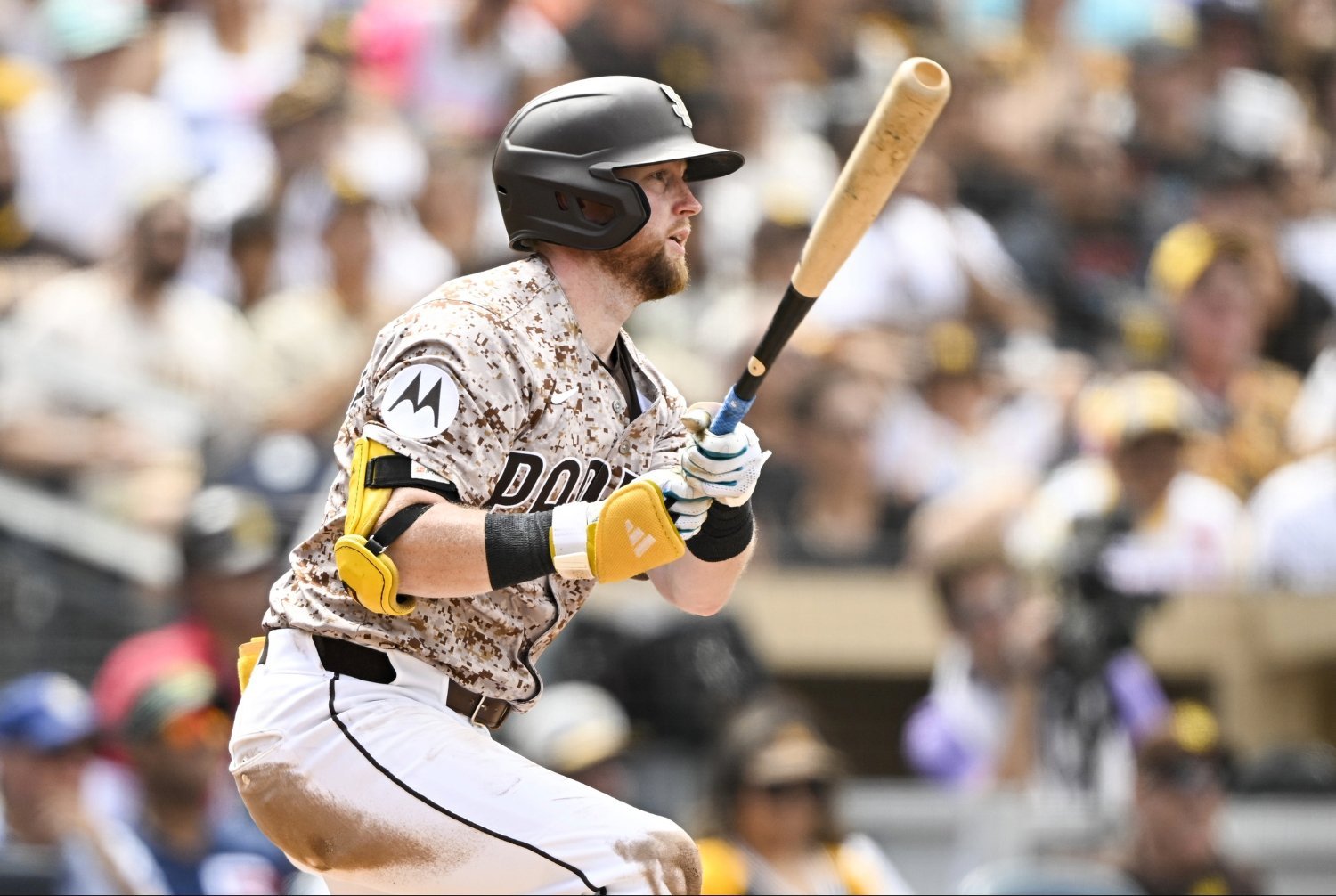 One of the ripples from Monday's six-player trade between the Boston Red Sox and Milwaukee Brewers, with Caleb Durbin and Kyle Harrison as the principals, was the idea that maybe a path had opened for the Padres to make a late trade for a starting pitcher. The thinking was this: Milwaukee has pitching depth after acquiring left-handers Harrison and Shane Drohan from Boston, and they no longer have a third baseman after unloading Durbin. David Hamilton, the other player Milwaukee got in the deal, might get the first crack at the job. Could A.J. Preller interest his Brewers counterpart Matt Arnold in, say, Jake Cronenworth to fill that gap? But then there was another thought: Now is not the time for the Padres to move Cronenworth, even though we posited during the Winter Meetings that trading him might be the club's easiest path to acquiring pitching. Here's an argument, albeit not a full-throated one, for keeping him as spring training begins: 3 reasons for Padres to retain Jake Cronenworth Cronenworth wouldn't fetch what other teams have gotten for versatile infielders this month True, the market for versatile infielders appears robust. The Durbin deal brought Milwaukee back an MLB arm, an MLB-ready arm, and a speedy MLB infielder. Four days earlier, the Arizona Diamondbacks dealt Blaze Alexander to the Baltimore Orioles for hard-throwing right-hander Kade Strowd and two minor leaguers. A couple of days before that, the St. Louis Cardinals bagged a top-100 prospect (Jurrangelo Cijntje), two other minor leaguers and two draft picks from the Seattle Mariners and Tampa Bay Rays for Brendan Donovan. But each move featured someone who had more overall value than Cronenworth. Durbin will turn 26 this month and is coming off a season in which he finished third in National League Rookie of the Year voting. Alexander is 26, he's cheap, and he has flashed potential during his brief career. Donovan, 29, is one of the best contact hitters in the game, he's still arbitration-eligible, and he's highly versatile. Cronenworth is 32 and has five years and $60 million-plus remaining on his seven-year, $80 million extension. He can play second, short and first but has just one inning of MLB experience at third base. How much money -- and what level of prospect -- would Preller need to attach to him for a team to bite? Cronenworth is the Padres' best internal option at second base First, the negative: There's a lot of blue on his Baseball Savant page. His career-high .367 on-base percentage last year was boosted by a career-high 13.4 walk rate that was three points higher than his previous personal best. Using run values, he could only handle four-seam fastballs last season. Was that a byproduct of the rib fracture that cost him most of April and a bit of May, or was that a sign of age? Now, the positive: Cronenworth delivers above-average offensive production (117 wRC+, 108 OPS+ in 2025, in line with his career averages). San Diego's other options at second base -- Mason McCoy, Sung Mun Song and Will Wagner -- can't be counted on to match that. Song, 29, hit a career-high 26 home runs in the KBO last year, but he has never taken an MLB at-bat and he's nursing an oblique injury suffered during offseason training. McCoy, 30, has made 84 mostly empty plate appearances over parts of three seasons (.494 OPS). Wagner, 27, has a career 95 wRC+ over roughly a full season of plate appearances. None of that says "everyday player for a contending club." Defense is the weakest part of this argument. Cronenworth's fielding at second last year was average to below average according to advanced metrics. He was eighth among 11 qualified second basemen with minus-8 defensive runs saved. Outs above average rated him better at minus-1, fifth-best in that group. Song, meanwhile, was a Gold Glove third baseman in Korea. McCoy and Wagner have posted middling defensive metrics. Cronenworth is a part of the Padres' core, and vibes matter He has been a regular contributor since making his MLB debut in 2020, the COVID year. San Diego has made the postseason four times in his six seasons. He forms a veteran keystone combination with shortstop Xander Bogaerts. San Diego would be removing a big piece -- for a potentially low return -- from a team that has championship aspirations. View the full article
 -
 Jaxon Wiggins is the top pitching prospect in the Cubs' farm system. His scouting report says he is estimated to arrive in The Show this upcoming summer, but is that feasible? In this video, we dive into Wiggins' pitch arsenal, the Cubs' rotation, depth pieces ahead of Wiggins, and whether or not we will truly see him at Wrigley Field in 2026. View the full article
