


DiamondCentric
-
Posts
2,631 -
Joined
-
Last visited
Never
Content Type
Profiles
Forums
Events
News
Tutorials & Help
Major League Baseball Videos
Guides & Resources
Store
Downloads
Gallery
Everything posted by DiamondCentric
-

Pitching Prospect Cory Lewis Shut Down As Twins Open Camp
DiamondCentric posted an article in Twins Daily
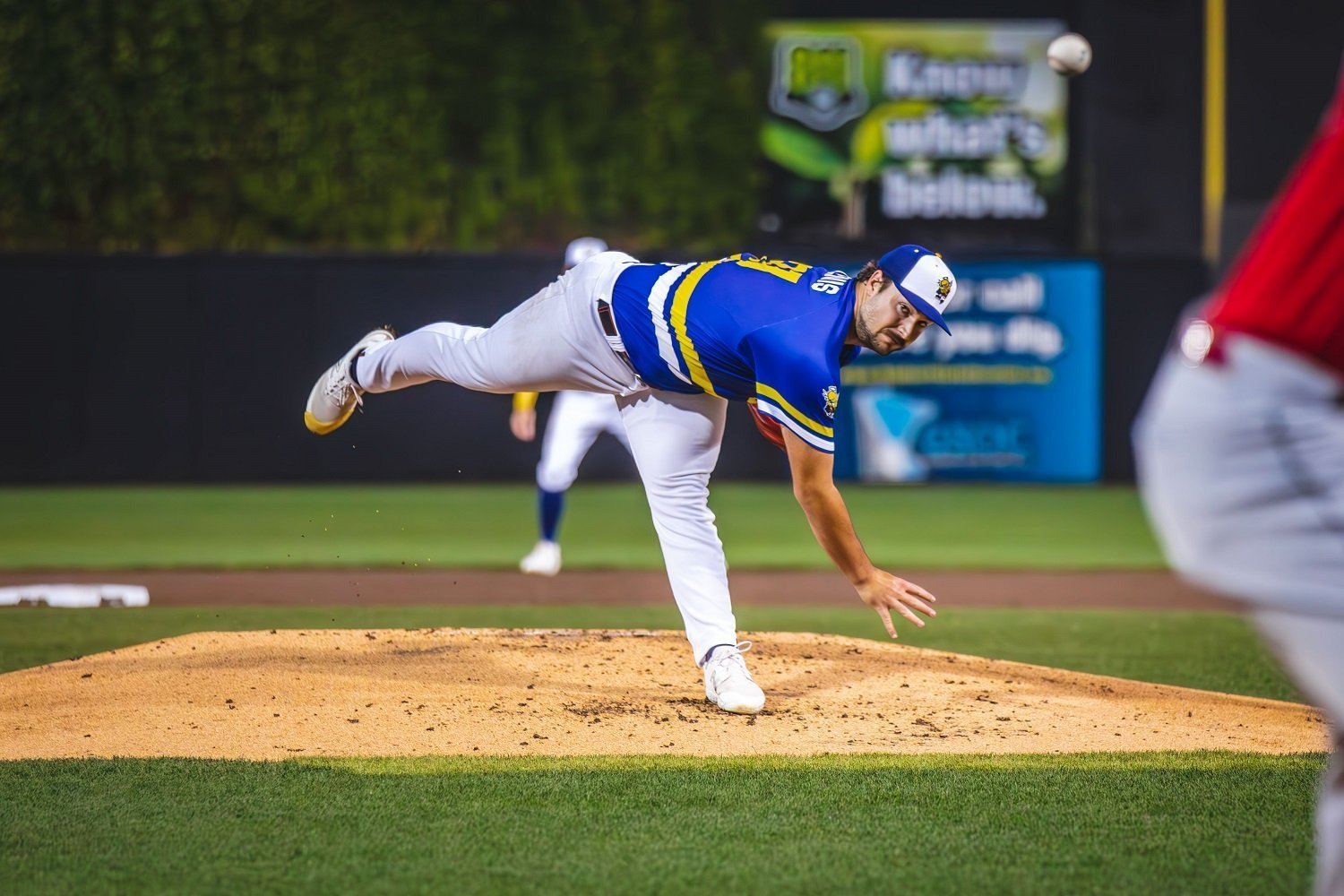 Fort Myers felt a little more official on Thursday. Pitchers and catchers reported to the Lee Health Sports Complex, the Florida sun was beating down on the back fields, and a new chapter began as Derek Shelton officially started his first spring training as Twins manager. Bullpens popped, catchers dropped into their stances, and optimism was easy to find. One notable arm, however, was not firing away. Twins pitching prospect Cory Lewis has been shut down from throwing after being diagnosed with a moderate subscapularis strain in his right shoulder. Lewis reported discomfort following a bullpen session on Saturday after arriving at camp early. Shelton told reporters that Lewis will be reevaluated in two weeks. For a player trying to force his way into the big-league conversation, it is far from an ideal start. Lewis, 25, entered camp as a non-roster invitee after spending last season at Triple-A. The numbers were not kind. In 73 innings with the Saints, he posted a 7.27 ERA while striking out 87 and walking 68. The uneven command and high traffic outings made for a frustrating campaign. He also missed time with a right shoulder issue last season, though it is not yet clear whether this strain is connected to that prior injury. The disappointment of 2025 stands in sharp contrast to the trajectory Lewis was on before reaching Triple-A. When the Twins selected him in the ninth round of the 2022 MLB Draft out of UC Santa Barbara, he was viewed more as an intriguing project than a fast-moving arm. What set him apart was not overpowering velocity but creativity. Lewis featured an unorthodox delivery and a deep mix of pitches, highlighted by a knuckleball that has become increasingly central to his identity. In 2023, he split his professional debut between Low- and High-A. Across 22 starts, Lewis posted a 2.49 ERA with a 28.6% strikeout rate and an 8.0% walk rate. His poise and command stood out as much as the knuckleball itself. By the end of 2024, he had reached Triple-A and continued to miss bats, posting a nearly 28% strikeout rate, a 2.51 ERA, and a 1.31 WHIP. In many farm systems, that type of rise would have generated louder buzz. In Minnesota, he was somewhat overshadowed by Zebby Matthews and a wave of pitching prospects who grabbed headlines. Still, evaluators appreciated Lewis for what he was becoming. Not a traditional power arm, but a different look. A pitcher capable of disrupting timing in a sport increasingly built around velocity. That is what makes this spring important. With Shelton taking over and the Twins once again leaning on pitching depth as an organizational strength, camp reps matter. Lewis was unlikely to break north with the club, but a healthy and productive spring could have reestablished him as a depth option and potential call-up candidate during the season. Instead, the focus shifts to recovery. Shoulder injuries are always delicate, and a subscapularis strain impacts one of the key stabilizing muscles in the shoulder. For a pitcher who relies heavily on feel and touch, especially with a knuckleball, any interruption to throwing progression can complicate timing and command. The Twins will reevaluate Lewis in two weeks, and the hope is that this is merely a short-term pause rather than a lingering issue. Minnesota has seen how quickly pitching depth can evaporate over a long season. They will need arms at St Paul ready to contribute. For Lewis, the path forward remains the same even if the timeline shifts. Embrace the uniqueness. Refine the knuckleball. Regain the command that fueled his rise. The Twins believed enough in the profile to invite him to big league camp. Now the challenge is getting back on the mound and proving that last season was a detour, not a destination. Spring training is about fresh starts. For Lewis, that fresh start may just have to wait a few weeks. View the full article
 -
Trevor Plouffe Backs Tom Pohlad. Should Minnesota Twins Fans?
DiamondCentric posted an article in Twins Daily
 Tom Pohlad has had a lot to say since taking over as principal owner roughly two months ago. As our own Cody Christie pointed out, none of it really seems to make sense and the message only gets harder and harder to follow every time he's in front of a microphone. Or, maybe…just maybe we shouldn’t hold Tom accountable for the poor decisions of the Pohlads who came before him. At least that's what one Minnesota Twins alumnus is encouraging fans to consider. Former 1st round pick and Twins third baseman Trevor Plouffe met with Pohlad via a Zoom call on Friday afternoon and “left the conversation feeling really, really excited about the future of the Twins.” By way of a video shared from his X account (that Plouffe alleges Pohlad didn't ask him to make), Plouffe shared that Pohlad reached out to him to set up the call to get Plouffe’s “thoughts on the organization, where we’ve been, [and] where we need to go.” Despite coming prepared for the call, Plouffe was told that Pohlad would talk first after which Plouffe told Pohlad he was “going to do great at this”. Plouffe went on to share that Pohlad “touched on” every one of the notes that he had prepared and that the call was a “breath of fresh air.” While Plouffe calls himself “bullish on this team” and an “optimist”, he pleads for fans to give “the Twins and Tom a chance this year.” Label me a cynic, because I'm not sold. While I'll give credit to Tom for speaking more and more candidly than any of the family members he succeeded, at the end of the day he's a businessman. Moreover, he's in real estate. He's a professional salesman and it's to be determined whether he's a professional baseball owner. While those are all facts, it’s my opinion that until he proves otherwise he's nothing more than a schmoozer. He allegedly believes that this Twins team, which is mostly the same as the team who went 19-35 in the last season two months of 2025, can compete in 2026. Yet, we’re two months removed from him taking on his new role and the Twins payroll sits roughly $35 million below last Opening Day and $70 million below the MLB average. Tom talked about 2026 being “critical to the success” of “building a business that can be playing competitive baseball for a string of seasons in a row.” Yet, the highlight of his short tenure as principal owner is spending $21 million on two average at best players (Josh Bell and Victor Caratini), one of whom opens the door to trading the third highest paid player on the roster (Ryan Jeffers). So, in case you got lost like I did, 2026 is “critical” but not critical enough to make moves that make the team meaningfully better. While I have enjoyed following Trevor’s post playing career, especially with how much love he's always shown the Twins, I don't feel obligated to just give Tom Pohlad a chance on a whim. After all, trust isn't given, it's earned. In fact, a little trust was lost hearing that Tom demanded to talk first. He wanted to control the conversation. He wanted to make sure Trevor heard what he had to say before Trevor had the chance to speak for himself. Take any class on leadership and you’ll learn how important listening is to being an effective leader. Tom didn’t listen, he told Trevor what he wanted to hear. In my opinion, he wanted to control the narrative. In my opinion, Trevor was schmoozed. So, call me a cynic because I am. Until Tom earns my trust, he's paying for what Joe Pohlad (and Jim before him) “got wrong.” However, at the end of the day, I am a Twins fan through and through. A few years from now, I hope I'm the one that got it wrong. Does listening to what Trevor shared change how you feel about the Twins as a team or Tom Pohlad as the new principal owner? Join the conversation in the comments! View the full article
 -
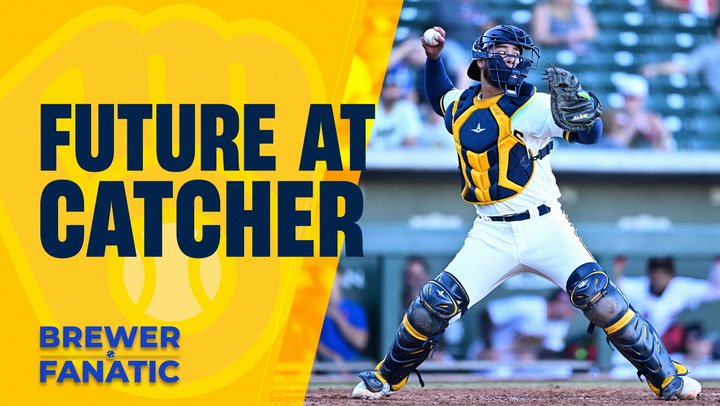 Over the last few weeks, the Milwaukee Brewers have been filling up the transaction log with catching names. William Contreras settled in arbitration with a one-year extension, while the team also recently signed Reese McGuire and Gary Sanchez. All of this has happened after the team's fifth-overall prospect, Jeferson Quero, put up impressive numbers in Triple-A Nashville. What is Milwaukee's long-term play at the backstop position? We have the breakdown here. View the full article
 -
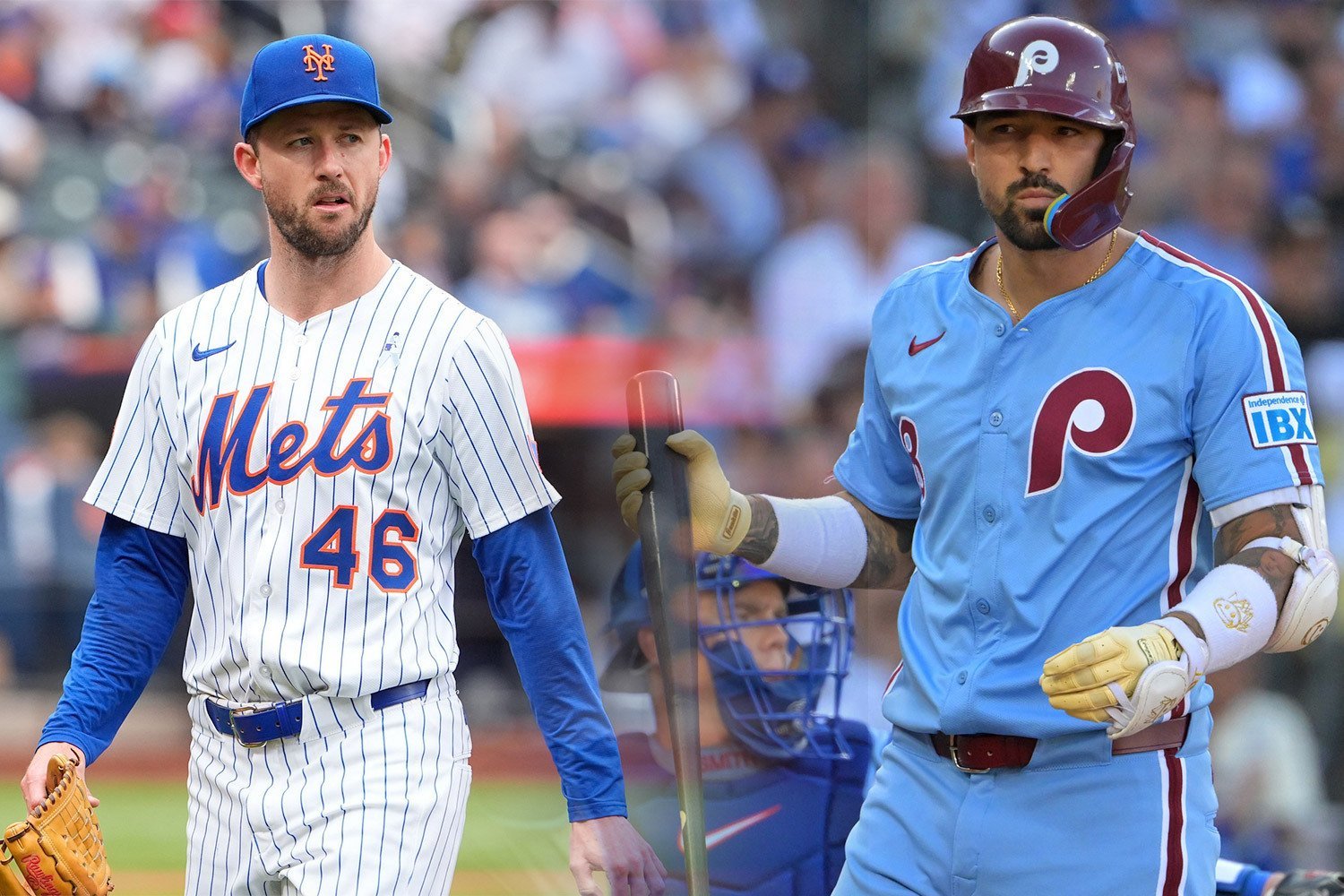 With the first week of spring training coming to an end, the Padres have brought in reinforcements to the rotation and lineup. The club on Saturday reportedly agreed to contracts with right-hander Griffin Canning and outfielder/DH Nick Castellanos. Canning was on the free-agent market all offseason, while Castellanos became a free agent Thursday when the Phillies released him. Both men figure to play significant roles for San Diego in 2026. Here's where they might fit. What will be Griffin Canning's role with the Padres? Canning is almost certain to take a spot in the rotation. The 29-year-old turned in a standout half-season with the New York Mets in 2025, pitching to a 3.77 ERA/4.04 FIP over 76 1/3 innings. But his New York tenure ended abruptly when he tore his left Achilles tendon during a start June 26 in Atlanta. He threw for teams at UCLA last week and reportedly topped out at 93 mph with his fastball. As good as that it, the status of Canning's slider is just as important. The pitch transformed him last season, The Mets got him to throw it more as they radically changed his pitch mix from his Angels days. Canning will step into a rotation that's led by Nick Pivetta, Joe Musgrove and Michael King. Randy Vasquez, J.P. Sears, Kyle Hart and Matt Waldron are among the pitchers in the mix for the other rotation spot. What will be Nick Castellanos' role with the Padres? Castellanos could be an intriguing player in San Diego. The club wanted another bat, and the 33-year-old slugger fits the description. There are red flags, though. Castellanos showed steep decline with Philadelphia last season. His wRC+ plunged to 87, his on-base percentage fell to a career-low. 294, and his ISO fell to .150. But there might have been a mitigating factor with those numbers. He suffered a knee injury July 25 at Yankee Stadium and then dealt with tendinitis in the knee the rest of the season. If he's healthy, then maybe the swing improves and the production follows. There was also his messy breakup with the Phils, which started in June when he confronted manager Rob Thomson in the dugout during a game in Miami, His quick signing indicates that there wasn't much fear about him being a bad teammate. The right-handed Castellanos figures to split at-bats with Gavin Sheets and another recent addition, Miguel Andujar at DH and off the bench. His defense in the outfield is considered poor, but the Padres don't need him to do much on the grass. He last played on the infield 2017, and that was at third base. This is a low-risk move for the Padres. They'll only have to pay him the minimum MLB salary, $780,000, this season. The Phillies are responsible for the remainder of his $20 million 2026 salary after releasing him. View the full article
 -
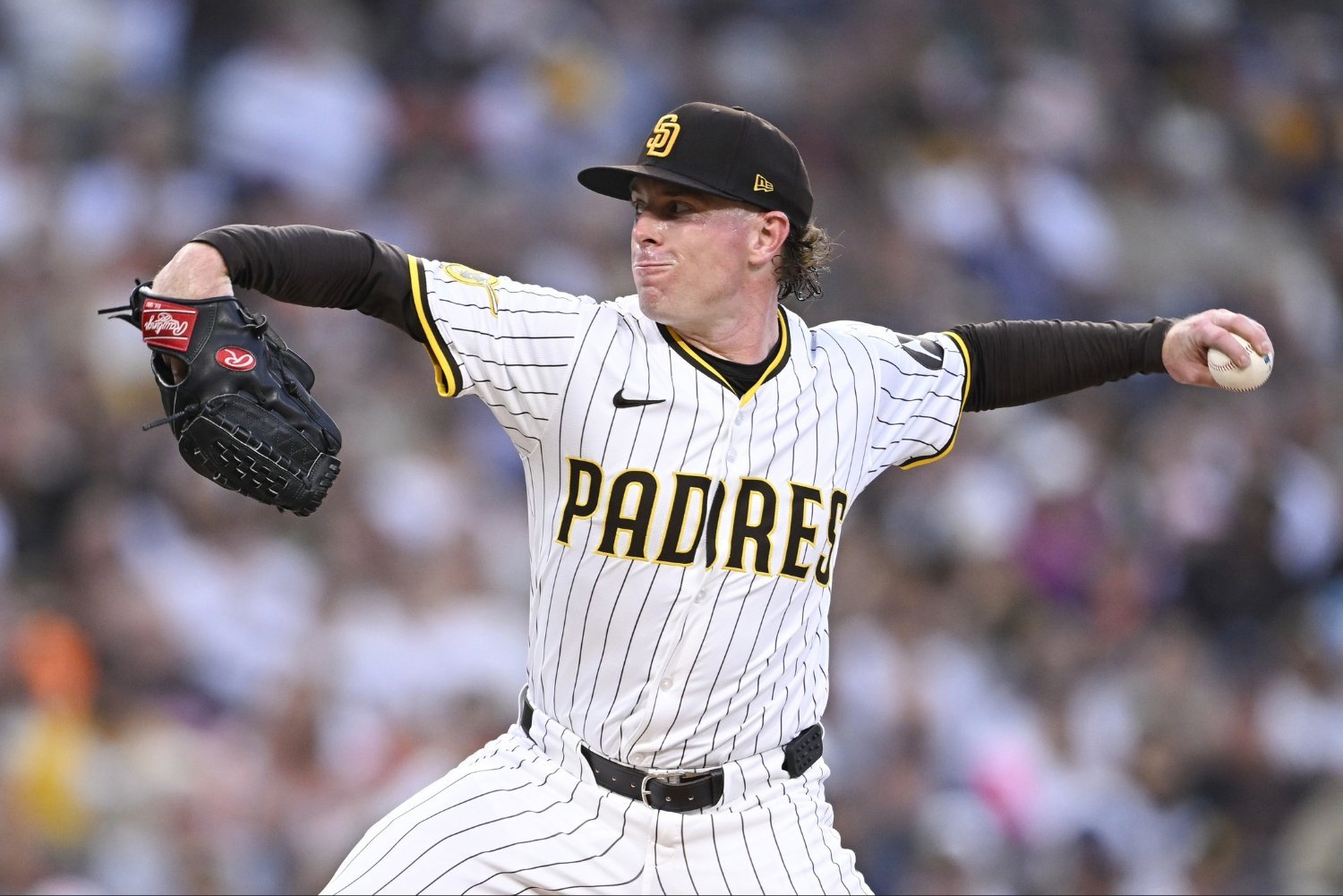 When the San Diego Padres traded for Mason Miller last year, the attention was (obviously, and entirely justifiably) squared on the acquisition of one of the hardest throwers in Major League Baseball. But there was also an underrated component of the trade that existed in the form of JP Sears. While not spectacular, there was a stable element that Sears could, in theory, provide to a team in need of future depth in the starting rotation. A steady arm who won’t reach free agency until 2029? That’s the kind of profile the Padres should seek to work into every trade that an ambitious executive like A.J. Preller likes to make. Across five starts with San Diego to close out 2025, however, the results weren’t quite there even for an arm with modest expectations. Sears threw 24 2/3 innings across five starts that culminated in a 5.47 ERA and even-worse 6.18 FIP. His strikeout rate sat at just 18.0 percent, while opposing hitters slugged .580 against the lefty. That ran the total body of work up to a 5.04 ERA, 5.21 FIP, and 0.4 fWAR across 27 total starts split between the Athletics and Padres. Perhaps unlike his comrade in the depth mix (Kyle Hart), however, Sears presents some intrigue. He’s never been a high-strikeout arm. It’s difficult to expect that with 15th percentile fastball velocity (91.9 MPH), anyway. Where Sears should, ideally, excel is in his ability to avoid walks and work his way around hard contact. JP Sears’ Stuff Sears, technically, works with seven different pitches. His most-used pitch is his four-seamer, which moves effectively in a horizontal fashion. The 11.9 inches of arm side run he gets out of it is actually better than comparable arms. He’s able to play each of the sweeper and changeup off it effectively, leveraging a relatively average sweeper against hitters of the same handedness and throwing his changeup to good effect against the other side. Having 16.5 inches of horizontal movement to the arm side — featuring a similar shape to that of his four-seamer — is an effective manner of doing business. Despite that, Sears is prone to flyball contact and lacks the upside with any pitch to generate whiffs. That led to opponents slugging .534 against the four-seam and .500 against the changeup. His sweeper was the only pitch to feature a positive run value, which feels logical given the effectiveness of that pitch against hitters of the same handedness as a general practice. Somewhat like the aforementioned Hart, Sears throws out of a shallow arm angle and works side-to-side. Pitchers who do so that also possess less upside are going to have a tougher time evading impact outcomes against good hitters in the absence of the changing of eye levels. Even through all of that, intrigue remains over what Sears could provide as a member of the staff in 2026. JP Sears’ Arsenal Sears’ arsenal is indicative of intent across his three primary pitches. Considering the volume of those three against the remaining four that he allegedly threw in 2025, it’s almost worth dismissing the rest as being mis-labeled due to their shape. Despite the minimal arsenal that persists as a result, there’s an argument that Sears’ pitch mix and subsequent usage suit him well for what he’s aiming to do. The four-seam is going to be a factor against hitters of either handedness. It moves in toward lefty hitters and away from the right-handed types. The issue is its location. Sears spent a lot of time squarely in the middle of the zone with that pitch, often using that pitch to get ahead early in counts. That was especially true upon his arrival in August where opposing hitters swung first pitch on the four-seamer 46.4 percent of the time. The issue there is that it’s his pitch where hitters found the highest rate of hard contact (46.0 percent) against a low whiff rate (20.5 percent). His horizontal movement allows him to evade genuinely terrible outcomes more than he probably should, but his presence up in the zone means a difficult needle to thread with it. What Sears does have going for him, though, is that the sweeper and change each play well off of it. The sweeper offers something in the vertical department, while the changeup is as close to a change in eye levels as he can establish in its working more down-and-in to right-handed hitters. The stuff can certainly be effective even with a limited ceiling. It’s just a matter of proper deployment. What Should JP Sears’ Role Be In 2026? Assuming full health early for Joe Musgrove, the Padres have three locks in their rotation to start 2026. If we assume that Randy Vásquez has the inside track courtesy of a strong finish last year, that leaves just one spot to start the year for Sears and a smattering of depth signings. Sears doesn’t have a particularly high ceiling. But the Padres are in a situation where they don’t really need it out of the backend of their rotation. They have a dominant bullpen, and one imagines that at least one or two of those depth signings may offer some volume in relief. What they seek as a result is stability. In his brief career at the top level, Sears had made strides in his percentile placement in both his walk rate and his hard-hit rate. That could help him to an early advantage in the race, as you know exactly what you’re getting out of the profile in mitigating a baserunning presence. To say nothing of the fact that he’s a left-handed thrower in a group full of righties. It’s difficult to envision someone such as Sears in a relief setting quite yet. A soft-tosser with more than two pitches can contribute to a starting staff in such a way as providing a stable, innings-consuming arm. If it’s not the Padres rotation out of camp, it’s likely the El Paso starting group for him in March and April. View the full article
 -
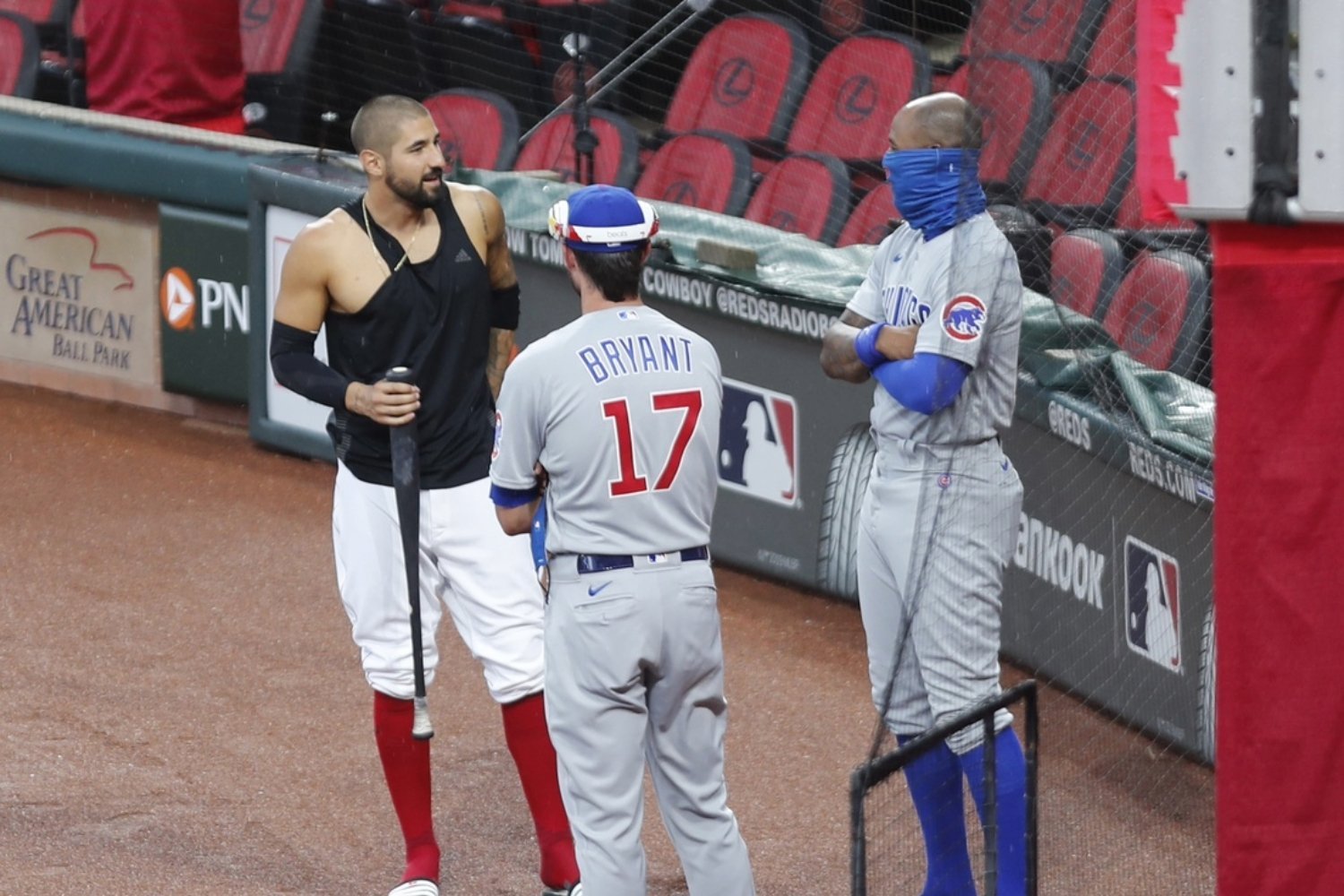 The Philadelphia Phillies' attempt to unload a chunk of Nick Castellanos' $20 million salary for 2026 officially failed this week when the club made a one-sentence announcement that it had released the veteran outfielder. No team was going to help out Dave Dombrowski by trading him a player who had talked his way out of town, while also taking on (at least) a few million dollars. Now, Castellanos is a free agent and the Phillies are forced to dine on those millions. A club can soon add the 13-year veteran at the much friendlier price point of $780,000, the MLB minimum salary, once he inevitably clears waivers. But which teams make sense? The outfield-needy Astros? The offense-starved Guardians? The hometown Marlins? What if Castellanos is entertaining a reunion with an old club? Well, the Tigers have enough outfielders, and Castellanos is not Justin Verlander. The Reds are good after bringing back Eugenio Suarez. That would leave . . . the Cubs. If you're screaming, "DON'T EVEN THINK ABOUT IT!", we hear you. The last-two-months-of-2019 version of Castellanos is long gone. But let's try a "hear me out" that will look to do the impossible: show why Castellanos can be a fit for this Cubs team. Let's start with the idea that he could be productive in his age-34 season. Last year, he posted full-season career lows in wRC+ and on-base percentage, but over the past four seasons, his wRC+ marks, taken together, come out to about league average: 95, 104, 108 and 90. And if you believe in counting stats, he drove in 72 runs last season after knocking in 86 in '24 and 108 in '23. There's also this: Castellanos has posted day in and day out in his career, which means he has often played hurt. It's possible that his health betrayed him last season. He suffered a left knee injury July '25 making a play in the field at Yankee Stadium and then experienced patellar tendinitis in the knee through the remainder of the season. After the injury, he slashed .200/.250/.316 with four home runs and 48 strikeouts in 168 plate appearances. He was moved into a platoon role in September, something he addressed at the time on Mookie Betts' "On Base" podcast. He appeared in 147 games anyway. The Cubs do not need an everyday outfielder. In fact, they're set at all his primary positions: Ian Happ in left field, Seiya Suzuki for right, Tyler Austin as a first base reserve, and the entire hitting group in a DH rotation. But if Castellanos is healthy, he could be a better right-handed platoon option than Austin against left-handers. Castellanos tanked to an 87 wRC+ vs. lefties last year, but his previous four years landed at 124, 147, 100 and 142, respectively. For comparison, Justin Turner posted a 112 mark vs. left-handers in 2025. We don't have a good idea of what Austin, 34, will produce. He has played in Japan the past six seasons, and he was good when he was available, but he missed significant time in 2022, 2023 and 2025. His MLB career wRC+ against lefties is 132, but in a small sample of 255 plate appearances. Finally, there's the money. If the Cubs want to save cash in their quest to stay below the first competitive balance tax (CBT) threshold, then paying Castellanos $780,000 is better than guaranteeing Dylan Carlson $2 million or Chas McCormick a similar amount. Yes, McCormick and Carlson are miles better with the glove, but that's a big difference in money. Austin is on a split contract; a $1.2 million rate if he's in the majors, a $400,000 rate if he's in the minors. The one element that hasn't yet been discussed here is whether clubs consider Castellanos a "bad teammate." He was no fan of Phillies manager Rob Thomson, his main complaint being that the skipper did not communicate well with him. Last June, Thomson benched Castellanos for a game in Miami, ending a consecutive-games streak, for making an "inappropriate comment" the day before. According to The Athletic, the comment left a lot of uniformed personnel "disgusted." On Thursday, Castellanos provided some details. He said he went up to Thomson in the dugout after being taken out for defense and told the manager that he was inconsistent with his discipline. Then, Castellanos tried to drink an El Presidente beer he had brought with him, only to have teammates and coaches take it out of his hand. He expressed remorse in his post-release Instagram statement. Fans who haven't blurred that 2019 season from their memory will remember a far different version of Castellanos with the Cubs. He was generally beloved by teammates and fans alike, which certainly wasn't hurt by his electric production in Chicago (.321/.356/.646, 152 wRC+). Perhaps the disintegration of his reputation was simply the case of the wrong person in the wrong environment? If so, will his recent comments help him as he searches for a new team? We'll know the answer if Castellanos signs quickly. Should that team be the Cubs? Well, this is one writer's case for it. View the full article
 -
 Alex and Maddie discuss the Caleb Durbin trade and how the Red Sox may have fleeced the Brewers. Then they dive into why PECOTA hates the team for the second year in a row before diving into an early spring training news roundup and discussing what, if any, moves the team needs to make to finalize the roster. Listen on Apple Podcasts: https://podcasts.apple.com/us/podcast/the-talk-sox-podcast/id1783204104 Listen on Spotify: https://open.spotify.com/show/3qPrPXEngu0CxgTmlf0ynm Listen on iHeartRadio: https://www.iheart.com/podcast/263-the-talk-sox-podcast-244591331/ Listen on Pocket Casts: https://pca.st/4tmd121v Watch on YouTube: https://www.youtube.com/@talksox View the full article
 -
 Player photos courtesy of ESPN Let us know your favorites below! View the full article
 -
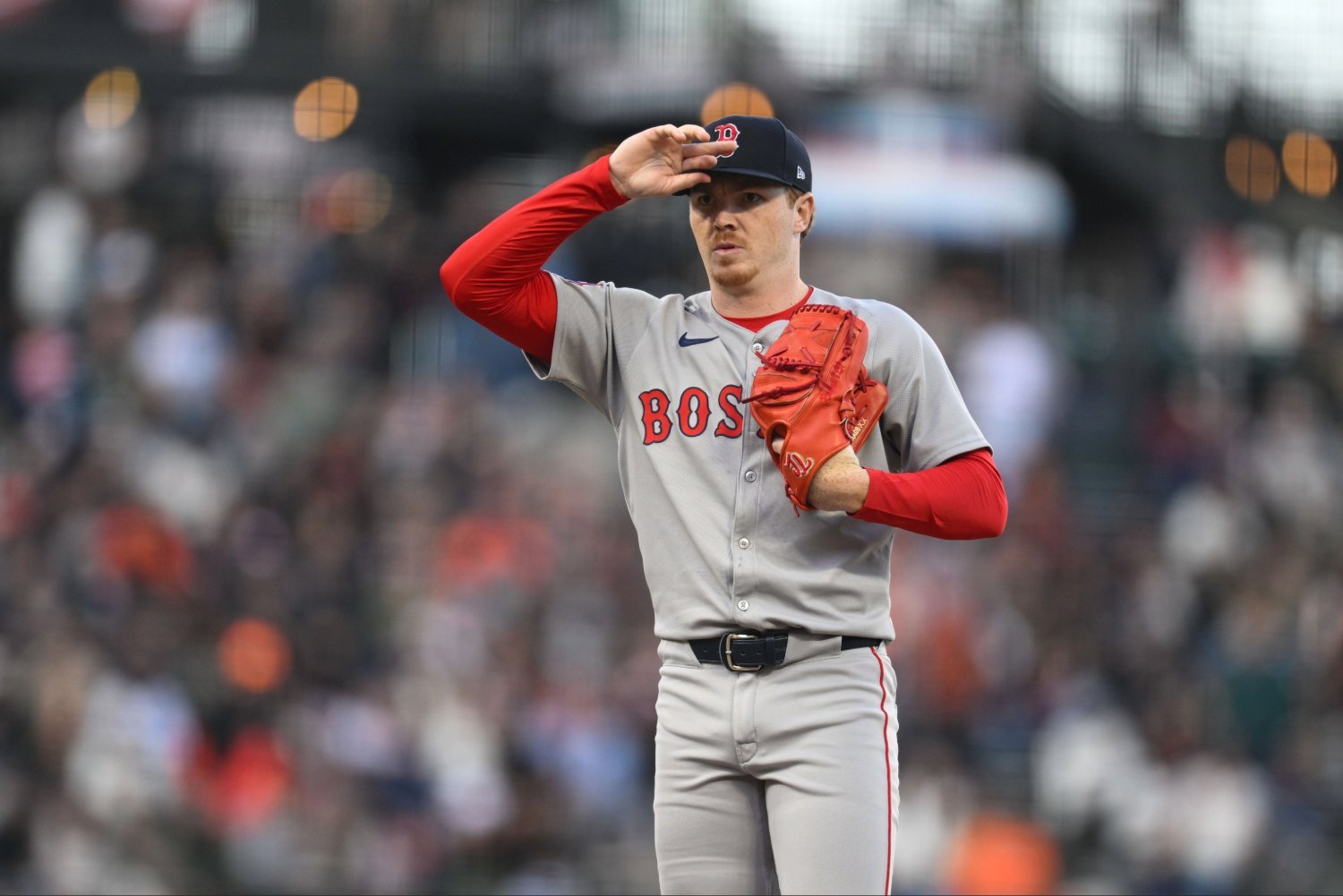 The Boston Red Sox entered the offseason with an abundance of starting pitching depth. Following the trade to acquire infielder Caleb Durbin, the Red Sox have seen that depth shrink considerably. As our @Brandon Glick explored prior to the Durbin trade, the front office has made a habit of trading young pitchers. Since November, the team has seen Richard Fitts, Hunter Dobbins, David Sandlin, Kyle Harrison, and Shane Drohan all get sent packing. And despite trading those players and more from their starting pitching depth, the Red Sox are still 10 deep. While in today’s major leagues the chance of injury for a pitcher is higher, the Red Sox are still in a good position when it comes to insurance policies. Currently, the rotation is comprised of Garrett Crochet, Ranger Suárez, Sonny Gray, Brayan Bello and Johan Oviedo. That’s with both Kutter Crawford and Patrick Sandoval not being included despite being decent pitchers in their last fully healthy seasons. On top of that, both Connelly Early and Payton Tolle who are two of the team’s top-three prospects, are currently projected to open the season in Triple-A. All that could change with injuries — Red Sox saw it first hand last season, as they were forced to open the season with three starters on the injured list (Bello, Crawford, and Lucas Giolito). However, unlike last season, their depth should be of better quality. The team won’t need to open the season using Sean Newcomb the rotation, and they also won’t be sending Walker Buehler out to the mound every fifth day. The Red Sox are taking a gamble with this strategy, especially as only three members of the projected rotation have made it through a full season. Suárez has never started 30 games in any campaign, while Bello has missed time every season since debuting. The Red Sox have to believe they’ll need someone to step up for what could amount to a significant amount of time. And to rest those hopes on Crawford or Sandoval after they both missed all of 2025 is probably a fool's errand. However, that’s where Tolle, Early and fellow minor-league pitcher Tyler Uberstine come into play. That trio is projected to open in Worcester to begin the season but can easily be promoted to Boston as needed. Because of their trust in their young pitchers, the Red Sox felt they could take the risk of trading from their strength. The Sox also have others waiting in the minors ready to step up if needed. Jake Bennet,t who was acquired in a trade this winter, is also on the 40-man roster. While further down the depth chart, he could step in as an emergency should the team go through a number of backup plans. Options off the 40-man roster are also available to the team. Non-roster invites TJ Sikkema and Alec Gamboa stand out as potential short-term solutions to any early season injury problems. While neither seems to instill as much confidence as the players traded away, they’ve shown various levels of success across their respective careers. You can also add the likes of Hayden Mullins, Blake Wehunt and Dalton Rogers to this group, all of whom have been through multiple seasons of development with the Red Sox. Mullins and Rogers have a chance to open the season in Worcester and could make a push to be added to Boston’s major-league roster during the season after dominating in Portland last year. Wehunt is another interesting arm that the team has kept. He moved quickly through the minors in 2024 before an injury in 2025 slowed him a bit in Double-A. Despite that, once healthy, he could quickly make it to Worcester as another depth option for the major-league staff. It's often unwise to trade so many young starting pitchers, especially those who are just about to begin their MLB careers. But the Red Sox have spent years building up exemplary depth. Despite losing so much talent, they remain in a strong position to cover for any injuries or underperformances throughout 2026. View the full article
 -
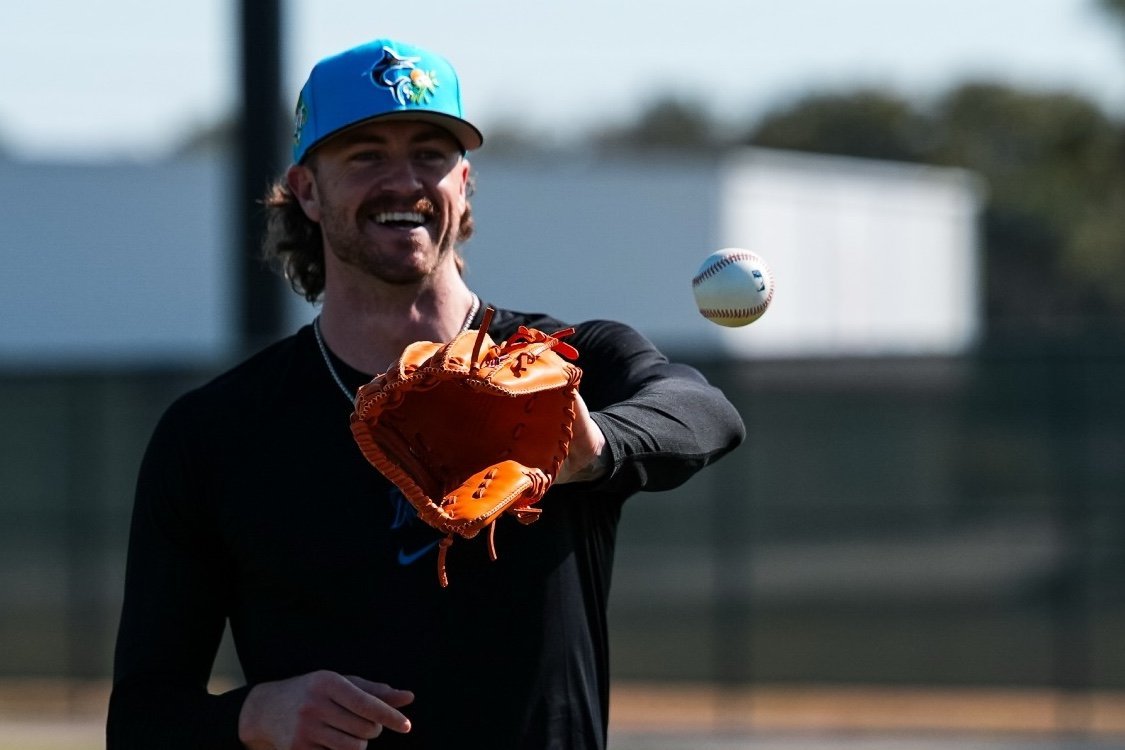 Often times in employment matching situations, the early interviewees are at a disadvantage. When many candidates are potential suitors, the first to attempt to sell themselves for the role have to stand out the most. That was the case this winter with Chris Paddack and the Marlins. “They were the first ones to call,” Paddack said Friday morning as he stepped foot in the Marlins’ newly renovated Jupiter Academy. The last time Paddack was in Jupiter, he was a bright-eyed 18 year old, recently graduated from his central Texas high school. Now 30, Paddack is embarking on his eighth MLB season. It’s a full-circle moment for the 2015 draftee, one he admittedly didn’t think would ever come. “When you’re a young kid out of high school, my eyes were on the prize of getting to the big leagues. You think that’s the team you’re going to ride with until your career is over. Very few times does that happen nowadays,” Paddack reflected. “It really is a full-circle moment for me. I go back to my drive down from Texas. I just was like, 'This is a cool opportunity to be back with the team that gave me that first chance as a young kid.' The fact that I get to put a Marlins jersey on and show the city of Miami why they drafted me is a pretty surreal moment.” Paddack rejoins Miami not only with a different mindset, but as a much more complete pitcher. As a high schooler, Paddack didn’t need more than his fastball and changeup to be dominant. During his MLB career, he’s developed a curveball, slider and two-seamer. Most recently, he added a cutter. Last season, Paddack, a self-described north-and-south guy, used a whopping six different pitches. “You realize really fast that you’re not in high school anymore. I need some pitches that kind of go in different routes, different directions,” Paddack said of his pitch usage. “You look at some of the elite pitchers, they’re always changing their arsenal, always mixing in new pitches, learning different grips from different guys, picking their brains. At the end of the day, we’re the only ones that can manipulate where the baseball goes, finding those grips and tricks and techniques that work for the individual.” In terms of his selection, Paddack doesn’t stick to any specific game plan—he goes off of his feel for the hitter and the zone at-bat to at-bat. “That’s the beauty that I’ve learned over the years is you can get guys out in different ways,” Paddack said. “Especially with how good the hitters are, with how much data they have on us, we have to be able to change up that game plan or that approach that second or third time through.” One thing will always be a priority for Paddack: locating in or around the strike zone, changing eye levels, a trait that before last season, allowed him to work deeper into games and post respectable FIPs. Wanting to challenge hitters is so much a part of Paddack’s game he notes that he may have gotten overzealous with it recently. “Sometimes I overly compete in the zone and it costs me some base hits with two strikes, or a runner’s on second and third and I’m trying to slow the game down and get out of that jam, and the next thing I know I’m putting up a crooked number and it happened very fast,” Paddack said. “I think over the course of the last couple of years, one, I’ve stayed healthy, and two, just being able to learn to get out of the zone when I need to. Not necessarily being fine because I throw strikes. That's what I do. That’s why I’m a starter. It’s being able to expand out of the zone when I need to.” Paddack is confident recent rule changes as well as recent developments to the Marlins’ scientific and analytical approach will be key cogs for him in getting back to striking a proper balance. “With the new ABS (automated ball-strike) system, I really think it’s going to benefit me personally with my pitch design, how my pitches work at the top of the zone and how my changeup kind of goes underneath,” Paddack noted. “I really think it’s gonna help me get some calls that I might have not gotten in years prior, or just making hitters realize I know how to command the baseball top, bottom, in and out. That might give me some more chases if I do leave the zone on purpose.” eqgjy4.mp4 Manager Clayton McCullough is excited about what Paddack can do for his pitching staff. While the veteran will have mostly younger competition nipping at his heels for the chance at a rotation spot this spring, McCullough noted Friday that he expects the righty to be an every fifth day guy when the season opens. “We think we can really help Chris. We think we can get a lot of his arsenal back into a place where he can perform more like he’s capable of,” McCullough said. “He’s a premium strike-thrower. He certainly has started a lot of games in the major leagues. It gives us another stable arm, we believe, that can fit right into our rotation and also we believe the upside to help him perform very well in 2026.” Paddack isn’t a flashy arm. He isn’t going to light up radar guns and he probably won’t be a guy who racks up a ton of strikeouts. But he is a veteran presence who has supreme confidence and a great pitcher's IQ. With the understanding that complacency is never acceptable and keeping up with the game is a necessity, he is looking to cement his strengths and redefine his weaknesses in his return to Miami. With a $4 million buy-in from the front office behind him, Paddack is going to get a chance to return to and stick as a starter as the Marlins’ competitive window opens. This landing spot for Paddack at this point in his career couldn’t be much better. The expectation is that Paddack is going to get back into his throwing program and start throwing bullpens early next week. View the full article
 -
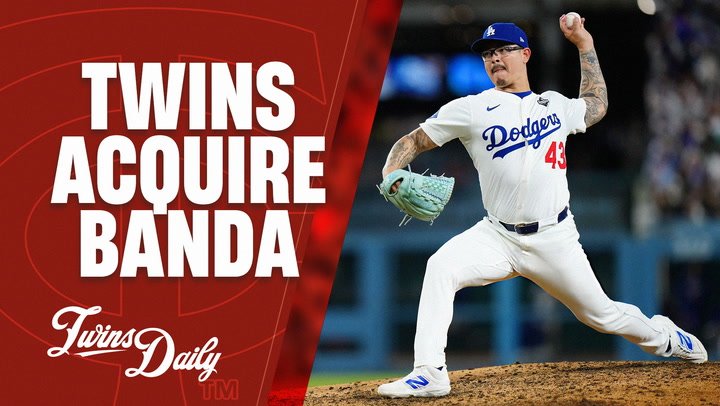 The Twins traded for Anthony Banda, who made his most recent stop in Los Angeles with the Dodgers. What is Banda's story? In this video, we uncover his strengths, weaknesses, career trajectory to this point, and what role he could play for a Minnesota Twins bullpen that had the fifth-highest earned run average in baseball last season. View the full article
 -
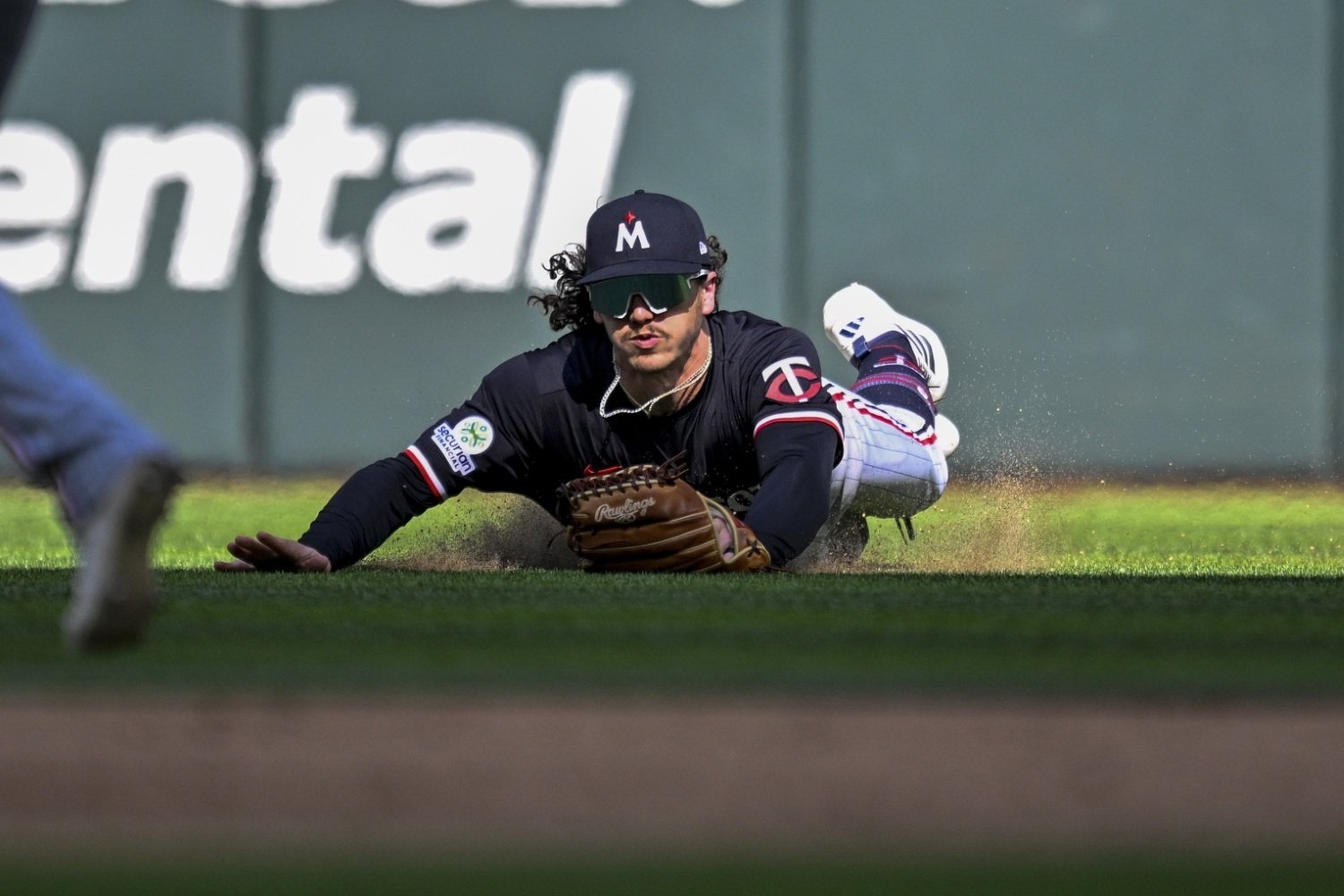 Last July, the Twins and Dodgers linked up on a deadline deal that raised eyebrows the moment it crossed the wire. Minnesota sent reliever Brock Stewart to Los Angeles in exchange for outfielder James Outman, a move that felt odd on its face given how well Stewart had been pitching for the Twins at the time. Stewart was one of the more effective bullpen arms Minnesota had, missing bats and handling leverage despite a long, well-documented injury history. That history loomed large in how the trade was interpreted. The assumption was that the Twins would be able to get value for Stewart, especially from a contending team. However, a one-for-one deal for Outman seemed underwhelming. Stewart’s medicals likely raised some red flags, and that forced the teams to find a deal that worked for both sides. That reading of his medicals proved prescient. Stewart made just four appearances for the Dodgers before landing on the injured list. In September, he underwent a debridement procedure on his shoulder, ending his season and keeping him sidelined during Los Angeles’ run to a World Series title. He is not expected to be ready for Opening Day, and there are real questions about how much he can contribute in 2026. Stewart had already pushed his workload to a career high 37 2/3 innings in 2025, and the durability concerns that followed him never really went away. Realistically, Stewart might be a bullpen option for the Dodgers a few months into the season. That might be the best way to get the most value from him in one season. He has shown that he only has so many bullets in his arm. Having Stewart (potentially) available for the playoffs is more valuable than early-season games when the weather is colder, and there is a greater chance of muscles tightening up. The Dodgers will be in the playoffs, and that’s where Stewart can be a difference-maker. From the Twins’ side, the return was Outman, a former top prospect who had fallen out of favor on a Dodgers roster that is loaded with talent. On paper, there was a path to relevance. Minnesota needed outfield depth, particularly behind Byron Buxton, and Outman brings strong defensive chops in center field. The complication is that Alan Roden exists, and the organization appeared to favor him before his hand injury last season. Roden was talked up extensively after being acquired from the Blue Jays, and he can handle center as well, even if Outman is generally viewed as the better defender. Roster mechanics muddy the picture further. Outman is out of options, meaning he either makes the roster or risks being lost. Roden does not carry that same pressure. Someone has to back up Buxton, and while Roden offers flexibility, Outman’s glove might give him the edge in a vacuum. Performance, however, has not helped his case. In 59 major league games last season, Outman posted a .537 OPS and a 47 OPS+. That production is difficult to carry, even for a defense-first reserve. There is some hope to be found in his Triple-A numbers, where he put up a .945 OPS across 92 games. That kind of gap suggests there may still be something to unlock at the big-league level. At the same time, Outman will be 29 years old next season, so this is not a young prospect still finding his way. What you see may largely be what you get. As things stand, this trade is drifting toward an outcome where neither side truly benefits. The Dodgers lost a useful bullpen arm for essentially nothing during a championship run, even if they were protected from further risk down the line. The Twins may not get meaningful value either, especially if Outman struggles in spring training and does not break camp with the team. Deadline deals often look cleaner in hindsight, and this one already feels messy. Minnesota took a calculated risk on Stewart’s health and bet on Outman’s ability to rebound. Los Angeles took the arm and hoped the medical gamble would pay off. Instead, both teams are left with questions, and the trade is shaping up to be one neither side will look back on fondly. Did either team win this trade? Will Outman make it out of spring training on the Twins’ roster? Leave a comment and start the discussion. View the full article
 -
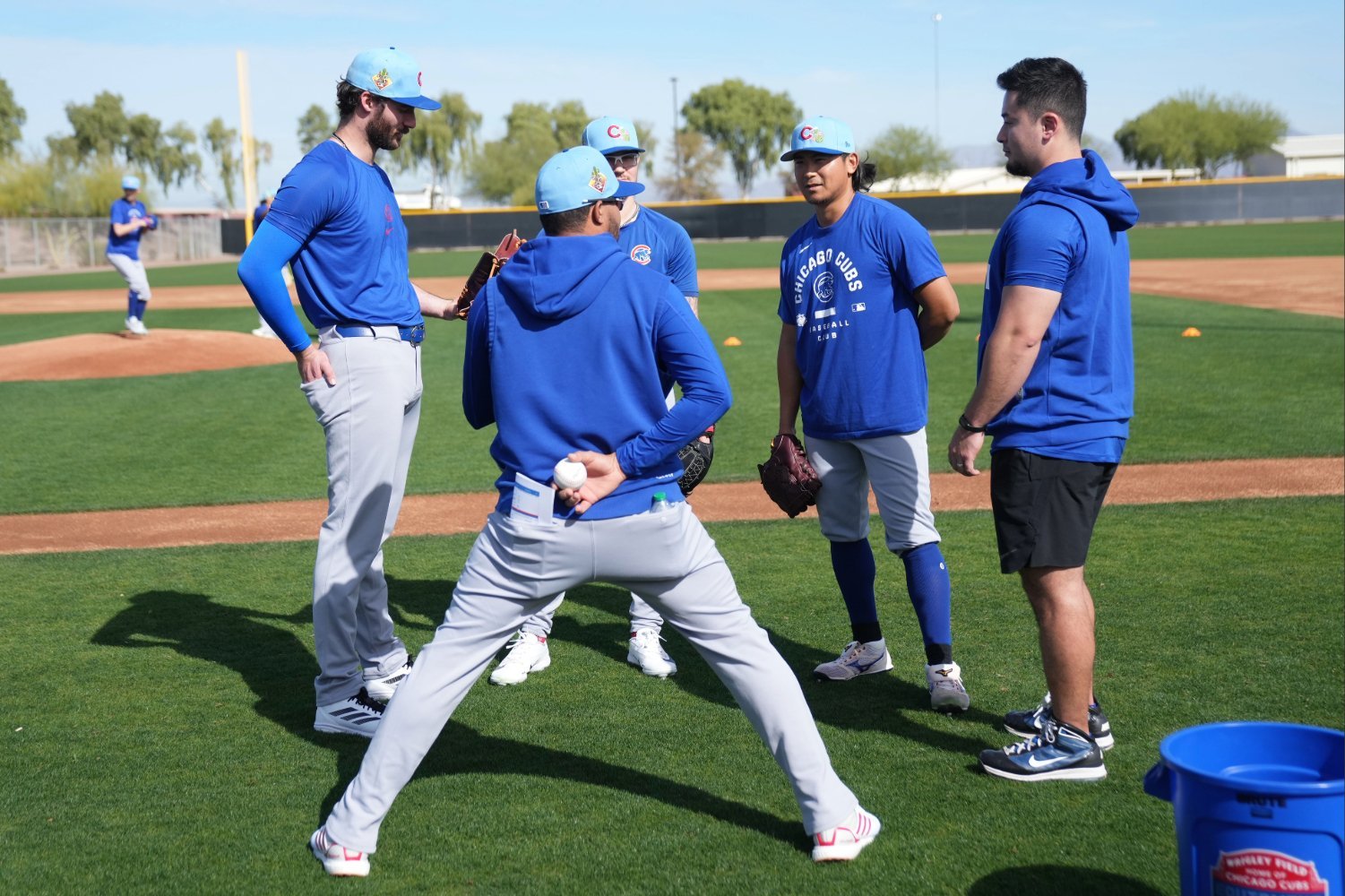 Spring Training is upon us and the Chicago Cubs are ready to roll. Gone is Kyle Tucker, but in comes Alex Bregman, Edward Cabrera, and almost an entirely new bullpen. We know who the key offensive contributors will be. We know what this suddenly very deep rotation should look like. But spring training works as a proving ground for those fringe players looking to make the roster. Last season, we saw Brad Keller turn a minor-league deal into a career resurgence in the bullpen. If one of these players makes that kind of impact in 2026, it’s a major win. Let’s see who else is in camp outside of the players you already know. Cubs Non-Roster Invitees: Catchers Christian Bethancourt Bethancourt is back with the Cubs on a minor-league deal. This marks the second time the Cubs have come to such an agreement with the 34-year-old catcher. The last time he played in the majors was during his 24-game stint with the team in 2024, where he hit .281 including a 7-RBI game. In 2025, Bethancourt was with the Blue Jays’ Triple-A affiliate, and hit .173 in 58 games. Ariel Armas The Cubs drafted Armas in the 5th round of the 2024 draft out of the University of San Diego. Since being drafted, Armas has played in 105 games in High-A and has a slash line of .230/.324/.339. He was likely invited to spring training to serve as catching depth, especially in split-squad games. The 23-year-old will likely begin the season in High-A again, hoping to hit his way to Knoxville soon. Casey Optiz Much like Armas, Optiz is going to serve as extra catching depth on the spring roster. Drafted in the 8th round of the 2021 draft, Optiz has been bouncing between High-A and Double-A for the majority of his career. In parts of five minor league seasons, the 27-year-old has a batting average of .201 and has generally been a part-time player to this point. Cubs Non-Roster Invitees: Infielders Scott Kingery Now 31, Kingery is looking to make the majors with the third team of his career. Prior to 2018, he was one of the top prospects in baseball, and was given a six-year extension worth $24 million by the Phillies. He showed some promise in 2019, where he hit .258/.315/.474 in 126 games, but his career has stalled out since then. Between 2020-2022, played in only 52 games due to injuries and ineffectiveness. He remained with the Phillies in 2023 and 2024 but never reached the majors. He caught on with the Angels for 2025 and got his first MLB action in three years. He has shown an ability to play all around the field, as he played second base, shortstop, right field and center field in his brief 19-game audition with the Halos. This versatility benefits the Cubs, as their old utility man Willi Castro is now on the Rockies, but it’s been years since Kingery has done anything at the plate. Kingery represents the only NRI infielder with any major-league experience. B.J. Murray In 2024, Murray got his first opportunity in Triple-A, where he hit .204 with 11 home runs in 88 games. That wasn’t enough to keep him there, as he spent the entirety of 2025 with Double-A Knoxville. He showed some solid pop from the right side, hitting 20 home runs in 125 games, and can fill in at both third base and first base. Murray was ranked as the No. 18 Cubs prospect prior to the 2024 season, but has not appeared on that list since. With a hot spring, Murray might be able to claw his way into the team’s plans as a power bat off the bench, so he will need to capitalize on all his opportunities. Jonathon Long Long was the Cubs’ No. 6 prospect for the 2025 season, and he figures to remain a fixture inside the top 10. He hit .305/.404/.479, smashing 20 home runs and driving in 91 for Iowa last season. The two main concerns with Long come from his defense. He has been used primarily as a first baseman, but he’s also gotten opportunities sparingly at third base and left field, where he underwhelmed defensively. Even if he was fine defensively at first, third, or left field, all those positions are spoken for. He should be able to crack the major-league roster this year, but it remains to be seen how much playing time he will get. If free-agent acquisition Tyler Austin struggles, Long may be able to take his role. Jefferson Rojas The 20-year-old middle infielder was one of the top prospects in the 2022 international class and is currently listed as the number three organizational prospect. He was promoted to Knoxville last season after producing an .871 OPS in 67 games with South Bend. He struggled mightily in 39 games in Double-A, hitting only .164. He is currently behind fellow prospects James Triantos and Pedro Ramirez on the depth chart, but he's a better defender than both of them. Rojas will get a few spring training appearances, but likely won’t be contending for a bench role out of camp. The conversation regarding Rojas will be much more interesting next offseason if the Cubs move on from Nico Hoerner. Cubs Non-Roster Invitees: Outfielders Chas McCormick The 30-year-old was a productive outfielder for the Astros as recently as 2023 where he hit .273 with 22 home runs while playing above-average defense and adding additional value on the base paths with 19 steals. Since then, he has dealt with a variety of injuries and fell way down the depth chart for Houston, causing them to non-tender him. As it stands, he sits behind Kevin Alcantara and Justin Dean on the depth chart, but could make a push with a good spring. Between Alcantara, Dean, and the two other outfield NRIs on this list, McCormick has the longest track record of success in the major leagues. Dylan Carlson Once one of the top prospects in the game, Carlson is now looking to crack the roster of his fourth team since the beginning of 2024. After being jettisoned from the Cardinals’ roster, he has spent time in the AL East with the Rays and Orioles. It has not clicked for Carlson since his encouraging sophomore season in 2021 where he had a .780 OPS and 3.2 WAR. His switch-hitting ability provides some intrigue for the Cubs, who likely won’t have another switch hitter on the roster outside of Ian Happ. 2026 will be Carlson’s age-27 season, so he is young enough to inspire a little bit of hope for a career resurgence, even if it’s certain he won’t live up to the hype he had in St. Louis. Brett Bateman The 23-year-old was the 19th-ranked organizational prospect for the 2025 season and spent the entirety of the campaign with Double-A Knoxville. He hit .261 with two home runs and nine doubles in 94 games. The left-handed hitter is never going to drive the ball with authority, but his plus speed will allow him to turn some weak contact into base hits. He has a good knowledge of the strike zone and won’t be fooled often on pitches outside it. Bateman is a depth addition to the spring roster but could make his way into the 2026 plans if he gets off to a hot start. Cubs Non-Roster Invitees: Pitchers Jeff Brigham Brigham will be 34 before Opening Day and has thrown 120 2/3 MLB innings in his career. His longest stint in the majors was back in 2019 with the Marlins where he threw 38 1/3 with a 4.46 ERA. The right-hander does not have any sustained success at the highest level, but the Cubs have shown that they’re able to squeeze more out of most veteran arms. Grant Kipp One of the older ranked prospects in the organization, the 26-year-old starting pitcher is coming off a fine season in Double-A. He made 26 appearances (23 starts) and pitched to a 4.22 ERA with 9.1 K/9. The Yale product has a 4.64 ERA across parts of four minor-league seasons, but could make his way onto the 40-man roster if he is able to improve his pitch mix and fastball velocity. His lethal curveball is widely considered the best in the Cubs’ system, so he could be used as a reliever if he is unable to work out some of the kinks in his repertoire. Corbin Martin Pitching in parts of four major-league seasons since 2019, Martin is yet to find any sort of success. He has a career 6.54 ERA in 75 2/3 innings pitched. He was originally a starter when he came up with Houston, and made a few more starts with Arizona before Baltimore used him exclusively as a reliever last season. His 6.00 ERA with Baltimore doesn’t inspire much confidence, but he should be willing to stay with the organization if he doesn’t crack the roster. Connor Noland A 9th-round pick in 2022, Noland has been a mixed bag of results so far throughout his first three minor-league seasons. The 20th-ranked organizational prospect turned heads in 2024 with Double-A Knoxville, pitching to a 2.50 ERA in 16 starts, which earned him a promotion to Triple-A Iowa. He struggled to the tune of a 5.29 ERA after that promotion, but pitched to a 4.07 ERA across 132 2/3 innings in Iowa last season. Noland is a finesse arm rather than a power arm, but the Cubs are not shy about leaning on those types of pitchers. If he continues his upward trend in Triple-A, he could make the majors as soon as this summer. Connor Schultz Schultz joined the Cubs organization in 2024 when his contract was purchased from the Missoula Paddleheads of the Pioneer League. After going undrafted out of the University of Iowa, he was named a Pioneer League All-Star in 2023 in a season where he threw 96 2/3 innings with a 3.82 ERA. He has primarily pitched in both Low- and High-A ball with the Cubs, but had a brief three-start run with Knoxville last season where he only gave three runs total. At 27 years old, he’s one of the older players in Double-A, but his inclusion to the spring roster shows the Cubs have some faith in him. Collin Snider Snider is the most exciting name on this list outside of top pitching prospect Jaxon Wiggins. The right-handed reliever was taken by the Royals in the 12th round out of Vanderbilt University way back in 2017. He didn’t make his debut until 2022, where he was knocked around in 42 games. He managed to get in 20 more games the next season, but ended his Royals tenure with a 5.93 ERA in 54 2/3 innings. He caught on with Seattle for 2024 and changed his pitch mix, switching to a four-seam fastball and a sweeper instead of the sinker/slider combo he used with Kansas City. This tweak caused his breakout year in the bullpen, where he had a 1.94 ERA with 47 strikeouts in 41 2/3 innings pitched. He dealt with injuries and regression in 2025. He appeared in only 24 games and his ERA climbed to 5.47. If Snider is healthy, the Cubs’ pitching lab has a good of a shot as anyone at helping him revert closer to who he was in 2024. Trent Thornton The 32-year-old righty has dealt with a number of injuries throughout his seven-year career with the Blue Jays and Mariners. In 2025 alone, he missed a month with appendicitis, and then in July he tore his Achilles, knocking him out for the year. His best season was 2023, when he was traded from Toronto to Seattle mid-season. Pitching mainly for Seattle, he finished with a 2.01 ERA on the year. The caveat is that it was only over 31 1/3 innings. His first full season in Seattle was solid, throwing over 70 innings for the second time in his career. His FIP of 3.47 was actually lower than his ERA of 3.61, so a healthy Trent Thornton was a quality reliever only twp years ago. If he’s healthy, he has all the makings of a reliever who can make the Cubs out of camp. Jaxon Wiggins I don’t want to disappoint anyone, but it is highly unlikely that Wiggins breaks camp with the team. "Highly unlikely" is still a generous phrase to use here, as the Cubs’ top pitching prospect only made three short starts in Triple-A last year after ripping through High-A and Double-A. Wiggins will be up at some point this season, likely in a similar fashion to Cade Horton last year, who was called up on May 10. The current Cubs’ rotation doesn’t carry a lot of heat outside of Edward Cabrera and Horton, so Wiggins making his debut before the All Star break is completely plausible. Kyle Wright The No. 5 overall pick in 2017 by the Braves was singed to a minor-league deal as pitchers and catchers reported to camp. Once projected as a key cog in the Braves' rotation, the righty out of Vanderbilt struggled in his first four seasons. Walks were one of his biggest issues, as he averaged 6.9 BB/9 in 70 innings. Everything did seem to click in 2022; he led the majors in wins with 21, and pitched to a 3.19 ERA while striking out 174 in 180 1/3rd innings. He finished 10th in Cy Young voting and became the first Brave to lead baseball in wins since Tom Glavine in 2000. In 2023, Wright regressed back into the pitcher he was before 2022. He pitched 31 innings with a 6.97 ERA before suffering a shoulder strain that sidelined him for two months. He was activated in September but did not pitch in the majors. He then underwent another shoulder surgery that would cause him to miss the entirety of 2024. He was traded to the Royals for the 2025 season but did not pitch in a game due to more injuries, mainly related to shoulder fatigue. If he makes an appearance for the Cubs, it will be his first taste of big-league action since 2023. View the full article
 -
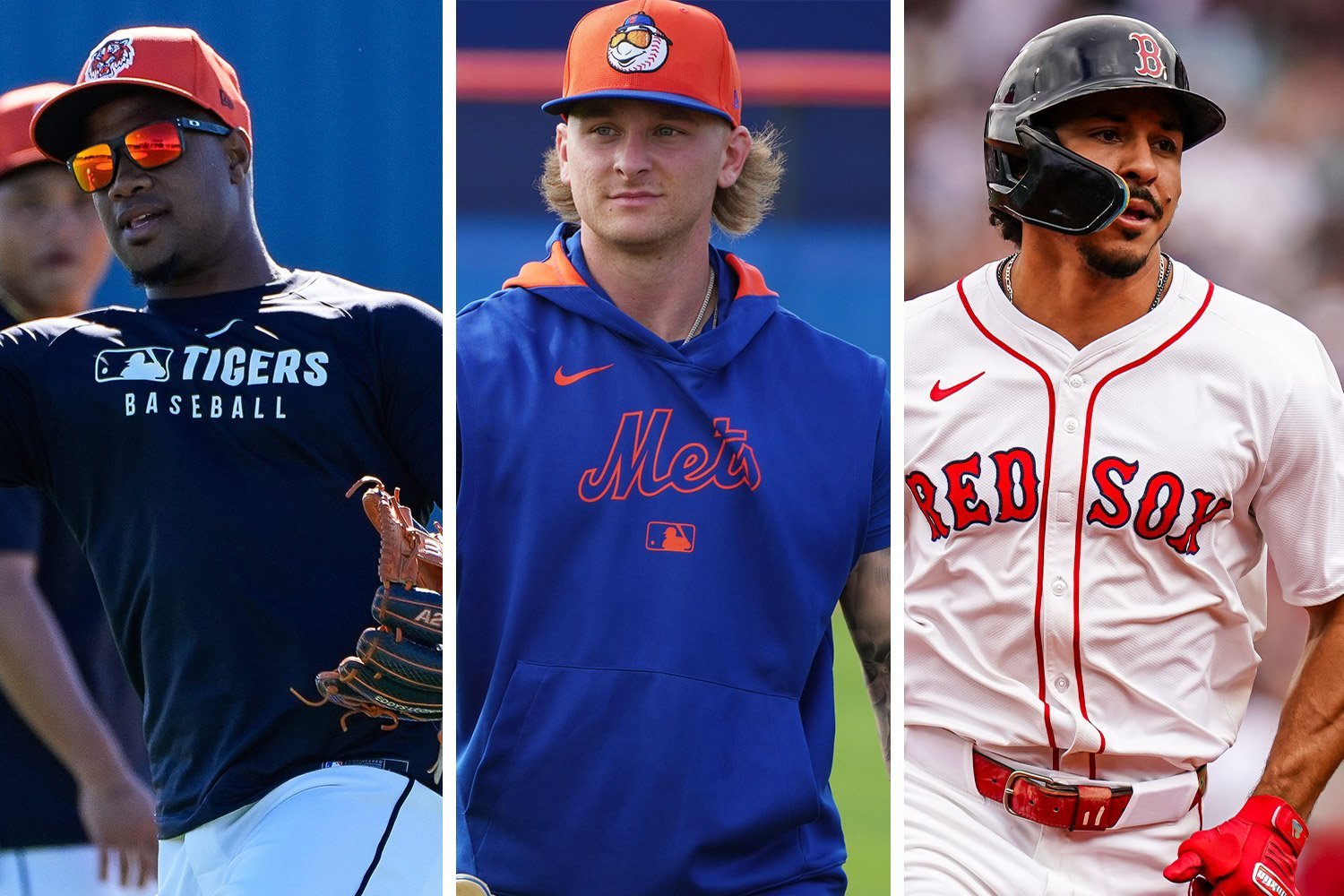 It was a bit of a surprise on Monday when it was announced that the Brewers traded Caleb Durbin to the Red Sox in a deal sending Andruw Monasterio and Anthony Seigler to the Bay Area as well. Coming back to Milwaukee in the deal are left-handed pitcher Kyle Harrison, infielder David Hamilton, and pitching prospect Shane Drohan. While some of these pieces could contribute to the Brewers this year, Matt Arnold sent three players to Boston with third base experience, leaving a seemingly gaping hole at the hot corner. An external option could present itself, such as a trade for Isaac Paredes coupled with the recent signing of Luis Rengifo, but internally, many names could man third base come Opening Day against the White Sox. Joey Ortiz Ortiz might be the most likely name in the Brewers organization to start at third base on Opening Day. While his offensive numbers dipped to a well below league-average slash line of .230/.276/.317, Ortiz still possesses the most third base experience on the big-league roster. He started 124 games at third base in 2024, helping turn 24 double plays while recording 10 errors in 1098.1 innings played. Additionally, Ortiz recorded +11 OAA in 2024, ranking 29th in the league in fielding run value. His numbers increased in 2025 after a move to shortstop, recording +13 OAA and ranking 23rd overall in fielding run value. Ortiz will be good defensively, but don’t expect much power production from Ortiz. His exit velocity and expected slugging were both in the bottom 3rd percentile in MLB, and there aren’t many signs of improvement offensively. Expect him to contribute with his defense and speed, as will many other Brewers this year. Jett Williams The 22-year-old shortstop was acquired in the Freddy Peralta trade with the New York Mets in January, and the no. 51 prospect in baseball, according to MLB Pipeline, will get spring training reps at the hot corner, according to Matt Arnold, the Brewers’ president of baseball operations. Williams started 70 total games at shortstop last year in the Mets’ system between Double-A and Triple-A, committing eleven errors in those games. He also spent time at second base and in center field. With the bat, it was a tale of two teams for Williams. In Double-A with the Binghamton Rumble Ponies,s Williams earned a slashline of .281/.390/.477 with 10 home runs. After a promotion to Triple-A Syracuse in August last year, Williams’ slashline was .209/.285/.433, which showed some decreases in batting average and on-base percentage. However, Williams hit 7 home runs, almost as many as he hit in Binghamton in close to three times as many games. Williams starting at a position he hasn’t played in the minor leagues on Opening Day is extremely unlikely, and it is more likely that Williams is on the roster as the starting shortstop, with Ortiz sliding over to third. David Hamilton The recently acquired Hamilton played 91 games this past season for the Red Sox, and in 177 at bats he posted a .222/.283/.359 slash line while primarily playing second base. Hamilton has little experience at third base in the majors (one inning last year), so expect him to fit into a utility role for the Brewers this year. Eddys Leonard Leonard may be a bit of an unknown name, as the 25-year-old was signed to a minor league contract back in November, but he recently received a non-roster invite to spring training in Phoenix. While never having big league experience, Leonard compiled a .239/.304/.739 slashline in Triple-A Gwinnett last year. He hit 20 home runs and, in addition to his offensive numbers, started 35 games at third base, committing five errors. It's unlikely Leonard is the third base starter over any of the three listed above, but don’t be surprised if he swings the bat well and helps the Brewers at some point this year. Brock Wilken The 23-year-old former first-round pick received a non-roster invite, similarly to Leonard, but it would be a long shot for Wilken to start Opening Day at third base. Wilken hasn’t played above Double-A, playing 79 games with the Biloxi Shuckers last year. He found his swing this past season, raising his OPS from .679 in 2024 to .876 in 2025 due to the help of 18 home runs. Barring unforeseen circumstances, Wilken won’t make the team out of spring training, but getting another strong year under his belt, along with staying healthy, could lead to him being in the roster conversation next year. Whether it is an internal or external move, the Brewers will need to figure out the hot corner sooner rather than later, allowing them more consistency and chemistry within the infield heading into the regular season. View the full article
 -
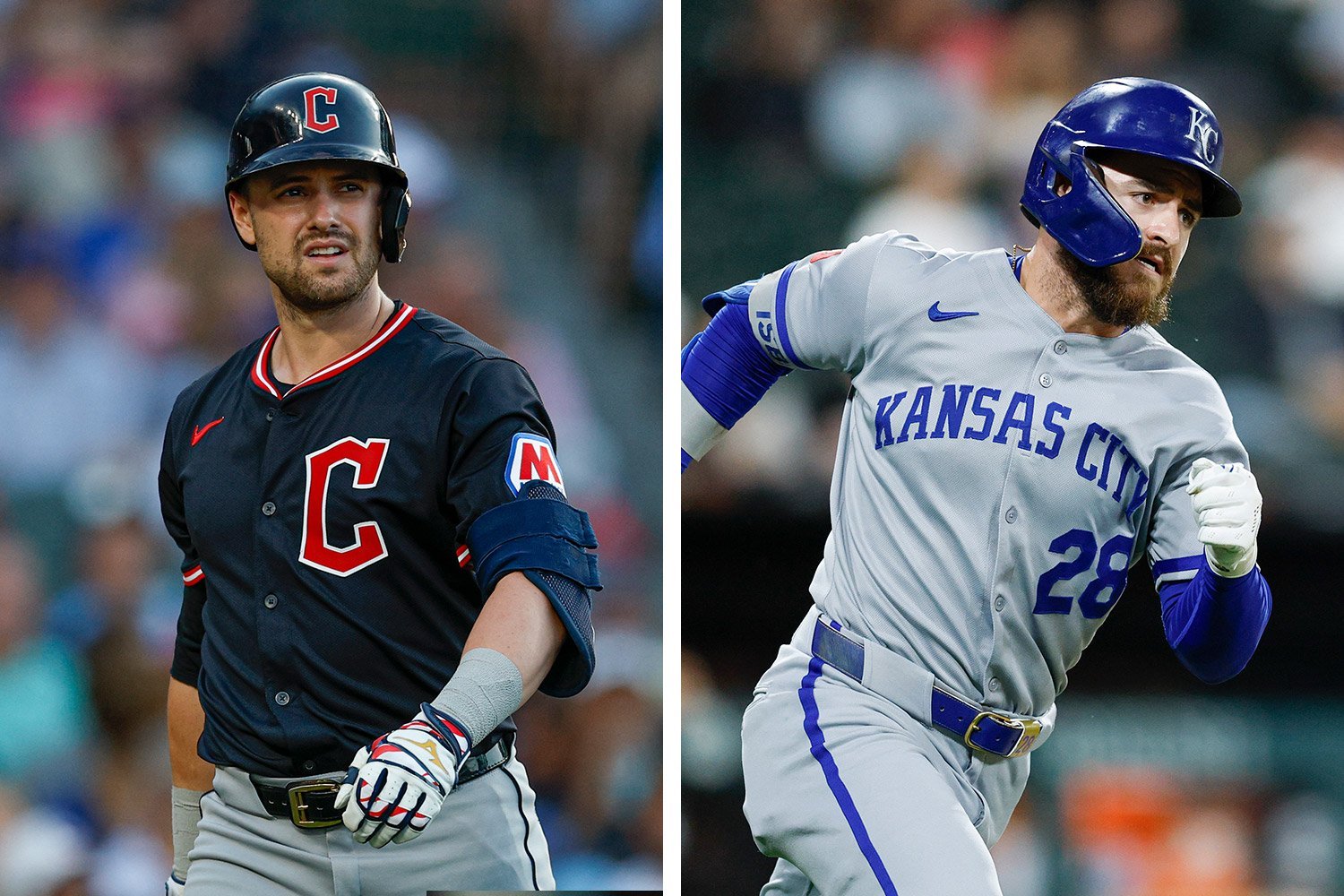 The Kansas City Royals are no longer a rebuilding curiosity. They are a legitimate team on the rise, powered by a deep collection of young talent, a rotation that doesn’t get enough national credit, and a true franchise cornerstone in Bobby Witt Jr. Most positions feel settled or at least promising. Center field, however, remains the loose floorboard in an otherwise sturdy house. Kyle Isbel handled the bulk of the work there in 2025, and if defense were the only requirement, the job would already be filled. His glove is elite. The problem is that his bat has become the offensive equivalent of bringing a butter knife to a sword fight. That reality likely explains why the Royals signed Lane Thomas to a one-year, $5.25 million deal, giving manager Matt Quatraro a legitimate alternative. So who should be the Royals’ center fielder: Isbel or Thomas? The glove that changes games Isbel’s defensive value is not subtle. In 1,032 innings in center field last year, he posted +9 Defensive Runs Saved and +12 Outs Above Average, ranking fourth and third among American League center fielders in those categories. That’s not just good; that’s game-altering. Balls that look destined for the gap die quietly in his glove, and pitchers get outs they probably already chalked up as hits. The offensive side, though, keeps dragging the conversation back to square one. Isbel finished last season with a 79 wRC+, his fourth straight year under 83, and his career mark sits at 78. For context, league average is 100, and Isbel hasn’t sniffed it at any point in his big-league career. What makes it more frustrating is the contrast with his minor league track record. He was a .808 OPS hitter on the farm, but through 496 MLB games, that number has cratered to .653. His Statcast page is flooded with blue, the kind that signals weak contact and limited offensive upside: At almost 29 years old, the data suggests this is simply who he is. If he were even a league-average hitter, the Royals wouldn’t be debating this. He isn’t, but his glove still gives him a way to impact games. The upside gamble Thomas brings a very different profile. When healthy and locked in, he looks like the kind of player who can tilt a lineup. He has already proven he can clear 20 home runs, blasting 28 for Washington in 2023, and he showed his legs are just as dangerous by stealing 32 bases in 2024. That combination of power and speed is something Kansas City simply doesn’t get from Isbel. Last season, though, was a nightmare. A bone bruise in his right wrist was only the beginning. Plantar fasciitis followed, limiting him to just 39 games and a brutal 48 wRC+ with Cleveland. Thomas eventually underwent surgery in late September, but he is expected to be healthy enough to compete for the center field job this spring. Defense is where the gap widens. Thomas doesn’t come close to Isbel with the glove. Even accounting for small samples, the numbers are rough. He posted -1 DRS and -2 OAA last year, and if you go back to the last season where he logged significant innings in the outfield, 2024, the picture gets uglier: -13 DRS and -6 OAA across 1,065 ⅔ innings. Those struggles weren’t limited to center field either; the corners didn’t treat him kindly, either. A matchup-based answer This doesn’t have to be an either-or decision. Isbel hits left-handed and owns an 82 career wRC+ against right-handed pitching, compared to a miserable 64 against lefties. Thomas, on the other hand, offers an 84 wRC+ versus right-handers and a 135 mark when facing southpaws. Against right-handed pitching, the two are essentially the same hitter by wRC+. That makes Isbel the logical choice, because his defense actively helps the pitching staff. When a left-hander is on the mound, Thomas should get the nod. In those situations, he turns center field into a lineup advantage instead of a dead spot, giving the Royals a well-above-average bat at a premium defensive position without sacrificing much. View the full article
 -
Why Bradley Blalock could slot into Marlins bullpen
DiamondCentric posted an article in Fish On First
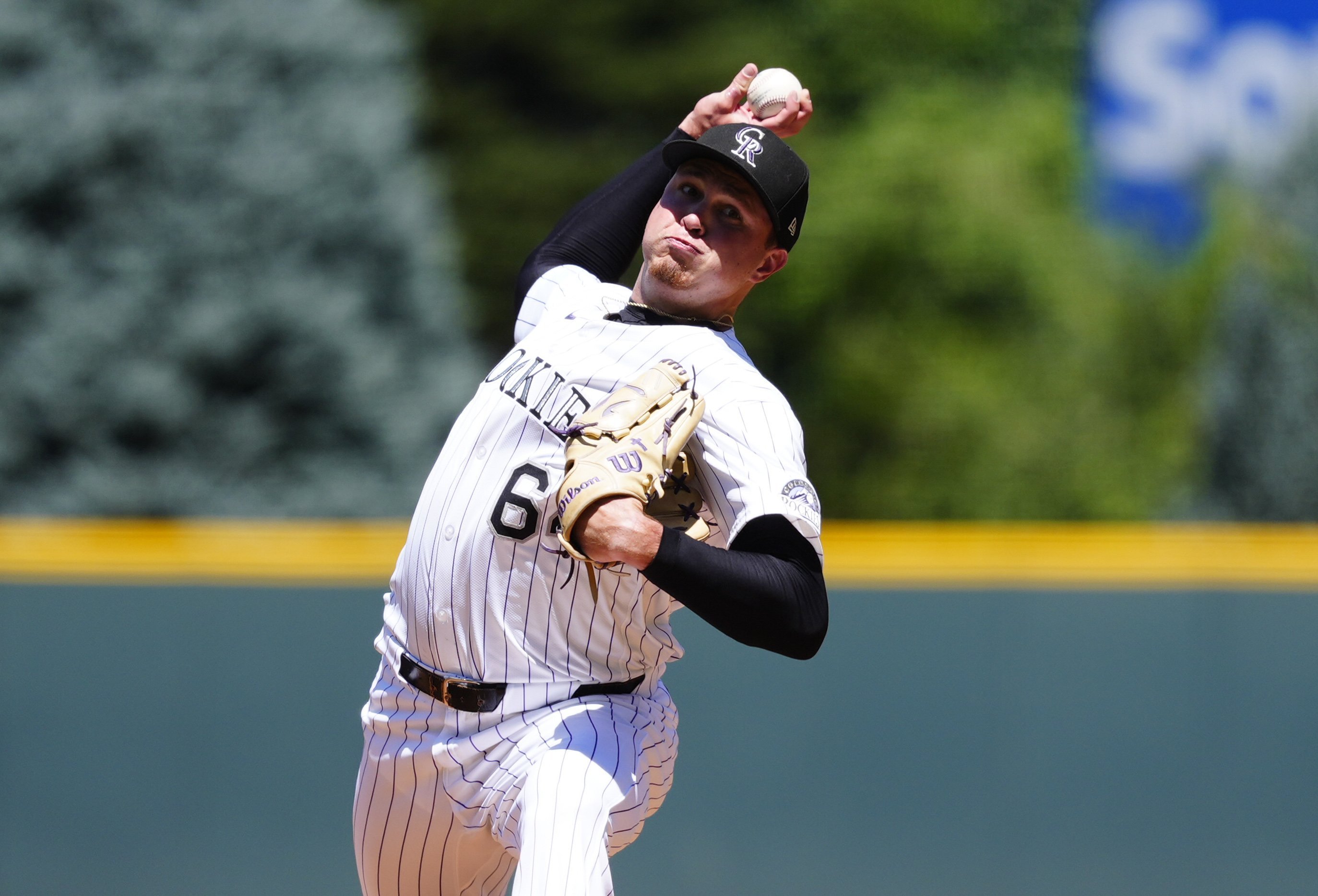 Right-hander Bradley Blalock in 2025 had a 9.36 ERA, 7.31 FIP, and -1.0 fWAR through 58 ⅔ innings. Horrible numbers. Although digging way in, some intriguing traits may explain why the Miami Marlins claimed him from the Colorado Rockies in January. Putting the results aside, Blalock has a high arm slot, good metrics on his fastball, a strong splitter, and a deep pitch mix. Blalock's 62-degree arm angle was the second-highest among qualified righties last season. It plays well with his fastball and above-average extension, something that the Marlins have targeted with other arms as of late. With 16 inches of induced vertical break, minimal horizontal break (2") and average velocity, Blalock's fastball should perform better than it has (.431 xWOBA). His past struggles mainly had to do with it being thrown so much middle-middle. He will have to locate it outside the strike zone more often. Highlighting Blalock's best pitch, his splitter, this may have enticed the Marlins to claim him as they have targeted many other split-throwers during the Peter Bendix era so far. Blalock mainly threw his to lefties. It limited damage compared to his other pitches (.318 xwoBACON) and induced more frequent whiffs as well (24.7%). I foresee the Marlins increasing his splitter usage, including throwing it against right-handed hitters. d2U1S1FfWGw0TUFRPT1fRHdaWlZsMVhVQU1BRHdFQUJBQUhVbE5mQUZrQkJsTUFWd0JSQkFwVUFWZFVCZ0pm.mp4 Blalock throws a slider, although it's mainly utilized vs. righties. The pitch did not perform well. While training at Driveline Baseball this offseason, the 25-year-old says he added a sweeper and sinker. That combination could help him generate more ground balls. A cutter and curveball are also used by Blalock. The curveball, like his slider, was destroyed by hitters (.565 xwoBACON). It has a lot of break to it, but does not get hitters out. However, his cutter may have potential. It generated ground balls at a 50% clip, with a 21.2 whiff% and zero barrels allowed. Blalock threw the pitch to hitters of either handedness. Upping its usage could be the next step. With this much-needed change of scenery, Blalock may be on the upswing. As bad as his first two seasons in the major league looked, there is an opportunity with the Marlins if they hit on the right combination of pitch mix tweaks, sequencing changes, and potential biomechanical adjustments. He has one more minor league option left in case it takes some time to recalibrate to his new arsenal. Blalock could eventually offer bulk innings out of the 'pen for the Fish. View the full article
 -
In Jesús Sánchez, Blue Jays Get Low-Risk, High-Reward Bat
DiamondCentric posted an article in Jays Centre
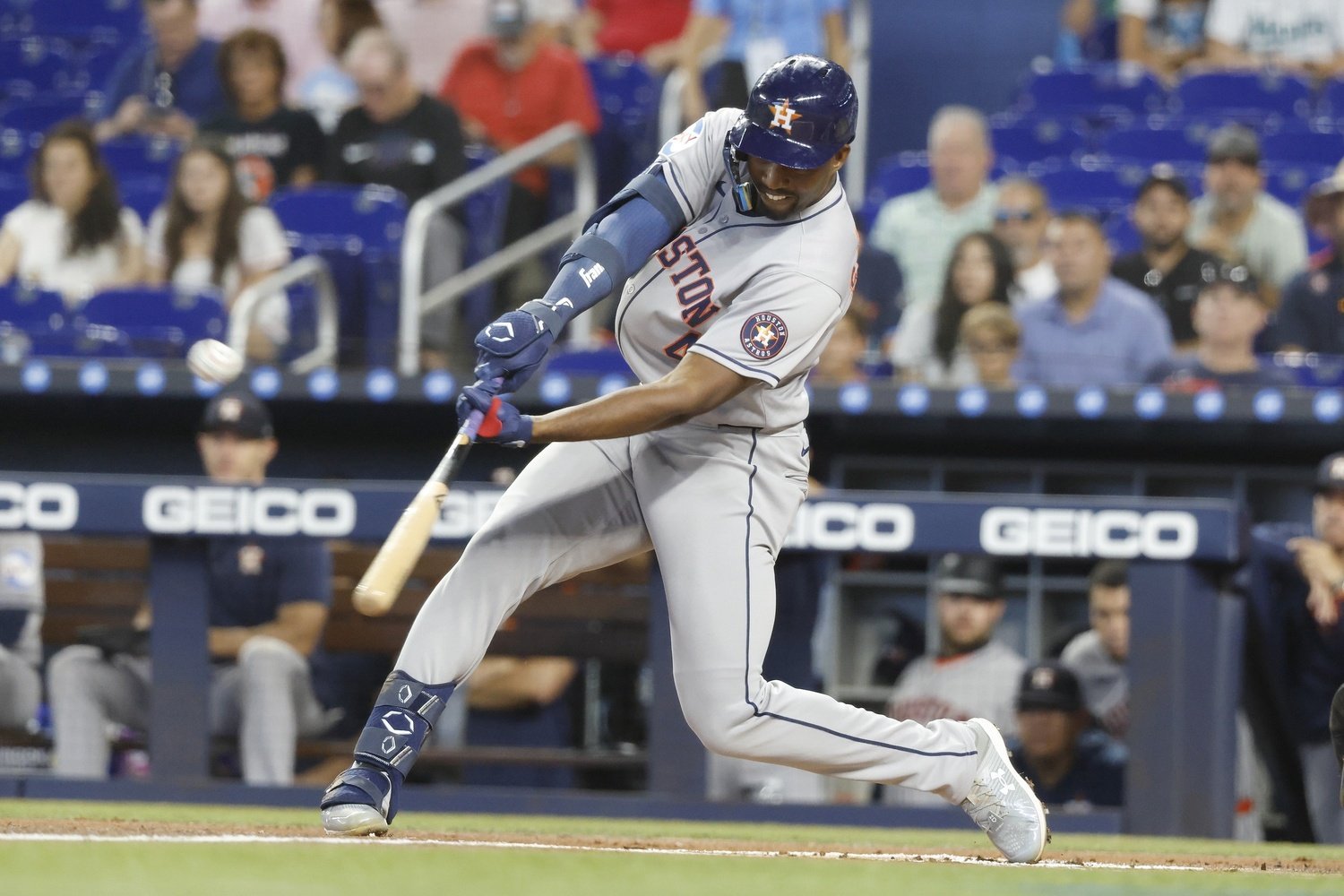 After the disappointing news that Anthony Santander would be sidelined for five to six months following surgery on his left shoulder, Blue Jays GM Ross Atkins quieted the masses by declaring the team was "not significantly involved" in the market for additions to the outfield. The surplus of corner outfielders on the big league roster would finally be free to sort itself out with spring training games getting underway soon. So much for that. On Friday morning, the Jays double-backed on their unsuspecting fanbase by trading for Jesús Sánchez. Joey Loperfido is going back to Houston in return, rejoining the team that drafted him five years ago. The Yusei Kikuchi trade tree has grown another branch. The Blue Jays swapped one outfielder for another in this one. For those unfamiliar, Sánchez is a big lefty-hitting right fielder by trade who is coming off a down year but has been a quality bat at this level before; he debuted in 2020 and is under team control for this year and next. He has a prodigiously thunderous bat – here's a home run of his from a couple years ago that threatened to leave the cavernous Marlins Park, and who could forget this demolition in 2022 – yet he has never hit more than 18 homers or 25 doubles in a season, and is decidedly a power-over-plate-skills type of hitter. Sánchez's best years to this point were 2023 and 2024 with Miami. He finished with a wRC+ of 108 and 101, and fWAR totals of 1.4 and 1.6, respectively. He doesn't possess remarkable sprint speed but is more of a factor on the bases than he might seem at first glance, with 29 steals over the past two seasons. The defensive analytics can't seem to agree on how good he is in the field: In 2025, he saved 7 runs in right field according to DRS, but was a net neutral according to Statcast's fielding run value. He has posted 99th-percentile maximum exit velocities before and hit some of the most physically impressive home runs you can find. He also just recorded the first single-season strikeout rate under 25% of his career. There's clearly a lot to build on here, and the Blue Jays are going to take their shot at getting the most out of him. The Astros traded for him at the 2025 deadline in hopes of doing the same thing, but did not succeed, as Sánchez hit under .200 and posted a .611 OPS in 48 games for them. Still, Atkins acknowledged he has "always liked" Sánchez and has been interested in acquiring him for a while. It's not hard to see why. Sánchez has a strong reputation among analytically-inclined fans, thanks in large part to his 93rd-percentile bat speed. His barrel rate has been 11% or better in each of the past three seasons, and he has always crushed the baseball. What's impressive about his bat speed is that he achieves it despite having a short swing: No hitter in baseball with a below-average swing length and at least 200 PA in 2025 had a higher average bat speed than Sánchez's 75.9 mph. Displaying this much strength while remaining short to the ball is an extremely rare trait, even in an age in which teams are actively seeking hitters with that fast-short swing archetype. Jesús Sánchez Swing Mechanics Comps, 2025 Hitter Bat Speed Swing Length Swing Tilt Jesús Sánchez 75.9 6.9' 28° Bobby Witt Jr. 74.4 7.0' 29° Drake Baldwin 75.4 7.2' 31° Gunnar Henderson 75.5 7.3' 29° Atkins also made it sound like Sánchez will get more than his fair share of playing time against right-handed pitching, which is welcome news for a team that was looking to add power from the left side all offseason. Even in 2025, a year that saw Sánchez record a 93 wRC+ after that post-trade backslide in Houston, he had a 104 wRC+ versus righties. For his career, he has a 111 wRC+ and a SLG of .450 in those matchups. Those career marks are both better than what Nathan Lukes, Toronto's other remaining lefty-hitting corner outfielder with Santander sidelined, managed in 2025. Despite that, Atkins was quick to heap praise on Lukes during his media availability on Friday, saying the team wouldn't be afraid to slot both him and Sánchez in the outfield while moving Addison Barger to the infield on certain days when the opposing starting pitcher is right-handed. Lukes's plate coverage and his ability to put the ball in play are sure to come in handy, and the Jays do not appear to be shying away from Tetris-ing their lineup vs. RHP for the time being. All indications point to Sánchez, Lukes, Barger, and Kazuma Okamoto having fluid roles in these situations to start the year. Even though Sánchez has hardly ever been above-average at anything that doesn't have to do with power from an offensive standpoint, he progressed in other areas of his game in 2025. Not to a shocking extent or anything, but enough to make one wonder why his results sagged: Jesús Sánchez Contact & Discipline, 2023-25 Year K% BB% Zone Contact% Chase% 2023 26.6% 9.5% 78.9% 31.4% 2024 26.1% 7.6% 78.1% 36.1% 2025 22.9% 8.5% 82.2% 30.6% One of the reasons his talent hasn't fully translated to results is the fact that he hasn't pulled the ball enough, even during his most productive seasons. Too many loud outs to the biggest part of the ballpark isn't the most conducive use of the raw power Sánchez has. He also reversed this trend in 2025, going from a decidedly below-average 12.2% pull-air rate the year before to a 16.9% mark, a hair above league average. Above everything else, there are two main things holding Sánchez back. Most importantly, he simply cannot hit lefties. I wish I were exaggerating, but he's probably a non-option to face them. In fairness, the Jays have the likes of Okamoto, Davis Schneider, and Ernie Clement to pick up the slack there, but the lineup will be less powerful against southpaws thanks to Sánchez's absence. He ran a 33 wRC+ vs LHP in 2025, slightly reducing his career mark...to 41. He has more than quadruple the amount of plate appearances against righties as a big leaguer. Again, this roster has enough lefty mashers to offset that concern, but his effectiveness being strictly limited to one handedness is a crucial caveat to remember before dreaming too big on his bat speed. The other consistent knock on Sánchez, albeit the one that should theoretically be easier to fix, is that he hits too many groundballs. His groundball rate has sat in the high-40s for most of his career, too high for someone of his skill set. Outlier bat speed and exit velocities become compromised when the hitter cannot lift or pull, which is the dilemma Sánchez was dealing with until 2025, when he started to get a handle on how to pull again. His average contact point moved more than four inches towards the pitcher compared to 2024, and he started turning on the ball without sacrificing contact quantity. Maybe David Popkins and company continue to lean into that? It's also important to note that most of the other outlier fast-short swing guys have steep swing tilts better geared toward hitting the ball in the air (Pete Alonso, Riley Greene, Kyle Stowers). Changing tilt is hard to do year over year, but it might be worthwhile to try for Sánchez. With respect to balls in play, the goal for both him and the Blue Jays should be to make the most of those 100+ mph bullets we know he has in him. It's an exciting opportunity for Toronto's hitting coaches, and an exciting opportunity for the fanbase to watch someone who can do things on the field that no others can. Things didn't work out for Sánchez in Houston, but every underlying hint that suggests 25-homer power and a fearsome righty masher remains. With this move, the Jays have swiftly, intelligently, and calmly responded to the unfortunate timing and circumstance of the Santander injury. Loperfido has an intriguing skill set in his own right and has certainly earned a fair shot in the big leagues by now, but this is a logical chance to take for a team with high aspirations that just took a blow on the injury front, especially when the newcomer's old team happens to be cutting costs. The stars aligned for a hitter with untapped potential to join the Blue Jays at an opportune time. Perhaps Toronto is the place where Jesús Sánchez will truly come into his own. View the full article
 -
Royals Sign John Means to Two-Year Minor League Deal
DiamondCentric posted an article in Royals Keep
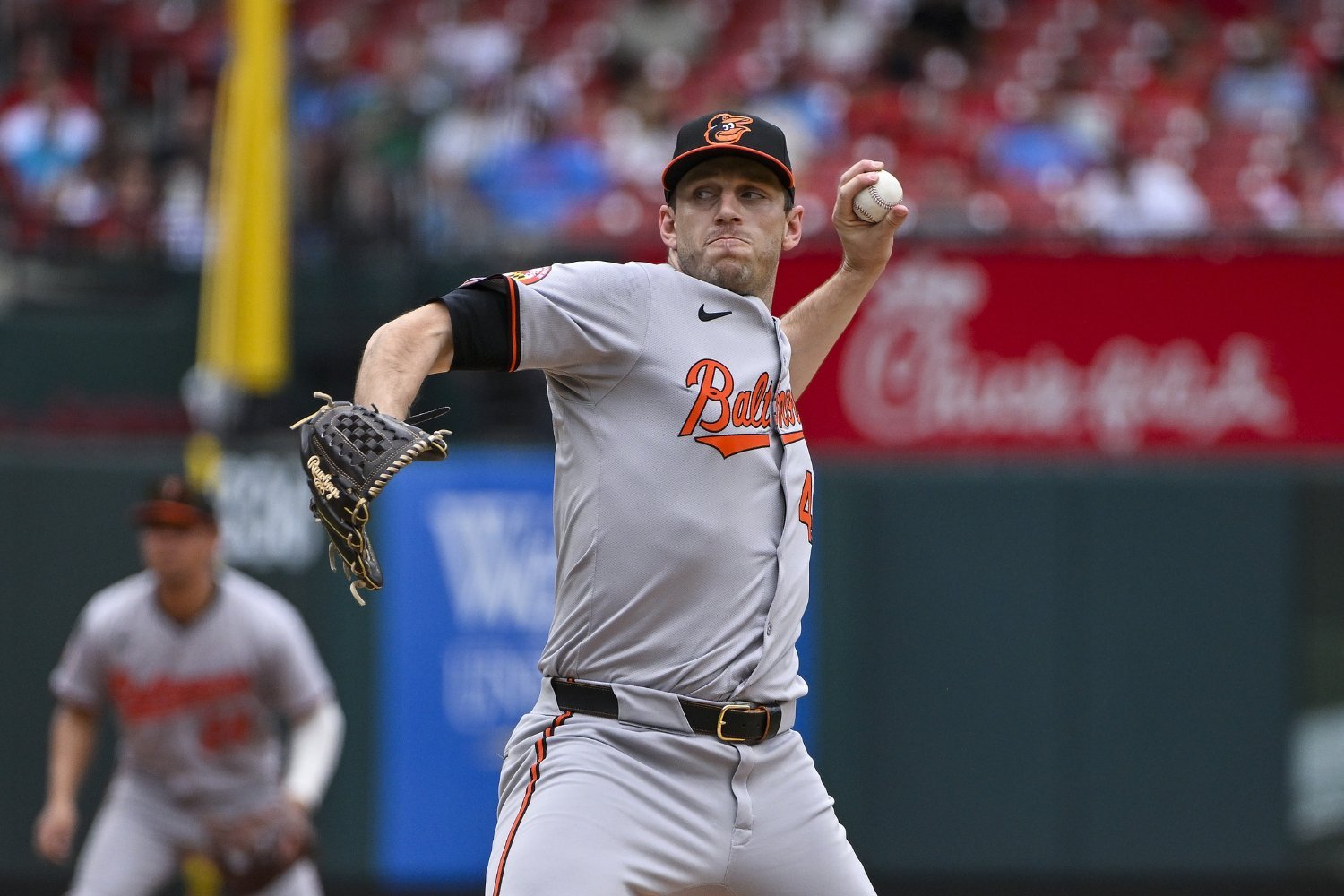 On Friday, the Kansas City Royals announced via social media that they had signed left-handed free-agent pitcher John Means to a two-year Minor League deal. Means is a local Gardner, Kansas, product who was an 11th-round pick by the Baltimore Orioles in the 2014 MLB Draft. The 32-year-old found success early on in his career as he made the All-Star team in 2019 with the Orioles. That season, he posted a 3.60 ERA, 1.14 WHIP, and 3.2 fWAR in 155 IP. He had another solid season in 2021, posting a 3.62 ERA, 1.03 WHIP, and 2.5 fWAR in 146.2 IP. Unfortunately, since then, he's struggled to stay healthy. Since 2022, he's only made 10 starts and pitched 52.1 innings due to various injuries. His last MLB innings came in 2024 with the Orioles, as he pitched 20.2 innings and posted a 2.61 ERA. While he demonstrated excellent control (17.5% K-BB%), his stuff was questionable that year, and he gave up a lot of hard contact, as illustrated by his Statcast percentile via TJ Stats. Means did a good job of limiting barrels, as exhibited by his 6.6% barrel rate allowed, which ranked in the 72nd percentile. However, his average exit velocity allowed ranked in the 14th percentile, and his hard-hit rate ranked in the first percentile. Thus, it's not surprising that his 3.31 FIP was much higher than his ERA in 2024. When healthy, the Gardner product offers some intriguing aspects as a pitcher. In addition to limiting walks (career 4.9% walk rate), he has demonstrated an excellent ability to generate whiffs and strikes. He has a career swinging-strike rate of 10.9%, and in 2024, he posted a 29.4% CSW%, ranking in the 77th percentile. While he doesn't generate a ton of groundballs (32.3% career GB%), he seems to be able to limit barrels well enough to avoid serious damage. However, health has been an issue for Means in his career. He had Tommy John surgery in 2024, and the Orioles opted to let him leave in free agency as a result. The Guardians picked him up last year on a one-year deal with a club option. However, he only pitched 26.2 innings with the Triple-A Columbus Clippers and posted a 6.08 ERA in that sample. The stuff, strike, and xwOABCON metrics didn't quite impress either, which explains why the Guardians didn't exercise his club option. Means not only sported a sub-100 TJ Stuff+, but he also had below-average marks in zone rate (45.9%), chase% (28%), whiff% (18.2%), and xwOBACON (.459). At his age, it seems likely that Means may be nearing the end of his career, barring a dramatic turnaround. Furthermore, his Achilles injury this December, which should keep him out all of 2026, only makes that possibility more likely. And yet, the Royals were willing to take a chance on him this offseason, offering him that two-year Minor League deal. Why Did the Royals Pick Up Means? This deal feels similar to the Kyle Wright acquisition with Atlanta back in 2024 (which also resulted in them acquiring reliever Nick Anderson, who was released mid-season). The Royals picked up Wright, knowing he was going to miss all of 2024, with the hope that he could get healthy and be a factor in the rotation and/or bullpen in 2025. Unfortunately, that didn't happen for Wright, as he failed to throw a pitch for the Royals in his two-year tenure. Furthermore, the metrics for the Minors were not only limited (eight starts and 23 IP), but also mediocre (5.48 ERA between Omaha and Northwest Arkansas). The TJ Stats Summary from Omaha wasn't pretty either, as illustrated below. Wright's profile is very similar to Means' in Columbus last year, especially in the TJ Stuff+ and zone rate categories. Thus, why would the Royals do this again to themselves with a once-promising but oft-injured pitcher? First off, there's probably some local allure in Means being a Kansas high school product. The Royals have seemed to favor acquiring local products, not only in terms of talent (Alex Lange and Connor Kaiser), but also coaches (Connor Dawson). While Means is certainly a project, it's easier to invest in it when he's a local guy the fanbase can rally behind. Another reason why Kansas City may be intrigued by Means is that he has shown the batted-ball profile to limit walks and barrels over his career. He has a career barrel rate of 8.1%, and he's allowed a barrel rate over 10% in a single season only once (2021). Having that ability should transition well to Kauffman Stadium, even with the changes to the ballpark's dimensions, starting in 2026. Here's a look at his spray chart from 2024, modified to Kauffman Stadium, and it seems like he would still be successful when it comes to how his batted balls would have fared in Kansas City. Thus, if he's fully recovered, it's possible Means could find a resurgence, especially if the Royals' pitching coaches can help him refine his pitch quality a bit or add a pitch or two, which has been a calling card of this coaching staff. Seth Lugo and Michael Wacha have found strong career resurgences in Kansas City, as has Michael Lorenzen, who parlayed his two solid seasons there into a new deal in Colorado. Perhaps, if healthy, Means could be another Royals pitching success story, who could give them the production they need in the middle of the rotation in 2027, which could be thin with Kris Bubic likely gone by then (via midseason trade or free agency) and Alec Marsh likely on the shelf for another season. If he's not healthy, he could be another Wright, whose career in Kansas City never gets off the ground. For a two-year Minor League deal, Means is worth taking a chance on. View the full article
 -
Brewers Sign Luis Rengifo, Will He Start At Third?
DiamondCentric posted an article in Brewer Fanatic
 Dave Gasper breaks down the Brewers signing of veteran infielder Luis Rengifo and what it means for the Crew's infield picture heading into 2026.View the full article
 -
Minnesota Twins Announce 2026 Promotional Schedule & Giveaways
DiamondCentric posted an article in Twins Daily
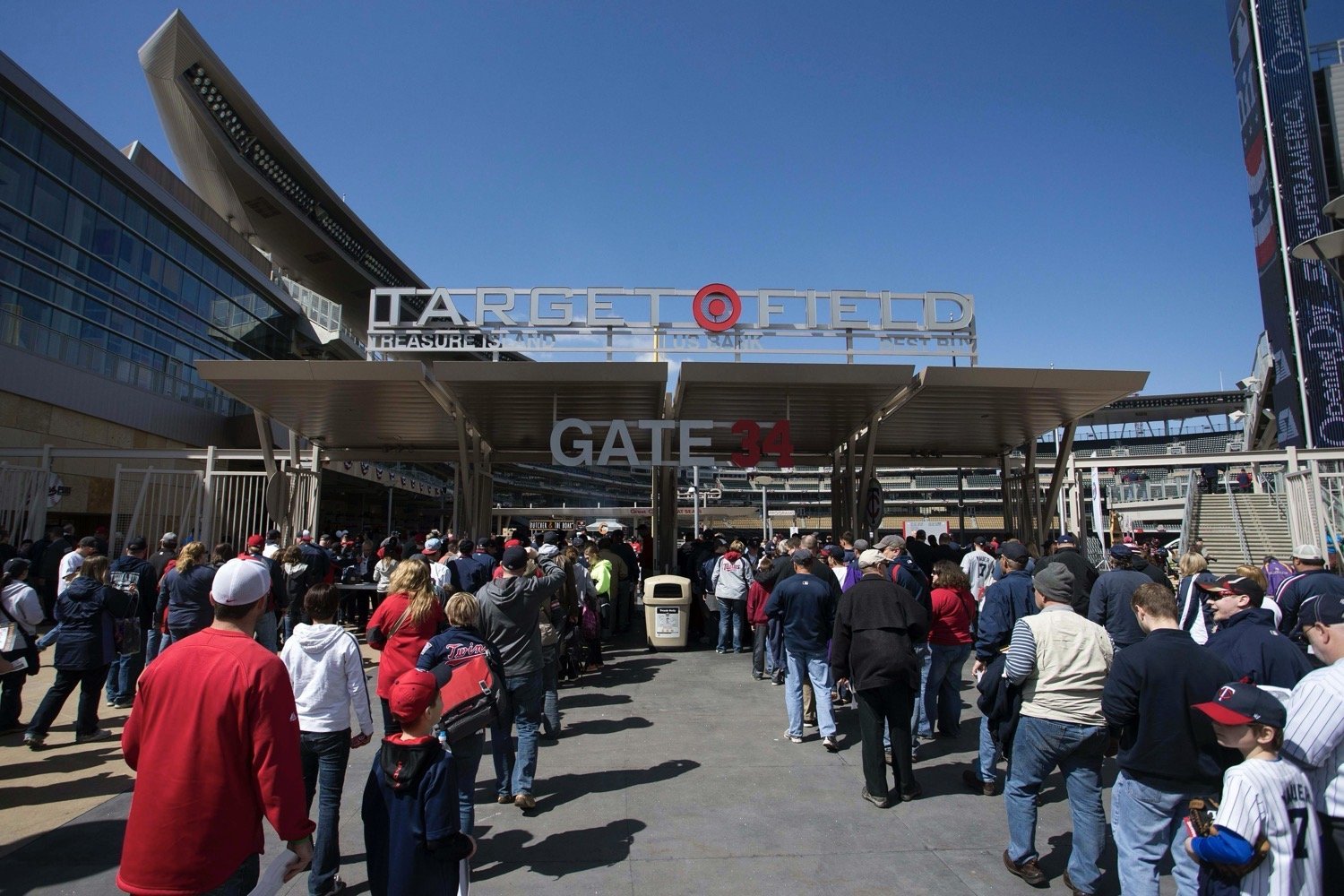 While you can question the motivation, you can't question the effort the Minnesota Twins Front Office is putting into getting fans to return to Target Field in 2026. After significantly reducing the price of the Twins Pass and announcing a buy two, get one free “Triple Play Bundle”, they have released an impressive lineup of promotions for the season. The headliner (at least for those of age and like to participate in such activities) is the expansion of the pre-game happy hour to include Friday and Saturday games. Fans can enjoy $2 beers from the time the gates open to the scheduled first pitch (emphasis on “scheduled” meaning it's not when the first pitch is thrown…sorry, no getting tanked for cheap when game starts are delayed). On Friday games, fans of any age can consume hot dogs and “snacks” at $2 an item. Another recurring promotion that will surely be popular amongst the under “12 & under” crowd (as well as the pocketbooks of the adults accompanying them) is the free kids ice cream and half-price kid meals on Sunday contests. Of course, these matinees have historically been “Kids Day” at Target Field where they will also have the opportunity to run the bases following the game. The Twins, though, are just getting started - they also announced upwards of 50 additional giveaways and theme nights across the 81 game home season. The highlight giveaway for me is the Kirby Puckett jersey giveaway when the Twins host the Athletics on Saturday, July 25th. Additional fan favorites include bobble heads and another replica jersey, which are listed below: May 16 (vs. MIL): Grogu Bobblehead via a Star Wars ticket package June 6 (vs. KC): Royce Lewis Jersey giveaway June 27 (vs. COL): Buxton Bobblehead giveaway The remaining promotions are nothing to sleep on. Below is a list of the giveaways that require you to be one of the first 5-10 thousand fans through the gates: April 3 (vs. TB): Opening Day Beanie April 5 (vs. TB): Kids Opening Day Beanie April 7 (vs. DET): Magnetic Schedule May 2 (vs. TOR): Minnesota Twins Fishing Lure June 22 (vs. LAD): Native American Heritage Night Jersey June 23 (vs. LAD): Night Light July 11 (vs. LAA): Twins Hall of Fame Pin July 12 (vs. LAA): Beach Tote Bag July 26 (vs. ATH): Back to School Lunch Bag August 16 (vs. PHI): Back to School Backpack August 30 (vs. CWS): Kids T.C. Bear Shoulder Mascot September 26 (vs. TEX): Fan Appreciation Hat September 27 (vs. TEX): Kids Appreciation Widget Baseball Hat But wait, there's more! As has been the case for awhile now, the Twins have an every growing array of special ticket package promotions. Most notably (for anyone who plans to subscribe to Twins.TV anyway), is Twins.TV Night on Wednesday, April 8th against the Detroit Tigers. If you purchase the special ticket package not only do you get into the game, but also included is a subscription to Twins.TV, "a behind-the-scenes exclusive look at what brings broadcasts to life", and a broadcaster meet and greet. Other “get a ticket, get an item” special ticket package promotions include: April 28 (vs. SEA): University of St. Thomas Night May 1 (vs. TOR): First Responders Night May 2 (vs. TOR): Mental Health Awareness Day May 3 (vs. TOR): Cancer Awareness Day May 12 (vs. MIA): Bark at the Park May 13 (vs. MIA): Nurses Night May 17 (vs. MIL): Teenage Mutant Ninja Turtles Day May 19 (vs. HOU): Wine Women & Baseball, St. Cloud State Night June 2 (vs. CWS): CSB+SJU Night June 4 (vs. KC): Prince Night June 5 (vs. KC): Pop Star Night, University of Minnesota Night, Golf Night June 7 (vs. KC): Pixar Night June 12 (vs. STL): Pride Night June 14 (vs. STL): Barbie Game Day, Winona State Night June 23 (vs. LAD): Gustavus Night June 24 (vs. LAD): St. Olaf Night June 27 (vs. COL): Girl Scout Night June 28 (vs. COL): Wine Women & Baseball July 10 (vs. LAA): Yacht Rock Night, Bowling Day July 24 (vs. ATH): South Dakota State University Night July 26 (vs. ATH): Hello Kitty Day July 28 (vs. KC): Wine Women & Baseball August 10 (vs. BAL): University of North Dakota Night August 11 (vs. BAL): North Dakota State University Night August 15 (vs. PHI): Field of Dreams Night, University of South Dakota Night August 18 (vs. ATL): Wine Women & Baseball August 28 (vs. CWS): Minnesota State University - Mankato Night, Breck Night August 29 (vs. CWS): SpongeBob Day August 30 (vs. CWS): Peanuts Day August 31 (vs. DET): St. Paul Saints Night September 1 (vs. DET): Bark at the Park September 15 (vs. NYY): Wine Women & Baseball While the product on the field may not be entertaining, many of these promotions might be reason enough to get to Target Field this summer. For additional details, such as whether you need to be the first 5,000 or 10,000 fans, make sure to visit the promotions page on the Twins website! Which promotions are you most excited for? Join the conversation in the comments! View the full article
 -
Cubs Were Right to Buy Low On Shelby Miller's Evolution
DiamondCentric posted an article in North Side Baseball
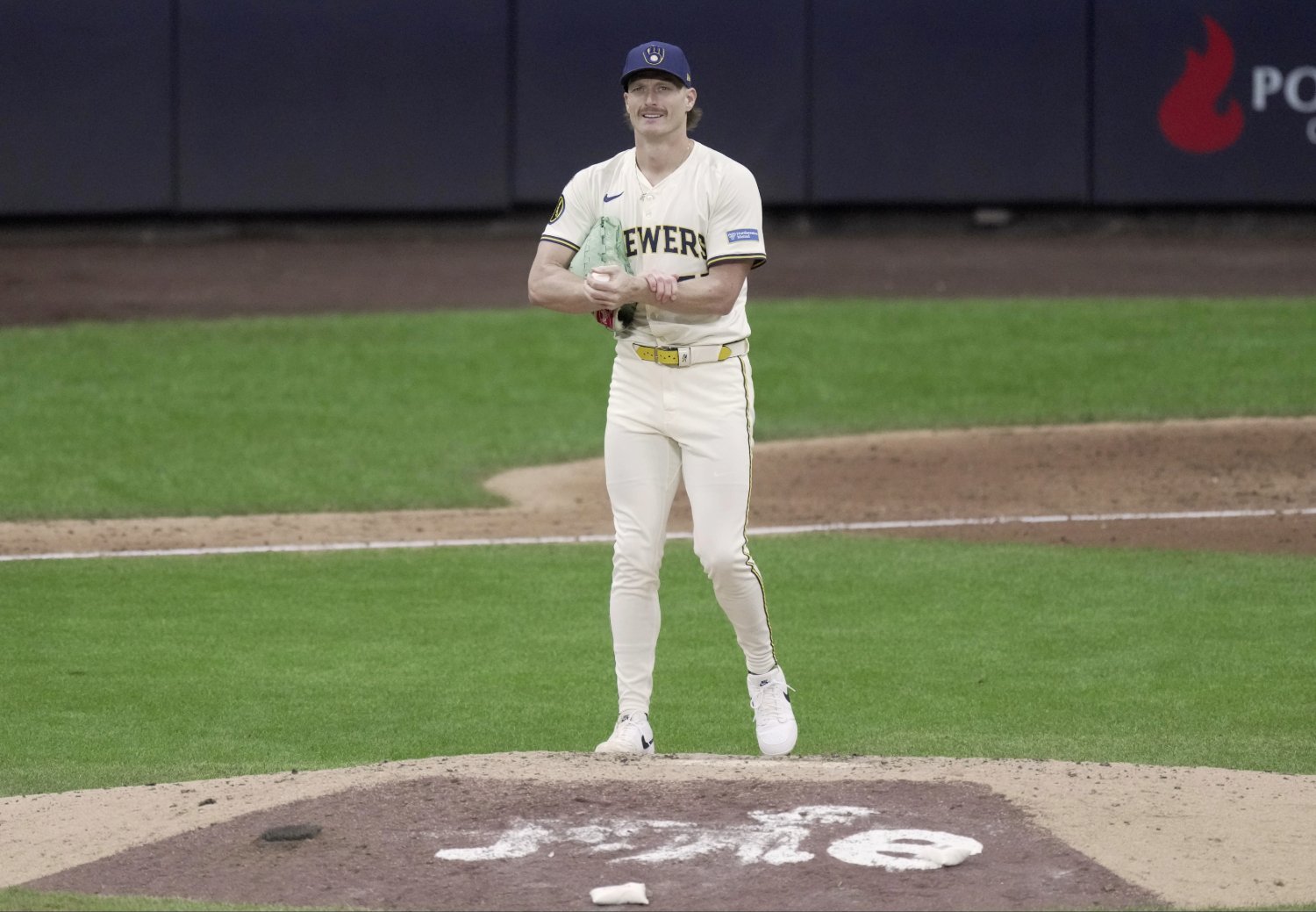 A few days after pitchers and catchers reported to camp, the Chicago Cubs agreed to a multi-year contract with right-handed pitcher Shelby Miller. This will be Miller's second stint with the Cubs organization, though it will undoubtedly be longer than his cup of coffee with the team in 2021 where he totaled just two innings. Miller has reinvented himself between now, then, and when he (eventually) takes the mound at Wrigley again. Miller was forced to change after 2022. Between 2016 and that season, the former first-round pick battled injuries and ineffectiveness and had been dropped from MLB rotations as a whole. Facing a future where it appeared he would only be MLB depth, toiling away in Triple-A, the hurler underwent some changes in arsenal and arm slot. When the Cubs last saw Miller in their organization, he threw more overhand and featured a fastball-sweeper mix with some cutters thrown in for good measure. His four-seam fastball sat a touch under 94 mph, which was fine for the time, but not a particularly overpowering offering. He struggled to strike hitters out with a K-rate under 13%, and was knocked around to the tune of an ERA over nine during the 2021 season. But that was then, and this is now. 3f8d21c6-5c66799f-47dc5b50-csvm-diamondgcp-asset_1280x720_59_4000K.mp4 The Cubs are hoping that they're signing a version that looks much more like the guy Miller turned into during the 2023 season and beyond. Featuring an arm angle that has dipped over six degrees, Miller is a different beast. The velocity has ticked up, now sitting over 95mph. Coupled with the lower arm slot, the pitch now features more arm-side run. Combined with his new fastball shape is a fun little split-finger that has become the bane of hitters' existences: last year, it sported a batting average against of just .135. Hitters are no longer teeing off Miller; now, they're striking out at a 29% rate (at least, they did in 2025). The reason he has increased his effectiveness is in how these two pitches play off of each other. They have similar induced spin patterns, but offer distinct observed motion (pictured above). This is due to seam-shifted wake, essentially, playing with the grip of the baseball to create added deception. They also work well in terms of location; Miller throws the fastball up while the split finger falls off the table (pictured below). These two pitches make life incredibly difficult for hitters, much more so than Miller's fastball-sweeper combination. Those pitches offered enough distinction on plane for hitters to easily determine what was coming. Now, with seam-shifted wake characteristics creating deception in spin, as well as the pitches working in tandem on the same vertical plane, Miller seems to have finally found the best version of himself. The split-finger is also an important weapon in attacking opposite-handed hitters. The 35-year-old limited left-handed batters to a .233 wOBA last year and just a .139 batting average against. Over his career, Miller has struggled against LHH, so adding a pitch designed specifically to get those kinds of hitters outs helped create such impressive splits. In many ways, Miller has turned into a better version of what Mark Leiter Jr. was with the Cubs — a right-handed pitcher who is particularly useful against lefties. If you're asking yourself "How did the Cubs find such a useful reliever this late into the offseason?", the answer is because Shelby Miller is slated to miss most, if not all, of the upcoming season due to Tommy John surgery. Because this is a multi-year contract, this is less of a signing for 2026, but an upside play for 2027. This will allow the Cubs to monitor the rehab process and bring him along within the organization. If it works out, this deal ensures they have a useful bullpen option heading into next year. There's certainly a chance that when he does return to the mound that he's a shell of himself, but with how far TJ-surgery recovery has come, there's a good chance he'll be able to bounce back just fine. This might not change the outlook of the 2026 season, but represents a smart flier for the future. How do you grade the Shelby Miller addition? Are you excited? Do you think this will work out for the Cubs? Let us know in the comments below! View the full article
 -
Anthony Banda is the First Elite Arm for a New Twins Bullpen
DiamondCentric posted an article in Twins Daily
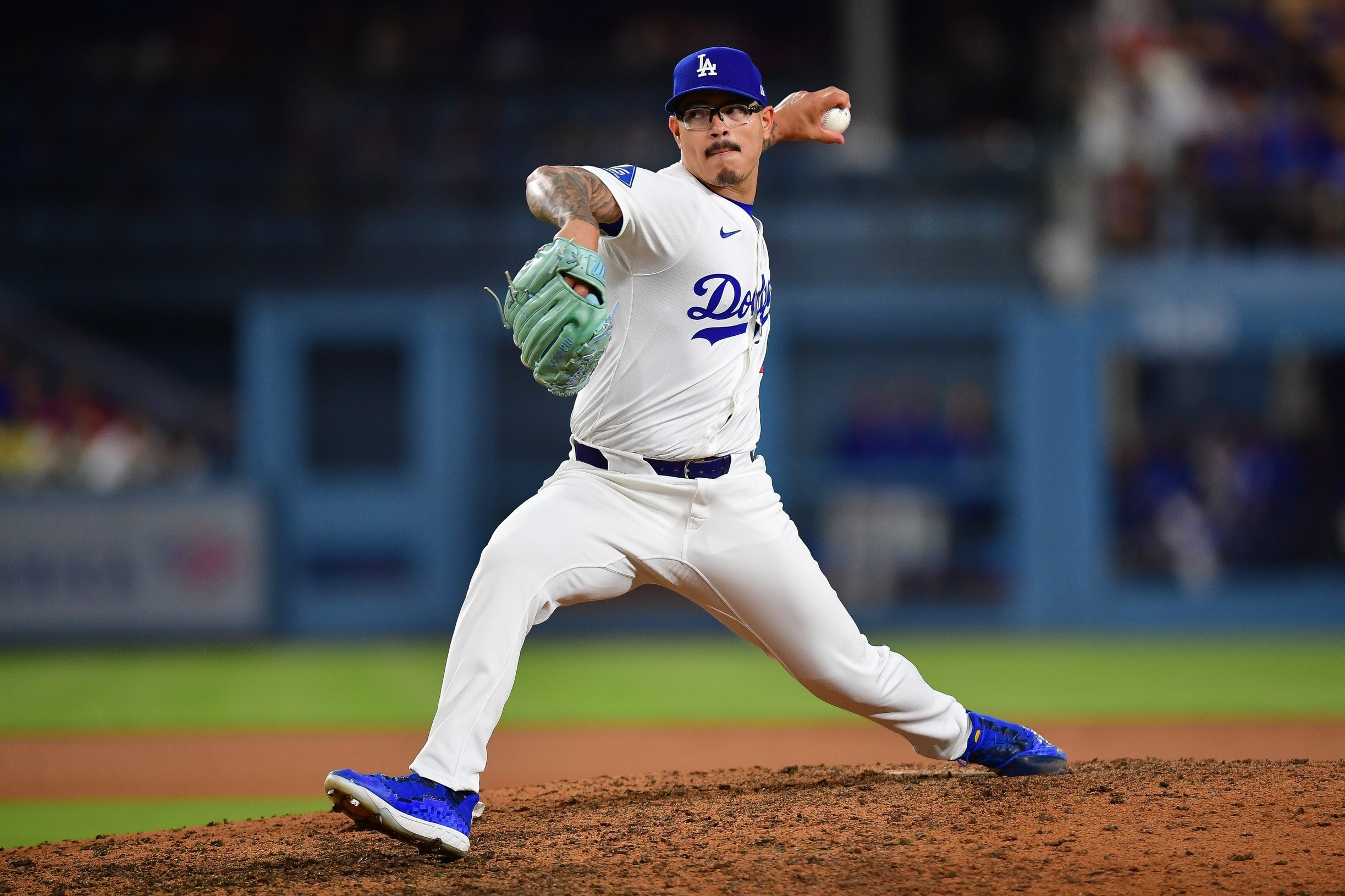 While the Dodgers have decided “No Hay Banda” for their bullpen, the Twins declared, “Silencio!” Why the Dodgers dropped Anthony Banda is only somewhat clear. While there were concerns over the underlying stats, it is more likely that the team thought the $1.625 million settled number for his first year of Arb would be enough to keep other teams from claiming him through waivers—and if not, get something decent in return. After all, the Dodgers cycled through over 40 pitchers last year, and Banda pitched more innings than some of their top starting arms, often in high leverage situations. But for the Twins, this is a no brainer pick up. On the first day of Spring Training, Derek Shelton reminded the media scrum of his familiarity with Banda from his Pittsburgh days and declared him “a bulldog [who is] not afraid of taking the ball.” Drafted in the 10th Round in 2012 by the Milwaukee Brewers, Banda bounced around over ten different minor league systems and a brief major league stint with the Nationals before somehow landing with the Dodgers in a mid-season trade with the Guardians for cash considerations. However, he made an immediate impact thanks to a few adjustments. First, the Dodgers lowered his general arm angle 34 degrees as opposed to 43 in 2023, according to Sam Scherer of Dodgers Digest. But the big difference came on the slider, which runs about 10mph slower than the mid-90s fastball. According to Fabian Ardaya of The Athletic, Dodgers pitching coach Connor McGuiness decided to change his unorthodox slider grip. Banda’s slider, which took almost 40 inches of vertical drop over the last two seasons, ranked only below a few elite arms like Josh Hader, and made him a devastating lefty tool for the eventual World Series winners. During the 2024 postseason run, Banda played critical role after the team's other left handed option, Alex Vesia, got sidelined in the NLCS. Over his ten appearances, Banda allowed only a single run. In 2025, Banda posted a 3.18 ERA over 64.2 IP last year, appearing in a 70 different games. While he held a 3.34 FIP against lefties, Righties managed a brutal 5.54 FIP. Banda posted one of the worst walk rates in baseball last year, which will need to be fixed. But even when Banda struggled, he was still one of the most central players for a team whose bullpen looked cooked. As high profile arms like Blake Trienen and Tanner Scott struggled, David Roberts trusted Banda to make almost daily appearances; he received the call three straight days in a row, multiple times throughout the season. Half his appearances came in either high or medium leverage, and others were often because no other trusted arms were available to throw. His numerous appearances netted a 1.2 WPA, only second behind Vesia for the bullpen. Banda’s 2025 postseason did not go as expected—his match-up against Addison Barger in Game 1 of the World Series led to the first even pinch-hit grand slam, which cooked any stats you might see—but the stuff is still there. If anything, the Dodgers may have overused his slider in 2025. Getting the fastball and sinker back into place could make him a critical piece. And in a team that needs elite arms, Banda has proved his stuff is there. Banda carried the Dodgers bullpen at times over their two first runs. Now they think he won’t prove useful in the threepeat. At 32, he comes in with more experience than most of the arms and can prove his worth. Under Pete Maki, it would not be unexpected to see the Twins either turn him into a fireman for jams in the mid-innings, or even as an eighth inning man. Either way, Banda feels like the first real piece to cement the next steps of the bullpen. View the full article
 -
 Just four days after creating a vacuum at third base by trading Caleb Durbin, the Milwaukee Brewers have theoretically plugged that hole via free agency. Luis Rengifo, a versatile defender who stole 24 bases in a limited 2024 season, has agreed to a one-year, $3.5 million contract with the Crew, according to MLB.com's Mark Feinsand. The deal, which is currently unofficial and pending a physical, includes a $10 million mutual option for 2027. Rengifo, a top outside candidate to fill the void left by the Durbin deal, immediately vaults to the top of the depth chart at third base, a position he has played 199 times at the MLB level. A former Los Angeles Angel, Rengifo was having a breakthrough 2024, posting a .300/.347/.417 slash line with those 24 steals to go along with nine homers and 30 RBIs in 78 games. Then, he injured his right wrist in early July. He tried to come back, but lasted just nine games before requiring season-ending surgery. The versatile infielder, who turns 29 on Feb. 26, came back in 2025 and had a subpar showing for the last-place Angels, putting up a slash line of .238/.287/.335 with nine homers, 43 RBIs and 10 steals in 147 games, below his career marks of .250/..307/.382. He split 2025 between second and third base, playing in 76 games at the hot corner, committing two errors in 146⅓ innings. The switch-hitting Rengifo does hit left-handed pitchers better than right-handers, registering a .268/.311/.438 slash line with 23 homers in 349 career games vs. southpaws, while owning a .242/.305/.360 mark with 39 homers in 619 games against righties. David Hamilton, a former Brewers prospect who was part of the Durbin trade, was the leading candidate to start at third, but now is the top choice to fill the role vacated by Andruw Monasterio's inclusion in this week's trade as the main utility man on the roster. View the full article
 -
 Just four days after creating a vacuum at third base by trading Caleb Durbin, the Milwaukee Brewers have theoretically plugged that hole via free agency. Luis Rengifo, a versatile defender who stole 24 bases in a limited 2024 season, has agreed to a one-year, $3.5 million contract with the Crew, according to MLB.com's Mark Feinsand. The deal, which is currently unofficial and pending a physical, includes a $10 million mutual option for 2027. Rengifo, a top outside candidate to fill the void left by the Durbin deal, immediately vaults to the top of the depth chart at third base, a position he has played 199 times at the MLB level. A former Los Angeles Angel, Rengifo was having a breakthrough 2024, posting a .300/.347/.417 slash line with those 24 steals to go along with nine homers and 30 RBIs in 78 games. Then, he injured his right wrist in early July. He tried to come back, but lasted just nine games before requiring season-ending surgery. The versatile infielder, who turns 29 on Feb. 26, came back in 2025 and had a subpar showing for the last-place Angels, putting up a slash line of .238/.287/.335 with nine homers, 43 RBIs and 10 steals in 147 games, below his career marks of .250/..307/.382. He split 2025 between second and third base, playing in 76 games at the hot corner, committing two errors in 146⅓ innings. The switch-hitting Rengifo does hit left-handed pitchers better than right-handers, registering a .268/.311/.438 slash line with 23 homers in 349 career games vs. southpaws, while owning a .242/.305/.360 mark with 39 homers in 619 games against righties. David Hamilton, a former Brewers prospect who was part of the Durbin trade, was the leading candidate to start at third, but now is the top choice to fill the role vacated by Andruw Monasterio's inclusion in this week's trade as the main utility man on the roster. View the full article
 -
2026 Spring Training Episode 1: John Arrives In Fort Myers
DiamondCentric posted an article in Twins Daily
 John Bonnes has arrived in Florida! After a couple of days in Twins camp, Lou Hennessy and Bonnes discuss some of the early talking points surrounding the Twins. Listen using Apple Podcasts: https://podcasts.apple.com/us/podcast/the-twins-off-daily-podcast/id1741266056 Listen using Spotify: https://open.spotify.com/show/4tb78XlurcPTYYSsARdbD7 Listen using iHeartRadio: https://www.iheart.com/podcast/263-the-twins-off-daily-podcas-167548600/ Listen using Pocket Casts: https://pca.st/nvclbt0w Watch on YouTube: https://www.youtube.com/@twinsdaily View the full article
