


DiamondCentric
-
Posts
2,631 -
Joined
-
Last visited
Never
Content Type
Profiles
Forums
Events
MLB News, Rumors & Analysis
DiamondCentric Tutorials & Help
Major League Baseball Videos
MLB Fan Guides & Resources
Store
Downloads
Gallery
Everything posted by DiamondCentric
-

Kansas City Royals 2026 Position Analysis: Corner Outfield
DiamondCentric posted an article in Royals Keep
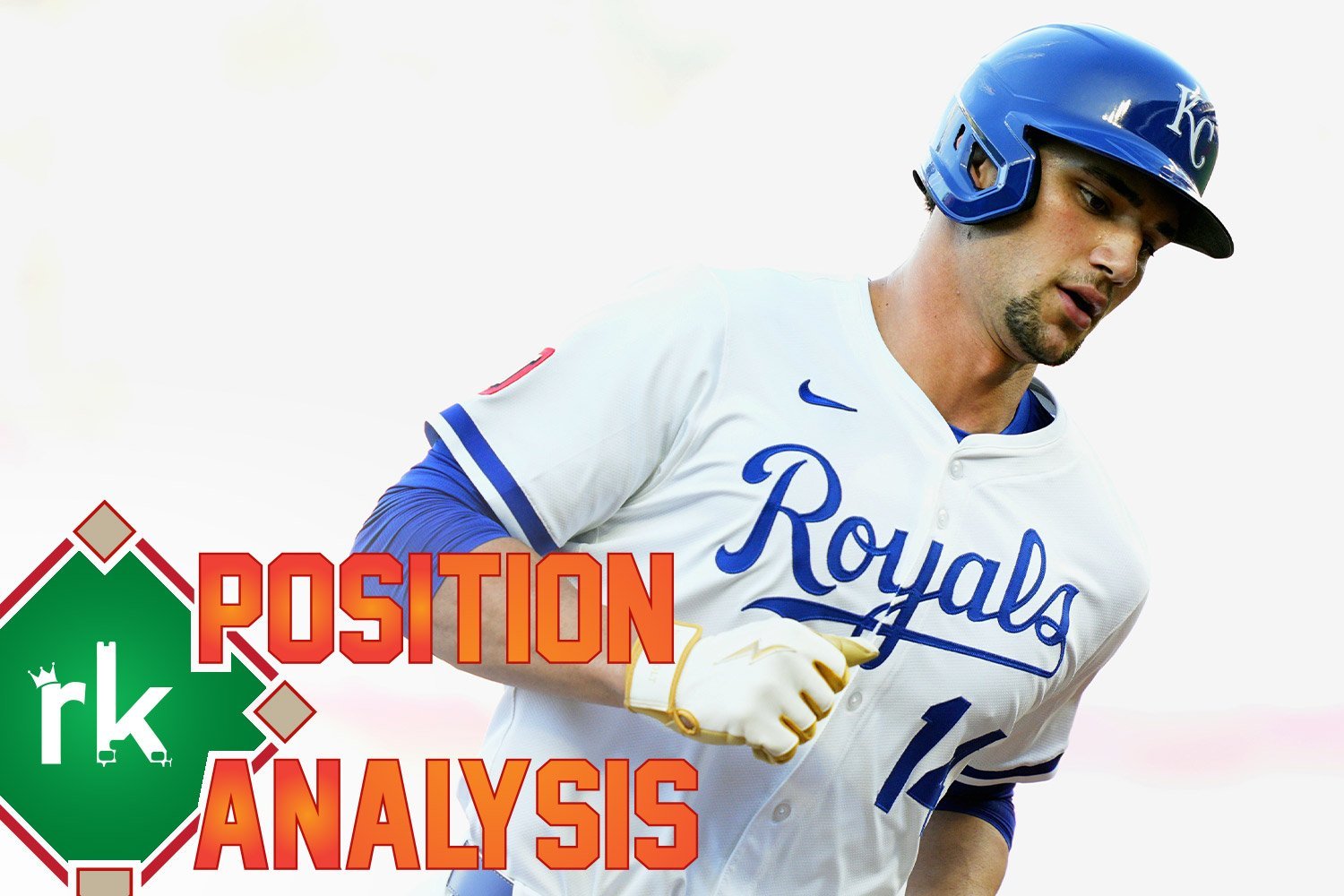 Last year, the Royals fielded 16 different players in left and right field. After Mike Yastrzemski’s arrival in July, he solidified a spot in right field, but he has since left for free agency, joining the Atlanta Braves. Despite his struggles at the plate, Jac Caglianone hopes to make right field his own in 2026. With prospects like John Rave, Drew Waters, and Tyler Tolbert unable to make a meaningful impact, the Royals decided to look elsewhere to round out the outfield by trading for Isaac Collins and signing Lane Thomas as a free agent. The Royals also brought in veteran outfielder Starling Marte to provide additional depth. Royals Corner Outfielders At A Glance Starters: Jac Caglianone, Isaac Collins Backups: Lane Thomas, Starling Marte, Nick Loftin, Michael Massey Depth: Tyler Tolbert, John Rave, Kameron Misner, Drew Waters Prospects: Gavin Cross, Carson Roccaforte Royals fWAR Ranking Last Year: 30th out of 30 in LF, 30th out of 30 in RF Royals fWAR Projection This Year: 23rd out of 30 in LF, 20th out of 30 in RF The Good Most importantly, the Royals made changes to address their biggest weakness this offseason. Lane Thomas and Starling Marte have proven track records of MLB success, and Isaac Collins is coming off an excellent season where he finished fourth in NL Rookie of the Year voting. Jac Caglianone has looked good in spring training with a slash line of .400/.550/.733 in 20 plate appearances. Caglianone has also impressed with Team Italy in the World Baseball Classic, slashing .364/.563/.727 in 16 plate appearances. Most notably, Caglianone has shown improved plate discipline, walking more often than striking out in his combined appearances in spring training and the WBC with nine walks against six strikeouts. Caglianone is also hitting the ball hard this spring. He represents the 100th percentile in both 90th percentile exit velocity and max exit velocity. While it may be easy to get excited about his strong spring training, it is important to remember that Caglianone had a strong spring last year with an OPS of 1.776. While the circumstances of his call-up in 2024 were not ideal, being rushed up to replace underperforming players, Caglianone was not able to translate his good spring into MLB success last season. Another positive going into 2025 is flexibility. The Royals have a lot of flexibility in platoon options and positioning. Thomas and Marte can provide relief against left-handed pitching when needed for Caglianone and Collins (who has struggled against left-handed pitching despite being a switch-hitter). Thomas can also be a platoon bat for Kyle Isbel in center field. Marte Will also factor in at designated hitter. Michael Massey and Nick Loftin are primarily infielders, but more can be options in the outfield if needed. Ideally, with their current depth, Loftin and Massey won’t be needed in the outfield as often as they were last season. The Bad There are question marks surrounding all three outfield additions when it comes to health and availability. Collins had a delayed start to spring training after receiving injections this offseason to address tendonitis in both of his knees. On March 13th, there was also a report that Collins was dealing with minor back tightness, which has caused the Royals to be more cautious with his playing time. As the likely starting left fielder, it will be important for Collins to stay healthy and not have to test the Royals’ outfield depth and flexibility right when the season starts. Thomas has also suffered injury issues in 2025, playing only in 39 games. He is only a couple of years removed from a season where he slashed .268/.315/.468, but Thomas will need to prove that he can both return to that level of production and stay healthy for a long stretch of the season. Marte has not dealt with significant injuries recently, but he is entering his age-37 season and is past the point in his career where he can be counted on as an everyday contributor. Marte has not eclipsed 500 plate appearances since 2022, but when he does play, he has proven to still provide an above-average bat, posting a wRC+ of 112 last season. After the top four anticipated contributors, there are a lot of players who have not yet been able to make a meaningful impact at the major-league level. Tyler Tolbert, John Rave, Kameron Misner, and Drew Waters all have struggled to impress in their limited time in the big leagues. While there is still time for any of them to grow into contributors in MLB, the Royals will hope that their services won’t be necessary in 2026. The Bottom Line The Royals were the worst team in MLB when it came to production from the corner outfield positions in 2025, and they made an effort to improve their outlook for 2026. The Royals are also assuming a lot of risk in relying on Caglianone to take the next step in his development, and that Thomas and Collins perform despite their injury concerns. If everything goes right, the Royals will be applauded for their shrewd business in the offseason to target sensible improvements to raise their floor. If injuries or regression hit, however, the Royals might be looking at a repeat of the woes from 2025. Previous Installments: Second Base Position Analysis Catcher Position Analysis First Base Position Analysis View the full article
-
Chicago Cubs 2026 Position Analysis: Catcher
DiamondCentric posted an article in North Side Baseball
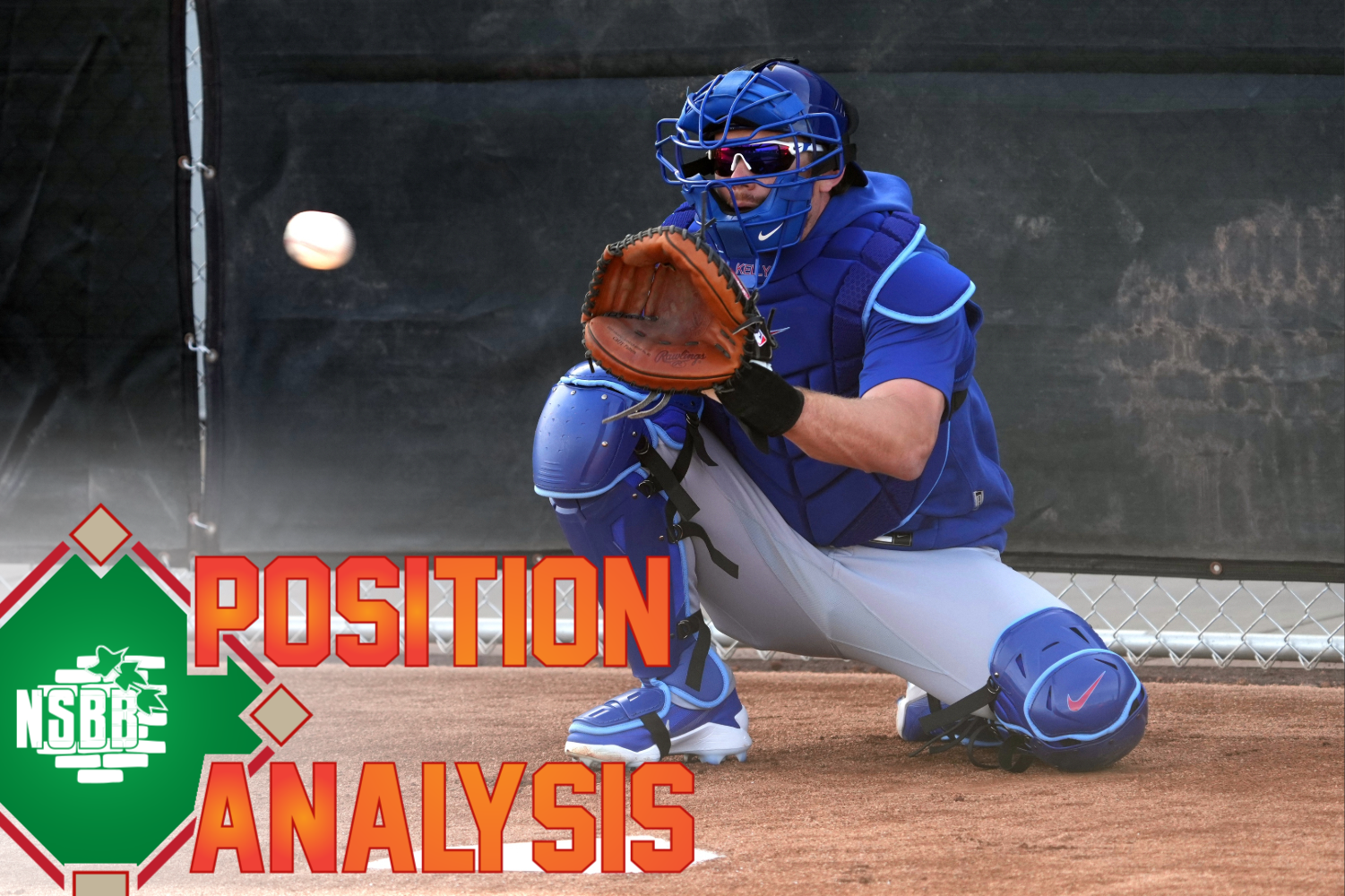 The catching position is as involved as any in baseball, seeing that whoever is behind the plate factors into every single pitch. The Chicago Cubs’ catching position has everything from a grizzled veteran who is coming off of a career year to up-and-coming talents with varying levels of upside. Here is a full breakdown of the North Siders' backstop situation heading into the 2026 season. Cubs Catchers At A Glance Starter: Carson Kelly Backup: Miguel Amaya Depth: Moises Ballesteros Prospects: Christian Bethancourt, Casey Opitz, Ariel Armas Cubs starting catcher fWAR last year: 11th out of 30 Cubs fWAR ranking projection this year: 16th out of 30 The Good Regardless of what the Cubs were expecting to get out of Carson Kelly in his first season with the team, he exceeded those standards. Chicago’s veteran backstop posted career marks in batting average (.249), hits (92), RBI (50) and runs scored (48), among other statistics. Arguably the most awe-inspiring figure was this: Kelly logged just 4.1 WAR over the first nine years of his career. In 2025 alone, he logged 3.6. One of the reasons Kelly had a breakout season at the plate was his plate discipline. His strikeout rate (19.0) and walk percentage (10.7) both beat the league-average marks, and it allowed him to capitalize in a crucial way: the pull-side air raid. While the majority of Kelly’s balls in play were to left field, he found a way to get out in front of pitches at a remarkable rate this year. The 31-year-old catcher capitalized on a career-high in Pull AIR%. Kelly wasn’t the only player who put up a career year, though. Miguel Amaya hit a personal-best .281 with a .500 slugging percentage that eclipsed his previous career-high of .359. Furthermore, after hitting just eight home runs across 117 contests the year prior, Amaya swatted four long balls in just 28 games. Call it hunger for more playing time if you want, but the 6-foot-1, 230 pound catcher found his power stroke in the 2025 season. Moises Ballesteros, while very young, flexed his hitting abilities as the team’s top prospect in his debut last year. The 22-year-old Venezuelan has always been a standout talent for his elite bat-to-ball skills, and the 60-grade hit tool on his scouting report reinforces that narrative. Very possibly the Cubs catcher of the future if his defense can hold up, Ballesteros registered a .298 batting average with an .868 OPS. He throttled a pair of home runs and served as a shot in the arm for an at-times anemic Cubs offense in the second half. The Bad It’s a rare sighting to see a player on the other end of 30 years old put up career numbers. Even if Kelly were to replicate his incredible 2025 season, he has a year left on his contract before a mutual option kicks in. That places a plethora of pressure on Amaya, who simply didn’t play a ton in 2025. In fact, Amaya’s 96 at-bats were the lowest total of any of his three seasons in the big leagues so far. Take the small sample size with a grain of salt, but his strikeout rate (21.4%), whiff rate (26.0%) and chase rate (36.8%) all left much to be desired in that time. The pop is clearly there. Now, it comes down to pitch identification and plate discipline, something that catchers of all people should have an advantage in. Given that those skills develop with more repetitions, it's a problem that Amaya's injury history is growing concerningly long when factoring in his time in the minors. Ballesteros, on the other hand, gets to swing freely as the projected starting designated hitter. When a 22-year-old is being projected to play at DH, though, that should tell you all you need to know about their defensive skills. The Bottom Line There’s a very clear changing of the guard happening here. With Kelly’s short-term contract nearing its end, it’ll be up to Amaya and Ballesteros/a prospect to slide up a spot in the team’s depth chart. Their power could be the calling card for a lineup that had to say goodbye to Kyle Tucker (22 home runs in 2025) after just one season. If both of these up-and-comers are hits? Chicago may have its answer for the foreseeable future, especially if they can find a veteran replacement for Kelly to pair with Amaya. Those are longer-term problems, though. For 2026, the Cubs are well positioned to run out a competent group of backstops. View the full article
-
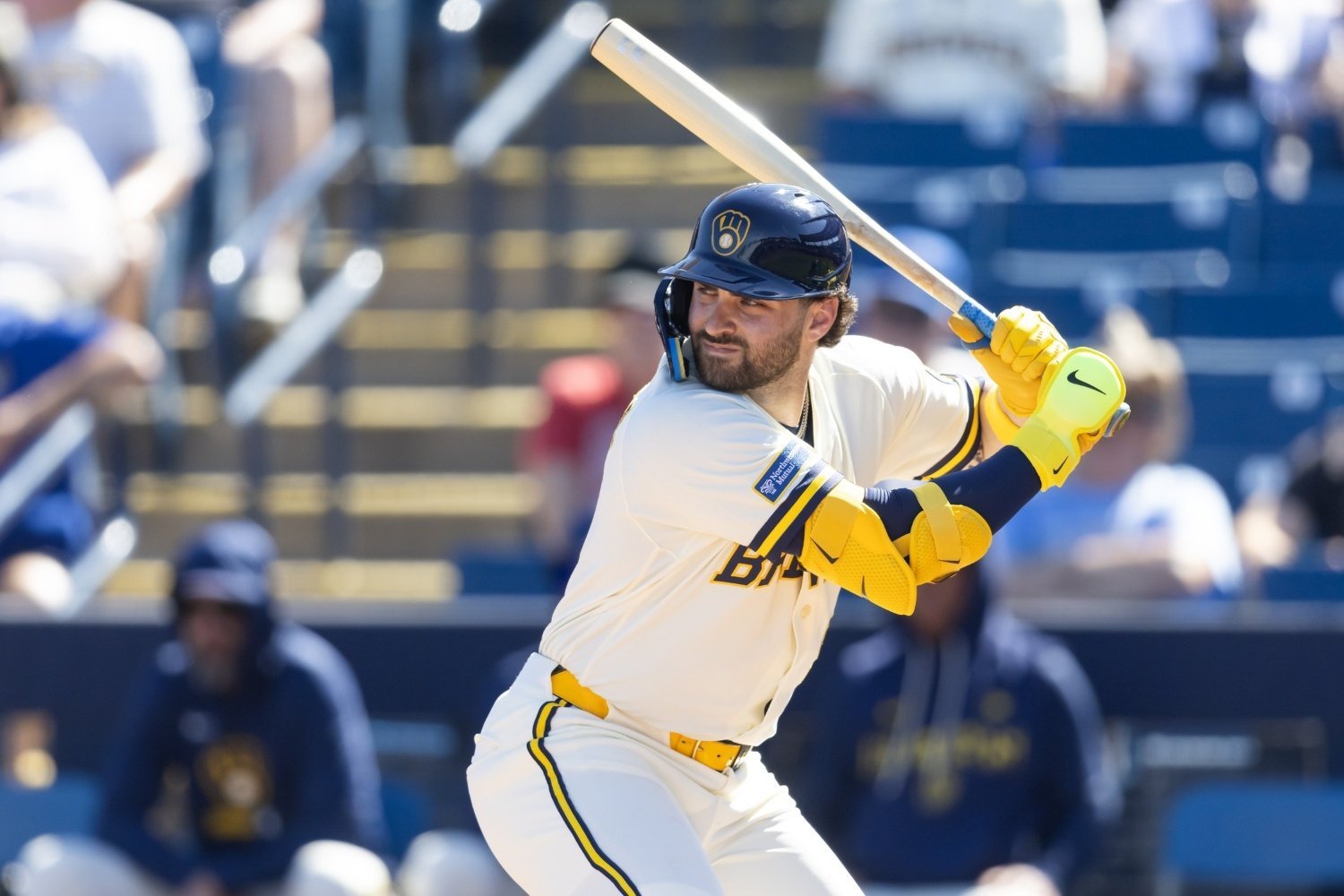 For three straight years, the Brewers intended to start the regular season with Garrett Mitchell as their starting center fielder. Mitchell started up the middle on Opening Day in 2023 and 2025, and he would have in 2024, had he not broken his hand in the final days of spring training. It became apparent that they wanted Mitchell to return to that spot for the 2026 opener. They've certainly given him every opportunity to claim the position. While Jackson Chourio, Blake Perkins, and Brandon Lockridge have all gotten starts in the outfield corners this spring, all eight of Mitchell's Cactus League appearances have come in center field. The club has taken things slowly with the injury-prone Mitchell, though, and has only recently ramped up his playing time. Pat Murphy rehashed those durability concerns to reporters in Arizona earlier this week, officially raising the possibility that the 27-year-old might not make the Opening Day roster if the Brewers believed he was not ready for regular playing time. Ultimately, though, the Brewers did not reach that point. By optioning Perkins to Triple-A Nashville on Thursday, the club effectively locked Mitchell and Lockridge into its Opening Day outfield mix. While Mitchell could still receive frequent days off to manage his health, he'll presumably take most of the playing time up the middle to open the year. The choice apparently came down to Lockridge vs. Perkins, but it arguably could have been Mitchell on the outside looking in. There are still concerns about how productive he'll be when healthy, given the flaws in his profile—concerns that have only been exacerbated by his frequent and extended absences and unsuccessful attempts to close those holes. Because his playing time has been so disjointed due to injury, it's been impossible to determine whether Mitchell is actually a viable big-league hitter. His elite bat speed and swing decisions give him one of the highest offensive ceilings in the organization, but the holes in his swing have produced a bloated 33.9% strikeout rate in 443 career plate appearances. Mitchell has hit .254/.333/.433 (114 wRC+) in the big leagues, but with a far less inspiring deserved line of .208/.289/.355 (80 DRC+), according to Baseball Prospectus. Mitchell can hit fastballs at or below the belt, and he has destroyed hanging breaking balls, but he's been a near-automatic out against anything elevated. For his career, he has whiffed on a whopping 52.1% of swings on fastballs within the top third of the strike zone or higher. He'll never need to crush those pitches to succeed, and with a 39.1% swing rate against them (including just a 14.4% swing rate against fastballs above the zone), Mitchell has done a decent job of forcing pitchers back into his hot zones. However, he must prove he can make some contact with elevated velocity. He's made it a focus, but his efforts have not yielded much improvement. Earlier this spring, Mitchell experimented with raising his hands in his stance before switching back to his usual setup. He's since looked caught in-between in many of his Cactus League plate appearances: gearing up for the fastball, but still missing it, while being ahead of softer stuff. The sample is still very small, but Mitchell has whiffed on 37.5% of swings against fastballs this spring, including a 52.6% whiff rate against high heaters. For his career, Mitchell has posted a capable 79.6% contact rate against in-zone breaking balls, with most of his whiffs coming on pitches below the zone. In Arizona, he's whiffed on 53.8% of in-zone breaking balls. Most alarmingly, Mitchell has been hopelessly in front of slower pitches moving away from him, whiffing on 71.4% of swings against offspeed pitches. In 30 Cactus League plate appearances, Mitchell entered Thursday hitting just .080/.233/.240 (24 wRC+) with a 50% strikeout rate. He's still flashed his upside when putting the ball in play, launching a 462-foot home run earlier this month for one of his two hits, but after sporadic time on the field last year, his bat does not look big-league ready with Opening Day approaching. Meanwhile, Lockridge has showcased tangible improvements at the plate. Clearly, Mitchell can make an impact for the Brewers at some point in 2026, but between his uneven production, injury history, and how his bat currently looks, they should be prepared for other options to take a healthy share of reps in center field. For now, though, Mitchell has the opportunity to dial himself in by Opening Day and establish himself up the middle. View the full article
-
A Free Winter Meltdown Pint Glass. What Are You Waiting For?
DiamondCentric posted an article in Twins Daily
 Opening Day is about fresh starts, renewed hope, and finding your people again after a long offseason. This year, the Twins Daily Social Club is adding something a little extra to that tradition: a keepsake fans will be raising all season long. Every attendee at our Opening Day Watch Party at BlackStack Brewing will receive a free 2026 Winter Meltdown pint glass. If you’ve been to a Meltdown before, you already know: these aren’t just pint glasses. They’re part of the experience. They end up on shelves, in cabinets, and back in your hand on game days—a small but meaningful piece of Twins Daily history. And this year’s design is no exception, created by the incredibly talented Brock Beauchamp, whose work once again brings personality and creativity to a fan-favorite collectible. So how did a Winter Meltdown glass become an Opening Day giveaway? When this year’s Winter Meltdown was unexpectedly canceled, it left us with a stash of these freshly designed glasses. Rather than let them sit, we figured there was no better place for them than in the hands of Twins fans on Opening Day. All you need to do to claim yours is RSVP on Eventbrite ahead of the event. Once you check in at the watch party, your glass is yours. You’ll be raising it with fresh pours from BlackStack, surrounded by fellow fans as the Minnesota Twins open the season against the Baltimore Orioles. So grab your glass, fill it up, and find your spot in the crowd. Share a drink, swap some stories, and settle in for the start of something new. A new season is here. And now, you’ve got the perfect glass for it. EVENT DETAILS RSVP: bit.ly/4sgSTnG What: Twins Daily Social Club's Opening Day Watch Party Cost: Free When: 1 pm, March 26, 2026 Where: Blackstack Brewing, 755 Prior Ave N, St Paul, MN View the full article
-
Boston Red Sox 2026 Top Prospects Rankings: Connelly Early (No. 2)
DiamondCentric posted an article in Talk Sox
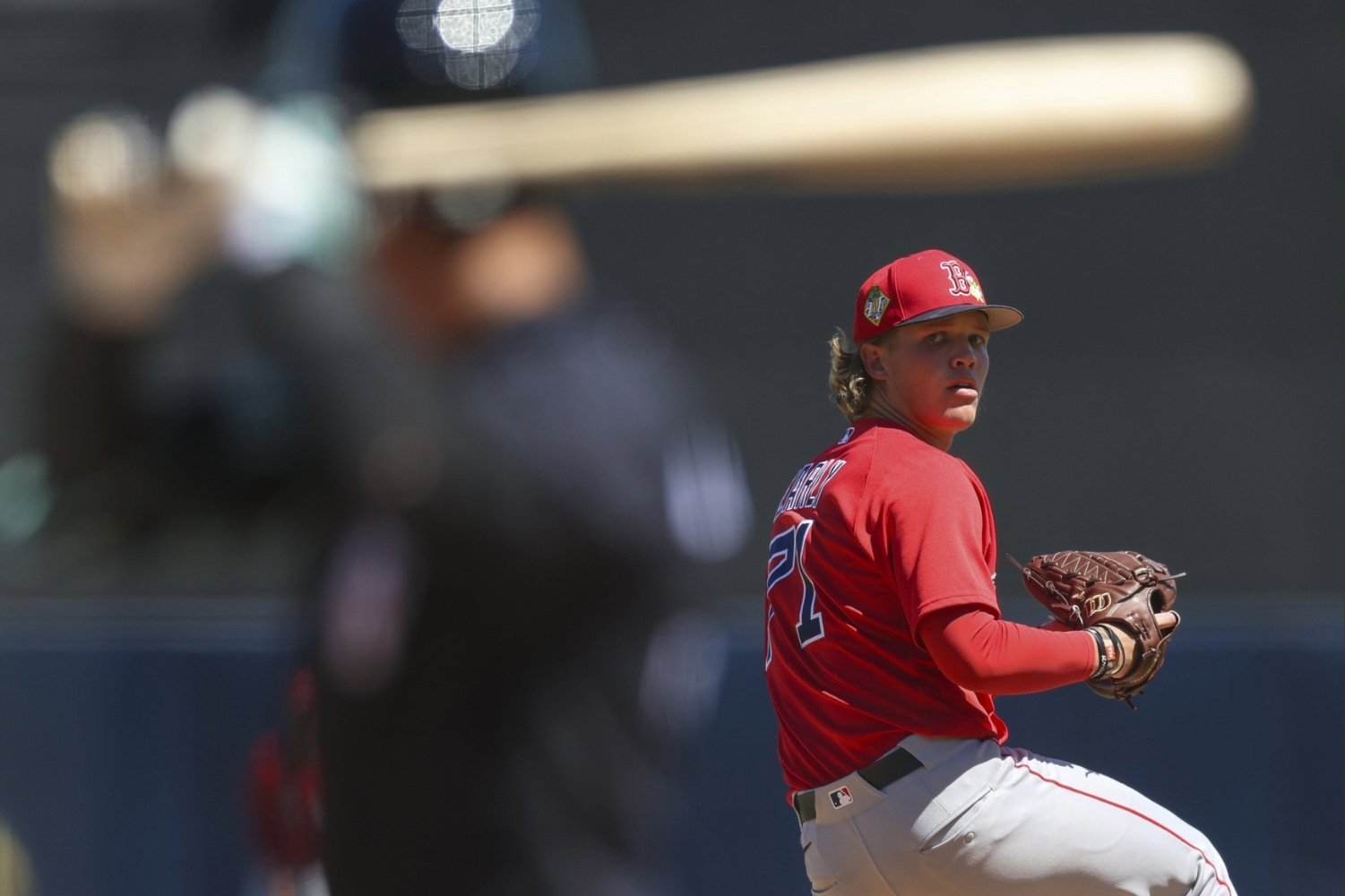 Talk Sox's top prospect rankings for the 2026 season has nearly reached the top as the final two are unveiled, featuring a young arm making some Top-100 noise after pitching in the postseason last year with Boston. Be sure to check out all of our previous rankings here: Part 1 (Nos. 16-20) Part 2 (Nos. 11-15) Part 3 (No. 10) Part 4 (No. 9) Part 5 (No. 8) Part 6 (No. 7) Part 7 (No. 6) Part 8 (No. 5) Part 9 (No. 4) Part 10 (No. 3) Boston Red Sox Top Prospects: No. 4 Connelly Early The 2025 season saw the Boston Red Sox's pitching development finally pay off in a big way, as their young pitchers helped get the team through the final month of the season and back into the postseason for the first time since 2021. One of those pitchers was Connelly Early, a 2023 fifth-round draft pick. Early, who made his MLB debut in September, pitched admirably down the stretch as he made four starts and struck out 29 batters in 19 1/3 innings. He walked just four and allowed five earned runs; his performance led manager Alex Cora to hand him the ball as the starting pitcher in the win-or-go-home game three of the Wild Card series. Prior to that, Early split 2025 between Portland and Worcester, going 10-3 with a 2.60 ERA in 21 games, 18 of them starts. He threw 100 1/3 innings in that span and struck out 132 batters. Early, who throws from the first-base side of the rubber, has some effort in his delivery but manages to repeat it with a consistent release point. Like most pitchers that the Red Sox have targeted in the past few years, he also has plus extension during his release. Early relies on a five-pitch arsenal that is made up of a fastball, changeup, slider, curveball and sweeper. His fastball, while averaging just 92-95 mph, topped out at 97 mph and there was an increase in velocity from 2024 that saw the pitch sitting in the low-90s. It has shown more bat-missing ability as he runs up the radar gun, but it's always been designed to help set up his changeup. That off-speed offering is an above-average pitch thanks to having arm-side run and his low release height. Typically in the mid-80s, he uses a kick-changeup grip and has advanced feel in the pitch, as he throws it often to both left-handed and right-handed batters. When at its best, the pitch will tumble out of the zone, generating whiffs. His slider averaged 84-87 mph in 2025 and he’s able to land it in the zone. Despite that, it doesn’t miss many bats and is instead used to generate weak contact from opposing batters. His curveball tends to sit in the low-80s at best and has more vertical break. It isn’t consistent, however, sometimes flashing plus movement and other times wobbling toward the plate. Both breakers have above-average qualities but aren't considered in that realm just yet. His sweeper is his newest pitch, having started working on it in 2024, and it improved as the season went on. It averaged around 80-83 mph and is mainly used against left-handed batters. Much like the curveball, it can show bat-missing ability, but he needs to gain more consistency with it in terms of landing it in and around the strike zone. Entering the 2026 season, Early is seen as a mid-rotation starter who flashes the upside of a number two or three starter. If he can gain consistency on his three weaker pitchers, that ceiling could rise. The biggest question mark for Early so far is if he can keep the velocity up as he goes deeper into games and across an entire season. The fact he can throw three to four pitches for strikes consistently helps his case in the immediate term. While many would love to see Early in Boston to open the year, due to their depth the team acquired over the offseason, he is likely headed to Worcester. If the Red Sox keep Early in Worcester for five weeks to open the season, they’ll gain an extra year of control on Early. This would keep him from becoming a free agent until after his age-30 season, something that could change rotation plans down the road. Regardless of where Early starts the season, he’ll be up in Boston as one of the first pitching-related promotions and will end up playing a huge role in how the 2026 season goes down. View the full article
-
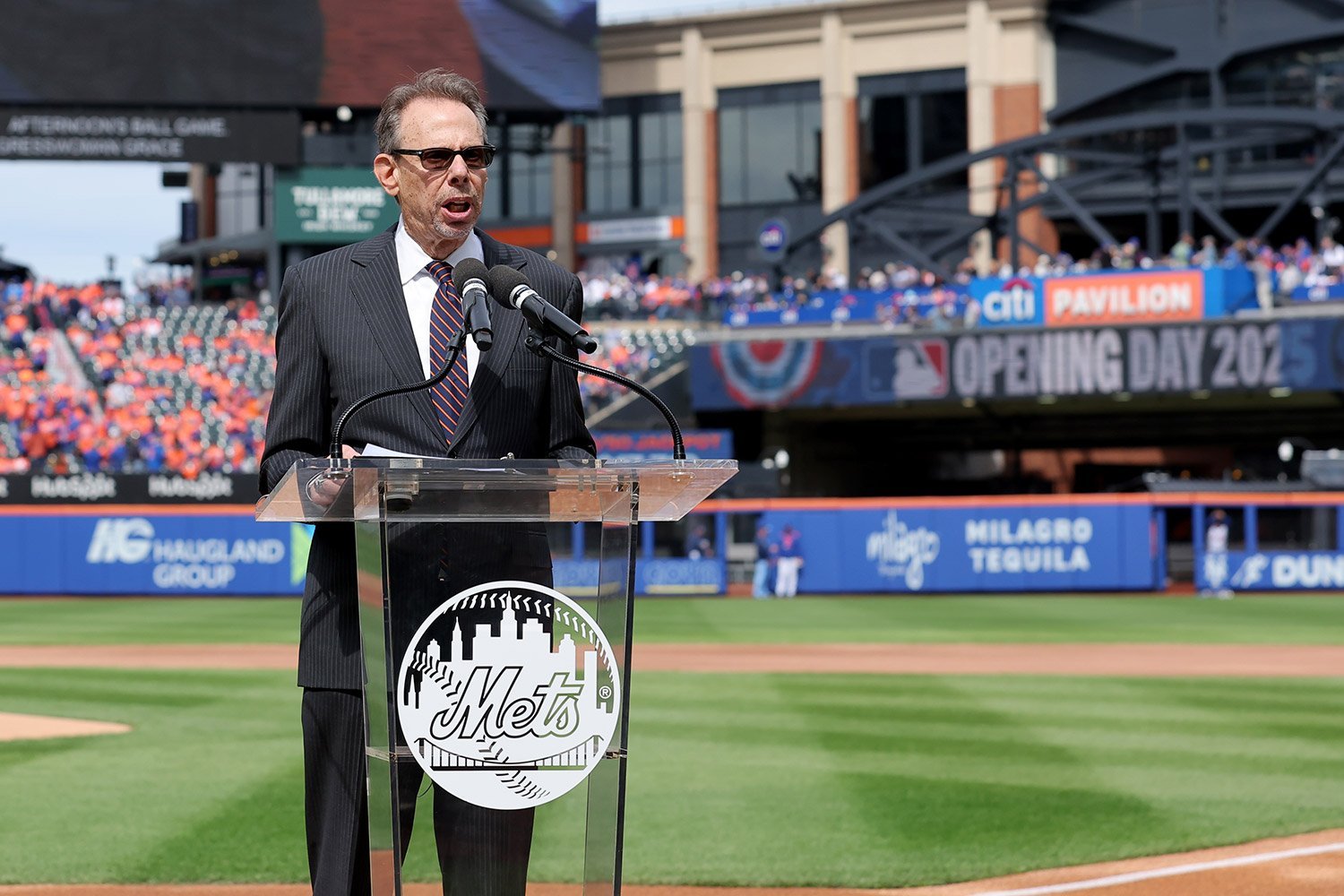 Howie Rose, long-time Mets broadcaster and staple of the radio booth of the last 20 seasons, has announced that this season will be his last. While he noted in his video that he still plans to spend some time with the team, those used to his boy-like charm and encyclopedic knowledge will have to tune in to the next generation. Rose began with the Mets in 1987 while also doing a show for WFAN, finally joining the radio booth as the play-by-play man in 1995. Rose briefly moved to television alongside Gary Cohen in 1996 before the creation of SNY. At that point, Rose returned to radio where he has served since, and better served with his ability to find a voice of summer perfect for nights on the porch. In 2023, Rose revealed a bladder cancer that had sidelined him for parts of the 2021 season. As he contemplated retirement in recent years, Rose had skipped away games while manning the Bigelow Tea Radio Broadcast booth back in Citi Field. In 2023, the Mets inducted Rose alongside Gary Cohen into their Hall of Fame. Rose, like Vin Scully before him, has remained an expert storyteller, but especially as a fan. While Scully understood neutrality, Rose has never let his boyhood team’s excitement escape him—he grew up in Bayside and went to Queens College. He used to eat at the old Hamburger Coach before games. The acclaim for Rose will always go back to his encyclopedic knowledge of Mets history. If something unique was happening in a game, Rose remembers an equivalent game from the 1978 season as if it happened yesterday. At the same time, Rose has never dismissed analytics or felt the team was playing the wrong way—unless they were losing, of course. More so, Rose never felt the need to keep his distaste of the Wilpons out of the public air (in one old interview, he told fans, “Stop going to the games. Just stop. Don’t buy the merchandise. Don’t feed the Wilpon beast.”). He also spent two decades calling games for both the New York Islanders and Ranger, including the iconic 1994 Double Overtime win by the Rangers in Game 7 against the Devils that sent them to the Stanley Cup Finals: Rose captures what is best about baseball, and particularly Mets fandom. I feel few will forget his monologue after the magical 2024 season, when it seemed certain that the Dodgers would take the NLCS and make it to the World Series: And of course, there was that magical Alonso call: Rose’s retirement joins a number of famed radio broadcasters making generational handoffs. Rick Rizzs announced this will be his final season with the Mariners, while Rose’s Bronx colleague John Sterling stepped away following the end of the 2023 season (with a brief stint in the World Series booth in 2024). Most old schoolers find their way out of the booth one way or another. Rose found a way to remain not just relevant, but welcomed all these years. But after this season, it will be time to put Rose in the books. View the full article
-
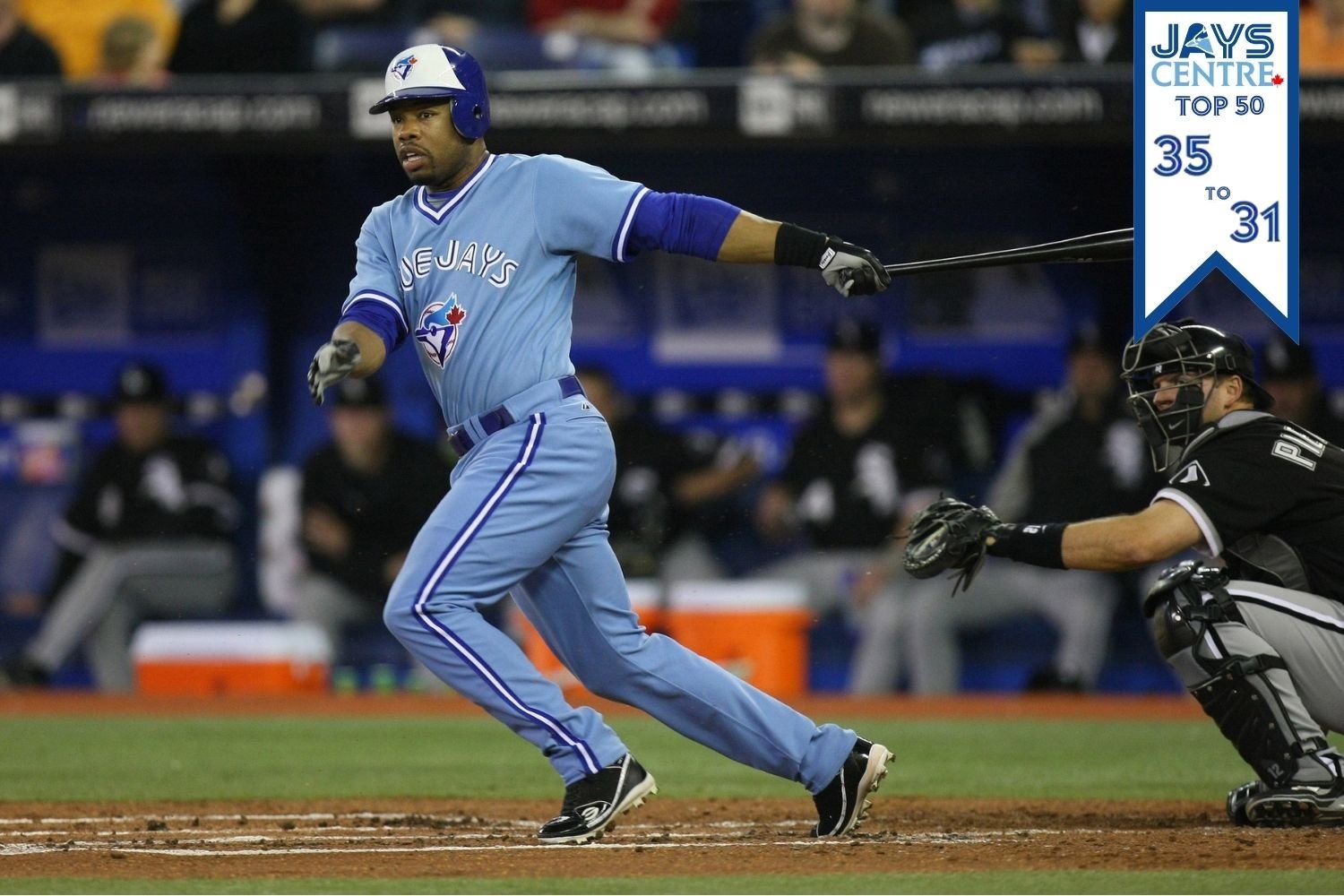 Jays Centre is counting down the top 50 Blue Jays in franchise history. Check out prior entries in the series here: Introduction 50 to 46 45 to 41 40 to 36 As we continue our countdown of the top 50 players in Blue Jays franchise history, spots 35 to 31 feature a mix of players from every era: a power bat from the early years, a fiery pitcher from the 2010s, and even an active player still climbing the franchise leaderboards. No. 35: Willie Upshaw First base 1978, 1980-1987 Blue Jays Career Stats: .265/.336/.426, 112 HR, 478 RBI, 50 SB Willie Upshaw may be the most underrated player from those early 1980s Blue Jays teams. Originally drafted by the New York Yankees in 1975, Upshaw joined the Blue Jays in the 1977 Rule 5 draft, one of two players the club selected that day. Although his rookie season was underwhelming (.602 OPS), he became the Blue Jays' regular first baseman by 1982. From there, Upshaw produced the best stretch of his career from 1983-85. In that three-year span, he averaged a .287/.354/.477 line with 20 home runs and 84 RBI. His best season came in 1983, when he slugged 27 home runs and became the first player in franchise history to reach 100 RBI in a season. He was a key part of the Blue Jays' first AL East title in 1985. Upshaw battled with injuries and a slight decline through the ‘86 and ‘87 seasons, and with first base prospects Fred McGriff and Cecil Fielder in the wings, he was traded to Cleveland, ending his tenure with the club. Off the field, Upshaw was widely respected within the organization. After he was traded to Cleveland, Pat Gillick stated, “He’s a real class guy. He gave great service to the club.” Gillick even mentioned Upshaw directly in his Hall of Fame speech, telling a story of what it was like drafting him. Post-playing career, Upshaw took up coaching and, most famously, served as the Giants' first base coach in 2007 when Barry Bonds hit home run No. 756, breaking the all-time record. Upshaw's Blue Jays career: Games played - 8th (1,115)* Hits - 11th (982) Home runs - 21st (112) RBI - 13th (478) Triples - 4th (42) Intentional bases on balls - 4th (46) *Upshaw and Rance Mulliniks both finished with exactly 1,115 games played, tied for eighth place in franchise history No. 34: Marcus Stroman Starting pitcher 2014-2019 Accolades: All-Star, Gold Glove Blue Jays Career Stats: 789.2 IP, 47-45 3.76 ERA There may not have been a more unique pitcher in Blue Jays history than Marcus Stroman. Stroman was drafted by the Blue Jays in the first round of the 2012 draft and quickly became one of the prized prospects in the system. He made his major league debut in relief on May 4, 2014, and by the end of the month, he was inserted into the rotation. Stroman’s strong rookie year set the stage for 2015, as he was going to be a key part of an emerging Blue Jays rotation. But during spring training of that year, while fielding a bunt in practice, he heard a “pop” in his knee and tore his ACL. Initial reports suggested that his 2015 season was over. Stroman didn’t let that stop him; he’s always had a chip on his shoulder, saying things like “heart doesn’t measure height” as a motivational tool for people who thought he couldn’t be good because he stood 5-foot-7. He used that chip to fuel a quicker-than-expected recovery from his injury and, surprisingly, returned to the mound that September. His return helped fuel a division title in 2015, and the Blue Jays reached the ALCS in back-to-back seasons. As the Blue Jays were coming off their run of success, Stroman was traded to the Mets at the trade deadline in 2019. After spending time with the Mets, Cubs, and Yankees, he is still on the lookout for his next team. Off the field, Stroman built a strong personal brand. He had “height doesn't measure heart,” or HDMH, trademarked, and has partnered with Nike, Biosteel, and Rogers to create apparel featuring his logo. He also appeared in music videos alongside his friend and former Duke teammate Mike Stud. Marcus Stroman was many things, but for the mid-2010s Blue Jays, he was a key part of the effort, and you will still see many Stroman jerseys around the park today. Stroman's Blue Jays career: Innings pitched - 15th (789.2) ERA - 10th (3.76) Wins - 17th (47) Strikeouts - 15th (635) FIP - 5th (3.60) No. 33: Alejandro Kirk Catcher 2020-present Accolades: Two-time All-Star, Silver Slugger Blue Jays Career Stats: .268/.345/.398, 51 HR, 263 RBI Alejandro Kirk is still building his resume and is quietly shaping up to be one of the best catchers in franchise history. Kirk was originally signed as an international free agent at the age of 17. After spending his first three seasons at various stops in the minor leagues, he made his MLB debut in 2020. He initially joined the taxi squad during the shortened season, but he made his debut on September 12, getting his first major league hit that same day. Kirk has relied on his immense bat-to-ball skills at the plate, and in 2022, he put together his best season, posting a .786 OPS and earning an All-Star selection and a Silver Slugger Award. After two subpar years with the bat, Kirk rebounded in 2025, set a career-high in home runs (15), and was a key part of the Blue Jays' World Series run, though the season ended with him grounding into a double play in the 11th inning of Game 7. The Blue Jays value Kirk so much that they gave him a five-year extension at the start of 2025. By the time Kirk’s career is over, he’s likely going to rank much higher on this list, as he is entering his age-27 season. An argument could be made that the best years of his career are still to come. Off the field, Kirk and his wife, Sofia, welcomed their daughter into the world in 2023. Kirk's Blue Jays career: Games played - 41st (564) Hits - 47th (489) Home runs - 50th (51) RBI - 38th (263) No. 32: Rance Mulliniks Third base 1982-1992 Accolades: World Series Champion Blue Jays Career Stats: .280/.365/.407, 73 HR, 435 RBI If there was ever an underappreciated Blue Jay from the era of the team's first division title and first World Series championship, there's a good case to be made that it was Rance Mulliniks. Mulliniks joined the Blue Jays in a trade with the Kansas City Royals in 1982 and became part of a third base platoon with Garth Iorg. Over the next six seasons, Mulliniks was the model of consistency: His OPS+ was between 125 and 127 in four of those seasons, and even the other two years (103 and 143) weren’t far off that level of production. Mulliniks was the type of player who might be even more appreciated in today's game, where versatility and on-base ability are highly valued. Pair that with the ability to play multiple positions, and it's exactly the type of player that fans and managers love to have on their team. Mulliniks also made his mark in the 1985 postseason, going 4-for-11 with a home run in Game 3 of the ALCS against two-time Cy-Young winner Bret Saberhagen. Mulliniks battled injuries and inconsistencies in the final stretch of his career and retired after the 1992 season, going out as a World Series champion. Off the field, Mulliniks is still very much in the Blue Jays world. He served as part of the Rogers Sportsnet broadcast team from 2005 to 2010 and still appears on Blue Jays podcasts from time to time to discuss the team. He now offers partial coaching and public speaking, which you can book online through his personal website. Mulliniks's Blue Jays career: Games played - 8th (1,115)* Hits - 21st (853) Home runs - 36th (68) RBI - 20th (389) WPA - 10th (8.1) Bases on balls - 8th (416) *Upshaw and Mulliniks both finished with exactly 1,115 games played, tied for eighth place in franchise history No. 31: Shannon Stewart Outfield 1995-2003, 2008 Blue Jays Career Stats: .298/.360/.440, 115 HR, 580 RBI, 196 SB A true all-around player, who combined batting average, defence and speed, Shannon Stewart was a staple for the late '90s/early 2000s Blue Jays. Stewart was one of those players whose value you didn't fully appreciate until you watched him every day. Using his speed and contact skills, he was a mainstay at the top of the Blue Jays' order for several years. From 1998-2003, he averaged .305/.370/.452 with 13 home runs and 25 stolen bases per year. In 2001, he became just the fourth Blue Jay to record 200+ hits in a season, and he remains one of only five to accomplish the feat. His best performance came in that ‘03 campaign, when he posted an .823 OPS and finished fourth in AL MVP voting. Stewart has always been a personal favourite of mine, as he hit the first big league home run I ever remember seeing in person, which holds a special place in every baseball fan's heart. After his original stint with the Blue Jays, he spent some time with the Twins and Athletics. He returned to the Blue Jays as a 34-year-old and got into 52 games before calling it a career. Post-playing career, he has stayed out of the public eye, but according to his Instagram page, he’s a husband and father of three kids, which likely keeps him plenty busy these days. While Stewart was a steady presence at the top of the lineup during the late 1990s and early 2000’s, the next group in our countdown will feature players whose peaks left an even bigger imprint on franchise history. Stewart's Blue Jays career: Games played - 19th (907) Hits - 7th (1082) Home runs - 32nd (74) RBI - 22nd (370) Batting average - 4th (.298) Doubles - 6th (222) Stolen bases - 5th (166) View the full article
-
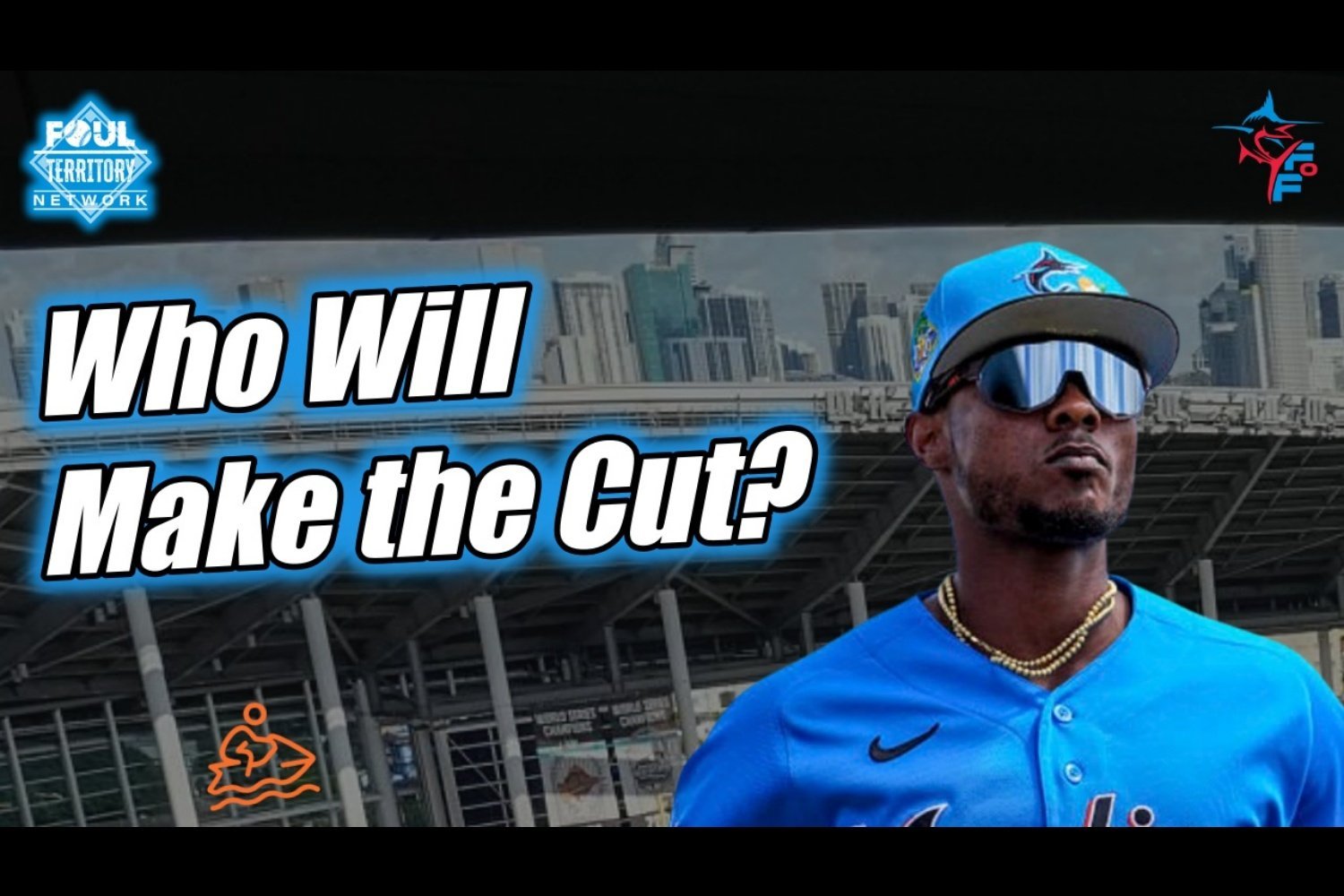 Enjoy new episodes of our Miami Marlins livestreams throughout 2026 spring training. Every week, Fish On First staffers answer your questions and provide in-depth analysis of the team leading up to Opening Day. Thursday's show was hosted by Jeremiah Geiger and featured panelists Ely Sussman, Kevin Barral and Alex Carver. The following topics were covered: Javier Sanoja and Team Venezuela winning the World Baseball Classic Notable prospect performances from the Marlins' Spring Breakout game Where Esteury Ruiz, Griffin Conine and Heriberto Hernández stand in the club's Opening Day roster plans Braxton Garrett and Miami's alternatives for the final starting rotation spot You can find Fish Unfiltered and Fish On First LIVE on the Fish On First YouTube channel, Apple Podcasts, Spotify or wherever else you get your pods. Barring any injuries over the next week, there appear to be 29 players (bolded below) in the running for the 26 Marlins active roster spots. It is a good problem to have considering that all of the players who are "on the bubble" have minor league options left, so they won't be booted from the organization unless the front office receives a compelling trade offer. Our next FOF livestream will be a two-hour countdown to Marlins Opening Day from 5:00-7:00 p.m. ET on Friday, March 27. View the full article
-
Blue Jays' Trey Yesavage To Open 2026 On Injured List
DiamondCentric posted an article in Jays Centre
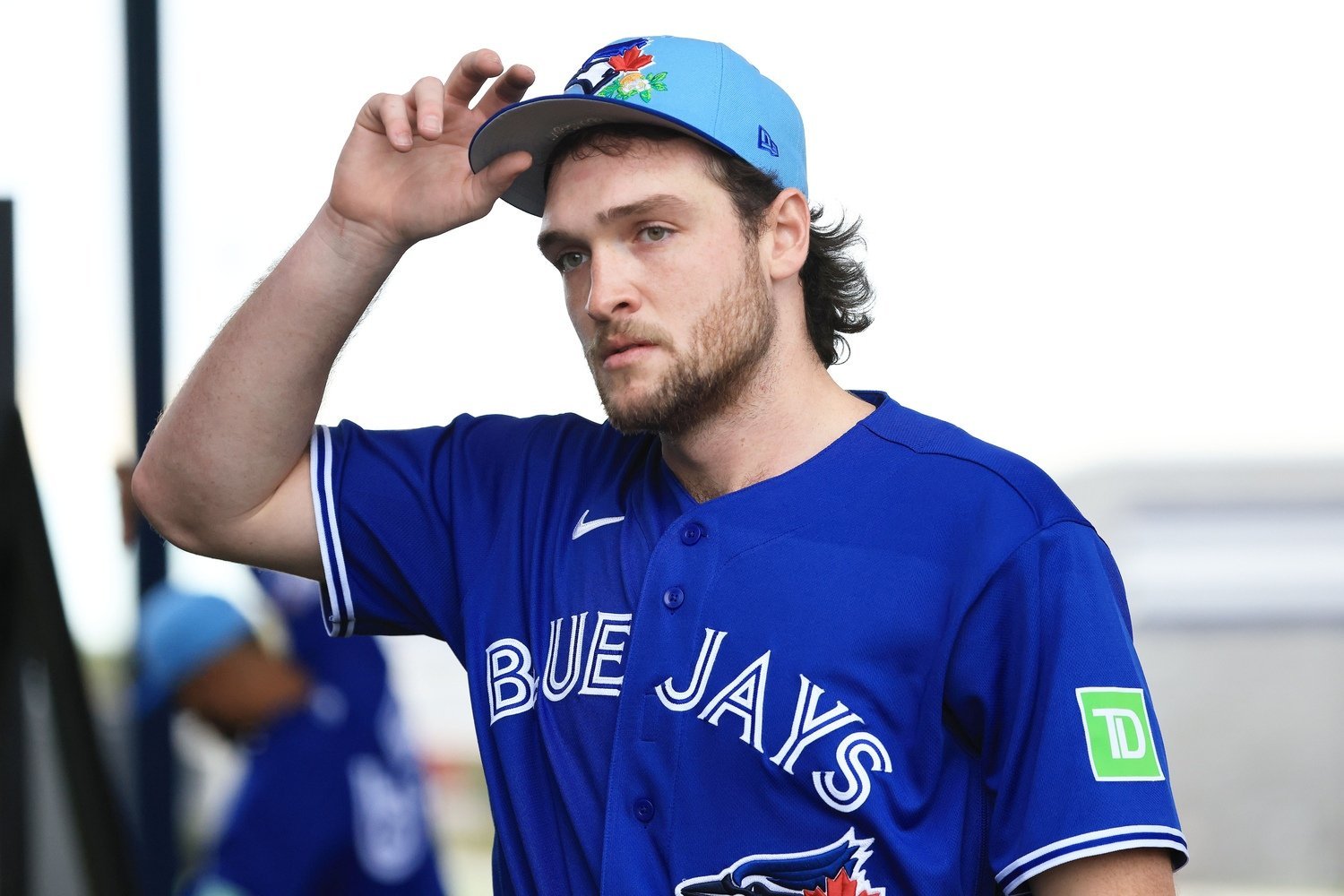 When it rains, it pours. A day after the Toronto Blue Jays announced that José Berríos would miss the start of the season after being diagnosed with a stress fracture in his right elbow, manager John Schneider told the media that right-hander Trey Yesavage will open the season on the injured list with a right shoulder impingement. The Blue Jays had slowly been building Yesavage up in spring training, as the 22-year-old had yet to pitch in a game during the exhibition slate. Last season, the young righty took the baseball world by storm, joining the Blue Jays in September before becoming a major piece of the team’s run to the World Series. Yesavage started the season with Single-A Dunedin and made quick stops in Vancouver, New Hampshire and Buffalo before joining the Blue Jays on September 15. He pitched 112 regular season innings between the minor and major leagues. In the playoffs, the first-round pick from 2024 added 27 2/3 more frames, bringing his season total to 139 2/3. During the regular season with the Blue Jays, Yesavage made three starts, going 1-0 with a 3.21 ERA and 1.43 WHIP, striking out 16 batters over 14 innings. The playoffs brought on a whole new Yesavage; he pitched to a record of 3-1, an ERA of 3.58, and a WHIP of 1.05. He struck out 39 batters in 27 ⅔ innings and held opposing hitters to a .188 average. The Blue Jays’ starting rotation picture is becoming clearer due to the injury bug. With no Berríos, no Yesavage and Shane Bieber still building up after dealing with forearm fatigue, the five spots now appear to have worked themselves out. Kevin Gausman has the Opening Day assignment. Offseason acquisition Dylan Cease will likely slot in behind Gausman, followed by fellow acquisition Cody Ponce, veteran Max Scherzer and left-hander Eric Lauer. Scherzer has looked very impressive this spring. The 41-year-old has appeared in two games, allowing no runs over 8 ⅔ innings and holding opposing batters to an average of .074. Scherzer, who signed on March 2, made it clear he would be ready for Opening Day, and Blue Jays fans are sure thankful for that now. With Lauer most likely shifting to the rotation, the door is now open for another reliever to slot into the Blue Jays’ bullpen. Tommy Nance is out of options, and after putting together a strong 2025, he could claim the role when the season opens. Two other options that remain are Rule 5 draft pick Angel Bastardo, who needs to be on the roster or be offered back to the Boston Red Sox, and right-hander Lázaro Estrada. The Blue Jays’ depth will be tested right away as the club hunts to return to the World Series and claim their first title since 1993. View the full article
-
Red Sox Further Whittle Down Roster, Option Nick Sogard
DiamondCentric posted an article in Talk Sox
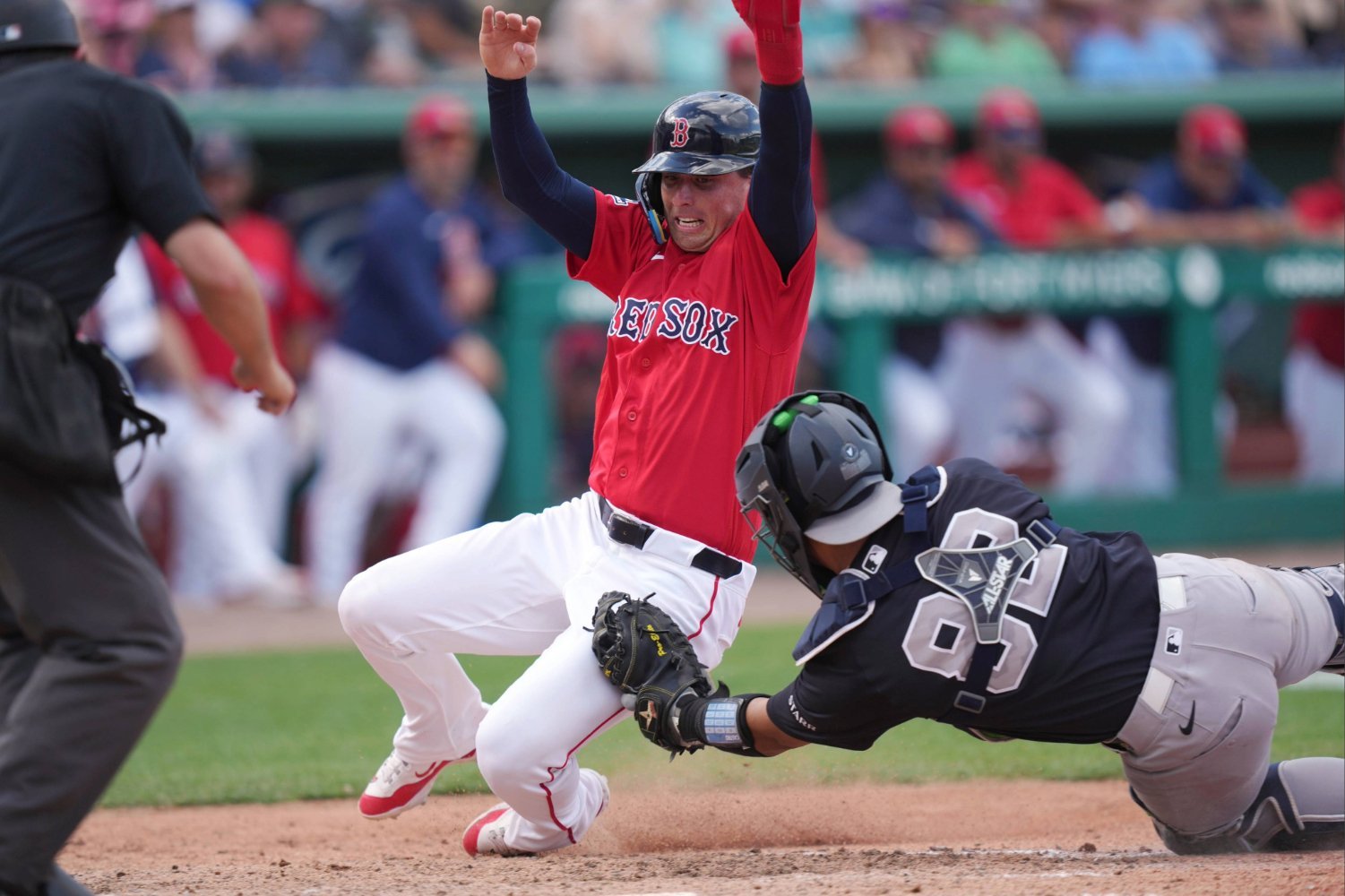 As spring training gets closer to concluding, the Boston Red Sox have continued to shape their Opening Day roster. On the first day of March Madness, the team optioned and reassigned multiple players to the minor leagues. The team wound up optioning two players, including one member of last year's roster in Nick Sogard. He was joined by Tsung-Che Cheng. Sogard appeared in 30 games last season for Boston, providing defensive versatility for the organization while also securing a few clutch hits at the plate. Overall, he hit .260/.317/.344 with eight doubles and nine RBIs. Sogard also played a big role in the Red Sox's Game 1 win over the New York Yankees in the Wild Card Series. Cheng, who was selected off waivers from the Nationals, is only 24 years old and made his debut last season with the Pirates. He went hitless in seven at-bats. Cheng was never expected to compete for a roster spot and instead will serve as depth in Triple-A. Players who were reassigned to minor league camp include utility players Max Ferguson and Tyler McDonough, infielder Mikey Romer, outfielder Allan Castro, and first baseman and catcher Nathan Hickey. View the full article
-
TV Analyst Mark Grant Gets Multiyear Contract With Padres
DiamondCentric posted an article in Padres Mission
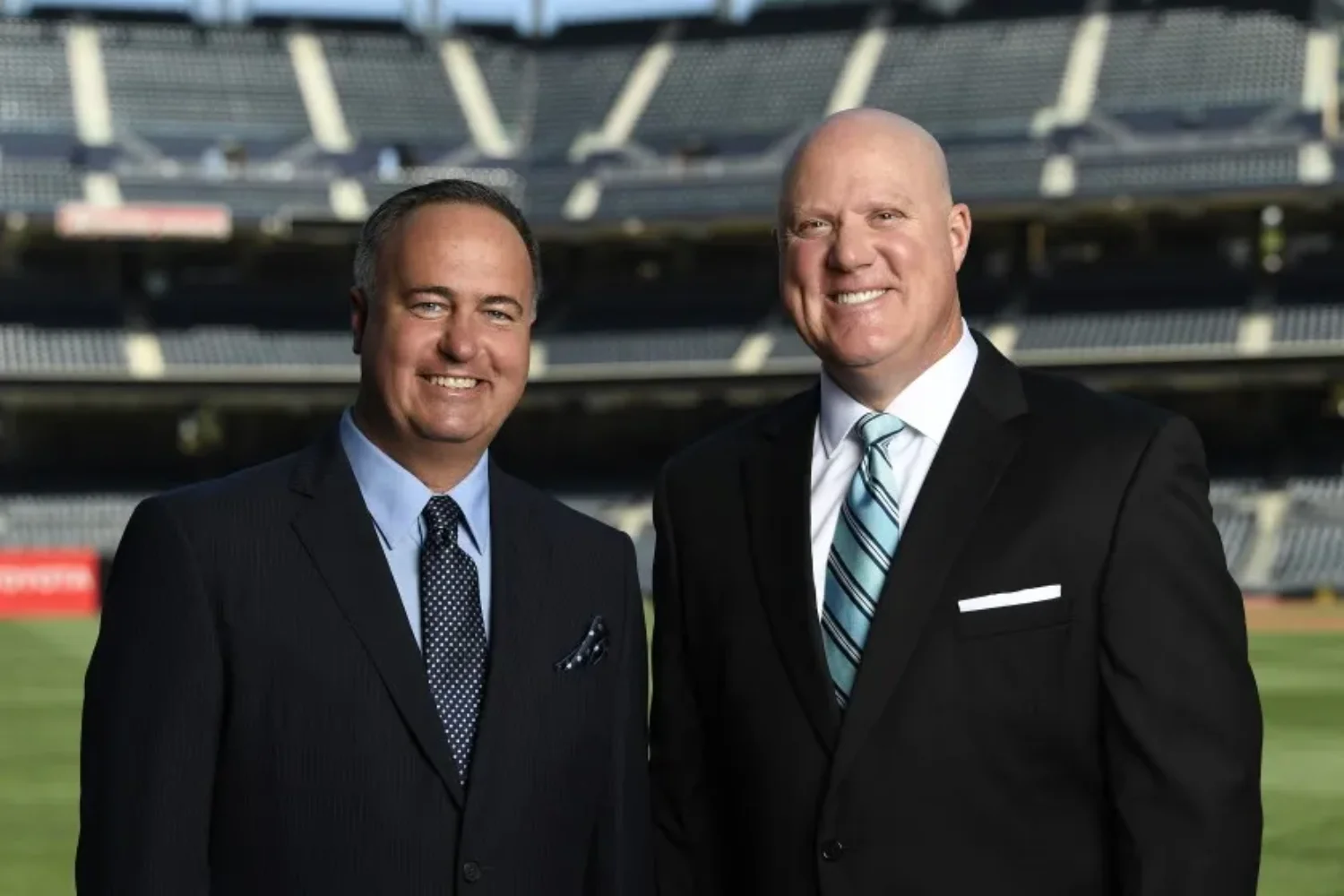 The San Diego Padres will be stuck in the Mud for a few more years. In this case, that's actually a good thing. Television analyst Don "Mudcat" Grant has agreed to a multi-year extension with the Friars, keeping one of MLB's top announcing teams together. The move was reported Thursday by Kevin Acee of the San Diego Union-Tribune. Don Orsillo, the team's play-by-play announcer for TV games, signed a multi-year extension last spring. Grant is a former right-hander pitcher who spent parts of four (1987-90) of his eight MLB seasons in a Padres uniform. He has been an analyst for Friars television since 1996, following his last in 1993. The Union-Tribune said Grant had been operating on a series of one-year deals. Orsillo has been calling Friars games since 2016. Together, they form not only an informative tandem, but a hilarious one as well. Grant is either providing most of the humor or the subject of it. They are scheduled to call their first game of the spring tonight at 6:10 p.m. on Friars.tv as the Padres play the Chicago White Sox. View the full article
-
Brewers Send Logan Henderson, Blake Perkins To Minors
DiamondCentric posted an article in Brewer Fanatic
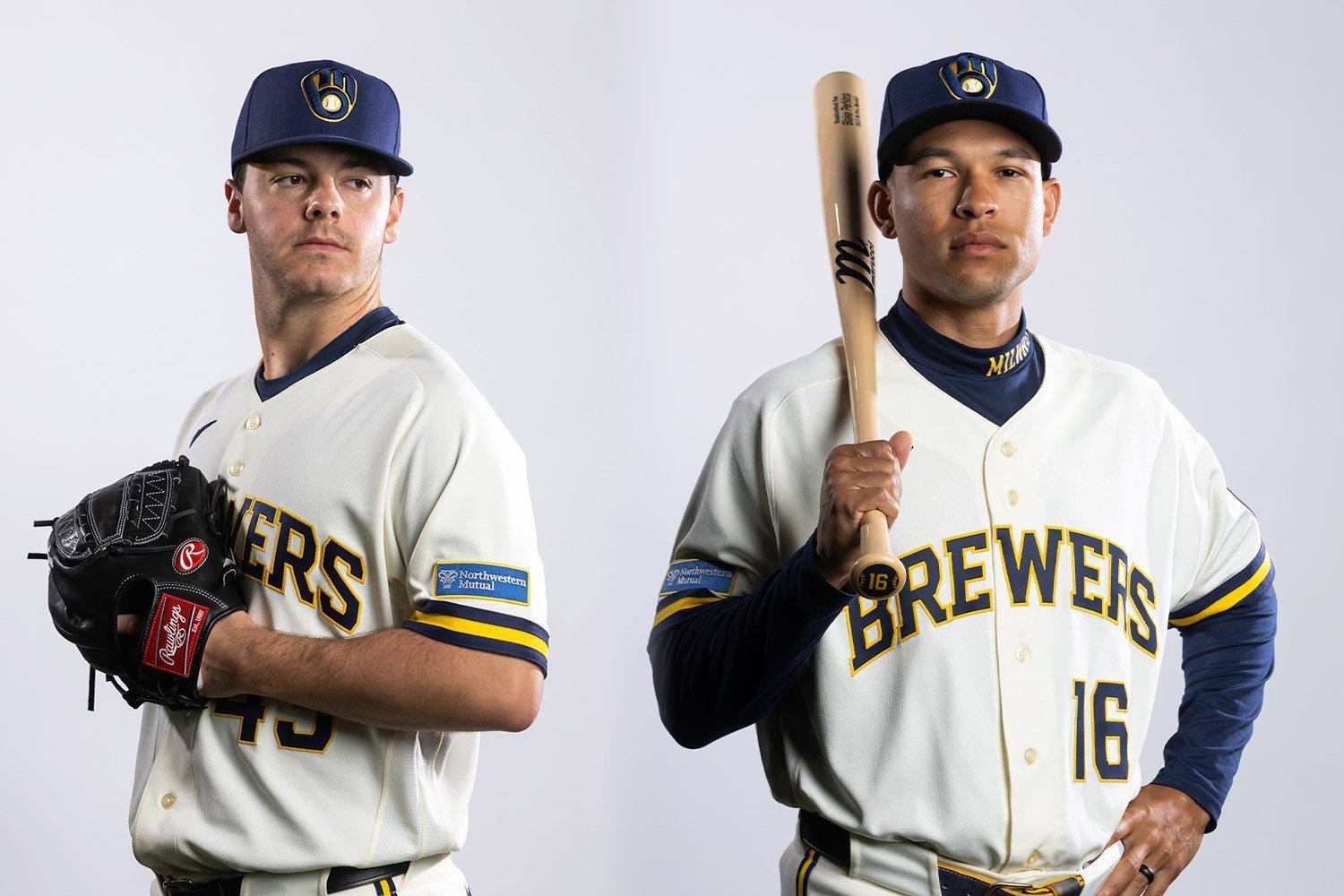 The Milwaukee Brewers made their first significant camp cuts this spring on Thursday, optioning right-handed starter Logan Henderson and center fielder Blake Perkins to Triple-A Nashville. First baseman-outfielder Tyler Black was also optioned to Triple-A, with shortstop Cooper Pratt reassigned to Nashville. Perkins' demotion means that center fielder Brandon Lockridge has likely made the Opening Day roster with Garrett Mitchell. The moves leave 34 players in major-league camp. That means Henderson is out of the mix for the Opening Day rotation. Henderson reported a sore elbow last week and is scheduled to pitch two or three innings Friday, perhaps against the Arizona Diamondbacks or on the back fields. He has made just two Cactus League appearances thus far, with a 2.25 ERA in four innings, with no walks and one strikeout. The Brewers still have plenty of competition for the three rotation spots after right-handers Jacob Misiorowski and Chad Patrick, who were previously named to the Opening Day rotation. Right-hander Brandon Woodruff could be in the rotation, but he hasn't pitched in a game this spring since March 7, when he threw 32 pitches over two innings. Woodruff, still on the mend from the lat injury that sidelined him for the last two weeks of the regular season and the postseason, was scheduled to pitch four innings in Thursday night's game vs. the Texas Rangers. That leaves left-handers Kyle Harrison and Robert Gasser, as well as right-hander Brandon Sproat, as rotation candidates. In another possibility, Aaron Ashby, a valuable left-hander out of the Crew's bullpen, could be in a starting role. Even with Ashby in the rotation, the Brewers could still have at least three lefties out of the 'pen in Angel Zerpa, Jared Koenig, DL Hall, and Rob Zastryzny in contention. Perkins' demotion is surprising only in the fact that he returned from a fractured right shin in spring training to become the primary center fielder in the second half of last season. While defense is his forte, he put up only a .226/.298/.348 slash line last year with three homers, 19 RBIs, and seven stolen bases. He did strike out in 27.5% of his plate appearances. The left-handed hitter had been having a solid spring, with a .290/.343/.323 slash line in 35 plate appearances, with no homers, four RBIs, and one stolen base. Lockridge, a right-handed hitter, made a nice debut with the Crew after being acquired from the San Diego Padres at the trade deadline in the Nestor Cortes deal. In 20 games, Lockridge had a .261/.308/.370 slash line, no homers, six RBIs, and two steals. The speedy outfielder showed up to camp this year looking to tap more into his power and has produced a .314/.442/.686 slash line with four homers, seven RBIs, and three steals. Mitchell, a left-handed hitter, has had a slow spring, going just 2-for-25 for a .080/.233/.240 slash line. He has struck out 15 times in those 25 at-bats while drawing five walks. The 2020 first-round draft choice has put up some solid offensive career numbers (.254/.333/.433), but has only played in 113 games over the last three full seasons due to a variety of injuries. View the full article
-
Takeaways from a wild Marlins Spring Breakout game
DiamondCentric posted an article in Fish On First
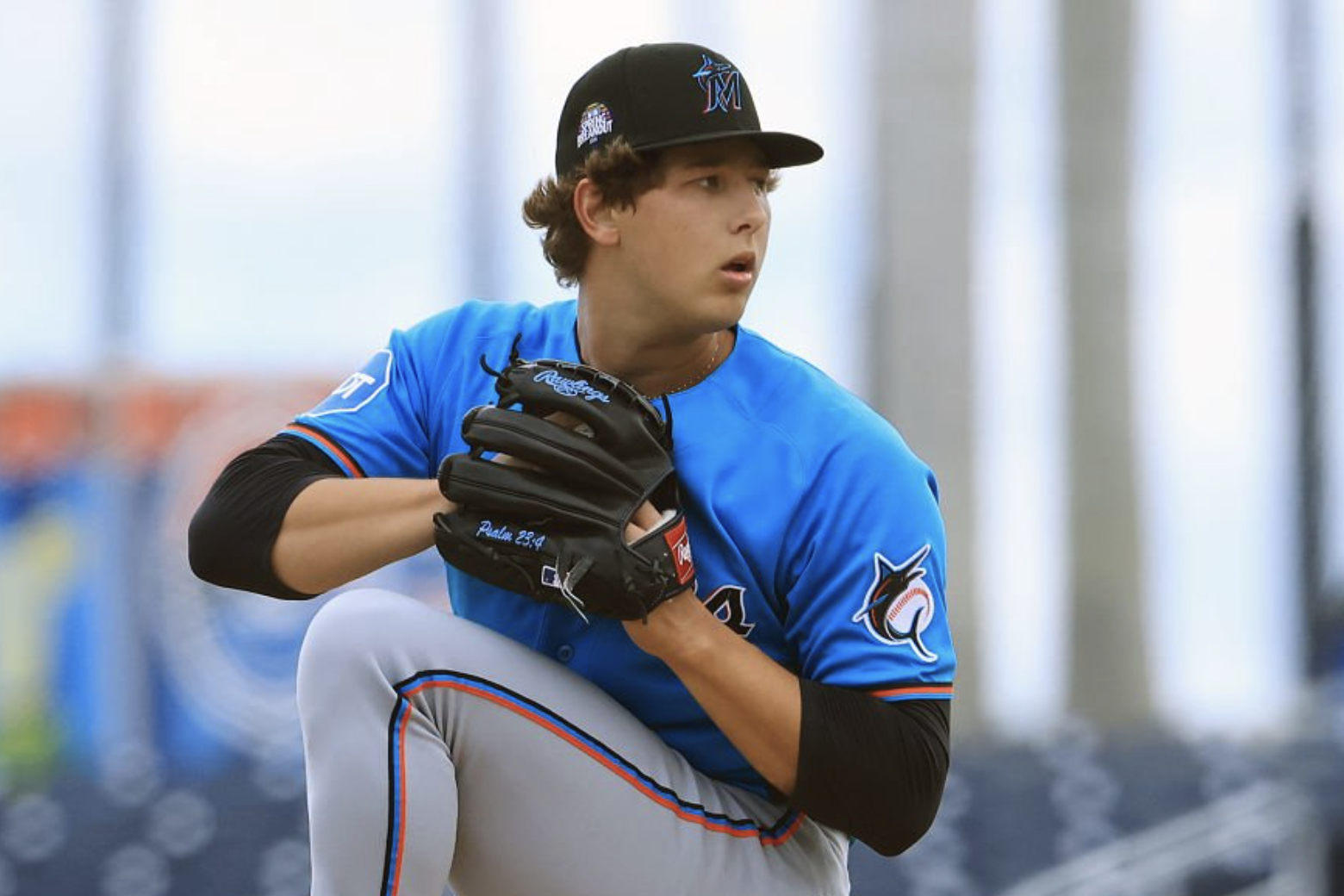 WEST PALM BEACH, FL—For the first time since the inception of MLB's Spring Breakout prospect showcase, the Miami Marlins had to leave the friendly confines of Roger Dean Chevrolet Stadium. Their top farmhands traveled 15 minutes south to West Palm Beach on Thursday afternoon to face the Houston Astros prospects. "This is the future of our organization," said acting manager Jeff Conine following the game. "They are a bunch of good kids, work hard and I think on the pitching side we just didn't have it today in the strike zone, but we gave them a good effort." Here are the takeaways from the 7-6 loss. Mr. Marlin the skipper Jeff Conine, who is a special assistant to Marlins chairman and principal owner Bruce Sherman, was the acting manager for the game after Juan Pierre assumed the role in 2025. Although rumored as a managerial candidate in the past, this opportunity arrived unexpectedly. Conine enjoyed the afternoon, but the Marlins Legends Hall of Famer is content with where he is. “This is a one-and-done,” Conine said. “Unless they ask me to do this again next year.” Milbrandt dominant in start Karson Milbrandt, who is Fish On First’s 13th prospect, went three innings, striking out six (all swinging). His fastball velocity topped out at 97.1 mph and averaged 95.6 mph. Milbrandt executed his strategy perfectly, elevating heaters and burying his breaking stuff, including his relatively new gyro slider, which he developed quickly last season. It has emerged as his best pitch. Milbrandt's slider generated five whiffs and recorded three strikeouts. His first slider strikeout victim was Astros No. 5 prospect Walker Janek. "It's quickly become one of my favorite pitches," Milbrandt said. "I like to throw it a lot. Today the feel was a little bit off, but the movement was good, so looking forward to getting that pat down." A slight lapse in control aside, Milbrandt looked fantastic. Multi-hit day for Alderman Starting designated hitter Kemp Alderman (FOF #10 prospect) went 2-for-3 on Thursday. His single was clocked at an 87.4 mph exit velocity into center field. In the top of the fourth inning, Alderman singled again to drive in Starlyn Caba and Dillon Lewis, extending the Marlins' lead to 6-1. Last season between Double-A and Triple-A, Alderman slashed .285/.338/.482/.819 with 22 home runs, 70 RBI, 22 stolen bases and a 135 wRC+. He was named the 2025 Marlins Minor League Player of the Year. This spring, Alderman was with the big league club, and in 11 Grapefruit League games, he went 4-for-24 with one home run. He was reassigned to minor league camp on March 15. As Alderman rounds out his development in the minor leagues and matriculates to the big leagues, a major focus will be put on his ability to continue to limit strikeouts and boost his walk rate. If both of those factors work out in the 6’3”, 200-pounder’s favor, he could reach a fairly high ceiling as a four-tool threat. A righty-hitting outfielder, Alderman could fill a need for the Marlins sooner rather than later. He will be a name to follow closely as he starts the season with Triple-A Jacksonville. Mack continues to impress behind the plate Second-ranked prospect Joe Mack went 1-for-3 at the plate, but it was what he did defensively that impressed. In the bottom of the first inning, with Milbrandt on the mound, Mack threw out Astros top prospect Kevin Alvarez trying to steal second. "Joe Mack is polished back there," Conine said following the game. "You see the way he commands the strike zone with his framing and his release down to second base and his discipline at the plate. He's close, very close." In nine spring training games with the big league team, Mack went 3-for-24 with one home run and four RBI. The Marlins optioned Mack to Jacksonville on March 15. He slashed .257/.338/.475/.813 with 21 home runs, 58 RBI and a 120 wRC+ between AA and AAA. Walks, then walk-off Overall, it was a rough afternoon for Marlins’ pitching control-wise. As a unit, Miami’s hurlers issued an astounding 18 walks. For context, Miami affiliates had just one game with 16+ walks in 2025; it was a 22-walk game by the Jupiter Hammerheads on April 8 which broke MiLB records. Aiden May stranded the bases loaded in both of his innings. The Marlins also stranded the tying run in scoring position in the eighth. Their early lead held up until the bottom of the ninth. Cannon Pickell walked two and allowed a single to load the bases once again for Caden Powell, who walked it off for the Astros. 4cf159bd-66814055-2befe09e-csvm-diamondgcp-asset_1280x720_59_4000K.mp4 Final pitching lines Karson Milbrandt: 3.0 IP, 0 H, 1 R, 1 ER, 3 BB, 6 SO Aiden May: 2.0 IP, 1 H, 0 R, 0 ER, 5 BB, 3 SO Hayden Cuthbertson: 1.0 IP, 0 H, 0 R, 0 ER, 0 BB, 3 SO Grant Shepardson: 0.2 IP, 1 H, 2 R, 2 ER, 4 BB, 1 SO Jake Clemente: 1.0 IP, 2 H, 2 R, 2 ER, 3 BB, 3 SO Cannon Pickell: 0.2 IP, 1 H, 2 R, 2 ER, 1 BB, 1 SO View the full article
-
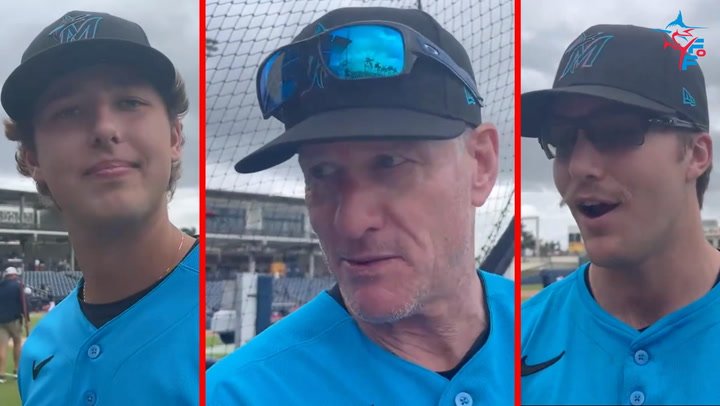 Following Thursday's Spring Breakout game, Marlins acting manager Jeff Conine and pitching prospects Karson Milbrandt and Aiden May speak about the experience. View the full article
-
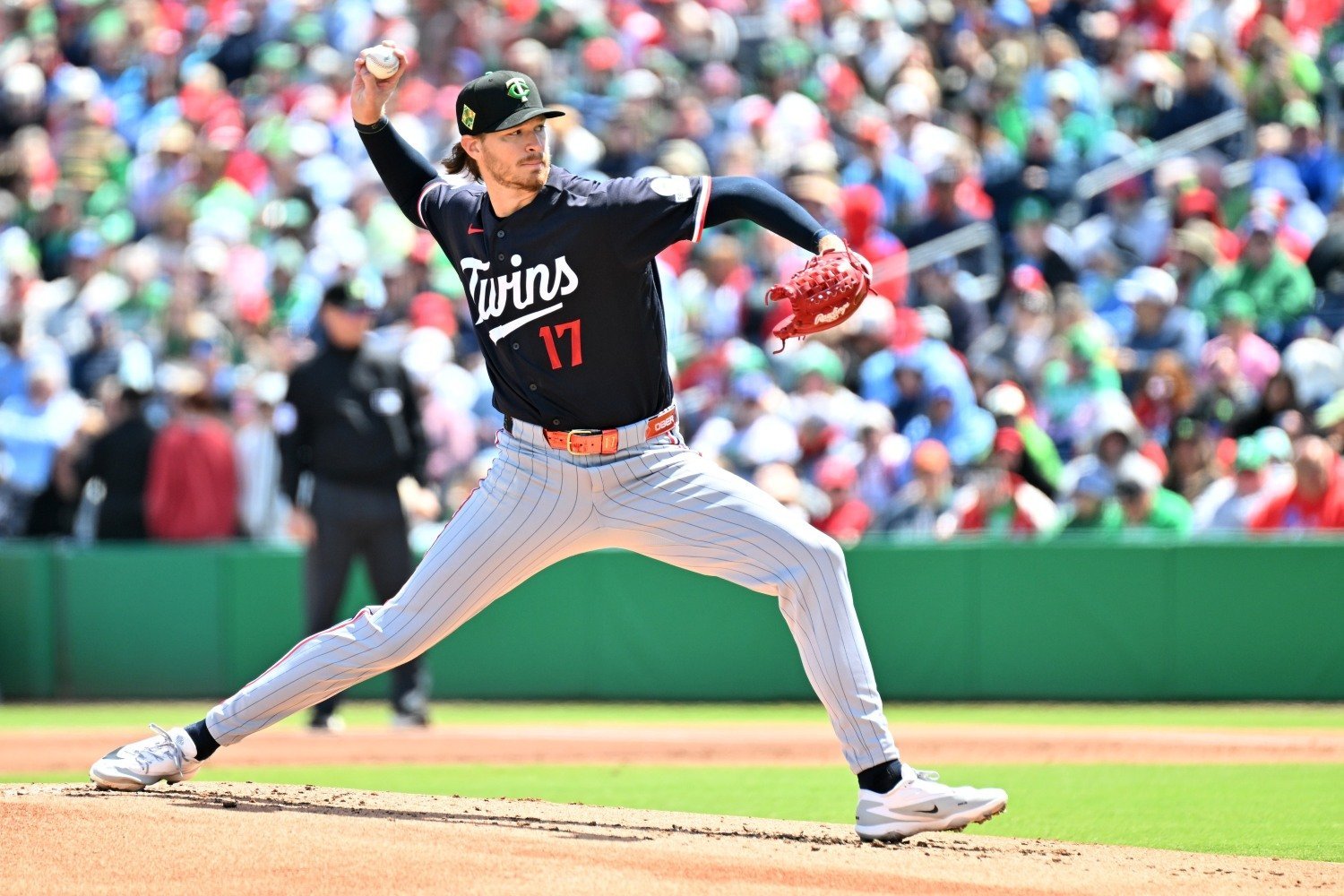 Coming into spring training, there was reason to believe that Bailey Ober could rebound this year. Last season never felt right. He was not fully healthy, his velocity was down, and his results suffered. The hope was that he’d get back to full strength, push his fastball toward 91 MPH, and let the rest of his arsenal do the work that has made him a reliable starter in the past. Ober has never relied on overpowering velocity. His game is built on command, execution, and pitch sequencing. When all of those elements are working together, he can be far more dangerous than the raw numbers suggest. Back in 2024, Ober’s fastball averaged 91 to 92 MPH, and he could move and locate the ball well enough to miss plenty of bats that way. In 2025, a season marked by health issues and inconsistency, it dropped closer to 90 MPH. That decline might seem minor on paper, but for a pitcher like Ober, even a single mile per hour can make his off-speed and breaking pitches less deceptive. Over time, these small drops can translate into harder contact and fewer strikeouts, which is precisely what happened last season. So far this spring, instead of bouncing back, his fastball has continued to drift lower. In his first outing, it averaged 89.9 MPH, a modest dip that could be explained as early-season pacing. Pitchers often need a start or two to ramp up, and coaches monitor pitch counts carefully, so his first outing did not raise alarms. In the second start, it fell to 88.8 MPH, a more noticeable decline that suggested the drop might not be about ramping up. In his third start on Tuesday, Ober’s fastball velocity dropped again, averaging 88.2 MPH and topping out at just 89.9. Each start has shown regression rather than progression. It's not just about velocity, either. Ober’s effectiveness also depends on how well his pitch mix is playing. In that third outing, he generated only three whiffs on 58 pitches, which was a significant decrease from seven whiffs on fewer pitches in the second start. Combined with the decline in fastball velocity, it suggests that something fundamental is off. Ober’s fastball, despite over 7 feet of extension, is not going to blow hitters away, so even minor drops magnify mistakes and lead to harder contact and/or fewer strikeouts. His changeup and breaking balls, which usually play off each other to create deception, are less effective when the fastball loses life. Spin rates, while not drastically different, have also ticked down slightly across the board. Looking at the bigger picture, these small changes over multiple seasons add up. The year-over-year velocity decline, coupled with far fewer swing-and-miss and slightly reduced pitch quality, raises real questions about Ober’s health and readiness with Opening Day just one week away. It's possible this is simply a cautious ramp-up, but it is hard to ignore the gradual pattern stretching from 2024 to now—especially because, even as he professes not to be concerned, Ober is at a loss to explain his inability to ratchet the stuff back up. For the Twins, Ober’s struggles could have larger implications. The rotation already has questions, with Pablo López out for the year and David Festa unavailable to begin the season. Losing Ober (or having him pitch at less than 100 percent) adds another layer of uncertainty. The Twins may need to prepare contingency plans if he can't return to form quickly, which could affect everything from bullpen usage to early-season matchup strategies. Ober’s next start will be crucial. If he can climb back toward 90 to 91 MPH and generate swing-and-miss like he has in the past, it may indicate that the early-spring dip was nothing more than a cautious ramp-up. But if he remains in the high 80s or continues to trend downward, concerns heading into Opening Day will only grow. It's a storyline worth watching closely, with the Twins set to take the field in less than a week, meaning there’s very little time to determine whether Ober is ready to pitch at full strength to start the season. At this point, this situation is less about surface-level stats and more about the underlying signs. Velocity, whiffs, and spin rates all point to a pitcher who is not fully locked in yet. The hope is that with a full ramp-up, he’ll regain the form that made him a dependable starter. But the pattern across three starts and multiple seasons cannot be ignored, and for Ober and the Twins, the clock is ticking. View the full article
-
What Sinking ABS Challenge Rates Will Mean for Brewers
DiamondCentric posted an article in Brewer Fanatic
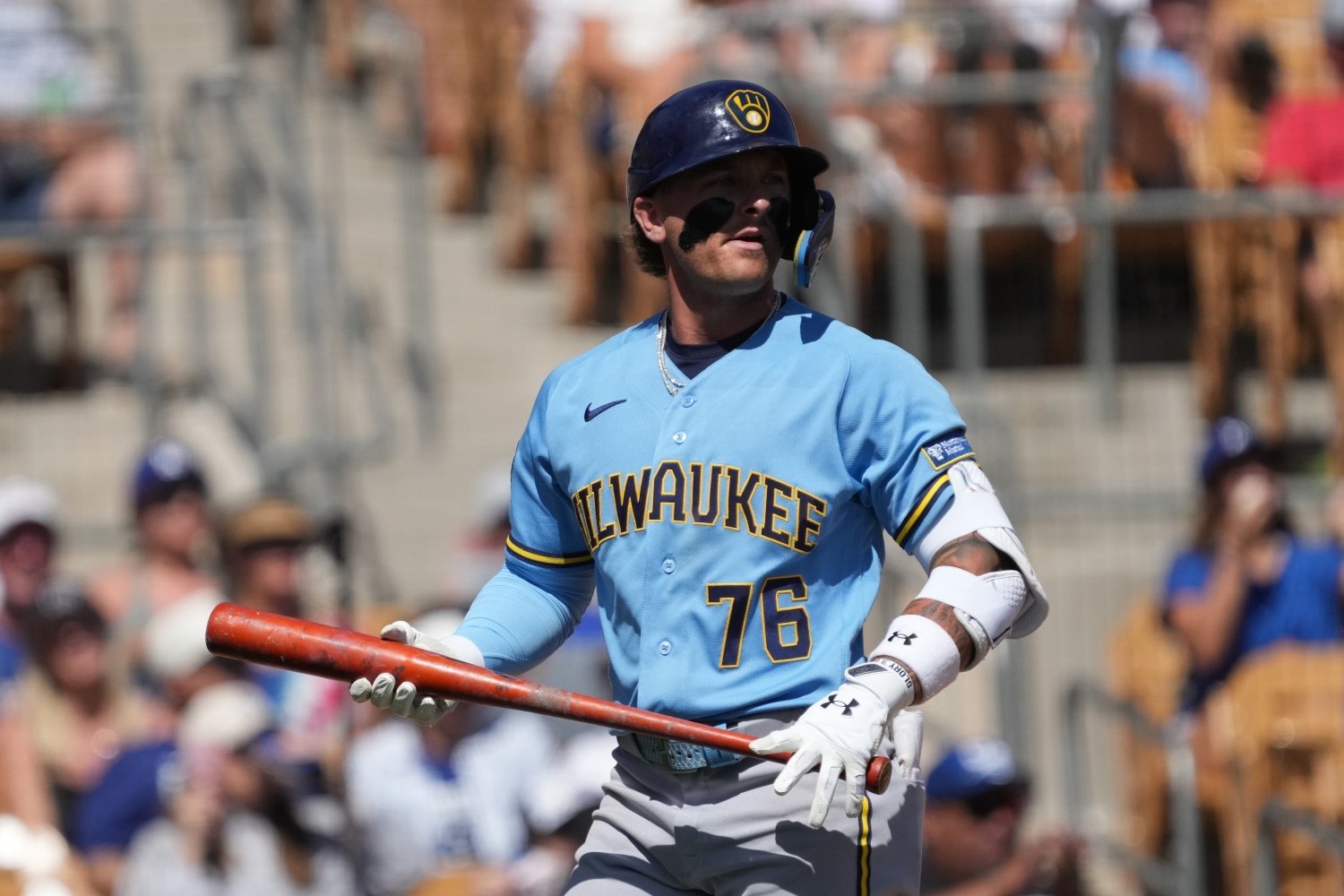 Early in spring training, as players were getting a feel for the ABS challenge system and the contours of the new zone created thereby, most teams—including the Brewers—allowed their hitters to challenge at will. The Crew ran out of challenges early in games more than once in the first fortnight of Cactus League games, which mildly exasperated manager Pat Murphy, but he waited until nearly the middle of the preseason schedule to crack down on the strategic approaches of players to the system. As other teams have done the same thing, the global challenge rate has come down sharply. Early in the spring, hitters were challenging roughly 1 out of every 15 called strikes. For the last week, the average has been just under 1 in every 25 such pitches. This was inevitable. Once everyone has a handle on the best usage of the system, it's important to learn when not to challenge a call that feels borderline. Game situation—relative score, count, base-out situation, inning, and whether or not the team has both of its challenges remaining—has to inform each choice about whether or not to challenge a call, rather than the batter's simple perception. Withholding some challenges to ensure that the team still has the right to mount one at a critical moment is part of every team's gameplan; it just wasn't part of most teams' early conversations during games that don't count. Still, it's an important trend, because how often the league's batters challenge as a whole matters quite a bit to the Brewers. Though William Contreras has become synonymous with the catcher position for the Crew (and can hardly be optimized as a framer a second time), the team has a reputation over a decade old for improving the framing of catchers. They win at the margins of the strike zone, including by stealing some strikes on pitches that shouldn't be thus called. The ABS challenge system threatens that advantage, and the magnitude of value the Brewers are likely to lose is proportional to the frequency with which the league's batters tend to challenge calls. The Brewers were eighth-best in baseball last year at getting called strikes when a batter took a pitch in the shadow zones, as defined by Statcast's Attack Zones model. It's important to know where they got most of those calls, though, because strikes can be stolen more safely if they're plucked from zones in which batters are less likely to challenge. Here's the heat map showing where the Brewers most often got those borderline strikes in 2025: That's a pretty standard and stereotypical heat map. It's easier to frame pitches at the bottom of the zone than to do so at the top, but batters also swing more often at high pitches, anyway, so the pitch up there is usually thrown with the goal of getting a whiff or a weak fly ball, rather than in pursuit of a called strike. Those are supposed to come at the bottom of the zone. For many of the same reasons, hitters challenge more often near the bottom of the zone than near the top—but not by as much as the heat map above might imply. Hitters (and pitchers and catchers) are still getting accustomed to the new upper and lower bounds of the bespoke strike zones assigned to each batter, based on their height. The edges of the plate don't move, but what's high, what's low, and what hits the zone between those regions is newly defined—and still a bit of a mystery. The top of the zone seems to have come down a bit, but the bottom edge doesn't seem to have moved much for most batters. As a result, the Brewers might be able to hold onto some of their slightly out-of-zone called strikes for a while. Hitters will be wary of challenges on low pitches, where the success rate hasn't been very good and they're not as certain as they are about pitches inside and outside. Contreras needs to continue to excel at bringing up those pitches nipping at the knees of batters, but that shouldn't be a problem. In this way, fewer challenges might be good news for the Crew. On the other hand, though, notice in that first chart that the challenge rate for catchers has been nearly flat throughout the spring. For the most patient team in baseball, that gives the Crew some concrete information. They should expect opposing catchers to challenge about 1 of every 50 pitches they take for a ball. That's why, so far this spring, they've experienced among the most sheer overturns against them, from both batters and catchers. They'll have to negotiate this aspect throughout the season; it might eventually need to dictate some minor changes in their approaches. The Brewers play a specific brand of baseball, and can't afford to reorganize themselves every time the league tweaks a rule. That's for richer teams to do. The Crew needs to find ways to tailor their existing systems to new wrinkles, but never throw out those systems in favor of less efficient ones; that would be self-defeating. All spring, they've monitored these trends throughout the league, and they'll have to continue doing so—but it can't be the overriding consideration as they shape their plans to win games. View the full article
-
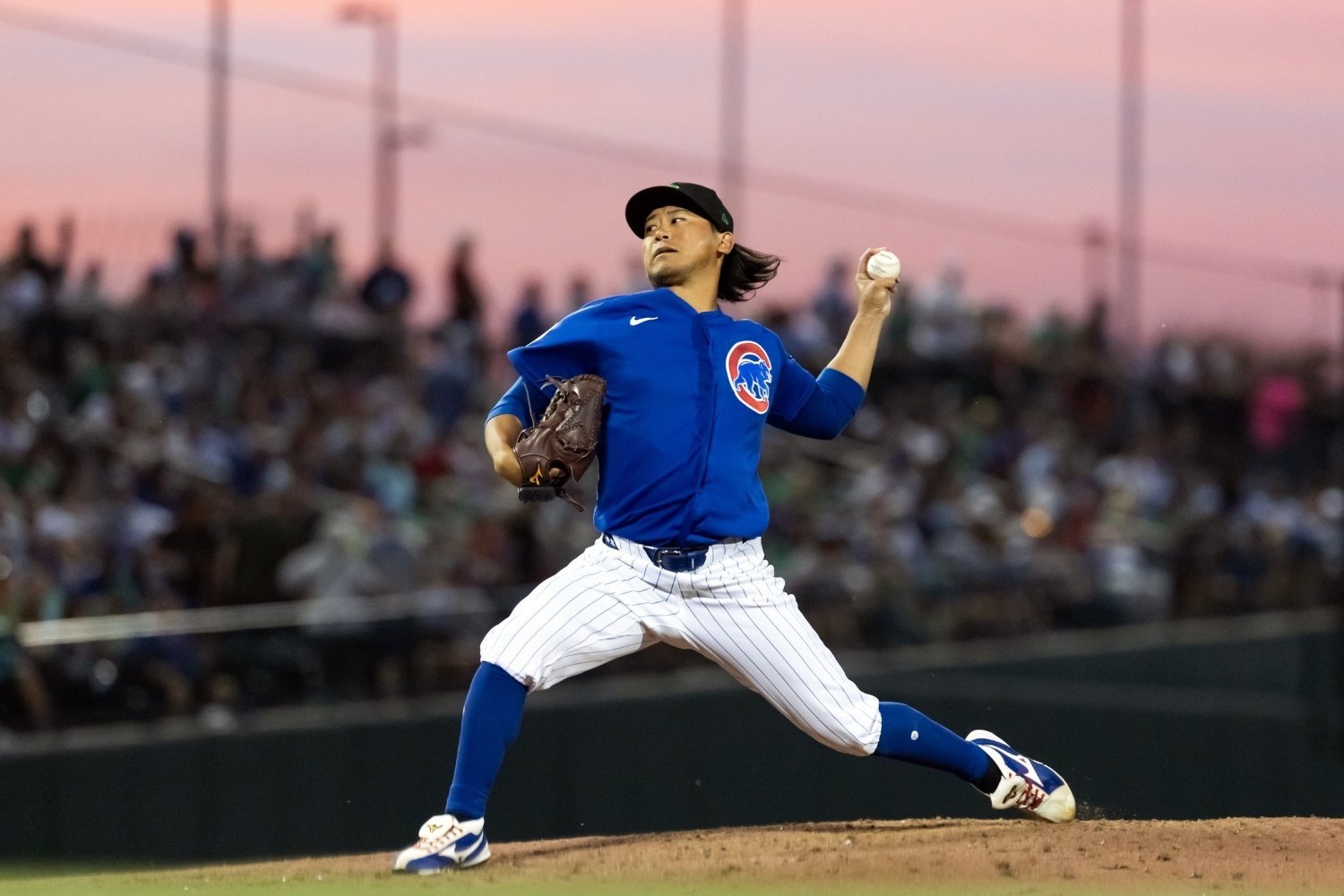 In a perfect world, you could fly to the ballpark every day to watch your favorite team fire a perfect game against their chief rival. Your favorite pitcher would never give up a hit or a run, and you'd win every game by 18 runs. But that would be dreadfully boring, after no more than a week. I even think you'd get sick of flying. Gravity defines us as a species. So does adversity. Without pressure and difficulty, there would be no gratification in the grace and victory that make sports fun. Shota Imanaga is perfect, for this blessedly imperfect world. He's a fierce, intelligent, crafty competitor on the mound, but he never invites you to forget that baseball is difficult. He doesn't throw that hard. He gives up home runs in bunches at times. Last season, he struggled mightily down the stretch and was virtually unpitchable in the Division Series against the Brewers. He's back for 2026, but the Cubs (wisely) ensured that he would be no more than their fourth starter heading into the year. The Cactus League season has been no kinder to Imanaga, results-wise, than was the end of 2025. He racked up eight strikeouts against the Angels on Tuesday, but even that was no spotless outing. For the spring, he has a 4.85 ERA. He's given up five home runs, and though he's only walked one batter, the biggest worry for most Cubs fans—that opponents will tee off on Imanaga in a way that constantly seems to confirm supporters' secret dread that he's been figured out—has not been assuaged at all. To those fans most in crisis, I offer this consolation: Imanaga has some tricks up his sleeve. As has already been thoroughly documented here (and elsewhere), Imanaga is throwing harder this spring. That matters. As much as velocity has become overrated in the modern game, it's inarguably important, and Imanaga's heater is humming in at 92.5 MPH this spring. That's up by almost 2 MPH from last year, when it was clear (especially after the All-Star break) that he never really got right in the wake of an early-May hamstring strain. He's retained the ride on his heater, too, which is as important to his overall effectiveness as the sheer speed. Imanaga has also made a small but significant change in his starting point on the mound this spring. Last year, he worked from the far first-base edge of the rubber. That was designed to maximize the deceptiveness of his funky delivery, especially by making his splitter as it first began to diverge from his four-seam heater. However, that didn't always work, and it came with some negative side effects, anyway. Imanaga has great command, but for any pitcher with natural arm-side run on the fastball, the danger of starting on the arm side of the rubber is that the ball will too often run off the plate. Uk9HUjNfWGw0TUFRPT1fQmdGUlV3Y0hCUW9BV1ZJSEFnQUhWUTVTQUZnRVVsVUFBQWRVQWdFRFVBQmRBUXNG.mp4 The solution to that issue is as simple as you'd guess it is. This spring, Imanaga has moved to the middle of the rubber, as you can see clearly in this (otherwise grainy) screenshot from Tuesday's appearance. A good pitcher like Imanaga can manipulate their arm to get the ball where it needs to go from almost anywhere on the rubber, but there's a limit on how much of that manipulation one generally wants to do. The more you alter your delivery or force the ball to a given spot, the less widely you can vary your shapes and locations without giving yourself away. Instead of trying to stay where he was and change how he pitches, therefore, Imanaga moved to the center of the mound, where his stuff can play more naturally to all the places where he needs it to go. This is also going to benefit him in generating deception against right-handed batters. Compare these two 3-D animations of the trajectories of Imanaga's pitches, from the approximate vantage point of identical right-handed batters. The top image is from his appearance against Milwaukee last October; the bottom one is from Tuesday. Moving over makes it look less like the fastball in is coming right at the righty batter, but that's not a pitch Imanaga leans on, anyway. For the heater away, up or down, being closer to the center line of the lane from the plate to the mound creates more deception. The splitter plays off his fastball better, and his curveball can play to righties a bit, which it has rarely done during his time in the States. Imanaga still might run into homer trouble once the regular season begins. This adjustment isn't guaranteed to fix that issue, and in fact, the increased velocity is more important to that project, in terms of pitch shape and forcing less aggressive swings. However, another important goal is to minimize walks and avoid getting into unduly hitter-friendly counts. This move on the mound should help with that, and with getting some of the chases that Imanaga struggled to induce late in 2025. View the full article
-
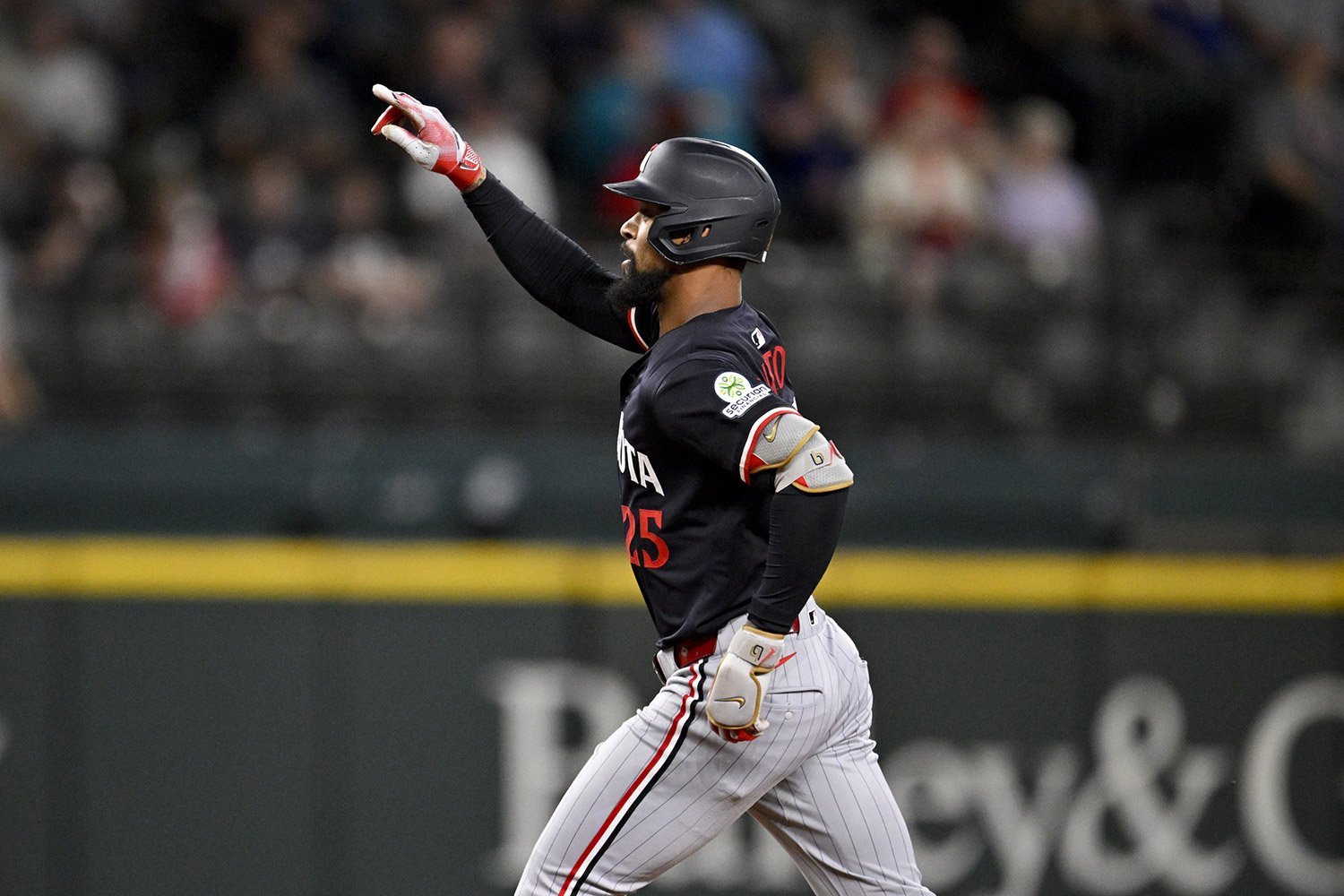 This is a look at what to expect from the Minnesota Twins this season. The Twins finished in fourth in the AL Central with a 70-92 record, after a trade deadline where they traded 10 major leaguers as part of a reset/rebuild/reboot (depends on who you ask). This marked a step back from 2024, when they went 82-80, and a hefty step back from 2023, when they won the division and their first playoff series in over 20 years. Here is a look at some notable additions and subtractions for the Twins this offseason. Twins Subtractions 2B Edouard Julien (trade with Rockies) C Christian Vazquez RP Pierson Ohl (trade with Rockies) Twins Additions C/1B Victor Caratini, 2 years, $14 million 1B/DH Josh Bell 1 year, $7 million RP Taylor Rogers - 1 year, $2 million RP Liam Hendriks (minor league deal) RP Anthony Banda (trade with Dodgers) SS Orlando Arcia (minor league deal) 3B Gio Urshela (minor league deal) RP Andrew Chafin (minor league deal) These additions and subtractions don’t tell the whole story, as the Twins traded 10 major leaguers at the 2025 deadline. Josh Bell and Victor Caratini add needed experience to a young lineup. After the trade deadline sell-off, the bullpen is wide open for opportunities from veteran and young arms alike. Taylor Rogers signed a one-year deal to reunite with Minnesota and will likely pitch high-leverage innings. Other high-leverage innings will go to Liam Hendriks, if healthy, along with Anthony Banda, and possibly Andrew Chafin as well. Internal options for high-leverage innings include Cole Sands and Justin Topa. The additions may seem to outweigh the subtractions, but they do not account for the ten players traded at the deadline, and the Twins are very much a team in transition as they look to retool to become competitive in the near future. Every team deals with injuries, and the Twins are no different. Here is a look at a few key injuries that will affect the Twins in 2026. Twins Injuries RHP Pablo Lopez, Tommy John Surgery RHP David Festa, right shoulder impingement (expected return in April) RHP Travis Adams, elbow inflammation (should return late Spring training, early in the season) OF Walker Jenkins, grade 1 left hamstring strain (expected return late March) The loss of Pablo Lopez was quite a blow for a Twins rotation that was looking for him to be his all-star caliber self and lead the staff, along with Joe Ryan. Lopez is under contract through 2027 and is expected back for the final year. David Festa, Travis Adams, and Walker Jenkins are all players who have dealt with injuries this Spring and will look to be ready for the beginning of the season or early in the season. Festa’s injury, in particular, was tough, which will test the pitching depth early in the year. The Twins hope these three players do not have long-term availability issues stemming from injuries sustained during Spring Training. As a team in transition, here is a look at some of the key players for the Twins in 2026. Key Twins Players CF Byron Buxton - 4.9 bWAR SP Joe Ryan - 4.5 bWAR SP Simeon Woods Richardson - 2.2 bWAR 2B/OF Luke Keaschall - 2.0 bWAR C Ryan Jeffers - 1.2 bWAR Byron Buxton, who recently played for Team USA in the World Baseball Classic, will look to be the key piece of the lineup. Luke Keaschall was the only rookie who had a significant impact in 2025, but hopefully is the first of many young players who will make an impact for the Twins in the near future. Woods Richardson, whom the Twins acquired along with Austin Martin for Jose Berrios from the Toronto Blue Jays at the 2021 trade deadline, will look to continue growing into a solid starter for the rotation. Ryan will be the ace of the staff and will look to build off of his first All-Star appearance in 2025. The rotation has become a bit of a conundrum with a few injuries, but it could still provide upside, and Ryan will be a big part of any success they have this coming season. Speaking of top prospects, here is a look at the Twins' top prospects, which includes four players in MLB Pipeline's top 100 prospects going into the 2026 season. Twins Top Prospects Walker Jenkins - OF Kaelen Culpepper - SS Eduardo Tait - C Emmanuel Rodriguez - OF Connor Prielipp - LHP This list includes four prospects who could be seen in the majors as early as this year. All but Tait have a good shot at the opportunity to make an impact at the major league level in 2026. Jenkins was the fifth overall prospect in 2023, in a class where the Twins jumped in the inaugural draft lottery. Culpepper has a shot at sticking at shortstop long-term, but has shown positional flexibility and could be an option at second base or third base as well. Tait came over to the Twins, along with Mick Abel, in the trade that sent Jhoan Duran to the Philadelphia Phillies at last season’s trade deadline. He is 19 years old and has shown high upside, but is still a few years away from the majors. Rodriguez and Prielipp have both dealt with various injuries, with Rodriguez never having played 100 games in a season and Prielipp throwing just 112.2 innings since being drafted in 2022. Both have shown high ceilings, but the key will be staying healthy so they can have as big an impact as they can going forward. Twins Spring Storylines (and beyond) The Pitching Staff The rotation looked relatively deep prior to the Lopez and Festa injuries, but lots of the success out of the rotation will hinge on Bailey Ober getting back to form, along with younger pitchers Simeon Woods Richardson, Mick Abel, Zebby Matthews, and Taj Bradley taking a step forward. The bullpen is another questionable area, as the Twins traded all their high-leverage relievers at the deadline. The front office seems to think they can rebuild the bullpen on the fly, and time will tell whether they succeed. A few young players, such as Marco Raya, will transition into being a full-time reliever this year, but a lot will hinge on how some of the off-season moves perform. Young Twins Players And Their Impact Luke Keaschall was the only Twins rookie in 2025 who had a major impact, but that could be different this coming season. Lots of young players are expected to get a good amount of time in the majors, including top prospects Jenkins, Culpepper, and Prielipp. Along with those two, other prospects who have a shot at making their major league debuts include OF Gabriel Gonzalez, LHP Kendry Rojas, OF/1B Hendry Mendez, along with pitchers Andrew Morris and Marco Raya as well. The youth movement appears to have started in Minnesota, and time will tell what impact those players will have on 2026 and beyond. Here’s a look at the projected lineup, rotation, and projected record for the Twins this year: Projected Twins Lineup Byron Buxton - CF Josh Bell - 1B Luke Keaschall - 2B Matt Wallner - RF Victor Caratini - DH Trevor Larnach/Alan Roden - LF Royce Lewis - 3B Ryan Jeffers - C Brooks Lee - SS Projected Twins Rotation Joe Ryan - RHP Bailey Ober - RHP Taj Bradley - RHP Simeon Woods Richardson - RHP Zebby Matthews/Mick Abel - RHP Projected Twins Record PECOTA: 3rd place, 79-83 FanGraphs: 4th place, 79-83 You may be surprised to see the Twins are projected to improve on their 70-92 record from 2025 at first glance. This appears to be, in part, due to the belief that certain aspects of the roster will improve, and that other teams in the division may regress as well. The Twins have operated on a limited budget all off-season, and with a new person in charge of the front office, they will look to build up to relevance in the AL Central. It could be a very fun and exciting year in Minnesota, but it could also not go well, and the Twins could be trading pieces at the deadline again if things don’t go as they hope. American League Central Previews Detroit Tigers Cleveland Guardians View the full article
-
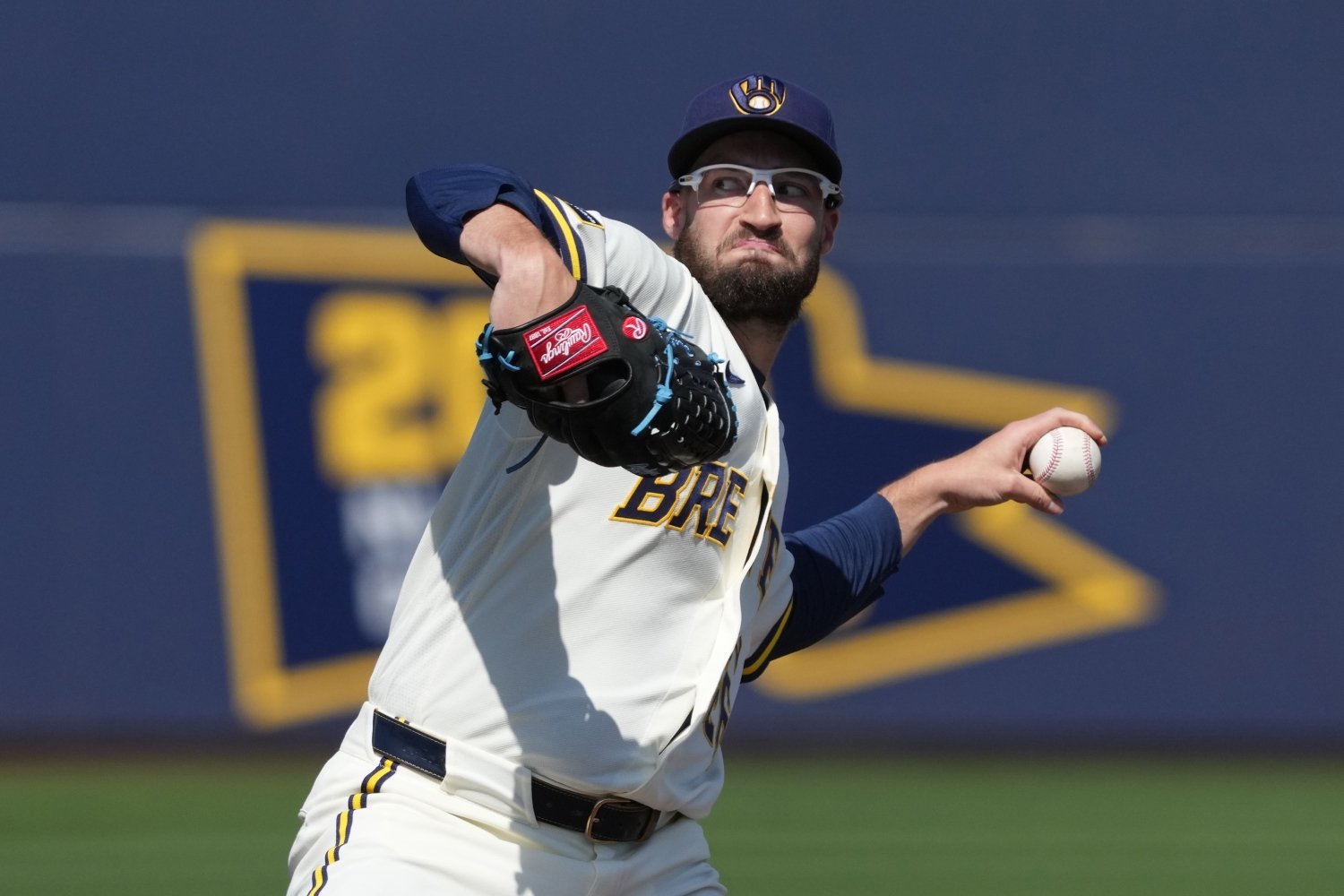 The Brewers front office and coaching staff knew this would happen, even if you didn't. Over and over, when asked questions about an apparent surfeit of starting pitching options in the wake of multiple trades that brought in more young arms in the late stages of the offseason, Matt Arnold, Pat Murphy and others in the organization sounded the same note: there will be injuries. The team needs to be ready when they come, and they need everyone they acquired in order to do that. It's clear, by now, that they were right. Already this spring, Brandon Woodruff has been brought along exceptionally slowly, with the goal being to have him ready to pitch in October, even if that comes at the expense of March. Quinn Priester, as it turns out, is dealing with a form of thoracic outlet syndrome, and while his prognosis is better than it often is for pitchers dealing with that issue, he's unlikely to be back on a big-league mound before Memorial Day. Logan Henderson has dealt with elbow discomfort this spring. Now, Kyle Harrison's short-term availability is up in the air, as he left his latest Cactus League start with a blister. One week from Opening Day, the Brewers' projected starting rotation suddenly looks stretched. It goes: Jacob Misiorowski Chad Patrick Brandon Sproat Woodruff Firstly, that's only four names. Second, the hope had been to hold Woodruff back until the second series of the season, which now looks tougher to do. Third, Sproat came to camp without a guarantee of any place in the rotation. He's already become indispensable. Let's tackle that first note more completely, though. The Brewers need a fifth starter. Even with days off aplenty early in the year, shortening to a four-man rotation is not an option they'll consider. The true routine of the modern starter is to work every sixth day, with the flexibility to go every fifth when required. They won't begin the season by asking their starters to go on four days' rest with any regularity. So, who will stand the gap? The good news is that, thanks to all those moves and their stubborn retention of all the pitching depth they can get, there remain several viable options. The most obvious is Robert Gasser, but fellow lefties DL Hall and Shane Drohan are right there in the mix, too. It's less likely that the team will turn to either Carlos Rodríguez or Coleman Crow, but both are on the 40-man roster. It's a luxury to have so many theoretically usable starters, even after a few of them are sidelined. Rather than Gasser, Hall or Drohan, though, another lefty could end up back in the mix for the rotation, on an interim basis. Maybe this year, the way for Pat Murphy and Aaron Ashby to get Ashby into the game as often as he wants to be is to have him start some games in a traditional, rotational role. Despite stretching out with starting in mind in 2024 and 2025, Ashby hasn't actually been a regular starter in the majors since 2022. It would be a significant change to move him back into the role this year, but it's no longer a wild idea. He threw 50 pitches in one Cactus League appearance. He's worked into a third inning multiple times. He has, after all, a deep arsenal for a reliever, with a sinker, a curveball, a changeup, and a four-seamer he leaned into more late last season, plus the occasional slider. There's no pitcher Murphy trusts more than Ashby, and Ashby wants the ball more than any other pitcher in the clubhouse. He's not fussy about the role he fills, but always eager to help the team and alleviate the burden on teammates, and this spring, the best way to do that might be to shift back to the rotation for a while. It helps quite a bit that Ángel Zerpa has looked great this spring, both in camp and during his time with World Baseball Classic-winning Team Venezuela. Zerpa and Jared Koenig can fill the team's needs from the left side in high-leverage relief, while Hall is a good candidate to go multiple innings in relief. Hall, Gasser and even Drohan would be more conventional choices for the rotation, because they've each worked with that specific goal and role throughout the spring, but Ashby is clearly the best of those four pitchers. If the team needs a trustworthy fifth starter for the first month or so, he's the player Murphy is most likely to choose. Once he's in the rotation, moving him back to the pen might be tricky—unless his body responds to the added workload with another injury. That's a problem for later in the year, though, and it could be a "good problem": there's little real friction in simply keeping Ashby in the rotation and telling Hall to shift his focus toward a permanent relief role. If Harrison and/or Henderson come along exceptionally well in the coming days, this could be moot. But keep an eye on Ashby; he could be starting (not just opening) come next week. View the full article
-
Chicago Cubs 2026 Position Analysis: Shortstop
DiamondCentric posted an article in North Side Baseball
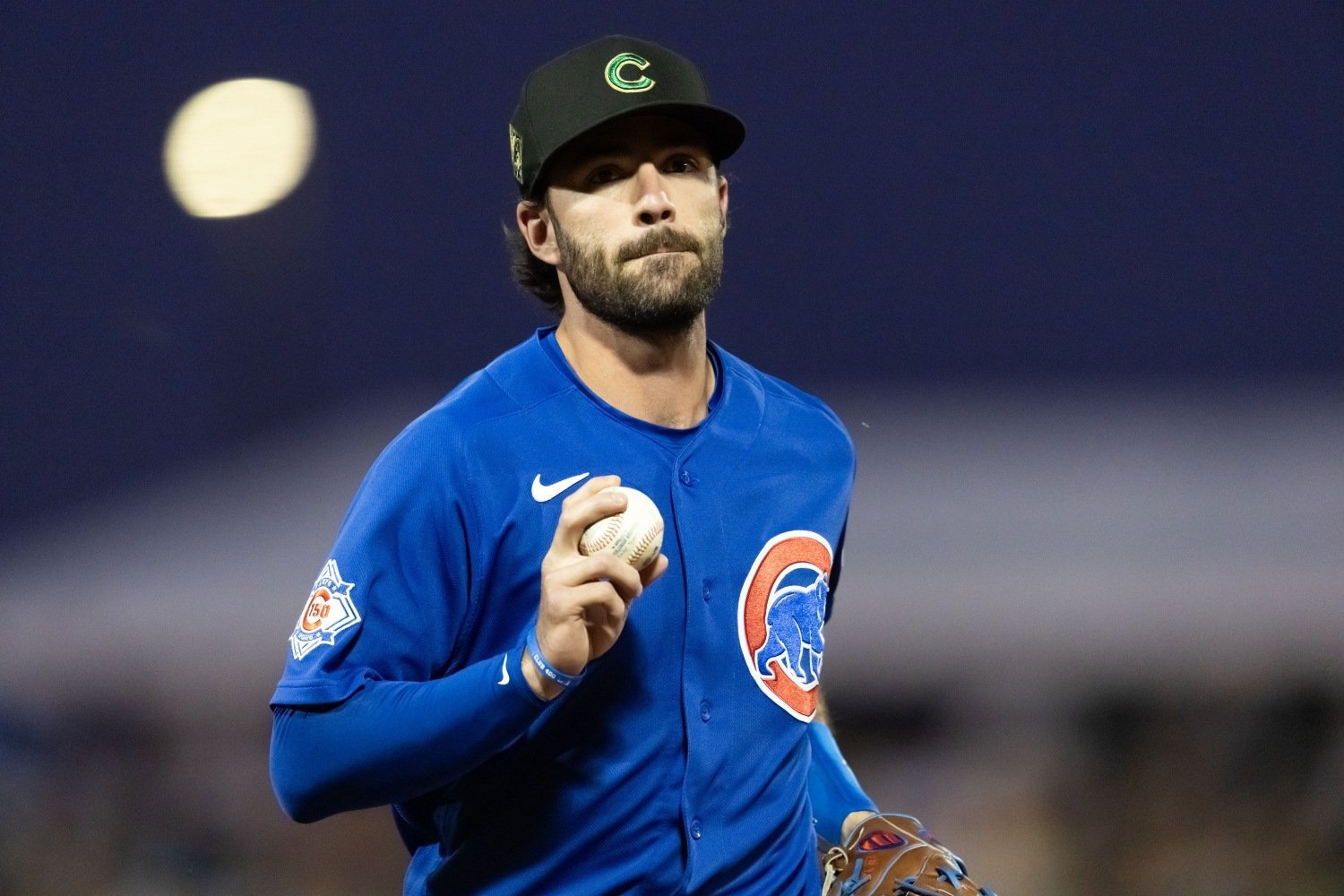 The Chicago Cubs came into this offseason with questions. They'll enter the next one with different questions. None of those, however, surround the shortstop position. For the last three years, and at least for this next one, the position belongs to Dansby Swanson. Swanson had an interesting season. We'll talk about the enigmatic nature of his offense throughout his career, but the stat sheet looks fantastic in certain areas—and less great in others. He slashed just .244/.300/.417, with a 26.0% strikeout rate that was his highest since 2022 and a walk rate that declined for a third consecutive season (7.3%). He did hit 24 home runs and steal 20 bases, while showcasing some impressive power metrics. But when all was said and done, his wRC+ checked in as essentially average: 99, where 100 is exactly average and higher is better. Lucky for him, his status as the team's starting shortstop isn't in any kind of question. Nico Hoerner resumes duties as the backup, while Matt Shaw could fill in in a pinch. It's a position of certainty and of depth, but that doesn't mean it's an ideal one for the Cubs ahead of the new season. SHORTSTOPS AT A GLANCE Starter: Dansby Swanson Backup: Nico Hoerner Depth & Prospects: Matt Shaw, Scott Kingery, Ben Cowles, Jefferson Rojas fWAR Ranking Last Year: 15th (3.3) fWAR Projection This Year: 13th (3.9) THE GOOD Swanson had his best power season since he signed with the Cubs, by a pretty wide margin. That's not completely reflected in his ISO, as a .173 mark in 2025 just barely edges the .172 figure he posted in 2023, and 24 home runs is not that much more than 22 home runs. Under the hood, though, better things were happening. Each of Swanson's barrel rate, hard-hit rate, and average exit velocity were his highest in a Cub uniform. These are objectively good things, despite what the rest of the stat sheet might say. He was in heavily on the fastballs that are a prerequisite for his success (more on that later), with his pitch selection helping to drive regular contributions in the power game. He also produced the results he did in a year when the ball was a bit less lively than it's been at any time in the last decade. The drag coefficient on the ball was higher than at any point since the very earliest days of the Statcast Era. In this chart, the higher a daily datum is, the less well the ball carried that day, on average. Swanson also continued to be an above-average defender. The numbers were tamped a bit by some early struggles, but Outs Above Average still liked him for 4 OAA. The good is furthered by the fact that the team has a built-in backup to Swanson in the form of Nico Hoerner. Flipped over to the keystone upon Swanson's arrival, Hoerner is more than capable of providing stability at the position in the event of an injury or some extra rest, while Matt Shaw would then slide into Hoerner's vacated spot at second in either instance. There's a bit of unconventional depth here, but it all speaks to the idea that this is one of the more stable positions on the roster. THE BAD Swanson is an immensely difficult player to figure out. At the same time, he's also a very easy player to figure out. Let me explain. The best years of Dansby Swanson's career have come when he's hunting fastballs. In 2021, he was a 99 wRC+ player, but had a .201 ISO. It was the only time in his career his isolated power number eclipsed that .200 mark. In 2022, he went for a wRC+ of 117 while still maintaining much of that power; his ISO was .170 and he hit 25 home runs. He followed that with a 105 wRC+ campaign and a .172 ISO in his first year with the Cubs. Those seasons saw his three highest rates of swinging at fastballs (prior to 2025). The 2022 season is particularly notable, as he swung at fastballs more than any other pitch type (53.6%). He'd never done that over a full season—until 2025. Swanson swung at 55.6% of fastballs in 2025. He maintained a hard-hit rate of 56.1%, found the barrel 13.8% of the time, and carried a .483 slugging percentage against heaters. The issue with that, dear reader, lies here: Swanson became so obsessed with swinging at them that he lost his grip on the zone. There was a threshold somewhere, and Swanson crossed it with his aggression against that specific pitch type. The outcomes were positive when he made contact inside the zone, but swinging at the heater outside the zone (and missing more often when he did so) cut into the benefits of that adjustment quite a bit. Additionally, Swanson continued a trend that began when he arrived in Chicago. At 17.3%, his opposite-field percentage was the lowest of his career. In fact, each of his three seasons have seen a noticeable drop in how frequently he makes contact to the opposite field. That element has its own nuance within his mechanics, but speaks to another factor pinning down some of the production from Swanson, beyond the approach. The good news is that Swanson still found ways to produce. The better news is that he's worked with Dustin Kelly on some changes this offseason. Those details are somewhat vague, but could indicate some refinement to blend the uptick in power with a more robust ability to reach base in 2026. THE BOTTOM LINE This position is Swanson's to lose in the short and medium term. Hoerner could leave as a free agent next winter. Neither of Scott Kingery or Ben Cowles are going to push for playing time. Jefferson Rojas is still a ways away. Swanson could move to second as soon as next year, but for now, he's the shortstop. It's just a matter of which iteration we see. Is Swanson going to refine the approach in a way that allows him to maintain power but work counts more effectively in his favor? How much can going the other way with authority again augment his production, and can he accomplish that? Is the defensive decline actually the result of a poor start, or should we start to worry about aging at a premium position? These are all questions in need of answers in the new season, but Swanson will have plenty of runway to do just that. View the full article
-
Three Questions the Padres Must Answer Before 2026 Opening Day
DiamondCentric posted an article in Padres Mission
 There are precious few days left before the San Diego Padres depart sunny Arizona and return home to sunny SoCal to begin the 2026 season. But as the clock ticks down toward Opening Day on March 26 vs. Tarik Skubal and the Detroit Tigers, there are still some key items to figure out regarding who will be on the Opening Day roster. Some are more simple, like which players start the season on the injured list, and others will come to choosing the right player for the right role. Let's take a look at the top three questions remaining: 1. Who fills out the Padres' starting rotation? We know that right-handers Nick Pivetta, Michael King and Randy Vasquez are in the rotation barring anything unforeseen in their final Cactus League outings. That leaves two spots. Or is it one? An interesting wrinkle in this decision is that the Padres have two days off in the first eight days of the regular season. That means the Friars don't need a fifth starter until the second Sunday of the season, April 5 on the road against the Boston Red Sox. There are different ways for the Friars to approach this; they could ho with a traditional five-man rotation and give the starters a little extra rest to begin the season, which is not a bad idea, or go with four starters and a nine-man bullpen. There are two primary candidates for this: right-handers Walker Buehler and German Marquez. Buehler is not currently on the 40-man roster after signing a minor-league deal with an opt-out before Opening Day if not on the MLB roster. Buehler does get a $1.5 million contract if added to the Padres' roster. Marquez signed a major-league deal for one year and $1.75 million. Buehler has been the better of the two thus far in spring, with a 3.09 ERA in three Cactus League games, walking four and striking out 13 in 11⅔ innings. Marquez hasn't been as sharp, with a 9.26 ERA in four appearances, with five walks and 15 strikeouts, nine coming in his five-inning start Tuesday. With Pivetta having dealt with some arm fatigue and skipping a spring start (he did return last weekend), this feels like a five-man rotation situation, with Buehler and Marquez taking those Nos. 4 and 5 slots. 2. What does the Friars' bullpen look like? First-year manager Craig Stammen, himself a former MLB reliever, has enjoyed using the term "bridge" when referring to some Friars bullpen candidates this spring. That could be key when trying to figure out who will be among the eight relievers selected for Opening Day. The Friars boasted one of the best bullpens in all of MLB last season and that doesn't figure to change much despite losing closer Robert Suarez to Atlanta via free agency. That, in large part, is due to having added arguably the top reliever in baseball at the trade deadline in right-hander Mason Miller. Adrian Morejon and Wandy Peralta are the locked-in left-handers, while right-handers Jeremiah Estrada, David Morgan and Bradgley Rodriguez are the top right-handers. The other two spots depend on the health of left-hander Yuki Matsui, who has been throwing after sustaining an oblique injury in camp. He probably needs two solid Cactus League appearances to make the Opening Day roster. Left-hander JP Sears, who had been a candidate for the rotation, could instead be a bullpen option or sent to Triple-A El Paso for rotation depth. The latter seems the better choice for the team. With left-hander Kyle Hart and right-hander Logan Gillaspie showing good signs in camp and fulfilling the bridge role they likely take the last two bullpen spots thanks to their ability to cover multiple innings. Left-hander Jackson Wolf is another bridge option, but was reassigned to minor-league camp earlier this week. 3. Where does Craig Stammen's bench stand? The Padres' starting lineup pretty much returned intact, with the only true subtraction being Luis Arraez. Catcher: Freddy Fermin. First base: Nick Castellanos. Second base: Jake Cronenworth. Third base: Manny Machado. Shortstop: Xander Bogaerts. Left field: Ramon Laureano. Center field: Jackson Merrill. Right field: Fernando Tatis Jr. Designated hitter: Gavin Sheets. With four bench spots, one goes to Luis Campusano as the backup catcher. Infielder Sung Mun Song's second oblique injury likely means he will begin the season on the injured list, although he has been swinging in recent days. Outfielder-infielder Miguel Andujar has a spot secured. Needing a backup outfielder who can play center gives Bryce Johnson a spot, at least to begin the season. That leaves just one remaining. Ty France, in camp on a minor-league contract, has been good this spring, with the 2025 AL Gold Glove first baseman also playing second, third and left field. He is back after beginning his MLB career in 2019 with the Friars and could be the ultimate beneficiary of Song's lingering oblique troubles. Bonus: Who will enter MLB Opening Day on the injured list? It is never fun to be on the injured list, especially for Opening Day. Right-handed reliever Bryan Hoeing is already on the 15-day IL and is scheduled to have season-ending surgery on his right flexor tendon. He will eventually be transferred to the 60-day IL, opening up a 40-man roster spot (possibly for France or Buehler). Right-hander Joe Musgrove will also begin the season on the 15-day IL, as he still is on the comeback path from Tommy John surgery. Another starter, right-hander Griffin Canning, is still working his way back from a ruptured left Achilles. Both could return in mid- to late April if things go well. Right-handed starter Matt Waldron is in more of a sticky situation; he had hemorrhoid surgery in camp and has been working his way back on the mound and made his Cactus League debut with two innings Tuesday. With no minor-league options remaining, going on the 15-day IL with a possible rehab assignment will give the Padres an outlet to keep him around until they need him. Right-hander Jason Adam, a key member of the bullpen, has been on track to be ready for Opening Day following a ruptured left quad on Sept. 1 that required surgery. The Padres might take a cautious rout with his return with an IL placement. Matsui's oblique injury could be an excuse to put him on the 15-day IL and give the injury more time to heal. Right-handed reliever Ty Adcock made his Cactus League debut Monday following an oblique injury and was optioned to Triple-A on Tuesday. The same story applies to Song. The former Korea Baseball Organization star is likely to go on the 10-day IL considering he has had the same injury twice since the start of the calendar year. Infielder Will Wagner is yet another player with an oblique injury and he is likely to begin the season on the 10-day IL before heading to Triple-A. View the full article
-
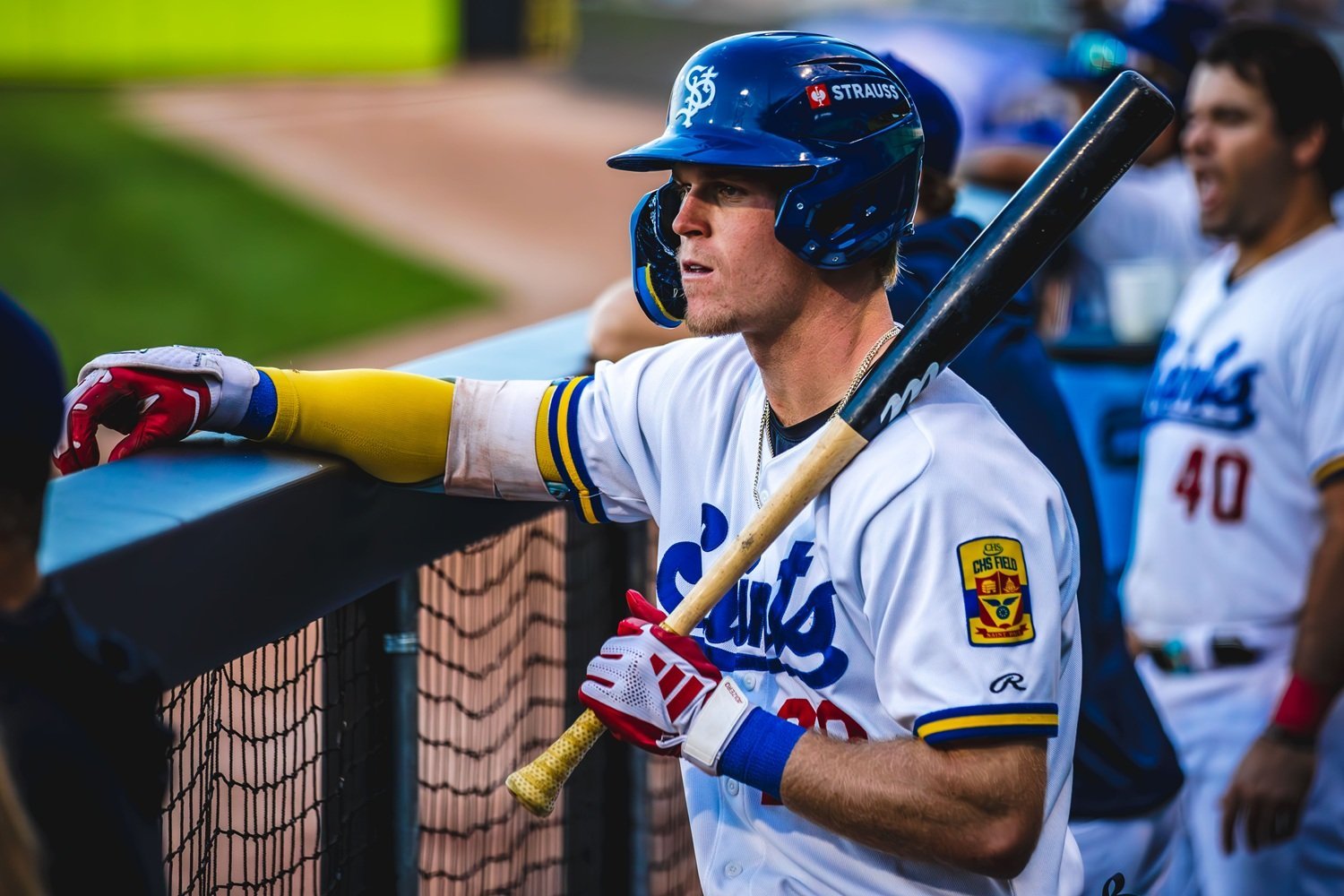 The Minnesota Twins have had plenty of highly-regarded prospects pass through their system in the last two decades. Few have carried the kind of expectations currently surrounding Walker Jenkins. Across the industry, Jenkins is viewed as the top prospect in the Twins organization. In fact, many evaluators believe he may be the most talented prospect the team has developed since Byron Buxton was climbing the minor-league ladder as baseball’s next five-tool superstar. That's lofty company, and it speaks to how impressive Jenkins has looked early in his professional career. While most scouts agree on Jenkins’ overall offensive upside, one question continues to follow him as he develops: How much power will he actually hit for at the highest level? The answer depends on which evaluators you ask, and is the chief variable left in their assessments. Understanding the Scouting Scale Before digging into the debate, it helps to understand the grading system most prospect outlets use. Scouts typically evaluate tools using the 20-80 scouting scale. A grade of 50 represents major-league average. A 60 grade is considered plus, while a 70 or 80 grade reflects elite tools. On the other end of the spectrum, a 40 grade is below-average, and a 30 or lower suggests a major weakness. In theory, each 10-point increment represents a standard deviation of movement. If 50 is average, 60 is one standard deviation better, so only about 17% of players should be better at a skill than a player with a 60 grade on a given tool. Fewer than 3% of players should be better than someone who scores a 70, and most scouts will only give one 80 grade in any tool over a given period of several years. By contrast, a 40 means that over 80% of regular big-league players are better than the player at that skill. Not every scout or organization interprets the scale quite that way, but that's the gist. (This is also why you'll often see players receive 45 or 55 grades, but rarely see them slapped with 25, 35, 65, or 75. The number of players who fall along the curve between 60 and 70 is small enough that, since these are highly uncertain, future-focused assessments, scouts are usually urged to choose one of the round numbers.) These grades attempt to project how a player’s tools will look at their peak in the major leagues. With Jenkins, his hit tool receives virtually unanimous praise. The disagreement arises over how much power the bat will produce. MLB Pipeline Sees Plus Power MLB Pipeline recently updated its prospect rankings and gave Jenkins a 60 grade for power. That mark signals confidence that he could develop into a legitimate home run threat, even though Pipeline uses the scale a bit more generously than the description above, anyway. The outlet even went as far as naming Jenkins the top power prospect in the Twins system. They wrote that Jenkins uses a smooth, repeatable left-handed swing that allows him to consistently find the barrel. His approach produces hard contact while also generating walks and limiting strikeouts. According to their evaluation, his power began to show more frequently during the 2025 season. Much of that power currently shows up to the pull side, though the report notes he can also drive the ball the other way for extra bases. In that view, Jenkins profiles as the type of hitter who could combine a strong batting average with above-average home run production. If that projection holds true, it would give the Twins a middle-of-the-order cornerstone. FanGraphs Takes a More Cautious View The evaluators at FanGraphs are more conservative in their projections. Their scouting report assigns Jenkins a current raw power grade of 45, with a future projection of 55. When projecting how that power will translate into games, they are even more cautious. Jenkins receives a current game power grade of 40, with a future grade of 50. In other words, FanGraphs sees Jenkins eventually reaching roughly average game power at the major-league level, rather than the clear plus power projected elsewhere. Their report notes that Jenkins is physically strong and well built, but lacks the overwhelming physical tools often associated with superstar-level power hitters. His bat speed is described as slightly above average, and the underlying power metrics from 2025 were more modest. The report points to a maximum exit velocity of 110 mph, which is roughly the major-league average. More importantly, many of his balls in play fell far below that mark. His hard-hit rate, around 35%, suggests a solid but not overwhelming impact. From this perspective, Jenkins might be more of a high-contact hitter who occasionally runs into home runs, rather than a consistent 30-homer threat. Based on last year's league-wide home run rate and isolated power, a version of Jenkins that hits .270 in the majors (a strong projection in a league that bats around .245) would slug about .430 and hit 19 home runs in a full season of playing time. Why the Evaluations Differ The disagreement between these outlets highlights the challenge of projecting power for young hitters. Jenkins’s swing naturally invites comparisons to another former Twins star, Joe Mauer. Like Mauer, Jenkins owns a smooth left-handed stroke built around barrel control and the use of the entire field. That style often produces plenty of doubles and strong on-base numbers. Mauer occasionally flashed home run power during his career, but his game was built more around line drives and gap-to-gap contact, rather than towering pull-side home runs. Some scouts believe Jenkins could follow a similar offensive path. However, there are also reasons to believe more power could develop. Jenkins is still physically maturing and has already shown an ability to drive the ball harder as he gains experience. Many young hitters also learn to selectively hunt pitches they can pull in the air as they climb the ladder. That developmental adjustment can significantly increase home run totals. Furthermore, the league is forcing players to hunt power that way. A rising baseline for athleticism (especially in the corner outfield spots) and better outfield positioning have made it impossible to even rack up doubles the way Mauer did for so much of his career. Had Mauer come along when Jenkins did, he would have developed differently. If Jenkins turns out to be a comparably talented and intelligent hitter (admittedly, a big 'if'), he's likely to focus more on power and less on batting average. Both the power and the hit tool are also difficult to evaluate, because hitting is such a reactive craft. Famously, former top Orioles catching prospect Matt Wieters was hailed as a switch-hitting "Mauer with Power," but he never got near that level. He didn't have Mauer's preternatural combination of feel for contact and plate discipline, and while he did flash considerably more raw power, he was never a Mauer-caliber overall offensive force—let alone something more. Teams can much better evaluate players at similar stages now, using neuroscouting tools and bat-tracking data, but there's still an alchemy involved that can only be experienced, rather than explained. Some hitters are more than the sum of their parts; some are less. The Next Test at Triple-A Ultimately, the debate about Jenkins’s power will be settled on the field. The next stage of his development could provide an important clue. Jenkins is scheduled to begin the season at Triple-A, in the hitter-friendly environments of the International League. That level often boosts offensive numbers and allows evaluators to see how a prospect’s raw tools translate against advanced pitching. If Jenkins begins consistently lifting balls to his pull side and clearing the fence more often, the more optimistic power projections could start to look accurate. If his production leans more toward doubles and line drives, the comparison to Mauer’s offensive style might prove closer to the truth. Regardless of which projection proves correct, Jenkins’s advanced hit tool already provides a strong foundation for his future. The lingering question is whether his power will settle at solid, average production or evolve into an asset anchoring the middle of the Twins lineup for years to come. Whose evaluation do you agree with the most? Can Jenkins be an above-average power hitter? Leave a comment and start the discussion. View the full article
-
Toronto Blue Jays 2026 Opening Day Roster Projection
DiamondCentric posted an article in Jays Centre
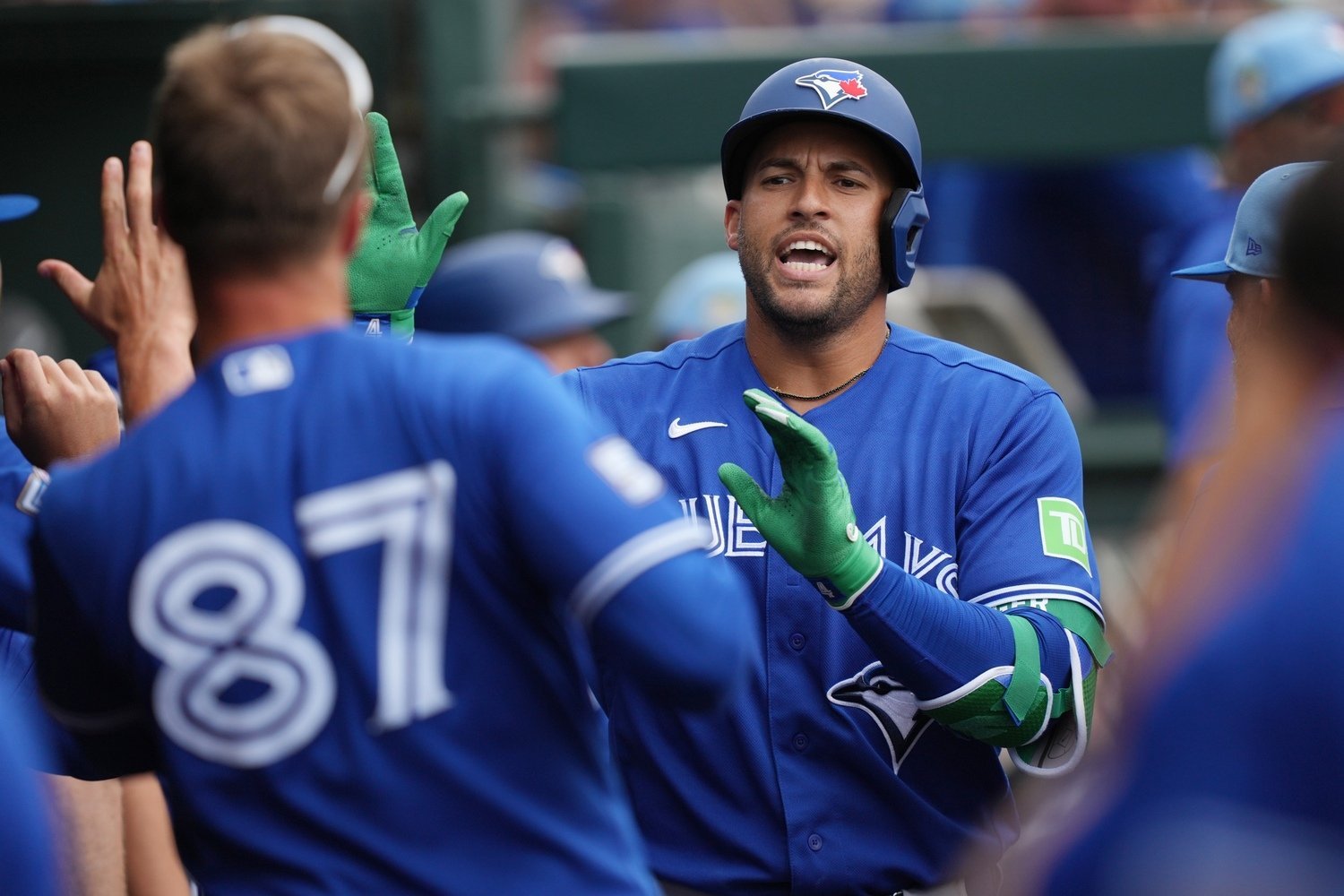 The Toronto Blue Jays were busy this offseason, working to retool their team in hopes of returning to the World Series (with a different outcome, of course). They improved their pitching staff by adding Dylan Cease, Cody Ponce, and Tyler Rogers in free agency. Not as much was added to the offense, but the team did sign Kazuma Okamoto. After the news that Anthony Santander needed surgery on his left labrum and would miss five to six months, the Blue Jays acquired Jesús Sánchez in a trade with the Houston Astros. A few key players, including Santander, will miss Opening Day. Shane Bieber and Yimi García aren't projected to be out long. José Berríos was recently diagnosed with a stress fracture in his elbow, and his timetable is uncertain. He's taking a few days off before testing his elbow out again. These injuries help narrow down who will make the Opening Day roster, as some of the few remaining question marks that loomed around the team have been cleared up. There could still be a surprise addition, but here is who will likely be on the roster to start the season: Blue Jays Projected Batting Order George Springer, DH Addison Barger, RF Vladimir Guerrero Jr., 1B Daulton Varsho, CF Alejandro Kirk, C Jesús Sánchez, LF Kazuma Okamoto, 3B Ernie Clement, 2B Andrés Giménez, SS Bench: Tyler Heineman, C; Davis Schneider, UTL; Nathan Lukes, OF; Myles Straw, OF This lineup configuration gives manager John Schneider a nice righty-lefty rotation through the top seven spots. Okamoto and Ernie Clement will be back-to-back right-handed bats, but the rotation continues with Giménez, a lefty, batting ninth. There's a ton of power in the starting lineup as well, with each of the top seven capable of hitting 17 to 20 home runs at a minimum. I really wanted to see Eloy Jiménez on the bench, given his hot spring training (128 wRC+), but the only person he could replace is Nathan Lukes, which leaves you with three right-handed hitters and a switch-hitter on the bench. That lineup construction would limit the Blue Jays late in games if an opposing team were to bring in a right-handed pitcher. The only other question to consider is whether Leo Jiménez can beat Davis Schneider for a place on the bench. Right now, however, that seems unlikely. An injury would be required to find room for either Jiménez on the roster. Now let's take a look at the pitching staff. Blue Jays Projected Pitching Staff Starting Rotation Kevin Gausman, RHP Dylan Cease, RHP Cody Ponce, RHP Trey Yesavage, RHP Max Scherzer, RHP Bullpen: Jeff Hoffman, RHP; Tyler Rogers, RHP; Louis Varland, RHP; Tommy Nance, RHP; Eric Lauer, LHP; Brendon Little, LHP; Braydon Fisher, RHP; Mason Fluharty, LHP Max Scherzer steps in to take what would have likely been Berríos's spot, though Scherzer has been electric this spring. He's pitched 8 2/3 innings, allowed only two hits, and has yet to give up a run. The lone concerns are that he's struck out only six batters and walked three. However, what do you expect out of a pitcher who turns 42 in July? The Blue Jays just need to get semi-quality innings from him to help ease the workload on their younger pitchers. The days of posting a mid-2.00s ERA and striking out 200 batters are long behind the pitcher known as Mad Max for his fiery demeanor on the field. If I were the manager, I'd prefer to have a left-handed starter or two, but the Blue Jays are limited in this aspect. Lauer is the only option currently on the projected 26-man roster, though promising left-handed prospects Ricky Tiedemann and Adam Macko are waiting in the wings. Both starting pitching prospects are on the 40-man roster. Tiedemann missed all of last season after undergoing Tommy John surgery during the 2024 campaign. However, his spring has been delayed due to soreness in his left elbow. The lefty has resumed throwing, but the Blue Jays will ease him back into a normal routine. The last bullpen spot that would have been García's is open to Fluharty or Chase Lee, who the Blue Jays acquired this offseason in a trade with the Detroit Tigers. With so many righties in the bullpen, I chose to leave Lee off the 26-man roster, but he will make his return to MLB at some point this season. The Blue Jays have a well-configured roster that has a legitimate shot to defend their AL East and American League titles. There's far more optimism revolving around the team than they had at the start of last season after finishing 2024 with a 74-88 record and coming in last in the AL East. Gear up, Blue Jays fans, it's going to be an exciting season. View the full article
-
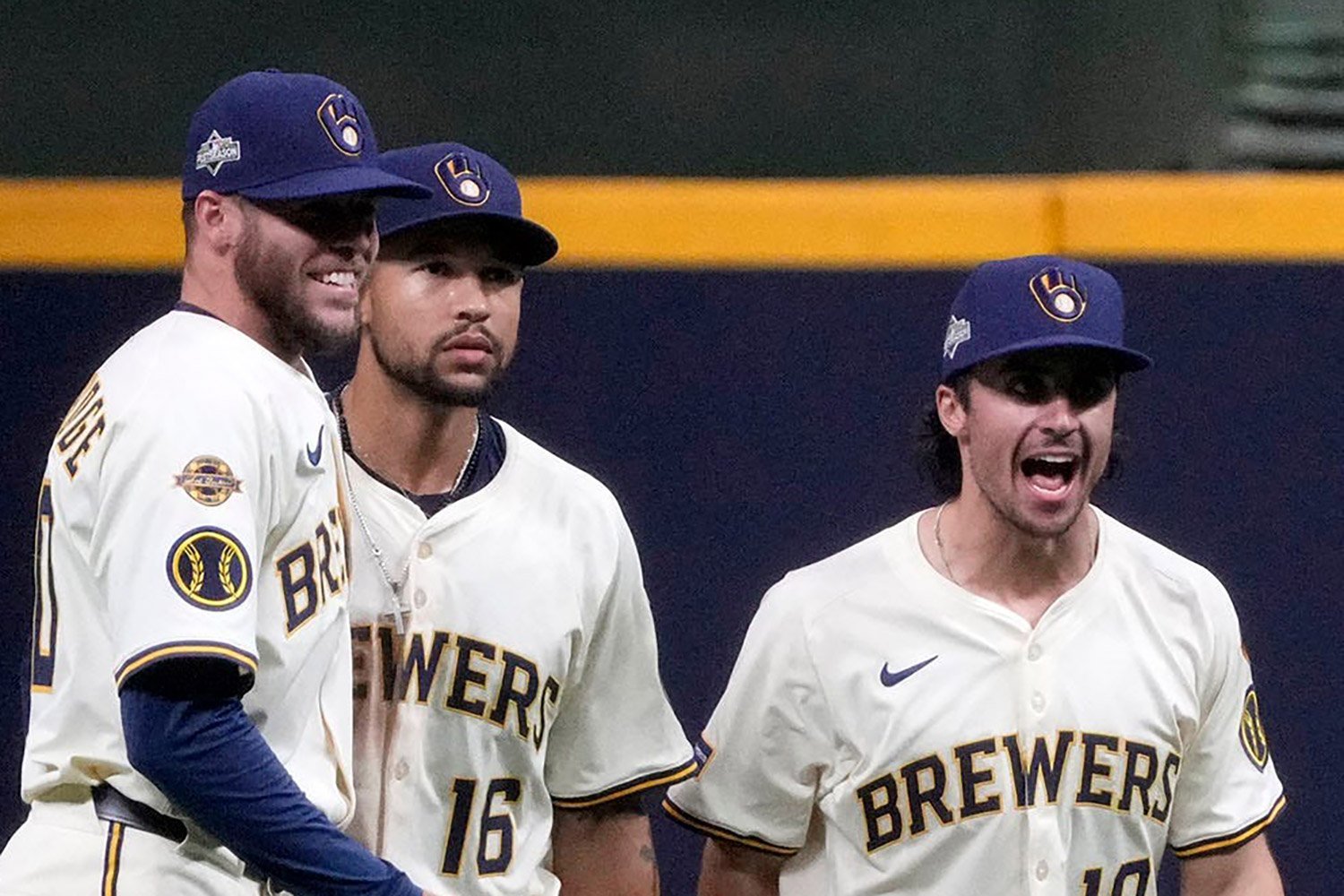 It's not Friday, but we're rolling out this week's Forum Friday a day early just because. Brewer Fanatic is a community with thousands of passionate Brewers fans throughout Wisconsin and the world. Our forums are filled with informed perspectives on everything worth knowing about the big leagues, minor leagues, and more. We are excited to begin a weekly spotlight on some of the best discussions happening on the site. Brewers: Opening Day Roster Predictions Opening Day is less than a week away. The Brewers will return many familiar names when they face the Chicago White Sox on March 26, but a few roster spots remain uncertain. Should Milwaukee keep Brandon Lockridge as a fifth outfielder? Can the bullpen support five left-handed relievers? You will find a range of opinions and learn a thing or two about how Milwaukee pitching fares against right-handed batters. Minors: 2026 Prospect Reports / Lists / Rankings / Interviews / Etc. The best thing about being a Brewers fan, for better and worse, is dreaming about the future. The future is even brighter when the Milwaukee farm system is decidedly good. We are blessed to enjoy world-class coverage in our minor league forum. This specific thread topic offers rankings, reactions, and interviews throughout the offseason. Come bask in the reflected glory of the best prospects in all of baseball! Other Sports: March Madness 2026 Brewer Fanatic is a five-tool forum. Sure, we discuss launch angles, weighted on-base average, and pitch spin rates. We also have robust Other Sports and Off-Topic forums, too. If there's one thing all Brewers fans can agree on, it is cheering for Cinderella teams to upset more prominent opponents. Come to think of it, the NCAA should consider a salary cap to level the playing field. In the meantime, why not join the rest of America in celebrating March Madness? We invite you to join us in our forums this coming season! The in-game threads are a lively experience, and you won't find a better place to be a Brewers fan than at Brewer Fanatic. View the full article
-
Milwaukee Brewers 2026 Position Analysis: Shortstop
DiamondCentric posted an article in Brewer Fanatic
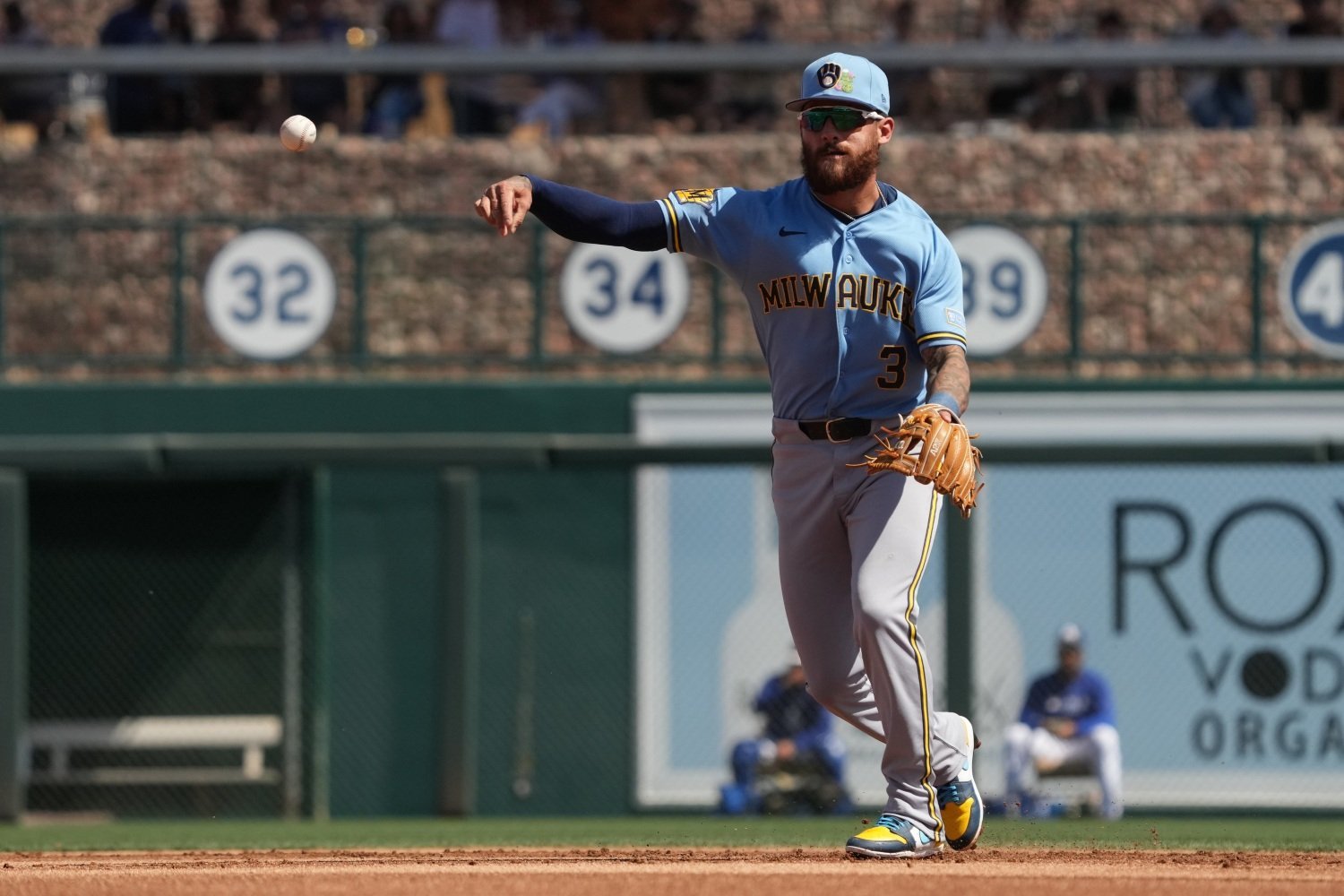 When Joey Ortiz was acquired from the Orioles in the Corbin Burnes trade, it was more or less assumed that he would inherit shortstop from Willy Adames. He was the No. 63 overall prospect in baseball in 2024, according to MLB Pipeline, and even though he was playing a new position (third base), his rookie year was quite encouraging. His first year after moving back to shortstop was less than ideal. A year-long offensive slump limited him to a 67 wRC+. His defensive contributions (depending on which figure you look at) were just good enough to keep him above replacement-level, but the future of the position isn’t as clear as it once seemed. There’s still time to turn things around. Ortiz is 27 years old, and there’s reason to believe that his performance at the plate last year was the exception, not the rule. Much of his offensive struggles came from a steep decline in plate discipline rather than a holistic degradation of talent. A side-by-side comparison demonstrates that other than his chase rate increasing and walk rate decreasing, most of his numbers remained in line with 2024. 2024 2025 Barrel % 4.6 3.0 LA Sweet Spot % 26.6 27.4 Squared Up % 23.0 23.3 Whiff % 17.1 16.0 K % 20.2 14.6 Chase % 24.7 33.3 BB % 11.0 5.3 Surface-level spring training statistics only matter so much, given their limited sample and the variance of opposing competition, but his 10.9% walk rate thus far is at least trending in the right direction. His power also seems to have returned, with his average exit velocity jumping to 91.9 mph and his 90th-percentile EV making a similar leap to 107.2 mph, both marked improvements on where those metrics were last season. In other words, there’s still hope for Joey Ortiz, but it’s far from a sure thing. The uncertainty of it all is exactly what led a savvy team like the Milwaukee Brewers—who take no unnecessary risks—to go about getting a backup with a chance to become the starter. Although they sent much of their 2025 infield depth to the Red Sox in the Caleb Durbin trade, the front office replenished it by acquiring David Hamilton in that very deal. They'd also scooped up Jett Williams from the Mets in the Freddy Peralta deal. Williams is currently MLB Pipeline's 51st-ranked prospect and carries all the usual characteristics of a player who has made it this far in a 5-foot-7 frame. He’s fast, pulls the ball in the air frequently, and is athletic enough to play in the outfield, or at multiple spots around the infield. Hamilton is the far superior defender—perhaps over Ortiz, as well as Williams. The dynamic Williams spent most of his minor-league season in Double-A last year but also played 34 games in Triple-A, posting a cumulative 136 wRC+ with 17 home runs and 34 stolen bases. His well-rounded offensive profile already seems sufficient for a step up in competition, as he's been excellent in spring training, slashing .375/.500/.625 over his 20 plate appearances. Of course, he’ll also have to maintain his success in Triple-A. His time in spring training was somewhat truncated by a quad injury he sustained at the end of February, and given a larger sample, any current issues (can he make enough contact? Is his plate discipline good enough to handle the best pitching in the world?) would have been clearer. Milwaukee is in no rush to call up Williams, and have already assigned him to minor-league camp. Hamilton is the more significant short-term threat to Ortiz's playing time. He's batting a less impressive .231/.294/.371 this spring, but he brings elite speed (and aggressiveness on the bases) and that excellent glove, so there's a chance he'll force the issue at either short or third base. Williams, meanwhile, will prepare for his time in the big leagues by playing multiple positions, as his long-term home is probably either second base or center field, anyway. In the medium term, Cooper Pratt is the one who might take over shortstop from Ortiz, unless the incumbent shortstop reasserts himself sharp-like. Pratt only had a 107 wRC+ in Double-A last year, but the potential is obvious, and his glove is ahead of his bat. Behind him (and gaining fast) are Jesús Made and Luis Peña. There's a swamp-like fluidity to this group, but from it, the team is almost certain to get something great—but that's not guaranteed to happen this year. It can be tempting to look at this year as a holdover year before the organization’s most promising prospects blossom into full-fledged big leaguers. However, what the team has on the table is far from a group of replacement-level journeymen. While it may not be clear who will receive the most playing time at the role, Milwaukee has no shortage of promising options. View the full article
