


DiamondCentric
-
Posts
2,631 -
Joined
-
Last visited
Never
Content Type
Profiles
Forums
Events
News
Tutorials & Help
Major League Baseball Videos
Guides & Resources
Store
Downloads
Gallery
Everything posted by DiamondCentric
-

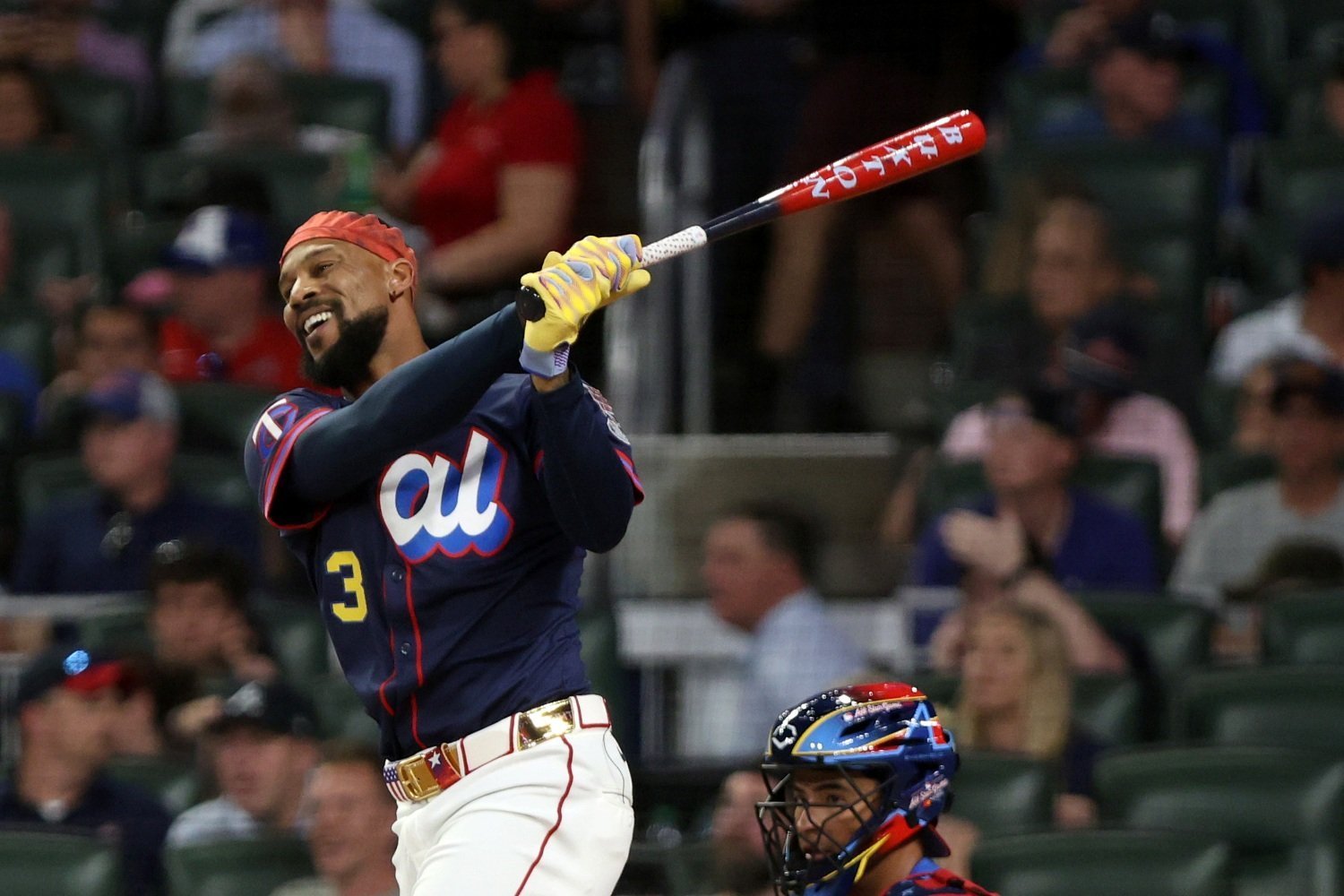 The race to determine the starters for the 2026 MLB All-Star Game is entering its final stretch, and Byron Buxton is putting himself in position for a memorable milestone. The first phase of fan voting opened on June 3 and will conclude on Thursday, June 25, at 11 AM CT. During this opening phase, fans can vote for the starting lineup in each league, selecting eight position players and one designated hitter. Ballots are available through MLB.com, all 30 club websites, the MLB app, and the MLB Ballpark app. Fans can vote up to five times every 24 hours. When Phase 1 concludes, MLB Network will reveal the top vote-getters at every position. The leading vote-getter in each league automatically earns a starting spot, while the remaining finalists advance to Phase 2, where fans determine the rest of the starting lineup. Buxton Climbs Into Prime Position The latest voting update released Monday brought encouraging news for Twins fans. Buxton moved into third place among American League outfielders with 1,106,264 votes. American League Outfield Voting Leaders (June 22 Update) Aaron Judge, Yankees — 1,788,499 Mike Trout, Angels — 1,735,051 Byron Buxton, Twins — 1,106,264 Cody Bellinger, Yankees — 1,067,622 Julio Rodríguez, Mariners — 819,514 Randy Arozarena, Mariners — 793,017 Daulton Varsho, Blue Jays — 782,016 Jesús Sánchez, Blue Jays — 764,037 Riley Greene, Tigers — 751,512 Buxton's rise is notable because he sat fourth among American League outfielders in the previous update. A dominant stretch over the last few weeks has helped him leapfrog Cody Bellinger and move firmly into position to advance to Phase 2 voting. His performance has backed up the support. Buxton enters the week ranked second in the American League with 24 home runs and third in slugging percentage at .591. After years of battling injuries, he has remained on the field and produced at an elite level, giving Twins fans a compelling case to rally behind during the final days of voting. Injuries Could Change the Picture The voting leaderboard may not tell the entire story. Judge currently leads all American League outfielders, but he is expected to miss the All-Star Game after suffering a rib stress fracture. Judge's absence would leave one of the outfield starting spots open regardless of where he finishes in the voting process. Meanwhile, Trout's status has become less certain after he landed on the injured list last week with a right hamstring strain. Trout remains second in the voting, but his availability for the Midsummer Classic is now unclear. If both stars are unable to participate, Buxton's chances of earning a starting assignment improve significantly. Even if Judge and Trout remain among the leading vote-getters, MLB would need replacements should either player be unavailable. Final Week Push Ahead Minnesota has not had many realistic candidates for fan-elected starting spots in recent seasons, but Buxton has changed that narrative in 2026. His combination of power, highlight-reel defense, and durability (knock on wood) has made him one of the American League's most valuable players through the season's first half. The final days of Phase 1 voting will determine whether he advances comfortably to the next round, but his recent climb up the leaderboard shows that fans across baseball are taking notice. For a player who has spent much of his career battling injuries and unrealized All-Star potential, Buxton is now closer than ever to hearing his name announced as an All-Star Game starter. View the full article
 -
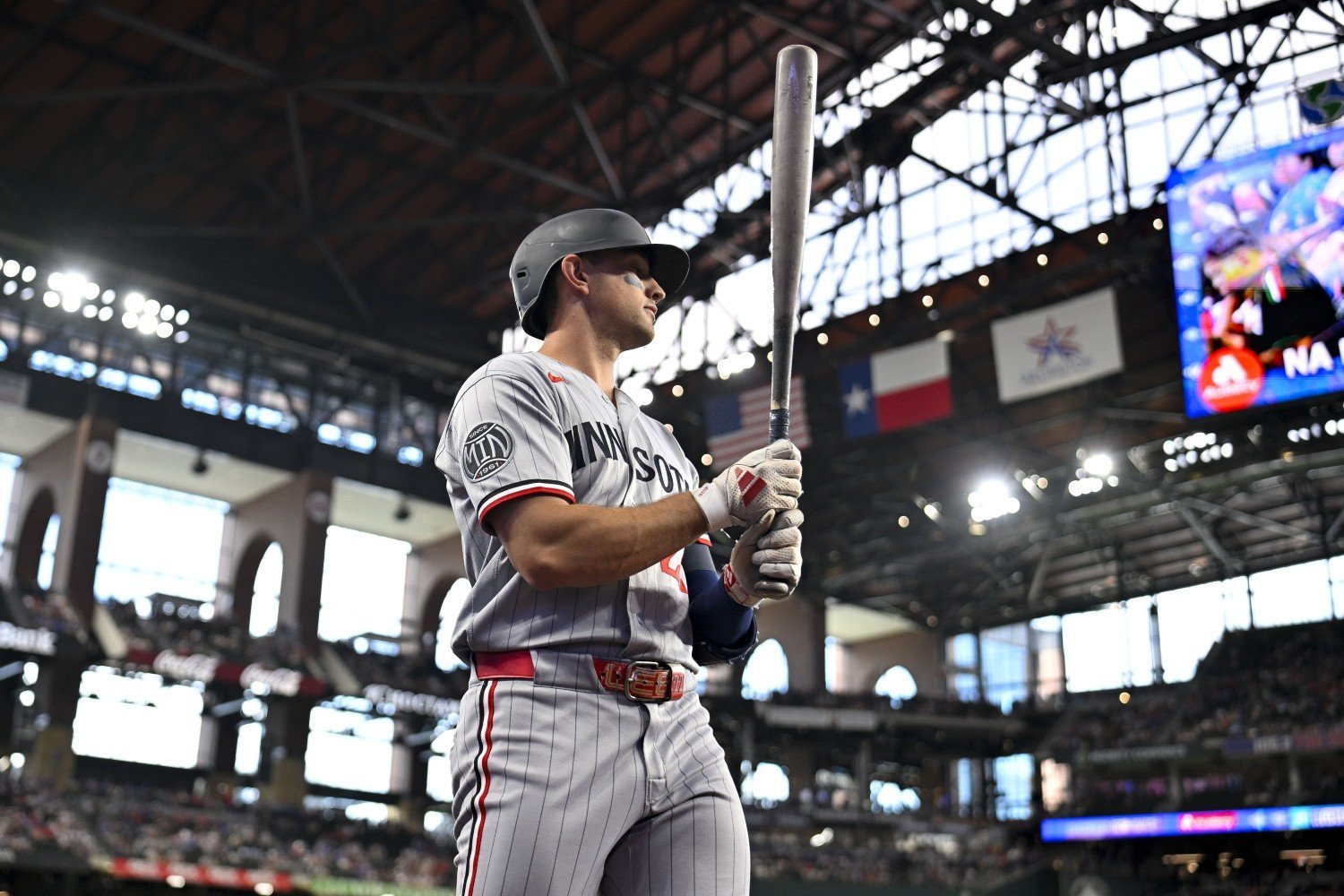 Technically speaking, in his third big-league season, Brooks Lee is playing his third different primary position. He's wearing his third jersey number. It's third base at which he appears to be settling in for the long haul. But the key number around Lee will always be two: two swings, two plans at the plate, two tracks on which he's trying to simultaneously develop into a solid big-leaguer. This year, he's 2-for-2, which is why he's finally becoming that solid player the team expected and hoped for. As a rookie in 2024, Lee found time at three infield spots and showed flashes of a natural feel for the barrel. Overall, though, he hit an anemic .221/.265/.320. It was ugly. His approach was horrendous. He looked not so much overmatched, as confused, which isn't all that surprising. He was a 23-year-old who'd only had about 800 total professional plate appearances before he arrived in the bigs, and as a switch-hitter with two pretty different plans from the two sides of the dish, he needed more reps than that. Despite the atrocious numbers, that first exposure to the majors seemed likely to be good for him. If the seeds of success were sown in that soil of failure, though, the tree didn't bear fruit in 2025. Lee batted just .236/.285/.370 last season, playing virtually full-time in his first full season with the parent club. Technically, it was forward progress, but it felt woefully insufficient, especially as he demonstrated that his athleticism would be a lasting limitation on his value as a defender and baserunner. He was a bad player, even if he was a little less bad than he'd been the year before—and it was harder to wave away the badness on the basis of injuries or inexperience. That's what makes this year so refreshing. He's not some sudden superstar, but you don't have to squint to see the progress or hunt and plead to make the case that he's a viable regular. The move to third base is good for him, defensively. More importantly, he's batting .242/.297/.429. You'll rarely hear me praise a player with merely moderate defensive value and power whose OBP comes in on the light side of .300, but Lee has made some important strides that are much easier to see below the surface. Specifically, as is true of so many switch-hitters, you have to break him down into his two component selves to properly understand him. From the left side, Lee has made some vital improvements in the way he addresses the ball. His swing isn't massively overhauled, but it's a tick faster, and his timing is better. Here are the distributions of his swing timing on fastballs when batting left-handed for his three seasons in the majors: From left to right, these images show: the frequency with which Lee centers the ball on his barrel, horizontally; the frequency with which he's on time, as opposed to early or late; and the frequency with which he hits the ball off the center, the top or bottom side of the bat, or misses above or below it. The easiest way to see what he's changed, in this case, comes on the left, where Lee has gone from most often hitting the ball just toward the end of his bat from the sweet spot when he came up in 2024 to most often hitting the ball just toward the label or handle. Like most hitters, Lee mostly centers up fastballs well, in general, but the fact that he's more often catching the fastball toward the hands a little now tells us something important about what he's looking for and how flexible his approach is. Remember, as a switch-hitter, he's only facing righties when he bats lefty. Being on time for the fastball (as he's done more consistently this year, which you can see in the center image) but catching it slightly off the center of the barrel toward the hands means that he's extending better through the ball. That might mean slightly less hard contact on the heater, but then come the breaking balls: Breaking stuff moves in on a switch-hitter at all times, and Lee is getting them in on his label a bit more this year, but look at the righthand image. He's hitting the ball with the center of the bat, vertically, more often than last year, too. He's not swinging over the top of it as much or as often. And the story is different on offspeed stuff, but similar: Lee's hitting the top half of the ball a bit more on changeups and splitters this season, which might sound bad—but that's coming instead of whiffing altogether, which he's doing less often. Put the whole profile together, and Lee has a much better batted-ball profile from the left side this season. Here's his spray chart from the left side for last year: And here's the same image for 2026 to date: Lee hasn't hit the ball harder this year, left-handed. He's not even effecting a huge change in the frequency with which he lifts the ball. When he does hit it in the air, though, it's much more often going to the pull field, rather than to center. When he hits it well (at least 88 MPH off the bat and a launch angle of at least 10°), he's hitting it on a line more often, rather than hitting the bottom of the ball and flying out lazily. Here's the distribution of his launch angles on such batted balls in 2025: And here's 2026: This stuff is why Lee batted .220/.278/.365 last season from the left side, but is at .253/.299/.463 this season. He's tapped into more power and more overall value on contact. From the left side, he's a low-OBP guy, but the power is legitimate. Twenty of his 25 extra-base hits this year have come as a lefty. From the right side, alas, there's been no significant change to bat path, timing and contact profile. Indeed, there's been (so far) no actual improvement. He had a .677 OPS against lefties last year; he has a .642 OPS against them this year. But there's been one important change: Lee knows what he's looking for now. From the right side, he's become more selective within the zone, which has more than doubled his walk rate from last year, from 3.4% to 7.5%. He's not actually swinging less often, as a whole. He's not even chasing less often. By being willing to let some pitches his righty swing can't generate any punch on go by, though, Lee has made himself a viable hitter from the right side, with more upside. He's striking out less, in addition to walking more. The contact is pretty empty, but he's gotten slightly unlucky from that side, too. This version of Lee can be a useful player for multiple big-league seasons. He might always be the infielder you're hoping to replace with a better one, but plenty of good teams go far with players they always hoped to replace but never got around to actually shaking. Lee's two positions this year mirror his two different swings and two different approaches. He's made two different adjustments this year, based on handedness, and he's increasingly looking like a useful player—even though he's had to do two (or more) things at once almost since the moment he put on a uniform. View the full article
 -
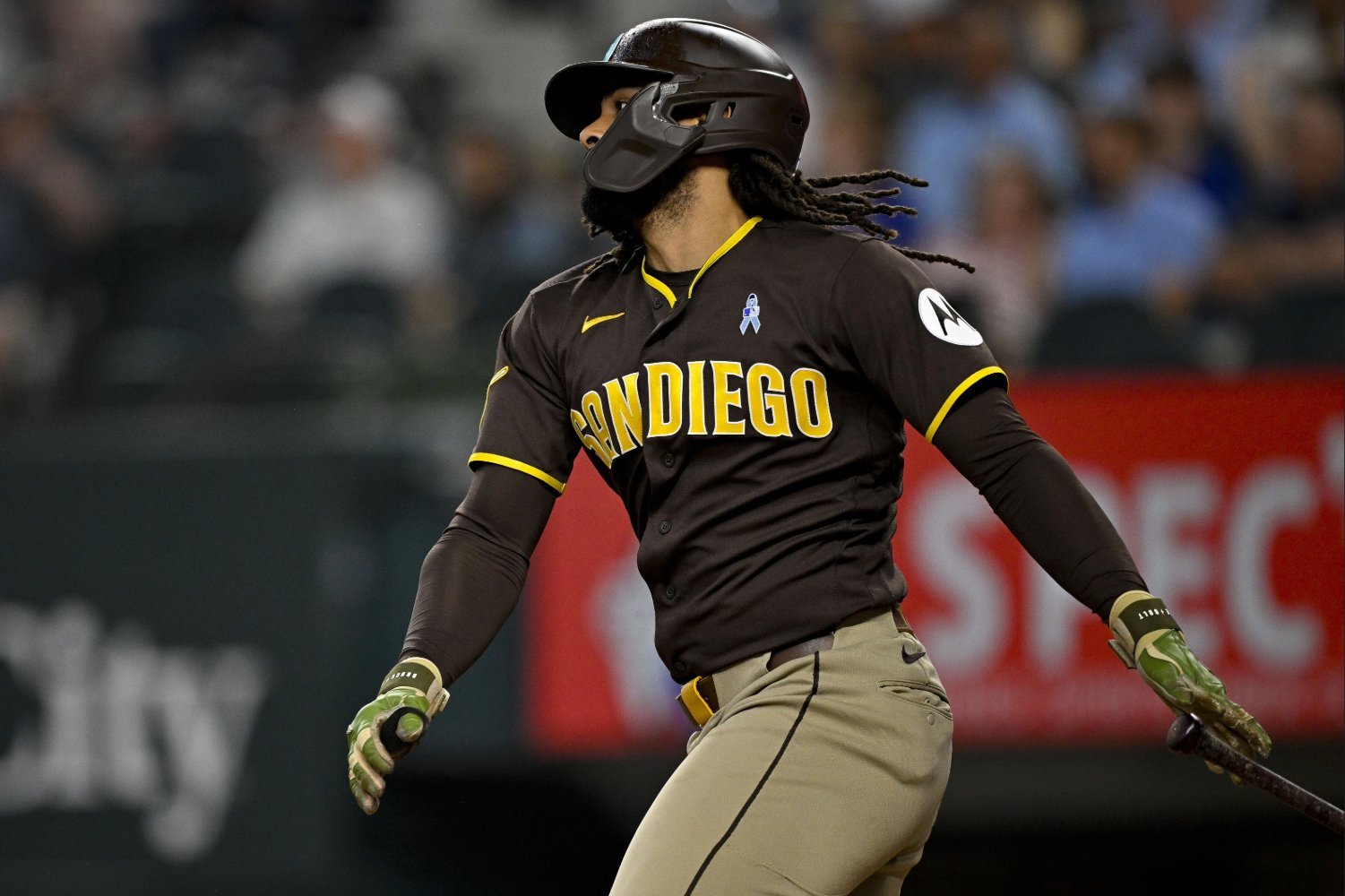 As Fernando Tatis Jr. and the San Diego Padres plummet further down the standings of the National League West, it becomes more difficult to find the positives in the offense given its responsibility for said plight. Tatis has played his own role within that as he and his fellow stalwarts in the lineup — namely Manny Machado and Jackson Merrill — have continued to generate production far below the threshold that their career norms and respective skill sets indicate. Considering his face-of-the-franchise status, Tatis represents the loudest of the struggling entries into the Padre lineup. A player with multiple 6.0 fWAR campaigns to his credit, the right-fielder-turned-second-baseman has just a pair of home runs on the stat sheet this year, and even those didn't start coming until May 30. It's not as if getting the ball over the outfield fence is the sole struggle of Tatis' game this year, either. Prior to this season, his lowest ISO over a full season was .178 (a number he posted last season). That's a modest figure coming off a .216 mark in 2024 and an even farther cry from where he was early in his career. There's plenty of context for why he's experienced such a precarious drop on the power side, but even the .073 ISO he's posted thus far in 2026 represents a rather severe regression against any of his previous seasons at this level. With the collective struggling to generate any source of power — the Padres rank 23rd in the league with a .144 team ISO — Tatis' role in its absence sits near the top of the team's list of concerns. That doesn't mean he has been a total zero at the plate, however. In fact, there are a number of things he's done that merit attention even in the face of such a dwindling power figure. By wRC+, Tatis has actually been better than league average (103). His line looks rather solid at .285/.349/.358. Even if the power isn't there, he's hitting well enough and walking at a sturdy-enough clip (8.9 percent) to create a steady on-base presence at the top of the order. He's also continued to make quality contact, with a hard-hit rate (53.1 percent) that sits within striking distance of his career average (52.5) and in the 96th percentile. In addition to that consistency, his 74.1 percent contact rate is almost entirely in line with each of the last two years following a 74.4 figure in 2024 and a 74.9 mark last season. Tatis has also been a rare bright spot on the situational side. He's hitting .306 with a .370 on-base percentage with runners on base while also going for a .316 average and .388 OBP with runners in scoring position. Each of his strikeout and walk rates trend in positive directions, while his wRC+ sits at 102 and 101 in the two situations, respectively. Even without the power, he's comfortably above where the Padres as a whole are performing in those situations; the team is slashing .238/.316/.400 with runners on and .236/.323/.392 when they're in scoring position. Of course, it's difficult for any of this to compensate for the absence of power. If anything, it only serves to make it all the more perplexing considering the positive swing decisions and quality of contact, perhaps driving home the idea that there's something mechanical at play that he simply cannot work his way out of. In any case, two things can be true: It's important not to lose sight of the fact that there's still a quality player in there (especially in conjunction with his defensive acumen), while also recognizing that Fernando Tatis Jr. needs to find his power stroke in order to fully realize his value to the San Diego Padres. View the full article
 -
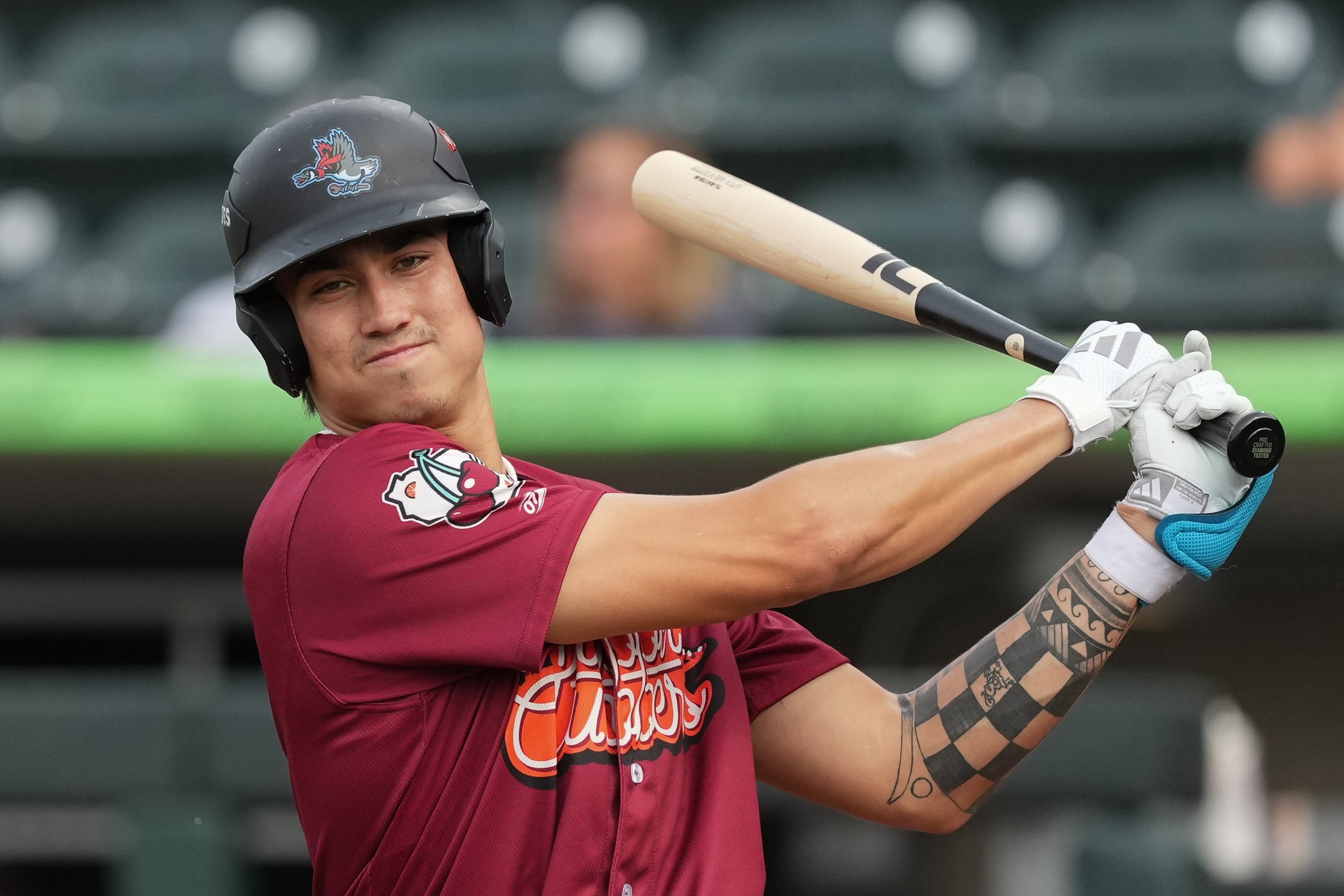 Has the future arrived for the Miami Marlins at shortstop? Or is the best yet to come? For my money, that's the biggest decision facing Miami's front office over the next five weeks, far more than any decision regarding staff ace Sandy Alcantara. Granted, that's because the Alcantara decision has never been a question for me— he should be viewed as untouchable, at least until clarity arrives on the league's salary situation next season. Shortstop, though? There's a ton for Peter Bendix to chew on between now and the trade deadline. At the center of the puzzle is Otto Lopez , the obvious choice to start at shortstop for the National League for anyone with eyes that isn't a fan of the Dodgers, Nationals, Phillies, or Reds. The MLB hits leader is having a career year. Lopez has either suddenly become one of the best shortstops in all of baseball or is simply having one heck of a flash in the pan effort as this season's Geraldo Perdomo. He doesn't even hit arbitration until next season. He's not a free agent until 2030. He was basically free for the Marlins to obtain in the first place, plucked from obscurity in what is becoming the best transaction of the Bendix era. Most importantly though, Lopez is working on his third straight season of being an above average MLB regular. Even if he ends up "only" being his 3.3 WAR 2025 self, he's worth keeping around for a team trying to win. Two problems on that score. The first problem is that two of Miami's Top 6 prospects, and two of their Top 3 healthy ones, are shortstops. Aiva Arquette and Starlyn Caba are both having strong seasons. Obviously, that's one of those problems that isn't really a problem at all for the Marlins front office. Yet it does mean that sooner than later, barring major injury, someone is either getting moved off their position or moved off the roster entirely. And then there's the second problem- are the Miami Marlins ultimately going to try to win right now? Even if if the answer there is "not until 2027", there's a strong case to be made for keeping Lopez given his contract situation. He is exactly the kind of player low payroll clubs like the Marlins need- cheap and controllable. Then again, just as strong of a case can be made that he will never be worth more than is right now. If Miami remains in the Wild Card race, all of this is moot. He won't be going anywhere. If they fall out of it though, it's really going to be fascinating to see how Bendix views Lopez. Is Lopez proof of concept that he can routinely go bargain-bin shopping for players? Or does he think he found a keeper here? Of course, if Lopez is a keeper and Miami is competing, that puts the team in the likely position of needing to add talent at the deadline. It's hard to see any truly impact upgrade not costing the Marlins one of Arquette or Caba. They can't trade a pitcher. They probably need Kemp Alderman this year. That really narrows the field of choices for Bendix to dangle to rival GMs. Outfield is deep, sure, but no one at the MLB level is doing the kind of position blocking Lopez is doing right now. Especially not if the team keeps transforming Kyle Stowers into a first baseman. Plus, none of those names carry the kind of cache a well-regarded shortstop prospect would. If Miami does actually buy, they may well buy big. That means a top prospect, and again, only the shortstops are healthy. As to which of those young talents the team should trade? I'll leave that call to far brighter prospect minds than my own. Fortunately for your reading interest, many of them work for this very website. All I know is there is virtually no world in which two of them are moved this summer, buying or selling. However, I do think it's safe to say that the time is fast approaching that the Marlins will have to decide who their shortstop of the future isn't going to be. When the team decides who the odd man out at shortstop is, Marlins fans shouldn't be surprised if they are moved in the team's biggest deadline deal. View the full article
 -
Red Sox Trade Deadline Candidates: Gray, Contreras, & Chapman
DiamondCentric posted an article in Talk Sox
 The 2026 Red Sox looked like a playoff team on paper. However, the season has gone into the gutter while the team looks like the Puppy Bowl when playing on the field. The Red Sox have some key players that could be moved by the trade deadline. During this 2 part episode, we will look at Aroldis Chapman, Sonny Gray, and Willson Contreras's chances of being traded. View the full article
 -
 The Athletic's Keith Law published his first mock draft of the season recently, and it had Roch Cholowsky going to the Twins with the third overall pick. Jamie and Jeremy review his first mock draft for the 2026 MLB Draft, and compare it to previous mock drafts from other draft classes, and if Law's mock should be taken with a grain of salt. View the full article
 -
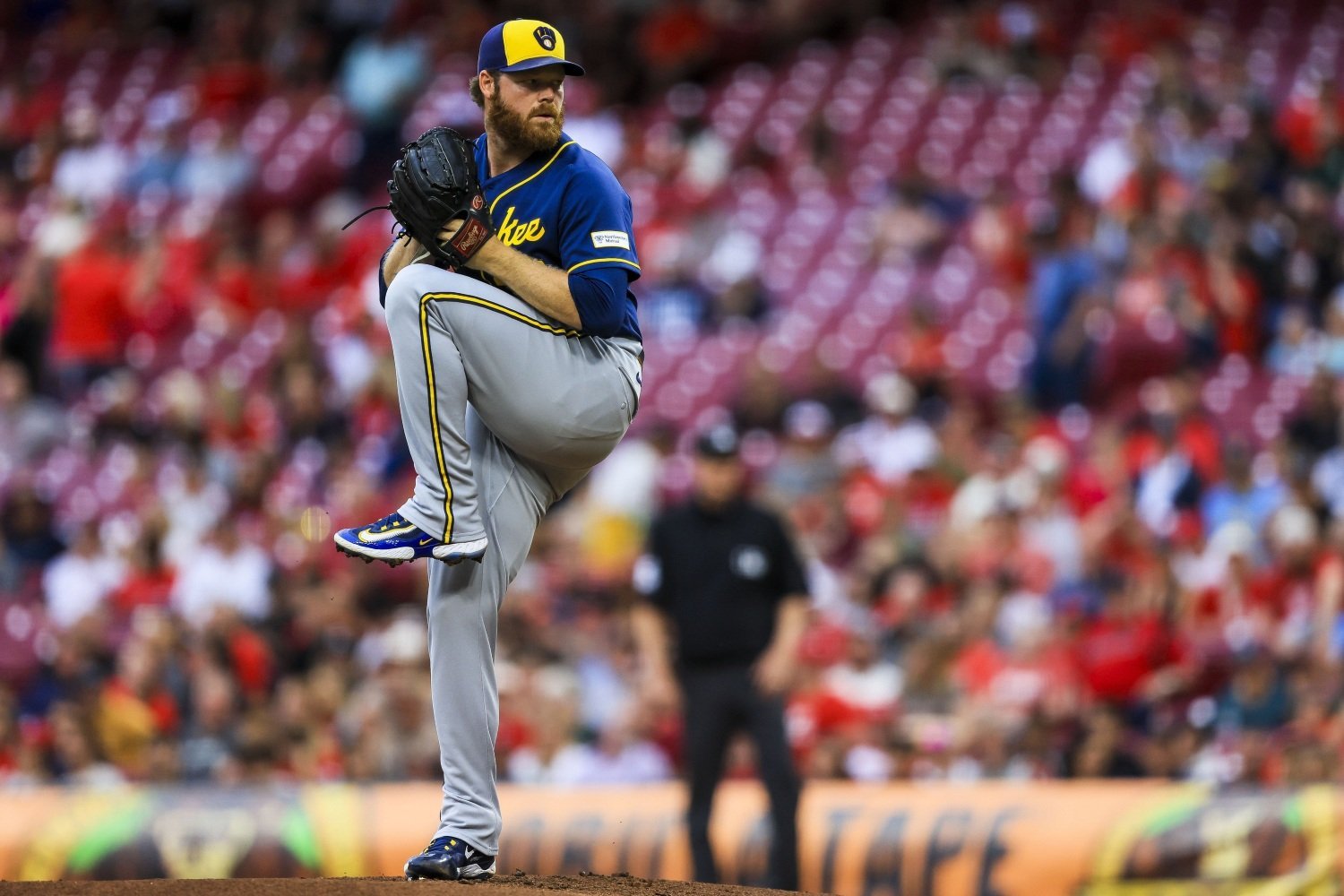 After departing his last start for the Brewers on April 30 with his fastballs averaging 85.4 miles per hour, Brandon Woodruff faced another round of questions regarding his future—not just about his health, but what kind of pitcher he would be when he was ready to return to a big-league mound. The first question faded away once imaging revealed that Woodruff avoided a serious injury. However, he and the Brewers played things slowly with his recovery, and there were hints along the way that he was preparing to adapt, if necessary, to changes in his stuff. In his first rehab start in the Arizona Complex League on June 9, Woodruff used his arsenal differently and tested a lower arm slot, which seemed to affect the movement of his fastballs. In his first start off the injured list in Cincinnati on Monday night, he took a step toward putting those concerns to rest. Woodruff tossed six shutout innings with 10 strikeouts and did not allow his lone baserunner until a sixth-inning single. More importantly, in nearly every process-based sense—velocity, movement, and control—he was in his usual post-surgery form. That was the version that pitched to a 3.20 ERA, 2.20 xERA, and 3.17 FIP last season. “He looked like Big Woo,” said Joey Ortiz, who broke a scoreless tie in the 10th inning with a sacrifice fly in an eventual 2-1 Milwaukee win. “He attacks the zone, attacks hitters, and he gets outs.” “Nobody’s shocked,” manager Pat Murphy said. “Just because that’s ‘Woo,’ and he takes his craft seriously.” It was an inauspicious start. Woodruff’s four-seam fastball averaged just 89.5 mph in his first inning, while his two-seamer averaged 90.5. He fell behind 3-0 to the first two hitters he faced. He was battling his mechanics and said he briefly considered pitching from the stretch with the bases empty to make his delivery more direct down the mound to home plate. “To be honest, it took me a couple of innings to find it there,” Woodruff said. The control improved, though, and so did the velocity. In the third inning, Woodruff started averaging over 92 mph, maxing out at 94.9 mph in the sixth. By the end of the night, his overall average fastball velocity of 91.9 was barely below his season average of 92.2. His stuff was moving like it always had, if not slightly better. After his four-seamer had less backspin carry in that ACL start, it averaged 18 inches of induced vertical break, matching his season average. “I’ve always been a slow starter, but in the past, before surgery, it’s more of the 93, 94, and then it goes up. Now, it’s a little less than that, and that’s okay,” he said. “I just try to put the ball in good spots, and the hitter tells me everything.” The hitters were telling Woodruff to keep doing what he did before his hiatus: pound the strike zone with fastballs. As he did last season, he leaned heavily on his four-seamer and two-seamer, throwing one or the other for 61 of his 79 pitches. He expanded above the strike zone in putaway counts, but otherwise threw many of those fastballs right over the heart of the plate. “He commands the baseball, and he challenges them to hit his heater,” Murphy said. The Reds, like most teams facing the good version of Woodruff, were often late and underneath the heaters. They whiffed on 24.2% of swings against the four-seamer and two-seamer. There was some hard contact early, but five of the eight balls in play against those fastballs were hit with a launch angle above 30°, so they were hit high enough to be routine flyouts. “If I’m seeing guys, if they’re late, whether it’s 90, 91, it still plays, and I try to treat it that way,” Woodruff said. Now he faces the challenge of staying healthy for a prolonged stretch, which will take the rest of the season to prove. But for now, the fact that Woodruff still looks like himself is a positive development for him and the Brewers. Not only does it reinstate a stabilizing force near the back of the rotation, but it could also bolster the bullpen by sending Shane Drohan, Robert Gasser, or eventually Coleman Crow—each of whom has flashed abilities to be capable starting pitchers—back to multi-inning relief roles. “I’m really proud of him and what he did for the club,” Murphy said. “Because the leadership he shows doing that, it’s pretty special.” View the full article
 -
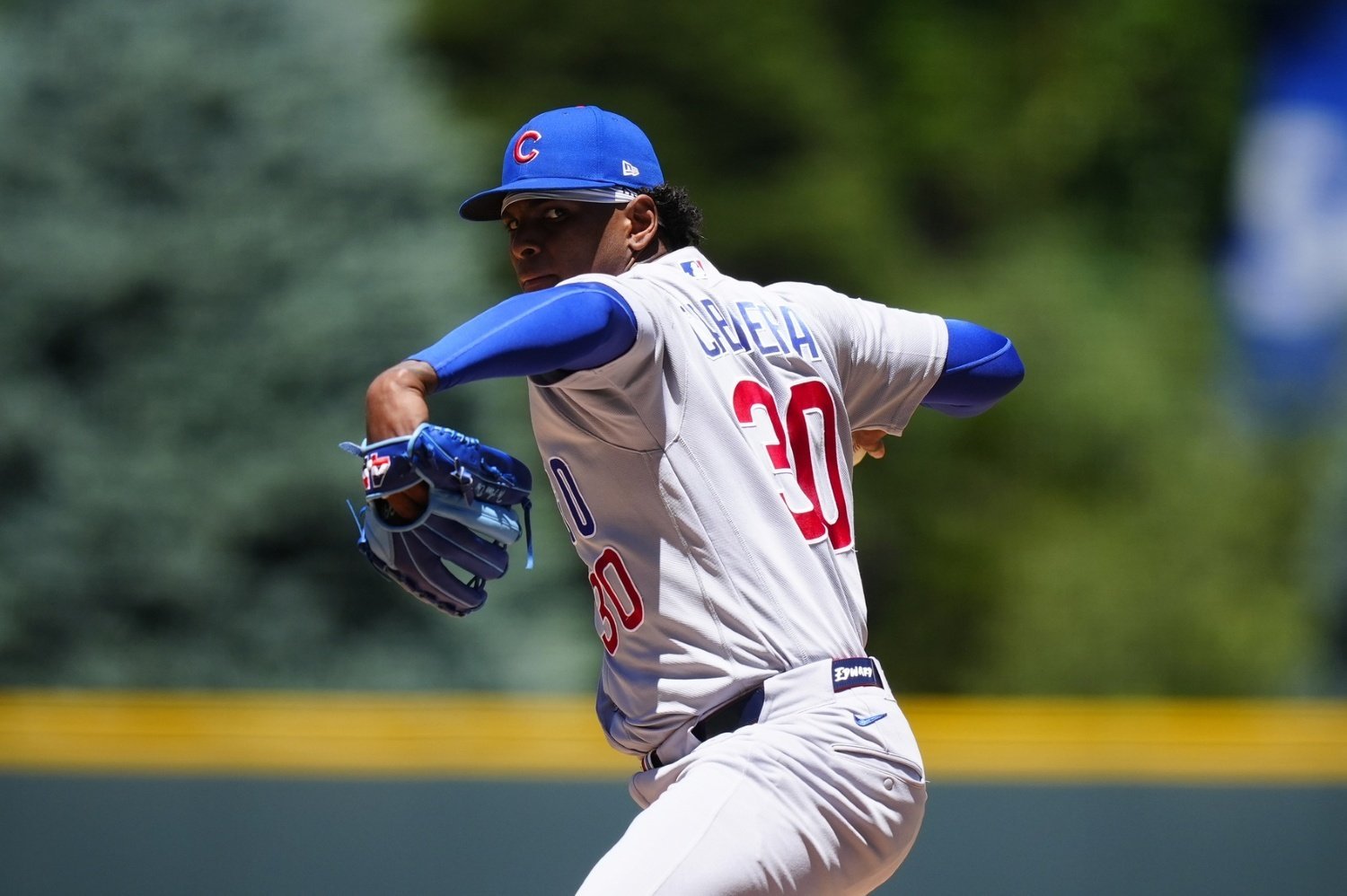 The good news, according to Baseball Prospectus's StuffPro metric, is that Edward Cabrera's slider hasn't gotten any worse this year. It's still a plus pitch, when he can locate it anywhere near the zone. In fact, that pitch should have more utility this year, in theory, because he's throwing from a lower arm angle and the top of the zone has been lopped off by the advent of the ABS system; his ability to use the slider to go from east to west is vital. The bad news, according not just to StuffPro but to Stuff+ and also your eyes and the surface-level numbers, too, is everything else. Cabrera's whole arsenal has gotten worse in his first season with the Cubs. Whether the team asked him to further lower his arm slot after he significantly lowered it last year or whether (as he said happened in 2025) it's just gotten lower as a result of his efforts to be more natural and athletic on the mound, the results have been calamitous. After 13 starts, Cabrera's ERA stands at 5.21. He's limiting walks better than he did in the past, keeping up the trend that seemed like the key to his breakout in 2025. However, his strikeout rate is way down, from 25.8% to 21.3%, and worse, he's giving up one home run for every 20 batters he faces. His Cubs debut was electric, and he worked a second straight scoreless outing after that, but since then, the ERA is 6.31. Even in that scoreless appearance against the Guardians, he walked five and struck out just four. The biggest problem seems to be that arm slot. Coming down a little last year was good, insofar as it loosened Cabrera up, kept him healthier and let him find the strike zone. Coming down more this year has been catastrophic, for two reasons: He can't find the zone as well anymore; and His key pitch shapes have become too similar. Last year, Cabrera's sinker was less a sinker than a running two-seamer, often thrown to the up-and-in quadrant against right-handed batters. It was a viciously difficult pitch to square up, at roughly 98 miles per hour with so much tailing action, but it also kept righty batters honest. If they sat on a changeup, they were likely to swing underneath the sinker, just as if it were a rising four-seam heater. At best, they might fight it off the handle of their bat and produce weak contact. Here's where his sinkers were located last season. When you lower your arm slot, you're likely to see any sinker become more of a true sinker, with depth. That can be a good thing, if you play the pitch mostly off a slider or a four-seamer. It produces more grounders and even more whiffs that way than if it's a two-seamer like last year's version of Cabrera threw. And sure enough, that's been the small but real change in movement for Cabrera this year. He's had a little more depth on the pitch, though it's still a two-seamer at heart. He's had a little less run on it. Playing as the partner to a changeup that's meant to be the centerpiece of an arsenal, though, that's nothing but bad news. Cabrera has never gotten many whiffs with the sinker, but he's all the way down to 6.8% whiffs on swings with it now. He can't get to that up-and-in spot with it; the pitch ends up down and in the zone much more often this year. When he tries to force the location where he lived with it last year, he mostly misses, for balls. But that's not Cabrera's biggest problem. The biggest problem is that signature changeup. Last year, opponents had a .226 weighted on-base average (wOBA) against that pitch. This year, it's .304. A good wOBA (for a batter) is something more like .350, so at a glance, that's not a disaster, but Cabrera has always had hittable fastballs, and he doesn't have good enough command of his curveball or slider to throw those all day. The changeup is his out pitch and his centerpiece. For such a nerve center of an offering, a .304 wOBA isn't good enough. Cabrera is missing with the change more often, not just in the sense that he's throwing fewer strikes with it, but in the sense that more of his strikes are mistakes. The lower slot isn't helping. Here's a good cambio he threw to Fernando Tatis Jr. last July. Nnk5V3ZfWGw0TUFRPT1fQmdOWkFRWU1WZ0VBRFFaVUJBQUhBZ2RYQUFNQVZsVUFVVkVEQmdwUkFnb0JVZ3BU.mp4 Here's him trying to pull a string on Luis Arraez this season. OHliUXZfWGw0TUFRPT1fQmdBRkFWTUJBQVFBVzFvRkJBQUhWRklDQUFNQ0JWUUFWRk1HQWxJRlZ3TUhVbFJS.mp4 The locations for which he was aiming aren't quite identical, but they're not as far apart as the two pitches' actual landing spots. The difference lies in his delivery. Last season, he was able to pronate better, getting inside and on top of the ball at release: This season, he's stuck behind the ball more. There's just no way to avoid that, with the lower arm slot, without totally changing the shape of the pitch and trading some depth for some run to the arm side. As small as the difference might look, the effect is big. Cabrera has been in the zone lass this year (partially because the zone itself is smaller), and when he is, it's more often a mistake with a lot of the plate. Hitters are swinging more often at his strikes and hitting it harder when they do. They're pulling it in the air much more often than they have in the past. He's just not the same uncomfortable at-bat he's been for most of his career. Unfortunately, much of this might be tough to fix this year. Some mechanical fix needs to be accomplished, and that's hard to do when one is also nursing a blister and/or a nebulous forearm issue. Things could always click back into place—maybe he just needs a different stride pattern, or to get past that blister problem and feel more conviction in his arsenal. Right now, though, he's a guy who has always depended on a changeup, whose changeup doesn't move much off his fastball when it's a strike. He's a guy who can still touch 100 MPH but is sitting a tick lower than in the past. He's a guy who's always needed the zone to flex for him, because his pitch shapes already limited his movement differentials, for whom the zone no longer flexes. It's been a brutal start to what the Cubs hope will be a multi-year partnership, and so far, Cabrera looks like the latest in a string of high-profile pitching acquisitions (going back to Yu Darvish and Tyler Chatwood) whom the Cubs have made worse, instead of better. Given what they surrendered to get him and how badly they need him right now, that's very, very bad news. View the full article
 -
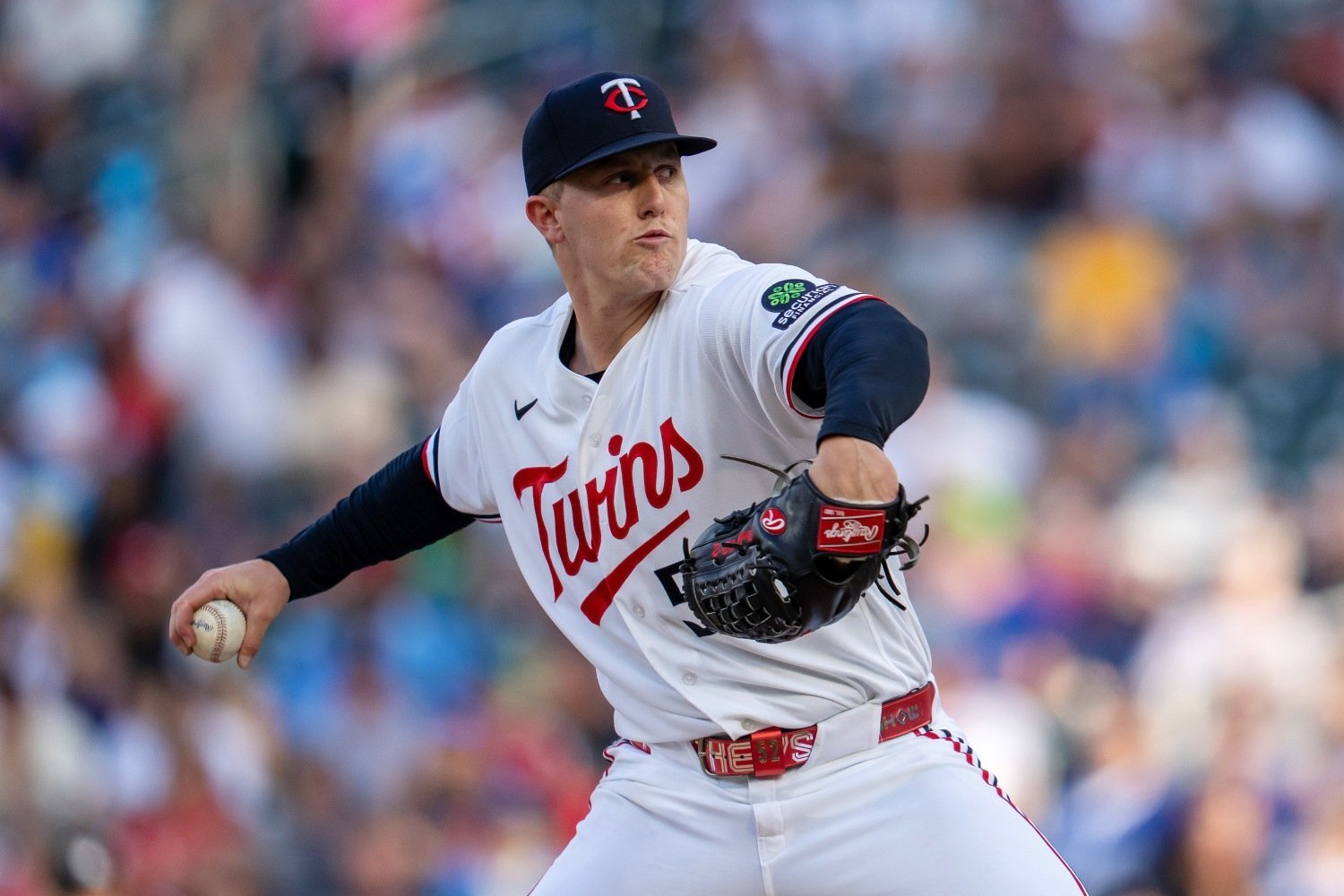 The second pitch Zebby Matthews threw Monday night in Minneapolis was a changeup. It leaped off the bat of Shohei Ohtani, and came down 414 feet away, long gone for a leadoff home run. Matthews missed his spot badly, and Ohtani made him pay with a rising line drive to the plaza beyond right field. That wasn't just a one-off, either. Matthews didn't have command of his changeup (almost) all night. He would throw another change to Freddie Freeman later in the first frame; two to Kyle Tucker and one to Tommy Edman in the second; and two to Ryan Ward in the fifth. All six of those pitches missed the zone, and none of them induced a chase. He succeeded only in falling behind with the pitch, and had to shelve it entirely in the third and fourth innings of his outing. Yet, Matthews found a way to hang around. He turned to a slightly hybridized version of his slider that had more movement than his cutter but was harder than his usual slider. he spotted his four-seamer well to all quadrants. Against a top-heavy but lethal Dodgers lineup, he got through the first five innings without giving up another run after that Ohtani shot. In the sixth, not having the change working finally caught up to him. After missing with both a four-seamer and a cutter to Freeman, he left another cutter in the middle of the zone on a 2-0 count. Freeman hammered a game-winning homer, putting the Dodgers up 2-1. All night, as it turned out, only homers by Ohtani, Freeman and Byron Buxton dented the scoreboard. But Matthews recovered nicely. After the Freeman bomb, he walked Mookie Betts, but the breaking of the tie also broke some tension for him. He and catcher Victor Caratini decided to come back to the changeup, doubling up on it to start Max Muncy's at-bat. Both pitches were called strikes. Muncy lined out. Derek Shelton let Matthews keep working, even though he'd already thrown 97 pitches at that point. Alex Call singled, but Matthews then got a flyout from Edman and struck out catcher Chuckie Robinson to escape the jam. In the end, Matthews put up six innings of two-run ball, and threw a career-high 108 pitches. More importantly, he found a way to survive without a pitch he usually throws about a quarter of the time against left-handed batters. If he successfully establishes himself as a mid-rotation starter for the Twins this year, bookmark Monday night's start. It was a huge step forward. The Twins lost, but Matthews gave them every chance to beat the two-time defending World Series champions. He did it without a pitch he'll have a better version of most of the time, through some good on-the-mound problem-solving. He rewarded his manager's faith and discovered a new capacity to pitch beyond his previous limits. View the full article
 -
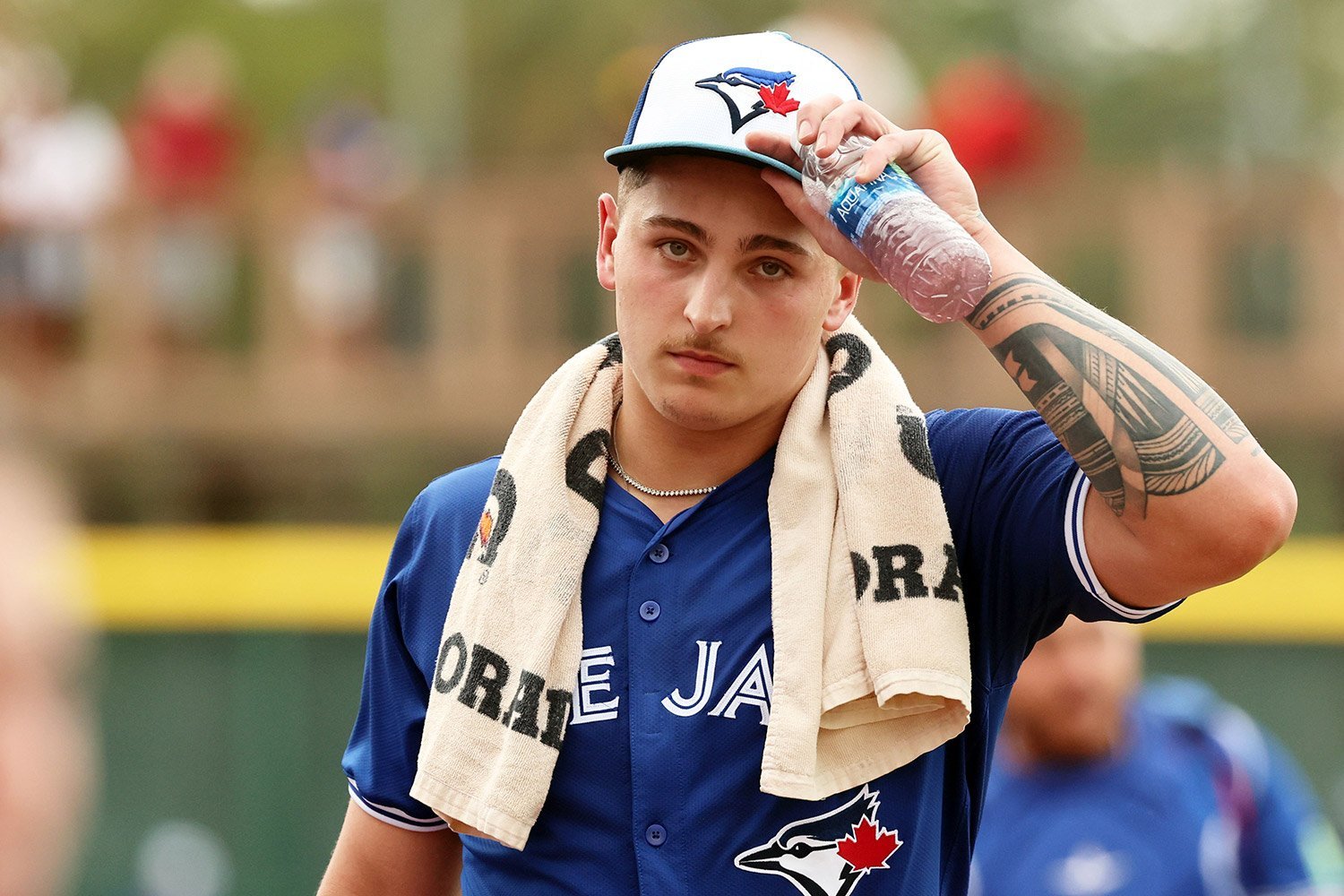 Blue Jays Top 20 Prospects, June 2026 JoJo Parker SS - Dunedin Johnny King LHP - Vancouver Arjun Nimmala SS - New Hampshire Juan Sanchez 3B/SS - Dunedin (Previously #6) Ricky Tiedemann LHP - Buffalo (on Rehab assignment) Gage Stanifer RHP - New Hampshire (Previously #4) Sean Keys 1B/3B - Buffalo (Previously #9) Nolan Perry RHP - Vancouver (Previously #16) Blaine Bullard OF - Dunedin (Previously #8) Jake Bloss RHP - Buffalo (Previously #12) Victor Arias OF - New Hampshire Daniel Guerra RHP - Vancouver (Previously Unranked) Carson Messina RHP - Dunedin (Previously Unranked) Jake Cook OF - Dunedin (Previously #17) Josh Kasevich SS - Buffalo (Previously #10) Austin Cates RHP - New Hampshire (Previously Unranked) Tim Piasentin 3B - FCL (Previously #14) Charles McAdoo 3B - Buffalo (Previously #13) RJ Schreck OF - Buffalo (Previously #18) Adrian Pinto 2B - New Hampshire (Previously Unranked) The Jays’ prospect rankings looked quite a bit different after the graduations of both Trey Yesavage and Yohendrick Pinango, giving room for a few new faces. On the other hand, Landen Maroudis, Dylan Watts, and Silvano Hechavarria all fell off the list in place of four new faces. Hechavarria and Maroudis have struggled immensely since the start of the season, both with an ERA over 6 on the season. Watts, on the other hand, earned a promotion to Vancouver, but was lit up in his first start. He mostly fell off due to a number’s game, as his stuff is intriguing enough to warrant top 20 consideration. Juan Sanchez and Gage Stanifer swapped places due to Sanchez’s hot June, where he slashed .333/.371/.544 for a 140 wRC+. Sean Keys also took a slight jump after getting promoted to Buffalo and still mashed, with an elite pulled fly ball ability paired with 99th percentile 90th percentile exit velocities. The biggest jump, however, was from Nolan Perry from 16th all the way to 8th. He’s gone from a relatively unknown pitching prospect to a top 100 prospect in baseball, showing extremely strong stuff with a starter’s arsenal with decent command. Perry is now running a 39.2 K% despite a shaky start in his last outing. A pair of Jakes also saw rises, with Bloss showing very strong stuff after returning from injury. Jake Cook rose despite not showing impressive raw stats, but his speed has been impressive, stealing 12 bags in 29 games. Gage Stanifer has actually looked impressive, but fell more because of Sanchez’s excellence than any of his shortcomings. Tim Piasentin has walked a lot in the complex league, but hasn’t been able to make solid contact when challenged in the zone, causing him to fall three spots. Josh Kasevich, Charles McAdoo, and RJ Schreck have all performed decently but have been jumped over by the new, talented arms that have been added to the list. McAdoo had a short cup of coffee in the major leagues after some injuries to Lenyn Sosa and Addison Barger got hurt, and accumulated -0.2 fWAR, but was able to hit his first major league homer. RHP Daniel Guerra - #12 Daniel Guerra was an international signee out of Venezuela in 2022, and he slowly made his way stateside, making his Low-A debut in Dunedin in 2024. At age 21 he pitched a full season in Low-A Dunedin, and although he struggled a little bit in the first few months of that season, he began to really pick it up at the end of the 2025 season, the stuff jumped as he went later on in the season, where he capped off his season with a six perfect innings against the Mighty Mussels on August 30th, 2025. Guerra was promoted to Vancouver in the 2026 season and immediately made an impact, as heading into early June, Guerra was in the top five in all of the minors in strikeouts. Unfortunately for him, he was taken out early in a game on June 9th and was put on the 7-day IL to put a damper on his breakout season. Guerra has a prototypical starter's build, standing 6ft 6 inches and weighing 230 pounds. His delivery comes more over the top, leading to funky angles for opposing hitters, and with his increased mid-to-high 90s fastball velocity is very tough for hitters. Given his high slot, Guerra generates elite ride on his fastball, and he was able to get on it as well. His main secondary is a cut-slider that also jumped in velocity this season, into the high 80s, which was a great whiff generator for him. He has a developing third pitch with a changeup as well, but he’s still figuring out the feel for it. With two plus pitches and shaky command, Guerra’s future seems more likely in the back end of a bullpen, but if he can reign in the control and sharpen up the changeup there’s some rotation upside as well. RHP Carson Messina - #13 Carson Messina was a highly anticipated high school signing out of Summerville High School and pitched just two innings in 2025 before getting put on the injured list. His return to the mound in 2026 was domination, as he ranked near the top of many pitching leaderboards, before earning a promotion to Dunedin in June. He frequently touched the upper 90s in the Florida Complex League, but in his couple of starts in Low-A Dunedin his velocity was only sitting 93-94 mph, but he has shown the capability of reaching back for more topping out at 96 mph. The results haven’t been the prettiest with a 6.35 ERA in a tiny sample, but his stuff looked great despite the diminished velocity. His fastball showed plus ride with a -4.5 vertical approach angle which makes it harder for hitters to square up and he has an 80 mph curveball with a more than 34 inch vertical separation from his fastball that has generated a lot of whiffs. He does have a cut slider as well in the mid 80s. With the positive shape and movement of his pitches, Messina has carried a 32.2% K rate so far this season, but he also has struggled with his command, as more advanced Low-A hitters are less susceptible to swinging at his pitches out of the zone. The 6ft 3 righty has mid-rotation upside if he can continue his velocity uptick and improve his command. RHP - Austin Cates #16 Austin Cates was the Jays 7th round pick in 2024 out of UNLV, and had a very successful first professional season, pitching over 100 innings to a 3.12 ERA/3.55 FIP and finished the season stronger than he started after getting promoted to Vancouver. Cates got 24 innings in Vancouver before earning a callup to New Hampshire, where he has a 4.58 ERA/4.14 FIP with a 21.9 K% to a 12.6 BB%. Despite the middling numbers, the offensive environment in the minors has taken a jump so that’s actually a better than average performance in the Eastern League. The standout traits for Cates don’t really exist, as he’s an average sized pitcher with middling stuff, but he has a devastating splitter that he uses quite effectively. The fastball is only in the 91-93 range, but he’s topped out at 95 here and there with decent ride. The slider shape isn’t the greatest and doesn’t generate many whiffs, but is a pitch he can command. He introduced a curveball that he could use as a get me over pitch, but hasn’t shown much else. The main star of the show is the splitter in the mid 80s, and when it’s on can generate a ton of whiffs and chases. Cates’ command is just average, and with his middling fastball velocity, needs more than just one good pitch to be a rotation piece, but can work as a depth starter or multi-inning reliever if he progresses well. A bump in velocity or better breaking balls could put him in back-end rotation talks. 2B/OF Adrian Pinto - #20 The oft-injured player once again started the season on the injured list, but in his return, he has performed just enough to hop onto the list at the bottom rung. After returning from rehab assignment in Dunedin, Pinto has hit .245/.351/.439 in New Hampshire for a 110 wRC+, while walking just as much as he’s struck out at 13.8%. He wasn’t hitting homers at the rate he did in the small sample he posted in the previous season, but he’s shown some juice with four homers of the season to pair with a solid contact rate of 78.6%. Pinto’s ability to control his small zone, make hard contact when he makes contact whilst having a solid contact rate makes him an intriguing prospect in the system, and since he’s at least an average second baseman defensively with the capability of playing the outfield with solid speed despite not playing their yet this season, he’s an interesting look for a Jays team that’s lacking up the middle bats that hit righty with upside like this. The profile is unique and despite being traded for four years ago, he’ll turn just 24 this season. He will need to be added to the 40-man roster as he is rule-5 eligible, and the health will need to hold up for Pinto to have a path to the majors. With 147 PAs he’s already played more than he did in any season since 2023, and if he continues to hit like this very well might get added to the 40-man. View the full article
 -
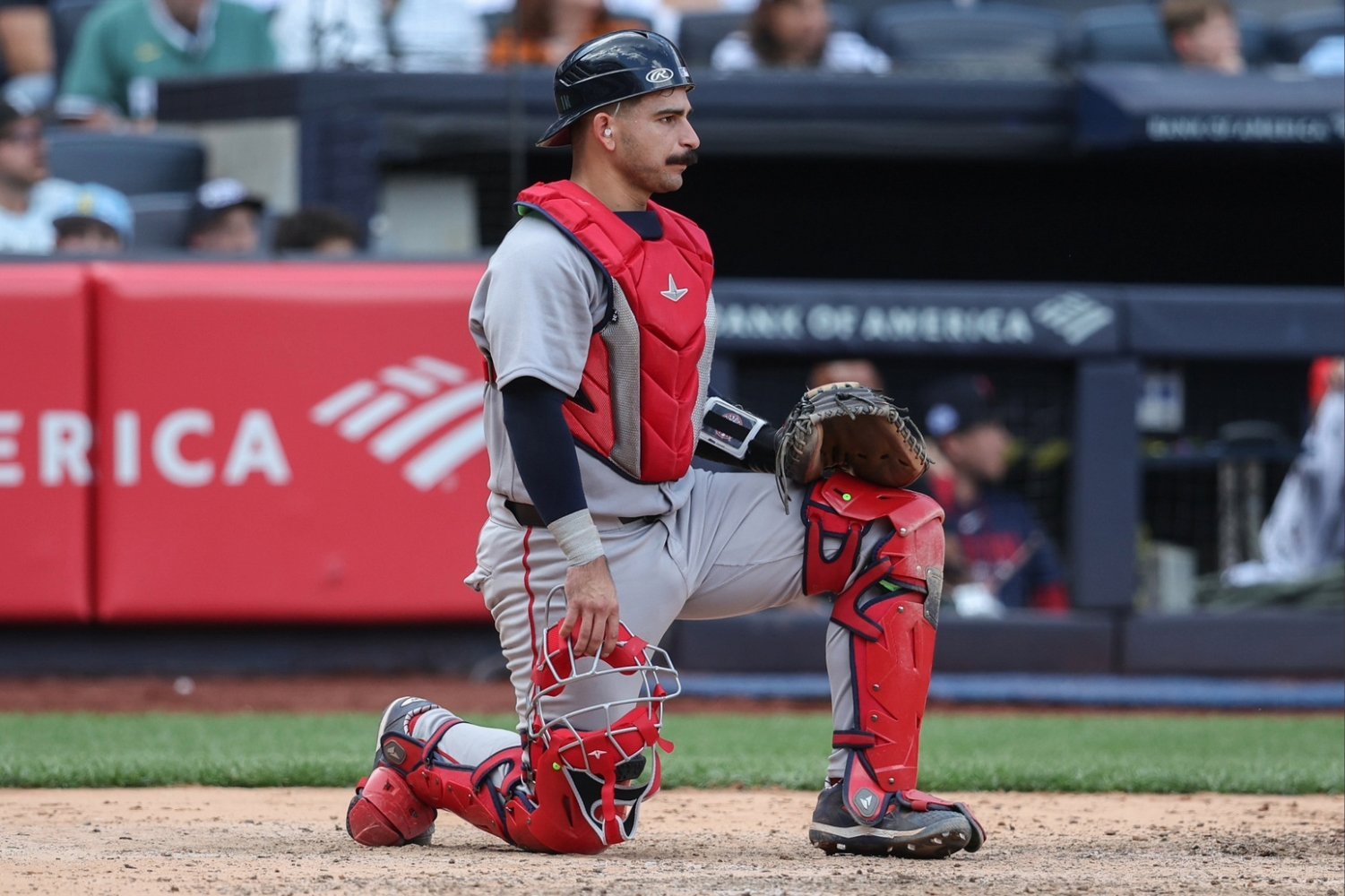 The Boston Red Sox opened 2026 with the same catching duo they ended last season with: Carlos Narváez and Connor Wong. After toying around in the J.T. Realmuto market, Boston decided what it had in-house made more sense than shelling out $16 million to an aging catcher. Fast-forward to June, and the catching room is different. Not because someone got hurt and not because someone got traded, optioned, or designated for assignment. They've just decided they didn't have enough catchers to handle their five-man rotation. Enter Mickey Gasper, the 30-year-old career minor leaguer considered without a defensive home, but the bat was intriguing enough to afford opportunities to. Especially this year, where the Red Sox are starving for competitive at-bats, let alone actual tangible offensive production. After a hot start, the switch-hitting Gasper has cooled off drastically. However, that hasn't stopped interim manager Chad Tracy from finding opportunities to use him. Sometimes it's behind the plate, where he's appeared 12 times. Sometimes it's at designated hitter -- again, where he's appeared 12 times. He's even figured into the mix at first base to give Willson Contreras some much-needed breaks. The usage of Gasper has already created a weird dynamic in the clubhouse. While there's no reporting or speculation of conflict amongst the players, the aforementioned Narváez already went public with his frustrations over playing time. On one hand, it's ironic a guy who is slashing .197/.270/.283 feels blindsided as to why he's not playing. On the other hand, he's still far and away the best catcher on the roster. Despite the 52 wRC+, Narváez has has been worth nearly half a win more than Gasper this season. Wong doubles him up, but that's thanks in large to nearly double the wRC+. Defensively, nobody comes close to Narváez on the big-league roster. And, at a position as important defensively as catcher, that's generally good enough to stay in the lineup. But the bigger issue lies in the Red Sox, particularly Tracy's fixation with Gasper. Early on in his second stint with the organization, he was putting forth competitive at-bats and the results followed. Since starting 11-for-31, he's marred in a 15-for-69 slide. In June, he's 9-for-49. He doesn't walk, isn't a good defensive backstop, and doesn't hit for power. The quality of at-bats is generally fine, but the Red Sox need results. If offense is what they seek, and defense out of the catcher spot is optional, then Wong should be the primary backstop. At least it'd feel somewhat like order restored, as he opened 2025 as the starter before a broken hand and poor performance paved the way for Narváez. The overarching issue, however, is that of circumstance. As the saying goes in football, "If you have two quarterbacks, you really have zero." The Red Sox have three catchers. Combined, the trio has 0.5 fWAR and a 73 wRC+. They aren't producing offense as a unit, and the defense is hardly picking up the slack, in large part because they've jettisoned Narváez from the starting lineup. Chalk this up to just another example of how the Red Sox create an awkward environment for their players to play in. There's often a disconnect between the front office and the dugout, then another one from the manager and coaching staff to the players. Narváez isn't star-quality, but he's an employee who saw his hours cut without explanation and is frustrated. Considering who took those hours, that frustration feels justified. Regardless of how this ordeal is settled in 2026, the fact remains the Red Sox need to add a legitimate top catching option sooner rather than later. Given their interest last winter in Realmuto, who isn't exactly killing it in Philadelphia this year, it seems they're aware of this need. The unfortunate truth, however, is the market is barren for catching this offseason. The top free agent option might be Cincinnati Reds backstop Tyler Stephenson. The 29-year-old has intriguing under-the-hood offensive metrics and provides pop from the right side, but he's historically a bottom-tier defensive catcher. Be that as it may, the Red Sox need established roles, with actual high-end contributors at several positions if they want 2026 viewed as nothing more than a lost year due to poor circumstances. Figuring out this catching conundrum, instead of exacerbating it with a hodgepodge of unproductive pieces, is fast approaching priority No. 1. View the full article
 -
The Mets’ Future May Be Arriving Sooner Than Expected
DiamondCentric posted an article in Grand Central Mets
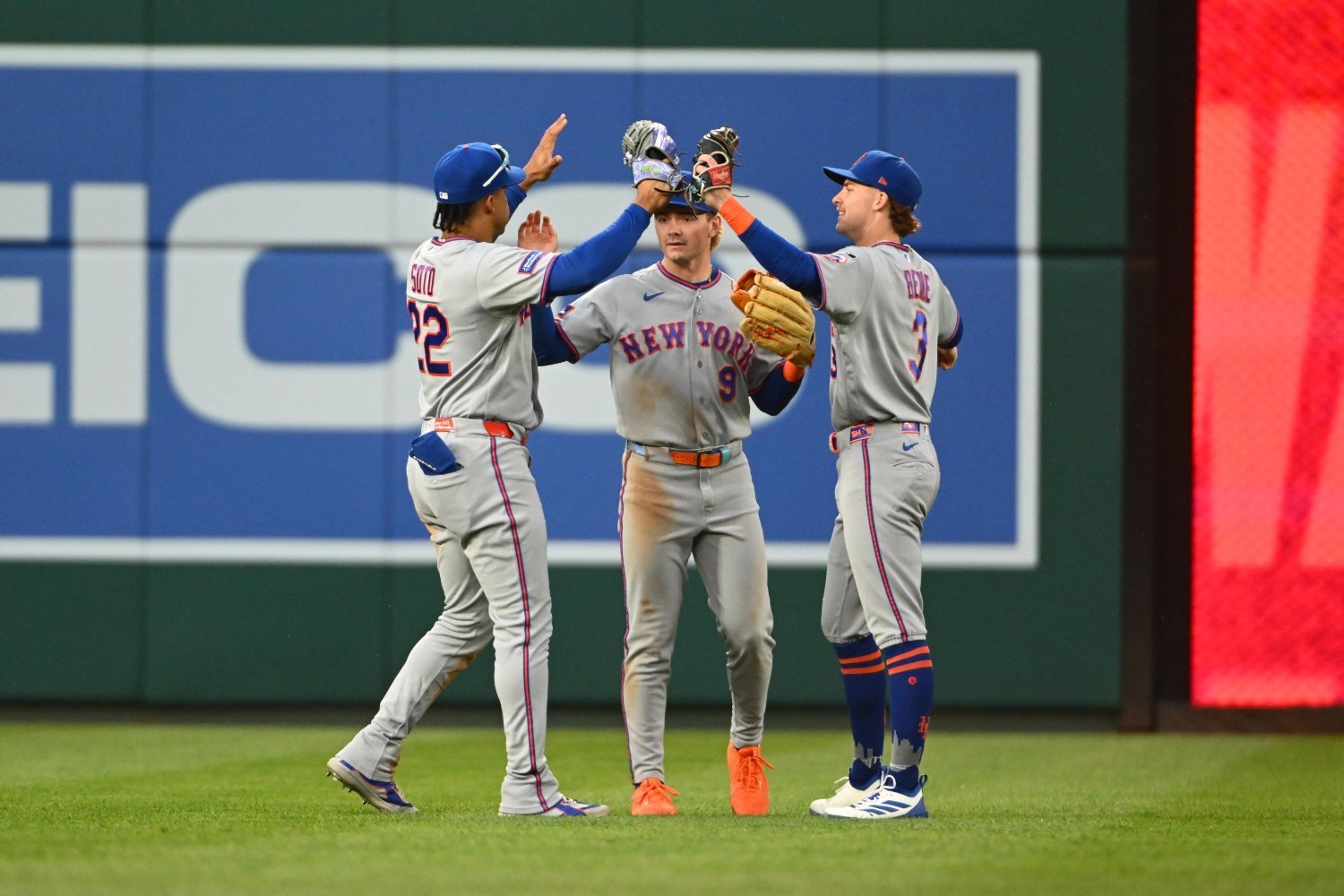 It’s easy to explain the New York Mets’ season by focusing on everything that has gone wrong. The inconsistencies have been impossible to ignore. Several veterans have failed to meet expectations, and at various points the lineup has looked nothing like the version the organization envisioned when it committed to building around Juan Soto. None of that is inaccurate, but disappointing seasons can also provide valuable answers. When wins become harder to find, organizations get an opportunity to identify which young players might be ready to contribute to the next competitive roster. That could prove to be one of the most important developments of this season. Soto remains the franchise’s cornerstone. Over the last 30 days, he has produced an elite 187 wRC+, once again reminding everyone why he remains one of the most complete hitters in baseball. The Mets do not need another superstar bat. What they need is a group capable of growing alongside him. And, for the first time in quite a while, it looks like they may be starting to find one. Carson Benge and the Value of Adjusting Quickly Prospect development is rarely linear. Even the most talented young players typically go through an adjustment period when professional pitching exposes just how difficult hitting can be at the highest level. Opposing pitchers identify weaknesses, alter their approach, and force hitters to respond. That’s what makes Carson Benge’s progression so encouraging. His first few weeks were difficult. Between March and April, he managed just a 50 wRC+ and often looked like a hitter searching for answers. Since then, however, the story has changed. Benge does not look like a player benefiting from an unsustainable hot streak. His plate discipline remains solid for a young hitter, he continues to make contact at an 80%+ rate, and he has started driving the ball with more authority without abandoning the offensive approach that brought him this far. Many young hitters respond to early struggles by chasing power. Benge has taken a different route. He has focused on building a more complete offensive profile while learning to navigate the constant adjustments that come with facing advanced pitching. That process is often one of the clearest indicators of long-term growth. A.J. Ewing Is Finding Ways to Impact the Game Ewing represents a different type of prospect. There is no single standout tool that immediately jumps off the page. Instead, his value comes from the number of ways he can contribute. He controls the strike zone better than expected for a player with limited experience, adds value with his speed, and has already shown the ability to contribute defensively. Even with a strikeout rate that still needs refinement, he has managed to remain close to league-average offensive production. Players like that rarely generate headlines. Winning teams need stars, but they also need players capable of helping in multiple areas when the bat is not carrying the load. Ewing still has work to dom but he is already showing several paths toward becoming an every-day major leaguer. Francisco Álvarez Remains the Most Important Piece of the Puzzle If there is one player in this group with legitimate star-level upside, it is probably still Francisco Álvarez. His offensive production this season has been solid rather than spectacular. His adjusted numbers tell a straightforward story: a 105 AVG+, 102 OBP+, and 105 wRC+ (where 100 is league average). Nothing extraordinary, but also clearly the profile of an above-average hitter. It's the tools that remain the biggest reason for optimism. Álvarez continues to post a 74.5 mph bat speed—one of the best marks on the roster—while his 46.4% fast-swing rate reflects a rare ability to generate both bat speed and impact through the zone. Those traits are, obviously, difficult to teach. Álvarez’s still look like those of a catcher capable of becoming an offensive difference-maker for years to come. A Mets Foundation That Is Starting to Take Shape The best news for the Mets is not that Benge, Ewing, and Álvarez have arrived as finished product. Rather, they're all giving fans a different reason to believe in their long-term futures. Benge has shown an ability to adjust. Ewing is finding ways to impact games while continuing to refine his skill set. Álvarez still possesses the traits that once made him one of the most highly regarded prospects in baseball. None of that guarantees future success. Player development never works that way. But after a season filled with frustration, the Mets can now say something that seemed far less certain just a few months ago: The team that will eventually be asked to support Juan Soto is more than just an on-paper dream. View the full article
 -
 Transactions: Milwaukee Brewers optioned LHP Drew Rom to Nashville Sounds. C Eric Martinez assigned to ACL Brewers from Nashville Sounds. Though not official yet, it appears Alexander Frias is heading to full-season ball in Wilson: Game Action: ACL Diamondbacks 16, ACL Brewers 5 Box Score It was a rough evening for the ACL Brewers on Monday, as walks and defensive miscues proved too much to overcome in a 16-5 loss. Things got away from the Brewers early in the contest. After Brailyn Antunez opened the scoring in the top of the first with a solo home run, the DBacks struck for five runs in the opening frame and never looked back. Last year's 20th-round pick Ma'Kale Holden started the game but didn't last long. Holden's line was pretty gruesome: 1.1 IP 4H 6R 4BB 3K. As a whole, the Brewers’ pitching staff allowed 10 hits and issued a whopping 13 walks. Defensive miscues didn't help the cause either, as the Brewers coupled a tough day on the mound with three costly errors in the field, leading to four unearned runs. The Diamondbacks scored in each of their first six innings. Only when reliver Roderick Flores came on with the bases loaded in the 6th inning, did the Brewers manage to stop the bleeding. Flores worked out of the bases loaded jam in the 6th allowing just a sac fly, then closed the game out with two more perfect innings. Antunez was the only Brewer to muster multiple hits, as he also closed the scoring with an RBI single in the 8th. Besides Antunez, the only other run scoring hit for the Brewers was a two-run double from Malachai Halterman. Jonathan Rangel and Yu-Lin Liao each drew three walks in defeat. The Brewers finished the day 2-for-12 with RISP and left 10 men on base. With the loss, the ACL Brewers drop to an even 19-19 record on the season DSL Brewers Blue 4, DSL Red Sox Red 3, F/7 (completion of June 12 game) Box Score We’ll keep this short and sweet as Jim already covered the first five innings of this game in his link report from June 12. Lukas Gonzalez came on for the Brewers after a scoreless bottom of the fifth inning once the game resumed. Gonzalez worked two perfect innings in relief with two strikeouts, keeping the game tied at three and giving the Brewers a shot at the victory. In the bottom of the 7th, Frandy Lafond led off the frame with a single. Lafond also had a steal after the game resumed in the 5th. The next two batters then walked to load the bases with one out. That’s when Yoneiker Lugo came up with a ground ball single to walk off the game and give the Brewers Blue a 4-3 victory. DSL Brewers Blue 6, DSL Red Sox Red 0, F/7 Box Score In the second game of this DSL “doubleheader,” Lafond picked up right where he left off with a three-run home run in the second inning to give the Brewers Blue all the offense they would need on the day. While the bats only tallied four hits, the Brewers displayed great plate discipline, drawing a staggering 11 walks to keep constant pressure on the Red Sox pitching staff. With so few hits, the rest of the Brewers’ run producing plays came on a ground out, walk, and fielder’s choice. Centerfielder Enrique Lovera was credited with two of those RBI. As a team, the Brewers went 4-for-6 in stolen bases on the day, with Angel Gonzalez stealing two bags and scoring three runs. On the mound, 18-year-old Carlos Galindo was terrific in earning his third win of the DSL season. Galindo went five innings, allowed five hits and struck out five. He did not walk or hit a batter after issuing 12 free passes in his first three appearances. Ruben Saldana, who is repeating the DSL for a third time, struck out three in two scoreless innings to close the game. At 12-4, the Brewers Blue have the fourth best winning percentage in the 50-team Dominican Summer League. DSL Reds 7, DSL Brewers Gold 6 Box Score The DSL Brewers Gold suffered a tough defeat on Monday dropping a 7-6 decision to the DSL Reds. Things started positively enough for the Brewers, who jumped out to an early 4-0 lead by the third inning. The offense found its groove early in the top of the second when Jefer Lista drew a bases-loaded walk to open the scoring, followed immediately by a clutch, two-run double from shortstop Ricki Moneys. Osiris Ramirez kept the momentum rolling in the third, pacing the offense with a 3-for-5 day and driving in another run to put the Brewers comfortably ahead. Moneys and Ramirez are first and second on the Gold squad with 14 and 13 RBI respectively. On the mound, starting pitcher Joan Gonzalez was magnificent, silencing the Reds' bats over four scoreless innings while racking up four strikeouts and allowing just two hits. Unfortunately, the Brewers’ bullpen couldn't hold the line once Gonzalez departed. The Reds broke through for four runs in the fifth inning to tie the game. Despite the Brewers briefly reclaiming a 5-4 lead in the top of the seventh on another RBI single by Ramirez, a costly fielding error from pitcher Derlin Garcia (3IP 6H 7R 6ER 4BB 4K) opened the door for the decisive rally. The Reds capitalized on the error, a balk, and a wild pitch in the bottom of the seventh, pushing three more runs across to take a permanent lead. The Brewers fought hard until the final out, clawing back within one run in the eighth after Matthew Moses drove in Josue Rodriguez on a force out. The Brewers managed to load the bases later that inning but ultimately left the sacks full as Ramirez popped out to short to end the threat. Lack of clutch hitting was a theme that plagued the team as the Brewers left 10 total runners on base while going 3-for-14 with RISP. On the opposite end of the spectrum from their Blue counterparts, the loss drops the Gold squad to 4-12 in DSL play, tied for the second worst record in the league. All four Brewers affiliates will be back in action on Tuesday, as well as the three rookie ball teams. We'll look to see if Frias makes his debut in Wilson for the Warbirds and have all the other highlights as well Organizational Scoreboard including starting pitcher info, game times, MiLB TV links, and box scores Current Milwaukee Brewers Organization Batting Stats and Depth Current Milwaukee Brewers Organization Pitching Stats and Depth View the full article
 -
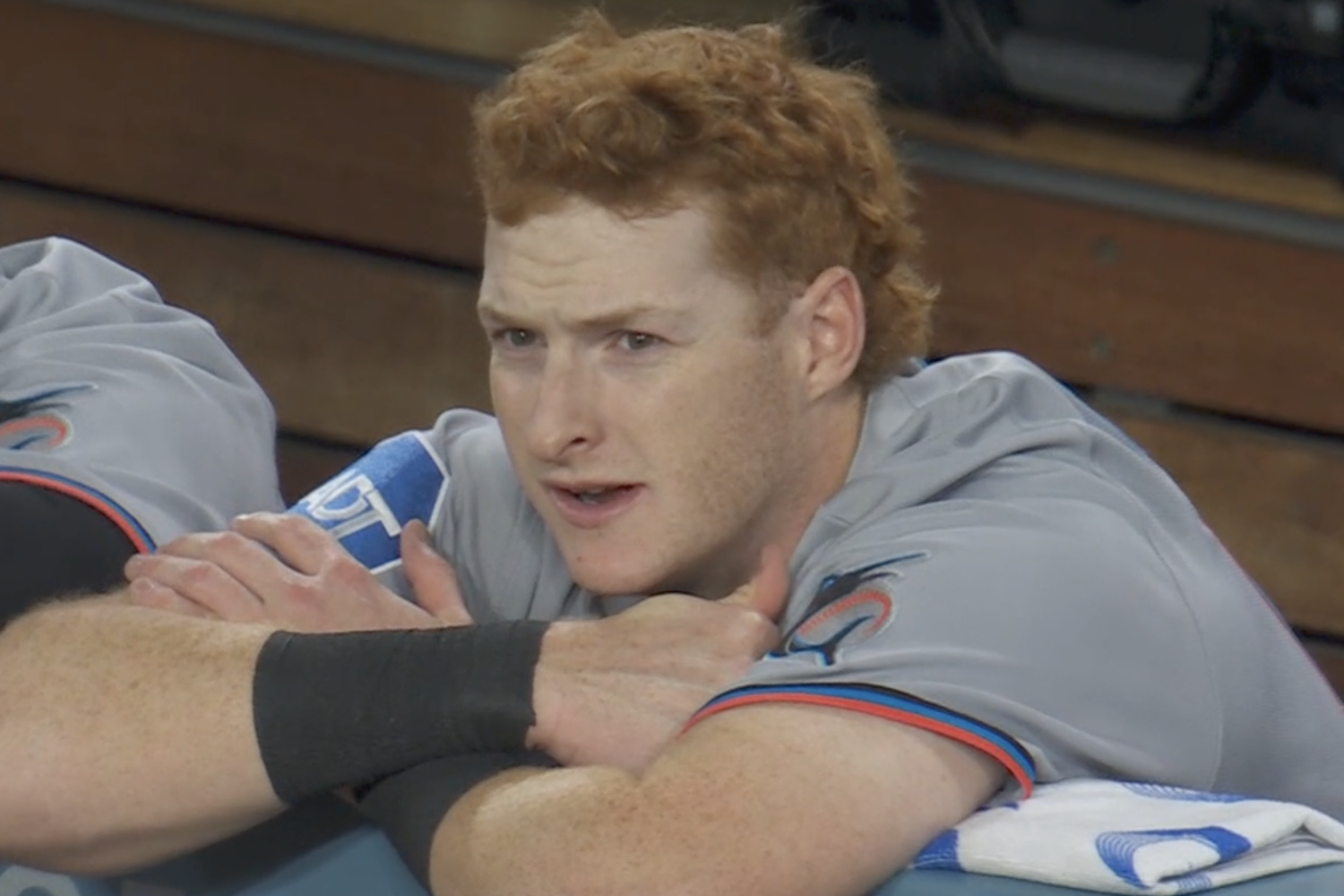 MIAMI, FL - The red hot Miami Marlins welcomed the Texas Rangers to kick-off a three-game set, but also welcomed the Tartan Army. This is a group of Scottish soccer fans supporting the national team during their World Cup run. Unfortunately, the support of 20,008 fans was not enough as the Marlins fell by a final score of 4-3. It was assumed up until the day of the game that right-handed pitcher Kumar Rocker would get the start. The day of the game, the Rangers went with left-handed reliever Tyler Alexander to open the game. This is a strategy that multiple teams have employed this season against the Marlins, most notably the Washington Nationals and Tampa Bay Rays. Alexander has only gone two innings or more three times this season. Despite that, the Marlins opted to start Esteury Ruiz, assuming that maybe Alexander would go two innings, meaning he faces Ruiz once. Well, the Marlins thought wrong. Kumar Rocker entered the game to begin the second inning and Marlins manager Clayton McCullough leaned into the splits, pinch hitting Ruiz and going with Owen Caissie when Ruiz did not even take an at-bat. "If Rocker was going to start the game pitching, Owen would have started the game," McCullough said, "and I liked Owen, with that more sinker/slider mix to take those at bats, and when Rocker came in near that point, while strange, maybe felt like it was still going to get Owen a better matchup than Ruiz on Rocker." The Marlins later opted to pinch hit for Caissie in the bottom of the seventh, where Ruiz could've been utilized given his ability to get on base (.360 OBP) and make things happen on the base paths (14 stolen bases). Instead, the Marlins went with Leo Jimenez, who following Monday's game, is slashing .182/.281/.208/.489 with two extra base hits and a 44 wRC+. So far against left-handed pitching, Caissie is 6-31, but at 23 years old, the Marlins are treating the former top prospect as a platoon player, which is not and should not be seen as his ceiling. Going into Monday, since May, Caissie is slashing .235/.310/.469/.779 with six home runs and 25 RBI. At some point, the development of Caissie to see if he can become an everyday player needs to be taken into account, and on Monday night, it was not. "I think this is more how we go into games trying to win," McCullough said. "What's our best chance to win tonight's game, and so we'll continue to look at that with him and other guys as well." After a rough start for Tyler Phillips on the road against the Philadelphia Phillies, he bounced back against the Rangers, going six innings, allowing two runs on five hits, three walks and four strikeouts. Two of his strikeouts came on his splitter, the most used pitch for him on the night. The two runs he allowed came in the top of the fourth inning when Ezequiel Duran took him deep to straightaway center field, a two-run shot, giving the Rangers a 2-0 lead. Xavier Edwards, who has been slumping these past couple of weeks, turned in a multi-hit performance, capped off by an RBI triple in the bottom of the sixth inning. He was sent home, but the throw came in right on time to get him out at home, making it a 2-2 game. "I know he's been having a hard time lately," McCullough said. "He looked good tonight, especially with the triple, that was exciting. He's too good of a hitter. He's going to continue to scratch out some hits, and I believe he'll get on another real run, where he's stringing a bunch of them together." Kyle Stowers' strong month of June continued in a late-game situation. Down 4-2 in the bottom of the eighth inning, Stowers got to lefty Jacob Latz, hitting an RBI double to put the Marlins within one, trailing 4-3. He is now slashing .231/.346/.538/.884 in June. With the loss, the Marlins fall to 40-39, one game out of the third and final National League Wild Card spot. Sandy Alcantara, who is four strikeouts shy of taking down Ricky Nolasco's record for most career strikeouts in franchise history, takes the mound on Tuesday at 6:40 pm EST. View the full article
 -
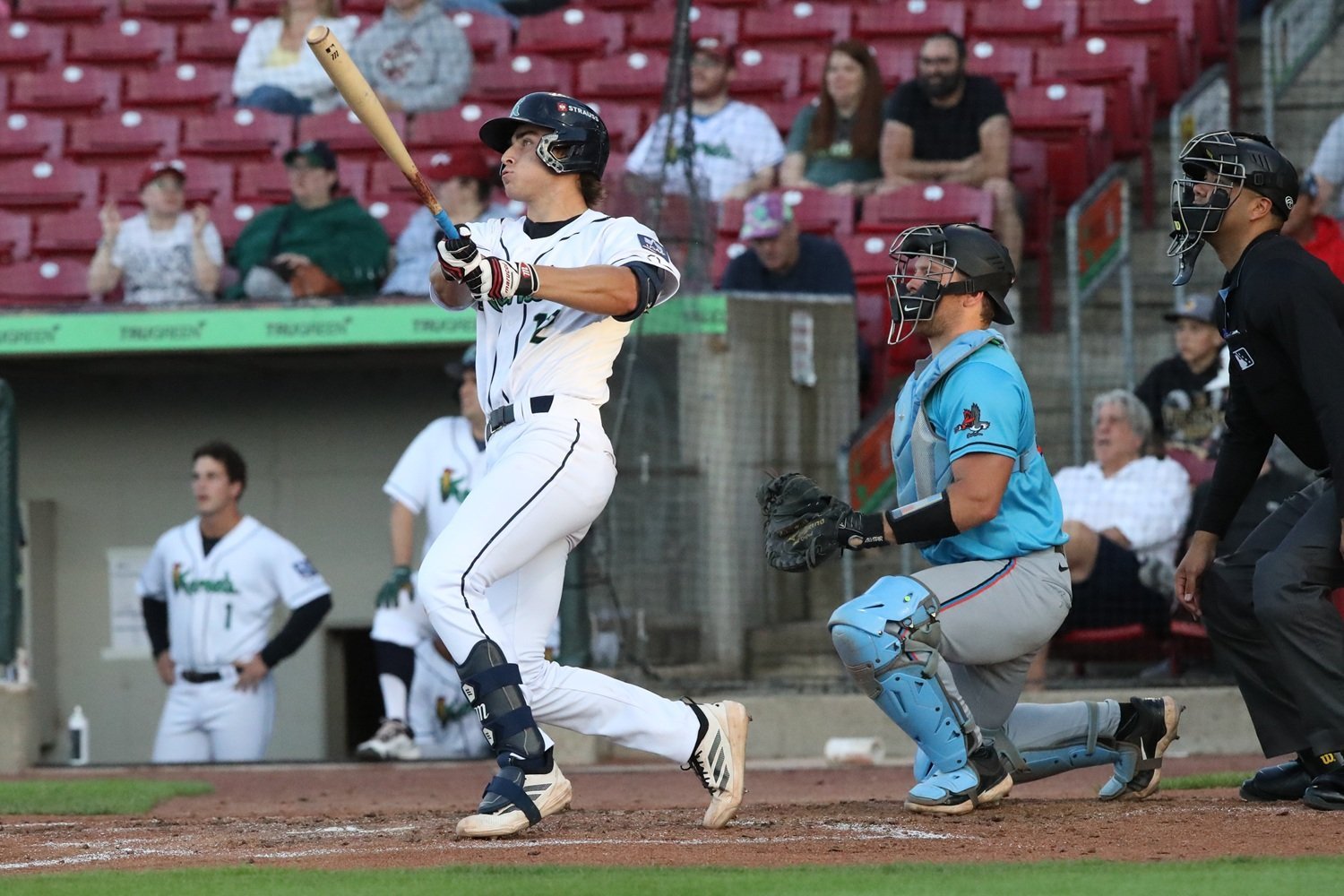 TRANSACTIONS St. Paul Saints activated OF Walker Jenkins from the 7-day injured list. OF Kala'i Rosario assigned to St. Paul Saints from Wichita Wind Surge. St. Paul Saints sent RHP Eduardo Salazar on a rehab assignment to Fort Myers Mighty Mussels. SS Marek Houston assigned to Wichita Wind Surge from Cedar Rapids Kernels. UT Jay Thomason assigned to Wichita Wind Surge from Cedar Rapids Kernels. Cedar Rapids Kernels activated RHP Adrian Bohorquez from the 7-day injured list. 2B Dameury Pena assigned to Cedar Rapids Kernels from Fort Myers Might Mussels. SS Henry Kusiak assigned to Cedar Rapids Kernels from St. Paul Saints. SS Harry Genth assigned to Fort Myers Mighty Mussels from St. Paul Saints. SAINTS SENTINEL The Saints had a 3-3 week, highlighted by two high-scoring games, including a franchise-record-tying 21-run game on Tuesday. This week, the Saints head out of town to Louisville to take on the Bats, the Cincinnati Reds affiliate. Tuesday, the Saints will run into a rehabbing Hunter Greene, giving some of the Twins top bats another opportunity to prove themselves against proven MLB pitching talent. OF Hector Rodriguez will likely pose a challenge for Saints pitchers. Rodriguez is hitting .292/.369/.540 (.908), and 17 home runs in 2026. Another top 10 prospect talent on the Bats roster is RHP Jose Franco. The 25-year-old has appeared in nine games this season, starting four for the Bats, and carries a 5.40 ERA. Franco has traditionally had a K% in the mid-20% range, much like his 26.6% this season at Triple-A. In a stint with the Reds, it did dip considerably to 16.5%. WIND SURGE WISDOM As the Wind Surge hosted the Spring Field Cardinals this past week, they were only able to pull out a 2-4 record. The Wind Surge will go on the road this week to take on the Midland RockHounds, an Athletics affiliate. Wichita will have a chance to see a nationally renowned Top 10 prospect in SS/3B Leo De Vries. The 19-year-old is hitting .282/.375/.432 (.807), with nine home runs this season. Joining De Vries is organizational Top 10 position player OF Devin Taylor. The left-hander is hitting .295/.407/.461 (.868), with 10 home runs. Rounding out the prospects to watch for Midland is LHP Jamie Arnold. Arnold has started 13 games in 2026, put together a 4.64 ERA, and a 23.3% K%. KERNELS CHRONICLE Over the past week, the Kernels went 2-3 while facing Beloit. The Cedar Rapids club will make the trip up to Wisconsin to take on the Timber Rattlers of the Milwaukee Brewers organization. The Kernels will see the Brewers' number 2 prospect, according to our sister site Brewer Fanatic, Luis Pena. Pena is also ranked as a Top 25 prospect nationally and is hitting .325/.443/.442 with a .885 OPS. C Marco Dinges joins Pena as a prospect to watch and is ranked ninth by Brewer Fanatic, hitting .261/.387/.459, .846 OPS, with eight home runs. He just returned to the lineup after a short suspension. The #12 prospect is 19-year-old former first-round pick has had a very nice start to his season. In 42 games, he is hitting .282/.394/.595 with 10 doubles, 13 homers and 13 stolen bases. Moving to the pitching side, we find Brewer Fantatic’s number ten prospect Bishop Letson. Over 12 starts this year, he is 3-3 with a 4.60 ERA. In 47 innings, he's got 47 strikeouts, but also 28 walks. JD Thompson the #18 prospect. The lefty has been on the IL since his last start, June 2, in Cedar Rapids, when he left the game with two outs in the second inning. MIGHTY MATTERS The Mussels had a successful week, going 4-2 and carrying an impressive home run streak with them along the way. Fort Myers welcomes the St. Lucie Mets into town for this week's series. The Mets will bring with them 18-year-old SS Elian Pena with them. Pena is a left-handed batter who is hitting .267/.256/.252 with a .768 OPS this season. He ranks as the organization's #3 prospect at Grand Central Mets (a DiamondCentric site). Outfielder Randy Guzman ranks 15th in the organization. However, he has been on the Injured List since June 6. FCL TWINS Twins 5, Rays 7 (10 innings) Box Score It took extra innings to find a winner between the Twins and Rays on Monday morning. The Twins had to recover from a 5-2 deficit after the fifth. In the sixth inning, the lead was chipped away at by a pair of RBI singles from Jose Barrios and Jhomnardo Reyes to help bring the Twins within one run at a 5-4 score. Reyes was 2-for-6 on the day and accounted for two of the Twins RBIs. Yovanny Duran hit the RBI single that tied up the game 5-5 in the eighth inning. The centerfielder was 3-for-6 at the plate. He stole his 15th base. Joyner Perez and Victor Leal each hit a double. Each Twins pitcher gave up at least one run, but Halton Hardy had the most success on the afternoon, giving up three earned runs in 6 1/3 innings. Hardy also struck out nine total batters while only walking one. Matt Barr started as his rehab continues. He gave up two runs on one hit and two walks over 2 2/3 innings. He struck out four batters. DSL TWINS Twins 12, Miami 15 Box Score There was a lot of scoring between the Twins and Miami. As a team, the Twins put more runners on base by being patient and taking 13 walks. They also had eight hits. LF Ashwar Sprok was the only Twin with a multi-hit day, going 2-for-2 with a run scored, an RBI, and one walk. Jhon Gonzalez hit a double. Luis Suarez added another double for his lone hit, but the first baseman also took a walk and scored both times he was on base. RF Abel Sosa had the final extra-base hit for the Twins with a triple and three RBI. Daiyer Barboza led the Twins offense. He was 1-for-2 with four walks. He stole two bases. Jendy Martinez was 1-for-2 with two walks. Luis Duarte walked three times. As expected, the pitching was not clean in a game in which the opponent scored 15 runs. The only pitcher to put a zero in the earned run column (he did allow an unearned run) was Jeremy Jimenez, who went 1 1/3 innings, allowing one hit, one walk, and striking out one. The Marlins had 14 stolen bases, and the Twins helped them by committing six errors. TWINS DAILY PLAYERS OF THE DAY Yovanny Duran: 3-for-6, 1 RBI Halton Hardy: 6 1/3 IP, 4 H, 3 ER, 1 BB, 9 K TOP 20 PROSPECT WEEK IN REVIEW #1- Walker Jenkins (Rehab-Kernels)-.455/.500/.727, 1.227 OPS, 1 HR #4- Connor Prielipp (Twins)- 1 GS, 6 IP 9 H, 3 ER, 4 K, 3 BB #5- Eduardo Tait (Kernels)- .333/.333/.792, 1.125 OPS, 3 HR, 2 2B #7- Marek Houston (Kernels)- .308/.550/.462, 1.012 OPS, 2 2B #8- Riley Quick (Kernels)- 4 2/3 IP, 5 H, 3 ER, 3 BB, 4 K #10- Gabriel Gonzalez (Saints)- .440/.517/.640, 1.157 OPS, 1 HR, 2 2B #12- Andrew Morris (Twins)- 2 2/3 IP, 0 H, 0 ER, 1 BB, 3 K #14- Quentin Young (Mussels)- .250/.296/.708, 1.005 OPS #15- Brandon Winokur (Kernels)- .375/.474/.438, .911 OPS. 1 2B #16 Ryan Gallagher (Saints)- 4 2/3 IP, 7 H, 4 ER, 2 BB, 3 K #17-C.J. Culpepper (Saints)- 1 1/3 IP, 2 H, 0 ER, 0 BB, 2 K #19- Khadim Diaw (Wind Surge)- .353/.560/.353, .913 OPS #20- Kyle DeBarge (Wind Surge)- .125/.125/.500, .625 OPS, 1 HR TUESDAY’S PROBABLE STARTERS St. Paul Saints @ Louisville- RHP Ricky Castro Wichita Wind Surge @ Midland- RHP Preston Johnson Cedar Rapids Kernels @ Wisconsin- TBD St. Lucie @ Fort Myers Mussels- TBD FCL Braves @ FCL Twins- TBD DSL Colorado @ DSL Twins- TBD View the full article
 -
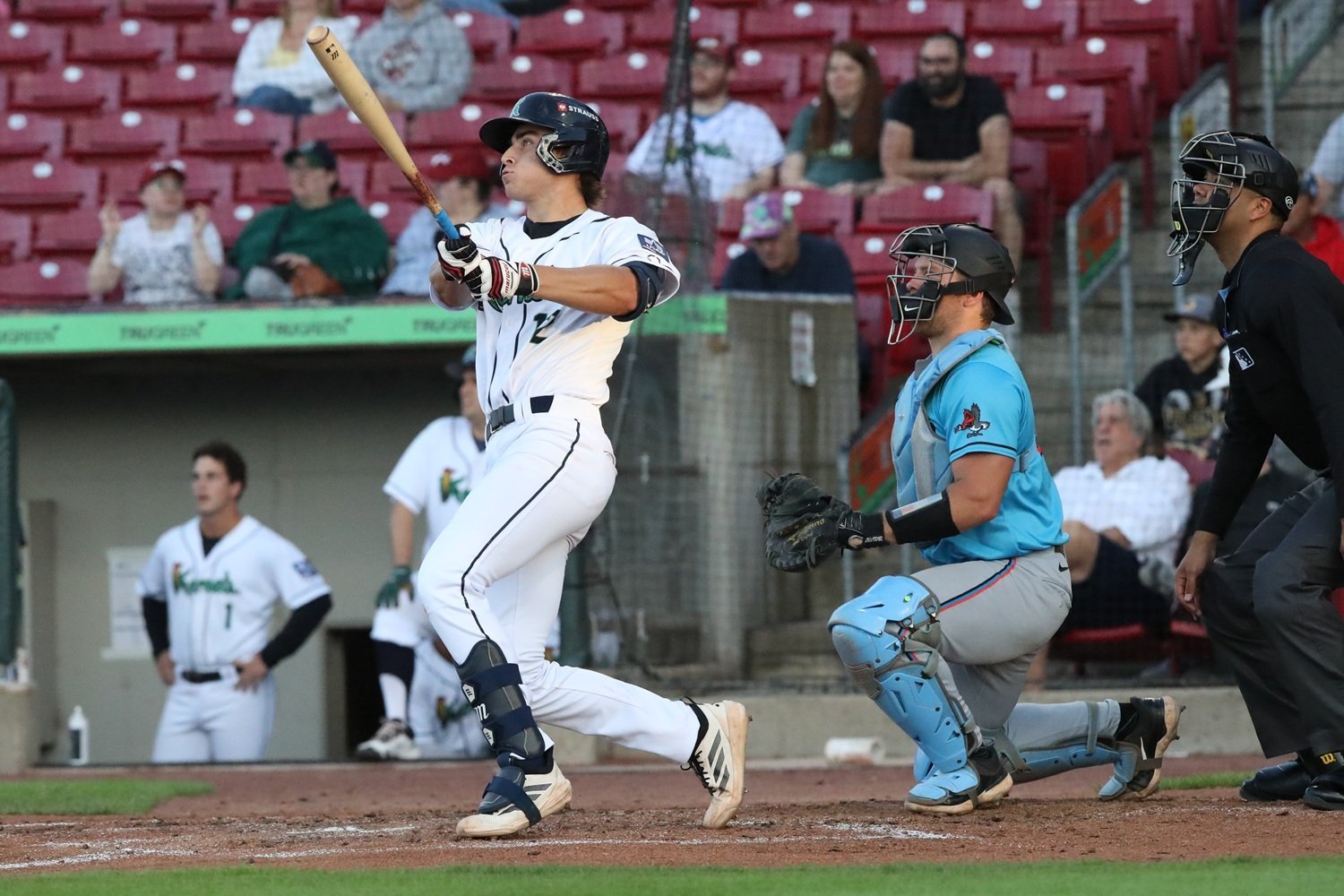 TRANSACTIONS St. Paul Saints activated OF Walker Jenkins from the 7-day injured list. OF Kala'i Rosario assigned to St. Paul Saints from Wichita Wind Surge. St. Paul Saints sent RHP Eduardo Salazar on a rehab assignment to Fort Myers Mighty Mussels. SS Marek Houston assigned to Wichita Wind Surge from Cedar Rapids Kernels. UT Jay Thomason assigned to Wichita Wind Surge from Cedar Rapids Kernels. Cedar Rapids Kernels activated RHP Adrian Bohorquez from the 7-day injured list. 2B Dameury Pena assigned to Cedar Rapids Kernels from Fort Myers Might Mussels. SS Henry Kusiak assigned to Cedar Rapids Kernels from St. Paul Saints. SS Harry Genth assigned to Fort Myers Mighty Mussels from St. Paul Saints. SAINTS SENTINEL The Saints had a 3-3 week, highlighted by two high-scoring games, including a franchise-record-tying 21-run game on Tuesday. This week, the Saints head out of town to Louisville to take on the Bats, the Cincinnati Reds affiliate. Tuesday, the Saints will run into a rehabbing Hunter Greene, giving some of the Twins top bats another opportunity to prove themselves against proven MLB pitching talent. OF Hector Rodriguez will likely pose a challenge for Saints pitchers. Rodriguez is hitting .292/.369/.540 (.908), and 17 home runs in 2026. Another top 10 prospect talent on the Bats roster is RHP Jose Franco. The 25-year-old has appeared in nine games this season, starting four for the Bats, and carries a 5.40 ERA. Franco has traditionally had a K% in the mid-20% range, much like his 26.6% this season at Triple-A. In a stint with the Reds, it did dip considerably to 16.5%. WIND SURGE WISDOM As the Wind Surge hosted the Spring Field Cardinals this past week, they were only able to pull out a 2-4 record. The Wind Surge will go on the road this week to take on the Midland RockHounds, an Athletics affiliate. Wichita will have a chance to see a nationally renowned Top 10 prospect in SS/3B Leo De Vries. The 19-year-old is hitting .282/.375/.432 (.807), with nine home runs this season. Joining De Vries is organizational Top 10 position player OF Devin Taylor. The left-hander is hitting .295/.407/.461 (.868), with 10 home runs. Rounding out the prospects to watch for Midland is LHP Jamie Arnold. Arnold has started 13 games in 2026, put together a 4.64 ERA, and a 23.3% K%. KERNELS CHRONICLE Over the past week, the Kernels went 2-3 while facing Beloit. The Cedar Rapids club will make the trip up to Wisconsin to take on the Timber Rattlers of the Milwaukee Brewers organization. The Kernels will see the Brewers' number 2 prospect, according to our sister site Brewer Fanatic, Luis Pena. Pena is also ranked as a Top 25 prospect nationally and is hitting .325/.443/.442 with a .885 OPS. C Marco Dinges joins Pena as a prospect to watch and is ranked ninth by Brewer Fanatic, hitting .261/.387/.459, .846 OPS, with eight home runs. He just returned to the lineup after a short suspension. The #12 prospect is 19-year-old former first-round pick has had a very nice start to his season. In 42 games, he is hitting .282/.394/.595 with 10 doubles, 13 homers and 13 stolen bases. Moving to the pitching side, we find Brewer Fantatic’s number ten prospect Bishop Letson. Over 12 starts this year, he is 3-3 with a 4.60 ERA. In 47 innings, he's got 47 strikeouts, but also 28 walks. JD Thompson the #18 prospect. The lefty has been on the IL since his last start, June 2, in Cedar Rapids, when he left the game with two outs in the second inning. MIGHTY MATTERS The Mussels had a successful week, going 4-2 and carrying an impressive home run streak with them along the way. Fort Myers welcomes the St. Lucie Mets into town for this week's series. The Mets will bring with them 18-year-old SS Elian Pena with them. Pena is a left-handed batter who is hitting .267/.256/.252 with a .768 OPS this season. He ranks as the organization's #3 prospect at Grand Central Mets (a DiamondCentric site). Outfielder Randy Guzman ranks 15th in the organization. However, he has been on the Injured List since June 6. FCL TWINS Twins 5, Rays 7 (10 innings) Box Score It took extra innings to find a winner between the Twins and Rays on Monday morning. The Twins had to recover from a 5-2 deficit after the fifth. In the sixth inning, the lead was chipped away at by a pair of RBI singles from Jose Barrios and Jhomnardo Reyes to help bring the Twins within one run at a 5-4 score. Reyes was 2-for-6 on the day and accounted for two of the Twins RBIs. Yovanny Duran hit the RBI single that tied up the game 5-5 in the eighth inning. The centerfielder was 3-for-6 at the plate. He stole his 15th base. Joyner Perez and Victor Leal each hit a double. Each Twins pitcher gave up at least one run, but Halton Hardy had the most success on the afternoon, giving up three earned runs in 6 1/3 innings. Hardy also struck out nine total batters while only walking one. Matt Barr started as his rehab continues. He gave up two runs on one hit and two walks over 2 2/3 innings. He struck out four batters. DSL TWINS Twins 12, Miami 15 Box Score There was a lot of scoring between the Twins and Miami. As a team, the Twins put more runners on base by being patient and taking 13 walks. They also had eight hits. LF Ashwar Sprok was the only Twin with a multi-hit day, going 2-for-2 with a run scored, an RBI, and one walk. Jhon Gonzalez hit a double. Luis Suarez added another double for his lone hit, but the first baseman also took a walk and scored both times he was on base. RF Abel Sosa had the final extra-base hit for the Twins with a triple and three RBI. Daiyer Barboza led the Twins offense. He was 1-for-2 with four walks. He stole two bases. Jendy Martinez was 1-for-2 with two walks. Luis Duarte walked three times. As expected, the pitching was not clean in a game in which the opponent scored 15 runs. The only pitcher to put a zero in the earned run column (he did allow an unearned run) was Jeremy Jimenez, who went 1 1/3 innings, allowing one hit, one walk, and striking out one. The Marlins had 14 stolen bases, and the Twins helped them by committing six errors. TWINS DAILY PLAYERS OF THE DAY Yovanny Duran: 3-for-6, 1 RBI Halton Hardy: 6 1/3 IP, 4 H, 3 ER, 1 BB, 9 K TOP 20 PROSPECT WEEK IN REVIEW #1- Walker Jenkins (Rehab-Kernels)-.455/.500/.727, 1.227 OPS, 1 HR #4- Connor Prielipp (Twins)- 1 GS, 6 IP 9 H, 3 ER, 4 K, 3 BB #5- Eduardo Tait (Kernels)- .333/.333/.792, 1.125 OPS, 3 HR, 2 2B #7- Marek Houston (Kernels)- .308/.550/.462, 1.012 OPS, 2 2B #8- Riley Quick (Kernels)- 4 2/3 IP, 5 H, 3 ER, 3 BB, 4 K #10- Gabriel Gonzalez (Saints)- .440/.517/.640, 1.157 OPS, 1 HR, 2 2B #12- Andrew Morris (Twins)- 2 2/3 IP, 0 H, 0 ER, 1 BB, 3 K #14- Quentin Young (Mussels)- .250/.296/.708, 1.005 OPS #15- Brandon Winokur (Kernels)- .375/.474/.438, .911 OPS. 1 2B #16 Ryan Gallagher (Saints)- 4 2/3 IP, 7 H, 4 ER, 2 BB, 3 K #17-C.J. Culpepper (Saints)- 1 1/3 IP, 2 H, 0 ER, 0 BB, 2 K #19- Khadim Diaw (Wind Surge)- .353/.560/.353, .913 OPS #20- Kyle DeBarge (Wind Surge)- .125/.125/.500, .625 OPS, 1 HR TUESDAY’S PROBABLE STARTERS St. Paul Saints @ Louisville- RHP Ricky Castro Wichita Wind Surge @ Midland- RHP Preston Johnson Cedar Rapids Kernels @ Wisconsin- TBD St. Lucie @ Fort Myers Mussels- TBD FCL Braves @ FCL Twins- TBD DSL Colorado @ DSL Twins- TBD View the full article
 -
Royals Farm System Updates: Royals Keep's Top-20 List, Volume 3
DiamondCentric posted an article in Royals Keep
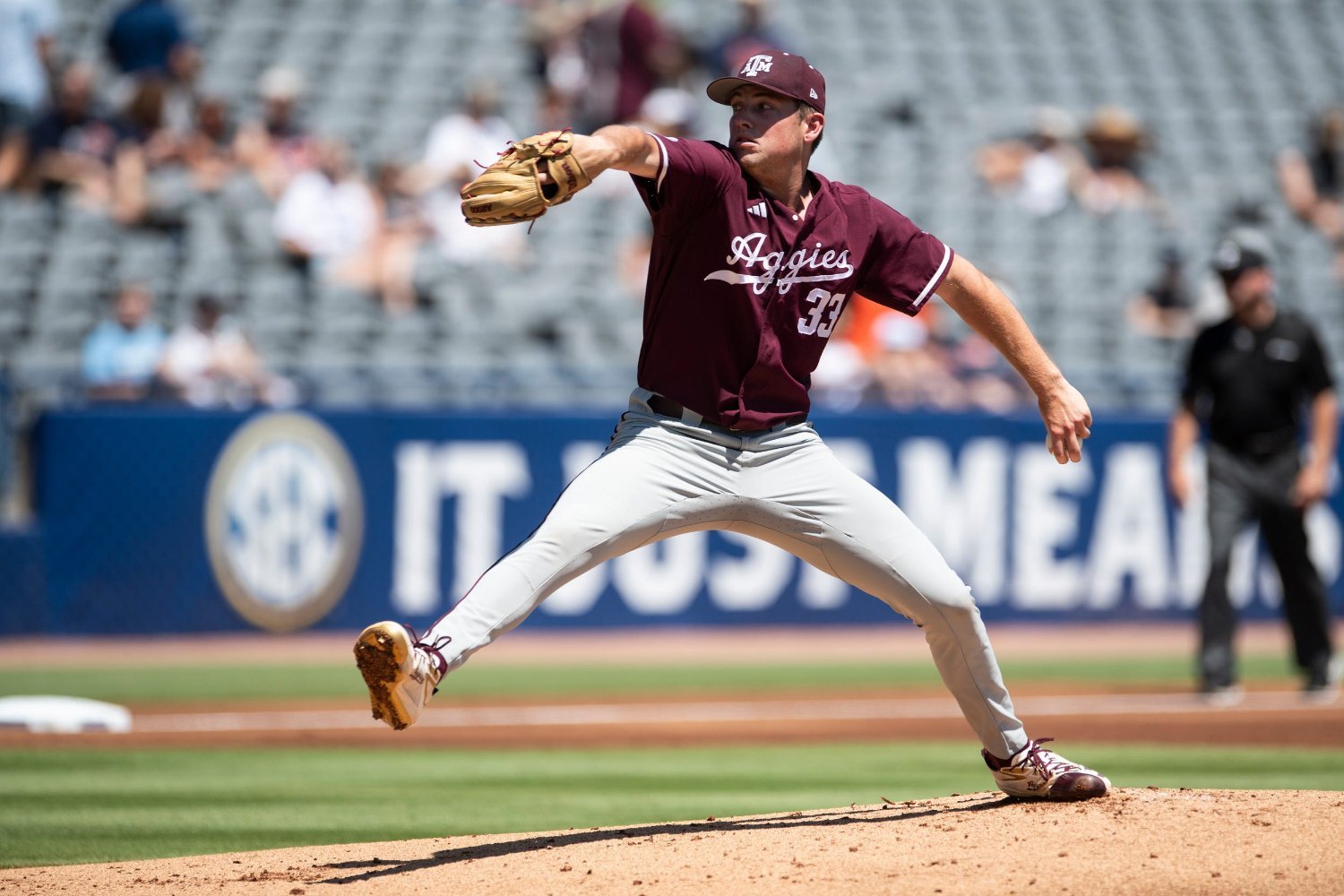 We have just completed our June voting for our Top-20 Prospects list at Royals Keep. Thank you for your votes and for helping determine this list. We remain one of the few independent Royals sites that let our community vote every month on who the Top-20 prospects are in the Royals system. If you haven't joined the community, please do so to get engaged here at Royals Keep. It hasn't been a great year for the big-league club. The Royals are 32-46, beginning a four-game series on the road in Tampa Bay. However, there have been some promising stories in the Kansas City farm system, especially in the lower levels. Here's what the new Top-20 list looks like after this most recent stretch of voting from our users and staff at Royals Keep. (New additions are in bold.) Kansas City Royals Top 20 Prospect List Kendry Chourio, RHP A+ (Previously #1) David Shields, LHP A+ (Previously #2) Josh Hammond, SS A (Previously #5) Blake Mitchell, C A+ (Previously #4) Sean Gamble, OF/2B A (Previously #3) Ramon Ramirez, C A+ (Previously #6) Drew Beam, RHP AA (Previously #7) Carson Roccaforte, CF AA (Previously #10) Asbel Gonzalez, CF A+ (Previously #8) Yandel Ricardo, SS A (Previously #11) Michael Lombardi, RHP A (Previously #14) Ben Kudrna, RHP AAA (Previously #9) Justin Lamkin, LHP AA (Previously Unranked) Felix Arronde, RHP AA (Previously #12) Blake Wolters, RHP A+ (Previously #13) Steven Zobac, RHP AA (Previously #16) Austin Charles, 3B/SS A+ (Previously Unranked) Daniel Vazquez, SS AA (Previously #18) Kamden Edge, RHP A+ (Previously Unranked) Warren Calcano, SS DSL (Previously #19) In this new list, we lost a few names from the previous ranking. Luinder Avila, who's become a starter in the Royals' rotation, graduated from prospect status. We also saw a couple of arms from the 2021 MLB Draft drop out of the Top-20. That includes former first-round pick Frank Mozzicato, who's struggled once again in Northwest Arkansas with a 7.59 ERA in 42.2 IP. Furthermore, fourth-round pick Shane Panzini also dropped from the list after struggling in Omaha. He has a 10.22 ERA in 24.2 IP with the Storm Chasers this season. Risers The following prospects were previously on the Royals Top-20 Prospects list last month and moved up in the rankings in our June voting. Those prospects are as follows: Hammond (From #5 to #3) Roccaforte (From #10 to #8) Ricardo (From #11 to #10) Lombardi (From #14 to #11) Hammond hit .290 this past month, which is solid, but his other metrics were a bit underwhelming. He posted a .333 OBP, a .667 OPS, and 80 wRC+ in 76 plate appearances in June. He also has a 0.28 BB/K ratio, highlighted by 18 strikeouts to five walks. However, Hammond had a solid game on Sunday, hitting his first home run in June. Roccaforte has gotten a lot of prospect buzz recently, especially with the plantar fasciitis injury to Kyle Isbel. Unfortunately, it hasn't been a kind June to Roccaforte. In 75 plate appearances this month, he's hitting .188 with a .637 OPS and 63 wRC+. Strikeouts have been a problem for Roccaforte this month, as he is striking out 37.3% of the time and sporting a BB/K ratio of 0.32. Despite this cold stretch, he carries a lot of upside due to his power, defense, and speed. Ricardo has been decent in June, though he was much better in May after a slow start in April. In 75 plate appearances this month, he's hitting .246 with a .663 OPS and 79 wRC+. The plate discipline has been solid from Ricardo in June, as he has a 10.7% BB% and 0.47 BB/K ratio. He also has a home run, three stolen bases, and has scored 15 runs this month for the Fireflies. Lombardi made the biggest gain of the risers, moving up three spots in the June voting. The former Tulane product has been a strikeout machine this month with 18 strikeouts in 13.1 IP, good for a 30.5% K%. Walks have been a bit of an issue, as he has a 16.9% BB% and a 1.80 K/BB ratio. Thus, it's not a surprise that his FIP is 5.34, nearly two points higher than his ERA. Nonetheless, in three starts this month, Lombardi has demonstrated an ability to strike guys out in bunches, which is what one wants to see from a pitching prospect at the Low-A level. Fallers While some Royals prospects improved their stock in June, some saw the inverse effect. Below are prospects who saw a tumble in the Top-20 voting in this past month (though they remained on the list). Gamble (From #3 to #5) Gonzalez (From #8 to #9) Kudrna (From #9 to #12) Arronde (From #12 to #14) Wolters (From #13 to #15) Calcano (From #19 to #20) Gamble, Gonzalez, and Calcano all had inconsistent offensive performances recently, especially in June. However, Gamble has at least shown progress in this past month, even though his overall numbers are poor (.179 average and 59 wRC+ in 264 PA). In 63 plate appearances in June, Gamble is hitting .292 with an .882 OPS and 143 wRC+. He is also showing improved plate discipline with a 0.92 BB/K ratio this month. Even though he tumbled in the rankings this month, he may be on his way to moving back up if he continues to build on this strong June. Gonzalez hit .250 this month in Quad Cities with 10 stolen bases. The power was paltry this month, as he had no homers and an ISO of .000. That said, he had a 0.71 BB/K ratio, which includes a 15.6% BB%. It would be nice to see his power bounce back, but at least he's not giving away at-bats in June. It's been a disappointing start for Calcano, who is repeating the DSL in 2026. In 12 games and 52 plate appearances, he's hitting .152 with a .453 OPS and 7 wRC+. He is also striking out a lot, as evidenced by his 34.6% K% and 0.22 BB/K ratio. He may be off this list in July if things don't improve. On the pitching end, Kudrna and Arronde were primarily affected by injuries this month. Kudrna is out for the year after arm surgery. Arronde returned off the IL to make two starts in June, but they've been brutal outings. He has an 11.57 ERA and 15.01 FIP in 4.2 IP with the Naturals. As for Wolters, he saw an early boost after pitching well in Columbia and earning the promotion to Quad Cities. However, it's been a rough transition to High-A ball for the 2023 second-round pick. On a positive note, Wolters has 16 strikeouts in 12.1 IP, good for a 23.2% K%. The negatives? He has a 14.59 ERA, a 1.60 K/BB ratio, and 2.92 HR/9. Control is still an issue, and he's getting hit hard. With his strikeout stuff, though, the 21-year-old is at least proving that he can be a bullpen option in the future, though he still has time in the development process. New Addition Scouting Reports No. 13 Justin Lamkin, LHP AA The 22-year-old Lamkin was drafted by the Royals in the competitive round portion of the 2025 MLB Draft (71st overall). A Texas A&M product, the lefty posted a 3.42 ERA and 1.10 WHIP in 84.1 IP with the Aggies. Lamkin was known as a strikeout machine with impeccable control in college. In his final season in College Station, he produced a 28% K% and 22.6% K-BB%. The Royals did not rush Lamkin after drafting him, as he didn't pitch at any level in the Royals system in 2025. However, he got a lot of work with the Royals' pitching development team in Surprise, Arizona, and that seemed to pay off in 2026. Lamkin began the season in High-A Quad Cities and absolutely dominated. In six starts and 28.1 IP, he posted 1.27 ERA, a 0.92 WHIP, and 3.45 FIP. He maintained his strong strikeout command from college, producing a 34.9% K% and 24.9% K-BB% with the River Bandits. That strong performance in High-A ball helped Lamkin earn a promotion to Northwest Arkansas. The former Aggie pitcher only made two starts with the Naturals before landing on the IL. While his ERA was 3.97, his WHIP was 0.97, his K% was 34.9%, and his K-BB% was 27.9%. Thus, Lamkin demonstrated all the same qualities in Double-A that made him successful in High-A before going on the IL. While he was transferred to the 60-Day IL, it sounds like the Royals are doing so to be "cautious," not because of a serious injury. Lamkin's profile is very similar to Kris Bubic's. His fastball averages only 91-93 MPH, but he generates good extension and maintains impeccable command. The former Texas A&M product sports a four-pitch mix that also includes a curveball, slider, and changeup. His slider is his best-rated secondary offering and is seen as his put-away pitch, according to scouts. While his timetable to return is unclear, Lamkin is putting himself in place to challenge for a rotation spot in 2027, as long as he stays healthy. No. 17 Austin Charles, 3B/SS High-A Charles was off to a hot start in 2026 before being sidelined due to a hip and stomach ligament issue that required surgery in early June. Charles was recently added to the 60-Day IL, and it seems unlikely that he will return to the River Bandits this season. Before the injury, the 22-year-old infielder demonstrated all the skills and intangibles that made him an intriguing prospect a couple of seasons ago in Low-A Columbia. In 30 games and 123 plate appearances, Charles was slashing .306/.377/.491 with an .868 OPS, .185 ISO, and 121 wRC+. The lanky (he's 6'5) prospect also had three home runs, 20 runs scored, 19 RBI, and eight stolen bases on nine attempts. It was a nice bounce-back for Charles after he struggled in his initial exposure in High-A in 2025 (57 wRC+ in 232 PA). Charles was a 20th-round pick in the 2022 MLB Draft out of Stockdale High School in Bakersfield. He had a commitment to UC Santa Barbara, but signed with the Royals after they offered him an overslot signing bonus of $429,500. Charles was a multi-sport athlete in high school who didn't focus solely on baseball, yet possessed intriguing offensive and defensive tools that got the attention of MLB scouts. He was always seen as a bit of a raw prospect, much like Lorenzo Cain, but Charles has developed nicely over the past couple of years and has gotten rave reviews regarding his leadership and makeup. The injury is a bummer because Charles was likely on his way to earning a promotion to Double-A ball around this time. If fully healthy, he could be making his Double-A debut on Minor League Opening Day in 2027. No. 19 Kamden Edge, RHP High-A A 20th-round pick in the 2025 MLB Draft, the right-hander out of Northern Oklahoma JC has been a sleeper that has slowly captured the attention of prospect experts. Though his ceiling isn't that high due to him being a reliever, Edge is showing the ability to thrive in high-leverage situations with the River Bandits. In 20 outings and 26.2 IP, Edge has a 2.70 ERA and 0.68 WHIP with a 36.9% K% and 28.2% K-BB%. He has three saves in four chances and two holds, and he's been able to succeed in multiple-inning outings. Edge has gotten some BABIP luck, as it sits at .128. That explains why his FIP is higher at 4.25. Nonetheless, the former JuCo product is showing Royals fans MLB reliever upside, which is what this organization needs given the MLB bullpen's struggles in 2026. The 21-year-old was named the River Bandits' pitcher of the month for May after he posted a 0.79 ERA and 0.71 WHIP that month. Edge is known for his 95-96 MPH fastball, low release, and sweeping slider. He has leveraged these traits to succeed this season with Quad Cities. Ranked as the No. 35 prospect in Fangraphs' 2026 Royals Prospects Rankings, here's what they said about Edge in their scouting report: The command has definitely taken a step forward this year. After posting an 18.3% BB% and 10% K-BB% last year with the Fireflies, he has an 8.7% BB% and 28.2% K-BB% with the River Bandits this year. That improvement in command could help him move to Double-A later this year and perhaps give him a chance to earn a spot in the MLB bullpen in 2027 Spring Training. View the full article
 -
 Prior to Monday's series opener against the Marlins, Texas Rangers manager Skip Schumaker speaks with Fish On First about his two seasons in Miami and what he misses most about his old stomping grounds.View the full article
 -
Reviewing the Cubs' 2025 Trade Deadline Moves
DiamondCentric posted an article in North Side Baseball
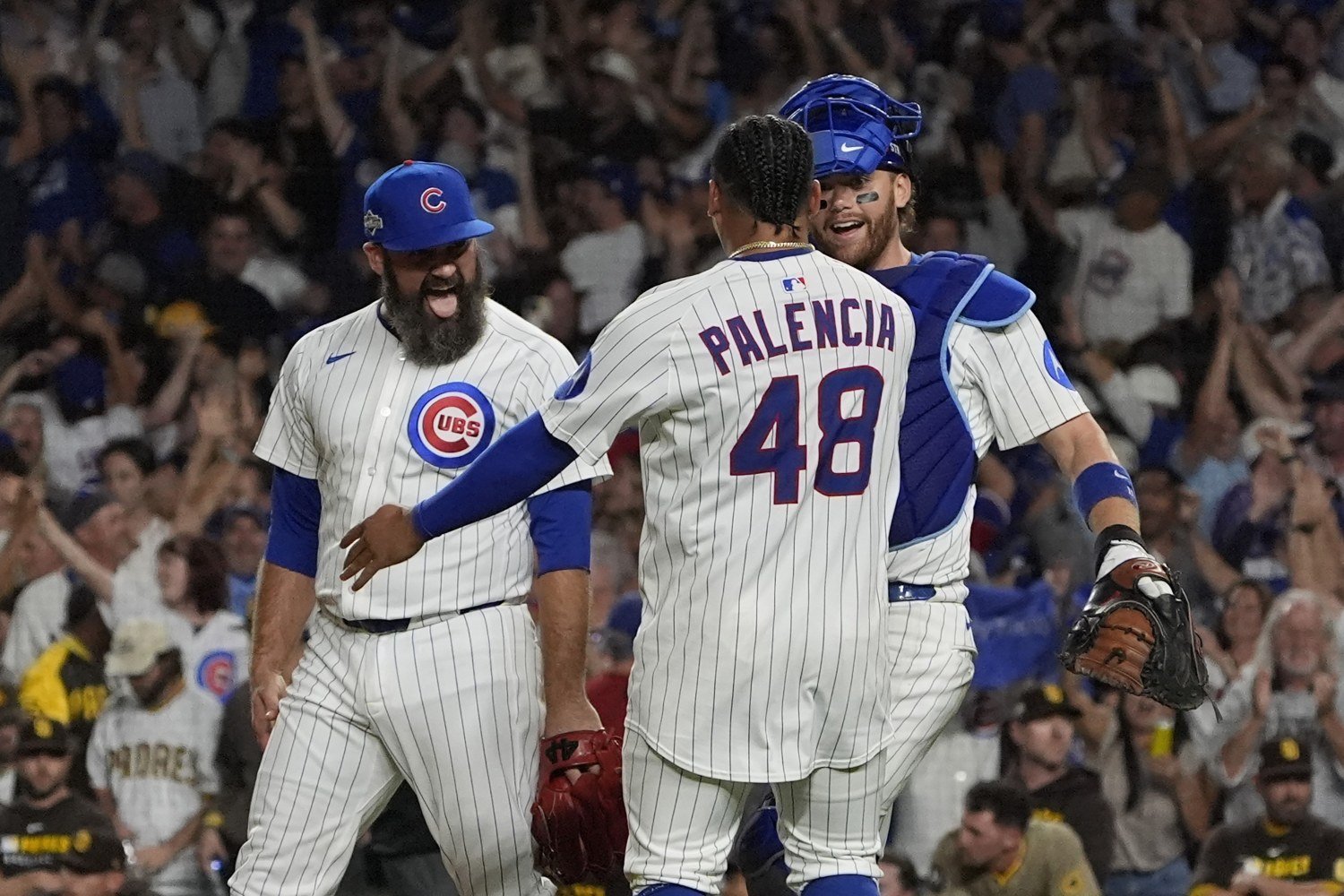 As we near July and get into the full swing of trade season, it's worth going back and looking at the 2025 trade deadline to review how it went for the Cubs. Jed Hoyer and Carter Hawkins were busy, making four trades on deadline day last year in an effort to bolster their championship hopes. Let’s go through them one by one. Trade 1: Cubs get: RHP Andrew Kittredge Orioles get: INF Wilfri De La Cruz Kittredge was exactly what the Cubs hoped for when they acquired him. He provided 21 2/3 quality innings over the final two months and appeared in five of the Cubs' eight playoff games, even starting one game as an opener. Contending team trades lottery ticket for non-contending team’s reliever is among the most common trade archetypes, and that is exactly was this was. De La Cruz has been ok in his stateside debut this season at 18 years old, walking more than he has struck out but not doing a whole lot else. This trade will truly take years to evaluate, but I will call this a win for the Cubs, right now. They understood the risks and got what they paid for. Trade 2: Cubs get: RHP Michael Soroka Nationals get: SS Ronny Cruz and OF Christian Franklin A former top prospect who reached the majors at 20 years old but constantly struggled to stay healthy, Soroka was the only starter of the three pitchers the Cubs acquired. He had a solid if unspectacular first half in Washington, but he started 16 games after not having started more than 10 since 2019, his lone All-Star season. He started exactly one game in a Cubs uniform before coming out after two innings and going on the IL until mid-September, when he came back for a few appearances out of the bullpen. Luckily, the Nationals' return has not been overwhelming since the trade. Ronny Cruz is scuffling in High-A this season with a sky-high strikeout rate. Christian Franklin was in Iowa last season and remains in Triple-A this season for the Nationals. It doesn’t look like he will be making much of an impact in the big leagues, and he would not have a role on this Cubs team. Call this one incomplete, because Soroka has pitched really well in 2026 with Arizona. Had he stayed healthy, he would have been exactly what the Cubs were looking for, but knowing the health risks, the Cubs did not give up too much. Trade 3: Cubs get: UTIL Willi Castro Twins get: RHP Ryan Gallagher and RHP Sam Armstrong The Cubs got in on the Twins' fire sale when they snagged Willi Castro to bolster their bench. It did not go as they had hoped. Castro really struggled on the North Side, with a .170/.245/.240 slash line in 110 plate appearances. He was on the playoff roster, but did not get a plate appearance despite coming in to two games. Gallagher is a 23-year-old who has spent the bulk of this season in Triple-A for the Twins, with some pretty rough results over his 10 starts. Armstrong, 25, has made 14 starts at Double-A this year, with pretty average results. Castro was not good in a Cubs uniform and, although Gallagher and Armstrong have not been good, the Cubs probably wish they still had two extra depth arms in the upper minor leagues this season. It isn’t a disaster, but it probably isn’t one the Cubs would make again, with hindsight. Trade 4: Cubs get: LHP Taylor Rogers Pirates get: OF Ivan Brethowr A steady presence out of the bullpen, the Cubs got the lefty Rogers twin from the Pirates. While he was not terrible, he got bit by the home run bug a little bit in his 17 2/3 innings of work in Cubbie blue, giving up four long balls. He pitched only one inning in the playoffs. Brethowr, a college outfielder who was drafted in 2024 in the 7th round, was in High-A for the Cubs at the time of the trade, with an OPS just north of .700. He has played 22 games in Double-A for the Pirates with a .624 OPS in 2026. The Cubs did not risk a lot in this trade to bring in the veteran, and although he didn’t pitch all that well for the Cubs, it is unlikely to come back to bite them. After a year, the Cubs' deadline looks a bit like a wash. None of the four players they acquired remain in the organization, and only Kittredge made any real impact in the playoff run. They did not give up much value, but they also did not get the playoff impact they were hoping for. If the Cubs are looking for players at this year’s deadline who will impact their playoff run, they may have to give up a little more value from what is a fairly weak farm system. View the full article
 -
Twins Prospect Hot Sheet: It’s Time for an Eduardo Tait Promotion
DiamondCentric posted an article in Twins Daily
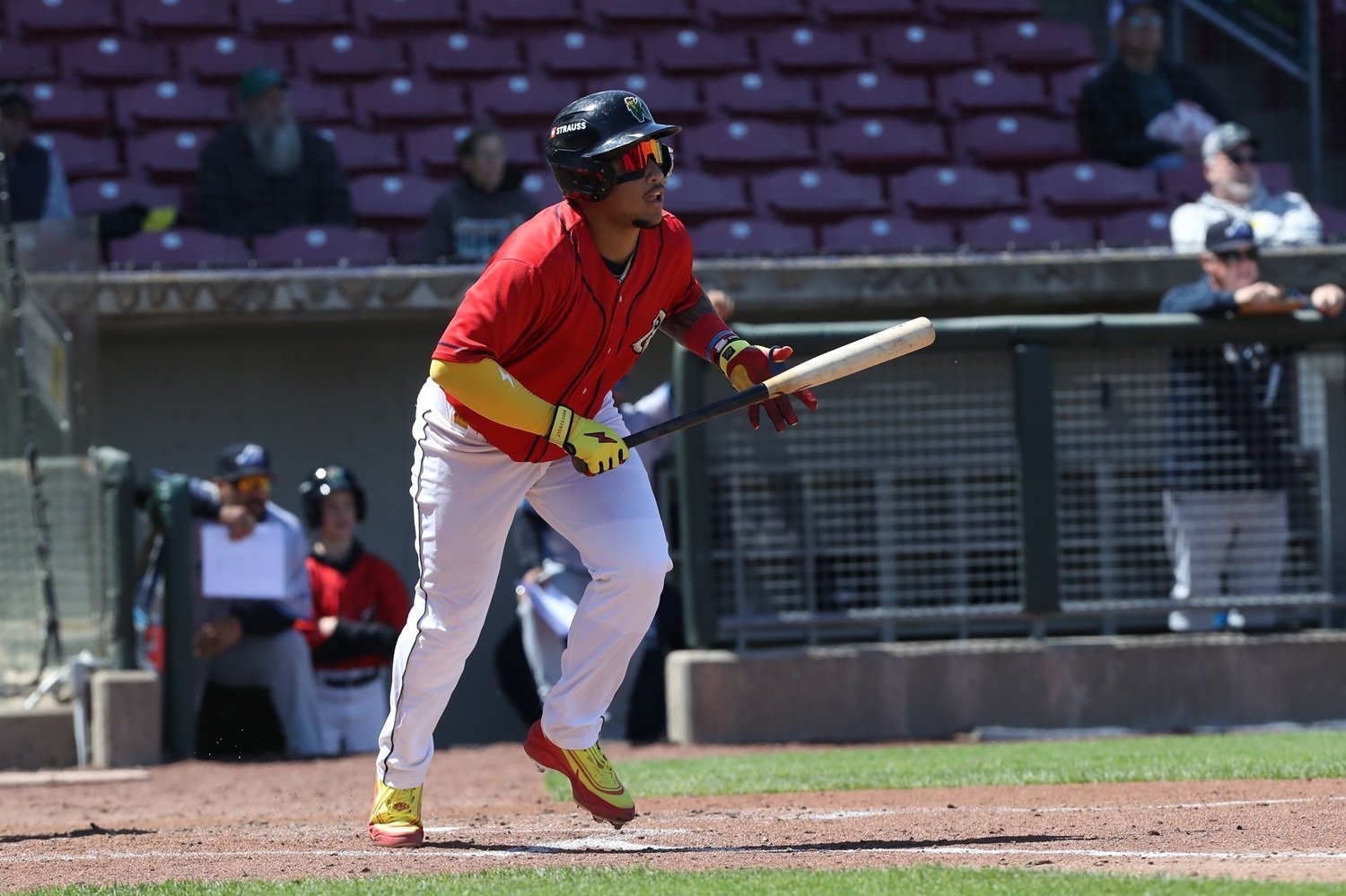 The summer months are when organizations begin to learn which teams are legitimate contenders and which clubs are already shifting focus toward the future. While the Minnesota Twins continue to navigate the major-league season, several prospects throughout the system are making strong cases for bigger opportunities. None of the players featured this week is likely to impact the 2026 Twins, but each could play a meaningful role in the organization's long-term plans. From a catcher forcing his way back into the conversation, to one of the system's youngest stars pushing for another promotion, to a reliever quietly climbing toward the big leagues, this week's hot sheet highlights three players trending in the right direction. C Andrew Cossetti – Wichita Wind Surge How He Got Here: The Twins selected Cossetti in the 11th round of the 2022 MLB Draft out of Saint Joseph's University and quickly challenged him with aggressive assignments. After reaching Double-A to begin the 2024 season, the jump proved difficult. He managed just a .643 OPS across 87 games. Rather than moving on, Minnesota allowed Cossetti to regroup at the same level. The decision paid off. He returned to Wichita and put together one of the better offensive seasons of his professional career, posting a .226/.366/.432 line with a 123 wRC+ while continuing to handle regular catching duties. His performance earned another opportunity with the Wind Surge to begin 2026. Hitting the Hot Button: Few hitters in the organization have experienced a bigger turnaround than Cossetti this season. April was a struggle, as he limped to a .440 OPS, but the veteran backstop has steadily regained his footing. He followed that rough opening month with an .852 OPS in May and has taken things to another level in June. Through the first few weeks of the month, Cossetti has launched six home runs, added a triple, and posted a 1.033 OPS. His latest week was especially impressive. Cossetti went 8-for-23 with four home runs, 12 RBIs and six walks across six games. He also drove in multiple runs in four consecutive contests from Sunday through Wednesday. At 26 years old, he is unlikely to rank among the organization's top prospects, but his offensive production is becoming impossible to ignore. C Eduardo Tait – Cedar Rapids Kernels How He Got Here: Tait's rise has been one of the more fascinating stories in professional baseball. Signed by the Phillies out of Panama for just $90,000 during the 2023 international signing period, he immediately exceeded expectations. He posted a .917 OPS in the Dominican Summer League and followed that performance by hitting .302 with an .842 OPS while advancing to full-season baseball in 2024. The teenage catcher continued to accelerate through Philadelphia's system. By age 18, he had reached High-A, earned a selection to the Futures Game, and established himself as one of the game's fastest-rising catching prospects. Minnesota acquired Tait as part of last summer's Jhoan Duran trade package, and he finished the season helping Cedar Rapids during its playoff run. The Twins have challenged him aggressively ever since. Hitting the Hot Button: This is where the argument for a promotion begins. Tait, still only 19 years old, went 8-for-24 with three home runs and 11 RBI during the week. He drove in five runs on Tuesday and followed that performance with six more RBIs on Thursday against Beloit. His overall .728 OPS may not immediately jump off the page, but context matters. Tait has spent virtually the entire season facing older and more experienced competition. Despite that challenge, he has begun to find another gear. Since June 1, Tait owns an .860 OPS, with seven home runs and three doubles in just 15 games. The combination of youth, power, and improving offensive consistency is becoming increasingly difficult to overlook. Minnesota has not been afraid to push him, and neither were his previous employers in Philadelphia. His recent production suggests another move up the ladder may soon be warranted. RHP C.J. Culpepper – St. Paul Saints How He Got Here: Culpepper is another successful late-round pitching find for Minnesota's player development staff. Selected in the 13th round of the 2022 MLB Draft out of California Baptist University, he has steadily worked his way through the system despite several obstacles. His professional career has featured flashes of promise at every stop. He advanced through both levels of A ball before reaching Double A in 2024 and spending much of 2025 with Wichita. Injuries have slowed his momentum at times, including a forearm strain in 2024 and a finger nerve issue that cost him significant time last season. This year has brought a different challenge. The Twins shifted Culpepper into a full-time relief role, hoping his arsenal could play up in shorter outings. Hitting the Hot Button: The early returns have been encouraging. Culpepper made three appearances for St. Paul this week and allowed just one unearned run on two hits across 3 1/3 innings. More importantly, he struck out six hitters and did not issue a walk. Since arriving in Triple A, he has posted a 26.3% strikeout rate while limiting walks to 10.0% of opposing hitters. Those numbers suggest his transition to relief is maximizing his strengths. Minnesota's bullpen depth remains one of the organization's growth areas, but Culpepper is beginning to position himself as a potential option if opportunities arise during the second half. The Twins may want to see a larger sample size before making that decision, but he is clearly moving in the right direction. The first half standings may be grabbing most of the attention, but development season is heating up across the Twins' farm system. Cossetti has transformed a difficult start into one of the hottest stretches of his career. Culpepper is showing signs that his conversion from the bullpen could unlock another level. And Tait continues to look like one of the most exciting young catching prospects in baseball. For now, the spotlight belongs to the teenager in Cedar Rapids. If Tait keeps producing at this pace against older competition, the Twins may soon have little choice but to find him a new challenge. What stands out about this trio of prospects? Can Cossetti and Tait help the organization’s long-term catching depth? Leave a comment and start the discussion. View the full article
 -
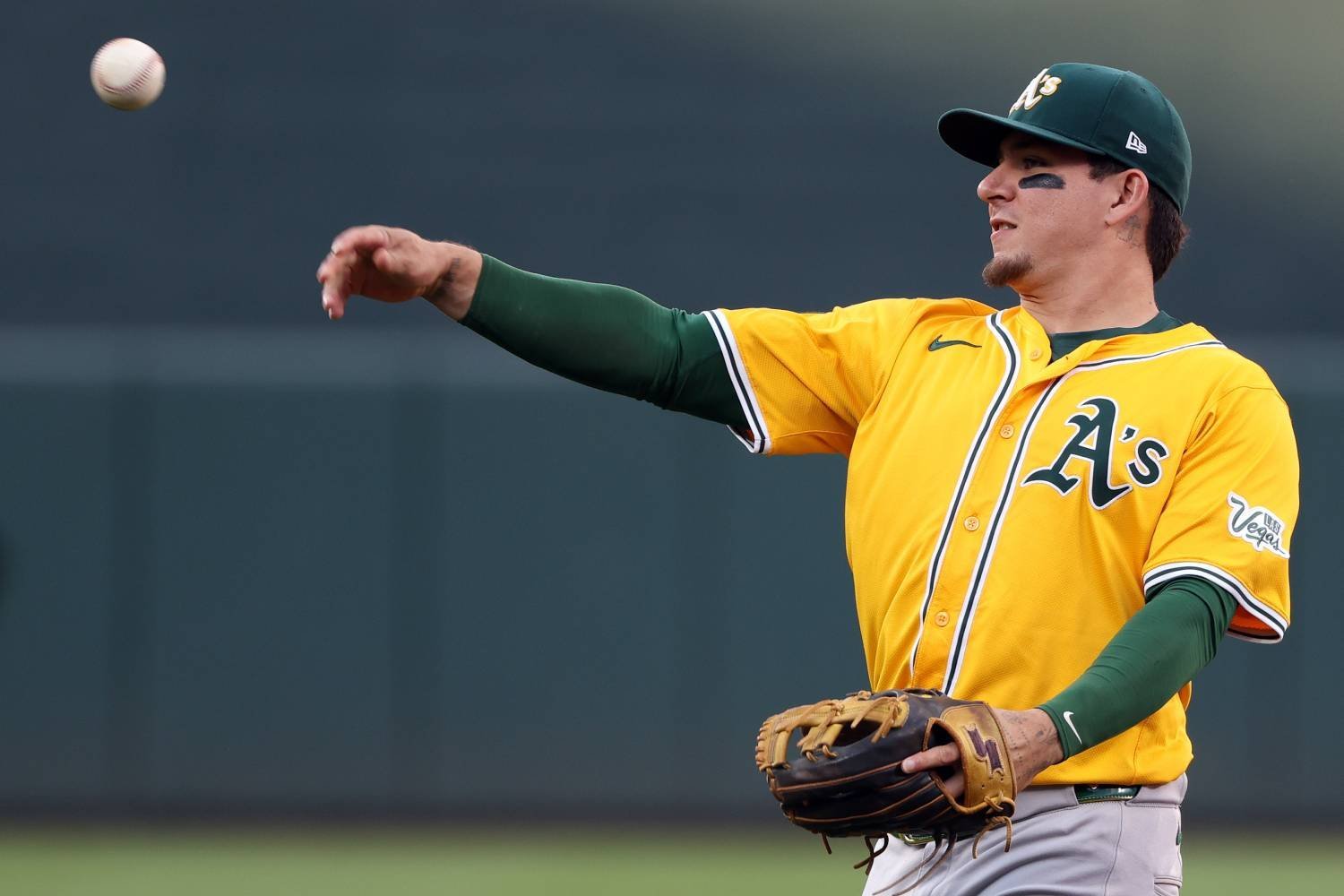 The Toronto Blue Jays are going with an extra infielder rather than a bonus outfielder. Infielder Luis Urias had his contract selected from Triple-A Buffalo by the Jays on Monday, with outfielder Yohendrick Pinango sent back to Buffalo. Urias was just acquired from the Arizona Diamondbacks for cash. Urias had yet to play a game with Buffalo after appearing in 27 games at Triple-A with the D'backs where he had a .361/.393/.546 slash line with three home runs and 19 RBIs. He played in the World Baseball Classic for Mexico, but started the season on the injured list. He was with the A's last season, playing in 96 games and slashing .230/.315/.338 with eight homers and 25 RBIs. Pinango was in his second call-up this year after making his MLB debut in late April. Between the two stints, he has been a very nice contributor with a .283/.331/.433 slash line with four homers and 18 RBIs in 43 games. View the full article
 -
 Abraham Toro hit for the cycle and drove in six runs as Omaha outslugged St. Paul 15-12 in 11 innings, with Brandon Drury and Josh Rojas adding key extra-base hits. Hunter Patteson worked six strong innings, and Frank Mozzicato struck out one and allowed no runs in relief for Northwest Arkansas, but the Naturals dropped a 5-4 decision. Michael Lombardi fanned seven over 4 2/3 innings, and Josh Hammond homered for Columbia, which came up a run short. Quad Cities' finale against Wisconsin was postponed due to rain. It will be made up in a doubleheader at a later date. Royals Transactions No Roster Moves Toro Completes The Cycle In Wild Omaha Slugfest Toro turned in a monster game, hitting for the cycle, driving in six runs, and helping the Omaha Storm Chasers outlast the St. Paul Saints 15-12 in 11 innings. Toro went 5-for-6 with a double, a triple, and a home run, while Drury added four hits, a homer, and three RBIs, and Matthew Lugo collected four hits, including a home run. The game swung wildly in the fourth inning, when St. Paul plated nine runs to erase an early Omaha lead and surge ahead. The Storm Chasers chipped away, with Lugo and Toro both homering in the fifth to cut the deficit to 10-8. Omaha tied the game in the eighth and pushed to extra innings. In the 11th, starting with the zombie runner at second, Drury singled home a run, and Rojas doubled in two more to break the game open for a 15-12 final. The pitching was rough on both sides, with St. Paul having to pitch shortstop Tanner Schobel in the 11th inning. Andrew Pérez opened with two innings, allowing one run on two hits while striking out four. Aaron Sanchez struggled badly, surrendering seven runs on seven hits in 1 2/3 innings. Eric Cerantola closed it out with a scoreless inning and two strikeouts. Omaha left 10 runners on base and went 10-for-23 with runners in scoring position. The Storm Chasers are now 33-41 this season. Player AB R H RBI BB K Josh Rojas 6 0 1 2 1 3 Matthew Lugo 7 2 4 1 0 2 Brett Squires 5 2 2 0 1 1 Abraham Toro 6 3 5 6 0 0 Peyton Wilson 6 1 3 1 0 0 Luca Tresh 6 0 1 0 0 2 Drew Waters 5 1 1 1 1 1 Brandon Drury 6 3 4 3 0 0 Elih Marrero 6 3 3 1 0 2 Player IP H R ER BB K HR Andrew Pérez 2 2 1 1 0 4 1 Aaron Sanchez 1 2/3 7 7 7 0 0 2 Ethan Bosacker 2 1/3 3 2 2 2 2 1 Luke Jackson 1 0 0 0 0 1 0 Dan Altavilla 1 1 1 1 0 0 1 Mason Black 1 1 0 0 0 1 0 Eli Morgan 1 1 1 0 2 3 0 Eric Cerantola 1 0 0 0 0 2 0 Naturals Bullpen Falters In Ninth As Tulsa Rallies The Northwest Arkansas Naturals carried a one-run lead into the ninth inning but could not hold on, falling 5-4 to the Tulsa Drillers. Jack Pineda paced the offense with three hits and three RBIs, while Spencer Nivens added two hits, a walk, and an RBI. Connor Scott also chipped in two hits, including a double. Northwest Arkansas built its lead methodically, even though they could not hold it at the end. The Naturals scored once in the first inning when Pineda singled home a run, added two more in the fifth on another Pineda single that brought in Scott, and pushed across a fourth run in the seventh when Nivens singled home Carson Roccaforte for a 4-2 advantage. That cushion vanished in the ninth, when Tulsa plated three runs to take the lead and the win. Patteson turned in a solid outing, allowing two runs on two hits with three walks and three strikeouts over six innings. Mozzicato followed with two scoreless innings, allowing one hit and two walks while striking out one. Augusto Mendieta took the loss, giving up three runs on five hits in the ninth. The Naturals left 11 runners on base and went 3-for-21 with runners in scoring position. The loss dropped Northwest Arkansas's record to 29-38. Player AB R H RBI BB K Carson Roccaforte 4 1 1 0 1 1 Rudy Martin Jr. 5 1 2 0 0 1 Jack Pineda 5 0 3 3 0 1 Spencer Nivens 3 0 2 1 2 0 Daniel Vazquez 5 0 0 0 0 1 Alberto Rodriguez 5 0 0 0 0 2 Canyon Brown 4 0 2 0 0 1 Connor Scott 4 1 2 0 0 1 Justin Johnson 3 1 0 0 1 0 Player IP H R ER BB K HR Hunter Patteson 6 2 2 2 3 3 2 Frank Mozzicato 2 1 0 0 2 1 0 Augusto Mendieta 1 5 3 3 0 1 0 Fireflies Comeback Bid Falls One Run Short In Hickory The Columbia Fireflies mounted a late rally but came up short, dropping a 4-3 decision to the Hickory Crawdads. JC Vanek led the way with three hits, a double, a home run, and an RBI, while Hammond reached base three times with two hits, a home run, a walk, and an RBI from the leadoff spot. Jhosmmel Zue added two hits and an RBI. The game remained quiet for most of the afternoon in the series finale on Sunday. Columbia scratched out a run in the fourth inning when Zue grounded out to bring home Vanek for a 1-0 lead. Hickory answered in the seventh, plating four runs to seize control. The Fireflies fought back, getting a solo home run from Vanek in the eighth and another from Hammond in the ninth, but stranded the tying run and fell by a single run. Lombardi was excellent, striking out seven over 4 2/3 innings while allowing four hits and a walk, with none of his three runs earned. Jose Gutierrez opened with two scoreless innings and three strikeouts. Andy Basora surrendered a run in two-thirds of an inning. Columbia left nine runners on base and went 0-for-10 with runners in scoring position. The loss dropped the Fireflies' record to 34-35. Player AB R H RBI BB K Josh Hammond 4 1 2 1 1 1 Stone Russell 5 0 1 0 0 1 Hyungchan Um 5 0 0 0 0 1 JC Vanek 4 2 3 1 0 0 Roni Cabrera 4 0 1 0 0 2 Jhosmmel Zue 4 0 2 1 0 1 Angel Ramirez 3 0 0 0 1 0 Ivan Sosa 4 0 1 0 0 3 Josi Novas 4 0 1 0 0 2 Player IP H R ER BB K HR Jose Gutierrez 2 0 0 0 0 3 0 Michael Lombardi 4 2/3 4 3 0 1 7 0 Andy Basora 2/3 1 1 1 0 1 1 Jhon Reyes 2/3 0 0 0 1 2 0 Top-20 Prospect Performance Kendry Chourio: DNP David Shields: DNP Sean Gamble: DNP Blake Mitchell: DNP Josh Hammond: 2-for-4, HR, BB, K Ramon Ramirez: DNP Drew Beam: DNP Asbel Gonzalez: DNP Ben Kudrna: DNP Carson Roccaforte: 1-for-4, BB, K, SB Yandel Ricardo: DNP Felix Arronde: DNP Blake Wolters: DNP Michael Lombardi: 4 2/3 IP, 4 H, 3 R, 0 ER, 1 BB, 7 K Luinder Avila: DNP Steven Zobac: DNP Frank Mozzicato: 2 IP, 1 H, 0 R, 0 ER, 2 BB, 1 K Daniel Vazquez: 0-for-5, K Warren Colcano: DNP Shane Panzini: DNP View the full article
 -
Brandon Woodruff Activated By Brewers, Set To Face Reds Today
DiamondCentric posted an article in Brewer Fanatic
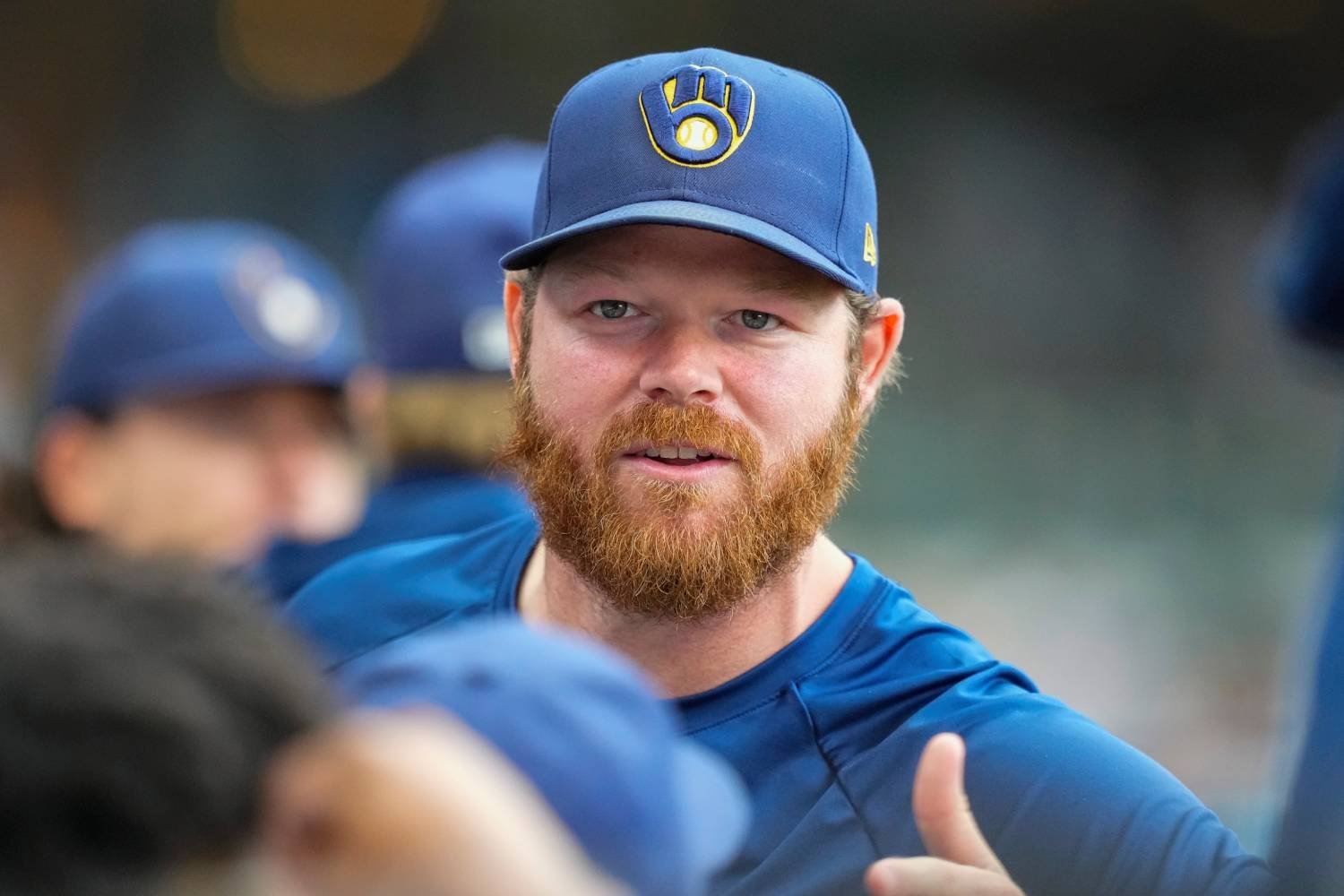 The return of Brandon Woodruff is official. The Milwaukee Brewers on Monday activated the right-hander to start the series opener against the Cincinnati Reds. Left-handed reliever Drew Rom was optioned to Triple-A Nashville. Woodruff has been on the 15-day injured list since May 1 due to right shoulder inflammation. The 33-year-old veteran, the oldest player on a very young starting rotation, will be making his seventh start of the season. In the prior six, he has logged 30 innings with seven walks and 25 strikeouts. Woodruff is four strikeouts away from 900 for his career. Rom was called up June 6 and made four appearances, going 5⅓ innings with a 3.38 ERA with four walks and 10 strikeouts. View the full article
 -
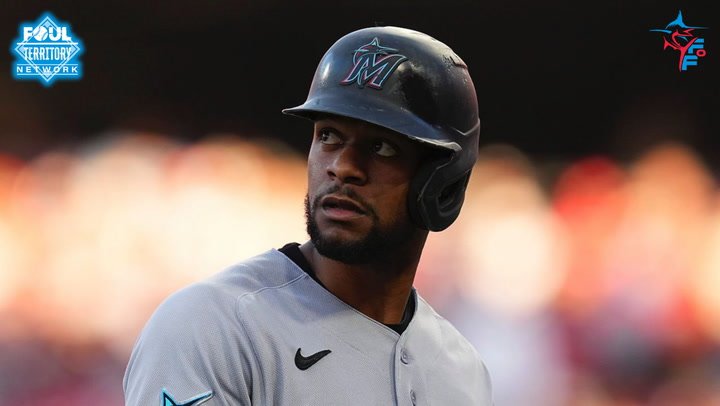 Fish On First LIVE vents about how Marlins players have virtually zero chance of becoming MLB All-Star Game starters under the current voting system.View the full article
 -
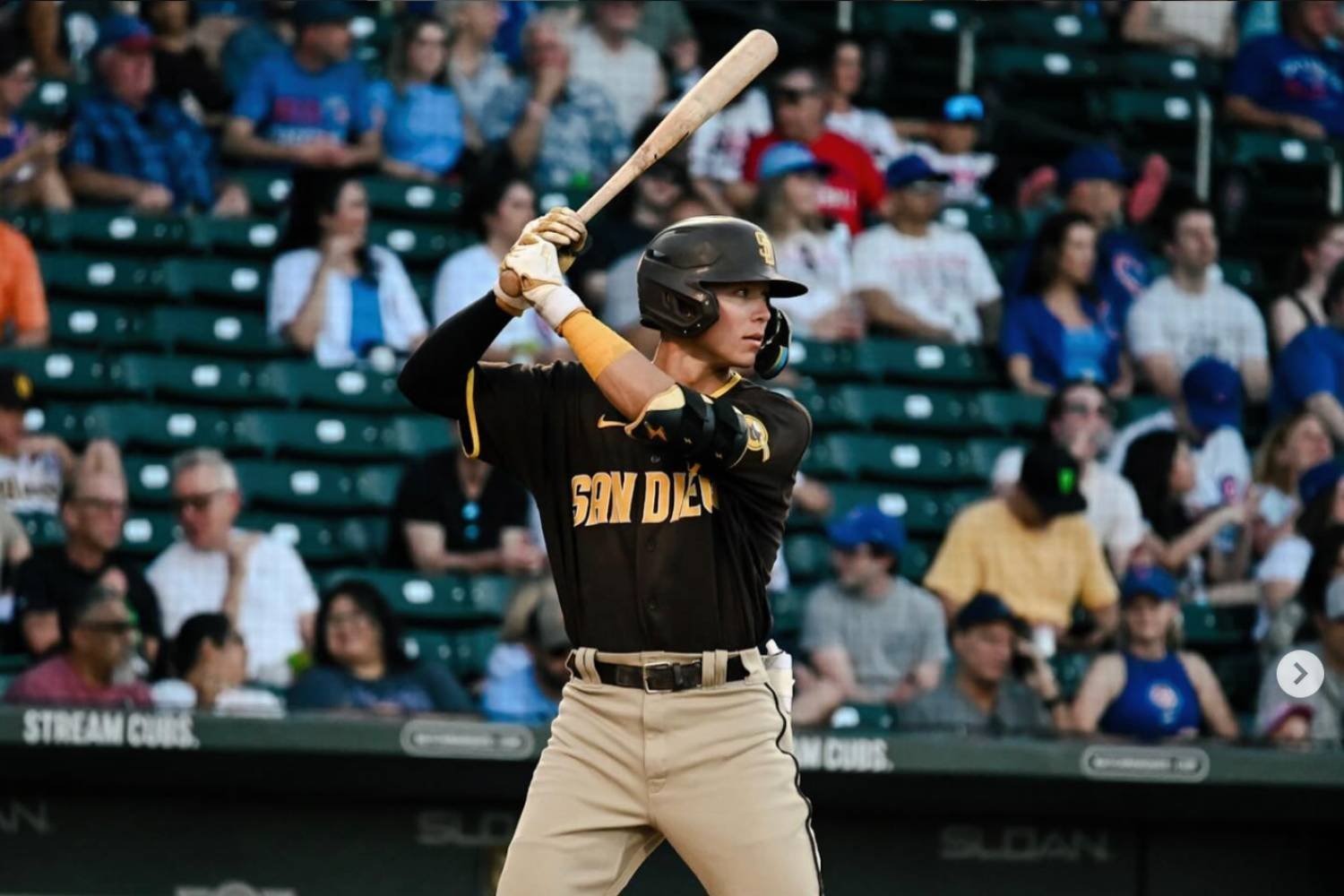 With the first half of the minor-league season officially in the books, it is promotion time. After news of right-handed reliever Tucker Musgrove, Padres Mission's No. 14 prospect, going up from High-A Fort Wayne to Double-A San Antonio broke Sunday, a few more moves became known Monday, with more on the way before the start of new series Tuesday. That begins with center fielder Ryan Wideman, the minors' stolen base leader. Padres Mission's No. 5 prospect, Wideman is going from Low-A Lake Elsinore to High-A Fort Wayne. Also, right-handed reliever Andrew Moore and first baseman Romeo Sanabria are going from Double-A San Antonio to Triple-A El Paso. Wideman, perhaps the most dynamic hitter in the system, is slashing .314/.389/.504 with six homers and 44 RBIs to go along with a minors-best 43 steals (13 times caught stealing) over 65 games. Moore is having a breakthrough season as a 26-year-old. He has a 1.85 ERA in 20 games and 24⅓ innings with 24 walks and 45 strikeouts. Sanabria was a candidate to start this year at El Paso, but was on San Antonio's Opening Day roster for the second season in a row. He has a .247/.345/.394 with eight homers and 36 RBIs in 66 games. As mentioned above, there will be more promotions (and probably cuts) before Tuesday's games begin. View the full article
