


DiamondCentric
-
Posts
2,631 -
Joined
-
Last visited
Never
Content Type
Profiles
Forums
Events
News
Tutorials & Help
Major League Baseball Videos
Guides & Resources
Store
Downloads
Gallery
Everything posted by DiamondCentric
-

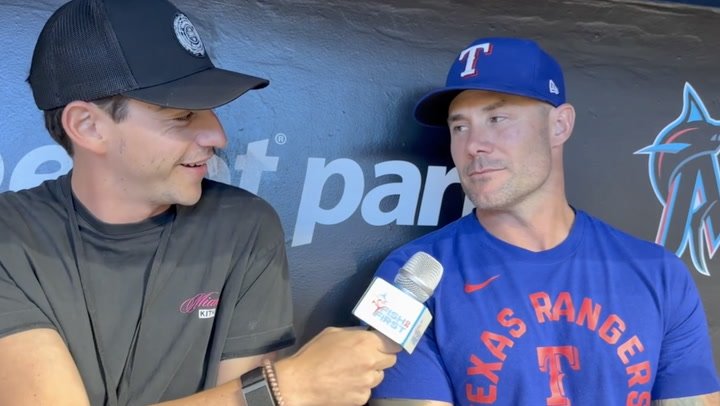 Prior to Monday's series opener against the Marlins, Texas Rangers manager Skip Schumaker speaks with Fish On First about his two seasons in Miami and what he misses most about his old stomping grounds.View the full article
 -
Reviewing the Cubs' 2025 Trade Deadline Moves
DiamondCentric posted an article in North Side Baseball
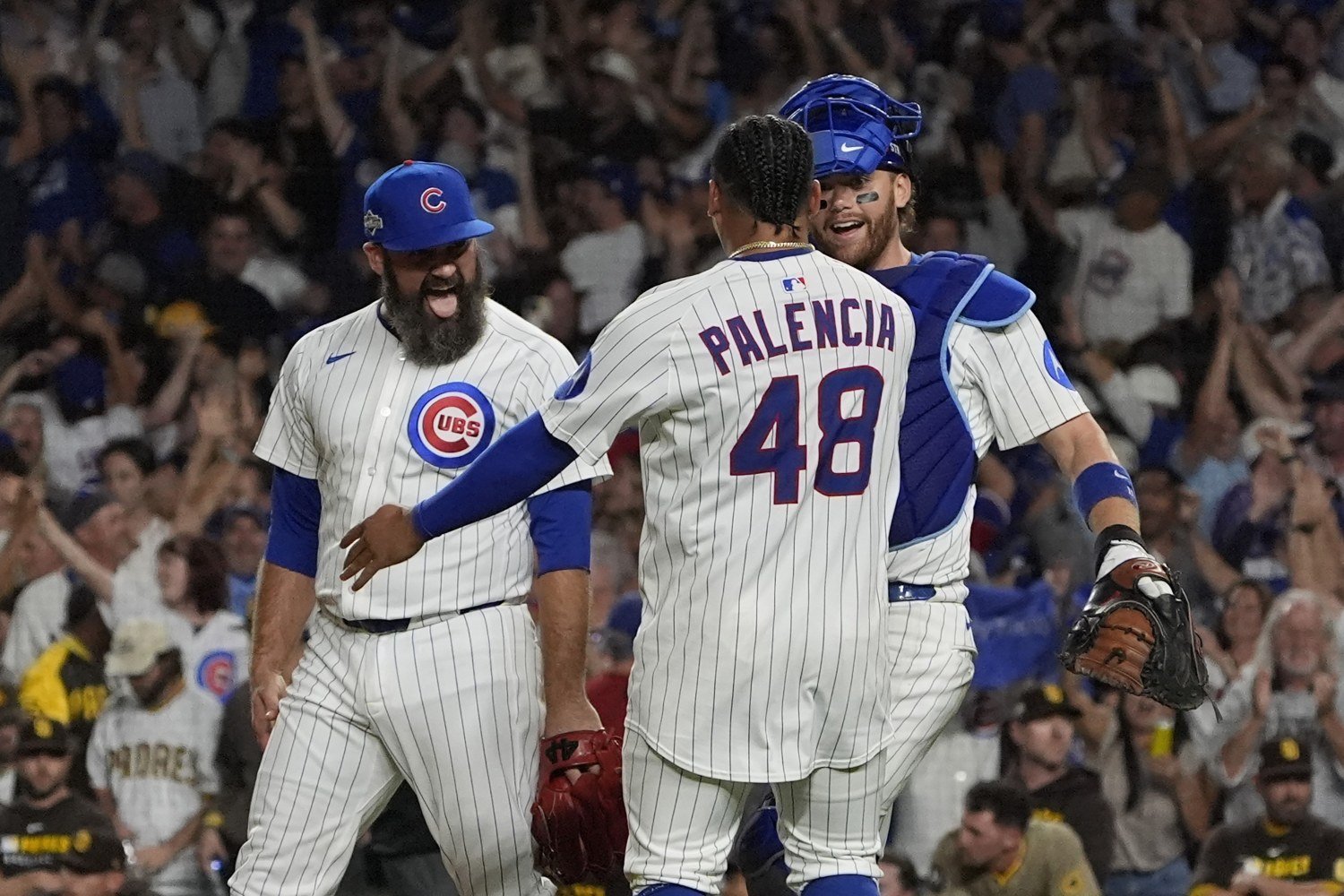 As we near July and get into the full swing of trade season, it's worth going back and looking at the 2025 trade deadline to review how it went for the Cubs. Jed Hoyer and Carter Hawkins were busy, making four trades on deadline day last year in an effort to bolster their championship hopes. Let’s go through them one by one. Trade 1: Cubs get: RHP Andrew Kittredge Orioles get: INF Wilfri De La Cruz Kittredge was exactly what the Cubs hoped for when they acquired him. He provided 21 2/3 quality innings over the final two months and appeared in five of the Cubs' eight playoff games, even starting one game as an opener. Contending team trades lottery ticket for non-contending team’s reliever is among the most common trade archetypes, and that is exactly was this was. De La Cruz has been ok in his stateside debut this season at 18 years old, walking more than he has struck out but not doing a whole lot else. This trade will truly take years to evaluate, but I will call this a win for the Cubs, right now. They understood the risks and got what they paid for. Trade 2: Cubs get: RHP Michael Soroka Nationals get: SS Ronny Cruz and OF Christian Franklin A former top prospect who reached the majors at 20 years old but constantly struggled to stay healthy, Soroka was the only starter of the three pitchers the Cubs acquired. He had a solid if unspectacular first half in Washington, but he started 16 games after not having started more than 10 since 2019, his lone All-Star season. He started exactly one game in a Cubs uniform before coming out after two innings and going on the IL until mid-September, when he came back for a few appearances out of the bullpen. Luckily, the Nationals' return has not been overwhelming since the trade. Ronny Cruz is scuffling in High-A this season with a sky-high strikeout rate. Christian Franklin was in Iowa last season and remains in Triple-A this season for the Nationals. It doesn’t look like he will be making much of an impact in the big leagues, and he would not have a role on this Cubs team. Call this one incomplete, because Soroka has pitched really well in 2026 with Arizona. Had he stayed healthy, he would have been exactly what the Cubs were looking for, but knowing the health risks, the Cubs did not give up too much. Trade 3: Cubs get: UTIL Willi Castro Twins get: RHP Ryan Gallagher and RHP Sam Armstrong The Cubs got in on the Twins' fire sale when they snagged Willi Castro to bolster their bench. It did not go as they had hoped. Castro really struggled on the North Side, with a .170/.245/.240 slash line in 110 plate appearances. He was on the playoff roster, but did not get a plate appearance despite coming in to two games. Gallagher is a 23-year-old who has spent the bulk of this season in Triple-A for the Twins, with some pretty rough results over his 10 starts. Armstrong, 25, has made 14 starts at Double-A this year, with pretty average results. Castro was not good in a Cubs uniform and, although Gallagher and Armstrong have not been good, the Cubs probably wish they still had two extra depth arms in the upper minor leagues this season. It isn’t a disaster, but it probably isn’t one the Cubs would make again, with hindsight. Trade 4: Cubs get: LHP Taylor Rogers Pirates get: OF Ivan Brethowr A steady presence out of the bullpen, the Cubs got the lefty Rogers twin from the Pirates. While he was not terrible, he got bit by the home run bug a little bit in his 17 2/3 innings of work in Cubbie blue, giving up four long balls. He pitched only one inning in the playoffs. Brethowr, a college outfielder who was drafted in 2024 in the 7th round, was in High-A for the Cubs at the time of the trade, with an OPS just north of .700. He has played 22 games in Double-A for the Pirates with a .624 OPS in 2026. The Cubs did not risk a lot in this trade to bring in the veteran, and although he didn’t pitch all that well for the Cubs, it is unlikely to come back to bite them. After a year, the Cubs' deadline looks a bit like a wash. None of the four players they acquired remain in the organization, and only Kittredge made any real impact in the playoff run. They did not give up much value, but they also did not get the playoff impact they were hoping for. If the Cubs are looking for players at this year’s deadline who will impact their playoff run, they may have to give up a little more value from what is a fairly weak farm system. View the full article
 -
Twins Prospect Hot Sheet: It’s Time for an Eduardo Tait Promotion
DiamondCentric posted an article in Twins Daily
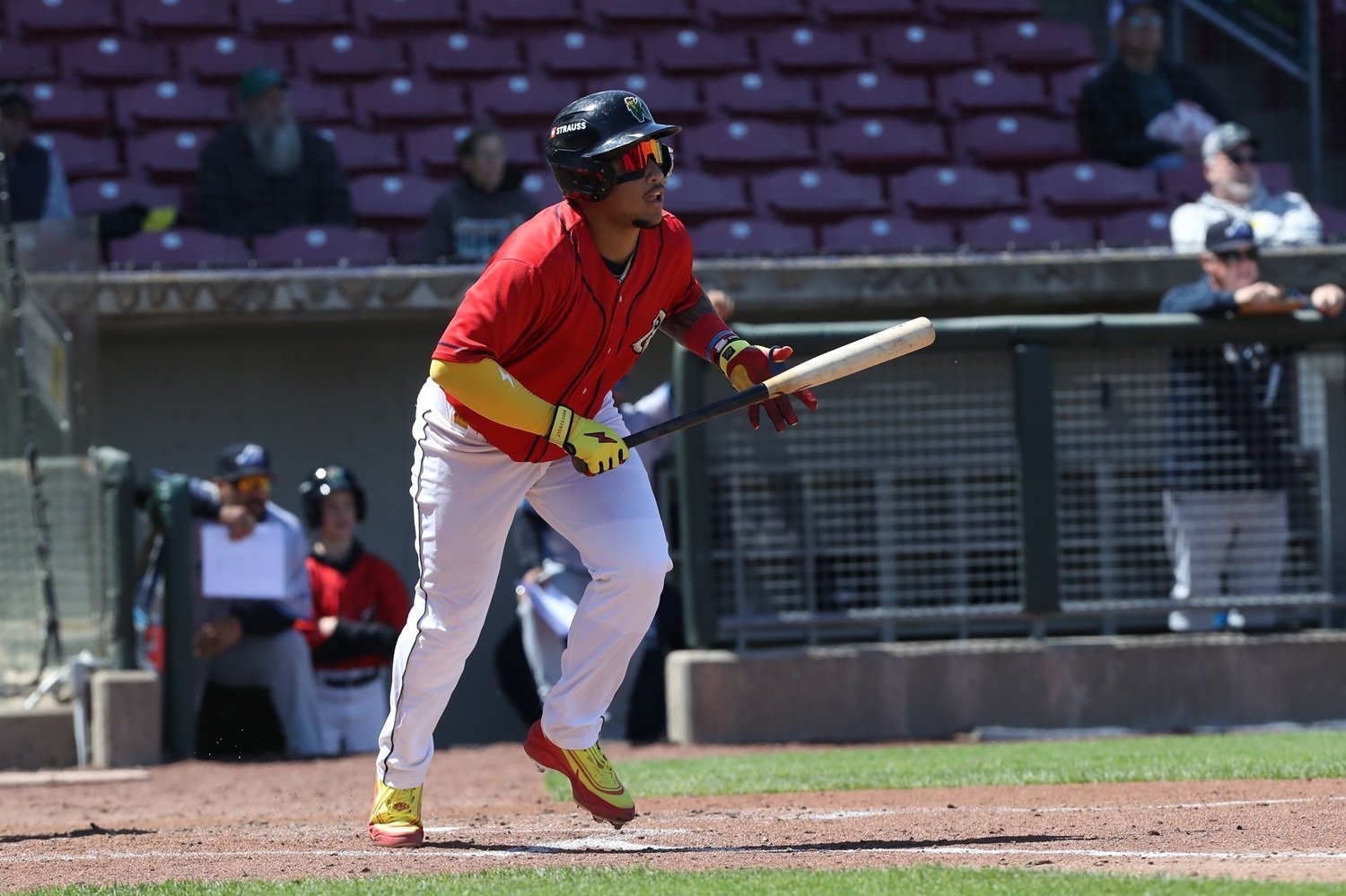 The summer months are when organizations begin to learn which teams are legitimate contenders and which clubs are already shifting focus toward the future. While the Minnesota Twins continue to navigate the major-league season, several prospects throughout the system are making strong cases for bigger opportunities. None of the players featured this week is likely to impact the 2026 Twins, but each could play a meaningful role in the organization's long-term plans. From a catcher forcing his way back into the conversation, to one of the system's youngest stars pushing for another promotion, to a reliever quietly climbing toward the big leagues, this week's hot sheet highlights three players trending in the right direction. C Andrew Cossetti – Wichita Wind Surge How He Got Here: The Twins selected Cossetti in the 11th round of the 2022 MLB Draft out of Saint Joseph's University and quickly challenged him with aggressive assignments. After reaching Double-A to begin the 2024 season, the jump proved difficult. He managed just a .643 OPS across 87 games. Rather than moving on, Minnesota allowed Cossetti to regroup at the same level. The decision paid off. He returned to Wichita and put together one of the better offensive seasons of his professional career, posting a .226/.366/.432 line with a 123 wRC+ while continuing to handle regular catching duties. His performance earned another opportunity with the Wind Surge to begin 2026. Hitting the Hot Button: Few hitters in the organization have experienced a bigger turnaround than Cossetti this season. April was a struggle, as he limped to a .440 OPS, but the veteran backstop has steadily regained his footing. He followed that rough opening month with an .852 OPS in May and has taken things to another level in June. Through the first few weeks of the month, Cossetti has launched six home runs, added a triple, and posted a 1.033 OPS. His latest week was especially impressive. Cossetti went 8-for-23 with four home runs, 12 RBIs and six walks across six games. He also drove in multiple runs in four consecutive contests from Sunday through Wednesday. At 26 years old, he is unlikely to rank among the organization's top prospects, but his offensive production is becoming impossible to ignore. C Eduardo Tait – Cedar Rapids Kernels How He Got Here: Tait's rise has been one of the more fascinating stories in professional baseball. Signed by the Phillies out of Panama for just $90,000 during the 2023 international signing period, he immediately exceeded expectations. He posted a .917 OPS in the Dominican Summer League and followed that performance by hitting .302 with an .842 OPS while advancing to full-season baseball in 2024. The teenage catcher continued to accelerate through Philadelphia's system. By age 18, he had reached High-A, earned a selection to the Futures Game, and established himself as one of the game's fastest-rising catching prospects. Minnesota acquired Tait as part of last summer's Jhoan Duran trade package, and he finished the season helping Cedar Rapids during its playoff run. The Twins have challenged him aggressively ever since. Hitting the Hot Button: This is where the argument for a promotion begins. Tait, still only 19 years old, went 8-for-24 with three home runs and 11 RBI during the week. He drove in five runs on Tuesday and followed that performance with six more RBIs on Thursday against Beloit. His overall .728 OPS may not immediately jump off the page, but context matters. Tait has spent virtually the entire season facing older and more experienced competition. Despite that challenge, he has begun to find another gear. Since June 1, Tait owns an .860 OPS, with seven home runs and three doubles in just 15 games. The combination of youth, power, and improving offensive consistency is becoming increasingly difficult to overlook. Minnesota has not been afraid to push him, and neither were his previous employers in Philadelphia. His recent production suggests another move up the ladder may soon be warranted. RHP C.J. Culpepper – St. Paul Saints How He Got Here: Culpepper is another successful late-round pitching find for Minnesota's player development staff. Selected in the 13th round of the 2022 MLB Draft out of California Baptist University, he has steadily worked his way through the system despite several obstacles. His professional career has featured flashes of promise at every stop. He advanced through both levels of A ball before reaching Double A in 2024 and spending much of 2025 with Wichita. Injuries have slowed his momentum at times, including a forearm strain in 2024 and a finger nerve issue that cost him significant time last season. This year has brought a different challenge. The Twins shifted Culpepper into a full-time relief role, hoping his arsenal could play up in shorter outings. Hitting the Hot Button: The early returns have been encouraging. Culpepper made three appearances for St. Paul this week and allowed just one unearned run on two hits across 3 1/3 innings. More importantly, he struck out six hitters and did not issue a walk. Since arriving in Triple A, he has posted a 26.3% strikeout rate while limiting walks to 10.0% of opposing hitters. Those numbers suggest his transition to relief is maximizing his strengths. Minnesota's bullpen depth remains one of the organization's growth areas, but Culpepper is beginning to position himself as a potential option if opportunities arise during the second half. The Twins may want to see a larger sample size before making that decision, but he is clearly moving in the right direction. The first half standings may be grabbing most of the attention, but development season is heating up across the Twins' farm system. Cossetti has transformed a difficult start into one of the hottest stretches of his career. Culpepper is showing signs that his conversion from the bullpen could unlock another level. And Tait continues to look like one of the most exciting young catching prospects in baseball. For now, the spotlight belongs to the teenager in Cedar Rapids. If Tait keeps producing at this pace against older competition, the Twins may soon have little choice but to find him a new challenge. What stands out about this trio of prospects? Can Cossetti and Tait help the organization’s long-term catching depth? Leave a comment and start the discussion. View the full article
 -
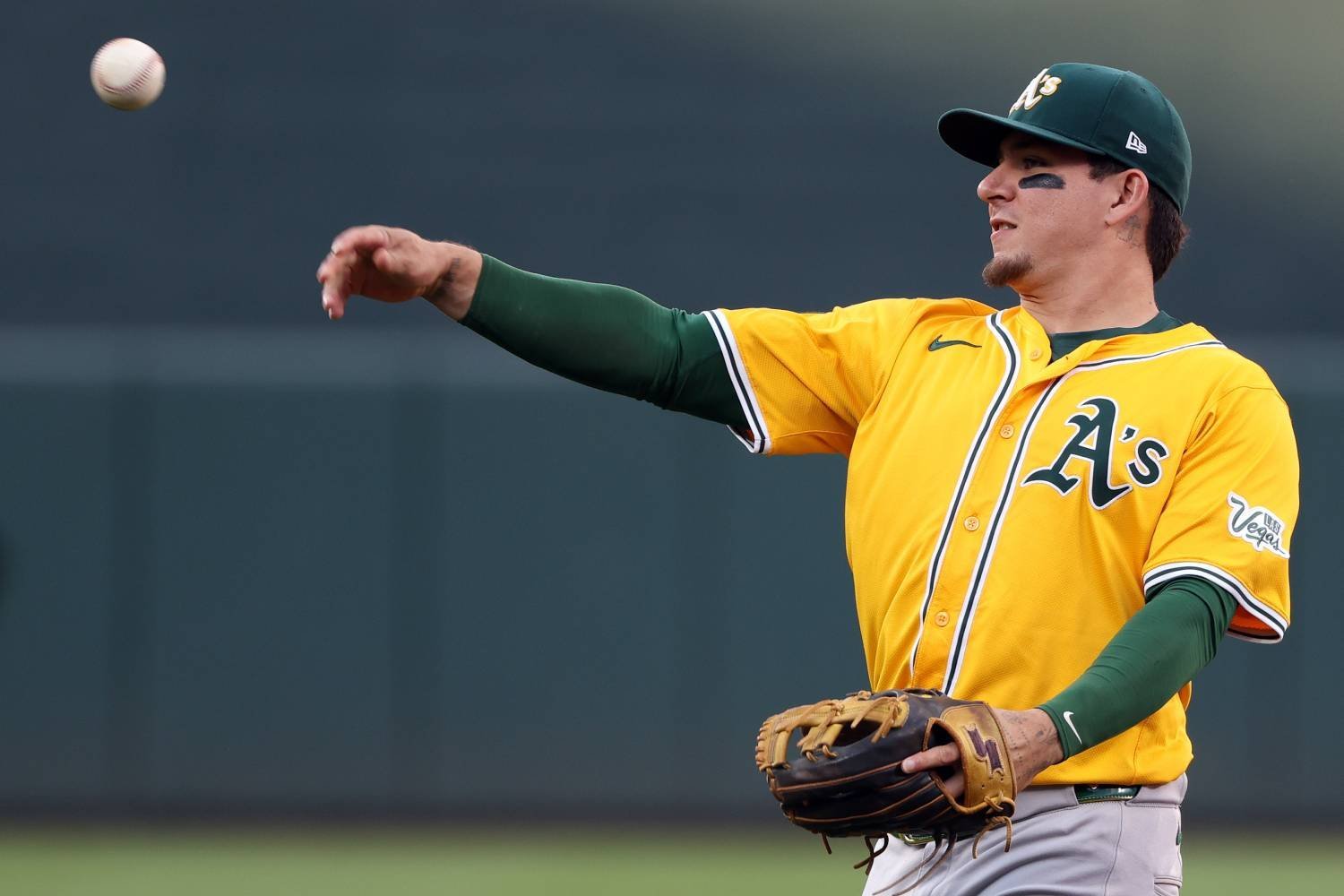 The Toronto Blue Jays are going with an extra infielder rather than a bonus outfielder. Infielder Luis Urias had his contract selected from Triple-A Buffalo by the Jays on Monday, with outfielder Yohendrick Pinango sent back to Buffalo. Urias was just acquired from the Arizona Diamondbacks for cash. Urias had yet to play a game with Buffalo after appearing in 27 games at Triple-A with the D'backs where he had a .361/.393/.546 slash line with three home runs and 19 RBIs. He played in the World Baseball Classic for Mexico, but started the season on the injured list. He was with the A's last season, playing in 96 games and slashing .230/.315/.338 with eight homers and 25 RBIs. Pinango was in his second call-up this year after making his MLB debut in late April. Between the two stints, he has been a very nice contributor with a .283/.331/.433 slash line with four homers and 18 RBIs in 43 games. View the full article
 -
 Abraham Toro hit for the cycle and drove in six runs as Omaha outslugged St. Paul 15-12 in 11 innings, with Brandon Drury and Josh Rojas adding key extra-base hits. Hunter Patteson worked six strong innings, and Frank Mozzicato struck out one and allowed no runs in relief for Northwest Arkansas, but the Naturals dropped a 5-4 decision. Michael Lombardi fanned seven over 4 2/3 innings, and Josh Hammond homered for Columbia, which came up a run short. Quad Cities' finale against Wisconsin was postponed due to rain. It will be made up in a doubleheader at a later date. Royals Transactions No Roster Moves Toro Completes The Cycle In Wild Omaha Slugfest Toro turned in a monster game, hitting for the cycle, driving in six runs, and helping the Omaha Storm Chasers outlast the St. Paul Saints 15-12 in 11 innings. Toro went 5-for-6 with a double, a triple, and a home run, while Drury added four hits, a homer, and three RBIs, and Matthew Lugo collected four hits, including a home run. The game swung wildly in the fourth inning, when St. Paul plated nine runs to erase an early Omaha lead and surge ahead. The Storm Chasers chipped away, with Lugo and Toro both homering in the fifth to cut the deficit to 10-8. Omaha tied the game in the eighth and pushed to extra innings. In the 11th, starting with the zombie runner at second, Drury singled home a run, and Rojas doubled in two more to break the game open for a 15-12 final. The pitching was rough on both sides, with St. Paul having to pitch shortstop Tanner Schobel in the 11th inning. Andrew Pérez opened with two innings, allowing one run on two hits while striking out four. Aaron Sanchez struggled badly, surrendering seven runs on seven hits in 1 2/3 innings. Eric Cerantola closed it out with a scoreless inning and two strikeouts. Omaha left 10 runners on base and went 10-for-23 with runners in scoring position. The Storm Chasers are now 33-41 this season. Player AB R H RBI BB K Josh Rojas 6 0 1 2 1 3 Matthew Lugo 7 2 4 1 0 2 Brett Squires 5 2 2 0 1 1 Abraham Toro 6 3 5 6 0 0 Peyton Wilson 6 1 3 1 0 0 Luca Tresh 6 0 1 0 0 2 Drew Waters 5 1 1 1 1 1 Brandon Drury 6 3 4 3 0 0 Elih Marrero 6 3 3 1 0 2 Player IP H R ER BB K HR Andrew Pérez 2 2 1 1 0 4 1 Aaron Sanchez 1 2/3 7 7 7 0 0 2 Ethan Bosacker 2 1/3 3 2 2 2 2 1 Luke Jackson 1 0 0 0 0 1 0 Dan Altavilla 1 1 1 1 0 0 1 Mason Black 1 1 0 0 0 1 0 Eli Morgan 1 1 1 0 2 3 0 Eric Cerantola 1 0 0 0 0 2 0 Naturals Bullpen Falters In Ninth As Tulsa Rallies The Northwest Arkansas Naturals carried a one-run lead into the ninth inning but could not hold on, falling 5-4 to the Tulsa Drillers. Jack Pineda paced the offense with three hits and three RBIs, while Spencer Nivens added two hits, a walk, and an RBI. Connor Scott also chipped in two hits, including a double. Northwest Arkansas built its lead methodically, even though they could not hold it at the end. The Naturals scored once in the first inning when Pineda singled home a run, added two more in the fifth on another Pineda single that brought in Scott, and pushed across a fourth run in the seventh when Nivens singled home Carson Roccaforte for a 4-2 advantage. That cushion vanished in the ninth, when Tulsa plated three runs to take the lead and the win. Patteson turned in a solid outing, allowing two runs on two hits with three walks and three strikeouts over six innings. Mozzicato followed with two scoreless innings, allowing one hit and two walks while striking out one. Augusto Mendieta took the loss, giving up three runs on five hits in the ninth. The Naturals left 11 runners on base and went 3-for-21 with runners in scoring position. The loss dropped Northwest Arkansas's record to 29-38. Player AB R H RBI BB K Carson Roccaforte 4 1 1 0 1 1 Rudy Martin Jr. 5 1 2 0 0 1 Jack Pineda 5 0 3 3 0 1 Spencer Nivens 3 0 2 1 2 0 Daniel Vazquez 5 0 0 0 0 1 Alberto Rodriguez 5 0 0 0 0 2 Canyon Brown 4 0 2 0 0 1 Connor Scott 4 1 2 0 0 1 Justin Johnson 3 1 0 0 1 0 Player IP H R ER BB K HR Hunter Patteson 6 2 2 2 3 3 2 Frank Mozzicato 2 1 0 0 2 1 0 Augusto Mendieta 1 5 3 3 0 1 0 Fireflies Comeback Bid Falls One Run Short In Hickory The Columbia Fireflies mounted a late rally but came up short, dropping a 4-3 decision to the Hickory Crawdads. JC Vanek led the way with three hits, a double, a home run, and an RBI, while Hammond reached base three times with two hits, a home run, a walk, and an RBI from the leadoff spot. Jhosmmel Zue added two hits and an RBI. The game remained quiet for most of the afternoon in the series finale on Sunday. Columbia scratched out a run in the fourth inning when Zue grounded out to bring home Vanek for a 1-0 lead. Hickory answered in the seventh, plating four runs to seize control. The Fireflies fought back, getting a solo home run from Vanek in the eighth and another from Hammond in the ninth, but stranded the tying run and fell by a single run. Lombardi was excellent, striking out seven over 4 2/3 innings while allowing four hits and a walk, with none of his three runs earned. Jose Gutierrez opened with two scoreless innings and three strikeouts. Andy Basora surrendered a run in two-thirds of an inning. Columbia left nine runners on base and went 0-for-10 with runners in scoring position. The loss dropped the Fireflies' record to 34-35. Player AB R H RBI BB K Josh Hammond 4 1 2 1 1 1 Stone Russell 5 0 1 0 0 1 Hyungchan Um 5 0 0 0 0 1 JC Vanek 4 2 3 1 0 0 Roni Cabrera 4 0 1 0 0 2 Jhosmmel Zue 4 0 2 1 0 1 Angel Ramirez 3 0 0 0 1 0 Ivan Sosa 4 0 1 0 0 3 Josi Novas 4 0 1 0 0 2 Player IP H R ER BB K HR Jose Gutierrez 2 0 0 0 0 3 0 Michael Lombardi 4 2/3 4 3 0 1 7 0 Andy Basora 2/3 1 1 1 0 1 1 Jhon Reyes 2/3 0 0 0 1 2 0 Top-20 Prospect Performance Kendry Chourio: DNP David Shields: DNP Sean Gamble: DNP Blake Mitchell: DNP Josh Hammond: 2-for-4, HR, BB, K Ramon Ramirez: DNP Drew Beam: DNP Asbel Gonzalez: DNP Ben Kudrna: DNP Carson Roccaforte: 1-for-4, BB, K, SB Yandel Ricardo: DNP Felix Arronde: DNP Blake Wolters: DNP Michael Lombardi: 4 2/3 IP, 4 H, 3 R, 0 ER, 1 BB, 7 K Luinder Avila: DNP Steven Zobac: DNP Frank Mozzicato: 2 IP, 1 H, 0 R, 0 ER, 2 BB, 1 K Daniel Vazquez: 0-for-5, K Warren Colcano: DNP Shane Panzini: DNP View the full article
 -
Brandon Woodruff Activated By Brewers, Set To Face Reds Today
DiamondCentric posted an article in Brewer Fanatic
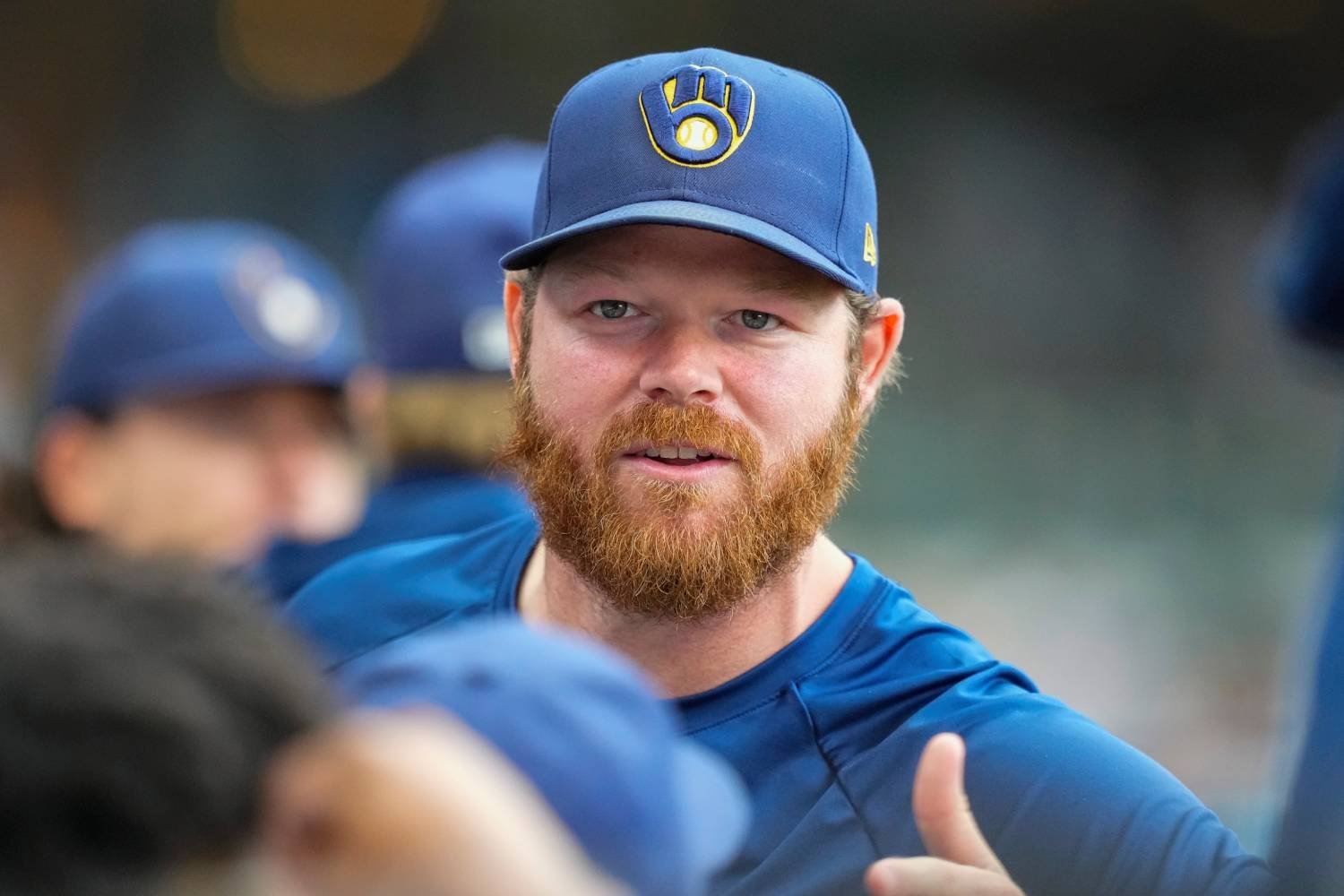 The return of Brandon Woodruff is official. The Milwaukee Brewers on Monday activated the right-hander to start the series opener against the Cincinnati Reds. Left-handed reliever Drew Rom was optioned to Triple-A Nashville. Woodruff has been on the 15-day injured list since May 1 due to right shoulder inflammation. The 33-year-old veteran, the oldest player on a very young starting rotation, will be making his seventh start of the season. In the prior six, he has logged 30 innings with seven walks and 25 strikeouts. Woodruff is four strikeouts away from 900 for his career. Rom was called up June 6 and made four appearances, going 5⅓ innings with a 3.38 ERA with four walks and 10 strikeouts. View the full article
 -
 Fish On First LIVE vents about how Marlins players have virtually zero chance of becoming MLB All-Star Game starters under the current voting system.View the full article
 -
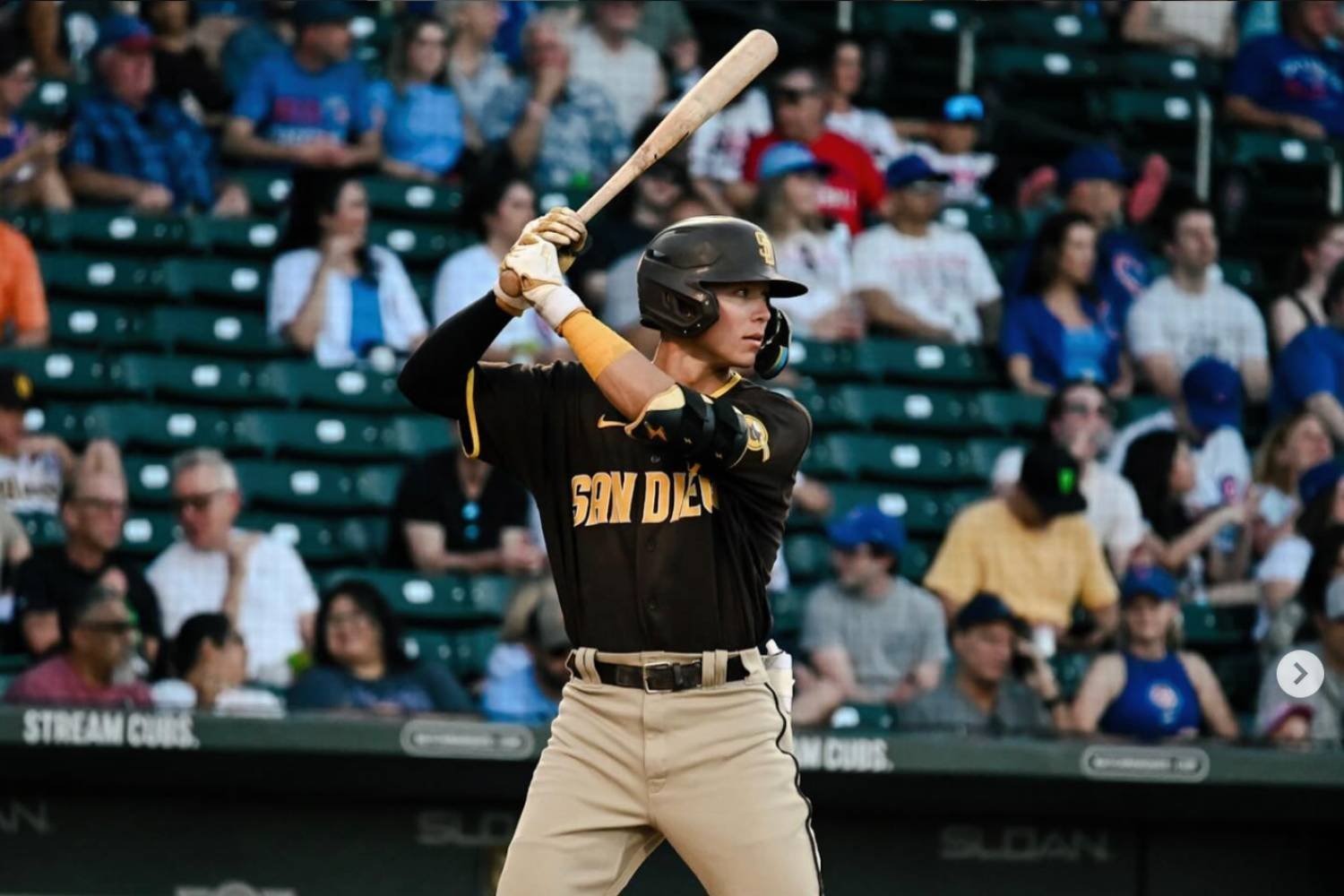 With the first half of the minor-league season officially in the books, it is promotion time. After news of right-handed reliever Tucker Musgrove, Padres Mission's No. 14 prospect, going up from High-A Fort Wayne to Double-A San Antonio broke Sunday, a few more moves became known Monday, with more on the way before the start of new series Tuesday. That begins with center fielder Ryan Wideman, the minors' stolen base leader. Padres Mission's No. 5 prospect, Wideman is going from Low-A Lake Elsinore to High-A Fort Wayne. Also, right-handed reliever Andrew Moore and first baseman Romeo Sanabria are going from Double-A San Antonio to Triple-A El Paso. Wideman, perhaps the most dynamic hitter in the system, is slashing .314/.389/.504 with six homers and 44 RBIs to go along with a minors-best 43 steals (13 times caught stealing) over 65 games. Moore is having a breakthrough season as a 26-year-old. He has a 1.85 ERA in 20 games and 24⅓ innings with 24 walks and 45 strikeouts. Sanabria was a candidate to start this year at El Paso, but was on San Antonio's Opening Day roster for the second season in a row. He has a .247/.345/.394 with eight homers and 36 RBIs in 66 games. As mentioned above, there will be more promotions (and probably cuts) before Tuesday's games begin. View the full article
 -
 Every month, Fish Unfiltered takes Miami Marlins fans "Inside the Dugout," bringing you an extended, exclusive interview with Marlins manager Clayton McCullough. During our June sitdown, McCullough speaks with AJ Ramos, Kevin Barral and Isaac Azout about his team's red-hot performance in June, potentially getting Agustín Ramírez reps at first base and how Eury Pérez and Janson Junk are progressing during their injury rehab. He also discusses Leo Jiménez's role on the roster and all aspects of MLB All-Star festivities, confirming that he will not be part of the National League's coaching staff this year. You can find Fish Unfiltered and Fish On First LIVE on the Fish On First YouTube channel, Apple Podcasts, Spotify or wherever else you get your pods. With a 14-4 June record entering Monday, the Marlins are easily on pace for their best month of McCullough's managerial tenure. They're in the midst of an eight-game winning streak at home, which is the longest in loanDepot park's history. Injured right-hander Eury Pérez threw a pitch design session shortly after the interview. He could potentially rejoin Miami's starting rotation on Wednesday if he's deemed to be at full strength. Fellow starter Janson Junk is scheduled to throw live batting practice on Tuesday. If all goes well, he will make his first minor league rehab start on Sunday. View the full article
 -
 In Week 13 of the season, Jason Wang and Jake McKibbin discuss who's hot, who's not, and other Brewers news. Apple Podcasts: https://podcasts.apple.com/us/podcast/the-brewer-fanatic-podcast/id1740648724 Spotify: https://open.spotify.com/show/5CY8mWsQayqjDXqw9OT2Td iHeartRadio: https://www.iheart.com/podcast/263-the-brewer-fanatic-podcast-166534588/ Pocket Casts: https://pca.st/ommzz627 Watch On YouTube: https://www.youtube.com/@brewerfanatic View the full article
 -
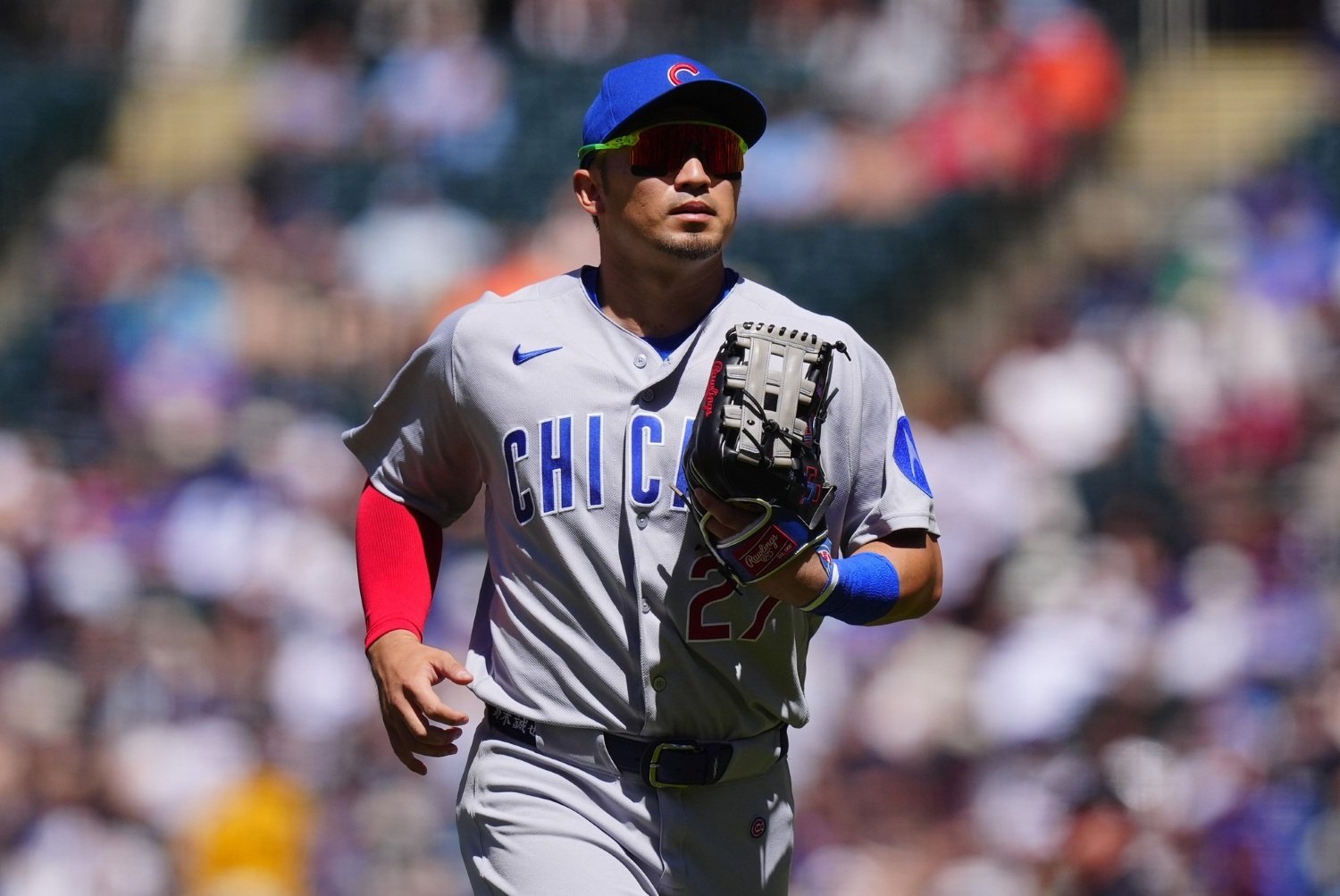 Check the top of Statcast's leaderboard for outfield arm value in 2026, and you'll see Pete Crow-Armstrong wrestling for first place with the Dodgers' Andy Pages. If you've watched either play over the last two seasons, that's no surprise. Pages has as much raw arm strength as anyone in the game. Crow-Armstrong can throw hard, too, but the real brilliance for him comes from the ground. He uses his speed well, to get under and behind fly balls for good throws and to close faster on hits than other outfielders. He not only gets to the ball quickly, but uses his quick feet to launch himself into his throws. I have sung this song before. More than once, actually. It's a joy to watch value that comes from an unexpected place in baseball. Crow-Armstrong's arm value comes from his feet; what a delight. It's not surprising, though. No, to find a surprising name on that leaderboard, you have to go just one spot lower. That's where Seiya Suzuki is. Though a couple of overly ambitious opposing runners have helped him accumulate value this year via very bad 'go' decisions, this isn't a fluke, either. One year after the team tried to move Suzuki into a full-time designated hitter role, he's not only made great strides in terms of range and catch rate, but is finding a lot of value in his arm, too. But the fun part is where that's coming from. Suzuki has always had a strong arm. In his five seasons since coming over from Nippon Professional Baseball, his average arm strength on competitive throws reads thus: 2022: 89.7 MPH 2023: 91.0 2024: 89.4 2025: 90.7 2026: 89.5 He doesn't have any Statcast-recorded throws over 97.6 MPH, but he's always shown the ability to get off strong throws in the tier just below elite. Statcast's arm strength metric is imperfect, but its estimate has put him in the top quintile of the league in each season he's played with the Cubs. However, that hasn't always translated to actual value. Before this season, Statcast estimated that Suzuki was worth -4 runs with his arm, despite throwing hard. Sometimes, arm value and range value overlap in ways that muddy measurements of both skills. The lowlight reel for Suzuki from 2022-25 includes plenty of plays on which a runner got an extra base because of his misread, or a ball he couldn't field cleanly, rather than because he didn't make a timely or accurate throw. But there were also some hard lessons for him to learn about the speed of the game in MLB, as opposed to NPB, with regard to both how hard batters hit the ball and how fast even relatively slow guys run. There were times when he seemed not to realize he had an opportunity to prevent an extra base, as on this longish fly ball that could have been a single: TVpyTVdfWGw0TUFRPT1fQkFOUVZRWUVWVkFBV1ZjREJ3QUFVMVZWQUFNRkFsRUFVVndFQWxjQlZBb0JBUUpW.mp4 At times—on that play and on some others—he held the ball too long, diagnosing the play more than the movement of runners and the position at which he reached the ball should have allowed. At other times, he got rid of the ball quickly, but did so purely to leave the rest of the play in the hands of (most often) Nico Hoerner. In effect, he sometimes threw to the wrong base or cutoff man, because he knew he needed to throw it in but wasn't quick enough in formulating the plan that would prevent a runner from going or produce an out. WGduUWtfWGw0TUFRPT1fQlZSUlhBQUVCUVlBV1ZkUlhnQUFDUUlDQUZoWFVsRUFWbEpUQWdKUUFnSlFCVk5X.mp4 What's changed, as you can see from the average throw velocities above, is not how hard Suzuki can fire the ball in from right field. Rather, it's how well he's understanding the play even as he's getting to the ball, and how sensationally fast he's getting rid of it once he fields it. Here's a play on which he absolutely would have allowed a double in past years. QXc3TlpfWGw0TUFRPT1fVUFZQVV3RUJVUVVBVzFKUkF3QUhCbGRSQUFBQUFRVUFWMUVCQ1FKVVV3TUdVbFJl.mp4 There was even one embarrassing occasion, back in 2024, when Gabriel Moreno hit a ball much like that one, and Suzuki first froze, then threw behind Moreno—who had time to anticipate that mistake and took second more on the throw than on the hit. Not here. Some right fielders stop this from being a double by fielding it on a flatter angle, cutting it off shallower in the corner. Others might not stop the runner from trying the advancement, but get them at second on a laser of a throw. Here, Suzuki played the angle that he's comfortable with, given his responsibility to stop anything from getting into the deep and quirky right-field corner at Wrigley Field, but knew he needed to get around the ball and fire it toward second as fast as possible. He's always had the physical tools to release the ball quickly with plenty on it; he hasn't always had the combination of familiarity and anticipation to actually do so. But he sure does now. That's not a one-off, either. All year, Suzuki has been getting to balls a bit more quickly, but getting throws off much more quickly. Sometimes, the opponents are stopping purely in response to how well he moves—a third-base coach throws up a late stop sign when he sees the ball leave Suzuki's hand so soon. WERaMVlfWGw0TUFRPT1fVndrSEFWUlhBRlFBREFZS1ZRQUhCMU5WQUZnQVZsRUFVMUJRQ0FFQUJnRlVCUXRV.mp4 At other times, it feels like the league is responding to a changing collective scouting report. This guy who used to struggle with quick releases and against whom you could once gamble a little bit is now a different beast. UUFLNzZfWGw0TUFRPT1fQkFKWVZsUlZVQWNBWEZjSEF3QUhCZ0ZSQUZrQ0FGVUFCbFlDQXdOVEJRcFZBd0lD.mp4 There's no public data on exchange time for outfielders, but if you've watched Suzuki this season and in the past, you can see the difference. He's unloading faster, with no loss of accuracy or speed. One by one, the elements that made him such a decorated and respected outfielder in Japan are coming into view for fans in the United States. Some of the credit goes to outfield instructor Quintin Berry, but Suzuki has clearly worked hard to be not only as physically adept as possible, but the smartest outfielder he can be, too. If Crow-Armstrong's arm value comes from his feet, Suzuki's comes, increasingly, from his eyes and his brain. He has the talent to fire a 95-MPH missile without a crow hop, but now, he also has the comfort with his position and the speed of the American game to actually get off that throw—consistently, exceptionally quickly, and to the right place. View the full article
 -
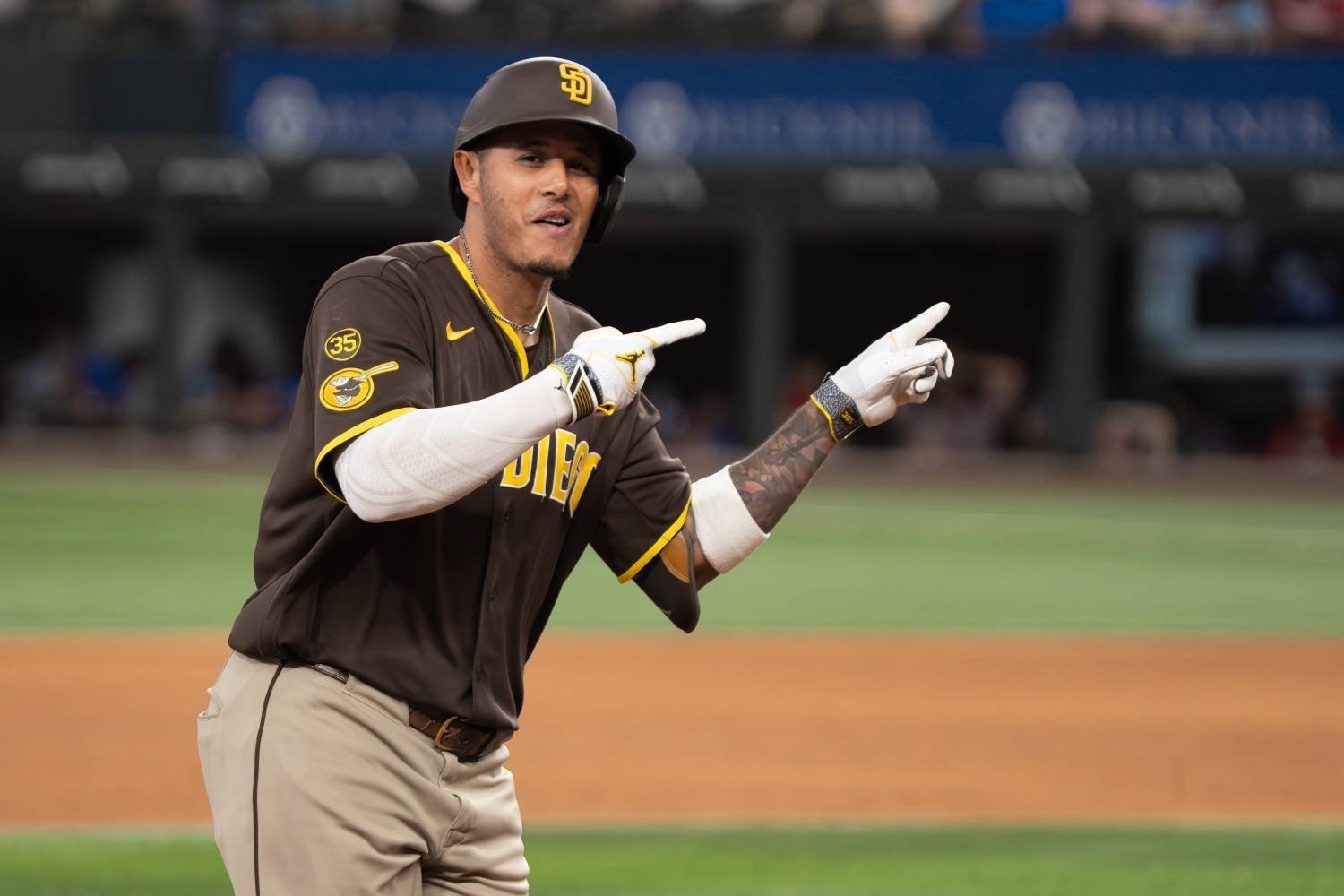 San Diego Padres Weekly Snapshot Record last week: 2-4 Runs scored last week: 24 Runs allowed last week: 24 (season run differential: minus-10) Scores Game 71 (Monday): Cardinals 3, Padres 0 Game 72 (Tuesday): Cardinals 3, Padres 2 Game 73 (Wednesday): Padres 6, Cardinals 1 Thursday: Off Game 74 (Friday): Rangers 9, Padres 7 Game 75 (Saturday): Padres 6, Rangers 4 (10 innings) Game 76 (Sunday): Rangers 4, Padres 3 Week in Review and Highlights Cardinals series Game 1: This was a tip-your-cap game. When a pitcher is on like St. Louis Cardinals right-handed starter Dustin May was in the series opener, there isn't much you can do. The former Los Angeles Dodger took a perfect game into the seventh inning, settling for a one-hitter in his first complete game as the Padres fell 3-0. Fernando Tatis Jr. drew a leadoff walk in the seventh inning to ruin the perfect game and Manny Machado grounded a single to left field two batters later to foil the no-hitter. But the Cardinals' defense came through to keep the shutout intact as shortstop Masyn Winn, last year's NL Gold Glove winner, ranged up the middle to snag Gavin Sheets' grounder, raced to get the force-out at second base and fired to first to get the inning-ending double play. May needed 101 pitches to complete his nine-strikeout performance. Before this outing, May had never recorded an out in the eighth inning as a starting pitcher. Meanwhile, the Padres employed an opener in an effort to get right-hander Lucas Giolito going. The opener worked as left-hander Wandy Peralta struck out one in a perfect first inning. Giolito, who hadn't gone more than four innings in his three previous starts, went five innings, but it still wasn't sharp. He allowed three runs on seven hits and three walks while striking out a pair. He put up zeroes in his first two innings before the Cardinals got to him for two runs in the fourth and another in the fifth. Left-hander Kyle Hart, called up before the game as closer Mason Miller was put on the bereavement-family medical emergency list, covered the final two, allowing just a hit. The Padres were without manager Craig Stammen, who was suspended for one game along with right-handed reliever Ron Marinaccio (three games) for hitting Baltimore Orioles shortstop Gunnar Henderson in Saturday's game. Marinaccio is appealing his suspension, allowing him to remain on the active roster. Managers can't appeal. Game 2: The good news is that the Padres had four times as many hits as they did the day before. The bad news is that means they only had four hits. After a series in Baltimore in which things seemed to be turning around, two games in St. Louis have sent the Friars back to where they were. The latest entry in that book was a 3-2 loss to the Cardinals. Right-hander Michael King, the de facto leader of the rotation due to injuries to Nick Pivetta and Joe Musgrove, trudged through 4⅓ innings, giving up three runs on five hits with three walks and a strikeout. In seven of his 15 starts, he has walked three or more. This short start came after three consecutive six-inning outings, yet he has allowed at least three runs in his last five games. King gave up a pair of runs in the second inning and another in the bottom of the fifth after the Padres had pulled within 2-1 in the top of the fifth. He also threw 93 pitches and couldn't get a second out in the fifth. But the pitching struggles are magnified by the woeful offense. This time, the Friars made right-handed starter Andre Pallante look like a Cy Young Award contender. Pallante struck out six over seven innings, giving up a pair of runs on four hits and no walks. Pallante had a perfect game two outs into the fifth, a day after May took a perfecto into the seventh. Samad Taylor finally broke through with an infield single, giving him an eight-game hitting streak, tied for the longest on the team this year (Miguel Andujar, Luis Campusano). Taylor stole second and scored on a Ty France single. The other two hits came an inning later when Tatis singled with two outs and Jackson Merrill doubled. But 10 of the final 11 Padres were retired, with Machado drawing a two-out walk in the ninth. Game 3: The perfect game bid by the Cardinals' starter lasted only until the second batter. Taylor, moved to the No. 2 spot in the lineup, walked, then Merrill singled him to third and Machado had a sacrifice fly. That helped change the script from the first two innings and the Padres were able to hold those vibes, pulling away late for a 6-1 triumph to avoid being swept. The bullpen deserves a ton of credit in this one. Right-hander Bradgley Rodriguez was the opener and pitched a scoreless first, allowing a single. After right-hander Griffin Canning, a bullpen that was down Marinaccio, whose suspension was reduced to two games and began serving the penalty with this game, finished things off with Hart going 1⅔ innings, right-hander Jason Adam taking the eighth and left-hander Adrian Morejon closing it out in a non-save situation. Canning was better after giving up seven runs in five innings his last time out. He only went 4⅓ innings, though, allowing one run on four hits as he walked three and fanned a pair while throwing 77 pitches. The early run stood until the fourth, when the Padres added another on a Machado double and a Xander Bogaerts one-out single. It became 3-0 in the fifth when Will Wagner singled, went to second on a wild pitch and came home on Tatis' line-drive double that was misplayed by the center fielder, who had the ball sail over his head. The Cardinals got one back in the bottom of the fifth on a walk and two singles off Canning. But that would be the extent of the damage the Cardinals would do. The offense provided the knockout blow in the ninth. Sung-Mun Song singled past the second baseman and went to third on Tatis' one-out single that saw him thrown out at second trying for a double. Taylor rekindled the fire and extended his hitting streak to nine with a single and a steal of second. Merrill allowed Taylor to trot home when he hit a high drive just inside the right-field foul pole for his eighth homer of the season. Rangers series Game 1: In a game in which 11 runs were scored in the first inning, the difference came down to the starting pitchers. The Padres tagged two-time Cy Young Award winner Jacob deGrom with five runs in the top of the first, only to see the Texas Rangers retaliate with six runs against right-hander Randy Vasquez. But the pedigree of deGrom allowed him to adjust and settle in to last six innings, while Vasquez couldn't make it through the fourth in the Padres' 9-7 loss. Despite being staked to that 5-0 advantage, Vasquez's undoing can be traced to the very first batter he faced. Joc Pederson hit a grounder to first baseman France, who flipped to Vasquez, who dropped the ball. Two of the three walks he would issue on the day followed in the next four batters and it was downhill from there. Vasquez finished by getting just 10 outs, surrendering seven runs (six earned) on eight hits and three walks with only one strikeout. It was the third time in five starts Vasquez has given up a season-worst eight hits and only the second time in 15 starts he didn't register multiple strikeouts. The positive portion of the day was that the Padres jumped on deGrom. Slow starts have been a trademark of this year's Friars, but not this day. Tatis (walk) and Taylor (single) reached before deGrom punched out the next two hitters. Sheets kept things going on a sharp single to right to bring in Tatis. Sheets even stole a base (his fourth this year) before Bogaerts walked on a full count to load the bases. France then launched a 98.3 four-seamer for an opposite-field grand slam, the first yielded by deGrom in his illustrious career for a 5-0 lead. After the Rangers' counterpunch in the bottom of the first, the Friars tied it in the fourth when France jumped on the third consecutive slider he saw from deGrom and smashed his second homer of the game, this one to center. It was France's second multi-homer game and eighth long ball of the year for five RBIs, matching his career best. The Rangers chased Vasquez in the bottom of the inning with another run, tacked on another in the sixth and the teams traded runs in the eighth, with the Padres getting a solo shot from Sheets. France would double in the sixth inning, making him the first player to ever have three extra-base hits off deGrom in a single game. Taylor also had three hits and Sheets a pair, accounting for eight of the team's 10 hits. Catcher Rodolfo Duran was removed from the game after taking a foul off his right knee. He finished the seventh inning, but Blake Hunt made his MLB debut in the bottom of the eighth. Born in Costa Mesa, Hunt was in his ninth year in the minors when called up the previous weekend. He had been called up in 2024 by the Baltimore Orioles, but did not appear in a game. In another quirk, weather delayed two of the four umpires from being on the field for the start of the game. The other two appeared for the bottom of the first. Game 2: And now we have our Manny moment. Just over two weeks following Tatis' walk-off homer, Machado bashed a three-run homer in the top of the 10th inning as part of a five-RBI game that stood up for the Padres 6-4 victory over the Rangers. Machado's issue has been the opposite of Tatis this year: He has the power production, but not the consistent hitting. Machado has been at or near the bottom of qualified hitters in batting average, but his homer, his second hit of the day, lifted his number to .178 this season. It was also his 13th homer of the year, putting him one ahead of Sheets for the team lead. This win, a nice bounce back following the series-opening setback, rekindled some of the late-inning magic that was present in April. Down 3-1 in the eight, Machado had an RBI groundout and Merrill a run-scoring single to tie it. Otherwise, the offense had been held down by former Padres left-hander MacKenzie Gore, who gave up a run on five hits and two walks with six punchouts in an emergency start. Right-hander Nathan Eovaldi was scratched with left knee soreness, with Gore moving up a day. Eovaldi was rescheduled to go Sunday. Padres right-hander Walker Buehler is on a bit of a roll. While not particularly sharp in previous outings, Buehler, working with Hunt as he made his first MLB start, allowed just one run in his fourth straight start in his 5⅓ innings, matching his season high with seven strikeouts, while allowing five hits and a walk. The lone run came on his last batter as Wyatt Langford had an RBI double. He was replaced by Hart, who escaped further damage. But it was Adam who glitched, giving up a pair of runs in the bottom of the seventh on Jake Burger's 13th homer of the season for a 3-1 lead. Morejon continued to be stellar, punching out five, tying his career high, in two shutout innings and Miller, who returned Friday from the bereavement-family medical emergency league list, took over in the 10th, allowing the zombie runner to score on Langford's two-out single before notching his second strikeout to seal his NL-leading 20th save in as many chances. The offense produced nine hits a day after having 10, showing signs of getting back to something normal. Merrill had three hits and Tatis two. Game 3: On a day where pitching was in control, the Rangers were a bit better than the Padres. You can understand that when it was, essentially, a matchup between Giolito and Eovaldi. Giolito came on after Peralta once again served as an opener, but Giolito only managed to go four innings while Eovaldi went six. Both gave up all the runs in a 4-3 Padres loss, finishing the nine-game road trip 4-5. Giolito has gone four innings or less in four of his last five outings and is currently sitting with a 5.16 ERA after giving up four runs on seven hits, including a homer, and two walks with a pair of strikeouts. The big blow came on a three-run homer from Langford in the third inning. The young center fielder jumped on a first-pitch changeup and launched it for his sixth homer of the season and a 3-0 lead. The Padres retaliated with three runs of their own in the top of the fourth. Merrill got his 11th hit of the road trip when he had a leadoff double and Machado continued to heat up with a line single to left to move him to third. Sheets came through again with an RBI single to make it 3-1. One out later, with Sheets now on second, Bogaerts grounded a single to center to score Machado and Sheets, who had taken a step back toward second, was sent home and thrown out. That short-circuited a bigger rally as France singled and Song doubled home Bogaerts to tie it 3-3. The Rangers came right back, however, as Giolito gave up three straight one-out singles to Nicky Lopez, Langford and Josh Jung for the go-ahead run. Eovaldi did give up seven hits while punching out nine. The Friars had another nine hits, the fifth time on this nine-game roadie with at least that many. The offense surfacing comes at a good time as the competition this week stiffens. The Padres return home to face the top two records in the MLB in Atlanta (Monday-Wednesday) and then the rival Los Angeles Dodgers (Friday-Sunday). Marvelous Mason Miller Some of the amazing stats for the Padres' closer: Season stats: 1-1, 0.87 ERA, 30 games, 20 saves (20 chances), 31 IP, 13 H, 5 R, 3 ER, 12 BB 61 K, .124 opponent average Only pitcher with 20 or more saves this season to not have a blown save. His 52⅓ innings without allowing an extra-base hit is three innings shy of the longest run in the Expansion Era (1961), set by Bob Welch of the 1980 Los Angeles Dodgers. His 52⅓ innings without allowing a homer is the second-longest active streak in MLB behind the 71⅓ of Milwaukee's Jacob Misiorowski. Random Stats The Padres have lost the opening game in eight of their 13 road series this season, including four straight. Samad Taylor, who batted leadoff Sunday with Fernando Tatis Jr. sitting out, has a 12-game hitting streak after going 0-for-2 in his first game after being promoted. He is hitting .378 (17-for-45). This is the longest streak by a Padre this year and longest since Luis Arraez had a 15-gamer in September. Manny Machado's five-RBI game Saturday was his second this season (April 26 vs. Arizona) and the 15th of his career. The Padres are 3-1 in extra innings this season. The Padres surpassed 3 million tickets sold this week, making this the fourth season in a row they have hit that threshold. Transactions Monday: Placed RHP Mason Miller on the bereavement list. Monday: Recalled LHP Kyle Hart from Triple-A El Paso. Monday: Sent OF Bryce Johnson outright to Triple-A El Paso. Wednesday: RHP Ron Marinaccio suspended for two games following appeal. Thursday: Signed free-agent SS Yomar Maduro to a minor-league contract. Thursday: Signed free-agent RHP Heiver Hernandez to a minor-league contract. Thursday: Signed free-agent SS Chrystian Herrero to a minor-league contract. Thursday: Signed free-agent RHP Angel Gamarra to a minor-league contract. Friday: Activated RHP Mason Miller from the bereavement list. Friday: Optioned RHP Bradgley Rodriguez to ACL Padres. Saturday: Activated RHP Ron Marinaccio. Sunday: Activated DH Miguel Andujar from the 10-day injured list. Sunday: Designated 1B Nick Solak for assignment. Website Highlights New Statcast data reveals just how dominant Padres' Miller really is — Randy Holt Andujar's injury allows Padres to reset expectations — Brendan Dentino Merrill's power is starting to manifest, thanks to breaking balls — Randy Holt France's June swoon is becoming impossible for Padres to ignore — Yirsandy Rodriguez Sheets found and subsequently lost the blueprint to success — Yirsandy Rodriguez Looking Ahead Monday: Atlanta (Grant Holmes) at Padres (Michael King), 7:10 p.m. Tuesday: Atlanta (JR Ritchie) at Padres (Griffin Canning), 6:40 p.m. Wednesday: Atlanta (Martin Perez) at Padres (Randy Vasquez), 5:40 p.m. Thursday: Off Friday: Dodgers (Roki Sasaki) at Padres (Walker Buehler), 6:45 p.m. Saturday: Dodgers (Yoshinobu Yamamoto) at Padres (Lucas Giolito), 5:40 p.m. Sunday: Dodgers (Emmet Sheehan) at Padres (Michael King), 1:10 p.m. View the full article
 -
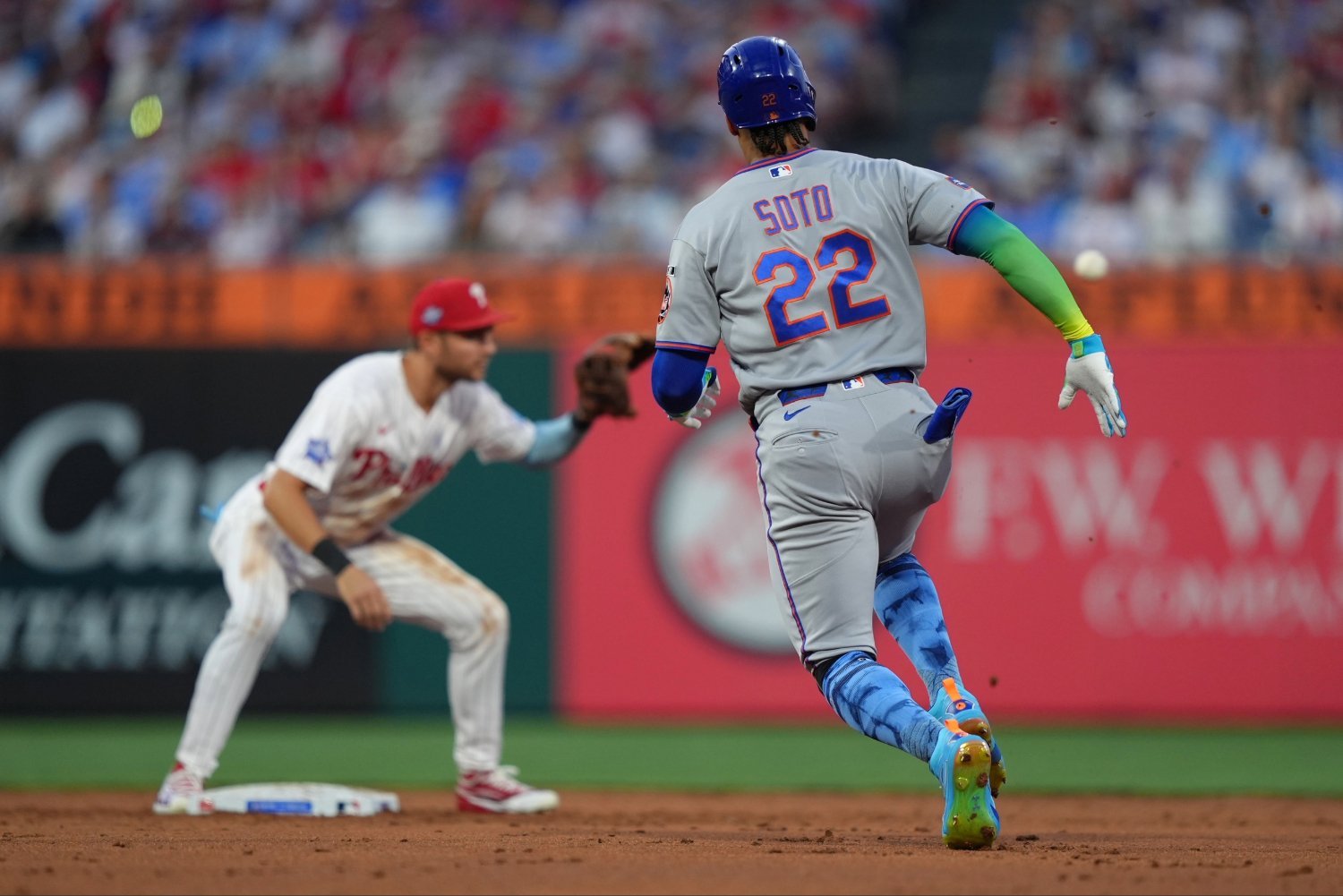 New York Mets Weekly Snapshot Record Last Week: 2-4 Runs Scored Last Week: 23 Runs Surrendered Last Week: 43 Standings: 5th in NL East (34-43) 15 GB of 1st Place, 6.0 GB of a Wild Card Transactions: 6/11 New York Mets sent RHP Kodai Senga on a rehab assignment to Binghamton Rumble Ponies. 6/11 New York Mets optioned RHP Jonathan Pintaro to Syracuse Mets. 6/11 New York Mets recalled RHP Daniel Duarte from Syracuse Mets. 6/15 New York Mets placed 1B Jorge Polanco on the 60-day injured list. Right wrist contusion. 6/15 New York Mets placed RHP Christian Scott on the 15-day injured list retroactive to June 12, 2026. Right hip impingement. 6/15 New York Mets recalled RHP Jonathan Pintaro from Syracuse Mets. 6/15 New York Mets claimed SS Zack Short off waivers from Detroit Tigers. 6/15 New York Mets recalled RHP Tobias Myers from Syracuse Mets. 6/15 New York Mets optioned RHP Daniel Duarte to Syracuse Mets. 6/16 New York Mets activated SS Zack Short. 6/16 New York Mets designated SS Vidal Bruján for assignment. 6/16 New York Mets activated RHP Kodai Senga from the 15-day injured list. 6/16 New York Mets optioned RHP Jonathan Pintaro to Syracuse Mets. 6/16 New York Mets acquired SS Nick Lucky from the Lancaster Stormers of the Atlantic League. 6/18 New York Mets sent SS Ronny Mauricio on a rehab assignment to St. Lucie Mets 06/19 New York Mets sent SS Francisco Lindor on a rehab assignment to Binghamton Rumble Ponies. 06/20 New York Mets sent SS Ronny Mauricio on a rehab assignment to Syracuse Mets. 06/21 New York Mets sent CF Tyrone Taylor on a rehab assignment to Syracuse Mets. 06/21 New York Mets sent SS Francisco Lindor on a rehab assignment to Syracuse Mets. 06/21 New York Mets acquired 2B Taylor Darden from the Southern Maryland Blue Crabs of the Atlantic League. Scores: Game 72: NYM 0, CIN 12 Game 73: NYM 3, CIN 5 Game 74: NYM 9, CIN 1 Game 75: NYM 6, PHI 4 Game 76: NYM 3, PHI 15 Game 77: NYM 2, PHI 6 Series Breakdown/Highlights Reds Series: The Mets began a six-game road trip that could decide their season against the Reds. It did not go as hoped. The Mets got shut out in game one against Reds ace Chase Burnes. Burnes was not at his sharpest but battled through the start with the Mets having several chances to plate runs. It does not help when Tobias Myers and Colonial Perez put the team in a 9-0 hole in the second inning after two home runs, including a grand slam by Eugenio Suarez. The Reds added three runs against David Peterson late, but the game was practically over at that point. Game two was not much better for the Mets. Kodai Senga made his first start since coming off of the IL and had a rough first inning. He gave up four runs, including two home runs, while throwing 36 pitches in the frame, which in turn shortened his outing on the backend. Senga did stabilize as the game went on, but it was too little, too late. The Mets did score three runs in this game, so some improvement, but lost both of their ABS challenges early on in the game, leading to some bad calls and the eventual ejection of Carlos Mendoza for the first time this season. The Mets' late comeback attempt failed as they lost 5-3 and the series to the Reds. Thankfully, the Mets bounced back in the third game of the series, scoring nine runs against the Reds and their bullpen. Nolan McLean was dominant in the game, not giving up an earned run over seven innings of work. The Mets got contributions from up and down the lineup, with Juan Soto, Mark Vientos, and A.J. Ewing all driving in multiple runs as the Mets routed Nick Lodolo and the Reds. Phillies Series: The Mets headed down I-84 to Philly for a three-game series against their AL East rivals. Again, the series did not go to plan. Game one was a great win for the Mets. Juan Soto homered in the first inning to give the Mets some instant offense with Sean Manaea on the mound. The Mets added another run later on in the first on an A.J. Ewing RBI double. Juan Soto hit his second home run of the game in the third inning. After an RBI single by Alec Bohm, his second of the game, and an RBI single/E8 by Derek Hill, the game was tied after four. The Mets took the lead in the seventh on an RBI single by Marcus Semien and a two-run triple by Eric Wagaman. Devin Williams played the high-wire act, giving up a run, but earned the save. After a day off due to the World Cup, the Mets and Phillies returned to action for the second game of the series. Freddy Peralta, to put it lightly, got rocked. He gave up 10 runs and 10 hits in 2.2 innings of work. Kyle Schwarber hit two home runs in the third inning and three on the day, including one off Cionel Pérez. To add insult to injury, Bryce Harper hit for the cycle through just five innings. The Mets did score three runs, one on a Mark Vientos solo home run and two more on a Carson Benge two-run home run. Zach Short finished the game off on the mound and actually pitched better than any Mets pitcher had in the game. Game three saw David Peterson get knocked around once again, giving up two runs in the first after two walks to open the game, not helped by the defense of Bret Baty at third base. He melted down in the second inning after Kyle Schwarber hit another moonshot to the third deck for a three-run home run. Carson Benge did hit a homer in the bottom of the inning against Zack Wheeler, which gave the Mets their first run, which the Phillies got back on a Harper homer a few innings later off Austin Warren. The Mets would go onto score another run against Wheeler in the sixth inning after he loaded the bases with one out and Ewing grounded into a force-out. The Mets got nothing going against the Phillies' bullpen to lose the series in demoralizing fashion. Website Highlights Mets 2025 Draft Review: Mitch Voit's Updated Scouting Profile One Year Later Jared Young Is Proving Better Plate Discipline Begets Better Contact Brett Baty Is A Major Mets Problem Again Looking Ahead June 22nd: vs CHC (7:10pm EST) June 23rd: vs CHC (7:10pm EST) June 24th: vs CHC (7:10pm EST) June 25th: vs CHC (7:10pm EST) June 26th: vs PHI (7:10pm EST) June 27th: vs PHI (4:10pm EST) June 28th: vs. PHI (1:40pm EST) View the full article
 -
Colin Rea's Survival Instinct Has Become His Best Quality
DiamondCentric posted an article in North Side Baseball
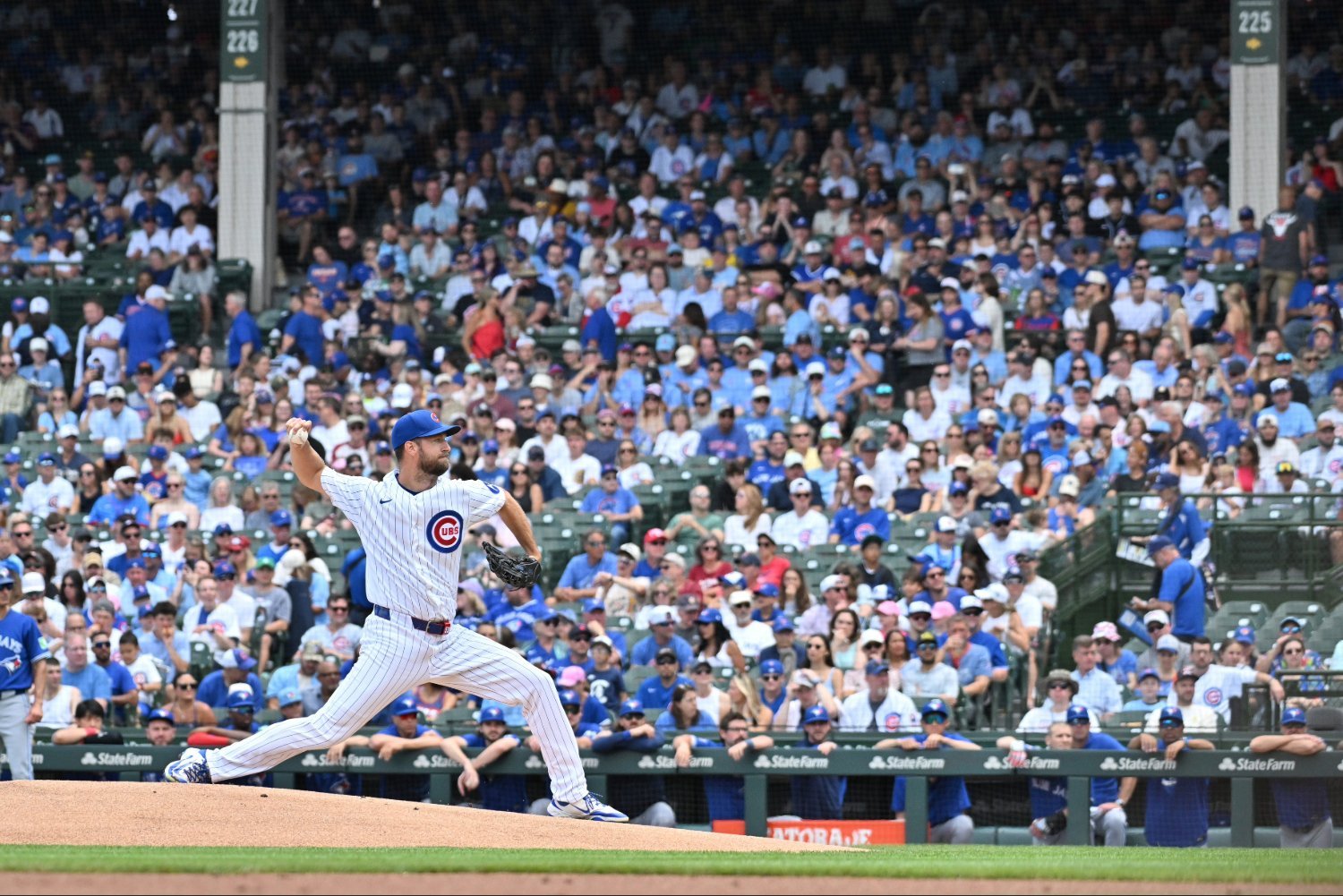 Most pitchers spend their 30s trying to hold on to whatever once made them special. Colin Rea has taken a different path. Rather than clinging to a previous version of himself, he has built a career around finding new ways to adapt every time the game demands another adjustment. He did it in Milwaukee. Now, he's doing it again with the Chicago Cubs. At first glance, the explanation behind this seems simple enough. Another year in Chicago equals greater familiarity with the organization which equals more confidence in his approach. But a deeper dive into the numbers reveals a more complicated reality. Rea isn’t succeeding because his pitches have suddenly become significantly better, nor has he developed a new weapon capable of transforming his profile. In fact, several of the metrics typically associated with pitcher dominance point in the opposite direction. None of that describes a starter discovering a new level of performance. His Stuff+ is essentially unchanged, his ability to generate whiffs remains below league average, and his strikeout rate is still modest. Even the predictive metrics are less optimistic about his current performance than they were a year ago. And yet, Rea keeps getting outs. What has changed is the way he’s using his arsenal. The most significant adjustment appears to involve his off-speed pitches. In 2025, the splitter played a prominent role in his pitch mix. The problem was that hitters consistently punished it. When they recognized the pitch, the outcome rarely favored the pitcher. A year later, the picture looks very different. The changeup has taken over much of that workload, and the results have improved dramatically. *2025 splitter The changeup allows Rea to generate more chase swings outside the strike zone, disrupt timing, and force hitters into less comfortable decisions. He has never been the type of pitcher who survives on pure swing-and-miss stuff; instead, he needs to create uncertainty and force hitters to hesitate for a fraction of a second. His current approach appears to be accomplishing exactly that, and the evidence can be seen in a trend that has persisted throughout the season. Hitters are chasing more pitches outside the zone than they did in 2025, with his O-Swing% climbing from 28.4% to 31.2%. Meanwhile, his In-Zone swing rate has fallen from 50.9% to 46.5%, a revealing combination that suggests Rea is throwing fewer hittable strikes while generating more swings in places hitters would rather avoid. Bat-tracking data helps explain the process even further. His slider remains his most effective swing-and-miss pitch. The changeup continues to generate a healthy share of poor swings. Neither pitch is dominant in an absolute sense, but together they force hitters to cover more possibilities than his velocity alone would suggest. That’s particularly important because the fastball isn’t carrying the load. Its effectiveness against hitters has declined noticeably from last season. Opponents continue to make contact at a relatively high rate, and the pitch’s underlying quality metrics remain underwhelming. In a league increasingly built around overpowering velocity, Rea is trying to remain effective with a fastball that rarely intimidates anyone. The concerns don’t disappear when looking at the underlying numbers. His strikeout rate remains low by modern standards. His xERA sits among the less impressive marks of regular starters. Some of the contact-quality metrics suggest that a portion of his success could be vulnerable to regression if more batted balls begin finding open grass. But that tension may be exactly what makes his season so valuable. Many pitchers rely on exceptional physical tools to stay relevant. When those tools begin to fade, adaptation becomes difficult. Rea has spent much of his career developing a different skill. Every time the game presents a limitation, he finds a way to reorganize his repertoire around it. The Cubs continue to reap the benefits of that process. While many pitchers chase an idealized version of the Modern Ace™, Rea keeps manufacturing outs with a formula that is far less flashy and far more craft-driven. The question for the second half isn’t whether he can become a dominant starter (at this stage of his career, that was never the bet). The real question is whether this latest evolution—less reliance on a vulnerable fastball, greater trust in his off-speed pitches, and an increasing ability to generate chase swings outside the zone—will be enough to sustain results that several metrics still view with skepticism. If the answer is yes once again, it won’t be because Colin Rea changed who he is as a pitcher. It will be because, once again, he found another way to stay relevant in a game that never stops demanding reinvention. View the full article
 -
 Chicago Cubs Minor League Report Affiliate Overview Triple-A Iowa Cubs Series vs. Indianapolis Indians (Pittsburgh Pirates): Tied, 3-3 Season Record: 30–42-1 Double-A Knoxville Smokies Series vs. Chattanooga Lookouts (Cincinnati Reds): Tied, 3-3 Season Record: 38–31 High-A South Bend Cubs Series at Fort Wayne TinCaps (San Diego Padres): TinCaps win, 4-2 Season Record: 40–25 Single-A Myrtle Beach Pelicans Series at Delmarva Shorebirds (Baltimore Orioles): Pelicans win, 4-2 Season Record: 28–39 Triple-A: Iowa Cubs Season Record: 30–42-1 Series Opponent: Indianapolis Indians (31-44) Series Standing: Tied, 2-2 The Iowa Cubs split their series with the Indianapolis Indians following a 3-1 defeat on Sunday at Principal Park. The Indians scratched a run across in the second and eventually doubled their lead in the fifth with another run. Cubs starter Jordan Wicks turned in a solid outing but was handed the loss, falling to 0-5 on the season. Wicks allowed two runs on five hits over five innings of work, walking two and striking out two. Indianapolis plated another run in the seventh to make it 3-0 before Iowa was finally able to get on the board in the ninth. Chas McCormick (1-for-3) and Christian Bethancourt (2-for-4) hit back-to-back to doubles to get a run in with two outs in the frame but the tying run would go down at the plate to end the game. The I-Cubs offense went just 1-for-13 with runners in scoring position in the contest, leaving eight runners on base. Vince Reilly turned in 1 1/3 scoreless frames out of the bullpen, allowing just one hit while whiffing three batters. Double-A: Knoxville Smokies Season Record: 38–31 Series Opponent: Chattanooga Lookouts (37–32) Series Standing: Tied, 3-3 The Knoxville Smokies split their series with the Chattanooga Lookouts following an 11-4 defeat on Sunday at Covenant Health Park. The Smokies clinched the Southern League North Division on Saturday and ended up finishing the first half of the season with the best record in the league. The Lookouts took the lead in their first trip to the plate with four runs and never relinquished the lead. Knoxville got on the board in the second thanks to an RBI-double from Carter Trice (2-for-3) but Chattanooga restored their four-run advantage with a run in the fourth. The Smokies made it a 5-4 ballgame with three in the fifth, with all the runs coming off the bat of Devin Ortiz (1-for-4), who slugged his third homer of the season. That would be as close as Knoxville would get in the contest as the Lookouts would score two in the seventh, three in the eighth and one in the ninth to cruise to the 11-4 victory. Brooks Caple got the start for the Smokies and took the loss, falling to 2-1 on the season. Caple allowed five runs on six hits over four innings of work, walking three batters while striking out five. Kenyi Perez turned in two shutout frames out of the bullpen, allowing no hits to go along with two walks and four strikeouts. High-A: South Bend Cubs Season Record: 40–25 Series Opponent: Fort Fayne TinCaps (29–40) Series Standing: Lose, 4-2 The South Bend Cubs suffered a rare series loss after falling to the Fort Wayne TinCaps, 6-2, on Sunday at Parkview Field. Both teams traded runs in the second, with the Cubs eventually breaking the deadlock in the fifth through Kane Kepley’s (2-for-2) RBI-double. Cubs No. 2 prospect (North Side Baseball) Jaxon Wiggins, on a rehab assignment with the club, got the start and did not factor into the decision. Wiggins allowed one run on one hit over 2 2/3 innings of work, walking two and striking out three. South Bend bats would go quiet and Fort Wayne would go on to score three in the seventh to make it 4-2 and plate two in the eighth, making it 6-2, to put the game out of reach. The Cubs offense was held to just five hits on the day and would go 0-for-5 with runners in scoring position, leaving five on base. Single-A: Myrtle Beach Pelicans Season Record: 28–39 Series Opponent: Delmarva Shorebirds (25–44) Series Standing: Win, 4-2 June 21: The Myrtle Beach Pelicans earned a series win over the Delmarva Shorebirds following a 7-2 victory on Sunday at Arthur W. Perdue Stadium. Both teams would go scoreless through the first three innings of the ballgame before trading two runs each in the fourth. The Pelicans got on the board thanks to a solo blast from Logan Poteet (2-for-4), his 13th of the season, and an RBI-single from Darlyn De Leon (2-for-4). Poteet has now homered in three-straight games. Two more runs from Myrtle Beach in the fifth put the visitors back in front, with Edward Vargas (2-for-4) picking up the RBI-single and another run scoring on an error on the play. Braylon Myers got the start for the Pelicans and earned the win to improve to 3-1 on the season. Myers allowed two runs on five hits over five innings of work, striking out five batters without issuing a walk. Myrtle Beach would get three stellar innings of work from Daniel Avitia (3.0 IP, 1 H, 0 R/ER, 3 BB, 4 SO) in relief, which allowed the team to expand its lead. Michael Carico (1-for-4) hit a two-run homer in the seventh to make it 6-2 and the Pelicans would add its final tally in the eighth on a missed catch error to make it 7-2. View the full article
 -
 Let's check in on Sunday’s action from the Boston Red Sox's farm system. Triple-A Worcester Red Sox Series @ Lehigh Valley IronPigs (Philadelphia Phillies): 3-3 Season Record: 36-35 Worcester cruised to an easy victory, trouncing Lehigh Valley 12-3. Jack Anderson pitched a solid five innings on Sunday afternoon. The righty allowed three runs on four hits while striking out four. The WooSox bullpen was dominant, collectively allowing only one hit and one walk. Tyler Samaniego pitched a perfect inning after Anderson exited before Devin Sweet took the seventh inning. Sweet matched Samaniego with a perfect inning of his own before Wyatt Olds got the eighth inning. Olds walked one before Joe La Sorsa shut down the ninth inning, sealing the series tie for Worcester. Worcester’s offense turned in one of its better efforts of the season on Sunday night. The WooSox combined for 12 runs on 15 hits as Jason Delay led the way with six RBIs. The scoring started early as Vinny Capra teed off in the first inning, crushing a solo shot to left field for his fifth homer of the season. With the four men aboard in the third, Jason Delay hit a bases-clearing double, driving in Nathan Hickey, Braiden Ward, and Kristian Campbell. Delay then crossed home on a Matt Thaiss double later in the inning. With a 5-3 lead in the fifth, Delay drove in Ward again on a sac fly. Thaiss then drove in Capra with his first triple of the season. The runs piled up in the eighth inning for Worcester. Max Ferguson drove in Tsung-Che Cheng on a single before Vinny Capra drove in Nathan Hickey on a sac fly. Jason Delay then added two more RBIs with his first triple of the season, driving in Ferguson and Ward. Finally, Tyler McDonough joined the party, driving in Delay on a single to make the score 12-3. Double-A Portland Sea Dogs Series vs. Somerset Patriots (New York Yankees): 4-2 Season Record: 35-33 Portland’s three game hot streak came to an end as they fell 6-4. Despite the loss, Anthony Eyanson was dominant as always during his start. Over four innings Eyanson allowed three hits and a walk, striking out five and not allowing a run to score. The young star sports a 1.46 ERA in his first season of professional ball. Jeremy Wu-Yelland made his first Double-A appearance of the season in relief, but it didn’t go well. In just ⅔ of an inning, Wu-Yelland allowed two runs on two hits before being replaced by Cade Feeney. Feeney allowed four hits and one more run through two and ⅓ innings of work before turning the ball over to Erik Rivera. Rivera took the final two innings of Sunday’s contest, losing his second ballgame of the season. He allowed three more runs on three hits as Somerset took a two run lead. Rivera struck out three but it wasn’t enough to rectify the poor outing. Franklin Arias continues to impress in Portland as many speculate that a call-up to Triple-A is in short order. On Sunday, the 20-year-old turned in a 3-for-5 performance for the second straight game, driving in one run. His RBI came via a leadoff home run, his 14th of the season. Later in the first Brooks Brannon drove in Will Turner on a line out to center. Just one inning later, Brannon drove in Arias on a sac fly, giving Portland a 3-0 lead. In the sixth, Ahbram Liendo tacked on Portland’s final run of the night, crushing his fifth homer of the season to left center. Despite excellent games from Eyanson and Arias, Portland lost in the series finale. High-A Greenville Drive Series @ Jersey Shore BlueClaws (Philadelphia Phillies) : 3-3 Season Record: 28-38 The Drive lost in walk-off fashion 7-6 as they split the series. Marcus Philips turned in a shaky four and ⅓ inning start, allowing four runs (one unearned) on seven hits. Philips struck out five as his ERA rests at 6.81 on the season. The young righty has struggled in his first season of professional ball as he continues to try and find consistency. Calvin Bickerstaff pitched an okay 2⅔ innings in relief, allowing one more run on three hits and striking out two. Danny Kirwin took the ball in the eighth and pitched into the ninth. However, disaster struck as he allowed a walk-off two-run homer with one out in the ninth, losing the game for Greenville. Justin Gonzales and Yoeilin Cespedes led the way for the Drive’s offense with two RBIs apiece, but it wasn’t enough to carry them to victory. With Enddy Azocar aboard in the first, Gonzales walloped his ninth homer of the year to left field, giving Greenville an early lead. Luke Heyman built on the lead in the third, reaching on an error as Gonzales scored. Isaiah Jackson tacked on one more run with his 11th homer of the season in the fourth inning. Cespedes then hit his 11th homer of the year in the fifth inning with Azocar on board yet again. The Drive’s offense faltered from there on out, however, as they fell in a heartbreaker. Low-A Salem RidgeYaks Series @ Fredericksburg Nationals (Washington Nationals): 2-4 Season Record: 26-42 Salem’s subpar season continued to slip away as they fell 3-0 in the series finale. Jose Bello has pitched well this season, to the tune of a 3.07 ERA over almost 30 innings. However, Sunday wasn’t his best appearance of the season as his start only lasted two and ⅔ innings. Bello allowed two runs (one unearned) on two hits and two walks before being pulled. He struck out four of the 12 batters he faced. Jason Gilman took the next 3⅓ innings, walking five and allowing two hits but stifling the Nationals offense and not allowing a run to score. He struck out five before Joey Gartrell took the final two innings of Sunday’s contest. Gartrell allowed one run on three hits and a walk as he closed out the loss, striking out three in the process. Salem’s offense was virtually nonexistent on Sunday, tallying only three hits and four walks as it failed to score a run. The RidgeYaks went 2-for-9 with runners in scoring position, but neither of the hits had real impact. Adonys Guzman, Frederik Jimenez, and Ilan Fernandez each had a single in Sunday’s contest. View the full article
 -
Everything We Know About Target Field Concession Workers' Strike
DiamondCentric posted an article in Twins Daily
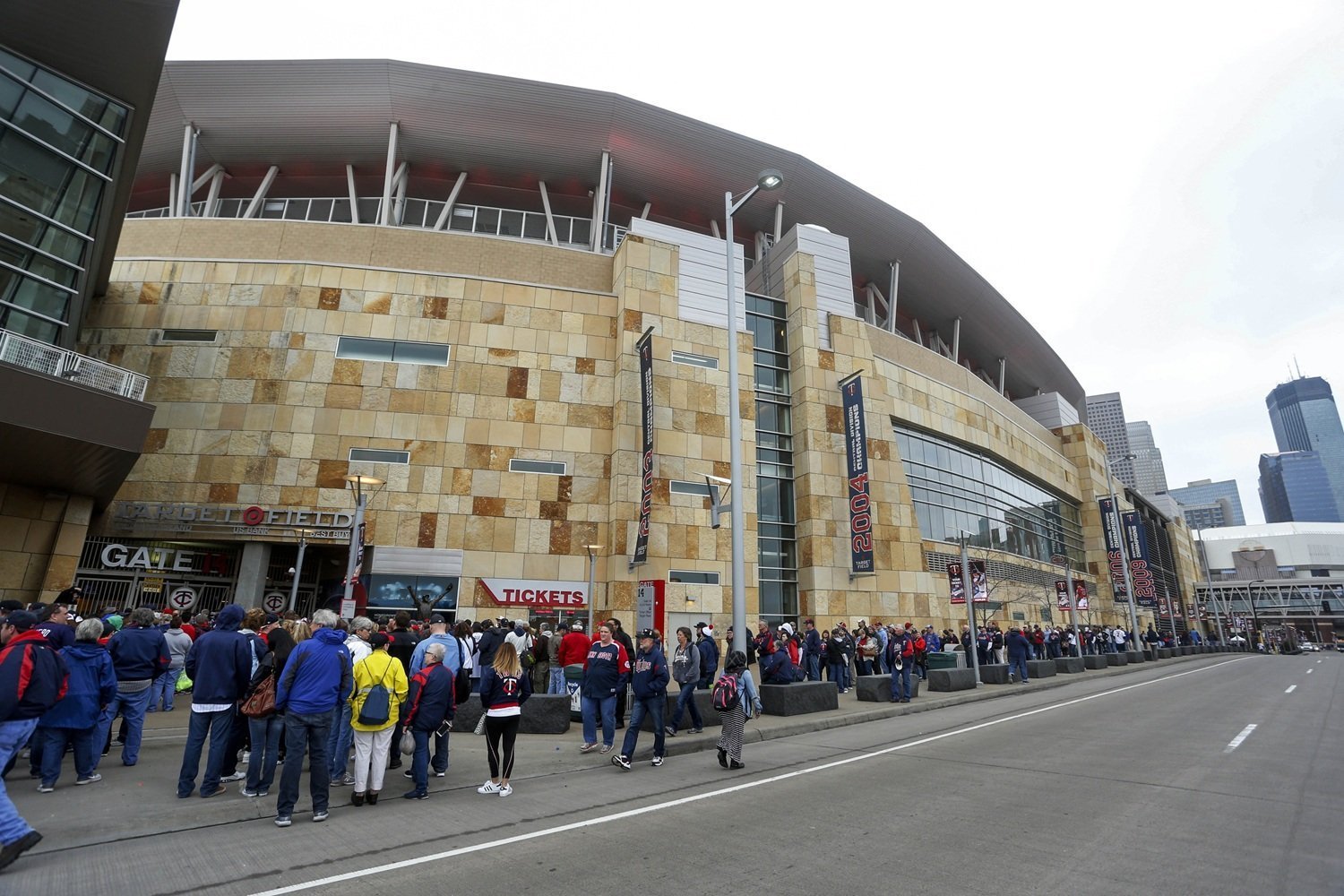 The Minnesota Twins return home Monday for one of the marquee series on their 2026 schedule, when the defending World Series champion Los Angeles Dodgers arrive at Target Field. Instead of the spotlight focusing solely on baseball, however, much of the attention could center on a labor dispute involving the stadium's concession workers. More than 500 Target Field employees represented by UNITE HERE Local 17 have announced plans to stage a one-day strike on June 22, as negotiations with concessions operator Delaware North continue. The dispute centers on wages, health care benefits, job protections, and the use of volunteer workers throughout the ballpark. If the strike proceeds as planned, union officials say it would be the first strike at a major-league stadium in Minnesota history. What We Know About Monday's Strike The planned walkout involves approximately 500 workers employed by Delaware North, the company that operates food and beverage services throughout Target Field. The union represents workers across nearly every part of the stadium's concession operation, including cooks, bartenders, suite attendants, warehouse workers, dishwashers, stand workers, runners, and other hospitality staff. The strike is scheduled for Monday's series opener against the Dodgers, one of the highest-profile home games remaining on the Twins' schedule. The teams are also scheduled to play Tuesday and Wednesday. Workers have been operating under an expired contract since January while negotiations continue. In May, union members voted 81% in favor of authorizing a strike if bargaining efforts failed to produce a new agreement. According to union leaders, the one-day strike is designed to pressure Delaware North back to the negotiating table after months of stalled discussions. "We've been in contract bargaining and the workers here have been committed to bargaining in good faith," said UNITE HERE Local 17 Secretary Treasurer Sheigh Freeberg. "Unfortunately, their employer, Delaware North Company, has not held to that same commitment." Freeberg indicated the union could consider additional actions if negotiations remain stalled. "We're keeping open the possibility of striking more games or an open-ended strike if Delaware North continues to not take this seriously," he said. The Union's Position Union leaders argue that many Target Field concession workers are struggling financially, despite years of service at the ballpark. Workers say wages have failed to keep pace with rising costs, while many seasonal employees do not qualify for employer-provided health insurance. Those concerns have become the central issues in negotiations. "A cheeseburger costs more than what we get paid," said concessions stand lead Nariel Green in an interview on KARE 11. "All the prices go up, but our pay doesn't." Suite bartender Adam Schreifels, who has worked at Target Field for a decade, pointed to health insurance as one of the primary reasons workers are willing to strike. "One of the biggest issues is that they don't offer health insurance," Schreifels said. "Because you work seasonal at a lot of these places, you don't qualify." Workers also emphasized that many employees view concession work as a long-term profession, rather than a temporary job. "This is a real career," said suites department employee Missy Simon. "The majority of us are over the age of 40. This isn't a high school kid's career." Warehouse worker Savion Johnson echoed similar frustrations, while noting his appreciation for both the organization and the work. "I love this. I love the Twins, one of my favorite teams," Johnson said. "A lot of people want to work, but we're out here struggling." Following the strike announcement, the union said Delaware North improved its wage proposal, offering raises of 25 cents per hour for minimum wage employees and 60 cents per hour for other workers. Union representatives have indicated that those increases still fall short of what workers are seeking, though. The Debate Over Volunteers One of the more public disagreements between the two sides involves Delaware North's use of nonprofit volunteer groups to help operate concession stands. Freeberg argues the practice reduces opportunities for paid employees and undermines the value of skilled hospitality work. "The practice also devalues the skilled work food and beverage workers do," Freeberg said. "Philanthropy does not have to come at the expense of the workers who help fans enjoy every game." The issue became a focal point of Delaware North's response following the strike announcement. Programs whereby (usually) parents staff concession stands in exchange for portions of the revenue generated in order to raise money for extracurricular activities go back decades, both in Minnesota and elsewhere. For many families, though, even the help those programs offer has dwindled, due to the rising costs of the activities their children participate in and to the watering-down of the revenue sharing those programs receive from partners like the Twins and Delaware North. It's a bad deal on both ends, but especially so for workers trying to make this part-time work part of a piecemeal living. Delaware North's Position Delaware North has pushed back against several of the union's claims, while maintaining that fans should expect normal concession operations during Monday's game. After union leaders encouraged fans to bring their own food and beverages, warning that food may not be available for purchase, Delaware North disputed that characterization. "It is our full intention that we will continue full-service concessions at Target Field should there be a strike," the company said in a statement. The company also criticized the union's position regarding nonprofit volunteer groups that use concession work as a fundraising opportunity. "If Unite Here's greed insists on displacing nonprofit fundraising, we believe the community will be deeply impacted," Delaware North said. "The decades-long partnerships we have with community groups that depend on concessions at Target Field for fundraising is something that reflects the values of the fans and residents of Minnesota." The company has not publicly provided additional details regarding ongoing negotiations, and their vociferous statements about the value of those fundraising programs aren't matched by a notable willingness to ensure the programs actually meet the needs of the volunteer families. Much more so than in the past, those volunteer partnerships feel like the company's effort to kill two birds with one stone: keeping labor costs down, while tooting their own horn with regard to community involvement. What Happens Next? As of this writing, the Twins have not publicly commented on the labor dispute. Because Delaware North operates concessions at Target Field, the negotiations are taking place between the company and the union rather than directly with the Twins organization. However, any disruption during a high-attendance series against the Dodgers would inevitably place additional attention on the club and the fan experience at the ballpark. The biggest question remains how Monday's game day operations will be affected if hundreds of workers leave their posts. For now, both sides remain far apart publicly, even as negotiations continue. The timing of the strike announcement ensures maximum visibility, coming during one of the Twins' most anticipated home series of the season. Whether Monday becomes a one-day labor action or the beginning of a larger dispute may depend on what happens at the bargaining table over the next several days. What is clear is that a disagreement that has simmered since the expiration of the contract in January has now become one of the biggest off-field stories surrounding the Twins this season. View the full article
 -
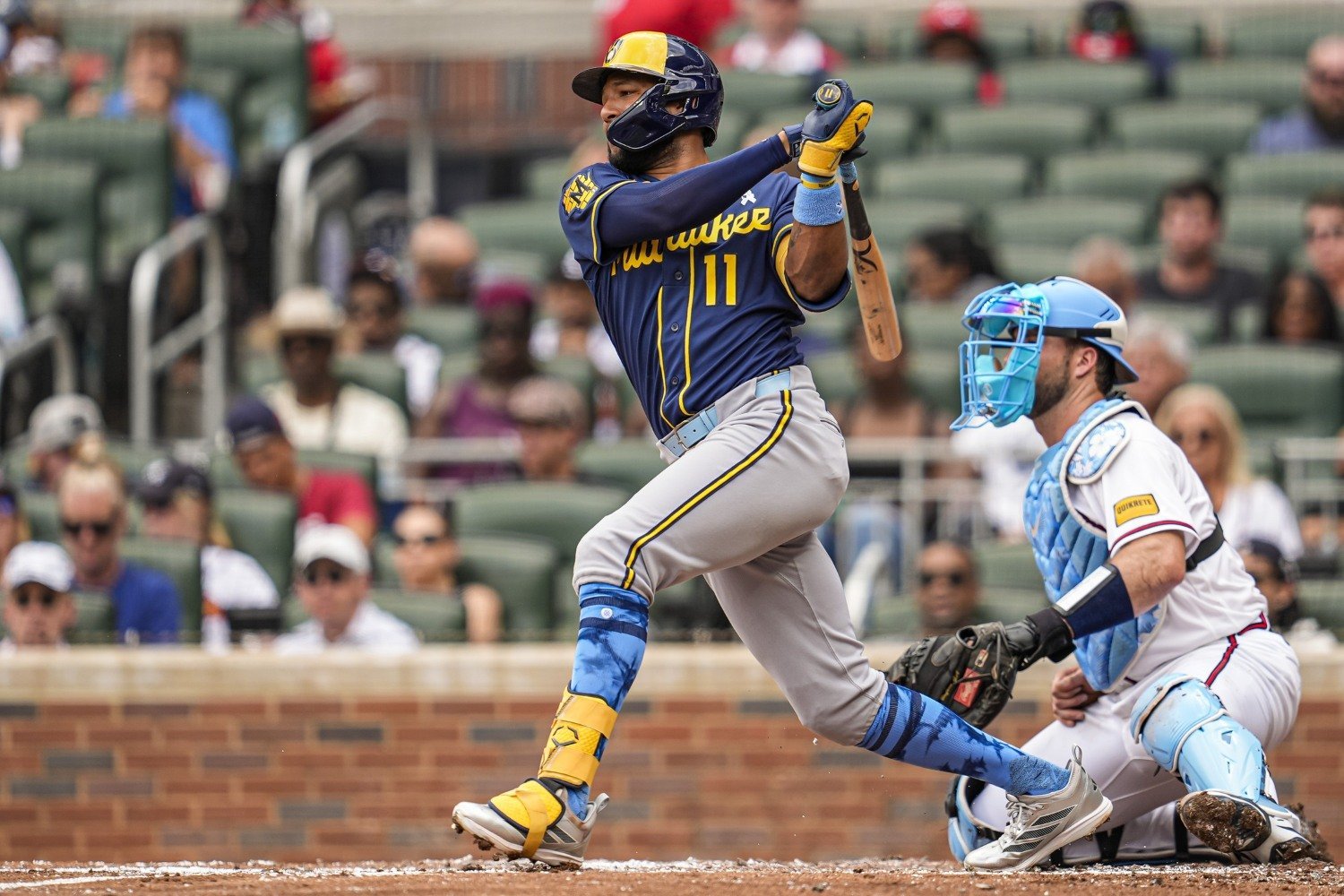 Jackson Chourio has long been talked about as a potential MVP candidate. We've seen the fast hands, the impressive swing speed and surprising contact rates, but we haven't always seen the results to back up the talent that he possesses. Chourio only turned 22 this March, an important part of this equation, but even so, we'd seen some short glimpses of what Chourio is capable of—and then some more mediocre performance. In his first two seasons, Chourio recorded a wRC+ of 118 and 111 in 2024 and 2025, respectively, striking out a little over 20% of the time and accumulating 6.8 WAR over that period. That's a very valuable run, and one that I don't mean to demean at all, especially for someone of Chourio's age. That being said, his subpar walk rate in each season highlights why Chourio hadn't ascended to the heights he was capable of in his first two seasons. Across both 2024 and 2025, the Brewers phenom was chasing pitches outside the strike zone at a 34.5% clip, on the edge of the worst quintile in baseball. In doing so, he was putting bat to ball on pitches that he couldn't enact much impact on, and also whiffing a lot. Putting yourself in a good hitter's count is key for any batter, and when you do so, you force pitchers into your wheelhouse. By taking more pitches outside the strike zone, Chourio can bring pitchers back into the zone. Then he can unleash. After some of his worst swing decisions in May (something I wrote about three weeks ago), Chourio has completely flipped the switch, and it's directly correlated to his performance so far this month. Have a look at his in-zone swing rate and his chase rate so far in each of the two months, and how that's tied to a variety of batted-ball quality metrics: Chourio is striking out less, and perhaps most importantly, he's finding better launch angles on his batted balls. Hitting the ball hard and into the ground will only get you so far as a hitter, but the screaming line drives have become a real feature of his performance thus far in June. The change in his plate discipline is allowing him to be aggressive at anything inside the strike zone early in the count, letting his bat fly and looking to do damage to the pull side, while being more secure in the knowledge that he can work his way back into the count later on if he gets down to two strikes. The big change so far this year is that Chourio is actively hunting fastballs. If you listened to Jason Wang last night on our Sunday live podcast, you'd know this hasn't always been an area of strength for the young star. In 2025, Chourio struggled at times to really impact fastballs. Against sinkers and four-seamer in 2025, he had a -12 run value (-6 for each pitch). With an expected slugging of just .378 in 2025 against four-seam fastballs, he wasn't impacting the pitch seen most often across major-league baseball. Compare that to 2026, in which he has a +5 run value against four-seamers and sinkers thus far, doing more damage (.471 expected slugging) against four-seamers and marmalising sinkers with a 71% hard hit rate. That marks a real change for Chourio. If we look at his timings, there's quite a clear difference in where exactly Chourio is hitting these fastballs: The graph on the left shows if the pitchers are able to get Chourio down on the end of the bat or get in on his hands to stay off his barrel. In 2025, he was catching a lot of fastballs off the end of the bat, but this year, he's centered the ball on his barrel much better, which is the key to generating exit velocity. (He's also slightly better at being on time and lining up the fastball, possibly because he's hunting them, but let's stay with the flail element for now.) Why would a hitter be hitting a ball off the toe of the bat? One of the main causes would be if Chourio was trying to pull pitches on the outer third of the plate, The bat would be angled toward the pull side on a pitch that just shouldn't be taken in that direction—not for someone with Chourio's stance and set-up, and someone who doesn't need to pull the ball to access his power. The other is by being late to the ball, and again, the tilt of the bat means the ball comes off the end of the bat rather than the barrel. In expertly drawn schematics from my trained hand, these are the same lengths of lines at different angles, but note the difference in where the ball is touching said lines: So, being late or early can influence where a hitter is being tied up or flailing, and so can the types of pitches at which he's swinging. A hitter is more likely to flail at a pitch on the outer third of the plate than one on the inner third, and Chourio has been marginally more selective in swinging at those outer-third fastballs in 2026, especially those lower down in the strike zone (which require a longer bat path to reach). He's also been increasingly aggressive against fastballs on the inner third of the plate. Those locations might tie up a number of hitters, but Chourio's hands allow him to get to those pitches with aplomb, and it's helping him find the center of the bat more often. On average, Chourio is hitting fastball variants almost 5 mph harder in 2026 than he did in 2025, a massive leap forward. He's averaging over 95 mph in exit velocity against these pitches, without sacrificing his contact skills. So does that mean he's been more susceptible to breaking balls? Well, the answer is slightly nuanced. Better swing decisions are helping Chourio force pitchers to throw those breaking pitches inside the strike zone more often, and that definitely helps. He also appears to be reading the pitch out of the hand well, because he's been on time with his swing more often this year than he was in 2025. From May to June, his miss distance on breaking pitches is lower, he's generating fewer "flawed swings" (where he's off in all three dimensions), and overall, he's whiffing a lot less while finding better launch angles on the breaking balls he's hit. As a result, he's got a .371 expected batting average against breaking pitches this month. So between the fastball and the breaking ball, there's been no let-up from Chourio. He's not over-committing one way or the other, and is becoming about as pure a total hitter as one can get. There will be more thorny adjustments to come. We'll see if pitchers try to pitch around him more now; we saw him intentionally walked multiple times last week. Chourio has a 195 wRC+ so far in June, with a 1.091 OPS. He's produced 1.3 fWAR in the last three weeks alone. The plate discipline is fueling all of this change, and the question now becomes whether he can sustain this for longer than a three-week period. If so, the MVP version of Jackson Chourio is leaving the station. Get on board, Milwaukee. View the full article
 -
 Joe Ryan is currently in the midst of a career year. Through 87 ⅓ innings this season, the Twins right-hander owns a 2.99 ERA along with an even 1.00 WHIP. He's been one of the best starting pitchers in the American League, and it feels like he's only getting better as the season goes on. Ever since Ryan's May 3rd start against Boston, when he was pulled after just nine pitches, he's been on an absolute heater. Across his last eight starts, Ryan has allowed just 13 earned runs over 48 ⅔ innings. During that span, he's struck out 59 batters while issuing only eight walks. The underlying numbers are just as impressive. Ryan's 30.3% strikeout rate over those eight starts ranks third among all American League starters, trailing only Logan Gilbert and Reid Detmers. He's missing bats at an elite rate, limiting free passes, and consistently giving the Twins quality innings every time he takes the mound. At some point, it becomes impossible to ignore. And it's time we give Ryan the respect he deserves. Coming into this season, the general consensus surrounding Ryan was that he was a very good pitcher. A strong No. 2 starter on a playoff-caliber team, but not necessarily an ace. The fact of the matter is that Joe Ryan is an ace, and the rest of the baseball world seems to be catching on as well. According to FanDuel Sportsbook, Ryan currently owns the fifth-best odds to win the American League Cy Young Award. Only three Twins pitchers have ever won a Cy Young Award: Jim Perry in 1970, Frank Viola in 1988, and Johan Santana in both 2004 and 2006. It's been two decades since a Twins pitcher last took home the honor. But if Ryan continues throwing the ball the way he has recently, he's going to build a very strong case. Looking at the four names currently ahead of him in the betting odds, it's easy to understand why they're there. Cam Schlittler sits as the current frontrunner, followed by Dylan Cease, Drew Rasmussen, and Jacob deGrom. All four are having excellent seasons and deserve to be part of the conversation. That doesn't mean Ryan can't pass them, though. Cease's odds are boosted in large part by his American League-leading 110 strikeouts. Rasmussen has built his case around a sparkling 2.59 ERA. Both numbers are incredibly impressive. Still, I'd be willing to bet there's at least some regression coming. Cease's 36% strikeout rate is an absurd number to maintain over a full season, while Rasmussen's ERA is sitting at a level that's difficult for almost any pitcher to sustain for six months. That doesn't mean either pitcher is going to suddenly fall off a cliff. But the gap between their current numbers and Ryan's may not be nearly as large by the end of September as it appears today. The toughest pitcher for Ryan to overcome will likely be Schlittler. The Yankees right-hander has been phenomenal, posting a 1.71 ERA while racking up 109 strikeouts. Even if those numbers come back to earth a bit, they'll still likely remain among the best in the American League. Schlittler is going to be tough to catch. But at the same time, if Ryan's last eight starts are any indication of what we'll get for the rest of the season, he's pitching as well as anyone in baseball. He's working deep into games, he’s posting gaudy strikeout and very low walk totals, and consistently putting the Twins in position to win. Three textbook characteristics of an ace. What also deserves mentioning is the team context involved in all of this. If the race ends up neck-and-neck, would voters give the edge to the pitcher playing for the better team? Paul Skenes won the National League Cy Young Award last season despite pitching for a Pirates team that won just 71 games, so team success certainly isn't a deciding factor. But if Ryan and Schlittler, for example, finish with nearly identical numbers and the Yankees win 20 more games than the Twins, would that influence some voters? Maybe, maybe not. It's impossible to know until ballots are submitted. But there's also another wrinkle worth considering. What if Ryan gets traded this summer? His value is likely at an all-time high right now. If a contending team is willing to pay the price associated with acquiring a true frontline starter, his Cy Young outlook could change dramatically for any number of reasons. For one, Ryan has historically been better at Target Field than he has on the road. A move to a less pitcher-friendly environment could negatively impact his numbers over the final few months of the season. There's also the possibility that he gets traded out of the American League altogether. If that happened, he'd suddenly find himself competing against National League candidates like Jacob Misiorowski, Cristopher Sánchez, Skenes, and several others. That would create an entirely different set of obstacles. History isn't particularly favorable to pitchers changing teams in the middle of a Cy Young campaign. Only one pitcher has ever won a Cy Young Award during a season in which he was traded–that was Rick Sutcliffe in 1984, going from the Cleveland Indians to the Chicago Cubs. So could it happen? Sure. But if Joe Ryan is going to win a Cy Young Award this season, I think his path is much cleaner as a member of the Twins than it would be elsewhere. Either way, there's still roughly three-and-a-half months of baseball remaining before any individual awards are handed out. A lot can change between now and then. But with the way he's pitched over the last two months, Joe Ryan absolutely belongs in Cy Young conversations. And if he keeps this up, the Twins could have their first Cy Young winner in 20 years. View the full article
 -
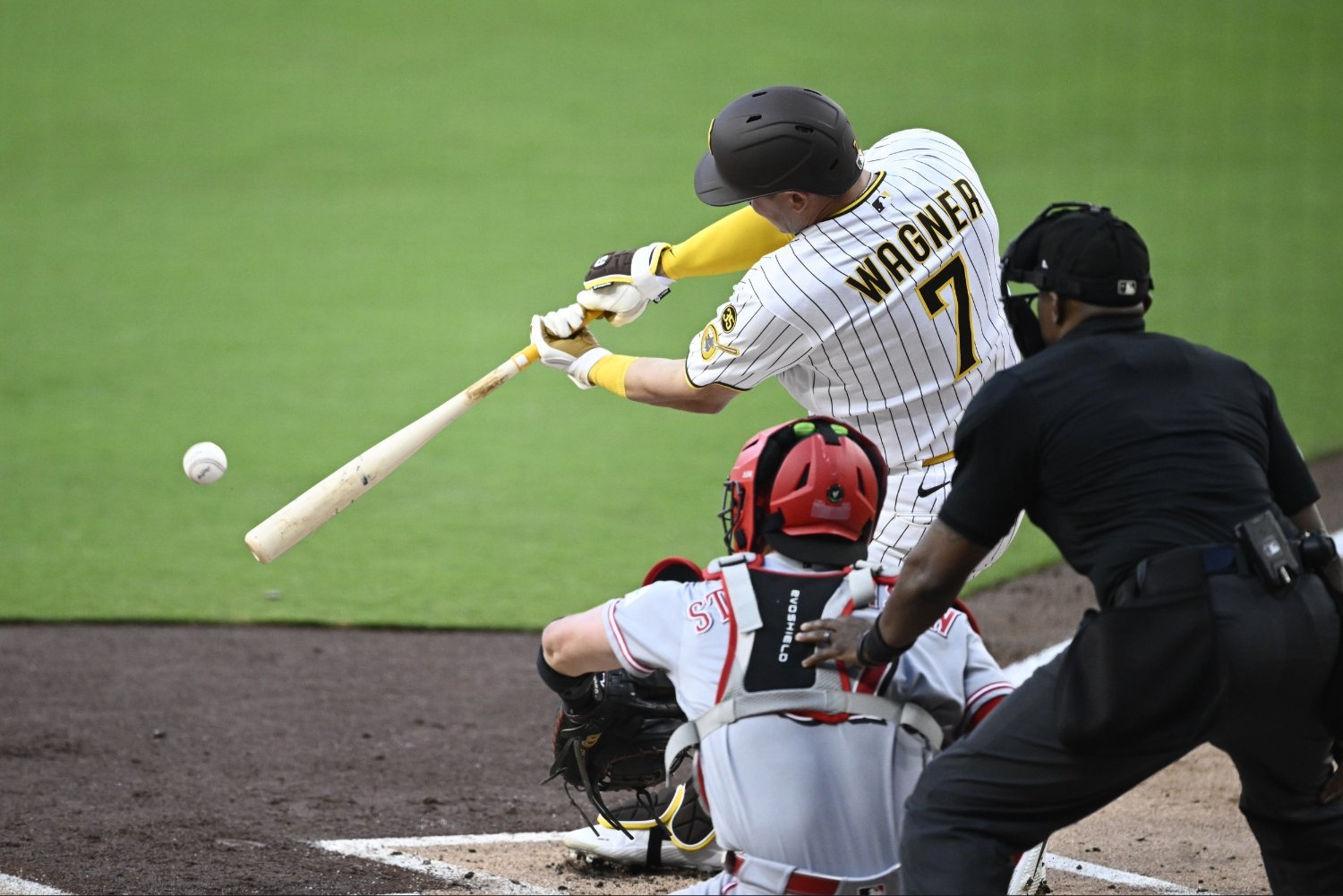 In a season in which Manny Machado, Jackson Merrill, and Fernando Tatis Jr. are performing far below expectations, the San Diego Padres have had to rely on a motley crew of journeymen. Miguel Andujar was the Padres’ best hitter in March and April (just don’t ask about May and June). Gavin Sheets and his career -1.4 bWAR has the best OPS among the team’s regulars. Now, the latest savior is designated hitter Will Wagner. Wagner, the son of Hall of Fame reliever Billy Wagner, has an .828 OPS in ten games for the Pads and more walks (six) than strikeouts (five). Can it last? Wagner spent four years at Liberty University, then was a mid-round selection by the Houston Astros in 2021. He made his major-league debut in 2024 with the Toronto Blue Jays, and last year he played 40 appearances for the eventual American League champions before being traded to the Padres. Only now, in his age-27 season, is he getting regular playing time, and that’s only because shortstop Xander Bogaerts' brief absence created a roster spot on the underperforming, injury-riddled big league squad. Wagner does have an .827 lifetime OPS in the minors, but his last double-digit home run season came in 2022. He hit ten that year. It’s his on-base percentage that boosts his production, and that’s driven by a high batting average; he’s a career .291 hitter in the minors. With just 27 stolen bases in the minors and one in the majors, Wagner leaves little doubt about what he is: a solid contact hitter. The questions are if that profile has a place in the major leagues today, and if he can sustain that profile in the bigs. To the latter, some underlying statistics look encouraging. It’s a small sample size, but his chase rate and walk percentage are elite. His whiff and strikeout rates are also good. That means he swings at good pitches and lays off bad pitches, which in turn means he’s more likely to get on base. Conversely, he doesn’t swing hard and doesn't hit the ball hard—he hasn’t pulled the ball in the air all season. Naturally, he's not going to produce much power. He needs to walk and hit for contact to be a valuable major leaguer, a difficult proposition in a game full of Skubals and Misiorowskis. But so far for the Padres, he’s done just that. He’s batting .318 on the season, and he has gotten on base in all but two of his starts. His high walk percentage has made him a high on-base gem for the Friars. There are warning signs in those numbers, though. His expected batting average is just .287, and he quite literally can’t hit lefties (he’s batting .000 against them). His walk rate is also more than double his career average, putting into question its sustainability. Considering all this, Wagner profiles, at best, as a useful platoon bat, and like all platoon hitters, they get exposed when they play everyday. The Padres have been able to hide him against lefties—his .000 average against them is from just two plate appearances—but since being called up from Triple-A on June 9, Wagner has played basically every day. The Padres are smart to wield the hot bat, but the stats indicate that it won’t be long before they’re looking for their next offensive savior. View the full article
 -
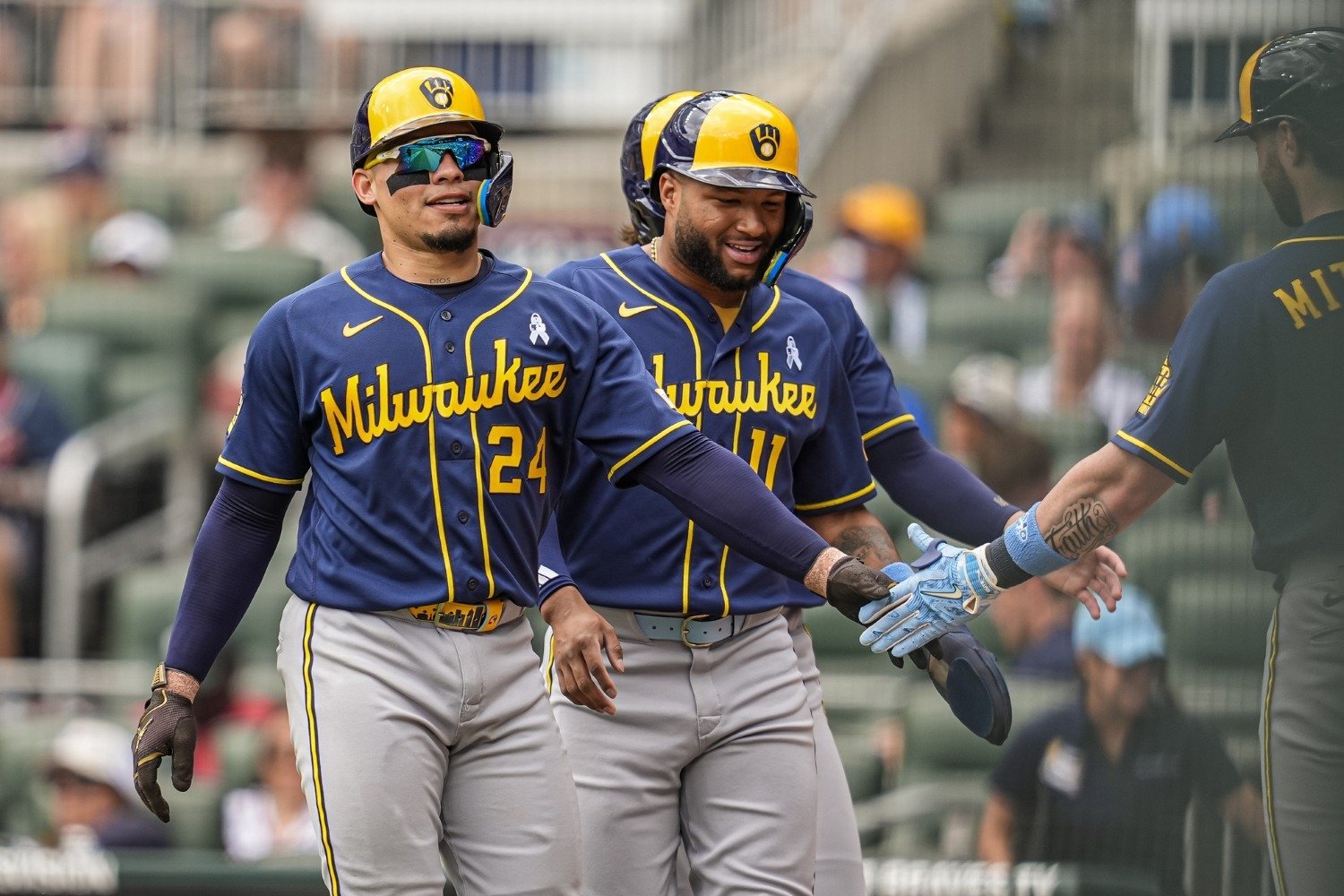 Weekly Snapshot: Record Last Week: 3-3 (Overall: 46-29) Runs Scored Last Week: 27 Runs Surrendered Last Week: 20 Standing: 1st in NL Central Game 70 (6/16) | MIL 2, CLE 1 Game 71 (6/17) | MIL 9, CLE 4 Game 72 (6/18) | CLE 4, MIL 2 Game 73 (6/19) | ATL 3, MIL 2 Game 74 (6/20) | ATL 4, MIL 3 Game 75 (6/21) | MIL 9, ATL 4 Game 70 | Brewers 2, Guardians 1 MIL Starter: Robert Gasser (5.2 IP, 2 H, 2 BB, 0 ER, 5 K) Top Performers: Brice Turang (2 H, HR, RBI) Garrett Mitchell (2 H, HR, RBI) Trevor Megill (1.0 IP, 0 H, 0 H, 2 K, SV) The Brewers opened the week at American Family Field behind Robert Gasser, taking on the Cleveland Guardians. It was an effective start for the young lefty, who went 5.2 innings of scoreless baseball, while the offense was powered by two solo homers from Brice Turang and Garett Mitchell. Mitchell goes deep (+20.1 WP%) Game 71 | Brewers 9, Guardians 4 MIL Starter: Brandon Sproat (3.2 IP, 2 H, 2 BB, 4 ER, 6 K) Top Performers: Cooper Pratt (2 H, RBI) Chad Patrick (3.1 IP, H, BB, 0 ER, 7 K) Christian Yelich (2 H, HR, 2 RBI) Brandon Sproat was on the wrong end of a rocky start on Wednesday, as despite going through the Guardians in order through the first 3 innings, a loss of command, then cramps, put an end to his day in a fourth inning marred by a Daniel Schneeman grand slam. Luckily, the Brewers brought their bats to play, scoring 7 against Gavin Williams before closing out the game that saw Cooper Pratt pick up his first big-league hit and RBI, 9-4. Jackson Chourio’s 2-run home run (+17.1 WP%) Game 72 | Guardians 4, Brewers 2 MIL Starter: Shane Drohan (5.0 IP, 3 H, 3 BB, ER, 3 K) Top Performers: Andrew Vaughn (H, 3 BB) Cooper Pratt (H, BB, RBI) Craig Yoho (1.0 IP, H, 0 BB, 0 ER, 2 K) The Guardians avoided the sweep despite a strong start from Shane Drohan on Thursday, as they used a trio of home runs to get to the Brewers' pen. Meanwhile, the Brewers' offense was unable to get the big hit, as 9 walks and 5 hits were only enough to generate 2 runs. Shane Drohan’s strong outing Game 73 | Braves 3, Brewers 2 MIL Starter: Jacob Misiorowski (6.0 IP, 5 H, BB, 2 ER, 7 K) Top Performers: Brice Turang (2 H, 2 RBI) Andrew Vaughn (2 H, 2B) Garrett Mitchell (2 H) Shifting to Atlanta, Jacob Misiorowski was strong in his outing, but still was outdueled by Martín Pérez, who (in tandem with the Braves bullpen) kept the Brewers offense quiet in a 3-2 victory. Misiorowski’s six innings of work Game 74 | Braves 4, Brewers 3 MIL Starter: Kyle Harrison (6.1 IP, 4 H, 0 BB, 2 ER, 7 K) Top Performers: William Contreras (2 H) Cooper Pratt (2 H) Trevor Megill (1.0 IP, 0 H, 0 ER, K) Kyle Harrison and Chris Sale locked up for a pitcher's duel on Saturday, but it was Ozzie Albies who stole the headlines by flipping the contest on its head in the 9th with a two-out, two-run walk-off home run to give the Braves a 4-3 win and a series victory. Kyle Harrison’s seven-strikeout day Game 75 | Brewers 9, Atlanta 4 MIL Starter: Robert Gasser (6.0 IP, 4 H, BB, 2 ER, 7 K) Top Performers: William Contreras (4 H, HR, 3 RBI) Sal Frelick (2 H, 2 RBI) David Hamilton (2 H, 2B, RBI) The Brewers were able to salvage a game from the Braves on Sunday, thanks to an eight-run second inning highlighted by a William Contreras 3-run home run. Meanwhile, in his second start of the week, Robert Gasser set a career high for innings pitched and strikeouts, working through six innings en route to a 9-4 Milwaukee win. Contreras' 3-run bomb (+10.6 WP%) Transactions: 06/16/26 - Designated IF Luis Rengifo for assignment. 06/16/26 - Sent RHP Brandon Woodruff on a rehab assignment to Wisconsin Timber Rattlers. 06/16/26 - Recalled SS Cooper Pratt from Nashville Sounds. Looking Ahead: Monday, 6/23 - Brewers @ Reds - 6:10 PM CDT Tuesday, 6/24 - Brewers @ Reds - 6:10 PM CDT Wednesday, 6/25 - Brewers @ Reds - 6:10 PM CDT Friday, 6/27 - Cubs @ Brewers - 6:45 PM CDT Saturday, 6/28 - Cubs @ Brewers - 6:10 PM CDT Sunday, 6/29 - Cubs @ Brewers - 1:10 PM CDT View the full article
 -
 Josiah Hartshorn has, for good reason, garnered many of the headlines around the Cubs farm system this year. He's the sexiest prospect of the moment for this team. He's the teenager already playing at High-A, and looking utterly dynamic. But he's still not the Cubs' top prospect. For now, that honor remains with Jefferson Rojas, who has had a very strong 2026 campaign in his own right. One reason we may be sleeping on Rojas is that the right-handed infielder wasn't good in his first action in Double-A last year. In his first 39 games in Tennessee (now Knoxville), the former IFA signing struggled to the tune of a 58 wRC+, swatting no home runs and posting just a .041 ISO. It's true that he was just 20 years old, and context should tell us that it's impressive any 20-year-old make it to Double-A, but it wasn't inspiring. Then, spring training happened. Sporting a more athletic frame, the non-roster invitee blasted four bombs in the leadup to the regular season. Now, we should always take a spring training performance with a grain of salt, but mechanical changes and young players sporting transformed bodies are things to note, and so far, Rojas has proven that his spring was a sign of things to come. Another reason people may be sleeping on Rojas; he got off to a bit of a rough start in 2026, despite the great spring performance. Through May 24, the shortstop had just a 95 wRC+—certainly an improvement over his sub-60 wRC+ last year, but not the start that we all dreamed on after March, either. Rojas only had four round-trippers and certainly looked better, but was still leaving something to be desired. A switch flipped on May 26 for the now-21 year old. He went 2-4 with a home run that day, and things seemed to fall into place. Over his last 24 games (107 PA), Rojas has absolutely turned it on. Hitting .383 while blasting seven bombs, Rojas has a sparkling 190 wRC+ over that span, enough to raise his season number to a 136 wRC+ on the year. With a strikeout rate of 18% and walking 9% of the time, he's kind of doing it all at the plate. Making consistent contact while hitting for power: it's impressive. All of this, however, leads us to one important question: Exactly where does Rojas fit into the Cubs' long-term plan? Currently, the Cubs are running a pretty crowded infield crew. With Dansby Swanson only mid-way through a seven-year pact, the Cubs went out over the winter and added Alex Bregman to the infield for the next five seasons. Then, they extended second baseman Nico Hoerner for another six years. This doesn't even factor in former top draft pick Matt Shaw (who's been pressed into outfield duty due to the overcrowding) or breakout prospect Pedro Ramírez. Even for a 21-year-old who probably has another year of marinating to do in the minors, that's a logjam. One possible solution is that Rojas could move positions, which is probably in the cards anyway. While an alright shortstop today, there's a good chance that Rojas will either outgrow the position or never be good enough to play it longer-term at the MLB level. Baseball America describes his defense as follows: "In the field, Rojas is an average shortstop defender. His footwork and hands leave something to be desired and he’s prone to poorly timed dives on extra-effort plays." They go on to point out that he's got a plus arm and could stick at shortstop, but he's got work to do. Instead, a plus arm and his athleticism would certainly allow you to dream of a potential third base, left field, or right field transition. The Cubs, likely blocked at second and third base for the balance of the decade, could see what Rojas's bat would do in the outfield. Prior to 2026, I'm not sure he'd ever showed the pop to feel confident about that transition, but a 136 wRC+ plays anywhere. Right now, rather than a guy who might hit 10 homers a year, he looks like someone who might hit 20 of them. The Cubs do have some outfield prospects in the system (the aforementioned Hartshorn, Kevin Alcántara, as well as 2025 first-round pick Ethan Conrad and second-round pick Kane Kepley, just to name a few), but the team is currently slated to lose both Ian Happ and Seiya Suzuki in free agency next year. It's a real pathway to cementing himself with the parent club some day. Beyond moving around chess pieces in order to find Rojas a home with the Cubs, Jed Hoyer has another option: trade his top prospect. While Shaw is looking pretty good in right field and Ramírez could conceivably handle left, the shortstop-to-corner-outfielder pipeline is not a common one, and it's probably not the best way to get a ton of slug into the lineup down the road. All three of them have a good amount of overlap in what they do—and because of that, there probably isn't a home for all three at the same time, either. It's unlikely that Rojas will be making any sort of impact in Chicago this year. If you're interested in a mid-year trade, Rojas is the best combination of being able to bring back a haul and not costing you much in the short term. Obviously, Rojas is too good to be sent in a deadline deal for a rental. Twenty-one-year-old infielders who might stick at shortstop with a 136 wRC+ in Double-A don't grow on trees, What he would be able to do, however, is to play a starring role in a trade for a controllable starter (like, say, Reid Detmers?). It might be a tough pill to swallow, but the Cubs are going to have to make some tough decisions moving forward. Prospects are capital, first and foremost, and sometimes that capital needs to be spent via trade. Getting a controlled starting pitcher and continuing to build out the pitching depth (something the organization lacks) could be too good a chance to pass up. If you're unwilling to include Hartshorn in a big trade, perhaps the somewhat-blocked Rojas would be a more palatable loss. The good news is that the Cubs probably don't have to make a decision right now—or even in July—on the future of their big-time prospect. They can choose to go a different route via trade that doesn't involve Shaw, Ramírez or Rojas, or perhaps (if things fall off the rails) they'll stand pat. But a trade to thin this herd will have to happen at some point, either way. No matter what choice they make—either shipping out some of the overlap to give their infielder a free run to the majors or trading Rojas for a piece they feel they could use better—none of these are ultimately bad things. The only reason we're having these kinds of discussions are because he's been darn good. And regardless of what the Cubs end up doing, it seems quite obvious today that Rojas is about to play an important role in the future of the Cubs, one way or another. It will be either as a member of the North Siders, or as a primary trade chip. What would you prefer the Cubs do with Jefferson Rojas? Would you rather trade Matt Shaw or Pedro Ramirez? And what position do you think Rojas will eventually play? Let us know in the comment section below! View the full article
 -
 This week at Twins Daily, we’re continuing our series of deep dives into candidates for the number three overall pick in the 2026 draft. It has long been considered a given that UCLA shortstop Roch Cholowsky is a lock to be the first wire-to-wire number one ranked player since Adley Rutschman in 2019. While it's still more likely than not that Cholowsky is the pick at number one (or two), Texas HS shortstop Grady Emerson and Georgia Tech catcher Vahn Lackey have narrowed the gap significantly. Cholowsky is no longer the number one player on every major industry board. The UCLA shortstop recently made it to pick three in a recent Keith Law mock draft. Let’s be prepared and dig into Roch’s profile. Bio and Background Originally hailing from Chandler, Arizona, Cholowsky grew up around baseball. His father was a standout college player at Cal, and played 9 MiLB seasons after being drafted by the Cardinals in 1991, before becoming a long-time scout. Unlike Vahn Lackey, Cholowsky has been on the map as a notable prospect for a long time. Cholowsky was ranked as the 35th player overall by consensus ahead of the 2023 MLB Draft. You’ll remember that draft class was absolutely loaded. In addition to its famous top five (Skenes, Crews, Langford, Clark, and Jenkins), other top-50 notables include Aidan Miller, Kevin McGonigle, and Colt Emerson. The Twins were one of a handful of teams interested in signing Cholowsky as a prep prospect (the White Sox were another) with their Comp A pick. They eventually used that selection on Charlee Soto after Cholowsky would not be dissuaded from his commitment to UCLA. Cholowsky was the highest-ranked unselected player in his class. College Stats Cholowsky played 52 games as a freshman, with around two-thirds coming at third base, and the rest at shortstop. He showed right away why he was such a highly regarded prep prospect. Cholowsky hit .308/.399/.500 (115 wRC+) with 8 home runs (21 XBH) in 235 plate appearances. It was a debut season that put the college baseball world on notice and raised expectations significantly ahead of his sophomore season. As a sophomore, Cholowsky ascended. After taking over as the Bruins everyday shortstop, he managed a .353/.480/.710 line with 23 home runs (43 XBH), a 13.9 BB%, a 9.3 K%, and a 164 wRC+, one of the best offensive seasons in college baseball in 2025. Cholowsky also developed his least discussed superpower, getting hit by 21 pitches along the way. In particular, Cholowsky’s bat-to-ball numbers in-zone improved markedly as a sophomore, as did his approach at the plate. Let’s get to the center of the Cholowsky discourse, his junior season. Was it a fall-off, or is it prospect fatigue? While 2026 wasn’t as exceptional as 2025, it’s a similar trap Drew Burress set for himself after his freshman and sophomore seasons: an almost impossibly high bar. In 2026, Cholowsky hit .320/.452/.636 with 21 home runs (31 XBH), matching 12% walk and strikeout rates, and a 146 wRC+. Not as exceptional as 2025, but not too shabby, either. Cholowsky was hit by a further 25 pitches in 2026. Perhaps it was his (and UCLA’s) uninspiring performance in the postseason, crashing out to St. Mary’s during Regionals, that left a bad taste. Still, I think the narrative of a fall-off might be overthinking it a bit. Unpacking Cholowsky’s numbers further cements his prospect case as fairly unimpeachable. An overall contact rate over 80% (approaching 90% in zone), a chase rate just over 20%, an average EV and EV90 above the 90th percentile in D1 baseball. Roch Cholowsky has a complete offensive profile. Let’s dig into his swing, though, as I do think you can level some minor criticisms here. I don’t love it (who cares?). Cholowsky has, from this seat, some inefficient rotation in his swing, a tendency that might give him some fits against velocity, especially up, or be out in front enough to maximize pulled fly balls. It hasn’t slowed him during his amateur baseball career, but I’d watch out for it as he begins to face better pitching in pro ball. Wood Bat Performance As when we examined Lackey, we should take a moment to examine Cholowsky’s record with wooden bats. Similarly to Lackey, it’s not an extensive history or a particularly impressive one. Cholowsky played for Orleans for a brief stint on the Cape in 2024, managing a .666 OPS in 65 plate appearances. This was immediately following Cholowsky’s freshman college season. While it’d be nice to have Cape performance as a feather in his cap, this run of games was before he’d truly taken off as a collegiate prospect. Defensive Profile There’s been so much discussion and conjecture on Cholowsky as a hitter in 2026, that his defense has been given short shrift. In my write up of Roch ahead of the 2023 draft, I described him as a ‘legitimately excellent defensive shortstop.’ He’s done nothing but cement that sterling defensive reputation in his three years at UCLA. In his sophomore season, Cholowsky was the top college shortstop in the country, amassing +20 DRS (per D1 Baseball). For context, he’s the only shortstop to accrue 20 runs saved or more since D1 began tracking defense using the metric in 2023. While he isn’t the smoothest mover, he’s athletic and explosive at the position. Cholowsky has a history as a high school quarterback and it’s easy to see the parallels in his defensive game at shortstop. He’s particularly adept at making throws on the run, leveraging outstanding body control, a plus arm, and a pinpoint internal clock to augment extremely soft and reliable hands. He’s a lock to stick at the position and Brandon Crawford defensive comps (a player Cholowsky has long admired) are not out of pocket. What Teammates and Coaches Say Cholowsky has earned a reputation as a vocal leader on and off the diamond. Away from baseball, Cholowsky became known at UCLA for finding creative ways to promote team togetherness. "He's always planning things, which is really important as a leader," shared teammate Phoenix Call. "He’ll always make sure everyone (on our team) is there’" Cholowsky developed a close relationship with UCLA Head Coach John Savage in his time in Westwood. Cholowsky credited Savage for sticking with him while he was adjusting to college baseball as a freshman. Savage, in turn, reflected glowingly on having an asset like Cholowsky on his team, remarking that "there’s nothing better than your best player playing the way he plays. He was the offensive player of the year, he was the defensive player of the year (in 2025). That’s a combination you just don’t see’" It remains unlikely that Roch falls out of the top two in the draft. We’re also accustomed to expect chaos in round one. In the unlikely event that he falls, I’d be hard pressed to imagine a scenario where the Twins don’t take Cholowsky, a player they have long coveted, at number three overall. That’s his floor in this draft. View the full article
 -
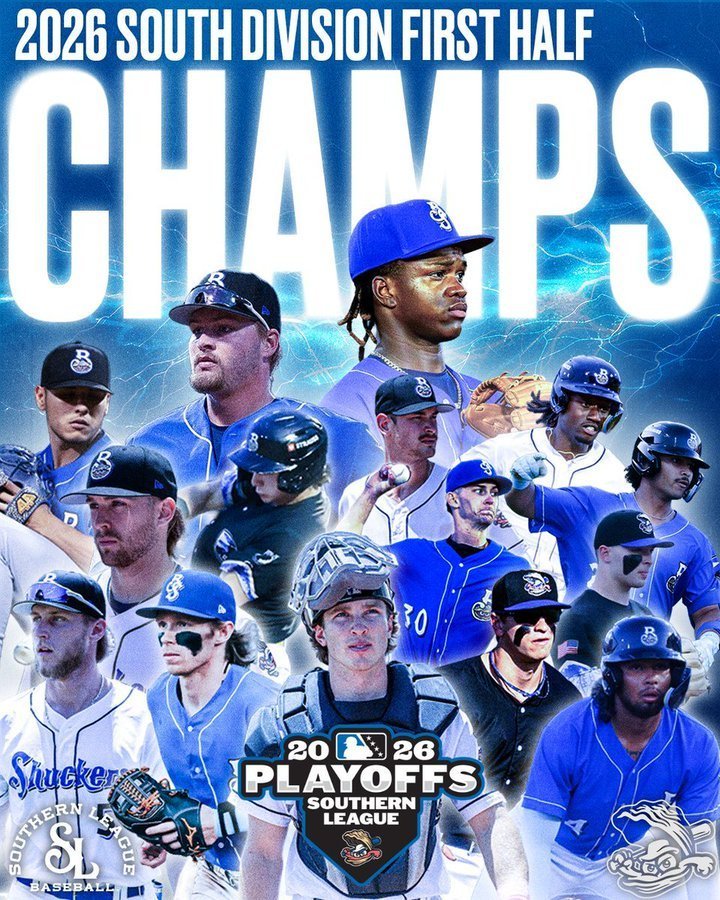 For the week, Biloxi (3-1) and Wisconsin (3-2) were series winners, Wilson (3-3) managed a series split and Nashville (2-4) came up short. Transactions: (from credible sources) OF Alexander Frias promoted to Low-A Wilson from ACL Brewers LHP Santiago Martinez placed on DSL Brewers Gold’s 7-day injured list Game Action: Nashville Pre-Game Media Notes Final: Memphis (Cardinals) 10, Nashville 8 Box Score Via the Sounds’ website, game details and we encourage readers to review affiliate write-ups as part of their Link Report routine: Seven-Run Rally By Nashville Falls Short to Conclude First Half All the factors seemed to line up against Nashville on Sunday, playing on the road against a Memphis team looking to clinch the first half International League title. Further, Memphis knew that title rival Rochester already trailed 6-0 in its contest (MILB – shouldn’t these games have started at the same exact time?), while the Sounds had no starting pitcher available after RHP Brett Wichrowski was placed on the injured list on Saturday. That meant Sounds’ spot starter RHP Will Childers (first start since 2023) was likely to toss a lot of strikes in an attempt to cover more than one inning. Childers succeeded on the first part (26 strikes in 33 pitches), but the Redbirds simply took advantage of it: lead-off double, everybody safe on sacrifice bunt, RBI single, 3-run homer, ground out, solo homer – i.e. a 5-0 first inning lead. Of course, 22-year old DH/INF Luke Adams was undeterred, hitting a ball 91.7mph in the first inning (fly out), blasting a solo homer 384 feet in the 4th inning (to trail 6-1), hitting the next solo homer 437 feet (to trail 10-2 in the 6th inning), missing the chance at a 3-run blast in the 7th inning (pop up to still trail 10-5), then definitely not missing the next one: 404-foot, 3-run homer to cut the deficit to 10-8 with 1 out in the top of the 9th inning. RHP Kaleb Bowman (2 IP, 0 R, 1 K), rehabbing LHP Jared Koenig (2/3 IP, 0 R, 2 Ks) and LHP Mark Manfredi (1 IP, 0 R, 3 Ks) issued blanks over the final frames at least give the offense a chance at a miracle comeback. Unfortunately, Adams’ last blast was the team’s final hit, with Luke (3-for-5, 5 RBIs) accounting for 50% of the team’s base knocks. Koenig’s appearance in consecutive games over the weekend (95.6mph peak velocity on Saturday, 95.0mph on Sunday) is typically a sign that a rehabbing player is ready to be activated by the Brewers. This was also his 12th outing for Nashville since May 29, so let’s see if he’s activated early this week. Sounds’ Extras: Nashville’s 6-man pitching committee only issued 2 walks, but collectively conceded 15 hits, with RHP Junior Fernandez (1 1/3 IP, 4 R, 1 K) putting up a similar line as Childers (1 IP, 5 R, 0 Ks). The Sounds’ offense did draw 9 walks, but went 2-for-9 with runners in scoring position. Adams registered the team’s only extra-base hits. C Ramon Rodriguez (1-for-3, walk), 3B Jett Williams (0-for-3, 2 walks, RBI, 2 SBs) and OF Tyler Black (1-for-4, walk, RBI, SB) each had respectable afternoons at the plate. Next week’s outlook: Nashville comes home to prepare for 6 games against Braves’ affiliate Gwinnett, with the first game scheduled for Tuesday evening. Biloxi Pre-Game Media Notes Game One Final: Biloxi 3, Columbus (Braves) 2 (in 7 innings) Box Score Game Two Final: Biloxi 9, Columbus 4 (in 7 innings) Box Score Via the Shuckers’ website, doubleheader details: Shuckers Clinch South Division in Doubleheader Domination After playing just 2 1/2 out of 6 scheduled contests over the prior 5 days, Mother Nature finally cooperated to give Biloxi the chance to clinch the first half Southern League South division title. The first game was a resumption of Friday’s suspended contest, tied 1-1 in the bottom of the 3rd inning in a game scheduled to go only 7 frames. Despite only leading Pensacola (playing elsewhere) by 1/2 game in the standings, the Shuckers knew that a victory in either end of their Sunday doubleheader would give them the title based on the first tie-breaker. OF Eric Brown Jr. (1-for-2, walk) triggered a rally from a 2-1 deficit in the 5th inning of the first game, reaching on an infield single and aggressively claiming second base on a fly out to center field. RBI singles from 2B Dylan O’Rae (2-for-4) and 1B Blake Burke (1-for-3, walk) followed to give Biloxi the only lead they would require at 3-2. Stellar RHP Cameron Wagoner (2 IP, 0 R, 1 H, 1 BB, 2 Ks) had minimal difficulty closing it out, working around a single in the 6th inning and an 8-pitch walk in the final frame. As you’ve read in the linked game report, the talented Shuckers did not rest on their laurels, with 21-year old RHP Bishop Letson (5 IP, 1 R, 5 H, 3 BB, 1 HBP, 4 Ks) delivering his 4th consecutive solid outing before Burke, 3B Andrew Fischer, SS Jesus Made and OF Mike Boeve had fun facing the Clingstones’ relief corps over the final 3 innings: Burke also plays fine defense at the cold corner: Shuckers’ Extras: 20-year old Manuel Rodriguez (2 IP, 1 R, 2 H, 0 BB, 1 K) covered the middle innings of the first game, conceding his 17th homer of the season’s first half to commence the 5th inning. The next Clingstone hitter singled and stole second base, but Rodriguez buckled down to strand him, before Brown Jr. started the rally. The Shuckers outhit Columbus 20-11 over the two games, with Made (4-for-6, HR, walk, 4 RBIs) and O’Rae (4-for-7, triple, double, walk, 2 RBIs, SB) leading the way. 25-year old Brown Jr. (.230 AVG, .697 OPS) may not be doing quite what was expected of the 27th overall pick of the 2022 draft, but his .361 on-base percentage and solid defense (center field in these 2 games; also strong in middle infield) may still pave the way to the Show one day. While RHP Travis Smith (1 IP, 3 R, 0 Ks) struggled in his 2nd-ever AA outing, RHP Edwin Jimenez (1 IP, 0 R, 1 K) had no such difficulty in finishing out the weekend. Next week’s outlook: Biloxi travels to Montgomery, Alabama for a 6-game set against the Rays’ affiliate, with the series kicking off on Tuesday evening. Wisconsin Pre-Game Media Notes Rain Out: Wisconsin at Quad Cities (Royals) Via the Timber Rattlers’ website, rain out details: Rattlers and River Bandits Rained Out For those a bit frustrated that recent High-A graduates Andrew Fischer and Josh Adamczewski faced numerous rain-outs it the AA Southern League this week, aren’t we happy that they were in Biloxi on Sunday instead of resting in Iowa? Next week’s outlook: Wisconsin returns home to play 6 games against Twins’ affiliate Cedar Rapids, starting on Tuesday. Wilson Pre-Game Media Notes Final: Charleston (Rays) 11, Wilson 2 Box Score Via the Warbirds’ website, game details: Charleston Overpowers Wilson in Series Finale Starting 20-year old LHP Joey Broughton followed up his scoreless Tuesday start with a solid first inning here (3 Ks, 2 singles, 0 runs), but exited immediately after that frame. Hopefully it was a planned short outing, but we’ll have to watch his status. Wilson needed to get more than one run out of its 4-walk, 1 single second inning, but an out on the basepaths hurt them before LHP Enderson Mercado (1 2/3 IP, 6 R, 4 H, 4 BB, 1 K) was touched for 5 runs in the next half-inning. After stranding the bases loaded in the 2nd frame, 2B Filippo Di Turi doubled (1-for-3, 2 walks, RBI, SB) home a run to narrow the gap to 6-2 with runners on 2nd and 3rd and nobody out in the 3rd inning, but both baserunners were stranded as part of a 2-for-13 afternoon with runners in scoring position. After a 1B Frederi Montero (1-for-3, 2 walks) single and Di Turi walk to open the 5th inning resulted in zero runs, the RiverDogs managed to push 2 runs across against RHP Thomas Conrad (3 1/3 IP, 2 R, 5 H, 2 BB, 1 K) to essentially put the game out of reach. Warbirds’ Extras: RHP Jose Meneses (2 IP, 0 R, 3 Ks; 2.06 ERA) dominated yet again in relief, though RHP Ismael Yanez (1 IP, 3 R, 2 Ks) struggled. Despite just 2 runs scored, Team Wilson did have 7 hits and draw 10 walks, so there were some additional decent lines in the box score: 3B Juan Ortuno (2-for-5, SB), SS Brady Ebel (1-for-4, double, walk), OF Pedro Ibarguen (1-for-4, walk), OF Handelfry Encarnacion (0-for-2, 3 walks). Next week’s outlook: Wilson make the drive over to Fredericksburg, Virginia for a 6-game series against the Nationals’ affiliate, commencing on Tuesday. We hope that you enjoy the Minor League Link Report. On Monday, four rookie level minor league games are on the agenda, including DSL Brewers Blue hosting DSL Red Sox Red in a doubleheader at 9:00am CST. DSL Brewers Gold play at DSL Reds at 10:00am, while the ACL Brewers play at the ACL Diamondbacks at 8:00pm CST. Elsewhere, the Milwaukee Brewers commence their series at the Reds at 6:10pm CST. Organizational Scoreboard including starting pitcher info, game times, MiLB TV links, and box scores Current Milwaukee Brewers Organization Batting Stats and Depth Current Milwaukee Brewers Organization Pitching Stats and Depth View the full article
 -
 As a 12-time All-Star, two-time MVP and the last Triple Crown winner, Miguel Cabrera was one hitter that no pitcher looked forward to facing. On this day 20 years ago, the Baltimore Orioles learned that even intentionally walking him wasn’t a sure thing. With the Orioles and Florida Marlins locked in a 5-5 tie in the 10th inning, Cabrera lined an intentional walk pitch that wasn’t far enough outside into centerfield for the go-ahead RBI as Florida completed a memorable comeback, 8-5. After Baltimore scored four runs in the eighth inning to break a 1-1 tie, the Marlins trailed 5-1 entering the top of the ninth at Camden Yards on June 22, 2006. Florida was able to force extra innings by answering with four runs in the inning. After singles by Cabrera and Jeremy Hermida chased LaTroy Hawkins, Baltimore turned to closer Chris Ray. Ray’s second pitch was hit by Josh Willingham for a sacrifice fly, but it also accounted for the second out. With Ray one strike away from ending it, Joe Borchard belted his 0-2 pitch the other way for a two-run home run to cut the lead to 5-4. Four pitches later, pinch hitter West Helms tied things up with a solo shot to left field. With the score now tied 5-5, Randy Messenger was able to strand the winning run at second in the bottom of the ninth to get the game to extra innings. On the first pitch from Baltimore’s Todd Williams in the top of the 10th, Hanley Ramírez legged out a bunt single. Following a groundout from Mike Jacobs one pitch later, Cabrera came to the plate with the go-ahead run on second and first base open. At the time, free passes were not automatic. Catcher Ramón Hernández stood way outside to signal an intentional walk, but his pitch was lobbed within arms’ reach of Cabrera. The Marlins third baseman stayed back and lined it to center, scoring Ramírez for the go-ahead run. That’s all that Florida would need, but not all it would get. Williams bounced back by striking out Ross before the Orioles turned to lefty Kurt Birkins. Birkins allowed a single to Hermida before plunking Josh Willingham on a 3-2 pitch to load the bases. Borchard followed by grounding one to short, but an errant throw from former MVP Miguel Tejada allowed two runs to score and just like that, the Marlins had gone from down to their last strike to up 8-5. In the bottom of the 10th, Joe Borowski needed just nine pitches to retire the Orioles in order and collect the save. Hermida finished with four hits and two runs scored in the win. Cabrera and Reggie Abercrombie each added two hits in the victory. Hernández had a pair of solo home runs for Baltimore, including a shot to lead off the bottom of the eighth inning. After splitting the first two games of the series, the thrilling comeback gave Florida the series victory. Over the course of his Hall of Fame career, Cabrera had plenty of big hits and moments. None, however, were quite like his winning single that came at Camden Yards on this day two decades ago. View the full article
