


DiamondCentric
-
Posts
2,631 -
Joined
-
Last visited
Never
Content Type
Profiles
Forums
Events
News
Tutorials & Help
Major League Baseball Videos
Guides & Resources
Store
Downloads
Gallery
Everything posted by DiamondCentric
-

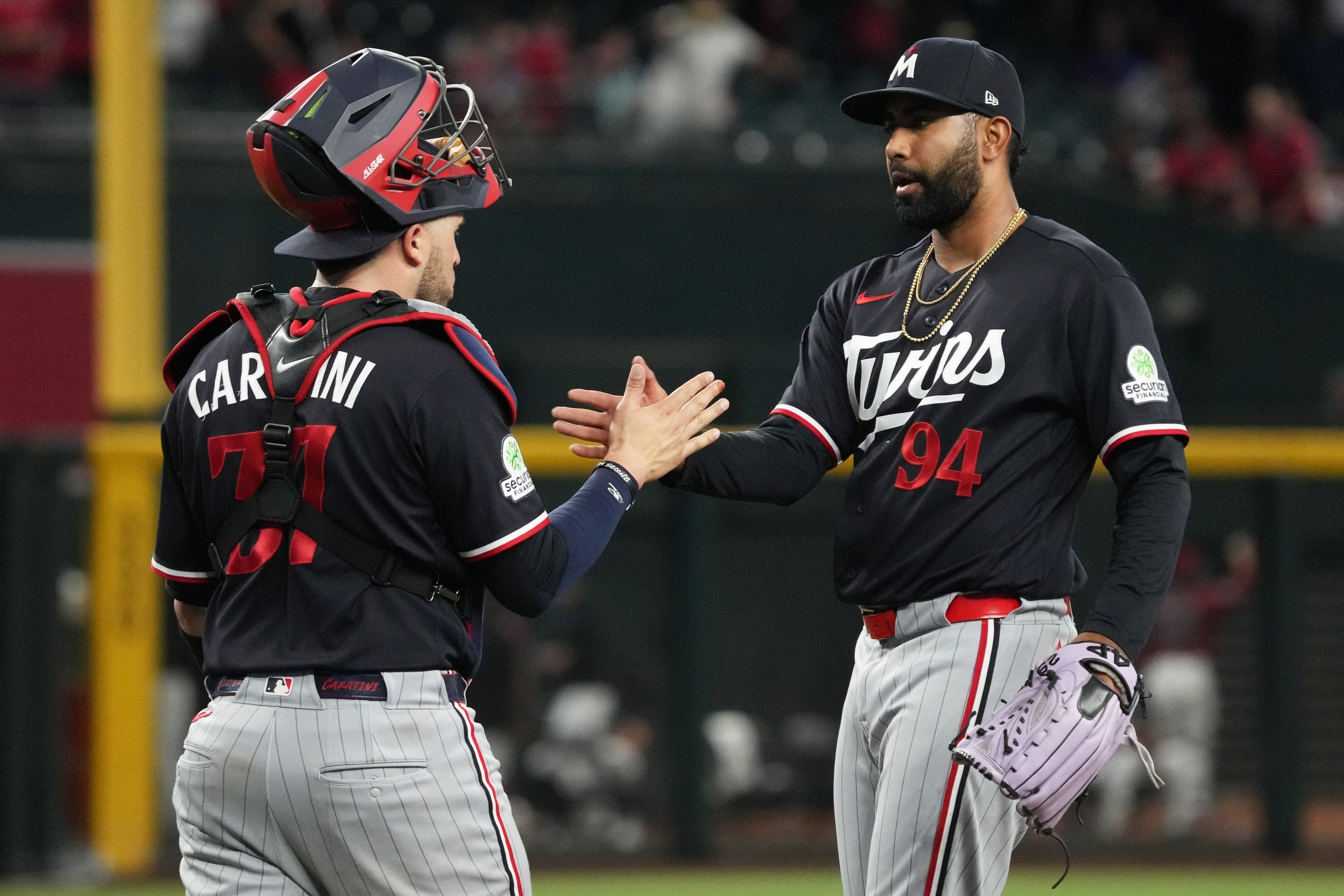 Box Score SP: Taj Bradley IP, 5.0 3 H, 2 ER, 2 BB, 4 K (91 pitches, 59 strikes (65%)) Home Runs: Byron Buxton (24) Top 3 WPA: Brooks Lee (0.20), Bradley (0.18), Trevor Larnach (0.10) Win Probability Chart (via FanGraphs) Life in the desert isn't for the weak at heart. The Twins lost their winning streak in Phoenix late on Thursday night, and as a monsoon rolled into town with 100 degrees at its back the Twins hoped to storm back into the win column. The air inside of Chase Field was a balmy 80 degrees, and their former ace Zac Gallen looked to keep the Twins offense contained between the lines. Taj Bradley took the rock for the visiting Twins, and he hoped to match the outside temperature on the radar gun early and often. Both of those things happened on Friday night, and both worked in the Twins' favor. Breaking Containment One Single at a Time The Twins offense wasn't the reason they lost their winning streak, and the hits kept on coming at Chase Field against a less-than-sharp Gallen. Trevor Larnach started things off as he has been, with a quality at-bat and a looping single to the outfield grass. Byron Buxton and Kody Clemens couldn't move Trevor along, but Josh Bell got his wheels spinning and then some with a booming double down the right field line. Thanks to an odd mesh wall and a once-in-a-lifetime bad hop, the first Twins run couldn't transpire because Bell's double bounded off the ground and straight up and sideways over the wall to become the ground-rule variety. Just when it looked like Thursday night's bad luck would keep on rolling across the artificial desert turf, Royce Lewis didn't chase Gallen's off speed pitches and earned a walk to load the bases. Brooks Lee unloaded them. 2-0 Twins! Gallen then took down eight Twins batters in a row, and it looked like he was beginning to find his way. Then the top of the fourth occurred, Lewis started the inning off with a strikeout, and he ended the inning with a pop out. While Twins fans can't be excited about that aspect of the inning, anytime the same batter registers two outs in an inning it bodes pretty well for the team. Lee started off a string of five straight singles, most of them of the cue shot or seeing-eye variety. Ryan Kreidler had made his presence felt with a web gem against Corbin Carroll in the bottom of the first. This time it was Kreidler's single that pushed the lead to 3-0. Larnach's single made it 5-0, and Clemens finished things off with yet another single to post Bradley to a 6-0 lead before he could throw a pitch in the fourth. Bradley Heats Up the Desert After a red hot start to his season, Bradley hadn't completed five innings of work in three of his last four outings. Getting the lead early definately helped Taj navigate two walks and a bunt single in the opening frames, but he lit up the strike zone with upper-90's heaters and nasty cutters. On any other night, Bradley's dominance would have been the story of the game. The Hits Just Keep on Coming And coming...and coming...and coming. If you thought batting around in the fourth inning was fun, how about batting 14 men across 29 minutes in the fifth inning? Gallen stayed on to wear it some more with the Diamondbacks having to throw an unplanned bullpen game on Thursday and having to scratch their starter for Sunday earlier in the week. He wore it and then some. Lee started things off with a triple, Victor Caratini then blasted a double to the gap in right-center to plate Lee. Luke Keaschall kept the line moving with a single to end Gallen's evening, but Kreidler greeted Yilber Diaz rudely with a single to plate Caratini. Diaz then walked Larnach to load the bases with nobody out. By the time Buxton touched home plate and got his handshakes and hugs finished, the bases were all cleaned up and the Twins were now up 12-0! It looked like Diaz would finish off the inning at that point, getting two of the next three batters out. Lee kept his cycle alive with a ground-rule double, however, and then Caratini stole his RBI with a single that plated Bell and Lee to make it 14-0. Keaschall singled to keep the inning alive even longer, and then Kreidler showed why Derek Shelton should stop platooning him at shortstop and just give him the job already. 16-0 Twins on a Kreidler bomb triple off the center field wall. How Does a Game This Lopsided End? The Twins were in offensive record territory as they headed into the sixth inning, but both teams decided that enough was enough. After Bradley finally proved he was in fact a human being and surrendered a two-run homer in the bottom of the fifth, the whole-sale position changes became the name of the game. Kyler Fedko replaced Buxton in the lineup, and anyone with "All Star" next to their name in the Arizona lineup likewise took a seat. Bradley finished his five innings, but with the delay and the lack of need to extend his evening the Twins bullpen got the rest of the ballgame. So what was left to watch? Lewis was the only Twins starter to not get a hit in the game, and he launched a lead-off double to the gap in left to start the top of the seventh. Lee needed a homer to complete the cycle, but he flew out to keep his 50 at-bat without a strikeout streak alive without a cycle highlight...yet. Justin Lawrence is worth watching, because it takes a unique brand of courage to come into a 16-2 ballgame in the seventh inning and walk the first three men that you face. That actually happened. Certain things could not happen in the final innings of a ballgame where the Diamondbacks had all but surrendered. The first, second, and third things all are the same. Don't. Walk. People. Luckily for Lawrence, Tim Tawa was standing in the box instead of Marte with the bases loaded and nobody out and he went down swinging. Geraldo Perdomo was still in the game, however, and he took another walk to start the final DFA paperwork on Lawrence. Ildemaro Vargas probably completed that paperwork with a bases clearing double to make it 16-6 and force Shelton's hand in bringing in Eric Orze to save the day...after the inning started with a 14-run lead. Lawrence has glimpses of amazing "stuff," but glimpses simply haven't been getting three outs without surrendering game-changing amounts of runs. Tonight seemed like an unfortuneate breaking point, on what was otherwise a joyous evening for the Twins. With the game now 16-7, and most of Twins Territory already nestled soundly in their beds with visions of a blowout still firmly entrenched in their heads, those still up and watching this bullpen disaster unfolding couldn't get their final seven outs counted fast enough. The Diamondbacks took the unwatchable nature of the bottom of the seventh, and decided to one-up the Twins by bringing Vargas in with his 38 mph eephus pitches after Philip Abner couldn't get out of the inning. Of course, Vargas walked Austin Martin so that Bell could hit into a double play. Why not. Lee came up second in the top of the ninth to get a second crack at his cycle against Vargas' overhand slowpitch. The career ERA of 3.60 that Vargas brought into the outing actually got lower, and Lee popped up to end anything worth watching tonight. Great win, rough landing, let's take the series tomorrow. What’s Next? The Twins look to take another road series in the desert heat on Father's Day. Both the Twins and the Diamondbacks are waiting to recover from this game before naming their starter for Sunday's tilt. First pitch, by someone, is scheduled for 2:15pm CDT. Postgame Interviews Bullpen Usage Spreadsheet MON TUE THU FRI SAT TOT Lawrence 0 0 18 0 40 58 Adams 0 13 0 42 0 55 Orze 15 0 12 0 24 51 Laweryson 0 20 17 5 0 42 Gómez 15 0 0 0 7 22 Rogers 6 0 15 0 0 21 Morris 9 0 8 0 0 17 Banda 0 0 0 0 12 12 Paredes 0 0 0 0 0 0 View the full article
 -
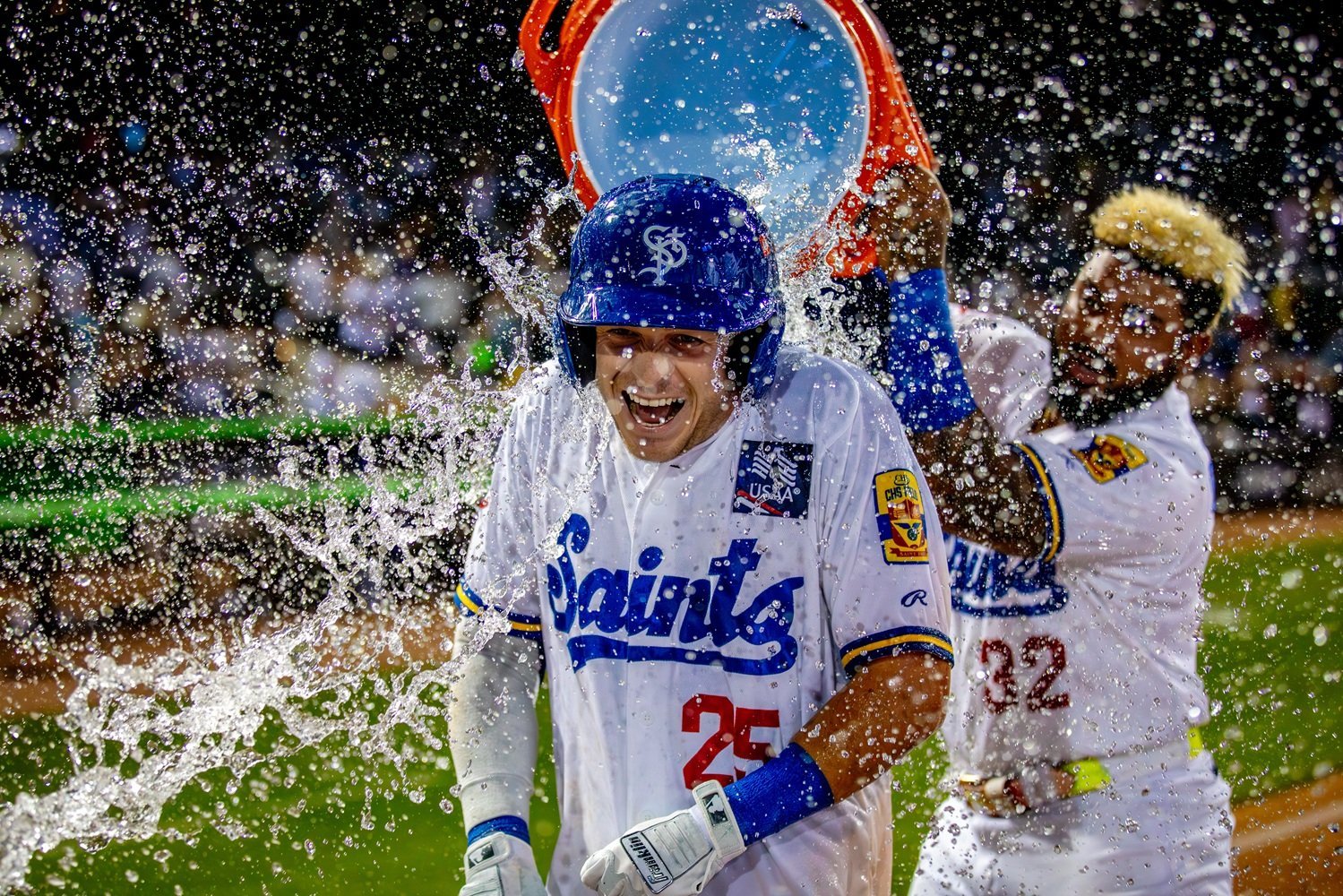 TRANSACTIONS Kyle DeBarge was activated from the temporarily inactive list. Poncho Ruiz was placed on the 7-Day injured list. RHP Abraham Martinez was signed to the Twins. He is a 17 year old from Venezuela who will join the DSL Twins roster soon. SAINTS SENTINEL St. Paul 7, Omaha 6 (10 innings) Box Score For the second straight game, the Saints were able to win on a walkoff. The game truly was a back-and-forth game and came down to a two-out game-winner by a guy with less than a week with the team. Omaha scored a run in the top of the first inning. So in the bottom of the inning, Matt Wallner hit a one-out solo homer to tie the game at 1-1. It was his ninth Saints homer. Omaha scored a run in the top of the second inning. So, in the bottom of the inning, Cody Morissette led off with a home run, his second of the week with the team, to tie the game at 2-2. Omaha scored two runs in the top of the third inning. So, in the bottom of the inning, David Banuelos was hit by a pitch to lead off the inning. With one out, Matt Wallner drilled his second homer of the game, his 10th with the Saints, to tie the game at 4-4. Omaha scored zero runs in the fourth, fifth and sixth innings. So, the Saints scored zero runs in the fourth, fifth and sixth inning. Omaha scored a run in the top of the seventh inning. So, in the bottom of the seventh, Ben Ross led off with his 15th Saints double. With one out, Henry Kusiak’s fourth double drove in Ross. With two outs, Gabriel Gonzalez singled to center to drive in Kusiak with the go-ahead run to make it 6-5. Omaha scored a run in the top of the eighth inning. Having scored an extra run in the seventh, the Saints didn’t score in the bottom of the eighth frame. Both teams went scoreless in the ninth inning, so we got a little Overtime! Omaha went scoreless in the top of the tenth inning. Matt Wallner started the bottom of the 10th inning as the Manfred Man on second base. With one out, he stole third base. On 2-2 with two outs, Cody Morissette lined the eighth pitch of the at-bat to right field to drive in Wallner with the winning run. Ryan Gallagher made the start. He gave up four runs on seven hits (2 home runs) and two walks. He struck out three. C.J. Culpepper got a strikeout to end the fifth inning. Ty Langenberg came in and gave up two runs on four hits and two walks over three innings. He struck out three batters. Grant Hartwig struck out two batters over two scoreless innings. Wallner went 3-for-5 with his ninth and 10th home runs. He drove in three runs. Morissette went 3-for-5 with his second homer and the game-winner. Henry Kusiak went 2-for-4 with his fourth double. Ben Ross and David Banuelos each added a double. Ross also walked twice. WIND SURGE WISDOM Wichita 3, Springfield 5 Box Score The Surge took a 2-0 lead in the bottom of the second innings when Jose Salas launched his sixth home run of the season. That was it for the Wichita offense until two outs in the bottom of the eighth inning when Kyle DeBarge hit his seventh home run of the season. DeBarge returned to the Wind Surge lineup after spending a few days on the temporary inactive list. Sam Armstrong made the start for the Surge. He gave up one run on three hits and a walk over the first five innings. He had five strikeouts. Important to note, he was pitching on just three days rest. In his two starts against Springfield this week, he gave up two runs (1 earned) on four hits and two walks. He had 10 strikeouts. He has now made five starts in June and his 1-1 with a 2.74 ERA in 23 innings. Sam Ryan came in and gave up only a solo home run over his two innings. Jaylen Nowlin gave up two runs (1 earned) on one hit and one walk. Jacob Webb gave up one run on a solo homer in the ninth. Wichita had just three hits and walked seven times in this game .Khadim Diaw walked twice. Salas and Maddux Houghton each had a hit and a walk. KERNELS CHRONICLE Cedar Rapids 3, Beloit 9 Box Score Beloit scored five runs in the third and three more in the sixth inning to win a bit of a laugher in Iowa. Eston Stull started a bullpen game. He gave up three hits but no runs in the first two innings. He had three strikeouts and no walks. Veteran Jesse Bergin made his Kernels debut. He got two outs in the third inning and was charged with five runs on two hits, two walks and a hit batter. Michael Ross came in with the Kernels down 2-1.Two singles later, all three inherited runners scored and it was 5-1. Ross tossed three more innings and gave up three of his own runs on four more hits and a walk. Mitch Mueller gave up one run on one hit (a solo homer) over two innings. Ivran Romero pitched a scoreless ninth. The Kernels scored one run in three separate innings. In the bottom of the second, Yasser Mercedes singles, stole second and scored on a balk. In the fourth inning, Jay Thomason walked, went to second on a wild pitch and scored on a Miguel Briceno single. In the sixth Enrique Jimenez led off with a double and scored on a Thomason single. The Kernels had just five hits and two walks. Jimenez’s double was his first with the Kernels. Marek Houston and Walker Jenkins both got the day off. Could Houston be heading to Texas (Midland) to join the Wind Surge next week? Could Jenkins go with him, or should he just head north to St. Paul and join the Saints in Louisville next week? MIGHTY MATTERS Ft. Myers 13, Tampa 11 Box Score The Mussels had two big innings. The Tarpons had one big inning. The Mussels came out on top of a back-and-forth, entertaining game. Jason Reitz started and gave up two runs on four hits and a walk in 3 1/3 innings. He had three strikeouts. The runs came on solo homers by Logan Maxwell and Luis Escudero. The Mussels tied the score at one when Luis Fragoza scored on a wild pitch in the top of the third inning. Then down 2-1, Fort Myers put up a four on the scoreboard in the top of the fourth. Ryan Sprock led off with a single. He scored on a JP Smith single that tied the game at 2-2. Jayson Bass doubled to drive in Smith. Quentin Young then crushed a two-run homer to make it 5-2. Merit Jones came on and was changed with seven runs on eight hits and a walk over the next two innings. Jonathan Stevens went 1 1/3 innings and gave up two runs on four hits and two walks. After a six-run bottom of the sixth inning, the Mussels found themselves behind 9-5. How did Fort Myers respond? Pretty well, I’d say. They scored seven runs in the top of the seventh inning to reclaim the lead, 12-9. Irvin Nunez led off the inning with a walk. Merphy Hernandez walked too. After a pitching change, the runners advanced on a wild pitch. Dameury Pena singled to left to drive in Nunez. Sprock doubled to drive in two more runs. He moved to third on a wild pitch, and with one out, scored the tying run on a JP Smith "single." Jayson Bass was hit by a pitch, and Quentin Young walked to load the bases. Luis Fragoza drove in two runs with a single. After another pitching change, Nunez was hit by a pitch to load the bases again. After a fielder’s choice kept another run from scoring, a wild pitch gave the Mussels a 12-9 lead. In the top of the ninth, Bass provided a little insurance with his seventh home run of the season. Nick McAuliffe gave up a hit, walked three, and had struck out two batters over 1 2/3 scoreless innings. Brent Francisco got the final two outs to earn the save. Bass went 3-for-4 with his ninth double and seventh home run. He also threw out a runner at second base. Sprock went 2-for-5 with his eighth double. Smith was 2-for-5. The team was efficient. They were 6-for-11 with runners in scoring position, and they only left four runners on base. COMPLEX CHRONICLES FCL Twins 8, FCL Red Sox 1 (suspended in 4th inning) Box Score This game was delayed and eventually suspended due to rain in Fort Myers. There was one out in the top of the fourth inning. The Twins have runners on the corners and four runs already in. Of note, Adrian Bohorquez made a rehab start. He struck out two batters and walked one over two scoreless, hitless innings. In the top of the third inning, Daiber De Los Santos led off with a walk. Daniel Pena was then hit by a pitch. After a pitching change, Jhomnardo Reyes walked to load the bases. Carlos Taveras followed with a ground-rule double to drive in two runs. Yovanny Duran singled to drive in two more and give the Twins the 4-0 lead. The top of the fourth inning began with walks to Yilber Herrera and Darwin Almanzar. Jose Barrios reached on an error to lead the bases. De Los Santos walked again to make it 5-1. Daniel Pena singled to drive in two more runs. Reyes grounded into a force out, but De Los Santos scored to make it 8-1. And that’s when the game was delayed and ultimately suspended. The game will continue next Friday when the Twins make the short trek over to Jet Blue Stadium again. DSL Twins 5, DSL Rockies 4 Box Score The Twins jumped out to an early lead in the top of the first inning. Daiyer Barboza reached on an error. He proceeded to steal second and third bases. After Juan Holmann walked and Jhon Gonzalez was hit by a pitch, Anibal Beltre flew out, deep enough to score Barboza. The Rockies tied the game in the bottom of the second. The Twins responded by scoring two runs in the top of the third inning. Holmann led off with a walk. He stole second, and with two outs, he scored on a single by Abel Sosa. Sosa then stole second and scored on a Luis Duarte single. The Rockies cut the Twins lead to 3-2 with a run in the bottom of the third. The Twins responded by scoring two runs in the top of the fourth inning. Misael Rodriguez led off with a single and stole second base. He advanced to third base on a ground out. Holmann walked, and on the final pitch Rodriguez scored on a passed ball. Holmann stole second and later scored on a ground out to make it 5.2 Twins. The Rockies scored a single run in the bottom of the fourth, and another in the bottom of the seventh, but the Twins held on for the 5-4 win. Manuel Meza started and was charged with one run on three walks over two innings. He struck out two batters. 16-year-old Sebastian Echavarria was next on the mound. He gave up two runs (1 earned) on two hits and two walks in 1 1/3 innings. He struck out two. Juan Collado gave up one run on two hits over three innings. He had four strikeouts but walked five batters. Aldwin Morillo came on and got the final two outs, one on a strikeout, to record his first save. The Twins had five runs on seven hits and five walks. Luis Duarte went 2-for-4. Misael Rodriguez went 2-for-3. Juan Holmann walked three times. He stole his sixth and seventh bases. PLAYERS OF THE DAY Hitter(s) of the Day Jayson Bass (Fort Myers): 3-for-5, 2B(9), HR(7), 3 R, 2 RBI, K Matt Wallner (St. Paul): 3-for-5, 2-HR(10), 3 R, 3 RBI, K, SB(2) Cody Morissette (St. Paul): 3-for-5, HR(2), R, 2 RBI, K. Pitcher(s) of the Day Sam Armstrong (Wichita): 5 IP, 3 H, 1 R, 1 BB, 5 K, 54 pitches, 38 strikes (70.4%) PROSPECT SUMMARY Check out the Prospect Tracker for much more on our Twins Top 20 prospects after seeing how they did today. #5 - C Eduardo Tait (Cedar Rapids) - 0-for-4, 2 K (batted second, played DH). #10 - OF Gabriel Gonzalez (St. Paul) - 1-for-5, RBI (batted first, played 1B) #14 - 3B/SS Quentin Young (Ft. Myers) - 1-for-4, BB, HR(8), 2 RBI, R, 3 K. (batted sixth, played SS) #15 - 3B/CF Brandon Winokur (Cedar Rapids) - 1-for-4, 2 K (batted first, played SS) #16 - RHP Ryan Gallagher (St. Paul) - 4 2/3 IP, 7 H, 4 ER, 2 BB, 3 K, 63 pitches, 44 strikes (69.8%) #17 - RHP C.J. Culpepper (St. Paul) - 1/3 IP, 0 H, 0 R, 0 BB, 1 K, 5 pitches, 4 strikes (80.0%) #19 - C/OF Khadim Diaw (Wichita) - 0-for-3, 2 BB, K (batted second, played C) #20 - 2B/SS/CF Kyle DeBarge (Wichita) - 1-for-4, HR(7), R, RBI, K (batted sixth, played SS) UPCOMING PROBABLES Sunday, June 21 Omaha @ St. Paul (2:07 pm CT) - RHP Trent Baker (3-2, 5.52 ERA) Springfield @ Wichita (1:05 pm CT) - RHP Cory Lewis (0-2, 4.57 ERA) Beloit @ Cedar Rapids (1:05 pm CT) - LHP Dasan Hill (1-6, 6.82 ERA) Ft. Myers @ Tampa (11:00 am CT) - RHP Hendry Chivilli (0-1, 12.79 ERA) CURRENT W-L Records Minnesota Twins: 37-41 (3rd place (of 5) in AL Central, 4.5 GB)) St. Paul Saints: 42-31 (3rd place (of 10) in IL West Division, 3.5 GB)) Wichita Wind Surge: 25-41 (5th place (of 5) in TL North Division, 19.0 GB)) Cedar Rapids Kernels: 31-35 (4th place (of 6) in MWL West Division, 10.0 GB)) Fort Myers Mighty Mussels: 38-29 (2nd place (of 6) in FSL West Division, 2.5 GB)) FCL Twins: 19-16 (3rd place (of 6) in FCL South Division, 1.5 GB)) DSL Twins: 6-9 (4th place (of 7) in DSL East Division, 4.0 GB)) Please feel free to ask questions about the teams, the rosters, and discuss today’s games, or anything else Twins minor-league related! View the full article
 -
 San Diego Padres affiliates went 2-2 Saturday. The Triple-A El Paso Chihuahuas fell to Reno 7-1, the Double-A San Antonio Missions eked out a 2-1 win over Corpus Christi, the High-A Fort Wayne TinCaps rallied for a 3-2 win over South Bend and the Low-A Lake Elsinore Storm fell to San Jose 11-8. Padres Minor-League Transactions El Paso Chihuahuas activated OF Pablo Reyes from the 7-day injured list. Chihuahuas Sputter As Aces Pull Away A solid start from left-hander Jackson Wolf couldn't overcome an offense that was held to just four hits in the host Triple-A El Paso Chihuahuas' 7-1 loss to the Reno Aces. The four hits tied the Chihuahuas' season low. Wolf scattered eight hits over five innings, giving up two runs, including a homer, and a walk with three strikeouts and benefited from a defense that turned three double plays on the night. Right-hander Logan Gillaspie gave up two runs on four hits in his lone inning, while right-hander Ty Adcock allowed a run on two hits in the seventh and right-hander Misael Tamarez two runs in two innings. After Reno scored in the top of the first, the Chihuahuas tied it in the bottom half as Bruce Johnson reached on an error by the third baseman, stole second and scored on Carlos Rodriguez's one-out ground-rule double. But that would be the extent of the offense for the Chihuahuas, who managed just three more singles the rest of the way. The Aces snapped the 1-1 tie with a run in the fifth, then two in the sixth, one more in the seventh and two again in the eighth. Player AB R H RBI BB K Bryce Johnson 4 1 0 0 0 2 Mason McCoy 4 0 0 0 0 1 Carlos Rodríguez 4 0 1 1 0 0 Pablo Reyes 4 0 0 0 0 1 Nate Mondou 4 0 1 0 0 0 Nick Pratto 3 0 0 0 1 0 Marcos Castañon 4 0 1 0 0 1 Clay Dungan 3 0 0 0 0 2 Victor Duarte 2 0 1 0 1 0 Player IP H R ER BB K HR Jackson Wolf 5 8 2 2 1 3 1 Logan Gillaspie 1 4 2 2 0 0 0 Ty Adcock 1 2 1 1 0 1 0 Misael Tamarez 2 3 2 2 0 2 0 Victor Lizarraga, Missions Capture Pitchers' Duel Right-hander Victor Lizarraga turned in a strong start, while Tirso Ornelas and Kai Roberts each had two hits and drove in a run as the Double-A San Antonio Missions slipped past the host Corpus Christi Hooks 2-1. Romeo Sanabria reached base four times with three hits and a walk, Ryan Jackson had two hits and a free pass, while Luis Verdugo and Albert Fabian also had a pair of hits. Lizarraga went 6⅔ innings, one out shy of matching his career best, allowing just a run on four hits with a pair of walks and three strikeouts. He had a stretch where he retired 12 straight and also induced 12 grondouts. Right-hander Josh Mallitz didn't allow a hit in 1⅓ innings while walking two and striking out two and left-hander Harry Gustin pitched a perfect ninth with one punchout for his first save of the season and seventh of his career. After Lizarraga gave up the lone run on three hits in the second inning, the Missions took the lead with runs in the third and fourth innings. With two outs in the third, Sanabria doubled and scored just ahead of the throw on Ornelas' line single to right. Verdugo, coming off a two-homer game, opened the fourth with a single, went to second on a groundout and scored without a play on Roberts' ground single to center. SA_0620.mp4 Player AB R H RBI BB K Ryan Jackson 4 0 2 0 1 0 Francisco Acuna 5 0 0 0 0 0 Romeo Sanabria 4 1 3 0 1 1 Tirso Ornelas 5 0 2 1 0 1 Braedon Karpathios 4 0 0 0 0 2 Luis Verdugo 4 1 2 0 0 1 Albert Fabian 4 0 2 0 0 0 Kai Roberts 4 0 2 1 0 1 Chris Sargent 4 0 0 0 0 1 Player IP H R ER BB K HR Victor Lizarraga 6 2/3 4 1 1 2 3 0 Josh Mallitz 1 1/3 0 0 0 2 2 0 Harry Gustin 1 0 0 0 0 1 0 TinCaps Withstand MLB Starter, Rally To Win With 3 In Eighth In a game started by Chicago Cubs left-hander Matthew Boyd, the host Fort Wayne TinCaps rallied for three runs in the bottom of the eighth inning, capped by Lamar King Jr.'s go-ahead single, to snatch a 3-2 victory from the South Bend Cubs. Boyd struck out seven of the 14 hitters he faced in four shutout innings, giving up a pair of hits and no walks in his first game since having meniscus surgery. Justin DeCriscio and King had first inning singles off Boyd, who picked off two TinCaps. TinCaps right-hander Abraham Parra matched his career high with six innings, allowing a pair of runs on five hits and two walks while punching out four. Both runs came in his final frame. He reached six innings for the sixth time, having done so four times last year with Low-A Lake Elsinore and once in 2023 in the Dominican Summer League. Left-hander Javier Chacon pitched two hitless innings and right-handed closer Clay Edmondson pitched a perfect ninth for his minors-leading 11 save this season. This was just the third outing of 23 this season in which Edmondson did not record a strikeout. After Parra gave up a pair of runs in the top of the sixth on an RBI triple and a sacrifice fly, the TinCaps entered the bottom of the eighth having been held scoreless and to just three hits. With a new South Bend reliever in the game, Kavares Tears (infield) and Zach Evans led off the eighth with singles. After a failed sacrifice bunt by Wyatt Hoffman forced Tears out at third, DeCriscio's grounder to short advanced both runners. Kasen Wells then tied the game by grounding a single through the right side, scoring Evans and Hoffman beating the throw home. Wells took second on the play and King, Padres Mission's No. 10 prospect, lined a go-ahead two-out single to left, with Wells scoring ahead of the throw. FW_0620.mp4 Player AB R H RBI BB K Justin DeCriscio 4 0 2 0 0 0 Kasen Wells 4 1 1 2 0 0 Lamar King Jr. 4 0 2 1 0 1 Alex McCoy 3 0 0 0 0 2 Jake Cunningham 3 0 0 0 1 1 Jack Costello 3 0 0 0 0 2 Kavares Tears 3 0 1 0 0 2 Zach Evans 3 1 1 0 0 2 Wyatt Hoffman 3 1 0 0 0 1 Player IP H R ER BB K HR Abraham Parra 6 5 2 2 2 4 0 Javier Chacon 2 0 0 0 2 2 0 Clay Edmondson 1 0 0 0 0 0 0 Storm Succumb To 7-Run Eighth Inning By Giants Despite a nice start by right-hander Tyler Schmitt and four home runs, the Low-A Lake Elsinore Storm coughed up a seven-run eighth inning en route to dropping an 11-8 decision to the San Jose Giants. Kerrington Cross (11th this year), Jose Verdugo (fourth), Luke Cantwell (second) and Jorge Quintana (second) each went deep for the Storm, while Verdugo had three hits and three RBIs and Cantwell two hits and three RBIs. Quintana is Padres Mission's No. 6 prospect. Schmitt, coming off an 11-strikeout performance last week vs. Ontario, went five innings and struck out just two, while yielding three runs on five hits and a walk. Right-hander Nick Falter allowed a run in 1⅔ innings, but right-handers Vicarte Domingo (four runs) and Will Koger (three runs) could each only get two outs and combined to allow all seven eighth-inning runs. The Storm were down 3-0 entering the fifth and they scored in each of their final five at-bats, with one in the fifth, one in the sixth, two in the seventh, three in the eighth to take a 7-4 lead and one in the ninth. LE_0620.mp4 Player AB R H RBI BB K Ryan Wideman 4 1 1 0 1 1 Kerrington Cross 3 2 1 1 1 0 Dawson Willis 3 0 0 0 0 2 Luke Cantwell 4 2 2 3 0 1 Qrey Lott 4 0 0 0 0 2 Conner Westenburg 0 0 0 0 0 0 Yoiber Ocopio 3 1 0 0 1 1 Jose Verdugo 4 1 3 3 0 0 Jorge Quintana 3 1 1 1 1 1 George Bilecki 4 0 0 0 0 0 Player IP H R ER BB K HR Tyler Schmitt 5 5 3 3 1 2 0 Nick Falter 1 2/3 4 1 1 0 2 0 Vicarte Domingo 2/3 3 4 4 1 0 0 Will Koger 2/3 4 3 3 0 0 0 Padres Mission Top 20 Prospect Performance Ethan Salas: On injured list Kash Mayfield: DNP Miguel Mendez: DNP Kruz Schoolcraft: DNP Ryan Wideman: 1-for-4, 2B, BB, K Jorge Quintana: 1-for-3, HR, BB, K Ty Harvey: On injured list Kale Fountain: Injured, out for season Braedon Karpathios: 0-for-4, 2 K Lamar King Jr.: 2-for-4, RBI, SB, K Jagger Haynes: DNP Alex McCoy: 0-for-3, 2 K Truitt Madonna: DNP Tucker Musgrove: DNP Garrett Hawkins: DNP Michael Salina: DNP Eric Yost: DNP Rosman Verdugo: DNP Bryan Balzer: DNP Deivid Coronil: DNP View the full article
 -
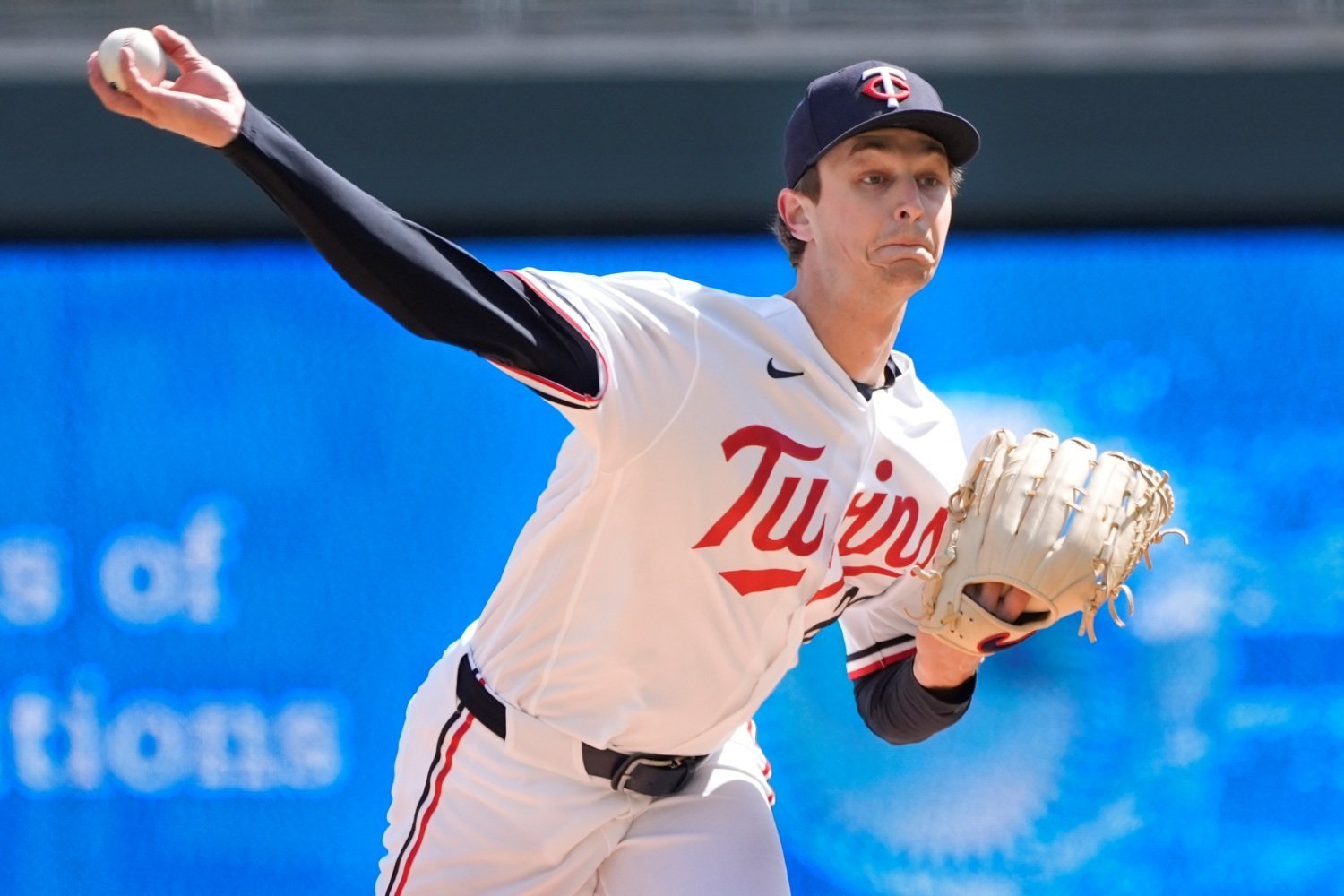 For a brief moment, it looked like the Twins were about to get one of their most important reinforcements back. Instead, Mick Abel's return to Minnesota's rotation is on hold once again. According to the Minnesota Star Tribune's Bobby Nightengale Jr., Abel experienced a setback in his recovery process after throwing a 20-pitch bullpen session on Friday. The right-hander will not return from the injured list this week and is scheduled to undergo an MRI when the club gets back to Minnesota. That's an unwelcome development for a pitching staff that has already spent most of the season patching together innings. A Promising Rehab Assignment Takes a Turn Abel has been sidelined since April 20 after being placed on the injured list with right elbow inflammation. The injury interrupted what had been an encouraging first season in the Twins organization after arriving as part of last summer's trade deadline haul. The 24-year-old finally began a rehab assignment with Triple-A St. Paul earlier this month, and the early results couldn't have gone much better. In his first outing on June 10, Abel tossed three scoreless innings while allowing only two hits and striking out five batters. He followed that performance six days later with an even longer outing, surrendering one run across five innings while once again recording five strikeouts. Those appearances appeared to put him on the doorstep of a return to the major league rotation. Instead, the Twins are back in wait-and-see mode. Rotation Questions Continue to Mount Minnesota's pitching depth has been tested all season, and Abel's setback only adds another layer of uncertainty. Pablo López is already lost for the remainder of the year. Bailey Ober remains on the injured list with a flexor strain, though the organization remains optimistic that his absence won't be a lengthy one. Simeon Woods Richardson was moved to Toronto after struggling to establish himself in the rotation. That leaves the Twins leaning heavily on Joe Ryan and Taj Bradley at the top of the staff while searching for consistency from a younger group of arms. Connor Prielipp has shown flashes of why the organization remains excited about his future. Zebby Matthews continues to work through the ups and downs that come with gaining major league experience. Mike Paredes has also been asked to shoulder a larger role than originally anticipated. The group has managed to keep Minnesota competitive, but the margin for error continues to shrink. Every Game Matters The timing of Abel's setback couldn't be much worse. Entering Saturday night's action, Minnesota sat 4.5 games behind Cleveland in the American League Central and 2.5 games out of the final Wild Card position. The Twins remain firmly in the postseason conversation, but they can ill afford to lose additional rotation depth for an extended period. If the MRI reveals only a minor issue, Abel could still rejoin the club relatively soon. However, if the setback leads to another lengthy shutdown, Minnesota may need to explore external options before the trade deadline or continue relying on inexperienced pitchers to navigate meaningful games down the stretch. The Twins have spent much of the season waiting for reinforcements, and Abel looked poised to become one of the most significant additions to the roster. His strong rehab outings offered hope that help was finally on the way. Now, the organization is once again waiting on medical results. For a team trying to chase down a division title and climb back into a playoff spot, the news serves as another reminder of just how thin the line can be between contention and crisis. The Twins have survived plenty of pitching injuries already in 2026. Whether they can continue doing so may depend on what Abel's MRI reveals in the coming days. View the full article
 -
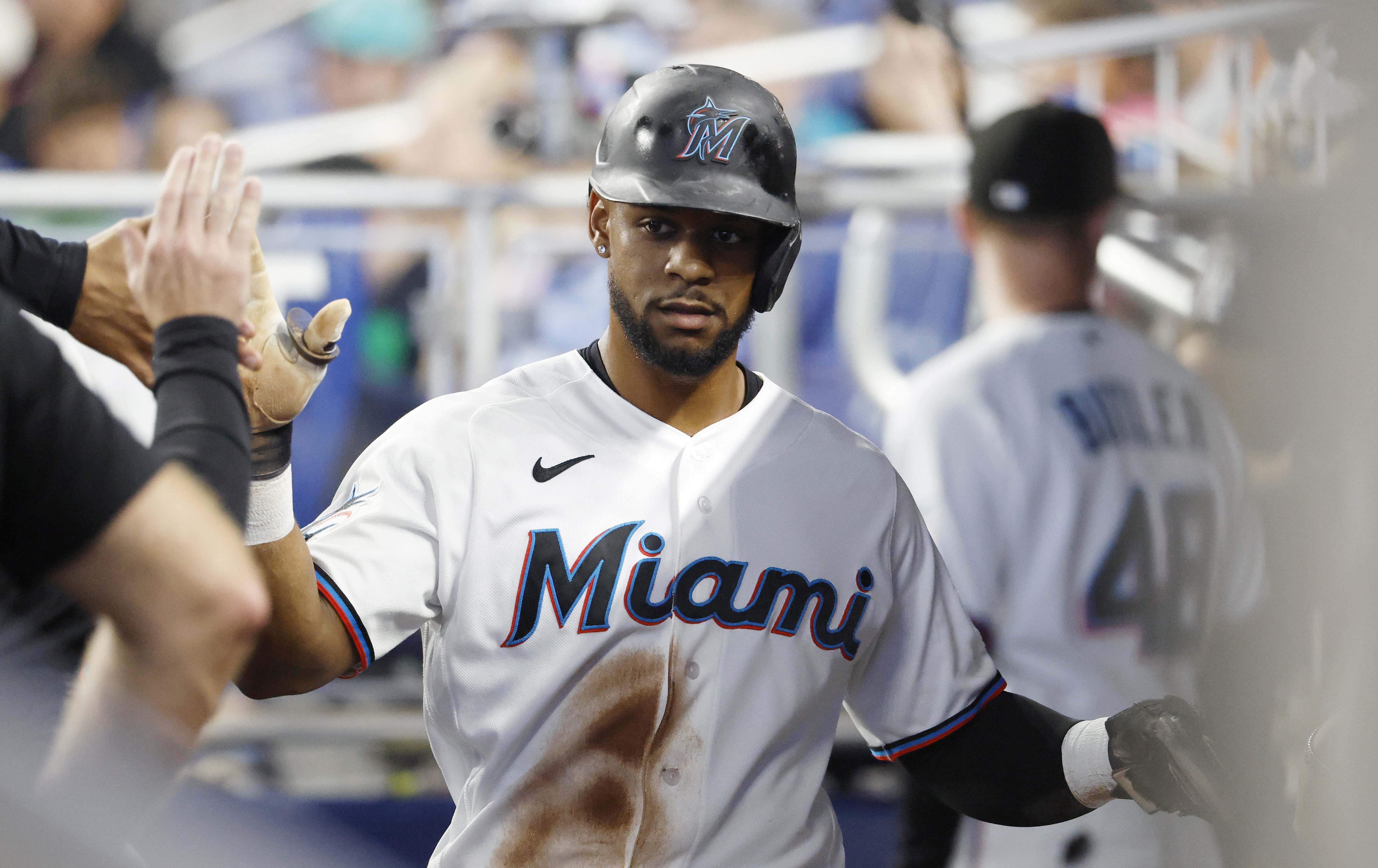 MIAMI, FL—In front of 22,643 fans, the Miami Marlins defeated the San Francisco Giants by a final score of 6-3, improving to one game over .500 for the first time since April 14. A big reason for their success not, just in the month of June, but all season, has been shortstop Otto Lopez. Lopez currently leads baseball with a .332 batting average. With a single on Saturday, he became the first player in MLB this season to reach the 100-hit marker. He joins Luis Arraez (2023) and Dee Strange-Gordon (2015) as the only other players in franchise history to win the league-wide race to 100. Arraez and Strange-Gordon both went on to win National League batting titles in those seasons. "Otto's been our most consistent offensive player," manager Clayton McCullough said. "He gets hits all over the place. Otto has a lot of room to grow as an offensive player, like he can get better...There's a lot left for him to hit his ceiling, but certainly hard to not appreciate what he's done, playing almost every day at shortstop and running the bases, collecting hits. He's been incredible." The 100th hit of the season came in the bottom of the fourth inning with a runner on first and no outs. Lopez's hit had an exit velocity of 97.2 mph and moved the runner from first to second. After Kyle Stowers worked a walk, that loaded the bases for Xavier Edwards, who grounded into a double play, but still plated a run. Heriberto Hernandez, who since being recalled from Triple-A Jacksonville, entered Saturday slashing .288/.310/.538/.847 with six home runs and 17 RBI. With Lopez on third, Hernandez hit his seventh home run of the season off reliever Matt Gage. The ball left the bat at 107.2 mph and went 389 feet to left field, extending the Marlins lead, 6-2. "I think we saw Bert do this last year, and since he's come back, he's been a real key cog, sitting in the middle of those left-handed hitters that we have, and he's slugging, finding the barrel a lot," McCullough said. "He has a knack for coming up with some really big hits and he can leave the ballpark and the power from the right side is hard to come by. I think it's been a real shot in the arm for us." Although Max Meyer wasn't his best version, the Marlins starter went five innings, allowing two runs on seven hits (one home run), two walks and struck out seven. Meyer's slider did look sharp, generating five whiffs and struck out four on that pitch. The other three strikeouts came on his sweeper. The home run he gave up came in the top of the fourth inning. Casey Schmitt took Meyer deep, hitting his 16th home run of the season. The Marlins joined the Philadelphia Phillies as the only teams this season to make it back over .500 after being as many as eight games below .500. With the win, the Marlins are now just one game out of the third and final National League Wild Card spot. Ryan Gusto will get the start opposite of Logan Webb at 1:40 pm as the Marlins go for the sweep. View the full article
 -
 Blue Jays Affiliate Overview (June 18-19) Triple-A Buffalo Bisons Series vs Charlotte Knights (Chicago White Sox): 1-3 Season Record: 34-39 Double-A New Hampshire Fisher Cats Series vs Birmingham Rumble Ponies (New York Mets): 2-2 Season Record: 33-32 High-A Vancouver Canadians Series vs Spokane Indians (Colorado Rockies): 2-2 Season Record: 28-39 Single-A Dunedin Blue Jays Series vs Lakeland Flying Tigers (Detroit Tigers): 2-2 Season Record: 30-36 FCL Blue Jays Week Record: 3-1 Season Record: 25-10 DSL Blue Jays Blue Week Record: 1-2 Season Record: 4-10 DSL Blue Jays Red Week Record: 0-3 Season Record: 4-10 Triple-A Buffalo Bisons Season Record: 34-39 Series vs Charlotte Knights (Chicago White Sox) June 18: Thursday saw Jake Bloss finally return to the Triple-A Buffalo roster, and he made his presence known in his first start of the season there. He was a little shaky at the start, walking the lead-off hitter and then giving up a two-run home run to Charlotte's centerfielder, Dustin Harris. The pitch was in and off of the plate, but Harris was still able to put the good part of the bat on it and take it out, 364 feet to right field. After the blast, Bloss settled in and struck out the next three batters, all swinging. In the second inning, Bloss sat down the Knights hitters in order and then repeated that feat in the third. Only an outlier walk broke up his rhythm in the fourth, as Blos retired 12 of the last 13 hitters he faced. For the game, he gave up just the one hit and two runs, announcing his arrival to Triple-A with authority. The Knights starting pitcher outdueled Bloss, though, going five innings, striking out six, while allowing just three hits and zero runs. Carlos Mendoza did reach base twice, a walk in the first and a single in the third. Unfortunately for Buffalo, the bats were kept quiet by the Knights bullpen. Buffalo ended up getting shut out and losing 4-0. June 19: Friday night, Josh Fleming was on the mound for Buffalo, and he couldn't work around a couple of errors and poor command. He did pitch into the sixth inning, but gave up 10 hits, five runs (two earned), and only struck out four. In the first inning, Fleming gave up three singles before walking in a run, but escaped any further damage. In the bottom half of the inning, C.J. Stubbs tied the game up for Buffalo, knocking in Jay Harry on a single to left. After Fleming gave up a run in the top of the fourth, a Sean Keys single in the bottom of the fifth would tie the game back up. Unfortunately for Buffalo, a Carlos Mendoza error in the sixth opened up the doors to a big inning for Charlotte, as they scored four runs and took the lead. Jay Harry helped Buffalo by cutting into the Knights' lead, getting an RBI double in the sixth. Unfortunately for Buffalo, Charlotte tacked on three more runs in the seventh and ran away with the game. The Bisons would get a ninth-inning two-run home run from Jay Harry, but in the end, it wasn't remotely enough. Buffalo fell again, this time by a score of 10-5. Double-A New Hampshire Season Record: 33-32 Series vs Birmingham Rumble Ponies (New York Mets) June 18: Thursday's matchup between New Hampshire and Binghamton was a tough one for the Fisher Cats. They faced off against the Rumble Ponies’ pitcher Jonathan Santucci and did not have an answer against him. New Hampshire managed a couple of hits, like Victor Arias coming up with two singles and Jorge Burgos having a first-inning single. Ultimately, they were stifled, though, as Santucci went six innings and didn't give up a run, striking out seven. On the other hand, the Fisher Cats struggled to hold Binghamton off the scoreboard. On the backs of two home runs and a few doubles, the Rumble Ponies were up eight by the fourth inning. Aaron Parker drove in the lone New Hampshire run in the ninth inning on an RBI double, but it was a tough defeat. The Fisher Cats lost this one 8-1. June 19: The Friday Night contest between New Hampshire and Binghamton was a fun one, with rehabbing Francisco Lindor and Tyrone Taylor in the lineup against Gage Stanifer. Lindor started things with a single under the diving glove of second base, followed by a lazy line drive off the shortstop's glove for a “single” by Taylor. Lindor would score on a throwing error for the first run of the game. After that, Stanifer was exceptional on the mound. He appeared to be working exclusively on his fastball, as he threw it a lot. It didn't matter, though, because it was maybe his best fastball of the year. It looked like the velocity was up, and he was hitting his stops almost all night. He worked around two singles in the second and a home run in the third, but in the end, he went 4.2 innings, gave up five hits, one earned run, didn't walk a batter, and struck out eight. If his fastball can look like that more often, he may see the big leagues come September. He even struck out Lindor to end his night on a fastball. Offensively, Carter Cunningham had a sacrifice fly in the first inning and a run scored on a passed ball in the eighth. New Hampshire lost this one 5-2, but the key takeaway is Stanifer may have found something with his fastball. High-A Vancouver Season Record: 28-39 Series vs Spokane Indians (Colorado Rockies) June 18: Dylan Watts made his debut for the Canadians and struggled to acclimate, as he gave up seven runs in three innings of work. Luckily for the Canadians, their offense was able to keep it close through great performances from almost the entire starting lineup. Eric Snow, Peyton Williams, Alexis Hernandez, and Tucker Toman each had three hits, and Edward Duran had himself a four-hit night. Manuel Beltre added two hits of his own for 18 combined hits for the offense, while Maddow Latta and Sam Shaw each walked three times. Jack Eshelman allowed two more runs, and the Canadians were down eight to nine heading into the seventh inning, but a five-run inning capped off by a Tucker Toman three-run homer gave the Canadians a four-run lead that they didn’t relinquish. Trace Baker got his third save of the year with three scoreless innings. June 19: The offense for Vancouver continues to heat up, as just a day after getting 18 hits, the Canadians added 13 more. Eric Snow had himself his second three-hit night in a row, hitting two doubles and walking once to raise his OPS to 1.114 since getting promoted to Vancouver. Holden Wilkerson was the starter for Vancouver and had the win despite allowing five runs. Sam Shaw and J.R. Freethy both contributed two homers, and there were five more extra-base hits from the rest of the lineup for 12 runs. Reece Wissinger pitched four scoreless innings with four strikeouts for the save, as the Vancouver offense again dominated in a 12-5 win. Single-A Dunedin Season Record: 30-36 Series vs Lakeland Flying Tigers (Detroit Tigers) June 18: It was a close game until it wasn’t. JoJo Parker has begun to heat up, as he knocked in the first run of the game with a double in the first inning. Anibal Salas hit a two-run homer against Jays’ starter Blake Purnell in the second inning. The one-run deficit remained until the fourth inning, when a Salas single spelled the beginning of the end for Purnell, who gave up five runs. Bradley Wilson allowed another run for a disastrous fourth inning. Parker hit his sixth homer of the season in the eighth as one of the lone bright spots of the game. Luis Fonseca allowed two more runs for the Jays to lose 11-3. June 19: Silvano Hechavarria took a step back as he allowed three homers and seven runs in just under four innings of work. The offense wasn’t much better, as they only mustered up three hits and three walks, with the lone run coming in on a JoJo Parker triple in the first inning. Diego Dominguez pitched well in relief with 2.1 scoreless innings, but Josbel Garcia allowed three more runs in the seventh to make it double digits for the Flying Tigers for the second game in a row. FCL Blue Jays Season Record: 25-10 June 18: In the Thursday FCL matchup between the Blue Jays and Tigers squads, it was a close game early. Gavin Smith put the Blue Jays ahead in the second inning, when he hit a two-run double to right field. The Tigers responded with three runs in their half of the inning, but things spiraled into the Blue Jays' favor after that. In the fourth, Pascual Archila hit a two-run home run, Franklin Rojas drove in a run on a single, Gioconino locked in three runs on a double, and Archila had an RBI double to cap off the eight-run inning. Alex Stone homered to finish the scoring in the seventh as the game was called due to weather. The Blue Jays won big, 15-3. June 19, Game 1: Friday saw a double header of sorts between the FCL Blue Jays and FCL Yankees. The first game was a continuation of a suspended game on June 12th. It was tied at two in the seventh before the real fireworks began. In the eighth inning, the Blue Jays got two runs on a Franklin Rojas single and another run from Angel Guzman's RBI single to right field. In the ninth inning, Franklin Rojas launched a solo home run and was followed later by a three-run blast from Kennew Blanco. The Blue Jays made easy work in this one in the end, winning 9-2. June 19, Game 2: In the second game of the day, the Blue Jays kept on hitting. Pascual Archila homered in the first inning, Giaconino Lasaracina launched a home run in the fourth, followed by David Guzman homering, then Franklin Rojas crushing a home run, and the scoring in the inning ended with Lasaracina hitting his second home run of the inning. The Blue Jays ended the game with 12 hits, 13 walks, and five home runs, for 15 runs. The Blue Jays won this one 15-8. DSL Blue Jays Blue Season Record: 3-9 June 18: It was another battle of the Blue Jays squads down in the Dominican Summer League (DSL). BJB took on BJR on Thursday, with BJB looking to get some revenge and even up the season series. BJR set the tone early, sending Cristhian Duarte to the mound, and he opened the BJB lineup. He went five strong innings, only surrendering two hits, but not allowing a run to score. He would lower his ERA to 0.60 on the season and continued to be a standout for the Jays DSL teams. Facing off against Duarte for BJB was Tomoya Kinjo, a 23-year-old pitcher the Blue Jays signed back in April. He didn't go deep into the game, but he did match Duarte, giving up zero runs across three innings and allowing just one hit. In the bottom of the sixth inning, BJB finally broke through with the bats, getting two walks and then a two-RBI triple from Juan Caricote. He would then come in and score on Isay Veras’ RBI single. The three runs were enough for BJB, as their bullpen held strong and didn't allow a run. BJB got their revenge on BJR and won 3-0. DSL Blue Jays Red Season Record: 4-8 June 18: It was another battle of the Blue Jays squads down in the Dominican Summer League (DSL). BJB took on BJR on Thursday, with BJB looking to get some revenge and even up the season series. BJR set the tone early, sending Cristhian Duarte to the mound, and he opened the BJB lineup. He went five strong innings, only surrendering two hits, but not allowing a run to score. He would lower his ERA to 0.60 on the season and continued to be a standout for the Jays DSL teams. Facing off against Duarte for BJB was Tomoya Kinjo, a 23-year-old pitcher the Blue Jays signed back in April. He didn't go deep into the game, but he did match Duarte, giving up zero runs across three innings and allowing just one hit. In the bottom of the sixth inning, BJB finally broke through with the bats, getting two walks and then a two-RBI triple from Juan Caricote. He would then come in and score on Isay Veras’ RBI single. The three runs were enough for BJB, as their bullpen held strong and didn't allow a run. BJB got their revenge on BJR and won 3-0. June 19: Jorge Gonzalez was on the mound Friday for BJR, and he imploded quickly. He would not make it out of the first inning, giving up three runs all on wild pitches, in which he had six in his brief outing. BJR would cut into the lead in the second inning, with a sacrifice fly from Fabian Gonzalez. After the twins team added a run in the fourth, BJR stayed within striking distance, scoring a run on an RBI groundout by Luis Nunez in the fifth. BJR got another run in the bottom of the seventh, when Gabriel Porras scored on a wild pitch. Unfortunately, their rally ended with Ayberson Ortega popping out to end the game. BJR fell 4-3. View the full article
 -
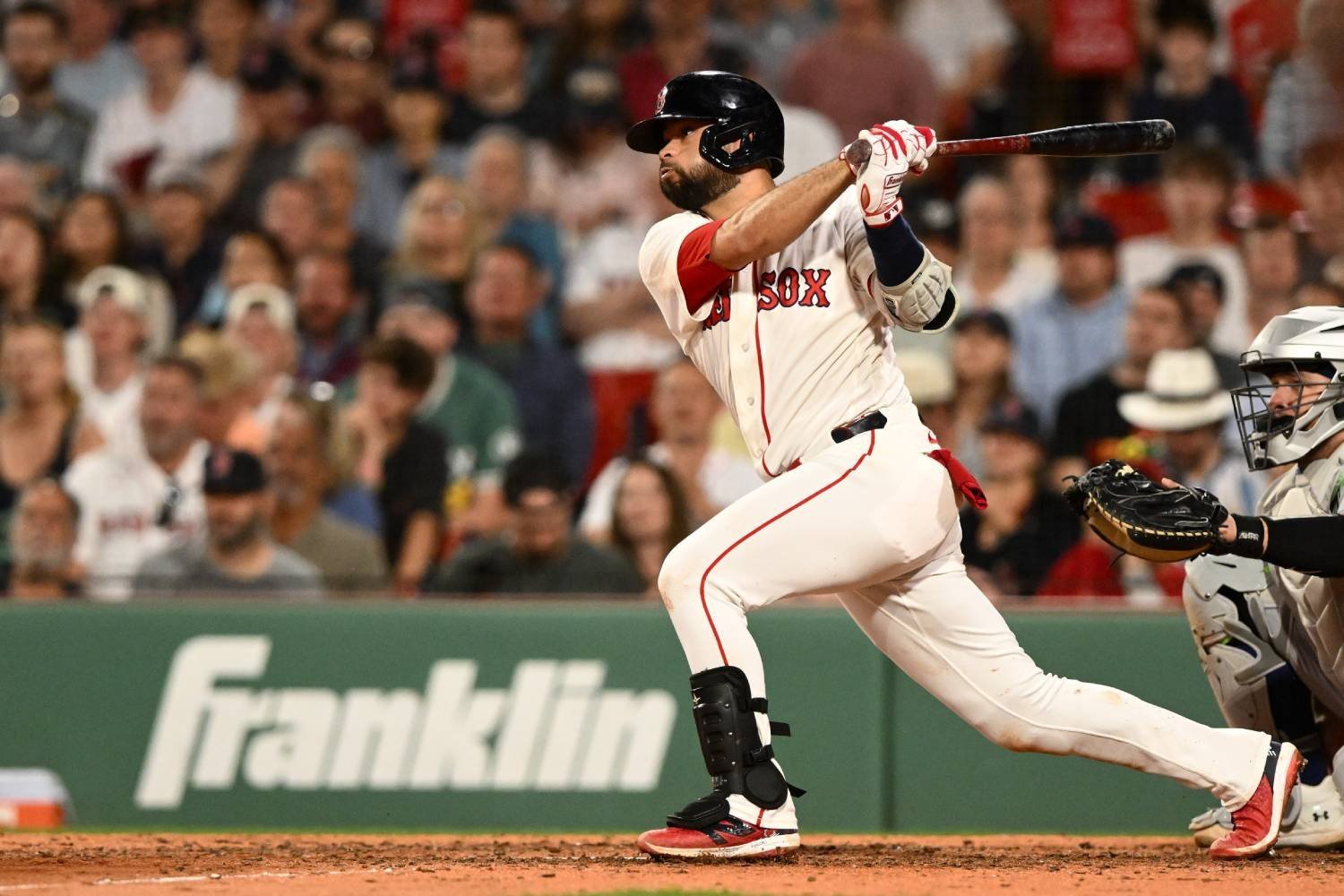 After being a late scratch for Friday's series opener, Isiah Kiner-Falefa is now out through at least next weekend. The Boston Red Sox on Saturday placed the infielder on the 10-day injured list with right forearm inflammation. Infielder Anthony Seigler was called up from Triple-A Worcester. Kiner-Falefa was in the starting lineup for Friday's game against the Seattle Mariners, but was removed about 30 minutes before first pitch with Marcelo Mayer taking over at shortstop. Mayer had missed the previous game due to an illness and wasn't in the lineup. An MRI on Kiner-Falefa's forearm revealed the extent of the injury. He had not been taking batting practice during the recent homestand. Kiner-Falefa is slashing .277/.344/.361 with two homers and 13 RBIs in 47 games. Seigler is up for the third time this season, but has played in just two games and gone 1-for-3 with a double, a walk and a strikeout. At Worcester, Seigler has a .290/.409/.435 slash line with three homers and 23 RBIs. View the full article
 -
Ranking Red Sox's Best Closer Candidates If Aroldis Chapman Is Traded
DiamondCentric posted an article in Talk Sox
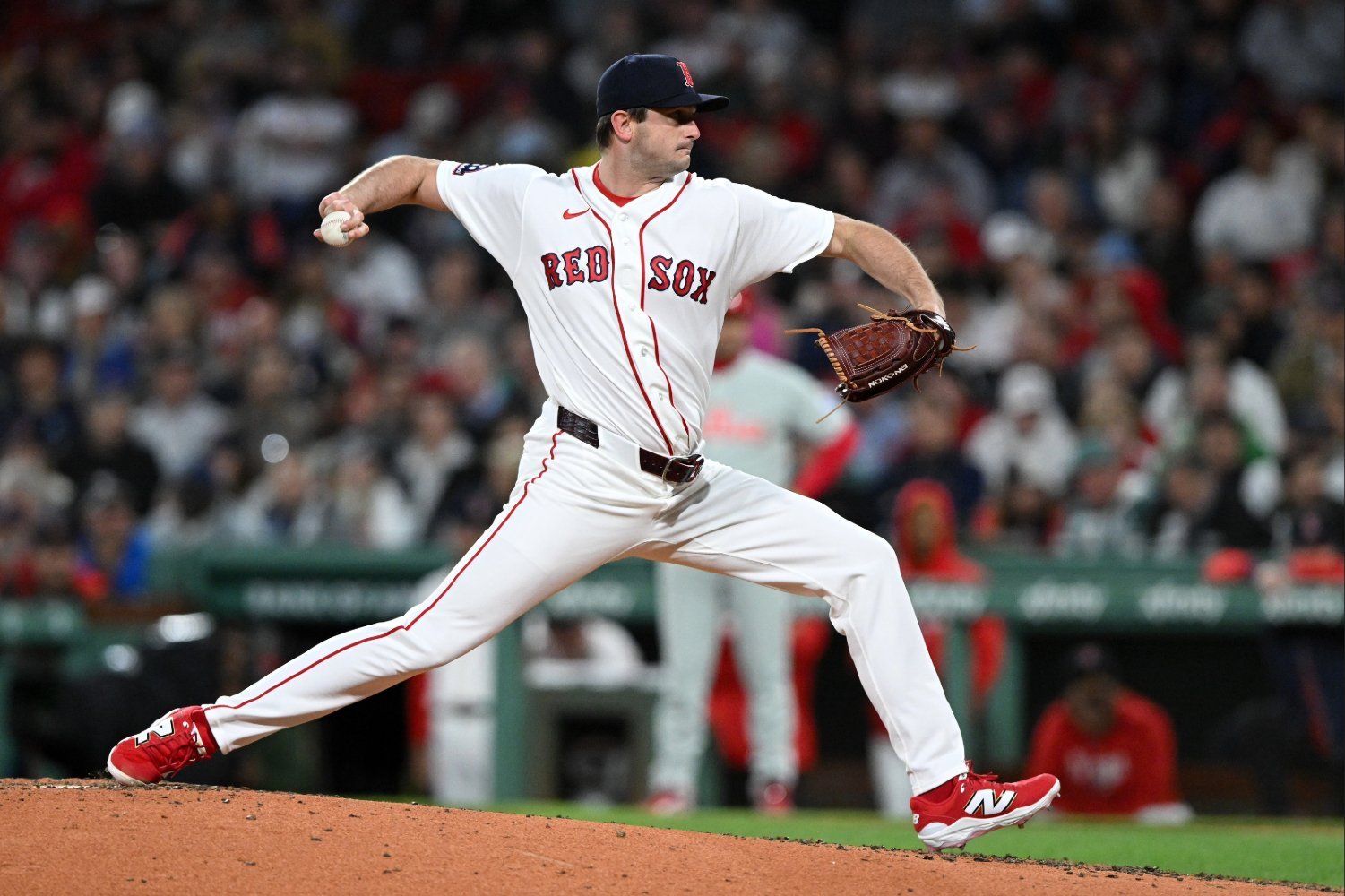 With the trade deadline just about six weeks away, it is widely expected that the Boston Red Sox will look to trade away Aroldis Chapman. One of the game’s greatest closers in recent history, Chapman is in his age-38 season and playing for his seventh team. Despite being in the twilight of his career, Chapman has found success in Boston unlike anywhere else. Across 61.1 innings in the 2025 season Chapman posted a 1.17 ERA, the second-lowest mark over his 17-year career and the lowest since 2016. His success has carried over into 2026, as he is one of the lone bright spots of the Red Sox's underwhelming season thus far. Through 21.2 innings, the lefty has tallied an ERA of 0.83 and a 0.97 WHIP. His stellar stats amid a season of team disappointment make Chapman a clear trade chip. Should the Red Sox look to the future, there are a few candidates to take over the ninth inning in Chapman’s absence. Ranking Red Sox's 4 Best Replacement Plans for Aroldis Chapman We'll go in order here, with the best (and most likely) candidate first followed by a trio of less-heralded options. Garrett Whitlock Whitlock has blossomed into one of the league's most reliable set-up men over the past few seasons. The Rule-5 draft pick from the New York Yankees made an immediate impact in Boston, turning in a sub-2.00 ERA over 73.1 innings in his first big-league season. After missing the majority of the 2024 season with injury, Whitlock bounced back strongly in 2025. He pitched in a career high 62 games to the tune of a 2.25 ERA and 91 strikeouts, another career high. Through the start of the 2026 season Whitlock has played the same set-up role as last season, and he’s played it well. Through 21.2 innings, Whitlock has produced a 2.91 ERA and four wins. Inarguably one of Boston’s most consistent and reliable bullpen pieces this decade, Whitlock seems to be the heir apparent to the closer role. It makes too much sense to give Whitlock the extra responsibility. He has consistently proved his ability to perform under pressure and has long been one of the league's premier late-inning relievers. Tommy Kahnle Should the Red Sox desire to leave Whitlock in his current role, the next logical closer option would be Tommy Kahnle. A 12-year MLB veteran, Kahnle signed a minor-league deal with the Red Sox late in the offseason and began his 2026 campaign in Triple-A Worcester. In early June. Kahnle triggered an upward mobility clause, forcing the Red Sox to add him to the roster, lest he would opt-out and seek other opportunities. In five appearances since coming to Boston, Kahnle has impressed. He’s totaled a 1.50 ERA through six innings, building on his 1.40 ERA through two months in Triple-A. Despite the small big-league sample size in 2026, Kahnle’s career 3.58 ERA and his track record of success in the majors make a convincing argument for him to take over as the teams closer. Just two years ago, Kahnle posted a 2.11 ERA as a member of the Yankees. His changeup played a big role in his success, holding batters to a .157 average and generating a 38.9% whiff rate. He used the pitch 73% of the time and has similarly leaned into his changeup in 2026. While his smaller 2026 sample size doesn’t display astounding results, it isn’t a far-fetched possibility that Kahnle with his 17 career saves could be a reliable option for the remainder of the season. Tyron Guerrero Another player recently promoted from Triple-A, Guerrero is a power throwing righty. However, his career path has been less than conventional. The 35-year-old has played in parts of four seasons dating all the way back to 2016 and found a consistent role with the Miami Marlins from 2018-2019 but saw undesirable results. Guerrero bounced around the minors and overseas leagues before landing in Worcester this past January. He settled into a closing role with the WooSox, posting a 0.92 ERA across 19.2 innings pitched and earning a call up to Boston in late May. Guerrero has a four-pitch mix but relies heavily on his sinker, utilizing it 76% of the time. His fastball velocity is in the 99th percentile according to Baseball Savant and he averages 99.9 MPH on his sinker. Guerrero clearly has the tools to be an effective closer, but it all comes down to application. He gave up four runs through his first three big league appearances in 2026, good for a 9.82 ERA. However, in eight outings since then, Guerrero has only allowed one run, settling into a 4.35 ERA. Given his recent reliability, the veteran could be the most logical option to take over the closer role if Whitlock stays in his set-up role and Kahnle follows Chapman out the door at the trade deadline. Additionally, Guerrero has seen success as a closer in Worcester and has proven that he can be trusted to take over in high-stakes situations. Eduardo Rivera If Boston decides to look fully to the future, Eduardo Rivera is an intriguing name who could see more playing time as the season continues to slip away. A well-regarded pitching prospect, he got attention earlier this season when he was promoted to the big-league club without making a single appearance in Triple-A. In one relief appearance in Boston, he dominated. Over 3⅓ innings against the Yankees, Rivera allowed just one hit as he struck out three batters. In the two months since then, he has accumulated a 3.29 ERA while holding opponents to a .188 batting average, albeit entirely in the minors. While Rivera isn’t a traditional closer and typically fills in a multi-inning role, his ability to perform well under pressure helps make a case for a potential role change. Additionally, if the season continues to unravel, the experience of high-leverage work could be beneficial for Rivera’s development down the line. View the full article
 -
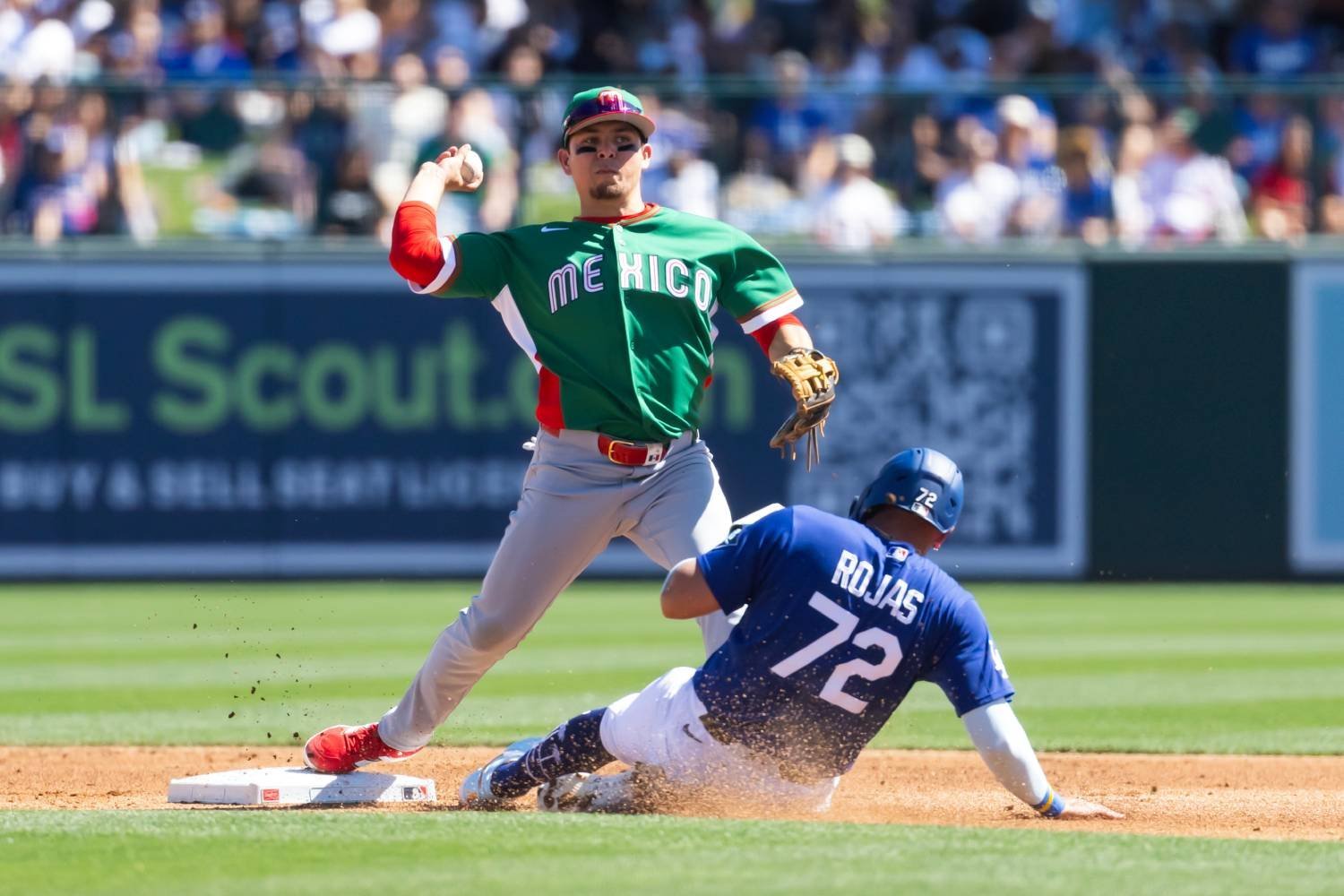 The Toronto Blue Jays have more infield depth. The Jays on Saturday acquired infielder Luis Urias from the Arizona Diamondbacks in a cash trade. Urias was assigned to Triple-A Buffalo. He had been with Triple-A Reno for the D'backs. Urias, 29, signed a minor-league contract with the D'backs in March, but began the season on the seven-day injured list after playing for Mexico in the World Baseball Classic. He came back in early May, slashing .361/.393/.546 with three homers and 19 RBIs in 27 games. He last appeared in MLB last season, playing in 96 games with the A's and posting a .230/.315/.338 slash line with eight homers and 25 RBIs. He has a career mark of .231/.329/.378 over eight seasons. View the full article
 -
 It’s nearly the end of the month, making this the perfect time to reveal our updated prospect rankings for the site. No, you’re a little late. As a reminder, our list can be found here, and it currently reflects the voting from the early days of May. Updating on a monthly basis is our way of remaining on the pulse; players will improve or recede in play, suffer injuries that cause them to stagnate, or exhaust their prospect eligibility due to major league playing time (which is what happened to Connor Prielipp and Andrew Morris who are no longer “prospects,” under this technical definition). With that out of the way, let’s get to the list proper: Walker Jenkins OF, AAA (Previously #1) Kaelen Culpepper SS, AAA (Previously #2) Emmanuel Rodriguez OF, AAA (Previously #3) Eduardo Tait C, A+ (Previously #5) Marek Houston SS, A+ (Previously #7) Riley Quick RHP, A+ (Previously #8) Kendry Rojas LHP, MLB (Previously #9) Hendry Mendez OF, AAA (Previously #13) Dasan Hill LHP, A+ (Previously #6) Gabriel Gonzalez OF, AAA (Previously #10) Charlee Soto RHP, A+ (Previously #11) Brandon Winokur INF/OF, A+ (Previously #15) Khadim Diaw OF/C, AA (Previously #19) Quentin Young INF, A (Previously #14) Ryan Gallagher RHP, AAA (Previously #16) James Ellwanger RHP, A (Previously #18) C.J. Culpepper RHP, AAA (Previously #17) Yasser Mercedes OF, A+ (Previously Unranked) Billy Amick INF, AA (Previously Unranked) Kyle DeBarge INF, AA (Previously #20) An Unchanged Top 3 Voters kept the Walker Jenkins, Kaelen Culpepper, and Emmanuel Rodriguez triumvirate intact, despite all three players hitting the IL since our last update (Jenkins has since started a rehab assignment). Clearly, their talent remains triumphant—and no one has yet usurped any of them, even as health frustrations remain a nuisance for the two outfielders in the group. Two Hitting Hot Streaks Marek Houston entered June with a merely solid hitting season, and launched into supernova territory, terrorizing A+ ball pitchers with a .408/.545/.592 slashline with 16 walks to seven strikeouts. He’s reached base in every game he’s played in the month. Paired with his already adept defense at shortstop, Houston—Minnesota’s first-round pick in 2025—appears an obvious candidate to break through and become the next name that populates one of the top three spots on this list. We knew Hendry Mendez could hit, but did anyone know he could hit like this? The young outfielder nabbed as part of the Harrison Bader return from last year's deadline is something of a throwback hitter; someone who could walk more than they strike out while hovering around that coveted “.300” batting average mark. He hit a relative rough patch in June, and is now on the IL, but was so dominant in May that he jumped five spots and cracked our top 10. A Talented Lefty Drops There’s no way to supercoat it: Dasan Hill has been dreadful this year. He made waves with an impressive teenage showing in 2025, and has struggled mightily with control this season, walking nearly a batter an inning on average. Unsurprisingly, his ERA is near 7. Voters opted not to be too harsh on the 20-year-old, as his stuff remains incredible, and his lankiness may, more so than most hurlers his age, make command difficult as he matures into his body. Hello There, Khadim Diaw All he does is hit. The Senegalese super utility man holds an .850 OPS during his time in the Twins system, as his prescient sense of the strike zone, and hit by pitch abilities, has buoyed an OBP above .420. It appears he may have to Daulton Varsho it, and discard the tools of ignorance behind the plate in favor of letting his athleticism fly in center field, which is a perfectly fine outcome: the system is light on healthy and adept center fielders. Two Newcomers A pair of graduations necessitates a pair of elevations, and the lucky two this month were Yasser Mercedes and Billy Amick. Mercedes, a one-time big-time international get, has been famous for years now, even as his pro career has rollercoaster-ed between brilliance and struggles. This year, he pummeled A-ball but cooled off in Cedar Rapids. Billy Amick is here to hit home runs and strike out. He has 17 bombs in 61 games at AA, and is punching out at a 30% rate. He’s one of the bigger “boom or bust” candidates on this list, but the tantalizing power of a potential boom keeps him as a back-end name. View the full article
 -
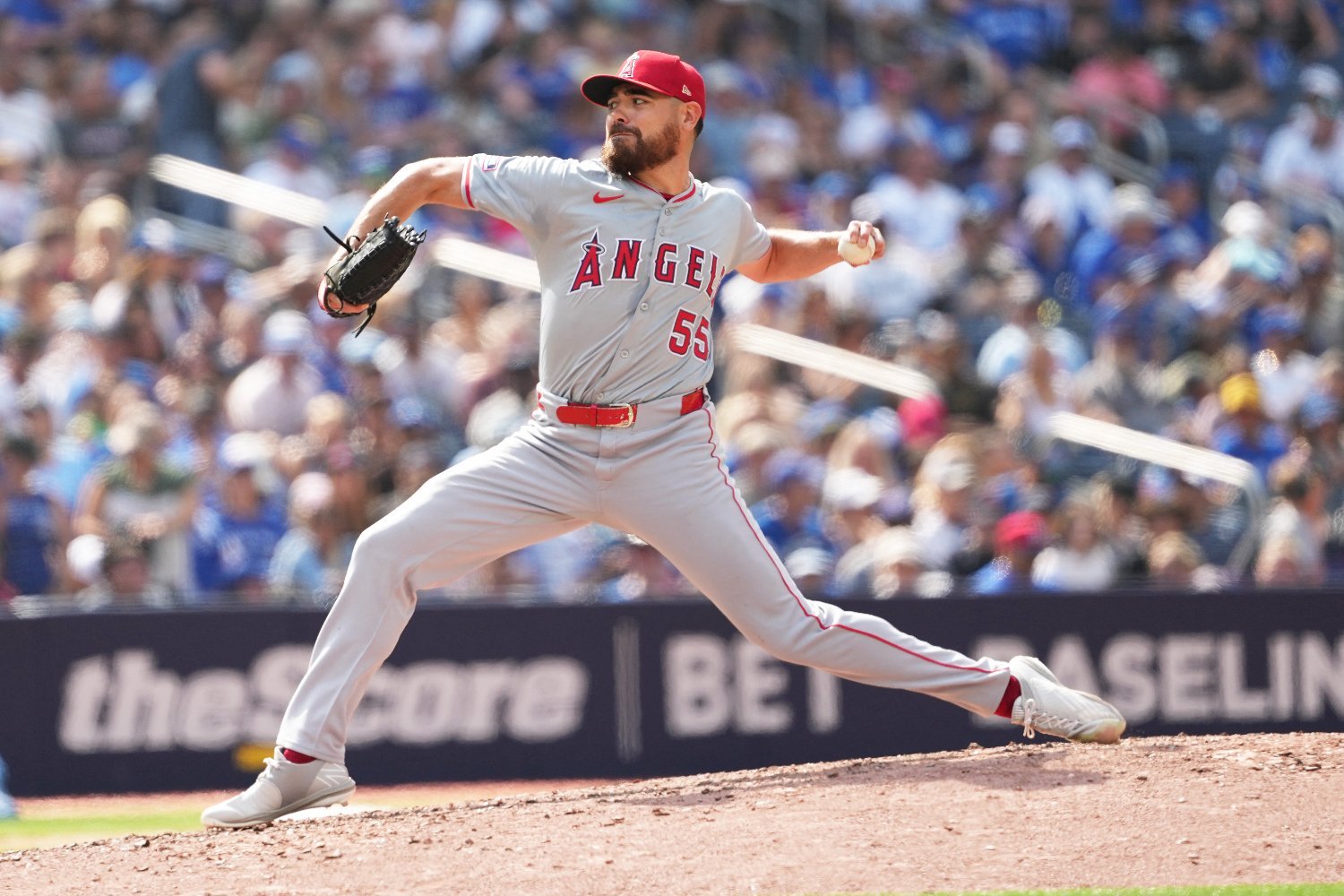 On Saturday morning, the Royals' Player Development account announced that they had signed left-handed pitcher Matt Moore to a Minor League contract. The 37-year-old pitcher is best known for his time with Tampa Bay, as he pitched seven shutout innings in Game 1 of the 2011 ALDS against the Texas Rangers. He made his first and only appearance in the All-Star Game with the Rays in 2013. That season, he posted a 3.29 ERA and 1.7 fWAR in 27 starts and 150.1 IP. While his best years came early in his career with the Tampa Bay Rays, he also found some success with the San Francisco Giants. In a split season with the Rays and Giants in 2016, he posted a 4.08 ERA and 2.0 fWAR in 33 starts and 198.1 IP, both career-highs. He struggled the next season as a starter with the Giants (5.52 ERA in 174.1 IP) and in 2018 with the Rangers (6.79 ERA in 102 IP). After pitching in only two games with the Tigers in 2019, he moved to Japan and posted a 2.65 ERA over 78 IP with the Fukuoka Softbank Hawks in 2020. In 2022, Moore moved to the bullpen and thrived in the role with the Rangers. In 63 appearances and 74.1 IP, he posted a 1.95 ERA and 1.3 fWAR. He served a similar role with three teams in 2023: the Angels, Marlins, and Guardians. In 52.2 IP among the three teams, he posted a 2.56 ERA and 0.6 fWAR. In 2024, he returned to the Angels but failed to duplicate his 2022 and 2023 reliever success. In 48.1 IP, he produced a 5.03 ERA and -0.8 fWAR. According to his TJ Stuff+ summary from 2024, he produced a decent whiff rate and xwOBACON, but his stuff was slightly subpar, and he struggled to find consistency in terms of zone and chase rates. Moore signed a Minor League deal with the Red Sox in February of 2025, but did not make an appearance with the Worcester Red Sox due to arm soreness. He was released and not picked up by a team for the remainder of 2025. Moore was not pitching for a baseball team this year prior to this signing. The Royals have been adding pitching depth to their system with so many pitchers on the IL. As of now, Alec Marsh, James McArthur, Cole Ragans, and Carlos Estevez are on the 60-Day IL, and Kris Bubic and Nick Mears are on the 15-Day IL. Kansas City acquired Connor Seabold from the Blue Jays and Randy Dobnak from the Mariners earlier this week. Dobnak made his Storm Chasers debut on Friday night. View the full article
 -
Daulton Varsho Back In Blue Jays' Lineup After Brief IL Stint
DiamondCentric posted an article in Jays Centre
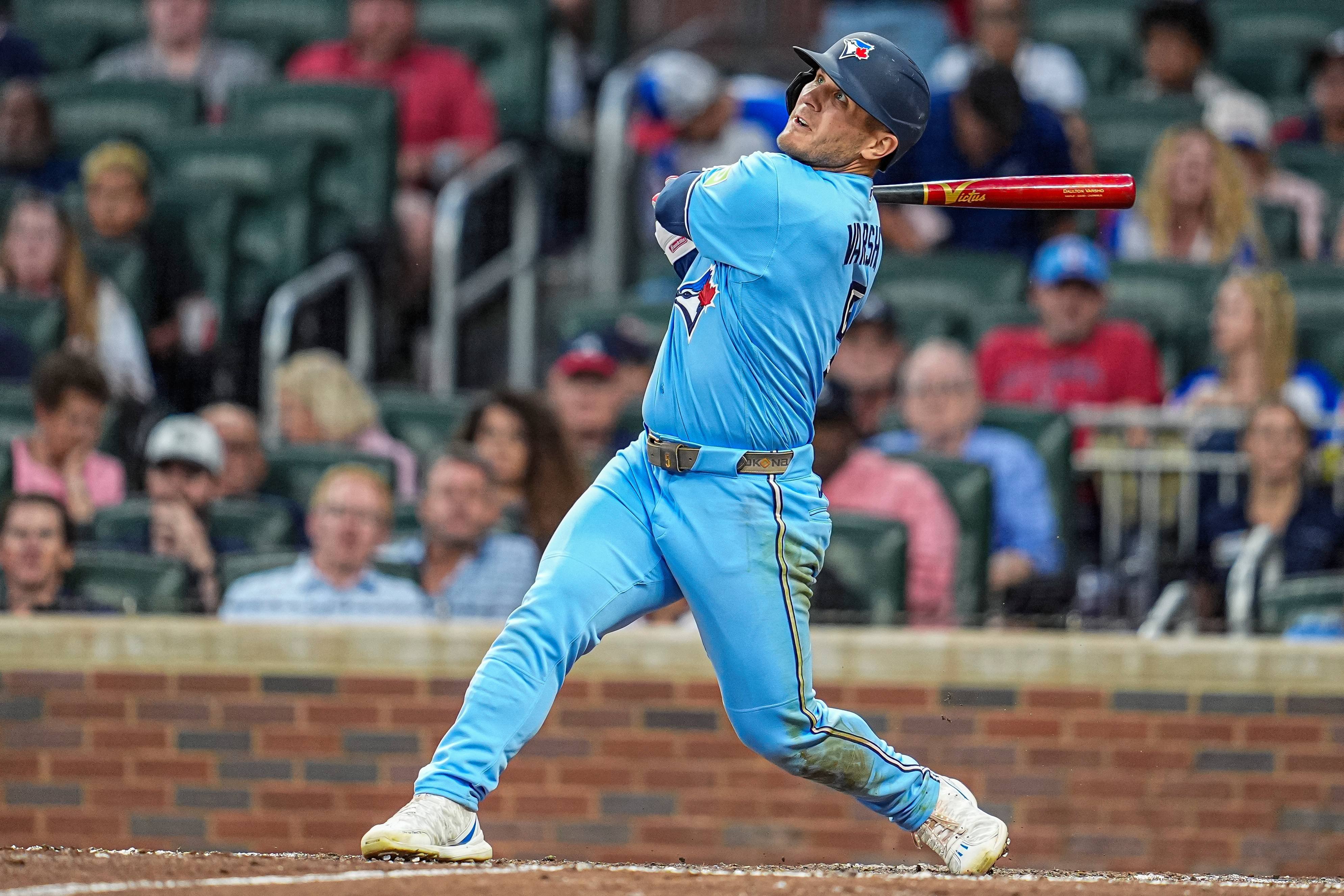 The Toronto Blue Jays have one of their key offensive pieces back. Center fielder Daulton Varsho was activated from the 10-day injured list Saturday by the Blue Jays, who also got right-handed reliever Lazaro Estrada back from the 60-day IL. Second baseman Charles McAdoo and left-handed reliever Brendon Little were optioned to Triple-A Buffalo to make room. Varsho missed the minimum time due to inflammation in his left wrist. Varsho is slashing .256/.331/.408 with five homers and 17 RBIs this season. Estrada has been out since April 5 with a right shoulder impingement. He had made one appearance, going four scoreless innings, not allowing a hit while walking a pair and striking out three. He has been on a rehab assignment the last three weeks. McAdoo made his MLB debut by appearing in eight games, going 4-for-25 with a homer and three RBIs. Little was called up Friday and pitched one inning in the Jays' 16-2 loss to the Chicago Cubs. He allowed four runs on two hits and three walks with one strikeout. View the full article
 -
 Let's check in on everything that happened down in the Boston Red Sox's farm system on Friday. Triple-A Worcester Red Sox Series @ Lehigh Valley IronPigs (Philadelphia Phillies): 2-2 Season Record: 35-34 Worcester fell 9-3 as Brayan Bello’s struggles continued to mount up. Bello’s miscues have been well documented throughout 2026, eventually resulting in a demotion to Worcester. In his second appearance since being sent down, Bello struggled to find solid ground, a consistent trend throughout most of his starts this season. Over four and ⅔ innings pitched, Bello allowed three runs on seven hits. He struck out five but his woes continued despite being a step below the big leagues. Joe La Sorsa, another recent demoted player, took the next 1⅓ innings and was excellent. He allowed one hit but that was all as he turned the ball over to Angel Bastardo. Bastardo got the loss for his one inning outing, allowing one more run on two hits. Seth Martinez took the next ⅔ innings as the game got out of hand. Martinez allowed five more runs on five hits before first baseman Nathan Hickey took the final out of an embarrassing defeat. The WooSox struggled to get much going from the plate, reaching base eight times and only having two opportunities at the plate with runners in scoring position. Anthony Seigler and Matt Thaiss had two hits apiece as they generated most of Worcester’s offense. Thaiss got the WooSox on the board with a two RBI single in the fourth. The WooSox only other run came an inning later on Tyler McDonough’s third homer of the season as Worcester grabbed its only lead of the day. The bats were all but silent for the rest of the game as Worcester dropped its second in a row. Double-A Portland Sea Dogs Series vs. Somerset Patriots (New York Yankees): 3-1 Season Record: 34-32 Portland triumphed 6-2 behind a nine-strikeout appearance from Gage Ziehl. Ziehl put together one of his best appearances of the season on Friday night. He notched a season-high nine punchouts as he lowered his ERA to 4.56. Ziehl allowed two runs on four hits but didn’t allow a walk over five innings, earning his third win of the season. Max Carlson took the next three innings, allowing two hits but no runs. He struck out three before turning the ball over to Erik Rivera. Rivera was excellent, allowing one hit and striking out one as he sealed the win for Portland. Ahbram Liendo led the way with two hits and three RBIs during Friday night's contest. However, it was Marvin Alcantara who struck first for the Sea Dogs. Alcantara drove in Johanfran Garcia and Miguel Bleis on a double in the second inning. Portland grabbed the lead and didn’t look back as Stanley Tucker drove in Alcantara with an RBI double of his own. Not to be left out, Liendo joined in on the fun. He smashed his fourth homer of the year, driving in Tucker and capping off a five-run second inning. In the seventh, Liendo struck again. He drove in Nelly Taylor on an RBI single as he put an exclamation mark on the four-run victory. High-A Greenville Drive Series @ Jersey Shore BlueClaws (Philadelphia Phillies): 2-2 Season Record: 27-37 Greenville won behind a strong three-run ninth inning. Kyson Witherspoon has slowly begun to replicate his stellar final season at Oklahoma over his past few starts. This trend continued on Friday as he pitched five innings. He allowed two runs on four hits, but struck out a season-high eight batters. He allowed two walks, but it was a successful appearance for the young righty. Joe Vogatsky took the next three innings and was equally as impressive. Vogatsky allowed three hits but prevented Jersey Shore from scoring any runs as he sat down five batters on strikes, earning Friday’s win. Steven Brooks closed out the victory with a perfect ninth inning, completing the save opportunity. Despite a slow start, Greenville’s bats came up clutch to give it the win. Ronny Hernandez gave the Drive their first run of the day, clubbing his sixth homer of the season and cutting the lead to one run. In the top of the ninth inning, with the score 2-1 in favor of Jersey Shore, Mason White stepped to the plate with hero aspirations. He came through clutch, hitting his third triple of the year and tying the game as Hernandez scored. Then, Yoeilin Cespedes hit his first triple of the year, driving in White and giving the Drive a one run advantage. Cespedes crossed home on a Luke Heyman groundout as the lead was extended. It was better late than never on Friday as the Drive overcame early struggles to claim the win. Low-A Salem RidgeYaks Series @ Fredericksburg Nationals (Washington Nationals): 2-2 Season Record: 26-40 Salem won its second game in a row as the top of the order was excellent. Brady Tygart started Friday’s game for Salem and turned in a great outing. Over 2⅓ innings Tygart allowed two hits and walked two as he struck out three. Tygart is closing in on a return from injury and could be added to Salem’s roster in the near future. It wasn’t a lengthy outing from Tygart as he turned the ball over to Jacob Mayers in the third inning. Mayers earned the win for his 3⅔ innings of ball. He allowed one run on two hits as he walked four. He struck out six before Wuilliams Rodriguez took over in the seventh inning. Rodriguez struggled, allowing four runs on five hits. He also struggled with command, surrendering four walks. Adam Bates took the final 1⅓ innings, allowing four walks and a run but doing just enough to give Salem the victory as he earned a save. Salem’s top five batters each recorded an RBI, led by Andrews Opata and Kleyver Salazar who had two hits each. Ilan Fernandez scored in the top of the third to open the scoring, crossing home on an Avinson Pinto groundout. Later in the inning, Andruw Musett and Kleyvar Salazar scored as Skylar King reached on a fielding error. Salazar added to the lead in the seventh inning with an RBI single, driving home Justin Barry. Pinto then scored as Musett drew a bases loaded walk. Later in the seventh, Opata scored on a Skylar King sac fly. In the eighth, Opata added another run, driving in Justin Barry on a single to right. Despite a late-innings fight from Fredericksburg, Salem was able to hold onto the win behind efficient hitting. View the full article
 -
 Chicago Cubs Minor League Report - June 20 Affiliate Overview Triple-A Iowa Cubs Series vs. Indianapolis Indians (Pittsburgh Pirates): Cubs lead, 3-1 Season Record: 30–40-1 Double-A Knoxville Smokies Series vs. Chattanooga Lookouts (Cincinnati Reds): Tied, 2-2 Season Record: 37–30 High-A South Bend Cubs Series at Fort Wayne TinCaps (San Diego Padres): Tied, 2-2 Season Record: 40–23 Single-A Myrtle Beach Pelicans Series at Delmarva Shorebirds (Baltimore Orioles): Pelicans lead, 3-1 Season Record: 27–38 Affiliate Highlights Triple-A: Iowa Cubs Season Record: 30–40-1 Series Opponent: Indianapolis Indians (29-44) Series Standing: Lead, 3-1 June 19: The Iowa Cubs clinched at least a series split with an 11-7 victory over the Indianapolis Indians on Friday night at Principal Park. The Indians took a 3-0 lead, scoring once in the first and adding two more in the second. RBI-singles from Chas McCormick (2-for-3) and Brett Bateman (2-for-6) in the second made it 3-2 and the Cubs took a 4-3 lead in the third thanks to RBI hits from James Triantos (1-for-4) and Christian Bethancourt (3-for-4). Indianapolis went back in front with two runs in the fourth but the I-Cubs responded in the home half of the frame, with Jonathan Long (1-for-4) crushing a grand slam. Iowa made it 11-5 in the fifth, with Owen Miller (2-for-6) doubling home a run and BJ Murray (3-for-5) launching a two-run shot, his eighth of the campaign. The Indians scratched a run across in each the seventh and ninth innings but Iowa was able to hold on for the 11-7 win. Andrew Wantz picked up the win out of the bullpen to improve to 3-0 on the season. Wantz allowed three runs on four hits over four innings of work, striking out three and walking one. Offensively, all nine Cubs starters recorded at least one hit in the ballgame, with six batters tallying multi-hit efforts. Double-A: Knoxville Smokies Season Record: 37–30 Series Opponent: Chattanooga Lookouts (36–31) Series Standing: Tied, 2-2 June 19: The Knoxville Smokies evened their series against the Chattanooga Lookouts with a 2-0 shutout win on Friday night at Covenant Health Park. The Smokies now take a one-game lead in the Southern League North Division with two games left to play in the first half of the season. Their magic number to clinch a postseason spot is two. Both teams traded zeroes through the first six innings of the ballgame, with Knoxville starter Jace Beck turning in five of those innings. Beck allowed just two hits and whiffed a career-high 10 batters with just one walk issued. Yenrri Rojas followed out of the bullpen and picked up the win in relief to improve to 2-5 on the season. Rojas tossed two scoreless frames and retired all six of the batters that he faced. The Smokies finally broke the deadlock in the seventh on a pair of RBI-singles from Carter Trice (1-for-3) and Ariel Armas (1-for-3). Tyler Ras earned his first save of the season by turning in two shutout innings to end the game, allowing just one hit and striking out two. High-A: South Bend Cubs Season Record: 40–23 Series Opponent: Fort Fayne TinCaps (27–40) Series Standing: Tied, 2-2 June 19: The South Bend Cubs evened their series at the Fort Wayne TinCaps with a 7-6 victory in 11 innings on Friday night at Parkview Field. The TinCaps raced out to 5-0 after their first trip to the plate before the Cubs got on the board with two runs in the third. Josiah Hartshorn (1-for-4) drove in a run on a sacrifice fly and Matt Halbach (1-for-6) picked up an RBI on a fielder’s choice. South Bend plated two more in the fifth to make it 5-4, thanks to an RBI-double from Hartshorn and an RBI from Miguel Useche (0-for-5). Fort Wayne got one of those runs back in the home half of the fifth to make it 6-4 but the Cubs were able to tie the ballgame in the eighth with their third two-spot of the contest. Ty Southisene (2-for-5) provided the clutch knock, driving in a pair on a single. The game would head to extras with neither team able to score in the 10th, with South Bend reliever Ethan Bell stranding the winning at third. Southisene delivered again in high leverage, singling home the go-ahead run in the 11th to give the Cubs the 7-6 lead. Bell would then leave the tying run on third in the bottom of the frame to give South Bend the win. Bell improved to 3-0 on the season after 2 1/3 shutout innings, allowing no hits and striking out four batters to go along with three walks. Koen Moreno got the start for the Cubs and took no decision. Moreno allowed five runs, one earned, on five hits over four innings, striking out two and walking two. Hartshorn’s two RBI brought his High-A total to 30 in just 22 games. Single-A: Myrtle Beach Pelicans Season Record: 27–38 Series Opponent: Delmarva Shorebirds (24–43) Series Standing: Lead, 3-1 June 19: The Myrtle Beach Pelicans dropped their contest at the Delmarva Shorebirds, 8-4, on Friday night at Arthur W. Perdue Stadium. The Pelicans took a 3-0 lead in the second, plating one on a wild pitch and two thanks to a single off the bat of Alexey Lumpuy (3-for-4). The Shorebirds got on the board with a run in the third to make it 3-1 and that score would hold until the seventh. Delmarva would go in front with three runs after the stretch but Logan Poteet (2-for-3) would make it 4-4 with a solo shot in the eighth, his 11th long ball of the season. The hosts, however, would score four in their trip to the dish in the eighth to go ahead 8-4. Myrtle Beach would go down in order in the ninth to end the game. Kaleb Wing got the start for the Pelicans and did not factor in the decision. Wing allowed one run on three hits over 2 2/3 innings of work, striking out three but issuing four walks. Sam Mettert was handed the loss, falling to 0-1 on the season. Mettert allowed four runs, all unearned, on three hits over two innings, whiffing two batters. The Myrtle Beach offense went 1-for-15 with runners in scoring position on the night, leaving 13 runners on base. View the full article
 -
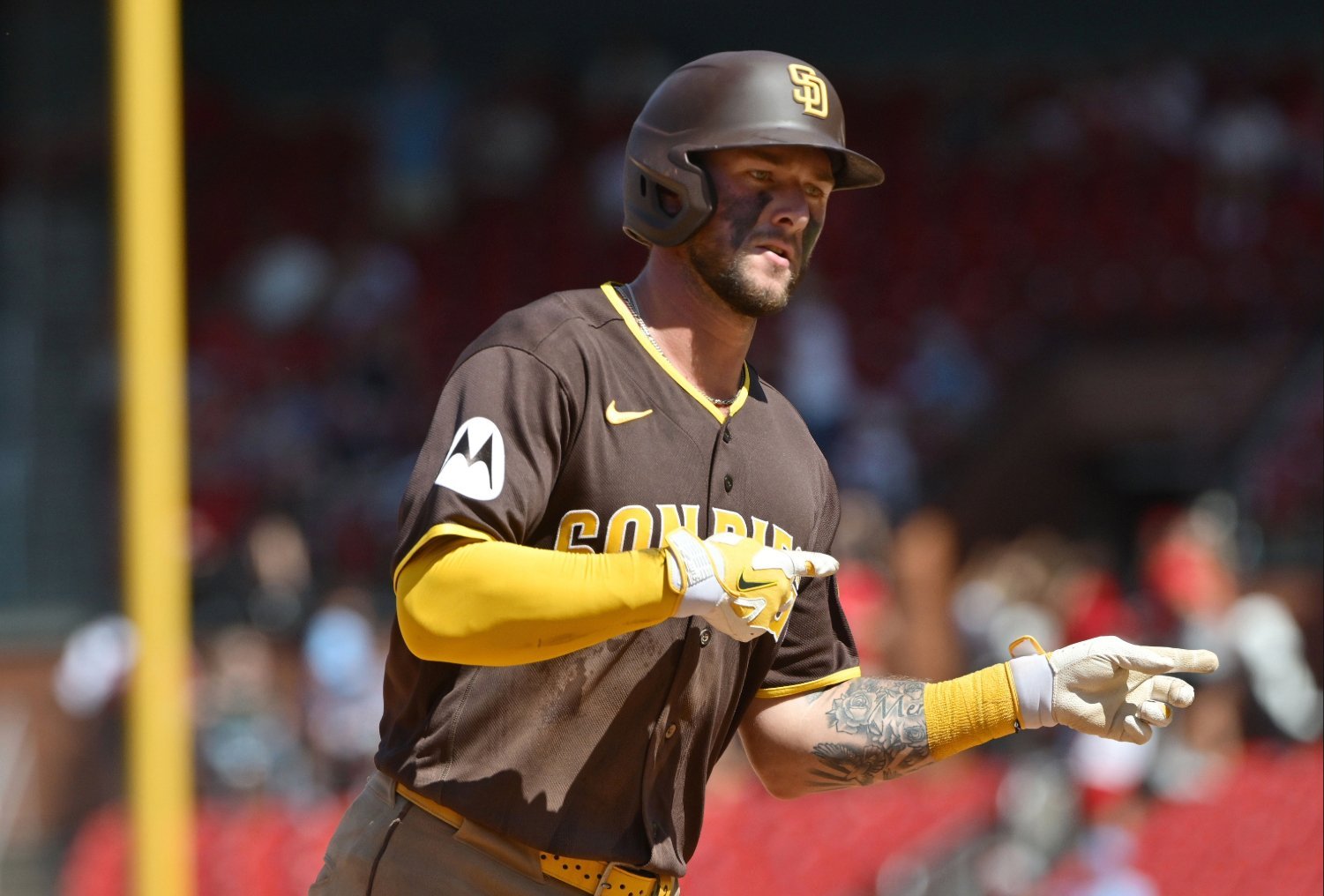 Despite being clear of the health woes that plagued him in 2025, Jackson Merrill has not been immune to the struggles of the collective San Diego Padres offense. In fact, he's largely been a driver of such struggles. As he approaches his first 300 plate appearances of the season, Merrill carries a line of just .213/.277/.358 with little power (.146 ISO) and a wRC+ of 79. Each of his strikeout (24.1 percent) and walk (7.8 percent) rates are up a touch, with very little batted ball luck on which to fall back (.259 BABIP). He's provided steady defense and been a force on the bases (12 steals), but there hasn't been much to generate excitement over his performance at the plate. The month of June has represented a turnaround in at least one respect, however. Merrill's power is beginning to show itself with more consistency than we'd seen in the first couple of months of the season. Many of the issues that we saw from Merrill have persisted even halfway this month. His slash still only features a batting average of .226 and on-base percentage lingering around .260. His wRC+ is still, technically, that of a below-average hitter at 93. His batted ball fortunes are worse than ever, at a .244 BABIP. The power, though, is of particular interest. Merrill's ability to impact a baseball game with one swing has started to appear, even in the face of continued struggle elsewhere. Merrill's ISO this month reads .210. Coming off a .130 figure in March & April and a .121 output in May, that's particularly encouraging. His three home runs this month match his total from March & April with half the month still to go. What's more is that Merrill's 52.1 percent hard-hit rate represents his highest in an individual month this year. That's by a fairly wide margin, too; he had rates of 44.2 and 47.7 percent in each of the the first two months. What's interesting in the re-emergence of his power is that it's largely come on the strength of his work against breaking pitches. While Merrill's best work in his career has come against the hard stuff (run values of six and seven in his first two seasons, respectively), his rookie year showcased an impressive standing against breaking pitches. This month, he's mashing them: His 61.5 percent hard-hit rate against breaking pitches this month is his highest against any of the three groups in any month thus far. He's finding the barrel at an obscene 23.1 percent clip, too, helping to drive that trend. Two of his three home runs this month have also come against breaking pitches. It's something that Merrill clearly recognizes, as well. His swing rate against breaking pitches is up at 68.2 percent this month, leading all pitch groups. What's encouraging about that is that while he's swinging at them more, he's not whiffing. Merrill's swing-and-miss rate against breaking pitches is actually down slightly from last month, while his fly-ball rate on contact has more than doubled to 53.8 percent. Whether or not this is a permanent trend, however, remains to be seen. Merrill's best work has always come against fastballs. They've served as the primary source of quality contact and subsequent power output in the small sample that his career still is. That breaking balls have jumped to the forefront of his production is an interesting development that doesn't feature a strong foundation on which to stand at this point. What may be more important in terms of that foundational skillset is that Merrill appears to be locking in his eye on some level. There's a pitch recognition happening here that is allowing him to jump on breaking pitches. Perhaps that's something that can carry over into the rest of his approach as he tries to reestablish himself as a multi-faceted offensive player. That's something that we'll have to continue to monitor given the minuscule sample with which we have to work. View the full article
 -
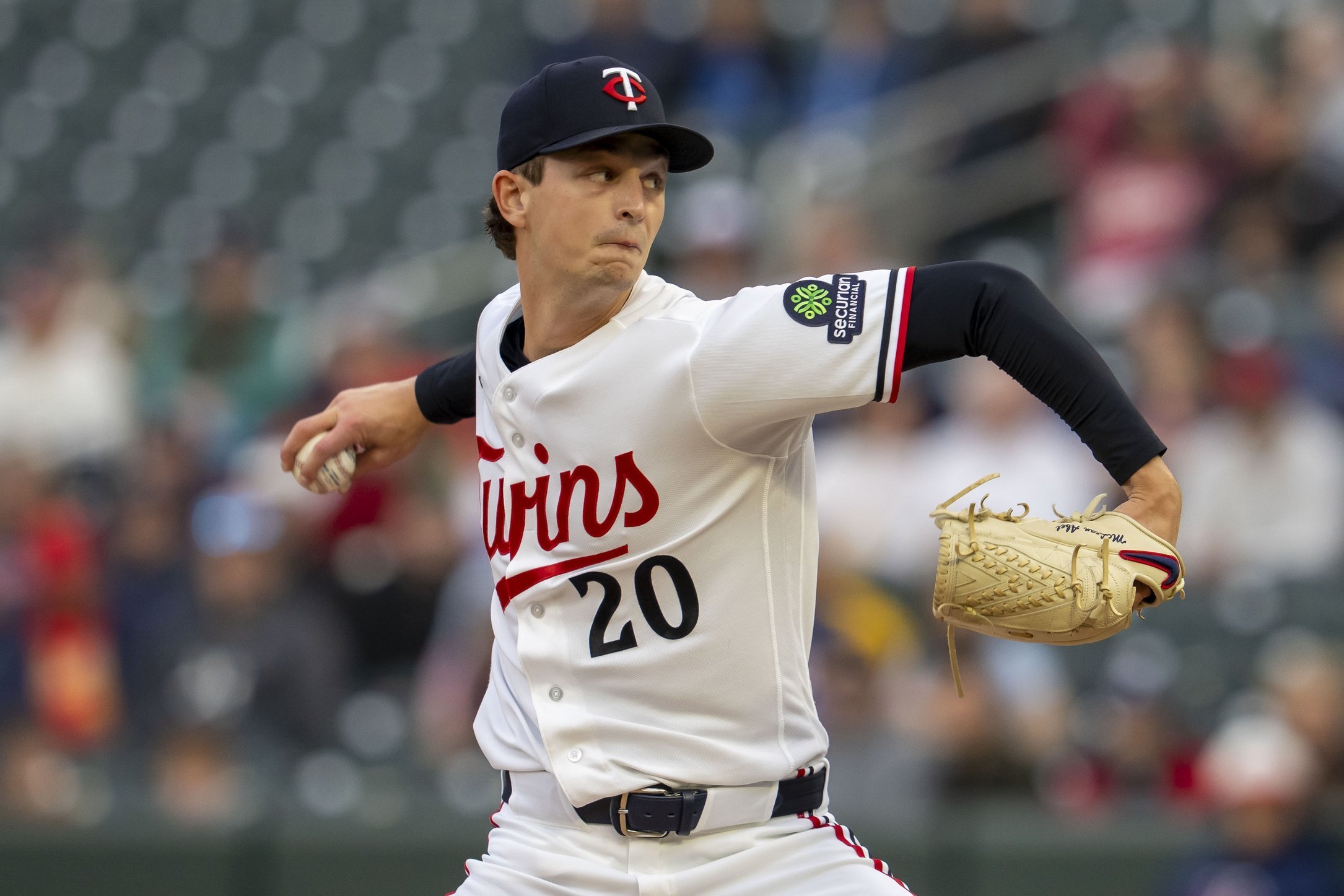 Mick Abel has been on the injured list since April 20, but it appears his return may finally be right around the corner. According to recent reports, Abel was expected to travel with the Twins to Arizona this weekend, and the timing could line up perfectly. Minnesota has yet to announce a starter for Sunday's game, which just so happens to align with Abel's turn in the rotation. If that ends up being the case, it would be a significant boost for a pitching staff that's currently dealing with injuries. With Bailey Ober and Kendry Rojas both also on the shelf, the Twins have been forced to lean heavily on their organizational depth over the last few weeks. Beyond simply getting another arm back, though, Abel's return would bring back one of the most intriguing young starters in the organization. In fact, in his final two starts before landing on the injured list, Abel looked every bit the part of a future frontline starter. Facing the Tigers and Red Sox, he tossed 13 scoreless innings while allowing just eight hits and three walks. He struck out 16 batters during that span and consistently overpowered hitters from start to finish. For Twins fans, it was the first real glimpse of what Abel could become if everything clicks. And a huge reason for that optimism is his fastball. Quite frankly, I think Abel's four-seam fastball has the potential to become one of the best pitches in all of baseball. That's a bold statement, but the underlying numbers make a very strong case. During those final two starts before his injury, Abel generated a remarkable 38.5 percent whiff rate on his four-seam fastball. Even when looking at his full-season sample, the pitch owns a 33.8 percent whiff rate. That's an absurd number. Technically, Abel doesn't qualify for league leaderboards because he hasn't thrown enough innings, but among all eligible pitchers, that 33.8 percent whiff rate would rank second in the league (behind only Jacob Misiorowski). The pitch also owns a 118 Stuff+ rating, placing it comfortably among the best fastballs in baseball. So why is it so effective? A lot of it starts with Abel's arm slot. Despite standing at 6-foot-5, Abel releases the baseball from a relatively low arm angle. The delivery is very similar to Joe Ryan's in that regard, and it creates a flatter approach angle as the ball enters the strike zone. Many pitchers create a steeper downhill plane, but with how much induced vertical break Abel generates, it fools hitters up in the zone. That’s often led to swings underneath the ball, and the bat-tracking data supports exactly that. Time and time again, opposing hitters are getting under Abel's fastball rather than squaring it up. Even when they make contact, they're frequently missing the ideal contact point. The lower arm slot also creates additional horizontal movement. Because of the way the ball comes out of his hand, his fastball features more natural tail than a traditional over-the-top delivery. That same movement profile carries over to the rest of his arsenal as well, allowing his breaking pitches to generate additional side-to-side action. It's a unique combination of traits that makes his entire pitch mix play up. Then there's the physical component. Abel is already throwing around 95 MPH, but the radar gun doesn't tell the whole story. Thanks to his long frame and impressive mechanics, he's generating nearly seven feet of extension toward home plate. That means the ball is being released significantly closer to the hitter than average. As a result, his 95 MPH fastball effectively plays much harder. To hitters, it can look more like 98 or 99 MPH. When you combine that type of perceived velocity with the shape of the pitch, you're talking about a very difficult fastball to handle. Of course, it's not perfect yet. When Abel is pounding it at the top of the strike zone, it becomes incredibly difficult to do damage against. That's where the shape, approach angle, and velocity all work together at their best. The problem is that he hasn't consistently lived in that area. There have been plenty of occasions where he's left fastballs lower in the zone, and those mistakes have been hit hard. Ideally, his fastball and secondary pitches should be attacking completely different planes. The fastball should be missing bats up, while everything else is meant to work underneath it. That's an adjustment that should come with continued experience. It's also worth noting that Abel has been unlucky in his small sample this season. Opposing hitters own a .386 batting average on balls in play against him, an extremely high number that almost certainly isn't sustainable over the long run. As that figure begins to normalize, some of the results should start moving in his favor as well. Still, the biggest takeaway isn't bad luck. It's the ceiling. Abel's fastball received a 65-grade evaluation when he was selected in the first round out of high school in 2020, and it's easy to understand why scouts were so excited about the pitch. The velocity, movement profile, extension, and bat-missing ability are all there. When a pitcher has the ability to dominate hitters with a fastball alone, it changes the entire equation. Those are the kinds of arms that develop into frontline starters. Mick Abel isn't there yet, but the ingredients are obvious. If he can stay healthy and continue refining the command of that four-seamer, the Twins may have a legitimate future ace returning to their rotation sooner rather than later. View the full article
 -
 Abraham Toro powered Omaha with a triple, a two-run homer, and three hits, but St. Paul walked off the Storm Chasers 6 to 5. Andrew Morones struck out six over three scoreless innings in relief for Northwest Arkansas in a 9-to-1 loss to Tulsa. Kendry Chourio fanned 10 across 4 2/3 innings for Quad Cities in a 12-to-2 defeat, and Luis Valdez tossed two scoreless innings for Columbia in a 10-to-0 shutout at Hickory. Royals Transactions Kansas City Royals activated RHP Seth Lugo from the 7-day injured list. Kansas City Royals optioned RHP Mason Black to Omaha Storm Chasers. Toro's Power Not Enough As Storm Chasers Fall In Walk-Off Omaha collected 11 hits but stranded nine runners in a 6-to-5 walk-off loss to the St. Paul Saints. Toro led the way, going 2-for-5 with a triple, a home run, and two runs batted in. Drew Waters added two doubles, a run, and an RBI, while Matthew Lugo and Brett Squires each had two hits. Omaha jumped on the board in the second inning. Waters doubled to right to score Toro, and Brandon Drury followed with a single that brought Waters home, cutting the deficit to 3 to 2. The Storm Chasers tied it in the fifth when Squires singled home Lugo. Toro put Omaha ahead in the eighth with a two-run homer to left center that scored Luca Tresh, making it 5 to 4. Randy Dobnak took the bulk of the work, allowing three runs, all earned, on six hits with one walk and five strikeouts over 4 1/3 innings. The bullpen could not hold the late lead, as St. Paul tied the game in the ninth and pushed across the winning run to take it 6 to 5. Player AB R H RBI BB K Peyton Wilson 5 0 0 0 0 2 Matthew Lugo 5 1 2 0 0 1 Brett Squires 5 0 2 0 0 3 Luca Tresh 4 1 1 0 0 2 Abraham Toro 5 2 2 2 0 0 Drew Waters 4 1 2 1 0 0 Brandon Drury 3 0 1 1 1 0 Gavin Cross 3 0 0 0 1 0 Kevin Newman 4 0 1 0 0 2 Player IP H R ER BB K HR Randy Dobnak 4 1/3 6 3 3 1 5 1 Dan Altavilla 1 2/3 1 1 0 0 1 0 Andrew Pérez 1 0 0 0 1 2 0 Eric Cerantola 1 1/3 4 2 2 1 3 1 Naturals Bats Go Quiet In Lopsided Loss To Tulsa Northwest Arkansas managed just four hits and stranded five runners in a 9-to-1 loss to the Tulsa Drillers. Daniel Vazquez drove in the lone run, going 1-for-3 with a walk. Colton Becker added a double and scored the only run, while Rudy Martin Jr. and Omar Hernandez each chipped in a single. The Naturals scored their only run in the first inning, when Vazquez singled to left to bring home Becker and tie the game at one. Tulsa answered immediately, building a lead with a four-run second inning and never looking back. Hunter Owen had a rough outing, surrendering six runs, all earned, on seven hits with four walks and one strikeout across two innings. Morones was the bright spot out of the bullpen, working three scoreless innings while allowing one hit, walking two, and striking out six. Chase Jessee followed with three innings, allowing one run on two hits, and Brandon Johnson gave up two runs in the ninth. Player AB R H RBI BB K Rudy Martin Jr. 4 0 1 0 0 2 Colton Becker 4 1 1 0 0 0 Sam Kulasingam 4 0 0 0 0 1 Carson Roccaforte 3 0 0 0 1 2 Daniel Vazquez 3 0 1 1 1 1 Omar Hernandez 4 0 1 0 0 0 Connor Scott 3 0 0 0 0 0 Canyon Brown 3 0 0 0 0 2 Alberto Rodriguez 1 0 0 0 2 1 Player IP H R ER BB K HR Hunter Owen 2 7 6 6 4 1 0 Chase Jessee 3 2 1 1 3 4 0 Brandon Johnson 1 2 2 2 2 1 0 Andrew Morones 3 1 0 0 2 6 0 Chourio Strikes Out 10 But River Bandits Drop Slugfest Quad Cities piled up 12 runners left on base and could not string together offense in a 12-to-2 loss to the Wisconsin Timber Rattlers. Erick Torres had the lone multi-hit day at 2-for-4, while Asbel Gonzalez, Ramon Ramirez, Luke Pelzer, Derlin Figueroa, and Angel Acosta each added a single. Figueroa and Tyriq Kemp drove in the runs. The River Bandits got both of their runs in the first inning. Figueroa singled home Blake Mitchell, and Kemp followed with a sacrifice fly that scored Ramirez to tie the game at two. The offense went silent from there as Wisconsin pulled away, scoring 10 unanswered runs. The River Bandits left 12 runners on base and went 1-for-7 with runners in scoring position. Chourio was sharp at times and overpowering with the strikeout, fanning 10 batters over 4 2/3 innings, but he was charged with seven runs, five earned, on seven hits and a home run while issuing no walks. Mason Miller allowed one run over 2 1/3 innings, and Ryan Ure was tagged for four runs in two innings to close it out. Player AB R H RBI BB K Asbel Gonzalez 4 0 1 0 1 3 Blake Mitchell 3 1 0 0 2 3 Ramon Ramirez 4 1 1 0 1 2 Luke Pelzer 4 0 1 0 1 0 Derlin Figueroa 5 0 1 1 0 3 Tyriq Kemp 3 0 0 1 0 0 Connor Rasmussen 4 0 0 0 0 1 Erick Torres 4 0 2 0 0 0 Angel Acosta 3 0 1 0 1 0 Player IP H R ER BB K HR Kendry Chourio 4 2/3 7 7 5 0 10 1 Mason Miller 2 1/3 2 1 1 1 1 0 Ryan Ure 2 3 4 4 1 1 0 Fireflies Shut Out At Hickory In Quiet Night At The Plate Columbia was held to three hits and was shut out 10 to 0 by the Hickory Crawdads. Hyungchan Um, Sean Gamble, and Angel Ramirez each had a single, and Yandel Ricardo and Josh Hammond drew the only walks. The offense never advanced a runner across the plate. The Fireflies went 1-for-4 with runners in scoring position and left five runners on base. The damage came in the fifth inning, when Hickory broke the game open with six runs to turn a manageable deficit into a rout. The Crawdads had taken an early lead with three runs in the third and tacked on another in the seventh. Coleman Picard absorbed the loss, allowing three runs, all earned, on five hits with one walk and two strikeouts over 2 2/3 innings. Randy Ramnarace was charged with five runs, though none were earned, across two innings. Valdez finished strong, striking out three over two scoreless innings while allowing two hits and two walks. Player AB R H RBI BB K Yandel Ricardo 3 0 0 0 1 2 Josh Hammond 3 0 0 0 1 0 Stone Russell 4 0 0 0 0 3 Hyungchan Um 4 0 1 0 0 1 Sean Gamble 3 0 1 0 0 0 JC Vanek 1 0 0 0 0 1 Roni Cabrera 3 0 0 0 0 1 Angel Ramirez 3 0 1 0 0 1 Ivan Sosa 3 0 0 0 0 1 Josi Novas 3 0 0 0 0 2 Player IP H R ER BB K HR Coleman Picard 2 2/3 5 3 3 1 2 0 Randy Ramnarace 2 2 5 0 2 1 0 Brandon Herbold 1 1/3 1 1 0 2 1 0 Luis Valdez 2 2 1 0 2 3 0 Top-20 Prospect Performance Kendry Chourio: 4 2/3 IP, 7 H, 7 R, 5 ER, 0 BB, 10 K, 1 HR David Shields: DNP Sean Gamble: 1-for-3 Blake Mitchell: 0-for-3, 2 BB, 3 K Josh Hammond: 0-for-3, BB Ramon Ramirez: 1-for-4, R, BB, 2 K Drew Beam: DNP Asbel Gonzalez: 1-for-4, BB, 3 K Ben Kudrna: DNP Carson Roccaforte: 0-for-3, BB, 2 K Yandel Ricardo: 0-for-3, BB, 2 K Felix Arronde: DNP Blake Wolters: DNP Michael Lombardi: DNP Luinder Avila: DNP Steven Zobac: DNP Frank Mozzicato: DNP Daniel Vazquez: 1-for-3, RBI, BB, K Warren Colcano: 0-for-2, 1 BB Shane Panzini: DNP View the full article
 -
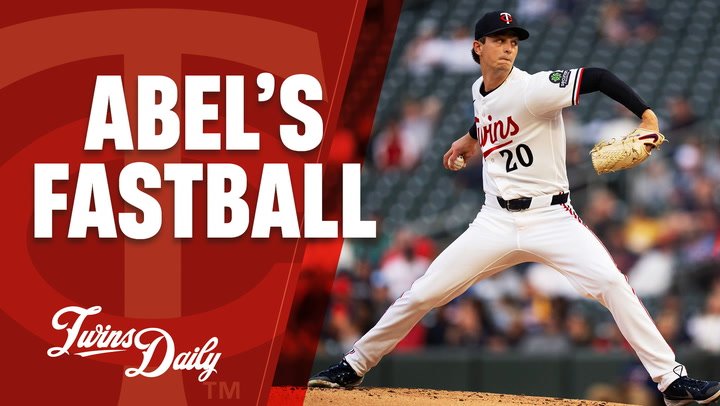 With a return potentially right around the corner, it's worth revisiting why there's so much excitement surrounding Mick Abel. View the full article
 -
 The Sounds said goodbye to their first-half playoff hopes, while the Shuckers inched closer to clinching. We try to explain why incredible Maryvale right fielder Alexander Frias hasn't landed in Wilson yet. Transactions: Nashville Sounds activated RHP J.B. Bukauskas from the 7-day injured list. SS/3B Cristopher Acosta placed on ACL Brewers’ 7-day injured list Acosta last played on June 8th. Nashville Pre-Game Media Notes Final: Memphis (Cardinals) 4, Nashville 1 Box Score and Game Log Via the Sounds, game details, and we encourage readers to always review affiliate write-ups as part of their Link Report routine: Sounds Eliminated from First Half Playoff Race - Stallings shined in team-high 11th start of season The game summary didn't include video of the Luis Lara RBI single in the 5th that drove in Ethan Murray for the Sounds' lone run, but you can see it here. On the same play, Ramon Rodriguez is out at the plate as the video is unfortunately too reminiscent of the key play in the parent club's loss in Atlanta Friday night. Speaking of reminiscent with the big-league Brewers, this didn't cost the Sounds the game but reminds us of the Jake Woodford era: Lara joined Eddys Leonard (you read about Leonards' three walks in the summary) to reach base more than once, as Lara was hit by a pitch. It's true that Lara has cooled in June (.467 OPS in 11 games), but I've seen too many online concerns about that tiny sample vs. the weight of Lara's incredible work the prior two full months. Concerns? Jett Williams has a .239 OBP in June, and his 0-for-4, three K night in the leadoff spot dragged his overall numbers further. Yes, four HR's this month is helpful, but what seemed an imminent call-up is now anything but. Williams isn't going to supplant Joey Ortiz as part of an MLB platoon soon despite an .862 OPS vs. AAA southpaws this season. Williams started his second game at shortstop since Cooper Pratt's call-up. Brock Wilken was on the bench again, as his days off become more frequent. Catch up with the latest Biloxi pre-game audio interview archives Biloxi Pre-Game Media Notes Final, Game One: Biloxi 14, Columbus (Braves) 3, seven innings as scheduled Box Score and Game Log Game Two: Biloxi 1, Columbus 1, Suspended heading to the bottom of the 3rd in Biloxi, scheduled for seven innings Box Score and Game Log Shuckers Magic Number Drops to Two, Game Two Suspended in Third Inning - Made records four RBI in game one, four Shuckers record multi-hit efforts Thankfully, the Shuckers socials were all about it, as was MiLB Pipeline. Specific to Jesús Made, here are the four RBI from Game One followed by his run-scoring hit in Game Two: You are invited to visit the Shuckers' 'X' feed for the Jacob Hurtubise, Blake Burke, Josh Adamczewski, Eric Brown, Jr. and Andrew Fischer highlights, as well as the game-ending double play. Whenever three runs scored on an extra-base hit, it'll get placed in this Link Reporter's submission, as Dylan O'Rae matched Made's earlier such knock with one of his own: No concerns with O'Rae and Adamczewski exiting the opening game, those were "blowout moves" as each was in the starting lineup for Game Two. Despite not walking a batter (one HBP), starting RHP Jaron DeBerry needed 93 pitches to gut out five innings of eight-hit, two-run ball for the win. Still, a solid outing. Pretty cool how the Shuckers host New Orleans Saints legends each year. Wisconsin Pre-Game Media Notes (download link) Final: Wisconsin 12, Quad Cities (Royals) 2 Box Score and Game Log Via the Timber Rattlers, game details: Bitonti Blasts Bandits with Five-Hit, Four-RBI Night - Wisconsin wins second half opener 12-2 We always tell you that game summaries are a must-see, must-read, and this is a perfect example. No just for all the embedded highlights, but also the eye-opening bookend notes from Chris Mehring regarding Eric Bitonti's Thursday night, as well as his place in T-Rat history regarding multiple five-hit efforts. Braylon Payne scored each of the three times he reached as his OPS now sits at .989. Josiah Ragsdale doubled and tripled and isn't far behind in OPS at .904. Adam who? Andrew who? As we await the return of Luis Pena (apparent minor hamstring issue), the Wisconsin lineup should maintain enough firepower to function well, even without any significant backfills for the Adamczewski and Fischer departures. The roster will be a bit top-heavy and will need the bottom of the order to provide production more often. We have solved the Wande Torres mystery. The talented but often frustrating 21-year-old, no longer the 190 pounds listed on his player page, simply needs to pitch on the 19th of the month, or at least be convinced it's the 19th each time he takes the mound. Check out Torres' game log, littered with rough efforts, but two games in particular stand out. The River Bandits starter, RHP Kendry Chourio (a Venezuelan native and apparently a popular surname in that country), was the first 18-year-old to pitch in a High-A contest since 2021 when the Marlins' Eury Perez did so. The Rattlers scoring seven runs against him (five earned) is impressive but also note that Chourio walked none (one HBP, Payne) and struck out ten in 4.2 innings. Thankfully the Royals AA affiliate isn't in the Southern League but look for this young man's future career path. Wilson Pre-Game Media Notes Final: Charleston (Rays) 4, Wilson 2 Box Score and Game Log Wilson Bats Quieted in Second Half Opener - Mills Provides Offense with Homer We love much of what you're doing, 18-year-old Brady Ebel, but the RiverDogs' starter set the tone in the 1st inning and finished with no walks and nine K's: Wilson RH starter Tyler Renz tossed scoreless ball through three innings, but a pitching line can be impacted by a single pitch, and Renz knew this one was a mistake: Newcomer RHP Bryce Schaum has not been scored upon in four outings, but the 23-year-old got help from plenty of hands in the 9th: Brady Marget singles on a line drive to left fielder Tyler Rodriguez. Brendan Summerhill out at home on the throw, left fielder Tyler Rodriguez to catcher Rylan Mills to second baseman Luis Lameda to catcher Rylan Mills to shortstop Juan Ortuno to right fielder José Anderson to first baseman Frederi Montero. Alberth Palma to 3rd. Brady Marget to 2nd. Your box score review will show a quiet night outside of the Mills blast. Thankfully this output, so common in April, is pretty rare for the Warbirds these days. Final: ACL Guardians 14, ACL Brewers 11 Box Score and Game Log This was such a good point made by my fellow Link Reporter "Ro" in our forum thread: The only thing holding up (Frias') promotion to Wilson is probably the ACL squad’s lack of depth -> just 3 bench position players, one of which (OF Kenny Fenelon) is probably not available after exiting Tuesday’s game early. What is going on, Brewers Player Development? Is the organization right up against the 165-man stateside player limit? Can't ever remember a complex league team, even after the consolidation to one Arizona League squad, being so lean from a position player standpoint. For this game, other than the sidelined Fenelon, the only bench players were 1B/C Jonathan Rangel and catcher Freider Rojas. 18-year-old 2025 bonus baby Brailyn Antunez (1.023 OPS in 13 June games) homered (his 5th), singled, walked twice, stole his 9th base in 12 tries, Gee, the Cleveland kids played clean defense and did not allow any unearned runs. The A-Crew committed four errors and allowed three unearned runs. Gee, look at the final score. But let's not kid ourselves. Maryvale pitchers walked 12 (three wild pitches) and only fanned two. Maryvale batters went 5-for-23 (wow, 23!) with RISP. Cleveland batters were 6-for-18, so a combined 41 AB's with RISP in this three-hour, 36-minute contest for the legions in attendance. Earlier in the day, we indicated that RHP Hayden Vucinovich was lined up to pitch on his 19th birthday, and sure enough, he did. Vucinovich will continue to work on things as he's now walked 27 in 15.2 innings. It does make you appreciate what other recent high school picks like Renz and Jayden Dubanewicz accomplished when they toiled in the desert. Final: DSL Brewers Gold 11, DSL Athletics 4 Box Score and Game Log The Golden Boys improved to 4-10 with this win, scoring in four of the first five innings to jump to an 11-1 lead before quietly coasting in the latter innings. Still just 17 years old, Venezuelan LHP Santiago Martinez now has a 19-to-3 K-to-BB mark through three appearances. After pitching five, then four, innings in his first two outings, he was lifted with two outs in the 3rd here, immediately after retiring two batters, the last on a strikeout. Hopefully the young man is OK. Angeni Fernandez did not come cheap last January with a $500,000 bonus for the still-just-16-year-old Dominican native. Thus far, he has started seven games in center field, three in left, and the right-handed batter started his third game at second base here. Fernandez singled twice and drew four walks, that'll lift one's OBP quickly (now .477 through 13 games). Ricki Moneys has ten hits in his last five games and with all due respect to the younger crowd here, this late rock legend namesake says his bat was Shakin': Final: DSL Royals Fortuna 3, DSL Brewers Blue 0 Box Score and Game Log The rare day when the now 9-4 Blue squad is outperformed by their DSL mates on the Gold side. Blue batters outhit the Royals 6-5, including doubles for 16-year-old Leanders Matos and catcher Yoneiker Lugo, but stranded nine with a 1-for-8 with RISP effort, obviously no RBI in the shutout loss. Lugo grounded out to end the 6th and was then replaced the next half-inning, so as we so often say, something to monitor. RHP Justin Lugo, a Dominican native not related to his aforementioned Venezuelan batterymate, had the strongest of the three Blue pitching lines, though all three hurlers were solid. I'll be back for you Sunday AM, and the only reason seven games are scheduled rather than eight is that the two DSL squads again face each other. As our good friend Javik in Biloxi reminds us: Hope it's a wonderful Saturday for all! Organizational Scoreboard including starting pitcher info, game times, MiLB TV links, and box scores Current Milwaukee Brewers Organization Batting Stats and Depth Current Milwaukee Brewers Organization Pitching Stats and Depth View the full article
 -
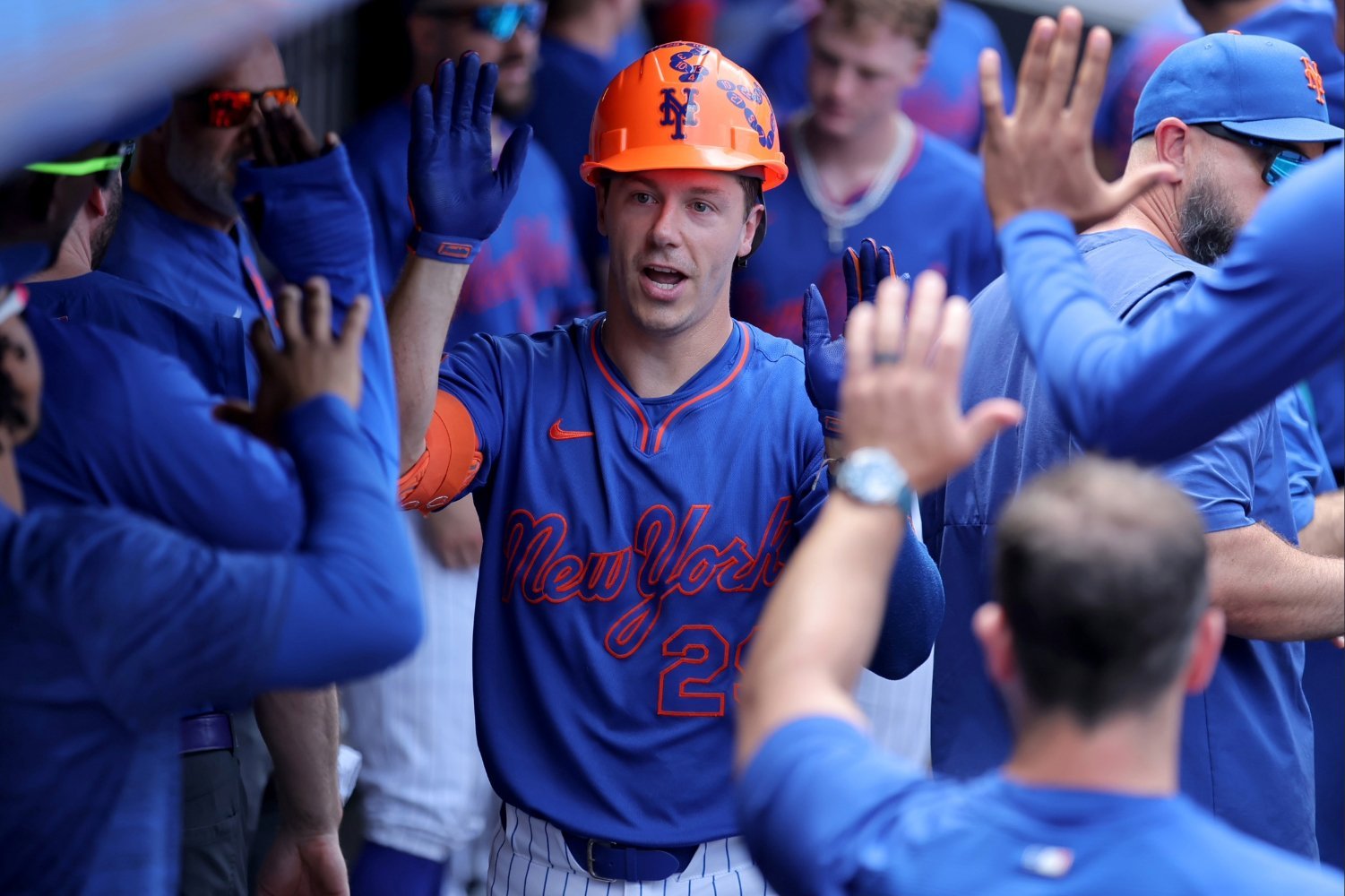 When Jared Young returned to the New York Mets' lineup on May 26 after missing more than six weeks with a torn left meniscus, attention quickly shifted toward the most visible results. After all, home runs are usually the fastest way to attract attention in Major League Baseball. Young was placed on the injured list on April 13 and required a six-game rehabilitation assignment between St. Lucie and Syracuse before being cleared to return. Since coming back, he has hit four home runs and posted a .750 OPS over his first 18 games, providing a meaningful contribution to a Mets offense that has searched for production throughout the lineup. However, the home runs do not appear to be the most interesting part of the story. A deeper look suggests that Young's offensive development has far less to do with a power surge and much more to do with the way he is building each plate appearance. That evolution begins with swing decisions. Plate Discipline 2025 2026 Chase Rate 28.7% 26.3% Zone Swing Rate 67.3% 73.1% In-Zone Contact Rate 81.8% 87.2% Strikeout Rate 34.0% 21.6% The decline in his chase rate may seem modest in isolation, but it becomes more meaningful when viewed alongside the rest of his profile. Young is chasing fewer pitches outside the strike zone while increasing the frequency with which he swings at strikes. In other words, he is becoming more selective without becoming passive. Naturally, the most significant change in Young's profile is his strikeout rate. After striking out in 34.0% of his plate appearances last season, that figure has fallen to 21.6% in 2026. His improvement on pitches in the strike zone is especially noteworthy. Young's In-Zone Contact Rate has increased from 81.8% to 87.2%, a substantial jump in an environment where plate appearances are often decided by the smallest margins. Every avoided swing-and-miss creates another opportunity to put the ball in play and force the defense to make a play. Of course, making more contact only matters if the quality of that contact remains intact. That is where Young's profile becomes particularly interesting. Quality of Contact 2025 2026 Hard-Hit Rate 39.3% 45.9% Avg. Exit Velocity 84.6 mph 89.9 mph xwOBA .296 .344 Squared-Up Contact% 23.60% 27.20% The numbers show that Young is not sacrificing impact in exchange for contact. His hard-hit rate has increased by more than six percentage points compared to last season, while his average exit velocity has jumped by more than five miles per hour. At the same time, his xwOBA has improved from .296 to .344, suggesting that the quality of his contact has improved along with his ability to put the ball in play. The increase in squared-up contact rate reinforces that conclusion. Young is producing efficient contact more frequently than he did a year ago, another indicator that the gains in his profile extend beyond simple results. The data also suggest that these gains are being driven by efficiency rather than increased effort. Young's average bat speed has actually declined slightly from last season, making it unlikely that the improved results stem from a more aggressive approach. Instead, the evidence points toward a hitter who is finding better pitches to attack and maximizing more of the opportunities he gets. That distinction matters because improvements in plate discipline and contact quality often provide a stronger foundation than short-term fluctuations in power production. Home run totals can rise and fall over the course of a season, but underlying skills tend to offer a clearer picture of whether a hitter is genuinely improving. There are still limitations in Young's profile. His production against left-handed pitching remains well below what he has done against right-handers, a split that opposing clubs will continue trying to exploit. Through 2026, he owns a 130 wRC+ against right-handed pitching compared to an 8 wRC+ against left-handers, illustrating how much of his offensive value remains tied to favorable matchups. Even so, the broader trend is difficult to ignore. Fewer chases, more contact in the strike zone, and stronger underlying contact metrics all point in the same direction. Whether that translates into a larger offensive leap remains to be seen, but the indicators suggest Young is becoming a more complete hitter than the one the Mets saw a year ago. View the full article
 -
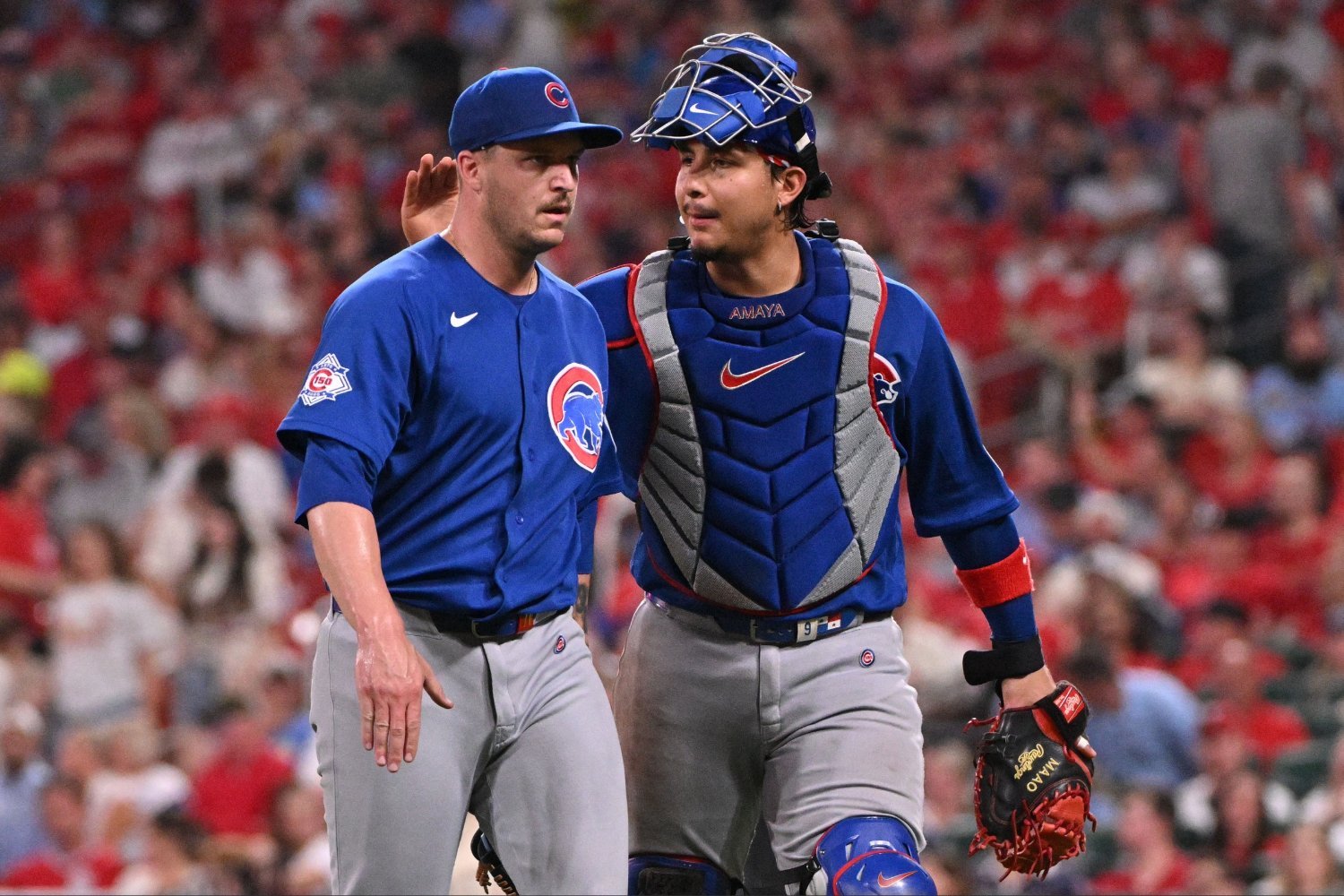 With Daniel Palencia out, the Chicago Cubs turned to Jacob Webb in the ninth inning against the Colorado Rockies. Is he the de facto closer now? Should he be? Webb is primarily a two-pitch pitcher, throwing his fastball and changeup far more than any other pitches. The fastball simply has not gotten the job done this year; it's been hit harder than ever, against both right-handed and left-handed hitters. Still, Webb has gotten away with it for the most part against left-handed hitters due to a changeup that has been very effective. He has not, however, seen the same results with his changeup against righties, leading to some ugly opposite-handed platoon splits. Webb seems to be searching for answers for his secondary pitch against that split. He used the sweeper as his secondary pitch to righties last season and carried that into early this season. It had pretty disastrous results early on and he has not thrown it since April 19, shelving it in favor of a curveball at that point. But he only threw the curveball until May 22 and has barely thrown it since. Although he didn’t allow a hit off of it, the average exit velocity was 96.2 mph, indicating that he was lucky with his results. Since May 22, he has used a slider as his breaking option. It’s a brief sample, but he has only allowed one single and has an exit velocity of 82.6 mph off the pitch. Clearly, Webb is still trying to figure out how to get outs against right-handed hitters. Craig Counsell knows this and game-plans around it. Jacob Webb has faced 82 lefties this season and just 53 righties. The former have taken around 48% of the PA in MLB this year, yet Webb is facing almost 61% lefties. Webb has been solid this year, and he absolutely can be useful against lefty-heavy lineups, but it seems clear he won’t be a closer if he continues to be hidden from righties. If he is expected to close games, he’s going to need to find a way to consistently win plate appearances when he has the handedness advantage. The Cubs better hope Palencia’s IL trip is a short one, lest they put Webb in a situation that exposes his fatal flaw. View the full article
 -
The Royals' Offense Has Not Been the Problem in June
DiamondCentric posted an article in Royals Keep
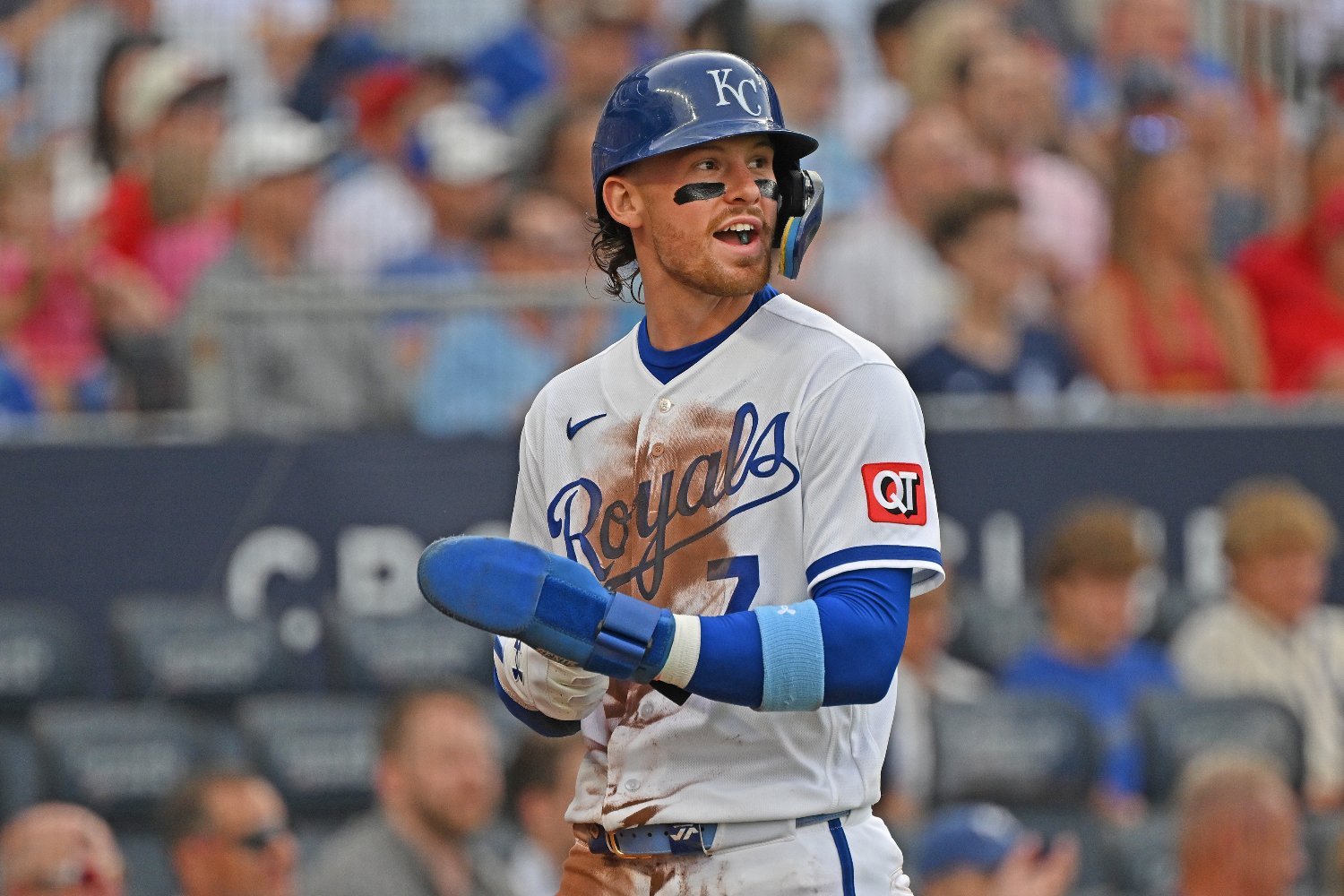 It's been a rough season for the Royals, as they sit in second-to-last place in the AL Central at 32-45, as of June 19th. There has been plenty for Royals fans to complain about this year, especially considering the optimistic expectations with this team after an 82-80 campaign in 2025. Barring something dramatic, Kansas City will likely suffer its first losing season since 2023, when it lost 106 games, tying a franchise record (which also happened in 2006). The Royals have been a bit snakebitten with injuries this year, which hasn't helped their situation. Right now, the Royals have Cole Ragans, Carlos Estevez, and Jonathan India on the 60-Day IL, and Vinnie Pasquantino and Kyle Isbel on the 10-Day IL. While Maikel Garcia hasn't been placed on the IL, he has missed time due to a lingering hand injury. Lastly, Kansas City received a gut punch on Thursday in their blowout win over the Cardinals, as Bobby Witt Jr. left the game due to injury. It was reported on Friday that Witt had suffered a grade 1 MCL sprain. As of now, it seems like the Royals are exploring options with Witt, especially with an off day on Saturday due to the World Cup game at Arrowhead Stadium. It doesn't seem like there are a lot of good takeaways from this club at this time, especially with them being 13 games under .500. However, I would say that there's one area for the Royals that has improved in June: the offense. Let's take a look at the Royals' turnaround this month, which Kansas City players have stuck out specifically, and how the Royals' offense could fare going forward, especially with the most recent injury to Witt. Hitting the Ball and Stealing Bases Has Been Key in June Overall, this year, the Royals' offensive numbers don't stick out at first glance. According to Fangraphs, they rank 14th in fWAR, 22nd in wRC+, 20th in wOBA, and 17th in xwOBA. Kansas City has been a "middle-of-the-pack" offense, which is fine when paired up with good pitching. Unfortunately, that hasn't been the case this year, as the Royals pitching staff ranks 22nd in pitching fWAR and 21st in ERA. The bullpen has been especially poor, ranking 26th in reliever ERA and 30th in reliever fWAR, according to Fangraphs. That said, while the Royals' offense won't catch the eye of most fans, especially those disenchanted with Alec Zumwalt and his performance as hitting coach, the numbers over the past month have trended positively in the right direction. In June alone, the Royals rank 3rd in fWAR, 9th in wRC+, 7th in wOBA, and 4th in xwOBA. They have done a good job of collecting hits this month, as evidenced by their .285 batting average, which ranks second in June. The Royals have also been proficient on the basepaths with 20 stolen bases, which leads all of baseball this month, and 94 runs scored, which ranks second. A complete list of how the Royals have fared in June can be found in the table below, which is organized by fWAR. In addition to strong fWAR numbers, the trio has also put up strong results in wRC+ this month. Witt has a 142 wRC+, Cags has a 190 wRC+, and Thomas has a 160 wRC+. Thus, in terms of production, those three players have been key to Kansas City's offensive turnaround in June. The biggest story has been the emergence of Cags, who leads all Royals hitters this month in wRC+. While the former Florida product has a high K% at 26.5%, he leads the team in home runs with five, his latest coming on Friday night against the Cardinals. Cags has also been an RBI machine this month. He had 11 RBIs going into Friday's game, and he collected two more after a two-hit game in the Royals' 6-5 win. When looking at Cags' Statcast percentiles chart this month via TJ Stats, there's a lot to like with his profile. He's hitting the ball hard, pulling it more often, and launching it effectively. While cutting down the strikeouts and chasing would be nice, Royals fans can live with the whiffs and strikeouts as long as the power continues to develop. While Cags' breakout was nice, some of it was to be expected (or at least hoped for) in Spring Training. Thomas, however, was a bit more of a wild card when he was signed to a one-year deal this offseason. Thomas was showing progress in April, hitting .255 with a .739 OPS in 64 plate appearances. However, he declined heavily in May, hitting just .171 with a .514 OPS in 51 plate appearances. Thankfully, he has not just bounced back in June but emerged as one of the Royals' more dependable hitters. This month, the 30-year-old outfielder is hitting .280 with a .950 OPS in 59 plate appearances. He has hit four home runs in June after only one in March, April, and May combined. Thomas was particularly good in his old stomping grounds in Washington, as he hit homers in back-to-back games against the Nationals. When looking at his TJ Stats Statcast percentiles this month, Thomas has not been as flawless as Cags, who was dark red in nearly every Statcast category. The 30-year-old's bat speed still rates below average, and his Max EV leaves a bit to be desired. That said, Thomas' patient approach seems to be paying off in June, as evidenced by his strong wOBA and xwOBA percentiles, just to name a few. The Royals acquired Thomas because he had a history of not chasing. He's done that especially well in June, as evidenced by his 98th percentile O-Swing%. That has not only helped his BB% (90th percentile) but also improved his swing decisions. Those better decisions have resulted in more barrels (69th percentile barrel%) and better actual (98th percentile wOBA) and expected (85th percentile xwOBA) production. Thus, the former Guardians and Nationals outfielder has emerged as an everyday option in the outfield for manager Matt Quatraro, which is much needed with Isbel expected to be on the IL for a while due to plantar fasciitis. Can the Royals Overcome the Loss of Bobby? Kansas City has weathered the loss of Vinnie and Maikel well this month. Caglianone has slid into first base and may make Pasquantino expendable this offseason. Nick Loftin has also filled in well for Garcia, as Loftin is putting up a 151 wRC+ and 0.3 fWAR, the latter thanks to much better defense at third than second. However, if Bobby goes on the IL, that could be a more significant hit to this surging Royals lineup (even though they scored six runs in his absence on Friday). Witt hasn't hit for much power this month, as evidenced by his one home run and .108 ISO. That said, he not only led the team in fWAR, but he had a 142 wRC+, a 14.3% BB%, a 14.3% K%, and 12 runs scored before going down to injury on Thursday. Bobby's Statcast percentiles summary via TJ Stats showed he was an elite hitter in June, hitting the ball hard and effectively, though he could barrel and launch the ball more often. Witt only had a 35th-percentile barrel% and a Pull Air% in the 27th percentile, not a recipe for home runs. However, those paltry marks could be due to lackluster bat speed this month (32nd percentile), which caused him to swing late and settle for singles and doubles rather than home runs. He did seem to be trending in the right direction on Thursday, as he hit his first home run of the month in the first inning off Cardinals starter Matthew Liberatore. Unfortunately, the excitement with Witt's power was cut short after he injured his knee on a diving play. As Quatraro said in his pregame presser, an IL stint could be possible, though no decision has been made just yet. It's likely that the Royals will let him rest and recover on the Saturday off day and make a decision about his future before Sunday's game. If Witt does hit the IL, it will be difficult for the Royals to find an adequate replacement at shortstop. Tyler Tolbert got the start at shortstop on Friday, and he showed some strong defense and drove in an RBI on a sacrifice fly to center field. That said, he has a 98 wRC+ in 15 plate appearances and is striking out 46.7% of the time. The Royals need more than that at shortstop, even with Tolbert's speed (five stolen bases) and defense, which was on full display tonight. If healthy, Garcia makes the most sense at shortstop, especially since he has profiled well there defensively in the past. That said, he hasn't exactly had a stellar June. In 39 plate appearances, he is hitting .257 with an 89 wRC+. His K% is high this month at 23.1%, and he hasn't hit a home run, a slump that goes back to April (he didn't hit a home run in May). Garcia's Statcast summary shows a hitter who doesn't chase and is barreling better, but is struggling to generate consistent launch angle, exit velocity, and bat speed. Those issues could be tied to his on-again, off-again hand injury. He isn't pulling the ball in the air either, an area where he was showing progress earlier in the season. If Garcia can get healthy and closer to his April form, then the Royals should be fine with Witt out. Grade 1 MCL sprains typically have a 1-3 week recovery time, and Garcia can certainly hold down the shortstop position during that window. And yet, the Venezuelan infielder is not healthy, and hand injuries can take time to fully recover from, even if they do not require an injury stint. It's possible that Garcia may not return to his April self until after the All-Star break, at the soonest. That murkiness around Garcia's health makes this Witt situation that much more difficult for Quatraro and the President of Baseball Operations, JJ Picollo. View the full article
 -
Perfect Contact Is Making Kody Clemens a More Complete Hitter
DiamondCentric posted an article in Twins Daily
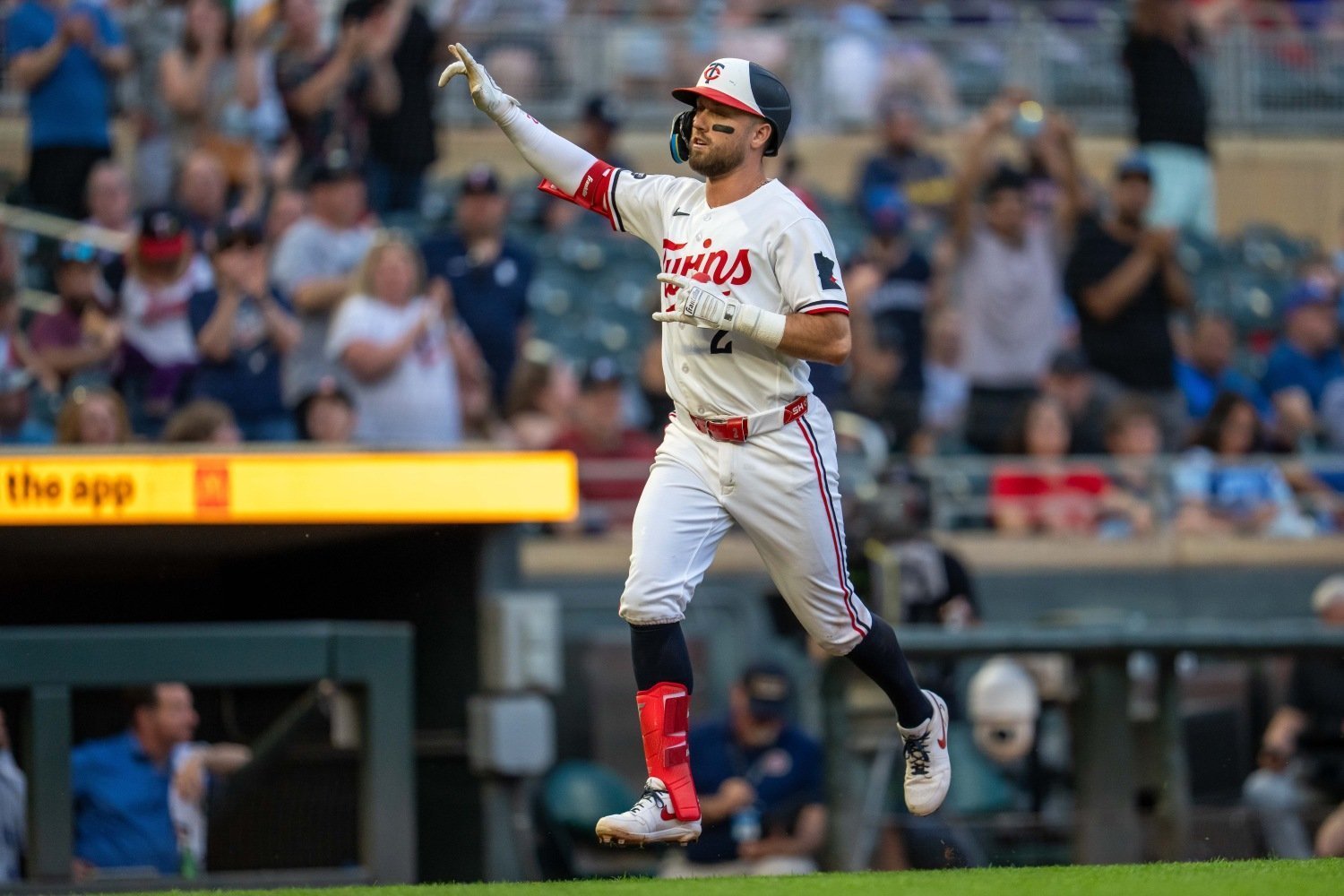 For most of his major-league career, Kody Clemens has fit the mold of a traditional left-handed hitter. He could damage right-handed pitching, but lefties consistently gave him problems. That trend has taken a surprising turn in 2026. Clemens has significantly narrowed the gap between his production against right-handed and left-handed pitchers. The results have been encouraging, but the underlying numbers may be even more promising. Improved contact quality and fewer swings and misses have helped him become a more complete hitter and a more valuable player for the Twins. For his career, Clemens owns a .223/.269/.335 (.604) line against southpaws across 204 plate appearances. He had managed only four home runs while striking out 47 times and drawing just nine walks. His overall OPS against lefties sat more than 110 points below what he produced against right-handed pitching. Those numbers painted a familiar picture. Left-handed hitters often struggle against same-side pitching, and Clemens appeared destined to remain a platoon option. This season has told a different story. In 54 plate appearances against lefties during 2026, Clemens is hitting .240/.283/.400 (.683) with four extra-base hits. Just as encouraging is his improved plate discipline. His .400 slugging percentage against lefties would be a career-high. He's struck out in only 17% of his PAs, a dramatic improvement from the swing-and-miss tendencies that plagued him earlier in his career. So what's changed? The answer starts with contact quality. Clemens currently ranks eighth in Major League Baseball in the percentage of balls in play classified as "Perfect Contact." Few hitters have been as efficient at centering the baseball on the barrel. That ability helps explain why the additional bat speed he added last spring has translated into improved offensive production. In 2024, his bat speed was at 70.5 mph, which would have ranked in baseball’s lower half if he had enough plate appearances to qualify. In 2025, he improved to 72.2 mph, ranking exactly at MLB’s midpoint, before decreasing a little this season to 71.8 mph. While a boost of 1.3 mph compared to 2024 might not seem like that much, it has made a significant difference for Clemens. The gains are especially noticeable when comparing his performance against left-handed pitching to previous seasons. Last year, opposing lefties consistently attacked him low and inside. Those pitches generated frequent whiffs, and Clemens struggled to get the barrel to the baseball. Even when he made contact, it often lacked authority. This season, that weakness has become far less pronounced. He is missing those pitches significantly less often, particularly in the lower part of the strike zone. Rather than swinging through low-and-inside offerings, Clemens is making more competitive contact and avoiding the empty swings that previously put him behind in counts. The improvement shows up in his run value profile as well. A season ago, his heat maps against left-handed pitching were filled with negative-value zones. Nearly every area of the strike zone represented a weakness that pitchers could exploit. The results this year still show some negative values, but the overall picture is much more encouraging. The largest improvements have come on pitches low and inside, as well as offerings up and away. Those areas once represented some of his biggest vulnerabilities. Now they are no longer automatic outs for opposing pitchers. That doesn't mean Clemens has suddenly become a dominant hitter against left-handed pitching. The sample size remains relatively small, and 54 plate appearances are far from enough to declare the issue solved. Still, the underlying indicators suggest that something real may be happening. “[I’m] trying to make some good swing decisions and make sure I’m swinging at good pitches,” Clemens said after Tuesday’s game, where he hit his seventh homer in 19 games. “Trying to stay within myself. I think sometimes I get too big, and that’s when I’ll swing and miss or foul one off or hit it in the air or whatever. But just trying to stay consistent and go day by day.” The improved contact rates, reduced swing-and-miss tendencies, and elite "Perfect Contact" numbers all point toward a hitter making meaningful adjustments. Even if some regression is inevitable, Clemens has narrowed the gap between his production against lefties and righties in a way he never has before. For a player who arrived in Minnesota as an emergency acquisition for cash considerations, that's another reminder that Clemens keeps finding ways to exceed expectations. What has stood out about Clemens this season? Can he build off these improvements? Leave a comment and start the discussion. View the full article
 -
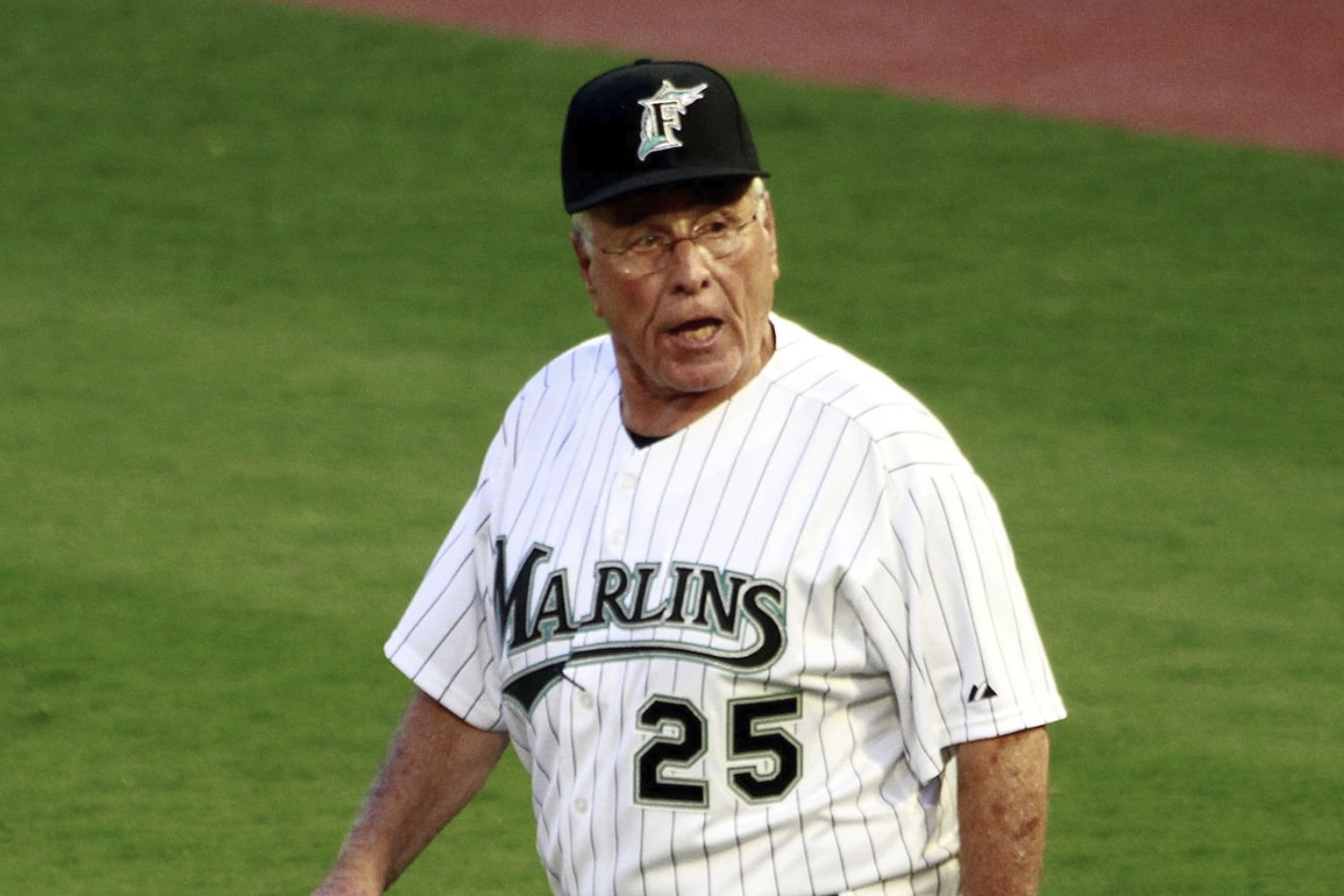 Known as a baseball lifer, Jack McKeon won his only World Series as a manager as skipper of the Florida Marlins in 2003. On this day 15 years ago, McKeon decided he had a little bit left in the tank when he returned to the club at the age of 80. In 2003, McKeon took over as manager following the dismissal of Jeff Torborg after a tumultuous start. After a 32-39 start to 2011 under Edwin Rodriguez, the Marlins turned to McKeon to try to right the ship on June 20, 2011, naming him interim manager. McKeon spent three years with the Marlins during his first stint and managed the team to a winning record in each of those seasons. At one point in 2003, Florida was just 19-29 before going on to beat the New York Yankees in six games to win their second World Series. Tasked with trying to breathe life into a young but talented club that underachieved over the first months three of the 201 season, McKeon proved to still have a little magic left. Florida was just 32-40 when he took over, but by the early parts of August, the Marlins had evened their record at 55-55. Although Florida was able to get back to .500, it never managed to get over in what would be McKeon’s final season in a big-league dugout. After evening their record with a 4-3 win over the New York Mets on Aug. 2, the Marlins went just 17-35 over their final 52 games to finish the year with a 72-90 record. Over parts of four seasons with the Marlins, McKeon went 281-257 as manager of the club. He was also the last Florida skipper to manage at the park now known as Hard Rock Stadium. McKeon was brought back for a second stint at 80 years old on this day 15 years ago. View the full article
 -
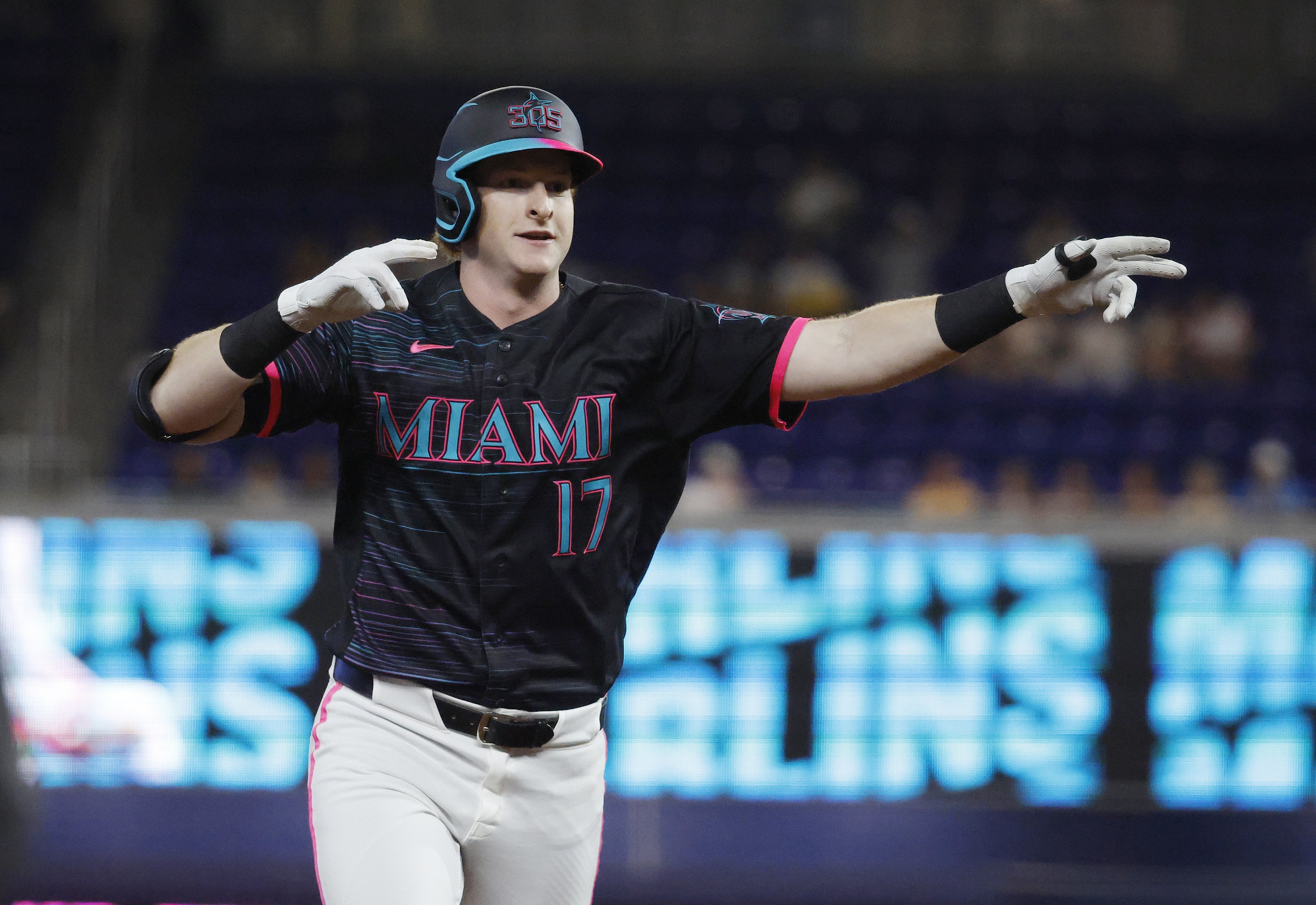 MIAMI, FL - For Owen Caissie, who the Marlins acquired as the centerpiece in the trade that sent Edward Cabrera to the Chicago Cubs, his first full season at the major league level has been filled with plenty of ups and downs. Friday against the San Francisco Giants was a showcase of his all-around potential. Caissie's three-RBI night was what the Marlins needed to take the series opener by a final score of 4-3, getting back to .500. Caissie got things going right away in the bottom of the first inning, hitting his eighth home run of the season off Giants starting pitcher Landen Roupp. It marked his third-longest home run of the season at 401 feet. He has now hit a home run in back-to-back games. If you go on Caissie's Baseball Savant page, you may be surprised to notice that he ranks in the 78th percentile in sprint speed. That came into play. In the bottom of the third inning when he decided to bunt on the third pitch of the at-bat. He was clocked at 29.8 ft/sec running down the first base line and beat the throw to reach safely. "I just felt like doing it," Caissie said postgame. "It was a horrible bunt I laid it down and just ran." "If you see something where the defense is maybe giving you an opening there to be willing to take a shot, whether to get yourself on base to start an inning or move some guys around," McCullough said. "Owen maybe was trying to get that little further down the line, but he got it out there, and I applaud him and the other guys for thinking about the team." Caissie only had 29 plate appearances against left-handed pitching going into Friday's series opener. He was given an opportunity against Giants reliever Sam Hentges in the bottom of the seventh inning with runners on second and third. On the second pitch of the plate appearnace, Caissie hit a sacrifice fly deep enough to score Javier Sanoja and give the Marlins a 4-3 lead, which would be the difference. The 23-year-old finished the game going three for three with three RBI, and was a triple shy of the cycle. Friday marked Caissie third three-hit and three-RBI game of the season. Even through the lows when he had a .469 OPS in April and the highs when he had a strong month of May with an .835 OPS, the organization has continued to allow Caissie to work through his flaws at the big league level. "I love that they have confidence in me," Caissie said. "It gives me a lot of confidence that they can roll me every day, no matter what. It's honestly a blessing and I'm never going to take that for granted." The Marlins had the opportunity of going with Max Meyer for the series-opener, but opted to give him an extra day of rest and go with a bullpen game. That would work out, but things got dicey. In the top of the second inning, Daniel Susac hit a sacrifice fly that tied the game, 1-1. Despite the Marlins taking a 2-1 lead in the fifth inning thanks to an Owen Caissie RBI double, Rafael Devers hit a 413 homer to the upper deck in right field, tying this game at two. The Giants took a 3-2 lead in that same inning as Casey Schmitt hit an RBI single. Thankfully, the Marlins got right back into it when Esteury Ruiz was hit by a pitch, Javier Sanoja knocked in a base hit and Liam Hicks with runners on first and second, hit his 53rd RBI of the season, tying the game, 3-3. Caissie's sac fly was the difference in the end. Marlins closer Pete Fairbanks, who entered Friday with 99 career saves, worked a 1-2-3 top of the ninth to notch save number 10 of the season, but 100 in his career. After a turbulent start to Fairbanks' season, he is finally beginning to settle in. On the season, he has a 6.43 ERA, 4.66 FIP, 4.32 xFIP, 12.43 K/9 and 4.71 BB/9. "Watching videos from a few years past to make sure I'm hitting the checkpoints that I hit when I'm good," Fairbanks said. "I'm working pretty hard to make sure we're in the right spot, and I think we're doing a pretty good job. Obviously, you still have your ups and downs, but all in all, definitely feel like I'm having a real season, not an interrupted one from earlier in the year." With the win, the Marlins remain two games out of the third and final National League Wild Card spot. They will look to get back to their series winning ways on Saturday as Max Meyer takes the mound opposite of Trevor McDonald. First pitch is at 4:10 pm and it is Flanigan's Fest. View the full article
