


DiamondCentric
-
Posts
2,631 -
Joined
-
Last visited
Never
Content Type
Profiles
Forums
Events
News
Tutorials & Help
Major League Baseball Videos
Guides & Resources
Store
Downloads
Gallery
Everything posted by DiamondCentric
-

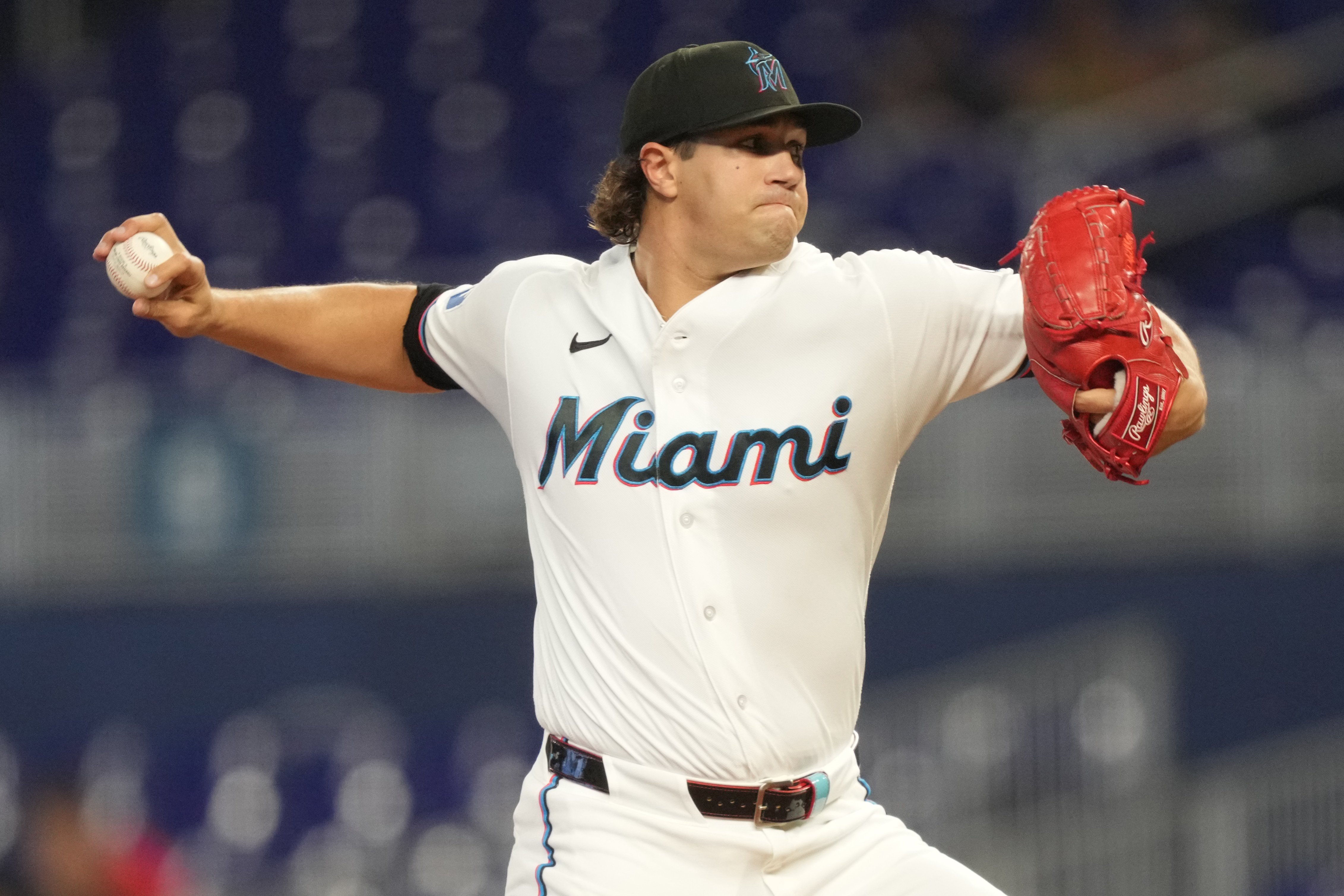 PITTSBURGH — When Tyler Phillips and Scott Oberg crossed paths eleven years ago, the two had plenty in common. Both were pitchers in a major league organization, hailed from the northeast, and did offseason work at the same training facility in New Jersey. Oh, and wouldn't you know, Phillips was a recent alumnus of Bishop Eustace Prep School, where both Oberg's wife and sister-in-law graduated as well. What they didn't share, though, was ultimately responsible for where Phillips is today, as he explained in an exclusive interview with Fish On First. In the 2015-16 offseason following Oberg's rookie year in Colorado and Phillips' first few months as a pro, the former reached out to the latter in an effort to gain a workout partner for the winter months. On a podcast appearance in May 2019 with Eric Cressey of Cressey Sports Performance, Oberg detailed the makings of their initial conversations: "(Phillips) kind of just fell into my lap...He had been a kid working out at this facility for a long time. I started reaching out to him like, 'Hey man, congrats on being drafted and everything. I kinda know who you are, so let's get together and work out in the offseason. We're already going to the same place, so let's just do it at the same time—it'll be fun.' Nobody really likes working out by themselves over the offseason." When Phillips agreed, Oberg took it upon himself to help mentor Phillips, having seen first-hand the reality and business that is professional baseball. "Unfortunately, it's a business and a cruel world where they have zero problems just releasing you," Oberg relayed to his new protege. "I had seen plenty of guys go down that road, even guys that were drafted in-state by the Rockies, where they say, 'Hey, you're just not good enough. Goodbye.' That's just the reality of it. Knowing that—I was 24 at the time before I got called up to the big leagues—I'd been through a little bit of the thick of it, seeing a bunch of guys get released, and he has no idea what he's about to get himself into." Admittedly, things got off to a rough start for Phillips. Late arrivals and lack of seriousness didn't fly with Oberg, whose scolding wasn't appreciated by Phillips initially. "I would show up to the gym. Seventeen years old, he would tell me we're gonna throw at 10 o'clock, and I would show up right at 10. He would be fuming at me," recalled Phillips. "Because it's like, 'Just follow the schedule, be there on time, do your stuff the right way.' I'd be on my phone in between sets in the weight room, like is it really that important? He got on me, and I didn't like it." "A lot of the (issues) early on were discipline things," said Oberg. "I would have to get on him for him to reach out to (Cressey) and not have his dad do it. Like, no man, you need to care enough to call him. This is your job now, and your body is your number one asset. There were times when he'd show up late, and I'd be like, 'Hey man, we're setting times to get our stuff done. You need to show up on time. This isn't show up and do whatever you want. I have my own life with my own things going on, and my wife has her own life going on. You have to understand that this isn't just about you.'" Eventually, though, the accumulation of those moments left an impression on Phillips. Whether it be reading books together or simply sticking to their combined schedule, the two became close quickly. Phillips absorbed as much as he could from Oberg, including the routine that he so heavily emphasized. "As I started getting older, I realized how important it actually is," added Phillips. "I get two, three hours to work out in the gym and take care of business. That's my craft, that's what I want to do. My phone is going to be there when I'm done, so I started putting the phone up. I think just that consistency and finding that routine just really bled into who I am today." "Once some of the discipline started kicking in a little bit, then we could get into the baseball things," said Oberg. "Over the years, he's grown so much as a ballplayer and a person. It's been so much fun to watch. That's what these scouts saw in you when they drafted you. They saw a really good-framed kid and assumed you'd put on some weight. You're gonna be a monster and you have the potential to be a really good starting pitcher in the big leagues." Remember, Oberg was singing these praises in an interview that is now seven years old, while Phillips was moving between High-A and Double-A with Texas. There's been some change since. In an awful turn of events, Oberg was forced to retire in 2023 due to lingering blood clot issues in his throwing arm—a moment that weighed heavily on Phillips. "That broke my heart hearing that. He was unbelievably talented, and his mind was something else." Fortunately, Oberg and his wisdom didn't leave the game. Following the end of his playing days, he received his master's degree from Georgetown University and accepted a job with the Rockies as the minor league pitching coordinator in January 2025. As for the apprentice, Phillips has made good on Oberg's expectations after what was a rollercoaster couple of years post-COVID. The big right-hander was designated for assignment in July 2021 by Texas before being picked up by his hometown Phillies off waivers. Two seasons in the minors opened the door for a full-circle debut and instant, albeit unsustained success in his rookie year as a starter. Phillips was traded to Miami for cash days before the 2025 season began in a deal that got overlooked, but presented some opportunity to at least make an impression as a reliever. To say that the man capitalized on said chance would be an understatement. In 73 appearances across two seasons, Phillips has been another diamond in the rough for Peter Bendix and the Marlins, sporting a 2.43 ERA and an elite 175 ERA+ while being called into a wide variety of game situations. His run prevention combined with a distinct pre-outing self-slap routine made him one of the more prominent middle relievers in MLB. Recently, the window has cracked open for Phillips to fill an even bigger role. Following an avalanche of injuries to Miami's starting rotation candidates, he has been stretched out as a starter. Entering Tuesday, he is enjoying similar success (1.98 ERA in 13.2 IP). Phillips attributes his performance to being an "unhealthy perfectionist" and "figuring out" his old routine, an idea shaped and mastered years back in frigid New Jersey with Oberg. "To be honest, without him, I probably would have been out of the game a lot, a lot sooner. He just gave me this maturity that I don't think I would have ever found." View the full article
 -
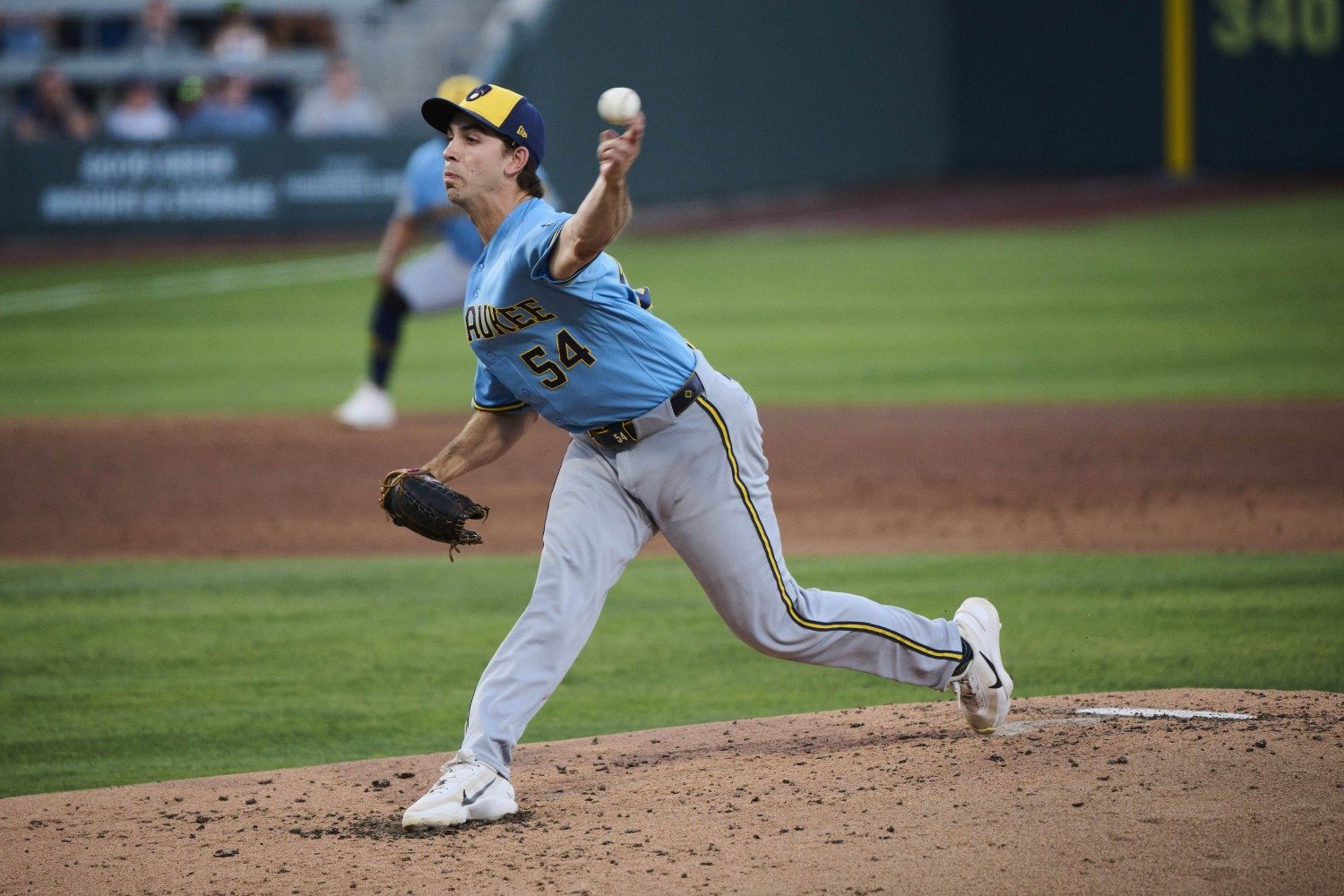 Robert Gasser was a two-fastball guy last year, who was really more like two different one-fastball guys. He leaned heavily on his four-seamer against right-handed batters, and on his sinker—really, a running two-seamer—against lefties. He only made two starts in the majors, but that's what he showed in them, and it roughly matched what he had shown in his rookie season of 2024, before going down with an elbow injury. He comes at you from a low slot, but he doesn't have anything with much depth. Instead, he's working east and west at all times, and his project within each at-bat is to set up and execute a sweeper to get you out. This season, much of that has changed. Gasser's slot is even lower in 2026 than it was in 2025. He's also using more of a crossfire delivery. In this pair of images, you can clearly see the lower arm angle, though the slight difference in camera angles makes it harder to tell that he's striding closed as he comes down the mound. Those adaptations give Gasser a clearer path to being a useful left-handed reliever, but interestingly, the changes he's made to his arsenal push in the opposite direction. He's now something much closer to a true three-fastball guy, who not only has a cutter he trusts again, but throws the four-seamer, the sinker, and the cutter to both lefties and righties. Ah, yes, and about that sinker: it's not a two-seamer that runs but doesn't sink much, anymore. Gasser acknowledged after his first big-league start of the year that he's made a grip change this year. He now throws what he calls a "one-seam" sinker, with more depth. For those unfamiliar with the concept, a one-seam grip places one of a ball's horseshoe-shaped laces between the fingers of a pitcher, letting one seam catch the air and create downward movement via air resistance, rather than spin direction or traditional seam-shifted wake. It's an unusual grip for a pitcher coming from a low slot like Gasser's, but the effect has been to give his sinker much more true sink. Despite the lower slot, Gasser's four-seamer has as much rising action as ever this year, but induced vertical break on the sinker is 6.8 inches, down from 9.6 inches in 2025. Unequivocally, this is a nastier pitch, and mixing it with the good changeup and sweeper Gasser has long had plus the two other fastball shapes should allow him to miss bats and collect weak contact, if the rest of the pieces fall into place. What are the rest of the pieces? In a word: location. Gasser has walked nine of the 87 batters he's faced this season, which is alarming, because control isn't even his biggest problem. Rather, it's that he's also allowed 11 extra-base hits. A handful of those came in Las Vegas, where the conditions weren't conducive to success for any pitcher, but he's been hit hard in each of his appearances so far. He's just making too many mistakes in the heart of the zone to dismiss any of the damage being done against him as a matter of bad luck. Though the tweaks to his sinker have given him a chance to hit better spots with it low in the zone, in practice, he's leaving it up too much—be that in the zone, when it was meant to be below it, or up up. RDFkOXlfWGw0TUFRPT1fVUFrRkFBRUdBZ0lBRFFBRVVBQUhCVlFGQUZnTUFnQUFCd1JVQndkUkJnZFdBRk5U.mp4 Living mostly in the 91-93 MPH zone, Gasser doesn't have the margin for error to miss as much as he's been missing, with any of his pitches. He's built a more interesting arsenal than he had in the past, thanks in part to being healthy enough to get the reps in and do so. These were needed changes. To lock them in and enjoy the fruits of them, though, Gasser will have to keep drilling on the mechanics involved. He'll have to succeed at hitting his targets, because the stuff is now good enough to win—but it will never be good enough to make up for missing in the middle of the dish to big-leaguers. View the full article
 -
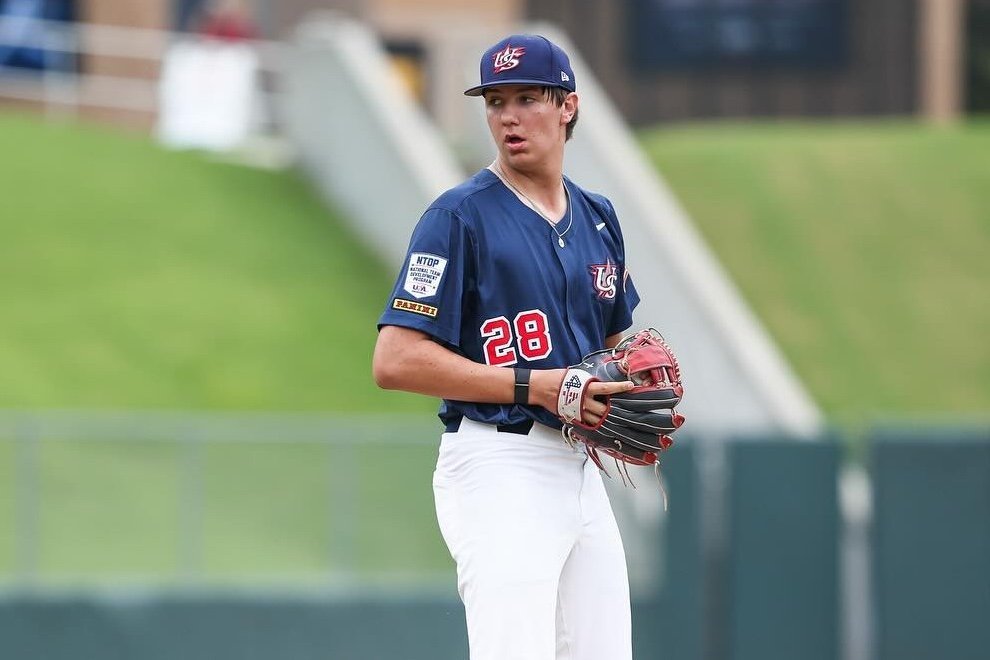 Leading up to the 2026 MLB Draft, Fish On First brings you a series of scouting reports on top prospects in this draft class who could realistically wind up in Miami. Overview Position: LHP Height: 6’9″ Weight: 255 pounds School: Bishop Feehan HS (MA) Commitment: Texas Brody Bumila is a 6’9”, 255-pound left-handed pitcher who plays at Bishop Feehan High School in Attleboro, Massachusetts. Bumila is one of the top pitching prospects in the 2026 MLB Draft. He’s also one of the top flamethrowers this class. Bumila has really risen on draft boards during his senior season while earning the MaxPreps Male National Athlete of the Year award. The southpaw possesses a three-pitch mix including his elite fastball, slider, and changeup. Bumila’s fastball sits 96-98 mph and has been clocked at 101 mph. His best secondary pitch is his changeup, which works very well versus right-handed hitters. His slider leaves a lot to be desired. While he can throw it for strikes, he has rarely used it because of how much he was able to overwhelm high school hitters with his fastball. Bumila can throw strikes consistently and will attack hitters on the inner half. He is signed to play college baseball at the University of Texas. Strengths Elite fastball Elite extension on his pitches Good feel for his changeup Projectable body frame Strike-thrower Frontline starter upside Weaknesses Needs to improve slider Injury risk Pro Comparison: Kruz Schoolcraft Projection: Top 25 pick Bottom Line Brody Bumila has a ton of talent and potential. On Perfect Game, Bumila is the 21st-ranked prospect and the fifth-ranked left-handed pitcher in the Class of 2026. He’s also their No. 1 prospect in Massachusetts. On MLB Pipeline, he is the 19th-ranked draft prospect. On Baseball America, Bumila is a five-star recruit and the 22nd-ranked draft prospect. The Marlins will have the 14th overall pick in the 2026 MLB Draft and should be able to grab one of the top prospects in this draft class. Given the organization's recent track record of working with young pitchers to develop breaking balls, Bumila would be a nice fit. More 2026 MLB draft profiles OF Trevor Condon RHP Cade Townsend OF Drew Burress LHP Gio Rojas RHP Cameron Flukey OF Eric Booth Jr. 3B Ace Reese LHP Carson Bolemon RHP Jackson Flora INF Jacob Lombard OF AJ Gracia View the full article
 -
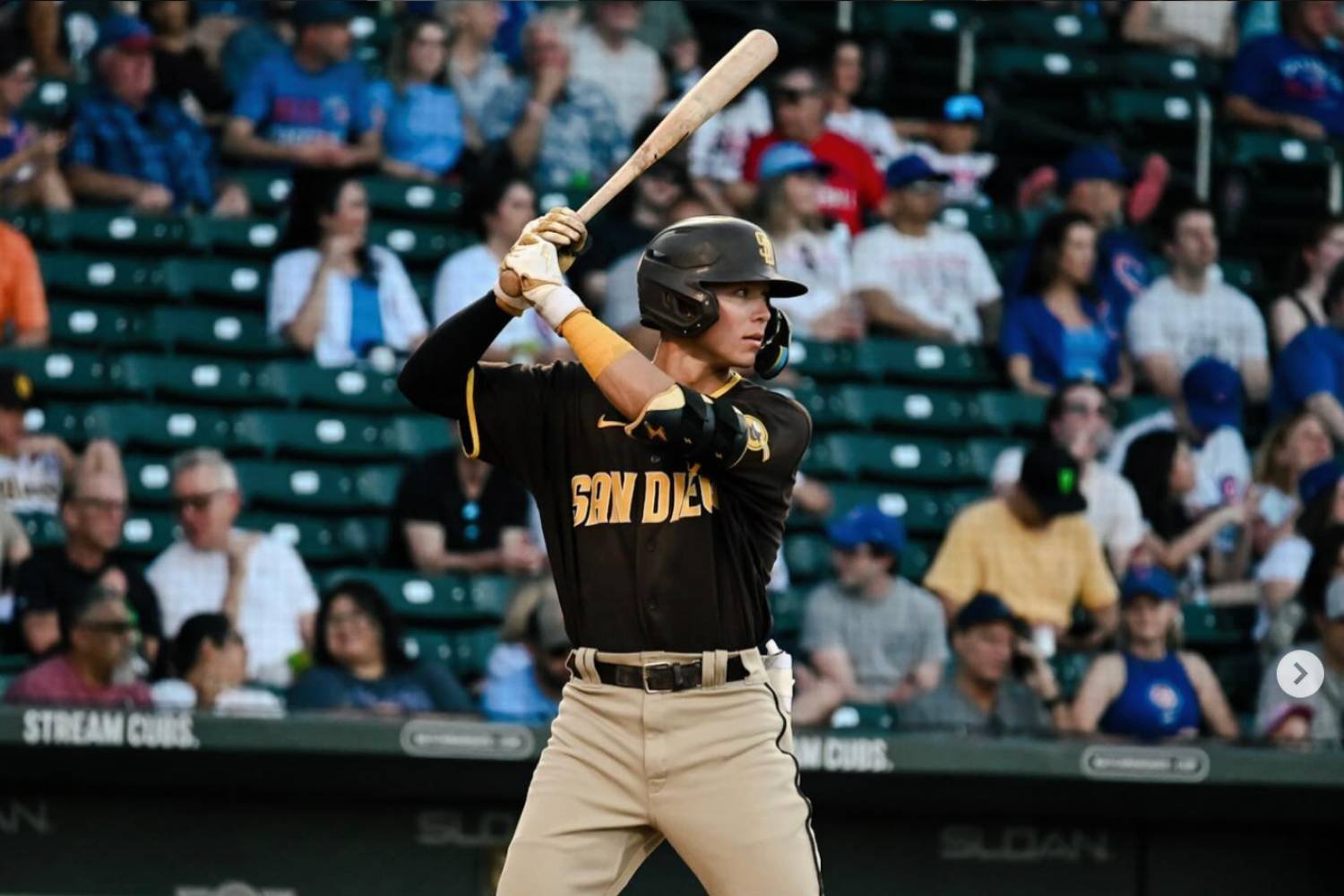 Let's check in on the San Diego Padres prospects who made a mark in the last week (check out Padres Mission's latest Top 20 rankings as well!): Ryan Wideman, CF, Low-A Lake Elsinore Storm Season stats: .327/.394/.527, 60 games, 48 R, 19 2B, 6 3B, 6 HR, 44 RBI, 20 BB, 51 K, 42 SB, 12 CS The toolsy center fielder, Padres Mission's No. 5 prospect, is coming off his biggest moment of the season, crushing a walk-off homer off the scoreboard in right-center field on the first pitch of the ninth inning to give the Storm an 8-7 triumph over the Ontario Tower Buzzers, a Los Angeles Dodgers affiliate. The homer, part of a four-hit game, was his sixth of the season and put the Storm on the verge of the first-half championship in the California League's South Division. Last year's third-round draft choice played in five of six games last week and went 10-for-22 with five walks, seven runs scored and five RBIs for a .455/.538/.636 slash line. He swiped five more stolen bases to boost his season total to 42, which leads all of the minors (majors, too), in 60 games. He has been caught 12 times. The power-speed combo was evident as he made his pro debut last year in 26 games with the Storm, but he had a .229/.330/.271 slash line. The biggest improvement for Wideman has been the reduction in strikeouts. He went down 28.6% of the time in his brief introduction to pro ball and has reduced that to an 18.5% punch-out rate this year. Wideman's walk rate, however, is also down a bit, from 10.7% to 7.3%. RW_0615.mp4 Carlos Rodriguez, OF, Triple-A El Paso Chihuahuas Season stats: .297/.363/.373, 53 games, 28 runs, 9 2B, 2 3B, 1 HR, 34 RBI, 24 BB, 26 K, 6 SB, 0 CS While still just 25, the outfielder doesn't feel like a prospect anymore due to the fact the Padres are the third organization he has been with since making his pro debut in 2018. He stayed with the Milwaukee Brewers chain through 2024, then played last season in the Atlanta system. He has played in 159 games at Triple-A in the last two seasons, though his current heater could change the equation. The 5-foot-9 left-handed hitter had two hits Sunday, extending his hitting streak to a career-high 20 games and his on-base streak to 24 games. It is the longest active streak in the Pacific Coast League. Last week alone, Rodriguez went 10-for-26, all but one a single (the other was a double) with one RBI. He walked three times, but impressively struck out just once. He needed a ninth-inning infield single to third base Saturday to keep the streak alive. The last time he didn't get a hit was when he took an 0-for-3 line on May 20 vs. Round Rock. He had a hit in the three games before that, too. His strikeout rate is at 11% this year, the second-best mark of his career after a 10.4% mark in 2024. Jesus Castro, RHP, Low-A Lake Elsinore Storm Season stats: 0-1, 2.72 ERA, 10 games (all starts), 43 IP, 42 H, 14 R, 13 ER, 16 BB, 53 K, .258 opponent average Okay, so the right-handed starter was on our Hot Sheet last week. I try not to repeat from one week to the next, but Castro put up an even better performance than his previous outing. The recently turned 19-year-old struck out a career-high 12 in 4⅔ shutout innings in a 6-1 win Wednesday over Ontario. He gave up three hits and two walks, the same totals as the week before. Castro has not allowed a run in four of his last five starts and is one reason why the Storm have the best ERA in the Cal League at 4.78 (yeah, I know that's high, but it is the Cal League). The Storm have a nice rotation led by right-hander Winyer Chourio, who is second in the league with 69 strikeouts. Castro's 12 punchouts last week gave him 44 in his last 29 innings. He has 53 for the season in 43 innings. His strikeout rate is just a tick above last season, when he made his pro debut (28.6% from 27.1%), while his walk rate has increased a bit from 5.9% in 2025 to 8.6% this year. Tyler Schmitt, RHP, Low-A Lake Elsinore Storm Season stats: 4-3, 4.38 ERA, 11 games (10 starts), 49⅓ IP, 44 H, 24 R, 24 ER, 27 BB, 57 K, .243 opponent average This list could have very well included three Storm starting pitchers, but last year's 17th-round draft choice was the choice over Chourio (who struck out nine in his own right) because Schmitt punched out a season-high 11 two starts after fanning nine. The 21-year-old allowed four hits and just one walk over a season-best six innings, the third time he has gone that distance in his debut season. Schmitt now has four starts (out of 10) in which he hasn't allowed a run. His two big strikeout games in his last three starts have increased his strikeout rate to 26.9%. Schmitt still has issues with walks as he has at least one in all 11 appearances this season, but he has just 13 in his last seven starts, including two three-walk outings. He also does a pretty good job of limiting contact. Outside of his three blowup starts, he has allowed three or less hits in six of his other eight outings and gave up four hits in those remaining two. That work has helped plunge an ERA that was at 9.75 at the end of April to 4.38 now. Luke Cantwell, 1B, Low-A Lake Elsinore Storm Season stats: .349/.504/.509, 35 games, 25 R, 12 2B, 1 3B, 1 HR, 27 RBI, 24 BB, 24 K, 6 SB, 2 CS Yes, another Storm player. A 20th-round draft choice last year out of Pitt, the first baseman began his pro career at High-A Fort Wayne, appearing in five games and going 5-for-20 with a homer. Instead of going back to the TinCaps, the Padres sent Cantwell down to Lake Elsinore, where he has been on fire when he has been in the lineup. Cantwell was on the injured list for about three weeks, returning a couple Sundays ago. LC_0615.mp4 In his first full week back, he picked up from where he left off by going 9-for-21 with four doubles and his first triple of the season along with eight RBIs. He also walked eight times, including in five straight games, giving him a slash line of .429/.600/.714 for the week. That time off cost Cantwell his spot on the Cal League leaderboard, where his team-leading .349 average would rank second. Wideman's .327 is fifth. Cantwell had a pair of two-hit games and another where he had a double and three walks. His triple was well-timed. as he did it leading off the ninth inning Tuesday as the Storm trailed by two. He scored, but the Storm fell 5-4. Still, he has an RBI in six of the seven games since he returned to the lineup. View the full article
 -
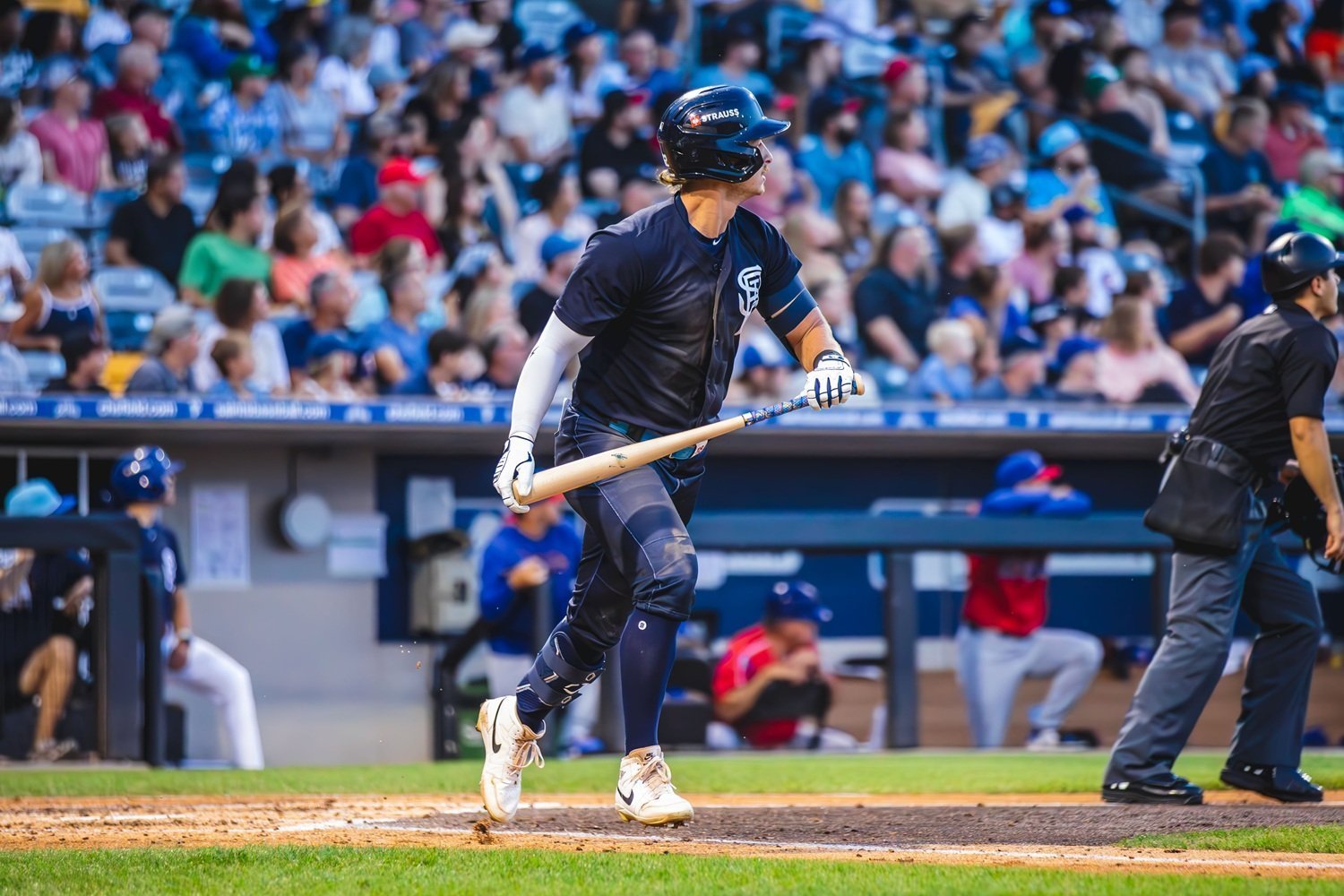 For much of his professional career, Kyler Fedko has existed on the fringes of prospect conversations. He wasn't a highly-touted draft pick. He never cracked the top of national prospect rankings. Even after putting together strong seasons, he often found himself overshadowed by younger and flashier names in the organization. Yet, every farm system seems to produce one player who develops a loyal following among fans. For the Twins, Fedko has steadily become that player. After years of grinding through the minor leagues, he has finally reached the point where a major league opportunity feels deserved rather than hopeful. A Productive College Career at Connecticut Minnesota selected Fedko in the 12th round of the 2021 MLB Draft out of the University of Connecticut. While he wasn't viewed as an elite prospect, he built a strong collegiate résumé that suggested there might be more offensive upside than many evaluators believed. In three college seasons, he hit .330/.407/.552 with 29 doubles and 19 homers across 119 games. He showed an ability to impact the baseball while maintaining a strong overall offensive profile. One factor that hurt his draft stock was a disappointing performance in summer wood-bat leagues. Fedko posted a .452 OPS in a limited sample size of 135 plate appearances, raising questions about how his offensive game would translate against professional pitching. Those concerns pushed him into the middle rounds, allowing Minnesota to take a chance on a player who had produced consistently in the Big East. Learning the Professional Game in 2021-22 Fedko's first taste of professional baseball came immediately after the draft, when he joined Low-A Fort Myers. The results were modest; he hit .235/.346/.395 with two doubles in 81 plate appearances. Like many first-year players, he was adjusting to professional routines, daily competition, and a longer season than he had experienced in college. The numbers didn't jump off the page, but there was enough promise for the Twins to give him another opportunity at the level the following season. Returning to Fort Myers in 2022, Fedko looked far more comfortable. He posted an .888 OPS in 26 games and quickly demonstrated that he was ready for a bigger challenge. The Twins promoted him to High-A Cedar Rapids, where the transition proved more difficult. Across his final 84 games of the season, Fedko managed a .697 OPS. While he flashed occasional power and athleticism, he was still trying to establish himself as a legitimate prospect. At the conclusion of his age-22 season, he appeared destined for a future as organizational depth, rather than a player who would eventually push for a major-league role. Slow Progress in 2023-24 Fedko spent all of 2023 with Cedar Rapids, despite entering the season older than the average age of the competition in the Midwest League. Injuries limited him to only 59 games, preventing him from building consistent momentum. Even so, he produced an .810 OPS and showed a particularly strong ability to punish left-handed pitching, posting a .910 OPS against southpaws. The season offered glimpses of a useful player, but the missed time made it difficult to evaluate whether his improvements were sustainable. Every prospect faces a proving ground, and for many hitters, that challenge comes at Double-A. Fedko spent the entire 2024 season at Wichita and appeared in a career-high 130 games. Unfortunately, the production never arrived. He finished with a .645 OPS and only 17 extra-base hits. His strikeout rate jumped to 20.1%, and his walk rate dipped to 12.6%. Entering his age-25 season, many players would have seen their prospect stock disappear entirely after a season like that. Instead, Fedko used the disappointing campaign as motivation heading into the following year. The 2025 Breakout Nobody Saw Coming In 2025, Fedko transformed himself from organizational depth into one of the most productive hitters in Minnesota's farm system. Between Double-A and Triple-A, he batted .258/.367/.487 with 28 homers and 38 steals in 130 games. He had a 130 wRC+, while improving his walk rate by 1.4%. His combination of power, speed, and improved offensive consistency made him one of the biggest surprises in the organization. There was a legitimate argument that he should have been named Twins Daily's Minor League Hitter of the Year, though he ultimately finished second to Gabriel Gonzalez. Despite the impressive numbers, Fedko remained overlooked. The Twins passed on giving him a September call-up and later left him exposed in the Rule 5 Draft. No team selected him, creating another chapter in a career that has repeatedly required him to prove doubters wrong. Forcing the Issue at Triple-A Fedko entered 2026 with something to prove—and has done exactly that. Over the last two seasons, he has compiled a .278/.364/.532 slash line with 23 home runs over 426 Triple-A plate appearances. Thanks to a recent surge of crushing Triple-A fastballs, he’s repeating his success so far at St. Paul to the tune of a .286/.372/.578 season line with 15 homers and 11 doubles in 55 games while increasing his wRC+ to 138. He has a well-defined vulnerability to chasing secondaries that will probably limit him to platoon corner outfielder status. Fedko gets into a deep but narrow crouch at the plate that sets him up to launch low fastballs. He can move the barrel around the zone a bit, and his contact rates are solidly average, but his fondness for chasing secondaries in the dirt could make him a rather boom-or-bust offensive contributor without quite the versatility to cover center field. Why Fedko Could Fit in Minnesota The appeal of Fedko goes beyond his bat. The 26-year-old can play all three outfield positions, and he has 47 stolen bases (out of 59 attempts) over the last two seasons at the Double-A and Triple-A levels. With much of his offensive production coming against left-handed pitching, the right-handed hitting Fedko provides a natural complement to Trevor Larnach or Kody Clemens in the corner outfield spots. His presence also creates roster flexibility and could allow Clemens to spend more time handling infield duties. Fedko is 26 years old, with a poor pre-2025 track record, so it’s no mystery why he’s been overlooked. But if last season’s improved hitting was for real, his speed and ability to play all three outfield spots would make him a solid bench piece. This season could make or break Fedko’s big-league dreams. Fedko's professional career has been anything but conventional. He wasn't a blue-chip prospect, and there were multiple points where it seemed unlikely he would ever reach the major leagues. Injuries, inconsistent production, and a lack of national recognition all contributed to him being overlooked. However, his persistence has made him one of the most intriguing stories in the organization. Few players in Minnesota's system have improved their stock more dramatically over the last two seasons. Whether he ultimately becomes a platoon outfielder, a valuable bench contributor, or something more, Fedko has already accomplished something significant. After spending years as an afterthought, he has forced the Twins and their fans to pay attention. What stands out about his professional career? Leave a comment and start the discussion. View the full article
 -
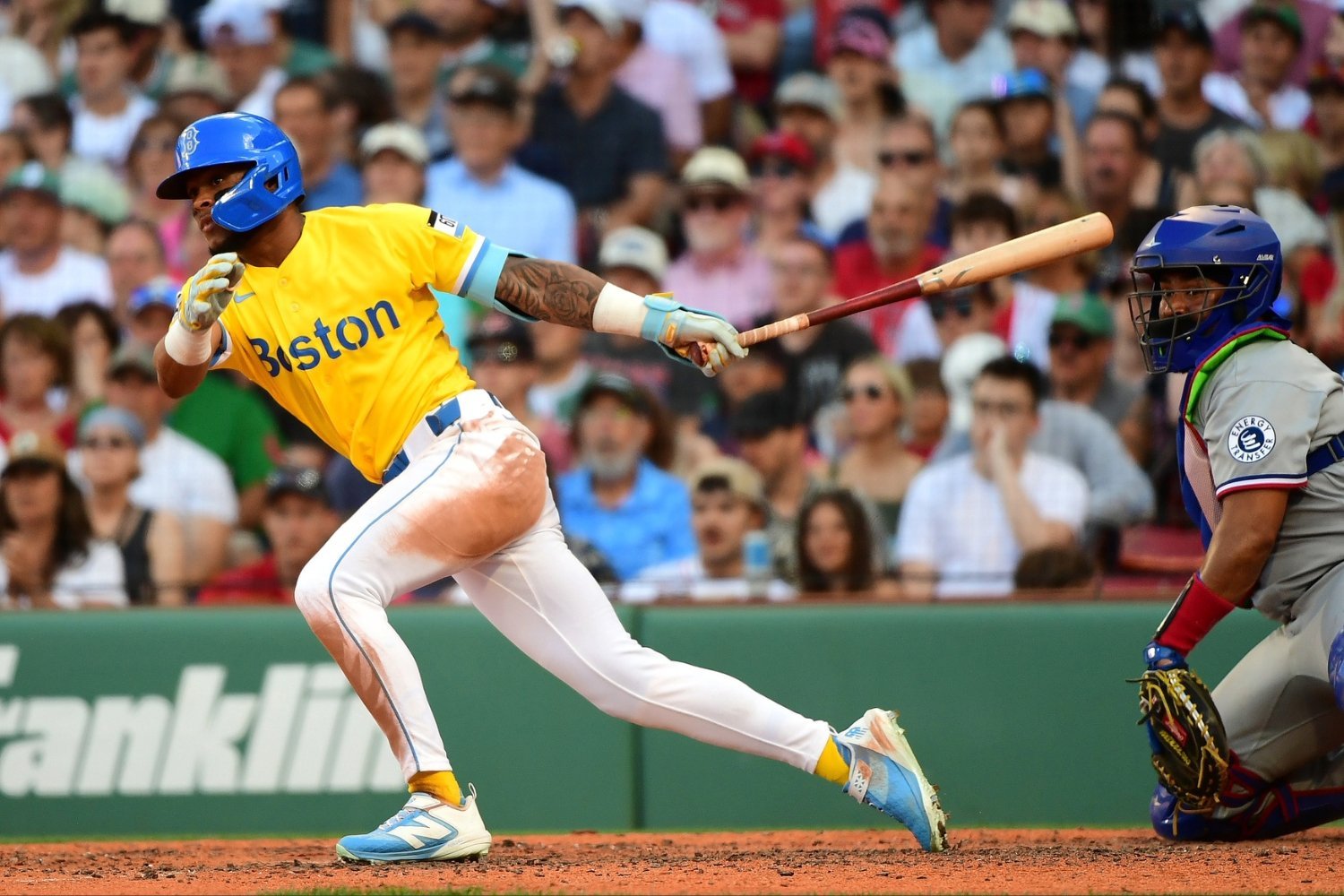 Pitchers spend a significant portion of their game plans trying to get hitters to expand the strike zone. When they succeed, they usually gain the upper hand. Swings at bad pitches often result in weak contact, whiffs, or strikeouts. Ceddanne Rafaela is becoming an exception to that rule. After hovering around a 37% chase rate during the first two months of the season, Rafaela has taken his aggressiveness to another level in June. His O-Swing% (the rate at which a hitter swings at pitches outside the strike zone) has jumped to an astonishing 60.2%, the highest mark in Major League Baseball so far this month. Boston Red Sox fans won't be too surprised by that fact, but the context makes the number even more remarkable. Ezequiel Tovar ranks second at 56.7%, while Salvador Perez sits third at 54.3%. Rafaela not only leads the leaderboard, but does so by a considerable margin. Hitters With the Highest Chase Rates in June 2026 Player O-Swing% O-Contact% Contact% Ceddanne Rafaela 60.2% 72.6% 80.0% Ezequiel Tovar 56.7% 54.9% 67.3% Salvador Pérez 54.3% 71.9% 79.4% Ernie Clement 53.0% 70.5% 80.9% Kerry Carpenter 51.8% 79.1% 83.9% Michael Harris II 51.0% 69.8% 78.2% Mauricio Dubón 49.6% 81.7% 87.5% Cody Bellinger 49.5% 77.8% 80.4% Ángel Martínez 49.5% 75.6% 78.4% Andrés Giménez 49.4% 72.1% 76.8% The table helps put the number into perspective. Rafaela not only leads MLB in chase rate during June, but also owns one of the strongest contact profiles among this group, an unusual combination for such an aggressive hitter. Normally, a spike of this magnitude in chase rate comes with more whiffs, more strikeouts, and a decline in offensive production. Rafaela, however, has produced the exact opposite outcome. So far in June, he is hitting .333/.348/.533 with an .881 OPS and a 139 wRC+, numbers that have made him one of Boston’s most productive hitters during the month. Although his walk rate has fallen to just 2.2%, he has compensated for it with a combination of contact ability, speed, and production whenever he puts the ball in play. The answer to our paradox lies in how his contact profile has evolved. What stands out is that the increase in aggressiveness has been accompanied by better contact rates. His O-Contact% has climbed to 72.6%, while his Z-Contact% has reached 90.7%, both season highs. The result is an overall contact rate of 80%, enough to prevent the added chasing from turning into a strikeout problem. That helps explain why his strikeout rate sits at just 17.4% in June, below his season average and far removed from the 31.5% mark he posted during his MLB debut in 2023. In fact, Rafaela’s overall development as a hitter has been more substantial than the usual conversations about his plate discipline suggest. His strikeout rate fell from 31.5% in 2023 to 26.4% in 2024, then to 19.9% in 2025, and currently sits at 20.5%. At the same time, his offensive line has improved to .286/.341/.450 this season, good for a career-best 116 wRC+. That progress has come without a dramatic overhaul of his approach. Rafaela remains one of the most aggressive hitters in baseball. The difference is that he is now reducing the cost of that aggressiveness. This chart shows Rafaela’s wOBA production against pitches outside the strike zone during March and April: There was only one clear weakness: pitches located low and inside. Now let's look at the map for June. The weakness against low-and-in pitches has largely disappeared, and more broadly, he has produced across the strike zone in a way few hitters in the league have managed this season. It's a trend worth monitoring as the season unfolds. The underlying metrics suggest that part of his current production may be difficult to sustain. His .299 xwOBA remains well below his actual .348 wOBA, while his expected batting average (.247) also trails his actual mark (.286). In addition, his .343 BABIP sits noticeably above the levels he posted in previous seasons. Even so, the gains in contact ability and strikeout reduction appear genuine. Rafaela no longer relies exclusively on his speed or defense to generate value. He is also showing tangible growth as a hitter without losing his identity at the plate. That is what makes Rafaela such a fascinating player to watch right now. So far in June, he leads Major League Baseball in swings at pitches outside the strike zone, a statistic that would normally signal offensive trouble. And yet, Rafaela has done the opposite. He has made more contact, struck out less, and produced like one of the Red Sox's best players. View the full article
 -
One Shot At Glory: The Royals' One-Time All Stars, Part 1
DiamondCentric posted an article in Royals Keep
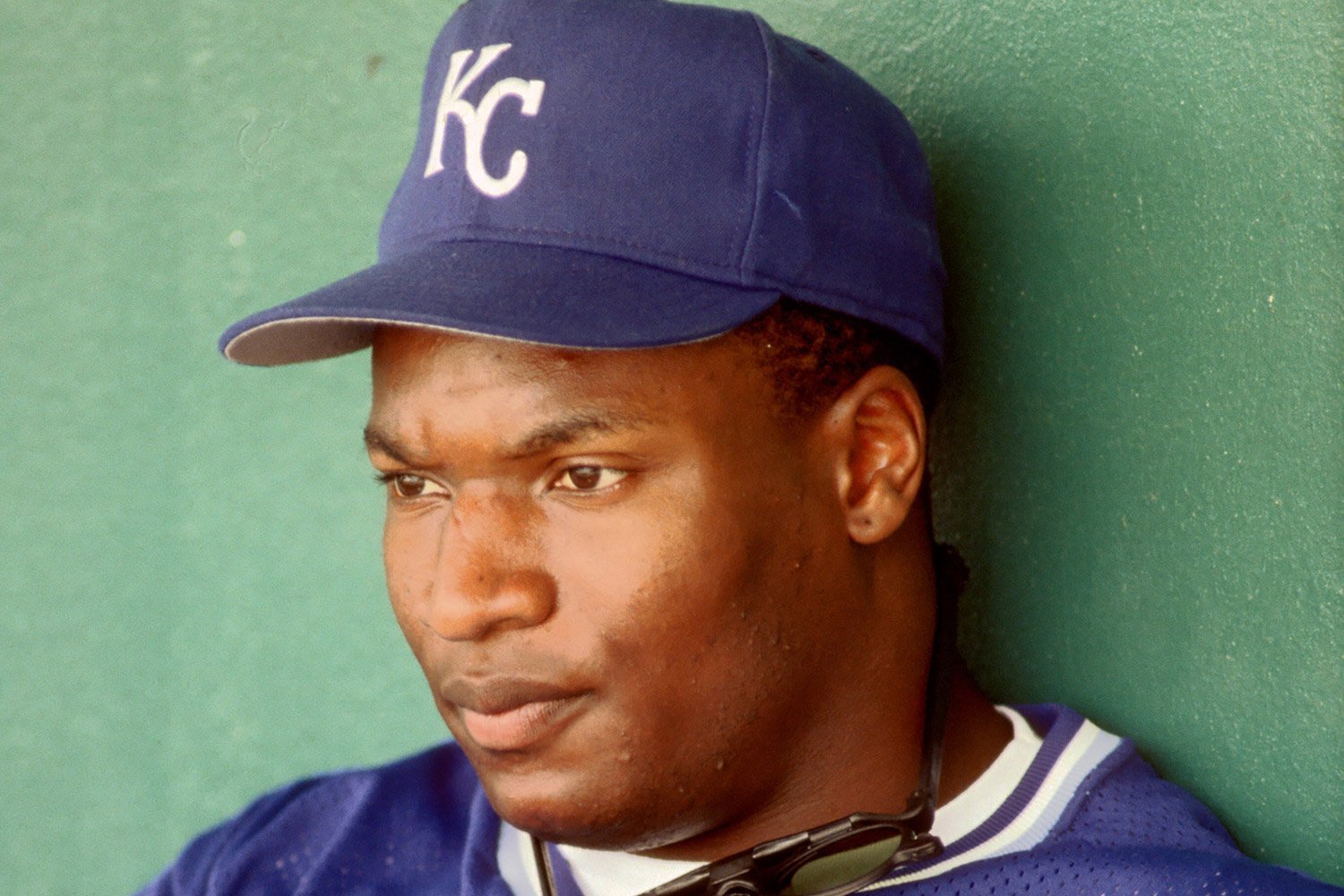 With All-Star voting underway, I thought it would be interesting to look at the Royals’ one-time All-Stars. After all, you already know about George Brett and Salvador Perez. There are some surprising names on this list, as well as some relatively obscure players. To start with, let’s examine the one-timers from the club’s inception in 1969 through the 1980s (that’s a good place to end Part 1, as you’ll see). I borrowed this concept from the Phillies site, The Good Phight. Ellie Rodriguez (1969) The Royals’ first team produced one All-Star, which probably isn’t that surprising; expansion teams are usually made of castoffs, after all. Rodriguez was deemed expendable by the New York Yankees before the 1968 expansion draft, and the Royals used the 13th pick on him. He was the Opening Day catcher but didn’t really claim the starting job until late May. Given regular playing time, he responded with a hot month of June, hitting .281/.361/.422. His season totals on July 16, when the reserves were chosen for the AL team, were just .257/.344/.341 with two home runs and 13 RBI. But AL manager Mayo Smith only selected eight pitchers, and stocked his bench with six outfielders. Also, the Royals’ brass spoke highly of Rodriguez’s defensive ability. “There isn’t any doubt about his defensive ability. He takes command behind the plate and has the knack of making a pitcher bear down all the time.” --Royals general manager Cedric Tallis, quoted by Paul O’Boynick, The Kansas City Times, July 17, 1969 “He is a good analyst behind the plate and is quick on blocking low pitches. Ellie has come a long way since spring training. He’s a bulldog behind the plate.” --Royals manager Joe Gordon, quoted by Paul O’Boynick, The Kansas City Times, July 17, 1969 Sadly, Rodriguez did not get in the game. Starter Bill Freehan of Detroit played the first six innings, and Minnesota’s John Roseboro played the final three. Smith did use a pinch-hitter for Roseboro in the bottom of the ninth, but the game ended with the NL on top, 9-3. Rodriguez, who just passed away in April at age 79, was dealt to Milwaukee after the 1970 season. He would be named to one more All-Star team while with the Brewers during the 1972 campaign. He didn’t get to play in that one, either. Lou Piniella (1972) I suppose lots of people would guess that Sweet Lou was the Royals’ first All-Star, as he won the Rookie of the Year award in 1969. But despite a solid .282/.325/.416 line that year, Piniella had to wait until 1972 to be named to the All-Star team. In the middle of what was probably his best season, Piniella was a deserving choice. When the reserves were named by manager Earl Weaver on July 20 (the game was really late on the calendar that year), Piniella was second in the AL with a .321 batting average, and he had nine home runs and 43 RBI. “Sure, I’m happy, very happy. Elated might be a better way to describe the way I feel. You hear talk about how some players would rather have three days off. I don’t know if I’ll get to play, but I’d rather be at the All-Star Game.” --Piniella, quoted by Sid Bordman, The Kansas City Star, July 21, 1972 Piniella did get to play, grounding out as a pinch-hitter in the 10th inning of the NL’s 4-3 win. Piniella was traded by the Royals to the New York Yankees after the 1973 season. Perhaps surprisingly, 1972 was his only All-Star Game as a player; of course, he would manage the National League in the 1991 game after his Cincinnati Reds won the pennant and World Series the previous year. Richie Scheinblum (1972) Piniella was joined on the All-Star team by his outfield mate, Scheinblum. Actually, Amos Otis also made the team, so the Royals’ entire starting outfield was selected, along with second baseman Cookie Rojas. Also, manager Bob Lemon was named as one of Weaver’s coaches for the game, giving Kansas City five representatives. Scheinblum, who was in his first year with the Royals after playing sparingly for Cleveland and Washington, was having the season of his life. He was leading the league with a .325 average when the reserves were selected (while Piniella was second, Otis was third at .309). “I’m glad all three of us were picked. I thought maybe they’d take two–but not three. This is probably more of a thrill for me than the others. This time last year, I was in the minors. I’m not fast on the bases or in the outfield, but I give 100 percent. I’m just glad people have noticed I’m hitting.”--Scheinblum, quoted by Sid Bordman, The Kansas City Star, July 21, 1972 Despite that scouting report, Scheinblum did get to play in the game, replacing Bobby Murcer in the outfield in the sixth inning. He only got one at-bat, a groundout that came just after Rojas hit a two-run home run to give the AL the lead. Scheinblum finished the year with a .300/.383/.418 line, and the Royals wisely sold high, trading him to Cincinnati after the season for Hal McRae, a deal which helped launch Kansas City’s decade-plus of strong teams. Scheinblum would be done as a major leaguer after the 1974 season, and this was his only appearance in the Midsummer Classic. Larry Gura (1980) Larry Gura went 16-4 with a 2.72 ERA in 1978 and finished seventh in the Cy Young vote. He didn’t make the All-Star team. In 1979, he fell back to a 13-12 mark with a 4.47 ERA. But in 1980, he found himself with a 10-3 record and a 2.09 ERA at the end of June. That got him the nod from AL manager Weaver, one of just eight pitchers selected by the Baltimore manager. A soft-tossing southpaw, Gura was the proverbial “crafty lefty.” The 1980 season was the only time he reached the 100 mark for strikeouts, but he won 126 games in the majors, 111 of them for the Royals. Not bad for a pitcher the team acquired for catcher Fran Healy, whose career ended after one game in the 1978 season. As for being an All-Star, Gura didn’t seem to be overwhelmed by the news. “Maybe when I’m out of baseball, looking back, it’ll mean a lot more. Baseball for us is such an everyday thing, routine. So often we have to go out tomorrow and forget today even happened.” --Gura, quoted by Mike McKenzie, The Kansas City Times, July 8, 1980 Presumably, Gura did not forget his experience at the game, although he did not appear in the NL’s 4-2 win. He did enjoy two more finishes in the top ten of Cy Young voting and was inducted into the Royals Hall of Fame in 1992, but never made another All-Star team. Kevin Seitzer (1987) If Kevin Seitzer felt any pressure about taking over third base from Royals legend George Brett (who moved over to first base full-time during the 1987 season), he certainly didn’t show it. He made the All-Star team as a rookie, thanks to a .306/.389/.418 line through July 11, when he was named to the team…as an injury replacement for Brett, of course. With the news coming just a few days before the game, Seitzer’s plans for the break were thrown into chaos. “This is just a drastic change in plans for me. Everything’s screwed up. I left my good clothes at the cleaners before the road trip, and I’ve got to fly from here (to Oakland).”--Seitzer, quoted by Jack Etkin, The Kansas City Star, July 12, 1987 But Seitzer was more ready mentally. “I’m expecting I’m going to play because they want me to back up (Wade) Boggs. I imagine I’ll get an at-bat. If I don’t, it’s an honor just to be there.”--Seitzer, quoted by Jack Etkin, The Kansas City Star, July 12, 1987 In fact, Seitzer got two at-bats, plus a walk, after he replaced Boggs following the fifth inning. He almost won the game for the AL, too. Facing Lee Smith in the bottom of the 10th of a scoreless tie, he hit a fly ball to deep center field. Alas, it was caught on the warning track for the last out. Leading off the 12th, after the NL scored two runs in the top of the inning, he drew that walk, but never made it off first base. Seitzer ended his rookie year with a .323/.399/.470 line, 15 homers, 83 RBI, and a league-leading 207 hits. A lot of years that would earn him a Rookie of the Year award, but this happened to be the season Mark McGwire bashed 49 home runs, so Seitzer finished second in the voting. He made one more All-Star team in his career, representing Milwaukee in the 1995 contest. This time, he got to pinch-hit for Boggs, a story he should tell his grandkids until they get sick of it. Kurt Stillwell (1988) After years of light-hitting shortstops, the Royals thought they had solved that problem when they traded for Kurt Stillwell, sending pitcher Danny Jackson to Cincinnati before the 1988 season. It was a trade that helped both teams right away, because Jackson won 23 games for the Reds, while Stillwell hit .251/.322/.399 for the Royals. That may not seem great, but compared to what the Royals had been getting from that spot, it was basically Bobby Witt Jr. Anyway, Stillwell did have some good fortune in his selection; both Alan Trammell (the winner of the fan voting) and Ozzie Guillen (Trammell’s replacement), suffered injuries in early July. Stillwell himself was battling a slight groin pull, but the news of his selection helped him feel better. “I thought I could have played the last three days, anyway. (The Royals) were just being cautious. And with the All-Star break, they wanted to take advantage of it. I won’t be able to get the rest they wanted now, but hey, if they wanted me this bad, I’m going to make the most of it. It’s hard for me to believe everything worked out for me the way it did. I’m still in shock. Everything went my way, kind of like I’m the alternate to the alternate.” --Stillwell, quoted by Bob Nightengale, The Kansas City Times, July 11, 1988 Stillwell finally got in the game in the bottom of the ninth, with the AL clinging to a 2-1 lead. He at least did get to catch the first out of the inning, and the AL held on to the lead. That would be it for Stillwell’s All-Star appearances. After two good seasons and two subpar ones in Kansas City, he bounced around as a free agent for a few seasons, but never really came close to his 1988 success again. Bo Jackson (1989) It’s hard to do much better in your All-Star Game debut than Bo Jackson did. In his third full season, he was elected to start the game by the fans; in fact, he was the AL’s leading vote-getter. Of course, he was one of the most famous baseball players in the country, thanks to his football “hobby.” He was having a good season, too, hitting .268/.308/.525 with 18 home runs, 52 RBI, and 20 stolen bases through the end of June. AL manager Tony La Russa, who had seen Jackson’s talent plenty as the manager of the Oakland A’s, mused about batting him leadoff in the All-Star Game. “It doesn’t matter, just being on the field in Anaheim that night, that’s all that matters. It’s all God-given talent, so I don’t give myself credit for doing anything. It means something special, but you can’t let that stuff sink into your head because then you start believing you’re better than you are. I let it go in one ear and out the other.” --Jackson, quoted by Dick Kaegel, The Kansas City Times, July 6, 1989 LaRussa did put Jackson in the leadoff spot, and it paid off. The pregame talk was that the start time would make it hard for hitters to see the ball in the twilight in Anaheim. But the NL scored two runs in the top of the first, and Jackson led off the bottom of the inning with a mammoth blast to center field, roughly 450 feet away from the plate. He was hardly done showing off his talent. In the second inning, he showcased his speed, beating out a relay throw on a double play and allowing the go-ahead run to score. He then stole second and moved up to third when the throw sailed into center field (the home run and stolen base combo put him in an exclusive club with Willie Mays at the time). He also singled in the game and walked away with the MVP trophy. Oh, and Nike premiered the “Bo Knows” TV spot during the game. Not a bad night’s work! Most people watching that night likely thought this was just the first of many All-Star Games featuring Bo, but as we know now, it was not to be. Despite a solid first half in 1990, he was not selected for the team. Then, in January 1991, he suffered a hip injury while playing football for the Los Angeles Raiders. It ended his football career, and his baseball career was never the same; just the fact that he came back to the sport and even played after having that hip replacement was amazing enough. So this was Bo’s one All-Star appearance, but it was certainly a memorable one. View the full article
 -
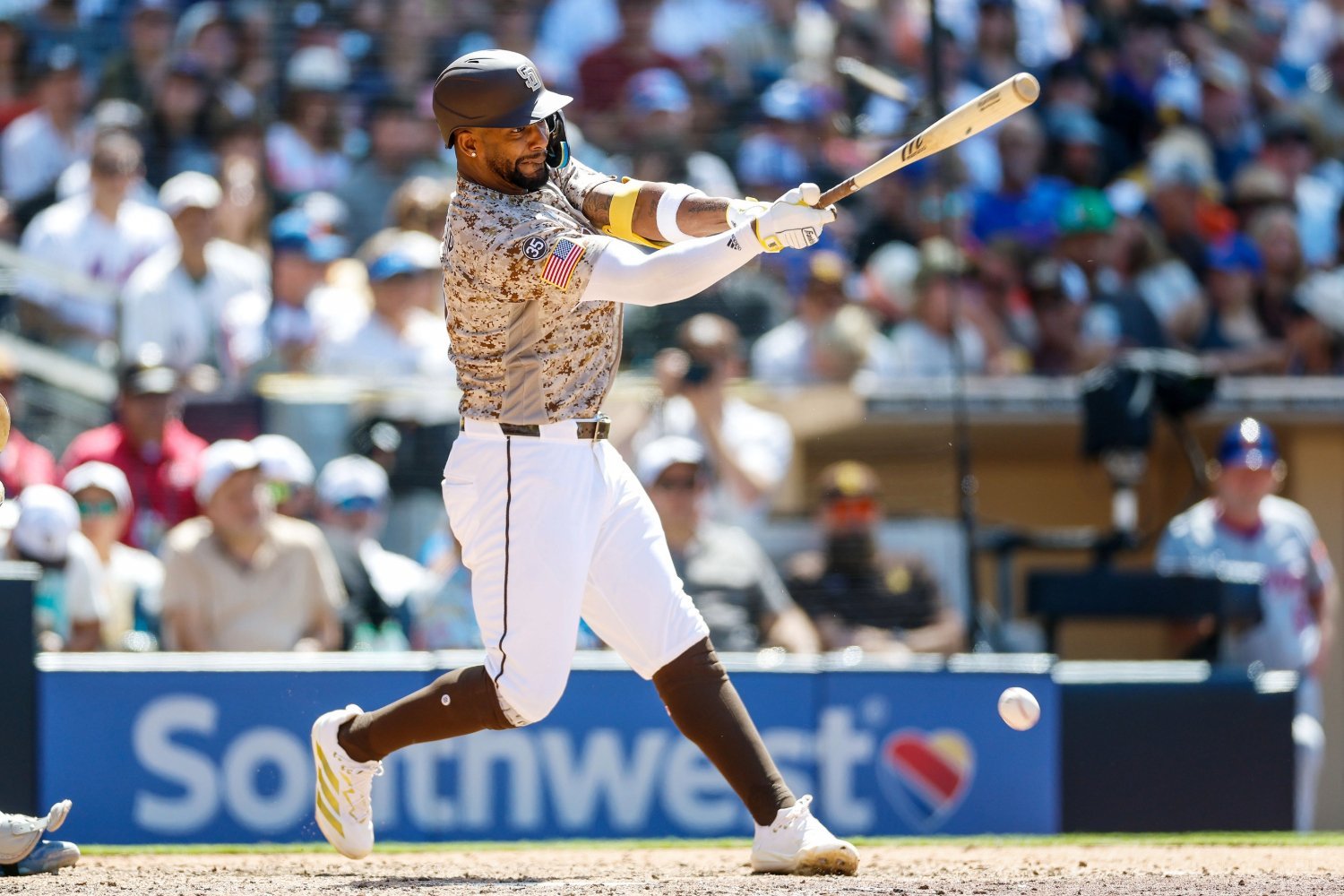 Miguel Andujar seemed like a classic pickup for the San Diego Padres in the A.J. Preller era: an affordable journeyman who was brought in to lend the team one, specific skill. In this case, it was to hit left-handed pitching, and that’s exactly what he did in March and April. But like the rest of the team, Andjuar’s performance cratered in May and June. Now, he’s on the injured list with a hamstring strain, creating more uncertainty for an underperforming lineup. It wasn’t supposed to be like this. The Padres signed Andujar to a one-year deal to be a part-time DH, splitting time with Gavin Sheets' left-handed power bat, as well as to be a key contributor off the bench. The DH is “probably a spot that we’re going to keep open throughout the season, be able to give Manny [Machado] a day DH-ing, Xander [Bogaerts] a day DH-ing, Fernando [Tatis Jr.], [Ramón] Laureano, [Jackson] Merrill,” manager Craig Stammen said after Andujar’s signing was announced in February. “I think it’s a strategic way to keep those guys a little fresher during the season.” The Padres’ offensive woes and injury problems dashed that wishful preseason thinking. Infielder Jake Cronenworth has been sidelined for weeks due to lingering concussion symptoms, which has forced Sheets to become an everyday first baseman. That’d be fine if Sheets wasn’t a terrible defender and could hit lefties. The Nick Castellanos experiment lasted all of 110 days. Laureano played with a hip injury until he simply couldn’t anymore. And regularly resting the star players is out of the question with such a thin lineup and worsening record. All of this has resulted in Andujar becoming the de facto everyday designated hitter, and for a while that was working out. During the Padres 67 games before he went on the IL, Andujar appeared in 45 of them as the DH. In March and April, his OPS stood at .830 and he routinely batted in the two-hole. It was a continuation of a resurgent career year in 2025, when he had .822 OPS and accrued 1.1 fWAR. Against lefties, he nearly had an 1.000 OPS. In the first month of this season, he was easily one of the team's best hitters, and dating back to last season, which he spent with the Athletics and Cincinnati Reds, he had been one of the better platoon bats in baseball. A decent OPS in May of .670 and a woeful OPS in June of .461 quieted that feel-good story. Before his hamstring injury, he was playing like one of the worst hitters in baseball, though his is a weird profile. He has hit the ball hard all season, and his barrel rates, exit velocities, and strikeout rate aren’t out of line with career averages. Still, his slash line and expected outcomes have fallen off a cliff. If there's one culprit, then it’s his chase rate. Andujar has a lifetime 37.1% chase rate, and in 2018 and 2025, his two best seasons, he had chase rates no more than 36.2%. His strong performance this past March and April aligns with that precedent. His chase rate was 35.6%, but then it leapt up to 43.9% in May and an intolerable 46.2% in June. Over the course of a season, that would be, by far, his worst chase rate. It makes sense, then, why in June he has been batting, by far, the worst in his career. Concurrently, his swing rate is up from 50.5% in March and April to 56.9% in June. Why is Andujar swinging more, especially at pitches outside of the zone? Maybe weighing on his shoulders is an anemic offense. He could be pressing to make up for the lineup’s deficiencies. Maybe he has devolved into bad habits as the season grinds on. Refocusing on the basics—stop swinging at bad pitches—wouldn’t hurt. In any case, the Padres simply cannot afford June Andujar to return from the IL. They need April Andujar. But the biggest problem with Andujar doesn’t rest with the man himself. It’s with Tatis and Machado and Cronenworth and all the other regulars who, because of their lack of performance, made Andujar’s output essential. He was signed by the Padres to play a supporting role, but thus far, he’s had to do so much more. View the full article
 -
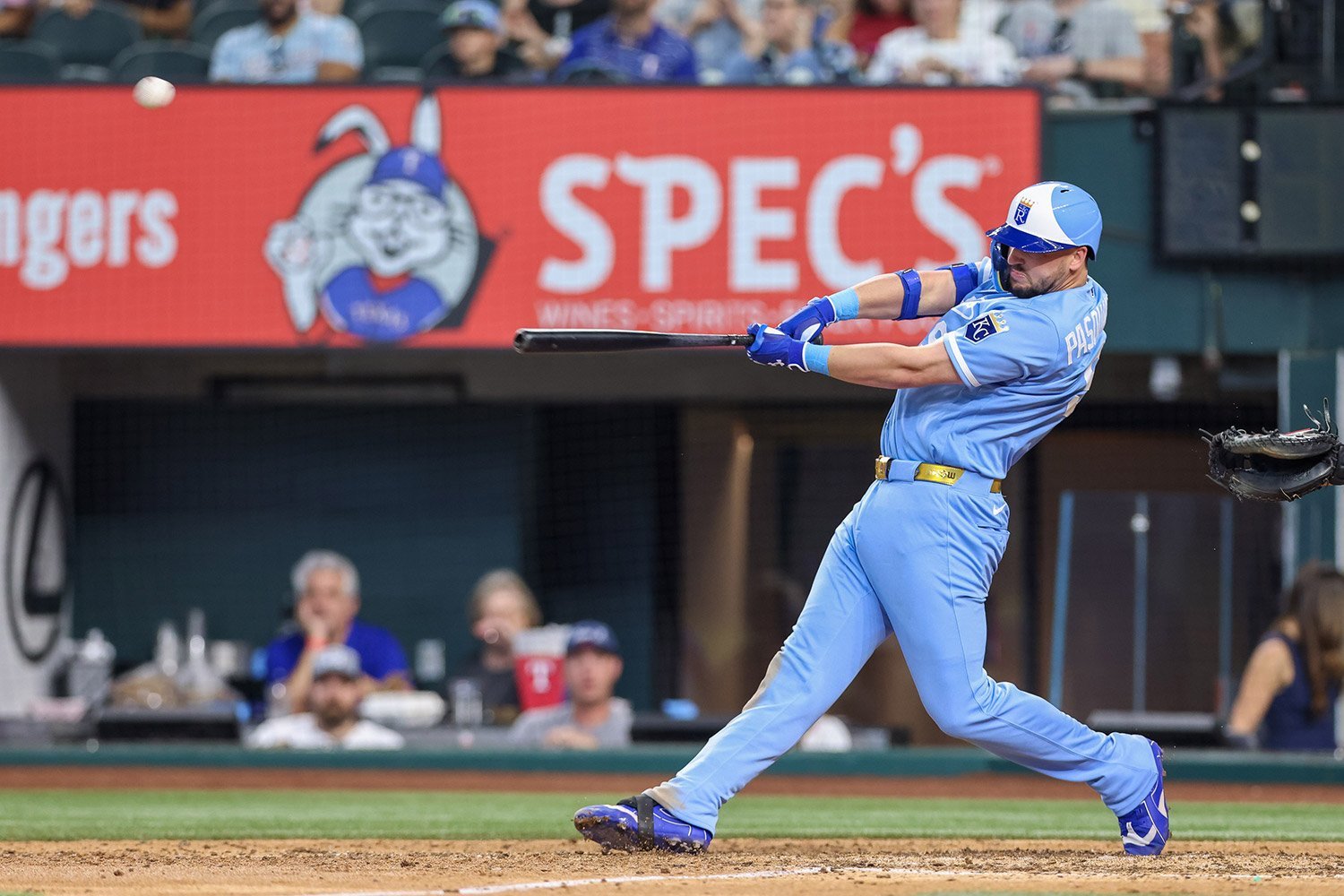 Throughout the 2025 and 2026 seasons, the Royals have ranked among the least productive offenses against left-handed pitching. What stands out is not merely the outcome, but how they arrived there. Unlike many teams that populate the bottom of these leaderboards, Kansas City's struggles are not driven by excessive strikeout rates. This is not a lineup incapable of putting the ball in play. The issue has been more nuanced: a combination of insufficient offensive production, a lack of consistent power, and key hitters failing to perform. Team vs LHP (2025-26) AVG xBA OBP xOBP SLG xSLG ISO K% Royals .237 .242 .308 .314 .362 .387 .124 20.70% MLB Average .242 .240 .310 .313 .392 .396 .150 22.60% The Royals have been slightly below the MLB average in both batting average and on-base percentage, but the real gap emerges in slugging and power production. Their .124 ISO ranks among the lowest marks in baseball, while their .362 slugging percentage also sits well below league average. Expected metrics add another important layer to the discussion. Kansas City has not produced contact as poor as the traditional results suggest. Their xbA, xOBP, and xSLG have all been slightly better than their actual numbers, indicating that some degree of poor fortune has influenced the results. The gap, however, is not large enough to alter the broader conclusion. Even if performance had matched the expected metrics exactly, the Royals would still project as a below-average offense against left-handed pitching. The root of the problem becomes apparent when examining who has actually carried the offense. Player PA vs LHP wRC+ 2025 wRC+ 2026 Bobby Witt Jr. 209 135 141 Maikel Garcia 187 155 181 Vinnie Pasquantino 240 63 9 While much of the lineup has oscillated between productive and disappointing seasons, Witt and Garcia have been the only true constants. Witt has posted a wRC+ above 135 in both campaigns, combining plate discipline, quality contact, and enough power to punish mistakes. His production against left-handers is that of an established star. Garcia has been every bit as impressive. After recording a 155 wRC+ against left-handed pitching in 2025, he has elevated that figure to 181 in 2026. His blend of contact ability, plate discipline, and extra-base production has allowed him to become one of the organization’s most effective hitters against southpaws. The problem is that the story largely ends there. If Witt and Garcia represent stability, Pasquantino represents perhaps the most concerning challenge facing the lineup moving forward. He produced a 63 wRC+ against left-handed pitching in 2025. Rather than showing signs of improvement, his production has collapsed to an astonishingly low 9 wRC+ in 2026. Player PA vs LHP AVG OBP SLG wRC+ Vinnie Pasquantino (2025) 164 .212 .250 .364 63 Vinnie Pasquantino (2026) 76 .143 .211 .186 9 The decline is particularly troubling because Pasquantino is not a complementary piece within the offensive structure. He is one of the hitters Kansas City expects to build around. When a player with that profile performs significantly below league average against left-handed pitching for two consecutive seasons, the lineup’s margin for error shrinks considerably. Pitch-type data helps explain part of the struggle. Over the last two seasons, Pasquantino has repeatedly struggled against left-handed sliders, while even his results against fastballs have been inconsistent. His production with runners in scoring position has also offered little indication that a breakthrough is imminent. The Royals’ inconsistency, however, extends well beyond Pasquantino. Salvador Perez provides a different version of the same problem. After posting just a 45 wRC+ against left-handed pitching in 2025, the veteran catcher has rebounded significantly in 2026, raising that figure to 119. The improvement has given the lineup an additional source of offense that was largely absent the previous year, but it also highlights the lack of stability that has defined this group. While Witt and Garcia have maintained high levels of production across both seasons, several of the roster’s most important hitters have swung from one extreme to the other from year to year. Jonathan India offers another example. He produced a near-average 91 wRC+ against lefties in 2025 before slipping to 68 in 2026. Kyle Isbel has gone from a 56 wRC+ to a startling -4. Isaac Collins owns just a 30 wRC+ against left-handed pitching in 2026. Even some of the more encouraging recent contributions from Nick Loftin and Lane Thomas have come in relatively small samples. The result is a lineup that rarely stacks enough legitimate threats together when facing quality left-handed starters. That lack of depth becomes even more apparent in the game’s highest-leverage situations. Royals vs LHP with RISP (2025-26) AVG OBP SLG HR% K% Royals .247 .327 .367 1.8 17.5% MLB Average .249 .330 .394 2.5 21.6% At first glance, the Royals appear competitive in both batting average and strikeout rate. Yet once again, the same pattern emerges: a lack of impact. Their slugging percentage sits well below the league average, while their home-run rate ranks as the fourth-lowest in baseball during the period examined. Production with runners in scoring position has not been distributed evenly either. Witt, Garcia, and a handful of timely contributions from Loftin have generated positive results, but much of the rest of the lineup has struggled to convert opportunities into meaningful damage. That is why Kansas City's struggles against left-handed pitching cannot be explained by a single statistic or one underperforming player. The organization has two hitters who have consistently demonstrated the ability to thrive in these matchups. It has also received occasional contributions from other members of the roster. What it has not found is a sufficiently broad offensive foundation capable of supporting those strengths. As long as Witt and Garcia remain the only truly reliable pillars against left-handed pitching, Kansas City will continue to rely on too many things breaking right at the same time. Over the last two seasons, that has proven to be a formula that rarely works. View the full article
 -
Ranking Twins Players Whose Value Has Dropped the Most in 2026
DiamondCentric posted an article in Twins Daily
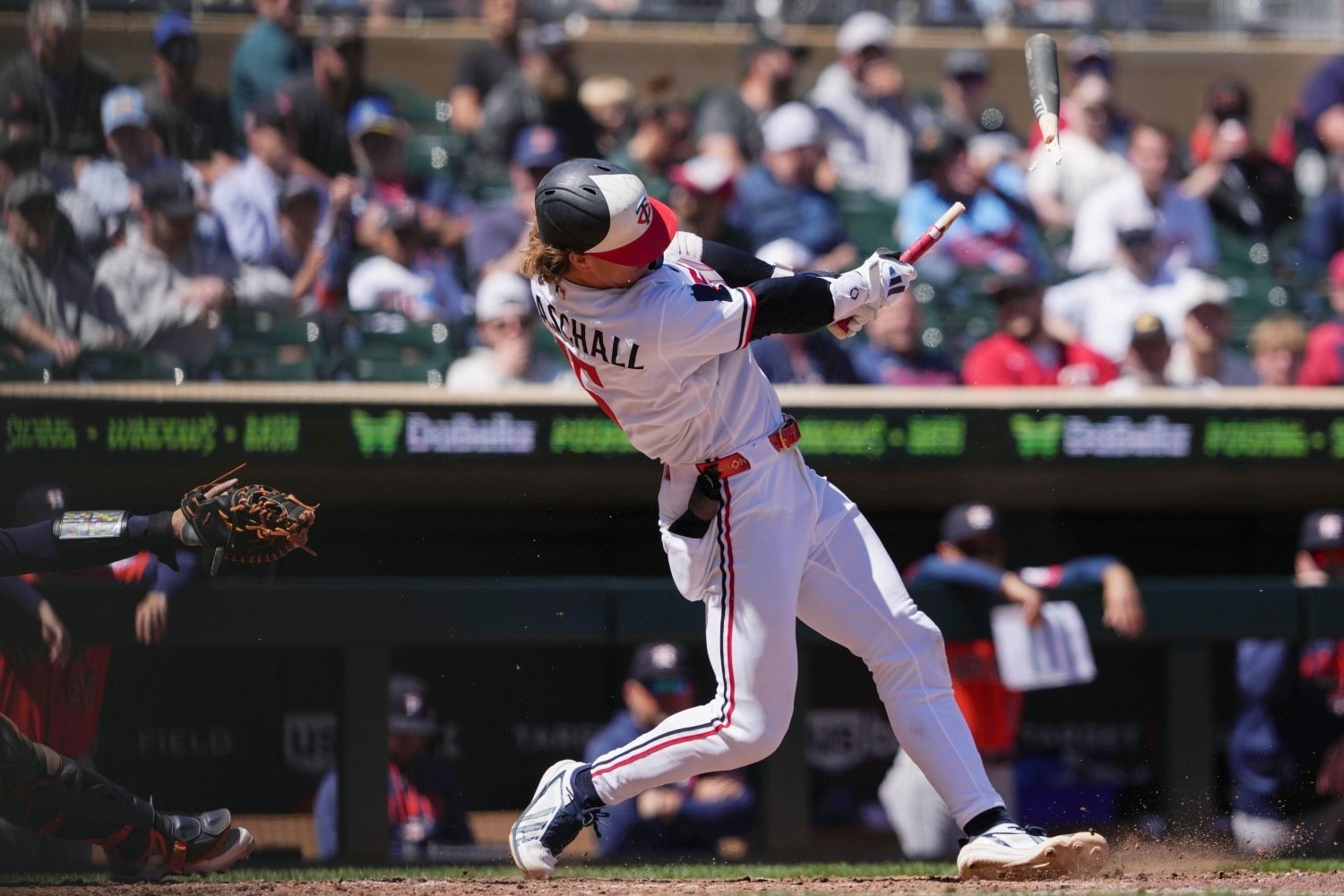 Player value can change quickly in baseball. A strong season can elevate a prospect or veteran into a cornerstone asset, while injuries and prolonged struggles can rapidly alter a player's standing within an organization. Coming into 2026, the Twins believed they had a roster capable of competing in the American League Central. Several players were viewed as foundational pieces for both the present and future, even if some of the prospect luster had worn away. However, the first few months of the season have significantly changed the outlook for some of those players. Here are the five Twins whose value has fallen the most since Opening Day. 5. Luke Keaschall TD Pre-Season Asset Rank: 2 Few players generated more excitement entering the season than Luke Keaschall. After bursting onto the scene during a 49-game rookie campaign, he looked like a future fixture near the top of Minnesota's lineup. Keaschall posted a 129 OPS+ in 2025 while going 14-for-17 on stolen-base attempts, showing the blend of contact skills, on-base ability, and athleticism that made him one of the organization's most valuable assets. Twins Daily ranked him as the club's second-most valuable asset behind only Walker Jenkins. The 2026 season started about as poorly as possible. Keaschall carried a .542 OPS through the season's first month and struggled to make consistent hard contact. To his credit, he began showing signs of life in June, posting a .790 OPS while continuing to provide value on the bases. Even with the recent improvement, questions have emerged. Keaschall leads the Twins with 10 stolen bases and posted an on-base percentage of nearly 40% during May, but power production has been almost nonexistent. He has just 12 extra-base hits in 227 at-bats, limiting his offensive impact. Defensively, the results haven't helped his case either. He owns a -2 Fielding Run Value and -3 Outs Above Average at second base. The long-term outlook remains positive, but his value is no longer at the near-untouchable level it occupied entering the season. 4. Pablo López TD Pre-Season Asset Rank: 4 The biggest concern surrounding Pablo López entering 2026 was health. Despite being limited to just 14 starts in 2025 because of a right hamstring strain, a right teres major strain, and a right forearm strain, López remained dominant when healthy. He posted a 2.74 ERA, 3.19 FIP, and 1.11 WHIP, giving Minnesota every reason to believe he could once again anchor the rotation. Instead, disaster struck before the season ever got underway. López suffered a season-ending elbow injury during spring training and eventually underwent Tommy John surgery. He never threw a pitch during the regular season and is not expected back until early 2027. The injury dramatically altered his value. Not only did the Twins lose one of their best pitchers, but any possibility of a deadline trade vanished. Minnesota now faces uncertainty about which López version will return following surgery and how his contract situation could be affected by upcoming collective bargaining negotiations. For a player viewed as one of the organization's most valuable assets entering the year, the drop has been substantial. 3. Royce Lewis TD Pre-Season Asset Rank: 13 The optimism surrounding Royce Lewis this spring felt different than in previous years. New manager Derek Shelton made Lewis a priority shortly after being hired, and the former No. 1 overall pick spent the offseason working with a new swing coach in hopes of rediscovering the offensive form that once made him one of baseball's brightest young stars. The Twins believed there was still plenty of upside remaining. Instead, Lewis continued a troubling trend that has stretched back nearly two years. Before being demoted to Triple-A St. Paul, Lewis hit just .163/.261/.279 with a 54 wRC+. The struggles were not simply the result of a slow start. Since August of 2024, he has produced a .213/.268/.336 slash line with a 67 wRC+ across 181 major-league games. The Twins finally made the difficult decision to send him to Triple-A, where he immediately reminded everyone of his talent. Lewis crushed Triple-A pitching, hitting .340 with eight home runs in just 13 games. That performance earned him another opportunity in Minnesota, but his long-term value is no longer built on potential alone. The final months of 2026 may determine whether Lewis can still be viewed as a cornerstone piece or if his future role becomes much less certain. 2. Matt Wallner TD Pre-Season Asset Rank: 12 Matt Wallner entered the season with plenty to prove, but there was also reason for optimism. Although he posted a 111 OPS+ in 2025, it represented a noticeable step backward from the production he delivered in 2023 and 2024. Even so, many believed Wallner could recapture the form that allowed him to average 2.2 rWAR during those two seasons. Instead, his performance deteriorated even further. Wallner was one of the least productive players in baseball during the season's opening weeks, producing a 53 OPS+ and accumulating -1.3 rWAR in just 34 games. The struggles became severe enough that the Twins followed the same path they used with Lewis, sending him to Triple-A to reset. The early returns in St. Paul have been encouraging. Wallner owns a .886 OPS with six home runs and six doubles in 22 games. However, the larger trend remains concerning. Wallner has always been a streaky hitter whose power comes at a high cost, with a high swing-and-miss rate. The issue is that the overall production has now declined for two consecutive seasons. What once looked like a middle-of-the-order bat now comes with considerably more questions. 1. Simeon Woods Richardson TD Pre-Season Asset Rank: 6 No player on this list has seen his value collapse faster than Simeon Woods Richardson. Entering 2026, Woods Richardson looked like a reliable rotation piece. He wasn't expected to lead the staff, but his performance over the previous two seasons suggested he could comfortably hold down a middle-of-the-rotation role. From 2024-25, he posted a 4.11 ERA, 102 ERA+, and 1.29 WHIP while providing valuable innings. That stability completely disappeared this season. Woods Richardson struggled from the beginning and never found answers. In 47 2/3 innings with Minnesota, he allowed 41 earned runs while producing a 61 ERA+ and -1.3 rWAR. The performance became so poor that the Twins designated him for assignment and eventually traded him to Toronto for cash considerations. For a player who entered the season ranked sixth in organizational asset value, ending up off the roster within a few months represents one of the steepest declines imaginable. His value simply could not have fallen much further. Baseball has a way of humbling even the most optimistic projections. Just a few months ago, these five players represented key pieces of Minnesota's present and future. Some were expected to anchor the rotation, others were viewed as everyday lineup fixtures, and a few were considered among the organization's most valuable assets. The good news for the Twins is that value can rebound just as quickly as it falls. Keaschall, Lewis, and Wallner still have time to change the narrative before the season ends, while López's long-term outlook will depend on his recovery. Woods Richardson's chapter in Minnesota appears finished, but the others still have opportunities to reclaim some of the value they have lost. The remainder of the 2026 season could go a long way toward determining whether these declines are temporary setbacks or signs of larger concerns for the organization moving forward. Should any other players be added to the rankings? How would your rankings look? Leave a comment and start the discussion. View the full article
 -
Royce Lewis Made A Key Adjustment, And It's Paying Off
DiamondCentric posted an article in Twins Daily
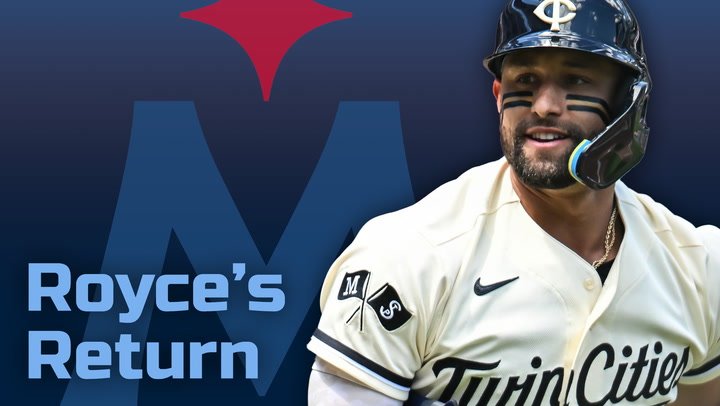 After a miserable start to the season, Royce Lewis is suddenly red-hot. Here's what has changed since his brief stint in Triple-A. View the full article
 -
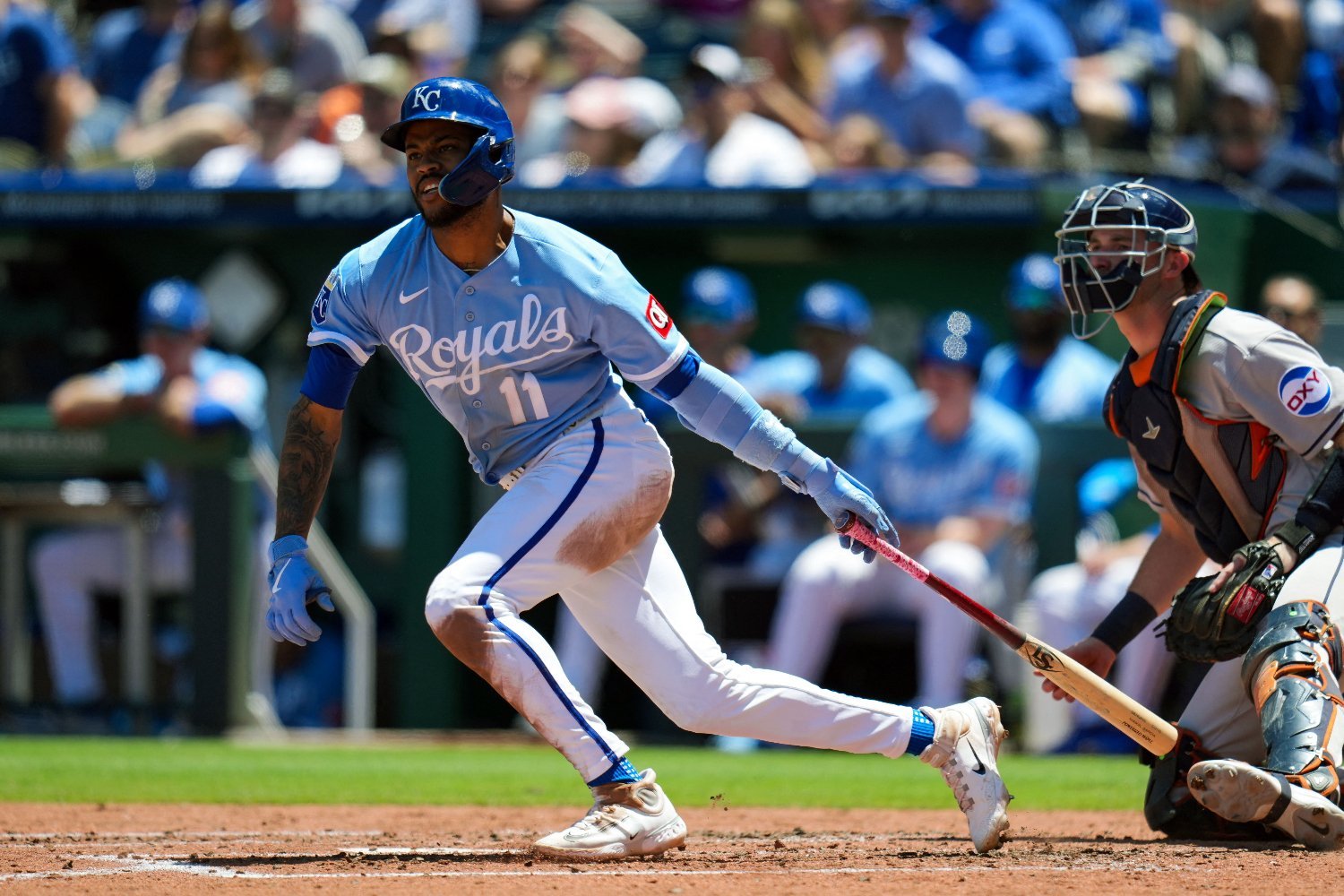 Hopes were high for Maikel Garcia going into 2026. Last year was a dream season of sorts for the Venezuelan infielder. In 160 games and 666 plate appearances, he slashed .286/.351/.449 with an .800 OPS. Garcia also hit 16 home runs, scored 81 runs, collected 74 RBI, and stole 23 bases. He also earned his first Gold Glove award after falling just short in 2024. Those numbers and accolades helped him earn not just an appearance in the All-Star Game, but a new five-year contract extension from the Royals in the offseason. If that wasn't enough, Garcia was an absolute stud for Venezuela in the World Baseball Classic. In 28 plate appearances, he hit .385 with a .970 OPS, a home run, and seven RBI. As a result, he was named the WBC MVP after Venezuela beat the USA in the WBC championship game. Royals fans were expecting Garcia to continue to develop and help carry this Kansas City lineup in 2026 and beyond. Unfortunately, it hasn't quite been the banner year that Garcia and fans expected. In 66 games and 283 plate appearances, the 26-year-old third baseman is slashing .267.325/.380 with a .705 OPS. He has three home runs, 32 runs scored, 30 RBI, and five stolen bases. When looking at his Statcast profile via TJ Stats, he has a slightly subpar TJ Bat+, and many of his Statcast percentiles have been subpar so far this season. While Garcia is still not chasing, whiffing, or striking out very much, his wOBA and xwOBA are below the 40th percentile, as his LA Sweet Spot%, BB%, Pull Air%, and barrel%. The latter is actually under the 20th percentile. It's going to be tough for Garcia to be a 5.6 fWAR player again this season if the Statcast data remains as it is over the remainder of the season. As of Monday, Garcia's fWAR is 1.5, and ZiPS is projecting his fWAR to be 1.9 for the remainder of the year, and The Bat X is projecting a 2.1 mark. Thus, Garcia is projecting a total fWAR of 3.4 to 3.6, depending on the model. That's good, but it's not what he did last year, and he's not trending in the right direction either. After hitting .273 with a .785 OPS and three home runs in 109 plate appearances in April, Garcia hit .261 with a .632 OPS in May and is hitting .265 with a .677 OPS in June. He's hitting for average okay, but the power is non-existent, as he has zero home runs over the past two months and slugging marks of .324 and .353 in May and June, respectively. Therefore, is something bothering Garcia, or is this just a bad stretch for him? Or is Garcia proving that 2025 was an aberration and that his long-term self is closer to that 2024 version (71 TJ Bat+ and .613 OPS)? The Power is the Biggest Difference From Last Year When it comes to most power categories, all the metrics show that Garcia has regressed badly from a season ago. Garcia's ISO is down from .163 in 2025 to .114 this season. His barrel rate is also 5.2%, his LA Sweet-Spot% is 32.9%, and his hard-hit% is 41.3%. A year ago, those rates were 5.6%, 34.5%, and 45.1%. Furthermore, his Tj Stats Statcast profile from 2025 looks much more impressive than his 2026 version. Now, many categories have remained stable. His Whiff%, Z-Contact%, K%, and O-Swing% have either not changed (O-Swing%0, improved a little (Whiff% and Z-Contact%) or only dropped a small amount (K%). However, the walk rate ranking has declined by 32 percent. His average exit velocity ranking has dropped by 21 percent. His xwOBA has dropped by 20 percent. Lastly, his wOBA had dropped by 44 percent, one of the most significant drops. The biggest concerns, especially related to power, may be his drops in hard-hit rate and LA Sweet-Spot%. Those rankings have declined by 18 percent and 10 percent, respectively. Interestingly enough, he's pulling the ball in the air (Pull Air%) more than a year ago. His Pull Air% is 15 percent higher. That said, he has seen a steady decline in pulled balls in May and June after showing some initial progress in March and April. Below is a look at his hits spray chart from March and April, via Savant. Not only did Garcia have three home runs over that time, but he had two more that could've been homers in other parks, and he pulled the ball a lot more down the left field line. Now, let's take a look at that hits spray chart in May and June. Over this sample, he has only one hit that could've been a homer (that triple to right center). The number of pulled balls has vanished, both in terms of the extra base variety and base hits to left field in general. He's still getting hits, especially singles up the middle, but the power is not there, as evidenced by just one other ball that has reached the warning track over the last month-and-a-half. Based on this data, he seems unlikely to match his 16-homer mark from a year ago, or even hit the double-digit homer mark, if this kind of approach continues. Are Injuries Affecting Garcia at the Plate? It's no mystery that Garcia has been less healthy this year than in 2025. On May 30th, Garcia hurt his hamstring rounding second base. While it didn't require an IL stint, he missed nearly a week's worth of games while recovering. The hamstring injury has definitely sapped his baserunning this year, though he was showing issues with his legs prior to the injury. After stealing 37 bases on 39 attempts in 2024 and 23 bases on 32 attempts in 2025, he has five on eight attempts this year. His sprint speed is also slightly down at 27.7 ft/s, a 0.2 ft/s decline. His basestealing runs numbers via Savant have been on a two-year decline, with a combined -2 baserunning runs in 2025 and 2026 after posting a +5 mark in this category in 2024. Still, with the hamstring injury, Garcia hasn't looked quite as natural running until Sunday's game, in which he had three hits and a stolen base, his first since May 3rd. One interesting injury that may be ailing him is his wrist, and that could be affecting his power production. While this wasn't talked about much because he didn't leave the game or go on the IL, Garcia was hit on April 30th against the Athletics by a line drive at 106.5 MPH while playing in the field. The ball missed his glove and hit him in the wirst/thumb area, according to Anne Rogers of MLB.com. As fans can determine, Garcia's power has sapped since April 30th. Even when watching games, he will be grimacing at times if he swings at a pitch in a funky way. It seems like he doesn't have the wrist or hand strength that he did back in April, and his paltry ISO numbers and singles-heavy spray chart illustrate that Garcia is not playing at 100 percent. I argued that the Royals should've put Garcia on the IL to help him fully recover from his hamstring injury a couple of weeks ago, as he sat for nearly seven days. Perhaps an IL stint would not have just helped him with his hamstring injury, but his wrist as well. Garcia at Least Still Producing With His Glove While the offense and baserunning haven't been up to the standard that Garcia or the Royals want, the defense at least has remained stellar at the hot corner. This season, Garcia has a +4 FRV and +5 OAA, with a 72% success rate on plays (70% estimated). He had a +18 OAA and +13 FRV last year, so he's been a little behind his 2025 pace in terms of defensive metrics. However, he's been less healthy than a year ago, and he flashed some solid defense on Monday night against the Nationals in Kansas City's 7-3 loss. Right now, Garcia ranks second among all third basemen in OAA, behind only Jose Ramirez, who has a +6 OAA. That said, Ramirez was placed on the IL due to a hamate bone injury. Like Vinnie Pasquantino, who suffered a similar injury, the Guardians star is expected to miss a lot of time in the field. Garcia could make up ground on Ramirez in the field, even if the offense remains stagnant for the Kansas City third baseman. That is a major reason Garcia can be a 3+ fWAR player despite issues with his bat. His defense is that good and a major strength of this Royals ballclub, especially when paired with Bobby Witt Jr. at shortstop. It has been a frustrating year for Garcia in many ways. Thankfully, the defense has remained elite and should help him continue to receive at-bats high in the batting order due to his overall value to this Royals team. And that remains true even in a lost season in which they are currently 15 games under .500 at 29-44 after Monday's loss in Washington, DC. View the full article
 -
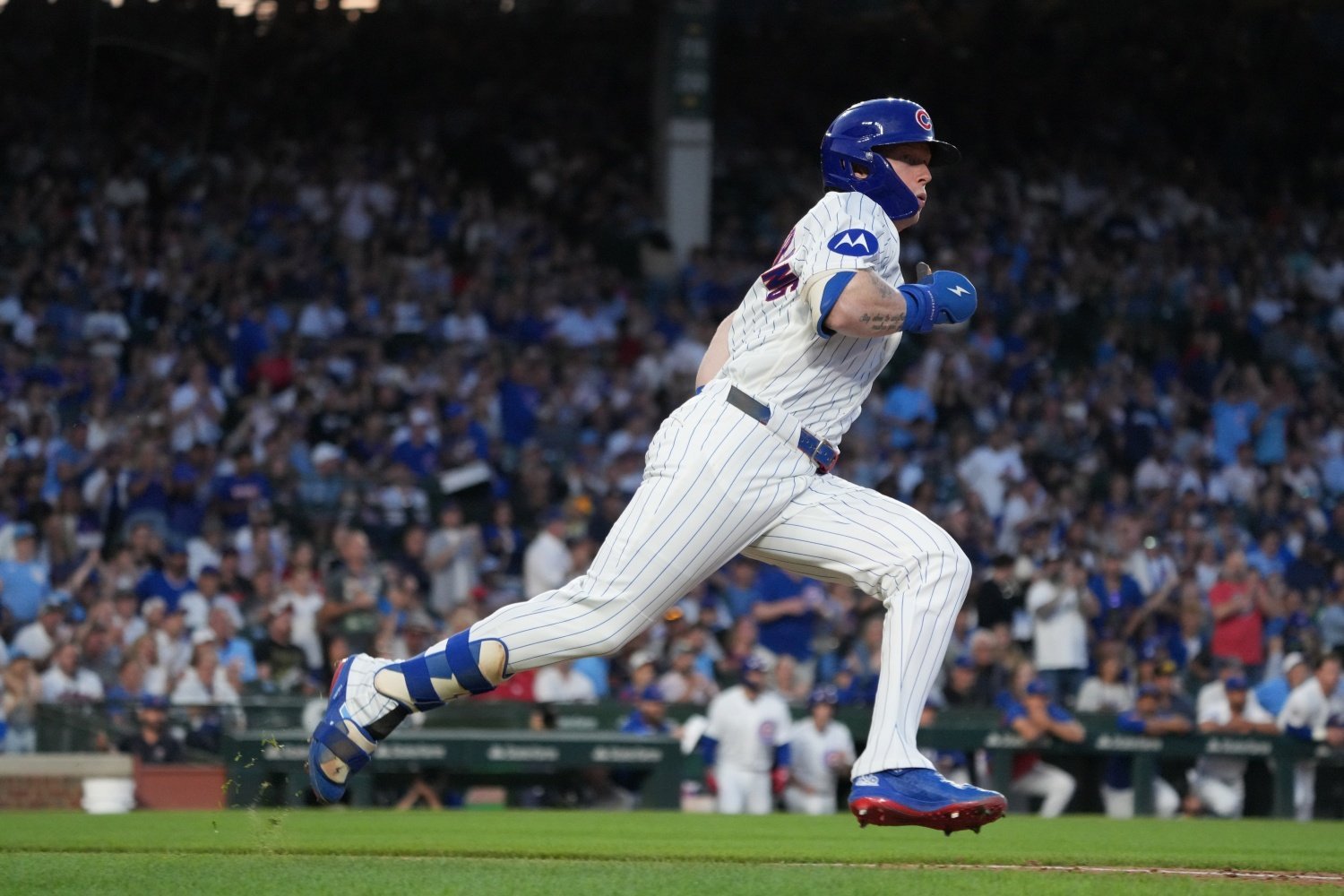 Pete Crow-Armstrong had one of the best offensive performances in recent Cubs history Monday night. He hit for the cycle, with a leadoff home run, a third-inning triple, a fifth-inning double and a seventh-inning single. He also delivered a sacrifice fly on a hard-hit liner in the eighth. His moment of triumph was slightly marred when, immediately after accomplishing the cycle in the bottom of the seventh, he was picked off first base, but his RBI in the eighth set up a two-run, walkoff rally in the ninth. In the process, Crow-Armstrong became just the second Cubs batter in the Statcast Era to hit five balls with an exit velocity of at least 98 miles per hour in one game, joining Willson Contreras in a meaningless contest at the end of 2021. He delivered the first cycle by a Cubs batter playing in a full-time big-league stadium since 1993. He also made a highlight-reel defensive play. Normally, we'd call this The PCA Game, or something similarly majestic (if unimaginative). Here's the problem: If you mention The PCA Game to someone in the next few weeks, they won't know which you mean. Was it Monday's cycle? Or was it nine days earlier, when he also had four hits—two of them game-tying homers—in what became a walkoff win over the Giants? What about June 4, when he had a stolen base, a home run in the sixth inning, and the walkoff hit himself in the bottom of the 9th? Or how about May 30, when his four hits included a 444-foot homer and he made a sliding catch in the gap to seal the win—all on national TV, against the Cardinals in St. Louis? Suddenly, Crow-Armstrong is taking over games so frequently that what would be once-in-a-career heroics for some players feel routine. We've been readying you for this and walking you through it since before the baseball gods laid their wreath on Crow-Armstrong's head. When he signed a long-term extension with the team at the beginning of the season, I wrote about his development into a power hitter by lifting the ball to the pull field in such an excellent and reliable way. I also asked, as he started to show signs of improved plate discipline, how much less he really needed to swing in order to ascend to superstardom. In mid-April, I documented his surging bat speed (but also the temporary problems it caused). If there was intrigue in April, there was outright chaos in May. I wrote about Crow-Armstrong's real chance to lay claim to the greatest defensive season of all time, but also how he began to play out of control when the Cubs started struggling, and about how uncomfortably Crow-Armstrong-centric the team has become of late. After he used a day off between series on May 21 to lock in some changes to his setup and his plan, though, he exploded. He simply exploded, into an elite offensive player who can't help but take up most of the oxygen around a team, even if that player weren't also an elite defender with a big personality. All of this should sound familiar, whether you're old enough to actually remember it or not. The famous number attached to Sammy Sosa's 1998 power binge is the 20 home runs he hit in June, but his hot streak didn't wait until the calendar flipped. Through May 21, Sosa was having a strong season, with a .929 OPS. However, starting May 22, he went completely nuclear. He batted .321/.349/.879 from May 22 through the end of June, before "cooling" to a .986 OPS for the balance of the season. That stretch during which he went from an All-Star to a superstar lasted about six full weeks. We're not even that far along with Crow-Armstrong, but he's almost exactly that hot, since the same square on a different calendar. Since May 22, he's come to the plate 106 times. He's batting .380/.443/.761, with eight homers. Juan Soto he ain't, but he's even drawing walks at a decent clip. He's not going to hit 20 homers this month, but in his whole nutty hot streak, Sosa only had 28 extra-base hits. It's just that 25 of them cleared the fence. With half of June left, Crow-Armstrong has 17 extra-base hits in his own personal crucible of brilliance. It's fair to remain concerned about the erraticism of his play, fueled as it seems to be by the intensity of his personality. However, at the plate, Crow-Armstrong has become a lethal tactician, cool and locked-in. He's swinging ferociously, and finding the barrel efficiently. He's still making plays in the outfield and on the bases. Sosa holds the Cubs record for games in a season in which a batter delivered at least 2.00 runs more than an average hitter would in the same number of plate appearances—not with his 1998 campaign, but with his 2001 one, in which he did that 24 times. It's rare, to be worth two full runs on your own. In the last two decades, the most such games by any Cub was Anthony Rizzo's 17 in 2017. Crow-Armstrong now has six such games, though, with five of them coming in the last 24 days. He's taking over games at a rate no one born since 1990 can ever remember a Cubs hitter matching. Enjoy the show. View the full article
 -
Will Andrew Vaughn Swing His Way Back Into a Full-Time Job?
DiamondCentric posted an article in Brewer Fanatic
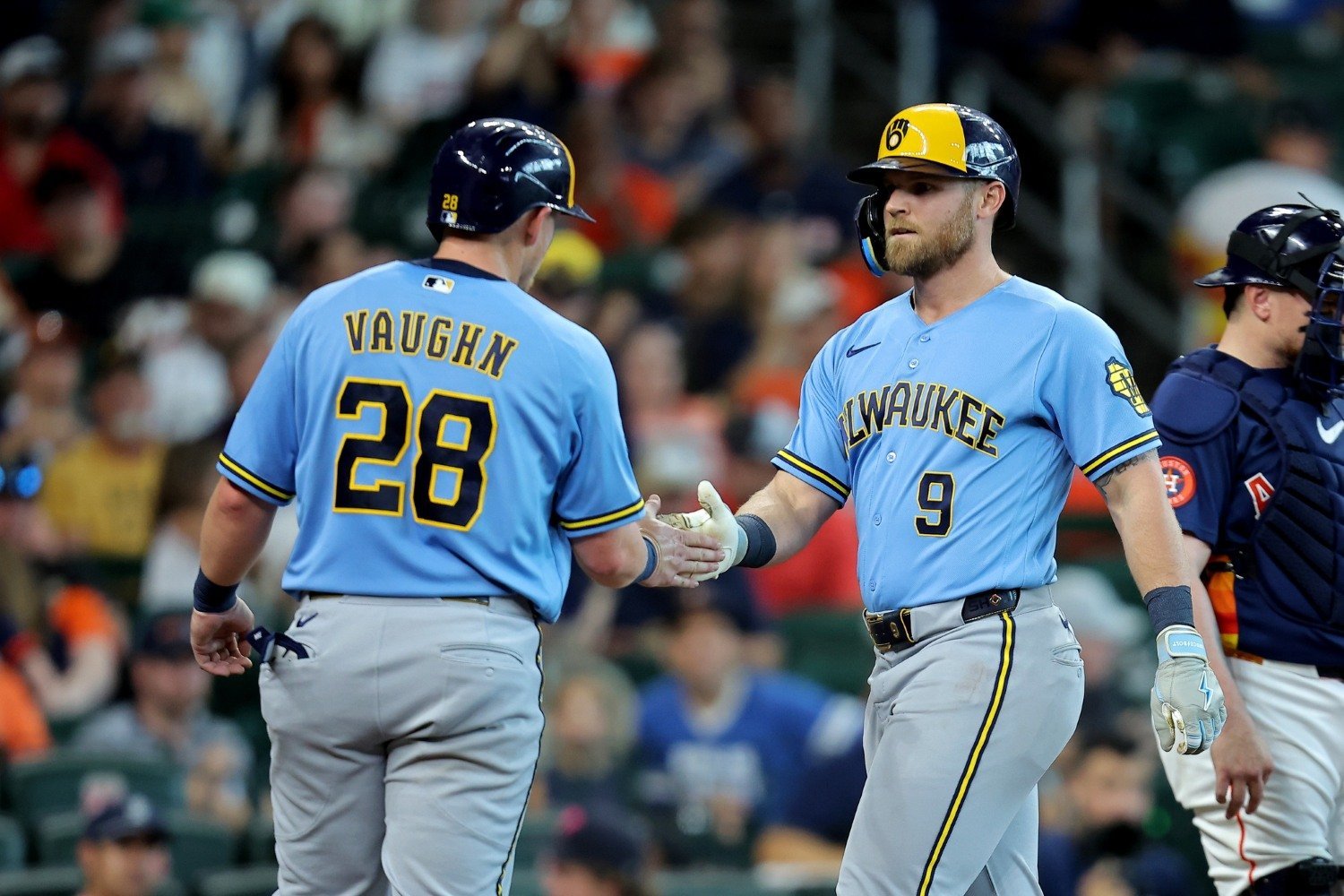 Since returning to play after a fractured left hamate bone put him on the shelf for a month, Andrew Vaughn has once again been a productive middle-of-the-order bat for the Brewers. In 109 plate appearances, Vaughn has slashed .354/.431/.531. Among Milwaukee hitters with at least 100 plate appearances, his 172 wRC+ is the best—no surprise, since only Yordan Alvarez and Nick Kurtz have him beat, league-wide. Despite that productivity, he hasn’t been a mainstay in the lineup. Since his return from the injured list on May 4, Vaughn has only started about half of the Brewers’ games against a right-handed pitcher—14 of 27, to be exact. In many of those games, he’s functioned instead as a weapon off the bench, already setting a new career high with eight pinch-hit appearances this year. Those limited opportunities are because Vaughn’s overall line is misleading, and he hasn’t quite been the same hitter he was last summer. According to Baseball Prospectus, his 108 DRC+ is still above average, but it's still much less sexy than his results. Baseball Savant tells the same story, as Vaughn’s .355 xwOBA is far lower than his .422 wOBA. Last season, Vaughn had a 117 DRC+ and .377 xwOBA after being traded from the White Sox to the Brewers. Furthermore, as fellow first baseman Jake Bauers has emerged as one of the club’s best hitters (both by process and by results), Vaughn has performed more like a platoon bat so far this year. He’s mashed lefties to the tune of a 1.438 OPS and 294 wRC+. A 117 DRC+ and .427 xwOBA don’t fully support that performance, but either way, Vaughn is doing good work against southpaws. He’s been more pedestrian against righties, posting a .693 OPS, 99 wRC+, 102 DRC+, and .323 xwOBA. Because those numbers all come from small samples, they don’t mean much on their own. However, Vaughn clearly has not found his best swing against right-handers. Since returning from that hamate injury (which can reduce the pop in a player’s swing for a few weeks past technical full recovery), his bat speed has dipped, particularly against righties. {C}%3C!%2D%2Dtd%20%7Bborder%3A%201px%20solid%20%23cccccc%3B%7Dbr%20%7Bmso-data-placement%3Asame-cell%3B%7D%2D%2D%3E--> Season Bat Speed (RHP) Bat Speed (LHP) 2025 (MIL) 70.9 71.6 2026 68.8 71.1 Bat speed isn’t everything. Hitting is not just about how fast your bat is traveling when you meet the ball, but when and where your bat makes contact. Vaughn has always had below-average bat speed, but above-average bat control. That’s helped him continue to produce this year, as he’s whiffing less and hitting more line drives. A slower swing has been part of an issue against same-handed pitchers, though. Without his usual bat speed, Vaughn has been late more often on right-handed fastballs. Thanks to that good bat control, Vaughn is still lining up his bat with the ball well enough, even when he’s late. That means he can still shoot the ball to right field; his rate of opposite field contact against right-handed fastballs is up to a career-high 41.4% this year. However, those kinds of hits are mostly singles and the occasional double. That’s how Vaughn is still hitting a decent .274 against righties this year, but only slugging .355. It’s the opposite against right-handed breaking balls. Vaughn is early more often on those pitches, leading to more whiffs and softer contact. Since returning to play, Vaughn’s swing has looked diminished, and his timing has been caught in between without the platoon advantage. With Bauers earning everyday at-bats and Garrett Mitchell and Sal Frelick swinging the bat better of late, Vaughn has not been a leading candidate for the greatest share of playing time against right-handers. The good news is that while his bat speed remains lower than last season, it has ticked up over the last couple of weeks. If Vaughn looks more like the hitter he was last season—the one who was regularly on time, allowing him to use the middle of the field and pull enough well-struck balls into the gap—it won’t take much for Pat Murphy to grant him more starts. He drew back-to-back starts against righties last week, with Bauers sliding to the outfield. “He’s a professional hitter, and we need him in there,” Murphy said over the weekend. “The only way to get them both in there is [for] Jake to go out and play the outfield, which he’s done quite well.” Still, Vaughn has to show a bit more to secure more of that playing time. Plenty of season remains for him to do so. View the full article
 -
Josh Bell and the Sweet Science of Punishing Mistakes
DiamondCentric posted an article in Twins Daily
 Over the years, a somewhat facile narrative has attached itself to Josh Bell: every season, he has one good half, and one bad one. It's not quite true, of course. No player's career divides up that neatly; people just tend to generalize to save themselves time when nuance seems unduly weighty. Bell has had some years in which his first- and second-half splits stood in stark contrast to each other, but even using a generous definition of "good" (anything over an .800 OPS) and an unforgiving definition of "bad" (anything under .750), Bell has four "neutral" halves in his eight full seasons of play, to go with six of each of the other two types. In this table, I've bolded halves that count as "good" by the criteria I just described, and italicized the ones that count as "bad." Results Table Rk Split Year ▲ G PA BA OBP SLG 1 1st Half 2017 88 339 .239 .322 .472 2 2nd Half 2017 71 281 .274 .349 .460 3 1st Half 2018 96 374 .261 .342 .396 4 2nd Half 2018 52 209 .263 .383 .440 5 1st Half 2019 88 388 .302 .376 .648 6 2nd Half 2019 55 225 .233 .351 .429 7 1st Half 2021 73 274 .245 .310 .446 8 2nd Half 2021 71 294 .277 .381 .506 9 1st Half 2022 93 394 .311 .390 .504 10 2nd Half 2022 63 253 .194 .317 .289 11 1st Half 2023 82 332 .230 .319 .381 12 2nd Half 2023 68 285 .266 .332 .461 13 1st Half 2024 94 396 .228 .289 .356 14 2nd Half 2024 51 207 .292 .379 .506 15 1st Half 2025 84 326 .219 .307 .372 16 2nd Half 2025 56 207 .267 .353 .489 17 1st Half 2026 70 276 .232 .286 .366 Provided by Stathead: Found with Stathead. See Full Results. Generated 6/16/2026. As Twins fans are finding out, though, facile narratives obscure more complex realities. Bell isn't a guy who just plays at a solid, high level for three months, then slumps for three, or vice-versa. He goes through the same undulations as most hitters; he just has some things that stretch the periods of those rises and falls. For one, he's a switch-hitter. For another, he's always had good (though not elite) plate discipline. Those things set a high floor for him, but the switch-hitting (along with his swing path from each side) also sets a lowish ceiling; he can't reliably produce pulled fly balls in a way that yields lasting power and could make him an elite slugger. Thus, we've already seen Bell go through a streak and a slump in his brief tenure with the Minnesota Twins. He started the season red-hot, then went ice-cold. That's not some acceleration of his career norms for performance variance; he had multiple slumps (and neatly counterbalancing streaks) in 2024 and 2025. As yu can see, though, Bell is on the upswing again. In fact, after Monday night's 2-for-4 showing (including a three-run homer), he's now batting .218/.314/.490 over the last 30 days, with five home runs and five doubles in 102 plate appearances. He's not walking much. In fact, he's swinging quite a bit more than his norm, which is a trend we had better keep an eye on. Still, Bell has entered another productive phase of his sinusoidal batting curve, and his three-run homer Monday night against MacKenzie Gore of the Rangers was a good example of how it's happening. Gore tried to backfoot a breaking ball to Bell, but left it in the lower, inside quadrant of the strike zone. That's a costly mistake to any right-handed batter with power, but especially one who's locked in right now. In fairness to Gore and the Rangers, though, they were trying something clever. On the previous pitch (a 1-0 fastball), Bell had challenged a strike call. It was a heater down and in, but it nipped the corner, and Bell's challenge failed. In addition to leveling the count, that appeal told Texas that Bell wasn't seeing the ball especially well down in that spot. Going back to it with another fastball would be one way to take advantage of that, but they were trying the cousin of that strategy: a pitch that would look like the fastball in the same spot, but then dive under Bell's bat. They asked him, in effect, to get himself out (or at least into a 1-2 hole) by chasing a pitch for which he'd been primed by the previous pitch itself and his own frustrating failure to overturn its outcome. We'll never know what would have happened if Gore had executed better. My guess, though, is that Bell would have just spat on that offering and gotten ahead, anyway. Though the Rangers might have been right to perceive that Bell saw that fastball poorly, they were wrong to conclude that it was because of the location. Here's how we know. New Statcast metrics available at Baseball Savant show us not only by how much batters miss when they whiff, but how their swing timings are distributed within any given sample. We can see how consistently the hitter centers their swing to put the barrel of the bat in the path of the ball, horizontally; how often they line it up vertically; and how often they're on time (versus being early or late) for the pitch. Here are Bell's swing timing distributions by month, for right-handed swings only. This month (and, if I were to re-run this and show you the distribution isolating the time since the middle of May, rather than breaking it up by month for easier visual comparison, you'd see the same thing), Bell is a danger to all left-handed pitchers. See how the orange distribution curves representing June rise higher and are more centered in each of the first two images, relative to the previous months? That's Bell consistently finding the barrel and being on time, whereas he was often early or late and working out to the end of the bat in the two previous months. He's locked in, and when you're on time and the ball is on the center of the barrel, exit velocity is going to follow. Charts like this are going to help us understand and explain slumps and streaks much better than we have in the past; Bell's resurgence in power is no surprise given what we see here. When he's had any trouble at all from the right side, this month, he's found it by getting underneath the ball. Southpaws have had some luck throwing it over his bat, both inside: MTZOVlZfWGw0TUFRPT1fVWxJRFZGd0FWZ0VBQUZBSFhnQUhVZzVUQUFCUlYxWUFWd01CQlZBTUFBVmRBd01E.mp4 and outside: Uk85cm9fWGw0TUFRPT1fQXdJSEJnRlFYMUFBWGxvQlZBQUhCUU5lQUFOUVV3TUFVd01FQWdOVVUxSlJWQUpm.mp4 At this moment, if you try to get Bell out as a right-handed batter by throwing a breaking ball below the zone, you're only setting yourself up for failure. He's not chasing those, and when you miss, he's lined up to punish you ferociously for it. Gore erred as much by even attempting to throw that tricky curveball as by mislocating it. That worked out wonderfully for the Twins, though, and it illustrates another thing we can see more clearly as we get more comfortable with the new Statcast data: everyone's scouting report should be changing often. Sometimes, the back-foot breaking ball is the right pitch to Bell. Right now, he has that covered. The Twins need Bell to continue producing the way he has over the last month. Whether they end up hanging around in the woebegone AL Central or are looking to trade Bell in July or August, they need his bat to keep humming. He's not some unique case of a player tidily cutting their season in half and choosing to hit in just one of the two, but he's certainly prone to long stretches of cold or hot hitting. During the latter type of run, he can win games for you on his own—as he did, practically, in the very first inning Monday night. View the full article
 -
Ranking top 5 Marlins candidates for 2026 MLB All-Star selections
DiamondCentric posted an article in Fish On First
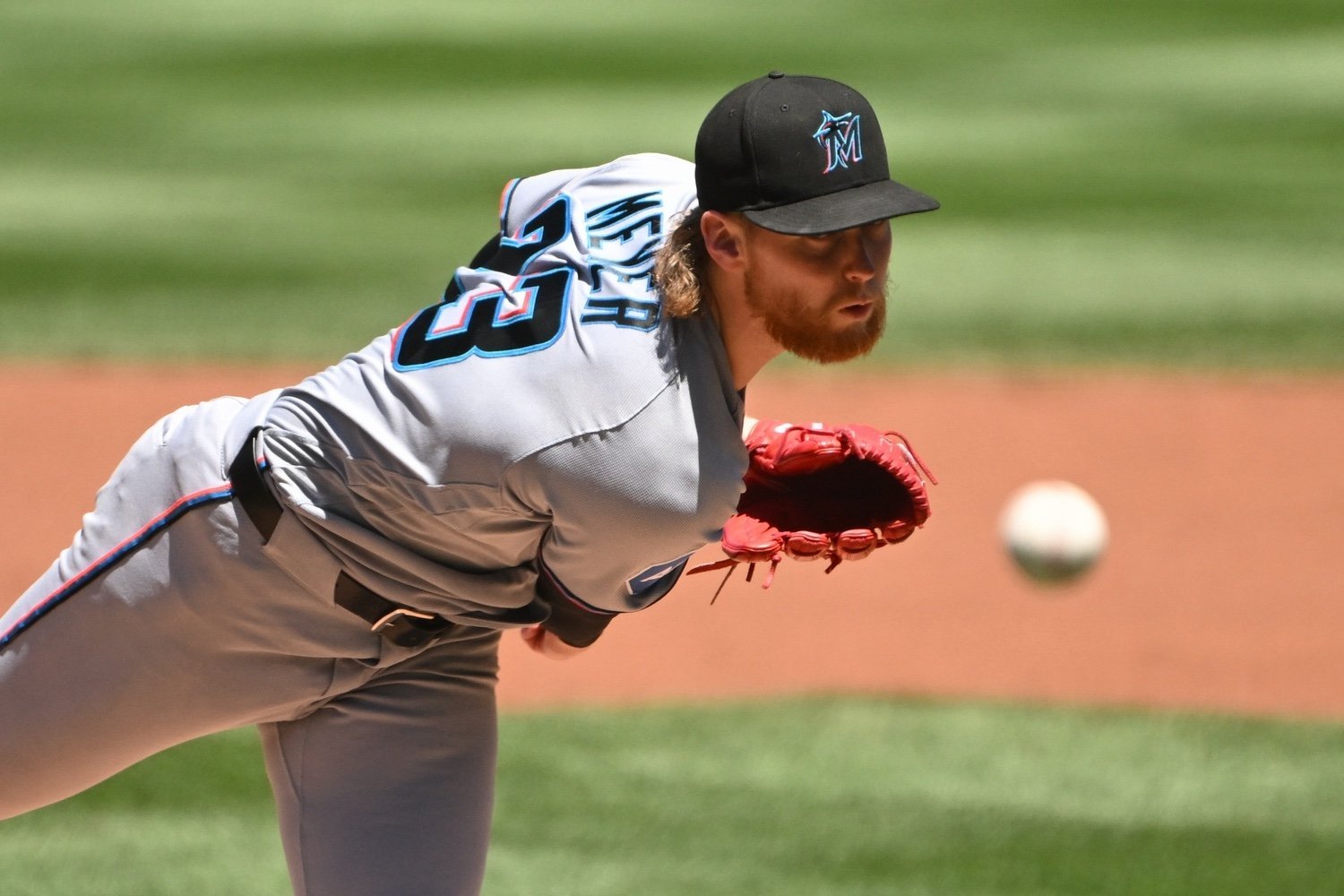 What a difference a year makes. Anybody else remember this piece I wrote in mid-June of 2025 about how none of the Miami Marlins merited a spot on the National League All-Star roster? Kyle Stowers took that personally and emerged as one of the NL's best hitters leading into the break to validate his selection, but the larger point stands: that team was thin on individual excellence. In 2026, on the other hand, we have seen a handful of Marlins simultaneously reach peak performance. Despite running it back with many familiar faces from last season's squad, their record entering Tuesday is seven games better than it was through the first 73 games of 2025, largely because seemingly average-quality players have become among the best at their respective positions. There will not be room for all of the following players on the NL roster, in part because the Marlins fanbase is not large enough to get any of them elected as starters regardless of qualifications. Anonymity works against them as well—Sandy Alcantara is the only current Marlin who's been an All-Star before and he's not in the mix this time around. From longshot to near-lock, here is how I rank their likelihood of becoming first-time All-Stars. 5. Tyler Phillips NL All-Star odds: 6% It would be unorthodox to even consider a pitcher who accrued only one win and two saves this deep into the season, but Phillips has simply thrown up too many zeroes to be ignored. He boasts an extraordinary 1.86 ERA through 19 appearances (three starts). He has logged 48 ⅓ innings pitched so far (dwarfing all relief-only candidates), and barring injury, he should rank third on the Marlins in that category come the All-Star break. Phillips should have four starts left before the NL pitching staff is fully locked in. He'll need to accrue 20-plus innings of near-perfection during that span to keep his hopes alive. 4. Xavier Edwards NL All-Star odds: 20% Even the Marlins did not see this kind of production coming from Edwards, who batted as low as the seventh spot in their lineup early in the season. X's uptick in power—particularly from the right side of the plate—has put him in the All-Star conversation. However, he's quietly in the midst of a month-long homerless drought (78 wRC+ during those 24 games). His defense at second base has been good, though not quite on par with what he did last year after switching to the position. Also keep in mind that All-Star selections are not made in a vacuum. Between Brice Turang, Luis Arraez, Brandon Lowe and standout rookie JJ Wetherholt, there's a lot of competition among second basemen this season. Edwards will need another hot streak to secure his trip back to Philadelphia for the Midsummer Classic. 3. Liam Hicks NL All-Star odds: 35% Hicks' improvement as a slugger has been even more pronounced and sustained than Edwards'. It has not come at the expense of his advanced plate approach—he's drawn more walks (28) than strikeouts (24). Just reinstated from the injured list on Monday, Drake Baldwin has a seemingly insurmountable lead in fan balloting among NL catchers. It seems like a forgone conclusion that Hunter Goodman will make the team as a reserve to ensure the Colorado Rockies are represented. Also working against Hicks, he's barely a "catcher" at this point, receiving the vast majority of his reps at first base and designated hitter since the Marlins called up Joe Mack in early May. That being said, Hicks' knack for driving in runs (51 RBI) will merit serious consideration. 2. Max Meyer NL All-Star odds: 75% It's been a stunning breakout season for Meyer from several angles. Let's begin with the fact that he has been a mainstay in the Marlins rotation through 15 starts after never previously making more than 12 straight major league starts without getting injured. The lifetime 5.29 ERA he took into this season has practically been sliced in half, to 2.75. While the old Meyer was so susceptible to home runs, the new Meyer is brilliant at suppressing them. His much-improved sweeper is now a reliable putaway pitch against left-handed batters. Meyer's franchise-record undefeated streak is partially the byproduct of hearty run support, but less so recently. The Marlins have removed his training wheels, sticking with him three full trips through opposing lineups and beyond 100 pitches when needed. He has rewarded them by reliably finishing those outings on a high note. Between the initial selections and replacements named due to injuries and throwing schedule conflicts, there are usually about 15 total starting pitchers who receive NL All-Star nods. Even assuming some regression from Meyer in his remaining first-half starts, he's probably going to be selected. 1. Otto Lopez NL All-Star odds: 85% Friend of the pod Otto Lopez is on pace to make history. The combination of his hitting ability and baserunning is rare for any position, especially shortstop. Lopez's season has been completely slump-free thus far. A testament to both consistency and durability, he has recorded hits during each of the first 23 Marlins series. In addition to leading all MLB players in hits, he ranks first among NL shortstops in both the FanGraphs (3.0 fWAR) and Baseball-Reference (3.1 bWAR) versions of wins above replacement. The only NL SS candidates in Lopez's tier are CJ Abrams and Elly De La Cruz, and there is room for all three on the roster if necessary. As long as the underachieving Mookie Betts does not throw a wrench into process by inexplicably win the fan vote, Lopez's case for a reserve spot is unimpeachable. View the full article
 -
Juan Soto Has Turned the Strike Zone Against the Pitcher
DiamondCentric posted an article in Grand Central Mets
 Some changes in baseball are easy to spot. A hitter tweaks his stance; he lowers his hands; he adjusts where his swing begins. Within days, comparison videos appear, frame-by-frame breakdowns flood social media, and mechanical explanations emerge in search of the source of a hot streak. Then, there are the changes that almost nobody notices. They do not show up in a photograph. They cannot be identified by watching a single plate appearance. They require looking through hundreds of pitches and focusing on something much harder to detect: a decision. That is what makes Juan Soto’s 2026 season so interesting. For years, Soto’s public identity has been tied to an extraordinary ability to control the strike zone. Few hitters have combined patience, pitch recognition, and offensive production at the level he has displayed since arriving in Major League Baseball. Pitchers know that facing him means walking a tightrope. Attack the zone too aggressively and you risk getting punished. Avoid it completely, and you are likely giving away free bases. That balance has always defined matchups against Soto. The numbers from this season, however, suggest an intriguing adjustment within that dynamic. This does not look like a hitter who has abandoned patience. Nor does it look like someone suddenly chasing every pitch that passes near the plate. The data points to something more specific: Soto is swinging more often at strikes he can handle. The difference may seem small, but small differences often produce enormous consequences when the player involved is this good. His in-zone swing rates provide the first clue. Pitch 2026 Z-Swing% Four-seam 48.8% Slider 40.2% Changeup 60.0% Curveball 55.2% Sinker 41.6% Against four-seam fastballs, changeups, and curveballs, Soto is showing some of the highest levels of in-zone aggression of his career. That matters because it tells us where the adjustment is taking place. Aggression, by itself, is not always a virtue. Many hitters increase their swing frequency because they begin expanding the strike zone and chasing pitches they once ignored. When that happens, offensive quality usually suffers. That does not appear to be the case here. For much of his career, pitchers could steal an early strike without necessarily facing the worst possible outcome. Even against a hitter as dangerous as Soto, there was always a chance that a strike in the zone would simply move the count in the pitcher’s favor. The 2026 numbers suggest that margin has become smaller. And the reason is simple: when Soto recognizes a pitch he can handle, he appears more willing to act on it than he was in previous seasons. The natural question is whether that decision is producing results. The answer appears to be yes. Pitch 2026 wRC+ Four-seam 209 Slider 159 Sinker 146 Curveball 243 Changeup 120 The numbers reflect outstanding production against virtually every primary pitch type he sees. Fastballs remain especially vulnerable. Curveballs have been punished relentlessly. Even against sliders and sinkers, two of the most common weapons used to limit damage against elite hitters, Soto continues to produce well-above-league-average results. What matters is not only the magnitude of those numbers; their distribution matters too. When a hitter posts extraordinary production against a single pitch type, there is always the possibility that part of the result is being driven by a favorable sample or a temporary trend. What we see here is different. The production remains strong across multiple pitch types, reinforcing the idea of a broader adjustment in his offensive approach. That breadth is what makes the challenge so difficult for pitchers. Modern organizations invest enormous resources into identifying attack plans. They search for areas of vulnerability, less effective pitch types, and sequencing patterns capable of generating weak contact. Against Soto, that search has always been complicated by one fundamental reality: he rarely swings at pitches he does not want to hit. Now the situation appears even more uncomfortable. If pitchers continue avoiding the strike zone, they will still be dealing with one of the most disciplined hitters in the sport. If they decide to challenge him with strikes, the data suggests there is a greater chance those pitches will be put into play with the intent to do damage. The discipline that turned Juan Soto into a superstar is still there. What has changed is how he is using that advantage. Instead of simply winning plate appearances by avoiding mistakes, he is turning a greater number of hittable strikes into offensive opportunities. For pitchers, that evolution creates a difficult problem to solve. Finding the strike zone against Juan Soto was never easy. Now, it appears to be exercise in futility. View the full article
 -
Who Is the Blue Jays’ Biggest X-Factor for the Rest of 2026?
DiamondCentric posted an article in Jays Centre
 The Blue Jays are 34-38. That's one game worse than they were through 72 games in 2024. In case anyone needs reminding, they went on to sell at the deadline that year and finish with the worst record in the AL East. Thankfully, this year's team doesn't need to start thinking about throwing in the towel. Despite their losing record and -22 run differential, the 2026 Blue Jays are only 1.5 games out of a Wild Card spot. They haven't felt like a real contender all season. They've never been more than three games above .500, and they've yet to win more than four in a row. The thing is, that's true of lots of their American League opponents too. Only five teams in the AL have a record above .500. Before the season started, FanGraphs gave the Blue Jays 52.8% odds to make the playoffs. Seventy-two games later, those odds have fallen, but not by nearly as much as they could have. As of June 15, their odds sit at 39.6%: Courtesy of FanGraphs PECOTA, the projection system from Baseball Prospectus, is even higher on Toronto's postseason chances. PECOTA still thinks the Jays have a near 50% shot to reach October. This is good news. Despite all the injuries and slumps, the Blue Jays are still in this thing. Eventually, however, something is going to have to change. The reason their odds are still so high isn't that the projection systems think a 77-win team is going to make the playoffs. It's because the projection systems think they have the talent to turn things around. But it's the players who have to make that turnaround happen. That means certain guys will have to play significantly better baseball than they have to this point. Who could that be? Blue Jays X-Factors: Honourable Mentions Alejandro Kirk is back, and he's quickly reminding us why he's one of the best catchers in baseball. Yet, Brandon Valenzuela did such a terrific job in Kirk's absence that Kirk's return isn't what's going to turn this ship around. Similarly, Addison Barger could be a spark for the lineup when he comes back from his second IL stint, but Toronto's other three lefty-batting corner outfielders have combined for a .776 OPS and 116 wRC+. Any playing time for Barger would just be taken away from one of Jesús Sánchez, Nathan Lukes, and Yohendrick Piñango. Finally, I need to acknowledge the bullpen. It's hard to fathom where the Jays would be without the innings they've gotten from their four best relievers: Louis Varland, Tyler Rogers, Mason Fluharty, and Braydon Fisher. I considered making this one of the official X-factors: "Varland, Rogers, Fluharty, and Fisher Keep Their Arms Attached to Their Bodies." However, I decided against it because this isn't something that needs to change in order for the Blue Jays to improve; it's a strength that needs to stay a strength to prevent a collapse. Don't get me wrong, it's every bit as important as the X-factors I'm about to discuss, it just belongs in a different category. Blue Jays X-Factor: Vladimir Guerrero Jr. Turns It On This one has to happen eventually, right? Presuming the back issues that bothered Vladimir Guerrero Jr. over the weekend aren't serious, I refuse to worry about the Blue Jays' franchise player. Yes, his prolonged slumps can be frustrating. And yes, he's currently in one of his longest slumps since his breakout in 2021. But I'm not going to ignore the fact that from 2024-25, including the playoffs, Guerrero's .390 wOBA was the fourth-highest among qualified hitters, trailing only Aaron Judge, Shohei Ohtani, and Juan Soto. If you're reading this, I'm sure I don't need to tell you what Guerrero can do for this team when he's hot. This Blue Jays lineup desperately needs a superstar, and Vladdy is the one who needs to fill that role. Blue Jays X-Factor: A Healthy Shane Bieber Returns At his very best, Shane Bieber is a top-of-the-rotation arm. Even if you write off his Cy Young-winning 2020 season as a COVID-year fluke, he pitched to a 3.22 ERA and 9.4 fWAR over the next three seasons. Last year, he gave the Blue Jays 59 innings with a 3.66 ERA between the regular season and the playoffs. The difference between a healthy Bieber and the alternative could be massive, whether that alternative is Patrick Corbin, Max Scherzer, or a bullpen game. There's no guarantee Bieber pitches well upon his return. I'm still bracing myself to hear he's suffered a setback, or for him to come back, make one start, and wind up on the injured list again. However, there's also the very real possibility that Bieber is a multi-win upgrade for the rotation. A postseason starting four of Dylan Cease, Kevin Gausman, Trey Yesavage, and Bieber could take the Jays far. Blue Jays X-Factor: George Springer Bounces Back This is the one I'm the least confident in, but it might be the most transformative. As I've written about before, George Springer was the single most important player on the 2025 Blue Jays. Not only did he lead the team in fWAR and bWAR, but his performance relative to expectations was what took the Jays from Wild Card contenders to World Series contenders. Right now, he's playing like 2025 never happened. His numbers to this point are exactly what I would have guessed Springer to look like in 2026... if I was guessing in 2024. I can't expect Springer to flip a switch and start hitting as well as he did last year. But I know it's possible, because I saw that version of him just last fall. And if he can flip that switch, a mediocre Blue Jays lineup could suddenly become much more dangerous. Which of these X-factors is the most important? Are there any you think I missed? Please share your thoughts in the comments underneath! View the full article
 -
 Transactions: Word got out on these moves yesterday, but in case you missed it, the team made them official on Monday: Game Action: ACL Rockies 9, ACL Brewers 5 Box Score The ACL Brewers showed plenty of fight in the late frames on Monday night, but a brutal opening act proved too much to overcome in a 9-5 loss to the ACL Rockies. Milwaukee’s rookie squad found themselves in an immediate 4-0 hole after a rocky first inning from starter Dariel Jaquez. Jaquez had as many walks and runs allowed (four) as he had batters retired on the night. The Brewers' bullpen did excellent work in the middle innings to keep the game within reach after Jaquez exited. Ma’Kale Holden had his longest outing of June, working 3.1 hitless innings with four strikeouts. Holden did issue four free passes, part of 11 total walks issued by the Brewers’ staff on the night. Josue Toledo also chipped in two hitless innings, with a walk and two strikeouts. Despite the early deficit, the Brewers’ bats finally woke up in the 7th inning to make a game of it. Roderick Flores ignited the offense with a pair of doubles on the night and also scored twice. Center fielder Brailyn Antunez led the line with a solid three-hit performance, and also drove in two runs. Milwaukee chipped away to bring the score to 4-3 in the 8th inning. Unfortunately, the momentum evaporated quickly in the bottom of the frame when reliever Jhosep Ospino ran into trouble, culminating in a crushing, two-out grand slam that put the game completely out of reach. Even with a two-run rally in the top of the 9th, the Brewers simply ran out of runway. It was a frustrating night of "what-ifs," especially considering Milwaukee actually out-hit the league-best Rockies eight to five. DSL Cubs Blue 5, DSL Brewers Gold 3 Box Score The DSL Brewers Gold squad fell 5-3 to DSL Cubs Blue on Monday. The offense got rolling early in the top of the first inning when Osiris Ramirez drove in Ricki Moneys on a fielder's choice to strike first. Ramirez, along with Moneys and Matthew Moses, was one of three Brewers players with two-hit games. Another silver lining for the offense was the continued brilliance of first baseman Jefer Lista, who lined an RBI double in the second inning to briefly tie the game. Lista now has a 1.426 OPS with 10 RBI in seven games this season. The Brewers threatened late in the seventh when Moses laced an RBI single to cut the deficit to two, but a costly double play at the plate put out the fire. Moses now leads the team with 11 runs driven in on the young season. On the mound, starter Derlin Garcia took the loss, tagged for five runs (three earned) over 3.2 innings while serving up two home runs. However, the bullpen provided a massive bright spot to close out the game. Right-hander Joan Gonzalez was absolutely stellar in relief, shutting down the Cubs over four scoreless innings, surrendering just a single hit while striking out six batters to keep the Brewers within striking distance until the final out. I'll be back with you Tuesday night as we recap the debuts of Fischer and Adamczewski in Biloxi. We'll see if the pair of prized prospects can help get the Shuckers over the line to a first half title this week. Of course, Nashville is still in contention for a first half title as well and we'll have a full seven game slate of play on Tuesday. Organizational Scoreboard including starting pitcher info, game times, MiLB TV links, and box scores Current Milwaukee Brewers Organization Batting Stats and Depth Current Milwaukee Brewers Organization Pitching Stats and Depth View the full article
 -
 The Miami Marlins went into Citizens Bank Park riding plenty of momentum as winners of four straight series and owners of a 10-2 record in the month of June. They were very quickly humbled by the Philadelphia Phillies and Zack Wheeler. The veteran right-hander struck out a season-high nine in his club's 7-0 shutout of the Fish. Marlins manager Clayton McCullough believed that Miami's hitters would pose a greater challenge to Wheeler than they did when matched up with him at loanDepot park just over a month ago. In terms of results, it looked very similar this time around. Wheeler did match his season-high with three walks, but it wasn't enough for the Marlins, as they had one extra-base hit off of him, a double courtesy of Joe Mack in the top of the fifth inning. "We're moving ourselves into position where we feel like we can contend for postseason spots every year," McCullough said. "When you get into the postseason, this is what you're going to face, and it's not going to be easy. Runs are at a premium, baserunners are, so you just try to be as disciplined and diligent to your plan as you can be, and hopefully the more exposure our group continues to get against a lot of frontline guys that it will bode well for them." On the flipside, the Marlins went with Ryan Gusto, who has taken one of the spots in the rotation due to injuries to both Eury Pérez and Janson Junk. In 4 ⅔ innings of work, Gusto allowed five runs on eight hits, three walks and only struck out one. In the bottom of the second inning, Gusto surrendered the first career home run to Florida Atlantic product Gabriel Rincones Jr. Gusto left a sweeper hanging that Rincones was able to take 385 feet deep to right field and give the Phillies an early 1-0 lead. A two run bottom of the third and fourth innings would be the final blows and Gusto couldn't make it out of the fifth inning. "Battled very well," McCullough said. "He'd been a little under the weather the last few days and I think that caught up to him a little bit today. I think some of the two-K execution is where he can take some steps." If there is one positive to take away from this game, it was that William Kempner. In 2 1/3 innings, he kept the Phillies offense at bay, not allowing a hit, no walks and struck out two. Acquired from the San Francisco Giants in exchange for international pool money in January 2025, Kempner earned a selection to the 40-man roster this past offseason and was recalled from Triple-A Jacksonville on May 30. His ERA remains at 0.00 in six MLB appearances since then. "Will has got a terrific arm," McCullough said. "Limited major league sample to this point. We love his stuff, and we believe Will can be for us down the road. Right now, every opportunity he gets to go out there is just very good experience for him to continue to learn from." With the loss, the Marlins drop back down to a game below .500 at 36-37. Looking at the standings, they are still two games out of the final National League Wild Card spot. Tyler Phillips, the former Phillies pitcher, will get the start on Tuesday at 6:40 pm. He will go opposite of former Marlins lefty Jesus Luzardo. View the full article
 -
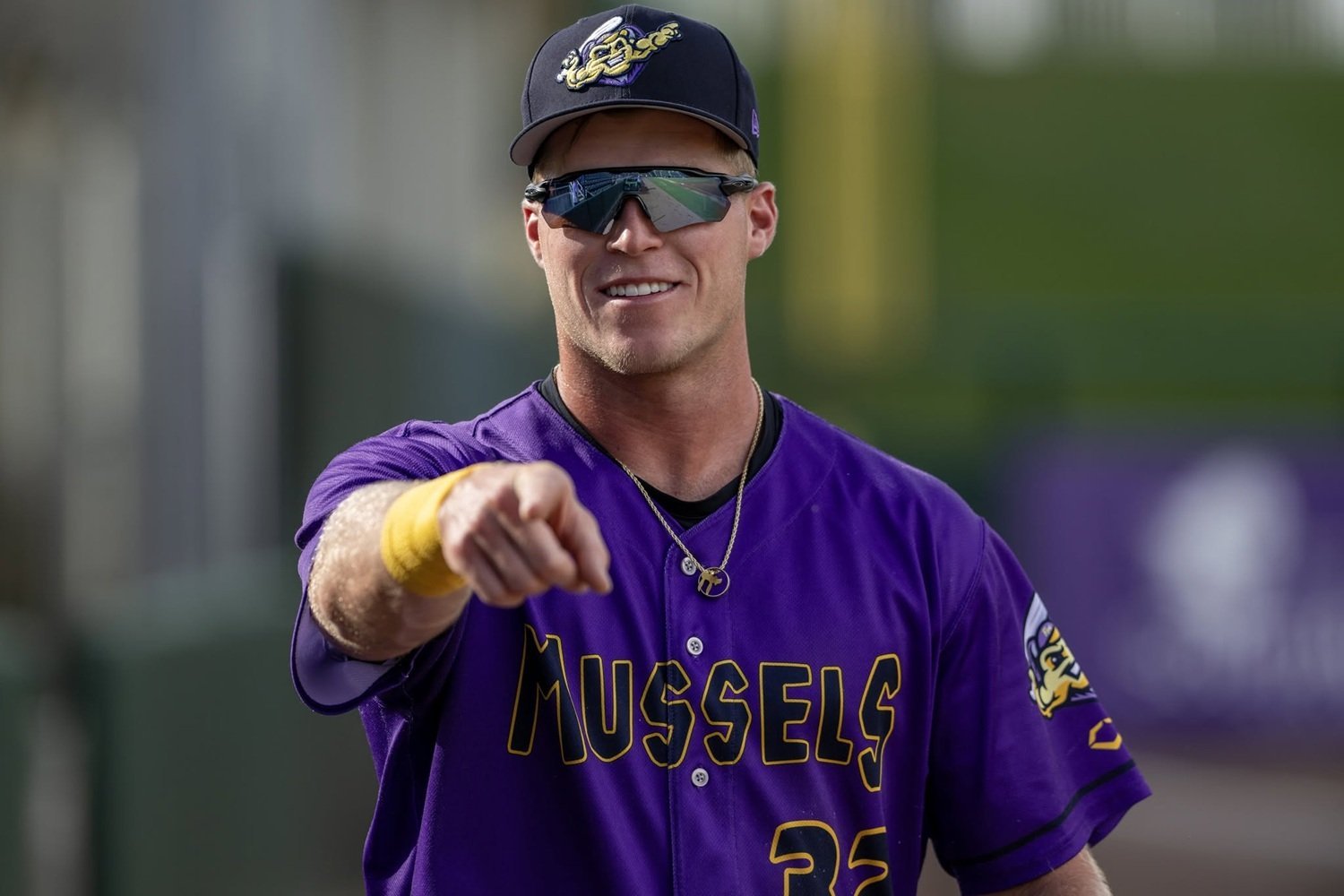 TRANSACTIONS Minnesota Twins selected the contract of LF Kyler Fedko from the St. Paul Saints. St. Paul Saints activated LF Alan Roden from the 7-day injured list. SS Cody Morissette assigned to St. Paul Saints from Wichita Wind Surge. St. Paul Saints released RHP Andrew Bash. C Khadim Diaw assigned to Wichita Wind Surge from Cedar Rapids Kernels. RHP Jacob Webb assigned to Wichita Wind Surge. Wichita Wind Surge released RHP Jarret Whorff. Wichita Wind Surge activated RHP Ruddy Gomez from the 60-day injured list. Wichita Wind Surge placed SS Kyle DeBarge on the temporarily inactive list. St. Paul Saints sent OF Walker Jenkins on a rehab assignment to Cedar Rapids Kernels. C Enrique Jimenez assigned to Cedar Rapids Kernels from Fort Myers Mighty Mussels. C Ricardo Pena assigned to Fort Myers Mighty Mussels from FCL Twins. OF Graham Brown assigned to Cedar Rapids Kernels from St. Paul Saints. RHP Yehizon Sanchez assigned to Cedar Rapids Kernels from Wichita Wind Surge. Cedar Rapids Kernels placed 3B Rayne Doncon on the 7-day injured list. Cedar Rapids Kernels activated OF Caden Kendle from the 7-day injured list. Fort Myers Mighty Mussels activated RHP Callan Fang from the 60-day injured list. SAINTS SENTINEL The Saints had another good week on the diamond, going 5-1 in Toledo. They now return home to take on the Omaha Storm Chasers. In return, Twins fans will get their first in-person chance in a while to watch rehabbing starting pitcher Mick Abel back on the mound. The right-hander had a strong outing last week, completing three innings, striking out five batters, and allowing no runs. The Storm Chasers don’t bring much with it in top prospect talent, but right-handed pitcher Ben Kudrna will be coming with it and is ranked 9th in the Royals organization by our sister site Royals Keep. The problem is, Kudrna is currently injured, so we as fans won’t be able to see him in action. That leaves us with Shane Panzini (20th), who has worked primarily as a reliever this season but with a lot of struggles, evidenced by his 10.22 ERA for 2026. WIND SURGE WISDOM The Wind Surge limped through the last week, going 1-5, and they hope that a change in opponent to the Springfield Cardinals will lead to different outcomes. The Cardinals bring with them a trio of top prospects. C/1B prospect Rainiel Rodriguez leads the Cardinal position players. Across both High-A and Double-A, Rodriguez has slashed .277/.386/.446, .831 OPS, and has hit seven home runs. On the pitching side, there are 22-year-old left-hander Liam Doyle and switch thrower (yes, you are reading that right) 23-year-old Jurrangelo Cijntje. Cijintje has a 5.07 ERA and a 28.6% K% for 2026. Doyle has a 5.86 ERA and a 30.8% K%, which has translated into 12.6 K/9. The Wind Surge have faced each of them at least twice already this season. KERNELS CHRONICLE Kernels also spent their week struggling, posting a 1-4 record, and now head home to take on the Beloit Sky Carp. Beloit brings with it a couple of prospects that land on our sister site, Fish on First’s top 30 list. Shortstop Starlyn Caba comes in at sixth, and outfielder Dillon Head comes in ninth. Caba has slashed .254/.395/.420 (.816). While Head has struggled to begin the season, hitting .194/.299/.306 (.605). MIGHTY MATTERS Having to face a lot of weather-related schedule shenanigans, Fort Myers went 1-3 in their series against the Blue Jays. Heading to Tampa, the team hopes to play more games and add more wins to its record. The Yankees have a pair of interesting pitching prospects playing in Tampa. RHP Thatcher Hurd has put up a 25.0% K% and a 5.48 ERA. Alongside Hurd is LHP Henry Lalene who, at 22 years old, has a 3.24 ERA and a 28.6% K%. FCL TWINS Playing a makeup game from May, it is a doubleheader day for the FCL Twins! Game 1: Twins 1, Orioles 3 Box Score In Game 1 of Monday’s doubleheader, the Twins were only able to muster up five hits against the Orioles pitching staff. Teilon Serrano had two of those hits and scored the Twins' lone run after hitting his third double of the season in the first inning. Jhomnardo Reyes was the one who drove Serrano in with his lone hit, a single, which tied the Twins with the Orioles 1-1 in the bottom of the first inning. Each of the Twins three pitchers gave up one run. Matt Barr got the start and covered 2 1/3 innings, allowed two hits, walked three, and struck out three. Jake Covey pitched the bulk of the innings for the Twins, with 3 2/3 innings, allowed three hits, one walk, and struck out four. Brad Rudis was the final pitcher for the Twins and allowed two hits over one inning. Jake Dykhoff was the starting pitcher for the FCL Orioles. He gave up one run on four hits and a walk. He had five strikeouts. The 27-year-old recently signed with the Orioles after being an American Association All Star the past couple of seasons for the Fargo-Moorhead RedHawks. Dykhoff grew up in Bluffton and went to Wadena High School before pitching at UM-Crookston. In three games (13 innings), he has given up two earned runs on nine hits and four walks. He has 14 strikeouts. He's mostly just biding his time until there is a roster spot for a pitcher in High-A, Double-A or maybe even Triple-A. Game 2: Twins 5, Orioles 3 Box Score The Twins rebounded in Game 2 and took down the Orioles 5-3. Jhomnardo Reyes was the hot bat in the second game. The 18-year-old went 2-for-3, scored two runs, collected an RBI, walked, and hit both a double and a triple. Daiber De Los Santos had the big hit of the afternoon. His third triple of the season drove in two runs in the bottom of the second inning. On the pitching side, Halton Hardy started and completed four innings, allowed four hits, walked three, struck out five, and limited the Orioles to one earned run. Jack Walker was the pitcher of record for the Twins and completed 2 2/3, allowing two runs while walking five and striking out six. DSL TWINS DSL Twins 11, DSL NYY Bombers 14 Box Score The Twins and Bombers had the bats turned up to red hot on Monday, combining for 25 runs. DH Anibal Beltre had the lone home run for the Twins in the bottom of the fourth inning. Abel Sosa continued his strong start to the season, going 2-for-2 with two walks and two runs scored. Monday’s performance brings Sosa’s OPS to 1.072. Both Jendy Martinez and Misael Rodriguez hit doubles to round out the extra base hits by the Twins. As one can imagine, the pitching was not good on Monday for either side. Miguel Martinez, who has regularly been the first long arm out of the bullpen, may have been the best of those not-so-good performances. Martinez allowed two runs on three hits, three walks, and three strikeouts. TWINS DAILY PLAYERS OF THE DAY Jhomnardo Reyes: 3-for-6, 2 R. 2 RBI, 2B, 3B Halton Hardy: 4 IP, 1 ER, 4 H, 3 BB, 5 K TOP 20 PROSPECT WEEK IN REVIEW #1- Walker Jenkins (Rehab-Mussels)- 1 game, .800/.800/.1.600, 2.400 OPS, 1 HR, 1 2B. #2- Kaelen Culpepper (Saints)- .368/.455/.579, 1.033 OPS, 2 2B, 1 3B. #4- Connor Prielipp (Twins)- 1 GS, 7 H, 4 ER, 2K, 2 BB #5- Eduardo Tait (Kernels)- .120/.115/.360, .475 OPS, 2 HR #6- Dasan Hill (Kernels)- 0-1, 3 IP, 6 H, 4 ER, 3 BB, 6 K #7- Marek Houston (Kernels)- .500/.560/.550, 1.110 OPS, 1 2B #8- Riley Quick (Kernels)- 4 2/3 IP, 4 H, 3 ER, 2 BB, 9 K #10- Gabriel Gonzalez (Saints)- .300/.333/.700, 1.033 OPS, 2 2B, 2 HR #11- Charlee Soto (Kernels)- 1 2/3 IP, 3 H, 2 ER, 0 BB, 1 K. #12- Andrew Morris (Twins)- 3 IP, 3 H, 1 ER, 1 BB, 6 K #13- Hendry Mendez (Saints)- .000/.250/.000, .250 OPS #14- Quentin Young (Mussels)- .071/.071/.071, .143 OPS #15- Brandon Winokur (Kernels)- .048/.167/.190, .357 OPS, 1 HR. #16 Ryan Gallagher (Saints)-2 GS, 8 IP, 15 H, 14 ER, 2 BB, 5 K #17-C.J. Culpepper (Saints)- 4 IP, 1 H, 0 ER, 1 BB, 5 K #19- Khadim Diaw (Kernels)- .500/.500/.1.050, 1.550 OPS, 2 2B, 3 HR #20- Kyle Debarge (Wind Surge)- .174/.321/.261, .582 OPS, 2 2B TUESDAY’S PROBABLE STARTERS Omaha @ St. Paul Saints- RHP Mick Abel Springfield @ Wichita Wind Surge- RHP Sam Armstrong Beloit @ Cedar Rapids Kernels- RHP Ivran Romero Fort Myers Mussels @ Tampa - RHP Hendry Chivilli FCL Twins @ FCL Orioles - TBD DSL Twins @ DSL NYY - TBD View the full article
 -
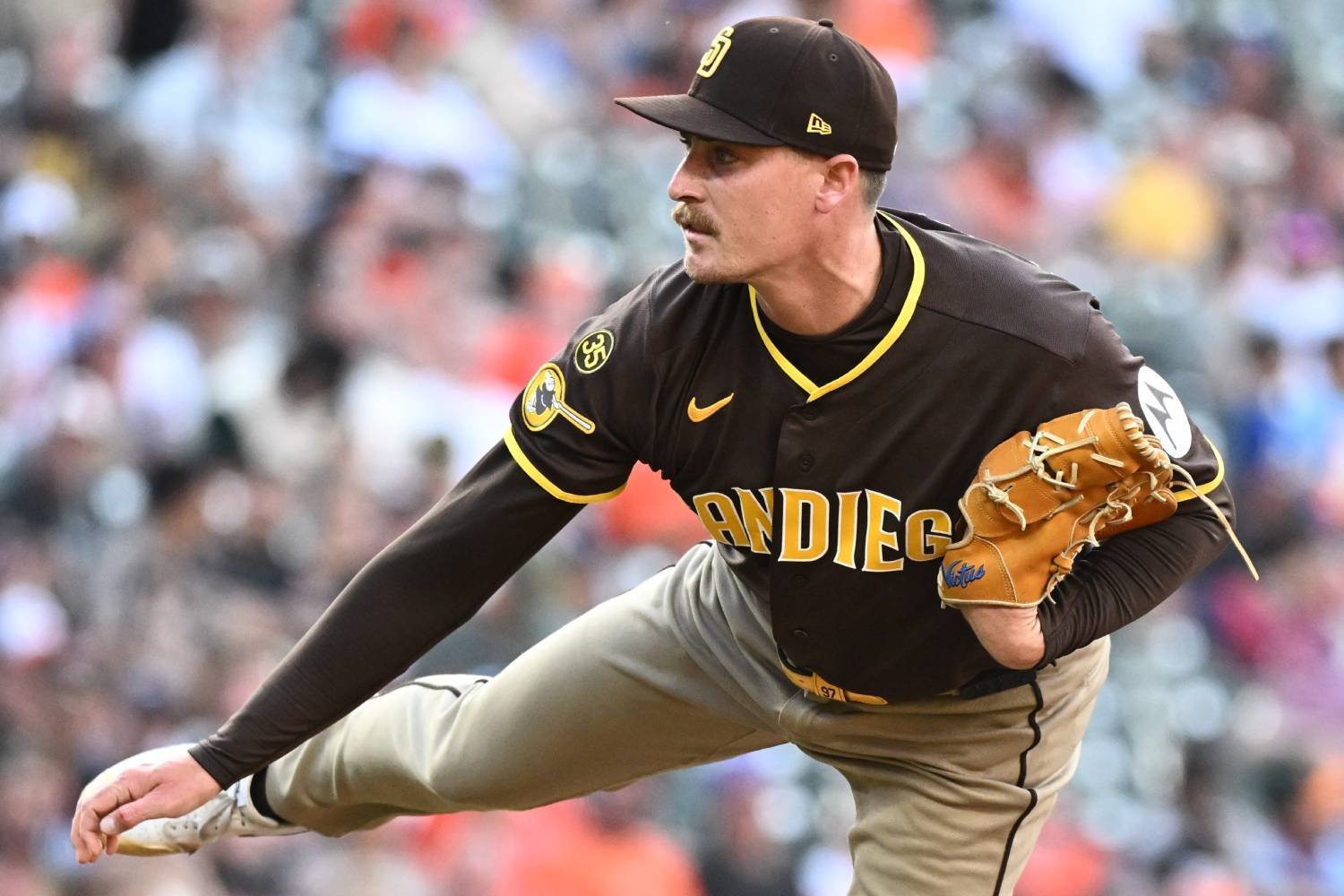 MLB on Monday suspended San Diego Padres right-handed reliever Ron Marinaccio three games and fined an undisclosed amount for hitting Baltimore Orioles star shortstop Gunnar Henderson with a pitch in Saturday's game. Marinaccio is appealing his suspension, so will remain on the active roster until that is heard. Padres manager Craig Stammen was also suspended one game. Managers can't appeal, so Stammen will sit out Monday's series opener against the St. Louis Cardinals. Bench coach Randy Knorr will run the team instead. The incident came with two outs in the bottom of the ninth inning. In the top of the fifth, Padres star shortstop Xander Bogaerts was hit in the left earflap of his helmet by a pitch from Orioles right-handed starter Trey Gibson. Bogaerts had to leave the game an inning later after feeling woozy. No penalty was issued to Gibson. View the full article
 -
Twins Prospect Hot Sheet: Khadim Diaw is on a Heater
DiamondCentric posted an article in Twins Daily
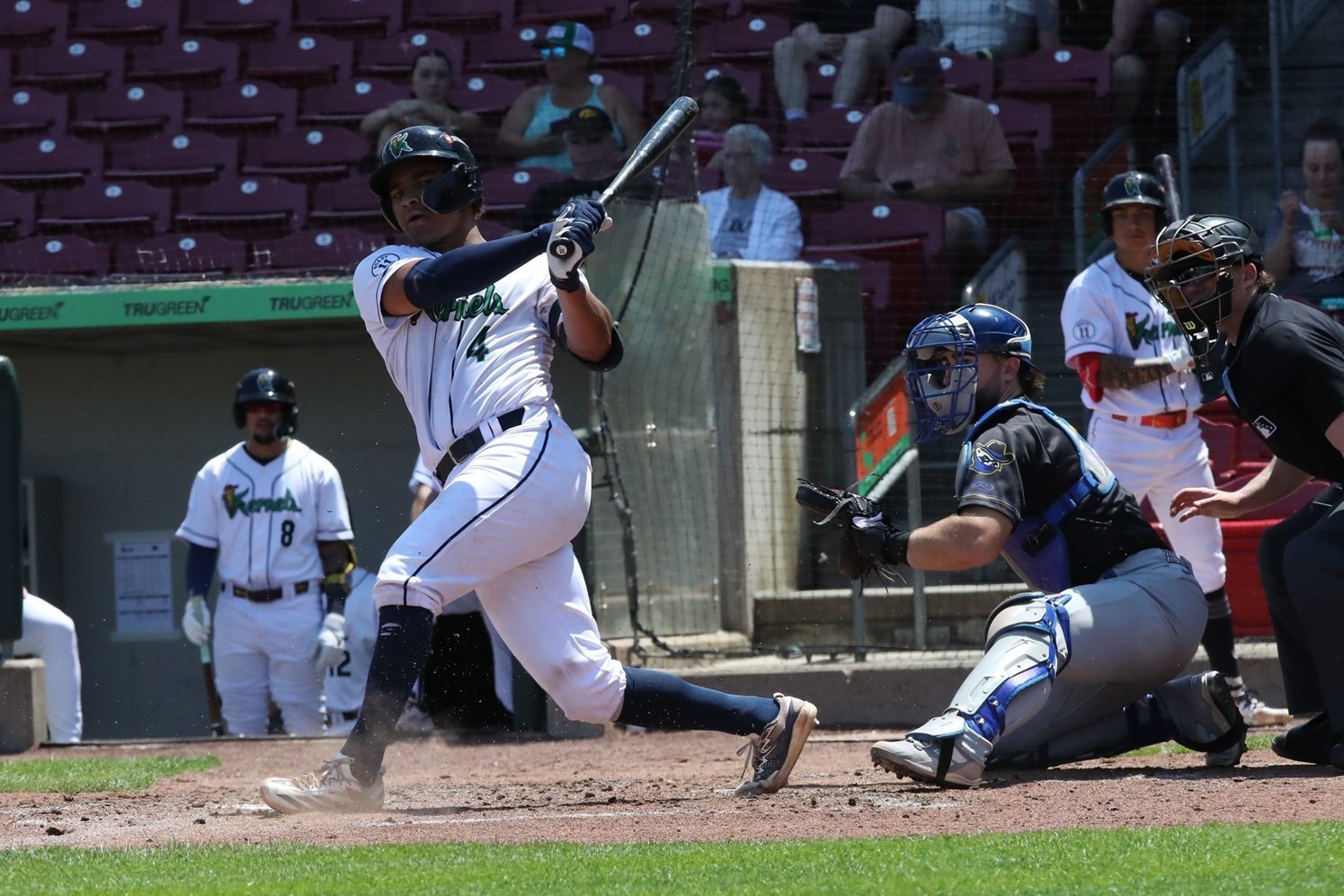 The middle third of a big-league season is when you find out how you can fix what ails your team, be it in the short term or the long term. For the Minnesota Twins, the major-league club's 2026 playoff hopes will not be determined by players currently developing in the minor leagues. However, these summer months remain critical for evaluating long-term building blocks. Prospect's changing values and future outlooks can change what a team does at the trade deadline, or just prompt a youngster to get a look in the big leagues. Several position players throughout the organization have caught fire recently, providing another reminder that prospect development rarely follows a straight line. While none of these players are expected to impact the Twins this season, strong performances can quickly elevate a prospect's standing inside the organization and shape future roster decisions. OF Kala'i Rosario– Wichita Wind Surge How He Got Here: Few baseball hotbeds are as isolated as Hawaii, making the path from the islands to the major leagues especially challenging. Rosario has spent the last several years attempting to become the next Hawaiian prep hitter to reach the highest level. Minnesota selected Rosario with its final pick in the shortened 2020 MLB Draft, betting on his impressive raw power and offensive upside. His professional career has featured both highs and lows. Rosario broke out in a massive way during 2023, earning Midwest League MVP honors and establishing himself as one of the more intriguing bats in the organization. The momentum slowed somewhat over the next two seasons. An elbow injury cost him significant time during 2024, and his production fluctuated as he climbed the ladder. Even so, Rosario showed his power remained legitimate by launching 25 home runs during his age-22 campaign at Double-A. Hitting the Hot Button: Rosario is putting together one of the hottest stretches of his professional career. The 23-year-old homered in three consecutive games from Thursday through Saturday, while delivering a monster performance Friday against Tulsa. He collected five hits in that contest, including both a double and a home run, while driving in four runs. Over the last 28 days, Rosario has slashed .348/.545/.587, with three home runs and two doubles. Perhaps the most encouraging development is his approach at the plate. During that span, he has drawn 18 walks while striking out only 14 times. Power has never been the question for Rosario. If he can continue pairing damaging contact with improved strike zone discipline, he could force his way back into the conversation as a legitimate corner outfield prospect. C/OF Khadim Diaw– Cedar Rapids Kernels How He Got Here: The biggest challenge for Diaw throughout his baseball career has never been talent. It has been availability. When healthy, Diaw consistently produces. He showcased that ability at Loyola-Marymount, posting a .314/.396/.500 slash line during the 2023 season. Unfortunately, injuries repeatedly interrupted his development. A back fracture essentially wiped out his freshman year, while a broken left thumb limited him to only 20 games in 2024. Even in those brief opportunities, Diaw continued hitting. Strong performances in both the Cape Cod League and the MLB Draft Combine convinced the Twins to select him in the third round of the 2024 Draft. The pattern continued during his first full professional season. Diaw hit for average (.297 BA), reached base consistently (.450 OBP), and looked poised for a breakout before suffering a broken wrist. Shortly after returning, a hamstring injury sent him back to the sidelines, and he was limited to 42 games. Hitting the Hot Button: The 22-year-old appeared in four games this week and went 10-for-20 at the plate. Those 10 hits included two doubles and three home runs while he drove in seven runs. His slugging percentage reached an eye-popping 1.050, and his OPS climbed to 1.550 for the week. The longer-term numbers are equally impressive. Over the last 28 days, Diaw owns a .413/.479/.700 slash line with four home runs, nine doubles, and one triple. Just as encouraging is his command of the strike zone. Across 94 plate appearances during that stretch, Diaw has drawn 11 walks and struck out only 11 times. The health concerns remain real, but Diaw continues to prove that when he is on the field, he can flat-out hit. Few prospects in the organization have done more to boost their stock over the past month. C/3B/OF Ryan Sprock– Fort Myers Mighty Mussels How He Got Here: Sprock arrived in the Twins organization carrying a unique profile. Minnesota selected him in the eighth round of last year's draft after an impressive career at Elon University. In college, Sprock was a true two-way player, contributing both as a hitter and a relief pitcher. The Twins immediately locked him in on the position-player side, drafting him primarily as a third baseman and allowing him to focus his development on hitting. That transition often creates additional upside because players can dedicate all of their time and energy toward refining one skill set. The offensive track record certainly supported the decision. During his final college season, Sprock hit .321/.411/.593 with 14 home runs while also logging 17 innings on the mound and recording 19 strikeouts. Hitting the Hot Button: Sprock continues showing why the Twins were intrigued by his versatility and offensive profile. This week, he recorded the first four-hit game of his professional career, another encouraging milestone for the young hitter. His overall season has highlighted his defensive flexibility. Sprock has appeared in 20 games behind the plate, 13 games at third base, and five games in left field. That type of versatility can create numerous pathways to a major league role. At the plate, he has demonstrated advanced strike-zone awareness, walking more than he strikes out this season. Behind the plate, he has also impressed with his game management, successfully overturning 68.4% of his catcher challenge opportunities. For a player still adapting to full-time professional hitting, those well-rounded contributions are exactly what the Twins hoped to see. Summer often serves as a dividing line for both teams and prospects. While the Twins are focused on climbing the major-league standings, performances like these matter for the organization's future. Rosario is showing improved plate discipline, Diaw continues reminding everyone how dangerous his bat can be when healthy, and Sprock is building value through versatility and strong fundamentals. None may factor into Minnesota's plans this season, but all three are giving the organization reasons to keep a close eye on their development as the second half approaches. Can these three hitters continue their hot streaks in the weeks ahead? Leave a comment and start the discussion. View the full article
 -
 Let's get this much straight: Joey Ortiz still is not a good hitter. You don't want to see him anywhere but the bottom of your team's lineup card, and maybe not even there. In the last 30 days, he's batting .222/.364/.296, with four doubles and no home runs. He's only come to bat 67 times, as the Brewers have given David Hamilton a share of his time at shortstop and shielded him from right-handed pitchers much of the time. That's not a good offensive player. If you saw those numbers and made an intrigued, almost happy "huh" sound, it's only because you're so used to execrable production from Ortiz, who has been infamously inept at the plate for the majority of the last two years. Still, we have to reckon with his upturn in production a little bit, because we're likely to see the team reckon with the ramifications of a roster shakeup in the days ahead. Cooper Pratt will join the team Tuesday to make his big-league debut, and that will make him (for a spell, at least) one of the team's regulars. This isn't the kind of player whom you call up to moulder on the bench, even if it appears to have been a move prompted not by the proactive desire to install him permanently at shortstop, but by Luis Rengifo's apparent injury Sunday afternoon. Pratt's playing time can't all come from Rengifo's (presumably) surrendered share. Some of it will come from Ortiz's, and/or Hamilton's. So we need to be able to answer the question now: Is Joey Ortiz, in some important sense, fixed? Or is he the one who should be unceremoniously shunted out of the way to make room for Pratt? Let's dig in. Here's the most important fact about Ortiz getting better, as of about the middle of last month: it started with a concrete approach change. He has generally been a patient hitter (though, at times, a passive one, really), but he went to extremes of not swinging there, for a while. It worked, in that he started drawing walks at a healthy rate and getting on base much more often. But not swinging is not a long-term offensive strategy, especially for a player who doesn't strike any fear in the hearts of opposing pitchers. As you can see from that chart, though, Ortiz began swinging at a healthy rate again, on or about June 1, and his production didn't suddenly plunge back into the depths. So, let's talk about how he's changed in terms of his setup and movements. Here's Ortiz collecting a bloop hit against the White Sox on Opening Day. ek13WDVfWGw0TUFRPT1fQndoVVZWRUZBd29BQzFZRUFBQUhWVkpmQUZnQUJWTUFWRklEQ1FZRkIxVlZBd05l.mp4 The result was nice, but this isn't good process. This stiff, awkward, often lunging swing was Ortiz's norm throughout April, which is how he ended up running a sub-.400 OPS for a significant period. It wasn't working, so in the middle of May, the team and the player collaborated to try something new: a kind of factory reset. Here he is striking out against the Cardinals last month. bGJ3TlZfWGw0TUFRPT1fQndVRVhGWUNBd0lBQ0FNRVhnQUhVMWNEQUFOUkJRVUFBRklOVWdBQUNRcFFVZ2NE.mp4 This looks like a default setting, doesn't it? His feet are even. His hand position is neutral. Everything is very bland. It's no more effective than his previous stance and swing—in the particular cases I've selected, it was less effective—but it does take some of the tension and blockage out of his eyesight and movement. Making Ortiz get into this uncomfortably neutral position helped him reorganize his strike zone a bit, and it broke a few bad habits. Around the beginning of June, the slate cleared, Ortiz and the Brewers restored his preferences—but with a couple of important tweaks. Here he is truly hammering a ball, this weekend against the Phillies. b0d3S1hfWGw0TUFRPT1fVXdrRFhRVUJWZ1FBV1ZvQVZRQUhDVk5WQUZrQ1ZWVUFDMUJRQjFjTlZBVlVVUVlB.mp4 He got a little lucky here. He got a real meatball, right in his happy zone. The thing is, a couple of months ago, Ortiz didn't even have a happy zone at the plate. Although he's still no fearsome slugger, he's regained a sense of what he's looking for and what to do with it. What you can't spot for yourself in these videos, we can illustrate using some Statcast data on his stance and stride. Note that after the cleansing switch to standing straight and level, he's back to basically the same set of angles and the same stride direction now as he had in April—but with his weight a bit more forward. You can see this in the videos, too. His weight starts more even, and he's less coiled into his back hip—not in a way that costs him the power hitters get from their back side, but in a way that loosens his front hip and leg to move more fluidly. He's also moving his head a bit less, which leads to both better swing decisions and cleaner contact when he does swing. I'm not here to tell you the Brewers should trust Ortiz and return him to a full-time role. Some of the benefits and improvements we're talking about here are partially the product of having the platoon advantage more often than is typical. Some of them reflect the salutary discomfort of being less of a regular. When you get fewer reps, sometimes you swing less, and sometimes, that's exactly what needs to happen. Expanding a player's role after watching them improve when their role is reduced is often a mistake. I am here to tell you, though, that Ortiz has made some material changes, even if they seem subtle. He's putting himself in a position to succeed at the plate again, even if it be in a limited way. Given the value he provides on defense, that's all the team needed from him. If Rengifo is out a while and Pratt takes up residence at shortstop, don't be surprised if Ortiz becomes a productive member of a platoon at the hot corner—and, for the second time in three years, one half of the best defensive left side of the infield in the entire National League. View the full article
 -
Blue Jays Fans Are Showing Up at the (Metaphorical) Ballot Box
DiamondCentric posted an article in Jays Centre
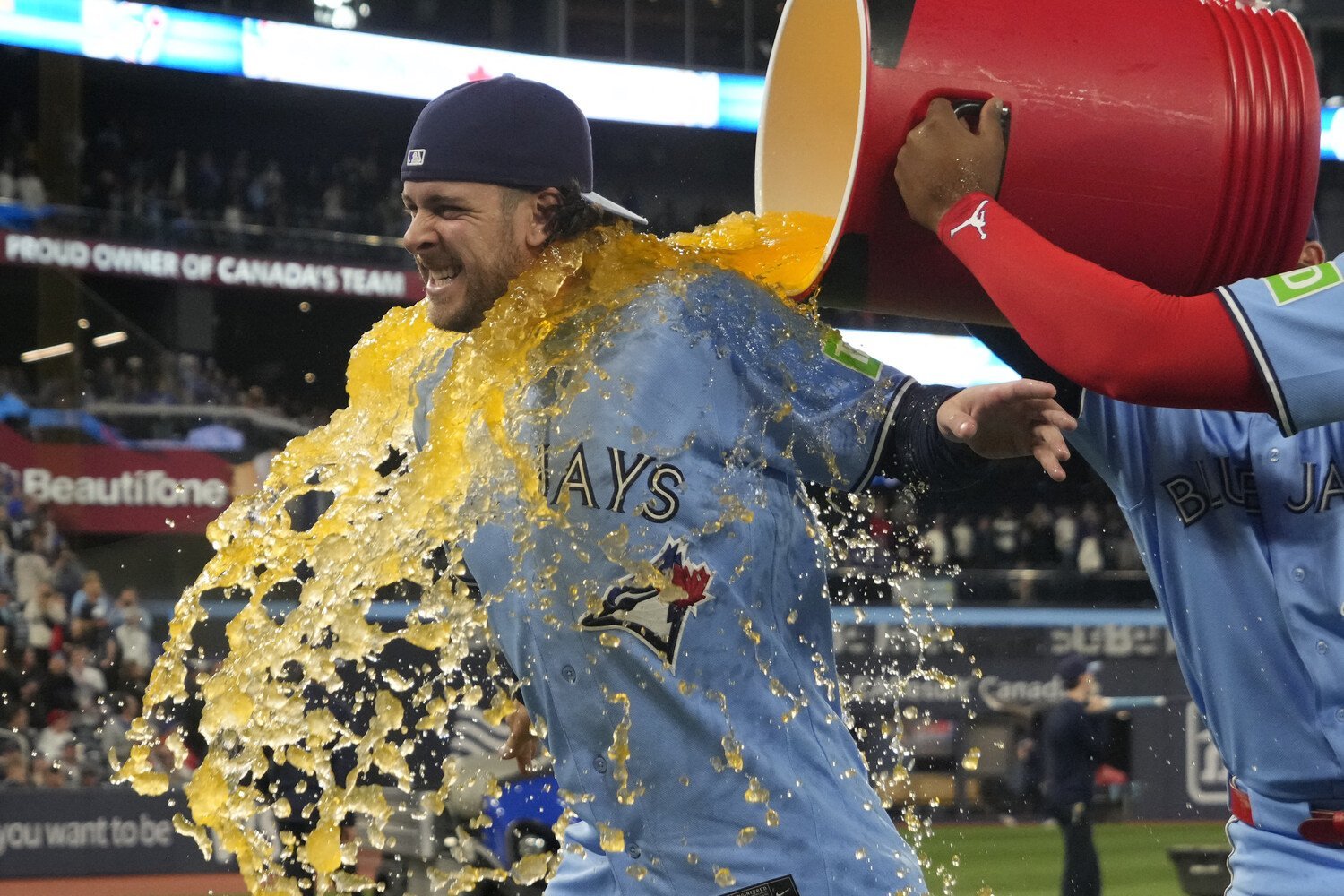 Major League Baseball released the first All-Star voting update this afternoon, and one thing is clear: Blue Jays fans have been voting. They've been voting a lot. A Blue Jays player ranks either first or second at every position except for outfield. Considering the team's sub-.500 record, it's safe to say this has more to do with who's been voting than the deserving-ness of the players they're voting for. (Whether or not that's a bad thing is a debate for a different day.) Obviously, this is a World Series-related bump. The Jays and their players are more popular, particularly outside of Toronto and across the country. It's not so often an entire country is voting for all the same candidates in an election. That said, it's also important to acknowledge the impact of a good bribe. I got a really nice sticker at the Rogers Centre last week after I showed the staff that I voted; it was Philadelphia's famous LOVE statue with a Blue Jays logo instead of the "O." I'm not sure what I'm actually going to do with the sticker, but I liked getting it, and I certainly wasn't the only person who cast my ballot for the free souvenir! Anyway, here's where the Jays representatives stand after 12 days of voting. The Leaders Vladimir Guerrero Jr.'s star power has him in first place at first base. He's angling for his sixth consecutive All-Star appearance and his fifth start. With all due respect to Guerrero, the reason he's in the lead surely has something to do with the more deserving candidates splitting the vote (among voters who actually try to pick for the best players, instead of the biggest stars or everyone on their favourite team). First base is absolutely stacked in the AL this year, with Ben Rice, Nick Kurtz, Munetaka Murakami, and Willson Contreras all enjoying tremendous seasons at the plate. I love Vladdy, but one of those guys deserves this opportunity. The other Blue Jay in the lead really has earned it. I wrote an article encouraging Blue Jays fans to vote for Ernie Clement last week. Apparently, y'all didn't need any encouragement. Clement leads at second base by 616,706 votes. That's more votes than Guerrero has even received. Clement's 904,702 votes are only 111,066 back of the AL's leading vote-getter, Yordan Alvarez. The first phase of voting is still open until June 25, but Ernie is all but guaranteed to advance to phase two. The Runners-Up Kazuma Okamoto, Andrés Giménez, George Springer, and Alejandro Kirk are all in second place at their respective positions. I've listed them in order of how ridiculous that is. Okamoto is enjoying a solid season, even if it isn't All-Star calibre. Giménez has at least been excellent on defense. Springer's votes are only justifiable as restitution for his snub last season. Kirk, who has played all of seven games in 2026, should probably do the right thing and sign over his votes to Brandon Valenzuela. None of these guys should be an All-Star, and I doubt any of them will be. Still, it's nice to see how passionate Blue Jays fans are right now, despite the team's slow start. Hopefully, all the support inspires guys like Giménez and Springer to play more like All-Stars going forward. The Outfielders Evidently, the fans aren't as excited about Toronto's outfielders, but Daulton Varsho and Jesús Sánchez still rank eighth and ninth, respectively, at a position with three times the competition. Unfortunately for Myles Straw, he was the only Blue Jay on the ballot not to be named at all in the first voting update. For all you Straw-heads out there, you still have 10 days to change that! If you'd like to learn more about the All-Star selection process and how to vote, you can read all about it on MLB.com. View the full article
