


DiamondCentric
-
Posts
2,631 -
Joined
-
Last visited
Never
Content Type
Profiles
Forums
Events
News
Tutorials & Help
Major League Baseball Videos
Guides & Resources
Store
Downloads
Gallery
Everything posted by DiamondCentric
-

 Boston Red Sox Farm System Recap Triple-A Worcester Red Sox Series at Buffalo Bisons (Toronto Blue Jays): 1-4 Season Record: 23-20 Worcester fell for the third straight time in a five-inning game shortened by rain. Alec Gamboa made the start for the WooSox, going four innings before the rain became too much. He allowed four hits and two runs, both runs coming via solo homers. Gamboa’s start was otherwise unremarkable, he struck out three and didn’t walk a batter. The WooSox offense recorded four hits before the game was suspended. Similarly to Friday’s contest, they didn’t record a hit with runners in scoring position despite having four opportunities. Kristian Campbell, Matt Lloyd, Nate Eaton, and Braiden Ward each recorded a hit. Campbell, Eaton, and Ward each singled and Lloyd doubled. Ward also drew the only walk of the afternoon for Worcester. Double-A Portland Sea Dogs Series at Hartford Yard Goats (Colorado Rockies): 3-2 Season Record: 17-20 Portland lost in walk-off fashion despite excellent work from the bullpen. Jedixson Paez was scratched from his start on Saturday evening with a sore hip, per MassLive’s Chris Cotillo. Patrick Halligan stepped up in his place and put together his best outing of the season. Across a season-high four innings, Halligan didn’t allow a baserunner. He struck out four amid his perfect outing, setting up Erik Rivera for his relief appearance. Rivera’s outing was a mixed bag, however. Over two and ⅓ innings, he allowed one run on a wild pitch and Hartford scored once more on a passed ball. Despite this, he sent five batters packing on strikes. Rivera is a strikeout machine, totalling 30 punchouts over 22 and ⅔ innings. Over the next two and ⅔ innings,Max Carlson struck out three and didn’t allow a run. His outing gave the Sea Dogs offense room to work as the game advanced to extras. In the tenth, Reidis Sena tried to fend off the Yard Goats as they attempted to walk it off. And walk it off they did, with two men in scoring position, they dropped down consecutive sacrifice bunts, winning the game. Sena got hit with the blown save as he failed to win it for Portland. If you went to Saturday’s game after being in attendance Friday, you might have thought you were watching the same game all over again. Slow offense on both sides led to yet another extra-innings match-up. Brooks Brannon got the Sea Dogs started with a one-run double in the first, driving in Nate Baez. Down 2-1, Tyler McDonough stepped to the plate in the seventh and launched a solo homer to tie the game. Max Ferguson played the hero in the tenth, scoring Will Turner on a ground ball to left field. Despite Ferguson’s heroics, Portland fell in heartbreaking fashion. Franklin Arias was also removed from the game in the fifth inning after going 0/2 with a walk. Johanfran Garcia, Brannon, and Ferguson each recorded two hits, but the Sea Dogs went 3-for-13 with runners in scoring position as they failed to capitalize. High-A Greenville Drive Series vs. Bowling Green Hot Rods (Tampa Bay Rays): 0-5 Season Record: 14-24 The losing skid continued for Greenville as they lost for the eighth straight game. Devin Futrell put in two and ⅓ innings of work to start Saturday’s contest, allowing seven hits and four runs as Bowling Green’s offense jumped ahead early. He was ejected in the third inning. While not much has gone right for the Drive during their losing streak, Osvaldo Berrios’ rehab stint on Saturday did. Across two and ⅓ innings of work Berrios allowed one hit and one walk as he struck out four of the nine batters he faced. Jay Allmer took the next two and ⅓, but let Bowling Green take control as he got the loss and a blown save. He allowed three hits and walked three, giving up four runs (one unearned) as his ERA rose to 8.24. Allmer was bad, but Luis Cohen was worse. Over the final two innings he allowed the Hot Rods to tack on an additional six runs on six more hits and two walks. Saturday was Greenville’s strongest offensive performance in a long time, but it still wasn’t enough to take down the Hot Rods. Down three in the second, Antonio Anderson tripled, driving in Ronny Hernandez. He was driven in later in the inning on a ground out by Natanael Yuten. Down 4-2 in the third, Jack Winnay homered with Yoeilin Cespedes aboard to make it a tie game. One inning later, the Drive took the lead on an RBI single from Justin Gonzales. Gonzales went ⅘ with an RBI and a run as he continues his dominant season. Cespedes followed this up with an RBI single of his own as he also had a four-hit day, leading the team with a .315 batting average. To cap off a three run inning, Winnay drove in Gonzales with a double, his third RBI of the day. As the Hot Rods scored ten unanswered runs, there was nothing the Drive could do but shake their heads. The only silver lining was a second home run, and fourth RBI, from Winnay, who contributed to half of the Drive’s offensive success. Low-A Salem RidgeYaks Series at Fredericksburg Nationals (Washington Nationals): 2-3 Season Record: 17-21 Salem fell yet again by a one-run margin, this time by a score of 10-9. Cole Tolbert pitched the first three innings of Saturday’s contest, allowing just one run on a solo homer. He struck out five of the ten batters he faced as he let up his first run of the season thus far. Leighton Finley took the next three frames as the game started to unravel. Fredericksburg teed off against Finley, notching ten hits and eight runs as they drew four walks. Finley struck out just one batter in what was his worst start of the season by far. His ERA rose from 1.52 to 4.05 as the Nationals took advantage of his poor showing. Adam Bates took the final two innings, looking to rebound from Finley’s disaster. He pitched okay, allowing one more run and walking four. Salem’s offense fought hard, but fell just short for the second straight contest. D’Angelo Ortiz scored on a wild pitch in the second inning to put the first run on the board for Salem. Ty Hodge followed this up with a sacrifice fly in the third inning to score Skylar King, snagging a one-run lead. King then reached in the fifth on a scoring error as Enddy Azocar crossed home. Andrews Opata scored next as Hodge reached on a fielder's choice. The RidgeYaks weren’t done scoring, King scored a second time on a single by Andruw Musett. Finally, Frederik Jimenez scored on a single by Avinson Pinto to establish a three-run lead. With the tables turned and Salem facing a three-run hole in the seventh, Pinto drove in two on a single to put the RidgeYaks within striking distance. Down 10-8 in the top of the eighth, Opata drove in Starlyn Nunez, but Salem was unable to tie the ballgame. View the full article
 -
 Cubs Transactions Chicago Cubs sent LHP Caleb Thielbar on a rehab assignment to South Bend Cubs. Iowa Cubs Buried By Sounds' First-Inning Onslaught The Iowa Cubs fell 12-1 to the Nashville Sounds, with the home club doing most of its damage in the first inning. Starter Vince Velasquez (L, 1-1) recorded just two outs while allowing five earned runs on one hit, four walks, and one home run, with two strikeouts. With the bases loaded, Velasquez issued an RBI walk to make it 1-0, then served up a grand slam that pushed the lead to 5-0. Collin Snider relieved Velasquez and immediately surrendered a three-run home run, capping an eight-run frame. Nashville tacked on three more runs in the third on a home run off Tyler Ferguson, and pushed across a final run in the eighth. Iowa managed only five hits, left seven runners on base, and scratched out its only run in the top of the ninth. Pedro Ramírez went 1-for-2 with a double, two walks, and a run scored, while Owen Miller added two hits and a walk. Cleanup hitter Kevin Alcántara reached safely twice with a single and a walk. James Triantos drove in Iowa's only run with an RBI single in the ninth. Casey Opitz worked three innings of one-run relief, while Gavin Hollowell added 1 1/3 hitless innings with two strikeouts and a walk. Player AB R H RBI BB K Justin Dean 4 0 0 0 0 3 Pedro Ramírez 2 1 1 0 2 0 Jonathon Long 4 0 0 0 0 0 Kevin Alcántara 3 0 1 0 1 1 James Triantos 4 0 1 1 0 2 Christian Bethancourt 4 0 0 0 0 2 Owen Miller 3 0 2 0 1 0 Scott Kingery 4 0 0 0 0 1 Brett Bateman 3 0 0 0 0 0 Player IP H R ER BB K HR Vince Velasquez (L, 1-1) 2/3 1 5 5 4 2 1 Collin Snider 1 1/3 2 3 3 1 1 1 Tyler Ferguson 1 2/3 2 3 3 1 1 1 Casey Opitz 3 4 1 1 0 0 0 Gavin Hollowell 1 1/3 0 0 0 1 2 0 Smokies' Bats Quiet In Loss At Columbus The Knoxville Smokies dropped a 6-2 decision at Columbus, managing just a brief third-inning rally for their only runs of the night. Starter Tyler Schlaffer worked four innings, allowing two runs on five hits with two walks, two strikeouts, and one home run. The Smokies tied the game at one in the top of the third when Karson Simas scored on a throwing error by the Clingstones' catcher, then took a brief 2-1 lead on a sacrifice fly from cleanup hitter Owen Ayers that plated Alex Ramírez. Columbus answered with a solo home run in the bottom of the third to even the score, pushed across two runs in the fifth off Luis Rujano (L, 1-1) on a pair of singles, and added two more in the seventh off Tyler Santana on a double to right field. Jordan Nwogu paced the Knoxville offense with a 2-for-4 night and a stolen base. Simas reached three times on a hit, a walk, and a run scored, while Carter Trice and Alex Ramírez each added a hit and a run scored. Jefferson Rojas chipped in with a hit and a walk in three at-bats. Santana finished with four strikeouts over two innings of relief. Knoxville left seven runners on base in the loss. Player AB R H RBI BB K Karson Simas 3 1 1 0 1 2 Alex Ramírez 4 1 1 0 0 2 Carter Trice 4 0 1 0 0 1 Owen Ayers 3 0 0 1 0 2 Jefferson Rojas 3 0 1 0 1 1 Jordan Nwogu 4 0 2 0 0 1 Ethan Hearn 4 0 0 0 0 3 Ed Howard 4 0 0 0 0 2 Hayden Cantrelle 4 0 0 0 0 1 Player IP H R ER BB K HR Tyler Schlaffer 4 5 2 2 2 2 1 Luis Rujano (L, 1-1) 2 2 2 1 1 1 0 Tyler Santana 2 3 2 2 0 4 0 South Bend Cubs Pummel Timber Rattlers In 24-Run Rout South Bend overwhelmed Wisconsin 24-4 behind a 24-hit attack and a pair of seven-run innings. Leadoff hitter Kane Kepley went 4-for-7 with three runs scored, five RBIs, and a walk, while Ty Southisene added four hits in six trips with four RBIs and a run scored. Miguel Useche crossed the plate five times on a 4-for-5 night with a double, two walks, and two RBIs, and Christian Olivo matched the run total on two hits, two doubles, two walks, and two RBIs. Alex Madera and Leonel Espinoza each added three hits and three runs scored, with Madera driving in two and Espinoza one. Cameron Sisneros chipped in two hits and three RBIs. The Cubs broke open the game with seven runs in the second on bases-loaded walks from Useche and Olivo, followed by RBI singles from Kepley, Sisneros, cleanup hitter Kade Snell, and Espinoza. They piled on with another seven-run frame in the seventh, highlighted by a two-run single from Madera. Jostin Florentino started and worked four innings, allowing one earned run on one hit with two walks, four strikeouts, and a home run. Brayden Spears (W, 3-1) followed with three innings of one-run ball on one hit, three walks, two strikeouts, and a home run. Caleb Thielbar, on a rehab assignment from the Cubs, tossed one inning of one-hit relief with two strikeouts and a walk. South Bend stranded 15 runners despite the lopsided result. Player AB R H RBI BB K Kane Kepley 7 3 4 5 1 1 Ty Southisene 6 1 4 4 1 1 Cameron Sisneros 5 1 2 3 3 0 Kade Snell 6 1 1 3 1 3 Leonel Espinoza 5 3 3 1 2 0 Alex Madera 5 3 3 2 2 0 Drew Bowser 6 2 1 0 0 2 Miguel Useche 5 5 4 2 2 0 Christian Olivo 4 5 2 2 2 0 Player IP H R ER BB K HR Jostin Florentino 4 1 1 1 2 4 1 Brayden Spears (W, 3-1) 3 1 1 1 3 2 1 Caleb Thielbar 1 1 0 0 1 2 0 Kenten Egbert 1 4 2 2 0 2 0 Pelicans Pounded By GreenJackets In Myrtle Beach Myrtle Beach managed only one run in an 11-1 loss to Augusta, falling behind early after the GreenJackets put up four runs in the first inning on a pair of bases-loaded walks and a two-run single. Riely Hunsaker absorbed the bulk of the work for the Pelicans, going four innings while allowing three earned runs on six hits with one walk, two strikeouts, and a home run. The Pelicans broke up the shutout in the bottom of the second when Jose Escobar singled, advanced to third on an Eli Lovich single, and scored on an RBI groundout from Derniche Valdez. Valdez also doubled in the fourth, finishing 1-for-3 with the team's only extra-base hit. Starter Edwardo Melendez surrendered three hits and two earned runs over two innings, fanning four with two walks. Luis A. Reyes (L, 0-2) absorbed the worst stretch, allowing four earned runs on four walks while recording just two outs. The GreenJackets piled on with a solo home run and an RBI single in the fourth, a sacrifice fly in the fifth, a double in the sixth, two runs in the eighth, and one more in the ninth. Darlyn De Leon, Eli Lovich, and Yahil Melendez each contributed singles in the loss. Cleanup hitter Jose Escobar finished 1-for-3 with a run scored. Myrtle Beach finished with five hits and four runners left on base. Player AB R H RBI BB K Alexis Hernandez 4 0 0 0 0 2 Darlyn De Leon 4 0 1 0 0 0 Josiah Hartshorn 4 0 0 0 0 1 Jose Escobar 3 1 1 0 0 0 Henniel Alcala 1 0 0 0 0 0 Eli Lovich 4 0 1 0 0 2 Derniche Valdez 3 0 1 1 0 0 Yahil Melendez 3 0 1 0 0 0 Geuri Lubo 3 0 0 0 0 2 Jairo Diaz 3 0 0 0 0 1 Player IP H R ER BB K HR Edwardo Melendez 2 3 2 2 2 4 0 Daniel Avitia 1 3 1 1 0 1 0 Victor Zarraga 1 1/3 1 1 1 3 1 0 Luis A. Reyes (L, 0-2) 2/3 0 4 4 4 1 0 Riely Hunsaker 4 6 3 3 1 2 1 Top-20 Prospect Performance Jefferson Rojas: 1-for-3, BB, K Jaxon Wiggins: DNP Pedro Ramírez: 1-for-2, 2B, R, 2 BB Kevin Alcántara: 1-for-3, BB, K Josiah Hartshorn: 0-for-4, K Ethan Conrad: DNP Kane Kepley: 4-for-7, 3 R, 5 RBI, BB, K Jonathon Long: 0-for-4 James Triantos: 1-for-4, RBI, 2 K Cole Mathis: DNP Owen Ayers: 0-for-3, RBI, 2 K Brooks Caple: DNP Juan Cabada: DNP Kaleb Wing: DNP Angel Cepeda: DNP Dominick Reid: DNP Jostin Florentino: 4 IP, 1 H, 1 ER, 2 BB, 4 K, HR Ty Southisene: 4-for-6, R, 4 RBI, BB, K Will Sanders: DNP Brandon Birdsell: DNP View the full article
 -
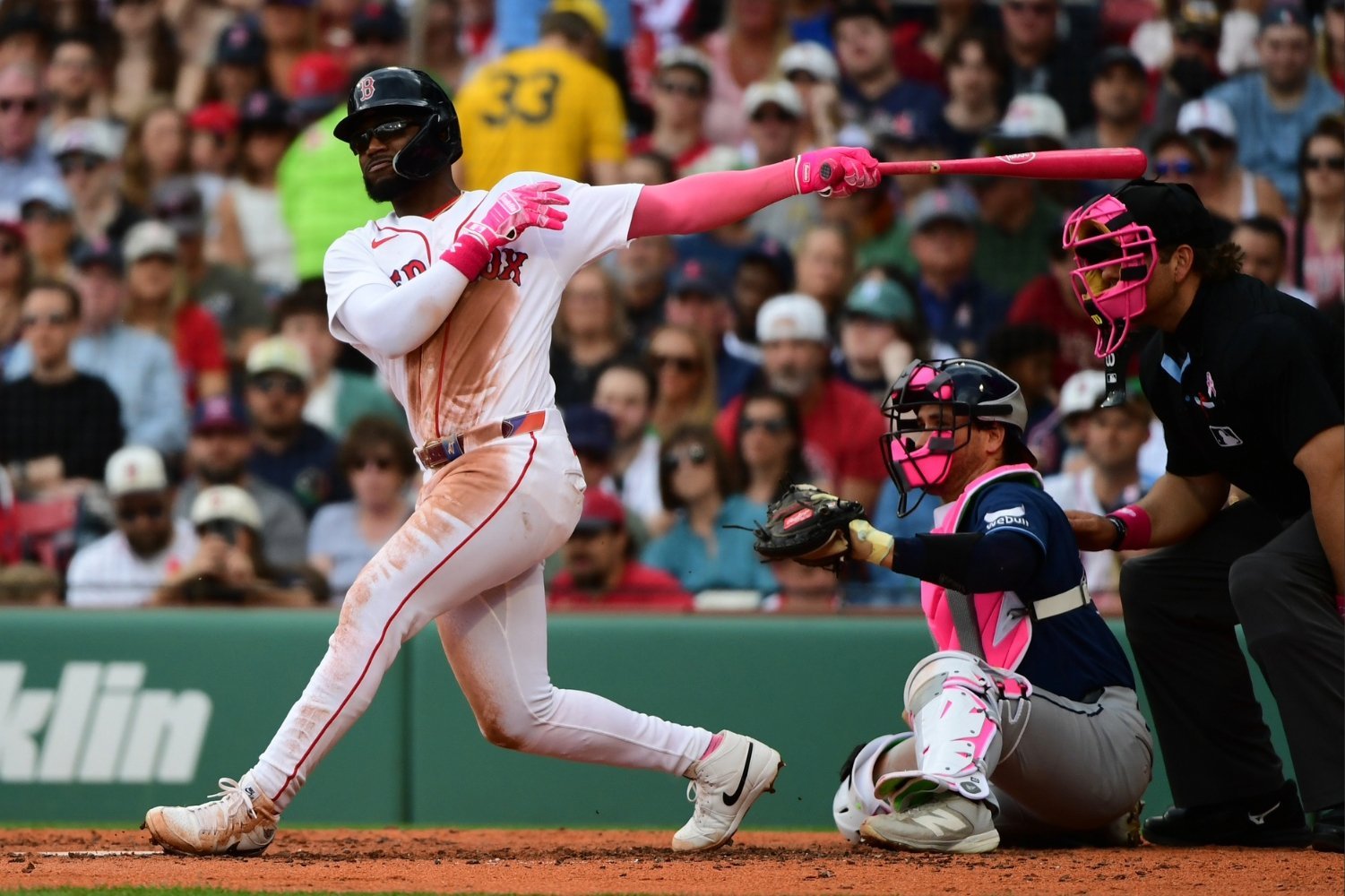 In a season plagued by injuries and inconsistent offensive production, utility man Andruw Monasterio has emerged as one of the Red Sox’s most productive hitters. After starting the season 2-for-14 and drawing attention for a viral ABS challenge, Monasterio found his footing in the team’s April 25 matchup against the Baltimore Orioles. He went 3-for-6 with his first career grand slam, marking a turning point in his offensive production. But despite his breakout at the plate, defensive struggles continue to keep him from securing an everyday role. Acquired from the Milwaukee Brewers in the six-player trade that featured Boston acquiring Caleb Durbin, Monasterio was added to the roster as a depth piece but has taken advantage of his limited opportunities. His versatility has allowed the Red Sox to deploy him across the infield, with Monasterio appearing at first base, second base, shortstop and third base this season.. Quietly, he has produced a 100 wRC+, at least 30 points higher than every current Red Sox starting infield outside of first baseman Willson Contreras. In 66 at-bats, he is batting .258/.310/.424 with a .734 OPS, and his underlying metrics suggest there could still be room for further growth. He owns a .288 expected batting average and a .423 expected slugging percentage, while his .335 xwOBA ranks fifth on the team. His average exit velocity has climbed to a career-high 90.8 mph and his 46.9% hard-hit rate is also the highest mark of his career, tantalizing proof that he’s consistently making better contact than ever before. A significant part of his improvement is in his approach against fastballs, which he is hitting .282 this season, a .057 increase from last year. However, despite his revelation at the plate, his fielding is what’s keeping him from being an everyday starter. While his offensive numbers are positive, his defense has led him to -0.1 fWAR. This is in large part due to his having a -3 outs above average across all of his positions, the lowest on the team. Statistically, he only converts 67% of fieldable balls, while his expected success rate is 82%. Monasterio has struggled most at shortstop, where he has a -2 out above average. He has completed only 60% of plays, while his estimated success rate is as high as 82%. This inefficiency is why he continues to be third on the depth chart at shortstop, behind Trevor Story and Isiah Kiner-Falefa, despite both having wRC+ figures below 50. This whole equation could change drastically now that Story is headed for the injured list. Nick Sogard was called up from the minor leagues to serve as a utility depth option, but he's not an everyday starter. And you can be sure that Kiner-Falefa won't be getting more than the occasional rep at shortstop given his complete lack of offensive competence. Can the Red Sox live with a slightly worse glove at the most important infield position if it means getting Monasterio's bat in the lineup with regularity? The Red Sox are not in a position to be picky, as they currently sit last in the American League East and rank among the bottom six in the MLB with a .239 expected batting average. In their series opener against the Atlanta Braves, Monasterio drew the start at shortstop over Story, showing the team is willing to prioritize his bat despite his defensive limitations. If he can maintain his offensive production while showing improvement in the field, he could continue to carve out a larger role and potentially emerge as a longer-term option in the infield. View the full article
 -
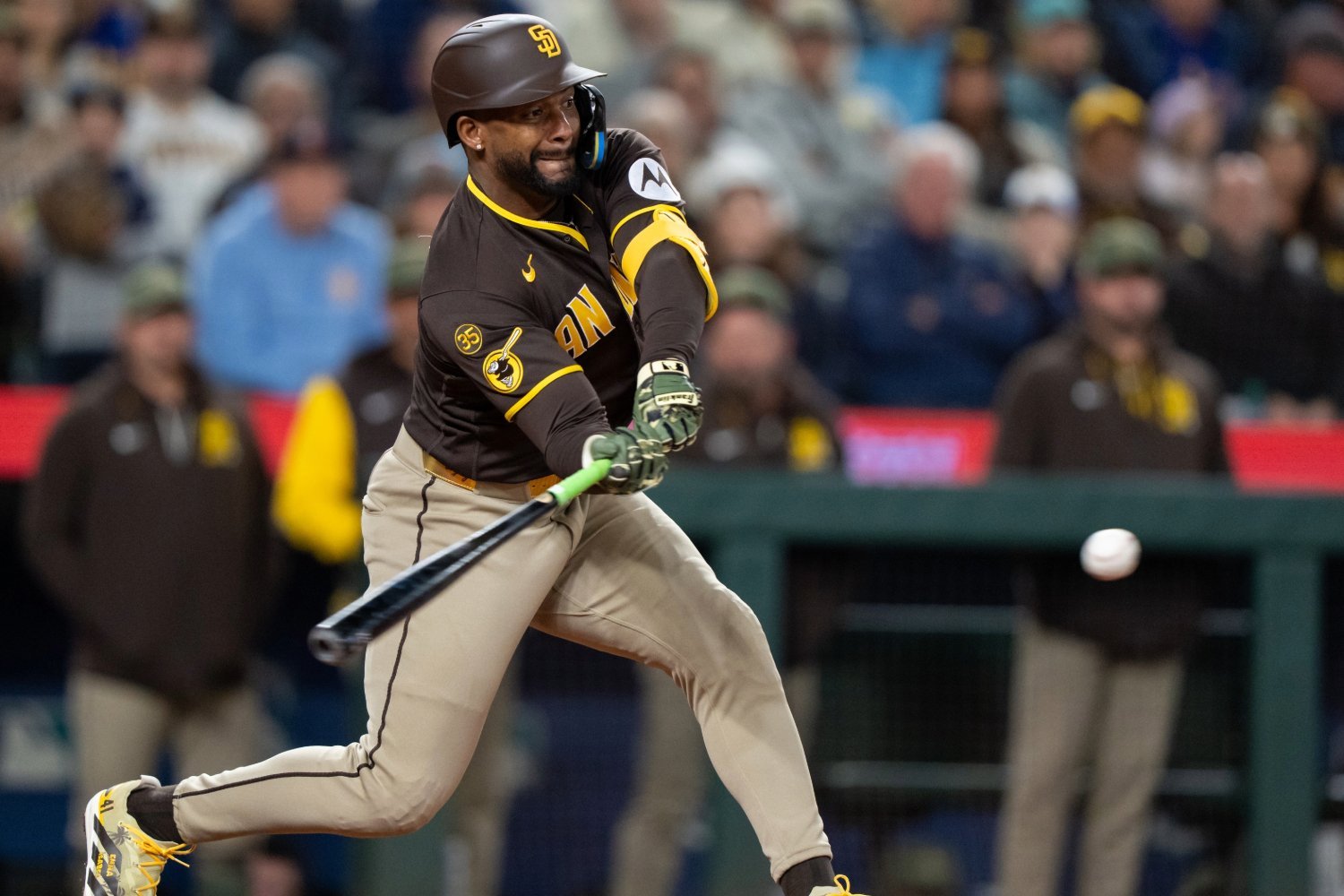 Miguel Andujar has been one of the San Diego Padres’ most aggressive, but also one of their most valuable, hitters this season. He has drawn exactly three walks in 122 plate appearances and was sporting one of the highest chase rates of his career as the club opened a weekend series Friday in Seattle against the Mariners. His patience at the plate was really short during the club's previous series, against the Brewers in Milwaukee. He swung at 26 of the 43 pitches he saw in the three games. That's a 60 percent rate. And yet, after all that swinging, he was second on the club with a 126 wRC+, trailing only Luis Campusano. How is Andujar able to maintain a high level of production when he seems to be swinging at everything? It comes down to the fact that this is who Andujar is and it works for him. Start with his swing. He attacks the ball at a 7-degree angle, one of the most shallow on the club, according to Baseball Savant. The bat is mostly level as it enters the zone. That's one reason why his squared-up rate was in the 81st percentile entering Friday. But level doesn't necessarily mean all fields with Andujar. His 46.2 percent pull rate through May 15 was three points higher than the full-season career high he set during his breakout 2019 campaign with the New York Yankees. His 24.2 percent pull air rate was a fraction below his career best, which he also set in 2019. His attack direction was five degrees to the pull side, trailing just Campusano and Nick Castellanos among the club's pull-heavy hitters. A 10-degree average helps explain why he had just three home runs, one of which came off a hanging breaking ball by the Brewers' Brandon Sproat on Tuesday. The pull approach makes him vulnerable off the plate and, indeed, Andujar will expand the zone. His 38.2 percent chase rate through that Brewers series put him in the 10th percentile league-wide. But he can get to those pitches. He entered Friday's game second on the club with a 67.9 chase contact rate, trailing only Gavin Sheets. He was batting .412 against sinkers and .357 against sweepers. (On the other hand, he was batting .222 against four-seamers.) That level of plate coverage helps explain his 19.5 percent strikeout rate (61st percentile) and 19.6 percent whiff rate (79th percentile). All of that is the long way of saying that Andujar knows how to succeed as a free swinger and “bad ball” hitter. Expect him to stay on the attack, even if it means passing up a free trip to first base every now and again. View the full article
 -
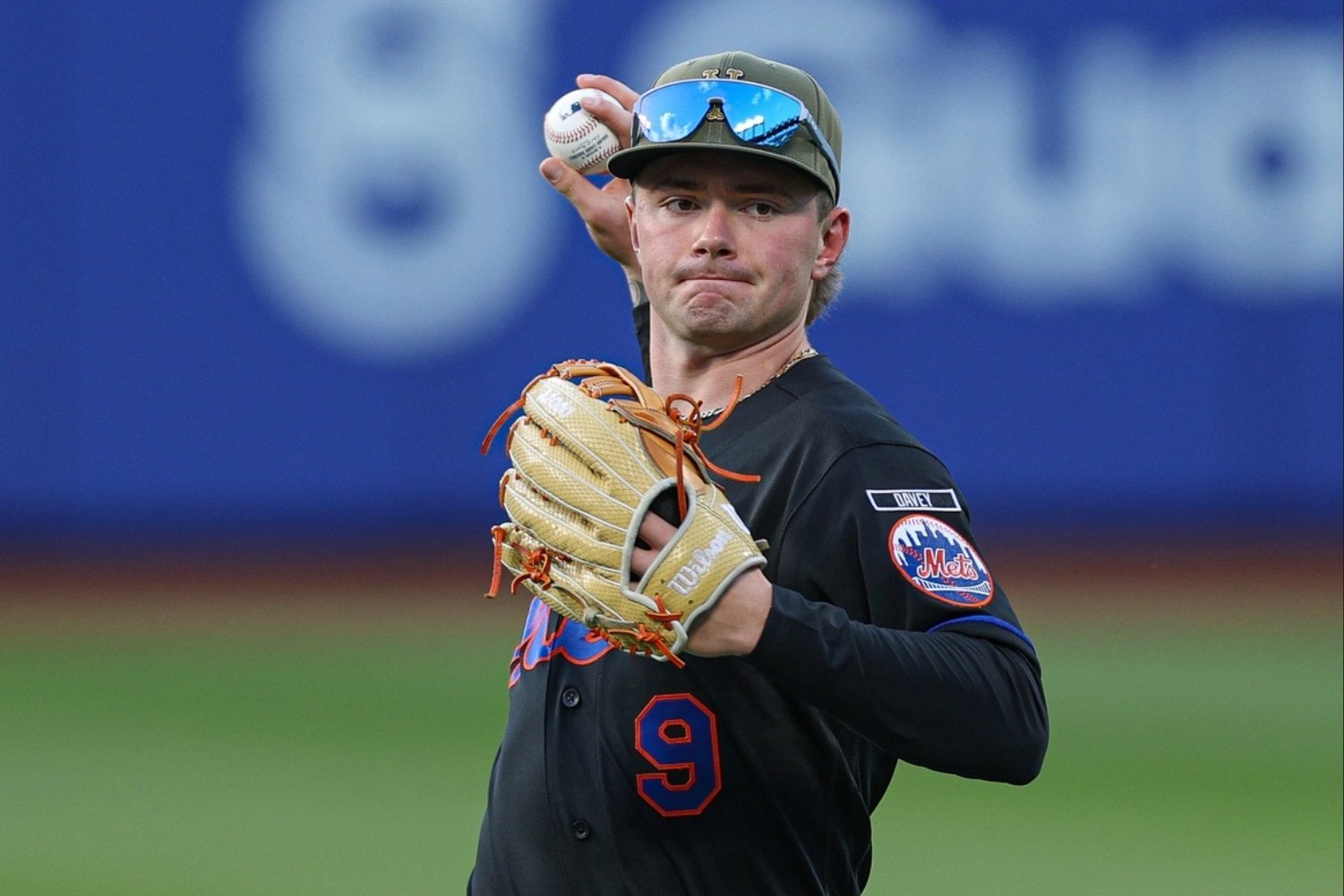 It’s that time of the year again, when Grand Central Mets updates our Top 20 prospect rankings for the New York Mets. Both staff and readers voted and after tabulating the votes, the reveal of the list is now ready. The Top 20 saw some notable changes from the preseason, including the addition of one new prospect which we will break down. Let’s jump into it below. New York Mets Top 20 Prospect List Carson Benge (OF, MLB 40-man) A.J. Ewing (OF, MLB 40-man) Jonah Tong (RHP, MLB 40-man) Elian Pena (INF, Single-A) Jack Wenninger (RHP, AAA Syracuse) Ryan Clifford (OF/INF, AAA Syracuse) Jacob Reimer (INF, AA Binghamton) Nick Morabito (OF, AAA Syracuse) Mitch Voit (INF, High-A Brooklyn) Jonathan Santucci (LHP, AA Binghamton) Chris Suero (C/INF, AA Binghamton) Zach Thornton (LHP, AA Binghamton) Wandy Asigen (SS, DSL Mets) Will Watson (INF, Single-A) Eli Serrano III (INF/OF, AA Binghamton) Randy Guzman (NEW, OF/INF, Single-A) Ryan Lambert (RHP, AAA Syracuse) Dylan Ross (RHP, High-A Brooklyn) Antonio Jimenez (INF, High-A Brooklyn) R.J. Gordon (RHP, High-A Brooklyn) The list includes 19 of the 20 prospects from the previous rankings. The difference is the removal of Nolan McLean due to his graduation from prospect status. The list also saw Jacob Reimer drop to number seven due to his early season struggles in AA. So far this season, Reimer is slashing .206/.336/.343 with a .679 OPS and a 91 WRC+. Reimer is also just outside the top 100 prospects list according to FanGraphs. Ryan Clifford also dropped down from number five to six, falling for the second straight rankings. In Triple-A Syracuse so far this season, Clifford is slashing .234/.309/.441 with a .750 OPS and a 88 WRC+. While Clifford is still in the top ten of the list, he is not performing like someone who is on the fast-track to the big leagues. During the cycle of this list, A.J. Ewing was promoted to New York this past week. In his first three games against the Detroit Tigers, Ewing hit .333 with a .538 OBP. His ability to get on base early on in his MLB career has been a real positive for a Mets team that needed a spark. Outfielder Nick Morabito rose two spots to number eight. In AAA this season, Morabito’s slashing .242/.365/.379 with a .744 OPS and a 98 WRC+. The Mets are all set in outfield depth at the MLB level. Where Morabito's importance to the Mets could come is in trade talks. If they climb back into contention and are in striking distance of a wild card spot, Morabito could be a valuable piece to dangle come July. Let's wrap things up by shining a spotlight on our lone newcomer. Randy Guzman, INF/OF (Single-A Port St. Lucie): No. 16 Guzman is an interesting prospect, as he’s just 21 years old and breaking out in St. Lucie. When signed as an amateur out of the Dominican Republic in 2022, Guzman was viewed as a raw project with immense physical size who would eventually need to find a defensive home. However, he struggled early in his professional career, contextually limited by a high strikeout rate and a slow adjustment period while finding his footing in the Dominican Summer League across 2023 and 2024. Entering 2025, the infielder/outfielder completely turned a corner, physically maturing into his towering 6-foot-4, 215-pound frame and drastically increasing his quality of contact, which led to a quick mid-season promotion to Single-A where he took home Florida State League Player of the Week honors almost immediately. Guzman is also on a roll this year, slashing .231/.345/.471 with a 118 WRC+ through his first 35 games. In that same span, he has logged six doubles, a triple, seven home runs, and 22 RBIs. His profile starts with a massive frame at the plate, and he has showcased plus raw bat speed so far in his young career. He can be overly aggressive at times and has a high-maintenance swing that leads to significant swing-and-miss, running a high strikeout rate that serves as a restrictor plate on his overall approach. He still needs to work on developing better overall swing decisions and adjusting to secondary pitches, but should that happen, his raw tools mean he could completely take off as a prospect. He currently possesses above-average raw power, and as he continues to unlock his frame, that game power should translate consistently, as shown by his rapid home run pace early in the 2026 season compared to his cumulative minor-league totals. Defensively, Guzman has been utilized across first base and the corner outfield spots, using his massive frame to provide a solid target. While he is not a speed merchant on the grass, his sheer strength and physical profile give him the tools necessary to hold down a corner spot. Often, he shows a heavy focus on relying on his arm strength to keep runners honest from the outfield corners. While he is likely capable of playing both corner outfield spots and first base at a competent level, his eventual defensive home will likely be dictated by how much his range is impacted as he continues to age and fill out. Overall, he should be viewed as a power-first, physical outfielder with immense upside. At the moment, his hit tool and swing decisions are what will determine if he truly breaks out into a premier top-tier prospect or not, but the jaw-dropping underlying data has been evident so far in 2026. His outcome is anywhere from a power-hitting, starting corner bat to an organizational depth piece — a wide range laden with tantalizing upside. View the full article
 -
3 Cubs Who Should Be First-Time All-Stars In 2026
DiamondCentric posted an article in North Side Baseball
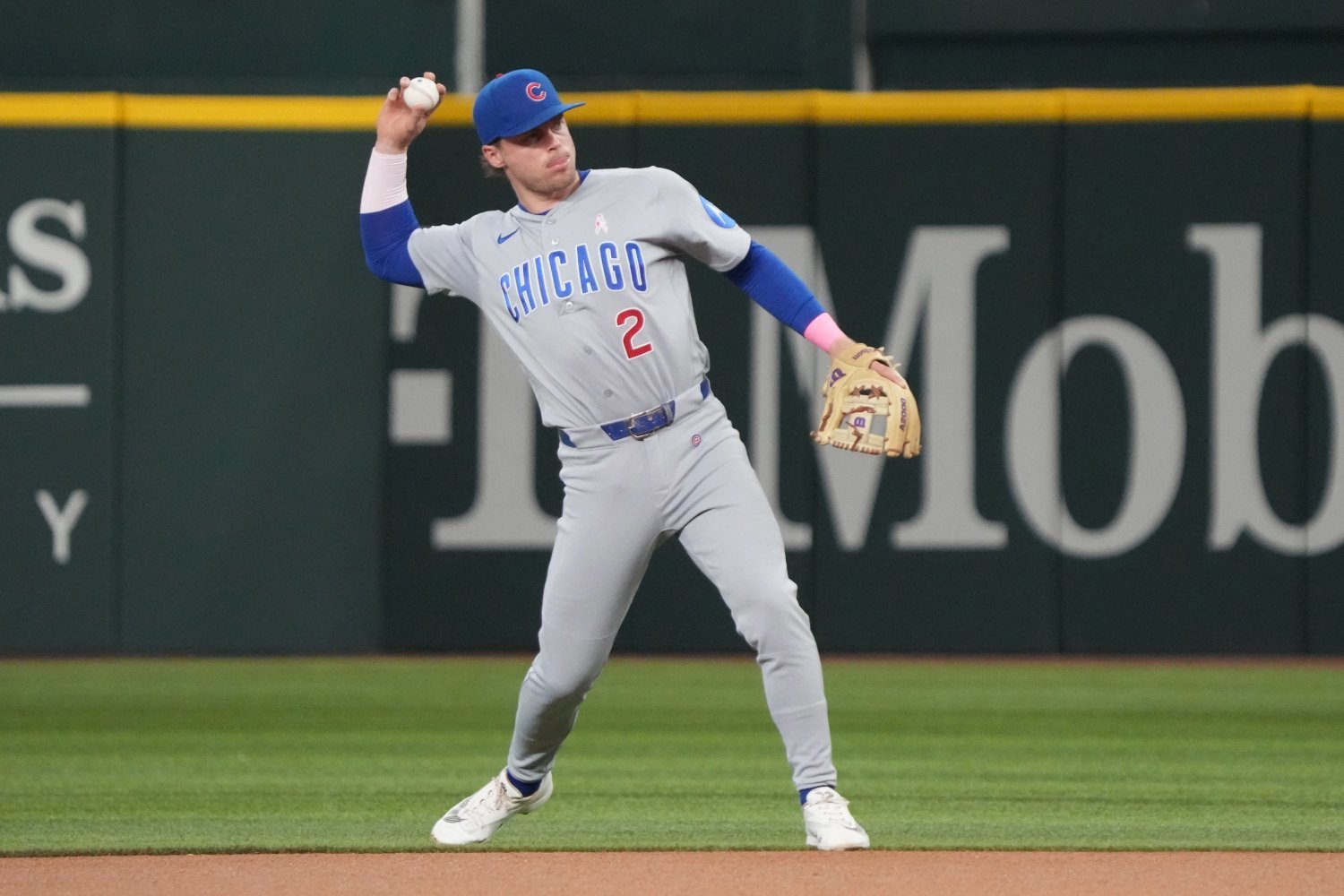 The Chicago Cubs are off to a remarkable start to the 2026 season. The team as a whole has put together a pair of 10-game win streaks, and Craig Counsell has done a spectacular job managing this squad. There are also a few players who haven’t been named All-Stars yet that are pushing for the first bids in their career. Nico Hoerner Fresh off of earning a six-year, $141 million extension with the team that drafted him, Nico Hoerner got off to a red-hot start to this year. Chicago’s second baseman has four home runs, 29 runs batted in and holds at least a .260 batting average for the seventh time in eight seasons with the North Siders. Diving a bit further, his hand-eye coordination and approach at the plate have been top-tier. Hoerner’s whiff rate (10.3%) and strikeout rate (7.9%) are both in the 99th percentile among hitters. The 29-year-old’s 8.9% walk rate is a tad below the league average, but it’s higher than his strikeout rate to this point, which is an outrageous accomplishment in 2026. Hoerner’s contact-first approach has earned him plenty of respect to start his big league career, but his defense has made headlines as well. The two-time Gold Glover is in a class of his own, logging seven outs above average through the first few weeks of the season. That mark puts him in the 99th percentile among MLB defenders. The Stanford alum has been as reliable as they come, and the leather-flashing and contact-oriented numbers he’s put up to start the 2026 season have only gotten better with time. Ben Brown Not only is Ben Brown putting together a season worthy of an All-Star nod, but he has the chance to form quite the one-year turnaround story. After producing mixed results in his call-up season (2024), Brown struggled mightily in a variety of ways last season. Producing a 5-8 record with a 5.92 earned run average, up two total runs from his mark the year prior, Brown gave up one of the highest average exit velocities (92.4 mph) in baseball, slotting him in the bottom percentile among all qualified pitchers. While his strikeout (25.6%) and whiff (28.3%) rates lived well above the league average, the hard-throwing righty gave up his fair share of pure contact and routinely ran into trouble. This season, the bullpen arm is sporting a 1-1 record, a 1.60 ERA and added a true third pitch. Just a season after utilizing his fastball/knuckle-curve combination 96% of the time, Brown expanded his arsenal. The 26-year-old reliever has mixed in a sinker, an option that rides up and away from lefties, similarly to his four-seamer. Overall, Brown has kept the ball down much more. After allowing average launch angles of 16.2 and 12.7 degrees in the last two seasons, the 7.2 degree mark has allowed a spike in ground ball rate, and therefore, a .196 batting average against. Brown has been one of the more impactful relievers in baseball and could be in the All-Star conversation if he keeps this pace up into the month of July. Seiya Suzuki Seiya Suzuki rounds out this list after making a strong case for himself just last year. The 31-year-old slugger is fresh off of a remarkable 2025 campaign that saw career-best marks in home runs (32), runs batted in (103) and walks (71). Suzuki is seemingly picking up where he left off last year, as his seven home runs in 31 games has him on another promising pace. The Cubs’ masher is seeing the ball very well, sporting a 42% sweet-spot percentage (93rd percentile) while walking 14% of the time (86th percentile). This has allowed his on-base percentage to explode toward the 400 mark, as the righty is developing a keen eye at the plate while also garnering more respect from opposing pitching. The Arakawa, Japan native has a chance to make this a banner season. He currently sits six home runs shy of 100 for his MLB career, could earn his first big-league contract extension and may even add “All-Star” to his already impressive résumé. View the full article
 -
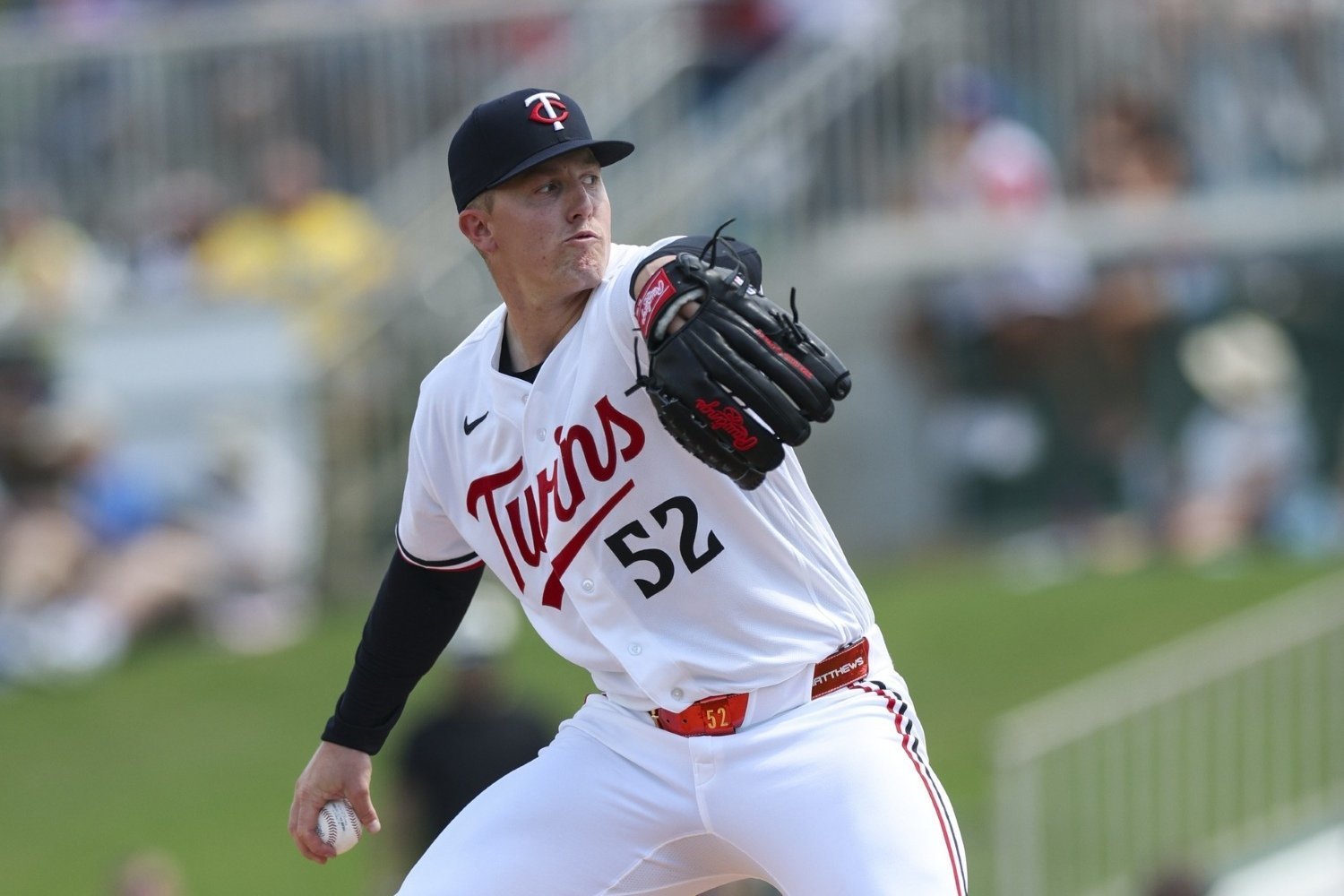 Coming into spring training, it seemed likely that Zebby Matthews would open the season in Minnesota’s rotation. Instead, a rough camp pushed him to Triple A St. Paul while younger arms moved ahead of him on the depth chart. By mid-May, Matthews suddenly found himself trying to prove he still belonged in the conversation. Thursday was an important step in that process. Matthews delivered arguably the best outing of his Major League career in Minnesota’s 9 to 1 victory over Miami. He tossed seven shutout innings, allowing just four hits and one walk while striking out five. It was the longest scoreless outing of his career and the third time he has completed seven innings in the majors. More importantly, Matthews looked completely in control from the opening inning. He needed only 83 pitches to record 21 outs, constantly getting ahead in counts and forcing weak contact. Matthews threw more than 67% of his pitches for strikes and never allowed Miami to build sustained pressure after the first inning. He opened at bats aggressively with his fastball, throwing 14 first-pitch four-seamers and landing 12 of them for strikes. For a pitcher whose biggest issue this spring was inconsistency in the strike zone and inability to finish hitters, it was a massive shift. Matthews’ season at Triple-A did not start particularly well. He struggled in his first two outings (10 ER in 7 1/3 innings), and there were several possible explanations. Cold early-season weather likely played a factor, but there was probably also a mental adjustment involved after entering camp expecting to compete for a Major League role. Since then, Matthews has looked much more like himself. Over his final five starts with St. Paul, he posted a 2.67 ERA with 28 strikeouts and eight walks. The raw stuff returned, but more importantly, there appeared to be a clearer plan behind his approach to hitters. That plan showed up immediately on Thursday. Matthews leaned heavily on his four-seam fastball against Miami, throwing it 48.2% of the time compared to 41.2% last season. The velocity was actually lower than it was in 2025, dropping from 96.2 mph to 94.8 mph, but the pitch played up because of his command and sequencing. Matthews consistently located it early in counts and elevated it effectively once he got ahead. The biggest adjustment may have been his curveball. Last season, Matthews barely used the pitch, throwing it less than 6% of the time. At Triple-A this year, it became a major area of focus, and the results were obvious Thursday. He used the curveball nearly 16% of the time and posted a 50% whiff rate on it, up from 32.1% last year. Interestingly, the pitch is now slower than it was a season ago, dropping roughly 3.5 mph in velocity. That may actually be helping its effectiveness. The added separation from his other offspeed pitches gives hitters another speed band to consider, making the breaking ball harder to recognize and to stay back on. His changeup also played an important role, particularly against left-handed hitters. Matthews used it regularly to neutralize left-handed bats, and while the only extra-base hit he allowed came on the pitch, the overall approach was encouraging. The pitch now carries more spin than it did last year, jumping from 1,499 rpm to 1,647 rpm, another indication that adjustments made at Triple-A may be helping him create better movement profiles across his arsenal. What stood out most on Thursday wasn't necessarily overpowering. It was efficiency, confidence, and conviction. Matthews looked like a pitcher who understood exactly how he wanted to attack hitters. The Twins have always believed the talent was there for him to develop into a mid-rotation starter. Thursday served as a reminder of why that belief still exists. Minnesota’s rotation picture has changed significantly over the last few months, and Matthews no longer enters the conversation as a guaranteed piece. But performances like Thursday’s make it difficult to ignore his upside. If the adjustments to his curveball usage, fastball command, and overall pitch mix continue to hold, Matthews may have forced his way back into a meaningful role much sooner than expected. What stood out about Matthews in his first start? Can his adjustments help him stick in the rotation? Leave a comment and start the discussion. View the full article
 -
 The Sounds have been beating up on Cubs' farmhands, while the T-Rats have been on the receiving end of that rivalry. The Shuckers and Warbirds have similar sub-.500 records, but it's the Wilson club trending up. Maryvale lost another. We chronicle game results here as our primary function, but there are days when the overall prospect shine simply overrides final scores and thankfully puts big smiles on Brewers fans' faces. Transactions: Milwaukee Brewers sent RHP Quinn Priester on a rehab assignment to Wisconsin Timber Rattlers. Milwaukee Brewers optioned RHP Coleman Crow to Nashville Sounds. Milwaukee Brewers selected the contract of RHP Peter Strzelecki from Nashville Sounds. Nashville Sounds activated RHP J.B. Bukauskas from the 7-day injured list. RHP Joshua Quezada assigned to Nashville Sounds from Wilson Warbirds. Nashville Pre-Game Media Notes (unavailable) Final: Nashville 12, Iowa (Cubs) 1 Box Score and Game Log Via the Sounds, game details, and we encourage readers to always review affiliate write-ups as part of their Link Report routine: Sounds Cruise Past I-Cubs in Lopsided Win - Stallings Records Second Straight Quality Start; Pratt Homers in Back-to-Back Games That Nashville game summary includes video of: Eddys Leonard's 1st inning grand slam (Leonard played 2B in this game, his defensive splits for 2026 can be found here) Jett Williams' three-run shot capping the Sounds' eight-run opening frame Cooper Pratt's three-run blast in the 3rd, the summary details a current 20-game run of superb production for Pratt Starter Garrett Stallings gifts Manager Rick Sweet a wonderful staff-saving effort When the Brewers pull an A-Ball pitcher up to AAA Nashville, it's to provide a body for a scrambled and tired staff. It's known to not be a long-term assignment, and because of that, it doesn't make sense to interrupt the development path of a Biloxi pitcher for a brief boomerang stint. What an adventure and thrill it must have been for just-turned 22-year Nicaraguan native Joshua Quezada to board that flight from North Carolina to Tennessee. The blow-out conditions and Stallings' 6.2 inning effort allowed Quezada to enter seamlessly, and the kid retired all four men he faced, registering a AAA strikeout as well. Awesome. Like called-up Peter Strzelecki, it's not hard to envision former big-leaguer J.B. Bukauskas getting a similar reward later this MLB season, but he'll need to provide both results and good health. The Brewers do seem to love themselves some Bukauskas. Did you miss another story of the day, although the Sounds did manage a "zero" in the error column Saturday. Two people accused of stealing baseball gloves belonging to Nashville Sounds players Admittedly, this was my favorite online reaction: Biloxi Pre-Game Media Notes Final: Montgomery (Rays) 10, Biloxi 6 Box Score and Game Log Catch up with the latest Biloxi pre-game audio interview archives - Manager Mike Guerrero's Friday chat recently added Via the Shuckers, game details: Made's Career Night Undone by Biscuits in Shuckers Loss - Top prospect becomes 5th Southern League player under 20 years old with multi-home run game Of course we'll catch up with Jesús Made in a moment, but first a bit of trivia. Earlier this week, we noted former Brewers farmhand Jadher Areinamo as part of this Biscuits' opposing squad. He was idle Saturday. But infielder Gregory Barrios, briefly discussed in the Mike Guerrero interview noted above, did play at shortstop and singled three times after being held hitless in his prior three games in this series. Barrios sports an uninspiring .616 OPS on the season. The $1 million bonus baby for the Crew in January 2021 was traded to the Rays in July of 2024. Do you remember the return? Answer shortly. Allison Mast of MLB.com has an informative article on Made and his big night here. As is often the case, the accompanying video of all three of Made's hits is from the home team Montgomery broadcast. It's so much more fun to provide the Biloxi calls: Made's third hit, a ground ball single up the middle, is within the linked article above. The Biloxi "X" feed has additional video, including two clips of particular note if you're a Matthew Wood fan. Then there's this from Javik Blak'e broadcast partner Max Gifford incorporating the "Choo-Choo" call, which I heartily enjoyed. Starter Bishop Letson only worked three innings and threw 42 pitches, 34 for strikes (no walks). Three of the four hits he allowed were doubles. Somehow his 6.66 ERA seems appropriate for his season thus far, there's a long way to go to exorcise early mound demons. When short starts lead to a parade of relievers, all it takes is for one blow-up outing to spoil the fun. It was RHP Nick Merkel, in just his 5th appearance after an injury-delayed start to 2026, with the tough night here. Trivia answer: Aaron Civale, so we thank Gregory Barrios for Andrew Vaughn! Wisconsin Pre-Game Media Notes (download link) Final: South Bend (Cubs) 24, Wisconsin 4 Box Score and Game Log Via the Timber Rattlers, game details: Cubs Drop Rattlers You might think you don't want to sit through five minutes of game action for this one, but it's oddly mesmerizing. The Braylon Payne and Andrew Fischer blasts ease the pain (my goodness, Andrew, such conviction!), and Chris Mehring's call on a South Bend blooper that dropped near the first base line late in the game is worth the movie ticket. The Quinn Priester angst is real, and I'll pull up one important March 2021 article by Adam McCalvy for you, fully aware that Priester has not undergone surgery, and at this time, has no surgical procedure scheduled. This is an important read. Brewers prospect Antoine Kelly recovering from TOS Kelly is still 26 years old and is currently toiling in AAA in his first year in the Dodgers' system. The game summary made mention of Caleb Thielbar, my goodness, 2010! A former Helena Brewer as well. We won't overly pile on except to say 24-year-old RHP Jose Nova is having a season to forget, though it'll likely be remembered in Link Report annals down the road. Wilson Pre-Game Media Notes Final: Wilson 8, Hill City (Guardians) 4 Box Score and Game Log Rodriguez Rockets Wilson Over Hill City - Meneses Majestic in Relief This was a fun one. Shortstop Brady Ebel with a double among his three hits, adding to the prospect luster in the system Saturday. Handelfry Encarnacion walked three times to lift his season long BB% to 17.0%. A total of six Warbirds reached base at least twice. The 4-5-6 hitters (Frederi Montero, Luis Lameda, Filippo DiTuri) each reached once and contributed an RBI apiece. So that's all nine batters contributing in significant ways, one of the prettiest offensive box scores we've seen across any level of the system this season. ***Here's a tip that we should have been taking advantage of previously within our reports. Notice that when you click on the word "Video" on that box score header via the link above, you'll be presented with a column for all the individual highlights for the game (both teams). The audio will always be from the home team broadcast, but that suits us just fine here. The plays will be listed chronologically from bottom to top. And best of all, unlike when we link to individual plays within our reports, you don't have to sit through annoying 15-to-30 second advertisements. Take a few moments now to follow the video link in the paragraph above and take in the sights and calls. Workhorse starter Jarrette Bonet plowed through 5.1 innings (93 pitches). We now are learning why the organization has placed faith in LHP Jose Meneses despite sub-par surface level figures in his pro career leading up to 2026. Meneses only turned 21 years old in March, while Bonet won't reach that age until August. Nicely done, Warbirds! Final: ACL Reds 7, ACL Brewers 3, seven innings as scheduled Box Score and Game Log The A-Crew were outscored, outhit, outdefended in this one. Left-handed slugging RF Alexander Frias only turned 18 years old in March. He doubled twice, topping at 102 MPH on a pulled line drive. As his MiLB Player Page indicates, eight of his 15 hits have gone for extra bases, and his ten-game line is a beautiful .375/.405/.675 (1.080 OPS). Switch-hitter Juan Martinez (player page) arrived in Maryvale coming off his .977 OPS Dominican Summer League 2025 breakout, and while not reaching that lofty figure yet, is off to a fine small-sample nine-game start splitting time at second and third base. Starting pitcher Diustin Mayorquin limited the free passes (none) but not the hits and runs. Reliever Dariel Jaquez limited the damage but not the walks (four). Usual day off for the Maryvale boys Sunday. Primarily early afternoon action Sunday, though the folks in Montgomery select the uniquely quaint 4:33 PM for their getaway day Shuckers start time. Weather is improving, spring is really here (well, most places, hopefully), enjoy! Go Brewers! Organizational Scoreboard including starting pitcher info, game times, MiLB TV links, and box scores Current Milwaukee Brewers Organization Batting Stats and Depth Current Milwaukee Brewers Organization Pitching Stats and Depth View the full article
 -
Is Vinnie Pasquantino Becoming Unplayable Against Lefty Pitchers?
DiamondCentric posted an article in Royals Keep
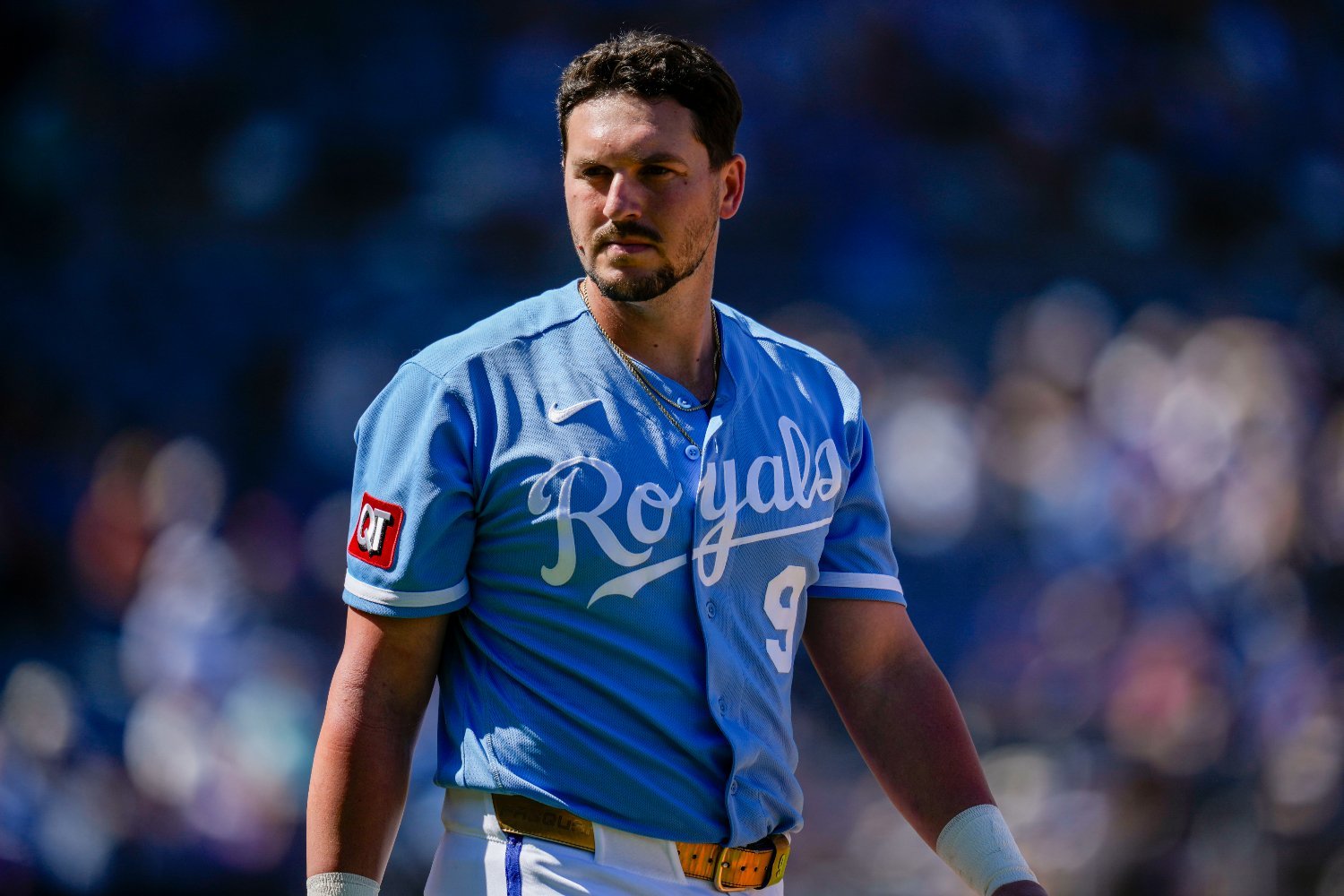 The Kansas City Royals lost their sixth-straight game on Saturday, falling to their I-70 rival, the St. Louis Cardinals, 4-2. The Royals now have a 19-27 record and not only sit in last place in the AL Central but are also 5.5 games behind the division-leading Cleveland Guardians. There are many issues with the Royals right now. The starting pitching has regressed heavily in May (they rank 24th in SP ERA this month, according to Fangraphs). The bullpen has been better, but remains inconsistent (they rank 22nd in bullpen ERA). Lastly, they have not seen much stability in the lineup beyond Bobby Witt Jr., who is making his case for an AL MVP bid despite the Royals' struggles. Unfortunately, one of the biggest issues related to the Royals' lineup has been the performance of their regular No. 3 hitter, Vinnie Pasquantino. There's a lot to be said about Pasquantino, who launched 32 home runs, collected 113 RBI, hit .264, posted a 116 wRC+, and accumulated a 1.5 fWAR in 682 plate appearances last year, a career-high. The Royals agreed to a modest extension with him for the 2026-2027 seasons ($11.1 million), and it seemed like Pasquantino was going to continue to be a force in the Royals lineup this year. Unfortunately, that's been far from the case for Pasquantino. In 189 plate appearances, Vinnie is hitting .201 with a .627 OPS. He also has five home runs, 18 runs scored, 22 RBI, and a wOBA of .278. When it comes to his Statcast percentiles, they haven't been impressive, though he has been walking more (10.8%) than he did a season ago. When looking at Pasquantino's Statcast percentiles via TJ Stats, there's not much to be encouraged by. The good thing is that he's making a good amount of contact, drawing a decent amount of walks, and pulling the ball in the air quite a bit. However, the bat speed and exit velocity metrics aren't great, and while the barrel rate is okay (53rd percentile), the hard-hit rate (29th percentile) and launch angle sweet spot percentage (33.6%) have not been. Thus, Pasquantino's outlook for the remainder of 2026 looks hazy based on these factors, though his xwOBA trend seems to hint that he's on the upswing after a brutal start to the season. Therefore, what should Royals fans expect from Vinnie, hitting-wise, for the remainder of 2026? While he's trending positively, will it be enough to come close to what he did a season ago? A lot will depend on his performance against lefties and whether that improves anytime soon this year. Vinnie's Brutal Splits Against Lefties This Year One of the big issues with Pasquantino is that he just isn't hitting left-handed pitchers well in 2026. In 53 plate appearances, Vinnie is slashing .120/.170/.160 with a .330 OPS against left-handed pitchers. He has zero home runs, just six hits overall, and two walks to 16 strikeouts. He is also posting a -10 wRC+ against lefties, according to Fangraphs. Of Royals hitters with five or more plate appearances this year, only Michael Massey has been worse against lefties (-12). Furthermore, Jac Caglianone (59 wRC+) and Carter Jensen (49 wRC+), two hitters who have seen the bench against left-handed starting pitchers, have been considerably better against southpaws than Pasquantino. On a positive note, his performance against righties has been productive. In 136 plate appearances, he is slashing .237/.331/.421 with a .752 OPS. All five of his home runs have come against righties, and he has 18 walks to 20 strikeouts. That 0.90 BB/K ratio is significantly better than the 0.13 BB/K ratio he is producing against lefties this season, which shows his approach and plate discipline are much better against righties. Lastly, here's what his Statcast splits look like against lefties and righties this year, according to TJ Stats. As Royals fans can see above, Pasquantino has been brutal against lefties, especially in the exit velocity, hard-hit, xwOBA, and LA Sweet-Spot% categories. All those rank in the 1st percentile this year, which is as bad as it gets. His barrel rate against lefties ranks in the 10th percentile at 3.0%. That's not great either, though not as putrid as his other Statcast categories. Another big concern against lefties is that he's just not making contact against them, either, the opposite of what we're seeing from Vinnie against righties. Against righties, his whiff% ranks in the 92nd percentile, his Z-Contact% ranks in the 94th percentile, and his K% ranks in the 82nd percentile. Conversely, against lefties, his whiff% ranks in the 44th percentile, his Z-Contact% ranks in the 14th percentile, and his K% ranks in the 7th percentile. It's one thing not to hit the ball with pop against lefties. However, to not even hit the ball at all? That's a huge red flag, especially for a hitter who was expected to be key at the top of the batting order. Now, is this a trend for Vinnie or just the product of a slow start? The career data doesn't suggest a major turnaround is to be expected anytime soon. In 478 plate appearances against lefties over his career, Pasquantino is slashing .231/.286/.357 with a .644 OPS and 76 wRC+. That is a far cry from his career .269/.339/.475 slash and .813 OPS and 123 wRC+ against righties. Even when comparing this season against lefties to 2025 in terms of Statcast percentiles, while he was better against lefties a year ago, it wasn't dramatically different. The main difference is that the Whiff% (70th percentile) and Z-Contact% (71st percentile) were much better in 2025 than in 2026. However, the barrel (37th percentile), hard-hit rate (46th percentile), and LA Sweet-Spot% (5th percentile) were only marginally better. Thus, I don't predict a big enough turnaround from Vinnie against lefties this year that would justify everyday at-bats from him, especially in the No. 3 spot in the batting order, from now on. What's the Solution With Vinnie? (And What's the Domino Effect On the Lineup?) The reality is that manager Matt Quatraro probably has to start limiting Pasquantino's at-bats against lefties, which means that he's a guy who may be sitting against southpaw starting pitchers. While that's a tough pill to swallow, it's necessary, especially since his overall Statcast percentiles this year just aren't where they were a season ago, as shown below by TJ Stats. Vinnie isn't hitting the ball as hard and launching the ball less this year. For that to improve, he needs more at-bats against pitchers he succeeds against. Unfortunately, that's righties, not lefties. A solution for the Royals would be to maybe platoon Vinnie at first with Salvador Perez. While Perez's .195 average and .560 OPS are pretty brutal, he's actually been better against lefties than righties this year. In 50 plate appearances against lefties, Perez is slashing .227/.300/.409 with a .709 OPS and two home runs. He also has three walks to nine strikeouts against southpaws. In 135 plate appearances against righties, he's slashing .185/.207/.300 with a .507 OPS and four home runs. Yes, he's hitting more home runs, but his plate approach has been far worse, as evidenced by his three walks to 32 strikeouts. The Statcast percentiles also support that Salvy is making better contact and showing better plate discipline and swing decisions against lefties as well. Against righties, Salvy's xwOBA is .258, which ranks in the 4th percentile. Against lefties? His xwOBA is .389, which ranks in the 85th percentile. He is also launching the ball considerably better against lefties (40%) than righties (30.9%), hitting the ball harder (51.4% hard-hit rate against lefties; 37.1% against righties), and barreling more balls as well (11.4% barrel rate against lefties; 8.2% against righties). Thus, Quatraro could bench Vinnie against lefties and let Salvy play first in those scenarios, with Elias Diaz or Jensen getting the starts behind the plate in those situations. Against righties, Salvy may need to concede some games to Jensen, especially since Jensen has been a much better hitter against righties this year than Salvy. I am not saying that Salvy shouldn't play against righties at all. Though it may not be enough to help him match what he did in 2025 or 2024, I think a positive swing could be on the way. Perez's presence is still important both at the plate and behind the plate. However, it should at the very least be a 50-50 split with Jensen and Perez against righties, and I think Perez should cede at-bats at DH against righties to Starling Marte, who's actually proven to be much better against righties this year than lefties, according to the Statcast percentile data via TJ Stats. Marte doesn't offer much upside, especially at 37 years old. However, with a .356 wOBA and .339 xwOBA against righties, I think he deserves more at-bats than what he's getting currently. At designated hitter, his age and defense are less of a liability. The problem offensively with the Royals goes beyond Vinnie, and, as Royals fans can see, benching Pasquantino has a domino effect on the rest of this lineup. However, the writing is on the wall: Vinnie isn't good against lefties, and he needs more days off against them, much to the chagrin of "Pasquatch" fans. Detroit manager A.J. Hinch benches Colt Keith and Kerry Carpenter, both very good and important players, against lefties, and it's produced encouraging overall results over the past couple of seasons. It's time for Quatraro to apply a similar approach with Pasquantino. View the full article
 -
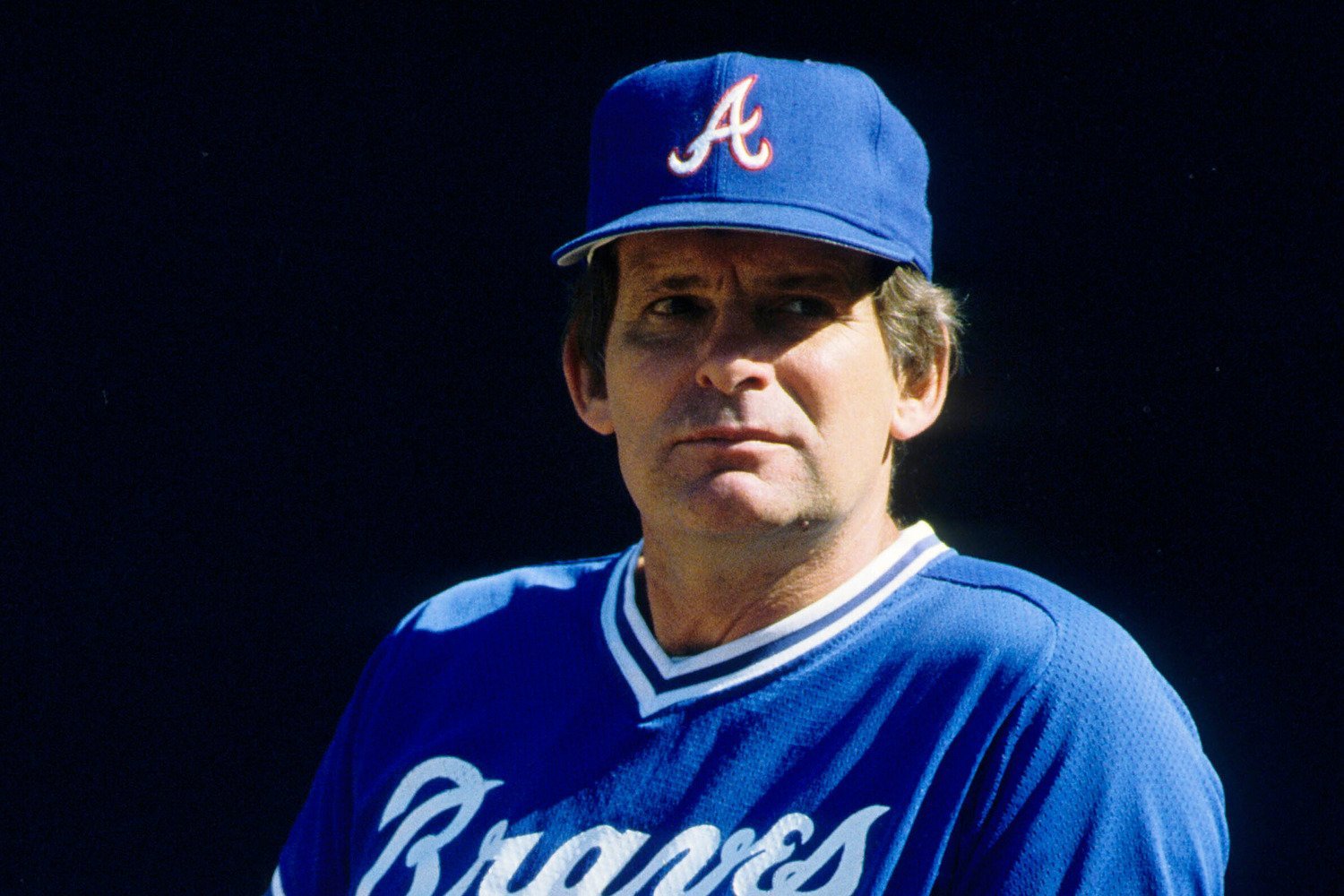 The Boss said no. Had the answer been different, Bobby Cox may never have been the manager of the Toronto Blue Jays. Shortly after the 1981 season, Toronto manager Bobby Mattick stepped down from his post. Mattick had been an unusual choice for the job in the first place, with virtually no previous managerial experience. Mattick was one of the first employees of the Blue Jays, having been named scouting supervisor in 1976. When Roy Hartsfield wore out his welcome as skipper after three straight losing and miserable seasons, general manager Pat Gillick offered the job to Mattick, who called his boss “crazy,” but after being persistently asked, Mattick accepted. “If you guys have the guts to offer me the job, I've got the guts to take it,” he said. Morale improved under Mattick, and so did the results, slightly. Toronto’s 67-95 record in 1980 was the first non-100-loss season the franchise had, but despite going 21-27 after the mid-season players’ strike in ‘81, the Blue Jays still finished dead last in the American League East for a fifth straight season. Rumours circulated that team president Peter Bavasi wanted to go a different direction, but both Bavasi and Mattick denied any truth to them when the manager stepped aside on October 7 to accept a newly-created position in Toronto’s front office. Bavasi said Mattick had the choice to continue. “If he wanted to subject himself to the pressures being a major league manager entails, he could have carried on,” said Bavasi. “I told him, ‘Make your choice.’ I think he made the right one.” Needing a new manager, Gillick looked into his past for a pivotal hire in Toronto’s infancy. Before he was hired as Bavasi’s second-in-command, Gillick spent time in the Yankees organization, coinciding with the last season of Gene Michael’s playing career in pinstripes. Michael had since become a member of the George Steinbrenner regime, hired as general manager in 1980 before moving down to the dugout in ‘81, where he lasted until September, fired for criticizing Steinbrenner’s constant criticisms. A month later, with the Yankees playing their way into the World Series, Gillick asked Steinbrenner for permission to talk with the doing-nothing Michael. No can do, said the Boss; a minor setback for Gillick, who was also hoping to speak with another former Yankee. Bobby Cox had been traded from Atlanta to New York in ‘67, and while he only played two seasons in pinstripes, it was his work afterwards that had him at the top of Gillick’s list. Cox began his managerial career in New York’s farm system, culminating in an International League championship in ‘76, also Gillick’s first summer in New York. Cox became Atlanta’s manager in ‘78, and the Braves showed slow but steady improvement over his tenure. It was seemingly coming to an abrupt halt. Atlanta bottomed out in ‘81 with an 11-16 record in September, and the question lingering into the offseason was whether Cox would remain the Braves’ manager. He would not. Cox met with owner Ted Turner and then sat alongside him the next day at a press conference announcing his dismissal. It was peak Ted Turner. He called Cox a terrific manager and person, saying if he hadn’t just been fired, he’d be one of the first calls to become Atlanta’s new manager. Cox remained one of his closest friends, Turner said, but "a new broom sweeps clean". It was cause to celebrate for Gillick, but one he couldn’t consummate just yet. Toronto had no idea if Cox would become available. Their previous interest in Michael was genuine, but as soon as Turner gaffed his way through his former manager’s dismissal, Gillick wanted no one else but Cox. He wasn’t the only one. The first call to Braves general manager John Mullen asking for permission to speak with Cox wasn’t Gillick, but Mets GM Frank Cashen, who had just fired Joe Torre. Cox was willing to entertain offers, and returning to New York had some appeal, enough for him to answer Cashen’s call. So the Blue Jays did their diligence with other candidates. Toronto spoke to ousted Expos manager Dick (in a few ways) Williams, who indicated he had interest. Tony Kubek’s name was mentioned, as was former Blue Jay Doug Rader, currently managing in Triple-A for San Diego. They were all fallback options. The job was Cox’s if he wanted it. “There hasn’t been a signing, all we’ve done is talk,” said Cox, who was on his way to Toronto the next day. There is no big story in the hiring of Bobby Cox. Gillick simply got his guy. Cox arrived in Toronto and sat in for a different type of press conference. He was introduced by Mattick, who joked he had been made the team’s new master of ceremonies. It was then Cox’s turn to wow those in attendance. “Smiling easily and speaking with crisp confidence,” said George Gamester in the Toronto Star, “the handsome, brown-eyed Oklahoma native vowed to field an aggressive, competitive team. Describing himself as ‘somewhere between Ralph Houk and Billy Martin’ in style, Cox summed up his goals with the Blue Jays as: I wanna win.” For Gillick, the hiring of Cox was a final piece in his growing puzzle to get Toronto out of the basement. Gillick opened up as he discussed the hiring, saying he studied previous expansion teams to find out how long managers lasted, and he said he detected a pattern in how things unfolded with each team. “Your first manager is in a totally impossible situation,” he said. “He has no talent to work with, so it’s just a matter of time until he and his players get discouraged and a change becomes necessary.” “Then you need a guy to carry you over the next period,” he said as he transitioned into speaking about Mattick. “You’re improving, but he’s still got a tough row to hoe.” Cox won 78 games in his first season before winning 89 in his next two with Toronto. His final season ended in crushing defeat in the ‘85 ALCS, but the team's 99 wins that season remain a franchise record. Even after he left to rejoin the Braves as their general manager (and owner’s bestie), Cox’s legacy endured. The franchise he built up defeated him in the ‘92 World Series, and Toronto’s manager was one Cox had brought into the organization. With Bobby Doerr exiting as part-time hitting coach alongside Mattick, Cox hired Cito Gaston, who had played one season for Cox in Atlanta in 1978. If Gillick needed to make his third hire an absolutely correct one, there is no doubt he delivered. View the full article
 -
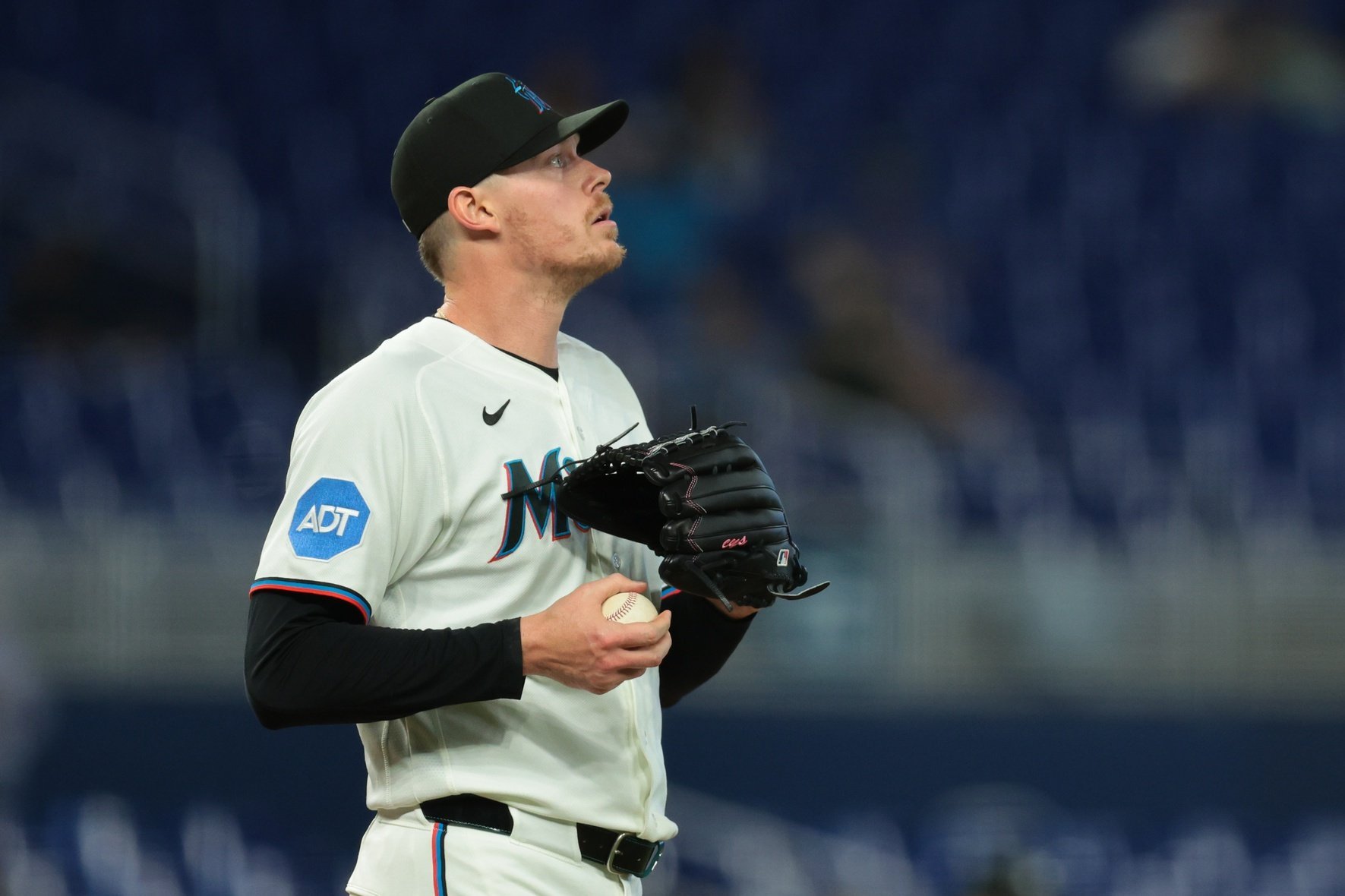 The Miami Marlins' big-ticket free agent signing from this past offseason has been one of their biggest liabilities thus far. Right-hander Pete Fairbanks inked a one-year, $13M pact in December, the most lucrative deal for any player during Peter Bendix's tenure as Marlins president of baseball operations. Fairbanks performed exactly as advertised on the club's season-opening homestand, posting goose eggs in the run column in his first three outings. His entrance from the bullpen has been a harbinger of suffering since then. Across those last seven innings, Fairbanks has allowed 11 runs, ballooning his season ERA to 9.00. He blew a save opportunity for the second time on Saturday against his former team, the Tampa Bay Rays, though Miami's offense bailed him out in extra innings. By win probability added, Fairbanks (-1.06 WPA) has been more detrimental to the Marlins' pursuit of relevance than any other player, even edging out the since-released Chris Paddack (-1.01 WPA). However, Fairbanks' peripherals tell us he's no worse a pitcher than he was in 2025. So much of the 32-year-old's uncharacteristic outcomes can be explained by bad luck. Fairbanks enters Sunday with a 3.20 FIP in 2026. That figure was 3.63 the year before and 3.50 the year before that. His career mark is 3.11. His strikeout minus walk rate is better than his overall career rate and he has surrendered only one home run, which came off the bat of early-season American League MVP candidate Ben Rice. Fairbanks has underachieved his expected earned run average by 5.85 runs, according to Baseball Savant. That is the 15th-largest margin out of the 480 MLB pitchers to face at least 25 hitters this season, putting him in the 97th percentile of "unluckiness." This is not comparable to the notoriously regrettable acquisition of Heath Bell 14 years earlier. Fairbanks, for the first time in his career, has a feel for three reliable putaway pitches in his four-seam fastball, slider and cutter. And he has all the motivation that he needs to get back on track with another trip through free agency looming following the 2026 campaign. If there is one area Fairbanks ought to emphasize, it's generating more ground balls. Although that backfired on him Saturday with Nick Fortes' game-tying RBI single, grounders are far easier overall for defenses to convert into outs. He currently possesses the lowest GB% in MLB (min. 25 BF). Expectations for Fairbanks should not be lowered despite the lowlights he has produced. With regular usage moving forward—his season has been interrupted previously by the birth of a child and a bout of nerve irritation—he's capable of resuming his usual high-caliber ways. View the full article
 -
 Tyler Schmitt held Rancho Cucamonga to two runs over 5⅔ innings as Lake Elsinore beat the Quakes 4-2, the only Padres affiliate to win Saturday. Victor Lizarraga turned in a six-inning, eight-strikeout quality start for San Antonio, but the Missions fell 5-2 to Wichita. Evan Fitterer also delivered a quality start in El Paso's 5-4 walk-off loss to the Salt Lake Bees. Rosman Verdugo homered for Fort Wayne in a 7-4 setback to Cedar Rapids. Padres Minor-League Transactions RHP Clark Candiotti assigned to San Antonio Missions from Fort Wayne TinCaps. Fort Wayne TinCaps sent RHP Jeferson Villabona on a rehab assignment to ACL Padres. Chihuahuas Rally Late, But Get Walked Off By Bees Despite a standout start from right-hander Evan Fitterer, the Triple-A El Paso Chihuahuas watched as the host Salt Lake Bees pulled out a 5-4 walk-off victory. The Chihuahuas held a 2-1 lead going into the bottom of the eighth inning. Jose Miranda went 3-for-4, while Samad Taylor, Nick Solak and Jase Bowen each had a pair of hits for the Chihuahuas, who outhit the Bees 12-8. All but two of El Paso's hits were singles. Taylor opened the game with a single to left and stole second before taking third on a flyout and scoring on a Solak single. The Chihuahuas made it 2-0 in the top of the third as Solak, Bowen and Mason McCoy had one-out singles to load the bases. Nick Schnell hit a grounder into the hole between second and first that the second baseman fielded near the outfield grass and spun to throw out McCoy at second as Solak scored. The shortstop pumped but didn't throw to first, then saw Bowen trying to score from second and threw home to nail him at the plate for a 4-6-2 double play to end the inning. Fitterer, meanwhile, was in the midst of six strong innings, allowing one run on three hits with two walks and a strikeout. His six innings matched the longest start by a Chihuahuas pitcher this year. But left-hander Kyle Hart got into trouble in the eighth, exiting with runners on first and third and one out. Right-hander David Morgan came in and immediately gave up a two-run double and a two-out RBI single for a 4-2 lead. The Chihuahuas tied it in the top of the ninth. Marcos Castanon had a leadoff single and went to third on Miranda's double. Carlos Rodriguez singled home Castanon, with pinch-runner Clay Dungan moving to third. After a strikeout, Taylor hit a dribbler out in front of the home plate that the catcher fielded and could only throw to first as Dungan scored. The Bees won it in the bottom of the ninth on a one-out double and a two-out RBI single. EP_0516.mp4 Player AB R H RBI BB K Samad Taylor 5 1 2 1 0 0 Will Wagner 5 0 0 0 0 2 Nick Solak 4 1 2 1 0 2 Jase Bowen 4 0 2 0 0 2 Mason McCoy 3 0 1 0 1 1 Nick Schnell 3 0 0 1 0 1 Marcos Castañon 1 1 1 0 0 0 Jose Miranda 4 0 3 0 0 0 Clay Dungan 0 1 0 0 0 0 Carlos Rodríguez 3 0 1 1 1 0 Anthony Vilar 4 0 0 0 0 1 Player IP H R ER BB K HR Evan Fitterer 6 3 1 1 2 1 0 Kyle Hart 1 1/3 1 2 2 2 3 0 David Morgan 1 1/3 4 2 2 0 3 0 Victor Lizzaraga K's 9, but Missions Can't Slow Wind Surge Right-hander Victor Lizzaraga struck out eight over six innings, but a three-run seventh inning proved too much to overcome as the host Double-A San Antonio Missions fell 5-2 to the Wichita Wind Surge. Lazzaraga gave up two runs (one earned) on six hits and didn't walk anyone. Both runs came in the fifth inning on a solo homer and a throwing error by shortstop Carson Tucker. San Antonio grabbed a 1-0 lead in the third inning as Tucker singled, stole second and went to third on an Ethan Salas groundout. Romeo Sanabria followed with a run-scoring single to right. After Lazzaraga gave up the two runs in the top of the fifth, the Wind Surge added three runs in the seventh. The Missions came back in the eighth as Tucker again singled, stole second and went to third on a throwing error by the pitcher. Salas followed with an RBI groundout. Sanabria walked and Francisco Acuna drew a two-out walk, but Braedon Karpathios struck out to end the threat. SA_0516.mp4 Player AB R H RBI BB K Carson Tucker 5 2 2 0 0 2 Ethan Salas 4 0 0 1 0 1 Romeo Sanabria 3 0 1 1 1 0 Albert Fabian 3 0 1 0 1 0 Francisco Acuna 1 0 0 0 3 0 Braedon Karpathios 4 0 0 0 0 2 Ryan Jackson 3 0 0 0 1 0 Kai Roberts 3 0 1 0 0 1 Tirso Ornelas 1 0 0 0 0 0 Chris Sargent 4 0 0 0 0 1 Player IP H R ER BB K HR Victor Lizarraga 6 6 2 1 0 8 1 Johan Moreno 1 4 3 3 1 1 1 Clark Candiotti 2 1 0 0 0 2 0 Rosman Verdugo Homers Again, But TinCaps Fall To Kernels The High-A Fort Wayne TinCaps couldn't dig themselves out of an early hole and dropped a 7-4 decision to the host Cedar Rapids Kernels. Cedar Rapids scored twice in the first, second and fourth innings to grab a 6-0 lead. Rosman Verdugo homered for the second day in a row, while Lamar King Jr. needed a ninth-inning infield single to extend his on-base streak to 27 games, the longest for a TinCap since Tirso Ornelas also had 27 in 2018. Verdugo hit his seventh homer of the season, a two-run shot, in the sixth after Justin DeCriscio was hit by a pitch to pull the TinCaps within 6-2. But the Kernels got a run back in the bottom of the sixth to go up 7-2. The TinCaps had one last rally in the ninth. Carlos E. Rodriguez singled and went to second on a throwing error by the third baseman, then took third on a wild pitch. Alex McCoy struck out and King hit a chopper to third base that couldn't be fielded cleanly and went for a hit, scoring Rodriguez. A passed ball put King on second base and a two-out single by Zach Evans moved King to third before Kavares Tears delivered an RBI single that ricocheted off the pitcher. But the TinCaps couldn't keep the rally going. TinCaps starter Abraham Parra gave up those first six runs in 3⅓ innings. FW_0516.mp4 Player AB R H RBI BB K Justin DeCriscio 3 1 0 0 0 0 Rosman Verdugo 4 1 1 2 0 2 Carlos Rodriguez 4 1 1 0 0 2 Alex McCoy 4 0 0 0 0 3 Lamar King Jr. 4 1 1 1 0 1 Jake Cunningham 4 0 1 0 0 3 Zach Evans 4 0 2 0 0 0 Kavares Tears 4 0 2 1 0 0 Kasen Wells 3 0 0 0 0 0 Jack Costello 1 0 0 0 0 0 Player IP H R ER BB K HR Abraham Parra 3 1/3 7 6 6 2 4 0 Kleiber Olmedo 2 2 1 1 2 1 0 Javier Chacon 2 2/3 1 0 0 0 4 0 Tyler Schmitt Stellar Again, Kerrington Cross Delivers For Storm Kerrington Cross had a tiebreaking two-run double in the bottom of the seventh inning as the host Low-A Lake Elsinore Storm turned back the Rancho Cucamonga Quakes 4-2. Truitt Madonna also drove in a pair of runs, while right-handed starter Tyler Schmitt gave up a pair of runs in 5⅔ innings as the Storm, who lead the California League's South Division, won for the fourth time in five games. Bradley Frye, Ty Harvey and George Bilecki each had two hits for the Storm. Schmitt was coming off two straight shutout performances of five and six innings. He allowed just one hit in five shutout innings to begin his outing vs. the Quakes to make it 16⅓ scoreless innings. In the sixth, he walked the leadoff hitter, then gave up a two-run homer to tie the game 2-2. Schmitt would get two more outs before needing to be relieved. He finished with three hits allowed and two walks with five strikeouts. The Storm scored twice in the bottom of the first. Frye and Harvey led off the inning with singles, with Frye taking third, before the next two batters flew out. Harvey stole second, then Madonna laced a double to left for a 2-0 lead. After the Quakes tied it in the sixth, the Storm came back in the seventh. Frye had an infield single and stole second, with Harvey walking. With one out, Harvey stole second, then Cross hit an opposite-field liner that short-hopped the wall in right field to easily score the two go-ahead runs. Right-hander Carson Swilling pitched 2⅓ scoreless innings after Schmitt exited and right-hander Will Koger earned his fourth save with a scoreless ninth. LE_0516.mp4 Player AB R H RBI BB K Bradley Frye 5 2 2 0 0 1 Ty Harvey 3 2 2 0 1 1 Ryan Wideman 4 0 0 0 0 0 Kerrington Cross 3 0 1 2 1 0 Truitt Madonna 3 0 1 2 1 2 Jorge Quintana 2 0 0 0 2 2 Jose Verdugo 4 0 0 0 0 1 George Bilecki 4 0 2 0 0 2 Conner Westenburg 4 0 0 0 0 2 Player IP H R ER BB K HR Tyler Schmitt 5 2/3 3 2 2 2 5 1 Carson Swilling 2 1/3 0 0 0 1 1 0 Will Koger 1 1 0 0 0 1 0 Top 20 Prospect Performance Ethan Salas: 0-for-4, RBI, K Kash Mayfield: DNP Miguel Mendez: DNP Kruz Schoolcraft: DNP Ryan Wideman: 0-for-4 Jorge Quintana: 0-for-2, 2 BB, 2 K Ty Harvey: 2-for-3, BB, 2 SB, K Kale Fountain: DNP Braedon Karpathios: 0-for-4, 2 K Lamar King Jr.: 1-for-4, RBI, K Jagger Haynes: DNP Alex McCoy: 0-for-4, 3 K Truitt Madonna: 1-for-3, 2B, 2 RBI, BB, 2 K Tucker Musgrove: DNP Garrett Hawkins: DNP Michael Salina: DNP Eric Yost: DNP Rosman Verdugo: 1-for-4, HR, 2 RBI, 2 K Bryan Balzer: DNP Deivid Coronil: DNP View the full article
 -
Brewers 2, Twins 1: No Strike Back, Only Strike Outs for Twins
DiamondCentric posted an article in Twins Daily
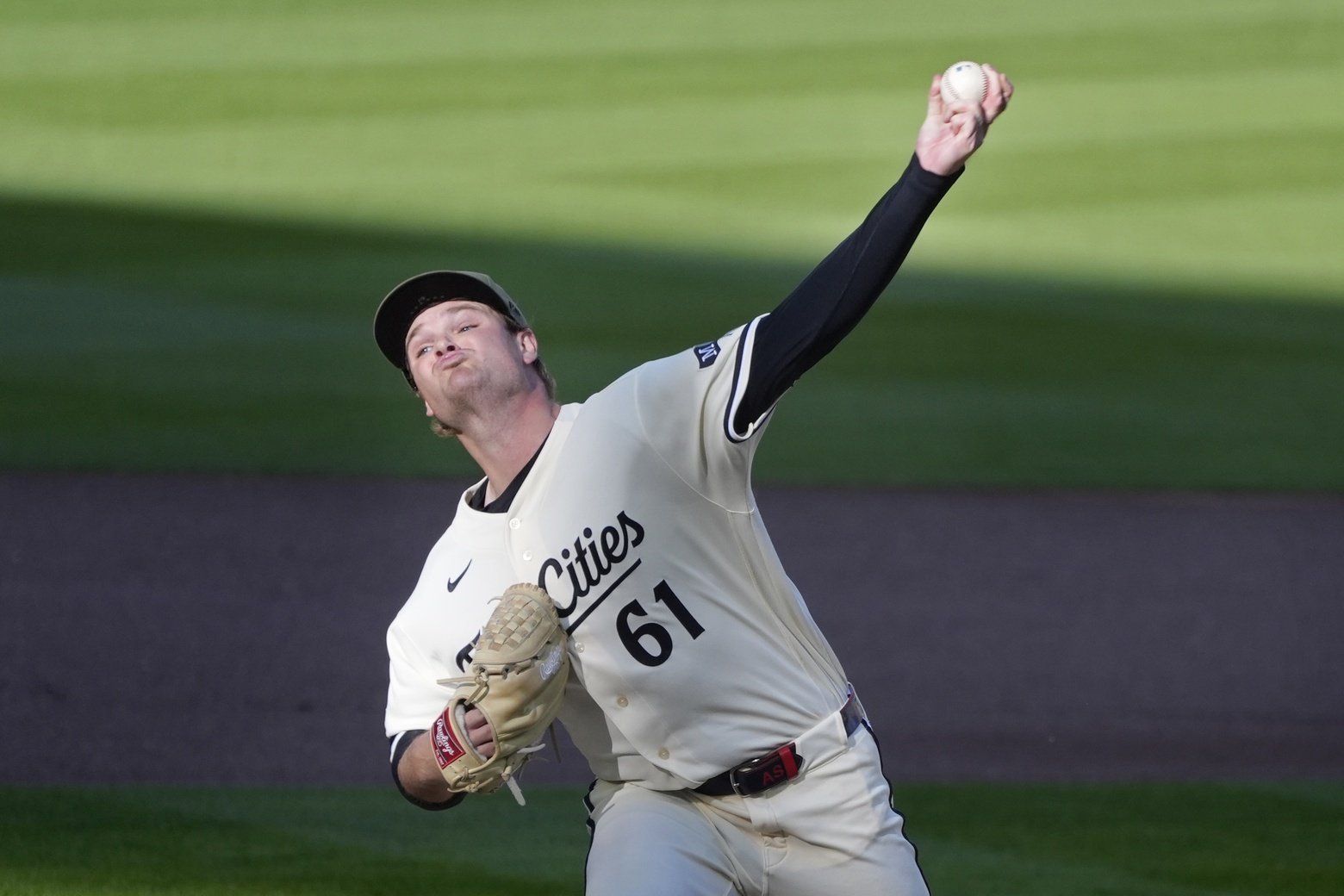 Box Score SP: Connor Prielipp 6.0 IP, 3 H, 1 ER, 2 BB, 8 K (86 pitches, 55 strikes (64%)) Home Runs: Trevor Larnach (2) Bottom 3 WPA: Austin Martin (-0.28), Brooks Lee (-0.15), Tristan Gray (-0.15) Win Probability Chart (via FanGraphs) The Twins looked to re-establish their home field after a rowdy Brewer crowd watched Milwaukee take the first game of the series. Minnesota had the right starter on the mound in young lefty Connor Prielipp, but would they have the right bats in the lineup with Byron Buxton sitting yet again and Luke Keaschall taking the night off against the equally young righty Logan Henderson? Ducks Left on the Pond The Twins had a golden opportunity to make a statement in the bottom of the second. After Prielipp dominated his way through his first two frames with three strikeouts, Josh Bell found his way on with a leadoff excuse-me single. Kody Clemens ripped a Henderson changeup into the corner for a double to put runners at second and third with nobody out. What happened next was a dreadful reminder of how things have been going, and how the Twins bats would continue to function on Saturday. The only way the Twins would fail to score would be strikeouts. Royce Lewis, strikeout. James Outman, strikeout. Austin Martin...strikeout. Trevor Larnach was back in the lineup after missing the past three games. He solved the "runners left in scoring position" dilemma in the bottom of the third inning by skipping a few steps and hitting the ball over the overhang in right to put his team up 1-0. Whiffing in the Field and at the Plate The Twins' lead didn't last very long, as the Brewers scraped a single and a walk on the base paths to start the fourth. After a rough call on a good play last night, Lewis got the gift of a double play grounder from Luis Rengifo. Unfortunately Royce forgot to get the ball before he tried to turn two, and by the time the ball got collected in left field Brice Turang had scampered all the way home from second base to knot the game at one apiece. In the bottom of the fourth, more Twins in scoring position with nobody out, and more whiffs. The Twins eventually went 0-8 with RISP and the strikeouts proved to be the most frustrating component. On three separate occasions the Brewers were either playing to surrender the run, or any ground ball or flyball could have done the deed. Prielipp got the chance to pitch into the sixth, and he tried to sneak a changeup past young phenom Jackson Chourio. That pitch got accelerated by 17 mph and found the seats for a 2-1 Brewer lead. Comeback Special? The Twins came into the ninth inning having gone 0-18 when trailing after seven innings in 2026. Righty Chad Patrick had entered the game in the bottom of the sixth, and was still pitching into the bottom of the ninth. The Twins mounted no threat, and Patrick got his four-inning save. What’s Next? The Twins look to salvage the final game of the series on Sunday. Twins righty Bailey Ober (4-2, 3.46 ERA) will look to match his shutout performance earlier this week, while the Brewers have yet to name their starter for the mid-day tilt. First pitch is scheduled for 1:10pm CDT. Postgame Interviews Coming Soon Bullpen Usage Spreadsheet TUE WED THU FRI SAT TOT Rojas 0 0 0 41 0 41 Topa 0 35 0 0 0 35 Adams 0 29 0 0 0 29 Orze 0 0 0 0 26 26 Morris 0 0 0 24 0 24 Rogers 0 0 0 23 0 23 Garcia 0 18 0 0 0 18 Gómez 0 0 0 7 11 18 Banda 0 0 0 8 0 8 View the full article
 -
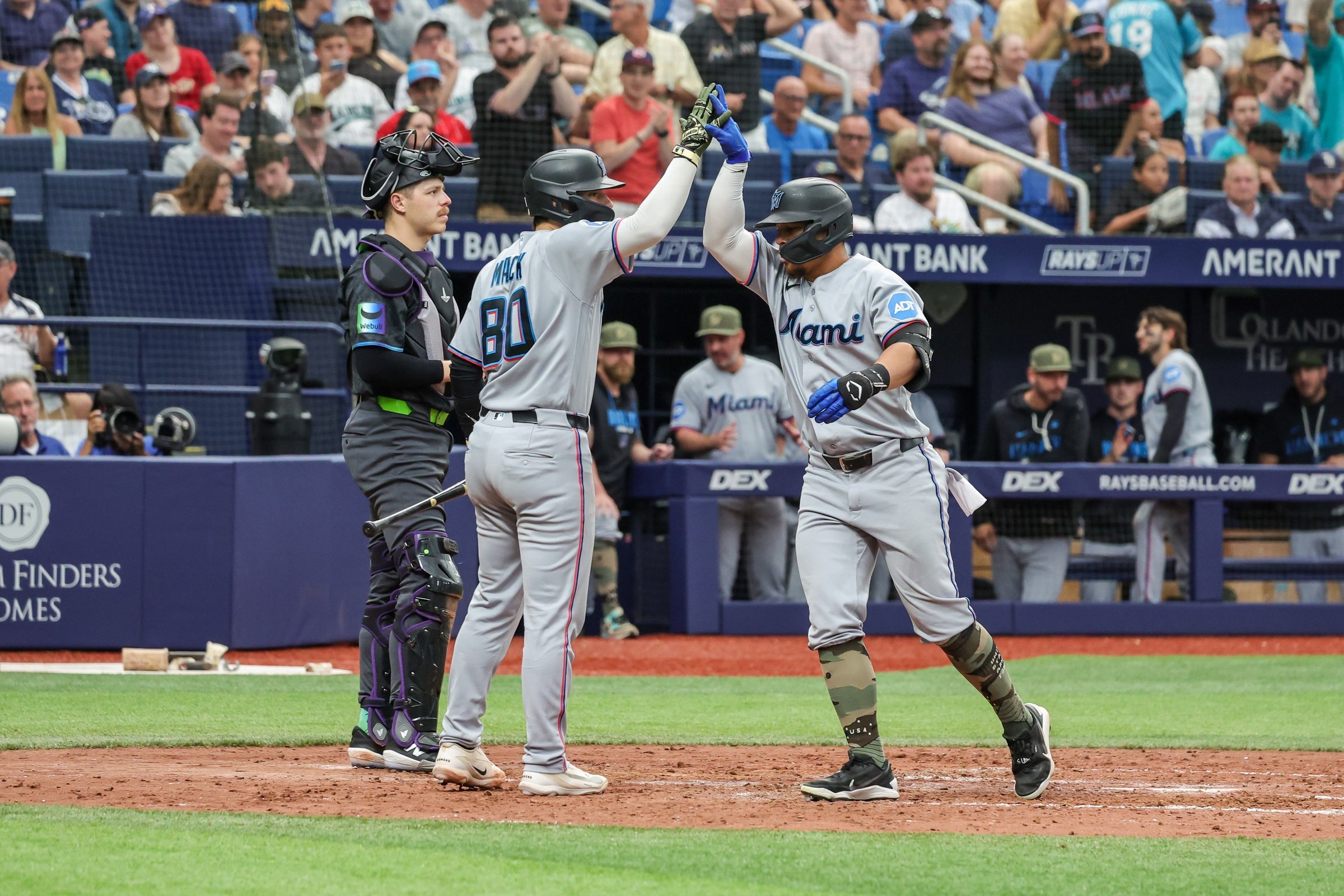 Pete Fairbanks ' tenure with the Tampa Bay Rays was one deserving of praise. Seven seasons, 256 plus innings pitched, 90 saves, an ERA below 3, and an American League pennant. So, when he returned to the place affectionately known as "The Trop," now a member of the Miami Marlins, a wave of emotion had to have hit him like a Mack truck. However, when tasked with securing the save in a one-run game headed into the bottom of the 9th, that emotion was substituted for pure adrenaline. Making his first appearance since sustaining nerve irritation in his right thumb on April 27th, Fairbanks recorded the first out by setting Richie Palacios down on strikes. What would follow only added to an already topsy-turvy game on both sides. Cedric Mullins worked a walk before stealing second and advancing to third on an errant Joe Mack throw. With two outs and Mullins now 90 feet from tying the score at two, Nick Fortes , a former Marlin, came to the plate against the former Ray in Fairbanks. In keeping with the proverbial nature that comes with baseball, Fortes would hit a ground ball to third baseman Javier Sanoja that had more spin than your average grounder, ultimately escaping the grasp of Sanoja and allowing Mullins to score and saddling Fairbanks with a blown save. "It's been hard to put together because of the uneven time and being away..but I thought the stuff was great," noted Clayton McCullough, who picked up his 100th managerial win. Just a half inning prior, Sanoja put Miami ahead with an RBI double, a much-needed break for someone who entered play Saturday batting .080 in May. While most blown leads for the Marlins suggest the inevitability of an eventual loss, the bats had other plans come the top of the 10th. Batting around, the Marlins scored eight unanswered runs on six hits, including another run-scoring double courtesy of Sanoja. Liam Hicks reclaimed sole possession of first place in runs batted in, now with 40 entering play Sunday. And though Lake Bachar would cough up a three-spot in the bottom half, Miami held on to take the second game, 10-5. "We hung in there, and certainly didn't have some of our finest moments, but we just have to find a way to win," uttered McCullough. Now 21-25, the Marlins trail the Phillies and Nationals by two games for second place in the National League East. In what would end up being a no-decision, his fourth in as many outings, Sandy Alcantara stymied the Rays' bats to the tune of six innings of one-run ball, striking out six. Alcantara will enter his next start 24 strikeouts shy of 1,000 for his career. In 10 starts this season, Alcantara owns a 3.53 ERA, all while trailing only Christopher Sanchez (who twirled a six-hit, 13 strikeout shutout on Saturday) for the MLB lead in innings pitched. Alcantara has thrown 63.2 innings to Sanchez's 64.1. In four career starts at Tropicana Field, Alcantara owns a sterling 1.67 ERA. "It was one of those games where we never gave up," noted Alcantara postgame. Tampa's lone run off Alcantara came in the bottom of the third when Chandler Simpson singled in Taylor Walls. Overcoming the adversity of a season-high four errors, Miami's offense was held scoreless for the first six innings at the mercy of Nick Martinez , who lowered his season ERA to 1.51. Among qualified pitchers this season, only Cam Schlittler (1.35) has a lower ERA than the aforementioned Martinez. Of the four Miami errors on the day, two came in a fifth inning that could have very easily gotten away from Alcantara and Co. With two outs and the light-hitting Walls batting, Xavier Edwards uncorked an errant throw for his second error of the day. Immediately following him, Chandler Simpson hit a ground ball that Sanoja was unable to corral, turning what looked to be a 1-2-3 inning into one where Alcantara threw 22 pitches. Trailing entering the seventh, Heriberto Hernández, facing the team he spent parts of three seasons with in the minor leagues, blasted a game-tying home run deep into the left field stands. Looking Ahead The Marlins and Rays will close out the series on Sunday afternoon in the rubber match. Eury Pérez (2-5, 4.94 ERA) will look to solve his road woes as he takes the ball for Miami. In 26 career starts away from loanDepot Park, Pérez owns a 5.14 ERA, averaging fewer than five innings per outing, though he has posted a 2.81 ERA in games pitched on artificial turf. Sunday will mark Pérez's first career start against Tampa Bay. Opposing Pérez, Drew Rasmussen (3-1, 3.16 ERA), will make his seventh career appearance against Miami. In 26 career innings against, Rasmussen has pitched to a 2.08 ERA. First pitch from Tropicana Field is slated for 12:15 EST. View the full article
 -
Coleman Crow Returns To Triple-A After Spot Start For Brewers
DiamondCentric posted an article in Brewer Fanatic
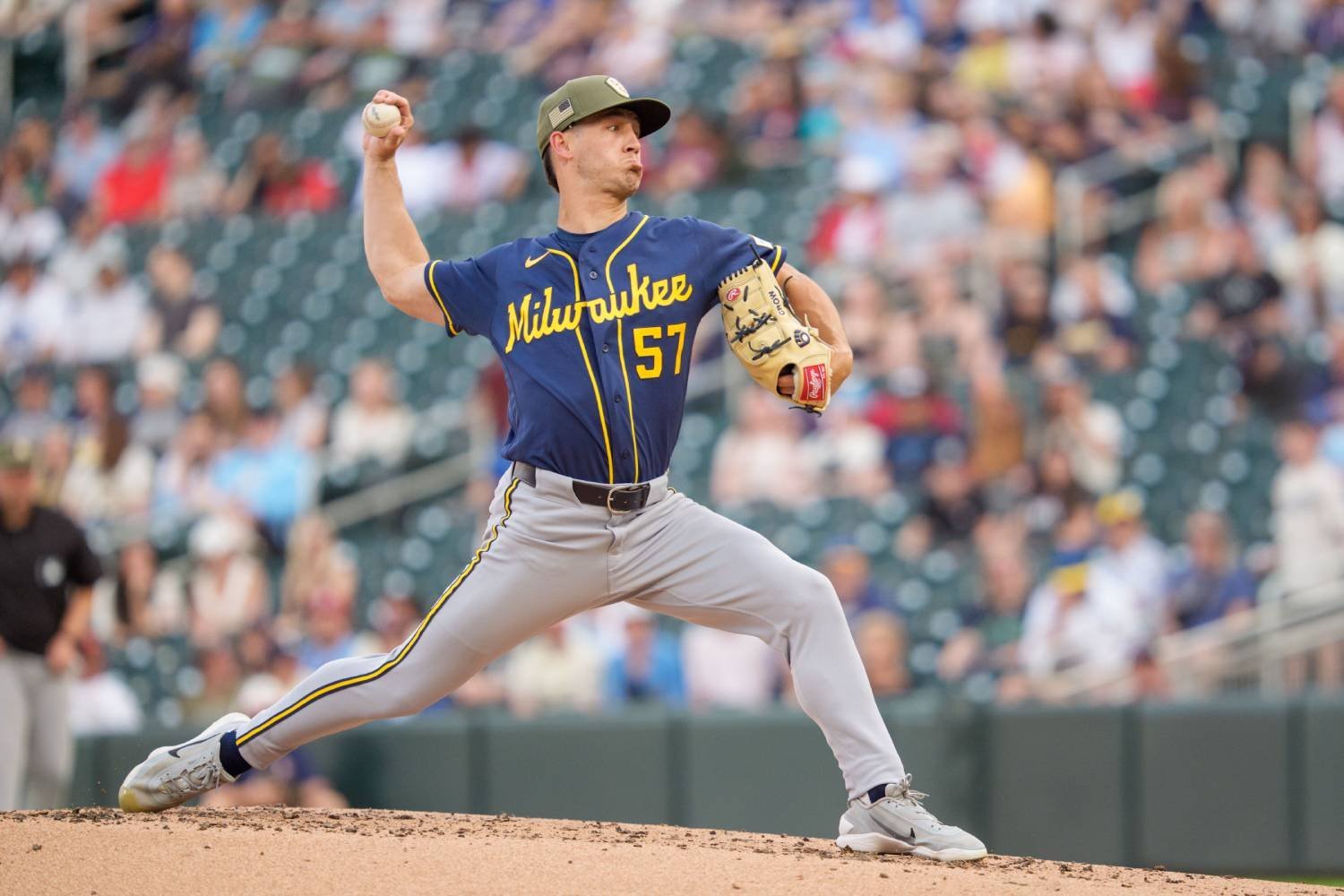 It is one and done again for Coleman Crow. The Milwaukee Brewers on Saturday sent the right-handed starter back to Triple-A Nashville following a spot start Friday. Right-handed reliever Peter Strzlecki was called up from Nashville. Also, the Brewers sent right-handed starter Quinn Priester on a rehab assignment to High-A Wisconsin. This is the second time this season Crow has been called up to make one start and be sent back to the minors the next day. Both of his starts have shown that he has the staying power to remain in the Crew's rotation. But the Brewers are expected to have a bullpen game Sunday in the series finale vs. the Twins to give the starters an extra day of rest going into the big series against the Chicago Cubs. Crow, Brewer Fanatic's No. 16 prospect, on Friday allowed one run on three hits and no walks with three strikeouts over five innings in a 3-2 win over the Minnesota Twins. His line was very similar in his MLB debut April 17 vs. the Miami Marlins. Strzlecki will be making his season debut with the Brewers and pitching for the first time in the majors since 2024 with the Cleveland Guardians. He has made 16 appearances at Nashville this year with a 4.12 ERA in 19⅔ innings. He has walked four and struck out 20. Strzlecki made his MLB debut with the Brewers in 2022, appearing in 30 games and posting a 2.83 ERA. Priester has been on the IL since March 25 with thoracic outlet syndrome in his right arm. View the full article
 -
 Blue Jays Affiliate Overview (May 14-May 15) Triple-A Buffalo Bisons Series vs Worcester Red Sox (Boston Red Sox): 3-1: Season Record: 22-21 Double-A New Hampshire Fisher Cats Series vs Reading Fighting Phils (Philadelphia Phillies): 2-2 Season Record: 21-13 High-A Vancouver Canadians Series vs Everett AquaSox (Seattle Mariners): 2-1 Season Record: 15-21 Single-A Dunedin Blue Jays Series vs Tampa Tarpons (New York Yankees): 1-3 Season Record: 14-23 FCL Blue Jays Week Record: 2-1 Season Record: 9-1 Triple-A Buffalo Bisons Season Record: 20-21 Series vs Worcester Red Sox May 14: On Thursday, Buffalo sent Chad Dallas to the mound to start the game against the Worcester Red Sox. He has quickly climbed the ladder of the Bisons’ rotation and might in fact be the best starting pitcher they have right now. While he won't go deep into games just yet, he continues to build back up after recovering from Tommy John surgery. In Thursday's game, he started out a little shaky, but then finished his outing strong. In the top of the first inning, he gave up a lead-off home run to Nick Sogard, then a single and a walk. He managed to escape the inning without giving any more runs up, thanks to Nate Eaton getting caught stealing after his single. It would be the second inning that got him going. He struck out two and got a flyout for the easy 1-2-3 inning. Buffalo's bat woke up in the bottom half of the inning, dropping four runs on Worcester starter Jake Bennett. The scoring was highlighted by RBI singles from Josh Rivera and Ryan McCarty, and it was capped off by an RBI double to right field by RJ Schreck. Dallas would strike out two more batters in the third inning, on his way to completing a shutdown inning following the scoring barrage from the offense. He would end his day after the fourth inning, only giving up the one run and striking out five. The bullpen came in for him and kept going strong. Devereaux Harrison, Brendan Cellucci, and Jesse Hahn combined to throw four shutout innings and handed it off to Chase Lee for the ninth. Lee struggled, though, surrendering a single and a two-run home run, before getting the final out and earning the save. Buffalo would take the game 4-3 and get back to the .500 mark. May 15: On Friday night, the Toronto Blue Jays finally got a glimpse of Josh Kasevich and what he was supposed to be. After missing a lot of 2025, he has been getting into a groove at the plate, and it all came together for him to help lead the Bisons to a victory. He would finish the night going 3-for-4 and knocked in three runs on three RBI singles. His first came in the bottom of the first, scoring RJ Schreck. The second would come two innings later and knock in Je'Von Ward. Then the last RBI single came in the bottom of the fifth and plated Ward again. Ward wasn't done helping Buffalo, though; his monster game was capped off in the bottom of the seventh, when he launched his second home run of the season. On the mound, Buffalo got a good start from CJ Van Eyk, as he pitched into the seventh inning and only gave up two runs on the night. Tanner Andrews secured the win with a four-out save, while striking out two. Buffalo finally pulled their head above the .500 mark with a 5-2 win. Double-A New Hampshire Season Record: 21-13 Series vs Reading Fighting Phils (Philadelphia Phillies) May 14: Postponed May 15, Game 1: In the first game of the Friday doubleheader against the Reading Fightin Phils, Gage Stanifer was the starting pitcher for New Hampshire, and he unlocked the next level of his pitching evolution. He went five innings on 76 pitches, 51 of them for strikes. He gave up four hits, two walks, and two runs (one earned), while striking out nine. The unearned run scored in the first inning when Stanifer made an errant pickoff throw, and the second run in the third on a single. Overall, Stanifer was spectacular, though. He mixed his pitches well and quite frequently used his split, which was the best version he has displayed in the minor leagues. He generated 15 whiffs and looked dominant and in control of his pitches throughout the game. On the offensive side, Victor Arias hit his third home run at Double A, this time in the sixth inning to tie the game. In the top of the seventh, an Austin Murr home run gave Reading a two-run lead. New Hampshire would lose 4-2. May 15, Game 2: The second game of the doubleheader didn't go any better for New Hampshire, despite swapping home/away with Reading. Arjun Nimmala went 2-for-3, Jay Harry homered. And Sean Keys had another double. Cutter Coffey supplied the only other hit, as New Hampshire struggled to score. In the fifth inning, Alex Binelas hit a double to center field that would score two runs. Down two, Victor Arias made it closer by driving in a run on a groundout. That would be as close as it got, though, as the Fisher Cats lost this one 3-2. High-A Vancouver Season Record: 15-21 Series vs Everett AquaSox (Seattle Mariners) May 14: Nolan Perry continues to show excellence in his breakout season, striking out double-digit batters for the second time already this season in just five scoreless innings. He did allow three walks and three hits, and he loaded the bases in the fifth but managed to get out of it. The offense also did its job, with Maddox Latta knocking in the first run on a sac fly in the bottom of the second, and J.R. Freethy added another run in the fourth inning on an RBI groundout to make it two to nothing. But the game truly broke open in the fifth inning, as after an Alexis Hernandez single, Carter Cunningham smoked his eighth homer of the season to right field to double the lead. Jacob Sharp had his own RBI groundout in the seventh, and Brennan Orf put the game nearly out of reach with a two-RBI single in the eighth. Juanmi Vasquez had his best appearance of the season, going 2.2 innings, allowing only one hit and striking out three. Eminen Flores allowed two runs in the ninth inning, but Jonathan Todd replaced him and earned his second save of the season to get Vancouver a much-needed win. May 15: Postponed Single-A Dunedin Season Record: 14-23 Series vs Tampa Tarpons (New York Yankees) May 14: It was close for the entire game, as Troy Guthrie took the mound for the Jays and the rehabbing Chase Hampton took it for the Tarpons. The Jays were able to get on the board first with Blaine Bullard scoring Owen Gregg on a groundout, and a Hampton wild pitch allowed Dariel Ramon to score that same inning. The Tarpons answered right back as Guthrie gave up an RBI groundout of his own, before giving up a solo shot to Jackson Lovich to even it up. Guthrie allowed another homer in the fourth to give up the lead, but in the top of the sixth inning, the Jays reclaimed the lead after Yorman Licourt hit an RBI double and Aldo Gaxiola scored him right after with a single. Austin Smith blew the save on a wild pitch in the bottom of the sixth, and with the score tied in the bottom of the eighth inning, the bullpen faltered again, this time with Jack Eshleman taking the L with Lovich hitting his second homer of the day against him, resulting in a close 5-4 loss for the Jays. May 15: The Jays were able to steal a close one today, as Silvano Hechavarria is still showing some rust after coming back from the injured list. He had a clean first inning despite two walks, and the Jays gave him the lead with an Aldo Gaxiola two-run shot and a Jake Cook sac fly to put them up early. Hechavarria couldn’t get out of the second inning, however, as he loaded the bases on a hit by pitch, a single, a balk, and a walk to start the inning. He got a flyout and a strikeout, but walked yet another batter, leading to Carson Myers replacing him. Myers caught the walking bug and walked in another run before giving up a two-run double to Luis Puello to lose the lead for the Jays. The Jays slowly climbed their way back as Gaxiola got his third RBI of the day on a groundout to bring it within one, and in the fourth inning, JoJo Parker tied it up with an RBI single. Myers was able to pitch well heading into the fifth inning, but was replaced mid-inning by Luis Fonseca, who got out of the fifth inning but allowed a three-run homer in the sixth inning to once again put the Jays in a hole. Juan Rosas inched it closer with an RBI single after pinch-hitting for Edward Duran in the eighth, and a Jake Cook RBI groundout led to an Eric Snow single to tie it up and send it to extras. Josbel Garcia pitched 3.1 scoreless innings in his Dunedin debut, and in the top of the 10th, Gaxiola had RBI number four to give the Jays the lead, and Lluveres Severino was able to prevent the ghost runner from scoring in the bottom of that inning, as the Jays just squeaked by the Tarpons. FCL Blue Jays Season Record: 9-1 May 14: In the Thursday game between the FCL Blue Jays and the FCL Tigers, the game was a slugfest from the start. Cris Rodriguez homered for the Tigers squad in the second inning to put them up by five early. In the third, the Tigers would add home runs from Ronald Ramirez and Steven Madero. Renyel Campos launched a home run for the Blue Jays team in the bottom half of the inning, which was followed up by an Andres Arias RBI single and a bases-loaded walk. Angel Guzman and Pascual Archila would homer for the Blue Jays as well in the sixth and seventh innings, respectively. It wasn't enough though, as the Blue Jays squad would lose this one 11-8. May 15: The FCL Jays got another win on Friday, and it was in part thanks to a one-man show at the plate. Sam White, who the Toronto Blue Jays signed as an undrafted free agent, was the star of the game. He hit two solo home runs, the first came in the fourth inning. The second solo home run he would launch in the sixth, which would prove to be the game winner. In between those home runs, Angel Guzman added a two-run double in the fifth, scoring Pascual Archilla and Keegan Pieternella. The only other hit they would have in the game was a single by Sam Smith. On the mound, Angel Rivero had a nice start. He pitched 3.2 innings, surrendered five baserunners, two runs (none earned), and struck out four. The FCL Jays won 4-3. View the full article
 -
Mets Place Clay Holmes On Injured List In Latest Blow
DiamondCentric posted an article in Grand Central Mets
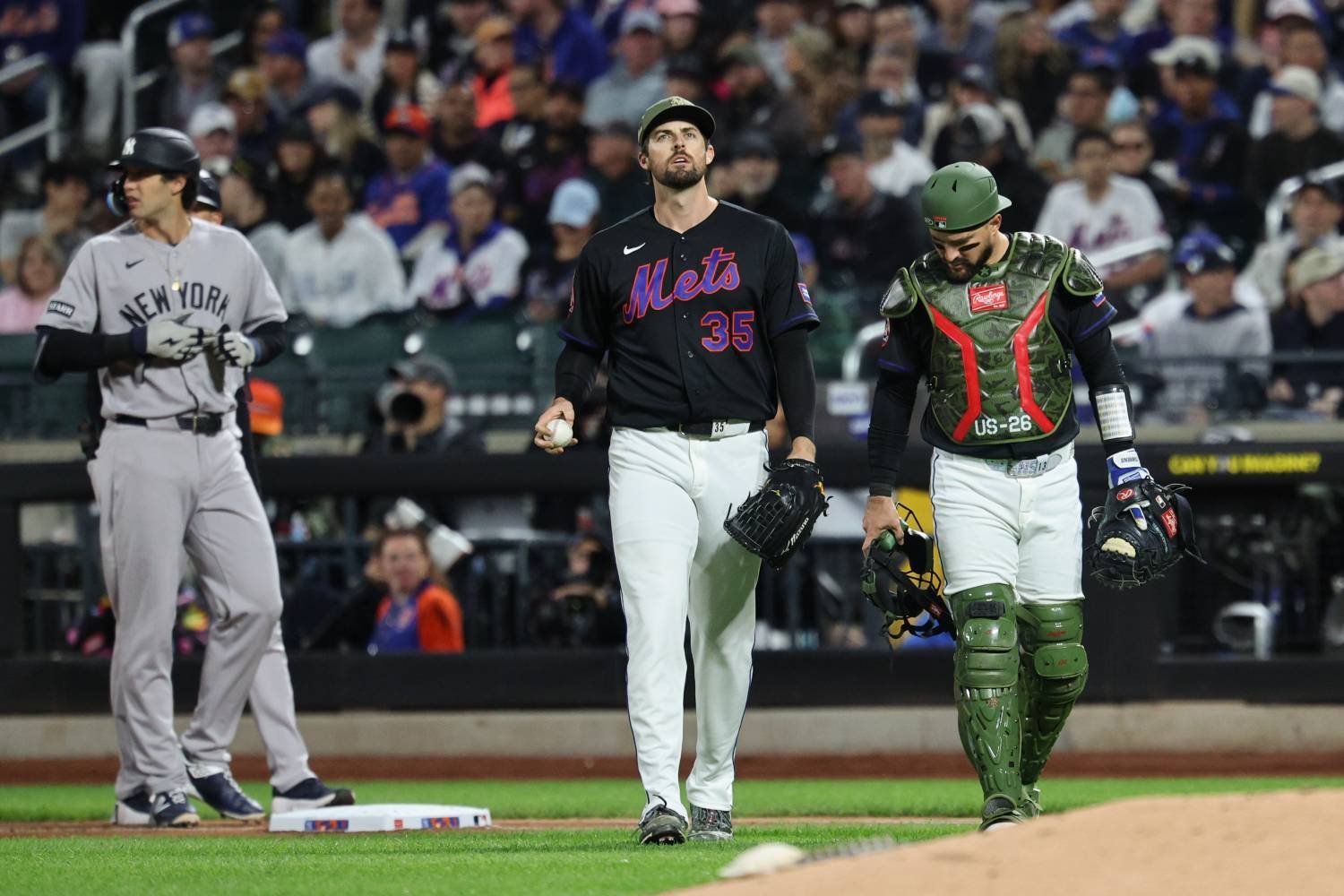 The nightmare start of the 2026 season became even more frightening. Right-handed starter Clay Holmes was placed on the 15-day injured list Saturday by the New York Mets with a fractured right fibula. Right-handed reliever Joey Gerber was promoted from Triple-A Syracuse. The Mets entered play Saturday with one of MLB's worst records at 18-26 despite having one of the highest payrolls in the game. Holmes was injured in Friday's opener of the Subway Series against the New York Yankees at Citi Field when rookie Spencer Jones drilled the right-hander with a 111.1 mph comebacker off his right leg. Holmes made his way toward first base in an attempt to cover the bag after the ball ricocheted off the bottom of his right leg and into foul territory, but there was no play to be made. Holmes remained in the game for a brief period before being taken out. Holmes is expected to miss a significant amount of time, perhaps not returning until after the All-Star break at the earliest. Holmes is the seventh Mets pitcher to go on the IL this season, including fellow starters Kodai Senga and Tylor Megill. Four of those pitchers are on the 60-day IL. Holmes was converted into a starter last year in his first season with the Mets after a career as a very good reliever with the Yankees. He took to his new role very well, posting a 3.53 ERA in 165⅔ innings, with a 9.3% walk rate and 18.2% strikeout rate, both just a bit below the MLB average(8.5%, 22.6%). He was off to a very fine start this year with a 2.39 ERA in nine starts and 52⅔ innings, registering an 8.4% walk rate and 20.9% strikeout rate. Gerber came up for one appearance in early April before going on the 15-day IL with a blister on his pitching hand. He had been on a rehab assignment with Syracuse before being activated off the IL last week and optioned to Triple-A. At Syracuse this year, Gerber pitched 11 innings over 10 relief appearances with a 7.36 ERA. The Mets will have to find a rotation replacement for Holmes when his turn comes around next. View the full article
 -
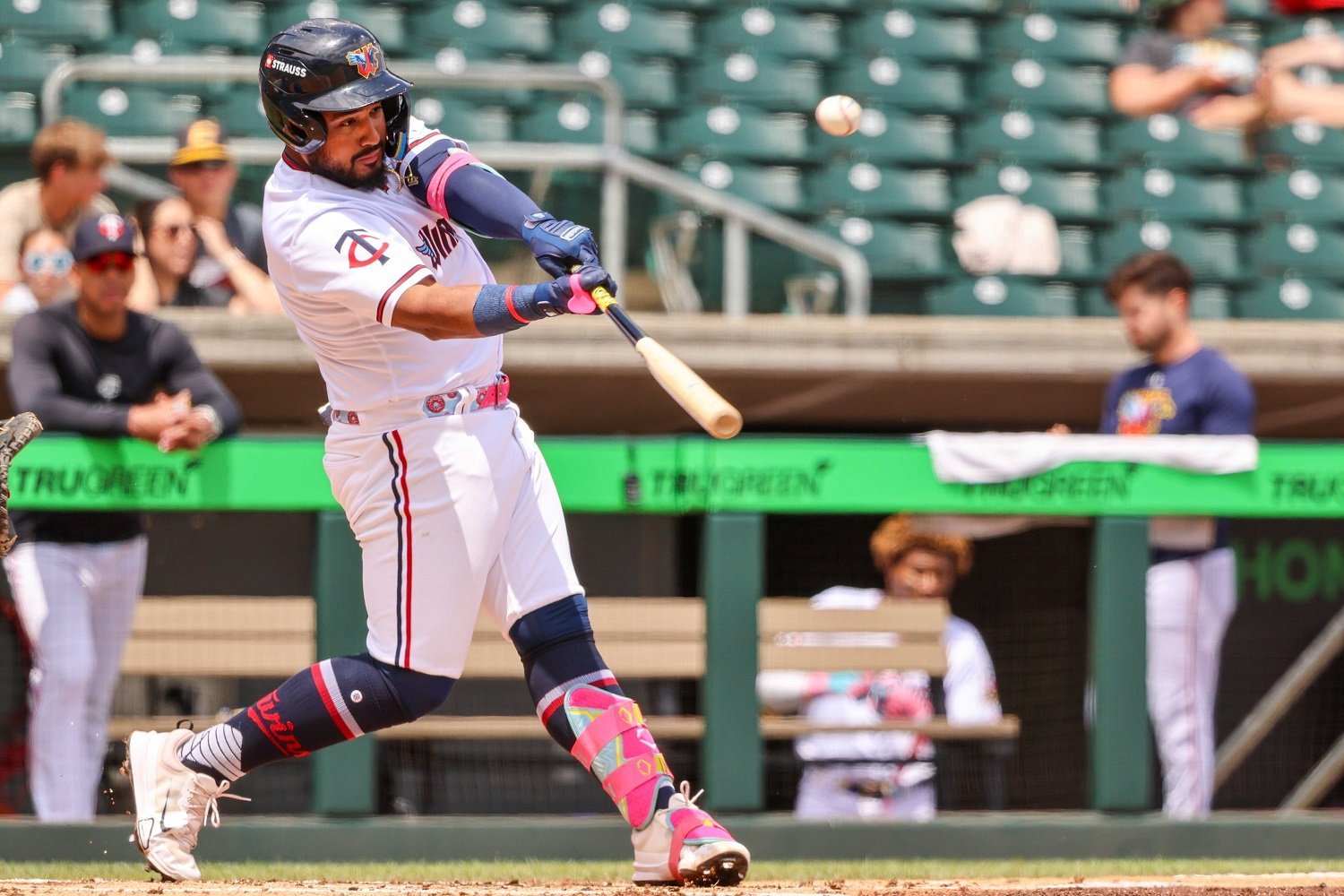 TRANSACTIONS 2025 draft pick Jason Reitz began a rehab assignment in the FCL. So did 2024 draft pick, Michael Carpenter. Cody Laweryson will begin a rehab assignment with the Saints on Saturday. SAINTS SENTINEL Game 1: St. Paul 8, Columbus 5 Box Score Going to the bottom of the fifth inning in Game 1 of a doubleheader, the Saints found themselves down by a score of 4-2. However, they tied it in the bottom of the fifth and added four more runs in the bottom of the sixth to take the first game. Down 1-0 in the bottom of the first, Kaelen Culpepper led off the home half with his ninth home run of the season. Aaron Rozek started for the Saints. The lefty gave up one in the first inning, but he gave up a total of four runs (just one earned) on four hits over five innings. He had one walk and struck out six batters. The bottom of the fifth began with a Tanner Schobel double. With one out, Hendry Mendez walked. After a fielder’s choice left runners on first and third with two outs, Matt Wallner lined a single off the wall in right to drive in Schobel and make it 4-3. Wallner was then caught stealing, but Fedko was able to score from third to tie the game at 4-4. Kody Funderburk came on and gave up one run on two hits in the sixth inning. Orlando Arcia reached on an error in the bottom of the sixth inning. Gabriel Gonzalez followed with a single. After an out, Ben Ross stayed hot and drilled his eighth double since joining the Saints to drive in both runners and give his team the 6-5 lead. After Schobel walked, a wild pitch advanced the runners to second and third. Hendry Mendez lined a single to right field to drive in two more runs and make it 8-5. Matt Bowman struck out the side in the bottom of the 7th inning to claim his third save. Ross was 2-for-3 with two doubles and three RBI. Gonzalez went 2-for-3. Schobel went 1-for-2 with a walk. Mendez was 1-for-2 with two walks and two RBI. Game 2: St. Paul 5, Columbus 3 Box Score Without the help of a big inning, the Saints swept the Clippers with a solid Game 2 performance They took a 1-0 lead in the bottom of the second when Tanner Schobel drove in Ben Ross with a single. In the third inning with two outs, Kyler Fedko was on first base. Orlando Arcia singled. Fedko scored on a single by Gabriel Gonzalez, and Arcia scored when Ben Ross reached on a throwing error to make it 3-0. The fourth frame began with walks to Schobel and Noah Cardenas. Two batters later, Fedko singled to drive in Schobel. Mike Paredes started and tossed four scoreless innings. He gave up one hit, walked one and had four strikeouts. Marco Raya came on to start the fifth. The inning started with a Dom Nunez homer. After a strikeout, Maick Collado homered. Next up was Kahlil Watson, and he drilled his eighth home run. The lead was down to just 4-3. Raya got a ground out but then walked a batter before Brian Dinelman turned to John Brebbia. Brebbia got four outs, and then Drew Smith recorded his third save with a perfect seventh inning. The Saints got a little insurance in the bottom of the fifth. With one out, Ross walked. He scored on an Aaron Sabato double. Gonzalez was again 2-for-3 in the game. Fedko, Ross, and Schobel each had a single and a walk. Sabato’s double was his sixth of the season. WIND SURGE WISDOM Wichita 3, San Antonio 10 Box Score This wasn’t a great game for the Wind Surge. Ty Langenberg started and gave up three runs on four hits and two walks in 2 2/3 innings. Spencer Bengard then gave up one run on three hits and two walks in 1 1/3 innings. Jacob Wosinski gave up four runs on three and four walks in 1 1/3 innings. Jarret Whorff was charged with two runs on four hits in 1 2/3 innings. Kyle Bischoff tossed one scoreless inning. The Surge scored their three runs on just three hits and two walks. Kyle DeBarge went 2-for-4. Andrew Cossetti hit his third double of the season. Check out the Top 20 Padres Prospects according to our sister site, Padres Mission. KERNELS CHRONICLE Cedar Rapids 3, Fort Wayne 12 Box Score After falling to Fort Wayne 11-3 on Thursday, a fictitious sportswriter asked Kernels manager Brian Meyer if things could have possibly gone any worse. Meyer fictitiously replied, “Sure, we could have lost 12-3.” And that’s just what they did on Friday night in Iowa. The Kernels had just five hits in the game. Only Yasser Mercedes, who was 2-for-3 with a walk, had more than one hit. The Kerels scored their three runs in the bottom of the sixth. They were already down 12-0 but kept battling. Michael Ross gave up six in the first inning but was able to give his team for innings. He was charged with eight runs on nine hits (2 homers). He had four strikeouts and no walks. Christian Becerra gave up four runs in one innings on four hits and a walk. He struck out three batters. Yehizon Sanchez gave up two hits and a walk over two scoreless innings. Nick Trabacchia also tossed two scoreless innings. Check out the Top 20 Padres Prospect according to our sister site, Padres Mission. LHP Kash Mayfield started and tossed five scoreless, one-hit innings. He had nine strikeouts and no walks. MIGHTY MATTERS Ft. Myers 4, Bradenton 3 Box Score The Mussels fell behind 3-0 after one inning but then combined to toss eight scoreless innings. That allowed the Mussels hitters to ease their way back into the ball game. Matthew Dalquist started and was charged with three runs on six hits and a walk. He had four strikeouts. Brent Francisco gave up three hits over three scoreless innings. He struck out one batter. Michael Zeldin earned his third save with two scoreless innings. He had four strikeouts and gave up just one hit. Dameury Pena led the offense. He went 3-for-5 at the top of the lineup. Quinn McDaniel went 2-for-3 despite not starting. Ryan Sprock put the team on the board in the top of the fourth when he hit his second home run of the season. The second run came on a two-out single by Dameury Pena that drove in McDaniel in the fifth frame. In the top of the sixth, JP Smith walked, Jayson Bass walked, and then Ian Daugherty walked to load the bases with one out. Smith scored on a wild pitch that tied the game 3-3. A fielder’s choice and a walk re-loaded the bases. Harry Genth came to the plate and took one for the team. He was hit by a running fastball in the elbow which drove in McDaniel with the go ahead run. The bullpen held on and the Mussels were victorious. COMPLEX CHRONICLE FCL Twins 11, FCL Red Sox 12 (10 innings) Box Score The big story in this game was probably the professional debut of RHP Jason Reitz. The Twins fifth round pick a year ago started this season on the IL with a foot injury. The 6-11 righty gave up just one hit over two scoreless innings. He walked none and had three strikeouts. Cory Lewis came on next to continue his rehab. He gave up three runs on four hits and a walk over 2 2/3 innings. He also hit a batter and threw two wild pitches. He struck out three batters. Jack Wagner, recently signed out of Notre Dame, came on next and got the final out of the fifth inning. However, he gave up one run on one hit, one walk, and one hit batter. He did record his first strikeout. Another rehabber came in next. Lefty Michael Carpenter worked 1 1/3 innings and gave up two runs on one hit and three walks. He had two strikeouts. Yoel Roque gave up a run on two hits and two walks in 1 1/3 innings. He had two strikeouts. Nick McAuliffe also struck out two batters in 1 1/3 innings. He was charged with two runs on two hits and a walk. Carter Holjes got the final out, but not before giving up three runs (2 earned) on two hits and three walks. One of the walks was intentional, but the two wild pitches were not. Five Twins had multi-hit games. Merphy Hernandez was 2-for-6 with two RBI. Enrique Jimenez DHd in his second rehab appearance. He went 2-for-4 with a walk. Luis Fragoza went 2-for-4 with a walk and his fourth double. Ricardo Pena was 2-for-3. Victor Leal went 2-for-4 with two RBI. Daiber De Los Santos went 1-for-3 and walked twice in the game. Joyner Perez also notched his first double of the season. PLAYERS OF THE DAY Hitter of the Day Gabriel Gonzalez (St. Pal): 4-for-6, R, RBI Pitcher of the Day Mike Paredes (St. Paul): 4 IP, H, 0 R, 1 BB, 1 HB, 4 K, 64 pitches, 36 strikes (56.3%) PROSPECT SUMMARY Check out the Prospect Tracker for much more on our Twins Top 20 prospects after seeing how they did today. #1 - OF Walker Jenkins (St. Paul) - 7 Day Injured List (left shoulder) #2 - IF Kaelen Culpepper (St. Paul) - Game 1: 1-for-4, HR(9), R, RBI, SB(9) (batted first, played 3B); Game 2: 0-for-3, BB, 2 K (batted first, played SS) #3 - OF Emmanuel Rodriguez (St. Paul) - 7 Day Injured List (thumb) #4 - LHP Connor Prielipp (Minnesota) - Pitches Saturday. #5 - C Eduardo Tait (Cedar Rapids) - 0-for-3, BB, R, 2 K (batted second, DH). #6 - LHP Dasan Hill (Cedar Rapids) - Pitches Saturday. #7 - SS Marek Houston (Cedar Rapids) - Did Not Play. #8 - RHP Riley Quick (Cedar Rapids) - Did Not Pitch. #9 - LHP Kendry Rojas (Minnesota) - Did Not Pitch. #10 - OF Gabriel Gonzalez (St. Paul) - Game 1: 2-for-3, R (batted sixth, played 1B); Game 2: 2-for-3, RBI (batted fifth, played RF) #11 - RHP Charlee Soto (Cedar Rapids) - Injured List #12 - RHP Andrew Morris (Minnesota) - 2/3 IP, 3 H, 2 R, 1 ER, 0 BB, 0 K, 24 pitches, 18 strikes (75.0%) #13 - OF Hendry Mendez (St. Paul) - Game 1: 1-for-2, 2 BB, 2 RBI (batted second, played LF), Game 2: 1-for-4, K (batted second, DHd) #14 - 3B/SS Quentin Young (Ft. Myers) - Did Not Play. #15 - 3B/CF Brandon Winokur (Cedar Rapids) - 0-for-4, BB, K (batted first, played SS) #16 - RHP Ryan Gallagher (St. Paul) - Pitches Saturday. #17 - RHP C.J. Culpepper (St. Paul) - Did Not Pitch. #18 - RHP James Ellwanger (Ft. Myers) - 60 Day Injured List (right elbow sprain) #19 - C/OF Khadim Diaw (Cedar Rapids) - 1-for-4, 2B(5), R, RBI, K (batted third, played CF) #20 - 2B/SS/CF Kyle DeBarge (Wichita) - 2-for-4, R, 2 K (batted fourth, played 2B) UPCOMING PROBABLES Saturday, May 16: Columbus @ St. Paul (2:07 pm CT) - RHP Ryan Gallagher (0-0, 4.91 ERA) Wichita @ San Antonio (7:05 pm CT) - RHP Jose Olivares (0-2, 9.58 ERA) Fort Wayne @ Cedar Rapids (6:35 pm CT) - RHP Michael Ross (0-3, 4.29 ERA) Ft. Myers @ Bradenton (5:30 pm CT) - TBD FCL Twins @ FCL Red Sox (11:00 am CT) - RHP Dylan Questad (Rehab), Melvin Rodriguez (Bulk) CURRENT W-L Records Minnesota Twins: 20-25 St. Paul Saints: 23-19 Wichita Wind Surge: 17-19 Cedar Rapids Kernels: 20-17 Fort Myers Mighty Mussels: 21-16 FCL Twins: 5-5 DSL Twins: 0-0 (season begins Monday, June 1) Please feel free to ask questions about the teams, the rosters, and discuss today’s games, or anything else Twins minor-league related! View the full article
 -
Matt Strahm Goes On Royals' Injured List As Bailey Falter Returns
DiamondCentric posted an article in Royals Keep
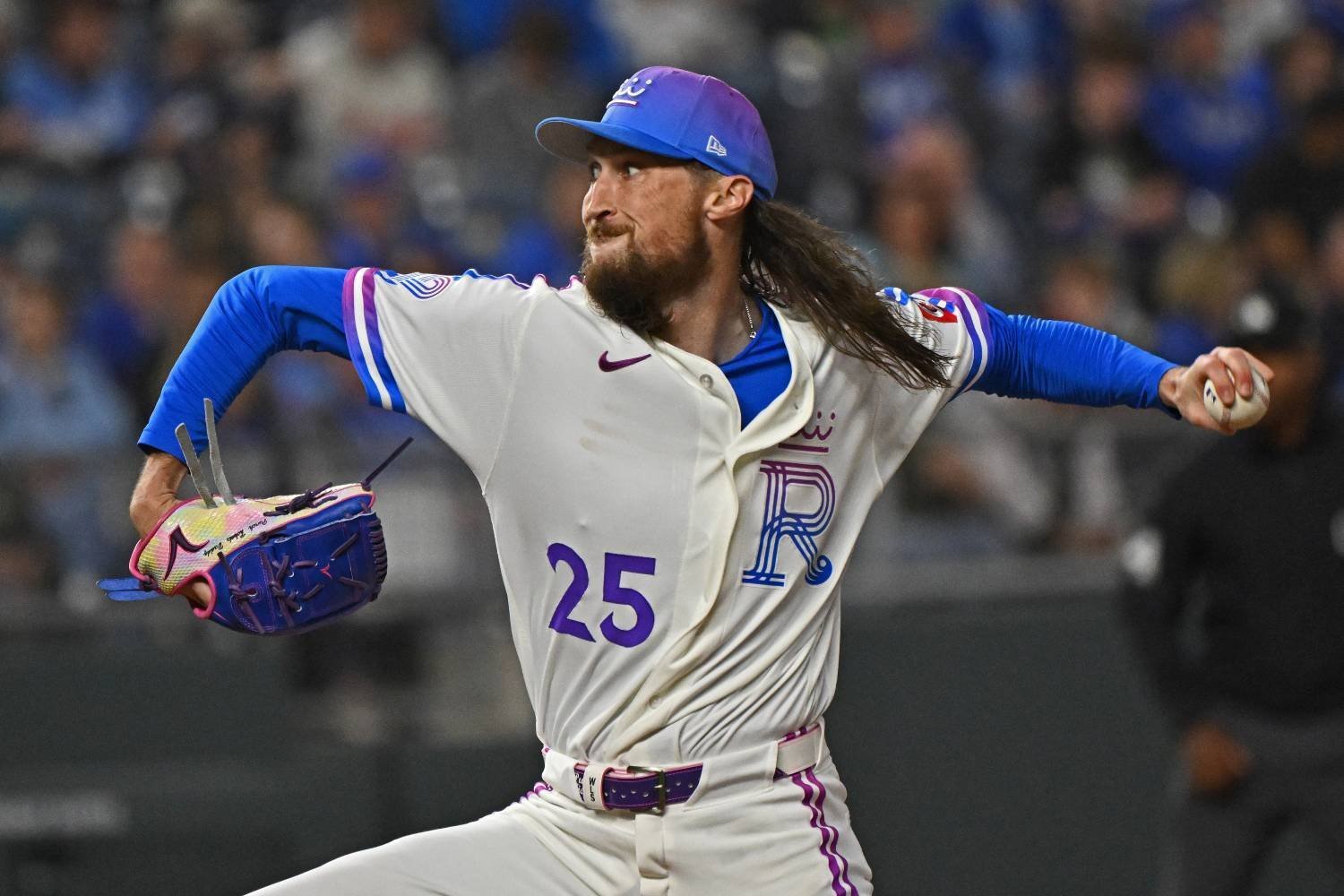 One left-handed reliever is back, while another will be out for a bit. Matt Strahm was placed on the 15-day injured list Saturday by the Kansas City Royals with inflammation in his right knee. Bailey Falter, who had been on a rehab assignment, was activated from the 15-day IL. Falter had inflammation in his left elbow and his rehab assignment, which started April 15, had expired. Strahm has been a big part of the Royals' bullpen thus far. Acquired in the offseason from the Philadelphia Phillies, Strahm has a 3.86 ERA in 17 appearances covering 16⅓ innings. Falter had made two appearances with the Royals before going on the IL April 3. He allowed five runs in 3⅓ innings, giving up eight hits and two walks with four strikeouts. View the full article
 -
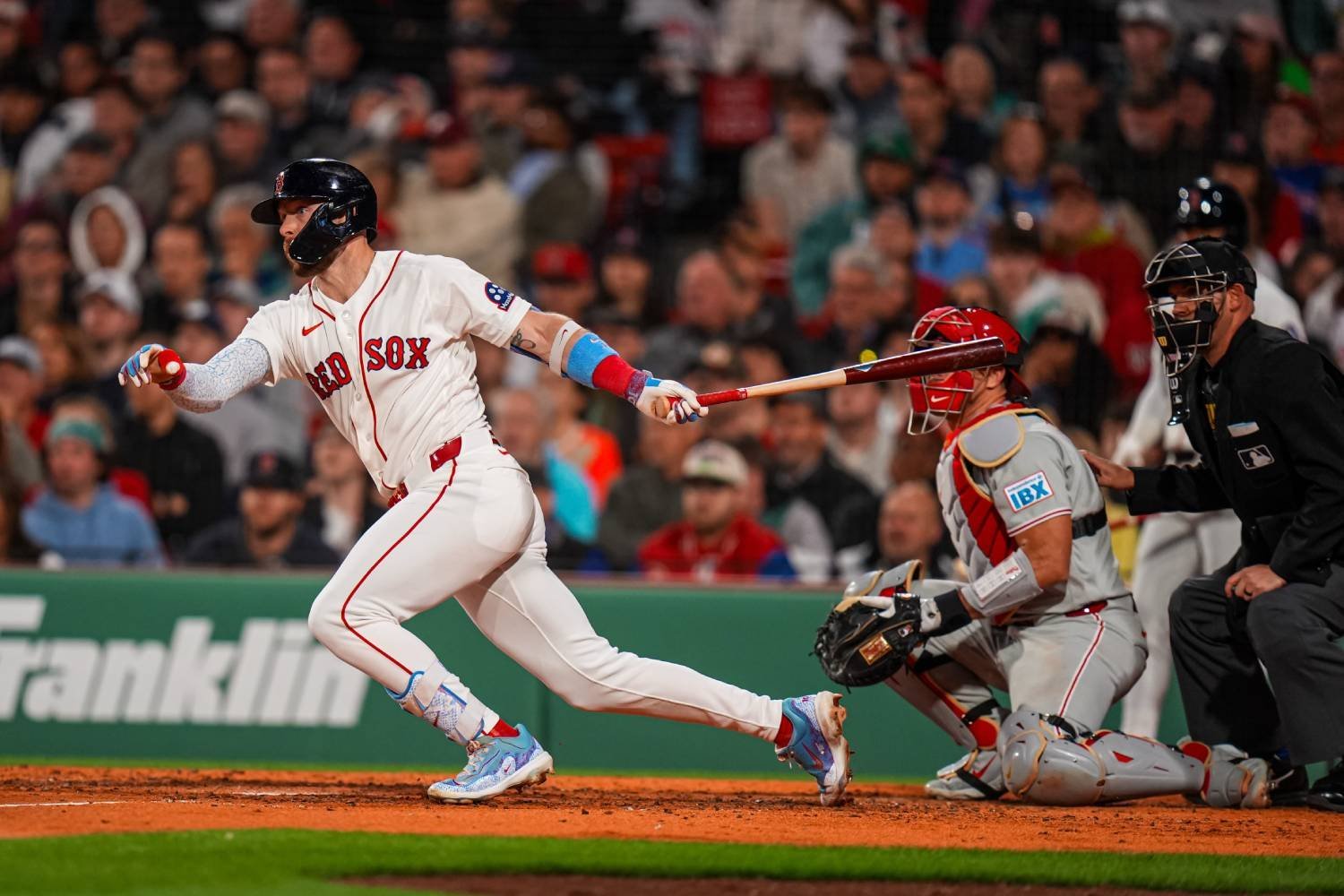 The uneven start to the season for Boston Red Sox shortstop Trevor Story has hit a pothole. Story is reportedly being placed on the 10-day injured list, likely due to the minor groin issue that he has been dealing with most of the season. Infielder Nick Sogard was called up from Triple-A Worcester. Andruw Monasterio is likely to get a bulk of the time at shortstop in Story's absence. The oft-injured Story, coming off his first healthy season since 2021, has struggled at the plate and in the field this year. He has a .206/.244/.303 slash line with three homers and 19 RBIs in 41 games. This comes after a 25-homers, 96-RBI season in which he slashed .263/.308/.433. Sogard will be seeing his first action of the season with the Red Sox after a combined 61 games over the last two years in which he had a slash line of .266/.321/.335 with no homers and 17 RBIs. He was slashing .269/.417/.454 at Triple-A this year with five homers and 23 RBIs. View the full article
 -
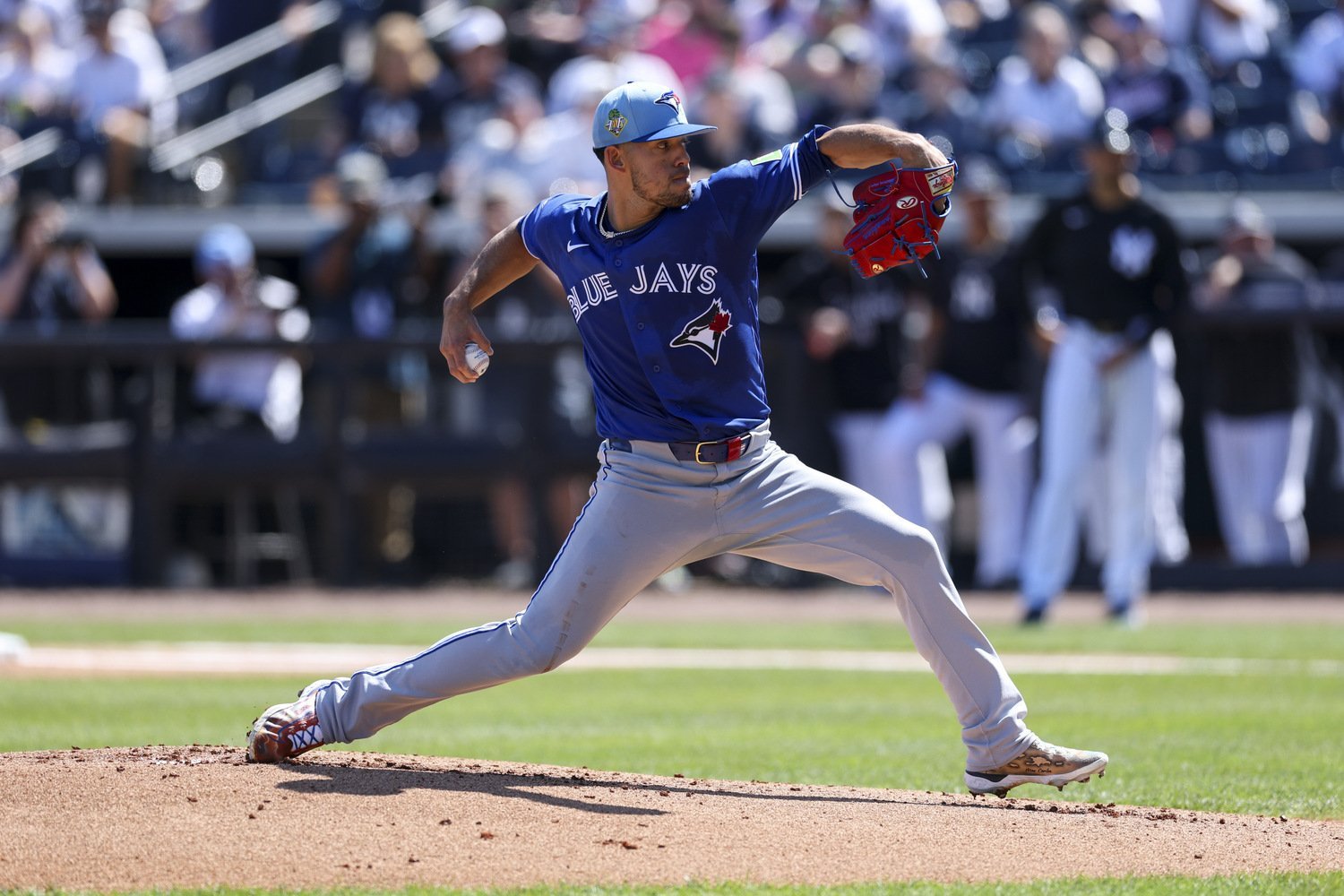 It's unfortunately official. Yesterday, manager John Schneider suggested that surgery was "on the table" for right-hander José Berríos. Today, he confirmed that Berríos will indeed go under the knife. The surgery will take place on Wednesday. Berríos has been on the injured list all season with a stress fracture in his right elbow. On Friday, Schneider said he did not believe the issue involved any soft tissue damage: Today, however, he revealed that there could be "some ligament stuff going on" after all: According to MLB.com's Keegan Matheson, Berríos could return within a couple of months in a best-case scenario. But if his surgeons discover any soft tissue damage during the initial procedure, he would surely be out significantly longer. View the full article
 -
 Chicago Cubs Minor League Report - May 15 Affiliate Overview Triple-A Iowa Cubs Series at Nashville Sounds (Milwaukee Brewers): Sounds lead, 4-0 Season Record: 18–24 Double-A Knoxville Smokies Series at Columbus Clingstones (Atlanta Braves): Tied, 2-2 Season Record: 20–17 High-A South Bend Cubs Series at Wisconsin Timber Rattlers (Milwaukee Brewers): Cubs lead, 3-1 Season Record: 19–15 Single-A Myrtle Beach Pelicans Series vs. Augusta GreenJackets (Atlanta Braves): Tied, 2-2 Season Record: 18–17 Affiliate Highlights Triple-A: Iowa Cubs Season Record: 18–24 Series Opponent: Nashville Sounds (24–19) Series Standing: Trail, 4-0 May 15: The Iowa Cubs suffered a fourth-straight defeat, and a second-straight one-run loss, with a 5-4 setback on Friday night at First Horizon Park. Pedro Ramírez (0-for-3) got the Cubs on the board in the first with a sacrifice fly and Eric Yang (1-for-5) doubled the lead with an RBI-single in the second. The Sounds halved the deficit in the sixth but Iowa starter Jordan Wicks would induce a double play to end the inning to cap his best outing of the season. While taking no decision, Wicks turned in his first quality start of the year, allowing one run on four hits over six innings of work, whiffing a season-high six batters. Nashville would eventually tie the game in the eighth and the contest would head to extra innings. The two teams traded runs in the 10th, with Chas McCormick (1-for-5) driving in the Cubs’ run with a single. The hosts would hold Iowa scoreless in the 11th and win the ballgame in the bottom of the inning, handing the Cubs the 4-3 loss. Kevin Alcántara and Justin Dean each recorded multi-hit efforts on the night while Luke Little worked a scoreless seventh inning in relief. Double-A: Knoxville Smokies Season Record: 20–17 Series Opponent: Columbus Clingstones (18–18) Series Standing: Tied, 2-2 May 15: The Knoxville Smokies suffered a 6-5 walk-off defeat to the Columbus Clingstones on Friday night at Synovus Park. Jefferson Rojas’ (1-for-5) sacrifice fly in the first gave the Smokies a brief lead as the Clingstones quickly evened the score in their first trip to the plate. Columbus took its first lead of the ballgame with a three-spot in the third but Knoxville would eventually answer back with three runs in the fifth to tie the contest at 4-4. Carter Trice (1-for-2) drove in all three of those runs with his sixth homer of the season, marking the third game in a row that he has gone yard. Alex Ramírez raced home on a wild pitch in the seventh to give the Smokies a 5-4 lead but the Clingstones would go on to score two in the ninth and hand Knoxville the 5-4 defeat. Brook Caple got the start for the Smokies and did not factor in the decision. He allowed four runs on six hits over six innings of work, striking out six. Tyler Ras turned in 1 2/3 scoreless frames in relief, whiffing one. High-A: South Bend Cubs Season Record: 19–15 Series Opponent: Wisconsin Timber Rattlers (20–15) Series Standing: Lead, 3-1 May 15: The South Bend Cubs’ bats continued to stay hot with a dominant 9-0 victory over the Wisconsin Timber Rattlers to clinch at least a series split. The Cubs have now outscored the Timber Rattlers 50-18 through the first four games of the series. South Bend jumped out to a 4-0 lead in the first thanks to a sacrifice fly from Kade Snell (1-for-2) and a three-run blast from Leonel Espinoza. Those four runs were more than enough for Cubs starter Cole Reynolds, who fired five shutout innings, allowing only one hit and striking out five, to earn his first win of the season. Cameron Sisneros (1-for-3) put the game well out of reach in the seventh by crushing a three-run shot, his fifth of the season, and Justin Stransky (1-for-4) would later bring home a run later in the frame with an RBI-triple to make it 8-0. Kane Kepley (3-for-6) put the finishing touches on the night with an RBI-single in the ninth. Adam Stone earned his first save of the season by working the final three innings of the ballgame, yielding just one hit to go along with four strikeouts. Single-A: Myrtle Beach Pelicans Season Record: 18–17 Series Opponent: Augusta GreenJackets (19–18) Series Standing: Tied, 2-2 May 15: The Myrtle Beach Pelicans evened up their series with the Augusta GreenJackets with a 7-6 comeback victory on Friday night at Pelicans Ballpark. Both teams were kept scoreless through the first four innings of play, with Pelicans starter Braylon Meyers turning in four shutout innings on the mound, allowing just two hits and striking out five, to go along with no walks issued. The GreenJackets would score first in the fifth, pushing two runs across and would later make it 3-0 with a run in the seventh. After the stretch, the Myrtle Beach offense erupted for seven runs to take a 7-3 lead. Eli Lovich (2-for-4) doubled in a run and Geuri Lubo (1-for-4) tied the contest with a two-run double two batters later. Jairo Diaz (0-for-3) gave the Pelicans the lead with a sacrifice fly and Alexis Hernandez (1-for-3) and Josiah Hartshorn (2-for-4) added to it with RBI-singles. Three runs from Augusta made it 7-6 heading into the ninth but Jordan Henriquez turned in a 1-2-3 inning to end the game. View the full article
 -
Red Sox Minor League Report: Greenville's Losing Streak Reaches Seven
DiamondCentric posted an article in Talk Sox
 Boston Red Sox Minor League Recap (May 15) Triple-A Worcester Red Sox Series at Buffalo Bisons (Toronto Blue Jays): 1-3 Season Record: 23-19 Worcester fell for the second night in a row 5-2 in a bullpen game. Cade Feeney got the start in his first game since being called up from Double-A Portland. He gave up one run on one hit over two innings, walking two. Kyle Keller took the next two, allowing another run on three more hits. He struck out three and gave up one walk. Jacob Webb took the fifth and sixth innings, giving up one more run and two hits, and striking out three. Wyatt Olds took the final two innings, allowing Buffalo to tack on another two runs on two more hits. It was a rough day all around for the WooSox pitching staff as they struggled to find stability. It wasn’t a very successful night at the plate either for Worcester, who notched just one RBI as they went 2-for-14 with RISP. Jason Delay got the WooSox on the board in the second, driving in Tsung-Che Cheng on a fielder's choice. Worcester's only other run came in the seventh inning when Mikey Romero scored on a wild pitch. Nine batters reached base as Worcester totaled six hits and eight walks, but they struggled to drive runs in. Double-A Portland Sea Dogs Series at Hartford Yard Goats (Colorado Rockies): 3-1 Season Record: 17-19 Portland won 2-1 behind strong pitching and timely hitting. Danny Coulombe made his first rehab start on Friday, turning in an inning of one-hit ball. John Holobetz took the next five innings, working an excellent outing of his own. He struck out four, allowing one run on a solo homer, and limiting the Yard Goats to three hits. Joe Vogatsky pitched the following three innings, allowing a hit and a walk, He punched out three as he earned his first win of the season. Caleb Bolden earned the save for his inning of relief work, sitting down one batter on strikes as he staved off any chance of a Hartford comeback in extras. Despite having less than ideal numbers with RISP, Portland’s bats were hot. All but one of the Sea Dogs starters got on base at least once, and four batters had multiple hits. Tyler McDonough struck first with an RBI single in the fifth inning, scoring Nelly Taylor. In a 1-1 ball game in the tenth inning, Nate Baez grounded out to second, driving home the winning run in Ahbram Liendo. Max Ferguson was rock-solid at the dish, going 3-for-5 as he bumped up his average, helping Portland to their third straight win. High-A Greenville Drive Series vs. Bowling Green Hot Rods (Tampa Bay Rays): 0-4 Season Record: 14-23 The Drive lost their seventh straight, getting crushed 10-2. Marcus Philips continued to struggle through the early stages of his professional career on Friday, allowing five runs across just three and ⅔ innings. Philips bumped his ERA to 8.44 as he lost his third game of the year. Shea Sprague took the next three and ⅔, but wasn’t much better. He gave up eight hits, and walked an additional four batters. He allowed four more runs, striking out four. His struggles continued as well as his ERA rose to 5.66. Joey Gartrell took the final inning and ⅓, allowing one more run and three hits. His ERA rose as well, to 6.45. It wasn’t much better for Greenville at the plate. In the third, Natanael Yuten clubbed his fourth homer of the year, a solo shot to center field that put the Drive in the scoring column. The Drive’s other run also came by way of the long ball. In the sixth inning, Yophery Rodriguez hit his tenth homer of the season. He leads the Red Sox organization in home runs. Outside of Rodriguez and Yuten, the Drive were silent when it came to driving runs in. They went 0-for-11 with RISP and left nine runners on base. Freili Encarnacion was the only one to record multiple hits, hitting a triple in the eighth inning. In the ninth, Justin Gonzales, who started at first base instead of the outfield, hit a triple of his own. However, facing an eight-run deficit, it wasn’t enough to bring Salem back into the game. Low-A Salem RidgeYaks Series at Fredericksburg Nationals (Washington Nationals): 1-3 Season Record: 17-20 Salem fell 6-5 despite an outstanding performance from Ty Hodge in a close contest. Jason Gilman took the first two and ⅔ innings for Salem, allowing a two-run homer in the first inning. It was the only scoring Gilman allowed as he struck out three batters. Dalvinson Reyes was hit with his third loss of the season for his appearance in Friday's game. Over three innings, Reyes walked three and allowed three runs (one unearned) on just one hit. Griffin Kilander took the next inning and allowed yet another hit on three more runs. The pitching staff finally found some steady ground with Wuilliams Rodriguez, who pitched a flawless inning and ⅓. Ty Hodge highlighted the RidgeYaks offensive efforts on Friday, collecting three RBIs on two hits. However, it was Skylar King who scored the first run for Salem, reaching home on a throwing error in the third inning. Kleyver Salazar followed King up with a sacrifice fly in the sixth, driving in Starlyn Nunez. Later in the inning, Hodge singled to drive in King, tying the game. Facing a three-run deficit in the eighth, Ty Hodge brought the RidgeYaks within one on a two-run double. However, it wasn’t enough as Salem fell by a one-run margin. View the full article
 -
 All four Kansas City Royals affiliates fell on Friday night despite individual standouts across the system. Mitch Spence turned in a Quality Start for the Omaha Storm Chasers in a 3-2 loss, and Kendry Chourio fired 4 1/3 strong innings for the Columbia Fireflies. Jack Pineda went 4-for-4 with a triple for Northwest Arkansas, Derlin Figueroa went 4-for-5 with a three-run home run for Quad Cities, and Josh Hammond homered for Columbia. Royals Transactions No Roster Moves Storm Chasers Edged 3-2 Despite Spence's Quality Start The Omaha Storm Chasers dropped a 3-2 decision to the Toledo Mud Hens at home, falling just short despite a Quality Start from Mitch Spence. Omaha opened the scoring in the bottom of the first when John Rave doubled to left field with one out. Kameron Misner followed with a sharp groundout to second base, allowing Rave to score and giving the Storm Chasers an early 1-0 lead. Toledo answered in the top of the second with an RBI single to tie the game at one, and the Mud Hens took the lead for good in the fifth on a two-run home run that made it 3-1. The Storm Chasers had one final rally in the bottom of the seventh. Misner singled, Drew Waters drew a walk, and a flyout to right field by Brett Squires moved Misner to third. Dustin Dickerson then flied into a sacrifice double play, scoring Misner from third to pull Omaha within 3-2. The Storm Chasers could not push another runner across in the final two frames. Spence (1-3) took the loss, working six innings and allowing three runs on five hits with two walks, four strikeouts, and one home run allowed across 85 pitches. Jose Cuas, Helcris Olivárez, and Eli Morgan combined to throw three scoreless innings of relief. Rave paced the offense with a 2-for-4 night that included a double and a stolen base. Misner scored a run and drove in another, going 1-for-4. Kevin Newman and Josh Rojas added singles, and the Storm Chasers stranded just two runners on base. Player AB R H RBI BB K Josh Rojas 4 0 1 0 0 1 John Rave 4 1 2 0 0 0 Kameron Misner 4 1 1 1 0 1 Drew Waters 3 0 0 0 1 1 Brett Squires 3 0 0 0 0 0 Dustin Dickerson 2 0 0 1 0 0 Gavin Cross 3 0 0 0 0 1 Luke Maile 3 0 0 0 0 0 Kevin Newman 3 0 1 0 0 0 Player IP H R ER BB K HR Mitch Spence (L, 1-3) 6 5 3 3 2 4 1 Jose Cuas 1 0 0 0 0 1 0 Helcris Olivárez 1 0 0 0 0 0 0 Eli Morgan 1 0 0 0 0 0 0 Naturals Comeback Falls Short In 11-8 Loss To Travelers The Northwest Arkansas Naturals dropped an 11-8 decision to the Arkansas Travelers at home, falling after surrendering the lead in the late innings. The Naturals broke through with a five-run bottom of the fourth. Colton Becker doubled to right, Spencer Nivens followed with a single to put runners at second and third, and Jorge Alfaro singled to drive in the first run. Daniel Vazquez grounded into a force out that plated Nivens, and Omar Hernandez capped the rally with a three-run home run to center field for a 5-1 lead. Arkansas answered with a seven-run top of the fifth that included a three-run home run, sending the Travelers ahead 8-5. The Naturals rallied back in the seventh, when Carson Roccaforte ripped a two-run double to score Canyon Brown and Justin Johnson, and another run scored on the at-bat that followed to even the game at 8. Arkansas plated three more in the top of the ninth to put the game out of reach. Drew Beam took the start and worked 4 2/3 innings, allowing seven runs on six hits with four walks and six strikeouts. Tommy Molsky followed with 1 1/3 innings. Zachary Cawyer fired two scoreless innings of relief with three strikeouts. Brandon Johnson (0-1) took the loss after surrendering three runs in the ninth. Jack Pineda led the way with a 4-for-4 night that included a triple. Hernandez drove in three on the home run, Roccaforte plated two with his double, and Becker added two hits with a double and a run scored. Player AB R H RBI BB K Carson Roccaforte 5 1 2 2 0 2 Colton Becker 4 1 2 0 0 2 Spencer Nivens 5 1 1 0 0 3 Jorge Alfaro 4 0 1 1 0 3 Daniel Vazquez 4 1 0 1 0 2 Jack Pineda 4 1 4 0 0 0 Omar Hernandez 4 1 1 3 0 2 Canyon Brown 4 1 0 0 0 1 Justin Johnson 3 0 0 0 1 1 Player IP H R ER BB K HR Drew Beam 4 2/3 6 7 7 4 6 0 Tommy Molsky 1 1/3 1 1 1 2 2 1 Zachary Cawyer 2 1 0 0 1 3 0 Brandon Johnson (L, 0-1) 1 3 3 3 1 0 1 Figueroa's Four-Hit Night Wasted As River Bandits Fall In Slugfest The Quad Cities River Bandits dropped a 12-9 slugfest in Lansing despite a four-hit, four-RBI night from Derlin Figueroa. Quad Cities grabbed an early lead in the top of the second when Figueroa singled home Austin Charles, and Charles delivered an RBI double in the fourth to score Luke Pelzer for a 2-1 advantage. Lansing answered with a grand slam in the bottom of the fourth to take a 5-2 lead. Blake Mitchell pulled the River Bandits within one in the fifth with a two-RBI double that scored Tyriq Kemp and Asbel Gonzalez, but Lansing tacked on three runs in the bottom of the fifth and two more in the sixth to stretch the lead to 10-4. Quad Cities mounted a five-run rally in the top of the seventh. Kemp tripled and scored on an Asbel Gonzalez groundout, Charles delivered an RBI single to bring Mitchell home, and Figueroa launched a three-run home run to right field to pull the River Bandits within 10-9. Lansing pushed across one in the seventh and one in the eighth to seal the result. Josh Hansell (0-4) took the loss as the starter, working four innings and giving up seven runs on four hits with seven walks and four strikeouts. Nick Conte, Ryan Ure, and L.P. Langevin combined for four innings of relief. Figueroa finished 4-for-5 with a home run, four RBI, and a run scored. Charles added three hits, two runs scored, two RBI, a double, and a walk. Mitchell drove in two with a double and reached base four times. Kemp added two hits, including a triple, with two runs scored. Player AB R H RBI BB K Asbel Gonzalez 5 1 1 1 0 0 Blake Mitchell 3 1 1 2 2 2 Ramon Ramirez 4 1 0 0 1 1 Luke Pelzer 3 1 0 0 2 1 Austin Charles 4 2 3 2 1 0 Derlin Figueroa 5 1 4 4 0 0 Jose Cerice 3 0 1 0 2 0 Erick Torres 5 0 0 0 0 0 Tyriq Kemp 4 2 2 0 0 0 Player IP H R ER BB K HR Josh Hansell (L, 0-4) 4 4 7 7 7 4 1 Nick Conte 1 1 1 1 2 0 0 Ryan Ure 1 1 2 2 3 3 0 L.P. Langevin 2 1 2 1 2 2 0 Hammond Homer Not Enough As Fireflies Drop Opener To Hickory The Columbia Fireflies fell 8-4 to the Hickory Crawdads at home despite a solid start from Kendry Chourio. The game stayed tight for the first five innings. Hickory took a 1-0 lead in the top of the fourth on an RBI double, and Columbia answered in the bottom of the fifth when JC Vanek singled home Stone Russell to even the score at one. Hickory regained the lead at the top of the sixth on a run-scoring double play, then broke the game open in the seventh with a three-run home run to right field for a 5-1 advantage. Josh Hammond responded with a solo home run in the bottom of the seventh to cut the lead to 5-2. Hickory tacked on two more in the top of the eighth on an RBI single and a bases-loaded hit by pitch. Columbia rallied for two runs in the bottom of the eighth, but Hickory closed it out with another solo home run in the ninth. Chourio worked 4 1/3 innings for the Fireflies, surrendering one run on four hits with two walks and four strikeouts on 67 pitches. Max Martin (2-1) took the loss after working 1 2/3 innings. Brandon Herbold yielded five runs (four earned) in 1 2/3 innings, and Randy Ramnarace finished with 1 1/3 innings of relief. Hammond led the way at the plate, going 1-for-4 with the home run, a run scored, and an RBI. Vanek went 2-for-3 with a run scored and an RBI. Stone Russell added a hit and a double, while Henry Ramos contributed a single, a walk, and a stolen base. Columbia stranded just two runners on base. Player Player AB R H RBI BB K Henry Ramos 3 0 1 0 1 0 Yandel Ricardo 4 0 0 0 0 3 Josh Hammond 4 1 1 1 0 1 Brooks Bryan 4 0 1 0 0 2 Hyungchan Um 4 0 0 0 0 2 Stone Russell 4 1 1 0 0 0 JC Vanek 3 1 2 1 0 1 Roni Cabrera 2 1 0 0 1 1 Daniel Lopez 3 0 1 0 0 1 Player IP H R ER BB K HR Kendry Chourio 4 1/3 4 1 1 2 4 0 Max Martin (L, 2-1) 1 2/3 2 1 1 0 1 0 Brandon Herbold 1 2/3 3 5 4 1 2 1 Randy Ramnarace 1 1/3 2 1 1 1 0 1 Top-20 Prospect Performance Kendry Chourio: 4 1/3 IP, 4 H, 1 R, 1 ER, 2 BB, 4 K David Shields: DNP Sean Gamble: DNP Blake Mitchell: 1-for-3, 2B, 2 RBI, 2 BB, 2 K Josh Hammond: 1-for-4, HR, RBI, K Ramon Ramirez: 0-for-4, BB, K Drew Beam: 4 2/3 IP, 6 H, 7 R, 7 ER, 4 BB, 6 K Asbel Gonzalez: 1-for-5, RBI Ben Kudrna: DNP Carson Roccaforte: 2-for-5, 2B, 2 RBI, 2 K Yandel Ricardo: 0-for-4, 3 K Felix Arronde: DNP Blake Wolters: DNP Michael Lombardi: DNP Luinder Avila: DNP Steven Zobac: DNP Frank Mozzicato: DNP Daniel Vazquez: 0-for-4, RBI, 2 K Warren Colcano: DNP Shane Panzini: DNP View the full article
 -
 Zach Thornton tossed six scoreless innings with nine strikeouts as Syracuse routed Scranton/Wilkes-Barre 8-2 behind home runs from Yonny Hernández and Ben Rortvedt. R.J. Gordon allowed six runs in Binghamton's 7-3 loss to Somerset, though Jacob Reimer and Chris Suero homered. Noah Hall worked four innings of two-run ball as Brooklyn beat Rome 8-5, paced by Corey Collins and Ronald Hernandez. Cam Tilly's five relief innings could not save St. Lucie from a 9-7 loss. Mets Transactions New York Mets signed free agent LHP Max Green to a minor league contract. New York Mets sent 1B Jared Young on a rehab assignment to St. Lucie Mets. New York Mets sent 2B Andy Ibáñez outright to Syracuse Mets. Thornton's Nine Strikeouts Lead Syracuse Past Scranton/Wilkes-Barre Zach Thornton turned in a fantastic start to anchor an 8-2 Syracuse victory over the Scranton/Wilkes-Barre RailRiders. Thornton pitched six scoreless innings, allowing three hits and one walk while striking out nine. The offense backed him with a three-run second inning. Yonny Hernández opened the scoring with a solo home run, his second of the year. Cristian Pache came around to score on a Ben Rortvedt single, and Nick Morabito followed with a single of his own to plate Rortvedt and make it 3-0. Pache extended the lead with a solo home run in the fourth, his fifth of the season. Syracuse broke the game open with four more runs in the seventh. Rortvedt led off the frame with a solo homer, his first of the year. Christian Arroyo singled home Jihwan Bae, and Hernández reached on a throwing error that allowed Ryan Clifford and Arroyo to score. Morabito led the offense with three hits in five at-bats, driving in one. Pache went 2-for-4 with a home run, two runs scored, and an RBI. Rortvedt also collected two hits and finished with a home run, two runs scored, and an RBI. Hernández added a home run and an RBI. Luke Jackson surrendered both Scranton runs in 1 1/3 innings of relief, allowing two walks and striking out one. Mike Baumann and A.J. Minter combined for 1 2/3 scoreless innings to close it out. Syracuse left six runners on base. Player AB R H RBI BB K Nick Morabito 5 0 3 1 0 1 Ji Hwan Bae 4 1 1 0 1 1 Ryan Clifford 5 1 0 0 0 1 Christian Arroyo 5 1 1 1 0 0 Eric Wagaman 4 0 0 0 1 1 Yonny Hernández 4 1 1 1 0 0 Cristian Pache 4 2 2 1 0 1 Ben Rortvedt 4 2 2 1 0 0 Jackson Cluff 3 0 0 0 1 0 Player IP H R ER BB K HR Zach Thornton 6 3 0 0 1 9 0 Luke Jackson 1 1/3 0 2 2 2 1 0 Mike Baumann 2/3 1 0 0 1 1 0 A.J. Minter 1 0 0 0 0 1 0 Reimer And Suero Homer In Binghamton's Loss To Somerset R.J. Gordon could not finish the second inning as the Binghamton Rumble Ponies dropped a 7-3 decision to the Somerset Patriots. Gordon allowed six runs, all earned, on seven hits in 1 2/3 innings, walking one and striking out one. Binghamton struck first when Jacob Reimer led off the top of the first with a solo home run, his third of the season, to put the Rumble Ponies in front 1-0. Somerset answered with a run in the bottom of the first and then sent nine men to the plate in the second, plating five runs to take a 6-1 lead. Gordon was charged with each run before being lifted from the game. After Gordon's exit, the bullpen kept Somerset largely in check. Zach Peek tossed 1 1/3 hitless innings with a strikeout. Max Green followed with 2 2/3 innings of one-hit ball, walking one and striking out two. Gabriel Rodriguez allowed a solo home run in one inning of work while walking three and striking out three. Saul Garcia closed with 1 1/3 scoreless innings. Player AB R H RBI BB K Eli Serrano III 4 1 1 0 0 2 Chris Suero 3 1 2 2 0 0 Jacob Reimer 4 1 1 1 0 3 Jose Ramos 3 0 0 0 1 0 Nick Lorusso 4 0 1 0 0 2 JT Schwartz 4 0 0 0 0 1 Vincent Perozo 4 0 0 0 0 2 Jaylen Palmer 4 0 2 0 0 1 Diego Mosquera 4 0 0 0 0 0 Player IP H R ER BB K HR R.J. Gordon 1 2/3 7 6 6 1 1 1 Zach Peek 1 1/3 0 0 0 0 1 0 Max Green 2 2/3 1 0 0 1 2 0 Gabriel Rodriguez 1 1 1 1 3 3 1 Saul Garcia 1 1/3 1 0 0 0 1 0 Late Rally Carries Brooklyn Past Rome 8-5 The Brooklyn Cyclones jumped on the Rome Emperors early and tacked on late in an 8-5 win, scoring eight runs spread across four innings. Starter Noah Hall worked four innings, allowing two earned runs on four hits, walking five, and striking out four. Brooklyn struck for two runs in the first when Ronald Hernandez delivered a two-run single. An inning later, Trace Willhoite gave the Cyclones a 3-0 lead with a solo home run, his third of the season, to left field. Rome chipped away over the middle innings to draw within 3-2, but Brooklyn pulled away in the eighth with three runs. Daiverson Gutierrez singled home Corey Collins, Willhoite drove in a run with a sacrifice fly, and Nick Roselli singled to plate Colin Houck. The Cyclones added two more in the ninth on a solo home run by Collins, his third of the year, and another RBI single from Hernandez. Collins finished 2-for-4 with a triple, a home run, two runs scored, and an RBI. Hernandez went 2-for-5 with three RBI. Mitch Voit was 2-for-4 with a run scored and a walk. Houck added a double in the win. Tanner Witt, Dakota Hawkins, Bryce Jenkins, and Hoss Brewer combined for four scoreless relief innings. Joe Charles ran into trouble in the ninth, allowing three runs in 1/3 of an inning before Danis Correa retired both batters he faced to end it. Brooklyn left nine runners on base. Player AB R H RBI BB K Mitch Voit 4 1 2 0 1 2 Yonatan Henriquez 4 0 0 0 1 2 John Bay 5 1 0 0 0 1 Corey Collins 4 2 2 1 1 0 Daiverson Gutierrez 2 2 1 1 2 0 Ronald Hernandez 5 0 2 3 0 1 Colin Houck 4 1 1 0 1 3 Trace Willhoite 4 1 1 2 0 3 Nick Roselli 3 0 1 1 1 1 Player IP H R ER BB K HR Noah Hall 4 4 2 2 5 4 0 Tanner Witt 1 0 0 0 0 1 0 Dakota Hawkins 1 1 0 0 0 2 0 Bryce Jenkins 1 0 0 0 0 1 0 Hoss Brewer 1 0 0 0 0 1 0 Joe Charles 1/3 2 3 3 3 0 0 Danis Correa 2/3 0 0 0 0 2 0 Benson Drives In Four As St. Lucie Falls To Jupiter JT Benson powered the St. Lucie offense, but the Jupiter Hammerheads outslugged the Mets 9-7. Benson went 2-for-5 with a double, a home run, two runs scored, and four RBI. Jupiter led 4-0 by the third inning before St. Lucie answered with three runs in the bottom of the third. Simon Juan opened the frame with a solo home run, his third of the season. Francisco Toledo followed by reaching base, and Benson made it a one-run game with a two-run shot to left center, his fifth long ball of the year. The Mets took their first lead in the fifth with four runs. With Francisco Toledo and Elian Peña aboard, Jared Young singled home Toledo to tie the game at four. Benson followed with a ground-rule double down the right-field line, his tenth of the season, plating Peña and Young. AJ Salgado capped the frame with an RBI single to bring home Benson and make it 7-4. Jupiter scored once in the sixth, three in the eighth, and one in the ninth to retake the lead. Cam Tilly logged five innings following Hurtado, allowing one earned run on four hits, walking three, and striking out one. Daviel Hurtado opened with two innings, was charged with four runs, three earned, on five hits, with one walk and two strikeouts. Tyler McLoughlin took the brunt of the late damage, allowing four earned runs on five hits in 1 2/3 innings while striking out three. Salgado went 3-for-5 with an RBI and a stolen base. Toledo was 2-for-3 with two runs scored and two stolen bases. Juan added a home run and an RBI. St. Lucie left ten runners on base. Player AB R H RBI BB K Elian Peña 3 1 0 0 1 1 Jared Young 4 1 1 0 0 2 Chase Meggers 0 0 0 0 1 0 JT Benson 5 2 2 4 0 1 Julio Zayas 4 0 0 0 1 2 AJ Salgado 5 0 3 1 0 1 Sam Robertson 2 0 0 0 3 1 Kevin Villavicencio 5 0 0 0 0 2 Simon Juan 5 1 1 1 0 3 Francisco Toledo 3 2 2 0 1 1 Player IP H R ER BB K HR Daviel Hurtado 2 5 4 3 1 2 0 Cam Tilly 5 4 1 1 3 1 0 Tyler McLoughlin 1 2/3 5 4 4 1 3 1 Jorge De Leon 1/3 1 0 0 0 1 0 Top-20 Prospect Performance Carson Benge: DNP A.J. Ewing: DNP Jonah Tong: DNP Elian Peña: 0-for-3, BB, K Jack Wenninger: DNP Ryan Clifford: 0-for-5, K Jacob Reimer: 1-for-4, HR, RBI, 3 K Nick Morabito: 3-for-5, RBI, K Mitch Voit: 2-for-4, BB, 2 K Jonathan Santucci: DNP Chris Suero: 2-for-3, HR, 2 RBI, SB Zach Thornton: 6 IP, 3 H, 0 R, 1 BB, 9 K Wandy Asigen: DNP Will Watson: DNP Eli Serrano III: 1-for-4, 2 K Randy Guzman: DNP Ryan Lambert: DNP Dylan Ross: DNP Antonio Jimenez: DNP R.J. Gordon: 1 2/3 IP, 7 H, 6 ER, 1 BB, 1 K, HR View the full article
