


DiamondCentric
-
Posts
2,631 -
Joined
-
Last visited
Never
Content Type
Profiles
Forums
Events
News
Tutorials & Help
Major League Baseball Videos
Guides & Resources
Store
Downloads
Gallery
Everything posted by DiamondCentric
-
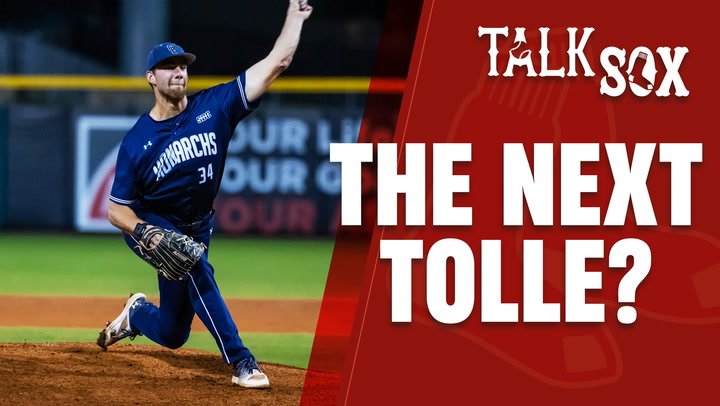 Dylan Brown entered 2026 as a Red Sox top 60 prospect. After only five starts in Single-A ball, he has already been promoted to High-A Greenville due to a 2.31 ERA and 32 strikeouts in only 23 innings. Brown is a big lefty that draws comparisons to Payton Tolle, and enters Greenville with improved velocity, but questions still surround his command. View the full article
 -

Kazuma Okamoto Is Flexing His Muscles in the Month of May
DiamondCentric posted an article in Jays Centre
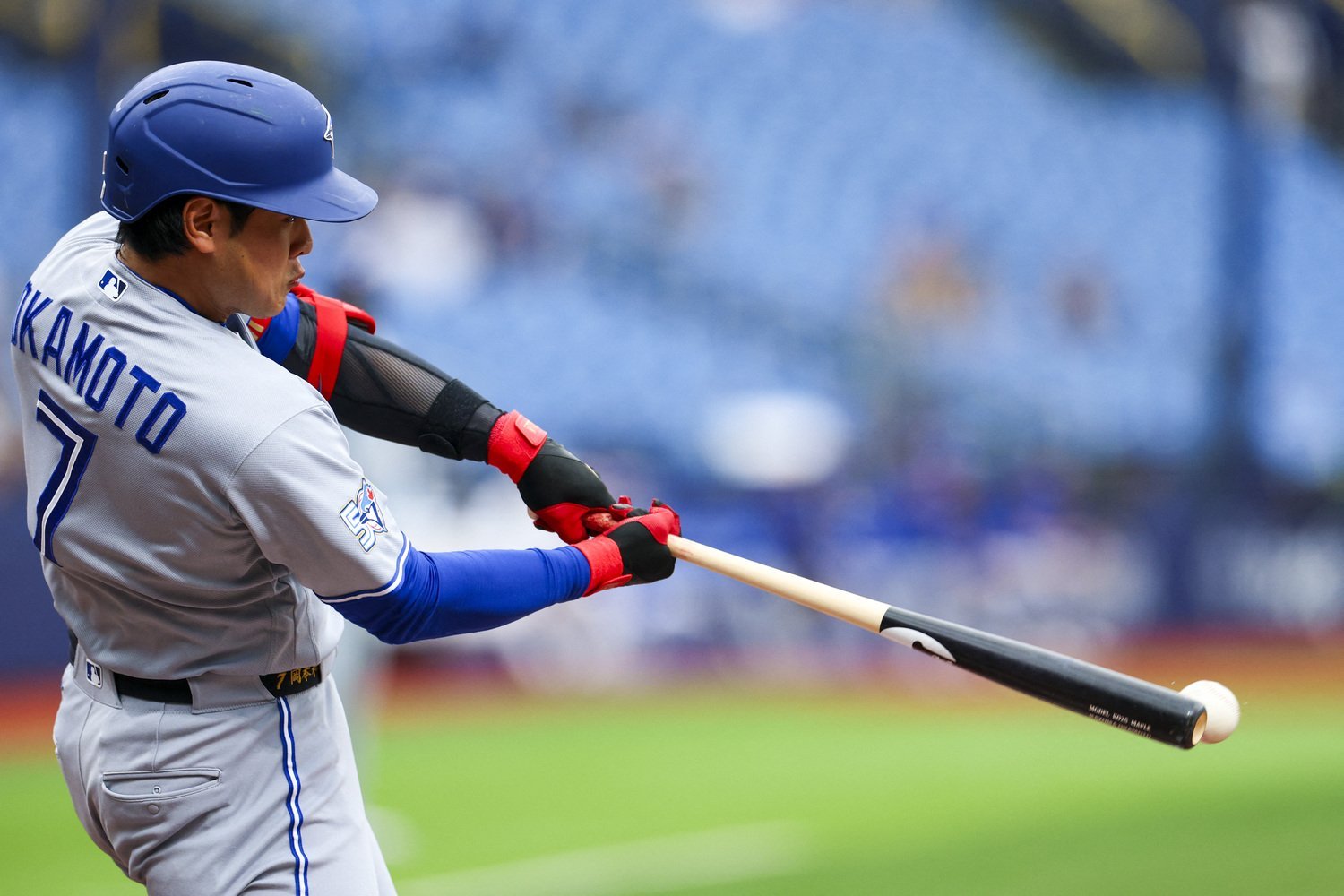 Kazuma Okamoto displayed massive power in Japan's Nippon Professional Baseball, hitting 30 or more home runs in each season from 2018 through 2024. He was on pace to continue that trend last season, but an elbow injury forced him to miss half the season. He came over to MLB in the offseason, but struggled through March and April, slashing .218/.301/.373 with five home runs over 123 plate appearances. However, through the first six games in May, he has already doubled his home run total, giving him 10 on the season. Okamoto also has a significantly higher slash line through 28 May plate appearances, hitting .375/.464/1.042. To go along with his 10 home runs, the Blue Jays' third baseman has 19 runs and 23 runs knocked in. Okamoto's power is evident in his ranking towards the top of the league in many key metrics. Although the sample is small, the righty is in the 85th percentile or higher in expected slugging percentage (.515), average exit velocity (93.1 mph), barrel percentage (15.6 percent), and hard-hit percentage (52.2 percent). These rankings mean Okamoto is making solid contact, and his 18.7-degree average launch angle is helping him hit the ball into the outfield stands. Another thing that is helping Okamoto hit home runs is that he's pulling the ball more than 50 percent of the time. You pair that with his pull-air rate (25.6 percent), which is nearly 10 percentage points higher than the league average, and it's easy to see why Okamoto has flipped a switch offensively. The offensive surge has the third baseman shooting up the rankings in many major offensive statistics among his position mates. Okamoto is positioning himself exceptionally well to earn an All-Star Game nod in his rookie season if his success continues. Here is how he ranks among his fellow AL third basemen: .246 batting average - 6th 19 runs - T-5th 10 home runs - 1st 66 total bases - 1st 23 RBI - 1st .493 slugging percentage - 2nd It took Okamoto a while to adjust to the North American style of baseball, but since the season entered May, he has been one of the league's best hitters. After Bo Bichette left in free agency, Okamoto was looked at as the free agent signing who would fill Bichette's shoes in the lineup. It's looking like the Blue Jays made the right decision, although it's far too early to make an official judgment. It is safe to say that with the power drought from players like Vladimir Guerrero Jr., the team is glad to see their third baseman find his home run stroke. View the full article
 -
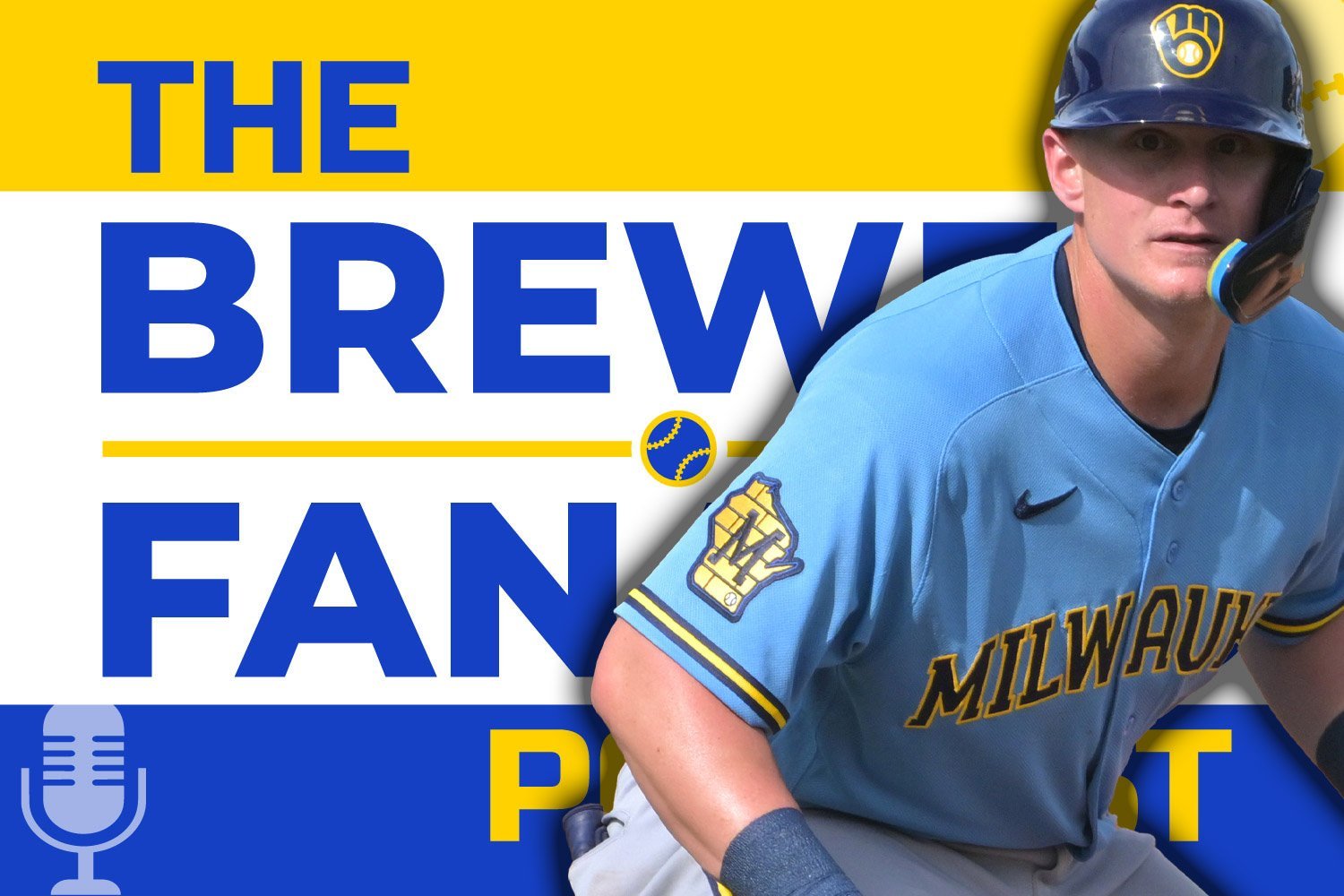 Jack and Spencer discuss what the return of Jackson Chourio and Andrew Vaughn means for the Brewers' lineup, their struggles with using the ABS challenge system, the state of the starting rotation, and more. Apple Podcasts: https://podcasts.apple.com/us/podcast/the-brewer-fanatic-podcast/id1740648724 Spotify: https://open.spotify.com/show/5CY8mWsQayqjDXqw9OT2Td iHeartRadio: https://www.iheart.com/podcast/263-the-brewer-fanatic-podcast-166534588/ Pocket Casts: https://pca.st/ommzz627 Watch On YouTube: https://www.youtube.com/@brewerfanatic View the full article
 -
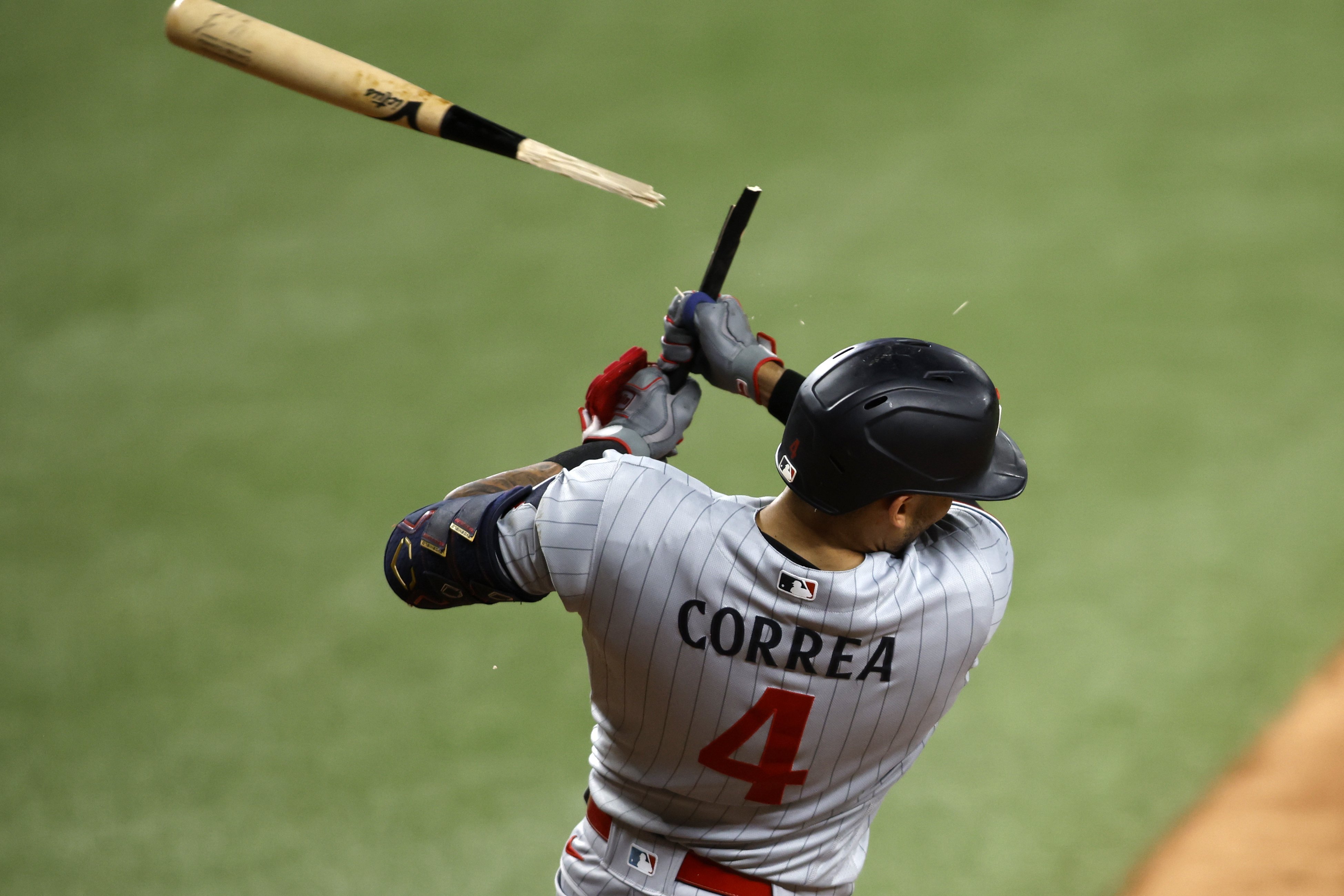 On Wednesday, the Houston Astros revealed that former Twin Carlos Correa tore a tendon in his good ankle while taking batting practice. Season-ending surgery is on the docket, and he's on the shelf until 2027. Close readers of this website know that late last summer, the Twins made the salary dump of all salary dumps, sending Correa back to Houston for journeyman reliever Matt Mikulski, along with $33 million of Correa's remaining $96 million salary. So, did we win? THE CASE FOR YES: Minnesota isn't on the hook for $63 million worth of a player who isn't playing. Even if they had no way of knowing that Correa would have a fluke injury to his non-janky ankle, aging players do get hurt. It really is better to be lucky than good, sometimes. And the Twins haven't been in any danger of being good for a couple of seasons now, so luck is truly their best bet. THE CASE FOR NO: To paraphrase the prophet, you do not, under any circumstances, gotta hand it to them. Minnesota hasn't invested those future savings in anything, and they traded everyone who wasn't nailed down after moving Correa. Mikulski was such a throw-in that he couldn't even compete for a spot in the 2026 Minnesota Twins bullpen, which is breaking official and unofficial records for hurtfulness and sadness. Every reliever's entrance music is Elliott Smith's "Needle in the Hay." I hope Mikulski invested wisely and/or learns to throw a knuckleball, because this is definitely a sign that your baseball career is in crisis. THE DETERMINATION: There are no winners here. Houston has a worse record than Minnesota, despite an enormous payroll. They're tied with the Angels for the worst record in the American League. The temptation to take solace from that as a Twins fan is mighty, but you mustn't. I'm writing this after Wednesday's 15-2 drubbing by an unremarkable Washington Nationals squad. Unless you yourself were paying Correa that money, it's hard to feel good about anything right now. In conclusion, I award both teams zero points, and may God have mercy on their souls. Maybe Matt Mikulski's most of all. View the full article
 -
Justin Slaten Is More Than Ready For His Return to Boston
DiamondCentric posted an article in Talk Sox
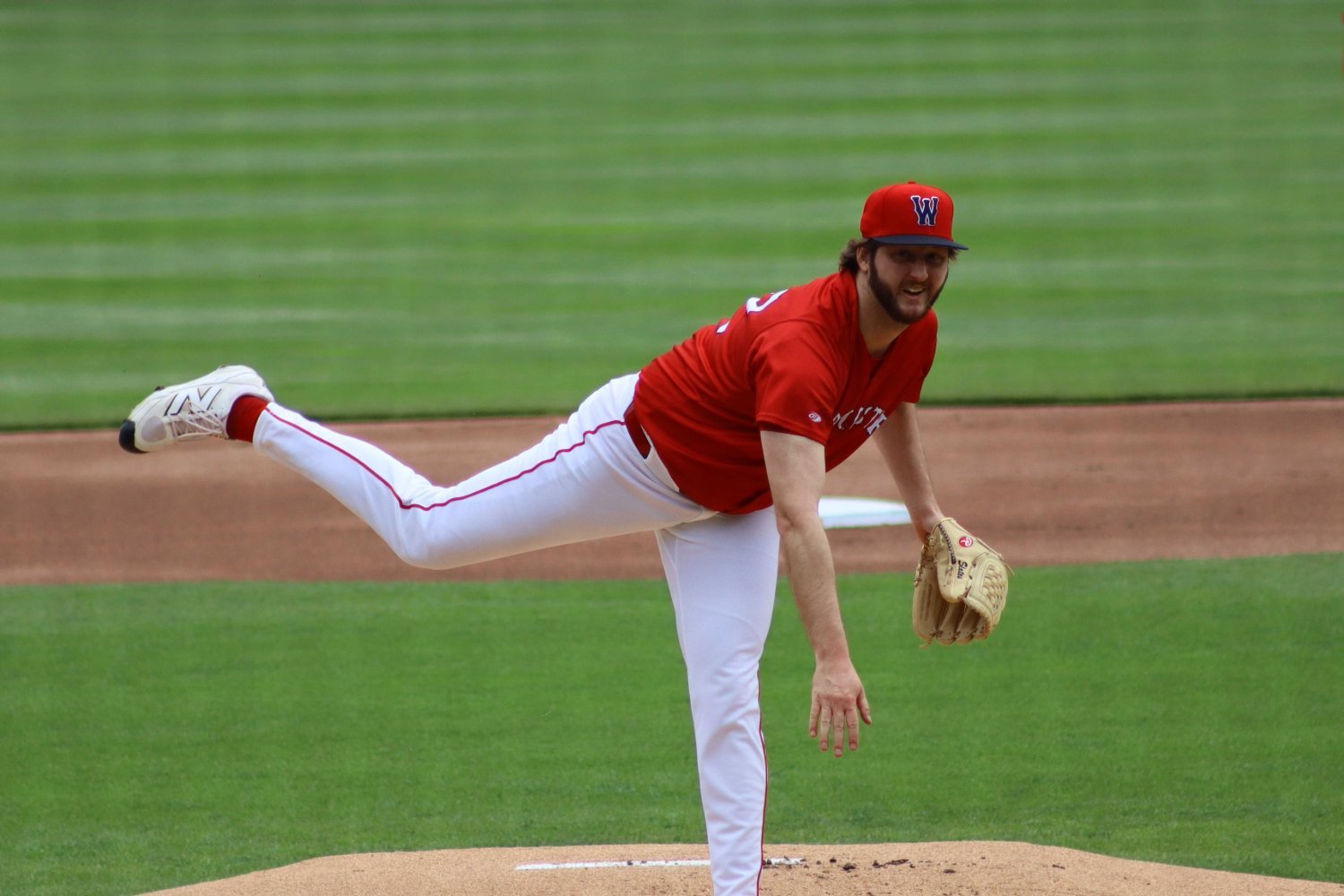 Worcester, MA — After missing nearly, a month due to a right oblique strain, right-handed pitcher Justin Slaten is on the path to returning to the Boston Red Sox. His rehab assignment began in Portlandm wgere tossed one inning while allowing one hit and striking out a pair of batters. His next stop was Worcester, where he made his second appearance as he works his way back to Boston. The Red Sox, who are in need of high-leverage pitching, are awaiting the return of Slaten to provide that help. Prior to going down with injury, the relief pitcher had appeared in four games, tossing 3 1/3 innings for the team. During that span, he allowed one unearned run while surrendering two hits and two walks. He also struck out five batters. In his rehab appearance in Worcester, Slaten started the game and tossed one inning, allowing one hit and one walk while striking out two batters. After the game, Slaten was asked about his the progress in his rehab assignment: “I feel really good. I mean, obviously it’s up to them you know. I’m gonna do whatever they tell me to do, they have my best interest in mind and want me to be healthy and compete up there. But yeah, I feel really good about where I’m at.” For the outing, Slaten tossed 18 pitches with 11 strikes. Leading with the four-seam fastball, he mixed in a cutter, sweeper and curveball multiples times each as he worked through his entire arsenal. With his fastball and cutter, he was able to generate three whiffs. The lone hit of the game was an infield dribbler that came off of his sweeper. His fastball managed to top out at 97.1 mph, a fact that surprised even Slaten, who said “I was shocked. Early morning [game], so it’s hard to get up and get going. I was pretty pumped, saw the velos out there and obviously feeling good about how the body feels, how the arm feels and how the oblique feels. I think we’re in a very good spot." Despite the talent Slaten has shown since making the major-league roster back in 2024, injuries have seemingly slowed him down each season. That fact hasn’t been lost on the right-hander, who told the media “Obviously you don’t want to be seen as someone who’s injury prone. But you know, it is what it is, you can’t feel bad for yourself. You just have to attack it, keep the positive mindset of like it is what it is, I gotta get back healthy as soon as possible." It's no wonder that Slaten has been eager to get back to Boston and help his teammates as they deal with a coaching overhaul and an attempt to claw their way back into playoff conversation. The 28-year-old doesn’t care that it’s only the beginning of May, admitting that it’s starting to get too late into the season to keep saying it’s early. “At the end of the day, I know we’re running out of time to say it’s early, but you know you look at the standings. It’s not like we’ve dug ourselves in so deep of a hole, and so for me, it’s just like how can I get back and how can I help us win games as fast as possible.” View the full article
 -
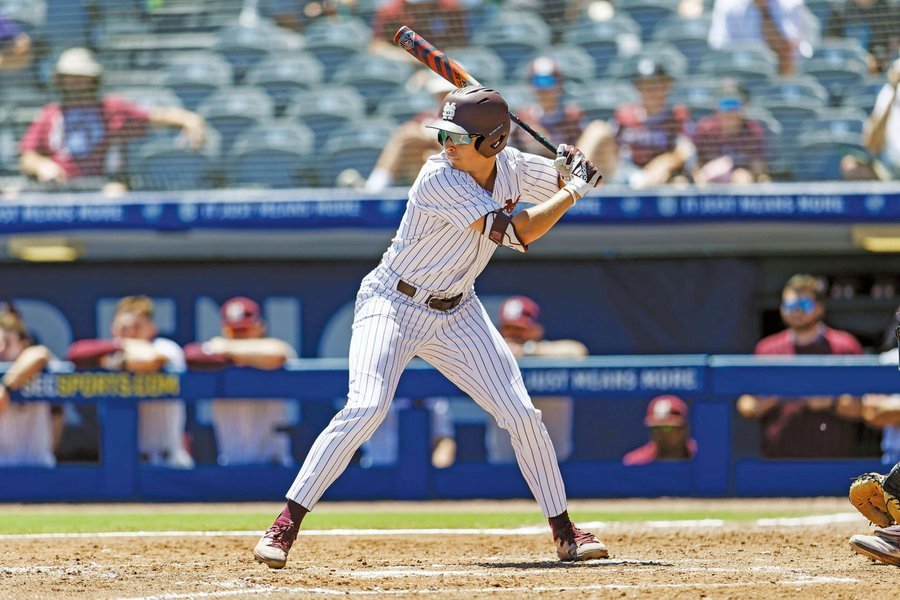 The first edition of the 2026 MLB mock draft has arrived. As the college baseball regular season nears its conclusion, my board of top draft-eligible prospects has fallen in place. The Marlins select 14th in the first round. Pick # Team Player Position School Slot Value 1 Chicago White Sox Roch Cholowsky SS UCLA $11,350,600 2 Tampa Bay Rays Grady Emerson SS High School $10,507,000 3 Minnesota Twins Vahn Lackey C Georgia Tech $9,740,100 4 San Francisco Giants Jackson Flora RHP UC Santa Barbara $8,988,400 5 Pittsburgh Pirates AJ Gracia OF Virginia $8,336,500 6 Kansas City Royals Jared Grindlinger LHP/OF High School $7,746,100 7 Baltimore Orioles Drew Burress OF Georgia Tech $7,327,200 8 Athletics Logan Reddemann RHP UCLA $6,982,600 9 Atlanta Braves Cameron Flukey RHP Coastal Carolina $6,675,300 10 Colorado Rockies Jacob Lombard SS High School $6,393,100 11 Washington Nationals Ryder Helfrick C Arkansas $6,133,500 12 Los Angeles Angels Derek Curiel OF LSU $5,889,300 13 St. Louis Cardinals Chris Hacopian INF Texas A&M $5,661,300 14 Miami Marlins Ace Reese 3B/1B Mississippi State $5,444,900 15 Arizona Diamondbacks Eric Booth Jr. OF High School $5,241,000 16 Texas Rangers Sawyer Strosnider OF TCU $5,051,900 17 Houston Astros Aiden Robbins OF Texas $4,868,600 18 Cincinnati Reds Gio Rojas LHP/OF High School $4,696,500 19 Cleveland Guardians Tyler Bell SS Kentucky $4,530,500 20 Boston Red Sx Logan Hughes OF Texas Tech $4,373,900 21 San Diego Padres Tyler Spangler SS High School $4,224,700 22 Detroit Tigers Logan Schmidt LHP High School $4,082,700 23 Chicago Cubs James Clark SS High School $3,947,600 24 Seattle Mariners Cole Carlon LHP Arizona State $3,818,700 25 Milwaukee Brewers Daniel Jackson C Georgia $3,696,000 26 Atlanta Braves* Justin Lebron SS Alabama $3,578,800 27 New York Mets Cole Prosek C/SS High School $3,466,500 28 Houston Astros* Aiden Ruiz SS High School $3,363,600 29 Cleveland Guardians^ Mason Edwards LHP USC $3,270,200 30 Kansas City Royals^ Coleman Borthwick RHP High School $3,190,500 31 Arizona Diamondbacks^ Tegan Kuhns RHP Tennessee $3,118,300 32 St. Louis Cardinals^ Cade Townsend RHP Ole Miss $3,044,600 33 Tampa Bay Rays^ Jarren Advincula 2B Georgia Tech $2,980,200 34 Pittsburgh Pirates^ Liam Peterson RHP Florida $2,897,400 35 New York Yankees Bo Lowrance 3B High School $2,826,700 36 Philadelphia Phillies Connor Comeau SS/C High School $2,758,800 37 Colorado Rockies^ Brody Bumila LHP High School $2,696,700 * = Prospect Promotion Incentive ^ = Competitive Balance Round A Marlins first-round pick: Ace Reese, 3B/1B, Mississippi State Ace Reese is one of the best power-hitting prospects in the 2026 MLB Draft class. He’s also one of the most consistent hitters in this class and continues to show growth after every season. The Mississippi State product has had an extremely successful college career to date. Through 49 games as a junior, Reese has a .317/.420/.688 slash line, with a .463 wOBA, and 17 home runs. Power is the name of the game for Reese, flashing elite exit velocities for a college bat, and staggering barrel rates. Reese's approach is slightly aggressive, although he makes strong contact and whiff numbers for a power bat. Reese slips down draft boards a bit due to lack of a positional home. He has spent most of his time at third base and the corner outfield spots during college, but may be best at first base as he grows older. On many fronts, he resembles 2025 Brewers first-round pick Andrew Fischer, who made waves for himself in the World Baseball Classic (Italy) and has built upon that in High-A. Reese will not add much on the base paths, but would add much needed pop to the Marlins farm system if selected. He'd cost slightly less than half of Miami's total draft bonus pool of $11,960,100. View the full article
 -
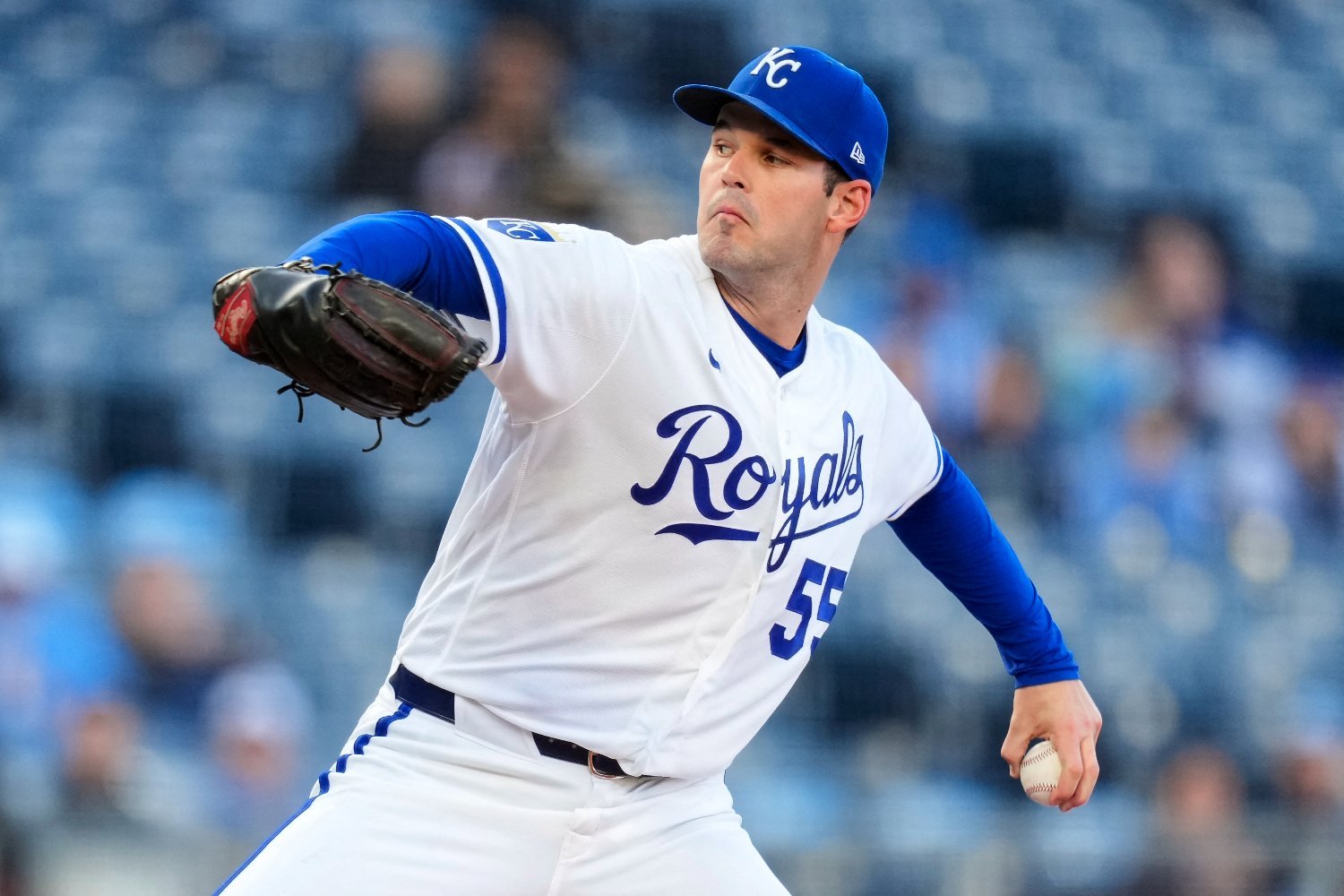 Monday, May 6th, was not exactly a memorable day for the Kansas City Royals. First off, the Royals lost 3-1 to the Cleveland Guardians at Kauffman Stadium, snapping a five-game winning streak (and losing a chance to surpass the Guardians in the AL Central standings). Second, it was revealed that Hawaiian Bros, the Hawaiian Plate Lunch restaurant, would rescind their "free" plate meal if the Royals scored six or more runs and instead replace it with a BOGO (buy one get one free) deal. Safe to say, Royals fans weren't happy, especially after receiving so many free meals during the Royals' winning streak. Lastly, the Royals saw two key pitchers from the 2025 squad go down to injury on the same day, albeit at different levels. During a rehab stint in Omaha, Carlos Estevez, who hadn't pitched since his lone outing in Atlanta during Opening Weekend, left his rehab outing after just 0.2 innings. According to MLB.com Royals beat writer Anne Rogers, not only was his velocity down, but he was dealing with shoulder soreness as well. When looking at his TJ Stuff+ summary from Estevez's rehab outing, it was a similar trend to what fans saw from Estevez in Spring Training and his first (and only) outing of the 2026 MLB season. Poor velocity and TJ Stuff+, as well as lackluster zone, chase, and whiff rates. Estevez's average four-seam velocity was only 90 MPH, and his TJ Stuff+ was 90 with a 38 grade. Overall, he had a 92 overall TJ Stuff+ as well as a 35.7% zone rate, 22.2% chase, and 20% whiff rate. Safe to say, things had not gotten better for Estevez after the time off on the IL. If Estevez's injury issue wasn't enough, Royals Opening Day starter Cole Ragans exited Wednesday night's game after three innings pitched and just 58 pitches. According to Rogers, Ragans was feeling tightness in his elbow and forearm. Ragans seemed to be cruising in the first inning in terms of velocity, touching 98 MPH at points early in his start. However, by the third inning, his overall velocity had plummeted, a big red flag for manager Matt Quatraro and the Royals' coaching staff. Royals fans can see the concerning, plummeting trend in his pitch-velocity chart from Wednesday's game. As a result, both Ragans and Estevez underwent tests on Thursday while the Royals closed out the series against the Guardians (which they lost 8-5). During the press conference, manager Matt Quatraro gave some updates about the results on Ragans and Estevez. The news isn't great for either pitcher, though Ragans' news seems more optimistic, initially, since he won't be immediately shut down (unlike Estevez). That said, the typical return time for pitchers who get VEO is 6-9 weeks, so Ragans may see a lot of time on the IL, much like a season ago. With Ragans and Estevez out, the Royals find themselves in a bit of a dilemma regarding their pitching depth, which was initially seen as a strength in the preseason. Thus, let's break down what Kansas City could do to replace both pitchers, and what could be on the horizon trade-wise for the Royals if Ragans and Estevez remain on the IL for a considerable amount of time. Expect Kolek and Falter to Replace Ragans in the Rotation Much like a season ago, Ragans has not exactly been consistent for the Royals, but he hasn't been bad either. In 35.1 IP, the lefty has a 4.84 ERA, 1.42 WHIP, and 6.23 WHIP. He also has a 15.2% BB% and 14.6% K-BB%. Conversely, his K% is high at 29.8%, and his whiff rate and TJ Stuff+ marks have also been solid as well, as illustrated in his TJ Stuff+ summary below. Thus, the Royals will miss Ragans' excellent stuff profile and ability to make hitters swing and miss. His absence is especially hard since there aren't many options with that profile in Omaha. While the Storm Chasers don't have a starting pitcher that can replace Ragans' ability to make batters whiff, they do have a couple of options who could eat innings and keep the Royals competitive in games, which Ragans struggled to do at times in starts, especially on the road. Those two pitchers are Stephen Kolek and Bailey Falter. Kolek has already gotten a chance to show he can belong at the MLB level, as he made the start on Tuesday for Noah Cameron, who was dealing with a lower back injury. Kolek, who started the year in Omaha due to an injury suffered in Spring Training, had a solid 2026 debut. In six innings pitched, he allowed three runs on four hits and no walks while striking out three. He didn't generate many whiffs (only two total), and he wasn't overpowering the Guardians with his stuff. However, he was efficient in finding the strike zone and limiting hard contact, which is evident in his TJ Stuff+ summary. Kolek was optioned to Omaha after his start in order for the Royals to have an extra arm in the bullpen with no days off until next Monday. However, if Ragans hits the IL, Kolek could easily be recalled, since the 15-day option "stay" doesn't count in injury situations. If the Royals want to give Kolek more time in Omaha, or if they need to replace Ragans AND Cameron, then another option to fill the rotation would be Falter. Acquired from Pittsburgh at the Trade Deadline last year, Falter produced an 11.25 ERA and 2.25 WHIP in 12.1 IP with the Royals last season. He struggled with command in Kansas City, as illustrated by 6.6% K-BB% and 15.4% HR/FB%. He ended up being shut down at the end of the year and put on the IL in late August due to a left bicep contusion. After posting a 13.50 ERA, 3.00 WHIP, 10% K-BB%, and 25% HR/FB% in two outings and 3.1 IP with the Royals this season, Falter landed on the IL due to left elbow inflammation. However, he's been on a rehab stint in Omaha recently, and his results in Triple-A have been encouraging. Falter is sporting decent stuff with an overall TJ Stuff+ of 100 and a 104 TJStuff+ on his four-seamer. His four-seamer has been his most effective offering in Omaha, as illustrated by its 59.5% zone rate, 46.7% chase rate, 35.6% whiff rate, and .335 xwOBACON. Overall, he has a 51.4% zone rate, 28.4% chase rate, 31.8% whiff rate, and .347 xwOBACON. Thus, the 29-year-old lefty seems healthy, and he could be ready to return, not just to the bullpen, but perhaps the starting rotation as well, especially if Ragans and Cameron should miss a considerable amount of time on the IL. Falter doesn't have elite fastball velocity, as his four-seamer averaged just 92.6 MPH in the Major Leagues this year. However, he does sport elite extension and a much better ability to make hitters swing and miss this season. Thus, he could be the most logical replacement for Ragans at this time. The Internal Replacements for Estevez in the Bullpen Could Be Trickier As expected after the Kolek start, the Royals called up Eric Cerantola to make his MLB debut. Ceranotla's outing on Wednesday was solid, especially for a debut. In one inning of work, he allowed no runs on one hit and one walk while striking out two. He was able to locate the slider effectively on Wednesday and generate some impressive wiffs. Unfortunately, on Thursday, it was a bit of a 180 for Cerantola. In 2 IP, the Canadian-born righty allowed three runs on one hit and three walks while striking out three. Cerantola struggled to locate on Thursday, and the Guardians made him pay, with a Bo Naylor home run being the primary highlight. When looking at his TJ Stuff+ profile, Cerantola is an intriguing pitcher with a changeup that rates incredibly well, especially in terms of whiff rate and TJ Stuff+. Unfortunately, his four-seamer profiles poorly, and it's the only other pitch he has in his arsenal beyond his slider. Thus, it will be interesting to see if Cerantola could add another pitch to his arsenal in order to make him harder to hit. The slider profiles well with a 104 TJ Stuff+ and 80% whiff rate. That said, the four-seamer has an 88 TJ Stuff+, a 40% zone rate, and zero percent whiff rate at the Major League level so far. Beyond Cerantola, there are not a ton of options right now in the bullpen for Omaha. Mason Black was just recently optioned to Triple-A, but he showed flashes of being a solid MLB reliever. In 4.2 IP, he posted a 0.00 ERA, 1.93 WHIP, 2.29 FIP, and 13.6% K-BB%. Unfortunately, while the results are good, Black didn't have eye-popping stuff or produce great metrics, as evidenced by his TJ Stuff+ summary below. Still, it wouldn't be surprising to see Black return to the Royals later in the year, especially if he can gain more confidence on the mound after his short cup of coffee. Other options on the 40-man roster who have MLB experience are Eli Morgan and Steven Cruz, who both had mixed stints in their initial call-ups with the Royals this year. Morgan had a 2.61 ERA with the Royals in seven outings and 10.1 IP and also had a save. However, his FIP was much worse at 5.65, and his lackluster 6.7% K-BB% didn't inspire much confidence that he would continue to be a sub-three ERA reliever either. As for Cruz, he may have one of the best fastballs in the organization. His four-seamer averaged 96.7 MPH and had a 110 TJ Stuff+, 33.3% chase, and 34.4% whiff rate. Unfortunately, his control struggled in the Majors, and there were concerns that he tipped pitches to opposing hitters. As a result of these two items, he posted a 14.40 ERA and 50% HR/FB% with the Royals before being optioned to Omaha again. Another possible internal option for the Royals could be Beck Way, who has a 4.64 ERA and 1.31 WHIP in 21.1 IP. While those numbers aren't great, his 2.12 FIP is much better, and he also has a 33.7% K% and 25% K-BB%. Way also has a great TJ Stuff+ profile, with three of his four pitches having TJ Stuff+ marks of 100 or higher. A former Yankees prospect who came over to Kansas City from the Bronx with Chandler Champlain and T.J. Sikkema in the Andrew Benintendi trade in 2022, Way has been eligible for the Rule 5 Draft for a couple of years, but hasn't been selected. If this keeps up, Way could earn a spot in the Royals bullpen, especially if Estevez lands on the 60-Day IL (which feels likely). What Else Could the Royals Do? The Royals will likely be active in the trade market soon, possibly a bit earlier than the MLB Trade Deadline in late July. If there's one positive aspect of JJ Picollo as president of baseball operations for the Royals, it's that he isn't afraid to make a deal as soon as possible. One target for the Royals to at least boost their pitching staff could be Colorado's Antonio Senzatela, who's having a nice bounce-back year under new Rockies manager Warren Schaeffer and GM Paul DePodesta. In 24.1 IP, Senzatela has a 1.81 ERA, 0.82 WHIP, and 2.20 FIP. He also has a 24.4% K% and 16.7% K-BB%. When looking at his TJ Stuff+ summary, his profile appears very similar to Estevez's, who, ironically, was also a former Rockies reliever. Senzatela's four-seamer averages 97.2 MPH, but it's a bit of a straight offering, as it only has a 100 TJ Stuff+. That said, he's been successful with it, as evidenced by a 46% chase and 32.9% whiff rate on the pitch. Overall, Senzatela has a 51.3% zone rate, 34.2% chase, 26% whiff, and .337 xwOBACON. That profile could play, especially in a setup role (Lucas Erceg has established himself as the Royals' closer in Estevez's absence). Granted, it's too early for the Rockies and Royals to come to an agreement. The Rockies' 15-23 record isn't that much worse than the Royals' 17-21 record right now. However, the Royals and Rockies have been trade partners in the past, and former Colorado pitchers have found success in Kansas City, with Estevez and Jeremy Guthrie being the prime examples. The bullpen needs more outside help (right now) than the rotation. Thus, Senzatela could be the reinforcement needed to solidify this group with Estevez out for an extended period. View the full article
 -
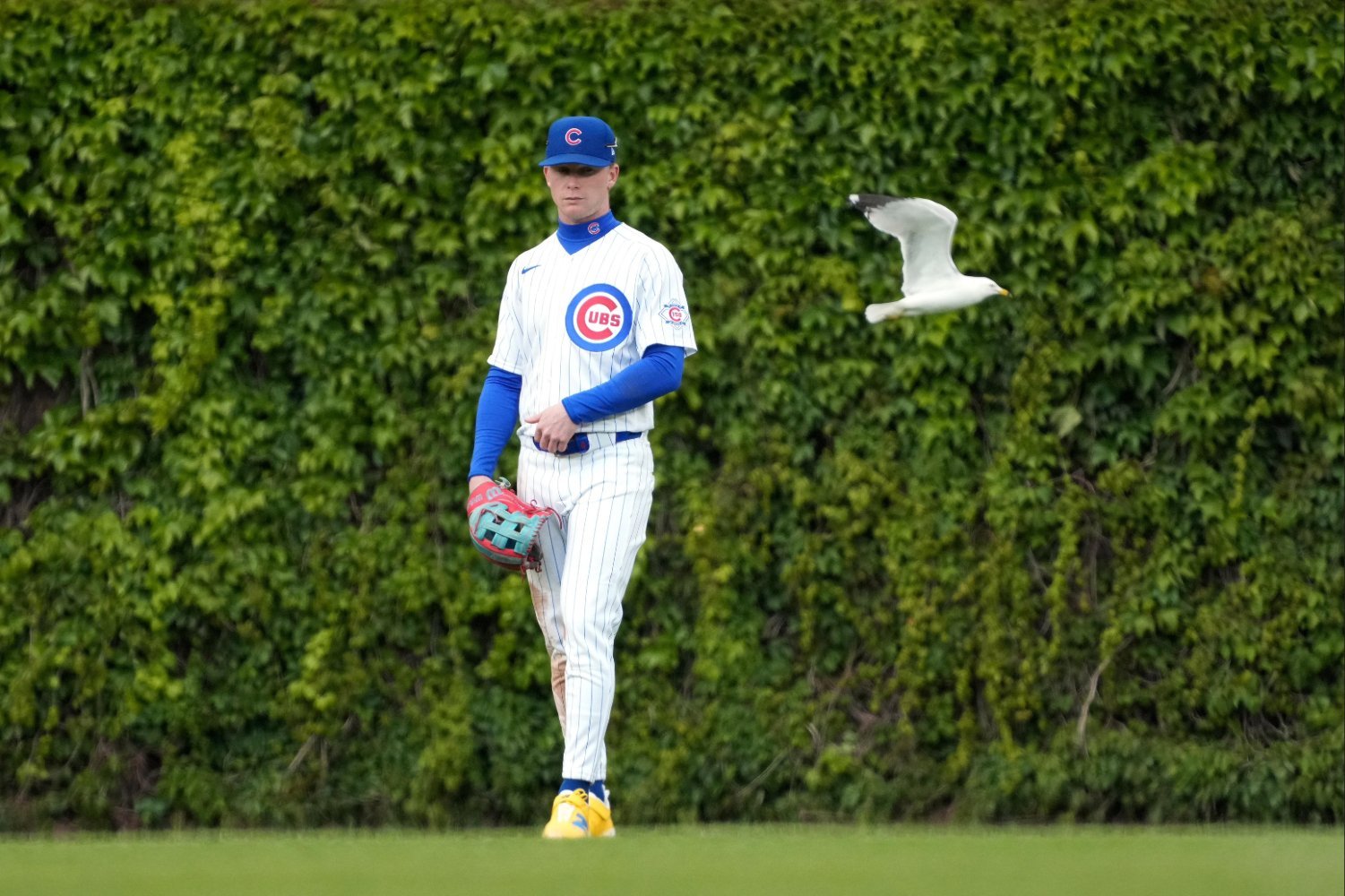 Whenever a team is operating within a torrid stretch of play, it becomes worth wondering how the drivers of a team's offense stand in proximity to such a period. With Pete Crow-Armstrong and the Chicago Cubs' own recent run, that relationship became fairly obvious on Wednesday night. With the Cubs needing a minor miracle to rattle off yet another win at Wrigley Field (and in the late-April-early-May period of the season), Crow-Armstrong deposited a 0-0 pitch from his shoe tops to the netting in left-center field to level the score and allow the Cubs to win in 10 innings. That it would only have been a homer at the Friendly Confines is hardly consequential to the overall point we're making. Had this stretch of play for the Cubs occurred early in the season, the juxtaposition with Crow-Armstrong's output would have looked very different. Through his first 111 plate appearances of the season (through April 25), he featured a slash of just .235/.291/.314 with a wRC+ of 70. He had just a single home run to his name and was rattling off strikeouts at a 30.6 percent clip. Had it not been for Michael Busch's own slow start to the year, his production would have sat at the bottom of the list in terms of output from Cubs regulars. As one might expect, the underlying plate discipline looking rather woeful was a significant contributor. As of that point on the calendar, Crow-Armstrong was swinging at a 57.8 percent rate. That mark was 12 points higher than the next closest player (Busch) on the roster. His 46.7 percent chase rate was nearly 11 points higher than Nico Hoerner's 35.4 Chase%, without the obvious element of bat-to-ball skills that his infield counterpart possesses. He was still able to make hard contact (46.4 percent), but the erratic nature of his approach held his expected batting average down to just .211. Since that particular point in time, though, we've seen a rather notable shift in Crow-Armstrong's approach: While it's not without its own game-to-game volatility, there's a calmer version of Pete Crow-Armstrong manifesting at the plate since April 25. His overall chase rate is down to 37.2 percent in the 41 plate appearances since and has slipped his overall swing rate to under 50 percent (49.7). His contact rate, meanwhile, has graduated from 71.7 percent in that first stretch to 81.6 in the subsequent plate appearances. That latter figure trails only Seiya Suzuki and (more obviously) Hoerner among regulars. It goes without saying, then, that the production has been ascending for Crow-Armstrong in this two-week period. His slash reads .278/.366/.611 with a wRC+ of 170. His strikeout rate has been cut nearly in half (17.1 percent) with a walk rate that has nearly doubled (9.8 percent). Three of his four home runs have come in that 41 PA sample, with an xBA all the way up at .325. It almost feels too obvious that a more disciplined iteration of Crow-Armstrong is directly responsible for the production we've seen over these past couple of weeks. Were there something in his pitch selection or in his mechanics (vis-à-vis bat tracking) that was indicative of his recent run of play, then perhaps there would be room for a different discussion. The reality is, though, that those things are still varying as much on a given night that a trend has yet to be uncovered. Which leads us to the only rational conclusion that we have with as wild a swinger as our subject: he's tamped it down. It's probably unreasonable, however, to think that this is something sustainable. We've seen Crow-Armstrong endure stretches where he calms down some at the plate, increases his production, and then gradually works his way back into the free-swinger that his baseball identity finds impossible to conceal over any sort of prolonged stretch. On the unrealistic chance that this is something real, though, we can at least look upon this period as a transitional moment into a new foundation. Of course, we're going to need a much, much longer sample before we can declare that even a remote possibility. It's important to note that such pessimism surrounding its permanence doesn't take anything away from his play of late. Regardless of how he got there, Crow-Armstrong needed a stretch like this following a rough start to the year. Even if it's eventually going to result in an inevitable regression in his plate approach, getting him back on track performance-wise was paramount to keeping the Cubs atop the NL Central. View the full article
 -
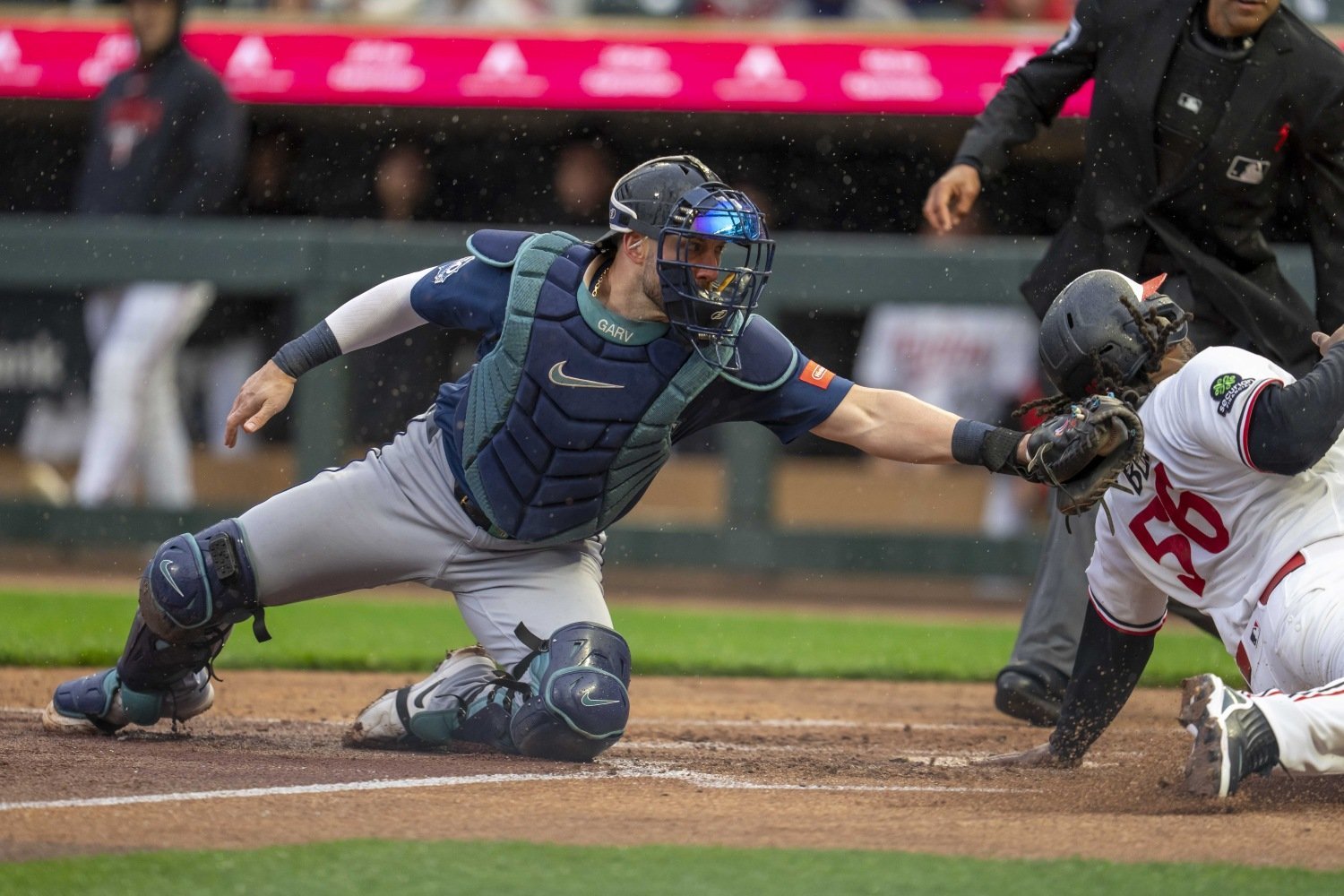 Derek Shelton knows what he has, and how badly it's needed. Ramon Borrego is very much a valued part of the new skipper's staff. "He's been terrific for us," Shelton said during a pregame media availability early in the team's last homestand. "I think he's had four or five elite sends, already." Because the Twins offense is neither especially deep nor especially powerful, Shelton has been adamant from Day One that the team needs to be aggressive on the bases. They're not loaded with exceptionally fast runners, but they want to push the envelope whenever possible—to create runs on hits and long outs, without waiting for another positive event. Shelton has called multiple runs the team has tallied "elite sends" by Borrego. That's a strange notion, in a way. After all, players have to actually create the runs, with a blend of sheer speed, anticipation, fundamental play and physical creativity on close plays. There's no question that the third-base coach plays an important role, but the replacement level for the job is pretty high, right? And most stop/go decisions are pretty easy, right? I watched 75 plays on which the Twins scored to see just how often Borrego really influenced the play, and to what extent. It's time we get a firm handle on what an elite send is. To begin with, I culled the initial plays I reviewed (including a few non-scoring plays, it was over 80) down to 18 that we'll call 55-grade sends or better. As a refresher, the scouting scale that is one of baseball's essential shorthands runs from 20 to 80, with 50 denoting average. In theory, the scale is meant to track with a normal distribution of skills, so a player whose ability is one standard deviation above the average would get a 60 grade. A player with a skill a full standard deviation below average would be a 40. That part is simple enough. Slightly less intuitive or familiar, perhaps, is the mathematical implication of those numbers in terms of frequency. In a normal distribution, about 68% of the population should fall within one standard deviation of the average. About 95% should fall within two standard deviations. Therefore, only about 17% of a given sample should be better than a 60 on the scouting scale. Let's call it 20%, since the nature of that scale is to cluster people into grade buckets but the nature of a curve is continuous. I picked out just 18 sends that are even above-average, and of those, I graded seven as 55s. In other words, only about 15% of the plays I studied reached a 60 grade. Already, that's some evidence that a third-base coach might not have the same capacity to impact a play as players do (again: duh). However, I did give Borrego a 70 on five different plays—and one 80. Let's study those plays, to discuss what makes them elite and how it's possible that Borrego has had such a big impact already. April 2: Twins at Royals - Josh Bell Scores on Sacrifice Fly R0JyM2pfVjBZQUhRPT1fQmdZQ1VGd0NVUVlBV3dOUlh3QUhWQU5UQUZoVFVnSUFCRkJUQndRTlZGWUJCd0ZW.mp4 One thing should be clear to even a casual fan entering this discussion: It's hard for a third-base coach to have a major impact on a sacrifice fly. They get to advise the runner on whether to go or not, but there's usually a good bit of time to make that choice. The runner starts from a stationary position and can watch the ball and the defender while they wait to break, just as the coach can. I'm the first person I know of who has set themselves the task of grading third-base coach sends like this, but I would venture to guess that there's never been an 80-grade send on a sacrifice fly. Your job just isn't all that important on such a play. Here, however, Borrego does coach Josh Bell very well. Before the play, he probably reminded Bell of the situation: With one out in the inning already, the default aggressiveness on a sacrifice fly should have been set pretty high. As the ball sailed toward Royals center fielder Kyle Isbel, however, Borrego had to weigh a few factors that pushed against one another. The situation says send a runner if you're unsure, but Bell is extremely slow. Isbel has a strong arm, and had time to get behind the ball and catch it with a bit of momentum toward the plate. Borrego needed to use one of the third-base coach's key tools: a keen acuity for the depth of the ball. This one ended up almost 290 feet from home plate, and with Isbel throwing it in from dead center, there was a risk of hitting the mound and creating a bad bounce if he tried to throw a low, hard, one-hop strike. You can see Borrego signal to Bell to go, immediately, but he also runs with him for a few steps, reading Isbel's throw. If it had been especially good, Borrego had a split-second to recall Bell to his base. Instead, he correctly sees that the throw won't get even his slow-footed charge, and lets him go. It's a great play on a tricky one to call. GRADE: 65/70 April 3: Rays at Twins - James Outman Scores from Second Base on Single MDRYbDNfWGw0TUFRPT1fQUZSV1ZsWldCMU1BRGdkUUF3QUhBMU5XQUZrQkFGQUFDd01DVXdvQkJBcFNBQVJm.mp4 This is the kind of play on which a coach can more often have a visible and significant effect. With only one out, James Outman has to freeze for a moment on a ball in the air, and in this instance, he doesn't get a great start once he starts heading for third base. The ball is hit very hard, which means it gets to the defender quickly. On such plays, the third-base coach is the runner's eyes, and he has to read the defender for the runner. In this case, Cedric Mullins had to range slightly to his left, and with the ball hit so hard, that forced him to wait for it to come to him. Charging hard to pick the ball on a short hop would have required too tough an angle to risk. That was exacerbated by the way the ball slices slightly back toward dead center, so Mullins has to change direction a bit to get behind the ball as it arrives. He receives it before Outman reaches third base, but fairly flat-footed and fairly deep. That gives Borrego the leeway to send the speedy Outman. This was an important run, and with just one out, Borrego could plausibly have taken a more conservative tack. With two trailing runners, though, there would have been a force on the runner if he'd stayed at third, so getting him home there—avoiding the risk of an inning-ending double play or a fielder's choice that retired him at the plate from the next batter—was important. Borrego gave Outman the 'go' order right away, and it paid off. GRADE: 70 April 7: Tigers at Twins - Luke Keaschall Scores from First Base on Double eHl3T0RfWGw0TUFRPT1fVUFsV1hGWUVWQWNBV3dSWFVnQUhDQUZRQUZrTVUxWUFWd1pRQVZWUlVGVUFCQVFI (1).mp4 Now we're really going to have some fun. For a third-base coach, this is as big a play as the day-to-day grind of the season offers. Yet, almost half of it is a brainless endeavor, really. Ryan Jeffers shoots the ball into right field, and right away, Borrego knows he needs to wind up the windmill for one runner. But there are two runners in his care on this one, and the trailing runner will be the one where something of note actually happens. He has to make sure his lead runner is headed home without incident, but more importantly, he has to start working out all the relevant components of the play—picking up key details in the right sequences, while seeing the big picture the whole time. Luke Keaschall was on first base, trailing Austin Martin. He had a good secondary lead, and because the ball is hit behind him in a place far from any defender, he immediately knows it will get down and that he can take at least third base. Borrego's attention has to be on Martin for just a moment, but he can spare that, because the ball is clearly heading for the corner. Whether Keaschall will be able to score, though, depends in some measure on how things go in that corner, so that's where Borrego's eyes need to be. He can check the progress of his runner as Zach McKinstry chops down his stride while drawing near the wall, but he has to see how cleanly McKinstry fields the ball and whether he battles the sidewall at all. That will determine how quickly he gets off a throw, and how strong it is, which will determine whether or not there's a play at the plate. It's time to break out a toy that has lots of fun potential future applications for enjoying and understanding the game, but relatively few salient ones right now: Gameday 3D. On the MLB.com Gameday page for any given game, you can click on a play and choose to experience it in a 3D animation. Again, this doesn't often add much, in a world where we have access to multiple video feeds of every play and a remarkable number of numbers telling us what happened, but it can occasionally help us see parts of the field that aren't picked up by the broadcasts. It can also give us an interesting perspective on the game—like that of a third-base coach watching a tricky play developing. Here's the moment when McKinstry first reaches that ball. We can see Borrego waving Martin home, but look how far off Keaschall is. He's only halfway between second and third. Though McKinstry began the play pretty far from the line, he's covered the ground quickly, and it's not a very deep corner. Sending Keaschall here would be tough, if McKinstry were in position to make a strong throw the instant he got there. Borrego knows something this still frame can't convey, though: McKinstry is going to need an extra second to get rid of the ball. As you might be able to see (it's a jumble out there), the animation ends up placing three of McKinstry in that corner, because he has to move in ways the tracking technology doesn't deal with well, vis-a-vis the sidewall. He doesn't slam into it or anything, and he doesn't bobble the pickup. But he has to brace himself, and then he has to turn around to make a good throw. A left-handed right fielder would have had an advantage here that was denied to McKinstry, but Borrego doesn't have to think in hypotheticals. He knows that extra half-second will be needed. While watching and processing this, of course, he's waving his young runner on. Being a third-base coach, like hitting, requires a "Yes, yes, NO" mentality. You have to think you're sending the runner until you see something that stops you, and your runner has to think the same way. Borrego's real decision point, on this particular play, comes here: This is the moment McKinstry actually releases his throw down the line. Closer to us, you can see Gleyber Torres streaking over to take the relay position. Until now, Borrego has the chance to throw up a late stop sign. Because he knows Keaschall is a fast and aggressive runner coming in with that score-if-you-can mentality, though, he keeps waving him on. The Tigers' relay is virtually perfect. McKinstry has a strong arm; so does Torres. Both throws are very accurate. There's even an extra, tiny thing working against the Twins: Keaschall got his feet wrong going into third base and had to slow down slightly as he rounded it. But it doesn't quite matter. Keaschall is safe, and Borrego was right to bring him around, despite the defense's good execution. GRADE: 65/70 April 14: Red Sox at Twins - Byron Buxton Scores from First Base on Single Uk85OGFfWGw0TUFRPT1fVWxOVUFGQlNVUVFBWFZRTEF3QUhWUVJmQUFNSFd3Y0FVQVJYQkZBR1Z3ZGNWVkJl.mp4 Earlier in this same game, as you might remember, Byron Buxton scored on a single to center by Keaschall. That one was initially ruled an out and looks even more daring in the scorebook than this does, but if you break it down, you have to deduct points from Borrego for overaggressiveness. It was a line drive to center, played perfectly by Jarren Duran, and had Willson Contreras not leapt to ill-advisedly cut off the throw, Buxton really would have been dead meat at the plate. We're evaluating Borrego's process here, not just the results, so that play doesn't count as an elite send. This one, perhaps counterintuitively, does. There were no outs in the inning, and the Twins already led by four. They could afford to be a bit more conservative than they had been earlier in the game. Buxton was the trail runner when Trevor Larnach laced a ball into the corner, and though it was a full count, neither Buxton nor Tristan Gray had been attempting a steal on the play. On most balls that are barely doubles, even a fast runner won't score from first base, especially with another runner in front of them. But Borrego knew a few things. Firstly, he knew Gray would score easily, so he waved him by quickly and turned his attention to Buxton, and to right fielder Wilyer Abreu. He knew Abreu has a strong arm, but he also knew it was Buxton running, so again, he kept the wave up while he gathered data on the unfolding play. Larnach, no matter what the Twins' team-owned media sometimes says, is slow, and as Abreu raced into the corner, Borrego could see that there would be a very makeable play on Larnach if Abreu chose it. Abreu, like McKinstry, was quick to the ball, but unlike McKinstry, he does throw left-handed and would be able to get off a throw quite quickly. His second baseman was out in the same position Gleyber Torres had occupied, and was calling for the throw. Here's the moment at which Abreu committed himself to throw to second, instead of toward home. You can do the math several different ways, but that was probably the right choice for Abreu—made for the wrong reasons. He correctly diagnosed that he had a much better chance to get an out at second than at home, but that's because he was seeing and thinking about Gray. The lead runner still wasn't home, so as Abreu released a strong throw to the infield, he wasn't considering whether the trail runner would come, too. He wanted the out, and took for granted that Buxton would stop at third. If Borrego or Buxton had taken anything for granted at any point in the play, that would have been true. Look where Buxton is when Abreu pulls back his arm for the throw. As good as Abreu's arm is, if the throw were coming toward the plate, Borrego would have had to throw up the stop sign. In fact, if he'd even misread the play slightly and thought Abreu would come home, he might have thrown up a premature stop, and had he done that, Buxton wouldn't have been able to get going again and come home even after the throw went to the keystone. Buxton is always running flat-out and with home plate in his sights, though, and Borrego read the play right. He knew almost before Abreu did that the throw would come to second, and once it did, Buxton was in the clear. This was a case of feeling the rhythm of the play, knowing the spatial variables and the numbers, but also of guessing what the opponent would do in a stressful situation and seizing on an advantage. It's an instance of combined brilliance by Buxton and Borrego. GRADE: 70 April 21: Twins at Mets - Kody Clemens Scores from Second Base on Single bGJ3a0JfVjBZQUhRPT1fQmdWWlVRRURCUW9BVzFCV0J3QUhDVkpXQUFNQ1dsa0FCVlVHVkFWVFVBRURDVllG.mp4 One difference between being a player and being a coach on the field is that, while a player can benefit from good preparation, a coach can sometimes make a play entirely based on that preparation, with almost nothing else coming into play. This is one such instance, or close to it. Luke Keaschall hits the ball well, right over the head of Kody Clemens at second base. That's always nice, as a runner. Clemens knew this ball was going to get down right away, based on his pre-pitch check of where the outfielders were playing and on the trajectory of Keaschall's liner. Thus, even with one out, Clemens gets the kind of jump runners often get with two down. Borrego knew where the outfielders were before the play, too. Luis Robert Jr. had shaded Keaschall fairly strongly toward right-center, which meant this ball was going to force him to come in and over quite a bit. Borrego's angle on the play was far from ideal, because the slice we can see from the camera position high and behind home is tougher to notice from the side. That's what made this play a challenging one for Borrego. He had to read Robert's body and see the way he changed his initial route toward the ball; he had to know that that meant a little extra time getting under control and getting rid of the ball. It got to Robert more quickly because of its slice, but Borrego correctly perceived that it forced the outfielder into a slightly uncomfortable position. The rest of the play was just balancing situation with scouting report. Yes, with just one out, there would still be a chance to score Clemens from third without a hit, but the bottom of the batting order was due next. The best chance to score was to get Clemens home then and there. Clemens is good at getting around third base cleanly and taking a direct route to the plate without losing steam. Robert has average-plus arm strength, but it was pretty clear that he wasn't playing at full strength. The Twins probably had that in their advance report for the series, but either way, Borrego acted on what he saw. A good throw would have had a good chance to get Clemens, but a good throw would have been difficult for most center fielders on that play, and it proved impossible for Robert. This is what it looks like when a third-base coach smells blood and goes for the kill. GRADE: 80 April 27: Mariners at Twins - Josh Bell Scores from First Base on Double MnI0cWRfWGw0TUFRPT1fQVZVRVVWRlZYd0FBWGxwVFh3QUhWd01DQUFCUlVsUUFVUUVFQmdVTlYxZFZWbEZm.mp4 Once more, we return to the theme: you have to be "Yes, Yes, No" as a third-base coach. When Keaschall hit a ball down the line, Borrego's job is to see the ways he can get Josh Bell home. In the back of his mind, he has to know that the default decision will be to hold him, because it's Josh Bell, but if the window is open to score him, that has to happen. With two outs, it's especially crucial. With any ball down the line—and this is the third one we've seen—the first thing the third-base coach has to figure out is how close to the sidewall the ball will get and stay. With the play on which Keaschall scored against the Tigers, it was the way Zach McKinstry had to adjust to get a throw off that allowed Borrego to send his man. If the ball kicks off the wall and out into the playing field, instead of going to the corner, that often makes it easier for the defenses and forces a stop sign—but not always. In this case, that's very much the pivotal movement. because the ball pulls one of its most treacherous tricks on Rob Refsnyder. Keaschall didn't exactly blister it, and it's already rolling by the time it finds the sidewall, but because there's a small space between the ground and the padding along that wall, when the ball does get to the wall, it hits concrete. It's still moving faster than a fielder is thinking, given that the bounce has died, and it's still spinning in a slightly funky way. It hits the wall (and the rougher dirt under that padding), and it skips slightly. It barely comes off the ground at all, but that's enough to mess up Refsnyder, whose focus had been on getting parallel to the wall for what he thought would be an uncomplicated scoop. He doesn't get low enough—it's been over half a decade since he appeared as an infielder; this ball would be better for a player who still has that instinct to get down to the ball's level—and his barehand stab pushes the ball slightly behind him. That's Borrego's opening. He had set up and begun giving Bell the wave early. When Refsnyder misplayed the ball, the "no" after the "yes, yes" was flung away. Borrego knew the situation and saw the play develop in time to ensure that his runner never slowed down. It took a review to get it right, but the Twins got their run. GRADE: 70 I'll renew what I said before breaking down each play individually: Third-base coaches affect fewer plays in major ways than is implied by using the 20-80 scale. The decisions one coach would make aren't different enough from those of another coach to merit using that wide a scale. Maybe 30-70 makes more sense for them. However, going through these this way is still instructive. A third-base coach has to be thinking along with both their own team and the opponent, including riding the emotional wave of a play. Borrego stole another run in Toronto, for instance, when he correctly guessed that a bloop single followed by a high bounce fielded with his back to home plate would leave Daulton Varsho too flustered to throw to the right base. Varsho threw to second, and an extremely aggressive send paid off for the Twins. The coach has to be in the moment that way. They also have to have their spatial calculation machines turned on at all times. This is where being a baseball lifer is hugely valuable, and it's why you'll probably never see this particular job done by someone who hasn't played the game at a high level. Reading the ball off the bat, checking and remembering defensive positioning, and the simple pattern recognition that lets one estimate distances and read a runner's stride when they're still six steps away from third base all come from having spent a long time immersed in the game and its clock. Layered over all of that, though, the coach also has to be an analytics maven. They have to think about who's running, which defenders are involved in the developing play, and the score, inning, and base-out state. They have to have carefully calibrated, deeply internalized risk management systems on which they can dial aggressiveness up or down based on all those variables that get discussed as cold theories in pregame meetings and show up on reports. But all of those things are just filters. The coach still has to see the play clearly and make their send/hold decision based on how the actual play before them looks and feels. The Twins ran into two bad outs between third base and home plate on Thursday in Washington. Neither was Borrego's fault, exactly, but his aggressive approach does seem to have started creating situations wherein runners are in peril. By Shelton's reckoning, that's ok. The Twins are getting more value from those elite sends than they're losing when one goes wrong. They intend to keep testing defenses, because they probably can't score enough runs to win games consistently without doing so. Borrego will be little celebrated for his role in that, and much maligned when things go wrong—but he's an important part of the team's offense, and he's been a positive influence so far. View the full article
 -
Milwaukee Brewers Pitcher of the Month - April 2026
DiamondCentric posted an article in Brewer Fanatic
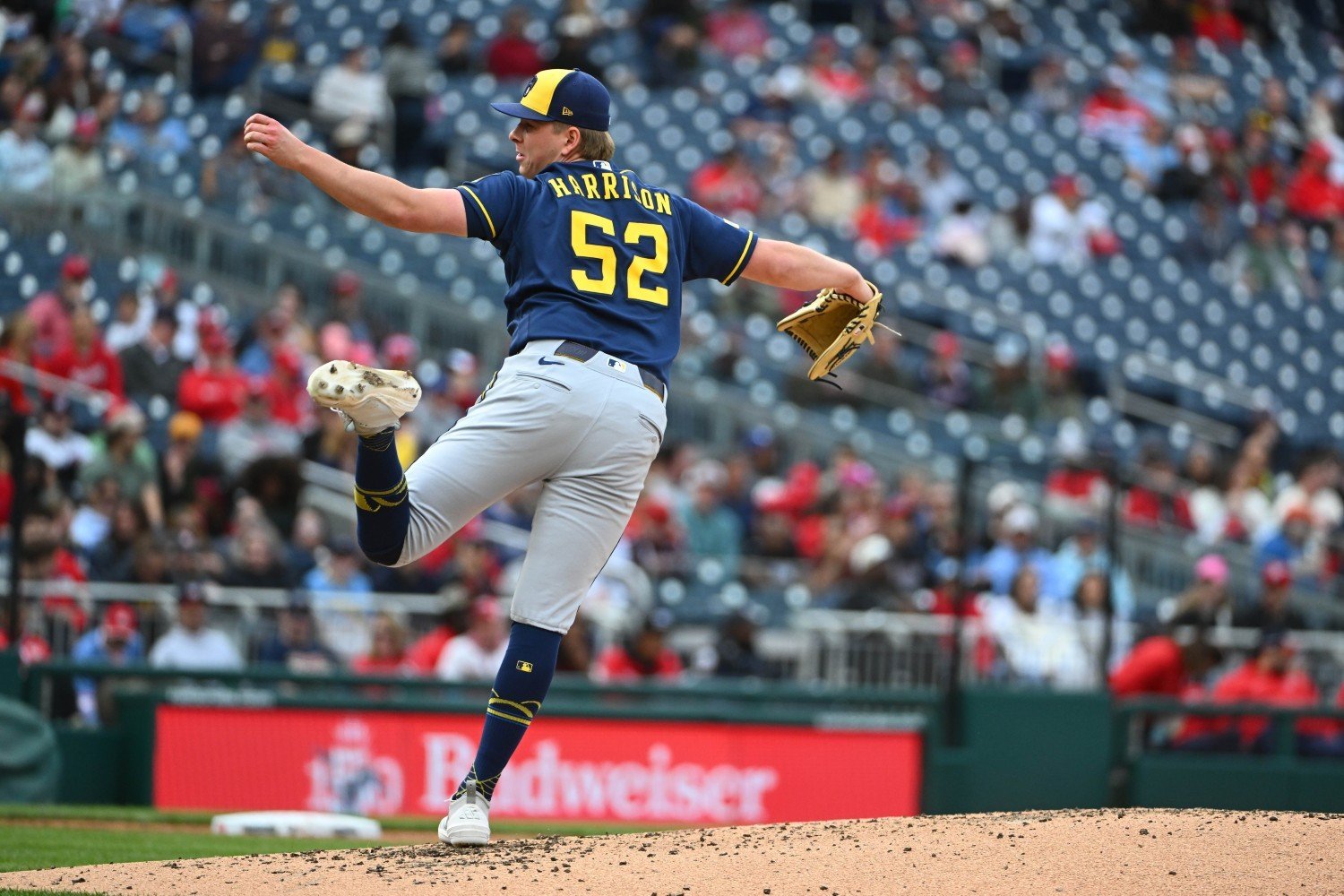 Honorable Mentions DL Hall 10 G, 12 IP, 2.25 ERA, 4.31 FIP, 25.5 K%, 15.7 BB% Hall’s season is off to a great start. With his injury issues hopefully long behind him, he’s finally looking like the prospect that was advertised when he was in the Orioles system, posting a 1.59 ERA over 17 innings pitched thus far. Not much has changed. The Brewers still depend on him to make multi-inning relief appearances, and his arsenal has far more variety than your typical reliever. He has begun to phase out his four-seam fastball and slider in favor of a new sweeper and heavier reliance on his sinker. He has been successful, but there are a few points of concern. His walk rate is much higher than it should be, and his changeup has been giving up a considerable amount of hard contact, especially compared to last year. Statistical Nugget: Hall has thrown 42 sweepers so far this year, limiting opposing hitters to a .000 slugging percentage with a 60% whiff rate. Aaron Ashby 12 G, 13 ⅔ IP, 2.63 ERA, 2.04 FIP, 33.3 K%, 14.3 BB% As the bullpen’s iron man, Ashby has been Milwaukee’s busiest reliever by far. Not only does he have 17 appearances this year, but eight of those outings were for more than one inning. The former starter has been excellent since returning to full health and has been an invaluable part of the pitching staff. His walk rate is the only real blemish on his profile this year, and his breaking balls have given opposing hitters fits. They are averaging .333 against his sinker, which has been more hittable this year than in years past, but with a robust arsenal of five pitches, he has plenty of weapons to get the outs he needs. Statistical Nugget: Ashby has thrown 83 curveballs this year. Opposing hitters have whiffed 70.8% of the time while failing to record a single hit. Jacob Misiorowski 5 GS, 27 ⅔ IP, 3.58 ERA, 3.28 FIP, 34.2 K%, 8.5 BB% Misiorowski dazzled the big leagues in his rookie year, but so far, it looks like his sophomore campaign is going to take his player stock to new heights. His strikeout rate (38.1%) and whiff rate (38.8%) are both in the 99th percentile, and the only qualified pitcher with a higher average fastball velocity is Mason Miller. His slider has shown major improvement over last year, generating less hard contact and serving as a more effective put-away pitch in two-strike situations. His curveball has taken a similar step forward but the star of the show is still his heater, which has a whiff rate of 47.1%. Statistical Nugget: This year, Misiorowski has a zone swing and miss rate of 29.1%, the highest among all qualified pitchers. Pitcher of the Month — Kyle Harrison 4 GS, 18 ⅔ IP, 2.41 ERA, 3.08 FIP, 28.9 K%, 9.2 BB% Harrison is the latest victory in a long list of successful trade deals executed by the Brewers under Matt Arnold. After three unremarkable seasons with the Giants and Red Sox, it took Milwaukee just a handful of starts to unlock his exceptional upside as a starting pitcher. After 29 ⅔ total innings of work this season, he has a 2.12 ERA and a 2.87 FIP. He has been known for his fastball since he was a top prospect in San Francisco’s system, but this is the first year that his slurve has been a viable secondary offering. The shape hasn’t changed much, but it has been located far better this year, ending up outside of the zone and limiting meaningful contact. The Brewers getting the best out of a discarded pitcher is a tale as old as time, but Harrison, who’s under club control until 2031, is looking like he’ll be a core component of Milwaukee’s rotation for the foreseeable future. Statistical Nugget: By pitching run value, Kyle Harrison currently has the most valuable slurve in all of MLB. View the full article
 -
 Transactions: RHP Michael Fowler placed on High-A Wisconsin’s 7-day injured list Game Action: Nashville Pre-Game Media Notes Game One Final: Nashville 3, Louisville (Reds) 1 (in 7 innings) Box Score and Game Log Game Two Final: Nashville 9, Louisville 6 (in 7 innings) Box Score and Game Log In his first game as a minor leaguer since June 2023 (excluding rehab stints), OF Blake Perkins showed he’s serious about returning quickly to The Show: 3rd inning fly out (99mph exit velocity), 5th inning single (101.9mph) and theft of third base, 5th inning outfield assist, 7th inning RBI single (104.2mph). Starting 25-year old RHP Coleman Crow also showed once again why he’s special, garnering strikeouts (4) and groundouts (6) throughout his 89-pitch, 5 2/3 innings of work (1 R, 3 H, 2 BB), although some loud contact in the 4th inning (2 line outs and a fly out all exceeding 100mph) was a bit uncharacteristic. Breaking news: we’ve just received the doubleheader sweep game report, so I’ll post much of that here: Sounds Sweep Doubleheader in Louisville, Take Control of Series – Brock Wilken Tallies 3 RBI, Extends On-Base Streak to 25 Games Nashville earned a doubleheader sweep of the Louisville Bats on Thursday night at Louisville Slugger Field. The Sounds won the first game 3-1 behind stellar pitching from Coleman Crow and a pair of hits from Blake Perkins. Game two saw more offense with Nashville using a four-run fifth inning to seize control of the game and outlast the Bats for a 9-6 final behind a three-RBI performance for Eddys Leonard. Crow, the Brewers no. 26-rated prospect made his fifth start of the season, following up a scoreless outing over 5.2 IP last Thursday night at First Horizon Park with another strong performance against the Bats in Game One. Despite two early baserunners with a leadoff single and walk, Crow limited the Bats to their only run of the game when Edwin Arroyo came around to score on a wild pitch. The Sounds got their first baserunner in the top of the third via a Luis Matos single before he stole second and was left in scoring position as Davis Daniel retired each of the next three he faced. Back-to-back walks drawn by Cooper Pratt and Luis Lara in the top of the fourth were followed by a Brock Wilken RBI single (108mph exit velocity) that evened the score at 1-1. Nashville then took the lead in the fifth as Pratt scored Jacob Hurtubise who walked and moved to third on a single by Perkins. Jordyn Adams delivered a two-out pinch hit triple in the top of the seventh inning ahead of Perkins who added his second hit and first Nashville RBI with a single to make it 3-1. After the rocky start to the first, Crow settled in and retired 10 of the next 11 he faced before allowing a leadoff single in the fifth along with a two-out hit by pitch. Crow stranded both in the inning and then struck out back-to-back Bats in the sixth after allowing his third hit of the game to lead off the sixth. Brewers no. 28-rated prospect Craig Yoho (1 1/3 IP, 0 R, 0 H, 0 BB, 1 K) tossed a three-pitch strikeout to get the Sounds out of the inning and strand the runner on first. Yoho was back out for the bottom of the seventh and worked a 1-2-3 inning and collected his first save of the season to help Nashville take Game One. In Game Two, LHP Thomas Pannone (2 2/3 IP, 2 R, 5 H, 4 BB, 2 Ks) and the Sounds faced off against and got the better of old friend Nate Peterson. Pannone pitched his way through a shaky start, as the Bats began the game with three straight singles to take an early 1-0 lead. Pannone and the Sounds traded a pair of outs for another run as the Bats made it 2-0 before loading the bases with three straight walks issued by Pannone. He escaped the jam with relatively minimal damage done as he got Dayne Leonard to strike out and strand all three remaining Louisville runners on base. Consecutive two-out singles and the fourth walk issued by Pannone once again loaded the bases for the Bats in the second, but he and the Sounds left the inning still just down two runs after he got Michael Toglia to line out to end the threat. RHP Kaleb Bowman (1 2/3 IP, 3 R, 2 H, 3 BB, 1 HBP, 3 Ks) took over on the mound in the bottom of the third with two outs. He was greeted with a single but stranded the seventh Louisville runner of the game to send the Sounds to the plate in the top of the fourth. Matos' second hit of the doubleheader was a two-run home run that evened the score at 2-2. The Bats quickly regained their lead as Arroyo homered off Bowman for his second hit in game two and put the Bats back up by a run. Bowman followed a hit batter and walk in the frame with back-to-back strikeouts to strand two more. Jett Williams added his second hit of the game with a leadoff single to begin Nashville's four-run rally in the top of the fifth. Pratt and Lara followed Williams on base to load the bases and back-to-back walks put Nashville in front 4-3. With the bases still loaded and one out, Leonard laced a two-RBI double into the right-center gap to push the Sounds back in front 6-3. Peter Strzelecki (1 2/3 IP, 0 R, 2 H, 0 BB, 3 Ks) inherited a pair of runners after taking over for Bowman in the bottom of the fifth and was tasked with facing the top of the Bats order. Arroyo added his third hit of the game with a two-RBI triple that pulled the Bats back within a run. Strzelecki sat down each of the next two to maintain the one-run advantage and leave the tying run on third base. Williams was aboard for the third time after drawing a walk to begin the top of the sixth. Wilken started another two-out rally with a RBI single and would later come around to score on the third bases-loaded walk issued by Bats pitchers to push Nashville's lead back out to 8-5. Strzelecki struck out two more in the bottom of the sixth to help work around a one-out double and keep it a three-run Sounds advantage. Ethan Murray connected on his second home run of the season to start the top of the seventh and give the Sounds their largest lead of the game at four runs. After three straight outs following the solo homer by Murray, Drew Rom (1 IP, 1 R, 2 Ks) headed to the mound in the bottom of the seventh in relief of Strzelecki. Sitting on three hits and a double shy of the cycle, Arroyo added his fourth RBI of the game with a single cut off by Williams in the right-center field gap that prevented Arroyo from completing the cycle but brought the Bats back within two. Rom picked up his first strikeout of the night for the second out of the inning, but the game stayed alive as he allowed his third single of the frame and sent Rece Hinds to the plate to serve as the potential tying run with runners on the corners. Rom made quick work of Hinds with a four-pitch strikeout to help seal the doubleheader sweep for Nashville. 25 FOR 25: Brock Wilken ended the doubleheader 2-for-6 with three RBI, two walks, and two runs scored to help extend his on-base streak to 25 straight games dating back to April 10. A hit in each game of the doubleheader also extended his current hitting streak to five straight. The Brewers no. 21-rated prospect began his Triple-A tenure 3-for-50 through his first 15 games but is hitting .277 (18-for-65) over his last 20 games with a hit in 13 of his last 15 overall. His 25-game on-base streak is the second-longest active streak in the International League and the fifth-longest going in Triple-A currently. His three-RBI performance between the two games on Thursday have him in a three-way tie for the Nashville team lead in RBI along with Eddys Leonard and Jeferson Quero. His 24 walks lead the team and are tied for the eighth-most in the International League. MIGHTY MATOS: Luis Matos added a hit in both games of the doubleheader including his first home run of the season and his first since August 29, 2025, with San Francisco. It ended a 24-game homerless streak for the outfielder in which he only had two total extra-base hits since hitting his home last home run. Matos is hitting .364 (4-for-11) in his first four games with Nashville and has reached base safely in all four games. JETT IT GO: Brewers no. 3-rated prospect Jett Williams added his ninth multi-hit game of the season with a 2-for-4 night at the plate in game two of the twin bill after being held hitless in game one. Williams now has three multi-hit performances in six games since the calendar turned to May and is hitting .354 (17-for-48) with three doubles, two home runs, nine RBI, and 10 runs scored over his last 13 games. His nine multi-hit games rank second among Nashville players this season behind Luis Lara and Eddys Leonard, who each have 11. Friday’s outlook: LHP Tate Kuehner (4.15 ERA, 1.38 WHIP, 8.9 K/9 in 30 1/3 IP) gets the opportunity to lead Nashville to a 3-1 series lead. Biloxi Pre-Game Media Notes Final: Biloxi 7, Columbus (Braves) 6 Box Score and Game Log Via the Shuckers’ website, game details and we encourage readers to review affiliate write-ups as part of their Link Report routine: Garcia Hits Two Homers as Shuckers Stave Off Clingstones 7-6 After a big winter (.976 OPS in Venezuela) was cut short due to a wrist injury, Eduardo Garcia’s first 2026 start in center field (after 49 starts there last season) may have been the sign that he’s truly fully recovered. We’ll interpret his 2-run homer in the 3rd inning and solo shot in the 5th inning as further evidence. On his last day as the only 18-year old in AA, SS Jesus Made (Feliz cumpleaños!) had 3 singles and a walk to lift his season average to .282 and OPS to .815. As of this morning, he’s the only 19-year old hitter in the Southern League, making him the youngest position player in the league by over 2 years. He also got this bat out of the way to preserve 1B Blake Burke’s health: Starting 20-year old RHP Manuel Rodriguez (6 IP, 3 R, 3 H, 0 BB, 2 Ks) retired the first 10 batters he faced before conceding a solo homer on a 2-2 pitch, then an infield single and first pitch 2-run shot the following inning. After that second homer, Rodriguez, RHP Nick Merkel (1 2/3 IP, 0 R, 1 H, 0 BB, 2 Ks) and LHP Mark Manfredi retired 12 of the next 13 Clingstones to put themselves on a cusp of a comfortable 7-3 victory with 1 out and nobody on in the 9th inning, before Manfredi (1 1/3 IP, 3 R, 2 H, 1 BB, 1 K) decided to make it more entertaining for the home fans. Thankfully he was able to strand the potential game-tying run at second base, ending the Shuckers’ 7-game losing streak. Shuckers’ Extras: The homers may be a bit unsightly (8 allowed in just 28 1/3 innings this season) and certainly hurt his ERA (5.40), but Rodriguez continues to efficiently get outs (1.20 WHIP, 24 K / 6 BB ratio). He’s the only 20-year old pitcher in the 8-team Southern League. After a 2-game mini-slump (0-for-8), OF Damon Keith (1-for-4) doubled home 2 runs in this game. He’s now reached base in 19 of 20 games this year, hitting .324 with a 1.068 OPS. OF Dasan Brown’s 4th inning homer was the 30th of his minor league career (492 games), as he’s more known for being fleet of foot (157 career stolen bases). Friday’s outlook: RHP Brett Wichrowski (6.83 ERA, 1.55 WHIP, 9.8 K/9 in 27 2/3 IP) aims to lead Biloxi to a win to tie up this week’s home series, making his 5th start (7th appearance). Wisconsin Pre-Game Media Notes Final: Peoria (Cardinals) 7, Wisconsin 6 Box Score and Game Log Via the Timber Rattlers’ website, game details: Chiefs Stun Rattlers with Four Runs in Ninth The linked game report covers the high highs and low lows of this contest in depth, including 4 embedded videos. A respectable start from RHP Braylon Owens (5 IP, 3 R, 4 H, 2 BB, 6 Ks), strong relief from RHP Yorman Galindez and clutch 2-out hitting appeared to have clinched the victory as Wisconsin led 6-3 and needed just one more out in the bottom of the 9th inning. Galindez (3 2/3 IP, 3 R, 3 H, 1 BB, 9 Ks) wasn’t troubled in his first 3 innings of relief, but a double, full count catcher’s interference and 0-and-2 infield single helped push him to a season-high 58 pitches, forcing Manager Nick Stanley’s hand. 5 of Wisconsin’s 6 runs came with 2 outs, including 1B Eric Bitonti’s RBI double, a run-scoring wild pitch, C Blayberg Diaz’s RBI infield single and red-hot OF Josiah Ragsdale’s RBI infield single. Ragsdale had a 2-for-5 game with 2 RBIs, while OF Josh Adamczewski (.321 AVG, 1.071 OPS) continued his assault on the Midwest League with a 3-for-5 game with a double and a stolen base. Timber Rattlers’ Extras: The final 4 Chiefs’ runs came across on just 7 pitches thrown by RHP Jose Nova (single, wild pitch, walk-off single), who was the freshest bullpen arm (last pitched May 1). This was Owens’ 3rd consecutive strong start, as he retired the first 6 batters faced and 6 of the last 7 batters, sandwiched between the difficult 3rd inning (3 runs, 3 singles, 2 walks). OF Luis Castillo had an early exit (ejected after a 4th inning strikeout), but substitute Tayden Hall had a walk, single and run scored. SS Daniel Dickinson is in a bit of a rut: 0-for-last-12 with 7 strikeouts, likely still making the adjustment to High-A ball. Friday’s outlook: RHP Ethan Dorchies and LHP JD Thompson are starting options for Wisconsin, who need a victory to even this week’s series. Wilson Pre-Game Media Notes Final: Fayetteville (Astros) 3, Wilson 2 (in 7 innings) Box Score and Game Log Via The Wilson Times: Woodpeckers, Newman crunch Wilson 3-2 in rain-shortened win Mother Nature gave Fayetteville a light assist after the Warbirds left the bases loaded in the 7th inning and LHP Andrew Healy (3 IP, 0 R, 1 H, 0 BB, 6 Ks) completed his third scoreless inning of relief. Wilson looked in good shape early, as starting RHP Tyler Renz (4 IP, 3 R, 4 H, 3 BB, 5 Ks) largely cruised through 3 frames, backed by OF Jose Anderson’s 6th blast of 2026 and SS Brady Ebel’s RBI single. Anderson had a 2-for-3 day, accounting for half of the team’s hits. Unfortunately, Ebel was thrown out at home to end the Warbirds’ half of the 3rd inning, which could have extended the lead. An error and two walks in the top of the 7th inning gave OF Handelfry Encarnacion (1-for-4) the chance to play hero yet again (he’d homered in 4 of his last 5 games), but he lined the first pitch he saw to the left fielder. Warbirds’ Extras: Wilson’s 4 through 9 hitters combined to go 0-for-15 with 3 walks and a stolen base. The most concerning case may be 3B Filippo Di Turi (0-for-3, .163 AVG), who’s still searching for his early 2025 season form. 6’6” Healy turned in his second straight dominant outing (combined 6 IP, 0 R, 11 Ks), which is a great sign for the 2025 9th round draft pick. Friday’s outlook: RHP Jacob Morrison is scheduled to make his 2nd career start (3 IP, 0 R, 4 Ks last week), with Wilson needing a win to even the series 2-2. Final: ACL Padres 5, ACL Brewers 2 (in 7 innings) Box Score and Game Log After trouncing the Padres twice in earlier games, the opposition resorted to having rehabbing pitchers cover 6 of the 7 innings, but our youngsters still managed to out-hit them 9 to 7. 18-year old RHP Chase Bentley, making his professional debut after being selected in the 19th round in the 2025 MLB Draft, was the team’s standout performer on the mound, blanking the Padres over the final 4 innings (4 IP, 0 R, 1 H – a single, 2 BB, 6 Ks). Unfortunately, the team trailed 5-1 by the time Bentley entered, as rehabbing RHP JB Bukauskas struggled in his second outing (2/3 IP, 4 R, 3 H, 1 HBP, 2 Ks), retiring only 2 of 6 batters faced. Bukauskas hasn’t had sustained health since a lat strain in April 2024. On the offensive side, C Rylan Mills (2-for-3, HR; .556 AVG) and OF Alexander Frias (2-for-3, SB; .375 AVG) continued to impress, including Mills briefly tying the game on a solo homer in the 2nd inning (first career blast). Roderick Flores (2-for-3; .375 AVG) is also quietly getting the job done. 8 of the 9 Brewers’ position players reached base via hit or walk. The team missed some opportunities, going 1-for-12 with runners in scoring position. The 4th inning was particularly frustrating: 3 singles, 0 runs. 13 of the team’s 21 outs came via strikeout. The game also featured the second 2026 outing for RHP Jayden Dubanewicz (2 IP, 1 R (0 ER), 2 H, 1 BB, 1 K), who appears to be working back to full strength after a spring injury, and a stateside debut for 19-year old RHP Josue Toledo (2 batters faced: double, groundout). Next up: the Brewers (2-2) host the ACL Cubs (2-2) on Friday evening. We hope that you enjoy the Minor League Link Report. On Friday, five minor league games are on tap, with Wilson kicking things off at 6:05pm CST. The Milwaukee Brewers also begin their home series against the Yankees at 6:40pm. Organizational Scoreboard including starting pitcher info, game times, MiLB TV links, and box scores Current Milwaukee Brewers Organization Batting Stats and Depth Current Milwaukee Brewers Organization Pitching Stats and Depth View the full article
 -
Red Sox Report Cards: Grading Every Boston Pitcher for March/April
DiamondCentric posted an article in Talk Sox
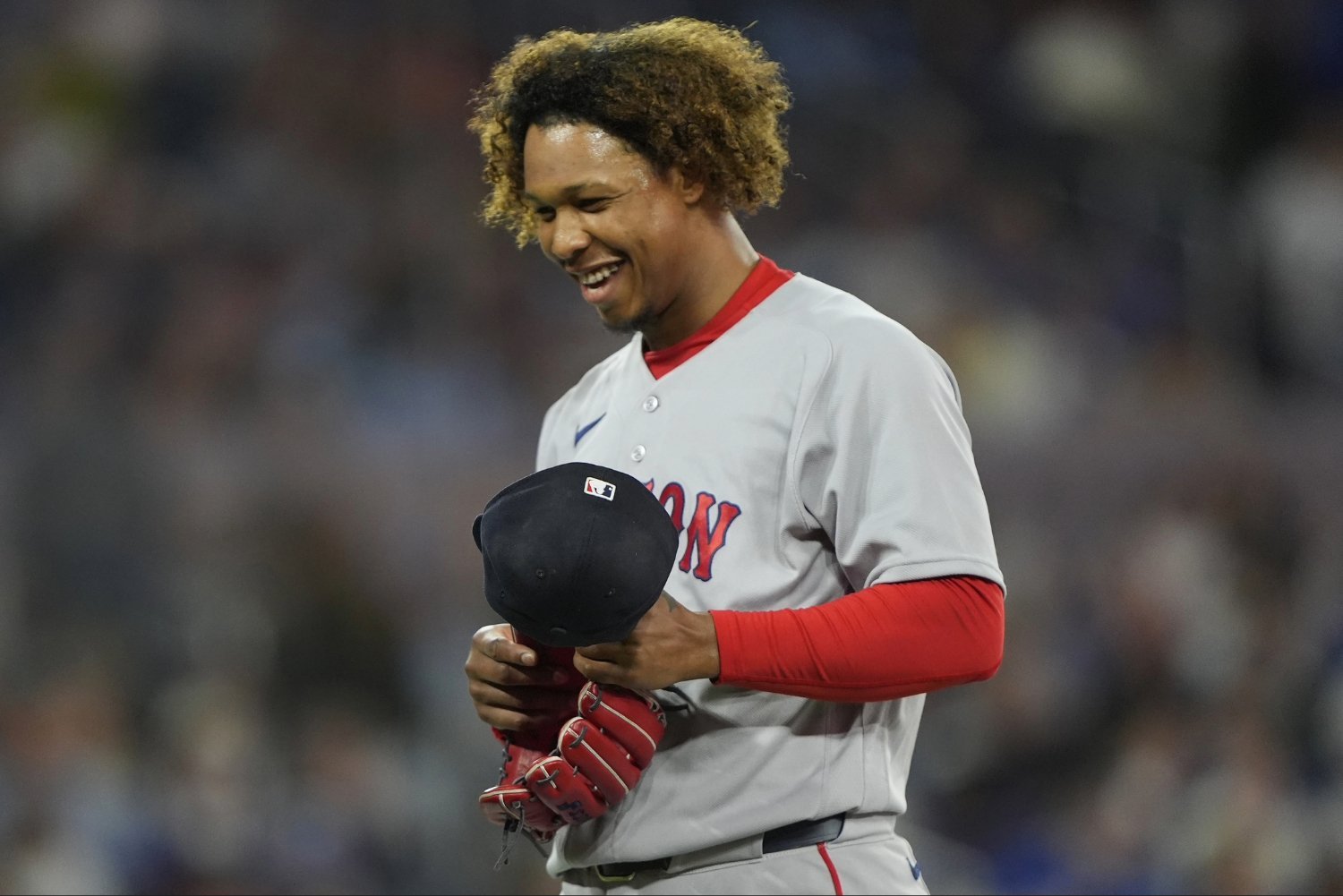 With all of the questions surrounding Boston’s offense, the thing that was going to put fans at ease in 2026 was the projection of a dominant, reworked rotation to complement a bullpen that was the team’s biggest strength in 2025. Through the first month-plus though, the staff appears to be treading water as the injuries and up-and-down performances have come fast and furious, leading the Red Sox to rely on arms no one would’ve thought they’d need to this early on. If the Sox are going to get back into the race in a still relatively wide-open American League, especially with how their offense has struggled, it’s going to need to be the pitching staff that carries the load as many expected entering the season. Below are the grades for all 19 of Boston’s pitchers for March and April. You can check out our hitter grades here. (Note, all players who appeared in at least one game in March/April have been listed in alphabetical order by last name to help easily review): Grading Every Red Sox Hitter from April 2026 Jack Anderson 3 Games, 0-0, 3.38 ERA, 8.0 IP, 6 SO, 2 BB, .267 AVG, 4.02 FIP, 0.1 WAR It’s fair to say not much was probably known about Jack Anderson to Red Sox fans when he was called up on April 14th on an emergency basis after Garrett Crochet had just had his doors blown off in Minnesota the previous night. Prior to his first appearance, all anyone really had to go off of was that Anderson had struggled when he was called up to Worcester in 2025, where he made three starts, lost all of them and gave up 14 ER over 11.1 IP, had pitched three innings in one appearance, allowing one run and striking out three for Great Britain in the World Baseball Classic, and had one scoreless inning pitched in Spring Training with the Sox this season. In three outings with the big league club, Anderson filled his role effectively, working two-plus innings in all three and limiting the damage from opposing teams, allowing just a single run in each. While the numbers may not jump off the page, if there are two areas Anderson can rely on and continue to give the Red Sox some confidence in utilizing him throughout the season it’s the above average Chase% (35.4%) and BB% (6.3) Anderson has operated with thus far. All in all, Anderson has proven to be a solid depth option so far for the Red Sox if they are ever in a pinch and need some immediate reinforcements from Worcester, pinning Anderson with a passing C+ grade. Brayan Bello 6 Starts, 1-4, 9.12 ERA, 25.2 IP, 17 SO, 15 BB, .374 AVG, 7.60 FIP, -1.2 WAR When the Red Sox acquired Sonny Gray via trade and signed Ranger Suarez this past offseason, the belief among some in the fanbase and media was that sliding Brayan Bello into the No. 3 or No. 4 spot in the rotation would be good for him, taking any potential pressure off of him thinking he had to pitch like a No. 2 as he did in 2025. Now just six starts into the season and that couldn’t be further from the truth as everything that could go wrong has gone wrong for him. Of those six outings, he has gone past the fourth inning just once and, among his struggles, has had a really hard time generating strikeouts (12.8 K%, 6th percentile) and missing barrels (13.9 Barrel%, 9th percentile) leading to his bloated ERA and average against. Maybe worst of all it seems as though he’s reverted back to completely melting down when things start spiraling out of control in-game, something that had shown a big improvement in 2025, but has seemingly reared its ugly head again this season, resulting in an F- grade. Aroldis Chapman 9 Games, 0-1, 1.04 ERA, 8.2 IP, 10 SO, 3 BB, .172 AVG, 2.19 FIP, 0.4 WAR So far Aroldis Chapman has picked up right where he left off following his dominant first season in Boston, slamming the door shut on all five of his save opportunities so far in 2026. Therein lies the problem though, as thanks to the Red Sox being in so few games this season, Chapman hasn’t been given many save opportunities and chances to get into games thus far, which is an unfortunate circumstance for a pitcher of his caliber. He’s made the most of his chances though when he does get into games and continues to tally up the swings and misses (39.3 Whiff%) and strikeouts (30.3 K%) as he’s effectively done throughout his career. What may be interesting to keep an eye on for the now 38-year-old Chapman is not only does he seem to be getting barreled up (5.5 Barrel% in 2025 to 21.1% in 2026) and hit harder (36.7% in 25’ to 52.6 in 26’) this season, but he’s seemed to have lost velocity on his sinker, which has dipped from 99.4 MPH to 97.9, 4-Seam fastball (98.4 to 97.0), AND slider, (86.7 to 85.6) all in a year’s time. Even with the slight drop-offs to start this season, Chapman is still Boston’s best weapon out of their bullpen, earning him a solid A grade to begin the year as the hope is they’ll be able to utilize him in more games going forward. Danny Coulombe 11 Games, 0-1, 6.14 ERA, 7.1 IP, 5 SO, 3 BB, .276 AVG, 5.16 FIP, -0.2 WAR Hand up, I will admit when the Red Sox first signed Danny Coulombe I thought the move was a slam dunk signing after posting a 2.30 ERA in 55 games with Minnesota and Texas in 2025. Looking back though the writing probably should’ve been on the wall for a player who was brought in towards the tail end of Spring Training as now 11 games and 7.1 abysmal innings in, it has been a dreadful start for Coulombe’s Red Sox tenure. While he’s had some success at missing barrels (4.2%) and inducing soft contact (29.2 Hard-Hit%), Coulombe’s low velocity (3rd percentile in Fastball Velocity) hasn’t helped him much in terms of getting many strikeouts (15.2 K%) or swings-and-misses (17.5 Whiff%) which in turn has led to a solid .276 average against and ghastly 6.14 ERA. For a player who was signed with such potential to be the Red Sox second shut down lefty behind Chapman, Coulombe hasn’t lived up to the stats on the back of the baseball card by any means, sticking him with an F grade to begin the season. Garrett Crochet 6 Games, 3-3, 6.30 ERA, 30.0 IP, 37 SO, 11 BB, .270 AVG, 4.32 FIP, -0.6 WAR On Opening Day in Cincinnati, Garrett Crochet looked like the Cy-Young runner up Red Sox fans had come to know and love a season ago, throwing six shutout innings with eight strikeouts en route to Boston’s 3-0 win. Then the cracks began to form with a four run, five innings pitched loss against Houston. A rare clunker, but one fans brushed off as they watched Crochet bounce back against Milwaukee the following start, hurling 6.1 innings of two run, seven strikeout baseball. Then came the “oh no, what is going on!?” outings against Minnesota and Detroit where he allowed a combined 15 earned runs, five walks, and four home runs over 6.2 innings leading some to wonder if Crochet had been pitching hurt. Despite his best efforts to reassure fans he wasn’t hurt, both verbally and by tossing six, three hit, seven strikeout innings in the Sox’s 17-1 thumping of Baltimore, it turns out he was hurt, ending up on the injured list with shoulder inflammation. The hope is he’ll only need the two weeks to recover and be back in the Red Sox rotation in no time, but with the uncertainty surrounding this injury, one he previously dealt with in 2023 which caused him to miss two-and-a-half months thanks to a setback, and the inconsistent nature he’s pitched with thus far, Crochet earns an uncharacteristically poor D+ grade. Connelly Early 6 Starts, 2-1, 2.84 ERA, 31.2 IP, 28 SO, 14 BB, .212 AVG, 4.60 FIP, 0.7 WAR After bursting onto the scene as one of Boston’s biggest surprises in 2025, Connelly Early has picked up where he left off, putting together perhaps the most consistent stretch out of any starter the rotation has seen. While Early’s numbers won’t blow you away, with numerous percentile rankings either at or below league average, he continues to be most effective at not letting the moment get too big and knowing how to bear down and make a pitch when needed. Looking more closely at his consistency that has helped him stand out is the fact he has pitched into the sixth inning or later in four of his six starts, something no other starter can say they’ve done so far. Going forward, in order for him to be at his most effective, Early will need to mainly find a better balance between his strikeouts and walks, with a solid 7.96 K/9 rate but underwhelming 3.98 BB/9 rate. Doing this while continuing to keep batters off balance and make the big pitches when he needs to will undoubtedly help him improve what’s an already strong B grade. Sonny Gray 5 Starts, 2-1, 4.30 ERA, 23.0 IP, 13 SO, 5 BB, .269 AVG, 4.49 FIP, 0.0 WAR Much like the rest of the members of Boston’s rotation to start 2026, Sonny Gray has had an up-and-down first month-plus. It began with a lackluster performance in game two of the season in Cincinnati, allowing three earned and making a costly error over four, then back-to-back solid outings against San Diego and Milwaukee that produced two wins for his new club. A horrendous outing in Minnesota where he allowed five on nine hits over four innings, and a start on Patriots’ day that looked to be heading in the right direction before leaving with a hamstring injury that has sidelined him since that start on April 20. While Gray’s starts have been hit-or-miss, the advanced metrics haven’t done him any favors so far. After finishing the last two seasons with 200+ strikeouts, it’s been interesting, or maybe more appropriate, concerning, to see that Gray has struggled to get hitters to chase (23rd percentile), whiff (11 percentile) and strikeout (7th percentile). With such an inconsistent start to the season, and an injury derailing a further look at if Gray can bring those advanced statistics up, he finds himself with a passable C grade to begin his Red Sox career. Zack Kelly 10 Games, 0-1, 3.48 ERA, 10.1 IP, 8 SO, 2 BB, .194 AVG, 3.41 FIP, 0.1 WAR They say the more things change the more they stay the same and as the 2026 season has gotten underway, Zack Kelly continues to do Zack Kelly things. To a non-Red Sox fan reading that, what it means is that he’ll look excellent one game, and completely melt down in the next. Kelly however has decided to go the route of breaking those inconsistencies up into five-game stretches thus far. In his first five outings, he sported a 6.75 ERA and 5.03 FIP with four hits, and four earned runs allowed over 5.1 while striking out three and walking one. However, in his final five outings before May, he completely turned things around with an ERA of 0.00, FIP of 1.75, and allowing only three hits and zero earned runs while once again walking one and striking out five. Along with the recent stretch of success he’s been on, where Kelly has really shined this season is dropping his BB%, something that has been lowered every year of his career so far to an outstanding 4.3%, securing a spot in the elite 9th percentile and earning a solid B- grade. Jovani Moran 9 Games, 0-0, 2.41 ERA, 18.1 IP, 16 SO, 10 BB, .156 AVG, 4.56 FIP, 0.3 WAR If Craig Breslow was ever looking for a prime example to say; “You know, I do know what I’m doing here,” he should look no further than Jovani Moran. It seemed like a bit of a head-scratcher when the Red Sox moved on from all of their left-handed reliever options this past offseason, leaving Moran, and at the time his career 4.26 ERA in four seasons, three of which where he finished with it 5.00+, as the only option behind the proven Aroldis Chapman. However, perhaps choosing to judge Moran solely on his 6.75 ERA in just four innings of work was unfair as a look into his Baseball Savant page showed Moran had actually pitched above league average to even elite rankings. Jump ahead to 2026 and he has seemingly silenced the doubters as not only has he been able to build off those strong numbers, specifically continuing his elite showings in getting swings-and-misses (80th percentile) and limiting hard hit rates (95th percentile) but has lowered his ERA and averages against, turning him into one of Boston’s most trusted weapons out of the pen in pretty much any situation. In a season full of dark points and poor performances, Moran has been a much-needed bright spot as he finds himself with an A grade after the first month plus. Johan Oviedo 1 Game, 0-0, 9.82 ERA, 3.2 IP, 3 SO, 1 BB, .400 AVG, 10.30 FIP, -0.1 WAR They say first impressions are everything and if that’s the case then Johan Oviedo may have put together one of the worst first impressions Red Sox fans have ever had to sit through. After seemingly making the Opening Day roster as Boston’s No. 5 arm in their rotation, the decision was made to slowly ramp up fellow newcomer Ranger Suarez after he had spent most of his Spring Training with team Venezuela in the WBC, opening a spot for Connelly Early to make the rotation and push Oviedo to a multi-inning reliever role. In this role, his lone outing came in relief of Suarez’s Red Sox debut against Houston, a game they lost 8-1 and saw him give up six hits, four earned runs, and two home runs over 3.2 innings with three strikeouts and a walk. Besides the dreadful showing on the stat sheet, perhaps the most alarming aspect of this outing for Oviedo was that his velocity was down drastically across the board, losing 1.2 MPH on his curveball, 2.5 on his fastball, 3.0 on his sinker, and 3.2 on his slider. Oviedo’s tough start went from bad to worse when he was placed on the 15-day injured list on April 3rd with a flexor strain, and then subsequently moved to the 60-day on April 14th, meaning there’s a good chance we may not see him again this season. If that’s the case and this is the only game Red Sox fans have to go off of, no more than an F grade can be given to Oviedo. Eduardo Rivera 1 Game, 0-0, 0.00 ERA, 3.1 IP, 3 SO, 0 BB, .100 AVG, 1.35 FIP, 0.1 WAR If much wasn’t known about Jack Anderson at the time of his call-up to the Red Sox, then it might not be so far-fetched to think that little to nothing was known about 22-year-old Eduardo Rivera, who made his major league debut on April 22nd against the New York Yankees. What made Rivera’s debut an intriguing one is that his major league debut actually came before his Triple-A one as he was fast-tracked to the big leagues after posting a 0.90 ERA, .167 average against, and 16 strikeouts in just 10 innings pitched in two starts with Double-A Portland. What also helped Rivera’s case was a strong showing for team Puerto Rico in this year’s World Baseball Classic, where he posted a 4.05 ERA and 12.2 K/9 over 6.2 innings pitched. His success continued in his debut as he not only limited the Yankees to one hit and zero runs over 3.1 innings, but showcased an absolutely dominant fastball, helping achieve an elite level Whiff% (42.1%) and Barrel% (0.0%). Even though it may have only been a short sample size, being able to make as potent a Yankees lineup look as lost as they did gives Rivera a ton of promise of being another young pitcher the Sox have been able to hit on recently and a well-deserved A+ grade to begin his big-league career. Tyler Samaniego 7 Games, 0-0, 0.00 ERA, 8.1 IP, 8 SO, 4 BB, .143 AVG, 2.66 FIP, 0.3 WAR When Samaniego was acquired as part of the trade package from the Pirates that also gifted the Red Sox Johan Oviedo, most fans and members who cover the team saw him as a bit of an unknown but solid depth left-handed reliever for a team who worked to pretty much blow that depth up thanks to numerous other offseason trades. Fast-forward to March/April and Samaniego has actually become a bona fide weapon out of the bullpen, posting 8.1 shutout innings through his first seven big league appearances. Where he has really shined though is being able to avoid opposing hitters’ barrels and inducing soft contact with a 5.0% Barrel% and 35.0% Hard-Hit%, something not a lot of arms on the Red Sox staff have been able to do all that consistently thus far. With the low usage for Aroldis Chapman and rough start for Danny Coulombe, continued success for Samaniego going forward could further cement himself as a dominant left-handed option that the Sox should look to turn to in more high-leverage starts, garnering him an A+ grade. Justin Slaten 4 Games, 0-1, 0.00 ERA, 3.1 IP, 5 SO, 2 BB, .167 AVG, 1.95 FIP, 0.1 WAR It says a lot about the pitcher Justin Slaten is when you can feel his impact when he is and isn’t available for the Red Sox. When he is available, like he was during his first four appearances this season, he’s dominant, holding opposing hitters to a .167 average against while missing barrels (0.0 Barrel%) and avoiding hard contact (14.3 Hard-Hit%) and helping to create a nice bridge along with Garrett Whitlock to the ninth inning for Aroldis Chapman. When he isn’t out there though, like it’s been the case for most of this season and parts of last, the bullpen starts to crack and falls into disarray trying to find reliable arms to preserve leads and help lock down wins. With this in mind, even with the short sample size in 2026, Red Sox fans know how capable and important he is to the success of this bullpen, earning him an A grade and hope for a fast recovery from his oblique strain. Ranger Suárez 6 Starts, 2-2, 3.09 ERA, 35.0 IP, 29 SO, 9 BB, .197 AVG, 3.35 FIP, 0.7 WAR With a poor showing for Venezuela in the WBC, and even worse first two outings in a Red Sox uniform to begin his tenure in Boston, many fans and media members were left wondering if Ranger Suarez was going to live up to the No. 2 status he was given when he signed his five-year, $130 million contract this past offseason. Since those two starts against Houston and San Diego, where he allowed a combined eight earned runs over 8.1 innings pitched, Suarez has been dominant in three of his last four, going 2-1 while allowing just four earned runs and striking out 24 over 26.2 innings to help lower his ERA and BABIP from 8.64 and .393 to 3.09 and .231. What’s made him such a different pitcher during this stretch as opposed to his first two appearances is he not only has strayed away from trying to be too fine on the edges of the zone, but he’s begun relying on his other offerings rather than leaning so heavily on his sinker-changeup combo as he had been. With the injury to Garrett Crochet, Suarez’s emergence couldn’t have come at a better time as Boston will look to him to anchor the rotation, continuing this run of lockdown pitching that nets him a B+ grade through the first month plus. Payton Tolle 2 Starts, 0-1, 3.38 ERA, 10.2 IP, 15 SO, 5 BB, .162 AVG, 2.93 FIP, 0.3 WAR When Payton Tolle burst onto the scene in 2025, going toe-to-toe in his big league debut with eventual NL Cy-Young award winner Paul Skenes, Red Sox fans very quickly learned two things about him: he had a big fastball and an even bigger personality. But even with the high velocity and great movement, that big fastball proved to be somewhat of his undoing as opposing teams quickly figured out that it was his crutch – with a 64% usage rate – and swiftly made him pay. Heading into 2026, the Red Sox tasked Tolle with becoming more of a complete pitcher like fellow southpaw Connelly Early, and did he do just that in his first outing against the Yankees where he dominated allowing just one run on three hits while striking out 11 over six innings pitched, while also showcasing a newly improved repertoire that featured a reworked cutter and curveball as well as the addition of a nasty sinker. Taking a step back in his next outing against Toronto, where he walked four and allowed 3 earned runs over 4.2 innings, it showed that as electrifying and charismatic as Tolle can be, there is still some tinkering that needs to be done under the hood. The stuff is definitely heading in the right direction though, earning him a B grade through his first two outings of 2026. Tyler Uberstine 1 Game, 0-1, 3.38 ERA, 2.2 IP, 2 SO, 1 BB, .300 AVG, 7.65 FIP, -0.1 WAR Tyler Uberstine became the first of a few new faces the Red Sox have since called up from Worcester so far this season when he made his MLB debut on April 5th against the San Diego Padres – replacing the injured Johan Oviedo. While not much was known about Uberstine, aside from a 6.14 ERA in 7.1 innings in Spring Training, he did his job in that game, working two scoreless innings allowing the Red Sox to tie things up 6-6 before surprisingly to some, being sent back out in the 8th only to be met by Jackson Merrill and the only run he’d surrender, a solo home run that would prove to be the difference and hand Uberstine an unfortunate loss in his debut. He now finds himself on the IL after suffering a shoulder injury with Worcester on April 16, but when he hopefully returns, gives the Red Sox an intriguing option that showed an ability to miss bats (30.8 Whiff%) and make hitters guess (35.3 Chase%) at the big-league level, earning him a solid C+ grade. Ryan Watson 13 Games, 0-0, 6.62 ERA, 17.2 IP, 11 SO, 7 BB, .301 AVG, 5.61 FIP, -0.3 WAR When the Red Sox acquired Ryan Watson from the Athletics in a Rule 5 Draft day trade, one would think Red Sox fans couldn’t help but think the Sox had a chance to go three-for-three on Rule 5 acquired arms after the successes of Garrett Whitlock and Justin Slaten. Fast-forward to now, and that sentiment hasn’t held true as Watson has come nowhere close to capturing the same success. Watson has put together an elite start at getting downhill towards hitters with an Extension percentage that sits in the 95th percentile. This ability doesn’t seem to matter to those hitters however, as he’s had an incredibly difficult time getting hitters to chase anything in his repertoire (26th percentile), let alone strike out (14th percentile in K%) or avoid being barreled up which sits in the dreadfully low 7th percentile. With other arms working their way back from injuries, and plenty of options shining down in Worcester to start the season, the clock may be ticking on Watson to turn things around or run the risk of the Sox sending him on his way along with the F grade he has earned thus far. Greg Weissert 14 Games, 0-1, 5.11 ERA, 12.1 IP, 17 SO, 4 BB, .275 AVG, 5.55 FIP, -0.3 WAR Coming off a breakout year in 2025, where he put up a career best 2.82 ERA and 3.67 FIP in 72 outings, Greg Weissert had seemingly cemented himself among the likes of Aroldis Chapman, Garrett Whitlock, and Justin Slaten as a trusted, late-inning weapon in Boston’s projected dominant looking bullpen. His start to 2026 in the WBC for team Italy also helped back this belief up as he managed five strikeouts and zero earned runs over 3.1 innings pitched across three outings, racking up big out after big out. Back with Boston, that same success hasn’t carried over as Weissert has been anything but dominant or a trusted arm to get out of big spots as Weissert has already allowed 11 inherited runners to score this season, tied for the 7th most in the league. While this grade will come down more so on the eye test than anything else, one that hasn’t been good at all, what should give fans hope of a potential Weissert turn around are that his Chase%, Whiff%, and K% are all up substantially from where they were a year ago, with his Chase and K numbers in the elite 93rd and 90th percentiles. The advanced metrics may indicate a turnaround could be coming for Weissert with a little more luck, but with how ineffective he’s been so far, mainly struggling to keep the ball in the ballpark, with four homers allowed already after giving up six in 67.0 innings last year, the aforementioned eye test has him sitting with a D- grade to start. Garrett Whitlock 11 Games, 2-1, 3.27 ERA, 11.0 IP, 13 SO, 5 BB, .195 AVG, 4.48 FIP, 0.2 WAR It’s been a bit of a strange start to the 2026 campaign for Garrett Whitlock as at first glance he seems to be operating as his usual dominant and reliable self, holding opposing hitters to a .195 average against and avoiding any sort of hard contact with a Hard-Hit% in the 93rd percentile. What’s interesting with Whitlock is diving deeper into some of his advanced stats, he has appeared to have regressed from an elite level arm to roughly league average across numerous noteworthy categories including: Chase% (97th to 62nd), Whiff% (93rd to 43rd), xERA (93rd to 42nd) and xBA (91st to 50th). Right now, all the Red Sox can hope for is that Whitlock, who earns a B grade through March/April can continue operating with a little bit of luck as he tries to return to that consistently elite level arm he’s accustomed to being. View the full article
 -
Myles Straw Is Hitting for Damage in a Way He Never Has Before
DiamondCentric posted an article in Jays Centre
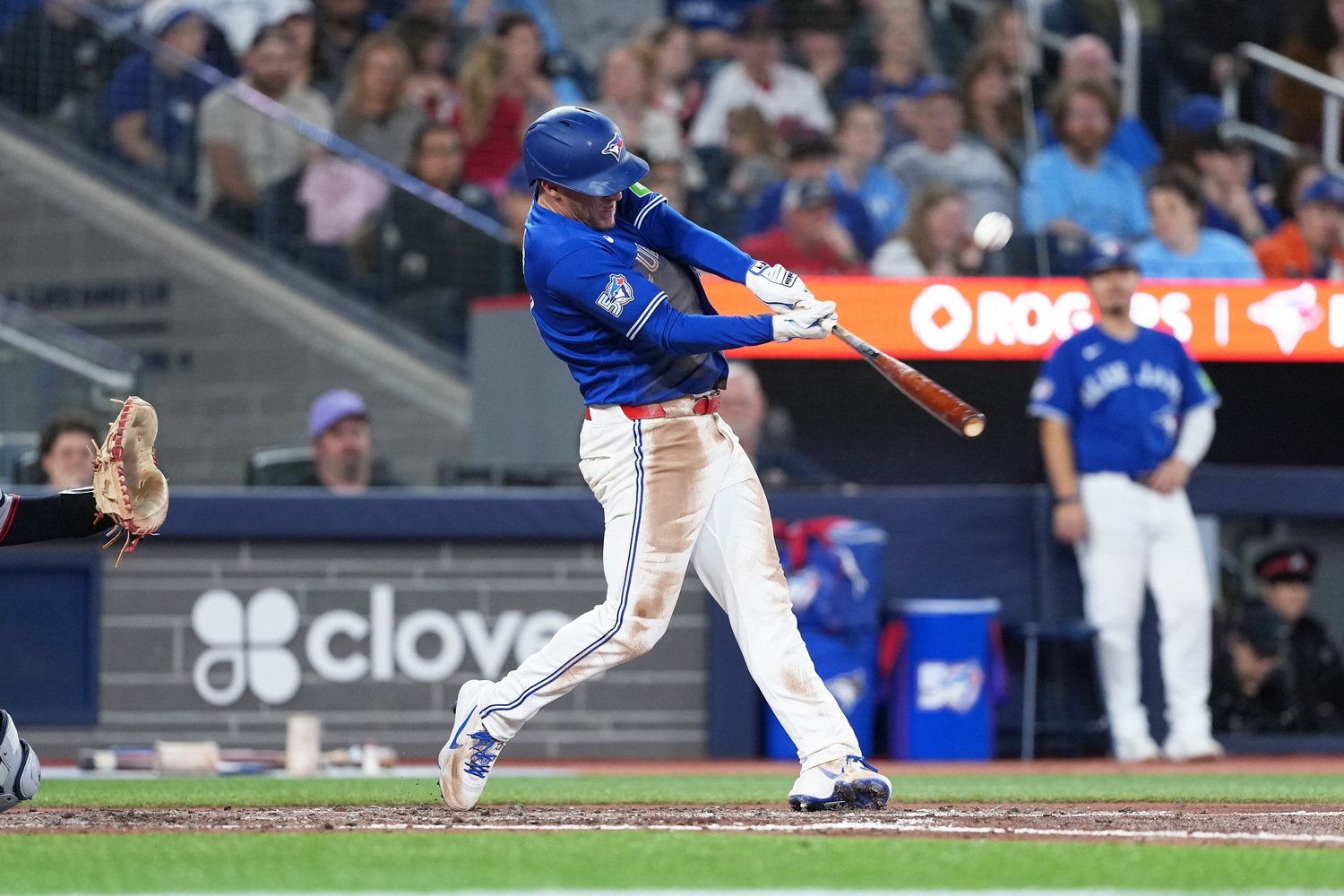 The Blue Jays' lack of power has been a serious issue this year. Pick your favourite stat: home runs, ISO, average exit velocity, or hard-hit rate. The Blue Jays rank in the bottom third in the league in all of them, and that's part of the reason why they find themselves below .500 early in the season. Take a quick look at the wRC+ leaderboard for the team, and here’s what you’ll see: Myles Straw - 137 Vladimir Guerrero Jr. - 132 Kazuma Okamoto - 130 Daulton Varsho - 98 Ernie Clement - 93 What's more surprising: that the Blue Jays have only three hitters with a wRC+ over 100? Or that Myles Straw is one of them? While the answer to that is likely the former, it’s absolutely a surprise that Straw has been hitting the ball so well. His reputation is that of an elite defensive outfielder, a threat on the bases, and a good quality guy in the clubhouse. The bat, however, has always been an issue. Since 2020, he’s never had a wRC+ above 100, and he’s never hit more than four home runs in a season. It got to the point that the Cleveland Guardians had him play in the minors for most of 2024. Even with that elite speed and defence. Fast forward to 2026, and Straw has looked like a completely different hitter. The results speak for themselves, but the real story is how he's achieving them. Straw is swinging harder and, more importantly, pulling the ball in the air at a rate like never before. That's how you hit rockets into the upper deck. While Straw may never be a true impact power hitter, he’s been able to get the most out of his swings so far: via Baseball Savant The first change is how hard he’s been swinging. His average bat speed still isn’t elite, but he’s taking more aggressive swings when he gets pitches he can drive. His fast swing rate now sits at 14.5%, a significant jump from previous seasons. In general, swings over 75 mph produce a .389 wOBA compared to just .266 on slower swings. Straw may not consistently generate elite bat speed, but he’s been more willing to let it rip in key situations this season. Swinging harder alone doesn’t explain the turnaround. Straw also recognized that too many of his balls in play were drifting harmlessly to the opposite field. On a recent episode of Sportsnet's At The Letters, Arden Zwelling mentioned (minute 37) he spoke to Straw after Saturday’s game against the Twins, and Straw mentioned, “For like six years there, I just kept flying to right, and I decided I didn't want to do that anymore.” So far in 2026, the adjustment is showing up. Straw’s pull rate is the highest of his career, and with it has come a significant jump in production: As the pull rate has climbed, so has the production. Straw’s wOBA is now at its highest mark since his brief nine-at-bat debut in 2018. Damage typically doesn’t come from hard groundballs; it comes from balls hit in the air to the pull side. 32.1% of Straw's batted balls have been this batted ball type in 2026, a mark that not only leads the Blue Jays but also puts him in the top 15 in all of baseball (min. 50 PA). For reference, from 2022-2024, 66% of home runs across baseball were the result of pulled air balls, and pulled air balls result in a .733 wOBA, compared to a .353 on air balls that are not hit to the pull side. Typically, hitters who sell out for more power do so at the expense of contact, trading more aggressive swings for higher swing-and-miss totals. What makes Straw's changes even more impressive is that he hasn’t sacrificed contact to make them. His overall contact rate (90.4%) and zone contact rate (94.1%) are both career highs. *Straw only had 4 MLB ABs in the 2024 season As these changes have taken effect, pitchers have responded by throwing Straw fewer strikes, a sign that the opposing teams are adjusting to the new version of him. In response, Straw has become more selective rather than expanding the zone. It’s no coincidence he's walked as often as he's struck out this season. More damage on contact, without giving up the ability to put the ball in play, is exactly what the Blue Jays want to see from their hitters. There’s also evidence these changes didn’t suddenly appear out of nowhere this season. Straw’s increased pull tendency actually began late in 2025, marking the first sustained stretch of his career in which he consistently looked to do damage to the pull side. The same is true of his swing aggression. Through the end of July last season, Straw’s fast swing rate sat below 1%. Over the second half and into the playoffs, the number climbed to 7.2%, suggesting the change had already begun before 2026. The obvious question is whether or not this level of production is sustainable. Some regression is likely, particularly for a hitter without a long track record of power production. Pitchers will continue adjusting, and Straw will have to prove he can counter those adjustments over a large sample. Still, the underlying changes appear meaningful. He’s swinging harder in key situations, pulling the ball in the air more consistently, and doing it all without sacrificing elite contact ability. The Blue Jays don’t need Straw to be a middle-of-the-order bat, but if the adjustments allow him to remain even a league-average hitter while providing elite outfield defence and speed, that would represent a massive development for Toronto’s lineup, at a time it’s desperately needed. View the full article
 -
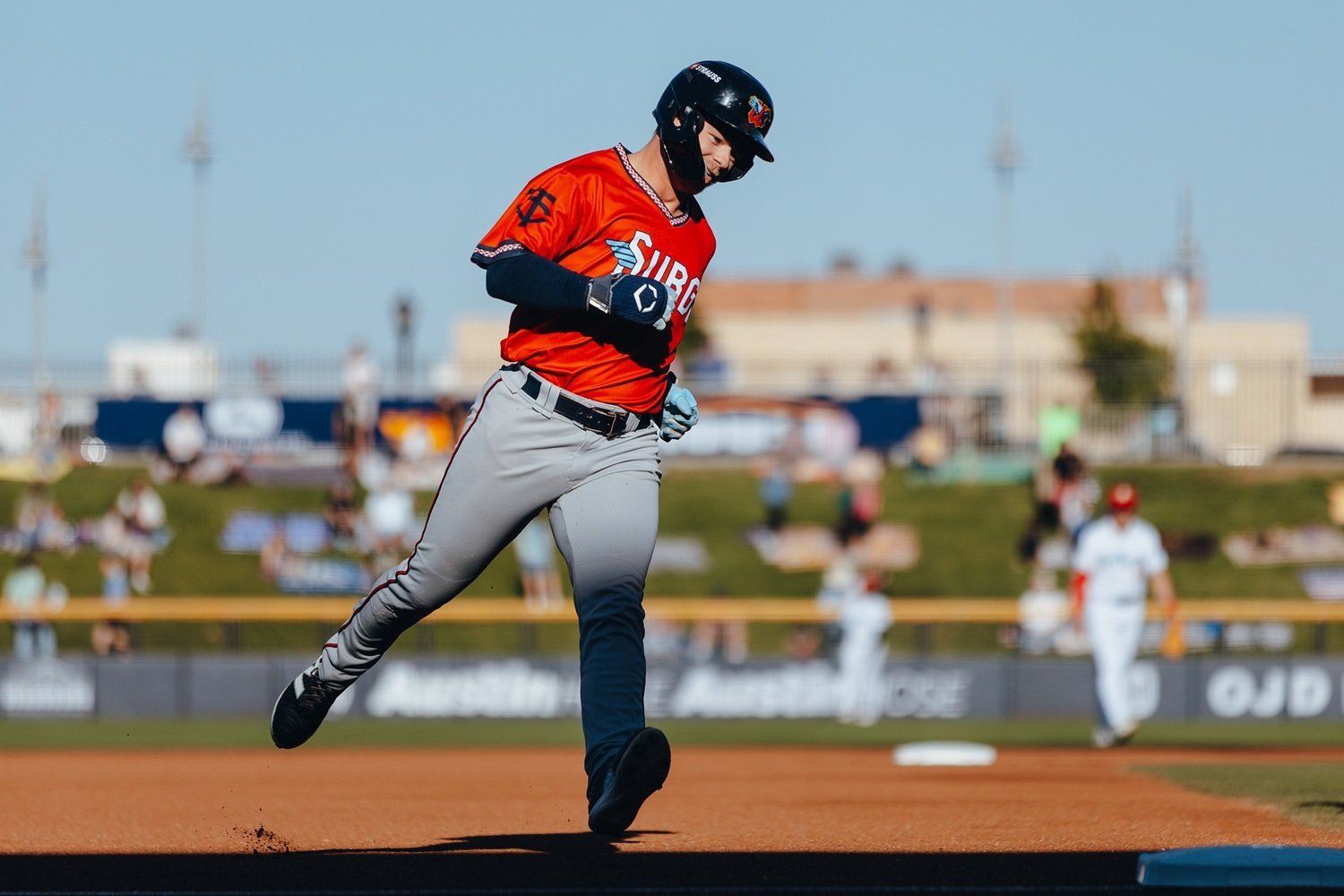 TRANSACTIONS Right-hander Miguel Martinez was assigned to the DSL Twins. Earlier this week, we learned that the Twins acquired RHP Yoendrys Gomez from the Rays in exchange for #OldFriend Cash Considerations. Following Thursday afternoon’s game in Washington DC, the Twins optioned John Klein to make room on the roster. SAINTS SENTINEL St. Paul 6, Las Vegas 7 Box Score Thursday night in Vegas, the Saints fell behind quickly. Through two innings, they were down 5-0. Andrew Bash made the start. He gave up five runs (3 earned) on six hits and two walks in three innings. C.J. Culpepper came on and tossed two scoreless innings. It wasn’t pretty, but he got through it without giving up a run. He gave up one hit and walked a batter. He also fielded a ground ball and threw it into center field. But overall, he looked solid. He looked comfortable. It will be interesting, in my opinion, if he is used as a two or three inning guy with the Saints. A top 20 prospect, he could put himself into consideration for a bullpen gig by the season’s second half. The Saints offense was quiet through six innings. They were still behind 5-0 when they came to bat in the top of the seventh. Hendry Mendez led off the inning with a walk and stole second. He moved to third on a single by Aaron Sabato. Tanner Schobel drove in Mendez with a single to left. With two outs, Kaelen Culpepper came to the plate. On the first pitch, he saw an 85-mph slider just below the zone, near the outside corner. The second pitch was an 84-mph slider, but it sat right in the middle of the plate. Culpepper launched the pitch at 101 mph at 27 degrees, and it traveled 376 feet for his eighth homer of the season. The club was back in the game, down just 5-4. Matt Bowman struck out three batters over two innings. He gave up a run on a hit to make it 6-4. His ERA is at 1.86 now, and I would assume he would have an opt-out in his deal. In the top of the eighth inning, the Saints got that run back off of former Twins prospect Nick Anderson. Gabriel Gonzalez led off with a single. He went to third on an Orlando Arcia single to right. Gonzalez scored, but it came on a double play which ended the threat. Dan Altavilla threw a scoreless eighth inning. With one out in the top of the ninth, Tanner Schobel lined a 100.8 mph fastball to the gap in right-center field for a double. With two outs, Culpepper came back to the plate. He fell behind 0-2 on a couple of sharp, upper 80s sliders. Then he fouled off fastballs at 100 mph and 102.2 mph. On the fifth pitch, he got a slider at 90.3 mph over the middle of the plate, and he bounded a 90-mph ground ball through the infield, avoiding both diving middle infielders. Schobel scored the tying run. But in the bottom of the ninth, he issued a walk and a single before Tommy White doubled in the winning run. Culpepper went 2-for-5 with his eighth home run and four big RBI. Gonzalez was 2-for-4. Schobel and Sabato were each 2-for-4 with a double. WIND SURGE WISDOM Wichita 19, Arkansas 7 Box Score The Surge scored three in the top of the first inning. They added crooked numbers in the fourth, fifth, eighth and ninth. Maybe the Surge are trying to keep up with big brother. The Saints came into the day with more home runs than any other professional team. The Surge came into the game with 47 homers, and they ended the game with 57 homers. The Wind Surge set their franchise record with 19 runs scored and with 10 home runs in a single game. Their 17 hits were a season high. In this case, I think we’ll just post notes to summarize the game. Garrett Spain (25): Leading off, he went 3-for-6 with his seventh, eighth, and ninth home runs, and six RBI. He now is hitting .290/.365/.688 (1.053) with six doubles, two triples and nine home runs. The last Wind Surge batter to hit three homers in a game was Carson McCusker back in 2023. (McCusker has hit two home runs in 20 games for Rakuten (Japan).) Billy Amick (23): Amick went 3-for-5 in this game. He homered in his first two at-bats and then added a single in his third at-bat. He has eight home runs on the season. Maddux Houghton (27): Houghton went 2-for-5 with his first homer of the season and stole his seventh base. Jake Rucker (26): Many thought that Rucker hit his third home run of the season in the fifth inning. He drilled a ball to dead center that one of the umps called a homer. Rucker kept running and got to third. It was discussed by the umps, and he was credited with a triple. When he came to the plate in the seventh inning, he went to the opposite field, no question about it being over the fence. He went 2-for-4 with a walk, his first triple, and his third homer. Kyle DeBarge (22): He went 2-for-5 with a walk and his fourth home run. He scored three runs in the game. Ricardo Olivar (25): The backstop went 2-for-5 with a walk and his 10th home run of the season. All 10 of the homers have come in his past 13 games. Overall, he is now hitting .281/.369/.685 (1.054) with six doubles and 28 RBI. He has a seven game on-base streak. Kala’i Rosario (24): Rosario went 2-for-5 with his seventh home run. It marked his 40th home run with the Wind Surge. Andrew Cossetti (25): The DH went 1-for-2 with two walks and three runs scored. In case you were wondering. Jose Olivares started and gave up two runs on two hits over 2 2/3 innings. He walked one and struck out two batters. Spencer Bengard walked two and struck out two batters but got four outs with no runs. Darren Bowen gave up one run on two hits and a walk over two innings. He struck out three batters. Kyle Bischoff gave up four runs on four hits (including two homers) in the seventh inning. Luis Quinones tossed two scoreless innings He struck out five batters. KERNELS CHRONICLE Cedar Rapids 0, Quad Cities 2 Box Score On a day when four of the Twins affiliates combined for 45 runs, you had to know that one affiliate would be shutout, and that was the Kernels on Thursday. Jason Doktorczyk started and gave up two runs (1 earned) on four hits and a walk. He struck out five. Sam Rochard struck out two in a scoreless sixth inning. Adam Falinski struck out four batters in his first High-A debut. The Kernels certainly had chances. While they had just three hits, Kernels batters walked eight times. Four times the Kernels had a runner on third base, but only once did that come with less than two outs. They went 0-for-8 with runners in scoring position and left 11 runners on base. Miguel Briceno had a single and a walk. Brandon Winokur and Jay Thomason each walked twice. MIGHTY MATTERS Ft. Myers 10, Tampa 6 Box Score Big innings always play such a big part in deciding a team that wins. That was definitely the case in this late-inning comeback win. When the Mussels came to the plate in the bottom of the third inning, they were losing 5-0. With two outs in that inning, Yasser Mercedes was on first base and scored ahead of Ramiro Dominguez who drilled his third home run since joining the Mussels two weeks ago. Mercedes doubled in the fifth inning and scored the team’s third run on a ground out. When the Mussels came to the plate to start the bottom of the eighth inning, they were down 6-3. Henry Kusiak singled to start the inning. Then things got a little wild. Irvin Nunez and Jayson Bass walked to load the bases. After a strikeout, Dameury Pena was hit by a pitch to drive in a run the hard way. Bruin Agbayani walked in a run. Down one, Mercedes was called out on strikes. He immediately challenged and the ABS told him that the ball was 0.8” low. In that instant, the strikeout became a walk, and the game was tied 6-6. Then came a strikeout for the second out. But, Ryan Sprock walked to give the Mussels a 7-6 lead. After a pitching change, Henry Kusiak came up for the second time in the inning. He cleared the bases with a line drive double to left field. 10-6 Mussels. Reed Moring started for the Mussels. He gave up two unearned runs on one hit in 1 1/3 innings. He had two strikeouts but also four walks. Merit Jones came in and gave up four runs (3 earned) on six hits over 4 2/3 innings. He had two strikeouts. Jonathan Stevens came on and struck out two batters over two scoreless innings. Mike McKenna had a walk and a strikeout in the scoreless ninth inning. Henry Kusiak signed with the Twins organization from the Long Island Ducks. He had an “O-fer” in his first game. In this game, he was 3-for-5 with the biggest hit of the game, his first double. The Mussels scored their 10 runs on seven hits and 10 walks. Agbayani went 1-for-3 with two walks. Mercedes was 1-for-3 with two walks and his fourth double. COMPLEX CHRONICLE FCL Twins 10, FCL Orioles 5 Box Score Cory Lewis made his second rehab start for the FCL Twins. He struck out three batters over two perfect innings. 19-year-old Yordi Jose came in for the third inning. The lefty gave up four runs (3 earned) on two hits. He walked four batters and had three strikeouts. Next up was 26-year-old minor-league veteran Jesse Bergin. He allowed both inherited runners to score, and then gave up one run on two hits over 1 2/3 innings. Carter Holjes had one walk in a scoreless inning. The Twins took the lead in the bottom of the first inning on RBI singles by Yovanny Duran and Merphy Hernandez. They added an unearned run in the bottom of the second inning on two walks and two fielding errors. The Twins broke it open in the third inning with six runs. Darwin Almanzar singled to drive in Daniel Pena. Ricardo Paez scored on a wild pitch. With the bases loaded, Miguel Caraballo doubled to drive in two runs. Teilon Serrano tripled to drive in two more runs and give the team a 9-2 Almanzar singled to drive in one more run in the fourth inning and give the team 10 runs. The Twins scored their 10 runs on nine hits and eight walks. Ricardo Paez went 2-for-4. Almanzar went 2-for-3 with a walk. PLAYERS OF THE DAY Hitter of the Day (Wichita Wind Surge): 17-for-42, 19 R, 5 BB, 19 RBI, 10 K, 3B, 10-HR. Pitcher of the Day Jason Doktorczyk (Cedar Rapids): 5 IP, 4 H, 2 R, 1 ER, BB, 5 K, 75 pitches, 53 strikes (65.0%) PROSPECT SUMMARY Check out the Prospect Tracker for much more on our Twins Top 20 prospects after seeing how they did today. #1 - OF Walker Jenkins (St. Paul) - 7 Day Injured List (left shoulder) #2 - IF Kaelen Culpepper (St. Paul) - 2-for-5, HR(8), SB(7), R, 4 RBI (batted first, played DH) #3 - OF Emmanuel Rodriguez (St. Paul) - 7 Day Injured List (thumb) #4 - C Eduardo Tait (Cedar Rapids) - 1-for-5, 2 K (batted second, DH). #5 - LHP Connor Prielipp (Minnesota) - Starts Friday in Cleveland. #6 - LHP Dasan Hill (Cedar Rapids) - Did Not Pitch #7 - OF Gabriel Gonzalez (St. Paul) - 2-for-4, R (batted third, played RF) #8 - LHP Kendry Rojas (St. Paul) - Did Not Pitch. #9 - SS Marek Houston (Cedar Rapids) - Did Not Play. #10 - RHP Charlee Soto (Cedar Rapids) - Injured List #11 - RHP Riley Quick (Cedar Rapids) - Did Not Pitch #12 - RHP Andrew Morris (Minnesota) - Did Not Pitch #13 - 3B/CF Brandon Winokur (Cedar Rapids) - 0-for-2, 2 BB, 2 K (batted third, played SS) #14 - 3B/SS Quentin Young (Ft. Myers) - Did Not Play #15 - RHP Marco Raya (St. Paul) - Did Not Pitch. #16 - OF Hendry Mendez (St. Paul) - 1-for-3, BB, R, K,SB(1), (batted fifth, played LF) #17 - 2B/SS/CF Kyle DeBarge (Wichita) - 2-for-5, BB, HR(4), 3 R, RBI (batted second, played SS) #18 - RHP C.J. Culpepper (St. Paul) - 2 IP, 1 H, 0 R, 1 B, 2 K, 30 pitches, 19 strikes (63.3%) #19 - C/OF Khadim Diaw (Cedar Rapids) - 0-for-5, 2 K (batted first, played CF) #20 - RHP James Ellwanger (Ft. Myers) - 60 Day Injured List (right elbow sprain) UPCOMING PROBABLES Friday: St. Paul @ Las Vegas (9:05 pm ET) - RHP Zebby Matthews (2-2, 5.13 ERA) Wichita @ Amarillo (7:05 pm CT) - LHP Aaron Rozek (2-1,3.38 ERA) Cedar Rapids @ Quad Cities (6:30 pm CT) - RHP Ivran Romero (2-0, 5.79 ERA) Tampa @ Ft. Myers (6:05 pm CT) - RHP Ramiro Villanueva (0-0, 1.29 ERA) FCL Red Sox @ FCL Twins (11:00 am CT) - TBD CURRENT W-L Records Minnesota Twins: 16-22 St. Paul Saints: 17-18 Wichita Wind Surge: 15-15 Cedar Rapids Kernels: 15-15 Fort Myers Mighty Mussels: 17-13 FCL Twins: 2-2 DSL Twins: 0-0 (season begins Monday, June 1) Please feel free to ask questions about the teams, the rosters, and discuss today’s games, or anything else Twins minor-league related! View the full article
 -
 Jase Bowen powered the El Paso Chihuahuas past the Tacoma Rainiers 4-1, homering and singling behind five sharp innings from JP Sears. Despite Jagger Haynes' quality start, the San Antonio Missions fell 6-2 at home to the Midland RockHounds. Carson Montgomery silenced Beloit, and Zach Evans drove in two late as the Fort Wayne TinCaps prevailed 3-1. Bryan Balzer also turned in a quality start, but the Lake Elsinore Storm lost 4-1 at Inland Empire. Padres Minor-League Transactions Padres selected the contract of C Rodolfo Durán from El Paso Chihuahuas. Padres optioned 3B Will Wagner to El Paso Chihuahuas. El Paso Chihuahuas activated C Colton Vincent from the Development List. El Paso Chihuahuas transferred 2B Nate Mondou to the Development List. JP Sears, Relievers Combine On Two-Hitter For Chihuahuas Left-handed starter JP Sears and three relievers combined on a two-hitter, while Jason Bowen hit a two-run homer as the Triple-A El Paso Chihuahuas shut down the Tacoma Rainiers 4-1 for third straight win. Sears, who had given up two or more runs in all six of his starts this year for a 7.00 ERA, allowed one unearned run on two hits and two walks with a season-high eight strikeouts. Right-handers Garrett Hawkins, Logan Gillaspie and David Morgan combined for four perfect innings of relief, striking out four to complete the stellar game by the pitching staff. Chihuahuas pitchers retired the final 16 batters of the game. Bowen was in the middle of the Chihuahuas' offense. He led off the bottom of the first with a hard ground single to left, was bunted to second by Samad Taylor and went to third on Will Wagner's fly to right. Pablo Reyes then laid down a bunt toward the third baseman on which no play was made, easily scoring Bowen. The single extended Reyes' on-base streak to all 25 games he has played this season, the fourth-longest active streak in Triple-A. In the second, Anthony Vilar had a two-out single to center and Bowen cranked his eighth homer of the season, a blast to center that made it 3-0. Tacoma got its lone run in the top of the fourth after a leadoff double, a flyout and a run-scoring grounder that was booted by second baseman Clay Dungan. The only other hit Sears allowed was a game-opening single. El Paso made it 4-1 in the seventh as Vilar and Bowen drew one-out walks and Wagner a two-out walk to load the bases. A wild pitch plated Vilar. Mason McCoy's career-best 14-game hitting streak came to an end as he went 0-for-2 with a walk and a sac bunt. EP_0507.mp4 Player AB R H RBI BB K Jase Bowen, CF 3 2 2 2 1 0 Samad Taylor, LF 3 0 0 0 0 1 Will Wagner, 3B 2 0 0 0 2 0 Pablo Reyes, DH 2 0 1 1 1 1 Mason McCoy, SS 2 0 0 0 1 2 Nick Schnell, RF 4 0 1 0 0 1 Jose Miranda, 1B 4 0 0 0 0 2 Clay Dungan, 2B 4 0 0 0 0 2 Anthony Vilar, C 2 2 1 0 1 1 Player IP H R ER BB K HR JP Sears (W, 3-1) 5.0 2 1 0 2 8 0 Garrett Hawkins (H, 2) 2.0 0 0 0 0 3 0 Logan Gillaspie (H, 3) 1.0 0 0 0 0 0 0 David Morgan (S, 1) 1.0 0 0 0 0 1 0 Bullpen Falters After Jagger Haynes' Solid Start In Missions' Loss Despite a good start from left-hander Jagger Haynes, the Double-A San Antonio Missions gave up a decisive four-run seventh inning in a 6-2 loss to the Midland RockHounds. Haynes, Padres Mission's No. 7 prospect, allowed two runs on seven hits with three walks and three strikeouts in six innings. He gave up a run in the first with two outs by issuing two walks sandwiched around a single before giving up an RBI single. The other run came in the third via a single and RBI double to the first two hitters. The Missions came back in the second. Luis Verdugo singled and Carson Tucker doubled before Kai Murphy's RBI groundout. Ethan Salas then tied it with a sacrifice fly to medium center. Once Haynes left, the SkyCarp jumped on the Missions' bullpen. Left-hander Omar Cruz gave up a single, a walk and two steals before a go-ahead two-run double that one-hopped the wall in right-center. Right-hander Johan Moreno relieved Cruz, getting a strikeout before hitting the next batter and giving up another two-run double off the wall in left-center for a 6-2 advantage. The Missions were limited to five hits, including four in six innings off RockHounds left-hander Wei-En Lin, who struck out 10. SA_0507.mp4 Player AB R H RBI BB K Ethan Salas, C 3 0 0 1 0 2 Romeo Sanabria, 1B 4 0 1 0 0 0 Leandro Cedeño, DH 4 0 1 0 0 1 Albert Fabian, RF 4 0 0 0 0 2 Ryan Jackson, 2B 4 0 1 0 0 2 Braedon Karpathios, CF 3 0 0 0 1 2 Luis Verdugo, 3B 4 1 1 0 0 3 Carson Tucker, SS 2 1 1 0 1 1 Kai Murphy, LF 3 0 0 1 0 1 Player IP H R ER BB K HR Jagger Haynes 6.0 7 2 2 3 3 0 Omar Cruz (L, 1-1) 0.0 2 3 3 1 0 0 Johan Moreno 1.0 1 1 1 0 1 0 Andrew Thurman 2.0 1 0 0 0 3 0 Carson Montgomery Stellar Again As TinCaps Edge SkyCarp Right-hander Carson Montgomery turned in a second straight scoreless outing and Zach Evans hit a tiebreaking two-run single in the eighth inning as the High-A Fort Wayne TinCaps topped the Beloit SkyCarp 3-1. Evans, who had one RBI in the season's first 18 games before driving in three in the first game of Wednesday's doubleheader, came up big again in the eighth inning. Tied 1-1, Lamar King Jr. drew a leadoff walk and Jake Cunningham singled to right, with Cunnningham taking second when the throw went to third. Kavares Tears tried a safety squeeze, but his bunt went right back to the pitcher, who threw to first for the out. Evans then grounded a 3-2 pitch up the middle past a drawn-in infield that easily scored both runners to put the TinCaps up 3-1. Tears doubled in the TinCaps' first run in the bottom of the sixth inning after Beloit took a 1-0 lead in the top half of the inning. Meanwhile, Montgomery, the Padres' 11th-round pick in 2023, pitched five scoreless innings, allowing three hits while walking one and striking out five. Montgomery had a nearly identical outing last week against the South Bend Cubs, going five scoreless. He now hasn't allowed a run in 11⅔ innings, lowering his ERA to 1.64 in five starts. Left-hander Javier Chacon took over in the sixth and allowed a run on one hit and two walks with a strikeouts in two-thirds of an inning. Right-hander Will Varmette had a run-scoring wild pitch to the first batter he faced, but then combined with left-hander Igor Gil, right-hander Kleiber Olmedo and right-handed closer Clay Edmondson to not allow a hit over the final 3⅔ innings, although each did issue a walk and for striking out a total of six batters. Edmondson notched his sixth save in as many chances and didn't allow a run in his eighth straight game covering 10 innings. FW_0507.mp4 Player AB R H RBI BB K Kasen Wells, CF 3 0 2 0 1 1 Rosman Verdugo, 2B 3 1 0 0 1 0 Lamar King Jr., C 2 1 0 0 2 1 Jake Cunningham, LF 4 1 1 0 0 2 Kavares Tears, RF 4 0 1 1 0 2 Zach Evans, 3B 4 0 1 2 0 0 Carlos Rodriguez, 1B 3 0 1 0 1 1 Jack Costello, DH 4 0 1 0 0 0 Dylan Grego, SS 2 0 0 0 0 0 Player IP H R ER BB K HR Carson Montgomery 5.0 3 0 0 1 5 0 Javier Chacon 1/3 1 1 1 2 1 0 Will Varmette 1.0 0 0 0 1 2 0 Igor Gil 2/3 0 0 0 1 1 0 Kleiber Olmedo (W, 3-2) 1.0 0 0 0 1 2 0 Clay Edmondson (S, 6) 1.0 0 0 0 1 1 0 Storm Quieted By 66ers; Bryan Balzer Rebounds After Rough First Ryan Wideman returned to the starting lineup with a pair of hits, but the Low-A Lake Elsinore Storm was stifled by the Inland Empire 66ers 4-1. For Wideman, who didn't start the first two games of the series, it was his 11th multi-hit game of the season. He also walked and scored. But the rest of the Storm managed just three hits by the three 66ers pitchers, who retired the final eight hitters of the game. Inland Empire scored twice in the bottom of the first against Storm starter Bryan Balzer, who allowed two singles and a two-out two-run double. Balzer was really good from there, allowing just one more hit and finishing two two walks and five strikeouts in a career-high six innings. The Storm got its only run in the fourth. Wideman had a leadoff walk, went to second on a groundout and scored on Luke Cantwell's opposite-field single to left to make it 2-1. The 66ers added two insurance runs in the eighth on a walk, a single, a stolen base and a two-run single for a 4-1 lead. LE_0507.mp4 Player AB R H RBI BB K Bradley Frye, 3B 4 0 0 0 0 2 Justin DeCriscio, RF 4 0 0 0 0 1 Ryan Wideman, CF 3 1 2 0 1 1 Truitt Madonna, C 4 0 0 0 0 1 Luke Cantwell, DH 4 0 1 1 0 2 Jorge Quintana, SS 4 0 1 0 0 0 Jose Verdugo, 2B 3 0 1 0 0 0 Kerrington Cross, 1B 3 0 0 0 0 1 Qrey Lott, LF 3 0 0 0 0 0 Player IP H R ER BB K HR Bryan Balzer (L, 3-1) 6.0 4 2 2 2 5 0 Carson Swilling 1 2/3 2 2 2 2 4 0 Joseph Herrera 1/3 0 0 0 0 1 0 Top-20 Prospect Performance Kash Mayfield: DNP Ethan Salas: 0-for-3, 1 RBI, 2 K Kruz Schoolcraft: DNP Bradgley Rodriguez: DNP Humberto Cruz: DNP Miguel Mendez: DNP Ty Harvey: DNP Jorge Quintana: 1-for-4 Kale Fountain: DNP Ryan Wideman: 2-for-3, BB, R, SB, K Jagger Haynes: 6.0 IP, 7 H, 2 R, 2 ER, 3 BB, 3 K Lamar King Jr.: 0-for-2, R, 2 BB, K Romeo Sanabria: 1-for-4 Truitt Madonna: 0-for-4, K Michael Salina: DNP Garrett Hawkins: 2.0 IP, 0 H, 0 R, 0 ER, 0 BB, 3 K, H Kavares Tears: 1-for-4, 2B, 1 RBI, 2 K Deivid Coronil: DNP Francis Pena: DNP Bryan Balzer: 6.0 IP, 4 H, 2 R, 2 ER, 2 BB, 5 K, L View the full article
 -
What are your Marlins vs. Nationals series predictions?
DiamondCentric posted an article in Fish On First
 Once again in 2026, I will be monitoring Miami Marlins predictions from our valued SuperSubs, Fish On First staffers and livestream guests. Individual article pages like this one will be created prior to every Marlins series and featured prominently on the FOF site. Consistent participation is key if you want to win this annual contest. Submissions only take a few seconds. Scoring system A "perfect" series is worth three points: Earn one point for predicting which team will win the upcoming series Earn one point for predicting the precise number of victories for each team Earn one point for predicting the “Series MVP” who accumulated the highest win probability added (WPA) during the series as calculated by FanGraphs (could pick a player from either team) FOF staffer Sean Millerick currently sits atop the 2026 season leaderboard, which will be updated between every Marlins series. If you are a SuperSub, leave a comment with your Prediction Time picks on this page, or join the Marlins Discord Server and submit there. We'll feature them on the upcoming Fish On First LIVE episode and track your points throughout the season! Any picks submitted prior to the first pitch of the series opener will be counted. If you are not a SuperSub, please consider signing up here to support the FOF staff. Series preview notes Probable starting pitchers: LHP Robby Snelling (MIA) vs. LHP Foster Griffin (WSH) on Friday RHP Janson Junk (MIA) vs. RHP Zack Littell (WSH) on Saturday RHP Sandy Alcantara (MIA) vs. RHP Cade Cavalli (WSH) on Sunday The Marlins rank 16th in MLB with a 98 wRC+ and 11th in MLB with a 3.87 FIP. They are 3-7 in their last 10 games and have a 11-9 record at home this season. The following Marlins players are on the injured list: Griffin Conine (10-day IL), Pete Fairbanks (15-day IL), Ronny Henriquez (60-day IL) and Adam Mazur (60-day IL). The Nationals rank 11th in MLB with a 100 wRC+ and 29th in MLB with a 5.08 FIP. They are 6-4 in their last 10 games and have a 12-7 record on the road this season. The following Nationals players are on the injured list: Clayton Beeter (15-day IL), Josiah Gray (60-day IL), Cole Henry (15-day IL), DJ Herz (60-day IL), Max Kranick (15-day IL), Ken Waldichuk (60-day IL) and Trevor Williams (60-day IL). View the full article
 -
Joe Mack scores game winning run in wild walk-off win
DiamondCentric posted an article in Fish On First
 MIAMI, FL - After the Marlins had trailed in the first inning of every game in the series against the Baltimore Orioles, the script was flipped, as the Marlins took the lead early, but after Baltimore tied it late in the game, it took a wild walk-off for the Marlins to defeat the Baltimore Orioles, 4-3, improving to 17-21 on the season. "You never know what might get some things going, and I think certainly enough to have a tight game and one tonight where we get out ahead and to claw back into it, hang in there, they tied up," Marlins manager Clayton McCullough said. "Good for us to hang in there and win a close game here at home and salvage this series. Hope this is something that kind of can get us going a little bit." In the top of the eighth inning, leading 3-2, McCullough turned to Fish On First No. 20 prospect Josh Ekness. It marked his first high-leverage moment in the big leagues, but failed to hold the lead, allowing an RBI single to none other than Pete Alonso, tying the game, 3-3. He kept the game tied, as Samuel Basallo grounded into a double play and Tyler O'Neil flew out to Heriberto Hernandez. "Everyone was available," McCullough said. "I think (Josh Ekness) is a really good pitcher. It's big time stuff and he's had a couple of outings under his belt to this point. You can see Josh get put into a lot of various situations and scenarios. I just think that the time is going to come for him where I'm going to continue to ask him to maybe be in some of those spots, and proud of him for being able to wiggle out of that, at least keep it tied." Although the Marlins had runners on second and third in the bottom of the eighth, the inning concluded after Hernandez popped out to Gunnar Henderson. The Marlins went with Kyle Stowers to lead off the bottom of the ninth, pinch-hitting for Esteury Ruiz, but popped up on the second pitch of the at-bat. After Jakob Marsee struck out, Joe Mack, who entered the game in the top of the eighth inning, mainly for his defense as McCullough later noted, smacked a double into the right field corner. It marked his first career double. With a runner on second and two outs, Javier Sanoja was up for the Marlins. He hit a grounder to third baseman Coby Mayo, who bobbled it while Mack was on the move to third, and after not attempting to tag Mack, Mayo made the throw to first, which was off and allowed Mack to score the winning run. "I definitely have to work on my base running," Mack said postgame. "We're probably going to have some work on that tomorrow. Honestly, it was just kind of as soon as he swung the bat, I was going, and he kind bobbled it a little bit, so I ran past him and ducked in front of him. Just seeing that whole thing unfold, then running home, looking at Otto (Lopez) with this hands up and jaw open, it was really cool experience." Through his first four big league games, Mack is 3-10 with an RBI. Behind the plate, Mack has looked comfortable and as McCullough said, he will be playing almost everyday. "It's been awesome," Mack said. "The guys here have been so awesome in every single way. They've been just joyful to be around, very happy and just welcoming. It's a great group of guys, the staff's also phenomenal. It's just awesome to be around these guys. Truly a dream come true." After Connor Norby, who was hitting second, worked a walk in his first at-bat, the stage was set for Liam Hicks to hit his team-leading ninth home run of the season. Hicks now leads all Major League Baseball with 34 RBI on the season. Following the first inning, the Marlins led, 2-0. In the bottom of the third inning, Norby drove in the Marlins third run of the game. Meyer, who had the best start of his season against the Philadelphia Phillies in his last appearance, went five innings allowing two runs on six hits, two walks and struck out five. He threw 94 pitches, in which 55 landed for strikes. The righty mixed his pitches well, throwing his slider and sweeper 29% of the time. The slider, generated seven whiffs, but only struck one out with the pitch. The sweeper on the other hand generated only three whiffs, but three of his five strikeouts came on that pitch. "Just one of those outings that make it really tough on the pitcher," Meyer said. "Fell behind in some counts, lacked a little bit of my fastball location, that kind of made it hard. Other than that, yeah, just grind up and outing." Fish On First's No. 2 prospect Robby Snelling will make his MLB debut on Friday in the series opener against the Washington Nationals. Joe Mack, who caught him in Triple-A, will start at catcher. "I'm very excited," Mack said regarding Snelling. "He's been very dominant throughout the whole year in AAA, and last year as well. It's been really cool. He's a great guy as well, so, I'm really happy to see him get a shot and be the one to catch him. I think that's a good comfort for him as well. It's all coming together and I think he's earned it and deserves a shot." First pitch between the Marlins and Nationals is set for 7:10 pm. View the full article
 -
 As midseason pickups who cost nothing but cash considerations go, Tyler Ferguson is a reasonably interesting one. He's a low-slot right-handed pitcher with a mid-90s fastball, a sweeper that can flash above-average, and a cutter and sinker that can play well when located well. He's 32 years old, but still has one minor-league option remaining. He was a college teammate of Dansby Swanson at Vanderbilt. Of course, pitchers don't get to age 32 with fewer than two years of cumulative big-league service time without having warts. Ferguson is reasonably interesting, but the Athletics—hardly a team awash in high-end arms—designated him for assignment a few days ago. He's prone to walks, and his stuff seems unlikely to consistently miss bats in a compressed strike zone. The Cubs traded for him because they thought he might be claimed before he got to them on the waiver wire, but they had to give up virtually nothing because he's never been a good big-league relief pitcher for an extended period. Why was this transaction worthwhile, then? It's pretty simple: the Cubs are desperate. With Javier Assad moving into the rotation to replace the injured Matthew Boyd, the team was an arm short. They're very short on pitchers whom they trust in the majors who can also be optioned to the minors, as exemplified by the fact that they had to designate Corbin Martin for assignment in the wake of his poor outing Wednesday night. They've already called up multiple pitchers they had hoped to stash at Triple-A Iowa a bit longer. If one more starter gets hurt, they'll have little choice but to stretch Ben Brown back out to work as a modified starter. If they get back an injured reliever or two, they could quickly face a roster crunch and lose some of their depth. They needed a pitcher with at least a modicum of upside who can still be sent to Iowa as needed; Ferguson fits the bill. For a team currently 26-12, the Cubs will have to answer a lot of tough questions over the coming weeks. They're nowhere near as securely placed in the driver's seat of the NL Central as they appear, because of the injuries piling up and the fragility that threatens their staff. Ferguson is unlikely to be this year's Tyson Miller or Drew Pomeranz, but he's worth a shot. It's only fair to note that pitchers like him—a low arm slot, feel for spin, average-plus velocity—often prove malleable, and that Tommy Hottovy and company have had success with such hurlers before. The team will, at least, hope he can give them five or six outs when needed while they try to get healthier and manage the workloads of their uninjured arms. View the full article
 -
 MIAMI, FL — Fish On First No. 2 prospect Robby Snelling will start on Friday night against the Washington Nationals. His selection to the Miami Marlins roster is not official yet, but he's already with the big league club, "trying to soak it in." "Take it all in and not let the moment get too big," Snelling said on Thursday. "Just enjoying today and then try not to change anything and go into tomorrow and replicate to as nearly and closely as I can what I was doing in Jacksonville." Snelling, 22, made six starts in Triple-A Jacksonville, posting a 1.86 ERA, 2.91 FIP, 13.66 K/9 and 4.66 BB/9, before being called up. It took a while for Snelling to be informed that he was going to be called up. The Marlins designated Chris Paddack for assignment on Tuesday morning, but even following Wednesday's Jacksonville win, manager David Carpenter did not announce who would be filling that open rotation spot. Later that afternoon, Snelling was called into Carpenter's office. "They sat me down and said, 'We know you've been stressed the last couple of days, but it's pretty awesome that you haven't let it affect your routine. It's very professional of you,'" Snelling said. "I was like, 'It's really hard to keep my sanity knowing that potentially I was an option for me to come up here, but I did the best that I could to keep doing the same thing I've been doing day in and day out.' He goes, 'hopefully this eases you a little bit, but they have their guy for Friday. They know who they want. So knowing that we just wanted to put your mind at ease.' He didn't tell me and I was like, alright, I'm still throwing on Friday. He's like, 'You're so good to go on Friday, right?' He goes, 'Well, you're gonna be throwing in Miami.'" In four spring training appearances (two starts), Snelling had a 7.56 ERA, but 3.53 FIP. The big issue he identified was his 4.32 BB/9, something he said he needed to cut down on with the help of throwing more first-pitch strikes. Through his six regular season starts, Snelling has only walked three or more hitters twice; outside of that, it has been two walk or less. Snelling has a new sweeper in addition to a gyro slider that entered his arsenal in 2025. He's been focused on throwing the gyro at the bottom of the zone. His original breaking ball, the curveball, continues to be one of his best pitches. In that start against Durham, he generated six whiffs and four of his five strikeouts came on that pitch. Overall, the curveball is his second-most-used pitch and has a 32.4% whiff rate. The final start Snelling made for the Jumbo Shrimp came against the Durham Bulls, where he tossed five hitless innings, striking out nine and walking one. His fastball topped out at 96.1 mph and averaged 94.7 mph. Five of his nine strikeouts came on the fastball. Aside from his left-handedness, Snelling differs from the other Marlins starters in that he's very difficult to steal bases against. Since the beginning of last season, opponents have succeeded only eight times on 24 attempts. Partly due to that, he's the reigning Minor League Gold Glove Award winner. The Nationals enter the weekend series with an 18-20 record under first-year manager Blake Butera. Snelling has seen most of the players in the Nationals lineup before, whether that be in minor league or Grapefruit League competition. With left-handed pitcher Foster Griffin on the mound for Washington, all signs point to Liam Hicks catching Snelling on Friday. First pitch is set for 7:10 pm. View the full article
 -
 Prior to making his major league debut on Friday, Marlins left-hander Robby Snelling speaks with the media about what he's been working on to become a more complete pitcher.View the full article
 -
Padres Put Luis Campusano On Injured List With Fractured Toe
DiamondCentric posted an article in Padres Mission
 The San Diego Padres are losing half of their catching tandem due to a broken toe. Catcher Luis Campusano was placed on the 10-day injured list Thursday by the Padres with a fractured toe on his left foot. Catcher Rodolfo Duran was called up from Triple-A El Paso and will be making his MLB debut tonight after 11 seasons in the minors. Duran is starting at catcher and batting ninth in the series opener against the St. Louis Cardinals. Right-handed starter Joe Musgrove (right elbow inflammation) was transferred from the 15-day to the 60-day injured list to make room for Duran on the 40-man roster. The move is simply procedural from Musgrove's perspective as he isn't close to returning to the active roster. Also, infielder Will Wagner was activated from the 10-day injured list and optioned to El Paso, where he had been on a rehab assignment following a strained right oblique in spring training. Campusano fouled a ball off his foot in Tuesday's 10-5 win over the San Francisco Giants. He has been a surprisingly significant contributor to the Padres' offense while splitting time with Freddy Fermin. Campusano has a slash line of .288/.362/.596 with three homers and 10 RBIs in 18 games. Campusano has had the reputation of an offense-first catcher, but with questionable defense. That second part hasn't shown itself through the first month-plus of the season. The 28-year-old Duran is in his second season with the Padres at El Paso. He has a slash line of .238/.356/.429 with four homers and 20 RBIs in 23 games this season. A year ago, he posted a .288/.344/.503 slash line with 16 homers and 73 RBIs in 86 games. View the full article
 -
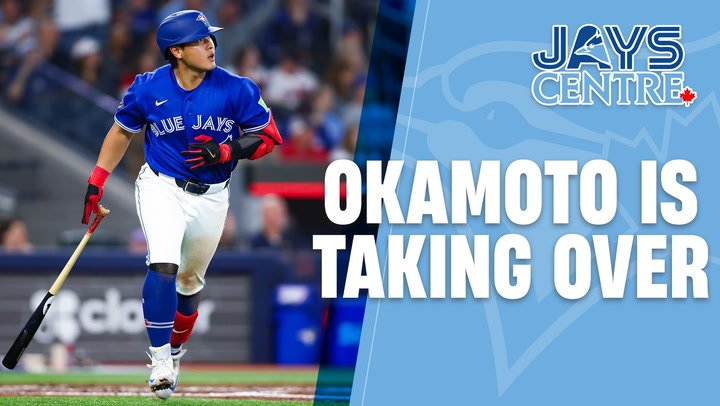 After a shaky start, Kazuma Okamoto has broken out in a big way for the Toronto Blue Jays. What exactly changed, and how is he becoming a fan favourite so quickly? View the full article
 -
Kazuma Okamoto Is The Latest Japanese Superstar To Take Over MLB
DiamondCentric posted an article in Jays Centre
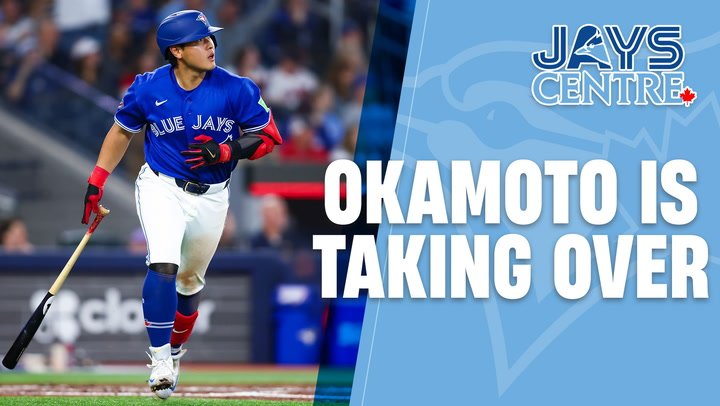 After a shaky start, Kazuma Okamoto has broken out in a big way for the Toronto Blue Jays. What exactly changed, and how is he becoming a fan favourite so quickly? View the full article
 -
Roman Anthony Placed On Injured List By Red Sox With Wrist Injury
DiamondCentric posted an article in Talk Sox
 The topsy-turvy season of the Boston Red Sox took another turn when left fielder Roman Anthony was placed on the 10-day injured list Thursday due to a sprained right wrist. Catcher-infielder Mickey Gasper was called up from Triple-A Worcester to replace Anthony on the 26-man roster Anthony was injured during a checked swing Monday in a 5-4 win over the Detroit Tigers. In the time since, Anthony has been receiving treatment and the wrist was showing improvement, but the Red Sox decided to take the safer route and put Anthony on the shelf for a brief period and not rush him back into the lineup or leave the roster shorthanded for any further games. Anthony's performance at the plate could also use some time off. The left-handed-hitting slugger has put together a .229/.354/.321 slash line with one homer and five RBIs in 30 games. That is a stark contrast to what he did last year after making his MLB debut. In 71 games in 2025, Anthony had a slash line of .292/.396/.463 with eight homers and 32 RBIs. He was MLB's No. 1 prospect when he was promoted last year. Gasper has a .296/.429/.519 slash line in 28 games at Worcester with six homers and 27 RBIs. Gasper made his MLB debut with the Red Sox in 2024, playing in 13 games, going 0-for-18, then was traded to the Minnesota Twins and played in 45 games last year. Between the two seasons, he has a .133/.250/.195 with two homers and 11 RBIs. The Red Sox picked him up this offseason after twice being designated for assignment. View the full article
 -
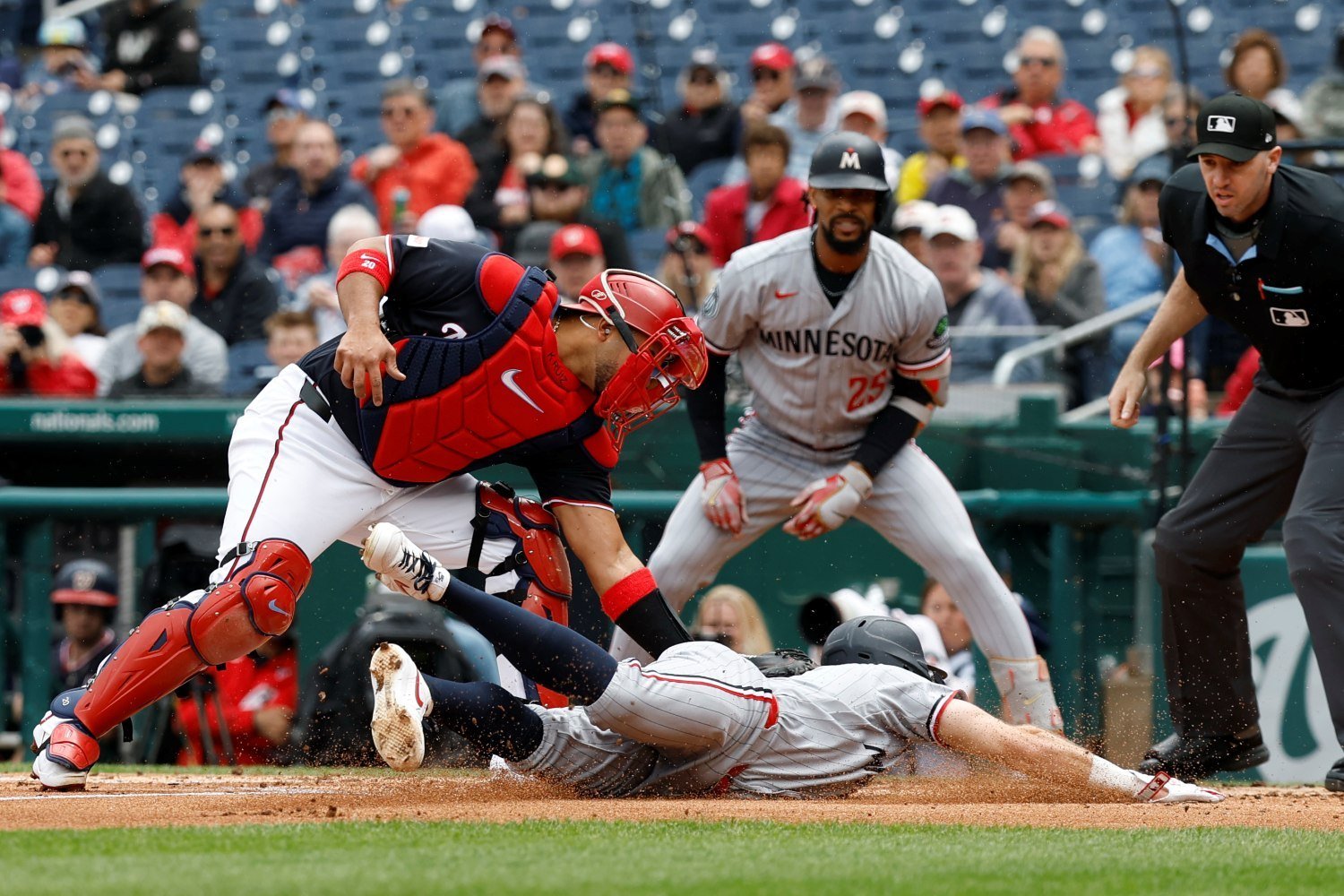 Box Score SP: Simeon Woods Richardson - 4 1/3 IP, 4 H, 5 R, 2 BB, 2 K (61 pitches, 34 strikes (56% strikes)) Home Runs: Ryan Jeffers Bottom 3 WPA: Simeon Woods Richardson (-0.36), Austin Martin (-0.19), Byron Buxton (-0.18) Win Probability Chart The Twins entered Thursday’s rubber match against Washington with a chance to secure the series and build some momentum after a rocky start to the season. Instead, they let another winnable game slip away. Despite multiple offensive contributions and several chances to swing the game in their favor, the Twins couldn’t overcome another uneven pitching performance and a handful of costly mistakes in a 7-5 loss. Minnesota battled back more than once and briefly erased a late deficit, but every answer they had was quickly matched by Washington. In the end, the Nationals took the series, while the Twins fell to 16-22 on the year. BROOKS LEE BREAKS THROUGH EARLY The Twins wasted little time putting pressure on the Nationals’ starting pitcher, Bloomington, Minn. native Jake Irvin. After Irvin cruised through a quick first inning, Minnesota broke through in the second. Ryan Jeffers opened the frame with an eight-pitch walk, Luke Keaschall followed with an infield single, and Kody Clemens was hit by a pitch to load the bases. That brought up Brooks Lee, who continued what’s becoming a trend this season in big spots. Behind in the count with two strikes, Lee ripped a ground ball through the left side to score Jeffers and Keaschall, giving the Twins an early 2-0 lead. Heads-up baserunning from Clemens allowed him to move to third on the play, though the inning eventually ended with him getting tagged out at the plate trying to score on a shallow fly ball. Lee wasn’t done. After Washington tied the game in the third, Lee delivered again in the fifth with a leadoff double, smoked 105 MPH off the bat. Moments later, Tristan Gray punched a single into shallow center, allowing Lee to score from second and briefly restore Minnesota’s lead. By the middle innings, Lee had accounted for all three Twins runs, continuing a hot stretch at the plate and once again coming through in clutch situations. WOODS RICHARDSON CAN’T ESCAPE THE FIFTH For four innings, Simeon Woods Richardson looked like he might finally be settling in. Despite some shaky command early, he worked efficiently throughout the afternoon. Through four innings, Woods Richardson had thrown just 46 pitches and allowed only two runs. Aided by a pair of double plays and some solid defensive moments behind him, including a diving catch from Austin Martin in left field that robbed James Wood of extra bases, it was looking like the outing he desperately needed. But the fifth inning unraveled quickly. José Tena drew a leadoff walk, Jacob Young was hit by a pitch, and Keibert Ruiz came through with a two-run double to put Washington ahead 4-3. After a sacrifice bunt moved Ruiz to third, Woods Richardson’s day came to an end after just 4 1/3 innings. It marked his sixth straight start allowing at least three earned runs, and once again, he failed to make it through five innings. Things only got worse after Anthony Banda entered the game. Banda walked James Wood and hit Daylen Lile to load the bases, and a miscommunication between Matt Wallner and Keaschall on a routine pop-up allowed another run to score. Washington pushed its lead to 5-3 before the inning finally came to an end. The ugly fifth inning erased what had been a relatively encouraging outing up to that point. THE TWINS KEEP FIGHTING BACK To their credit, the Twins didn’t go away quietly. Ryan Jeffers immediately answered in the sixth inning, hammering a leadoff homer 432 feet to left field off an elevated sinker from Irvin. It was his fifth homer of the season and trimmed the deficit to one. Minnesota had a golden opportunity to do even more damage after Wallner reached via hit-by-pitch and Keaschall worked a walk. Clemens moved both runners over with a sacrifice bunt, putting the tying and go-ahead runs in scoring position with one out. But after the Nationals intentionally walked Lee, Tristan Gray struck out, and Byron Buxton came up empty in a huge spot, striking out on a full count to end the threat. An inning later, the Twins clawed back again. Jeffers picked up his third extra-base hit of the game with a cheap double down the right-field line, and Josh Bell, facing his former team, delivered off the bench with a game-tying RBI double off the wall in left field. Suddenly, the game was tied at 5-5, and the momentum had swung back toward Minnesota. Unfortunately for the Twins, it didn’t last long. WASHINGTON RESPONDS IMMEDIATELY The Nationals answered right away in the bottom of the seventh. Keibert Ruiz, who tormented Twins pitching all afternoon, launched a leadoff homer off John Klein to put Washington back in front. It was the first run allowed in Klein’s big-league career. Moments later, James Wood ripped a ground-rule double, Daylen Lile reached on a swinging bunt that appeared to beat, and Curtis Mead added an RBI single to extend the lead to 7-5. That proved to be enough. The Twins managed just one baserunner over the final two innings. Byron Buxton singled in the eighth to bring the tying run to the plate, but Trevor Larnach popped out to end the inning, and the top of the ninth went down quietly against Gus Varland (brother of Louie). It was another frustrating loss for a Twins team that had opportunities throughout the afternoon but couldn’t capitalize enough when it mattered most. They battled back multiple times, but defensive mistakes, missed chances, and another short outing from the starting rotation ultimately proved too much to overcome. What’s Next? The Twins will travel to Cleveland to start a three-game weekend series tomorrow against the AL Central-leading Guardians. We’ve got a battle of young, talented left-handers tomorrow with Connor Prielipp on the hill for the Twins and Parker Messick throwing for Cleveland. First pitch is set for 6:15 PM. Postgame Interviews Coming Soon! Bullpen Usage Chart SUN MON TUE WED THU TOT Orze 24 0 16 0 0 40 Morris 57 0 0 14 0 71 Rogers 32 0 0 0 26 58 Garcia 0 0 13 14 0 27 Banda 0 0 19 0 20 39 Topa 17 0 0 32 0 49 Funderburk 3 0 0 17 0 20 Klein 0 0 0 0 31 31 View the full article
