


DiamondCentric
-
Posts
2,631 -
Joined
-
Last visited
Never
Content Type
Profiles
Forums
Events
News
Tutorials & Help
Major League Baseball Videos
Guides & Resources
Store
Downloads
Gallery
Everything posted by DiamondCentric
-

 The Mets' affiliates posted a 4-1 night with a Syracuse doubleheader sweep of Lehigh Valley. Jack Wenninger fired five and two-thirds shutout innings in the 7-0 opener, and Ben Rortvedt's walkoff single scored Jihwan Bae in a 4-3, nine-inning nightcap. Binghamton beat New Hampshire 6-3 behind Kevin Parada's three hits and a Ben Simon save, and Brooklyn edged Frederick 2-1 on Antonio Jimenez's steal of home. St. Lucie fell 8-5 in Tampa. Mets Transactions New York Mets designated RHP Carl Edwards Jr. for assignment. New York Mets placed CF Luis Robert Jr. on the 10-day injured list retroactive to April 27, 2026. Lumbar spine disc herniation. New York Mets claimed 2B Andy Ibáñez off waivers from Athletics. New York Mets recalled RHP Austin Warren from Syracuse Mets. New York Mets recalled 1B Eric Wagaman from Syracuse Mets. Wenninger Spins Five-Plus Shutout Innings In Syracuse Romp Syracuse jumped on Lehigh Valley early and rode dominant pitching to a 7-0 win in the doubleheader opener. Christian Arroyo, hitting cleanup, went 3-for-4, and Jihwan Bae went 3-for-3 with a double and an RBI. Vidal Bruján added a double, two RBI, and a stolen base. The Mets opened the scoring in the bottom of the first, when A.J. Ewing led off with a hit, took third on Nick Morabito reaching base, and scored on Arroyo's single for an early 1-0 advantage. The decisive blow came in the bottom of the third, when an Arroyo single, a Bruján double aided by an IronPigs fielding error, and a Hayden Senger two-run single produced a four-run rally. Two more runs in the fifth came on a Bruján double and a Senger groundout. Jack Wenninger took the mound and dominated, holding Lehigh Valley to four hits across five and two-thirds innings while striking out seven, walking none, and allowing no runs. Jonathan Pintaro followed with one and one-third clean innings, fanning two without surrendering a baserunner to lock down the combined shutout. Ewing finished 2-for-4 with two runs scored and a stolen base, while Bae went a perfect 3-for-3 with a double, an RBI, and a run. Senger drove in two of his own. Ryan Clifford and Morabito were both held hitless but reached base. Syracuse drew just one walk, struck out six times, and stranded six runners, but capitalized on every Lehigh Valley mistake to roll to the win. Syracuse Hitting (Game 1) Player AB R H RBI BB K A.J. Ewing 4 2 2 0 0 0 Nick Morabito 3 1 0 0 0 1 Ryan Clifford 3 0 0 0 1 2 Christian Arroyo 4 1 3 1 0 1 Vidal Bruján 3 2 1 2 0 0 Ji Hwan Bae 3 1 3 1 0 0 Cristian Pache 1 0 0 0 0 0 Hayden Senger 3 0 1 2 0 1 Jackson Cluff 3 0 0 0 0 1 Syracuse Pitching (Game 1) Player IP H R ER BB K HR Jack Wenninger (W) 5 2/3 4 0 0 0 7 0 Jonathan Pintaro 1 1/3 0 0 0 0 2 0 Rortvedt's Walkoff Single Caps Syracuse Sweep In Extras Syracuse completed the doubleheader sweep with a 4-3 walkoff in nine innings, Ben Rortvedt punching a single up the middle to score Jihwan Bae from third base for the winning run. Bae had been installed at second base as the zombie runner to start the bottom of the ninth, and a Cristian Pache sacrifice bunt advanced him to third before Rortvedt's heroics closed it out with two outs. The Mets opened the scoring in the bottom of the fourth, when Bruján singled, and Bae doubled him in. They added another run in the fifth on Ewing's single and a Nick Morabito double. Lehigh Valley pulled even with two runs in the top of the sixth before each side traded a zombie-aided run in the eighth, with a Bruján double driving home Morabito to lock things at 3-3. Daniel Duarte and Dan Hammer combined for four scoreless innings of one-hit pitching to open the game. Ryan Lambert spun a clean fifth, while Dylan Ross was charged with two earned runs in two-thirds of an inning during the sixth-inning Lehigh Valley rally. Alex Carrillo struck out four across one and one-third strong innings, and Mike Baumann earned the win with two innings of one-run, no-earned-run work that included two strikeouts and a walk while holding the zombie runner damage to a single tally in the eighth. Bruján, hitting cleanup, went 2-for-4 with a double and an RBI, while Bae also went 2-for-4 with a double, an RBI, and a stolen base. Ewing matched that 2-for-4 line at the top of the order, and Morabito went 1-for-3 with a double, an RBI, a run scored, and a stolen base. Syracuse struck out 12 times as a team but stranded only seven, capitalizing on the timely hits when they came. Syracuse Hitting (Game 2) Player AB R H RBI BB K A.J. Ewing 4 1 2 0 0 0 Nick Morabito 3 1 1 1 0 1 Ryan Clifford 4 0 0 0 0 3 Vidal Bruján 4 1 2 1 0 1 Ji Hwan Bae 4 1 2 1 0 1 Cristian Pache 3 0 0 0 0 3 Yonny Hernández 4 0 1 0 0 1 Ben Rortvedt 4 0 1 1 0 1 Jackson Cluff 3 0 0 0 0 1 Syracuse Pitching (Game 2) Player IP H R ER BB K HR Daniel Duarte 2 1 0 0 0 2 0 Dan Hammer 2 0 0 0 0 1 0 Ryan Lambert 1 1 0 0 0 0 0 Dylan Ross 2/3 1 2 2 2 1 0 Alex Carrillo 1 1/3 1 0 0 0 4 0 Mike Baumann (W) 2 1 1 0 1 2 0 Binghamton Powers Past New Hampshire In 6-3 Win Binghamton broke through with a three-run fifth inning to seize the lead and tacked on insurance late, beating New Hampshire 6-3. Kevin Parada, hitting cleanup, anchored the offense at 3-for-5 with a double, an RBI, a run scored, and a stolen base. TT Bowens added a 2-for-5 line with two doubles and a stolen base of his own. The Mets fell behind 1-0 in the bottom of the first on a leadoff home run, and the deficit grew to 2-0 when an extra-base hit and an RBI single in the third put the Fisher Cats up by two. Binghamton pulled one back in the top of the fourth on Parada's double, a Nick Lorusso single, a Matt Rudick walk, and a Wyatt Young sacrifice fly. The decisive frame came in the top of the fifth: Eli Serrano III and Chris Suero drew walks, Jose Ramos lashed an RBI single to plate Serrano, Parada singled in Suero, Bowens reached on a fielding error, and Rudick added a sacrifice fly to push the lead to 4-2. Brendan Girton allowed two runs across his four innings of work, surrendering a leadoff homer in the first and a run in the third while striking out three and walking none. Zach Peek and Douglas Orellana each tossed a clean inning, Matt Turner spun two scoreless frames in the middle while striking out four and walking two, and Ben Simon worked the ninth for the save, allowing one run on two hits. Binghamton padded the lead with two more runs in the eighth, when Young was hit by a pitch, Diego Mosquera singled, Serrano III drove Young home with a single, and Suero forced Mosquera home on a fielder's choice. Serrano III finished 1-for-3 with two walks, an RBI, and a run scored, and the Rumble Ponies drew eight walks while striking out 14 times in the win. Binghamton Hitting Player AB R H RBI BB K Eli Serrano III 3 1 1 1 2 1 Chris Suero 4 1 0 1 1 2 Jose Ramos 5 1 1 1 0 2 Kevin Parada 5 1 3 1 0 1 Nick Lorusso 4 0 1 0 1 2 TT Bowens 5 0 2 0 0 2 Matt Rudick 2 0 0 1 2 1 Wyatt Young 1 1 0 1 2 1 Diego Mosquera 4 1 1 0 0 2 Binghamton Pitching Player IP H R ER BB K HR Brendan Girton (W) 4 7 2 2 0 3 1 Zach Peek 1 0 0 0 0 1 0 Matt Turner 2 0 0 0 2 4 0 Douglas Orellana 1 0 0 0 1 2 0 Ben Simon (S) 1 2 1 1 0 1 0 Jimenez Steals Home For Brooklyn In Tight 2-1 Win Brooklyn won a 2-1 pitcher's duel at MCU Park on a daring eighth-inning steal of home by Antonio Jimenez and a group pitching effort that limited Frederick to one earned run. Irving Cota fired five scoreless innings to start, allowing two hits, walking two, and striking out three. Cristofer Gomez delivered two innings of one-run relief while fanning three, and Dakota Hawkins closed out the win with two clean frames that included two strikeouts and no walks. Frederick broke through first in the top of the sixth, when a leadoff walk and a single set up a sacrifice fly that put the Cyclones behind 1-0. Brooklyn answered in the bottom of the seventh: Daiverson Gutierrez doubled to lead off the inning, Trace Willhoite drew a one-out walk, and Kevin Villavicencio lined a one-out double down the line that brought Gutierrez home to tie it. The eighth produced one of the more memorable plays of the night. Jimenez led off with a single, advanced to third on a John Bay groundout, and stole home during a Ronald Hernandez at-bat that ended in a strikeout, putting the Cyclones up 2-1. Hawkins handled the final two innings without trouble, locking down the one-run lead. Villavicencio finished 2-for-3 with two doubles and an RBI, the only multi-hit game on either side. Jimenez went 1-for-4 with a stolen base and the run scored, and Bay added a double of his own. Brooklyn drew just one walk, struck out 10 times, and stranded five runners, but the pitching staff held Frederick to one run despite issuing three free passes to keep the Cyclones in front through the late frames. Brooklyn Hitting Player AB R H RBI BB K Antonio Jimenez 4 1 1 0 0 1 John Bay 4 0 1 0 0 1 Ronald Hernandez 4 0 0 0 0 3 Daiverson Gutierrez 4 1 1 0 0 0 Colin Houck 3 0 0 0 0 1 Trace Willhoite 1 0 0 0 1 1 Vincent Perozo 3 0 0 0 0 1 Kevin Villavicencio 3 0 2 1 0 0 Yohairo Cuevas 3 0 0 0 0 2 Brooklyn Pitching Player IP H R ER BB K HR Irving Cota 5 2 0 0 2 3 0 Cristofer Gomez 2 1 1 1 1 3 0 Dakota Hawkins (W) 2 2 0 0 0 2 0 St. Lucie Falls 8-5 At Tampa St. Lucie ran into trouble early at Tampa and could not climb back, falling 8-5. The Mets jumped ahead 1-0 in the top of the first when Randy Guzman launched a two-out solo home run to left, but Tampa answered with a three-run bottom half on a leadoff hit-by-pitch, an RBI double, and a two-run home run. The Tarpons added three more in the second on three hits and a wild pitch, including a two-RBI single that pushed the lead to 6-1. R.J. Gordon was tagged with the loss after surrendering five earned runs on four hits in one and one-third innings, including the two-run home run during the second-inning rally. Joe Scarborough started and worked two scoreless innings, walking two but allowing only two singles. Tyler McLoughlin followed with one and two-thirds innings of one-run, three-strikeout work, and Joel Lara wrapped up with three innings of two-run, two-strikeout relief. St. Lucie chipped away with single tallies in the third, fourth, and fifth, and added a final run in the top of the eighth on AJ Salgado's two-out solo home run. Sam Robertson, Elian Peña, and AJ Salgado all turned in multi-hit games. Robertson went 3-for-4 with an RBI and a stolen base, Peña went 2-for-4 with a stolen base and two runs scored, and Salgado finished 2-for-4 with the home run, an RBI, and two runs scored. Guzman, hitting third, went 2-for-3 with the early home run, an RBI, and two walks. Newly recalled Jamari Baylor went hitless but drew a walk in his three trips. The Mets out-hit Tampa 10-9 but committed early defensive mistakes that proved costly. St. Lucie Hitting Player AB R H RBI BB K Elian Peña 4 2 2 0 0 1 JT Benson 4 0 0 1 0 1 Randy Guzman 3 1 2 1 2 0 Julio Zayas 5 0 1 0 0 1 AJ Salgado 4 2 2 1 0 0 Simon Juan 4 0 0 0 0 2 Jamari Baylor 3 0 0 0 1 2 Sam Robertson 4 0 3 1 0 0 Branny De Oleo 4 0 0 0 0 0 St. Lucie Pitching Player IP H R ER BB K HR Joe Scarborough 2 2 0 0 2 0 0 R.J. Gordon (L) 1 1/3 4 5 5 0 2 1 Tyler McLoughlin 1 2/3 1 1 1 2 3 0 Joel Lara 3 2 2 2 2 2 0 Top-20 Prospect Performance Nolan McLean: DNP Carson Benge: DNP A.J. Ewing: 4-for-8, 3 R, SB Jonah Tong: DNP Ryan Clifford: 0-for-7, BB, 5 K Jacob Reimer: DNP Jack Wenninger: 5 2/3 IP, 4 H, 0 ER, 0 BB, 7 K (W) Elian Pena: 2-for-4, 2 R, SB, K Mitch Voit: DNP Nick Morabito: 1-for-6, 2B, RBI, SB, 2 K Jonathan Santucci: DNP Chris Suero: 0-for-4, RBI, BB, 2 K Zach Thornton: DNP Wandy Asigen: DNP Will Watson: DNP Eli Serrano III: 1-for-3, RBI, 2 BB, K Ryan Lambert: 1 IP, 1 H, 0 ER, 0 BB, 0 K Dylan Ross: 2/3 IP, 1 H, 2 ER, 2 BB, 1 K Antonio Jimenez: 1-for-4, R, SB, K R.J. Gordon: 1 1/3 IP, 4 H, 5 ER, 0 BB, 2 K, HR (L) View the full article
 -
Adrian Morejon Remains the Padres' Quintessential Set-up Man
DiamondCentric posted an article in Padres Mission
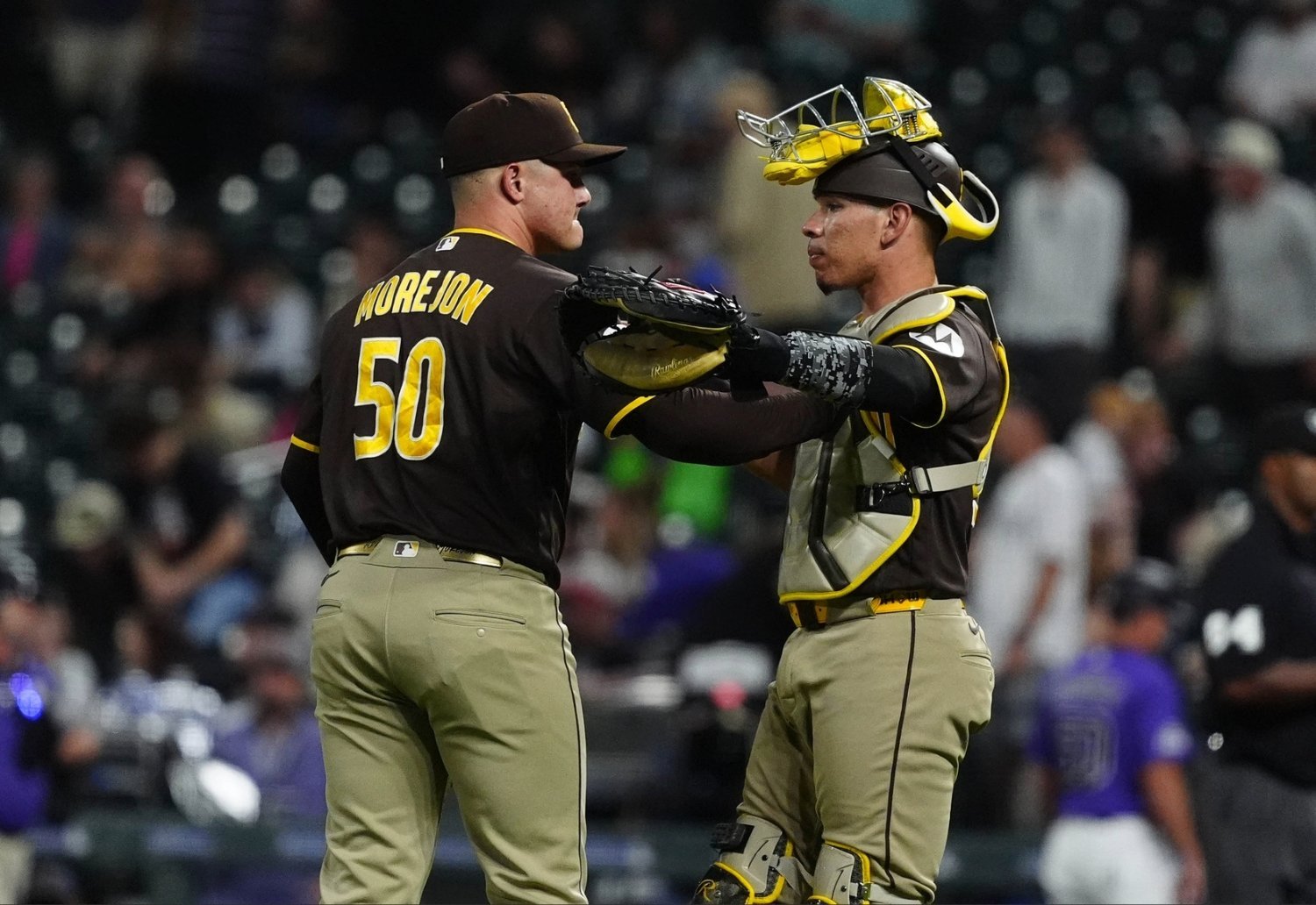 As expected, the San Diego Padres have one of the best corps of relief pitchers in Major League Baseball. Their 4.15 ERA ranks surprisingly in the middle of the road, but a strikeout rate (23.1 percent) that sits in 11th place and an 9.1 percent walk rate that serves as the 12th-best mark in the league is more indicative of their talent. Their 53.4 percent groundball rate tops the league, and their 27.1 percent hard-hit rate is also in the top three. But it hasn’t all been perfect. Particularly in the matters of one Adrian Morejon. One of the issues that this bullpen faces is some misfortune in the batted ball game. Their .308 BABIP allowed to opposing hitters is one of the seven highest averages in the league, leaving a strand rate (70.5 percent) that’s floating more around the middle of the pack rather than what many of the other underlying figures might peg them to be. Morejon has been a sort of microcosm of these trends. Morejon’s surface numbers look rough. Through 16 innings of work, he’s pitched to a 5.63 ERA and a 55.6 percent strand rate. His 16.7 percent homer rate is abnormally high, too. Only Ron Marinaccio’s ERA sits higher, and Jeremiah Estrada (and his minuscule sample) is the only pitcher with a lower LOB% than Morejon (40.0). For a member of the contingent that was supposed to be the late-inning bridge to Mason Miller – alongside Estrada, Jason Adam, and, to a lesser extent, David Morgan – the output thus far has not been what you want. An observer who lives off the box score rather than a realistic portrayal might begin to have doubts about Morejon’s standing in the bullpen. Even at this early stage, the ERA alone is cause for concern. At this point, however, we know that ERA doesn’t tell the whole story, especially for a reliever. Interestingly, nor do any of the other factors through which Morejon is apparently struggling at present. This is Morejon’s percentile distribution through his 16 innings of work thus far: The xERA alone is indicative of a pitcher who doesn’t particularly deserved the results he’s received to this point (for what it’s worth, he also has a 2.74 FIP). He’s always lived in something of a paradox where the stuff is excellent and the whiffs are high, but the strikeouts are not. Morejon has furthered those trends throughout his small 2026 sample. Each of the chase and whiff rates look strong, with barrel, hard hit, and walk rates that are indicative of a pitcher who is in command of his stuff. It’s been more a matter of misfortune than anything. That misfortune works against Morejon both in strict outcomes (.354 BABIP) but also in the sample. Fourteen appearances comprise those 16 innings. On April 7 in Pittsburgh, Morejon allowed four runs in just one-third of an inning, with another two allowed against Colorado on April 10. Since that point, Morejon hasn’t allowed a run in six of eight appearances. He’s also struck out 12 hitters, walked only three, and hasn’t allowed a hit in five of those appearances. Suffice it to say, the version of Morejon that exists in reality is the one that was expected to lock down the late innings ahead of Miller. A pitcher with a combination of upper-tier stuff that induces plenty of whiff and the gaudy 65.3 percent groundball rate he’s posted thus far is one that is a nightmare for opposing hitters. If all hope is abandoned as an opposing hitter when Miller steps to the mound in the ninth, it’s not as if much room for optimism exists an inning or two earlier. That was the expectation coming into the year, and it remains reality. Regardless of what the ERA or other surface-level data may indicate, Morejon has been every bit as good as expected. Once the sample size grows, the numbers should easily illustrate such without the need for all of this extra analysis. View the full article
 -
 Before we turn the page to May, let's honor the Stars of the Month for March/April. The star hitter goes to Kaelen Culpepper of the Saints, and the star pitcher is Eli Jones of the Kernels. I wouldn't go with these two in a more traditional player/pitcher of the month voting, but that's the fun of having this star scoring system. Here's tonight's system recap, along with some info on the star scoreboard. View the full article
 -
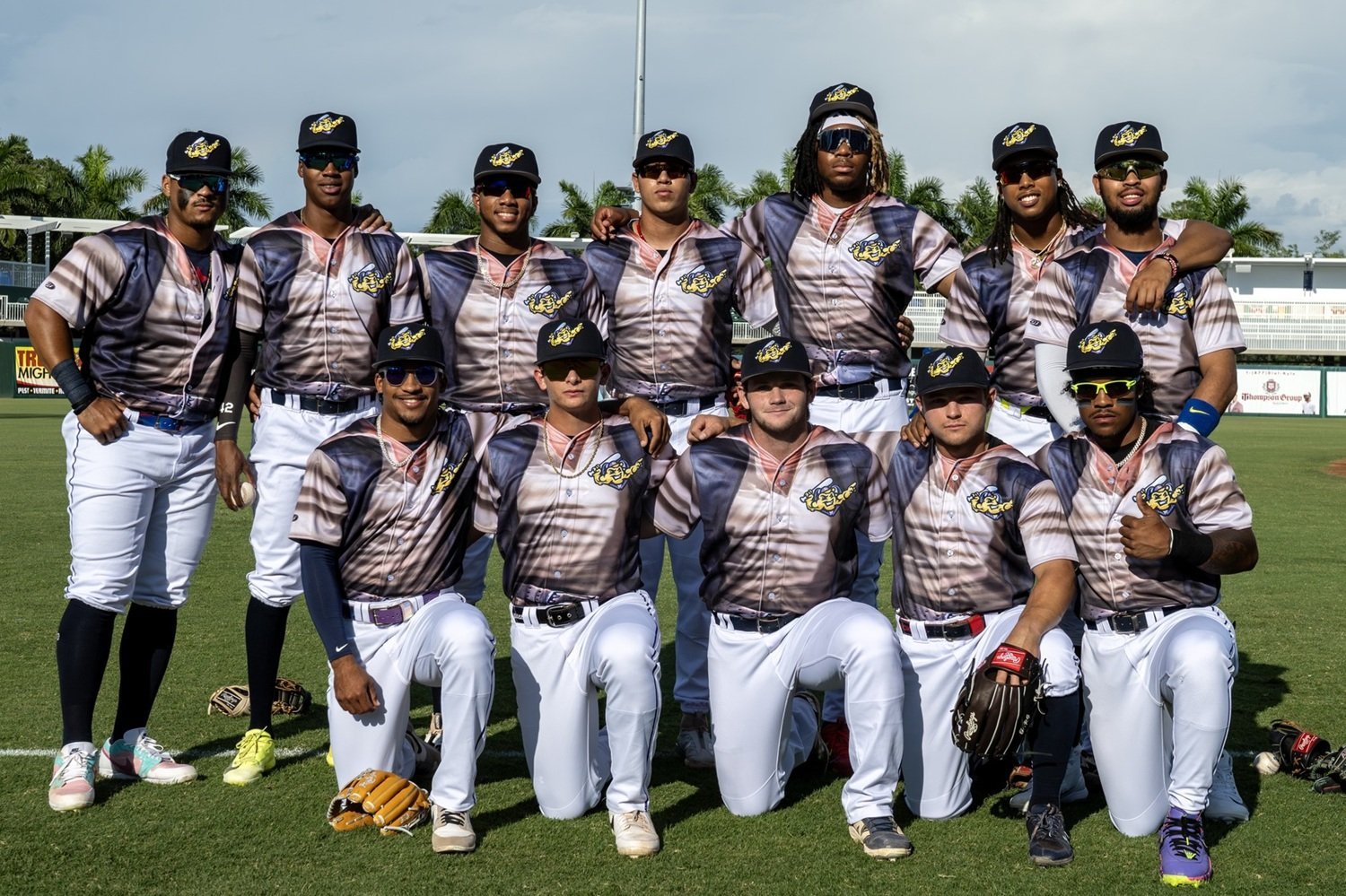 Sorry this is posted so late. I spent nearly 90 minutes online with MLB dot TV customer service as I have not been able to watch a Twins game on Twins dot TV for four days in a row. And after 90 minutes, we still have no resolution. Frustrating. TRANSACTIONS RHP Travis Adams saw his rehab stint come to an end as he was optioned to the Saints where he’ll continue to work to return to 100% and return to the Twins. The Saints also activated RHP Raul Brito from the development list. Fort Myers activated RHP Justin Mitrovich, their ninth-round pick from the 2025 MLB Draft. Get to know more about the Elon alum in his Twins Spotlight. Finally, RHP Angel Castillo was released from the DSL roster. SAINTS SENTINEL St. Paul 3, Iowa 1 Box Score The Saints had just two hits in this game but four a way to earn a win at home against Iowa. One big reason, of course, is pitching. Let’s start there. Matt Bowman played the role of the opener in this game. He tossed two scoreless innings despite giving up three hits. Mike Paredes played the role of the bulk pitcher. He tossed five scoreless innings and struck out four batters. He gave up two hits and a walk. He earned his first Triple-A win. Raul Brito was charged with an unearned run in the eighth inning, and Drew Smith earned the save with a scoreless ninth inning. With two outs in the bottom of the third inning, Noah Cardenas knocked his first home run of the season to give the Saints a 1-0 lead. The Saints used a bit more creativity to score their next runs. With one out in the bottom of the fifth inning, Orlando Arcia reached on an infield single. Aaron Sabato followed with a walk, and Tanner Schobel was hit by a pitch to load the bases. Cardenas walked to make it 2-0 Saints. Kaelen Culpepper was next. He flew out to right, deep enough for Sabato to score the third run. On the relay, Schobel was thrown out at third base to end the inning. Infielder James Triantos went 2-for-4 and is now hitting .317. He’s a Top 10 Cubs prospect. Former Gophers star Brett Bateman led off and played center field for the Cubs. He was 1-for-3 with a walk and a double. Jonathan Long is also a Top 10 Cubs prospect, and he was 2-for-4. The Saints had six walks, and Emmanuel Rodriguez accounted for half of them. WIND SURGE WISDOM Wichita 3, Arkansas 11 Box Score The Wind Surge had a rough game on Thursday night, right from the start. Sam Armstrong gave up two runs in the first inning. The Surge evened it up in the bottom of the inning, but Arkansas scored five in the top of the second inning. Armstrong was charged with seven runs on five hits, two walks, and two hit batters. He gave up four home runs. Jarrett Whorff came in for the third inning. He gave up three runs on three hits and a walk over two innings. Darren Bowen wired two innings. He gave up one run on a solo home run. Kyle Bischoff tossed two scoreless innings, and Luis Quinones added a zero in the ninth inning. In the bottom of the first inning, Kyle DeBarge reached on a throwing error by the pitcher and got all the way to third base. Kala’i Rosario walked. Hendry Mendez reached on an infield single to shortstop which loaded the bases. With one out, Ricardo Olivar lined a single that drove in two runs. The other Wichita run came in the third inning. Billy Amick and Olivar walked to start the inning. Jose Salas got in by an infield single to load the bases. Andrew Cossetti came up and flew out to center field. Amick scored. All three base runners tried to advance, but Salas was thrown out at second. Wichita managed their three runs on just three hits, but they also had seven walks. Rosario had three of those walks. KERNELS CHRONICLE Cedar Rapids 7, West Michigan 5 Box Score West Michigan jumped out to a fast start. They scored five runs over the first two innings. From that point, it was all Kernels. They scored at least once in the next five innings and the final seven runs of the game. Eli Jones started and gave up five runs on eight hits over the first three innings. It’s nice to see that he ended his day with a scoreless innings (little things). He had six strikeouts and no walks. He struck out the last two batters he faced. After that, however, Cole Peschl threw two scoreless innings. Ivran Romero had two strikeouts in a scoreless inning. Eston Stull struck out six batters over the final three innings to record his first save of the season. Rayne Doncon and Andy Lugo led off the bottom of the third inning with a walk and a single, respectively. Jaime Ferrer drove in Doncon with a double. With one out, Eduardo Tait drove in Lugo with a single. Rayne Doncon knocked his third homer of the season with one out in the bottom of the fourth to make it a 5-3 game. Brandon Winokur led off the fifth inning with his fifth double. Khadim Diaw walked. After Danny De Andrade reached on a force out, Jay Thomason singled in Winokur with the Kernels fourth run. De Andrade scored on a Doncon sacrifice fly to tie the game a 5-5. With one out in the bottom of the sixth, Marek Houston hit his third home run of the season to give the Kernels’ their first lead of the game. Doncon continued his productive game with an RBI single to drive in Khadim Diaw with the seventh run. Doncon went 2-for-2 with a walk, two runs, and three RBI. He had a sacrifice fly and a homer. Diaw went 2-for- with two walks. Houston was 2-for-4 with a walk and a homer. MIGHTY MATTERS Ft. Myers 24, Daytona 8 Box Score This is one of those games that you can never expect. Seemingly every season, every team will have one of those games where the offense scores a huge number of runs. Good teams and bad teams. But 20 is something different. The franchise’s previous high in runs scored was 22 runs in August of 2012. Since 2020, the Mussels have reached 19 runs once. It is the third time that the Mussels have scored 15 or more runs. In addition, they had 21 hits which is also a Mussels record. Of the nine starters, only Yasser Mercedes went hitless, but he walked three times. All nine batters reached base at least two times. Bruin Agbayani reached base five times. He was 4-for-6 with a walk. He scored five runs and drove in three. Byron Chourio went 4-for-6 in this game. Irvin Nunez went 3-for-6 with his first triple and first home run of the season. He had six RBI and three runs scored. Jayson Bass went 3-for-6 with a walk, his third homer, three runs and five RBI. Ramiro Dominguez had two doubles and two walks in the game. Quentin Young had two hits. JP Smith had one hit and two walks. He scored four times. Harry Genth went 2-for-4 with two walks and a double. He scored three runs. Oh, and he needed just three pitches to get the final two outs. Matt Dalquist started for the Mussels. He gave up three runs (1 earned) on five hits and a walk in 4 1/3 innings. He had eight strikeouts. Brent Francisco gave up three runs on eight hits over 2 2/3 innings. He had four strikeouts. Jake Murray gave up two runs on two hits and two walks in 1 1/3 innings. He had two strikeouts. Harry Genth came on and got the final two outs of the game. PLAYERS OF THE DAY Hitter of the Day Bruin Agbayani (Fort Myers): 4-for-6, BB, 5 R, 3 RBI Irvin Nunez (Fort Myers): 3-for-5, BB, 3B(1), HR(1), 2 R, 6 RBI, K Jayson Bass (Fort Myers): 3-for-6, BB, HR(3), 3 R, 5 RBI, K Rayne Doncon (Cedar Rapids): 2-for-2, BB, HR(3), 2 R, 3 RBI Pitcher of the Day Mike Paredes (St. Paul): 5 IP, 2 H, 0 R, 1 BB, 4 K, 68 pitches, 43 strikes (63.2%) PROSPECT SUMMARY Check out the Prospect Tracker for much more on our Twins Top 20 prospects after seeing how they did today. #1 - OF Walker Jenkins (St. Paul) - Did Not Play. #2 - IF Kaelen Culpepper (St. Paul) - 0-for-3, SF RBI, K (batted first, played SS) #3 - OF Emmanuel Rodriguez (St. Paul) - 0-for-1, 3 BB, CS(2) (Batted second, played RF). #4 - C Eduardo Tait (Cedar Rapids) - 1-for-5, RBI, K, E(3) (batted second, played C) #5 - LHP Connor Prielipp (Minnesota) - Did Not Pitch #6 - LHP Dasan Hill (Cedar Rapids) - Did Not Pitch #7 - OF Gabriel Gonzalez (St. Paul) - 0-for-4, 2 K (batted third, played 1B) #8 - LHP Kendry Rojas (St. Paul) - Did Not Pitch #9 - SS Marek Houston (Cedar Rapids) - 2-for-4, BB, HR(3), R, RBI, K, E(3), CS(1) (batted leadoff, played DH) #10 - RHP Charlee Soto (Cedar Rapids) - Injured List #11 - RHP Riley Quick (Ft. Myers) - Did Not Pitch #12 - RHP Andrew Morris (Minnesota) - 1 1/3 IP, 1 H, 0 R, 0 BB, 0 K, 19 pitches, 13 strikes (68.4%) #13 - 3B/CF Brandon Winokur (Cedar Rapids) - 1-for-5, 2B(5), R, 3 K (batted third, played CF) #14 - 3B/SS Quentin Young (Ft. Myers) - 2-for-7, R, 3 K (batted fifth, played 3B) #15 - RHP Marco Raya (St. Paul) - Did Not Pitch. #16 - OF Hendry Mendez (Wichita) - 1-for-4, K (batted third, played DH) #17 - 2B/OF Kyle DeBarge (Wichita) - 0-for-5, R, 2 K (batted first, played 2B) #18 - RHP C.J. Culpepper (Wichita) - Did Not Pitch. #19 - C/OF Khadim Diaw (Cedar Rapids) - 2-for-2, 2 BB, R (batted fourth, played DH) #20 - RHP James Ellwanger (Ft. Myers) - 60 IL (right elbow sprain) UPCOMING PROBABLES Friday: Iowa @ St. Paul (6:37 pm CT) - RHP John Brebbia (0-0, 3.95 ERA) Arkansas @ Wichita (6:35 pm CT) - Ty Langenberg (0-1, 3.80 ERA) West Michigan @ Cedar Rapids (6:05 pm CT) - RHP Michael Ross (1-1, 5.73 ERA) Ft. Myers @ Daytona (5:35 pm CT) - RHP Merit Jones (0-1, 1.93 ERA) CURRENT W-L Records Minnesota Twins: 14-18 St. Paul Saints: 13-16 Wichita Wind Surge: 13-11 Cedar Rapids Kernels: 11-13 Fort Myers Mighty Mussels: 16-8 FCL Twins: 0-0 (season begins Monday, May 4) DSL Twins: 0-0 (season begins Monday, June 1) Please feel free to ask questions about the teams, the rosters, and discuss today’s games, or anything else Twins minor-league related! View the full article
 -
 I've written at length—and with startling frequency—about the trauma Ron Davis inflicted upon me as a child. It was a rare treat for someone living 90 minutes outside the metro area to see a baseball game, and of the few I managed to see, Ron Davis managed to blow a hell-ton of them. OK, it was only two, but the sample size was, like, four. And the record shows this experience was not limited to me, nor directed at me. He blew 14 saves in 1984! That really happened! It seems made up! That said, I'm not here to relitigate the past, or angrily wish for him to step on a bunch of LEGOs in the dark (again). Instead, I'm here to say: I'm sorry, Ron. I'm sorry. I thought I knew what bullpen incompetence was. I thought I knew what it was like to have certain victory snatched from my greedy, grasping hands by a [redacted] meatball you grooved to Don Mattingly or Harold Baines. I thought I knew what rock bottom was. I was wrong. I was so very wrong. The folly of youth, perhaps caused by raging hormones or shelter from the diamond-sharp cruelties of an indifferent universe, is that, when things go wrong, it's the worst thing to ever happen. Not just to you, but to anyone. I understand there's famine and war, but have you considered that Ron Davis is coming in to pitch the ninth inning for my favorite team again? How can this happen? The last nine months have shown me just how ignorant and incurious about the world I was. The post-2025 trade deadline Twins bullpen is a disaster, wrapped in a travesty, inside an apocalypse. This was noted at the time it happened. It was noted all offseason. It was noted in spring training. It was noted when they surged to an early AL-leading record. And now, with the Twins blowing every game when they're not up by seven runs, it is being noted again. Everyone saw it coming. No one did anything about it. No one is coming to save us. It's over. You might wish for it not to be over, but wish in one hand and [redacted] in the other. See which one fills up first. So, Ron, I once again extend my sincerest apologies. I thought you were the worst. You weren't. You weren't even close. Image license here. View the full article
 -
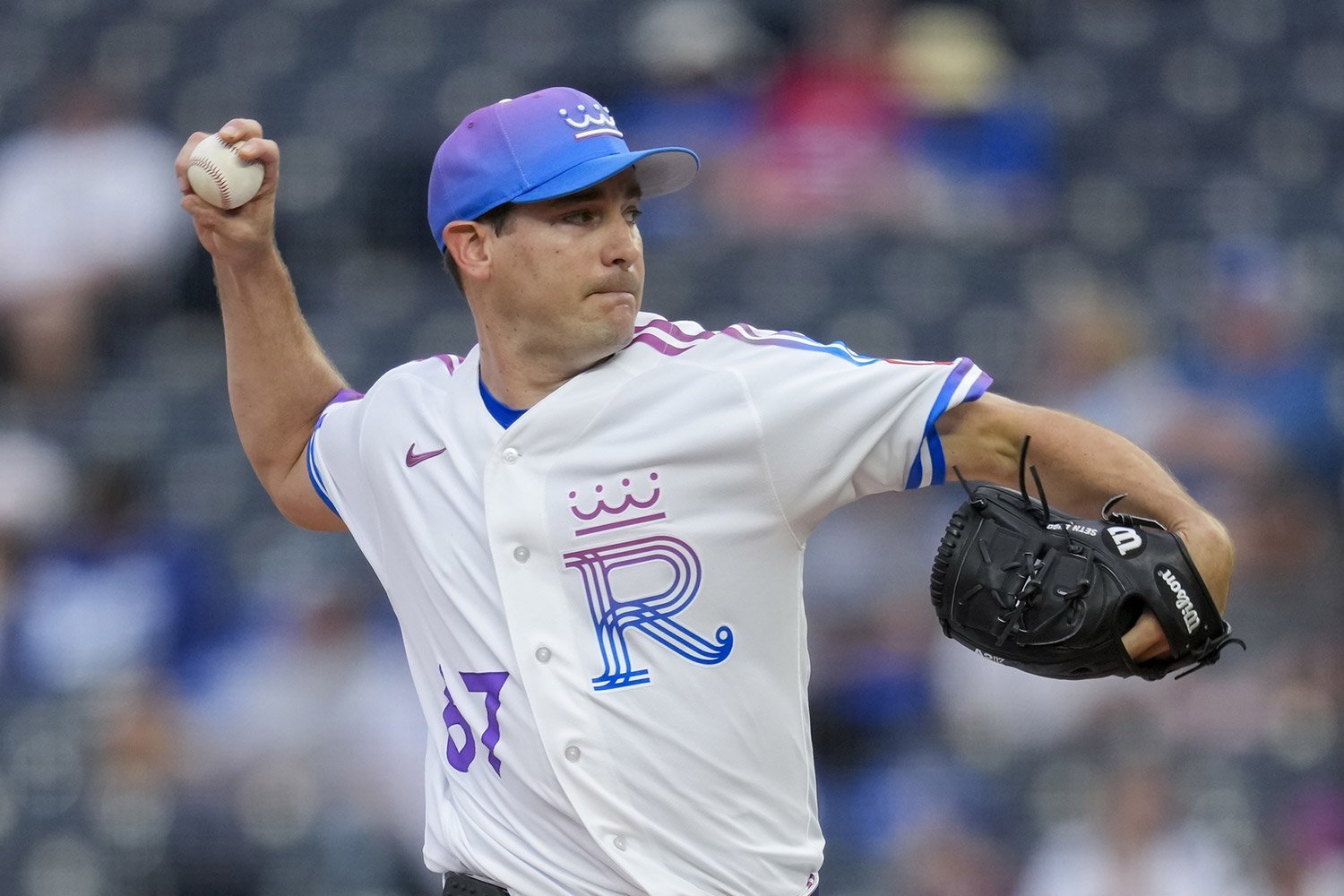 Last year, the Kansas City Royals had the sixth-best ERA in MLB at 3.73. The pitching staff was among the best in the league, and that was the expectation again for the 2026 campaign. Unfortunately, that hasn’t been the case in the first month. Before Thursday’s games, the Royals had the seventh-worst ERA in the circuit at 4.51, a rather disappointing development and one of the reasons behind their 12-19 start. Despite the mediocre collective output to this point, it’s not hard to identify the best hurler on the team in the first month. Lugo Has Quietly Performed At A Very High Level Seth Lugo doesn’t just lead the Royals in ERA at 2.63, but he is tied for seventh in the entire league with 1.2 fWAR. That’s higher than some high-profile names, such as Joe Ryan, Tyler Glasnow, Jesus Luzardo, Jacob deGrom, Logan Gilbert, Yoshinobu Yamamoto, and many others. Lugo hasn’t gotten lucky at all. His 2.69 Fielding Independent Pitching (FIP) not only certifies his dominance but also proves that he doesn’t just rely on his defense. He may not miss many bats as his 19th percentile whiff rate indicates, but he has become quite the contact manager, ranking in the 76th percentile in hard-hit rate with a solid 33.6 percent. It’s fair to say the Lugo signing in the winter of 2023 has been a resounding success for Kansas City. He posted a 3.00 ERA in 2024, helping the team return to the postseason, a 4.15 mark last year, and is shining again in 2026 at 36 years old. Lugo boasts one of the most varied repertoires you will see, using up to nine different pitches to keep his opponents off balance. And more often than not, he manages to achieve his goal. Other Contenders You could argue that Lugo has been getting a bit lucky this year so far, since his .290 wOBA is considerably lower than his .328 xwOBA, but it’s not a crazy gap, either. He is still a very serviceable starter and has unquestionably been the Royals’ pitcher of the month. Other contenders for this unofficial recognition are reliever Daniel Lynch, who boasts a brilliant 0.79 ERA in 11.1 frames, with a 31 percent strikeout rate, or fellow starter Michael Wacha, the owner of a 3.13 ERA. They both would be worthy selections, but Lugo has contributed more innings with similar run-prevention results. In what has been a highly frustrating season for Kansas City, Lugo’s competitiveness and effectiveness have been ever-present. At an age in which many major leaguers, particularly pitchers, start to decline, he has been a steady force and seems to be aging like wine. View the full article
 -
Pete Crow-Armstrong and the Generosity of Enemies
DiamondCentric posted an article in North Side Baseball
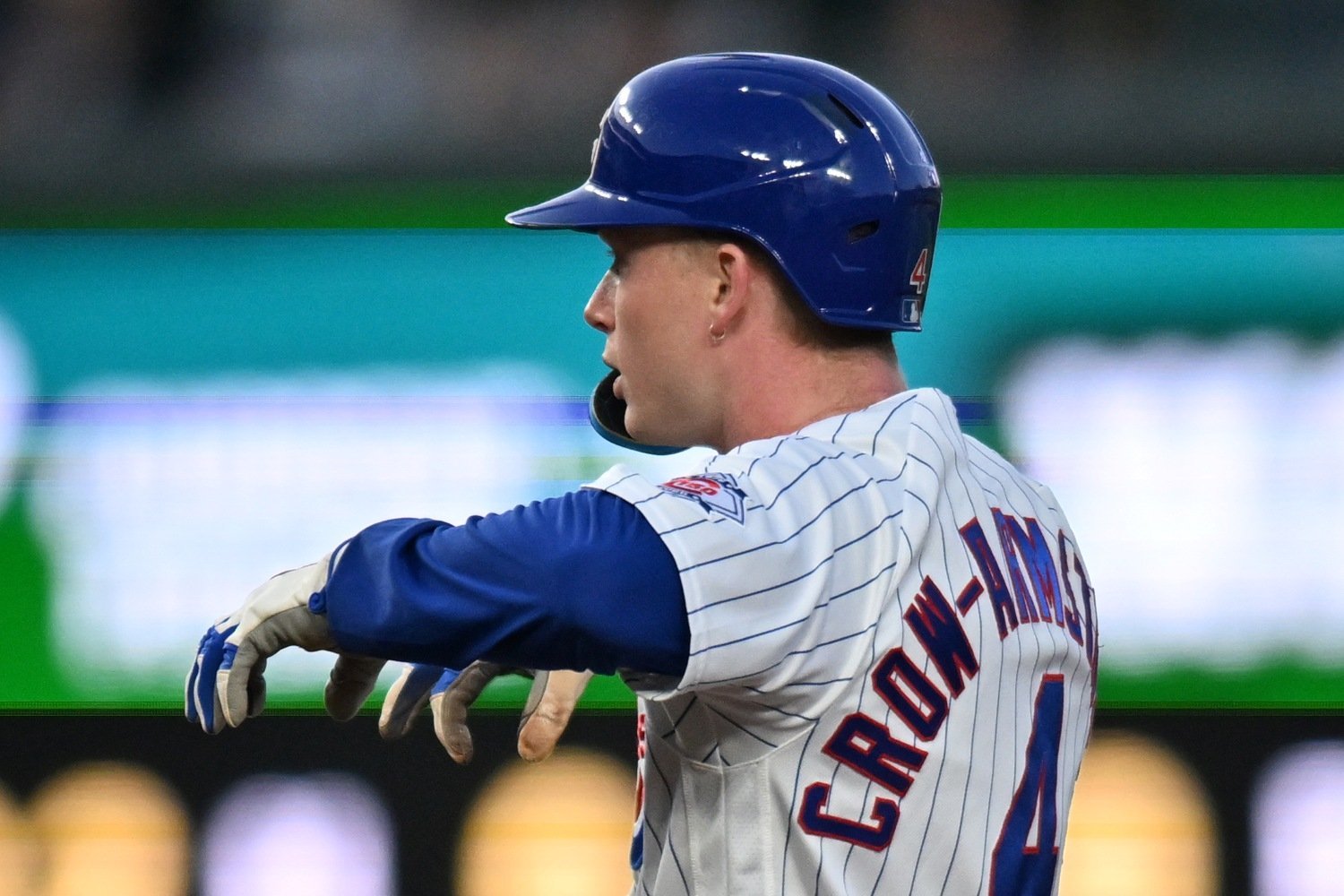 Offensively, it's been an uneven start to the season for Pete Crow-Armstrong. He's batting .241/.307/.362, even after a torrid road trip to Los Angeles and San Diego. As we've discussed multiple times, he's gotten ever-so-slightly more patient this season, which has led to more walks, but he's also striking out more, and he didn't get his swing calibrated well enough to produce his usual power until this weekend, when he hit his second and third homers of the year against the Padres. Something else happened in San Diego, too, though. For the first time all year, an opposing player challenged a called ball against Crow-Armstrong. The Padres lost that challenge, and Crow-Armstrong eventually drew a walk, but finally, someone actually challenged a call on him. OTdQM1FfWGw0TUFRPT1fQmxSVlhGd0dWUXNBQ3dSVUFBQUhBbFZRQUZrQVZGSUFVMUJYVlFJTUFBSlRBd0VI.mp4 It might seem unsurprising that the free-swinging Crow-Armstrong is relatively unimpacted by the advent of ABS, but the stats say he should have been more affected. According to Baseball Savant's ABS Leaderboard, opponents should have challenged roughly five times against him by now, winning three of them. The only qualifying hitter with a bigger difference between the rate at which opponents should have challenged them and the rate at which they've actually done so is the Rockies' Troy Johnston. Lots of times, this year, the Cubs' star outfielder has taken pitches on the very edge of the zone; watched them be called a ball; and gotten a reprieve from an opposing catcher who was either otherwise occupied, insufficiently confident in the pitch they'd just caught, or unwilling to risk losing a challenge on the rare take by an exceptionally aggressive hitter. OTdQM1FfVjBZQUhRPT1fQkFoWlVsMVdBRmNBRHdRRFh3QUhDRkpYQUFNRkJnTUFWbEFNQWdzTkJGWUdBRmRR.mp4 This is a good example of the first of those means of escape from a challenge and an overturned call. With the runner going, the catcher's focus moved to making a throw, and he wasn't sure enough that the pitch he'd caught was a strike to issue a challenge on the non-call. Other times, the situation in which Crow-Armstrong took a borderline pitch isn't high-leverage enough to warrant a challenge. He gets away with one, because he's taking a pitch in the right situation to do so. WnhxdjlfWGw0TUFRPT1fVUFKU1hBSlhCMUFBQ0ZVRlVnQUhCQThBQUFCVFdnSUFBVjBGQWdjREFBRlRBQWRm.mp4 Sometimes, multiple things are happening at once. The league is likely to arrive, eventually, at a mutual understanding whereby players don't challenge often in games that aren't close late, like this one. Early in at-bats, that goes double. But the fact that Crow-Armstrong squares to bunt and that the catcher is again distracted by baserunners has something to do with the non-challenge, too. WERaNVhfWGw0TUFRPT1fVlFJREJnVUZVd0VBV2dGVUF3QUhBZ0VDQUFNQVVWUUFDbGNFVXdzTlV3QlZBUU5T.mp4 Those little qualifiers and mitigating factors can't explain away everything, though. Statcast's 4.9 expected challenges for Crow-Armstrong is the product of a probabilistic model. In truth, opponents have had a whopping 18 reasonable opportunities to challenge, and by my count, 11 of those were actually strikes. Some of those, inevitably, came in important situations and/or leverage counts, where it's quite clear that the catcher should have tapped their head. NHlLcTZfWGw0TUFRPT1fQVFKWlZ3SUFBQUlBQ1ZWVEJBQUhCdzRGQUZoUlVGY0FCVjBGQkFNQkNWVlNCQU5T.mp4 Is that non-challenge a product of undue timidity, or did the Pirates just not realize that pitch found the corner? One way to answer that is by looking at another, very similar instance. WU9WZ2dfWGw0TUFRPT1fQWxkV0JnQUVWUU1BQ2xZRlZBQUhBRkJWQUZnTUIxWUFWQVFEQ0ZFQlZ3SmRCQXRV.mp4 With the bases loaded and two outs in a close game, even a 0-0 pitch is a high-leverage one. Oyster Analytics's model for assessing challenge decisions says the Phillies should have challenged even if they thought they were just on the wrong side of a coin flip here; the actual pitch location should have given them roughly a 65% confidence level. Ok, here's the twist: this isn't actually a Pete Crow-Armstrong issue. I mean it is, but in another way, it isn't. This year, a recent trend toward fewer strikes being called on the outer edge of the zone to lefties has accelerated. Roughly 15 years ago, one of the pernicious little problems the game faced was a strike zone that bulged weirdly off the plate for lefty batters. Now, strangely, things have almost tipped the other way. Umpires are calling fewer strikes than they should on the outside corner—and on the inside corner, to righties. The called strike rate on takes on the third-base edge of home plate has plummeted. WU9WQVdfVjBZQUhRPT1fVndjRkFsZFNCQVlBQ1ZNQUFnQUhWVkFBQUZrRFZBUUFBd0ZYQXdBSEFsY0RBd1pl.mp4 To his credit, though, Crow-Armstrong has responded in the rational way to this change in the state of play. He swung at over 63% of the pitches he saw in the three Shadow zones along the outside edge of the plate last season, according to Statcast. This year, that number is under 50%. This is where his extra walks are coming from. He's getting help, to draw them, because umpires should have called a fistful of extra strikes, and (failing that) catchers should have challenged and won a few of those strikes, anyway. It's not quite luck, though, because the zone's shrinkage is a structural reality of the game this year. Crow-Armstrong has made the right adjustment to suit that. It shouldn't be working quite as well as it has, and he needs to keep adjusting, but swinging less at pitches on the fringes of the zone is a good thing, especially for the often hyper-aggressive Crow-Armstrong. His opponents are likely to stop going so easy on him soon, but now that his swing is back online, he won't need that help as much, anyway. View the full article
 -
Austin Martin, Brooks Lee, and a Changing Developmental Blueprint
DiamondCentric posted an article in Twins Daily
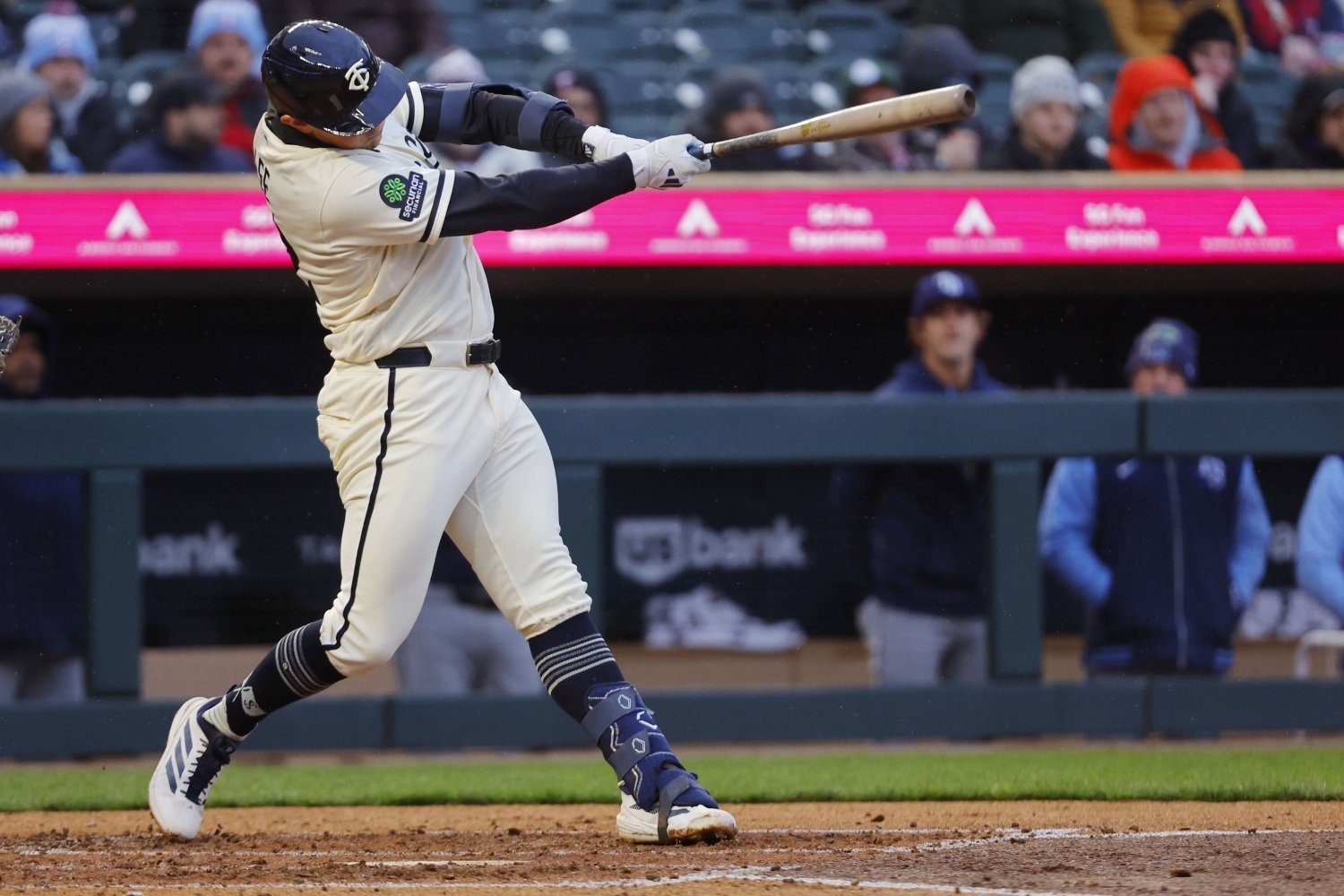 Player development has never been a simple, linear process, but the modern version of it might be more unpredictable than ever. Organizations map out a vision for prospects when they are drafted or signed, but that vision often changes as players face better competition, adjust to new information, and learn what actually works against major-league pitching. Some players arrive exactly as advertised. Others have to reshape their identities entirely, even after they reach the highest level. That evolution is not a failure of scouting or development. It reflects how difficult it is to project human performance years into the future. The version of a player at age 21 is rarely the same as the finished product at 27. Adjustments happen. Bodies change. Approaches shift. The result can look very different from the initial blueprint. Take Byron Buxton as the clearest example. Early in his career, the Twins tried to mold him into a traditional leadoff hitter. The focus was on putting the ball on the ground, using his elite speed, and letting him create offense with his legs. In theory, it made sense. In reality, it limited what Buxton could become. With time, it became obvious that the best version of Buxton is not a slap hitter. He's a middle-of-the-order force who punishes mistakes and changes games with power, while still bringing elite speed as a secondary weapon. The shift in expectations unlocked a different level of production. That same theme is playing out across the 2026 roster. Austin Martin Original Expectations: Coming out of Vanderbilt University, Martin built a reputation as one of the most polished bats in his draft class. His .368/.474/.532 collegiate slash line made him the No. 5 overall pick in the 2020 MLB Draft. His offensive identity centered around elite bat-to-ball skills, strike-zone control, and the ability to spray contact to all fields. Early returns in pro ball backed that up, including a .414 OBP in his debut season, though questions lingered about how much impact he would generate. Updated Expectations: That question has followed him into the big leagues, and the answer has taken an unexpected shape. Over-the-fence power hasn't materialized, but Martin has leaned fully into what he does best. Over the first month of this year, he has more walks (18) than strikeouts (13), and that level of discipline has allowed him to function as a table-setter in a very different way than originally envisioned. He may never reach the 20-home run mark, but his ability to control at-bats, use the entire field, and turn routine hits into extra bases with his legs gives him value. At 27 years old, he looks like a player who's finally settling into a sustainable version of himself after a development path that was anything but typical. Brooks Lee Original Expectations: Lee’s amateur track record suggested one of the safest bats in the 2022 MLB Draft. After starring at California Polytechnic State University, he entered pro ball with a reputation for elite contact skills and advanced feel from both sides of the plate. He consistently walked more than he struck out in college, ran a strikeout rate of just 11.7%, and showed the ability to drive the ball with wood bats during summer leagues. The expectation was a high-average hitter with steady production and enough strength to grow into moderate power. Updated Expectations: His transition to the majors has not followed that script. Lee has found it difficult to maintain consistent contact, carrying a career batting average under .240. Pitchers have found ways to attack Lee and get him to chase poor pitches on the edges of the zone. At the same time, another part of his game has taken a step forward. Through the first 28 games, he has launched five home runs, trailing only Buxton on the team. His 106 OPS+ and 109 wRC+ point to above-average offensive production, especially for a player handling a premium position. Long term, he may slide off shortstop, but the emergence of legitimate power has added a layer that was not part of his original profile. Lee and Martin’s development arcs remind us that improvement is not always predictable. The carrying tool can regress, while another tool rises to take its place. What matters is the overall package, not whether it matches the initial report—and that package can change over time, too. The idea of a fixed player archetype is fading. Development is more fluid now, shaped by data, experience, and a willingness to adapt. Players are trying a wider variety of things, to find the version of themselves that works once they get to the highest level. For the Twins, that has meant rethinking what success looks like for players like Buxton, Martin, and Lee. The original expectations still matter, but they no longer define the outcome. In many cases, the best version of a player is the one that no one fully saw coming. Can Lee and Martin continue to meet their updated expectations? Leave a comment and start the discussion. View the full article
 -
 Transactions: {Not official, but from trusted source}: INF Moises Polanco promoted to ACL Brewers from DSL Brewers Blue Game Action: Nashville Pre-Game Media Notes Game One Final: Norfolk 5, Nashville 2 (in 7 innings) Box Score and Game Log Game Two Final: Nashville 3, Norfolk 1 (in 7 innings) Box Score and Game Log Via the Sounds’ website, game details and we encourage readers to review affiliate write-ups as part of their Link Report routine: Crow Spins Gem to Help Sounds Split Twin Bill The linked game report covers the solid starts by LHP Robert Gasser (2 2/3 IP, 1 R, 4 H, 2 BB, 5 Ks; 58 pitches) and RHP Coleman Crow (5 2/3 IP, 0 R, 1 H, 2 BB, 7 Ks) and 1B Brock Wilken’s 2-run homer which keyed the Game 2 victory, including video. Crow’s return to form was a particularly welcome sight, looking a lot more like the pitcher who wowed us in his Major League debut on April 17 (5 1/3 IP, 2 R, 4 Ks) than the one who struggled in his return to AAA ball last Friday (3 2/3 IP, 8 R, 5 Ks). With Wilken’s first homer since April 10, observers can begin to appreciate his recent work: .283 average with 10 walks and 7 extra-base hits over his last 14 games (57 plate appearances). Though they only had 6 innings to achieve it in the second game, all 9 Sounds’ position players reached base via hit or walk, led by SS Cooper Pratt’s 1-for-2 (triple), 2-walk effort. Pratt also singled and had a sacrifice fly in the opening game. Rehabbing OF Jackson Chourio and 1B Andrew Vaughn featured in the first game, each reaching base twice, but the squad was outhit 10-5, with their last 2 hits of the infield variety. LHP Tate Kuehner (4 IP, 4 R, 6 H, 4 BB, 4 Ks) uncharacteristically struggled, walking the opening batter in his first two innings of relief and also allowing 4 singles in his final frame. Sounds’ Extras: The team had taken a careful approach with Gasser to this point, with 14-15 days between outings, so it’s encouraging that he was able to return to the mound and throw 58 pitches (36 strikes) with a peak velocity of 94.5mph five days after his last outing on Saturday (32 pitches). 2B Freddy Zamora’s day was shorter than most, ejected in the 4th inning after a strikeout in the 4th inning of the first contest. Several more video highlights are available via Nashville’s video page, including RBI hits by OF Eddys Leonard (2-for-3) and C Ramon Rodriguez (1-for-3). Friday’s outlook: RHP Quinn Priester is scheduled to make his 3rd rehab start of 2026 after pitching 2 1/3 innings on Sunday (45 pitches). Nashville can extend their series lead to 3-1 with a victory. Biloxi Pre-Game Media Notes Final: Pensacola 9, Biloxi 6 Box Score and Game Log Via the Shuckers’ website, game details: Shuckers Beat by Blue Wahoos 9-6 A 5-0 lead with RHP Jaron DeBerry on the mound is usually a recipe for success, but DeBerry didn’t make it out of the 1st inning and the Shuckers’ bat fell silent by the middle of the second inning (no hits amongst final 25 batters) while leading 6-3 at that point. That opening sequence was quite fun though, with RBI doubles off the bats of OF Damon Keith (1-for-3, walk), C Matt Wood (1-for-3, walk) and 1B Blake Burke, along with DH Mike Boeve’s RBI single. The early DeBerry exit (2/3 IP, 3 R, 3 H, 2 BB, 0 Ks; 37 pitches) essentially forced Manager Mike Guerrero into a bullpen game, with no pitcher covering more than 2 2/3 frames. RHP Tanner Gillis (2 2/3 IP, 1 R, 2 H, 3 BB, 1 K) worked around traffic to limit damage, while 24-year-old RHP Stiven Cruz was the most impressive (1 2/3 IP, 0 R, 1 H, 0 BB, 4 Ks) reliever. That continues Cruz’s 6-game run of stellar form, as he exited after the 5th inning with Biloxi still holding a 6-4 advantage. Unfortunately, RHP Edwin Jimenez’s first rough outing of 2026 came at a truly inopportune time, as he allowed 2 homers and a double to the first 5 batters faced to concede the lead, but he did bounce back to retire the final 5 batters he faced, the last 3 by strikeout. Shuckers’ Extras: Still 18 years old, SS Jesus Made had a 2-for-4 day, with 2 runs scored and a stolen base. However, he also had an error which led to an unearned run while Jimenez was on the mound. Now in his 6th minor league season after being acquired from the Dodgers in spring training, Keith (.346 AVG, 1.106 OPS in 62 plate appearances) must be chomping at the bit to reach AAA ball for the first time. Friday’s outlook: 20-year-old RHP Manuel Rodriguez (5.12 ERA, 1.34 WHIP, 7.4 K/9 in 19 1/3 IP) is ready for his 5th start of 2026, with Biloxi presently trailing 2-1 in their series at Pensacola. Wisconsin Pre-Game Media Notes Game One Final: Quad Cities 11, Wisconsin 5 (in 7 innings) Box Score and Game Log Via the Timber Rattlers’ website, game details: Bandits Beat Wisconsin in Game One Game Two Final: Quad Cities 8, Wisconsin 0 (in 7 innings) Box Score and Game Log More game details from the Timber Rattlers: Bandits Shut Out Wisconsin in Nightcap We thank the terrific Wisconsin media team for 2 detailed game write-ups and extensive video highlights, even as the results weren’t in our favor. Perhaps the return to 47-degree weather was the challenge for Game One starting pitcher RHP Bryce Meccage (1 1/3 IP, 7 R, 3 H, 5 BB, 1 K), who walked 4 of the first 6 batters he faced before allowing the back-breaking 3-run double for a 4-0 deficit before Wisconsin batters came to the plate. In that opening contest, Wisconsin did not record its second hit until they trailed 11-1 with 2 outs in the bottom of the 5th inning but did well to ultimately reach 8 hits and 5 runs scored. Unfortunately, that momentum did not carry over to the 2nd game, as Royals’ #3 prospect LHP David Shields limited the team to only 2 singles. Though the team already trailed 7-0 when he entered the second game, RHP Yerlin Rodriguez (1 1/3 IP, 0 R, 3 Ks) was a relative bright spot in that contest, allowing only one walk and no hits amongst the six batters he faced. We’ll accord the same frozen fingers excuse to RHP Bryan Rivera (2 2/3 IP, 4 R, 5 H, 1 BB, 2 Ks) who conceded homers to 3 of the first 4 River Bandits he faced in the opening game. On a brighter note, RHP Chandler Welch had his second 3-inning scoreless relief outing of April (3 IP, 0 R, 0 H, 3 BB, 4 Ks). Each of starting LHP Wande Torres (3 IP, 3 R, 2 Ks), LHP Bjorn Johnson (2 IP, 2 R, 0 Ks) and RHP Michael Fowler (2/3 IP, 3 R, 2 Ks) struggled to record zeros on Thursday. Friday’s outlook: It’s Luis Pena bobblehead day, which could be made a million times better if it coincides with Pena’s return to the lineup (last played April 22, when he passed out in the dugout, spent the night in a Fort Wayne hospital and was released the next morning). RHP Yorman Galindez (7.27 ERA, 1.38 WHIP, 10.4 K/9 in 8 2/3 IP) gets the start, with Wisconsin needing to come back from an 0-3 series deficit. Wilson Pre-Game Media Notes Final: Salem 10, Wilson 5 Box Score and Game Log Via the Warbirds’ website, game details: Salem Surges Past Wilson Despite missing a number of run-scoring opportunities (1-for-12 with runners in scoring position), Wilson appeared to be sailing to a comfortable victory with its 5-2 advantage through 7 innings before the wheels fell off. After wasting a bases loaded, nobody out 2nd inning opportunity and stranding 2 more in the 3rd inning, outfielders Handelfry Encarnacion (2-for-5, 2 RBIs), Jose Anderson (1-for-3, walk, RBI) and Jadyn Fielder came through with a 2-out, 2-run double and 2 solo homers for a 5-1 advantage by the 6th inning. Starting 6’6” LHP Andrew Healy allowed back-to-back singles to open the game (erased by a caught stealing and pick-off) before turning in his best outing to date: 3 innings of shutout ball, striking out 5 while allowing 3 singles and no walks. Bulk reliever of the day RHP Carlos Carra (4 2/3 IP, 5 Ks) started very strong, retiring 11 of the first 13 batters he faced, allowing a 5th inning walk and 6th inning solo homer. After a lineout for the first out of the 8th inning, Carra had reached 68 pitches and Wilson led 5-2 with nobody on base and 4 outs remaining for victory, but the gameplan demanded 20 more pitches: HBP, 2-run homer, single, single, force out, walk, single. 19-year-old Carra was ultimately charged with 7 earned runs, but that’s why it’s important to look beyond the box score. Warbirds’ Extras: Salem had 12 hits but only had 3 opportunities with runners in scoring position (2-for-3). 7 of their 10 runs came via the long ball, including a 3-run shot off of RHP Joshua Quezada (1 1/3 IP, 3 R, 4 H, 0 BB, 1 K; allowed 2 inherited runners to score) in the 9th inning to effectively put the game away. 2B Juan Ortuno (3-for-4, 2 doubles, SB) and 3B Filippo Di Turi (infield single, walk, SB) had positive days offensively. The Warbirds committed no errors vs. 2 for the RidgeYaks. 3 of Wilson’s 5 runs were unearned. Friday’s outlook: RHP Tyler Renz (2.45 ERA, 1.31 WHIP, 9.8 K/9 in 18 1/3 IP) is scheduled for his 6th appearance (5th start), as Wilson look for a win to even their home series at 2 games apiece. We hope that you enjoy the Minor League Link Report. On Friday, the Milwaukee Brewers have the earliest start time (5:45pm CST at the Nationals), followed by Biloxi and Wilson (6:05pm), Nashville (6:35pm) and Wisconsin (6:40pm). Organizational Scoreboard including starting pitcher info, game times, MiLB TV links, and box scores Current Milwaukee Brewers Organization Batting Stats and Depth Current Milwaukee Brewers Organization Pitching Stats and Depth View the full article
 -
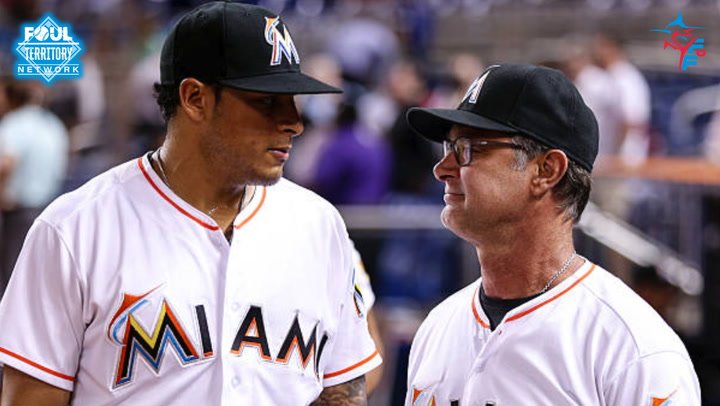 On Fish Unfiltered, AJ Ramos reflects on his experience playing under Don Mattingly for two seasons in Miami. Here's what the Phillies can expect from him as their interim skipper.View the full article
 -
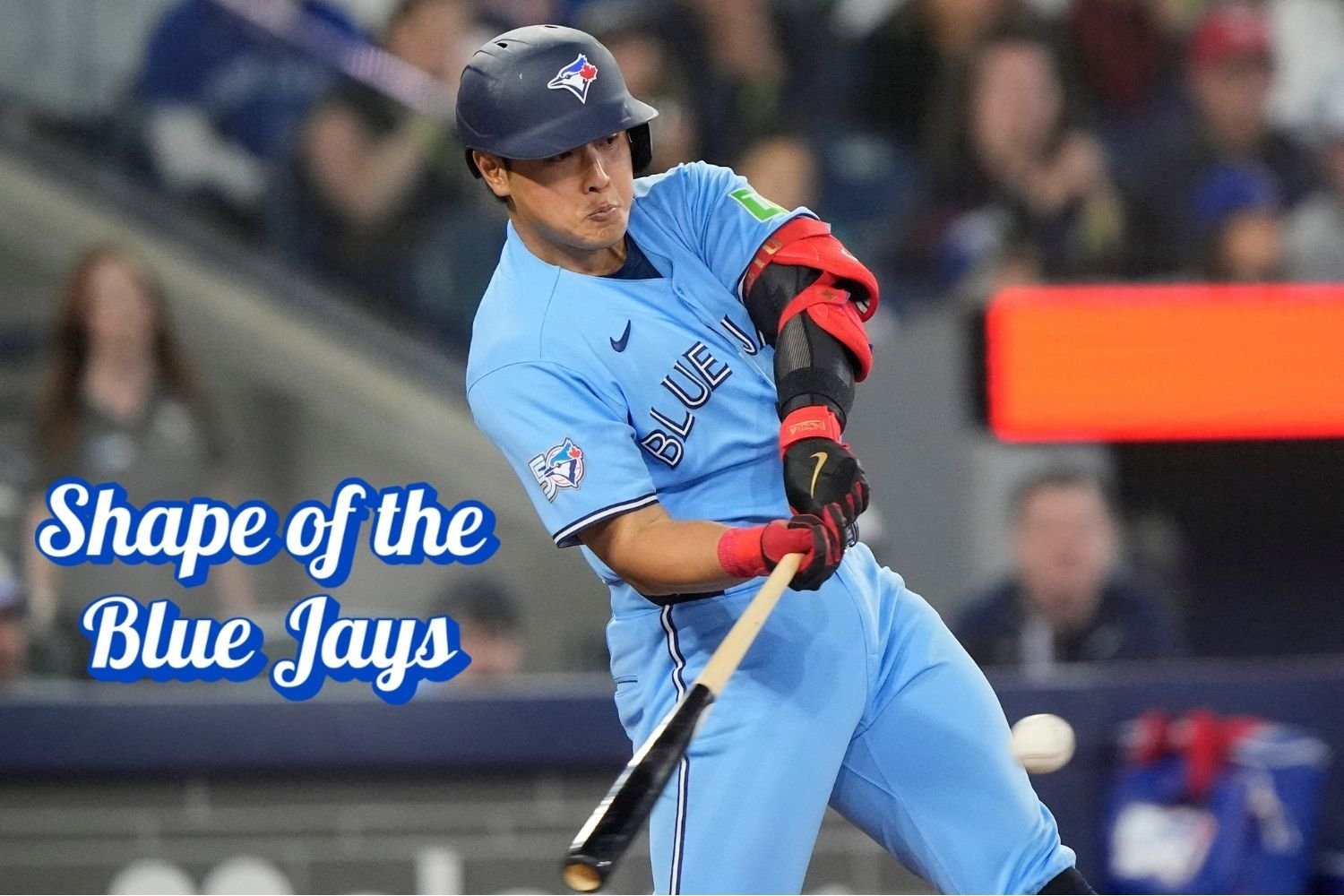 Welcome to Shape of the Blue Jays, my column where I dig into Statcast numbers to analyze recent pitch shape and swing shape trends for Toronto Blue Jays players and discuss how they have impacted their performance. Click here to read the last edition. Quick Hits: ABS Brandon Valenzuela went a perfect 3-for-3 challenging ball calls behind the plate in Wednesday's series finale against the Red Sox. He also homered in the contest as an added bonus. One month into the ABS era, the Blue Jays have been one of the better teams in baseball at using the challenge system to their benefit when they're fielding (this is entirely thanks to their catchers; no Toronto pitcher has challenged a call yet). Statcast uses a model to predict the challenge probability of a given pitch based on location, number of challenges remaining, runners on, the count, and the number of outs in the inning. Based on that model, the Jays are 13th out of 30 in overturns above expected. They are eighth out of 30 in run value gained from their overturns above expected. Valenzuela has proven to be a very adept defensive catcher to start his MLB career; he and Tyler Heineman are doing a good job getting extra strikes for their pitching staff. Trey Yesavage Last year's postseason hero returned to action on Tuesday against Boston, and it was a resounding success (5.1 IP, 0 ER, 4 H, 3 K, 0 BB). Trey Yesavage didn't record his first strikeout until the fourth inning, a stark contrast to the copious amounts of swing-and-miss he generated last October, but he didn't walk anyone and induced tons of weak contact. Of the 17 batted balls he allowed, only one had an expected batting average over .500. Only three were hard hit (>95 MPH exit velocity). The average xBA of those 17 batted balls was a meager .160. The best one was a first-inning double by Willson Contreras, which, even though it technically qualified as a barrel, was not hit high enough to be a home run in any MLB stadium. There's no problem with a lack of swing and miss if the balls in play are that non-threatening. Nothing about Yesavage's velocity was out of the ordinary, and the movement on both the fastball and splitter was also standard. If I have one question about his outing, it's about the lack of his signature "wrong-way" slider. He threw it just six times, five of them to righties. Now, it was responsible for one of his three strikeouts, but was it a lack of feel for it coming off the injury or a deliberate part of his gameplan? He threw it frequently during his last rehab start, so I'm inclined to say the latter. His next start is scheduled for Sunday in Minnesota. They've been a very good slider-hitting team this year, but then again, not many sliders in this league move like Yesavage's. Kazuma Okamoto Kazuma Okamoto struggled mightily to put bat on ball and drive in runs in the first couple weeks of his career. He finally had a huge day on April 19 in Arizona with a home run and a double (this was the day the Jays put up an eight-spot in the first inning). Since the start of that game, he's hitting .265, slugging .559, and only striking out 28% of the time, way down from the dangerous low-40s territory he was occupying earlier. What changed? Most of Okamoto's initial problems had to do with secondary pitches. Eno Sarris of The Athletic noted that he recently changed his stance in such a way that it gives him more time to detect pitch types while also putting him in a better position to cover the outside half of the plate. His hot streak is no accident. This doesn't automatically mean Okamoto is still going to get to every down-and-away slider he sees, but it will force pitchers to think differently about him. Last weekend, he launched home runs above the Rogers Centre batter's eye and into the WestJet Flight Deck on back-to-back days. Both of them were on middle-away fastballs. He hooked a down-and-away fastball for a 2-RBI double off Payton Tolle on Tuesday as well. Pitchers exploited a weakness of his in early April, and he adjusted. Now they'll have to adjust back. Spencer Miles Spencer Miles was a name shrouded in mystery when the Blue Jays selected him in the Rule 5 draft. He had never pitched above A-ball before, a level he reached in 2022. Talks of a high-90s sinker and MLB-quality stuff were encouraging, but he had a lot to prove coming into the year. So far so good! Miles has a 2.87 ERA, 3.82 FIP, and a 3.44 xFIP through his first nine outings. He has pitched 15.2 innings in those outings, and I'd love to see the Jays take advantage of his multi-inning capabilities more often so as to preserve the high-leverage arms on the staff. With how good pitchers are these days, a 96-mph sinker with 16 inches of arm-side tail isn't as special as it used to be. Both stuff models on FanGraphs (Stuff+, PitchingBot) see Miles's sinker, and his arsenal in general, as run-of-the-mill. The models do think higher of his command. From a results standpoint, he has a 55th-percentile K rate, a 64th-percentile BB rate, and a 90th-percentile hard-hit rate. Nothing special, but it gets the job done. In addition to his location, I believe his arsenal is quite advanced for a reliever and is also helping his stuff play up. He uses all four of his pitch types enough that hitters on both sides can't discount them, and he mixes both velocity and movement well in doing so. Check out his repertoire through this screenshot from the Paired Pitches tool on FanGraphs Lab: His sinker gets enough separation from his four-seamer that, hypothetically, if a lefty hitter thinks he's getting a middle-middle four-seamer but it's actually a sinker, it would wind up perfectly on the lower outside corner of the zone. All stats from FanGraphs and Baseball Savant, through games on April 29, 2026. View the full article
 -
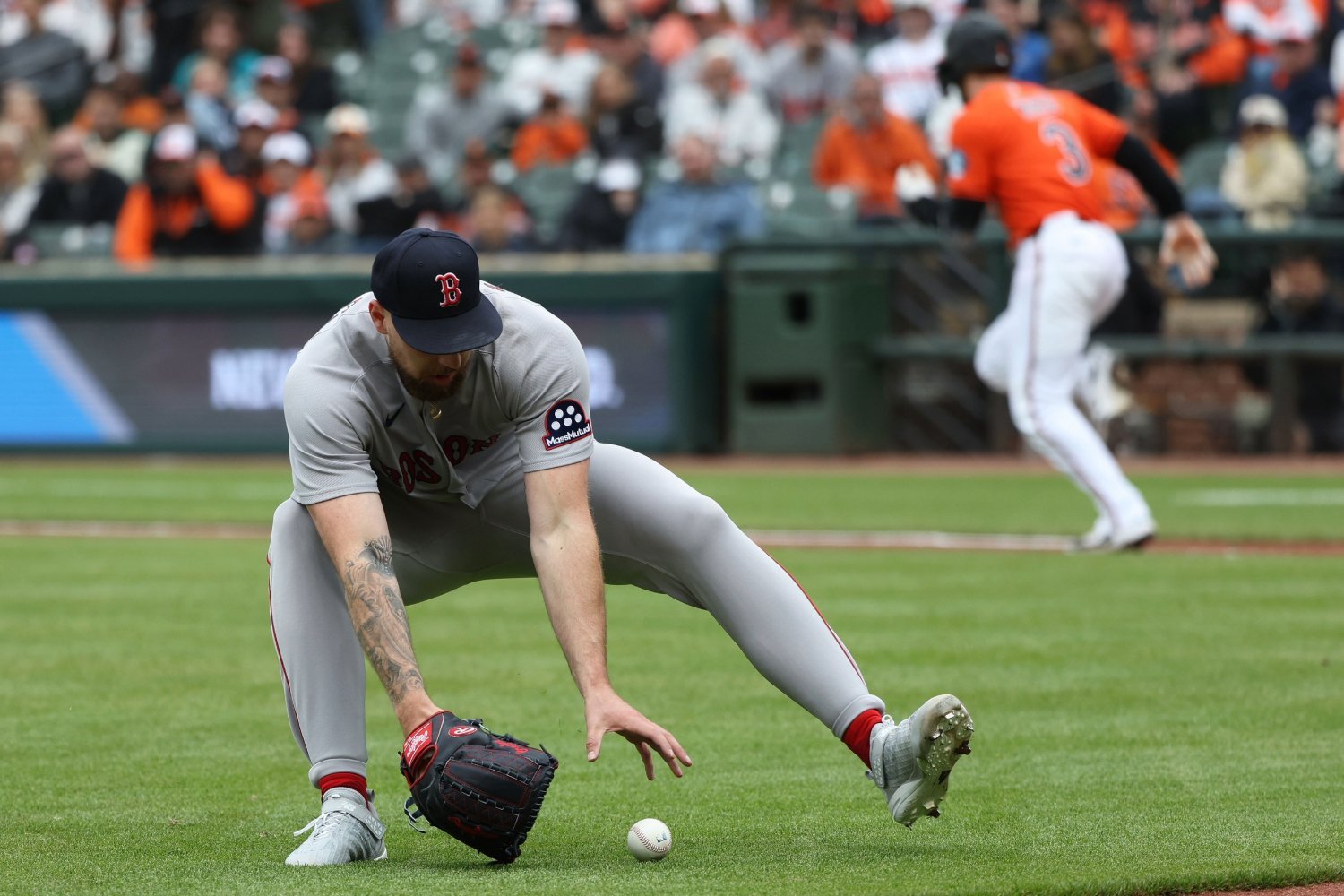 When the report came out Wednesday morning that OF/3B Nate Eaton was being recalled to the big-league club, Boston Red Sox fans were curious as to what the corresponding move would be. There were no signs of injury from Boston’s outfielders or the likes of Willson Contreras or Marcelo Mayer, who had both been banged up in the Toronto series — Contreras fouling a ball off his toe in game one, and Mayer tweaking his wrist on a tag at second in game two. As first pitch inched closer though, everyone’s worst fears were confirmed as it was Garrett Crochet who would be heading for a 15-day IL stint thanks to left shoulder inflammation, leaving an already inconsistent rotation without its ace who had seemingly turned things around in Boston’s 17-1 win over Baltimore after back-to-back rough outings. While Crochet told reporters he “began to feel some fatigue in his shoulder during his Saturday outing in Baltimore and is pretty confident he’ll be back in Boston’s rotation when he’s eligible in about two weeks,” per MassLive’s Chris Cotillo and Christopher Smith, this is an injury the already spiraling Red Sox team can’t afford to take lightly. The concern is already there for the Red Sox ace, but ramps up significantly when you learn this isn’t the first time he’s dealt with this type of injury. As Section 10 and 98.5 The Sports Hub’s Tyler Milliken wrote on X, “Crochet had a cortisone shot in that left shoulder due to inflammation in 2023. He had a setback during the rehab [and] ended up being out from June 15th to September 22nd.” Hopefully, the timeline for Crochet’s return is closer to his believed two weeks, rather than the three months he dealt with previously. With Crochet now on the shelf, the question isn’t just who the Red Sox turn to, it’s who can they realistically rely on his absence? Below is a look at the five arms Boston will need to lean on until Crochet returns and a ranking of how confident they and fans should be in their abilities to rise to the occasion. Honorable Mention: Sonny Gray. It is worth noting that Gray will eventually be returning from his hamstring injury suffered on Patriots Day and when he does, that will surely help to enhance Boston’s rotation with a veteran leader that will be missed in Crochet’s absence. Until then though, we’ll be sticking with the five sure options the Red Sox currently have at their disposal. Ranking Confidence in Red Sox's Best Starters Without Garrett Crochet 5. Brayan Bello 2026 Stats: 6 starts, 1-4, 9.12 ERA, 25.2 IP, 17 SO, 15 BB, 2.26 WHIP, .374 AVG Any hopes of a Brayan Bello turnaround under new manager Chad Tracy may have been dashed away Wednesday afternoon as he struggled again, allowing four earned runs on six hits while walking and striking out two over 3.2 innings pitched, and was visibly upset after getting the hook from Tracy after just 63 pitches and not being allowed to face Toronto’s lineup a third time through. Where Bello excels is getting hitters to swing-and-miss and put the ball on the ground, with whiff and ground ball rates both in the 86th percentile, both elite showings for a sinker-baller such as himself. It's there where his biggest problem lies, though, as it feels like start to start Bello is struggling to determine what other pitches in his repertoire he wants to attack hitters with. He’s essentially turned himself into a two- or three-pitch pitcher, with a mix of: sinker (42%), cutter (26%), changeup (12%), sweeper (10%), curveball (7%), four-seamer (3%). Bello has the capabilities to step up right now; heck, he was arguably their second-best starter behind Crochet just last season. But where Bello’s struggles may stem from, the mental aspect of his game, something that was thought to be figured out a year ago but is trending backward this year, raises concerns about his reliability moving forward. 4. Jake Bennett 2026 Stats (AAA): 5 starts, 2-1, 0.86 ERA, 21.0 IP, 16 SO, 3 BB, 0.71 WHIP, .162 AVG Red Sox fans won’t have to wait long to see if Jake Bennett can fill the void left by Crochet as he’s slated to start Friday’s series opener against the Astros, a spot that originally was Crochet’s before the injury announcement. In five starts for Worcester this season, Bennett has been dominant, holding opposing hitters to a .162/.215/.176/.391 slash line while also constantly attacking hitters, owning a 5.33 K/BB and 0.71 WHIP. The key question is how Bennett will attack hitters at the big league level as he has been operating with a five pitch mix that includes a sinker (26.5% usage, four-seamer (25.4%), changeup (20.9%), curveball (13.4%) and cutter (13.1%) with varied velocity across that mix. As the Red Sox look for reinforcements to hold things down while Crochet is out, the hope is Bennett can follow the example of fellow young southpaws Payton Tolle and Connelly Early who have quickly found their footing in Boston. I think he can give them some more consistency than Bello has shown to be capable of so far, which is why he’s slotted ahead of the right-hander on this list. 3. Payton Tolle 2026 Stats: 2 starts, 0-1, 3.38 ERA, 10.2 IP, 15 SO, 5 BB, 1.03 WHIP, .162 AVG Speaking of Payton Tolle, he’s had a bit of a Jekyll-and-Hyde start to his 2026 campaign. After dominating the Yankees in his season debut to a tune of 11 strikeouts, one walk, three hits, and one earned run over six strong innings and 93 pitches, he followed that up with a less-than-stellar outing allowing three earned runs on three hits, four walks, and four strikeouts over 4.2 innings and 68 pitches against the Blue Jays. When it comes to looking the part in Crochet’s absence, the 6’6”, 250lb lefty has that more than covered. In terms of matching the nastiness that Crochet usually brings on a nightly basis however, Tolle will need to tap back into what made him so successful in that first Yankees start: not being afraid to pound the strike zone. That's what gets swings and misses, and that is what has led to his elite 35.7 K% (97th percentile) and 34.2 Whiff% (92nd percentile). Continuing to utilize his more balanced pitch arsenal that no longer relies solely on the four-seamer as it did a season ago (usage down from 64% in 25’ to 52% in 26’) will keep hitters guessing on how he might attack them. 2. Connelly Early 2026 Stats: 6 starts, 2-1, 2.84 ERA, 31.2 IP, 28 SO, 14 BB, 1.20 WHIP, .212 AVG If Tolle will be tasked with bringing the fire and raw emotion that Crochet pitches with on a nightly basis, then Connelly Early will complement that with his finesse and solid command style of pitching. While Early’s Baseball Savant page won’t blow you away, as he currently sits at either league average, or slightly below league average, in practically evert category, what stands out is that he has already shown in his short MLB career that he knows how to lock in and make the big pitches when he needs to and never appears to be overwhelmed by the situation. Crochet’s ability to slow the game down and keep his composure in a big spot may be an underlying aspect of his game that will be missed by Boston in order to keep innings from snowballing on them. However, if Early can continue to tap into that skillset of his own, something that Sox fans will remember was on display during last year’s AL Wild Card Round in Yankee Stadium, it may go a long way to helping keep this rotation afloat. 1. Ranger Suárez 2026 Stats: 6 starts, 2-2, 3.09 ERA, 35.0 IP, 29 SO, 9 BB, 0.94 WHIP, .197 AVG The obvious choice to step in and take the reins of the rotation while Crochet is out is undoubtedly Ranger Suárez, who has started to look the part of a co-ace after his rocky start in Boston. Since his two clunkers against Houston and San Diego to start the year (8.64 ERA, .371 BA, 13.0 K%, 8.0 BB%, 47.0 HardHit%), Suárez has looked like every bit of the pitcher the Red Sox expected him to be when brought him in to be the number two option behind Crochet. Suárez has managed a quality start in three out of his last four outings, only allowing four earned runs over 26.2 innings pitched while managing to hold hitters to a feeble .126 average. Factor in a 26 K%, 6 BB% and HardHit% of 34%, and you have a verified stud on the mound. What has made him more effective during this stretch is his willingness to stray away from being so sinker (29% usage) and changeup (19%) heavy as he was his first couple of starts which seemingly made him slightly too predictable. He's starting to trust his excellent secondary offerings including his cutter (20%), four-seamer (17%) and curveball (14%), all of which have continued to see upticks in usage over his last four starts. While a Crochet injury obviously isn’t an ideal situation to be dealing with, especially given how the Red Sox season has already gone so far, Suárez is more than capable of leading the starting five in his absence. View the full article
 -
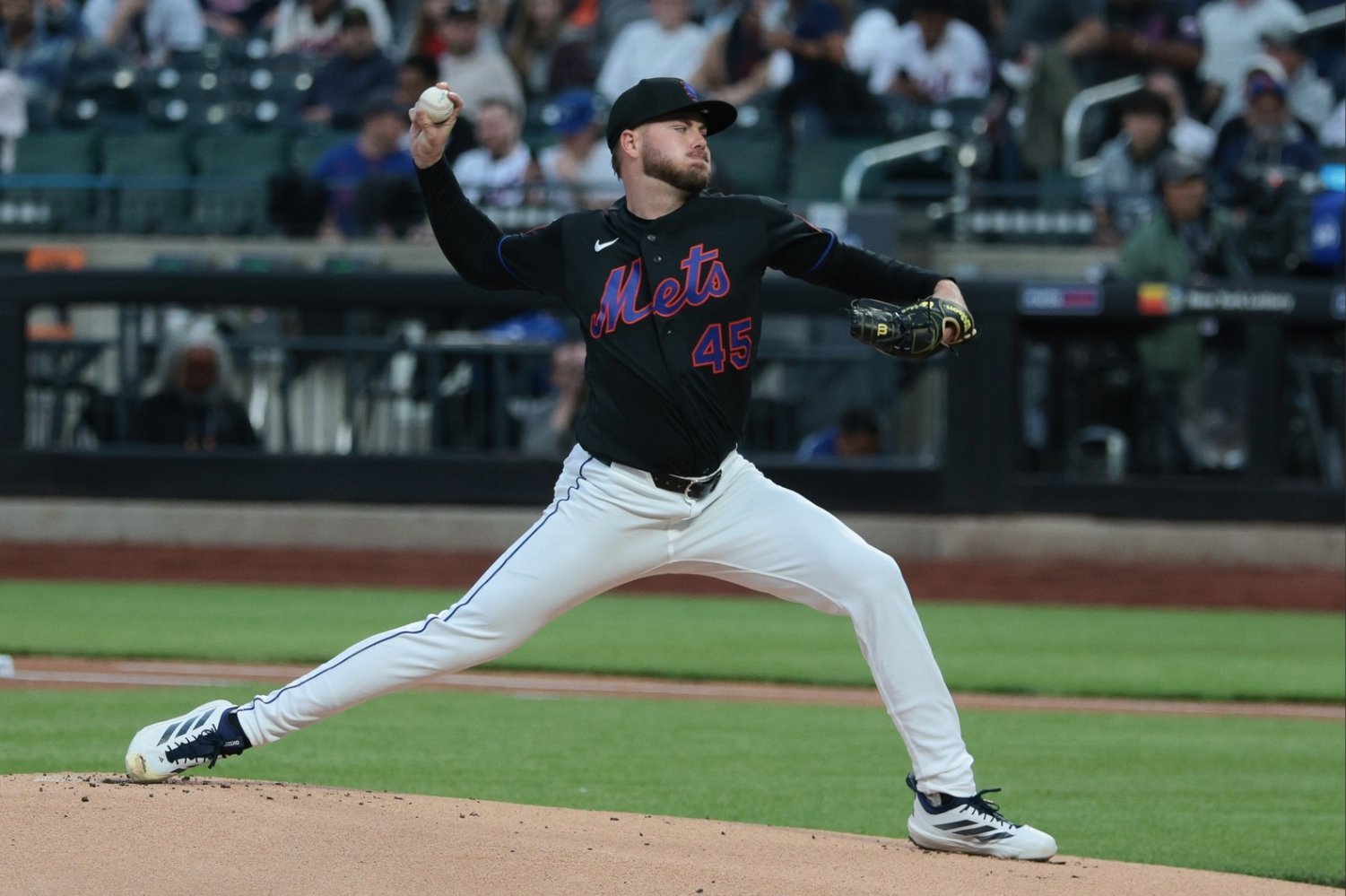 Last year, Nolan McLean, Jonah Tong, and Brandon Sproat took the baseball world by storm with their summer promotions. They were universally seen as the best pitching prospects in the organization, and they all shared the spotlight in the stretch run even though the team couldn’t make it to October. McLean developed into an ace, while Sproat was traded to Milwaukee to give the team a chance to bring in Freddy Peralta. Tong continues to develop in Triple-A. And yet, there’s a forgotten guy in the system that deserves some hype, too. Christian Scott, 2024 Mets Sensation, Returns to the Spotlight We are talking about Christian Scott, who was the McLean, Sproat, or Tong of 2024 for the Mets. He was that exciting young arm that came up to the majors with the hype of a top prospect, and mostly delivered with a 4.56 ERA in 47.1 innings. Unfortunately, he underwent Tommy John surgery in September 2024 and missed the entire 2025 campaign rehabbing. Now back to full health and after a few starts in Triple-A and a rocky 2026 debut last week, Scott is getting another chance to prove he belongs in the majors when he faces a middling Los Angeles Angels lineup on Friday. That game last week, on April 23, was a disaster. Scott couldn’t find the zone and walked five of the ten batters he faced, allowing one earned run in 1.1 innings, with no hits and one strikeout. It was, without a doubt, one of the weirdest stat lines you will see all year. Maybe it was the nerves getting the best of him after returning to the highest level after such a long layoff, but on Friday, Scott will get the opportunity of a lifetime. He gets a chance to prove he can be a viable MLB starter after having his elbow reconstructed. He gets to prove that jitters won’t be a recurring issue. His 5.27 ERA in 13.1 innings in Triple-A might seem high, but it’s a little deceitful, as he has a healthy 17/2 K/BB ratio. In his brief outing in the majors last week, Scott’s fastball averaged 95.5 mph, higher than the 94.2 mph he had in 2024. The velocity is fully back. Now, he will have to prove the command is, too. Christian Scott's Splits Issue Besides his mid-90s fastball, Scott will use a cutter/gyro slider mostly against lefties, and a sweeper to neutralize righties. Additionally, he will use a sinker and a splitter. Keeping lefties at bay will be one of his biggest challenges. In 2024, they hit .333 off him, while righties had a batting average of .167. It’s certainly something to keep in mind, although it helps that most of the Angels’ best hitters are right-handed. If the fastball command returns, Scott could be a nice mid-rotation arm for the Mets in the short and long term, attacking the high part of the zone with the heater with no fear: That will be the key to his success, as it will allow him to get himself in favorable counts and use his solid secondary stuff, or use the fastball itself to go for the kill. A return to form from Scott could be a transformational development for the Mets, both in 2026 and beyond. View the full article
 -
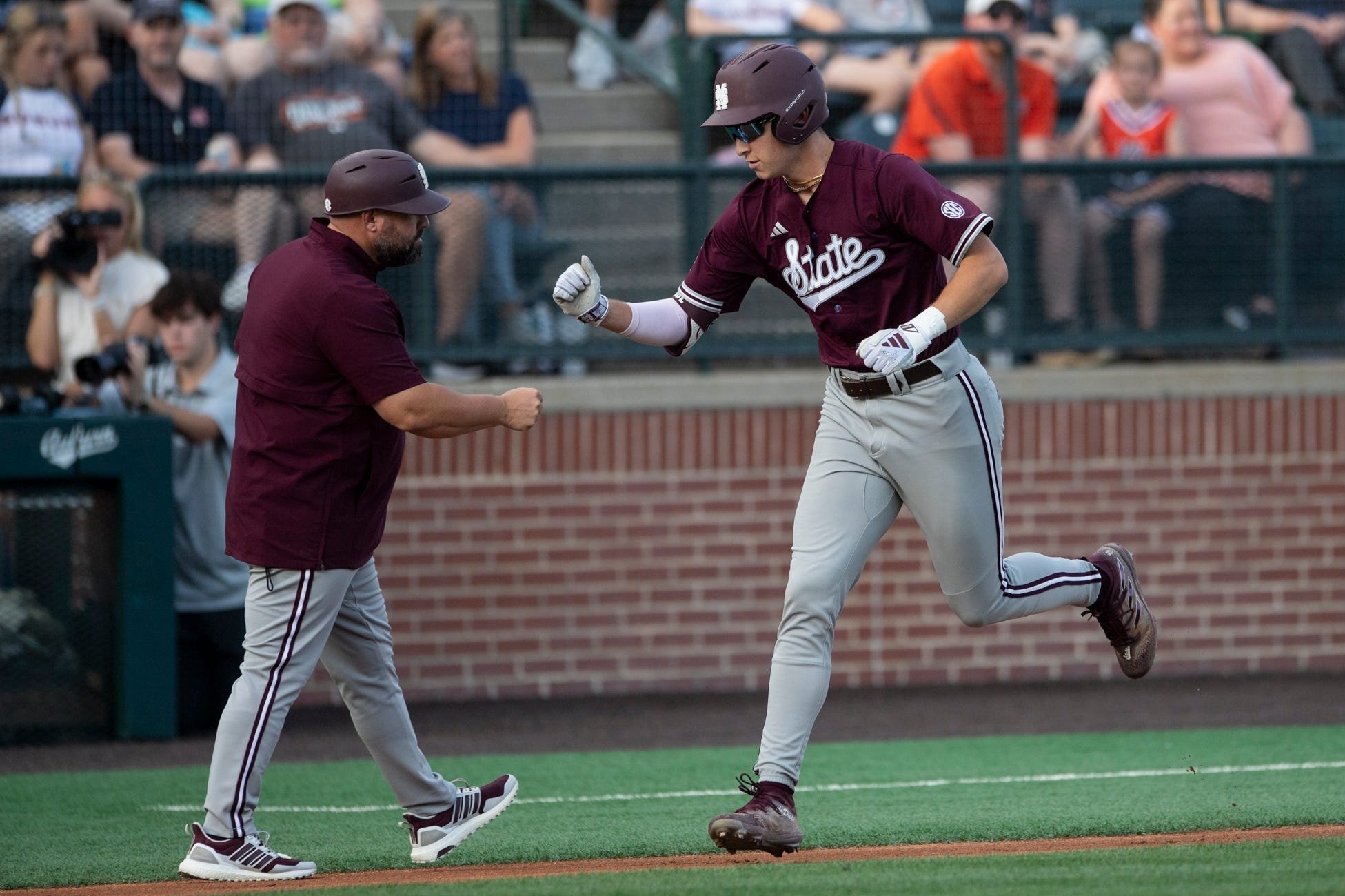 Leading up to the 2026 MLB Draft, Fish On First brings you a series of scouting reports on top prospects in this draft class who could realistically wind up in Miami. Overview Position: 3B Height: 6’4″ Weight: 220 pounds School: Mississippi State Ace Reese is a 6’4”, 220-pound third baseman who plays for Mississippi State University. Reese is one of the best power-hitting prospects in the 2026 MLB Draft class. He’s also one of the most consistent hitters in this class and continues to show growth after every season. Reese was a mid-level prospect coming out of Canton High School in Canton, Texas. On Perfect Game, Reese was a top-500 prospect and the 208th-ranked shortstop in the Class of 2023. He was also the 95th-ranked prospect out of the Lone Star State. Reese went undrafted and signed with the University of Houston. During his freshman season, Reese made an immediate impact and started for the Houston Cougars. Reese played and started in 48 games. He slashed .278/.395/.506 with 45 hits, eight doubles, four triples, seven home runs, 34 RBIs, and a .901 OPS. Reese was named to the All-Big 12 Freshman team. He would later enter the Transfer Portal and sign with the Mississippi State Bulldogs. In his first season at Mississippi State, Reese had a massive breakout and was one of the top power hitters in college baseball. Reese played and started in all 57 games. He slashed .352/.422/.718 with 80 hits, eighteen home runs, 21 home runs, 66 RBIs, a 154 wRC+, and a 1.140 OPS. Reese was named the 2025 SEC Newcomer of the Year and Second Team All-American by Baseball America and D1 Baseball. In his junior season, Reese continues to be one of the most consistent and productive hitters in the country. Reese has played and started in all 45 games this season. He’s slashing .318/.420/.682 with 55 hits, eighteen doubles, fifteen home runs, 54 RBIs, 15 BB%, 1.102 OPS, and a 144 wRC+. At the plate, Reese is a left-handed hitter with a slightly open batting stance and keeps his hands quiet. He has a bit of leg kick, but doesn’t bring it up too high, and he gets his foot down on time to hit the fastball. Reese does tend to be too aggressive and chase pitches out of the zone. Reese’s best offensive tool is his power. MLB Pipeline graded Reese’s power tool as a 60 on the 20-80 scouting scale. Reese has excellent bat speed and naturally hits the ball with leverage. His ground ball rate is a career-low 28.4%. His fly ball and line drive rates are also at an all-time high. Reese’s line drive is up from 14.4% to 20%. His fly ball rate is up from 43.9% to 50.7%, while his pop-up rate is at a career-low 3%, according to D1 Baseball. Defensively, Reese doesn’t provide a ton of defensive flexibility. While he has solid arm strength, his hands have a lot of work to do, and he doesn’t move very well. Reese is mostly like a left fielder or first baseman at the next level. Strengths 60-grade power Excellent bat speed Can hit both left-handed and right-handed pitchers Hits the ball with leverage naturally Consistently hits the ball in the air with authority to all fields Weaknesses Below-average speed Very limited defensively Tends to be overly aggressive Pro Comparison: Chase DeLauter Projection: Top 15 pick Bottom Line While Ace Reese is pretty limited defensively, his plus power and consistent lift give him an exciting offensive profile. On Baseball America, Reese is the 14th-ranked prospect and fifth-ranked infielder in the 2026 MLB Draft. On MLB Pipeline, Reese is the 28th-ranked draft prospect and 21st-ranked collegiate prospect in this draft class. The Marlins will have the 14th overall pick in the draft. Reese is a player who could be a legit candidate for the Marlins when they are on the clock, capable of becoming their first baseman of the future if he can’t stick at third. More 2026 MLB draft profiles LHP Carson Bolemon RHP Jackson Flora INF Jacob Lombard OF AJ Gracia View the full article
 -
 The San Diego Padres' four full-season affiliates all won Thursday. Anthony Vilar drove in four for in the Triple-A El Paso Chihuahuas' 12-2 rout at Albuquerque. Tirso Ornelas scored on a sacrifice fly in the top of the 12th inning as the Double-A San Antonio Missions pulled out a 5-4 win. Carson Montgomery threw five scoreless innings as the High-A Fort Wayne TinCaps beat South Bend 6-1, fueled by Rosman Verdugo's two-run homer. Bryan Balzer struck out six in four scoreless relief innings, and Luke Cantwell hit a three-run homer in the Low-A Lake Elsinore Storm's 9-3 win at Ontario. Padres Transactions San Diego Padres optioned RHP David Morgan to El Paso Chihuahuas. Anthony Vilar's 4-RBI Night Powers Chihuahuas Past Isotopes Anthony Vilar collected three hits and drove in four runs as the El Paso Chihuahuas pounded Albuquerque 12-2. Mason McCoy scored three times on two hits, including a triple, while Nate Mondou added two hits and two RBIs. Pablo Reyes didn't have a hit, but scored twice and walked once. The breakthrough came in the sixth inning, when El Paso pushed across five runs to take command 9-1. Clay Dungan opened the scoring with a sacrifice fly to plate Nate Mondou. Vilar followed with a two-run double to center field, scoring Nick Schnell and Mason McCoy. Carlos Rodríguez later drew a bases-loaded walk, and Mondou was hit by a pitch with the bases full to bring home another run, pushing the lead to 9-1. El Paso struck early in the first, taking a 2-0 lead when Sung-Mun Song scored on a Nick Solak single, and Pablo Reyes came home on a Nick Schnell sacrifice fly to center. Starter Evan Fitterer logged 3⅔ innings of relief, surrendering two hits and an unearned run, walking three, and striking out four. Logan Gillaspie earned the win after working 2⅓ innings, allowing three hits and one earned run while striking out two. EP_0430.mp4 Player AB R H RBI BB K Sung-Mun Song, SS 5 1 2 0 1 0 Pablo Reyes, DH 5 2 0 0 1 1 Carlos Rodríguez, CF 4 0 1 1 2 1 Nick Solak, LF 4 1 2 1 1 0 Nate Mondou, 1B 4 2 2 2 0 0 Nick Schnell, RF 4 1 0 1 0 0 Mason McCoy, 2B 3 3 2 1 1 0 Clay Dungan, 3B 4 0 1 1 0 2 Anthony Vilar, C 5 2 3 4 0 0 Pitcher IP H R ER BB K HR Justin Yeager 1 1 0 0 2 1 0 Logan Gillaspie (W, 2-1) 2 1/3 3 1 1 1 2 0 Misael Tamarez 2 1 0 0 1 1 0 Evan Fitterer 3 2/3 2 1 0 3 4 0 Sac Fly Boosts Missions To Wild Victory In 12 Innings Tirso Ornelas scored the decisive run in the top of the 12th on Luis Verdugo's sacrifice fly as the San Antonion Missions pulled out a thrilling 5-4 win over the Tulsa Drillers. Leandro Cedeño launched a two-run home run in the 11th inning to give the Missions a 4-2 lead, but the Drillers got a two-run homer of their own in the bottom half to send the game to the 12th. Ornelas started the 12th on second base as the zombie runner and went to third on Ryan Jackson's sacrifice bunt. After a walk to Braedon Karpathios, Verdugo lofted a fly ball to left field and Ornelas slid under the catcher's tag for the decisive run. Michael Flynn picked up the save despite hitting the first batter he faced, striking out the next two batters and getting a game-ending groundout. San Antonio's first scoring inning came in the sixth, when the Missions pushed across two runs on a Jackson dribbler to third that went for a single and a throwing error. Tulsa had single runs in the fourth and seventh and the score sat 2-2 entering the 11th. Cedeño homered with zombie runner Francisco Acuna aboard to take a 4-2 edge. Ethan Salas went 2-for-5 with a stolen base. Ornelas scored twice. Cedeño finished with two hits and two runs, including the long ball. Starter Fernando Sanchez worked 4⅓ innings, scattering two hits and one earned run, walking two, and striking out six. Omar Cruz earned the win with two innings, allowing one earned run on a homer and striking out two. SA_0430.mp4 Player AB R H RBI BB K Ethan Salas, C 5 0 2 0 0 2 Romeo Sanabria, 1B 4 0 0 0 1 1 Leandro Cedeño, DH 4 2 2 2 0 0 Tirso Ornelas, LF 4 2 0 0 1 0 Ryan Jackson, 2B 4 0 1 0 0 0 Braedon Karpathios, CF 4 0 0 0 1 1 Luis Verdugo, 3B 3 0 1 1 1 1 Carson Tucker, RF 5 0 1 0 0 2 Kai Roberts, CF 3 0 0 0 0 1 Albert Fabian, PH-LF 1 0 0 0 0 0 Francisco Acuna, PR-SS 0 1 0 0 0 0 Pitcher IP H R ER BB K HR Fernando Sanchez 4 1/3 2 1 1 2 6 1 Johan Moreno 1 2/3 0 0 0 0 2 0 Andrew Moore (BS, 1) 1 3 1 1 1 1 0 Francis Pena 2 1 0 0 1 3 0 Omar Cruz (W, 1-0) 2 1 2 1 0 2 1 Michael Flynn (S, 2) 1 0 0 0 0 2 0 Carson Montgomery, Rosman Verdugo Carry TinCaps Past Cubs Rosman Verdugo's two-run home run in the fifth inning helped the Fort Wayne TinCaps cruise to a 6-1 road win over the South Bend Cubs. Verdugo connected with two outs that pushed the lead to 4-0. Fort Wayne built that early margin one run at a time before the fifth-inning blast. Carson Montgomery started and turned in five scoreless innings, holding the Cubs to three hits, walking nobody, and striking out four. Clark Candiotti followed with two perfect innings, striking out one. Igor Gil yielded the only South Bend run in the eighth on a solo home run, finishing the final two innings with one hit, three walks, and two strikeouts. Alex McCoy extended his on-base streak to 19 games, pacing the offense with three hits in four at-bats, including his first triple of the season. Zach Evans added two hits, including a double, plus a stolen base. FW_0430.mp4 Player AB R H RBI BB K Kasen Wells, CF 5 0 1 0 0 3 Rosman Verdugo, 2B 3 1 1 3 0 0 Lamar King Jr., C 3 0 0 0 1 1 Alex McCoy, DH 4 1 3 0 0 1 Jake Cunningham, LF 3 1 0 0 1 2 Jack Costello, 1B 3 1 1 1 1 1 Kavares Tears, RF 4 0 0 0 0 4 Zach Evans, 3B 4 1 2 1 0 0 Jonathan Vastine, SS 4 1 1 0 0 2 Pitcher IP H R ER BB K HR Carson Montgomery 5 3 0 0 0 4 0 Clark Candiotti 2 0 0 0 0 1 0 Igor Gil 2 1 1 1 3 2 1 Lucas Giolito Gives Up 3 Runs, But Storm Pull Away Late George Bilecki singled home the go-ahead run in the seventh inning and Bryan Balzer struck out six in four scoreless innings of relief as the Lake Elsinore Storm finished with a flurry in a 9-3 win over the Ontario Tower Buzzers. The Storm drew 16 walks off six Ontario pitchers. San Diego Padres right-handed starter Lucas Giolito withstood a shaky first inning to pitch 4⅓ innings in his second start since signing with the Friars. Giolito was tagged by back-to-back doubles to open the game and a one-out sacrifice fly as the Tower Buzzers grabbed a quick 2-0 lead. Giolito settled in and yielded just one more hit until the fifth, where he gave up another double, an RBI fielder's choice and a single to the last batter he faced. Giolito threw 70 pitches (43 strikes), allowing three runs on five hits with a walk and six strikeouts. He is likely to pitch again Tuesday as the Storm's road trip continues against the Inland Empire 66ers. Luke Cantwell crushed a three-run home run in the fourth inning to put the Storm up 3-2. After Ontario tied it off Giolito in the fifth, the Storm pulled ahead on Bilecki's two-out single to first where no one covered the bag, scoring Justin DeCriscio. The Storm then poured on five runs in the ninth. Kerrington Cross walked and Jorge Quintana scored on another walk, Ryan Wideman drove in a run on a groundout, and Truitt Madonna doubled to plate two more. Madonna finished 2-for-5 with a double, two RBIs, and a stolen base. Quintana added two hits and two stolen bases. Bilecki reached base in all five plate appearances on two hits and three walks, scoring once and driving in two. Cantwell, in addition to homering, also walked twice and stole a base. LE_0430.mp4 Player AB R H RBI BB K Conner Westenburg, CF 3 0 0 0 1 1 Ryan Wideman, CF 1 0 0 1 0 0 Bradley Frye, 2B 5 0 0 0 1 3 Truitt Madonna, C 5 1 2 2 1 1 Justin DeCriscio, 3B 4 2 1 0 2 1 Luke Cantwell, 1B 2 1 1 3 2 0 Kerrington Cross, 1B 0 1 0 0 1 0 Jorge Quintana, DH 5 1 2 0 1 1 Jose Verdugo, SS 3 1 1 0 2 1 George Bilecki, RF 2 1 2 2 3 0 Qrey Lott, LF 3 1 0 1 2 1 Pitcher IP H R ER BB K HR Lucas Giolito 4 1/3 5 3 3 1 6 0 Nick Falter 2/3 0 0 0 0 0 0 Bryan Balzer (W, 3-0) 4 1 0 0 0 6 0 Top-20 Prospect Performance Kash Mayfield: DNP Ethan Salas: 2-for-5, SB, 2 K Kruz Schoolcraft: DNP Bradgley Rodriguez: DNP Humberto Cruz: DNP Miguel Mendez: DNP Ty Harvey: DNP Jorge Quintana: 2-for-5, BB, K, 2 SB Kale Fountain: DNP Ryan Wideman: 0-for-1, RBI Jagger Haynes: DNP Lamar King Jr.: 0-for-3, BB, K Romeo Sanabria: 0-for-4, BB, K Truitt Madonna: 2-for-5, 2B, 2 RBI, BB, K, SB Michael Salina: DNP Garrett Hawkins: DNP Kavares Tears: 0-for-4, 4 K Deivid Coronil: DNP Francis Pena: two IP, 1 H, 0 R, 1 BB, 3 K Bryan Balzer: four IP, 1 H, 0 R, 0 BB, 6 K, W View the full article
 -
Twins 7, Blue Jays 1: Bailey Ober, Man. He Just Keeps Living.
DiamondCentric posted an article in Twins Daily
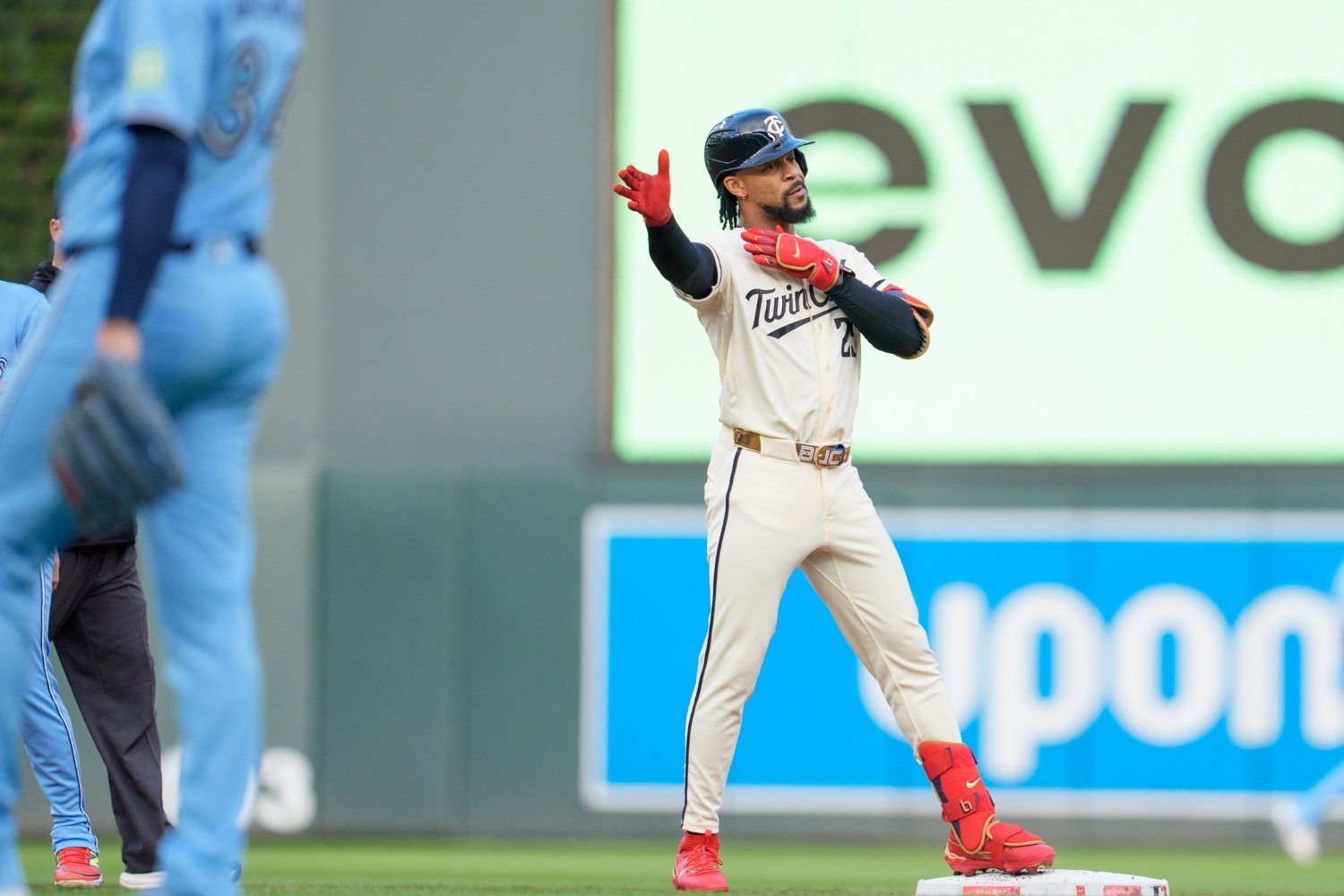 Box Score SP: Bailey Ober - 6 IP, 4 H, 1 R, 2 BB, 2 K (88 pitches, 56 strikes (64% strikes)) Home Runs: Ryan Jeffers (4), Byron Buxton (8) Top 3 WPA: Bailey Ober (0.19), Byron Buxton (0.16), Ryan Jeffers (0.16) Win Probability Chart The Twins came into the series opener against Toronto looking to stop the bleeding, after a pair of frustrating late losses to the Seattle Mariners. Behind a sharp start from Bailey Ober and a timely offensive breakout, they did exactly that. This wasn’t a game defined by chaos or a late collapse. Instead, the Twins steadily took control, turning a tight battle into a comfortable 7-1 win. They got contributions up and down the lineup, capitalized on mistakes, and rode strong pitching to get back in the win column. BAILEY OBER SETS THE TONE Ober didn’t overpower hitters, but he didn’t need to. From the start, he was in control. Despite allowing a leadoff single in the first, he worked efficiently, needing just 18 pitches to navigate five hitters. That became a theme. He pounded the zone early and often, throwing first-pitch strikes to 75% of the batters he faced, and kept Toronto off balance all night. Through three innings, he was sitting at just 42 pitches with seven whiffs, even with his fastball hovering below 88 MPH. It wasn’t about velocity; it was about command and sequencing. The only real damage came in the fourth, when Daulton Varsho turned on a fastball up and in and sent it over the right-field seats for a solo homer. Outside of that, Ober was in complete control. He cruised through six strong innings, marking his third straight quality start and his fourth consecutive outing of six or more innings. He exited in the seventh after allowing a leadoff bloop single, but by then, his job was more than done. MISSED CHANCES, THEN A BREAKTHROUGH Early on, it looked like it might be another frustrating night offensively. The Twins put immediate pressure on Kevin Gausman in the first, getting a leadoff double from Byron Buxton, but they couldn’t bring him home. It set the tone for the early innings, when opportunities were there, but the big hit was not. For three innings, Gausman largely kept them quiet despite some loud contact, including a deep flyout from Josh Bell that likely leaves the yard on a warmer night. The fourth inning changed everything. After Trevor Larnach worked a leadoff walk, Ryan Jeffers stepped in and worked an eight-pitch at-bat. It ended on a fastball over the heart of the plate, and Jeffers launched it into the bullpen in left-center for a two-run homer, flipping a 1-0 deficit into a 2-1 lead. It was the swing they had been missing early, and it shifted the momentum for good. ADDING ON AND PULLING AWAY Once the Twins grabbed the lead, they didn’t let up. In the sixth, Buxton provided another spark. Twins legend Justin Morneau noted on the TV broadcast how well Buxton was hitting when he saw the other team’s starting pitcher for a third time. About three seconds later, Buxton homered. He turned on an inside fastball and sent it out for his team-leading eighth homer of the season. From there, the lineup kept grinding. Larnach drew his second walk of the game and moved into scoring position, setting the stage for Austin Martin, who lined a ball into center to drive in another run and chase Gausman from the game. It marked the first time all season Gausman had allowed more than three runs in a start. But the biggest inning came late. In the eighth, the Twins took full advantage of defensive miscues from Toronto. After Buxton’s third hit of the night, a misplayed Jeffers pop-up and an errant throw allowed him to reach third, and Bell followed by ripping a ball off the wall to bring him home. Moments later, another throwing error allowed Jeffers to score, making it 6-1. Luke Keaschall drove in their seventh run on a sac fly, and the Twins pushed the game out of reach, turning a competitive matchup into a 7-1 advantage. BULLPEN SLAMS THE DOOR With Ober handing things off in the seventh, the bullpen took care of the rest. Anthony Banda navigated a quick matchup against lefties before turning things over to Andrew Morris, who continued to impress. Morris worked efficiently through the end of the seventh and the eighth, allowing minimal traffic and keeping Toronto from mounting any kind of response. In the ninth, Justin Topa came on to close it out. Nothing came of a leadoff walk; a game-ending double play capped off the night. Clean, efficient, and exactly what the Twins needed. After a couple of tough losses, this was a much-needed win. Strong starting pitching, timely hitting, and capitalizing on mistakes; it was a complete performance that got them back on track. What’s Next? The Twins and Blue Jays are back in action tomorrow night for game two of the series. Simeon Woods Richardson is on the hill for Minnesota, taking on his former team, and lefty Patrick Corbin will throw for Toronto. We saw this same pitching matchup in these teams’ first series in mid-April, with Toronto winning that one 10-4. First pitch is set for 7:10 PM CT. Postgame Interviews Coming Soon! Bullpen Usage Chart SUN MON TUES WED THUR TOT Rogers 0 14 0 13 0 27 Morris 0 40 0 0 19 59 Banda 9 0 0 22 14 45 Funderburk 20 0 15 0 0 35 Garcia 0 0 23 0 0 23 Sands 7 0 13 0 0 20 Topa 10 0 0 0 12 22 Orze 0 0 0 28 0 28 View the full article
 -
Struggling David Morgan Sent To Triple-A By Padres
DiamondCentric posted an article in Padres Mission
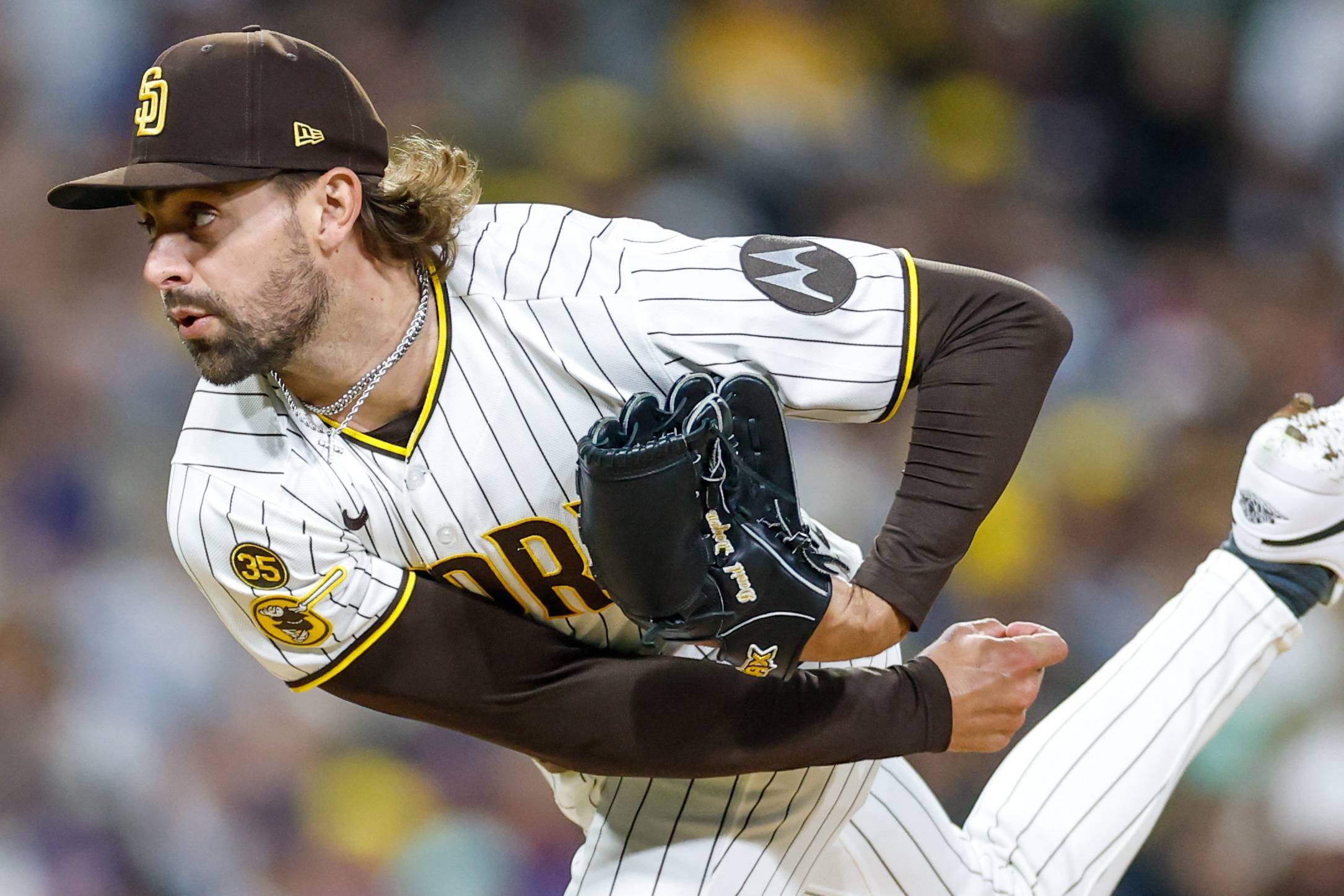 After the season he put together in 2025, David Morgan was hoping he had seen the last of El Paso. Unfortunately, he is headed back there after the first month of the 2026 season. The San Diego Padres optioned the right-handed reliever to the Triple-A El Paso Chihuahuas on Thursday following a rough start to the season. The Padres will need to make a corresponding move before Friday's series opener against the Chicago White Sox. That is likely to be activating left-handed reliever Yuki Matsui off the 15-day injured list, with another possibility being activating right-handed reliever Jeremiah Estrada. Morgan was a surprise in the Padres' bullpen in 2025, appearing in 41 games with a 3.71 FIP (2.66 ERA) in 47⅓ innings following his first call-up to MLB. He had been an undrafted free agent who signed with the Padres in 2022 after finishing his career at Hope International University in Fullerton. But this year was a different story. In 11 appearances over 13⅓ innings, Morgan had a 5.74 FIP (6.30 ERA), including 11 walks and 15 strikeouts. His 11 walks are nearly half of what he issued last year (23). His latest outing came in Tuesday's 8-3 loss to the Chicago Cubs in which he allowed a run on a hit and a walk with one strikeout in two-thirds of an inning. He came on with runners on first and second with one out in a 2-2 game in the top of the sixth and threw a wild pitch and gave up a go-ahead two-out two-run double to Nico Hoerner. Matsui went on the IL on March 25 with a strained groin and began a rehab assignment April 4. That assignment is due to end this weekend. He has allowed six runs on 10 hits with two walks and 13 strikeouts in 10⅔ innings for a 5.06 ERA at El Paso. He pitched multiple innings for the first time Sunday and followed that up with a one-inning appearance Wednesday. Estrada had made only two appearances, one at Low-A Lake Elsinore on Friday and the other with El Paso on Tuesday, as he recovers from right elbow tendinitis. He went on the IL on April 10. View the full article
 -
What are your Marlins vs. Phillies series predictions?
DiamondCentric posted an article in Fish On First
 Once again in 2026, I will be monitoring Miami Marlins predictions from our valued SuperSubs, Fish On First staffers and livestream guests. Individual article pages like this one will be created prior to every Marlins series and featured prominently on the FOF site. Consistent participation is key if you want to win this annual contest. Submissions only take a few seconds. Scoring system A "perfect" series is worth three points: Earn one point for predicting which team will win the upcoming series Earn one point for predicting the precise number of victories for each team Earn one point for predicting the “Series MVP” who accumulated the highest win probability added (WPA) during the series as calculated by FanGraphs (could pick a player from either team) Here is a reminder of what the 2025 season leaderboard looked like. FOF SuperSub Sean Millerick currently sits atop the 2026 leaderboard, which will be updated between every Marlins series. If you are a SuperSub, leave a comment with your Prediction Time picks on this page, or join the Marlins Discord Server and submit there. We'll feature them on the upcoming Fish On First LIVE episode and track your points throughout the season! Any picks submitted prior to the first pitch of the series opener will be counted. If you are not a SuperSub, please consider signing up here to support the FOF staff. Series preview notes Probable starting pitchers: RHP Eury Pérez (MIA) vs. RHP Zack Wheeler (PHI) on Friday RHP Max Meyer (MIA) vs. TBD (PHI) on Saturday RHP Chris Paddack (MIA) vs. TBD (PHI) on Sunday RHP Janson Junk (MIA) vs. TBD (PHI) on Monday The Marlins rank 14th in MLB with a 99 wRC+ and 13th in MLB with a 3.96 FIP. They are 6-4 in their last 10 games and have a 10-6 record at home this season. The following Marlins players are on the injured list: Griffin Conine (10-day IL), Pete Fairbanks (15-day IL), Ronny Henriquez (60-day IL) and Adam Mazur (60-day IL). The Phillies rank 27th in MLB with a 85 wRC+ and seventh in MLB with a 3.77 FIP. They are 4-6 in their last 10 games and have an 4-9 record on the road this season. The following Phillies players are on the injured list: Jhoan Duran (15-day IL), Max Lazar (60-day IL), Zach Pop (15-day IL) and J.T. Realmuto (10-day IL). View the full article
 -
To Extend or Not To Extend: The Ryan Jeffers Decision
DiamondCentric posted an article in Twins Daily
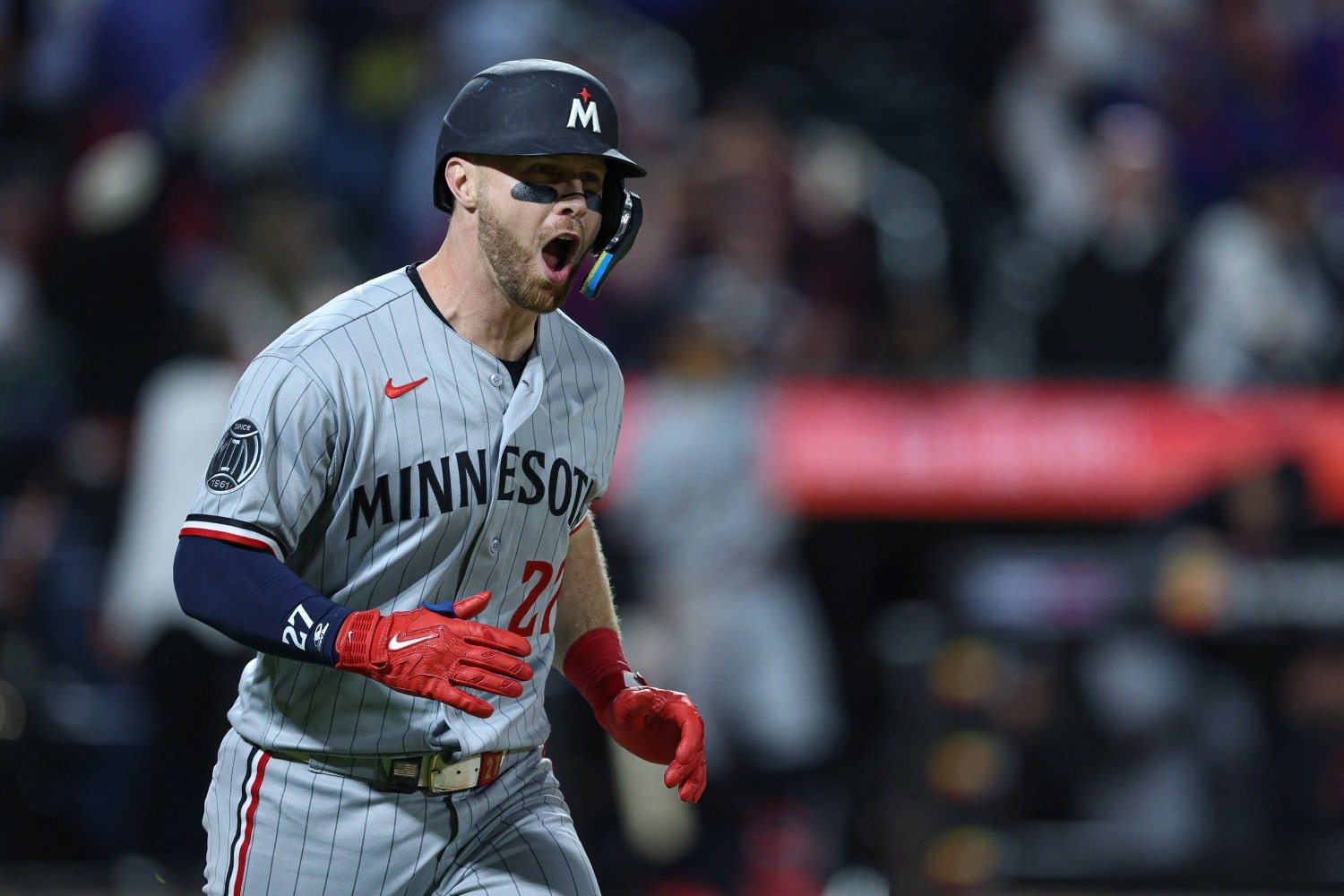 The Minnesota Twins have a very solid catching situation for 2026, but that stability doesn’t extend beyond this season. While this might not be a universally popular stance, there’s a strong case to be made that the Twins should look to extend Ryan Jeffers. To be clear, this isn’t about handing out a massive long-term deal that could age poorly. A huge seven-year, $100 million type of contract would be quite excessive, and that’s not the type of commitment being suggested here. But Jeffers is set to hit free agency after the season, and he’s exactly the kind of player this organization should be looking to keep around on a shorter-term deal. Offensively, Jeffers has quietly been one of the more productive catchers in baseball, especially when viewed through the lens of positional expectations. He owns a career .747 OPS, which gives him an OPS+ comfortably above league average. That kind of production from behind the plate carries real value. It’s still early in the 2026 season, but Jeffers looks like a hitter who has taken another step forward. Through 92 plate appearances entering Thursday night, he’s hitting .293 with a .418 on-base percentage, along with three home runs. Just as importantly, he’s struck out 16 times while drawing 15 walks, a near one-to-one ratio that speaks to a much more disciplined approach. The underlying data supports what’s showing up in the box score. Jeffers’s average exit velocity has climbed above 91 miles per hour, second among all Twins hitters. He’s not expanding the strike zone, there’s very little swing-and-miss in his profile right now, and he’s consistently putting himself in favorable counts. This isn’t coming out of nowhere, either. Over the past couple of seasons, there’s been a noticeable shift in Jeffers’s approach at the plate. He’s become far more selective. His bat-to-ball improvements are real, and they’ve elevated his overall offensive floor while also raising the ceiling. Defensively, Jeffers isn’t going to stand out in the traditional ways. He’s not an elite blocker, and he doesn’t rank among the top catchers in terms of throwing out base stealers. But the modern game has introduced new ways for catchers to provide value, and this is where Jeffers separates himself. With the implementation of the ABS challenge system, Jeffers has been one of the most effective catchers in baseball. He leads the league in strikeouts gained via successful challenges, with 10, and among catchers with at least 20 challenges, he ranks inside the top 10 in both total successful challenges and overall success rate. That might seem like a niche skill, but it matters. In a league where every marginal edge can swing an at-bat or an inning, consistently winning challenges adds tangible value. Jeffers has shown an ability to read pitches, understand umpire tendencies within the system, and make the right call in high-leverage spots. That’s a modern defensive skill that isn’t going away, and it gives him an added layer of importance behind the plate. Then there’s the bigger picture. Jeffers’s contract expires after this season, while Victor Caratini is only under team control for one more year beyond that, with a mutual option for 2028 that (historically speaking) is unlikely to be exercised by both sides. Beyond those two, the organization’s long-term hope lies with Eduardo Tait, one of the top catching prospects in the game, along with intriguing depth pieces like Khadim Diaw and Enrique Jimenez. Tait, in particular, has the upside to become the catcher of the future. But he’s probably still at least two or three years away from making a real impact at the major-league level. That creates a clear gap between the present and the future, and Jeffers is the most logical bridge. If the Twins let him walk, what does that leave them with? Caratini for 2027, and then a likely trip to free agency to find another catcher, anyway. At that point, you’re probably paying a similar price for a player who wouldn’t be as productive, and certainly won’t have the same level of familiarity with the pitching staff or the organization. Jeffers offers stability in a spot where stability is hard to find. He’s a known commodity offensively; he’s developed into a reliable presence behind the plate in ways that align with the modern game; and he already has established relationships with the Twins’ pitchers. For a team that could be trending younger in the near future, that kind of presence carries weight beyond the stat sheet. That’s why a short-term extension makes so much sense. Something in the range of three years would allow the Twins to maintain continuity at catcher while giving Tait the time he needs to develop properly. It avoids a long-term commitment that could become problematic, while still addressing a clear organizational need. As long as the financial aspect stays reasonable, extending Ryan Jeffers feels like the kind of move that checks every box. It strengthens the present, protects against uncertainty in the near future, and buys time for the next wave of talent to arrive. For a team trying to balance competitiveness with sustainability, that’s a path worth taking. Of course, Jeffers hss agency here, too. He's unlikely to take a three-year deal right now, not only because he's a Scott Boras client (that can be overcome, in certain cases) but because he's playing so well in the last year before he could reach the market. This winter is likely to be marred by a lockout, but last time that happened, some players signed early deals that have gone well for them (if somewhat less so for the teams involved). A version of the deal signed by Sean Murphy after he was traded from the Athletics to Atlanta, though, might work. Murphy officially signed for $73 million over six years, but he was further from free agency at the time. If the Twins are willing to guarantee Jeffers $57 million over four years (a $14-million annual salary, plus a $1-million buyout) with a club option for 2031, they could keep him from entering free agency this fall. They should, at a minimum, consider it. View the full article
 -
 Chicago Cubs Transactions (4/29) No Roster Moves Pedro Ramírez Homer, Long's Three RBI Lead I-Cubs Past Saints 11-4 The Iowa Cubs piled up 14 hits in an 11-4 road win over St. Paul. Pedro Ramírez led the charge with a two-run homer, three runs scored, and two RBI. Cleanup hitter Jonathon Long went 3-for-6 with three RBI, and Chas McCormick added three hits, two runs, and three RBI with a homer of his own. Ty Blach turned in a winning effort, working five innings with four hits allowed, three runs, three earned, one walk, and six strikeouts to improve to 2-1. Collin Snider, Ryan Jensen, and Gabe Klobosits each tossed a scoreless inning out of the bullpen, and Zac Leigh allowed a solo home run in the seventh. Iowa fell behind 3-1 after the second when the Saints answered Bateman's RBI double with a run-scoring single and a two-run homer. Ramírez tied it in the third with his two-run homer that scored Triantos. The lead and the offensive surge came in the sixth. BJ Murray opened with a single, Triantos walked, and after a force out, Long lined a two-run single to right that scored Murray and Ramírez. Kevin Alcántara then walked, and McCormick lined a single to right scoring Long for a 9-3 lead. Iowa added two more in the seventh on another RBI single from Long. Player AB R H RBI BB K BJ Murray 6 1 1 1 0 1 James Triantos 5 2 2 0 1 0 Pedro Ramírez 4 3 1 2 1 1 Jonathon Long 6 1 3 3 0 1 Kevin Alcántara 3 1 1 0 1 1 Justin Dean 0 0 0 0 1 0 Chas McCormick 4 2 3 3 1 0 Brett Bateman 3 0 1 1 2 0 Eric Yang 3 0 0 0 2 2 Hayden Cantrelle 5 1 2 0 0 1 Player IP H R ER BB K HR Ty Blach 5.0 4 3 3 1 6 1 Collin Snider 1.0 0 0 0 1 1 0 Zac Leigh 1.0 3 1 1 0 1 1 Ryan Jensen 1.0 0 0 0 0 3 0 Gabe Klobosits 1.0 0 0 0 0 1 0 Smokies Held To Four Hits In 6-0 Shutout Loss At Rocket City Knoxville was held to just four hits in a 6-0 loss at the Trash Pandas. Cleanup hitter Jefferson Rojas had the lone extra-base hit, a double in three at-bats. Jordan Nwogu, Carter Trice, and Karson Simas each contributed a single. The Smokies struck out seven times and stranded three runners. Starter Yenrri Rojas turned in a strong outing in defeat, going four innings with five hits, two earned runs, no walks, six strikeouts, and one home run allowed to fall to 0-2. Ben Johnson followed with two scoreless innings out of the bullpen. Evan Taylor came on in the seventh and finished the game with 1 2/3 hitless, scoreless innings and four strikeouts. Rocket City scored single runs in the second on a two-out RBI single, and in the third on a leadoff solo home run off Yenrri Rojas. The seventh broke the game open. Tyler Ras worked the inning and was tagged for three hits, two walks, and four runs (three earned) while recording just one out. The big damage came on a ground-rule double, a two-RBI single that drove in the runners, and a fielder's choice that brought in the inning's fourth run on a missed catch error at second base. Taylor entered to record the final two outs of the frame. Player AB R H RBI BB K Alex Ramírez 4 0 0 0 0 2 Jordan Nwogu 4 0 1 0 0 0 Owen Ayers 4 0 0 0 0 1 Jefferson Rojas 3 0 1 0 0 0 Andy Garriola 3 0 0 0 0 0 Edgar Alvarez 3 0 0 0 0 1 Carter Trice 3 0 1 0 0 1 Ariel Armas 3 0 0 0 0 0 Karson Simas 3 0 1 0 0 1 Player IP H R ER BB K HR Yenrri Rojas 4.0 5 2 2 0 6 1 Ben Johnson 2.0 2 0 0 1 0 0 Tyler Ras 0.1 3 4 3 2 0 0 Evan Taylor 1.2 0 0 0 0 4 0 Reginald Preciado's Three-Run Homer Not Enough In 7-4 Loss South Bend dropped a 7-4 game to Fort Wayne despite a four-run rally in the fourth inning. Reginald Preciado was the offensive star with a three-run homer, his second of the season, in three at-bats with a walk. Matt Halbach doubled and scored a run, Cole Mathis doubled in his only hit, and leadoff hitter Kane Kepley drove in a run on a sacrifice fly. Cameron Sisneros reached base three times via a single and two walks. In spite of the lose, South Bend set a new homerun record thanks to Sisneros, padded by Preciado, by hitting over 20 homers in the month of April, beating the record set back in 2022 by the MWL Championship team. Cole Reynolds turned in a tough start, allowing seven hits and four earned runs in 3 1/3 innings with one walk and five strikeouts. Adam Stone provided the bullpen's best work with two scoreless innings, two walks, and four strikeouts. Jackson Brockett took the loss to drop to 0-1, surrendering three hits and two earned runs in 1 2/3 innings. Grayson Moore allowed an earned run on a hit and two walks across two innings of relief, striking out two. The TinCaps put up four runs in the top of the fourth on five singles, including a two-RBI single that scored two and another two-RBI single that chased Reynolds. South Bend answered immediately. Sisneros singled, Halbach followed with a double, and Preciado launched his three-run homer to left. Player AB R H RBI BB K Kane Kepley 3 0 1 1 1 0 Leonel Espinoza 5 0 0 0 0 2 Cole Mathis 4 0 1 0 0 2 Cameron Sisneros 2 1 1 0 2 0 Matt Halbach 4 1 1 0 0 1 Reginald Preciado 3 1 1 3 1 0 Drew Bowser 3 1 0 0 1 0 Justin Stransky 4 0 0 0 0 0 Christian Olivo 3 0 1 0 1 0 Player IP H R ER BB K HR Cole Reynolds 3.1 7 4 4 1 5 0 Jackson Brockett 1.2 3 2 2 0 0 1 Adam Stone 2.0 0 0 0 2 4 0 Grayson Moore 2.0 1 1 1 2 2 0 Three Homers, Four-Run First Push Pelicans Past Fireflies 7-3 Myrtle Beach hit three home runs and got a four-run first inning to beat Columbia 7-3. Jose Escobar went 2-for-4 with a two-run homer and two RBI. Logan Poteet added a solo home run, two RBI, and a run scored, and Eli Lovich also went deep for a solo shot in the second. Leadoff hitter Ty Southisene reached three times via a single, a walk, and a stolen base. Starter David Bracho was efficient, going 3 2/3 innings with seven hits allowed, no runs, no walks, and three strikeouts. Aiden Moffett earned the win in 2 1/3 scoreless relief innings, walking one and striking out four to improve to 1-0. Jordan Henriquez picked up his first save with three innings, allowing one hit, three runs, two earned, two walks, and four strikeouts with a home run. The Pelicans erupted in the bottom of the first. Southisene led off with a single, Alexey Lumpuy reached on an error, and Josiah Hartshorn walked to load the bases. Cleanup hitter Michael Carico lifted a sacrifice fly to score Southisene, and Poteet followed with a sacrifice fly that scored Lumpuy. Escobar then crushed a two-run homer to left, scoring Hartshorn ahead of him. Lovich added a solo shot to lead off the second. Player AB R H RBI BB K Ty Southisene 3 1 1 0 1 0 Alexey Lumpuy 4 1 0 0 0 2 Josiah Hartshorn 2 1 0 0 2 0 Michael Carico 3 0 0 1 0 1 Logan Poteet 3 1 1 2 0 1 Jose Escobar 4 1 2 2 0 0 Yahil Melendez 3 0 0 0 1 1 Eli Lovich 4 1 1 1 0 0 Alexis Hernandez 3 1 1 0 1 2 Player IP H R ER BB K HR David Bracho 3.2 7 0 0 0 3 0 Aiden Moffett 2.1 0 0 0 1 4 0 Jordan Henriquez 3.0 1 3 2 2 4 1 Top-20 Prospect Performance Moises Ballesteros: DNP Jaxon Wiggins: DNP Jefferson Rojas: 1-for-3, 2B Kevin Alcántara: 1-for-3, R, BB, K Jonathon Long: 3-for-6, R, 3 RBI, K Ethan Conrad: DNP Pedro Ramírez: 1-for-4, HR, 3 R, 2 RBI, BB, K Kane Kepley: 1-for-3, RBI, BB, SB Josiah Hartshorn: 0-for-2, R, 2 BB, SB James Triantos: 2-for-5, 2 R, BB, 2 SB Brandon Birdsell: DNP Cole Mathis: 1-for-4, 2B, 2 K Angel Cepeda: DNP Kaleb Wing: DNP Will Sanders: DNP Juan Cabada: DNP Jostin Florentino: DNP Dominick Reid: DNP Ty Southisene: 1-for-3, R, BB, SB Erian Rodriguez: DNP View the full article
 -
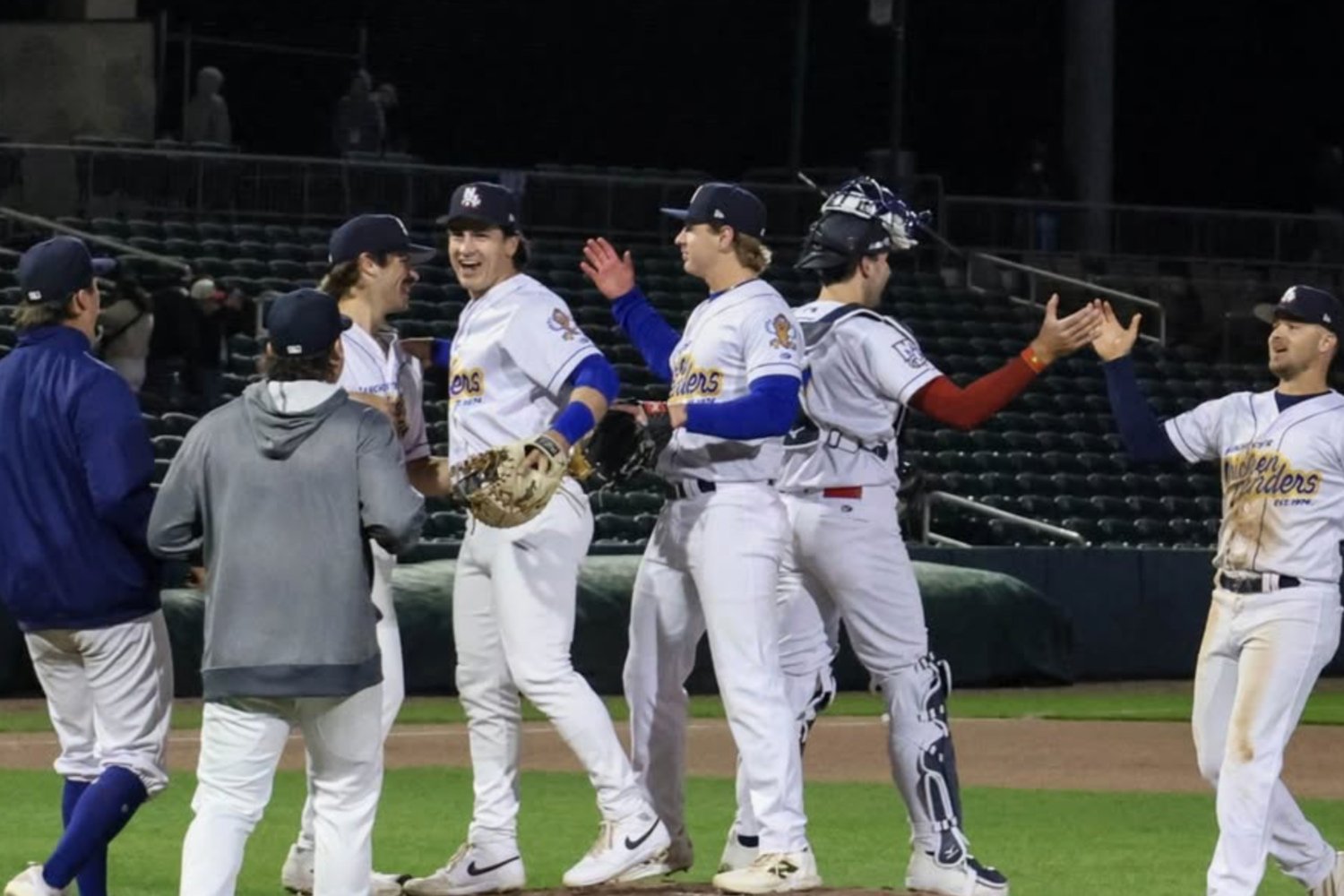 Blue Jays Affiliate Overview (April 28-April 29) Triple-A Buffalo Bisons Series vs. Scranton/Wilkes-Barre RailRiders (New York Yankees): 0-1 Season Record: 13-15 Double-A New Hampshire Fisher Cats Series vs. Binghamton Rumble Ponies (New York Mets): 3-0 Season Record: 13-8 High-A Vancouver Canadians Series vs. Hillsboro Hops (Arizona Diamondbacks): 0-2 Season Record: 9-14 Single-A Dunedin Blue Jays Series vs. Jupiter Hammerheads (Miami Marlins): 1-1 Season Record: 10-13 Triple-A Buffalo Bisons Season Record: 13-14 Series Opponent: Scranton/Wilkes-Barre RailRiders (New York Yankees) April 28: Buffalo opened a new series on Tuesday, this one against the Scranton/Wilkes-Barre RailRiders, and they couldn’t have started the game any better. The Bisons jumped all over the RailRiders in the opening frame, scoring five runs before the fans were even sitting down for lunch. Riley Tirotta opened up the scoring with an RBI single to third base, plating Carlos Mendoza. Willie MacIver followed it up with a two-run single in his second game with the Blue Jays organization, following a trade from the Texas Rangers. Two more runs would score on the next play, thanks to a throwing error on the RailRiders’ third baseman Duncan Pastore. With a five-run lead already in hand, Buffalo sent a rehabbing José Berríos to the mound, and things unraveled quite fast. He coughed up a lead-off home run to Spencer Jones, then Jones got him again in the second inning with a two-run single. In the third, Berríos got tagged again, this time by a Seth Brown two-run home run. Adam Macko came into the game for Berríos in the fifth and didn't fare any better, giving up a three-run home run himself. Jones capped off a monster game for the RailRiders with another home run in the bottom of the eighth, putting the game out of reach for the Bisons. Buffalo fell 9-6 to the RailRiders in this one. April 29: Postponed Double-A New Hampshire Season Record: 13-8 Series vs. Binghamton Rumble Ponies (New York Mets) April 28: Tuesday night was the beginning of a series with the Binghamton Rumble Ponies, and it was a game for the history books. Jace Bohrofen broke open a scoreless game in the fourth inning with an RBI single. Then, Eddie Micheletti Jr. added an RBI single, and Cutter Coffey roped a two-run double. Bohrofen would launch his seventh homer of the season to put New Hampshire up five and add a run on a ball-in-play error in the seventh. Bohrofen went 3-for-4 with the two RBIs, including the home run, but that wasn't the story of the night. The pitching was equal parts historic and historic. Jackson Wentworth started on the mound for New Hampshire and went 4.2 innings without allowing a hit or an earned run. Wentworth did allow four free passes, though. Next came Nate Garkow, who pitched 1.1 innings and didn't give up a hit or run, but also surrendered a walk. Irv Carter then entered the game and went two hitless innings, didn't surrender a run, but walked four as well. He added four strikeouts. Then came Kai Peterson for the ninth. After a leadoff walk, he got two flyouts that set up a matchup between him and Eli Serrano III. For history. On the second pitch of the at-bat, Serrano hit a ball to Micheletti, who caught the fly ball for the no-hitter! It came with 10 walks on the night, but who is counting, because history is history. April 29, Game 1: In the first game of the doubleheader, the bats came alive for the Fisher Cats, who were set up nicely with a good six innings from starting pitcher Chris McElvain. He gave up just two runs in the first inning and then finished six innings with no more runs allowed. New Hampshire got on the board in the second, when Jay Harry hit a two-run double and Ismael Munguia drove in a run on a groundout. With the one-run lead, the Fisher Cats would pile on four more the next inning. Cutter Coffey cleared the bases with a three-run double, and Harry brought him home on an error by the Rumble Ponies. New Hampshire would go on and win this one 8-2. April 29, Game 2: Game two on the night was another comeback affair for the Fisher Cats. They began the game down three runs when Binghamton took a two-run lead in the first and added a third run in the fourth inning. Patrick Winkel drove in two runs with a double for New Hampshire in their half of the fourth inning. In the fifth, Eddie Micheletti Jr. brought home a run, and then Jay Harry knocked in two more runs to give New Hampshire the lead. In the shortened game that didn't have many hits, that is where the scoring ended, as New Hampshire won again, this time 5-3. High-A Vancouver Season Record: 9-14 Series vs. Hillsboro Hops (Arizona Diamondbacks) April 28: Daniel Guerra starts have become must-watches, as the big righty had his fourth start with six strikeouts or more, with the only run he gave up being a solo shot in the second inning. Arjun Nimmala then hit a mammoth homer the inning after to give the Canadians the lead, the furthest in Nat Bailey since 2022. Peyton Williams helped expand the lead with a double and then scored on two straight balks from Junior Sanchez. The Canadians were unable to do anything else against Sanchez, as he struck out 10 Vancouver hitters. Jay Schueler, who’s been lights out in relief so far, gave up his first homer of the season after walking a batter to give up the lead. Schueler was replaced in the eighth by Eminen Flores, who was also great in relief prior to this game, but he gave up two runs himself, as he lost his command. The Canadians couldn’t get anything else going, so they lost after a good start to the game. April 29: After not allowing a run prior to this game, Danny Thompson Jr. proved to be mortal, giving up four runs in 3.1 innings in an uncharacteristic start. He was hurt by some bad BABIP luck, as he gave up seven hits, but he still struck out five batters. The offense once again sputtered, only getting five hits and three walks, as the team went 0-for-7 with RISP and left six runners on base. Juanmi Vasquez allowed another run, and Reece Wissinger’s Vancouver debut allowed two more runs, leading to a 7-0 loss for the Canadians. Single-A Dunedin Season Record: 10-13 Series vs Jupiter Hammerheads (Miami Marlins) April 28: It was a tough day defensively for both teams, as the Hammerheads and the D-Jays faced off for the first time this season. Both starters pitched three or more scoreless innings, with Dylan Watts striking out a career high seven batters while also generating 17 whiffs in his first professional start. Luis Victorino came after him, and after getting a lineout, two runners got on base with a single and a walk. The Jays could have gotten out of the inning, but an unfortunate fielding error from Juan Sanchez led to an RBI single and then a grand slam, putting the Jays in a large hole. The Jays then allowed another run on a throwing error from Will Cresswell in the fifth inning, giving Victorino six unearned runs on the night. The Jays were able to answer back; this time, the Hammerheads took their turn with an error, as third baseman Emilio Barreras had one of his three errors of the game, resulting in three unearned runs. Another Barreras error gave the Jays another run in the eighth, but Mason Davenport gave up a homer in the ninth to set the lead back to three. Eric Snow brought it a run closer after Sanchez took a walk, but they couldn’t come back from the mistakes made in the fourth. April 29: Nolan Perry’s domination continues, as although the 22-year-old didn’t have the strong stuff that he did in previous starts, he went 4.1 innings, only allowing one run. On the season, he’s at a 1.71 ERA in four games pitched. Juan Rosas drove in the first run of the game, and then the Jays took advantage of some poor defense with the bases loaded after, as starter Dameivi Tineo threw the ball away, allowing all three baserunners to score. Blaine Bullard then added another run for a five-run inning with an RBI single. A strong relief outing from Carson Myers maintained the Jays’ lead, and although the Hammerheads got a bit closer with two runs in the eighth and ninth, the Jays were able to take the win to even the series. Transactions 04/29/26 RHP Tomoya Kinjo assigned to DSL Blue Jays Blue. 04/28/26 Toronto Blue Jays sent RHP José Berríos on a rehab assignment to Buffalo Bisons. 04/28/26 Toronto Blue Jays optioned RHP Chase Lee to Buffalo Bisons. 04/28/26 LHP Ramon Suarez assigned to Dunedin Blue Jays from FCL Blue Jays. 04/28/26 RHP Reece Wissinger assigned to Vancouver Canadians from Dunedin Blue Jays. 04/28/26 New Hampshire Fisher Cats placed LHP Javen Coleman on the 7-day injured list. 04/28/26 2B Adrian Pinto assigned to New Hampshire Fisher Cats from Vancouver Canadians. 04/28/26 RHP Aaron Munson assigned to New Hampshire Fisher Cats from Vancouver Canadians. View the full article
 -
MLB Mock Draft: Red Sox Nab Elite Hit Tool With No. 20 Overall Pick
DiamondCentric posted an article in Talk Sox
 Welcome to the 2026 MLB Consensus Draft Board. This is the fifth version of the board, which started in 2022 as a top thirty. Since then, it’s expanded to around 150 players on an annual basis, featuring at eight different team sites. So what is the Consensus Board? How is it made? How should it be used? The concept is loosely based on Arif Hasan’s NFL Consensus Board. It’s meant to be a tool for folks getting interested in the MLB Draft. As I was learning about the draft, I struggled to navigate wildly varied rankings and evaluations of players. The Consensus Board takes every major publicly available board and combines them into a consensus ranking, eliminating some of the noise and variance of an extremely challenging evaluation process. We’ve found this process to be useful in ranking players in appropriate ranges through around the first five rounds of the draft. On the board, you’ll find player names, handedness, listed height and weight, age, and a write-up, walking through their strengths and opportunities as a prospect. As we go through the cycle, these will be updated with tweaks, final college stats, etc. Every time a major outlet (Baseball America, ESPN, The Athletic, etc.) releases an updated list, the consensus ranking shifts. As such, the board is a lagging reflection of what the industry thinks of the class and its key players. The final Consensus Board will incorporate at least 10 other boards as inputs. New MLB Mock Draft Board Features There are a few important features to point out to help you navigate the board. There’s a search bar to help you find players of interest. If you click ‘expand’ the board will focus on the writeup you are engaged with, in addition to one immediately above it and one immediately below it. Additionally, you’ll find the logo of your team next to their draft slots to help understand where they are picking. There will be a player slotted there, based on their consensus ranking. Rather than using that ranking as an indicator of who they might actually pick, it’s more useful to use it as a proxy for what caliber of talent is available at that slot. We’ll dig in deeper to team-specific mock drafts later in the cycle. The last important note is that this year the board features ‘push’ updates. It updates automatically every hour. The board is typically updated with new write-ups five days per week, so check back regularly for updates. At No. 20, the Boston Red Sox Select: Derek Curiel, OF, LSU Curiel was a highly touted prep prospect out of Southern California ahead of the 2024 draft but found his way to campus in Baton Rouge as one of the most anticipated freshmen in the country. Fast forward to 2026, and he's draft eligible as a sophomore with one of the best hit tools in the entire draft class. Curiel has a direct, smooth, left-handed swing. It's elite bat to ball skills, as Curiel ran an 88% overall contact rate (95% in zone) in 2025, while rarely chasing and taking plenty of walks. While he finds the barrel often, the questions around Curiel's profile center around his power projection. He managed 7 home runs as a freshman and his top end EVs are not the portent of significant power as a pro. Curiel is an above average runner with good range who should stick in center field as a pro, with a fringe average arm. If he can develop more power, this becomes a much more interesting profile. Right now, it's a table setting, top of the lineup type with strong on-base skills and an outstanding hit tool. View the full article
 -
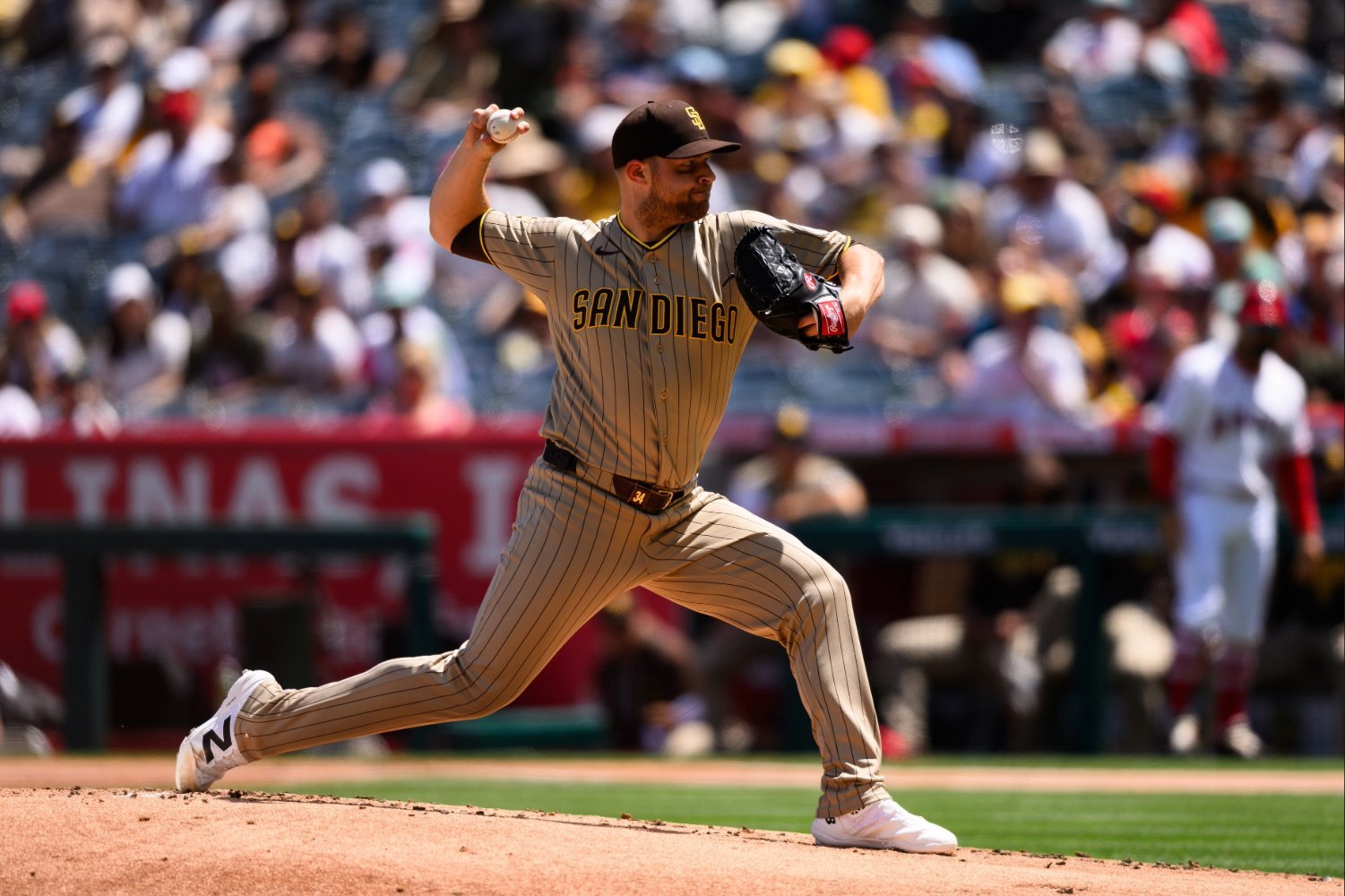 The Padres are home this.week after completing a challenging road trip of three days each in Denver and Mexico City. A series at a mile-high elevation was followed by a series at almost a mile-and-a-half elevation. Players didn't have much time to readjust to being at sea level, either. The club opened a three-game series against the Chicago Cubs on Monday night after playing at Estadio Alfedo Harp Helu in Mexico City on Sunday afternoon. There are reams of data on the challenges of playing in Denver -- the ball flies, pitches move differently than elsewhere, bodies wear down more. It's reasonable to assume that Mexico City presents similar issues even though MLB plays just two games a year there. The thinner air has to have some effect. The Padres' opponent in Mexico City, the Arizona Diamondbacks, believed that to be the case. They kept starting pitchers Eduardo Rodriguez and Michael Soroka away rather than expose them to the elements. Those two were scheduled to pitch Wednesday and Thursday in Milwaukee, respectively. Did the handful of Mexico City games justify the trepidation? Is there a major short-term effect on starting pitchers who throw there? And. because this is a Padres site, should fans expect German Marquez and Michael King, the team's starters in Mexico City, to struggle this weekend when they face the Chicago White Sox at Petco Park? We can use the 2023 and 2024 Mexico City series -- Padres vs. San Francisco Giants, Houston Astros vs. Colorado Rockies -- as rough guides. This is how the eight starters in those four games pitched in their next outing: 2023, Padres vs. Giants Pitcher IP H R ER BB SO NP/ST Joe Musgrove 5 2 1 0 3 5 81/49 Yu Darvish 6.2 4 2 1 1 6 94/68 Alex Cobb 7 5 0 0 2 5 107/68 Sean Manaea 5 6 4 3 2 6 94/63 2024, Astros vs. Rockies Pitcher IP H R ER BB SO NP/ST Ronel Blanco 6 5 3 3 2 6 94/60 Framber Valdez 5.1 9 5 5 1 3 91/58 Cal Quantrill 7.2 3 0 0 0 9 99/66 Austin Gomber 6 4 0 0 2 3 88/56 Only Valdez had a bad follow-up start. Everyone else was mediocre to excellent. One reason might be that the majority of these pitchers got an extra day of rest and recovery. Only Darvish and Manaea made their next start on four days' rest. Five pitchers went on five days' rest. Musgrove pitched on seven days' rest, in his third start following a toe fracture. Marquez and King will be working on five days' rest as well, thanks to the team's off-day Thursday. (The Padres lost two of three to the Cubs and were outscored in the series 20-16.) Another encouraging sign on Marquez is that he threw just 75 pitches (52 strikes) over six innings Saturday. Most importantly, he has a decade of experience adjusting to changes in altitude as a member of the Rockies' staff. King is the more interesting case. First, he altered his pitch mix Sunday. He threw his four-seamer, changeup and slider more than usual, his sinker a lot less than usual, and his sweeper the same as usual. (All percentages via Baseball Savant.) Pitch Season% Sunday% Sinker 27.8 11.3 Changeup 27.4 30.2 Sweeper 19.9 19.8 Four-seamer 19.8 28.3 Slider 5.5 10.4 Second, he threw a season-high 106 pitches in his six innings. That effort followed a 105-pitch start his previous time out. That is a heavy workload in today's baseball. This weekend, he'll face a young White Sox lineup that came into April 30 tied for seventh in the majors in home runs but fourth in strikeouts. The matchup can mask the negative effects from Mexico City and/or the high pitch counts. View the full article
 -
Royals Minor League Report: Naturals Sweep Doubleheader
DiamondCentric posted an article in Royals Keep
 Felix Arronde threw five no-hit innings in Game 2, and Chase Jessee earned the win in Game 1 as Northwest Arkansas swept Springfield 4-2 and 4-2. Colton Becker tripled and doubled in the nightcap. Henry Ramos went 3-for-5 with a home run in Columbia's 7-3 loss at Myrtle Beach, where Blake Wolters allowed six runs, one earned, over 4 2/3 innings. Gavin Cross tripled in Omaha's 5-1 loss to Louisville. Quad Cities was postponed. Royals Transactions No Roster Moves Storm Chasers Strand Twelve In 5-1 Loss To Louisville Stephen Kolek absorbed the loss with 4 1/3 innings, eight hits, three runs allowed, one earned, four strikeouts, and no walks in a 5-1 defeat to Louisville. Two unearned runs came across in a three-run third inning, when a fielder's choice combined with a throwing error, followed by a sacrifice fly and an RBI double, pushed the Bats to a 3-0 lead. The bullpen kept Omaha within range. Beck Way struck out three over 1 2/3 scoreless innings. Bailey Falter worked 1 1/3 scoreless innings with two strikeouts. Eli Morgan retired both batters he faced, including a strikeout. Eric Cerantola gave up a solo home run and an RBI double in the ninth, charged with two earned runs over an inning of work. Omaha had its chances. Tyler Tolbert and John Rave each went 2-for-4 with a walk, and Tolbert added a stolen base. Gavin Cross tripled in the ninth and scored on Dustin Dickerson's sacrifice fly, the only run the Storm Chasers managed. Luke Maile collected a single and a walk. Kameron Misner walked once. Dickerson drew two walks. The Storm Chasers stranded 12 runners, and despite six hits, were unable to bunch them. The Bats added two more in the ninth on a solo home run and an RBI double off Cerantola, padding the margin to four. Player AB R H RBI BB K Tyler Tolbert (3B) 4 0 2 0 1 2 John Rave (DH) 4 0 2 0 1 1 Kameron Misner (CF) 4 0 0 0 1 2 Drew Waters (RF) 5 0 0 0 0 3 Josh Rojas (2B) 3 0 0 0 1 0 Abraham Toro (1B) 3 0 0 0 1 0 Luke Maile (C) 3 0 1 0 1 1 Gavin Cross (LF) 4 1 1 0 0 1 Dustin Dickerson (SS) 1 0 0 1 2 1 Player IP H R ER BB K HR Stephen Kolek (L) 4 1/3 8 3 1 0 4 0 Beck Way 1 2/3 0 0 0 0 3 0 Bailey Falter 1 1/3 0 0 0 0 2 0 Eli Morgan 0 2/3 0 0 0 0 1 0 Eric Cerantola 1 3 2 2 1 1 1 Naturals Rally Past Springfield 4-2 In Game 1 Of Doubleheader The Northwest Arkansas Naturals erased an early two-run deficit and pulled away with a two-run sixth inning to take Game 1 of the doubleheader, 4-2. Frank Mozzicato gave the Naturals three innings and was charged with two runs allowed, both unearned, after a first-inning unraveling. He struck out three and walked three. The bullpen took it from there. Hunter Owen worked one inning of one-hit relief. Chase Jessee earned the win with two scoreless innings, two strikeouts, and no walks. Brandon Johnson closed with a scoreless seventh that included one walk and a strikeout to lock down the save. Springfield took a 2-0 lead in the top of the first on an RBI single and an RBI groundout, but the Naturals chipped away. Omar Hernandez's groundout in the bottom of the second drove home Daniel Vazquez to make it 2-1. The score evened in the third when Brett Squires' grounder was misplayed at first base, allowing Colton Becker to score and the rally to continue. Justin Johnson delivered the decisive blow in the bottom of the sixth, lining a two-run single up the middle to score Rudy Martin Jr. and Hernandez for the 4-2 lead. Becker singled, walked, scored once, and stole a base. Hernandez had a hit, an RBI, a run, and a stolen base. Vazquez added a hit and a run. The Naturals took advantage of two Springfield errors. Player AB R H RBI BB K Carson Roccaforte (CF) 3 0 1 0 1 0 Colton Becker (2B) 3 1 1 0 1 2 Sam Kulasingam (RF) 2 0 0 0 2 0 Brett Squires (1B) 3 0 1 0 0 0 Daniel Vazquez (SS) 3 1 1 0 0 0 Jorge Alfaro (DH) 1 0 0 0 2 0 Rudy Martin Jr. (DH) 0 1 0 0 0 0 Connor Scott (LF) 1 0 0 0 1 0 Omar Hernandez (C) 2 1 1 1 0 0 Justin Johnson (3B) 3 0 1 2 0 1 Player IP H R ER BB K HR Frank Mozzicato 3 2 2 0 3 3 0 Hunter Owen 1 1 0 0 0 0 0 Chase Jessee (W) 2 2 0 0 0 2 0 Brandon Johnson (S) 1 0 0 0 1 1 0 Arronde's Five No-Hit Innings Lift Naturals To Game 2 Sweep Felix Arronde fired five no-hit innings to anchor the Northwest Arkansas Naturals' 4-2 win in Game 2 of the doubleheader sweep over Springfield. Arronde walked two and struck out three while shutting out the Cardinals across the first five frames before turning the ball over to the bullpen. The Naturals broke through with a two-run second. Jorge Alfaro reached on a hit by pitch and Canyon Brown singled, setting up Colton Becker, who lined a triple to right that scored both for a 2-0 advantage. Sam Kulasingam pushed the lead to 3-0 in the bottom of the fifth on a line-drive single to center, scoring Carson Roccaforte after Roccaforte and Rudy Martin Jr. opened the inning with consecutive singles. Springfield got back into it in the top of the sixth, when Caden Monke gave up an RBI single that brought home two runs and trimmed the gap to one. Northwest Arkansas answered immediately. In the bottom of the sixth, Becker doubled to right with two outs and scored on Justin Johnson's RBI single up the middle for a 4-2 lead. Tommy Molsky locked it down with a scoreless seventh, allowing one walk and earning the save. Becker's triple, double, and two RBI led the offense. Roccaforte went 1-for-4 with a run scored. Kulasingam had a hit, an RBI, and a walk. Johnson singled, drove in a run, and stole a base. Brown added a hit. The Naturals collected seven hits and held Springfield to two. Player AB R H RBI BB K Carson Roccaforte (CF) 4 1 1 0 0 0 Rudy Martin Jr. (RF) 3 0 1 0 0 2 Sam Kulasingam (3B) 2 0 1 1 1 0 Brett Squires (1B) 2 0 0 0 1 1 Daniel Vazquez (SS) 3 0 0 0 0 3 Jorge Alfaro (C) 2 1 0 0 0 1 Canyon Brown (DH) 3 1 1 0 0 0 Colton Becker (LF) 3 1 2 2 0 0 Justin Johnson (2B) 3 0 1 1 0 1 Player IP H R ER BB K HR Felix Arronde (W) 5 0 0 0 2 3 0 Caden Monke 1 2 2 2 0 1 0 Tommy Molsky (S) 1 0 0 0 1 0 0 Quad Cities: Postponed The River Bandits' game was postponed. Wolters Knocked Around As Fireflies Drop Series Finale 7-3 Blake Wolters lasted 4 2/3 innings in the Columbia Fireflies' 7-3 loss at Myrtle Beach, charged with six runs but only one earned across four hits and three walks while striking out five and giving up two home runs. The Pelicans put four on the board in the bottom of the first on back-to-back sacrifice flies followed by a two-run home run, and added a solo shot in the second to push the lead to 5-0. Andy Basora steadied the bullpen with 1 1/3 innings of one-hit, scoreless relief and a strikeout. Yeri Perez allowed two hits, two walks, and one earned run on a solo home run over two innings. Columbia chipped at the lead late but never threatened the result. Sean Gamble's seventh-inning groundout drove home JC Vanek to break the shutout. The Pelicans answered with a solo home run in the bottom of the eighth. Henry Ramos closed the night with a two-run blast in the ninth to bring Columbia within four. Ramos paced the offense, going 3-for-5 from the leadoff spot with the home run and two RBI. Stone Russell collected two hits, including a double, and drew a walk. Josh Hammond doubled. Brooks Bryan and Roni Cabrera each singled. Vanek walked twice and scored both Columbia runs aside from Ramos. Three Columbia errors helped the Pelicans tag Wolters with five unearned runs, while the Fireflies left eight on base. Player AB R H RBI BB K Henry Ramos (LF) 5 1 3 2 0 1 Sean Gamble (CF) 5 0 0 1 0 0 Josh Hammond (SS) 4 0 1 0 0 2 Brooks Bryan (C) 4 0 1 0 0 0 Yandel Ricardo (2B) 4 0 0 0 0 3 Stone Russell (1B) 3 0 2 0 1 0 Roni Cabrera (RF) 3 0 1 0 0 2 JC Vanek (DH) 2 2 0 0 2 1 Connor Rasmussen (3B) 4 0 0 0 0 2 Player IP H R ER BB K HR Blake Wolters (L) 4 2/3 4 6 1 3 5 2 Andy Basora 1 1/3 1 0 0 0 1 0 Yeri Perez 2 1 1 1 2 1 1 Top-20 Prospect Performance Carter Jensen: DNP Blake Mitchell: DNP David Shields: DNP Kendry Chourio: DNP Ben Kudrna: DNP Sean Gamble: 0-for-5, 1 RBI Josh Hammond: 1-for-4, 2B, 2 K Ramon Ramirez: DNP Drew Beam: DNP Asbel Gonzalez: DNP Yandel Ricardo: 0-for-4, 3 K Felix Arronde: 5 IP, 0 H, 0 R, 0 ER, 2 BB, 3 K, 0 HR Luinder Avila: DNP Daniel Vazquez: 1-for-6, 3 K, 1 R Steven Zobac: DNP Carson Roccaforte: 2-for-7, 1 BB, 1 R Blake Wolters: 4 2/3 IP, 4 H, 6 R, 1 ER, 3 BB, 5 K, 2 HR Michael Lombardi: DNP Warren Calcaño: DNP Frank Mozzicato: 3 IP, 2 H, 2 R, 0 ER, 3 BB, 3 K, 0 HR View the full article
 -
 All four Mets affiliates that took the field came up short. Binghamton dropped both ends of a doubleheader at New Hampshire, 8-2 and 5-3, with Jose Ramos driving in two runs in the nightcap. Brooklyn was shut out 5-0 at home by Frederick. St. Lucie fell twice to Tampa, including a 7-6 walkoff in extras. JT Benson clubbed a three-run homer, while Frank Camarillo struck out seven and Joander Suarez fanned four. Syracuse was postponed. Mets Transactions New York Mets signed free agent SS Jamari Baylor to a minor league contract. New York Mets sent LF Tommy Pham outright to Syracuse Mets. Syracuse Postponed The Syracuse Mets' scheduled game was postponed. No box score information is available. Watson Roughed Up Early As Binghamton Drops Opener Binghamton grabbed an early lead but watched it disappear in two ugly innings, falling 8-2 to the New Hampshire Fisher Cats in the front end of a doubleheader. Eli Serrano III, Jacob Reimer, and Kevin Parada drew walks against the Fisher Cats' starter to load the bases in the top of the first, and Nick Lorusso lashed a one-RBI single to left to score Serrano. TT Bowens later drove in the second run before the inning closed with the Rumble Ponies up 2-0. The lead lasted exactly one half-inning. Will Watson surrendered three runs in the bottom of the second on three hits and a pair of walks, then yielded another four runs in the third on a single hit and additional walks, with one of those runs scoring after a Binghamton fielding error. Watson took the loss after three innings of work, allowing four hits, seven runs, six earned, four walks, and three strikeouts. Jefry Yan steadied things with two innings of one-run, three-hit relief while striking out two, and Felipe De La Cruz finished with a clean inning that included two strikeouts. Lorusso paced the offense at 2-for-3 with a double and an RBI, while Wyatt Young singled and stole a base. Reimer drew two walks of his own as the Rumble Ponies finished with six free passes but stranded seven runners across the seven-inning game. Diego Mosquera added a single in his only hit of the contest. Binghamton Hitting (Game 1) Player AB R H RBI BB K Eli Serrano III 3 1 0 0 1 0 Jacob Reimer 2 1 0 0 2 0 Jose Ramos 4 0 1 0 0 2 Kevin Parada 2 0 0 0 1 1 Nick Lorusso 3 0 2 1 0 0 TT Bowens 2 0 0 1 0 1 Matt Rudick 2 0 0 0 1 0 Wyatt Young 3 0 1 0 0 0 Diego Mosquera 2 0 1 0 1 1 Binghamton Pitching (Game 1) Player IP H R ER BB K HR Will Watson (L) 3 4 7 6 4 3 0 Jefry Yan 2 3 1 1 1 2 0 Felipe De La Cruz 1 1 0 0 0 2 0 Late Bullpen Collapse Costs Binghamton The Nightcap Binghamton again grabbed a 2-0 first-inning lead in the second game of the doubleheader, but watched the bullpen surrender it on the way to a 5-3 loss at New Hampshire. Eli Serrano III walked, Jacob Reimer singled, and after a Chris Suero ground out moved both runners up, Jose Ramos delivered a two-run single to put the Rumble Ponies in front. Binghamton tacked on another run in the top of the fourth, when Wyatt Young singled and Serrano III drove him in with a double for a 3-2 lead. Joander Suarez held the Fisher Cats to two earned runs across four and two-thirds innings, allowing three hits and three walks while striking out four. He left in the bottom of the fifth with two outs and runners on, and Brian Metoyer was tagged with the loss after surrendering three earned runs in his lone third of an inning. Metoyer walked three of the four batters he faced and yielded a two-run single before recording his only out. Saul Garcia pitched a clean sixth, fanning one. Reimer led the Binghamton offense at 2-for-4 with a double, and Ramos finished 1-for-1 with two RBI and three walks despite seeing only a handful of strikes. Serrano III added a 1-for-3 line with a double, an RBI, and a walk. The Rumble Ponies drew seven walks on the night and stranded nine runners but could not solve the New Hampshire bullpen after Suarez departed. Binghamton Hitting (Game 2) Player AB R H RBI BB K Eli Serrano III 3 1 1 1 1 2 Jacob Reimer 4 1 2 0 0 1 Jose Ramos 1 0 1 2 3 0 JT Schwartz 4 0 1 0 0 1 Nick Lorusso 3 0 0 0 1 1 Matt Rudick 1 0 0 0 2 0 Wyatt Young 3 1 1 0 0 1 Diego Mosquera 3 0 0 0 0 2 Chris Suero 4 0 0 0 0 3 Binghamton Pitching (Game 2) Player IP H R ER BB K HR Joander Suarez 4 2/3 3 2 2 3 4 0 Brian Metoyer (L) 1/3 2 3 3 3 0 0 Saul Garcia 1 0 0 0 0 1 0 Brooklyn Shut Out As Diaz Surrenders Four-Run Fifth Brooklyn could not solve Frederick's pitching in a 5-0 shutout at MCU Park, with the Cyclones managing just five hits despite drawing five walks. The Mets squandered a bases-loaded chance in the sixth that ended on a popout and a flyout, the closest they came to a run all night. Starter Joel Diaz held the Keys scoreless through three before unraveling. Frederick pushed across a single run in the top of the fourth, then broke the game open with a four-run fifth that featured two long balls. Diaz took the loss after four and two-thirds innings of work, allowing six hits, five earned runs, three walks, and two home runs while striking out four. Joe Charles delivered two innings of one-hit relief with two strikeouts, Hunter Hodges followed with a clean inning that included two walks but no runs, and Hoss Brewer finished with one and one-third scoreless innings, allowing one hit and striking out two. Mitch Voit was the Cyclones' best offensive contributor at 2-for-4 with two stolen bases, the only multi-hit game of the night. Antonio Jimenez doubled in his lone hit, and Colin Houck added a double of his own. Daiverson Gutierrez and Sam Biller combined to strike out five times, and Biller alone fanned four times in four trips. Brooklyn drew walks in three different innings and stranded eight runners as Frederick's bullpen slammed the door. Brooklyn Hitting Player AB R H RBI BB K Antonio Jimenez 4 0 1 0 0 0 Mitch Voit 4 0 2 0 0 0 Corey Collins 2 0 1 0 1 0 Kevin Villavicencio 1 0 0 0 0 0 Ronald Hernandez 1 0 0 0 3 1 Daiverson Gutierrez 4 0 0 0 0 1 Colin Houck 4 0 1 0 0 1 Trace Willhoite 4 0 0 0 0 3 Sam Biller 4 0 0 0 0 4 Yohairo Cuevas 2 0 0 0 1 0 Brooklyn Pitching Player IP H R ER BB K HR Joel Diaz (L) 4 2/3 6 5 5 3 4 2 Joe Charles 2 1 0 0 0 2 0 Hunter Hodges 1 0 0 0 2 0 0 Hoss Brewer 1 1/3 1 0 0 1 2 0 St. Lucie Falls In Walkoff Despite Benson's Three-Run Homer St. Lucie surrendered a four-run lead and fell 7-6 to the Tampa Tarpons in eight innings, dropping the front end of a doubleheader on a walkoff single with one out in the bottom of the eighth. The Mets had grabbed control with a four-run sixth, when Elian Peña doubled to center, Randy Guzman reached on a fielding error, and Julio Zayas singled to plate two. After AJ Salgado advanced Zayas to third on a groundout, JT Benson launched a three-run home run to right-center to push the lead to 4-1. Frank Camarillo struck out seven across five innings of work in his start, allowing three hits, three earned runs, and one walk while surrendering one home run. Christian Rodriguez took over and was charged with a blown save after allowing two earned runs over two innings. Elwis Mijares was hit with the loss in the bottom of the eighth: with the zombie runner placed at second base, an opposing flyout moved him to third, a single tied the game, and following a catcher interference call by Julio Zayas that put runners on the corners, a line single to center plated the winning run with one out. Mijares' final line was one third of an inning, two hits, two runs, one earned, and no walks or strikeouts. Peña paced the offense at 2-for-4 with a double and a run, while Salgado went 2-for-4 with two stolen bases. Zayas drove in two on his single, and Branny De Oleo added a double of his own. St. Lucie out-hit Tampa 8-7 but committed two errors and stranded five runners, including the bases loaded once. Benson's three-run homer accounted for half of the team's six runs. St. Lucie Hitting (Game 1) Player AB R H RBI BB K Elian Peña 4 1 2 0 0 2 Edward Lantigua 4 0 0 1 0 1 Randy Guzman 4 2 1 0 0 0 Julio Zayas 4 1 1 2 0 1 AJ Salgado 4 0 2 0 0 0 JT Benson 3 1 1 3 0 0 Simon Juan 4 0 0 0 0 2 Sam Robertson 3 0 0 0 0 1 Branny De Oleo 2 1 1 0 0 0 St. Lucie Pitching (Game 1) Player IP H R ER BB K HR Frank Camarillo 5 3 3 3 1 7 1 Christian Rodriguez 2 3 2 2 0 1 0 Elwis Mijares (L) 1/3 2 2 1 0 0 0 Tampa Pulls Away Late As St. Lucie Drops Twin Bill St. Lucie could not muster enough offense to keep pace and fell 7-4 to Tampa in the second half of the doubleheader. Tampa scored in four consecutive innings against starter Conner Ware to build a 4-1 lead, and a two-run sixth off relief proved too much for the Mets to overcome despite a three-run rally in the top of the seventh. Ware surrendered five hits, four earned runs, two walks, and one home run across his four innings, striking out three before being lifted. Miguel Mejias allowed a single run on a hit and a walk in his lone inning, and Zack Mack absorbed the bulk of the late damage with one inning that included five hits, two runs, and one home run, recording no strikeouts and issuing no walks. The seventh-inning rally was led by Edward Lantigua, who doubled in two runs, and Francisco Toledo, who launched a solo home run to account for the third run of the frame. Elian Peña doubled and drew a walk, finishing 1-for-3 with an RBI and a run scored. Newly signed free agent Jamari Baylor singled and scored a run in his first appearance after inking a minor league contract earlier in the day. AJ Salgado added a hit, while Randy Guzman, Sam Robertson, and Simon Juan combined to go hitless in eight at-bats. The Mets stranded five runners on the night and managed only five hits across seven innings. St. Lucie Hitting (Game 2) Player AB R H RBI BB K Elian Peña 3 1 1 1 1 0 Edward Lantigua 4 0 1 2 0 2 Randy Guzman 4 0 0 0 0 0 AJ Salgado 3 0 1 0 0 1 JT Benson 2 0 0 0 1 1 Jamari Baylor 3 1 1 0 0 1 Sam Robertson 3 0 0 0 0 2 Francisco Toledo 3 1 1 1 0 1 Branny De Oleo 2 1 0 0 1 0 St. Lucie Pitching (Game 2) Player IP H R ER BB K HR Conner Ware (L) 4 5 4 4 2 3 1 Miguel Mejias 1 1 1 1 1 0 0 Zack Mack 1 5 2 2 0 0 1 Top-20 Prospect Performance Nolan McLean: DNP Carson Benge: DNP A.J. Ewing: DNP Jonah Tong: DNP Ryan Clifford: DNP Jacob Reimer: 2-for-6, 2B, 2 BB, K Jack Wenninger: DNP Elian Pena: 3-for-7, 2 2B, RBI, BB, 2 K Mitch Voit: 2-for-4, 2 SB Nick Morabito: DNP Jonathan Santucci: DNP Chris Suero: 0-for-4, 3 K Zach Thornton: DNP Wandy Asigen: DNP Will Watson: 3 IP, 4 H, 6 ER, 4 BB, 3 K Eli Serrano III: 1-for-6, 2B, RBI, 2 BB, 2 K Ryan Lambert: DNP Dylan Ross: DNP Antonio Jimenez: 1-for-4, 2B R.J. Gordon: DNP View the full article
