


DiamondCentric
-
Posts
2,631 -
Joined
-
Last visited
Never
Content Type
Profiles
Forums
Events
News
Tutorials & Help
Major League Baseball Videos
Guides & Resources
Store
Downloads
Gallery
Everything posted by DiamondCentric
-

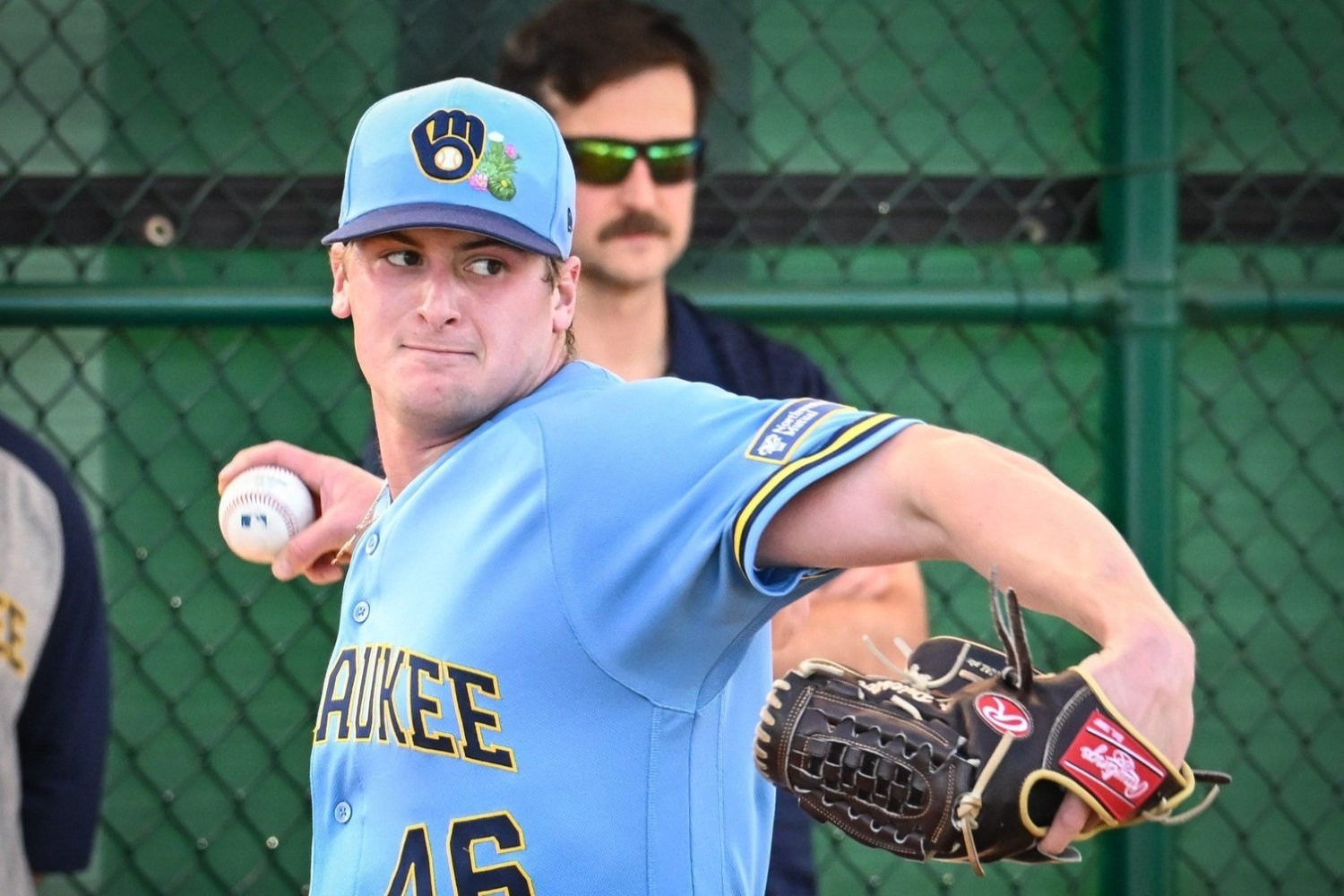 Back in mid-March, it was announced that Quinn Priester would be starting the season on the injured list due to thoracic outlet syndrome, a nerve issue that caused him to experience pain in his wrist starting last August. It was estimated that he would miss at least the first month of the season. He began his rehab assignment on April 22, making his first start with Triple-A Nashville. Unfortunately, he looks like a work in progress. He failed to get out of the first inning that day, recording just two outs, and gave up four earned runs, three walks, and a hit by pitch. He made his second start on April 26, and while it was a step in the right direction, he’s not close to where he needs to be, pitching 2 ⅓ scoreless innings with three walks and just two strikeouts. The most glaring concern is his velocity. Priester has never been a power pitcher, by any means, but both his sinker and his cutter have consistently sat between 92 and 93 mph over his career. In his first start, he averaged just 91.2 mph on his sinker and 88.9 mph on his cutter. In his second start, he only managed to top out at 92 mph. To be fair, this isn’t totally unexpected, given how little time he has had to ramp up. In addition to the injury, he still has to build up his arm normally because he missed all of spring training. He’s slowly working on building his pitch count and finding the zone, something he has struggled with immensely in Nashville so far. But it also means that he’s quite a ways away from returning to big-league action. It’s not a fatal flaw, but Milwaukee would love to have more starters capable of pitching more than four to five innings per start, reducing the load on their already overburdened bullpen. For Priester to be worth a roster spot at this time, he needs to be capable of getting through at least five innings. Aside from having to restore his stamina, his control has deteriorated considerably. Of the 74 pitches he has thrown for the Sounds, just 30 have been for strikes. Conceding free passes is the obvious downside of missing the zone, but getting behind in counts also leads to more hitter-friendly pitches and more damage. Pitchers with elite velocity can get away with this by simply blowing down the doors of opposing hitters, but Priester’s profile simply doesn’t fit the bill for that to work. For the time being, it doesn’t seem like there’s a huge rush for him to return. The Brewers are willing to be patient as he works his way back. Pat Murphy said as much when stating that Priester will likely need more than the original target of three rehab outings. Luckily for the Brewers, the rotation has held its own in Priester’s absence Some of the younger arms, like Kyle Harrison, have already shown flashes of their incredible upside. A possible silver lining to this delay is that it should give Milwaukee more data to decide whose spot in the rotation will be taken over by Priester when he’s finally back to full strength. Currently, it seems like Brandon Sproat, a young arm with options remaining and a few underwhelming outings this season, is the favorite to cede his place, but he’s not the only candidate. Chad Patrick is another pitcher who could be headed in the wrong direction this season. His 2.35 ERA over 23 innings looks great, but his 4.34 FIP and 11.7% strikeout rate are warning signs of an upcoming downturn. We got a glimpse of what might be to come in his most recent start against the Tigers, in which he gave up four earned runs and a walk with just two strikeouts. There’s still plenty of baseball left to be played this year, and the Brewers are doing what they do best: staying patient, taking their time, and laying the groundwork to be successful. They’ve consistently treated the season as a marathon, not a sprint, and it’s still early in the race. Whether Priester joins them in one mile or 10, what matters is that when he does make his return, it’ll only be when he’s fully ready to give his best. By then, odds are that the team will have a place waiting for him—though it's more likely to be created by another injury than by shoving aside a healthy hurler. View the full article
 -
Marlins reinstate Christopher Morel, option Heriberto Hernández
DiamondCentric posted an article in Fish On First
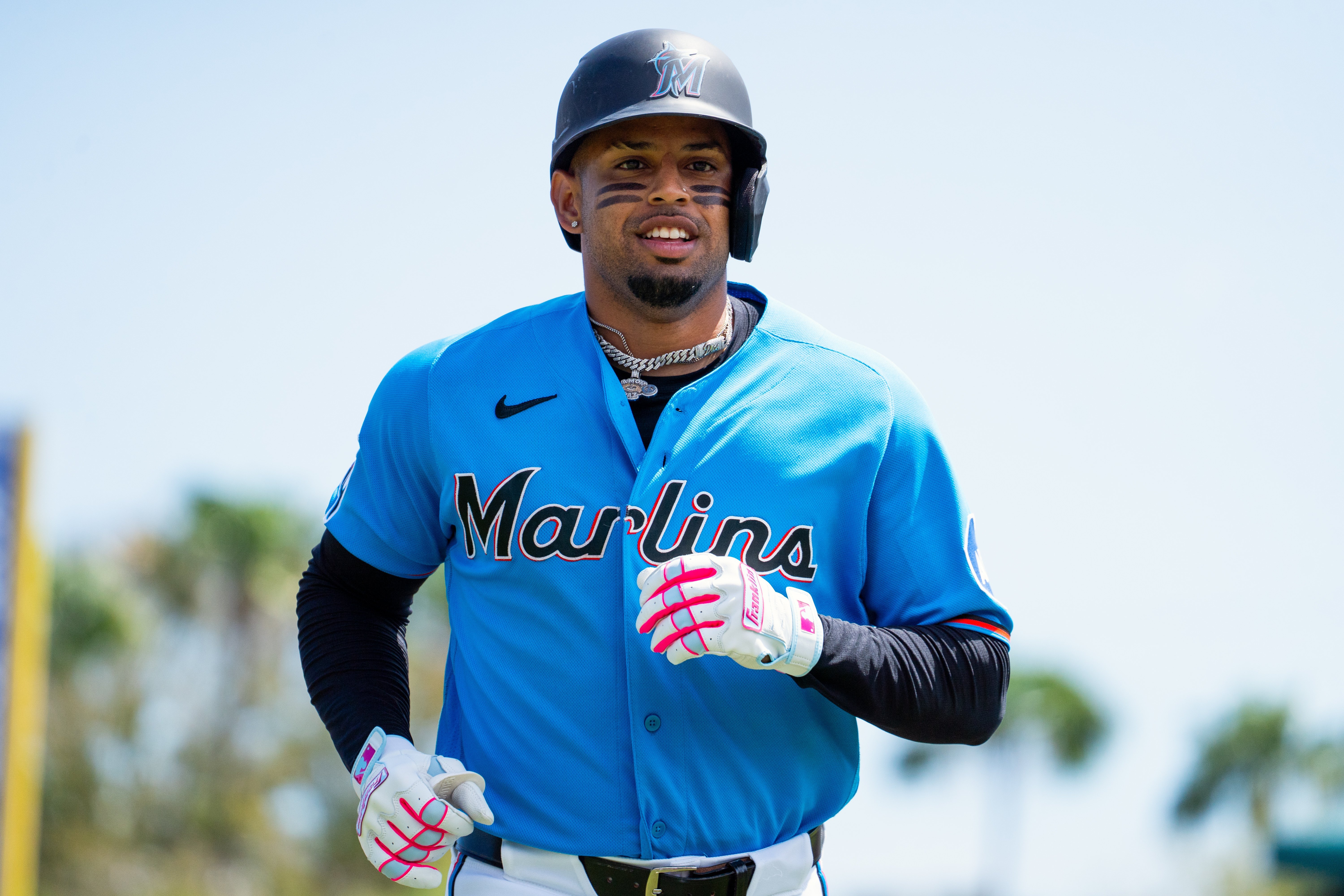 As reported on Monday by Fish On First's own Alex Carver and Isaac Azout, first baseman Christopher Morel has completed his rehab assignment with Triple-A Jacksonville and is meeting the team in Los Angeles ahead of their three-game series against the Dodgers. In a corresponding roster move, the Marlins are optioning outfielder Heriberto Hernández to AAA. The club has not yet made the move official. Morel, 26, signed a one-year, $2M deal this offseason. With the 2025 Tampa Bay Rays, he slashed .219/.289/.396/.684 with 11 home runs, 33 RBI and a 90 wRC+. He was designated for assignment at the end of the season and elected free agency. In 16 spring training games, Morel slashed .150/.239/.200/.439 with five RBI. The club's plan was to have him break camp as their primary first baseman, but during batting practice on Opening Day, he suffered a left oblique strain and was scratched from the lineup. He was placed on the 10-day IL a day later. On April 21, the Marlins sent Morel on a rehab assignment with Jacksonville. In four games (including three starts at first base), he went 3-for-14 at the plate. During Morel's absence, Connor Norby has gotten most of the reps at first base. He has a solid 105 wRC+ with mixed results defensively (like Morel, he's brand new to the position). Norby's playing time will likely be reduced moving forward. Heriberto Hernández was the best right-handed hitter on the 2025 Marlins. Splitting time between left field and designated hitter, he was pretty much an everyday player during the second half of his rookie season. However, it has been a completely different story this year. In 22 games before the demotion, he slashed .159/.284/.190/.474 with no home runs, nine RBI and a 44 wRC+. Hernández has improved both his strikeout rate (18.9%) and walk rate (13.5%), but he's been putting more balls on the ground and making weaker contact overall. His production has been equally poor against right-handers (.480 OPS) and left-handers (.467 OPS). The Marlins will be facing three right-handed starting pitchers during the Dodgers series: Yoshinobu Yamamoto, Shohei Ohtani and Tyler Glasnow. Game one is on Monday at 10:15 pm. View the full article
 -
 Boston Red Sox Affiliate Overview (Apr 24-Apr 26) Triple-A Worcester Red Sox Series vs. Syracuse: 4-2 Season Record: 14-11 Double-A Portland Sea Dogs Series vs. Hartford: 3-3 Season Record: 11-9 High-A Greenville Drive Series at Asheville: 5-1 Season Record: 11-10 Low-A Salem RidgeYaks Series vs. Fredericksburg: 2-4 Season Record: 10-11 Triple-A Worcester Red Sox Season Record: 14-11 Series Opponent: Syracuse Mets (New York Mets) Series Standing: 4-2 April 24: The WooSox lost 3-0, only generating two hits in a poor performance. After throwing six scoreless innings in his last appearance, Michael Sansone only turned in four and ⅓ innings of sub-par work. He allowed five hits and three runs, walking two while only striking out four. Through 20 innings of work this season, Sansone has registered a 2.61 ERA and Friday marked his worst start of the season as he got the loss. Seth Martinez entered in the fifth, putting in one and ⅔ innings of excellent work, striking out one. Noah Song got the next two, allowing one hit and walking two as he kept the ball rolling. Wyatt Olds finished out the game, throwing one inning of one-hit ball and striking out two. The pitching staff recovered well from Sansone’s outing and gave the offense plenty of time to get something going. Unfortunately for Martinez & Co., Worcester's bats were all but non-existent. Only two hitters recorded a hit, and the WooSox only drew three walks. The only hitters to get a knock were Mikey Romero and Anthony Seigler, both of whom recorded a single. It was a sharp contrast to Thursday, when they generated 10 runs in a six-run victory. It was a night the WooSox were eager to forget as Syracuse tied the series 2-2. April 25: The WooSox rebounded from a poor performance on Friday with a seven-run victory on Saturday. It was a combined effort on the mound from Worcester, in which Isaac Coffey got the start. He went three innings and only gave up one hit, K’ing five and walking one. Angel Bastardo took the next two innings, walking one and striking out two in his second game of the season, earning the win. Devin Sweet earned a hold for his performance, allowing one baserunner via walk in an inning of work. Kyle Keller also earned a hold for his two innings of work. He gave up the only two runs for Worcester but limited the damage. Tommy Kahnle threw the final inning for the WooSox, allowing a hit and striking out one. The most eye-catching stat from Saturday’s contest came at the plate, where the WooSox drew an incredible 13 walks. Nick Sogard, Tsu-Che Cheng and Vinny Capra all drew three walks apiece as they maintained their plate discipline. All but two of the WooSox batters also recorded a hit, with Nate Eaton getting three knocks. In 34 total at bats, Worcester reached base 25 times. The offense got going in the fourth, when Capra scored on a Mickey Gasper groundout. In the sixth, Kristian Campbell drove in Sogard on a single, and Gasper scored on an Anthony Seigler groundout. One inning later, Cheng scored via a Jason Delay infield single, and Sogard drove in two on a double. The runs kept piling up in the eighth for Worcester. Cheng scored yet again on a Delay sac fly, Capra scored on a Gasper single, and, Sogard scored on an Eaton infield single to cap off a successful day at the plate. April 26: It was another successful offensive campaign for Worcester, who defeated Syracuse 6-2 to win the series. Jack Anderson started the afternoon contest for the WooSox, allowing three hits over four innings as he struck out four. After returning from the big leagues earlier in the week, Anderson didn’t miss a beat in Triple-A. Eduardo Rivera also returned to Worcester after making his big league debut last week. The 22-year-old made the jump from Double-A to the Majors without making an appearance for the WooSox, but made his debut on Sunday. He earned the win for his three innings of work. He allowed two runs on two hits, but K’d six. Jacob Webb took the next inning, striking out two and not allowing a baserunner. Finally, Tommy Kahnle made his second appearance in two days, allowing one hit, but sealing the game with his inning. Worcester was successful yet again at the plate, starting in the third inning when Nate Eaton cranked a three run home run to left field. In the sixth, Matt Thaiss stepped to the plate and lined into a double play, but drove in Vinny Capra. One inning later, Kristian Campbell hit a sac fly to drive in Braiden Ward and extend the lead. Then, Capra singled to left field to drive in Mickey Gasper and put the game out of reach. The WooSox totaled ten hits and six walks, with both Ward and Capra recording two hits. Nate Eaton continued his case for a call-up as well with three hits, three RBIs and a walk in three plate appearances. Nathaniel Hickey was the only player to struggle, going 0-for-4 as he continued to try and break out of a long slump. Double-A Portland Sea Dogs Season Record: 11-9 Series Opponent: Hartford Yard Goats (Colorado Rockies) Series Standing: 3-3 April 24: Portland fell 5-1 as they fall to one game above .500 John Holobetz got the nod, marking his fourth start of the season. He put in six innings and gave up four runs on eight hits, only striking out three after punching out 11 in his previous start. He let up a pair of two-run bombs in the first and fifth in his worst appearance on the season so far, earning the loss. Cade Feeney pitched three solid innings of relief as Hartford tacked on one more run. He gave up the lone run on a double play in the ninth. The rough day on the mound could have been rectified by a solid performance at the dish, but unfortunately for Holobetz and Feeney, the bats were silent. Despite hitting six bombs in the last seven games, Franklin Arias didn’t record a single hit, striking out once in an uncommonly weak performance. As a team, the Sea Dogs only recorded three total hits, coming from Marvin Alcantara, Max Ferguson, and Ronald Rosario. Rosario recorded the only RBI for Portland, driving in Miguel Bleis on a single in the second. Ferguson bumped his average to .371 and drew two walks. Aside from the measly hitting performance, the Sea Dogs recorded four walks and struck out eight times as they just couldn’t get their bats hot. April 25: The Sea Dogs won 4-3 on a pinch-hit walk-off home run by none other than Franklin Arias. It was a bullpen game for the Sea Dogs, whose staff put together a solid afternoon. Jedixson Paez got the game started, giving up one hit in his one-inning appearance. Joe Vogatsky got the next three innings, limiting the Yard Goats to one hit as well. He struck out four in one of the best appearances of the season. Erik Rivera took the next three and ⅔ but got rocked. He gave up 5 hits and three runs (two unearned) while punching out four. He got the blown save as he failed to curb the Hartford comeback. However, P.J. Labriola settled the ship, earning the win with his one and ⅓ innings of work in which he allowed two hits but no runs on one strikeout. Franklin. Alexander. Arias. The young stud continued to establish his dominance despite not getting the start, hitting his seventh homer in his last eighth games. He pinch-hit for Ahbram Liendo in the bottom of the ninth, launching a two-run walk-off homer and bumping his average to .420. Aside from Arias, Portland’s offensive success was a collective effort. Tyler McDonough scored in the third on a pick-off attempt that ended up being an error on the pitcher. Then in the sixth inning, Brooks Brannon hit a solo shot in his second game of the season after being activated from the IL. Max Ferguson also recorded a single, bringing his average to .359 on the season as he continues his quietly successful season. April 26: Portland sealed the series tie with a 3-2 no-hit victory on Sunday. The Portland pitching staff achieved an incredible feat on Sunday as they combined for the ninth no-hitter in Sea Dogs history. Hayden Mullins started the game for Portland and turned in a solid five innings of no-hit ball as he struck out five. He did, however, allow five walks and two unearned runs on a fielding error by Ronald Rosario in the third inning. Caleb Bolden took the next two innings and was excellent. He punched out two and didn’t allow a runner. It was by far his best appearance of the season and one he will look to replicate. Reidis Sena earned the win for his outing, one-upping Bolden. It was almost identical, two innings of perfect pitching, but Sena struck out four, giving him the edge as he shut out Hartford. Despite going home with the win, it was a sleepy day at the plate for the Sea Dogs. Ronald Rosario accounted for two of Portland’s four hits, driving in the go-ahead run in the eighth on an RBI single. The only other runs came on a Nate Baez two-run shot that scored Franklin Arias in the sixth. Arias generated one hit on the game. Aside from the trio of Baez, Arias, and Rosario, the roster struggled, striking out ten times and drawing four walks. Despite the subpar offense, Portland eked out the win to avoid the series loss. High-A Greenville Drive Season Record: 11-10 Series Opponent: Asheville Tourists (Houston Astros) Series Standing: 5-1 April 24: The Drive won 9-6, fueled by an excellent offensive performance. It’s certainly been a rough going for Kyson Witherspoon so far in his first professional season. It didn’t get much better in his fourth start on Friday. He gave up five runs (three unearned) and five hits through three and ⅓ innings. He walked four and only K’d three as his season ERA rests at 6.00. Devin Futrell rebounded quite well from Witherspoon’s outing, putting in four and ⅔ innings of solid pitching. Futrell has adjusted nicely since being called up from Single-A Salem. He gave up four hits and one run on a solo shot in the seventh, but retired five batters on strikes, earning the win. Matt McShane got the ninth inning and was nails. He struck out two as he sealed the game for Greenville. In addition to an excellent bullpen performance, Greenville's bats were hot as could be. Collectively the Drive recorded 11 hits and drew seven walks, totaling 18 baserunners. Henry Godbout was outstanding, getting on base in all five plate appearances. He scored once and recorded three hits and two walks. Yoeilin Cespedes, Gerardo Rodriguez, and Yophery Rodriguez each recorded two RBIs as the trio made up the bulk of the Drive’s offense. Mason White added another RBI with a fourth inning solo homer to give Greenville a 3-1 lead. The Drive rallied in the fifth, entering the inning down two. After a Cespedes double and a G. Rodriguez single, the Drive left the inning with a one run lead. The Drive put the game out of reach with a Yophery Rodriguez two-run shot in the eighth, and a sac fly by G. Rodriguez. April 25: The Drive prevailed again, behind a near perfect performance from Anthony Eyanson. While one of the Red Sox 2025 draft picks has struggled, another has flourished. Anthony Eyanson has produced a 0.54 ERA through four starts, and was the epitome of excellence on Saturday. Through four and ⅓ innings, Eyanson was nearly perfect and only allowed one runner on a single. He struck out nine batters, including the side in the third inning. Danny Kirwin made his first appearance of the season, but it wasn’t a good one. He only lasted ⅓ innings and walked three batters. He allowed two runs and a hit as he will surely look to rebound from a rough season debut. Brandon Neely made his first appearance in High-A, allowing another three runs on two hits and four walks over one and ⅔ innings. Just as it looked like Greenville would waste a superb outing from Eyanson, Steven Brooks locked down the last two and ⅔ innings, shutting the door on a comeback and earning the win. The Drive’s offense continued to stay hot Saturday, amassing 16 baserunners and driving in 11 runs. It didn’t take long for Greenville to get on the board. Henry Godbout smashed a home run to center in the top of the first, his second of the season. Isaiah Jackson added to the lead with a two-run shot in the fourth, giving the Drive a 3-0 lead. In the seventh, Yophery Rodriguez hit his fifth blast of the year, tacking on another run. Down 4-5 in the eighth, Greenville put it out of reach. Jackson drew a walk with the bases loaded to tie it. Then, Rodriguez took the lead with a RBI single. Just one batter later, Antonio Anderson did the same, driving in Jack Winnay. Rodriguez scored on a wild pitch, and Justin Gonzales drove in two on a single to cap off a six-run inning. Then, just for good measure, Yoeilin Cespedes hit a solo shot in the ninth to seal Greenville’s sixth win in seven games. April 26: The Drive won again on Sunday behind absolute dominance from Justin Gonzales. Marcus Philips struck out five through three and ⅓ frames of work. He allowed four walks, but otherwise looked good in one of his best appearances thus far. Joey Gartrell took the next inning, but gave up five runs on only two hits. Gartrell had a hard time locating the strike zone, resulting in five walks as Asheville had no difficulty getting runs on the board. Jay Allmer got the nod in the fourth, but also had a rough outing. He allowed two runs on six hits, limiting the damage. Despite three strikeouts it was a far cry from a superb performance. Luckily for Greenville, they got that performance from Harry Blum. Blum struck out five in three innings to close out the game in extra innings and give the Drive the series win. He allowed just one baserunner on a walk but was excellent otherwise. Red Sox fans better learn the name Justin Gonzales, because he is a force to be reckoned with. Standing 6’5’’ and weighing in at 210 lbs, the 19-year-old is batting .276 on the season with 21 RBIs and three homers. On Sunday he put the Drive on his back. Up two runs in the fifth, following a second inning two-RBI double by Freili Encarnacion, Gonzales recorded his first RBI of the afternoon, singling and driving in Stanley Tucker. Then, down by four runs with two outs in the eighth, Gonzales stepped to the plate with the bases loaded. After working a 2-1 count, he proceeded to smash a grand slam past the wall in center field, tying the game. In the top of the tenth, Stanley Tucker built on Gonzales' performance with a two run homer in his second game since being promoted from Low-A. Then, to seal the comeback victory, Gerardo Rodriguez singled on a line drive, scoring Justin Gonzales one more time. Gonzales went 3-5 with five RBIs and two runs as he helped the Drive to a comeback win. Low-A Salem RidgeYaks Season Record: 10-11 Series Opponent: Fredericksburg Nationals (Washington Nationals) Series Standing: 2-4 April 24: The RidgeYaks were pummeled on Friday, losing 14-4. Madison Frias started the game for Salem and was shelled. He gave up six runs on seven hits through four innings, allowing three home runs. His ERA ballooned to 11.08 as his first month has been less than ideal. Salem’s bullpen just couldn’t get on its feet, Ethan Walker took the next three and ⅔ innings didn’t give up a hit. However he did give up an eye-popping seven walks, allowing five runs as the Nationals pulled way ahead. Wuilliams Rodriguez gave up another three runs in just ⅔ inning, allowing one more home run. Lastly, to cap off a terrible day on the mound for Salem, Griffin Kilander went ⅔ innings of no-hit ball. The RidgeYaks bats simply couldn’t compete with Fredericksburg, generating five hits and four runs. Two of their runs came early as they struck first. In the first inning, Andrews Opata crossed home on a Skylar King groundout. In the second, Avinson Pinto scored on a Frederik Jimenez sac fly. Salem’s final two runs came in the fifth and sixth, on an Ilan Fernandez ground out that drove in Jimenez, and a wild pitch on which Opata scored. Aside from that, the RidgeYaks went down quietly striking out 10 times as they were crushed. April 25: It was more of the same on Saturday when Salem fell again, this time 11-4. Despite the loss, Jose Bello continued his solid season. He posted three innings of one-run work and punched out four. His ERA rests at 2.70 as he looks to be called up to Greenville. The wheels came off for Salem when Christian Foutch entered the game. In two and ⅓ innings of work, he walked four and allowed four runs as the Nationals took control of the game. If Foutch was bad, Adam Bates was worse. Over one and ⅓ innings he gave up six runs as Salem fell way behind. On the bright side for Salem, Jason Gilman looked great in his first appearance of the season. Through two innings he allowed one baserunner via a walk, and struck out five in his debut. The RidgeYaks were quiet at the dish as they couldn’t get the offense going. They got on base ten times, and only converted those baserunners into runs four times. In the second, Anderson Fermin drove in Ty Hodge on a single, but the bats went silent until the sixth. Enddy Azocar drove in Starlyn Nunez to cut the deficit to six, but it wasn’t until the ninth that Salem would drive in another run. Avinson Pinto drove in Luke Heyman on a sac fly, and D’Angelo Ortiz drove in Andrews Opata on a line drive single. It was too little too late as the RidgeYaks fell by a large margin for the second game in a row. April 26: The RidgeYaks fell yet again, this time by a score of 7-0. Dalvinson Reyes got the nod to start Sunday’s game, but was pulled after just two and ⅓ innings. He walked five of the 12 batters he faced, allowing three runs on a singular hit. In quick relief, Barrett Morgan went two and ⅓ innings. He amassed a solid outing, allowing two runs (one unearned) on four hits and a walk. He struck out four but failed to keep Fredericksburg at bay. Nicolas De La Cruz took the next two and ⅓, allowing two runs as well. He struck out three but allowed three runs and a homer. Finally, Griffin Kilander had the best performance of the afternoon for Salem. He went two perfect innings and struck out one, but his efforts were in vain as the offense didn’t provide any run support. In fact, the offense was downright awful. The RidgeYaks only totaled three hits on the afternoon, and didn’t drive in any baserunners. Anderson Fermin accounted for two of the hits, hitting two singles. Enddy Azocar had the third hit for Salem with a single. The only highlight on the box score for the RidgeYaks was in the walk column, where they drew seven bases on balls. Aside from the exceptional plate discipline it was a day to forget as they fell for the third consecutive game View the full article
 -
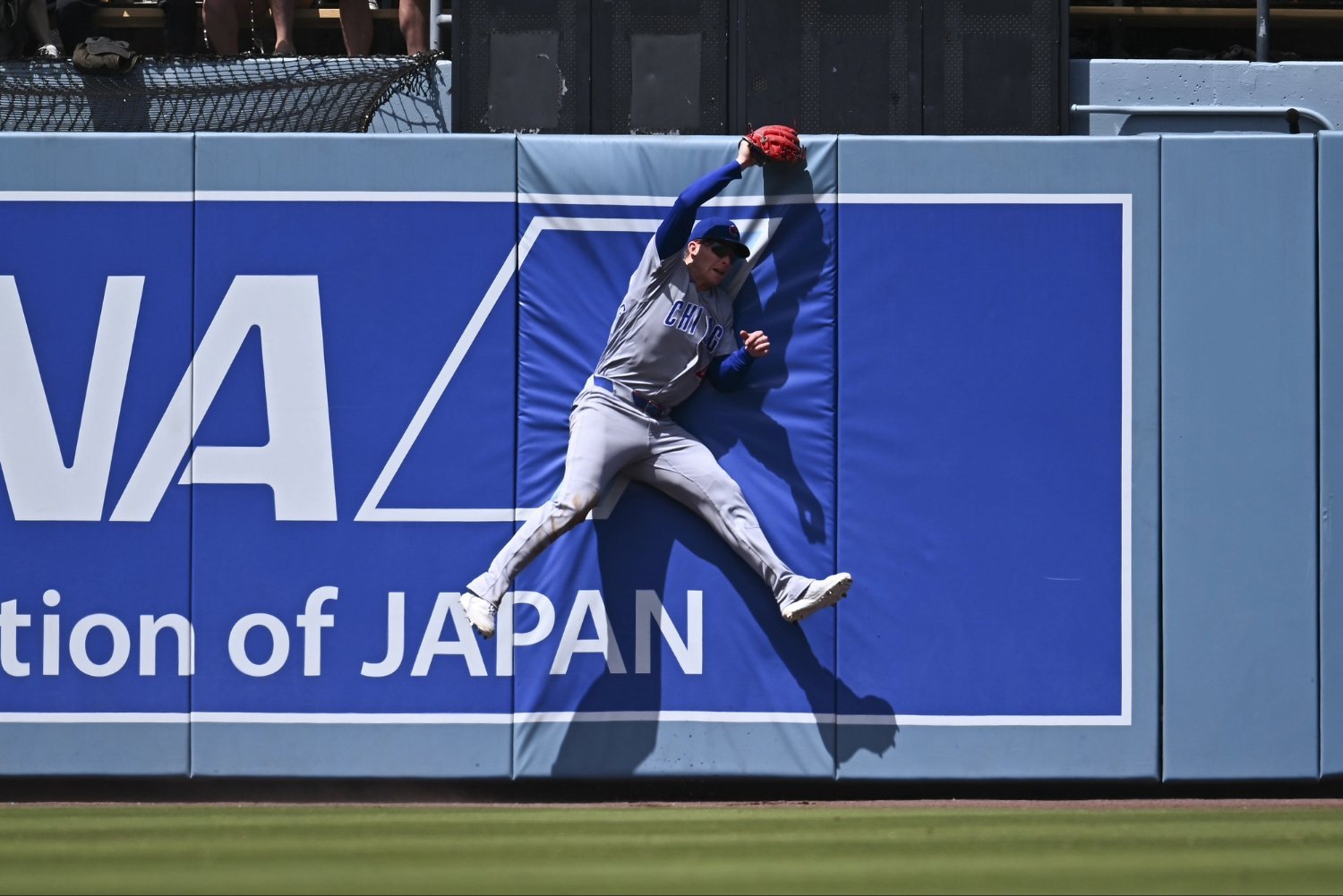 Despite dropping two of three games to the Los Angeles Dodgers over the weekend, things look much better for the Chicago Cubs now than they did a couple of weeks ago. The offense has experienced positive regression, and the pitching staff has held together in the wake of an abnormal number of injuries to the bullpen. What we shouldn't do, however, is underrate the role of defense in this early season turnaround. Defense has been a sort of hallmark of the current front office regime. In 2023, the Cubs ranked eighth as a team in Outs Above Average (16) and ninth in Defensive Runs Saved (33). They followed that up in 2024 with the seventh-ranked OAA (21) and ninth-ranked DRS (37) before shooting up the leaderboard last season, largely courtesy of the addition of Pete Crow-Armstrong to the everyday lineup. Their OAA ranked fourth (29) and their 84 DRS trailed only the Texas Rangers for the top spot. When you consider the roster configuration this season, it's not a surprise that they're on their way to replicating last season's results in 2026. By Outs Above Average, no team has a higher mark than the Cubs' 14 thus far. Their Defensive Runs Saved figure, at 16, reads as the fourth-best. The best way to support a pitching staff navigating as much attrition as the Cubs' is by playing sound defense behind them. Of course, the fact that this is happening isn't something that should ring as too much of a surprise given the names on the roster. Two of the top three spots for individual players in Outs Above Average are occupied by members of the Cubs. Pete Crow-Armstrong and Nico Hoerner each have an OAA of seven to date, a figure which trails only Bobby Witt Jr.'s eight. Crow-Armstrong has a 95 percent success rate against an 87 percent estimated success rate, with the leftover eight percent also trailing only Witt as the league's best. Hoerner isn't far behind there, with a seven percent success rate added. Of the two, Crow-Armstrong has made things look characteristically simple given his first-by-a-mile outfield jump (5.5 feet vs. average). Hoerner, meanwhile, has been a human highlight reel, contributing things like this: And this: And that was just in a single weekend. Those two serving as the linchpins of the Cubs' defensive game certainly tracks. What's somewhat more remarkable about the defense the team is providing, though, is the fact that five other regulars feature, at worst, average OAA numbers. Michael Busch has an OAA of three. Only Willson Contreras has been better at a position that defensive metrics don't particularly love. Likewise, Matt Shaw is at two, with each of Ian Happ, Alex Bregman, and Seiya Suzuki coming in at average (zero OAA). Of the team's regular starting nine, the only member of the group to check in below average defensively (by OAA) is Dansby Swanson. His -1 OAA currently sits at the bottom, which feels somewhat surprising when you consider that he was able to unlock something like this in LA this weekend: It's important to remember that Swanson got off to a bit of a slow start defensively last season. He ended up posting an OAA of four before year's end. Even if the defense has regressed a bit from his peak, it's not as if he's serving as some weak link here. There's been the odd misplay or difficult read pinning his production down a bit to date, but things should even out to be more in line with his defensive counterparts. That Swanson is even at the bottom of the leaderboard for the Cubs speaks to how strong this group has been. Even if we wanted to throw catchers in the mix, the Cubs have a tandem in Miguel Amaya & Carson Kelly that rank 32nd and 34th, respectively, in Catching Runs. The ranking itself isn't favorable given that only 45 catchers qualify for that leaderboard, but the only area where the two check in even slightly below average (-1) is framing. They're otherwise exactly average in the other components of the position (throwing & blocking). When you're able to supplement steady offensive production and a pitching staff that is hanging in there despite a myriad of injuries with defense at this level, you get things like a 10-game winning streak in April. While those other phases of the game have the tendency to wax and wane as a season progresses, defense is one thing that has the ability to remain consistent. So, while we're operating within a small sample for a collection of metrics that notoriously need larger ones, it feels like the defense is as dependable a unit as exists in the league. Even as the lineup and pitching staff regress and rebound according to their nature, the collective defensive effort of the Cubs should help to stabilize things regularly as we approach the summer months. View the full article
 -
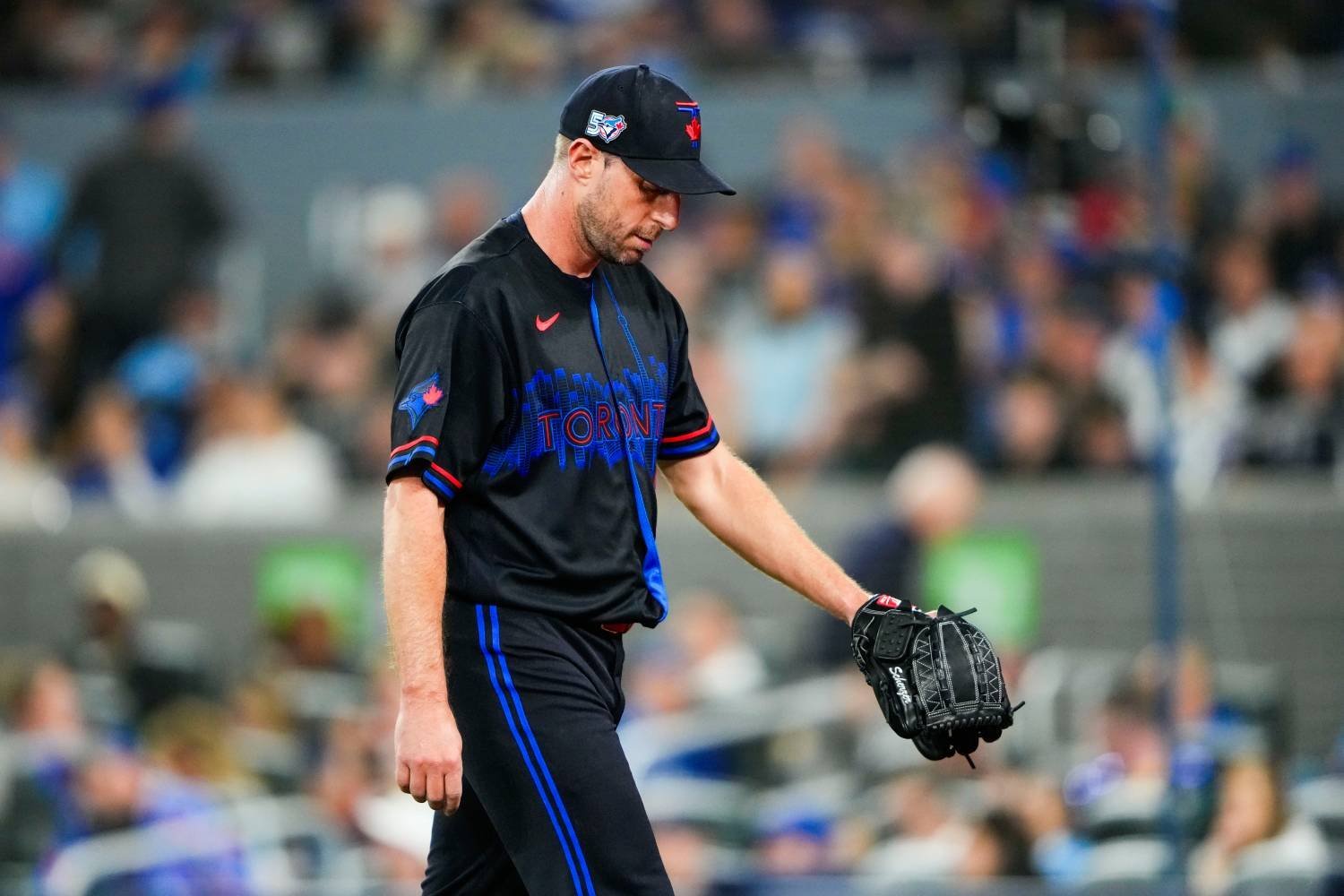 Max Scherzer's mysterious arm issues have landed him on the injured list. Scherzer, who has struggled in the early portion of the season, was placed on the 15-day injured list Monday by the Toronto Blue Jays with right forearm tendinitis and left ankle inflammation. Right-handed reliever Chase Lee was brought up from Triple-A Buffalo. Scherzer had been slated to start Wednesday vs. the Boston Red Sox at the Rogers Centre, so they will need to find a replacement for that game or have a bullpen game. The 41-year-old Scherzer has made five starts and allowed 20 runs on 22 hits with eight walks and 10 strikeouts in 18⅔ innings, resulting in a 9.64 ERA. His injury is the latest blow to a beleaguered Blue Jays pitching staff with eight pitchers currently in the IL, including three on the 60-day IL. Rookie right-hander Trey Yesavage (right shoulder impingement) is set to be activated from the 15-day IL and start Tuesday. Lee was acquired in December from the Detroit Tigers in exchange for left-hander Johan Simon. Lee didn't make the Opening Day roster, so this will be his Blue Jays debut. He made 32 appearances for the Tigers in 2025, with a 4.10 ERA in 37⅓ innings, walking nine and striking out 36. In nine games at Buffalo this year, Lee has a 1.32 ERA with nine walks and 12 strikeouts in 13⅔ innings. View the full article
 -
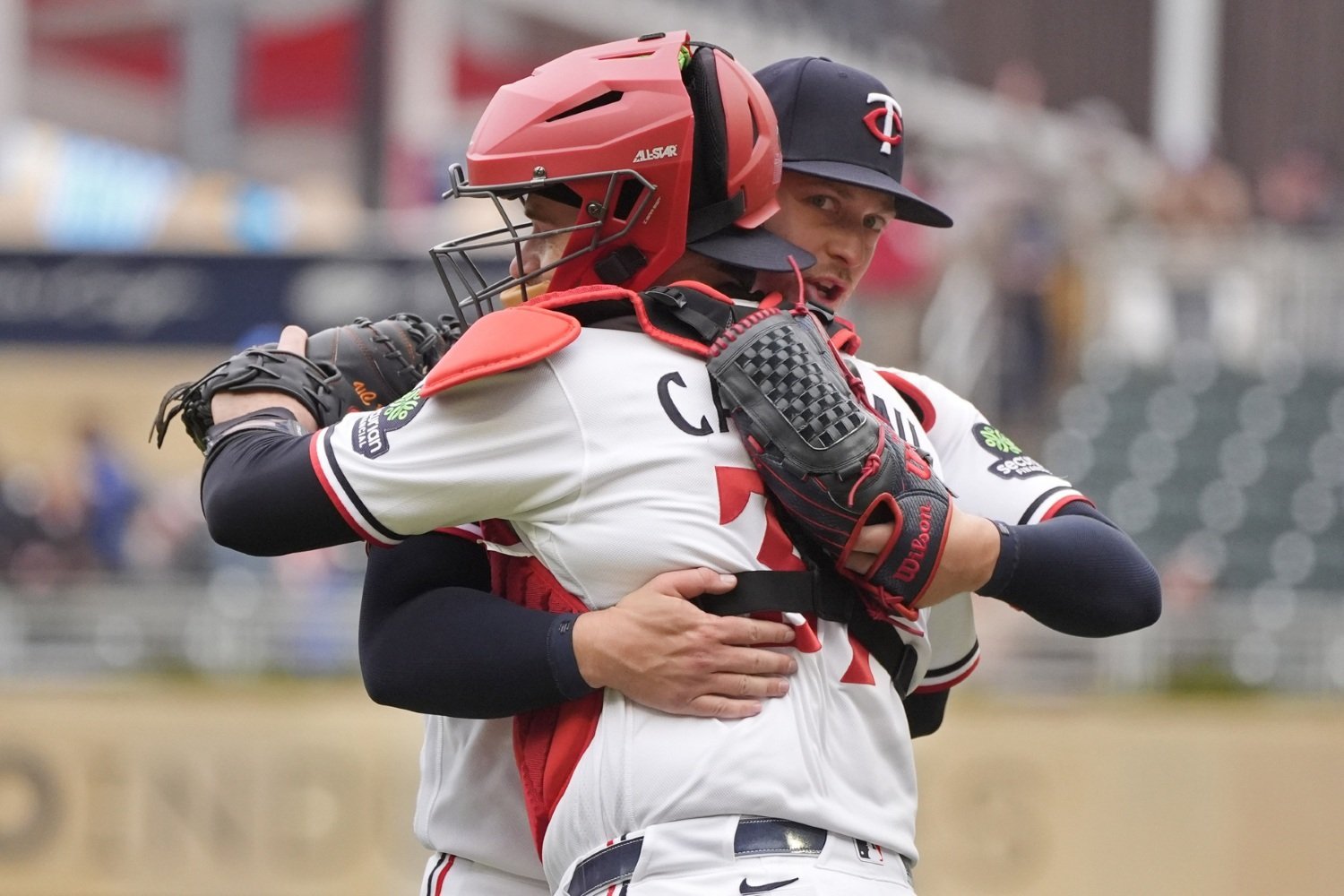 He's not going to make the All-Star team or anything. Victor Caratini has come back to Earth with a much less gentle splash than the Artemis II crew made earlier this spring. He batted a sturdy .271/.373/.354 through his first 14 games and 59 plate appearances of the season, and came up with a couple of big hits along the way. Since then, though, he's been awful: 3-for-24, with six strikeouts and a double-play grounder. Three times in the last seven games he's played, he's reduced the Twins' win probability by over 10% in his turns at bat. His OPS for the season is now .596. Behind the plate, though, he's turned out to be a genius—or, he's playing pretty well and getting a little lucky, to boot. The choice is (partially) yours. Caratini has been the better of the two Twins catchers at pitch framing, worth 1 run already, according to Statcast. He's also been better in the ABS challenge aspect, though—not just better than Ryan Jeffers, or better than average, but better than all but one other catcher in the big leagues. Taken together, those two skills (or is it three? One? Two and a half?) have made up for most of Caratini's shortcomings as a hitter. When the umpire calls a pitch Caratini catches a ball, he's very good at knowing whether or not to challenge. In 13 tries, he's won nine appeals, nudging his team toward the black by ensuring that the zone is the size it ought to be. Just as importantly, though, Caratini is still getting slightly more calls along the edges of the zone than most catchers do, and when opponents challenge those strikes, they lose. Batters are just 4-for-11 when challenging called strikes caught by Caratini this year. Pitch framing, as we've discussed many times, is a many-layered skill. There's some politicking in it. There's a bit of pitch-calling in it—knowing when to test the edges of the zone, and which edges each umpire is most likely to accommodate. Mostly, it's a physical skill, but the mechanics of good framing have evolved over time. When this part of the game was first quantified (around 2010), the best framers were guys with big, strong bodies, who held very quiet positions and caught the ball with minimal movement after setting their targets. Now, in the era of one-knee-down catching, catchers have changed the way they hunt calls. They stick out their mitts to present a target (which might be the real one, or not), then drop it toward the ground and try to catch the ball with the mitt in motion. It's not about being quiet. It's about making it look like the ball was right in the fat of the zone, whether that's remotely true or not. It makes fans howl a bit more about calls than they should, at times, but when you're on the field, it makes sense. This is how catchers have come to avail themselves of the rising baseline of athleticism throughout the league, which reaches down even into their squats. If you're Caratini, then, the goal is to catch the ball with a movement that anticipates the movement and location of the pitch and smoothly steer it toward the center of the zone, all in one movement. Umpires don't always fall for this, anymore. They've gotten steadily more accurate over the last two decades; the implementation of the ABS system is more about the technology finally being ready to boost the accuracy of the zone than about some pressing need to amend umpires failing at their jobs. They do fall for it sometimes, though, and they rarely punish catchers for being noisy when the pitch really is in the zone. After all, every catcher does this, now. Caratini has succeeded at that very often this year. To get a good look at how, let's focus on one corner of the zone: his glove-hand side, down. These are pitches low and in to righties, low and away from lefties. They look like this. cU93MFFfWGw0TUFRPT1fQndSU1ZsSURWZ2NBWFZWV0J3QUhCQWRSQUZsUVZnTUFBVndIQmxFR1UxRlhDVlFG.mp4 That's a good, solid catch on a pitch from Taylor Rogers that nailed its spot. It was a strike, and it was probably going to be called one, anyway. Caratini was actually a hair late, here, jerking the ball upward—ah, but maybe that was a good thing, rather than a bad one. As you can see at the tail end of the clip, Reds hitter Dane Myers challenged this call. He wrong to do so, and the choice to challenge was a dubious one, given the count and the location of the pitch, but Caratini's slightly late move might have fooled him (even if Caratini didn't really mean to do so) into costing his team a challenge for later in the game. Here's another instance of the same thing, only different. TzA0VmxfWGw0TUFRPT1fVTFOU0FRRlhWZ2NBRGdaVVZ3QUhDQTVTQUFBRVYxTUFVQVpSQXdGUVZWSmNBZ05m.mp4 This is a picture-perfect modern frame job by Caratini. The orientation of his body gives the umpire a good look at the pitch as it slants across the zone. His catch anticipates the ball trying to work its way off the corner, and he brings it up and holds it on the edge of the zone nicely. However, because the matchup here was left-on-left and the pitch was a slider, Juan Soto was fooled. Lefty batters make very bad decisions about challenging against lefty pitchers and on pitches along the outer edge; they do especially badly when both things are true. Soto's head turned slightly to follow the ball to the mitt, and maybe he saw the move from Caratini out of the corner of his eye. Maybe he just thought that pitch had to be a ball, given the angle of its movement away from him. Either way, he challenged this call, too, and was wrong again. Caratini isn't always as clean when catching the ball in that spot, but unlike Soto and Myers, he sees the ball exceptionally well when it's thrown there. He knows, for instance, when he's let a Taj Bradley fastball beat him to its spot and lost a call on a pitch that really nipped the zone. In the past, there would have been nothing to do but rue that loss, but now, he has a recourse—and he takes it. ckR3NW9fWGw0TUFRPT1fQVFaWkJnRlJCUUFBWEFRREFBQUhCUUpVQUZrQ1dsSUFWMUJRQWxZRVZBTUhCUVlE.mp4 In fact, this exact thing has happened with Bradley's heater three times this year: the pitch zips in on the high side of 97 MPH; Caratini can't quite catch it with a good enough frame to earn the call; but he challenges the call and earns the strike, anyway. Something slightly different happened here, with Mick Abel throwing a changeup. ZU53T0FfWGw0TUFRPT1fVUFBQVhRRUFVQVFBQUZCWEJ3QUhVbFZUQUFNQ1ZRUUFCUUFEVlZVSEFRdFZCd29B.mp4 This pitch tailed a bit more than Caratini thought it would, and he stabbed out toward the edge of the plate more than he'd expected to need to. However, even as he did that (and then brought the ball back to the zone), he knew it had been a strike, so when the call didn't come, he had the confidence to challenge it—even though it was the first inning. All told, relative to the expected challenges for and against him and the success rates of each, Caratini has earned the Twins 11.6 extra calls via the ABS system this year, according to Statcast. Only Cal Raleigh has earned more, mostly by fooling batters with his own noisy catching style: hitters are 2-for-18 when challenging Raleigh's calls. Put together framing and ABS-related value (which are distinct; Statcast's model grades framers based on the initial call to keep the two separate), and Caratini is one of the most valuable catchers in baseball. He often gets the calls on the edges, and when he doesn't, he's good at knowing whether he should have. In that low, mitt-hand corner of the zone, alone, he's earning a called strike rate of 38.3%, relative to the league's average of 30%—and he's added four more calls to that by challenging, while hurting the other team by prompting misbegotten challenges three times. That's a lot of value in a small amount of real estate. Statcast estimates that Caratini has been worth 3.1 runs relative to an average catcher, combining these two skills. He's on pace to be worth over 15 runs in that department, despite playing less than half the time behind the dish. That pace probably won't hold, but Caratini is a genius of the modern art of catching—of both crafting the zone and enforcing it, and tricking some opponents into self-defeating behavior. To whatever extent this skill proves real, it's enormously useful, especially for a Twins pitching staff that won't miss many bats and needs to steal strikes to survive their poor defense. View the full article
 -
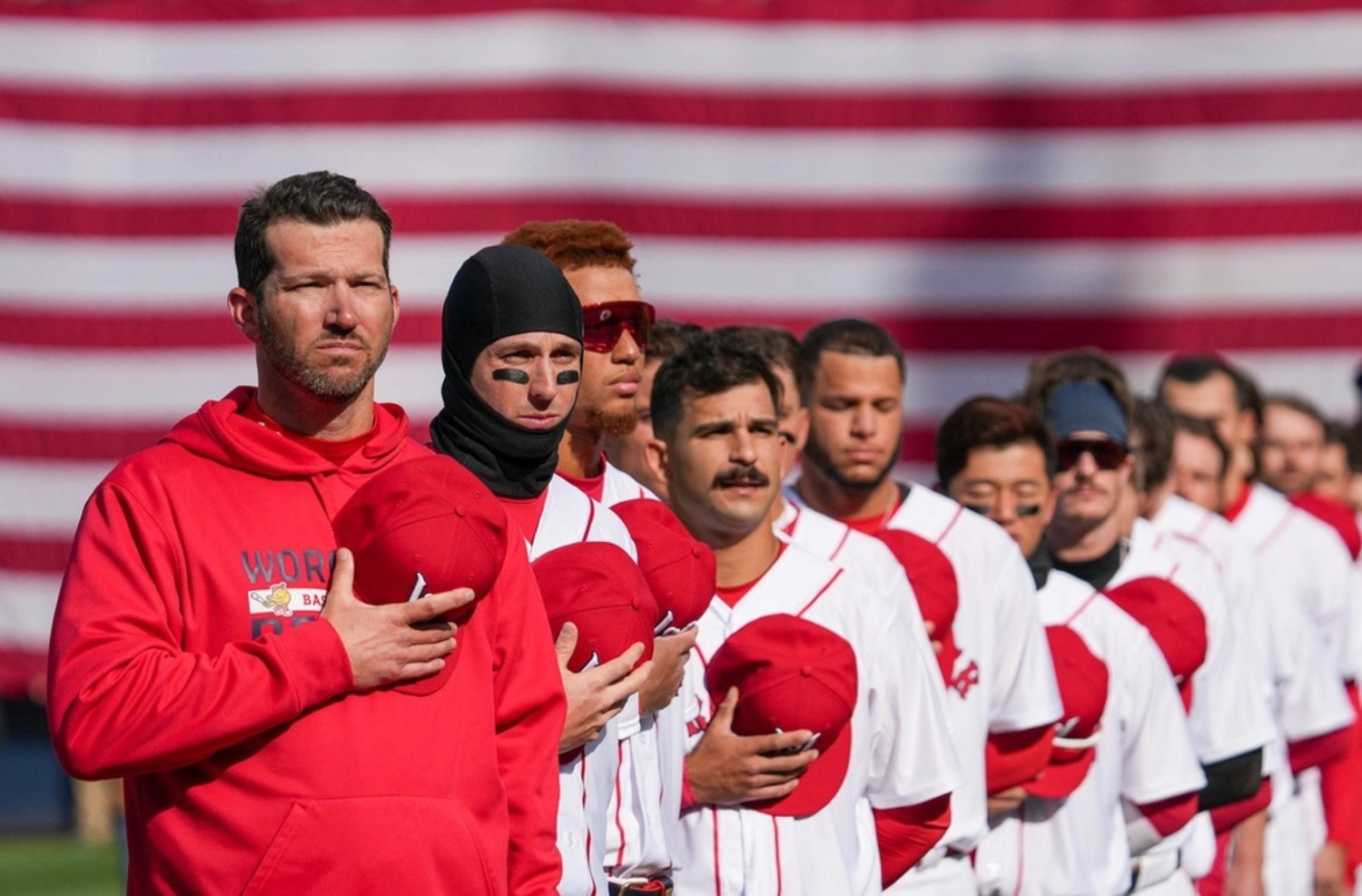 Worcester, MA — Following a 17-1 victory over the Baltimore Orioles, the Boston Red Sox organization shockingly relieved Alex Cora and several members of his coaching staff of their duties. Among the changes in the coaching staff, Worcester manager Chad Tracy was promoted to interim manager of the Boston Red Sox. While Tracy was managing the Red Sox to a 5-3 victory on Sunday that clinched not just his first major-league win but also his 500th career managerial win, players both past and present gave their thoughts about the newest Red Sox manager. “He’s more than ready to be a big-league manager. I think those guys are gonna be pumped to have him and ready to play their asses off for him,” former Red Sox pitcher David Sandlin stated when asked about his former manager getting the promotion to Boston. “Trace is the man. He’s a player’s manager, just a guy that doesn’t have an ego and knows how to get the most out of his players. For me, he was a really calming voice when all the alarm bells were going off during the relieving experiment last year.” Sandlin, who only played for Tracy and Worcester for the final two months of the 2025 season, is hardly the only former Sox player with fond things to say of Tracy. “[He] holds guys accountable and knows how to encourage the guys to put in the work,” former Red Sox pitcher Hunter Dobbins explained. Dobbins spent parts of two seasons in Worcester, getting to spend plenty of time with Tracy, especially in 2025 when he bounced between Worcester and Boston. “Couldn’t be happier for him to get this shot and [Chad] Epperson as well.” Tracy is no stranger to the Boston organization, having managed their Triple-A team since the 2022 season. A former ball player himself, the new Red Sox manager spent eight years playing in the Rockies, Rangers and Royals organizations where he hit .265/.336/453 in 857 games. After being let go by the Royals organization in 2013, he spent the remainder of 2013 and all of 2014 with the York Revolution of the Atlantic League before retiring. Following his retirement as a player, Tracy began his coaching career in the Los Angeles Angels' system. First as the manager of the Class-A Burlington Bees in 2015 before managing the High-A Inland Empire 66ers from 2016 to 2017. Following the 2017 season, Tracy was the minor-league field coordinator for four seasons before being named Worcester's manager for 2022. Since joining the Red Sox organization, Tracy had been a consistent figure in Triple-A, as he led the WooSox to a winning season every year, including back-to-back 79-win seasons in 2023 and 2024. And just as Tracy is no stranger to the organization, the players in Boston are no strangers to him either. Of the active roster, half of them have spent time developing under him. Including rehab assignments, 16 of the players currently in Boston at the time of his promotion have played for him. And that’s not even taking into account his presence during spring training and being an important member of the staff in major-league camp. “He’s the ultimate professional. I think he commands the respect of everyone in the room and he’s a really smart baseball mind,” Nick Sogard explained Sunday while talking to the media. Sogard has ample experience with Tracy, having played 387 games under him. “I had a lot of good relationships with the guys that got fired, so that was a bummer for me personally. But I’m really happy for Trace.” For someone like Tracy, a former third-round pick who made it to Triple-A as a player, this has been a call he’s been waiting for. An experience that even the players knew was special. “I’ve seen over the course of the years here, so many players get called up. They pack all their stuff in the cart, so it’s kind of unique to see that with the manager and hitting coach. That felt like a unique experience and was cool to see someone I care about a lot fulfilling a lifelong dream,” Sogard told the media when asked about the emotions of seeing Tracy off after Saturday’s victory in Worcester. In the moment of it all, the players knew they had a game to play, but the outside noise was creeping into the back of their minds. They couldn’t help but wonder what was going on, especially after Tracy left the dugout. Instead, he never returned for the remainder of the game. Defensive and third base coach Iggy Suarez instead handled the remainder of the game, and he'll now serve as the interim replacement in Worcester. “We didn’t know if a trade was happening, but we just tried to win the game it was all we could worry about. So, we were focused on that. Then we got back in, he was in street clothes already. So, then it was like, oh, all right. He was like ‘hey guys, you know, stuff happened and they asked me to go up and be an interim manager’. We were all like, dude you deserve it,” Nathan Hickey explained. Hickey had spent parts of three seasons under Tracy, playing a total of 224 games for him. Boston will be in good hands with Tracy at the helm, a baseball lifer that has a track record of holding the respect of all within a room. He’s the right man to replace Cora following a disastrous start to the season. With the season looking grim and a roster filled with young talent and veterans alike, Tracy will now be tasked with continuing what he managed to do in Worcester for so long: help develop players while holding the team to a respectable standard of winning. View the full article
 -
Mets Minor League Report: Affiliates Split Six-Game Slate
DiamondCentric posted an article in Grand Central Mets
 Syracuse fell 6-2 at Worcester, where Jonah Tong struck out six over 4 2/3 innings in the loss. Binghamton split a doubleheader with Erie, as Jonathan Santucci struck out eight in the 5-1 opener loss before a five-pitcher relay produced a 5-2 win in the nightcap. Brooklyn beat Hudson Valley 6-2 on a Mitch Voit homer, then dropped the nightcap 7-2. St. Lucie cruised to a 12-2 win over Palm Beach behind three home runs. Mets Transactions New York Mets recalled RHP Austin Warren from Syracuse Mets. Tong Solid But Three-Run Blast Beats Syracuse 6-2 At Worcester Syracuse fell 6-2 at Worcester behind a middling start from Jonah Tong. The right-hander worked 4 2/3 innings, allowing five hits, three earned runs, three walks, and six strikeouts. Worcester broke open a scoreless game in the bottom of the third inning when a three-run home run cleared the left-field fence to put the Red Sox up 3-0. Syracuse pulled within one in the top of the fifth when Yonny Hernández singled to start the rally, Trace Willhoite doubled him in, and Ben Rortvedt scored two batters later on leadoff hitter Nick Morabito's run-scoring groundout to make it 3-2. The Mets could not draw any closer. Worcester added a run in the bottom of the sixth on a run-scoring single off Jonathan Pintaro, and the Red Sox tacked on two more in the bottom of the seventh on a sacrifice fly and a run-scoring single. Pintaro was charged with three earned runs in two innings, allowing four hits and three walks. Anderson Severino tossed a clean inning of relief, and Mike Baumann recorded a strikeout in his 1/3 of an inning. Hernández finished 2-for-4 with a run, Willhoite doubled and drove in a run, and Morabito doubled and drove in a run. Syracuse collected seven hits, struck out 14 times, and left four runners on base. Player AB R H RBI BB K Nick Morabito 4 0 1 1 0 1 Vidal Bruján 4 0 0 0 0 2 Ryan Clifford 4 0 1 0 0 3 Christian Arroyo 4 0 1 0 0 2 Cristian Pache 4 0 0 0 0 3 Yonny Hernández 4 1 2 0 0 0 Hayden Senger 3 0 0 0 0 1 Ben Rortvedt 3 1 1 0 0 1 Trace Willhoite 3 0 1 1 0 1 Player IP H R ER BB K HR Jonah Tong 4.2 5 3 3 3 6 1 Jonathan Pintaro 2.0 4 3 3 3 1 0 Mike Baumann 0.1 0 0 0 0 1 0 Anderson Severino 1.0 1 0 0 0 0 0 Santucci Strikes Out Eight In Binghamton's 5-1 Doubleheader Opener Loss Binghamton dropped the doubleheader opener 5-1 to Erie. Starter Jonathan Santucci took the loss after 5 1/3 innings in which he allowed four hits, four earned runs, three walks, and eight strikeouts. Erie struck for three runs in the top of the first inning on a run-scoring double and a run-scoring single. Leadoff hitter A.J. Ewing got the Rumble Ponies on the board in the bottom of the first by drawing a walk, stealing second base, and scoring on Jacob Reimer's run-scoring single. Santucci settled in and held Erie scoreless from the second through the fifth innings while striking out the side twice. Erie added two more runs in the top of the sixth on a two-out, two-run double after Santucci was lifted with a runner already on base. Matt Turner inherited Santucci's runner, who scored, and was charged with one earned run in 2/3 of an inning. Felipe De La Cruz worked a clean seventh, walking two and striking out one. Reimer led the offense with a 1-for-3 night, an RBI, and the run-scoring single. Wyatt Young added a single, and Ewing reached three times with two walks, a stolen base, and a run scored. Binghamton finished with two hits, five walks, struck out seven times, and left eight runners on base. Player AB R H RBI BB K A.J. Ewing 2 1 0 0 2 1 Marco Vargas 3 0 0 0 1 1 Jacob Reimer 3 0 1 1 0 0 Chris Suero 2 0 0 0 1 1 Jose Ramos 2 0 0 0 0 0 JT Schwartz 2 0 0 0 1 1 Nick Lorusso 2 0 0 0 0 1 Matt Rudick 3 0 0 0 0 2 Wyatt Young 3 0 1 0 0 0 Player IP H R ER BB K HR Jonathan Santucci 5.1 4 4 4 3 8 0 Matt Turner 0.2 1 1 1 1 2 0 Felipe De La Cruz 1.0 0 0 0 2 1 0 Vargas Drives In Three As Binghamton Takes Nightcap 5-2 Binghamton bounced back to take the nightcap 5-2 over Erie behind a 3-for-3 game from Marco Vargas, who tripled, doubled, singled, and drove in three runs. Bulk pitcher Jordan Geber worked three innings, allowing five hits, one earned run, four strikeouts, and a solo home run. The Rumble Ponies set the tone in the bottom of the first when leadoff hitter A.J. Ewing tripled, and Vargas tripled him home, and Vincent Perozo scored on a passed ball during Jacob Reimer's walk to make it 2-0. Erie tied the game with a solo home run in the top of the second, but Vargas struck again in the bottom half with a run-scoring single that scored Perozo and put Binghamton ahead 3-1. The Rumble Ponies broke things open in the bottom of the fifth on Vargas's run-scoring double that brought home Ewing and Kevin Parada's run-scoring single that plated Vargas for a 5-1 lead. Erie scratched out a run in the top of the sixth on a run-scoring double. Saul Garcia, Jefry Yan, Zach Peek, and Kevin Gowdy each notched a hold, Douglas Orellana picked up the win with a clean inning of two strikeouts, and Brian Metoyer recorded the save. Eli Serrano III added a double, Wyatt Young singled, Perozo singled and scored, and Ewing finished 2-for-3 with the triple, a walk, and a stolen base. Player AB R H RBI BB K A.J. Ewing 3 2 2 0 1 1 Marco Vargas 3 2 3 3 1 0 Jacob Reimer 2 0 0 0 2 1 Eli Serrano III 3 0 1 0 0 0 Jose Ramos 3 0 0 0 0 2 Kevin Parada 3 0 1 1 0 1 Matt Rudick 3 0 0 0 0 0 Vincent Perozo 3 1 1 0 0 0 Wyatt Young 3 0 1 0 0 2 Player IP H R ER BB K HR Jordan Geber 3.0 5 1 1 0 4 1 Douglas Orellana 1.0 0 0 0 0 2 0 Jefry Yan 1.0 0 0 0 1 2 0 Zach Peek 0.1 1 1 1 1 1 0 Saul Garcia 0.2 0 0 0 0 2 0 Kevin Gowdy 0.1 1 0 0 2 0 0 Brian Metoyer 0.2 0 0 0 0 2 0 Voit's Two-Run Homer And Stout Pitching Power Brooklyn Past Hudson Valley 6-2 Brooklyn opened the doubleheader with a 6-2 win at Hudson Valley behind a balanced offense and 4 1/3 innings of two-hit work from Channing Austin, who walked three and struck out three. Hoss Brewer picked up the win with 1 2/3 hitless innings. The Cyclones broke through in the top of the second when Kevin Villavicencio singled in Colin Houck, and leadoff hitter Mitch Voit followed two batters later with a two-run home run that brought home Villavicencio for a 3-0 lead. Ronald Hernandez pushed the margin to 4-0 in the top of the fifth with a run-scoring double that scored Antonio Jimenez, and Villavicencio added a two-run single in the top of the sixth that scored John Bay and Houck for a 6-0 advantage. Hudson Valley pulled within four in the bottom of the seventh on a two-run home run charged to Juan Arnaud, who took over for Danis Correa with one out. Houck went 2-for-4 with a double, two runs, and a stolen base. Hernandez added a double and a stolen base, and Villavicencio finished 2-for-3 with three RBIs and a stolen base. Voit went 1-for-3 with the home run, two RBIs, and a stolen base. Brooklyn collected nine hits, drew two walks, struck out 11 times, swiped five bases, and left eight runners on base. Player AB R H RBI BB K Mitch Voit 3 1 1 2 0 0 Antonio Jimenez 3 1 0 0 1 1 Corey Collins 4 0 1 0 0 3 Ronald Hernandez 4 0 2 1 0 0 Daiverson Gutierrez 4 0 0 0 0 2 John Bay 2 1 1 0 1 0 Colin Houck 4 2 2 0 0 1 Yohairo Cuevas 4 0 0 0 0 4 Kevin Villavicencio 3 1 2 3 0 0 Player IP H R ER BB K HR Channing Austin 4.1 2 0 0 3 3 0 Hoss Brewer 1.2 0 0 0 0 1 0 Danis Correa 0.2 0 1 1 1 1 0 Juan Arnaud 0.1 1 1 1 0 1 1 Five-Run Fourth Sinks Brooklyn In 7-2 Nightcap Loss Brooklyn dropped the nightcap 7-2 at Hudson Valley as a five-run fourth inning broke open a tight game. Cleanup hitter Corey Collins gave the Cyclones an early lead with a solo home run to right-center field in the top of the first inning. Opener Dylan Ross worked a clean first, allowing no hits and striking out one. Jonathan Jimenez took the loss after three innings, allowing five hits, six earned runs, three walks, two strikeouts, and a home run. Hudson Valley tied the game in the bottom of the fourth on a ground-rule double, then took the lead on a three-run home run to make it 4-1. The Renegades added two more in the bottom of the fifth on a run-scoring single deflected by Mitch Voit and a run-scoring groundout to push the deficit to 7-2. Brooklyn cut a run back in the top of the fifth when Voit walked, stole second base, stole third, and scored on an error during Antonio Jimenez's strikeout. Cristofer Gomez worked a clean inning of relief with two strikeouts, and Bryce Jenkins followed with a hitless seventh. Voit finished 1-for-3 with a walk, a run, and two stolen bases. Collins went 1-for-2 with the home run, a walk, and an RBI. Ronald Hernandez added a single. Brooklyn collected three hits, drew five walks, struck out seven times, and left six runners on base. Player AB R H RBI BB K Mitch Voit 3 1 1 0 1 0 Antonio Jimenez 4 0 0 0 0 2 Corey Collins 2 1 1 1 1 0 John Bay 1 0 0 0 2 0 Ronald Hernandez 3 0 1 0 0 1 Yohairo Cuevas 3 0 0 0 0 0 Kevin Villavicencio 2 0 0 0 0 2 Diego Mosquera 3 0 0 0 0 1 Heriberto Rincon 2 0 0 0 1 1 Player IP H R ER BB K HR Dylan Ross 1.0 0 0 0 0 1 0 Jonathan Jimenez 3.0 5 7 6 3 2 1 Bryce Jenkins 1.0 1 0 0 0 0 0 Cristofer Gomez 1.0 0 0 0 2 2 0 Three Home Runs And A Big Day From Guzman Lift St. Lucie 12-2 Past Palm Beach St. Lucie pounded out 14 hits and three home runs in a 12-2 rout of Palm Beach. Starter Nicolas Carreno worked four innings of one-hit ball, walking two and striking out five. Emilio Obispo earned the win with four innings of two-hit work, allowing one earned run with one walk and four strikeouts. The home offense broke a scoreless tie in the bottom of the second on Simon Juan's three-run inside-the-park home run that scored Randy Guzman and AJ Salgado. Guzman struck again in the bottom of the third with a two-run home run to left field that brought home Sam Robertson for a 5-0 lead. The Mets pushed the margin to 7-0 in the bottom of the fourth on a run-scoring fielder's choice and Sam Robertson's run-scoring single. Palm Beach pulled two back with a run in the top of the fifth on a run-scoring single off Luke Jackson and a sacrifice fly in the top of the sixth. St. Lucie answered immediately in the bottom of the sixth on JT Benson's two-run double that scored Branny De Oleo and leadoff hitter Sam Biller. Francisco Toledo capped the scoring with a three-run home run in the bottom of the eighth that scored Guzman and Chase Meggers. Guzman finished 3-for-4 with the home run, two doubles, three runs, and two RBIs. De Oleo went 3-for-4 with two stolen bases, and Biller, Robertson, Benson, Salgado, Juan, Meggers, and Toledo each contributed at least one hit. St. Lucie drew six walks, struck out 10 times, swiped five bases, and left seven runners on base. Player AB R H RBI BB K Sam Biller 4 2 1 1 1 1 Sam Robertson 4 1 2 1 1 1 JT Benson 5 0 1 2 0 3 Randy Guzman 4 3 3 2 1 1 AJ Salgado 5 1 1 0 0 2 Simon Juan 5 1 1 3 0 0 Chase Meggers 3 2 1 0 2 1 Francisco Toledo 5 1 1 3 0 1 Branny De Oleo 4 1 3 0 1 0 Player IP H R ER BB K HR Nicolas Carreno 4.0 1 0 0 2 5 0 Luke Jackson 1.0 3 1 0 0 0 0 Emilio Obispo 4.0 2 1 1 1 4 0 Top-20 Prospect Performance Nolan McLean: DNP Carson Benge: DNP A.J. Ewing: G1 0-for-2, 2 BB, K, R, SB; G2 2-for-3, 3B, BB, K, 2 R, SB Jonah Tong: 4 2/3 IP, 5 H, 3 R, 3 ER, 3 BB, 6 K, 1 HR Ryan Clifford: 1-for-4, 3 K Jacob Reimer: G1 1-for-3, RBI; G2 0-for-2, 2 BB, K Jack Wenninger: DNP Elian Pena: DNP Mitch Voit: G1 1-for-3, HR, 2 RBI, R, SB; G2 1-for-3, BB, R, 2 SB Nick Morabito: 1-for-4, 2B, RBI, K Jonathan Santucci: 5 1/3 IP, 4 H, 4 R, 4 ER, 3 BB, 8 K Chris Suero: 0-for-2, BB, K Zach Thornton: DNP Wandy Asigen: DNP Will Watson: DNP Eli Serrano III: 1-for-3, 2B Ryan Lambert: DNP Dylan Ross: 1.0 IP, 0 H, 0 R, 0 ER, 0 BB, 1 K Antonio Jimenez: G1 0-for-3, BB, K, R; G2 0-for-4, 2 K R.J. Gordon: DNP View the full article
 -
 New York Mets Weekly Snapshot Record Last Week: 2-4 Runs Scored Last Week: 20 Runs Surrendered Last Week: 28 Standings: 5th in NL East 10.5 GB of 1st Place Transactions: 4/16 New York Mets sent LHP A.J. Minter on a rehab assignment to Brooklyn Cyclones. 4/16 New York Mets traded LHP Richard Lovelady to Washington Nationals for cash. 4/18 New York Mets placed 2B Jorge Polanco on the 10-day injured list retroactive to April 15, 2026. Right wrist contusion. 4/18 New York Mets recalled C Hayden Senger from Syracuse Mets. 4/22 New York Mets sent LHP A.J. Minter on a rehab assignment to Syracuse Mets. 4/22 New York Mets activated RF Juan Soto from the 10-day injured list. 4/22 New York Mets optioned C Hayden Senger to Syracuse Mets. 4/23 New York Mets placed SS Francisco Lindor on the 10-day injured list. Left calf strain. 4/23 New York Mets recalled 3B Ronny Mauricio from Syracuse Mets. 4/23 New York Mets optioned RHP Austin Warren to Syracuse Mets. 4/23 New York Mets recalled RHP Christian Scott from Syracuse Mets. 4/24 New York Mets selected the contract of RHP Carl Edwards Jr. from Syracuse Mets. 4/24 New York Mets optioned RHP Christian Scott to Syracuse Mets. 4/25 New York Mets sent RHP Joey Gerber on a rehab assignment to St. Lucie Mets. 4/26 New York Mets recalled RHP Austin Warren from Syracuse Mets. Scores: Game 22 (4/21): NYM 3, MIN 5 Game 23 (4/22): NYM 3, MIN 2 Game 24 (4/23): NYM 10, MIN 8 Game 25 (4/24): NYM 3, COL 4 Game 26 (4/26 G1): NYM 1, COL 3 Game 27 (4/26 G2): NYM 0, COL 3 Series Breakdown/Highlights Twins Series The Mets welcomed the Twins to Citi Field after their disastrous six-game West Coast trip. The first game wound up being an extension of that road trip. Nolan McLean was perfect through five innings, and had a 3-0 lead after a Francisco Lindor three-run shot. A two-run homer off the bat of Byron Buxton in the sixth inning and an RBI single by Luke Keaschall tied the game. In the ninth inning, the Mets brought in their closer, Devin Williams, who imploded. He walked two to lead off the inning before a defensive misplay on a bunt loaded the bases with no outs. An RBI single and an RBI walk gave the Twins a 5-3 lead, and that was all she wrote. The Mets bounced back in game two, getting their first win in over two weeks. The Mets and Twins were tied going into the late innings when a ball that could have been caught off the bat of Vientos fell for an RBI single. Luke Weaver, another former Yankees closer who earned the win, slammed the door in a much-needed bullpen reprieve. In game three, it was mostly a bullpen game with starter Christian Scott walking five batters in 1.1 innings. The Mets jumped out to a five-run lead at the end of the second inning and healed that. The Twins were chipping away, dragging things down to four-run lead going into the eighth inning. Then, the Twins loaded the bases with two outs. Ryan Jeffers would hit a game-tying grand slam, deflating every Mets fan out there. Then, the Mets fought back to load the bases with two outs in the bottom of the inning and Bo Bichette hit a three-run double to give the Mets a 10-7 lead. After Huascar Brazoban got the first out in the bottom of the ninth inning, Devin Williams came in to get the final two outs. It did not come easy as with two outs he allowed a run and put the go-ahead run at the plate. He was able to strike out Trevor Larnach to end the game and secure a series win. Rockies Series The Mets were looking to build off of their series win against the Twins earlier in the week. So much for that idea. They failed to do so in game one of the series. as their eighth-inning comeback fell short, ultimately losing to the Rockies 4-3. They had a 1-0 lead early before Freddy Peralta gave up an RBI groundout in the fifth inning to tie it up. He then gave up the game on an RBI double by Jake McCarthy. The Rockies would pad their lead on a two-run single by Troy Johnston. A two-run single by Brett Baty would bring the Mets within a run, but it was not meant to be. Due to rain, there was no game Saturday; instead a doubleheader was played Sunday. Game one was not great for the Mets. Nolan McLean had solid stuff in the outing, but in the fifth and sixth innings he got in trouble allowing a total of two runs. An RBI single off Brazoban gave the Rockies all they needed. The lone run the Mets scored was on a solo home run off the bat of Tyrone Taylor. Game three saw Kodai Senga give up three runs in 2.2 innings. It was a single by Troy Johnston and a two-run homer by Hunter Goodman that did him in. Carl Edwards Jr. gave the Mets 3.1 innings of hitless relief after coming in for Senga. Luke Weaver, Brooks Raley, and perhaps most importantly, Devin Williams, all pitched scoreless innings. The Mets did not score a run in game two of the double header. Getting swept by the Rockies isn't exactly a path toward success. Website Highlights Mets Bright Spots: Breaking Down the Numbers Behind Huascar Brazobán's Breakout Season Juan Soto Has Never Had A Better Chance to Win MVP Nolan McLean Is Really Good At Throwing A Baseball, But You Knew That Already Looking Ahead April 27th: OFF April 28th (vs. WAS, 7:10pm EST): RHP Zack Littell (0-3, 7.56) vs. RHP Clay Holmes (2-2, 2.10) April 29th (vs. WAS, 7:10pm EST): RHP Cade Cavalli (0-1, 4.01) vs. TBD April 30th (vs. WAS, 1:10pm EST): RHP Miles Mikolas (0-3, 8.49) vs. RHP Freddy Peralta (1-3, 3.90) May 1st: at LAA (9:38pm EST) May 2nd: at LAA (9:38pm EST) May 3rd: at LAA (4:07pm EST) View the full article
 -
Should We Be Concerned about Walker Jenkins Cold Start?
DiamondCentric posted an article in Twins Daily
 Walker Jenkins has been slow out of the gate to start 2026. Is there reason for concern long term, or is the 21-year-old just battling through the coldest weather he's ever played in? View the full article
 -
 San Diego Padres Weekly Snapshot Record last week: 3-2 Runs scored last week: 27 Runs allowed last week: 32 Random Stats Eight of Randy Vasquez's 51 starts as a Padre have come against the Rockies. He hasn't made more than four against any other team. Since their expansion season of 1969, the Friars have 115 1-0 victories, which ranks third in MLB during that span. Only the Los Angeles Dodgers (143) and New York Mets (120) have more. The Padres have outscored their opponents 25-1 in the ninth inning this season. Their 25 runs in the ninth lead MLB. After Thursday's rally, the Padres were the only team in MLB this season to come back from three runs down in the ninth inning or later and won. They have done so twice this year. Saturday was the fifth time already this season the Friars have come back from a four-run deficit at any point of the game to win, two more than any other team. The Padres had a grand total of two last year. The Padres are 18-9 for the third-best record in MLB and half a game behind the NL West-leading Los Angeles Dodgers (19-9). Atlanta leads MLB at 20-9. Transactions Wednesday: Signed free-agent RHP Lucas Giolito and assigned him to Low-A Lake Elsinore. Wednesday: Transferred RHP Bryan Hoeing (torn right flexor tendon) from the 15-day injured list to the 60-day injured list. Friday: Sent RHP Jeremiah Estrada on a rehab assignment to Lake Elsinore. Saturday: Recalled 3B Sung-Mun Song from El Paso as extra player for Mexico City Series. Website Highlights Giolito is the best answer the Padres could have come up with — Randy Holt Padres are winning in spite of their offense — Randy Holt How the Seidler family revamped the Padres — Andy Johnson How the 2026 Padres stack up in a deep NL — Brendan Dentino Looking Ahead Monday: Cubs (Matthew Boyd) at Padres (Randy Vasquez), 6:40 p.m. Tuesday: Cubs at (Edward Cabrera) Padres (Walker Buehler), 6:40 p.m. Wednesday: Cubs at (Jameson Taillon) Padres (Matt Waldron), 1:10 p.m. Thursday: Off Friday: White Sox (Noah Schultz) at Padres (German Marquez), 6:40 p.m. Saturday: White Sox (Sean Burke) at Padres (Michael King), 5:40 p.m. Sunday: White Sox (Anthony Kay) at Padres (Randy Vasquez), 1:10 p.m. View the full article
 -
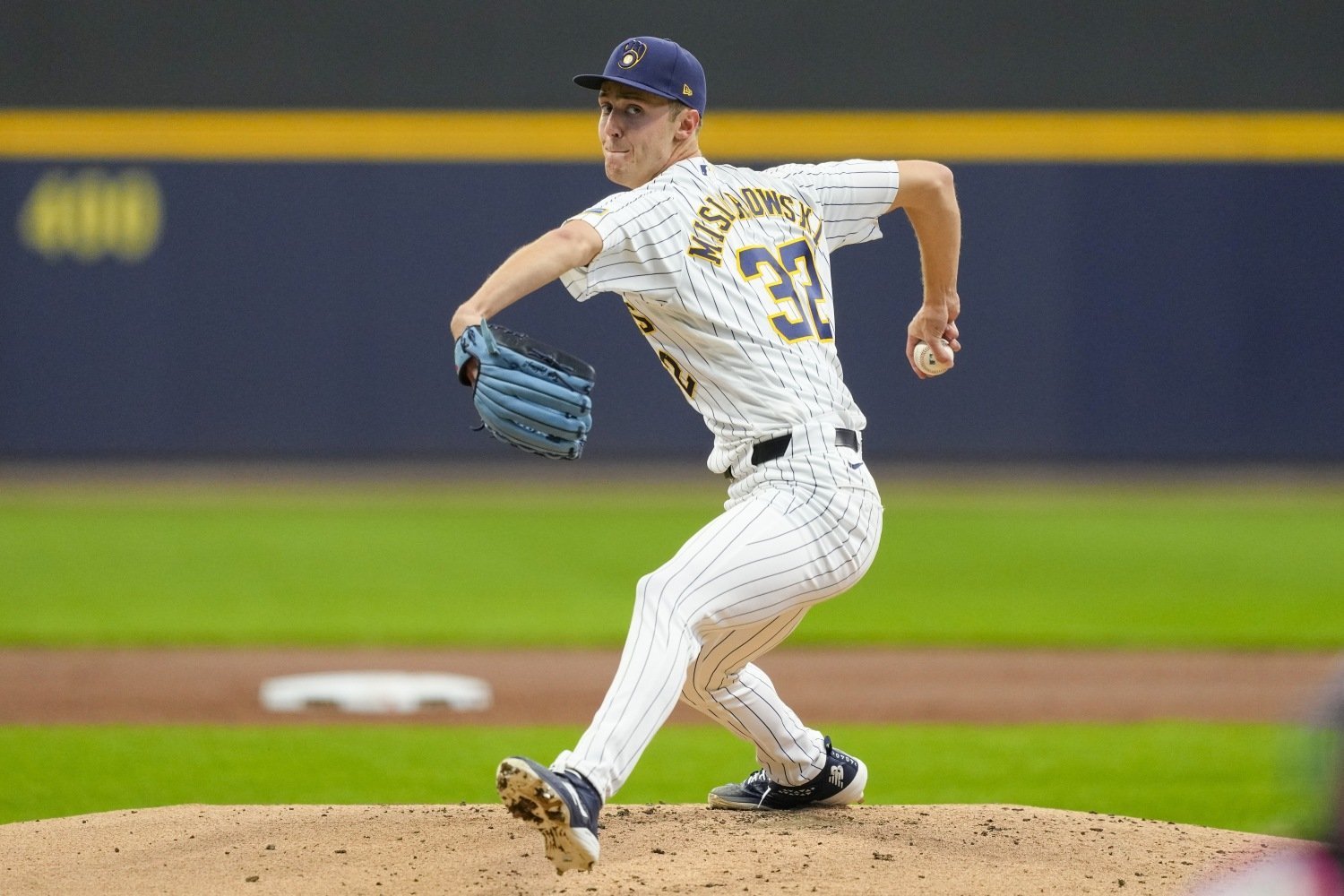 The pitch-tracking era dates back to the installation of PITCHf/x cameras in every big-league stadium in 2008. It covers less than 20 years of baseball's long history, then, but given all we've learned about sports medicine and performance and all the changes in the game we've seen over that relatively brief span, you can pretty safely say that a velocity record for the pitch-tracking era is a velocity record for all of baseball history. No, Nolan Ryan didn't throw harder than Jacob deGrom. No, Bob Feller's fastball wasn't measured incorrectly. Everyone throws harder now than they did before. When I tell you, then, that Jacob Misiorowski's 21 pitches with a perceived velocity of 102 miles per hour or higher that resulted in non-contact strikes on Saturday is a record, there's no reasonable argument against it. Sure, we can't measure the speed of Ryan's or Kerry Wood's or even Robb Nen's best heaters precisely, but we can be sure they didn't throw as hard as Misiorowski does—and, in the case of Nen and similarly hard-throwing relievers, the sheer volume of Misiorowski's dominance this weekend is out of reach. If I stopped at telling you that that number is a record, though, I'd be underselling what Misiorowski really did to the Pirates. He threw 21 pitches with that perceived speed that went for either called strikes or whiffs; we're not even including foul balls here. The second-highest number of such pitches by any pitcher in a game for which we have the requisite data was by Jordan Hicks, three years ago, almost to the day. Hicks was working in long relief on Apr. 26, 2023, against the Rockies. He got three more called and swinging strikes at 102+ than anyone else had ever had, to that point—with nine. He had nine (9). Later that year, Ben Joyce of the Angels twice got as high as seven (7) such offerings. In 2025, Misiorowski had seven (7) in one start just after the All-Star break, against the Mariners, and he became the first person other than Hicks to get to eight (8) in September, also against the Pirates. Saturday was a whole other thing. Saturday was a massive achievement in power and endurance. Misiorowski blew Oneil Cruz away with a pitch at 102.7 MPH (which, given his near-elite extension, means the perceived speed was north of 104) in the first inning. TUFYMjFfWGw0TUFRPT1fQkZOVFV3QlZWMVFBWGxFS1ZBQUhCMVZRQUZoUkJnTUFVUUZSQ0ZGUUFGVURVd2RV (1).mp4 But we've seen him do that before. Often, especially early this year, Misiorowski would flash extraordinary velocity at the front end of starts, but see that speed tick down after the first inning and never tick back up. On Saturday, it was a very different story. Of the 21 pitches we're talking about, he had: 9 in the 1st inning (tying the previous record in one frame) 3 in the 2nd 2 in the 3rd 1 in the 5th 6 in the 6th He departed the mound by completing his ninth strikeout of the day with a 101.4-MPH (perceived speed: roughly 103.5) heater past Konnor Griffin, his second similarly ferocious pitch of the at-bat. TUFYMjFfWGw0TUFRPT1fRGdRREJRSUVWd01BV2dNRlZBQUhDQU5WQUZnSFZRTUFCUU1DQVFWUVVnSlFBVkVB.mp4 He'd already beaten Jake Mangum, earlier in the inning, with three straight high heaters, each faster than the last. You never, ever see this much velocity from a pitcher pacing themselves for a full-fledged start—except from Misiorowski. There have been 13 appearances in which a pitcher threw at least 50 pitches and had at least five of these non-contact strikes at 102+. deGrom had one, in 2021—cheating a little bit, because he just barely got to five such pitches and one of them came against opposing pitcher Merrill Kelly. The other 12 belong to Misiorowski. Ten of those 12 came last season, and he just barely got to five in his start against the Red Sox early in April. This was a transcendent moment. It was a pitcher already ahead of the pack by a great distance, pushing himself to a new level. Admittedly, part of this story is the Pirates. They're an extremely whiff-prone offense, especially when you take one of their best contact hitters (Mangum) and turn him into a whiff machine. That's part of the point, though. Misiorowski's sheer power was so great that Mangum, who has a delightful knack for opposite-field contact but one of the slowest swings in baseball, turned from a great contact hitter to a hopeless case. Seven of the nine hitters in the Pirates' order suffered at least one of these moments of total overwhelm. There are still rough edges Misiorowski needs to sand off, as he pursues the National League Cy Young Award. He can put his team in better positions to win games by being more consistent within a start. It's notable that the one truly bad inning he had on Saturday (the two-run top of the 4th) was the one wherein he failed to overpower any Pittsburgh batter the way he did in every other inning of the start. The Brewers need to continue working with him to find the best way to utilize his arsenal, especially to survive those innings when some weak contact produces hits or when his command wobbles. The stuff he showed Saturday, though, puts things neatly into perspective. Who is Misiorowski's comp? By whose yardstick can he measured? No one, and no one's. He's broken the scale. He's breaking the game. He just has to ensure that he can get all the way from the first pitch of outings to the last, without breaking in his own right. View the full article
 -
 Alex and Maddie sit down and discuss Alex Cora and the five members of his coaching staff's abrupt firing. They dissect Craig Breslow and Sam Kennedy’s Sunday morning press conference and review comments from Trevor Story, Garrett Whitlock, Wilyer Abreu, and Carlos Narváez. They give a brief intro to newcomer Chad Tracy, noting how he’s worked with most of the team’s current roster. Towards the end, they share their thoughts on how they’d like the remaining 134 games to pan out. Listen on Apple Podcasts: https://podcasts.apple.com/us/podcast/the-talk-sox-podcast/id1783204104 Listen on Spotify: https://open.spotify.com/show/3qPrPXEngu0CxgTmlf0ynm Listen on iHeartRadio: https://www.iheart.com/podcast/263-the-talk-sox-podcast-244591331/ Listen on Pocket Casts: https://pca.st/4tmd121v Watch on YouTube: https://www.youtube.com/@talksox View the full article
 -
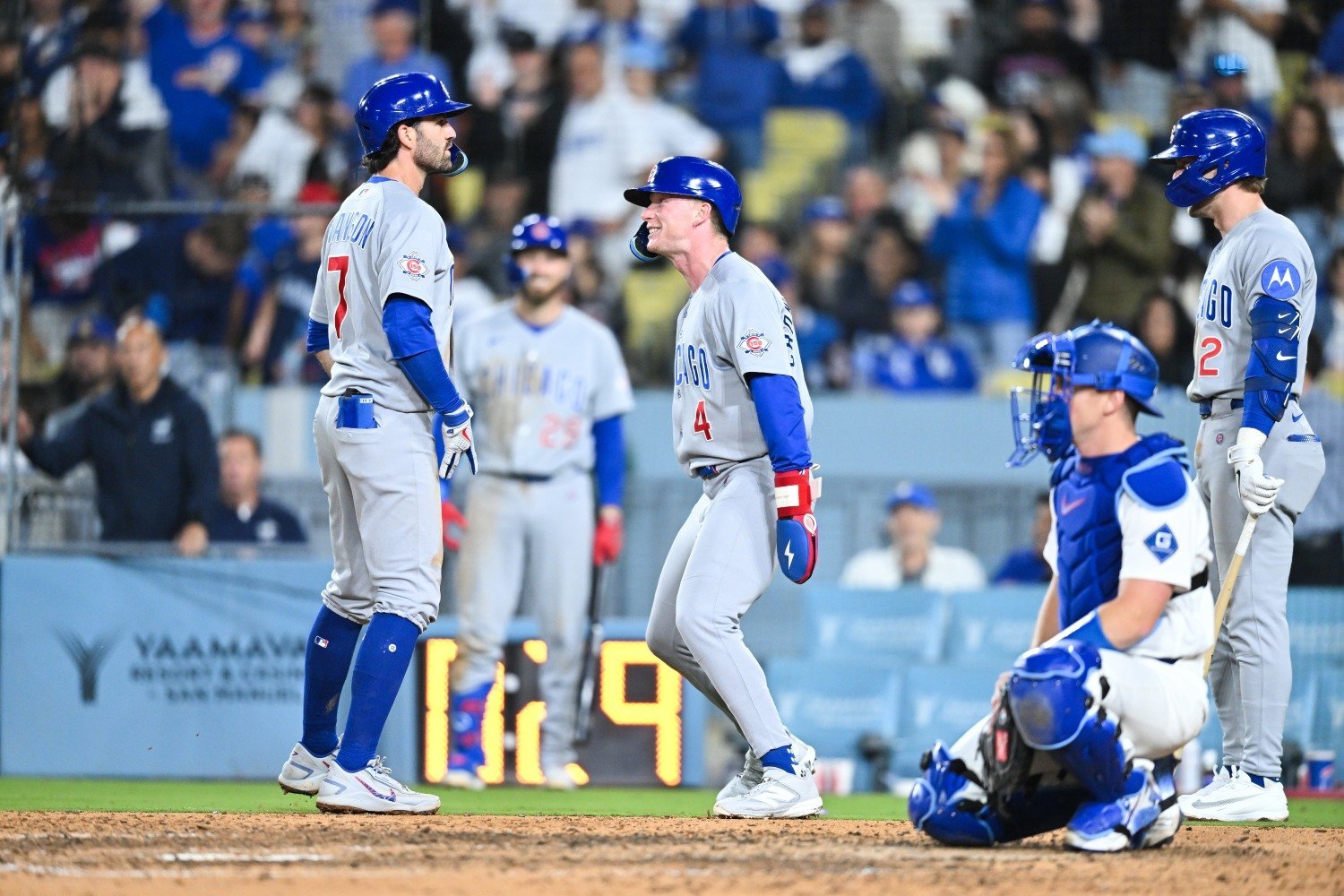 Fair or not, the 2026 version of the Chicago Cubs came preloaded with comparisons to the revered 2016 World Series championship club, as the 10th anniversary of their historic accomplishment arrived. The frustrations of the opening weeks of this season made any real comparison between the two versions of the team feel a bit blasphemous. If that felt like an overreaction, though, you were right, as the club has started to look more like the division-winning, postseason-destined outfit they hoped to be. This past week, in myriad ways, they rewarded those who were holding out hope. The Chicago Cubs kicked off the week at 1060 W. Addison, welcoming the Phillies to town for a four-game set. Just a week before that, Craig Counsell's squad took two out of three from this same powerful, yet underachieving, Philadelphia ball club. Crafty depth starter Colin Rea toed the rubber for the North Siders, squaring off with Aaron Nola. Rea's steady hand has helped right the ship for a battered pitching staff that continues to navigate its way through numerous injuries. The Cubs' right-handed starter dazzled through 6 2/3 innings of one-run baseball. The home team used a four-run second inning, highlighted by a three-run bomb from Dansby Swanson, to give them all they needed in a 5-1 victory. Over the course of their 10-game win streak, the Cubs clocked a team ERA of 2.65, and that was in no small part due to the determined, resurgent Shota Imanaga. He was sensational in Game 2 of the Phillies series, surrendering just three hits over seven sparkling innings. Meanwhile, the offense stayed in rhythm, getting key contributions from Nico Hoerner, Seiya Suzuki, and Michael Busch, the latter of whom is ramping up his efficiency at the plate after surviving a harrowing start to the season. His club locked down a 7-4 win and nothing worse than a split in the series. Fresh off the injured list, Matthew Boyd got the nod in Game 3, with their sights set on a third straight series win. While not his sharpest stuff, Boyd got his sea legs back under him, delivering 4 2/3 innings and striking out five. The bullpen slammed the door on this typically imposing lineup. Ben Brown's poise and confidence continued to grow with a solid, scoreless 2 1/3-inning appearance. Chicago maintained its offensive consistency, scoring in four of the first five innings. A three-hit day from third baseman Alex Bregman cemented his arrival as one of the lineup's most trusted sources of production. Securing their second consecutive series sweep, the Cubs got away with a wild extra-innings victory on getaway day. Edward Cabrera, the squad's exciting, hard-throwing new starting pitcher, grinded through seven innings, earning his 500th career strikeout despite a rather pedestrian six-hit performance. While the offense was certainly instrumental in delivering a ninth straight win for the ball club, it was an awe-inspiring outing from the bullpen late in the game that really set the stage for the club's dramatic win. Dansby Swanson tallied his first walk-off hit in a Cubs uniform. With the bases loaded and only one out, Swanson drilled one to right-center. Not only did the "8-7 in 10" triumph evoke even more fond 2016 memories, but it delighted fans who got to witness Clark the Cub brandishing a broom atop the iconic centerfield scoreboard. With the squad landing in Los Angeles, the chatter of a potential Cubs-Dodgers NLCS later this year grew to deafening levels. The Dodgers, despite currently sitting behind the North Siders' next opponent, the San Diego Padres, are the league's gold standard. If success against Dave Roberts's ball club is the litmus test for finding out where your club stands, then the Cubs passed with flying colors in the opener of this three-game set. Under the lights in a highly-anticipated, nationally-televised contest, they showed their talent, but also their resiliency. Using all 27 outs to their advantage, late-game heroics from Bregman and the blisteringly hot Swanson delivered the 6-4 comeback victory. Stretching the win streak to 10 proved that this team can play with the best in baseball. The Dodgers' 12-4 drubbing of the Cubs the next day proved that all good things truly must come to an end. Yet, after the locked-in Suzuki pumped a solo shot over the fence in left-center, it felt for a moment like Chicago might be immune to that saying. The home side's prolific offense, led by the generational Shohei Ohtani, was bound to get going at some point, and unfortunately, it was at the expense of extending the Cubs' streak. Explosive production from Los Angeles in the fourth and sixth innings put them in the driver's seat, and they cruised to victory on an uncharacteristically poor night for Rea and Javier Assad. Opposite a team like the Dodgers, it's tough to say that the North Siders squandered their chance at a series win, but in stranding 12 base runners on Sunday afternoon, it certainly felt like it. In his second start of the week, Imanaga lacked the luster of his previous outing, issuing three walks over 5 1/3 innings. The North Siders' 0-for-8 performance at the plate with RISP sealed the club's fate, as LA's bats stayed hot. One silver lining to take away from the contest was that the squad's battered bullpen made it back to the visitors' locker room unscathed, as it prepares to make its way down the highway to San Diego. For this Chicago Cubs ball club, the prevailing sentiment for the road ahead should be cautious optimism. While injuries have ravaged Craig Counsell's bullpen, reinforcements are on the way: Phil Maton and Daniel Palencia could get back from the IL soon. Next week, the North Siders are slated for a three-game tilt with the Padres, before returning home for their series with Corbin Carroll's Arizona Diamondbacks. The ultimate goal is still far off on the horizon, but the path to get there is starting to look smoother. View the full article
 -
Sunday Live Episode 3: It's Hard To Hit Homers When You Bunt
DiamondCentric posted an article in Brewer Fanatic
 It was not a pretty week for the Brewers, facing some tough pitchers with a battered lineup. How much can we make of their tawdry results? Apple Podcasts: https://podcasts.apple.com/us/podcast/the-brewer-fanatic-podcast/id1740648724 Spotify: https://open.spotify.com/show/5CY8mWsQayqjDXqw9OT2Td iHeartRadio: https://www.iheart.com/podcast/263-the-brewer-fanatic-podcast-166534588/ Pocket Casts: https://pca.st/ommzz627 Watch On YouTube: https://www.youtube.com/@brewerfanatic View the full article
 -
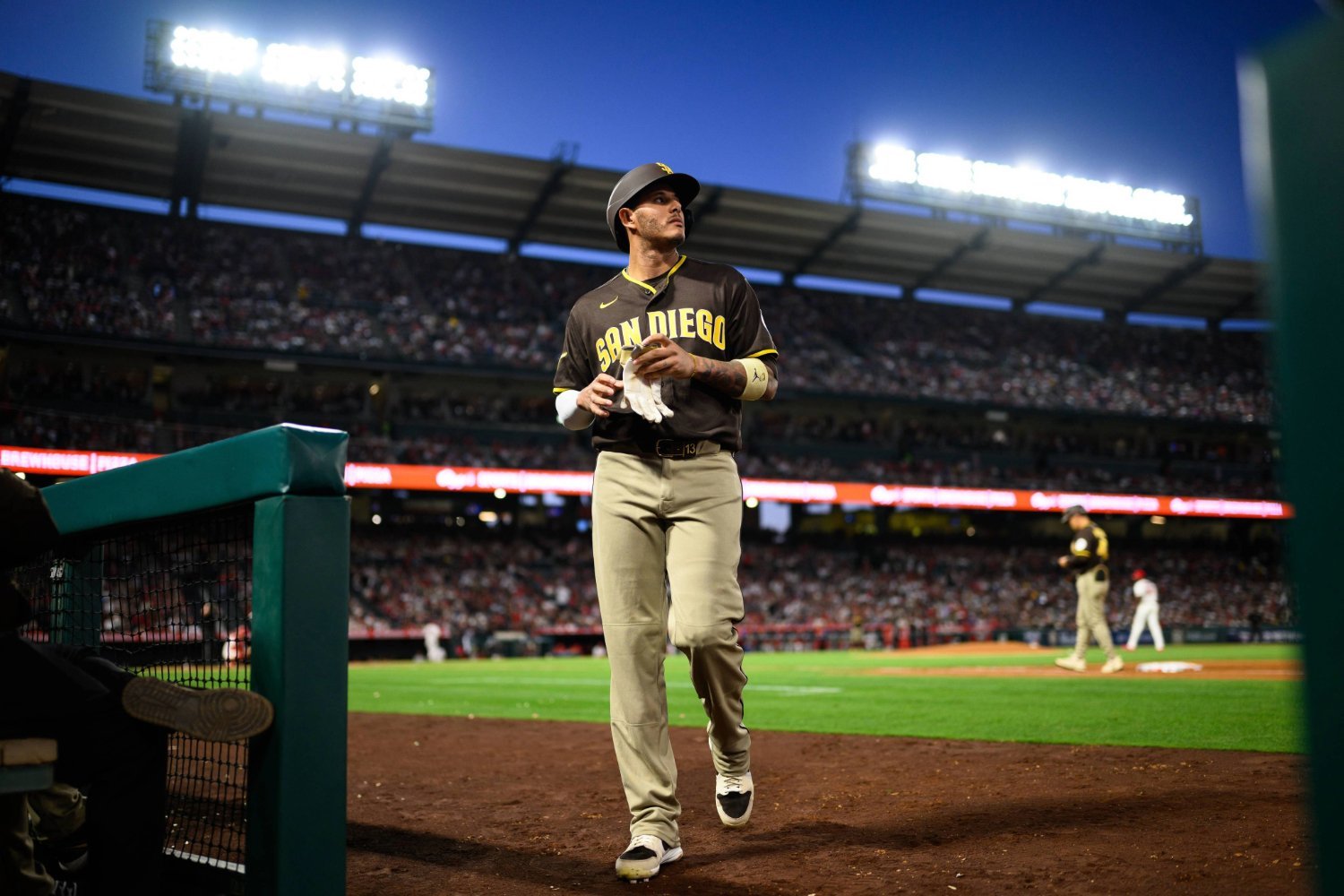 Somehow, the San Diego Padres are 18-9 and tied for first in the NL West. The reason I say somehow is that their team wRC+ of 95 ranks 23rd out of 30 teams. At the end of the season, no one cares how many games you deserved to win, but usually, you want to earn your wins. While the Padres have done well to overcome a sluggish start at the plate, they’ll no doubt want to turn it around. And of all their surprising underperformances, of which there have been many, Manny Machado’s is the most perplexing. Machado hasn’t just fallen off at the plate; he has completely changed as a hitter, which is an odd thing for a 33-year-old coming off a top-50 wRC+ who has three Silver Sluggers and four top-five MVP finishes to do. The season is still in small sample theater, but the wholesale changes Machado has made are too large to ignore. Before 2026, Machado’s operation at the plate was quite simple. He swung hard, he swung often, and he did damage on contact. Functionally, he went up to the plate looking to get beyond first base, not on it. In fact, the correlation between Machado’s isolated power relative to the league average (ISO) and wRC+ is 0.92 for his career. Obviously, power is a big factor in hitting performance, so a strong correlation is to be expected, but Machado built a Hall of Fame career by putting a charge in the ball. The downside to Machado’s approach was that he never walked much, which made him a bit more susceptible to fluctuations in his batting average on balls in play (BABIP). Now, it wasn’t like Machado’s walk and strikeout figures were awful. He was routinely at or bettered the league average walk rate, and has always struck out less than the league average, but they were never his carrying trait at the plate… until now. It’s still very early, but Machado is walking at an incredible clip to start the season. His 15.5% BB% is almost double his career figure of 8.2% and ranks 19th in the league. The spike in walks isn’t a fluke either. He is currently sporting a 22.9% out-of-zone swing rate and a 66.8% in-zone swing rate. For a player whose career figures in those categories are 29.1% and 66.9%, respectively, Machado’s newfound patience suggests an overhaul in approach. In a vacuum, swinging at fewer balls is almost always a good thing. Walks are good. As are favorable counts. And it’s much easier to drive a strike past an outfielder than a pitch a few inches off the plate. However, baseball is not played in a vacuum, and what is usually a good development may be robbing Machado of what made him a special hitter in the first place. Despite Machado’s newfound discerning eye, he has functionally become a slap hitter. He really boosted his stock with a two-homer day on Sunday, but prior to that, his ISO stood at a career-low of .093, which was the 30th-lowest figure among qualified hitters this season. The culprit for Machado’s power outage is almost certainly varied, but he has earned these career-worst figures. His hard hit percentage is a career low 38.8%, as is his average 9.1 degree launch angle. For a player who has routinely been one of the best high-volume sluggers, this about-face is alarming. One of the first places to look is at swing speed data, and lo and behold, Machado is posting a career low figure. His 73.1 MPH average bat speed is his lowest recorded figure, which continues a consistent downward trend from 2023, the first season we have data. However, while a slightly slower bat is part of the picture, it doesn’t explain the totality of the power outage. Machado’s average bat speed might be down, but it is still well above the MLB average of 71.9 MPH. The problem is that average bat speed isn’t nearly as important as your fast swing rate. A fast swing is a swing that hits or exceeds 75 MPH, and it’s here where Machado has nose dived. In 2023, he had a 66.3% fast swing rate, in 2024 it dropped to 52.6%, then in 2025 it dropped further to 43%, and now in 2026, it’s sitting at 26.5%. While that downward trend is concerning, the league average is still 23.7%. Needless to say, shaving 20% off your fast swing rate isn’t going to do anything positive for your power production, and it comes with another concerning trend. Along with diminished bat speed, Machado’s bat angle has become less advantageous. His attack angle is at a career low of 4 degrees, and his attack direction is now at 4 degrees to the opposite field. The problem is that Machado already had a slightly flatter and less pull-oriented bat path. In 2025, his attack angle was 8 degrees, his attack direction was 0 degrees, and his swing tilt was 26 degrees, against league averages of 10 degrees, 2 degrees to the pull side, and 32 degrees of tilt. So, now, Machado is swinging slower and gearing his contact for less lift, which means way less power. Based on the preponderance of evidence, it appears that Machado’s decision to rein in chase has inadvertently reined in his power stroke. Baseball is played on razor-thin margins, and in the millisecond where your brain decides to swing is delayed even a fraction, it can prevent you from getting your bat to the ball in the most advantageous spot. The benefit might be better counts and more walks, but at the end of the day, the best hitters put a charge in the ball. If Machado wants to recapture his prior form, all he needs to do is get back to his prior approach. He has been one of the best players in baseball for a decade because he went to the plate looking to slug. Hitting is about controlled aggression, and Machado is leaning far too far into the control side of the equation. Simply put, he needs to go up there ready to swing, and if it means he chases a slider off the plate, well, that’s just the cost of being Manny Machado, future Hall of Famer. View the full article
 -
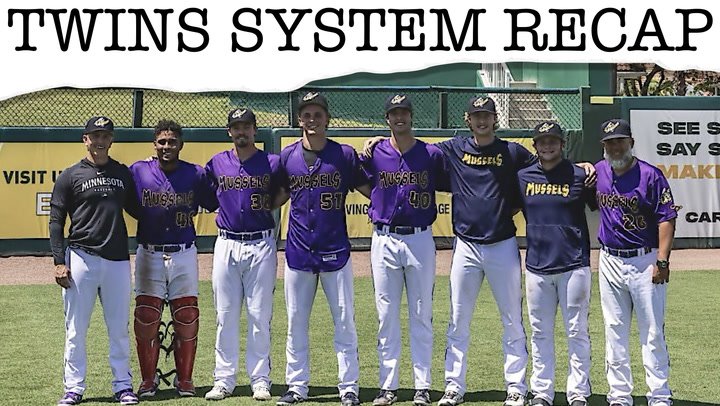 Twins System Recap: Fort Myers recorded the sixth no-hitter in team history Sunday. It was a combined effort from pitchers Merit Jones, Matthew Becker, Eric Hammond, and Jake Murray. Becker was making his pro debut. Nice first impression. Here's some info from that performance and more in tonight's System Recap. View the full article
 -
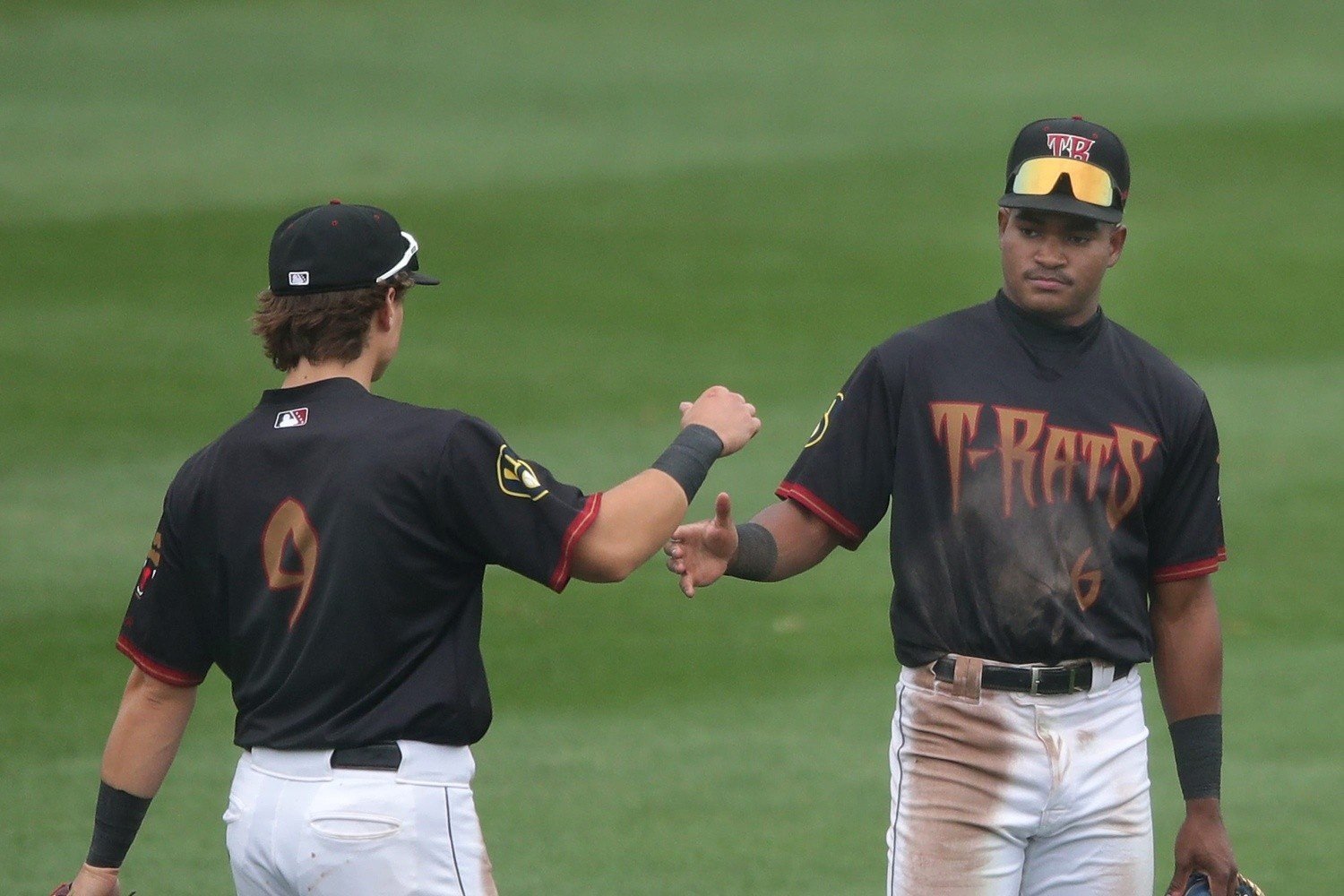 The future refuses to go dim for the Brewers. While the big-league club navigates the injuries and grind of the 2026 season, a wave of top prospects in the Milwaukee farm system is forcing its way into the conversation with scorching starts across the minors. This next core isn’t just developing; it’s producing. And if these early returns are any indication, the Brewers may not have to wait long for their next impact contributors to arrive at American Family Field. Let’s look at Brewer Fanatic’s top 20 prospect list and dive into who’s performing well. No. 1 – Jesus Made (MLB.com No. 3) Made is proving once again why he's one of the top prospects in the sport. He reached Double-A Biloxi last year and played in only five games, slashing .261/.292/.348 in 24 plate appearances. He has fully arrived for the Shuckers now, though, slashing .295/.398/.489 in 103 plate appearances with the club so far in 2026. Made has showcased his speed as well, stealing 11 bases while being caught once. He's walked more times (15) than he's struck out (14). There isn’t a ton to say here; Made is an exciting prospect who is performing exceptionally well for a 19-year-old in Double-A. He's a big factor in the Brewers' future, and fans should be excited about what Made can bring to the big-league club within the next few years—especially given the shortstop situation in Milwaukee right now. No. 2 – Luis Peña (MLB.com No. 21) It wouldn’t be that crazy to (essentially) copy and paste the paragraph about Made here, as Peña is slashing .372/.462/.512 in 52 plate appearances so far with the Timber Rattlers. He's stolen 6 bases while getting caught twice, and his strikeout-to-walk ratio is good, as well (10:8). A notable change for Peña is his swing rate. He is swinging the least he has in his professional career, only 44.4% of the time, down almost 5.0 percentage points from last year. This is likely correlated with his walk rate, and if he is more patient at the plate, his overall offensive outlook will improve in the long term. If that discipline holds, Peña’s blend of contact, speed, and on-base ability could quickly turn him from a top prospect into a household name. No. 6 – Logan Henderson (MLB.com No. 99) Henderson performed well for the Brewers last year in 5 starts, pitching to a 1.78 ERA (3.02 FIP) in 25 1/3 innings, striking out 33 batters. He didn’t fare as well in his lone appearance with the Brewers this year, surrendering two earned runs in two innings against the Royals, but Henderson has pitched extremely well in Nashville to start the year. The 24-year-old has thrown 17 2/3 innings so far with a 1.02 ERA. His whiff rate is in the 78th percentile, and his zone contact percentage is in the 98th percentile, demonstrating his pitches can get the batter to swing and miss even if they are in the zone. Look for Henderson, if he limits the walks, to be up with the Brewers again soon. No. 8 – Andrew Fischer (MLB.com No. 89) Fischer was one of many Brewers who participated in the WBC this year, and the Team Italy third baseman slashed .357/.438/.714 in 16 plate appearances there. Transferring that production into the minor-league season has been an easy task for Fischer, who is raking with the Timber Rattlers. Fischer is slashing .258/.358/.515 with 4 home runs already this season, and a main issue to watch would be strikeouts. He struck out around 25% of the time in a limited 2025 sample and has fanned 30 times in 81 plate appearances this year. As he climbs the ladder, he'll have to show a better feel for consistent contact. If Fischer continues to make developments at the plate, as well as improving his range at third base, he could move through the system quickly. The power will always be his calling card, though, so if the strikeouts go along with that, it’ll be interesting to see how the Brewers feel about that approach at the plate. No. 10 – Marco Dinges A former fourth-round pick in 2024 out of Florida State, Marco Dinges hit well in his first sustained minor-league action in 2025. Now, Dinges is once again mashing, hitting .340/.492/.660 with 4 homers in 65 plate appearances. Dinges has a great strikeout-to-walk ratio (14 to 13), to boot. He'll look to continue producing, as either he or Jefferson Quero pushes to be the future of the position if William Contreras doesn’t sign a long-term deal. Another couple of weeks like this could compel the Brewers to promote Dinges to Biloxi. No. 11 – Luis Lara I wrote about Lara’s hot start last week, and he has kept it up. He's now hitting .347/.439/.561, with 5 home runs, 12 stolen bases, 15 walks and 15 strikeouts. From a power perspective, expect Lara to regress, but that's not his game, anyway. Good bat-to-ball skills, a disciplined approach, great speed and defense—these are his strengths. While the offensive numbers may decline as the season progresses, remember that Lara isn’t built to be a big contributor offensively. He's always been a glove-first prospect, and with his current approach at the plate, the 21-year-old should be a productive Brewer when the time comes. No. 12 - Josh Adamczewski Adamczewski was a 15th-round pick in 2023, and without a defined defensive position, the bat needs to be valuable for Adamczewski to carve out a big-league job. Thankfully, it has been superb so far. Adamczewski struggled in a limited sample at High-A in 2025, but he's dominating the Midwest League in 2026, slashing .362/.516/.723, with as many homers as he had all last season combined. Adamczewski will look to continue growing into a defensive position, which will probably be left field, and as he cuts his groundball rate (down 5 percentage points from ’24 to ’25, down another 5 from ’25 to ’26), he should merit a promotion soon. No. 14 – Blake Burke Burke was one of the Brewers’ first-round picks in 2024, and the former Tennessee Volunteer hit well in 2025 while splitting time between High-A and Double-A. Burke is off to a scorching-hot start from a slugging perspective, hitting 7 homers in 100 plate appearances so far. He's batting .256/.360/.605. He has 22 hits on the year, 15 of which have gone for extra bases. Burke has also swiped 9 bases while being caught once. His power surge from the end of 2025 has most definitely continued, so the next question is: How far can it go? His bat is passing the Double-A test with flying colors; he should get a bump to Nashville fairly soon. No. 17 – Braylon Payne Another first-rounder from 2024, Payne boasts excellent speed, with 41 stolen bases through 96 career games in the minors. Last year was a tough introduction to the rigors of a full professional season, as Payne hit .240/.354/.382 with 8 homers in 342 plate appearances. Payne has appeared to turn over a new leaf in 2026 with the Timber Rattlers, totaling 6 homeruns in only 61 plate appearances while slashing .367/.492/.796. He won't turn 20 until August, and the Brewers will probably be happy to let him spend the whole season in Appleton, but yes, if he keeps hitting quite this ferociously, he might need to be promoted, too, to find a truer test of his talent. It’s still early, and the minor-league season has a way of humbling even the hottest starts, but the underlying theme here is hard to ignore: this wave of talent looks both deep and dynamic. From polished approaches at the plate to emerging power combined with speed, the Brewers’ system is showing signs of producing impact players in bunches. If even a handful of these prospects sustain their growth, the Brewers will be able to keep up their cost-efficient ways by calling up the next Brewers of the future as capable contributors early in their careers. View the full article
 -
 Owen and Jesse are back to break down a second straight series win for the Toronto Blue Jays, this time over the Cleveland Guardians. They get the bad news out of the way early, and break down Max Scherzer’s recent struggles and his 2.1 inning, seven-run performance against the Guardians before praising Kevin Gausman and Patrick Corbin. The guys then get to the offensive side of the ball and have compliments for Kazuma Okamoto, Jesús Sánchez, Ernie Clement, and Vladimir Guerrero Jr. The guys finish by talking about the new “bullpen by committee” and previewing the upcoming series against the Boston Red Sox. Listen on Apple Podcasts: https://podcasts.apple.com/us/podcast/the-jays-centre-podcast/id1846108462 Listen on Spotify: https://open.spotify.com/show/3Bi7SzfpcqMo5xYWnbCeoL Listen on iHeartRadio: https://www.iheart.com/podcast/263-the-jays-centre-podcast-300304824/ Listen on Pocket Casts: https://pca.st/2qk9wqxd Watch on YouTube: https://www.youtube.com/@jayscentre View the full article
 -
 Toledo walked off Omaha 2-1 in the eighth, while Northwest Arkansas split a doubleheader with Wichita on Rudy Martin Jr.'s walk-off homer in Game 1. Tyriq Kemp went 3-for-3 with a triple, a home run, and four runs scored as Quad Cities outslugged Lansing 9-5. Columbia split with Augusta behind Stone Russell's three-hit, one-homer Game 1 effort. Henry Williams allowed one earned run over five innings, and Max Martin tossed two scoreless innings. Royals Transactions No Roster Moves Storm Chasers Drop Pitcher's Duel In Toledo Omaha was held to five hits in a 2-1 loss to the Toledo Mud Hens, with the deciding run coming home on a triple in the bottom of the eighth inning. The Storm Chasers managed only one run in the game and were held scoreless after the second. Omaha's offense came in the second inning. Abraham Toro reached on a single, then scored when Josh Rojas tripled to right field. Rojas finished 1-for-3 with the triple and the lone RBI. Drew Waters added a single and a walk, Luca Tresh contributed a hit and a walk, and Toro and Elih Marrero each chipped in a hit. The team struck out 12 times and stranded five runners. Starter Luinder Avila worked a clean opening inning, walking one without allowing a hit. Ben Sears followed with two scoreless innings of one-hit relief, walking one and striking out one. Shane Panzini was tagged with the run that tied the game in the fifth, allowing one earned run on a hit and two walks across 1 2/3 innings while striking out one. Andrew Pérez turned in 1 1/3 scoreless innings with a strikeout. Chazz Martinez took the loss after 1 1/3 innings in which he allowed one earned run on a hit and a walk while striking out two, with the walk-off triple coming off him in the eighth. Eric Cerantola finished by getting two outs, walking one and striking out one. Player AB R H RBI BB K John Rave 4 0 0 0 0 2 Kevin Newman 4 0 0 0 0 3 Drew Waters 3 0 1 0 1 1 Kameron Misner 4 0 0 0 0 2 Luca Tresh 3 0 1 0 1 0 Abraham Toro 4 1 1 0 0 2 Josh Rojas 3 0 1 1 0 0 Gavin Cross 3 0 0 0 0 1 Elih Marrero 3 0 1 0 0 1 Player IP H R ER BB K HR Luinder Avila 1 0 0 0 1 0 0 Ben Sears 2 1 0 0 1 1 0 Shane Panzini 1 2/3 1 1 1 2 1 0 Andrew Pérez 1 1/3 0 0 0 0 1 0 Chazz Martinez 1 1/3 1 1 1 1 2 0 Eric Cerantola 2/3 0 0 0 1 1 0 Martin Walk-Off Homer Caps Naturals' Game 1 Comeback Northwest Arkansas trailed 5-1 entering the bottom of the fifth and rallied for a walk-off, 6-5 win over the Wichita Wind Surge in Game 1 of the doubleheader. Leadoff hitter Rudy Martin Jr. opened the bottom of the seventh with a solo home run to right-center to end it. The Naturals broke through in the third when Dustin Dickerson doubled, advanced to third on a Canyon Brown single, and scored on a sacrifice fly by Justin Johnson. They added two more in the fifth on a sequence that featured a Jorge Alfaro double, a Dickerson double, and a Brown single, with leadoff hitter Carson Roccaforte's sacrifice fly bringing Dickerson home and another run also crossing the plate. Alfaro then tied the game in the sixth with a two-run home run that scored Sam Kulasingam from first. Alfaro finished 2-for-3 with a double, a home run, and two RBI. Dickerson went 2-for-2 with two doubles, two runs scored, and a walk. Brown added two hits, Roccaforte was 1-for-3 with a double and a sacrifice-fly RBI, and Martin Jr.'s walk-off shot capped his 1-for-4 day. Hunter Patteson started but lasted only 3 1/3 innings, surrendering four earned runs on three hits and two walks while giving up two home runs and striking out one. Caden Monke worked 1 2/3 innings of hitless relief, charged with one unearned run on two walks while striking out three. Chase Jessee added 1 2/3 scoreless innings with a strikeout, and Tommy Molsky retired one batter to earn the win. Player AB R H RBI BB K Carson Roccaforte 3 0 1 1 0 1 Rudy Martin Jr. 4 1 1 1 0 1 Sam Kulasingam 1 1 0 0 2 0 Brett Squires 3 0 0 0 0 1 Daniel Vazquez 3 0 0 0 0 1 Jorge Alfaro 3 2 2 2 0 0 Dustin Dickerson 2 2 2 0 1 0 Canyon Brown 3 0 2 0 0 0 Justin Johnson 2 0 0 1 0 2 Player IP H R ER BB K HR Hunter Patteson 3 1/3 3 4 4 2 1 2 Caden Monke 1 2/3 0 1 0 2 3 0 Chase Jessee 1 2/3 0 0 0 2 1 0 Tommy Molsky 1/3 0 0 0 1 0 0 Late Homer Sinks Naturals In Game 2 Northwest Arkansas dropped Game 2 of the doubleheader, 3-2, after a two-run home run in the top of the seventh inning broke a 2-1 tie. The Naturals managed only five hits and were held scoreless from the third inning on. Wichita took an early lead with a solo home run in the top of the first. The Naturals answered in the bottom of the second when Dustin Dickerson doubled, and Connor Scott followed with a two-run home run to right-center. That 2-1 edge held until the seventh, when the Wind Surge connected on a two-run shot off Zachary Cawyer to take a 3-2 lead they would not relinquish. Scott finished 1-for-2 with a home run, two RBI, and a walk. Dickerson went 1-for-3 with a double and a run scored, Brett Squires, Daniel Vazquez, and Canyon Brown each added a hit, and Vazquez and leadoff hitter Carson Roccaforte each drew a walk. The Naturals struck out seven times and stranded seven runners. Starter Henry Williams turned in the strongest outing of the night, working five innings while allowing one earned run on two hits and a walk, striking out three. Oscar Rayo followed with a scoreless inning of relief. Cawyer took the loss after two-thirds of an inning in which he allowed two earned runs on two hits and a walk, striking out two and giving up the deciding home run. Andrew Morones finished the seventh with a strikeout. Player AB R H RBI BB K Carson Roccaforte 3 0 0 0 1 3 Rudy Martin Jr. 3 0 0 0 1 1 Sam Kulasingam 4 0 0 0 0 2 Brett Squires 3 0 1 0 0 0 Daniel Vazquez 2 0 1 0 1 1 Dustin Dickerson 3 1 1 0 0 0 Connor Scott 2 1 1 2 1 0 Canyon Brown 3 0 1 0 0 0 Omar Hernandez 0 0 0 0 0 0 Colton Becker 2 0 0 0 0 0 Player IP H R ER BB K HR Henry Williams 5 2 1 1 1 3 1 Oscar Rayo 1 0 0 0 0 0 0 Zachary Cawyer 2/3 2 2 2 1 2 1 Andrew Morones 1/3 0 0 0 0 1 0 Kemp Powers River Bandits Past Lansing Tyriq Kemp went 3-for-3 with a home run, a triple, and four runs scored to lead Quad Cities to a 9-5 comeback win over the Lansing Lugnuts. The River Bandits scored five unanswered runs across the bottom of the sixth and seventh innings after surrendering the lead earlier in the sixth. Quad Cities scored first when Kemp homered in the third for a 2-0 lead, then stretched the advantage to 4-0 in the fifth on a Kemp run-scoring single and a Ramon Ramirez sacrifice fly. Lansing answered with five runs in the top of the sixth to take a 5-4 lead. The River Bandits responded in the bottom half: Chris Brito singled, Kemp walked, Nolan Sailors singled, Ramirez was hit by a pitch to force in the tying run, and Luke Pelzer punched a two-run single to right to put Quad Cities back in front 7-5. They tacked on two more in the seventh when Austin Charles reached on an error and Kemp tripled him home, with another run scoring on a groundout. Kemp drove in two and reached four times. Pelzer was 2-for-5 with a double, two RBI, and a stolen base. Ramirez finished 1-for-3 with two RBI, and leadoff hitter Sailors added a hit and a run. The team finished with 11 hits and 9 runs, and stranded nine runners. Starter Josh Hansell worked three scoreless innings, allowing two hits and three walks while striking out three. Tanner Jones went four innings and was charged with five earned runs on four hits and two walks, striking out two before earning the win when his team rallied. Hunter Alberini and Nick Conte each tossed a scoreless inning of relief. Player AB R H RBI BB K Nolan Sailors 5 1 1 0 0 2 Ramon Ramirez 3 0 1 2 0 0 Luke Pelzer 5 0 2 2 0 1 Jose Cerice 3 1 1 0 2 1 Derlin Figueroa 2 0 0 0 3 0 Austin Charles 5 1 1 1 0 0 Chris Brito 3 1 1 0 1 1 Erick Torres 4 1 1 0 0 0 Tyriq Kemp 3 4 3 2 1 0 Player IP H R ER BB K HR Josh Hansell 3 2 0 0 3 3 0 Tanner Jones 4 4 5 5 2 2 0 Hunter Alberini 1 0 0 0 1 1 0 Nick Conte 1 0 0 0 1 0 0 Russell, Vanek Lead Fireflies Past Augusta In Game 1 Columbia opened the doubleheader with a 6-2 win over the Augusta GreenJackets, powered by an 11-hit attack and a three-hit night from Stone Russell. The Fireflies scored in five of seven innings. Columbia struck first in the bottom of the first when Sean Gamble singled and later scored on a single by cleanup hitter Brooks Bryan. Russell led off the second with a solo home run for a 2-0 lead. The Fireflies broke the game open in the bottom of the fifth, scoring three runs as leadoff hitter Henry Ramos singled, Gamble doubled him to third, Josh Hammond brought Ramos home with a sacrifice fly, Yandel Ricardo walked, and JC Vanek lined a two-run single to right that scored Ricardo and pushed the lead to 6-2. Russell finished 3-for-3 with a double, a home run, and an RBI. Vanek went 2-for-3 with an RBI, Gamble was 2-for-4 with a double, two runs scored, and a stolen base, and Ricardo went 1-for-2 with a walk and a run. Ramos and Bryan each added a hit, with Bryan driving in a run, and Hammond drove in another on his sacrifice fly. The Fireflies struck out three times and stranded six. Starter Jose Gutierrez worked 4 1/3 innings, allowing one earned run and one unearned on a single hit while walking four and striking out four. Max Martin earned the win with two scoreless innings, walking two and striking out three. Jhon Reyes recorded the final two outs with two strikeouts and no hits allowed. Player AB R H RBI BB K Henry Ramos 4 1 1 0 0 1 Sean Gamble 4 2 2 0 0 0 Josh Hammond 2 0 0 1 1 0 Brooks Bryan 3 0 1 1 0 0 Yandel Ricardo 2 1 1 0 1 0 JC Vanek 3 1 2 1 0 1 Stone Russell 3 1 3 1 0 0 Roni Cabrera 2 0 0 0 1 0 Jhosmmel Zue 3 0 1 0 0 1 Player IP H R ER BB K HR Jose Gutierrez 4 1/3 1 2 1 4 4 1 Max Martin 2 0 0 0 2 3 0 Jhon Reyes 2/3 0 0 0 0 2 0 Fireflies Held To One Hit In Game 2 Loss Columbia mustered only one hit and was shut out 4-0 by the Augusta GreenJackets in Game 2 of the doubleheader. The Fireflies' lone hit came from Brooks Bryan, and the team struck out six times. Augusta took an early lead with a solo home run in the top of the first inning. The GreenJackets put the game out of reach in the top of the fourth with a three-run rally that included a fielder's choice that scored a run, a bases-loaded walk, and a sacrifice fly. Columbia threatened with a pair of walks to leadoff hitter Henry Ramos and Yandel Ricardo, who walked twice in the game, and a Daniel Lopez free pass, but the team stranded seven runners and could not push a run across. Bryan was 1-for-3 with two strikeouts. Ramos drew a walk, Ricardo walked twice, and Lopez added a walk. No other Fireflies hitter reached base safely. Starter Shane Van Dam took the loss after 3 1/3 innings, allowing four earned runs on three hits and two walks while giving up a home run and striking out two. Henson Leal followed with 2 2/3 scoreless innings of relief, allowing one hit and two walks while striking out one. Andy Basora capped the night with a scoreless seventh, surrendering two hits and striking out one. Player AB R H RBI BB K Henry Ramos 2 0 0 0 1 0 Sean Gamble 3 0 0 0 0 1 Brooks Bryan 3 0 1 0 0 2 Hyungchan Um 3 0 0 0 0 2 Yandel Ricardo 1 0 0 0 2 0 Stone Russell 3 0 0 0 0 0 Daniel Lopez 2 0 0 0 1 1 Ivan Sosa 2 0 0 0 0 0 Connor Rasmussen 2 0 0 0 0 0 Player IP H R ER BB K HR Shane Van Dam 3 1/3 3 4 4 2 2 1 Henson Leal 2 2/3 1 0 0 2 1 0 Andy Basora 1 2 0 0 0 1 0 Top-20 Prospect Performance Carter Jensen: DNP Blake Mitchell: DNP David Shields: DNP Kendry Chourio: DNP Ben Kudrna: DNP Sean Gamble: 2-for-7, 2B, 2 R, SB, K Josh Hammond: 0-for-2, RBI, BB Ramon Ramirez: 1-for-3, 2 RBI Drew Beam: DNP Asbel Gonzalez: DNP Yandel Ricardo: 1-for-3, R, 3 BB Felix Arronde: DNP Luinder Avila: 1 IP, 0 H, 0 R, 1 BB, 0 K Daniel Vazquez: 1-for-5, BB, 2 K Steven Zobac: DNP Carson Roccaforte: 1-for-6, 2B, RBI, BB, 4 K Blake Wolters: DNP Michael Lombardi: DNP Warren Calcaño: DNP Frank Mozzicato: DNP View the full article
 -
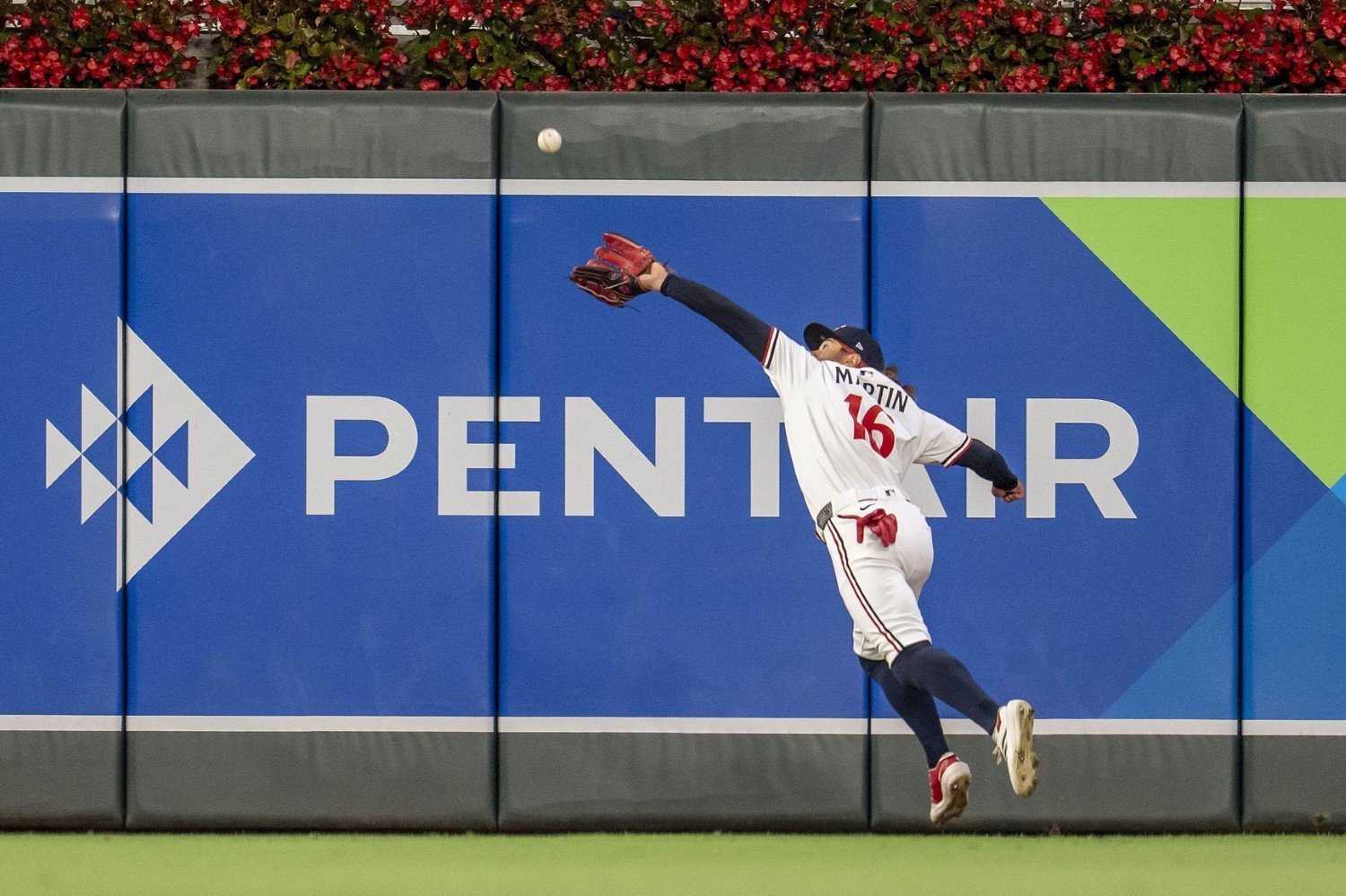 The Twins opened the 2026 season with the kind of inconsistent play that leaves everyone searching for answers. Hovering around the .500 mark is not inherently disappointing, especially for a team many projected to be fighting for relevance in the American League Central. In some ways, a middling record at this point in the season should be viewed as acceptable. The bigger issue is how the Twins have arrived at this point. The team can look dominant for a week, only to give those gains right back over the next two weeks. Over the course of a 162-game season, hot streaks and slumps begin to even out, exposing the strengths and weaknesses that define the roster. The early returns for the Twins suggest that some preseason assumptions are correct, while others warrant reconsideration. With that in mind, here's where some of the biggest narratives surrounding the 2026 Twins stand after the opening weeks of the season. Starting Pitching Preseason Narrative: Before Pablo López’s injury, the Twins looked like they had the makings of a top-10 rotation. Once he went down, expectations shifted, and the group looked more like a middle-of-the-pack unit that would need several young pitchers to step forward. Early Season Results: Twins starters rank seventh in fWAR, 11th in xERA, eighth in FIP, and 15th in WPA. That is a very encouraging start for a group that entered the year with major uncertainty. Outside of a rough outing on Friday, Taj Bradley has looked like one of the American League’s best starters and has given the Twins the type of impact arm they desperately needed. Mick Abel was beginning to build momentum with back-to-back strong starts before landing on the injured list, showing flashes of being a playoff-caliber starter. Connor Prielipp’s debut was another reason for optimism. The raw stuff looked every bit as electric as advertised, and he showed signs of developing into a frontline starter if the Twins continue stretching out his workload. Even Joe Ryan has room for improvement. He has not yet pitched at the All-Star level fans have seen from him before, which leaves open the possibility that the rotation could be even better in the coming months. Current Narrative: The Twins have enough young talent and enough upside in this rotation to believe it can remain a strength for the rest of the season. Lineup Preseason Narrative: With Byron Buxton and Luke Keaschall expected to anchor the offense, the Twins needed a handful of post-hype prospects to finally break through and provide stability throughout the lineup. Early Season Results: The Twins' hitters rank 18th in WPA, 20th in fWAR, and 11th in wRC+. Those numbers paint the picture of a lineup that has been productive enough in spurts but not nearly consistent enough to carry the team. Austin Martin has been one of the best stories on the roster. After ending 2025 on a high note, he has carried that momentum into this season and has emerged as one of the Twins’ most valuable hitters. In fact, he leads the team in WAR, giving the lineup a boost few expected entering the year. Trevor Larnach has also made the most of limited opportunities. Even with the Twins facing a heavy dose of left-handed pitching, he's tied with Buxton and Ryan Jeffers for second on the team in WAR, giving the club meaningful production whenever he is in the lineup. The issue is that the rest of the supporting cast has not shown up. Matt Wallner, James Outman, Keaschall, and Kody Clemens have all produced negative WAR so far. That's unsustainable, for a team with little offensive margin for error. The Twins do not have the star power to absorb multiple dead spots in the lineup. If several lineup spots continue to provide little to no value, the offense will eventually crater. Current Narrative: Martin has emerged, but the Twins still need several post-hype bats to start producing, or the offense will drag this team out of the race. Bullpen Preseason Narrative: The expectation entering the season was simple: this bullpen was going to struggle, and it had the potential to be one of the worst units in the league. Early Season Results: The Twins' bullpen ranks 18th in fWAR, 23rd in WPA, 24th in xERA, and 14th in FIP. Those numbers suggest the bullpen has not been a complete disaster, but it remains one of the weakest links on the roster. The most concerning part has been the way the group is being deployed. Justin Topa leads the American League with 15 appearances, making him the most frequently used reliever on the staff. That level of reliance would be understandable if he were a dominant late-inning option, but that has not been the case. Anthony Banda is tied for second on the team with 12 appearances and owns an ERA north of 9.00, yet he continues to receive meaningful innings. Meanwhile, Cole Sands is tied with Eric Orze and Taylor Rogers with 10 appearances despite clearly being the Twins’ best relief arm. Rather than using Sands aggressively in high-leverage situations, the Twins have often held him back, waiting for ideal moments that never develop. For a bullpen with limited dependable options, that strategy makes little sense. The Twins need to be maximizing their best arms, and right now, they are not. Current Narrative: The bullpen remains a major weakness and may ultimately be the factor that keeps the Twins from contending. The early season has not completely changed expectations for the Twins, but it has sharpened the focus on where this team stands. The rotation has looked better than many expected, giving the organization reason to believe it can build around its young arms. The lineup has shown flashes, but too many hitters are underperforming to trust the group as currently constructed. The bullpen, meanwhile, looks every bit like the liability many feared in spring training. That combination explains why the Twins have flirted with a .500 record, but also why they're currently trending away from it, in the wrong direction. There are enough strengths here to remain competitive in the short term, but the weaknesses are obvious and persistent. If the lineup doesn't improve and the bullpen continues to cost the team winnable games, the Twins will slide out of the race, regardless of how well the rotation performs. For now, the preseason narratives are evolving, but not disappearing. The rotation is giving the Twins hope. The lineup is running out of excuses. And the bullpen remains the biggest threat to whatever chance this team has of staying in contention. How do you view the team’s current narratives? Leave a comment and start the discussion. View the full article
 -
Brewers Week in Review: Sputtering Bats and Bullpen Mishaps
DiamondCentric posted an article in Brewer Fanatic
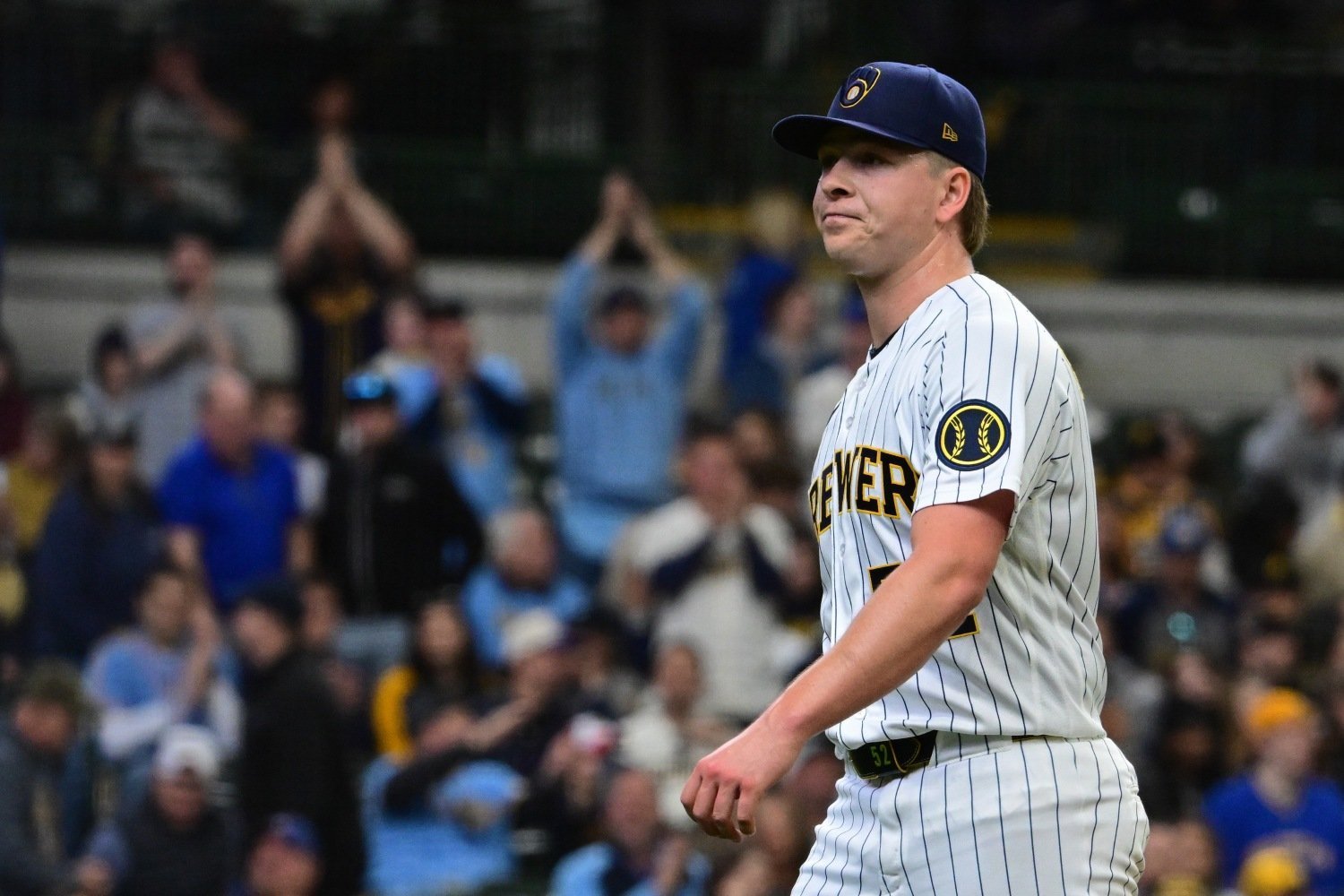 Weekly Snapshot: Record Last Week: 2-4 (Overall: 14-13) Run Scored Last Week: 26 Runs Surrendered Last Week: 26 Standing: 5th in NL Central Game 22 (4/21) | MIL 12, DET 4 Game 23 (4/22) | DET 5, MIL 2 Game 24 (4/23) | DET 5, MIL 4 Game 25 (4/24) | PIT 6, MIL 0 Game 26 (4/25) | PIT 6, MIL 3 Game 27 (4/26) | MIL 5, PIT 0 Game 22 | Brewers 12 Tigers 4 MIL Starter: Kyle Harrison (3.0 IP, 4 H, ER, 3 BB, 3 K) Top Performers: David Hamilton (4 H) Brice Turang (2 H, 4 RBI) Garett Mitchell (2 H, 3B, RBI) Kyle Harrison’s return to the mound kicked off the week, and his start was a tumultuous one, as he labored through his 3 innings of work against Detroit. In the end, though, it was the Milwaukee offense that eliminated any need for perfect pitching, as the Brewers' offense notched 16 hits and scored 12 runs, seven of which came in the 8th inning. Garett Mitchell’s RBI Triple WU9WWWVfWGw0TUFRPT1fQndKUlVsMVNWd1lBREFCUUFnQUhVQUJXQUZnREFGQUFWRlJUQ0ZJTkFnc0FCUUJU.mp4 Game 23 | Tigers 5, Brewers 2 MIL Starter: DL Hall (2.0 IP, 0 H, 0 ER, 2 BB, 2 K) Top Performers: Brandon Lockridge (2 H) Casey Mize was able to quiet the Brewers offense the following day, while the Brewers' Chad Patrick struggled in the bulk role behind DL Hall, coughing up 4 runs in his four innings of work to the Tiger offense. That was all that was needed for the team from Motor City; they closed out the game 5-2 to set up the rubber match on Thursday. Jake Bauers knocks in a run d2V3ME5fWGw0TUFRPT1fVjFKWFZRWlZVRllBV2djQkJRQUhVQTRFQUFBTUFsa0FCZ0VNQjFjR1VBcFFWRlpW.mp4 Game 24 | Tigers 5, Brewers 4 MIL Starter: Brandon Sproat (5.1 IP, 4 H, 2 BB, 3 ER, 4 K) Top Performers: Gary Sánchez (2 H, 2B, RBI) David Hamilton (2 H, RBI) Trevor Megill (1.0 IP, 0 H, 0 R) It looked as if the Brewers were going to steal the series from reigning AL Cy Young Award winner Tarik Skubal and the Tigers on Thursday, as the Brewers chased Skubal with the lead. But the Tigers roared back, tagging both Abner Uribe and Ángel Zerpa for solo home runs in the 8th and 9th innings, which flipped the scoreboard and series in the Tigers' favor. Blake Perkins’ RBI double MTZORHJfWGw0TUFRPT1fQmdJQVhWUUZCQVlBQVZOVUFBQUhDUUVBQUZsVEIxUUFDMUFEQ0ZFREIxWUJBZ0ZY.mp4 Game 25 | Pirates 6, Brewers 0 MIL Starter: Brandon Woodruff (5.0 IP, 5 H, 2BB, 3 ER, 3 K) Top Performers: Shane Drohan (4.0 IP, 4 H, BB, 1 ER, 2 K) Paul Skenes and the Pirates strolled into Milwaukee to continue to lay the hurt on a struggling Milwaukee offense, as the NL’s reigning Cy Young Award winner took a perfect game into the 7th inning, and eventually, closed the door on an utterly forgettable 6-0 Brewers loss. Jake Bauers breaks up the perfecto MTZOYjNfWGw0TUFRPT1fQUFOV1hGRUJYMUFBVzFBQkFnQUhWd1pWQUZsUkFBTUFWbEJVVWdVQ0NRb0RBVlJT.mp4 Game 26 | Pirates 6, Brewers 3 MIL Starter: Jacob Misiorowski (6.0 IP, 6 H, BB, ER, 9 K) Top Performers: Tyler Black (2 H, 2B) Aaron Ashby (2.0 IP, 1 H, 0 ER, 4 K) Jake Bauers (2 H) Another tough loss felled the Brewers to open the weekend. It saw strong outings from starters Jacob Misiorowski and Mitch Keller, who eventually gave way to the bullpens, and to extra innings. There, the struggling Zerpa gave up the lead and then some. The depleted Brewers offense went quietly to give them their 4th straight loss. Misiorowski cuts down Cruz TUFYMjFfWGw0TUFRPT1fQkZOVFV3QlZWMVFBWGxFS1ZBQUhCMVZRQUZoUkJnTUFVUUZSQ0ZGUUFGVURVd2RV.mp4 Game 27 | Brewers 5, Pirates 0 MIL Starter: Kyle Harrison (6.0 IP, H, BB, 0 ER, 12 K) Top Performers: Jake Bauers (2 H, 2 2B) Brandon Lockridge (H, BB, 2 RBI) It was Kyle Harrison's turn to throw a gem, as his 11th career start on Sunday was not only a bounce-back from his previous appearance, but undoubtedly his best. He got the run support, too, as the Brewers plated five in the fourth inning to chase Carmen Mlodzinski, highlighted by a Brandon Lockridge two-run single. The bullpen behind Harrison was shaky, but they did close the door without allowing any runs. Brice Turnag's leaping grab Transactions: 04/24/26 - Designated RF Luis Matos for assignment. 04/24/26 - Recalled OF/1B Tyler Black from Nashville Sounds. 04/24/26 - Recalled LHP Shane Drohan from Nashville Sounds. 04/24/26 - Optioned RHP Carlos Rodriguez to Nashville Sounds. 04/23/26 - Activated RHP Craig Yoho from the 15-day injured list. 04/23/26 - Optioned RHP Craig Yoho to Nashville Sounds. 04/22/26 - Signed free agent OF Mark Coley II to a minor league contract. 04/22/26 - Sent RHP Quinn Priester on a rehab assignment to Nashville Sounds. Looking Ahead: Tuesday, 4/29 - Diamondbacks @ Brewers - 6:40 PM CDT Wednesday, 4/30 - Diamondbacks @ Brewers - 6:40 PM CDT Thursday, 4/30 - Diamondbacks @ Brewers - 12:40 PM CDT Friday, 5/1 - Brewers @ Nationals - 5:45 PM CDT Saturday, 5/2 - Brewers @ Nationals - 3:05 PM CDT Sunday, 5/3 - Brewers @ Nationals - 12:35 PM CDT View the full article
 -
Edward Cabrera Is A Curveball Away From Brilliance
DiamondCentric posted an article in North Side Baseball
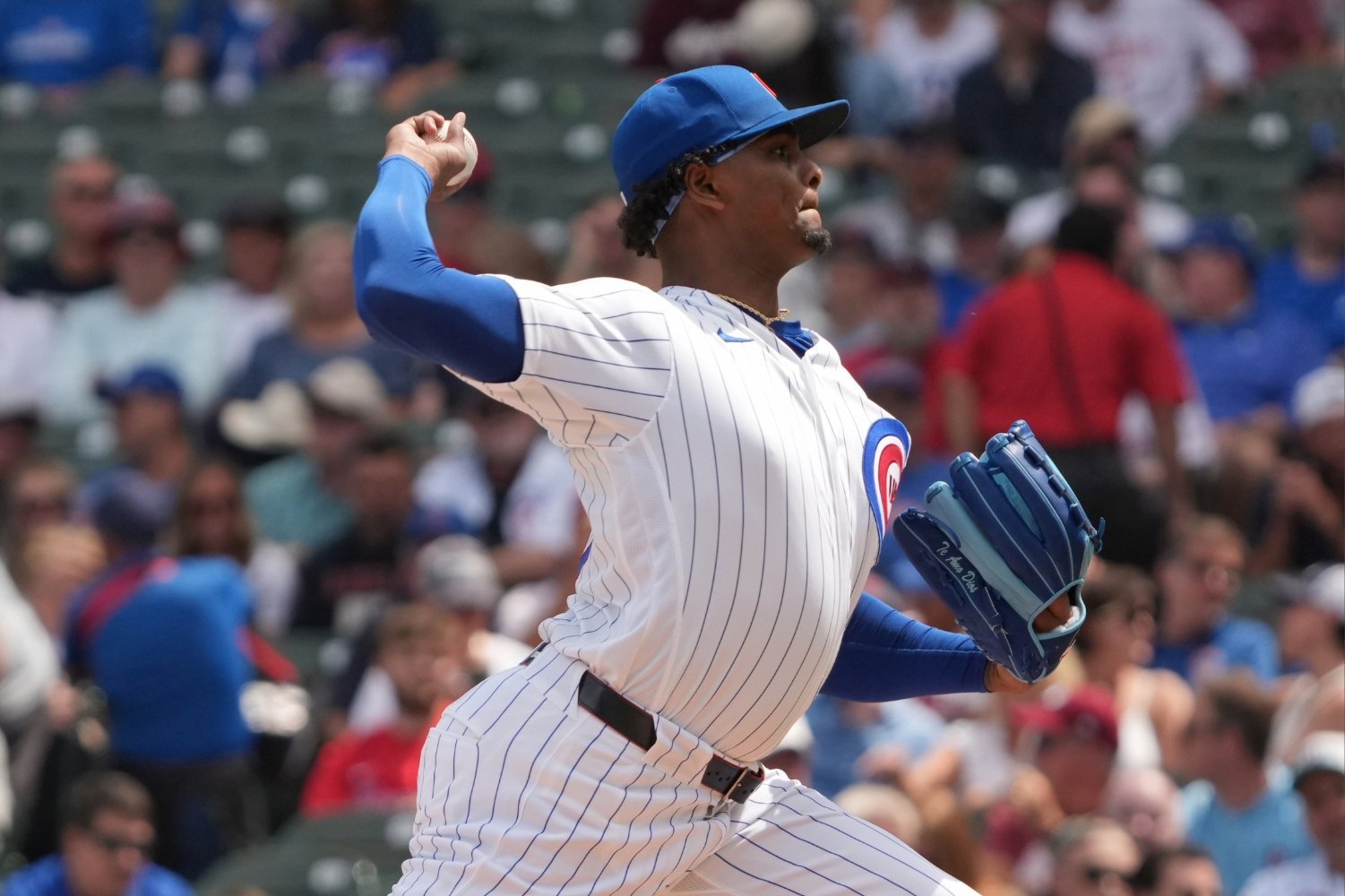 Much was said over the offseason about the Chicago Cubs adding more strikeouts to their pitching staff. A lot of this even came from president of baseball operations Jed Hoyer himself: “I felt like we had a very contact oriented pitching staff. Our defense helps that, but, you know, we don’t have that kind of stuff in our rotation other than Cade Horton,” Hoyer said on The Show podcast about the acquisition of Edward Cabrera. We’re now officially about one month into the season, and I hate to tell you this, but the pitching staff is the same as it ever was. Year ERA FIP K% 2025 3.81 4.16 21.4% 2026 3.79 4.16 21.8% I promise, I quadruple-checked those numbers to make sure I wasn’t mixing my years up when creating that table, because having the same FIP seems like an astronomically crazy coincidence. What’s the difference between those two pitching staffs? Nothing. As Pam Beesly says in The Office, they’re the same picture. Or, in our case, they’re the same pitchers. The thing is, they’re not the same pitchers. Matthew Boyd and Shota Imanaga are both, suddenly, strikeout machines. Some of that is probably offset by the loss of Cade Horton, Daniel Palencia, Hunter Harvey, and Phil Maton to injury, though the latter three will be back eventually. The team’s biggest addition, Cabrera, has certainly contributed to the respectable ERA and FIP that the pitching staff is posting. Despite this, his strikeout numbers are down, and they are down considerably. After striking out 25.8 percent of hitters last year, the righty is now striking out just 18.5 percent of hitters. He has gone from the 74th percentile to the 28th. Last season, Cabrera struck out 24.4 percent of left-handed hitters, and 27.5 percent of right-handed hitters. This season, he is still striking out righties at an elite rate of 28.6 percent. It’s his strikeout rate against lefties that has really plummeted, all the way down to a paltry 11.4 percent. The Dominican pitcher attacks lefties with, primarily, his changeup, while also sprinkling in a healthy bit of his four-seam fastball, sinker, and curveball. He likes to get outs with the curve, and typically, he is very successful in doing so. Per Baseball Savant, 90 pitchers threw at least 100 curveballs to left-handed hitters last season. Hitters swung and missed with 48.5 percent of their swings against Cabrera’s curveball, which was seventh among that group of pitchers. This year, though, the story is different. In 2026, 74 pitchers have thrown at least 25 curveballs to lefties. Cabrera now has the third-lowest whiff rate on those pitchers at 11.8 percent. To begin to understand what is wrong with the curveball, let’s take a look at where Cabrera is throwing the pitch. The chart on the left is a heat map for all of his curveballs thrown to lefties last year, while the one on the right is all of them thrown to lefties this season. Charts are courtesy of FanGraphs Labs: Cabrera is suddenly burying a whole lot of curveballs down near the back foot of left-handed hitters. In fact, he has thrown 22 two-strike curveballs to lefties in 2026. Six of them have been thrown to the back foot of the hitter. He only did that 10 times all of last season. For better context: Last season, 8.8 percent of his two-strike curves to lefties were thrown that far low and in. In 2026, he is doing it 27.3 percent of the time, or about three times more often. That is a really difficult place to get swings and misses. Perhaps one reason for the struggle in commanding the curveball; the former Marlin is seeing a pretty significant change in movement on a lot of his pitches to this point in 2026, namely his four-seam fastball and his curve. Between those two pitches, though, the breaking ball really stands out considering its drop in performance. Year Curveball Vertical Drop Curveball Horizontal Break 2025 50.0” 10.9” to the glove-side 2026 45.9” 7.1” to the glove-side This might not seem like a big difference, however, it is the difference between this pitch to Nolan Schanuel from a month ago that started at his knees and inside and only broke further down and more inside: Cabrera 1.mp4 ... and this pitch to Yoan Moncada last May in a game in which he struck out 10 Angels and allowed no runs in 5.2 innings: Cabrera 2.mp4 By starting the pitch that much higher and that much more over the plate, it looks like a strike for longer, and thus, Cabrera is much more likely to get those whiffs that Jed Hoyer so covets. Also note where the pitch to Moncada finishes relative to where the pitch to Schanuel finished. The pitch to Moncada, while very much out of the strike zone, was at least in the same zip code. The pitch to Schanuel almost hit him in the foot, and you don’t often induce swings that way, no matter how nasty the pitch is. It’s important to note that the sky is not falling here. Cabrera has a 2.73 ERA and a 3.66 FIP to this point. He’s just getting there in a radically different way than we all imagined, and if it continues, we’re probably about a month or so away from teams stacking their lineup with left-handed hitters when he takes the bump. View the full article
 -
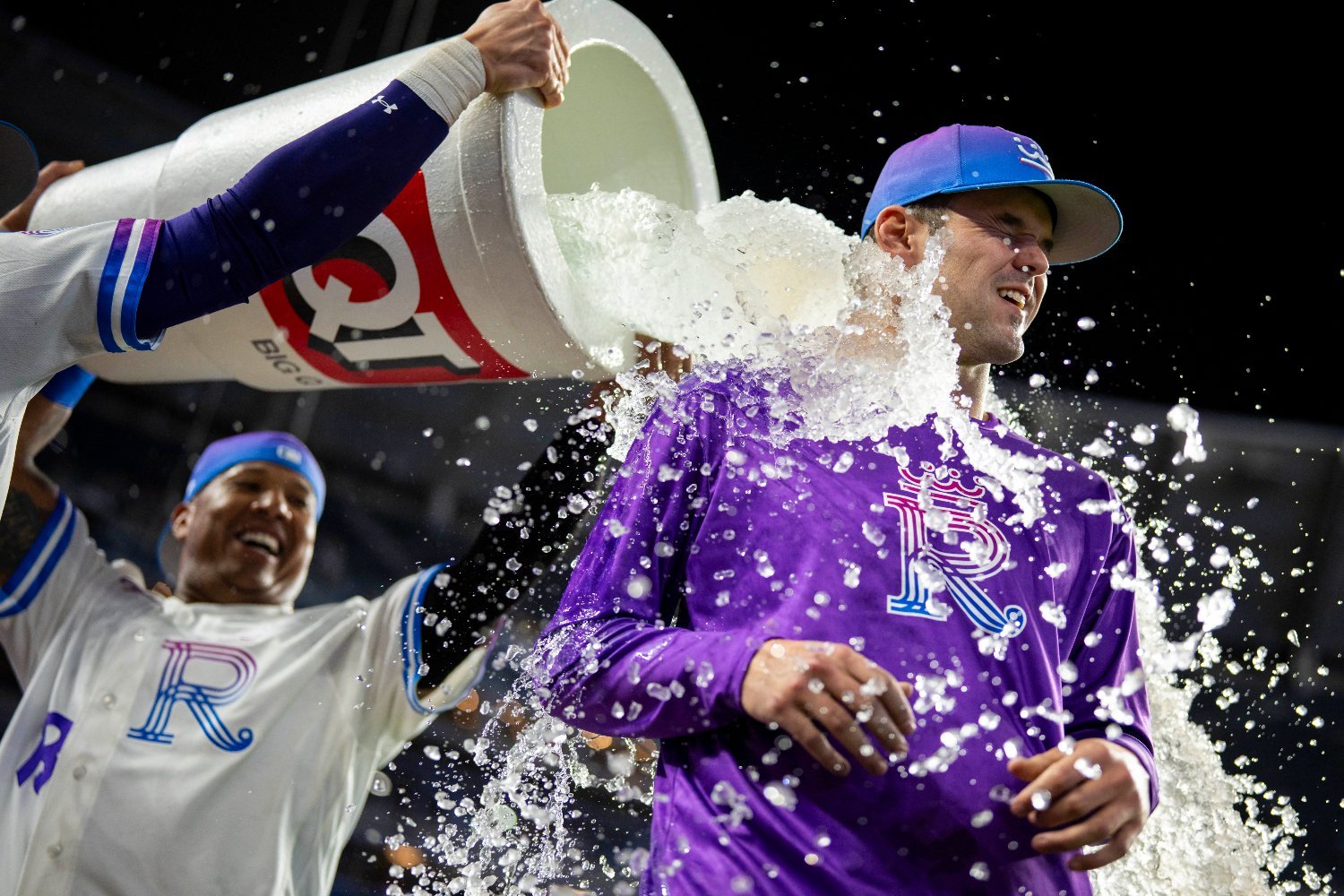 It's been a rough start for Cole Ragans to begin the 2026 season, and that's putting it kindly. After posting a 4.67 ERA and 1.18 WHIP in just 13 starts and 61.2 IP, the 28-year-old Royals lefty was determined to show that he was not just healthy, but could once again show the profile that made him a Cy Young finalist in 2024 (he finished 4th in AL Cy Young voting). Overall, this season, the results haven't quite been there for Ragans. In six starts and 27 IP, he has a 5.00 ERA, 1.48 WHIP, 6.03 FIP, and 13% K-BB%. He's still striking out batters at a good clip (28.7% K%), but his walk rate has been brutal (15.7% BB%). In addition, he has struggled with hard contact allowed, as illustrated by his Statcast percentiles via TJ Stats, as shown below. In addition to ranking in the 2nd percentile in BB%, he also ranks in the 5th percentile in barrel rate allowed and 21st in groundball rate. While the whiffs (94th percentile), strikeouts (88th percentile K%), and strike-generating (80th percentile CSW%) have been strong, hitters have hit the ball hard and in the air when they've made contact, and that's not a recipe for success. However, despite the slow start, Ragans finally showed signs of life on Saturday in the Royals' 12-1 victory over the Angels. In six innings of work, Ragans struck out 11, allowed only five hits, one run, and had no walks. The lone hit was a home run by Jo Adell. However, beyond the Adell home run, the Angels struggled against Ragans, as evidenced by not just the strikeouts, but the 27 whiffs Ragans induced, which tied a career-high. For the Royals to get back into the postseason race, especially in the AL Central, they will need a healthy and locked-in Ragans for the remainder of the season. Was Saturday's start a step in the right direction? Or was it an outlier against an Angels team that has struggled with offensive consistency this season? (They rank 4th in home runs and 8th in runs scored, but 27th in batting average.) The Four-Seamer Was in Full Force Against the Angels When looking at Ragans' performance, I figured it would be good to look at his TJ Stuff+ summary from Saturday's game. Here's what it looked like below. There's a lot to like from this Ragans TJ Stuff+ summary. First off, the stuff looked amazing from Ragans in his most recent outing. Not only did he post a 104 overall TJ Stuff+, but all four of his pitches had TJ Stuff+ over 100 and grades over 50 (three over 60). As a result, he not only generated a ton of whiffs (46.6% whiff rate) but also chases (40.8%). The chase rate has been a struggle for him this year, as his 27% O-Swing% ranks in the 23rd percentile. Thus, to see some improvement in this area on Saturday was encouraging. However, what stuck out most from this pitching performance was that Ragans relied heavily on the four-seamer, and it worked for him. It was a "bully ball" performance in which he challenged Angels hitters with his four-seamer, dared them to hit it, and simply overwhelmed them with the offering for six innings. Ragans not only threw the four-seamer 53.5% of the time, but he threw it in the zone a lot (54.7%) and generated a lot of whiffs with it, as evidenced by his 51.4% whiff rate on the four-seamer. What's even more impressive is that he produced a lot of whiffs and strikes in the zone, as illustrated in his four-seam pitch description chart via Savant. It's interesting to see that Ragans wasn't particularly pinpoint with his four-seamer command on Saturday. While he definitely had an approach to locate it up, he also left a lot of four-seamers in the strike zone, especially in areas where they could've been belted for base hits. However, Ragans' "flood the zone" approach with the four-seamer seemed to be productive, as illustrated by not just his high whiff and chase rates, but solid .351 xwOBACON allowed on the pitch. That showed that Ragans' four-seamer had the Angels off balance. They not only whiffed on the pitch but also didn't make good contact when they connected. The latter aspect is something that we haven't seen much from Ragans this year with his four-seamer. That is demonstrated in the four-seam heatmap below from this year, via TJ Stats. For the year, Ragans is actually producing strong whiff rates against lefties (22.5%) and righties (34.6%), as well as excellent CSW rates against lefties (29.6%) and righties (32.1%). That said, he has been a bit subpar in chase against both sides of the plate, with a 24% O-Swing% against lefties and 25.9% O-Swing% against righties. His xwOBACON marks are even worse, with a .482 xwOBACON allowed against lefties and .396 xwOBACON against righties. For comparison, let's look at his four-seamer heatmap data from 2025. His four-seam command was less erratic a season ago, as illustrated by the heatmap that is centered around the upper edges of the strike zone against both lefties and righties. He's generating better CSW and whiff rates against lefties this year than in 2025, but lefties are hitting the four-seamer much better. Conversely, the CSW and whiff rates against righties with the four-seamer are around the same, but Ragans is doing a better job limiting hard contact this year than a season ago (.517 xwOBACON). When Ragans is able to flood the strike zone with the four-seamer, positive results have followed this year. When looking at his TJ Stuff+ summary from his start against the Yankees, the zone rate was far lower on the four-seamer than the one he showed against the Angels. Against the Yankees, Ragans had a 104 TJ Stuff+ on the four-seamer, but his zone rate was 42.6%. That was 12.1% worse than his four-seam zone rate against the Angels. Hence, while Ragans was able to generate decent whiffs with the four-seamer (27.3%), the lack of control and command with the four-seamer resulted in a low amount of chase (22.9%) and a lot of walks (eight) as a result. I would expect that Ragans will make it a priority in his upcoming starts to ensure that he's flooding the strike zone with his four-seamer. Better Extension on the Knuckle Curve? The knuckle curve has been an interesting breaking offering this season for Ragans. He utilizes it (8.9% usage) more than his slider (14%). That said, he didn't throw the slider AT ALL in his last start and threw the curveball 12.1% against the Angels. That is eight percent higher than his knuckle curve usage against the Yankees. What's interesting about the pitch is that it isn't necessarily a "plus" pitch by any means. It's one of his lowest-rated pitches on a TJ Stuff+ end, as seen below via his TJ Stuff+ season summary for the season. Ragans' knuckle curve has a 100 TJ Stuff+ and 45 grade with a 16% chase rate, 16.7% whiff rate, and 1.076 xwOBACON allowed. Even against the Angels, he had only a 25 percent chase and whiff rate, as well as a 2.032 xwOBACON allowed. In fact, his home run allowed to Adell came on a poorly commanded knuckle curve. Still, the knuckle curve seems to be an offering that can be useful when commanded effectively. Last year, Ragans generated a 32.4% whiff rate, 22.2% put-away rate, and .284 xwOBA allowed on the knuckle curve. Here's how it looked last season, based on his TJ Stats heatmap data. Here's Ragans last May, inducing a strikeout of Trevor Story on a knuckle curve in an 0-2 count. R0I2TGpfWGw0TUFRPT1fQndjRFVGY0FVZ01BWEZzTFZ3QUhWd1ZXQUFNRVZRTUFCQU1IQmdkUkFWSlZCZ1Jm.mp4 This year, the metrics on his knuckle curve have trended in the wrong direction. His knuckle curve is generating a 16.7% whiff rate, a 0.0% put-away rate, and a 1.093 xwOBA. Not only is Ragans' knuckle curve not generating the strikes needed, but it's also getting mashed. In addition to Addell's home run, Aaron Judge also smoked a home run off Ragans on a first-pitch knuckle curve that was located poorly as well. ek13R1pfVjBZQUhRPT1fRHdGWFYxWlJVd0lBREFCV0J3QUhWd1JmQUFOUlVRQUFDbFVIQUZjTlVnUlhCd3NB.mp4 Judge absolutely jumped on it and launched it over the center field wall. Thus, one has to ask the question: How is Ragans locating his knuckle curve this year? Based on the heatmap data below, it hasn't been good, as he's been leaving it far too often in the middle of the zone. He's locating it in a similar and ideal area to lefties, though he's only thrown it 3.7% of the time against southpaw hitters. Against righties, the CSW% is strong at 32.4%, but he has only generated a 16.7% whiff rate, 20% O-Swing%, and is allowing a 1.076 xwOBACON with the curve. Thus, the command of the curve has been poor this year, especially against righties. What could be contributing to that? Extension could be the difference between this year and last. For those unfamiliar with extension, it is how far off the mound, in feet, a pitcher releases the pitch. It is important for the following reasons, per Google's AI overview: Ragans' extension this year on the knuckle curve is 5.9 feet, which is 0.2 feet less than his extension on the pitch a season ago. While that seems like a minute difference, that subtle change in extension could be why he's not locating the knuckle curve down like he wants, especially against righties. That said, his extension has been much better in recent starts, especially against the Angels, which had a 6.0 mark. Furthermore, he's been trending up in extension with each start after an initial decline, as illustrated in his extension rolling chart via Savant. Thus, with better extension, Ragans may develop a better feel for the knuckle curve. If that happens, not only will he miss less in the middle of the zone, but he will also generate more swing-and-miss on the pitch, something he did in 2025 and 2024 with the breaking offering. Final Thoughts On Ragans It's just one start, but on Saturday, Ragans demonstrated why he has been the Royals' Opening Day starter for the last three years. When his command and velocity are clicking, as they were on Saturday, there's not a better starting pitcher in the Royals' rotation, which says something considering this starting pitching staff ranks sixth in ERA and ninth in WHIP (though that may go up after Seth Lugo's rough outing on Sunday). For Ragans to build on this promising start, he will need to focus on two things: his four-seam command and knuckle curve extension. The four-seamer has all the characteristics of a premier pitch, and he throws it more than enough (53.6% usage). However, when he's missing on the edges or up, hitters don't chase, which forces him to rely on other pitches that aren't as effective or as impressive. On Saturday, he didn't worry about being too fine with the pitch. He just threw it hard and in the zone, and the approach paid off. In terms of the extension, it's obvious that his decline in extension on the knuckle curve is negatively affecting his command on the pitch. When he got back to his normal knuckle curve extension, the results were much better. A 0.1 foot difference in knuckle curve extension from the Yankees to the Angels start resulted in a three-point improvement in TJ Stuff+ and 25% increase in chase and whiff rate. Thus, keeping a consistent extension on his knuckle curve should be a priority for Ragans in order to improve his knuckle curve command, which hasn't been good this year. Ragans can't gain better command of the curve if the extension isn't there. If those two things happen, Ragans will once again look like his "ace" self, regardless of the competition. Hopefully, he can continue to make progress in those two areas in his next scheduled start in Seattle, which profiles more as a pitcher's park, and against a Mariners lineup that is dangerous but has been inconsistent to begin 2026 (they rank 21st in average, 20th in runs scored, and 15th in home runs). View the full article
 -
Blue Jays Clutch Plays: A Big Week for Louis Varland
DiamondCentric posted an article in Jays Centre
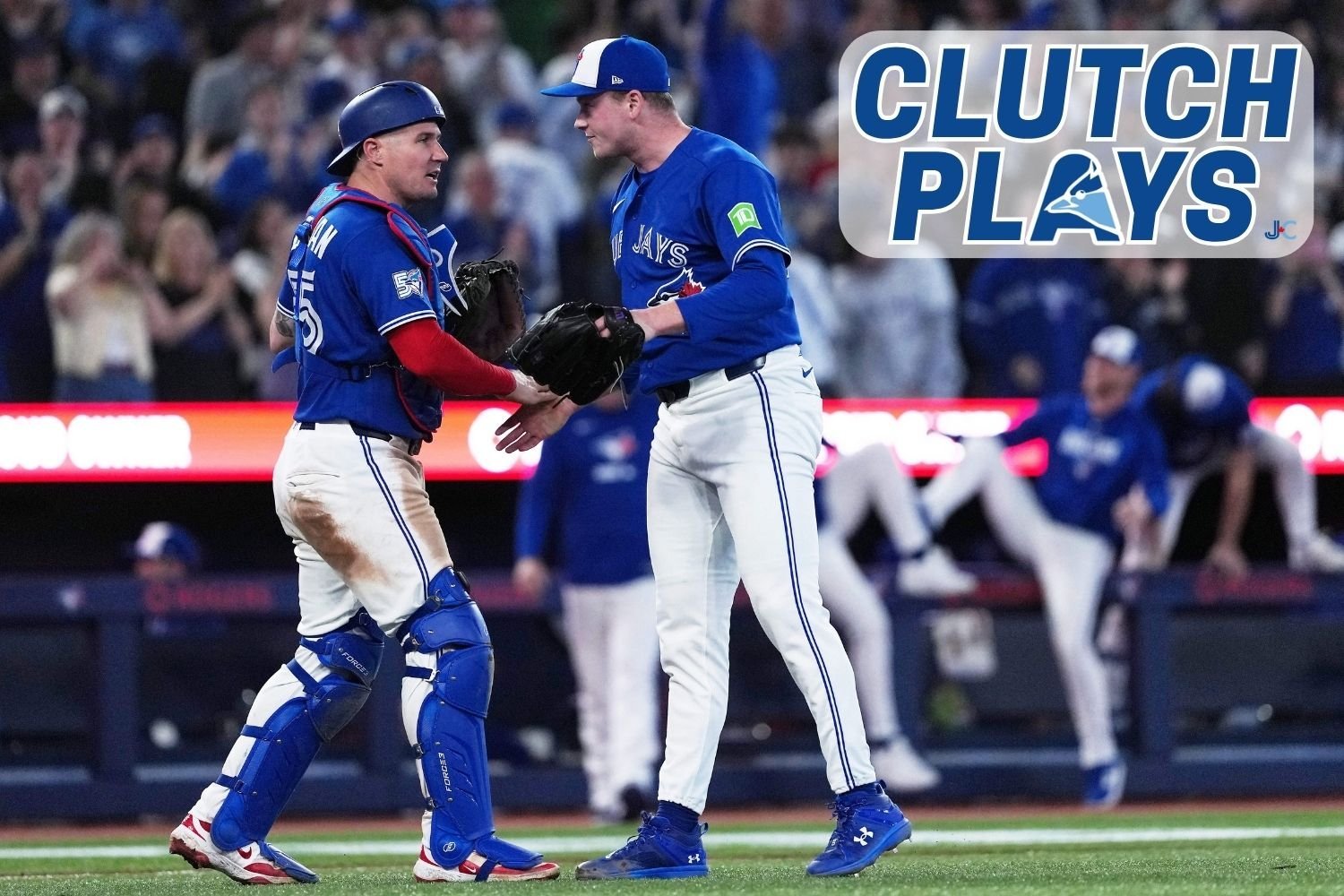 Welcome back to Blue Jays Clutch Plays, a recurring post that highlights the six most pivotal plays (three pitching, three hitting) from the past week of Blue Jays baseball, according to MLB's win probability model. Click here to read last week's edition. At long last, the Blue Jays finally started to look like themselves again this week, finishing off their lengthy road trip with a series win in Anaheim and then taking two of three from the Guardians at home. This is despite their nightmarish injury bug refusing to go away, as Nathan Lukes wound up on the IL after pulling his hamstring running out of the box on Friday. Still, they fought through it and have been getting consistent timely hitting for about a week now, a good sign ahead of their upcoming matchup against the Red Sox. Here are the moments that mattered most from this past week. Pitching 3. Louis Varland: Brayan Rocchio Strikeout, Top 9, 4/25 (+12.6% wPA) In his first inning of work since Jeff Hoffman was officially removed from the closer role, Louis Varland found himself in an immensely precarious situation. Toronto led 5-2 when he entered the game, but a string of great at-bats by Cleveland brought the Guardians to within two runs with the bases loaded and just 1 out. Varland struck out Bo Naylor, and then, with the count at 2-2, he dialed it up to 98 to put Brayan Rocchio away and seal the win. 2. Patrick Corbin: Steven Kwan GIDP, Top 5, 4/26 (+14.8% wPA) Unfortunately, Angel Martínez would double in the tying run immediately after this, but the things that Patrick Corbin has done for this team over the past few weeks shouldn't be discounted. In the fifth inning on Sunday, he got Steven Kwan, one of the best bat-to-ball and line drive hitters in the game, to roll a perfectly placed front-door sinker directly to Davis Schneider at second base for the twin killing. Corbin failed to finish the frame, but the bullpen luckily picked him up on the way to a series win. 1. Louis Varland: Nolan Schanuel GIDP, Bot 9, 4/21 (+34.0% wPA) We have a new frontrunner for Clutch Pitching Play of the Season. With the winning run on first base and one out in the ninth inning, Varland came into a bases-loaded situation and promptly induced a game-ending double play from Nolan Schanuel. Soon after, Leo Morgenstern put out a great piece that emphasizes just how rare and impressive a one-pitch, two-out save is, especially for Varland, who had essentially no experience closing games before last week. According to win probability added, this would've been the second-most pivotal play of 2025 for the Jays' pitching staff. Hitting 3. Ernie Clement: RBI Single, Top 7, 4/22 (+18.6% wPA) This at-bat beautifully personifies the essence of Ernie Clement as a hitter. With two strikes against him, he reached for a well-located sweeper just off the corner down and away and snuck it up the middle to tie the game. The Blue Jays would give up four runs in the bottom half, but this was a huge hit at the time. They entered the top of the seventh down 3-0 and tied it against the bullpen after Angels ace José Soriano was removed following yet another quality start. 2. Vladimir Guerrero Jr.: 2-run HR, Top 3, 4/20 (+19.4% wPA) Vladimir Guerrero Jr. has been on fire lately, but he hasn't quite tapped into his home run power on a consistent basis. Last Monday, though, he got a changeup from Reid Detmers that caught a little too much of the plate and walloped it deep into the southern California sky. The pitch, the swing, and the result were quite reminiscent of his moonshot off Carlos Rodón in Game 3 of the 2025 ALDS. This one propelled the Jays to a series-opening win that would set the tone for the week ahead. 1. Lenyn Sosa: 2-RBI Double, Top 8, 4/21 (+30.7% wPA) The newcomer Lenyn Sosa made his mark in the Angels series, slamming a pinch-hit double off the wall in right to break a 1-1 tie in the eighth inning on Tuesday. This is exactly what the coaching staff hopes he'll be able to do at the plate: come up with a big hit off the other team's best lefty reliever. Sosa is a very aggressive hitter, and Drew Pomeranz probably wanted this fastball to end up a little more outside than it did. The former White Sox were all over this game, as Eloy Jiménez later singled Sosa home to make it a three-run inning. View the full article
