


DiamondCentric
-
Posts
2,631 -
Joined
-
Last visited
Never
Content Type
Profiles
Forums
Events
News
Tutorials & Help
Major League Baseball Videos
Guides & Resources
Store
Downloads
Gallery
Everything posted by DiamondCentric
-
 Twins System Recap: Fort Myers had a big come-from-behind win tonight, thanks in part to 19-year-old Ramiro Dominguez. An unheralded signing from their 2024 international class, Dominguez hit three balls in excess of a 100 mph exit velocity tonight, including a home run. Dameury Pena and Yasser Mercedes, a couple more known names in that Mussels lineup, also had big games in a 12-run outburst. Wichita's Jose Salas blasted a pair of homers this evening, and Eduardo Tait had a three-hit night, including his third home run. Here's info on those performances and more in tonight's recap. View the full article
 -

 Ryan Clifford's three-run home run highlighted Syracuse's offense in a 10-4 loss at Worcester, where Jack Wenninger walked five batters over 2 1/3 innings. A.J. Ewing homered and stole a base in Binghamton's 3-1 defeat, and the bullpen tossed four scoreless frames. Corey Collins homered for Brooklyn in a 10-2 setback, and Dylan Ross worked a clean inning in relief. JT Benson and Branny De Oleo each homered for St. Lucie in an 11-3 loss. Mets Transactions New York Mets placed SS Francisco Lindor on the 10-day injured list. Left calf strain. New York Mets recalled RHP Christian Scott from Syracuse Mets. New York Mets optioned RHP Austin Warren to Syracuse Mets. New York Mets recalled 3B Ronny Mauricio from Syracuse Mets. Clifford's Three-Run Blast Not Enough As Syracuse Falls Late At Worcester Syracuse grabbed an early lead but watched it disappear in a 10-4 loss at Worcester. Starter Jack Wenninger worked 2 1/3 innings, allowing one hit, two earned runs, five walks, and four strikeouts. Ryan Clifford provided the offensive highlight with a three-run home run in the third inning that scored Hayden Senger and Trace Willhoite and put the Mets in front 3-0. Clifford finished 2-for-4 with the long ball and three RBIs. Vidal Bruján added two hits, a run, and a stolen base, Cristian Pache went 2-for-4 with a double, and Jackson Cluff pushed the margin to 4-2 with a sacrifice bunt in the fourth that brought home Bruján. The lead vanished in the bottom of the fifth, when Worcester strung together three consecutive doubles against reliever Mike Baumann to turn a 4-2 deficit into a 6-4 advantage. Baumann was charged with the blown save and the loss, giving up four hits and two earned runs in 1 2/3 innings. Worcester added three more in the seventh against Ofreidy Gómez on a two-run single and a run-scoring groundout, and Onix Vega closed the frame with the final out. Syracuse collected 10 hits, drew two walks, struck out 13 times, and left five runners on base. Player AB R H RBI BB K Nick Morabito 4 0 1 0 0 1 Ji Hwan Bae 3 0 1 0 1 1 Ryan Clifford 4 1 2 3 0 2 Christian Arroyo 4 0 1 0 0 1 Vidal Bruján 4 1 2 0 0 0 Cristian Pache 4 0 2 0 0 1 Jackson Cluff 3 0 0 1 0 2 Hayden Senger 4 1 1 0 0 2 Trace Willhoite 3 1 0 0 1 3 Player IP H R ER BB K HR Jack Wenninger 2.1 1 2 2 5 4 0 Carlos Guzman 2.0 2 2 2 1 3 0 Mike Baumann 1.2 4 2 2 0 0 0 Ofreidy Gómez 1.2 2 4 2 4 2 0 Onix Vega 0.1 0 0 0 0 0 0 Ewing's Homer And Scoreless Bullpen Not Enough For Binghamton Binghamton fell 3-1 to Erie despite a strong leadoff performance from A.J. Ewing and a scoreless four-inning effort from the bullpen. Starter Joander Suarez took the loss after five innings in which he allowed eight hits, three earned runs, two walks, and three strikeouts. Erie opened the game with two runs in the top of the first on a run-scoring single and a run-scoring double, putting the Rumble Ponies in an early 2-0 hole. Ewing cut the deficit to one with a solo home run to center field in the bottom of the third, capping a 2-for-3 night that included a walk, a stolen base, a run, an RBI, and a strikeout. Erie tacked on what proved to be the decisive run in the top of the fifth on a sacrifice fly, and the Rumble Ponies' offense went quiet the rest of the way. Marco Vargas added two hits, and Nick Lorusso tripled and drew a walk. Douglas Orellana, Kevin Gowdy, Matt Turner, and Brian Metoyer combined for four scoreless innings behind Suarez, striking out four batters and allowing just one hit. Binghamton finished with five hits, two walks, 16 strikeouts, and left six runners on base. Player AB R H RBI BB K A.J. Ewing 3 1 2 1 1 1 Marco Vargas 4 0 2 0 0 1 Jacob Reimer 4 0 0 0 0 4 Chris Suero 4 0 0 0 0 2 Eli Serrano III 4 0 0 0 0 2 Kevin Parada 4 0 0 0 0 2 Nick Lorusso 3 0 1 0 1 0 Matt Rudick 3 0 0 0 0 2 Wyatt Young 3 0 0 0 0 2 Player IP H R ER BB K HR Joander Suarez 5.0 8 3 3 2 3 0 Douglas Orellana 1.0 1 0 0 1 2 0 Kevin Gowdy 1.0 1 0 0 0 0 0 Matt Turner 1.0 0 0 0 0 0 0 Brian Metoyer 1.0 0 0 0 0 2 0 Brooklyn Bullpen Unravels In 10-2 Loss At Hudson Valley Brooklyn dropped a 10-2 decision at Hudson Valley, unable to keep pace after the Renegades pulled away with a two-out rally. Dylan Ross opened the game with a clean inning before handing off to Joel Díaz, who took the loss after 3 2/3 innings in which he gave up six hits, three earned runs, two walks, and three strikeouts. Hudson Valley broke the game open with three runs in the bottom of the third, stringing together back-to-back doubles and an RBI groundout to take a 3-0 lead. Cleanup hitter Corey Collins pulled one back with a solo home run to right field in the fourth, and Diego Mosquera's sacrifice fly in the fifth scored Yohairo Cuevas to make it 3-2. The game tilted for good in a four-run bottom of the seventh against Juan Arnaud, when a pair of run-scoring singles and a two-run single chased the margin to 9-2. Cuevas finished 1-for-3 with a double and a run, and Collins went 2-for-4 with a double and a home run. Antonio Jimenez and Heriberto Rincon each added a single out of the top and bottom of the order. Brooklyn managed five hits, struck out nine times, and left three runners on base. Player AB R H RBI BB K Antonio Jimenez 4 0 1 0 0 1 Ronald Hernandez 4 0 0 0 0 0 Daiverson Gutierrez 3 0 0 0 0 1 Corey Collins 4 1 2 1 0 1 John Bay 4 0 0 0 0 3 Colin Houck 3 0 0 0 0 1 Yohairo Cuevas 3 1 1 0 0 1 Diego Mosquera 2 0 0 1 0 0 Heriberto Rincon 3 0 1 0 0 1 Player IP H R ER BB K HR Dylan Ross 1.0 0 0 0 0 0 0 Joel Díaz 3.2 6 3 3 2 3 0 Joe Charles 1.1 1 2 2 2 3 0 Juan Arnaud 0.2 4 4 4 2 1 0 Gregori Louis 1.1 1 1 1 1 2 0 Early Damage Buries St. Lucie In 11-3 Loss To Palm Beach St. Lucie never recovered from a rough first trip through the order in an 11-3 loss to Palm Beach. Starter Conner Ware took the loss, working 4 1/3 innings and allowing six hits, five earned runs, three walks, two strikeouts, and a home run. The Cardinals struck for one in the top of the first on a sacrifice fly and then broke the game open with a four-run second, putting together a run-scoring triple, a run-scoring sacrifice fly, a solo home run, and a run-scoring triple to take a 5-0 lead. Leadoff hitter Elian Peña went 2-for-5 to set the table, and JT Benson answered in the bottom of the second with a solo home run to left-center field. Benson, Sam Biller, and Branny De Oleo each added hits, but the home offense could not string enough together. Palm Beach added one in the sixth, two in the seventh on a run-scoring groundout and a run that came across on a wild pitch, and three more in the ninth, aided by a throwing error. De Oleo capped the scoring with a solo home run to left field in the bottom of the ninth. Benson finished 2-for-4 with a double, a home run, two runs, and an RBI. St. Lucie collected seven hits, drew two walks, struck out 11 times, and left seven runners on base. Player AB R H RBI BB K Elian Peña 5 0 2 0 0 0 Sam Robertson 3 0 0 0 1 2 Randy Guzman 3 0 1 0 1 2 Julio Zayas 3 0 0 0 0 1 AJ Salgado 4 0 0 0 0 3 JT Benson 4 2 2 1 0 0 Chase Meggers 4 0 0 0 0 2 Sam Biller 4 0 1 0 0 1 Branny De Oleo 4 1 1 1 0 0 Player IP H R ER BB K HR Conner Ware 4.1 6 5 5 3 2 1 Christian Rodriguez 1.2 2 1 0 0 2 0 Joel Lara 3.0 4 5 4 1 3 0 Top-20 Prospect Performance Nolan McLean: DNP Carson Benge: DNP A.J. Ewing: 2-for-3, HR, BB, K, RBI, SB Jonah Tong: DNP Ryan Clifford: 2-for-4, HR, 3 RBI, 2 K Jacob Reimer: 0-for-4, 4 K Jack Wenninger: 2.1 IP, 1 H, 2 R, 2 ER, 5 BB, 4 K Elian Pena: 2-for-5 Mitch Voit: DNP Nick Morabito: 1-for-4, K Jonathan Santucci: DNP Chris Suero: 0-for-4, 2 K Zach Thornton: DNP Wandy Asigen: DNP Will Watson: DNP Eli Serrano III: 0-for-4, 2 K Ryan Lambert: DNP Dylan Ross: 1.0 IP, 0 H, 0 R, 0 ER, 0 BB, 0 K Antonio Jimenez: 1-for-4, K R.J. Gordon: DNP View the full article
 -
Marco Raya’s Bullpen Transition Facing a Critical Hurdle
DiamondCentric posted an article in Twins Daily
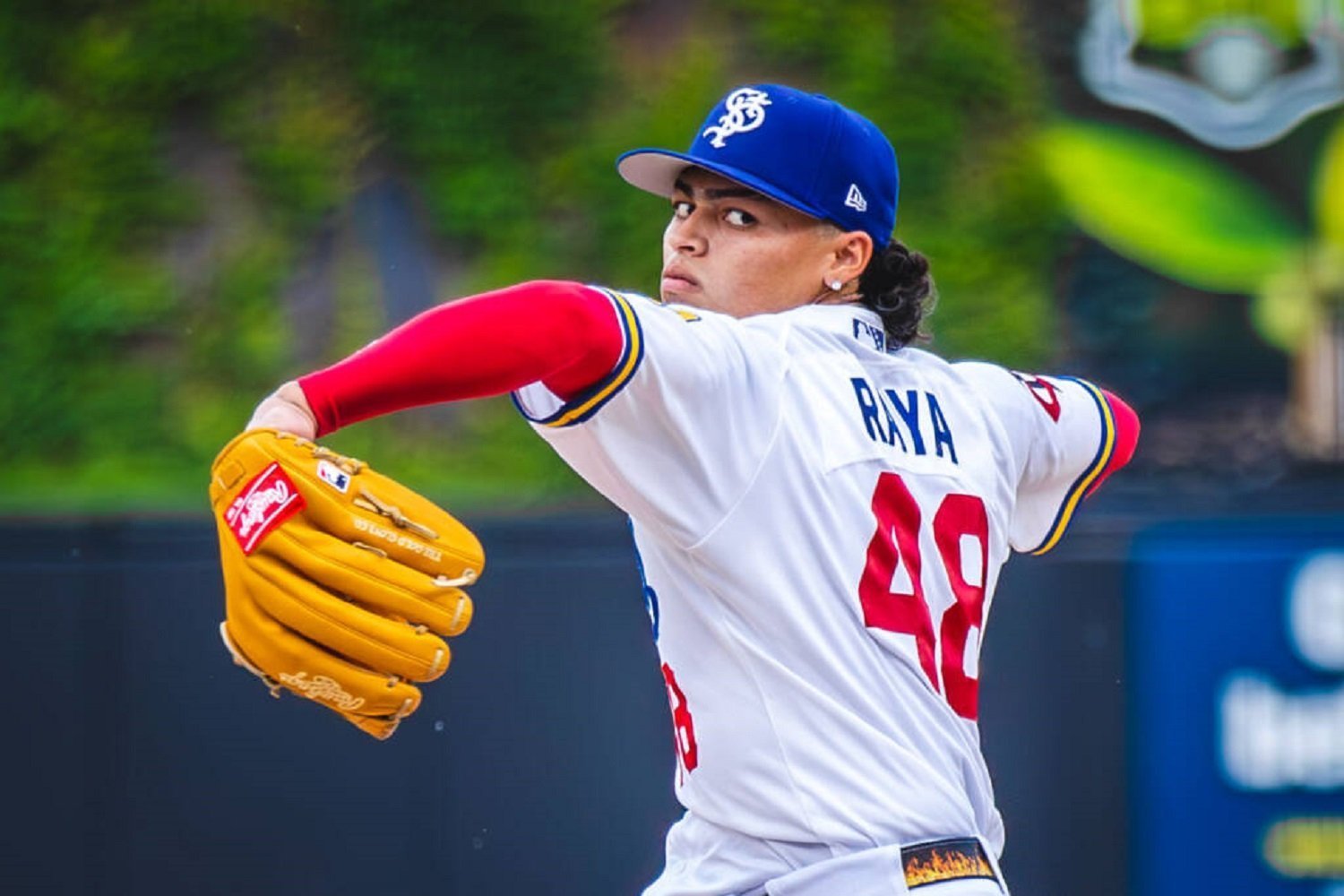 The Minnesota Twins have built a reputation for successfully transitioning young starters into high-impact relievers. Jhoan Duran, Griffin Jax, and Louis Varland all found another gear once they moved to the bullpen, turning raw stuff into late-inning weapons. That path has long felt like the most logical outcome for Marco Raya. So far, it has not been nearly as smooth. Raya’s move to relief did not come as a surprise. Having never thrown more than 97 2/3 innings in a season and dealing with workload limitations throughout his development, the writing had been on the wall. “I had an idea,” Raya said this spring. “I was open to it. … When they advised me I was moving to the ‘pen, I said, ‘Let’s run with it.’” The shift made sense on paper. Raya has always missed bats, carrying a 9.6 K/9 rate through the minors, backed by a lively fastball and sharp, high-spin breaking stuff that consistently challenged hitters more experienced than him. The hope was simple. Shorter outings, more aggression, and fewer opportunities for his control to derail him. But the transition has exposed the same issues that slowed his climb as a starter. Control remains the biggest obstacle. Raya walked 4.1 batters per nine innings in the minors, and instead of improving in relief, that number ticked up. The expectation that his arsenal would play better in shorter bursts has only partially materialized. There were flashes late last season. After a rocky bullpen debut on July 25 and a few more starts, Raya officially moved into a full-time relief role on August 21. He posted a 4.90 ERA over his final 18 1/3 innings, a modest step forward from the 6.27 ERA he carried across his previous 80 1/3 innings. Even then, the progress felt more incremental than transformational. The adjustment to relief goes beyond just pitching fewer innings. It requires a different mindset, quicker preparation, and the ability to flush bad outings almost immediately. “You get one or two minutes and just come in and be ready when you step on that rubber,” Raya said. “I’ve been working on that and getting that intensity a little higher. … Just routines and body movements on the mound, all the detail work.” That learning curve has followed him into 2026. Through his first eight appearances with Triple-A St. Paul, Raya has allowed runs in half of them. One outing in particular underscored how volatile things can be. On April 12, he recorded just one out while giving up six earned runs. It is the kind of blowup that tests a reliever’s ability to reset, something Raya is still learning. The Twins have not shied away from using him in different roles. Three of his outings have extended beyond one inning, suggesting the organization still sees some flexibility in how he can be deployed. There are also encouraging signs beneath the surface. Raya is striking out hitters at a career-best 11.6 per nine innings. But the problems are just as loud. He is walking 5.8 batters per nine and allowing 12.5 hits per nine, a combination that leaves little margin for error, no matter the role. That inconsistency mirrors what happened during his first exposure to Triple-A last season. After rising steadily through the system and remaining a fixture in prospect rankings, Raya hit a wall. Walks piled up, outings dragged on, and for the first time in his professional career, he looked overwhelmed rather than overpowering. Context matters. Raya reached Triple-A at just 22 years old after an aggressive promotion schedule. Struggles at that level are not uncommon, especially for pitchers still refining command. But they do shift the timeline from projection to proof. The bullpen was supposed to simplify things. Instead, it has reinforced the same question that has followed Raya throughout his career: Can he throw enough strikes for his stuff to matter? There are still reasons for optimism. Raya has said he likes how his body responds to more frequent usage, and he has leaned on conversations with experienced relievers to better understand the role. The raw ingredients remain intact, and there were glimpses of that upside during spring action. But until the control stabilizes, the transition that once looked like a fast track to impact is starting to feel more like another developmental hurdle. For now, Raya is still searching for the version of himself that the bullpen was supposed to unlock. Can Raya be successful in the bullpen? Leave a comment and start the discussion. View the full article
 -
For One Brief, Terrifying Moment, Twins Fan Pities Mets Fans
DiamondCentric posted an article in Twins Daily
 Adam Prokosch didn't see it coming. "The Twins had just knocked [Mets closer] Devin Williams out of the game," said the Maple Plain resident. "The new reliever got an out, and the fans started yelling 'MVP! MVP!' The depths of their misery had sunk them to the point where they were doing loud sarcasm. That's never good. "I remember doing that at a Vikings game when Blair Walsh made an extra point. You're really in a vulnerable place when you're doing that. And that's when it happened: I felt bad for Mets fans." Prokosch remembers the sensation with vivid clarity. "You have the second-highest payroll in baseball, but you're still second banana in your home market. You're on your longest losing streak in 25 years, and you're about to lose to a team that just slashed payroll by $30 million. Your high-priced bullpen is going to lose to a team that forgot to staff one. I imagined how awful that would feel. A gut punch after a kidney punch." The moment passed quickly. "I don't know what came over me. It won't happen again." Despite that assurance, Prokosch's loved ones are worried. "You can't just say you feel bad for Mets fans out loud," said Charlie Johnson, Prokosch's co-worker. "Keep an intrusive thought like that tucked away inside. Other people can hear you. They might spiral, too." "When the Mets won on Wednesday and they reacted like they won the Super Bowl and an Olympic gold medal at the same time, I almost felt bad like Adam did," said Rachel Ryan, Prokosch's girlfriend. "Think of the years of self-loathing that lead you to that exact point. But you have to remember that it's the Mets. It's a Hell of their own making. They've chosen this perverse path of their own free will. Empathy is a wonderful thing, but you can't just parcel it out willy-nilly." For his part, Prokosch said he's learned from the experience and is ready to move on. "They're already nine games out of first and there's still a week left in April," exclaimed Prokosch. "The owner is actually spending money on the team! Meanwhile, the Twins probably have to pay for their own sunflower seeds. I should laugh at the dark humor of it all. Please don't let this moment of weakness define how you think of me. I've learned and I'm growing." Obligingly, the Mets and their fans prevailed over the Twins in a seesaw contest Thursday night, making it easy to resent them all over again. The winning hit was a bases-clearing double by Bo Bichette, who will make more this season than Byron Buxton, Ryan Jeffers, Joe Ryan, Josh Bell and Bailey Ober (the Twins' five highest-paid active players) combined. "[Forget] that guy," Prokosch said. "[Forget] them all." Image license here. View the full article
 -
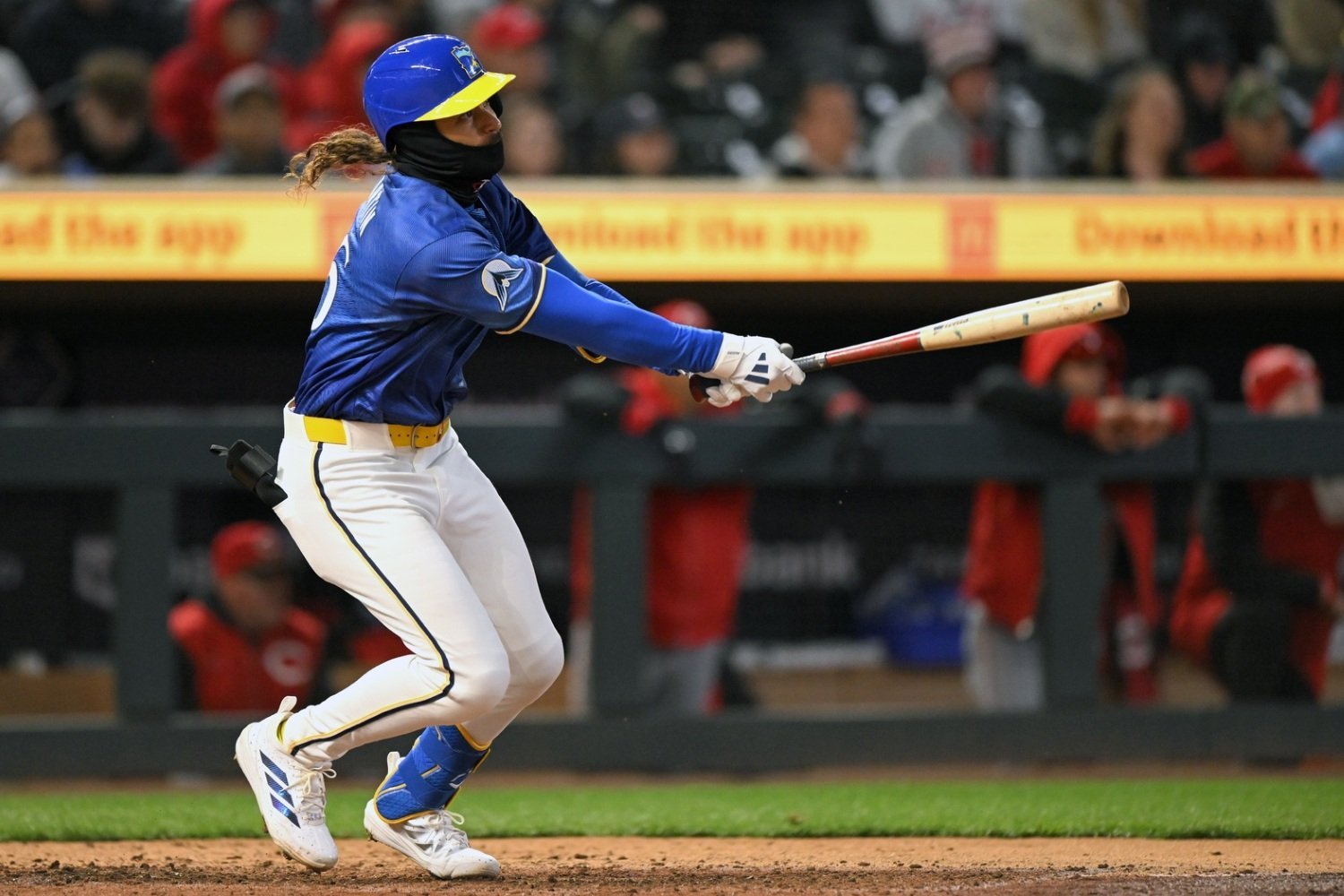 Since 1986, 19 different players have started an MLB season with an OBP of at least .515 in their first 23 games, with at least 60 plate appearances in those contests. As you'd guess, it's mostly superstars. Barry Bonds did that three times. Jason Giambi, John Olerud and Mike Trout did it twice each. The worst player to do so in the last 40 years is either Von Hayes or Wally Joyner, and even they were awfully good at their peak and never better than in the year they started that hot. That's the company Austin Martin is keeping now, after reaching base four times in Thursday night's game in New York. Martin is, of course, being shielded from some right-handed pitchers, and the Twins have faced an extraordinary number of lefty starters early on. Still, the numbers Martin is now putting up—.347/.515/.469, in 68 plate appearances—are remarkable, and the team is starting to take notice. Martin's start Thursday night came against a right-handed starter, at the expense of slugging teammate Matt Wallner. What's working so well? As you would guess, Martin is getting on base so much more by walking often, and he's walking often because he's swinging less than in the past. He's down from swinging just over 40% of the time to being under 32% this year—but when we break things down even further, the truth of the situation comes even more clearly into focus. Late last season, I talked to Martin about how he handled the high pitch, as a hitter with a steep bat path but not much bat speed. His answer was simple: try not to swing at it. Force pitchers down into the middle of the zone, if at all possible. He was decent at that, too. Naturally, this season, his swing rate in the top third of the zone has... risen, while his swing rate along the bottom third has dropped considerably. Wait, what? Martin is being much more patient, but not in the segment of the zone you'd expect to see him take that tack in. Instead, he's reaching down to the bottom of the zone much less often, despite a swing seemingly geared to get on plane with those offerings. What gives? Well, firstly, you need to know that the strike zone isn't where it was last year. That's the biggest driver of Martin's change in approach, and well it should be. This season, with the ABS challenge system in place, the top and bottom of the zone are no longer set by the umpire's best estimate of the height of the hollow of Martin's knee or the halfway point between his belt and his shoulders. Martin was measured before the season, and a strike on him should now be between 27% of his height (around 19 inches) and 53.5% of his height (around 37.5 inches) above the ground. That's a short zone. The 5-foot-10 Martin ends up with almost a perfectly square zone, whereas in the past, we've always thought of most players' zones as being noticeably taller than they are wide. Umpires don't enforce these top and bottom lines perfectly, of course, but the league changed the tolerances of umpire grading last season to force them to be more accurate, in anticipation of exactly this dynamic. They've been very observant of each player's new rulebook zone, as best they can be, and Martin has the challenges themselves to help ensure that. He's 3-for-4 on ABS appeals this year, always using them to question the top and bottom of the zone. Opponents, meanwhile, have tried to find the top rail by challenging called balls up there twice, with no luck. So, when we see Martin's swing rate in the top third of the zone rising, that's not really what's happening. Instead, the vertical thirds of the zone are getting smaller, and any increase in swing rate is happening in what used to be the middle of his strike zone. He's also dedicated himself to not chasing low pitches, because even though his swing tilt gets him in position to touch those balls easily, he can't drive them. He doesn't have the bat speed for that. He's chosen, instead, to lock in on things the opponents leave up a bit, where the lift is done for him and he can just hit the center of the ball. An altered zone means Martin can safely ignore what used to be the top third of his zone. Here's a side-by-side look at the results of pitches at which he didn't swing that came in at least 2.9 feet off the ground, for both 2025 and 2026. The raw height of the pitch when it got to home plate cuts off at the same point (34.8 inches) for both seasons, but look how many of those balls were in Martin's old zone and called strikes last year. This year, almost none are. It's hard to convey just how valuable being able to cut off that extra five inches or so at the top of the zone is, except by restating Martin's numbers. He's getting on base more than half the time, and hitting a ton of line drives in the process, because he has pressed a newfound advantage. He's not chasing down and out of the zone, and the top of the zone now seems to be much lower than it was in the past. That leaves a nice, squat square for him to defend, and his excellent hand-eye coordination is more than up to the challenge. That doesn't mean, of course, that his new true talent level is to hit .350. The matchups will even out; Martin will get less lucky; and the league will figure out how to pitch to the newly shrunken zone. For now, though, Martin's approach change—probably informed, via his coaches, by the installation of the ABS-influenced zone—suits his swing brilliantly, which has produced brilliant results. For a player who already had plenty of baserunning and defensive value, this could be the key to becoming a regular in the majors—or even a star. View the full article
 -
Michael Massey Could Seize His Moment With the Royals
DiamondCentric posted an article in Royals Keep
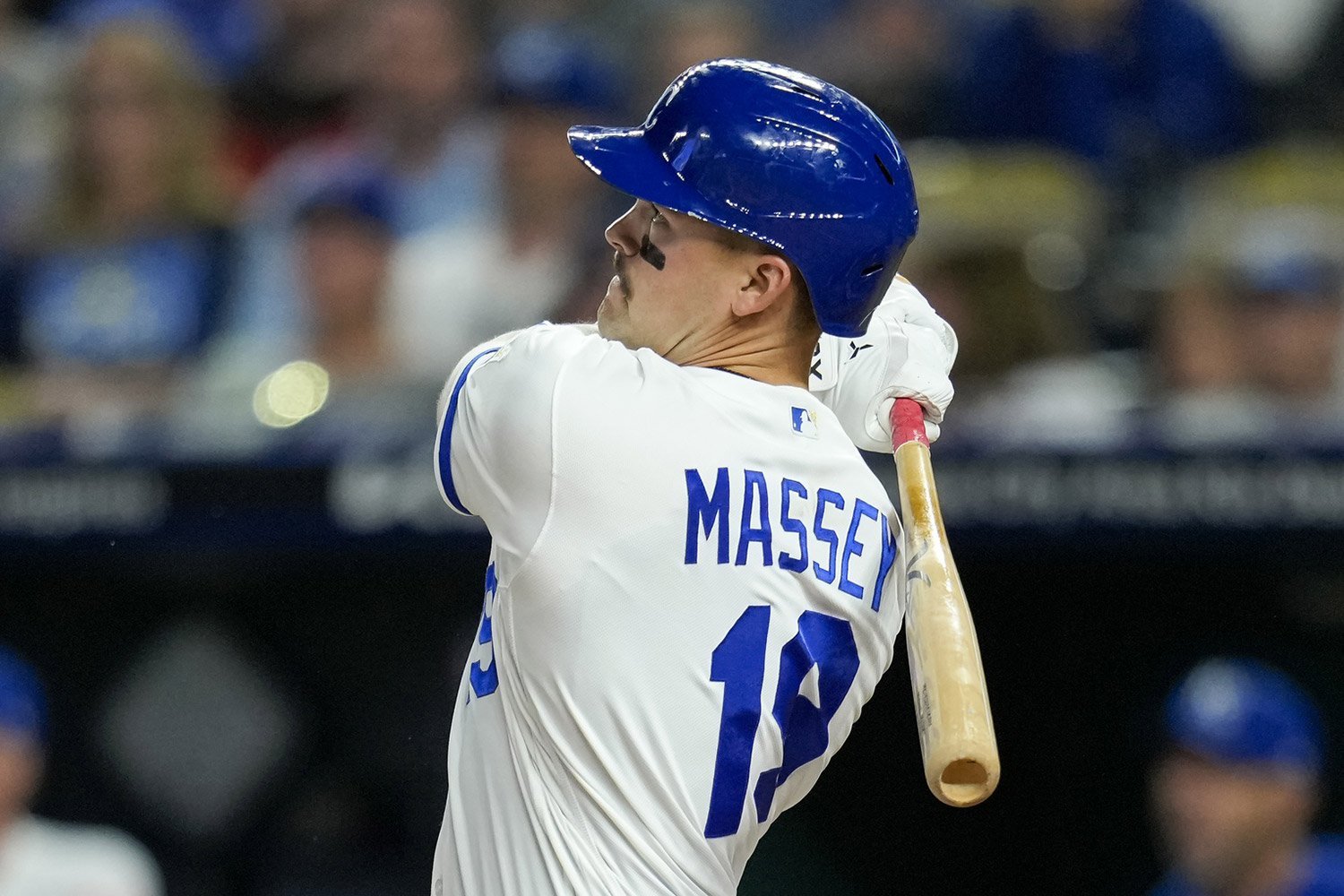 The injury bug has bitten Kansas City Royals second baseman (and sometimes left fielder) Michael Massey for too much of his short major league career. The back issues he battles delayed the start of his 2024 season, later sidelined him for a month more, and cut his playing time to 100 games. Ankle, wrist, and back issues cost him two months of last year’s campaign. This year, an early spring training calf injury kept him on the injured list for the first 10 days of the season. That Massey’s health has impeded his big league career is fact, so much so that it’s plausible his injury history played at least some part in the Royals’ decision to almost double Jonathan India’s salary for 2026 despite India’s well-chronicled struggles at the plate and in the field last year. Now, however, it’s India who’s injured, and Massey who’s playing. And that means the door may be open for Massey to reclaim the second base job that appeared to be his after a strong 2023 performance (more on that momentarily). India was struggling when a shoulder subluxation forced him to the IL on Monday, and Massey is showing signs of coming back around. Can Royals Infielder Michael Massey Seize the Moment? Massey isn’t the perfect second baseman. Only Frank White, the slick-fielding second sacker who won eight Gold Gloves with Kansas City before retiring after the 1990 season and later taking his rightful place in the club’s Hall of Fame, has approached that status. But Massey doesn’t have to be perfect to be good, and he’s had decent seasons with the Royals since breaking in in 2022. His 3 OAA in 2023 tied for the ninth-highest mark in the majors; only six American League second basemen had more, and he posted the best fielding percentage of all big leaguers at the position. He also homered 15 times. Despite spending so much time on the IL in 2024, he still clubbed 14 homers, had a 104 wRC+, and hit a serviceable .259. And last year, he came back from a long IL stint with barely a month left in the season and in 68 down-the-stretch plate appearances posted an excellent .375/.412/.482 line. But notwithstanding India's .233 average, and -6 OAA and -2 DRS at second last season, the new contract the Royals gave India over the winter seemed more than just a hint that he was their presumptive second baseman when spring training opened. Massey, though, appeared to be having none of that presumption — in eight Cactus League games, he was slashing .364/.417/.545 with a pair of homers and four RBI when he suffered his calf injury. Could Massey have beaten out India had he remained healthy? That India finished the spring hitting .194 suggests so. The tables are now turned. India was still battling his bat (.167/.310/.313) when he headed for the IL Monday, giving Massey the chance to prove he can be a greater offensive force. So far? Massey was hitting only .185 when India went down, but through Wednesday’s loss to Baltimore, he was 4-for-7 over his last two games, and in his last five appearances, he was hitting .294 with a home run, four RBI, and two doubles. The homer, a solo shot to lead off the bottom of the eighth of Tuesday's 6-5 losing streak-breaking, walk-off victory over the Orioles, tied that game and gave the Royals their chance to win it in the ninth. India is eligible to come off the IL next week. Whether that happens remains to be seen — shoulder subluxations can be tricky things. But no matter how long it lasts, can Massey take advantage of India’s absence and convince the Royals he should be their regular second baseman? Time will tell, and the club might prefer platooning at second, but a hot bat could do the trick. View the full article
 -
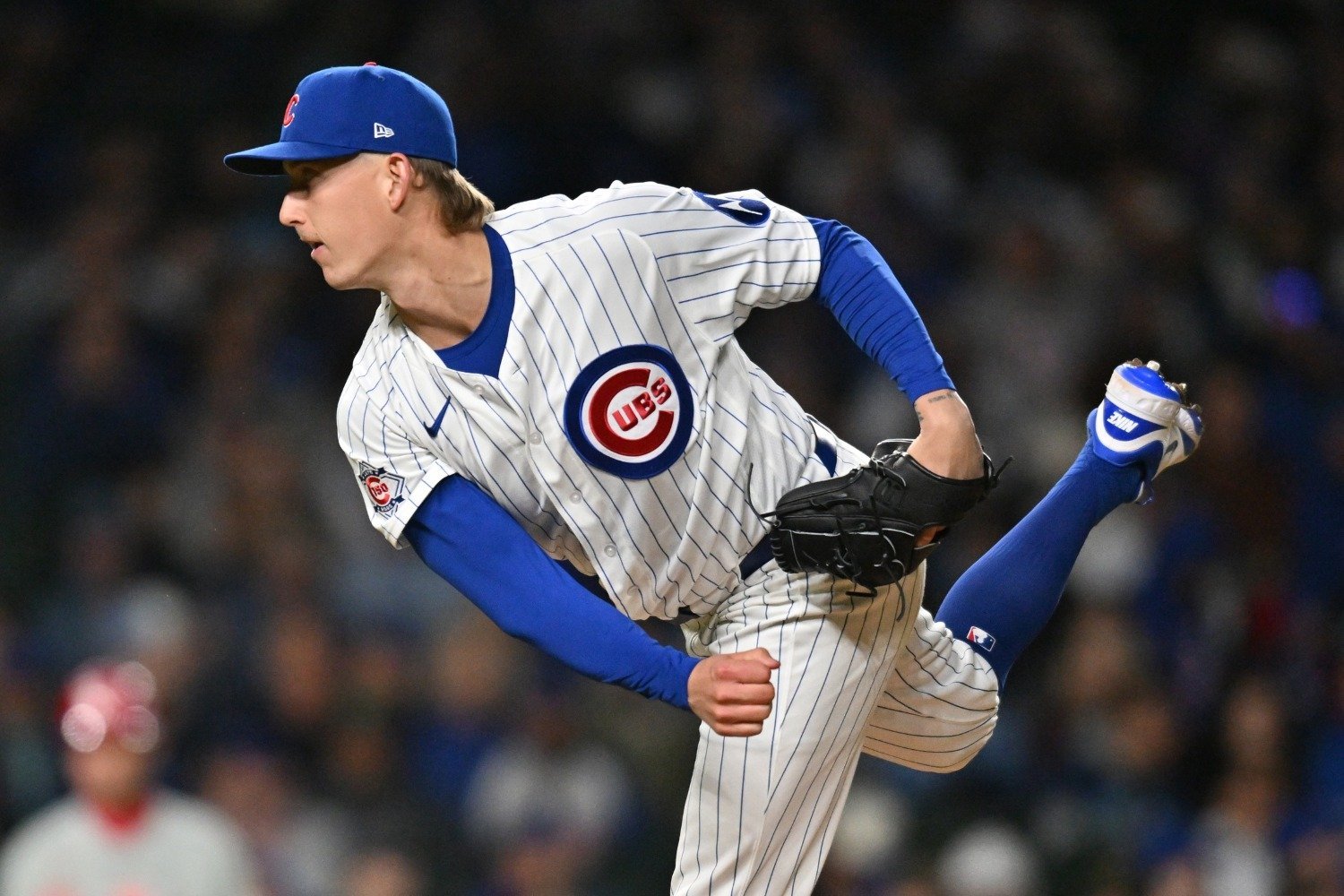 By mid-May 2024, the Cubs were in trouble. They'd built their bullpen plans around three right-handed pitchers: flamethrower Julian Merryweather, coming off a 2023 season in which he'd gone from an unnoticed waiver claim to a relief ace; analytics darling Yency Almonte, part of the Michael Busch trade; and Héctor Neris, a free-agent reclamation project whom the team hoped would rediscover the swing-and-miss that made him a dominant closer in Houston. Within a month and a half, Merryweather and Almonte were sidelined by injuries from which they still haven't really recovered, and Neris was clearly a failed experiment. In desperation, Jed Hoyer scooped up former Cubs farmhand Tyson Miller, who was on the outside looking in for the Mariners at the time. Miller's funky delivery and command of a terrific cutting fastball/sweeper combination turned out to be more than enough to offset his lack of velocity, though, and he became one part of a rebuilt Chicago bullpen. Miller pitched 50 1/3 innings in 49 appearances for Chicago that year, with a 22.5% strikeout rate, a 5.3% walk rate, and a 2.15 ERA. Along with fellow scrapheap find Jorge López and developmental breakthrough Porter Hodge, Miller saved that bullpen—though it wasn't quite enough to save the season. Last spring, the crisis arrived even sooner. Ryan Pressly was a flop, just as Neris had been. It was Hodge's turn to get hurt and never be the same. Ryan Brasier and Eli Morgan, too, had been waylaid by arm trouble. The team had rousing successes in Caleb Thielbar and Brad Keller, but they were short on healthy arms and pitchers who could absorb innings to keep Craig Counsell from having to overuse his best relievers. Hoyer found salvation in Seattle again, this time purchasing the rights to Drew Pomeranz. The two-pitch southpaw pitched 57 times for Counsell, with a 2.17 ERA and similarly solid strikeout and walk numbers. He gave the team time to find the hierarchy that worked for them the rest of the year, headlined by Keller, emerging homegrown star Daniel Palencia, and trade deadline acquisition Andrew Kittredge—along with Pomeranz and Thielbar. Those are just a few examples of Hoyer finding improbable ways to assemble viable bullpens on the fly. Mark Leiter Jr., Rowan Wick and Scott Effross also number among his success stories. On the other hand, it can be too easy to forget all the acquisitions who didn't hurt the team as glaringly or cost as much to sign as Pressly, Neris, Almonte or Morgan, but who also didn't yield what the front office hoped for—guys like Nate Pearson, Michael Fulmer, and José Cuas. In some important degree, the Cubs' bullpen magic has been the product of good luck and/or good timing. Even having gotten it broadly right over the last three years doesn't guarantee that the team will do so again. That's a scary notion, because lo, they already need to do it again. Palencia, Hunter Harvey, and Phil Maton have already hit the injured list, along with lower-upside options Ethan Roberts and Hodge. Injuries to the starting rotation have drawn Colin Rea and Javier Assad into that duty and away from the pen, though Wednesday's return of Matthew Boyd put Assad in the pen again for now. On Thursday, the team might have suffered another loss, as Thielbar left in the ninth inning of the team's game against the Phillies with a hamstring problem. The relief pitching scaffolds Hoyer built this winter have already crumbled. He'll have to go out and find an arm outside the organization, and the sooner, the better. However, his track record only goes a short way in providing real confidence about the outcome of that addition. The Cubs need relief help, right away, but the odds of them nailing yet another such move feel lousy, The good news, of course, is that Ben Brown is settling into his new role gorgeously. Having failed in an extended audition as a starter last season and not having earned even a top-7 spot on the rotation depth chart this spring, Brown is now a reliever in full. He's taking to it marvelously. Brown's fastball is up a tick, sitting just under 97 MPH. His curveball, meanwhile, is as firm as ever, but with slightly more depth. After two years of trying to get the changeup right, he's leaning more into the two-seamer this season, creating the lane change he's long needed to keep right-handed batters off the two main pitches in his arsenal. As a result, he's running numbers similar to what Pomeranz and Miller gave the Cubs over the last two seasons, but in more volume. If the team stops needing him to give them multiple innings within games, there might even be another gear, but this version of him is already a viable stand-in for Palencia and Maton. With some luck, the team will get at least one of their top right-handed relievers back soon, and keep them healthy the rest of the way. To survive their current barrage of injuries, though, they need outside help, and that means that risk lies ahead. They've done some things right already. There are encouraging signs about the usefulness of homegrown lefty Riley Martin and minor-league signing Corbin Martin, each of whom are (for the moment) healthy. Brown is what they need him to be. With so many pitchers already hurt, though, what they have so far is necessary but not sufficient. View the full article
 -
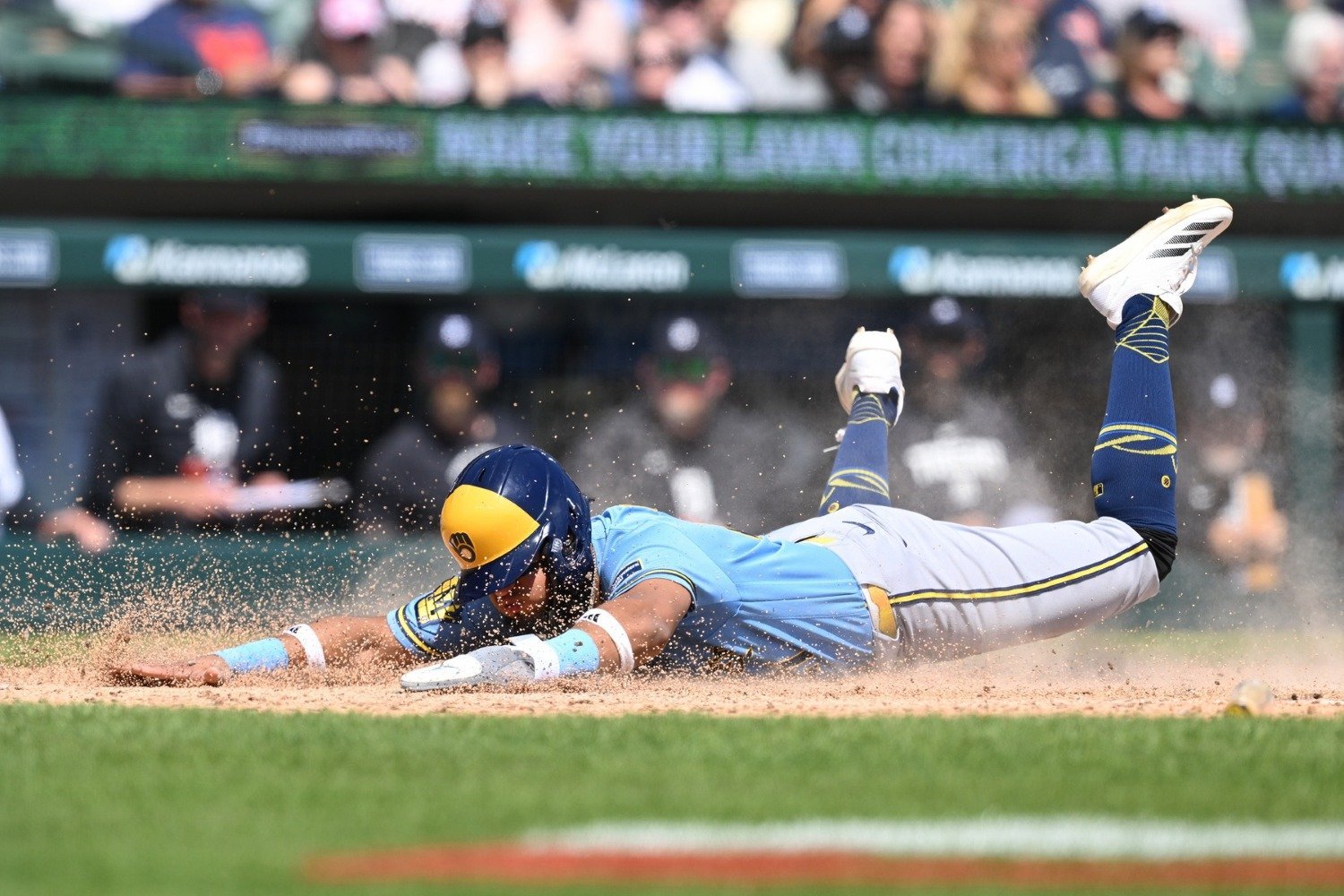 You could see the seeds of an eventual Brewers comeback early on, even as Tarik Skubal put up zeros for most of his start. After Skubal cruised through their lineup the first time through on just 26 pitches, Milwaukee made him throw 28 in the fourth inning. The Brewers were playing their game, working long at-bats and forcing the opposing starter to exert himself, even if they weren't hitting much. "Kind of make him uncomfortable and be annoying," Blake Perkins said. "That's kind of our game, sometimes." It's been an even bigger part of their game recently. Down Jackson Chourio, Andrew Vaughn, and Christian Yelich, the offense is in survival mode. With four starters in the lineup on most days with OPS marks well below .650, the Brewers aren't generating much offense by driving the baseball. That's left them scrapping even harder, relying on walks, infield singles, bunts, and steals—all ways to advance runners without the ball leaving the infield—to scratch across runs. They were back at it against Skubal on Thursday afternoon, even mixing in a few timely line drives. After a Gary Sánchez bloop single and a Luis Matos ground ball through the hole into right field to open the seventh, Perkins worked a seven-pitch at-bat, forcing Skubal into the heart of the strike zone with a fastball that he lined for a game-tying double. "He's coming after you, so I think we had to be ready to swing early," Perkins said. "But I think, at least for me in general, trying to bring him closer [to the middle], because he tries to throw that changeup off the outside part of the plate." Joey Ortiz hit a hard line drive up the middle to move Perkins to third, and David Hamilton snuck a ground ball into left to score him. The Brewers had an improbable lead, a hard-earned prize from an afternoon of gritty at-bats. "Skubal, he's really, really good," Pat Murphy said. "We had some things go our way and laid down some great bunts, put pressure on him. I'm proud of our club that we battled this way when things are going against us." That close lead would be short-lived. Ángel Zerpa allowed a game-tying solo home run to Jahmai Jones in the eighth, and Abner Uribe allowed a walk-off shot to Spencer Torkelson in the ninth, continuing a turbulent start to the season for the Milwaukee bullpen. "They did what they needed to do," Murphy said. "They hit homers off leverage relievers." The contrast was striking. According to Statcast, the Brewers managed just a 30% hard-hit rate on the afternoon with zero barreled balls, but they squeezed four runs out of minimal solid contact, giving it everything they had through meticulous approaches and small ball. On the other side, the Tigers flipped the game multiple times with one swing, scoring four of their five runs on home runs. Both lineups had competitive at-bats, but scoring seemed easier for the side that slugged. "They didn't attempt to steal, or they didn't attempt to bunt," Murphy said. "They could swing the bat. They were poised, and they deserved to win." While the Tigers got their big hits, the Brewers couldn't break the game open, even as they kept pecking away. "They kept their composure and turned those double plays and made quality pitches at quality times," Murphy said. "We didn't put the nail in and hit. We didn't get the big hit when we could." At a larger level, that's what's missing from the Brewers' current lineup. The healthy version is not built around slugging, but without their trio of currently injured hitters, it's forced to rely too heavily on the slow assemblage of single runs. Milwaukee is 25th in baseball in home runs and has the highest ground-ball rate, by a long shot. Small ball can be a separator between two good offenses, but it won't get you the big hit. Chourio is getting closer to a rehab assignment, while Vaughn and Yelich are further off—perhaps another four weeks from returning to action. For now, the Brewers don't have much choice but to keep grinding out at-bats. They'll continue to do that no matter the situation, but their lineup needs more true production. View the full article
 -
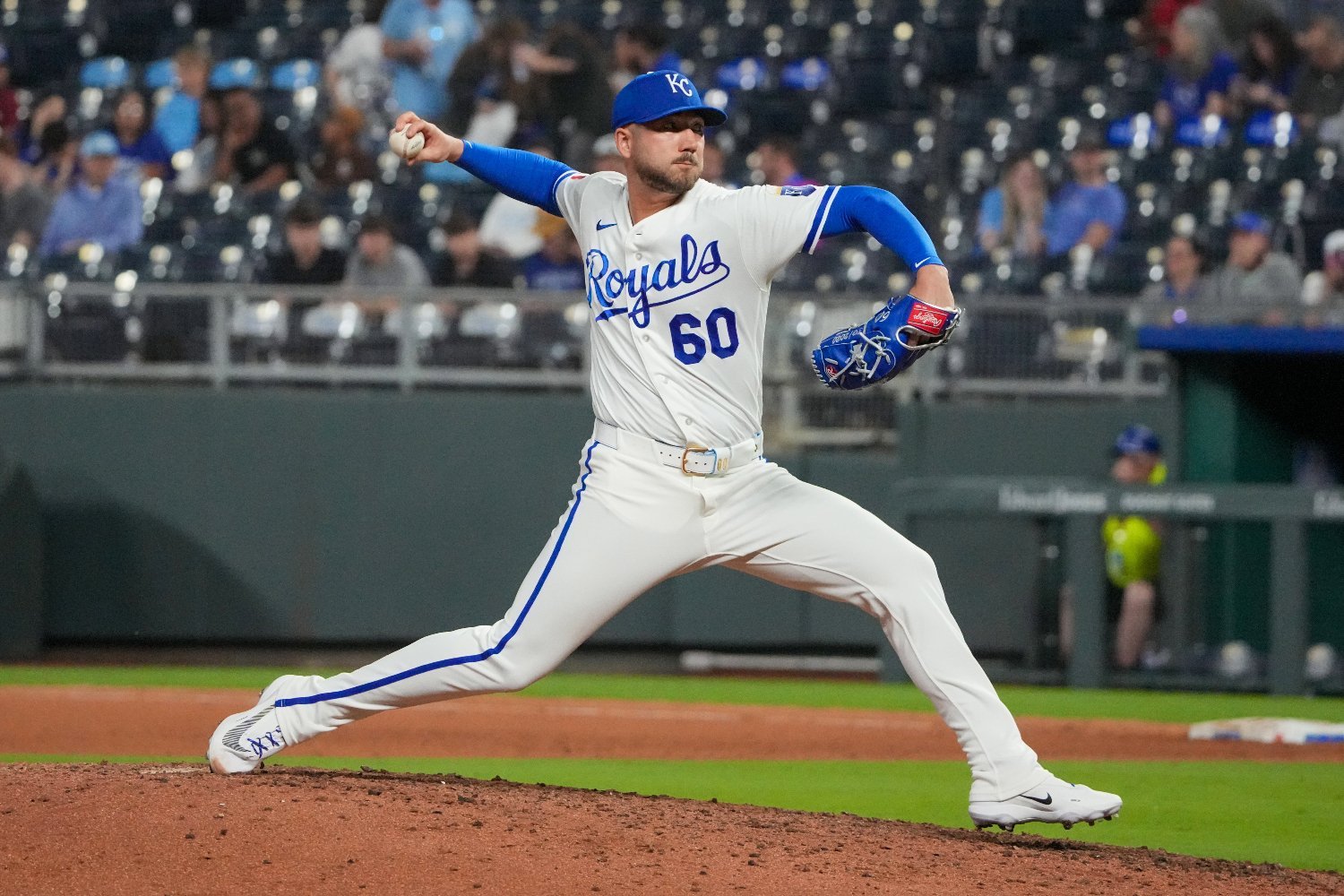 There have been plenty of problems with the 2026 Kansas City Royals. After all, they wouldn't be 8-17, tied for the worst record in baseball, if they didn't have flaws. That said, the Royals' bullpen has been a glaring weakness, significantly contributing to Kansas City's struggles through its first 25 games this season. According to Fangraphs, the Royals' relievers rank 30th in ERA, 29th in WHIP, 28th in H/9, and 27th in BB/9 and HR/9. On a positive note, they rank 14th in K/9, which is better than a season ago (they ranked 29th in 2025). Unfortunately, they have seen major declines in every other statistical category. On an individual basis, many important Royals relievers have struggled in the above-listed categories, including SIERA, which is the acronym for Skill Independent Earned Run Average. Here are the definition and formula for SIERA, according to MLB.com. SIERA can be a good indicator of a pitcher's skills this year, like FIP. However, SIERA does a much better job of accounting for grounders and pop-ups, which are more favorable for a pitcher. Here's a list of Royals relievers and their advanced metrics this season, as organized by SIERA. Some Royals relievers have been solid this year, based on SIERA. Daniel Lynch IV and Alex Lange have SIERA marks under three, which is encouraging. Matt Strahm has a SIERA of 3.63. That's not great for his standards, but it's much better than his 5.19 ERA and 5.57 FIP. Conversely, one reliever who has struggled this season is Lucas Erceg, who has taken over closer duties in Kansas City since Carlos Estevez landed on the IL after his lone appearance in Atlanta during Opening Weekend. Erceg ranks 10th of 12 qualified Royals relievers in SIERA with a 5.95 mark. That is much worse than his 5.79 ERA and 4.32 FIP. Only John Schreiber (6.16) and Mitch Spence (7.05) have been worse this season in SIERA (and Spence has only made one appearance at the MLB level). When looking at Erceg's numbers this year, he's been pretty poor across the board. His 4.82 K/9 ranks 11th, his 6.75 BB/9 is 4th-highest, and his 0.71 K/BB ranks 10th. He hasn't given up a home run this season, but that's been the lone positive for Erceg on the mound this season. So what has been the issue with Erceg this season, especially after being so locked down in the closer role in 2024 when he came over at the Trade Deadline? That season, Erceg posted an 11.16 K/9, 1.08 BB/9, 10.33 K/BB, and 2.26 SIERA in 25 IP. He also had 11 saves that season and was a key part of their bullpen in the postseason. Erceg does have five saves this season, but he's already blown two games in 10 appearances, the same number he blew in 23 appearances in 2024. Thus, let's look more deeply into Erceg's profile, what the issue has been, and whether he will be able to correct it at all this season to help improve this struggling bullpen unit. Examining Erceg's Statcast Percentiles from 2024 to 2026 A good place to start with Erceg is looking at his TJ Stats Statcast summary from the past three seasons. That could give us a full picture of Erceg, not just in terms of his ability to generate strikes, but also his stuff and ability to avoid hard-hit batted balls. Here's a look at his 2026 TJ Stats Stacast summary through 10 games. When looking at his Statcast percentiles this year, Erceg is a bit of a conundrum. On one end, he's still flooding the strike zone and generating groundballs. His 44.9% zone rate ranks in the 73rd percentile, and his GB% of 51.8% ranks in the 79th percentile. Additionally, his fastball ranks in the 92nd percentile at 97.5 MPH, and he doesn't have a pitch under the 101 TJ Stuff+ mark. However, when it comes to batted-ball metrics and strike data, Erceg has been incredibly lackluster. The 30-year-old reliever ranks in the 15th percentile with a 91.1 MPH average EV, 35th percentile in hard-hit rate with a 44,4% rate allowed, and in the 49th percentile in barrel rate at 7.4%. Thus, while he's producing a good number of groundballs, he's also allowing a fair number of hard-batted balls that are doing damage. That is evidenced by his .362 xwOBA (25th percentile) and .356 xwOBA (23rd percentile). The strike metrics are even more concerning. Erceg ranks in the 7th percentile in K% and BB%, 6th percentile in whiff%, 4th percentile in O-Swing%, and 1st percentile in CSW%. He's also allowing a ton of contact in the zone, as evidenced by his 87.7% Z-Contact%, which ranks in the 23rd percentile. Erceg is not just failing to generate strikes or swing-and-miss, but inducing chase. All those characteristics have made him a mediocre reliever in 2026, Now, let's take a look at what he did in 2024, when he was with the Athletics and Royals. In 61.2 IP with the A's and Royals, Erceg pretty much excelled in every category. That includes K% (87th percentile), BB% (81st percentile), CSW% (89th percentile), O-Swing% (76th percentile) and Z-Contact% (85th percentile). Those were all categories where Erceg ranks below the 10th percentile this season. One could argue that Erceg was one of the most talented and underrated relievers in baseball in 2024, and it makes sense, given that, why the Royals acquired him at the Trade Deadline. That said, his Statcast percentiles looked a little different in 2025 in his first season with the Royals. The fastball velo, GB%, and BB% remained table last season. However, he began to show signs of regression across many key areas. His CSW dropped to the 33rd percentile, his K% dropped to the 35th percentile, and his Z-Contact% dropped to the 43rd percentile. The O-Swing% was still solid, ranking in the 66th percentile. The same could also be said for his barrel% allowed (61st percentile) and hard-hit% allowed (70th percentile). That said, Erceg began to show flaws last season across so many Statcast metrics, and perhaps this regression was to be expected given that trend (though maybe not as dramatic or as soon). What's the Deal With the Swing and Miss? For a reliever to succeed in the ninth, they have to be able to generate swing-and-miss, especially in those high-leverage situations. It's hard for a closer to be successful long-term if they're not able to produce whiffs and strikeouts in the ninth. In 2024, Erceg had a 31% whiff rate and 28.7% K%. In 2025? That whiff rate fell to 24.7%, and K% regressed to 19.4%. This year, he's really bottomed out in those two categories, with a 16% whiff rate and 12.8% K%. Below is a trend of Erceg's swing-and-miss% over his career. Notice how it dropped sharply last season, especially after a decent start to 2025. After finishing with a Swing-And-Miss% in the 32.5% range, he bottomed out last year, with his Swing-And-Miss% even dropping to under 10% just past the 600th swing mark. This year, his Swing-And-Miss% is hovering around the 17.5% mark. While that's not as bad as what it got to at the end of 2025, it's not a promising sign, especially so early in the season. To understand Erceg's whiff problem, it may be helpful to look at his overall repertoire and how each pitch has fared this season. Here's a glimpse of Erceg's arsenal profile, via TJ Stats. It doesn't seem to be a stuff problem for Erceg, at least according to TJ Stuff+. He has an overall mark of 103 with two of his pitches (sinker and changeup) sporting 60+ grades. His four-seamer, his most thrown pitch, has a 101 TJ Stuff+ and a 56 grade. However, despite those encouraging metrics, he just isn't able to get hitters to miss. His overall whiff rate is 16%, and he's generating a 13.3% whiff rate on the four-seamer (as well as a 14.3% chase, which isn't good either). Now, let's look at his TJ Stats season summary from 2024. The four-seamer and overall stuff profiled better in 2024 with a 104 TJ Stuff+ on the four-seamer and 106 TJ Stuff+ overall. That said, his whiff rate in 2024 absolutely blew away his 2026 mark. In 2024, he had a 31.2% overall whiff% and a 28.6% whiff% on the four-seamer. Those elite metrics explain why Erceg was utilized as a closer and fireman down the stretch in 2024 for the Royals. Now, let's take a look at his 2025 TJ Stats summary. A lot regressed for Erceg last season. The TJ Stuff+ was 102 overall, and his four-seamer actually had a TJ Stuff+ mark under 100. However, he still generated a 28.2% whiff rate with the four-seamer, only a 0.4% difference from his 2024 four-seamer whiff rate. Thus, it may be that Erceg's four-seamer is the difference this year. However, if it's not a stuff problem (his four-seamer TJ Stuff+ is better this year), it must be a command issue, which may be a tougher fix. The Four-Seam Location Hasn't Been Good This season, not only is Erceg just generating a 13.3% whiff rate, but he is allowing a .595 xwOBACON on the four-seamer this year. That has contributed to only poor fastball results (zero run value, according to Savant), but lackluster overall numbers as well. That said, I don't think it's a "stuff" issue with his four-seamer. His 101 TJ Stuff+ on the four-seamer this year is actually two points better than what he did last year. And yet, his whiff rate on the pitch is 14.9% lower than a year ago. Thus, the problem is likely due to his inability to command the four-seamer effectively. A good way to test this hypothesis is to examine his heatmap data on TJ Stats. That could give a sense not just of the heatmaps for lefties and righties on the pitch, but also of the metrics. Here's Erceg's four-seam heatmap this season. Erceg has thrown the four-seamer a fair amount against lefties (38.9%) and righties (31.9%). It has also gotten hit around by both sides of the plate. Against lefties, Erceg's four-seamer is producing only an 18.9% CSW% and allowing a .601 xwOBACON. Against righties, he's generating a 13% CSW% and .571 xwOBACON. When looking at his heatmap, it's easy to see why Erceg is failing to generate strikes and allowing a lot of hard hits: he's throwing the pitch way too much in the strike zone. For context, let's look at his four-seam heatmap data a season ago. Erceg seemed to elevate the four-seamer better last year, especially against lefties. Notice how the bright orange circle is closer to the top of the strike zone than the one in 2025 against lefties. Closer to the top of the zone is good for four-seamers, especially ones with Erceg's velocity. As a result, the former Cal product generated a 33% CSW% and .379 xwOBACON against lefties and a 28.2% CSW and .393 xwOBACON against righties. The numbers weren't as good against righties, but he also didn't elevate the ball as consistently against righties as he did against lefties last season. Here's an example of Erceg elevating the four-seamer effectively last season against Cleveland's CJ Kayfus to generate the swing and miss. akQ5S0FfWGw0TUFRPT1fQVZVRVZGWUhVRkVBWGxGV0FBQUhDRkFEQUFBQ1dnSUFCMWRSVkZjSEFBY0JBRkJR.mp4 Erceg not only throws it 98 MPH, but he locates it up and away in the zone, even in a 2-1 count, which tends to favor the hitter. That shows the confidence and feel Erceg had for the fastball last year. Now, let's take a look at a fastball thrown by Erceg to Baltimore's Samuel Basallo. Erceg grooves this in the middle of the zone on a 1-2 count (which favors the pitcher), and the Rookie Orioles catcher hits in the gap to help Baltimore tie the game (they later relinquished the lead). ZFh2bHpfWGw0TUFRPT1fQndkWFUxQlNVd1VBRGxSUkFnQUhBd1ZXQUZrTlZBTUFCVklFVXdVREFnWlFBd0FE.mp4 In order for Erceg to generate whiff and effectiveness with the four-seamer, he has to get command of the pitch again. A start would not just be to throw it for strikes, but get to throwing it up in the zone, especially against lefties, which he was effective at doing last season. Final Thoughts on Erceg Right now, Erceg isn't pitching well by any stretch of the imagination. His ERA, BB/K ratio, and SIERA demonstrate that. However, with Estevez on the shelf, Erceg continues to be the Royals' best option in the ninth. I say that not because of the results, but because the TJ Stuff+ numbers remain promising for Erceg. When looking at the TJ Stuff+ leaderboard for Royals pitchers via TJ Stats, Erceg ranks third in overall TJ Stuff+ with a 103 mark. He's behind only Steven Cruz (109) and Nick Mears (105). There are many issues that Erceg needs to correct. His 24.4% zone rate on the slider has to improve, as it is 15% lower than it was a season ago. It's easy for opposing hitters to lay off Erceg's primary breaking pitch when he's not even locating it in the strike zone 25% of the time. However, the four-seam command needs to be priority number one for Erceg and Royals pitching coach Brian Sweeney. If Erceg keeps grooving it in the middle of the zone, it's going to continue to get hit hard. If he's able to locate it more up in the zone, he can keep hitters honest, which could open up his other offerings, especially his changeup and slider (if the latter can be controlled more effectively). Sweeney has been lauded for his staff's work with the Royals pitchers over the past couple of years. Now, the Royals' bullpen, especially Erceg, needs to understand and correct these issues soon in order to turn around the club's fortunes for the remainder of the season. If Sweeney can't help Erceg, or any other members of this bullpen, not only will wins become tough to acquire, but Sweeney may find himself in a hotter seat than expected by the conclusion of the season. View the full article
 -
 Transactions: RHP Craig Yoho completed rehab assignment and optioned to AAA Nashville RHP Kaleb Bowman placed on Development List retroactive to April 22 Although this wasn’t a transaction, it’s incredibly encouraging that High-A SS Luis Pena was released from the Fort Wayne hospital on Thursday morning and said to be “fine” after overheating and passing out in the 8th inning of Wednesday night’s game. Game Action: Nashville Pre-Game Media Notes Final: Charlotte 3, Nashville 2 (in 10 innings) Box Score and Game Log Via extracts from the Sounds’ postgame notes which we’re able to share, plus some nuggets of our own: Sounds Walked Off in Extras in Charlotte - Tate Kuehner Strikes Out Eight Over 5.2 IP Charlotte, NC — Nashville dropped their second straight game with a 3-2 extra innings loss to the Charlotte Knights Thursday night at Truist Field. Left-hander Tate Kuehner was great on the mound for Nashville with a season-high eight strikeouts and one earned run allowed over 5.2 IP (1 R, 3 H, 3 BB, 8 Ks). The Knights struck first with the only run allowed by Kuehner coming via a solo homer in the bottom of the first inning by Jarred Kelenic. Nashville answered back with a run in the top of the second with Luis Lara drawing a walk before moving to third on a single off the bat of Eddys Leonard (2-for-3, walk). Ramon Rodriguez picked up the RBI with a productive groundout that allowed Lara to score and even the game at a run a piece. The game would remain deadlocked at 1-1 over the next four innings. Kuehner worked a three-up, three-down second inning with a pair of strikeouts before stranding a pair of Knights on base after allowing consecutive two out singles in the third. The southpaw didn't allow a hit in the fourth or the fifth innings but pitched around a hit batter in the fourth and a Kelenic walk in the fifth as Kelenic reached base his first three times at the plate for Charlotte. Kuehner issued the third walk of his outing with two outs in the sixth before turning the ball over to Drew Rom to get the final out of the inning. Lara and Leonard singled off Zach Franklin to start the top of the seventh ahead of a wild pitch that moved both runners into scoring position. Ethan Murray delivered a go-ahead RBI single to score Lara, but Leonard was thrown out at the plate as the Sounds would have to settle for just a one-run advantage. The lead didn't last long with Ryan Galanie tying the game at 2-2 with a leadoff home run in the bottom of the seventh. Rom finished his outing by retiring the next three in a row, including back-to-back strikeouts to end the frame. Right-hander Easton McGee took over on the mound in the eighth after the Sounds were sent back to the dugout in order, and McGee posted a 1-2-3 inning of his own with three strikeouts. Brock Wilken drew a leadoff walk in the top of the ninth, and Lara collected his second hit of the night with a single to give the Sounds a prime scoring chance. That quickly went away with the Knights getting the force out at third on a bunt attempt aimed at moving the runners over followed by a strikeout and ground out that stranded two in the inning. Blake Holub allowed a single to start the bottom of the ninth but induced a double play and then worked around a two-out walk with a strikeout to send the game to extras. Nashville let another scoring chance slip away with Ethan Murray starting the game at second base and moving into third with no outs after a wild pitch to start the top of the 10th. Two infield pop outs and a shallow fly ball into right field weren't enough to get the runner across as Nashville left the potential go-ahead run stranded at third base. The Knights played small ball to move the runner to third on a sac bunt. After intentionally walking Kelenic to set up a double play, the Knights got a single through the left side of the infield for the win and Nashville's fourth walk-off loss of the season. CALL TO BLACK?: OF/1B Tyler Black was a late scratch from Nashville’s starting lineup, for reasons not yet known. @CurtHogg reported on April 19 that Pat Murphy had indicated that Black could be an option for the Brewers in the near future. Tyler has a 9-game hitting streak and is 4-for-13 with 2 doubles, a walk, 2 strikeouts and a stolen base since returning from a 2-week injury absence. MULTIPLIED: Held hitless on Wednesday and hitless over four of his last five games entering Thursday night, Luis Lara was back in the hit column with his team-leading eighth multi-hit game of the season so far. Lara, the Brewers no. 12-rated prospect ended Thursday night 2-for-3 with a walk and two runs scored. His eight multi-hit efforts in still just one ahead of Eddys Leonard who provided Nashville with the other multi-hit game on Thursday night (2-for-3, BB). With his pair of singles, Leonard extended his current hitting streak to seven games and is hitting .478 (11-for-23) with two doubles and two RBI since April 15th. Four of his seven total multi-hit games have come during his current seven-game hitting streak. SLUG IT OUT: Despite just having nine hits on the season, Brewers no. 22-rated prospect Brock Wilken has made his hits count. Wilken added his fourth double of the season to go along with a home run to have 56% of his hits on the season go for extra-bases. Wilken also leads the team in walks (18) after another free pass on Thursday. Wilken is riding a 12-game on-base streak after Thursday and is tied for the second-longest on-base streak on the team among active players behind Eddys Leonard (16). Friday’s outlook: Nashville aims to even the series up on Friday night with RHP Coleman Crow (2-0, 4.02 ERA) on the mound fresh off his Major League debut last week for Milwaukee. Former Sounds pitcher Shane Smith (1-0, 3.00 ERA) will get the start for Charlotte. First pitch is scheduled for 6:04 pm CT. Biloxi Pre-Game Media Notes Final: Biloxi 9, Rocket City 5 Box Score and Game Log Via the Shuckers’ website, game details and we encourage readers to review affiliate write-ups as part of their Link Report routine: Tyson Hardin’s Career-High in K’s Secures Third Straight Shuckers Win Starting RHP Tyson Hardin (4 IP, 2 R, 4 H, 1 BB, 9 Ks) commenced his evening with 4 consecutive strikeouts and ended it by bearing down with the bases loaded to strike out the final 2 batters he faced, keeping the game tied 2-2 through 3 and a half innings. That set the stage for Biloxi’s offense to erupt for 4 runs in the bottom of the 4th inning, started by OF Mike Boeve’s second double of the game and capped off by SS Jesus Made’s 2-out RBI single. The superlatives keep rolling in for the Brewers’ 18-year old super-prospect, who also stole 3 bases in this contest: Boeve’s RBI single in the bottom of the 7th inning gave the team a 7-2 advantage which looked safe, but he exited for a pinch runner and Rocket City cut the gap to 7-4 in LHP Jesus Broca’s second inning of work, bringing the potential tying run to the plate with one out in the top of the 8th inning. Thankfully, Broca induced a pop out and retired the next batter looking on strikes. That early exit for 3-hit, 3-run man Boeve might ordinarily turn our concern-o-meter on, but I thought he looked fine in the game video: Shuckers’ Extras: Kudos to RHP Stiven Cruz for his 2 shutout innings of work, with 2 strikeouts. He’s been stellar over his last 4 outings, picking up two Wins in the process. Three errors and 11 strikeouts thankfully didn’t hurt the Shuckers too badly, thanks to the team going 6-for-12 with runners in scoring position and stealing 5 bases. Regular contributors 2B Dylan O’Rae and 1B Blake Burke combined to go 0-for-7 this time out, snapping O’Rae’s 6-game hitting streak. But they both walked, stole a base (O’Rae’s 14th, Burke’s 9th on the young season) and O’Rae’s defense showed up amongst the numerous Shuckers’ ‘X’ video highlights. Two Trash Panda players managed to get ejected in the middle of the contest, including their starting first baseman and a reserve pitcher. Friday’s outlook: RHP Jaron DeBerry (1.80 ERA, 1.13 WHIP, 9.6 K/9 in 15.0 IP) is set for his 4th start of 2026, looking to lead Biloxi to a series-clinching win. Wisconsin Pre-Game Media Notes Final: Wisconsin 9, Fort Wayne 7 Box Score and Game Log Via the Timber Rattlers’ website, game details: Wisconsin Holds On for Third Straight Win What an exciting win and thorough game report by Wisconsin’s Director of Media Relations, Chris Mehring. The shock and awe homers by 3B Andrew Fischer (2-for-5), OF Braylon Payne (1-for-3) and DH Marco Dinges certainly had the internet buzzing: And let’s remember that family are following closely along as well. We thank Mr. Dinges for noting the exit velocity on Marco’s solo blast, which came one pitch after Payne’s smash: Fischer’s second dinger of the game came just 4 pitches later for a 7-2 lead in the top of the 6th inning, but the buzz later shifted to RHP Michael’s Fowler’s impeccable work to close it out on the road: Timber Rattlers’ Extras: This was a terrific bounce-back performance by starting LHP Wande Torres after walking 5 and allowing 3 earned runs in 3 innings on Saturday. Signed back in June 2022 and still just 21 years and 83 days old, Torres (5 IP, 2 R, 6 H, 0 BB, 5 Ks) deservedly earned his first Win in High-A ball. We’re so accustomed to OF Josh Adamczewski’s dominance that a 2-for-4 outing with a double, a walk and an RBI barely registers a note. His 2026 OPS is now 1.259(!) in 59 plate appearances. C David Garcia, who missed most of the 2025 season with an injury and is more than 2 years older than any other active player on the Timber Rattlers’ roster, is an experienced, calming presence for the Wisconsin staff. He’s also a capable hitter, as evidenced by his 3-for-4 evening with 2 doubles, a walk and 2 RBIs. While LHP Bjorn Johnson and RHP Jesus Flores struggled, RHP Jack Seppings got the job done over 1 2/3 innings of relief: 0 R, 1 H, 0 BB, 3 Ks. Friday’s outlook: 20-year old RHP Bryce Meccage (2.61 ERA, 1.65 WHIP, 7.8 K/9 in 10 1/3 IP) gets the chance to lead Wisconsin to a series-clinching victory in his 4th start of 2026. Wilson Pre-Game Media Notes Final: Delmarva 7, Wilson 3 Box Score and Game Log Via the Warbirds’ website, game details: Delmarva Scores Early En Route to Victory Over Wilson Despite allowing 5 runs (4 earned) on 8 hits, starting RHP Jarrette Bonet can still feel good about ending his 91-pitch evening with a 3-up, 3-down 6th inning of work, as well as his 6 strikeouts. He faced 26 batters, walking 2. The team had some early opportunities they couldn’t quite capitalize on, including stranding 2 in the first inning, scoring none in the 3rd inning despite 2 singles and stranding a leadoff walk in the 4th frame, before Delmarva extended its advantage to 5-0 in the bottom half of the inning. OF Pedro Ibarguen had a 2-for-3, 1 RBI evening after being out of the lineup the past 3 games. 1B Frederi Montero’s RBI triple in the 9th inning was his first triple since June 2024 and also stands as the first triple in Wilson Warbirds’ franchise history, in their 18th game played. Warbirds’ Extras: 3B Filippo Di Turi and DH Handelfry Encarnacion both had 1-for-3 games with a walk, being amongst numerous Warbirds attempting to boost their batting average above .200 (team average .182, far below second last Kannapolis at .231 in the 12-team Carolina League). While RHP Joshua Quezada struggled in relief (1 IP, 2 R, 3 H, 1 BB, 3 Ks), RHP Ayendy Bravo faced the minimum 3 batters (BB, force out, ground ball double play). Two errors and two outs on the basepaths (pick off, caught stealing) didn’t help Wilson’s chances, though they exactly matched the Shorebirds in this regard. Friday’s outlook: 19-year old RHP Carlos Carra (11.74 ERA, 3.13 WHIP, 10.6 K/9 in 7 2/3 IP) is scheduled for his 4th appearance (2nd start), with Wilson needing a victory to even their road series 2-2. We hope that you enjoy the Minor League Link Report. On Friday, the Sounds, Timber Rattlers and Warbirds kick off action simultaneously at 6:04 or 6:05pm CST, with the Shuckers following at 6:35pm. The Milwaukee Brewers commence their home series against Paul Skenes and the Pirates at 6:40pm. Organizational Scoreboard including starting pitcher info, game times, MiLB TV links, and box scores Current Milwaukee Brewers Organization Batting Stats and Depth Current Milwaukee Brewers Organization Pitching Stats and Depth View the full article
 -
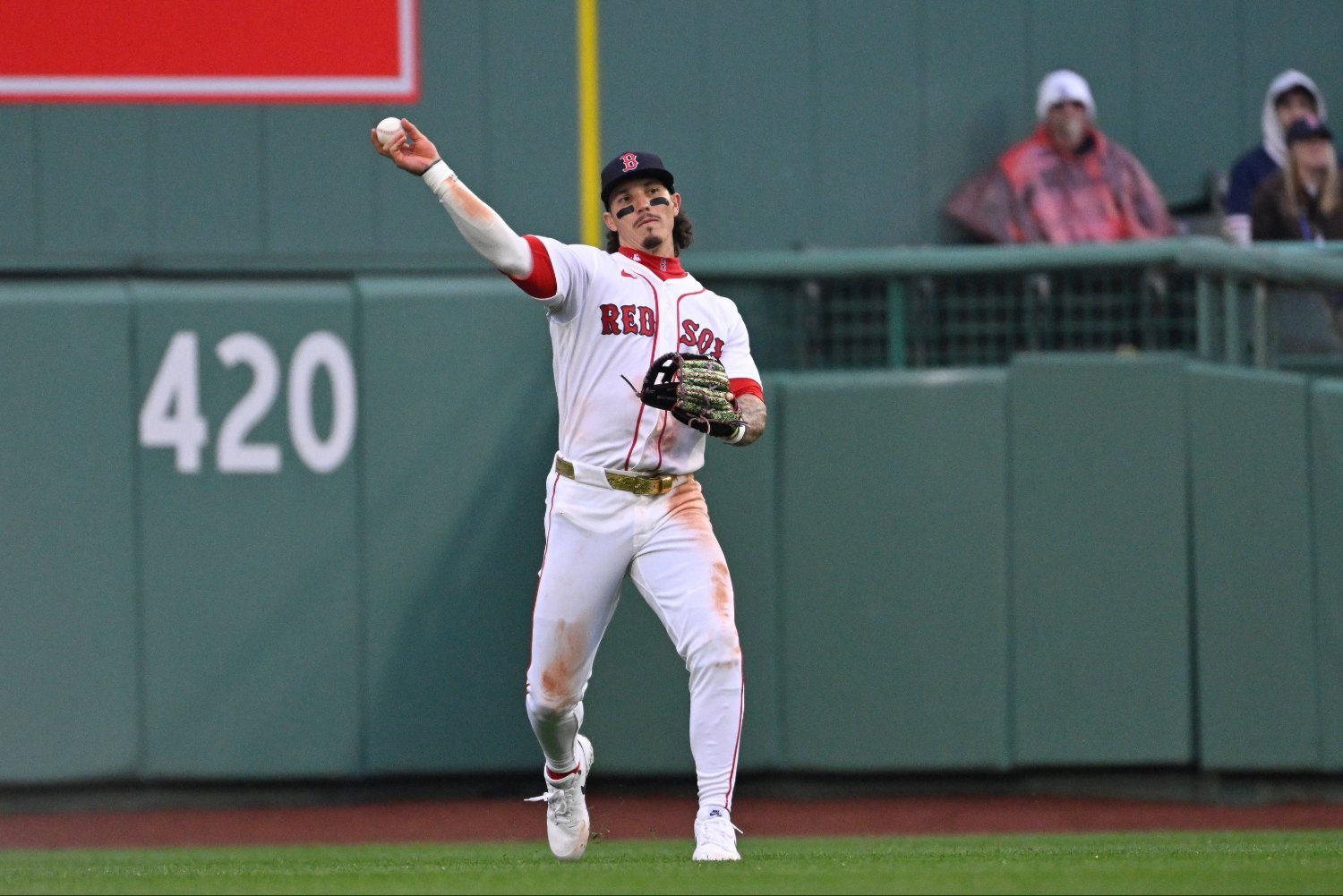 What a forgettable start to the season it’s been for Jarren Duran. He’s mired in that fabled outfield logjam that is getting worse by the day, and when he is getting at-bats, he’s not producing. Alex Cora has moved him around the lineup multiple times to try and get his bat going, shuffling the 29-year-old from designated hitter, to left field, and then to center. In what may be the most damning piece of evidence that Duran is losing his grip on what little playing time he sees, he was pinch hit for by Isiah Kiner-Falefa in the series finale against the Tigers. Instead of letting Duran attempt to get on base, even with a bunt as Kiner-Falefa was instructed to do, Cora would rather turn to someone who currently holds a .179 batting average over 12 games. That’s not to say Cora's thought process was entirely flawed; as of the series finale against the Yankees, Duran is slashing .194/.266/.306. Still, you’d think that someone Cora trusted to show up in big spots over the last two seasons wouldn’t be sat down for a veteran journeyman who arguably doesn’t have a true role on this team. Dive further into Duran's start, and things start to look even worse. He’s currently in the 18th percentile for expected batting average, the 20th percentile for xwOBA, and the 25th percentile for xSLG. The only red areas on his Savant page are his barrel rate and bat speed. Those are solid indicators of someone who can do damage from the batter's box, but not when everything else presents a glaring red flag. What’s maybe most concerning is the fact that Duran is chasing a ton of pitches this season. He’s currently sitting at a 34.0% chase rate, ranking in the 26th percentile, which is an increase from both his 2025 season, 31.1%, and his 2024 season, 28.1%. As with all things Duran, his 2024 mark was the best of his career. If you judge him solely on the eye test, you’ll see similar troubling trends. He’s swinging out of his shoes at pitches that never touch the plate while staring at fastballs pumped right down the middle. That’s not someone who’s just struggling, that’s someone who is completely lost in his approach. MassLive.com’s Chris Smite spoke to the Red Sox's skipper about Duran’s struggles and Cora had this to say: “…Now he’s not even doing that (walking)… Kind of like slow it down, even a bunt or something. Just get it going. We need him to run the bases, do what he does. Hit one in the gap and stretch it out to a triple or one of those ground balls that get through and get to second and get that energy going. We need it as a group, he needs it as a player.” Those are telling comments from the manager who pulled Duran in a bunt situation later that day. Should Cora have kept Duran in to attempt that bunt scenario, especially when Kiner-Falefa bunted the third strike foul? Possibly, but the fact Cora pulled him shows that the trust he once had in Duran is waning quickly. Unless the team finally trades an outfielder so that Duran, or even Masataka Yoshida, can get more at-bats, there’s no clear answer to the current problem. Duran’s struggles are likely due in large part to the fact that he’s sitting on the bench more often than not at this point in the season. As long as the outfield logjam continues to exist though, it’s not going to get any better. Duran’s All-Star 2024 was followed up by a quiet yet solid 2025. His 2026 season, though, paints a picture of a hitter who is falling further from his peak. His at-bats are unspectacular and the process behind them is even worse. As currently constructed, the Red Sox can't afford to give someone struggling this bad more opportunities... which is exactly what Duran needs to break out of this funk. View the full article
 -
 Welcome to Shape of the Blue Jays, my column where I dig into Statcast numbers to analyze recent pitch shape and swing shape trends for Toronto Blue Jays players and discuss how they have impacted their performance. Click here to read the last edition. Quick Hits: Reinforcements Trey Yesavage made another rehab start for Triple-A Buffalo on Tuesday. It didn't go great (2.1 IP, 4 R, 2 ER, 2 H, 2 K, 4 BB), and he failed to reach his 75-pitch target. Either way, it was his fourth rehab start of the year, as he continues to work his way back from the right shoulder impingement that he reported to camp with. The following day, John Schneider said the goal for Yesavage's next outing will be 80 pitches. It's just a matter of whether that start happens with Toronto or with Buffalo again. He seems to be one more rehab start away, at most, from rejoining the team. Most importantly, his stuff doesn't seem to be affected by the injury. His fastball averaged 94.3 mph and 19-20" of iVB on Tuesday, right in line with what we saw last year. His splitter averaged about 82 mph, which is a couple of ticks slower than it was in the 2025 postseason, but it also had almost 200 fewer RPM and three more inches of drop. This would bring the vertical separation between the fastball and splitter to nearly 15 inches. If that helps him induce more ugly swings like the ones we saw all throughout his magical October, then so be it. The Jays won three in a row earlier this week to salvage some ground, but they still need to get healthy. Hopefully, Yesavage isn't the only key reinforcement to arrive over the next few weeks. In terms of who could be on the hot seat when the time comes, Patrick Corbin has outpitched Eric Lauer in each of the past two turns through the rotation, but the jury's still out. Vladimir Guerrero Jr. I can't believe I'm saying this, but Vladimir Guerrero Jr.'s results are matching his expected numbers. He's hitting for a 151 wRC+ through his first 24 games, and his wOBA and xwOBA are within seven points of each other. Among Blue Jays with at least 50 PA, Daulton Varsho is the only other hitter with a wRC+ over 110. Vlad is the best hitter in this lineup, and he's performing like it. His production might even be a little unsustainable given his peripherals. His groundball rate is over 55% for the first time in his career, his average launch angle is lower than it's been since 2022, and he only has two home runs on the young season. He's finding a way despite lifting the ball less than he ever has, which was never a lot to begin with. On the other hand, his swing tilt and attack angle are both up from last year, so maybe this is something that will naturally work itself out. Vladimir Guerrero Jr. Batted Balls, 2025 vs. 2026 (Statcast) Stat 2025 2026 GB% 47.1% 55.3% LA° 7.8° 4.5° xSLG .506 .486 Barrel% 12.2% 11.8% Pitchers around the league took notice after he bludgeoned his way through the postseason. Guerrero is seeing more breaking balls this year (34.1%) than he has at any point during his time in the big leagues. A similar pattern developed in 2022 following his MVP runner-up season in 2021. Due to his reputation around the league, as well as the current state of the Jays' lineup around him, that isn't likely to change anytime soon. Let's see how he punches back. Tyler Rogers Absolutely nothing has surprised us about Tyler Rogers in the season's early going (12.1 IP, 0.73 ERA). The king of soft contact has taken things to another level in 2026: His groundball rate has eclipsed 70%, his hard hit rate is under 20%, and opposing hitters' average exit velocity is 82 mph. This is the submariner at his peak. A week and a half ago, the Brewers scored two runs in the eighth inning off him to win the game. One of those runs was unearned, and not a single batted ball left the infield. That outing remains the only blemish on his season. Tyler Rogers sinker location vs. RHB, 2025 (left) and 2026 (right) - Statcast I'm not sure if this is intentional or small-sample weirdness, but Rogers has been throwing his sinker up in the zone more to right-handed hitters. Thankfully, the conventional laws of baseball do not apply to a man with a -61° arm angle, so rather than facilitating more damage from opponents, this has actually had the opposite effect. Looking at his bat tracking splits tells us he has righties in knots right now. Their average attack angle against his sinker is down to -6°, attack direction is up to 17° toward the opposite field, and contact depth is three inches closer to the plate. These are all indicators that they're so absurdly late, even though the pitch is only 83 mph on average. Exactly how he wants it. Ernie Clement Ernie Clement is enjoying his best run of the year so far. He's hit safely in each of his last seven games and collected multiple hits in four of his last five. His slash line is up to .320/.327/.420 on the year. I'm not worried by the fact that he has only drawn a single walk through his first 101 PA; he walked just 4.6% of the time last year, and he's always chased a lot. Besides, that all becomes easier to swallow when he's hitting .320. He has struck out just seven times to that one walk, his zone contact rate is 94.5%, and he has 97th-percentile collision efficiency according to Statcast. He's squaring everything up. Can this continue over a full season? Only 29 qualified hitters in baseball (from a sample of 283) have a bigger positive difference between their wOBA and their xwOBA than Clement. His BABIP is currently .344, compared to a career BABIP of .282. At the same time, he seems like the type of hitter that can reasonably outperform expectations because he hits so many line drives and puts the ball in play a lot. Like Guerrero, Clement is seeing way more breaking balls than he ever has after his record-setting October. Much of his success last year came against fastballs, both in the regular season and the postseason. It's not easy to hit after the whole world is exposed to your game plan on the biggest stage. Hopefully, he can keep them coming. Ernie Clement Line Drive% Ranking Among 278 Qualified Hitters, 2026 (Statcast) Rank Hitter LD% 17 Ildemaro Vargas 31.6% 18 Troy Johnston 31.6% 19 Ernie Clement 31.2% 20 Ezequiel Tovar 31.1% 21 Jorge Polanco 31.1% All visuals and figures courtesy of Baseball Savant and FanGraphs. Up to date as of April 23, 2026. View the full article
 -
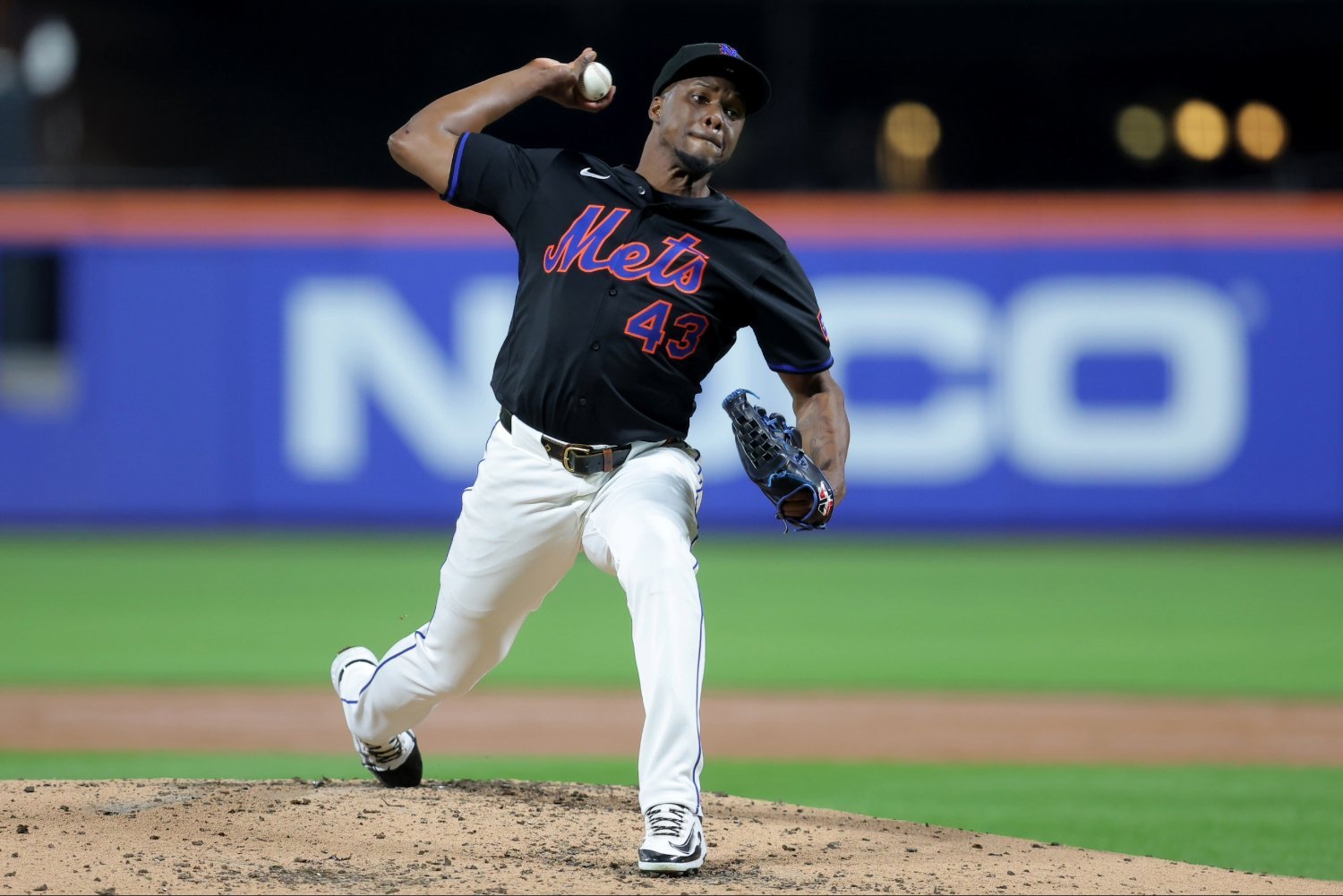 Despite the New York Mets’ early struggles that required them to snap a 12-game losing streak dating back to April 8, Huascar Brazoban has been a rare bright spot on the roster. The righty is in his fifth major-league season and has appeared in 10 games thus far. Over 10.2 innings, Brazobán has yet to allow a run and has only issued two walks; resulting in an excellent 0.94 WHIP. He’s also done a good job forcing soft contact and has yet to give up a barrel so far. Likewise, batters have an average exit velocity of 86.7 mph off him, ranking in the 80th percentile. Combine that with the fact that the 36-year-old has been good at limiting walks, and you get a pitcher with a 1.83 FIP. If there's a hole to poke, it's in his middling strikeout numbers, but that's not abnormal, with his career strikeout rate sitting at 24.3%, just a tad better than league average. Brazobán's signature pitch is his sinker, which has a Stuff+ grade of 101, per FanGraphs, leading to an excellent 53.3% groundball rate. He works mainly with only two offerings -- his sinker and a changeup -- but does occasionally mix in a four-seam, cutter, and slider that have only accounted for 14% of his pitches this year. Interestingly, his pitch usage has evolved over time; during his first three seasons, he featured all four pitches and used them all at around the same rate. Last year, he leaned more into favoring his changeup and sinker to the point that they combined for a 75% usage rate. The same trend has carried into 2026, but he’s used his sinker more this year, whereas he favored his changeup more last season. His cutter was his main pitch with the Marlins, but the Mets smartly weened him off the pitch, which flashed subpar ride up in the zone. Of everything we've discussed so far, what's most worth revisiting is his newfound command of the strike zone. Brazobán has had a reputation in the past for issuing walks at a pretty high rate. He’s seemed to have fixed this problem in his 10 games so far, hence his 4.8% walk rate. For his career, Brazobán has walked batters 11.5% of the time. which is worse than the league average mark of 8.4% during that stretch. Notably, his career Location+ according is 96, signaling that he is below average when it comes to locating and commanding his pitches. This year, it’s up to 108, which is a career best. Naturally, he's been throwing more strikes this year than previous seasons, with roughly two-thirds of his offerings going for strikes, a career high. That's the sign of a confident reliever who knows he can challenge batters and win while living in the zone. The Mets' bullpens has had its ups and downs this season, especially when it comes to the late innings, but through most of April, Brazobán has been unshakeable on the mound. Bright spots are few and far between on this roster right now, but the 36-year-old set-up man has certainly been one of them. View the full article
 -
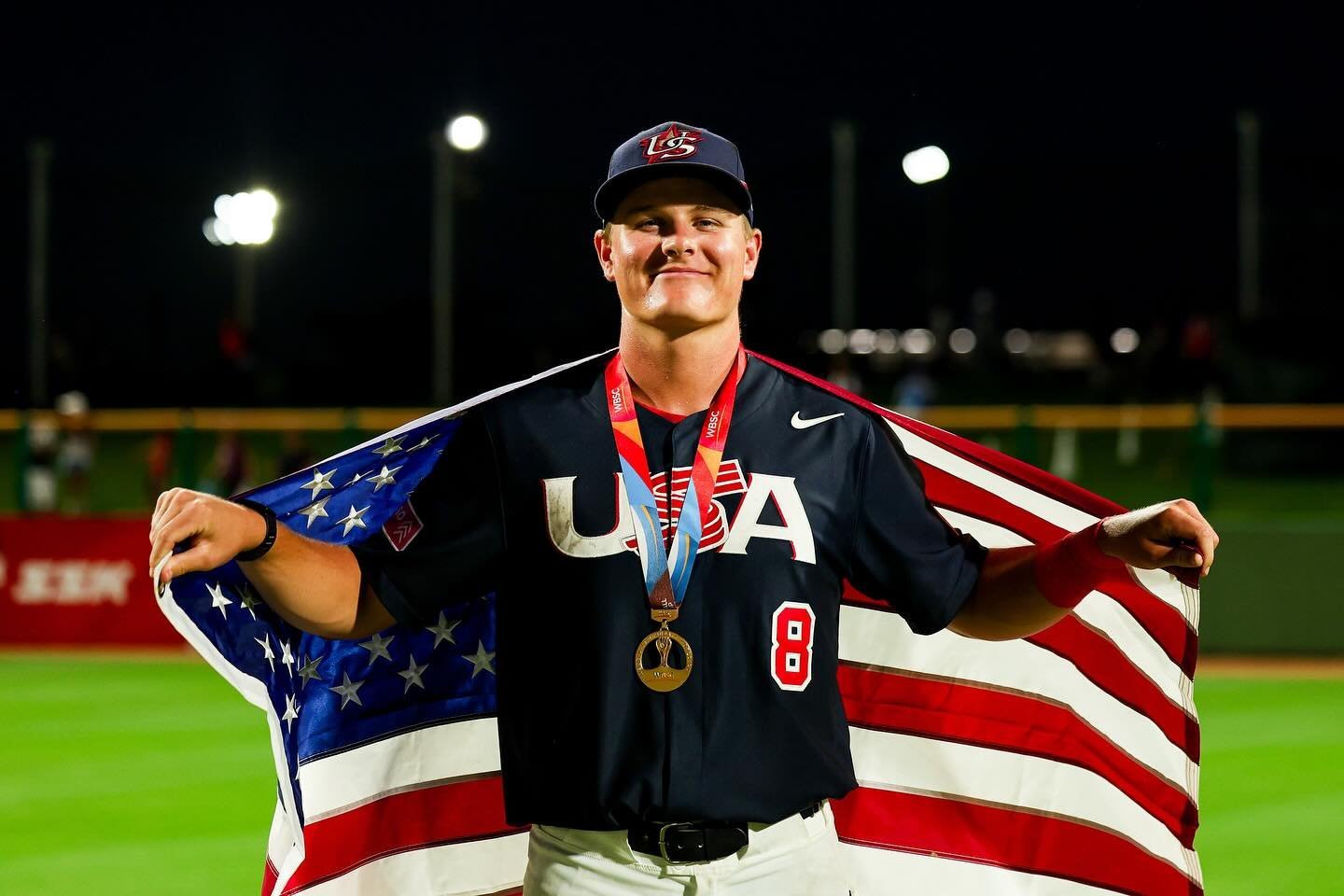 Leading up to the 2026 MLB Draft, Fish On First brings you a series of scouting reports on top prospects in this draft class who could realistically wind up in Miami. Overview Position: LHP Height: 6’4" Weight: 210 pounds School: Southside Christian School (SC) Commitment: Wake Forest Carson Bolemon is a 6’4”, 210-pound left-handed pitcher who plays at Southside Christian School in Five Forks, South Carolina. Bolemon is one of the top pitching prospects in this draft class. He’s also considered one of the top left-handed pitching prospects in the 2026 draft class. Bolemon is signed to play college baseball at Wake Forest University. Bolemon might be the most polished high school pitching prospect we have seen in recent years. He has plus pitches and a projectable frame that he can grow into. On the mound, Bolemon possesses a four-pitch arsenal including his fastball, curveball, slider, and changeup. Bolemon’s fastball sits 92-95 mph and tops out at 96 mph with excellent command. He can mix both of his breaking balls very well. Bolemon’s curveball sits 78-81 mph with excellent spin and great depth to generate swing-and-miss. His slider sits in the low-90s and works very well against left-handed batters. Bolemon also has a good feel for his mid-80s changeup, which he uses mostly against right-handed hitters. While the quality of Bolemon's stuff jumps out, he also impresses with the ability to land all of his pitches in the strike zone. Strengths Excellent control Plus fastball Plus breaking pitches Projectable body type Very polished for prep prospect Weaknesses Struggles to repeat his mechanics Needs to improve his command of secondary pitches Pro Comparison: Connelly Early Projection: Top 15 pick Bottom Line Bolemon is an elite pitching prospect in this draft class. On Perfect Game, Bolemon is the fourth-ranked prospect and the second-ranked left-handed pitcher in the Class of 2026. He’s also the #1 overall prospect out of South Carolina. On MLB Pipeline, Bolemon is the seventh-ranked draft prospect and the #1 prep pitching prospect. On Baseball America, Bolemon is the 19th-ranked prospect and the fifth-ranked pitcher. The Marlins will have the 14th overall pick in the 2026 MLB Draft and should be able to grab one of the top prospects in this draft class. While the Marlins already have two excellent left-handed pitching prospects in Thomas White and Robby Snelling, that should not prevent them from going after Bolemon, who might be the best prospect available when Miami is on the clock. More 2026 MLB draft profiles RHP Jackson Flora INF Jacob Lombard OF AJ Gracia View the full article
 -
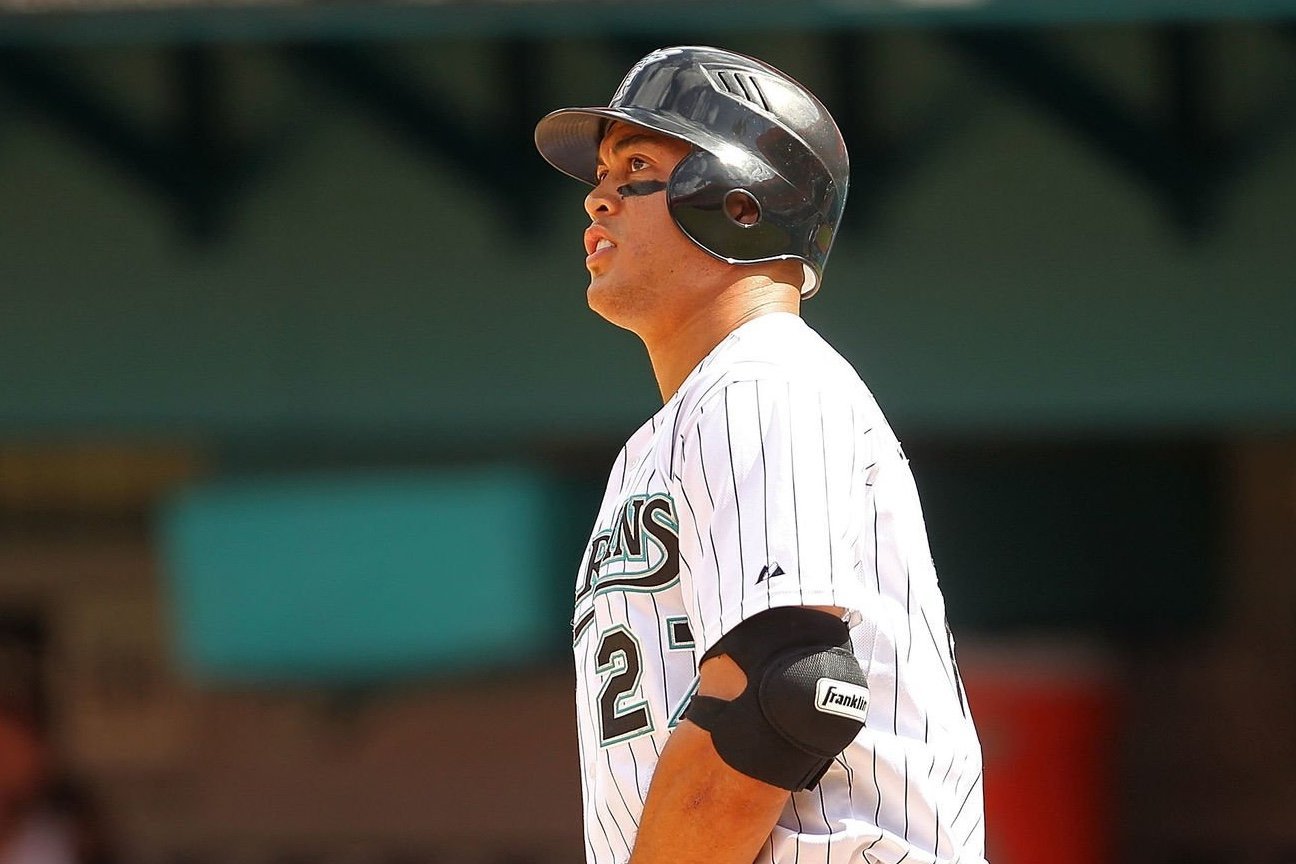 After Aníbal Sánchez took a no-hitter into the ninth inning to open the Florida Marlins’ home series with the Colorado Rockies early during the 2011 season, Giancarlo Stanton (then known as Mike Stanton) capped it with a bang. On this day 15 years ago, Stanton’s three-run blast in the bottom of the eighth delivered the Marlins past the Rockies in the rubber game of a three-game series, 6-3. Like Sánchez two nights prior, Marlins starter Josh Johnson had kept the Rockies hitless through five innings at Sun Life Stadium on April 24, 2011. Florida finally broke the scoreless tie in the bottom of the fifth inning on a bases-clearing triple from Omar Infante. Colorado, however, fought back. After Jonathan Herrera’s RBI double got the Rockies on the board in the sixth, Colorado drew even at 3-3 with a pair of runs in the eighth against the Florida bullpen. Rockies lefty Matt Reynolds was able to strike out Chris Coghlan to open the bottom of the inning, but a pitching change to Matt Belisle was made shortly after. Infante was able to single off Belisle, who followed by striking out Hanley Ramírez. After Gaby Sanchez worked a six-pitch walk, Stanton came to the plate with two outs and the go-ahead run in scoring position. Stanton took the first pitch for a ball. The second pitch was in the strike zone and the Florida slugger didn’t miss it. On an offspeed pitch that got too much of the plate, Stanton turned on it for a no-doubter as the Marlins took a 6-3 lead. Juan Carlos Oviedo—then known as Leo Núñez—worked a 1-2-3 ninth to seal the win and collect the save. Lefty Mike Dunn was credited with the victory. In addition to Infante’s two hits, Stanton’s game-winning blast was the only other hit for Florida. It happened to be the biggest one of the game. It came on this day 15 years ago. View the full article
 -
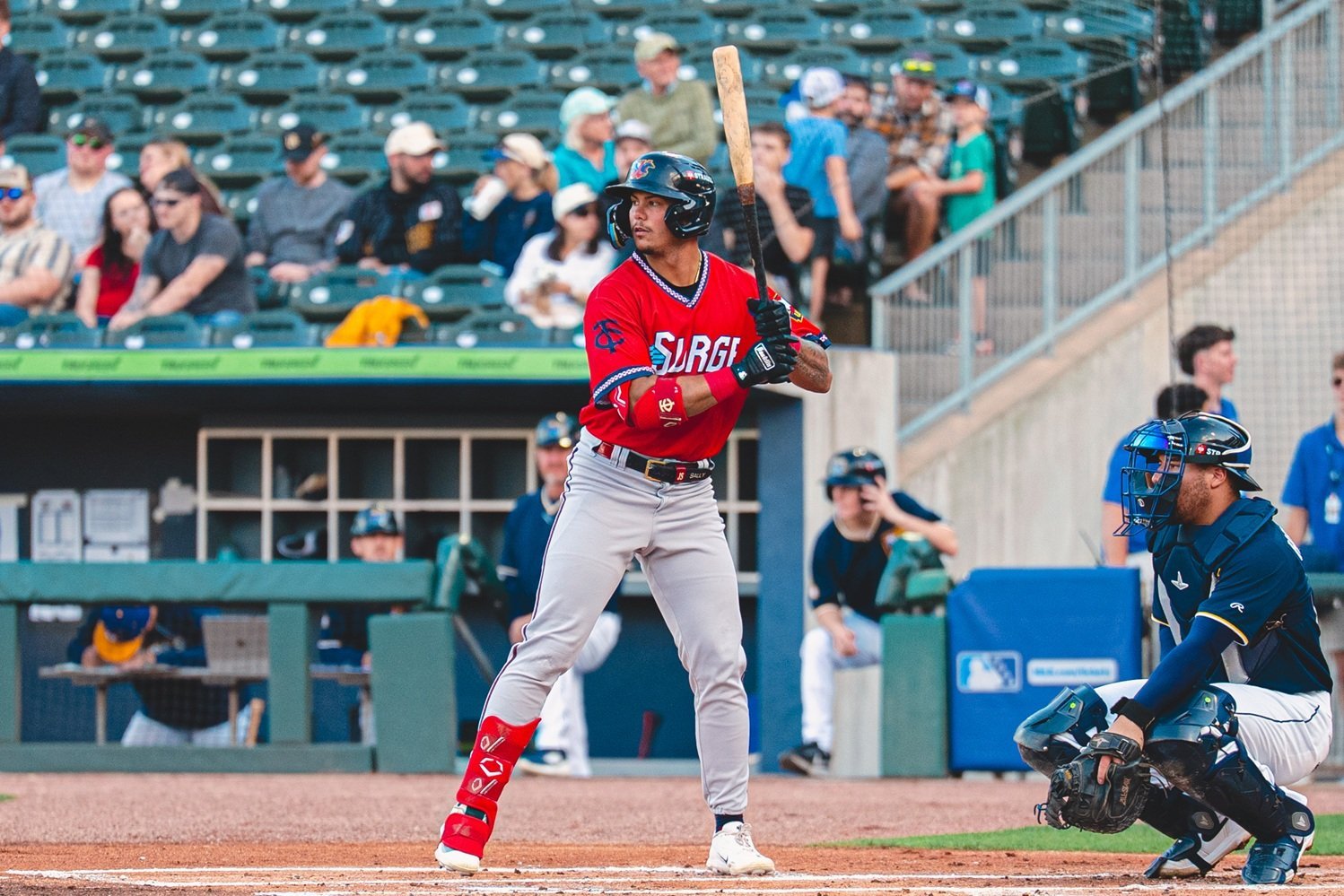 TRANSACTIONS Following the Twins loss in New York, Kendry Rojas was optioned to St. Paul. Presumably, the corresponding move would be to activate Kody Funderburk from the paternity list. Infielder Ryan Kreidler reported to the Saints in Indianapolis on Thursday morning after being optioned by the Twins on Wednesday. The Twins claimed Christian Roa, a 27-year-old right-hander who was DFAd by the Houston Astros earlier this week. Roa was the Reds second-round pick in 2020 out of Texas A&M. He has fought a ton of injuries in his career, but clearly has something teams like. He pitched in two games for the Marlins in September of 2025. He pitched in seven games for the Astros this season. In 8 2/3 innings, he gave up five runs on 10 hits, seven walks and three hit batters, and just six strikeouts. The Twins have been very active in making claims on relief pitcher options for the back of the 40-man roster and potentially for the back of the 26-man roster. It’s a solid strategy for a team in the Twins current position. The nice part is that he could be optioned meaning the Twins can invest some time with him if they want. To make room on the 40-man roster, the Twins have DFAd infielder Eric Wagaman. He was one of the last cuts for the Twins this spring after playing in 140 games for the Marlins last year. In 18 games with the Saints this year, he is hitting .159/.284/.254 (.538). Those numbers aren’t great, or good, or even adequate, but it’s also important to realize the small sample size. On Sunday, he went 3-for-4 and hit his lone double, triple, and home run of the season. That one game increased his OPS by about .130 points. Wagaman just never made much sense for the Twins, and it’s hard to believe they had to give up a Double-A lefty reliever Kade Bragg for him. It’ll be interesting to see if he’ll clear waivers and stay in the organization. Catcher David Banuelos transferred back to the Development List for St. Paul. SAINTS SENTINEL St. Paul 1, Indianapolis 6 Box Score Gabriel Gonzalez hit a long home run, his fifth homer of the young season. The solo shot in the fourth inning cut the Saints’ deficit to 3-1. The only other Saints player with a hit in this game was Ryan Kreidler who doubled. Walker Jenkins and Kaelen Culpepper both walked. Culpepper returned to the Saints lineup after being out of the lineup the first two games of this week. John Klein made the start for the Saints. He gave up three runs on four hits and a walk over three innings. Marco Raya came on and gave up three runs on two hits and three walks over two innings. Zak Kent gave up two hits and two walks over two innings, but no runs. Drew Smith struck out two batters in a scoreless ninth inning. WIND SURGE WISDOM Wichita 12, NW Arkansas 13 (10 innings) Box Score 25 runs, 29 hits, 12 walks. Occasionally some big pitching and defense. Actually, defense played a certain role in the results of this game. Wichita committed three errors to NW Arkansas’s zero errors. Three unearned runs certainly looms large in a one-run, extra inning game. We had several Surge highlights, but no tally in the win column for Wichita. The Wind Surge took the early first-inning lead with a four-spot. The Naturals put six on the board in the fourth inning. C.J. Culpepper started. He was charged with five runs (3 earned) on seven hits over three innings. He walked none and had seven strikeouts. He started the fourth inning but was replaced by Darren Bowen with a runner on base. The inherited runner scored, but Bowen was charged with three runs on one hit and two walks in his two innings. He struck out four. Sam Ryan went 2 2/3 innings. He gave up two runs on five hits and a walk. Jaylen Nowlin threw two innings. He gave up three runs (2 earned) on three hits. In the top of the first, Hendry Mendez led off with a walk. With one out, he scored on Billy Amick’s third home run of the season. Jorel Ortega and Jake Rucker had RBI singles in the four-run first. Jose Salas led off the top of the third inning with his third home run of the season. With one out in the top of the fourth, Mendez knocked his fourth homer of the season. In the top of the fifth inning, Jake Rucker doubled to drive in Ricardo Olivar. Poncho Ruiz tied the game at 8-8 with a single to score Rucker. Jose Salas led off the top of the seventh inning with his fourth home run of the season to give the Surge a 9-8. With one out in the top of the ninth, Olivar hit his fourth home run of the season to tie the game at 10-10. Jorel Ortega was the Manfred Man on second base to start the top of the 10th. With one out, Poncho Ruiz hit his first home run of the season to make it 12-10. With two outs, Mendez and Kala’i Rosario walked. Billy Amick lined a single to left field. Mendez attempted to score but was thrown out at home. Maybe that’s what gave the momentum for the Naturals to put three runs on the board in the bottom of the inning. KERNELS CHRONICLE Cedar Rapids 10, Peoria 12 Box Score Try as they might, the Kernels fell behind early and kept working their way back into the game. They were behind 6-2 after three innings. The Kernels scored two runs in the top of the sixth which cut their deficit to 7-6. However, Peoria scored five runs in the bottom of the sixth which made it 12-6. But there was no Quit in the Kernels. In the eighth inning, they scored four runs but fell short in the end. The Kernels actually had the first lead of the game. In the top of the first, Eduardo Tait drilled his third home run of the season to make it 1-0. Tait also drove in the team’s second run with a groundout in the third inning. Jason Doktorczyk made the start. He was charged with five runs on five hits and three walks in the first two innings. Ivran Romero was next. He gave up two runs on five hits over 2 2/3 innings. He had five strikeouts and no walks. Eston Stull came on with a runner on and got the final out of the fifth inning without further damage. Then in the sixth, he gave up five runs on five hits and a walk. Yehizon Sanchez came on and had four strikeouts over two perfect innings. With two outs in the top of the fifth, Jaime Ferrer was hit by a pitch. He moved to third on a Marek Houston single. Tait came through again. His fifth double of the season drove in both runs and cut the Peoria lead to 6-4. With two outs in the top of the fifth, Caden Kendle hit a two-run homer, his second of the season, to make it 7-6. But as noted above, that was as close as it got. Down 12-6 going to the eighth, Kendle drove in two with a single to left. Miguel Briceno knocked his second home run in limited April play, a two-run homer that ended the scoring with the Kernels down 12-10. Tait went 3-for-5 with his fifth double, third homer and four RBI. Kendle was 2-for-4 with his second home run. Houston went 2-for-5. It is his third straight multi-hit game. Heading into the week, he was hitting .246/.328/.404 (.732). Three games later, he is hitting .296/.359/.437 (.796). MIGHTY MATTERS Ft. Myers 12, Dunedin 7 Box Score Like the Kernels, the Mussels fell behind early. After four innings, the Blue Jays led 5-2. When the Mussels came to bat for the bottom of the fifth inning, they were behind 7-2. But like the Kernels (and like the big-league clue), the bats didn’t quit early. Fort Myers responded with four straight crooked numbers while their pitchers ended with four straight zeroes. Nice win at Hammond Stadium. With two outs in the top of the third, Yasser Mercedes knocked his first triple and scored on an error to make it 2-1 after three innings. Kolten Smith started and gave up two runs (1 earned) on a walk and a home run. He had four strikeouts. Down 5-1, Quentin Young started the bottom of the fourth inning with a walk. Consecutive ground outs advanced Young to third base, but with two outs. Ramiro Dominguez doubled to drive him in. Eric Hammond came in and gave up four runs on three hits (including a homer) and two walks over two innings. Xavier Kolhosser gave up one run on one hit and two walks. Down 7-2, Dameury Pena singled to lead off the bottom of the fifth frame. Yasser Mercedes followed with his third home run since joining the Mussels last week. Down 7-4, Ramiro Dominguez hit a two-out solo home run, his second of the season. It was followed by a single by Irvin Nunez, and a triple by Dameury Pena. Down 7-6 in the bottom of the seventh inning, Jayson Bass knocked a two-out, two-run homer to give the Mussels their first lead of the game. Now to the really strong late-inning pitching. Mike McKenna pitched a scoreless sixth inning and struck three batters. Matthew DesMarets came in and tossed the final three innings. He gave up no runs on one hit. He walked three and had three strikeouts to earn his first professional win. Now leading 8-7, Dominguez led off the bottom of the eighth with a single. Nunez was hit by a pitch. With two outs, there was a double steal. Eduardo Beltre came through with a two-run single to center for some insurance. Beltre then stole second and third, but JP Smith told him that was unnecessary, that he was already in scoring position. Smith drilled his first home run of the season to make it 12-7 Mussels. Ramiro Dominguez went 3-for-4 with his first double and his second home run. Dameury Pena went 3-for-5 with his first triple. He’s still hitting .418. Yasser Mercedes hit his first triple and third home run. JP Smith went 2-for-4 with a walk and his first homer. The Jayson Bass homer, his second of the season, was the one that turned a deficit to a lead. PLAYERS OF THE DAY Hitter of the Day Jose Salas (Wichita): 2-for-5, 2 HR(4), 2 R, 2 RBI, K. Eduardo Tait (Cedar Rapids): 3-for-5, 2B(5), HR(3), R, 4 RBI, K Ramiro Dominguez (Fort Myers): 3-for-4, 2B(1), HR(2), 2 R, 2 RBI, K. Yasser Mercedes (Fort Myers): 2-for-5, 3B(1), HR(3), 2 R, 2 RBI, K Pitcher of the Day Matthew DesMarets (Fort Myers): 3 IP, H, 0 R, 3 BB, 3 K, 58 pitches, 31 strikes (53.4%) PROSPECT SUMMARY Check out the Prospect Tracker for much more on our Twins Top 20 prospects after seeing how they did today. #1 - OF Walker Jenkins (St. Paul) - 0-for-3, BB, K (batted first, played DH) #2 - IF Kaelen Culpepper (St. Paul) - 0-for-3, BB, 2 K (batted second, played SS) #3 - OF Emmanuel Rodriguez (St. Paul) - 0-for-4, 2 K (batted third, played CF) #4 - C Eduardo Tait (Cedar Rapids) - 3-for-5, 2B(5), HR(3), R, 4 RBI, K (batted second, DHd) #5 - LHP Connor Prielipp (Minnesota) - Did Not Pitch #6 - LHP Dasan Hill (Cedar Rapids) - Did Not Pitch #7 - OF Gabriel Gonzalez (St. Paul) - 1-for-3, BB, HR(5), R, RBI, K (batted fourth, played RF) #8 - LHP Kendry Rojas (St. Paul) - Did Not Pitch #9 - SS Marek Houston (Cedar Rapids) - 2-for-5, R, K (batted leadoff, played SS) #10 - RHP Charlee Soto (Cedar Rapids) - Injured List #11 - RHP Riley Quick (Ft. Myers) - Did Not Pitch #12 - RHP Andrew Morris (Minnesota) - 2 2/3 IP, 2 H, 2 ER, 0 BB, 4 K, 37 pitches, 27 strikes (73.0%) #13 - 3B/CF Brandon Winokur (Cedar Rapids) - Did Not Play. #14 - 3B/SS Quentin Young (Ft. Myers) - 0-for-4, BB, R, 3 K (batted fifth, played SS) #15 - RHP Marco Raya (St. Paul) - 2 IP, 2 H, 3 ER, 3 BB, K, 27 pitches, 14 strikes (51.9%) #16 - OF Hendry Mendez (Wichita) - 1-for-4, 2 BB, HR(4), 2 R, RBI, K (batted first, played LF) #17 - 2B/OF Kyle DeBarge (Wichita) - Did Not Play. #18 - RHP C.J. Culpepper (Wichita) - 3 IP, 7 H, 5 R, 3 ER, 0 BB, 7 K, 67 pitches, 46 strikes (68.7%) #19 - C/OF Khadim Diaw (Cedar Rapids) - 0-for-K (batted third, catcher) #20 - RHP James Ellwanger (Ft. Myers) - 60 IL (right elbow sprain) UPCOMING PROBABLES Friday: St. Paul @ Indianapolis (5:35 pm CT) - RHP John Brebbia (0-0, 3.86 ERA) Wichita @ NW Arkansas (7:05 pm CT) - RHP Jose Olivares (1st AA Start) Cedar Rapids @ Peoria (6:35 pm CT) - RHP Nolan Santos (0-1, 5.40 ERA) Dunedin @ Ft. Myers (6:05 CT) - RHP Matthew Dalquist (0-1, 7.71 ERA) CURRENT W-L Records Minnesota Twins: 12-13 St. Paul Saints: 9-14 Wichita Wind Surge: 10-8 Cedar Rapids Kernels: 7-11 Fort Myers Mighty Mussels: 11-7 FCL Twins: 0-0 (season begins Monday, May 4) DSL Twins: 0-0 (season begins Monday, June 1) Please feel free to ask questions about the teams, the rosters, and discuss today’s games, or anything else Twins minor-league related! View the full article
 -
 JP Sears earned the win for Triple-A El Paso, throwing six innings in an 8-5 victory. Ryan Wideman went 2-for-3 with four steals and Bradley Frye hit a two-run homer for Low-A Lake Elsinore in a 13-6 rout. High-A Fort Wayne fell 9-7 despite Carlos Rodriguez's three-run homer. Double-A San Antonio dropped a 7-5 decision. Padres Minor-League Transactions San Antonio Missions activated RHP Josh Mallitz from the 7-day injured list. San Antonio Missions transferred LHP Luis Gutierrez 7-Day IL to 60-Day IL. Lake Elsinore Storm placed 3B Kale Fountain on the 7-day injured list. OF Qrey Lott assigned to Lake Elsinore Storm from ACL Padres. Chihuahuas Erupt For 5 In First, Hold On to Beat Aces The El Paso Chihuahuas jumped out to an early lead and held on for an 8-5 win over the visiting Reno Aces on Thursday. El Paso scored five runs in the bottom of the first, with Jose Miranda reaching on a throwing error that plated a pair of runs, Carlos Rodríguez bringing in another with a single, and Mason McCoy capping the rally with a two-run ground-rule double. Jase Bowen pushed the lead to 6-0 with a solo home run in the second, his team-leading sixth blast of the year. Samad Taylor paced the offense by going 3-for-3, with a double, a walk, and two runs scored out of the designated hitter spot. Bowen finished 2-for-5 with the homer and two runs scored. McCoy drove in two. Rodolfo Durán reached twice on a single and a walk. JP Sears earned the win, moving to 2-1 on the year. Sears worked six innings, allowing four runs on seven hits while walking one and striking out one. He gave up two home runs in a four-run Reno fourth that trimmed the margin to 6-4. Ethan Routzahn closed the door in the ninth for his second save. EP_0423.mp4 Player AB R H RBI BB K Jase Bowen 5 2 2 1 0 3 Samad Taylor 3 2 3 0 1 0 Pablo Reyes 4 1 1 0 0 2 Jose Miranda 3 1 0 2 0 0 Nick Solak 4 0 1 1 0 1 Clay Dungan 0 0 0 0 0 0 Rodolfo Durán 3 1 1 0 1 1 Carlos Rodríguez 4 1 1 1 0 2 Mason McCoy 4 0 1 2 0 0 Nick Schnell 4 0 0 0 0 2 Player IP H R ER BB K HR JP Sears (W) 6 7 4 4 1 1 2 Yuki Matsui 1 2 1 1 0 2 1 Eli Villalobos 1 0 0 0 1 2 0 Ethan Routzahn (S) 1 0 0 0 1 0 0 Missions' Comeback Falls Short In Loss To Sod Poodles The San Antonio Missions rallied to tie the game but could not grab the lead, falling 7-5 to the visiting Amarillo Sod Poodles. Leandro Cedeño led the offense with a 2-for-5 night from the DH spot, collecting a triple, a double, and an RBI. Romeo Sanabria went 2-for-4 with two runs scored and a walk from the cleanup spot. Ethan Salas added two hits. The Missions opened the scoring when Braedon Karpathios drew a bases-loaded walk in the bottom of the first to plate Salas. Amarillo answered with four runs in the second, and San Antonio responded with two runs in the third on a Tirso Ornelas sacrifice fly and a Ryan Jackson RBI single. The Missions pulled even at 5-5 in the fifth on Cedeño's RBI triple and a Karpathios RBI double, but Amarillo plated two more in the sixth on a fielder's choice aided by a throwing error. Starter Miguel Mendez didn't make it past the second inning. He allowed four runs on six hits. SA_0423.mp4 Player AB R H RBI BB K Ethan Salas 5 1 2 0 0 1 Francisco Acuna 4 0 0 0 0 0 Romeo Sanabria 4 2 2 0 1 1 Leandro Cedeño 5 2 2 1 0 1 Tirso Ornelas 2 0 0 1 1 2 Braedon Karpathios 3 0 1 2 1 1 Ryan Jackson 4 0 1 1 0 2 Luis Verdugo 4 0 0 0 0 1 Albert Fabian 4 0 1 0 0 0 Player IP H R ER BB K HR Manuel Castro 1 0 0 0 2 1 0 Miguel Mendez 2 6 4 4 0 1 0 Francis Peña 2 1/3 4 1 1 1 2 0 Michael Flynn (L) 1 2/3 4 2 0 1 3 0 Sadrac Franco 2 1 0 0 1 2 0 TinCaps' Seventh-Inning Homers Not Enough Against Timber Rattlers The Fort Wayne TinCaps came up just short in their comeback bid, falling 9-7 to the visiting Wisconsin Timber Rattlers. Wisconsin carried a 7-2 lead into the bottom of the seventh before Fort Wayne answered with five runs of its own, but the Timber Rattlers tacked on an insurance run in the ninth to close out the win. Carlos Rodriguez powered the offense with a three-run home run in the bottom of the seventh that brought Fort Wayne within 8-7. Oswaldo Linares homered earlier in the inning with a two-run shot, finishing 2-for-3 with a walk and a double. Kavares Tears went 2-for-5 with an RBI double. Rosman Verdugo contributed two hits out of the DH spot. Alex McCoy extended his hitting streak to 14 games, the longest since the TinCaps became a High-A team in 2021 and the long since Xavier Edwards' 14 in 2019. Carson Montgomery got the start for Fort Wayne, tossing four innings and allowing two runs on four hits with three walks and two strikeouts. He surrendered one home run. Kleiber Olmedo was charged with the loss after giving up three earned runs in 1⅔ innings of relief. FW_0423.mp4 Player AB R H RBI BB K Jake Cunningham 4 1 1 1 1 1 Zach Evans 3 1 0 0 2 1 Carlos Rodriguez 5 1 1 3 0 1 Alex McCoy 5 1 1 0 0 4 Kavares Tears 5 0 2 1 0 2 Rosman Verdugo 4 0 2 0 0 2 Kasen Wells 0 0 0 0 0 0 Jack Costello 4 0 1 0 0 2 Jonathan Vastine 4 2 1 0 0 1 Oswaldo Linares 3 1 2 2 1 0 Player IP H R ER BB K HR Carson Montgomery 4 4 2 2 3 2 1 Bernard Jose 2 1 1 1 3 2 0 Luis Germán 1/3 2 2 2 1 0 2 Kleiber Olmedo (L) 1 2/3 3 3 3 0 3 1 Will Varmette 1 2 1 1 1 0 0 Wideman Swipes Four Bases, Frye Homers In Storm Rout The Lake Elsinore Storm routed the visiting Visalia Rawhide 13-6, piling up 12 hits and seven walks in a wire-to-wire victory. Ryan Wideman had a monster night from the leadoff spot, going 2-for-3 with two runs scored, two RBIs, two walks, a double, and four stolen bases. Bradley Frye finished 1-for-3 with a home run, two runs scored, two RBIs, and a walk. Kerrington Cross reached base three times, with a triple, two walks, three runs scored and an RBI. Justin DeCriscio drove in two with a single in the seventh, going 2-for-5 with a double from the cleanup spot. The Storm plated five runs in the bottom of the first, highlighted by Frye's two-run home run, Kerrington Cross had an RBI triple and two throwing errors allowed two runs to score. Starter Bryan Balzer worked four innings, allowing four runs on five hits with two walks and three strikeouts. Javier Chacon earned the win in relief, firing three hitless innings and striking out four while walking two to improve to 2-0. Vicarte Domingo added 1⅓ scoreless innings with three strikeouts. LE_0423.mp4 Player AB R H RBI BB K Ryan Wideman 3 2 2 2 2 0 Bradley Frye 3 2 1 2 1 0 Truitt Madonna 4 2 1 1 0 1 Justin DeCriscio 5 0 2 2 0 0 Jose Verdugo 5 0 1 0 0 0 Luke Cantwell 3 1 0 0 1 1 Yoiber Ocopio 1 0 1 0 0 0 Kerrington Cross 3 3 1 1 2 1 George Bilecki 3 1 0 0 1 2 Qrey Lott 1 0 1 0 0 0 Conner Westenburg 4 2 2 1 0 0 Player IP H R ER BB K HR Bryan Balzer 4 5 4 4 2 3 0 Javier Chacon (W) 3 0 0 0 2 4 0 Sean Barnett 2/3 1 2 2 3 0 0 Vicarte Domingo 1 1/3 0 0 0 1 3 0 Padres Top-20 Prospect Performance Kash Mayfield: DNP Ethan Salas: 2-for-5, R, K Kruz Schoolcraft: DNP Bradgley Rodriguez: DNP Humberto Cruz: DNP Miguel Mendez: 2 IP, 6 H, 4 R, 4 ER, K Ty Harvey: DNP Jorge Quintana: DNP Kale Fountain: DNP Ryan Wideman: 2-for-3, 2B, 2 R, 2 RBI, 2 BB, 4 SB Jagger Haynes: DNP Lamar King Jr.: DNP Romeo Sanabria: 2-for-4, 2 R, BB, K Truitt Madonna: 1-for-4, 2 R, RBI, K Michael Salina: DNP Garrett Hawkins: DNP Kavares Tears: 2-for-5, 2B, RBI, 2 K Deivid Coronil: DNP Francis Pena: 2⅓ IP, 4 H, R, ER, BB, 2 K Bryan Balzer: 4 IP, 5 H, 4 R, 4 ER, 2 BB, 3 K View the full article
 -
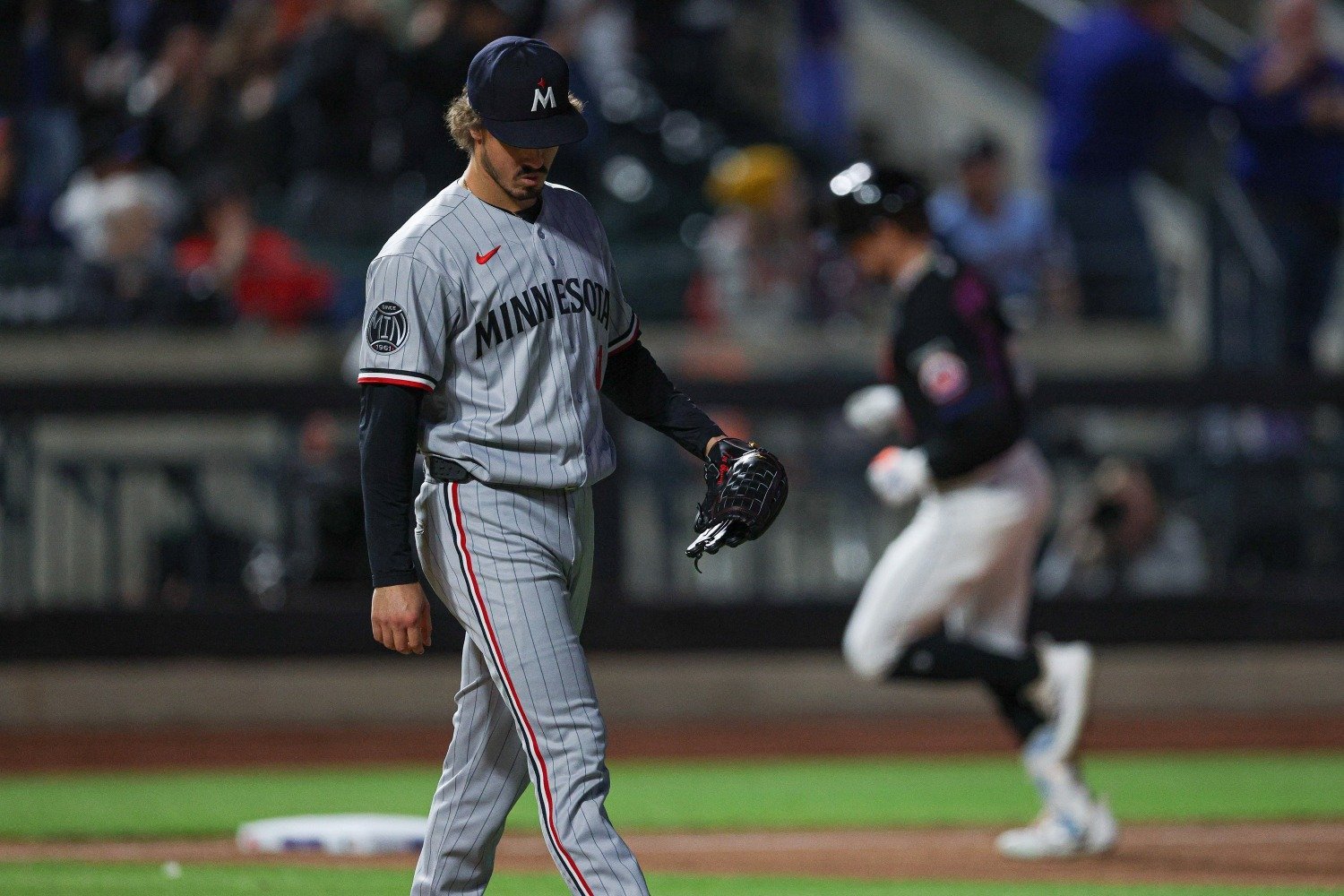 Box Score Starting Pitcher: Joe Ryan - 5 IP, 7 H, 7 R (4 ER), 2 BB, 5 K (92 pitches, 66 strikes (72% strikes)) Home Runs: Tristan Gray, Ryan Jeffers Bottom 3 WPA: Joe Ryan (-0.44), Anthony Banda (-0.36), Luke Keaschall (-0.13) Win Probability Chart (via Baseball Savant) The Twins came into Thursday’s rubber match with a chance to do something they’ve never done before: win a series at Citi Field. For much of the night, it looked like they wouldn’t come close. Then, for a brief moment late, it looked like they might steal it, after all. It was a blowout, undone by a triumphant comeback—but it ended in heartbreak. They fought back. They erased a six-run deficit. But in the end, the early damage and one more late breakdown proved too much to overcome. JOE RYAN CAN’T ESCAPE EARLY DAMAGE Joe Ryan never really found his footing. The first inning set the tone. After allowing a leadoff single and a walk, Ryan looked like he might limit the damage. But one mistake changed everything. Brett Baty got a fastball at the top of the zone and didn’t miss it, launching a three-run homer to give the Mets an early 3-1 lead. It snowballed from there. The second inning unraveled in a different way. A leadoff double, a passed ball that allowed a run to score on a strikeout, and a sequence of extended at-bats kept the line moving. Before Ryan could settle in, the Mets had pushed across three more runs, stretching the lead to 6-1. From there, Ryan did stabilize. He retired six straight at one point and needed just 13 pitches to get through a clean third inning, after throwing 52 across the first two. But the damage was already done. A fourth-inning solo homer from Carson Benge added another run, and by the time Ryan exited after five, the Twins were staring at a steep deficit. The final line shows seven runs, but only four earned. Even so, this was a grind from the start, and one where he was constantly pitching uphill. It's to Ryan's credit, at least, that he stuck around and got them 15 outs, without letting the game get any further out of hand. MISSED CHANCES EARLY The Twins had just as good a chance to hang a crooked number in the first inning as the Mets did. They just couldn’t capitalize. They didn’t record a hit in the inning, yet still managed to score, thanks to four walks and a hit batter. Mets starter Christian Scott had serious command issues, needing 33 pitches to get through the inning while throwing just 13 strikes. That should’ve been the moment to break things open. Instead, the Twins left the bases loaded. That became a theme. Through the first four innings, they left eight runners on base and logged one hit with runners in scoring position. There were competitive at-bats, traffic on the bases, and plenty of opportunities, but no big swing to flip the game. By the time the offense started to break through, they were already chasing the game. THE COMEBACK SWING For seven innings, it felt like the Twins were stuck in neutral offensively. Then everything changed in one swing. After slowly chipping away, including a solo homer from Tristan Gray in the sixth, the Twins entered the eighth still trailing by four. They loaded the bases with two outs, bringing Ryan Jeffers to the plate, and he delivered, big-time. Jeffers got a sinker over the heart of the plate and demolished it, launching a game-tying grand slam that erased the deficit in an instant. Just like that, a 7-3 game became 7-7, and the energy completely flipped (literally—Jeffers flipped his bat with gusto and the dugout was abuzz after the blast). It was the kind of swing that felt like it could define the game, but the momentum did not last long. BULLPEN CAN’T HOLD THE LINE After clawing all the way back, the Twins needed the bullpen to record some big outs in the bottom of the eighth. They did not get them. Andrew Morris was outstanding in relief of Ryan, striking out four across two perfect innings and giving the Twins exactly what they needed to stay within reach. He carried that momentum into the eighth, but the inning quickly turned. A leadoff single, a walk, and a couple of extended at-bats loaded the bases with two outs, in the middle of which Anthony Banda took over for Morris. His walk to Tommy Pham set up a sacks-packed showdown with Bo Bichette, and Bichette made Banda and the Twins pay. He got a slider up out of the zone and drove it off the wall in left-center for a bases-clearing double, instantly flipping the game back in the Mets’ favor at 10-7. It was a harsh reminder of how quickly things can unravel, especially after free passes extend an inning. The Twins didn’t go quietly in the ninth. Brooks Lee and Tristan Gray each singled to bring home a run, and Byron Buxton followed with a double to put the tying run in scoring position. But that’s where it ended. Trevor Larnach struck out swinging, and the comeback fell just short. The Twins lose the series, and they’re now below .500 for the first time since April 7—left to wonder what might’ve been after one of the more chaotic games of the season. What’s Next? The Twins travel to Tampa Bay tonight to start a three-game series with the Rays tomorrow. Taj Bradley is set to take on his former team tomorrow, and opposite Bradley will be righty Drew Rasmussen. First pitch is set for 6:10 CT. Postgame Interviews Coming Soon! Bullpen Usage Chart SAT SUN MON TUE WED THU TOT Sands 12 0 0 23 0 0 35 Morris 0 47 0 0 0 37 47 Acton 0 29 0 0 0 0 29 Banda 0 0 0 18 0 9 18 Orze 15 0 0 0 11 0 26 Rogers 0 8 0 0 12 0 20 Topa 10 0 0 17 17 0 55 Rojas 0 0 0 0 35 0 35 View the full article
 -
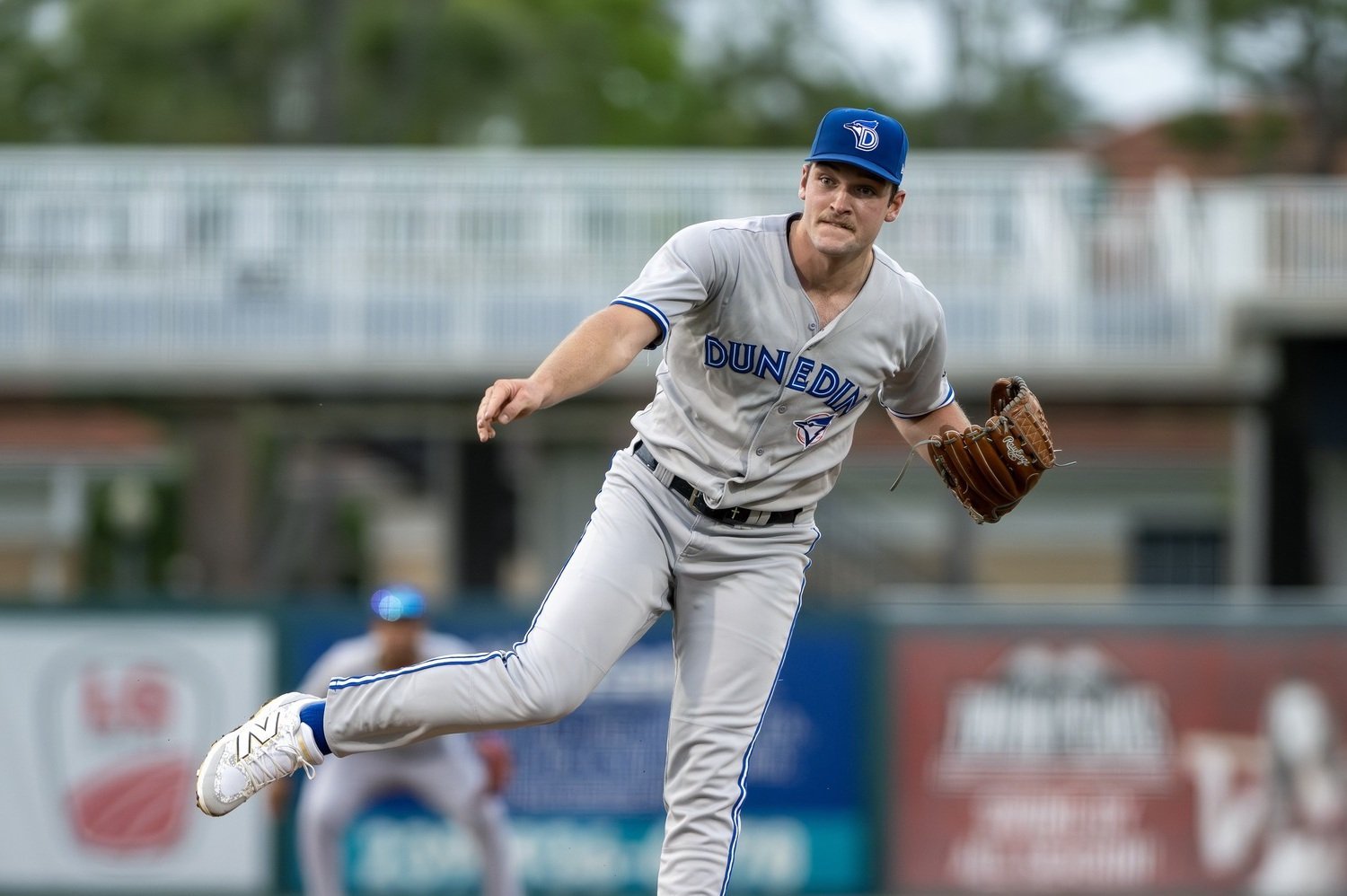 Trey Yesavage started collecting cards about the time that he was called up to the big leagues last year. He collects some baseball cards but also football cards. But, if you want to mail him cards through the mail to sign for you, just don't. On the We the Hobby podcast, Yesavage said that he doesn't collect cards of himself, but he also isn't going to sign cards sent to him through the mail. "People send me my cards in the mail to sign and send back, but I don't sign them. I'll put that out there. if you send them to me, you're not going to get them back. I do keep some of them and give them to my family and whatnot, but I really don't collect any higher-end stuff of myself." He doesn't really explain why he doesn't do it. It doesn't appear to come from a place of anger. In the interview, he just said it simply, straightforward. Does that bother you? Do you care? If you send cards through the mail, what is your expectation for return? Share your thoughts. (time stamp about 16:12) In the 25-minute conversation recorded about a week ago, the Blue Jays (can we call him an Ace yet?) pitcher discussed a number of topics from his rehab, the high moments of the playoffs and his call up, and much, much more. View the full article
 -
 Welcome to the 2026 MLB Consensus Draft Board. This is the fifth version of the board, which began in 2022 as a top-30. Since then, it’s expanded to around 150 players on an annual basis, featuring at eight different team sites. So what is the Consensus Board? How is it made? How should it be used? The concept is loosely based on Arif Hasan’s NFL Consensus Board. It’s meant to be a tool for folks getting interested in the MLB Draft. As I was learning about the draft, I struggled to navigate wildly varied rankings and evaluations of players. The Consensus Board takes every major publicly available board and combines them into a consensus ranking, eliminating some of the noise and variance of an extremely challenging evaluation process. We’ve found this process to be useful in ranking players in appropriate ranges through around the first five rounds of the draft. On the board, you’ll find player names, handedness, listed height and weight, age, and a write-up, walking through their strengths and opportunities as a prospect. As we go through the cycle, these will be updated with tweaks, final college stats, etc. Every time a major outlet (Baseball America, ESPN, The Athletic, etc.) releases an updated list, the consensus ranking shifts. As such, the board is a lagging reflection of what the industry thinks of the class and its key players. The final Consensus Board will incorporate at least 10 other boards as inputs. New MLB Mock Draft Board Features There are a few important features to point out to help you navigate the board. There’s a search bar to help you find players of interest. If you click ‘expand,’ the board will focus on the write-up you are engaged with, in addition to one immediately above it and one immediately below it. Additionally, you’ll find the logo of your team next to their draft slots to help understand where they are picking. There will be a player slotted there, based on their consensus ranking. Rather than using that ranking as an indicator of who they might actually pick, it’s more useful to use it as a proxy for what caliber of talent is available at that slot. We’ll dig in deeper to team-specific mock drafts later in the cycle. The last important note is that this year the board features ‘push’ updates. It updates automatically every hour. The board is typically updated with new write-ups five days per week, so check back regularly for updates. At #25, The Milwaukee Brewers Select: Ryder Helfrick, C, Arkansas Entering the season, Helfrick was neck and neck with Vahn Lackey as the possible best college catcher in the class. That Lackey has established himself as a clear number one says more about his incredible season than any dip in performance from Helfrick. A notable prep prospect, Helfrick got to campus at Arkansas and has featured consistently in the Razorbacks' lineup ever since. Helfrick has a solid approach. He doesn't expand the zone too much, and while there's some swing and miss in his profile, it's not a real flaw in his offensive game. His skill set is built around dealing damage on contact. He hits the ball hard in the air and has a knack for finding the barrel. Defensively, there's a lot to like, too. Helfrick isn't the same caliber of defender as Lackey, but neither is he 'a hitter who does some catching'. He calls games effectively, receives and blocks well, and has an easy plus arm. Helfrick looks likely to set a career high in walks and home runs in 2026, in addition to a career low strikeout rate. That's a combination that will put him in the top 30 consideration when we get to July. View the full article
 -
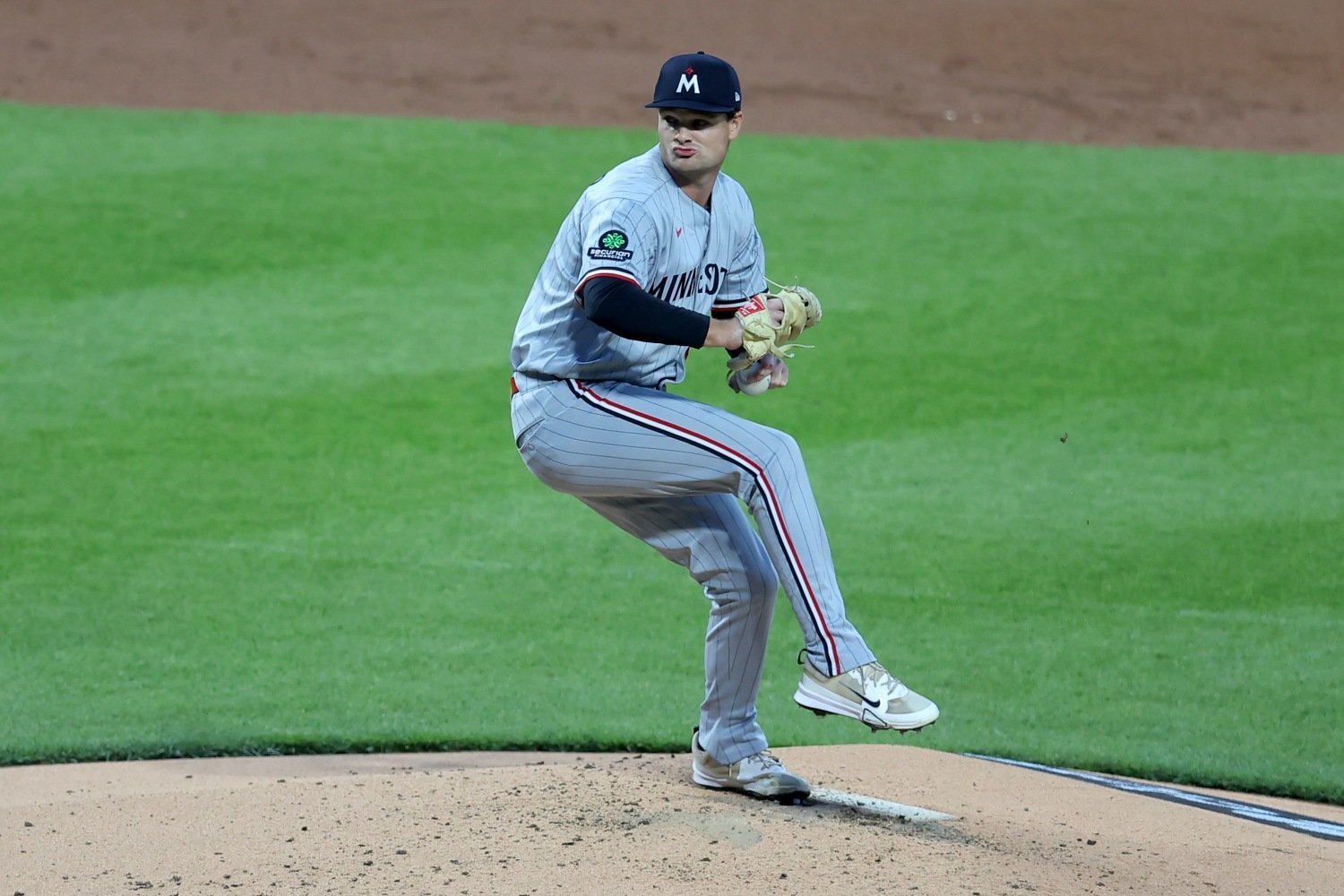 Connor Prielipp’s long road to the majors finally led him to the mound, and his debut showed both why the Twins are excited and where there is still room to grow. The 25-year-old left-hander worked four innings, allowing two runs while striking out six and walking none. He generated 10 swinging strikes and leaned heavily on his best pitch, navigating a dangerous lineup that featured Juan Soto and Francisco Lindor. After giving up a run on two hits in the first inning, Prielipp quickly settled in and retired the next eight hitters he faced. The early nerves were real, but they did not linger. “I’ve been calm my whole life, so it’s really not been a big problem for me,” he said. “But yeah, that first inning, the noise, it’s loud, it’s hard.” For a pitcher with limited professional experience and an extensive injury history, it was an encouraging first step. Beneath the surface, his debut revealed three key truths about his current profile. The Slider Is Already a Weapon Prielipp’s slider looked every bit like a big-league out pitch. He threw it 51% of the time and used it to rack up five of his six strikeouts. Hitters consistently chased it out of the zone, including seven whiffs on the pitch. Overall, it helped him to a 43.4% chase rate and a 35.3% strikeout rate for the entire game. The pitch showed sharp break and late movement, diving below barrels even when opponents were anticipating it. That level of confidence in a secondary pitch is rare, especially in a debut. Prielipp didn't just show the slider. He relied on it, and it carried him through much of the outing. Because he leaned on the pitch so heavily, it was also the one that took the most damage. Mets hitters produced a 62.5% hard-hit rate against his slider, with all four hits coming off it. Still, the expected slugging percentage was 165 points lower than the actual result, suggesting some of that damage may have come down to poor luck rather than poor execution. New Pitches Begin to Take Shape Another notable development was the use of his newer offerings. Prielipp mixed in both a curveball and a sinker, pitches he still considers recent additions to his arsenal. The sinker was introduced last season, while the curveball came out of a January pitching camp. The Twins were intentional about building his innings base before expanding his repertoire, and now those additions are starting to show up in games. “We kind of wanted to get through the [2025] season before trying anything else,” said general manager Jeremy Zoll. “[The curveball is] showing really good promise. It’s showing good early results. That’s all, really encouraging.” Neither pitch was a focal point in this start, but their presence matters. They give Prielipp more ways to attack hitters and could become critical as he faces lineups multiple times. This will be critical for him to stick as a starting pitcher. Fastball Command Remains the Next Step While the slider stole the show, Prielipp’s fastball still needs refinement. He topped out at 97.3 mph, but his command was inconsistent. Several fastballs missed high and out of the zone, limiting his ability to establish it early in counts. Some of that might have been nerves from making his debut, so it is something to monitor. That said, the pitch does have some natural synergy with his slider. Elevated fastballs can change a hitter’s eye level before the breaking ball drops out of the zone. Still, to stick in a starting role, Prielipp will likely need to rely on it more and locate it more effectively. His fastball was the lone pitch with a positive run value from his debut, but it had a 1.456 xSLG in limited use. With his current pitch mix, improving fastball command could be the key to unlocking another level of consistency. A Debut That Means More Prielipp’s journey to this point has not been straightforward. A 2022 draft pick out of Alabama, he has already undergone two Tommy John surgeries and entered pro ball with limited innings. That made his debut as much about perseverance as performance. “Whenever someone goes through as much adversity as someone like Connor did,” said Zoll, “going through two rehabs without pitching in meaningful games in pro ball yet, you’re just always rooting for someone like that to get a chance.” Now healthy, Prielipp is beginning to show why the Twins remained patient. The organization’s 2025 Minor League Pitcher of the Year is still something of a blank canvas, but the early returns are promising. Four innings is only a snapshot, but it was enough to highlight a legitimate out pitch, a developing arsenal, and a fastball that could determine his ceiling. For a first impression, that's more than enough to build on. What stood out about Prielipp’s debut? Leave a comment and start the discussion. View the full article
 -
 Payton Tolle is a left-handed pitcher and the top prospect for the Boston Red Sox. He has been called up from Triple-A Worcester to join the Red Sox starting rotation. Tolle's character would be a much-needed remedy inside the clubhouse for this team that needs an identity. View the full article
 -
 Cubs Transactions Chicago Cubs activated LHP Matthew Boyd from the 15-day injured list. Chicago Cubs optioned LHP Luke Little to Iowa Cubs. Pedro Ramírez Drives In Eight As Iowa Outlasts Louisville Pedro Ramírez drove in eight runs on two home runs, including a grand slam, as the Iowa Cubs outlasted the Louisville Bats, 15-9, at Principal Park. The Cubs scored in six different innings, punctuated by a seven-run outburst in the bottom of the eighth. Ramírez finished 3-for-5 with two home runs, a two-run single in the seventh inning, and eight RBI. Leadoff hitter BJ Murray went 3-for-4 with two doubles, a walk, three runs scored, and three RBI. Brett Bateman collected three hits, a double, a walk, and scored four runs. Iowa trailed 3-2 entering the fifth inning before sending seven batters to the plate. Eric Yang's sacrifice fly plated Owen Miller, Murray doubled home Bateman, and Ramírez connected on a two-run homer to center. Louisville rallied to take a 9-8 lead into the bottom of the eighth, where the Cubs answered with seven runs. Yang and Murray delivered RBI singles, Jonathon Long reached on a fielder's choice that scored Yang, and Ramírez capped the inning with a grand slam to center. Starter Charlie Barnes worked five innings, allowing five hits, three earned runs, and two walks while striking out five. He surrendered two home runs. Collin Snider picked up the win with an inning of relief. Ryan Jensen closed out a scoreless ninth with one strikeout. Iowa finished with 14 hits, three home runs, and stranded three runners. Player AB R H RBI BB K BJ Murray 4 3 3 3 1 0 Jonathon Long 4 1 0 1 1 1 Pedro Ramírez 5 2 3 8 0 1 Kevin Alcántara 5 0 0 0 0 2 Dylan Carlson 5 1 1 1 0 1 Chas McCormick 5 1 1 0 0 2 Owen Miller 4 2 2 0 0 0 Eric Yang 3 1 1 2 0 0 Brett Bateman 3 4 3 0 1 0 Player IP H R ER BB K HR Charlie Barnes 5 5 3 3 2 5 2 Tyler Santana 2 7 5 5 2 1 2 Collin Snider (W) 1 2 1 1 1 0 0 Ryan Jensen 1 0 0 0 0 1 0 Smokies' Late Lead Slips Away Against Chattanooga A 4-3 Knoxville lead disappeared in the top of the eighth inning as the Smokies fell to the Chattanooga Lookouts, 8-4. Knoxville managed six hits, struck out 13 times, and stranded five runners. Andy Garriola accounted for two of Knoxville's four RBI. Ed Howard went 1-for-4 with a double. Jordan Nwogu reached base three times on a hit and two walks and scored once. Carter Trice and Owen Ayers each collected a hit, with Trice adding a stolen base. The Smokies plated two runs in the first inning. Trice singled, Nwogu walked, and Ayers lined a single to center that scored Trice. After Ariel Armas drew a bases-loaded walk, Devin Ortiz lifted a sacrifice fly to right to bring Nwogu home. Chattanooga pulled even in the third, and Knoxville retook the lead in the fifth inning when Haydn McGeary singled, Howard followed with a double, and after a walk loaded the bases, Garriola lined a two-run single to center for a 4-3 edge. The lead held until the eighth, when Chattanooga sent ten batters to the plate and scored five runs to flip the game. Starter Yenrri Rojas turned in the strongest outing of the night, throwing four innings while allowing five hits, three earned runs, and two walks with six strikeouts and one home run. Luis Rujano followed with two scoreless innings and three strikeouts. Marino Santy tossed 1 2/3 scoreless frames with three strikeouts. Player AB R H RBI BB K Carter Trice 4 1 1 0 0 1 Jordan Nwogu 2 1 1 0 2 0 Owen Ayers 4 0 1 1 0 3 Andy Garriola 4 0 1 2 0 2 Ariel Armas 2 0 0 0 2 1 Devin Ortiz 2 0 0 1 1 0 Karson Simas 4 0 0 0 0 2 Haydn McGeary 4 1 1 0 0 2 Ed Howard 4 1 1 0 0 2 Player IP H R ER BB K HR Yenrri Rojas 4 5 3 3 2 6 1 Luis Rujano 2 1 0 0 1 3 0 Luis Martinez-Gomez (L) 1 1/3 3 5 5 1 1 0 Marino Santy 1 2/3 2 0 0 0 3 0 Cole Mathis Doubles Twice In South Bend's Loss To Dayton The South Bend Cubs dropped an 8-5 decision to the Dayton Dragons at Day Air Ballpark, unable to recover after an early deficit. South Bend finished with six hits and left seven runners on base. Cole Mathis paced the offense, going 2-for-3 with two doubles, two walks, two runs scored, one RBI, and a stolen base. Leadoff hitter Kane Kepley singled, walked, scored twice, and swiped two bases. Kade Snell drove in two runs with a third-inning single, and Reginald Preciado added an RBI single later in the game. Christian Olivo singled home a run in the seventh. South Bend's only multi-run frame came in the third inning. Kepley reached, Mathis doubled, and Snell lined a two-run single to center. The Cubs added solo runs in the seventh on Olivo's RBI single, in the eighth on Preciado's single that scored Mathis, and in the ninth on Mathis's double that plated Kepley. Starter Nazier Mulé took the loss after one inning, allowing one hit, two runs (one earned), and two walks while striking out one. Grayson Moore tossed two scoreless innings with two strikeouts. Kenyi Perez threw 1 2/3 scoreless frames with three strikeouts. Brayden Spears yielded one earned run across two innings with three walks. Kenten Egbert was hit hardest, surrendering three earned runs in 1 1/3 innings. South Bend stole three bases and walked four times in the loss. Player AB R H RBI BB K Kane Kepley 4 2 1 0 1 0 Cole Mathis 3 2 2 1 2 0 Kade Snell 5 0 1 2 0 1 Matt Halbach 3 0 0 0 1 0 Cameron Sisneros 4 0 0 0 0 1 Reginald Preciado 4 0 1 1 0 3 Drew Bowser 3 1 0 0 0 2 Dilan Granadillo 3 0 0 0 0 1 Christian Olivo 4 0 1 1 0 1 Player IP H R ER BB K HR Nazier Mulé (L) 1 1 2 1 2 1 0 Kenten Egbert 1 1/3 5 5 3 2 3 0 Brayden Spears 2 2 1 1 3 0 0 Kenyi Perez 1 2/3 2 0 0 1 3 0 Grayson Moore 2 0 0 0 2 2 0 Late Rally Falls Short As Pelicans Drop Fayetteville Game The Myrtle Beach Pelicans fell to the Fayetteville Woodpeckers, 12-8, at Segra Stadium despite pushing runs across in the third, sixth, eighth, and ninth innings. Myrtle Beach collected nine hits, drew eight walks, and stranded nine runners. Alexey Lumpuy went 2-for-5 with two runs scored and an RBI. Josiah Hartshorn added two hits and scored twice. Logan Poteet went 2-for-4 with a walk and two runs scored. Leadoff man Ty Southisene tripled, scored, and drove in a run. Alexis Hernandez tripled, walked twice, stole a base, and recorded an RBI. Myrtle Beach's biggest frame came in the sixth inning. Southisene tripled to lead off, Lumpuy singled him home, Hartshorn singled, Jose Escobar singled to score Lumpuy, and Ludwing Espinoza grounded out to plate Hartshorn. The Pelicans added two in the eighth on an Eli Lovich error, a Hartshorn run scored, and Hernandez's sacrifice fly, and two more in the ninth on bases-loaded walks drawn by Derniche Valdez and Lovich. Starter Noah Edders took the loss after three innings, giving up seven hits, seven runs (six earned), and two home runs with one strikeout. Braylon Myers struck out three in two scoreless innings. Aiden Moffett worked two scoreless frames. Daniel Avitia gave up five earned runs in one inning of relief. Player AB R H RBI BB K Ty Southisene 4 1 1 1 0 0 Alexey Lumpuy 5 2 2 1 0 1 Josiah Hartshorn 5 2 2 0 0 1 Logan Poteet 4 2 2 0 1 2 Jose Escobar 3 0 1 1 2 0 Ludwing Espinoza 2 0 0 1 1 0 Derniche Valdez 1 0 0 1 1 0 Eli Lovich 4 0 0 2 1 1 Alexis Hernandez 2 1 1 1 2 0 Derik Alcantara 4 0 0 0 0 2 Player IP H R ER BB K HR Noah Edders (L) 3 7 7 6 0 1 2 Braylon Myers 2 1 0 0 0 3 0 Daniel Avitia 1 7 5 5 0 1 0 Aiden Moffett 2 0 0 0 1 1 0 Cubs Top-20 Prospect Performance Moises Ballesteros: DNP Jaxon Wiggins: DNP Jefferson Rojas: DNP Kevin Alcantara: 0-for-5, 2 K Jonathon Long: 0-for-4, R, RBI, BB, K Ethan Conrad: DNP Pedro Ramirez: 3-for-5, 2 HR, 2 R, 8 RBI, K Kane Kepley: 1-for-4, 2 R, BB, 2 SB Josiah Hartshorn: 2-for-5, 2 R, K James Triantos: DNP Brandon Birdsell: DNP Cole Mathis: 2-for-3, 2 2B, 2 R, RBI, 2 BB, SB Angel Cepeda: DNP Kaleb Wing: DNP Will Sanders: DNP Juan Cabada: DNP Jostin Florentino: DNP Dominick Reid: DNP Ty Southisene: 1-for-4, 3B, R, RBI Erian Rodriguez: DNP View the full article
 -
Royals Temperature Check: Bright Spots in a Rough Start
DiamondCentric posted an article in Royals Keep
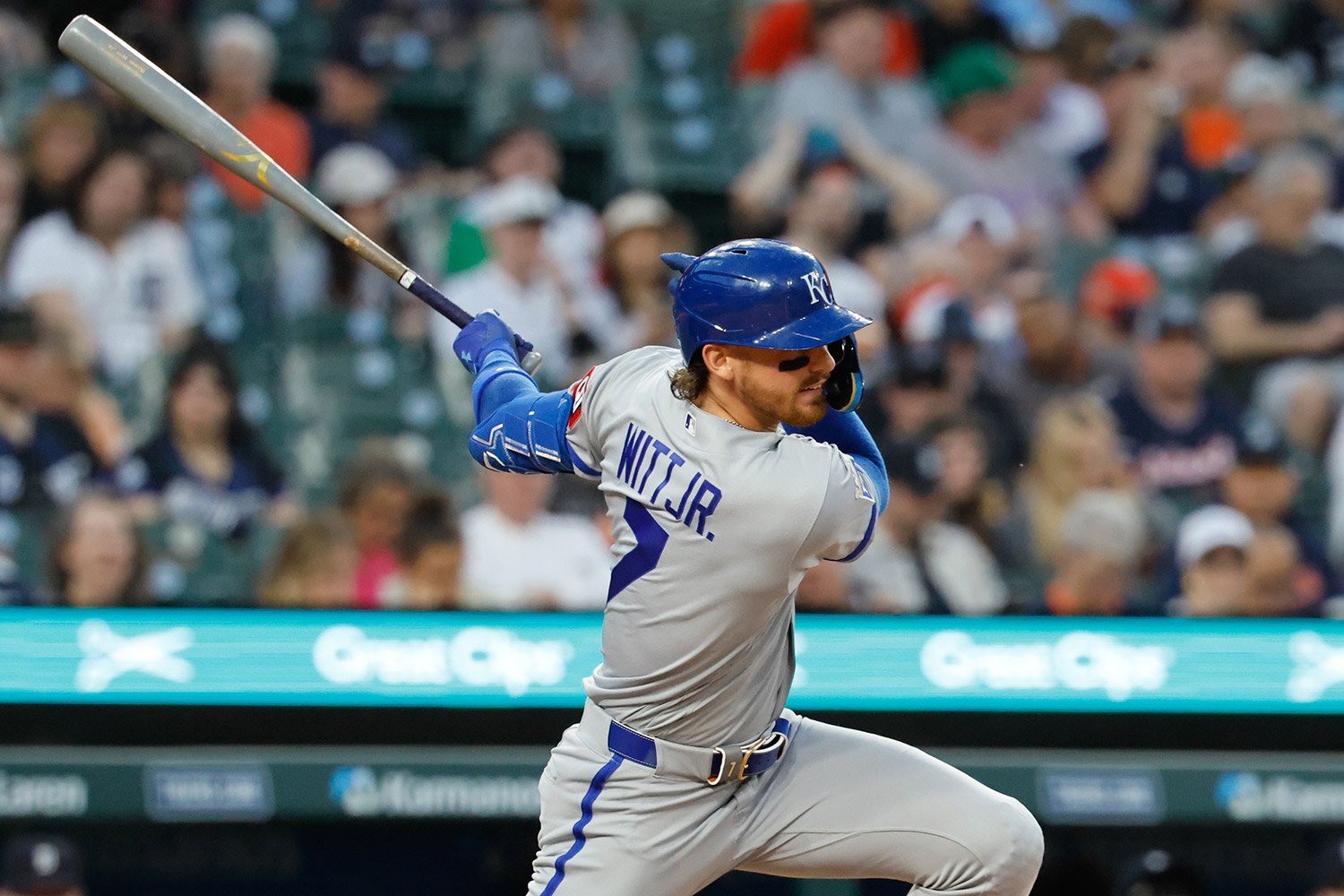 Going into Tuesday’s game against the Orioles, the Royals were on an eight-game losing streak and held the worst record in baseball at 7-16. While they were able to snap the skid, they returned to the loss column in Wednesday’s series finale against Baltimore. With the Royals now sitting at 8–17 and last in the American League, which players are helping push the team forward, and which are still searching for answers? Who's Hot? 🔥 Bobby Witt Jr. Witt, unsurprisingly, leads the Royals hitters in bWAR so far with 1.3. Despite the team’s struggles at the plate, Witt had a solid week with a slash line of .304/.370/.391. You could argue that Witt is still waiting to hit his stride in 2026. His marks for batting average, slugging percentage, and wOBA are significantly under their expected values, showing signs that he has been “unlucky” to start the season. He leads the team in walks, OBP, and steals, but scored the fewest runs among all Royals qualified hitters. Vinnie Pasquantino and Salvador Perez have so far failed to drive in Witt when he is able to get on base, limiting his impact on the basepaths. Once they each can get out of their early-season slumps, Witt will be on base and ready to score. Seth Lugo Lugo leads the team in bWAR overall at 1.4. On Monday, he delivered a dominant outing, seven scoreless innings on one hit and four walks. Unfortunately, the offense provided minimal support, and the Royals ultimately lost to the Orioles in 12 innings. Lugo once again has a deep pitching arsenal with nine different pitches thrown this season (and he hasn’t yet thrown his splitter). His curveball and slider have particularly stood out with Stuff+ of 104 and 103, respectively, according to TJStats. In 2026, Lugo is preventing hitters from pulling the ball in the air with a rate of only 11.5%. In addition to his lowered hard-hit rate compared to last season. Together, these trends point to strong run prevention and limited power allowed. Lugo is slated to make his next start on Sunday against the Angels, where he will look to continue his excellent early-season form. Carter Jensen Jensen had a solid week at the plate with a slash line of .467/.619/.933. Going into Wednesday’s game, Jensen led all qualified Royals hitters with a 133 wRC+, and he added more production, going 2 for 3 with another home run. Jensen is continuing to build on the level of production he displayed in his last-season call-up in 2025. While there is still room to improve his game, namely his contact and strikeout rates, he is providing a spark in the Royals lineup that is otherwise missing. With Perez continuing to struggle offensively, Jensen might find more time behind the plate rather than just hitting in the DH spot. Who's Not? 🧊 Alex Lange Lange had a couple of tough outings this past week, allowing the winning run to score in his first two appearances. While he has not been brought on to protect leads, he was called upon twice in tied games and was unable to keep the Royals in a position to win. On Friday, he was tasked with facing the middle of the Yankees’ order in a tied game. While he was able to retire the first two hitters of the inning, he allowed a single and a home run before getting out of the inning, putting the Royals down two runs going into the 8th inning. On Monday, he entered the 11th inning in a tied game with the automatic runner on second. Lange struggled to get the Orioles hitters out, allowing two singles and a walk before giving up a home run, which effectively ended the game. While it is difficult to enter a game in those circumstances, if Lange had limited the damage to only one run, he could have preserved the chance for the Royals to make a comeback. Lange has been particularly susceptible to hard contact this season. Opponents are averaging 93.8 mph exit velocity against him, with a 20.8% barrel rate (1st percentile) and a 58.3% hard-hit rate (2nd percentile). Lange excels at striking batters out and inducing whiffs; however, when batters have been making contact against Lange, they often do damage. Lange rebounded with an improved performance against the Orioles on Wednesday with a clean inning and no baserunners allowed. Noah Cameron Cameron struggled on Saturday, allowing seven runs (five earned) over four innings of work. He allowed seven hits, three of which were home runs, two walks, and posted a 59% hard-hit rate. Cameron was able to get out of the first two innings unscathed before the floodgates opened up in the third inning. He has now suffered back-to-back outings allowing five earned runs after only allowing one earned run in each of his first two starts of the season. A concerning trend is now emerging of Cameron being susceptible to hard hits and many fly balls. In 2025, Cameron excelled at inducing soft contact ground balls. In 2026, while his overall contact rate is similar, the quality of contact has worsened significantly, with more barrels and fewer ground balls. If Cameron wants to repeat his success from his rookie season, he will need to limit the hard contact, and he will get a chance to bounce back at his next start on Friday against the Angels. Isaac Collins Collins continues to struggle offensively, going 2 for 18 in the past week. Collins was given the day on Wednesday off in favor of Lane Thomas despite right-handed Chris Bassitt starting for Baltimore. He suffered a right knee contusion that he had sustained the previous week in Detroit. Even though he has played four games since the injury, this could have been a scheduled day off for maintenance. There has been much reported on Collins’s tough start in Kansas City. He has displayed uneven offensive metrics and a defensive regression in left field. There is still time for Collins to bounce back, but with many of the Royals' hitters also struggling for consistency, a resurgence from Collins could go a long way in helping the Royals turn the corner. View the full article
 -
 After a tough start to 2026, Dasan Hill suddenly has more questions than answers. Is this just early-season rust, or are there real warning signs worth paying attention to? View the full article
