


DiamondCentric
-
Posts
2,631 -
Joined
-
Last visited
Never
Content Type
Profiles
Forums
Events
News
Tutorials & Help
Major League Baseball Videos
Guides & Resources
Store
Downloads
Gallery
Everything posted by DiamondCentric
-

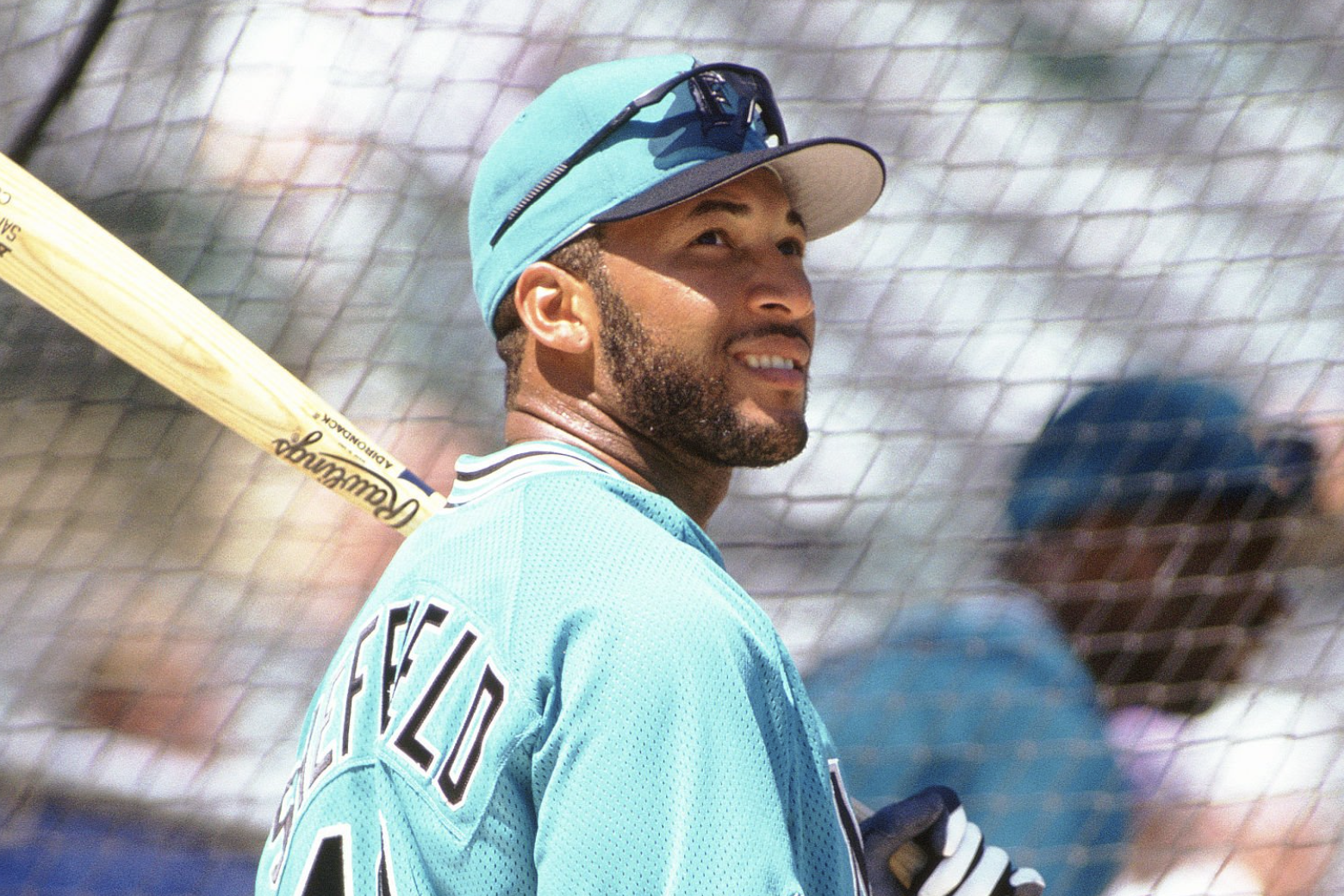 For the Florida Marlins in 1996, Gary Sheffield set a single-season home run record that would last for more than two decades. One of his more heroic blasts from that memorable season came on this day 30 years ago. Down by four runs through five and a half innings and by three at the seventh-inning stretch, Sheffield’s three-run home run in the bottom of the seventh capped a four-run inning as the Marlins rallied past the Los Angeles Dodgers to complete the three-game series sweep, 5-4. Through four innings at Joe Robbie Stadium on April 21, 1996, things were scoreless. Todd Hollandsworth, the eventual National League Rookie of the Year and later a 2003 World Series champion with the Marlins, singled in the first run in the top of the fifth off Florida ace Kevin Brown. An inning later, Eric Karros unloaded off Brown with a three-run homer to turn a one-run lead for Los Angeles into a 4-0 lead. In the bottom of the sixth, the Marlins were able to get on the board, thanks to three straight RBI singles from Sheffield, Jeff Conine and Terry Pendleton. In the bottom of the seventh, Florida got its first cracks at the Los Angeles bullpen. After six strong innings from starter Pedro Astacio, manager Tommy Lasorda turned to Antonio Osuna. Charles Johnson was able to single off Osuna to start the Florida seventh, but the right-hander responded by getting Kurt Abbott to fly out before striking out Andre Dawson. Quilvio Veras followed with a single to bring the tying run to the plate, and just like that, Osuna’s night was over. Lefty Scott Radinsky was tasked with facing Joe Orsulak, and for the most part, he did his job, getting Orsulak to roll one to first. Radinsky ran over to cover, but Karros’ throw was off target, allowing a run to score. As Sheffield came to the plate, Lasorda went back to the bullpen and righty Darren Hall. Hall gave up five runs in the eighth in the series opener. Against Sheffield, he fared no better. On a 2-1 pitch, Sheffield was able to line one over the wall in center field for the go-ahead three-run home run. What had been a 4-0 deficit just an inning prior had become a 5-4 Marlins lead. David Weathers and Yorkis Pérez combined to strand a runner in scoring position in the eighth. Pérez and Terry Mathews combined to retire the Dodgers in order in the ninth. Although the contest was scoreless through four innings, it did have some fireworks early on. After Astacio hit Greg Colbrunn in the helmet with a pitch in the second, Brown threw behind the Dodgers pitcher with two outs in the top of the third, causing benches to clear. No ejections were made. The victory served as the second comeback win of the series and completed the three-game sweep for the Marlins. The Dodgers outhit Florida 10-6, but two of the Marlins’ hits, including the biggest one of the night, belonged to Sheffield. It came on this day three decades ago. View the full article
 -
Max Meyer's expanded arsenal leads to best start of 2026
DiamondCentric posted an article in Fish On First
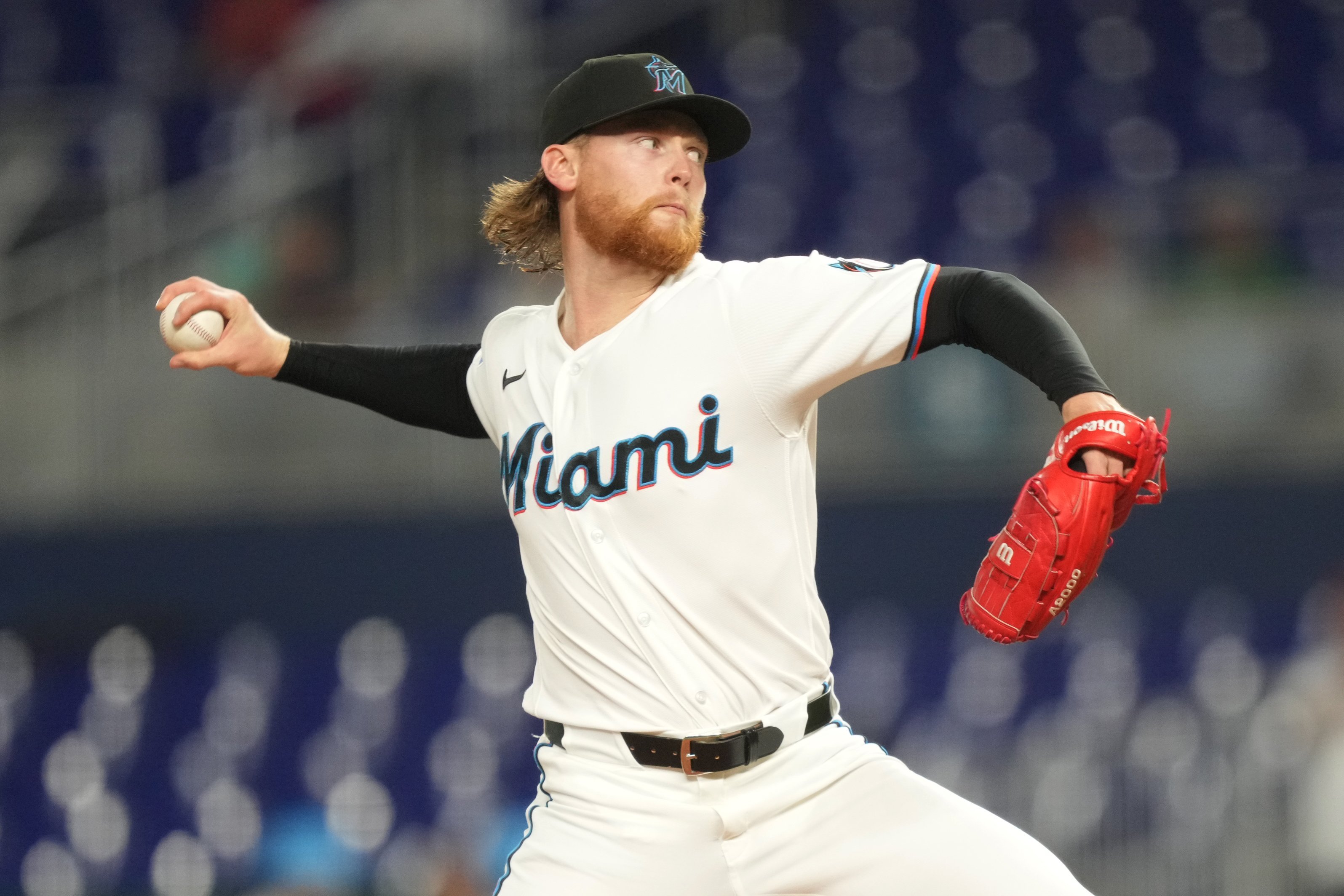 MIAMI, FL — Max Meyer has been perhaps the most consistent Miami Marlins starting pitcher this season. On Monday night against a St. Louis Cardinals team that is off to a hot start, he turned in his best start so far in a 5-3 win for the Marlins. Meyer struck out a season-high eight in 5 ⅓ innings of work. He allowed two runs on three hits and walked two. "It was really his whole mix," said Marlins manager Clayton McCullough. "Certainly the slider goes into games, and even though the sweeper, the velocity at which he's able to throw those pitches kind of gets different movement on it. Some get a harder, more straight down; the sweeper has a little more horizontal. I thought his changeup was really good, especially in the middle innings, to be able to go to that pitch as well, even right-on-right to give him a different look. He used his fastball well today." In addition to the strikeouts, Meyer also fielded three grounders, singlehandedly recording 11 outs on a night when he faced 23 total batters. His 63.6% ground ball rate was another season-high and the fifth-highest of his career. Meyer is most known for his slider, but his sweeper had the higher usage against St. Louis (32%) and was responsible for eight of his 17 whiffs. It's a weapon he has been developing since 2025. "One of my biggest pitches now. Grades out the best, I'm pretty sure," Meyer said regarding the sweeper. "I'm glad I can locate it with two strikes and get strikes with it, go back door with it, throw it in 3-2 counts and 0-0 counts. I'm just comfortable with the grip and the movement on it, and it's going to be a big pitch for me the whole season." Now through five starts, Meyer has a 3.96 ERA, 3.49 FIP, 10.08 K/9 and 3.96 BB/9. Prior to this season, his career averages were a 5.29 ERA, 5.20 FIP, 8.46 K/9 and 2.89 BB/9. "I've made some good starts every time, giving the team a chance to win," Meyer said regarding his season as a whole. "Every time I go out there, obviously, I think it's just a couple things every game that make me mad personally, but I can never be mad when I leave the game with the team in a good spot, so that always keeps me going in the next day.." Agustín Ramírez's defensive woes continued with Meyer on the mound. In the top of the fourth inning, after Jordan Walker extended his hit streak to 15 games, he stole second base uncontested because Ramírez dropped the ball on the transfer. Walker then advanced to third on a blockable wild pitch. That allowed Masyn Winn to hit a sac fly and give the Cardinals a 1-0 lead. The second run charged to Meyer was also aided by Ramírez. In the top of the sixth inning, Calvin Faucher inherited a runner on first base, who moved to third following a Masyn Winn single. Once again, a ball deflected off of Ramírez's glove for what was ruled a wild pitch, allowing the runner to score and tie the game. Miami's offense didn't get things going until the bottom of the fourth when unconventional cleanup hitter Xavier Edwards hit his fifth double of the season. Although Ramírez may have struggled behind the plate, he did make it up by hitting his second home run of the season off of Cardinals starter Michael McGreevy. The ball left the bat at 111.8 mph and went 411 feet to left-center field. The launch angle on Ramirez's home run was 17 degrees, the lowest for any MLB home run this season. In the bottom of the sixth, the Marlins retook the lead for good. Otto Lopez had an RBI double and Liam Hicks collected an RBI single. Hicks provided some insurance for Miami with another RBI single in the eighth. Not only is he tied for the MLB lead with 21 RBI this season, but his 6.3% strikeout rate is the second-lowest mark behind former Marlin Luis Arraez. The Marlins are well-represented in the National League batting title race. Edwards (.341 BA), Hicks (.338 BA) and Lopez (.337 BA) trail only Los Angeles Dodgers outfielder Andy Pages (.367 BA midway through Monday's Dodgers game). Pete Fairbanks, who notched his fourth save of the season, allowed one run, a sac fly from Ramón Urías. He struck out Thomas Saggese and José Fermín to end the game. Unable to win any of their previous five series, the Marlins have an opportunity to end that streak on Tuesday night with Chris Paddack on the mound at 6:40 pm. View the full article
 -
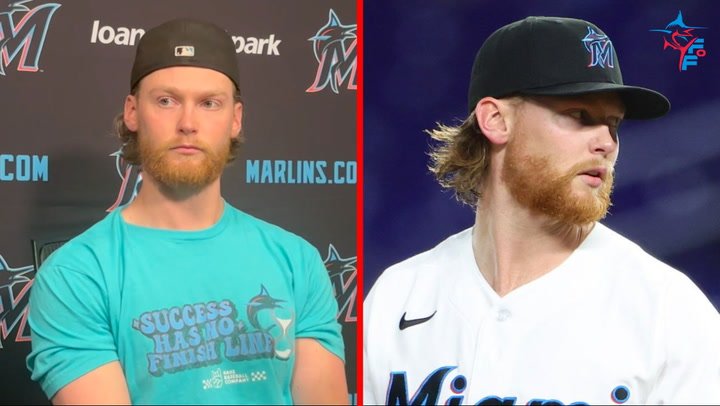 Following his strong start on Monday, Marlins right-hander Max Meyer speaks with the media about his comfort level with his sweeper and how he'd evaluate his 2026 season thus far. View the full article
 -
The Cubs' Zombie Closer and His Immortal Fastball
DiamondCentric posted an article in North Side Baseball
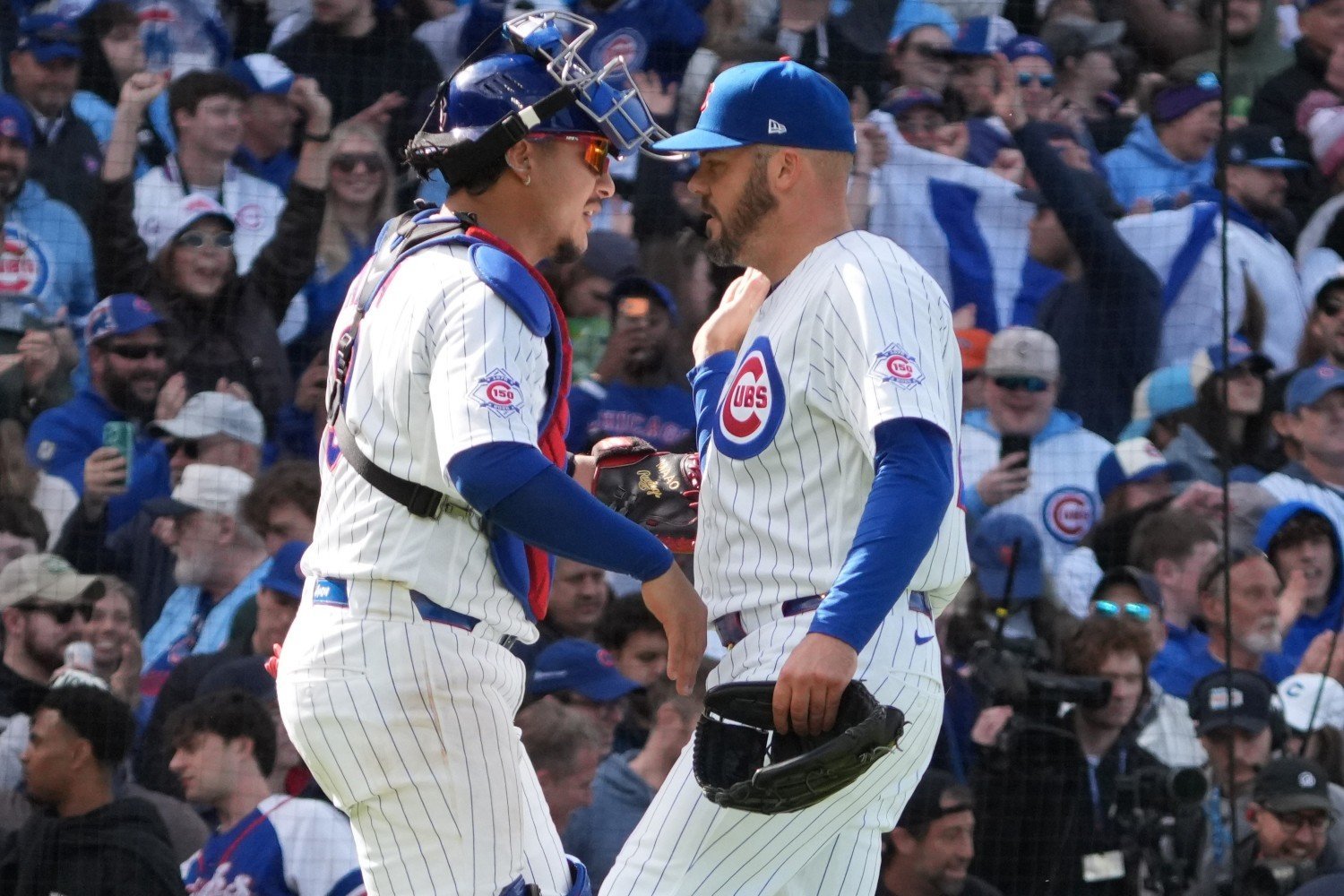 The Chicago Cubs might not have their closer, Daniel Palencia, and an army of useful relievers at the moment, but don’t fret: Caleb Thielbar is here. Nobody in the Cubs’ bullpen can replace Palencia’s sheer power and upside, but Thielbar has certainly given fans some peace of mind with his performances out of the bullpen in 2025 and 2026. The Ageless Wonder Signed to a one-year deal on Dec. 31, 2024, after a down year with the Minnesota Twins, the superannuated left-hander is reminding us all that age is just a number. Ever since donning the Cubs uniform, he's done nothing but succeed. Last year, the southpaw posted a 2.64 ERA in 58 innings, with a 3.00 FIP and 1.1 fWAR, his highest output since putting up 1.6 fWAR in 2022. This year, it's been more of the same, from a pitcher whom baseball has tried to get rid of multiple times, and who turned 39 in January. In eight frames this season, Thielbar has a solid 2.25 ERA and a 3.50 FIP with 11 strikeouts. Since the start of the 2025 campaign, the lefty’s 2.59 ERA ranks 29th among 126 relievers with a minimum of 60 innings pitched. This weekend, Thielbar notched a save on Saturday and a win on Sunday against the Mets. Evidently, the manager completely trusts him in late-inning situations, and that’s the whole point with high-leverage relievers. Skippers want arms they can trust with games on the line, and he is very much one of them. Thielbar came to Chicago with just four career saves, but he had one last year, has one this year, and could easily collect another 10 or more before Palencia is back. Since landing in Chicago, Thielbar has taken his game up a notch. Before his 5.32 ERA season in 2024, the number ranged between 3.23 and 3.49 from 2021 to 2023. Now, his ERA starts with a 2, and he's throwing harder than ever, with a 93.6 mph average fastball velocity. In fact, he throws about 4 MPH harder now than he did when he first broke into the majors in his 20s, well over a decade ago. An Elite Fastball Leads The Way The pitch earns a very solid 23.4%whiff rate, and has been Thielbar’s bread and butter. It's averaging a whopping 20.2 inches of induced vertical break (IVB), the fifth-best mark among MLB pitchers this year, and yielding an elite .160 xwOBA. It’s no wonder he's increased its usage to 52.4% this year, because hitters just can’t touch it. While it’s true that Thielbar uses his four-seamer more often than any other pitch, he also has whiff rates of at least 25% with each of his additional offerings: curveball (25%), sweeper (28.6%), and slider (33.3%). Remember, the guy is 39 years old—or, forget it. Maybe that's the healthier approach. If a pitcher 10 years his junior were doing what Thielbar has done for most of the last half-decade, with this kind of stuff and the trend arrows pointing in the right direction, you'd have no compunction about letting him take on a relief ace role. The Cubs have to be ecstatic with his recent performance, as they have an elite reliever on a salary that better fits a spare part. Thielbar is proof that players can successfully extend their careers with discipline, work ethic, and an understanding of the science of pitching. It’s fair to wonder where the Cubs’ bullpen, which ranks 21st in baseball with a 0.0 fWAR, would be without Thielbar. He offers solutions to his manager, who knows he is death to lefty hitters but can also get right-handers out if needed. Over the next few weeks, he's likely to be the team's go-to guy, though he really is 39, so the team will use him a bit more judiciously than they might use a younger pitcher with the same stuff. After all, in baseball, no one's actually immortal. View the full article
 -
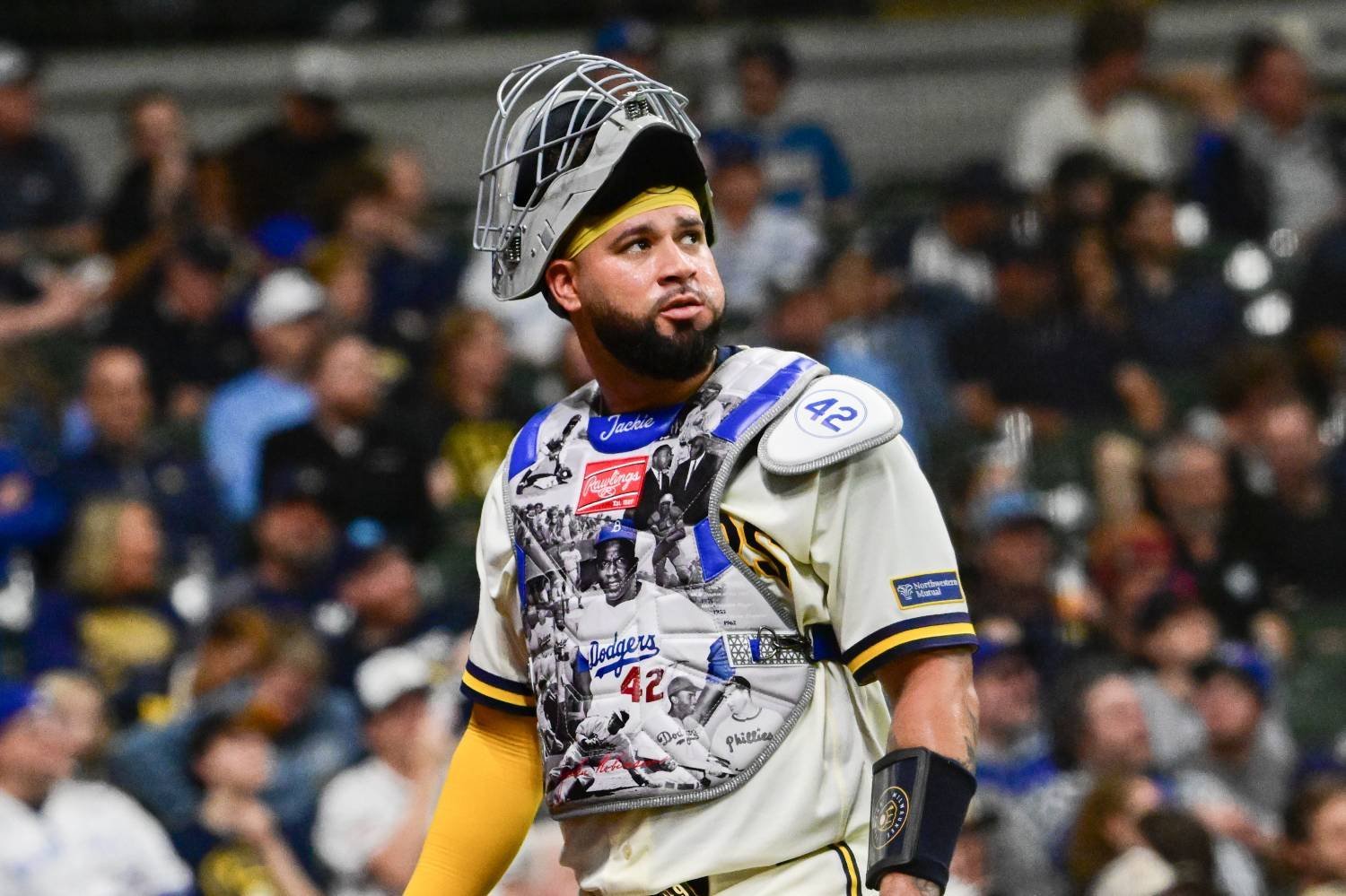 When Gary Sanchez made his fifth start behind the plate Sunday for the Milwaukee Brewers, it was another opportunity to take advantage of a new strength to his game. Making an automated ball-strike challenge. But the game against the Miami Marlins was the second game with Sanchez did not challenge a pitch from his catching position. Too bad. Sanchez is pretty good at it. Sanchez also didn't challenge an umpire's ball call for one of the Crew's pitchers in his first start at catcher this year. In between, the slugger who has never been known for his defense has gone 4-1 in challenges. That could be because Sanchez has always had a pretty good eye as a hitter. He entered this season with a 9.1% walk rate in his first 11 MLB seasons, jumping up to a spectacular 23.2% this year. The MLB average is 8.4%. Sanchez hasn't been as successful as a challenger when he is hitting, going 5-5. His 10 challenges as a hitter are the most in MLB entering Monday's action. But now he gets to put that skill to use as a catcher. There are two metrics that show that Sanchez's ability to challenge has been right on, while also saying that he hasn't challenged enough. They both have to deal with what Statcast calls reasonable challenges. A reasonable challenge is defined as an incorrect call when the pitch is within 3 inches of the edge of the strike zone and an overturn would gain 0.3 runs and the pitch carries an expected challenge rate of at least 20%. The first is rating the challenges by a catcher. As you will see, all five have been classified as reasonable. Sanchez has a 100% reasonable challenge rate. The only miss he had as a catcher was a curveball that missed by half an inch. The second is the number of reasonable opportunities taken to ask for a challenge. That is where Sanchez has been a bit shy, taking only 19% of the reasonable chances. Some of that could be a credit to the Brewers' pitchers always being on the edges of the strike zone. The other part might be when Sanchez has been told by the coaching staff and the analytics team when he should challenge. Maybe Sanchez develops more confidence in challenging as the season goes along and more data is there to show how good he is at this. Among catchers, Edgar Quero of the Chicago White has the most challenges at 30 and Salvador Perez of the Kansas City Royals the most successful challenges at 16. Sanchez's running mate, William Contreras, ranks second in both categories at 26 challenges and 15 overturns. To be fair to the umpires in five calls Sanchez has challenged as a catcher, they were all borderline calls and it is easy to see why they might have called a ball. The most egregious call, which wasn't that egregious, was half a ball inside the bottom of the zone. Here is a look at Sanchez's five challenges while catching: First: April 4 at Royals (Game 2) Situation: 0-0 count to Carter Jensen, two outs, bottom fourth, nobody on, game tied 2-2. Sanchez failed to catch a 98.2 mph sinker from Brandon Sproat. Challenge result: Successful. Ball clipped the bottom middle of the zone, making the count 0-1. SANCHEZ_ABS_1.mp4 Second: April 4 at Royals (Game 2) Situation: 0-1 count to Vinnie Pasquantino, two outs, bottom eighth, nobody on, Brewers lead 8-2. DL Hall threw an 84.5 mph slider. Challenge result: Successful. Ball caught the low-outside corner of the zone, making the count 0-2. SANCHEZ_ABS_2.mp4 Third: April 8 at Red Sox Situation: 2-1 count to Roman Anthony, no outs, bottom third, runners on first and second, game tied 0-0. Shane Drohan threw a 93.7 mph four-seamer. Challenge result: Successful. Ball hit the lower outside portion of the zone, making the count 2-2. SANCHEZ_ABS_3.mp4 Fourth: April 8 at Red Sox Situation: 2-1 count to Willson Contreras, one out, bottom third, bases loaded, game tied 0-0. Drohan threw a 77.1 mph curveball. Challenge result: Failed. Ball was just off the lower-outside corner, keeping the count 3-1. SANCHEZ_ABS_4.mp4 Fifth: April 15 vs. Blue Jays Situation: 1-0 count to Lenyn Sosa, two outs, bottom seventh, runners on first and second, Blue Jays lead 1-0. Hall threw a 85.4 mph changeup. Challenge result: Successful. Ball clipped the inside corner at the top of the zone, making the count 1-1. SANCHEZ_ABS_5.mp4 All of this shows that when Contreras needs a day off behind the plate, Sanchez provides value as a catcher. None of his challenges have flipped a walk to a strikeout yet, but that is sure to come. All but one of his challenges have helped swing a count to a more favorable situation for whoever is on the mound for the Brewers. As a hitter, Sanchez has been more aggressive than any hitter in the game with 10 challenges. His five successful challenges are in a five-way tie for the most in MLB, while his five unsuccessful challenges are in a two-with tie with Atlanta's Ronald Acuna Jr. for the most. Only one of Sanchez's hitter challenges has flipped a strikeout and extended an at-bat. Acuna ranks second with eight challenges. Taking those same metrics from above regarding reasonable challenges and applying it to Sanchez the hitter, 60% of his challenges have been reasonable, while he has only taken 50% of the reasonable opportunities to tap his helmet. The question really is: Why does Sanchez feel twice as aggressive when hitting than when catching? Perhaps because it is only his plate appearance at stake as opposed to a pitcher's rhythm. But even that momentary delay would give whoever is pitching a quick breather, something generally unavailable in the pitch-clock era. View the full article
 -
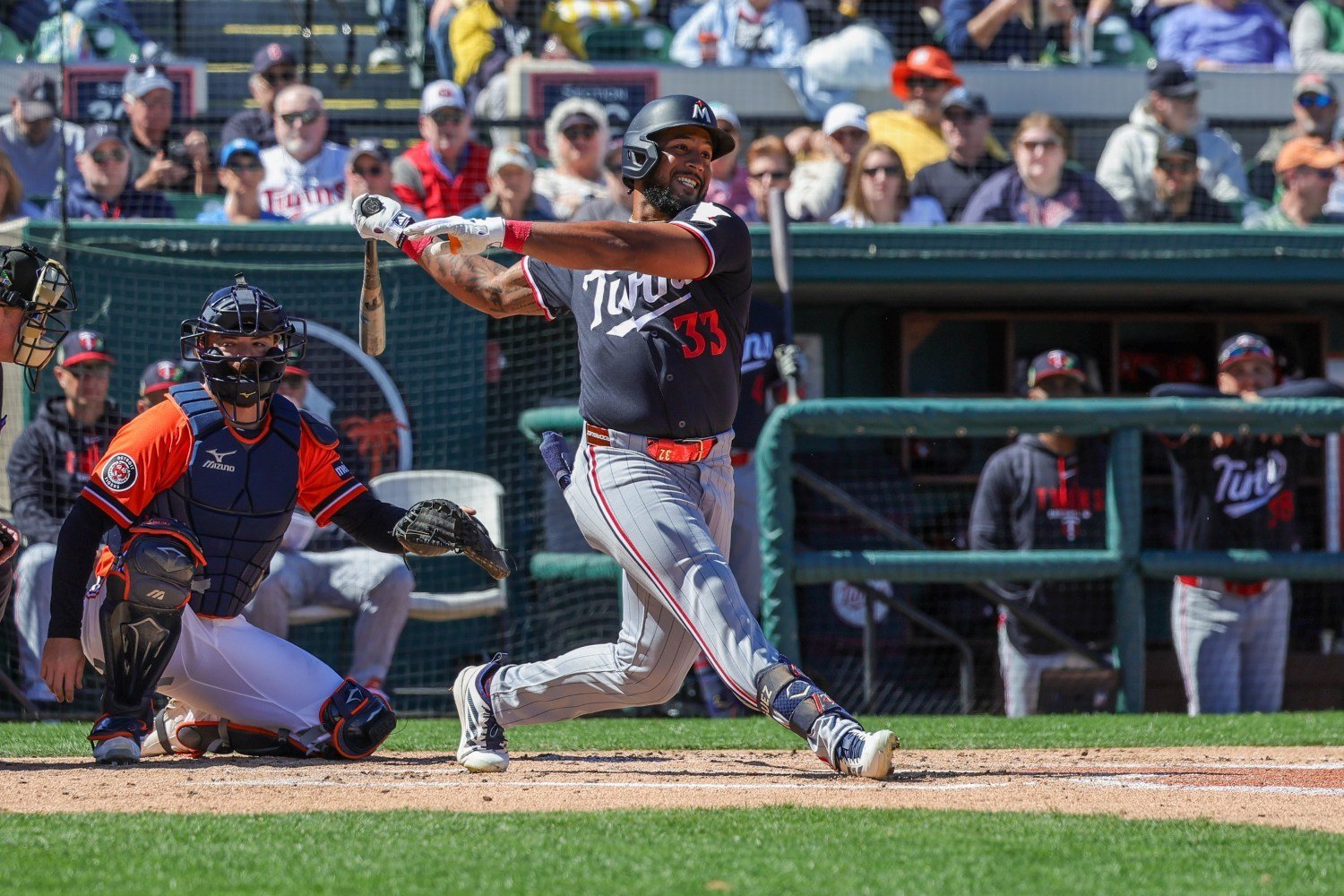 There’s a triumvirate of top-100 hitting prospects playing at CHS Field this spring, on one of Minor League Baseball’s most offensively loaded teams. Naturally, Twins fans are wondering who will debut first. In the early going, Emmanuel Rodriguez has been the most productive and looks the most ready. What’s fueled his incandescent April? A change in approach and setup at the plate. We’ll start with his setup at the plate. Rodríguez has closed his batting stance this year. Slight camera angle differences aside, notice the difference in his setup in the first image (2025) and the second image (2026). What are the potential benefits here? Several, but I want to focus on two; being more closed can help with coverage on the outside part of the plate. Additionally, it can support better hip rotation and directionality with his swing. Both benefits seem to be playing out for Rodríguez through the first month of the season. The outside portion of the plate (down and away) has been a weak spot for Rodríguez, throughout his professional career. Since he hits the ball so dang hard, we’ll use quality of contact as a proxy for his ability to do damage. In 2025, Rodríguez averaged 84.4 mph on batted balls in that quadrant of the zone, good for a .353 slugging percentage. In 2026, it’s 94.3 mph, resulting in a 1.000 slugging percentage at the time of writing. In order to examine the second contention, we need to revisit 2025. Rodríguez had a weird year. He played 52 games at Triple-A, and managed a 134 wRC+ despite only rocking a .166 ISO. For context here, a .140 ISO is around league average. Rodríguez, who will always strike out at an above-average rate, has a power-reliant offensive profile, so sitting at such a low mark was discouraging. He simply wasn’t launching the baseball in 2025. He carried a 51.6% ground-ball rate. Below, you can see his launch angles by zone from last year. Insert sad trombone. The newly closed stance has ameliorated that issue in 2026. While it’s only 16 games, his ground-ball rate is just 31.6%, which has allowed him to tap into a .263 ISO. Peep the launch angles by zone in 2026. That’s looking much more productive. If you want more evidence, he recently hit the hardest ball in St. Paul Saints history (117.1 mph), and he leads all Triple-A players ages 23 and under in EV90, at 110.8 mph. Those numbers probably won’t hold, but they're both markers of top-of-the-scale power. In short, this is the potential 30-home run bat Twins fans have been dreaming of. We should also discuss some changes Rodríguez has made in his approach at the plate. Describing his plate discipline binary pithily as ‘patience or passivity’ has become a staple of our analysis of Rodríguez since he became a notable prospect. Through the first month of the season, he’s made some swing decision tweaks that might finally help put that phrase to bed. In his 52-game 2025 Triple-A sample, Rodríguez swung at 38.1% of pitches. That's as low as anyone goes in MLB. Only Taylor Ward and Juan Soto swung less often in the majors last year. That’s not necessarily a problem, in and of itself, but it’s easy for that lack of aggression to quickly become an impediment. How would this play out disadvantageously? Hypotheticaly, Rodríguez would be waiting for his perfect pitch and quickly get into 0-2 or 1-2 counts. Without elite bat-to-ball skills in his back pocket, he’s in challenging counts too often to be consistently productive. What’s different in 2026? In short, he’s swinging more. His overall swing percentage is up from 37.7% to 44.4%. That's a level at which he's defending the strike zone much more robustly. Rodríguez is swinging at pitches in the zone around 10% more in the early going in 2026. While that has resulted in a higher chase percentage (17.3% in 2025; 23.9% in 2026), this is a trade worth making, because it was such an absurdly low mark to begin with. If Rodríguez carries his current increased chase rate into the majors, it’d still be a top-15 mark in the league. What’s the headline here? Rodríguez is chasing more, but the prize is more of that incredible bat speed directed at hittable pitches earlier in counts. You can see this represented below, with his average exit velocities represented by count. In 2026, we see a greater swath of red earlier in counts. You miss 100% of the swings you don’t take, I guess. How does Rodríguez force himself into the Twins lineup, and at whose expense? That’s a fun discussion, but one for another day. What’s clear is that early in 2026, he’s making the adjustments needed for his specific skillset to thrive in the majors—not just in Triple-A. View the full article
 -
Royals Lose Jonathan India To IL With Shoulder Subluxation
DiamondCentric posted an article in Royals Keep
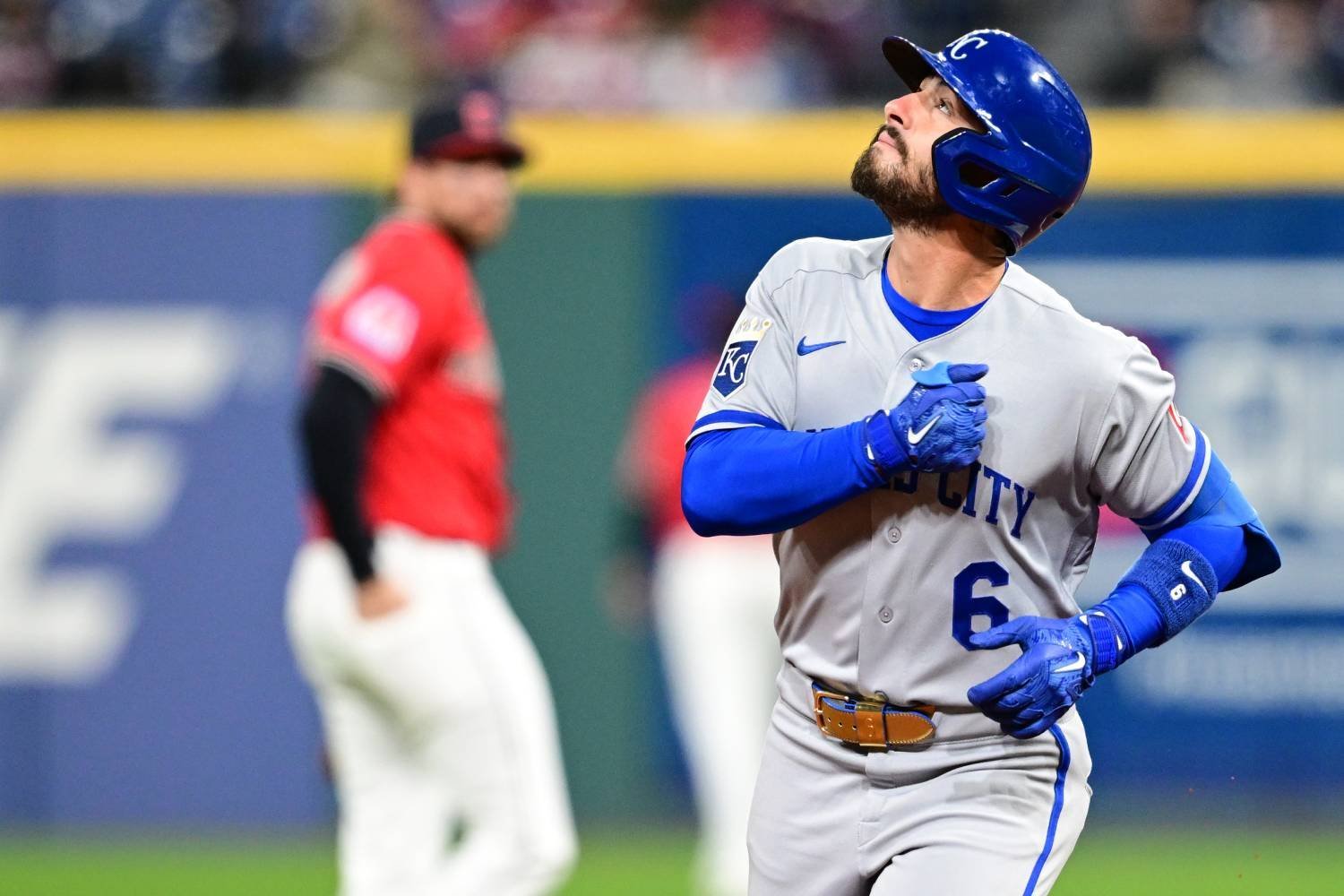 The Kansas City Royals' struggling offense has lost a struggling bat. Second baseman Jonathan India was put on the 10-day injured list Monday due to a left shoulder subluxation. Infielder-outfielder Nick Loftin was called up from Triple-A Omaha. India has not been in the starting lineup since Thursday's 10-9 road loss to the Detroit Tigers. He did come off the bench and had two at-bats Friday vs. the New York Yankees and came in defensively in Saturday's blowout loss. India did not play Sunday. The Royals entered Monday with the third-worst OPS at .635 and are dead last in MLB at 3.23 runs per game. India has helped contribute to that with his .167/.310/.313 slash line with two homers and eight RBIs in 17 of the Royals' 22 games. Loftin made the Opening Day roster, but was optioned to Omaha on April 6. He appeared in four games, two at second base, one at third base and the other in left, going 2-for-9 (.222/.364/.333) with two walks and three runs scored. At Omaha, he had a .303/.385/.455 slash line in nine games. View the full article
 -
 Red Sox Affiliate Overview (April 17 - April 19) Triple-A Worcester Red Sox Series at Nashville Sounds (Milwaukee Brewers): 1-5 Season Record: 11-9 Double-A Portland Sea Dogs Series at Altoona Curve (Pittsburgh Pirates): 4-2 Season Record: 8-6 High-A Greenville Drive Series vs. Bowling Green Hot Rods: 3-3 Season Record: 6-9 Low-A Salem RidgeYaks Series at Hickory Crawdads (Texas Rangers): 1-5 Season Record: 8-7 Triple-A Worcester Red Sox Season Record: 11-9 Series Opponent: Nashville Sounds (Milwaukee Brewers) Series Standing: 1-5 April 17: It was a busy Friday for Worcester as they lost both games of a doubleheader 4-2. Thursday’s game was suspended in the fourth inning due to rain, and picked up on Friday with the score 0-0. Prior to the suspension, Jake Bennett worked through three innings and only gave up three hits. He lowered his ERA to 0.55 in his fourth game of the season, a stellar start for the lefty. Seth Martinez lasted two and ⅔ innings to resume play on Friday. He gave up one run on two hits and three walks before turning the ball over to Devin Sweet. Sweet went another two innings, giving up two runs, two walks, and one hit and earning the loss on the day. With a save opportunity on the line, Tayron Guerrero gave up another run on three hits as the Sounds pulled ahead. At the plate, the WooSox didn’t take long to find their groove after the suspension of play. Vinny Capra singled to drive in Tsung-Che Cheng and give Worcester the one-run advantage. Then, four innings later in the top of the eighth, Kristian Campbell drove in Nate Eaton on a line-drive single to tack on another run for the WooSox. It was a slow afternoon at the plate for the WooSox as they only generated six hits and lost 4-2. For attendees of Friday’s games, the second game was like seeing double. The WooSox again fell 4-2 on seven hits this time. Isaac Coffey took the mound to start for Worcester, turning in three innings of quality work. He allowed four runners via two walks and two hits, but struck out four as well. He maintained his 0.00 ERA amid a fantastic stretch to start the season. Tyler Samaniego took the mound next, but wasn’t nearly as good as Coffey. In just one inning he gave up two runs on three hits and two walks. Samaniego is working his way back to the majors after making his debut earlier this month. Tommy Kahnle took over in the fifth and couldn’t rebound from Samaniego's outing. In two innings he gave up two runs on one hit. It’s been a less than ideal start for the veteran as he also tries to crack the big league roster. At the plate, the WooSox continued their performance from the day’s first game. Allan Castro drove in Nate Eaton on a first inning single to take a 1-0 lead. There was some excitement in the second when Braiden Ward was hit in the head with a pitch. He threw his bat in the direction of the mound and the benches cleared. The frustrations are understandable for Ward, who’s been hit eight times already this year. In the sixth, down 2-1, Capra tacked on his second RBI of the day on a sac fly to drive in Campbell. That was all the offense for the WooSox, who again fell 4-2. April 18: Worcester dropped their fifth straight game in a low-scoring affair. It was a bullpen game for the WooSox, who had Reidis Sena start the game. Sena went two innings and struck out four. He allowed one run on a solo home run in the first inning, and only allowed two baserunners otherwise. Noah Song got the nod next, and allowed two hits over two and ⅔ innings. He struck out five as he continued to build his case to be called up. Wyatt Olds pitched the next two and ⅓. He walked two and gave up one run on a sac fly. He got the loss despite striking out four. Kyle Keller pitched the final inning of the game and gave up one hit but no runs. The WooSox’s bats were all but silent at the plate. Only five players recorded a hit and they struck out a combined 11 times. It was an uncharacteristic series for Worcester who have seriously struggled to generate offense. On Saturday, the WooSox only run came from a Matt Thaiss single that scored Allan Castro. Mickey Gasper stood out, drawing two walks and going 1-2 with a double. It was a quiet showing from the WooSox as they fell without protest. April 19: The WooSox got back in the win column with a 4-2 victory. Payton Tolle was scratched from his start just hours before Saturday’s game, with Michael Sansone getting the start in his absence. Sansone was excellent, putting in six innings of shutout work, striking out five, and only giving up two hits. It was Sansone’s longest outing of the year, and the first since his call up from Double-A Portland. Jacob Webb pitched two innings in relief, earning the hold. He gave up two more hits, and allowed the only two runs of the afternoon for Worcester in the bottom of the ninth. Tayron Guerrero came in looking to close out the game for the WooSox, and did just that, earning the save as he rebounded from his rough outing on Friday. The WooSox looked better at the plate as well. Nate Eaton highlighted the afternoon for Worcester with a brilliant game. He went 3-5, crushing a solo homer in the fifth, and driving in Mikey Romero on an eighth inning single. Nick Sogard also knocked in his tenth RBI on a single in the fifth, scoring Tsung-Che Cheng. Cheng tacked on the fourth run of the day for Worcester with a sac-fly in the eighth to drive in Mickey Gasper. Cheng had two hits and a walk, building on a good start to the season. Double-A Portland Sea Dogs Season Record: 8-6 Series Opponent: Altoona Curve (Pittsburgh Pirates) Series Standing: 4-2 April 17: The Sea Dogs fell 5-2 on Friday, giving the Curve their first win of the season. Dalton Rogers started things off for Portland, going four and ⅓ solid innings in his second appearance of the season. He gave up two runs on two hits and struck out two. The issue of the day for Rogers came in the walk column. He allowed five baserunners via walk as he struggled with his command. Jay Allmer came in next and his outing was nothing short of disastrous. In his first appearance since being called up from High-A Greenville, he allowed three runs on six baserunners in just one and ⅔ innings. Max Carlson rounded things out for Portland, pitching a dominant two innings without allowing a baserunner. Franklin Arias has been utterly outstanding thus far this season. The Red Sox top position prospect continued his campaign to be called up to Triple-A Worcester with yet another solid performance on Friday. In the third inning Arias absolutely crushed a 440ft home run to dead center, his third of the season as he bumps his batting average to an astonishing .538. It seems like the 20-year-old won’t be in Portland much longer if he keeps up his dominant form. Other than Arias, the Sea Dogs offense was spurred on by Ronald Rosario, who hit his first homer of the season in the fourth inning to give Portland a 2-1 lead. Rosario also drove in a second RBI on a single to right field that drove in Miguel Bleis. Other than Arias and Rosario, the Sea Dogs offense was mostly silent as they fell to the lowly Curve. April 18: The Sea Dogs fell to the Curve again on Saturday, this time by a score of 2-0. Despite getting the loss on the scoresheet, John Holobetz was excellent as he got the start. The 23-year-old turned in seven innings of one-hit ball, and punched out 11 of the 23 batters he faced. The lone run, however, was a solo home run. The righty has a 1.13 ERA through 16 innings of work so far this season. Jedixson Paez pitched one inning in relief, but gave up another solo home run. Paez was selected by the Chicago White Sox in last season’s Rule 5 draft, but was designated for assignment and returned to the Red Sox on April 4. He will look to bounce back from a rough early season with Chicago back in a familiar organization. Portland struggled to generate offense at the plate. Despite a collective seven hits, the Sea Dogs failed to drive in a run. Nelly Taylor was the lone bright spot, hitting two singles as he tried to rebound from a rough early season. Portland’s offensive struggles were evident, especially as Franklin Arias went 0-4 in one of his worst games of the season. April 19: Portland snapped a two-game skid, beating Altoona 5-3. Hayden Mullins got the start for the Sea Dogs, going six innings three-hit ball while striking out eight. It was a strong return to form for Mullins who struggled in his first two starts, lowering his ERA from 9.53 to 4.63. Patrick Halligan came in for the seventh, allowing all three of Altoona’s runs on a three-run shot. Halligan’s season has been a mixed bag to say the least, he’s amassed an 8.64 ERA over eight innings. Cooper Adams came in with two innings left, and shut down any comeback attempt. He went two hitless innings, only allowing two walks as he closed the game for Portland. All of the Sea Dogs' five runs came in a high-scoring fourth inning. Miguel Bleis got the offense going with an RBI single that was deflected by the third baseman, scoring Marvin Alcantara. Ronald Rosario kept it going, driving in Nate Baez on a single and adding onto the lead. Bleis then scored on a wild pitch as Rosario advanced to third. Will Turner stepped up to the plate, driving in Rosario on a sac-fly. Then, to cap off the inning, Max Ferguson hit an RBI single to score Tyler McDonough. Despite the silent bats the rest of the afternoon, it was a much better effort all around compared to earlier in the weekend. High-A Greenville Drive Season Record: 6-9 Series Opponent: Bowling Green Hot Rods Series Standing: 3-3 April 17: The Drive prevailed 8-7 in a walk-off win against Bowling Green. Friday marked Kyson Witherspoon’s third professional start, and it was a rough one. His career hasn’t gotten off to the start he would have liked, but there’s still plenty of time for the young prospect to settle in. Over four and ⅓ innings on Friday, Witherspoon gave up three runs on five hits, allowing two runners by way of walks. He struck out three, but was unsuccessful in lowering his ERA, which rose to 6.17. Ben Hansen came in in relief, pitching three and ⅓ innings while allowing two runs. He gave up two hits but didn’t allow any walks, striking out four. Matt McShane made his first appearance of the season coming off the injured list. It was a so-so return, he went one and ⅓ innings and allowed two runs on one hit, accounting for a blown save. P.J. Labriola took the bump in extra innings and earned the win with one shutout inning, allowing just one baserunner on a walk. It was Labriola’s second consecutive scoreless outing as he continues to rebound well from a rough start to the season. The Drive were excellent at the dish, amassing ten hits and eight runs. Natanael Yuten hit his first homer of the season in the second, driving in Adonys Guzman. The sixth was eventful for the Drive. Freili Encarnacion hit his second of the season in the sixth to lessen the deficit to 5-3. Then, Guzman scored again on a passed ball to cut the lead to one. Up to the plate next was Hudson White, who tripled to drive in Yuten and Yophery Rodriguez. Just one batter later, Yoeilin Cespedes singled to center to drive in White to give the Drive a two run lead. With the game tied 7-7 in the bottom of the tenth, Guzman stepped up to bat and hit a sacrifice fly to deep right field, driving in Isaiah Jackson and capping off the comeback win for the Drive. April 18: The Drive won 4-0 behind great outings from Anthony Eyanson and Devin Futrell. Anthony Eyanson has been living up to the hype to say the least. The Louisiana State alum shoved over five shutout innings. He struck out five and only allowed two runners on two hits. He lowered his ERA to 0.73 as he continued his stellar start to his professional career. Devin Futrell gave up just one hit and one walk, striking out three in his first High-A appearance after being called up from Low-A Salem. The two combined for nine shutout innings, putting the Drive in prime position. At the plate, Greenville took advantage of the strong pitching. Justin Gonzales accounted for two hits and one run, while Yoeilin Cespedes went 2-4 with an RBI single. The one-two punch of Gonzales and Cespedes has been excellent for the Drive as the pair makes up a solid portion of the offense. Jack Winnay had the first RBI of the day for the Drive, driving in Cespedes on an RBI double in the sixth. Later in the inning, Winnay scored on a wild pitch, giving the Drive a 2-0 lead. Additionally, Yophery Rodriguez has stood out recently, and hit an RBI double in the sixth to cap off a three-run inning. April 19: The Drive won their third game in a row to split the series. Marcus Phillips started the game for Greenville and turned in a solid outing. The righty went three and ⅔ innings, only giving up two hits and striking out half of the fourteen batters he faced. Austin Ehrlicher got the next inning and ⅓, putting together a rough outing. He walked three, giving up three runs on two hits, the only runs Bowling Green would score all afternoon. Calvin Bickerstaff put together a solid three and ⅓ innings behind Ehrlicher. Bickerstaff gave up three hits and two walks, but didn’t allow a run, earning the win for Saturday. P.J. Labriola got the nod for the last ⅔ innings of the game, striking out one and earning the save after sealing the win for Greenville. Justin Gonzales continued his strong season, going 2-5 with two RBIs on a single in the second inning and giving the Drive a 2-0 lead. In the eighth, Antonio Anderson drove in Jack Winnay with a sac-fly, and Natanael Yuten drove in Isaiah Jackson on an RBI single to give the Drive a one-run advantage. Mason White also had a strong showing, he went 2-4 with a run. The Drive combined for seven hits, but offensive struggles persist. Not one hitter has an average higher than .300, and five are hitting well below .200. However, Saturday was a positive sign for the Drive who will look to build on their momentum at Asheville this week. Low-A Salem RidgeYaks Season Record: 8-7 Series Opponent: Hickory Crawdads (Texas Rangers) Series Standing: 1-5 April 17: Salem lost 7-5 as it had a hard time on the mound. Madison Frias’ tough start to the season continued in his third start of the season. Through four innings he allowed four runs (one unearned) on four hits and two home-runs. He walked three and struck out three as his ERA ballooned to 10.00. Ethan Walker came in relief, throwing three and ⅔ innings of three run ball. He gave up two hits and only allowed one earned run, but his four walks were an eyesore on the scoresheet. He earned the loss, but despite that his ERA remains an impressive 1.69. Wuilliams Rodriguez sealed the game with ⅓ inning of easy work. The RidgeYaks got off to a hot start on Friday. Starlyn Nunez launched his first homer of the season in the top of the first, and just an inning later Avinson Pinto hit his first, driving in two and extending the lead to three. In the third, Andrews Opata hit a two-run double to left field to give Salem a 5-0 advantage. However, that was all the offense the RidgeYaks could generate as they allowed five unanswered runs and took the loss. April 18: After starting the season 7-2, the RidgeYaks dropped their fifth straight and fell to .500. Jose Bello, the only remaining piece of the Rafael Devers return, made his second appearance of the season. He gave up two hits and one run off of an inside-the-park home run in the second inning before getting pulled after one and ⅔ innings. Christian Foutch put in three solid innings of relief, giving up two runs on two hits, but striking out six. Adam Bates earned the hold in his two and ⅓ innings of work. He allowed four runs on four hits and allowed two runners via walks. Harry Blum had the opportunity to earn a save, but instead went home with a blown save. In just an inning he gave up six runs (one unearned) on five hits and three walks. Overall it was a night to forget for Salem’s pitching staff, who collapsed towards the end of the game. At the plate, the RidgeYaks tried valiantly to make up for the poor pitching performance, but fell short. Enddy Azocar has been strong as of late, and this trend continued. He went 3-5 with four RBIs while launching two homers. Stanley Tucker was also excellent, going 3-4 with two runs and a triple. Frederik Jimenez went 2-4 and drove in one run on a soft line drive to center field. The bulk of Salem’s offense came in the early stages of the game, and they were mostly silent from the sixth on, allowing Hickory to seal the game. April 19: Salem snapped a five-game losing streak, snatching the series finale 4-2. Barrett Morgan made his second start of the season, turning in two and ⅔ innings of one-hit ball and striking out two. He maintained his season ERA of 0.00. Nicolas De La Cruz earned the win for his one and ⅓ innings of work, allowing two hits and a walk, and striking out one. He’s been excellent in four appearances this season, allowing no runs and just two hits through a combined five innings of work. Dalvinson Reyes kept up the good work in his first appearance of the season for Salem. He threw three innings and allowed just two baserunners via walks. He struck out three and earned the hold in his first game for Salem after being called up from the FCL Red Sox. Wuilliams Rodriguez threw the final two innings, and was the only pitcher to allow a run. He gave up two runs on three hits and a walk, but prevented a comeback as he closed out the game. D’Angelo Ortiz got the offense started, driving in Avinson Pinto on a groundout in the fifth to put the RidgeYaks up 1-0. Later in the inning, Stanley Tucker scored on a wild pitch to add onto the lead. Ortiz went 2-4 as he continued to be one of Salem’s hottest hitters. In the seventh, Starlyn Nunez tripled to right, driving in both Tucker and Ortiz to tack on two more runs. Luke Heyman went 2-4 as he tried to shake off a rough start, and Pinto went 2-4 as well. Andrews Opata, who leads the team in average, went 1-4 with a single. Salem avoided the sweep, and kept itself above .500 with the win. View the full article
 -
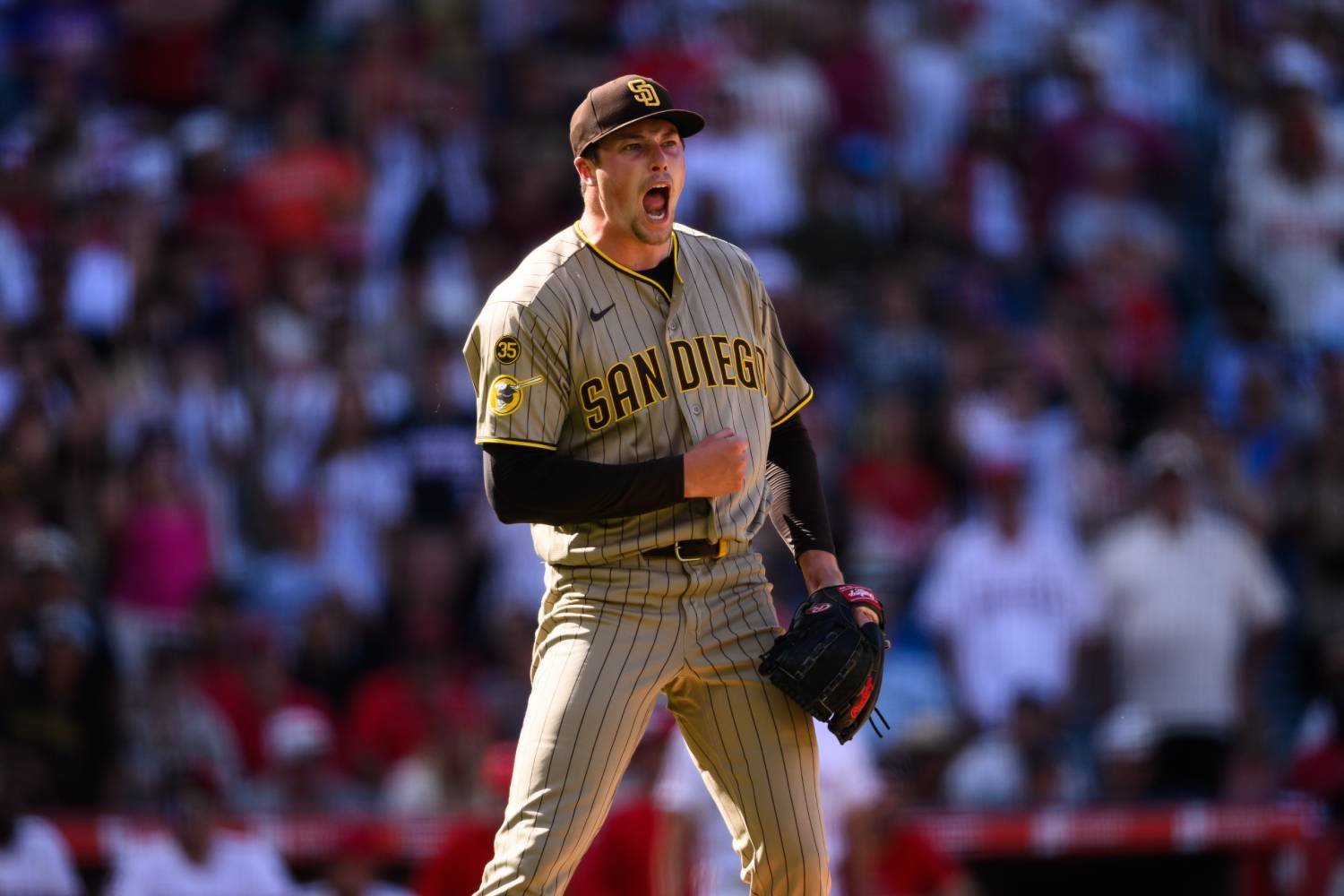 San Diego Padres Weekly Snapshot Record last week: 5-1 Runs scored last week: 22 Runs allowed last week: 19 Standings Scores Game 17 (Tuesday): Padres 4, Mariners 1 Game 18 (Wednesday): Padres 7, Mariners 6 Game 19 (Thursday): Padres 5, Mariners 2 Game 20 (Friday): Angels 8, Padres 0 Game 21 (Saturday): Padres 4, Angels 1 Game 22 (Sunday): Padres 2, Angels 1 Series Breakdown/Highlights Mariners series Game 1: Following a day off and after receiving the bad news before the game that Opening Day starter Nick Pivetta was going on the injured list, the Mariners came to town for the season opener of the Vedder Cup. And right-handed starter Michael King was certainly rocking, even if he didn't hit all the notes correctly. King allowed one run over six innings as the Padres won their sixth straight, beating the Mariners 4-1. King allowed four hits, walked two and struck out five, but his control was off as only 49 of his 85 pitches were strikes. Trailing 1-0 in the bottom of the third, the Padres took control of the game. Ramon Laureano had a one-out triple and scored on a single by Fernando Tatis Jr. Xander Bogaerts snapped the 1-1 tie with a two-run single to center, the second of his three hits. Jackson Merrill also had three hits and scored twice, including doubling and scoring an insurance run on Bogaerts' final hit in the eighth inning. That set the stage for closer Mason Miller, who struck out one of the three batters he faced for his fifth save in as many chances. Miller has struck out 20 of the 27 batters he has faced this season while extending his scoreless streak to 29⅔ innings, third-longest in team history and one-third of an inning shy of tying the late Randy Jones for second place. Game 2: If you left the stadium or turned to a different channel early, sorry. You missed a terrific comeback by the Friars, who extended their winning streak to seven games. For the third time in six games, the Padres won in walk-off fashion, with Merrill's double down the left-field line scoring Laureano and Luis Campusano with two outs in the bottom of the ninth to finish off a five-run rally for a 7-6 victory. It was the third career walk-off hit for Merrill, who was already going to be a star of the game. That was because of his third-inning home run robbery of a drive by Mariners superstar Julio Rodriguez in the left-center field cap. Merrill's theft denied J-Rod of a two-run homer and kept the Padres' deficit at 2-0. Merrill called it the best catch of his young career. Still, the Padres did trail 6-0 in the fifth inning before starting their comeback. Bogaerts got things started with his third homer of the season, a two-run shot in the sixth inning that was his third in his last seven games. For Bogaerts, it was his 200th career homer. That was the lone damage off Mariners right-hander Emerson Hancock, who good for six innings. Mariners closer Anthony Munoz, a former Friar, came on in a non-save situation in the ninth and couldn't finish the job. There were plenty of good trips to the plate in the ninth and it started with Manny Machado drawing a seven-pitch walk. Tatis had a pinch-hit sacrifice fly, Campusano with another big hit in the form of an RBI single and Laureano's own run-scoring single to pull the Padres within 6-5. That chased Munoz in favor of Jose Ferrer, who inherited runners on first and second with two outs. Ferrer got the count to 2-2 on Merrill, who then laced a double down the left-field line that Randy Arozarena bobbled, allowing Campusano to score from second and Laureano from first without a play. The only two dings on the Padres were Randy Vasquez's first bad start of the season. The right-hander gave up four runs on five hits with four walks and six strikeouts in four innings. Also, catcher Freddy Fermin left the game in the top of the third inning after taking another foul ball off the mask. Game 3: How about an undefeated homestand? Tatis capped a four-run second inning with a two-run single as the Padres won their eighth straight, a 5-2 win over the Mariners. That gave the Friars a three-game sweep of the Mariners and a 7-0 record on this homestand before heading to Anaheim. The Friars' first homestand of the season resulted in a 2-4 mark. The eight wins in a row are the most by a team this young season. Right-hander Walker Buehler earned his first win as a Padre, pitching into the sixth inning and Miller surpassed Jones for the second-longest scoreless streak in franchise history at 30⅔. Only Cla Meredith has a longer run at 33⅔ innings. Miller is 6-for-6 in save opportunities after striking out the side, giving him a spectacular 23 K's in 30 batters faced this season. He has allowed just one hit. The Friars put up all the offense they would need in the second inning against right-hander Luis Castillo. Gavin Sheets doubled with one out, took third on Miguel Andujar's single and scored on Campusano's single to left. Cronenworth's comebacker led to a throwing error by Castillo to load the bases and Laureano grounded to first to plate Andujar. Still looking for a big moment this year, Tatis lined a single to center to drive in two more runs and stake Buehler to a 4-0 lead. Buehler took a two-hit shutout into the sixth inning, but yielded singles to the first three hitters to load the bases, ending his night. Right-hander Bradgley Rodriguez came in and gave up a two-run single to Julio Rodriguez. A groundout and a walk reloaded the bases and manager Craig Stammen had the quick hook, turning to Morejon to again escape a jam. A strikeout and a groundout did the trick, preserving the 4-2 lead. Jason Adam allowed one hit in the eighth and Miller slammed the door in the ninth. Angels series Game 1: Every winning streak must come to an end, but there might have been some other forces at work as the Friars' eight-game winning streak was halted. On a day the Angels announced the death of former outfielder Garret Anderson at the age of 53, Los Angeles sent the starting pitcher off to the best beginning of the season to the mound. It added up to an 8-0 loss for the Padres. Right-hander Jose Soriano allowed just two hits in 5⅔ shutout innings, striking out eight, walking four and lowering his ERA to a microscopic 0.28 after five starts. The Angels jumped on Padres right-hander Matt Waldron, making his season debut as Pivetta's rotation replacement, for six runs in 3⅔ innings. Waldron allowed eight hits and a walk with four strikeouts. The Padres managed just three hits off four Angels pitchers in being shut out for the first time this season. The only real threat by the Friars came in the sixth inning as, with two outs, Machado singled and Bogaerts walked, ending Soriano's day. Sheets flew out to the warning track in right on the first pitch from right-hander Chase Silseth to end the threat. Game 2: A terrific start by German Marquez and another dose of late offense got the Padres back in the win column. Marquez pitched 5⅔ shutout innings, while Laureano and Tatis drove in all the runs in the eighth and ninth innings as the Friars won 4-1. It was their 12th win in 14 games and came a day after their eight-game winning streak was halted. The story early was Marquez, who allowed two hits and two walks while striking out five. It was his second scoreless outing in his last three starts. He was backed by Merrill's third homer-robbing catch of the season, this time in the right-center gap in the second inning on a drive by Yoan Moncada. The Padres likewise were held in check by left-hander Yusei Kikuchi, which left the game 0-0 entering the eighth inning. Fermin, back in the lineup after sitting out two games after taking a foul ball of the mask, and Cronenworth drew leadoff walks. Laureano grounded a single up the middle to score Fermin from second and extend hit hitting streak to seven games. Tatis, shaking off an early slump despite plenty of hard-hit balls, dribbled a grounder to the right side of the infield that barely trickled onto the outfield grass to bring in Cronenworth from third. After mustering two hits in the first seven innings, the Angels got three hits in the eighth off Adam, making it 2-1. In the ninth, Bryce Johnson, who came on as a pinch-runner earlier, singled in his first at-bat, then Fermin and Cronenworth walked again to load the bases. Laureano's sacrifice fly to center made it 3-1 and Tatis made it a three-run cushion on a line drive to right-center. That brought in Miller, who was tagged for just his second hit of the season by Moncada. After a strikeout, Miller issued his second walk of the season before retiring the final two batters. That was the first time an opponent had multiple runners on vs. the closer, who earned his seventh save. Miller's scoreless streak is now at 31⅔ innings, two shy of Meredith's club record. Game 3: Sustainable winning means getting contributions from every part of the roster. Johnson hasn't had a lot of playing time this season, but he made sure to chip in when given the chance. Johnson's opposite-field single in the top of the seventh helped the Friars to a 2-1 win in the series finale. It was the Padres' 13th win in 15 games. Johnson's hit drove in Bogaerts from second for a 2-0 lead. Bogaerts had singled home Tatis in the fourth for the first run of the game. That was enough for King to work with. The right-hander allowed just one hit and struck out six in five innings, although he did walk four. In the bottom of the seventh, facing left-hander Kyle Hart, Oswald Peraza got the Angels' second and only other hit with a leadoff double. A hit by pitch and sacrifice bunt forced a move to Bradgley Rodriguez, who gave up RBI grounder to make it 2-1. That left it up to Miller to finish another one off. The closer struck out two of the three batters he faced for his eighth save. That also boosted his scoreless streak to 31 games and 32⅔ innings, one inning shy of Meredith's club record. The Friars have two days off in the coming week, one due to the travel day to Mexico City for the two-game series vs. the Arizona Diamondbacks. Marvelous Mason Miller Some of the amazing stats for the Padres' closer: In 11 games this season, Miller is 1-0 with a 0.00 ERA, allowing two hits and two walks with 27 strikeouts in 11⅓ innings. Opponents are hitting .056 and he has a 0.35 WHIP. Has struck out 27 of the 38 batters he has faced (71.1% strikeout rate). Struck out the side in Thursday's game, increasing his strikeout rate over his last nine appearances to 78.1%. It is the third time Miller has struck out 75% of the batters in a nine-game stretch in MLB history. He is the only pitcher in MLB history to accomplish that. Struck out all three batters faced in a game for the fifth time in his last seven appearances, two more times than any other pitcher in his team's first 19 games since at least 1900. Opponents are 0-for-25 with 21 strikeouts against Miller's slider this season, including 0-for-3 with two strikeouts Sunday. His slider has the highest whiff rate of any pitch by any pitcher this season at 77.8%. Random Stats Wednesday's five-run ninth inning resulted in the Padres' first win when trailing by four or more runs in the ninth since June 14, 2019, a game they beat the Colorado Rockies 16-12 in 12 innings. In that game, the Friars scored six runs in the ninth. The Padres had five consecutive games with 10 or more hits during their winning streak, the longest stretch in club history since a six-game run June 4-9, 2013. Since snapping his 0-for-35 stretch that dated to the 2024 season, Luis Campusano had an eight-game hitting streak that came to an end Friday. Five of his nine hits in that run were for extra bases. The Padres have faced opposing starting pitchers who have turned in quality starts in 10 of the Friars' first 18 games. Transactions Tuesday: Placed RHP Nick Pivetta on the 15-day injured list retroactive to Monday with right elbow inflammation. Tuesday: Recalled RHP Alek Jacob from Triple-A El Paso. Thursday: Activated IF Sung-Mun Song from the 10-day injured list and optioned him to Triple-A El Paso. Friday: Activated RHP Matt Waldron from the 15-day injured list (hemorrhoid surgery). Friday: Optioned RHP Alek Jacob to Triple-A El Paso. Website Highlights Padres' sale reaching final steps for record $3.9 billion — Brandon Glick Feliciano ushers in LinkedIn-ification of the Padres — Brendan Dentino Who is to blame for Musgrove's setback, Padres, pitcher or no one? — Steve Drumwright Waldron can't replace Pivetta, but he can save his Padres career — Randy Holt Cronenworth might be playing his way onto Padres' bench — Andy Johnson Sheets' grip on Padres' first base job is loosening — Randy Holt Looking Ahead Monday: Off Tuesday: Padres (Randy Vasquez) at Rockies, 5:40 p.m. Wednesday: Padres (Walker Buehler) at Rockies, 5:40 p.m. Thursday: Padres (Matt Waldron) at Rockies, 12:10 p.m. Friday: Off Saturday: Padres (German Marquez) at Diamondbacks (Mexico City), 3:05 p.m. Sunday: Padres (Michael King) at Diamondbacks (Mexico City), 1:05 p.m. View the full article
 -
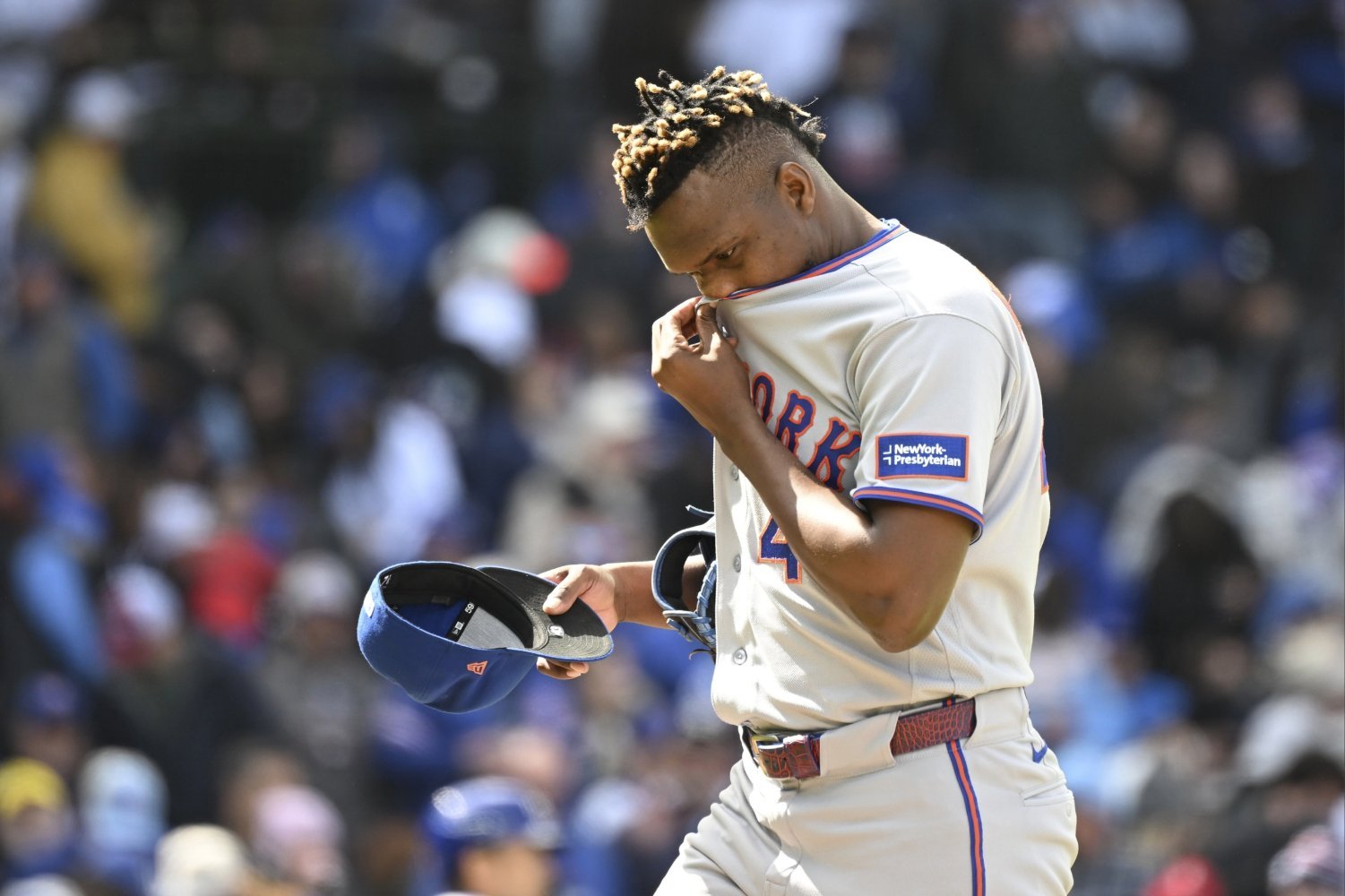 New York Mets Record Last Week: 0-6 Runs Scored Last Week: 10 Runs Surrendered Last Week: 33 Standings: 5th in NL East 7.5 GB of 1st Place Transactions: 4/13 New York Mets selected the contract of LF Tommy Pham from St. Lucie Mets. 4/13 New York Mets optioned 3B Ronny Mauricio to Syracuse Mets. 4/14 New York Mets released RHP Luis García. 4/14 New York Mets placed RHP Joey Gerber on the 15-day injured list. Right finger blister. 4/14 New York Mets recalled RHP Austin Warren from Syracuse Mets. 4/15 New York Mets placed LF Jared Young on the 10-day injured list retroactive to April 13, 2026. Left meniscus tear. 4/15 New York Mets recalled LF MJ Melendez from Syracuse Mets. 4/16 New York Mets sent LHP A.J. Minter on a rehab assignment to Brooklyn Cyclones. 4/16 New York Mets traded LHP Richard Lovelady to Washington Nationals for cash. 4/18 New York Mets placed 2B Jorge Polanco on the 10-day injured list retroactive to April 15, 2026. Right wrist contusion. 4/18 New York Mets recalled C Hayden Senger from Syracuse Mets. Scores: Game 16 (4/13): NYM 0, LAD 4 Game 17 (4/14): NYM 1, LAD 3 Game 18 (4/15): NYM 2, LAD 8 Game 19 (4/17): NYM 4, CHC 12 Game 20 (4/18): NYM 2, CHC 4 Game 21 (4/19): NYM -, CHC - Series Breakdown/Highlights Dodgers Series: The Mets took their losing streak to Chavez Ravine to take on the defending world champion Dodgers. The losing streak was extended after the team was swept right out of LA. It wasn't ever really close. In game one, the Mets were shut out 4-0. David Peterson, who took the loss, was not as bad as he was in prior outings this season, though he was on the ropes early. The Mets' offense sputtered two singles against Dodgers starter Justin Wrobleski across eight innings. They added one in the ninth against Tanner Scott, though that was erased on a double play. In game two, the Mets had a lead for a half inning after Fransisco Lindor lead the game off with a home run off Yoshinobu Yamamoto. Nolan McLean gave it right back on an RBI single from Will Smith. The two starters traded zeros until the bullpens came in. It took an eighth inning bloop RBI single by Kyle Tucker off Brooks Raley to break the 1-1 tie. Alex Vesia came in and struck out the side to earn the save. In the series finale, on Jackie Robinson Day, Clay Holmes and Shohei Ohtani duked it out on the mound. The Dodgers took a second-inning 2-0 lead on a Hyeseong Kim two-run home run. The Mets got a run back on a RBI ground-rule double by the hottest hitter in the lineup (MJ Melendez), but stranded runners in scoring position when they could have had a big inning. Devin Williams came in for the eighth inning, loaded the bases with no outs and gave up a back-breaking grand slam to Daulton Rushing to put the game out of reach. The Mets got swept, though they scored a run in the bottom of the ninth to avoid total embarrassment. Cubs Series: Kodai Senga got the start in game one of the series. He spotted the Cubs four runs in the top of the first inning. The bottom of the Mets' lineup did respond scoring three runs, but it was not enough. Senga would go on to allow four more runs and ended his day going 3.1 innings, allowing seven runs, six earned. Sean Manaea came in and was able to give the Mets bullpen four innings of work and gave up five runs. The Mets lost 12-4. In game two of the series, Freddy Peralta got the start. The Mets gave him an early 1-0 lead, though that was handed right back. After Peralta waked two batters with two outs in the sixth inning, Carlos Mendoza went to his not-so-trusty bullpen. Brooks Raley came in and gave up a back-breaking pinch-hit three run home run to Carson Kelly. The Mets scored a run in the eighth inning, but it wasn't enough as they fell to the Cubs 4-2. It was the finale where the Mets hit rock bottom. They got good pitching from Tobias Myers, who opened the game, David Peterson who came in for relief, and Huascar Brazoban and Brooks Raley out of the bullpen. Going into the bottom of the ninth inning, the Mets had a 1-0 lead and went to closer Devin Williams. The one run was a solo home run by MJ Melendez. Williams would blow the save in the ninth inning on an RBI double by Michael Conforto into the corner with one out. Williams would escape the inning, but a wild pitch and a sac fly in the bottom of the tenth against Craig Kimbrel gave the Cubs a walk-off sweep. The Mets are now on an 11-game losing streak, their longest since 2004. Website Highlights Brett Baty Is Swinging Wildly and Failing Miserably In the Process New York Mets 2026 Top Prospects Rankings: Nos. 16-20 New York Mets 2026 Top Prospects Rankings: Nos. 11-15 Looking Ahead April 20th: OFF April 21st (vs. MIN, 7:10pm EST): RHP Mick Abel (1-2, 3.98) vs. RHP Nolan McLean (1-1, 2.28) April 22nd (vs. MIN, 7:10pm EST): RHP Simeon Woods Richardson (0-3, 6.10) vs. RHP Clay Holmes (2-2, 1.96) April 23rd (vs. MIN, 7:10pm EST): RHP Joe Ryan (2-2, 3.29) vs. TBA April 24th (vs. COL, 7:10pm EST) April 25th (vs. COL, 4:10pm EST) April 26th (vs. COL, 1:40pm EST) View the full article
 -
Twins' Mick Abel Heading To Injured List With Elbow Inflammation
DiamondCentric posted an article in Twins Daily
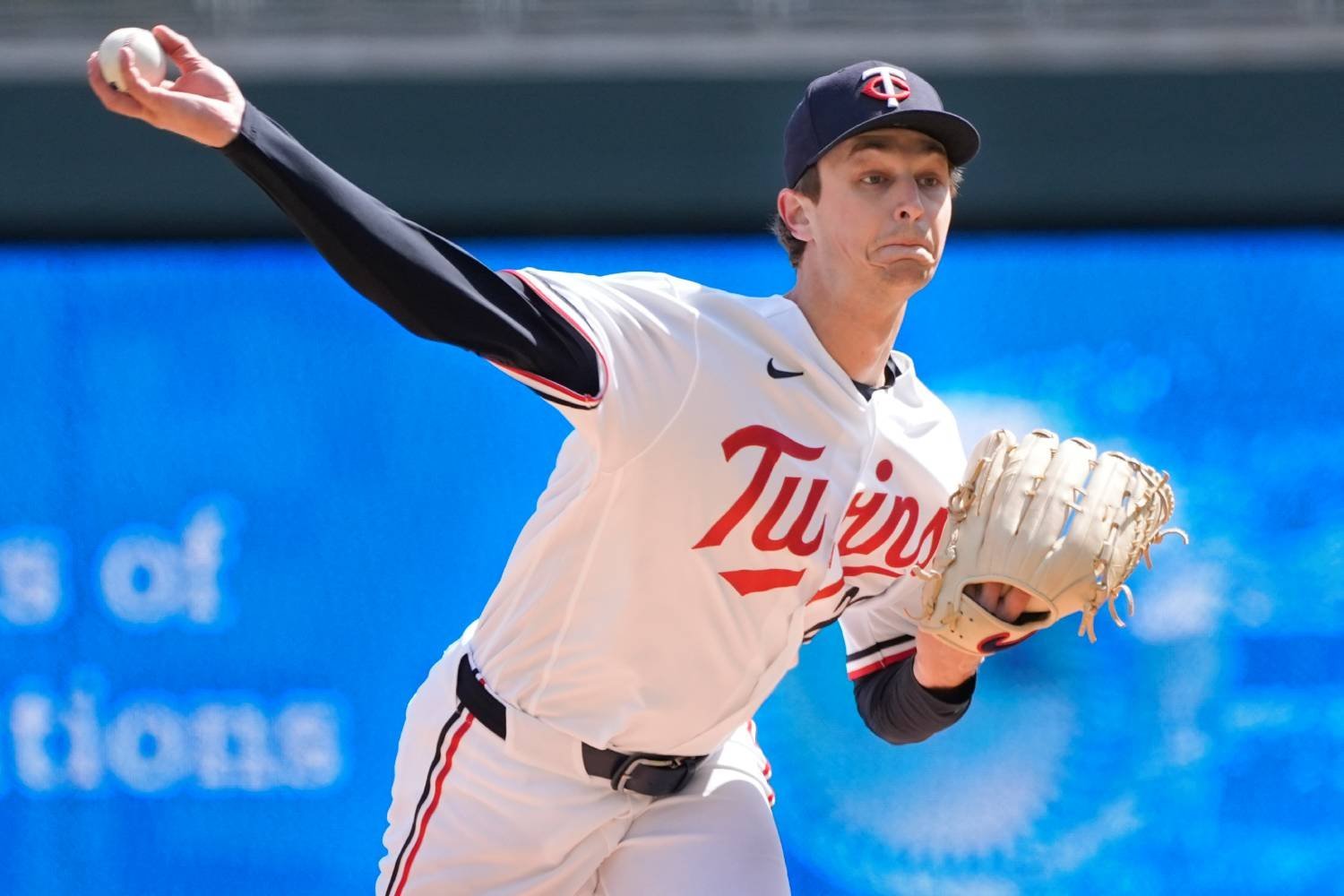 Now we know the full picture of why the Minnesota Twins are calling up two of their top pitching prospects. In a big blow to the starting rotation, the Twins will be placing right-hander Mick Abel on the 15-day injured list with right elbow inflammation. The move will be made before Tuesday's series opener against the New York Mets. On Sunday, news broke that left-handers Kendry Rojas and Connor Prielipp were joining the team in New York. One part of the equation as to whose roster spots they would take was another left-hander, Kody Funderburk, is set to go on the paternity list. Rojas and Prielipp are both already on the 40-man roster. The Abel injury answers the other half of that. Abel, 24, has appeared in four games, including three starts, this season with a 3.98 ERA. He has been especially sharp in his last two starts, tossing 13 shutout innings against the Detroit Tigers and Boston Red Sox. He struck out 16 in those two games, including 10 Tuesday vs. the Red Sox. Abel joins star right-hander Pablo Lopez, who is out for the season after having his right UCL repaired in late February. View the full article
 -
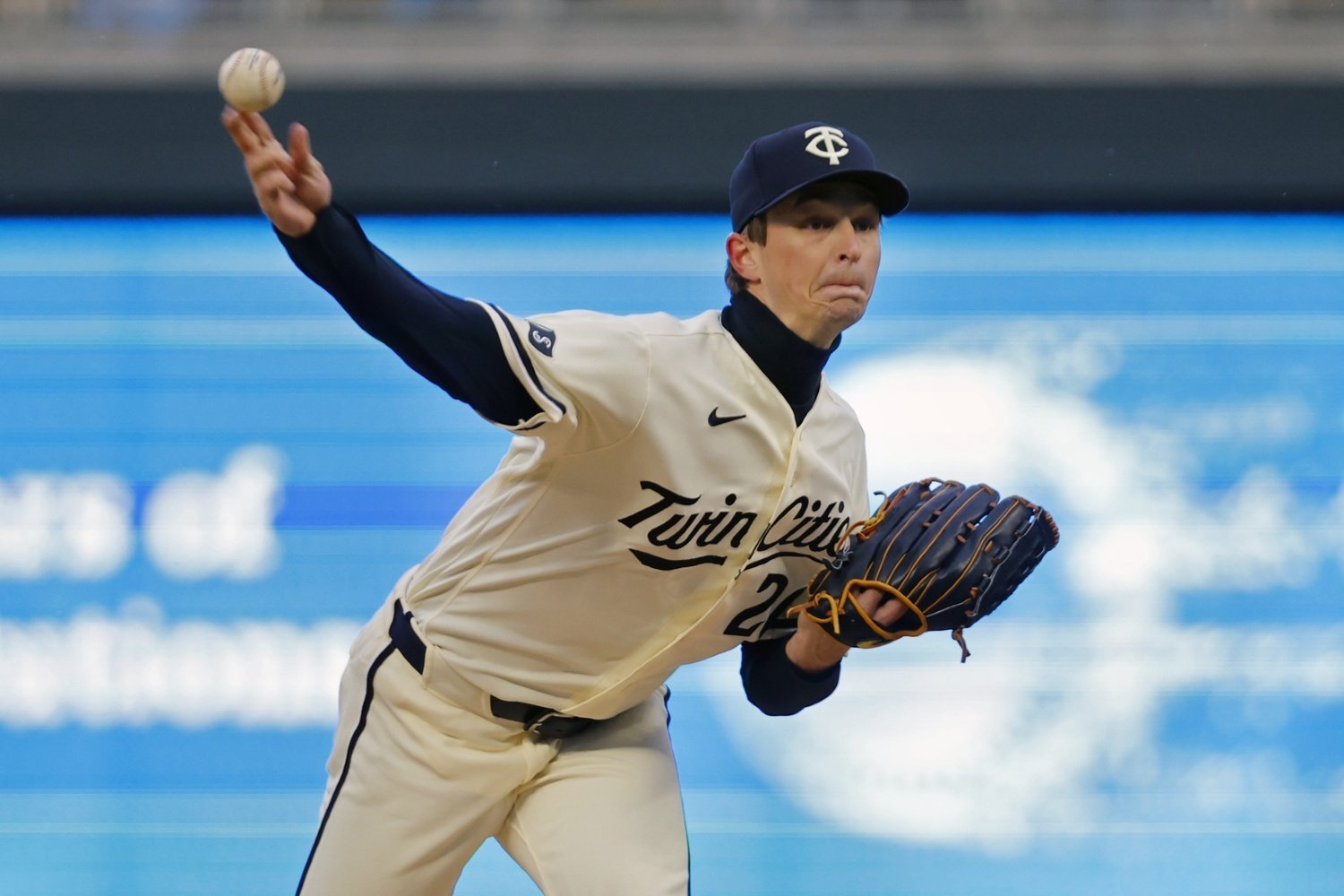 The Twins suffered a major loss on an off day Monday, as they're set to place right-handed starter Mick Abel on the 15-day injured list. Dan Hayes of The Athletic broke the news on Twitter. The initial diagnosis—inflammation in his throwing elbow—isn't the worst news you could hear about a player hitting the injured list between starts, but it's awfully close. The extent of Abel's injury won't be clear until the team provides further updates about any imaging taken on the arm, but right away, one must worry about a long-term absence. Inflammation isn't an injury in itself; it's a symptom of fatigue and/or damage, which has some cause. Finding out the cause of the inflammation will tell us whether Abel will be out a few weeks, the rest of the season, or somewhere in between. No matter what, though, it hurts the team badly to lose him now. Abel, 24, has a 3.98 ERA and a 24.7% strikeout rate through his first four appearances of the season, but that undersells what has been a thrilling upward trend over his last two outings. His dominance of the Red Sox last week at Target Field (7 innings, 4 hits, 10 strikeouts, no walks) felt like a step toward legitimate mid-rotation status, and Abel came out of that outing feeling great. Abel was scheduled to start Tuesday night in Queens. The team could turn, instead, to left-handed pitching prospect Connor Prielipp, who was on the taxi squad for the trip, anyway. Barring that, it's likely to be a bullpen day, but the team's roster isn't built for that right now. Short-term and long-term, this is a daunting disruption of the team's plans. They can only cross their fingers while they (and we) await more news on Abel's prognosis. View the full article
 -
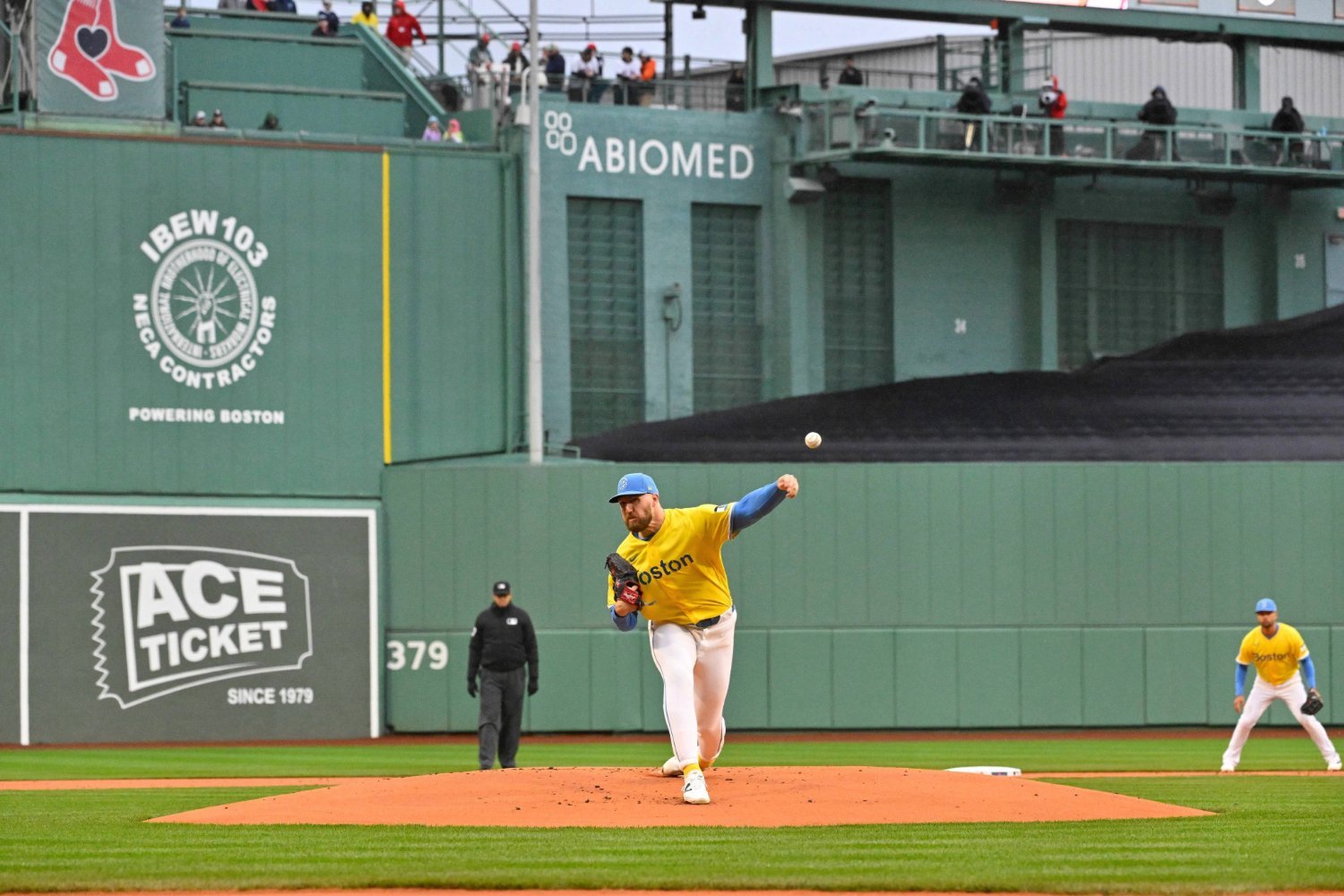 Boston Red Sox Weekly Snapshot Record Last Week: 2-4 Runs Scored Last Week: 19 Runs Surrendered Last Week: 34 Standings: 4th in AL East 4.5 GB First Place Transactions: 04/14/26; Red Sox selected the contract of RHP Jack Anderson from Worcester Red Sox. 04/14/26: Red Sox Transferred RHP Johan Oviedo from 15-day injured list to the 60-day injured list. Right elbow strain. 04/15/26: Everyone changed number to 42. 04/16/26: Everyone changed numbers back to original from 42. Scores: Game 16 (4/13): BOS 6, MIN 13 Game 17 (4/14): BOS 0, MIN 6 Game 18 (4/14): BOS 9, MIN 6 Game 19 (4/17): BOS 1, DET 0 Game 20 (4/18): BOS 1, DET 4 Game 21 (4/19): BOS 2, DET 6 Series Breakdown/Highlights Twins Series: For as much went right in the Milwaukee and St. Louis series last week, that much went wrong in the series against the Twins. Garrett Crochet turned in the worst start of his career in the first game, lasting only 1 ⅔ innings while giving up 11 runs, ten earned, with zero strikeouts, and three walks. The offense came alive later in the game, but it was too little too late. Heading into game two, Sonny Gray was trusted to steady the ship against the Twins and he failed to go more than four innings after being tagged for five earned runs while walking one and striking out one. Finally, Connelly Early turned in arguably his best start of his young career. He went six innings, only allowing one earned run while walking two and striking out five. Perhaps most promising, though, Roman Anthony seemed to wake up this series. He went 5-10 during the three game stint and was far more selective with his swing decisions than he had been previously in the season. It’s the little things when the season is going the way it currently is. Tigers Series: In a weekend series that goes through Marathon Monday, we have the rare week in review that will be written before the series concludes. Game one was a classic pitcher’s duel that saw Ranger Suarez turn in his best performance in a Red Sox uniform. He tossed eight scoreless innings, giving up zero runs, walking one, and striking out four. He flashed his defensive abilities a couple of times and looked as poised as he could be in the first Fenway Greens game of the season. In classic Greens fashion, the win was secured on a walk off bouncing single from Masataka Yoshida, who grinned from ear to ear as he rounded first. Games two and three were less fun. The Red Sox had reigning Cy Young winner Tarik Skubal on the ropes a couple of times but failed to capitalize with ducks in the pond. Against such a dominant pitcher, not being able to push those runs across to chase him off the mound earlier in the game. In game three, Crochet seemed to be on the right track through the first four innings, throwing his fastball options better than he did against the Twins but things went off the rails in the fifth. His eight strikeouts are promising, but he’s hardly throwing his sweeper at all. It was his best out pitch last season, and one of the best breakers in the league, but he seems to not trust it at all right now. In good news, Willson Contreras launched another homer early in the game. Website Highlights The Red Sox Have Been MLB’s Least Successful ABS Team (Ryan Painter) Never Trust the Numbers: Greg Weissert Turning Season Around Following Homer-Laden Start (Adam Samrov) Trading Places: Should A Trevor Story-Marcelo Mayer Position Swap Be on the Sox’ Radar? By Ryan Salvaggio The Red Sox Still Have a Trevor Story Problem (Alex Mayes) Looking Ahead April 20: Tigers (Jack Flaherty) @ Red Sox (Sonny Gray): 11:10 AM EDT April 21: Yankees (Luis Gil) @ Red Sox: 6:45 PM EDT April 22: Yankees (Max Fried) @ Red Sox: 6:45 PM EDT April 23: Yankees (Cam Schlittler) @ Red Sox 6:10 PM EDT April 24: Red Sox @ Orioles: 7:05 PM EDT April 25: Red Sox @ Orioles: 4:05 PM EDT April 26: Red Sox @ Orioles: 1:35 PM EDT View the full article
 -
Cubs Week in Review: Wins Pile Up, But So Do Injuries
DiamondCentric posted an article in North Side Baseball
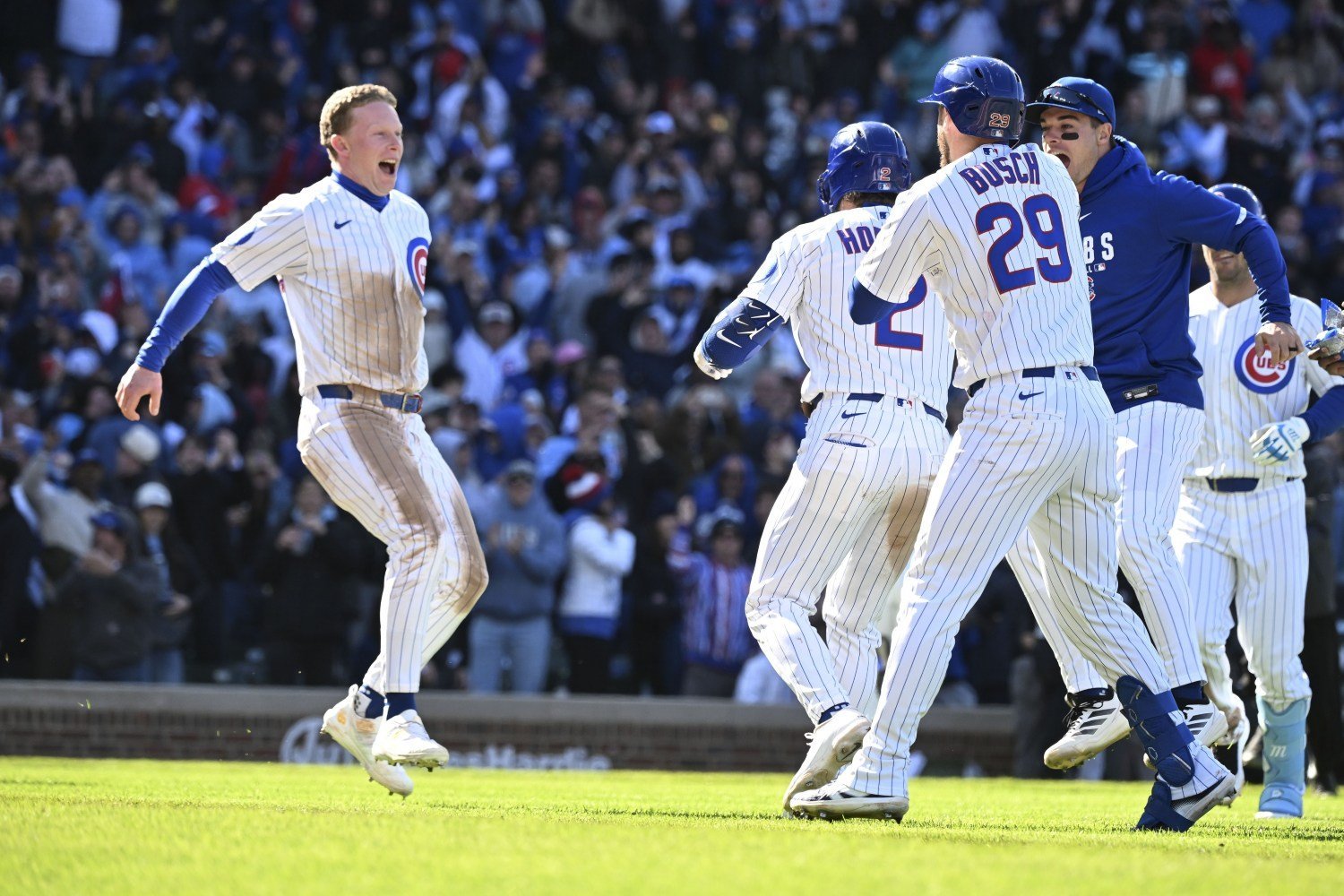 You could call the Cubs' rash of injury troubles a bug, but lately, that feels insufficient. With the club's fiery closer Daniel Palencia the latest to go down with an oblique strain, the "bug" this squad is up against is more akin to one of Godzilla's adversaries than a gnat you swat away while waiting for the Purple Line. Fortunately, there have been signs of lift from the sleeping giant that was the Cubs' offernse over the first two-plus weeks. With Javier Assad taking the ball for the Cubs in the first of their three-game set versus the Phillies at Citizens Bank Park last week, the lineup awoke. The Cubs scratched seven runs across the plate in that contest. The trouble is, the home team tallied 13. Craig Counsell's pitching staff labored, surrendering runs to Philadelphia in all but two innings. Former Cubs hero Kyle Schwarber had no hesitation in making life difficult for his former squad, launching a three-run homer that set the tone early. As Schwarber well knows, success is the perfect revenge, and the North Siders exacted theirs in the middle game of the series. Chicago erased an early 3-0 deficit on the strength of a balanced offensive output from the visitors—especially Nico Hoerner and Carson Kelly, who combined for six RBIs. Hoerner, with his consistently elite play at both the plate and second base, is the clear leader of this club and the driving force behind his team's recent success. Suddenly needed to be something like an ace again, Shota Imanaga is either on the cusp of his 2024 All-Star form or already there. It's not that he doesn't surrender the long ball anymore, like the solo shot he gave up early to Trea Turner in the rubber game of last week's set, but his penchant for recovery is impressive. He takes any blemish personally. Imanaga went on to tie a career-high in strikeouts, with 11 of them over six solid innings. The Cubs used four scoring innings, showing both power and situational hitting. Hoerner racked up 5 RBIs with a 3-for-5 day at the plate. Matt Shaw, who has been on an upward trajectory, enjoyed his best offensive day of the year with a 3-for-4 outing, collecting three doubles. It was the rare case this season in which the offense not only rolled, but the Cubs also were terrific defensively, allowing virtually zero meaningful scoring opportunities for the Phillies. The 11-2 romp earned the North Siders an impressive series win on the road. The team rode that wave back to Wrigley Field, for a weekend set against the Mets. Edward Cabrera took the bump for his fourth start as a Cub. His teammates plated four runs in the opening frame, giving him some margin for error. Moisés Ballesteros and Hoerner both homered in an easy 12-4 win to open a seven-game homestand. Their loss Friday was the Mets' ninth in a row; they're often beating themselves. With Freddy Peralta returning to Wrigley Field—a place that became his personal house of horrors in October 2025—that trend didn't change. Even though the Cubs only took this contest by a 4-2 score, it's how they did it that made spectators take note. Ian Happ's solo homer off of his old adversary sparked the home crowd, but it was Kelly's pinch-hit, three-run blast in a tie game in the sixth inning that got the party started in earnest. Having already secured the series win, the North Siders took the field Sunday in search of their first sweep of the 2026 regular season. In the eleventh hour, they found it. Bouncing back from a laborious start earlier in the week, Javier Assad cruised through the first third of the game with relative ease. A solo shot from the Mets' MJ Melendez was the only disruption to what was otherwise a dominant showing from Assad. Though held scoreless through the first eight innings of this contest, the North Siders frequently put runners on base, most notably via a leadoff triple from Pete Crow-Armstrong to kick off the third. Pinch-hitting in the bottom of the ninth inning, Michael Conforto laced a double into the corner in deep right field, scoring pinch-runner Scott Kingery to tie the game against another former divisional foe, Devin Williams. A gutsy 10th-inning relief appearance from newly-minted closer Caleb Thielbar set the stage for the home team to deliver walk-off magic. With one out and the zombie runner Crow-Armstrong standing 90 feet away, Hoerner came through with a game-winning sacrifice fly. The dramatic finish not only marked the club's fifth straight win, but vaulted them three games over .500 and out of the cellar of the National League Central. Good teams find ways to win. At the outset of a four-game series with the Phillies at Wrigley, this feels like a good team, despite its many injury issues. They've benefited from some good luck and they've beaten themselves once or twice this year, but after a tough start, they're finding their groove a bit. If they can survive the pitching crisis and get their key hitters out of early funks, they'll really be on to something. View the full article
 -
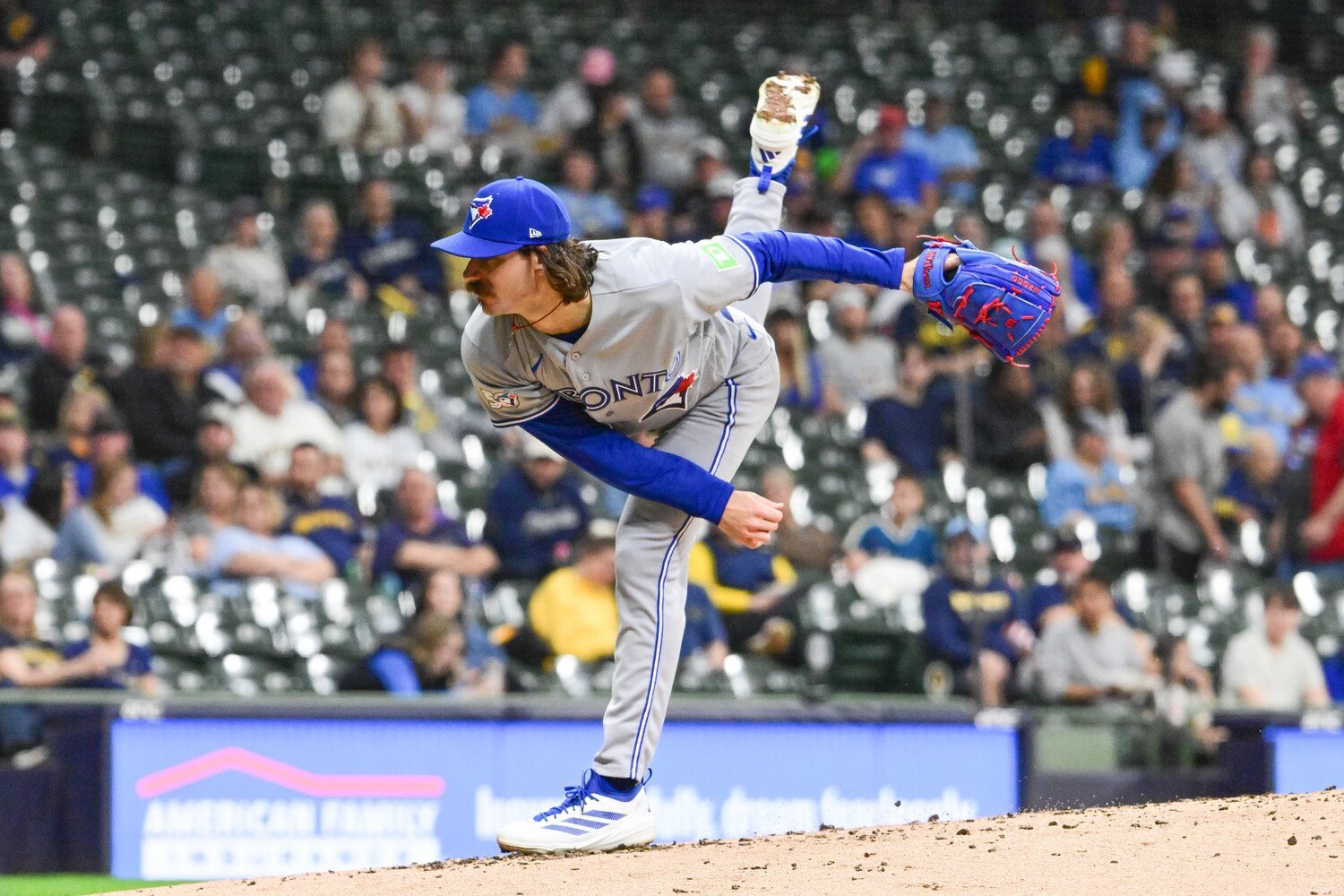 Dylan Cease has been off to an excellent start this season, posting a 1.74 ERA over 20 2/3 innings. His 36.0% strikeout rate (32 strikeouts) leads AL pitchers with at least 20 innings pitched. Although, it's not all pretty, as his 5.23 walks per nine innings would be his second-worst rate over his eight-year MLB tenure. Free passes have been an issue for Cease throughout his career, 3.84 per nine innings. Though he struggles with walks, the righty is posting a career-best strikeout percentage in his first season in Toronto. Another aspect Cease brings to the table is his durability. He has made at least 32 starts in each of the last six seasons. Healthy starting pitchers are something the Blue Jays greatly need right now. They currently have Trey Yesavage, José Berríos, Shane Bieber, and Cody Ponce on the injury list to start the season, and Ponce is likely out for the season due to an ACL injury. However, Yesavage and Berríos have made rehab starts and are close to returning. Cease has been considered a strikeout pitcher throughout his career, but his increased success this season is not a fluke. In the last four seasons, he was primarily a two-pitch pitcher. Although he has six pitches in his arsenal, he threw his four-seam fastball and slider over 80 percent of the time in each of those four seasons. Hitters could sit on a certain pitch, and when it came, they could hammer it. This season, Cease has varied his pitches more often. He only throws his four-seam fastball and slider a combined 65.5 percent of the time, and his other four pitches are thrown between eight and 10 percent of the time. The inclusion of his offspeed pitches at a higher rate keeps batters off balance. Especially with his slider, changeup, knuckle curve, and sweeper sitting in the mid-to-high 80 mph range, while his fastball and sinker hit 96 to 98 mph. The 30-year-old throwing pitches at similar speeds is significant because they all have different movement profiles, either to the arm side or glove side. This craftiness prevents batters from sitting on a specific pitch, as in years past. Below is a breakdown from Baseball Savant. The pitch characteristic stats are all from 2026. Total Movement (in inches) 2025 2026 Pitch Type Avg. MPH Avg. Vertical Drop Avg. Horizontal Break Usage % Whiff % Usage % Whiff % Four-Seam FB 98 9.7 3.6 arm side 42.1 25.7 36.9 33.8 Slider 89.6 30.5 0.5 glove side 40.8 42.9 28.6 55.7 Changeup 85.2 22 9.5 arm side 1.2 46.7 9.4 77.8 Knuckle Curve 83 54.4 2.4 glove side 8.3 37.1 8.8 27.3 Sweeper 84.6 46.8 10.8 glove side 3.5 26.7 8.3 33.3 Sinker 96.8 15 12.0 arm side 3.9 12.9 8.1 7.1 The deception Cease has added by throwing more types of pitches more often shows in the increase in whiff percentage the righty has accrued this season versus last. Every pitch except his sinker and his knuckle curve has a higher whiff percentage, while his overall whiff rate has climbed from 33.4% to 41.0%. These high numbers show that his various offspeed pitches, thrown at similar speeds to one another, are working to keep hitters guessing. Although the sample is small, with only four games under his belt, you can't discredit the fact that Cease's adjustments have made a massive difference this season. The Blue Jays should have an exceptional top trio of starting pitchers with Kevin Gausman, Cease, and, eventually, Yesavage, who all possess similar swing-and-miss pitches. Fans can expect to see a ton of strikeouts in each of these fireballers' games. View the full article
 -
 Elite raw power as a left-handed hitting catcher does not grow on trees, but Jensen did not get there overnight. A look at Carter Jensen's power progression and why he is such an exciting rookie. View the full article
 -
 Breaking down the ridiculously high ceiling of Luis Peña and why his slow finish to 2025 is not something to be concerned about. View the full article
 -
 Owen and Jesse lament the sixth straight series loss for the Toronto Blue Jays, but take some solace in the series finale victory before getting into Jeff Hoffman's continued struggles. They both have emotional thoughts about Eric Lauer's comments to the media about his thoughts on pitching behind an opener. The guys finish with some positives, crediting Kazuma Okamoto and Nathan Lukes with strong series performances in Arizona, and preview the upcoming series in Los Angeles against the Angels. Listen on Apple Podcasts: https://podcasts.apple.com/us/podcast/the-jays-centre-podcast/id1846108462 Listen on Spotify: https://open.spotify.com/show/3Bi7SzfpcqMo5xYWnbCeoL Listen on iHeartRadio: https://www.iheart.com/podcast/263-the-jays-centre-podcast-300304824/ Listen on Pocket Casts: https://pca.st/2qk9wqxd Watch on YouTube: https://www.youtube.com/@jayscentre View the full article
 -
 A great first pro campaign capped by a historic postseason for the Blue Jays makes it difficult to compare Trey Yesavage to other prospects. It's clear he creates a very unique look that is tough on hitters at any level. View the full article
 -
Episode 92: Should We Be Concerned About The Infield?
DiamondCentric posted an article in Brewer Fanatic
 Jack and Spencer discuss Trevor Megill's status in the bullpen, the level of concern for the left side of the infield, Coleman Crow's MLB debut, and more. Apple Podcasts: https://podcasts.apple.com/us/podcast/the-brewer-fanatic-podcast/id1740648724 Spotify: https://open.spotify.com/show/5CY8mWsQayqjDXqw9OT2TdiHeartRadio: https://www.iheart.com/podcast/263-the-brewer-fanatic-podcast-166534588/ Pocket Casts: https://pca.st/ommzz627 Watch On YouTube: https://www.youtube.com/@brewerfanatic View the full article
 -
How Joe Ryan’s Revised Arsenal Is Taking Him To Another Level
DiamondCentric posted an article in Twins Daily
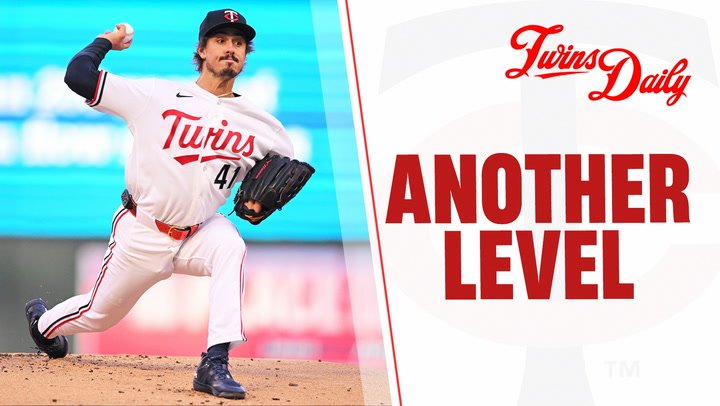 Joe Ryan didn’t need a complete overhaul, but the tweaks he made are changing things for the better. A closer look at how his revised arsenal is making an already reliable starter even tougher to solve. View the full article
 -
 Jarren Duran has faced a difficult start to the 2026 season. Offensive contact has been one of the key components to his poor performance; however, there are a few things that could be key factors in this early slump. There's hope, though, as he's been a key performer with clutch moments. View the full article
 -
Why do Marlins still insist on using Agustín Ramírez as catcher?
DiamondCentric posted an article in Fish On First
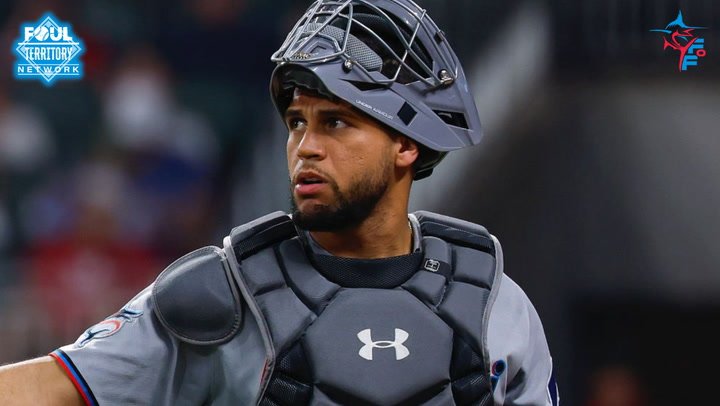 There is now a full year of evidence that Agustín Ramírez does not provide major league-caliber defense behind the plate. Fish On First LIVE discusses what comes next for him.View the full article
 -
 In isolation, the record-shattering sale of the San Diego Padres is a head-scratcher. Why would Jose E. Feliciano's group pay $3.9 billion for the franchise? That price is more than 60 percent higher than the $2.42 billion Steve Cohen paid for the New York Mets in 2020, and it's 25 percent more than the $3,1 billion Forbes magazine estimated the club to be worth last month. But if you look at Forbes' estimates of the top-tier clubs -- and the Padres are in that upper echelon -- you'll notice that it's not an outrageous overpay and Feliciano sees value. For example, Cohen's investment has appreciated nicely over the past six years. The Mets are now worth $3.5 billion in Forbes' estimation. That's sixth-highest in MLB. There's no sign Cohen wants to flip the club, but business is business -- and the baseball business is booming. Robust league revenues fueled by surging fan and sponsor interest is a tide lifting all yachts. The teams ahead of the Mets are all well ahead: the New York Yankees ($8.5 billion), Los Angeles Dodgers ($7.8 billion), Boston Red Sox ($5.75 billion), Chicago Cubs ($5 billion) and San Francisco Giants ($4.05 billion). Seventh through ninth are the Philadelphia Phillies ($3.4 billion), Atlanta Braves ($3.35 billion) and Houston Astros ($3.2 billion). The mid-market Padres, with their gem of a stadium, ideal weather, and huge payroll, are 10th. To put the franchise inflation into greater focus: The Baltimore Orioles were sold for $1.73 billion in August 2024 to a group led by billionaire David Rubenstein. A year and a half later, Forbes pegged the franchise as being worth $2.1.billion. There's a good chance, then, that the Penner Sports Group had a lot more than civic pride in mind when it bought 40 percent of the Colorado Rockies from the Monfort brothers this month. Forbes estimated the Rox at $1.68 billion, 25th in the league. If the cash infusion gets the club out of the mud -- and if the 30 team owners can avoid a damaging labor dispute next year -- then everyone would stand to benefit. Contrast that transaction with the Penner group buying the NFL's Denver Broncos for $4.65 billion, then a record for a North American pro sports franchise in 2022. (The Washington Commanders sped past the Broncos a year later when a group led by Josh Harris bought them for $6.05 billion. Then, the NBA's Los Angeles Lakers changed hands for a $10 billion valuation in 2025.).Last November, Forbes estimated the Broncos' franchise value at $6.8 billion, 13th-highest in the NFL. If one of the NFL's marquee franchises were to go on the market, the bar would be reset much higher. The Dallas Cowboys topped Forbes' rankings last year at $13 billion, followed by the Los Angeles Rams ($10.5 billion) and New York Giants ($10.1 billion). Just a reminder that MLB represents a desirable neighborhood but isn't the exclusive community the NFL is. Buying into an MLB franchise now practically guarantees a strong positive return on investment within a few years' time. The Padres are getting a wealthy owner who shelled out a gobsmacking total for them, but don't expect their record sale price to stand for long. View the full article
 -
 Nolan Santos' comeback is complete. The former seventh-round pick who missed all of the 2025 season threw a career-high five innings for the Kernels tonight. He surrendered one run, but it was unearned. Sticking with the pitchers, Jose Olivares made his 2026 debut with three perfect innings in a rehab outing with Fort Myers. On the hitting side, Kala'i Rosario smashed a huge go-ahead homer late for Wichita, and Eric Wagaman filled the stat sheet for St. Paul. View the full article
