


DiamondCentric
-
Posts
2,631 -
Joined
-
Last visited
Never
Content Type
Profiles
Forums
Events
News
Tutorials & Help
Major League Baseball Videos
Guides & Resources
Store
Downloads
Gallery
Everything posted by DiamondCentric
-

Mets Minor League Report: A Mixed Sunday On The Farm
DiamondCentric posted an article in Grand Central Mets
 The Mets' farm went 1-2 on Sunday as the Syracuse Mets' game was postponed. Binghamton was no-hit 4-0 by Akron despite Jonathan Santucci striking out five over four innings. Brooklyn lost 6-4 to Greensboro in 10 innings after Dakota Hawkins struck out four in three scoreless innings of relief. St. Lucie crushed Daytona 13-4 behind Elian Peña's three hits and three RBIs, with Christian Rodriguez striking out five across 2 2/3 scoreless innings in relief. Mets Transactions No Roster Moves Syracuse Mets' Game Postponed The Syracuse Mets' scheduled Triple-A game was postponed. Rumble Ponies No-Hit In 4-0 Loss To Akron The Binghamton Rumble Ponies were no-hit and shut out 4-0 by the Akron RubberDucks on the road, failing to produce a single base hit (that's the definition of a no-hitter, but you already knew that). Jonathan Santucci took the loss, going four innings while allowing two runs on four hits, walking two, and striking out five. Kevin Gowdy followed with one inning of work, giving up one run on one hit, walking one, striking out one, and allowing one home run. Matt Turner followed with one inning, giving up one run on two hits with one strikeout. Saul Garcia tossed a scoreless inning. Zach Peek closed with a scoreless inning, walking one and striking out two. Akron scored one run in the bottom of the first, added two more in the fifth, and tacked on one more in the sixth. At the plate, Binghamton drew six walks, with Chris Suero drawing two walks and Wyatt Young also drawing two walks. Marco Vargas and Jacob Reimer each drew one walk. Jose Ramos, The Rumble Ponies finished with zero hits, six walks, eight strikeouts, and left six runners on base across the nine-inning contest. Player AB R H RBI BB K A.J. Ewing 4 0 0 0 0 1 Marco Vargas 3 0 0 0 1 1 Jacob Reimer 3 0 0 0 1 2 Chris Suero 2 0 0 0 2 0 Eli Serrano III 4 0 0 0 0 1 Jose Ramos 4 0 0 0 0 2 Kevin Parada 3 0 0 0 0 0 Nick Lorusso 3 0 0 0 0 0 Wyatt Young 1 0 0 0 2 1 Player IP H R ER BB K HR Jonathan Santucci 4 4 2 2 2 5 0 Kevin Gowdy 1 1 1 1 1 1 1 Matt Turner 1 2 1 1 0 1 0 Saul Garcia 1 0 0 0 0 0 0 Zach Peek 1 0 0 0 1 2 0 Cyclones Fall In Extras After Scoring Three In First The Brooklyn Cyclones lost 6-4 to the Greensboro Grasshoppers at home in 10 innings, surrendering a three-run first-inning lead in what became extra baseball. A.J. Minter opened with 2/3 of an inning, allowing one hit. Jonathan Jimenez followed with 2 1/3 innings, giving up three runs on five hits with two walks and two strikeouts. Tanner Witt pitched three scoreless innings with one strikeout while walking two. Dakota Hawkins added three scoreless innings, striking out four and allowing just one hit. Felix Cepeda took the loss after one inning in the 10th, giving up three runs on two hits and two walks with one strikeout. John Bay led the offense with a home run, two hits, three RBIs, and one run scored. Heriberto Rincon added two hits and drove in a run. Corey Collins went 1-for-2 with a walk and a run scored in the cleanup spot. Brooklyn took a 3-0 lead in the first inning before Greensboro tied the game with three runs in the second. The score remained 3-3 through nine before Greensboro plated three runs in the 10th and Brooklyn answered with one. The Cyclones finished with six hits, two walks, struck out 10 times, and left five runners on base. Player AB R H RBI BB K Mitch Voit 5 0 0 0 0 1 Antonio Jimenez 4 1 0 0 1 2 Ronald Hernandez 4 0 0 0 0 1 Corey Collins 2 1 1 0 1 1 John Bay 4 1 2 3 0 0 Yohairo Cuevas 4 0 0 0 0 2 Diego Mosquera 4 1 0 0 0 1 Kevin Villavicencio 4 0 1 0 0 2 Heriberto Rincon 4 0 2 1 0 0 Player IP H R ER BB K HR A.J. Minter 2/3 1 0 0 0 0 0 Jonathan Jimenez 2 1/3 5 3 3 2 2 0 Tanner Witt 3 0 0 0 2 1 0 Dakota Hawkins 3 1 0 0 0 4 0 Felix Cepeda 1 2 3 2 2 1 0 Elian Peña Drives In Three As St. Lucie Routs Daytona The St. Lucie Mets bashed their way to a 13-4 road win over the Daytona Tortugas behind 14 hits and a six-run fifth inning. Jose Chirinos started and worked three innings, allowing two runs on four hits with one walk, five strikeouts, and one home run. Dylan Ross earned the win with an inning of relief, allowing one unearned run on no hits with one walk and two strikeouts. Nate Lavender contributed a scoreless inning with a walk and two strikeouts. Luis Alvarez got one out in the sixth but allowed one earned run on no hits with four walks and one strikeout before Christian Rodriguez took over. Rodriguez delivered 2 2/3 scoreless innings, allowing one hit with five strikeouts. Ernesto Mercedes closed with a scoreless ninth, striking out three. Elian Peña led the attack from the leadoff spot with three hits, a walk, three RBIs, and one run scored. Julio Zayas contributed two hits and two runs scored with one RBI. JT Benson went 2-for-4 with two runs scored and two RBIs. Vladi Gomez added two hits, a walk, and two runs scored. Sam Robertson reached base three times with a hit, two walks, and two runs scored. St. Lucie scored four in the third, one in the fourth, the decisive six in the fifth, one in the seventh, and one in the eighth. Player AB R H RBI BB K Elian Peña 5 1 3 3 1 1 Chase Meggers 6 1 1 1 0 1 Randy Guzman 4 1 1 0 1 2 Julio Zayas 4 2 2 1 0 0 AJ Salgado 5 1 1 1 0 2 JT Benson 4 2 2 2 0 2 Sam Biller 5 1 1 0 0 2 Sam Robertson 3 2 1 1 2 1 Vladi Gomez 3 2 2 0 1 0 Player IP H R ER BB K HR Jose Chirinos 3 4 2 2 1 5 1 Dylan Ross 1 0 1 0 1 2 0 Nate Lavender 1 0 0 0 1 2 0 Luis Alvarez 1/3 0 1 1 4 1 0 Christian Rodriguez 2 2/3 1 0 0 0 5 0 Ernesto Mercedes 1 0 0 0 0 3 0 View the full article
 -
 For the week, Nashville (5-1) and Wisconsin (3-2) were series winners. Wilson (3-3) pulled off a draw and Biloxi (2-4) fell just short. Transactions: 1B/OF Tyler Black activated from AAA Nashville’s 7-day injured list RHP Craig Yoho sent on rehab assignment to AAA Nashville C Andrick Nava transferred to Nashville’s Development List Game Action: Nashville Pre-Game Media Notes Final: Worcester 4, Nashville 2 Box Score and Game Log Via the Sounds’ website, game details and we encourage readers to review affiliate write-ups as part of their Link Report routine: Sounds Win Streak Snapped in Sunday's 4-2 Loss to Worcester The linked game recap by Nishant Brahme does a solid job covering this relatively low-scoring Sunday affair, during which opening RHP Peter Strzelecki (3-up, 3-down 1st inning) and bulk LHP Shane Drohan (5 IP, 2 R, 6 H, 1 BB, 3 Ks; 80 pitches) could have benefited from more run support. Early season injuries to Tyler Black (last played April 5) and Craig Yoho (made 2026 debut in this game) likely cost them some MLB opportunities over the past 2 weeks, but they’re back and the spotlight is on them for a potential near-term call-up. Yoho issued a walk and a hit-by-pitch (on a 72.3mph sweeper) in a scoreless 7th inning, while Black grounded out twice and popped out before his 9th inning 105mph double to center field. Black’s RBI double prompted Worcester to call upon 100mph-throwing closer Tayron Guerrero, against whom C Jeferson Quero impressively smacked an RBI single to right field before the comeback fell short. Sounds’ Extras: After 3B Jett Williams doubled to open the bottom of the 1st inning (and was stranded), the offense only produced 2 singles over the next 7 frames. LHP Drew Rom (1/3 IP, 2 R, 2 H, 2 BB, 0 Ks) unfortunately allowed an earned run in his 4th consecutive relief outing, but LHP Brian Fitzpatrick (2/3 IP, 0 R, 0 Ks) and RHP Joe Corbett (1 IP, 0 R, 2 Ks) did their part to keep Nashville within striking distance. Congrats to OF Jheremy Vargas on his first AAA hit, a single to center field in the 3rd inning. Next week’s outlook: Nashville (11-9) hits the road for a 7-game series at White Sox affiliate Charlotte (9-11), with the opening game set for 12:05pm on Tuesday. Biloxi Pre-Game Media Notes Final: Columbus 10, Biloxi 8 (in 12 innings) Box Score and Game Log Via the Shuckers’ website, game details: Shuckers Drop Heartbreaker to Clingstones in 12 Innings With only 14 active pitchers on the roster, RHP Stiven Cruz (3 2/3 IP, 4 Ks) looked like the last man standing as he heroically retired 11 straight batters from the 9th through the 12th innings, even keeping the Manfred Men from scoring in the 10th and 11th frames. Unfortunately, Columbus eventually got to Cruz with a 2-out, run-scoring single to tie the game in the bottom of the 12th before following with the walk-off homer. That’s a tough break, but also a reminder of why relievers typically don’t have to face an opposing lineup a second time. Before the lock-down late-game pitching, both offenses were humming along, with Biloxi scoring in 5 of the first 7 innings and taking a 7-6 lead on 2B Dylan O’Rae’s RBI single. Unfortunately, O’Rae was thrown out trying for 2nd base, one of two Shuckers thrown out on the basepaths in that frame. O’Rae and SS Jesus Made combined for 6 hits, 3 RBIs, 2 walks and 2 stolen bases to lead the offense alongside OF Mike Boeve (3-for-4, double, 2 walks), who did well to break out of a recent slump. Starting 20-year old RHP Manuel Rodriguez (4 IP, 4 R, 4 H, 1 BB, 1 K) wasn’t able to replicate his solid Tuesday outing (4 2/3 IP, 1 R, 6 Ks), as he allowed 3 home runs in the 2nd and 3rd innings to cough up an early 3-0 advantage, exiting down 4-3. Shuckers’ Extras: Rather than risk 1B Blake Burke smashing yet another homer (he has 7 on the young season), Columbus chose to intentionally walk him with 2 outs in the top of the 10th inning, after which OF Tayden Hall popped out. Unfortunately, Hall compounded his woe by being picked off of 2nd base as the Manfred Man in the 11th inning. LHP Mark Manfredi Sr. stranded 2 inherited baserunners in the 6th inning, but was not immune to the high-scoring affair as he conceded his first run of 2026 on a 2-out single in the 7th inning. He also walked the next 2 batters to load the bases, but escaped via a ground ball force out. The 26 at-bats with runners in scoring position may have been the second-most in Shuckers’ history (per the linked game report), but 3-for-26 production with RISP will need to improve. Here’s the 2-out RBI single off the bat of OF Jordyn Adams, who was nearly credited with the game-winning hit. Next week’s outlook: Biloxi (7-8) returns home to battle Angels’ affiliate Rocket City (7-8), with RHP Ryan Birchard (9 IP, 5 R (4 ER), 12 Ks in 3 games) listed as the starter for the series opener on Tuesday. Wisconsin Pre-Game Media Notes Final: Peoria 11, Wisconsin 1 Box Score and Game Log Via the Timber Rattlers’ website, game details: Rattlers Fall Behind Early and Drop Series Finale to Chiefs Despite the defeat, Wisconsin’s terrific media team has put together video highlights: We’re also treated to the insightful post-game podcast by Chris Mehring and Jonathan Timm, providing 13 minutes of discussion and featuring Manager Nick Stanley Having already captured the series with Saturday’s victory, perhaps the Timber Rattlers took their eye off the ball in this one, as Peoria put up a 4-spot in the 2nd inning and added more runs in most innings thereafter. Starting RHP Yorman Galindez had been solid through 2 outings (4 IP, 1 R, 5 Ks), but a full count walk and hit-by-pitch to open the 2nd inning set the stage for the 3-run homer, followed by a walk, wild pitch and another earned run. Four walks for Wisconsin in the bottom of the 2nd inning gave them a chance to immediately get back into the game, but the breakthrough hit didn’t come so only 1 run came home. Timber Rattlers’ Extras: While the wide margin may jump out to most readers when looking at the box score, our attention is drawn to the early exit of C Marco Dinges, who played only 2 innings after flying out in the 1st frame. If and when we receive an update on his status, we’ll be sure to post it in the Minor League Forum. Each of the Timber Rattlers’ four relievers conceded at least one earned run, with RHP Yerlin Rodriguez (2/3 IP, 1 R, 1 K) issuing 3 walks and a hit-by-pitch and RHP Braylon Owens (3 IP, 4 R, 4 Ks) allowing 6 hits and 4 walks. Despite the blow-out, 8 of 9 Wisconsin position players reached base via hit or walk in the contest, highlighted by 2B Daniel Dickinson (1-for-3, walk), OF Josiah Ragsdale (1-for-3, walk) and DH Andrew Fischer (1-for-4, double). Next week’s outlook: Wisconsin (8-5) travels to Fort Wayne, Indiana to take on the Padres’ affiliate (6-9), which is stocked with a number of their top prospects as mentioned in the podcast. Final: Wilson 5, Hill City 3 Box Score and Game Log Via the Warbirds’ website, game details: Anderson Home Run Propels Warbirds to Walk-off Win After striking out in his first two at-bats (including with the bases loaded to end the 5th inning), OF Jose Anderson played hero to deliver a 2-out RBI single to give Wilson its first lead at 3-2 in the bottom of the 7th inning before blasting the no doubt 2-run walk-off homer to win the game. The team can thank starting RHP Tyler Renz (4 IP, 2 R, 3 H, 3 BB, 2 Ks; 1.93 ERA) and impressive middle reliever LHP Anfernny Reyes (2 IP, 0 R, 1 H, 0 BB, 1 K; 0.00 ERA) for keeping the game close while the offense tried to warm up in 59-degree weather. C Yannic Walther (1-for-3, double, walk) delivered Wilson’s first hit of the game, a double to open the bottom of the 5th inning, scoring on a first-pitch swinging single off the bat of SS Brady Ebel (1-for-4, walk, RBI) to cut the deficit to 2-1 at that point. RHPs Joshua Quezada (2 IP, 1 R, 2 H, 1 BB, 3 Ks) and Ayendy Bravo (1 IP, 0 R, 2 H, 0 BB, 3 Ks) faced a bit of traffic in the final 3 frames, but limited the damage by recording a combined 6 strikeouts. Warbirds’ Extras: Anderson now leads the team with 3 homers (second place has 1) and 18 RBIs (second place has 8) in 14 games played. Anderson also stole his 2nd base in the contest. Congrats to OF Nick Monile on his first official minor league hit, a bunt single to start the 7th inning rally. Recognition also goes to OF Handelfry Encarnacion (1-for-3, 2 walks, RBI) and 3B Luis Lameda, who extended his hitting streak to 6 games while adding a stolen base. Next week’s outlook: Wilson (6-9) heads over to Maryland to take on Orioles’ affiliate Delmarva (4-11) for 6 games. We hope that you enjoy the Minor League Link Report. On Monday, the affiliates have a travel day and the Milwaukee Brewers are also off before commencing their series in Detroit on Tuesday. Organizational Scoreboard including starting pitcher info, game times, MiLB TV links, and box scores Current Milwaukee Brewers Organization Batting Stats and Depth Current Milwaukee Brewers Organization Pitching Stats and Depth View the full article
 -
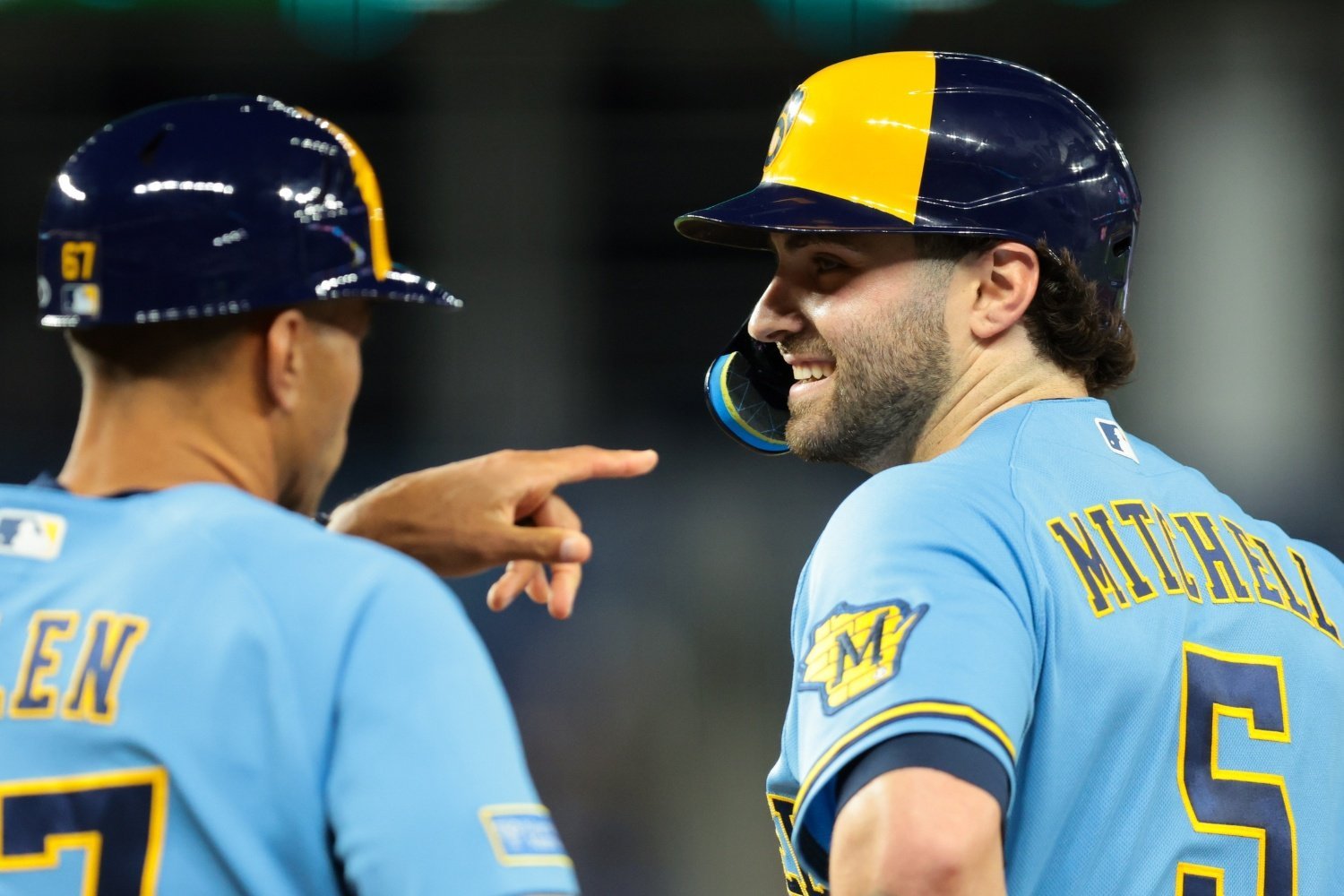 Weekly Snapshot: Record Last Week: 4-2 (Overall: 12-9) Run Scored Last Week: 26 Runs Surrendered Last Week: 26 Standing: 3rd in NL Central Game 16 (4/14) | TOR 9, MIL 7 Game 17 (4/15) | MIL 2, TOR 1 Game 18 (4/16) | MIL 2, TOR 1 Game 19 (4/17) | MIL 7, MIA 5 Game 20 (4/18) | MIL 5, MIA 2 Game 21 (4/19) | MIA 5, MIL 3 Game 16 | Blue Jays 9, Brewers 7 MIL Starter: Jacob Misiorowski (5.1 IP, 5 H, 2 ER, 5 K) Top Performers: Brice Turang (3 H, RBI) Gary Sánchez (H, BB, HR, RBI) Jake Bauers (H, HR, 3 RBI) The Brewers' now-distant losing streak was pushed to six games on Tuesday, in ugly fashion. It wasn’t through the fault of Jacob Misiorowski, however, as he turned in another strong start, twirling 5 1/3 innings of two-run ball. It was the bullpen that let the contest slip, with Trevor Megill getting tagged for 3 runs and blowing the save in the 9th, and Grant Anderson coughing up a pair of runs in the 10th. That implosion wasted timely home runs from Gary Sánchez and Jake Bauers, and a game-tying hit from Brandon Lockridge in the 9th. Jake Bauers’ 3-run bomb (+19.5 WP%) Game 17 | Brewers 2, Blue Jays 1 MIL Starter: Chad Patrick (6.2 IP, 3 H, ER, 2 K) Top Performers: Aaron Ashby (1.0 IP, H, BB, 0 ER, 3 K) Abner Uribe (1.0 IP, 0 ER, 0 H, K, SV) William Contreras (2 H, RBI) Wednesday was a return to form that saw the Brewers snap their skid behind Chad Patrick, turning in their (then-)longest start of the year. That took the pressure off the bullpen, which put up a zero behind Patrick, while the offense used their signature death-by-paper cuts approach to plate two runs in the eighth inning. Finally, the Brewers were back to their winning ways. William Contreras' game-tying single (+30.0 WP%) Game 18 | Brewers 2, Blue Jays 1 MIL Starter: Brandon Sporat (6.2 IP, 4 H, BB, ER, 6 K) Top Performers: Trevor Megill (1.0 IP, 0 H, 0 ER, 2 K) Gary Sánchez (2 H, BB, 2B) The rubber match mirrored the previous day, with Brandon Sproat turning in his best outing as a Brewer and, like Patrick, turning in the longest start of the Brewers' young season. On the offensive side, the Brewers took small ball to the extreme, using a walk and three consecutive bunts to score all the runs they needed before Ángel Zerpa shut the Jays down in the 9th. Milwaukee plays small ball (again) Game 19 | Brewers 7, Marlins 5 MIL Starter: Coleman Crow (5.1 IP, 4 H, BB, 2 ER, 4 K) Top Performers: Luis Rengifo (2 H, 2B, RBI) Garrett Mitchell (2 H, 2B, 3 RBI) Gary Sánchez (H, 3 BB) Coleman Crow earned his first major-league start, though the minor maladies of Kyle Harrison paved the way for it. Under the Miami sun, Crow turned in exactly what Pat Murphy and the Brewers were looking for. There were some bullpen struggles behind him, though, with a late Marlins rally sending the game to extra innings. Fortunately, some timely poor defense from Miami and a Garrett Mitchell knockout punch put the game away. Garrett Mitchell knocks in a pair of runners Game 20 | Brewers 5, Marlins 2 MIL Starter: Brandon Woodruff (7.0 IP, 3 H, BB, ER, 4 K) Top Performers: Brice Turang (2 H, 2 BB, 3 RBI) Garett Mitchell (H, 3 BB) Joey Ortiz (H, 2 BB) Saturday's contest was as smooth a game as the Brewers have had in some time, with an efficient Brandon Woodruff being the first Brewer to complete seven innings all season. With the bats, Brice Turang led the way with a 2-run home run, while the rest of the team drew six walks against the usually pinpoint former Cy-young award winner Sandy Alcantara. Brice Turang’s two-run homer (+20.6 WP%) Game 21 | Marlins 5, Brewers 3 MIL Starter: Jacob Misiorowski (5.0 IP, 4 H, 3 BB, 3 R, 1 ER, 9 K) Top Performers: Carlos Rodriguez (2.0 IP, 2 H, O ER, 3 K) Gary Sánchez (H, 2 RBI) Jacob Misiorowski's rough start in the series finale looked like it was all the Marlins were going to need to avoid a sweep, as a 3-run first inning was more than enough cushion for Marlins hurler Eury Pérez, who tossed six innings of one-run ball against the Brewers' lineup. Misiorowski did manage to labor through five innings, though, striking out nine Fish along the way, and that set the stage for the Brewers to make the game interesting late—although the comeback did eventually fall short. Miz's nine K's Transactions: 04/18/26 - Optioned RHP Coleman Crow to AAA Nashville. 04/18/26 - Recalled RHP Carlos Rodriguez from AAA Nashville. 04/17/26 - Recalled RHP Coleman Crow from AAA Nashville Sounds. 04/17/26 - Optioned RHP Easton McGee to AAA Nashville. 4/15/26 - Traded RHP Junior Fernández to Milwaukee Brewers. 04/14/26 - Placed LHP Rob Zastryzny on the 60-day injured list with a left shoulder strain. 04/14/26 - Placed LF Christian Yelich on the 10-day injured list with a left groin strain. (Retroactive to April 13, 2026) 04/14/26 - Selected the contract of RF Greg Jones from AAA Nashville. Notes: The timeline for Christian Yelich's return is mid to late May. Greg Jones took his place on the roster. Looking Ahead: Tuesday, 4/21 - Brewers @ Tigers - 5:40 PM CDT Wednesday, 4/22 - Brewers @ Tigers - 5:40 PM CDT Thursday, 4/23 - Brewers @ Tigers - 12:40 PM CDT Friday, 4/24 - Pirates @ Brewers - 6:40 PM CDT Saturday, 4/25 - Pirates @ Brewers - 6:10 PM CDT Sunday, 4/26 - Pirates @ Brewers - 1:10 PM CDT View the full article
 -
Can Luke Keaschall Break Out of His Sophomore Slump?
DiamondCentric posted an article in Twins Daily
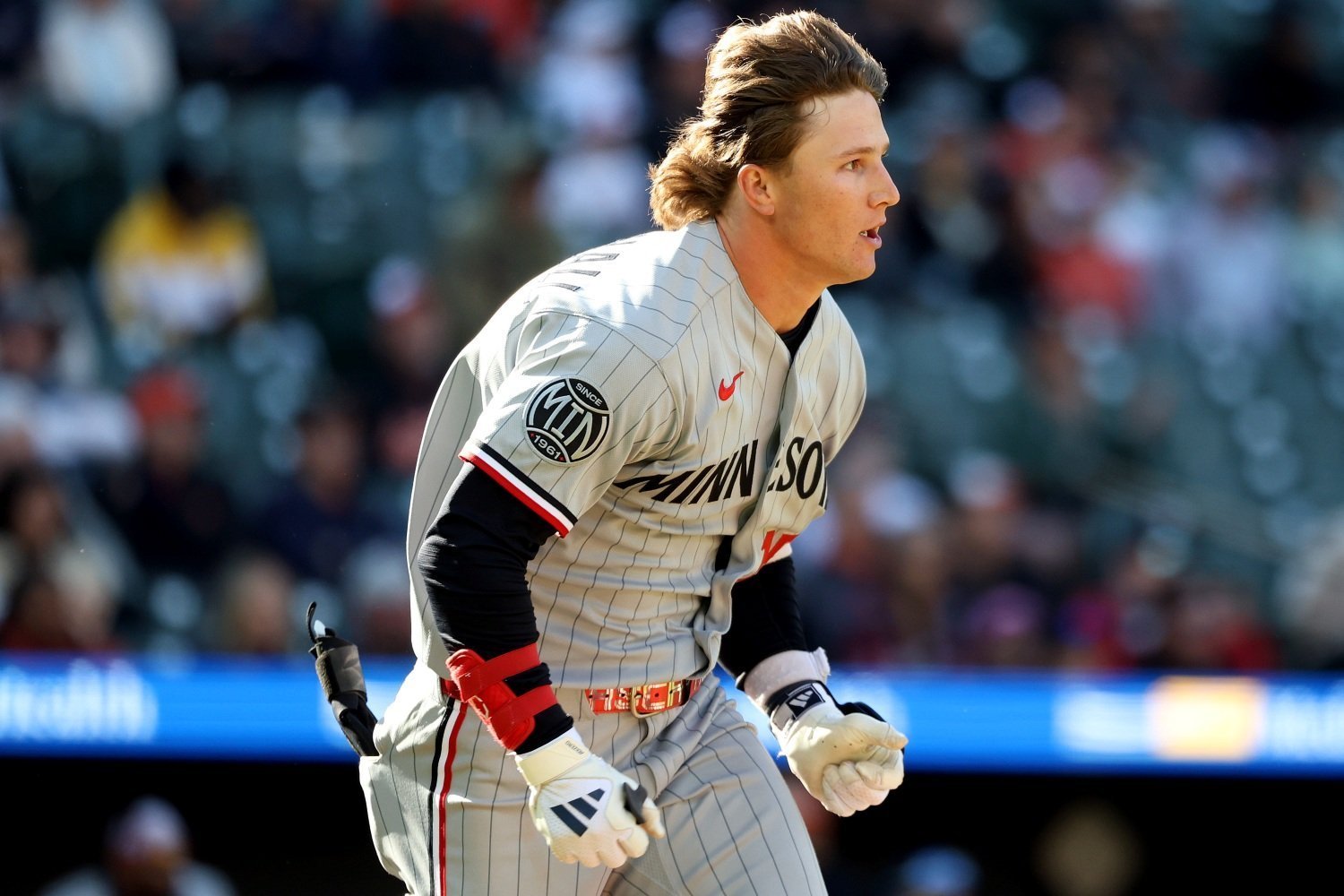 Expectations can be tricky in baseball. One year, a player bursts onto the scene and looks like a foundational piece. The next, the league adjusts, and suddenly, nothing comes easily. That’s what Luke Keaschall faces early in his sophomore season with the Twins. After an impressive rookie season where he slashed .302/.382/.445, Keaschall's sophomore start hasn’t been as smooth. Through Sunday, he is hitting just .209/.258/.279. On Saturday, manager Derek Shelton moved him down in the lineup for the first time this season, shifting him from third to fifth. On Sunday, with right-handed hurler Brady Singer on the mound for the opposing Reds, he slid to sixth. That move tells part of the story. Shelton began the season with confidence in Keaschall as a table-setter near the top of the order. The adjustment now signals a need to reset and a chance to take pressure off a young hitter still finding his footing at the big league level. Friday’s game against the Reds might have been the epitome of his struggles. Keaschall batted with the bases loaded in the third inning, two runners on base in the fifth inning, and two more runners in the seventh. None of those runners scored. In those three at-bats, Keaschall struck out on a called third strike, grounded into his first double play of the season, and hit an inning-ending groundout. After the game, he gathered with the team’s hitting coaches to break down his swing and his at-bats. “We’ll get it back,” said Keaschall after the game. “We’re a tick off. It can change quickly. That’s what I keep on thinking, and it’s going to happen soon.” That belief is shared inside the clubhouse as well. “Luke Keaschall has hit at every level. I mean, I can’t go back to his Little League stats, but I guarantee he raked there,” Shelton said. “It’s early in the season, and it’s also the first year he’s started the year in the big leagues. A lot of guys put more emphasis on that.” There’s a mental side to this as much as a physical one. Shelton acknowledged that moving Keaschall down in the lineup was designed to ease the burden, as Shelton felt Keaschall was putting “a little extra on himself.” As Keaschall looks for answers, he said his focus is on getting the most out of each day. “I think it’s just being in control of your movements and executing plans,” Keaschall said. “Right now, we’re not doing that the best. All you can do is get a little bit better each and every day.” The underlying numbers explain why the results haven’t been as strong. His 85.0 mph exit velocity and 24% Hard Hit rate both sit in the bottom 7% of the league. His exit velocity is down 1.2 mph compared to last season, and his hard-hit rate has dropped by 6.6%. That lack of authoritative contact has limited his ability to cause damage, even when he puts the ball in play. Pitchers have also adjusted their approach. He is seeing fewer fastballs, down 4% from last season, and he hasn't punished them when he gets them, posting just a .302 slugging average despite an xSLG that sits more than 100 points higher. That gap suggests there may be some bad luck involved, but it also highlights missed opportunities. Instead of fastballs, Keaschall is seeing a heavier dose of offspeed pitches. Last season, he torched those offerings to the tune of a .407 average and a .556 slugging, though the expected numbers hinted at regression. That regression has come quickly. This year, he is hitting just .211 against offspeed pitches and has yet to record an extra-base hit against them. Still, this is not a profile completely devoid of optimism. Keaschall continues to show strong plate discipline. His chase rate, per-swing whiff rate, and strikeout rate all rank in the 82nd percentile or better, and his 27.2% Squared-Up rate sits comfortably above league average, meaning he's getting his fair share of exit velocity from below-average bat speed. Those are indicators of a hitter who is not overmatched, but rather one who is just missing his best contact by a small margin. Sometimes, that margin is everything. Moving down in the lineup could give Keaschall space to recalibrate. Rather than setting the tone early, he can focus on simple at-bats and build momentum one swing at a time. For a Twins team that has leaned on young talent to exceed expectations, getting Keaschall back on track is an important piece of the puzzle. The foundation is still there. The approach remains sound. Now, it's about turning those underlying positives into production. If history is any indication, that turnaround may not be far away. What are your thoughts on Keaschall's sophomore performance? Leave a comment and start the discussion. View the full article
 -
Week in Review: Disaster Strikes on the Road for Royals
DiamondCentric posted an article in Royals Keep
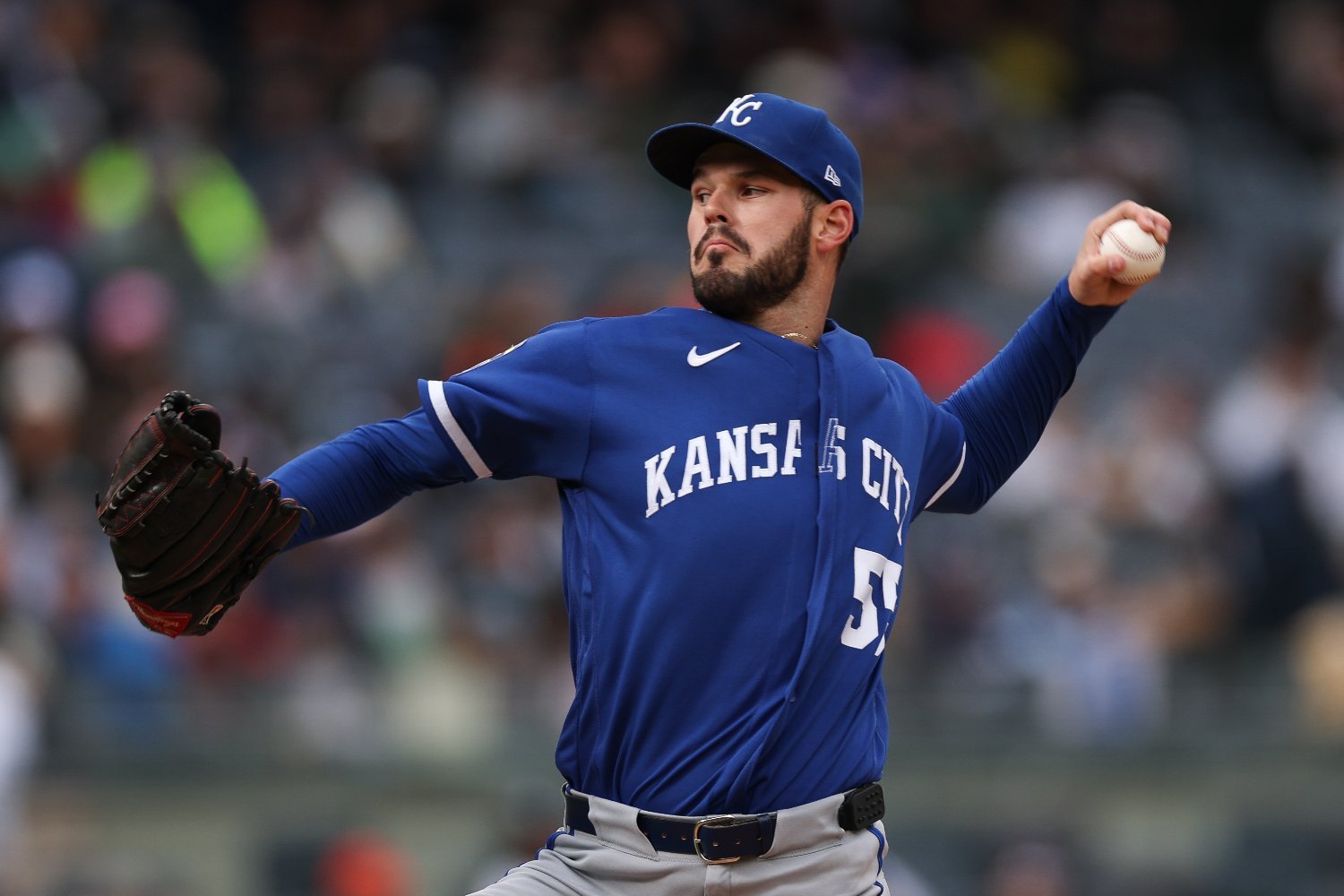 Week in a Nutshell After going 3-4 last week, the Royals needed at least a respectable showing in this road trip to Detroit and the Bronx this week. Thinking they were going to win the week was going to be a tough challenge, especially considering their offensive woes. However, it was entirely plausible that the Royals could've gone 3-3, or at least 2-4, and kept their head above water before returning home to Kauffman Stadium. Unfortunately, the optimism proved to be for naught. The Royals went 0-6 this week and were outscored by the Tigers and Yankees by a combined 21 runs. As a result, the Chicago White Sox are ahead in the standings. For those who can't read between the lines, that means the Royals are in last place in the American League Central. It's one thing to have a slow start to the season. But even with 140 games remaining, it seems like the Royals are in the midst of not just a disappointing campaign, but perhaps a nightmarish one, especially considering all the negative vibes from the Salvador Perez drama surrounding his benching on Saturday. 'The Royals have a bad offense, bad bullpen, bad record, and honestly, bad vibes right now in the clubhouse, with the Salvy and Carter Jensen "sleeping in" incidents being the prime examples. One has to wonder when and how the Royals will turn around the momentum after such an awful week of play in Detroit and New York. Record this Week: 0-6 Run Differential for the Week: -21 Record for the Year: 7-15 Run Differential for the Year: -32 Standing: 5th in the AL Central Game 17: DET 2, KC 1 It wasn't the prettiest Cole Ragans start, as he walked four and only struck out one in six innings of work. However, he allowed only one hit and zero runs, and Matt Strahm held the lead in the seventh. Unfortunately, Nick Mears allowed two runs in the eighth. Game 18: DET 2, KC 1 Seth Lugo and Jack Flaherty both battled in this one, with Lugo going 6.2 innings and striking out seven, while Flaherty also struck out seven in six innings. The Royals tied it up in the fifth after relinquishing an early lead. However, Eli Morgan was unable to keep the game tied in the eighth. Game 19: DET 10, KC 9 Kris Bubic had a tough start, allowing five runs on six hits and three walks in 4.2 innings of work. Even though the Royals were down 6-1, they scored six runs in the top of the seventh before the rain hit and caused a delay. Despite getting some insurance in the top of the ninth on a Vinnie Pasquantino home run, Lucas Erceg was unable to hold a two-run lead in the bottom of the ninth. Game 20: NYY 4, KC 2 Michael Wacha gave the Royals six strong innings and only allowed two runs on three hits and three hits while striking out six. Pasquantino hit his second home run of the year and had two hits. However, like the Detroit series, the Royals were unable to keep the game tied, as Alex Lange allowed a two-run home run to pinch-hitter Ryan McMahon. Game 21: NYY 13, KC 4 Noah Cameron struggled in the Bronx, allowing five earned runs on seven hits and two walks in four innings of work. Mitch Spence wasn't much better, as he allowed six runs on four hits and five walks in four innings of work. Carter Jensen hit his fifth home run of the year. Game 22: NYY 7, KC 0 The Royals' bullpen didn't allow a run in 3.2 innings of work. Also, Bobby Witt Jr. had two hits. However, it was a brutal game otherwise. Ragans did his best "Nuke Laloosh" impression, walking eight, striking out six, and allowing seven runs in 4.2 innings of work. News and Notes Early in the week, Stephen Kolek started a rehab assignment with Omaha. He's had a couple of outings and has a 2.16 ERA and 1.08 WHIP in 8.1 IP. On April 15th, Bailey Falter began his own rehab assignment. He had a 6.00 ERA and 1.67 WHIP in 3.0 IP with the Storm Chasers. He looked much stronger in his most recent outing on Sunday against Indianapolis. The biggest move the Royals made was on Sunday. They called up catcher Elias Diaz and pitcher Mason Black from Omaha and sent down Spence and utility player Tyler Tolbert to Triple-A. Furthermore, they added James McArthur to the 60-Day IL to make room for Diaz on the 40-man roster. Highlights Some of the Royals' struggling hitters showed some life at the plate this past week, which should help fans feel encouraged about their outlook for the remainder of the season. In 15 at-bats, Jac Caglianone hit .400 with a .971 OPS. That included six hits, a triple, and an RBI. Pasquantino only hit .167, but he launched his first two home runs of the season and posted a .700 OPS in 24 plate appearances. Jensen continued to show strong discipline at the plate this week, with his power on display in the Bronx. In 17 at-bats, he hit .235, walked three times, and posted an OBP of .350 and an OPS of .762. He also launched his fifth home run of the year on Saturday, which leads the team. On the pitching end, Lugo had the strongest performance of the rotation this past week, striking out seven and allowing only one run, five hits, and no walks. In four starts this year, Lugo is posting a 1.48 ERA and 0.99 WHIP with 21 strikeouts in 24.1 IP. Despite the Royals' struggles, the 36-year-old is looking more like his 2024 self. A reliever who had a nice week and didn't melt down was Daniel Lynch IV. In two appearances, he struck out two and didn't allow a hit, walk, or run in 1.1 IP. The TJ Stuff+ is still a bit below-average (99 overall TJ Stuff+), but he's been producing excellent chase, whiff, and xwOBACON metrics so far this season, as illustrated below. Lowlights To be frank, there are a lot more lowlights than highlights for the Royals this week, which isn't surprising for a team that went 0-6 this week. Here are some of the team stats from this week for Kansas City. Their .581 was the second-worst mark in baseball. Only the New York Mets, who have lost 11 times in a row, had a worse OPS at .534. Their .208 average was the fifth-worst mark in baseball this week, and their .256 OBP was the second-worst mark as well. The Royals' pitching staff's 6.66 ERA was the worst mark in baseball over the past week (somewhere, Dayton Moore is cringing). Their 1.66 WHIP was the second-worst mark in baseball this past week. They also issued 33 walks, the third-most walks over the same time period. Lastly, the pitching staff allowed 11 home runs, tied for fifth-most in baseball over the past seven days. Yep. That's rough. In terms of individual performances, Maikel Garcia had a brutal week at the plate. In 24 at-bats, he hit .125 with a .327 OPS. He also struck out seven times and walked only once. On April 11th, Maikel was hitting .328 with a .911 OPS. After his lackluster week, he is now hitting .256 with a .718 OPS. On the pitching end, Ragans struggled immensely, with some wondering if he'll ever match that 2024 form again. In two starts and 10.1 IP, Ragans posted a 6.10 ERA and 1.65 WHIP. He also walked an astonishing 12 batters while allowing just five hits and striking out seven. Frankly, Ragans' control has been a problem this year, and his inability to find the zone has led to a drop in chase and lackluster xwOBACON metrics. This is despite strong overall TJ Stuff+ numbers and whiff rates, as seen below. In 21 IP this year, Ragans has a 6.00 ERA, 7.34 FIP, and 1.67 WHIP. He's generating a 23.9% K%, which isn't as good as years past, but is still solid. However, his K-BB% is 4.3%, thanks to his 19.6% BB%. Those poor numbers explain his high FIP metrics. Furthermore, a decline in extension (down 0.2 feet from a year ago) could also be a reason why he's struggling to find the strike zone (45.5% zone rate) this season. Looking Ahead On a positive note, the Royals return to Kauffman Stadium for a weeklong homestand against the Baltimore Orioles and Los Angeles Angels. The Royals are 5-5 this year at home, much better than their 2-10 record on the road. Baltimore should be an easier matchup on paper. The Orioles are 10-12 and have had issues with starting pitching this season. They rank 18th in starter ERA and 25th in WHIP. Shane Baz and Chris Bassitt, whom the Royals are supposed to face this week, have ERA marks of 4.91 and 6.19. Thus, if the Royals want to win this series against the Orioles, they will have to chase Baltimore's pitching early. Gunnar Henderson (119 wRC+) and Taylor Ward (136 wRC+) are two hitters who will lead the Orioles on the offensive end. "Los Angeles" (come on, they're in Anaheim, which is in Orange County) will be a tougher challenge, though it has its flaws. The Angels are 11-12 and have lost two in a row after taking three of four in the Bronx earlier last week. They have a lot of guys who can mash, as Mike Trout (171 wRC+), Zach Neto (138 wRC+), Jo Adell (115 wRC+), and former Royals Jorge Soler (136 wRC+) and Adam Frazier (171 wRC+) are off to great starts. In fact, the Angels have the second-most home runs in Major League Baseball. However, the pitching is a bit shakier. The Angels rank 17th in ERA at 4.17, but their 5.14 BB/9 is the third-worst mark in baseball. The Royals also miss ace Jose Soriano in the weekend series at Kauffman, and Yusei Kikuchi, who likely will face Kansas City on Friday, has struggled this year with a 5.63 ERA. If they can set the tone against Kikuchi, the Royals could have a good shot against rookie Walber Urena on Saturday and Reid Detmers on Sunday night (they play a national game on NBC). View the full article
 -
You Can Spell 'Brice Turang' Without 'MVP', But Why Bother?
DiamondCentric posted an article in Brewer Fanatic
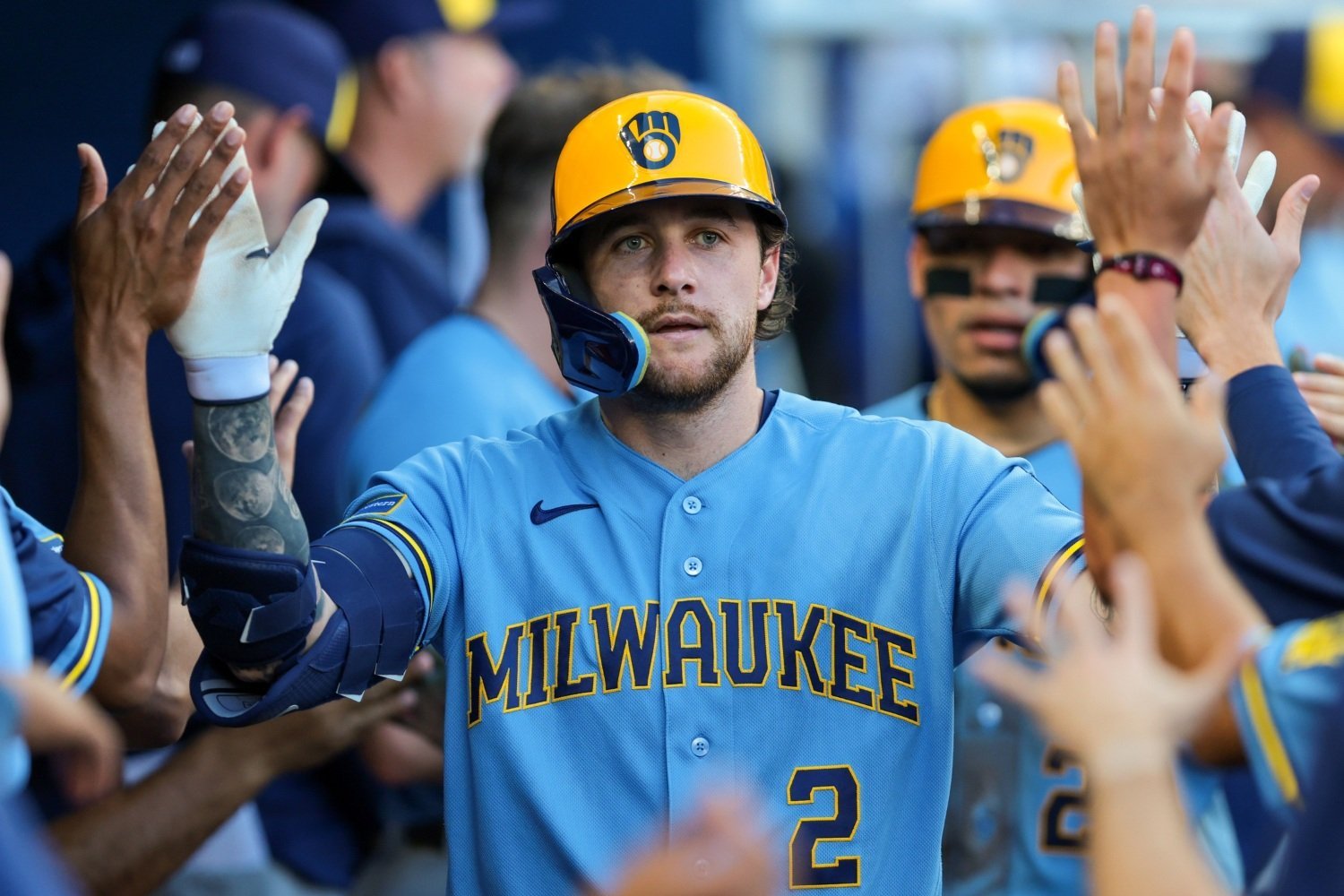 Strictly speaking, we've seen Brewers hitters quite a bit hotter than Brice Turang is right now. After 22 games, the second baseman is batting .300/.437/.571, which is mightily impressive, but during his bid to win back-to-back National League MVP Awards, Christian Yelich had stretches of this length during which his OPS eclipsed 1.500. It's not just Yelich (or famously raucous runs like the Linsanity version of Eric Thames), either. Keston Hiura had a stretch this long that was hotter. So did Yasmani Grandal. So did Gerardo Parra, way back in 2015. Try not to let yourself forget that this is still only theee and a half weeks of baseball, and that Turang has been great, but human. That said: how long has it been since you felt as good watching a Brewers hitter at bat as you do when watching Turang right now? You probably do have to drift back to the pre-pandemic edition of Yelich. It's not just results, right now. Turang's process feels immaculate, and incorruptible. That's not quite the reality; baseball will always humble you. But that's how it feels. Turang's game has gotten better each year of his career, and this season, the improvements are more pronounced than ever. First, of course, there's the bat path. No hitter in baseball has increased the average tilt of their swing more from 2025 to 2026 than has Turang—who had also increased his average tilt from 2023 to 2024, and from 2024 to 2025. He came into the league as a flat swinger, according to Statcast (29°, against a league average of roughly 32°), but he's now quite steep in his average approach to the ball (36°). It's a subtle-sounding difference, and it can be hard to see from one swing to the next, because hitters naturally adjust their swings based on what they're trying to do; what pitch type they anticipate, and what type they see out of the hand; and where the pitch is. To isolate it, then, let's look at four swings Turang has put on 1-0 four-seam fastballs in the middle vertical band of the zone, from right-handed pitchers with roughly average velocity—one each from 2023 through this year. Here's the 2023 case for study. QVlCenhfWGw0TUFRPT1fVWdZRVVRVUdVMVFBWEFFRFZBQUFCZ0pRQUFOWEFWY0FDMUpYVkZFTUFBcFdWZ1pY.mp4 I picked one of the rare times that Turang let it eat that year. Partially, that's because he didn't see that many pitches that fit these criteria that year, and partially, it's so we can all marvel at what a wandering babe he was back then. This really feels like looking at home movies of your kid, already, doesn't it? That version of Turang got beaten pretty easily by even pedestrian heat; there's a reason he hit .218/.285/.300 that season. Ok, here's 2024. YUs5TkFfWGw0TUFRPT1fRDFRRVZRZFdYbE1BQ2dOUVV3QUFCZ0FDQUZnREFnSUFVMU1NVVFVRVZBWURCQU5U.mp4 This ia a version of Turang that has learned to take an assertive hack without finding himself off-balance, but the limitations on his power are obvious here. He gets a better piece of this pitch, but still fouls off something hittable, in an advantage count. On to 2025. Nnk5ajJfWGw0TUFRPT1fRHdaWEJWRUNBQXNBQUFNQkJ3QUhDVlFIQUFNTld3TUFWZ0VDVWdGV1VGVUJCUVJl.mp4 I hope you can see some differences between those two clips. They're small, to be sure, but they're there. Turang found more bat speed in 2025, and took a more dangerous hack. He still fouled the ball off to the left side, but it was less because he was late and more because he was slashing through the ball, if you will, missing it slightly off the upper and outer side of the barrel. Now, let's look at a similar pitch earlier this year. TkFObmJfWGw0TUFRPT1fRGdrRkFnWlNWMVFBV2dGVUJBQUhCUWNIQUFBQkIxY0FWZ0JVVkFjRkFRRUFWRllE.mp4 Admittedly, choosing a homer for comparison serves my argument well, but it's part of the point I'm making. Turang has gotten much more efficient with the barrel this season, thanks to his improved bat path. At every level of the zone height-wise, his swing is steeper than it was even late last year, when he was starting to generate power. He's making a meaningfully different move to the baseball than he used to. To help you see that better, I've taken still frames of the moment just before his bat gets to the ball on each of the pitches above. I've also highlighted his bat position in each. Notice that the lines get both steeper (more tilt in the swing) and longer (he's getting the barrel out more before the ball arrives) as we move from the past to the present. Turang's raw, Statcast-reported bat speed is not meaningfully up this year, but the fact that it's almost exactly where it's been in the past with a steeper plane amounts to a boost in bat speed. He's not pulling the ball very much this season, but when you swing with a steeper bat path, you leave yourself more ways to make solid contact to the opposite field, if you don't get around the ball and yank it to the pull field. That's especially true for left-handed hitters, and it's something Pat Murphy and Brewers coaches have been nudging Turang toward understanding since this time last year. Selectivity has also paid off for Turang. The strike zone is a bit smaller this year, which has contributed to a drop in the share of pitches he sees being in the zone. Last season, 52.7% of opponents' pitches to Turang were in the zone. This year, that number is down to 46.4%. Accordingly. Turang's swing rate (which was just under 48% in 2023 and 2024) has dropped, from 44.3% in 2025 to 36.7%. Thence come his incredible 17 walks in 88 trips to the plate, with both that total and his walks-inflated .437 OBP ranking second in the National League. Meanwhile, the Brewers are doing exactly what they did last year with their infield defense, funneling as many balls into Turang's sphere of influence as possible, and he's continued to justify their faith. You can pick nits with his game—his speed is slightly diminished, and he's gotten more conservative on the bases; he has yet to utilize the ABS challenge system, missing a few chances to better his position within an at-bat—but it would seem ungrateful to do so. Turang has made a series of adjustments that make him one of the toughest outs in baseball, partially because he's also gotten more dangerous at the plate. Unlike hitters who have been similarly hot in recent memory, though, Turang also delivers baserunning and defensive value. He's carrying the Brewers offense, during a stretch in which the team is missing three of the five hitters on whom they were most relying coming into the season. He had one star turn when he suddenly launched 13 homers after August began last summer. He enjoyed another in the World Baseball Classic. In total, going back to the start of August, Turang is batting .297/.384/.538, in over half a season's worth of playing time. That's giving him credit for his showing in the WBC, but it also folds in his disastrously bad 2025 playoff stats. He's hit like an elite corner outfielder for the last nine months, coming out of an offseason even hotter than he was before it. Concrete changes tell us he's genuinely maturing into that dangerous a hitter, and he's still a plus defender at an up-the-middle position. The Brewers are watching as yet another player blossoms from solidity to stardom on their watch. View the full article
 -
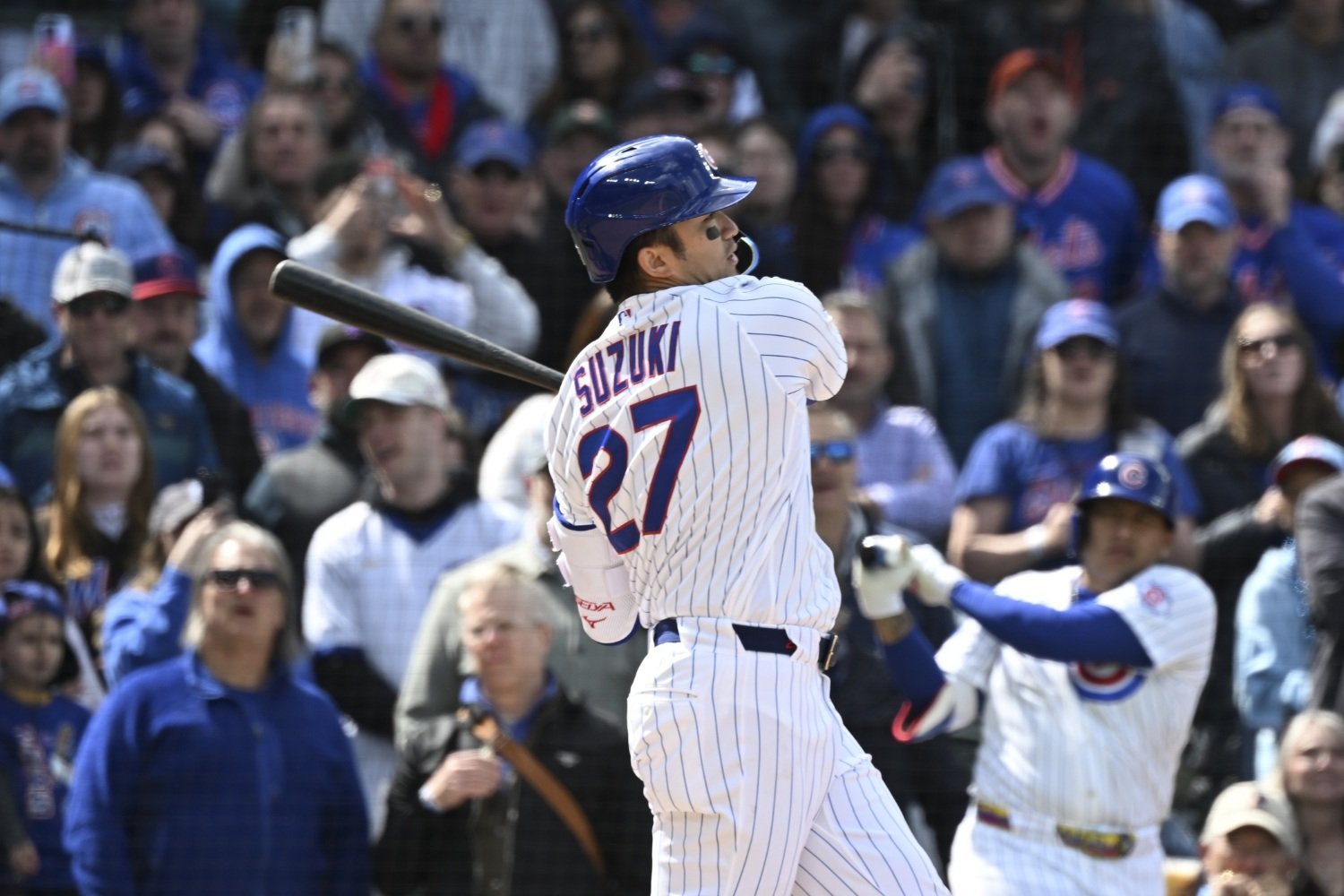 Since Seiya Suzuki’s return from injury on April 10, the Chicago Cubs’ offense has started to figure things out. Heading into action on that day, the North Siders had a 95 wRC+, according to FanGraphs, meaning that the offense was five percent worse than the league average. Since then, they've hit to the tune of a 136 wRC+. Of course, both the 'before' and the 'after' here are small samples, and this jump is not entirely (indeed, not even mostly) due to Suzuki’s presence. The Japanese outfielder has logged just one extra-base hit since returning, though he's still cobbled together a respectable 94 wRC+. That extra-base hit was this double from the game against the Mets on Friday: WERaNVhfWGw0TUFRPT1fQlZWVVZnQUhVMU1BQ1ZWVFVnQUhBZ0ZYQUZoUUJsVUFCMU5YVlFJREExY0RDRllB.mp4 We’ll all take that result—Suzuki included. Doubles don’t grow on trees. However, a double into the right-field corner is not the Seiya Suzuki we’re all used to seeing. Last season, he managed just six extra-base hits to the opposite field, according to Baseball Savant. None of them looked like that thing. Four of them were to right-center, really. One was a fly ball in West Sacramento last March that just kept carrying over a short wall in the corner. The other was this... thing. NXkyNDFfWGw0TUFRPT1fRDFjRFhRVUVVRlFBRGdSV1ZnQUhVZ0pmQUZnR1dnQUFDMXhYQmxaWENWRlZDQW9G.mp4 Hitting the ball hard has never been an issue for Suzuki. His average exit velocity has been in the top half of baseball every season since he came over from Japan, and in the top quarter for each of the past three seasons. While it's down so far this year, I'm not concerned about that rebounding some time soon. Suzuki broke out two seasons ago, and turned in a career high in home runs last season—when he started hitting more of those hard-hit balls in the air to the pull side of the field instead of on the ground, or to straightaway center field: Year Ground Ball % Fly Ball % Pull Air % Straight Air % 2022 40.7% 25.5% 9.7% 22.8% 2023 43.6% 24.0% 14.8% 24.2% 2024 33.7% 34.0% 15.2% 32.0% 2025 31.8% 34.7% 24.3% 24.8% The one extra-base hit that Suzuki has managed isn’t overwhelmingly concerning by itself, even if it is to the opposite field. Again, any extra-base hit is a good one. It's concerning that it is the only one, though, and it's indicative of the overall issue for the slugger so far this season: he has only pulled one ball in the air so far. That, alone, explains the complete lack of slug. Last season, hitters slugged 1.338 on fly balls to the pull side, and just .284 on fly balls to the opposite field. So how has he managed not to be an abject disaster at the plate? A 14.6% walk rate has yielded a .366 on-base percentage, which will do the trick. He still rarely chases, which is good. His approach doesn’t appear to have changed much. He did admit to Craig Counsell that the strike zone is a little "fuzzy" to him, though, according to the Cubs' broadcast team, and his swing reflects that struggle to see it well. When you have a guy who can’t pull the ball, that usually means there is a timing issue. This makes sense for a guy who had the start of his season derailed by an injury. Suzuki is playing like a guy who's still preparing for Opening Day. Let’s hope he starts to warm up soon. View the full article
 -
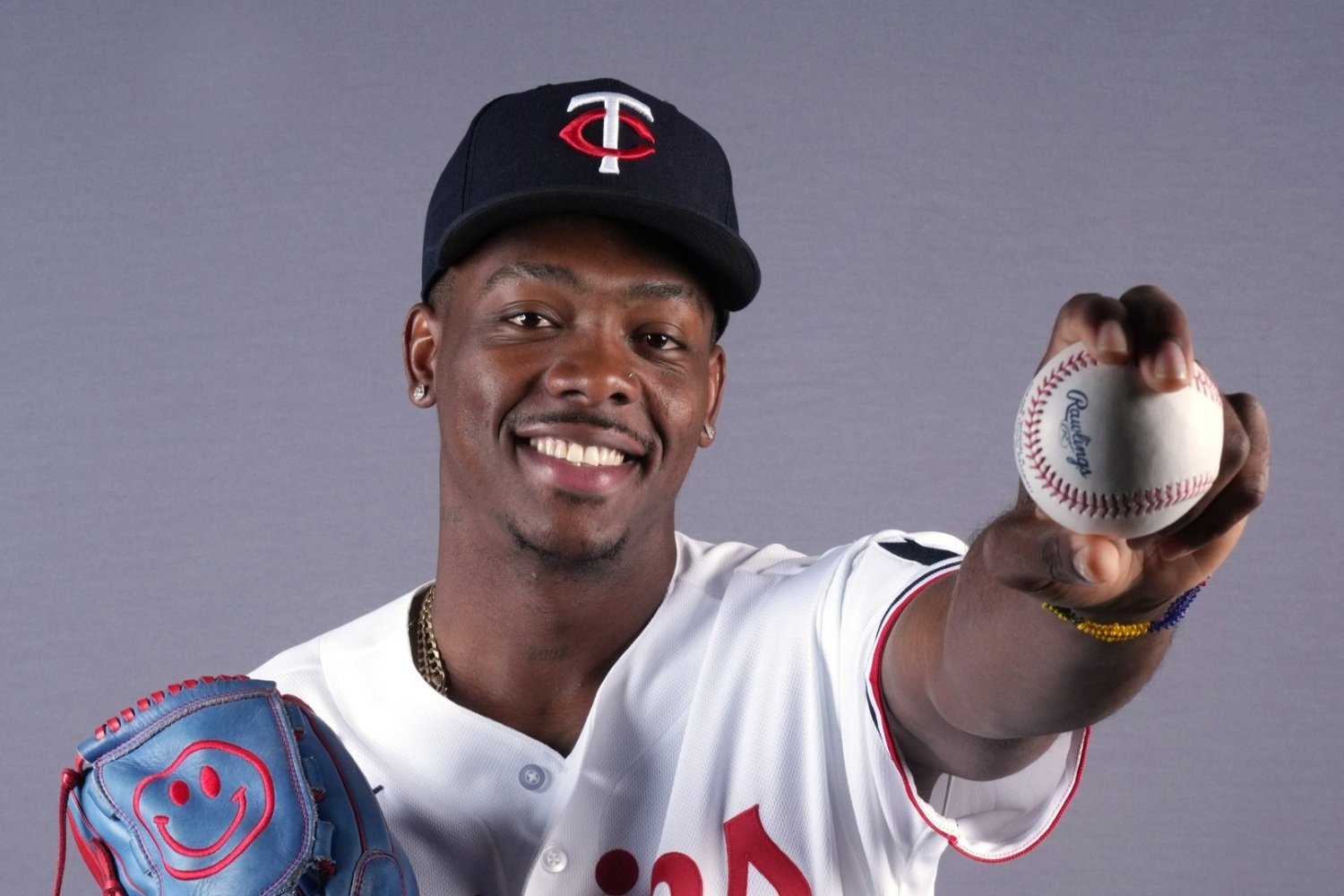 Top left-handed pitching prospects Kendry Rojas and Connor Prielipp will travel with the Twins to New York this week, as the team takes on the New York Mets in Queens. Rojas, 23, will officially be added to the team's roster to replace fellow southpaw Kody Funderburk, according to Dan Hayes of The Athletic. Funderburk will go on the paternity list, and could meet the team in St. Petersburg for their weekend series against the Rays. Prielipp, 25, is on the taxi squad, a COVID-era invention still utilized by teams to keep fresh players ready during road trips when there's some belief that they might need them. For Twins fans who mentally entered rebuilding mode as soon as the team undertook a selloff at the 2025 MLB trade deadline, Rojas and Prielipp have taken on outsized significance as symbols of the team's future. Rojas, at least, now looks to be part of their present, though his stay on the roster could be brief. The Twins have a travel day Monday before taking on the reeling Mets beginning on Tuesday. Some chance exists, of course, that the addition of Rojas (or even that of Prielipp, which isn't yet a true call-up but puts him at the ready for one) will prove permanent. A few weeks in, it's become suddenly clear how much the Twins need to upgrade their bullpen if they hope to remain competitive. After climbing to 11-7, they've lost four straight, and on Saturday and Sunday, they lsot consecutive games which they led by multiple runs after six innings. Justin Topa, Funderburk, Eric Orze and Cole Sands—the closest thing the team currently has to an 'A' bullpen—blew their lead one run at a time over the final three frames on Saturday. In Sunday's series finale, manager Derek Shelton tried to get a two-inning save from rookie Andrew Morris, who went to pieces in the second of those frames, giving up three runs to flip the score in the top of the ninth. Shelton hadn't trusted Garrett Acton enough to turn to him until the horses left the barn in the ninth, but he then stuck with Acton (amid a defensive meltdown) rather than turn to Anthony Banda against a left-handed batter in the Reds' three-run 10th. The Twins face a major deficit of trustworthy, bat-missing relievers. At their best, Rojas and Prielipp are eminently capable of ameliorating that. Rojas sits on the high side of 97 miles per hour with his fastball. If he makes his debut amid an electric New York atmosphere, he could touch 100 MPH. He also has a changeup and a slider that could be plus, if he can locate them well enough. So far, consistency—in location, for sure, but even in shape and broader execution—has proved too much to hope for with Rojas, but his arm is one of the system's most electric. He was the co-headliner of the Louis Varland trade with the Blue Jays last summer, and is certainly the higher-upside of the two prospects the team acquired in that deal. Prielipp is homegrown, and though he's older and doesn't throw quite as hard, he might have an even higher ceiling. Even on the other side of multiple surgeries, he flashes a top-of-the-scale slider. The two-plane curveball he's added to the mix this spring shows tremendous promise. In the long run, the Twins would like both Rojas and Prielipp to stick in the starting rotation. However, their track records with regard to both health and performance suggest that their best roles could be in the pen. For now, Rojas will be asked to reinforce a bullpen that hasn't garnered much confidence from Shelton. How long that remains his job might depend not only on when Funderburk returns, but on how Rojas and several of the incumbent arms in the pen perform in the days ahead. View the full article
 -
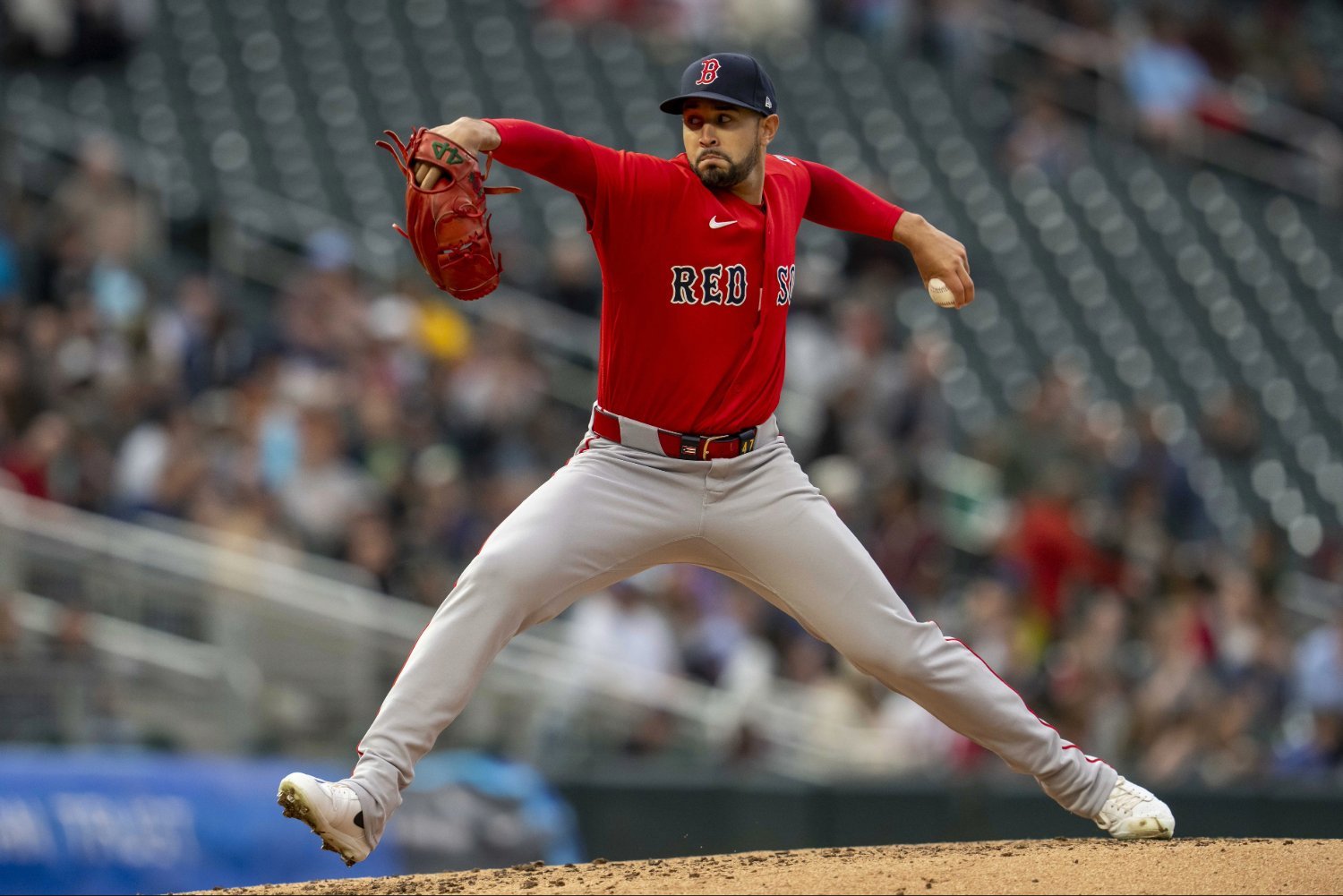 The 2026 season has been a rollercoaster of a ride for the Boston Red Sox. Their offense has been anemic at times, and their pitching has been wildly inconsistent. Of course, there's always a few bright spots to highlight, including a particular duo in the bullpen. The front office did little to mess with a (mostly) successful formula over the offseason, and the results have been mixed. There have been some disastrous outings (ahem, Greg Weissert), but the group has also been the most stable unit on the team thus far. Specifically, Alex Cora has been able to turn to Jovani Morán and Garrett Whitlock when needed, and more often than not, they’ve come through for him. Of course, with anything in life, there are moments where a sure thing falters, but with the current state of the Red Sox's bullpen, these two may be Cora’s most trusted relievers, save for Aroldis Chapman, who continues to handle the ninth inning during save opportunities. Whitlock's success is hardly surprising. In 2025, he was Cora’s best option out of the pen after struggling early in the season. By the end of the year he was lights out, tossing 72 innings and striking out 91 batters. So far in 2026, the strikeout numbers are even more impressive, as he's punched out 35.3% of opposing hitters while only allowing five hits and two earned runs. The right-hander has kept batters at bay despite having a career high 14.7% walk rate. That’s thanks in part to holding opponents to a .172 batting average. He's especially succeeding terms of contact quality. Over half of the balls in play against him have been on the ground this year, and less than 30% of that contact has been of the hard variety. His sudden inability to get hitters to chase outside the zone has led to the aforementioned spike in his walk rate, but even this less-whiff-heavy version of Whitlock has proven capable of dominating. As for Morán, the left-hander entered the season as a huge question mark, as he spent 2025 recovering from surgery. While he did make a cameo with Boston, Morán was not a certainty to make the Opening Day roster. And after winning one, he’s continued to excel out of the bullpen for Boston. In six outings, Morán has provided length for the Red Sox, as he’s tossed 13 1/3 innings and allowed just two runs on five hits and six walks. He’s also struck out 15 batters thanks to his five-pitch arsenal (with three of them being his main pitches). Tossing a fastball, changeup, cutter, sweeper and curveball, Morán has been able to keep batters guessing and away from hard contact. Entering the week, Moran ranks near the top of major league baseball (93rd percentile) in whiff rate at 36.8% and is in the 91st percentile when it comes to hard-hit rate at 26.7%, hence how he's keeping opposing batters to a minuscule .111 batting average. His FIP is nearly two runs higher than his ERA (1.35) at 3.20, so it can be questioned if he’s been getting a little lucky so far in the season. Then again, he’s still striking opposing batters out at a 29.4% rate, so whatever good fortune he's getting is at least somewhat earned. Having a closer as sturdy as Chapman is valuable for the most obvious reasons. It's the bridge guys who have to keep games close in the middle and late innings that are often the unsung heroes of a win. The presence of Whitlock and Morán in the bullpen is a huge one as the team continues to navigate the loss of Justin Slaten and inconsistency from not just Weissert, but also Ryan Watson and Zack Kelly. View the full article
 -
New York Mets 2026 Top Prospects Rankings: Nos. 6-10
DiamondCentric posted an article in Grand Central Mets
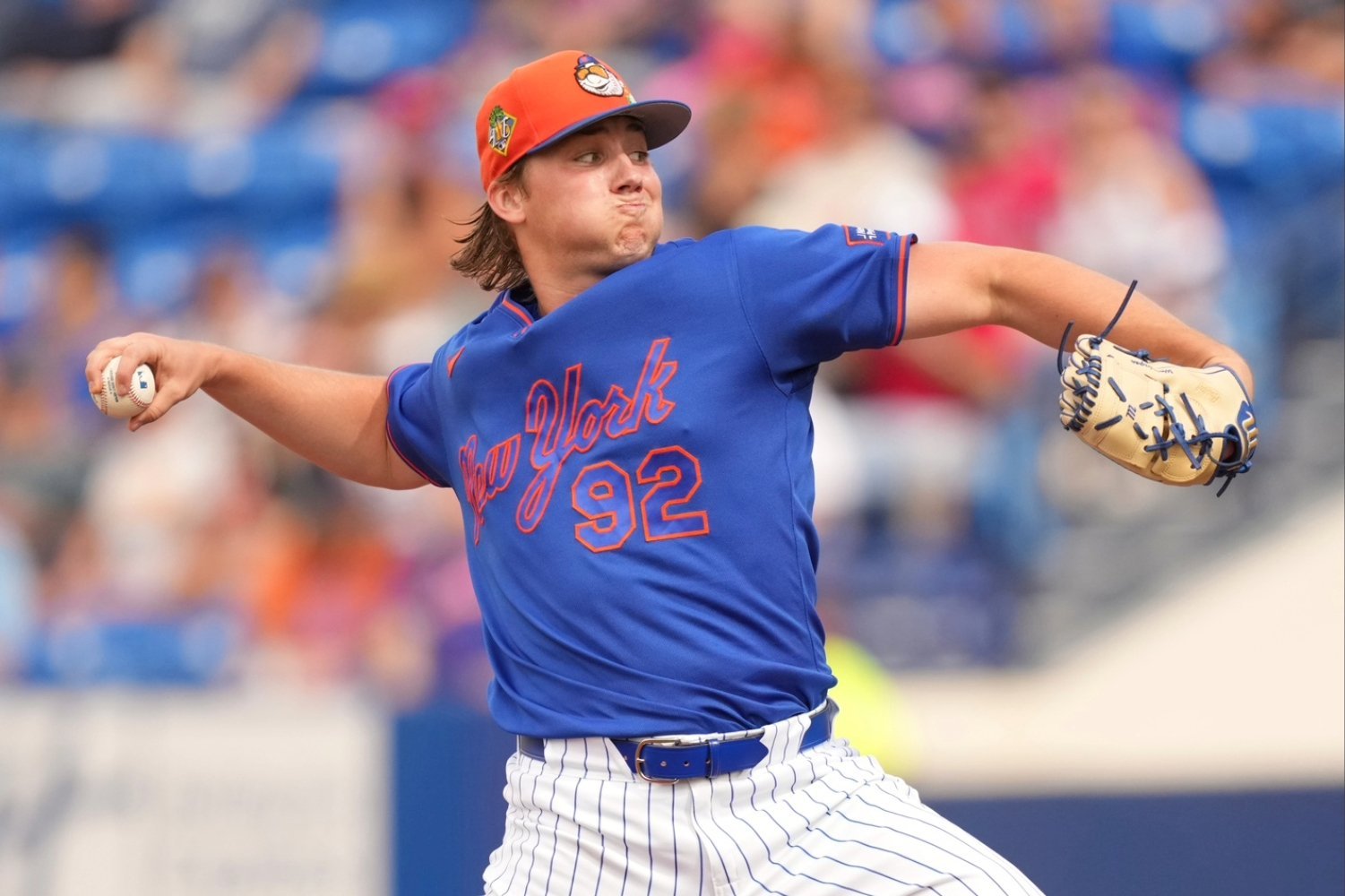 The New York Mets' farm system remains loaded with notable prospects, and now that Grand Central Mets' Top 20 rankings have reached the top ten, we can really hone in on those with huge upside and long-term star potential. If you missed any of the prospects ranked 11-20, you can find them here (11-15) and here (16-20). No. 10 Nick Morabito (Syracuse Mets) Morabito is an outfielder who the Mets drafted in the second round of the 2022 draft out of Gonzaga College High School. He’s definitely a speed and defense first outfielder with little power, but has shown to be a solid contact hitter in the minors. In seasons where he has logged at-least 475 at-bats, his isolated power has not exceeded .112 and has been as low as .086. His 70-grade speed is by far his best tool and it’s shown so far. He totalled 59 stolen bags in 2024, and stole 49 last year. His smaller frame of 5’10”, 185 pounds fits his style of play well. He’s shown defensive versatility and has played all three outfield spots in the minors. Since making his affiliated debut in 2022 with the FCL Mets, he has steadily climbed through the system logging time at every affiliate in the Mets system. So far across five minor league seasons, he’s got a slash line of .293/.383/.391 with 56 doubles and only 12 home runs. In 2024 at High-A, he posted a .294 batting average with a 18.7% strikeout rate. Last year in Double-A, his batting average dropped to .273, while his strikeout rate climbed to 23.4%. Morabito was assigned to the Triple-A Syracuse Mets this season, where he’s looked good so far. Entering his age-23 season and showing that he can play at all levels, he is projected to debut in the majors sometime this season after being added to the 40-man over the winter. No. 9 Mitch Voit (Brooklyn Cyclones) Voit was the Mets' first-round draft pick last summer, selected 38th overall out of the University of Michigan. He spent three seasons with Michigan, two of them as a two-way player. He decided not to pitch anymore during his junior year, after undergoing internal brace surgery on his throwing arm in 2024. After being drafted last summer, he later made his affiliated debut with the Single-A St. Lucie Mets, where he appeared in 22 games, proving below-average offensive results. He only collected three extra-base hits including a home run, while hitting for a .235 average with a 89 wRC+. His poor .059 isolated power tells us that he didn’t hit for much power at all. He did show solid plate discipline walking 13.1% of the time, but he did strike out at a 24.2% clip as well. By stealing 20 bags, he also provided some nice value on the basepaths. He’s a very versatile defender, and appeared at every position except catcher while in college. So far while in the Mets system, he’s only logged innings at second, third, and short. His arm strength is considered a plus tool. Even though he showed minimal power in his first minor-league season, it is something that will come with time and development. He’s got 50-grade power and hit 35 home runs while in college. This year, entering his age-21 season, he was promoted to the Brooklyn Cyclones, the High-A Mets affiliate. He is projected to make his major league debut around 2028. His defensive versatility could help him climb faster through the minors, opening more opportunities at various levels. No. 8 Elian Pena (St. Lucie Mets) Pena was the No. 3 ranked international prospect in the class of 2025 per MLB Pipeline, behind only Roki Sasaki and Josuar Gonzalez. He was signed by the Mets as a 17-year old and to a deal worth $5 million. Pena was given an overall grade of 60 and has five average-to-above average tools, his best being his hit tool, but he’s also really talented defensively. Pena is a lefty batter who throws right, and still has some growing to do. He stands 5’10” weighing 180 pounds, signaling he still has room to add muscle to his frame. Last year, Pena was assigned to the Dominican Summer League to play for the DSL Mets Orange during his age-17 season. He showed signs of being an all-around offensive player as he hit for average and power, hence his .236 ISO, while being a threat on the basepaths and drawing walks. Across 55 games, Pena posted a slash line of .292/.421/.528 while hitting nine home runs and thirteen doubles. His plate discipline is what really elevates his game, though; he walked and struck out 36 times each, giving him an elite 16.1 strikeout percentage and walk percentage. Pena also swiped 21 bags, only being caught four times. This year, Pena was assigned to the St. Lucie Mets, which is the Single-A affiliate of the organization. Still only 18 years old, he is just about three years younger than the average player in Single-A this season, making him far ahead of schedule in his development. Francisco Lindor is a free agent after the 2031 season, which is a little after Pena is projected to debut in the majors. If he keeps developing and producing, he’s on track to be the Mets' shortstop of the future. No. 7 Jack Wenninger (Syracuse Mets) Wenninger has spent four seasons in the Mets' minor-league system since being drafted in the sixth round of the 2023 MLB draft out of the University of Illinois. He was part of a Mets draft class including notable arms Nolan McLean and Brandon Sproat. He stands 6’4” with a high arm angle, making him an intimidating presence on the mound. He’s moved through the minors as a starting pitcher with 47 of his 54 outings coming as a starter. Wenninger features a four-pitch mix headlined by his nasty splitter, as well with a four-seamer, curveball, and slider. His fastball has sat around 95 mph, but has touched 98. His deadly splitter is part of what has fueled his 10.3 SO/9 ratio in the minors. After being drafted in 2023, he made his affiliated debut later in the year but only pitched 2.1 innings across two games coming at rookie ball and Single-A. Wenninger split the 2024 season between Single-A and High-A. His ERA was high at Single-A at 5.90, but improved to 4.57 with the High-A Brooklyn Cyclones. Between both levels, he struck out an impressive 11 batters per nine. He also did a great job of not allowing home runs, only allowing 11 across 150 innings. Last year, we saw him spend the whole season with the Binghamton Rumble Ponies, the Mets' Double-A affiliate. He had a really good year spanning 26 starts, pitching to an impressive 2.92 ERA with a 1.15 WHIP. His theme of tons of strikeouts and limiting long balls continued, which was really good to see at a higher level of play. In 2024, Wenninger’s FIP outpaced his ERA, but last year in Double-A, his 3.36 FIP was the higher of the two. Now 24 years old and starting this season in Triple-A, he is on track to debut at some point this year or next year in the majors. He is projected to be a middle-to-back end starter at the big-league level. Even though he’ll likely be major-league ready at some point this year, it might be hard for him to find his way on the roster considering that Jonah Tong and Christian Scott are also sitting in Triple-A. Wenninger will also be Rule 5 eligible this winter, making him a near-lock to be added to the 40-man in the offseason if he has to wait until 2027 for his debut. No. 6 Jacob Reimer (Binghamton Rumble Ponies) Reimer is a first and third baseman whom the Mets selected in the fourth round of the 2022 MLB Draft out of Yucaipa High School in California. Reimer was committed to the University of Washington, but instead got drafted and signed for $775,000. Since then, he’s seen time at all minor league levels except for Triple-A. He is a 22-year-old standing six feet and weighing 205 pounds. He hits for power with an average hit tool, but has below average speed and defense. Reimer saw brief minor-league action in 2022 appearing in seven games for the FCL Mets, posting an .892 OPS while walking more than he struck out. He’s since bounced around spending time at multiple levels each season. He spent the 2023 season across three levels from rookie ball to High-A while hitting for a .265 average and a .774 OPS. That year, he drew a good amount of walks while maintaining an average strikeout rate. His 2024 campaign was delayed due to a hamstring injury he suffered during spring, training limiting him to only 25 games. His batting average fell to .218 , and didn’t hit for much power. His wRC+ sat at a league-average 100. He had a great bounce-back season last year, bringing his prospect stock back up. He split the season between High-A and Double-A playing in 61 games at each level. He mashed in High-A posting a 163 wRC+ with eight homers; he saw a slight dip at Double-A with a 150 wRC+, but did hit nine home runs. His power returned with an impressive .209 ISO mark, coming from 32 doubles, five triples, and 17 homers. Overall last season, he had a solid 11.1 walk percentage and a 21.5 strikeout rate, with an above-average .338 BABIP. If Reimer builds on his success from last year, a call-up to Syracuse should be in his near future. Like Wenninger, he will be eligible for the Rule 5 draft this winter and will have to be added to the 40-man roster by then if the Mets don't want to potentially lose him to another club. View the full article
 -
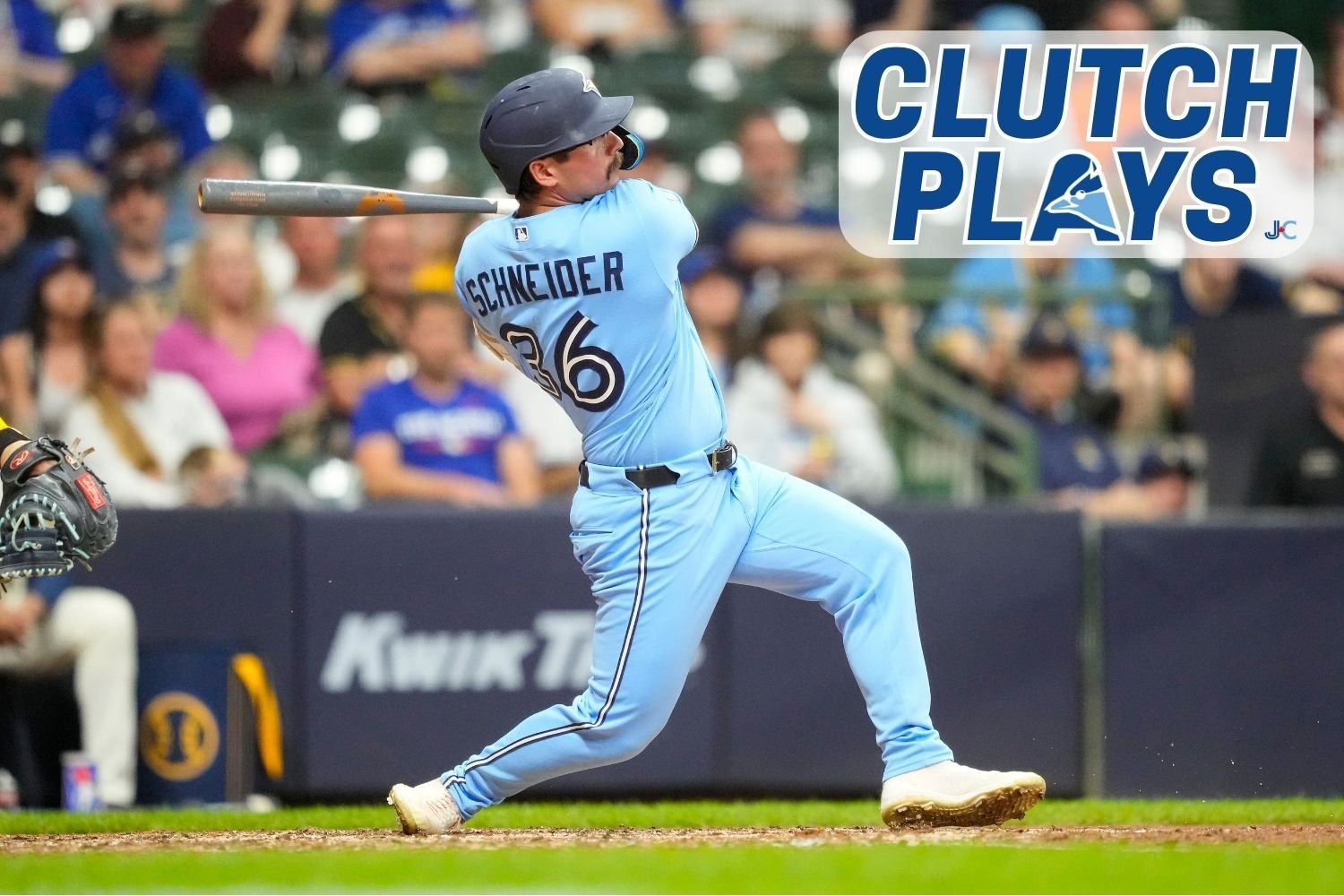 Welcome back to Blue Jays Clutch Plays, a recurring post that highlights the six most pivotal plays (three pitching, three hitting) from the past week of Blue Jays baseball, according to MLB's win probability model. Click here to read last week's edition. It's been a trying opening month for the Blue Jays as they dropped two out of three in both Milwaukee and Arizona this week. Saturday's late defeat to the Diamondbacks marked their sixth consecutive series loss, which hadn't happened since 2012. They once again failed to make it through the week without someone getting hurt, as Daulton Varsho departed Friday with discomfort in the quad/knee area, although it was decided medical imaging wasn't necessary. The bats continued to be ice-cold before cathartically waking up on Sunday, as an eight-run first inning helped them avoid getting swept in the desert. Anaheim will be the last stop on the Jays' three-city road trip this week before they return home to face the Guardians on the weekend. Pitching 3. Louis Varland: Joey Ortiz Strikeout, Bot 9, 4/14 (+9.9% wPA) Louis Varland's tightrope act on Tuesday night reignited talks about who should be closing games for the Blue Jays. After Jeff Hoffman walked Garrett Mitchell to load the bases and place the winning run just 90 feet away, Varland came in and struck out Joey Ortiz on three pitches, blowing him away with a 99-mph fastball up and in to send the game to extras. The series opener against the Brewers contained many twists and turns, with nine total runs being scored in the ninth and 10th innings, but it was Varland slamming the door that paved the way for the offense to come through in the next frame. 2. Jeff Hoffman: Gary Sanchez Strikeout, Bot 9, 4/14 (+9.9% wPA) Even after he gave up a run and put the tying run in scoring position on Tuesday, Hoffman put himself in a good position to hang onto the lead after striking out Gary Sanchez with a fastball perfectly positioned above the belt. According to Statcast, the Blue Jays had a 75% chance of winning after this play, but the next three batters reached before Varland was called upon to get the final out. In addition to blowing this save opportunity, Hoffman gave up a tiebreaking grand slam to Corbin Carroll in the eighth inning on Saturday. 1. Max Scherzer: Lourdes Gurriel Jr. Strikeout, Bot 4, 4/18 (+9.9% wPA) It's not usual that a strikeout in the fourth inning of a tie game stands as the most pivotal play in an entire week for a pitching staff, but this Max Scherzer strikeout became a big win probability swing for Toronto, as Tyler Heineman was credited with a caught stealing on the play after former Blue Jay Lourdes Gurriel Jr. interfered with his throw to second base. Geraldo Perdomo beat the throw, but the Jays successfully challenged for interference on the part of Gurriel to turn it into a double play. Props to the video department. Hitting 3. Myles Straw: 2-RBI Double, Top 10, 4/14 (+24.5% wPA) It was quite the week at the plate for Myles Straw, who cashed in the eventual winning run on Tuesday with this laser down the left field line before homering on Friday in Arizona. The Blue Jays had already plated one in the inning, but a one-run lead isn't often safe with the extra innings ghost runner. Straw turned on an inner-half fastball from sidearm reliever Grant Anderson and lined it into the corner for some key insurance runs on the way to a series-opening win over the Brewers. 2. Vladimir Guerrero Jr.: RBI Double, Top 10, 4/14 (+28.7% wPA) Vladimir Guerrero Jr. was the one who initially broke that scoreless tie in the 10th, scoring Ernie Clement from second on a screeching 111-mph liner off the base of the wall in left-center field. Guerrero has been seeing a lot of good breaking balls early in the season after his postseason tirade, but he can make anyone pay for hanging a sweeper like this. He would experience some frustration later in this series, failing to come through in multiple key spots during the Blue Jays' consecutive 2-1 losses to the Brewers on Wednesday and Thursday, but this was his most crucial hit in what was a productive week overall. 1. Davis Schneider: Ground-Rule Double, Top 9, 4/14 (+33.8% wPA) The latest Clutch Play of the Week was brought to you by Davis Schneider, who drilled a fastball over the center-field wall on a bounce for a double. Plays like these give a proper glimpse into how win probability works: Kazuma Okamoto's game-tying single, Andrés Giménez's go-ahead RBI groundout, and Ernie Clement's RBI single drove in the runs that actually flipped the scoreboard in the ninth, but it was Schneider's hit that went down as the most pivotal one in that sequence because it put the go-ahead run in scoring position with nobody out. View the full article
 -
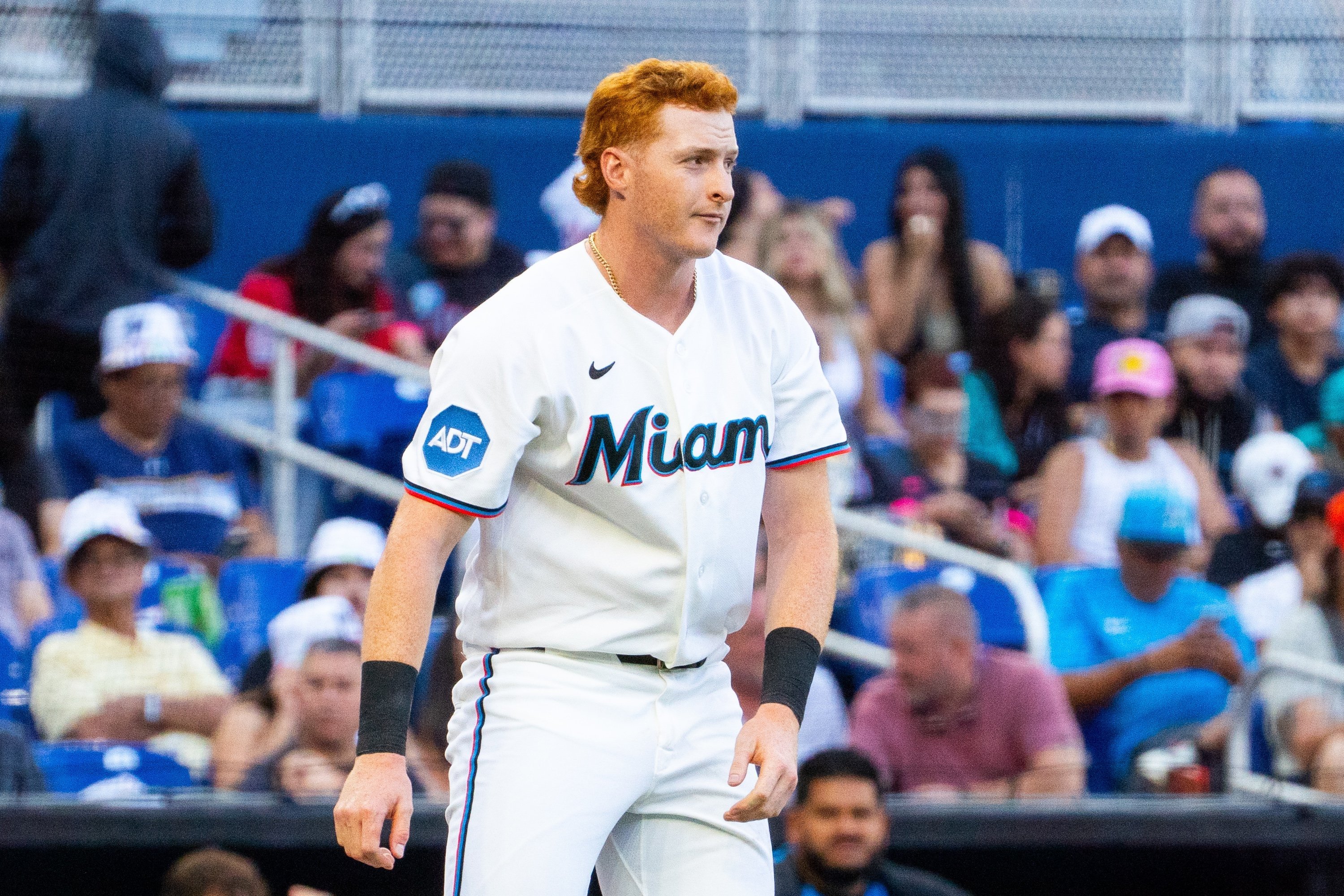 It's still too early in the MLB season to judge a player based on their overall offensive production. We need a much larger sample size before commissioning Otto Lopez's Marlins Legends Hall of Fame plaque or dismissing Jakob Marsee as a flash in the pan. In that vein, rookie outfielder Owen Caissie has flown under the radar ever since his opening weekend walk-off home run. That is because entering Monday, his 2026 numbers are right in line with where leading projection systems said he'd be. The 23-year-old left-handed-hitter owns a .246/.294/.426 slash line and a 96 wRC+, frequently producing hard contact...when he actually makes contact. Some stats stabilize quicker than others, and therein lies the concern with Caissie. His strikeout rate (42.6 K%) is the highest in MLB among all hitters with comparable playing time. It won't be possible for him to have a significant long-term role with the Fish unless he improves in that area. Prior to 2026, Caissie's only big league experience was a 12-game cup of coffee with the Chicago Cubs last summer. He remains very young for this level with all but one of the pitchers he has faced as a Marlin being older than him. On the other hand, he had nearly two full seasons at Triple-A to prepare. Whatever caveats you want to apply to Caissie, he finds himself in an exclusive, mostly undesirable club to begin his Marlins tenure. Through his first 20 games with the franchise, he has the third-highest strikeout total (29) of any position player, according to Stathead, trailing only Alex Jackson (35) and Giancarlo Stanton (33). Player Span Started Span Ended SO PA Alex Jackson 2021-08-02 2021-08-26 35 66 Giancarlo Stanton 2010-06-08 2010-07-02 33 85 Owen Caissie 2026-03-27 2026-04-19 29 68 Jerar Encarnacion 2022-06-19 2022-09-12 28 70 Lewis Brinson 2018-03-29 2018-04-22 28 79 Garrett Jones 2014-03-31 2014-04-22 28 86 Avisaíl García 2022-04-08 2022-05-03 27 82 Curtis Granderson 2019-03-29 2019-04-23 27 74 Chad Wallach 2018-03-29 2019-04-11 27 67 Stanton is a historical outlier who skipped Triple-A entirely on his way to Miami and was nearly three years younger than Caissie is now. Also, an inflated K rate is more forgivable for a right-handed hitter considering that they are at a platoon disadvantage most of the time. The other names above fall into two distinct groups: those on the verge of ending their MLB careers and those who would never become competent hitters in the first place. On the bright side, there is another comparable Marlin who was only one strikeout shy of appearing in that table himself. Kyle Stowers compiled 26 Ks in his first 20 contests upon arriving via trade; from his 21st game onward, Stowers has been elite. If Caissie also swung-and-missed at a league-worst rate, it would be difficult to see him turning the corner, but his strikeout issue is more nuanced than that. Ten of his strikeouts have come on called third strikes. As Marlins bench coach Carson Vitale elaborated on prior to Sunday's game, Caissie's improvement will hinge more on swing decisions than swing mechanics. Even if Stowers newly reinstated from the injured list... View the full article
 -
What are your Marlins vs. Cardinals series predictions?
DiamondCentric posted an article in Fish On First
 Once again in 2026, I will be monitoring Miami Marlins predictions from our valued SuperSubs, Fish On First staffers and livestream guests. Individual article pages like this one will be created prior to every Marlins series and featured prominently on the FOF site. Consistent participation is key if you want to win this annual contest. Submissions only take a few seconds. Scoring system A "perfect" series is worth three points: Earn one point for predicting which team will win the upcoming series Earn one point for predicting the precise number of victories for each team Earn one point for predicting the “Series MVP” who accumulated the highest win probability added (WPA) during the series as calculated by FanGraphs (could pick a player from either team) Here is a reminder of what the 2025 season leaderboard looked like. FOF staffer Jeremiah Geiger currently sit atop the 2026 leaderboard, which will be updated between every Marlins series. If you are a SuperSub, leave a comment with your Prediction Time picks on this page, or join the Marlins Discord Server and submit there. We'll feature them on the upcoming Fish On First LIVE episode and track your points throughout the season! Any picks submitted prior to the first pitch of the series opener will be counted. If you are not a SuperSub, please consider signing up here to support the FOF staff. Series preview notes Probable starting pitchers: RHP Max Meyer (MIA) vs. RHP Michael McGreevy (STL) on Monday RHP Chris Paddack (MIA) vs. RHP Dustin May (STL) on Tuesday RHP Janson Junk (MIA) vs. RHP Kyle Leahy (STL) on Wednesday The Marlins rank 15th in MLB with a 101 wRC+ and 17th in MLB with a 4.15 FIP. They are 3-7 in their last 10 games and have a 8-5 record at home this season. The following Marlins players are on the injured list: Maximo Acosta (10-day IL), Griffin Conine (10-day IL), Ronny Henriquez (60-day IL), Adam Mazur (60-day IL), Christopher Morel (10-day IL) and Esteury Ruiz (10-day IL). The Cardinals rank 13th in MLB with a 103 wRC+ and 27th in MLB with a 4.84 FIP. They are 7-3 in their last 10 games and have a 6-3 record on the road this season. The following Cardinals players are on the injured list: Hunter Dobbins (15-day IL), Lars Nootbaar (60-day IL) and Matt Pushard (15-day IL). View the full article
 -
Twins Minor League Report 4/19: Eric Wagaman Finds His Footing
DiamondCentric posted an article in Twins Daily
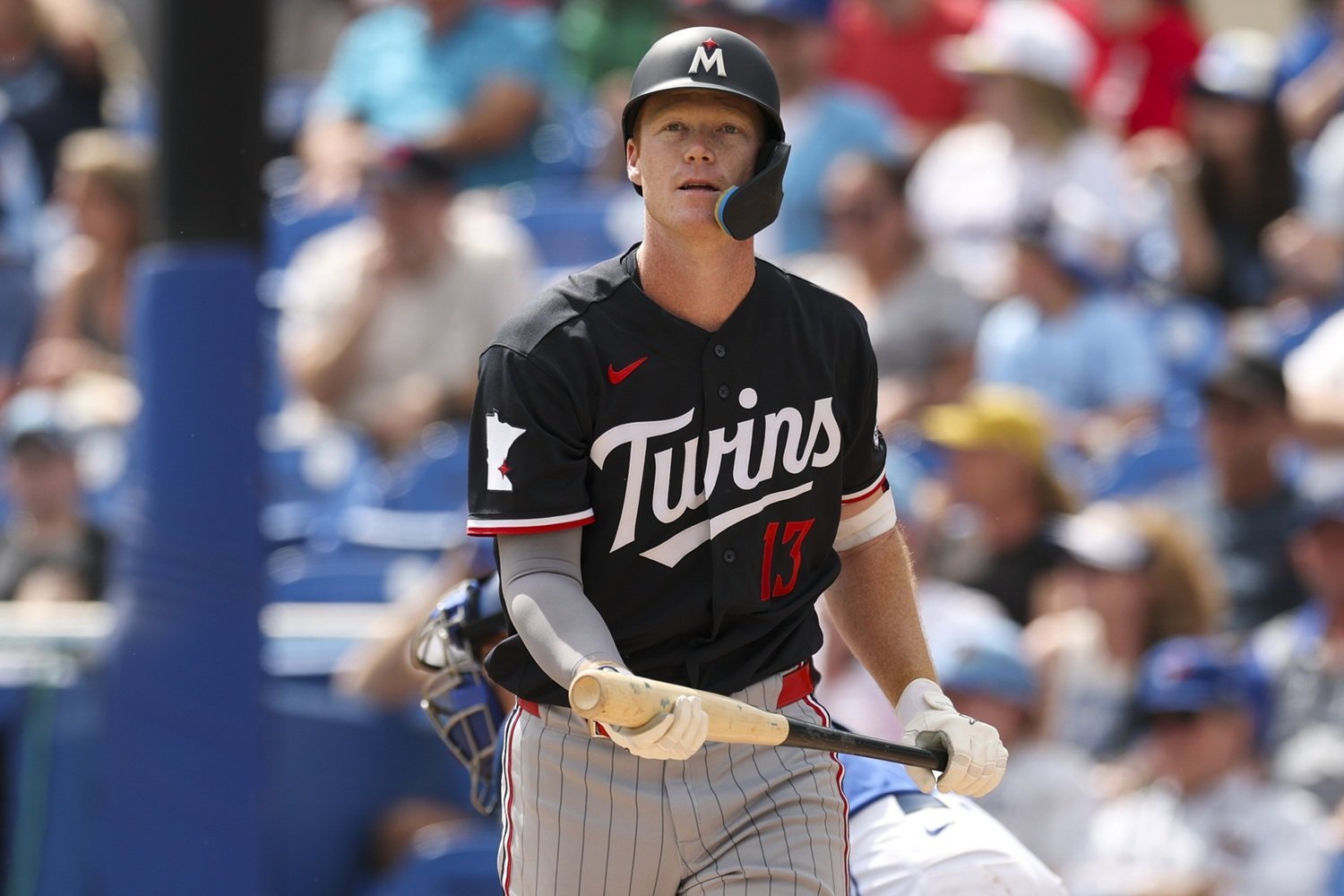 TRANSACTIONS Right-handed pitcher Jose Olivares started his rehab assignments with the Fort Myers Mighty Mussels. Right-handed pitcher Ricky Castro was assigned to St. Paul from Wichita. RHP Cory Lewis was returned to the Saints roster. Skor North's Declan Goff tweeted on Sunday night that he's hearing that LHP Kendry Rojas was being called up to the Twins. Presumably, he will be taking the roster spot of Kody Funderburk who Audra Martin reported earlier in the week was going on the paternity list. SAINTS SENTINEL St. Paul 12, Lehigh Valley 8 Box Score The Saints offense showed up in a big way on Sunday. St. Paul racked up 13 hits and drew six walks, and it felt like the lineup was putting pressure on Lehigh Valley all afternoon. The biggest swing of the game came during a six-run third inning. Walker Jenkins got it started with a single and came around to score on a Gabriel Gonzalez double in the very next at-bat. After Emmanuel Rodriguez worked one of his three walks, Orlando Arcia and Kyler Fedko followed with back-to-back doubles to make it 5-1. Eric Wagaman capped off the inning with his first home run of the season, a two-run shot that pushed the lead to 7-1. Wagaman wasn’t done either. He finished with three hits, including a triple later in the game that helped spark another rally. Lehigh Valley didn’t go away quietly, though. The IronPigs chipped away and eventually tied the game at eight in the top of the eighth inning, setting up a tense finish. The Saints answered immediately. Wagaman led off the bottom half with that triple to right-center, and Kaelen Culpepper followed with an RBI single to give St. Paul the lead back. After Tanner Schobel and Jenkins reached, Rodriguez delivered the knockout blow: a bases-clearing double that came off the bat at 110 MPH. Royce Lewis continued his rehab assignment and stayed hot, launching his second home run in as many days. He also got the start at third base after serving as the DH the day before. On the mound, it was far from clean. The Saints allowed 16 hits, but didn’t issue a single walk, which helped limit the damage just enough. John Klein started and gave up two runs over 3 1/3 innings while striking out three. Zak Kent picked up the win after working the ninth. Every starter recorded at least one hit (aside from Noah Cardenas), with Wagaman, Fedko, and Gonzalez all putting together multi-hit performances. WIND SURGE WISDOM Wichita 3, Springfield 1 Box Score This one was quiet for a while, and then it wasn’t. The Wind Surge managed just six hits on the day, and for most of the game, it looked like that might not be enough. Wichita held a 1-1 tie heading into the eighth inning before finally breaking through. Kala’i Rosario provided the big swing, launching his third home run of the season to give Wichita a 2-1 lead. They weren’t done there either. Garrett Spain followed with a two-out double, and Jorel Ortega brought him home with an RBI single to add some insurance. That was more than enough for the pitching staff. Sam Armstrong set the tone with 4 2/3 strong innings, and the bullpen took it from there. Jarret Whorff, Darren Bowen, and Luis Quinones combined to finish things off, with the group allowing just seven total baserunners and one run across the entire game. Not flashy offensively, but clean, efficient, and more than enough. KERNELS CHRONICLE Cedar Rapids 0, Quad Cities 8 Box Score There was a splattering in Cedar Rapids this afternoon. The Kernels ran into issues pretty much everywhere you don’t want them—defense, strikeouts, and situational hitting. They struck out 13 times as a team and committed three errors, which made for a long afternoon. Jay Thomason was one of the few bright spots, collecting two of the team’s four hits and adding his second stolen base of the season. Eduardo Tait didn’t record a hit but did draw a pair of walks. Cedar Rapids had chances but couldn’t capitalize, going 0-for-8 with runners in scoring position. What makes the final score even tougher to swallow is how well parts of the pitching staff actually threw the ball. Of the eight runs allowed, just one was earned. Starter Nolan Santos was solid, tossing five innings of one-run ball with five strikeouts. The lone run he allowed was unearned. The staff as a whole struck out 12 and walked four, which is typically a winning formula. But when the defense doesn’t hold up and the offense can’t push anything across, it doesn’t really matter. MIGHTY MATTERS Ft. Myers 5, Lakeland 0 Box Score it was about as clean as it gets for Fort Myers today. The Mighty Mussels wrapped up their week with a dominant, well-rounded win, led by an outstanding performance on the mound. Jose Olivares set the tone with three perfect innings to start the game, striking out four. From there, Kolten Smith, Matthew DesMarets, and Eric Hammond combined to finish things off, allowing just four hits and two walks over the final six innings while striking out nine. Lakeland never really had a chance to get anything going. Offensively, Fort Myers did most of its damage early. Four of their five runs came in the first three innings. Dameury Pena got things rolling immediately, doubling to lead off the first and eventually scoring on a balk. In the second inning, three walks loaded the bases, and Pena came through again with a two-run knock to make it 3-0. In the third, Irvin Nunez reached on an error, and Eduardo Beltre followed with an RBI hit to extend the lead. The final run came in the sixth inning, when Byron Chourio delivered a two-out RBI double. Pena finished 2-for-4 with a double, a run, and two RBI, and he’s now slashing an impressive .429/.529/.476 to start his season. PLAYERS OF THE DAY Hitter of the Day Eric Wagaman (St. Paul): 3-4, HR(1), 3B(1), 2B(1), 2 R, 2 RBI Pitcher of the Day Jose Olivares (Fort Myers): 3 IP, 0 H, 0 R, 0 BB, 4 K, 40 pitches, 25 strikes (62.5% strikes) PROSPECT SUMMARY Check out the Prospect Tracker for much more on our Twins Top 20 prospects after today's results. #1 - OF Walker Jenkins (St. Paul) - 1-for-4, 1 BB, 2 R, K (batted third, played CF) #2 - IF Kaelen Culpepper (St. Paul) - 1-for-3, 2 BB, 2 R, RBI (batted first, played SS) #3 - OF Emmanuel Rodriguez (St. Paul) - 1-for-2, 3 BB, 2B(3), R, 3 RBI (batted fifth, DHd) #4 - C Eduardo Tait (Cedar Rapids) - 0-for-2, 2 BB (batted second, DHd) #5 - LHP Connor Prielipp (St. Paul) - Did Not Pitch #6 - LHP Dasan Hill (Cedar Rapids) - Did Not Pitch #7 - OF Gabriel Gonzalez (St. Paul) - 2-for-5, 2B(4), R (batted fourth, played LF) #8 - LHP Kendry Rojas (St. Paul) - Did Not Pitch #9 - SS Marek Houston (Cedar Rapids) - 0-for-4 (batted first, played SS) #10 - RHP Charlee Soto (Cedar Rapids) - Injured List #11 - RHP Riley Quick (Ft. Myers) - Did Not Pitch #12 - RHP Andrew Morris (Minnesota) - 1 1/3 IP, 3 H, 3 ER, 2 BB, 2 K, 47 pitches, 27 strikes (57.4%) #13 - 3B/CF Brandon Winokur (Cedar Rapids) - 0-for-4, 4 K (batted fourth, played 3B) #14 - 3B/SS Quentin Young (Ft. Myers) - Did Not Play #15 - RHP Marco Raya (St. Paul) - Did Not Pitch #16 - OF Hendry Mendez (Wichita) - 0-for-4, 3 K (batted third, played LF) #17 - 2B/OF Kyle DeBarge (Wichita) - 0-for-2, 2 BB, 2 K (batted first, played SS) #18 - RHP C.J. Culpepper (Wichita) - Did Not Pitch #19 - C/OF Khadim Diaw (Cedar Rapids) - 0-for-3, BB, K (batted third, played C) #20 - RHP James Ellwanger (Ft. Myers) - Did Not Pitch UPCOMING SCHEDULE Tuesday: St. Paul @ Indianapolis (5:35 pm CT) Wichita @ NW Arkansas (7:05 pm CT) Cedar Rapids @ Peoria (6:05 pm CT) Dunedin @ Ft. Myers (6:05 CT) CURRENT W-L Records Minnesota Twins: 11-11 St. Paul Saints: 9-11 Wichita Wind Surge: 9-6 Cedar Rapids Kernels: 7-8 Fort Myers Mighty Mussels: 9-6 FCL Twins: 0-0 (season begins Monday, May 4) DSL Twins: 0-0 (season begins Monday, June 1) View the full article
 -
 Fish On First staffers react to the latest Miami Marlins series and prepare you for what lies ahead. Sunday's show was hosted by Alex Carver and featured panelists Ely Sussman, Kevin Barral, Jeremiah Geiger and Alex Krutchik. The following topics were covered: Eury Pérez's impressive outing Kyle Stowers' return and potential usage at first base Sandy Alcantara matching a career-high in walks When will the Marlins move Agustín Ramírez off the catcher position? Clayton McCullough's first ejection of 2026 Owen Caissie' s league-leading strikeout rate Previewing and predicting the next series against the St. Louis Cardinals You can find Fish Unfiltered and Fish On First LIVE on the Fish On First YouTube channel, Apple Podcasts, Spotify or wherever else you get your pods. Our next FOF LIVE episode will be Wednesday at approximately 4:00 p.m. ET following the Marlins-Cardinals series finale. View the full article
 -
 The Triple-A El Paso Chihuahuas split their two games with Round Rock, as Sean Boyle tossed five scoreless innings in a 5-2 win before a 4-1 loss. Abraham Parra delivered five strong frames as the High-A Fort Wayne TinCaps powered past Lake County 9-6 behind home runs from Kavares Tears, Jake Cunningham, and Jonathan Vastine. Carlos Medina spun 2 2/3 scoreless for Low-A Lake Elsinore in a 3-2 walk-off loss, while the Double-A San Antonio Missions were shut out 7-0. Padres Minor-League Transactions No roster moves Boyle, Miranda Power Chihuahuas To Split With Express The El Paso Chihuahuas pulled away from the Round Rock Express for a 5-2 victory on the road in the completion of Saturday's suspended game. The Chihuahuas dropped the regularly scheduled game 4-1. After being interrupted by rain after two innings and the score 1-1, Sean Boyle delivered the headlining performance, working five shutout innings of two-hit, shutout ball with five strikeouts and one walk to earn the win. Triston McKenzie opened the game and gave the Chihuahuas two innings, allowing one run on two hits with two strikeouts and three walks. Yuki Matsui, continuing his rehab assignment, surrendered a run in the eighth on two hits with two strikeouts, and Ethan Routzahn closed the door with a 1-2-3 ninth, striking out one to record the save. At the plate, Jose Miranda led the way, finishing 3-for-3 with a double, a home run and three RBIs. Jase Bowen added a pair of hits, including his team-leading fifth homer, while scoring twice. Pablo Reyes went 2-for-4 with an RBI, a run scored, and a stolen base. The Chihuahuas broke the game open with a three-run fourth to go up 5-1. In the regularly scheduled game, the Chihuahuas couldn't get the offense going. Starter Evan Fitterer worked 2⅔ innings and allowed one run on five hits with one walk and two strikeouts, surrendering a run in the bottom of the first. Logan Gillaspie followed with 1⅓ scoreless innings of relief, walking one and striking out two. Justin Yeager took the loss after surrendering two runs on a home run in 1⅓ innings, and Alek Jacob walked three and gave up a run in two-thirds of an inning during a three-run Round Rock sixth that put the game out of reach. At the plate, Sung-Mun Song led the offense with two hits in three at-bats. Bowen contributed the team's only extra-base hit, a double, and Carlos Rodríguez and Nate Mondou each added a single. Nick Schnell drove in the lone Chihuahuas run with a single in the fourth inning. FIRST GAME Player AB R H RBI BB K Jase Bowen 5 2 2 1 0 1 Samad Taylor 3 0 0 0 1 2 Sung-Mun Song 4 0 0 0 0 2 Nick Solak 2 0 0 0 2 0 Pablo Reyes 4 1 2 1 0 1 Mason McCoy 3 1 0 0 1 2 Jose Miranda 3 1 3 3 0 0 Clay Dungan 0 0 0 0 0 0 Carlos Rodríguez 3 0 0 0 1 1 Colton Vincent 4 0 0 0 0 1 Player IP H R ER BB K HR Triston McKenzie 2 2 1 1 3 2 0 Sean Boyle 5 2 0 0 1 5 0 Yuki Matsui 1 2 1 1 0 2 0 Ethan Routzahn 1 0 0 0 0 1 0 SECOND GAME Player AB R H RBI BB K Jase Bowen 3 0 1 0 0 0 Carlos Rodríguez 3 0 1 0 0 0 Sung-Mun Song 3 0 2 0 0 1 Marcos Castañon 3 1 0 0 0 0 Nate Mondou 3 0 1 0 0 0 Mason McCoy 3 0 0 0 0 0 Nick Schnell 3 0 1 1 0 1 Clay Dungan 3 0 0 0 0 1 Anthony Vilar 2 0 0 0 0 1 Player IP H R ER BB K HR Evan Fitterer 2 2/3 5 1 1 1 2 0 Logan Gillaspie 1 1/3 0 0 0 1 2 0 Justin Yeager 1 1/3 2 2 2 2 0 1 Alek Jacob 2/3 1 1 1 3 0 0 Missions' Bats Silenced By RockHounds The San Antonio Missions were shut out 7-0 by the Midland RockHounds in a road loss. Starter Jagger Haynes worked 4⅓ innings and took the loss, allowing four runs on six hits with two walks and one strikeout while serving up a home run. Andrew Thurman struggled out of the bullpen, giving up two runs in one-third of an inning with three walks. Fernando Sanchez followed and surrendered one run on two hits in his inning of work, walking one. Francis Peña tossed 1⅓ scoreless innings, allowing one hit while striking out two and walking one. Manuel Castro provided a clean inning of relief, allowing one hit with no walks or strikeouts. Offensively, the Missions managed six hits but could not push a run across. Leandro Cedeño led the way by going 2-for-4. Braedon Karpathios and Kai Murphy each chipped in a double. Player AB R H RBI BB K Carson Tucker 3 0 0 0 1 0 Braedon Karpathios 4 0 1 0 0 3 Leandro Cedeño 4 0 2 0 0 1 Tirso Ornelas 4 0 0 0 0 0 Ryan Jackson 4 0 1 0 0 1 Kai Murphy 3 0 1 0 0 1 Francisco Acuna 3 0 1 0 1 2 Kai Roberts 4 0 0 0 0 2 Chris Sargent 3 0 0 0 0 2 Player IP H R ER BB K HR Jagger Haynes 4 1/3 6 4 4 2 1 1 Andrew Thurman 1/3 2 2 2 3 0 0 Fernando Sanchez 1 2 1 1 1 0 0 Francis Peña 1 1/3 1 0 0 1 2 0 Manuel Castro 1 1 0 0 0 0 0 Tears' 3-Run Blast Powers TinCaps Past Captains The Fort Wayne TinCaps used a three-homer attack to top the Lake County Captains 9-6 on the road. Kavares Tears powered the offense with a three-run home run, also drawing two walks. Jake Cunningham went 3-for-5 with a double, a home run and two runs. Jonathan Vastine also homered. Lamar King Jr. added three hits, including a double, a run, and an RBI. Rosman Verdugo collected two hits and drove in two, while Alex McCoy finished 2-for-5 with a double, extending his Midwest League-leading hitting streak to 11 games. Starter Abraham Parra delivered a strong outing, working five innings of two-hit ball with three strikeouts and one walk while allowing one unearned run. Tucker Musgrove picked up the win despite giving up two runs on a home run in his inning of work, walking one. Braian Salazar surrendered three runs on one hit in 1⅓ innings with three walks and two strikeouts. C.J. Widger nailed down the save with two strikeouts, a walk, and a hit allowed in the ninth. Player AB R H RBI BB K Jake Cunningham 5 2 3 1 0 1 Rosman Verdugo 5 2 2 2 0 0 Lamar King Jr. 5 1 3 1 0 1 Alex McCoy 5 1 2 0 0 2 Kavares Tears 3 1 1 3 2 0 Jack Costello 5 0 0 0 0 0 Oswaldo Linares 4 0 0 0 0 2 Jonathan Vastine 4 1 1 1 0 2 Dylan Grego 4 1 1 0 0 0 Player IP H R ER BB K HR Abraham Parra 5 2 1 0 1 3 0 Tucker Musgrove 1 2 2 2 1 0 1 Braian Salazar 1 1/3 1 3 3 3 2 0 Kleiber Olmedo 2/3 0 0 0 0 0 0 C.J. Widger 1 1 0 0 1 2 0 Storm Drop Walk-Off Heartbreaker To Ports The Lake Elsinore Storm fell 3-2 to the Stockton Ports on a walk-off in the bottom of the ninth. The walk-off, with two outs, was the third by the Ports in this series, including two in extra innings to begin the set. The Storm grabbed a run in the third and another in the fourth before being blanked the rest of the way. Jorge Quintana finished 1-for-3 with a double, an RBI, and a walk. Ryan Wideman went 1-for-4 with a double, a run scored, and a strikeout. Kale Fountain reached three times, going 1-for-2 with two walks and a run. Starter Carlos Medina worked 2⅔ scoreless innings, allowing two hits with two strikeouts and one walk. Vicarte Domingo followed with 2⅓ hitless innings of relief, striking out three and issuing no walks. Javier Chacon allowed one run on a solo home run over 2⅓ innings, with one walk and one strikeout. Sean Barnett delivered a scoreless two-thirds of an inning with two strikeouts and one hit allowed. Ethan Long took the loss after surrendering two unearned runs on two hits in two-thirds of an inning in the ninth, walking two and striking out one. Player AB R H RBI BB K Ryan Wideman 4 1 1 0 0 1 Justin DeCriscio 4 0 0 0 0 1 Bradley Frye 4 0 1 0 0 1 Truitt Madonna 4 0 0 0 0 0 Kale Fountain 2 1 1 0 2 0 Jorge Quintana 3 0 1 1 1 0 Luke Cantwell 4 0 0 0 0 1 George Bilecki 3 0 1 0 0 0 Jose Verdugo 3 0 0 0 0 0 Player IP H R ER BB K HR Carlos Medina 2 2/3 2 0 0 1 2 0 Vicarte Domingo 2 1/3 0 0 0 0 3 0 Javier Chacon 2 1/3 1 1 1 1 1 1 Sean Barnett 2/3 1 0 0 0 2 0 Ethan Long 2/3 2 2 0 2 1 0 Padres Top-20 Prospect Performance Kash Mayfield: DNP Ethan Salas: DNP Kruz Schoolcraft: DNP Bradgley Rodriguez: DNP Humberto Cruz: DNP Miguel Mendez: DNP Ty Harvey: DNP Jorge Quintana: 1-for-3, 2B, RBI, BB Kale Fountain: 1-for-2, R, 2 BB Ryan Wideman: 1-for-4, 2B, R, K Jagger Haynes: 4 1/3 IP, 6 H, 4 R, 4 ER, 2 BB, 1 K, HR (L) Lamar King Jr: 3-for-5, 2B, RBI, R, K Romeo Sanabria: DNP Truitt Madonna: 0-for-4 Michael Salina: DNP Garrett Hawkins: DNP Kavares Tears: 1-for-3, HR, 3 RBI, R, 2 BB Deivid Coronil: DNP Francis Pena: 1 1/3 IP, 1 H, 0 R, 0 ER, 1 BB, 2 K Bryan Balzer: DNP View the full article
 -
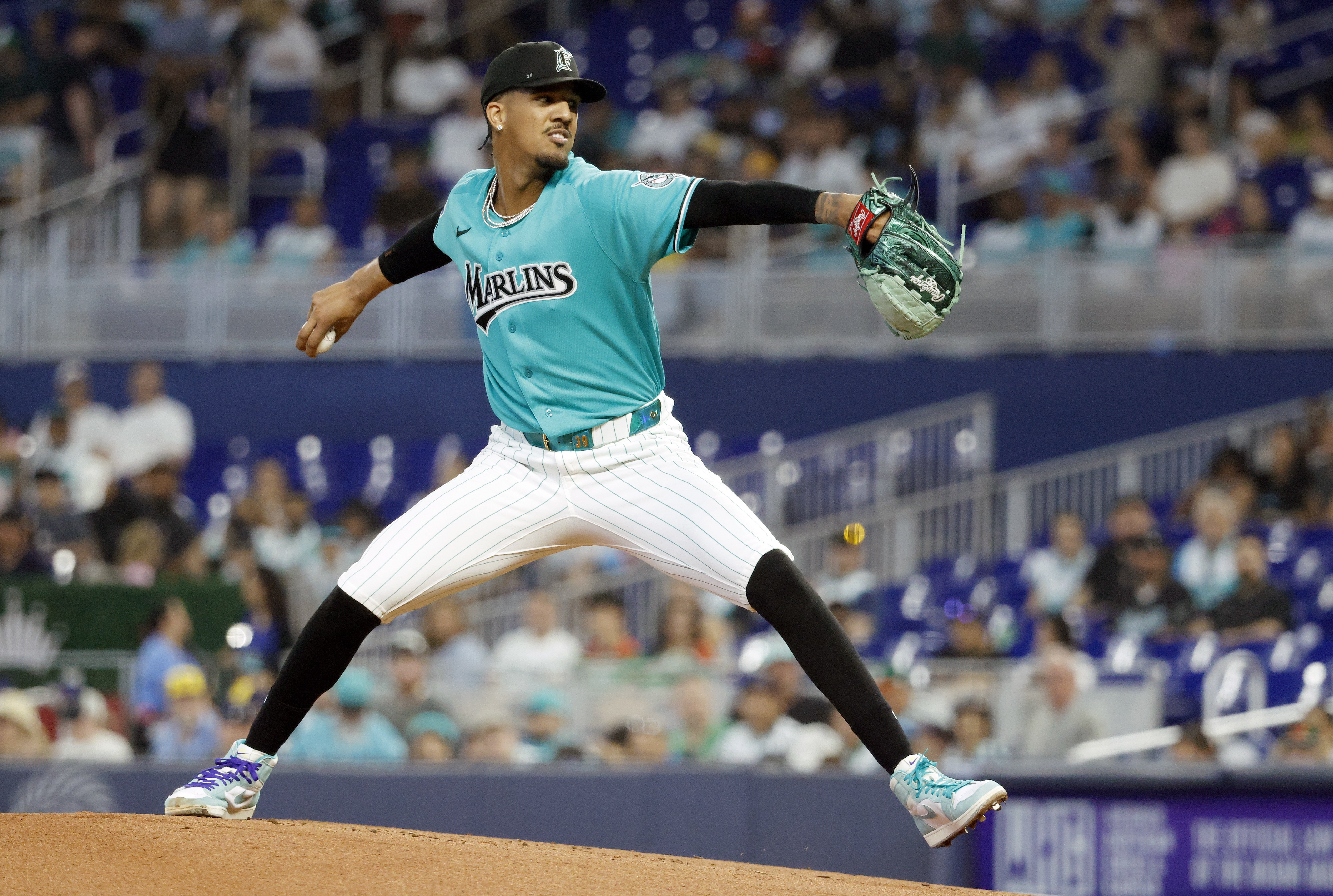 MIAMI, FL — Between his last three starts, Marlins starter Eury Pérez had a 6.23 ERA, 6.05 FIP and walked 10 opposing hitters. On Sunday afternoon, Pérez came out with the high socks look in the Florida Marlins teal jersey and delivered a much-needed quality start in what wound up being a 5-3 win over the Milwaukee Brewers. Pérez, who just turned 23 years old earlier this week, tossed six innings, allowing one run (unearned) on three hits, one walk and struck out seven. Pérez relied on his four-seam fastball even more than usual, throwing it 67% of the time. He generated nine whiffs, landed it nine times for a first-pitch strike and six of his seven strikeouts came on that pitch. "He had a really good fastball today," Marlins manager Clayton McCullough said following the game. " It was his ability to get ahead of people and throw his secondaries appropriately. We saw the the firmness and velocity on some of the secondary pitches, which I think leads a lot to the conviction behind those. It was nice to see upper 80s, 90 on some of the sliders. I just really felt like he was in a really good rhythm." This may not be a recipe for long-term success, but it certainly worked in this situation. Pérez improved his career ERA at loanDepot park to 2.45 (compared to 5.09 on the road). The Marlins manager wasn't able to watch the majority of Pérez's start in person because in the top of the second inning, he was ejected for the first time in 2026. Marlins first baseman Connor Norby received a pickoff attempt while standing several feet away from the bag, something that the team has done for the majority of the season, but never been penalized for. First base umpire Cory Blaser called a balk and McCullough came out of the dugout for a lengthy discussion before Blaser kicked him out. "It's a gray area where nowhere it says how far an individual has to be off the base," McCullough said. "We have encouraged our first baseman to get further off the base to get those throws to the inside there. It's a closer and shorter throw and with replay now, a lot of the outs occur tagging guys on the body before the hand gets there. He's been in that spot the entire season. It hasn't been called. I think it's such a gray area where it's subjective to who the individual [umpire] is." The Marlins have been generous with providing run support when Pérez is on the mound. Even with the equally talented Jacob Misiorowski pitching for the Brewers, that was not an issue on Sunday. A wild pitch with the bases loaded in the bottom of the first inning allowed Jakob Marsee to score. Agustin Ramirez grounded into a double play, but Xavier Edwards was able to score on that. Liam Hicks collected another RBI, driving in Otto Lopez, taking an early 3-0 lead. With Misiorowski out of the game, Javier Sanoja drove in two more in the bottom of the sixth, singling through a drawn-in infield. That put the Marlins up 5-1. The Brewers made a late push in the top of the eighth inning with lefty Andrew Nardi on the mound. With the bases loaded, catcher Gary Sanchez singled to drive in two runs, making it a 5-3 game. The Marlins turned to Calvin Faucher, who on one pitch, got William Contreras to fly out to end the inning. Kyle Stowers started in left field and hit cleanup in his season debut. The Marlins 2025 All-Star was welcomed back with a 101.5 mph fastball that struck the fingers of his right hand, but he remained in the game. "Took it off the hand, so certainly worried in the moment, but all the bones in the hand seemed okay and then I think after the inning, he was fine," McCullough said. "For him to go out there and collect a couple hits was huge. I'm sure, great for him to come right in and contribute and get off to a nice start. The swings look very aggressive, looked balanced, so great to have Kyle back." In the bottom of the fifth, Stowers hit a double (101.4 mph exit velocity) and in the seventh, he hit a single to the pull side. It should be noted, he was not running the bases at full speed, which is understandable coming off a hamstring injury. Pete Fairbanks notched his third save of the season (his first since March 28), striking out the first two batters and then Blake Perkins grounded out to second base to end the game. The Marlins improve to 10-12, remaining second in the National League East. They will welcome the St. Louis Cardinals for a three-game home series beginning on Monday. View the full article
 -
 The Weekly Nutshell: Coming off a 6-1 week, the Minnesota Twins kicked this one off with their most impressive showing of the season, clobbering Red Sox ace Garrett Crochet for 11 runs in a blowout win to keep the good times rolling. They followed on Tuesday by knocking around old friend Sonny Gray, notching their eighth win in nine games. That's where the charmed run finally came to a halt. The Twins dropped the finale against Boston and then got swept by Cincinnati with poor defense, unreliable relief pitching, and a lack of timely hitting all playing a role in the rapid cooldown. With four straight losses, Minnesota has dropped back to the .500 mark as they prepare to embark on a challenging East Coast road trip. Weekly Snapshot: Mon, 4/13 through Sun, 4/19 *** Record Last Week: 2-4 (Overall: 11-11) Run Differential Last Week: +4 (Overall: +12) Standing: 3rd Place in AL Central (1.5 GB) Latest Game Results Game 17 | MIN 13, BOS 6: Red-Hot Twins Obliterate Crochet, Launch 4 Homers Jeffers: 3-4, HR, 3 RBI Game 18 | MIN 6, BOS 0: Abel Spins a Gem and Buxton Goes Deep Twice Buxton: 4-5, 2 HR Game 19 | BOS 9, MIN 5: Woods Richardson Hit Hard as Sox Cool Off Twins Woods Richardson: 5 IP, 10 H, 6 ER, 3 BB, 3 K Game 20 | CIN 2, MIN 1: Slumping Keaschall Strands Seven in One-Run Loss Keaschall: 0-4, GIDP, 7 LOB Game 21 | CIN 5, MIN 4: Late Leads Slips Away as Bullpen and Defense Lapse Bradley: 6 IP, 2 ER, 2 BB, 5 K Game 22 | CIN 7, MIN 4: Bullpen, Defense Melt Down Again as Red Complete Sweep Morris, Acton: 3 IP, 6 R, 3 ER IF YOU'D RATHER LISTEN TO THE WEEK IN REVIEW THAN READ IT, YOU CAN GET IT IN AUDIO FORM! FIND THE LATEST EPISODE ON OUR PODCAST PAGE, AS WELL AS ON APPLE AND SPOTIFY. SUBSCRIBE TO OUR CHANNELS SO YOU DON'T MISS OUT! NEWS & NOTES When Royce Lewis went on the injured list with a low-grade knee sprain last weekend, the hope was that his absence would be a short one. Sure enough, he initiated a rehab stint with the Saints on Saturday, just seven days after landing on the IL. Lewis homered in his first at-bat with St. Paul and then homered again on Sunday, looking plenty healthy while starting at DH and then third base. He is eligible to return as soon as as Tuesday. The big question in my mind: when Lewis is activated, who exits the 26-man roster to make room? The straightforward answer is Ryan Kreidler, who was called up as Lewis' replacement, but I'd prefer to see Kreidler stay with James Outman shipped out. HIGHLIGHTS After shaking off a slow start, which was undoubtedly impacted by his WBC-related lack of regular spring playing time, Byron Buxton is finally locked in at the plate. It's a joy to behold. Buxton homered on Monday and then launched two more on Tuesday as part of an 8-for-21 week that raised his OPS by 171 points. Buxton also flew around the outfield and made some nice defensive plays. By the weekend, though, something did appear somewhat amiss for him. He started at DH on Saturday and twice in the game he was seemingly unable to run out grounders on close plays at full speed. Is he okay? Worth keeping an eye on. For what it's worth he was back in center field on Sunday and did appear to be moving fine. Aiding Buxton at the top of the order was Austin Martin, who continues to provide exactly what the Twins need from him as a table-setter. Martin notched five hits, including two doubles — one of which tied the game in the ninth on Sunday — and his first home run of the season. He also drew four more walks, keeping his on-base percentage up near the .500 mark, and crossed the plate five times. Martin leads the team in fWAR through 22 games. Kreidler's arrival as a (short-term?) roster addition has provided a defensive boost, as expected, but also a surprising boost to the offense. The 28-year-old utilityman homered just twice in 89 games for the Tigers over the past four years before homering twice in his first week with the Twins. His 438-foot nuke to the upper-deck against Crochet on Monday proved to be the final straw for the left-hander. Kreidler also doubled and drew four walks on the week. If you didn't know anything about Kreidler and his history, you might start to think, hey, maybe we've got something here. Sadly, we're witnessing a bit of an anomaly. Kreidler has been one of the worst hitters in the majors during his limited opportunities and it's unlikely he's suddenly figured it all out at the plate as opposed to running into a few mistake pitches with good swings. But Kreidler's defensive value is such that he really doesn't need to hit much at all to be a valuable roster piece. A week like this here and there would be more than enough. The rotation excelled once again, and has been a strength that few others can match. Entering play on Sunday, the Twins ranked third in the majors in fWAR from starting pitchers (behind Detroit and Seattle). Taj Bradley and Joe Ryan ranked fifth and seventh among individual starters, respectively, and both shined again in their latest outings. Ryan held the Reds to two runs (one earned) in six innings on Friday, striking out six and walking none with three hits allowed. He's allowed two or fewer earned runs in four of his five starts this year. On Saturday, Bradley also went six innings in a quality start, allowing two earned runs and handing a lead to the bullpen that disappeared in the late innings. Bradley's ERA sits at 1.63 and his FIP at 1.97. He has yet to allow a home run through five starts. Commendably, Bailey Ober is finding a way to get it done with sub-90 fastball velocity. He was nothing short of dominant on Sunday against the Reds, leaning heavily on the changeup and breaking ball to strike out 10 over 6 ⅓ innings with just one unearned run allowed. He's keeping hitters off balance and keeping the ball in the yard. Can he keep it going? Who knows, but we'll certainly take it for now. While Ryan, Bradley and Ober were good, Mick Abel stole the show with his brilliant performance on Tuesday night, striking out 10 with no walks over seven shutout innings in a win over the Red Sox. It was Abel's second start in a row holding the opposing lineup scoreless, and he's lowered his ERA from 11.05 to 3.98 in the process. Beyond encouraging. LOWLIGHTS For a second consecutive week, the ugliest pitching moments came with Simeon Woods Richardson and Anthony Banda on the mound. It was an otherwise mostly successful home stand for the staff, but these two in particular are struggling here in April. In Wednesday's series finale against Boston they combined to allow nine runs (eight earned) on 12 hits in six innings, negating any chance for a sweep over the Red Sox. Five days earlier, that same duo coughed up eight earned runs over 5 ⅓ in Toronto. The Twins are 0-4 in Woods Richardon's starts this year and Banda has quickly found himself on the lower end of the bullpen hierarchy with an ERA now sitting at 10.38. It's especially unfortunate because the Twins are lacking for relievers they can trust in key spots. The bullpen in general is getting a reality check. On Saturday three relievers combined to progressively blow a two-run lead in the late innings. On Sunday it happened much more rapidly, with Andrew Morris surrendering three runs in the ninth before three more scored (unearned) against Garrett Acton in the 10th. A sure win turned into a crushing loss with a rookie (pitching a second inning in his second career appearance) and recent waiver claim on the mound. Neither of these guys should be pitching in such a situation. Obviously. Then again, it's hard to have a whole lot more faith in the mediocre likes of Justin Topa, Eric Orze and Cole Sands, who each gave up a run on Saturday as the 4-2 lead built up behind Bradley turned into a 5-4 defeat. We wondered last week how long the patchwork bullpen could hold up and it turns out, not long at all. In fairness, the pitchers were not helped at all by the defense, which has been atrocious. The past week we saw two different plays where multiple errors were committed, and in both cases the spiraling misplays were highly damaging. Luke Keaschall — who is also struggling mightily at the plate — bobbled and threw away a double-play ball with the bases loaded on Wednesday, letting in two and setting up a three-run blast. On Sunday, things unraveled in the 10th on a grounder that Tristan Gray failed to stab and then Martin failed to cleanly pick up in the outfield. Sloppy, sloppy baseball. No different from what most of us expected, but painful to watch nonetheless, especially when these botched plays are proving more costly than anticipated with the offense and rotation both contributing strongly. Winnable games keep slipping away and early-season momentum is being dashed. I wish I could say I was confident that help was on the way. TRENDING STORYLINE Is there anything the Twins can do about their bullpen and defense? Right now the team is so bad in both areas that it's pretty much impossible to envision them as a consistent winner. Watching quality starts get wasted in every game against the Reds was brutal, and the type of thing that's going to quickly sour fans who were attempting buy into this team's surprising April energy. Derek Shelton needs better options in the bullpen. Asking Morris to throw the eighth and ninth with a two-run lead in his second MLB appearance, when he's barely been tested as a reliever, was ridiculous. Claiming Acton off waivers and throwing him into extreme high-leverage situations right off the bat, ridiculous. Unfortunately, they are no easy fixes. The collection of relief arms at Triple-A is uninspiring. Minor-league signing John Brebbia was pitching pretty well before giving up three home runs on Sunday. John Klein has a 7.36 ERA for the Saints and Marco Raya 9.64 as two of the only readily available 40-man roster options. Dan Altavilla, who almost made the Opening Day roster, has a 9.31 ERA and 12-to-11 K/BB ratio. I guess you could think about giving a shot to 35-year-old Matt Bowman, owner of a 1.54 ERA through seven appearances, but that's not a needle-mover. There's just little hope on the horizon for this relief corps, unless they try something drastic like converting Connor Prielipp or Zebby Matthews at the expense of their starting depth. The dreadful Twins defense feels just as hopeless. They have sub-par fielders in most of the starting positions, including a couple who rank among the league's worst. Matt Wallner has been the least valuable defender in baseball, per Defensive Runs Saved, and Brooks Lee has no business playing shortstop regularly in the big leagues with 6th percentile range and 19th percentile arm strength. Speaking of dismal arm strength, Keaschall is skipping routine throws to first from 70 feet away at second. Keeping Kreidler on the roster would be helpful, but only so much. No one else the Twins can call upon or swap in soon is going to be any kind of savior with the glove. This a fundamentally bad defensive team and we're probably going to have to live with it. We'll see how they intend to address this crippling weakness over time. There is going to be a lot of pressure on prospects like Emmanuel Rodriguez and Kaelen Culpepper to come up and be impact defenders in a hurry. LOOKING AHEAD The suddenly slumping Twins are off to New York to face a Mets team with the second-highest payroll and worst record in baseball. Can Minnesota get the vibes back on track by capitalizing on the rotten ones in Queens, or will this prove to be the matchup that gets the Mets right? From there it's off to Tampa for three games against the Rays, starting with a showdown between Bradley and the team that is probably second-guessing their decision to trade him at the moment. TUESDAY, APRIL 21: TWINS @ METS — RHP Mick Abel v. RHP Nolan McLean WEDNESDAY, APRIL 22: TWINS @ METS — RHP Simeon Woods Richardson v. RHP Clay Holmes THURSDAY, APRIL 23: TWINS @ METS — RHP Joe Ryan v. RHP Kodai Senga FRIDAY, APRIL 24: TWINS @ RAYS — RHP Taj Bradley v. RHP Drew Rasmussen SATURDAY, APRIL 25: TWINS @ RAYS — RHP Bailey Ober v. LHP Shane McClanahan SUNDAY, APRIL 26: TWINS @ RAYS — RHP Mick Abel v. TBD View the full article
 -
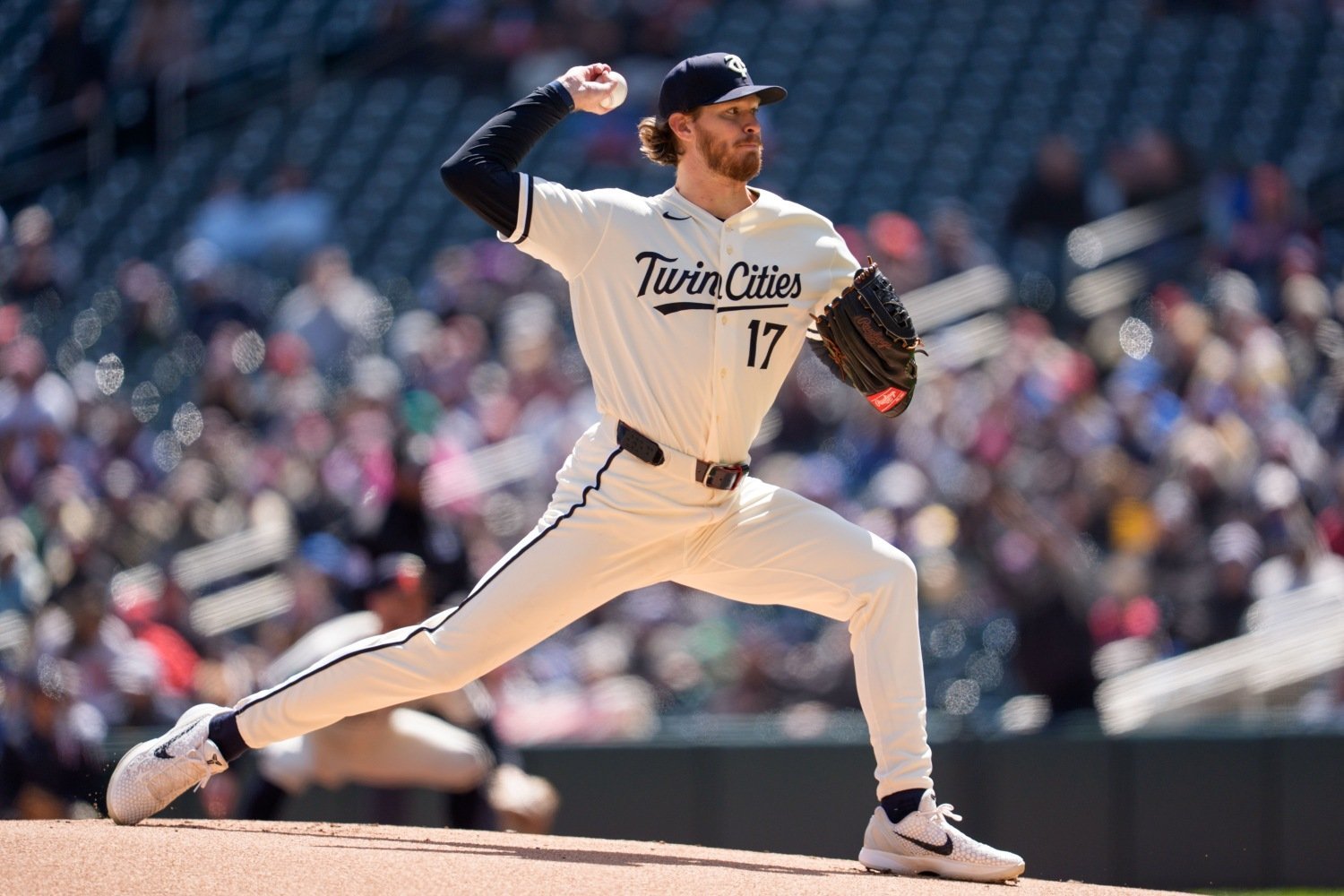 Box Score: Starting Pitcher: Bailey Ober: 6 1/3 IP, 3 H, 1 R, 0 ER 4 BB, 10 K (102 Pitches, 61 Strikes, 59.8%) Home Runs: None Bottom 3 WPA: Andrew Morris (-0.70), Garret Acton (-0.40), Byron Buxton (-0.14) Win Probability Chart (Via BaseballSavant): Things have leveled off for the Twins following their brief stay at the top of the league table, and they entered Sunday's series finale with the Reds in danger of losing their fourth straight game. Their defense and bullpen, thought to be major weaknesses entering the year, were just that on getaway day. On the positive side, the Twins were facing Brady Singer, who has endured a 9.00-plus ERA in his Target Field career. On the downside, Bailey Ober took the mound for the Twins, and he had paired an 88-MPH fastball with a 5.49 ERA over his four starts in 2026. Things started nicely, as Ober induced extremely weak contact while featuring mainly his changeup and sweeper. He allowed a bloop single in the first and a walk in the second. He finished the second inning with a Javier Báez-esque sword of Rece Hinds, courtesy of a sweeper a foot off the plate. Meanwhile, the Twins squeezed across a Byron Buxton run against Singer in the first. We've seen it many times before: Buxton beats out a squibber, the fielder rushes the throw, allowing Buxton to advance to second, and then two productive outs bring Byron home. The Twins were unable to make anything else happen against Singer and his 91-MPH sinker, though, which he was locating in the middle of the zone. The Twins took advantage in the third. After James Outman's customary easy out, Buxton drew a walk, Trevor Larnach ripped a single to right and Josh Bell followed suit, as did Victor Caratini, making the score 3-0. The Reds would answer in the fourth. The electric Elly De La Cruz led off with a broken-bat double down the right-field line. Outman bobbled the ball, which allowed De La Cruz to reach third. He would score on a grounder up the middle from Sal Stewart. Following a walk to Eugenio Suárez, Ober was then bailed out by former Twins farmhand Spencer Steer, who took strike three on a 3-2 count. The ball was six inches outside, but Steer inexplicably decided not to challenge. Ober retired Tyler Stephenson to minimize the damage. Ober was pretty good, shielding his fastball as much as possible and throwing his typical array of changeups that dart away from lefties and come back into the zone against righties. The sweeper was particularly good, and Ober mixed in some fastballs late in his outing that got key strikeouts against Stewart and Suárez. The velocity was up to 90 MPH at points, but I think Ober is making adjustments to try to be that Mark Buehrle/Jered Weaver type of pitcher who can have success throwing in the 80s. It worked today, as Ober struck out 10, the last of which came on an 87-MPH four-seamer that somehow got past the bat of Stephenson. He also induced 14 whiffs. Andrew Morris pitched the eighth with a 3-1 lead, and his velocity was a little down, sitting 93-96 MPH. It was a little rocky, requiring 28 pitches, but he got a key strikeout against Suárez on a sweeper to end the frame. He came back out for the ninth, and quickly gave up two opposite-field singles to the bottom of the Reds' order. He recorded an out, then walked nine-hole hitter Hinds. The struggling TJ Friedl then roped a middle-middle fastball to the gap in right-center, to clear the bases and turn the game on its head. The Twins were not done, as the alleged corpse of Outman followed up his first hit of the year with a ringing leadoff double in the ninth. Buxton was unable to advance Outman, but Austin Martin smashed a double down the left-field line to tie the game against old friend Emilio Pagán. Bell lined a ball at 102 MPH to deep center, but it held up for Myers. Caratini would fly out to end the threat and send the game to extras. After finishing the ninth, Garret Acton was brought back out for the 10th. He allowed a missile off the bat of Stewart (109 MPH) that Martin made a leaping catch on. Suárez then grounded to third, Tristan Gray booted it, and then Martin bobbled it in left, allowing the speedy "Manfred Man" De La Cruz to score. Hinds would then double in two to put a bow on the game. Things I'm Tracking: The baserunning was pretty good to start, with Buxton and Larnach taking extra bases and then Brooks Lee taking third on a hit (gasp) from James Outman in the fourth. Lee was perhaps feeling himself a bit after that, as he tried to steal home on a throw down to second with Outman running. Lee was out by, uh, a lot. Red Sox fans sometimes describe OF/DH Masataka Yoshida's running style as running as if he were made of LEGOs and I think Lee has the same affliction. I wondered if the Reds had some sort of mandate not to challenge pitches as hitters, as they let two important strike threes go by in the fourth and fifth innings, when both were clear balls. I get the philosophy, as catchers have the better view of pitches, and their challenge percentage is higher than hitters, but it really impacted the Reds from a WPA perspective today. De La Cruz then unsuccessfully challenged a strike call in the sixth, and Dane Myers followed suit in the seventh. It is surprising a Tito Francona-led team would do so much self-inflicted damage. Kody Clemens' walkup song is "Confidence," and for a guy hitting under .150 that seems a little on the nose. The "redundant trade candidate" Trevor Larnach reached base four times today, raising his OBP to .468. He's definitely not useful at all. "Really cool underrated slugger" Matt Wallner sat due to the after-effects of getting hit in the ribs last Monday. His 71 OPS+ and emotion-based ABS challenges were surely missed. The defense is a struggle, man. Outman's bobble allowed the first run to score, and then the play in the tenth involved two separate errors. What’s Next: The Twins travel to Queens to face the Mets, featuring a neat matchup between promising young starters Mick Abel (1-2, 3.98 ERA) and Nolan McClean (1-1, 2.28 ERA). The Mets are currently in the midst of an 11-game losing streak, which is pretty funny considering how big their payroll is. (probably not to them, but.) Postgame Interviews: coming soon Bullpen Usage Chart: WED THUR FRI SAT SUN TOT Morris 0 0 0 0 47 47 Topa 13 0 11 10 0 34 Sands 0 0 20 12 0 32 Funderburk 14 0 8 10 0 32 Acton 0 0 0 0 29 29 Orze 12 0 0 15 0 27 Banda 24 0 0 0 0 24 Rogers 0 0 0 0 8 8 View the full article
 -
 Chicago Cubs Transactions Chicago Cubs sent LHP Jordan Wicks on a rehab assignment to Iowa Cubs. Chicago Cubs signed free agent LF Dylan Carlson to a minor league contract. Chicago Cubs transferred RHP Cade Horton from the 15-day injured list to the 60-day injured list. Right forearm strain. Chicago Cubs selected the contract of RHP Corbin Martin from Iowa Cubs. Bethancourt's Three-Hit Night Powers Iowa Past Columbus Iowa rallied past the Columbus Clippers for a 7-6 road win, with Christian Bethancourt driving in three runs on a 3-for-4 night that included a solo home run in the seventh and a two-run double in the eighth. The Cubs struck first in the top of the second, when Ben Cowles launched a two-run homer that also scored Chas McCormick. The Clippers cut into the deficit with two in the sixth before Iowa pushed back in the seventh, when Bethancourt's homer and a James Triantos RBI double that scored BJ Murray gave the Cubs a 4-2 edge. Columbus retook the lead in the bottom of the seventh with a three-run inning, but Iowa responded with three in the eighth. McCormick drew a bases-loaded walk that brought in Pedro Ramírez, and Bethancourt followed with his two-run double that scored Kevin Alcántara and Dylan Carlson. Triantos finished 2-for-5 with a double, an RBI, and a stolen base, and Cowles went 1-for-4 with the homer and two RBIs. Iowa drew six walks and managed eight hits, stranding six runners. On the mound, Jordan Wicks opened with three scoreless innings on his rehab assignment, allowing one hit and one walk while striking out two. Ty Blach followed with three and two-thirds innings of two-run ball, and Gabe Klobosits worked around a solo home run in the ninth to close it out. Player AB R H RBI BB K James Triantos (2B) 5 0 2 1 0 2 Jonathon Long (1B) 4 0 0 0 1 2 Pedro Ramírez (3B) 5 1 1 0 0 1 Kevin Alcántara (CF) 3 1 0 0 1 2 Dylan Carlson (LF) 3 1 0 0 1 1 Chas McCormick (RF) 2 1 0 1 2 0 Ben Cowles (SS) 4 1 1 2 0 0 Christian Bethancourt (C) 4 1 3 3 0 0 BJ Murray (DH) 3 1 1 0 1 0 Player IP H R ER BB K HR Jordan Wicks 3 1 0 0 1 2 0 Ty Blach 3 2/3 4 2 2 4 2 0 Charlie Barnes 1/3 1 0 0 0 0 0 Collin Snider 1 1 3 3 0 0 1 Gabe Klobosits 1 2 1 1 1 0 1 Santy's Strikeout Barrage Wasted in Knoxville's Loss The Knoxville Smokies fell 13-4 at Pensacola, unable to recover from an early deficit and a seven-run Blue Wahoos sixth inning. Starter Jake Knapp allowed six runs on four hits, three walks, and two home runs across three and one-third innings while striking out three. Luis Rujano was tagged for seven runs, six earned, on three hits and four walks in two innings. Marino Santy was the lone bright spot on the mound, striking out eight in two and two-thirds scoreless innings with no hits allowed and two walks. Andy Garriola led the offense with a 2-for-4 night that included a three-run home run in the fourth and a run-scoring single in the fifth that plated Jordan Nwogu. Ethan Hearn drove in the final Smokies run with an RBI single later in the fifth, scoring Edgar Alvarez. Jordan Nwogu reached three times with two hits, a double, and a stolen base, and scored once. Edgar Alvarez walked three times and added a double, coming around to score twice. Ariel Armas finished 2-for-4 with two stolen bases. Knoxville collected nine hits and drew four walks but left eight runners on base and struck out 11 times as a team. Player AB R H RBI BB K Alex Ramírez (CF) 4 0 1 0 1 1 Jordan Nwogu (LF) 4 1 2 0 0 1 Miguel Useche (PH) 1 0 0 0 0 1 Karson Simas (SS) 5 0 0 0 0 2 Edgar Alvarez (1B) 1 2 1 0 3 0 Andy Garriola (RF) 4 1 2 3 0 1 Ethan Hearn (DH) 4 0 1 1 0 1 Ariel Armas (C) 4 0 2 0 0 0 Devin Ortiz (3B) 4 0 0 0 0 1 Alex Madera (2B) 4 0 0 0 0 3 Player IP H R ER BB K HR Jake Knapp 3 1/3 4 6 6 3 3 2 Luis Rujano 2 3 7 6 4 1 1 Marino Santy 2 2/3 0 0 0 2 8 0 Kepley Swipes Three as South Bend Routs Beloit South Bend cruised to a 12-5 home win over the Beloit Sky Carp behind a balanced attack and seven team stolen bases. Leadoff man Kane Kepley went 2-for-3 with two walks, two RBIs, a run scored, and three stolen bases. Cameron Sisneros finished 3-for-5 with a double, three RBIs, and a stolen base, and Owen Ayers added a 2-for-4 night with a home run, three RBIs, a walk, and a stolen base. Kade Snell drove in three runs on a 2-for-5 effort. The Cubs broke through for four runs in the second, when Sisneros ripped a two-run double that scored Leonel Espinoza and Matt Halbach, then Kepley followed with a two-run single that scored Sisneros and Drew Bowser. South Bend pushed across five more in the seventh, with RBI singles from Owen Ayers, Kade Snell, Cameron Sisneros, and Drew Bowser doing the damage. Ayers capped the scoring with a solo home run in the eighth. Starter Koen Moreno turned in four innings of one-run ball, allowing one hit and three walks while striking out five. Grayson Moore worked two and two-thirds scoreless innings in relief, allowing two hits and one walk. The Cubs drew 13 walks on the night and left 15 runners on base. Player AB R H RBI BB K Kane Kepley (CF) 3 1 2 2 2 0 Angel Cepeda (DH) 2 0 0 0 0 0 Reginald Preciado (DH) 4 1 0 0 0 2 Owen Ayers (C) 4 2 2 3 1 2 Kade Snell (RF) 5 1 2 3 1 2 Leonel Espinoza (LF) 0 1 0 0 4 0 Brian Kalmer (LF) 2 0 0 0 0 1 Matt Halbach (3B) 6 2 2 0 0 3 Cameron Sisneros (1B) 5 2 3 3 0 1 Drew Bowser (2B) 4 1 1 1 1 1 Christian Olivo (SS) 1 1 0 0 4 1 Player IP H R ER BB K HR Koen Moreno 4 1 1 1 3 5 0 Ethan Bell 1/3 2 2 1 2 0 0 Grayson Moore 2 2/3 2 0 0 1 0 0 Nate Williams 2 4 2 2 0 2 0 Three Homers, Combined Shutout Lift Myrtle Beach Over Kannapolis Myrtle Beach rolled to a 6-0 home win over the Kannapolis Cannon Ballers behind three home runs and a three-pitcher shutout. Josiah Hartshorn led the offense with a 3-for-4 effort that included a two-run home run in the first, a double, two RBIs, and two runs scored. Cole Mathis went 2-for-4 with a two-run homer in the fifth, and Derniche Valdez added a solo shot in the fourth while finishing 2-for-4. The Pelicans struck right away in the bottom of the first when Ty Southisene doubled, advanced, and scored on Hartshorn's home run. In the third, Cole Mathis came around to score on a Logan Poteet RBI single. Valdez's solo homer in the fourth pushed the lead to 4-0, and Mathis's two-run blast in the fifth, which also scored Hartshorn, capped the scoring. Southisene finished 1-for-5 with a double and a run, and Poteet reached three times with a single, two walks, and an RBI. Myrtle Beach collected 10 hits, drew four walks, and left seven runners on base. On the mound, Victor Zarraga opened with four scoreless innings, allowing three hits and one walk with one strikeout. Ben Johnson followed with three scoreless innings of one-hit ball, walking two and striking out three. Jackson Brockett closed it with two scoreless innings, allowing one hit and striking out one. Player AB R H RBI BB K Ty Southisene (SS) 5 1 1 0 0 2 Josiah Hartshorn (RF) 4 2 3 2 0 0 Cole Mathis (1B) 4 2 2 2 0 2 Michael Carico (DH) 3 0 0 0 1 1 Logan Poteet (C) 2 0 1 1 2 1 Eli Lovich (LF) 4 0 0 0 0 1 Ludwing Espinoza (2B) 4 0 0 0 0 1 Derniche Valdez (3B) 4 1 2 1 0 1 Derik Alcantara (CF) 3 0 1 0 1 1 Player IP H R ER BB K HR Victor Zarraga 4 3 0 0 1 1 0 Ben Johnson 3 1 0 0 2 3 0 Jackson Brockett 2 1 0 0 0 1 0 Cubs Top-20 Prospect Performance Moises Ballesteros: DNP Jaxon Wiggins: DNP Jefferson Rojas: DNP Kevin Alcántara: 0-for-3, R, BB, 2 K Jonathon Long: 0-for-4, BB, 2 K Ethan Conrad: DNP Pedro Ramírez: 1-for-5, R, 2B, K Kane Kepley: 2-for-3, R, 2 RBI, 2 BB, 3 SB Josiah Hartshorn: 3-for-4, 2 R, 2B, HR, 2 RBI James Triantos: 2-for-5, 2B, RBI, SB, 2 K Brandon Birdsell: DNP Cole Mathis: 2-for-4, 2 R, HR, 2 RBI, 2 K Angel Cepeda: 0-for-2 Kaleb Wing: DNP Will Sanders: DNP Juan Cabada: DNP Jostin Florentino: DNP Dominick Reid: DNP Ty Southisene: 1-for-5, R, 2B, 2 K Erian Rodriguez: DNP View the full article
 -
What Can Royals Fans Take Away from the Salvador Perez Drama?
DiamondCentric posted an article in Royals Keep
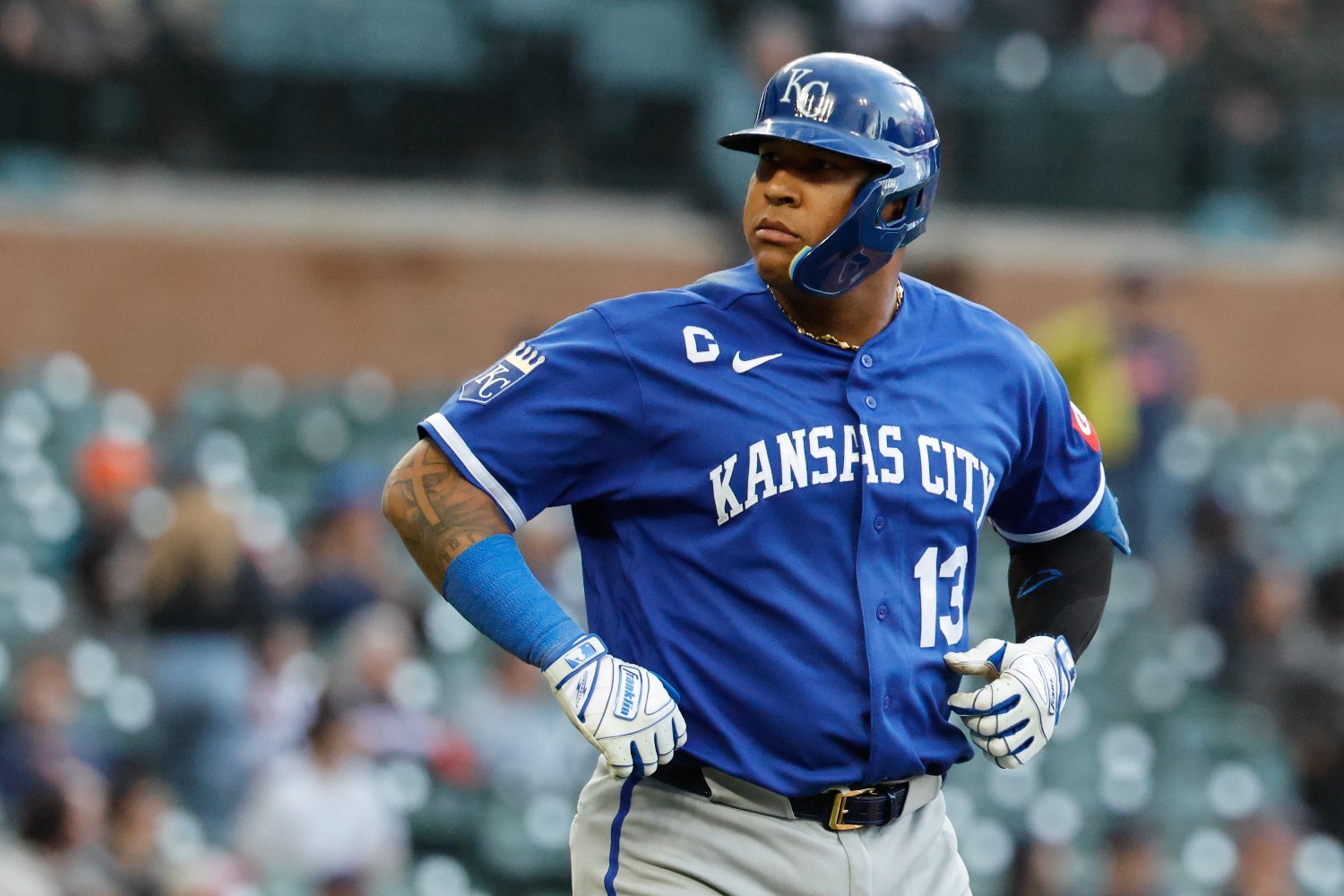 It's been a nightmare start for a Kansas City Royals team that was looking to improve upon its 82-80 record in 2025. After a 13-4 loss on Saturday, the Royals fell to 7-14 for the season, tied for last in the AL Central with the Chicago White Sox. Their -25 run differential is the second-worst mark in the AL Central and the third-worst in the American League overall (the Blue Jays are the only other team with a worse run differential). Furthermore, the offense and bullpen have been an abject disaster through 21 games. In terms of offense, the Royals rank 26th in batting average and OBP and 28th in OPS and runs scored. The bullpen has arguably been even worse. They rank 30th in ERA and WHIP, 29th in BB/9 and H/9 allowed, and 27th in HR/9. Safe to say, Kansas City Royals baseball has not been a lot of fun this year. Unfortunately, after Saturday's sixth-straight loss, the bad vibes seemed to spill into the clubhouse with comments from manager Matt Quatraro and Royals captain Salvador Perez. So What Happened With Quatraro and Salvy? On Saturday, the Royals gave Perez his first day off of the 2026 season. Before the game, the Royals manager talked to the media, and this is what he shared with MLB.com Royals beat writer Anne Rogers. Later that evening, after the Royals' nine-run loss to the Bronx Bombers, Salvy took to Twitter to share this "indirect" response to his manager's comment. As expected, Royals fans on social media automatically went into panic mode, pointing fingers at Quatraro and the Royals organization in general. Things didn't look good at the surface either, with Salvy's comment coming shortly after news broke from Daniel Alvarez-Montes of El Extra Base that Kansas City would be calling up catcher Elias Diaz from Omaha. Thus, all kinds of theories and drama were shared on social media last night (I am not going to share them, but just type in "Salvy," and you'll see the damage). Some theorized that the clubhouse was fractured, especially when compounded by the Carter Jensen incident a couple of weeks ago. Some said that Salvy had lost trust in the organization and the manager. Some said it was being over-exaggerated, and it was more of a venting from the captain about his lackluster start to this season. Regardless, the Salvy "drama" was a distraction that a team already floundering didn't need at this point in the season. Things Looking Slightly Better on Sunday Before Sunday's series finale, Quatraro talked to the media, and Jaylon Thompson of the Kansas City Star shared this comment from Quatraro about the comments from Salvy (as well as the manager's own comments and discussions with the captain). Quatraro also confirmed, via Joel Goldberg of Royals.TV, that he and Salvy had talked about the day off and the incident "multiple times" and that they were in a good place, both ready to move on. He also pointed out that whenever Salvy doesn't play, it becomes a big story. It doesn't seem like there are any lingering issues from the incident, at least on a lineup perspective. Today, Perez will be batting cleanup in the final game of the road trip. Furthermore, Salvy addressed the media regarding his comments. While he didn't necessarily agree with the characterization of needing a "mental breather", he did say that he understood Quatraro's decision and was ready to move on from it. He also mentioned that he had a sore hip and would need more time at DH, which explains the Diaz promotion. It's not the situation the Royals would like to deal with as they prepare to avoid a winless road trip. However, at least it seems like the Royals are moving on from this misunderstanding between Quatraro and Salvy. Is This Something to Worry About? With the Royals seven games under.500, it's easy for Royals fans to search for anything to explain their struggles, especially on the offensive end. While Salvy is a franchise icon, he hasn't been good this year, especially offensively. In 81 plate appearances, he has a .169 average, 36 wRC+, and -0.3 fWAR. Furthermore, his -29 wRC+ in RISP situations is the sixth-worst mark of qualified hitters this season, according to Fangraphs. Granted, Salvy isn't the lone problem of this Royals offense. However, Royals fans who constantly point the finger at Quatraro, hitting coach Alec Zumwalt, Vinnie Pasquantino, Bobby Witt Jr., or secondary players like Lane Thomas or Isaac Collins also need to understand that Salvy has been part of the problem in the Royals' first 21 games. He can't avoid criticism just because he's the captain and a fan favorite. That helps, but it isn't an excuse, especially if "winning" is what matters most to Royals fans. I don't think Salvy is trying to avoid criticism here, either. Salvy is aware of his struggles, and that probably fuels his desire to stay in the lineup, so he can overcome this bad start and get back on track. My guess is that's where the miscommunication stemmed from. He wants to stay in to overcome his struggles. However, as a manager, Quatraro has to figure out when to let a player work through it and when to override that desire and give a player a needed reset. Quatraro and Salvy talked about it before, according to Quatraro. However, why did Salvy react the way he did on social media? My guess is that he didn't appreciate Quatraro's "mental breather" comment. At the end of the day, English is not Salvy's first language, and in different cultures, anything "mental" can be seen as a "weakness." It's not true, but that's just the impression some people and cultures can have with anything tied to the word "mental." I believe that if Quatraro had just said, "He needs a day off after playing in so many games back-to-back," this would not have been an issue. For Royals fans thinking this is the ammunition that JJ Picollo or owner John Sherman needs to fire Quatraro, you can forget it. He signed a two-year extension this offseason. There are still 141 games remaining this season. Zumwalt may be a different story, especially after they hired two new assistant coaches this offseason. He may be "reassigned" if the Royals head into Memorial Day with a bottom-five offense. He's been with the Royals since 2019, and he's had plenty of time to show whether or not he's the right lead voice for this group. However, Quatraro has only one fewer winning season than the previous manager, Ned Yost, in six fewer seasons. The Royals have a good thing with Q, and that shouldn't be overlooked because of a tough start and a weird misunderstanding between him and the captain. Does this mean Royals fans need to overlook this situation? Absolutely not. It's something to monitor over the course of the year, especially if things do not improve on the record. However, this incident is likely being amplified more than it actually is due to Royals fans' frustration with the start the club is going through. If the Royals had a better record, it would be dismissed as not a big deal. Hopefully, the Royals can begin that turnaround soon to help put this incident behind them. View the full article
 -
You Are Craig Counsell. Get 27 Outs Today. Good Luck.
DiamondCentric posted an article in North Side Baseball
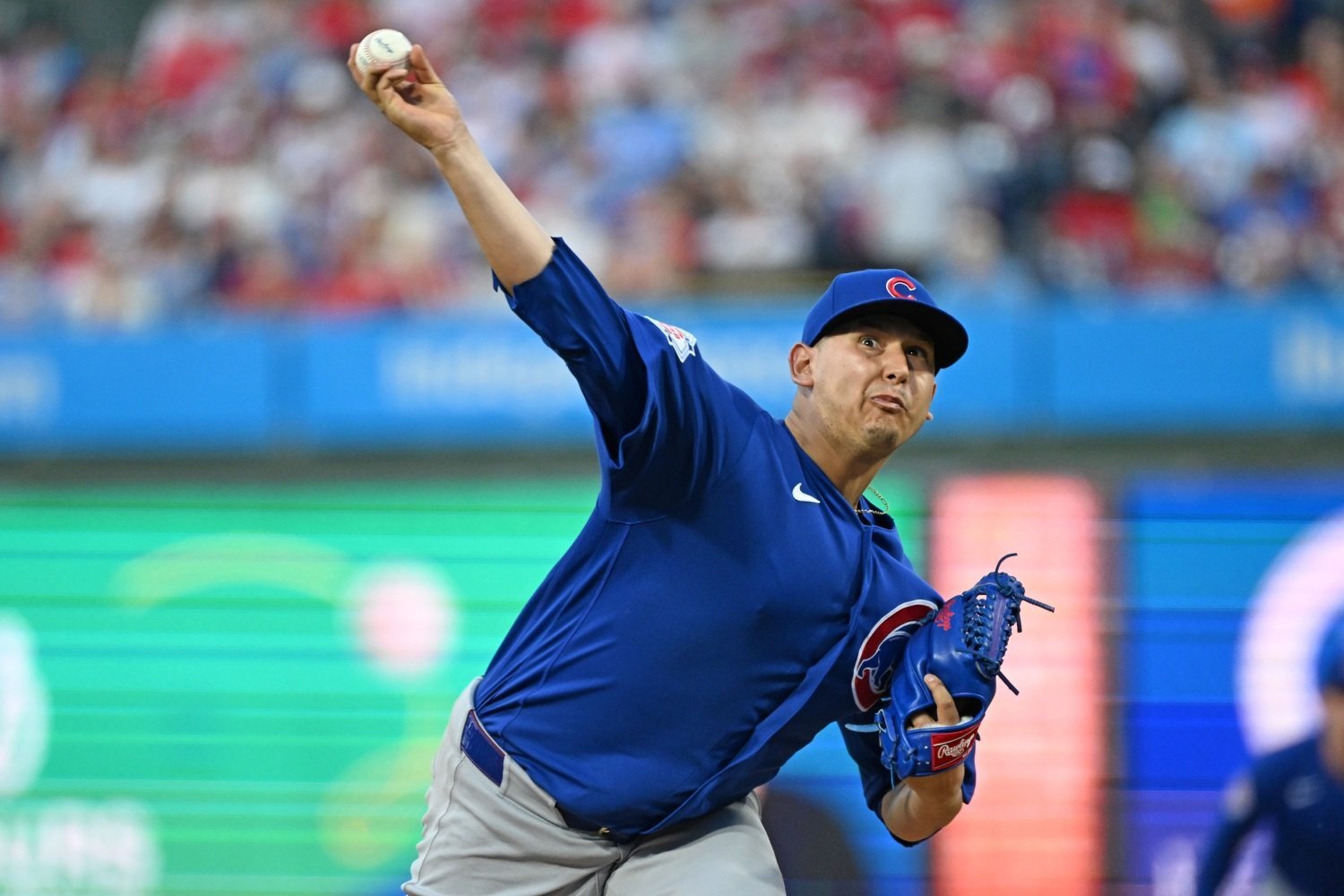 It's about to get a little nutty at Wrigley Field. The Cubs have managed to win four games in a row this week, flipping the narrative that had begun to surround a rocky start to the season. However, even as they've done so, they've been further depleted by injury. Matthew Boyd and Cade Horton have already been sidelined for a fortnight. One by one, though, they've also lost a number of key relievers: Phil Maton, Hunter Harvey, Ethan Roberts, and Daniel Palencia. That was after starting the season down Jordan Wicks and Porter Hodge, the latter of whom will miss the entire season after undergoing elbow surgery. At Triple-A Iowa, starter Jaxon Wiggins and reliever Gavin Hollowell have also been sidelined. As a result, the team already has several pitchers in the mix to whom they were hoping not to turn until summer. The latest addition, righty Corbin Martin, was with the team on a minor-league deal and joins the 40-man roster at the expense of Horton, who was transferred to the 60-day injured list to make room. Now, however, Martin can't be optioned back to the minors without being exposed to waivers. The team didn't want to recall him this soon, since that makes it much more likely that they'll lose him amid a roster crunch sometime soon. They had little choice, though. Thus, starter Javier Assad takes the ball Sunday, with a simple task: eat some innings. The Cubs' bullpen has just four (Jacob Webb, Caleb Thielbar, Hoby Milner and Ben Brown) of the eight members with whom they began the season. They're missing their top three right-handed options, and Brown (who became the de facto righty relief ace when Palencia went down) threw 38 pitches Saturday to secure their win over New York. Webb's combination of recent usage and wavering effectiveness will make Craig Counsell unlikely to turn to him with much enthusiasm in the late innings. Other than Thielbar and Milner, the team has no one fresh whom you want trying to hold a lead Sunday. Pitcher TUE WED THU FRI SAT TOT Brown, B 0 17 0 0 38 55 Webb, J 15 0 0 25 0 40 Thielbar 18 0 0 0 14 32 Milner 0 10 0 10 0 20 Little 0 19 0 0 0 19 Martin, R. 6 0 0 12 0 18 Rolison 11 0 0 0 0 11 Martin, C. 0 0 0 0 0 0 Assad himself is the team's seventh starting pitching option. He'll be asked, however, to pitch more like a No. 3: soak up innings and keep the team in the game. As long as he can do so, Counsell can piece together the final three-plus innings without overusing Ryan Rolison or Corbin Martin. Martin (the righty, not to be confused with the younger, optionable, left-handed Riley Martin) showed impressive stuff in his brief time with Iowa. His cut-ride fastball and knuckle-curve make a fascinating pair, and though he's thrown them just a few times, his sinker and changeup show startling amounts of arm-side run coming from his arm slot and branching from his main arsenal. That only makes it more important that the team not ask him to throw 45 pitches to get them six or seven outs. With Palencia and Harvey, especially, likely to be out for a while, the team badly needs right-handed relief depth, and Martin looks capable of being a solid middle reliever. Losing him before the end of April would put them at real risk of bullpen collapse. Counsell needs Assad to get him into the sixth inning Sunday, so he can mix and match and keep the pitch counts on each of the relievers he uses low. A lefty-heavy bullpen is a small problem. One running out of options altogether is a larger one, and it's a problem the team is on the cusp of running into at full speed, early in a long season. For a little while, every pitching appearance will be higher-leverage than it seems, because the team will have a need that reaches beyond that day: for the pitcher to come through the outing healthy, and for them to get the number of outs Counsell is asking for, so they don't stretch a thin staff past its breaking point. View the full article
 -
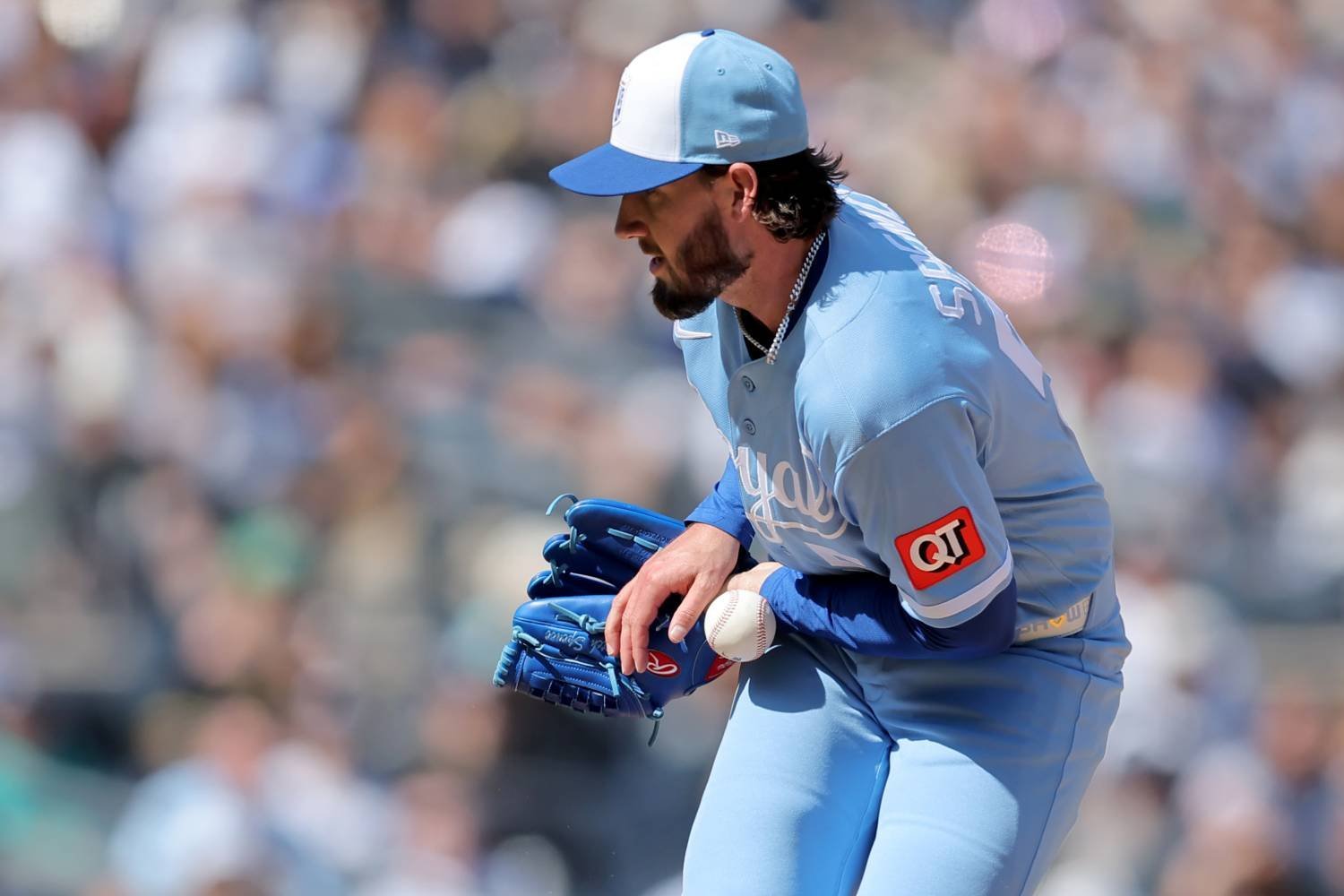 Needing a fresh arm in the bullpen, the Kansas City Royals made moves Sunday affecting their relievers and the bench. Right-handed reliever Mason Black and catcher Elias Diaz were called up from Triple-A Omaha, while right-handed reliever Mitch Spence and middle infielder Tyler Tolbert were sent down to Omaha. Diaz was not on the 40-man roster, so right-handed reliever James McArthur (right elbow inflammation) was transferred from the 15-day injured list to the 60-day IL. Black will be making his Royals debut after being acquired in the offseason from the San Francisco Giants after the right-hander was designated for assignment. He appeared in 10 games, including eight starts in 2024, over the last two seasons with the Giants, with a 6.47 ERA over 40⅓ innings, with an 8% walk rate and 19.1% strikeout rate. At Omaha this year, he appeared in seven games with a 3.86 ERA with two saves in 11⅔ innings. He walked five and struck out six. Diaz signed a minor-league contract at the beginning of spring training to provide catching depth. Calling him up gives the Royals three catchers, joining starter Salvador Perez and backup Carter Jensen. Spence is coming off a four-inning, bullpen-saving outing Saturday in a 13-4 loss to the New York Yankees. He allowed six runs on four hits and five walks with three strikeouts. That was his only appearance since being called up April 9. Tolbert made the Opening Day roster, but had appeared in eight games and only had five at bats, including going 1-for-1 Saturday for his only hit this year. He played in 64 games last year, posting a .280/.321/.380 slash line with one homer, six RBIs and 21 steals. View the full article
 -
Four Padres Facing Crucial Option Decisions After 2026
DiamondCentric posted an article in Padres Mission
 While the 2026 season is barely three weeks old, it's never too early to look ahead to the San Diego Padres' next offseason. There are four Friars who are facing decisions on whether they should opt-out of their contracts or remain in San Diego for at least 2027. This on top of the six players whose contracts expire after this season: right-handed reliever Jason Adam, left fielder Ramon Laureano, left-handed reliever Adrian Morejon, right-handed starter Walker Buehler, infielder Ty France and infielder-outfielder Nick Castellanos. Additionally, outfielder-infielder Miguel Andujar, right-handed starter Griffin Canning, left-handed reliever Kyle Hart and right-handed starter German Marquez have mutual options for 2027. Mutual options are almost always declined. That means already 10 players could potentially depart the Padres. Four others control their future. Curiously, they are all pitchers. Right-handed starters Michael King and Nick Pivetta as well as left-handed relievers Yuki Matsui and Wandy Peralta all have contract provisions that allow them to opt-out of their deals following 2026. Of course, complicating all of this is the impending lockout, which will happen about month after these players have to make their option decisions and before major free agents typically sign. Let's review each player's situation with the rest of 2026 ahead of them. Michael King Contract: Signed three-year, $75 million contract prior to 2026 season. Decision: King has an opt-outs after this season and the 2027 season. After finding the free-agent waters a little frigid, King was a surprising returnee to the Friars' fold this offseason. The type of deal he got certainly reflects that, too. After making $7.75 million in 2025 after signing a deal to avoid his final trip through arbitration, King is making a very affordable $9 million this year, then jumping up to $32 million in 2027 and $34 million in 2028. In other words, the 30-year-old King is basically on a prove-it deal this year after experiencing a couple of injuries in 2025, but has the safety net in place should he underperform or have more injury issues. He is off to a good start in 2026, with a 3.69 FIP (2.78 ERA) in four starts. As one of the key pieces acquired in the Juan Soto trade with the New York Yankees following the 2023 season, King has pretty much been what the Padres were seeking: a front-of-the-rotation starter. A healthy season with his typical production would make King one of the top free agents next offseason. King was No. 12 on The Athletic's big board last offseason and that was coming off only 15 starts due to the long thoracic nerve injury that weakened his right shoulder and knee inflammation upon his return. Depending on how his season goes, he could simply return to the Padres and make $32 million next season or he could get contracts in the range from Framber Valdez (three years, $115 million, $38.3 million average annual value) to Ranger Suarez (five years, $130 million, $26 million AAV) to former Friar Dylan Cease (seven years, $210 million, $30 million AAV). Nick Pivetta Contract: Signed a four-year, $55 million contract just before the start of the 2025 season. Decision: Like King, Pivetta has opt-outs each of the next two offseasons. Unlike King, Pivetta's deal was essentially a two-year pact with the third and four years, at $14 million each, as insurance for Pivetta should something go wrong. And now something has gone wrong. Pivetta, who made a very team-friendly $2.5 million in 2025 and is earning $20.5 million this year, went on the 15-day injured list with inflammation in his right elbow. How long Pivetta is sidelined is still being determined, but the mood in the Padres' clubhouse was reportedly somber after the diagnosis. The 33-year-old entered the season as the No. 1 in the rotation and started Opening Day for the first time in his 10-year career. He finished sixth in voting for the NL Cy Young Award last year with a 3.49 FIP (2.87 ERA). His spring was interrupted briefly by arm fatigue, a typical affliction for pitchers during camp, but now potentially a warning sign for his elbow issues. A healthy and productive 2026 would have set Pivetta up for a big contract, albeit probably in the four-year range due to his age, as he hadn't had any noteworthy injuries previously. If this is a relatively short-term injury, Pivetta can still recoup any lost value by pitching anywhere close to what he did in 2025. But if it is more serious, including possibly needing Tommy John surgery, the decision to stick with the Padres through the end of the contract will be a no-brainer. Yuki Matsui Contract: Signed a five-year, $28 million deal prior to the 2024 season. Decision: Matsui has opt-outs after this season and the 2027 season, with a clause that allows the final year to be converted to a club option if he sustains a serious elbow injury. The 30-year-old left-hander out of Japan is making $5.75 million this season, with his player option for 2027 at $6.5 million and for 2028 at $7 million. He has been a valuable member of the Padres' bullpen, but not at the closer level that was anticipated when he initially signed. In fact, he has only had five chances to close out a game, going 0-for-4 in 2024 and converting his only opportunity in 2025. That doesn't mean has hasn't been good. He has had a FIP of 3.92 and 4.87 in each of his first two seasons (ERAs of 3.73 and 3.98), but his 11.3% career walk rate is three percentage points higher than the MLB average, which doesn't bode well for a prospective high-leverage reliever, while his 24.6% strikeout rate is above average by 2.2 percentage points. Matsui's 2026 season has been delayed by a strained left groin, but he should be returning shortly. MLB teams aren't afraid to pay for quality relievers, with closers earning about $15-20 million a year on the open market and key set-up relievers getting about $10 million. With his salary climbing in each of the next two years, it is unlikely that he will get more via free agency unless he reduces his walk rate and becomes a more reliable late-inning option. Wandy Peralta Contract: Signed a four-year, $16.5 million contract before the 2024 season. Decision: Peralta has a player option this offseason for the final year of his contract. In his 11th season, Peralta is scheduled to make $4.45 million in 2027, the same figure he is making this year. He has also had player options for each of the last two offseasons. The 34-year-old left-hander has been very reliable as a middle reliever throughout the bulk of his career and made a career-high 71 appearances in 2025. He had a 3.62 FIP (3.14 ERA), better than the 4.44 (3.74) marks for his career. Considering Peralta has exercised his options to stay in San Diego each of the last two offseasons, coming back for his modest salary would seem to be the move here. His career walk and strikeout rates are just a bit below average, but nothing he isn't used to working around. To compensate, Peralta has allowed an opponent OPS of .692, which is better than the MLB average of .731. View the full article
 -
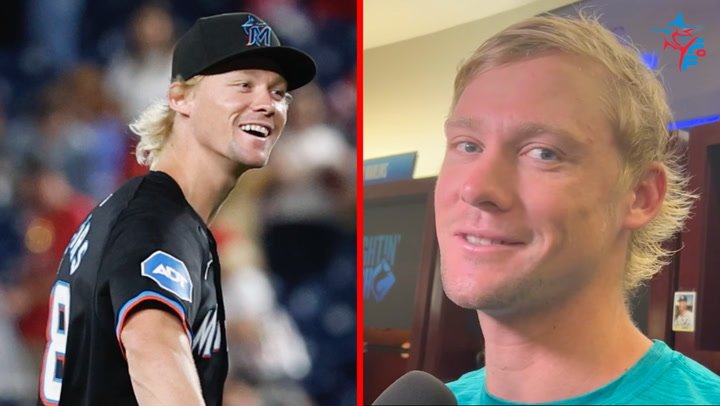 In advance of his season debut on Sunday, Marlins outfielder Kyle Stowers speaks with the media about his recovery from a hamstring strain and comfort level at first base.View the full article
