


DiamondCentric
-
Posts
2,631 -
Joined
-
Last visited
Never
Content Type
Profiles
Forums
Events
News
Tutorials & Help
Major League Baseball Videos
Guides & Resources
Store
Downloads
Gallery
Everything posted by DiamondCentric
-

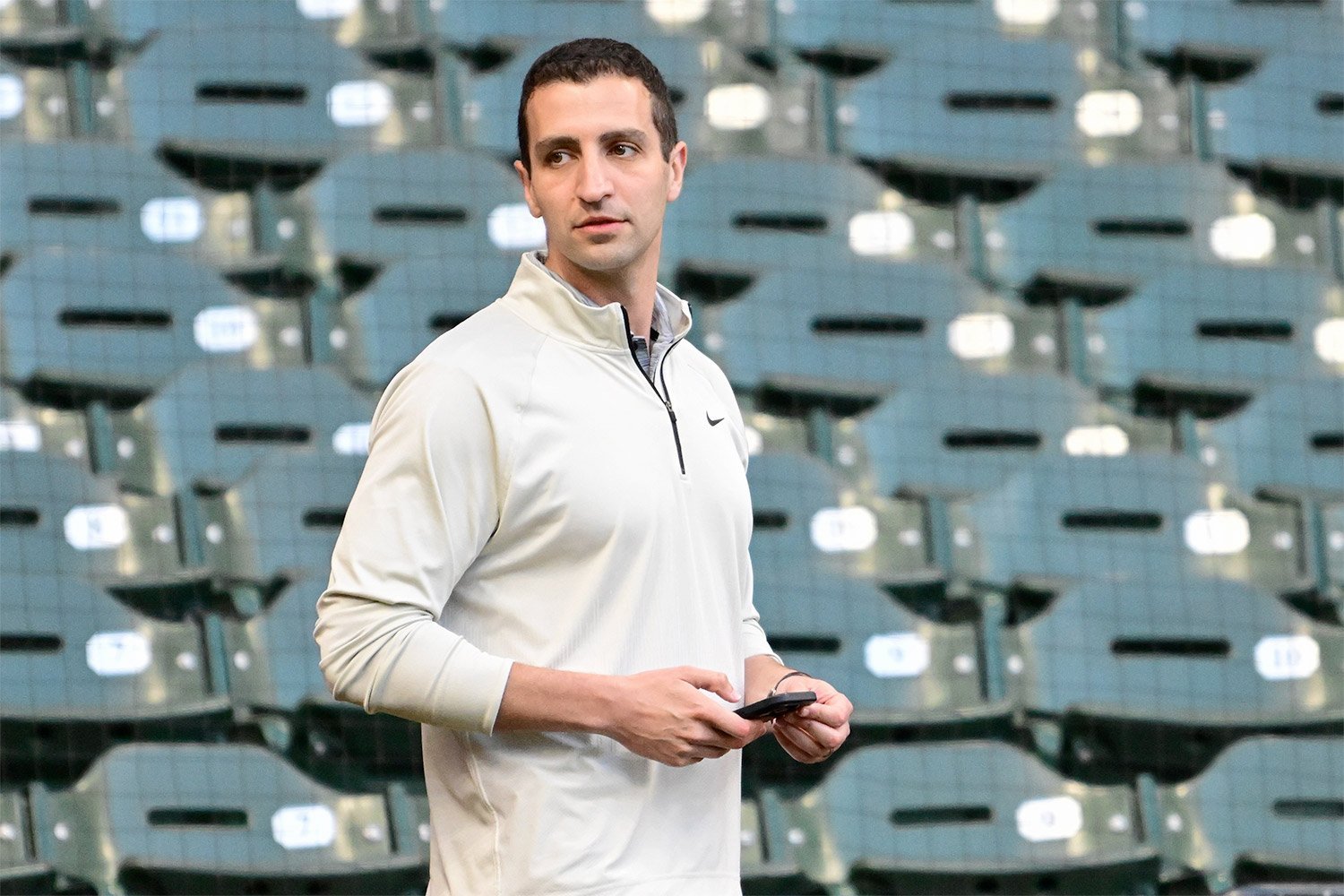 The Mets are riding an eight-game losing streak heading into Chicago to face the Cubs. Sitting at 7-12, whispers have started in the media about the status of Carlos Mendoza’s job. Today, the Mets began to shuffle up their lineup, moving Carson Benge to the leadoff spot and Francisco Lindor batting third. Today, David Sterns, the team's President of Baseball Operations, met the media in Chicago, talking about the state of their team. “ We haven't played good baseball for the last week for sure.” He said. “Had a tough time scoring runs. A combination of, we're not hitting great. We also ran into some good pitching, and we need to play better.” The Mets' collective slump in their lineup began when Juan Soto was pulled from the game on April 4th in San Francisco with a calf injury. Since then, the Mets' offense has fallen apart. Since April 5th, the team's first game without Soto, the Mets' lineup has a 36.07% out-of-zone swing percentage, according to FanGraphs. In that timeframe, it leads Major League Baseball. “I think we're trying to score runs, and sometimes, you got to let the pitcher come to you.” Said Sterns on the inflated chase rate. “And that's really easy for me to say, and it's really easy for me to watch a game and think that it's a heck of a lot tougher when you're in the box, and you want to make something happen. “We talked about urgency, and I know you guys have asked about urgency. Urgency is not the problem here. Like, there's plenty of urgency, there's plenty of want, and sometimes that can lead to things like chase rate, unfortunately, but I think that ends with one basis clearing double. We've all seen that time and again throughout our careers in baseball. And I think once we get that, it will, it'll normalize.” The good news for the Mets is that Soto is expected to return during their next homestand, a nine-game stand. Adding Soto’s prolific bat back into the lineup should help relieve some of the pressure on the rest of the lineup to come through in big spots. Amid all the losing and noise about Mendoza’s job, Sterns publicly confirms that Mendoza is not the problem. “I think Mendy's doing a very good job. I think Mendy is putting players in positions to succeed.” The issue with the Mets could also be a familiar one to teams with a lot of new pieces, and that is an adjustment period for everyone to get used to each other. Sterns believes there could be some truth to that with this ballclub. “I think there are adjustment periods. I think that's natural. I think specifically in New York, there are adjustment periods. We've seen that time and again.” He said. “My sense and you guys are around the team on a daily basis, can sense it, probably, and talking to our players, but my sense is our team has jelled pretty well. I think it was a focus in spring training. “I think guys spent a lot of time together in spring training, part of, part of being a good team over six, seven month stretch, is finding your identity through adversity. And we're facing adversity right now. It's really an earlier stage that any of any of us expected or wanted, but this has an opportunity to be part of our story, help us find our identity, come through this, and understand we have the ability to do that and and based on the guys we have and the quality of work and the quality of people, I believe we will be able to do that.” The bottom line is the Mets need to turn this around, and it starts this weekend against the Cubs. We might be 20 games into the season, but the saying goes that you can’t win a division in April, but you can certainly lose one, and the Mets are already in the basement looking up at the rest of the NL East before facing any of those teams. View the full article
 -
 Boston Red Sox Affiliate Recap (April 14 - 16) Triple A Worcester Red Sox April 14: Worcester lost the first game of the series to Nashville 9-4 due to rough pitching and sloppy defense. Patrick Sandoval made his second rehab start, and it was a wild one. Sandoval got into trouble early in the 1st inning, giving up a leadoff single, then giving up a walk and hitting a batter to load the bases with no outs. Sandoval walked in a run after facing the next batter and gave up two RBI sacrifice flies to put Nashville up 3-0. There were not many positive takeaways from this game, other than Jason Delay hitting a homer off of former Red Sox prospect Shane Drohan. Patrick Sandoval’s outing: 2.0 IP, 3 H, 5 ER, 4 BB, 1K April 15: The WooSox suffered their second straight loss to the Nashville Sounds 5-3. Worcester's only lead of the game happened in the top of the 1st when Allan Castro hit an RBI single to earn his second multi-hit game in the last three games. The WooSox had a lot of traffic on the bases on offense, including 11 walks as a team, unfortunately they could not capitalize as they were 2-for-14 with RISP. Kristian Campbell had a decent day, getting on base three times with two walks and a sharp grounder to right field. Tayron Guerrero kept his scoreless streak going to start the season after throwing a shutout in the 7th inning. Key Performances: Allan Castro: 2-for-5, R, RBI Tayron Guerrero: 1.0 IP, 0 H, 0 ER, 1 K April 16: *Suspended due to rain* Double A Portland Sea Dogs April 14: The Portland Sea Dogs defeat the winless Altoona Curve 4-2. Red Sox top prospect Franklin Arias blasted his first homer of the year in the top half of the 3rd inning to put the Sea Dogs up 2-0. In the bottom half of the 3rd, Cooper Adams came into the game inheriting two runners with no outs and got out of the jam with no damage after a double play that started as a routine groundout to the pitcher but instead the runner took off for home as the ball was thrown to first base, a good throw from Drew Ehrhard to home plate resulted in the double play. Adams caught the next batter looking on strikes to end the inning. Ahbram moved his hit streak up to 6 games after hitting an RBI single in the 7th to put Portland on top 4-1. Key Performances: Franklin Arias: HR, 2 RBI Cooper Adams: 3.0 IP, 1 H, 0 ER, 4 K Cade Feeney: 2.0 IP, 1 H, 0 ER, 4K April 15: The Sea Dogs won 5 of their last 6 games after defeating the Altoona Curve 8-6. Franklin Arias has been on a tear so far this season. While leading off the game, he belted his second homer in back-to-back games to put Portland up 1-0 in the 1st. In the 3rd, the Sea Dogs got the bats going that started with an Arias single to make it 2-2 on the day, Nate Baez and Ronald Rosario got on base to load them up. Drew Ehrhard brought in a run with a sacrifice fly. Will Turner also had a nice day at the plate as he hit the rest of the runners in with an RBI triple, and Tyler McDonough followed up with an RBI double. A couple of wild pitches ended up bringing in McDonough to put the Sea Dogs on top 6-0. Marvin Alcantara and Baez were responsible for the last two RBIs with a pair of RBI doubles. Gage Ziehl had another nice day on the mound. He threw five innings without allowing any runs and struck out six batters to earn the win. Key Performances: Franklin Arias: 2-for-3, HR, 4 R, 2 BB Will Turner: 2-for-3, 2 RBI, 2 BB Gage Ziehl: 5.0 IP, 4 H, 0 ER, 2 BB, 6 K April 16: The Portland Sea Dogs won their third straight game of the series with a shutout victory over the Altoona Curve, 7-0. In the 2nd inning, the Sea Dogs loaded the bases with three walks, and Raudelis Martinez brought in two runs with a single to put Portland on top 2-0. Max Ferguson blasted a grand slam in the 3rd inning to put Portland up to a huge 6-0 lead early in the game. Marvin Alcantara had himself a nice night at the plate as he hit a solo home run shot in the 4th to increase their lead to 7-0. Eduardo Rivera had a tremendous day on the mound. He threw 5.2 innings, allowed three hits without allowing any runs, and struck out nine batters to earn a win. Joe Vagatsky threw the last 3.1 innings and kept the shutout going to earn a save while only giving up one hit. Key Performances: Eduardo Rivera: 5.2, 3 H, 0 ER, 9 K Joe Vagatsky: 3.1, 1 H, 0 ER, 2 K Marvin Alcantara: 3-for-5, R, RBI Max Ferguson: HR, 4 RBI High A Greenville Drive April 14: The Greenville Drive was shut out by the Bowling Green Hot Rods 3-0. Greenville only had one hit the entire game, which came from Yophery Rodriguez. Not many good performances happened in this game with the bats or the arms, other than P.J. Labriola, who threw two scoreless innings. April 15: Greenville continued their losing skid after a 6-4 defeat against Bowling Green. They are still finding trouble to score with RISP as they were 0-for-7 in this game. Henry Godbout hammered his first of many homers to come in his professional career. Other than the Drive not being able to hit with RISP, they showed they can hit the long ball as they hit four solo home runs coming from Mason White, Adonys Guzman, and Jack Winnay. Key Performances: Mason White: 2-for-4, HR Adonys Guzman: 2-for-4, HR April 16: The Greenville Drive suffered another tough loss to the Hot Rods in a 9-8 defeat. Juan Valera came out of the game after the 1st inning due to elbow inflammation so the bullpen had to step up in his early absence. To start off the 3rd inning, Yophery Rodriguez hit his first home run of the season and Top prospect Yoeilin Cespedes belted a three-run homer to put Greenville in a comfortable 4-0 lead. The pitching struggled as they gave up four runs to tie the game but the Drive fought back as Cespedes hit his second home run of the game with a two-run shot in the 5th. His Greenville teammate Rodriguez hammered his second home run of the game as well with a solo shot that put them on top 7-5. The bullpen could not hold onto the lead but the Drive were still focused on coming back as they were one run shy of tying the game but they did not deliver in the 9th. Key Performances: Yoeilin Cespedes: 2 HR, 5 RBI Yophery Rodriguez: 3-for-4, 2 HR, 2 RBI Single-A Salem RidgeYaks April 14: The Salem RidgeYaks lost the first game of the series to the Hickory Crawdads 7-5 after having a rough 6th inning. As Salem was down 2-0 in the 4th, a pair of doubles hit by Starlyn Nunez and Enddy Azocar got them on the board. After Kleyver Salazar drew a walk, with two runners on, Skylar King belted a three-run homer to put the RidgeYaks up 4-2. In the 5th, Salazar hammered a double to increase their lead 5-2. With the score at 5-3 entering the 6th, things would fall as the Crawdads would regain their lead scoring three runs due to a home run, single and another run scoring from an error after a single, 6-5 Crawdads. Salem went hitless the next three innings as Hickory scored another run to end the game 7-5. Key Performances: Enddy Azocar: 2-for-4, 2 R, RBI Skylar King: HR, 3 RBI, BB April 15: The RidgeYaks dropped their 2nd game of the series in a close 5-4 defeat to the Crawdads. Salem got themselves an early three-run lead in the 2nd inning after IIan Fernandez belted a three-run homer. Jacob Mayers unfortunately lost control of his pitches as he gave up four walks and threw a wild pitch, giving up three runs in the process to tie the game up. Entering the 6th in a tie game, Skylar King walked and stole a base; afterwards, Ty Hodge brought him in by hitting an RBI single to make it a 4-3 game. The RidgeYaks' pitching could not hold onto the lead in the last three innings, while the bats would go hitless to end the game 5-4. Key performances: IIan Fernandez: HR, 3 RBI Myles Patton: 4.2 IP, 2 H, 1 ER, 3 K April 16: The RidgeYaks still had a tough time playing the Crawdads as they lost their third straight game in a 14-5 defeat. The pitching staff had a tough time this game, but the defense did not help with the three errors they had in the game. Andrews Opata had a multi-hit day at the plate, including a solo home run and a two-run single. View the full article
 -
 Red Sox no. 7 prospect Jake Bennett has seen a little bit of everything. He has elevated in minor league status, changed teams, and even had to overcome Tommy John Surgery. In his first crack at Triple-A, he looks unfazed and stronger than ever. In this video, we break down Jake Bennett's intangibles and just how quickly he could rise up Boston's pipeline. View the full article
 -
 Three of the four San Diego Padres affiliates grabbed wins Thursday. Triple-A El Paso's Mason McCoy slugged two homers, but the Chihuahuas fell 10-9. Miguel Mendez tossed five innings, yielding one run on two hits with six strikeouts, as Double-A San Antonio topped Midland 4-1. High-A Fort Wayne belted five home runs in an 8-3 rout of Lake County, with Jake Cunningham hitting two. Low-A Lake Elsinore pounded out 13 hits in an 11-7 road win at Stockton, powered by Bryan Balzer's five innings. Padres Minor League Transactions El Paso Chihuahuas placed LHP Marco Gonzales on the 7-day injured list. El Paso Chihuahuas activated C Colton Vincent. C Rodolfo Durán roster status changed by El Paso Chihuahuas. Padres optioned IF Sung-Mun Song to El Paso Chihuahuas. HP Andrew Thurman assigned to El Paso Chihuahuas from San Antonio Missions. San Antonio Missions activated RHP Manuel Castro. Fort Wayne TinCaps activated LHP C.J. Widger from the 7-day injured list. RHP Matthew Watson assigned to Fort Wayne TinCaps from ACL Padres. RHP Vicarte Domingo assigned to Lake Elsinore Storm from Fort Wayne TinCaps. McCoy's Two-Homer Night Not Enough In Chihuahuas' Loss The El Paso Chihuahuas dropped a 10-9 decision to the Round Rock Express despite a pair of home runs from Mason McCoy. After pushing across a run on a Jose Miranda ground ball in the top of the second, McCoy followed with a two-run blast to left that scored Nate Mondou and pushed the lead to 3-0. El Paso extended it to 6-2 in the third on back-to-back run-scoring singles from Mondou and Nick Solak. Round Rock answered with two runs in the second, five more in the third and another two in the fourth for a 9-6 lead. Solak singled home another run in the fifth, and, after a Round Rock homer in the seventh, McCoy launched his second homer of the night in the eighth, a two-run shot to left-center that pulled the Chihuahuas within one. McCoy finished 2-for-3 with four RBIs, and Solak drove in three runs on two hits. Griffin Canning, on a rehab assignment from the Padres, took the loss, allowing six runs, two earned, on one hit in 2⅔ innings. He walked four and struck out six, surrendering one home run. Yuki Matsui, also on a rehab assignment, pitched a scoreless inning, allowing one hit and striking out one. EP_0416.mp4 Player AB R H RBI BB K Samad Taylor, LF 4 0 1 0 1 1 Pablo Reyes, 3B 4 1 0 0 1 0 Carlos Rodríguez, RF 3 2 0 0 2 0 Jase Bowen, CF 4 1 1 0 1 2 Nate Mondou, DH 3 2 1 1 1 1 Marcos Castañon, PH 1 0 0 0 0 0 Nick Solak, 1B 3 0 2 3 1 0 Jose Miranda, 1B 4 0 1 0 0 0 Clay Dungan, 2B 0 1 0 0 0 0 Mason McCoy, SS 3 2 2 4 0 0 Anthony Vilar, C 4 0 0 0 0 3 Player IP H R ER BB K HR Yuki Matsui 1 1 0 0 0 1 0 Andrew Thurman 1 1/3 4 3 3 1 1 0 Griffin Canning 2 2/3 1 6 2 4 6 1 Miguel Cienfuegos 1 2/3 3 1 1 1 3 1 Ethan Routzahn 1 1/3 1 0 0 0 0 0 Mendez Dominates As Missions Cruise Past RockHounds The San Antonio Missions beat the Midland RockHounds 4-1, fueled by a sharp outing from Miguel Mendez and timely hitting across the lineup. Mendez worked five innings and allowed one earned run on two hits, walking two and striking out six to earn the win. Braedon Karpathios opened the scoring in the second inning with a run-scoring triple to center. In the third, Luis Verdugo doubled, advanced to third, and scored on a Romeo Sanabria sacrifice fly for a 2-0 lead. Midland pulled within 2-1 in the bottom of the third, but Ethan Salas answered in the fifth with an RBI double to left that plated Luis Verdugo. San Antonio tacked on an insurance run in the sixth when Verdugo lifted a sacrifice fly to right, scoring Ryan Jackson. Salas finished 1-for-3 with a double, an RBI, two walks, and a stolen base. Verdugo went 2-for-3 with a double, an RBI, and scored twice. Jackson added two hits, a walk, a double, two stolen bases, and a run. Eric Yost closed out the win with four scoreless innings, allowing one hit, walking three, and striking out three to collect the save. San Antonio stole three bases, drew six walks, and stranded 20 runners as a team. SA_0416.mp4 Player AB R H RBI BB K Ethan Salas, C 3 0 1 1 2 1 Francisco Acuna, SS 4 0 0 0 1 2 Romeo Sanabria, 1B 4 0 0 1 0 3 Leandro Cedeño, DH 3 0 0 0 2 2 Tirso Ornelas, LF 4 0 0 0 0 1 Ryan Jackson, 2B 3 1 2 0 1 1 Braedon Karpathios, RF 4 1 1 0 0 3 Albert Fabian, LF 4 0 1 0 0 1 Kai Roberts, CF 0 0 0 0 0 0 Luis Verdugo, 3B 3 2 2 1 0 0 Player IP H R ER BB K HR Miguel Mendez 5 2 1 1 2 6 0 Eric Yost 4 1 0 0 3 3 0 TinCaps Launch Five Homers In Rout Of Captains The Fort Wayne TinCaps slugged their way to an 8-3 road win over the Lake County Captains, connecting for five home runs, including two from Jake Cunningham. Fort Wayne fell behind 1-0 in the first, but Lamar King Jr. tied the game in the second with a solo shot to left. The Captains regained the lead 2-1 in the bottom of the second, and the score held until the sixth, when Rosman Verdugo and Alex McCoy hit back-to-back solo homers to put the TinCaps ahead 3-2. Cunningham padded the lead with a solo blast to left-center in the seventh. After Lake County trimmed the gap to 4-3 in the eighth, Fort Wayne blew it open in the ninth. King doubled home Kavares Tears, and Cunningham followed with a three-run homer that scored King and Jack Costello. Cunningham finished 2-for-4 with two homers and four RBI. King Jr. went 3-for-4 with a double, a homer, two RBI, two runs, and a stolen base. Carson Montgomery made the start and delivered four innings, allowing four hits and two earned runs with three walks and four strikeouts, surrendering two home runs. Tucker Musgrove, in his season debut, Braian Salazar, Kleiber Olmedo, and Igor Gil followed in relief, with Salazar notching the save and Musgrove collecting the win. FW_0416.mp4 Player AB R H RBI BB K Kasen Wells, CF 4 0 0 0 1 2 Rosman Verdugo, 3B 4 1 1 1 0 1 Alex McCoy, DH 4 1 1 1 0 2 Kavares Tears, RF 3 1 0 0 1 2 Lamar King Jr., C 4 2 3 2 0 1 Jack Costello, 1B 3 1 0 0 1 2 Jake Cunningham, LF 4 2 2 4 0 1 Jonathan Vastine, SS 4 0 0 0 0 4 Oswaldo Linares, 2B 3 0 0 0 0 1 Player IP H R ER BB K HR Carson Montgomery 4 4 2 2 3 4 2 Tucker Musgrove 1 0 0 0 0 3 0 Braian Salazar 1 2/3 1 0 0 1 5 0 Kleiber Olmedo 1 1/3 2 1 1 3 2 1 Igor Gil 1 2 0 0 0 2 0 Storm Pound Ports Behind 11-Run Attack Following back-to-back extra-innings losses, the Lake Elsinore Storm topped the Stockton Ports 11-7, erupting for a six-run second inning and collecting 13 hits. Bradley Frye went 3-for-5 with two RBIs. Truitt Madonna added two doubles and an RBI. Kerrington Cross finished 2-for-3 with a homer, a double, a walk, and two runs. Madonna got the Storm on the board in the first with an RBI double that plated Frye. Stockton answered with a two-run homer in the bottom of the first to lead 2-1. Lake Elsinore responded with seven runs in the second. Conner Westenburg drew a bases-loaded walk to score Jose Verdugo, Ryan Wideman doubled home Victor Duarte and Cross, Frye singled in Westenburg and Wideman, and Kale Fountain capped the frame with a two-run homer to left-center that scored Madonna, pushing the lead to 8-2. Justin DeCriscio drilled a two-run homer in the fifth and Cross followed one out later with a solo shot to make it 11-4. Bryan Balzer earned the win, working five innings while allowing four earned runs on six hits with two walks, five strikeouts, and one home run. Javier Chacon followed with two innings, striking out six. LE_0416.mp4 Player AB R H RBI BB K Ryan Wideman, CF 3 1 2 2 1 1 Bradley Frye, DH 5 1 3 2 0 1 Truitt Madonna, C 5 1 2 1 0 1 Kale Fountain, RF 5 1 1 2 0 3 Jose Verdugo, SS 5 2 2 0 0 2 Jorge Quintana, SS 1 0 0 0 0 0 Justin DeCriscio, 2B 2 1 1 2 0 0 Victor Duarte, 1B 3 1 0 0 1 1 Kerrington Cross, 3B 3 2 2 1 1 0 Conner Westenburg, LF 3 1 0 1 1 2 Player IP H R ER BB K HR Bryan Balzer 5 6 4 4 2 5 1 Sean Barnett 1 0 1 1 2 1 0 Javier Chacon 2 1 2 0 0 6 1 Daichi Moriki 1 0 0 0 0 2 0 Padres Top-20 Prospect Performance Kash Mayfield: DNP Ethan Salas: 1-for-3, 2B, RBI, 2 BB, K, SB Kruz Schoolcraft: DNP Bradgley Rodriguez: DNP Humberto Cruz: DNP Miguel Mendez: 5 IP, 2 H, R, ER, 2 BB, 6 K (W) Ty Harvey: DNP Jorge Quintana: 0-for-1 Kale Fountain: 1-for-5, HR, 2 RBI, 3 K Ryan Wideman: 2-for-3, 2B, 2 RBI, BB, K Jagger Haynes: DNP Lamar King Jr: 3-for-4, 2B, HR, 2 RBI, K, SB Romeo Sanabria: 0-for-4, RBI, 3 K Truitt Madonna: 2-for-5, 2 2B, RBI, K, SB Michael Salina: DNP Garrett Hawkins: DNP Kavares Tears: 0-for-3, BB, 2 K Deivid Coronil: DNP Francis Pena: DNP Bryan Balzer: 5 IP, 6 H, 4 R, 4 ER, 2 BB, 5 K, HR (W) View the full article
 -
 You can listen by downloading us from iTunes, Spotify, YouTube, iHeartRadio, Stitcher, GleemanAndTheGeek.com, click this link or you can listen to it or watch it below. View the full article
 -
What The First Few Weeks Have Revealed About The 2026 Twins
DiamondCentric posted an article in Twins Daily
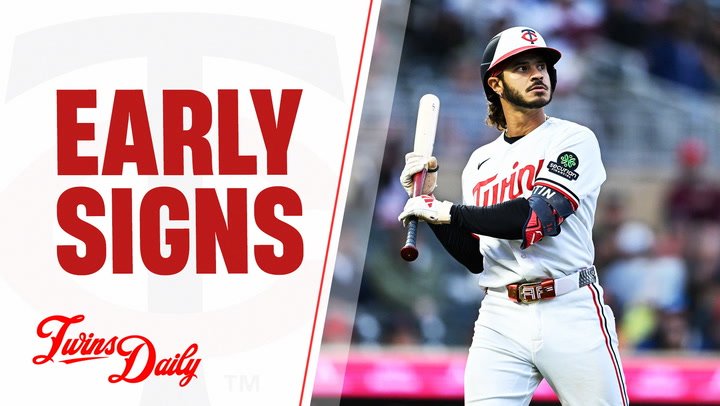 The Twins’ early season has already sparked some intriguing storylines, especially with Mick Abel, Joe Ryan, and Taj Bradley showing flashes of a potential nasty rotation trio. Meanwhile, Byron Buxton’s impact is still undeniable, but his lack of activity on the bases is becoming something worth watching. View the full article
 -
Royce Lewis Rumors Surface as MLB Insider Floats Trade Possibility
DiamondCentric posted an article in Twins Daily
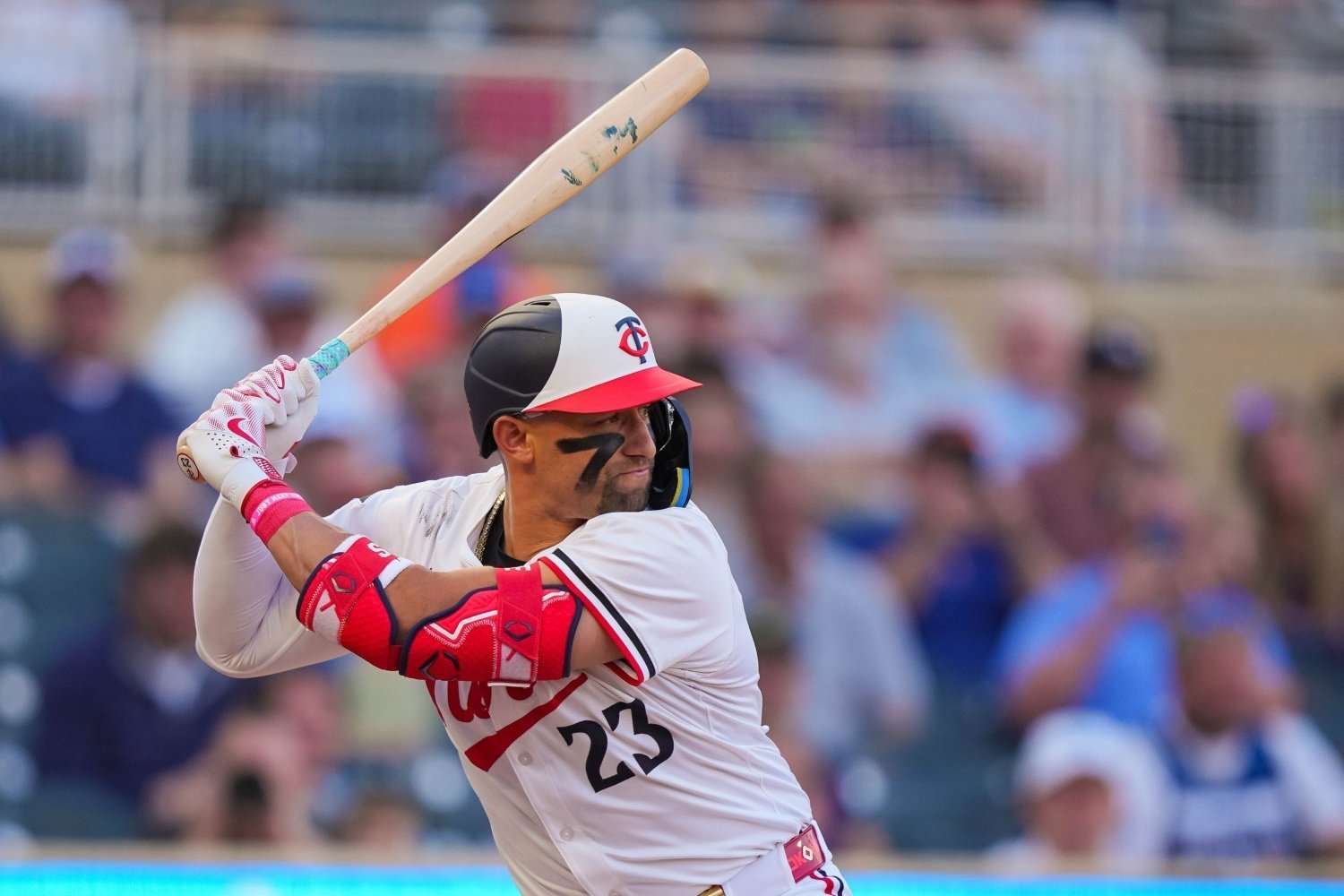 Trade speculation is part of the fabric of a long baseball season, and it's still months away from the MLB Trade Deadline. Still, one prominent MLB insider is looking at potential solutions for a struggling American League contender. The Athletic’s Jim Bowden recently examined early-season trends around the league, including a Boston Red Sox lineup that has yet to find its footing. With the absence of Alex Bregman leaving a noticeable void, Bowden pointed directly to the infield as an area of concern. “I’m not sure they’re going to get enough offense — specifically from their infield — to get back to the postseason,” said Bowden. “I believe there is pressure on the front office to find another impact bat to help lengthen the lineup, preferably a third baseman.” From there, Bowden began to explore possible solutions, and that is where Royce Lewis’ name entered the discussion. “I like Caleb Durbin, don’t get me wrong, but I like him more as a utility player than an everyday player. Perhaps a trade with the Astros for Isaac Paredes or the Twins for Royce Lewis (once he’s healthy again) would work? Or a deal for a younger option, like the Nationals’ Brady House?” It is important to note that this is outside speculation rather than any indication that Minnesota is actively shopping Lewis. Still, it highlights how the rest of the league views his upside when healthy. At the moment, Lewis is working his way back from a Grade 1 left knee sprain suffered on April 9 when he felt a pop during a game. The initial concern has since subsided following encouraging MRI results, and he is expected to return around April 21. For a player who has dealt with multiple injuries early in his career, even a relatively minor setback is enough to draw attention. Before landing on the injured list, Lewis was showing signs of growth at the plate. He posted a .222/.378/.444 slash line with two home runs, eight RBIs, and eight walks across 45 plate appearances. The most notable development has been his patience, with a 17.8% walk rate that nearly triples last season’s mark and sits well above his career average. That approach hints at a more complete offensive profile, one that could further elevate his value. In the meantime, the Twins have turned to a veteran platoon of Tristan Gray and Ryan Kreidler at third base. It has been a functional solution, but not one that replicates Lewis’ upside. His eventual return should stabilize the position and deepen a lineup that has leaned on its versatility. If Minnesota were to entertain a move involving Lewis, it would not be without internal alternatives. Brooks Lee has struggled defensively at shortstop, and a shift to third base could better suit his range limitations. That would open the door for top prospect Kaelen Culpepper to step into a larger role at shortstop, giving the organization a different kind of infield alignment. Even with those possibilities, dealing Lewis would represent a significant philosophical shift. He has shown the potential to be a cornerstone talent when healthy, and his flashes of impact have reinforced that belief. External interest is not surprising, but it does not necessarily align with the Twins’ current competitive window. For now, Bowden’s comments serve more as a reminder than a prediction. When a player with Lewis’ ability shows even incremental improvement, the rest of the league takes notice. Whether that ever turns into something more concrete is a question that will linger, but Minnesota’s focus remains on getting him back on the field and contributing. View the full article
 -
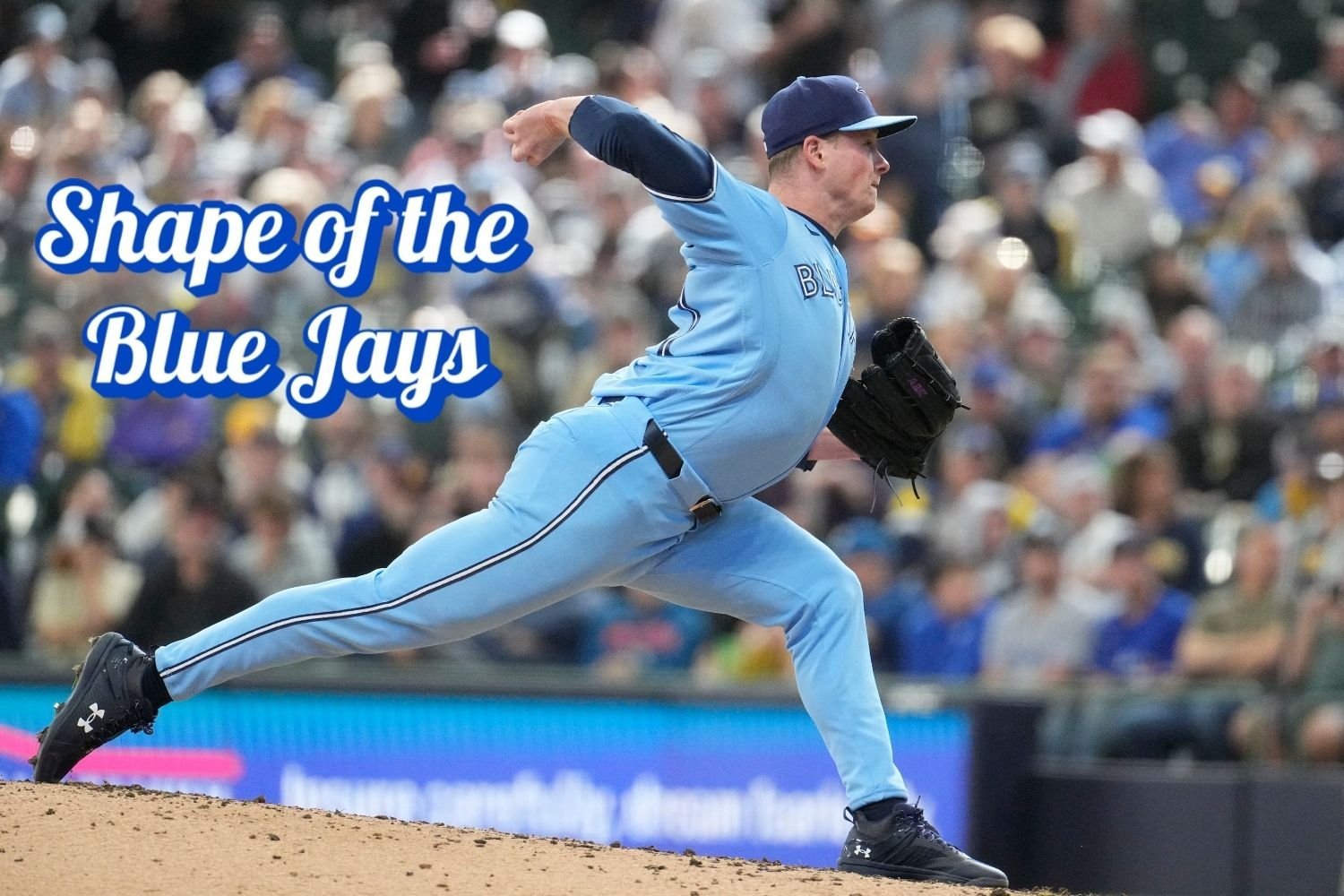 Welcome to Shape of the Blue Jays, my column where I dig into Statcast numbers to analyze recent pitch shape and swing shape trends for Toronto Blue Jays players and discuss how they have impacted their performance. Click here to read the last edition. Quick Hits: Offense Despite a couple of isolated positive efforts recently, the Jays' offense has been an unfortunate combination of injured and bad this year. They're still the standard of the league when it comes to making contact, and they're still hitting a ton of line drives. They have a bottom-three chase rate in MLB, but their bottom-10 chase rate last year wasn't much better. The balls in play just haven't been as threatening: They have the fourth-worst barrel%, fifth-worst hard hit%, and third-worst average exit velocity. Last year got better as it progressed, but on the season, they were merely average to decent in these categories. There have been some clear team-wide mechanical differences at the plate. These don't lie so much with how fast they're swinging, but rather their inability to make their contact useful. They're bottom-three in both of Statcast's squared-up% and blast% (the latter being squared-up fast swings) after being top 10 in both last year. They pulverized fastballs in October, but in the regular season, their real calling card was spoiling secondaries. This year's Blue Jays haven't been half bad with heaters, but they led the league last year in wOBA, xwOBA, and contact% against breaking balls and off-speed pitches. In 2026, that has turned into a bottom-10 wOBA, although their xwOBA suggests it should be better, and they're still not missing them. In sum, I wouldn't say their underlying process has been terrible, but until the quality improves on their balls in play, they won't score many runs. Louis Varland If you don't like where the Blue Jays are at now, it's hard to imagine where they'd be without Louis Varland, who has been lights-out (0 ER, 16 K, 11 IP). Discourse surrounding the closer position captivated the fanbase after he bailed them out in the 10th inning on Monday in Milwaukee, but they can't afford to confine Varland's role to just one inning with what he's doing. Pitch usage-wise, he's in a very similar spot to when Toronto acquired him from the Twins last year, but he's showing some slightly better shapes across the board. He's added a tick of vertical break to his fastball, proceeded with the more downward changeup he flashed in spring training, and generated more lift and glove-side movement on his low-90s slider. Varland MLB Ranks, 2026 (Among 215 Qualified Relievers) Stat Rank K% 7 K-BB% 11 GB% 25 xFIP 6 Pitching+ 5 per FanGraphs According to the Blue Jays broadcast on Thursday afternoon, Sportsnet's Hazel Mae asked Varland if he felt there was anything specific in his arsenal that made his fastball and curveball play up. I'm paraphrasing here, but he essentially said that regardless of the opponent's strengths and weaknesses, any well-executed pitch is a good one, regardless of the situation. That's a good summary of how things are going for him right now. The stuff is just so good throughout the arsenal, and he can throw strikes too. Daulton Varsho After a tough start, Daulton Varsho has become one of the few bright spots in the lineup, going 10-for-26 with three home runs since the start of the Twins series last weekend. His bat tracking specs are surprisingly way different from last year's excellent but injury-shortened performance: He has lost bat speed but also shortened his swing by a lot (the two are correlated), going from a pull-air approach to an all-fields, line-drive one. Most intriguingly, his strikeout rate is down to 11.9%. His previous career-best is 21.3%. I'm sure that will go up, as he's currently making an unsustainable amount of contact outside the zone, but he's also making more contact in the zone too, which is a more repeatable skill. Varsho Swing Mechanics, 2025 vs. 2026 Year Bat Speed Swing Length Swing Tilt Contact Point (rel. to home plate) Attack Angle Attack Direction 2025 75.6 mph 7.9' 30° -0.8" 13° 4° pull 2026 73.4 mph 7.5' 28° -2.9" 8° 0° MLB Avg. 71.7 mph 7.3' 32° 2.9" 10° 2° pull per Statcast One thing I can't make sense of: Despite flattening out his swing and attack angle, centering his attack direction, and letting the ball travel further, he's... still pulling balls in the air at a remarkable pace. However it's happening, it's working. Varsho has also trimmed his chase rate and is walking at a 10.4% clip, which would tie a career high. As for his throwing arm, which was dangerously weak after shoulder surgery, his maximum and average throw velocities from the outfield are still below-average, but each is up about 7.5 mph compared to last year, a good sign for his health. He's up to a .267 batting average and 132 wRC+ on the year, and is on a pace of about 4.9 fWAR per 650 plate appearances. If that holds, he's going to get paid at season's end. Patrick Corbin Patrick Corbin turned in a fine performance in his second start as a Blue Jay on Thursday at Milwaukee (5.2 IP, 1 ER, 4 H, 6 K, 1 BB) after a rough debut last Friday. In that first outing, his cutter got crushed by righties on the outer half of the plate. That remained the case, but this time, he started the game by relying much more on his four-seamer and managed to avoid giving up early home runs. No stuff model is ever going to write home about it (91 mph, 14" iVB, 9" arm-side HB), but it doesn't seem like the Brewers were expecting it, considering he barely threw it against Minnesota. During his second trip through the order, he quickly reintroduced the cutter as velocity on the fastball dipped into the high-80s. He also pushed his sinker more to righties (38%) than in his first start (22%). It was his slider, though, that gave the Brewers fits all game long. It's nothing more than a slow gyro (79 mph, 0" iVB, 3" glove-side HB), but it was responsible for five of his six strikeouts on the day. It got a 50% chase rate, seven misses on 10 swings, and a 50% called strike plus whiff rate. Overall, I'd expect his usage patterns to change again in his next start. Staying unpredictable and changing things up the more hitters see him is how he'll be effective. Patrick Corbin Slider Whiffs by Location, 2026/04/16 (Statcast) All visuals and figures courtesy of Baseball Savant and FanGraphs. Up to date as of April 17, 2026. View the full article
 -
 At long last, the San Diego Padres' franchise sale saga appears to be nearing its end. The Seidler family has chosen its winning bidder, private-equity billionaire José E. Feliciano and his wife, Kwanza Jones. First on the news was Jared Diamond and Miriam Gottfried of the Wall Street Journal. The reported price of the sale will be $3.9 billion, which is $800 million more (roughly 20%) than Forbes' latest evaluation of the organization ($3.1 billion). It is also an MLB record by a significant margin, easily clearing the $2.4 billion paid by Steve Cohen to acquire the New York Mets in 2020. As our @Steve Drumwright noted earlier this week, the finalists had submitted their bids and were waiting a final decision from the Seidler family. Feliciano led a group of investors in 2022 that purchased the Chelsea Football Club for over £4.25 billion (more than $5 billion). There does not appear to be a consortium involved in this deal; from what's publicly available, it seems as though Feliciano and Jones will be the sole owners of the team. They'll be taking over for the Seidler family, who lost their patriarch, Peter, in 2024. Peter Seidler had bought the team in 2012 for $800 million, and after a slow start under his stewardship -- the team didn't post a record above .500 between 2012-19 -- the franchise has evolved into one of the league's premier contenders in recent years. Since 2020, the Padres have run one of the league's highest payroll while making the playoffs four times in six years, including an NLCS appearance in 2022. A sale of this magnitude will take some time to finalize, though there's no reason to expect that the other owners won't vote to ratify it. Feliciano immediately becomes one of the league's wealthiest owners and will likely have an outsized voice at the table during the upcoming CBA negotiations. View the full article
 -
 Owen and Jesse are back with even worse news than last episode: the Blue Jays have lost 5 straight series and fallen four games below .500. The guys rant about the poor offense and defense before going over the bright spot that included strong starts from Kevin Gausman, Dylan Cease and Patrick Corbin, and breaking down the struggles of relievers like Jeff Hoffman and Tyler Rogers. They then talk about Lenyn Sosa’s first impression with the Jays, then give injury updates on Trey Yesavage, José Berríos, George Springer, and Addison Barger before previewing the weekend series against the Arizona Diamondbacks. Listen on Apple Podcasts: https://podcasts.apple.com/us/podcast/the-jays-centre-podcast/id1846108462 Listen on Spotify: https://open.spotify.com/show/3Bi7SzfpcqMo5xYWnbCeoL Listen on iHeartRadio: https://www.iheart.com/podcast/263-the-jays-centre-podcast-300304824/ Listen on Pocket Casts: https://pca.st/2qk9wqxd Watch on YouTube: https://www.youtube.com/@jayscentre View the full article
 -
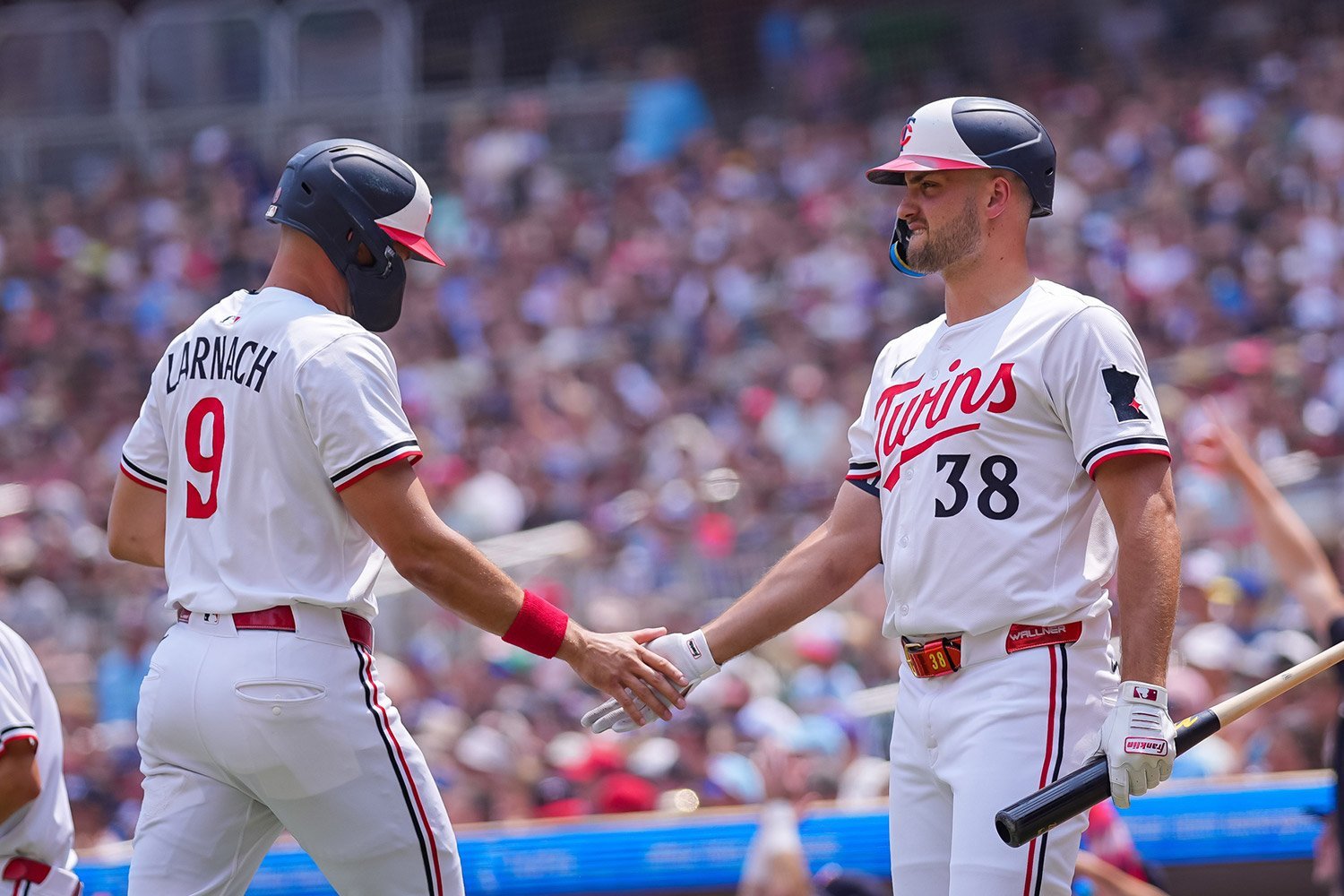 Seems to me you can't read a two-sentence article about our Twins without at least one of those sentences being about "too many left-hand hitting outfielders." But do we?? Cody Schoenmann takes a look, and there are lots of good insights here. Perhaps you have an opinion you'd like to add... Do the Minnesota Twins Actually Have More Left-Handed Hitting Corner Outfielders Than Other Organizations? Austin Martin isn't one of those LH hitting outfielders, but he IS the subject of this piece. Is this what we've been hoping for ever since we said goodbye to Jose Berrios? Or is there more? Join the discussion! This is What a Successful Austin Martin Was Always Going to Look Like Did you know there's a better place to get a game story than the newspaper? Better than MLB.com? Better than 'em all?? Well, there is, and what's even better is you get to tell us what went wrong, or right! TD's game recaps are the shiznit, as the best of the TD staff take turns providing the absolute best takes on the day's game every day! Join us... Twins 8, Blue Jays 2: G4 Ignites a Twins Onslaught Get your comment on. Get in the forums! View the full article
 -
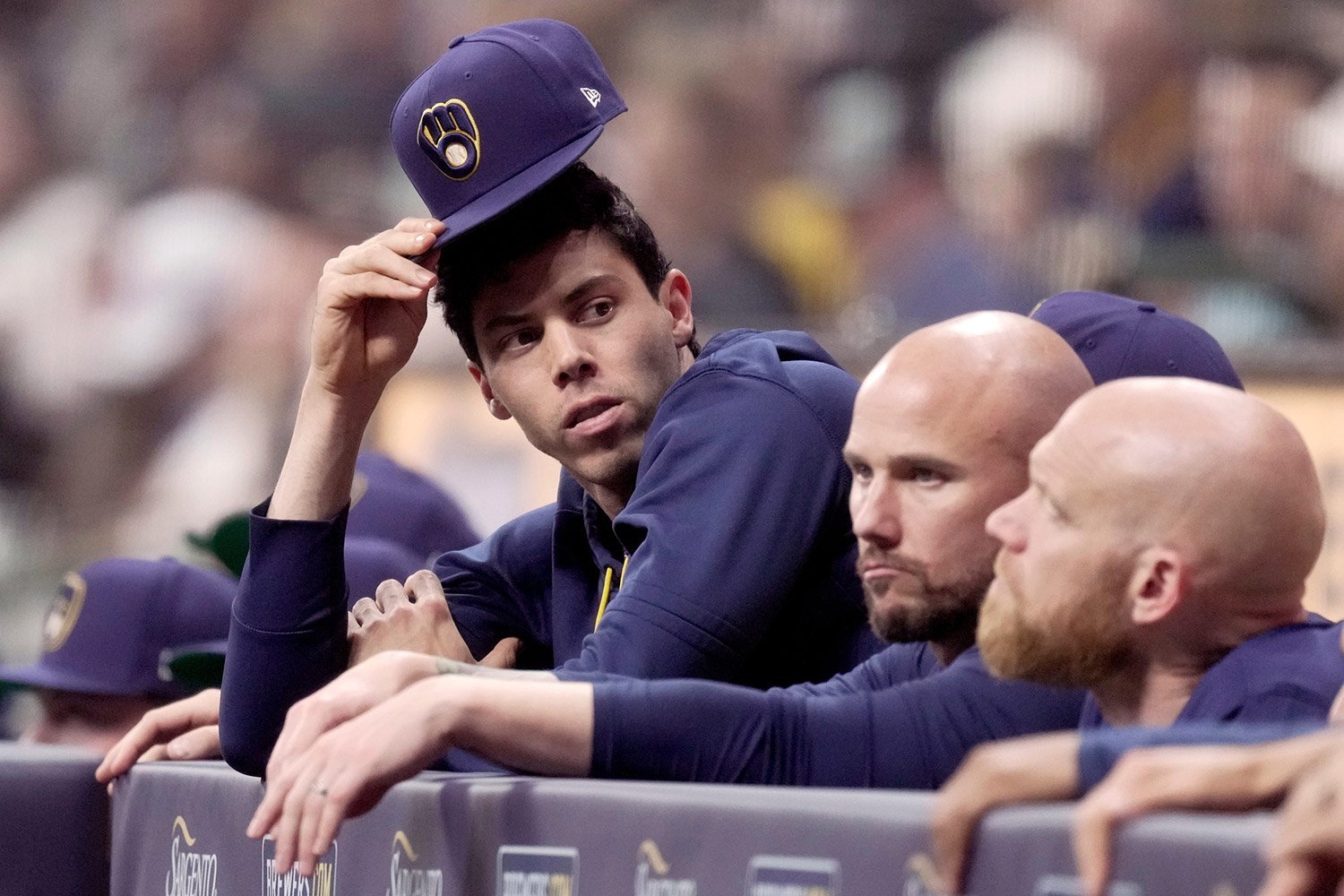 It was the best of times, it was the worst of times. This week felt like a tale of two seasons as we examine three of the best discussion topics on Brewer Fanatic: Brewers: Yelich to IL with Adductor strain There are some things we cannot escape: death, taxes, and injuries to Christian Yelich. A difficult homestand got worse on Sunday when Yelich exited with a groin strain. Early reports suggested he would be out for a while. Brewers fans know better than to trust early timelines. Yelich’s history, especially with chronic back issues, has made recovery windows unpredictable. Later updates offered some optimism, with a possible return as early as next month. The forum reaction followed a familiar pattern. Some questioned whether the front office should have been better prepared for what feels inevitable. Others pushed back, noting Yelich played 150 games in 2025 and that durability concerns may be just as relevant for 22-year-old Jackson Chourio. Regardless, the Brewers lost their DH, a hitter carrying a 136 OPS+. Naturally, Milwaukee responded by taking the next series from Toronto, doing just enough to win without much offensive production. It is early, but this team continues to find ways to grind out wins, even when the lineup takes a hit. Brewers: 1/10 of the Way Baseball is a funny game. It took only four games in 2025 before fans began drafting obituaries for the season. This year, it took 15 games and a sweep at the hands of the lowly Nationals to shift the mood. With 10% of the season in the books, Brewer Fanatic begins to form its initial assessments of the team. One perspective could be summarized as distrust for half the infield, most of the outfield, and nearly all of the bullpen. Our forum universally agrees the offense has been "Jekyll and Hyde," especially comparing splits against left-handed and right-handed pitching. Will the return of Andrew Vaughn and Jackson Chourio be too late to keep the Brewers competitive? It is important to remember how much can change over the course of a season. Last year's team sat 6.5 games out of first place in late May before running away with the division title. Minors: Thurs. 4/16: Back to Evening Action If you are like me, you enjoy checking box scores from the Nashville Sounds or Biloxi Shuckers to see how the Brewers’ top prospects are performing. The best way to follow Milwaukee’s farm system, though, is through Brewer Fanatic’s minor league game thread and daily Link Report. Yesterday’s minor league thread offered a deeper look at underlying player performance through advanced metrics. For example, Luis Lara’s .414 batting average is supported by a .500 BABIP on ground balls. There is a lot to like about Lara's start, but reaching base half the time on ground balls is not sustainable and points toward eventual regression. You never know what you might find in the minor league forum. You might even see Prince Fielder showing up at a Wilson Warbirds game! Rain or shine (literal and figurative), there is no better place for Brewers fans than Brewer Fanatic! View the full article
 -
How Marlins will bounce back from brutal road trip
DiamondCentric posted an article in Fish On First
 It's been a humbling week for the Miami Marlins, losing five of six games to the Detroit Tigers and Atlanta Braves to drop below .500 for the first time this season. AJ Ramos, Isaac Azout and Kevin Barral analyze the team's bizarre usage of Pete Fairbanks and Sandy Alcantara, what impact Kyle Stowers and Esteury Ruiz will have upon returning from the injured list, how the rest of the starting rotation is holding up and more. You can find Fish Unfiltered and Fish On First LIVE on the Fish On First YouTube channel, Apple Podcasts, Spotify or wherever else you get your pods. Next up for the Fish, they host the Milwaukee Brewers and St. Louis Cardinals for three games apiece. Stowers could potentially return from his hamstring strain during the Cardinals series. View the full article
 -
After bad outing, pitchers must find 'chink in the armor'
DiamondCentric posted an article in Fish On First
 On Fish Unfiltered, AJ Ramos describes the process he used to recover from blown saves during his MLB career.View the full article
 -
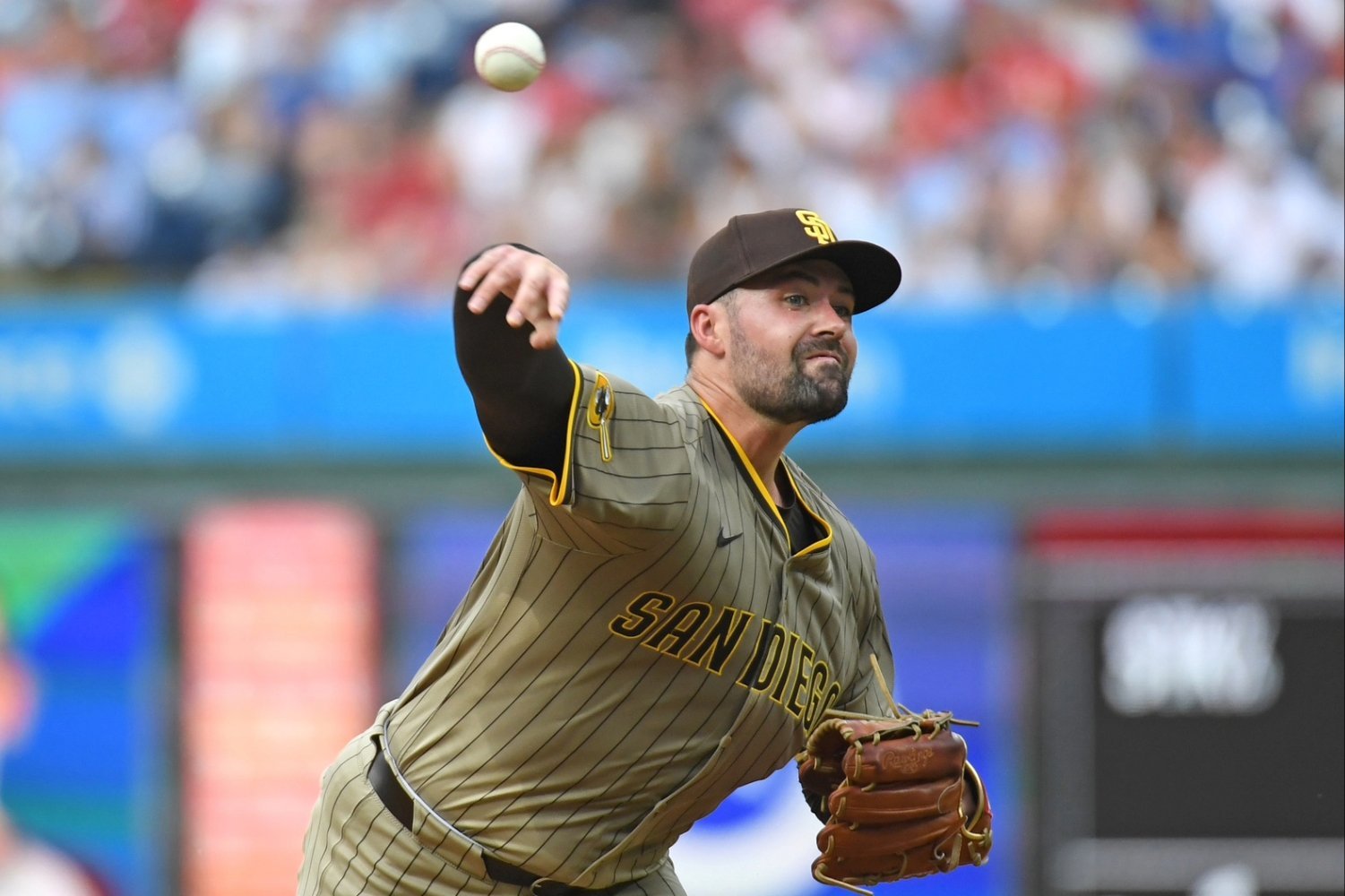 With Nick Pivetta facing an extended absence with a flexor strain in his elbow, the San Diego Padres will need to deploy their starting pitching volume earlier than they might have anticipated. Each of Griffin Canning and Matt Waldron were already on rehab assignment, but it’s the latter that’ll get the first call in Pivetta’s stead. He’ll start on Friday against the Los Angeles Angels. It remains to be seen what the Padres will get out of Waldron. The runway may be short, though. Two years ago, Waldron looked like a viable candidate to fill out the back of the rotation. Armed with an effective knuckleball, he posted a 1.8 fWAR across nearly 150 innings in 2024. While the stuff didn’t play on the strikeout side (21.3 K%), he was effectively able to navigate hitters by minimizing baserunners (6.4 BB%) and avoiding hard contact (35.0 Hard-Hit%). He was unable to replicate those results in 2025, however. After an oblique strain set him back to start the year, Waldron made only one start at the top level for the Padres. He was unable to make it through five innings due to some heavy command struggles; he allowed six hits and six walks in that outing. The results weren’t much better in Triple-A. He pitched to a 6.67 ERA (4.99 FIP) and had a hard-hit rate that lingered around 40 percent. His 52.0 percent usage on the knuckleball represented easily his highest usage of that pitch, and while he was able to get decent results with it (24.1 Whiff%), none of his four-seam, sinker, or sweeper proved capable of providing sufficient results. His trio of rehab starts here in 2026 have yielded very different results, however. In 12 innings of work, Waldron has yet to allow a run. He has a slightly improved strikeout rate (30.8 percent) but has demonstrated top-tier command (2.6 percent walk rate). His groundball rate sits at an obscene 64.0 percent. What’s most interesting about this turnaround in performance, though, is that it appears to be wrought by a dramatic change in usage. Waldron has cut the knuckleball usage by more than half. Through those dozen innings, he’s only throwing it 25.6 percent of the time. That’s led to more of a three-pitch blend of the knuckle, the four-seamer (26.9 percent), and the sinker (23.7). The sweeper has come in roughly 17 percent of the time as a fourth offering, registering as his best pitch in the eyes of Stuff+ (100). He’s gotten chase regularly with the former three pitches and has been able to generate more frequent whiffs on the knuckle (27.3 percent), at least partially a byproduct of the more frequent incorporation of the other two. If that’s the version of Waldron the Padres get on Friday, then he can certainly help to stabilize the rotation in Pivetta’s absence. This is not a starting group in search of strikeouts; it’s about mitigating quality contact in the very way that Waldron has done thus far in El Paso. If the command is even close to as pinpoint as it’s been in Triple-A, his enhanced pitch mix should suit him (and the group) quite well. In truth, Waldron needs that to be the case. Even with Pivetta down for an extended period of time, the Padres are otherwise squared in their rotation at present. Each of Michael King and Randy Vásquez has been very good (the latter’s most recent start notwithstanding). Walker Buehler and Germán Márquez have produced varying results start-to-start but have more established big-league track records. With Griffin Canning also likely nearing the end of his own rehab and Joe Musgrove (presumably) returning eventually, there’s a certain onus on Matt Waldron to look good quickly. It’s not so much that he’s pitching for his job on Friday, but it’s not as if he has an extended runway either. There’s a needle in need of threading here, and Waldron will need that four-seam/sinker combination to work in conjunction with the knuckleball to drive his success or his out-of-options status could lead to some rather shaky ground in short order. View the full article
 -
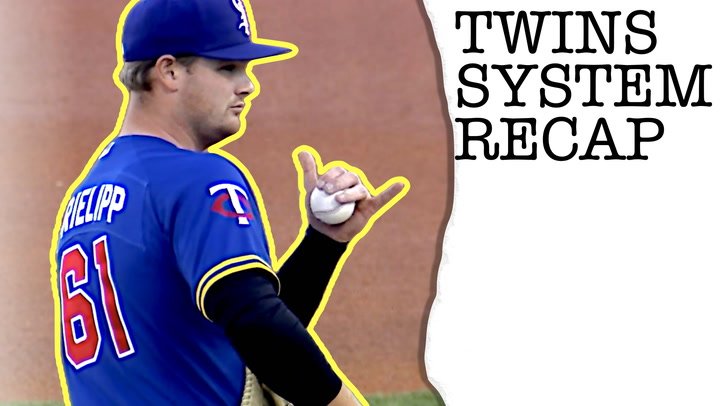 Twins System Recap: Connor Prielipp put together perhaps the best start of his pro career Thursday night for the Saints, throwing five innings of one-run ball while striking out a career-high eight batters. Eli Jones also turned in another solid five frames, and Riley Quick struck out five over three no-hit innings. View the full article
 -
Mets Minor League Report: Three Losses And A Postponement
DiamondCentric posted an article in Grand Central Mets
 Rain and losses defined Thursday for the Mets' minor-league affiliates. Syracuse's game was postponed. Binghamton was shut out 5-0 at Akron, with Will Watson allowing one run on six hits and striking out three over four innings. Brooklyn fell 7-6 to Greensboro despite Antonio Jimenez homering, and Noah Hall struck out three in five innings. St. Lucie dropped an 8-6 contest at Daytona, with home runs from Randy Guzman, JT Benson, and Branny De Oleo. Mets Transactions New York Mets traded LHP Richard Lovelady to Washington Nationals for cash. Syracuse Mets' Game Postponed The Syracuse Mets' scheduled game was postponed. Will Watson Takes Loss As Rumble Ponies Shut Out In Akron The Binghamton Rumble Ponies were shut out 5-0 by the Akron RubberDucks in a game called due to rain after the bottom of the seventh inning. Will Watson took the loss on the mound, going four innings, allowing six hits and one run, walking one, and striking out three. Akron pushed across a run in the second before Watson worked into the fifth. Binghamton's offense managed just three hits, with singles from Chris Suero and Kevin Parada, along with a third-inning double from A.J. Ewing. Ewing also drew a walk and reached base twice from the leadoff spot. The Rumble Ponies drew four walks total, but could not string together hits, and they struck out nine times in the shortened contest. Akron broke the game open in the bottom of the seventh with three runs, capped by a three-run home run off reliever Saul Garcia, who was charged with three runs on three hits and one walk across one inning of work. Jefry Yan delivered a scoreless frame with two strikeouts in relief, and Zach Peek allowed one run on two hits over his inning. The loss drops Will Watson to 0-2 on the season. Player AB R H RBI BB K A.J. Ewing 3 0 1 0 1 1 Jacob Reimer 2 0 0 0 1 2 Chris Suero 3 0 1 0 0 1 Jose Ramos 2 0 0 0 1 1 D'Andre Smith 3 0 0 0 0 1 Kevin Parada 3 0 1 0 0 1 Nick Lorusso 3 0 0 0 0 0 Matt Rudick 2 0 0 0 1 1 Wyatt Young 3 0 0 0 0 1 Player IP H R ER BB K HR Will Watson 4 6 1 1 1 3 0 Jefry Yan 1 0 0 0 0 2 0 Zach Peek 1 2 1 1 0 1 0 Saul Garcia 1 3 3 3 1 3 1 Cyclones Fall 7-6 To Greensboro Despite Antonio Jimenez Homer The Brooklyn Cyclones lost a 7-6 decision to the Greensboro Grasshoppers at home, as a three-run ninth inning by the visitors proved to be the difference. Starter Noah Hall worked five innings, allowing six hits and three runs, walking one, and striking out three. Hall kept Brooklyn in the game before the bullpen struggled late. Hunter Hodges was charged with the loss, giving up three runs on three hits and two walks across 1 2/3 innings. A.J. Minter was charged with a blown save after pitching one inning of relief, allowing one run on one hit with one strikeout. Garrett Stratton tossed a scoreless frame with one strikeout, and Felix Cepeda retired his lone batter via strikeout. Antonio Jimenez led the offense, going 2-for-5 with a home run, two runs scored, and one RBI from the leadoff spot. Colin Houck collected three hits and drove in two runs, batting fifth. Yohairo Cuevas added a single, a walk, and two RBIs from the six-hole. Ronald Hernandez drew two walks, singled, and scored twice, batting second. Corey Collins had a hit, a walk, and one RBI. The Cyclones racked up nine hits and seven walks, yet struck out nine times at the plate. Player AB R H RBI BB K Antonio Jimenez 5 2 2 1 0 1 Ronald Hernandez 3 2 1 0 2 0 Daiverson Gutierrez 2 0 0 0 3 1 Corey Collins 4 1 1 1 1 0 Colin Houck 5 1 3 2 0 1 Yohairo Cuevas 4 0 1 2 1 1 Kevin Villavicencio 5 0 0 0 0 1 Vincent Perozo 4 0 1 0 0 1 Diego Mosquera 4 0 0 0 0 3 Player IP H R ER BB K HR Noah Hall 5 6 3 3 1 3 1 A.J. Minter 1 1 1 0 0 1 0 Garrett Stratton 1 0 0 0 1 1 0 Hunter Hodges 1 2/3 3 3 3 2 2 0 Felix Cepeda 1/3 0 0 0 0 1 0 Three Home Runs Not Enough As St. Lucie Falls In Daytona The St. Lucie Mets fell 8-6 to the Daytona Tortugas despite three home runs in the road loss. Starter Frank Camarillo threw three innings, allowing two runs, one of them earned, on two hits, walking three, and striking out two. Dylan Ross followed with a scoreless inning in relief. Nate Lavender was charged with a blown save and the loss, giving up five runs on three hits and two walks across 1 1/3 innings, dropping him to 0-1 on the season. Ernesto Mercedes followed with 1 2/3 innings, allowing one run on two hits with three strikeouts. Luis Alvarez closed with a scoreless inning and two strikeouts. At the plate, Randy Guzman homered and scored twice, driving in one run from the three-hole. JT Benson went 2-for-4 with a home run, two runs scored, and one RBI batting seventh. Branny De Oleo homered for a two-RBI night from the nine-hole, also drawing a walk. AJ Salgado collected two singles and drove in two runs batting fifth. Julio Zayas contributed two hits and scored once from the cleanup spot. The Mets totaled nine hits and four walks, struck out eight times, and saw Daytona pull away with a four-run sixth inning that erased an early St. Lucie lead. Player AB R H RBI BB K Elian Pena 4 0 0 0 1 0 Sam Robertson 4 0 1 0 1 1 Randy Guzman 4 2 1 1 0 0 Julio Zayas 4 1 2 0 0 0 AJ Salgado 4 0 2 2 0 0 Simon Juan 4 0 0 0 0 1 JT Benson 4 2 2 1 0 2 Vladi Gomez 3 0 0 0 1 2 Branny De Oleo 3 1 1 2 1 2 Player IP H R ER BB K HR Frank Camarillo 3 2 2 1 3 2 0 Dylan Ross 1 1 0 0 0 0 0 Nate Lavender 1 1/3 3 5 5 2 2 0 Ernesto Mercedes 1 2/3 2 1 1 0 3 0 Luis Alvarez 1 1 0 0 0 2 0 View the full article
 -
Furious 2022 Twins Fans Completely Irate with 2026 Squad
DiamondCentric posted an article in Twins Daily
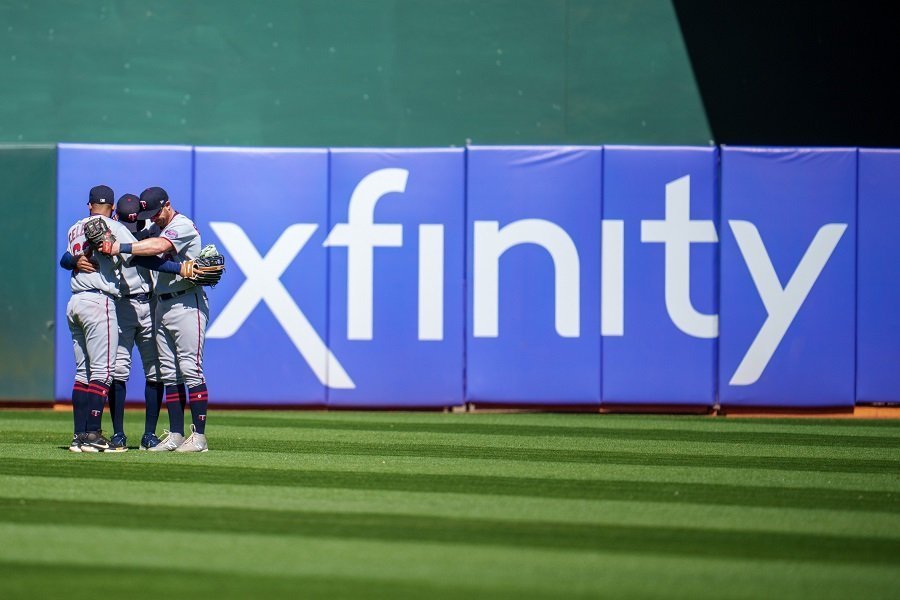 In 2022, the Minnesota Twins roared to an unexpected 22-16 start. The fans we spoke with at the time were surprisingly fed up with the team. Despite the promising first six weeks of the season, perhaps they sensed the team would collapse down the stretch and finish with a 78-84 mark. Now, with the team surpassing low preseason expectations and off to a genuinely decent start in 2026, we asked these same fans for their reaction to the current stretch of winning baseball amid slashed payroll and front office shuffling. "These dummies don't know they're outmanned and outgunned," said Beck Bradford, 45, who now runs the Elko New Market Co-Ed Seniors Pickleball League. "They're winning games with Bert Kreischer [EDITOR’S NOTE: We think Mr. Bradford meant Ryan Kreidler], which just isn’t sustainable. They should be promoting the kids at Triple A, trading all the bums for prospects, and firing everyone in the front office. "They put Garrett Crochet in a blender on Monday night. I've never been more angry." Tamara Kapsner, now 53, still lives in Robbinsdale and still has her doubts about the Twins. “The starting pitching depth is gone. The bullpen can’t possibly keep getting away with throwing that slop. Royce Lewis is hurt once again. No one can play defense.” When asked if she can set all that aside to simply enjoy a fun week of baseball, Kapsner was nonplussed. “My therapist says I shouldn’t let the perfect be the enemy of the good,” she said. “My therapist has never watched Bailey Ober try to hit 90 on the gun in a game that counts.” Hank Winters, who expressed vigorous disappointment in Byron Buxton’s injury history for our 2022 piece, passed away in 2025 after hearing Chappell Roan’s “Pink Pony Club” at the White Bear Lake Sam’s Club. He was 70 years old. His fourth wife and widow, Brenda, had this to say: “Hank would want everyone to know that the Pohlads are cheap, Byron Buxton is soft, Rocco [Baldelli, former Twins manager] should be in Leavenworth, and that he doesn’t regret leaving his entire estate to the freedom-loving patriots of January 6th. I live with my sister’s family now. I hate him.” View the full article
 -
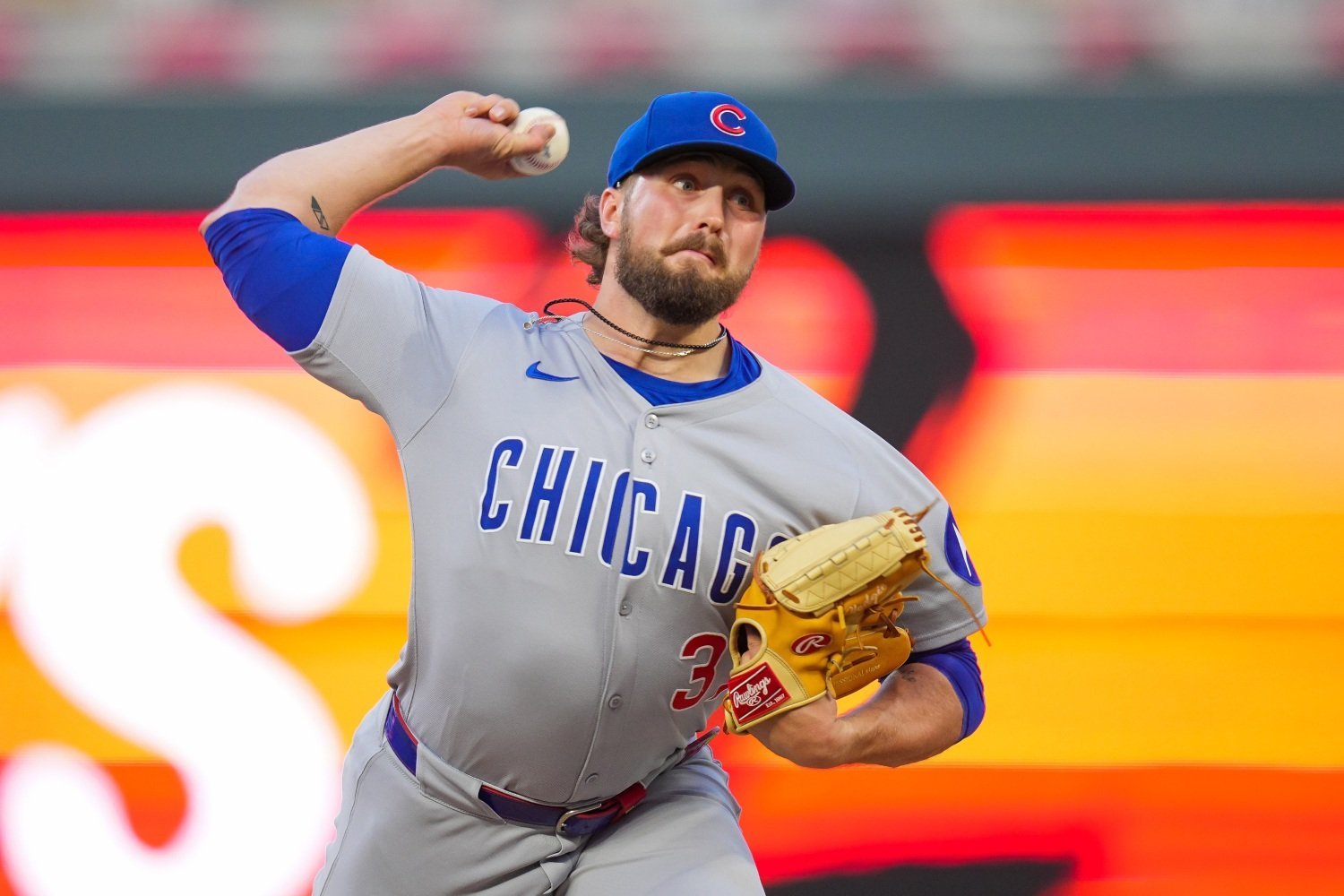 The injured list keeps getting longer for the Chicago Cubs. The focus over the past few weeks has been the starting rotation—mainly the news that righthander Cade Horton will be out for the remainder of the season. The impact of an injury to a pitcher like Horton, who was on his way to being one of the top young starters in the game, is massive for the Cubs, who lack a true ace. Now, the bullpen is being ripped apart, too, by a series of injuries over the last week or so. Free-agent additions Phil Maton and Hunter Harvey are both on the 15-day IL, and so is Ethan Roberts. On Wednesday, we found out that Porter Hodge will be joining Cade Horton on the injured list for the rest of the season, due to UCL surgery. Though the jury was out on how much Hodge could actually be counted on this season, losing him for the season in mid-April will present the Cubs with another depth-related challenge. After a breakout rookie season in 2024 wherein the 23-year-old posted a 1.88 ERA (2.75 FIP) with a WHIP under 0.90 in 43 innings pitched, he was set to be one of the team’s high-leverage relievers last year. In fact, before the 2025 season started, the armchair general managers in the Cubs subreddit were debating on whether the Ryan Pressly trade made sense, suggesting Hodge should be the answer in the ninth inning. Even though walks were probably always going to be a point of concern, the 6-foot-4 righty boasted a fastball that could touch the upper 90s, and a wipeout slider that made the 2019 13th-round pick a potential weapon for a bullpen lacking a shutdown option. Relief pitching was a strength for the Cubs in 2025, with the bullpen finishing 11th in baseball with an ERA of 3.78. However, Hodge was a surprising non-factor, as he dealt with various injuries, pitching 33 innings in the majors with a ghastly 6.27 ERA. He still missed bats, as evident by his near 11 K/9, but he was hit around otherwise, giving up nine home runs in that small sample. Injuries aside, his fastball and slider velocity were a tick up from 2024, giving Cubs fans hope that Hodge could still overpower hitters, and would eventually work his way back into the pen. He had not yet thrown a pitch in 2026 before we got the news of this latest injury, which will certainly cost him not only 2026, but some of the 2027 season, too. The good news is that he's still pre-arbitration, so he remains a long-term option, but the club hanging onto him is no guarantee. The Cubs have one of the hardest bullpens to project, based on their affinity for making plenty of low-risk signings, so there is a non-zero chance that we have seen Hodge for the last time as a Cub. Moving forward, the Cubs are going to have to find more serviceable right-handed relief options. With all the injuries that have unfolded already, the Cubs are carrying a whopping five lefties in their bullpen: Caleb Thielbar and Hoby Milner have been around since Opening Day, but now, Luke Little is back, along with Ryan Rolison and rookie Riley Martin. Ben Brown has been a nice revelation as a full-time reliever so far, closer Daniel Palencia has not allowed an earned run, and Colin Rea has carried over the effectiveness from last season. Now with Rea needing to join the rotation, another right-handed relief option is gone. Jacob Webb is active, but his ERA is north of 5.00, and the only other righty on the 40-man roster is Gavin Hollowell and his negative career WAR. He's hurt, too, though less severely; he just hit the 7-day IL for Iowa. The 9-9 Cubs can sit tight and hope this lefty-heavy group can hold their own until Maton, Harvey and Roberts are back, but the chase for the NL Central crown is looking a lot tougher with the way Cincinnati and Pittsburgh have opened their seasons. The Cubs will be shopping for relievers come July, but they might need new faces in this group before then. The problem is, they don't have a ton of promising options. As for prospects, Jaxon Wiggins might be up at some point this summer, but his services could be needed in the thinned-out rotation. Their next-best pitching prospect is 19-year-old Kaleb Wing, the club’s No. 12 prospect, according to mlb.com. There is one interesting option who sits on their top 30 prospect list: 26-year-old Grant Kipp, who has thrown 8 1/3 scoreless innings to open the season with Knoxville. He is not an overpowering arm, but what he’s done so far has worked. What’s wrong with riding the hot hand? Out west in Des Moines, there’s not a whole lot to be excited about from righties. There is a 30-year-old, 6-foot-8 reliever named Gabe Klobotsits, who has a 2.08 ERA. Former top prospect turned journeyman Vince Velazquez is trying to make the majors for the first time since 2023 and has the fourth-lowest WHIP on the team (1.05), trailing Paul Campbell, Zac Leigh, and, you guessed it, Gabe Klobosits. The cupboard is bare. Free agency is just as grim, but maybe they can pry Jorge Lopez away from the Saraperos de Saltillo of the Mexican league. Flamethrower Michael Kopech is still out there, but he’s coming off a season wherein he only pitched 11 innings due to injuries and still isn’t healthy. Guys are hitting the waiver wire all the time, and the Cubs shouldn’t be doomed once some of these arms start coming back, but the Hodge injury is a huge blow to their right-handed bullpen depth, something that could be foreseen as an issue this whole season. If there is one silver lining to playing the Mets, Phillies, and Dodgers over their next three series, it is that those lineups are built around their stud lefty hitters, giving the lefty-heavy bullpen a bit of an advantage. They will need to figure out what to do when they head to San Diego at the end of the month and face off against Fernando Tatis Jr., Manny Machado and Xander Bogaerts. View the full article
 -
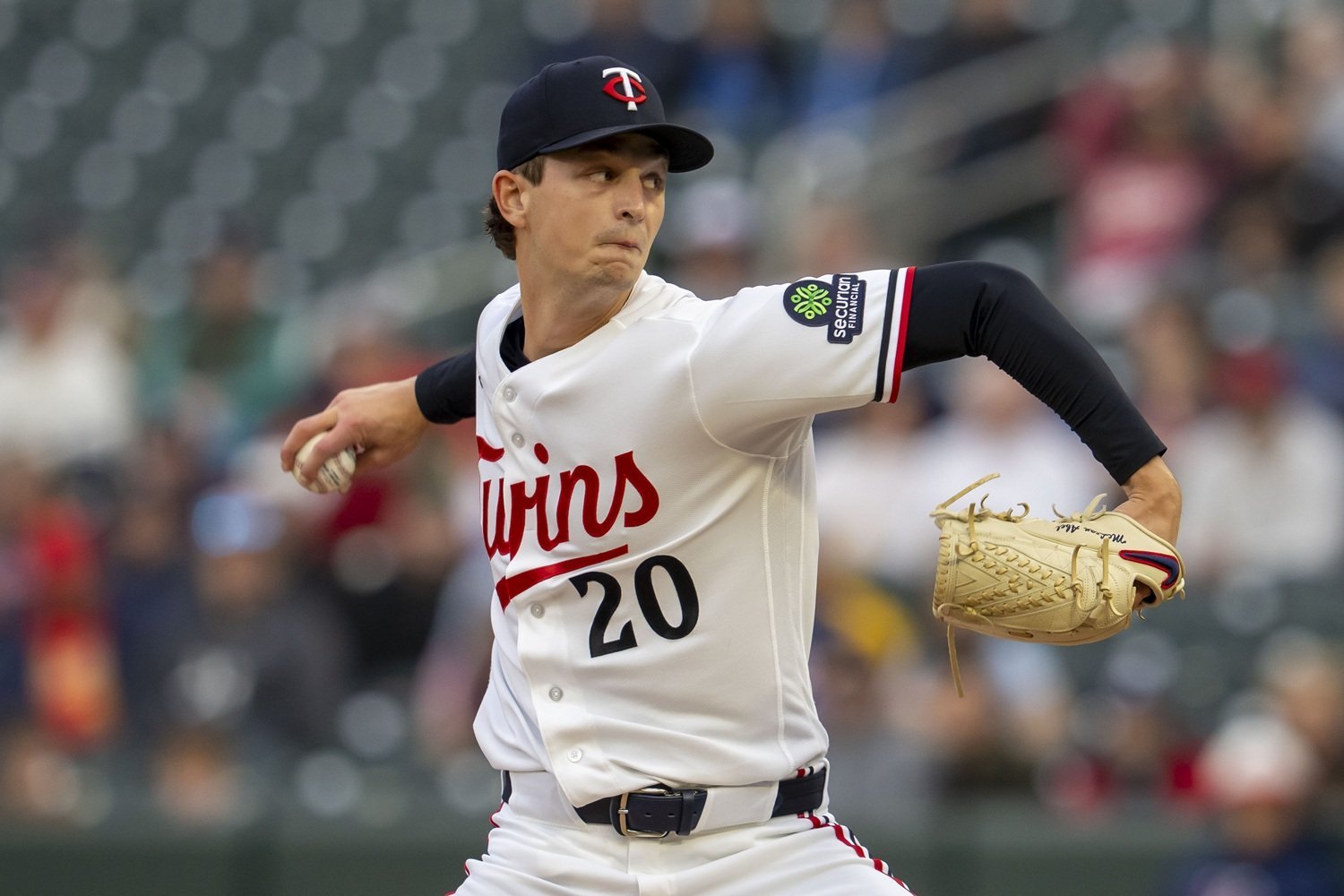 There have been plenty of encouraging developments for the Minnesota Twins early in the 2026 season, but few shine brighter than what Mick Abel is doing on the mound. Acquired in last summer’s blockbuster deal that sent Jhoan Duran out of town, Abel arrived with intrigue, but less fanfare than Eduardo Tait. That's changing quickly. What once looked like a secondary piece is beginning to look more like a foundational one. With long-term questions looming around the rotation beyond 2027 as Joe Ryan and Pablo López approach free agency, Abel is making a compelling case to be part of the next wave, and he's not doing it by accident. Abel’s recent outing offered a snapshot of just how far he's come. He recorded strikeouts using five different pitches, a reflection of both confidence and command across his arsenal that didn’t exist in his rookie campaign. That type of diversity is rare, and it speaks to a pitcher evolving beyond raw stuff into a complete weapon on the mound. “It was outstanding,” said manager Derek Shelton after Abel’s start on Tuesday. “I mean, in control the entire game, mixing and matching, fastball usage was tremendous. He used the changeup against right-handed hitters. Just overall in command of his pitches.” That command starts with subtle but meaningful mechanical adjustments. Abel has added 0.2 feet (a couple of inches) of extension this season. On paper, that seems negligible, but every inch of ground the pitcher seizes from the batter before even releasing a pitch is precious. That added extension allows the ball to reach hitters more quickly, effectively shortening their reaction time and creating the illusion of increased velocity. He's also dropped his arm slot by two degrees. Again, that's a small tweak, but one that can have ripple effects. A slightly lower arm slot can flatten the approach angle on a heater that (like Abel's) retains its carry. At the same time, it can enhance horizontal movement on breaking pitches, giving his sweeper and changeup more deception and separation from his heater. The result is a more unpredictable mix, even if it comes with some tradeoffs. Those tradeoffs are most evident in his four-seam fastball. Abel is throwing it nearly 43% of the time, and it still generates a strong 33.8% whiff rate. However, when hitters do connect, they're doing damage. Opponents are hitting .391 with a .522 slugging percentage against it. A slight dip in velocity, from 96.4 mph last season to 94.8 mph this year, could be part of the explanation. It may also tie back to the mechanical adjustments, as changes in arm slot and extension can subtly alter how the pitch plays. Where Abel has truly taken a leap is in how he set up that fastball with the rest of his arsenal. His changeup has gone from a rarely used offering (8.8% of his pitches in 2025) to a legitimate weapon (17.6%) this season. The results speak loudly. It carries a 31.3% whiff rate and an impressive 35.0% put away rate, making it his most effective pitch. With a positive run value and strong results against right-handed hitters, it has become a cornerstone of his approach. The sweeper tells a similar story of growth. Once an afterthought at just 3.1% usage, it is now up to 10.6%. More importantly, it's not the same pitch. Last season, it featured 4.3 inches of vertical movement. This year, that number has dropped to -0.1 inches, creating a drastically different shape. Instead of blending into his other breaking offerings, it now carves a distinct path through the zone. Hitters are struggling to adjust, reflected in a 29.4% whiff rate. This is the blueprint of a pitcher learning how to sequence rather than simply throw. “You know he’s locked in, he’s in a groove, and it’s exciting,” said Byron Buxton, who homered twice to support Abel’s last start. “We saw little glimpses of it last year. He went in the offseason and did some work. Coming back, he’s been phenomenal. To be able to do the things he’s done, obviously, he’s had some tough starts in 30 or 20 degree weather, whatever you want to call it. No excuses. But he’s gone out there and battled through those. To finally get a warm day and see what he actually is, is very exciting for sure.” That last point matters. Early-season results in cold weather can often mask progress, especially for pitchers still fine-tuning feel and command. As temperatures rise, so might Abel’s velocity and overall consistency. If that happens, the gap between his process and results could close quickly. For now, the Twins are seeing a pitcher who is no longer just a projection. Abel is making tangible, measurable changes that are translating to big-league success. The arsenal is deeper. The command is sharper. The confidence is evident. The narrative has shifted. Abel is not just a piece of a past trade anymore. He is becoming a key part of Minnesota’s future, and if these changes hold, the Twins may have found more than they initially bargained for. What has stood out about Abel in 2026? Can he continue this performance? Leave a comment and start the discussion. View the full article
 -
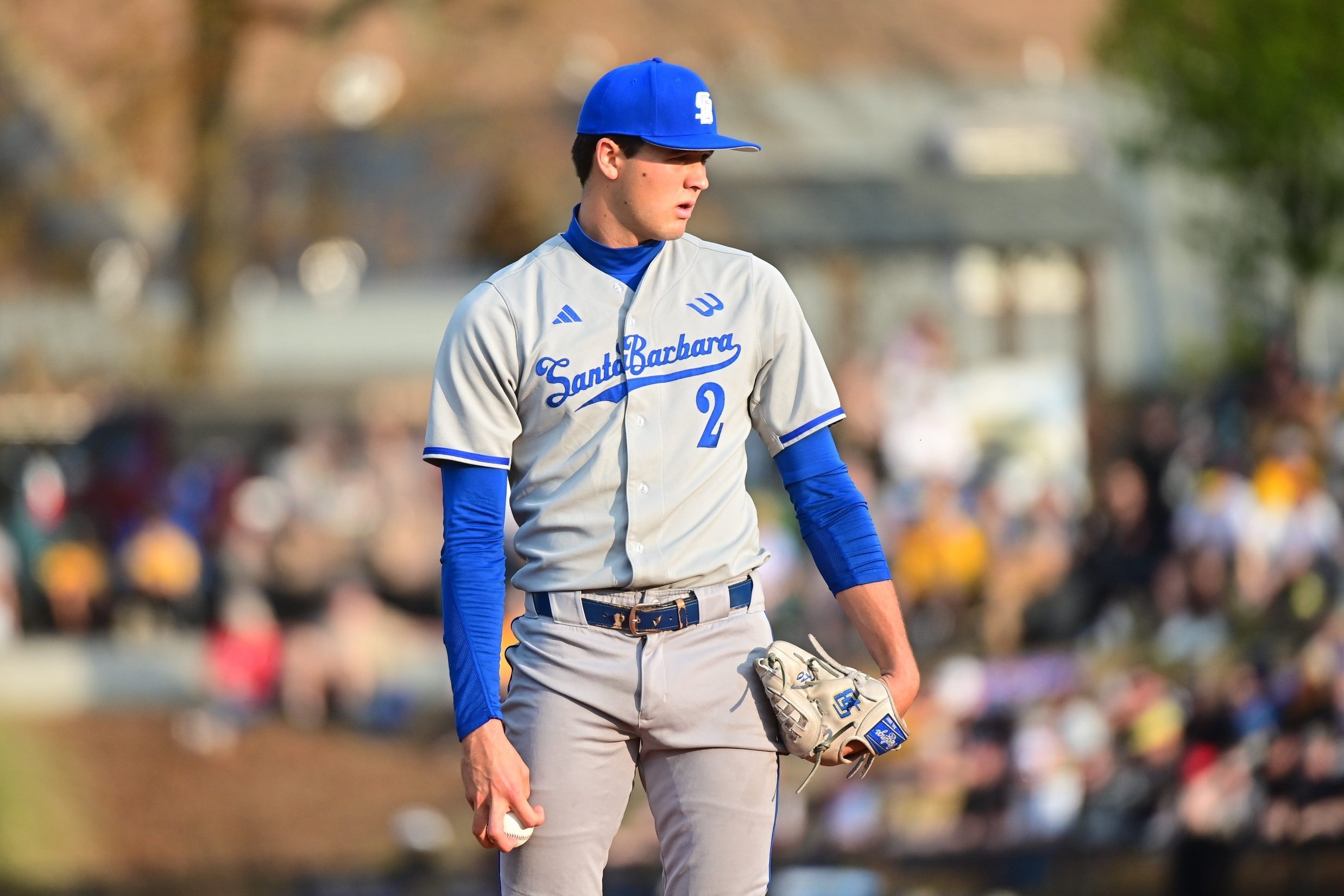 Leading up to the 2026 MLB Draft, Fish On First brings you a series of scouting reports on top prospects in this draft class who could realistically wind up in Miami. Overview Position: RHP Height: 6’5″ Weight: 205 pounds School: UC Santa Barbara Jackson Flora is a 6’5”, 205-pound right-handed pitcher who plays for the UC Santa Barbara Gauchos. Flora is having an unbelievably great junior season for UC Santa Barbara to emerge as the top pitching prospect in the 2026 MLB Draft class. Flora was a blue-chip prospect coming out of Foothill High School in Pleasanton, California. On Perfect Game, Flora was the 428th-ranked prospect and the 140th-ranked right-handed pitcher in the Class of 2023. He was also the 20th-ranked pitching prospect out of the Golden State. Flora went undrafted and signed with UC Santa Barbara. In his freshman season, Flora made an immediate impact for the Gauchos and was one of their best pitchers. During the 2024 season, he made 23 appearances and four starts. He posted a 3-2 record with a 3.83 ERA, five saves, 1.45 WHIP, and 40 strikeouts in 47 innings pitched. Flora was named to the All-Big West Honorable Mention team. During his sophomore season, Flora had a major breakout and became one of the top right-handed pitchers in the country. In thirteen appearances and eleven starts, he posted a 3.60 ERA, 1.00 WHIP, a .209 opponent batting average, one complete game shutout, and 86 strikeouts in 75 innings pitched. Flora was named to the All-Big West First Team. So far this season, Flora has elevated his game again, emerging as the NCAA's best performing pitcher. In his junior season, Flora has made nine appearances and starts. He owns a 6-0 record with a 0.63 ERA, 0.79 WHIP, a .138 opponent batting average, 2.8 BB/9, 11.1 K/9, and 71 strikeouts in 57 ⅓ innings pitched. On the mound, Flora possesses a three-pitch arsenal including his fastball, sweeper, and kick changeup. Flora’s fastball is one of the best in this draft class, with velocity that sits in the upper-90s and tops out in the triple digits. His fastball has a plus spin rate and excellent arm-side movement. His plus extension also makes his fastball get on batters quicker than the velocity suggests. Flora’s sweeper is his most-used secondary pitch. His sweeper has good late movement, but he needs to be more consistent with shaping that pitch. This is the first season Flora has been using his kick-change. While it’s brand new, he already has a solid feel for the pitch and uses it very well against left-handed hitters. Strengths 70-grade fastball with plus velo and spin Strike-thrower Great extension Plus slider Promising kick-change Excellent athlete Weaknesses Inconsistent with secondary pitches Pro Comparison: Tyler Glasnow Projection: Top 10 pick Bottom Line The 2026 MLB Draft class seems to be loaded with starting pitchers at the top, and Flora is currently the best prospect of them all. He has frontline starter potential. On Baseball America, Flora is the third-ranked prospect and top-ranked pitching prospect in this draft class. On MLB Pipeline, Flora is the 14th-ranked draft prospect and second-ranked right-handed pitcher. The Marlins have the 14th overall pick in the draft. It doesn’t seem likely that Flora will be on the board when Miami’s on the clock. However, he'd be an incredible addition to their farm system. More 2026 MLB draft profiles OF AJ Gracia INF Jacob Lombard View the full article
 -
 Transactions: RHP Junior Fernandez acquired from Arizona and placed on Development List LHP Thomas Pannone activated from AAA Nashville’s 7-day injured list OF Jordyn Adams activated from AA Biloxi’s 7-day injured list This one isn’t a transaction, but it’s a helpful update from Maryvale on two recent draft picks and a Major Leaguer: https://x.com/Jesus_Cano88/status/2044867625357083020 @Jesus_Cano88 actually published a number of videos and notes from that Extended Spring Training game, in his final day at Baseball America. We are grateful. Game Action: Nashville Pre-Game Media Notes Suspended: Worcester 0, Nashville 0 in the 4th inning Box Score and Game Log Via the Sounds’ website, rainout details: Rain Suspends Thursday Tilt With Worcester Starting LHP Thomas Pannone’s first official game since 2024 was a success, as he tossed three innings of shutout ball (3 H, 0 BB, 1 Ks) on 39 pitches (27 strikes). Congrats to him after missing the 2025 season with a torn flexor tendon in his forearm. Back-to-back singles by DH Jeferson Quero and 1B Brock Wilken (infield variety) to start the bottom of the 2nd inning unfortunately went for naught, so the teams were scoreless before the rains suspended play. Friday’s outlook: Nashville leads the home series 2-0 and the teams are due to resume play on Friday in the top of the 4th inning. LHP Robert Gasser (9 IP, 4 R, 15 Ks through 2 starts in 2026) is then scheduled to start a fresh 7-inning game as nightcap. Biloxi Pre-Game Media Notes Final: Columbus 5, Biloxi 1 Box Score and Game Log Via the Shuckers’ website, game details and we encourage readers to review affiliate write-ups as part of their Link Report routine: Tayden Hall Hits First Double-A Home Run in 5-1 Loss to Clingstones Talented 21-year old starting RHP Bishop Letson came into the game in a rut (8 runs allowed (6 earned) in first 2 starts, totaling 2 2/3 IP), then unfortunately commenced this road game by conceding 2 walks and a 3-run homer amongst the first 4 batters he faced. However, he and the staff really bounced back from there, only allowing 5 more baserunners (3 hits, 2 walks) over the remaining 8 2/3 innings. RHPs Stiven Cruz (1 IP, 0 R, 2 Ks) and Tanner Gillis (3 IP, 2 R, 5 Ks) and LHP Mark Manfredi Sr. (1 IP, 0 R, 3 Ks) combined with Letson to record 13 strikeouts. Manfredi has now struck out 13 of 21 batters faced in 2026, allowing 1 hit and 3 walks (no runs) through 6 innings. Unfortunately, Biloxi’s batters only produced 4 hits, led by DH Tayden Hall’s solo shot. At least 2B Dylan O’Rae continued his red-hot start to the 2026 season with a 1-for-3 effort with a double and a walk. O’Rae has reached base safely in 11 straight games and hit safely in 10 of them. Shuckers’ Extras: Let’s hope that OF/INF Mike Boeve’s 0-for-4, 4K performance is the nadir on his 2026 campaign, with a turnaround on the way. OF Jordyn Adams’ return from injury didn’t go exactly as he hoped: 0-for-4, ejected while making the final out of the game. Friday’s outlook: 24-year old RHP Tyson Hardin (6 IP, 8 R, 12 Ks through 2 starts) will toe the slab as Biloxi needs a win to even the series 2-2. Wisconsin Pre-Game Media Notes Final: Peoria 24, Wisconsin 7 Box Score and Game Log Via the Timber Rattlers’ website, game details: Wisconsin Drops Decision to Peoria Video highlights of the touchdowns and field goals accumulated in this high-scoring affair were thankfully put together by Wisconsin’s terrific media team: 19-year old RHP Ethan Dorchies was hoping for a better outing than last week (2 1/3 IP, 5 R), but he allowed 8 hits (including a 2-run homer and 3 doubles) over his 4 innings of work (6 R (4 ER), 2 BB, 3 Ks), exiting down 6-3 after 77 pitches (42 strikes). The box score details the 21 hits for Chiefs’ batters, 20 of which came against Wisconsin pitchers (and 1 off of position player Juan Baez). They also earned 12 walks. Three errors, a passed ball and balk didn’t help the Timber Rattlers’ cause, but the offense did put up 11 hits, led by SS Daniel Dickinson (3-for-5). In fact, every Wisconsin batter reached base via hit or walk in the contest, which would produce a victory most days. Timber Rattlers’ Extras: Kudos again to OF Braylon Payne for reaching base 4 times (2-for-3, 2 walks) and delivering his second homer of 2026, as well as 3B Andrew Fischer (3 RBIs) and C Blayberg Diaz (2 RBIs) for productive days at the plate. Readers will have to check the box score to review the combined 17 earned runs allowed by LHP Bjorn Johnson, RHP Yerlin Rodriguez and RHP Jose Nova over 4 innings of work. 13 Peoria batters came to the plate in their 10-run 7th inning, followed by a grand slam in the following frame. I think they’ll remember this game for a few decades to come. Friday’s outlook: RHP Bryce Meccage is scheduled to make his 3rd start of 2026 (6 2/3 IP, 3 R, 4 Ks in first 2 outings), with Wisconsin aiming to set aside Thursday’s debacle to claim a 3-1 series lead. Wilson Pre-Game Media Notes Final: Hill City 14, Wilson 1 Box Score and Game Log Via the Warbirds’ website, game details: Big Innings Lead Hill City Past Wilson 19-year old starting RHP Enniel Cortez, who was making his 3rd appearance since missing the entire 2025 season with an injury, unfortunately exited after 1 1/3 innings with an accompanying “injury delay” in the game log. We hope that there’s been no physical setback for the young hurler. In contrast to the Wisconsin game, Wilson’s pitchers only allowed 2 touchdowns on 17 hits and 7 walks in this one. Cortez (6 R (5 ER), 6 H, 2 BB, 2 Ks) and RHP Joshua Quezada (1 1/3 IP, 3 R, 4 H, 3 BB, 1 K) had the most difficult time getting outs this time around. 19-year old LHP Enderson Mercado did the heavy lifting, throwing 90 pitches over 4 2/3 innings, with all of the damage (5 runs, 2 earned) coming with 2 outs in the 5th and 7th innings. RHP Ayendy Bravo also managed to toss 2/3 innings without allowing an earned run (0 H, 2 BB, 1 K). Our main highlight to share comes via a bit of generosity from Brewers’ legend Prince Fielder: Warbirds’ Extras: We’re not sure why C Luis Corobo, 2B Luis Lameda and OF Nick Monile had been absent from action for the prior 5-6 days, but we’re glad to see that they’re healthy. The experienced Lameda went 1-for-3 with a walk and also pitched a scoreless 9th inning. Monile had an outfield assist, drew a walk and scored. Wilson’s 5 hits were all singles, but that included a base hit by SS Brady Ebel to center field in the 5th inning to end his 1-for-34 drought at the plate. 1B Frederi Montero produced a 1-for-3 day, plus a hit-by-pitch. Two errors, two wild pitches, a passed ball and a pick-off obviously didn’t help Wilson’s cause. Friday’s outlook: 20-year old RHP Jarrette Bonet has impressed in 2 starts (7 IP, 1 R, 10 Ks) and gets the chance to lead Wilson back to a 2-2 series tie in his third outing of 2026. We hope that you enjoy the Minor League Link Report. On Friday, five minor league games are on the slate, including Nashville’s quasi-doubleheader starting at 6:05pm CST. The Milwaukee Brewers also kick off their new series at the Marlins from 6:10pm CST. Organizational Scoreboard including starting pitcher info, game times, MiLB TV links, and box scores Current Milwaukee Brewers Organization Batting Stats and Depth Current Milwaukee Brewers Organization Pitching Stats and Depth View the full article
 -
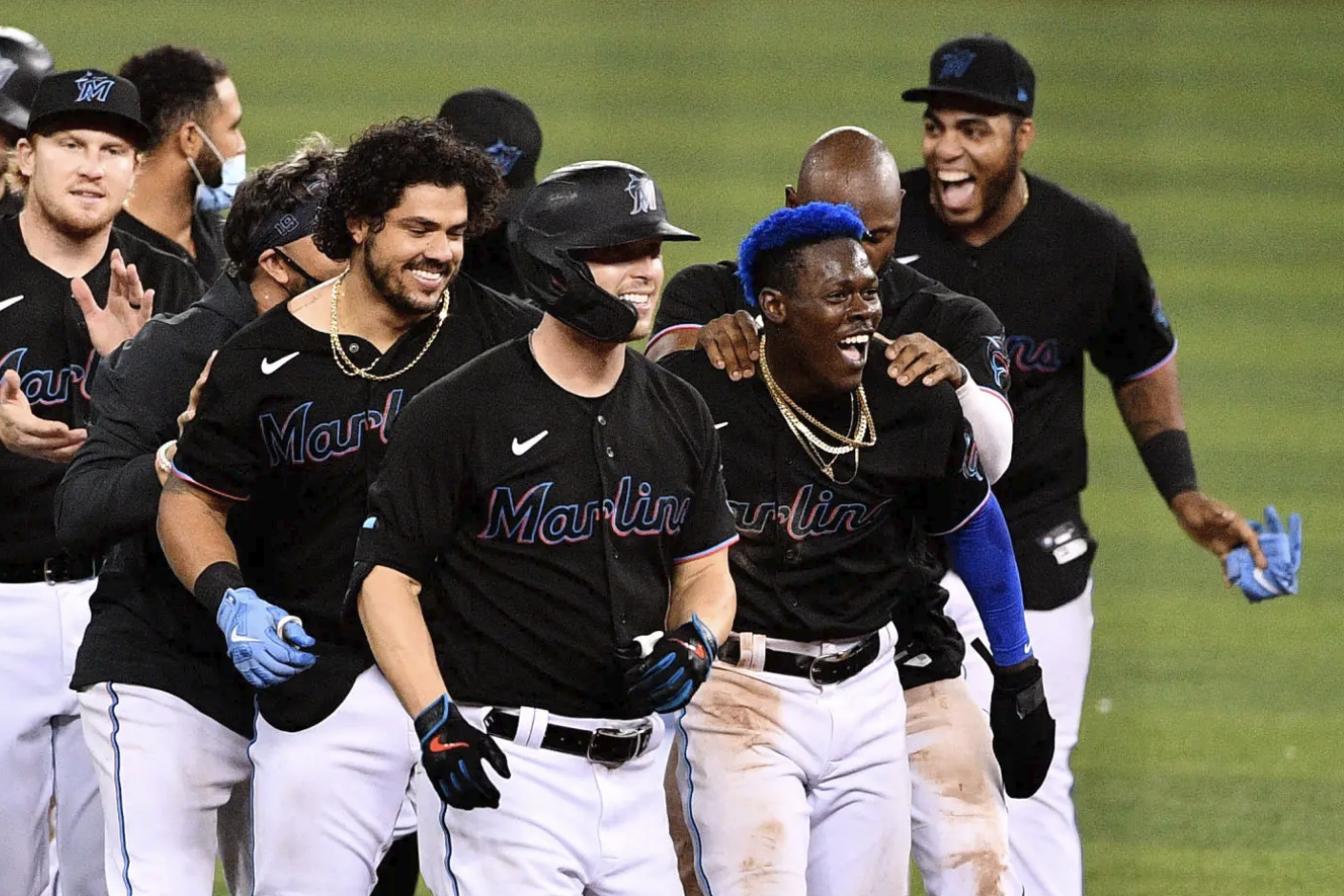 During the 2021 season, the Miami Marlins were involved in 20 games that ended in walk-off fashion. The Fish were 8-12 in those contests. The first win came on this day five years ago. In a contest in which the Marlins trailed in both the ninth and 10th innings, catcher Jorge Alfaro played the role of hero. His two-run double capped the comeback as Miami rallied for a 7-6 win over the San Francisco Giants. Through six innings at loanDepot Park on April 17, 2021, the Marlins led 3-0. In the seventh, San Francisco was able to get to the Miami pitching staff for five runs. After Brandon Belt led off the top of the seventh with a solo home run off Miami starter Sandy Alcántara, Brandon Crawford singled home Evan Longoria to cut the deficit to 3-2 later in the inning. The Giants took their first lead two batters later when Austin Slater took lefty Richard Bleier deep for a three-run home run. Down 5-3, Miami right-hander Zach Pop was able to keep the deficit at two by striking out the side in the top of the ninth. As the contest shifted to the bottom of the ninth, the Giants turned to closer Jake McGee. Miami opened the inning with three straight singles from Jazz Chisholm Jr., Miguel Rojas and Alfaro to cut the deficit to 5-4. McGee was able to settle in and induce consecutive popouts off the bats of Jon Berti and Corey Dickerson. With the Marlins down to their last out, Starling Marte ripped the first pitch he saw from McGee into left field for the game-tying single. A walk loaded the bases, but McGee was able to get the game to extra innings. In the top of the 10th, San Francisco regained the lead on an RBI double by Belt off Yimi García. With a placed runner at second base to begin the bottom of the 10th inning, former Marlins lefty Jarlín García was able to strike out Brian Anderson to start the frame. Chisholm followed by drawing a walk, but after Chad Wallach flied out, the game was left in the hands of Alfaro with two on. After taking the first pitch for a ball, Alfaro ripped García’s breaking pitch to left field. It rolled all the way to the wall as both runners scored standing up for a walk-off two-run double to complete the comeback. On a night where the Marlins had 15 hits, Alfaro was one of five Miami players to finish with multi-hit games, going 2-for-6 with three RBIs. Dickerson finished 4-for-6 with a run scored. Chisholm and Marte each scored twice. Belt, Crawford and former Marlins infielder Donovan Solano each had two of the 10 hits for the Giants. During his Major League Baseball career, Alfaro would record walk-off hits both for and against the Marlins. Two of those came during his final season with the club in 2021. The first of the two and the first walk-off win of Miami’s 2021 campaign came on this day five years ago. View the full article
 -
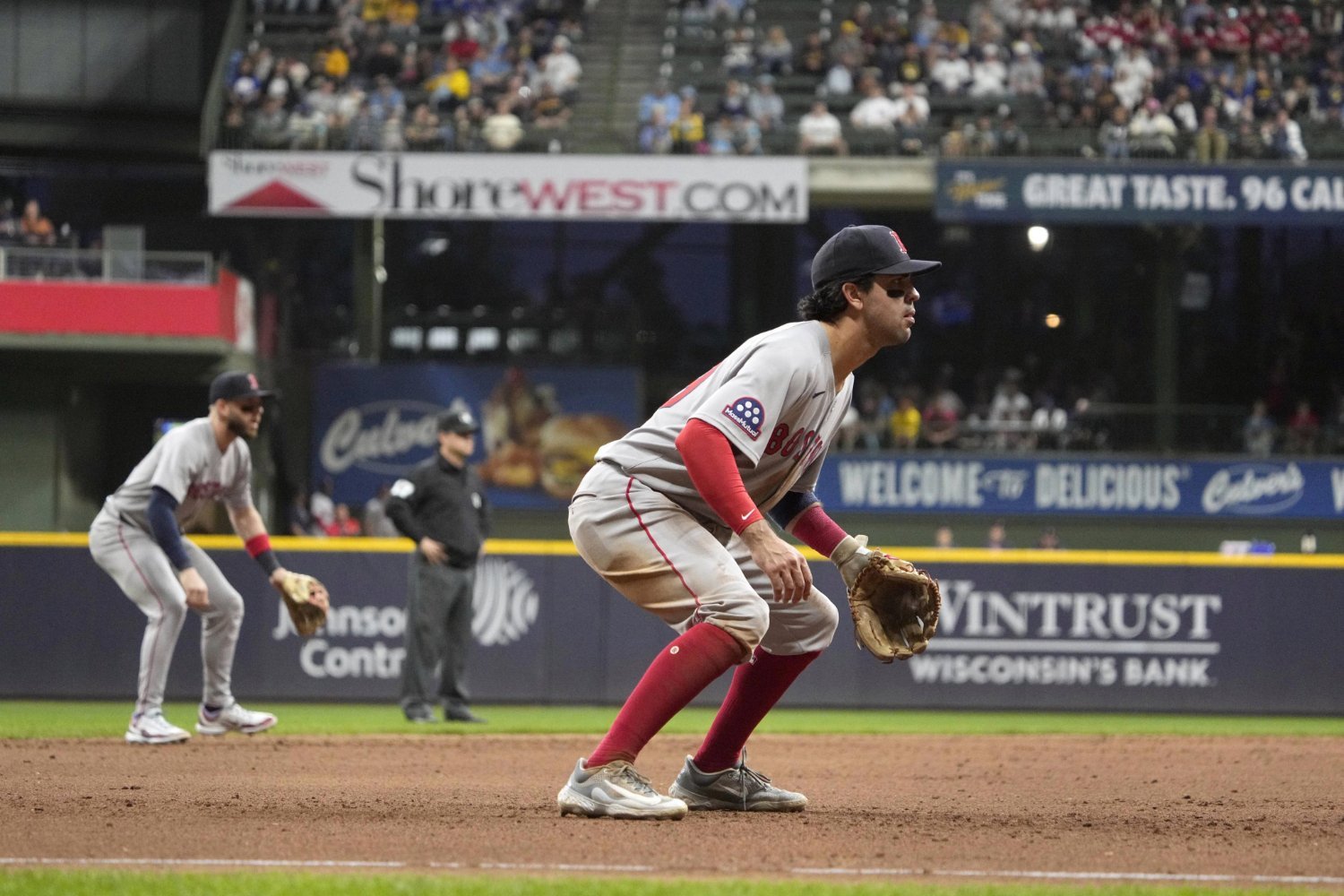 If you were to ask a Boston Red Sox fan to give you a list of some of their top contributing factors to the team's massively underwhelming start to the season, it would be a safe bet that the play of Trevor Story would fall near the top of every single one. Now, if you asked those same people to pick which aspect of Story’s game has frustrated them the most, 99% of them would probably say his hitting, choosing to focus on things like his abysmal slash line (.208/.222/.338) or astonishingly below-league-average chase (47.2%), strikeout (2.5%), and walk (29.6%) rates. While Story’s continued offensive woes definitely deserve being called out, something that hasn’t been discussed nearly enough and is arguably just as, if not more, concerning is the rapid decline of his defensive capabilities at shortstop. With Story, anyone who has followed him throughout his career knows his streakiness at the plate comes with the name. But even with those inconsistencies, one thing he’s always been able to hang his hat on is his fantastic and at-times elite ability to pick it at short, where he owns a .977 career fielding percentage. For a team that prioritized defense and run prevention in the offseason, something that has become a bit of a running joke among the fanbase on social media now as they’ve continued to falter, the writing of Story’s decline was plastered all over the wall towards the end of last season. He ended the 2025 campaign tied for the American League lead in errors (19, alongside the Yankees’ Anthony Volpe), and third for the most errors in baseball, only behind Cincinnati’s Elly De La Cruz (26) and Washington’s C.J. Abrams (22). Of those 19, 11 were of the throwing variety, clearly indicating what should’ve been a concern for the Sox. The advanced analytics don’t paint much of a better picture either. His -7 Defensive Runs Saved put him at fifth-worst in the big leagues a season ago. His Rthrow, or Infield Throwing Runs Above Average — which takes into consideration the number of runs above or below average the player was worth based on how he completes the play given where the ball was fielded, how hard it was hit, and the speed of the runner (courtesy of Baseball Info Solutions) — was -5, which put him tied for third-worst among all qualified shortstops in 2025 (and second among AL shortstops). Likewise, his 36th-percentile arm strength and -9 Outs Above Average were among the worst figures among all shortstops. Transition back to this season . and Story’s numbers don’t appear to be improving, but actually getting worse. His four errors so far, three of which came in the first nine games of the season, places him behind only Rays third baseman Junior Caminero for the most in all of baseball. Not to mention his .935 Fielding Percentage is on pace to be a career low, his -2 OAA is only getting worse by the day, and his arm strength has slipped further to the 21st percentile. Story’s latest miscue, a ball in which he ranged up the middle, dove for, and tried to flip to second baseman Marcelo Mayer that resulted in his glove sailing further than the ball did in a 13-6 loss to the Twins, might not be a better example that it may be time to make a change in the Red Sox middle infield and flip both Story and Mayer. A move to second base shouldn’t come as an unfamiliar feeling to Story, who already went through the transition once in a Red Sox uniform when he played 94 games there in 2022 in his first year with the club. Of course, those circumstances were a little different with Xander Bogaerts still on the roster at the time. That being said, Story still thrived in the role, putting together one of the best defensive campaigns he’s ever had. His .984 Fielding Percentage was the second-best of his career in any healthy season, only behind the 2019 season where he finished with a .987.. His +6 Defensive Runs Saved was good for eighth-best among all second basemen league wide. Add in his 10 OAA, good for the 96th percentile in the league, and again second best of his career only behind 2019 where he had 18 with Colorado, and to say Story’s short-lived stint at second was downright elite might be an understatement. As for Marcelo Mayer, who has looked smooth at both third (.985%, 2 OAA in 39 games) and second (.974%, 2 OAA in 23 games) so far in his young career, a move back to his natural position of shortstop could give Boston an obviously younger option with the potential of more range and better arm strength. Such a flip would serve as a much-needed attempt to not only improve their defense, but take a step in the direction of righting what has quickly become a sinking ship and could only get worse if the defense continues to falter. View the full article
 -
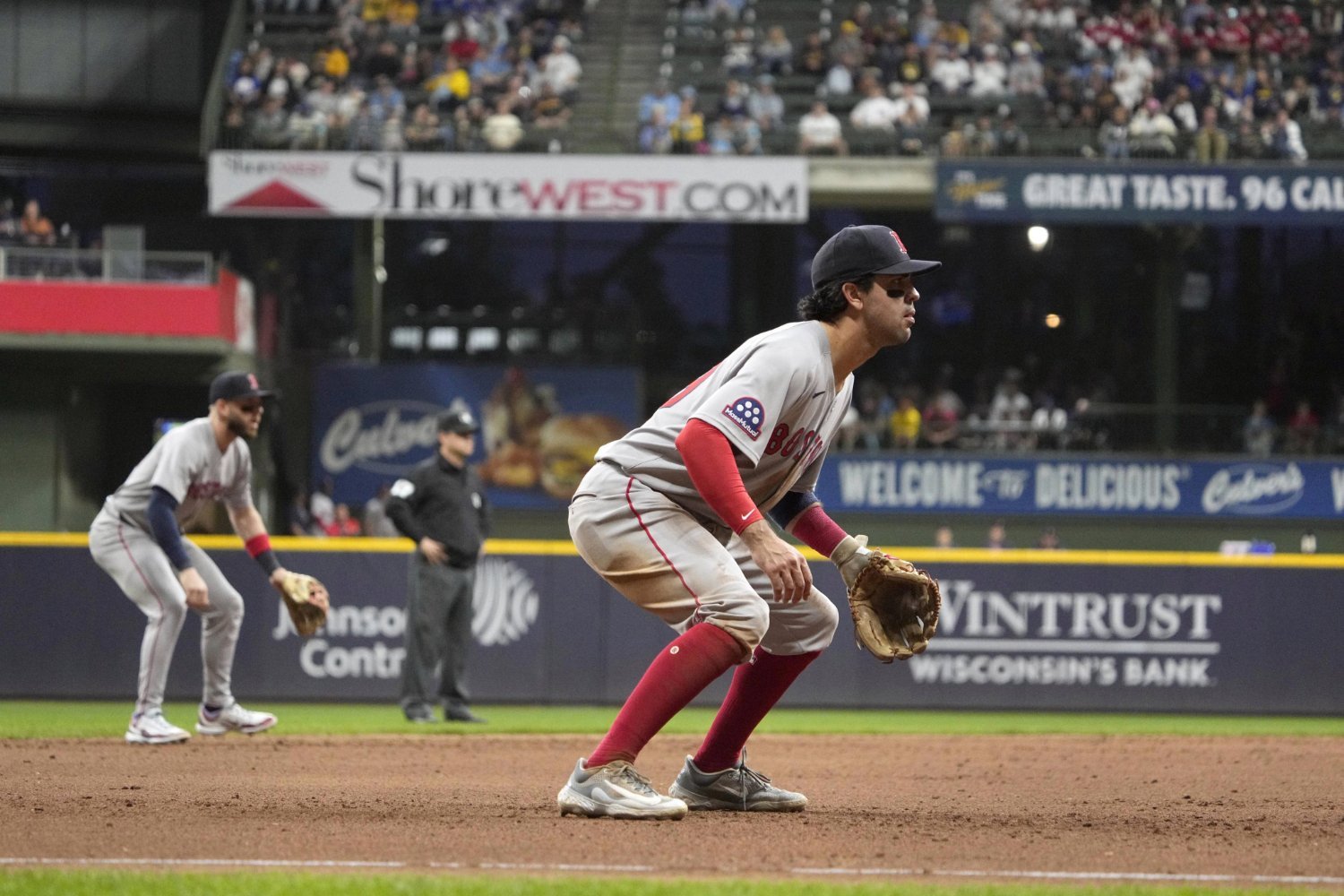 If you were to ask a Boston Red Sox fan to give you a list of some of their top contributing factors to the team's massively underwhelming start to the season, it would be a safe bet that the play of Trevor Story would fall near the top of every single one. Now, if you asked those same people to pick which aspect of Story’s game has frustrated them the most, 99% of them would probably say his hitting, choosing to focus on things like his abysmal slash line (.208/.222/.338) or astonishingly below-league-average chase (47.2%), strikeout (2.5%), and walk (29.6%) rates. While Story’s continued offensive woes definitely deserve being called out, something that hasn’t been discussed nearly enough and is arguably just as, if not more, concerning is the rapid decline of his defensive capabilities at shortstop. With Story, anyone who has followed him throughout his career knows his streakiness at the plate comes with the name. But even with those inconsistencies, one thing he’s always been able to hang his hat on is his fantastic and at-times elite ability to pick it at short, where he owns a .977 career fielding percentage. For a team that prioritized defense and run prevention in the offseason, something that has become a bit of a running joke among the fanbase on social media now as they’ve continued to falter, the writing of Story’s decline was plastered all over the wall towards the end of last season. He ended the 2025 campaign tied for the American League lead in errors (19, alongside the Yankees’ Anthony Volpe), and third for the most errors in baseball, only behind Cincinnati’s Elly De La Cruz (26) and Washington’s C.J. Abrams (22). Of those 19, 11 were of the throwing variety, clearly indicating what should’ve been a concern for the Sox. The advanced analytics don’t paint much of a better picture either. His -7 Defensive Runs Saved put him at fifth-worst in the big leagues a season ago. His Rthrow, or Infield Throwing Runs Above Average — which takes into consideration the number of runs above or below average the player was worth based on how he completes the play given where the ball was fielded, how hard it was hit, and the speed of the runner (courtesy of Baseball Info Solutions) — was -5, which put him tied for third-worst among all qualified shortstops in 2025 (and second among AL shortstops). Likewise, his 36th-percentile arm strength and -9 Outs Above Average were among the worst figures among all shortstops. Transition back to this season . and Story’s numbers don’t appear to be improving, but actually getting worse. His four errors so far, three of which came in the first nine games of the season, places him behind only Rays third baseman Junior Caminero for the most in all of baseball. Not to mention his .935 Fielding Percentage is on pace to be a career low, his -2 OAA is only getting worse by the day, and his arm strength has slipped further to the 21st percentile. Story’s latest miscue, a ball in which he ranged up the middle, dove for, and tried to flip to second baseman Marcelo Mayer that resulted in his glove sailing further than the ball did in a 13-6 loss to the Twins, might not be a better example that it may be time to make a change in the Red Sox middle infield and flip both Story and Mayer. A move to second base shouldn’t come as an unfamiliar feeling to Story, who already went through the transition once in a Red Sox uniform when he played 94 games there in 2022 in his first year with the club. Of course, those circumstances were a little different with Xander Bogaerts still on the roster at the time. That being said, Story still thrived in the role, putting together one of the best defensive campaigns he’s ever had. His .984 Fielding Percentage was the second-best of his career in any healthy season, only behind the 2019 season where he finished with a .987.. His +6 Defensive Runs Saved was good for eighth-best among all second basemen league wide. Add in his 10 OAA, good for the 96th percentile in the league, and again second best of his career only behind 2019 where he had 18 with Colorado, and to say Story’s short-lived stint at second was downright elite might be an understatement. As for Marcelo Mayer, who has looked smooth at both third (.985%, 2 OAA in 39 games) and second (.974%, 2 OAA in 23 games) so far in his young career, a move back to his natural position of shortstop could give Boston an obviously younger option with the potential of more range and better arm strength. Such a flip would serve as a much-needed attempt to not only improve their defense, but take a step in the direction of righting what has quickly become a sinking ship and could only get worse if the defense continues to falter. View the full article
