


DiamondCentric
-
Posts
2,631 -
Joined
-
Last visited
Never
Content Type
Profiles
Forums
Events
News
Tutorials & Help
Major League Baseball Videos
Guides & Resources
Store
Downloads
Gallery
Everything posted by DiamondCentric
-

Mets Put Jorge Polanco On Injured List With Wrist Contusion
DiamondCentric posted an article in Grand Central Mets
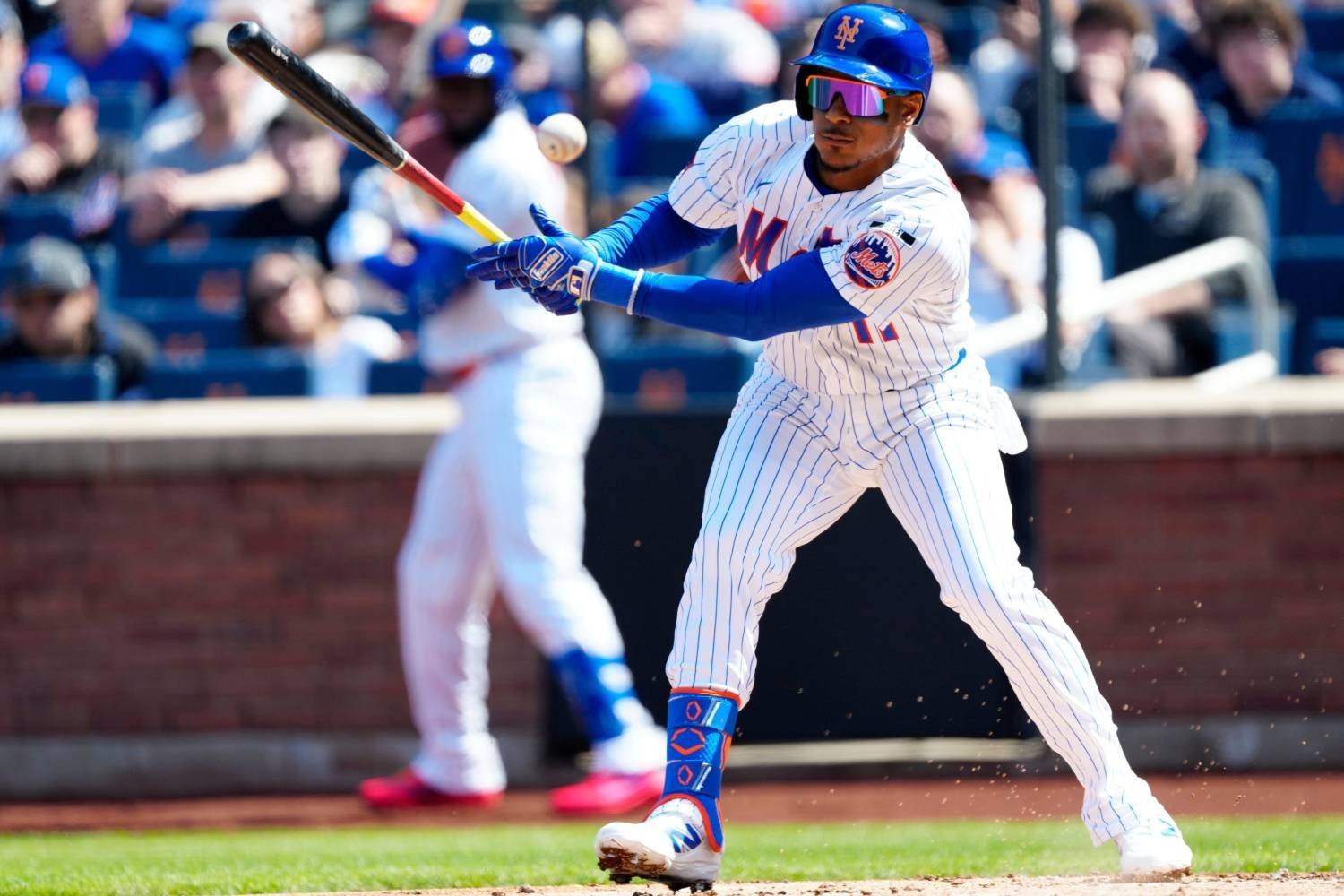 The New York Mets have lost a second key bat to an injury. With superstar Juan Soto already on the injured list, the Mets placed first baseman Jorge Polanco on the 10-day IL Saturday with a right wrist contusion. Catcher Hayden Senger was called up from Triple-A Syracuse. Polanco, a key offseason signing, last played Tuesday, going 0-for-4 in a 2-1 loss to the Los Angeles Dodgers. Like others in the Mets' lineup, he was off to a rough start offensively, putting up a .179/.246/.286 slash line with one homer and two RBIs in 14 of the Mets' 20 games. Senger won't be adding much offensively. His .257/.316/.714 slash line with five homers and 11 RBIs in 12 games at Syracuse marks above-average output for the 29-year-old catcher. He made his MLB debut a year ago, appearing in 33 games with the Mets and having a slash line of .181/.221/.194 with no homers and four RBIs. Brett Baty has started the last two games at first base with Polanco out of the lineup. View the full article
 -
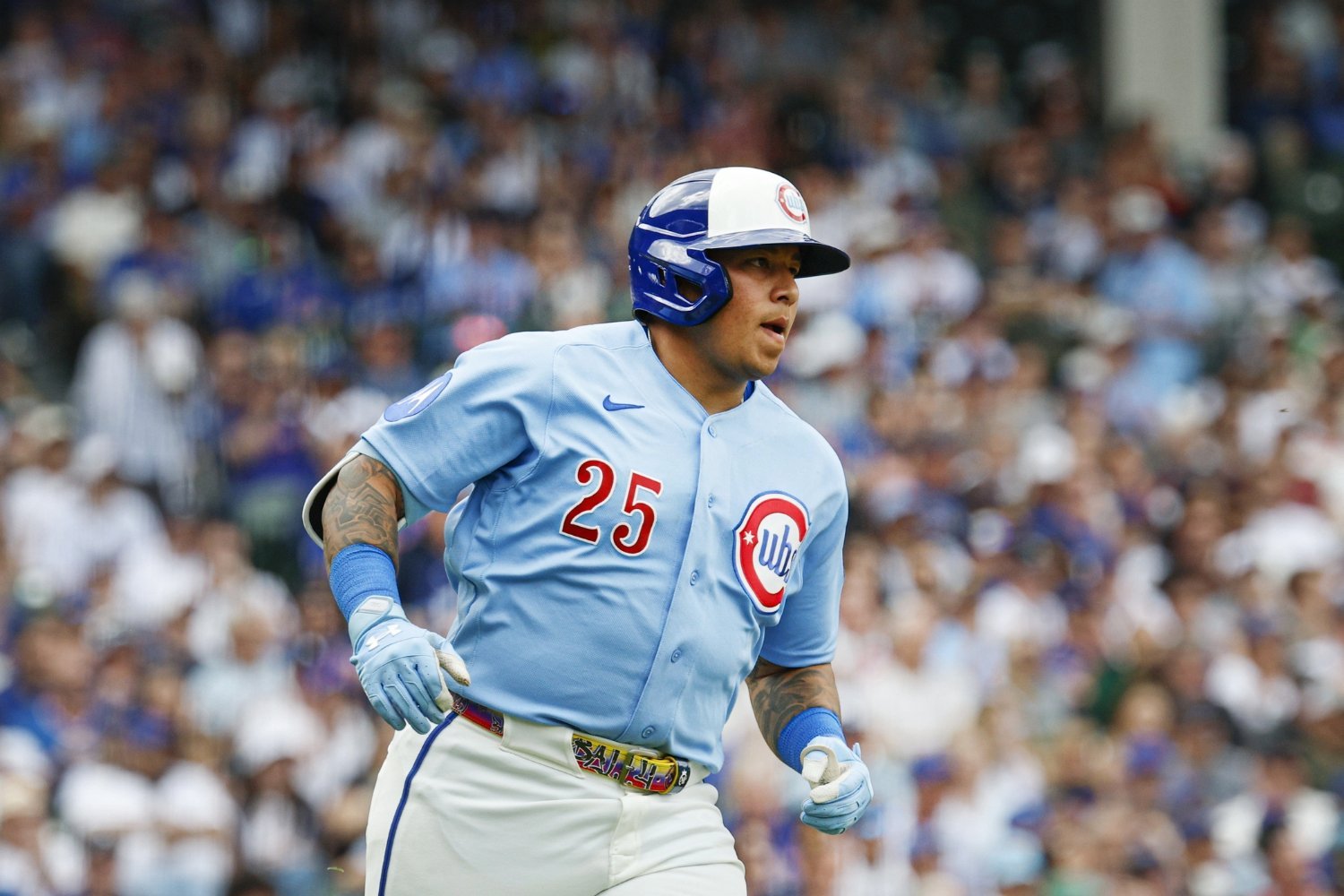 Moises Ballesteros entered 2025 as a top prospect who had already performed at the Triple-A level at 20 years of age and looked primed to make an impact with the big-league club. After a very brief and less-than-stellar debut in May, he rejoined the club in September and put together a .999 OPS that convinced the Chicago Cubs to put him on the playoff roster. It figured that he would heavily factor in to the Cubs' plans in 2026 and beyond, and so far he is doing just that. Ballesteros was known as a bat-first prospect with a contact-oriented, all fields approach and he largely performed as such in September of last year. With Carson Kelly and Miguel Amaya in the fold again, he went into the offseason knowing that his clearest path to playing time might be as DH and made some clear changes in an attempt to win that job. First, he increased his average bat speed by 1.6 mph, up to 74.3 mph. Great work! Swinging the bat faster generally leads to higher exit velocities, which is exactly what has happened this year as Mo’s average exit velocity has leapt from 89 to 93. The major league average on balls with an 89-mph exit velocity is .227; on balls with a 93-mph exit velocity it is .260. For a guy who was already sporting an OPS that was 52% better than league average, that is an extremely valuable change. But it appears Ballesteros did not stop there. While we can certainly attribute some of the EV increase to the bat speed increase, it doesn’t explain the entirety of the jump. Swinging fast is good, but swinging fast and on plane is even better. What do I mean by on plane? Every pitch thrown from the mound has a descent angle towards the plate. Most pitches are between -5 and -20 degrees, breaking balls obviously being steeper than fastballs. Every swing has an attack angle (yes, John Smoltz, every swing ever). Hitters want to make as flush contact as possible, so they want to match the descent angle by swinging with an attack angle of between 5 and 20 degrees to give themselves the best opportunity to find the barrel. A lower attack angle swing is likely to lead to a ground ball; a higher attack angle to a fly ball. Ballesteros had an average attack angle of 5 degrees last year, right at the bottom of the range. This is likely what led to a 62% ground ball rate, not where he wants to be as someone with 1st-percentile foot speed, regardless of how hard he is hitting the ball. This season, he has increased his average to 8 degrees. Three degrees may not seem like a lot, but Statcast tracks the percentage of time a hitter swings between 5 and 20 degrees as ideal attack angle%, and boy does Ballesteros' year-over-year difference stand out. In 2025, he was in the ideal attack angle range just 46% of the time; in 2026, that number has exploded to 65%. So, not only is he swinging harder, he is on plane with the incoming pitch more frequently, leading him to hit it in the air 60% of the time. So, he is swinging faster and hitting the ball flush and in the air more frequently, leading to the aforementioned jump in EV. It doesn’t seem to be a fluke either. The biggest driver behind the increase in his ideal attack angle% looks to simply be an intent to catch the ball out front of the plate, as he has moved his intercept point almost six inches, from 4.5 inches deep to about an inch in front of the plate. A swing will have a higher attack angle towards the finish and catching the ball out front has allowed Ballesteros to make more contact when his swing is at a higher attack angle. In simpler terms, he is trying to pull the ball in the air and it is working. There is one other left-handed hitter in 2026 that swings the bat at 74 mph or higher and remains in the ideal attack angle range at least 65% of the time: Kyle Schwarber. That is mighty fine company to keep for a 22-year-old trying to stake his claim to the DH role on the North Side. View the full article
 -
Ryan Sprock & Quentin Young Will Power The Mussels Infield
DiamondCentric posted an article in Twins Daily
 Jeremy's Pick-to-Click and Under-the-Radar man on the Mighty Mussels, Quentin Young and Ryan Sprock, will both see plenty of playing time on their infield. He goes over why both will be a strength to the Mighty Mussels roster this season, with strong opportunities to reach Cedar Rapids later in the year. View the full article
 -
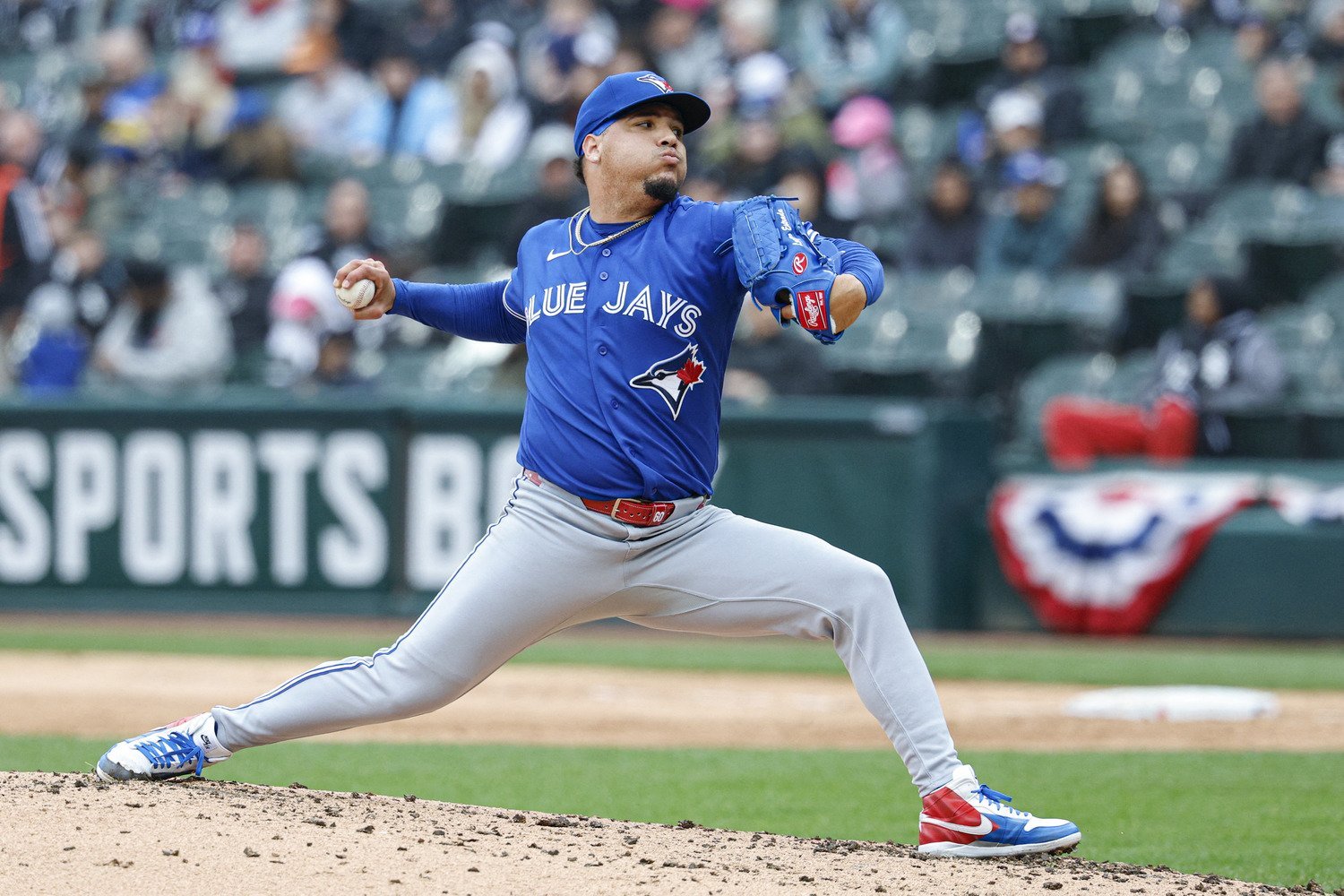 Lazaro Estrada gave the Blue Jays everything they could have asked for in his 2026 debut, pitching four scoreless innings in place of an injured Cody Ponce. The Jays optioned Estrada to the minors the following day. However, Sportsnet's Shi Davidi reports that the righty suffered a shoulder impingement in connection with that outing. As such, the Blue Jays have reversed his option and instead placed him on the major league 15-day injured list, retroactive to April 5. Estrada will be eligible to come off the IL on Monday, but it seems unlikely he'll be ready that soon. So, the Blue Jays have one less depth arm for the time being. Thankfully, both Trey Yesavage and José Berríos continue to make progress on their rehab assignments. Each could be ready to return at some point later this month. View the full article
 -
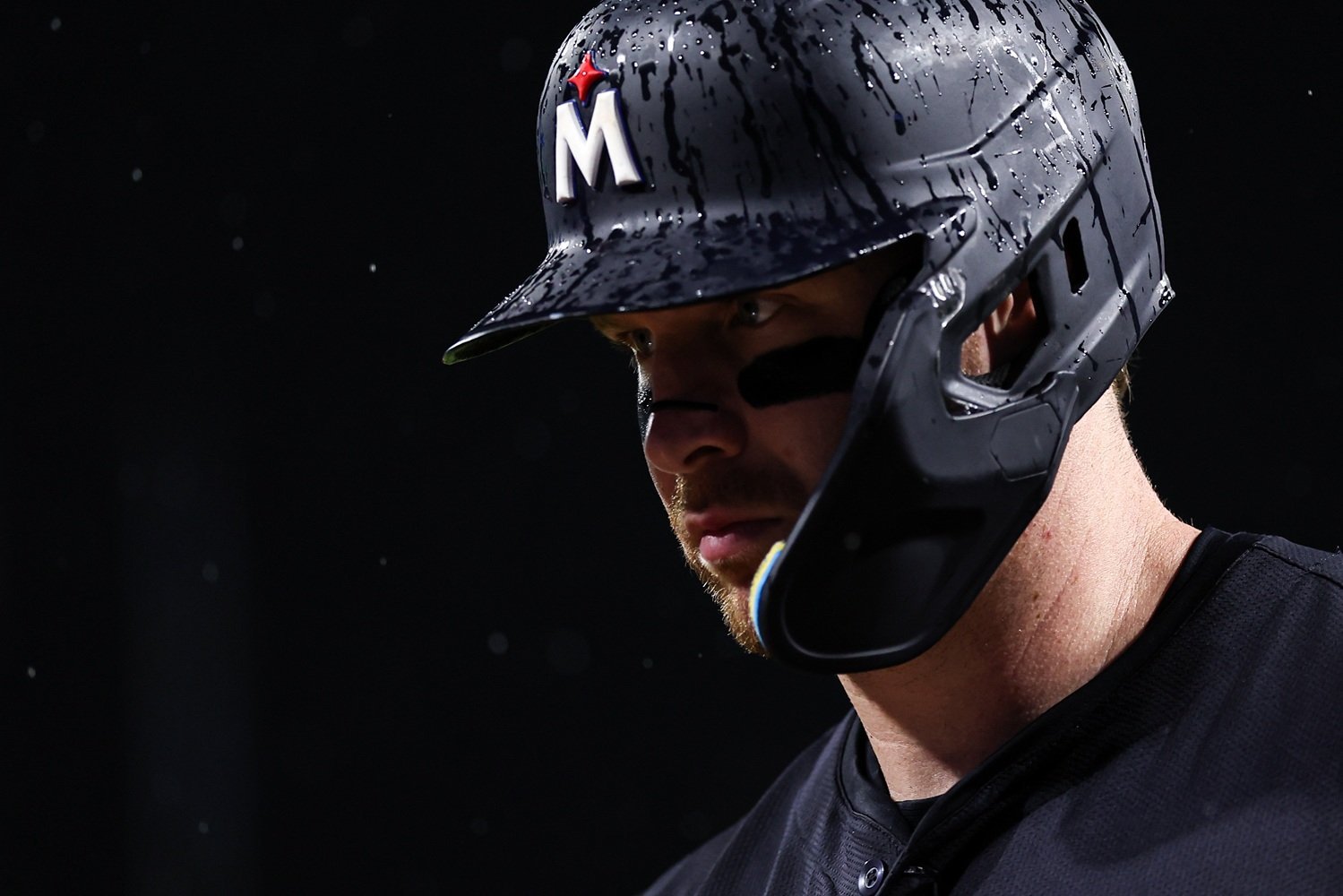 The automated ball strike (ABS) system was always going to change the way games are managed, but it is quickly becoming clear that it is also changing how catchers are evaluated. For the Minnesota Twins, few players have embraced that shift more than Ryan Jeffers. What started as a rules experiment has become a legitimate skill separator, and Jeffers is leaning into it, boosting both his value and his framing profile. Twins Lean Into the Challenge Game From the moment the ABS challenge system was introduced in spring training, the Twins treated it like something to be optimized rather than tolerated. That mindset has carried into the regular season. As they were in camp, the Twins have been one of baseball’s most aggressive teams with ABS challenges. And overall, it has worked out well for them. It was particularly notable in Tuesday night’s win against the Tigers, when Ryan Jeffers had two successful challenges from behind the plate to end innings. Entering Wednesday’s game, the Twins had the most hitter challenges, the most successful hitter challenges, the second most catcher challenges, and the second most successful catcher challenges in MLB. Jeffers has been at the center of that aggression. Entering play on Thursday, among catchers, Jeffers has the third-most challenges. He is also tied for fourth place with 11 challenges won as a catcher. He is dominating in strikeouts gained from challenges with eight. No other catcher has more than five. “Being able to have the ability to trust myself to challenge it, but then to be able to challenge that in general,” Jeffers told reporters, “it’s a big wrinkle in the game now that I think some people are going to be really good at and some people are not going to be good at. It’s going to be a skill that’s going to be tracked and evaluated like any other skill is.” A Return to What Once Worked What makes this even more interesting is how it intersects with Jeffers’ framing history. Early in his career, Jeffers was viewed as a strong framing catcher. He presented the ball well, worked the edges of the zone, and consistently graded out as a positive behind the plate. From 2021-22, he combined for 10 runs from his framing alone. That skillset was part of what made him such an intriguing long-term option for the Twins. Then came adjustments. In an effort to improve other elements of his defensive game, Twins catching coaches altered Jeffers’ stance behind the plate. Most notably, he began working with a more exaggerated lower-half setup, often keeping a leg extended more regularly. The goal was to improve mobility and throwing, but it came with a trade-off. His framing numbers dipped. Last season, Jeffers ranked in the 44th percentile for framing at minus one run. From 2023-24, he combined to be worth -12 runs from framing. The visual presentation was not as clean, and the subtle movements that once helped him steal strikes were not showing up the same way. ABS Is Refocusing the Strike Zone This is where ABS has quietly helped reshape things. With the ability to challenge pitches, the emphasis shifts from selling borderline strikes to knowing the zone with precision. Catchers are no longer just performers behind the plate. They are decision makers with immediate consequences. For Jeffers, that has meant a renewed focus on the strike zone itself. Instead of relying purely on presentation, he is pairing that with conviction. If he believes a pitch clipped the zone, he has the confidence and now the mechanism to act on it. That mindset appears to be bleeding back into his framing. Entering this season, Jeffers has climbed to one framing runs and sits in the 76th percentile. It is not a massive jump on paper, but it is a meaningful one in context. The combination of improved results and elite challenge success suggests a catcher who is more in tune with the zone than he has been in recent years. ABS is not replacing framing. It is redefining how it matters. For Jeffers, the system has become more than a safety net. It is a tool that reinforces his instincts, sharpens his awareness, and, in the process, helps him rediscover a part of his game that once stood out. If this is what the early stages of ABS look like, the Twins may already have one of their most valuable practitioners behind the plate. What has stood out regarding Jeffers and ABS? Has his framing improved this year? Leave a comment and start the discussion. View the full article
 -
Mets Minor League Report: Three Out Of Four On The Farm
DiamondCentric posted an article in Grand Central Mets
 The Mets' farm affiliates went 3-1 on Friday night. Syracuse beat Scranton/Wilkes-Barre 5-3 behind home runs from Ronny Mauricio, Jihwan Bae, and Yonny Hernández, with Jack Wenninger earning the win. Binghamton toppled Akron 4-1 as Joander Suarez allowed one run over 5 2/3 innings with five strikeouts. Eli Serrano III homered. St. Lucie won 6-4 at Daytona thanks to Conner Ware striking out seven. Brooklyn lost 3-2 to Greensboro despite Mitch Voit's home run. Mets Transactions No Roster Moves Home Run Parade Powers Syracuse Past Scranton/Wilkes-Barre The Syracuse Mets topped the Scranton/Wilkes-Barre RailRiders 5-3 at home thanks to a three-homer night from their lineup. Jack Wenninger earned the win, going 5 1/3 innings while allowing one run on three hits, walking two, and striking out five. Ronny Mauricio led the offense from the two-hole, going 3-for-4 with a home run, one RBI, and two runs scored. Jihwan Bae added a three-RBI day on two hits, including a home run from the cleanup spot. Yonny Hernández went 2-for-4 with a solo home run, one RBI, and one run scored batting seventh. Nick Morabito singled and scored from the leadoff spot. Syracuse broke through in the third inning with two runs, tacked on one more in the fourth, and plated two more in the fifth to build the lead. Jonathan Pintaro worked 2 1/3 innings of relief, allowing one run on two hits with one walk and three strikeouts. Ryan Lambert followed with a scoreless 1/3 inning, walking one and striking out one. Daniel Duarte closed the door for his first save, pitching one inning and allowing one run on two hits. Syracuse finished with eight hits and just one walk, striking out eight times, while leaving five runners on base. Player AB R H RBI BB K Nick Morabito 4 1 1 0 0 1 Ronny Mauricio 4 2 3 1 0 0 Ryan Clifford 3 0 0 0 1 0 Ji Hwan Bae 4 1 2 3 0 1 Jackson Cluff 4 0 0 0 0 2 Cristian Pache 4 0 0 0 0 2 Yonny Hernández 4 1 2 1 0 0 Trace Willhoite 3 0 0 0 0 1 Onix Vega 2 0 0 0 0 1 Player IP H R ER BB K HR Jack Wenninger 5 1/3 3 1 1 2 5 1 Jonathan Pintaro 2 1/3 2 1 1 1 3 1 Ryan Lambert 1/3 0 0 0 1 1 0 Daniel Duarte 1 2 1 1 0 0 0 Eli Serrano III's Blast Lifts Rumble Ponies Over Akron The Binghamton Rumble Ponies defeated the Akron RubberDucks 4-1 on the road, with a two-run sixth inning serving as the decisive frame. Joander Suarez picked up the win, going 5 2/3 innings while allowing one run on three hits, walking three, and striking out five. Eli Serrano III provided the offensive highlight, launching a two-run home run from the three-hole to go along with a walk, one run scored, and two RBIs. Marco Vargas singled and drove in one run from the leadoff spot. Jacob Reimer added a hit, a walk, and a run scored. Wyatt Young contributed a hit and one RBI from the nine-hole. Kevin Parada reached base three times, drawing two walks, singling, and scoring once. Nick Lorusso also scored a run after drawing a walk. Binghamton built on its two-run sixth with another two-run seventh to pull ahead. Brian Metoyer tossed 1 1/3 scoreless innings with one walk and three strikeouts. Gabriel Rodriguez contributed a scoreless inning, and Carlos Guzman locked down the save with a clean frame that included two walks and two strikeouts. The Rumble Ponies finished with five hits, eight walks, and nine strikeouts, leaving 13 runners on base. Player AB R H RBI BB K Marco Vargas 5 0 1 1 0 1 Jacob Reimer 4 1 1 0 1 0 Eli Serrano III 3 1 1 2 1 1 Jose Ramos 4 0 0 0 0 2 D'Andre Smith 3 0 0 0 1 1 Kevin Parada 2 1 1 0 2 0 Nick Lorusso 3 1 0 0 1 1 Matt Rudick 2 0 0 0 2 1 Wyatt Young 4 0 1 1 0 2 Player IP H R ER BB K HR Joander Suarez 5 2/3 3 1 1 3 5 0 Brian Metoyer 1 1/3 1 0 0 1 3 0 Gabriel Rodriguez 1 0 0 0 0 0 0 Carlos Guzman 1 0 0 0 2 2 0 Cyclones Fall To Greensboro Despite 18-Strikeout Effort The Brooklyn Cyclones dropped a 3-2 decision to the Greensboro Grasshoppers at home despite striking out 18 Grasshoppers. Wyatt Hudepohl took the loss in four innings of work, allowing one run on three hits, walking none, and striking out six. Bryce Jenkins followed with a scoreless frame, walking one and striking out two. Hoss Brewer pitched 1 1/3 innings and gave up two runs, one earned, on two hits and a walk while fanning three. Joe Charles delivered 1 2/3 scoreless innings with four strikeouts and one walk, and Juan Arnaud closed with a scoreless inning featuring three strikeouts. Mitch Voit led Brooklyn at the plate from the leadoff spot, hitting a solo home run, drawing a walk, and driving in one run. John Bay added a single and scored once from the cleanup spot. Ronald Hernandez walked and drove in one run. The Cyclones' offense managed just two hits and two walks, struck out eight times, and left four runners on base. Greensboro pushed ahead with two runs in the seventh inning, and Brooklyn scored a run apiece in the seventh and eighth but fell short of the comeback. Player AB R H RBI BB K Mitch Voit 3 1 1 1 1 0 Antonio Jimenez 4 0 0 0 0 0 Daiverson Gutierrez 4 0 0 0 0 2 John Bay 3 1 1 0 0 0 Ronald Hernandez 2 0 0 1 1 0 Colin Houck 4 0 0 0 0 3 Yohairo Cuevas 3 0 0 0 0 1 Kevin Villavicencio 3 0 0 0 0 1 Diego Mosquera 2 0 0 0 0 1 Player IP H R ER BB K HR Wyatt Hudepohl 4 3 1 1 0 6 1 Bryce Jenkins 1 1 0 0 1 2 0 Hoss Brewer 1 1/3 2 2 1 1 3 0 Joe Charles 1 2/3 0 0 0 1 4 0 Juan Arnaud 1 1 0 0 0 3 0 Conner Ware's Five Innings Lead St. Lucie Past Daytona The St. Lucie Mets knocked off the Daytona Tortugas 6-4 on the road, with a late two-run eighth inning giving them the cushion they needed. Conner Ware earned the win, delivering five innings and allowing one run, none earned, on two hits while walking four and striking out seven. Joel Lara started and went 2 2/3 innings, allowing three runs on two hits with one walk and four strikeouts. Caden Wooster handled 1 1/3 innings of relief, giving up no runs on two hits with one walk and one strikeout. AJ Salgado led the offense with a solo home run, a walk, and two runs scored while also adding an RBI from the five-hole. Chase Meggers went 2-for-4 with two RBIs and a run scored batting seventh. Randy Guzman drew two walks, singled, and drove in one run from the three-hole. Julio Zayas contributed a hit, an RBI, and a run scored. Elian Peña singled, walked, and scored once from the leadoff spot. Sam Robertson added a hit, a walk, and a run scored. Sam Biller chipped in with a hit, a walk, and one RBI. St. Lucie finished with eight hits, six walks, 10 strikeouts, and left eight runners on base in the win. Player AB R H RBI BB K Elian Peña 4 1 1 0 1 1 Sam Robertson 4 1 1 0 1 1 Randy Guzman 3 0 1 1 2 0 Julio Zayas 5 1 1 1 0 1 AJ Salgado 4 2 1 1 1 1 JT Benson 4 0 0 0 0 2 Chase Meggers 4 1 2 2 0 1 Branny De Oleo 4 0 0 0 0 2 Sam Biller 3 0 1 1 1 1 Player IP H R ER BB K HR Joel Lara 2 2/3 2 3 3 1 4 0 Caden Wooster 1 1/3 2 0 0 1 1 0 Conner Ware 5 2 1 0 4 7 0 View the full article
 -
Is There A Solution To The Left Side Of The Infield Problem?
DiamondCentric posted an article in Brewer Fanatic
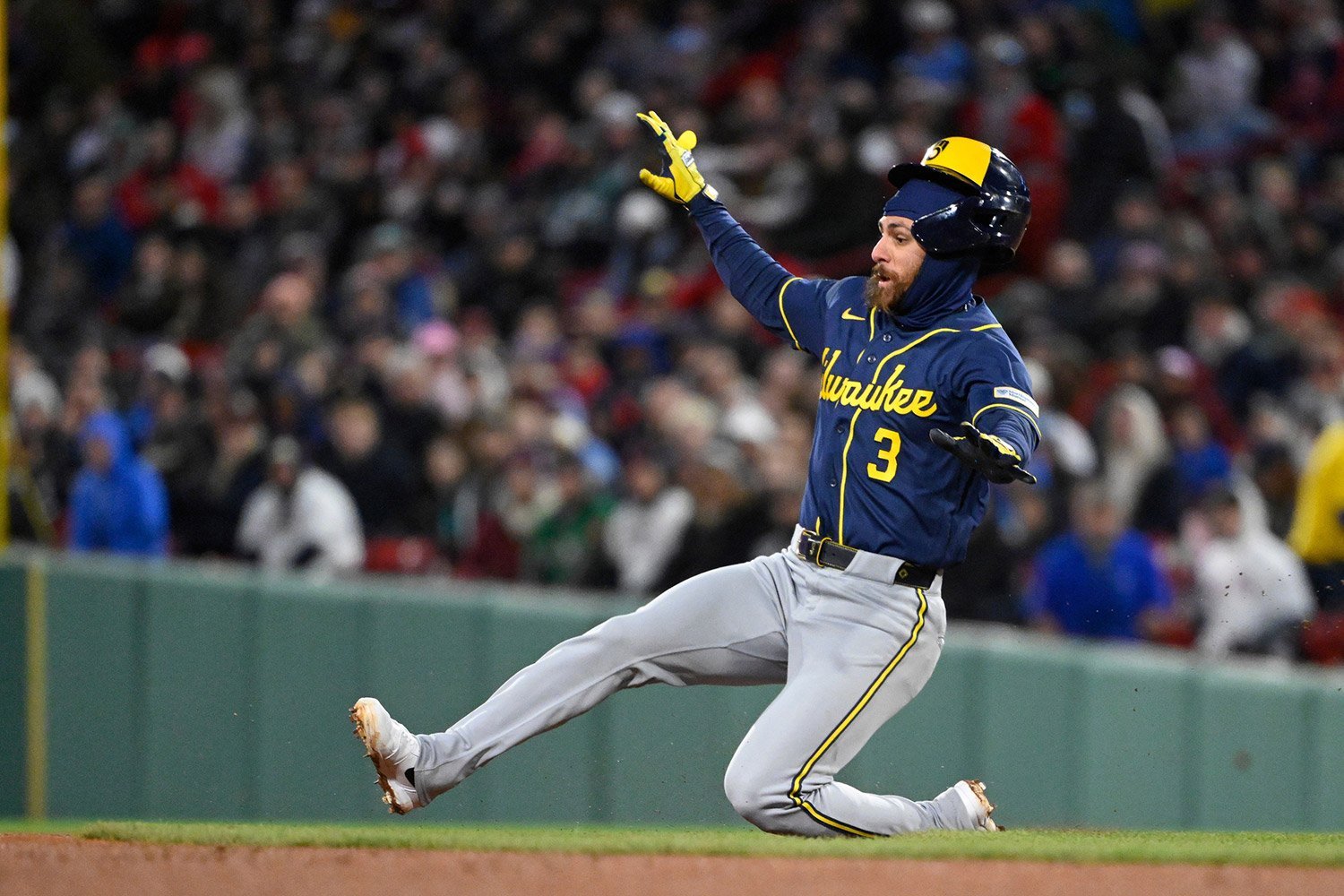 The Brewers' offense had a great start to the season despite being without Jackson Chourio and Andrew Vaughn since Opening Day, hitting .274/.379/.440 as a team, striking out 23.1% of the time, and walking at a rate of 13.9%. Their overall wOBA was at .368, good for third in the league during the stretch between Opening Day and April 6th. However, since then, the Brewers have hit .204/.304/.308, walking and striking out less than before, and their wOBA is .282. A big difference is in their BABIP: in the first stretch, the Brewers had a .352 BABIP, while this current stretch has them at .242. Regardless, the offense's sputtering wasn’t aided when Christian Yelich became sidelined with a left abductor injury on April 12th against the Nationals. This now leaves three big bats on the injured list, and it would be a good development for one of the weaker positional groups to start hitting in order for the Brewers to start scoring again. Joey Ortiz, Luis Rengifo, and David Hamilton have held down third base and shortstop so far this year, and it hasn’t been pretty to say the least. Hamilton currently leads the way out of those three in OPS, with Ortiz following and Rengifo ranking last among all Brewers batters so far this year. While Hamilton does have the highest OPS out of the three, that isn’t saying much at just .586. His advanced stats don’t show many signs of offensive improvement, as his xBA, xSLG, average exit velocity, and bat speed are all in the 7th percentile or less in MLB. One positive to be found with Hamilton’s approach is that he doesn’t whiff and strikeout, and walks a lot. His walk percentage is currently in the top 6% of all MLB players, and when he gets on, his speed is a factor, as he already has four stolen bases to his name so far. Hamilton’s defense is solid as well, with +1 OAA already this season, but unless significant offensive improvements happen, he probably should remain in a bench role. Ortiz is a whole other story. The 27-year-old has a slashline of .204/.250/.204 so far in 2026, striking out 13 times while only walking thrice. These marks are all significantly lower than his 2025 numbers, which saw him finish with a .593 OPS. Ortiz’s xSLG and average exit velocity are both in the 3rd percentile, but his xBA is .041 points higher than his actual number, while his bat speed is above league average. These indicate that there may be some luck involved, and that Ortiz could potentially find more offense at the plate, but it isn’t likely, especially given that he is hitting the ball on the ground 68.4% of the time, a league high, and up 22.9 percent from last year. Like Hamilton, Ortiz possesses speed, and the Brewers love his defense at short, but with how shorthanded the Brewers are on offense right now, time should be ticking for Ortiz to make an adjustment to get back to his offensive numbers in 2023. A free agent signing from the offseason, Rengifo was brought on to replace Caleb Durbin, who was traded to Boston before the season began. He enters Friday with a .125/.173/.208 slash line, good for the worst OPS on the team and a 9 OPS+. It is safe to say it hasn’t worked out so far, and his advanced stats don’t show too many signs for improvement, as his xSLG, average exit velocity, and bat speed are all below or at the 21st percentile. Rengifo has been solid defensively with +1 OAA and isn’t as fast as the other two guys, so he may be the first to go if changes are made. The primary issue is that with the struggles on the left side of the dirt, there aren’t a ton of current options as to who could provide offense. Jett Williams was acquired in the Freddy Peralta trade and could factor into the Brewers lineup later in the year, but he is currently struggling in Nashville, slashing .206/.342/.238 with one extra-base hit. A similar story can be told about Brock Wilken (.113/.254/.208), and recently extended Cooper Pratt (.186/.314/.209), and neither is likely ready to contribute for Milwaukee in the next few weeks. Other prospects like Jesus Made and Luis Pena are further down in the farm system, making it even more unrealistic for them to come up soon. As for the remaining internal options, there aren’t many, but Eddys Leonard could be an option if there isn’t an improvement. Leonard was signed to a minor league deal by the Brewers back in November, and while he hasn’t appeared in a major league game yet in his career, he has 40 career home runs at Triple-A and has started a total of 112 games at shortstop and third base at the Triple-A level as well. Leonard is currently slashing .245/.317/.491, but he would need to be added to the 40-man roster if he were to be called up. As for external options, trade rumors of Astros third baseman Isaac Paredes swirled after the Durbin trade, and he could still be on the market, given Houston's infield depth. Phillies third baseman Alec Bohm could also be an intriguing one-year option as he is an unrestricted free agent after this season, although Bohm has had a very poor beginning of 2026 as well. Nonetheless, the Brewers will need to find an answer soon. Having barely any offensive production from two infield spots will not end well, the longer it progresses, and given the injuries early in the season, it may not be long before desperation kicks in and changes are made. View the full article
 -
New York Mets 2026 Top Prospects Rankings: Nos. 16-20
DiamondCentric posted an article in Grand Central Mets
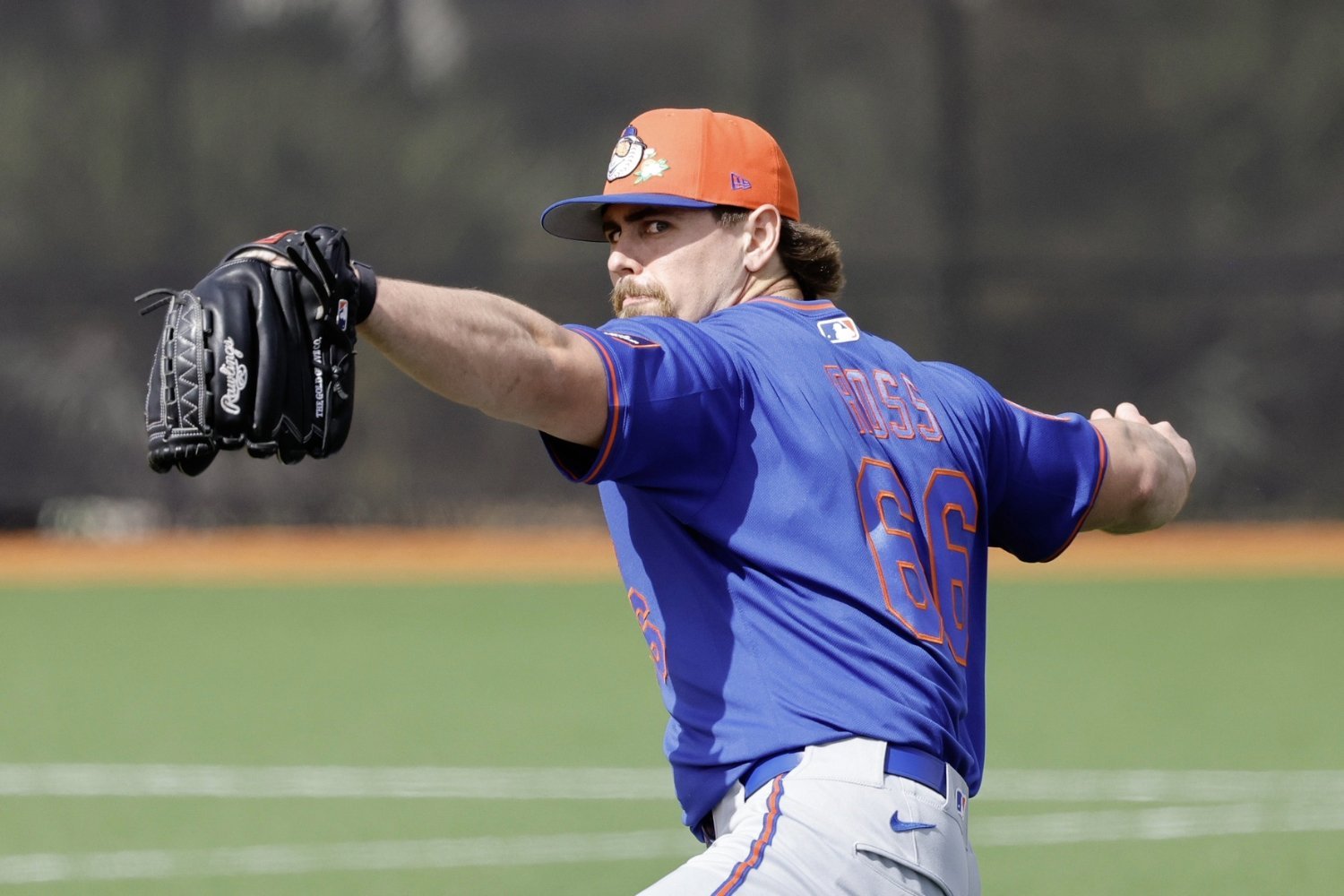 The 2026 season has only just begun, but Grand Central Mets is here to officially publish our new top-20 prospect rankings for the New York Mets' farm system. We'll break this down into four pieces (five prospects per piece), starting with Nos. 16-20. Note that these rankings were voted on by our front-page writing staff. In future iterations, we'll open up prospect voting to all of our members on the site. No. 20: R.J. Gordon, SP (Double-A Binghamton) 2025 stats: 128 2/3 IP, 3.36 ERA, 3.72 FIP, 27.3 K%, 8.5 BB%, 1.24 WHIP Gordon hasn't pitched this year due to a lat injury, which is expected to hold him out until early May. Upon his return, he should be a rotation fixture for the Rumble Ponies after he impressed in Double-A down the stretch in 2025. He lacks upper-echelon stuff, but a 24-year-old starter with above-average command and two above-average secondaries (his changeup and his slider) is going to get a look in the big leagues at some point. He honestly reminds me a bit of longtime Cubs stalwart Kyle Hendricks, who thrived with pinpoint control and movement despite lacking any velocity of note. Gordon throws harder than Hendricks ever did (he's been sitting 92-93 mph consistently with his fastball), but he also doesn't have quite the same knack for pitch sequence as "The Professor." A mid-2027 debut is firmly on the table if Gordon can get and stay healthy this year; at the very least a cup of coffee in Syracuse should be the expectation before 2026 is over. No. 19: Antonio Jimenez, SS (High-A Brooklyn) 2025 stats: .263/.345/.274, 83 wRC+, 0 HR, 8 SB, 13.6 K%, 10.9 BB% The Mets' third-round pick in the 2025 draft, Jimenez is known for his raw power despite failing to hit a home run last year. He's already hit two in 2026 with the Cyclones, and he possesses a tantalizing power-speed game that would play anywhere in a lineup. There are questions about his fit at shortstop, but he's got a rocket arm that would look really good at third base or in right field if he can't stick at the six. More importantly, he'll need to evolve his hit tool and plate discipline to survive at the highest level of the minors; he's already running a 33.3% strikeout rate through his first 40 plate appearances in High-A. A mid-2028 ETA is reasonable for the 21-year-old, who's a bit more raw than other college prospects, Still, the archetype he fits is the kind of player that could become Francisco Lindor's heir apparent at shortstop in Queens. No. 18: Dylan Ross, RP (Triple-A Syracuse) 2025 stats: 54.0 IP, 2.17 ERA, 3.32 FIP, 35.7 K%, 14.7 BB%, 1.15 WHIP There's no denying Ross' raw stuff out of the bullpen. He's got a triple-digit fastball, bitting splitter, and hard slider that allows him to work effectively against hitters on both sides of the plate. There's even a decent curveball in his mix, giving him four legitimate weapons that make him a menace to face in one-inning situations. The problem, of course, is that he just doesn't know where the ball is going. His walk rate in Syracuse last year (17.3%) was calamitous and simply untenable for a leverage reliever. He aids his own cause by striking out heaps of batters and producing weak contact routinely; even as he struggled to find the strike zone in Triple-A in 2025, he still struck out 30.7% of the batters he faced and allowed a ridiculous .106 opponent's batting average. The range of spectrums on Ross is enormous. At 25 years old, he's basically ready for the big leagues. If he ever finds consistency with his location, he could become a legitimate closing option at the MLB level. If not, he may never earn enough trust from his manager to tackle anything more than mop-up duty. No. 17: Ryan Lambert, RP (Triple-A Syracuse) 2025 stats: 50.0 IP, 1.62 ERA, 2.13 FIP, 39.5 K%, 13.2 BB%, 1.16 WHIP Another pure relief prospect, Lambert's fastball might be even better than thunderbolts that Ross hurls. He doesn't have quite the same upper-echelon velocity as his Syracuse teammate, but he produces absurd ride and spin on his heater and used it to generate a comical 38% whiff rate a year ago. Lambert, who is two years Ross' junior, also struggles with command, though it's not quite as egregious. The bigger problem is that he only has two pitches -- his fastball and a slider -- which gives left-handed batters a big advantage, since he doesn't have any breakers that run away from them. Still, his two-pitch mix is as good as anyone's in the minors, and he's got less bust potential than Ross thanks to slightly better command and exceptional feel for his fastball up in the zone. A 2026 debut isn't guaranteed, but if the Mets find themselves in need of high-upside bullpen reinforcements later in the year, Lambert should be the guy they call upon. No. 16: Eli Serrano III, OF (Double-A Binghamton) 2025 stats: .222/.332/.358, 113 wRC+, 7 HR, 9 SB, 20.1 K%, 13.1 BB% Serrano doesn't have any terribly loud tools, making him more of a jack of all trades and a master of none, hence why he's in the bottom quartile of our prospect rankings. That shouldn't blind anyone to his steady floor and impressive upside, though. His hit tool will always be the big question since he stands at a lanky 6'5", but that frame is ripe for more power as he adds strength. He'll turn 23 in May, and he's got some solid plate discipline for someone in their second full pro season, even if he's striking out more in 2026 as he adjusts to the Double-A caliber of pitching. After recording 10 outfield assists a year ago, calls for him to move to right field on a full-time basis will be loud. He's got more than enough speed to stick in center if his glove develops, but he'll have a home in the outfield regardless. He remains a ways off from the majors, and seeing as he isn't Rule 5 eligible until after the 2027 season, a 2028 debut feels like a reasonable estimate. View the full article
 -
 Transactions: Milwaukee Brewers optioned RHP Easton McGee to Nashville Sounds. Milwaukee Brewers recalled RHP Coleman Crow from Nashville Sounds. Nashville Sounds placed 3B Luke Adams on the 7-day injured list retroactive to April 15, 2026. Nashville Sounds activated SS Ethan Murray from the 7-day injured list. We are not aware of the nature of Adams' injury, but the fact his stint is backdated is hopeful. Nashville Pre-Game Media Notes Final, Completion of Thursday's Suspended Game: Nashville 4, Worcester 2 Box Score and Game Log Final, Regularly Scheduled Game: Nashville 4, Worcester 2, seven innings as scheduled Box Score and Game Log Via the Sounds, game details, and we encourage readers to always review affiliate write-ups as part of their Link Report routine: Sounds Sweep WooSox on Friday for 3,500 Franchise Wins Between the game notes and the summary, so many tidbits. Who knew it would be until the nightcap (Game 18) before Manager Rick Sweet called for a pinch-hitter? As always, you'll want to review those links above. Brock Wilken is now 6-for-54 but reached base in six of his seven plate appearances Friday and would you have guessed he leads the Sounds in RBI (another game summary tidbit). The view of home plate is cloudy, but the outfield grass is clear: For additional videos from the opener: Eddys Leonard RBI single Jacob Hurtubise RBI single It's primarily a "veteran" pitching staff in Nashville, and the four arms here go the job done, as the Game One box score will reveal. As for the nightcap, LHP Tate Kuehner is one of the young pups among the Sounds arms in his age 25 season, which is going swimmingly thus far: Luis Lara shifted to right field in Game Two to allow Jett Williams to play center. Wish the camera work was a bit better here, but Lara seems comfortable in the corner spot as well: Cooper Pratt was 1-for-8 combined (single) but is now 6-for-6 in stolen base attempts. More video, and nice to see the Sounds "X" admin is carrying over the "pun fun" from 2025. The bases were loaded. Jacob made it hurt(ubise) Zamora this Zamora that Jett Williams nets the insurance run on a fielder's choice forceout Wilken's Game One double was the lone Nashville XBH on the night, 14 singles otherwise. Congratulations on the fine MLB debut, Coleman Crow! Biloxi Pre-Game Media Notes Final: Columbus (Braves) 6, Biloxi 4 Box Score and Game Log Catch up with the latest Biloxi pre-game audio interview archives Via the Shuckers, game details: Hardin Sets Season-High with 6.0 Innings, Shuckers Fall to Clingstones - Hardin records first 6.0 inning start since July 2025, matches season-high with 7 strikeouts Tyson Hardin now with 19 K and just five walks in 12 innings through three starts. We don't have video on the positive side of his outing tonight, but you can sample two Columbus RBI knocks here and here, neither of which was pounded. Mainly, visit for the glorious Clingstones uniforms - they do really embrace that peach motif, don't they? I'm a sucker for a Shucker box score oddity - every player reached base exactly one time. That'll net you four runs, which sounds about right, not enough on this night though as two of the four runs Hardin allowed were unearned, and southpaw Jesus Broca had another uneven outing. Additional Biloxi video: Dylan O'Rae sacrifice fly Successful double steal ties the game - Kay-Lan Nicasia steals 2nd base. Jordyn Adams steals home. Not too many things more demoralizing than seeing the home team take a lead in the bottom of an 8th inning. The bottom three in the order went down quietly to end things. Here and here are the RBI base hits allowed by Broca. Mired in a 1-for-23 stretch (two walks), Mike Boeve sat this one out. Postponed: Peoria (Cardinals) at Wisconsin Kudos to the Timber Rattlers for being able to fight to a 7-4 record given the very daunting nature (pun intended) of the weather conditions this month. Thankfully, the Midwest League scheduled another visit by Peoria within the first half of the schedule, and this game will be made up as part of a Wednesday afternoon doubleheader on May 27th. Wilson Pre-Game Media Notes Final: Wilson 7, Hill City (Guardians) 6 Box Score and Game Log Lameda’s Walk-Off Home Run Powers Wilson to Victory - Warbirds Hit two long-balls in win Jose Anderson has 21 home runs in 152 career games - considering he only turned 19 years old last November, that's impressive. You'll notice on Wilson home game highlights that there's no score bug (yet). Voice of the Warbirds Chris Edwards tells us it's on its way, just some technical issues to work out. Awesome moment for 20-year-old Luis Lameda, who was on base in all four trips in this one. Happy for him, the boys, and the fans, including yours truly, who caught this moment live. A little surprised we don't have a more traditional video of the walk-off winner; however, a reminder we're spoiled overall in terms of what we get across the landscape. Brady Ebel line drive RBI single 4-6-3 to maintain a 4-3 lead in the 5th Jose Anderson bases-loaded RBI walk (easy take) Filippo Di Turi sacrifice fly 20-year-old RHP Jarrette Bonet has now fanned 18 in 11.2 innings (six walks, 3.18 ERA). Nice work through three starts. Warbirds aren't going to light up the hit column often, and in fact, had only six knocks here. Eight walks drawn helped. Roster oddity - no Wilson transactions since the Opening Night roster was set on April 3rd. The Timber Rattlers have a 1:10 CT matinee on tap Saturday. The rest of the action falls in nicely after the big-league Brewers late-afternoon contest. Enjoy your Saturday! Organizational Scoreboard including starting pitcher info, game times, MiLB TV links, and box scores Current Milwaukee Brewers Organization Batting Stats and Depth Current Milwaukee Brewers Organization Pitching Stats and Depth View the full article
 -
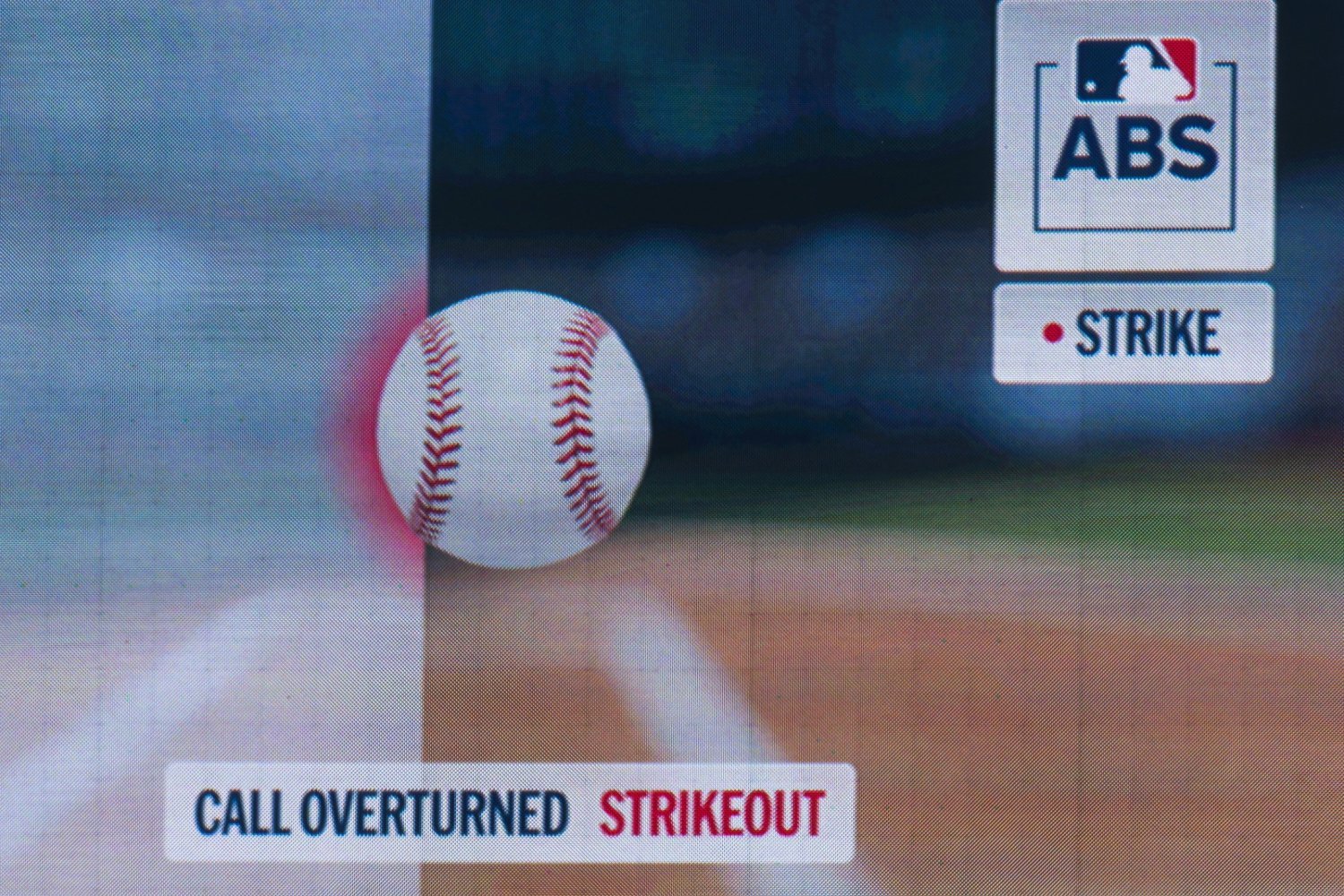 Since the Alex Cora ejection and Trevor Story blowup in Cincinnati, the Boston Red Sox have failed to make the necessary adjustments to turn the ABS challenge system into an edge. The numbers aren’t terrible, but they don’t exactly inspire confidence in the team’s approach, either. Boston sits at a 45 percent overall success rate on challenges through more than three weeks, putting the club squarely in the lower half of the league. More telling is just how uneven that approach still feels. Cincinnati was only the beginning. What matters now is what the Red Sox have done since. Roman Anthony was blunt after the game: his third-inning challenge was poorly timed and put the team in a bind. Wilyer Abreu agreed. The message? Save them. Treat challenges like the finite, high-stakes resource that they are. Tools with the potential to tilt the odds when the game is actually on the line. Don’t burn one just because a pitch looks wrong in the moment. That messaging would have carried more weight if the games had looked cleaner since. They haven’t. The Red Sox have had some successful challenges alongside some continued misses. That’s to be expected. The bigger problem is that the overall pattern still feels unsettled, undecided even. If there’s a clear ABS plan in place in the clubhouse, it hasn’t shown up on the field. ABS does more than clean up a missed call. It changes how a team has to manage a game. It can change who trusts what, who speaks up and when a team decides a challenge is worth spending in that moment. Now that the system exists, everyone knows that a bad call may be fixable. But once those challenges are gone, the safety net they provide is gone as well, and the cost suddenly feels very real. Boston felt that sting in Cincinnati. The Red Sox burned challenges early and had nothing left for the bigger pitches later in the game. Story’s reaction and Cora’s ejection may have been what grabbed the headlines, but the real damage was the lost flexibility late in the game. The Red Sox didn’t just get frustrated; they ran out of chances when it counted most. By comparison, Cincinnati looked more comfortable with the system. The Reds weren’t just better at winning challenges; they seemed to understand the rhythm of the new rules. Meanwhile, Boston looked like a team challenging on feel, not one managing the system with much discipline. That part hasn’t been cleaned up. A system like ABS only becomes a real advantage when everyone shares the same idea of how to use it. Managers can’t call for challenges from the dugout. Coaches can’t wave one in. The decision belongs to the batter, pitcher, or catcher, and it has to happen immediately. So, any team strategy shows up in player habits: restraint, trust and some kind of internal hierarchy. Boston has not made that hierarchy obvious yet. Maybe there is a solid plan behind the scenes. Maybe the Red Sox are sharper internally than outside results suggest. From the outside, however, it still looks more reactive than deliberate. A challenge wasted in a low-leverage spot stings a lot more when a crucial pitch comes up later and the team has nothing left. The catcher piece stands out, too. If anyone should have an edge in this system, it's the guys with the best view of the zone. Boston hasn’t looked especially sharp there so far, with its catchers succeeding on just 43 percent of all challenges (28th in MLB). That doesn’t prove they’re doing it wrong, but it does make it fair to wonder whether they’re getting full value from the players best positioned to give them an accurate read. And that’s the real question. Not whether ABS is bad. Not whether one umpire can cost a team a game. Those takes are too easy. The useful question is whether the Red Sox have used the system deliberately enough to turn it into something more than an in-the-moment reaction. Cincinnati still matters for that very reason. Not just because Cora got tossed or Story lost his cool. It exposed a problem the Red Sox said they needed to learn from, and the games since haven’t shown the lesson has stuck. Over 162 games, this won’t decide everything. It doesn’t have to. Small edges are the point. One saved challenge in the seventh inning matters more than an emotional one in the third. One catcher-led overturn in a high-leverage spot matters more than proving a hitter was technically right two innings earlier. Teams that figure that out earlier are going to reap the benefits of the system. Teams that don’t are going to keep giving it away. The Red Sox don’t look like a team that has figured out its strategy with the new system. They still look like one working through it. Maybe that changes soon. Maybe a month from now Boston looks sharper, more selective and more comfortable with who should be driving these decisions. For right now, the clearest read is also the simplest one: what looked like one sloppy afternoon in Cincinnati is starting to feel more like an unresolved habit. View the full article
 -
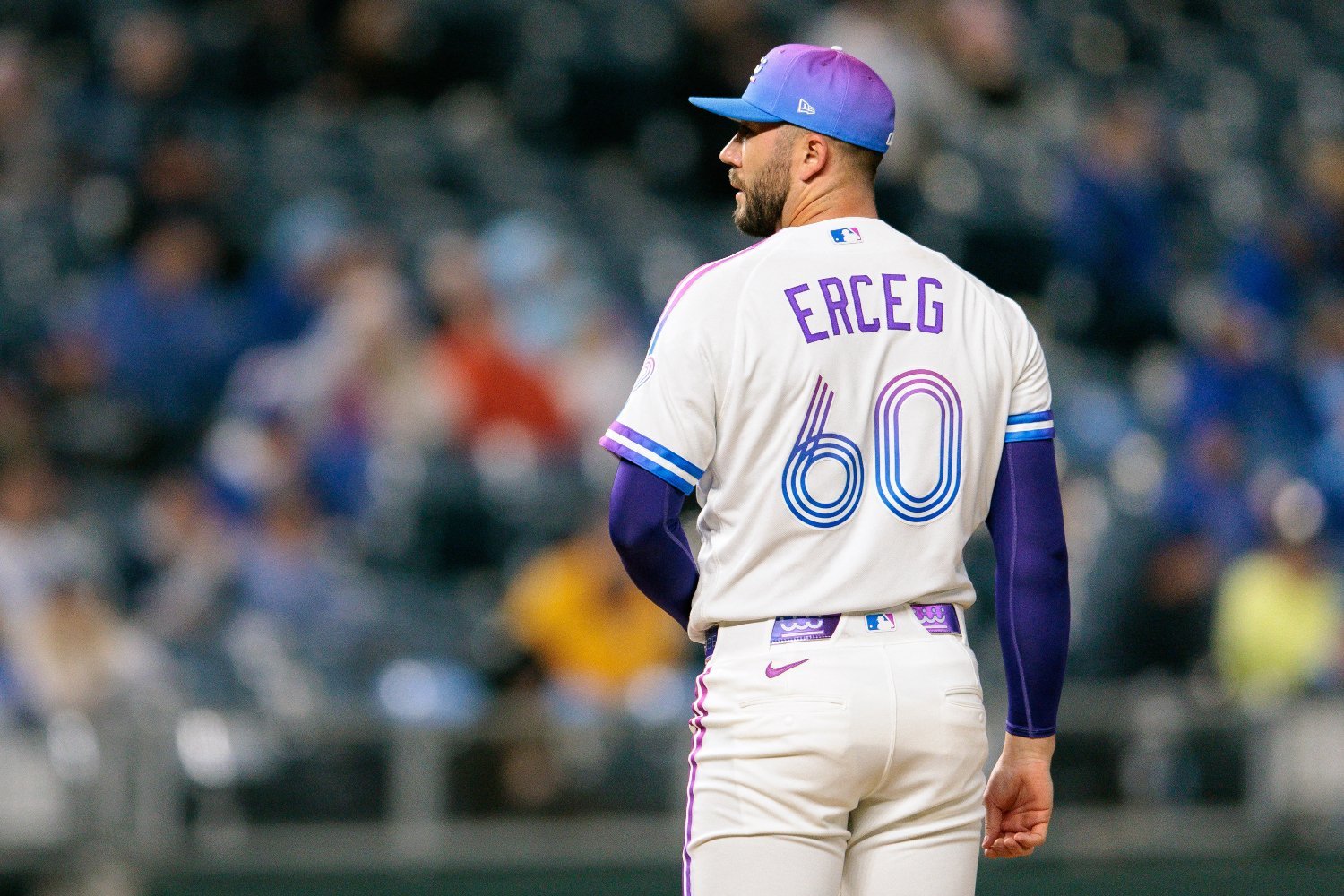 It was a tough series for the Royals in Detroit, as they were swept in three games. That included a brutal walkoff loss on Thursday, as Lucas Erceg was unable to hold a two-run lead in the ninth inning. Unfortunately, things did not get much better on Friday evening in the Bronx. After Vinnie Pasquantino tied up the game at two in the top of the 8th with a solo home run, pinch hitter Ryan McMahon ended up hitting a two-run bomb off of Alex Lange, which ended up clinching the game for the Yankees. It's easy to get discouraged about the Royals after a tough start to the 2026 season. After a great showcase in the World Baseball Classic, Royals (and baseball) fans were optimistic about Kansas City's outlook for the upcoming season. Unfortunately, a lot has been similar to 2025, especially offensively. Going into Friday's game against the Yankees, the Royals ranked 25th in batting average and OBP, 26th in OPS and runs scored, and 24th in home runs hit. Their 83 team wRC+ ranks 25th in baseball, according to Fangraphs. And if that isn't bad enough, the Royals' bullpen has struggled immensely through the first 19 games of the season. A strength of the club in 2025 (Carlos Estevez led the league in saves last year), it's been an Achilles heel of the group, especially after Estevez went on the IL (though his one appearance against Atlanta wasn't encouraging either). Royals relievers rank 29th in ERA and WHIP, 27th in BB/9, 28th in H/9, and 26th in HR/9. When it comes to most bullpen results, Kansas City ranks toward the bottom of the league. With a cold offense and a poor bullpen, it seems like Royals fans would be better off lowering their expectations for this team, perhaps thinking this is a replica of the 2025 team rather than the 2024 one that won a Wild Card series. However, I am going to share three reasons why Royals fans should remain optimistic, even after this bleak start to the 2026 campaign. The Plate Discipline is Encouraging One of the big priorities for the Royals this offseason, especially with the arrivals of new assistant hitting coaches Connor Dawson and Marcus Thames, was to limit the chasing at the plate. From 2024 to 2025, the Royals ranked 24th in baseball with a 29.5% O-Swing%. They also ranked 29th in BB% at 7.2%. While they ranked 10th in BB/K (0.38), they also ranked 21st in wRC+ (95). This season, the BB% and BB/K ratio have seen encouraging gains. They rank 17th in BB% at 9.6%, a 2.4% increase from the past two seasons. They rank a bit lower in BB/K ratio at 20th, but their 0.42 BB/K ratio is actually better than their combined ratio from the 2024 and 2025 seasons. The biggest improvement this season, though, has been in terms of O-Swing% (or chase). According to Fangraphs, the Royals have a 26.7% O-Swing%, the fourth-best rate in baseball. That is a 2.8% improvement from their 2024-2025 average O-Swing%. When it comes to individual Royals hitters in terms of O-Swing%, here's how they have fared this season. The Royals have five hitters with an O-Swing% below 25 percent so far this season. Carter Jensen, Jac Caglianone, and Michael Massey have rates under 30%. Massey being under 30% is a great improvement, especially since he had an average O-Swing% of 37.7% between 2024 and 2025. Thus, while the results haven't quite been there for Kansas City offensively, the plate-discipline processes, if maintained, should yield more fruit as the season goes on. The Royals Are Still Hitting the Ball Hard Kansas City has not hit many home runs, and its .346 SLG ranks 26th in baseball, according to Fangraphs. However, that doesn't mean that the Royals have only been producing "weak" contact this season. The Royals rank second in average exit velocity on batted balls with a 90.5 MPH EV. That is second only to the Los Angeles Dodgers. Their 90th EV ranks second at 106 MPH, their Max EV ranks 6th at 116.1 MPH, and their hard-hit rate also ranks 6th at 42.7%. They also rank 7th in barrel rate at 9.6%. When it comes to how Royals hitters are performing in those Statcast categories on an individual basis, there's a lot to be encouraged about, especially when it comes to their exit velocities, as illustrated below. Starling Marte, Cags, Garcia, Witt, and Massey are the Top-5 hitters when it comes to exit velocity and are the only Royals hitters averaging 90+ MPH in EV. The Top-10 Royals hitters all have EV marks of 89 MPH or above. The only concerning ones with exit velocities under 88 MPH are Lane Thomas, Nick Loftin, and Jonathan India (though they help out more in the plate discipline categories). Royals fans know the hitters have improved their chase rate through 20 games this year. That said, that hasn't come at the expense of hitting the ball hard, either. Kansas City has hitters who can hit the ball hard and launch it effectively when they connect. Eight Royals hitters have a barrel rate sof 10% or higher, and Pasquantino has a 9.1% barrel rate that's growing after back-to-back games with home runs. Unfortunately, those connections haven't clicked enough for the Royals this year in terms of on-base and run production. Garcia and Witt have xwOBA marks of .362 and .361, respectively. However, only Cags and Kyle Isbel are other Royals hitters with xwOBA marks over .320, and the bottom seven hitters have xwOBA marks under .300. Going into Friday, the Royals' team xwOBA was .306, which ranked 26th in baseball. Thus, Kansas City has to find a way to transition this solid contact ability into run production, especially with runners in scoring position. In RISP situations this season, the Royals have a .244 wOBA, the worst in baseball. The Royals' Pitcher Stuff Has Been Okay (Despite Bullpen Issues) When it comes to relievers, it's important to have pitchers that sport solid stuff profiles. Last season, the Royals ranked 26th in baseball with a 97 overall Stuff+ rating, per Fangraphs. This season, they rank 29th with an overall 96 Stuff+ rating, down 1 point. Thus, why am I saying that their pitching stuff has been "okay" so far in 20 games? Well, they have had some stuff leaders dramatically drop, with Estevez being the prime example. He went from having a 103 overall TJ Stuff+ in 2025, when he led Major League Baseball with 42 saves, to 96 in his first and only appearances of 2026. Here's a comparison of his TJ Stuff+ profile from last season and his lone outing this year, which came against the Braves. Last year, Estevez not only had a 103 TJ Stuff+ but also had 60 and 57 grades on his four-seamer and slider, respectively. Furthermore, while he struggled to generate consistent chase (22.8%) and whiff (18.8%) last season, he still maintained a strong zone rate (55.7%) and a decent xwOBACON (.363). This year, that zone rate is 40.7%, a 15% decline. He also has a .599 xwOBACON and a 96 overall TJ Stuff+, a seven-point difference from a year ago. His four-seamer and slider also have only 48 and 38 grades this season, and as a result, he threw his changeup much more this year, at 22.2%. Unfortunately, his changeup hasn't been much better stuff-wise, with a 50 grade. So the Royals' closer brings down the group quite a bit in the stuff rankings. However, if his velocity returns when he comes off the IL, then the bullpen looks a lot better than it is right now. Let's take a look at how the Royals pitchers have fared this year, via TJ Stuff+ metrics. Estevez ranks near the bottom, unsurprisingly. Michael Wacha, Seth Lugo, and Noah Cameron rank at or near the bottom quintiles, but they're starters more known for their command rather than their stuff. Furthermore, the lack of premium TJ Stuff+ marks hasn't hurt their effectiveness. They have ERA marks of 1.00, 1.48, and 3.94, respectively. The bullpen has produced strong TJ Stuff+ marks despite poor results. The Royals have nine pitchers (seven relievers) who had TJ Stuff+ marks of 100 or higher. That includes Steven Cruz (109), Nick Mears (104), Luinder Avila (103), Lucas Erceg (103), Alex Lange (102), Bailey Falter (101), and Matt Strahm (100). The only relievers under that century TJ Stuff+ mark are Eli Morgan (99) and John Schreiber (98). Thus, the Royals have guys who can bring it. I talked about that in a recent Twitter post reviewing the bullpen's poor performance on Thursday in the walkoff loss to the Tigers. Yes, the results were bad, but the stuff was surprisingly good from the three Kansas City relievers (Erceg, Mears, and Schreiber) who struggled in Detroit. The Royals' bullpen definitely has a chase problem. They rank last in the league in reliever chase rate at 28.2%. Kansas City's relievers have to be better, especially with Estevez returning to full strength. Are the chase issues pitch-calling related? Command related? Control related? Or a whole different issue? Regardless, the bullpen has plenty of arms who have solid arsenals that could produce a lot of strikes, both of the swinging and looking variety. Hence, fans should focus more on the TJ Stuff+ and how it could produce better outcomes down the road for these Royals pitchers rather than worry about this rough stretch of baseball, where the Kansas City relievers have looked downright terrible (which is saying something from a Royals fan). View the full article
 -
Ryan Kreidler's Arrival Should Lead to James Outman's Exit
DiamondCentric posted an article in Twins Daily
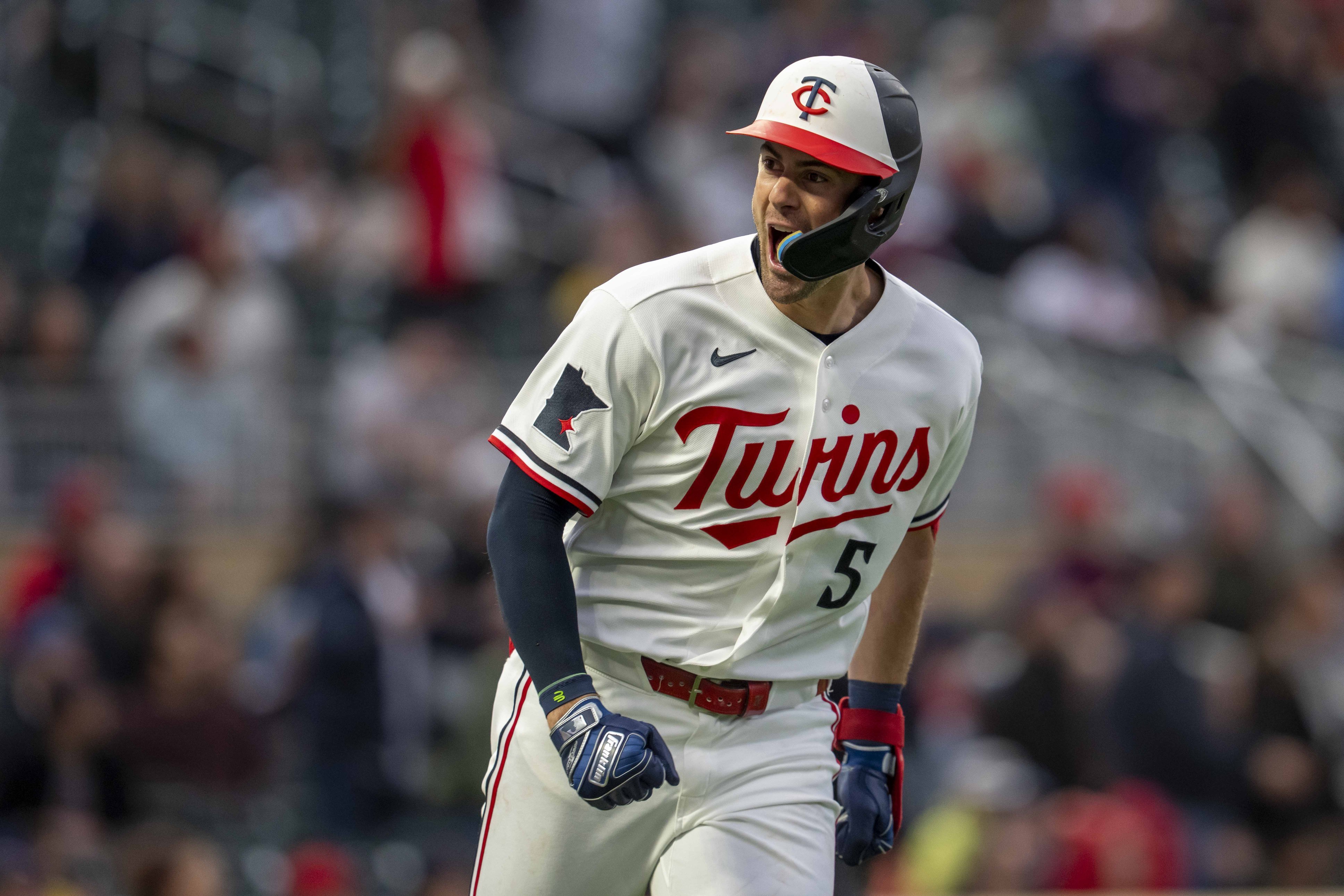 Amid a largely encouraging start for the Minnesota Twins, there's been no shortage of grousing and grumbling about James Outman, whose start has been anything but encouraging. Here in mid-April, the backup outfielder is still searching for his first hit of the season — through 20 plate appearances he's gone 0-for-18 with 10 strikeout and two walks. It's no isolated slump. Outman also struggled mightily down the stretch last year after being acquired in exchange for reliever Brock Stewart at the deadline. In total, he's batting .124 with a .485 OPS and 44% strikeout rate as a Twin. Turning 29 next month, he's not exactly a youthful upside play at this point. The promise Outman showed as a rookie back in 2023 has vanished from sight. It's understandable why fans are eager to see Outman ousted. The case for sticking with him rests on two factors: His role is extremely limited. Outman has started only four of Minnesota's first 17 games, and his 20 PAs rank 13th on the team. Nobody who's been on the roster since the start of the season has played less. You don't want to call up a legitimate player or prospect like Emmanuel Rodriguez, Walker Jenkins or even Alan Roden to languish on the bench and get a handful of ABs each week. His skills for that limited role are suitable. While he hasn't hit at all, Outman can play all three outfielder positions well and the Twins trust him in center. He also runs well and is 2-for-2 on stolen bases. That's really the primary function of his pure bench role, and he excels with these specific skills more than most alternatives. There's also the matter of Outman being out of options, meaning he'd have to be DFA'ed and put through waivers if removed from the active roster. It's likely the main reason he made the team out of camp, but it's becoming less and less of a consideration. Would Outman even be claimed by another team at this point? If he does, would it really be a big deal? The reality is that Kreidler offers everything that Outman does and then some. Need a glove-first (glove-only?) player you can count on all over the outfield, including center? Someone who can run reasonably well if needed as an in-game sub? A guy who you don't mind using sparingly as a bench piece? Check, check, check. Kreidler is a very good defender all over the field. He might not be quite as good as Outman in center, but he's close; keep in mind that Kreidler started there on Opening Day for the Tigers last year. Additionally he can back up every infield position, and he'll be an upgrade over the starter at each. Right now, the Twins lack any purpose-fit defensive replacements for their lackluster infield unit. The big knock on Kreidler is that he's been one of the worst hitters in baseball. His initial stint with the Twins, which has included two homers and four RBIs in his first three games, has been intriguing on this front, but it's too early to invest much belief in his offense on this basis. Dating back to 2024, Kreidler's .191 wOBA is sixth-worst among 593 MLB players with 100+ PA. Outman is only slightly better, with his .229 wOBA 22nd-worst. You're looking at two offensive non-factors, and one is bringing far more to the table as a versatile utilityman versus a player whose sole value is being able to handle center field. Royce Lewis is eligible to return from the injured list as soon as Monday, and is scheduled to scheduled to start a rehab stint on Saturday. He's in line to return at some point next week. Whenever Lewis is activated, the corresponding move should not be to send down Kreidler, who was brought up as his replacement, but rather Outman, whose ostensible value has been replaced by the Kreidler. View the full article
 -
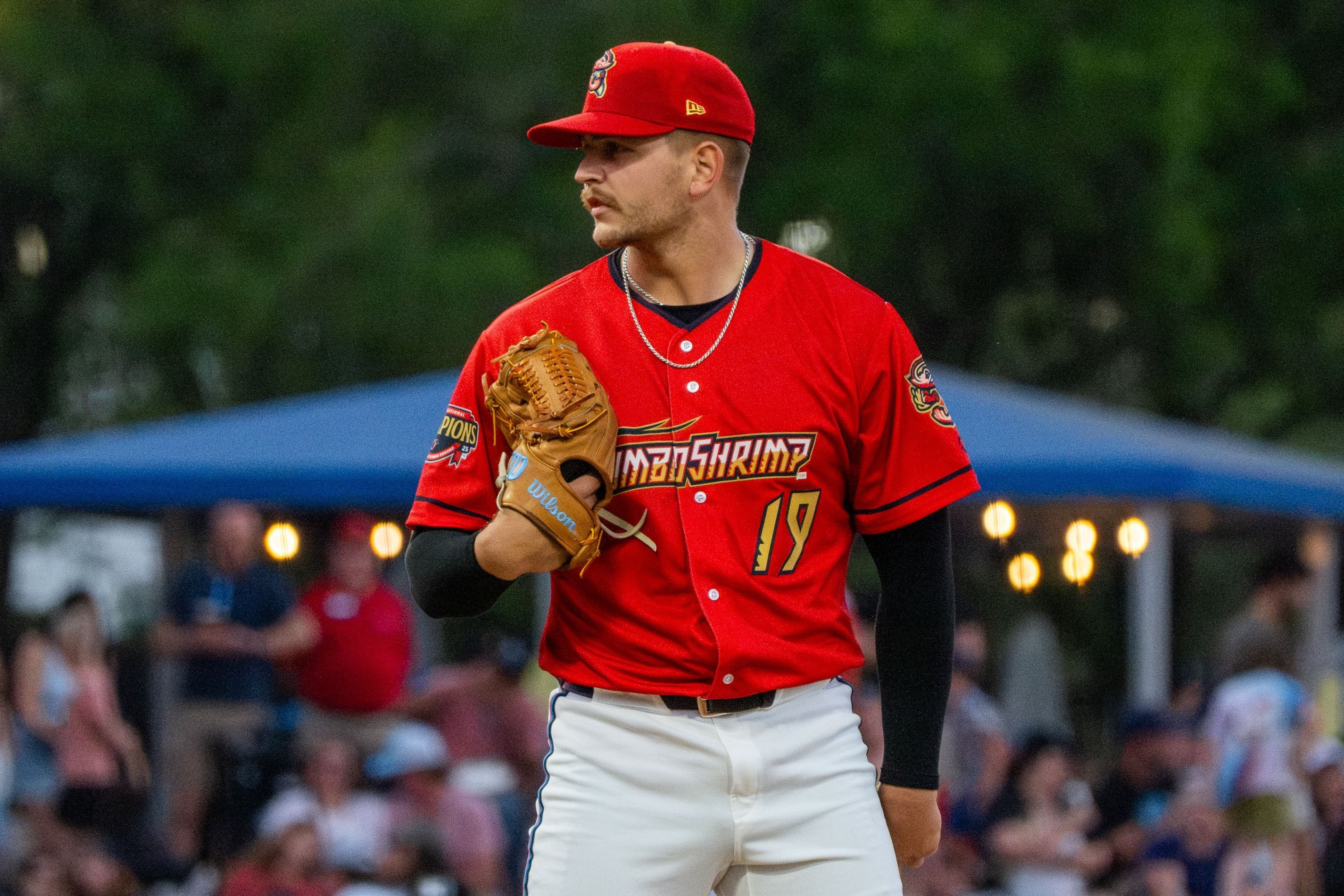 The old baseball axiom still rings true: you can never have too much pitching. Offseason trades left the Miami Marlins particularly vulnerable in that area entering 2026. Fortunately, the early returns from their Triple-A depth arms have been highly encouraging. Five hours away from loanDepot park in Jacksonville, two lefties are performing well and each is screaming for a promotion to the big leagues (for very different reasons). First, there’s Braxton Garrett. The Marlins’ first-round pick in 2016, the lefty received his first call-up in 2020 as a COVID necessity, having barely pitched at the Double-A level. He then spent most of 2021 in Triple-A before fully transitioning to the majors in 2022. Retooled with a slider supplanting his curveball as his primary putaway pitch and with improved fastball command, Garrett enjoyed solid campaigns in both '22 and '23, posting a combined 3.63 ERA and 246/53 K/BB. Braxton came into 2024 with a firm grip on a starting rotation spot, but just 37 innings into the year, he was shelved with a UCL injury that required Tommy John surgery, costing him the remainder of that season as well as all of 2025. Garrett is back healthy this year, but was relegated to Triple-A to start the season in favor of Janson Junk, who is out of minor league options, and fellow former first-rounder Max Meyer. The latest exports from Garrett with the Jumbo Shrimp are a 0.59 ERA and 17/5 K/BB through 15 ⅓ innings. In his last start, he held a no hitter through six. Then there’s Robby Snelling, who was part of the return package that sent reliever Tanner Scott to the Padres in 2024. After posting inflated numbers in the upper minors with San Diego—an org known for pushing their prospects quickly—all this lefty has done since joining the Marlins’ organization is impress. Last season between Pensacola and Jacksonville, Snelling posted a 2.51 ERA via a 1.11 WHIP and 166/39 K/BB over 136 innings, earning him the Marlins’ Minor League Pitcher of the Year honors. On the young campaign this year, Snelling has already been special—in his first four starts with Jacksonville, he has a 1.89 ERA via a 31/9 K/BB. Across parts of three seasons with the Jumbo Shrimp, Snelling boasts a 1.42 ERA, more than half a run better than any other starting pitcher with at least 50 innings logged at AAA during that span. For the stark improvements, Snelling has credited a delivery change that he perfected in the offseason between 2024 and 2025. The change has him standing more upright throughout his motion and throwing from a higher arm slot. This has led to his velocity ticking back up as well as better all-around repeatability. On top of that, the Marlins’ pitching development team had Snelling drop his sinker and taught him a gyro slider, which has quickly become a fantastic pitch for the 6’3”, 210-pounder who excels at changing eye levels and clipping corners. The current version the Marlins have brought out of Snelling is a perfect mix of confident and dominant. Against Triple-A hitters, he’s living all around the black of the plate, elevating at will with the best velocity he’s ever had, and limiting hard contact by way of two plus breakers and a usable changeup. Snelling looks every bit of a viable mid-rotation MLB starter. There’s little doubt: both Garrett and Snelling will be with the Marlins in 2026. The question is, with arms aplenty and rotation spots few, who comes up first? In my opinion, the answer doesn’t lie within which pitcher has performed the best or the sexiest name—it hinges on the business side of the game and within long-term organizational planning. The deadline has passed that ensures MLB teams can save an extra year of control on promoted prospects (barring a top-two finish in Rookie of the Year balloting). However, Snelling, who has arguably been one of the best pitchers in Minor League Baseball last year and so far this year, would be on track for Super Two eligibility if brought up right now, qualifying for arbitration in 2029. Holding off on his promotion until the middle of June would delay that until 2030. Garrett needs MLB innings. At age 28 and in his second year of arbitration eligibility, with the likes of Snelling, Thomas White and other prospects nipping at his feels, Garrett appears to be a name primed to be moved this July. If that is going to be the case, interested parties will want to see at least a decent sample of how he looks at the big league level after nearly a two-year layoff. An added factor is ease of access to the roster. Whereas Snelling would require a 40-man roster spot, getting Braxton back to the big leagues is as easy as a 26-man move. Getting him back into the rotation could be as easy as moving Janson Junk to the bullpen. While Junk has done yeoman’s work holding down the fifth spot, he is a better fit for the bullpen in a multi-inning/swing man capacity. One may argue that moving Meyer to the bullpen would also be beneficial, but the Marlins have not iterated any intentions of shortening the leash on him as a starter; in fact, the message from the organization has been exactly the opposite. For fans who follow the team closely, not seeing Snelling get the call now in the midst of a dominant stretch may be painful, but these decisions are befitting of a team whose competitive window is about to fully open. Have no fear; Robby Snelling will be here soon enough and has the makings of an arm that could be very good for the Marlins for a long time. If Garrett is indeed dealt at the deadline, it would seamlessly open the door for Snelling to take up a rotation spot. He should also be considered one of the first names in line if an injury occurs. View the full article
 -
TRANSACTIONS Right-handed pitchers Cory Lewis and Kyle Bischoff started their rehab assignments with the Fort Myers Mighty Mussels on Friday. The Twins also announced that Royce Lewis will begin a rehab assignment with the Saints on Saturday. SAINTS SENTINEL St. Paul 7, Lehigh Valley 4 Box Score Zebby Matthews has had a rough start to his 2026 season. He’d be the first to tell you that. He was back on the mound for the Saints on Friday night. He bent, but he really didn’t break in this outing. He went the first four innings. He gave up two runs on six hits and a walk and a hit batter. With all of those runners on base, the two runs he allowed came on solo home runs by IronPigs DH Felix Reyes. He got out of some situations with five strikeouts. Grant Hartwig came on and gave up two runs on two hits and a walk over two innings. Matt Bowman started the seventh inning. He gave up two hits, but no runs, in 1 2/3 innings. Three of the five outs he recorded came via the strikeout. Zak Kent got the final four outs without giving up a run to record his first Saints Save. The Saints did a very nice job of answering the Reyes homers. Reyes homered in the top of the first inning. The Saints responded with three runs in the bottom of the first. Kaelen Culpepper led off with a walk. He scored ahead of Alan Roden who hit his third homer of the season. With two outs, Kyler Fedko drilled his fourth homer of the season to make it 3-1. Reyes hit another solo homer in the top of the third inning. The Saints came back with three in the bottom of that frame. As he had in the first, Culpepper led off the third with a walk. He stole second. Roden walked. With one out, Emmanuel Rodriguez lined a single to right to drive in Run #4. Fedko drove in Roden on a fielder’s choice. Rodriguez scored on an Eric Wagaman ground out. The Twins added a single run in the bottom of the fourth frame. Guess who got things started? With two outs, Culpepper singled. Then in what may or may not be an interesting move*, Orlando Arcia pinch hit for Alan Roden. Arcia came through with a double to drive in Culpepper with the seventh run. *No, not an interesting move after all. Earlier in the game, Roden had an awkward slide into home and jarred his shoulder a bit. Sounds pretty minor but will likely miss a game or two as a precaution. Culpepper went 1-for-2 with two walks and a stolen base. He scored three runs. Roden was 1-for-1 with a walk and his third homer. WIND SURGE WISDOM Wichita 5, Springfield 4 Box Score It was a pretty quiet night at the plate the Wind Surge. Then right after the 7th Inning Stretch, the Surge put a four on the board to take a lead and held on for the one-run win. Garrett Spain gave Wichita a 1-0 lead in the second inning with his third home run of the season. However, Springfield scored the next four runs. Ty Langenberg started and gave up two runs on six hits and two walks over five innings. Alejandro Hidalgo worked the next two innings. He gave up two runs in the top of the seventh. Ricardo Olivar led off the bottom of the seventh inning with a walk. Jose Salas followed with an infield single. A back moved runners to second and third, and then a passed ball allowed Olivar to score the team’s second run. Andrew Cossetti walked, and then Salas scored on a sacrifice fly off the bat of Kyle DeBarge. Down 4-3, guess who came to the plate? That’s right. Ben Ross. He had increased his hitting streak to 13 games earlier in the game. This time, he came through in the best way possible. Ross lined an opposite field homer to give Wichita the 5-4 lead, a lead they held on to for the final two innings. Ross is now hitting .480/.552/.900 (1.452) with six doubles, five homers and 14 RBI. He is also 7-for-8 on stolen base attempts. He also has more walks than strikeouts (8-to-7). He was the Twins 5th round pick in 2022 out of Notre Dame in Ohio, a strong Division II program. He is known for his great infield defense, so it’s nice to see more in his offensive game too. William Fleming tossed two scoreless innings to record the save. KERNELS CHRONICLE Cedar Rapids 11, Quad Cities 8 Box Score Nine total runners crossed home plate in the first inning. Quad Cities scored first in the first inning and then three more in the third inning. The Kernels scored four runs in the first inning and one more in the second frame. However, the Kernels pitchers put six straight 0s on the board. Down 8-5, the Kernels scored a run in the bottom of the sixth when Rayne Doncon scored on a passed ball. 8-6. In the bottom of the seventh, Eduardo Tait doubled to drive in Marek Houston who reached on an infield single. 8-7. With two outs, Brandon Winokur hit his first triple of the season. 8-8. With one out in the bottom of the eighth, Jay Thomason singled. With two outs, he moved up to second. Jaime Ferrer walked. Both runners advanced on a wild pitch, and then Houston walked to load the bases. Tait came up big again, dropping a two-run single to center. Khadim Diaw drove in Houston with a single. 11-8. Marek Houston was 2-for-4 with a walk and three runs scored. Eduardo Tait was 2-for-4 with a walk, his third double, and three RBI. Khadim Diam was 2-for-5 with two RBI. Jay Thomason also had two hits. Rayne Doncon hit his second home run of the season in the four-run first inning. In the second inning, Jaime Ferrer hit his second homer of the season. Adrian Bohorquez had a rough start, but three errors behind him did not help. He gave up eight runs (4 earned) on four hits and four walks in 2 1/3 innings. He struck out four. Ivran Romero came into the game with one out in the top of the third inning and runners on second and third base. He gave up a sacrifice fly before getting out of that inning. However, he went 3 2/3 scoreless, hitless innings. He had six strikeouts and two walks. Sam Rochard went 1 2/3 scoreless innings. Eston Stull got the final four outs, three of them on strikeouts. MIGHTY MATTERS Ft. Myers 2, Lakeland 5 Box Score Cory Lewis made the start, rehabbing from a shoulder issue that showed up right at the beginning of spring training. Lewis got one out, but he gave up two runs on two hits and two walks. He left the game with a trainer, so that certainly isn’t ideal. Kyle Bischoff, making his first rehab appearance, gave up a walk and struck out two batters over 1 1/3 scoreless innings. Merit Jones was the regularly scheduled starter for the day. He came in and worked 4 1/3 innings. He gave up one run on two hits and a walk. He struck out one batter. Xavier Kolhosser gave up two runs on two hits and a walk over the final three innings. He struck out four batters. The Mussels scored single runs in the third and fourth innings. In the third inning, Eduardo Beltre put Fort Myers on the board. He hit it 104.1 mph at 32 degrees, and it traveled 406 feet for his third home of the season. In the fourth frame, Ramiro Dominguez, who was just added to the Mussels roster two days ago, hit a ball 100.3 mph at 27 degrees, and it traveled 369 feet, well beyond the wall in left field. Dominguez, you may recall, was the Twins Daily FCL Hitter of the Year for 2025. He was 1-for-3 with a walk and his first homer. He also made a great defensive play at second base. The Mussels had eight hits in the game. Ryan Sprock had three of them, and one of the team’s seven walks. PLAYERS OF THE DAY Hitter of the Day Ben Ross (Wichita): 2-for-3, BB, 2B(6), HR(5), R, 2 RBI. Pitcher of the Day Ivran Romero (Cedar Rapids): 3 2/3 IP, 0 H, 0 R, 2 BB, 6 K, 52 pitches, 34 strikes (65.4%) PROSPECT SUMMARY Check out the Prospect Tracker for much more on our Twins Top 20 prospects after seeing how they did today. #1 - OF Walker Jenkins (St. Paul) - Did Not Play #2 - IF Kaelen Culpepper (St. Paul) - 1-for-2, 2 BB, 3 R, K, SB(3) (batted first, played SS) #3 - OF Emmanuel Rodriguez (St. Paul) - 1-for-3, BB, R, RBI, K (batted fourth, played RF, then CF) #4 - C Eduardo Tait (Cedar Rapids) - 2-for-4, BB, 2B(3), 2 R, 3 RBI (batted second, DHd) #5 - LHP Connor Prielipp (St. Paul) - Did Not Pitch #6 - LHP Dasan Hill (Cedar Rapids) - Did Not Pitch #7 - OF Gabriel Gonzalez (St. Paul) - 0-for-4, K (Batted third, played 1B, then RF) #8 - LHP Kendry Rojas (St. Paul) - Did Not Pitch #9 - SS Marek Houston (Cedar Rapids) - 2-for-4, BB, 3 R, SB(3), 2 K (batted leadoff, played SS) #10 - RHP Charlee Soto (Cedar Rapids) - Injured List #11 - RHP Riley Quick (Ft. Myers) - Did Not Pitch #12 - RHP Andrew Morris (Minnesota) - Did Not Pitch #13 - 3B/CF Brandon Winokur (Cedar Rapids) - 1-for-4, BB, 3B(1), RBI (batted 4th, played CF). #14 - 3B/SS Quentin Young (Ft. Myers) - 0-for-5, 4 K (batted second, DHd) #15 - RHP Marco Raya (St. Paul) - Did Not Pitch #16 - OF Hendry Mendez (Wichita) - 0-for-3, BB, 2 K (batted fourth, played LF) #17 - 2B/OF Kyle DeBarge (Wichita) - 0-for-3, SF RBI (batted first, played SS) #18 - RHP C.J. Culpepper (Wichita) - Starts Saturday. #19 - C/OF Khadim Diaw (Cedar Rapids) - 2-for-5, R, 2 RBI, K (batted third, played CF). #20 - RHP James Ellwanger (Ft. Myers) - Did Not Pitch UPCOMING PROBABLES Saturday: Lehigh Valley @ St. Paul (2:07 pm CT) - Andrew Bash (0-1, 1.64 ERA) Springfield @ Wichita (4:05 pm CT) - C.J. Culpepper (0-1, 3.38 ERA) Quad Cities @ Cedar Rapids (1:05 pm CT) - RHP Jason Doktorczyk (2-0, 3.60 ERA) Lakeland @ Ft. Myers (5:05 CT) - RHP Reed Moring (1-0, 0.00 ERA) CURRENT W-L Records Minnesota Twins: 11-9 St. Paul Saints: 8-10 Wichita Wind Surge: 7-6 Cedar Rapids Kernels: 7-6 Fort Myers Mighty Mussels: 8-5 FCL Twins: 0-0 (season begins Monday, May 4) DSL Twins: 0-0 (season begins Monday, June 1) Please feel free to ask questions about the teams, the rosters, and discuss today’s games, or anything else Twins minor-league related! View the full article
-
 Kash Mayfield struck out eight over five scoreless one-hit innings as the High-A Fort Wayne TinCaps took Game 1 of a doubleheader 1-0, before dropped the second game 4-3. Triple-A El Paso fell 9-7 despite four home runs, including two from Nick Schnell. Double-A San Antonio dropped a 9-3 decision to Midland, with home runs from Romeo Sanabria and Chris Sargent. Low-A Lake Elsinore rallied past Stockton 6-3 behind Luke Cantwell's three-hit night and reliever Brandon Langley's win. Padres Minor-League Transactions San Diego Padres optioned RHP Alek Jacob to El Paso Chihuahuas. Schnell's Two Homers Not Enough As Chihuahuas Fall To Round Rock The El Paso Chihuahuas hit four home runs, but could not overcome an early deficit in a 9-7 loss to the Round Rock Express. Nick Schnell led the Chihuahuas' attack with a pair of long balls and four RBIs, including a three-run shot in the third inning that put El Paso ahead 4-2. Schnell, Mason McCoy, and Clay Dungan each added solo home runs during a three-run fifth inning that knotted the score 7-7. Starter JP Sears was tagged for seven runs on eight hits across 3⅓ innings, walking five and striking out four. Sears surrendered a two-run home run in the fourth that pushed Round Rock ahead 7-4 before he exited. Misael Tamarez followed with two innings in relief, striking out three and walking none, though he was charged with the go-ahead run in the sixth. Jase Bowen reached base four times with a double and three walks. Pablo Reyes and Marcos Castañon collected two hits apiece. EP_0417.mp4 Player AB R H RBI BB K Samad Taylor (LF) 4 0 0 0 1 1 Jase Bowen (CF) 2 1 1 0 3 0 Pablo Reyes (DH) 5 0 2 0 0 1 Marcos Castañon (3B) 5 0 2 1 0 0 Nick Solak (1B) 4 1 1 0 0 0 Clay Dungan (2B) 5 1 1 1 0 2 Mason McCoy (SS) 2 2 1 1 2 1 Nick Schnell (RF) 3 2 2 4 0 0 Anthony Vilar (C) 4 0 0 0 0 1 Player IP H R ER BB K HR JP Sears 3 1/3 8 7 7 5 4 1 Misael Tamarez 2 2 1 1 0 3 0 Eli Villalobos 1 2/3 1 0 0 0 2 0 Garrett Hawkins 1 0 1 1 3 0 0 Sanabria, Sargent Go Deep In Missions' Loss To Midland The San Antonio Missions fell 9-3 to the Midland RockHounds despite home runs from Romeo Sanabria and Chris Sargent. Sanabria got the Missions on the board with a solo shot to center field in the fourth inning, his second home run of the season and of the series. Luis Verdugo followed with a sacrifice fly that brought home Albert Fabian, trimming the deficit to 3-2. Sargent added a solo blast to left field in the eighth, his first home run of the year. Starter Ian Koenig took the loss after 5⅔ innings of work, allowing six runs on seven hits with two strikeouts and two walks. Koenig surrendered two home runs, including a three-run shot in the second that staked Midland to an early lead. Carson Tucker collected two hits and swiped two bases, while Sanabria added a second hit alongside his home run. San Antonio managed just six total hits, drew only one walk as a team, and struck out eight times. SA_0417.mp4 Player AB R H RBI BB K Ethan Salas (DH) 4 0 0 0 0 1 Ryan Jackson (3B) 4 0 0 0 0 1 Romeo Sanabria (1B) 4 1 2 1 0 1 Albert Fabian (RF) 4 1 1 0 0 0 Carson Tucker (SS) 4 0 2 0 0 2 Luis Verdugo (2B) 3 0 0 1 0 1 Kai Murphy (LF) 2 0 0 0 1 0 Kai Roberts (CF) 3 0 0 0 0 0 Chris Sargent (C) 3 1 1 1 0 2 Player IP H R ER BB K HR Ian Koenig 5 2/3 7 6 6 2 2 2 Manuel Castro 2/3 3 1 1 0 0 0 Michael Flynn 1/3 1 0 0 0 0 0 Andrew Dalquist 1 1/3 0 2 2 3 2 0 Mayfield's 8-Strikeout Gem Lifts TinCaps To Win In Twinbill Split Kash Mayfield delivered a dominant performance as the Fort Wayne TinCaps edged the Lake County Captains 1-0 in the opening game of a doubleheader. The TinCaps dropped the nightcap 4-3. In the opener, Mayfield, the Padres' first-round draft choice in 2024 and Padres Mission's No. 2 prospect, worked five scoreless innings and faced just one over the minimum, scattering just one hit while striking out eight of the 16 batters faced and issuing no walks to earn the win. The hit was the first allowed by Mayfield in his first three starts this season, covering 12 innings. He has 16 strikeouts in that span. Clay Edmondson followed with two innings of one-hit relief, walking one and striking out one to collect the save. The TinCaps' lone run came across in the top of the sixth inning. Kavares Tears drew a walk with one out, advanced to second on a line-drive single by Jake Cunningham, and moved to third on a sacrifice bunt from Jack Costello. Tears crossed the plate on a wild pitch to give Fort Wayne a 1-0 lead that the pitching staff would not relinquish. Rosman Verdugo led the TinCaps at the plate, going 2-for-3 with a walk, while Cunningham also went 2-for-3. Tears drew two walks. In the second game, Kasen Wells led the TinCaps offensively, going 2-for-3 with a walk, a stolen base, and two runs scored. Alex McCoy contributed a sacrifice fly in the fourth that also scored Wells. Starter Isaiah Lowe worked three innings, allowing one run on three hits while striking out five and walking three. Lake County scored twice in the fifth inning against Matthew Watson to take a 3-1 lead. Fort Wayne pulled within 3-2 in the top of the sixth on a single by Lamar King Jr. that brought home Wells. The Captains, however, scratched across a run in the bottom of the sixth on a sacrifice fly to retake the lead for good. The TinCaps tried to rally in the seventh, with Dylan Grego lifting a sacrifice fly that scored Jack Costello to pull within 4-3, but they could get no closer. FW_0417.mp4 FIRST GAME Player AB R H RBI BB K Kasen Wells (CF) 3 0 0 0 0 1 Rosman Verdugo (3B) 3 0 2 0 1 0 Carlos Rodriguez (C) 4 0 0 0 0 1 Alex McCoy (1B) 4 0 1 0 0 0 Kavares Tears (RF) 1 1 0 0 2 0 Jake Cunningham (LF) 3 0 2 0 0 0 Jack Costello (DH) 2 0 0 0 0 0 Oswaldo Linares (2B) 2 0 0 0 1 0 Dylan Grego (SS) 2 0 0 0 1 2 Player IP H R ER BB K HR Kash Mayfield 5 1 0 0 0 8 0 Clay Edmondson 2 1 0 0 1 1 0 SECOND GAME Player AB R H RBI BB K Kasen Wells (CF) 3 2 2 0 1 1 Rosman Verdugo (2B) 4 0 1 0 0 1 Carlos Rodriguez (DH) 2 0 0 0 1 0 Alex McCoy (LF) 2 0 1 1 0 0 Lamar King Jr. (C) 3 0 1 1 0 0 Jake Cunningham (RF) 3 0 0 0 0 1 Jack Costello (1B) 3 1 1 0 0 1 Jonathan Vastine (3B) 2 0 0 0 0 0 Kavares Tears (PH) 1 0 0 0 0 1 Dylan Grego (SS) 1 0 0 1 1 0 Player IP H R ER BB K HR Isaiah Lowe 3 3 1 1 3 5 0 Matthew Watson 1 1/3 2 2 2 0 2 0 C.J. Widger 2/3 1 0 0 0 0 0 Will Varmette 1 1 1 1 1 1 0 Cantwell's 3-Hit Night Powers Storm Past Stockton The Lake Elsinore Storm overcame an early deficit by scoring in each of the last four innings to defeat the Stockton Ports 6-3. Luke Cantwell went 3-for-4, including a two-run double in the eighth inning that broke a 3-3 tie. Justin DeCriscio added two hits, including a run-scoring double in the ninth that capped the scoring. Starter Kruz Schoolcraft, Padres Mission's No. 3 prospect and the Padres' first-round pick last year, worked three innings, allowing two runs (one earned) on four hits with three strikeouts and two walks. Rordy Mejia followed with 2⅔ scoreless innings of one-hit relief, striking out four and issuing one walk. Brandon Langley earned the win with 1⅓ innings of hitless work, striking out three. Ethan Long pitched a perfect ninth for the save. Trailing 2-0 entering the sixth, the Storm scratched back on a pair of Stockton miscues, with Kerrington Cross and Cantwell each scoring on errors to even the game 2-2. Ryan Wideman's seventh-inning sacrifice fly to center scored Cross to briefly push Lake Elsinore ahead 3-2, Cantwell delivered the knockout blow in the eighth, and DeCriscio iced the game in the ninth. LE_0417.mp4 Player AB R H RBI BB K Ryan Wideman (CF) 4 0 1 1 0 0 Truitt Madonna (DH) 3 0 0 0 2 2 George Bilecki (LF) 5 0 0 0 0 2 Kale Fountain (RF) 4 1 0 0 1 1 Justin DeCriscio (2B) 4 1 2 1 0 0 Jorge Quintana (SS) 5 1 1 0 0 2 Victor Duarte (C) 3 0 0 0 1 1 Kerrington Cross (3B) 3 2 1 0 1 0 Luke Cantwell (1B) 4 1 3 2 0 0 Player IP H R ER BB K HR Kruz Schoolcraft 3 4 2 1 2 3 0 Rordy Mejia 2 2/3 1 1 0 1 4 0 Brandon Langley 1 1/3 1 0 0 0 3 0 Will Koger 1 1 0 0 2 0 0 Ethan Long 1 1 0 0 0 0 0 Padres Top-20 Prospect Performance Kash Mayfield: 5 IP, 1 H, 0 R, 0 BB, 8 K, W Ethan Salas: 0-for-4, K Kruz Schoolcraft: 3 IP, 4 H, 2 R, 1 ER, 2 BB, 3 K Bradgley Rodriguez: DNP Humberto Cruz: DNP Miguel Mendez: DNP Ty Harvey: DNP Jorge Quintana: 1-for-5, R, 2 K Kale Fountain: 0-for-4, R, BB, K Ryan Wideman: 1-for-4, RBI, SB Jagger Haynes: DNP Lamar King Jr: 1-for-3, RBI Romeo Sanabria: 2-for-4, HR, R, RBI, K Truitt Madonna: 0-for-3, 2 BB, 2 K, SB Michael Salina: DNP Garrett Hawkins: 1 IP, 0 H, 1 R, 1 ER, 3 BB, 0 K Kavares Tears: 0-for-2, 2 BB, R, K Deivid Coronil: DNP Francis Pena: DNP Bryan Balzer: DNP View the full article
 -
 Way back when before the earth cooled and the Mets were managed by Yogi Berra, The Carol Burnett Show ran a sketch loaded with gay subtext (in which the sub-) barely qualified, in which Harvey Korman and Steve Lawrence, as rival businessmen fight over a client (Tim Conway) with the passion of spurned lovers — each desiring the client less for himself but for the pain it causes them to see him with another. Such is the case with young Richard Lovelady. Transactions, 4/16/2026 GOING Traded to WAS for Cash Relief Pitchers Richard Lovelady L/L DoB: 1995-07-07 High Level: MLB (2026) Here are some of the recent transaction history for Richard (nee Dicky) Lovelady: June 23, 2025: New York Mets signed free agent LHP Richard Lovelady. June 25- September 27, 2025: Up, down, up, down, yadda-yadda-yadda, including three DFAs. September 29, 2025: LHP Richard Lovelady elected free agency. October 23, 2025: New York Mets signed free agent LHP Richard Lovelady. January 22, 2026: New York Mets designated LHP Richard Lovelady for assignment. January 29, 2026: Washington Nationals claimed LHP Richard Lovelady off waivers from New York Mets. March 10, 2026: Washington Nationals designated LHP Richard Lovelady for assignment. March 14, 2026: New York Mets claimed LHP Richard Lovelady off waivers from Washington Nationals. March 14, 2026: New York Mets activated LHP Richard Lovelady. April 11, 2026: New York Mets designated LHP Richard Lovelady for assignment. April 16, 2026: New York Mets traded LHP Richard Lovelady to Washington Nationals for cash. April 17, 2026: Washington Nationals activated LHP Richard Lovelady. Now, Mets Roster Central doesn't know about you, but that looks like two teams that only kind of want a guy, but suddenly develop more respect for him when they see the other team has interest. Or, going back to the sketch, two would-be lovers whose ardor for their mutual target becomes more inflamed as they see him in the arms of another. Human psychology — and biology — can be weird like that, and seeing it seemly play out the multi-billion-dollar world of Major League Baseball is illuminating. Anyhow, nobody dislikes the stupid game of Reliever Roulette more than Mets Roster Central, churning through human lives even when your pen is far from sapped, as a way to feel like you are doing something about your dreadfully performing squad while covering your eyes to the grossly obvious fact that the problem is on the offensive side of the ball. Your Mets Coaching Staff Manager Bench Coach Pitching Coach Hitting Coordinator Third Base Coach First Base Coach Bullpen Coach Ass't Pitching Coach Carlos Mendoza Kai Correa Justin Willard Jeff Albert Tim Leiper Gilbert Gomez José Rosado Dan McKinney DoB: 1979-11-27 DoB: 1989-07-14 DoB: 1990-09-09 DoB: 1992-08-16 DoB: 1996-07-19 DoB: 1992-03-08 DoB: 1974-11-09 DoB: 1989-06-06 Hitting Coach Strategy Coach Catching Coach Coaching Assistant Bat'g Practice Pitcher Equipment Manager Bullpen Catchers Bullpen Catchers Troy Snitker Danny Barnes J.P. Arencibia Rafael Fernandez Kevin Mahoney Kevin Kierst Eric Langill Dave Racaniello DoB: 1988-12-05 DoB: 1989-10021 DoB: 1986-01-05 DoB: 1988-08-03 DoB: 1987-05-11 DoB: 1964-07-09 DoB: 1979-04-09 DoB: 1978-06-03 Your Mets Training Staff Director of Player Health Head Athletic Trainer Assistant Athletic Trainer Reconditioning Coordinator Reconditioning Therapist Head Performance Coach Assistant Performance Coach Performance Coordinator Brian Chicklo Joseph Golia Bryan Baca Sean Bardanett Josh Bickel Dustin Clarke Tanner Miracle Jeremy Chiang DoB: 1972-07-17 DoB: 1978-??-?? DoB: Circa 1980 DoB: 1988-06-23 DoB: 1996-??-?? DoB: 1987-??-?? DoB: 1991-??-?? DoB: ????-??-?? Your 2026 New York Mets Starting Pitchers Clay Holmes Nolan McLean Freddy Peralta David Peterson Kodai Senga R/R DoB: 1993-03-27 R/R DoB: 2001-07-24 R/R DoB: 2996-06-04 L/L DoB: 1995-09-03 L/R DoB: 1993-01-30 Relief Pitchers Huascar Brazobán Craig Kimbrel Sean Manaea Tobias Myers Brooks Raley Austin Warren Luke Weaver R/R DoB: 1989-10-15 R/R DoB: 32291 R/L DoB: 1992-02-01 R/R DoB: 1998-08-05 L/L DoB: 1988-06-29 R/R DoB: 1996-02-05 R/R DoB: 1993-08-21 Relief Pitchers Catchers Infielders Devin Williams Francisco Alvarez Luís Torrens Brett Baty Bo Bichette Francisco Lindor Jorge Polanco R/R DoB: 1994-09-21 R/R DoB: 2001-11-01 R/R DoB: 1996-05-02 L/R DoB: 1999-11-13 R/R DoB: 1998-03-05 S/R DoB: 1993-11-14 S/R DoB: 1999-11-13 Infielders Infielders Marcus Semien Mark Vientos Carson Benge MJ Melendez Tommy Pham Luis Robert, Jr. Tyrone Taylor R/R DoB: 1990-09-17 R/R DoB: 1993-12-11 L/R DoB: 2003-01-20 L/R DoB: 1993-11-29 R/R DoB: 32210 R/R DoB: 1997-08-03 R/R DoB: 34356 Also on 40-Player Roster Starting Pitchers Relief Pitchers Tylor Megill Christian Scott Jonah Tong Alex Carrillo Reed Garrett Joey Gerber Justin Hagenman R/R DoB: 1995-07-28 R/R DoB: 1999-06-15 R/R DoB: 2003-06-19 R/R DoB: 1997-06-06 R/R DoB: 1993-01-02 R/R DoB: 1997-05-03 R/R DoB: 1996-10-07 On 60-Day Injured List with torn right UCL. With Syracuse With Syracuse With Syracuse On 60-Day Injured List — right UCL surgery and nerve relocation surgery. On 15-Day Injured List with blistered right finger. On 60 Day Injured List with fractured rib. Relief Pitchers Catchers Infielders Outfielders A.J. Minter Dedniel Núñez Jonathan Pintaro Dylan Ross Hayden Senger Ronny Mauricio Nick Morabito L/L DoB: 1993-09-02 R/R DoB: 1996-06-05 R/R DoB: 1997-11-07 R/R DoB: 2000-09-01 R/R DoB: 1997-04-03 S/R DoB: 2001-04-04 R/R DoB: 2003-05-07 With St. Lucie on Rehab Assignment On 60-Day Injured List — right UCL surgery. With Syracuse With Syracuse, on Seven-Day IL With Syracuse With Syracuse With Syracuse Outfielders Juan Soto Jared Young L/L DoB: 1998-10-25 L/R DoB: 1995-07-09 On 15-Day Injured List with strained right calf On 10-Day Injured List with torn left meniscus. View the full article
 -
Sank by poor defense, Marlins downspiral continues
DiamondCentric posted an article in Fish On First
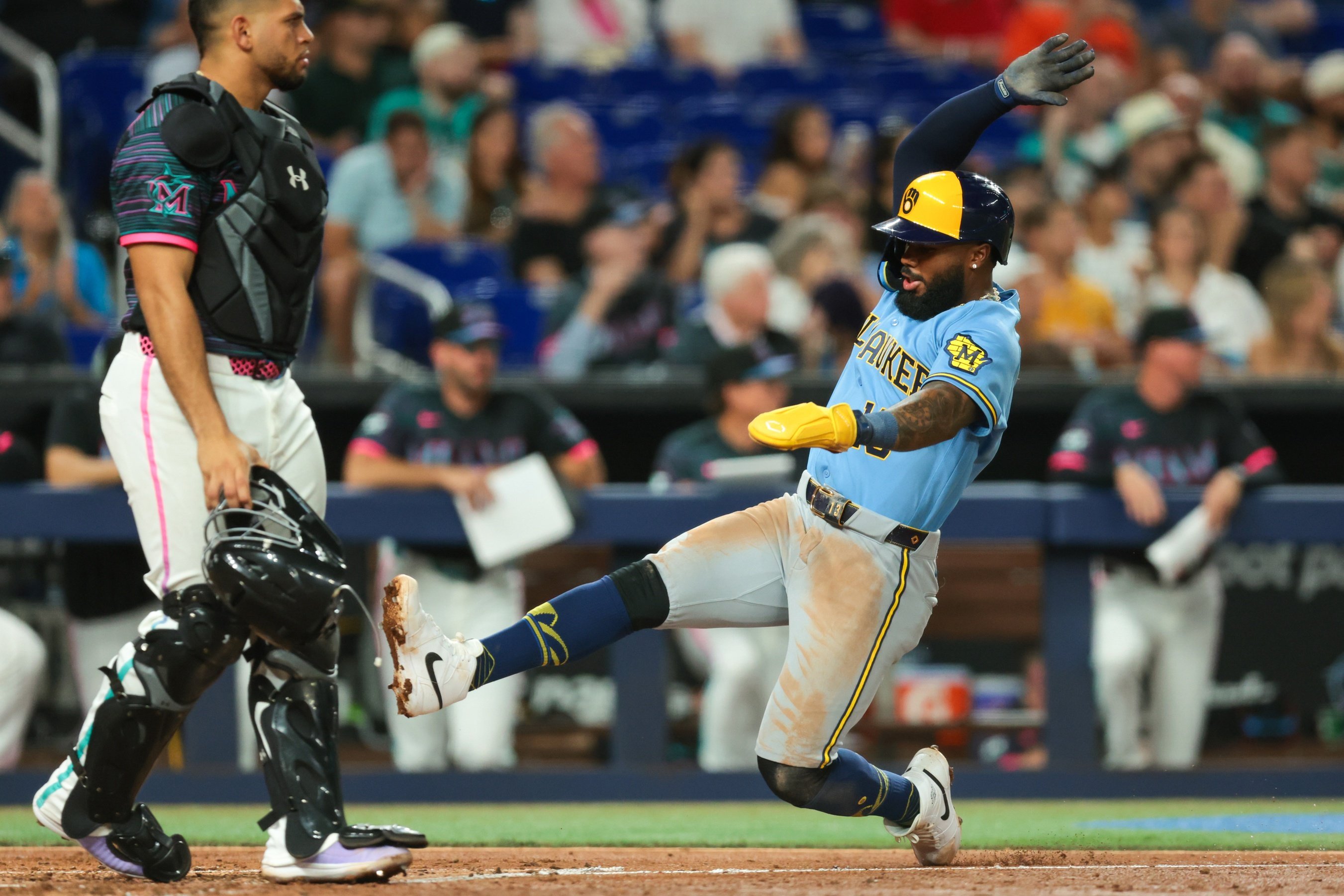 MIAMI, Fla. — The Miami Marlins defense did not have a stellar beginning to the 2026 season, but it seemed like they got sharper towards the end of their most recent road trip in Detroit and Atlanta. Friday’s 7-5 loss to the Milwaukee Brewers felt like a regression to their previous ways. The Brewers took a 3-0 lead with a fourth inning that was marred by bad defense. The Marlins caught up with a two-run home run from Otto Lopez in the seventh and an RBI double from Agustin Ramirez the following inning that tied the game at 4-4. Marlins reliever Calvin Faucher loaded the bases in the 10th inning with a single and a walk on a pitch clock violation. Luis Rengifo hit a ground ball to Xavier Edwards, who threw home to Ramirez. Although the throw was on target, Ramirez, for lack of a better phrase, whiffed on the catch. The ball rolled to the backstop, allowing the go-ahead run to score. “From where I was sitting, it looked like (Ramirez) tried to make play number two before play one,” Marlins manager Clayton McCullough said. “It looked like he just kind of came out of there, really trying to get that 4-2-3 double play and just vacated a little too soon.” For his part, Ramirez was accountable and direct when asked what happened postgame: “I missed it.” That miss wasn’t the first miscue Ramirez made Friday. In the aforementioned fourth inning, Luis Rengifo stood on third with two out. Ramirez attempted to pick him off, but the throw sailed into left field, allowing him to score. It was Ramirez’s third throwing error of the season. Ramirez wasn’t alone in the defensive breakdowns in that inning. Starting pitcher Janson Junk allowed a single, a walk, and a hit-by-pitch to load the bases with one out. Brewers centerfielder Garrett Mitchell hit a soft ground ball to the right side of the infield. Junk, second baseman Xavier Edwards, and first baseman Connor Norby all converged on the ball. Edwards wound up fielding the ball, but nobody was left to cover the bag. By the time Norby got back to first, Mitchell was safe, and a run had scored. Junk took some of the fault, saying he momentarily went for the ball instead of sprinting to first base from the get-go. “The angle I was taking, it felt like the ball was a little bit higher than what I could get to,” Junk said. “And with that split second doubt, I was going to have one of the fielders (get to the ball). It's not like I'm looking back exactly where we're positioned. I think he just hit it in the perfect spot. When I turned around, it was like, ‘oh crap. this is gonna be difficult to get back (to first base).” Norby took reps at first base and the outfield during spring training. But when starting first baseman Christopher Morel suffered a left oblique strain on Opening Day, Norby was thrust into that spot—a position he hadn’t played as a pro. Prior to Friday, Norby had actually recorded zero outs above average, according to Statcast, making him a league-average first baseman by that metric. The Marlins rank fourth-worst among MLB teams this season in defensive runs saved with minus-7, according to FanGraphs. View the full article
 -
Reds 2, Twins 1: Wasted Opportunities Sink Twins in Winnable Game
DiamondCentric posted an article in Twins Daily
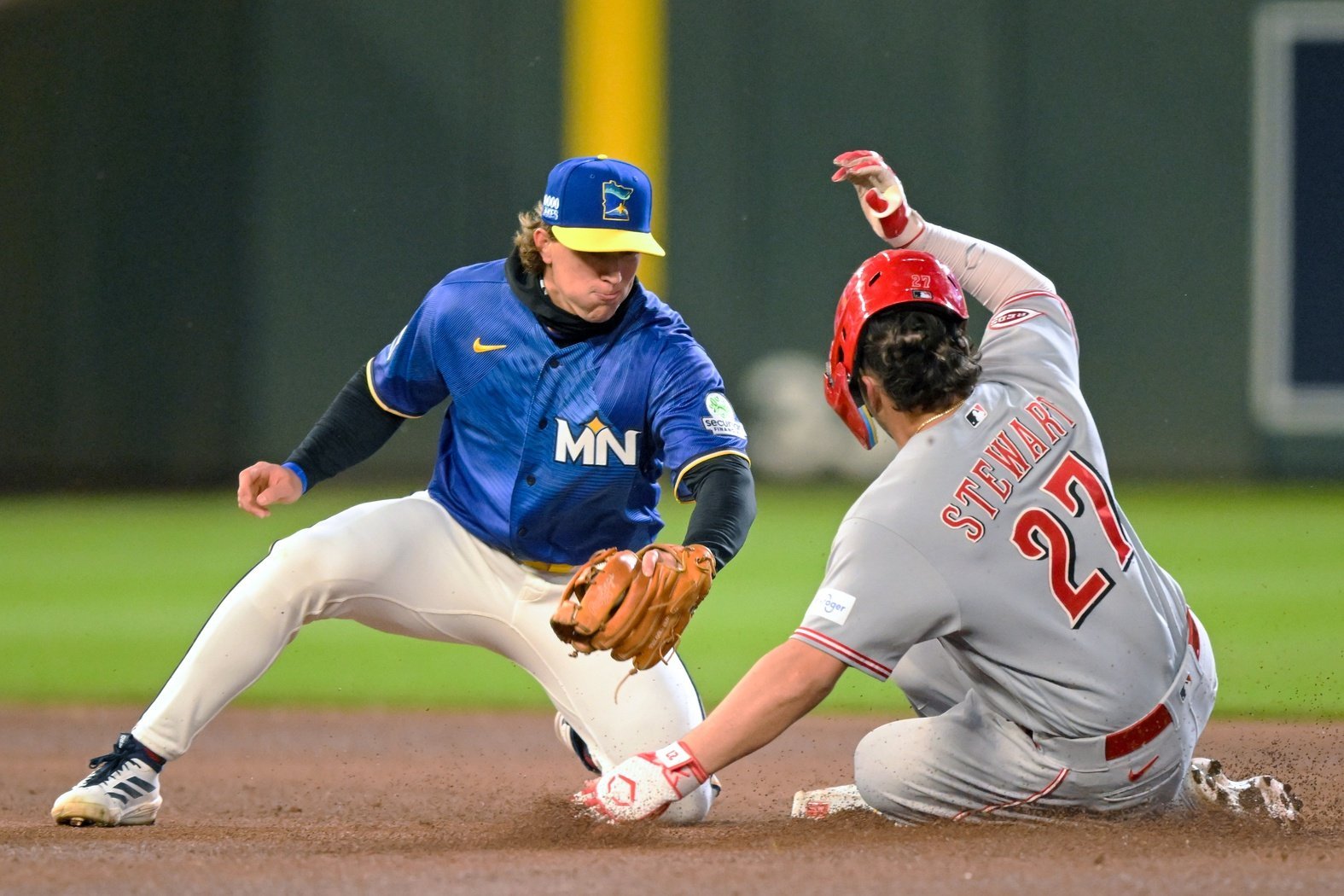 Box Score Joe Ryan: 6 IP, 3 H, 1 ER, 0 BB, 6 K Home Runs: None Bottom 3 WPA: Luke Keaschall (-.360), Victor Caratini (-.150), Matt Wallner (-.130) Win Probability Chart (via FanGraphs) The lefty menace continues. Aren’t southpaws an endangered species? Well, the Twins must exist in some sort of statistical oddity; lefties aplenty have been abound, as Minnesota manager Derek Shelton could carve “Buxton, Martin, Keaschall” into rock and make up the rest of his lineup later. No matter: the lineup has feasted on those deemed devilish in a previous time. Would Friday be more of the same? Joe Ryan took the mound for the Twins, and he was Joe Ryan-y from the get-go, perfectly dotting the outside corner to Matt McLain to highlight a 1-2-3 first frame. Then it was Brandon Williamson’s turn. He of a much less heralded nature—blame the reputation of Trimont for that—found his outs with less sex appeal; two of them were flyouts of 340+ feet. But, they were outs all the same. And our game was off and running. The first three frames flew by at an alarming rate, totaling perhaps all of 30 minutes. Rob Manfred, somewhere—likely a corporate meeting or stuffy shindig where everyone knows how to properly spell “hors d'oeuvres”—licked his lips and rubbed his hands. The only serious action occurred in the bottom of the third when Minnesota loaded the bases just for Luke Keaschall to strike out looking on a pitch that was a strike by a gnat’s eyelash. Even the robots couldn’t help our poor friend from Watsonville. Did the failed run-scoring attempt spook Ryan? It’s possible. He dazzled McLain once more before Elly De La Cruz got on top of one of his signature top-shelf fastballs and slammed the offering off the right field wall. The hit alone wouldn’t have been much of a problem if Sal Stewarter’s routine grounder to Ryan Kreidler didn’t result in the third baseman dirting the throw to first, forcing Josh Bell to awkwardly scoop, and accidently reject the throw with a reverse-snowcone. Eugenio Suarez then pounced on a lethargic breaker. The gapped double plated both runners. The fifth might exemplify Minnesota’s offensive struggles. Or maybe not. This author isn’t sure. He’s only in the seventh as of writing this sentence. In any case, the team’s first three batters walked, setting up Austin Martin to break the shutout with a sacrifice fly. Then Luke Keaschall hit into a double play. Both batters acted on the first pitch. A swift and unsatisfying ending to what appeared a promising inning, even if a run did score. The eighth came and went. No dice. A runner reached second. Matt Wallner lined out to center. So it goes. Emilio Pagán entered in the ninth. Hmm. He pitched a scoreless frame that ended with a Byron Buxton groundout. So that apparently goes as well. The out concluded what was a meager output by a lineup that had been prone to outbursts entering the game; hopefully, Saturday goes better. Notes: Post-Game Interview: What’s Next? The Twins and Reds face off again on Saturday in a mid-day sojourn, with first pitch arriving at 1:10 PM. Taj Bradley will start opposite Andrew Abbott. Bullpen Usage Spreadsheet SUN MON TUE WED THUR FRI TOT Morris 67 0 0 0 0 0 67 Topa 12 0 0 13 0 11 36 Orze 0 23 0 12 0 0 35 Sands 0 0 15 0 0 20 35 Acton 0 33 0 0 0 0 33 Banda 0 0 0 24 0 0 24 Funderburk 0 0 0 14 0 8 22 Rogers 0 0 22 0 0 0 22 View the full article
 -
Cubs Minor League Report: Affiliates Go 3-1 Thursday Night
DiamondCentric posted an article in North Side Baseball
 Pedro Ramirez powered the Iowa Cubs with four hits, a home run, and five RBI in an 11-10 win over Columbus, while reliever Will Sanders earned the victory. The Knoxville Smokies rallied past Pensacola 10-9 behind starter Nick Dean and reliever Tyler Ras. Owen Ayers homered to lead South Bend past Beloit 7-5, backed by Nazier Mulé and Brayden Spears. Noah Edders struck out five in three innings as Myrtle Beach fell 9-4. Ramirez Drives In Five In Iowa's Extra-Innings Win Pedro Ramirez collected four hits, a home run, and five RBI to lead the Iowa Cubs to an 11-10 victory over the Columbus Clippers at Huntington Park. Iowa jumped out to a 7-0 lead through three innings, scoring two in the first, three in the second, and two in the third. Columbus answered with three runs of its own in the second, then closed the gap with one run in the seventh, three in the eighth, and one in the ninth to force extra innings. In the tenth, Iowa plated the zombie runner and two more to retake the lead, then held on despite a two-run response in the bottom of the frame. Will Sanders earned the win, tossing four innings and allowing five runs on eight hits while walking three and striking out five. Ben Cowles went 2-for-4 with a home run and three RBI, and James Triantos added a double and a stolen base out of the leadoff spot. Ryan Jensen recorded his first save. The Cubs collected 15 hits and drew six walks, but stranded 20 runners on the night. Player AB R H RBI BB K James Triantos 6 1 2 0 0 0 Pedro Ramirez 6 2 4 5 0 0 Jonathon Long 3 0 1 0 2 1 BJ Murray 3 1 1 0 2 1 Christian Bethancourt 4 2 1 0 1 1 Owen Miller 5 1 2 1 0 0 Ben Cowles 4 1 2 3 0 0 Hayden Cantrelle 4 1 0 0 1 1 Brett Bateman 5 2 2 1 0 1 Player IP H R ER BB K HR Matthew Boyd 3 2/3 4 3 3 1 6 0 Gabe Klobosits 1 1/3 0 0 0 0 0 0 Will Sanders 4 8 5 5 3 5 1 Ryan Jensen 1 2 1 1 1 2 0 Smokies Erupt For Six In The Eighth To Stun Pensacola The Knoxville Smokies erupted for six runs in the top of the eighth inning and held on for a 10-9 road win against the Pensacola Blue Wahoos at Blue Wahoos Stadium. After trailing for most of the night, Knoxville broke the game open in the eighth and tacked on two more in the ninth to create enough of a cushion. The Smokies also scored two in the second inning, fueled by a home run from Edgar Alvarez. Alex Ramirez drove in three on a lone hit, Andy Garriola went 2-for-3 with an RBI, and Alex Madera walked three times and stole three bases. Starting pitcher Nick Dean worked four innings, giving up three runs on two hits, walking two, and striking out four. Tyler Ras earned the win across 2 1/3 innings of relief, allowing one run on two hits with two walks and four strikeouts. Vince Reilly notched the save with a scoreless ninth, walking one and striking out two. The Smokies drew 10 walks, stole five bases, and stranded 19 runners in the win. Player AB R H RBI BB K Alex Ramirez 4 0 1 3 1 0 Jordan Nwogu 6 0 1 1 1 0 Karson Simas 5 0 1 1 0 1 Edgar Alvarez 2 2 1 1 3 1 Carter Trice 4 2 1 0 1 1 Andy Garriola 3 1 2 1 0 0 Ethan Hearn 4 2 1 0 1 1 Devin Ortiz 4 1 0 0 1 1 Alex Madera 2 2 1 1 3 0 Player IP H R ER BB K HR Nick Dean 4 2 3 3 2 4 1 Erian Rodriguez 1 2/3 3 5 4 5 1 0 Tyler Ras 2 1/3 2 1 1 2 4 0 Vince Reilly 1 0 0 0 1 2 0 Ayers Homer Powers South Bend Past Beloit Owen Ayers homered and drove in two runs to lead the South Bend Cubs to a 7-5 win over the Beloit Sky Carp at Four Winds Field. South Bend broke the game open with four runs in the third inning and added two more in the fourth to build a 6-1 lead. After Beloit crossed four runs in the seventh to pull within a run, the Cubs tacked on an insurance run in the eighth and closed the door. Ayers finished 2-for-5 with a home run, while Reginald Preciado doubled, scored, and drove in two. Kane Kepley reached base three times on walks, scored twice, and stole three bases out of the leadoff spot. Starting pitcher Nazier Mulé went 3 1/3 innings and allowed one run on four hits, walking three and striking out four. Brayden Spears picked up the win with 2 2/3 innings of one-hit, scoreless relief, striking out three. Kenyi Perez slammed the door with two scoreless innings and two strikeouts for his first save. The South Bend staff combined for 10 strikeouts, and the team drew eight walks and stole nine bases in the victory. Player AB R H RBI BB K Kane Kepley 2 2 0 0 3 1 Leonel Espinoza 3 1 0 0 1 2 Owen Ayers 5 1 2 2 0 2 Kade Snell 1 1 0 2 0 1 Drew Bowser 3 1 0 1 1 4 Cameron Sisneros 4 0 0 0 0 3 Reginald Preciado 4 1 1 2 0 2 Justin Stransky 4 0 1 1 0 1 Christian Olivo 3 0 0 0 1 1 Player IP H R ER BB K HR Nazier Mulé 3 1/3 4 1 1 3 4 0 Brayden Spears 2 2/3 1 0 0 0 3 0 JP Wheat 1/3 4 4 4 4 0 0 Nate Williams 2/3 0 0 0 0 1 0 Kenyi Perez 2 0 0 0 2 2 0 Hartshorn's Double Not Enough As Pelicans Fall To Kannapolis The Myrtle Beach Pelicans dropped a 9-4 decision to the Kannapolis Cannon Ballers at Pelicans Ballpark. Trailing 1-0 after two innings, Myrtle Beach fell behind 6-1 when Kannapolis plated five runs in the top of the fourth. Josiah Hartshorn doubled and drove in two runs to produce a run in the bottom of the fourth. Myrtle Beach pushed across three runs in the ninth but could not complete the comeback. Hartshorn went 1-for-4 with a walk, Ty Southisene singled and walked in four trips to the plate, and Alexey Lumpuy added a double and two walks. Starting pitcher Noah Edders took the loss despite a solid outing, allowing one run on three hits across three innings with five strikeouts and one walk. Riely Hunsaker followed with three innings and gave up six runs, four earned, on six hits. The Pelicans drew nine walks but struck out 10 times and stranded eight runners on the bases. Myrtle Beach held Kannapolis scoreless in three of the final four innings but could not generate enough offense to climb back. Player AB R H RBI BB K Ty Southisene 3 1 1 0 1 0 Josiah Hartshorn 4 1 1 2 1 1 Alexey Lumpuy 3 0 1 0 2 2 Cole Mathis 4 0 0 0 0 1 Jose Escobar 3 0 1 0 1 1 Eli Lovich 4 0 0 0 0 3 Alexis Hernandez 3 1 0 0 1 0 Jairo Diaz 2 0 0 0 2 2 Edward Vargas 3 1 0 0 1 0 Player IP H R ER BB K HR Noah Edders 3 3 1 1 1 5 1 Riely Hunsaker 3 6 6 4 2 4 0 Rowell Arroyo 1 1/3 1 0 0 1 1 0 Luis A. Reyes 1 2/3 2 2 2 3 1 0 Cubs Top-20 Prospect Performance Moises Ballesteros: DNP Jaxon Wiggins: DNP Jefferson Rojas: DNP Kevin Alcantara: DNP Jonathon Long: 1-for-3, 2 BB, K Ethan Conrad: DNP Pedro Ramirez: 4-for-6, HR, 5 RBI Kane Kepley: 0-for-2, 3 BB, K Josiah Hartshorn: 1-for-4, 2 RBI, BB, K James Triantos: 2-for-6 Brandon Birdsell: DNP Cole Mathis: 0-for-4, K Angel Cepeda: DNP Kaleb Wing: DNP Will Sanders: 4 IP, 8 H, 5 R, 5 ER, 3 BB, 5 K, HR (W) Juan Cabada: DNP Jostin Florentino: DNP Dominick Reid: DNP Ty Southisene: 1-for-3, BB Erian Rodriguez: 1 2/3 IP, 3 H, 5 R, 4 ER, 5 BB, K View the full article
 -
Jake Cronenworth Might Be Playing His Way Onto the Padres' Bench
DiamondCentric posted an article in Padres Mission
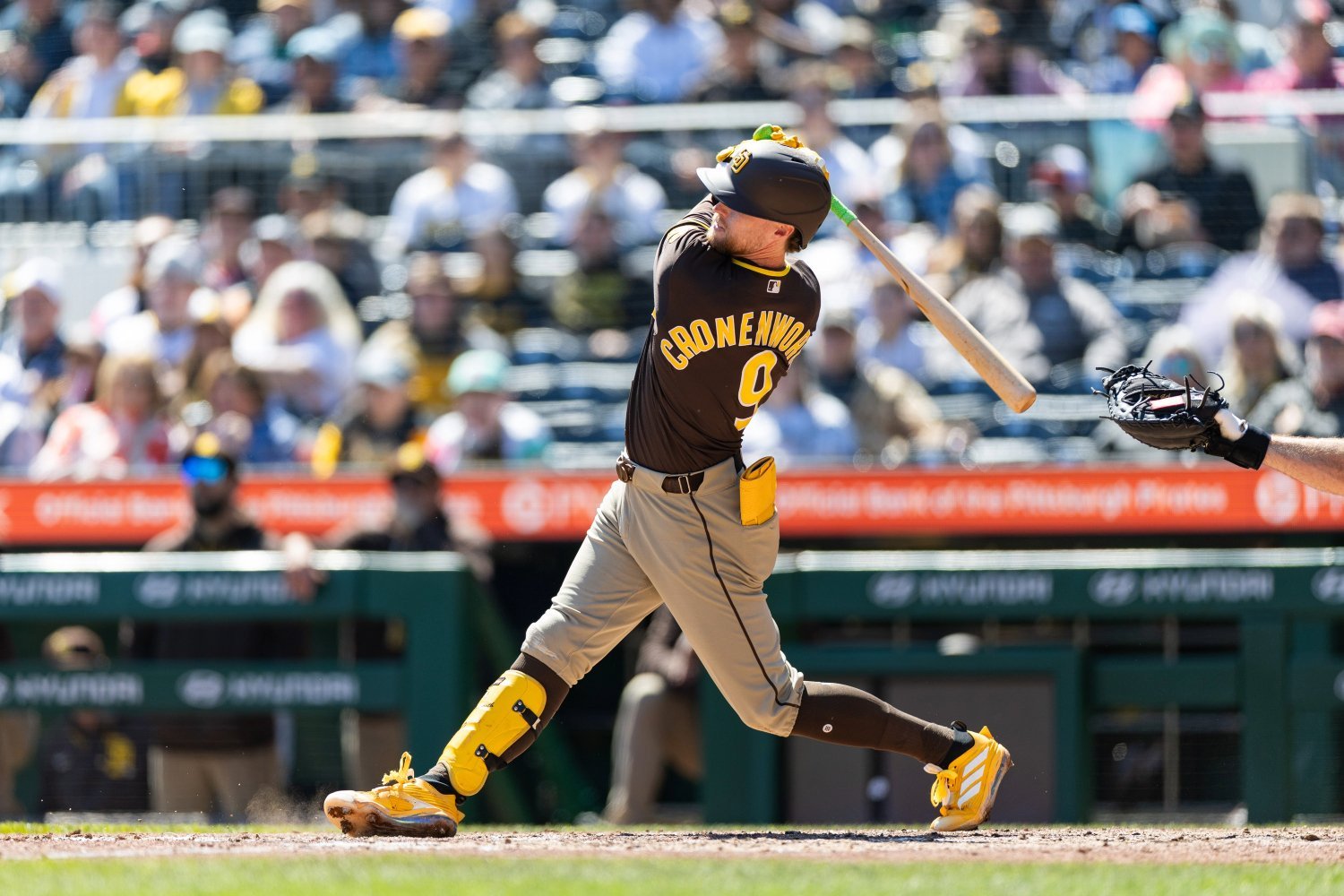 Jake Cronenworth had a lot to prove going into this season. After back-to-back All-Star campaigns in 2021 and 2022, Cronenworth has been a league-average player over the past three years. The San Diego Padres’ infielder has carried a 99 OPS+ from 2023-2025 while averaging less than 2.0 bWAR per season. Now 32, it's been a fair assumption to make that he's past his prime and is no longer capable of star-caliber production. That’s why it has been so disappointing to see Cronenworth get off to an incredibly slow start in 2026. In fact, he's been borderline unplayable so far — he’s hitting .148, with a .246 on-base percentage. That’s almost a full 100 points below his career OBP of .334. Even worse, Cronenworth is not slugging at all. He’s hit just one home run and one double, good for a .213 SLG. In 18 games, he has only driven in three runs. He’s rocking a wRC+ of 40, making him 60% worse than the average big-league hitter. His bWAR is currently sitting at -0.4, on pace for the worst season of his career. Obviously, if Cronenworth continues to hit this poorly, he will eventually be moved to a bench role. The Padres did experiment with Fernando Tatis Jr. at second base twice. If Tatis were to replace Cronenworth at second base, right field would open up to allow more at-bats for Gavin Sheets, Nick Castellanos, and Miguel Andujar. That's a very unlikely outcome given the hit it would apply to the team's defense, but it's one that we must address because of how poor the starting second baseman has been. But the Padres are not going to give up on Cronenworth this early. He still has four years left on his contract after 2026, and the Friars can’t afford to pay him $12 million to sit on the bench. Obviously, the results have not been good, but what do the advanced metrics have to offer? Is Cronenworth due for a breakout soon, or is this what the Padres can expect from him going forward? Jake Cronenworth Is Better Than His 2026 Stats According to Baseball Savant, Cronenworth’s expected stats are significantly better than his results so far. His xBA is .244 (nearly 100 points above his actual average). His xSLG is .360 (147 points above his actual slugging). Those numbers still aren’t great, but they’re a lot better than his current results, and would probably result in an OPS somewhere in the mid-600’s. Combined with his strong defense, Cronenworth’s expected numbers would be good enough to justify him being an everyday player. Cronenworth has been the victim of some bad luck, but he has not been doing himself any favors. His 4.5% barrel rate ranks in the 27th percentile. His 34.1% hard-hit rate ranks in the 23rd percentile. His launch-angle sweet-spot rate of 27.3% ranks in the 23rd percentile. His 71.8 miles per hour bat speed ranks in the 46th percentile, and his 19.2% squared-up rate ranks in the 14th percentile. Those are a lot of numbers to digest, but the gist of it is simple: Cronenworth is not hitting the ball hard very often, he’s not barreling it up or finding the sweet spot of the bat, and he’s not squaring pitches up. Even when he starts getting better BABIP luck, it’s hard to see how those numbers are going to result in more slugging. Bad Luck, Or Bad Timing? Clearly, there is some bad luck to blame here. Cronenworth’s .163 BABIP is the sixth-lowest in baseball, well below his .279 career BABIP. Last year, Eugenio Suarez had the worst BABIP in baseball at .243. The BABIP will stabilize, and Cronenworth’s batting average will rise with it. But there are some more troubling concerns when looking at Cronenworth’s splits. Cronenworth is currently hitting .000 against off-speed pitches. His xBA against off-speed pitches is .136, which is still too low and far below his career numbers. In 2024, Cronenworth hit .289 against off-speed pitches, with an xBA of .266. Last year, he hit .197 against off-speed pitches, a major drop-off from the year before. The trend of Cronenworth not being able to hit changeups has accelerated in 2026 to the point of disaster. It’s also possible that this is all stemming from a timing issue, and that once Cronenworth fixes his timing, he’ll be able to hit the off-speed again. Right now, that’s not happening. He has a 47.1% whiff rate against off-speed pitches. Pitchers have been able to utilize changeups to make Cronenworth look silly. However, it’s not just off-speed pitches that Cronenworth is struggling against. He's seen 51 breaking balls this season, and he’s hitting .063 against them, with an xBA of .151. He’s whiffing against the breaking ball 39.1% of the time. Are Cronenworth’s poor splits simply the result of a slump that he will soon break out of? Or is his slump the result of a decline that is causing him to whiff more often against breaking balls and changeups? It’s hard to say after less than 20 games. The reality is that Cronenworth has not been good, and while the BABIP luck should improve, there are real underlying issues at play that could prolong his slump and eventually cause the Padres to take action and move him out of the everyday lineup. View the full article
 -
Brewers' Coleman Crow To Make MLB Debut Tonight Against Marlins
DiamondCentric posted an article in Brewer Fanatic
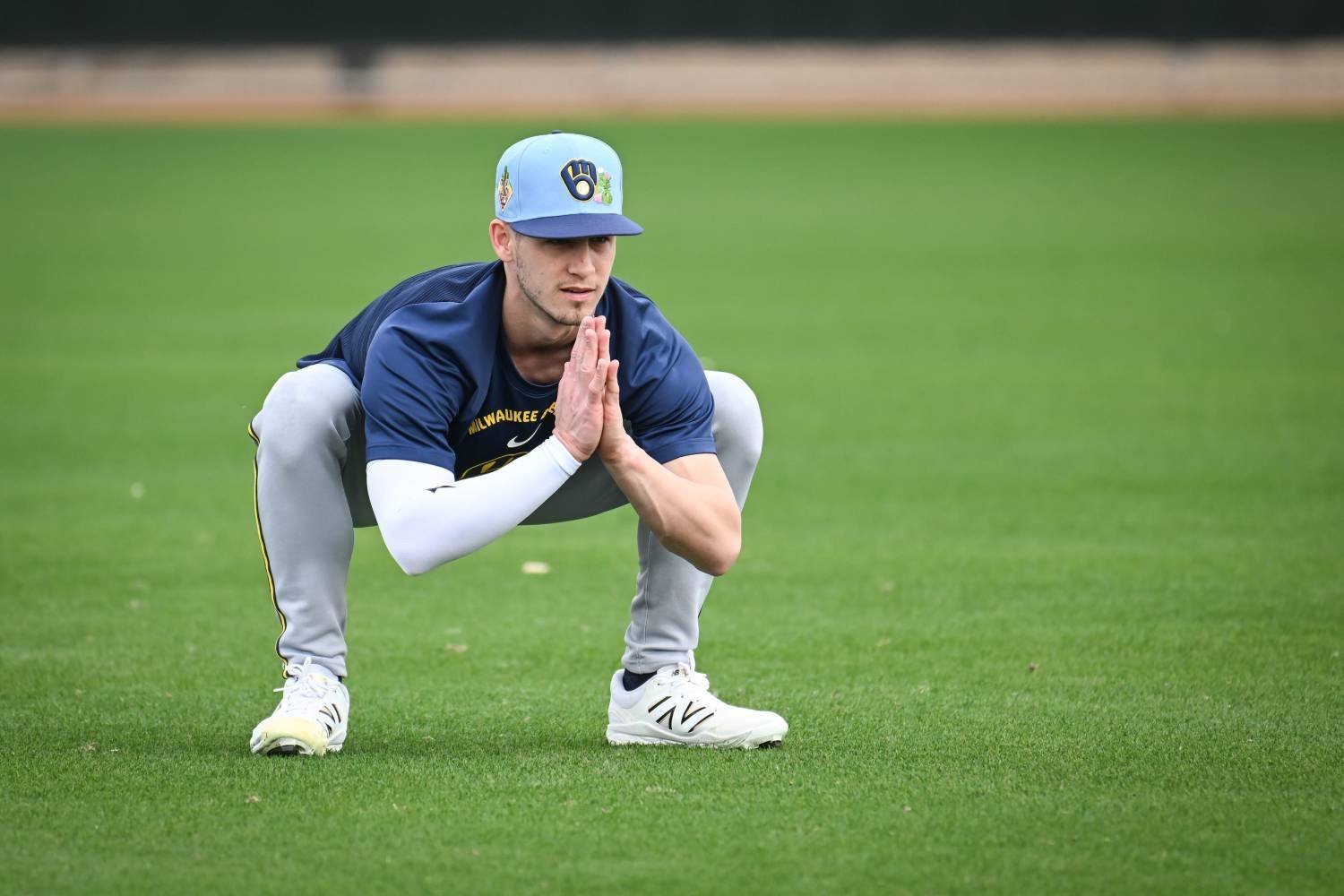 Coleman Crow's much-anticipated MLB debut is happening. The right-hander was called up from Triple-A Nashville by the Milwaukee Brewers and will start Friday's series opener on the road against the Miami Marlins. Right-handed reliever Easton McGee was sent back to Nashville. The 25-year-old Crow, the No. 23 prospect by Brewer Fanatic, was acquired by the Crew from the New York Mets for right-hander Adrian Houser and center fielder Tyrone Taylor in December 2023. At the time, he was recovering from Tommy John surgery. It was the second time the Crow had been traded that year. Originally a 28th-round draft choice of the Los Angeles Angels, the Mets acquired him and another minor-leaguer for third baseman Eduardo Escobar. He underwent Tommy John surgery shortly thereafter. Crow did not pitch again until representing the Brewers in the 2024 Arizona Fall League, then made his organizational debut in 2025, appearing in 10 games for Double-A Biloxi and two for Nashville. In those 10 starts at Biloxi, he had a 2.51 ERA and a 0.907 WHIP with eight walks and 52 strikeouts in 43 innings. In three appearances (two starts) at Nashville this year, Crow had a 4.02 ERA with 18 strikeouts and five walks in 15⅔ innings. It remains to be seen if this is a spot start for Crow or if he will be up longer. Left-handed starter Kyle Harrison has been dealing with a wrist issue since his falling during his last start. McGee appeared in just one game with the Brewers, pitching a perfect ninth inning a week ago Friday in a 7-3 loss to the Washington Nationals. View the full article
 -
Matt Waldron Activated By Padres To Make Start Against Angels
DiamondCentric posted an article in Padres Mission
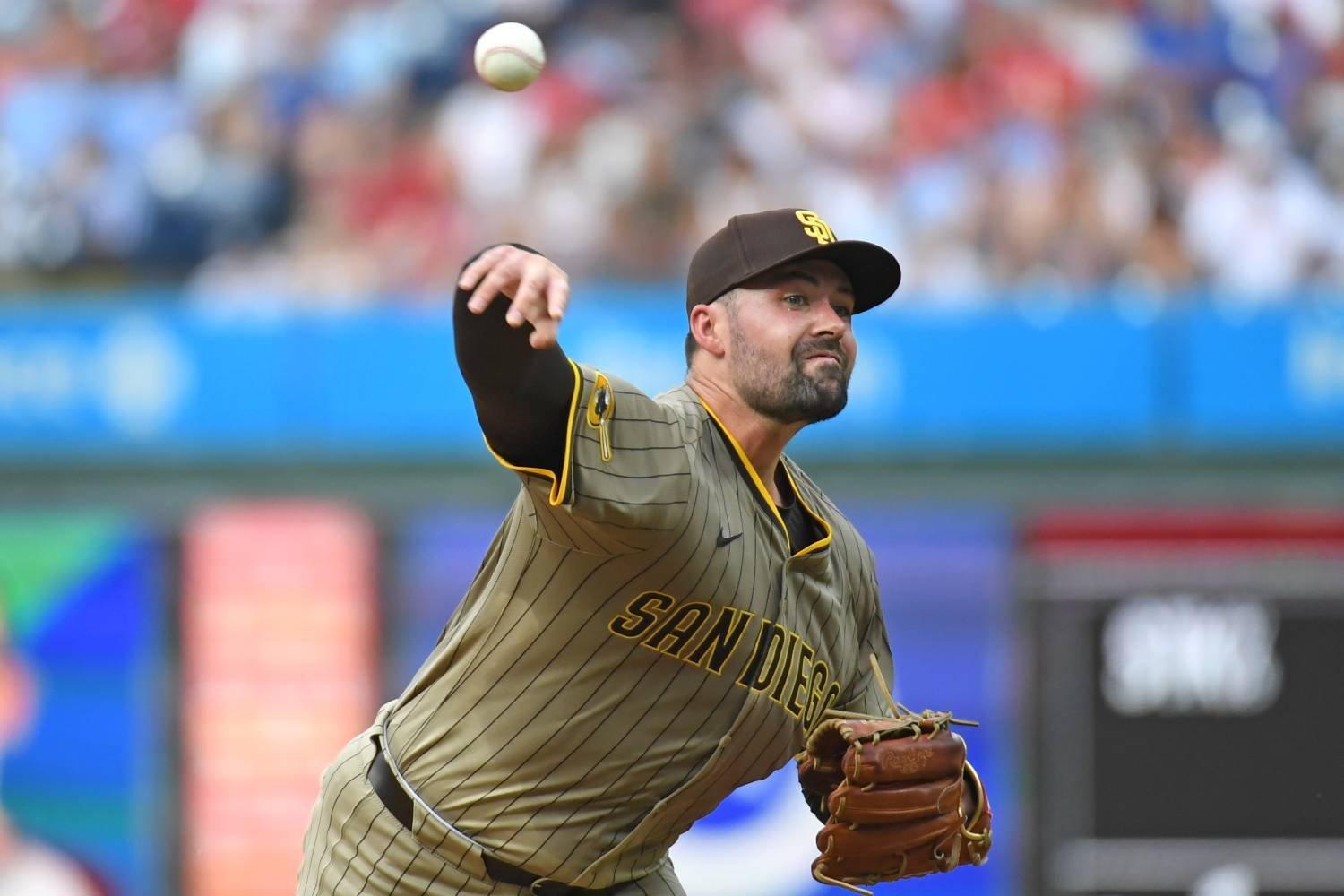 It is official: Matt Waldron is back. As has been expected since Opening Day starter Nick Pivetta went on the injured list Tuesday, Waldron was activated from the 15-day injured list in order to start Friday's series opener against the Los Angeles Angels. Right-handed reliever Alek Jacob, who came up from Triple-A when Pivetta went on the IL, was sent back to El Paso. Waldron had been a candidate to make the Friars' rotation out of spring training, but that was interrupted when he required hemorrhoid surgery on Feb. 24. He was back pitching a couple weeks later, but with the additions of right-handed starters Walker Buehler and German Marquez, the Padres could slow play Waldron's return by putting him on the IL to start the season. Waldron has been on a rehab assignment at El Paso since the Triple-A season began and has performed very well. He made three starts for the Chihuahuas, tossing 12 scoreless innings, giving up seven hits and a walk against 12 strikeouts. Waldron's stay on the roster will depend on how well he performs as he is out of minor-league options. Jacob appeared in one of the three games he was active for, throwing two scoreless innings in Wednesday's 7-6 comeback victory over the Seattle Mariners. View the full article
 -
The Twins’ Biggest Weakness Has Become Their Greatest Strength
DiamondCentric posted an article in Twins Daily
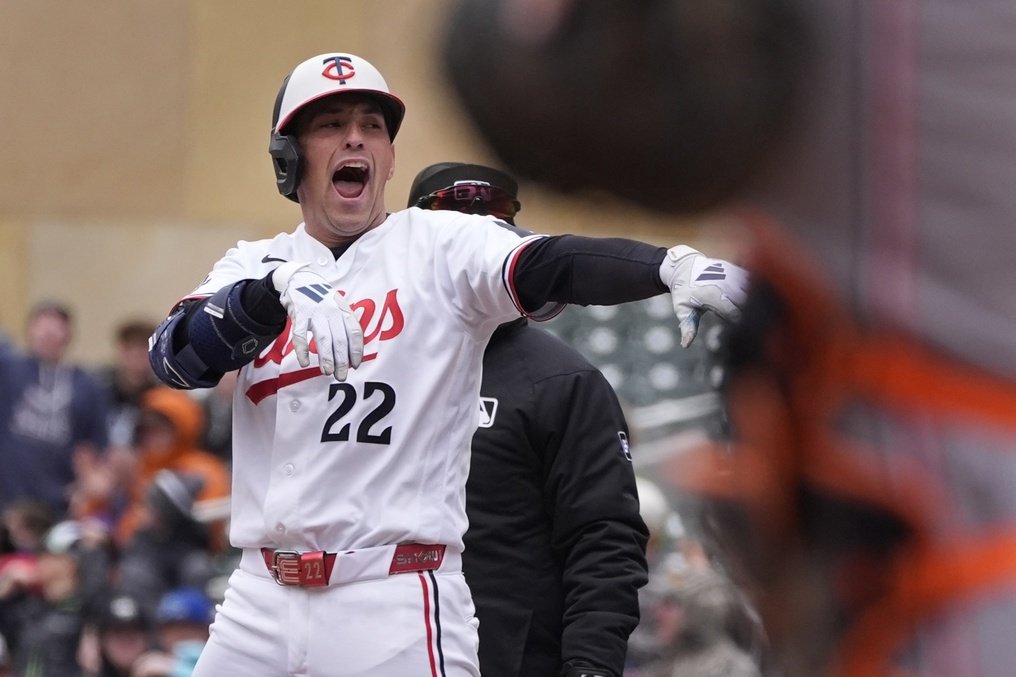 For the better part of the last decade, the Minnesota Twins have had a familiar flaw. The lineup could hit for power, draw walks, and put together stretches of explosive offense. But when it came to key moments with runners in scoring position, that production too often disappeared. This year, that’s changed in a significant way. In fact, it hasn’t just improved; it’s become one of the defining strengths of the entire offense. After getting off to a sluggish start in those situations, the Twins have completely flipped the script. They now lead all of Major League Baseball with a .314 batting average with runners in scoring position, a massive jump from where they’ve been in recent seasons. That turnaround is even more impressive when paired with the rest of their production, as they also lead the league in on-base percentage (.415) and OPS (.921) in those spots, while pacing all teams in total runs (82) and RBIs (77). That kind of production doesn’t just show up in the numbers. It’s been obvious on the field. Over the past week alone, the Twins have given a clear picture of what this version of the lineup looks like when it’s clicking. Just in the last week-and-a-half, they’ve done serious damage to some of the best pitchers MLB has to offer. Last week, they tagged Framber Valdez for six runs in the first inning of a game that was essentially over before it began, then hung eight more on Max Scherzer on Sunday. They followed that up on Monday with an 11-spot on Garrett Crochet before he could get out of the second inning. Even in games that didn’t turn into complete blowouts, the pressure has been constant. Tarik Skubal couldn’t make it out of the fifth inning against them, nor could Sonny Gray. Those performances are more than the product of hot bats or good timing. They reflect a lineup that is consistently capitalizing when opportunities present themselves. What makes this shift stand out even more is the context. Over each of the last five seasons, the Twins were always a below league average team with runners in scoring position. That wasn’t a one-year anomaly or a small sample issue, it was a consistent trend that showed up in frustrating ways. Too often, a leadoff double would go wasted, or a bases-loaded opportunity would end with a strikeout or weak contact. Big innings were there for the taking, but rarely materialized. Now, those same situations feel entirely different. Instead of pressing, hitters are staying within themselves and putting together competitive at-bats. Instead of expanding the zone, they’re forcing pitchers to work. And rather than relying almost exclusively on solo home runs, they’re stringing together quality contact that keeps innings alive and creates scoring opportunities for the next hitter. It’s a more complete offensive approach, producing results that feel sustainable beyond a short-term hot streak. There’s a reason situational hitting is often pointed to as a key factor in winning games. While it can be difficult to measure consistently year-over-year, teams that convert with runners in scoring position build leads earlier, extend innings, and create constant pressure on opposing pitching staffs. That’s exactly what the Twins have done during their recent stretch, winning eight of their last 10 games. They’re no longer waiting around for a three-run homer to change the game. Instead, they’re creating those big innings through a string of quality at-bats. The natural question, of course, is whether this level of production can continue over the course of a full season. A .314 average with runners in scoring position is a difficult pace to maintain, and some level of regression is almost inevitable. But even if the numbers come back down to earth, they don’t need to be the best in baseball to represent a substantial improvement. Simply being above league-average would mark a significant step forward from where they’ve been in recent years. And there’s reason to believe they will be. You can sense a level of confidence when runners reach scoring position that hasn’t been there in the past. Brooks Lee’s RBI single against Detroit last Thursday feels like the perfect example of that. A guy who was in a serious slump to start the year, and wasn’t even in the starting lineup that day, broke through and sealed the game. If that continues, it raises the ceiling of this team in a very real way. When you pair solid pitching with an offense that consistently cashes in its opportunities, it creates a formula that can sustain success over the long haul. Right now, the Twins are showing what that looks like, and it’s a version of their offense that has been missing for a long time. View the full article
 -
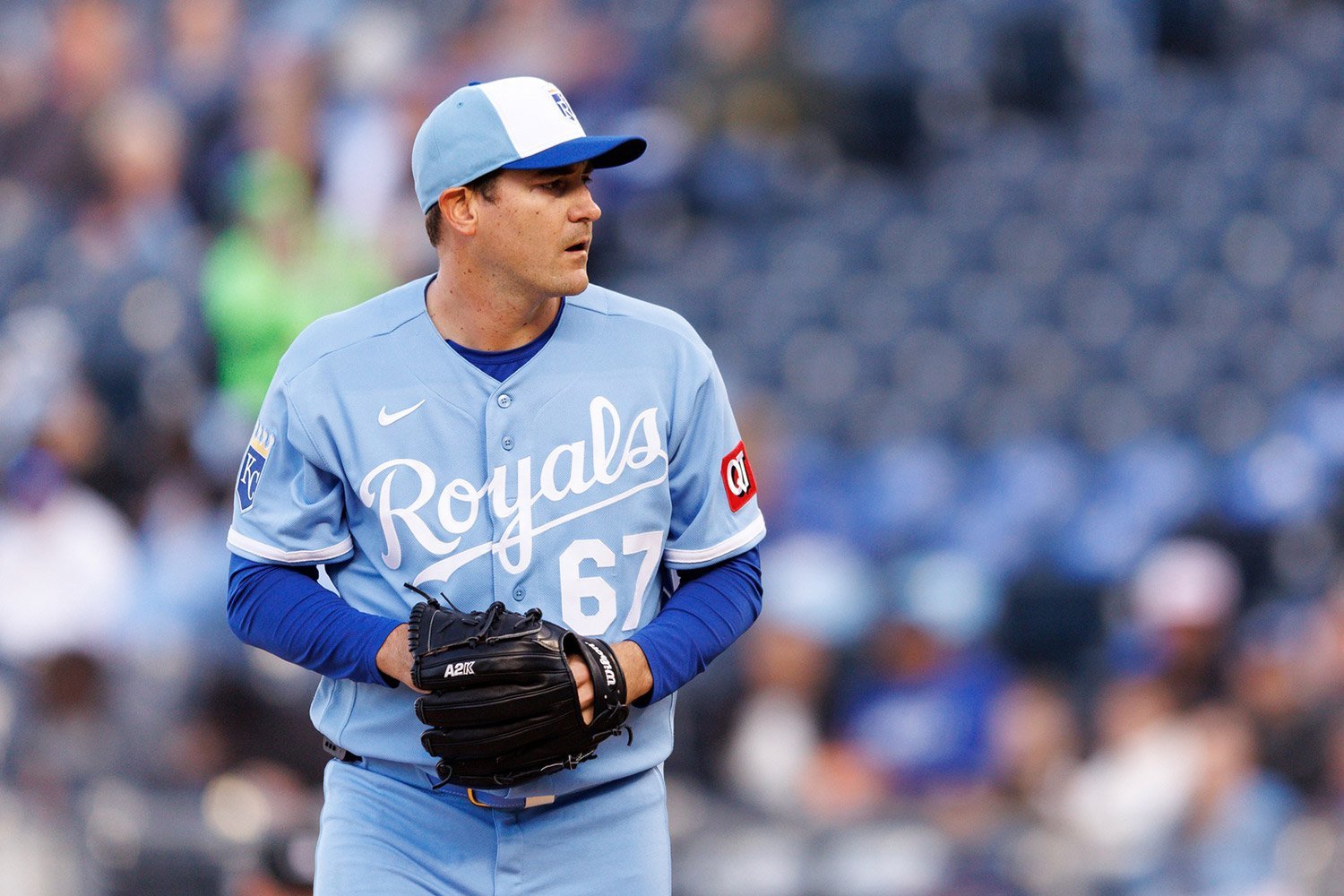 The last time Kansas City saw Seth Lugo in 2025, he exited the game against the Tigers after just 3 1/3 innings, giving up four earned runs. A nagging lower back strain—the same spondylolisthesis condition he’s managed since 2012—finally forced him to the sidelines in early September. After a runner-up finish in the 2024 Cy Young race, the question became: Could a 36-year-old with high mileage and back issues return to the elite form that earned him a $46 million extension? Looking at the first two weeks of the 2026 season, his performance is answering with a commanding Yes. Lugo has returned to his very best form. Through his first four starts of the new campaign, the right-hander has posted a 1.48 ERA across 24 1/3 innings, surrendering a mere four earned runs while maintaining a WHIP of 0.99. Those numbers are backed up by Lugo's excellent 2.18 FIP. It’s no secret that Lugo loves to mix pitches and has made a career out of variety. He has ten different pitch types up his sleeve and has used eight of them this season. Comparing this year over the past few seasons, velocity for the four-seam, cutter, sinker, and changeup is virtually unchanged. What has changed so far this season, however, is a more balanced use of pitch types. Over the years, Lugo has always mixed well but has tended to favor a couple of pitches over others. No blame for that; very common for pitchers to hone in on what is working. But this season has kept hitters guessing more than usual. Each pitch type has been used less than 21 percent of the time. And he’s been effective with those pitches. Batters are just hitting .212 overall, including an impressive .150 against the curve. In terms of spin direction, he’s increased both the active spin percentage and total movement on all but the slider. The changeup is moving nearly two and a half inches more than last year. In his 2026 debut against the Braves—a 6 1/3 inning shutout performance—he showcased the four-seam fastball, changeup, curve, cutter, sinker, slider, slurve, and sweeper. He gave up zero walks and just five hits in an efficient 77-pitch outing. In yesterday's outing in Detroit, Lugo unfortunately had a no-decision in what was another impressive start. Much like his season debut, he gave up zero free passes and five hits across 6.2 innings. In 92 pitches, he only surrendered one earned run on a sacrifice fly in the third. After a concerning 9.11 ERA in his final month of 2025, the 2026 version of Lugo looks physically refreshed and is a return to his elite form. By effectively using his full arsenal, hitters genuinely don’t know what to expect. If he continues to stay healthy and build off this early momentum, we may once again be witnessing a Cy Young contender. View the full article
 -
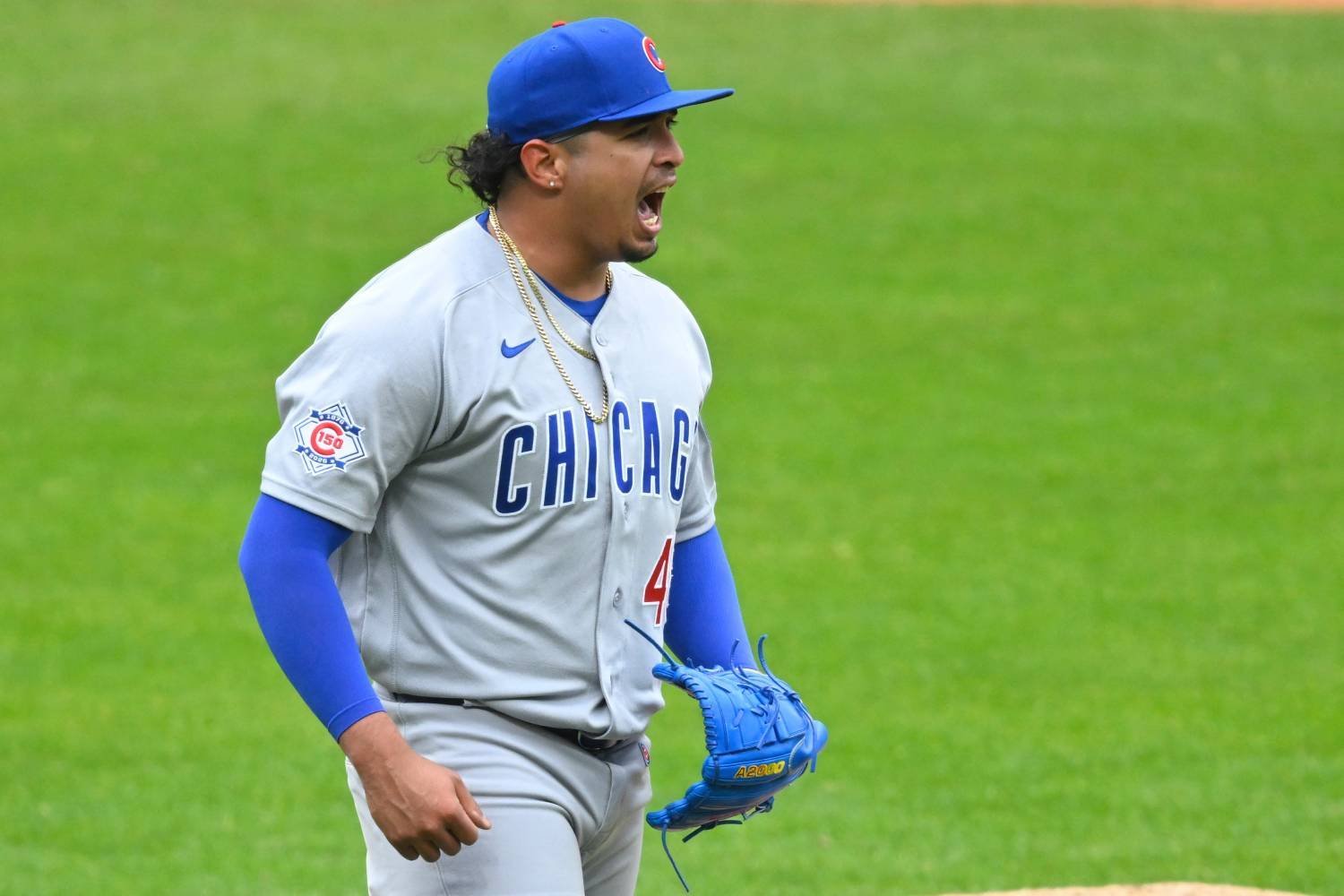 Injuries continue to strike the Chicago Cubs' pitching staff. Right-handed closer Daniel Palencia went on the 15-day injured list Friday with a strained left oblique. A corresponding move to fill Palencia's spot on the active roster was not immediately announced, leaving the team shorthanded for Friday's game against the New York Mets. Palencia becomes the 10th Cubs pitcher to currently be on the injured list, which has challenged the team's depth. He has made five appearances this season, recording a save in his only opportunity while not allowing a run in five innings. Palencia has allowed three hits and two walks with five strikeouts. Palencia last pitched Sunday, getting the win after pitching the top of the ninth in the Cubs' 7-6 walk-off win over the Pittsburgh Pirates. Palencia emerged as the Cubs' closer last season, converting 22 of 25 save chances and posting a 2.91 ERA in 54 appearances. Right-hander Colin Rea is the only other Cub with a save this season, but he is now part of the starting rotation due to the slew of injuries. With Phil Maton, Hunter Harvey, Porter Hodge and Jordan Wicks also on the IL, the Cubs are likely to use a committee approach to the closing duties. View the full article
