


DiamondCentric
-
Posts
2,631 -
Joined
-
Last visited
Never
Content Type
Profiles
Forums
Events
News
Tutorials & Help
Major League Baseball Videos
Guides & Resources
Store
Downloads
Gallery
Everything posted by DiamondCentric
-

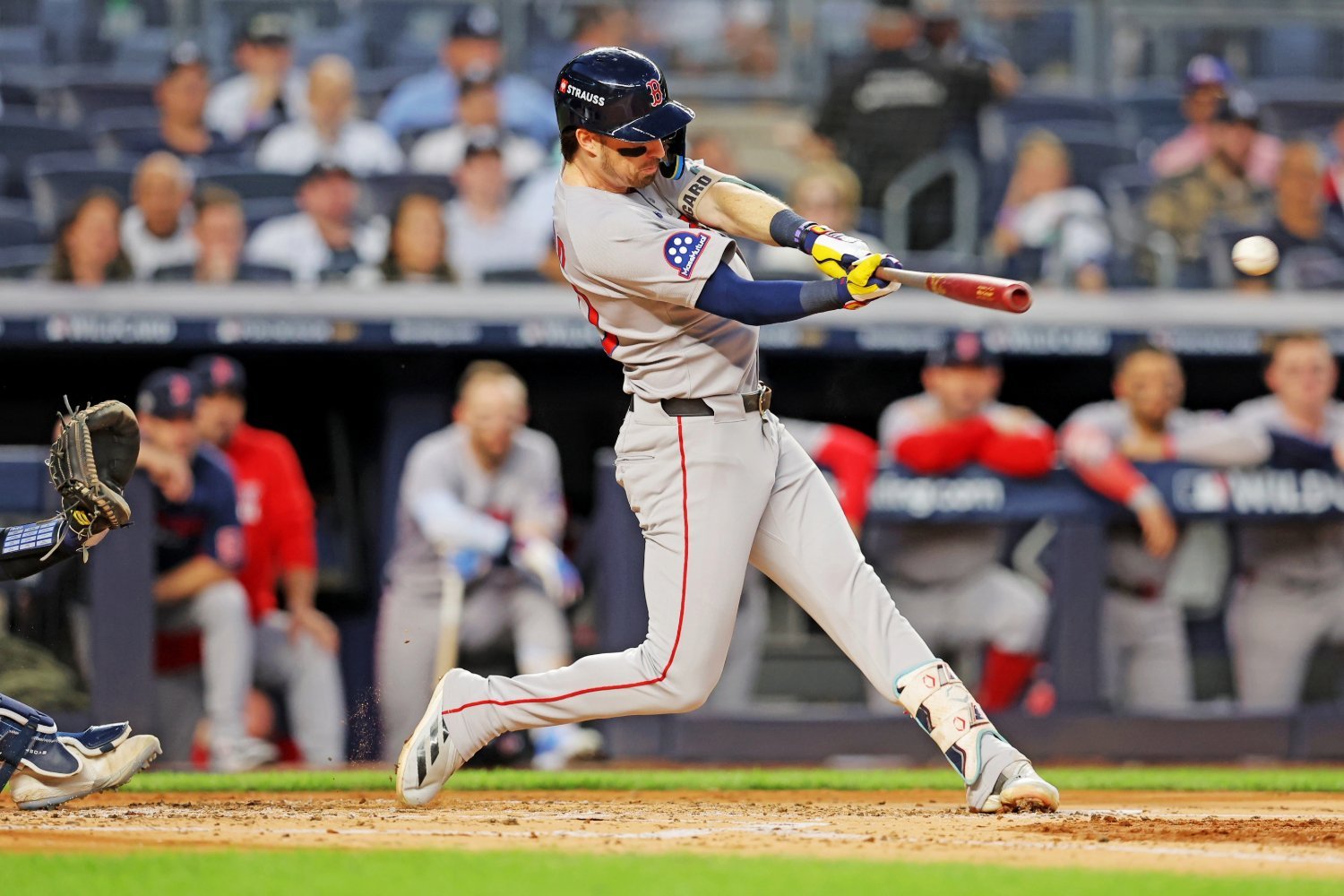 The Boston Red Sox are in a tailspin at the moment. That’s not news to anyone who has even been sort of paying attention, but they are drastically underperforming for a team that a lot of national pundits had competing for the AL East title. While there are aspects of the starting lineup that are finally beginning to wake up — plus Wilyer Abreu, who has been carrying this team on his back since Opening Day — what’s clear is that something has to give for the Red Sox. While Alex Cora has started tinkering with his lineup card already, it could be time for some promotions and demotions to shake things up in the dugout. The backup infield situation is a bit of a mess in Boston right now. Andruw Monasterio had a great spring but has struggled to get looks during the season and most of his at-bats look noncompetitive. He has a paltry .125 batting average in eight plate appearances and looks like he needs more consistent at bats to get his offense figured out for the season. Isiah Kiner-Falefa has been even worse. He’s also received a whopping eight plate appearances this season, and a -58 wRC+ is all he has to show for it. The team committed $6 million to the veteran journeyman during the offseason and it looks now like that could be wasted money. So, where do the Red Sox go from here? Monasterio isn’t going to get regular at-bats in the majors playing behind Marcelo Mayer, Trevor Story, and Caleb Durbin. Kiner-Falefa offers some defensive upside but his incredibly limited offensive profile puts a very tight cap on his ability to meaningfully contribute this season. The best option in front of Craig Breslow and Cora is to shuffle the roster (perhaps by optioning Monasterio to Worcester) while calling up at least one of Mickey Gasper or Nick Sogard. The duo of Gasper and Sogard have been on absolute heaters for the WooSox since the season got underway. Gasper is slashing .400/.514/.767 with a 227 wRC+; Sogard is coming in at .290/.488/.645 with a 192 wRC+. Sogard has logged all nine games of the season while Gapser has appeared in seven. Both have slugged three home runs so far and Gasper already has 10 RBIs while Sogard has drive in eight. The scale tips a bit in Sogard’s direction when you look at his strikeouts and walks. He’s walked an impressive 12 times against six strikeouts; Gasper is nearly dead even at seven walks and eight punch outs. Both Gasper and Sogard have major-league experience with the Red Sox so they understand, at least to a point, what the pressure cooker of playing professional baseball in Boston is like. Sogard seems to have tapped into a power stroke early in the season, and that’s exactly what the Red Sox could use off the bench right now. He's also a switch-hitter, so he works well in any platoon role that Cora has a need for. Defensively, he’s more of a lateral move from Kiner-Falefa than a downgrade and, in a pinch, he could be trusted to start over a guy like Caleb Durbin should Cora decide that a few days off could help fix whatever is plaguing the team's starting third baseman. Gasper’s numbers look impressive, and should be applauded, but it’s fair to question if they would translate if/when he is called up. For his MLB career he’s slashing .133/.250/.455. Those are far from inspiring, but if he currently has caught lightning in a bottle then maybe a look on the big-league roster could help push this team towards being competitive right now. Is he a long-term fix for the club? Doubtful, but Cora and company should be trying anything and everything to put a winning product on the field day in and day out. Moving Monasterio (and maybe even Kiner-Falefa) for Sogard and Gasper doesn’t solve the pitching woes that are currently plaguing the Red Sox, but a fresh injection of talent that has been performing well in Triple-A could help push a few more runs across the board. The season is far from lost, but the time for resting on our laurels is over. Maybe bringing up two guys tearing it up for the WooSox is exactly what this team needs right now. View the full article
 -
 Padres affiliates absorbed four losses Tuesday, but several arms impressed. Maikel Miralles struck out nine over four scoreless innings for Fort Wayne, Winyer Chourio fanned six in four innings for Lake Elsinore, Luis Gutierrez allowed one run over four innings for San Antonio, and Misael Tamarez threw two scoreless innings in El Paso. Jase Bowen homered for the Chihuahuas, Ethan Salas and Romeo Sanabria drove in runs for the Missions, and Justin DeCriscio contributed two hits. Padres Transactions No Roster Moves Ritter, Carrigg Power Albuquerque Past Chihuahuas Box Score The El Paso Chihuahuas fell to Albuquerque, 8-4, on Tuesday at Southwest University Park. Albuquerque jumped ahead with two runs in the first, then added two more in the second and another in the third against starter Sean Boyle. Boyle took the loss after allowing six runs on eight hits in 3 1/3 innings, with two walks and no strikeouts. The Isotopes added three more runs in the fourth, including a two-run homer, to build an 8-0 lead. El Paso scored one run in the bottom of the fourth. Nick Solak drew a walk, Marcos Castañon followed with another free pass, and Jose Miranda brought home a run with a single. Samad Taylor added a solo homer in the fifth, his first of the season, and Jase Bowen gave the Chihuahuas more life in the seventh with a two-run homer that scored Mason McCoy and cut the deficit to four. Bowen finished 1-for-5 with a home run and two RBIs, while Taylor went 1-for-4 with a walk, a homer, and an RBI. Miranda drove in a run and Pablo Reyes doubled and scored. Solak reached base three times on a hit and two walks. After Boyle exited, Miguel Cienfuegos allowed two runs in 1 2/3 innings. Yuki Matsui worked one inning, and Misael Tamarez held fast with two scoreless innings, allowing no hits or walks while striking out three. Garrett Hawkins added a scoreless ninth. Sanabria, Salas Drive In Runs In Missions Loss Box Score The San Antonio Missions dropped a 6-3 decision to Corpus Christi on Tuesday at Nelson Wolff Stadium. The Missions answered a one-run deficit in the second when Braedon Karpathios singled, Francisco Acuna walked, and Albert Fabian brought Karpathios home with a sacrifice fly to tie the game. San Antonio moved in front in the third. Ryan Jackson singled, Ethan Salas doubled to left to score him, and Romeo Sanabria followed with an RBI single that pushed the Missions to a 3-1 lead. That advantage slipped away in the fifth, when the Hooks scored four to take control of the game on way to victorey. San Antonio collected eight hits in the game, with Acuna and Sanabria each finishing 2-for-4. Salas went 1-for-4 with a double and an RBI, Jackson scored once, and Fabian drove in a run. Karpathios added a hit and scored, while Luis Verdugo also singled. Starter Luis Gutierrez worked four innings and allowed one run on two hits, with no walks and five strikeouts. Fernando Sanchez was charged with the loss after allowing four runs in 1/3 of an inning, with two walks and one strikeout. Andrew Dalquist gave up one run in 1 2/3 innings, with one walk and one strikeout, before Johan Moreno tossed two scoreless innings with one walk and one strikeout. Michael Flynn added a scoreless ninth. The Missions threatened again in the sixth when Acuna doubled and stole third, but Corpus Christi kept San Antonio from adding to its total. McCoy Drives In TinCaps’ Only Run In Ninth-Inning Loss Box Score The Fort Wayne TinCaps carried a 1-1 tie into the ninth inning before falling, 3-1, on Tuesday at Parkview Field. Fort Wayne took the lead in the second. Lamar King Jr. was hit by a pitch, Kavares Tears followed with a single, and Alex McCoy lined a single to right that brought home King for a 1-0 lead. McCoy finished 2-for-4 with the TinCaps’ only RBI, while Tears also went 2-for-4 with a double. Kasen Wells added a hit and drew two walks. Maikel Miralles turned in a solid start with a lot of whiffs, working four scoreless innings while allowing one hit, walking three, and striking out nine. He kept Fort Wayne in front through the early innings before Braian Salazar added two scoreless innings with two hits allowed and four strikeouts. The Lugnuts tied the game in the seventh after Nate Nankil singled, stole third, and scored on a sacrifice fly. Fort Wayne threatened in the bottom half when McCoy doubled with two outs, but the game remained locked at one. Jackson Finley followed Miralles and Salazar with one scoreless inning, allowing no hits, walking one, and striking out none. Vicarte Domingo allowed one run in 2/3 of an inning, with one walk and one strikeout. Jeferson Villabona covered 1 1/3 scoreless innings, but the TinCaps could not escape trouble in the ninth. After Davis Diaz singled and a throwing error put runners in scoring position, the visitors scored twice to take control. Fort Wayne put the tying run on base in the ninth, but could not extend the game. Wideman Drives In Run, Fountain Scores Twice In Storm Loss Box Score The Lake Elsinore Storm fell to Rancho Cucamonga, 16-3, on Tuesday at The Diamond. Lake Elsinore answered an early deficit in the second inning. Kale Fountain doubled to open the frame, Justin DeCriscio moved him to third with a sacrifice bunt, and Conner Westenburg singled to bring him home. Later in the inning, Jose Verdugo singled, and Ryan Wideman followed with an RBI single that scored Westenburg and gave the Storm a 2-1 lead. The Quakes pulled ahead in the fifth, and the Storm got one run back in the bottom half. Ty Harvey singled, Fountain stole second, and DeCriscio doubled to left to score him, cutting the deficit to 4-3. Fountain finished 1-for-4 with a double and two runs scored, while DeCriscio went 2-for-3 with a double and an RBI. Wideman added a hit, a walk, and an RBI, and Westenburg collected two hits and an RBI. Starter Winyer Chourio worked four innings and allowed one run on three hits, with two walks and six strikeouts. Rordy Mejia took the loss after allowing three runs on two hits in one inning, with two walks and no strikeouts. Will Koger was charged with two runs in 2/3 of an inning, with one walk and no strikeouts, and Brandon Langley gave up five runs, four earned, in 1 2/3 innings, with one walk and two strikeouts. View the full article
 -
Blowouts, Bullpens and the Arm Strength Hardly Anybody Notices
DiamondCentric posted an article in Jays Centre
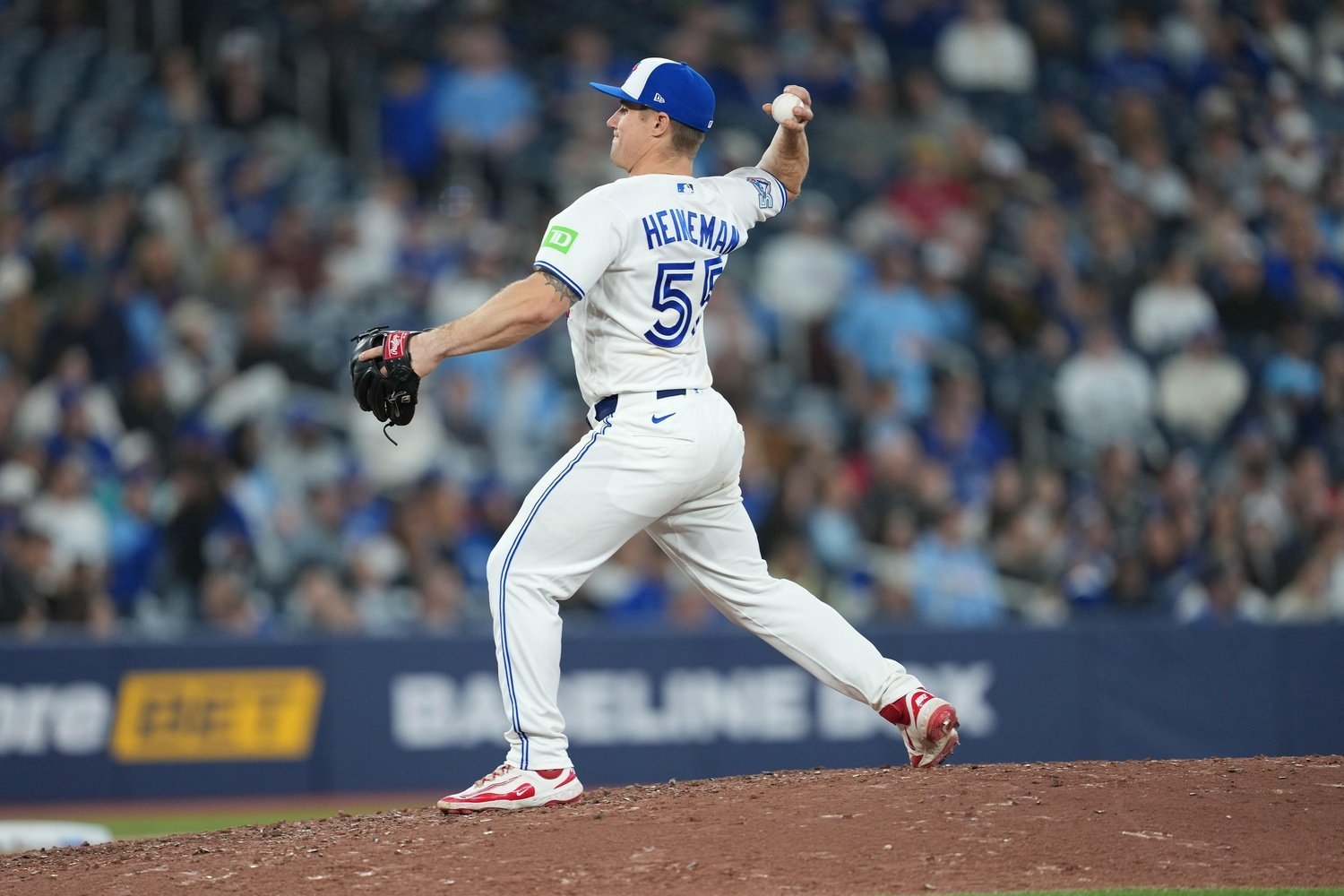 Early injuries have turned April into a test of endurance, pushing the Blue Jays to treat position player pitching not as a novelty, but as a necessary strategy built on velocity control, strike throwing and protecting pitching arms. While some were surprised by the team's signing of so many pitchers this offseason, it should have started to make a bit more sense. With injuries mounting, Toronto might have to search for answers from within. This season has barely found its rhythm, and the Jays already feel like a team playing emergency baseball. Pitching injuries arrived early. Depth has been tested almost nightly. John Schneider has managed more than a few games with one eye on the scoreboard and the other on who might still be physically capable of throwing tomorrow. In that environment, blowouts have a ripple effect. Starters exit early, and the bullpen gets stretched. Game one against the Dodgers on Monday was no exception. Position player pitching, once viewed as a quirky sideshow or an act of surrender, is quietly becoming a practical tool. When innings threaten to avalanche, and the bullpen cannot afford another high‑stress appearance in April, using a position player becomes less about optics and more about survival. That door is already open. Tyler Heineman covered two innings in a lopsided loss on March 31 and again against the Dodgers on April 6. It likely won’t be the last time Toronto makes that call. Using Heineman means the Jays are protecting arms rather than preserving the box score. Innings when a position player is on the mound exist to save pitchers, not to impress hitters or fans. Baseball has talked about a mercy rule, but I don’t think we are there yet. Since 2018, position players have typically carried ERAs between 8.00 and 10.00. Opponents slug well over .600. Strikeout rates dip below 10 percent. Hitters rarely miss, and everyone involved knows it. The calculation isn’t about preventing damage, but containing it. One spared elbow in April can ripple through a season in ways a single blowout never will. Toronto understands that math, even if fans understandably prefer not to see a catcher lofting 78‑mph fastballs in a loss. Heineman’s appearance wasn’t random. Catchers on the mound make sense because they already throw in games, understand sequencing and aren’t overwhelmed by the environment. The downside is that many catchers throw at max effort by instinct. Heineman doesn’t. His delivery is compact, his intent clearly dialed back, and his velocity plays down by design. More importantly, he throws strikes. In these situations, command matters far more than velocity. A walk does more damage than a single when the entire goal is getting through the inning without turning it into a 30‑pitch ordeal. Yet, even catchers get tired, so here is a list of other Blue Jays who could, realistically or not, be asked to wear this role. Addison Barger sits near the top (at least when it comes to how fun it would be to see him get the call). First off, his wavy hair matches Dylan Cease and Kevin Gausman. While his arm strength jumps out even during routine defensive plays, what stands out more is how easily he throws. There’s little violence in the motion. Position player pitching isn’t about lighting up the gun; it’s about repeatability. Barger could likely live in the low‑to‑mid‑80s without straining, and his calm mechanics suggest he could find the zone often enough to let hitters put early swings on the ball. That’s exactly what teams want in these spots. Ernie Clement may be the sneakiest name on the list. His defensive versatility is paired with a compact, repeatable throwing motion that doesn’t scream maximum effort. Clement’s arm strength isn’t flashy, but in this role, that’s often an advantage. A steady stream of strikes at 78 to 82 mph is often enough when hitters are swinging early. Nathan Lukes and Myles Straw fall into the category of outfielders that teams quietly trust more than fans realize. Both are capable, accurate throwers with experience making long, controlled throws from the gaps. Lukes, in particular, has shown a calm, measured throwing style that would translate cleanly to pitching at reduced intent. Straw doesn’t have elite velocity, but his athleticism and body control suggest he could handle the mechanics without panic. For a one‑inning bridge to the final out, that matters more than raw power. Then there’s Davis Schneider, who, much like Clement, has played several positions when called upon. Schneider’s arm strength is better than most casual observers expect, and he throws with a compact, catch‑and‑fire motion that minimizes stress. He likely wouldn’t light up the gun, but he wouldn’t need to. He could throw around 80 mph, filling the zone, trusting hitters to make contact. Outfielders and utility players have quietly become the backbone of these contingency plans across baseball. With bullpens under constant strain from velocity spikes, heavier workloads and injuries, teams now view non‑pitcher innings as a form of load management. Relatively new league rules limit position player pitchers to clearly non‑competitive situations, like late innings with large run differentials, or extra‑inning emergencies, so you just don't see it as much as you used to. So, why don’t teams do this even more often? Health is the obvious answer. Every throw carries risk, even at reduced effort. Front offices know how quickly a meaningless inning can turn into a strained oblique or a jammed finger. Core stars remain untouchable. But there’s also a psychological layer. Not every player wants the job. Some treat it as fun. Others see it as humiliation. Trust and willingness matter more than teams ever admit publicly. There’s also a hidden benefit to position players pitching that almost never gets discussed. When a manager hands the ball to a position player, it sends a signal to the bullpen: You’re protected. Relievers notice. Over a long season, that trust matters. And yes, there’s still entertainment value. Toronto crowds engage with these moments in ways they don’t during grim blowouts. Laughter replaces frustration. An 83‑mph fastball from a second baseman draws a louder response than a standard mop‑up strikeout ever will. Baseball needs those pressure‑release moments, especially when a season (like this one) starts feeling heavy earlier than expected. For the Blue Jays, this is no longer theoretical. Injuries have already pushed them into survival mode. Heineman’s three innings so far aren’t a punchline. They are a preview. There will be more nights where creativity matters more than pride. Maybe Barger absorbs an inning on a long road trip. Maybe Clement quietly pencils in a clean frame. Maybe Schneider or Lukes takes the ball because the coaching staff knows there will be no drama. Seasons aren’t won on nights when everything goes right. They’re managed on nights when everything breaks. Position player pitching lives squarely in that space: an admission of limits, a bet on tomorrow and a reminder that baseball, even in its strangest moments, is a game built on endurance. Unfortunately, this season, the Blue Jays already understand that. They’re not laughing anymore. They’re planning. Statistics updated prior to games on April 7. View the full article
 -
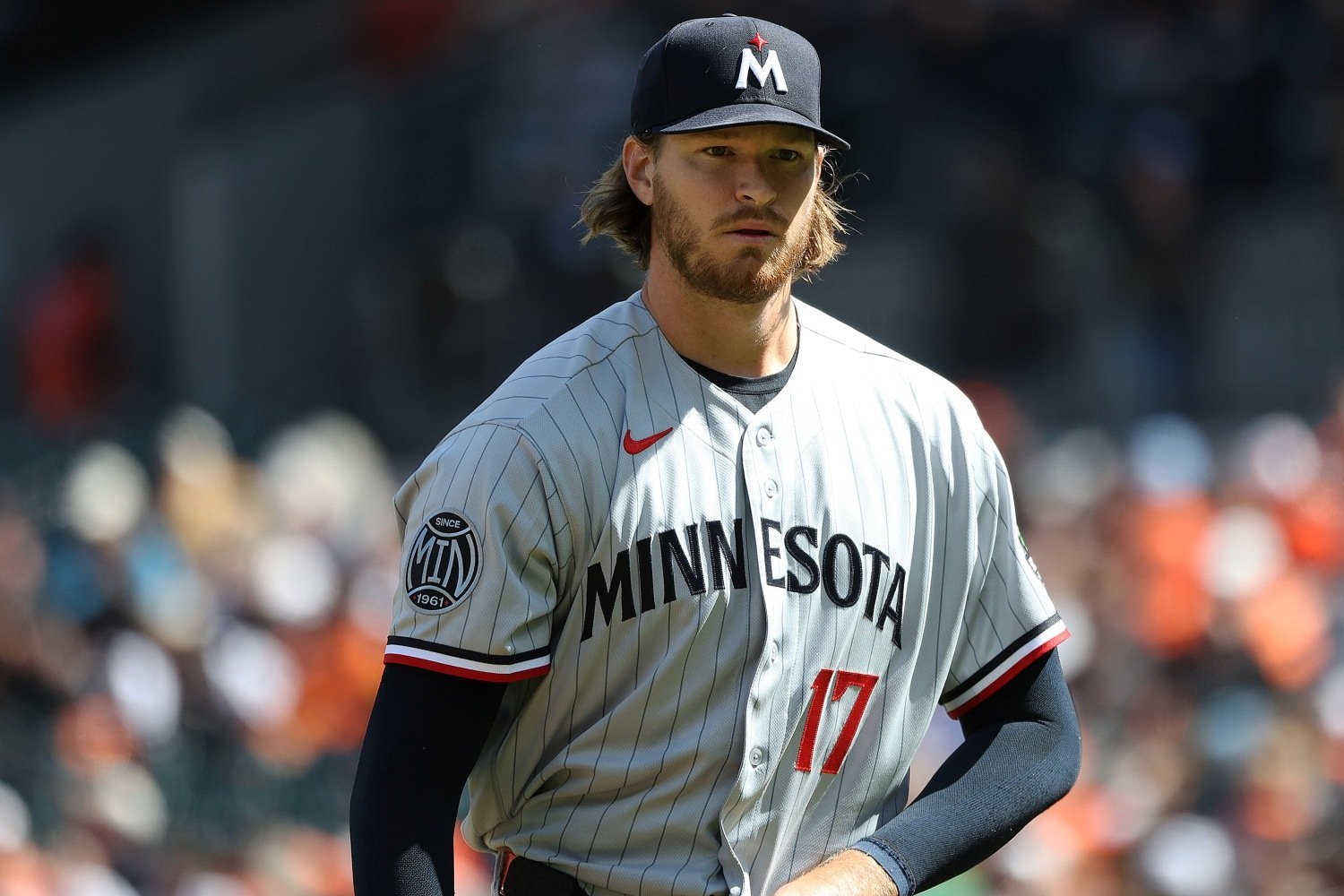 You never see a pitcher for whom things are going well practicing their stance on the rubber or the way they break their hands in front of their locker in the clubhouse. There's plenty of space in the Twins' home clubhouse at Target Field, but not so much that anyone would be tempted to move meaningful practice off the field and into that space. Big-league ballplayers love to take up space, but in front of their lockers, they instinctively make themselves small. They don't move in big, unpredictable ways. They stay out of the walkway that runs right past each row of lockers. On Tuesday afternoon, Bailey Ober had his glove on his hand and stood in front of his locker, thwacking a ball into the glove and practicing some of the key timing moments in his delivery. He was waiting for locker neighbor Mick Abel to be ready to head out to the field, but while he waited, he didn't chat breezily with the younger pitcher. They had an easy conversation going, but as Abel turned his attention to lacing up his spikes, Ober turned and became slightly absorbed by the back of his locker. It was the reverie of a man who's not happy with how his body is responding to his mind's commands, for whom that's a particularly big problem—because his body makes his living. "It's just the way the body's working," Ober said of his slight reduction in arm angle this year. "There's some things I'm trying to balance, and I'm a little late [timing-wise], which leads to that." His voice carried a peculiar mixture of optimism and frustration. Ober is a thoughtful and energetic player, though that energy manifests itself in a very quiet way. He's dedicated to his craft, and early in the season, he's excited by what's working—but it's also clear that he resents his own inability to iron out the mechanical issues he's been sifting through for the last year-plus. Some pitchers struggle, even with the guidance of pitching coaches, to identify and target flaws in their delivery. Ober, who has always been keenly aware of the challenges posed by his towering height, isn't one of those guys. He knows what he needs to do. He's doing it. Maddeningly, his body just won't hit the targets he commands it to hit, despite the best training he's been able to give it. Thence comes the deficiency of velocity that jumps out most readily to fans, but that's not the only issue created by not being on time within his delivery—or even the most important one. Ober admitted that there are pitches (not just pitch types, but combinations of pitch type and location) he can't throw with much confidence right now, which limits his options. Most of his arsenal is going through a long period of having good days and bad days; he needs to reclaim the consistency that made his deep mix great a couple years ago. For now, Ober is largely eschewing his slider to right-handed batters, because he feels he can better execute his sweeper. 'Execute,' in this case, means not only to throw the pitch where he wants to and with the shape he wants, but to tunnel its release and initial trajectory with another pitch the batter might be anticipating. The slider can't check all of those boxes right now, except in its more cutterish form, to lefty batters. Instead, Ober is going to the sweeper—but also to his changeup, even against righties. "I'm not consciously leaning on it," he said Tuesday, "but I can really trust that pitch right now. And it doesn't really matter for me, lefty or righty, because I try to throw that pitch a lot like a splitter—focused on getting that [downward movement] on it. And I know that even if it runs in on a righty, I can sometimes jam them." That's why, so far this season, Ober has thrown his changeup 48% of the time against left-handed batters and 29% of the time to righties. Last year, those numbers were 34% and 23%, respectively, and they were similar in 2024. The changeup is working. That's always been Ober's best pitch. The only problem, right now, is that it's the only one he fully trusts. Good news can still be found in the mix. Ober's sweeper and curveball have bigger break this year. If he's stuck with the lower arm slot because of the way his body is unfolding and timing up its many movements, he might find some solace in more movement on his sinker, helping him attack righties despite the lost velocity. He expressed hope that, as the sinker comes along, he can use that pitch to keep righties looking inside, making the sweeper and even the four-seamer on the outer half more effective. Ober takes the mound again Wednesday night against the Tigers, with the Twins looking to secure their first series win of the year. His stuff isn't ready to take the big step forward both Ober and fans crave. However, he's feeling out his own pitch mix with each outing, and he's coming to a better understanding of how he can win with what he has. As long as the changeup keeps obeying him, he can keep relying on it, and that itself might make his fastballs look a bit faster. View the full article
 -
Red Sox Call Up Tyler Samaniego As Justin Slaten Heads To IL
DiamondCentric posted an article in Talk Sox
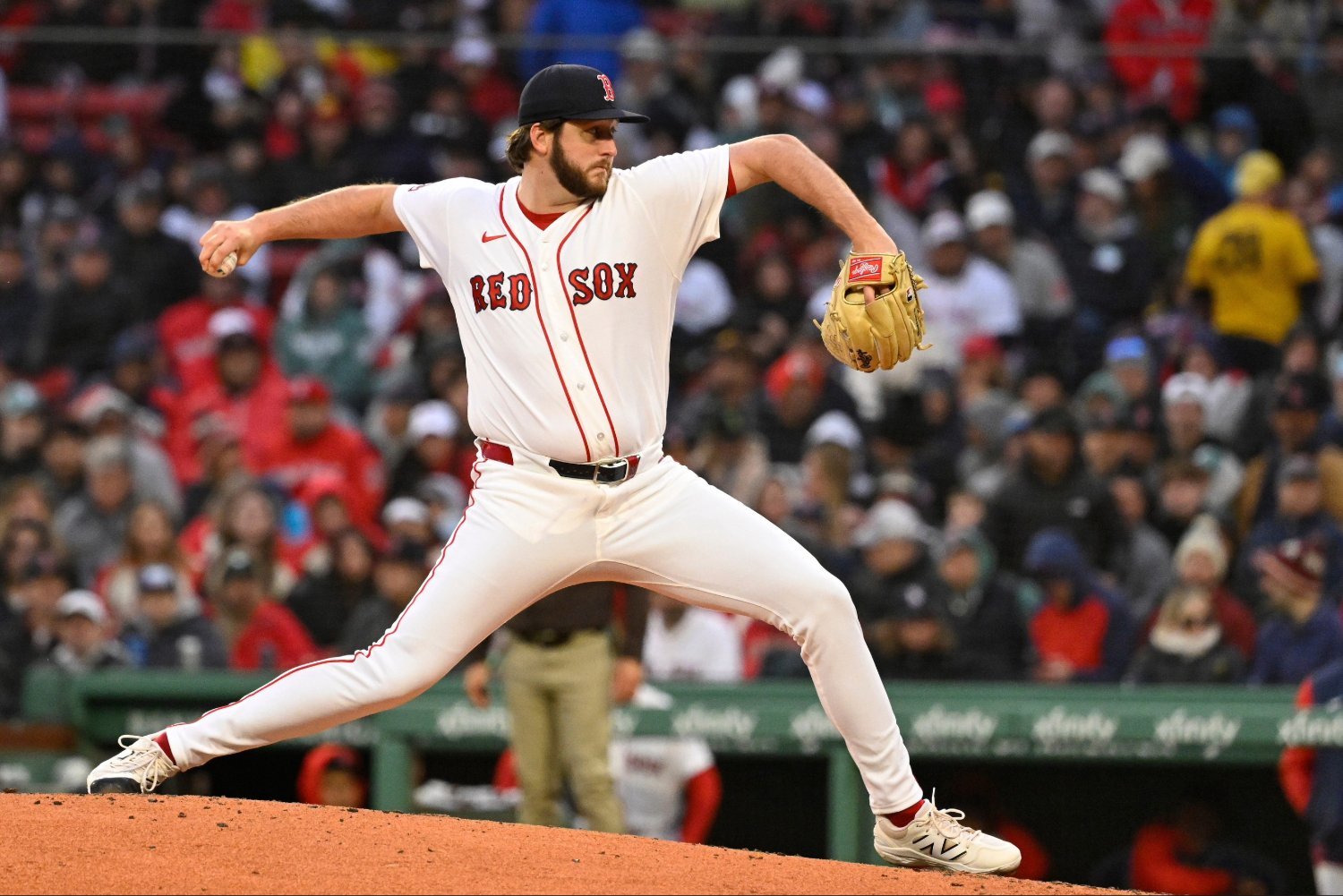 The Boston Red Sox have placed reliever Justin Slaten on the 15-day injured list with a right oblique strain. To replace him in the bullpen, the team has called up LHP Tyler Samaniego before the series finale with the Brewers. Alex Cora revealed in his media availability after the 3-2 win on Tuesday that Slaten was dealing with soreness on his right side but hesitated to call it an oblique injury at the time. Now, we have conformation that Slaten will be missing time while he heals up. While Slaten has been useful out of the pen, his injury history isn't exactly brief, so it's disheartening to see him go down again so early in the year. Samaniego has appeared in three games for the WooSox, posting a 3.38 ERA with three strikeouts and a 1.31 WHIP over 5 1/3 innings. He was impressive in spring training after he fully recovered from some initial back issues. His fastball tops out at 97 mph but he lacks a solid secondary pitch at the moment. With some development, he could be an incredibly useful arm out of the bullpen down the stretch. Expect to see him serve as an up-and-down reliever for the entirety of the season. Justin Slaten landing on the IL again is not great news for a team already pushing their bullpen to the maximum this early in the season, but Samaniego has the opportunity to show that his strong spring was more than just a fluke once he arrives in Boston. View the full article
 -
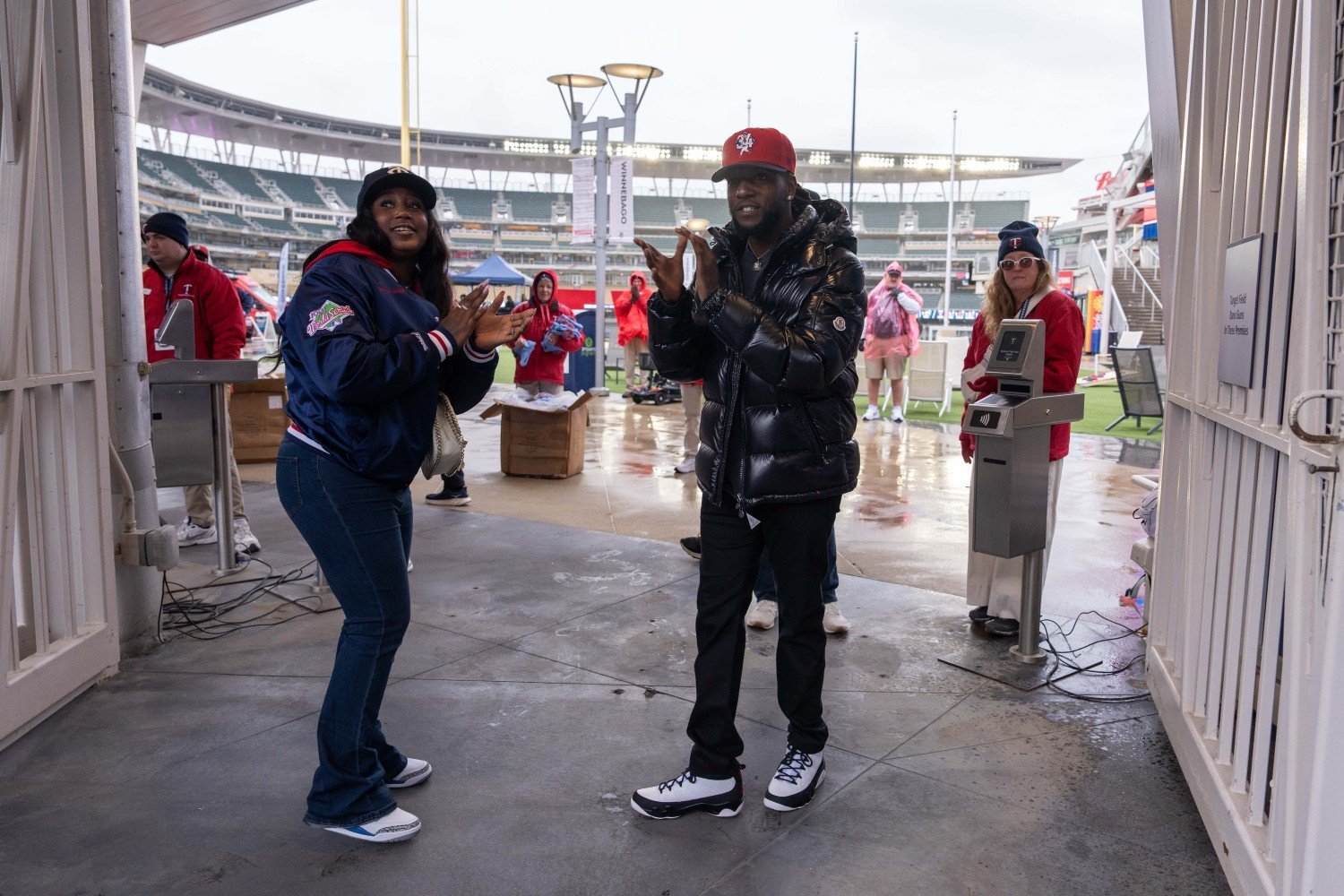 There was a time when being a Minnesota Twins fan meant circling Opening Day on the calendar and talking yourself into the idea that this year would be different. That time still exists, technically, but it now lasts roughly three games, before the emotional damage begins. After another sluggish start to the season, the organization has unveiled a bold new initiative aimed at easing the burden on its most dedicated supporters. In a press conference that felt equal parts innovation and resignation, the Twins announced that fans are now officially allowed to enter the transfer portal. “This is about empowering our fan base,” said a team spokesperson, while carefully avoiding eye contact. “We recognize that watching this product on the field requires a level of emotional endurance that may not be sustainable for everyone. The portal gives fans options. It gives them hope. It gives them a chance to feel joy again, even if it's temporary and comes with a different logo.” The announcement has sparked an immediate reaction from the fan base, many of whom were already mentally exploring their options before the press release hit social media. “I entered the portal after the third error on Tuesday,” said longtime fan Mark D., who claims to have watched nearly every game since 2004. “I just put my name in, uploaded a highlight reel of me clapping politely during pitching changes, and waited for the calls. I'm not saying I'm gone for good, but I need to see what's out there. I deserve to feel something other than confusion.” Another fan, Jessica R., said she's looking for a better cultural fit. “I am tired of explaining to my friends why I still believe,” she said. “I want a team where hope lasts into May. Maybe even June. Is that too much to ask? I just want meaningful baseball, and a bullpen that doesn't feel like a group project where nobody did their part.” Around the league, several teams have already begun recruiting disillusioned Twins fans, pitching them on a fresh start and a more stable emotional environment. The Milwaukee Brewers have positioned themselves as a logical landing spot, offering geographic familiarity with a slightly less chaotic baseball experience. “We understand Midwest values,” a Brewers representative said. “We offer competitive baseball, a strong pitching foundation, and the ability to watch games without immediately questioning your life choices. Plus, we have a slide in the outfield. That has to count for something.” The Chicago Cubs are leaning into their big-market appeal and their history of breaking curses. “We can promise a historic ballpark, a vibrant fan culture, and just enough success to keep you invested,” a Cubs official noted. “Also, we've already done the whole long-suffering thing and came out the other side. We're basically a support group with ivy.” Perhaps the most surprising entrant into the mix is the Colorado Rockies, who are reportedly targeting Twins fans who simply want a different kind of chaos. “Look, we're not saying we're better,” a Rockies spokesperson admitted. “But we are different. Our games have altitude, offense, and absolutely no expectations. You can relax here. Losses feel lighter when the score is 12 to 9, and nobody knows what just happened. Also, we're gonna land @Greggory Masterson. Follow Gregg here, instead of following him on Twitter.” Back in Minnesota, the front office insists that the transfer portal is not a sign of giving up on the season, but rather an acknowledgment of reality. “We still believe in this team,” another executive said. “We just also believe in honesty. If fans need to step away and explore other opportunities, we support that. And if they come back when things turn around, we will welcome them with open arms and a slightly improved platoon splits.” For now, the portal remains open, and fans continue to weigh their options. Some will leave in search of greener pastures. Others will stay, clinging to the familiar cycle of optimism and disappointment that has defined the experience for years—because, for all the talk of transfers and fresh starts, being a Twins fan is not just a choice. It's a condition that cannot be easily cured, even when a perfectly good exit door is finally provided. Deep down, most fans know the truth. No matter how many offers come in or how appealing another team might look, there's a strong chance they will withdraw their name from the portal just in time for the next winning streak that changes everything. View the full article
 -
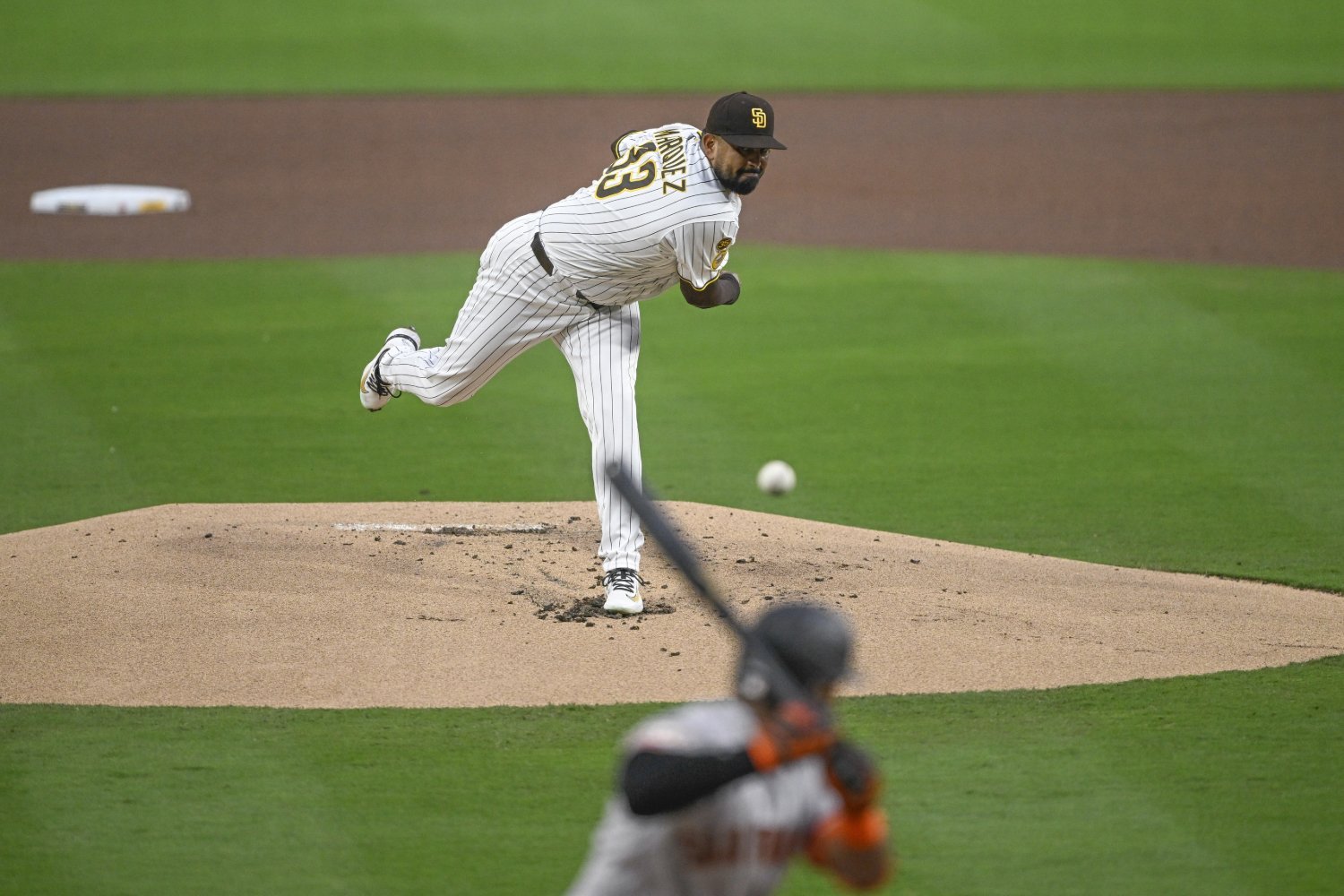 MLB players are so good at catching subtle ticks and movements in opponents. If a pitcher changes anything about their approach throughout a start, hitters will notice and take advantage, leading to a phenomenon known as "pitch tipping." German Marquez had an awful debut with San Diego Padres, and when things don't go right as the No. 5 starter, fans start to bring out the biting criticism and want to move on to another option. But there appears to be a simple explanation for that poor showing: The right-hander was tipping pitches. That was what came out of the post-game report of his March 31 outing vs. the San Francisco Giants in which he allowed four runs on four hits and one walk with one strikeout in just three innings. He needed 65 pitches, 41 of which were strikes, to get those nine outs and the Padres lost 9-3 to a Giants offense that has otherwise been scuffling. On Monday, following a review of the game film and counseling from Padres pitching guru Ruben Niebla, Marquez was a different pitcher. The veteran right-hander tossed five scoreless innings against the Pittsburgh Pirates in a 5-0 victory. He yielded six hits and one walk, while striking out four. Of his 92 pitches, 56 went for strikes to pick up the win, his first after 12 consecutive winless starts. In addition to hiding whatever he was doing to that tipped off Giants hitters what he was throwing, Marquez also mixed up his repertoire in the Pirates game. After relying more on his four-seamer against the Giants (46%), Marquez threw his trademark knuckle curve most often vs. the Pirates (41%). His four-seamer was close behind at 38%. His sinker usage (15%) was the same in both games, while he mixed in a few sliders in the Pirates start after shelving it vs. the Giants. The velocity was almost identical on his top three pitches, with the one changeup he threw in vs. the Pirates 2.3 mph faster than the one he threw to the Giants. The reliability of his pitches also helped him wiggle out of trouble in three of his five innings. The Pirates outing was important for Marquez, but not just to stave off the pitchforks being wielded by fans on social media. The 31-year-old signed with the Padres at the beginning of spring training for a scant $1.75 million. That was his market value following a 2025 campaign in which he had a 5.47 FIP, the highest of his career in which he made multiple starts in a season. That performance came in a 26-start sample, after making just one in 2024 in a return from a 2023 Tommy John surgery. His 2025 was limited a bit due to tendinitis in his right bicep. Thus, it's not a stretch to say he's apparently healthy for the first time since 2023. Last year, Marquez used his four-seamer 35% of the time, his knuckle curve 32%, the sinker 20%, slider 11% and changeup 2%, with the velocities in the ballpark of what they are this year. So if you can come to any determinations after two starts (hint: you can't), it would seem that the slider has been put on the back burner. But his confidence has to be restored at least somewhat following Monday. His rocky opener followed a spring training in which he allowed 13 runs in 16⅓ innings, walking seven and striking out 23. It also comes at an opportune time. Marquez has spent his entire career in the NL West, but his first 10 seasons came with the Colorado Rockies. The 2021 NL All-Star, who owns a career FIP of 4.21, is set to face his old club in his start Saturday when the Rockies visit Petco Park for four games this weekend. That is certainly bound to be an emotional outing for someone with 200 starts under his belt for that franchise. View the full article
 -
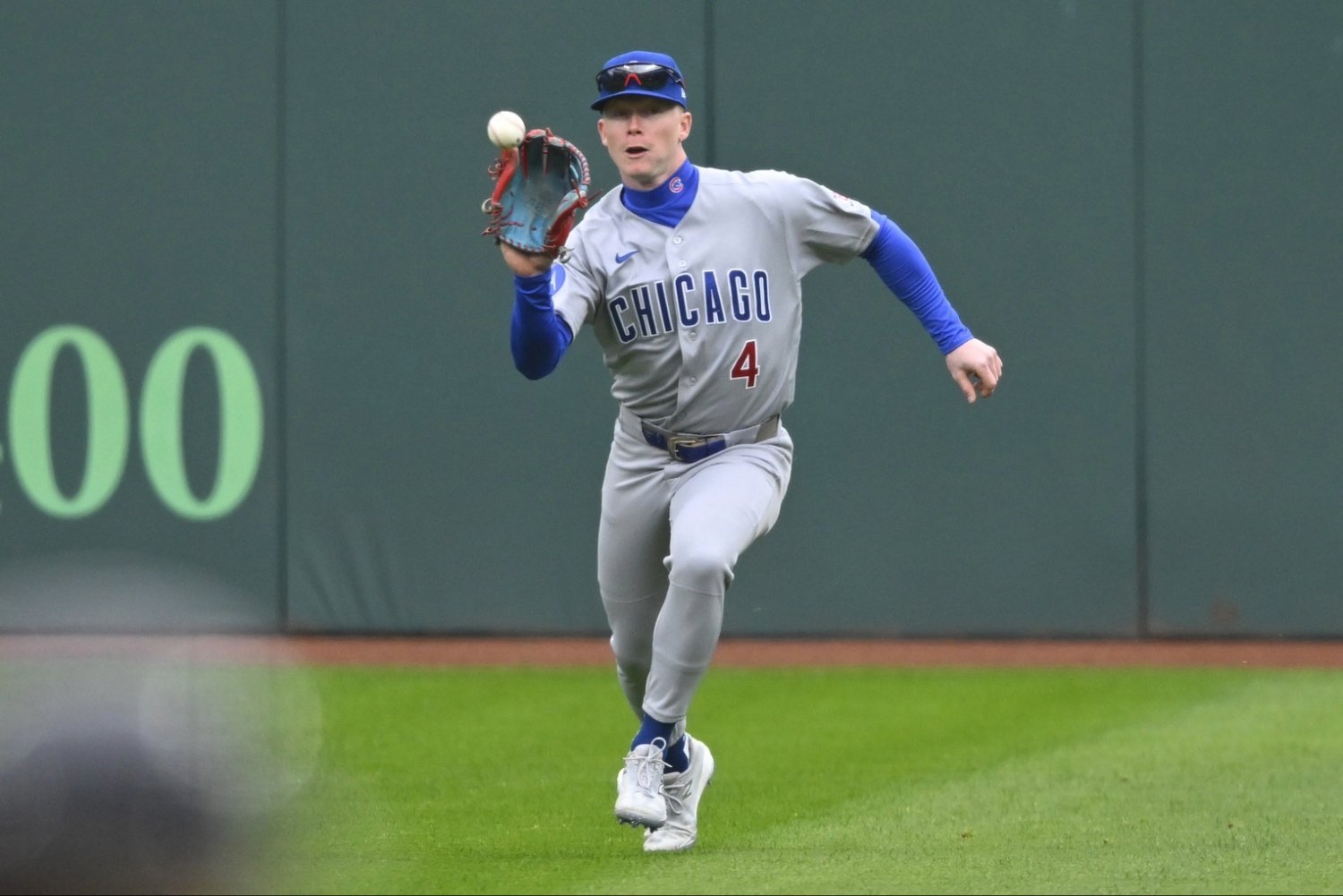 It's a Friday, 1:20 start at Wrigley Field, the outfield ivy has yet to grow in, showing its exposed brick. Scanning your surroundings, you look around, your eyes greeted by thousands of jerseys of red, white, and blue, with the number "4" on the back. The Chicago Cubs' young, would-be superstar has started to capture the imaginations of supporters of North Side baseball in a way few others have since the curse-breaking 2016 squad still reigned over Wrigleyville. Though he's not yet cemented himself as one of the current greats of the game, or certainly the franchise, Pete Crow-Armstrong has not only the raw potential but also the attitude to forge a Cubs legacy unlike any other. There is a distinct line of delineation between the kind of player Crow-Armstrong is now and superstardom. In fact, our very own Matt Trueblood recently penned a terrific piece centered around what that line looks like. In the piece, Trueblood delves into the aggressive free-swinging nature of Crow-Armstrong, citing that, across all levels of competition the center fieldeer has faced so far in 2026, he has swung at 55.3% of the pitches he's seen. Accounting for the absence of a World Baseball Classic in 2025, that figure is down from 60% a year ago. Crow-Armstrong is a hyper-aggressive swinger who understands the value of jumping all over the opposition early and often. He became a 30/30 player because of his readiness and all-around approach in each at-bat. He's a player with unexpected power and an insatiable obsession with inflicting pain on the opposition. Those pain-inflicting results haven't quite come in 2026 just yet, nor have they for any of the squad's biggest boppers. The combined batting average of the Cubs' regular top four in the lineup, consisting of Ian Happ, Michael Busch, Alex Bregman, and Crow-Armstrong, is just .194 ten games into the season. One could both hope for and count on that alarming figure ticking up in the near future. And Crow-Armstrong's inevitable breakout will likely be the catalyst that changes everything. Crow-Armstrong fits the identity and tenor of this team and city because he never wants to fall short. His talent is matched by his intensity, and it often manifests in the pure emotion he spills out onto the field. Recently, in a win against the Angels, Ian Happ and Alex Bregman sent back-to-back homers into the iconic Wrigley bleachers. Then, it was Crow-Armstrong's turn. He yearned so badly to make it three in a row that he nearly swung out of his cleats at the first pitch he saw. No, he didn't go yard, but the intent with which he plays, and his love for the team and the city from which they hail, make him the most important player in Cubby pinstripes. Since the 2021 exodus of Anthony Rizzo, Kris Bryant, and Javier Baez, the Chicago Cubs have felt more like a collection of players, rather than a cohesive core team with one collective mission, until now. When Cody Bellinger was a Cub, the city desperately wanted to ignite a love affair with the enigmatic power lefty. The only trouble was, he didn't reciprocate that desire. Bellinger's time in Wrigleyville was spent with one eye on his bank account and the other on the next best thing. It never really felt like he was the leader of the next wave of Chicago legends. With his endearing personality, famous approachability, and competitive edge, Crow-Armstrong couldn't be farther from Bellinger's archetype. Along with his fellow extended teammate, Nico Hoerner, Crow-Armstrong embraces the role of being a Chicagoan, and in reality, lives a lifestyle that citizens from all corners of Cook County would pine for. Without overstepping my bounds here, Crow-Armstrong and Hoerner have at least the blueprint to become the best offensive tandem at Wrigley since "Bryzzo". Debate that idea all you want, but the top brass wanted Crow-Armstrong here for a reason. Perhaps, the crux of that reason is that Jed Hoyer, Carter Hawkins, and the rest of the front office in Chicago knew that he was the face of this squad's new core. This team, as it stands, possesses the foundation to make a run at the World Series. If that dream should be realized, Crow-Armstrong will lead them to that end. View the full article
 -
 The Cubs had seen some arm injuries early this season, but then the season-shaking news happened: Cade Horton will have season-ending surgery. Mitch and Jason break down what it means for the Cubs, and what options they have in its wake. Listen on Apple Podcasts: https://podcasts.apple.com/us/podcast/the-north-side-baseball-podcast/id1798599313 Listen on Spotify: https://open.spotify.com/show/75wMGhBwlrDDYPt3kaF453 Listen on iHeartRadio: https://www.iheart.com/podcast/263-the-north-side-baseball-po-268998437/ Listen on Pocket Casts: https://pca.st/eey7h6ih Watch on YouTube: https://www.youtube.com/@northsidebaseball View the full article
 -
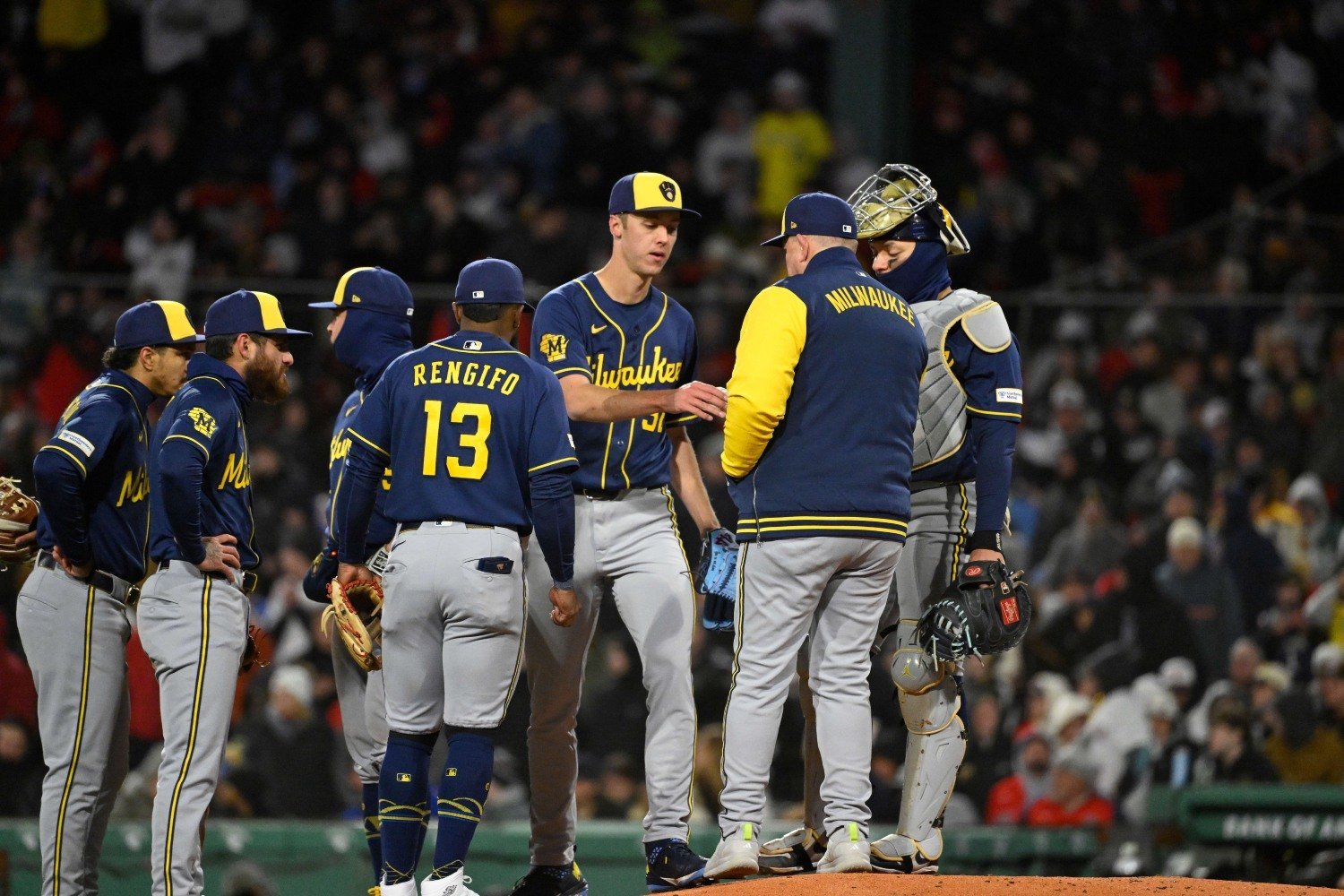 The way it happened was excruciating. Jacob Misiorowski was cruising, overpowering Red Sox batters and (if anything) outpitching fellow Cy Young Award candidate Garrett Crochet. When he lost control in the sixth inning, though, it was simply gone; he couldn't find his release point again. Normally, with the bases loaded but the game still scoreless when Misiorowski departed, Pat Murphy would have gone to one of his most trusted relievers, but plainly, the plan on Tuesday night was to give back a bit to the baseball gods. Murphy has used Aaron Ashby, Abner Uribe, Trevor Megill, Ángel Zerpa and Grant Anderson as heavily as anyone involved is comfortable with, this spring—if not more than that. He needed to let them each get a day off Tuesday night, so in a high-leverage spot that might normally have called for Ashby or Zerpa, Murphy went to DL Hall. Unfortunately, Hall let all three runners Misiorowski had bequeathed come home, which turned out to be decisive. Even in defeat, the Brewers offense was delightfully tenacious. They chased Crochet from the game in the very next half-inning, and patched together a two-run rally made up of two singles, a walk, a hit batsman and an RBI fielder's choice. They couldn't quite cash in their chance, though, and it turned out to be their last one. That raises the other reason (besides Murphy's desire to give his relievers some relief) why Boston had the upper hand on the Crew in this game: Crochet, and the lineup the visitors were forced to field against him. Murphy used the occasion (a top-flight lefty starter who's especially tough on lefties) to give both Brice Turang and Christian Yelich a rest. That part's fine. It was necessary, and didn't deprive the club of anyone who was likely to do much against Crochet. The real problem is that, with Jackson Chourio and Andrew Vaughn on the injured list, this team is not as dangerous against lefties as it would be at full strength. William Contreras is a legitimate star slugger, and can mash lefties when he's going well. With Chourio and Vaughn sidelined, though, Murphy wrote in Brandon Lockridge as his leadoff man Tuesday night, and placed Joey Ortiz fifth on the card. Those guys are fine complementary players, especially against lefties. They have athleticism and defensive value, as well as the platoon advantage on southpaws. Pressed into what were essentially the third- and fourth-most important roles in the offense, though, they were a bit stretched. The bottom third of the order included Sal Frelick, Blake Perkins and David Hamilton. Though Frelick is a full-time player, the three of them weren't in the lineup because Murphy thinks they're good matchups for the likes of Crochet. They weren't even there for their defense, per se. It was just the right night for Muprhy to give two regulars a night off, in addition to staying away from his highest-volume relievers. Winning that game was unlikely, and the way Murphy managed it didn't make it more likely. That wasn't his goal. 'Win Tonight' is a wonderful and massively successful paradigm. Murphy has made the Brewers the envy of every other team in the league with it. However, he's also learning to notice when the time is right to accept a loss. No team in baseball history has won more than 116 games in a regular season. Trying to be the first team to reach 120 is not only impractical; it's self-defeating. More even than in the NBA, in baseball, one has to occasionally accept a loss, to make wins on other days more likely. The Brewers are 8-3. They're off to a sizzling start. They just can't afford—especially now, while two of their best hitters are down and some of their pitchers are still getting up to speed—to try so relentlessly to win every game that they risk hurting their chances to keep winning over the long haul. View the full article
 -
What could a potential Eury Pérez extension look like?
DiamondCentric posted an article in Fish On First
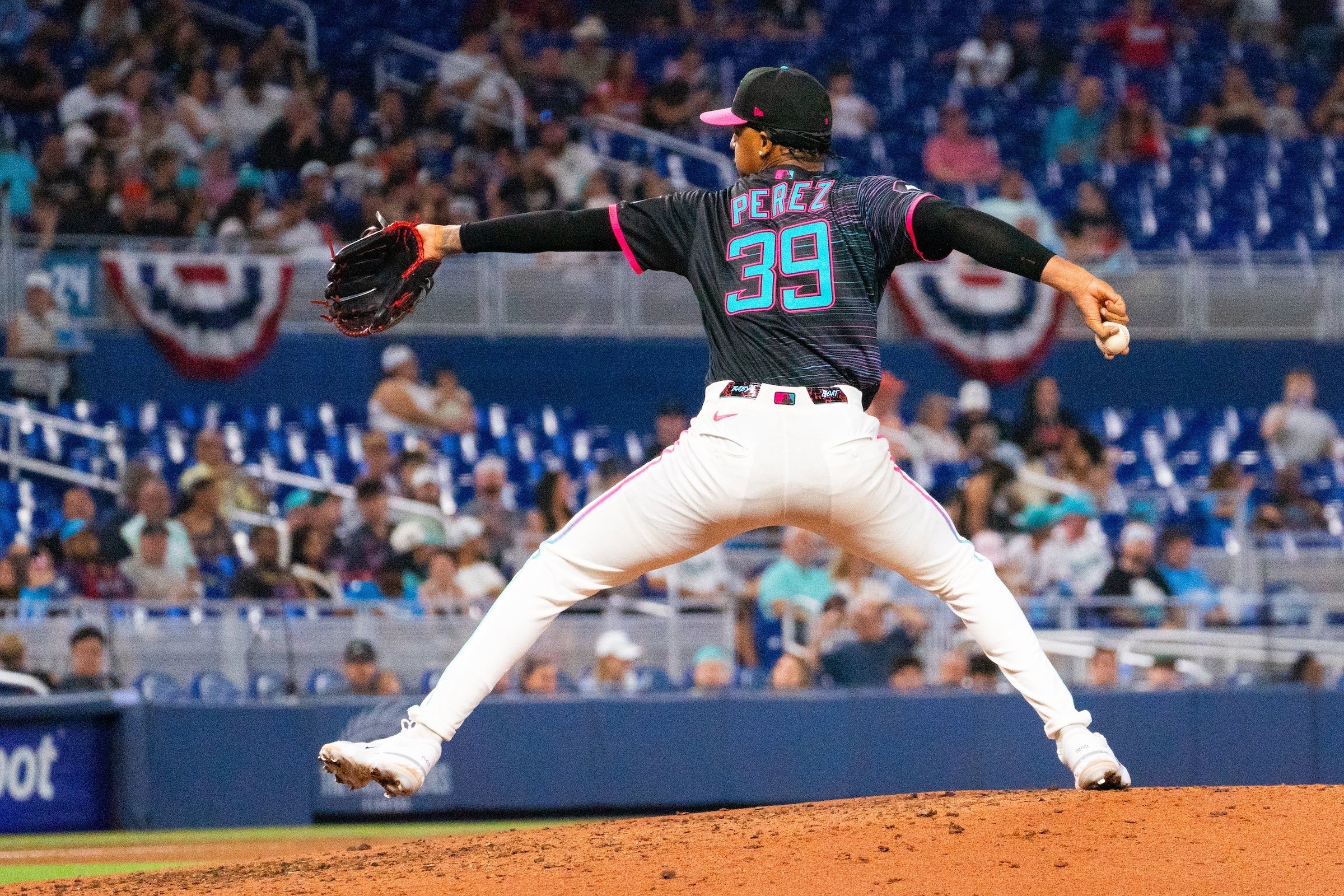 The biggest positive development for the Marlins during the early portion of the 2026 season has been Sandy Alcantara looking like the best pitcher on the planet. A berth in the MLB postseason is a lot more viable if Alcantara continues to put the team on his back every fifth day. However, the future of Miami's starting rotation is in flux. The club only has its former Cy Young Award winner under contract through 2027, and extending him again probably won't be in the Marlins' budget if this dominance sustains. Fortunately, the Marlins have a young stud with comparable upside in right-hander Eury Pérez. Still a week shy of his 23rd birthday, the former top prospect hasn't yet performed like an ace—in fact, since returning from Tommy John surgery last June, his production is approximately league average (97 ERA+). On the other hand, that may make him receptive to a long-term deal at a reasonable price. Pérez is on track to become arbitration-eligible for the first time next winter and enter free agency after the 2029 season. For the Marlins to extend their next contention window beyond that, signing Pérez to a deal that covers more of his prime years is imperative. It is rare for teams to make long-term commitments to players in this demographic. A couple pre-arb pitchers who have received extensions recently are Hunter Greene (Cincinnati Reds) and Spencer Strider (Atlanta Braves). Greene signed his deal on April 18, 2023. The Reds guaranteed $53M for his entire 20s, buying out his arbitration years and potentially two years of free agency if the 2029 club option is exercised. Strider owns the record for largest payday for a pre-arb pitcher. Coming off an electrifying rookie season in 2022, his six-year deal was worth $75M. The structure of Strider's extension was more backloaded than Greene's. In Pérez's case, I would attempt to buy out an additional free agent year. As seen below, this deal would run through 2032, with that row highlighted in light blue representing a club option. He would edge out Strider by receiving $76.5M guaranteed, with a maximum value of $102.5M if the Marlins pick up his option. This would be the longest pitching contract in franchise history and the first player extension of any kind since Peter Bendix took over as president of baseball operations. Season Age Base Salary 2026—Pre-Arb 23 $2.0M 2027—Arb1 24 $5.0M 2028—Arb2 25 $10.5M 2029—Arb3 26 $15.0M 2030—FA 27 $22.0M 2031—FA 28 $22.0M 2032—FA 29 $26.0M Total $102.5M Eury Pérez considers Sandy Alcantara to be a friend and a mentor. Ideally, they'll co-lead the Marlins rotation for years to come. If the resources aren't there to keep both, extending Pérez should be the priority. View the full article
 -
Twins Pitching Prospect Eli Jones Continues Hot Start
DiamondCentric posted an article in Twins Daily
 Twins System Recap: Tonight's minor league action included a couple of nice pitching performances from under-the-radar arms and a big game from a once highly-touted bat. Mike Paredes is in his sixth year in the org, and he's done nothing but deliver quality innings. He struck out seven batters over four innings in a spot start for Wichita. Eli Jones, 2024 seventh-round pick, backed up an impressive first outing of 2026 with five frames of one-run ball. Eduardo Beltre, who was a big signing in the 2024 international class, hit a homer and drove in three runs in a Fort Myers extra-inning victory. View the full article
 -
With the Taj Bradley Deal, Twins Might Have Fleeced the Rays Again
DiamondCentric posted an article in Twins Daily
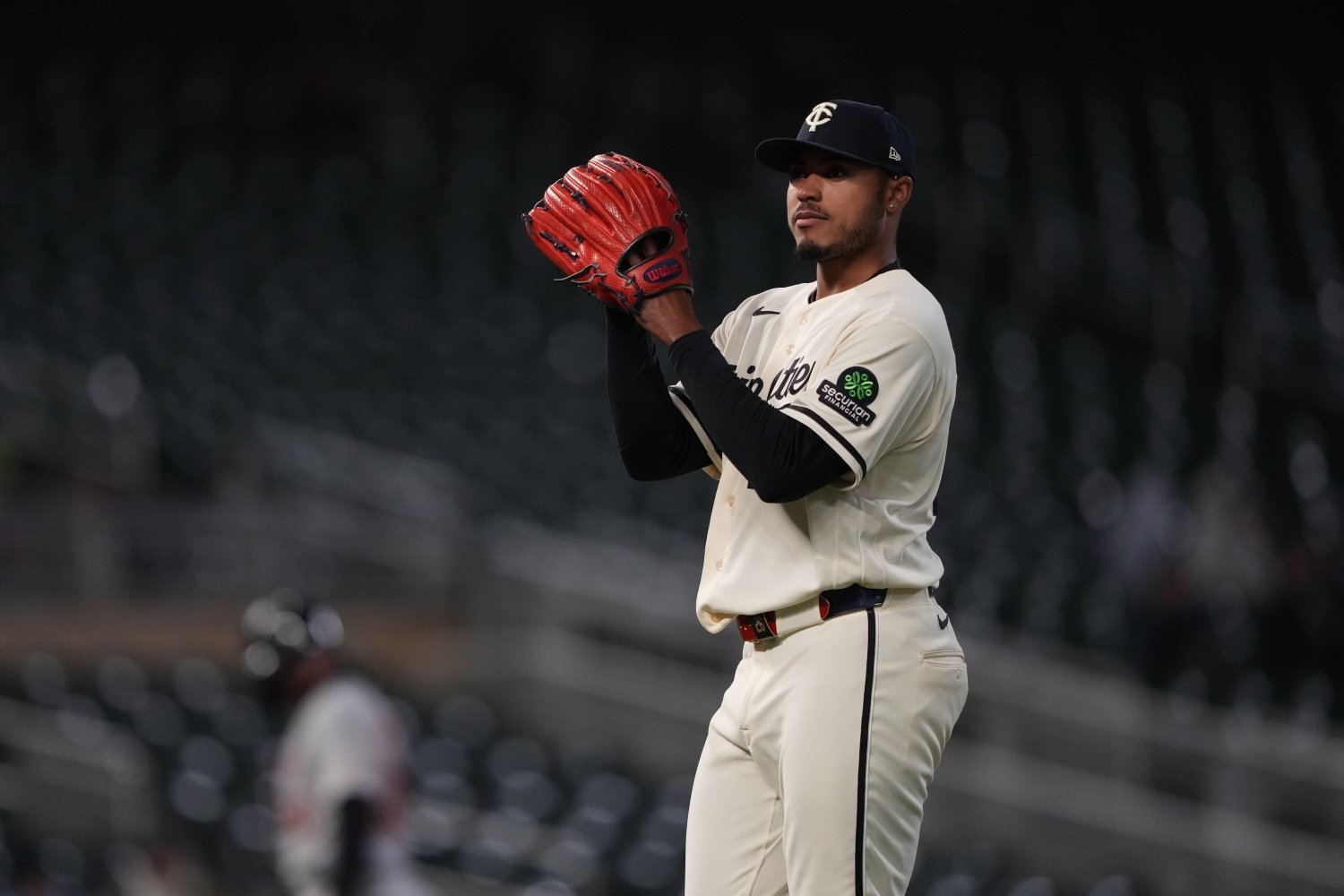 It's not often that a team can say it got the better of the Tampa Bay Rays in a trade. Around baseball, that front office has built a reputation for being a step ahead; squeezing value out of every move; and rarely, if ever, coming out on the losing end of a deal. Yet, the Minnesota Twins may have done it not once, but twice in a span of four years. Back at the 2021 trade deadline, the Twins were staring down a lost season and made the decision to move on from franchise icon Nelson Cruz. In return, they acquired a relatively under-the-radar pitching prospect in Joe Ryan. At the time, Ryan was intriguing, but far from a sure thing—more of a fringe top-100 prospect than a headline return. What followed could not have gone better for Minnesota. Cruz struggled to make a significant impact in Tampa Bay, while Ryan quickly blossomed into an anchor of the Twins' rotation. Now in his fifth full season, Ryan has posted a 3.80 ERA, a 110 ERA+, earned an All-Star appearance, and taken the ball as Opening Day starter twice, all while providing surplus value on a team-friendly salary that has helped the Twins build out the rest of their roster. That deal alone would be enough to raise eyebrows. Putting one over on the Rays is rare. Doing it in convincing fashion is even rarer. The assumption across the league is that if Tampa Bay is calling, you should proceed with caution. More often than not, they're the ones spotting something others have missed. So when the two clubs linked up again at the 2025 trade deadline, it was fair to wonder if lightning could really strike twice. This time, the Twins sent high-octane reliever Griffin Jax to Tampa Bay in exchange for former top prospect Taj Bradley. Unlike the Cruz deal, this one surrendered long-term value. Jax was not a rental. He still had two and a half years of team control remaining and had been one of the most dominant relievers in the American League. Bradley, meanwhile, was no longer a prospect, but not yet a finished product, either. Across parts of three seasons with the Rays, he had flashed electric stuff, but struggled to put it all together, posting a 4.70 ERA over more than 350 innings. Still, the Twins saw something. Bradley was only 24 years old, armed with elite velocity and bat-missing ability. On a team headed nowhere in 2025, the value of a high-leverage reliever like Jax was diminished. Turning that into a controllable starting pitcher with upside fitted into the bigger picture. Early on, it looks like that bet is paying off in a big way. Bradley showed flashes late last season after arriving in Minnesota, but the real buzz began during spring training. Reports out of camp suggested that something had clicked. Bradley even withdrew from pitching for Team Mexico in the World Baseball Classic to stay with the Twins and continue his buildup for the season. That decision is already looking like a wise one. Through his first three starts of 2026, Bradley has been dominant. He's allowed just two runs over 16 2/3 innings while striking out 22 hitters. His latest outing came at Target Field against two-time defending American League Cy Young Award winner Tarik Skubal, and Bradley more than held his own. He worked 6 1/3 innings, allowed just one run, and struck out 10, consistently overpowering hitters and generating nine swings and misses. He's already touched 100 MPH multiple times and now owns the fastest pitch recorded by a Twins starting pitcher in the pitch-tracking era. There's a different look to Bradley now. The raw stuff was always there, but the Twins appear to have helped him refine it, harness it, and elevate it. At 24 years old, there is still room for growth, which makes the early results even more exciting. On the other side of the deal, the early returns have been rough for Jax. In his first four appearances of 2026, he's allowed five earned runs and carries an 11.25 ERA, along with a -0.97 Win Probability Added mark that ranks third-worst in the league. It's a very small sample, and Jax has a track record that suggests he will settle in, but the contrast in early performance only adds fuel to the narrative. None of this is to say the book is written on this trade. Baseball has a way of humbling early conclusions, and both players will have plenty of time to shape how this deal is ultimately viewed. But in the early going, the Twins look like they may have identified and unlocked something the Rays were willing to move on from. For an organization like Tampa Bay, that almost never happens. And if Bradley continues on this trajectory, the Twins may once again be able to say they got the better of one of the smartest teams in baseball. What do you think? Have the Twins pulled off another fleece, or is it too early to make that call? View the full article
 -
Is the Royals Bullpen an Area of Worry for the Royals in 2026?
DiamondCentric posted an article in Royals Keep
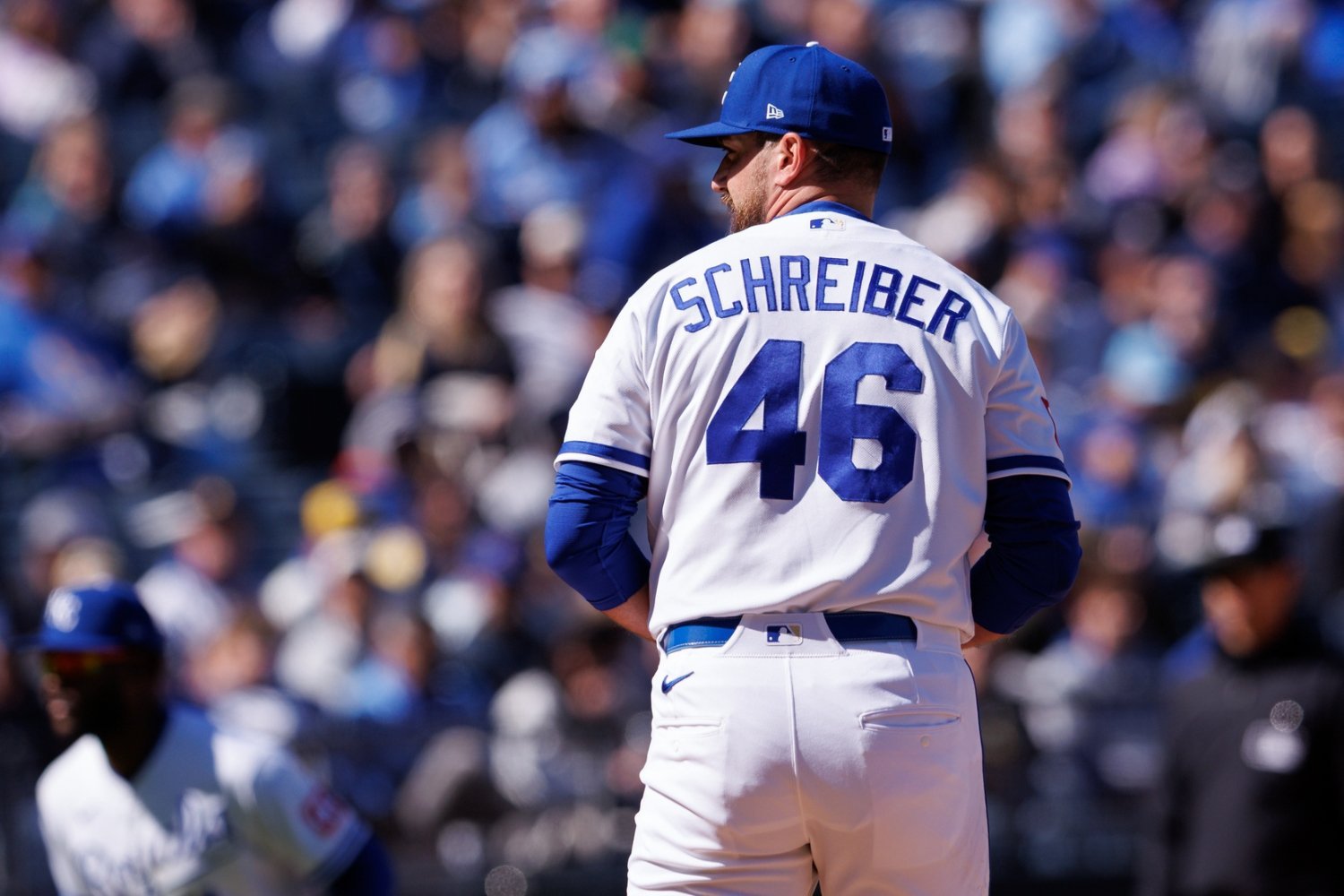 Major League bullpens can be volatile entities, and the Kansas City Royals' bullpen is no exception. In 2024, the Royals' bullpen ranked 20th in ERA and 17th in fWAR. Last year, they ranked 7th in ERA and 14th in fWAR. Two years ago, many Royals fans felt that the Royals' bullpen was an area of weakness, especially before Lucas Erceg arrived at the Trade Deadline. Last year, it was seen as a strength, especially with Carlos Estevez being the second Royals reliever in franchise history to lead the league in saves (Dan Quisenberry being the other). This year, it's not been the greatest start, much to the chagrin of Royals fans and management. Through 11 games, the Royals rank 26th in bullpen ERA (6.17) and are tied for 25th in reliever fWAR (-0.5). In terms of the former, the Nationals, Diamondbacks, Astros, and Rays have been worse in reliever ERA. Regarding the latter, they are tied with the Rays and Cardinals. The biggest regression from 2025 with this group has been BB/9. After ranking 4th in BB/9 as a bullpen last year with a 3.15 mark, they rank 27th with a 5.91 BB/9. That has contributed not only to their high reliever ERA but also to their WHIP (1.63, which ranks 20th). While the Royals' bullpen hasn't been the sole reason for the Royals' 5-6 record this season, it certainly hasn't helped. Kansas City's bullpen has allowed two walk-off victories, including today in Cleveland. The numbers haven't been good, which begs Royals fans to ask the question: Is this bullpen something to panic about? Or are the Royals just going through a tough stretch and are due for positive regression soon? Let's break down the positives and negatives of the Royals' bullpen and what to look for with this group going forward in 2026, using TJ Stats data and charts. Strahm, Schreiber, and Erceg Off to Rough Starts The Royals lost Estevez to the IL early in the season. The Dominican-born closer only made one appearance before being hit by a line drive in the foot and going on the IL due to a foot contusion. That said, there were concerns about his velocity this offseason, so going on the IL and a possible rehab assignment could help him get back to where he was a season ago in terms of velocity and stuff (his Statcast percentiles after one outing were NOT impressive, to put it kindly). That said, while Estevez's early IL stint was concerning, it seemed like the back of the Royals' bullpen was in good hands. Not only did Erceg and John Schreiber return (they both pitched in high-leverage situations in 2024 and 2025), but they also welcomed Matt Strahm from the Phillies. Strahm thrived in Philadelphia as a setup man and fireman, and it seemed like he would serve in a similar role in Kansas City in 2026. Unfortunately, the results haven't been great so far for the bullpen trio. Here's how the three relievers have fared thus far in 2026 with the Royals. Erceg: 3.86 ERA, 1.50 WHIP, 16.7% K%, 11.1% BB%, 5.6% K-BB% in 4.2 IP. Strahm: 5.79 ERA, 1.29 WHIP, 23.8% K%, 9.5% BB%, 14.3% K-BB% in 4.2 IP. Schreiber: 6.23 ERA, 2.31 WHIP, 11.1% K%, 22.2% BB%, -11.1 K-BB% in 4.1 IP. Erceg has performed the best of the three relievers, as his ERA is under four. However, he's struggled to strike out batters, and he isn't generating much chase or whiffs either, as seen below via his TJ Stats Statcast percentiles. Erceg ranks in the fourth percentile in whiff rate, first percentile in CSW%, and 32nd percentile in O-Swing%. That's not what one wants to see from someone pitching in high-leverage situations. On a positive note, his fastball velocity ranks in the 92nd percentile, as does his hard-hit allowed. He is also generating a 53.8% GB%, which ranks in the 75th percentile, and his average exit velocity also ranks in that percentile as well Thus, the former Athletics reliever is doing a lot of things right. His TJ Stuff+ has also been above average, with an overall mark of 103, which ranks in the 66th percentile. That said, Erceg needs to find a way to generate more strikeouts, as he posted a 19.3% K rate last season. In 2024, with the Athletics and Royals, he had a 28.5% K%. As for Strahm, he started strong, but he's struggled in recent outings, which is why his ERA is inflated at 5.79. However, some of his Statcast percentiles suggest he may be due for a bounce-back soon, as illustrated below by TJ Stats. Strahm's 30.3% CSW% ranks in the 63rd percentile, and his .235 xwOBA not only ranks in the 85th percentile but is 106 points lower than his actual wOBA. He also has a hard-hit rate allowed 38.5%, which ranks in the 60th percentile. Thus, he hasn't been a total disaster, though the ERA may suggest that. There are concerns with Strahm that still have to be taken into consideration. His 100 overall TJ Stuff+ ranks in the 36th percentile, his fastball velocity is poor (5th percentile), and his extension is lackluster (31st percentile). He still generates a decent amount of whiff (25%, 44th percentile) despite his lack of elite stuff or velocity. However, his pull% allowed is 53.8%. It's never been above 40% since 2021, so one has to wonder if he's tipping hitters off to begin the year, since they are pulling the ball on him so much. The most concerning reliever has been Schreiber, who has looked like a shell of his 2024 and 2025 self. He's been a favorite of Matt Quatraro, especially in crucial spots. Since 2024, he has been tied for fourth in gmLI, which measures the leverage index at the start of an appearance. His 1.51 mark is tied with James McArthur, and he trailed only Estevez (1.81), Erceg (1.70), and Hunter Harvey (1.53). Despite confidence in Schreiber, he has been poor at the beginning of 2026. That is demonstrated not only in his lackluster ERA and K-BB%, but also in his Statcast percentiles below. As Royals fans can see, not a lot has gone right for Schreiber in terms of Statcast data. His hard-hit rate allowed ranks in the 30th percentile, his average EV allowed ranks in the 23rd percentile (as does his TJ Stuff+), his O-Swing% and CSW% rank in the 7th percentile, and his wiff rate ranks in the 1st percentile. Thus, it's not a surprise that the results have been so poor for Schreiber at this point in the season. It's still early, but while Strahm and Erceg have shown promise in some categories in their Statcast summary profiles, the same can't be said for Schreiber. His stuff and batted-ball profile are not trending in the right direction. Schreiber's sweeper, sinker, and changeup all have TJ Stuff+ marks of 102 or higher. However, his four-seamer and cutter have TJ Stuff+ marks of 94 and 93, respectively. It will be tough for Schreiber to be successful as a high-leverage reliever with two of his main pitches being such poor offerings, stuff-wise. Mears and Lynch IV Showing Promise While the Royals haven't gotten great results from those expected to command high-leverage innings this year, they have seen some interesting growth from two relievers who could be ready for more innings in pressure situations. Those two relievers are newcomer Nick Mears and lefty Daniel Lynch IV. Mears came over in the Angel Zerpa deal and has succeeded as a middle-innings reliever capable of pitching in medium-leverage situations. His 1.04 gmLI ranks fourth behind Estevez (1.81), Erceg (1.23), and Strahm (1.21), according to Fangraphs. Despite not being a high-leverage guy, he has produced stellar results. He has a 0.00 ERA, a 0.80 WHIP, and 21.4% K% in 5 IP. His Statcast percentiles have been a little bit mixed, though he has particularly excelled in limiting hard contact, as illustrated in his TJ Stats summary below. Mears hasn't allowed a barrel, and his average exit velocity allowed on batted balls ranks in the 70th percentile (86.6 MPH). He also has a 70% GB%, which is encouraging to see from a middle-innings reliever who can come in with men on base. Mears can take advantage of the stellar infield defense behind him (the Royals rank 5th in infielder Fielding Run Value). The main concern with Mears is that his profile is similar to Erceg: the stuff is decent (101 overall TJ Stuff+), but he doesn't generate a whole lot of whiff (15th percentile), CSW% (24th percentile), or chase (24th percentile O-Swing%). Thus, while Mears has been good, Quatraro may be hesitant to bring him in until he can show more effectiveness when it comes to generating chases, whiffs, and ultimately, strikeouts. On the lefty end, Lynch IV has stepped up and been the most valuable lefty reliever so far, which says something with Strahm in this bullpen. In four innings of work, Lynch has a 2.25 ERA, a 2.43 FIP, a 1.25 WHIP, and 16.7% K-BB% (fueled by a 33.3% K%). When it comes to his TJ Stats Statcast summary, the former Virginia lefty has thrived by generating strikes, minimizing barrels, and average exit velocity on batted balls so far this season. Not only does Lynch rank in the 86th percentile in xwOBA, 83rd percentile in K%, and 71st percentile in whiff%, but he also ranks in the 100th percentile in barrel rate allowed and 78th percentile in average EV allowed. That shows Lynch doesn't rely solely on whiffs to be successful. He can allow contact and keep the ball in the yard, which is needed from a reliever in certain situations. The main concern with Lynch is that control has been somewhat sporadic. His zone rate ranks in the 22nd percentile, and his 16.7% BB% ranks in the 16th percentile. As a result of that erratic control, hitters haven't chased too much, as illustrated by 22.2% O-Swing%, which ranks in the 16th percentile. The better Lynch can find the strike zone as he pitches more innings, the more effective he will be as a pitcher overall. His whiff ability and ability to minimize hard contact are already encouraging and will only be amplified if his control settles down. Final Thoughts on the Royals Bullpen The early results haven't been good, but I don't think Royals fans should hit the panic button with the bullpen just yet. Yes, Estevez wasn't good, but so much of his struggles were tied to velocity. If he comes back healthy and with velocity, I think he will show the closer form that made him so effective in 2025. Estevez wasn't a big-strikeout or whiff-generating guy. That said, he flooded the zone, induced weak and ineffective contact, and seemed willing to take the ball in the biggest moments and biggest spots. Notice how different Estevez's 2025 Season Pitching Percentiles chart below is from his 2026 one that I showcased earlier in this post. Estevez wasn't a savant when it came to generating chase (19th percentile), minimizing barrels (31st percentile), or hard hits (27th percentile). However, he attacked hitters and generated strikes (70th-percentile CSW%) with premium velocity (89th percentile) and stuff (80th-percentile TJ Stuff+). The Royals are missing that, and haven't gotten that so far from Erceg and Strahm, though it's a small sample. Even if Estevez doesn't come back 100 percent, the Royals have big "stuff" guys available who could fill that role, though they are less proven. Steven Cruz has given up some barrels and home runs, which explains his high 7.36 ERA. That said, his velocity and TJ Stuff+ have been some of the best marks in the Royals bullpen thus far. The same was true for Luinder Avila in his lone start, a rough one on Saturday against the Brewers. While he was tagged for five earned runs in three innings of work, the velocity, TJ Stuff+, and extension were all impressive, as illustrated in his Statcast summary below. Avila wasn't immediately sent down to Omaha after his Saturday start. Thus, the Royals may be keeping the promising Venezuelan arm up in Kansas City, with the hope that he can succeed in the bullpen, much like he did a year ago (1.29 ERA and 0.93 WHIP in 14 IP last season). Therefore, the Royals' bullpen certainly hasn't been stellar or pretty so far this year. However, fans shouldn't throw the towel on this group just yet. Schreiber is a concern, and his role may be lessened, especially if Mears, Lynch, Avila, and Cruz trend upward and Estevez returns healthy. However, there's enough depth to absorb Schreiber's regression, which is something the Royals couldn't say with their bullpen in 2025 or even 2024. That's a sign that better days are ahead for this group of Royals relievers. View the full article
 -
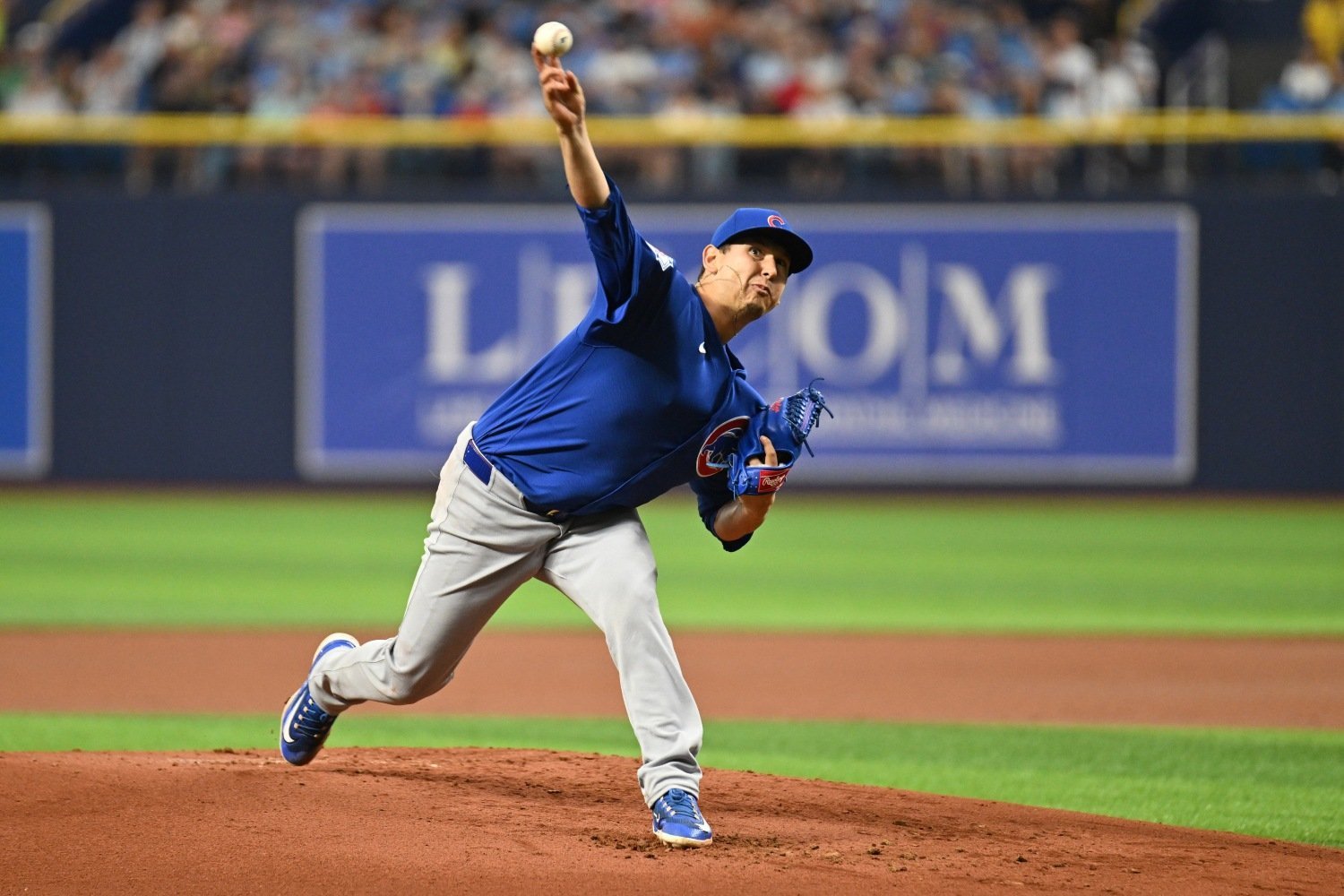 The fastest player in the league hit a sharp one-hopper, almost perfectly placed. With a runner going and Nico Hoerner breaking toward second base to cover a potential throw Tuesday night, Chandler Simpson hit behind the runner. It was still (more or less) up the middle, but Hoerner was moving away from the play. He changed direction gorgeously and speared the ball cleanly on a dive. However, his internal clock got overwound, as he processed the way he'd had to arrest his own momentum and the fact that Simpson gets up the line better than almost anyone else in the league. He rushed and bobbled the exchange, and wasn't able to get the out. It's too bad. He had time, after all, but no way to know that. That play is notable in only one way, really: It's the only hit Javier Assad gave up on Tuesday night. In his first start in the stead of injured Cubs ace Cade Horton, Assad got 17 outs, issued two walks and allowed Simpson to collect that one infield single. With slightly better luck—or if the Cubs had played things more traditionally, with Dansby Swanson covering second with a left-handed batter at the plate—he could easily have gotten through at least six innings without giving up a knock. That's how good he was. Assad only struck out three Rays batters, and the Rays are a team prone to a fair number of whiffs, so don't get ahead of yourself. However, in addition to showing great command of his sinker and feeling out the whole seven-pitch mix that makes him effective in multiple roles, Assad broke out something especially intriguing Tuesday night: a better changeup. Though I can't fully confirm this, it sure looks like Assad has gone to more of a kick-change, after being a standard-issue circle-change guy in the past. The pitch has about two inches more depth than it did in the past, despite being slightly firmer. He throws it with similar initial spin to his fastball, but it deflects more than it used to from that flight plan. This wasn't an anomaly born of pitching in the dome at Tropicana Field, either. He's shown this pitch and its movement profile all spring, including during his stint with Triple-A Iowa. He just got a chance to put it on full display Tuesday. TUFYS05fWGw0TUFRPT1fQVFGUlhBQldWQVFBWGxzTEJ3QUhWMUpUQUFBSEJRSUFWbEFDQUFvRVYxWlFWQXRW.mp4 A changeup that good would be a difference-maker for Assad. He's an adroit, fascinating pitcher who manages contact by surprising opposing batters constantly, but he's never really had an out pitch against hitters on either side. If the changeup can develop into that caliber of a weapon—especially given the way he leans on a sinker, which isn't a pitch you want to feature too heavily against opposite-handed batters. A changeup with enough separation from the sinker to miss bats would be huge for him; it could make his mysterious brand of success more conventional and sustainable. Though Statcast erroneously tagged them all as cutters, Assad also showed feel for his cutter-slider slurry Tuesday. He has both of those pitches, at this point, taking a bit off to achieve more movement at sometimes and speeding it up to get in on the hands of a lefty or freeze a righty sitting on his sinker. He's become a true seven-pitch guy. His sweeper and curveball are virtually show-me pitches, forcing hitters to cover a wider velocity band and a larger hitting zone but rarely serving as out pitches. He'll try to use his sinker, cutter and four-seamer to get most of his big outs, but bringing along the changeup could turn him into a reliable mid-rotation stud. Unexpectedly, the Cubs need that kind of step forward from him pretty badly. Therefore, while it was just the first step of a long journey, Tuesday felt like movement in the right direction. View the full article
 -
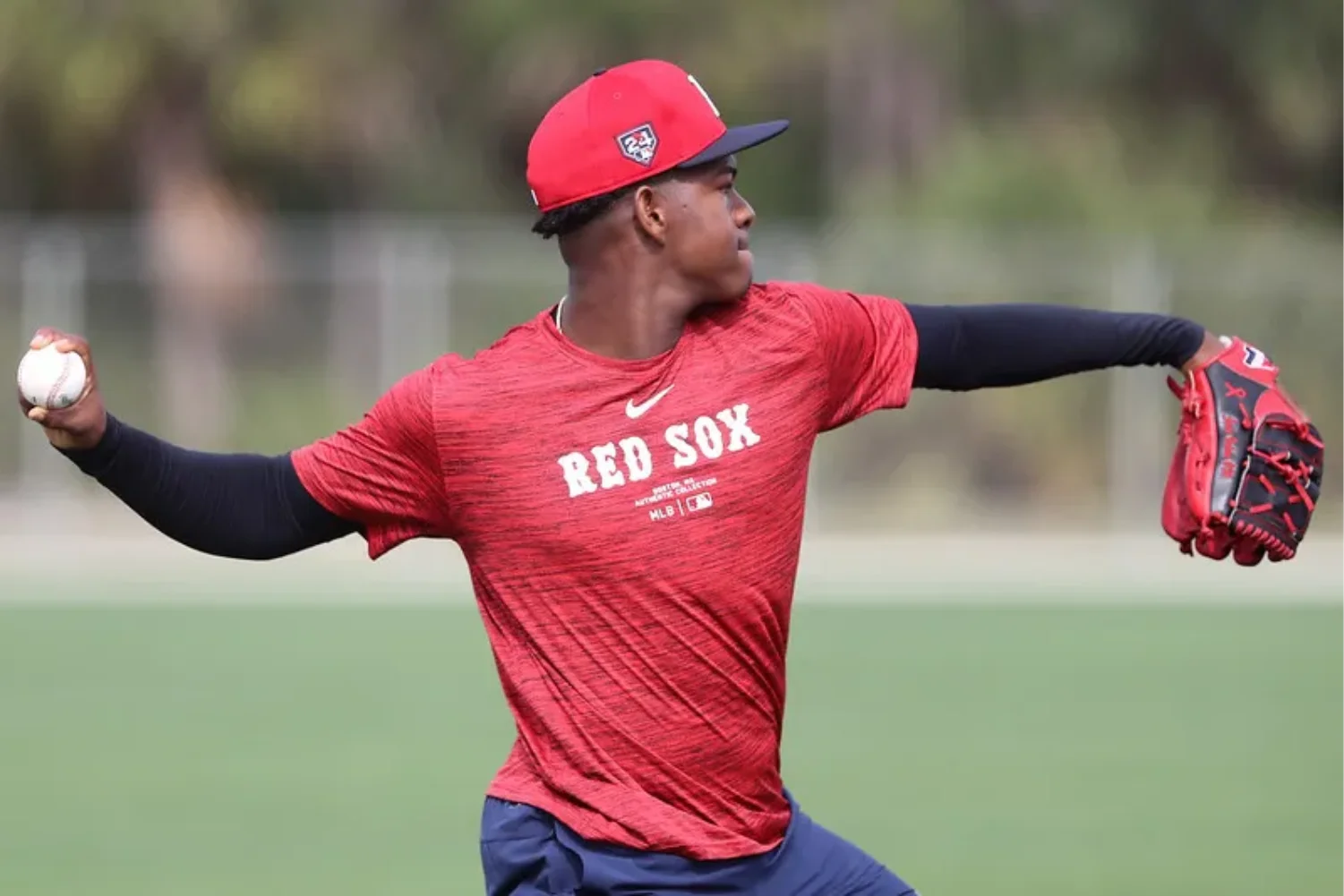 The Greenville Drive opened their season last week, with highly touted pitching prospect Juan Valera getting the call for Opening Day. The right-hander, who is currently TalkSox's fifth-ranked prospect, looked impressive in his 2026 debut in an abbreviated outing. Lasting just 3 1/3 innings, Valera put on a show with his pitching. The right-hander struck out seven, including a strikeout of the side to open the game. He also allowed two runs on two hits including a two-run home run in the third. Overall, he tossed 53 pitches with 32 of them going for strikes. Despite the limited pitch count as the Drive build up Valera's stamina, the young pitcher looked fantastic on the mound with only one major hiccup. The outing was a promising sign, as the right-hander missed significant time in 2025 due to elbow soreness. Limited to just 10 starts, Valera made just two limited starts after May and had mixed results. His season debut was not mixed, despite him not making it out of the fourth inning. The main takeaway from the start was Valera’s ability to get opposing batters to swing and miss. The young right-hander led not just the game but all of High-A with 13 whiffs thanks in part to a fastball that topped out at 99.6 mph. His secondaries also looked much sharper than in the past, playing well off his signature heater. Valera had an issue last year of throwing too many pitches and having long at-bats due to an inability to consistently locate his pitches within the strike zone. While he still needs to work on the latter, Valera only needed 53 pitches for his outing on April 2, an improvement over several of his starts in 2025. Unfortunately, Valera still suffered with location within the strike zone, a trait that also hurt him in 2025. While he could get away with some mistakes in Salem, in Greenville he was hurt when he left his fastball over the heart of the plate. With a runner on second with one out, Valera was facing the batter in a 3-1 count and attempted to get a fastball past him on the inside part of the plate. A slightly missed spot later, and Yordany De Los Santos hit it off of the apartment building in left-center field. This was his lone mistake during that Opening Day start, but he was punished for it all the same. For the most part, Valera managed to mix his pitches avoid leaving them in locations that could lead to damage, but the home run was a reminder that he's still a work in progress on the mound. Regardless of how fast he can throw it, pitching is more than just velocity, especially if he wants to stick in the rotation as he moves up the minor-league levels. Still, there's no denying just how talented Valera is and the potential laden within his right arm. Should Valera continue to put up outings like his first, there is no doubt he will be making an appearance in Double-A before the end of 2026. View the full article
 -
The Blue Jays Have Lost Their Identity Early in 2026
DiamondCentric posted an article in Jays Centre
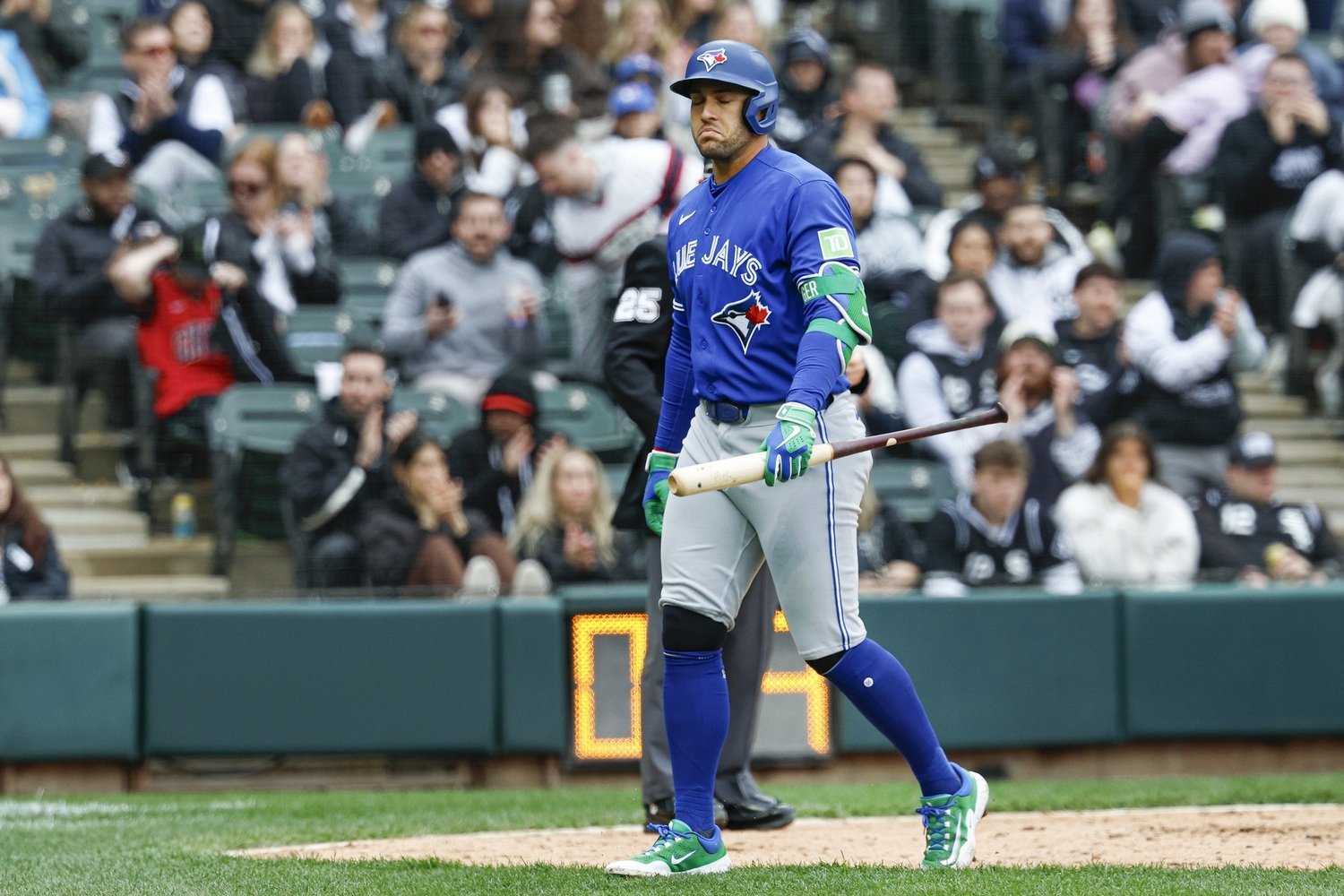 “This is not our brand of baseball.” That was manager John Schneider’s message after the Blue Jays were shut out by the Chicago White Sox on Sunday, a loss that capped off a series sweep and dropped the Blue Jays to a 4-5 record. It marked the first time the team had been below .500 since May 28, 2025. A 4-5 start (now 4-6)* isn't disastrous, but it feels underwhelming after three series against the A’s, Rockies, and White Sox, especially with the latter two teams having lost 100-plus games in 2025. The concern isn't necessarily the results; it's how they’ve gotten there. Injuries have played a role, and the roster has changed, but the Blue Jays simply don't look like the team we’ve come to expect. In 2025, the Blue Jays relied on their team chemistry, elite defense all around the diamond, and their ability to put the bat on the ball and put pressure on opponents' defenses to succeed. It's a formula that worked well, leading the team into the Fall Classic. A large part of the success belongs to hitting coach David Popkins and his staff. They helped spark a resurgence from George Springer, breakout performances from Addison Barger and Daulton Varsho, and meaningful offensive contributions from the back half of their roster. They also had the Blue Jays swinging harder in the second half. A report from Eno Sarris of The Athletic noted that every Blue Jay was swinging harder in the second half of the season (aside from Andrés Giménez) and that number carried over into the postseason. Elite contact ability, combined with the intent to swing hard at hittable pitches, drove the Blue Jays’ success in 2025. Fast forward to 2026, and that identity is starting to slip. Their contact rate is stable, but take a look at how their fast-swing rate compares between the second half of 2025 and where we are in 2026: Fast-Swing Rate 2025: 29.1% 2026: 25.8% The situation only gets worse when you look at what pitches they're swinging the bat at. As a team, the Blue Jays have been swinging too much at pitches out of the zone. Their out-of-zone swing rate (per SIS) has climbed from 33.2% in the second half of 2025 to 36.5% so far in 2026. It doesn't matter how hard you swing when you're swinging at pitchers' pitches. Every Blue Jay that has had extended playing time over the past three seasons has seen their chase rate rise in 2026. Regular small-sample caveats apply, but it's not an encouraging sign, especially when it's happening across the board. Defensively, this team should be better than it was in 2025. Gone is Bo Bichette, who, according to Baseball Savant, ranked in the 4th percentile in fielding run value last season. He’s been replaced by Giménez at shortstop, who ranked in the 86th percentile in fielding run value in 2025. Ernie Clement has taken over at second, and Varsho remains in center field. The Blue Jays have won the team Gold Glove award in two of the past three seasons, and the good news is, they can do it again! Statcast's outs above average and fielding run value both have the Blue Jays ranked among the top five in the league early on. The issue is that the team is still making its fair share of errors. Fielding percentage is a flawed stat in many ways because not all errors are created equal, yet it's still worth noting that the Blue Jays have posted a .978 fielding percentage, ranking 23rd in baseball. Take Tyler Heineman, for example. He's stepped in as the Blue Jays' catcher after Alejandro Kirk left a game with a thumb injury, and made a bad throw that helped the White Sox push across a run and hand the Blue Jays another loss. The very next day, it was more of the same; the Blue Jays were down a run late, and another bad throw allowed the White Sox to add some insurance runs. The Jays couldn't catch up. Speaking of catcher defense, the Blue Jays have had their issues throwing out baserunners. In 2025, they allowed 110 stolen bases, 16th-most in baseball, right in the middle of the pack. So far in 2026, Kirk has allowed 10 baserunners to steal, while Heineman has allowed three, and Valenzuela one. Those 14 stolen bases against are the second-highest in baseball so far. Errors will happen, and just because they've happened early doesn’t mean they’ll continue. Still, that's not how the Blue Jays were built to play, and in the early part of the season, it's been costing them games. Right now, they aren’t being beaten; they're beating themselves. The good news? It's April. A slow start isn't insurmountable, and one strong week can reset everything. But if the Blue Jays want to get back on track, it starts with rediscovering their identity, controlling the zone, and swinging with intent. If that returns, so will the wins, and the Blue Jays will be back to playing their brand of baseball Stats updated before games on April 7. View the full article
 -
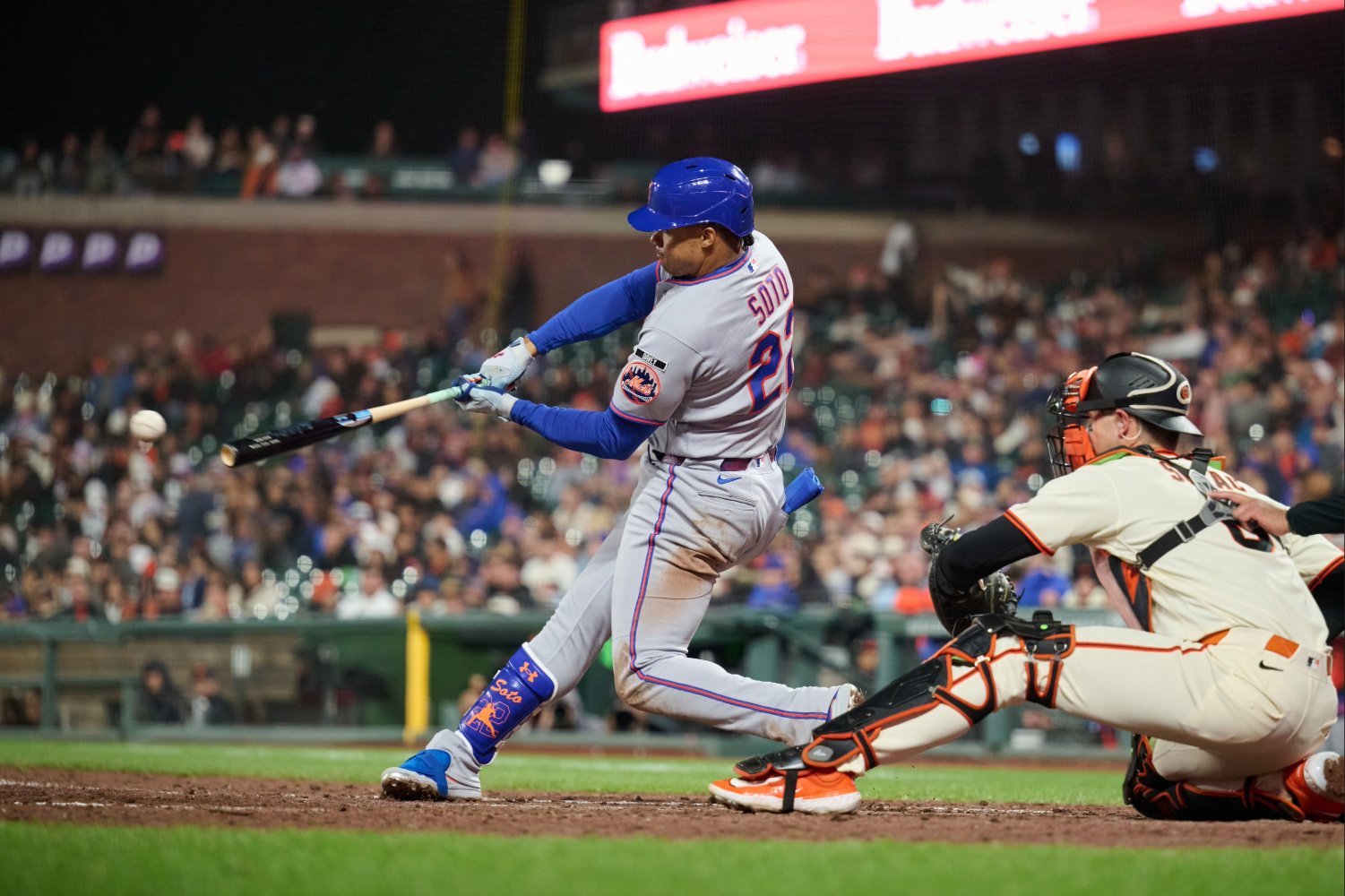 Earlier this week, it was revealed that New York Mets star Juan Soto will visit the injured list for the next two to three weeks as he recovers from a low-grade calf strain suffered last Friday. Considering the wide array of potentially worse outcomes, you can firmly say that both the team and the player dodged a bullet with the diagnosis. However, that doesn’t change the fact that the Mets will be without their best hitter for a while, anywhere from a couple of weeks to close to a month depending on how the injury evolves. Simply put, there’s no replacing Soto, not even if you are the manager of the NL All-Star team. He offers a unique offensive profile that’s almost impossible to replicate. The superstar outfielder had hit ‘just’ one home run before going down with his injury, yet was off to another incredible start this year; Soto was hitting .355 with three extra-base hits, five RBI, a 164 wRC+, three walks, an six strikeouts in eight games. An Elite Performer Still Finding His Groove Soto’s power and patience numbers weren’t at their best in his first eight games, yet only 14 National League hitters had a higher wRC+ than him as of the morning of his placement on the IL. This is an offensive machine entering his prime and about to post some scary stats in 2026 and the years to come. Last year, Soto became a member of the 40-30 club after homering 43 times and stealing a career-high 38 bases, which is remarkable given his 13th percentile sprint speed. If you want to talk percentiles, however, you should take a look at his offensive profile. In 2025, the Mets outfielder and perennial MVP candidate ranked in the 98th percentile in average exit velocity, 100th percentile in xwOBA, 97th percentile in barrel rate, 97th percentile in hard-hit rate, 100th percentile in chase rate, 96th percentile in expected batting average, and 100th percentile in walk rate. And, if you follow the Mets closely, you surely remember he was being criticized in the early stages of last year’s campaign because of his ‘slow’ start, which was basically a slightly lesser version of these stats. What do all these percentiles mean? Well, the short answer is that Soto is a beast. The more elaborate response is that he is a nightmare matchup for pitchers because he combines elite contact ability, power, and plate discipline. Not even Aaron Judge or Shohei Ohtani have such an amazing combination of the three, even if their most prolific skill (power) is more noticeable in the box score than the otherworldly all-around contributions Soto offers. Soto is a cheat code because he doesn’t chase, and when he swings, he basically murders the ball. His plate discipline is so legendary that his judgment of the strike zone often conditions umpires to make their calls. A Legend In The Making That’s what the Mets offense will be missing for the next couple of weeks, a guy with a legendary eye at the plate and 245 career long balls before turning 28. A few years ago, he was already flirting with 100 MLB homers at 23 years old, when some of the top prospects in the game weren’t even in Triple-A. It takes a special talent to post a 146-wRC+ season over 494 plate appearances at 19 years old. Soto did it in 2018, and since then, he has only gotten better. This season, his Statcast profile hasn’t been all red like last year, but he only played eight games. That’s a tiny sample for some of these metrics to be stable, yet he still is in the 88th percentile in Statcast’s Batting Run Value. Give him a couple of weeks to return and a few more to find his stride, and let’s re-visit these metrics in the late summer. It's not a stretch to say he's the best pure hitter in the world. As for the Mets, they will probably have to use Brett Baty a lot, at least vs. righties. Tyrone Taylor and Jared Young, who is actually off to a strong start, will also be factors (Ronny Mauricio was called up to take his roster spot, but he won't be starting regularly). Replacing Soto, however, will require more than just a couple of reserve players doing a good job. Even the pitchers will need to step up their game for this injury not to derail New York’s first month. View the full article
 -
Anatomy of an At-Bat: Ryan Jeffers Finally Conquers Tarik Skubal
DiamondCentric posted an article in Twins Daily
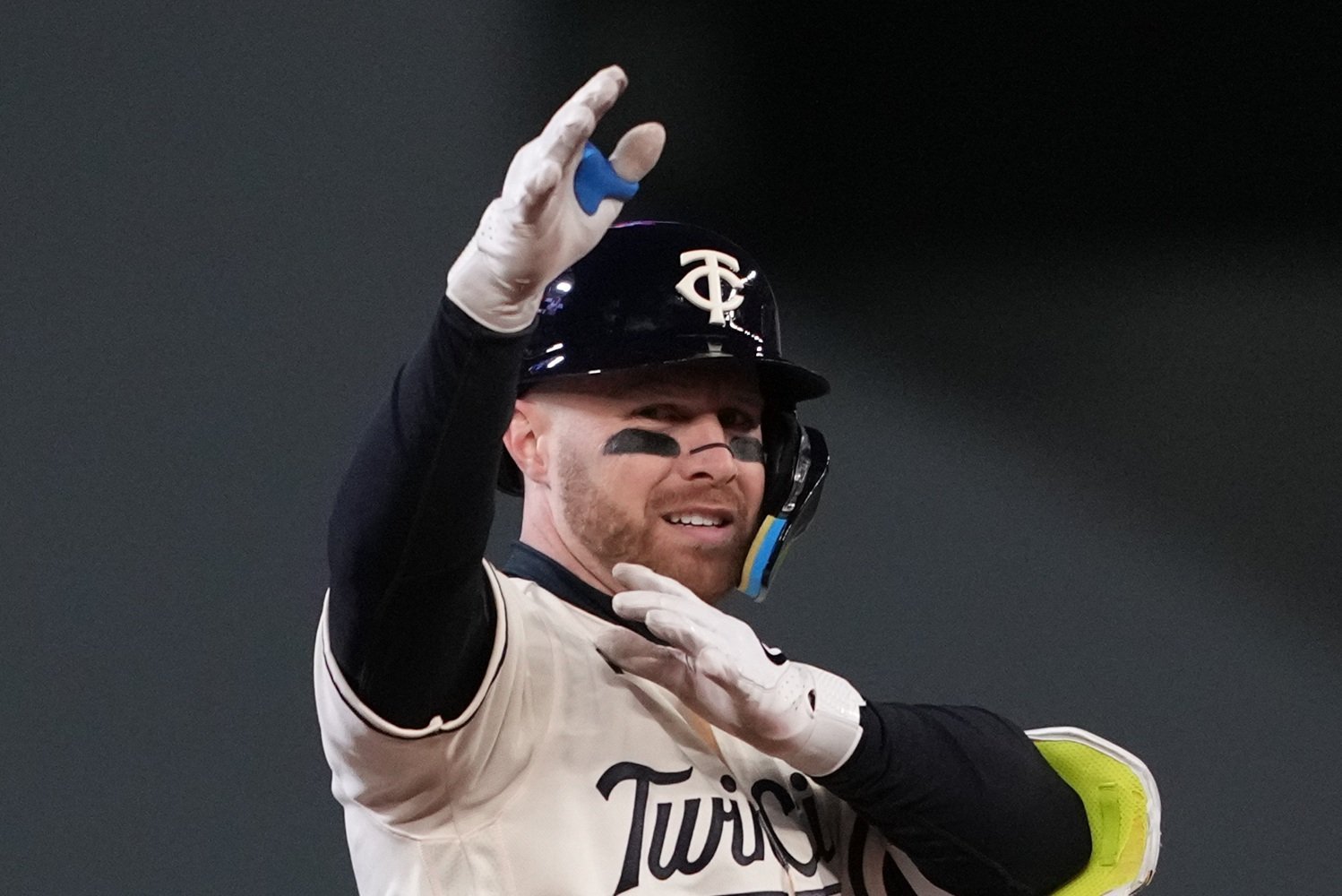 There are certain matchups in baseball that begin to feel inevitable. A pitcher seems to have a hitter’s number, the results stack up, and eventually every new plate appearance feels like a rerun. For Ryan Jeffers, that reality had long existed against Tarik Skubal. Entering Tuesday night, Jeffers had stepped in against Skubal more than any other pitcher in his career. The results were lopsided, to the point of being almost unbelievable. In 25 plate appearances, Jeffers had just one hit. Yes, it left the yard, but the rest of the line told the story. Nine strikeouts. Two walks. A .043 batting average and a .294 OPS. It was dominance, plain and simple. That lone bright moment came all the way back on July 8, 2021. Skubal was still developing, Jeffers was in his sophomore season, and Minnesota scratched out five runs in a 5-3 win. Since then, nothing. Four seasons of empty at-bats against one of the best left-handed arms in the game. So when Jeffers walked to the plate Tuesday night, the context mattered. The Twins were clinging to a one-run lead. Austin Martin and Byron Buxton worked disciplined ant-bats to draw walks after Skubal had yet to walk a batter all season. Luke Keaschall smacked a single to open the scoring but the Twins were going to need more. First and second with one out. No room for error. The type of moment that can swing a game, and maybe exorcise a few demons along the way. Anatomy of an At-Bat Skubal opened with what has worked so often before. A slider darting across the zone. Swing and miss. Then a 96 mile per hour fastball painted at the top of the zone for a called strike. Just like that, 0 and 2. It looked familiar. Too familiar. But this time, the at-bat did not end there. Skubal went back to the fastball, nearly identical in location, this one at 96.4. Jeffers stayed alive, fouling it away. Another heater followed, this time a 96.8 sinker at the top of the zone. Again, Jeffers got a piece. The count still sat at 1 and 2, but the tone had shifted. Instead of overmatched, Jeffers looked stubborn. That distinction matters against pitchers like Skubal. Survival is the first step. Then came the pitch that had ended so many of these battles before. A slider on the edge of the zone, tempting, sharp, designed to finish. In years past, that is likely a swing and miss. Another strikeout. Another walk back to the dugout. Instead, Jeffers stayed through it. The swing was controlled, direct, and decisive. He drove the ball down the right field line, a 90.3 mile per hour rocket that split the defense. Both runners came around to score. Just like that, the narrative flipped. The two-run double did more than pad the lead. It shifted the game’s probability by 14.9%, pushing Minnesota to an 89.3% chance of victory. In a single swing, Jeffers turned years of frustration into one of the most impactful moments of the night. For hitters, success is often less about dramatic changes and more about subtle adjustments. A fraction longer on the fastball. A better recognition of spin. The willingness to fight off pitches instead of succumbing to them. Jeffers showed all of that in one at-bat. Maybe it was just one swing. Maybe it was just one night. But for a hitter who had spent years searching for answers against the same opponent, it felt like something more. Jeffers did not just get a hit off Skubal. He changed the script. And sometimes, that is all it takes to finally leave the past behind. What stood out about that at-bat? Did Jeffers finally solve Skubal? Leave a comment and start the discussion. View the full article
 -
Blue Jays Sign International Amateur Free Agent Tomoya Kinjo
DiamondCentric posted an article in Jays Centre
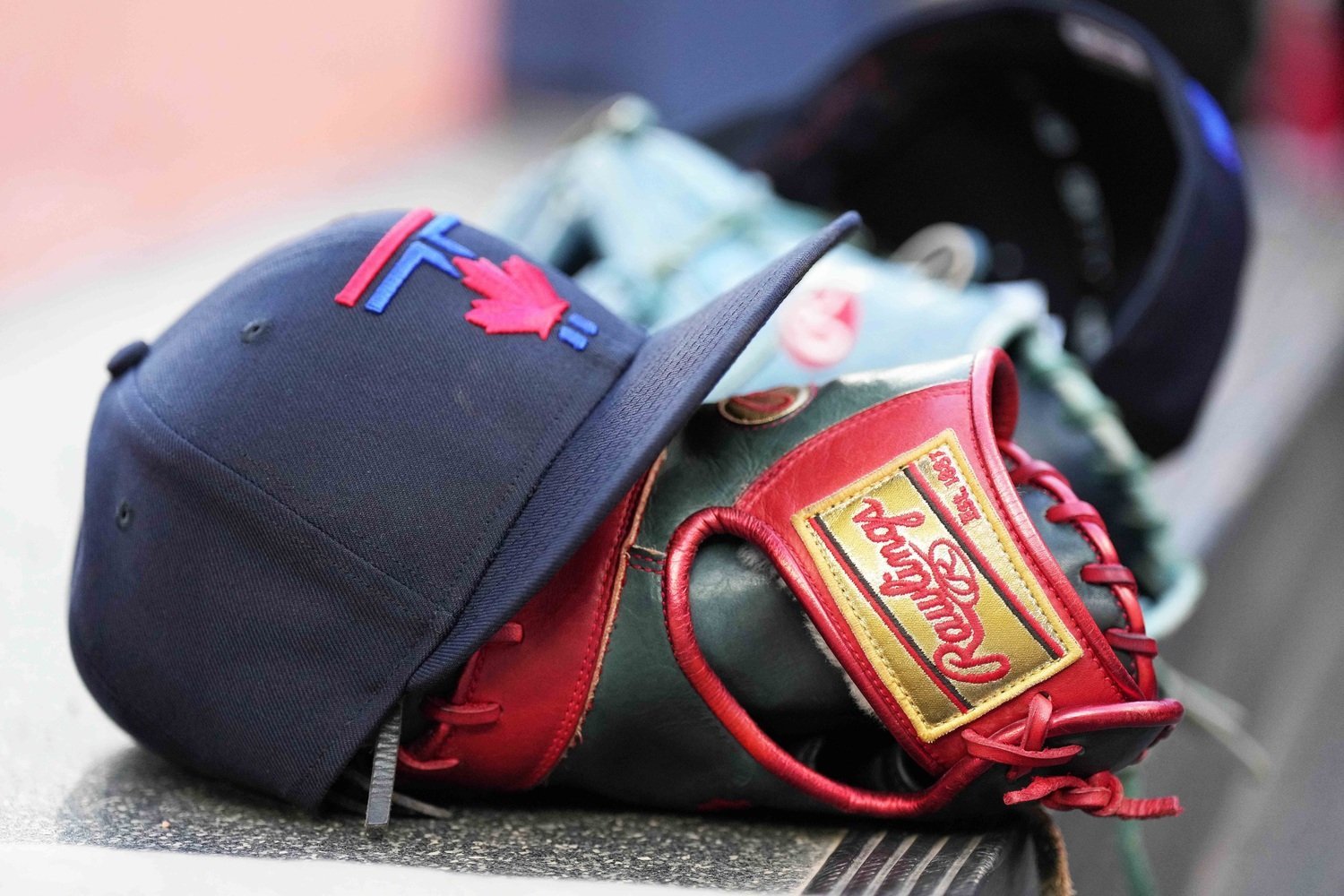 According to reporter Francys Romero, the Toronto Blue Jays recently signed Tomoya Kinjo, an international amateur free agent from Japan. The right-hander trained in the Dominican Republic and previously played in the Shikoku Island League Plus, an independent professional league in Japan. At 23 years old, Kinjo is on the older side for an international amateur signing, but Romero notes he reaches 98 mph on his fastball – that's eye-catching at any age. Indeed, according to Yakyu Cosmopolitan, Kinjo has set a goal to reach 165 kmh (103 mph), and he's documenting his progress on social media. He has already hit the 100 mph milestone in this endeavor. Obviously, there's more to pitching than velocity, but the appeal of an amateur who can already hit triple digits is just as clear. Yakyu Cosmopolitan also notes that Kinjo entered the NPB draft in both 2024 and '25 but was not selected in either year. In other words, he's not going to be a top prospect – at least not right away (and maybe not ever). He's a notable lottery ticket, but he's still a lottery ticket. Kinjo joins many new Blue Jays prospects in the international class of 2026, highlighted by catcher Juan Caricote and outfielders Michael Mesa and Aneudi Severino. Romero did not provide details about Kinjo's signing bonus. View the full article
 -
 Transactions: None Nashville Pre-game media notes Gwinnett (Braves) 4, Nashville 1 Box Score As always, you are encouraged to read the official round up from the team site: Sounds Suffer 4-1 Loss to Gwinnett The Sounds dropped the first game of their series with Gwinnett on Tuesday night, and the story was the Stripers running all over Sounds’ starter Carlos Rodriguez and catcher Jeferson Quero. Gwinnett stole a stunning 10 bases in the game, all in the first five innings. Gwinnett leadoff man Jim Jarvis accounted for four of the steals, and even Rowdy Tellez chimed in with a first inning steal, his second on the season. If you’re a glutton for punishment, or care to breakdown what went wrong, you can rewatch most of the steals here, courtesy of Gwinnett’s X account: Quero entered the game having thrown out 3/7 would-be base stealers on the young season but looked discombobulated on a few attempts. He sailed a few throws 3-4 feet wide of the bag, had one or two less than stellar exchanges, and then a couple times he had a delayed reaction with a lefty in the box. I’m not pushing the panic button on Quero yet, because Rodriguez did not do a whole lot to help, as Stripers runners were getting massive jumps on him, without many throws over. Besides getting run all over, the Sounds run prevention was good in the latter half of the game, holding Gwinnett scoreless in the final four frames and totaling 14 strikeouts on the night. Reliever Drew Rom struck out five in a row at one point: Offensively, the Sounds managed just two hits, with Jett Williams’ single in the 6th inning accounting for the lone run of the game. For just the second time all season, Luis Lara failed to reach base, as he took an 0 for 4 collar. Luke Adams wore his fourth HBP of the year. Garrett Stallings will take the mound in game two on Wednesday night. Still no Robert Gasser in the probable starting pitchers for the week yet. When and where will we see the Gas Man next? Biloxi pre-game media notes Biloxi 8, Pensacola (Marlins) 2 DeBerry's Gem Paves Way for 8-2 Home Opening Win over Blue Wahoos Box Score The results were more positive in the Southern League on Tuesday night as Biloxi dominated Pensacola with a wire-to-wire victory in the Shuckers’ home opener. Twenty-three-year-old Jaron DeBerry anchored the Shuckers run prevention with a dazzling season debut. The 2024 third round pick tossed five scoreless innings with seven strikeouts and just one hit allowed to earn the win. In his final inning of work, Berry was the beneficiary of a stellar defensive play by centerfielder Dasan Brown that kept the Blue Wahoos off the board: Blake Burke got the action going in the bottom of the first with his fourth homer of the year, courtesy Biloxi’s X account: Burke has four hits in four games and they’re all solo bombs. Everyone in the Biloxi lineup got in on the action, but most of the damage came from the top of the order. Second baseman Dylan O’Rae continued his hot start to the season with a triple, three runs scored, and three steals. The Shuckers stole six bases as a team. Jesus Made drew three walks and drove in O’Rae with an RBI single to cap the scoring in the seventh. Damon Keith added two hits and knocked in three. Mark Manfredi struck out the side in the ninth inning, and has now struck out eight of nine batters faced this season. As a team, the Shuckers struck out 14 batters. Wisconsin pre-game media notes Wisconsin 6, Quad Cities (Royals) 0 Box Score Rattlers Shut Out Quad Cities It was good to see all the Timber Rattlers top prospects back in the lineup on Tuesday after Braylon Payne, Marco Dinges, and Josh Adamczewski all left the second game of Saturday’s frigid double header in Appleton. The Timber Rattlers made the most of their seven hits (six singles, one double) by going 4-for-9 with runners in scoring position on the night. Payne, Luis Pena, and Eric Bitonti all had run-scoring singles. Andrew Fischer capped the scoring with a two-run single in the seventh: On the mound, Rattlers’ 23-year-old starter Yorman Galindez was making his first professional appearance since June 2024, after missing all of 2025 recovering from elbow surgery. Galindez pitched just two scoreless innings, while striking out four, but we only saw him for 30 pitches due in part of a lengthy delay around an injury to the home plate umpire. Righty Bryalon Owens was the bulk man and earned the win in relief, striking out eight over 4+ innings. Not to be undone by Nashville and Biloxi on the night, Wisconsin managed 17 strikeouts of their own. Wilson pre-game media notes Salem (Red Sox) 10, Wilson 2 Warbirds Drop Series Opener at Salem Box Score Salem dominated from the opening bell on Tuesday night. The RidgeYaks built an early lead and blew the game open with a four‑run fourth inning and a five‑run fifth, cruising to a 10–2 win over the Wilson Warbirds in the series opener. Andrew Healy, a 2025 9th round pick out of Duke, made his professional debut on Tuesday night. Healy’s two scoreless innings were the lone bright spot for the Warbirds, who committed five errors that led to four unearned runs in the contest. Juan Ortuno now owns a modest three game hit streak to start the season. Ortuno also notched his first steal of the season. Handelfry Encarnacion added two singles to raise his average to .278 through three games. Organizational Scoreboard including starting pitcher info, game times, MiLB TV links, and box scores Current Milwaukee Brewers Organization Batting Stats and Depth Current Milwaukee Brewers Organization Pitching Stats and Depth View the full article
 -
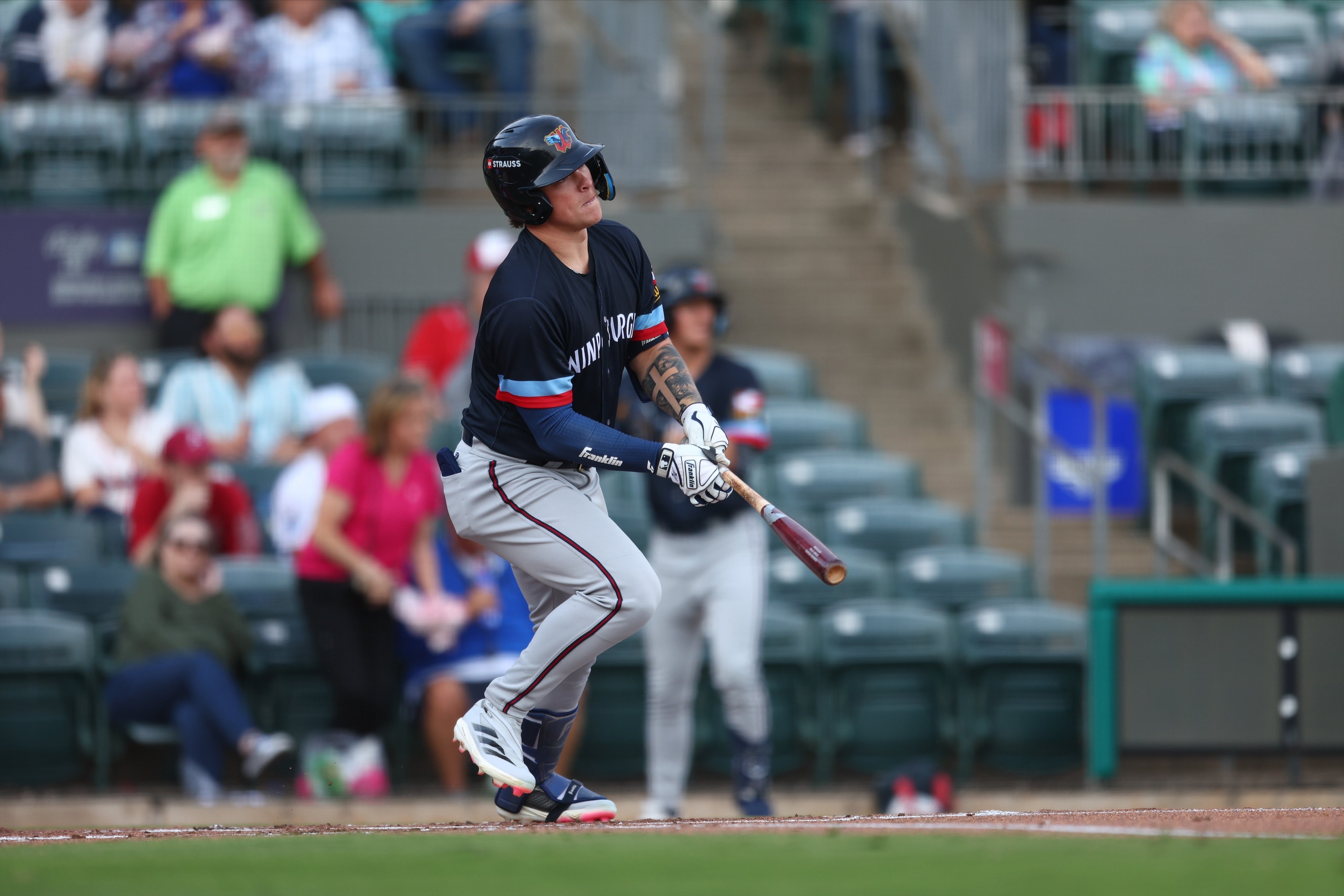 TRANSACTIONS IF Jorel Ortega was sent from Wichita to Fort Myers to begin a rehab assignment. He played second base and led off for the Mighty Mussels. The Wind Surge were also assigned RHP William Fleming, who the organization signed earlier in the day. SAINTS SENTINEL St. Paul 0, Toledo 1 Box Score On the mound for the Saints was right-hander Andrew Bash, who put together a solid effort in Toledo. He allowed a single to top prospect Max Clark in the bottom of the first, and after stealing second base he was brought in with an RBI single to give the Mud Hens an early 1-0 lead. But that was it against him as he retired the next nine in a row and pitched into the fifth inning. In 4 2/3 innings, Bash gave up only the single run on three hits and two walks, while punching out six. Relievers Eduardo Salazar (1 2/3 IP, 2 H, BB, K) and Zak Kent (1 2/3 IP, H, BB) finished off the final 3 1/3 scoreless innings, doing their part to give the Saints lineup a chance. Except any offense from that lineup was non-existent. Perhaps Emmanuel Rodriguez behind scratched from the lineup due to illness earlier in the day was a bad omen. The first 14 hitters of the game were retired before Ryan Kreidler drew a walk in the fifth inning for their first baserunner. Then the next eight went down before Kreidler and Kyler Fedko took back-to-back walks in the eighth. This gave them their first at-bat of the game with a runner in scoring position, but Alex Jackson and Aaron Sabato proceeded to go down swinging. With the Mud Hens no-hitter still intact Kaelen Culpepper led off the top of the ninth. He ended up called out on strikes on an overturned pitch. Walker Jenkins challenged a strike three call as the next hitter, earning a walk for his efforts. That brought up Gabriel Gonzalez, who did this: While they avoided being the victim of a no-hitter thanks to that bloop, Alan Roden and Orlando Arcia went down swinging to end the game with the 1-0 loss. As a team the Saints finished 1-for-28 with four walks and nine strikeouts. They were 0-for-4 with four strikeouts with runners in scoring position. WIND SURGE WISDOM Wichita 2, Arkansas 4 Box Score Unlike their triple-A brethren, the Wind Surge offense was ready to strike in the top of the first inning. With two outs Hendry Mendez delivered a double, and Billy Amick followed with his second homer of the season, an opposite field shot to put them up 2-0. “All I do is win-win-win” pitcher Mike Paredes got the start for Wichita and was electric for four innings. He gave up a solo home run in the second but that was basically it. Of his 12 outs, seven came via the strikeout. He threw 62 pitches, with 39 of them going for strikes (63%) including an absurd 16 swinging strikes. It looked like he was getting them on multiple pitches as well, including his fastball, slider, and changeup. Jaylen Nowlin came on for the fifth inning and delivered a scoreless frame, allowing one hit and striking out three. Alejandro Hidalgo went the next two innings after that, striking out three but surrendering two home runs that put the Travelers in front for good. Darren Bowen struck out all three hitters he faced in the eighth, giving Wichita sixteen strikeouts as a pitching staff, the third highest total in franchise history. While they weren’t in danger of a no-hitter or a shutout after the top of the first, the Wind Surge lineup did go quiet for the final eight innings. They managed just four singles and a pair of walks after Amick’s blast, finishing 1-for-8 with runners in scoring position and leaving eight men on base for the game. The three, four, and five hitters Mendez (2-for-4, R, 2B, K), Amick (2-for-4, R, HR, 2 RBI, 2 K) and Ben Ross (2-for-4, SB) all had two hits while the rest of the lineup was 0-for-22. Kyle DeBarge drew a walk and stole two bases in four at-bats. KERNELS NUGGETS Cedar Rapids 5, Beloit 3 Box Score The Kernels took two of three games against the Peoria Chiefs at home to kick off their season, and hit the road to face the Beloit Sky Carp this week. Shortstop Marek Houston wasted little time getting Cedar Rapids on the scoreboard, taking the second pitch of the game out to left field for his second home run of the season. Eduardo Tait followed by drawing a walk and scored their second run on a triple from Jacob McCombs three batters later. Eli Jones made his first start of the year and went the first five innings. He gave up two runs (one earned) on three hits while striking out four. He threw 69 pitches, with 46 of them going for strikes (67%) as he efficiently pounded the strike zone. He exited the game in line for a win as Cedar Rapids took a 3-1 lead in the top of the fourth thanks to a two-out rally. Jaimie Ferrer drew a walk to get it started, Houston followed with a single to move him into scoring position, and Tait brought him in with a single of his own. Christian Becerra came on to start the sixth inning and went two innings. He gave up a solo home run that gave him a blown save, but also struck out three and got the win. Paulshawn Pasqualotto finished off the final two innings to pick up his first save of the year, retiring all six hitters he faced, including a pair of strikeouts. The Kernels added the needed runs for the win in the top of the seventh on a single from Danny De Andrade. His grounder up the middle was misplayed by the center fielder, allowing Khadim Diaw and Brandon Winokur to score. They had both reached based on walks earlier in the inning. Houston (2-for-5, R, HR, RBI, K) and McCombs (2-for-5, 3B, RBI, 2 K) led the way with two hits apiece. Diaw and Winokur each scored a run and drew three walks. MUSSEL MATTERS Fort Myers 7, Jupiter 6 (10 innings) Box Score He wasn’t the first batter of the game like Marek Houston with the Kernels, but Quentin Young hit his first homer as a professional to also put the Mighty Mussels in the lead before taking the field on defense. Starting pitcher Merit Jones gave up two runs in the bottom of the first so that lead was short-lived, but he settled in from there to finish 3 2/3 total innings. He didn’t give up any other runs and allowed three hits and two walks in the outing, striking out two. Fort Myers got those two runs back in the top of the third as the rehabbing Jorel Ortega doubled with two outs, and Eduardo Beltre followed with his first home run of the season for the 3-2 lead. Ortega knocked in a run of his own with an RBI single in the fifth. The Mighty Mussels pushed their lead to 6-2 in the top of the seventh thanks to a sac fly from Byron Chourio and an RBI single from Beltre. Michael Hilker was the first reliever and pitched 1 1/3 innings after Jones' exit. He walked three but gave up no runs and struck out one. Eric Hammond added two scoreless innings, giving up one hit and striking out one. In the middle of the eighth the weather became too much, with rain leading to a 40-minute delay. When the game resumed, reliever Brian Zeldin took over and had some issues with the mound. A solo homer, walk, wild pitch, and hit batter around multiple delays to fix the mound conditions ended his appearance before he could record an out. He was charged with three runs (two earned) and the dreaded infinite-ERA for his troubles. When play resumed again Xavier Kolhosser took over and was able to finish the long eighth frame. With his team still up 6-5 Kolhosser faced one hitter in the ninth, but gave up a single to end his outing. He would be charged with one earned run on two hits and a walk in one total inning. Mike McKenna was brought into the game and two singles later he had a blown save and the game was heading to extras tied at six. A sac fly from Ryan Sprock scored the ghost runner for Fort Myers in the top half, and McKenna retired all three hitters he faced in the bottom half to pick up the win for the good guys. The Mighty Mussels offense was led by Beltre who had three hits in five at-bats including the homer, and drove in three. Ortega finished 2-for-4 with a run scored and RBI. Young (1-for-5, 2 R, HR, RBI, 3 K) and Dameury Pena (1-for-2, 2 R, 2 BB, 2 SB) each scored two runs. TWINS DAILY MINOR LEAGUE PLAYERS OF THE DAY Pitcher of the Day – Mike Paredes, Wichita Wind Surge (4 IP, 2 H, ER, 7 K) Hitter of the Day – Eduardo Beltre, Fort Myers Mighty Mussels (3-for-5, R, HR, 3 RBI, K) PROSPECT SUMMARY Check out the Prospect Tracker for much more on our Twins Top 20 prospects after seeing how they performed on Tuesday. #1 – Walker Jenkins (St. Paul): 0-for-3, BB, K #2 – Kaelen Culpepper (St. Paul): 0-for-4, K #4 – Eduardo Tait (Cedar Rapids): 1-for-4, R, RBI, BB, K #7 – Gabriel Gonzalez (St. Paul): 1-for-4 #9 – Marek Houston (Cedar Rapids): 2-for-5, R, HR (2), RBI, K #13 – Brandon Winokur (Cedar Rapids): 0-for-2, R, 3 BB, 2 K #14 – Quentin Young (Fort Myers): 1-for-5, 2 R, HR (1), RBI, 3 K #16 – Hendry Mendez (Wichita): 2-for-4, R, 2B (1), K #17 – Kyle DeBarge (Wichita): 0-for-4, BB, 2 SB (3) #19 – Khadim Diaw (Cedar Rapids): 0-for-2, R, 3 BB, K WEDNESDAY’S PROBABLE STARTERS St. Paul @ Toledo (5:35 PM CDT) - RHP Matt Bowman (0-0, 3.86 ERA) Wichita @ Arkansas (11:05 AM CDT) - RHP Ryan Gallagher (0-0, 4.15 ERA) Cedar Rapids @ Beloit (6:05 PM CDT) - RHP Brent Francisco (0-0, 2.25 ERA) Fort Myers @ Jupiter (5:30 PM CDT) - RHP Kolten Smith (0-0, 0.00 ERA) Please feel free to ask questions and discuss Tuesday’s games! View the full article
 -
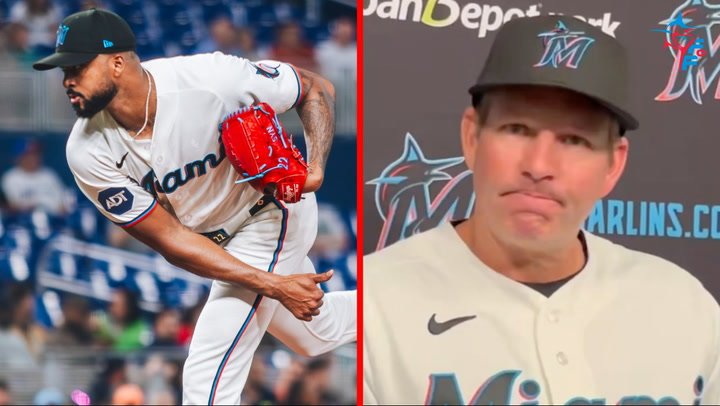 Marlins manager Clayton McCullough speaks with the media about his controversial handling of the ninth inning in Tuesday's frustrating loss to the Cincinnati Reds.View the full article
 -
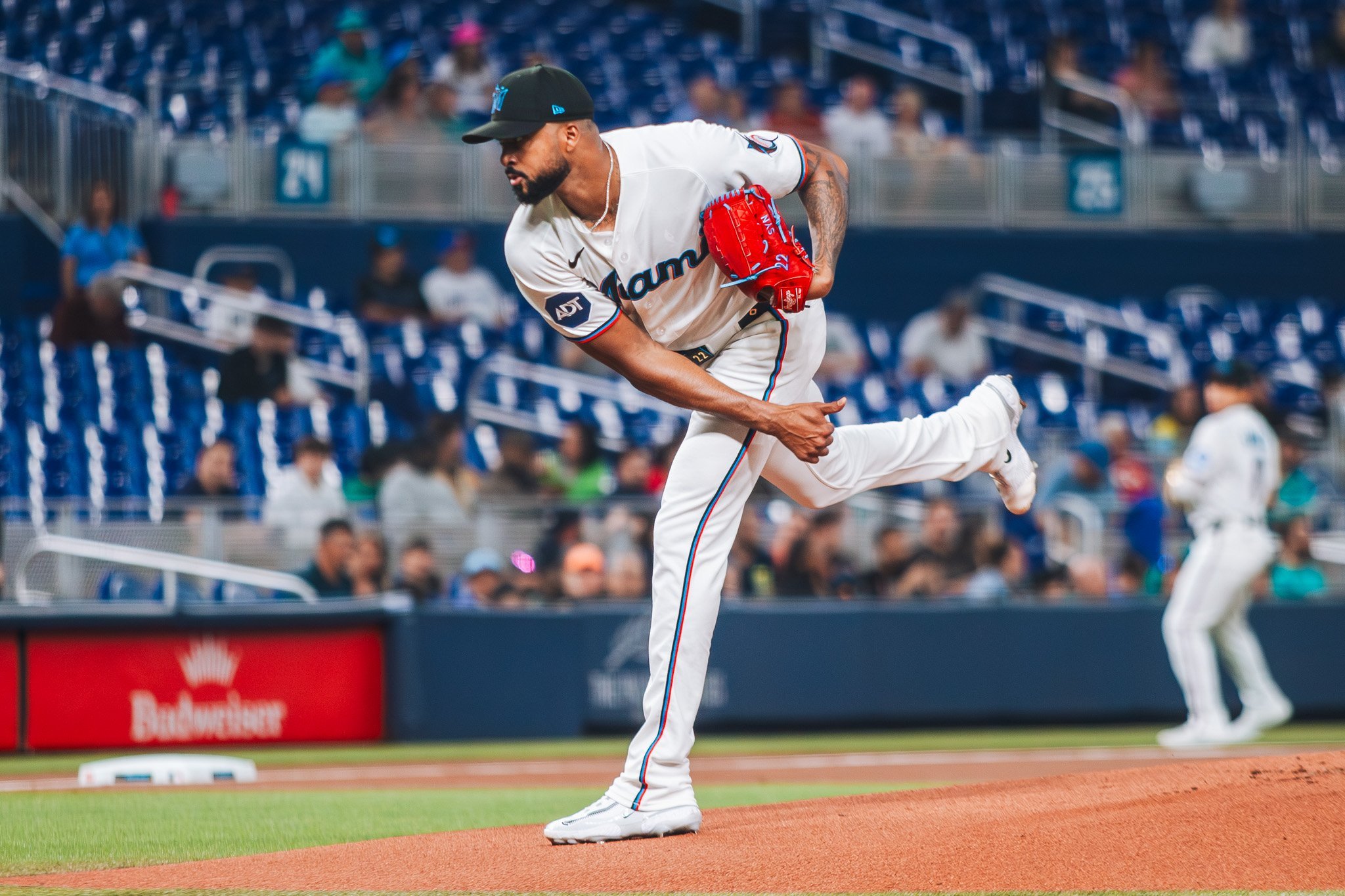 MIAMI, FL — Sandy Alcantara took the mound in the top of the ninth inning with a 2–0 lead, aiming to become the fourth pitcher in Marlins franchise history to record back-to-back complete-game shutouts. After surrendering a double and a walk, manager Clayton McCullough made his most controversial move of the young season, removing his ace in favor of Anthony Bender. Everything unraveled for Miami from there, as both inherited runners scored to tie the game at two. In extra innings, the Reds added four more runs to secure a 6–3 victory. “(Anthony) Bender was the best person to win the game for us,” McCullough said. “Sandy (Alcantara) had certainly gone above and beyond and threw great, but the decision didn’t work out. At that time, I thought the best way to win the game was going with Anthony.” Alcantara, who has thrown 13 complete games—five of them shutouts—was coming off a complete-game shutout in his previous start. McCullough approached the mound in the ninth already set on making the change, with no discussion planned. After the game, Alcantara said he had not spoken with his manager. “I deserved to be asked how I felt before I was taken out of the game,” Alcantara said. “I saw him coming out, and even before he crossed the line, he pointed to the bullpen. Negative thoughts crossed my mind, but those are things I can’t control. Tomorrow I’ll be here preparing for my next start and hoping things go differently.” Through three starts, Alcantara has pitched into at least the seventh inning each time, but for him, it’s not about innings—it’s about pitch count. “They are just innings, not pitches,” Alcantara said in Spanish. He was at 95 pitches and set to face Sal Stewart for the fourth time, having struck him out in his previous at-bat. With runners on first and second and one out—and a 47.6% ground-ball rate—Alcantara had a strong chance to induce a game-ending double play. Still, McCullough opted not to let him face Stewart again. “There are a lot of decisions over the course of a game and a season that weigh on you,” McCullough said. “For this one not to go our way certainly doesn’t feel great. Answering for it is part of the job, and I don’t feel good about how it finished. Losing the game is what stings the most.” As McCullough walked to the mound, fans began to boo, voicing their frustration with the decision to pull the Marlins’ ace. He acknowledged the reaction afterward. “We have passionate fans, and they care. They’re very invested in us winning games,” McCullough said. “They’re certainly within their right to be displeased when things don’t go our way.” Overall, Alcantara finished the night going 8 1/3 innings pitched, allowing two runs on three hits, two walks and struck out six. His fastball topped out at 99.5 mph, which he hit in the top of the first inning. The changeup was once again his most dominant pitch, generating six whiffs and striking out four with it. His four-seam fastball, which he threw 17.1% of the time in 2025, was his most used pitch on Tuesday, and has been his second most used pitch overall. He struck out two with the four-seam and landed it nine out of ten times for a first pitch strike. "I've been doing a great job," Alcantara said. "Doing my work in the pen, trying to locate my four-seam, and today was great. Threw a lot of four-seam today for strikes from both sides." On the offensive side, the Marlins did provide early run support for Alcantara, as both Otto Lopez and Heriberto Hernandez had RBI groundouts, taking a 2-0 lead. The next time Miami scored a run came in the bottom of the tenth inning, when Graham Pauley grounded into a fielders choice, scoring Jakob Marsee, the runner at third. Miami's offense was 2-for-11 with runners in scoring position, unable to provide a bigger cushion for their ace. Marsee, who had gotten off to a slow start in 2026, finished with his first multi-hit performance of the season, highlighted by a 109.0 mph base hit, his hardest hit ball of the season. On the base paths, he also had four stolen bases, which tied a franchise record. The Marlins dropped to 6-5 on the season, now searching for a series split against the Reds. Eury Pérez, who struggled in his last start against the New York Yankees, will take the mound for Miami on Wednesday at 6:40 pm. View the full article
 -
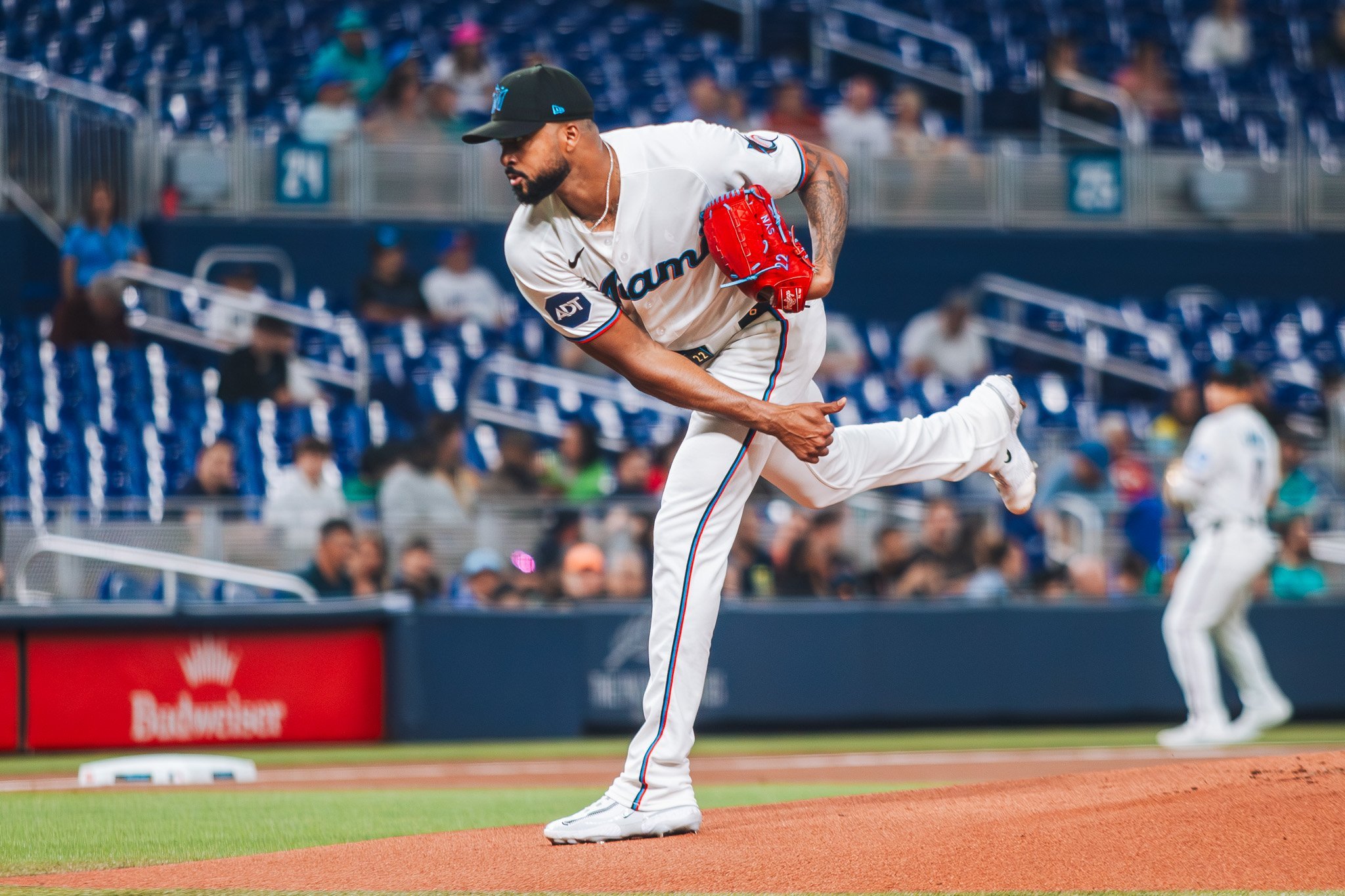 MIAMI, FL — Sandy Alcantara took the mound in the top of the ninth inning with a 2–0 lead, aiming to become the fourth pitcher in Marlins franchise history to record back-to-back complete-game shutouts. After surrendering a double and a walk, manager Clayton McCullough made his most controversial move of the young season, removing his ace in favor of Anthony Bender. Everything unraveled for Miami from there, as both inherited runners scored to tie the game at two. In extra innings, the Reds added four more runs to secure a 6–3 victory. “(Anthony) Bender was the best person to win the game for us,” McCullough said. “Sandy had certainly gone above and beyond and threw great, but the decision didn’t work out. At that time, I thought the best way to win the game was going with Anthony.” Alcantara, who has thrown 13 complete games—five of them shutouts—was coming off a complete-game shutout in his previous start. McCullough approached the mound in the ninth already set on making the change, with no discussion planned. After the game, Alcantara said he had not spoken with his manager. “I deserved to be asked how I felt before I was taken out of the game,” Alcantara said. “I saw him coming out, and even before he crossed the line, he pointed to the bullpen. Negative thoughts crossed my mind, but those are things I can’t control. Tomorrow I’ll be here preparing for my next start and hoping things go differently.” Through three starts, Alcantara has pitched into at least the seventh inning each time, but for him, it’s not about innings—it’s about pitch count. “They are just innings, not pitches,” Alcantara said in Spanish. He was at 95 pitches and set to face Sal Stewart for the fourth time, having struck him out in his previous at-bat. With runners on first and second and one out—and a 47.6% ground-ball rate—Alcantara had a strong chance to induce a game-ending double play. Still, McCullough opted not to let him face Stewart again. “There are a lot of decisions over the course of a game and a season that weigh on you,” McCullough said. “For this one not to go our way certainly doesn’t feel great. Answering for it is part of the job, and I don’t feel good about how it finished. Losing the game is what stings the most.” As McCullough walked to the mound, fans began to boo, voicing their frustration with the decision to pull the Marlins’ ace. He acknowledged the reaction afterward. “We have passionate fans, and they care. They’re very invested in us winning games,” McCullough said. “They’re certainly within their right to be displeased when things don’t go our way.” Overall, Alcantara finished the night going 8 ⅓ innings pitched, allowing two runs on three hits, two walks and struck out six. His fastball topped out at 99.5 mph, which he hit in the top of the first inning. The changeup was once again his most dominant pitch, generating six whiffs and striking out four with it. His four-seam fastball, which he threw 17.1% of the time in 2025, was his most used pitch on Tuesday, and has been his second most used pitch overall. He struck out two with the four-seam and landed it nine out of ten times for a first pitch strike. "I've been doing a great job," Alcantara said. "Doing my work in the pen, trying to locate my four-seam, and today was great. Threw a lot of four-seam today for strikes from both sides." On the offensive side, the Marlins did provide early run support for Alcantara, as both Otto Lopez and Heriberto Hernandez had RBI groundouts, taking a 2-0 lead. The next time Miami scored a run came in the bottom of the tenth inning, when Graham Pauley grounded into a fielders choice, scoring Jakob Marsee, the runner at third. Miami's offense was 2-for-11 with runners in scoring position, unable to provide a bigger cushion for their ace. Marsee, who had gotten off to a slow start in 2026, finished with his first multi-hit performance of the season, highlighted by a 109.0 mph base hit, his hardest hit ball of the season. On the base paths, he also had four stolen bases, which tied a franchise record. The Marlins dropped to 6-5 on the season, now searching for a series split against the Reds. Eury Pérez, who struggled in his last start against the New York Yankees, will take the mound for Miami on Wednesday at 6:40 pm. View the full article
