


DiamondCentric
-
Posts
2,631 -
Joined
-
Last visited
Never
Content Type
Profiles
Forums
Events
News
Tutorials & Help
Major League Baseball Videos
Guides & Resources
Store
Downloads
Gallery
Everything posted by DiamondCentric
-

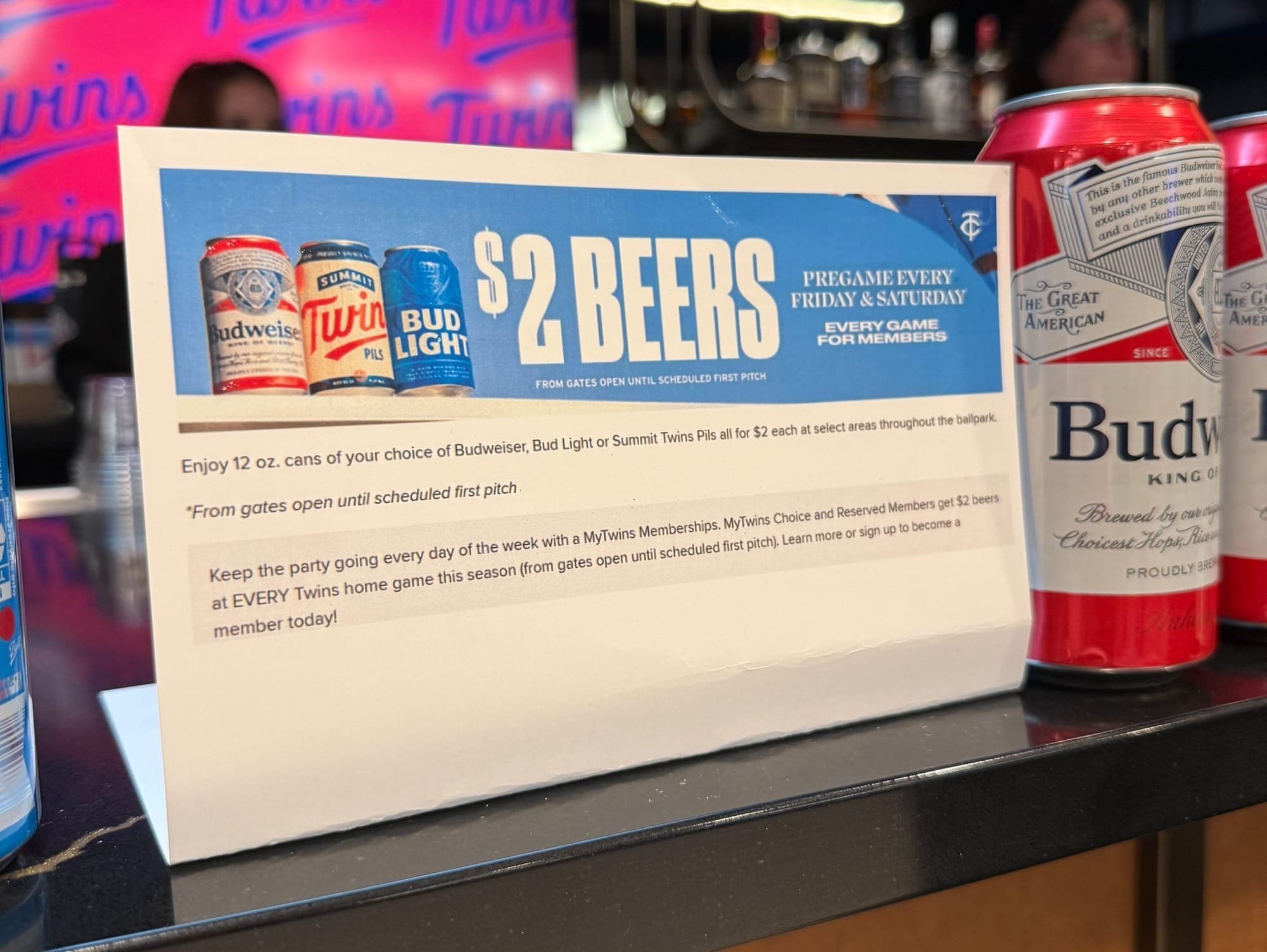 On Tuesday, I was invited to Target Field for a preview of the new food and drink offerings for the upcoming season. As a former industry professional, I focused on the drink side of the menu, but can heartily recommend Red Cow's Double Barrel burger and the Chocolate Fish on a Stick (it's a fish-shaped waffle, not actual fish). I tried every single one of the alcoholic and N/A offerings available. My stomach wasn't what one would call pleased with that decision, but service journalism is a cause greater than one's gut biome. MOCKTAILS There are four craft mocktails available at Hrbek's, Town Ball Tavern, and Truly On Deck. Moon Shot (above right)--Tastes like Capri Sun. Change Up (above left)--Tastes like Sunny D. MVPina Colada (above right)--Tastes like summer. Best presentation of the four. Bullpen Breeze (above left)--Tastes closest to an actual cocktail, might be the presence of ginger beer. Best/least overly sweet of the four. SUMMERTIME SHANDIES A shandy is traditionally half beer, half lemonade. The Target Field offerings hew closer to a Berliner Weisse, which is usually a low-ABV sour beer topped with a splash of flavored syrup. In this case, it's just Bud Light and your choice of five syrup options. They will not let you do all five; I asked. The two best flavors were raspberry (a nice little pucker without much cloying sweetness) and lemon (refreshing, pleasing bitterness). My least favorite was pear, which is a hard flavor to express in beer and was barely there in this iteration. Nouvelle Brewing in Robbinsdale had a fantastic pear sour, but I think it's retired. These are available all over the park. NIKO NIKO BOBA TEAS/DIRTY BOBA SODAS/BOOZY BOBAS Boba teas, for the uninitiated, are drinks with little tapioca "pearls" in them. Niko Niko (section 120) has expanded its offerings with different flavors for both the liquid and the pearls. I had these immediately after the mocktails, which was a mistake. Listen to your mother about too much sugar, kids. Boozy Bobas: I enjoyed the Tequila Sunrise (tequila, mango, lemon, and strawberry pearls). The Peach Palmer (a boozy peach tea Arnie Palmer with mango pearls) and Rum & Jam (boozy Tahitian Treat) were too sweet for me. Dirty Boba Sodas: A boba-fied riff on the preferred drink of the state of Utah, I refuse to offer a review until that one Real Housewife apologizes for pelting her kid with furniture. Flavor offerings: Creamy Pepsi, Peachy Dew, and Pink Cream Soda. Boba: All three get a positive mark! Signature Milk Tea was delicious, Strawberry Lemon Fizz was good and citrusy, and Hawaiian Fruit Tea tasted like vacation. Your kids will love these, and I honestly preferred them to the mocktails. MIX-AND-MATCH CARBLISS COCKTAILS Carbliss takes over the old Grey Duck space in the left field corner and will be offering their low-cal, zero-carb, canned vodka cocktails in these buckets: Those bad boys hold two cans of Carbliss. You can choose two of the same flavor or mix and match like a real mixologist. I preferred the blood orange of the six that were on offer. Yes, I tried all half-dozen flavors in a row. No, I don't recommend doing that, even with something as light and fizzy as Carbliss. My prediction is that this will be extremely popular. $2 BEERS Before the first pitch of every Friday and Saturday game, Twins fans can enjoy $2 12-oz. cans of Budweiser, Bud Light, and Summit Twins Pils. You don't need me to tell you what Bud and Bud Light taste like; Summit Twins Pils is the best beer they make and is a steal (wordplay) at that price point. OTHER DEVELOPMENTS Pryes Brewing is taking over the bar where Sue Nelson plays the organ and multiple Twins Daily writers meet for the best standing-room view of the field. Smart move by them. I've had two Miraculum IPAs in my life. They were fine, but I haven't had enough of their other offerings to give an informed review. Sun Cruiser is getting their own spot by Gate 34 with cornhole and putt-putt. Used to be the Jack Daniels Bar. If you were concerned there weren't going to be enough seltzer/canned cocktail outlets on game day, Surfside also has their own spot down the left-field line, on the club level. OUTSIDE THE STADIUM Best Dive Bar: Cuzzy's Best IPAs: Fulton Best Food/Beer Combo: Bricksworth Best THC Beverages: Modist View the full article
 -
Latest Incident Not the Start to 2026 That Carter Jensen Envisioned
DiamondCentric posted an article in Royals Keep
 The Royals lost the series finale on Thursday against the Twins 5-1. It was a frustrating loss, as the Royals had more hard hits (11) than the Twins (6), but were unable to cash in any runs. No Kansas City hitter had more than one hit on Thursday, and they were shut out and held to five hits by Twins starter Taj Bradley. The former Tampa Bay Rays pitcher had only three strikeouts against the Royals, but he held the Kansas City lineup in check and continued his hot start to the 2026 MLB season. After a slog of a game yesterday that went three hours and thirty-six minutes, the Royals appeared flat on the offensive end in the series finale, much to the chagrin of starter Cole Ragans. The Royals' Opening Day starter held the Twins to only one run on four hits while striking out six batters. Unfortunately, that resulted in a losing effort for Ragans, even though it was miles better than what he produced in Atlanta last week on Opening Day. Furthermore, the Royals didn't start the day on a great note. Rookie catcher Carter Jensen was scratched from the lineup about an hour before game time, with no explanation initially. Most Royals fans worried that an injury was at play, especially with the announcement coming so close to first pitch. However, Jensen was seen warming up with pitchers during the game, and he later substituted defensively for Salvador Perez when Tyler Tolbert pinch-ran for Salvy in the 8th inning. Thus, that injury theory was debunked by his late entry into the game. After the postgame press conference, Royals media reported that Jensen was scratched from the lineup due to oversleeping and arriving late to the ballpark. There's no question that expectations are high with Jensen going into 2026. Not only is he the Royals' primary backup catcher, but he is widely seen as a possible Rookie of the Year candidate, not an easy task in a league that includes Detroit's Kevin McGonigle and Cleveland's Chase DeLauter. However, this "oversleeping" incident doesn't help his start to his first full season with the Royals, especially considering how he's performed at the plate thus far. Therefore, let's break down the aftermath of this Jensen incident, look at his performance after two series of games, and what Royals fans can take away with Jensen and his role on this Kansas City ballclub for the remainder of the season. "There are some things that cannot happen, and that's one of them." The media session in the locker room was certainly a lively one for a 5-1 loss in game six of the season. As expected, reporters asked Jensen what happened, and he didn't shy away from the spotlight or tough questions, especially in the wake of a Royals four-run defeat. When watching the interview, it's evident that Jensen wasn't brushing off the incident. He owned up to his mistake, and one can tell from his voice that he was a bit emotional or embarrassed by the incident. Typically, Jensen is a very confident and eloquent speaker with a very laid-back attitude. That certainly wasn't the case in the interview above. He definitely understands the gravity of what happened, why he was scratched, and the distraction it may have caused, leading up to an important game against a divisional rival. Other teammates were asked about the incident, and Vinnie Pasquantino was the most vocal about Jensen's incident. Vinnie showed compassion to Jensen, but he didn't let him off the hook. The Royals' first baseman also reiterated that the situation had an impact on the team leading up to the game, especially on Salvy, who was prepared to DH and had to switch to catching so close to game time. For those who cannot watch the video or hear the audio, here's the transcript of what Vinnie said to the press, courtesy of KC Star columnist Sam McDowell. The Royals are lucky to have a leader who is as vocal and aware as Pasquantino. It would be easy to completely throw Jensen under the bus here and ruin his confidence. That said, it could also be easy to brush this incident off as not a "big deal" either. That's not exactly the standard a clubhouse wants to set, especially one with playoff aspirations. Thankfully, Pasquantino was able to strike a balance between the two camps, helping set the tone for their young player while ensuring he feels supported in the moment. It also appeared, according to reports, that Bobby Witt Jr. was involved, though he wasn't as vocal as Vinnie in the locker room with the media. This wasn't what the Royals wanted to deal with after a four-run loss and an upcoming series against the 5-1 Milwaukee Brewers looming this weekend. That said, it seems like accountability has been taken all around, especially from Jensen. Let's hope that this is the "wake-up call" (both literally and figuratively) that Jensen needed as he continues to adjust to life as a Major League player. Poor Results So Far (Though the Statcast Metrics Are Encouraging) It would be one thing if Jensen had this incident happen, and he was producing numbers similar to his 2025 metrics. Unfortunately, that is not the case so far in 2026. In 18 plate appearances, Jensen is hitting .125 with a .480 OPS. He has a home run, but he is also striking out 44.4% of the time and only walking 5.6% of the time. Furthermore, his wOBA is only .207, and his xwOBA is even worse at .188. For context, the Royals rookie catcher posted a .403 wOBA and .447 xwOBA in 69 plate appearances last season. A microcosm of Jensen's struggles this year can be seen in this plate appearance against Minnesota reliever Kody Funderburk on Opening Day at Kauffman Stadium on March 30th. On a 3-2 count, Funderburk serves him up a fastball right down the middle. It's a pitch Jensen would've mashed a season ago. Unfortunately, Jensen, obviously pressing, watches it for strike three. Striking out isn't something "new" to Jensen. He's always been a patient hitter, and the strikeouts have been relatively high for a prospect of his caliber. In Double-A Northwest Arkansas last year, he had a 22.7% K%. In Triple-A Omaha, he had a 28.3% K%. However, the K rates were tolerable because Jensen also had high walk rates, resulting in good BB/K ratios. In 2025, he had walk rates of 9.7% in Northwest Arkansas and 16.3% in Omaha. This resulted in BB/K ratios of 0.43 with the Naturals and 0.58 with the Storm Chasers. Last year with the Royals, his K% was only 17.4%, and his BB/K ratio was 0.75. While this is fantastic, it was unrealistic to expect Jensen to automatically be a sub-20% K% hitter again. While some improvement is to be expected, fans need to temper their expectations for Jensen in these categories. Perhaps a 25% K% and 0.45 BB/K ratio (it's currently 0.13) would be something to celebrate, especially over a full 162-game season at the MLB level. Another discouraging trend for Jensen through these first six games is that he just isn't launching the ball well. His average launch angle on batted balls this year is 4.7 degrees, lower than his 7.4-degree average launch angle a season ago. He also has a groundball rate of 55.6%, 9.8 percentage points higher than his 2025 rookie sample. That partially explains why his xwOBA is below his actual wOBA so far and has been trending in the wrong direction this season. On the other hand, there's still been a lot to be encouraged about with Jensen, which is why the Royals and fans should remain patient with the 22-year-old. His hard-hit rate of 44.4% is still 7.4 percentage points higher than league-average, and his 11.1% barrel rate is 3.9 percentage points better than league-average. He is still demonstrating good bat speed, averaging 74.9 MPH on his swing, 0.1 MPH better than a year ago. His fast-swing rate of 45.8% is higher than his 43.7% fast-swing rate in 2025. Those are promising signs that the tools and skills are still there to be successful at the plate. An interesting development for Jensen skills-wise, especially in terms of bat tracking data, is that his swing has been a little longer to start this season. Last year, his swing length was 6.9 feet. This year? It's 7.1 feet. It's a minute difference, but it correlates with his declines in squared-up and blast rates this year. After posting 35.8% squared-up rate and 25.3% blast rate on contact last year, those rates are now down to 26.7% and 6.7%, respectively. It's hard to get base hits if one is struggling to square up with the ball. An interesting development is that Jensen seems to be swinging through with two hands more, or at least on swings where he grounds out. That could be adding that little bit of length to his swing, which may be contributing to his early squared-up and blast issues. Below is a compilation of clips of him making contact on fastball pitches thrown in the same part of the strike zone. In the 2025 clip, he blasts a single off the Athletics' Mitch Spence. This year's clip? He ground out to first against Twins pitcher Simeon Woods Richardson on Opening Day. Jensen Swings-25-26.mp4 It's still early, and as stated before, the pressing may be contributing to that extra swing length that's throwing him off when it comes to squaring up with the ball more consistently. That said, his strong barrel and hard-hit rates, as well as encouraging bat speed, should help Royals fans remain optimistic with Jensen and his outlook for 2026 and beyond. What to Take Away From Jensen's Start (Including the Thursday Incident) Looking at his TJ Stats Statcast percentiles summary, there are still many areas where Jensen is succeeding. Thus, Royals fans shouldn't worry that JJ Picollo will be sending him to Triple-A Omaha anytime soon. At the same time, I think this start to the year has been a bit sobering for the local star. Last year, pretty much everything went right for Jensen in his Royals debut. He hit the ball hard, effectively, and productively, and he seemed to get a lot of fanfare as a result. Jensen earned all the accolades he received last year, and the Royals did the right thing by having him on the Opening Day roster and as the primary backup to Salvy. He's not only the best option as backup catcher, but he's also a player who can give quality at-bats at DH as well. That said, he didn't really go through much struggle last year at the Major League level. That just isn't part of the game, unfortunately. Struggles will come at some point for a young player. What separates the good players from the mediocre to bad ones is that the former are able to bounce back and overcome those struggles, while the latter ones aren't. That's the difference between the Witts and Salvys of the Royals world from the MJ Melendez and Adalberto Mondesi types. What's unique about Jensen's situation is that he is not just going through on-field struggles. He also had an off-the-field one. Is it a major off-the-field incident? Absolutely not. But it happened, it got some national attention, and it affected the team. Jensen can't escape that. Right now, Jensen is saying all the right things. He knows he made a mistake. He knows he can't do it again. And he knows he's not a player of a caliber that can do those things and get away with it. That incident and his slow start at the plate are the reality checks that Jensen didn't experience in his short sample size last year. Now that they have happened, it will be interesting to see how the young Park Hill product responds. This weekend's Brewers series at the K will be a great early test. View the full article
 -
Breaking Down The Royals’ First Trip Through the Rotation
DiamondCentric posted an article in Royals Keep
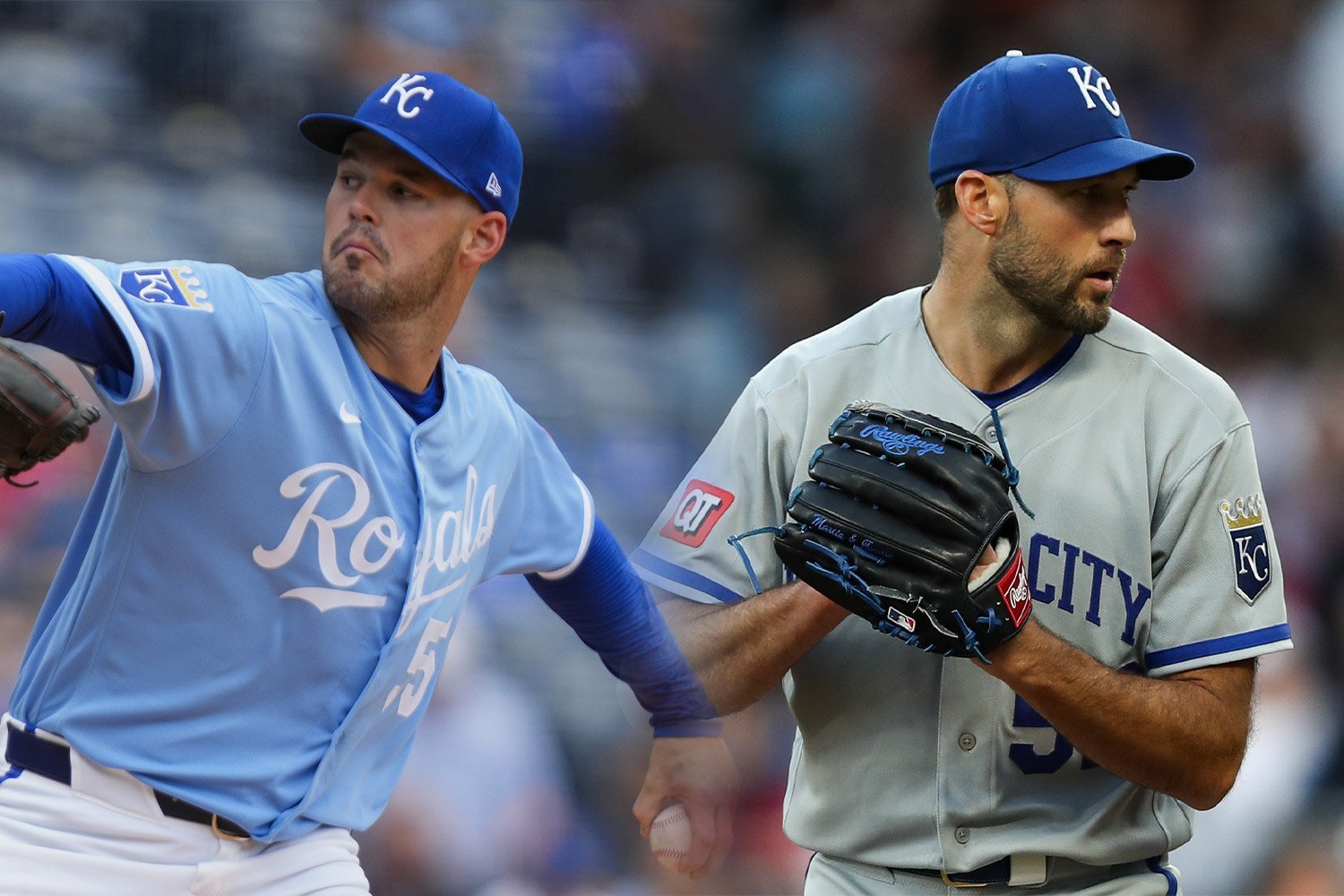 After the first five games of the season, each starter in the Royals' rotation has one start. What are the key takeaways from the first time through the rotation? Cole Ragans Ragans struggled on Opening Day in Atlanta, allowing four runs on six hits and four walks in only four innings of work. Ragans struggled to find the strike zone, particularly with his fastball, slider, and knuckle curve. He was, however, able to generate chases and whiffs, particularly with his slider, which had a 46.2% chase rate and 36.4% whiff rate. His slider was his standout pitch, with a TJ Stuff+ of 106, compared to an overall mark of 101. Ragans was susceptible to big mistakes, allowing seven hard-hit balls, three of which resulted in home runs. For continued success in 2026, Ragans will need to limit the hard hit and power potential of his opponents. Most notably, Ragans appeared to lose his footing while throwing a fastball early in the game, and his fastball delivery was noticeably different later in his outing. It will be important to see if this persists in his next start. Michael Wacha Wacha impressed in his outing on Saturday, throwing six shutout innings with seven strikeouts, three hits, and one walk. He generated 17 whiffs and was able to get the Braves to chase the ball out of the zone at a 50% rate. He also limited the Braves to only four hard hits in his six innings. While the bullpen was not able to hold on to the Royals' 2-0 lead, Wacha did an excellent job in putting the Royals in a position to win the game. Wacha proved that after a poor spring training, he is still capable of impressing on the mound when it matters. While his TJ Stuff+ did not overly impress at only 96 overall, Wacha will continue to yield positive results on the mound if he can continue to limit his opponents to a .212 xwOBA and suppress hard contact. Seth Lugo Lugo followed Wacha’s performance with another shutout effort across 6⅓ innings, allowing five hits and no walks. His effort led to the Royals’ first win of 2026. On Sunday, Lugo looked more like his form of 2024 when he finished second in AL Cy Young voting. Lugo featured nine different pitches that found the zone at an excellent 61% rate. While Lugo was unable to get batters to whiff like Wacha and Ragans, he was able to get the Braves to chase his rare pitches out of the zone at a 33.3% rate. Lugo did allow eight hard-hit balls and an xwOBA of .394, so limiting hard contact will be key to sustaining success throughout 2026. Kris Bubic Bubic got the nod to start the Royals’ home opener on Monday and reminded Royals fans that he is still capable of pitching at his 2025 All-Star level after finishing last season on the injured list. Bubic allowed one run on Monday against the Twins in his six innings. He limited baserunners effectively, allowing only two hits and three walks in his 75-pitch outing. His lone earned run came on a home run by Matt Wallner in the second inning. Bubic showed excellent stuff with a 101 TJ Stuff+, with all of his pitches except for his sinker grading at least 103. Bubic also excelled at generating whiffs with 12 during his outing. Like Lugo, Bubic was susceptible to allowing hard-hit balls, with eight in his 15 batted balls allowed, which drove up his xwOBA compared to his wOBA allowed. Bubic demonstrated that he has the stuff to continue his success from 2025. If he can continue to generate whiffs and limit hard contact, he will be well-positioned to succeed in 2026. Noah Cameron Cameron continued the stretch of strong outings from Royals starters with an effective performance in the rain against the Twins on Wednesday night. He threw five innings, allowing one run on four hits and one walk. Despite the results, Cameron struggled to find the zone (41%) and did not generate many whiffs. When he did locate pitches in the zone, they were often over the middle, allowing Twins hitters to make solid contact. He allowed nine hard-hit balls on 14 balls in play. Cameron will need to reduce hard contact, especially if he is unable to consistently generate swings and misses. Cameron displayed decent underlying stuff with his cutter and changeup grading at 100 and 101 TJ Stuff+, respectively. Since Cameron’s fastball only averages 91.2 mph, he relies on the success of his offspeed pitches for sustained success. Conclusion Overall, the Royals' starters saw success in the first turn through the rotation in 2026. They combined for six earned runs across 27 ⅓ innings, good for a 1.96 ERA. While it is unlikely that the rotation can maintain that level of success for the whole season, they have certainly shown Royals fans that they can give the team a platform to succeed and stay competitive in 2026. View the full article
 -
Brice Turang is Off to an MVP-Level Start. Can He Keep it Up?
DiamondCentric posted an article in Brewer Fanatic
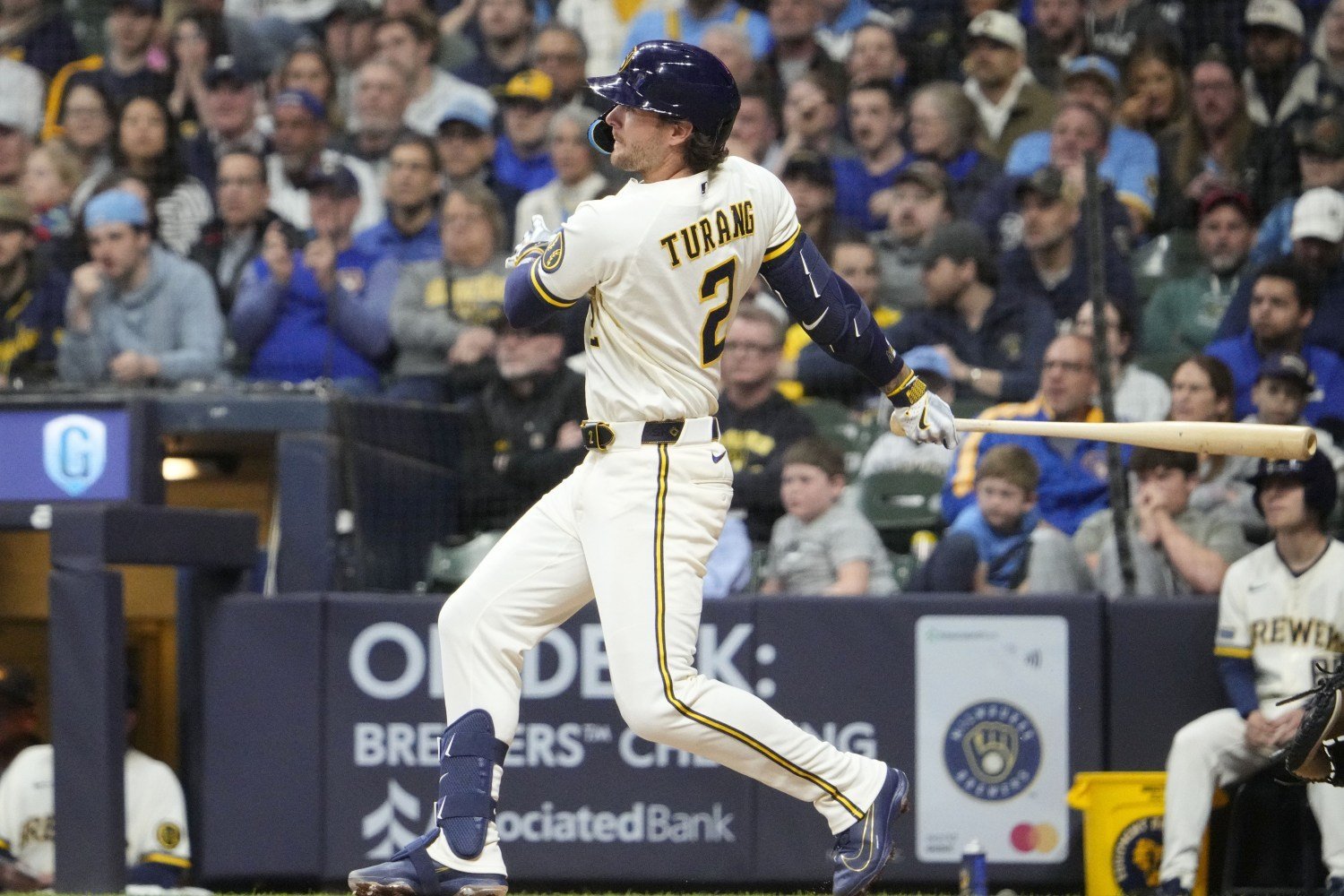 The Rays jumped out to a 2-0 lead in the third inning on Wednesday, when Yandy Diaz hit a 2-run home run to right field off Jacob Misiorowski. An answer wasn’t long in coming, though, as Brice Turang launched his first homer of the year after David Hamilton reached on an error. Turang finished the day 1-2 with 2 RBIs and a walk, bringing his overall line this year to .409/.500/.727 through six games. Additionally, as of Thursday, he leads the league in bWAR and doubles. It's an amazing start to the season, but how much of it is sustainable? First, let's honor just how much Turang has improved over his career in Milwaukee thus far. He made his debut in 2023, slashing .218/.285/.300 over 448 plate appearances, well below league average. He improved the following year, slashing .254/.316/.349 in 615 plate appearances, still below-average, but within shouting distance. Last year was his breakout. Turang hit 18 home runs, more than his previous two seasons combined, while slashing .288/.359/.435, achieving an above-average OPS+ (122) for the first time in his career and finishing 14th in MVP voting, just two spots behind teammate Christian Yelich. Turang has been one of the amazing developmental stories in baseball lately, and was one of the best overall players in MLB last year, but what is his ceiling? Is there still room for improvement with his offensive output, or will he sit at a similar level to what he produced in 2025? The 2026 season has just started, and the sample sizes are small, but there are a few key areas to keep an eye on. First, Turang’s bat speed isn’t great, but it's already improved a lot. He tapped into more bat speed as last season went along, and is back at his 2025 level (a couple ticks faster than in 2023 or 2024) to begin 2026. Because he's always had a plus feel for hitting, as he's begun to swing harder, he's also hit the ball harder. So far in 2026, Turang is hitting the ball even harder than in 2025, ranking in the 97th percentile of the league at 96.0 MPH. That number may not be sustainable, but it's a good initial sign for Turang to continue to produce extra-base hits. Turang is overperforming his expected numbers so far in 2026. His expected batting average is .316, while his expected slugging is .656, which is below his current number. Additionally, his wOBA (.527) is slightly higher than xwOBA (.455). Obviously, his numbers won’t be this high throughout the year, but it isn’t unrealistic to say that Turang could finish with an OPS above .800 and 20 home runs. Looking at the big picture, Turang will likely receive MVP votes once again, if he’s healthy and performs similarly to last year, but a win of that award would be extremely difficult in a league with Shohei Ohtani, Paul Skenes, Juan Soto, and other superstars. However, the better Turang does, the more he might feed into the club's long-term success. Given the Brewers’ spending habits, Turang isn’t likely to receive an extension like the one recently given by the rival Cubs to fellow second baseman Nico Hoerner. Top prospects Jesus Made and Jett Williams are pushing towards infield spots in the big leagues, while Cooper Pratt just signed an eight-year extension a few days ago. Turang won’t be a free agent until the 2030 season, but the Brewers could look to move him as early as this offseason, as their top prospects develop. However, if Turang were to take another leap this year and finish within the top 10 of MVP voting, it would take a rare and extraordinary return for them to move him. Only time will tell what Turang will do over a full season, but with such a great first week in the books, expectations are rightfully high. View the full article
 -
Victor Caratini Isn't a Good Fit for the 2026 Minnesota Twins
DiamondCentric posted an article in Twins Daily
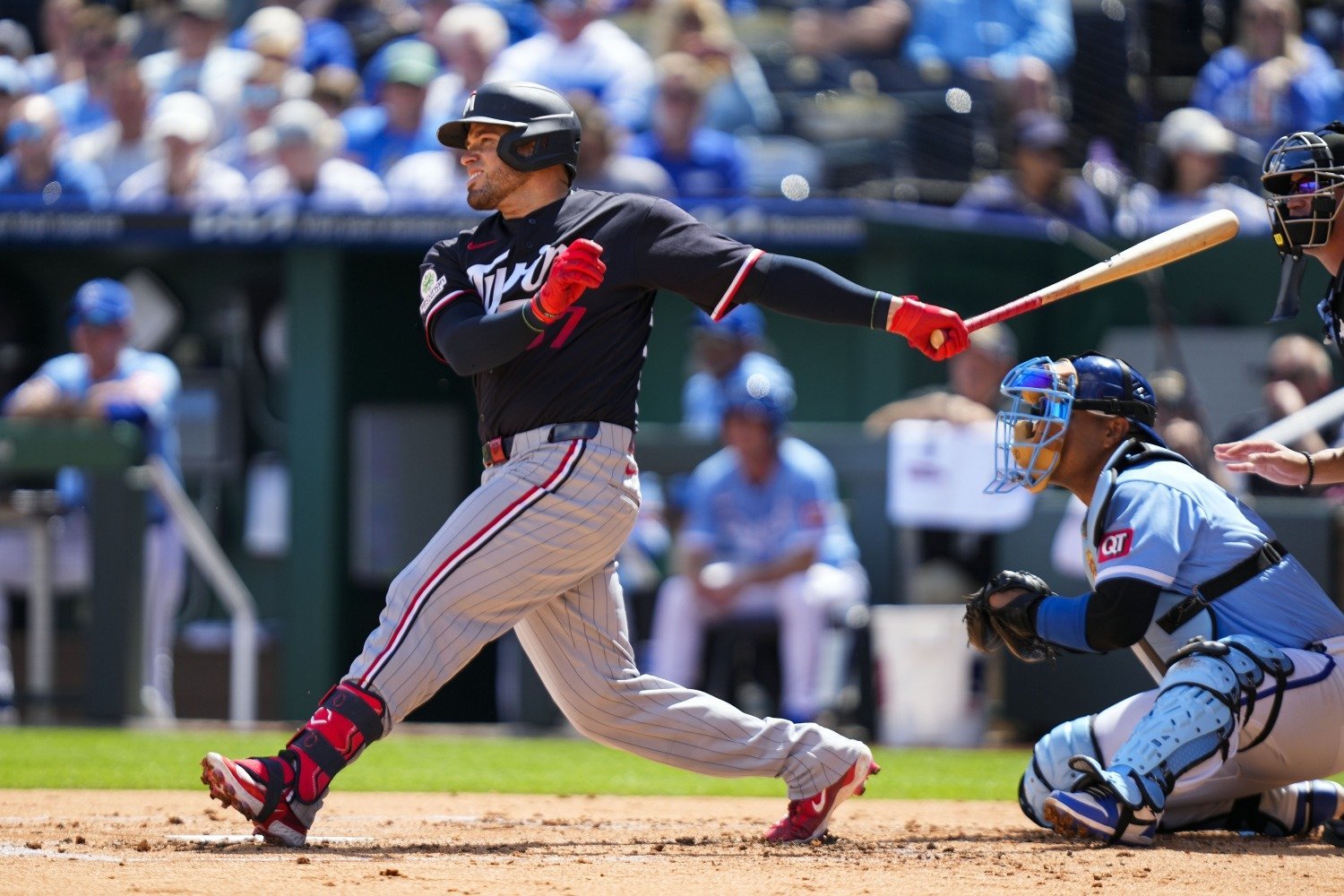 This offseason, Victor Caratini became the first free agent the Twins signed to a multi-year deal in two years. The $14-million, two-year price tag was fair, though it was surprising—and it was difficult to see how he fit the roster and timeline. The way he’s been utilized so far, the acquisition becomes even more questionable. For starters, the Twins acquired Alex Jackson early in the offseason. He had flashed offensively in 2025 and was a well-respected defender. This made him a viable backup for Ryan Jeffers, who was tabbed to pick up a larger percentage of the playing time behind the plate. Caratini’s signing eventually pushed Jackson off the roster, and he’s now stashed in St. Paul for the time being. It was certainly an upgrade at the backup catcher position, but it came at the cost of the limited payroll room the team had available with which to improve this winter. Caratini has started two games behind the plate thus far, and has started at first base three times. In the small sample of the 2026 season to date, the Twins have already committed to Jeffers in a way we never saw them do with Christian Vázquez in the picture, when the two were essentially locked in a timeshare. If this pattern holds, it’s worth questioning why the Twins allocated the resources they did to Victor Caratini. It appears Caratini is an everyday starter against left-handed pitching. It is what it is for a roster with not nearly enough buttons to push in those matchups. He owns a .668 OPS against southpaws in his career, but posted a much more tolerable .740 mark in 2025. Plugging this production into a role like Christian Vázquez had last season would be valuable; doing so at first base is less enticing. If Jeffers carries the lion’s share of work behind the plate for the rest of the season, it’s hard not to feel like the Twins missed an opportunity to legitimately upgrade their lineup. Caratini is a nice player who can switch-hit and play multiple positions in the field. He’s not a player to whom a competitive team should hand a regular role in a corner infield or DH spot. Both positions have a high offensive bar to clear, and have no shortage of options to fill them cheaply every year in free agency. It may be wishful thinking to assume the Twins would have spent the Caratini money elsewhere on the roster if they hadn’t signed him. If their usage of him so far is the plan going forward, however, it’s hard not to argue they should have. They could have kept Jackson for what would be a modest backup role behind the plate. Jackson, by the way, was a more valuable player by Fangraphs Wins Above Replacement than Caratini in 2025. Even signing a Rhys Hoskins type, who struggled last season but has a career .883 OPS against lefties, would have placed a more qualified player in the role Caratini has played so far. Perhaps we see Caratini mix in at catcher in a more even split as the season goes on (or take over as the starter, should Jeffers be dealt in July), but if the Twins stick to their plan for Jeffers to take on a bigger role catching, the signing doesn’t make much sense. Caratini moonlighting behind the plate while serving as the primary first baseman or DH against left-handed pitching isn’t going to provide much impact to a lineup that desperately needs it. The deal was clearly too good for the Twins front office to pass up, but if Caratini’s usage holds, the Twins won’t be better for seizing the opportunity. View the full article
 -
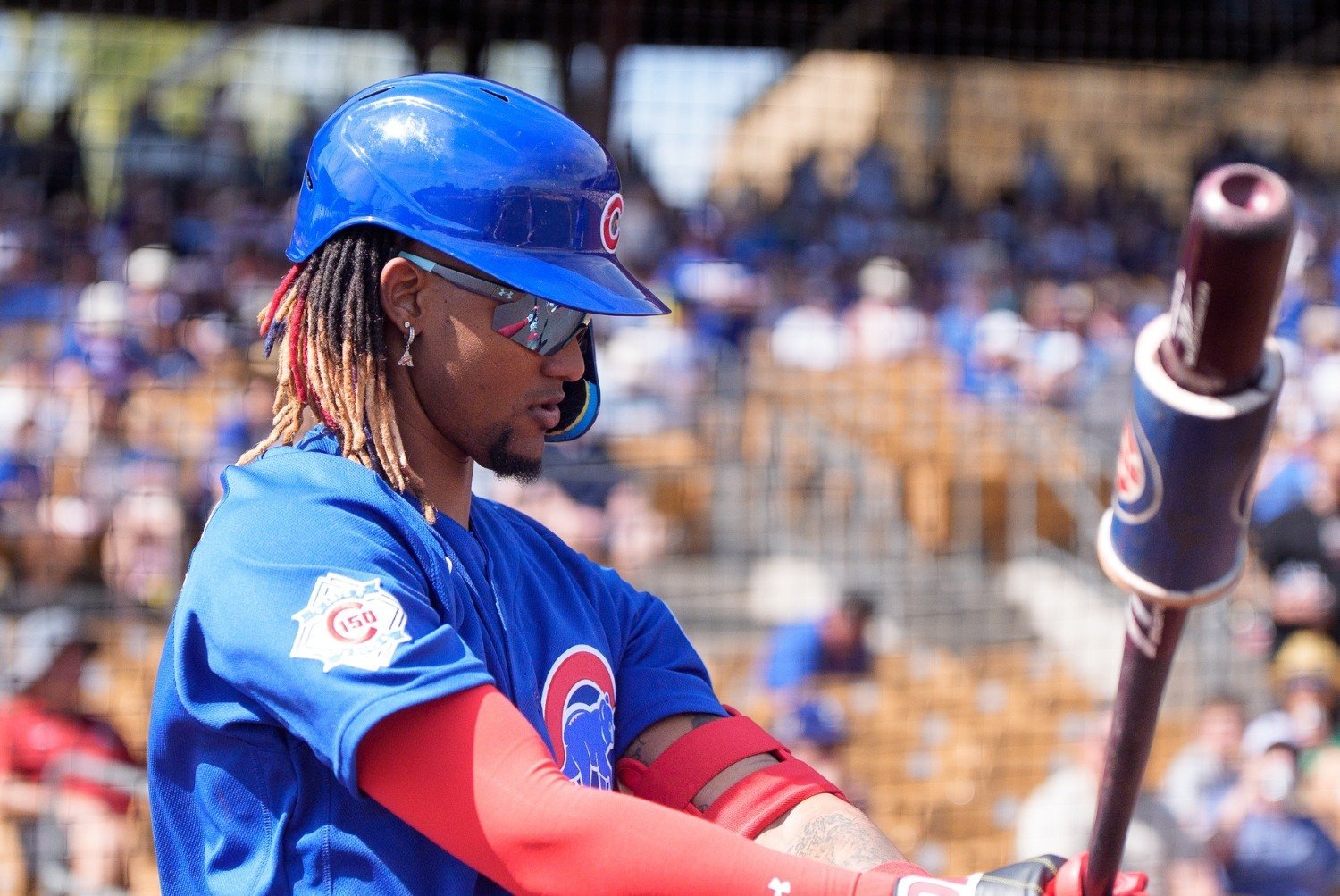 It's not that Kevin Alcántara is guaranteed to succeed in the big leagues. That's a mile from being true. Alcántara came to the Cubs in the Anthony Rizzo trade with the Yankees in 2021, and in the years since, he's climbed the minor-league ladder impressively enough to get his hands on the final rung a time or two. In both 2024 and 2025, he got late-season cups of coffee with the parent club, and he's gotten more than a full season's worth of plate appearances at Triple-A Iowa, despite injury interruptions. If he were a can't-miss guy, though, he'd already have landed a spot in the big-league lineup. Instead, in addition to those injury problems, Alcántara has battled inconsistency born of an aggressive approach; too much swing-and-miss against top-tier pitchers; and a tendency to hit the ball on the ground too much. He has very impressive bat speed, but doesn't apply it all that well. He's a good athlete and a fine corner outfielder, but he looks a bit stretched in center. No, Alcántara hasn't proved he can be a big-league regular. If he pans out, he could still be a star, but it's gotten very difficult to buy into that vision. He's spent too long struggling to clear the final hurdle posed by the minors, let alone hitting in the majors. The chances that he ends up as a complementary piece, rather than a key contributor, have risen significantly. Because the Cubs want to give him whatever time remains to find his way to his ceiling (and need to keep his trade value up), they've eschewed opportunities to bring Alcántara up for any extended period in less than a full-time role. Instead, they keep asking him to work through things in Iowa, where it's easy for him to play wherever and whenever he needs to, as long as he's healthy. Understandable though that impulse is, though, it's becoming increasingly self-defeating. It's time for the team to shift their mindset when it comes to Alcántara, for the mutual benefit of player and team. Once they make that mental change, the next step will be a change to the roster makeup—facilitated by a new and vital developmental tool. The Cubs need an outfielder who can both hit and field well. Specifically, though, what they need is a righty bat who can mash lefties for them. Michael Conforto doesn't fit the bill. Neither does Matt Shaw. So great is Craig Counsell's trust in Scott Kingery and Dylan Carlson that in the first week of games, the two combined for zero plate appearances. Once Seiya Suzuki returns from the injured list, there will still be room for a player with the right skillset. They can play center field against some lefty starters, and right field against some others, with Pete Crow-Armstrong getting occasional days off and Moisés Ballesteros getting others (with Suzuki sliding to DH). Alcántara could be that guy, and he'd do it well. Since the start of 2024, he's taken 224 plate appearances in the regular season against left-handed pitchers, and he's batted .286/.383/.510 in them, with 10 home runs. His worst showing in that span was in 2024; he's thoroughly bashed lefties since the start of last year. There are two problems with calling up a player like him to fill a part-time role, as a platoon player. One is that it might blunt his development, but again, Alcántara is reaching the point where that consideration needs to be set on the back burner. He's trending toward being that kind of player anyway, and the team has a short-term need that supersedes the long-term goal of making this one player a star. The other is that, if we grant the premise that this role is an important one for the team to fill better than they currently can, it's nonetheless a difficult role in which to thrive. In other words, even if you're willing to subjugate Alcántara's development to the roster value of having him in the big leagues, you're left with the dilemma of getting him ready to succeed in uneven playing time. One object addresses both problems: the Trajekt machine. Like almost every other team in the league, the Cubs have a Trajekt setup in their hitting cages at Wrigley Field, where players can take what amount to live reps against pitchers. Using data to inform spin direction, speed and location and video to mimic the visual experience, Trajekt lets hitters simulate actually facing the pitcher to whom the machine is tailored at a given moment. Players and teams swear by the technology. It makes practice much more valuable as preparation for games. Here's what you do: call up Alcántara, and give him a full-time job—just not on the field. He'll play there once or twice a week, when the Cubs face a southpaw, but the rest of the time, his duty will be to simulate playing. Trajekt systems don't travel with teams (yet), so he'd have to get through road trips with standard work against a batting practice pitcher, but during homestands, he would take several at-bats against big-league lefties each day; they just wouldn't all count. In fact, he'd get more exposure to the pitching the team should most want him to get ready to face as a big-leaguer than he does in the minors, where Trajekt machines are just fond memories from spring training. If the tool is as powerful as everyone says it is, the Cubs should leverage it this way. Alcántara should be able to stay in rhythm (more or less) as well as any other player. He should be able to hammer left-handed pitchers when the right opportunities arise. He'd pile up service time and the team might lose Carlson as they move him off the active roster, but with the assistance of Trajekt, they should be able to extract on-field value from Alcántara and lose very little (if any) developmental momentum. All teams are reluctant to bring up a player with the upside of being a full-time player to fit a part-time job, but they should be less so. The Cubs, in particular, should jettison one of the low-ceiling veterans they don't trust anyway and call up Alcántara to get 150 or so plate appearances over the balance of the season—and another 300, all simulating the ones for which they want him to be most ready, in the tunnel before and during home games. View the full article
 -
 Welcome to Shape of the Blue Jays, my column where I dig into Statcast numbers to analyze recent pitch shape and swing shape trends for Toronto Blue Jays players and discuss how they have impacted their performance. Quick Hits: Offense The momentum from a season-opening sweep of the A's ground to a halt on Wednesday. Toronto's offense let plenty of run-scoring opportunities go by in the rubber match against the Rockies, dropping the series to finish their first homestand with a 4-2 record. Two things can be true about this: Yes, failing to cash in against weaker pitching during what's probably going to be the softest part of their schedule all year is not ideal. The Blue Jays scored 45 runs in three games against Colorado last August when they were in mid-season form, and nothing about their at-bats this week suggests they're in midseason form yet. They aren't the only ones struggling, though. The 1-5 Red Sox are averaging less than three runs a game. The 3-3 Mets just scored three runs in as many games in St. Louis. The Dodgers are coming off a series loss to the Guardians at home in which they scored just seven total runs. It's a small sample, but three true outcomes – strikeouts, walks, and home runs – are up across the league, and it may not feel like it after Wednesday's loss, but the Jays still rank top 10 in the league in K%, BB%, and wRC+. The Rockies series wasn't one to be proud of, but this is life over 162. Dylan Cease It's tough to ask for a much better introduction than the one Dylan Cease graced us with on Saturday (5.1 IP, 1 ER, 3 H, 12 K, 2 BB). The fact that he expanded his arsenal throughout the gem has been well-documented. Another thing that stood out to me was a change in his fastball shape. It had more induced vertical break and cutting action, as well as a velocity gain of nearly 2 mph, compared to 2025. He isn't someone who has historically lost velocity as the season goes on either. The result? Four strikeouts with the four-seamer alone, despite him using the slider way more in two-strike counts. Dylan Cease Four-Seam Fastball Specs, 2025 vs. 2026 Year MPH iVB Arm-side HB RPM 2025 97.1 18.5" 3.7" 2,550 2026 98.7 19.7" 2.3" 2,565 The reasons for this are probably weirder than you think. Fans may have noticed a quirk about Cease's delivery: Whenever he was mid-windup during that start against the Athletics, he wasn't looking at the target. In fact, he was gazing off to the third-base side right before release. It sounds crazy, but he learned during spring training that actively looking away from the plate during the early part of his motion added carry to his fastball. Whatever works! Dylan Cease's unconventional windup. Note the direction he's facing. Max Scherzer Is Max Scherzer unable to quit pitching, or is pitching unable to quit him? The future Hall of Famer didn't miss a beat in his first outing despite a slightly abbreviated spring training (6.0 IP, 1 ER, 4 H, 4 K, 1 BB). Nothing was considerably different about his release or usage compared to last year, but like Cease, he flashed a slightly improved four-seam fastball shape. It's virtually identical in terms of velocity, but it averaged 17.4" of iVB on Tuesday, compared to 16.2" last year. PitchingBot, one of two pitch quality models on FanGraphs, still considers Scherzer's fastball an above-average offering. Not many pitchers who have stayed in the show past 40 can claim their fastball declined this gracefully in the latter half of their careers. With Cody Ponce's injury, there's a lot being asked of Scherzer at the moment. He's currently on a schedule that lines up his next three starts as follows: vs. LAD, vs. MIN, @ ARI. For better or worse, he's going to have to eat key innings this month, and in the starts against the Dodgers and Diamondbacks, that might be a tall task. He is not a groundball pitcher, and those are two offenses full of hitters who can hit the ball hard and in the air. There are some games ahead that will be pivotal in determining how the Blue Jays respond to the adversity of having four starters on the IL, and Scherzer will be in the middle of it all. Jesús Sánchez Jesús Sánchez is scorching to start his Blue Jays tenure (.375/.500/.563, 1 HR, 2 K, 2 BB, 20 PA). Mitch Bannon of The Athletic put out a great piece on Thursday morning detailing the changes he has made since getting traded to Toronto. The general sentiment among the coaching staff seems to be that he got away from his true self after being flipped from Miami to Houston at the deadline last year, leading to a prolonged slump down the stretch. The Blue Jays are trying to tell Sanchez to lean into his identity and play to his strengths, rather than cover his weaknesses. Jesús Sánchez bat speed distribution, 2023-2026 (Statcast). What's interesting about the bat speed distribution chart above, though, is that Sánchez, known for his thunderous swing, has been more reserved so far in 2026. The top-end bat speed is still there, but he's choosing to swing slower in way more spots. Breaking it down by count reveals that he's swinging way slower on secondary pitches with two strikes, an early indication that he's developing a more polished approach from behind in the count. Considering he has only struck out twice, it's working. The fact that Sánchez got a start against southpaw Kyle Freeland on Wednesday (while Addison Barger did not), despite Sánchez's career 42 wRC+ vs. LHP, speaks to the trust the Jays have in the newest addition to their offense. It's not exactly unwarranted either. Barger has chased 47.5% of the pitches he has seen outside the zone so far, an astronomical rate that has contributed to his 0-for-13 start. After being asked why he kept Barger out of the lineup Tuesday against a righty, manager John Schneider simply said "Slow down, Addie," according to Toronto's play-by-play team on Sportsnet. Until he does, it seems Sánchez will get every opportunity to keep building. All visuals and figures courtesy of Baseball Savant and FanGraphs, effective April 2, 2026. View the full article
 -
Masataka Yoshida Is the Best Hitless Player In Baseball
DiamondCentric posted an article in Talk Sox
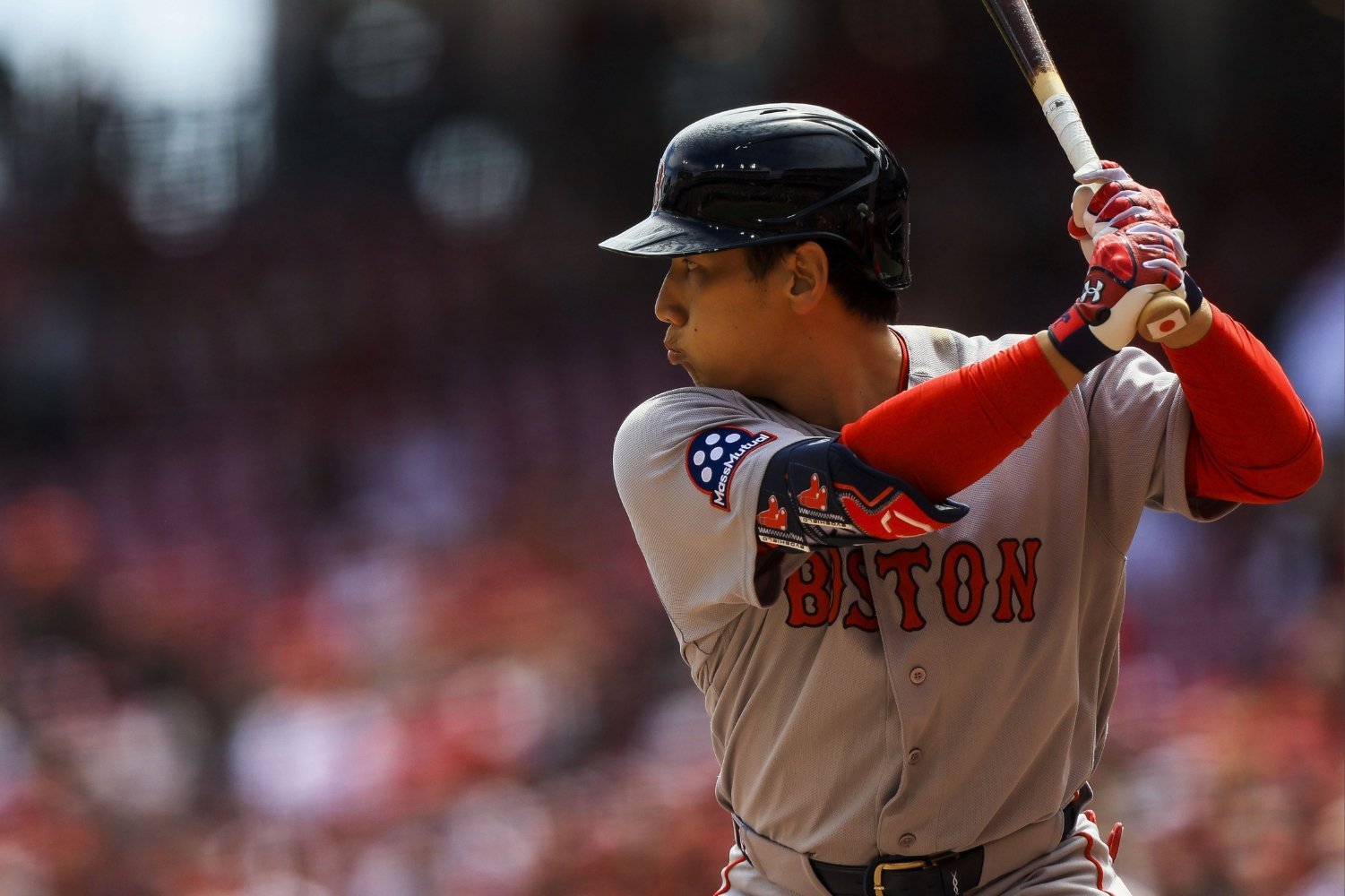 Entering the 2026 season, there were debates on whether Masataka Yoshida was even still a relevant piece of the Boston Red Sox's roster. After his rookie season in 2023, the outfielder was moved to the designated hitter spot in the lineup, rarely seeing time in the field and creating a roster logjam. With the Red Sox already having four very good outfielders on their roster, Yoshida was viewed as an expendable player with an onerous contract. The team was unwilling (or unable) to move Yoshida over the offseason, and he started the season on the major league roster while not only getting into the lineup but also playing some left field. And with the Red Sox offense looking rather thin, both the team and fans hope he can be closer to the hitter he was in his rookie season, when he hit .289/.338/.445 with 33 doubles, three triples, 15 home runs, and 72 RBIs. The impact has been lacking, but the process has not. Yoshida has yet to get a hit in 14 plate appearances in 2026. He's batting (and slugging) .000. Despite that, he’s put together excellent at-bats and showcased an improved eye at the plate along with patience. While the sample size is rather small, there is a lot to be impressed by. He's averaging a career high of 4.21 pitches per plate appearance, an all-important metric that helps drive starters out of games quicker. The biggest area of interest is Yoshida’s newfound plate discipline. Thus far, he's been unflappable in his decision making; his outside swing percentage has cratered from 27.3% in 2025 down to 10.8% in 2026.. For good measure, Yoshida has made contact on 75% of the swings, which is also a career best for the outfielder. Last season he only made contact 65.9% of the time when he swung at pitches outside of the zone. Though on the opposite side of things, Yoshida is swinging at a career low 25.4% of pitches thrown to him. It’s clear he’s being more selective about what he swings at and at what point in the count he attacks. Last season, Yoshida walked a total of 10 times in 55 games. So far, he’s walked six times in his first five games. Despite going hitless, Yoshida has a .429 on base percentage thanks to a walk rate of 42.9%. That will come back down to earth with time, but if the 32-year-old is able to get his walk rate back to the same area code it existed in during his last five seasons in Japan (between 11.5% and 15.7%), it would greatly help lengthen the lineup. And while the hits haven’t dropped in just yet for Yoshida, there are still positives about the start to his season. Due to his highly selective nature in the early part of the year, Yoshida has put up career high numbers in average exit velocity, hard-hit rate, squared-up percentage, and chase rate. It's fair to point out he's still whiffing far too often (26.7% of the time) for a guy who isn't swinging all that much, but patience is a virtue, especially at the plate. View the full article
 -
Zamora and Stallings Lead Sounds to Thursday Shutout Victory
DiamondCentric posted an article in Brewer Fanatic
 Transactions: OF Steward Berroa activated from MLB injured list and optioned to AAA Nashville C Andrick Nava transferred to Development List Game Action: Nashville Pre-Game Media Notes Final: Nashville 4, Charlotte 0 Box Score and Game Log Via the Sounds’ website, game details and we encourage readers to review affiliate write-ups as part of their Link Report routine: Sounds Blank Knights on Thursday Night SS Freddy Zamora (2-for-3, 2 RBIs, SB) was at the center of 3 of the Sounds’ 4 runs on Thursday night, doubling to open the scoring in the bottom of the 2nd inning, coming home on a fielders’ choice for the team’s second run and singling home DH Jeferson Quero (2-for-4, SB) in the 4th inning to extend the advantage to 3-0. On the mound, ol’ reliable RHP Garrett Stallings (acquired May 2024) stepped up with a 3-inning spot start (0 R, 3 H, 1 BB, 2 Ks; 48 pitches), stranding 4 baserunners in the first 2 frames, with a little help from the solid Sounds’ defense. LHP Robert Gasser had been penciled in to start, but Wednesday’s Media Notes had already shifted Stallings to the starter. We thank @Jim Goulart and @AdamMcCalvy for seeking out an explanation. RHP Easton McGee (2.2 IP, 0 R, 1 H, 1 BB, 2 Ks; 45 pitches) bounced back from being the final MLB Spring Training cut and conceding 2 runs on Saturday to continue Stallings’ shutout effort, retiring 8 of 10 batters faced. The 3-0 lead looked tenuous in the top of the 7th inning after LHP Drew Rom (1.1 IP, 0 R, 2 H, 0 BB, 1 HBP, 1 K) allowed consecutive singles and a hit-by-pitch to load the bases with one out, but he induced a jam shot 5-4-3 double play ball to 3B Brock Wilken to come out unscathed. The outfield of Greg Jones (.350 AVG), Luis Lara (.375 AVG) and Eddys Leonard (.333 AVG) continued their hot start to the season, each delivering a hit, including Lara’s 8th inning RBI single. Sounds’ Extras: RHP Jacob Waguespack put in a solid shift (1.2 IP, 0 R, 1 H, 1 BB, 3 Ks; 36 pitches) to nearly close it out before RHP Blake Holub got the final out – a strikeout swinging on just 3 pitches. Although Nashville outhit the Knights 8-7 and benefitted from two Charlotte errors, the Knights had an array of chances, stranding 10 baserunners as they put at least 2 baserunners aboard in each of the 1st, 2nd, 5th, 7th and 8th innings. Better offensive days are ahead for stud corner infield prospects Wilken (0-for-3, AVG .063) and 1B Luke Adams (0-for-2, HBP; AVG .000 through 14 ABs). Friday’s outlook: 25-year old RHP Coleman Crow is scheduled to make his second start of 2026, after a 4.2 IP, 1 R, 6 K outing on Saturday, seeking to lead Nashville to a 3-1 lead in the series. We hope that you enjoy the Minor League Link Report. On Friday, enjoy Season Openers for High-A Wisconsin at 5:10pm (home doubleheader against Beloit with RHPs Bryce Meccage and Ethan Dorchies slated to start), Low-A Wilson at 6:05pm (first-ever franchise game, at Fayetteville with RHP Miqueas Mercedes starting) and AA Biloxi at 6:35pm (RHP Brett Wichrowski starting at Rocket City), in addition to the Sounds at 6:35pm and MLB Brewers at the Royals at 6:45pm. Organizational Scoreboard including starting pitcher info, game times, MiLB TV links, and box scores Current Milwaukee Brewers Organization Batting Stats and Depth Current Milwaukee Brewers Organization Pitching Stats and Depth View the full article
 -
First-place Marlins, attendance jokes & Yankees on deck
DiamondCentric posted an article in Fish On First
 You could not have asked for a better opening week to the Miami Marlins regular season! Kevin Barral, AJ Ramos and Isaac Azout break down everything that happened on the field, the tiny crowds that attended the Chicago White Sox series, the upcoming challenge of facing the New York Yankees on the road and much more. You can find Fish Unfiltered and Fish On First LIVE on the Fish On First YouTube channel, Apple Podcasts, Spotify or wherever else you get your pods. AJ is making his 2026 Marlins Radio regular season debut on Friday. Listen to him with Jack McMullen on WQAM 560 (first pitch at 1:35 p.m. ET). View the full article
 -
 Fish Unfiltered analyzes the pitch movement and sequencing that made Sandy Alcantara so efficient and effective in his last start.View the full article
 -
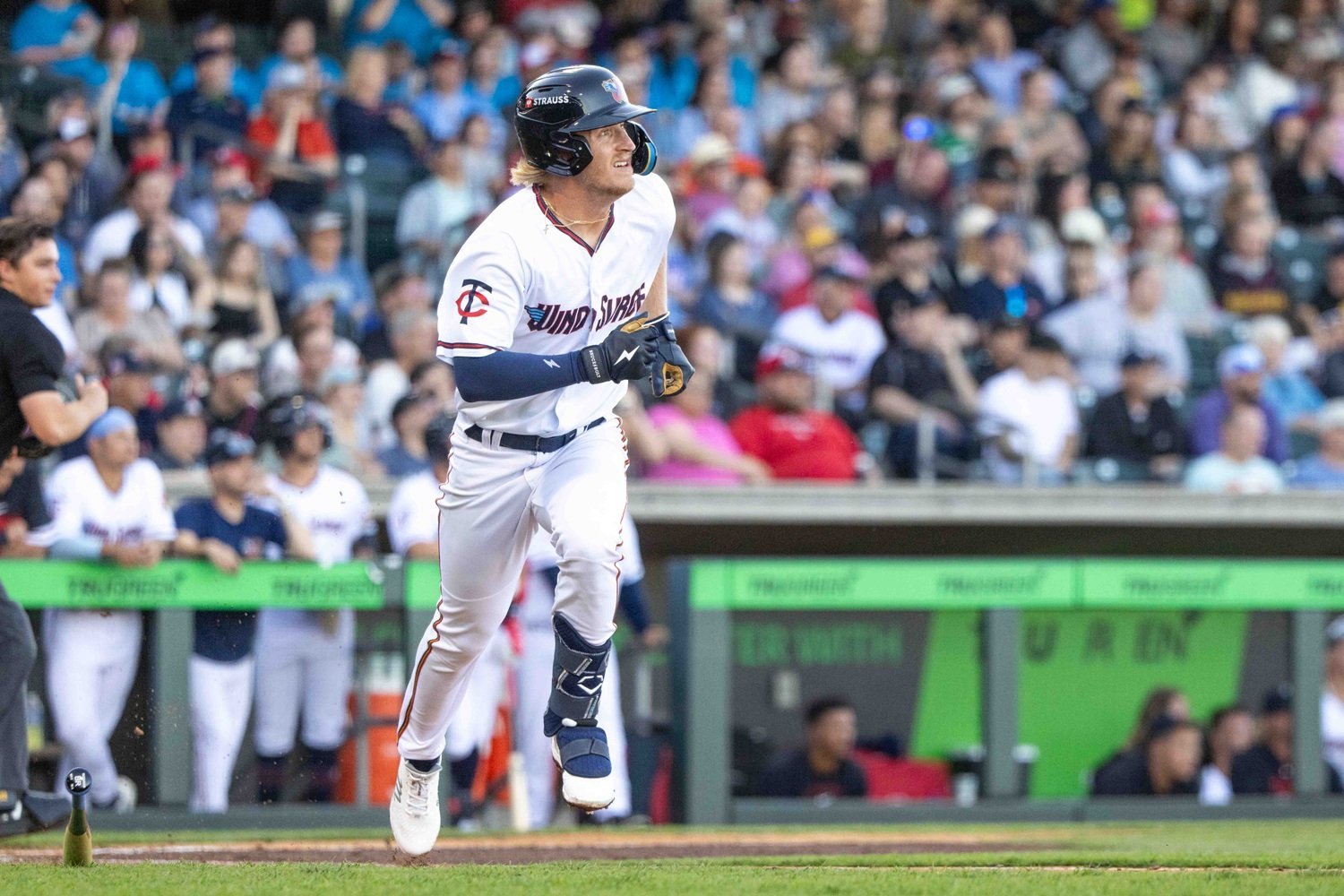 With the holiday weekend, it appears that some of the leagues gave their teams the option to play Thursday through Saturday this weekend instead of Friday through Sunday. Three of four Twins affiliates were supposed to play, but to no one’s surprise in early April, weather became the winner. Just one of the three games were played. But hey, the Twins won in Kansas City and just down the road from them, the Wichita Wind Surge were victorious in their home opener. TRANSACTIONS Following their Thursday afternoon win in Kansas City, the Twins announced that they had acquired RHP Garrett Acton from the Miami Marlins in exchange for RHP Logan Whitaker (who was on the Wind Surge roster). Click here for more. Earlier in the week, the Twins sent their initial opening day rosters. On Thursday’s Opening Day, the teams updated their rosters to include more players listed on the Injured List. St. Paul catcher Ian Daugherty was sent back to the Mighty Mussels. He spent about four days with the Saints. Daugherty signed with the Twins shortly after last year’s draft. He had spent four seasons at Oklahoma State. Wichita placed three players on the 7-Day Injured List, RHPs Jose Olivares and Kyle Bischoff, and infielder Jorel Ortega. Now I see where there were 44 total players including 26 pitchers on the Mussels’ opening day roster. On Thursday, their official roster indicated 16 players on the Injured List. Previously, they had announced players on the 60-Day IL or the Full-Season IL. The following players were placed on the 7-Day Injured List: RHP Billy Oldham (right UCL sprain), RHP Justin Mitrovich (right lat strain), RHP Dylan Questad (left oblique strain), RHP Jason Reitz (left ankle sprain), IF Bruin Agbayani (right thumb strain), C Enrique Jimenez (right finger fracture), OF Yasser Mercedes (right oblique strain). Here are the players placed officially on the 60 Day IL: RHP Matt Barr (right elbow fracture), RHP Callan Fang (right elbow sprain), RHP Jake Hunter (right shoulder impingement), LHP Jace Kaminska (right elbow surgery), LHP Cesar Lares (left elbow surgery), LHP Cleiber Maldonado (left elbow surgery), catcher Carlos Silva (right forearm strain). Two players were placed on the Full-Season IL: RHP Jack Dougherty (right shoulder surgery) and IF Shai Robinson (left shoulder surgery). SAINTS SENTINEL St. Paul, Worcester (PPD Rain) In 2025, the Saints led all of the baseball world with 17 games postponed. It actually is impressive that the Saints completed five games before having their first postponement. The Twins and Worcester are not scheduled to play again throughout the 2026 season after Sunday. They have not yet scheduled a doubleheader but would certainly love to get it completed (even though the odds are low) this weekend. The two teams will attempt to play their third game of the series on Friday night. Connor Prielipp is scheduled to make his second Saints start of the season. Baseball America named the Saints as the most talented team in all of minor league baseball coming into this season. It’s hard to disagree. data:image/gif;base64,R0lGODlhAQABAPABAP///wAAACH5BAEKAAAALAAAAAABAAEAAAICRAEAOw== WIND SURGE WISDOM Wichita 10, NW Arkansas 6 Box Score With 73-degree temperatures when the game started in Wichita on Thursday night, Ryan Gallagher got the Opening Night nod for the Surge. He may have been a little nervous, but the game started with him walking the first two batters on eight pitches. There is no ABS system in the Texas League, which is inexplicable, but no fewer than three of those pitches could have been reviewed. However, we know that walks will haunt, and with one out, Brett Squires doubled to score both walkers. Gallagher ended that first inning with back-to-back strikeouts. He followed with a 1-2-3 second inning. In the third frame, he gave up a two-out single but that’s it. The fourth inning was another 1-2-3 inning for Gallagher, who came to the Twins at last year’s trade deadline from the Cubs for Willi Castro. Gallagher came out to start the top of the fifth inning. Unfortunately, the leadoff man reached on an error and went to third base on a single to center. Gallagher got a strikeout, but that marked the end of his night. Mike Paredes came on and after a steal, a sacrifice fly and a soft single to give the Naturals a 5-3 lead in the fifth inning. Both runs were charged to Gallagher, and both were unearned. Gallagher went the first 4 1/3 innings. He gave up four runs (2 earned) on three hits and two walks. He struck out four batters. Paredes went 3 2/3 innings and gave up two runs on four hits. He had five strikeouts and issued no walks. Both runs scored on a Dustin Dickerson two-run homer in the top of the sixth inning. Reclaim the Lead The Wind Surge responded in a big way in the bottom half of the inning. Hendry Mendez was hit by a pitch to start the inning. Billy Amick and Garrett Spain followed with walks to load the bases for Ben Ross. I don’t even know how that would possibly happen, but here is what really happened. data:image/gif;base64,R0lGODlhAQABAPABAP///wAAACH5BAEKAAAALAAAAAABAAEAAAICRAEAOw== Ross drilled a ball to the opposite field and hit off of the top of the fence for a double. Mendez scored. Amick followed and could have been out, but the ball got away from the catcher which allowed Span to score the third run. Ross advanced all the way to third. After a pitching change, Ross scored on a sacrifice fly by Ricardo Olivar. Adding On… and Closing the Door Kyle DeBarge led off the bottom of the seventh inning with a long, long home run well onto the berm in left field. In the bottom of the eighth, Spain led off with a walk. Ross stepped to the plate and crushed a homer well beyond the top of the left field fence. Alejandro Hidalgo came on for the ninth. He gave up a hit and walked one, but he struck out two batters to end a scoreless inning. Ben Ross went 3-for-4 with a double, a homer, a stolen base, two runs and four RBI. Kyle DeBarge was 2-for-4 with a walk, a double, and a home run. He drove in two runs and scored two runs. Maddux Houghton was 2-for-4 with a triple and made a diving catch in center field. That was Quick! In 2025, Kyle DeBarge began his season by being called safe on his first 27 stolen base attempts. The 22-year-old went on to steal 66 bases in 74 attempts for the Kernels. DeBarge led off the first inning with a walk. Travelers catcher Canyon Brown had a good pitch to throw, had a very quick release, and threw a bullet (or a cannon?) just above second base to throw out DeBarge. DeBarge had a very nice Double-A debut. He had a line drive double down the left field line for an RBI and then crushed a long home run. If Ross can Rake, then Make no Mistake, he Can Be a Big Leaguer. Ross came from a Division II school and was initially known for his bat, but he struggled some early and kept finding himself in the lineup because of his great defense, mostly at shortstop but also at third and second base. I’m trying to think about Twins shortstop prospects over the past two decades. I’m sure I’m missing someone, but I think Ross is, at worst, one of the best defensive shortstops I can remember. I think that Wander Javier was a really good defensive shortstop, though inconsistent. Jordan Gore was really good before he made the move to the mound. I think AJ Pettersen would be near the top of this list. Others who have been following this for a couple of decades, who am I missing? Double-A Win #1 Congratulations to Wind Surge Manager Nico Giarratano on winning his first game as a Double A manager. Giarratano was born and grew up in San Francisco. After graduating from St. Ignatius College Preparatory school in San Francisco. He stayed home and went to the University of San Francisco where he played 218 games at shortstop over his four seasons there. In the 24th round of the 2017 draft, he was selected by the - you guessed it - San Francisco Giants. KERNELS CHRONICLE The Kernels begin their 2026 season on Friday. They will host Peoria for three games. MIGHTY MATTERS After being rained out on Thursday, Fort Myers will also begin their season with a doubleheader on Friday and another game on Saturday. They will host the Clearwater Threshers. PLAYERS OF THE DAY Hitter of the Day Ben Ross (Wichita): 3-for-4, 2B(1), HR(1), 2 R, 4 RBI, SB(1). Pitcher of the Day Mike Paredes (Wichita): 3 2/3 IP, 4 H, 2 ER, 0 BB, 5 K, 45 pitches, 33 strikes (73.3%) PROSPECT SUMMARY Check out the Prospect Tracker for much more on our Twins Top 20 prospects after seeing how they did today. #1 - OF Walker Jenkins (St. Paul) - DNP #2 - IF Kaelen Culpepper (St. Paul) - DNP #3 - OF Emmanuel Rodriguez (St. Paul) - DNP #4 - C Eduardo Tait (Cedar Rapids) - DNP #5 - LHP Connor Prielipp (St. Paul) - Starting Friday #6 - LHP Dasan Hill (Cedar Rapids) - Starting Friday #7 - OF Gabriel Gonzalez (St. Paul) - DNP #8 - LHP Kendry Rojas (St. Paul) - Injured List (hamstring) #9 - SS Marek Houston (Cedar Rapids) - DNP #10 - RHP Charlee Soto (Cedar Rapids) - Injured List #11 - RHP Riley Quick (Ft. Myers) - DNP #12 - RHP Andrew Morris (St. Paul) - DNP #13 - 3B/CF Brandon Winokur (Cedar Rapids) - DNP #14 - 3B/SS Quentin Young (Ft. Myers) - DNP #15 - RHP Marco Raya (St. Paul) - DNP #16 - OF Hendry Mendez (Wichita) - 1-for-3, HBP, R, RBI #17 - 2B/OF Kyle DeBarge (Wichita) - 2-for-4, BB, 2B(1), HR(1), 2 R, 2 RBI, K, CS, E (led off, played 2B) #18 - RHP C.J. Culpepper (Wichita) - scheduled to start Saturday #19 - C/OF Khadim Diaw (Cedar Rapids) - DNP #20 - RHP James Ellwanger (Ft. Myers) - scheduled to make his pro debut on Saturday. FRIDAY PROBABLES Worcester @ St. Paul (6:37 pm CT) - LHP Connor Prielipp NW Arkansas @ Wichita (6:35 pm CT) - RHP Ty Langenberg Peoria @ Cedar Rapids (6:05 pm CT) - LHP Dasan Hill Clearwater @ Ft. Myers (DH @ 3:30 CT) - Joel Garcia, James Ellwanger CURRENT W-L Records Minnesota Twins: 2-4 St. Paul Saints: 3-2 Wichita Wind Surge: 1-0 Cedar Rapids Kernels: 0-0 Fort Myers Mighty Mussels: 0-0 Please feel free to ask questions about the teams, the rosters, and discuss today’s games, or anything else Twins minor-league related! View the full article
 -
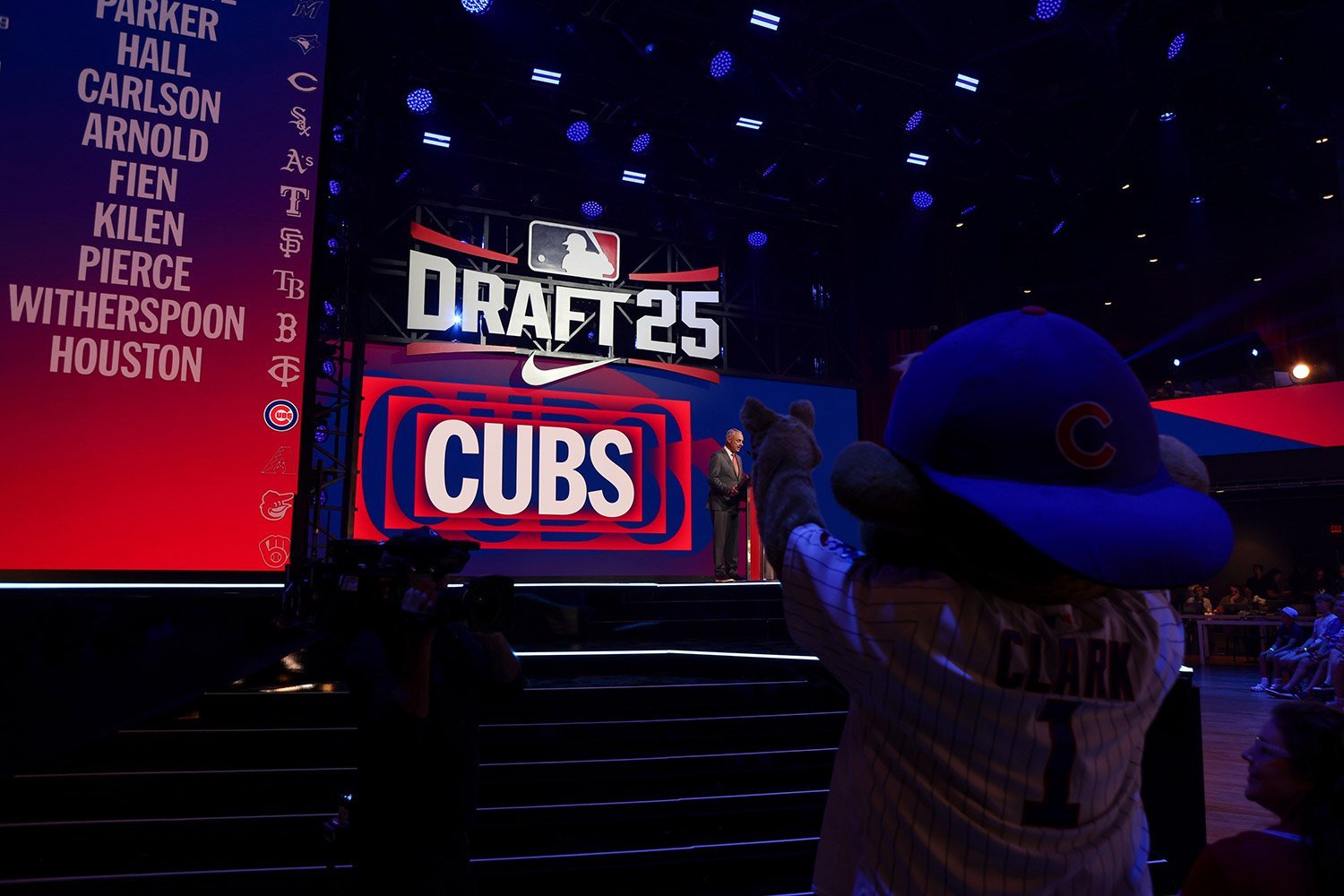 Major League Baseball on Wednesday announced and informed teams of the updated slot values and bonus pools for the 2026 MLB Draft taking place in Philadelphia, July 11-13. All pick values saw a 2.5 percent increase from 2025, which comes from the overall growth in MLB’s revenue year to year. Coming into the 2026 draft, per Jim Callis of MLB.com, the Chicago Cubs have an $9,644,100 bonus pool. That ranks 20th among all 30 teams this year. The Cubs have the 23rd pick in the first round of the draft. Slotted at No. 23 in round one, they have a slot value of $3,947,600. Because they were a playoff team in 2025, they were ineligible to move up in the lottery since their team was not impacted by other teams. Moving down to No. 25 from No. 17 in 2025, their slot value is $803,200 less than in 2025 for that round one pick. In 2025, the Cubs selected outfielder Ethan Conrad with their 17th overall pick. Conrad was drafted out of Wake Forest and still had a high upside despite dealing with a shoulder injury. Moving on to the second round, the Cubs’ No. 62 pick has a slot value of $1,487,200. They will then select at No. 75 with a free-agent compensation pick. That pick is worth $1,120,900 and is in exchange for Kyle Tucker, whom the Dodgers signed in January to a four-year, $240 million deal. The Cubs will select at No. 98 in round three, which has a slot value of $800,000. In round four, they will select at No. 126, with a slot value of $609,200. Round five, their slot value for pick No. 159 drops to $441,300, with round six (pick No. 188) at $344,400. As the draft continues, pick No. 217 in round seven has a value of $272,000, and round eight decreases to $224,100 for pick No. 247, followed by round nine (Pick No. 277) at $204,100, and pick No. 307 (tenth and final round) at $193,300 as they round out their draft. Because the Cubs have a lower pick, it is likely they will spend more than teams with higher picks and higher slot values. Heading into the draft, the Cubs are predicted to have an offensive-heavy draft, targeting college-level athletes. Prospects they’re said to be targeting include middle infielder Eric Becker out of Virginia, Zion Rose out of Louisville, and second baseman Chris Rembert from Auburn. Becker is a player with fast bat speed and great instincts at the plate. Rose is a physical, plus-hitter with a lot of power. A Chicago native, Rose would be right at home in Chicago. Rembert out of Auburn is another target of Chicago’s. He’s a pure hitter with great ability. The Chicago White Sox have the No.1 pick and will be on the clock on July 11 when the MLB draft begins. They have a slot value of $11,350,600. View the full article
 -
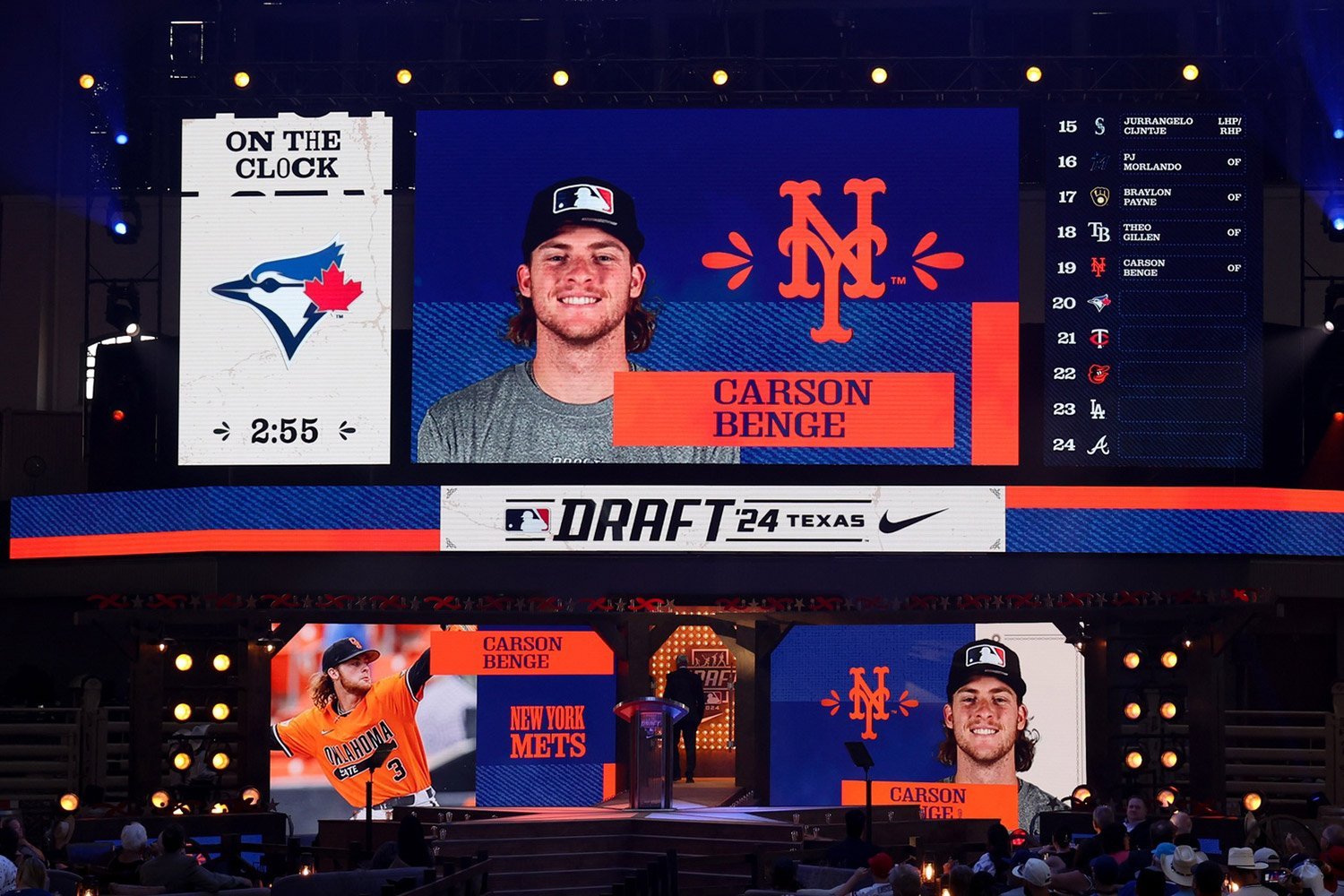 The New York Mets found out Thursday just how much their attention to the major league roster will affect them in this summer's MLB Draft. MLB allotted the club $6.731 million to sign its picks, according to a league announcement. That figure is the third-lowest pool total in the draft and about three times smaller than the $19.1 million in pool money available to the top club, the Pittsburgh Pirates. More than half the Mets' bonus pool was dedicated to their first-round bonus slot: $3.47 million for the 27th overall selection. New York is picking 27th as a penalty for exceeding the second Competitive Balance Tax (CBT) surcharge threshold last season, with an estimated $347 million tax payroll. This is familiar territory for the club; It is the fourth year in a row MLB has dropped the Mets 10 spots for exceeding CBT thresholds. Last year, the team's first selection was 38th overall. The Mets chose University of Michigan two-way player Mitch Voit at that spot and signed him to a $1.75 million bonus. The club's 2026 draft was further compromised in February when it agreed to sign free-agent infielder Bo Bichette to a three-year, $126 million contract. Bichette had received a qualifying offer from his previous club, the Toronto Blue Jays, meaning the Mets had to forfeit their second- and fifth-round selections for signing him. Barring any trades for supplemental-round picks between now and the draft, the Mets will pick 27th overall and then not again until 92nd, their pick in the third round. They received a compensatory pick after the fourth round for the Dodgers' signing of free-agent closer Edwin Diaz. The Mets made a qualifying offer to Diaz, who rejected it. The 2026 MLB Draft will be held July 11-12 in Philadelphia, the site of the 2026 MLB All-Star Game. The Chicago White Sox have the first overall selection; they're expected to take the consensus No. 1 draft prospect, UCLA infielder Roch Cholowsky. 2026 MLB Draft bonus pools Pittsburgh Pirates: $19,130,700 Tampa Bay Rays: $19,009,300 Chicago White Sox: $17,592,100 Minnesota Twins: $16,929,600 St. Louis Cardinals: $16,612,300 Kansas City Royals: $15,954,000 Atlanta: $15,870,800 Colorado Rockies: $15,557,600 San Francisco Giants: $14,080,400 Athletics: $13,840,300 Houston Astros: $13,712,700 Arizona Diamondbacks: $13,603,100 Baltimore Orioles: $13,114,000 Cleveland Guardians: $12,573,900 Washington Nationals: $12,278,300 Miami Marlins: $11,960,100 Los Angeles Angels: $11,755,400 Cincinnati Reds: $10,758,500 Texas Rangers: $10,219,200 Chicago Cubs: $9,644,100 San Diego Padres: $9,479,000 Detroit Tigers: $9,165,100 Boston Red Sox: $8,219,200 Seattle Mariners: $8,218,200 Milwaukee Brewers: $8,042,900 Philadelphia Phillies: $7,773,000 New York Yankees: $7,342,800 New York Mets: $6,730,900 Toronto Blue Jays: $5,543,100 Los Angeles Dodgers: $3,951,900 View the full article
 -
Garrett Acton traded to Twins for right-hander Logan Whitaker
DiamondCentric posted an article in Fish On First
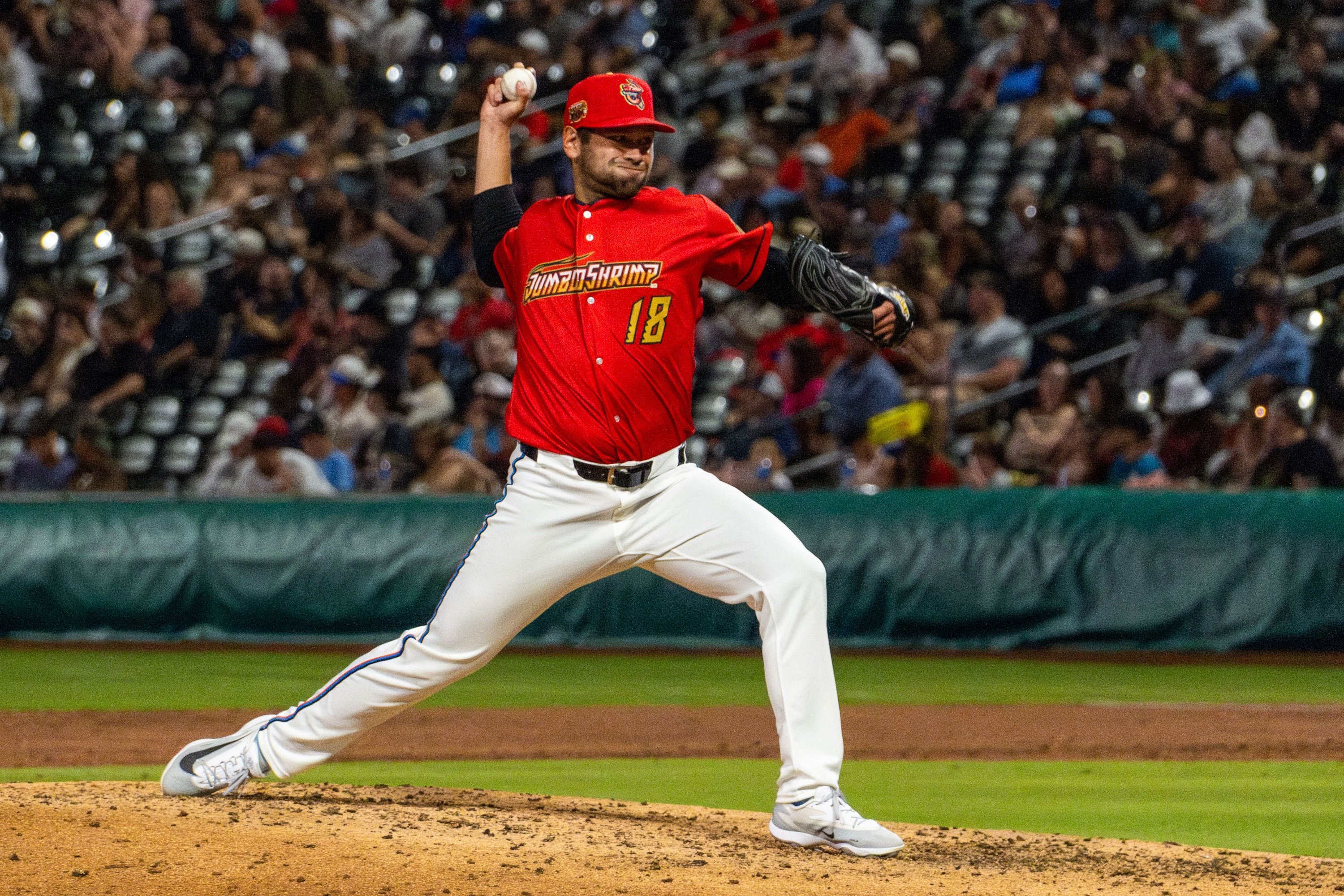 The Miami Marlins announced on Thursday that right-handed reliever Garrett Acton has been traded to the Minnesota Twins. In return, they received right-handed reliever Logan Whitaker. The Marlins claimed Acton off waivers from the Colorado Rockies in February and optioned him to Triple-A Jacksonville last month. Prior to being designated for assignment, he made two scoreless relief appearances for the Jumbo Shrimp, leaning almost entirely on his mid-90s four-seam fastball and high-80s slider. He spent the vast majority of 2025 (his age-27 season) with Triple-A Durham, where he performed solidly (3.68 ERA and 4.01 FIP in 58.2 IP). Acton has also made seven major league appearances (all as a reliever), posting a 10.80 ERA and 11.19 FIP in those 6 ⅔ innings pitched. Turning 25 next month, Whitaker split last season between High-A Cedar Rapids and Double-A Wichita. He spent nearly two months on the injured list, which limited him to 38 ⅓ innings pitched (25 G/0 GS), but he was highly effective when available, posting a 2.11 ERA and 2.90 FIP. That includes a 1.21 ERA if you ignore his season debut. He also worked three scoreless innings in Grapefruit League games this spring. Selected in the 19th round of the 2024 MLB Draft out of North Carolina State University, Whitaker is listed at 6'6", but only gets approximately six feet of extension during his delivery. He attacks hitters using his four-seamer and changeup, with occasional sliders and cutters mixed in. Whitaker should be joining Double-A Pensacola's roster this weekend. Through six games in 2026, the Marlins bullpen has been phenomenal. It's unclear who would be first in line for a call-up in the event of injury or overuse, as both left-hander Cade Gibson and right-hander Josh White have looked shaky for the Jumbo Shrimp through one week of action. View the full article
 -
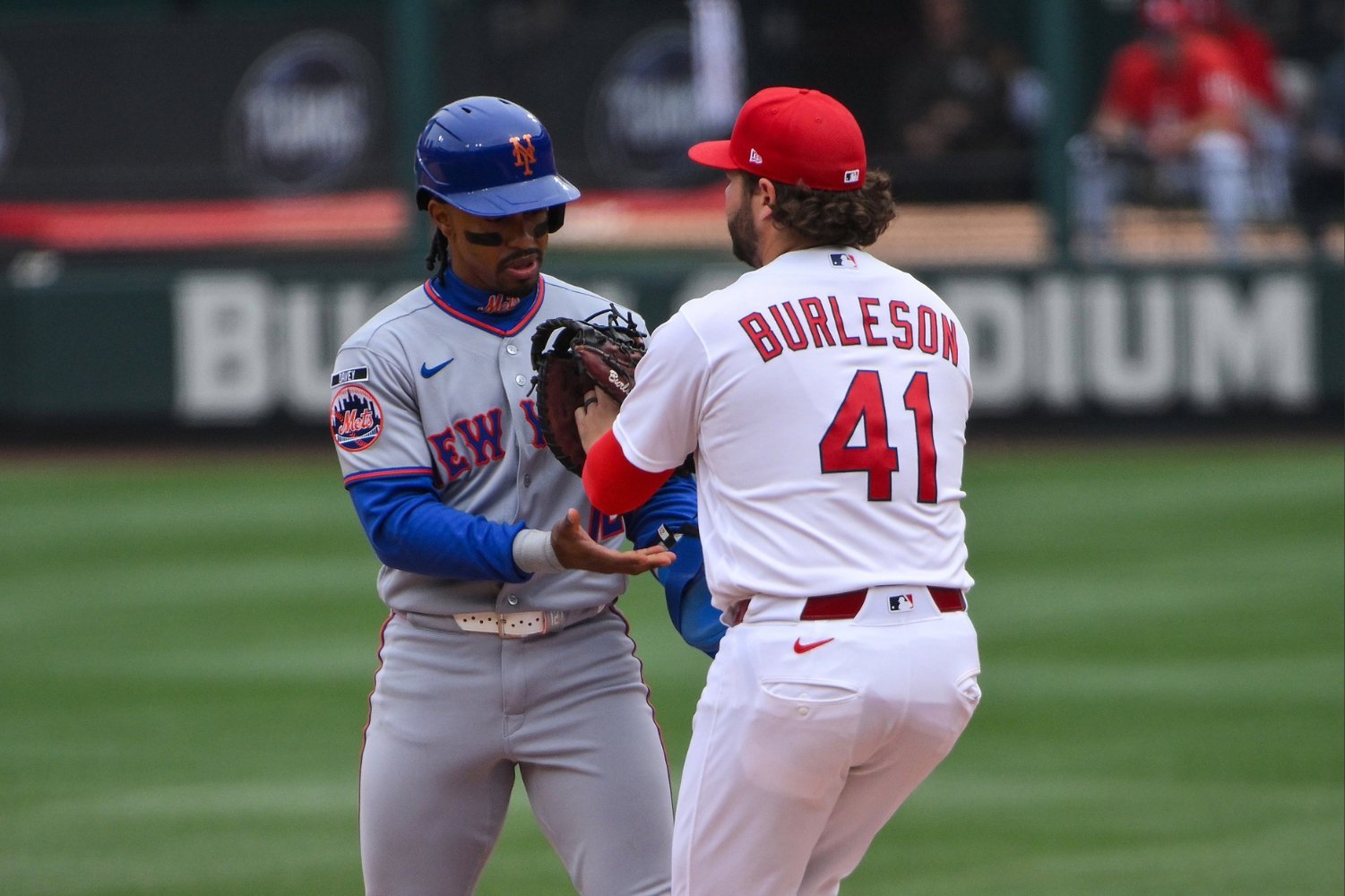 The New York Mets didn't need a new #LOLMets viral moment this early in the season, but here we are. The fact a team leader produced it makes it worse. Now, there are more questions about whether the club's culture has improved at all after an offseason roster overhaul. By now, you've probably seen the blunders Francisco Lindor committed Wednesday against the St. Louis Cardinals. The shortstop forgot how many outs there were in the first inning and turned a routine double play into an embarrassing fielder's choice. Cameras caught Lindor tapping his chest afterward, claiming accountability. Fortunately for Lindor and the club, Freddy Peralta pitched around it and put up a zero. The play didn't directly factor into New York's eventual 2-1 loss in 11 innings, but, as Lindor noted after the game, Peralta had to throw more pitches and that needlessly shortened his start. "I forgot the outs,” Lindor said in response to a question by SNY's Steve Gelbs. “Unexcusable," he added. Manager Carlos Mendoza was brief, too, saying in his postgame presser Lindor "knows" he messed up. Lindor's other blunder did affect the final score, though. In the top of the sixth inning, he was picked off first base without so much as an attempt to get back to the bag. He was completely caught napping. Three pitches later, Juan Soto blasted a home run that would have prevented the game from going to extras had Lindor still been on base. Just over a week into a pivotal season for the club, the world can feel that all is right in it because the Mets are doing bad fundamentals again. Lindor's critics get another chance to gloat and troll. They can claim again that Lindor was never captain material. They can pile it onto the other dramas -- his reported tension with Juan Soto, the rumors Lindor disliked Brandon Nimmo for his politics (Lindor denied this one, telling the New York Post he "loves" his "brother"), his on-field issues with Jeff McNeil, the thumbs-down to booing fans. The league's media outlet had its own takes Thursday. MLB Network analyst Jake Peavy said on "MLB Now" that the team's vibe may still be off after it tries to move past last year's collapse. MLB Network analyst Kevin Millar said on "Intentional Talk" that mental errors are inexcusable and players show a lack of respect for the game when they commit them. Lindor tried to be a hero in spring training. He sped up his rehab from hamate surgery to be ready for Opening Day. He made it and started the first six games of the season, but he's off to another slow start: a .712 OPS inflated by seven walks, and just three hits. He needs to lock back in. Maybe Mendoza could give him a night off -- issue a suspension disguised as maintenance. If, instead, Lindor is in the lineup for every game against the Giants in San Francisco, then it'll be clear the people who matter have already moved on. It'll be left for the fans to chew on it and once more experience the bitterness that comes from rooting for a franchise that specializes in boneheaded moves. View the full article
 -
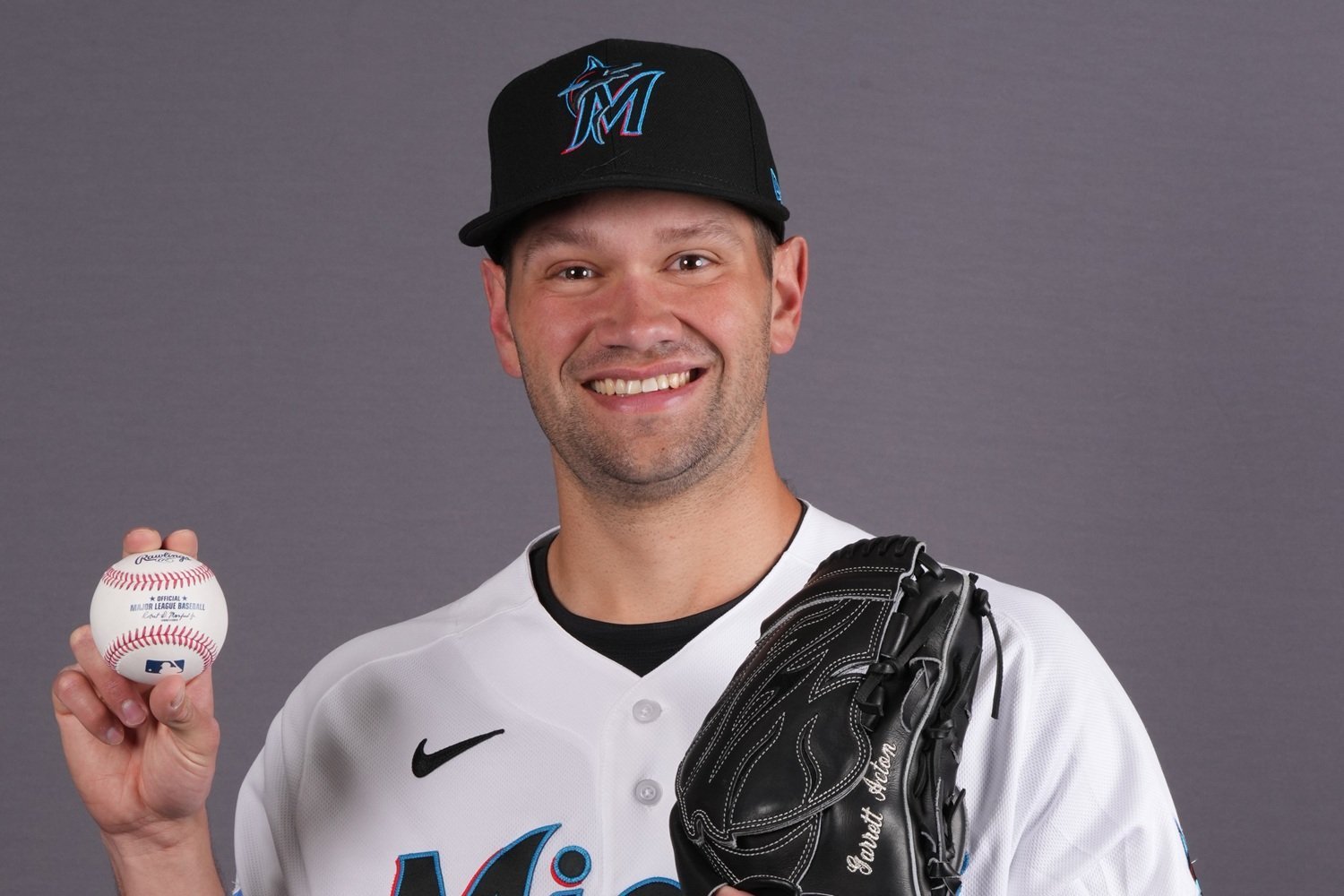 Shortly after the Twins left Kansas City following a 5-1 win over the Royals on Thursday afternoon, the team announced that they have acquired right-handed pitcher Garrett Acton from the Miami Marlins in exchange for minor league righty Logan Whitaker. Acton will report to St. Paul this weekend. This might just be another case of an arm that the Twins can use their five options per season on as they need pitchers to move up and down throughout the season. The 28-year-old has a combined 31 days of MLB service time, and he's got two years of minor-league options remaining. There may be some value in that information. Acton is a native of Illinois and was the 35th round pick of the White Sox way back in 2016. He decided not to sign and instead went to the University of St. Louis. After missing the 2018 season, he transferred home to pitch two seasons at the University of Illinois. Of course, in that 2020 season, he only pitched in six games before the season ended abruptly. In those six innings, he tossed 6 2/3 innings and recorded six saves. Late that summer, he signed as a non-drafted free agent with the Oakland A's. In 2021, e combined for 34 games between the two Class A levels. In 2022, he split the season between Double-A and Triple-A. In 2023, he went 5-2 with a 5.59 ERA over 29 innings with Triple-A Las Vegas and posted an ERA of 12.71 in 5 2/3 inning of big-league action. He missed the entire 2024 season due to Tommy John surgery. In December of 2023, the Rays signed him to a two-year minor-league deal. In 2025, he made 45 appearances for the Rays Triple-A ballclub and went 5-1 with a 3.68 ERA over 58 2/3 innings. He pitched one inning for the big-league club. The Rays DFAd him after the 2025 season completed and the Rockies claimed him. In early February, the Rockies DFAd him and the Marlins claimed him. He made two appearances this weekend for the Jacksonville Jumbo Shrimp. and had four strikeouts in 2 1/3 scoreless innings. Acton's average fastball is about 95 mph, and he also throws a changeup 8-10 mph slower, as well as a slider. Logan Whitaker is a 25-year-old right-handed pitcher. The Twins made him their 19th round pick in 2025 out of North Carolina State. He pitched in two games for the Mighty Mussels in 2024, and last year, he combined for 25 games between Cedar Rapids and Wichita. He went 4-0 with a 2.11 ERA. In 38 1/3 innings, he had 33 strikeouts and 10 walks. He was set to begin his 2026 season with the Wind Surge. To make room on the Twins 40-man roster, David Festa was transferred to the 60-Day Injured List. View the full article
 -
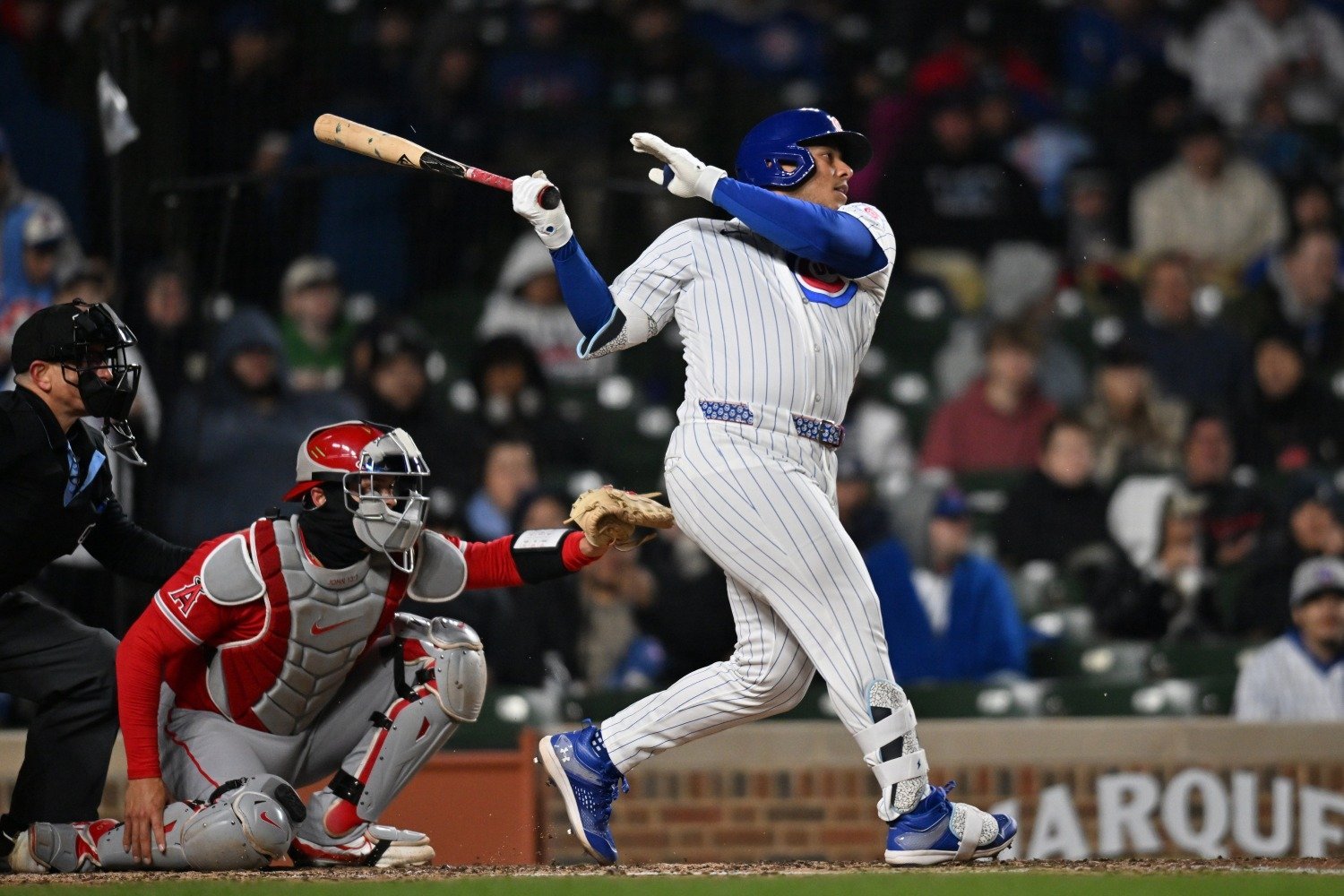 It wasn't a dazzling first week for Cubs designated hitter Moisés Ballesteros. The rookie only batted .167 during the team's season-opening homestand, with two walks but no extra-base hits. He looked great in limited playing time last year, so it would make no sense to jump to conclusions based on this, but big-league pitchers will adjust as they get a longer look at the young could-be slugger. The main difference in pitcher attack toward Ballesteros is an increased amount of breaking pitches. Last year, he saw fastballs 53% of the time, and breaking balls 18%. This year, however, pitchers are dealing with him differently, throwing an equal number of breaking pitches and fastballs (37%). He's only 1-for-9 on breaking pitches in the early going. It also seems the youngster is making an effort to elevate the ball more, tapping into previously unseen power. His fly ball rate, pull rate, and especially balls pulled in the air (20%, up from 4% last year) point to those efforts. However, the balls hit in the air are not at a high velocity, leading to routine flies, pop outs, and happy pitchers. The samples are all tiny; we have to be cautious. But so far, he's not getting the juice, despite his firmer squeeze. This is a major shift from what Ballesteros showed in the minors. He was an extreme line-drive hitter, capable of hitting the ball to all fields with occasional power. In the minors, he never exceeded 19 home runs. There has been a subtle change in the tilt of his swing (2°), but we can't yet evaluate that datum. It's a slight adjustment, not an overhaul, and it might just be a response to the way he's being pitched. The swing is just a little bit longer as well. It seems, in this minuscule sample, that he's made changes to improve his power production. Ballesteros has seen an uptick in whiff rate, chase rate and strikeout rate. With more experience (and more reps—again, sample size is an obstacle to analysis here), this should work itself out. There was no issue with these things in the minor leagues, even though he was consistently young for his level. There's not enough data to support concern about his pitch recognition, especially when the conditions were far less than ideal for most of the games this week. Manager Craig Counsell went to the team's hitting coaches this spring with a simple instruction when it comes to Ballesteros: "Leave him alone." Presumably, they'll hold to that advice. There should be no need for a swing change. Most of his changes are subtle, and it's far too early to make sense of the data noise. The leash for Ballesteros will be long, but it's not infinite. Seiya Suzuki's return looms in the next couple of weeks, and though the plan will be for him to play right field most of the time, some of his at-bats could come as the DH, reducing the playing time available to Ballesteros. He could, in turn, pick up the occasional start at catcher, but the Cubs have two other backstops on the roster and have yet to deploy Ballesteros there in the regular season. It's early, and the adjustments could pay off in the end. It's just been one week. Ballesteros is in no imminent danger of being optioned to Iowa, but if he doesn't hit at all over the next week or two, they could reconsider on that front once Suzuki returns. Time in Iowa would mean reps at catcher, which could finish off Ballesteros's development at that position. For now, just monitor his work. The team is invested in and dedicated to Ballesteros emerging as a regular, and they're unlikely to give up on him easily—but the right confluence of performances by him and a few teammates could still result in a sojourn in Des Moines later this month. View the full article
 -
 The Minnesota Twins may have found something pretty special behind the plate—not this year, and maybe not even in the next year or two. But when you start looking at the long-term picture, it’s hard not to keep coming back to one name: Eduardo Tait. Ranked as the Twins’ No. 4 prospect according to Twins Daily, Tait has quickly become one of the most exciting pieces in the organization. Alongside Mick Abel, he was acquired from the Philadelphia Phillies at last summer’s trade deadline in the deal that sent Jhoan Duran the other way. It was a move that raised some eyebrows at the time, but the early returns are giving the Twins plenty of reasons to feel good about it. While he might not be the flashiest catching prospect in baseball, Tait has quietly put together a skillset that checks a lot of boxes. Let’s start with his bat. Tait isn’t ranked this highly because he projects to hit 35 to 40 home runs at the major-league level; he’s not Cal Raleigh. But that doesn’t mean there isn’t power here. In fact, we saw him rip a ball 112 MPH off the bat in the Twins’ Spring Breakout game against his former team, so his ability to impact the ball is very real. The interesting part is how his power shows up. Up to this point, it hasn’t come from consistently lifting the ball in the air. Instead, it’s been more about hard contact, line drives, and a hit tool that’s advanced well beyond his years. That brings us to, arguably, the most impressive part of his profile: his age relative to his performance. Most 18-year-olds are finishing their senior year of high school. Tait, at 18, was hitting .250 at High-A. At first glance, that might not jump off the page. But to put it into context, Marek Houston—the Twins’ first round pick from last summer—hit just .152 at High-A as a 21-year-old after being drafted. That’s a massive difference in both age and production. Overall, across Low-A and High-A in 2025, Tait slashed .253/.311/.427, with 32 doubles, a triple, and 14 home runs. It’s a well-rounded stat line that reflects exactly what he is right now: a balanced offensive player with room to grow. If there’s one area to keep an eye on, though, it’s his plate discipline. Tait has extremely strong bat-to-ball skills, and sometimes that can be a double-edged sword. Because he’s so good at making contact, there were some stretches (especially after his promotion to High-A) wherein he expanded the zone more than you’d like to see. In 37 games at that level between the Phillies and Twins organizations, he drew just six walks. That’s a noticeable drop from the 30 walks he posted in 75 games at Low-A. It’s not uncommon for young hitters to go through that adjustment phase, especially when they know they can put the bat on the ball. But as he continues to develop, becoming more selective and more willing to take pitches will be key. It should also help boost his on-base percentage, which dipped to .286 at High-A. Defensively, there’s also a lot to like. Tait has a strong arm and a solid presence behind the plate, with MLB Pipeline grading his arm as a 60 on the 20-80 scale. The tools are there for him to develop into a solid defensive catcher, and the foundation is already in place. That said, there’s still some refinement needed. After posting a respectable 32% caught stealing rate at Low-A, that number dropped to below 10% once he reached High-A. That’s a pretty significant shift, but again, it speaks more to where he is in his development than to any long-term concern. The arm strength is there, and the frame is there. Now it’s about consistency, mechanics, and continuing to grow into the position. That’s really the theme with Tait, as a whole: there’s a lot to like, and a lot to be optimistic about. But it’s also important to keep everything in perspective; he’s only 19 years old. Realistically, he’s probably not going to be major league-ready until 2027 or 2028, and even that might be an aggressive timeline. More likely, you’re looking at 2029 before he’s fully established at the big-league level, assuming everything continues trending in the right direction. A lot can change in that time. Prospects develop, some stall out, and others take unexpected leaps. But if Tait keeps progressing the way he has so far, his ceiling is pretty clear. This is someone who could realistically develop into the Twins’ starting catcher for the next decade or longer once he arrives, and that’s what makes him so interesting. He might not have the headline-grabbing power, but he does a little bit of everything. And at his age, that’s exactly what you want to see. As the season gets underway, he’s absolutely a name worth keeping an eye on. Because the Twins’ catcher of the future may very well be in the system already. View the full article
 -
 The finger issue that lingered for part of 2024 and all of 2025 got most of the headlines, but in truth, William Contreras dealt with multiple nagging injuries last year. They didn't stop him from being a productive hitter, and hard work on his accuracy when throwing to second ensured that he improved at controlling the opposing running game. He remains a solid framer, though he hasn't quite bloomed into the major difference-maker it looked like he might be when the team's cadre of catching coaches first got hold of him in 2023. Nothing was operating quite at full steam, though, because when you're hurt, you're unavoidably incomplete. You end up being slightly selfish, even when that's the last thing you're disposed to be, as a person or player. You can't spend as much time or attention in service to your teammates, because your body demands some of your attention, and maintaining and treating those injuries demands a great deal of your time. Contreras is the antithesis of a selfish player, but he was unable to lead and augment his teammates last year the way he wanted to. This spring, with a cleaner bill of health to begin the campaign, he's a different player—one as dynamic and multi-faceted as he was in 2023 and 2024, but made wiser by the adversity he overcame in 2025. He's altered his batting stance. In the past, he was the rare hitter who could be said to be stepping in the bucket, without losing value to that habit. He started in a fairly neutral stance, used a high leg kick, and strode wide-open, looking to pull the ball. It often looked like this. d2VXb0FfV0ZRVkV3dEdEUT09X1V3bFNVVk1HQlFRQUFGRUhWUUFIQ1FkU0FBQldBbE1BVTF3QUJRUUdWUUFEVTFjQw==.mp4 This year, he's starting with a more closed stance, and his feet are farther apart. He's gone, if you will, halfway from the way he used to set up and get moving toward the ball to the way teammate and fellow Venezuela native Jackson Chourio does so: a wider base, a deeper bend (in Contreras's case, crouching has become part of his load), and a more direct stride. Even when he's swinging with exactly the same intent, it looks more like this. SzRCVmVfWGw0TUFRPT1fVlZKVUJ3QUNBQUlBRGdZTFZ3QUhBQUFBQUFCWEJsVUFVRk1BQVZkVVYxVmRVVkZU.mp4 However, Contreras is also getting back to doing something he used to do more often, perhaps prompted by the time he spent last month with the man for whom he wears No. 24 and who did it singularly well, Miguel Cabrera. Sometimes, even in advantage counts, Contreras simply anticipates the pitch that's coming, cuts down his swing, and hits the ball cleanly to a spot he knows offers a guaranteed hit. Those moments look like this. TkFObmJfWGw0TUFRPT1fVUFOUVVWRURBZ0VBQUZzS1VnQUhWVkFBQUZsV1cxZ0FCZ01IVWxFRFYxWUJBbEVE.mp4 That full-fledged change of timing signature and swing path to generate a key hit (even at the cost of any chance to generate power) is one example of Contreras being an excellent team player. He's also showing the attention to detail and the acute awareness of the moment required to secure wins behind the plate. He's been excellent as a framer so far this year, and not just as a framer—as a challenger, too. Tuesday's win offered a terrific example. Contreras challenged a 3-2 pitch to Junior Caminero by Brandon Woodruff in the first inning, even though there was already one out and no one base. With so much game left and a relatively non-dangerous situation at hand within the inning, by the models, he needed to feel very confident to make that challenge. Contreras hasn't been especially aggressive with those challenges this year, so it was surprising to see him try it. But that challenge was about more than the leverage index of the pitch. It was also very much about Woodruff, who had given up a home run already and didn't have his best stuff yet. The catcher rolled the dice for his pitcher, knowing it would be a huge pick-me-up for him, as well as feeling that he was in the right. He was, and a walk became a strikeout before our eyes. Later in that game, Contreras showed a similarly excellent nous for the system and its implications for the personalities he manages from 60 feet away. The Rays had the tying run at the plate, despite being down 5-2, and Abner Uribe was struggling to finish what initially looked like it would be an easy inning. The vibes were getting unfortunately tense; Contreras needed a way to lock his pitcher back in. There's already been much talk this spring about his favorite way to do so with some pitchers, by firing the ball back to them with extra authority after a pitch. With Uribe, though, that isn't always the right way to deliver the message, and indeed, the message needs to be a bit different. On a borderline 0-0 pitch, a ball was called to Richie Palacios, but Contreras challenged again. He was successful again, putting his hurler in the driver's seat for a crucial at-bat. Uribe got out of the inning unscathed. NHlLWnhfWGw0TUFRPT1fRGdKWVVnSlhYd1lBREZJRkJ3QUhCUUVDQUFBRFdsVUFCMTBFQVFZRkFGQURWbEFE.mp4 Contreras is leaning more heavily into catching with his right knee down, and his stance has been modified a bit behind the plate, as well as in the batter's box. He's making lots of small but important changes, as he tries to be the well-rounded star and centerpiece of this team again. That's who he was in 2024, and it's who he wants to be in 2026. It's not easy, but because he's healthier this year, it's at least possible—so he's attacking the task with tenacity. View the full article
 -
 Before Thursday's series finale against the Twins, MLB Insider Francys Romero reported that the Royals were planning on calling up Luinder Avila from Omaha. Avila had an excellent MLB debut in 2025 with the Royals. In 14.1 IP, he posted a 1.29 ERA, 0.93 WHIP, and 17.9% K-BB%. He also sported a 2.10 FIP and 28.6% K% with strong TJ Stuff+ marks, as illustrated in his TJ Stats summary below. In addition to a 102 TJ Stuff+, he also generated a 28.3% chase rate, a 27.2% whiff rate, and .253 xwOBACON. His zone rate left a bit to be desired at 44.7%, but his chase and whiff rates made up for that slightly below-average zone rate. Avila started the season in Omaha despite putting up a 2.25 ERA in four innings of work in Cactus League play. The Venezuelan-born pitcher represented his country and won a championship at the World Baseball Classic, posting a 0.00 ERA and 1.39 WHIP in 4.1 IP. In his lone start in Omaha this season, Avila allowed two runs on four hits and two walks while striking out three in three innings of work. No official word has been shared with the Royals about Avila, and he is still slated to start tonight's outing against Wichita at 6:35 p.m. at Werner Park in Omaha. View the full article
 -
Source: Royals to Call-Up Pitcher Luinder Avila (Updated)
DiamondCentric posted an article in Royals Keep
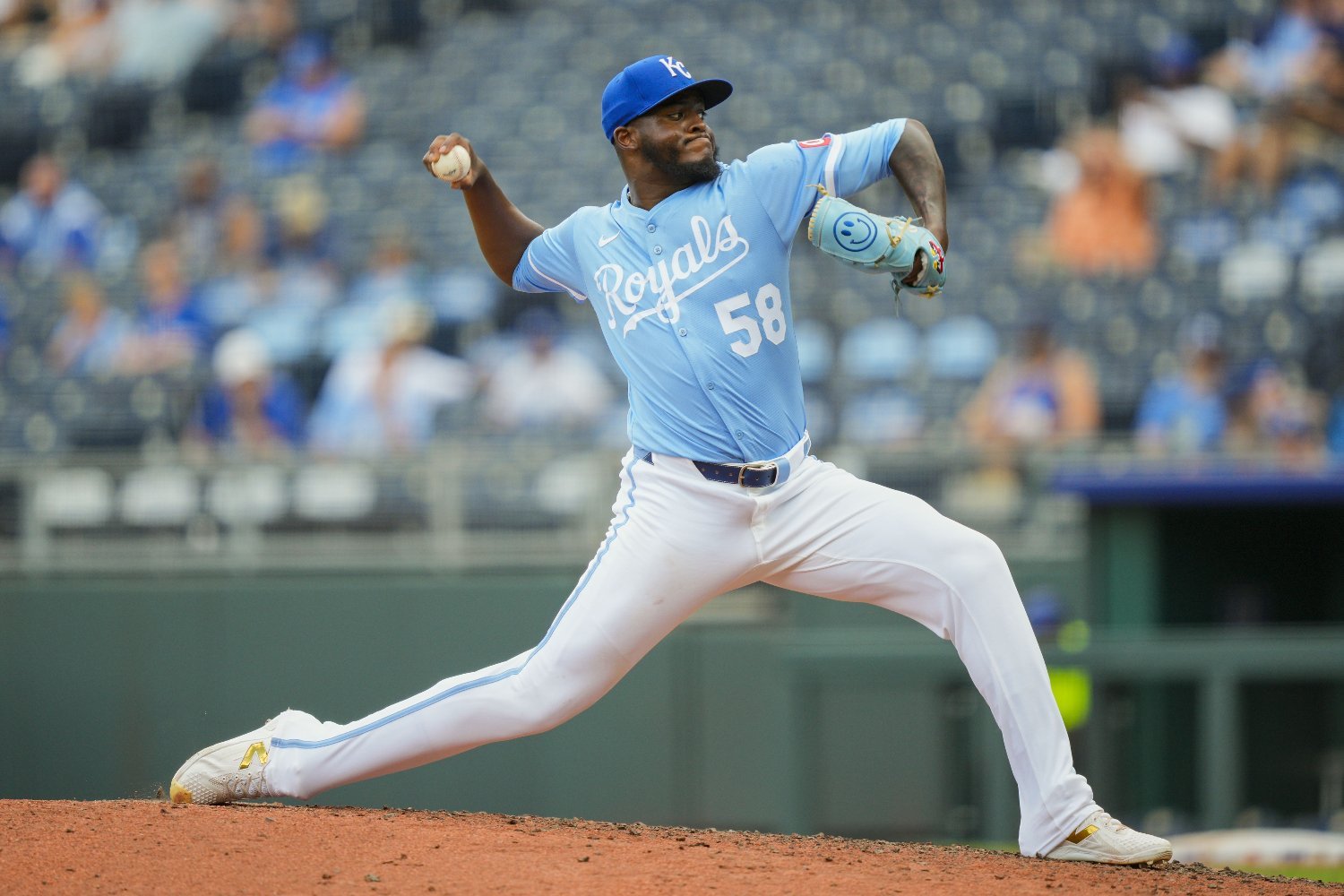 Before Thursday's series finale against the Twins, MLB Insider Francys Romero reported that the Royals were planning on calling up Luinder Avila from Omaha. Avila had an excellent MLB debut in 2025 with the Royals. In 14.1 IP, he posted a 1.29 ERA, 0.93 WHIP, and 17.9% K-BB%. He also sported a 2.10 FIP and 28.6% K% with strong TJ Stuff+ marks, as illustrated in his TJ Stats summary below. In addition to a 102 TJ Stuff+, he also generated a 28.3% chase rate, a 27.2% whiff rate, and .253 xwOBACON. His zone rate left a bit to be desired at 44.7%, but his chase and whiff rates made up for that slightly below-average zone rate. Avila started the season in Omaha despite putting up a 2.25 ERA in four innings of work in Cactus League play. The Venezuelan-born pitcher represented his country and won a championship at the World Baseball Classic, posting a 0.00 ERA and 1.39 WHIP in 4.1 IP. In his lone start in Omaha this season, Avila allowed two runs on four hits and two walks while striking out three in three innings of work. No official word has been shared with the Royals about Avila, and he is still slated to start tonight's outing against Wichita at 6:35 p.m. at Werner Park in Omaha. Update (11:20 PM): Ethan Bosacker replaced Avila in the Omaha rotation on Thursday evening in their 9-7 win over the Buffalo Bison (the Toronto Blue Jays Triple-A affiliate). Anne Rogers of MLB.com reported that Luinder Avila will replace Michael Wacha on Friday, as Wacha's start will be pushed back due to illness. It will be interesting to see what roster move the Royals will make. Alex Lange and Bailey Falter could be candidates to be replaced by Avila after rough outings on Wednesday, but they are out of Minor League options and would need to be DFA'd. The Royals could also add someone to the IL, though Wacha doesn't seem likely to need a stint despite his illness. The Royals will make the move before their 6:40 p.m. game against the Milwaukee Brewers, who come to Kauffman Stadium 5-1 and are atop the NL Central division. View the full article
 -
Twins 5, Royals 1: Late Home Runs Back Taj Bradley’s Strong Outing
DiamondCentric posted an article in Twins Daily
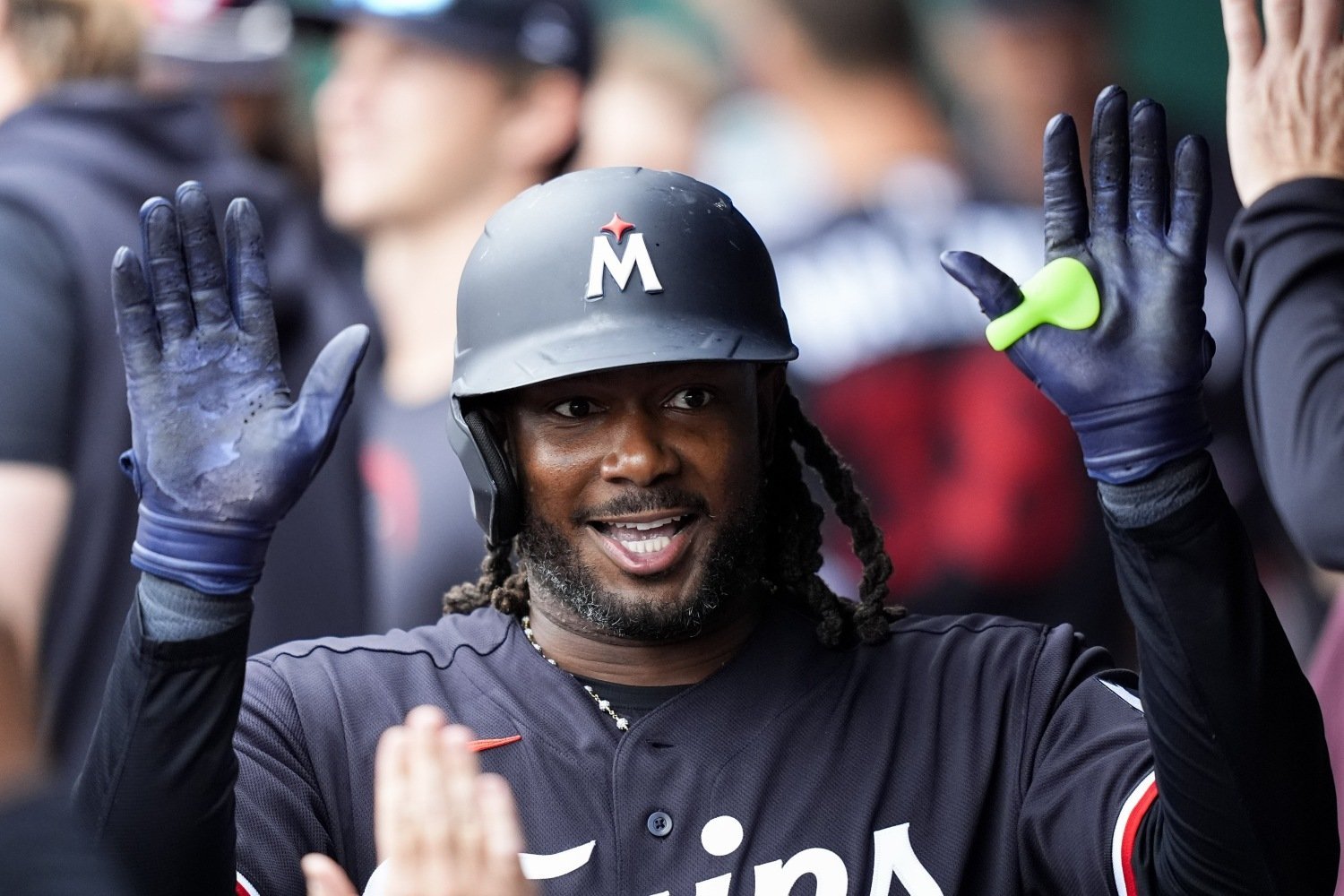 Box Score SP: Taj Bradley - 6 IP, 5 H, 0 R, 1 BB, 3 K. 100 pitches, 65 strikes (65%) Home Runs: Matt Wallner, Kody Clemens, Royce Lewis Top 3 WPA: Taj Bradley (0.40), Kody Clemens (0.12), Kody Funderburk (0.11) Win Probability Chart (via FanGraphs) The Twins wrapped up their series with the Royals on Thursday, playing a 1:10 PM finale after a late finish the night before. With a different-looking lineup and a quick turnaround, the focus was simple: get more length from Taj Bradley and find just enough offense. They got both. BRADLEY SETTLES IN After an inefficient first outing that saw his pitch count climb quickly, Taj Bradley looked much more in control this time around. He worked six scoreless innings, allowing five hits and just one walk while striking out three. More than the line, though, was how he got there. Bradley was far more efficient early, needing just 27 pitches to get through two innings. He mixed in his cutter effectively and did a better job getting ahead, even if his first-pitch strike rate still wasn’t perfect. When he ran into trouble, he adjusted. The fourth inning was his biggest test, as he loaded the bases with two outs. But he reached back and got a swing-and-miss on a cutter out of the zone to escape. It wasn’t as dominant as his first start from a pure stuff standpoint. He generated fewer whiffs and gave up plenty of hard contact. But this was a different kind of outing; one built on navigating traffic, limiting damage, and giving the Twins exactly what they needed after getting just four innings from Joe Ryan the day before. And this time, it held up. SCRATCHING EARLY, BREAKING THROUGH LATE The Twins didn’t exactly jump on Royals starter Cole Ragans, but they made him work. A 24-pitch first inning set the tone, and multiple long at-bats followed, even if the runs didn't pile up. Their first run came in an unusual way. In the second inning, Kody Clemens reached base and eventually scored on a failed pickoff attempt by Salvador Perez, who threw the ball into center field. It wasn’t pretty, but any runs in a game like this matter. From there, chances were limited. There was some traffic, but nothing consistent enough to break things open. It felt like a one-run game that could flip at any moment—until the endgame. A Josh Bell walk, a Royce Lewis double and a Byron Buxton sacrifice fly got a run home in the top of the eighth, and after the bullpen avoided letting the lead slip away in a nervous bottom of the eighth, the offense gave them some breathing room in the top of the ninth. Matt Wallner got things started with a missile to right-center, a 405-foot drive that came off the bat at 107 MPH. A few batters later, Clemens jumped on a backdoor slider and sent it into the bullpen in left. Then Bell made it three in the inning, launching a hanging slider into the seats in right field. Just like that, a tight game turned into a comfortable one. BULLPEN SLAMS THE DOOR With Bradley through six, the Twins turned it over to the bullpen, and they delivered. Kody Funderburk handled the seventh cleanly, working around a loud foul ball to post a zero. Cole Sands ran into some trouble in the eighth, allowing a run on a sacrifice fly, but limited the damage and avoided a bigger inning. Taylor Rogers came in to finish the frame, stranding a runner and picking up a key strikeout, and Justin Topa closed things out in the ninth. Even with a little traffic to start the inning, Topa induced a double play and ended the game with a strikeout. It wasn’t flawless, but the bullpen was effective. Despite some iffy defense, they held the lead. There were a few smaller moments that stood out along the way. Victor Caratini was active behind the plate, successfully challenging multiple calls early in the game. Luke Keaschall made one key, unorthodox defensive play, picking a low throw as he arrived at the keystone for a pivotal out in the eighth. And while the lineup wasn’t the usual group, it found a way to produce when it mattered most. That’s what this one came down to. What’s Next? The Twins head to Minneapolis for their home opener tomorrow, where they’ll open up a three-game series against the Tampa Bay Rays. Bailey Ober is set to make his second start of the year, and Joe Boyle will take the hill for the Rays, with the action getting going (after some season-opening pomp and circumstance) at 3:10 PM CT or so. Postgame Interviews Coming Soon! Bullpen Usage Chart SAT SUN MON TUE WED THU TOT Abel 0 81 0 0 0 0 81 Kent 0 0 0 0 47 0 47 Funderburk 13 0 26 0 0 15 54 Laweryson 0 0 0 0 36 0 36 Banda 15 3 0 0 12 0 30 Topa 12 0 10 0 0 13 35 Orze 21 0 0 0 0 0 21 Sands 16 0 0 0 0 11 27 Rogers 0 0 14 0 0 4 18 View the full article
 -
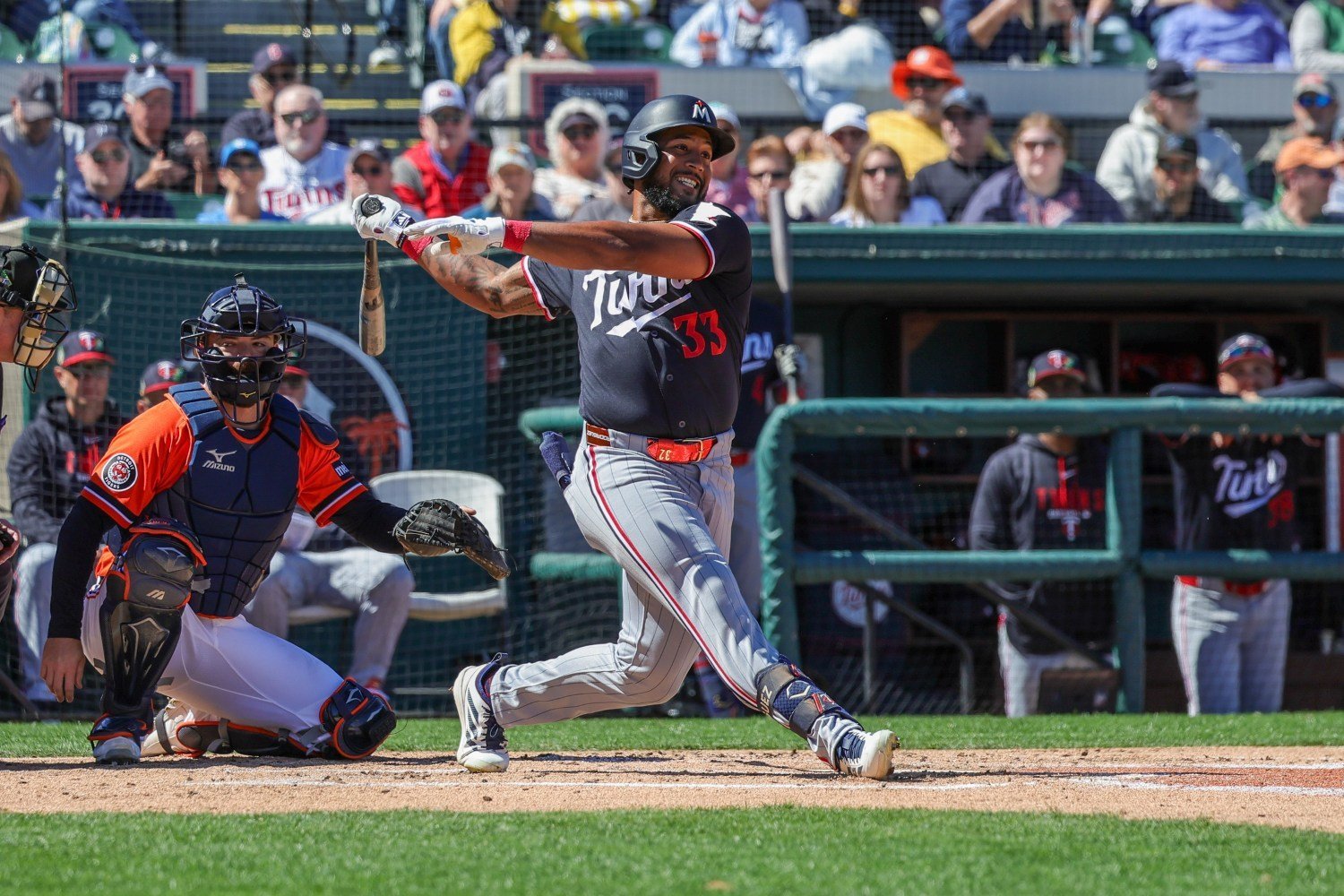 TRANSACTIONS No moves were made on Wednesday. Saints Sentinel St. Paul 4, Worcester 5 Box Score Andrew Bash: 4 IP, 6 H, 1 ER, 0 BB, 2 K HR: Emmanuel Rodriguez (1) Multi-hit games: Orlando Arcia (2-for-3, BB), Alex Jackson (2-for-4, R) An early lead dissipated for the Saints on Wednesday. Walks need not appear: one day after walking a ghastly affiliate-record 20 men, the Saints found grace in the right shoulder and arm of Andrew Bash, who didn’t offer a free pass to the Red Sox in his four innings of work. His immediate relief—John Brebbia—didn’t walk a batter either. Manager Brian Dinkelman must have been euphoric in the dugout. Two scoreless innings begat a third-inning skirmish. Alex Jackson singled, Tanner Schobel struck out, Walker Jenkins cracked a hit to right, Kaelen Culpepper flew out, and Alan Roden walked to set up Emmanuel Rodriguez with the bases loaded and two men out. He spat on a slider in the dirt before unleashing a hellacious hack at a hanging breaker, crushing the offering deep to right-center for a grand slam, his first since 2024. Worcester responded with a run the following half-inning, a premonition of things to come. Two empty middle-inning frames melted into a shaky seventh inning, in which Grant Hartwig labored on his way towards allowing a run—a fine outcome given that the righty allowed three walks and a hit. Drew Smith wasn’t much better. He surrendered a third Red Sox run in a game that was suddenly uncomfortably close. Another quiet frame from St. Paul’s hitters ushered in Marco Raya in a critical save situation. He netted an easy first out before running into trouble. Allan Castro walked, and Matt Lloyd sent a single up the middle to send Castro to third. Sensing a chance to tie the game, Tsung-Che Cheng dropped a perfect bunt, far enough to force Raya to make the play, yet close enough to home to make the throw awkward. Castro slid home safely. Matt Thaiss sharply singled to right to give Worcester the lead. The Saints fell 1-2-3 in the ninth. Catcher Alex Jackson overturned three balls in the game. Alan Roden holds a .542 OBP through 24 plate appearances. Boston’s 13th-ranked prospect, Mikey Romero, collected three hits in five at-bats. Wind Surge Wisdom The Wind Surge will play their first game on Thursday, April 2nd. Kernels Nuggets The Kernels start their season on Friday, April 3rd. Mussel Matters The Mighty Mussels are scheduled to open their season on Thursday, April 2nd. TWINS DAILY PLAYERS OF THE DAY Twins Daily Minor League Pitcher of the Day – John Brebbia Twins Daily Minor League Hitter of the Day – Emmanuel Rodriguez PROSPECT SUMMARY Here’s a look at how the Twins Daily Top 20 Twins Prospects performed: #1 – Walker Jenkins (St. Paul) - 1-5 R, K #2 – Kaelen Culpepper (St. Paul) - 0-4, BB #3 – Emmanuel Rodriguez (St. Paul) - 1-4, HR, R, 4 RBI, BB #15 – Marco Raya (St. Paul) - 1 IP, 2 H, 2 ER, 1 BB, 2 K View the full article
 -
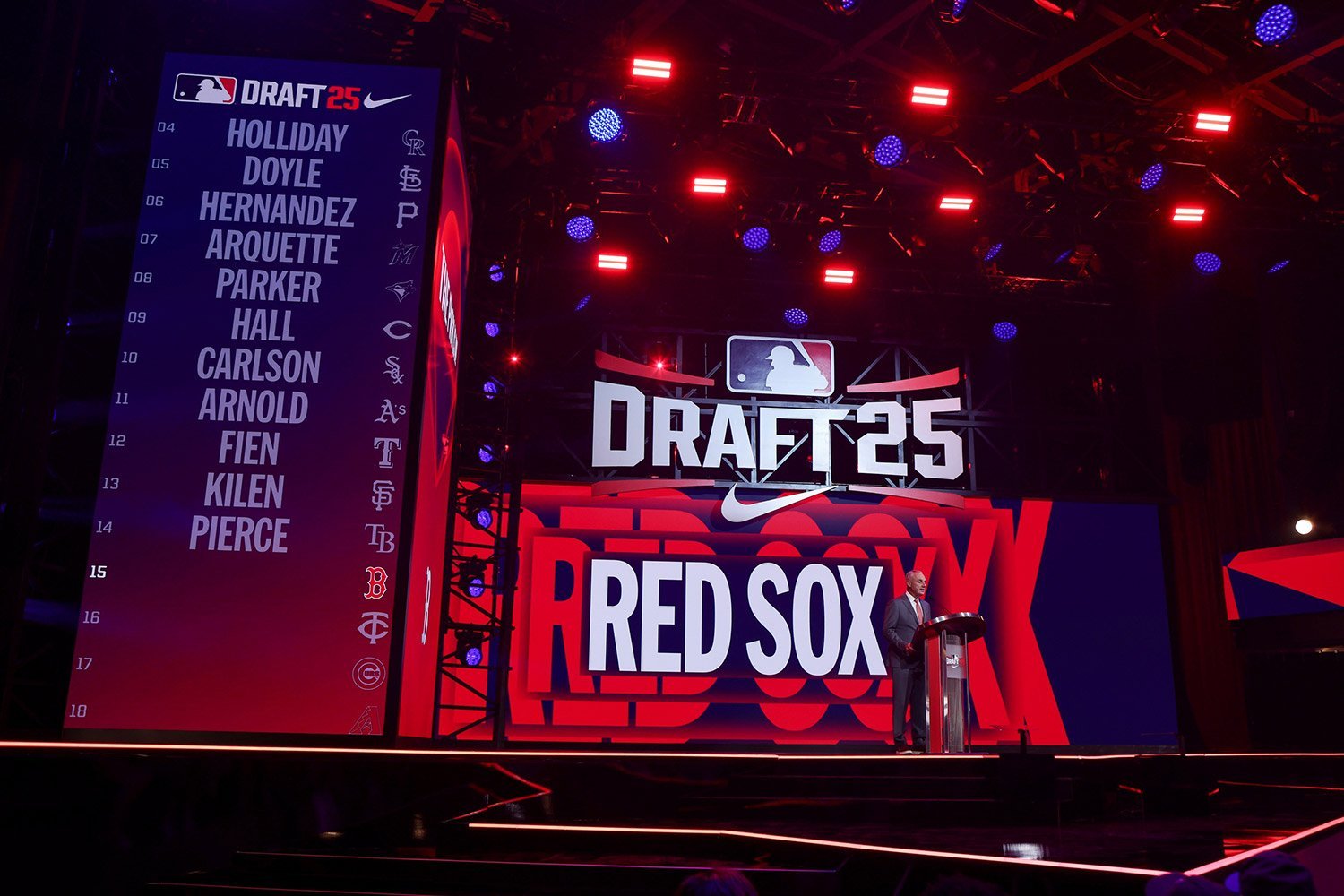 On Wednesday, MLB notified teams of their bonus pool and pick values for the 2026 Draft. The Red Sox rank 23rd with a total of $8,219,000 across nine picks. Their first round selection (20th overall) accounts for more than half of that value ($4,373,900). Round Pick Slot Value 1 20 $4,373,900 CB-B 67 $1,317,300 3 96 $815,700 5 156 $454,100 6 185 $352,900 7 214 $278,700 8 244 $227,200 9 274 $205,400 10 304 $194,000 As a brief refresher, two of the Red Sox’s offseason moves impacted their spending power. The Red Sox received the 67th pick in the supplemental second round (CB-B) in the Caleb Durbin and Kyle Harrison trade. After signing Ranger Suarez five-year, $150 million contract, they lost their second and fifth picks and $1 million from their international bonus pool. The 2026 MLB Draft is scheduled for July 11 to 13. View the full article
