


DiamondCentric
-
Posts
2,631 -
Joined
-
Last visited
Never
Content Type
Profiles
Forums
Events
News
Tutorials & Help
Major League Baseball Videos
Guides & Resources
Store
Downloads
Gallery
Everything posted by DiamondCentric
-

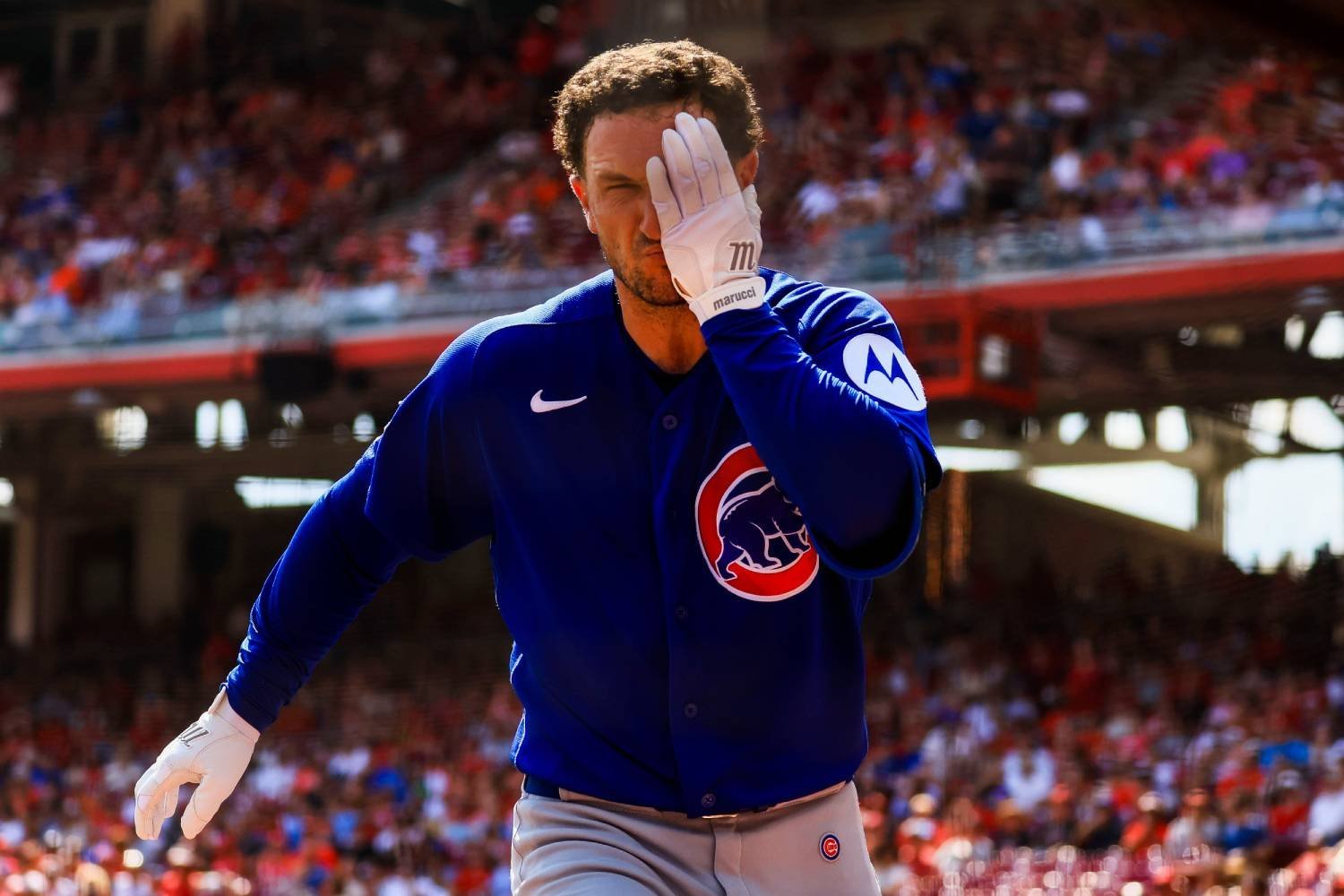 In a piece of stunning news, Alex Bregman is in the Chicago Cubs' starting lineup for Game 1 of Friday's doubleheader, just days after sustaining multiple facial fractures that rendered his left eye swollen shut. Bregman was struck in the left cheek by a foul ball off the bat of Michael Busch in the fourth inning of Sunday's game against the Cincinnati Reds. Typically, that injury would take some time before allowing a player to return. But with the Cubs' postseason seeding at stake, Bregman missed only three games before being inserted into the lineup as the designated hitter. Meanwhile, right-handed starter Edward Cabrera was placed on the bereavement-family medical emergency leave list. Right-hander Gavin Hollowell was activated from the 15-day injured list. Cabrera's first season with the Cubs following a high-profile offseason trade is likely over. He posted a 5.96 ERA over 18 games (16 starts) and was shifted to a bullpen role recently with the Cubs still in need of starters. Hollowell has a 2.51 ERA over 14⅓ innings and 14 games this year. He had been out since July 31 due to right shoulder inflammation. The Cubs enter Friday as the No. 2 NL wild card, one game behind the San Diego Padres and one game ahead of the Philadelphia Phillies. The Cubs hold the tiebreaker over both teams. View the full article
 -
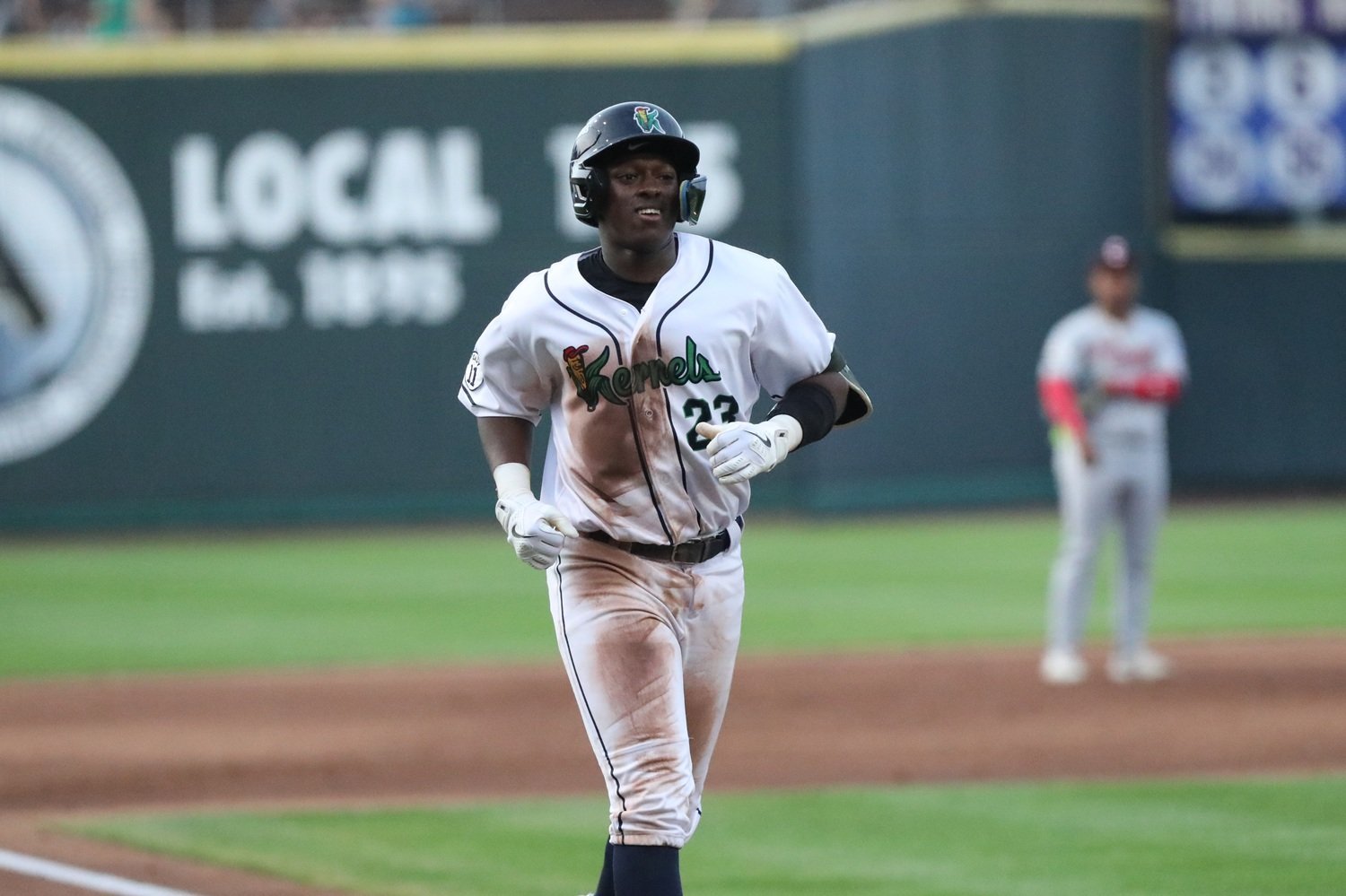 The Minnesota Twins got an early glimpse at what their 2026 MLB Draft class could become, and two of their top selections made enough noise to earn national recognition. Baseball America recently ranked the 10 most impressive professional debuts from the 2026 MLB Draft class, and the Twins had two players on the list. Third overall pick Vahn Lackey ranked fifth, while second-round selection Carson Tinney came in seventh. Vahn Lackey Makes Immediate Impact Lackey's professional debut was highly anticipated after the Twins selected him third overall out of Georgia Tech. He entered the draft as one of the most complete players in the class, combining advanced offensive production with the defensive skills to remain behind the plate. His professional numbers backed up the excitement. Across 25 games between Low-A Fort Myers and High-A Cedar Rapids, Lackey posted a .250/.435/.424 (.859) slash line with three home runs, 16 RBI and 13 stolen bases. The most impressive number might be his 22.6% walk rate, which helped him reach base at a .435 clip despite a .250 batting average. Lackey also made a quick impression after moving to Cedar Rapids. In his first High-A home game, he collected three hits, drove in three runs, reached base five times and hit his first professional home run. For a player who had already posted a .397/.519/.772 line with 20 home runs during his final season at Georgia Tech, the early professional results provided another reason for optimism. Carson Tinney Brings the Power Tinney followed Lackey as Minnesota's second selection, going 43rd overall. The Twins were betting on a catcher with enormous raw power after Tinney hit 22 home runs and posted a .326/.483/.688 (1.165) line at Texas. The power immediately translated to professional baseball. Tinney finished his first 24 games with Fort Myers hitting .203/.400/.532 (.932). While the batting average leaves plenty of room for improvement, his eight home runs and 21.9% walk rate stand out. His .932 OPS shows just how much damage he was able to do when making contact. He also finished the season especially strong. Over his final two weeks, Tinney hit .333/.484/.917 with four home runs and six walks in 31 plate appearances. It is far too early to draw major conclusions from a few weeks of professional baseball. Still, the Twins have plenty of reasons to be encouraged by their first two selections. Lackey showed an advanced all-around offensive profile while Tinney displayed the power that made him such an intriguing second-round selection. Both catchers landed among Baseball America's top 10 debut performances. For a Twins organization looking toward its next competitive window, that is a pretty good place to start. View the full article
 -
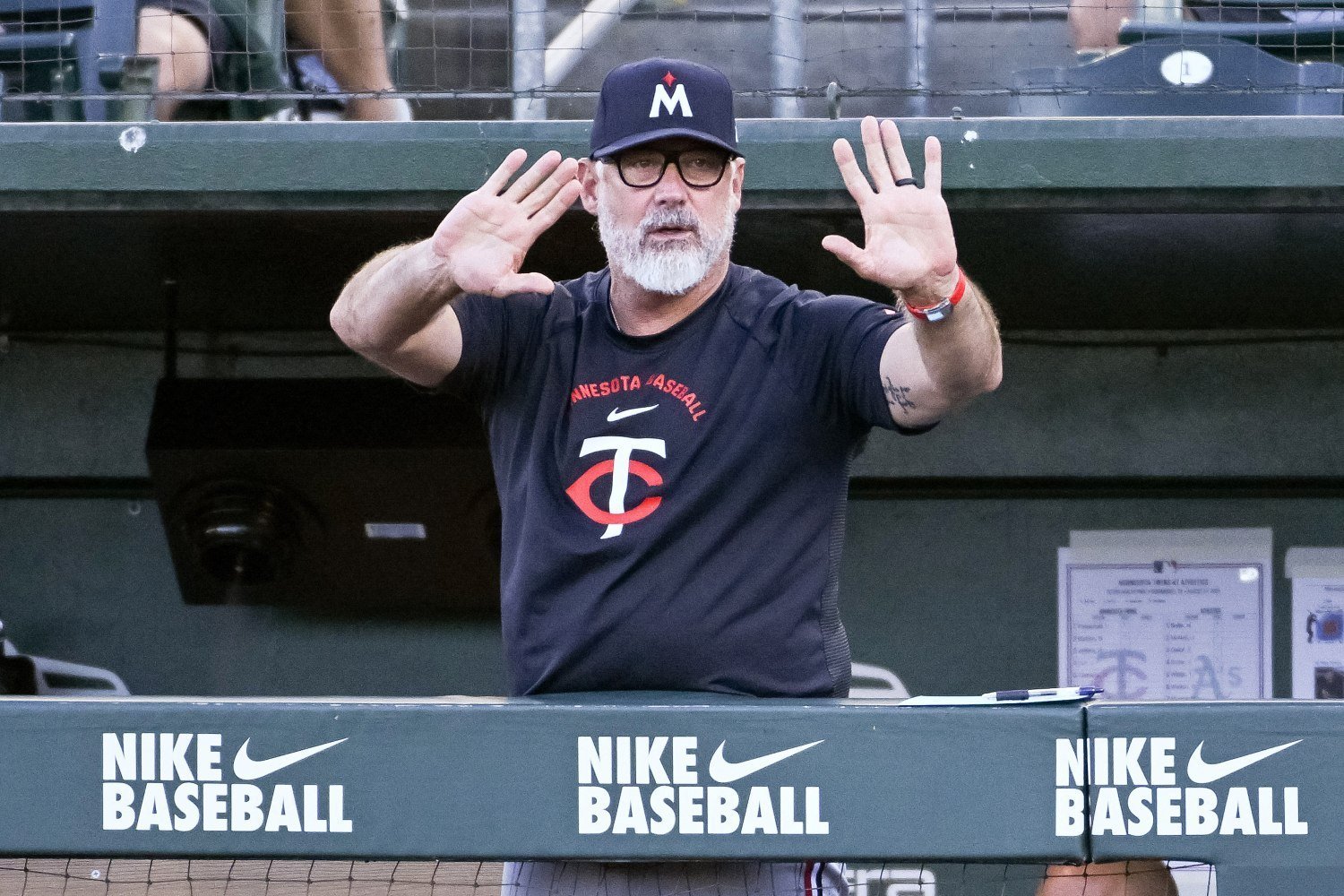 The messaging was consistent from the beginning. The Twins wanted to play meaningful games in September. That phrase became one of the defining pieces of the organization's message entering the 2026 season. It started in January when Tom Pohlad became the new face of Twins ownership after the organization moved on from longtime president of baseball operations Derek Falvey. Pohlad was asked about how the organization would measure the success of the upcoming season. His answer was straightforward. "Let's get halfway through the year, to the end of the year, and let's judge the success of this year on wins and losses and whether we're playing meaningful baseball in September." General manager Jeremy Zoll echoed that message throughout the season. In July, he pointed back to spring training and said the goal had been "to play meaningful games in September." Now, September has come and gone. And it is fair to ask whether the Twins actually accomplished that goal. Technically, There Was a Chance There was a period when the Twins could legitimately point toward September and say they were still in the postseason race. Minnesota's playoff odds climbed to nearly 40% after the Twins swept the Atlanta Braves from August 17-19. The club was hovering around the American League Wild Card picture, and the schedule still provided an opportunity to make a late push. Then things unraveled. The Twins lost seven of eight games near the end of August, dramatically changing the picture. When September began, FanGraphs gave Minnesota a 9.8% chance of reaching the postseason. That isn't zero. But it also isn't what most people envision when an organization talks about playing meaningful games in September. The Twins were five games under .500 on September 1. They weren't chasing a division title. They weren't sitting comfortably in a Wild Card position. They needed a substantial turnaround while also relying on other teams to stumble. Minnesota then went 2-4 over the next week, dropping its postseason odds to 3.1%. At that point, the situation became more reminiscent of Dumb and Dumber. "So you're saying there's a chance." Technically, yes. Realistically, the margin for error had become microscopic. By September 15, the Twins' playoff odds were down to 0.1%. They were officially eliminated on September 20. So, were those meaningful games? That depends on how the phrase is defined. Meaningful Baseball or Meaningful Mathematics? Every September game has consequences. Players are competing for jobs. Prospects are trying to establish themselves. Veterans are auditioning for future contracts. Front-office executives are gathering information that can influence the next season. Those things matter. But that isn't necessarily what Pohlad and Zoll were talking about. The original promise was made in the context of wins and losses. The stated goal was to have a team playing meaningful baseball in September. That implies a competitive postseason race. The Twins did not have that for most of September. They had an outside chance. There is an important distinction. A team sitting five games below .500 on September 1 can technically remain alive because of an expanded playoff field and a crowded American League. But being mathematically alive is different from controlling your own destiny or being a legitimate postseason contender. The Twins' path required a lot to go right. And much of that opportunity existed because the American League was unusually open. That doesn't mean the Twins weren't responsible for their own position. Their record put them in that situation. Instead of entering September with a realistic cushion, they were already chasing. The Braves series temporarily changed the equation. The losses that followed changed it back. By the middle of September, the question wasn't whether the Twins could make a postseason run. It was how long the mathematical possibility would remain. That's a very different definition of meaningful baseball. September Games Still Matter... for 2027 That doesn't mean the final games of 2026 are meaningless. Far from it. The Twins now have to use September to answer questions about their next roster. Young players such as Luke Keaschall, Connor Preilipp, Emmanuel Rodriguez, Walker Jenkins, Brooks Lee and other emerging pieces are getting opportunities to show where they fit. Pitchers are auditioning for rotation and bullpen roles. Veterans are making their own cases for 2027. Those evaluations matter because the Twins have significant work ahead of them this offseason. The organization has already moved away from the previous baseball operations structure. Zoll is now responsible for shaping the next version of the roster, and the club has to determine which pieces from the 2026 team should be part of that future. That makes September valuable. It just isn't the same kind of meaningful that was promised in January. There is a difference between meaningful games because a postseason berth is on the line and meaningful games because a young player might earn a starting job next season. If meaningful baseball means games with something at stake for individual players, then yes, the Twins have played meaningful games this month. September has provided plenty of opportunities for the Twins to evaluate their roster and their future. If meaningful baseball means being genuinely involved in the postseason race, then they last played it in late August. The Twins began September five games under .500 with a 9.8% playoff chance. Within two weeks, that number had fallen to 0.1%. The team was eliminated on September 20. There was a chance, but it was an extremely small one. Pohlad made wins and losses part of his measurement for the season. Zoll repeatedly referenced the goal of reaching September with meaningful games. The Twins reached September. They just didn't reach it in the position they wanted. Now, the organization has an offseason to make sure the same conversation doesn't happen again in 2027. Because "we technically had a chance" is not the standard the Twins themselves established. Did the Twins play meaningful games in September? Leave a comment and start the discussion. View the full article
 -
 All week, we have been handing out our Twins Daily Minor League Awards. This morning, take a look at our 2026 Twins Daily Minor-League All-Star selections. In the comments, let us know how we did. How would your ballot look? CATCHER: Khadim Diaw (23 years old), Cedar Rapids Kernels/Wichita Wind Surge 107 games, .306/.417/.452 (.868 OPS), 26 2B, 2 3B, 9 HR, 47 RBI, 56 BB, 71 K, 14 SB Diaw was a unanimous selection among Twins Daily voters at the catcher position, and you don’t have to look much farther than his triple-slash-line to understand why. He hit for average, got on-base, and provided plenty of extra-base-hit power. The only caveat here from the catcher position is he split his time basically 50/50 between catcher and DH/CF, but his 50 games behind the dish also ranked fifth in the system. FIRST BASE: Aaron Sabato (27), St. Paul Saints 113 games, .273/.349/.528 (.877 OPS), 29 2B, 1 3B, 25 HR, 75 RBI, 41 BB, 119 K, 5 SB Another unanimous selection, as at a position of power, Sabato paced the entire Twins minor league system in home runs, tying only with Matt Wallner for the St. Paul Saints all-time, single-season record. He was rewarded with his MLB callup earlier this week after the Saints season concluded. SECOND BASE: Cody Morissette (26), Wichita Wind Surge/St. Paul Saints 74 games, .259/.342/.513 (.856 OPS), 16 2B, 17 HR, 52 RBI, 32 BB, 68 K, 8 SB Released from the Miami Marlins system in early June, Morissette joined the Twins as a free agent about a week later and turned into a steady power presence in the Saints lineup. His .513 slugging percentage rivaled the system's home run kings, Sabato and Wallner. THIRD BASE: Brandon Winokur (21), Cedar Rapids Kernels/Wichita Wind Surge 127 games, .252/.337/.427 (.764 OPS), 16 2B, 4 3B, 21 HR, 81 RBI, 58 BB, 162 K, 30 SB Winokur once again displayed the plethora of tools in his big frame by clubbing 20+ homers and stealing 20+ bases for a 20/20 season. He also led the system in RBI’s and ranked third in total bases. SHORSTOP: Marek Houston (22), Cedar Rapids Kernels/Wichita Wind Surge 116 games, .312/.392/.455 (.847 OPS), 28 2B, 2 3B, 12 HR, 60 RBI, 61 BB, 108 K, 50 SB Houston came out of the gates swinging a hot bat for the Kernels and earned a mid-season promotion to Wichita where he barely slowed down. Among hitters who played at least 70 games, his .312 batting average on the season ranked fourth in the system, while his 28 doubles ranked third among all hitters. His 50 stolen bases should not go unnoticed as well, as it helped him lead the system in runs scored. He did all this while being one of the top defensive players in the minors! LEFT FIELD: Caden Kendle (24), Cedar Rapids Kernels/Wichita Wind Surge (rehab w/FCL) 82 games, .330/.407/.572 (.979 OPS), 24 2B, 16 HR, 70 RBI, 34 BB, 69 K, 19 SB If not for missing a month-plus in the middle of the season, Kendle may have led the system in several counting categories. His breakout campaign will have to settle for the percentage ones, as he led in batting average, slugging percentage, and OPS. His enflamed bat earned a midseason promotion from Cedar Rapids to Wichita, where it then evolved into a Super Saiyan piece of lumber, as he hit .371/.430/.646 (1.076) in 45 games at Double-A. CENTER FIELD: Walker Jenkins (21), St. Paul Saints (rehab w/Fort Myers/Cedar Rapids) 73 games, .323/.417/.559 (.976 OPS), 18 2B, 3 3B, 14 HR, 31 RBI, 43 BB, 50 K, 17 SB Jenkins ended his summer with a flourish, hitting .411/.488/.795 (1.283 OPS) with 8 home runs in 18 August games for the Saints to earn his promotion to the big leagues. He raised his overall OPS over .100 points in that timeframe to put an emphatic stamp on his Twins Daily Minor League Hitter of the Year season. RIGHT FIELD: Yasser Mercedes (21), Fort Myers Mighty Mussels/Cedar Rapids Kernels 109 games, .249/.343/.453 (.797 OPS), 27 2B, 3 3B, 18 HR, 72 RBI, 56 BB, 127 K, 52 SB Mercedes began the season by repeating the Florida State League but quickly lit the league on fire with a 1.081 OPS and six home runs in 21 games before being promoted to the Midwest League. While his numbers dipped considerably in High-A, they still included extra base power (23 2B, 12 HR) and a bunch of speed (41 stolen bases in 47 tries) as a table setter for the Kernels. DESIGNATED HITTER: Luis Fragoza (19), FCL Twins/Fort Myers Mighty Mussels/Cedar Rapids Kernels 83 games, .313/.408/.542 (.951 OPS), 23 2B, 14 HR, 53 RBI, 33 BB, 91 K, 24 SB Fragoza made his stateside debut during the 2025 season with the FCL Twins with forgettable numbers, then spent his offseason maturing and developing into a gale force that could not be contained in the state of Florida. After a quick refresher in the FCL to begin the year, he blasted an insane 14 home runs with 51 RBI for the Mighty Mussels in just 59 games to earn a promotion to Cedar Rapids in August. UTILITY: Ben Ross (25), Wichita Wind Surge/St. Paul Saints 121 games, .273/.379/.500 (.879 OPS), 30 2B, 3 3B, 20 HR, 71 RBI, 70 BB, 126 K, 20 SB After spending two straight seasons with the Wind Surge, Ross decided he had had enough of the Texas League in 2026, quickly bruising his way to Triple-A behind a 1.324 OPS in 16 games for Wichita. He continued that excellence for the Saints in enough fashion to post a 20/20 season and earn his call to the major leagues on September 1st. STARTING PITCHER: LHP Aaron Rozek (31), Wichita Wind Surge/St. Paul Saints 24 starts (34 total appearances), 124 2/3 IP, 4.19 ERA, 1.44 WHIP, 104 K, 18.9 K%, 49 BB, 8.9 BB% Rozek continues to be a mainstay in the Twins system and for the St. Paul Saints. He’s spent portions of the last three seasons in St. Paul, and at 30+ years old continues to anchor their staff. Rozek led the system in innings pitched and took on whatever role the team needed, also appearing 10 times in relief. STARTING PITCHER: RHP Preston Johnson (26), Wichita Wind Surge 18 starts (24 total appearances), 88 2/3 IP, 4.26 ERA, 1.20 WHIP, 106 K, 29.0 K%, 33 BB, 9.0 BB% Johnson came to the Twins system this year out of the independent leagues after spending three seasons in the Baltimore Orioles system, reaching Triple-A last year. He struck out 10.8/9IP with Wichita and had stretches of dominance. From August 4th through September 9th, he pitched to a 1.91 ERA in eight games and 33 innings, striking out 40 and walking just nine. STARTING PITCHER: RHP Adrian Bohorquez (21), Cedar Rapids Kernels/Wichita Wind Surge (rehab w/FCL Twins) 18 starts (19 total appearances), 59 2/3 IP, 3.02 ERA, 1.21 WHIP, 69 K, 27.3 K%, 32 BB, 12.6 BB% Bohorquez had a bit of a rough start to the 2026 season, making just three starts with Cedar Rapids in which he had an ERA of 11.25 before hitting the injured list. When he returned, it was lights out for opposing lineups. Over his final 16 games to close the season with the Kernels and Wind Surge, he carried a 1.74 ERA and .520 OPS against, striking out 56 hitters and allowing just 29 hits in 51 2/3 innings. STARTING PITCHER: RHP Riley Quick (22), Fort Myers Mighty Mussels/Cedar Rapids Kernels/Wichita Wind Surge 23 starts, 81 2/3 IP, 4.74 ERA, 1.40 WHIP, 110 K, 30.6 K%, 48 BB, 13.4 BB% Quick gets the final All-Star nod for starting pitchers as he is Twins Daily’s 2026 MiLB Pitcher of the Year. He began the season with the Fort Myers Mighty Mussels, and finished it with Wichita Wind Surge, never missing time after coming back from surgery. RELIEF PITCHER: RHP Paulshawn Pasqualotto (25), Cedar Rapids Kernels/Wichita Wind Surge/St. Paul Saints 42 appearances, 70 IP, 3.73 ERA, 1.27 WHIP, 95 K, 32.9 K%, 26 BB, 9.0 BB% Like Quick above, Pasqualotto made stops at three levels during the 2026 season, with his final six appearances coming for the St. Paul Saints. In 18 innings with Cedar Rapids, he struck out 30. In 41 1/3 with the Wind Surge, he tacked on 48 more. Then with St. Paul added 17 in 10 1/3 IP to close out his year. This all resulted in him leading the system with a 12.2K/9IP rate among pitchers with at least 60 innings on the season. RELIEF PITCHER: RHP Michael Hilker (22), Fort Myers Mighty Mussels/Cedar Rapids Kernels 41 appearances, 63 IP, 2.86 ERA, 1.35 WHIP, 73 K, 26.9 K%, 27 BB, 10.0 BB% With the Mighty Mussels to begin the season, Hilker worked himself into a high-leverage and closing role very quickly, finishing the game in 18 of his 34 appearances in Single-A. His sub 3.00 ERA and 11.0K/9IP rate earned him a bump to the Kernels to end the season. He continued that trend there, with four of his seven appearances ending the game. Congrats to all of our 2026 Minor League All Stars, and may 2027 be even better! View the full article
 -
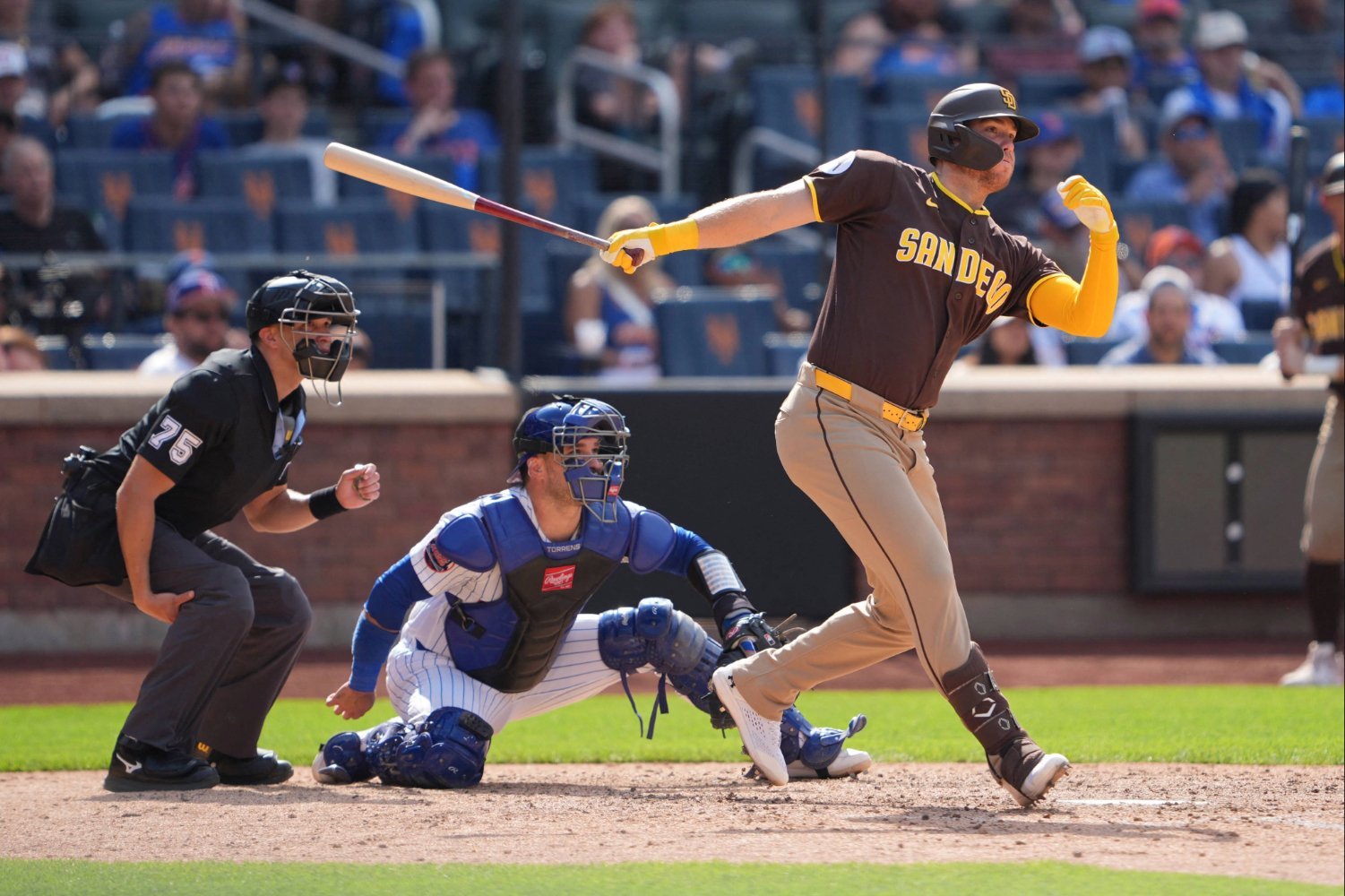 The San Diego Padres haven't seen Gavin Sheets suit up for a game since August 29. Placed on the injured list the same day as Luis Rengifo, Sheets has spent almost a full month on the shelf with a foot sprain and plantar plate tear. While that could require surgery during the offseason, it's possible that the team could activate him over the next couple of days ahead of what is expected to be a third consecutive playoff appearance. Of course, that activation would come at a diminished role given the aforementioned possible need for surgery. Which means that if Sheets is brought back and if we see him during the postseason, it would be in a pinch-hit or designated hitter capacity. That presents a couple of issues. The first among them is the roster gymnastics that the Padres would have to undergo in order to accommodate his presence on the roster. With Miguel Andujar also nearing a return, the Padres would have to fit two positionally-limited bats into what has become a fairly dynamic roster in the second half. Andujar may be easier to fit in the stead of someone like Austin Hays, a right-handed hitter who has been used sparingly, and only as a DH, over the last few weeks. Even through various injuries (namely Rengifo), the Padres have found worthwhile contributors in reserve roles. Dustin Harris & Samad Taylor have each been very good in limited duty for San Diego, each logging time in left field, while the current roster featuring three catchers has allowed them to deploy the more offensively-inclined Luis Campusano & Ethan Salas earlier in games (or in the DH spot) and turn to defense-first backstop Freddy Fermin later on in an as-needed basis. That also grants the gift of flexibility in the form of having Sung-Mun Song around as a reserve infielder. That's not to say that the Padres would lose their ability to move pieces around entirely upon Sheets' return altogether. But it would certainly limit things in a way that they are not at present. Which is especially important to consider when one examines the type of year Sheets is actually having. Prior to his IL placement, his line read .211/.313/.388 with an even 100 wRC+ across more than 400 plate appearances. There's plenty of bad luck in there (.229 BABIP), but that bad fortune also comes at the result of a 46.0 percent ground-ball rate that is nearly nine points higher than it was last year. Elevation has been an issue for a player that's supposed to be a secondary slugger in this lineup. Now, of course, Sheets excels as a left-handed hitter against righties. All 16 of his homers have come against right-handed arms this year, with a .206 ISO and 114 wRC+ against righties versus a .046 ISO and 33 wRC+ against southpaws. Still, Harris and Salas are also lefties. Both are, at this point in the year, more well-rounded as hitters than Sheets and offer more in the way of defensive acumen. Would the Friars really limit their exposure just to give Sheets a few platoon-friendly at-bats in October? It's a question at least worth asking. Sheets has a track record as recently as last year as being a key bat for the Padres. We just haven't seen him at his best all too frequently this year. In any case, it appears it's something the Padres are going to have to navigate over the next couple of days as they work to assemble their postseason roster. View the full article
 -
Alex Jackson Clears Waivers Again After Bizarre Twins Roster Run
DiamondCentric posted an article in Twins Daily
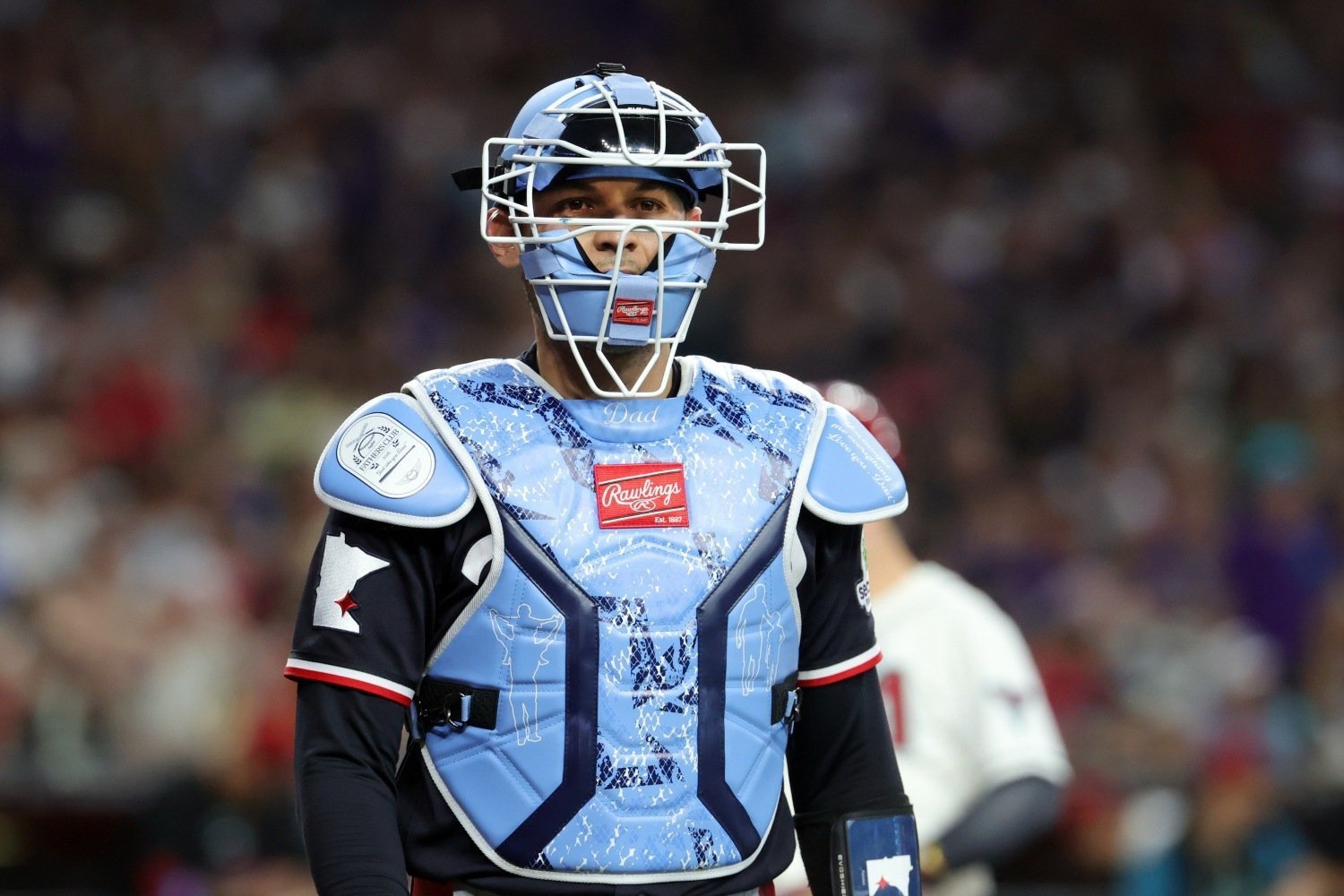 Alex Jackson has become one of the strangest roster stories of the Minnesota Twins' 2026 season. For the third time this year, Jackson has cleared waivers after being designated for assignment. Once again, all 29 other MLB clubs passed on the veteran catcher, allowing Minnesota to retain him without giving up a roster spot. The latest move came as the Twins needed room for former first round pick Aaron Sabato. Jackson was designated for assignment, bringing another chapter to an increasingly bizarre stretch of roster decisions involving a player who has spent much of the season barely playing. The story began last November when Minnesota acquired Jackson from the Baltimore Orioles in exchange for Triple-A infielder Payton Eeles. The Twins also committed $1.35 million to Jackson through arbitration, a move that made sense at the time. Ryan Jeffers was expected to be the starting catcher, and Jackson appeared positioned to serve as his backup. Then the Twins signed Victor Caratini to a two-year, $14 million contract. Suddenly, Jackson was an expensive third catcher and organizational depth. The Twins designated him for assignment after spring training, but no team wanted to take on his contract. He cleared waivers and remained with the organization at Triple-A. That decision eventually proved useful. Jeffers fractured his left hamate bone in May and missed nearly two months. Caratini moved into the starting role, while Jackson returned to Minnesota to handle the backup duties. He provided needed depth until Jeffers returned in July. The Twins could have moved on from Jackson at that point. Instead, they kept him around through the trade deadline in case Jeffers was dealt. Jeffers stayed. Jackson remained. And he barely played. After the deadline, Jackson spent another two weeks on the active roster while receiving only one at-bat. The Twins finally designated him for assignment again in August, and once again, every other team passed. Jackson returned to Triple-A, but only for 48 hours. When Austin Martin landed on the injured list, the Twins brought Jackson back. He then spent another five weeks on the roster, collecting just three more at-bats. Now, with the season nearly over, Minnesota has designated him for assignment for a third time. The numbers tell the story. Jackson spent 60 games on the active roster after Jeffers returned, but received only 15 at-bats. After the trade deadline, he appeared in 41 games and received just four at-bats. That makes the Twins' continued commitment to Jackson difficult to understand unless they view him as their preferred backup catcher for 2027. If that's the plan, the question becomes obvious: Why keep him around for more than two months if the organization wasn't willing to actually use him? The Twins have repeatedly protected Jackson's roster spot this season. They just haven't given him many opportunities to justify it. View the full article
 -
 Daniel Palencia initially struggled when he returned from the injured list. Recently, he has suddenly figured out how to get outs and is flashing that dominance he showed at times in 2025! Daniel Palencia has developed into a multi-inning reliever for Craig Counsell, who has been struggling to assemble a competent bullpen as the Cubs push toward the postseason. View the full article
 -
Kaelen Culpepper Could Return for Twins’ Final Two Games
DiamondCentric posted an article in Twins Daily
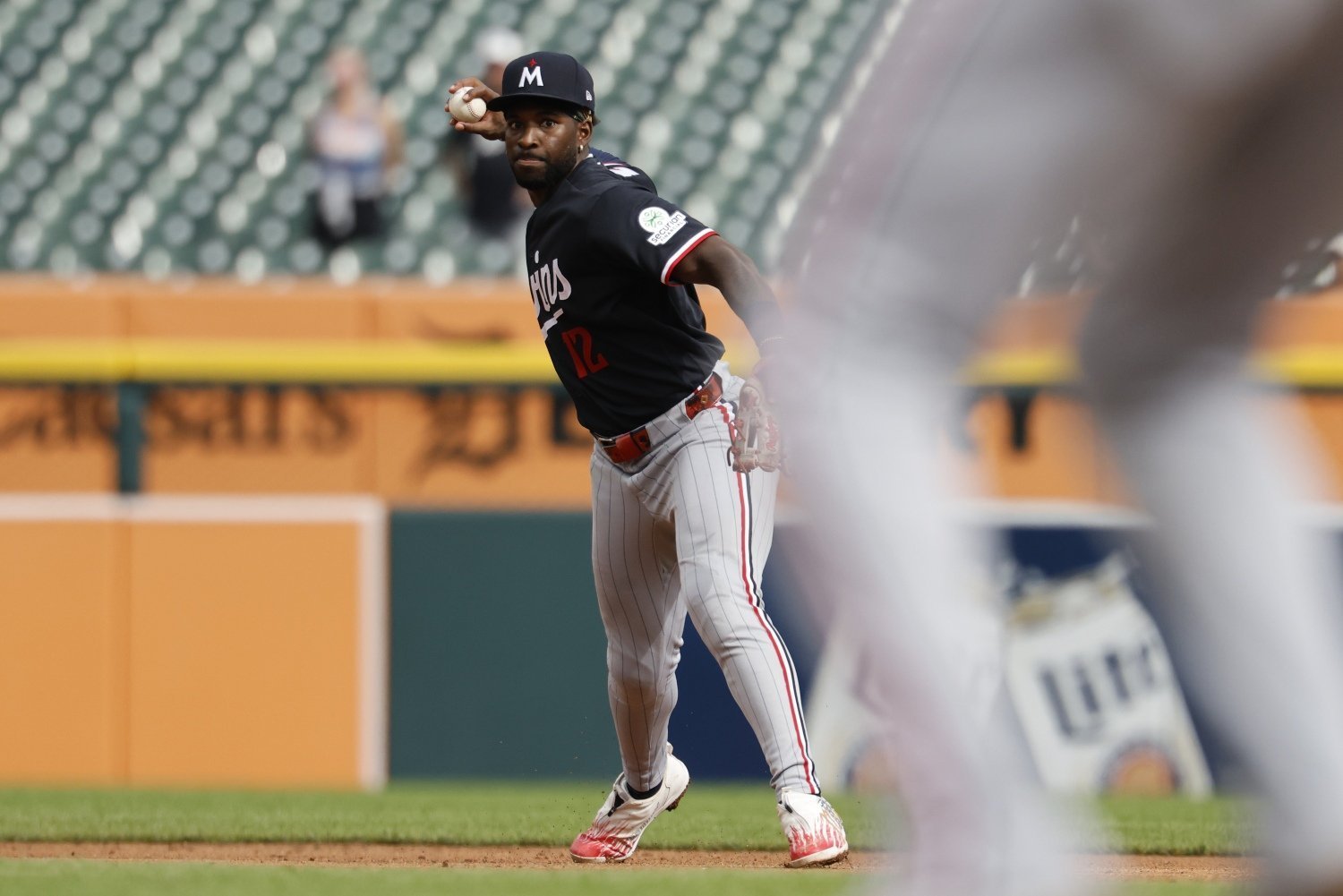 Kaelen Culpepper's rookie season may not be over just yet. According to Bobby Nightengale Jr. of the Star Tribune, Culpepper has been doing baseball activities at Target Field while the Twins are on their current road trip. The rookie shortstop is scheduled to run the bases Thursday, and if everything goes according to plan, he could be activated from the 10-day injured list for the final two games of the season. That would give Culpepper one more opportunity to put a finishing touch on what has been an encouraging first look at the major-league level. Culpepper was placed on the 10-day IL after suffering a mild left hamstring strain during Tuesday's game against the New York Yankees. He tweaked the hamstring in the sixth inning while running out a ground ball, and an MRI the following morning confirmed the strain. The Twins recalled infielder Ben Ross from Triple-A St. Paul to take Culpepper's spot on the active roster. When the injury happened, manager Derek Shelton left the door open for Culpepper to return before the end of the season. The timing was always going to make that difficult, though. With the season nearly finished, a return would mean Culpepper could play in only the final two games. Now, that possibility appears to be becoming more realistic. Culpepper has provided plenty of reasons for the Twins to want to see more of him. The 23-year-old has hit .275/.333/.404 across 31 games, collecting three home runs, five doubles and 11 RBIs. More importantly, he has looked comfortable defensively at shortstop, grading out as an above-average defender up the middle. There is still plenty for Culpepper to learn at the plate and in the field. Thirty-one games is hardly enough time to make sweeping conclusions about a young player's long-term future. Still, his performance has given the Twins another important piece to consider as they build toward 2027. That is what makes these final two games potentially meaningful for Culpepper. If he can get through Thursday's running without any setbacks, the Twins could give their rookie shortstop a chance to get back on the field before the season ends. Even a handful of plate appearances would allow him to finish his first major-league season on his own terms rather than watching from the injured list. For a Twins team already looking toward the next chapter, getting Culpepper back would be a small but important development. Ending the year healthy, productive and back at shortstop would give the organization another positive reason to feel encouraged about what comes next. View the full article
 -
 Sweet Lou is OUT on the Twins Off-Daily Podcast season! Listen using Apple Podcasts: https://podcasts.apple.com/us/podcast/the-twins-off-daily-podcast/id1741266056 Listen using Spotify: https://open.spotify.com/show/4tb78XlurcPTYYSsARdbD7 Listen using iHeartRadio: https://www.iheart.com/podcast/263-the-twins-off-daily-podcas-167548600/ Listen using Pocket Casts: https://pca.st/nvclbt0w Watch on YouTube: https://www.youtube.com/@twinsdaily View the full article
 -
 Vladimir Guerrero's quote put Owen and Jesse in a pretzel. The guys talk big picture about the Jays' inability to transition out of the Bo Bichette era in year one, and the Jays officially being eliminated from 2026 postseason contention, but they quickly transition into their thoughts about Vladdy Guerrero Jr.'s quote that has sent Blue Jays fans into a spiral. Owen shares details about his trip to Baltimore, and the guys wrap up the penultimate episode of the 2026 season. Listen on Apple Podcasts: https://podcasts.apple.com/us/podcast/the-jays-centre-podcast/id1846108462 Listen on Spotify: https://open.spotify.com/show/3Bi7SzfpcqMo5xYWnbCeoL Listen on iHeartRadio: https://www.iheart.com/podcast/263-the-jays-centre-podcast-300304824/ Listen on Pocket Casts: https://pca.st/2qk9wqxd Watch on YouTube: https://www.youtube.com/@jayscentre View the full article
 -
Fans Asked to Sign Giant Card Thanking Pohlads for Trying This Year
DiamondCentric posted an article in Twins Daily
 Twins fans hoping to catch one more look at their favorite team this weekend have a chance to do something special for the team's ownership group: Say "thank you." Sources close to the front office say they'll have giant thank-you cards stationed at each of the main entrance gates for attendees to sign, as a means of expressing gratitude to Tom Pohlad (and the rest of the extended Pohlad family) for spending money at the trade deadline. "They're roughly the size of those novelty checks you see when somebody makes a big charitable donation," said one team official, who asked to remain anonymous. "We'll have pens set out for fans to sign their names and offer a small word of encouragement to the Pohlad family, thanking them for all they've done. Regular-sized pens. We didn't want to splurge for novelty ones." The Twins, coming off consecutive seasons of budget cuts and offseason inactivity, made multiple trades in August to shore up their relief pitching and added Dean Kremer to the rotation. "And it's about time someone said thanks," said the source. "They actually tried a little bit this summer. Lots of people spend August on their yachts or at their country estates, hunting foxes or that most dangerous game, human beings. The Pohlads didn't. They stayed here and gave the rabble something to cheer for. Frankly, it's long past time for the little people to celebrate their betters." In addition to the cards, there will be QR codes posted throughout Target Field for fans to give thanks monetarily. All the money raised by the so-called "Thank a Pohlad Fund" will go to various needs the family has. "The money will go to where it can be most effective," said a source close to the family. "For example, one of their stableboys was overly defiant and would look many family members directly in the eye. He obviously was let go, but finding a steady, obedient replacement who knows his place is difficult without paying a job search firm." Another source indicated that the family feels its budget for yacht maintenance and fox-hunting equipment will need to be augmented for the coming fiscal year. The Twins open their series with Texas at 7:10 PM this evening, with Joe Ryan making his final start of the season. Image license here. View the full article
 -
Is the Cubs’ Bullpen Good Enough for October?
DiamondCentric posted an article in North Side Baseball
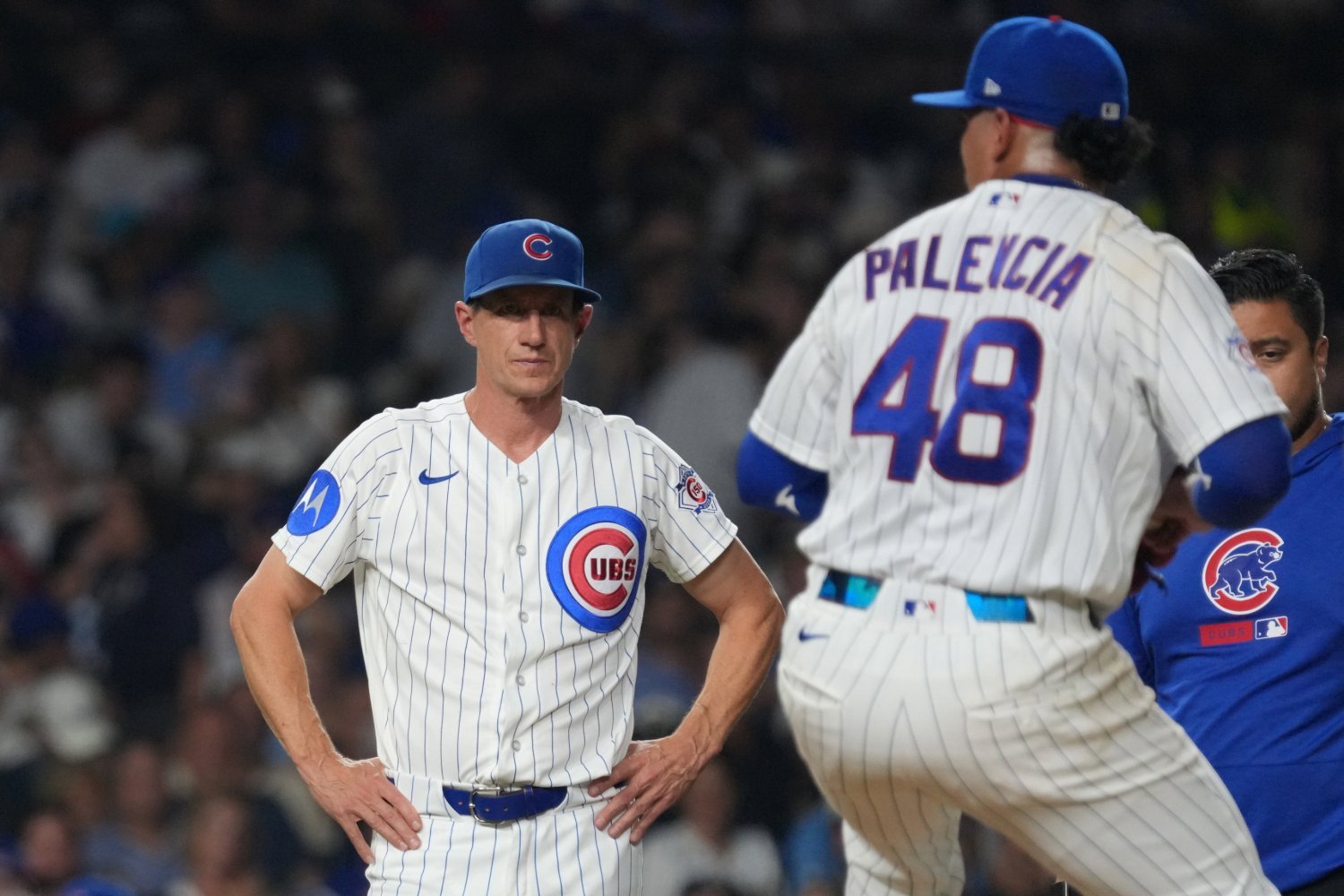 The Chicago Cubs are less than a week away from playoff baseball. At this point in the season, you want to see your team playing at its peak level You want the things that have worked throughout the season to be clicking, and you certainly want to feel confident in the areas that are going to matter most in October. Unfortunately for the Cubs, their bullpen isn't quite where it needs to be. Chicago's late-game pitching has been a hot topic of discussion all season, and even with the bullpen as healthy as it has been in some time, the North Siders still haven't gotten enough consistency from the group. Over the last month, they've converted just five of their 12 save opportunities. While not every high-leverage situation in the playoffs will come in the ninth inning, that number is indicative of a larger question surrounding the team's late-game pitching. Jacob Webb is probably the biggest concern. Webb was brought in as more of a low-level, middle-relief option coming into the season, but injuries forced the Cubs to rely on him in much bigger situations. He's been their primary ninth-inning option for most of the season, but he's struggled mightily over the past month. He's sporting a 10.29 ERA during that span and hasn't recorded a save since Aug. 14, despite receiving plenty of opportunities to do so. In fact, Webb has blown four saves since his last conversion, with the long ball playing a major role in his struggles. His changeup and slider, which are his two primary secondary offerings, have been hit extremely hard recently, while the swing-and-miss that made him so effective earlier in the season simply hasn't been there. For a team about to enter the postseason, that's a significant problem. Webb wasn't necessarily supposed to be one of the Cubs' premier high-leverage arms coming into the year, but they've needed him to fill that role, and his recent performance hasn't exactly inspired confidence. The good news is that there are some positive developments elsewhere in the bullpen, starting with Daniel Palencia. The right-hander immediately struggled after returning from the injured list, allowing seven earned runs across just 4 1/3 innings, and more than half of the baserunners he's allowed since his return have come around to score. But he's looked like a completely different pitcher lately. In his last five outings, totaling 5 2/3 innings, he hasn't allowed a run or a hit. Even more impressively, he hasn't allowed a single baserunner over his last three appearances. His velocity and the shape of his fastball have also been improving, which is an extremely encouraging development for the Cubs. If Palencia can carry this recent stretch into October, he should be a major part of Craig Counsell's high-leverage plans. He's not the only pitcher trending in the right direction, either. Ryan Rolison and Ryan Zeferjahn have both been getting better lately, while Aaron Civale and Colin Rea have also looked sharp recently. Civale, in particular, seems like someone who could have a bigger role in the playoffs than he did over the course of the regular season. This isn't a case of the entire Cubs bullpen suddenly becoming unusable. There are plenty of capable arms in the group, and some of them are actually pitching better as the postseason approaches. The bigger issue is whether the organization has enough reliable options to get through the biggest moments of a playoff series. As a unit, the Cubs' bullpen ranks 19th among all 30 MLB teams with a 4.42 ERA over the last month. That's the worst mark among any National League playoff team, and the home run problem has been particularly glaring; Chicago's relievers have allowed 16 of them during that span. A team can survive giving up a couple of singles in an inning. A solo homer can change the complexion of a game, while a two- or three-run shot can erase an entire night's worth of work in one swing. And when you're heading into the postseason, you need to know who you can trust when those moments arrive. That's where the Cubs still have some questions to answer. If this were happening in June, there would be plenty of time to figure things out. If it were happening in July, the Cubs could add another arm or simply wait for some of their pitchers to find their form again. There isn't much time left now. They're less than a week away from the Wild Card Round, and they'll soon be playing games where one bad inning can end their season. The Cubs don't necessarily need their bullpen to become one of baseball's best overnight—they have the offense to survive a number of October tests. They just need enough reliable options for Craig Counsell to navigate the biggest moments. There are some encouraging signs, but with the postseason just days away, this group still feels like a potential problem waiting to happen. View the full article
 -
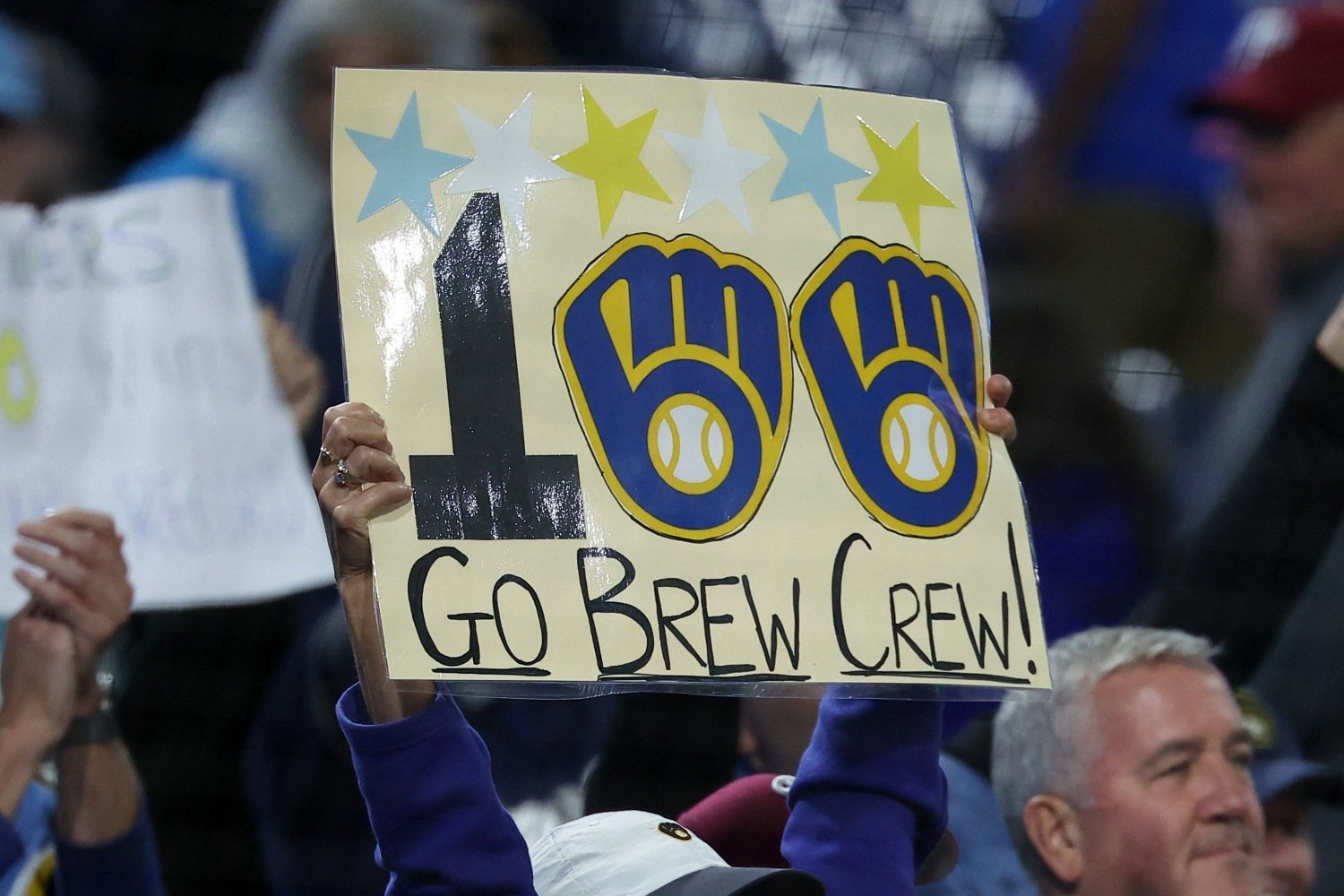 Since the start of the 2017 season, the Milwaukee Brewers have the fourth-most regular-season wins in baseball and the second-most in the National League. Their only losing season during that time was 2020, when they finished two games under .500—and 2020 doesn't count. The Brewers have made the postseason in eight of their last nine seasons, winning six division titles during that span. Remarkably, their mastery of the regular season keeps improving. Milwaukee set a new franchise record with 97 wins last year, and on Thursday night in Philadelphia, they reached 100 wins for the first time in franchise history. Shortly afterward, they clinched baseball’s best record and home-field advantage throughout the playoffs for the second straight season. Some of that is the Pat Murphy effect. With an aggressive approach both on and off the field throughout the regular season, Murphy squeezes a few extra wins out of his roster that other managers might not. It’s debatable whether that’s the best long-term strategy, but there is no denying that the Brewers have become an even greater regular-season powerhouse with Murphy at the helm. The biggest difference, though, is that the current Brewers teams are more well-rounded and better constructed to outlast other teams over 162 games. The late-2010s and early-2020s teams got creative to compete. The 2018 and 2019 Brewers added the best available players in trades and free agency regardless of fit, maximizing awkward rosters with bullpen games and defensive positioning. From 2021 through 2023, they tried to make up for poor offenses with elite starting rotations. Now, the Brewers are good at almost everything. According to FanGraphs, over the last two seasons, they’re fifth in wRC+, first in baserunning runs, sixth in Defensive Runs Saved, and second in pitching WAR based on runs allowed per nine innings (RA9-WAR). By building deep rosters and trading aging talent for controllable players, they can replace injured and underperforming guys with more productive alternatives. For all the talk of Milwaukee playing a unique brand of baseball in the modern age, there is no particular “Brewers way” in which they win games. They’re simply better than most teams in nearly every facet of the game. “Everybody thinks we play different than everybody else,” Murphy said in Philadelphia earlier this week. “I don’t really see that all that much.” Perhaps the difference lies neither in style nor in roster construction, but in what they accept—and what they refuse to. A few minutes later, Murphy ran through a list of ways in which he’s not satisfied with his team’s play in recent weeks. On the bases, Murphy wants the Brewers to improve their leads at first. In the field, he’s been unimpressed by how they’re completing plays. On the mound, he wants pitchers to hold runners and guard their pitches more effectively. The Brewers will use their bye week to clean those things up before the postseason. Getting over the hump in October is the next hurdle. Despite their regular-season success, the Brewers remain one of five active teams that have not won a World Series. They face real challenges in getting there this year. Will their offense, which ranks 28th in home runs, have enough big swings against elite pitching? How will the starting rotation perform behind Jacob Misiorowski and Logan Henderson? Both point toward the same larger question: the Brewers are built to excel over 162 games, but are they built to handle the hottest and most talented teams in shorter samples? Until the Brewers answer that question with a championship, they’re still falling short of their ultimate goal. Calling any non-championship season a failure is reductive, though. To win the World Series, you must get into the postseason. If the Brewers keep doing that every year, they’ll win it all sooner, rather than later. The regular season means something, and they do it better than any other team. View the full article
 -
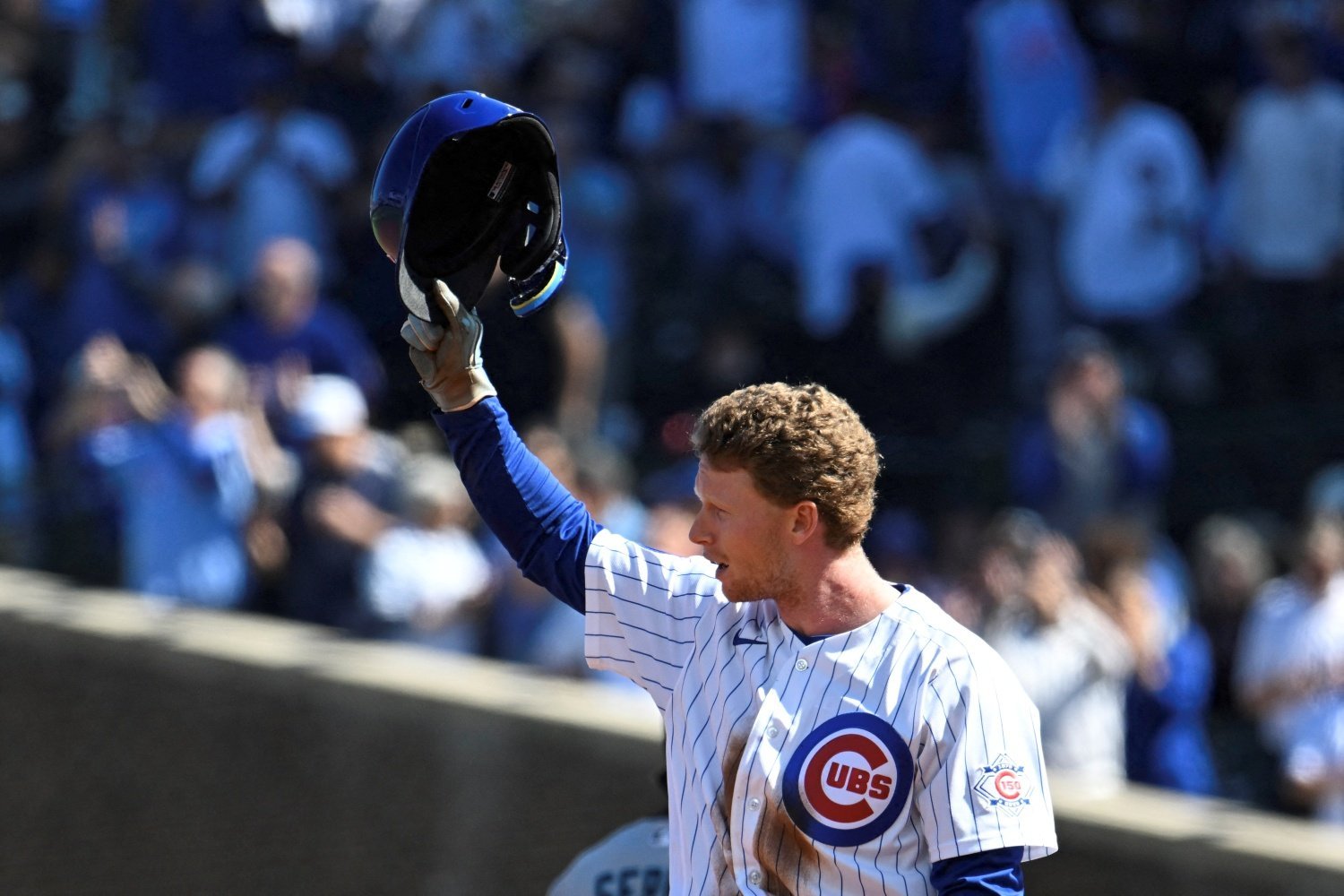 If the Wrigley Field crowd had had its way, the game might have stopped for a while. Speeches could have been given. The commissioner could have strode onto the field, while a microphone was hastily placed behind home plate. A ceremony could have been performed. Certainly, a long video of highlights and tributes would have met no great resistance. Pete Crow-Armstrong, however, just tried to keep it together. "Don't cry on the baseball field—not that that's not ok," Crow-Armstrong said after the game, when asked what was going through his mind at second base, "but that's emotional stuff. I mean, I've gotten so much love, and I'm so lucky for that, and it's something I'm grateful for every day." Crow-Armstrong had just stolen his 40th base of the season, putting him in the illustrious 40/40 club. It was the chance the fans needed to finally hit him with the waves of adulation that had been lapping at the shore for weeks—to crash over him with their admiration and gratitude for what has been the greatest individual season in Cubs history. There's something a bit tawdry and small, really, about 40/40. Power and speed in the same package was once quite rare, and indeed, speed was not applied on the field the way it is now until roughly the mid-1950s. Now, though, the best athletes on the diamond are often capable of both hitting for power and stealing bases. José Canseco opened the 40/40 club in 1988, generating a certain amount of awe, but (while relatively few players have followed him through the door he busted open) power-speed combos are much more common now. Statistically, the club evokes a blend of thunder and lightning, but it sketches them roughly. The two achievements are monumentally imbalanced. Every home run is worth about four times as much as a stolen base. Counting up these two particular events is also a bit unsatisfying, unless you grew up with the numbers on the back of an old-fashioned baseball card. Doubles and triples matter; walks matter; taking extra bases on non-steals matter. When you hear that someone has accomplished 40/40, there's a suggestion of well-roundedness that extends beyond power and speed, but that suggestion has often been deception. Canseco was a meathead who played like one, hurting his team with poor defense and bad baserunning decisions. Alfonso Soriano drew so few walks that power was almost his whole game offensively, and he, too, was a lousy defender. Still, it was an occasion. It was like a birthday party, when we half-arbitrarily find an excuse to celebrate someone for no real reason other than that we love and are thankful for them. Crow-Armstrong's achievement, if it had only been 40 homers and 40 steals, would have meant something, but not something huge. The season he's had, though, merited something more than applause in response to each individual moment of mastery. He's been much too heroic not to stop and marvel. The full 40/40 club is, as you've heard a dozen times by now, Canseco, Alfonso Soriano, Barry Bonds, Álex Rodríguez, Ronald Acuña Jr., Shohei Ohtani, and Crow-Armstrong. That company is illustrious, but we can do even better. According to Baseball Reference, Crow-Armstrong is also a member of the 40/15/10 club: 40 or more runs above average at the plate; 15 or more runs above average as a fielder; and 10 or more runs above average via baserunning and double-play avoidance. That club has only two other members: Rickey Henderson, in 1980, and Mike Trout, in 2012. If you want to confine yourself to stats based on raw outcomes without adjustments or interpretations, we can still do better than merely counting homers and steals. Crow-Armstrong has 355 total bases and has drawn 82 walks. The only players with 350 or more total bases, 75 or more walks and 30 or more steals in a season are Crow-Armstrong, Ohtani, Acuña, Vladimir Guerrero, Larry Walker, Henry Aaron and Willie Mays. The only 40/40 club members who were caught stealing fewer than 10 times the year they achieved their status were Bonds and Ohtani; Crow-Armstrong has only been caught seven times. It's important that we link Crow-Armstrong's season to these names—Mays, Bonds, Trout and Ohtani, especially. That conveys how great his campaign has been in an honest way. We have another 10 years to find out whether he can actually be as good as those guys, but this year has been as good as those guys' best. That, in itself, is remarkable. However, it's not what the fans were really cheering for. Rather, what has made Crow-Armstrong's summer so special is all the resonances that supersede the national attention and the historic accolades for Chicagoans: the ones that tie him inextricably to this city and its pride in its sports history. Obviously, no Cubs player had ever before gone 40/40, but just as importantly, only one player in the annals of the franchise had ever stolen 40 and hit 40 homers in any season, even if it be two separate ones: Ryne Sandberg, whose death (too young) last July is still a visible scar on the hearts of Cubs fans. Billy Williams (happily, still with us) was the only left-handed hitter ever to hit 40 homers in a season for the team. Crow-Armstrong's baserunning regularly elicits comparisons to Javier Báez. His sonic boom of a gear shift in late May and throughout June evoked Sammy Sosa, who later showed up for the team's celebration of its 150th anniversary and prophesized about the three-homer game Crow-Armstrong produced that very day. Crow-Armstrong has knitted himself into the fabric of the franchise by weaving his own legacy as warp across the weft of the team's greatest and most beloved stars. It hasn't all happened this year, but it all came together this year. He filled a hole, too. A team that has had a franchise shortstop (Ernie Banks), a franchise second baseman (Sandberg), a franchise third baseman (Ron Santo), a franchise first baseman (Mark Grace, Anthony Rizzo, take your pick), a franchise left fielder (Williams) and a franchise right fielder (Sosa) has never had a truly great center fielder. That has finally changed. In the same way he seems to be stretching across and enmeshing himself within team history, he's doing the same with the wider Chicago sports landscape. His friendship with Caleb Williams has been exhaustively documented, but when Williams, Matas Buzelis, Caleb Wilson and more showed up to sit in the front row behind the Cubs dugout one night late in the summer, the point was driven home. Crow-Armstrong is part of a wave of talent that gives an underachieving sports town new hope for shaking off that label. Of course, when you talk about Chicago sports icons, there's really only one name. That one didn't come into direct contact with Crow-Armstrong's this year, and maybe it never will. The comparisons are going to become unavoidable soon enough, though. Crow-Armstrong isn't the next Sosa, or the next Báez, or the next Sandberg. He's not just Caleb Williams or Conor Bedard. Though he comes in (so far, anyway) a much more grounded, cuddly outer wrapping, Crow-Armstrong is a hurricane of talent and ambition as strong as Michael Jordan—the only athlete about whom that can be said who has stepped foot in the city since Jordan left it. That's what fans respond to so forcefully, even if most of them don't realize it. They're not explicitly looking to recapitulate the 1990s Bulls, because we do not live our lives solely in reference to our pasts, but then again, our pasts are never really past, are they? They don't actively want another Jordan, whose toxicity toward teammates would never fly now and was irresponsible even then. They don't expect six championships from Crow-Armstrong, because that would be utterly unreasonable; it's not how baseball works, or how the 21st century works. But that's what Crow-Armstrong is. What fans love is not only his talent, but the drive they can see on his face, and the way he seems to sizzle with the need to win. He's not without swagger, but while outsiders might misconstrue his attitude as selfish or self-aggrandizing, Cubs fans know better. What they see—what objective viewers can see, too, as long as they don't bring too much of their own baggage to the viewing party—is that Crow-Armstrong's every move and thought is oriented toward winning. He argues vehemently with umpires, but only on behalf of his team—never when the stakes are only his own statistics. He hustles unreservedly. He slams his bat and fires his helmet when things are going badly, but it's all born of the eagerness he feels to deliver on the fans' demands or to save his shaky team from itself. He doesn't, for instance, rack up garbage-time steals. Of his 40 thefts this year, only nine came in low-leverage situations; that's 22.5%. In the modern game (especially since the rules changes that bolstered the running game in 2023), the percentage of steals that come in unimportant moments has risen. Crow-Armstrong, though, has just those nine steals and has only been caught once when it didn't matter much. Even most of the technically low-leverage steals came as the back half of a first-and-third play, or in the third inning, when things were far from decided. He's no stat padder, and yet, look how good his stats are. The Cubs will win a World Series with Crow-Armstrong, someday. It probably won't be this year, but it will happen. That that feels so certain is not just a reflection of his talent, the way a Bears fan might say that Williams's talent at a position with so much power makes an eventual Super Bowl win feel likely. It's more. It's the way Crow-Armstrong carries himself. It's the maturity it has taken for him to handle his exploding fame relatively well, and to listen to teammates and get better because of his interactions with them. It's the sagacity of his thoughts on the game itself—on his craft. He's as detail-oriented and hard-working as Jordan, but a better teammate. He's a winner. He's also, of course, going to be here a while. That's the final thing that went through the crowd, as they applauded so long and loud in that moment after Crow-Armstrong's landmark steal. As warm as the memories of the 2016 team will always be for most fans, those players all left. The only ones to sign contract extensions after joining the organization were Rizzo and Kyle Hendricks. The only one to sign a long-term deal after the title itself was Hendricks. It's easier for players to move on, these days, and if many fans couldn't imagine Kris Bryant ever wearing another uniform after he was the centerpiece of that championship drought-breaking team, they're wiser and sadder now. Crow-Armstrong is the cure for that sadness, without dimming the wisdom. He's extremely proud to be a Cub. He's going to be a Cub for a long time. And he's finishing the greatest season ever put together by a Cub. His willingness to belong to the team and the city has made the city desperate to show him how much they also feel they belong to him. Sports or not, in 2026, it's even harder to find that kind of mutual devotion than it is to find 40 homers and 40 steals on one baseball card. View the full article
 -
Twins’ Biggest Areas of Need Heading Into 2026-2027 Offseason
DiamondCentric posted an article in Twins Daily
 Though one final series remains, the Twins' season is effectively over. They enter the last three games 75-84, assured of a losing record but already better than they were in 2025. Now feels like a safe moment to look beyond a deflating finish to 2026 and toward 2027. Believe it or not, this roster is not perfect. There are several areas of need the Twins will have to address this offseason if they want to turn themselves into a playoff team next season. Which are the biggest, though? There are multiple positions you could make an argument for, but if I had to pick one, I’d say the biggest need is the bullpen. Coming into the season, it was glaringly obvious that the bullpen was going to be the weakest part of the Twins’ roster. Even after the team made some additions at the trade deadline, it wasn’t exactly a strength. That’s especially concerning heading into the offseason. A.J. Minter and Taylor Rogers are both free agents after this season, which could leave the Twins with an even bigger need for good left-handed relief help. While replacing those two would certainly be important, let’s be real here: this is a bullpen that would have needed improving even if we knew everyone was going to be back. The Twins failed to adequately address the bullpen coming into 2026; they can’t afford to make the same mistake again. If they want to compete for a playoff spot next season, adding legitimate major-league arms to the bullpen should be one of the first things on their offseason checklist. After the bullpen, the next-biggest need is catcher. That comes with an asterisk, because if Ryan Jeffers is back next season, the position will effectively be solved. That almost certainly will not happen, though, so the Twins need to start thinking about what comes next behind the plate. Right now, Victor Caratini is the only big-league catcher in the organization, and he didn't look like a viable regular this season. Ideally, he'd have a smaller role in 2027, not a larger one. Unfortunately, the free-agent market doesn’t offer an obvious solution. The best catcher available this winter will be Jeffers, and it’s not particularly close. If he does leave Minnesota, the Twins probably aren’t going to find a strong replacement in free agency. A trade could be the better way to address the position. Of course, that’s easier said than done. Catchers with legitimate major-league ability aren’t easy to find, and the Twins would have to give up something of value to acquire one. But until one of the organization’s catching prospects is ready to take over, they need to find an upgrade over Caratini. Finally, the team should be hunting for a first baseman. There are a few different ways they could approach this position, but none of them are ideal. Royce Lewis doesn't hit enough for that spot. Josh Bell is an impending free agent whom the team didn't trust to man the position, anyway. The Twins could move Kody Clemens or Luke Keaschall over there, but that would put real pressure on Clemens's bat and nullify his valuable versatility, and it would waste what few tools Keaschall has working for him on defense. Lewis might remain entrenched. With a full offseason to get acclimated to first base, he might take a significant step forward defensively, where he's already lookws like a plus receiver of throws and just needs to sand off some rough edges. The bigger question is whether he'll also hit enough next year to justify full-time play at any spot, let alone an offense-first one. Adding some legitimate help at first base would go a long way toward improving the Twins’ lineup. More importantly, it would allow Minnesota to keep players Clemens and Keaschall in more valuable defensive roles, instead of asking them to fill a position simply because there’s a hole there. If they're proactive about it, they can even leverage the arrival of a better player at that spot by non-tendering or trading Lewis, gaining roster and payroll flexibility. The Twins have plenty of work to do this offseason, but these three areas stand out. None of these problems are going to be particularly easy to solve. But after watching the weaknesses of this roster become increasingly obvious throughout 2026, the Twins can’t afford to simply hope they fix themselves in 2027. View the full article
 -
10-year Marliniversary: Fernández dies in boating crash
DiamondCentric posted an article in Fish On First
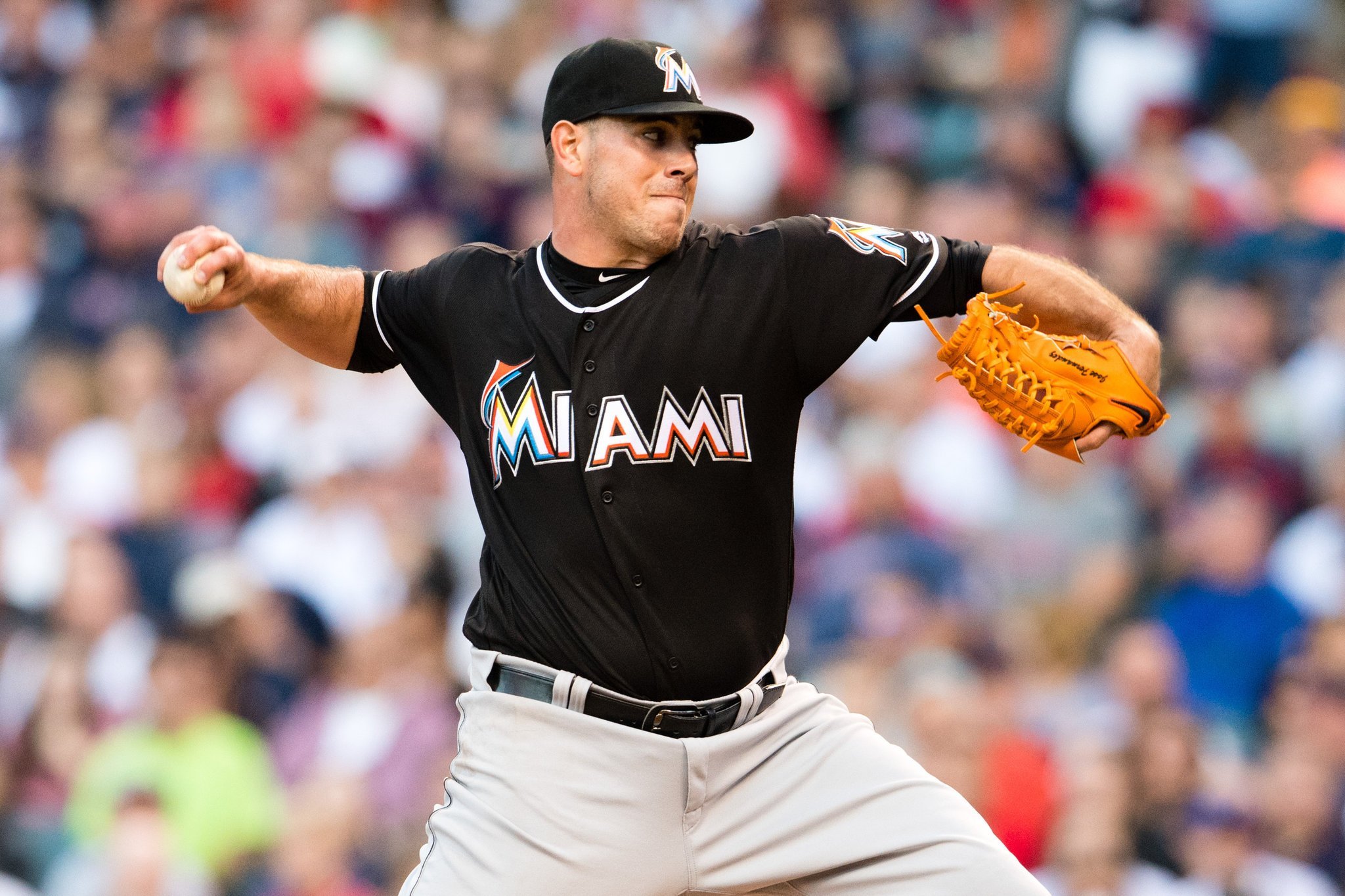 With the 2026 season approaching its end, there have been many great pitchers to toe the rubber for the Miami Marlins over the years. One, however, could argue that no one brought more flare to the mound than José Fernández. The 2013 National League Rookie of the Year and a two-time All-Star, the world said goodbye to Fernández on this day 10 years ago. Fernández and two others died in a boating crash in the early morning hours of Sept. 25, 2016. Fernández was piloting his boat that struck a jetty at Miami Beach before dawn. Investigations later determined that Fernández was going 65 miles per hour while under the influence of drugs. The impact killed the 24-year-old Fernández and both passengers onboard – 27-year-old Emilio Macias and 25-year-old Eduardo Rivero. The tragedy struck the South Florida community as well as the Miami Marlins and has since complicated the legacy of a blossoming young talent. In addition to his teammates and family, Fernández left behind a daughter who had yet to be born. Fernández and his pregnant girlfriend had announced that they were expecting their first child just days prior to the fatal crash. While Fernández’s story is certainly a tragic tale and by all accounts, could have been avoided, his efforts as a pitcher were a sight to behold. At 6-foot-3 and 240 pounds with a devastating breaking ball, Fernández went 38-17 over four seasons in the big leagues while posting a career 2.58 ERA. Fernández continues to hold Miami single-season records for fewest hits allowed per nine innings and strikeouts. The club’s career leader in win percentage, Fernández also ranks in the top 10 in club history in wins, strikeouts and complete games. A Cuban exile, Fernández left fans with great memories over a short period of time. He died much too young. The world said goodbye to Fernández on this day a decade ago. View the full article
 -
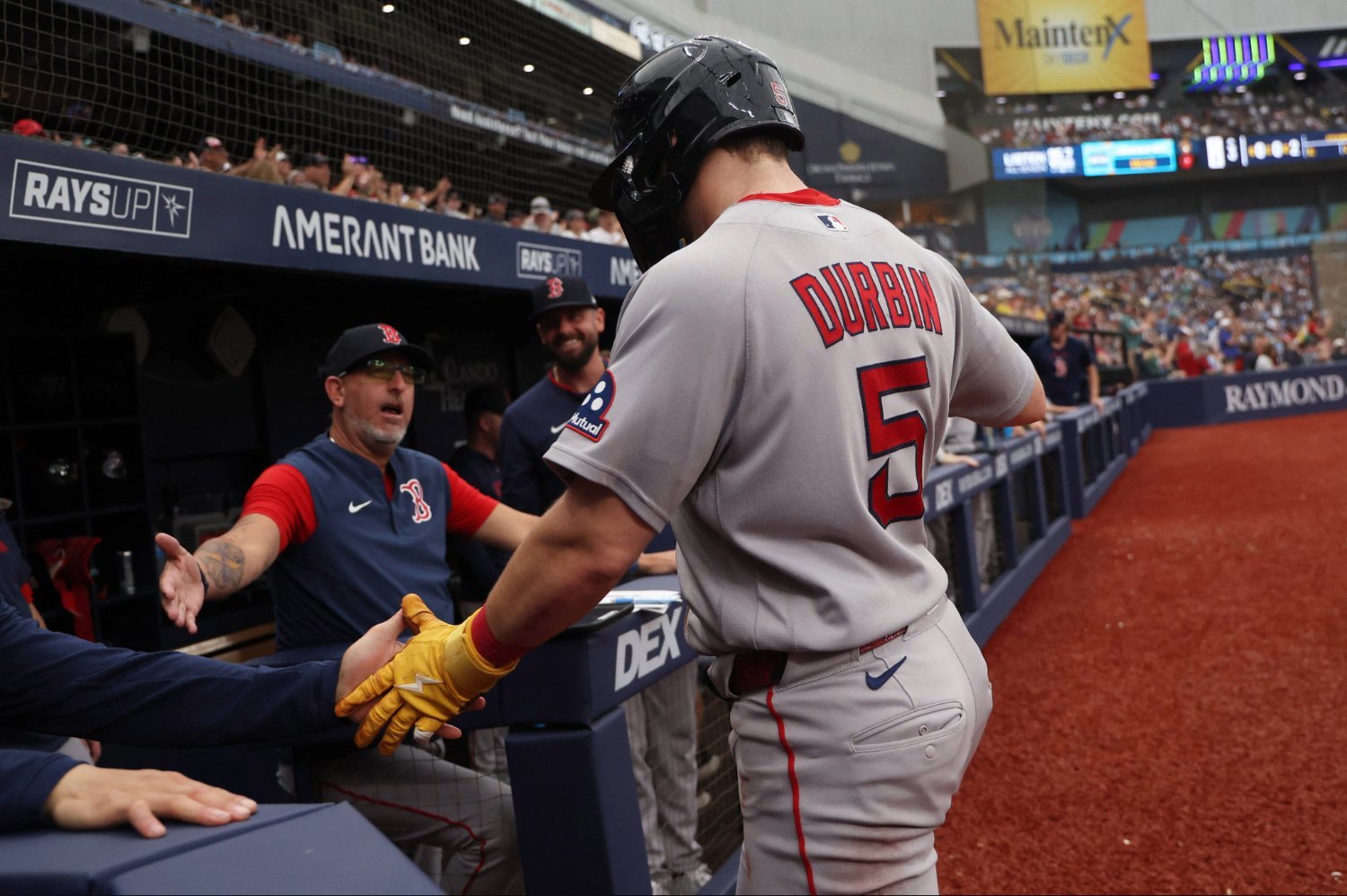 The single best personification of the 2026 Boston Red Sox is Caleb Durbin. The Sox are an average hitting team (100 wRC+), a good-but-not-great defensive unit, and shook off a morbid start to recapture respectability. Does that sound like anybody? The pair’s strength rests on a lack of weaknesses rather than any single overwhelming attribute. And while that’s fantastic in the regular season, it has diminishing returns in the postseason. Contrary to popular belief, what wins in the playoffs isn’t contact, small ball, or any of the other things that baseball fans of a certain age fetishize. Standing on the shoulders of Dan Szymborski’s research, the MLB playoffs come down a whole bunch to randomness, but once you get past team quality, the things that give you an ever so slight edge are hitting home runs, having a good bullpen, and front-line talent. The reason for home run supremacy actually follows the same logic as the contact and small ball line of thought. The playoffs feature better pitching, and better pitching usually comes via the strikeout. However, it’s not teams that are difficult to strike out that prosper; it’s the ones who can put runs on the board with their limited contact, which brings us back to Durbin and the Sox. Caleb Durbin and his team shouldn’t be expected to collapse in the playoffs, but their brand of hitting is not postseason optimized. Durbin runs high contact rates and solid plate discipline metrics to get on base and has just enough oomph to run into the occasional extra-base hit, but with 13 home runs, he’s not a huge threat to go deep. And over the past month, he’s trended even farther from the boom stick. Since August 20, Durbin has a 102 wRC+, the same as his season-long figure, but his on-base ability has made up for a cratering in contact quality. Caleb Durbin PA HR HR% BB% K% ISO AVG OBP SLG wRC+ Since August 20 116 1 0.86% 13.80% 13.80% 0.065 0.239 0.381 0.304 102 Before August 20 458 12 2.62% 7.40% 13.50% 0.148 0.254 0.325 0.402 102 While the overall production is identical, the process to get there has not been. Trading plate discipline for power isn’t the worst idea, but the driving force behind his explosion in walk rate has to do with pitchers and passivity, not newfound selectivity. Caleb Durbin PA O-Swing% Z-Swing% Zone% F-Strike% O-Contact% Z-Contact% Since August 20 116 31.50% 57.70% 40.20% 56.90% 74.40% 89.10% Before August 20 458 31.00% 67.40% 43.00% 62.90% 77.70% 90.70% Most of these changes are small and it’s still only 116 plate appearances, but Durbin seems to be benefitting tremendously from pitchers inability to throw him strike one, and then waiting out at-bats. The fact that his out-of-zone swing rate has remained virtually unchanged suggests his plate discipline hasn’t gone to a new level. None of this necessarily spells doom for Durbin in the playoffs, but his current approach is very unlikely to work against elite pitching. As for the Red Sox, their overall offense does not have the look of a playoff riser. Their wRC+ of 100 is bang on average, and they rank 24th in baseball in home runs (162). On top of that, many of their plate discipline metrics are average. Basically, this offense has nothing to hang its hat on, especially against elite pitching. However, the playoff Sox should look a lot different to what the team has been on the year. Roman Anthony missed most of the season, and while he hasn’t rediscovered his power stroke, when right he is a real deep threat. Adley Rutschman was acquired at the deadline and is a far better hitter than what he’s shown thus far. Jarren Duran hopefully won’t be needed to hit. And Mickey Gasper has provided the exact type of pop over the past month that they’ve missed all season. For better and for worse, Caleb Durbin is a paradigmatic example of the 2026 Red Sox as a whole. That’ll win a bunch of regular season games, but competency rarely trumps the superlative. Boston's best chance to make another World Series run is to veer away from his image. Some players are built for 162, and others are built for four weeks in October. View the full article
 -
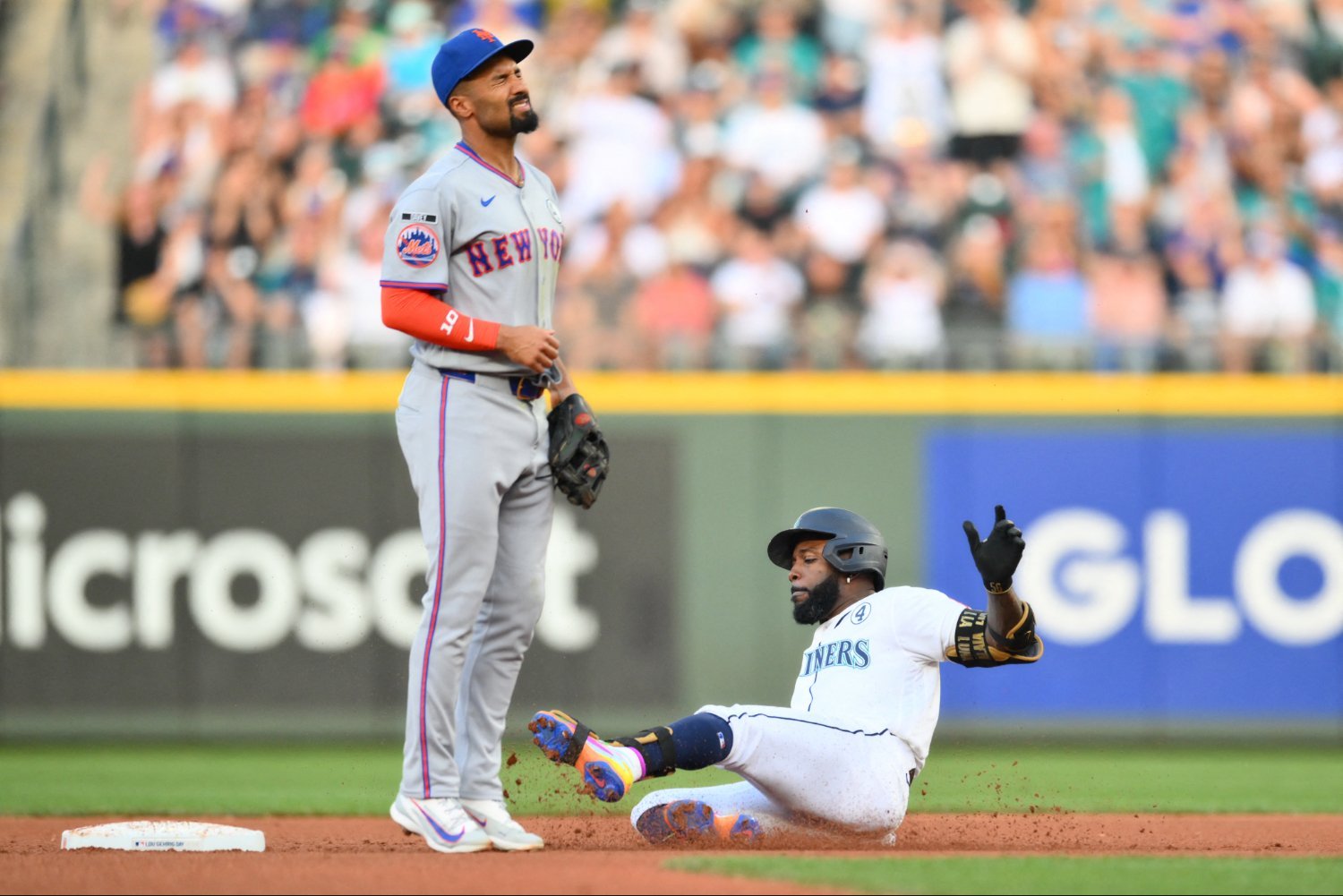 After a season in which several of the New York Mets’ main expectations have resulted in failure, the organization will have to resolve many questions heading into 2027. Some of the most important problems are not about reconfiguring the pitching rotation and finding the best offensive options, though. Throughout the year, defense has been one of the team’s weakest points. This year, the Mets have been close to finishing with their second consecutive season registering a negative FRV. The drop from 2024 to 2026 has been very significant, and they are about to close this campaign with the worst range mark (-18) among their infield and outfield players. Let’s start with the best part, which has been the catching position with the great work of Luis Torrens and, although to a lesser extent, Francisco Álvarez, who has played above average. Torrens is also among the best catchers in MLB, ranking ninth in Catcher Framing Runs (+5), Blocks Above Average (+6), and 12th in Catcher’s CS Above Average (+3). However, the additions of Bo Bichette at third base, Marcus Semien at second, and Jorge Polanco’s short time at first base were a failure. A difficult season could have been expected from Bichette, given his adjustment to a position change to third base. But Semien was coming off a +8 FRV season with the Texas Rangers and winning a Gold Glove. As the metrics show, he has been the Mets’ worst defender all season, far behind the contributions of Jeff McNeil (+2) in 2025. Regarding Bichette, I don’t think we should be that surprised given his history as a shortstop with the Toronto Blue Jays. His –1 FRV does not look that bad if we compare it with his entire defensive history, and we have to keep in mind that it combines all of Bichette’s work this year. We cannot forget that his playing time has been divided into 893 innings as a third baseman and 391 at shortstop, when Francisco Lindor was on the injured list. So, in what was supposed to be his full-time position this year, Bichette was much better, recording a +1 FRV at the hot corner, far better than his mark of –2 at shortstop. Lindor, after his return, has been an average player, falling below the value he usually provides. The infield problems are completed by a long list of experiments at first base, where Mark Vientos (-7) was as deficient as Pete Alonso (-7) was last year. Jared Young and even Luis Torrens have provided better value in the short time they played at first. Likewise, Young and Brett Baty have added defensive depth by playing several positions. Entering the outfield analysis, I wonder where the Mets would be without Carson Benge and A.J. Ewing, who have worked wonders defensively in addition to saving multiple plays with the strength of their arms. Benge’s arm is among the best of all right fielders in the league, while Ewing has impressed with his range. In contrast, in his return to left field, Juan Soto has been a defensive weakness (-5 FRV). Still, his presence on that side of the grass has cost the Mets fewer runs compared to his previous season in right field, when he finished with –13 FRV. I still believe that if Soto manages to stay healthy and works with the consistency that characterizes him, perhaps he can improve his defense a little more in his second year back at his old position. But, as we have seen here, the Mets have many questions to answer about how they are going to improve the team at several key positions, especially with the different defensive problems of Bichette, Semien and Polanco, three of their infield starters. View the full article
 -
Shape of the Blue Jays: Guerrero, Clement, Offseason Target?
DiamondCentric posted an article in Jays Centre
 Welcome to Shape of the Blue Jays, my column where I dig into Statcast numbers to analyze recent pitch shape and swing shape trends for Toronto Blue Jays players and discuss how they have impacted their performance. Click here to read the last edition. All stats entering September 24, 2026, unless otherwise stated. Quick Hits: José Rodríguez The 6-foot-6 righty with one of the more closed windups you'll ever see was optioned to the spring training complex on Wednesday night in favour of fresh arms for the second game of the Jays' doubleheader in Baltimore, but I like him as a sleeper to make next year's roster out of camp. In his first 4.2 big-league innings, he has struck out five without giving up an earned run or a walk. His devastating high-80s kick changeup, 97-mph bowling ball sinker, 98-mph running four-seamer, and mid-high-80s gyro slider all have whiff rates of at least 33% in the handful of MLB appearances he's made so far. His command will need some work. His walk rate was 14%, and his overall in-zone rate was 42% at Triple A this season. However, the stuff is intriguing, and guys with unorthodox release traits have become a calling card for the organization. Vladimir Guerrero Jr. The Jays are officially eliminated from playoff contention, and I'm sure we'll soon get a piece from one of the team's credentialed reporters that tells us more about what really happened to #27 this year. Until then, though, I'll try to sum it up as quickly as I can now that we know the season-saving hot stretch isn't going to happen: He didn't hit the ball nearly as hard because he chased far too much. The story is the same as it's been for a while now. Vladimir Guerrero Jr. Baseball Savant Percentiles Comparison, 2025 vs 2026 Keegan Matheson's recent story in the wake of the PR nightmare Guerrero recently stirred up with comments about his contract contains quotes from John Schneider vouching for his first baseman's willingness to try new things as he struggled. I'd argue he wasn't experimental enough in the box. Breaking his season down by month, there were hardly any on-the-fly changes to Guerrero's stance with respect to his depth in the box, the distance he stood from the plate, and the space between his feet. Comfortability matters in the box, and these kinds of adjustments don't always come easily once the season is underway. The number of times Guerrero had to sit a day or two with back tightness, especially down the stretch, leads me to believe he was playing through something worse than anyone let on. Still, in retrospect, more radical attempts at snapping out of it might not have been the worst idea. Lately, I've found myself looking across at the National League at the San Diego Padres. The Jays and Padres met in the last series before the All-Star break in not too dissimilar a position. Since then, the Friars have a 40-22 record, third-best in MLB and more than enough to qualify for the postseason. A big reason why is Fernando Tatis Jr., who is running a 171 wRC+ in that span after going homer-less for the first two months of the year. He opened his stance considerably and largely cut out his pre-load hand movement beginning in June, a couple things we didn't see from Guerrero at all. I'm the farthest thing from a hitting coach, but it's easy to wonder what could've been. Ernie Clement I feel for Clement, whose OPS since the trade deadline begins with a 4. I tend to agree with the train of thought that he needs this offseason more than anyone else as a career utilityman who suddenly played seven straight months of baseball before a very short winter followed by 155 more games and counting. His regression on the defensive side supports that theory. The complete lack of slug from this lineup isn't his fault, as he's never been a power hitter, but that doesn't mean he's immune from chasing more either. A mid-40s chase rate probably exceeds the acceptable ceiling for a productive MLB hitter. Ernie Clement Baseball Savant Percentiles Comparison, 2025 vs 2026 There's still a spot for Clement on this roster. I'd be totally fine with him platooning with Josh Smith, taking a greater share of his at-bats against lefties, getting more off days and some more time at different positions. Ultimately, he did little to suggest he should be an everyday hitter for a contending team moving forward, so the Blue Jays will have some hitters on their wish list this offseason. Speaking of... An Early Offseason Target? The 2026 Jays featured one of the worst offenses in the franchise's 50-year history, and as with their first baseman, it mostly boils down to a lack of discipline and slug. Luckily, there should be a cost-effective option on the free agent market that would fit like a glove on any team with those issues. Only two players in the entire league placed in the 90th percentile or better in both bat speed and chase rate this season. One of them, James Wood, is a cornerstone outfielder for the Washington Nationals and won't be on the block anytime soon. What about the other? Jake Bauers is hitting free agency for the first time this offseason. He's going to be cheaper than most others with his tools because he's relatively unproven and doesn't really have a position, being a defensive liability at first base and the corner outfield spots. The case against signing him is the existence of Anthony Santander, but the first two years of his contract have shown we can't assume he'll be ready to contribute. Bauers has been good enough offensively to be a full-time DH this year and hasn't had a problem with left-handed pitching despite being a lefty hitter, which Jesús Sánchez could never lay claim to even in the best of times. I'd love to see this sort of profile in Toronto's lineup in 2027, lockout permitting. View the full article
 -
 The Royals closed out their season series with the Chicago White Sox, losing two of three to the South Siders at Kauffman Stadium this week. Kansas City earned its lone win in the three-game series on Wednesday evening, beating Chicago 5-4. On Wednesday, Seth Lugo made his final start of the 2026 season for the Royals. Although Kansas City earned the win, it wasn't Lugo's sharpest outing this year. Lugo pitched only 3.1 innings and threw 72 pitches, looking sharp early but struggling once he faced the White Sox batting order a second time. He gave up four runs in the third inning alone, and overall he allowed four runs on seven hits while striking out three and walking zero. It was his shortest start since a 3.2 IP outing on August 30th against the Guardians, where he allowed nine runs on nine hits and two walks while striking out two. The 36-year-old veteran showed solid stuff with his breaking pitches in his Wednesday outing, but his fastballs profiled poorly, and he struggled to generate whiff or chase, according to TJ Stuff+ metrics. His curveball and sweeper posted 112 TJ Stuff+ marks, and he flooded the zone overall with his seven-pitch mix, as evidenced by a 55.6% overall zone rate. However, he only generated a 12.5% chase, a 12% whiff, and a .423 xwOBACON. It's hard for a pitcher to succeed against an opposing lineup when he's not getting swings-and-misses or weak contact. Thankfully, manager Matt Quatraro pulled Lugo before things could get too bad (like they did against the Guardians). With only three games left in the 2026 season, Lugo's season is likely over. The Royals' projected starters this weekend against Cleveland are Noah Cameron, Michael Wacha, and Daniel Lynch IV (though it wouldn't be surprising if Tony Gonsolin replaces Lynch on Sunday). Thus, Lugo finishes his third season with the Royals with a 5.17 ERA, 1.47 WHIP, and 1.7 fWAR in 32 outings and 172.1 IP. While his fWAR is better than last year (0.6), it pales in comparison to 2024, when he finished second in the AL Cy Young race (4.8). His ERA is also 1.02 points higher than a year ago and 2.17 points higher than his 2024 mark. With $21.5 million due to him next year, is Lugo still a worthwhile pitcher in the Royals rotation who can be depended on in 2027? Or is the former All-Star due for a steeper regression next year, much to Royals fans' chagrin? Let's break down what Lugo has done this year and how it compares to previous years, how he fared against other Royals pitchers this season, and what the Royals can do with their veteran pitcher in 2027. Avoiding Bats Was a Problem for Lugo in 2026 (And Led to Overall Issues) Lugo has never been a pitcher known for having tremendous stuff. Instead, the righty has been known for throwing a lot of pitches and showing pinpoint control and command that limited hard contact. This season, he threw nine different pitches and threw a decent amount of each, as shown by his TJ Stuff+ summary. Lugo threw five pitches at a 10% or higher rate (sinker, four-seamer, cutter, curveball, and sweeper), and two more pitches between 8 and 10% (slider and changeup). Only four of his pitches had TJ Stuff+ marks over 100 (curveball, sweeper, slider, and slurve), and he only posted an overall TJ Stuff+ of 98, which rates as below average. That said, his pitch diversity and strong zone rate (51.9%) helped him succeed, especially when his command was on. Unfortunately, his other metrics made it clear he wasn't on often in 2026. His chase rate was 25.3%, his whiff rate was 18.7%, and his xwOBACON was .391. All those marks rate as below average, according to TJ Stats. In 2024, Lugo posted a 3.00 ERA in 33 starts and 206.2 IP. However, his stuff quality didn't differ much from what Royals fans saw this season. His TJ Stuff+ summary comparison below illustrates that. Lugo's overall TJ Stuff+ of 99 was only one point better than his 2026 TJ Stuff+. He also had a worse zone rate (48%). However, his 29.3% chase rate, 22.5% whiff rate, and .354 xwOBACON were all better than his numbers in those categories this year. Simply put, Lugo was a better "swing-and-miss" pitcher in 2024, and his inability to generate whiffs and chases in 2026 led to him getting hit harder and producing worse results. The thing is, Lugo started showing these issues with "swing-and-miss" in 2025 as well. He experienced noted declines in chase, whiff, and xwOBACON. This season, a few positives stood out in Lugo's profile compared to last year. His zone rate went up (more strikes are good). The xwOBACON went down, and the chase rate went up. Lastly, his TJ Stuff+ remained stable, with some key bumps in stuff quality from some offerings (slurve and sweeper). However, the whiff rate this year declined by 1.6%. His 18.7% whiff rate was also 3.8% lower than in 2024. Looking at his rolling whiff rate chart over his career via Baseball Savant, Lugo's whiff rate stayed below average for most of the year, with no above-average spikes, unlike in 2024 and 2025. No one is saying Lugo needs to be a "swing-and-miss" specialist. It's obvious who Lugo is: a pitcher who relies on pitch diversity and inducing weak contact to succeed. That said, the former Centenary College of Louisiana product has to find a way to generate more whiffs in 2027 if he wants to keep his spot in the Royals rotation. Stagnation or further decline in whiffs could lead to a worse ERA and overall lackluster production, as it was this season. Lugo Was More "Snake-Bitten" Than Other Starting Pitchers Despite an ERA over five, Lugo's 1.7 fWAR was the third-best mark among Royals starting pitchers this season, behind only Noah Cameron (2.8) and Michael Wacha (2.4). A major contributor to Lugo's higher-than-expected fWAR is the fact that he was an innings-eater, despite his struggles. His 172.1 IP were the second-most innings for a Royals pitcher this year, behind only Wacha (194.1 IP). When you compare his overall metrics this year with other Royals starting pitchers, two categories stand out: BABIP and LOB%. Lugo's .333 BABIP was the highest mark among Kansas City starting pitchers this year, and his 67.6% LOB% was the fourth-lowest as well. When a pitcher gives up a lot of base hits on batted balls and doesn't strand runners as well as in years past, rough batted-ball luck could be the culprit. This hasn't been a typical trend for Lugo in those categories, especially with the Royals. In 2024, Lugo had a .277 BABIP and a 75.1% LOB%. In 2025, he had a .266 BABIP and a 79.4% LOB%. If Lugo can see his BABIP bounce back to that .270-.280 range and his LOB% return to the 75+% range, he could be a 4.00 ERA pitcher in 2027, which would be more than serviceable for a No. 3-4 starter in the rotation. That's what the Royals need right now: some stability at the bottom of the rotation. That's a lot harder to find in free agency (it's easier to find a productive one than a productive 3-4 guy, as long as money isn't the issue). Of course, generating more swing-and-miss and strikeouts would help make him less reliant on BABIP and LOB%. So it will be interesting to see whether Lugo tweaks his pitch mix in 2026 to become a better "swing-and-miss" pitcher in 2027. What is Lugo's Outlook in 2027? As a Royal, Lugo has had one elite season, one serviceable season, and one below-average season. Then again, saying "below average" may be kind, as his ERA this year was the worst mark of any qualified starting pitcher in baseball (and that was before his latest start). That said, some regression was probably expected, especially when you look at FIP (Fielding Independent Pitching). To further illustrate that batted-ball luck could've been in play this season, Lugo's 4.37 FIP was 0.80 points lower than his actual ERA. Thus, the veteran righty should've been better than his ERA indicated, at least based on his lower FIP. Surprisingly, the opposite has been true for Lugo with the Royals in previous years. In 2024, Lugo's ERA was 3.00, and his FIP was 3.25. Last year, his ERA was respectable at 4.15, but his FIP was 5.09. Even over his career, Lugo's 3.88 FIP is 0.14 higher than his 3.74 career ERA. However, his high 2025 FIP may have signaled regression in 2026. Thus, that FIP trend, especially from 2025, makes the extension he signed at the end of the 2025 season even tougher to stomach. Conversely, if FIP indicated regression was due in 2026, his FIP this year may suggest a bounce-back in 2027. This past season showed signs that could support the latter theory: his walk rate and HR/9 were down, and his GB% was up from 2025. He also posted a better FIP than other options like Lynch IV and Cole Ragans, who could be in the mix next year (though Ragans won't be back until mid-season). Lugo was certainly bad in 2026. There's no doubt about it, especially given that inflated ERA. However, a deeper look at his data suggests Royals fans should feel better about his outlook going into 2027 than a year ago, when the 2025 metrics weren't in the righty's favor (and the 0.6 fWAR confirmed that). Lugo will face concerns in 2027 that will make him a tough dilemma in the Royals rotation, especially if Kansas City hopes to return to the postseason in 2027. Will he generate more whiffs next year as a 37-year-old, especially with below-average fastball stuff? Can he find the right mix to return to his 2024 and 2025 levels after such a brutal year, especially in the second half (6.12 ERA in 67.2 IP after the All-Star Break)? Can he live up to a contract that the Royals probably didn't need to offer him after not trading him at the 2025 MLB Trade Deadline? Right now, the Royals don't have many options with Lugo. With $21.5 million due in 2027 and a vesting option for 2028, his contract isn't all that desirable for teams, even in a market where pitching is a premium. Many teams would likely opt for a free-agent pitcher at a fraction of the cost, without giving up any prospect or talent assets. Therefore, the Royals may be stuck with Lugo for at least 2027. As a result, pitching coaches Brian Sweeney and Mike McFerrin need to work hard with Lugo this offseason to get his pitch mix back on track and closer to what he did in 2024. If they cannot help Lugo make the right adjustments, not only will Lugo's tenure be over sooner rather than later, but perhaps the Royals coaching staff and front office as well. It's wild that an organization's future can hinge on a soon-to-be 37-year-old pitcher with 1,165.1 career innings under his belt. However, considering the Royals' pitching issues this season, they need starters to step up and perform better. Lugo is the most logical candidate, especially given his durability and contract. View the full article
 -
What are your Marlins vs. Braves series predictions?
DiamondCentric posted an article in Fish On First
 Once again in 2026, I will be monitoring Miami Marlins predictions from our valued SuperSubs, Fish On First staffers and livestream guests. Individual article pages like this one will be created prior to every Marlins series and featured prominently on the FOF site. Consistent participation is key if you want to win this annual contest. Submissions only take a few seconds. Scoring system A "perfect" series is worth three points: Earn one point for predicting which team will win the upcoming series Earn one point for predicting the precise number of victories for each team Earn one point for predicting the “Series MVP” who accumulated the highest win probability added (WPA) during the series as calculated by FanGraphs (could pick a player from either team) FOF SuperSub David Fernandez is currently atop the 2026 season leaderboard, which will be updated between every Marlins series. If you are a SuperSub, leave a comment with your Prediction Time picks on this page, or join the Marlins Discord Server and submit there. We'll feature them on the upcoming Fish On First LIVE episode and track your points throughout the season! Any picks submitted prior to the first pitch of the series opener will be counted. If you are not a SuperSub, please consider signing up here to support the FOF staff. Series preview notes Probable starting pitchers: RHP Eury Pérez (MIA) vs. TBA (ATL) on Friday TBA (MIA) vs. TBA (ATL) on Saturday RHP Janson Junk (MIA) vs. TBA (ATL) on Sunday The Marlins rank 16th in MLB with a 100 wRC+ and 17th in MLB with a 4.16 FIP. They are 5-5 in their last 10 games and have a 45-33 record at home this season. The following Marlins players are on the injured list: Anthony Bender (15-day IL), Owen Caissie (10-day IL), Pete Fairbanks (15-day IL), Ronny Henriquez (60-day IL), William Kempner (60-day IL), Adam Mazur (60-day IL), Andrew Nardi (60-day IL) and Robby Snelling (60-day IL). The Braves rank 18th in MLB with a 98 wRC+ and 14th in MLB with a 4.08 FIP. They are 5-5 in their last 10 games and have a 41-37 record on the road this season. The following Braves players are on the injured list: Bryce Elder (15-day IL), Joe Jiménez (60-day IL), Reynaldo López (15-day IL), Martin Pérez (15-day IL), Spencer Schwellenbach (60-day IL), Spencer Strider (60-day IL), Lane Thomas (10-day IL), Hurston Waldrep (60-day IL) and Joey Wentz (60-day IL). View the full article
 -
Twins Continue Front Office Overhaul With Daniel Adler’s Departure
DiamondCentric posted an article in Twins Daily
 The Minnesota Twins are continuing to reshape their front office. According to Bobby Nightengale Jr. of the Star Tribune, assistant general manager Daniel Adler is no longer with the organization. A source confirmed that the two sides mutually agreed to part ways, bringing an end to Adler’s nearly 10-year run with the Twins. Adler joined Minnesota in 2017 as the club’s director of baseball operations. He was promoted to assistant general manager in November 2019, moved up to vice president in 2021 and became an executive vice president in February 2025. His responsibilities eventually stretched well beyond traditional baseball operations, as he worked on both the baseball and business sides of the organization. On the baseball side, Adler oversaw areas including research and development, salary arbitration and rules compliance while remaining involved in roster construction, player acquisition, player development and athletic performance. His business responsibilities included information technology, human resources and business strategy and analytics. That makes his departure another notable change for an organization that has already undergone a significant leadership transition in 2026. The Twins parted ways with Derek Falvey earlier this year, leaving Jeremy Zoll to oversee baseball operations as the team's general manager. At the time, Zoll said the organization was still working through how responsibilities would be structured, while identifying Adler, Alex Hassan and Josh Kalk as key members of the leadership group. Now, one of those three assistant general managers is gone. Adler's background made him an unusual and highly qualified member of the Twins' front office. Before joining Minnesota, he worked for Boston Consulting Group and launched the Jacksonville Jaguars' football research department. He also spent time interning with Major League Baseball's labor relations department. Adler earned an economics degree, law degree and MBA from Harvard. The timing also creates an interesting opportunity for Adler. With his extensive experience across analytics, roster construction, arbitration and organizational strategy, he could draw interest from other clubs searching for front-office leadership. Houston, Anaheim and Sacramento are among the organizations with general manager openings, although it remains to be seen whether Adler will pursue one of those opportunities. For the Twins, the more immediate question is what comes next. Zoll is now firmly in charge of baseball operations, and Minnesota has already begun reshaping its leadership structure following Falvey's departure. Adler's exit adds another major piece to that transformation. The Twins' front office is going to look considerably different when the 2027 season begins. View the full article
 -
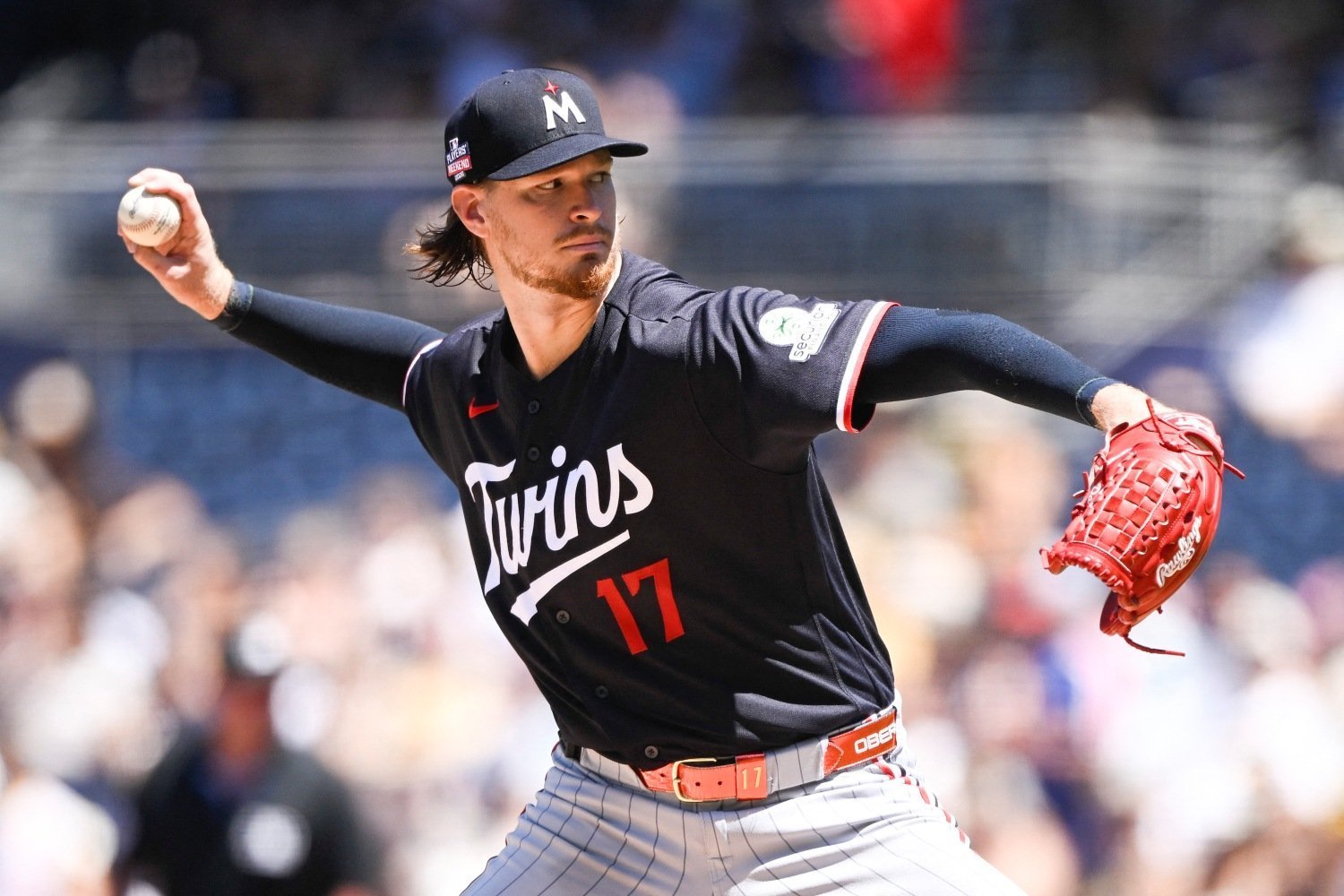 Bailey Ober's 2026 season hasn't gone to plan. The right-hander has battled through a noticeable decline in velocity, and the results have been middling. There have been stretches where Ober hasn't looked like the pitcher Twins fans became accustomed to seeing over the previous several seasons. That doesn't mean his entire body of work should be forgotten, though—particularly if this weekend is the last time he dons the home uniform at Target Field. Ober has quietly become one of the better starting pitchers the Twins have developed over the last two decades. His career hasn't followed the traditional path of a highly-touted prospect becoming a frontline starter. Instead, he went from a 12th-round pick with limited expectations to a reliable big-league starter who ranks near the top of the organization's pitching leaderboard. His 2026 season deserves criticism. His career deserves appreciation. Ober's Velocity Problem Has Made 2026 a Challenge The biggest issue for Ober this season has been his diminished velocity. Ober has never been a pitcher who overpowered hitters with elite velocity. His success came from a combination of command, deception, pitch shape, extension and the ability to keep hitters from getting comfortable. When the velocity drops, however, there is less margin for error. Hitters can sit on pitches longer. Mistakes become easier to punish. The difference between a well-executed pitch and one left over the middle becomes even more important. That has been part of the story in 2026. Ober has still shown flashes of the pitcher he can be, but there haven't been enough of those stretches to make this season feel like a major step forward. It's fair to wonder what the diminished velocity means for his future, especially when the Twins are evaluating a rotation that could look considerably different next season. Still, one difficult season shouldn't erase everything that came before it. From 12th-Round Pick to Big-League Starter Ober's development might be one of the more impressive pitching stories of the current Twins era. Minnesota selected him in the 12th round of the 2017 MLB Draft out of the College of Charleston. There wasn't much expectation that he would eventually become a major-league starting pitcher. Ober had to create that opportunity for himself. The COVID-19 shutdown gave him an unusual opportunity to work on his delivery and make changes that might not have been possible during a normal season. He used that time to hone his mechanics and, importantly, increase his velocity. That work helped transform him. Instead of remaining a tall right-hander with interesting raw traits who might eventually reach the upper levels of the minors, Ober developed into a legitimate pitching prospect. The Twins eventually called him to the majors, and he established himself as more than just a temporary rotation option. Ober's Place in the Target Field Era When looking at the Twins' starting pitchers since Target Field opened in 2010, Ober's career stands out even more. Only Joe Ryan, José Berríos and Kyle Gibson have accumulated more fWAR among Twins starting pitchers during the Target Field era. That's impressive company for a pitcher who never fully felt like he was in the team’s long-term plans. Ober's best stretch came from 2022 through 2024. During those three seasons, he posted a 115 ERA+, a 3.74 FIP and a 1.03 WHIP while averaging 126 innings per season. Those aren't the numbers of a dominant ace. Ober was never consistently dominant. He didn't routinely overpower lineups or spend entire seasons looking like a Cy Young candidate. But he was good, and he had stretches when he looked extremely good. There were games when everything clicked and Ober looked nearly impossible to square up. Over a full season, consistency mattered more than those dominant moments. That's why his overall value has been so important to the Twins. He provided volume and stability at some vital periods in the team's last half-decade. What Happens Next? Ober is likely to receive one more opportunity to take the mound before the 2026 season ends, with a potential weekend start at Target Field against Texas. It could be another chapter in a Twins career that still has plenty left to write. But it could be his final start wearing a Minnesota uniform. Next season will be his final year before free agency, and his salary is likely to increase through arbitration after making $5.2 million in 2026. The Twins could have a crowded group competing for rotation spots next season. That combination creates an interesting offseason decision. Ober has value because of what he has already proved, but the Twins have to determine how much they believe in his ability to regain some of the velocity that helped make him successful. Only Ryan, Berríos and Gibson have accumulated more fWAR as Twins starters since 2010. That's not a bad legacy for a pitcher who entered professional baseball with very few expectations. Whatever happens this offseason, Ober has already earned his place among the organization's better starting pitchers of the last 15-plus years. His 2025 and 2026 seasons may have complicated his future, but they shouldn't diminish what he accomplished to get here. What stands out about Ober's time in Minnesota? Where does he rank among starting pitchers in the Target Field era? Leave a comment and start the discussion. View the full article
 -
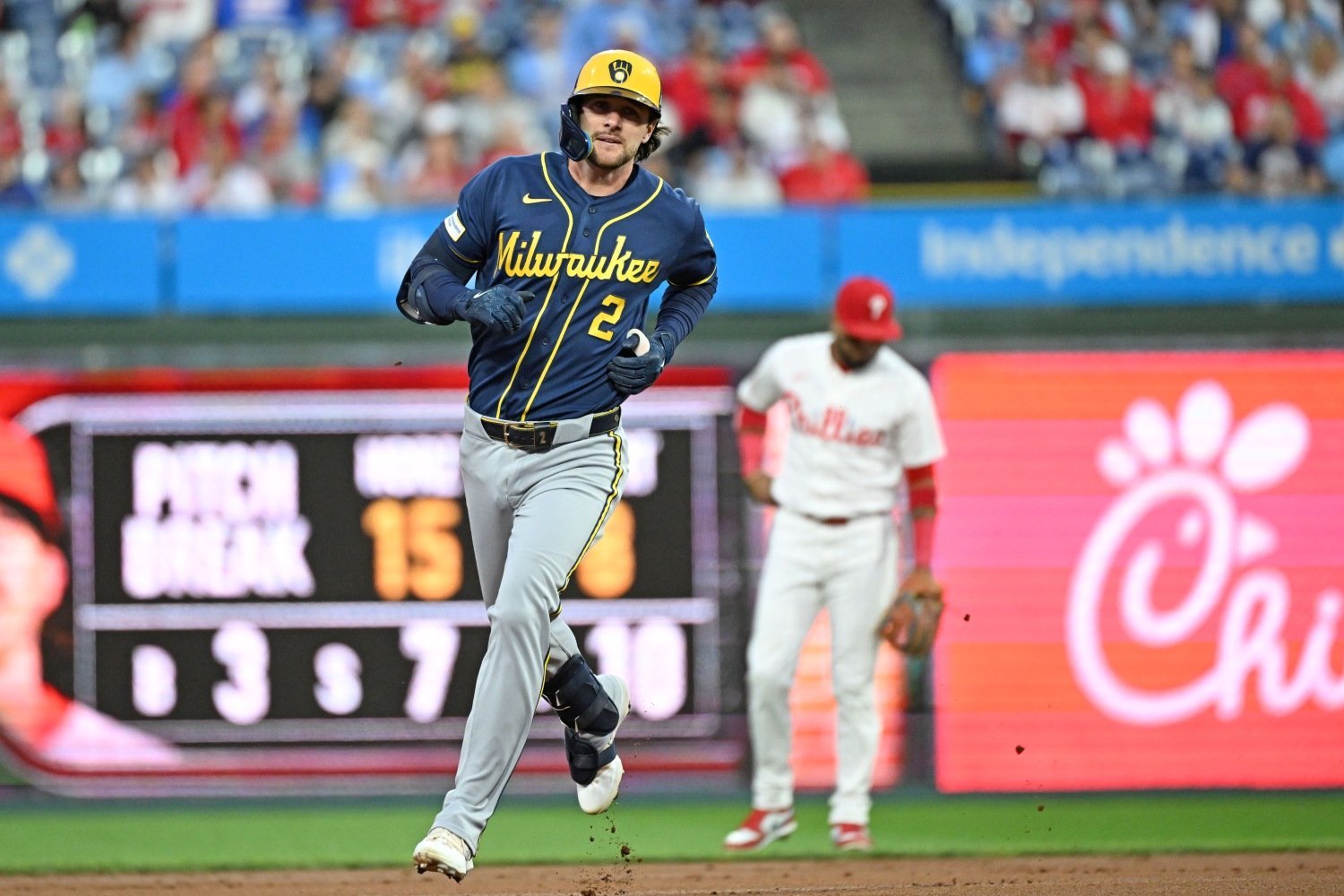 Despite having an exceptional year, the Milwaukee Brewers are in a very familiar position. After finishing with the best record in baseball a year ago, they once again find themselves atop the league, with a 99-59 record and just four games left to play. They have one of the best 1-2 rotation punches in baseball (Jacob Misiorowski and Logan Henderson); a potent lineup; and an elite bullpen. No one player will make or break their postseason, but the closer the NLDS gets, the more one player stands out as disproportionately important. That player is Brice Turang. After Milwaukee used their first-round pick on Turang in the 2018 MLB Draft, he’s turned into one of the many homegrown studs on this roster. After breaking out offensively in 2025, he's taken things a step further this season. He’s slashing .265/.365/.444, and if he can pick up one more stolen base this week, he’ll record the first 20/20 season of his career. Naturally, the Brewers hope and expect that Turang will be a weapon when the NLDS rolls around, but everyone is also aware that it's not that simple. Milwaukee sneaked past the Chicago Cubs in five games in last year’s NLDS. Their lineup lit up Cubs pitching at key moments, putting crooked numbers on the Cubs like haymakers until the challengers hit the mat. Turang, however, did not shine. He went 3-for-20 in that series, including eight strikeouts. Two of those three hits went for extra bases, but you need more than that from a lineup anchor if you’re going to make a deep postseason run. The NLCS was a reset for him—a fresh chance to make good. He did not. Instead, Turang went 1-for-15 against the Los Angeles Dodgers, with six of those 15 outs coming via strikeout. Across both series, Turang went 4-for-35 with two runs scored, three RBIs, two walks and 14 punchouts. He was the poster boy for the team's offensive ineptitude in their season-ending parade of losses to Los Angeles. That performance is still relevant now. Firstly, it highlights just how streaky Turang can be. In 2025, his month-by-month batting average splits were all over the place. He hit .317 in March and April, followed by .207 in May, .333 in June, .209 in July, .343 in August and .294 in September before an abysmal October. This year has been similar. Turang hit .291 in March and April, .231 in May, .252 in June, .309 in July, .175 in August and now .364 in September. That last number is obviously a major positive for the Brewers. Turang is red-hot right now, and when he’s seeing the ball well, he can be one of the most dangerous hitters in this lineup. But there’s a problem. There will be five off days between the end of the regular season and the start of the NLDS, and that means Turang will have to find a way to carry this momentum into October. We saw what happened last year. Moreover, unlike last year, there's a major yellow flag in Turang’s performance data this season. His 25.2% strikeout rate ranks in the bottom quarter of the league. As good as he’s been this month, he’s striking out in 26% of his plate appearances in September. That’s completely fine if he’s doing damage when he makes contact, but that becomes a lot tougher to do when you’re facing the best pitching in baseball. Milwaukee is going to see some of the best arms in the league once the postseason begins. The margin for error gets smaller, and the opportunities to take advantage of mistakes become fewer. None of this is to say Turang is destined to fail come October. In fact, the opposite could very much be true. When he’s on, which he certainly is right now, he’s capable of carrying this lineup for stretches. That doesn’t need to be a three-run homer, either. He can beat you in several different ways. As for concerns about quality of competition underlying raw production, Baseball Prospectus's DRC+ bakes that in via its modeling of players' expected contribution, and by its reckoning, Turang has been clearly better this year (114, where 100 is average and higher is better) than last year (109). The playoffs aren't a crapshoot, but functionally, they feel like one for those of us who can only watch them unfold. Turang is the player whose dice-roll feels like it has the most riding on it this fall. The Brewers need the best version of him. It's impossible to know whether they'll get it or not, for another week or so. View the full article
 -
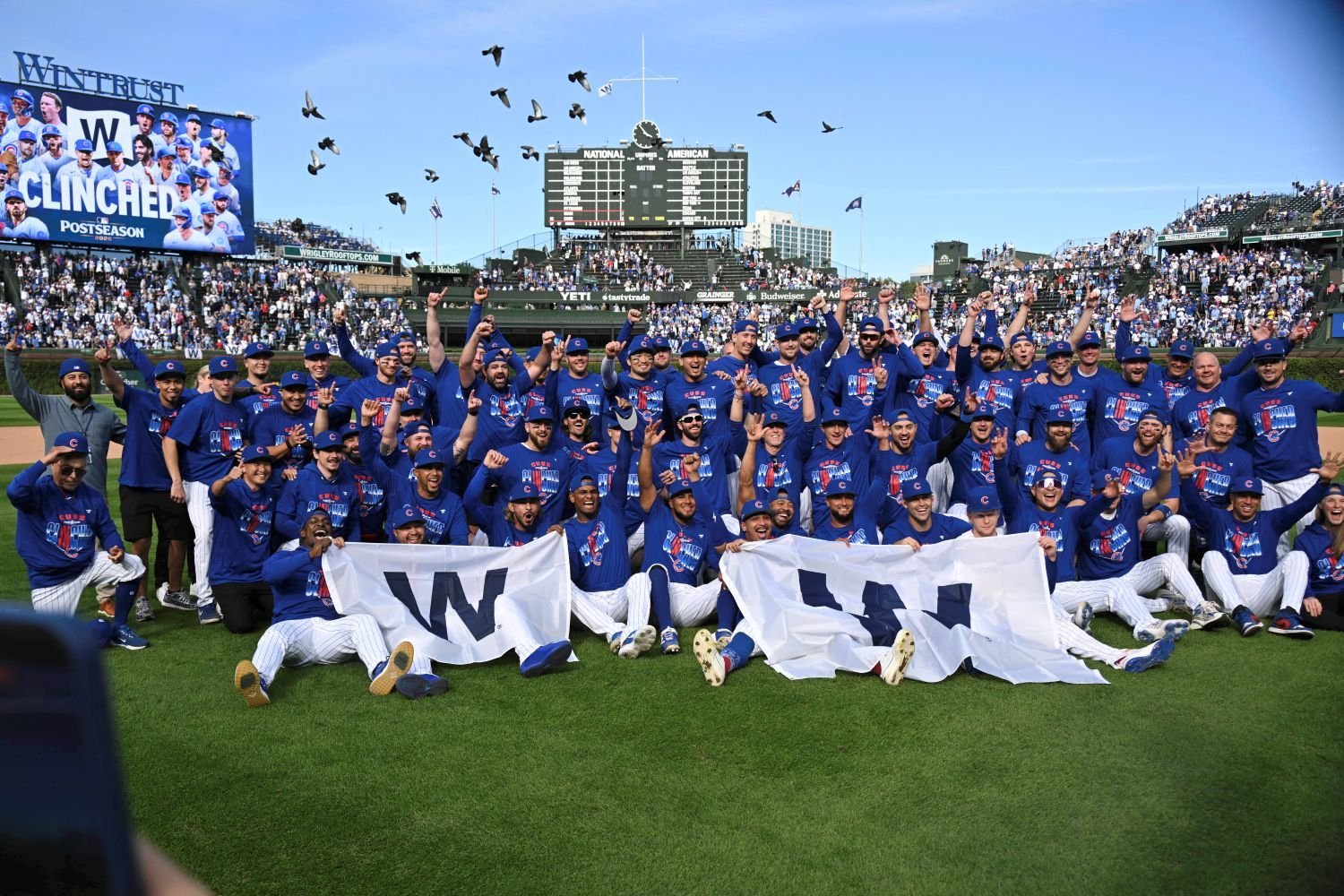 All season, there has been a sense of urgency hanging over the Chicago Cubs. They need to win this year. They need to achieve as much as they can, and make the most of this chance, because the future is highly uncertain. However this year ended, it seemed, there were no guarantees of 2027 (or 2028, or 2029) being better. It took longer than anyone hoped, but in their final home game of the season, the team clinched a playoff berth. They might still have to play on the road in the Wild Card Series. They might not be back in front of the Wrigley Field faithful until next spring. But they will play past Game 162. That was the first and most important box they had to check on the season's to-do list. Ian Happ, who debuted 112 months ago and has played more games in a Cubs uniform than all but 19 other people in the franchise's history (more, for instance, than Frank Chance or Shawon Dunston), hit a sixth-inning triple and came home with the go-ahead run, putting the team up by a 2-1 score that would become the final. The day started with Happ and the fans in the left-field bleachers engaging in an endearing annual ritual, wherein Happ throws a ball with money wrapped around it into the stands to buy beer for as many fans as the bills will cover—and, this time, the fans threw back a ball signed by several of the regulars, thanking the outfielder for his years of dedication to the team. It ended with Happ fighting back tears on the field, as fans showered affection on a team that has survived enormous adversity to get this far. Before Happ's minor heroics, Seiya Suzuki launched a key, game-tying solo home run in the fifth. Like Happ, Suzuki will be a free agent this fall. His five-year contract has been a big win for the Cubs, despite his early, costly miscues in the field and a number of injuries that have interrupted his tenure. Though the relationship between the player and the fans is not as strong, Suzuki has been a productive player and a welcome presence in the organization, and it was only fitting that he would strike a telling blow in a vital game before the home schedule concluded. Two runs is paltry run support, but Matthew Boyd made it stand up. The veteran lefty fired seven innings of one-run ball, using his typical array of big speed changes to induce early and (mostly) harmless contact from a Marlins lineup that gave the Cubs headaches all week. Boyd, too, will be a free agent after the end of the World Series. This is just his second season with the Cubs, but he's one of the most universally liked players in baseball and has knitted himself into the fabric of both the clubhouse and the community even in a relatively short time. Boyd, Happ and Suzuki aren't the only Cubs who probably won't be here next year. The front office has some heavy lifting to do over the fall and winter, and if an offseason work stoppage disrupts their roster building, their job will only get harder. That lurking reality has cast a shadow over this entire season. It's made things stressful for the team and for fans, even if many of them couldn't have articulated the reason. That cloud lightened a bit at the beginning of the season, with the contract extensions signed by both Pete Crow-Armstrong and Nico Hoerner. Crow-Armstrong was under team control for several more seasons anyway, of course, but locking him in gave the fan base a bracing infusion of confidence and excitement about the future. Hoerner was an impending free agent until signing his deal, but will now be a Cub for six more seasons. Still, the team has a huge cadre of players who will be free agents this November. It includes virtually their entire starting rotation and about half their bullpen, plus both starting corner outfielders (Happ and Suzuki) and their starting catcher (Carson Kelly). That Happ, Suzuki, Kelly, Shota Imanaga, Boyd, trade acquisitions Kevin Gausman, Clay Holmes, Tyrone Taylor and surprise contributors Jacob Webb and Michael Conforto will be back next season ranges from unlikely to unthinkable. Chicago is fully committed to a core of Crow-Armstrong, Hoerner, Michael Busch, Dansby Swanson and Alex Bregman, but the last two of those are each heading into their mid-30s. That leaves a lot of questions to be answered. It means that as much as half of this roster might have just played for the last time in the Cubs' home whites. If so, at least they gave themselves a proper sendoff. In a rare twist for a Jed Hoyer-built team, the two most prominent long-term fixtures on the team in Thursday's win were relievers. Daniel Palencia and Ryan Zeferjahn are essential to any postseason run the team hopes to make this year, but they're also under club control through the end of the decade, and the hope is that each will have a better season or two between now and when they hit free agency. The best development of the last week for the team (an uneven one, overall) has been Palencia and Zeferjahn seeming to round into form. The outline of a solid October relief corps is coming into focus. Then, of course, there was Crow-Armstrong. He wasn't actually involved in the decisive actions of Thursday's game, except in that he charged and threw (off-line; he still overcooks those sometimes, because no one is quite perfect) toward home on the single that plated Miami's only run. He was still very much in the center of the narrative, though, and he literally seized center stage in the bottom of the first inning. After drawing a leadoff walk, he stole second base on the first pitch by Marlins righty Tyler Phillips. It was his 40th steal of the year, putting him (at last; fans have breathlessly tracked his pursuit of the milestone for weeks) into the vaunted 40/40 club. Seizing their own moment, the fans gave Crow-Armstrong a long, rousing standing ovation, with him in the very center of the diamond, doffing his helmet lovingly but rather reservedly, then tapping the Cubs logo on his chest, then trying to clamp down on his emotions and waiiting for the game to resume. That moment did nothing to decide the game. It was an impressive bit of baserunning nous by Crow-Armstrong, who clearly had a sense of what to look for when Phillips was working out of the stretch and got a huge jump without even waiting out a pitch. He topped himself immediately afterward with a half-delayed tag-up on a flyout to left-center field, using fake-casual body language to bait Miami center fielder Jakob Marsee into a lazy throw and then taking third base. But ultimately, Boyd, Happ, Suzuki and Hoerner (who drove in Happ with a line-drive single to left) were the heroes of the day. Still, Crow-Armstrong's will be the indelible image and moment from it. Nothing could be more apropos. The 2026 Cubs will be remembered for and defined by Crow-Armstrong, whose season has been transcendent. He's been dominant, in ways both big and small. He's been a sensation. They'll go as far (or fall as far short) as the rest of the team can take them, though. Crow-Armstrong's brilliance is the only reason they're going to the playoffs; the rest of the team has played much like the Diamondbacks squad they eliminated with the win. One player can't carry a team all the way to a championship, though. The Cubs will have to hope that there are a few more days like Thursday ahead, along with a few more where Crow-Armstrong does take over and win a game on his own. In the bright and jangly moments after the final out Thursday, it felt possible. View the full article
