


DiamondCentric
-
Posts
2,631 -
Joined
-
Last visited
Never
Content Type
Profiles
Forums
Events
News
Tutorials & Help
Major League Baseball Videos
Guides & Resources
Store
Downloads
Gallery
Everything posted by DiamondCentric
-

 Triple-A Worcester Red Sox Series @ Norfolk Tides (Baltimore Orioles): 4-1 Season Record: 55-47 With Franklin Arias starting at second for the second straight night, Worcester won its fourth straight in an extra-innings thriller. Alec Gamboa took the mound to start Saturday’s matchup with Norfolk, turning in a solid effort across four and ⅔ innings. He allowed one run on four hits, issuing one walk and striking out four. Gamboa turned the ball over to Devin Sweet with two outs in the fifth. Sweet contributed two innings of one-run ball, allowing two hits and walking one. Tyler Samaniego finished the seventh inning and pitched through the eighth following Sweet’s exit. Samaniego allowed one hit and walked one across his appearance, striking out one before Hobie Harris entered the game. Harris closed the game strongly in extras, allowing one run and striking out two as he helped Worcester to its fourth straight win. Worcester saw limited offensive production and a lowly 1-for-9 line with runners in scoring position but was able to capitalize late. Early in the first inning, Andrew Knizner put the WooSox in front as he reached on a fielder’s choice, sending Nate Eaton home. After a four-RBI showcase on Friday, Arias showed no signs of slowing down. In the second, Arias doubled to left field, scoring Kristian Campbell. After Norfolk tied the game in the seventh, Eaton stepped to the plate with one out in the tenth. With Braiden Ward standing at second, Eaton launched a ball to left field, clearing the wall. His late blast put the WooSox ahead as they won on his heroics. Double-A Portland Sea Dogs Series vs. Harrisburg Senators (Washington Nationals): 2-3 Season Record: 53-47 Portland won behind a four-run sixth inning and a clutch bullpen performance from Michael Sansone. Jedixson Paez started the contest for the Sea Dogs, who were playing as the Maine Whoopie Pies. Paez ran into trouble early, allowing four runs in the first three innings of the contest. He steadied himself later, however, exiting the game after five frames. He allowed four runs on seven hits and struck out four. Down one run in the top of the sixth, Portland needed Michael Sansone to lock the game down. Sansone delivered, allowing three hits across a four-inning shutout relief appearance. Sansone issued two walks and struck out two as he closed the game. Every batter reached base at least once for Portland amidst a solid day at the dish. Johanfran Garcia led the way with two hits and an RBI. Down by four in the third inning, Brooks Brannon got the Sea Dogs on the board with a sac fly scoring Tyler McDonough. Later in the inning, Miguel Bleis drove in Jack Winnay on a single as Portland slashed the deficit in half. Two innings later Garcia inched the Sea Dogs closer with a sac fly that scored Winnay. After Will Turner drew a leadoff walk to begin the sixth inning, Max Ferguson drove him home with a bang. Ferguson tripled into the corner of left field as Turner crossed home, tying the game. One batter later, Ahbram Liendo drove Ferguson home on a double as Portland took the lead. Once it gained the lead, Portland didn’t look back. Mason White tacked on one more as he drove Liendo in on a single to right field. Winnay completed the offensive surge as he drove in McDonough on a double play. The burst was enough to lift Portland to a hard-fought win. High-A Greenville Drive Series @ Asheville Tourists (Houston Astros): 5-0 Season Record: 44-54 Greenville cruised to its sixth straight win in the professional debuts of top draft picks Owen Hull and Jake Schaffner. Dylan Brown, a 2025 draft pick, turned in one of his best starts of the year on Saturday evening. Brown went the distance, pitching into the seventh inning. He allowed two runs (one unearned) on three hits and issued a walk. Brown struck out nine batters, the most in over a month, before being replaced by Shea Sprague with one out in the seventh. Sprague closed the game without much trouble. He allowed one run on three hits and issued three walks as he struck out three. His effort sealed the win for Greenville as they sit ten games under .500. An offensive outpouring that included a hit from every Greenville batter was more than enough for a win on Saturday night. In his third game with the Drive since returning from injury, Nazzan Zanetello went 4-for-6 with an RBI. The Red Sox’s most recent draftees showed up as well. Hull went 2-for-5 with three RBIs and a walk as Schaffner went 2-for-3 with an RBI, scoring three times. Schaffner made his impact felt early, scoring Enddy Azocar in his first professional at-bat on a groundout to second. In the second, Zanetello scored Yophery Rodriguez on a double to left field. Zanetello scored on an RBI single from Stanley Tucker later in the inning. With the bases loaded, Hull came up big. He swung on a ball low in the zone that snuck through the infield, driving in Justin Gonzales and Jake Schaffner. One inning later, Hull reached again on a throwing error as Schaffner scored once more. Gerardo Rodriguez crossed home later in the inning on a Luke Heyman double to right field. In the sixth, Hull made his mark again, scoring Schaffner on a ground ball single to center. With a six-run advantage in the seventh, Azocar added to the lead with a solo homer, his 11th of the season, to right field. Just an inning later, Azocar stepped to the plate with the bases loaded. He delivered a single to center, scoring Heyman. Gonzales completed the 11-run evening later in the eighth with a sac fly, scoring Y. Rodriguez. The Drive tallied 19 runs and drew four walks in one of the most successful offensive days of the season. Low-A Salem RidgeYaks Series @ Kannapolis Cannon Ballers (Chicago White Sox): 2-3 Season Record: 43-57 Despite reaching base 16 times, Salem never led on Saturday and fell behind a rocky start from Jose Bello. Bello, who has been successful throughout the season, limped through a three and ⅓ inning start on Saturday evening. He allowed five runs (one unearned) on seven hits, and he registered just one strikeout. Harry Blum entered and pitched one and ⅔ innings of hitless relief following the quick exit. Blum issued three walks and struck out three before Wuilliams Rodriguez took over. Rodriguez allowed two runs on three hits over two innings as the game slipped further out of reach. He walked two before Nicolas De La Cruz took the final frame of the night. Across the inning, De La Cruz walked three and allowed a run on one hit, striking out two. D’Angelo Ortiz and Franklin Primera had three hits apiece, and Kleyver Salazar drove in two as the Yaks came up short at the dish. Salazar got the Yaks on the board in the fifth. Facing a five-run deficit, Salazar scored Primera and Starlyn Nunez on a line drive to left field. Three innings later, Skylar King scored Primera on a sac fly before Ortiz scored Adonys Guzman on a double to left field. Guzman reached on an error in the ninth as Ilan Fernandez scored, capping off a disappointing day for Salem as they fell by three. View the full article
 -
 Chicago Cubs Minor League Report - August 1 Affiliate Overview Triple-A Iowa Cubs Series vs. Scranton/Wilkes-Barre Rail Riders (New York Yankees): RailRiders lead, 4-0 Season Record: 43–60-1 Double-A Knoxville Smokies Series vs. Pensacola Blue Wahoos (Miami Marlins): Blue Wahoos lead, 3-1 Season Record: 53–47 High-A South Bend Cubs Series at Lake County Captains (Cleveland Guardians): Cubs lead, 3-1 Season Record: 59–37 Single-A Myrtle Beach Pelicans Series vs. Charleston RiverDogs (Tampa Bay Rays): RiverDogs lead, 3-1 Season Record: 39–59 Affiliate Highlights Triple-A: Iowa Cubs Season Record: 43–60-1 Series Opponent: Scranton/Wilkes-Barre RailRiders (57-46) Series Standing: Trail, 4-0 July 31: The Iowa Cubs suffered a fourth-straight defeat as they fell in Friday night’s contest, 9-5, at Principal Park. The RailRiders took a 4-0 lead in the second and would turn it into a 6-0 lead with two more in the sixth. Owen Ayers (1-for-2) got the Cubs on the board with an RBI-single in the sixth, but Scranton/Wilkes-Barre would score runs in the seventh and eighth to make it 8-1. Kevin Alcántara (1-for-4) and Chas McCormick (1-for-4) each drove in runs with RBI-singles in the eighth, and Greg Jones (0-for-3) also brought in a run in the frame with a sacrifice fly to make it 8-4. Both teams traded runs in the ninth, with Iowa getting its tally on an Owen Miller (1-for-5) RBI-groundout that made it 9-5. Edward Cabrera, making his first rehab start with the I-Cubs, took the loss after allowing three runs on two hits over 1 2/3 innings of work, walking two batters and striking out three. Double-A: Knoxville Smokies Season Record: 53–47 Series Opponent: Pensacola Blue Wahoos (54–45) Series Standing: Trail, 3-1 July 31: The Knoxville Smokies dropped Friday night’s contest to the Pensacola Blue Wahoos, 5-4, at Covenant Health Park. The Blue Wahoos opened the scoring in the ballgame with a run in the second, but Carter Trice’s (1-for-4) RBI-single in the third evened the contest. Both teams traded two-run frames in the fifth, the Smokies getting their runs thanks to a two-run blast from Alex Ramírez (3-for-5), his 13th of the season. Pensacola scored twice in the seventh, but Knoxville was able to pull one of those runs back in the home half of the stretch, an Ariel Armas (1-for-3) RBI-double, to make it 5-4. The Smokies would load the bases in the ninth with two outs, but Edgar Alvarez (0-for-4) would ground out to end the game. Luis Martinez-Gomez got the start on the mound for Knoxville and took no decision. Martinez-Gomez fired his second-straight quality start, his third such outing in his last four starts between Single-A and Double-A. He allowed three runs on five hits over six innings of work, walked two batters and struck out five. Tyler Ras tossed two perfect innings in relief, retiring all six batters that he faced, whiffing two of them. The Knoxville offense went 2-for-13 with runners in scoring position on the night, stranding 12 baserunners. High-A: South Bend Cubs Season Record: 59–37 Series Opponent: Lake County Captains (53–43) Series Standing: Lead, 3-1 July 31: The South Bend Cubs claimed at least a series split with a dominant 15-7 victory over the Lake County Captains on Friday night at Classic Auto Group Park. A nine-run outburst in the second inning from the Cubs gave them an insurmountable advantage on the night. Logan Poteet (2-for-5) got the scoring started with an RBI-single and Kane Kepley (1-for-4) followed with a three-run blast, his seventh homer of the year. Jose Escobar (3-for-6) doubled home a pair of runs three batters later and was along for the ride on Kade Snell’s (1-for-6) two-run homer that made it 8-0. Angel Cepeda (2-for-4) went back-to-back with Snell, launching a solo shot, to cap the scoring in the inning. The Captains got one run back in the home half of the second and scored again in the third to make it 9-2. Matt Halbach (1-for-4) hit South Bend’s fourth homer of the contest in the sixth, a two-run variety, and Ty Southisene (3-for-4) gave the Cubs a 12-2 lead with a two-run double later in the frame. Lake County would score once in the sixth and four times in the seventh, but South Bend would put up another crooked number on the scoreboard in the eighth, scoring three times. Josiah Hartshorn (1-for-6) doubled in a pair of runs, and Escobar’s second double of the ballgame brought home another to make it 15-7. Nate Williams picked up the win in relief for the Cubs, improving to 4-0 on the season. Williams tossed 2 1/3 innings of one-run ball, allowed two hits, walked three, and struck out three. The South Bend offense amassed 14 total hits in the game with eight going for extra bases. Eight of the nine starters recorded at least one hit, with four recording multi-hit efforts. Single-A: Myrtle Beach Pelicans Season Record: 39–59 Series Opponent: Charleston RiverDogs (57–43) Series Standing: Trail, 3-1 July 31: The Myrtle Beach Pelicans were routed by the Charleston RiverDogs, 13-1, on Friday night at Pelicans Ballpark. The RiverDogs took a 5-0 lead in the third before Eli Lovich (1-for-4) drove in the Pelicans' lone run of the game in the third on a single. Charleston then pulled away with three runs in the third before adding one in the eighth and four more in the ninth to make it 13-1. Daniel Avitia got the start on the mound for the Pelicans and took the loss, falling to 2-3 on the season. Avitia allowed five runs on seven hits in three innings of work, walked one, and struck out one. Corey Nunez was the lone Myrtle Beach batter to record a multi-hit effort in the contest, going 2-for-4 with a double, which was the Pelicans' only extra-base hit of the game. View the full article
 -
MLB trade deadline: 3 Miami Marlins predictions on deadline eve
DiamondCentric posted an article in Fish On First
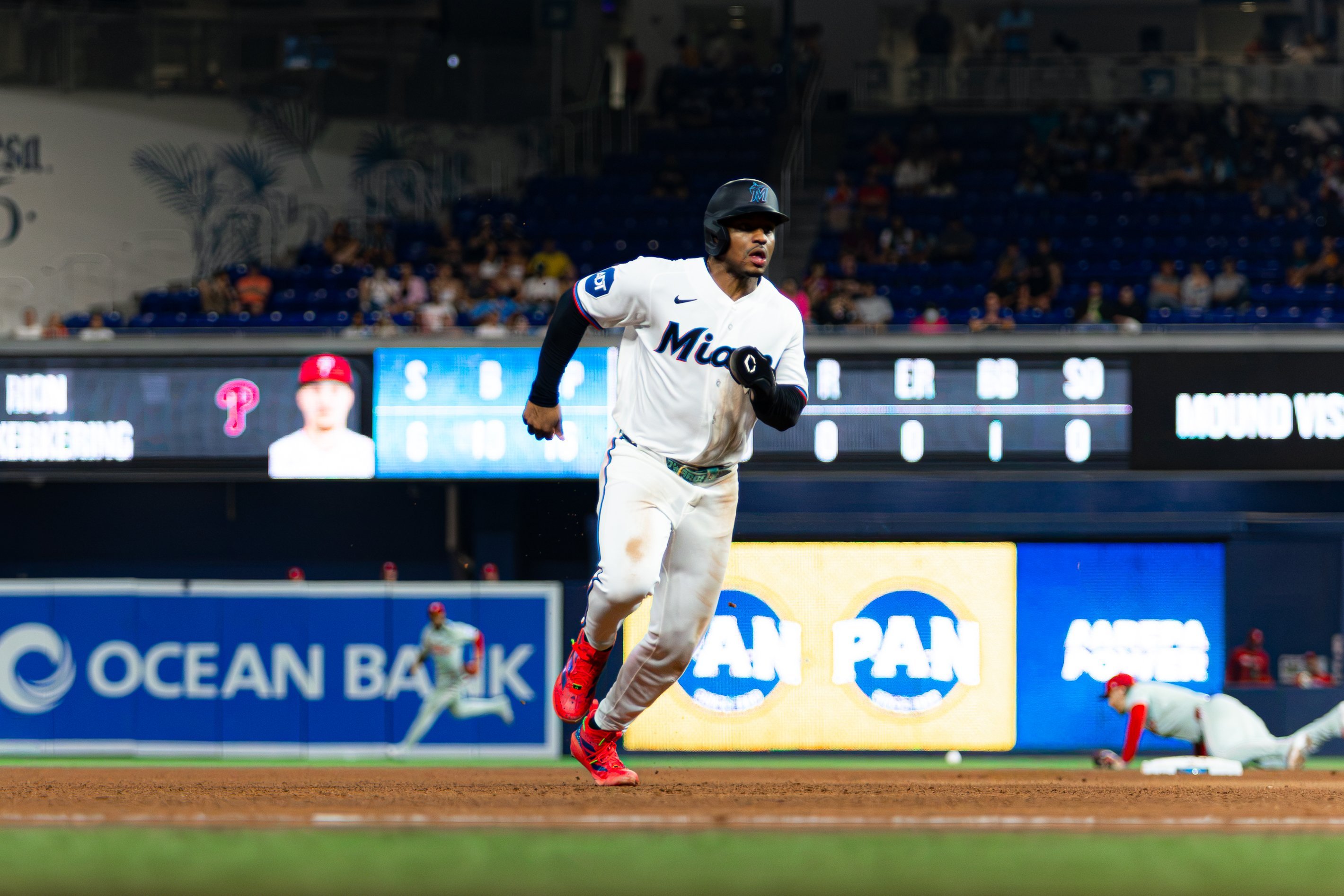 The floodgates are ready to burst now that Tarik Skubal, the grand prize of the 2026 MLB trade deadline market, has been dealt to the Los Angeles Dodgers. Most teams, including the Miami Marlins, have yet to finalize any deals. However, keep in mind that this is the same Peter Bendix-led front office that made six trades on deadline day in 2024. In advance of this year's deadline on Monday at 6:00 pm ET, here are three Marlins predictions. Marlins trade Liam Hicks In 100 games this season, Liam Hicks is slashing .283/.364/.434/.798 with 14 home runs, 62 RBI and a 120 wRC+. On top of that, his 9.5% strikeout rate is the fourth-lowest in MLB and the lowest amongst all catchers. Hicks is unquestionably a useful hitter, but after beginning the season as Miami's primary catcher, the Marlins called up Joe Mack. Between Mack's arrival and Kyle Stowers' conversion to first base, Hicks is mainly being limited to DH duty. Other teams without their own elite defensive catcher will value him more highly than the Marlins do. Waiting in the wings with Triple-A Jacksonville, the Marlins still have Agustín Ramírez. As Fish On First reported, the team still believes Ramírez can be a viable catcher, regardless of all the evidence suggesting otherwise. He also has much more raw power than Hicks, so his offensive ceiling is a bit higher if he can tap into it consistently. Potential fits for Hicks include the Yankees, who have been scouring the market for a catcher. The MLB team getting the worst offensive production out of that position is the Chicago White Sox (42 wRC+). Other deadline buyers to keep in mind are the Boston Red Sox (74 wRC+), Houston Astros (76 wRC+) and the division-rival Philadelphia Phillies (56 wRC+). Marlins trade Xavier Edwards for starting pitcher with multiple years of control This one is more specific. It's hard to believe that the Marlins would let this deadline pass without doing anything to help out a starting rotation made up of Sandy Alcantara, Ryan Gusto, Eury Pérez, Janson Junk and Tyler Phillips. Gusto has had a lot of ups and downs, Junk has a limited ceiling and Phillips is better suited back in the bullpen pitching in high-leverage situations. Max Meyer, Robby Snelling, Adam Mazur and Thomas White are all injured, not set to come back anytime soon. They need another starter to get through the 2026 season, but also should be planning beyond that. Right-handed pitcher Emerson Hancock of the Seattle Mariners is an attractive option, but it's unlikely that the Mariners will part with him now. They already traded from their rotation surplus this week by sending Luis Castillo to the Chicago White Sox. The Boston Red Sox also have starters available and find themselves with a hole to fill at second base following Curtis Mead's unlucky injury. The Marlins could aim for left-hander Payton Tolle. In 18 starts this season, Tolle has a 3.30 ERA, 3.42 FIP, 9.80 K/9 and 2.58 BB/9. The rookie is controllable through 2031. Xavier Edwards is slashing .288/.368/.395/.763 with six home runs, 40 RBI, 18 stolen bases and has posted a 111 wRC+. Turning 27 years old next week, Edwards is entering the prime years of his career and is under club control through 2029. He is also going to be eligible for arbitration for the first time following this season, so expect a significant pay raise. Edwards has been an important everyday player for the Marlins, but his offense has tailed off dramatically over the last two months. Although smooth defensively at second base, he lacks the versatility to play anywhere else. Javier Sanoja could fill his shoes, assuming there is a plan in place to address third base in a corresponding move. Multiple relievers traded "Multiple" likely means two. The obvious candidate is pending free agent Pete Fairbanks. In 37 games, he has a 6.55 ERA, 4.93 FIP, 12.06 K/9, 3.67 BB/9 and 16 saves, but he is starting to look like a $13M man in his most recent appearances. After some doubts about his strikeout rate decreasing over the years, it is actually the highest it's been since 2023. Most of his struggles have occurred in non-save situations. Teams may trust Fairbanks' long track record of effective pitching and overlook an uncharacteristic first half. The Marlins should eat as much of his remaining salary as they can to garner the best possible prospect return. Lefty John King is among the possibilities for a second reliever trade. After struggling with the St. Louis Cardinals, the Marlins picked him up late in free agency and he's been nothing but great. In 44 appearances, King has a 2.45 ERA, 3.92 FIP, 6.55 K/9 and 2.45 BB/9. Left-handed relievers aren't easy to find on the trade market. Moving King, who still has another year of control past this season, could garner them a nice prospect haul. One other name to consider would be Michael Petersen. This a player with minimal major league experience who had been bouncing around the league. At age 32, he has finally put it all together, posting a 3.20 ERA, 3.28 FIP, 10.40 K/9 and 3.60 BB/9 this season. Petersen has been thrown in all sorts of situations for the Marlins, and for the most part, has been successful. Not even eligible for arbitration yet, the Marlins could cash in now instead of taking the risk of him reverting back to an inconsistent Quad-A type. View the full article
 -
 Chicago Cubs Transactions Chicago Cubs sent RHP Andrew Wantz outright to Iowa Cubs. Iowa Cubs Build Early Lead, Then Fall 7-4 To Scranton/Wilkes-Barre Iowa scored in each of the first two innings and led 4-1 through four, but the offense stopped there in a 7-4 loss to Scranton/Wilkes-Barre. Brett Bateman singled to open the first, and Moisés Ballesteros singled him home two batters later. Kevin Alcántara drew a walk to start the second, Owen Miller reached on a force out, and Chas McCormick doubled Miller in. The fourth was the biggest inning. BJ Murray doubled to lead off, Miller singled him to third, and McCormick walked to load the bases. Ben Cowles then lined a single to center that scored Murray and Miller for a 4-1 lead. Bateman walked to reload the bases, but Owen Ayers struck out to end the inning. Grant Kipp allowed four runs on two hits over 4 2/3 innings, walking three and striking out three. He left with two runners on and two outs in the fifth, and both scored on a three-run homer charged to Eduarniel Núñez, who allowed two runs on three hits over 1 1/3 innings with a walk and a strikeout. Hoby Milner gave up a home run and one run on two hits in 1 1/3 innings. Gabe Klobosits recorded two outs with a strikeout, and Ethan Roberts worked one scoreless inning with a strikeout. Iowa finished with 10 hits and five walks, and left seven runners on base. Cowles went 2-for-3 with two RBI and a walk, Ballesteros went 2-for-4 with an RBI, and Bateman went 2-for-4 with a walk. Player AB R H RBI BB K Brett Bateman, RF 4 1 2 0 1 1 Owen Ayers, DH 4 0 0 0 1 1 Moisés Ballesteros, C 4 0 2 1 0 1 Jonathon Long, 1B 4 0 0 0 0 1 BJ Murray, 3B 4 1 1 0 0 0 Kevin Alcántara, LF 3 0 1 0 1 1 Owen Miller, SS 4 2 1 0 0 1 Chas McCormick, CF 3 0 1 1 1 1 Ben Cowles, 2B 3 0 2 2 1 0 Totals 33 4 10 4 5 7 Player IP H R ER BB K HR Grant Kipp 4 2/3 2 4 4 3 3 1 Eduarniel Núñez (L, 0-2) 1 1/3 3 2 2 1 1 1 Hoby Milner 1 1/3 2 1 1 0 1 1 Gabe Klobosits 2/3 1 0 0 0 1 0 Ethan Roberts 1 0 0 0 0 1 0 Totals 9 8 7 7 4 7 3 Ariel Armas Homers, But Knoxville Smokies Fall 3-2 In Ten Innings Ariel Armas tied the game with a two-run homer in the fourth, and Knoxville held Pensacola even until the tenth in a 3-2 loss. https://x.com/smokiesbaseball/status/2083708314211274803 Pensacola scored first in the third on a single and a two-run homer. Knoxville answered in the fourth. Alex Ramírez opened with a single to center, Andy Garriola flied out, and Miguel Useche struck out. Armas then drove a two-run homer to left center to make it 2-2. Alex Madera walked behind him, but Ed Howard struck out to strand the runner. The score held there for five more innings. Knoxville put two runners on with one out in the ninth on walks by Useche and Armas, and did not score. In the tenth, the visiting zombie runner moved to third on a single and scored on a double play grounder, and Knoxville trailed 3-2. In the bottom half, zombie runner Ed Howard reached third on a leadoff single by Drew Bowser, but the Smokies stranded both runners on a strikeout, a pop out, and a force out. Brooks Caple allowed two runs on five hits over five innings, walking two and striking out four. Evan Taylor followed with two scoreless innings, walking two and striking out one. Tyler Schlaffer worked three innings and allowed one unearned run on four hits with three strikeouts and no walks. Knoxville managed five hits, drew four walks, struck out 11 times, and left eight runners on base. Armas went 1-for-3 with a walk and two RBI, and Madera went 1-for-3 with a double and a walk. Player AB R H RBI BB K Carter Trice, LF 5 0 1 0 0 3 Jefferson Rojas, 3B 4 0 0 0 1 0 Alex Ramírez, CF 5 1 1 0 0 0 Andy Garriola, RF 4 0 0 0 0 2 Miguel Useche, DH 3 0 0 0 1 1 Karson Simas, DH 0 0 0 0 0 0 Ariel Armas, C 3 1 1 2 1 0 Alex Madera, 2B 3 0 1 0 1 1 Ed Howard, SS 4 0 0 0 0 3 Drew Bowser, 1B 4 0 1 0 0 1 Totals 35 2 5 2 4 11 Player IP H R ER BB K HR Brooks Caple 5 5 2 2 2 4 1 Evan Taylor 2 0 0 0 2 1 0 Tyler Schlaffer (L, 1-7) 3 4 1 0 0 3 0 Totals 10 9 3 2 4 8 1 Michael Hallquist Homers Twice As South Bend Cubs Rout Lake County 10-3 South Bend collected 17 hits and 11 walks in a 10-3 win at Lake County, and Michael Hallquist hit two home runs. The second inning put South Bend in front for good. Michael Carico doubled to open it, Geuri Lubo struck out, and Hallquist drove a two-run homer to left center for a 3-1 lead. Hallquist added a solo homer in the fifth. The sixth produced four runs. Matt Halbach walked, Kade Snell grounded out to move him up, and Logan Poteet walked. Carico doubled to center to score Halbach and send Poteet to third. Lubo then singled to second and both Poteet and Carico scored on the play, with a throwing error allowing Lubo to reach second. Hallquist lined out, Kane Kepley walked, and Angel Cepeda doubled to right to score Lubo for a 9-3 lead. Lubo added an RBI single in the seventh that scored Snell. Alfredo Romero allowed two runs on two hits over 3 2/3 innings, walking five and striking out three. Adam Stone allowed one run on one hit in 1 1/3 innings with a walk and a strikeout. Jackson Brockett threw three hitless innings with five strikeouts and two walks. Luis Rujano finished with one scoreless inning, allowing one hit with two strikeouts. Cepeda went 3-for-6 with a double and an RBI, Jose Escobar went 3-for-4 with a walk, and Snell went 3-for-5 with two runs. Carico went 2-for-5 with two doubles. South Bend left 18 runners on base. Player AB R H RBI BB K Kane Kepley, DH 5 0 0 1 2 4 Angel Cepeda, SS 6 1 3 1 0 1 Jose Escobar, LF 4 0 3 0 1 0 Matt Halbach, 3B 5 1 2 1 1 1 Kade Snell, CF 5 2 3 0 1 0 Logan Poteet, C 3 1 0 0 3 2 Michael Carico, 1B 5 2 2 1 1 2 Geuri Lubo, RF 6 1 2 2 0 2 Michael Hallquist, 2B 4 2 2 3 2 1 Totals 43 10 17 9 11 13 Player IP H R ER BB K HR Alfredo Romero 3 2/3 2 2 2 5 3 1 Adam Stone 1 1/3 1 1 1 1 1 0 Jackson Brockett (W, 7-2) 3 0 0 0 2 5 0 Luis Rujano 1 1 0 0 1 2 0 Totals 9 4 3 3 9 11 1 Myrtle Beach Pelicans Blank Charleston 6-0 Behind Noah Edders And Alexey Lumpuy Myrtle Beach allowed two hits and struck out 13 in a 6-0 win over Charleston, and Alexey Lumpuy drove in three runs. The second inning decided it. Eli Lovich led off with a walk, and Jose Silva doubled him home. Corey Nunez walked, and Dom Krupinski lined a single to right that scored Silva. Jhoander Irigoyen walked to load the bases, and Jan Luis Reyes struck out. Lumpuy then tripled to left, clearing the bases and scoring Nunez, Krupinski, and Irigoyen for a 5-0 lead. Myrtle Beach added a run in the sixth. Krupinski walked with two outs, Irigoyen singled to right, and Reyes brought Krupinski home with a ground ball single to third. Noah Edders allowed one hit over five scoreless innings, walking one and striking out seven. Edwardo Melendez followed with three scoreless innings, allowing one hit with a walk and five strikeouts. Sam Mettert closed it with a scoreless inning and a strikeout. Irigoyen went 3-for-3 with a walk and a run, and Lumpuy went 2-for-4 with a triple, a walk, and three RBI. Silva went 1-for-3 with a double, a walk, and an RBI. Krupinski scored twice and drove in a run. The Pelicans finished with eight hits and seven walks, and left eight runners on base. They committed no errors. Player AB R H RBI BB K Alexey Lumpuy, CF 4 0 2 3 1 0 Alexis Hernandez, SS 5 0 0 0 0 4 Ethan Conrad, RF 4 0 0 0 0 0 Eli Lovich, LF 2 1 0 0 2 2 Jose Silva, C 3 1 1 1 1 1 Corey Nunez, 3B 3 1 0 0 1 1 Dom Krupinski, 2B 3 2 1 1 1 1 Jhoander Irigoyen, DH 3 1 3 0 1 0 Jan Luis Reyes, 1B 4 0 1 1 0 2 Totals 31 6 8 6 7 11 Player IP H R ER BB K HR Noah Edders (W, 1-4) 5 1 0 0 1 7 0 Edwardo Melendez (H, 1) 3 1 0 0 1 5 0 Sam Mettert 1 0 0 0 0 1 0 Totals 9 2 0 0 2 13 0 Top-20 Prospect Performance Jefferson Rojas: 0-for-4, BB Pedro Ramirez: DNP Jaxon Wiggins: DNP Josiah Hartshorn: DNP Kevin Alcantara: 1-for-3, BB, K Ethan Conrad: 0-for-4 Kane Kepley: 0-for-5, RBI, 2 BB, 4 K Owen Ayers: 0-for-4, BB, K Jonathon Long: 0-for-4, K Kaleb Wing: DNP James Triantos: DNP Brooks Caple: 5 IP, 5 H, 2 R, 2 ER, 2 BB, 4 K Mason McGwire: DNP Ty Southisene: DNP Will Sanders: DNP Juan Cabada: DNP Eli Lovich: 0-for-2, 2 BB, 2 K Ariel Armas: 1-for-3, HR, 2 RBI, BB Jostin Florentino: DNP Grant Kipp: 4 2/3 IP, 2 H, 4 R, 4 ER, 3 BB, 3 K View the full article
 -
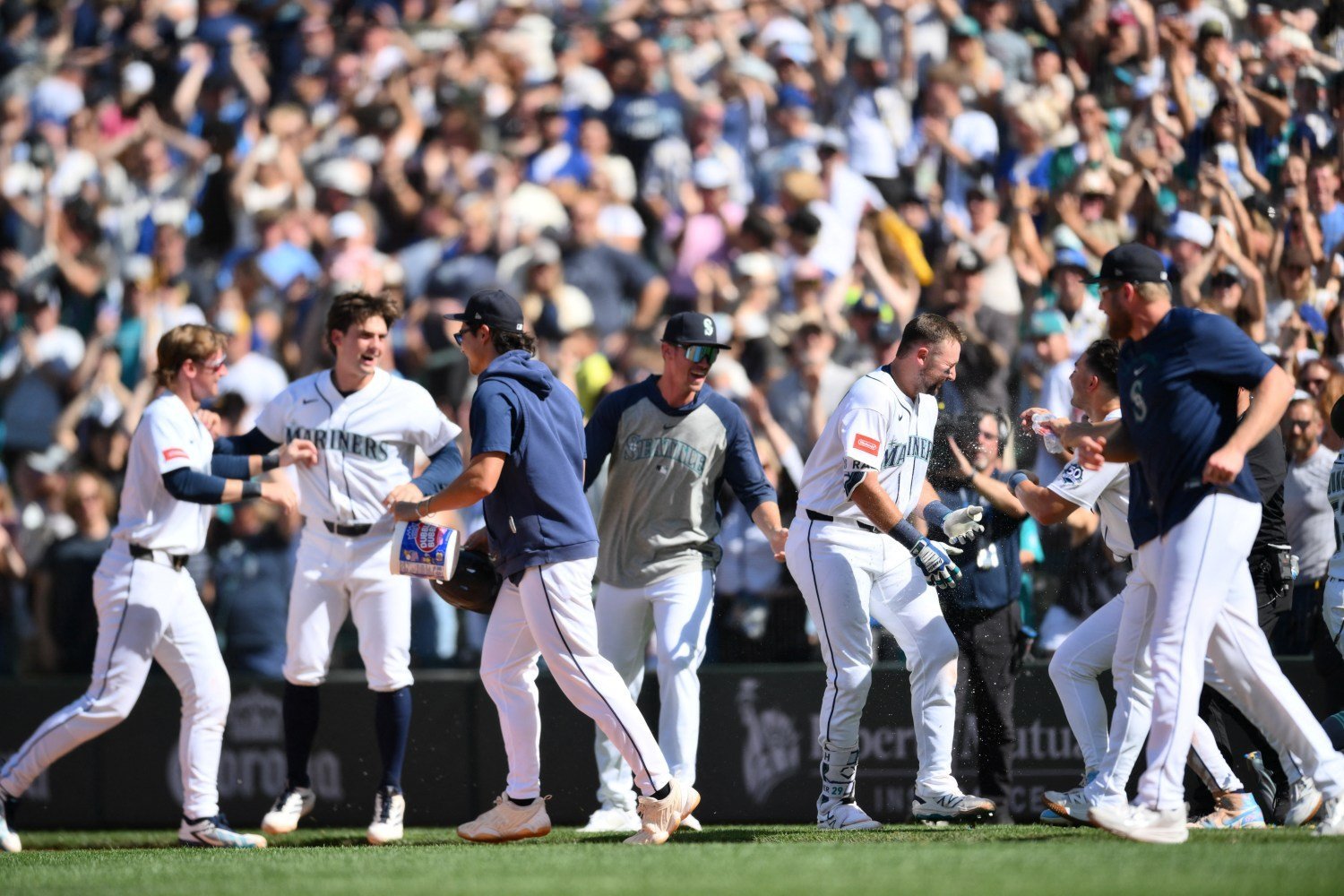 Royce Lewis hasn't spent much time at first base. He doesn't even really think of himself as a first baseman; he still longs to get back to the left side of the infield. The reality, though, is that he's not the athlete or the thrower he would need to be to return to shortstop or third base—and, unfortunately, Saturday delivered an excruciating reminder that he's not the quick processor required even of a right-side infielder. The situation demanded a lot of him—maybe more than can fairly be asked of a guy who was still all the way across the diamond three months ago. With a runner on third base and one out in the bottom of the ninth, the Twins went to a five-man infield and issued an intentional walk, bringing Cal Raleigh to the plate with runners on the corners. Randy Arozarena, at third, carried the winning run, so the idea in issuing Julio Rodríguez an intentional walk was to set up a double play on the big-dumpered Raleigh. Everyone involved had to understand, though, that the right way to make the play would depend on the specific play that happened. Each infielder's responsibility, in the very short time they had, was to arrange the field in their minds and to visualize the variety of plays that might present themselves. There was no one correct thing to do; what was correct would depend on the batted ball. Lewis didn't have a robust enough set of plans. The ball came his way, and he made the wrong play. Raleigh hit a one-hop smash, 105.4 miles per hour off the bat. Lewis's reflexes were fine; those have never been his problem. He lunged to his left, speared the ball cleanly, and managed not to go all the way to the ground. He'd been crowding the line, with two other infielders on his side of the second-base bag, so the ball took him right to the first-base bag. Right away, though, you could see him thinking—and not in a good way. SzRCcjJfWGw0TUFRPT1fVTFVRFZsWldYd1lBRFFRRlVRQUhWUWNGQUZsV1ZnTUFCQVpXQkFGWFZBUlRBUUZW.mp4 As Lewis took the step and a half left to reach the base after fielding the ball, he turned to look over his left shoulder to find Rodríguez. That was smart, really. It was one of those plays where, if he hadn't picked up Rodríguez and the Mariners outfielder had been especially wily, he could have snuck back into first base after Lewis tagged it. Because he had been so concerned about getting down the line and minimizing the risk of a double play, though, Rodríguez never even thought about a retreat. Therefore, as Lewis stepped on first, his eyes took him toward second, where Rodríguez was charging for the base and two teammates awaited a throw. That caused all kinds of trouble. First, as soon as Lewis started moving toward first and turned away from third, Arozarena could break for the plate freely. If Lewis gets up and stomps on the pillow while staring down Arozarena, the chance for a double play is likely lost, but the result is the second out and a chance to get out of the inning by retiring the next batter. However, you can make the play the way Lewis initially did and still get the double play. Once he turned his back to third, Arozarena was going, but if Lewis merely uses that turn to check for a dive-back by Rodríguez and then pivots to the plate with his eyes and mind clear, he retires Arozarena easily. Alas, we're all wired a certain way, and the way Lewis is wired is to be captured a bit by his own gaze. He turned and saw Rodríguez far enough short of second to be beaten by a good throw, and for a fatal half-second, he planned to make that throw. His eyes committed him to it. His brain kicked in. It overrode that command and turned him to the plate, and he threw. That throw was a bit later than it should have been, but if it had been strong and accurate, Arozarena still would have been out. Instead, it was to the first-base side of the plate, and Victor Caratini was unable to position himself to receive it and make a tag in time. The game was over. Though his arm has never been great—that's a big part of why he's no longer on the left side—Lewis is capable of that throw, physically. The problem, again, was mental. He wasn't fully turned, wasn't fully targeted. Having cost himself a moment with the mistaken pump toward second, he rushed the process of lining up his throw to the plate. After the game, manager Derek Shelton said the right play would have been to throw to second when Lewis got the ball. That could have worked, but it would have been risky. Shelton might not have appreciated how much of Lewis's momentum had to move toward first base to snare the ball. Turning that momentum and making a good throw to second, then aligning oneself for the return throw to double up Raleigh, would have been tough. Lewis isn't a good enough infielder, regardless of position, to do that; throwing to second right away wouldn't have been the right play. What needed to happen, rather, is what I described above. That's an unusual play, though—a rare progression. It demands that a player be a fast and confident processor of information during a play. Lewis isn't that, either. Rocco Baldelli talked about this on a much different (but not so different, really) play last season, when Lewis was playing third with the bases loaded and had to decide between trying to turn a double play and taking the out at the plate. He saw, and articulated, that Lewis is not the kind of processor who can reliably make that difficult series of incredibly fast decisions. Shelton hasn't put it the same way, but it's clear that the organization feels that way as a group. They're right. That leaves the team in a bit of a quandary. Lewis remains endlessly self-assured, at least before and after each difficult play that comes his way. He's been better at the plate since returning from his demotion to Triple-A St. Paul. However, he looks unlikely to be a competent defender at key moments, anywhere on the diamond. The closest thing to a position he can play well might be second base. The Twins simply don't have enough instinctive, intelligent and skillful defenders to fill out a lineup; they have to make do with Lewis, Luke Keaschall and others who lack that nous. As Saturday suggests, that could be what costs them a playoff berth this season. Hopefully, they can overcome that shortcoming, but sometimes, the ball finds you. The same things are true at the trade deadline. It's not the wrong decision that costs you; it's the quick decision not made, or the balk and non-committal move right after it. The sport comes down to quick decisions and to the hard work of being decisive under pressure—even off the field. View the full article
 -
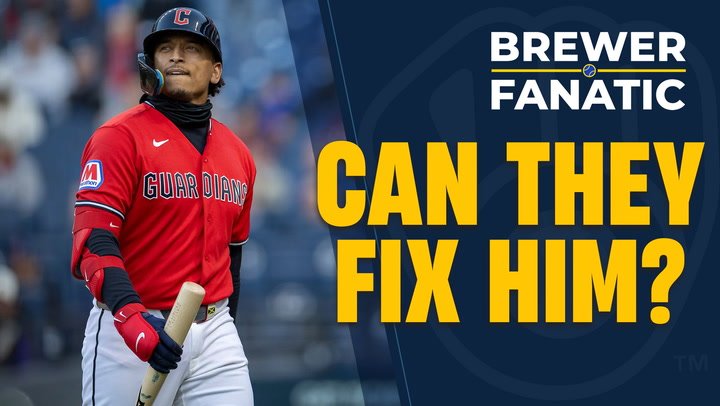 Bo Naylor is a former first-round pick, and the Milwaukee Brewers just acquired him in a trade with the Cleveland Guardians. In this video, we'll break down Naylor's plate discipline, pull-side power, and how the Crew can maximize the backstop as they pursue another deep postseason run in 2026. View the full article
 -
Hunter Greene Is Worth Hunting. Here's What It Would Cost
DiamondCentric posted an article in Twins Daily
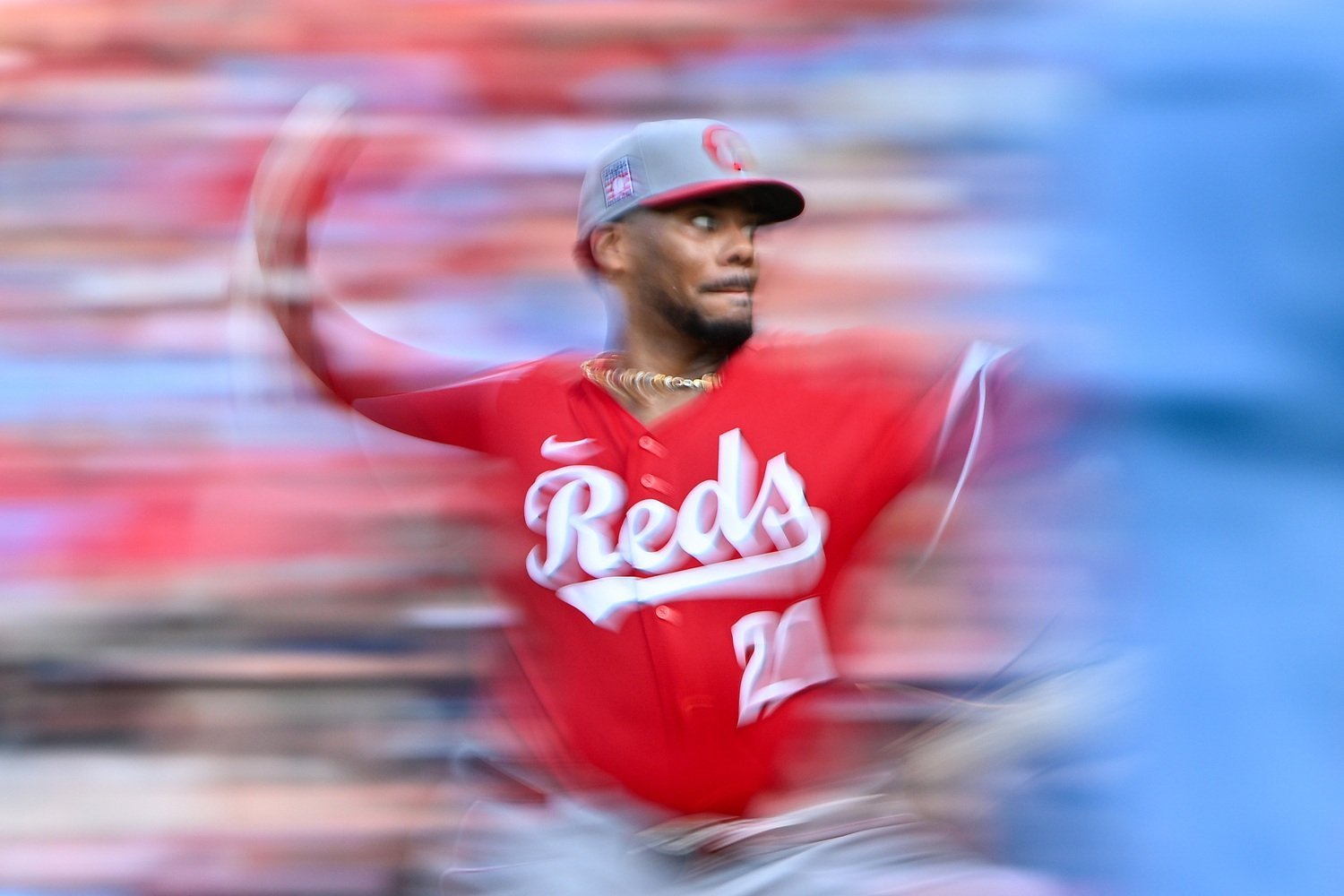 The Minnesota Twins have officially chosen their direction. For weeks, the biggest question surrounding this club was whether it would buy or sell at the trade deadline. General Manager Jeremy Zoll answered that question on Wednesday when he told reporters the Twins intend to add to the roster, and Kody Clemens' dramatic walk-off grand slam on Thursday only reinforced why, and we saw the first domino drop Thursday night when the Twins made their first acquisition in left handed reliever AJ Minter. Minnesota is right in the middle of the American League playoff race and has every reason to push for October. Bullpen help remains the organization's biggest need, even after the Minter acquisition. (Or does it?) The Twins could also use another frontline starter, especially because Joe Ryan has looked a little shaky to begin the second half. After all, the goal isn't just to make the postseason. While Taj Bradley gives the rotation another talented arm, this team could still use another true ace to lead a playoff rotation. As it turns out, one may actually be available. Hunter Greene has become one of the hottest names on the trade market over the last week, and on Thursday the rumors surrounding the Cincinnati Reds right-hander intensified. MLB.com senior reporter Mark Feinsand reported, "The Reds have received interest in former All-Star right-hander Hunter Greene, and according to a source, there's a '50-50' chance he could be moved this week." If Cincinnati is seriously considering offers, Greene immediately jumps near the top of anyone's list of potential trade deadline targets, and should be considered by the Twins as well. Greene entered professional baseball with sky-high expectations after being selected second overall in the 2017 MLB Draft, immediately behind Royce Lewis , whom the Twins selected first overall. Injuries slowed his development during the early years of his career, but once he finally stayed healthy long enough to establish himself, he looked every bit like the ace scouts envisioned. His breakout came in 2024 when he earned his first All-Star selection and finished among the top ten in National League Cy Young voting. Greene posted a 2.75 ERA, accumulated 3.7 fWAR and threw 150 innings while establishing himself as one of the most dominant pitchers in baseball. He followed that performance with another outstanding season in 2025, although injuries again interrupted things. Greene missed roughly three months with a groin strain, limiting him to just 107 2/3 innings, but he remained incredibly effective whenever he took the mound, posting a 2.76 ERA and an outstanding 0.94 WHIP. Unfortunately, the injuries continued into 2026 when Greene underwent elbow surgery during the offseason and missed the first three months of the year before finally making his season debut at the beginning of July. There is no getting around the fact that Greene is an injury-prone pitcher. At the same time, there are very few pitchers in baseball with his combination of stuff, age, and upside. His fastball still lives in the upper 90s despite everything his arm has been through. He consistently posts strikeout rates north of 30 percent while pairing that swing-and-miss ability with impressive control, carrying a career walk rate of just 6.2 percent. When Greene is healthy, he doesn't pitch like a No. 1 starter. He pitches like one of the very best pitchers in the sport. He's also still only 26 years old, and just as importantly, he's signed to one of the best contracts of any frontline starter in baseball. Greene agreed to a long-term extension before his breakout season in 2023 and is under team control through the 2029 season. He is scheduled to make $15 million in 2027, $16 million in 2028, and has a club option worth $21 million in 2029. That is an incredible bargain for an ace. Those salaries are much closer to what teams pay solid mid-rotation veterans like Mitch Keller or Michael Wacha than what they normally pay a pitcher capable of competing for Cy Young Awards. Of course, there is a reason that contract looks so appealing. Greene's injury history is almost certainly the reason the Reds would even entertain moving him. Teams do not willingly trade away 26-year-old aces with years of affordable control. If Greene had been perfectly healthy throughout his career, there probably wouldn't be a conversation to have. It's a situation that feels somewhat familiar. When the Twins signed Byron Buxton to his seven-year, $100 million extension, they were betting on elite talent despite an extensive injury history. That risk was exactly what made the contract possible in the first place. Had Buxton been perfectly healthy to that point, he almost certainly would have commanded significantly more money on the open market. The same principle applies here. Greene's durability concerns create substantial risk, but they are also the only reason a pitcher of this caliber is realistically obtainable. So what would it actually take to land him? Feinsand provided a useful comparison in his report. "One American League executive pointed to the White Sox return from the Red Sox in the December 2024 Garrett Crochet trade, which saw Chicago land two Top-100 prospects (Kyle Teel and Braden Montgomery) along with two of Boston's other Top 15 prospects (Chase Meidroth and Wikelman González)." That feels like a very reasonable framework. Crochet and Greene share several similarities. Both are young, controllable starters with ace-level ceilings and injury histories that add risk to their value. Acquiring either pitcher requires paying an enormous premium because elite starting pitching remains one of the hardest commodities to find anywhere in baseball. Using that framework, it's possible to build a realistic proposal from Minnesota's perspective. Boston didn't surrender a top-10 overall prospect for Crochet. Instead, the package was built around players ranked No. 25 and No. 54 overall by MLB Pipeline, along with two additional top-15 organizational prospects. The Twins have a remarkably similar group. Kaelen Culpepper and Emmanuel Rodriguez are currently ranked No. 29 and No. 55 overall by MLB Pipeline, making them the closest comparisons to Kyle Teel and Braden Montgomery. To round out the package, Minnesota could include top-15ish prospects like Khadim Diaw and Ryan Gallagher. The hypothetical trade would look something like this: Twins receive: Hunter Greene Reds receive: Kaelen Culpepper, Emmanuel Rodriguez, Khadim Diaw and Ryan Gallagher There is no sugarcoating it. That is a massive price to pay. Parting with Culpepper and Rodriguez would sting. Both project as impact major leaguers and have become two of the most valuable prospects in the organization. But prospects ultimately exist for two reasons. Either they become stars for your club or they become the assets used to acquire established stars. There are few players worth cashing in that kind of prospect capital for; however, a 26-year-old ace signed through 2029 may be one of them. The Twins are also in a position where they could absorb those losses better than many organizations. Marek Houston has enjoyed an outstanding season at Double-A and continues to strengthen his case as the organization's shortstop of the future. The system also features an abundance of left-handed hitting outfielders, making Rodriguez more expendable than he otherwise might be. The reward could completely reshape Minnesota's future. This October, a playoff rotation featuring Ryan, Greene and Bradley would be capable of matching up with just about anyone in the American League. Looking ahead to next season is even more exciting. With Greene under contract for three more years after this season, the Twins could enter 2027 with a rotation built around Pablo López, Ryan, Greene and Bradley while continuing to develop Mick Abel, Connor Prielipp and Kendry Rojas behind them. None of this removes the risk. Greene's injury history is frightening, and there is a very real possibility the Twins could trade away four premium prospects only to watch injuries continue to derail his career. There is also another possibility. Greene stays healthy and pitches exactly the way he has whenever he has been available, like he did just two weeks ago when he threw seven shutout innings with 12 strikeouts against the Cubs. That is the pitcher the Twins would be betting on. If they get that version of Greene, they suddenly possess one of the most dangerous playoff rotations in baseball this season while adding a legitimate ace to build around for years to come. Moves like this are uncomfortable because they carry enormous risk, but they also have the potential to completely change the direction of a franchise. If the Reds are truly open to moving Greene, the Twins should absolutely be one of the teams picking up the phone. Would you make a trade centered around Culpepper and Rodriguez for Greene, or is that simply too much prospect capital to surrender? Leave a comment below and start the conversation! View the full article
 -
 Billy Amick has learned how to hit the ball out of the park in his third minor-league season. It appears he will keep applying those lessons with his new team. Amick, one of two players acquired by the New York Mets from the Minnesota Twins on Friday in a trade for left-handed reliever A.J. Minter, homered in his debut for Double-A Binghamton on Saturday in Game 2 of a doubleheader at Reading. The two-run blast in the seventh inning cut the Rumble Ponies’ deficit to two in an eventual 5-4 loss. Amick is up to 24 homers this season between Binghamton and Double-A Wichita, quite the power surge for a player who had seven homers in 2024 and 2025 combined in about three dozen fewer plate appearances. On a percentage basis, Amick’s 6.3 homer rate in 2026 is more than triple the 2.0 percent rate of his first two seasons. There were signs last year the 23-year-old infielder out of the University of Tennessee could bang. He had a .450 slugging percentage between rookie ball, Single-A and High-A; he’s up to .494 this year despite an 85-point dip in batting average (.307 to .222). The parent Mets are hoping the homers aren't a bizarre outlier and that they’ve added a big-time thumper from the right side. Amick’s Binghamton bow ended in a split. The Rumble Ponies won the opener 10-5. Elsewhere in the organization . . . Clay Holmes’ final audition for teams ahead of Monday’s MLB trade deadline will take place in Brooklyn, not Queens. The right-hander will make a minor league rehab start for the Cyclones on Sunday rather than be activated to pitch for the big-league Mets against the Miami Marlins. (Robert Stock will come up from Syracuse for that assignment instead.) Holmes will throw around 70 to 75 pitches, MLB.com reported Saturday. He wants to be fully stretched out before he returns to the majors — “wherever that is,” he said, per The Associated Press. Syracuse lost 3-1 to Rochester. Jonathan Santucci made his Triple-A debut for the Mets, with mixed results. Hayden Senger homered for Syracuse’s run. Brooklyn fell to Winston-Salem 6-3. Jacob Reimer singled, doubled, drove in a run and scored a run for the Cyclones. St. Lucie doubled up Dunedin 6-3 in 10 innings. Wyatt Vincent’s sacrifice fly broke the tie in the 10th. DSL Mets Blue lost 13-2 to DSL Blue Jays Red. Dayron Oramas and Michalle Mercedes drove in the Mets’ runs. New York Mets Transactions New York Mets selected the contract of RHP Kevin Herget from Syracuse Mets. New York Mets optioned RHP Xzavion Curry to Syracuse Mets. Santucci's Syracuse Debut Has A Bit Of Everything Santucci made his first Triple-A start since being promoted from Double-A earlier in the week. It was an adventure. He needed 90 pitches (52 strikes) to get through four innings. He walked five, struck out seven, and allowed two runs and five hits. Both Rochester runs scored in the second inning, on an RBI triple and an RBI double. Senger cut the deficit to 2-1 with his ninth home run of the season and his first since July 2. Rochester answered in the bottom half with a run against Nate Lavender. Two rehab notes: Dedniel Núñez pitched a scoreless seventh with a strikeout, while Mike Tauchman played left field and finished 0-for-3. Player AB R H RBI BB K Ryan Clifford 4 0 1 0 0 2 Nick Morabito 4 0 0 0 0 0 Jihwan Bae 4 0 1 0 0 1 Ronny Mauricio 4 0 0 0 0 2 Mike Tauchman 3 0 0 0 0 0 MJ Melendez 3 0 0 0 0 1 Cristian Pache 3 0 0 0 0 1 Zack Short 3 0 0 0 0 1 Hayden Senger 3 1 1 1 0 1 Totals 31 1 3 1 0 9 Player IP H R ER BB K HR Jonathan Santucci 4 5 2 2 5 7 0 Dylan Ross 1 1 0 0 0 3 0 Nate Lavender 1 3 1 1 0 2 0 Dedniel Núñez 1 0 0 0 0 1 0 Jefry Yan 1 0 0 0 0 1 0 Totals 8 9 3 3 5 14 0 Lorusso Powers Binghamton To Game 1 Win Nick Lorusso homered twice and drove in five runs in the opener. His three-run blast in the second put Binghamton ahead 7-1. His two-run shot in the sixth stretched the Rumble Ponies' lead to 9-4. He also walked and scored on D'Andre Smith's three-run homer during a four-run first. Matt Rudick homered in the seventh for Binghamton's final run. Wyatt Young and Corey Collins both reached base three times. Noah Hall pitched five innings for the win in his Double-A debut. He was promoted from High-A Brooklyn early in the week. He allowed four runs and six hits, with two walks and six strikeouts. Player AB R H RBI BB K Mitch Voit 4 2 1 0 1 1 Chris Suero 3 0 1 1 0 1 Nick Lorusso 3 3 2 5 1 0 Corey Collins 3 1 2 0 1 0 Jose Ramos 4 0 0 0 0 3 D'Andre Smith 4 1 1 3 0 0 Matt Rudick 4 1 2 1 0 1 Vincent Perozo 4 0 1 0 0 1 Wyatt Young 3 2 2 0 1 1 Totals 32 10 12 10 4 8 Player IP H R ER BB K HR Noah Hall 5 6 4 4 2 6 2 Zach Peek 1 1 1 1 0 2 1 Brian Metoyer 1 0 0 0 0 1 0 Totals 7 7 5 5 2 9 3 Binghamton's Comeback Bid In Game 2 Falls Short Amick's home run was part of a three-run Binghamton rally in the seventh. John Bay hit a sacrifice fly later in the frame to cut it to 5-4, but Lorusso hit into a force play to end the game. Binghamton fell behind 5-0 after three innings. Reading nicked starter Gabriel Rodriguez in the first, and then went deep twice against reliever Danis Correa for three runs in the third Jordan Geber kept the Ponies in the game with 2 2/3 hitless innings of relief, with one walk and two strikeouts. Wyatt Young came in from shortstop to finish the game on the mound. Player AB R H RBI BB K John Bay 3 0 1 2 0 2 Nick Lorusso 4 0 0 0 0 1 Corey Collins 3 0 0 0 0 2 Jose Ramos 2 0 0 0 0 1 Mitch Voit 1 1 1 0 0 0 Billy Amick 3 1 2 2 0 0 Kevin Parada 2 1 0 0 1 1 Matt Rudick 3 0 1 0 0 0 Vincent Perozo 3 1 1 0 0 1 Wyatt Young 2 0 0 0 1 1 Totals 26 4 6 4 2 9 Player IP H R ER BB K HR Gabriel Rodriguez 1 2 2 2 2 1 0 Danis Correa 1 1/3 3 3 3 2 2 2 Jordan Geber 2 2/3 0 0 0 1 2 0 Wyatt Young 1 0 0 0 0 0 0 Totals 6 5 5 5 5 5 2 Brooklyn Blinks Against Winston-Salem Winston-Salem took the lead for good in the sixth with a solo homer off Parker Carlson. It came one inning after Yohairo Cuevas tied the game for Brooklyn with his sixth homer of the season. Andy Ibáñez, still rehabbing in the minors, gave Brooklyn a 2-1 lead in the third with an RBI single. One batter earlier, Reimer delivered his RBI double to knot the game 1-1. Carlson gave up two runs in the fifth to squander that lead. He was on in place of starter Jose Chirinos, who allowed two runs on five hits over the first four innings. Chirinos walked three and struck out four. The top three batters in the Cyclones' order --- Yonatan Henriquez, Reimer and Ibáñez --- each collected two hits. Player AB R H RBI BB K Yonatan Henriquez 5 1 2 0 0 0 Jacob Reimer 4 1 2 1 0 1 Andy Ibáñez 4 0 2 1 0 0 Trey Snyder 4 0 0 0 0 1 Ronald Hernandez 4 0 1 0 0 1 Daiverson Gutierrez 4 0 0 0 0 1 Antonio Jimenez 3 0 0 0 1 1 JT Benson 4 0 0 0 0 0 Yohairo Cuevas 4 1 2 1 0 1 Totals 36 3 9 3 1 6 Player IP H R ER BB K HR Jose Chirinos 4 5 1 1 3 4 0 Parker Carlson 2 4 3 3 1 1 2 Bryce Jenkins 2 0 0 0 0 4 0 Rafi Vazquez 1 2 2 1 0 0 0 Totals 9 11 6 5 4 9 2 St. Lucie Gets The W In Extras St. Lucie's half of the 10th started with Elian Peña on second base as the ghost runner. He advanced to third on a wild pitch and scored on Vincent's sacrifice fly. John Smith III was then hit by a pitch. Cole Mathis followed with a walk. Both runners advanced on a groundout. A wild pitch brought in Smith, and Julio Zayas singled home Mathis for a 6-3 lead. Zack Mack earned the win with a huge relief outing. He entered the game with the bases loaded and no outs in the bottom of the ninth, with the Mets leading 3-2. He gave up a game-tying sacrifice fly, but then got a lineout to left and a strikeout to force extras. He came back out for the bottom of the 10th and worked around a walk to finish the game. Ryan Tayman added to his big first week in pro ball. The catcher, who was drafted ninth round by the Mets last month, hit a two-run double in the first to put St. Lucie on top 2-0. He had a .462/.500/1.346 slash line after three games.. Player AB R H RBI BB K Elian Peña 4 2 1 0 1 3 Wyatt Vincent 4 0 0 1 0 1 John Smith III 3 2 1 0 1 0 Cole Mathis 3 2 1 0 2 1 Branny De Oleo 0 0 0 0 0 0 Ryan Tayman 5 0 1 2 0 2 Julio Zayas 5 0 2 1 0 2 Simon Juan 0 0 0 0 0 0 Bohan Adderley 5 0 0 0 0 1 Vladi Gomez 4 0 2 0 0 1 Kooper Schulte 4 0 0 0 0 2 Totals 37 6 8 4 4 13 Player IP H R ER BB K HR Nathan Hall 3 1 0 0 1 1 0 Jonathan Jimenez 2 1/3 1 0 0 0 4 0 Joe Scarborough 2/3 1 2 2 1 1 1 Elwis Mijares 2 3 1 1 3 3 0 Zack Mack 2 0 0 0 1 2 0 Totals 10 6 3 3 6 11 1 Top-20 Prospect Performance Jonah Tong: DNP Jack Wenninger: DNP Ryan Clifford: 1-for-4, 2 K Elian Pena: 1-for-4, BB, 3 K Nick Morabito: 0-for-4 Jacob Reimer: 2-for-4, 2B, RBI, K Mitch Voit: Game 1: 1-for-4, BB, K; Game 2: 1-for-1 Jonathan Santucci: 4 IP, 5 H, 2 R, 2 ER, 5 BB, 7 K Zac Thornton: DNP Chris Suero: Game 1: 1-for-3, 2B, RBI, K; Game 2: DNP Will Watson: DNP Wandy Asigen: DNP Eli Serrano III: DNP Randy Guzman: DNP Dylan Ross: 1 IP, 1 H, 0 R, 0 ER, 0 BB, 3 K Ryan Lambert: DNP Antonio Jimenez: 0-for-3, BB, K R.J. Gordon: DNP Jonathan Pintaro: DNP Marco Vargas: DNP View the full article
 -
 Henry Williams spun six scoreless innings as Omaha blanked St. Paul 4-0, with Abraham Toro and Jack Pineda supplying the home runs. Carson Roccaforte homered, and Hunter Patteson earned the win in Northwest Arkansas's 8-7 escape at Tulsa. Quad Cities swept its doubleheader behind Derlin Figueroa's six RBI, including a grand slam, while Kamden Edge and L.P. Langevin combined for four hitless innings of relief in the opener. Mason Miller added three scoreless innings in the nightcap. Columbia's game on Saturday was postponed due to weather. They have a scheduled doubleheader on Sunday, August 2nd. Kansas City Royals Transactions No Roster Moves Williams Blanks St. Paul As Omaha Rides Two Home Runs Omaha shut out St. Paul 4-0, and Henry Williams set the tone in the Storm Chasers' victory. Williams started and worked six innings, allowed three hits and one walk, struck out five, and did not give up a run. That gave him a quality start, and he handed the bullpen a lead it never gave back. Jose Cuas followed with two innings on one hit, no walks, and no runs. Justin Topa added a hitless inning with no walks. The offense took a while to show up. Omaha went scoreless through three innings before Gavin Cross doubled and came home on a sacrifice fly from Brett Squires for a 1-0 lead. The sixth inning provided the cushion for Omaha. Toro reached ahead of Pineda, and Pineda drove a two-run home run to right-center field, his first of the season with the Storm Chasers, to make it 3-0. Toro produced the last run himself two innings later with a solo home run to the same part of the park, his 19th. Toro, hitting in the cleanup spot, finished 2-for-4 with two runs and one RBI. Pineda also had two hits and drove in two. Cross went 1-for-4 with a double and a run. Elih Marrero hit a ground-rule double, and Stone Russell reached twice on a single and a walk. Omaha totaled seven hits and one walk. St. Paul was held to four hits and one walk for the game. The Storm Chasers went 0-for-2 with runners in scoring position. They are now 51-55. Player AB R H RBI BB K Kyle Isbel 4 0 0 0 0 1 Gavin Cross 4 1 1 0 0 2 Brett Squires 3 0 0 1 0 0 Abraham Toro 4 2 2 1 0 0 Jack Pineda 4 1 2 2 0 0 Drew Waters 3 0 0 0 0 1 Peyton Wilson 3 0 0 0 0 1 Elih Marrero 3 0 1 0 0 0 Stone Russell 2 0 1 0 1 0 Player IP H R ER BB K HR Henry Williams 6 3 0 0 1 5 0 Jose Cuas 2 1 0 0 0 0 0 Justin Topa 1 0 0 0 0 0 0 Northwest Arkansas Holds Off A Late Tulsa Push In An 8-7 Win Northwest Arkansas scored in four separate innings, built an 8-2 lead, and then held on for an 8-7 win at Tulsa. The Naturals finished with 13 hits, two walks, and two hit batters. Patteson started and went five innings, giving up four hits and two runs while walking four and striking out four. He left with the lead and earned the win. Grant Gambrell followed with 3 2/3 innings, four hits, four runs, two walks, and three strikeouts. Dennis Colleran Jr. worked one-third of an inning with one hit, one run, one walk, and one strikeout for his third save. The scoring opened with singles from Luke Pelzer and Roccaforte, and Pelzer came around on a force out. Justin Johnson stretched it the next inning with a two-run home run, his fourth, that also scored Connor Scott. The third inning was the difference. Colton Becker singled, Roccaforte followed with a two-run home run to center field, his 24th, and Scott singled home Daniel Vazquez. A fourth run crossed before the inning ended for a 7-2 lead. Canyon Brown drove in Vazquez again two innings later with a single to center field. Scott led the game at 3-for-4 with a walk and one RBI. Vazquez went 2-for-4 with two doubles, two runs, and a hit by pitch. Becker and Roccaforte each collected two hits. Northwest Arkansas struck out 14 times as a team, so the 13 hits had to carry it. Player AB R H RBI BB K Luke Pelzer 4 1 1 0 1 2 Colton Becker 5 1 2 0 0 1 Carson Roccaforte 5 1 2 2 0 2 Spencer Nivens 5 0 1 0 0 1 Daniel Vazquez 4 2 2 0 0 2 Omar Hernandez 4 1 0 0 0 3 Connor Scott 4 1 3 1 1 0 Canyon Brown 4 0 1 1 0 3 Justin Johnson 4 1 1 2 0 0 Player IP H R ER BB K HR Hunter Patteson 5 4 2 2 4 4 2 Grant Gambrell 3 2/3 4 4 4 2 3 2 Dennis Colleran Jr. 1/3 1 1 1 1 1 0 Quad Cities Piles Up Ten Runs In The Doubleheader Opener Quad Cities scored in all six innings it batted and beat Dayton 10-4 in the opener of a doubleheader. The River Bandits piled up 13 hits. David Shields started and gave up eight hits and four runs across three innings. He issued no walks and struck out five, and one of the hits was a home run. The bullpen took over from there. Edge threw two hitless innings with one walk and three strikeouts to earn the win. Langevin matched that with two hitless innings, three walks, and four strikeouts. Dayton did not record another hit after Shields was done. The first inning got the River Bandits off to a winning start. Nolan Sailors, Asbel Gonzalez, and Blake Mitchell all got on base. Derlin Figueroa singled in Sailors, and Jose Cerice brought Gonzalez home on a force out. Mitchell singled in Diego Guzman the next inning, and a fly ball from Chris Brito accounted for another run. The River Bandits kept up the pressure on the Dragons in the middle of the game. Erick Torres singled, Pedro Roque tripled him in, and Guzman singled home Roque. An inning after that, Mitchell singled, Brito reached on an error, and Figueroa and Cerice delivered back-to-back RBI singles. Brito later doubled home Sailors, and Gonzalez was hit by a pitch with the bases loaded to score Cerice for the final run. Figueroa and Cerice each went 2-for-4 with two RBI. Mitchell was 2-for-4 with a walk, an RBI, and a run. Gonzalez reached three times on one hit and two hit by pitches, and he scored twice. Player AB R H RBI BB K Nolan Sailors 4 2 1 0 1 2 Asbel Gonzalez 3 2 1 1 0 1 Blake Mitchell 4 1 2 1 1 1 Chris Brito 4 1 1 1 0 0 Derlin Figueroa 4 0 2 2 0 0 Jose Cerice 4 1 2 2 0 0 Erick Torres 4 1 2 0 0 0 Pedro Roque 4 1 1 1 0 2 Diego Guzman 3 1 1 1 1 1 Player IP H R ER BB K HR David Shields 3 8 4 4 0 5 1 Kamden Edge 2 0 0 0 1 3 0 L.P. Langevin 2 0 0 0 3 4 0 Figueroa Grand Slam Powers Quad Cities In The Nightcap Quad Cities finished the doubleheader sweep with a 7-1 win over Dayton, and the first inning settled it. Tyriq Kemp, Asbel Gonzalez, and Mitchell singled to load the bases, and Figueroa cleared them with a grand slam to right field, his 21st home run of the season. The River Bandits kept going the next inning. Angel Acosta doubled and scored on a double by Gonzalez, and Mitchell followed with a single that brought Gonzalez home for a 6-0 lead. Jose Cerice added a solo home run, his third, later in the game. Miller started and gave Quad Cities three innings without a run, allowing two hits and two walks while striking out two. Dash Albus worked two innings, gave up three hits and one run, walked nobody, and struck out four to earn the win. The only run charged to him came on a home run. Tommy Molsky added two innings on one hit, no walks, and no runs. Gonzalez finished 2-for-4 with a double, an RBI, and two runs. Mitchell went 2-for-4 with an RBI and a run. Figueroa drove in all four of his runs on the one swing, and Cerice reached twice on a hit and a walk. Quad Cities managed just eight hits, but seven of them came in the first two innings and produced six runs. Dayton was limited to six hits and one run. Quad Cities pitchers walked two and struck out seven, and the defense behind them did not make an error. The River Bandits stranded five runners on base and went 4-for-8 with runners in scoring position. With the two wins, they are back over .500 at 49-48. Player AB R H RBI BB K Tyriq Kemp 4 1 1 0 0 0 Asbel Gonzalez 4 2 2 1 0 1 Blake Mitchell 4 1 2 1 0 1 Derlin Figueroa 3 1 1 4 0 1 Jose Cerice 2 1 1 1 1 0 Erick Torres 3 0 0 0 0 1 Hyungchan Um 3 0 0 0 0 2 Trevor Werner 1 0 0 0 1 1 Angel Acosta 3 1 1 0 0 0 Player IP H R ER BB K HR Mason Miller 3 2 0 0 2 2 0 Dash Albus 2 3 1 1 0 4 1 Tommy Molsky 2 1 0 0 0 0 0 Top-20 Prospect Performance Kendry Chourio: DNP David Shields: 3 IP, 8 H, 4 R, 4 ER, 0 BB, 5 K, 1 HR Josh Hammond: DNP Blake Mitchell: Game 1: 2-for-4, RBI, BB, K; Game 2: 2-for-4, RBI, K Sean Gamble: DNP Ramon Ramirez: DNP Zion Rose: DNP Asbel Gonzalez: Game 1: 1-for-3, RBI, 2 HBP, K; Game 2: 2-for-4, 2B, RBI, K Carson Roccaforte: 2-for-5, HR, 2 RBI, 2 K Taylor Rabe: DNP Yandel Ricardo: DNP Justin Lamkin: DNP Drew Beam: DNP Michael Lombardi: DNP Jack Slightom: DNP Felix Arronde: DNP Angeibel Gomez: DNP Ben Kudrna: DNP Steven Zobac: DNP Blake Wolters: DNP View the full article
 -
Red Sox Connected To Orioles' All-Star Catcher Adley Rutschman
DiamondCentric posted an article in Talk Sox
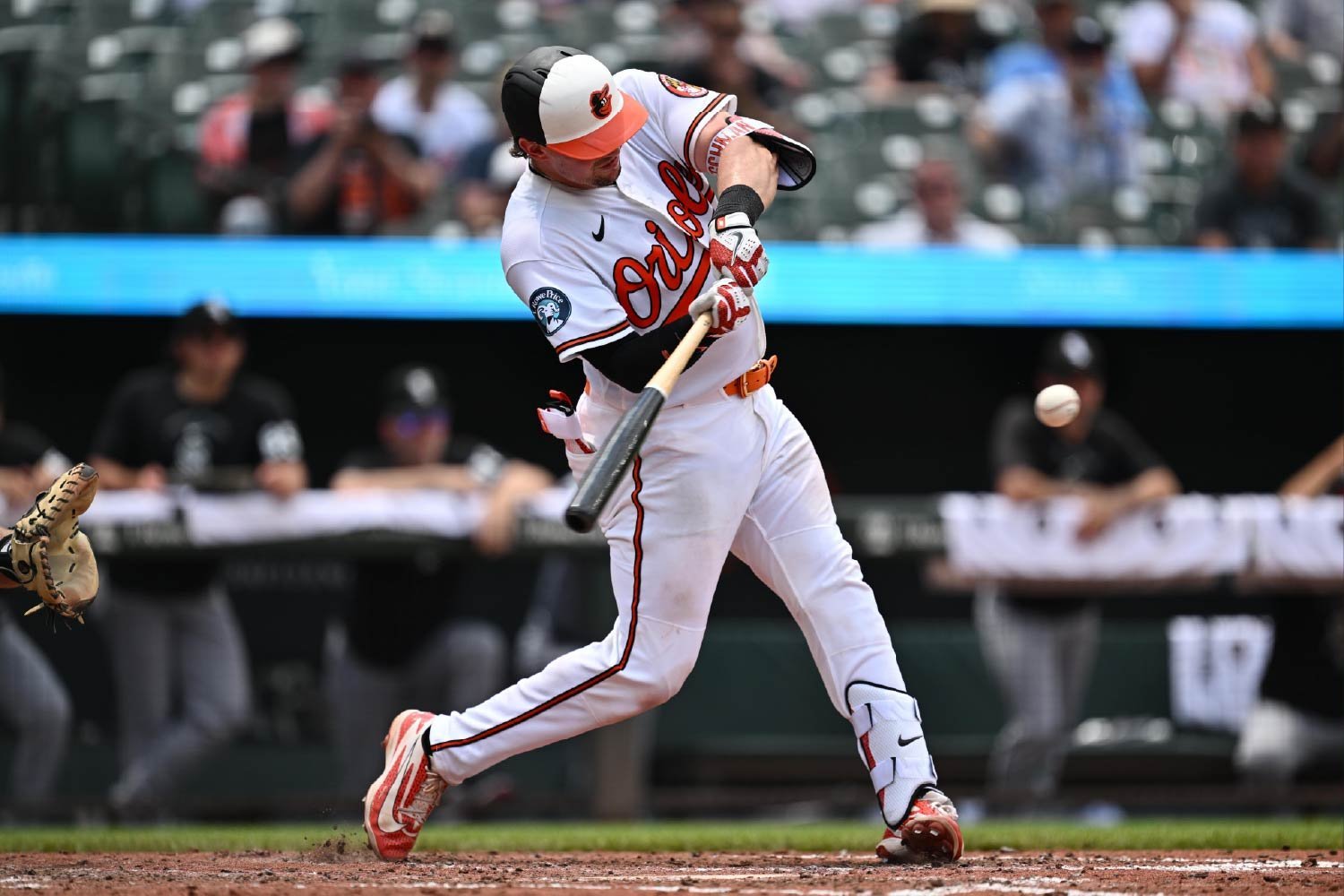 As has been rumored for days now, the Red Sox are in the market, with their AL East foes, the Yankees and the Rays, for a catcher. Reports over the past 48 hours indicate that Orioles' Adley Rutschman could hit the market, with the latest report coming from Mark Feinstand of MLB.com. With the Orioles sitting two games under .500 going into their game against the Phillies tonight, their status as sellers could become clear within the coming days. In a story earlier today, insider Joel Sherman noted that the Orioles will have no issue dealing in the division, saying “one item that will not deter the Orioles if they trade Rutschman is doing so within the AL East, a source said." Rutschman is having a productive 2026 after a down 2025, posting a 115 wRC+ over 284 plate appearances, which is much higher than the 92 wRC+ he posted last season. Rutschman has been on the IL multiple times this season, including right now with left wrist inflammation. Earlier this season, it was left-ankle inflammation and a concussion that kept him on the IL for 10 days each. Rutschman has superstar potential in him and could bring great defense and a great bat to any contender he gets moved to, if he's moved, of course. Rutschman also comes with team control for 2027, so he is not a rental and would be a big impact next season. View the full article
 -
 Are games in Biloxi now equivalent to the peak Coors Field experience? It wasn't pretty Saturday. Elsewhere, two young hurlers reminded us that prime pitching performances aren't going away completely in today's MiLB environment. Transactions: Cleveland Guardians traded C Bo Naylor and RHP Codi Heuer to Milwaukee Brewers for CF Blake Perkins and RHP Craig Yoho (both Naylor and Heuer assigned to Nashville) OF Brandon Lockridge returned to Milwaukee Brewers from MLB Rehab Milwaukee Brewers recalled RHP Garrett Stallings from Nashville Sounds RHP Reiss Knehr placed on the AAA Nashville Injured List (retroactive to July 31) RHP Will Childers promoted to AAA Nashville from AA Biloxi RHP Jack Seppings promoted to AAA Nashville from AA Biloxi RHP Chandler Welch promoted to AA Biloxi from High-A Wisconsin Nashville Pre-Game Media Notes Final: Nashville 6, Charlotte (White Sox) 3 Box Score and Game Log Via the Sounds, game details, and we encourage readers to always review affiliate write-ups as part of their Link Report routine: Five Run First Carries Sounds to Second Straight Win - Career Win Number 2,496 for Rick Sweet; Tied for Second-Most All-Time by Minor League Manager Defense gets the video nod (twice!) within that summary. Serves me right that the three extra base hits by the Sounds in this game came from players that I suggested yesterday as among those that could be impacted by promotions for Biloxi players. All came in the big opening inning you just read about: 2B: Matos (10, Gilbert, T); Black (10, Gilbert, T). 3B: Zamora (1, Gilbert, T). Brewers still being cautious with 40-man RHP Carlos Rodriguez, though know that he only had three days off after pitching 3.2 innings on Tuesday, and a 31-pitch first inning (though scoreless) did him no favors here. This made the superlative effort within the AAA debut of recently turned 24-year-old RHP Jack Seppings all the more appreciated by the organization. Like Rodriguez, Seppings was also on just three days' rest since his own three-inning outing for Biloxi in which he threw 63 pitches. Seppings' effort, along with that of RHP Kaleb Bowman, really saved a super-taxed staff. Luke Adams had only been plunked once in his last dozen games but got back on the bruise train Saturday. We learned from The Athletic's Will Sammon: "Jeferson Quero is battling some biceps soreness, which restricts him to DH duties for a couple of weeks. The Brewers’ tentative plan is for Quero to resume catching around Aug. 15. They don’t view the issue as anything major, but they’re proceeding cautiously given his injury history." Well, we here at BrewerFanatic know those DH-only duties date back to June 27th, so the "couple of weeks" aspect of the update doesn't fully cover the defensive absence thus far. As for the actual catcher Saturday, here's some love for Andrick Nava, who now sees Bo Naylor arriving to impact his playing time. Nava singled twice including this two-RBI knock, threw out the lone attempting basestealer, picked off old friend Eric Haase at first base, and stole his 5th career base. Go Andrick! Biloxi Pre-Game Media Notes Final: Montgomery (Rays) 17, Biloxi 8 Box Score and Game Log Shuckers Fall to Biscuits on Saturday Night - Ragsdale slams 12th Double-A home run in loss Sure, the Biloxi offense has been fun to watch, but the environment for pitching across MiLB seems to be in tatters (whether the baseballs themselves or not), and if we readily admit it, it does diminish at least to some extent everything that hitting coordinators can currently take credit for. I strongly suggest you listen to Dom Cotroneo from last night's Brewers postgame show at the 8:00 minute mark, the 17-8 score comes up and he gets it! So yes, you may visit the Shuckers' 'X' feed for more video fireworks, but in context, it may be more about the glorious Beach Chickens" uniforms: While you're taking in video, you want to balance things by checking out the Biscuits' side of things, six homers and a season high 22 hits. Even more with a dozen videos total at their MiLB site. How does it reach blowout status? Well, one blowout appearance contributes. Remarkably, one night after recent call-up from Wisconsin Garrett Hodges allowed six earned runs in relief while retiring just one batter, recent call-up from Wisconsin Peyton Niksch allowed six earned runs in relief while retiring just one batter, Hopefully utilityman Jheremy Vargas saved a ball from his first-ever mound appearance. He ended a scoreless (!) top of the 9th with a GIDP after surrendering three hits prior. Catch up on KC Hunt's season in the Rays' system after his second appearance this series. NOTE: Each game seven innings as scheduled. Wisconsin Pre-Game Media Notes (download link) Final, Game One: Wisconsin 9, Lansing (Athletics) 0 Box Score and Game Log Via the Timber Rattlers, game details: Knoth and the Rattlers Knock Out Lansing in Game One - Payne hits 21st home run of season in 9-0 victory Fantastic details within each write-up (and how many affiliates across all of MiLB would go to the trouble to prepare two write-ups?) Thank you, Chris Mehring! Individual video highlights are always included for a specific focus, or you can do like I did and curl up with your breakfast of choice and enjoy a combined nine minutes of doubleheader YouTube package highlights. Josh Knoth says, what was that about pitching being down across all of MiLB? What a glorious outing. All position players on the roster saw action at some point in the twinbill. Final, Game Two: Wisconsin 6, Lansing (Athletics) 4 Box Score and Game Log Via the Timber Rattlers, game details: Lameda’s Late Hit Leads Wisconsin to Twinbill Sweep - Two-out, two-run double breaks 4-4 tie in sixth inning Luis Pena (2-for-7, double) was the DH for both games but at least did not exit. Luis Castillo (no, not the Mariner, but now White Sox pitcher) was 1-for-3 with three RBI in each game, double and home run, as you likely just watched. Solid age 22 season, see you in Biloxi next spring. The T-Rats are in a tie for 3rd place but only two games out of first in the tight second-half standings. Recently posted by the Warbirds: Pregame Audio Tuesday 7/28 - Manager Eddy Morgan Pregame Audio Friday 7/31 - LHP Andrew Healy Wilson Pre-Game Media Notes Final: Wilson 3, Fredericksburg (Nationals) 1 Box Score and Game Log Warbirds, Robinson Win Pitching Duel - Three-Run Seventh Powers Wilson Wilson summaries are brief, but succinctly helpful. At 16-17, Wilson sits in 3rd place, 2.5 games out of first. Very good to see Rylan Mills back in action after we detailed a play in which a ball nailed him on the forearm while behind the plate, causing him to exit on Saturday the 25th. Last night was his 2nd game back. The game summary mentions the only Nationals run scored on a passed ball charged to Mills. Mills was also robbed of a base hit later in the game: Brailyn Antunez' 7th inning RBI single knotting the game at 1-1 The wild pitch that allowed Wilson to grab the lead Ball four for insurance Much like Josh Knoth in Wisconsin, RHP's Miqueas Mercedes and Hayden Robinson scoffed at the notion one can't find great pitching these days. Robinson faced one over the minimum (a single) in four terrific innings. Through six games with Wilson, Brailyn Antunez: .450/.593/.800. That'll play. Final: DSL Brewers Blue 13, DSL Cle Mendoza 7, seven innings as scheduled Box Score and Game Log 19-year-old OF Frandy Lafond, in his 3rd season on the island, was not getting regular playing time to begin the season, but his recent play has been stellar, plus his strikeout rate has dropped from 26.1% to 16.8% vs. 2025. It's not going to get the attention Jesús Made's seven-RBI game did this week, but Lafond's seven-RBI, two-HR game (three-run shot, grand slam, both pulled to left field) made for a career highlight day to be sure. 17-year-old monster $1.5M bonus baby shortstop Jose Rodriguez was perfect at the plate (three singles and a walk), perfect on the bases (13th stolen base in his 16th attempt), but not perfect in the field (error #18). Final: DSL Brewers Gold 6, DSL Padres Gold 2, eight innings (scheduled for seven) Box Score and Game Log Walk off grand slam for DSL Gold switch-hitter INF/OF Josue Rodriguez, playing LF today. Not to be confused with Jose Rodriguez mentioned just above. Josue was not a high-end signing. Even so, the game MVP goes to RHP Wandy Cabrera, who has been trusted with Gold's most critical late innings this season. Cabrera got an out to strand three runners upon entering in the bottom of the 6th, then pitched a scoreless 7th plus a scoreless 8th, striking out the last two men he faced to strand the Manfred Man at third base. Cabrera the well-earned beneficiary of Josue's blast. 18-year-old Venezuelan RHP Raymond Sarmiento was outstanding again (his beauteous game log since one blow-up outing way back on June 13th). Once again, Biloxi is MiLB's Free Game of the Day, enjoy that 5:05 Central start time. Looking forward to another fine outing from Wilson's impressive RHP Diustin Mayorquin as of 12:05 Central. The day's schedule is laid out below. As always, thanks for making us part of your day! Organizational Scoreboard including starting pitcher info, game times, MiLB TV links, and box scores Current Milwaukee Brewers Organization Batting Stats and Depth Current Milwaukee Brewers Organization Pitching Stats and Depth View the full article
 -
The Royals Just Nailed Their First Trade Deadline Deal
DiamondCentric posted an article in Royals Keep
 The Royals have officially begun their trade deadline sell-off, sending Lane Thomas and Bailey Falter to the Braves in return for Carter Holton and Lucas Braun. Here's a closer look at the deal, and why Kansas City should be encouraged. View the full article
 -
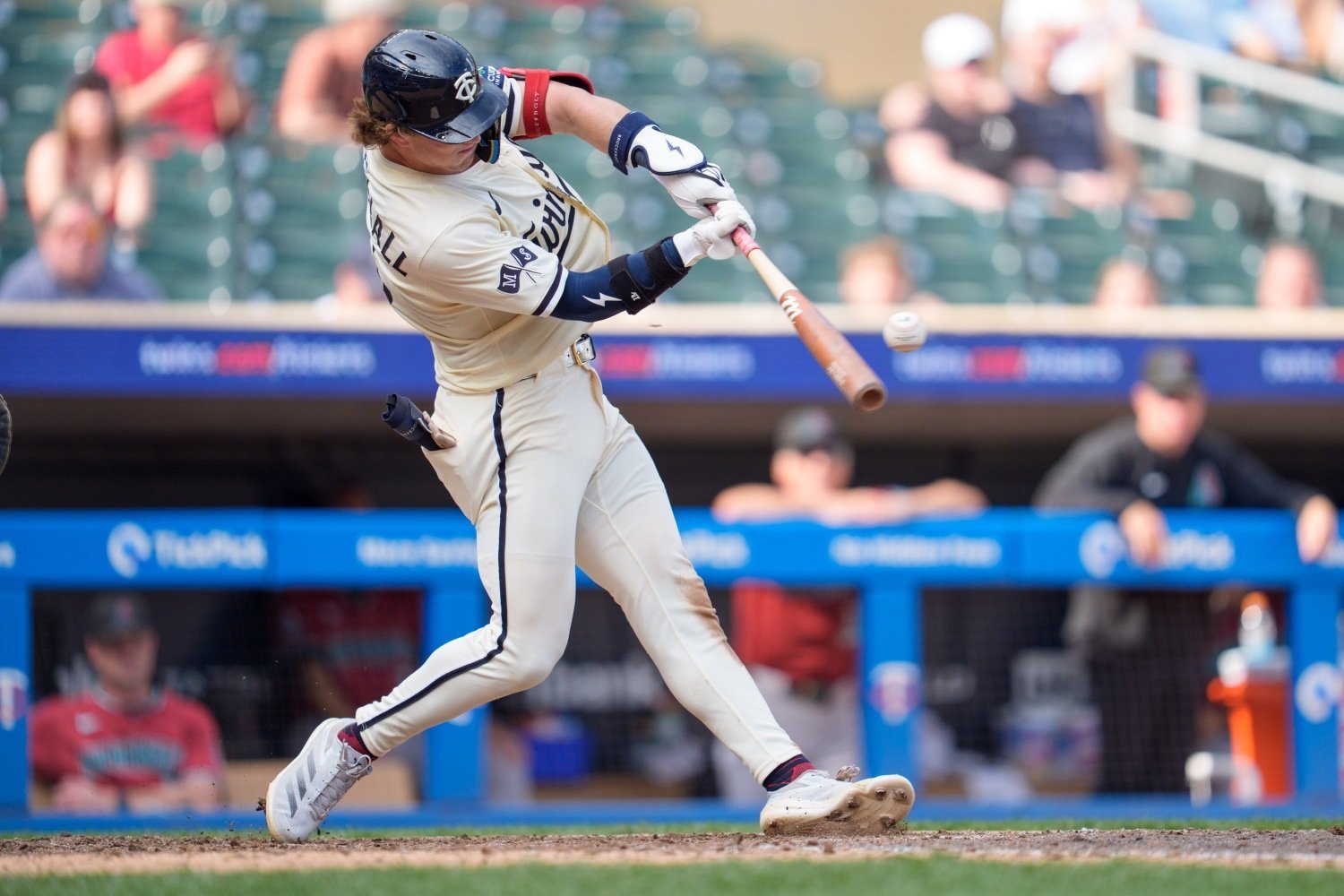 The Minnesota Twins continued building momentum in July, posting a 15-9 record (.625) to secure a second consecutive winning month. After spending much of the first half trying to climb back into contention, Minnesota now finds itself firmly in the postseason race with a legitimate opportunity to chase both an American League Central title or a Wild Card berth. That surge hasn't happened by accident. The Twins have fielded one of baseball's most productive offenses throughout the season, and July was no exception. Whether it was timely home runs, elite on-base ability, or clutch moments in big games, several hitters played significant roles in helping Minnesota continue its ascent. Here are the Twins Daily Hitter of the Month rankings for July. 4. Trevor Larnach 20 G, .281/.352/.484 (.837), 3 HR, 4 2B, 7 BB, 12 K, 134 wRC+ Larnach followed up his outstanding June with another productive month at the plate. While he wasn't quite as scorching as the previous month (when he hit above .340), he remained one of Minnesota's most dependable offensive contributors. His OPS dipped from .918 in June to .837 in July, but those numbers still represent an above-average middle-of-the-order bat. The Twins have continued to shield Larnach from left-handed pitching, as he's logged only 42 plate appearances against southpaws all season. Against right-handed pitchers, however, he has rewarded that strategy by posting an .842 OPS. His future remains one of the more intriguing storylines heading into the trade deadline. With younger corner outfielders pushing for opportunities, Minnesota will have to decide whether Larnach's current production is more valuable in its lineup or as part of a trade package that addresses another need. 3. Ryan Jeffers 12 G, .289/.360/.533 (.893), 3 HR, 2 2B, 4 BB, 9 K, 149 wRC+ Jeffers wasted little time reminding everyone how important he is after returning from the injured list. Despite appearing in only 12 games, he tied for second on the club in home runs during July while producing an outstanding .893 OPS. Had he been healthy for the entire month, there's a strong argument that he could have challenged for the top spot on this list. Instead, he packed an impressive amount of production into a limited sample and continued what has been one of the best offensive seasons of his career. Of course, his name has remained in trade speculation as the deadline approaches. Given how well he's swinging the bat, however, it would be difficult to justify moving one of the club's best offensive players while simultaneously trying to reach the postseason. 2. Kody Clemens 23 G, .239/.273/.544 (.816), 6 HR, 3 3B, 4 2B, 4 BB, 25 K, 117 wRC+ No player produced more memorable fireworks than Clemens. His unforgettable ultimate grand slam against Kansas City instantly became one of the most iconic moments in Target Field history, but his impact extended well beyond one swing. Clemens led the Twins with six home runs and paced the club in slugging percentage during July, hitting twice as many home runs as any other Minnesota hitter. His season has quietly evolved into an impressive turnaround. After managing just a .663 OPS in April, Clemens has now posted an OPS above .800 in three straight months. Over the past two months, he's slugged .520 or better while emerging as one of the lineup's biggest power threats. At exactly the time Minnesota needed another bat to step forward, Clemens has become one of the offense's most dangerous hitters. 1. Luke Keaschall 22 G, .323/.447/.462 (.909), 2 HR, 3 2B, 10 BB, 12 K, 161 wRC+ Keaschall may not have matched Clemens' home run total, but no Twins hitter put together a more complete offensive month. After never posting an OPS higher than .790 during any previous month this season, Keaschall elevated every aspect of his game in July. He slashed .323/.447/.462 while leading the club with a 161 wRC+, thanks largely to an outstanding approach at the plate. His 11.8% walk rate helped produce a remarkable .447 on-base percentage, the fifth-highest mark in Major League Baseball during the month. He also finished July as the team leader in both wOBA and wRC+. Perhaps even more impressive is that he's doing all of this while adjusting to a larger defensive workload in the outfield. With Byron Buxton on the injured list, the Twins have regularly asked Keaschall to patrol center field, a demanding position for any player, let alone one still establishing himself in the major leagues. Instead of allowing the added responsibility to affect his offense, Keaschall delivered the best month of his sophomore campaign and established himself as one of the driving forces behind Minnesota's playoff push. The Twins' offense has been one of the biggest reasons they're playing meaningful baseball entering August, and these four hitters were at the center of that success. Veterans like Larnach and Jeffers provided stability, Clemens supplied game-changing power, and Keaschall emerged as the lineup's most complete offensive performer. If Minnesota hopes to continue its climb through the AL playoff race over the final two months, it will need this group to keep producing. July proved the Twins have the offensive firepower to compete with anyone. Now they'll look to carry that momentum into the stretch run when every game carries postseason implications. How would your ballot look for the month? Leave a comment and start the discussion. View the full article
 -
Will Miami Marlins add after subtracting in a sell scenario?
DiamondCentric posted an article in Fish On First
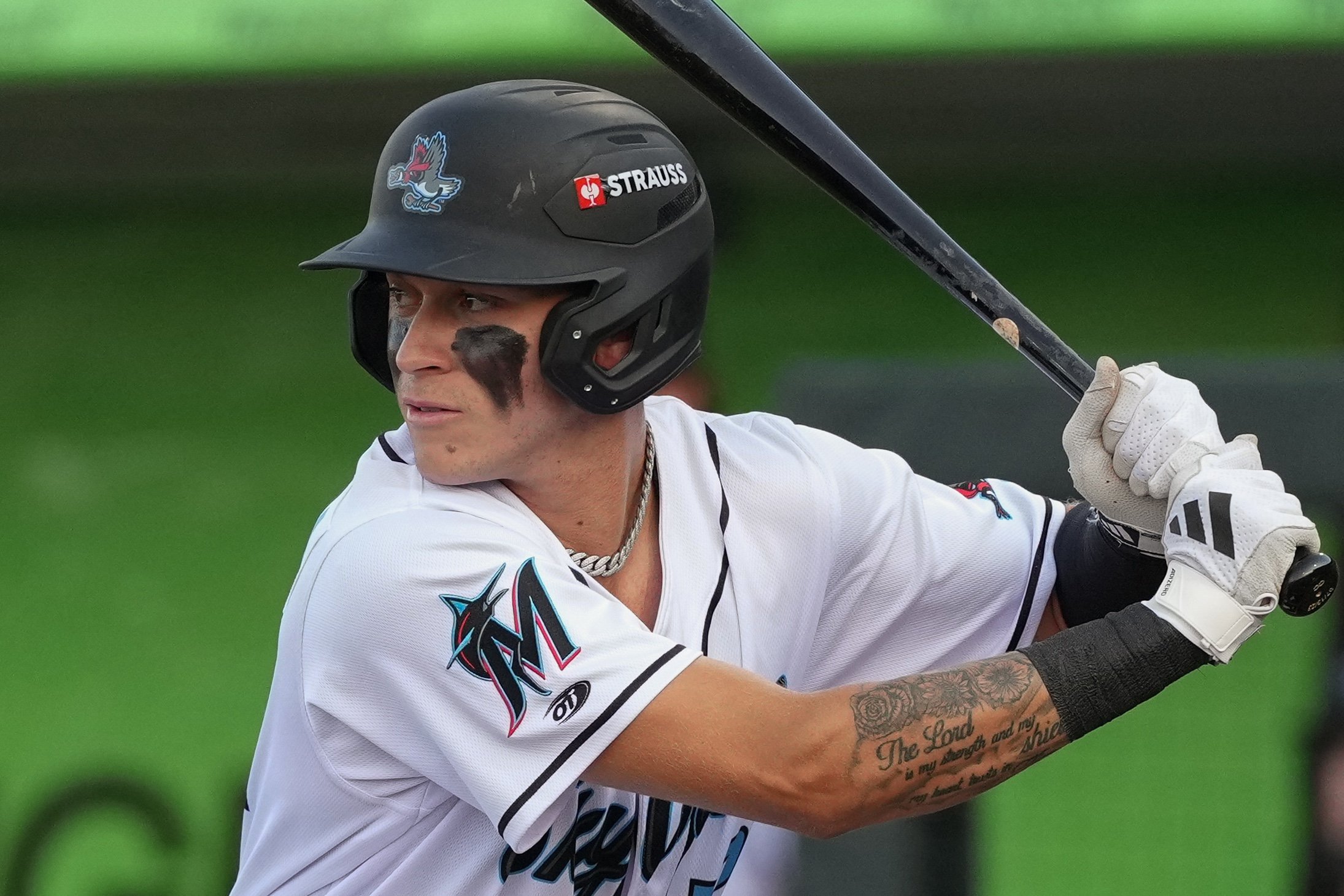 According to just about everyone with a keyboard, the Miami Marlins are locked and loaded to sell. Somebody. Anybody. As long as it isn't Sandy Alcantara. Unless, of course, it is. It's anyone's guess, really. The ship has all but sailed on buying outright, barring Miami winning three straight games against the Mets and some massive luck in series involving the other contenders this weekend. No one is predicting a massive sell-off though, and it could end up being as modest as one hitter and one reliever off the MLB roster. If not even quieter. However, if a move of that nature is made, what comes next for the Marlins? That's a question that has gotten very little attention, and that includes from yours truly. Buy, and they care about this playoff race they remain very much in despite a historic losing streak. Sell, and they are waiting until the next year MLB is played. It's been that simple. But is there a path towards the Marlins selling and still trying their best to win every game in 2026? I think there could be, if MLB-ready starting pitching is the return for whichever hitter the Marlins choose to move. Remember, there are really only two starting pitchers right now in Miami's rotation. It could be three for the final stretch if the team is still in the race when Max Meyer is ready to return. Adding any warm body to Miami's rotation could pay immediate dividends for a bullpen that has been heavily used this season. Adding a legitimately good pitcher? That could be game-changing compared to what fans have seen in July . Especially if the Marlins don't move any of their recovering bullpen arms, and are able to work those reinforcements back in over the final two months. Provided, of course, that moves are made to make sure there isn't an extreme drop-off on offense. Which is the real question, because it means prospect call-ups. Promoting talents like Kemp Alderman, Cam Cannarella, and/or Deyvision De Los Santos are things the Marlins can choose to do. Even an Agustin Ramirez return could be something, in one of those scenarios where returning to the majors sparks a bigger improvement than being sent down in the first place did. Obviously, there isn't room for all of them, but any one of them has flashed enough promise to warrant at least some confidence that they could make a positive impact on the MLB roster right now. In the case of Alderman and Cannarella, as well as any other player not presently on the 40-man roster, they would need to be on it by the end of August to be postseason eligible. Yet a more important August date comes around the middle of the month, when it becomes impossible for a promoted prospect to accrue enough playing time to lose their rookie status for next season. Naturally, the most ideal situation from a competitive standpoint would be to just see a promotion made sometime next week, but mid-August is the more likely window. If Miami can stay in it until then, high upside hitting help could be plugged in to take the place of the names Miami moved on from. Now, that's assuming the Marlins hitter moved is not a middle infielder. Because that feels a lot like a world where Miami just rides Leo Jimenez into the ground, as the prospect options at short just aren't ready. Move Liam Hicks or an outfielder though, and it's easy to see a path where the team could choose to start finding a way to insert one of Alderman, Cannarella, or De Los Santos into the lineup. Lastly, there is one other avenue that the Marlins could explore if they stay in the race: waivers. With all the concern about a potential lockout, it wouldn't shock me at all if this is a more active than usual waiver period. Teams that are out of it could look to recoup a little bit of money, and the Marlins would be in good position to pounce if they got the green light from ownership. While waiver claims aren't something that can really be counted on, it is another resource the Marlins could tap into if they aren't going to trade better assets for better talent over the next few days. Bottom line? The Marlins could easily move a piece or two off the MLB roster in a sell for the future manner and still finish the month with a better 2026 MLB roster. All that is needed is the right trade partner...and the conviction from the front office to not give up on this season until they are really and truly out of it. View the full article
 -
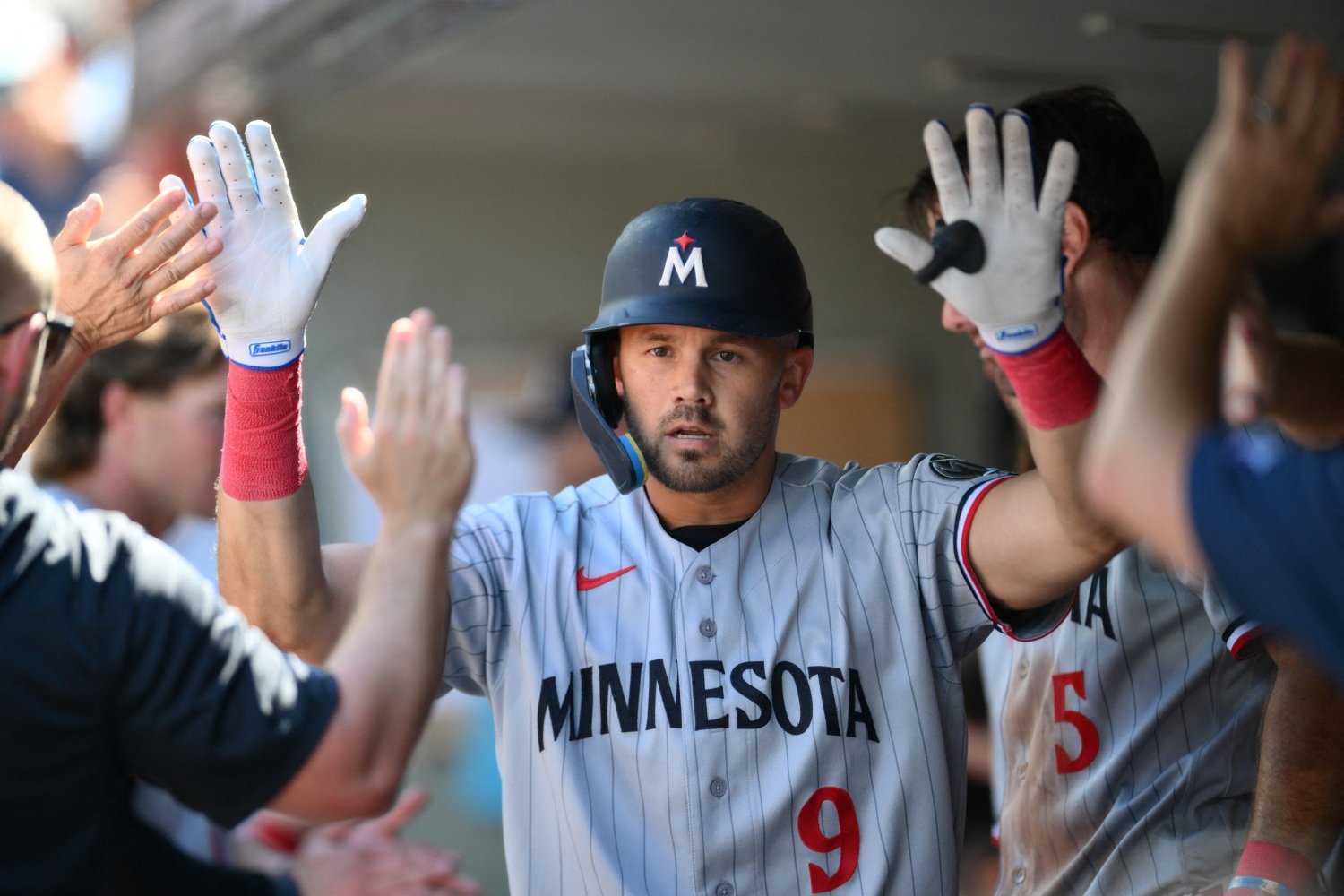 There's nothing better than a three-team division race in August and September. This looks like the rare one where there might not even be a soft landing in a Wild Card spot for the losers; that makes it extra juicy. The Twins are locked in a fierce battle for the AL Central title, entering Sunday trailing the White Sox by three games and in a dead heat with the Guardians—though, in a rare bit of good news about that matchup, they hold the edge on Cleveland in the season series, so they'd need to win just one of their final three games against them to secure the tiebreaker. (They have six games left against the Sox, and need to win four of them to gain the tiebreaker edge there.) If that race wasn't already feeling heated, it gained both intensity and clarity this weekend. The Twins made trades on Thursday and Friday njights to add pitchers A.J. Minter and Dean Kremer. On Saturday morning, the Guardians took a turn, swinging a four-player swap with the Brewers that clears the runway a bit for another move to bolster their roster in the next day or so. Then, on Saturday night, the White Sox dealt for veteran Mariners starter Luis Castillo, who should reinforce their rotation nicely—a move sandwiched by trades in which the Royals (Lane Thomas and Bailey Falter to the team from just outside Atlanta) and Tigers (Tarik Skubal to the Dodgers) began their selloffs. Every team in the division has selected their direction; every team now has to make good on that direction by making more moves in the next 30 hours or so. The Twins, for their part, are still working hard to make a major addition before the deadline. They really did have a deal in place with the Astros that would have sent Trevor Larnach to Houston in exchange for right-handed reliever Bryan Abreu, a source confirmed. That was first reported on Twitter Saturday morning and more robustly documented by Bobby Nightengale of the Minnesota Star-Tribune later in the day. Their efforts to move Larnach haven't stopped with that thwarted transaction, though. Larnach has been a topic of discussion with multiple other teams, a source familiar with the conversations said, including the Padres. Ideally, the Twins would swap their current platoon left fielder for a relief arm with high-leverage potential, like Abreu or Padres righty Jeremiah Estrada. As intriguing as that kind of trade itself, however, is what sources within the organization say would happen if the club can find the right deal for Larnach: a call-up of top prospect Walker Jenkins to take on an everyday role in the outfield, That could mean playing Jenkins in left field, or having him take over center, with Austin Martin, Alan Roden, Kody Clemens and Luke Keaschall flanking him, depending on matchups. If the team can't get either a solid reliever or a strong prospect return for Larnach, however, they're content to keep him and leave their outfield mix intact. The priority is not to create space for Jenkins, though they're ready to do so if he continues to push the envelope; it's to improve the bullpen. Minnesota remains active in talks with multiple teams about hurlers who would round out their relief corps, multiple league sources said late Saturday night. That could mean ousted Blue Jays closer Jeff Hoffman, a strikeout machine with a filthy slider whom the team briefly had in camp years ago, before he broke out with the Phillies. It could mean old friend Tyler Wells, whom the Twins lost to Baltimore via the Rule 5 Draft ahead of the 2021 season. Wells, a high-slot righty with a pitch mix that fits what the Twins like to get from relievers, comes with a year of team control beyond this one, as does Hoffman (though Hoffman's comes via an expensive contractual obligation). Estrada is a controllable high-octane arm, too. The Twins have even checked in on Luke Weaver, perhaps the most accomplished and expensive reliever on the market, though they feel the asking price will rise beyond their willingness to pay. Nor has the team foreclosed on the possibility of a combo deal wherein they would add both another important relieve and more help for the starting rotation; that could be a truly transformative splash. It's a bit of a mudfight, this division battle. The leading White Sox would be at least seven games out of first place in four of the other five divisions in the majors. The thing is there to be won, though, and the Guardians, Twins and White Sox all have ample motivation to win it. For Minnesota, the upside is huge. Take home a division title, and you not only get that achievement itself, but earn the goodwill of many fans who had all but abandoned the team. As a bonus (maybe more than a bonus, if your surname is Pohlad), you also get to host a playoff series. Even if you lose it, that's a handsome revenue infusion. And don't overlook this bit: The two byes past the Wild Card Series go to the two best records among division winners. If the Twins play well enough to beat the White Sox, they have as good a chance as any team in the AL West (currently paced by those renegade Astros, at 57-55) to be that second-best division winner. A fastt pass to the Division Series is a big prize worth paying for; the Twins are ready to pay for it. View the full article
 -
What Derek Falvey Says Really Happens At The Deadline
DiamondCentric posted an article in Twins Daily
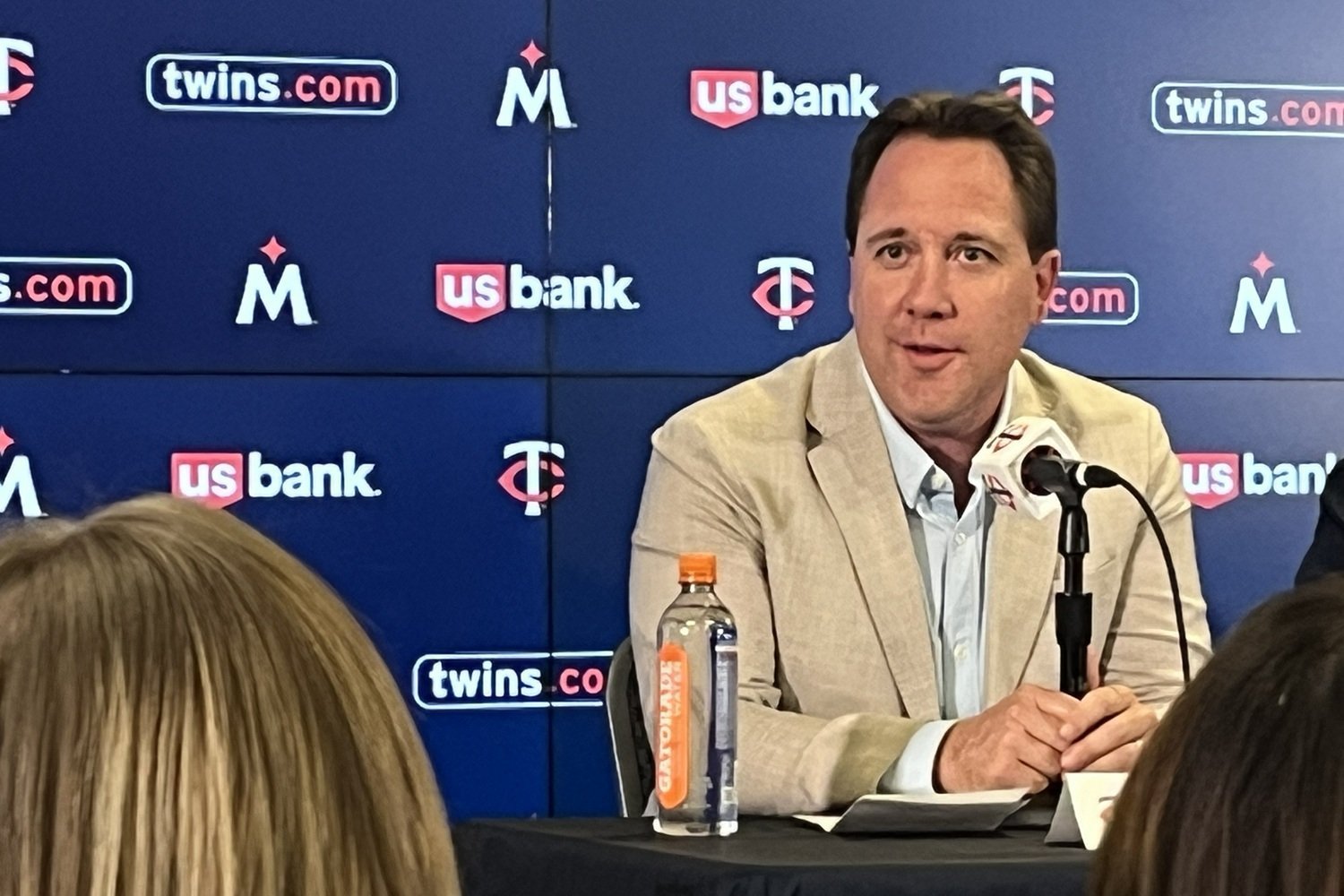 This is the continuation of my takeaways from a 90-minute conversation between Derek Falvey and the MLB Fan Council, of which I am a member. For part one, in which I walked through the timeline of an MLB trade deadline, check out my piece from Thursday. Today, I want to share a wide array of topics that were discussed during our call that don’t really fall into a cohesive narrative. More of a list of fun facts, answers to questions, and potpourri. Or, in Falvey’s case, maybe POBOABOpourri. What does shopping a player look like? No, GMs rarely call each other and ask “Would you like one lightly-used Matt Wallner?” The conversations are much more coy. As I mentioned in the last article, there are a dozen or so conversations between teams before a trade is finalized. Instead, they start by asking “Are you looking for anything” and attempt to steer the other team into the direction of a player they’re trying to shop. Why? Because it helps define what the other team likes and how they evaluate. It’s data that they can use in the future. And hey, they might even be interested in a player you have even less interest in holding on to, or maybe they’ll start courting you for a player you hadn’t previously considered moving, but would for the right price. You wouldn’t know that if you just led with the guy you’re wanting to get rid of. These coy conversations also set up three-way trades, because there might be a player type you can’t provide, but if a third team was involved, both parties could leave satisfied. Falvey also stressed that when talks started to heat up in this way, he’d try to let the player or their agent know that they were being discussed, even in somewhat preliminary discussions. Is it different making trades as a small market club? Falvey worked for bottom-half payroll teams in both Cleveland and Minnesota. For the most part, small-market teams rely more heavily on their prospect pool, because it’s cheap, controllable talent. It’s harder to pry prospects away from those clubs than it is for a big-market club that is more readily able to fill in holes in their roster in free agency. This isn’t always true, but on average, that’s a big difference between small- and large-market clubs. Do you start your offer pie-in-the-sky and hope the other team bites? Sure, if your player is in high demand. But if he’s not in high demand, or no one wants to swim in those waters, you best bring it down. Setting the bar too high can close off some discussions, and other teams might look at your lofty asking price and send a package you might have taken to some other team for a lower return. I mentioned this in the first piece, but Falvey noted a few times that one of the keys to making trades is recognizing the cadence of other teams’ approaches. Some other GMs are known to set the bar very high and be willing to drop it, but others set the bar at a more reasonable level and do not budge. One fun tidbit that Falvey shared regarded the discrepancy between second-place offers. In some trades, the second best offer was very comparable to the winning offer, and a GM is essentially picking which flavor of ice cream he likes best. Other times, the gap between the winning offer and the runner-up is enormous. He chuckled, recalling some trades (none identified) that fans reacted to with a “that’s it?” manner, to which he’d say “You should have seen the other offers.” How do GMs communicate with each other? Mostly via text. Rarely does anyone call each other anymore, though some GMs only talk by phone. On the other side of the spectrum, GIFs and emojis have been known to find their way into trade discussions. Falvey specifically recalls being hit with a simple “☹” in response to a trade he proposed, and once when he forgot to reply to a fellow GM, he received a GIF of a prairie dog sticking its head out of a hole. Most clubs have similar player evaluation systems. How do you navigate trades when both teams are working from the same data? Falvey confirmed that most clubs are working with a lot of the same data. Furthermore, every club has access to previous trade data. There’s a figurative book in every front office that shows the value of previous trades, so anyone can figure out the answer to “What is a #2 starter with 2.5 years of control worth?” based on trades from past years. If that’s worth an A prospect and two B prospects, that’s the price. But clubs do differ in their evaluation of players nonetheless. From a prospect perspective, consider top 100 lists from MLB Pipeline, Baseball America, ESPN, and The Athletic. There’s a lot of similarities between those lists, but there’s certainly disagreement on some names. The further down the minor league system, or the further down the list you go, the more disagreement there is. In the one A and two Bs example, you might be able to find a team that sees two of your C-level prospects as B-level. But with MLB players, the evaluation is more straightforward and concerned with years of control. Furthermore, teams are more likely to spend from areas of strength, and teams value players who address their weaknesses, which is effectively a difference in player valuation between organizations. Falvey also noted the role of player development in this process. Part of choosing the right prospect is knowing what your player development system can do. If there are specific weaknesses in a player’s game that your organization is competent in improving, that player is more valuable to you. Likewise, if your player development system struggles to develop certain skills, a player who needs that emphasis is less valuable. Scouts and analysts are both in the war room. How much disagreement is there between them? The ol’ Moneyball movie conundrum. Falvey stressed that this rivalry just isn’t what it’s made out to be. He’d ensure that scouts and analysts, on both the pro and amateur side, were in contact with each other frequently, not just during decision-making time. It’s important for everyone in the room, the war room here specifically, to understand the perspectives of people from different areas, even when they disagree. And they should disagree, he noted. Early in his career, he was consensus-seeking. But as he matured, he realized that there would never be consensus in any room where a real decision was being made. Silence probably meant someone was scared of speaking up. How is a Player to be Named Later (PTBNL) determined? Generally, PTBNLs are added to trades because the team needs to spend a little more time scouting the players in question. A list is submitted of players who can potentially be named later, and the team has a few weeks or months to continue scouting from that list before determining which player they would like to receive. PTBNLs can range in importance from the main piece of the return to a throw-in. As noted in the previous piece, many trades are agreed to close to the deadline, and a PTBNL can allow a team that didn’t have the time to fully scout the potential returns the weeks they need before completing a trade. These players can be chosen after the deadline. How do trades with players who have no-trade clauses (NTC) work? Players can work provisions into their contracts preventing them from being traded without their consent. Sometimes this is to any team; other times players will submit a limited list. But these guys still get traded. GMs keep in contact with agents to probe interest, because (as Twins fans know) teams can still call about guys with NTCs. Players are free to change their minds, or they might have strategically chosen teams that they know they might get traded to so they have a little leverage in an eventual move. Agents are pretty forthcoming with the players’ stances. Sometimes the conversation is between the player and GM as well. Falvey stressed that whenever something like this happened, he’d try to reach out to the player or their agent early, so as not to spring it on them at the end of negotiations, only for them to block the move. Leaks. Let’s talk about leaks Why do they happen? Members of front offices like to curry favor with reporters and will treat information like a commodity. Or they’ll use it to trade information with other clubs, and once another club has it, who knows where it goes. Or maybe they just want to feel important. Falvey noted that when a leak happened in his front offices, which was pretty uncommon, the circle who got to know things would shrink. Not only is it annoying, but it can also have negative consequences. Falvey mentioned that sometimes players would learn they were being traded before he had a chance to inform them. Or, perhaps worse, a trade would be reported as close to final when it never actually happened. Sometimes news would leak that a player was close to being traded to Team X, and he’d get messages from the GM of Team Y - who the player was actually going to - asking what happened to the deal they agreed to. Messes all around. Did you ever write a lineup card? Haha, no. If asked for an opinion, Falvey would put his hands up and shake his head. The closest Falvey ever got to writing a lineup card was in daily discussions between the manager and the medical staff, discussing which relievers were showing signs of injury or fatigue. Rarely, if ever, did a manager insist on using a player that the medical staff encouraged him to keep off his feet for the day if at all possible. Why would anyone trade with the Tampa Bay Rays? Someone asked a version of the question, “Why would you trade with a good organization? Don’t they know something you don’t?” which prompted someone to quote the Sam Miller tweet “LOVE this trade for the Rays. Who'd they give up? And who'd they get?” Falvey had a chuckle, and I reminded everyone of the Twins’ trades with the Rays for Joe Ryan, Taj Bradley, Yoendrys Gómez, and Jake Odorizzi. But it’s a good question. Falvey indicated that you can’t be scared of trading with anyone, though if a respected organization starts asking about a player far down your system’s internal list, your ears might prick up. In the same way, it sometimes happens that several teams will ask for a specific player in your organization in a way that might also change your evaluation of that player, or at least reconsider his case. Once again, Falvey brought up the cadence point and referred to the playbook that front offices build around rival teams. If you know how they approach discussions or how they conduct business around the trade deadline, you can anticipate their moves and act in a way that sets you up for success at the negotiation tables. View the full article
 -
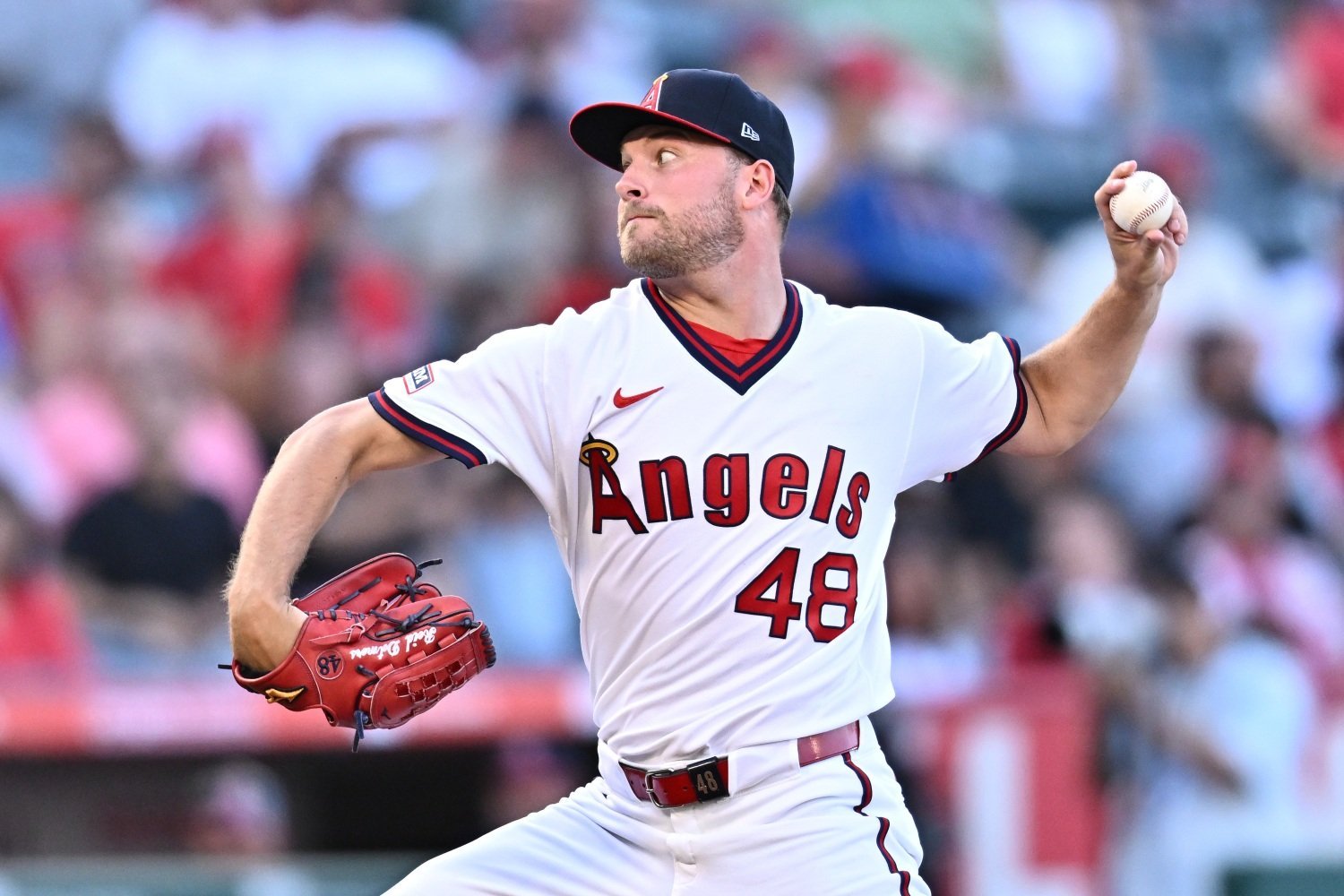 The Detroit Tigers traded Tarik Skubal to the Los Angeles Dodgers late Saturday night, for a package of three players headlined by former Cubs farmhand Zyhir Hope. The Cubs dealt Hope to Los Angeles in the deal that brought Michael Busch to Chicago in January 2024, so it was a good trade. Still, the coincidence was impossible to ignore. The Cubs didn't have anywhere near the firepower required to land Skubal, and one reason is that they'd already spent key prospect resources on trades like the Busch deal and the one that brought in Kyle Tucker in December 2024. Now that Skubal has changed places, the expectation is that the market will move pretty fluidly over the final day and a half before Monday's deadline at 5 PM CT. The Cubs, who knew all along they were not the favorites for Skubal, had been developing alternatives—but another of their preferred targets might have also come off the market shortly before Skubal did. The Mariners traded veteran starter Luis Castillo to the White Sox in a four-player deal. When the Cubs had talked with Seattle, they'd felt the nudge toward Castillo, but they remained focused on younger controllable arms Emerson Hancock and George Kirby, a source familiar with the conversations said. The Mariners have entertained the possibility of trading one of those hurlers to bolster their anemic offense. After they were able to move Castillo (and the huge amount of money they owed him), though, it's now much less likely that they trade either Kirby or Hancock, said a source briefed on their plans. They've resolved their logjam in the rotation and can now take on salary if needed to acquire a bat. That leaves the Cubs slightly in the lurch. They were already more likely to land Casey Mize from Detroit than to get into serious bidding on Skubal, but Mize (another impending free agent) comes with a moderate price tag and doesn't offer the same upside as a pitcher like Skubal, Hancock or Kirby would. They're still "very active" with the Mets on Freddy Peralta, Clay Holmes and multiple relievers, a source said, but other than righty reliever Luke Weaver, nothing New York can offer transforms the team into a legitimate threat to beat the Brewers or Dodgers in a long series come October. Increasingly, therefore, the team is "locked in on Reid Detmers," a source said. Neither Jed Hoyer nor Carter Hawkins ever forecloses options before it's necessary, and neither likes to negotiate from a position of weakness, so they'll hold a firm line on the price, but they view Detmers as the best fit and the surest way to improve their roster both this season and over the next two. The sticking point, so far, is that the Angels want two of the team's top prospects, including catcher Owen Ayers; the Cubs want to find a way to get the deal done without sending Ayers. That's a peculiar level of attachment to a 25-year-old who has climbed from High-A to Triple-A this season, but Chicago believes in Ayers's ability to catch and in his bat. They think he could be their starting catcher next season, and are eager to work out an alternative structure that gets them Detmers without losing him. They would sooner trade infielder Pedro Ramírez, but the Angels prefer Ayers, a source said. If this deadline is defined by one acquisition Hoyer and company make, it will probably be Detmers. However, it remains possible that this period will be defined instead by several moves. The Cubs believe they can scoop up three or four useful pieces—a back-end starter, multiple relievers and perhaps a backup outfielder—near the buzzer if needed; they've done so before. That diffuse approach to roster building can be frustrating for fans, and it's not always the right call, but this year's Cubs cry out for that kind of blanket coverage. They're thin in the starting rotation and even thinner in the bullpen. Detmers is the sexy option, but if the front office decides not to blink in its staredown with Anaheim, they might instead make three or four trades in quick succession, delivering the depth that is currently lacking for a team with World Series aspirations. View the full article
 -
Royals Get Much-Needed Pitching Depth in Trade With Braves
DiamondCentric posted an article in Royals Keep
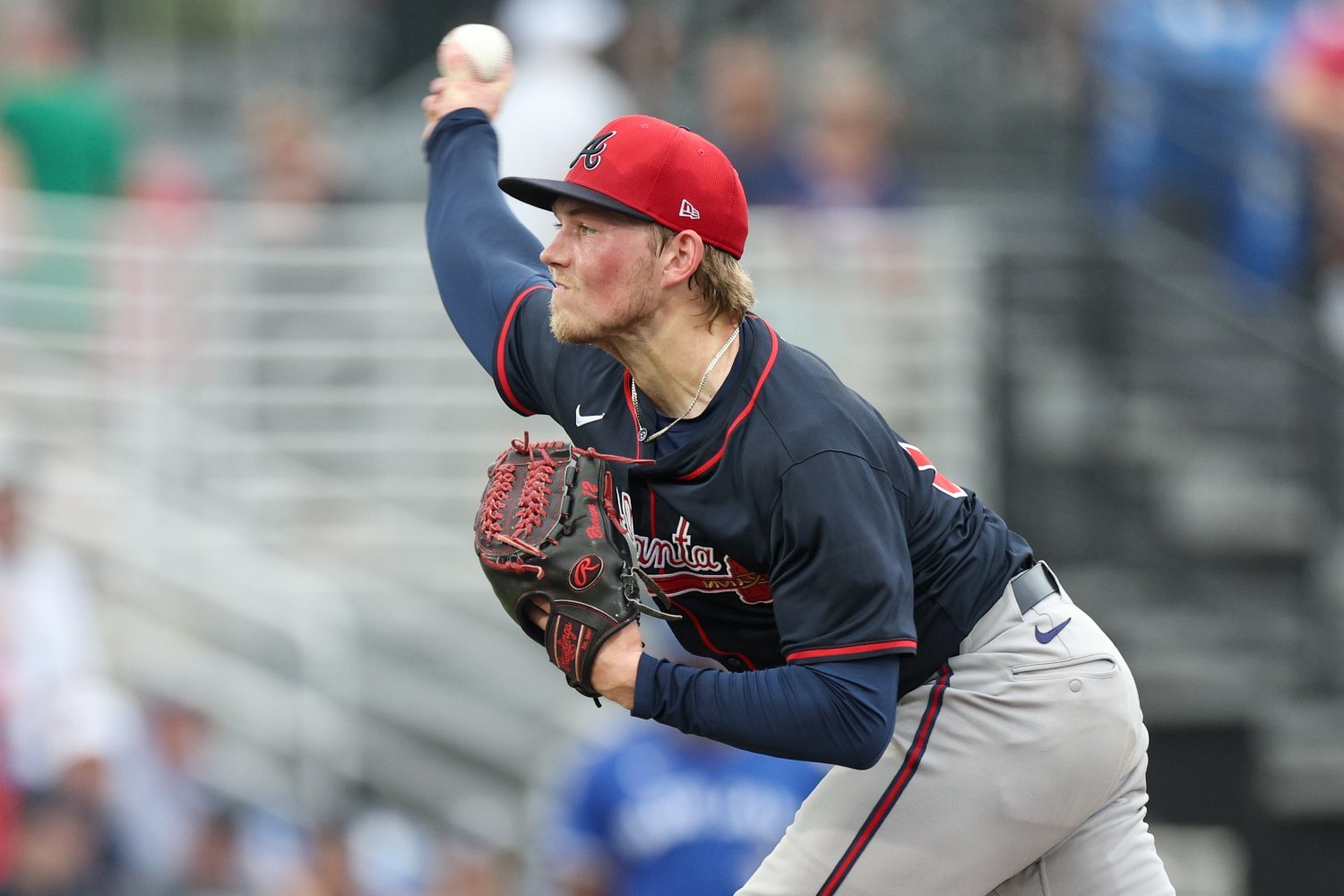 On Saturday night, during the Royals' loss to the Rockies (a rough season continues to get worse), Kansas City traded outfielder Lane Thomas and pitcher Bailey Falter (who's currently pitching in Omaha) to Atlanta in exchange for pitching prospects Lucas Braun and Carter Holton. Neither Braun nor Holton needs to be added to the 40-man roster just yet, though Braun will be Rule 5-eligible this offseason. Considering all the pitching injuries this year, the acquisition of these two pitchers from the Braves organization gives the Royals pitching depth a much-needed boost. And not just for the remainder of this season. Braun and Holton are long-term options who give the Royals depth beyond 2027, which they need, especially with top pitching prospect Kendry Chourio and David Shields probably a couple of years away from making their MLB debuts (at the earliest). So what did the Royals gain in Braun and Holton? Let's break down these newest pitchers in the Kansas City organization. Braun is the more MLB-Ready of the Pair. If Royals fans are looking for a pitcher who could make his MLB debut this year, it is definitely Braun, who has recently pitched in Triple-A Gwinnett this season. In 43.2 IP with the Stripers, the former Cal State Northridge product posted a 3.92 ERA, 1.33 WHIP, 4.61 FIP, and 1.94 K/BB ratio. He started the season in Double-A and was more dominant, posting a 3.20 ERA, 1.22 WHIP, 3.04 FIP, and 4.64 K/BB ratio. Overall, in 19 appearances and 94.1 IP between Double-A and Triple-A this year, he has a 3.53 ERA and 3.77 FIP. When looking at his Statcast percentiles in Triple-A, he hasn't quite been a strikeout or swing-and-miss machine. However, he does a good job of throwing strikes, limiting walks, and generating a good amount of chase and weak contact. His profile looks very similar to Stephen Kolek, who was acquired by the Royals last year and was having a solid season until a recent injury. Back in Spring Training, the former 6th-round pick in the 2023 MLB Draft was catching the eyes of scouts, especially with his slider and cutter. When looking at his TJ Stuff+ summary from Triple-A, Braun's TJ Stuff+ metrics weren't eye-popping on any of his pitches, though his cutter, four-seamer, and slider have been his best pitches. That said, what makes Braun a productive starting pitcher is his six-pitch mix. That variety of pitches allows him to be successful, even without a premium pitch. The cutter is really a solid pitch for Braun and could be key in his eventual transition to the Major Leagues. His primary pitch, which he throws 20.2% of the time, generated a 53.5% zone%, 45.8% chase%, 28.6% whiff%, and .274 xwOBACON. Those were all above-average marks. The only pitch that came close to that was his curve, which also had above-average marks in those four categories. However, the marks were only "slightly" above average in those categories compared to "well" above average, as was the case with the cutter. In Double-A Columbus, Braun was producing more strikeouts, so there is some upside for him to get to those levels with minor adjustments. His K% was 25.1%, and his K-BB% was 19.7%. He also set a Columbus single-game record with 12 strikeouts back in May, shortly before his promotion to Gwinnett. The No. 8 prospect in the Braves' system before the trade, Braun is easily a Top-10 prospect in the Royals system. He probably rates around 9 or 10 in the Royals' system, bumping Carson Roccaforte or Asbel Gonzalez out of that group. He will start his Royals career in Triple-A Omaha. That said, he could see an MLB call-up in a matter of weeks, especially if Kansas City engages in more trades by Monday's August 3rd deadline. Holton is Talented, but Has Struggled With Injuries Holton was a second-round pick by the Braves in the 2024 MLB Draft. There was word that Kansas City was interested in the Vanderbilt product. Unfortunately, Atlanta swooped him up before he got to the Royals' pick (Kansas City ended up selecting David Shields as a result, which hasn't been a bad consolation). It hasn't been smooth for Holton as a professional in the Braves organization. He has struggled with injuries, having pitched only in 51.2 total innings in the Minor Leagues since 2024. He pitched only two innings in Low-A ball in 2024, shortly after being drafted, and missed all of 2025 due to Tommy John surgery. Holton has returned to the mound this year and has mostly pitched in Low-A Augusta of the Carolina League. In seven outings and 33.2 IP, he has a 5.08 ERA and 1.37 WHIP. However, his FIP is slightly better at 4.98, and he has a 21% K% and a 2.31 K/BB ratio. Much like Braun, the 23-year-old lefty limits walks and throws strikes, though he hasn't generated a ton of swing-and-miss this year, as evidenced by his percentiles in Augusta via TJ Stats. However, he hasn't pitched competitively since 2024, so some adjustment is to be expected with Holton. He has shown flashes of living up to that second-round pick status, as illustrated in his first start with Augusta this season. Holton sports a diverse pitch mix, with four pitches: a fastball, slider, curve, and changeup. Scouts were high on Holton's stuff, despite his 5'11 stature, as illustrated in his scouting report by MLB Pipeline when drafted. The former Commodore is definitely more of a project than Braun, especially since Holton hasn't advanced beyond Low-A yet, atypical for a college pitcher. However, there is a lot of stuff and potential there for the lefty, as long as he can stay healthy. Overall Thoughts on Trade In their analysis of the deal, Baseball Trade Values noted that it was more favorable to the Royals, calling it a moderate "overpay" by Atlanta. Thus, it feels like the Royals made out well in this deal, especially on two expiring assets in Thomas and Falter, both scheduled to be free agents this offseason. Throwing Falter in the deal, who was pretty much just wasting payroll in Omaha, was a nice little throw-in by Picollo, especially since it netted the Royals two of the Braves' Top-30 prospects in this trade. Kansas City, like other MLB teams, has less than 48 hours to make trades before Monday's deadline. While this is a good start for Picollo and the Royals, they may need to make 2-3 more moves to make this Deadline more impactful in both the short and long term. This move also opens up some more time for some outfielders in the Royals organization who could use some more playing time for evaluation. That includes John Rave, Matthew Lugo, and Gavin Cross. The latter two are in Omaha. So far, Picollo is off to a nice start to the Trade Deadline with this initial deal. View the full article
 -
How Brewers Can Respond After Dodgers Trade for Tarik Skubal
DiamondCentric posted an article in Brewer Fanatic
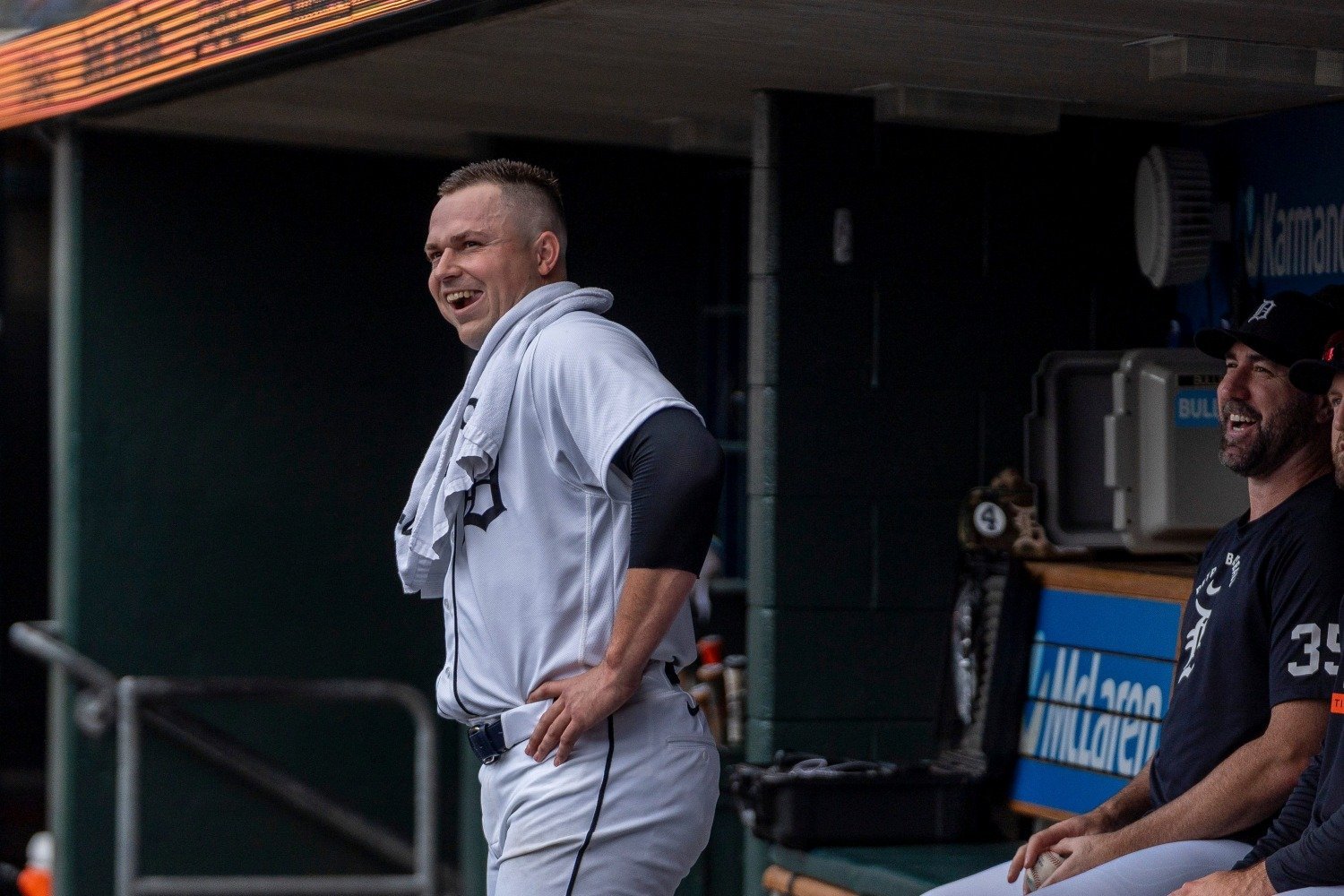 Beating the Dodgers isn't necessarily the Brewers' job. It's taken for granted, in many circles, that the Brewers will eventually have to go through Los Angeles in October to reach the World Series for the first time since 1982, but in reality, someone else will get a crack at that team first. For fans, players and the front office, it would be unhealthy, unproductive and inefficient to spend time obsessing over the Dodgers. The Brewers have their own work to do, and it shouldn't be a response to the Dodgers'. That's much easier to say than it is to live out, though, on the morning after Tarik Skubal landed with the sport's most successful dynasty since the turn of the 21st century. President of baseball operations Andrew Friedman pushed his chips to the center of the table to haul in Skubal from the forgettable Tigers, as he attempts to secure Los Angeles's third straight World Series title. The Brewers had been in on Skubal, a source familiar with the discussions said, but they always knew the Dodgers were the favorites. As such, Brewers president of baseball ops Matt Arnold has been planning his pivot for some time. Though he's an impending free agent, Skubal was priced like a controllable one; that's one reason why the Brewers were never likely to land him. The package the Tigers received in exchange for Skubal is far richer than what any other pitcher headed for the market this fall will command, so the Brewers could choose to focus on one of those hurlers to keep acquisition costs down. They've talked to the Tigers about Casey Mize, the former No. 1 overall pick and another impending free agent, though the fit between what Mize does and what the Brewers like is imperfect. Arnold and Cardinals president of baseball operations Chaim Bloom have known each other for 20 years, which provides the kind of foundation required to pull off intradivisional trades in July. St. Louis is likely to deal Dustin May, and the Brewers have checked in there, too. May suits the Crew's pitching predilections neatly, too: good velocity, good extension, three fastballs, and so on. Milwaukee has also talked to the Giants about both Tyler Mahle and Robbie Ray. Of the two, Ray comes with the higher price tag, but is also pitching better this season. The Brewers have talked internally about starters they could acquire to work in the back half of the rotation down the stretch, before moving to the bullpen in October. Ray would be a good candidate for that, and has done a version of it before. The final dual option for Milwaukee on the rental starter front could be the Mets, who have both Freddy Peralta and Clay Holmes on the market. Holmes is still rehabbing from a broken leg, but his profile is extremely similar to that of Quinn Priester. Needless to say, the Brewers are intrigued by that. A reunion with Peralta would be a joyous occasion for the team, but it might also be fraught; there's worry within the organization about the emotional toll it might take on all parties if Peralta's rough season continues after a would-be triumphant return. As always, though, the team remains open-minded and interested in making bigger moves, if the right opportunity is there. Milwaukee has talked to the Rockies about starter Ryan Feltner, who has two more years of team control after 2026 and is having a strong season. Feltner, 29, has an extremely strange arsenal, with relative cut on his four-seam fastball and his changeup and an erratic but dastardly sinker-slider combination. He won't be cheap, but Feltner is one medium-term acquisition who could be a level-booster for the Milwaukee rotation. Beyond those names, what Arnold might come up with is anyone's guess. The Brewers have not been frontrunners for Reid Detmers of the Angels, but José Soriano is "up their alley" and the team has checked in with interim Angels GM John Mozeliak about a number of players, a source said. Adding a starter remains an important box on the to-do checklist, but the team is also focused on deepending their stable to high-leverage relievers. That could lead them back to the Mets and Luke Weaver; it could also mean pursuing Orioles righty Tyler Wells. Skubal was never in the cards for Milwaukee. It was a nice idea, given their competitive position and how great he is, but the value Detroit demanded in return—and eventually got, from a team closer to the end of its championship window than the Brewers are—was more than he would have been worth to the Crew. Arnold has less than 36 hours to respond, but he's not in a direct arms race with Friedman. He just needs to help a great team get to October with its legs underneath it. View the full article
 -
Toronto Blue Jays Minor League Hitters of the Month - July 2026
DiamondCentric posted an article in Jays Centre
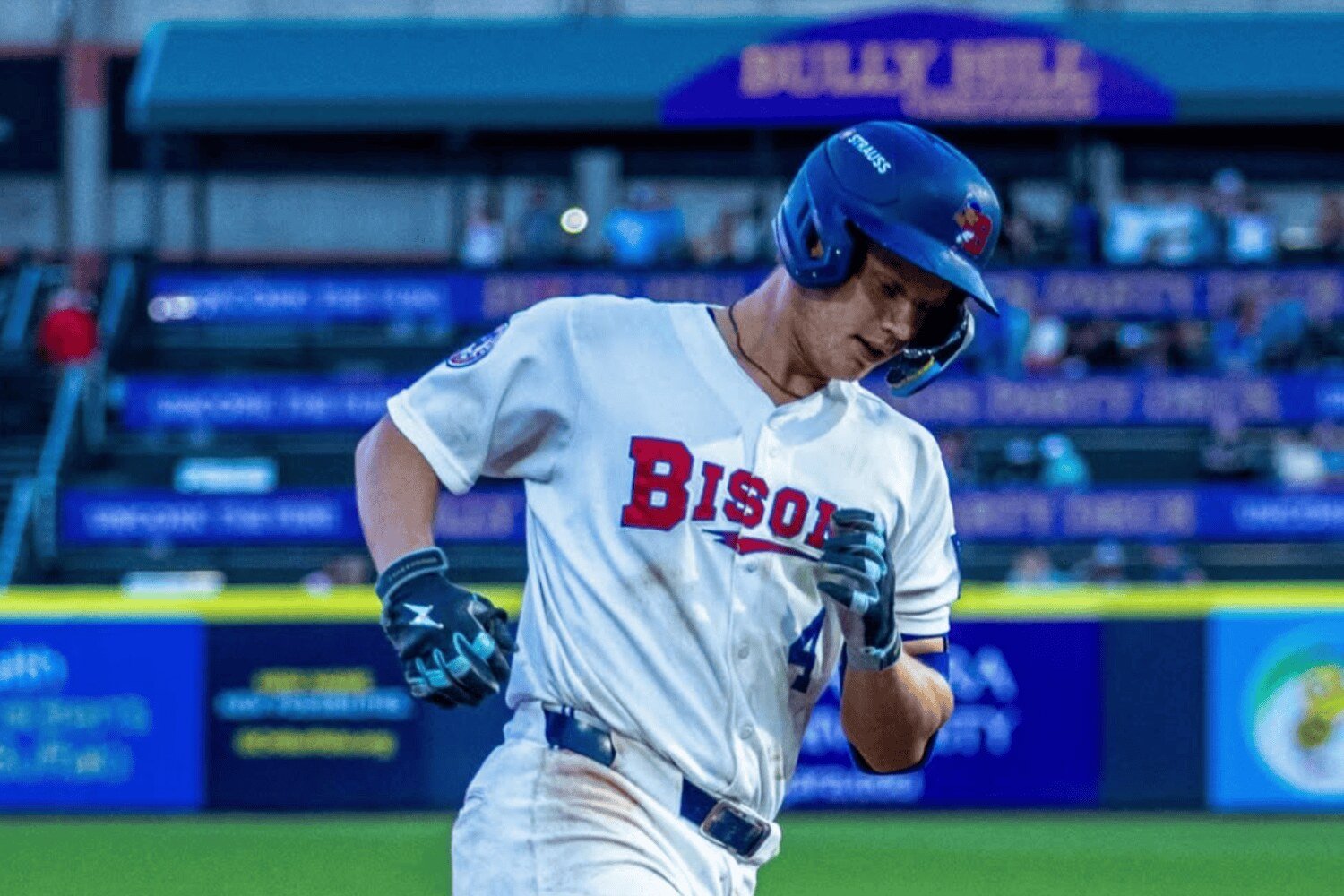 The MLB Draft has come and gone, as has the Futures Game, and while the MLB trade deadline is the biggest talking point this time of year, there are some notable prospects that have found themselves making noise across the Blue Jays system. The Blue Jays seem likely to add to their farm system over the coming days, and those players will join a list of players who have seen their stock rise over the past month. Here are the candidates for the Blue Jays Minor League Hitters of the Month for July. Honorable Mentions Sebastian Casanova - Dominican Summer League - 18 GP, .483/.557/.439, wRC+, 14.1 K%, 14.1 BB% Welcome to organized baseball, Casanova. The 5-foot-9, 167 lb shortstop has been thoroughly enjoying his first season in organized baseball. The 17-year-old was signed as an international free agent out of Venezuela and has immediately hit the ground running, literally. He stole seven bases in the month and has 19 in his 37 games on the season. On top of that, he’s been raking at the plate, as his 189 wRC+ led the system this month. Pair that with a 30.6% line drive rate, a minuscule 6.0% swinging strike rate, and the fact he’s walking just as much as he’s striking out, and you can see why the Blue Jays like him. It’s going to be a long journey for a player so young, but he looks like one of the best returns from the Blue Jays international free agent class so far. JoJo Parker - Single-A Dunedin - 18 GP, .222/.345/.375, 96 wRC+, 25.3 K%, 12.6 BB% Parker got off to a slow start in July, collecting just five hits in his first 42 plate appearances, but he’s turned a corner since then. He recently had his first multi-home run game of the season, as well as his first triple of the season. He’s still putting the ball on the ground too frequently (60.8 GB% in July), but he’s showing why evaluators believe in the hit tool. Plus, he was able to turn around a 101 mph fastball in the Futures Game this month, which is impressive in its own right: No. 3 Arjun Nimmala Double-A New Hampshire - 15 GP, .255/.354/.545, 132 wRC+, 26.2 K%, 10.8 BB% Arjun Nimmala began the month on the injured list with a hamstring strain, which keeps him from being higher on this list. But he’s picked up right where he left off. Nimmala has continued to tap into his power with four home runs in 15 games, and the contact rate (73.9%) is an improvement on what he posted in his first season in the organization. On top of that, there are positive reports about his work at shortstop. You can see why he’s ranked inside the top 100 of every major prospect list and number three on the Jays Centre list. No. 2 Davis Schneider Triple-A Buffalo - 15 GP, .293/.469/.660, 189 wRC+, 25.0 K%, 21.9 BB% Davis Schneider was sent down to Buffalo at the end of June after posting a .578 OPS in 118 plate appearances on the season. The Blue Jays wanted to see him rediscover his offensive game, and he certainly did that while in Buffalo. His five home runs and 1.128 OPS led all Blue Jays minor leaguers in July. The Blue Jays had seen enough and recalled him to Toronto on July 23. Since his recall, he’s gone 1-for-11 with a double and three walks, so he’s still going to need to put it together in the major leagues, but he has nothing left to prove in the minors. No. 1 Josh Kasevich Triple-A Buffalo - 20 GP, .408/.511/.539, 188 wRC+, 9.0 K%, 13.0 BB% Josh Kasevich entered July with just three home runs and a 96 wRC+, but he has caught fire over the month's final weeks. Reaching base in more than half of his plate appearances is remarkable, but that’s exactly what Kasevich has done in July. He’s reached base in all but two games during the month. He’s also walked more than he’s struck out while posting a minuscule 4.0 SwStr%. Kasevich had a great spring training and was a candidate to make his big league debut this season. Now that his bat has heated up, it shouldn’t be a surprise if he sees time in Toronto later this summer. View the full article
 -
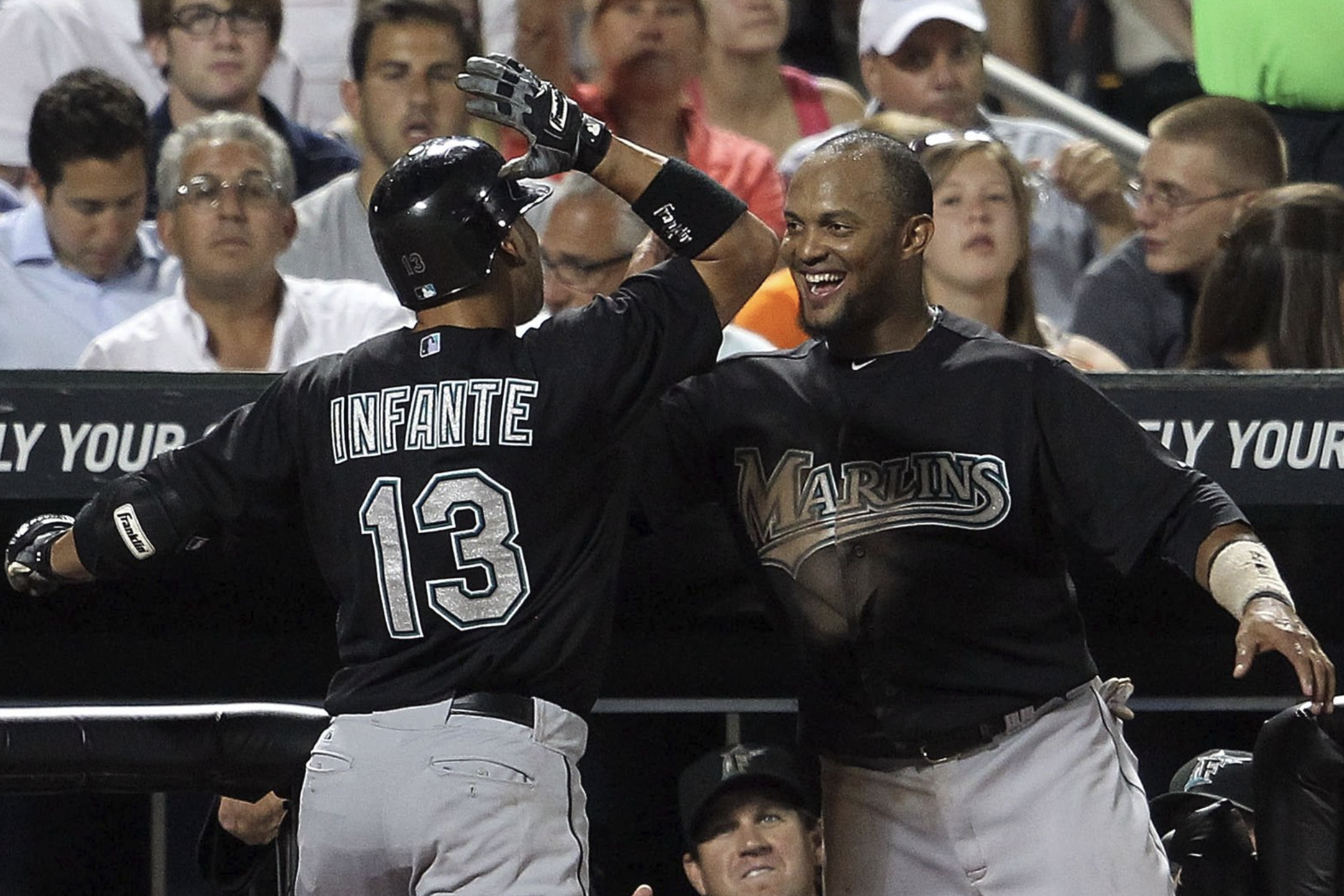 For the Florida Marlins, the 2011 season was a rollercoaster of a year. After a splendid April and May, the Marlins had a horrid June, going from 10 games over .500 to 11 games under in just over a month. On this day 15 years ago, however, the Marlins found a way to even their record with a come-from-behind win. Trailing by a run in the ninth inning, the Marlins took advantage of a throwing error by New York Mets infielder Justin Turner. The errant throw allowed two runs to score as Florida rallied for a 4-3 victory. The Marlins were 54-55 while the Mets were 55-54 as the teams squared off on Aug. 2, 2011. A go-ahead sixth-inning sacrifice fly from Lucas Duda was the difference as the Mets took the lead to the top of the ninth. Closer Jason Isringhausen took the mound, looking for the save. He opened the evening by walking Logan Morrison on five pitches. After getting the ever-dangerous Giancarlo (then known as Mike) Stanton for the first out, Isringhausen gave up a single to Mike Cameron. On the very next pitch, Isringhausen hit John Buck to load the bases with one out. Facing pinch hitter Bryan Petersen, Isringhausen was able to get ahead in the count, 0-2. On the third pitch, Petersen hit a slow roller to Turner at second base. Indecisive on the play, Turner initially ran Buck toward first before throwing wide of the base in an effort to get Petersen. Both Morrison and Cameron scored to give Florida its first lead since the fifth inning. Isringhausen was able to retire the next two batters, but the damage was done. Florida lefty Randy Choate walked former Marlins catcher Ronny Paulino to open the bottom of the ninth, but closer Juan Carlos Oviedo (then known as Leo Núñez) promptly got Daniel Murphy to hit into a double play. Oviedo then struck out Jason Pridie to end the contest. Prior to the ninth, both runs for Florida had come on solo blasts by Omar Infante – one in the first and one in the fifth—off New York starter Chris Capuano. José Reyes tied the game at 1 with a solo shot off Brad Hand in the third. David Wright again drew the Mets even with an RBI groundout in the fifth before Duda gave New York its first lead in the sixth. Infante finished with three of the seven hits for the Marlins. Scott Hairston and Ángel Pagán each had two knocks for the Mets. With the win, the Marlins evened their record at 55-55. It would be the last time that Florida was at or above .500 all season as it proceeded to lose its next seven games. The Marlins' time back at .500 was short, but they got there on this day 15 years ago. View the full article
 -
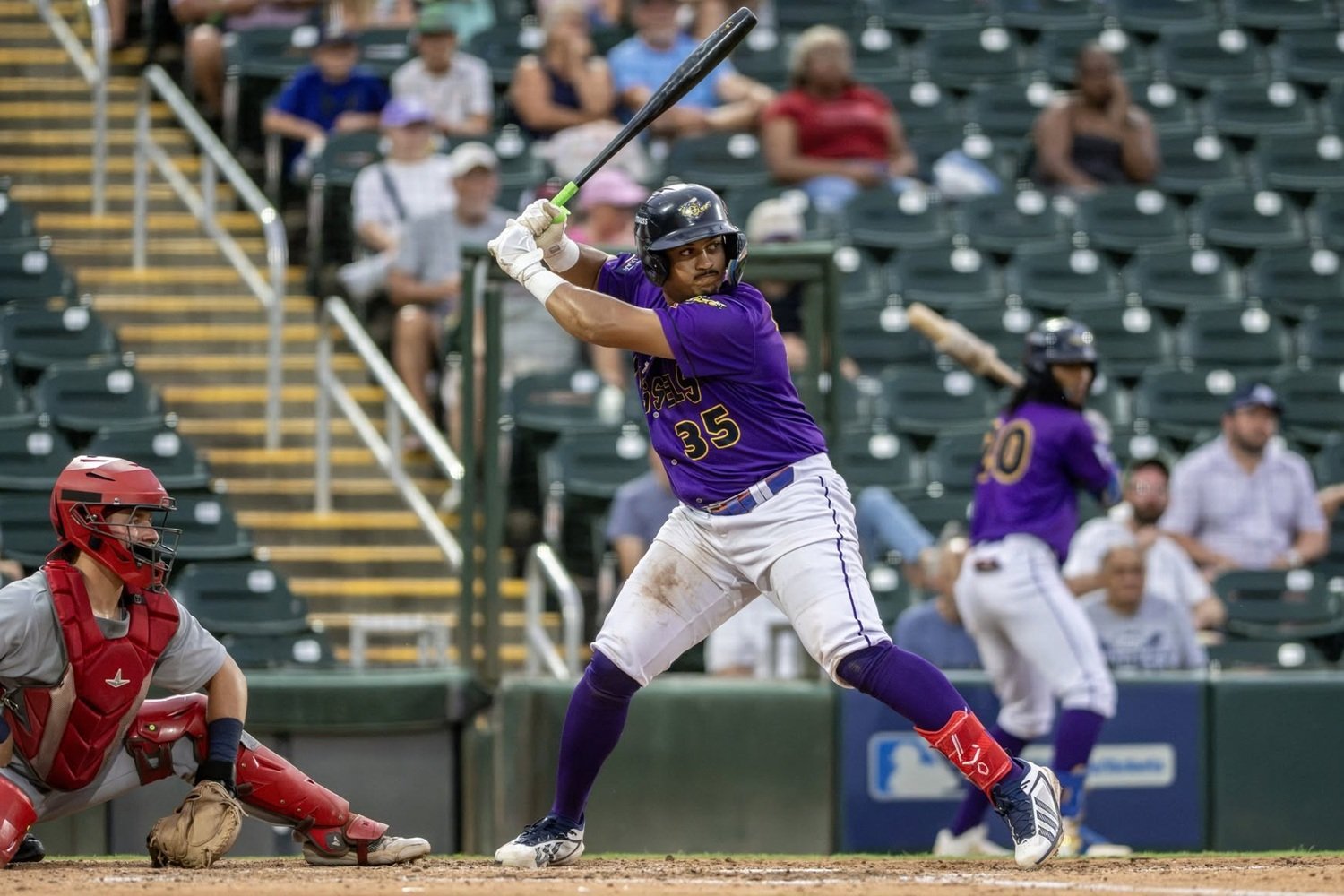 TRANSACTIONS Trades have been made. Assume more trades are coming. Now the transactions must be made to put the new guys on the 26- and 40-man rosters. To make room for LHP A.J. Minter on the roster, RHP Cody Laweryson was Designated for Assignment to make room on the 40-man roster. RHP Zebby Matthews was optioned to St. Paul to make room on the 26-man roster. Additionally, RHP Garrett Acton was activated from the 60-Day Injured List and optioned to St. Paul. Cedar Rapids catcher Enrique Jimenez was moved to the 60-Day Injured List. SAINTS SENTINEL St. Paul 0, Omaha 4 Box Score On Saturday, the Saints were unable to get things going with their bats. They were unable to get to 24-year-old Henry Williams. He tossed six shutout innings. He made three starts in April for NW Arkansas. He gave up three runs in four innings in the first start. Almost three weeks later, he tossed five shutout innings. Five days later, he gave up one run on two hits over five innings. He has been in Triple-A since mid-May and pitched twice against the Saints. Combined, he had pitched six total innings over two appearances. He had given up eight earned runs. Sunday, nothing. Veterans Jose Cuas (2 innings) and Justin Topa (1 inning) worked the final three innings. Ricky Castro made the start and worked the first three innings. He gave up no runs on one hit. He walked none and had three strikeouts. Matt Bowman got the next two innings. He gave up one run on three hits. C.J. Culpepper gave up two runs on two hits over two innings. He had one walk and one strikeout. Eric Orze worked the eighth inning and gave up one run on one hit. The Saints had just four hits and a walk. Hendry Mendez had a single and a walk. They had no extra base hits. WIND SURGE WISDOM Wichita 3, Springfield 4 Box Score What more can we say about Marek Houston and what he has done with the bat this season. In this game, he went 2-for-5 with his ninth double and sixth home run. Khadim Diaw went 2-for-4. Jake Rucker went 2-for-4 with his sixth double. Caden Kendle kept hitting. He hit his sixth double since joining the Surge. In the first inning, Houston doubled and went to third on a Diaw single. He then scored on a single to right field by Brandon Winokur to make it 1-0. With two outs in the bottom of the first, Riley Quick hung a slider to Ryan Campos, who didn’t miss it and tied the game with his 11th home run. Quick had a perfect second inning. His third inning began with a fly out. However, the next batter reached on an error. Then there was a walk, and then Quick threw a first-pitch fastball just above the knees and on the inner part of the plate. Jesus Baez quickly deposited over the wall in left field. Then there was a single and a balk. The second out came on a ground out, but then there was another walk. Quick’s day was done. Mitch Mueller came in and got a strikeout to keep two inherited runners from scoring. Mueller went 1 1/3 scoreless innings. He gave up two hits. Quick’s final line was four runs (3 earned) on three hits and two walks over 2 2/3 innings. He had just one strikeout. Ty Langenberg came on and tossed four scoreless innings in relief. He gave up just one hit, walked one, and he had four strikeouts. KERNELS CHRONICLES Game 1: Cedar Rapids 6, Peoria 5 (Completion of Suspended Game, 10 innings) Box Score On Friday night, tornado sirens, lightning and eventually a rainstorm suspended this game in the bottom of the third inning. Danny De Andrade was on first base, and Dameury Pena was batting with a 2-0 count. While the game was just one-third complete, there were already a few Kernels highlights. While it was written about in more detail in yesterday’s minor league report, Dasan Hill tossed three scoreless innings. He gave up two hits and struck out six batters. Most importantly, he walked none and their nearly 80% strikes. With one out in the bottom of the first, Eduardo Tait and Danny De Andrade hit back-to-back home runs. Justin Mitrovich took over on the mound for Hill. He gave up three runs on three hits and four walks over 2 2/3 innings. He struck out three batters. Michael Ross came on with two runners on base and left both stranded. He went 4 1/3 innings and gave up three runs (2 earned) on five hits. He had five strikeouts and no walks. He gets the loss thanks to the unearned run in the 10th inning. When the game restarted, Dameury Pena finished his at-bat with a single. Pena and De Andrade advanced to second and third on a ground out. Quinn McDaniel drove in a run with a groundout, and Andy Lugo singled to make it 4-0 Kernels. However, Peoria scored one in the fifth inning, and two runs in the sixth and seventh innings, to take a 5-4 lead. Following the 7th Inning Stretch, Dameury Pena singled. With two outs, McDaniel singled and Andy Lugo walked to load the bases. Miguel Briceno lined a single to left to drive in Pena with the tying run. McDaniel attempted to score as well, but he was thrown out at home. Pena went 3-for-5. Andy Lugo was 2-for-3 with a walk, was hit by a pitch and stole a base. Yasser Mercedes was 2-for-5 with a walk and his 29th steal. McDaniel was 2-for-5 Game 2: Cedar Rapids 2, Peoria 13 (Regularly Scheduled Game) Box Score The regularly scheduled game? Well, that did not go well. Lefty Ross Dunn made his second Kernels start since his return from surgery. He gave up one run on three hits over the first two innings. Cleiber Maldonado pitched the third inning and gave up three runs on two hits and three walks. Christian Becerra gave up two runs on two hits and two walks over his two innings. Guess how many strikeouts he had. That’s right. Two. Brian Zeldin gave up two runs on one hit and two walks. At that point, it was time for a position player. Graham Brown came on and gave up five runs on five hits and two walks in the seventh inning. Emmanuel Rodriguez played his first rehab game for Cedar Rapids. He should play again on Sunday and then head north to St. Paul. In this game, he played right field and went 2-for-3. Danny De Andrade went 2-for-3 with his 14th double. Byron Chourio knocked his first High-A hit and his first High-A home run, both with the same swing. MIGHTY MATTERS Fort Myers 8, Palm Beach 7 (10 innings) Box Score Sometimes you can do two things at once. For instance, with two outs in the bottom of the 10th, Mussels first baseman JP Smith crushed a long home run to give the Mussels a walk-off win. It was his 15th home run of the season. It was also the 104th home run for the Mussels this season, a franchise record. How did they get there? The Mussels fell behind early. Palm Beach scored in each inning from the second through the fifth. In total, they scored six runs over those innings. Ramiro Villanueva started and gave up two runs on two hits and two walks over two innings. Guess how many strikeouts he had. That’s right, three. Dylan Questad gave up an unearned run in the third inning on no hits and two walks and a wild pitch. He struck out two batters. Hendry Chivilli came in for the middle three innings. He gave up three runs (2 earned) on three hits and two walks. He struck out four batters. Down 3-1 going to the bottom of the third, the Mussels got on the scoreboard. Merphy Hernandez was hit by a pitch. He stole second and went to third on a throwing error. After a fly out, Vahn Lackey lost a bat, but he earned his first professional base hit, a broken-bat single that cut the deficit to 3-1. Lackey then stole second. Down 4-1 going to the bottom of the fourth, the Mussels got a huge hit and took the lead. Luis Fragoza led off with a walk. Smith doubled. Quentin Young walked to load the bases. That brought 2026 13th round pick Isaiah Lane to the plate. He lined a triple to the gap that cleared the bases and tied the game at 4-4. Hernandez drove in Lane with a single to give the Mussels their first lead. Hernandez then stole his 30th base for the Mussels (41 games). The Cardinals reclaimed the lead 6-5 in the top of the fifth inning. In the bottom of the seventh, the Mussels tied it again. Ramiro Dominguez doubled to lead off the inning. Lackey lined a single to right field, but Dominguez was thrown out at home on a perfect throw. Following a ground out, Colby Turner drove a double to the gap in left-center field to drive in Lackey and make it 6-6. (Turner also made a great catch earlier in the game) That’s how things stood through nine innings. Jake Murray struck out three batters over two scoreless, one-hit innings. Adam Falinski gave up one hit in a scoreless ninth inning. Jonathan Stevens came in for the top of the 10th inning. With a runner on second, Stevens started with a strikeout. A walk put runners on first and second. A passed ball pushed runners to second and third. Stevens got a fly out to center, just deep enough to score the Manfred Man. There was another single, but no more runs in the top of the 10th. Carson Tinney was the Manfred Man for the Mussels. The first two batters of the bottom of the 10th struck out swinging. Tinney took off for third on a wild pitch, and then the throw went into left field and Tinney scored the tying run. And then, JP Smith got a pitch and ended the game in style. Isaiah Lane went 2-for-3 with a walk, his second double, and the three RBI triple. JP Smith was 2-for-5 with his eighth double and 15th home run. Vahn Lackey went 2-for-4 and was hit by a pitch. Luis Fragoza hit his 16th double and also walked twice. Ramiro Dominguez hit his 20th double. Colby Turner hit his first career double. COMPLEX CHRONICLES DSL Twins 13, DSL Yankees 9 Box Score The Yankees went 1-2-3 in the top of the first inning, the Twins put together a 10-spot in the bottom of the first inning. What does that look like? Check it out: Daiyer Barboza walked. Jendy Martinez singled. Barboza scored on a wild pitch. Martinez stole second base. 1-0. Jhon Gonzalez reached on an error and then stole second. Abel Sosa walked to load the bases. Enmanuel Merlo was hit by a pitch. Martinez scored. 2-0. Gonzalez scored on a wild pitch. 3-0. Anibal Beltre walked to load the bases. Nolwer Barboz sacrifice fly. Sosa scored. 4-0. Pitching Change Luis Suarez singled. Merlo scored. 5-0. Misael Rodriguez was hit by a pitch to load the bases. Daiyer Barboza reached on an error. Beltre, Suarez, Rodriguez scored. 8-0. Jendy Martinez flew out. Jhon Gonzalez walked. Abel Sosa singled. Daiyer Barboza scored. 9-0. Wild pitch, Gonzalez scored. 10-0. Enmanuel Merlo walked. Pitching Change. Anibal Beltre flew out. 10 runs, 3 hits, 5 walks, 2 hit batters, 2 Yankees errors, 3 wild pitches, Enmanuel Mena started and threw a perfect first inning. The top of the second started with an error which led to five unearned runs. He struck out two in the inning, but his outing ended after giving up a three-run homer to Isaias Castillo. Yolcar Garcia came in and got the third out of the second inning. He went 2 1/3 innings and gave up just one hit. He had three strikeouts. Adrian Martinez pitched the fifth inning and gave up one run on four walks in the inning. Wisarly Reinoso pitched the sixth inning and gave up three runs on two hits and two walks. Jesus Moreno pitched the seventh inning. He gave up a hit and a walk, but he struck out two batters and completed the game. If you add up the runs that Twins pitchers allowed, you will get nine, one less than the Twins scored in the first inning. Fortunately, the Twins added two more runs in the bottom of the second. That inning began with two straight hit batters. Both runners advanced on a pop up to the first baseman. With two outs, Jendy Martinez doubled to drive in both runners. They scored one more with two outs in the sixth inning when Enmanuel Merlo singled and scored on a wild pitch. So the Twins scored their 13 runs on five hits and seven walks. There were also four hit batters. Jendy Martinez was the lone Twins hitter with a multi-hit game and an extra base hit. He was 2-for-4 with his 10th double. Abel Sosa hit a single and two walks. Enmanuel Merlo had a single, a walk, and was hit by a pitch. PLAYERS OF THE DAY Hitter(s) of the Day JP Smith (Fort Myers): 2-for-5, 2B(8), HR(15), 2 R, RBI, 2 K. Marek Houston (Wichita): 2-for-5, 2B(9), HR(6), 2 R, 2 RBI, 2 K Pitcher(s) of the Day Ty Langenberg (Wichita): 4 IP, 1 H, 0 R, 1 BB, 4 K, 53 pitches, 37 strikes (69.8%) PROSPECT SUMMARY Check out the Prospect Tracker for much more on our Twins Top 20 prospects after seeing how they did today. Notice that the prospect rankings have been updated to include the Twins 2026 Draft picks. #2 - C Vahn Lackey (Fort Myers) - 2-for-4, HBP, R, RBI, K, SB(2), E(2), PB(2) (batted second, catcher) #3 - IF Kaelen Culpepper (St. Paul) - 0-for-4, 2 K (batted first, played SS) #4 - OF Emmanuel Rodriguez (St. Paul) - Rehab in Cedar Rapids: 2-for-3 (batted second, played RF) #5 - SS Marek Houston (Wichita) - 2-for-5, 2B(9), HR(6), 2 R, 2 RBI, 2 K (batted first, played SS) #6 - RHP Riley Quick (Wichita) - 2 2/3 IP, 3 H, 4 R, 3 ER, 2 BB, K, 51 pitches, 30 strikes (58.8%) #7 - C Eduardo Tait (Cedar Rapids) - Game 1: 1-for-5, HR(19), R, RBI, K (batted second, played DH), Game 2: 0-for-4 (batted third, catcher) #10 - OF Hendry Mendez (St. Paul) -1-for-3, BB (Batted fifth, played LF) . #11 - OF Gabriel Gonzalez (St. Paul) - 0-for-3 (batted sixth, played 1B) #13 - C Carson Tinney (Fort Myers) - 0-for-5, R, 3 K, (batted third, Catcher) #14 - C/OF Khadim Diaw (Wichita) - 2-for-4 (batted second, Catcher) #15 - 3B/CF Brandon Winokur (Wichita) - 1-for-4, RBI, 2 K, SB(6) (batted third, played CF) #17 - 3B/SS Quentin Young (Ft. Myers) - 0-for-3, BB, R 2 K (batted seventh, played 3B) UPCOMING PROBABLES Sunday, August 2 St. Paul @ Omaha (5:05 pm CT) - RHP Trent Baker (3-3, 6.29 ERA) Wichita @ Springfield (6:05 pm CT) - RHP Cory Lewis (1-4, 4.15 ERA) Peoria @ Cedar Rapids (1:05 pm CT) - RHP Ivran Romero (3-5, 7.60 ERA) Palm Beach @ Ft. Myers (11:05 am CT) - TBD CURRENT W-L Records Minnesota Twins: 56-56 St. Paul Saints: 60-46 Wichita Wind Surge: 38-61 Cedar Rapids Kernels: 38-61 Fort Myers Mighty Mussels: 53-46 FCL Twins: 33-26 DSL Twins: 12-29 Please feel free to ask questions about the teams, the rosters, and discuss today’s games, or anything else Twins minor-league related! View the full article
 -
 The four full-season San Diego Padres affiliates went 1-2 with one game suspended by rain Saturday. The Triple-A El Paso Chihuahuas fell in 10 innings to Albuquerque 11-9, the Double-A San Antonio Missions won 7-5 over Amarillo in 11 innings, the High-A Fort Wayne TinCaps had their game interrupted by rain in the second inning and the Low-A Lake Elsinore Storm were drilled by Stockton 10-1. Padres Minor-League Transactions El Paso Chihuahuas activated 1B Nick Pratto from the temporarily inactive list. El Paso Chihuahuas placed RHP Evan Fitterer on the 7-day injured list. Dustin Harris HRs, Romeo Sanabria Has Slam In Chihuahuas' Loss Dustin Harris homered for the third straight game and fourth in five with a two-out blast in the bottom of the 10th inning, but that wasn't enough to help the host Triple-A El Paso Chihuahuas blew an early 6-1 lead in an 11-9 loss to the Albuquerque Isotopes. The Chihuahuas gave up four runs in the top of the 10th to lose their fifth straight. Romeo Sanabria hit a grand slam, Harris finished 3-for-6 with two RBIs and two runs scored and Will Wagner went 2-for-5. Trailing 1-0, the Chihuahuas erupted for six runs in the bottom of the second as Romeo Sanabria hit his grand slam, his second Triple-A homer since being promoted from Double-A San Antonio on June 23 and 10th of the season, past the right-field four pole and Mason McCoy and Nick Solak added RBI singles as the Chihuahuas went up 6-1, sending 11 batters to the plate. The Isotopes scored twice in each of the third and fourth innings to pull within 6-5. Albuquerque took the lead with a pair of runs in the eighth, but the Chihuahuas tied it on a sacrifice fly by Ethan Salas, Padres Mission's No. 1 prospect who otherwise went 0-for-3 with a walk and a strikeout in his fourth Triple-A game, hitting third and catching. Chihuahuas right-hander Miguel Cienfuegos pitched two perfect innings. EP1_0801.mp4 EP2_0801.mp4 EP3_0801.mp4 Player AB R H RBI BB K Dustin Harris 6 2 3 2 0 1 Mason McCoy 4 1 1 1 1 2 Ethan Salas 3 0 0 1 1 1 Nick Solak 4 0 1 1 1 0 Will Wagner 5 1 2 0 0 2 Marcos Castañon 4 1 1 0 1 1 Nick Pratto 3 2 0 0 2 0 Romeo Sanabria 4 1 1 4 0 1 Bryce Johnson 4 1 1 0 1 1 Player IP H R ER BB K HR Sean Boyle 5 8 5 5 0 4 1 Miguel Cienfuegos 2 0 0 0 0 3 0 Ty Adcock 1 3 2 2 1 1 0 Alek Jacob 1 2/3 4 4 3 1 0 0 Johan Moreno 1/3 0 0 0 0 1 0 Kai Roberts Does It All In 11th Inning To Spark Missions' Victory Kai Roberts singled in the go-ahead run, then scored in the top of the 11th and preserved the victory with a diving catch in shallow center as the Double-A San Antonio Missions pulled out a 7-5 victory over the host Amarillo Sod Poodles. The Missions gave up a run in the bottom of the ninth and both teams scored once in the 10th before San Antonio won it in the 11th. Ryan Jackson went 4-for-6 with a homer, three RBIs and two runs scored, Braedon Karpathios (Padres Mission's No. 12 prospect) 3-for-6 with a double and two RBIs, Tirso Ornelas walked three times and singled, scoring twice for the Chihuahuas and Jake Cunningham also walked three times, scoring once. It was back-and-forth over the first five innings, with the Missions trailing 2-1 after the first, then 3-2 after the fourth and tying it in the fifth on Jackson's two-out RBI single. But a walk and a double in the ninth off right-hander Josh Mallitz tied it for the Sod Poodles. Mallitz hadn't allowed a run in nine innings over three previous outings and then the eighth inning. Both teams scored in the 10th, with Luis Verdugo driving in the Mission's go-ahead run after being 0-for-5, sending it to the 11th. Chris Sargent began as the automatic runner at second, went to third on Carson Tucker's groundout and came in on Roberts' single, with Roberts taking second on a play at the plate. After Roberts stole third for his 32nd of the season, Cunningham was given an intentional walk for his third free pass and Karpathios struck out before Jackson singled home Roberts to make it 7-5. Right-hander Sadrac Franco began the bottom of the 11th by walking the leadoff hitter, then struck out the next two hitters and got the dramatic catch from Roberts in center to earn his third save. SA_0801.mp4 Player AB R H RBI BB K Carson Tucker 6 0 1 0 0 2 Tirso Ornelas 2 2 1 0 3 0 Kai Roberts 1 1 1 1 0 0 Jake Cunningham 3 1 0 0 3 0 Braedon Karpathios 6 0 3 2 0 2 Ryan Jackson 6 2 4 3 0 1 Albert Fabian 6 0 1 0 0 1 Luis Verdugo 5 0 1 1 0 1 Kai Murphy 4 0 0 0 1 1 Chris Sargent 5 1 0 0 0 2 Player IP H R ER BB K HR Eric Yost 5 4 3 3 1 2 0 José Leclerc 2 2 0 0 0 2 0 Josh Mallitz 2 1 1 1 1 1 0 Francis Peña 1 2 1 0 0 1 0 Sadrac Franco 1 0 0 0 1 2 0 Rain Suspends TinCaps' Game After 2 Alex McCoy Homers No one likes to see rain at a baseball game, but Alex McCoy had reason to be upset that the wet stuff interrupted the High-A Fort Wayne TinCaps' game after the top of the second inning. Padres Mission's No. 14 prospect had homered in his first two plate appearances as the TinCaps grabbed a 7-0 lead over the host Great Lakes Loons. The game will resume entering the bottom of the second on Sunday, followed by the regularly scheduled game, which will be seven innings. McCoy hit a two-run blast to left-center in a five-run top of the first and a solo shot to right in a two-run second. McCoy has 15 homers this year. Jack Costello also hit a solo homer in the second inning, his 12th this season. FW1_0801.mp4 FW2_0801.mp4 Storm Swamped By Ports' 6-Run Fourth Inning Right-handed starter Tyler Schmitt gave up seven runs over 3⅓ innings, while the offense only managed four hits as the Low-A Lake Elsinore Storm bowed to the Stockton Ports 10-1. Schmitt allowed seven hits, including a pair of homers, and two walks while striking out seven. Both of the homers came in a quick-strike six-run fourth inning in which Schmitt got just one out and all the runs scored after that. Right-hander Brandon Langley came in when it was 4-0, then allowed two run-scoring wild pitches sandwiched around an RBI single. Yimy Tovar singled off the the shortstop's glove and Yoiber Ocopio beat the throw home in the top of the seventh for the Storm's lone run. Ocopio had singled with two outs and stolen a base. LE_0801.mp4 Player AB R H RBI BB K Conner Westenburg 4 0 1 0 0 1 Ty Harvey 4 0 0 0 0 2 Bradley Frye 3 0 0 0 1 0 Jorge Quintana 2 0 0 0 2 1 Yoiber Ocopio 4 1 1 0 0 1 Yimy Tovar 3 0 1 1 1 1 Truitt Madonna 2 0 0 0 2 2 Dylan Grego 3 0 1 0 1 0 Qrey Lott 3 0 0 0 0 1 Player IP H R ER BB K HR Tyler Schmitt 3 1/3 7 7 7 2 4 2 Brandon Langley 2 1/3 4 0 0 2 5 0 Sean Barnett 1 1/3 2 1 1 0 2 0 Daichi Moriki 1 2 2 2 2 0 0 Padres Mission's Top 20 Prospect Performance Ethan Salas: 0-for-3, RBI, BB, K Kash Mayfield: DNP Miguel Mendez: DNP Ryan Wideman: DNP Kruz Schoolcraft: DNP Jorge Quintana: 0-for-2, 2 BB, K Ty Harvey: 0-for-4, 2 K Kale Fountain: Injured, out for season Tucker Musgrove: DNP Coleman Borthwick: In Arizona Lamar King Jr.: DNP Braedon Karpathios: 3-for-6, 2B, 2 RBI, 2 K Jagger Haynes: DNP Alex McCoy: DNP Truitt Madonna: 0-for-2, 2 BB, 2 K Jesus Castro: DNP Garrett Hawkins: DNP Elliot Lascelles: In Arizona Winyer Chourio: DNP Rosman Verdugo: DNP View the full article
 -
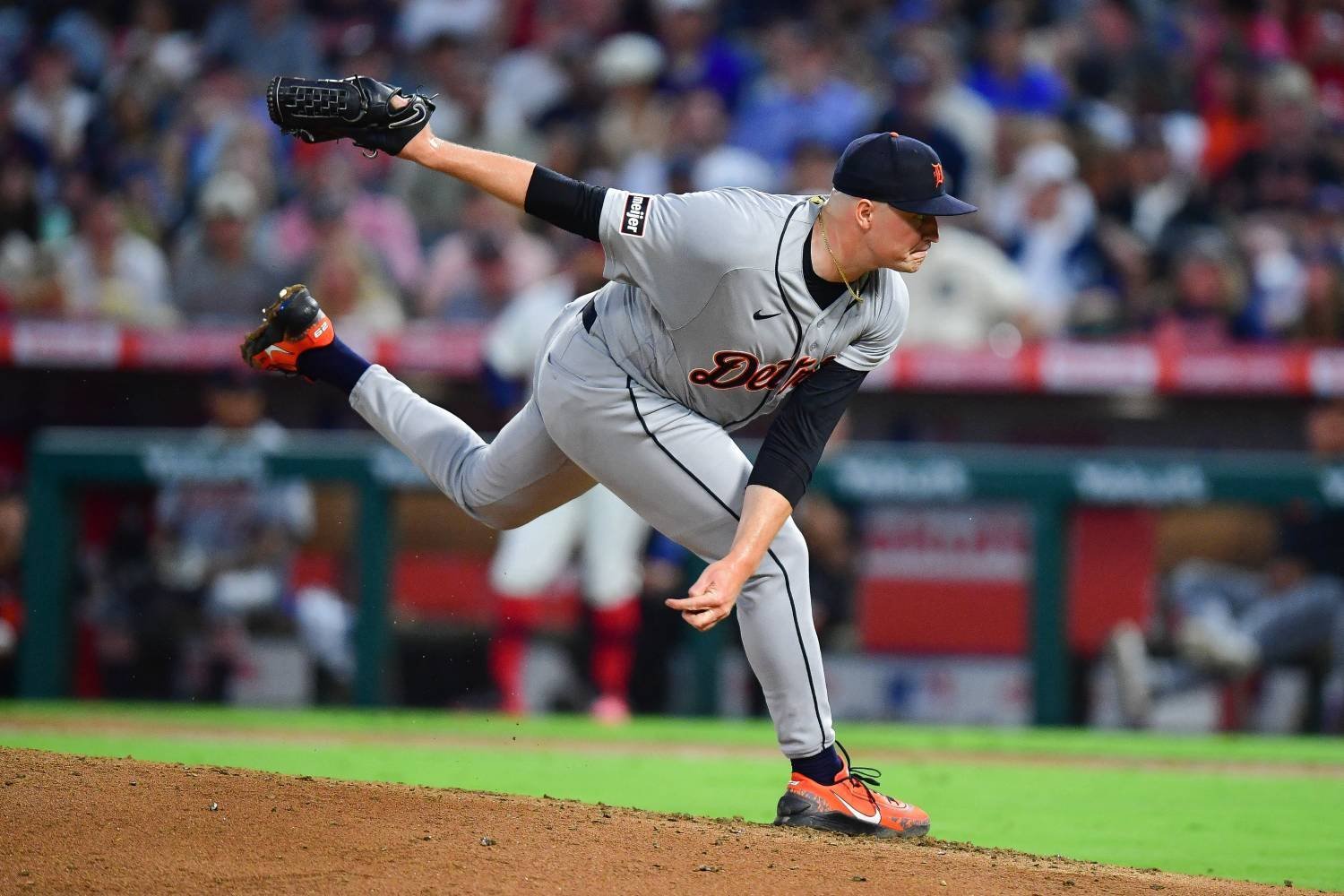 The Chicago Cubs have been dumpster-diving and flipping over couch cushions in a quest to find starting pitchers to fill the void of their latest injury. With the trade deadline rapidly coming at them (Monday, 5 p.m. CT), the Cubs' priority is added multiple pitchers—starters and/or relievers—to give the team the best chance to not only secure a postseason berth, but to make a deep run, The Athletic's Patrick Mooney and Sahadev Sharma reported Saturday. The Cubs entered play Saturday 6½ games out of first place in the NL Central behind the Milwaukee Brewers, but leading the NL wild-card race. Currently, the Cubs have 13 pitchers on the injured list, including six on the 60-day IL. Which of those pitchers come back and how effective they will be is up for debate. Of course, every contending team is looking for pretty much the exact same thing, so the bidding will be stiff for the best arms. The Cubs, according to The Athletic, are still in the mix for Tarik Skubal, the two-time reigning AL Cy Young Award winner from the Detroit Tigers, but more in the second wave of interested teams. The first wave is said to be the Brewers, Los Angeles Dodgers, Tampa Bay Rays and Atlanta. The Cubs could go back to the New York Mets to improve their pitching staff. They acquired left-handed starter David Peterson in late June from the Mets, who are opening to dealing right-handers Freddy Peralta and Clay Holmes. Holmes is scheduled to make a rehab start Sunday as he comes back from a fractured right fibula, although that could potentially be postponed if a deal is near. The Mets scratched Peralta from Friday's start and the Los Angeles Angels did the same with right-hander Jorge Soriano, another trade candidate, Saturday. Possible bullpen adds are San Diego Padres left-hander Adrian Morejob, Mets right-hander Luke Weaver and Toronto Blue Jays right-hander Jeff Hoffman. View the full article
 -
 Blue Jays Affiliate Overview (July 30-31) Triple-A Buffalo Bisons Series vs Lehigh Valley Iron Pigs (Philadelphia Phillies): 2-2 Season Record: 51-55 Double-A New Hampshire Fisher Cats Series vs Hartford Yard Goats (Colorado Rockies): 1-3 Season Record: 47-51 High-A Vancouver Canadians Series vs Spokane (Colorado Rockies): 2-2 Season Record: 44-56 Single-A Dunedin Blue Jays Series vs St. Lucie Mets (New York Mets): 3-1 Season Record: 47-51 FCL Blue Jays: Season Complete DSL Blue Jays Blue Week Record: 0-2 Season Record: 17-25 DSL Blue Jays Red Week Record: 2-0 Season Record: 24-17 Triple-A Buffalo Bisons Season Record: 51-55 Series vs Lehigh Valley Iron Pigs (Philadelphia Phillies) July 30, Game 1: It was a doubleheader on the books for Buffalo on Thursday, and in game one, they started off with some good pitching. Grant Rogers took the mound first and threw three scoreless innings, surrendering just two hits and two walks. From there, it was up to the bullpen to keep the Leigh Valley bats in check. Brendan Cellucci was next on the mound, followed by Beau Philip and then Chase Lee. All three combined to throw four scoreless innings, only allowing two hits along the way. With the pitching in the doubleheader shortened game being superb, it was up to the Buffalo bats to put some runs up on the scoreboard. In the top of the first inning, Charles McAdoo knocked in Ismael Munguia with a single to third base. Buffalo would scatter hit after hit the rest of the game, collecting nine of them in total, but they could never bring anyone else home. Munguia and Carlos Mendoza each had two hits, while Jesús Sánchez continued his rehab assignment with a double. Buffalo won game one of the doubleheader 1-0, in a very active but not fruitful game. July 30, Game 2: In the second game of the doubleheader, it was much more of the same for the Buffalo bats: Eight hits and five walks saw the basepaths cluttered with runners all game. The Bisons just struggled to get them across home plate. They had some better success than the prior game, but it was still a little bit of a microcosm of what the big league club has been experiencing. Rudy Martin Jr,, Ismael Munguia, and Eloy Jiménez all had at least two hits, with Munguia having three. Buffalo broke out on top in the second inning, when Martin singled home Nick Goodwin with a line drive to center. After Lehigh Valley tied the game up in the third with a home run off of Richard Gallardo, Buffalo answered with a two-RBI single from Martin in the fourth. Lehigh Valley would take control of the game in the fifth though; they got a two-run home run from Tommy Pham and a two-RBI single to take the lead 5-3. In the seventh, Munguia doubled to give Buffalo a fighting chance, but Charles McAdoo and Sean Keys struck out to end the threat and the game. Buffalo fell 5-3. July 31: Buffalo turned to Devereaux Harrison on Friday to help put them in a good position to get back in the win column. He did a decent job, but a second inning error on Charles McAdoo helped Lehigh Valley to score two unearned runs off of him. The two runs gave Lehigh Valley the lead after Buffalo got it first from a Carlos Mendoza RBI double in the top half of the inning. A wild pitch by Buffalo relief pitcher Sam Gardner would add to Lehigh Valley's lead in the fourth. In the fifth, Daz Cameron doubled home CJ Stubbs to cut into their deficit. It just wasn't meant to be for Buffalo as Conor Larkin coughed up four runs in the sixth. Buffalo just couldn't get any hits this game, only connecting on the two RBI doubles and two singles. The Bisons fell 7-2. Double-A New Hampshire Season Record: 47-51 Series vs Hartford Yard Goats (Colorado Rockies) July 30: The Thursday game between New Hampshire and Hartford started out close before it took a sideways turn, despite both teams ending with 12 hits each. Hartford took the lead in the bottom of the first, when Andy Perez drove in a run with a single. In the third, Hedbert Perez roped a double to left field that went off the glove of the left fielder for an RBI double. In the fourth, two home runs and a sacrifice fly gave Hartford a five-run lead. In the seventh, New Hampshire answered, scoring four runs on a Jacob Sharp groundout, Arjun Nimmala sacrifice fly, and a Dub Gleed two-run home run to center field. Unfortunately, Hartford ran wild in the bottom of the inning. Roc Riggio hit a three-run home run, and a bases-loaded walk gave Hartford a four-run lead. New Hampshire lost this one 10-5. July 31, Game 1: Friday night saw New Hampshire and Hartford play two games in a doubleheader. Gage Stanifer was on the mound for the first game, and it was a tale of two halves for him. After Aaron Parker launched a two-run home run in the first inning, Stanifer got the first six hitters out. Three came via a strikeout, and he walked one, which was thrown out at first by the catcher on a pickoff. In the third, Stanifer was a little wild, walking the first batter, getting hit by a ground ball and throwing the ball away toward first, then surrendering a safety squeeze after a wild pitch; he struck out a batter and gave up an RBI single before finishing the inning. The fourth was then a disaster. After a groundout, Stanifer allowed a single, walked a batter, and hit another. He started leaving pitches over the plate and surrendered a bases-clearing double and a home run. After a single and another walk, he left the game, probably his worst game in a while. In the fifth, Aaron Parker hit a sacrifice fly, and Dub Gleed homered, making it a one-run game. Cade Doughty would later homer, sending the game into extra innings. In the ninth, New Hampshire scored on a walk, but an RBI groundout and RBI fielder's choice would walk off the game. New Hampshire lost this one 9-8. July 31, Game 2: Austin Cates was on the mound for New Hampshire in game two of the doubleheader and had one of his best games at Double-A. He went 5.2 innings, gave up just four hits, allowed two walks, surrendered two runs, but struck out ten batters. There weren't many hits in the game, but all the runs came on home runs. Carter Cunningham in the third, J.R. Freethy in the fourth, and Dub Gleed in the seventh. Cates only allowed two solo home runs as well, so Austin Marozas came on to finish the game, throwing 1.1 innings and not allowing a run. New Hampshire won this one 3-2. High-A Vancouver Season Record: 44-56 Series vs Spokane (Colorado Rockies) July 30: A couple of pitchers made their return to the Canadians after getting put on the injured list and pitching in some rehab games. Daniel Guerra was one of them, and he struggled with his command, allowing three walks in two innings of work, resulting in Spokane getting on the board with a run. Alexis Hernandez continues to be red hot after returning from injury, as he drove in the first two runs of the game for the Canadians on an RBI groundout in the first and his 16th double of the season in the third. Eric Snow, Peyton Williams, and Edward Duran all drove in runs that same inning, putting Vancouver up five to one. Mississauga’s own Connor O’Halloran returned to Vancouver after missing the entirety of 2025 due to injury, and the rust showed, as he walked the first two batters he faced and gave up a double that allowed two runs to score. Colby Holcombe replaced O’Halloran and allowed a homer immediately after, which reduced the lead to just one, but he settled in, getting seven straight batters out after that. The Canadians added some insurance on a Maddox Latta two-RBI single in the sixth, but after Gilberto Batista replaced Holcombe, he fell apart in the ninth inning, allowing five runs to score in the ninth to lose the game. July 31: The Canadians once again jumped out to an early lead thanks to Alexis Hernandez, who homered for the 13th time this season to score himself and Jake Casey. Eric Snow added another run with a sac fly to make it 3-0 in the third inning. Landen Maroudis carried over the success from his last couple of starts, as he pitched four shutout innings before facing some trouble in the fifth inning, allowing a run to score on a balk with the bases loaded, then a groundout and a single allowed two more runs to score and the score evened up. Franly Urena replaced Maroudis in the sixth and allowed a run to score after a failed pickoff throw, then he allowed another run in the seventh. A throwing error from Spokane in the eighth inning brought the game within one, and Tucker Toman hit a clutch homer to tie it up in the ninth. The game went to extras as a result, but a fielding error from Gabie Mitchell let Spokane take a two-run lead, and they couldn’t score in the bottom of the 10th for a tough extra-innings loss. Single-A Dunedin Season Record: 47-51 Series vs St. Lucie Mets (New York Mets) July 30: The Jays got a solid performance from Giacomo Taschin, who gave up two runs in nearly four innings pitched, with one of the runs being unearned due to a Ryan Cooney error. Blaine Bullard and JoJo Parker carried the offense, as each had two or more hits on the night. Parker was able to tie up the game with a two-RBI single in the third inning, then two more runs scored after a wild pitch and a throwing error. The Jays did not look back as another wild pitch allowed Parker to score another time. Edrwin Veras allowed just one run in 3.1 innings pitched, and then Nolan Higgins and Gavin Seebold got the hold and the save, respectively, with clean innings each. July 31: It was a very close game as both teams did not allow the other one to score, as the game remained deadlocked at zero to zero for nearly eight innings. Carson Messina pitched the bulk of the innings for the Jays, and he went 4.1 innings, striking out seven batters while only walking a single batter for the best and longest start of his pro career. The Jays threatened in the eighth inning after Brayden Martin led off the inning with a walk, then Jake Cook was hit by a pitch. Blaine Bullard drove in the first runner of the game with a single, and Ryan Cooney had his second professional RBI with a single to score another run. With two outs, Jake Bennett hit his first pro double to add two more runs. The Mets’ manager got ejected immediately after that as frustrations boiled over, and a wild pitch allowed Bennett to score for good measure. Josbel Garcia earned the win as he struck out two batters over two scoreless innings, clinching the shutout for the D-Jays. FCL Blue Jays Season Record: 38-20 Season Completed DSL Blue Jays Blue Season Record: 17-25 July 30: Juan Caricote led the BJB charge on Thursday against the Arizona Black team. He started off the scoring when he hit a ball to center for a sacrifice fly that scored Cristopher Polanco in the first inning. In the fourth, BJB got a two-RBI single from Fabian Gonzalez to take back the lead from Arizona. It was in the fifth when Caricote tattooed a ball and sent it over the right field fence on a line drive. The blast was his fourth of the season and gave BJB a 4-2 lead. Then the game turned into a pitching nightmare, with BJB pitchers imploding in the sixth. They coughed up six runs, one on an RBI single, then one on a bases-loaded hit by pitch, followed by a bases-loaded walk, and then the carousel opened up. Three straight runs would score on three wild pitches, then a double steal of second and home would plate the final run. BJB still had some fight. Frelian Flores doubled home two runs in the bottom of the sixth, and Michael Mesa singled in Flores. The three runs, though, weren't enough to match Arizona's big inning, as BJB fell 9-7 July 31: Postponed DSL Blue Jays Red Season Record: 24-17 July 30: Cristhian Duarte had a good game on the mound for BJR on Thursday. He threw 4.1 innings and only surrendered two runs, while striking out six batters. He did give up a home run to one of the top hitters in the DSL, Wandy Asigen, but was otherwise effective. Down a run in the fourth, Darwin Nuñez knocked in one on an RBI single to left, Diego Arce brought home a run when he was hit by a pitch with the bases loaded, and Alex Linares drove home two on his single to left. BJB would add a run in the fifth from Samuel Orellana's RBI double. Then Arce got some revenge, as he crushed a ball for his second home run of the season, a solo blast to left. BJR took the game with relative ease and won 6-3. July 31: Postponed View the full article
