


DiamondCentric
-
Posts
2,631 -
Joined
-
Last visited
Never
Content Type
Profiles
Forums
Events
News
Tutorials & Help
Major League Baseball Videos
Guides & Resources
Store
Downloads
Gallery
Everything posted by DiamondCentric
-

 You can listen by downloading us from: iTunes, Spotify, YouTube, iHeartRadio, Stitcher, GleemanAndTheGeek.com, or by clicking this link, or by watching/listening below. View the full article
 -
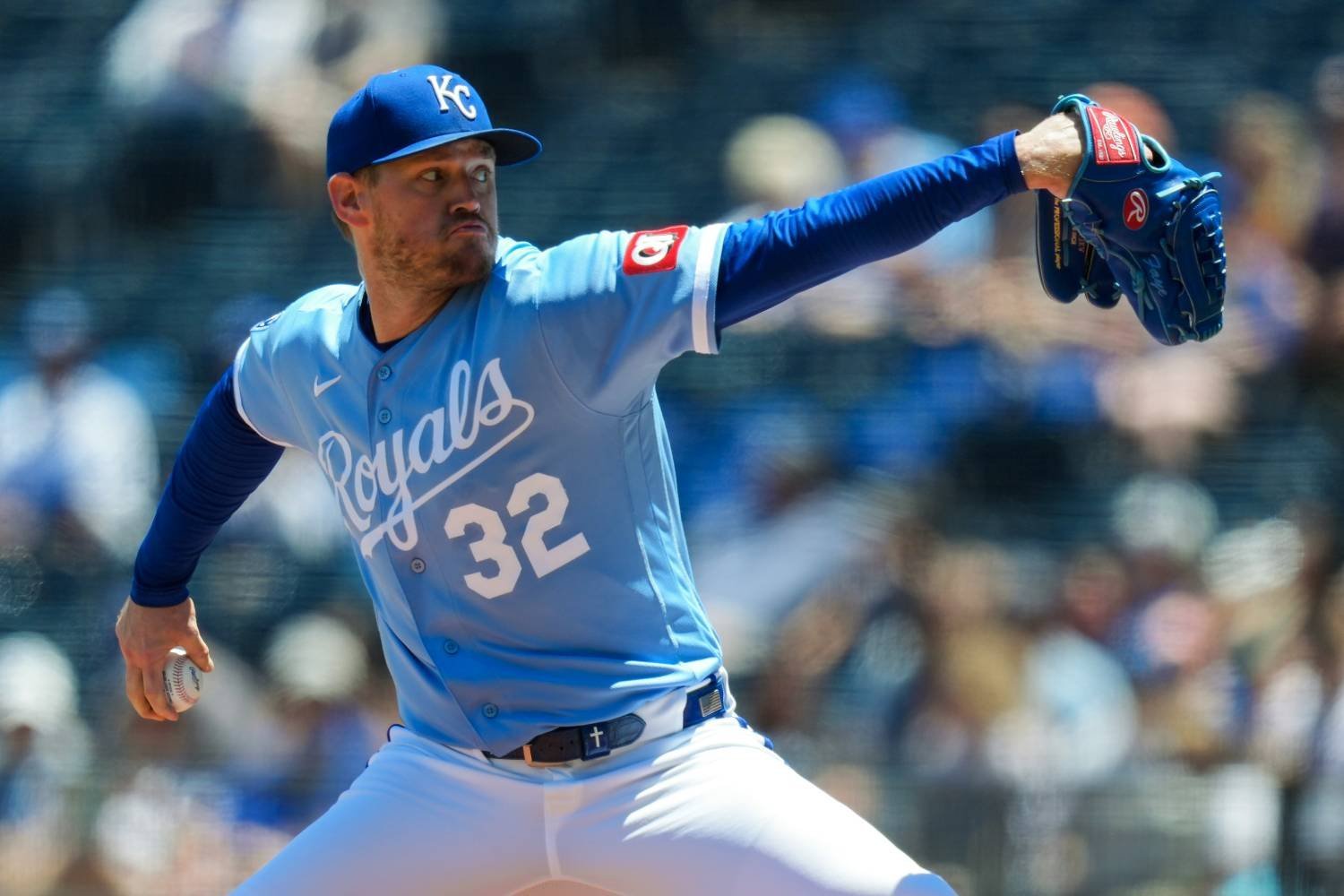 The Kansas City Royals will be without right-handed starter Stephen Kolek this weekend, but it is for a good reason. Kolek was placed on the paternity list Friday, with right-hander Mitch Spence called up from Triple-A Omaha. The paternity list allows a player to be away from the team for up to three days. Kolek, whose last start was Sunday, would have been due to start Friday's series opener against the Chicago White Sox. He still could return this weekend, but otherwise will be back when the Royals return home to start a three-game series against the Tampa Bay Rays. Spence is up for the third time this season. He made one start and one relief appearance in his previous call-ups, allowing 12 runs in eight innings on 11 hits and six walks. View the full article
 -
The Twins Might Have A Future Star Hiding In Plain Sight
DiamondCentric posted an article in Twins Daily
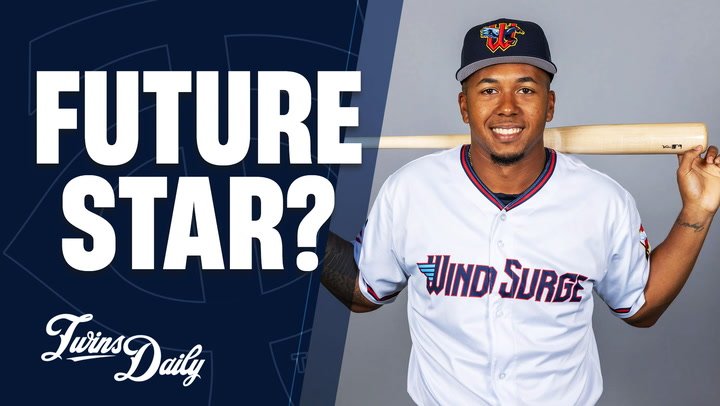 Hendry Mendez continues to excel against Triple-A pitching while showcasing one of the most advanced offensive profiles in the Twins' farm system. Just how high is his ceiling at the major league level? View the full article
 -
Tyrone Taylor Activated Off Mets' Injured List
DiamondCentric posted an article in Grand Central Mets
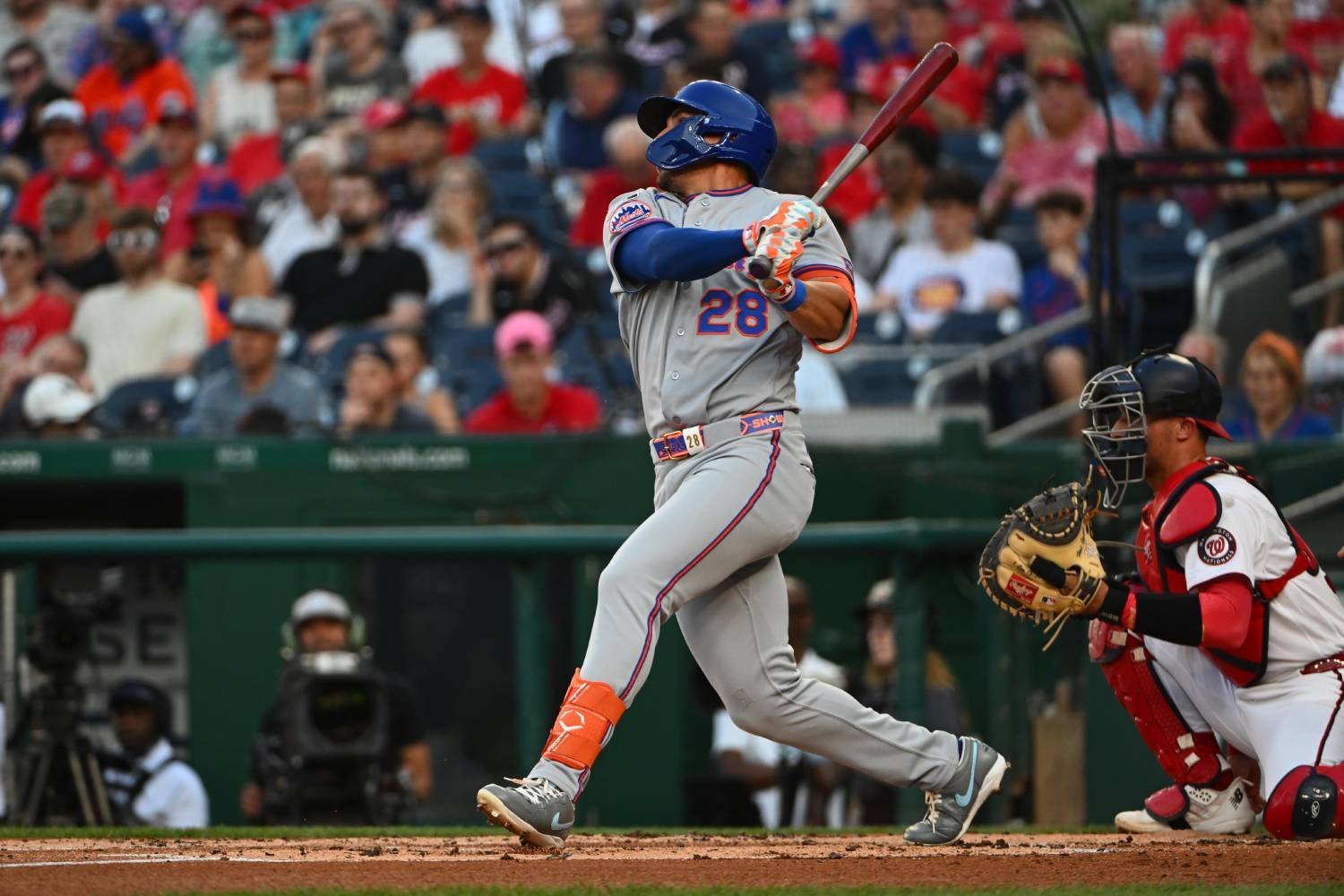 On a day in which they fired their manager, the New York Mets got one of their key bench players back from injury. Outfielder Tyrone Taylor was activated from the 10-day injured list Friday by the Mets, who also called up left-hander Zach Thornton from Triple-A Syracuse. Designated hitter MJ Melendez and right-handed reliever Daniel Duarte were optioned to Triple-A. Thornton is likely to start Friday's series opener against the Philadelphia Phillies. Taylor has been sidelined since May 26 with a strained right hip flexor. Taylor returns to a Mets team in chaos following the firing of manager Carlos Mendoza and six straight losses. A good defender, Taylor is slashing just .186/.210/.320 with three homers and 14 RBIs in 43 games. Thornton started the season at Double-A Binghamton, was promoted to Triple-A Syracuse in early May and made his MLB debut two weeks later. Unfortunately, that experience did not go well as Thornton made a spot start and lasted just 4⅓ innings, giving up four runs on four hits, including a homer, with two walks and three strikeouts in an 8-4 loss to the Washington Nationals on May 20. He went back down a few days later. Melendez signed a split contract with the Mets in the offseason for $1.5 million and was called up in mid-April. Like other Mets hitters, he didn't do much offensively with a .192/.315/.350 slash line, hitting four homers and driving in 11 in 56 games. Duarte was up for the third time this season and has made just three appearances and pitched five innings, allowing no runs on one hit, one walk and three strikeouts. He had just been called up Thursday in case the Mets needed him for the finale of the Chicago Cubs series in which New York lost all four games. View the full article
 -
 Randy Holt and Steve Drumwright take a look back at the end of the Padres' nine-game road trip and a surprising sweep of Atlanta, then dive into the resurgence of Manny Machado over the last two weeks. After checking in on minor-league promotions, they look ahead to the big weekend series at Petco Park against the rival Dodgers and hitting the road to face the Chicago Cubs. Listen on Apple Podcasts: https://podcasts.apple.com/us/podcast/padres-mission-podcast/id1896922834 Listen on Spotify: https://open.spotify.com/show/033xclmydmbLmEp0exYuYz Listen on iHeartRadio: https://www.iheart.com/podcast/1333-padres-mission-podcast-336930560 Watch on YouTube: https://www.youtube.com/@padresmission View the full article
 -
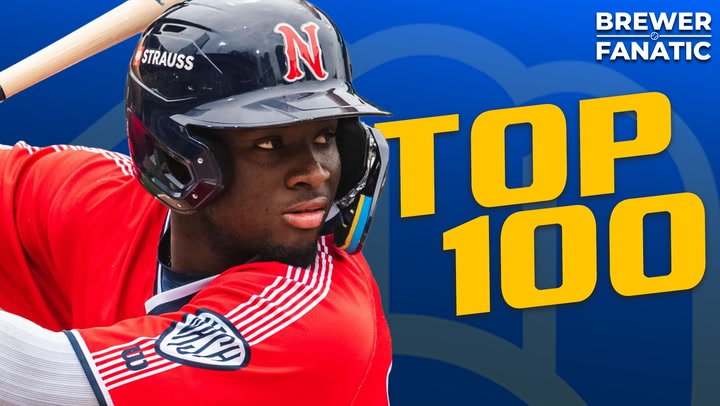 A top 100 prospect back in 2023, Luis Lara has played his way back onto the list with improvements across the board...most notably in the power department. View the full article
 -
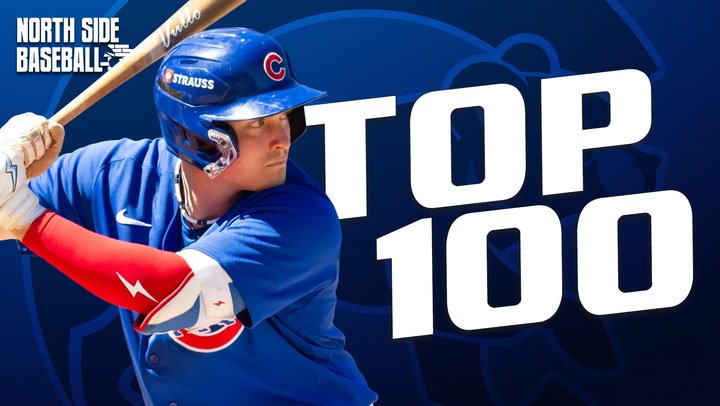 One of the top performers in the minor leagues this season, Josiah Hartshorn has shown no signs of slowing down in his pro debut, boasting advanced swing mechanics and some thump from both sides of the plate. View the full article
 -
 Boston Red Sox Affiliate Recap (June 25) Triple-A Worcester Red Sox Season Record: 36-38 The Worcester Red Sox led late but couldn't close it out, dropping a 3-2 decision to the Toledo Mud Hens (Detroit Tigers) in extra innings. Toledo struck first in the third inning with an RBI single, but Tyler McDonough flipped it in the fifth with a two-run homer to right (his fourth of the year), scoring Kristian Campbell, for a 2-1 Worcester lead that stood as both of the WooSox's only runs. Brayan Bello made his best start since being demoted from Boston to Worcester, going five innings on one run and five hits with six strikeouts. Jovani Morán made his first rehab appearance out of the bullpen, tossing a shutout sixth inning with two strikeouts. The bullpen couldn't hold it. Alec Gamboa was given a blown save after Toledo tied the game in the eighth on an RBI single, then took the lead in the 10th when a line drive single to center scored a run with Osvaldo Berrios on the mound. Worcester's offense went quiet to end the game, with all three batters striking out. The WooSox finished with just six hits, singles from Mikey Romero, Vinny Capra and Allan Castro plus Campbell's double, while striking out 14 times as a team against Toledo's staff. Standout Performances: Bryan Bello: 5 IP, 5 H, 1 ER, 2 BB, 6 K Tyler McDonough: 1-for-3, HR, R, 2 RBI, BB Double-A Portland Sea Dogs Season Record: 37-34 The Portland Sea Dogs broke the game open early and never looked back, rolling to a 7-1 win over the Hartford Yard Goats (Colorado Rockies) behind a balanced attack and a strong start from Gage Ziehl. Portland took control first, pushing across three runs in the second: a Marvin Alcantara RBI single, a Nelly Taylor sacrifice fly, and Ahbram Liendo's RBI double put the Sea Dogs up 3-0. The runs piled on more in the third for Portland, getting run-scoring hits from Nate Baez, Alcantara, and a two-run Caden Rose double, making it a 7-0 game. Alcantara did everything on offense with a 3-for-4 day, two RBIs, two stolen bases, and two runs scored. Franklin Arias stretched his multi-hit streak to five games with a 2-for-5 day, part of a 14-hit Portland effort that saw five different players with multiple hits. On the mound, Ziehl was dominant across 5 ⅔ scoreless innings to earn the win, allowing just four baserunners. Cooper Adams and Max Carlson finished it off; the only blemish was a solo homer Adams gave up in the seventh; other than that, it was an amazing night for Portland’s pitching staff. Standout Performances: Gage Ziehl: 5 ⅔ IP, 2 H, 0 ER, 1 BB, 3 K Marvin Alcantara: 3-for-4, 2 R, 2 RBI, 2 SB Nate Baez: 2-for-5, 2B, R, RBI High-A Greenville Drive Season Record: 30-39 The Greenville Drive battled back from a four-run deficit but could not complete the comeback, falling 7-6 to the Asheville Tourists (Houston Astros). Asheville got the first run across in the first inning with an RBI groundout; afterward, Justin Gonzales got the Drive on the board with a monster solo shot (his 10th of the season) to tie it 1-1 in the bottom half. The Tourists took back the lead with a two-run homer in the second, making it 3-1. Hudson White tied it up once again in the bottom half with a two-run double, briefly tying it 3-3. The third and fourth innings are where the Tourists pulled ahead, one run coming in the third with an RBI groundout, then extended their lead with a four-run fourth, aided by a throwing error to lead 7-3. Greenville kept clawing: Antonio Anderson's solo homer in the fourth and his RBI single in the fifth, sandwiched around a Ronny Hernandez sacrifice fly, trimmed it to 7-6. The Drive could not find the tying run, going hitless for the rest of the game as Asheville's bullpen slammed the door. Gonzales led the offense at 3-for-4, Anderson added two hits and two RBIs, but starter Jojo Ingrassia was tagged for seven runs (one unearned), putting his team in too big a hole to make a comeback. However, the bullpen is what gave Greenville a chance; Joe Vogatsky threw four shutout innings in relief with six punchouts, while Matt McShane came in after and tossed two shutout no-hit innings. Standout Performances: Joe Vogatsky: 4 IP, 2 H, 0 ER, 6 K Matt McShane: 2 IP, 0 H, 0 ER, 1 BB, 2 K Justin Gonzales: 3-for-4, HR, R, RBI, BB Antonio Anderson: 2-for-4, HR, R, 2 RBI Low-A Salem RidgeYaks Season Record: 27-44 The Salem RidgeYaks went toe-to-toe with the Myrtle Beach Pelicans (Chicago Cubs) all night before falling 5-4 in the ninth inning. Salem answered every Myrtle Beach push: after the Pelicans struck first in the third, Adonys Guzman and Anderson Fermin delivered RBI singles to flip it to 2-1, then Ilan Fernandez's run-scoring single put Salem back ahead 3-2 in the fourth. When Myrtle Beach surged to a 4-3 lead in the fifth, Guzman tied it again 4-4 with a sacrifice fly. The deadlock held until the top of the ninth, when the Pelicans doubled home the go-ahead run off Joey Gartrell, who took the loss. Salem couldn't answer in the bottom half, going three up and three down to end the game 5-4. Guzman paced the RidgeYaks with two RBIs, Skylar King had two hits in the leadoff spot, and starter Cole Tolbert was solid with three innings of one-run, four-strikeout ball. Nicolas De La Cruz kept it close, tossing 2 ⅓ scoreless innings, but Salem stranded just enough to come up a run short. View the full article
 -
 Boston Red Sox Affiliate Recap (June 25) Triple-A Worcester Red Sox Season Record: 36-38 The Worcester Red Sox led late but couldn't close it out, dropping a 3-2 decision to the Toledo Mud Hens (Detroit Tigers) in extra innings. Toledo struck first in the third inning with an RBI single, but Tyler McDonough flipped it in the fifth with a two-run homer to right (his fourth of the year), scoring Kristian Campbell, for a 2-1 Worcester lead that stood as both of the WooSox's only runs. Brayan Bello made his best start since being demoted from Boston to Worcester, going five innings on one run and five hits with six strikeouts. Jovani Morán made his first rehab appearance out of the bullpen, tossing a shutout sixth inning with two strikeouts. The bullpen couldn't hold it. Alec Gamboa was given a blown save after Toledo tied the game in the eighth on an RBI single, then took the lead in the 10th when a line drive single to center scored a run with Osvaldo Berrios on the mound. Worcester's offense went quiet to end the game, with all three batters striking out. The WooSox finished with just six hits, singles from Mikey Romero, Vinny Capra and Allan Castro plus Campbell's double, while striking out 14 times as a team against Toledo's staff. Standout Performances: Brayan Bello: 5 IP, 5 H, 1 ER, 2 BB, 6 K Tyler McDonough: 1-for-3, HR, R, 2 RBI, BB Double-A Portland Sea Dogs Season Record: 37-34 The Portland Sea Dogs broke the game open early and never looked back, rolling to a 7-1 win over the Hartford Yard Goats (Colorado Rockies) behind a balanced attack and a strong start from Gage Ziehl. Portland took control first, pushing across three runs in the second: a Marvin Alcantara RBI single, a Nelly Taylor sacrifice fly, and Ahbram Liendo's RBI double put the Sea Dogs up 3-0. The runs piled on more in the third for Portland, getting run-scoring hits from Nate Baez, Alcantara, and a two-run Caden Rose double, making it a 7-0 game. Alcantara did everything on offense with a 3-for-4 day, two RBIs, two stolen bases, and two runs scored. Franklin Arias stretched his multi-hit streak to five games with a 2-for-5 day, part of a 14-hit Portland effort that saw five different players with multiple hits. On the mound, Ziehl was dominant across 5 ⅔ scoreless innings to earn the win, allowing just four baserunners. Cooper Adams and Max Carlson finished it off; the only blemish was a solo homer Adams gave up in the seventh; other than that, it was an amazing night for Portland’s pitching staff. Standout Performances: Gage Ziehl: 5 ⅔ IP, 2 H, 0 ER, 1 BB, 3 K Marvin Alcantara: 3-for-4, 2 R, 2 RBI, 2 SB Nate Baez: 2-for-5, 2B, R, RBI High-A Greenville Drive Season Record: 30-39 The Greenville Drive battled back from a four-run deficit but could not complete the comeback, falling 7-6 to the Asheville Tourists (Houston Astros). Asheville got the first run across in the first inning with an RBI groundout; afterward, Justin Gonzales got the Drive on the board with a monster solo shot (his 10th of the season) to tie it 1-1 in the bottom half. The Tourists took back the lead with a two-run homer in the second, making it 3-1. Hudson White tied it up once again in the bottom half with a two-run double, briefly tying it 3-3. The third and fourth innings are where the Tourists pulled ahead, one run coming in the third with an RBI groundout, then extended their lead with a four-run fourth, aided by a throwing error to lead 7-3. Greenville kept clawing: Antonio Anderson's solo homer in the fourth and his RBI single in the fifth, sandwiched around a Ronny Hernandez sacrifice fly, trimmed it to 7-6. The Drive could not find the tying run, going hitless for the rest of the game as Asheville's bullpen slammed the door. Gonzales led the offense at 3-for-4, Anderson added two hits and two RBIs, but starter Jojo Ingrassia was tagged for seven runs (one unearned), putting his team in too big a hole to make a comeback. However, the bullpen is what gave Greenville a chance; Joe Vogatsky threw four shutout innings in relief with six punchouts, while Matt McShane came in after and tossed two shutout no-hit innings. Standout Performances: Joe Vogatsky: 4 IP, 2 H, 0 ER, 6 K Matt McShane: 2 IP, 0 H, 0 ER, 1 BB, 2 K Justin Gonzales: 3-for-4, HR, R, RBI, BB Antonio Anderson: 2-for-4, HR, R, 2 RBI Low-A Salem RidgeYaks Season Record: 27-44 The Salem RidgeYaks went toe-to-toe with the Myrtle Beach Pelicans (Chicago Cubs) all night before falling 5-4 in the ninth inning. Salem answered every Myrtle Beach push: after the Pelicans struck first in the third, Adonys Guzman and Anderson Fermin delivered RBI singles to flip it to 2-1, then Ilan Fernandez's run-scoring single put Salem back ahead 3-2 in the fourth. When Myrtle Beach surged to a 4-3 lead in the fifth, Guzman tied it again 4-4 with a sacrifice fly. The deadlock held until the top of the ninth, when the Pelicans doubled home the go-ahead run off Joey Gartrell, who took the loss. Salem couldn't answer in the bottom half, going three up and three down to end the game 5-4. Guzman paced the RidgeYaks with two RBIs, Skylar King had two hits in the leadoff spot, and starter Cole Tolbert was solid with three innings of one-run, four-strikeout ball. Nicolas De La Cruz kept it close, tossing 2 ⅓ scoreless innings, but Salem stranded just enough to come up a run short. View the full article
 -
 Chicago Cubs Transactions Chicago Cubs activated LHP Matthew Boyd from the 15-day injured list. Chicago Cubs designated RHP Yosver Zulueta for assignment. Chicago Cubs optioned RHP Gavin Hollowell to Iowa Cubs. Chicago Cubs optioned RHP Tyler Ferguson to Iowa Cubs. New York Mets traded LHP David Peterson to Chicago Cubs for 3B Cole Mathis. Pitching Collapse Sinks Iowa Against Buffalo Starter Corbin Martin lasted one and two-thirds innings, allowing two runs on one hit with one walk and two strikeouts to take the loss and fall to 0-2. The game unraveled from there. Doug Nikhazy followed with two and two-thirds innings, surrendering four runs on three hits while walking five and striking out four. The fifth inning was the back-breaker, as the Buffalo Bisons plated eight runs. Tyler Beede recorded just two outs in the frame and gave up six runs on five hits, including two home runs, as the deficit ballooned. Iowa's offense managed only six hits and stranded eight runners. James Triantos led the way, going 2-for-4 with the club's lone RBI, a ninth-inning single that scored Kevin Alcántara for the only Iowa run. Moisés Ballesteros, BJ Murray, Scott Kingery, and Ben Cowles each added a hit, and Alcántara reached on a walk and scored. Antoine Kelly offered two scoreless innings of relief and Eric Yang added a scoreless frame, but the damage was long done. Catcher Casey Opitz finished the game on the mound and allowed three runs in the ninth. Player AB R H RBI BB K Brett Bateman 4 0 0 0 0 1 Moisés Ballesteros 3 0 1 0 1 0 BJ Murray 4 0 1 0 0 1 Jonathon Long 4 0 0 0 0 2 Kevin Alcántara 3 1 0 0 1 2 Chas McCormick 2 0 0 0 1 1 Casey Opitz 1 0 0 0 0 0 James Triantos 4 0 2 1 0 1 Scott Kingery 4 0 1 0 0 0 Ben Cowles 4 0 1 0 0 1 Player IP H R ER BB K HR Corbin Martin 1 2/3 1 2 2 1 2 0 Doug Nikhazy 2 2/3 3 4 4 5 4 1 Tyler Beede 0 2/3 5 6 6 1 1 2 Antoine Kelly 2 1 0 0 0 2 0 Eric Yang 1 1 0 0 2 0 0 Casey Opitz 1 3 3 3 3 0 0 Netz Spins Six Scoreless As Smokies Handle Birmingham Dawson Netz turned in a quality start, working six scoreless innings on two hits with one walk and two strikeouts to earn the win and improve to 5-1. The Smokies gave him an early cushion. Owen Ayers opened the scoring with a leadoff home run, his 14th, in the first inning, and Hayden Cantrelle doubled home Ariel Armas in the second to make it 2-0. Knoxville broke it open in the seventh when Ed Howard launched a two-run homer, his first of the year, scoring Cantrelle. Birmingham answered with a run in the eighth, but the Smokies tacked on an insurance run in the ninth when Karson Simas grounded out to bring home Cantrelle. Cantrelle was the offensive standout, going 3-for-4 with two doubles, an RBI, and two runs scored. Ayers added a 2-for-3 day with a walk, and Howard drove in two. The bullpen finished the job behind Netz. Marino Santy fired one and two-thirds scoreless innings with three strikeouts, and Luke Little closed it with a scoreless ninth and two strikeouts. Tyler Ras allowed the only Birmingham run. Knoxville stranded six. Player AB R H RBI BB K Karson Simas 4 0 0 1 0 2 Jefferson Rojas 5 0 0 0 0 0 Owen Ayers 3 1 2 1 1 1 Alex Ramírez 4 0 0 0 0 1 Andy Garriola 4 0 0 0 0 1 Carter Trice 4 0 0 0 0 3 Ariel Armas 4 1 1 0 0 1 Hayden Cantrelle 4 2 3 1 0 0 Ed Howard 4 1 1 2 0 2 Player IP H R ER BB K HR Dawson Netz 6 2 0 0 1 2 0 Marino Santy 1 2/3 1 0 0 1 3 0 Tyler Ras 0 1/3 1 1 1 0 0 1 Luke Little 1 1 0 0 0 2 0 Bats Go Quiet As South Bend Falls To Quad Cities Mason McGwire took the loss in a four-inning start, allowing four runs on seven hits with two walks and four strikeouts to fall to 1-1. The Quad Cities River Bandits did most of their damage early, scoring three times in the second inning and adding a run in the third to build a 4-0 lead. South Bend's offense never found a rhythm, managing just four hits and stranding only four runners. The Cubs scratched across their lone run in the fifth, when Jose Escobar doubled home Matt Halbach. Halbach had doubled and scored, while Kane Kepley and Josiah Hartshorn each singled, and Angel Cepeda drew a walk. The bullpen had mixed results. JP Wheat was excellent, striking out three in a perfect inning, and Grayson Moore recorded the final out with a strikeout. Nate Williams allowed a run over two innings. Luis Rujano struggled, giving up three runs on two hits and four walks while recording five outs, as Quad Cities pulled away with three runs in the ninth to put the game out of reach. All in all there were still some good defensive plays through out the night. Player AB R H RBI BB K Kane Kepley 3 0 1 0 0 1 Angel Cepeda 3 0 0 0 1 2 Josiah Hartshorn 4 0 1 0 0 0 Matt Halbach 4 1 1 0 0 1 Jose Escobar 4 0 1 1 0 1 Miguel Useche 3 0 0 0 0 1 Alex Madera 3 0 0 0 0 1 Drew Bowser 3 0 0 0 0 2 Christian Olivo 3 0 0 0 0 1 Player IP H R ER BB K HR Mason McGwire 4 7 4 4 2 4 0 JP Wheat 1 0 0 0 1 3 0 Nate Williams 2 2 1 1 1 2 0 Luis Rujano 1 2/3 2 3 3 4 1 0 Grayson Moore 0 1/3 0 0 0 0 1 0 Hernandez Delivers In Ninth As Pelicans Edge Salem The Pelicans rallied for a one-run win, and Alexis Hernandez was the catalyst, going 3-for-5 with two doubles and two RBI, including the go-ahead double in the ninth that scored Alexey Lumpuy for the decisive run. Myrtle Beach and Salem traded blows all afternoon. Jairo Diaz tied the game at two with an RBI single in the fourth, and the Pelicans took the lead in the fifth on a Logan Poteet groundout that scored Lumpuy and a Michael Carico single that scored Hernandez for a 4-3 edge. Salem answered with a tying run in the bottom of the fifth, and the score held until Hernandez broke it open in the ninth. Starter Kaleb Wing opened with a scoreless first, allowing no hits with a walk and two strikeouts. David Bracho followed with three innings and gave up three runs. Edwardo Melendez blew a save, allowing one run over three innings while striking out three, before Emilio Ramos slammed the door with two scoreless innings and two strikeouts to pick up the win and move to 1-0. Diaz finished 2-for-4 with an RBI, and Lumpuy scored twice. Myrtle Beach stranded eight. Player AB R H RBI BB K Alexey Lumpuy 4 2 1 0 0 1 Alexis Hernandez 5 1 3 2 0 0 Eli Lovich 3 0 0 0 0 2 Logan Poteet 4 0 0 1 1 2 Michael Carico 3 1 1 1 1 1 Yahil Melendez 3 0 0 0 0 0 Derniche Valdez 3 0 0 0 1 2 Jairo Diaz 4 1 2 1 0 1 Darlyn De Leon 4 0 1 0 0 2 Player IP H R ER BB K HR Kaleb Wing 1 0 0 0 1 2 0 David Bracho 3 7 3 3 2 2 0 Edwardo Melendez 3 2 1 1 2 3 0 Emilio Ramos 2 0 0 0 1 2 0 Top-20 Prospect Performance Jefferson Rojas: 0-for-5 Jaxon Wiggins: DNP Pedro Ramirez: DNP Kevin Alcantara: 0-for-3, 2 K Josiah Hartshorn: 1-for-4 Ethan Conrad: DNP Kane Kepley: 1-for-3, K Jonathon Long: 0-for-4, 2 K James Triantos: 2-for-4, K Cole Mathis: DNP Owen Ayers: 2-for-3, HR, K Brooks Caple: DNP Juan Cabada: DNP Kaleb Wing: 1 IP, 0 H, 0 R, 1 BB, 2 K Angel Cepeda: 0-for-3, 2 K Dominick Reid: DNP Jostin Florentino: DNP Ty Southisene: DNP Will Sanders: DNP Brandon Birdsell: DNP View the full article
 -
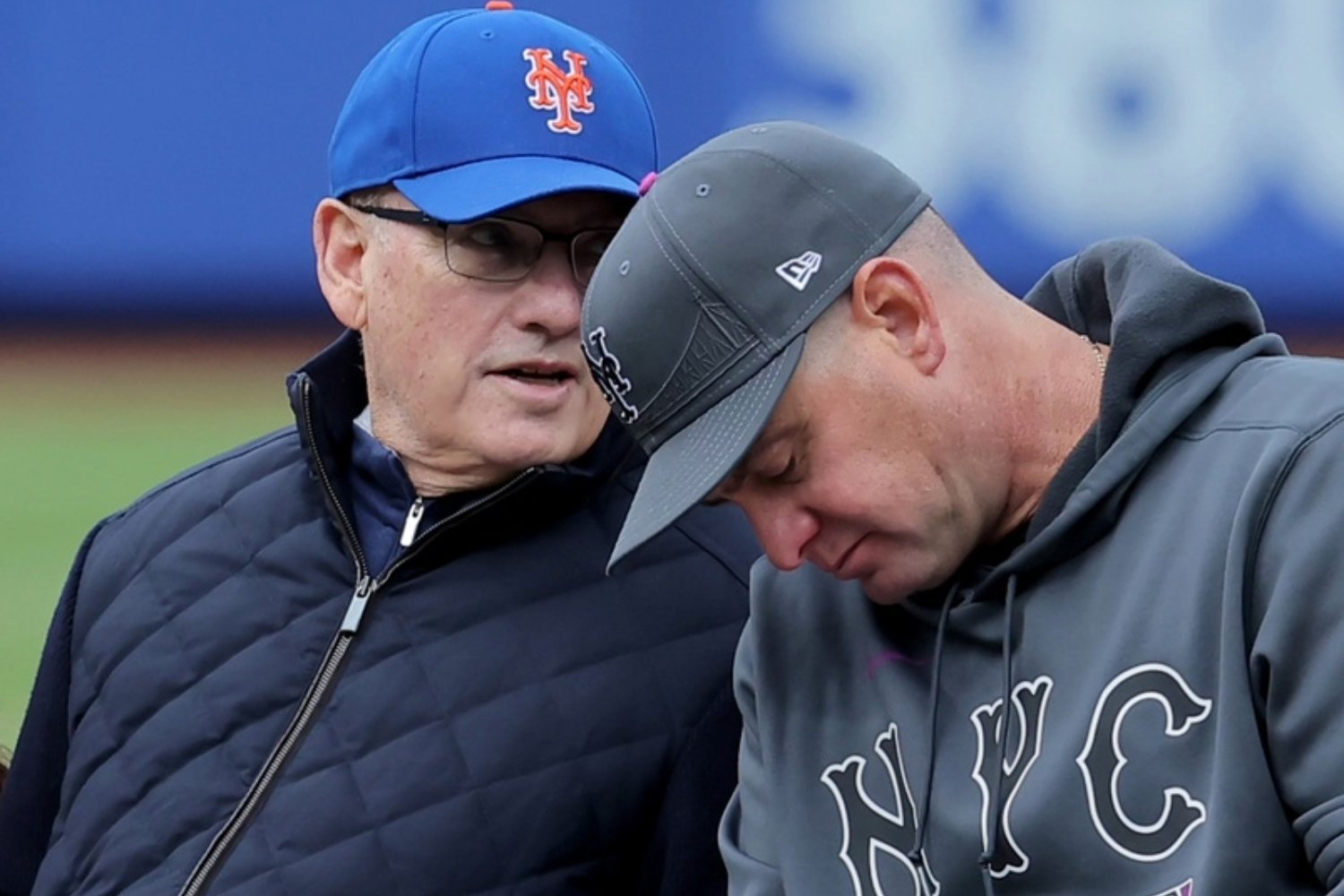 If there was ever a single series that served as a paradigmatic example of an entire season, the New York Mets' recent disaster against the Chicago Cubs is it. The pitching staff allowed 29 runs over the first three games of the set, including 15 RBIs in 24 hours to Dansby Swanson, who entered the series as the lowest-qualified hitter in terms of batting average in the league. Pete Crow-Armstrong continued to infuriate his original team, depositing home runs into right field and bunts over Bo Bichette's head at third base. And, somehow, the Mets couldn't muster enough offense to win any games against the league's most-injured pitching staff. The lowlight of the series, of course, was the six error embarrassment on Wednesday night. Yours truly was at that game, helplessly watching as the entire Mets infield -- on the same night that Gold Glove shortstop Francisco Lindor returned to action after two months away -- played and performed like a tee-ball squad. In a near-impossible feat, New York hit four home runs to Chicago's zero, and yet had their score doubled up by the time the final pitch was thrown. Those fielding miscues came back haunt the not-so-Amazins one night later, as the Mets lost 4-3... despite allowing zero earned runs. It's truly a boggling set of games when taken in a vacuum, but also a pointed reminder of just how flawed this roster is. Naturally, someone was going to have to take the blame for this, and it appears that skipper Carlos Mendoza will be the sacrificial lamb. That's all well and good -- Mendoza finishes his tenure in Queens with a 206-199 record, and he was almost certainly a goner after this season anyway considering the lame-duck status of his contract. If anything, one could argue that the team should have moved on after last year's second-half collapse, though that magical 2024 run clearly bought Mendoza a little time. In his stead, Andy Green, former manager of the San Diego Padres, will take over for the remainder of 2026. Over the past few years, his official title has been "Senior Vice President, Baseball Development." He'll be a steady-enough hand to guide this listless roster to the finish line, though anyone hoping that his arrival in the dugout can key a season-defining turnaround á la Don Mattingly in Philadelphia is kidding themselves. This roster is far too flawed to go anywhere but the bottom of the NL East. Which, of course, raises the question: What happens to the man who built said roster? David Stearns tore the whole operation apart last offseason in the name of "run prevention" and then promptly watched his pitching-and-defense squad repeatedly shoot itself in the foot all year. The Cubs series was as LOLMets as any set of games you'll ever see from this team, defined by a truly incompetent game plan and lethargic group of players on the diamond at the same time. Firing Mendoza for his part in that is fair, but does Stearns get a pass when he's the one who put Mendoza and those players in that position in the first place? Steve Cohen sold out to bring the architect of the Milwaukee Brewers to New York, but so far, all he has to show for it is a single trip to the NLCS and one of the two-most expensive rosters in baseball. This year's team, in particular, will go down in the annals of history given their historically large price tag and last-place performance. Giving Stearns the boot may not be the right path forward -- he did such a good job turning around a moribund franchise in Milwaukee -- but it does have to at least be considered. At least, it would, if the league weren't staring down the prospect of the most disruptive work stoppage since the 1994 World Series was canceled. Who knows how long the upcoming CBA negotiations will take, or what form the final ratified deal will assume, but what we do know is that both sides (the players and the owners) are preparing for a very long hiatus from the sport. That lockout (if it does happen) will begin on Dec. 1, which is just about two months after the regular season ends and only a month or so after the conclusion of the World series. When the Mets fired Mendoza, they effectively chose Stearns for the remainder of 2026. It just so happens that, with the lockout coming, they basically have two months to replace him between the end of the season and then. That is a tight turnaround timeline to overhaul the front office ahead of a historic change in the economics of the sport. Really, the question is: Do you trust Stearns to navigate the new economic world more than a guy you'll only be able to have in the building for roughly six weeks beforehand? Something tells me Mets fan won't like Cohen's answer to that query. View the full article
 -
 Binghamton was the lone New York Mets full-season minor-league affiliate to win on Thursday. The Rumble Ponies outslugged Erie on the road. Leadoff batter Jose Ramos paced the offense with three hits, including a home run, and two RBIs. Douglas Orellana earned the win, and Saul Garcia notched a save. Syracuse fell to Lehigh Valley, but Nate Lavender worked two scoreless innings of relief. Mitch Voit, Jamari Baylor, and Daiverson Garcia homered in Brooklyn's loss to Jersey Shore. St. Lucie lost to Fort Myers on a ninth-inning walk-off home run after tying the game in the top of the inning. Major league reliever Dedniel Nunez made a rehab start for St. Lucie. Mets Transactions New York Mets sent RHP Dedniel Núñez on a rehab assignment to St. Lucie Mets. New York Mets placed 2B Marcus Semien on the 10-day injured list. Left hip flexor strain. New York Mets traded LHP David Peterson to Chicago Cubs for 3B Cole Mathis. New York Mets recalled RHP Daniel Duarte from Syracuse Mets. New York Mets recalled SS Ronny Mauricio from Syracuse Mets. New York Mets optioned RHP Jonathan Pintaro to Syracuse Mets. Syracuse Responds Early, But Can't Hold Off Lehigh Valley Syracuse fell 7-3 to the Lehigh Valley IronPigs in Game 3 of their series. The IronPigs jumped ahead with two runs in the first, but Syracuse answered in the top of the second. Grae Kessinger's groundout scored Ryan Clifford, and then Ben Rortvedt followed with an RBI single that brought home Yonny Hernández to tie the game 2-2. Lehigh Valley regained the lead in the bottom of the second, then added single runs in the third and fourth, the latter on a bases-loaded walk, to build a 5-2 cushion. Syracuse snatched a run back in the seventh when Cristian Pache singled home Kessinger, but the IronPigs put the game away with two runs in the eighth. Nick Morabito paced the offense, going 2-for-3 with a double and a walk. Pache added two hits, an RBI, and a stolen base. Adbert Alzolay opened as the Mets went with a bullpen game. He allowed the IronPigs' two runs in the first. Ryan Lambert took the loss after surrendering the go-ahead run in the second. Nate Lavender was the lone bright spot on the mound, striking out three over two scoreless innings. Player AB R H RBI BB K Jihwan Bae 4 0 0 0 0 2 Vidal Bruján 4 0 0 0 0 0 Nick Morabito 3 0 2 0 1 0 Ryan Clifford 4 1 1 0 0 2 Yonny Hernández 4 1 0 0 0 0 Grae Kessinger 4 1 1 1 0 0 Ben Rortvedt 4 0 1 1 0 1 Cristian Pache 4 0 2 1 0 1 Kevin Parada 3 0 0 0 1 2 Player IP H R ER BB K HR Adbert Alzolay 1 3 2 2 0 0 0 Ryan Lambert 1 2 1 1 0 2 0 Dan Hammer 1 1 1 0 1 2 0 Tanner Witt 1 2/3 2 1 1 3 2 0 Guillo Zuñiga 1/3 0 0 0 0 0 0 Nate Lavender 2 1 0 0 0 3 0 Dylan Ross 1 2 2 2 2 0 0 Binghamton's Big Third Inning Fuels Win Binghamton pounded out 15 hits as it outscored the Erie SeaWolves 10-7 in a game shortened to 8 1/2 innings because of rain. The Rumble Ponies broke an early tie with four runs in the top of the third inning. Vincent Perozo singled home Jose Ramos, Jaylen Palmer doubled in Vincent Perozo and Matt Rudick, and Kevin Villavicencio followed with an RBI single that scored Jaylen Palmer to give Binghamton a 5-1 lead. Erie answered with three in the bottom of the third, but Nick Lorusso hit a solo home run in the fourth to make it a 6-4 game. Binghamton pushed across two more in the seventh when Lorusso reached on an error that scored Kevin Villavicencio and Nick Lucky. After Erie cut the lead to 8-7 on a home run in the bottom of the seventh, Ramos provided insurance for Binghamton with a two-run home run in the ninth. Lucky led the way at the plate, going 4-for-5 with an RBI. Ramos finished 3-for-6 out of the leadoff spot, adding a double to his home run.. Starter Brendan Girton failed to qualify for the win. He allowed four runs (three earned).and five hits over 3 2/3 innings, walking three and striking out three. Douglas Orellana earned the win in relief, allowing a run over 1 1/3 innings.. Saul Garcia got the final out in the bottom of the eighth and was credited with the save after the game was called. Player AB R H RBI BB K Jose Ramos 6 2 3 2 0 2 Nick Lorusso 5 1 2 1 1 0 JT Schwartz 6 0 2 0 0 1 Vincent Perozo 4 1 1 1 0 2 Matt Rudick 3 1 0 0 2 2 Jaylen Palmer 4 2 2 2 1 1 Kevin Villavicencio 5 1 1 1 0 0 Nick Lucky 5 1 4 1 0 1 Nick Roselli 4 1 0 0 1 0 Player IP H R ER BB K HR Brendan Girton 3 2/3 5 4 3 3 3 0 Douglas Orellana 1 1/3 1 1 1 1 1 0 Jordan Geber 1 2 0 0 0 2 0 Zach Peek 1 2/3 3 2 2 0 2 1 Saul Garcia 1/3 0 0 0 0 0 0 Cyclones Go Deep Three Times But Fall To Jersey Shore Brooklyn lost 7-5 to the Jersey Shore BlueClaws despite hitting three home runs. The Cyclones grabbed an early lead in the third when Yonatan Henriquez scored on an error, but the BlueClaws answered with three runs in the top of the fifth to go up 3-1. Brooklyn responded in the bottom of the fifth with a solo homer by leadoff man Mitch Voit, but Jersey Shore stretched the margin to 5-2 in the sixth with a pair of runs. Jamari Baylor homered in the eighth to keep the Cyclones within reach. After the BlueClaws added two runs in the top of the ninth, Daiverson Gutierrez launched a two-run home run in the bottom half for the final margin. Henriquez went 3-for-5 with two runs scored and two stolen bases to lead the offense. Starter Noah Hall struck out seven but also allowed five runs (three earned), six hits, and two walks over 5 1/3 innings as he took the loss. Bryce Jenkins and Ryan Dollar were sharp in relief, combining for 2 2/3 scoreless frames with six strikeouts. Player AB R H RBI BB K Mitch Voit 4 1 1 1 1 1 Yonatan Henriquez 5 2 3 0 0 1 JT Benson 4 0 0 0 1 2 Corey Collins 4 0 1 0 0 1 Daiverson Gutierrez 5 1 1 2 0 1 Trace Willhoite 4 0 0 0 0 1 Jamari Baylor 4 1 2 1 1 1 Sam Biller 2 0 0 0 1 1 Yohairo Cuevas 3 0 0 0 1 1 Player IP H R ER BB K HR Noah Hall 5 1/3 6 5 3 2 7 1 Bryce Jenkins 1 2/3 0 0 0 2 3 0 Ryan Dollar 1 0 0 0 0 3 0 Cristofer Gomez 2/3 1 2 2 3 2 0 Hunter Hodges 1/3 0 0 0 0 0 0 St. Lucie Rallies To Tie, Then Loses On Walk-Off Homer St. Lucie lost 7-6 to the Fort Myers Mighty Mussels on a walk-off home run in the bottom of the ninth off Miguel Mejias.. Mejias got the first out in the inning before serving up the game-ending blast. St. Lucie erased an early 2-0 deficit with three runs in the top of the fourth. Julio Zayas singled home Branny De Oleo, Simon Juan singled home Zayas, and Chase Meggers doubled home Juan to put tne Mets up 3-2.. Fort Myers answered with four runs in the bottom of the fourth, aided by a throwing error. St. Lucie got an RBI groundout from Trey Snyder in the eighth to make it 6-4, and then Branny De Oleo singled home Juan and Meggers in the ninth to tie the game 6-6. De Oleo had a big night at the plate, going 3-for-5 with two RBIs and two stolen bases. Juan and Meggers added two hits apiece. Starter Dedniel Núñez, who was sent to St. Lucie from New York for a rehab assignment, allowed two unearned runs in two-thirds of an inning. He threw 20 pitches as he took the next step in his recovery from Tommy John surgery. Joel Lara came on in the third for bulk relief and allowed four runs (three earned) over 3 2/3 innings. He struck out four. Christian Rodriguez followed with 2 1/3 scoreless innings with three strikeouts. Player AB R H RBI BB K Branny De Oleo 5 1 3 2 0 0 Jeremy Rodriguez 4 0 1 0 0 3 Trey Snyder 4 0 0 1 0 2 Julio Zayas 4 1 1 1 0 1 Simon Juan 4 2 2 1 0 1 Chase Meggers 4 1 2 1 0 1 Taylor Darden 4 0 0 0 0 2 Jackson Hauge 4 0 0 0 0 0 Jack Scanlon 2 1 1 0 1 0 Elian Peña 0 0 0 0 1 0 Player IP H R ER BB K HR Dedniel Núñez 2/3 2 2 0 0 1 0 Tyler McLoughlin 1 1/3 0 0 0 1 2 0 Joel Lara 3 2/3 2 4 3 2 4 0 Christian Rodriguez 2 1/3 1 0 0 2 3 0 Miguel Mejias 1/3 1 1 1 0 0 1 Top-20 Prospect Performance Carson Benge: MLB A.J. Ewing: MLB Jonah Tong: DNP Elian Pena: 0-for-0, BB Jack Wenninger: DNP Ryan Clifford: 1-for-4, 2 K Jacob Reimer: DNP Nick Morabito: 2-for-3, 2B, BB Mitch Voit: 1-for-4, HR, RBI, BB, K Jonathan Santucci: DNP Chris Suero: DNP Zach Thornton: DNP Wandy Asigen: DNP Will Watson: DNP Eli Serrano III: DNP Randy Guzman: DNP Ryan Lambert: 1 IP, 2 H, 1 R, 1 ER, 2 K, L Dylan Ross: 1 IP, 2 H, 2 R, 2 ER, 2 BB Antonio Jimenez: DNP R.J. Gordon: DNP View the full article
 -
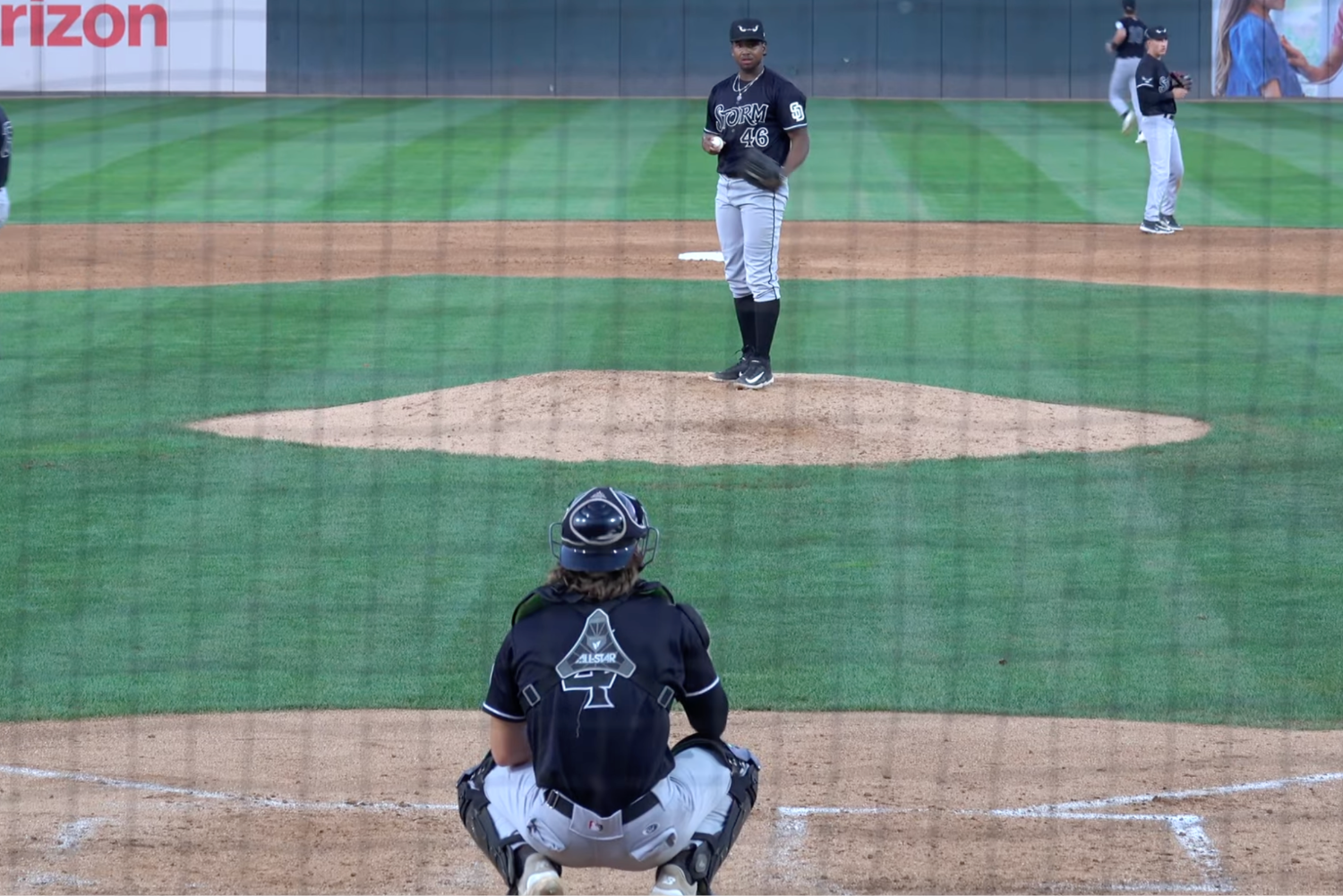 I admit our Padres Mission Top 20 prospects are a work in progress, with a couple names I like still missing from this list or not as high as they should be. I'm left scratching my head at where fans have placed a couple others (is the fan base in Fort Wayne stuffing the ballot box???). Anyways, we didn't have a lot of movement in this update as we did last month, which is why I consider it progress as we rank San Diego Padres prospects. Thanks to everyone who voted! (Scroll past the two new players to see the full list.) We have two new entries with this update and, up until a few days ago, they were teammates. No. 15: Jesus Castro, RHP, Low-A Lake Elsinore Storm Bats-throws: Left-Right Age: 19 Acquired: Signed as international free agent in January 2025 (Mexico). He just turned 19 at the beginning of the month, yet the 5-foot-11 right-handed starter has proven to be very reliable in his brief time in the Padres' system. Last year in the Dominican Summer League, Castro pitched 43⅓ innings over 11 games (eight starts) with a 5.9% walk rate and 27.1% strikeout rate to go along with a .194 opponent average. Going up to full-season ball this year at Low-A Lake Elsinore, Castro has already made 11 starts and is at 48 innings, with his walk rate up a bit at 8.1% and strikeouts rate at a very similar 26.8%. His opponent average has also climbed to .265. He had a career-high 12 strikeouts June 10 vs. Ontario. Castro won't blow you away, as he makes a living by generating a lot of movement on his pitches. His four-seamer sits at 92 mph, yet has 19 inches of arm-side run, and a 77 mph slider that moves 17 inches to the glove side with a low arm slot. Castro is the younger brother of another Padres prospect, Manuel Castro, who is on the injured list at Double-A San Antonio. No. 20: Winyer Chourio, RHP, High-A Fort Wayne TinCaps Bats-throws: Right-Right Age: 22 Acquired: Signed as international free agent in May 2024 (Venezuela). The 6-foot-2 right-handed starter was the ace of a Storm team that won the first-half South Division championship in the California League, which earned him a promotion to High-A Fort Wayne. In 12 appearances, the last 11 bing starts, Chourio pitched 51⅔ innings with an 11.7% walk rate and a robust 34.6% strikeout rate. His 74 punchouts rank second in the Cal League. He had a career-high 10 strikeouts May 10, then followed that up with nine more punchouts in his next start. This season is a total breakout after he put up a combined 6.34 ERA in 21 games (five starts) in 2025 between the Arizona Complex League and Lake Elsinore (nine games, two starts). Chourio has improved the quality of his pitches in 2026, which is reason for his improved performance. His fastball is up a tick to 93 mph and has more life, while his curveball is at 75 mph and has more purpose after utilizing a loopy breaker previously. He also has a nice changeup in the mid-80s that should help him remain a starter as he climbs the ladder. New Padres Mission Top 20 Prospects (June 2026) Ethan Salas, C Kash Mayfield, LHP Miguel Mendez, RHP Ryan Wideman, CF Kruz Schoolcraft, LHP Jorge Quintana, SS Ty Harvey, C Kale Fountain, OF Braedon Karpathios, OF Jagger Haynes, LHP Lamar King Jr., C Tucker Musgrove, RHP Truitt Madonna, C Alex McCoy, OF Jesus Castro, RHP Rosman Verdugo, SS Garrett Hawkins, RHP Eric Yost, RHP Michael Salina, RHP Winyer Chourio, RHP View the full article
 -
Royals Minor League Report (6/25): Royals Farm Sweeps The Slate
DiamondCentric posted an article in Royals Keep
 Three Royals affiliates won on the same night. David Shields fired six one-run innings with seven strikeouts as Quad Cities routed South Bend, 8-1. Randy Dobnak turned in a quality start, and Omaha rallied past Columbus, 6-3, behind Matthew Lugo's two-run homer. Josh Hammond went 4-for-4, and Sean Gamble drove in three as Columbia beat Kannapolis, 7-3, with Coleman Picard closing on 3 1/3 hitless innings. Northwest Arkansas' game against Springfield was rained out. Royals Transactions No Roster Moves Late Rally Carries Storm Chasers Past Columbus The Omaha Storm Chasers scored three runs in the eighth inning to break a tie and beat the Columbus Clippers, 6-3. Dobnak worked 6 1/3 innings, allowing three runs on eight hits with no walks and five strikeouts for a quality start. Omaha grabbed the early lead in the first when Lugo hit a two-run home run that scored Brett Squires for a 2-1 advantage. Columbus answered with two runs in the third to lead 3-2, and Omaha tied it in the fifth on a Peyton Wilson run-scoring single that brought home Gavin Cross. The Storm Chasers took control in the eighth. Drew Waters doubled to drive in Rudy Martin Jr. for a 4-3 lead, and Brandon Drury followed with a two-run single that scored Lugo and Waters to make it 6-3. Eli Morgan earned the win with a scoreless eighth, and Eric Cerantola closed the ninth for his eleventh save, striking out two. Brett Squires led the offense, going 3-for-4 with a double. Lugo finished with two RBIs, two runs, and a walk, while Gavin Cross added two hits. Omaha left six runners on base and went 3-for-7 with runners in scoring position. The Storm Chasers are now 35-42. Player AB R H RBI BB K Abraham Toro 4 0 1 0 0 0 Peyton Wilson 4 0 1 1 0 3 Brett Squires 4 1 3 0 0 1 Rudy Martin Jr. 0 1 0 0 0 0 Andrew Velazquez 0 0 0 0 0 0 Matthew Lugo 2 2 1 2 1 1 Drew Waters 4 1 1 1 0 1 Brandon Drury 4 0 1 2 0 2 Luca Tresh 4 0 0 0 0 1 Gavin Cross 3 1 2 0 1 0 Kevin Newman 3 0 0 0 1 0 Player IP H R ER BB K HR Randy Dobnak 6 1/3 8 3 3 0 5 1 Génesis Cabrera 2/3 1 0 0 0 0 0 Eli Morgan 1 1 0 0 1 2 0 Eric Cerantola 1 0 0 0 1 2 0 David Shields Dominates As Quad Cities Tops South Bend Shields turned in a dominant start as the Quad Cities River Bandits beat the South Bend Cubs, 8-1. Shields worked six innings, allowing one run on three hits with one walk and seven strikeouts for a quality start. Mason Miller followed with two scoreless innings and two strikeouts, and Yimi Presinal finished with a scoreless ninth. Quad Cities built its lead with a three-run second inning. Erick Torres drew a bases-loaded walk that scored Luke Pelzer, Connor Rasmussen grounded into a force out that brought home Derlin Figueroa, and Asbel Gonzalez followed with a run-scoring single that plated Tyriq Kemp for a 3-0 lead. The Bandits added a run in the third on a Torres sacrifice fly double play that scored Ramon Ramirez, and Pelzer drove in Blake Mitchell with a groundout in the seventh. Quad Cities pulled away with three runs in the ninth, two of them on bases-loaded walks to Kemp and Torres. Gonzalez led the offense, going 3-for-5 with a stolen base from the leadoff spot. Pelzer added three hits, a walk, and two runs, and Torres finished with three RBIs and two walks. The River Bandits left ten runners on base and went 4-for-15 with runners in scoring position. Quad Cities improved to 31-37. Player AB R H RBI BB K Asbel Gonzalez 5 1 3 1 0 0 Blake Mitchell 4 2 1 0 1 2 Ramon Ramirez 4 1 0 0 1 2 Luke Pelzer 4 2 3 1 1 0 Derlin Figueroa 5 1 2 0 0 2 Tyriq Kemp 4 1 1 1 1 2 Erick Torres 2 0 1 3 2 0 Connor Rasmussen 4 0 0 2 1 1 Trevor Werner 4 0 0 0 1 2 Player IP H R ER BB K HR David Shields 6 3 1 1 1 7 0 Mason Miller 2 1 0 0 0 2 0 Yimi Presinal 1 0 0 0 0 1 0 Josh Hammond, Sean Gamble Power Columbia Past Kannapolis The Columbia Fireflies pulled away with a three-run sixth inning and beat the Kannapolis Cannon Ballers, 7-3. Shane Van Dam picked up the win, allowing two runs, one earned, on three hits with two walks and two strikeouts over five innings. Picard closed the game with 3 1/3 scoreless and hitless innings, striking out three to earn his first save. Columbia trailed 1-0 after an unearned run in the first before taking the lead in the third. Gamble laced a two-run triple that scored Ivan Sosa and Hammond, and Hyungchan Um followed with a run-scoring groundout that brought home Gamble for a 3-1 advantage. The Fireflies broke the game open in the sixth. Jhosmmel Zue singled home Yandel Ricardo, Ivan Sosa added a run-scoring groundout, and Josh Hammond singled in Angel Ramirez to push the lead to 6-2. Gamble capped the scoring with a run-scoring single in the ninth. Hammond led the offense, going 4-for-4 with a double and a stolen base from the leadoff spot and scoring twice. Gamble finished with three RBIs, and Ricardo added three hits, including two triples. Columbia left seven runners on base and went 7-for-18 with runners in scoring position. The Fireflies improved to 37-35 for the season. Player AB R H RBI BB K Josh Hammond 4 2 4 1 1 0 Sean Gamble 5 1 2 3 0 1 Hyungchan Um 4 0 0 1 1 3 JC Vanek 4 0 0 0 1 3 Yandel Ricardo 4 1 3 0 1 1 Roni Cabrera 3 0 0 0 1 1 Jhosmmel Zue 4 1 2 1 0 1 Angel Ramirez 4 1 0 0 0 1 Ivan Sosa 4 1 0 1 0 1 Player IP H R ER BB K HR Shane Van Dam 5 3 2 1 2 2 0 Yeri Perez 2/3 0 1 1 2 0 0 Coleman Picard 3 1/3 0 0 0 0 3 0 Top-20 Prospect Performance Kendry Chourio: DNP David Shields: 6 IP, 3 H, 1 R, 1 ER, 1 BB, 7 K Josh Hammond: 4-for-4, 2B Blake Mitchell: 1-for-4, 2B, 2 K Sean Gamble: 2-for-5, 3B, K Ramon Ramirez: 0-for-4, 2 K Drew Beam: DNP Carson Roccaforte: DNP Asbel Gonzalez: 3-for-5 Yandel Ricardo: 3-for-4, 2 3B, K Michael Lombardi: DNP Ben Kudrna: DNP Justin Lamkin: DNP Felix Arronde: DNP Blake Wolters: DNP Steven Zobac: DNP Austin Charles: DNP Daniel Vázquez: DNP Kamden Edge: DNP Warren Calcano: 0-for-1, 2 R, 4 BB View the full article
 -
 The guys recap an up-and-down road trip to Atlanta and Cincinnati, encouraging signs from Brandon Woodruff and Brandon Sproat, and Craig Yoho's future with the Brewers. Apple Podcasts: https://podcasts.apple.com/us/podcast/the-brewer-fanatic-podcast/id1740648724 Spotify: https://open.spotify.com/show/5CY8mWsQayqjDXqw9OT2Td iHeartRadio: https://www.iheart.com/podcast/263-the-brewer-fanatic-podcast-166534588/ Pocket Casts: https://pca.st/ommzz627 Watch On YouTube: https://www.youtube.com/@brewerfanatic View the full article
 -
Under New Ownership, Jake Cave Rebrands as Jacob Cave
DiamondCentric posted an article in Twins Daily
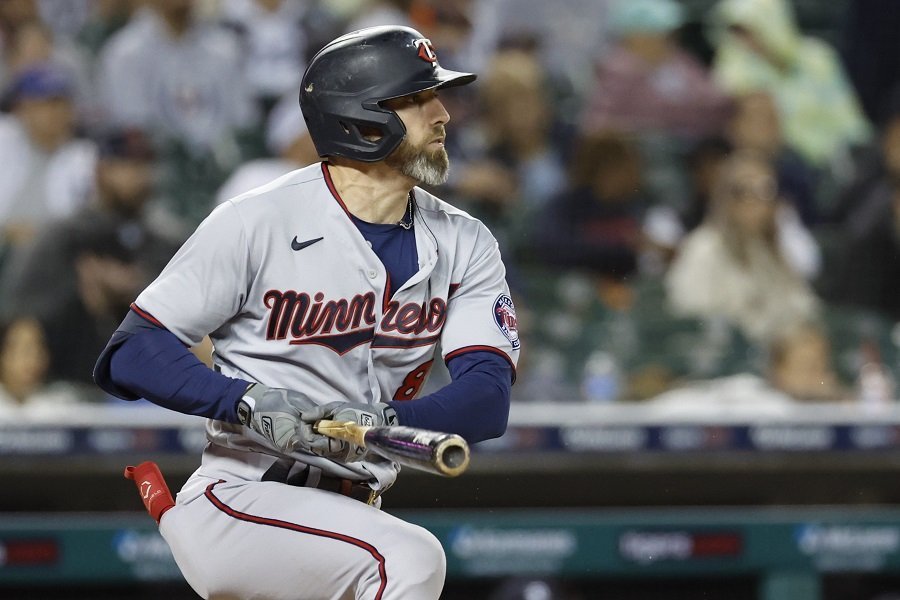 Jake Cave, the cave for Jakes, announced Thursday that it had been acquired by Silvestri & Bolin Holdings, and would now be known as Jacob Cave. "We've always been a cave for Jakes, and we'll never stop being that," said spokesperson Danyel Greer. "This new chapter will allow us to expand our reach and accept Jacobs as well. It's a brand-new day at Jacob Cave, the cave for Jakes and, for the first time, Jacobs." Located in the rolling Tennessee countryside near Chattanooga, the former Jake Cave is fed by natural spring water. It has provided a home for wayward and troubled Jakes since its discovery in the late 1800s. The rebranded Cave is best known to Twins fans for sharing a name with former Minnesota outfielder Jake Cave, who has been sent there multiple times, much to his chagrin. "Here at Jacob Cave, we provide Jakes and Jacobs in need with the skills, tutoring, and guidance they need to succeed in the modern world," said Greer. "It can be anything from trade skills to English as a second language to calisthenics. Jakes and Jacobs on the margins can re-enter society fully equipped to make their mark on the world." Greer would not comment on the fate of Mecha Jake, the cave's AI robot that has led to a number of lawsuits against the cave and likely led to its sale for below market value to Silvestri & Bolin. "We can't comment on an ongoing criminal investigation," said Greer. "Our hearts are with everyone at the kitten and puppy shelter as they sift through the rubble." Meanwhile, Jake Cave the player is currently on the roster of El Aguila de Veracruz in the Mexican League. Through his agent, Cave said, "I'm never going back there. You hear me? I'm never going back." When asked if Jacob Cave would accept Jakobs with a "k," Greer was resolute. "Jakobs with a 'k" aren't OK," said Greer. "That remains a bedrock company policy. They can get their own damn cave. Laggards and jackanapes, the lot of them. "They can go to hell." View the full article
 -
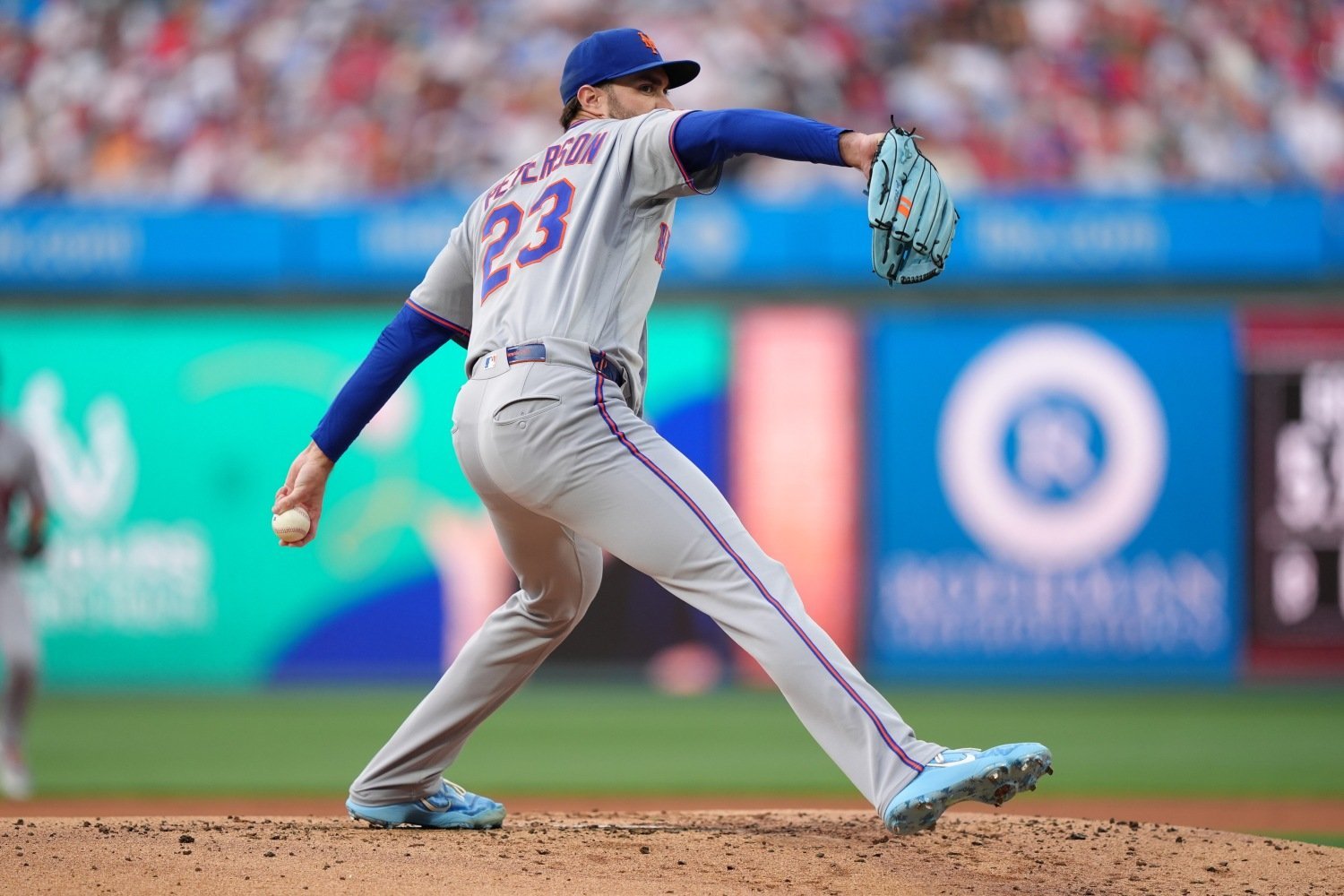 You don't have to squint to see David Peterson's appeal for the Chicago Cubs. Firstly, look at that pulse! You won't find it on the Savant sliders panel, but being a living, breathing pitcher who isn't injured is a tough box to check these days, it seems, and the Cubs found a guy who checks it. More seriously, though, Peterson is a lefty who throws 92 MPH; succeeds by missing barrels, not missing bats; and was available in a buy-low deal, despite the calendar not yet having flipped to July and most could-be trade partners still being focused on preparations for the draft. When Ben Brown and Edward Cabrera landed on the injured list simultaneously (with no imminent return looking likely for either), Jed Hoyer did what he had to do. That doesn't mean that Peterson was selected solely because of his availability, though, or even because of the natural cut on his four-seam fastball. Rather, the Cubs locked in on him because there are real reasons to believe he's better than the ugly 6.09 ERA he's posted in 16 appearances (only half of them starts) this year. First, let's talk about what's gone wrong. To do so, we can look at Statcast's new swing timing metrics, to spot the ways in which hitters are reacting differently to his stuff this year than last. Peterson's best pitch is his sinker, but that offering (his ticket to last year's All-Star roster) is getting pummeled in 2026. Against lefties, the problem seems to be a failure to bust them inside and get them to hit the top half of the pitch, as you can see most clearly in the righthand image below: Against righties, the problem is that Peterson hasn't been able to get batters looking up or in, thereby incuding contact off the end of the bat when he goes to the sinker. Instead, righties are centering that pitch up relentlessly. Peterson actually throws his four-seamer more than the sinker to righties, a sensible practice for any non-fireballing southpaw. This year, though, righties aren't fooled by that, either. He's actually getting in on the label with that cutting four-seamer a bit better than in the past, which could be good news. Unfortunately, paired with the batter being on time more consistently, rather than late, it's yielding good results for the batter, not for Peterson. When he's right, Peterson's slider is also a solid pitch, working across the plate to lefties and dipping below what a righty batter thinks they have lined up. This year, none of that is happening. A good left-on-left slider should have an opposing batter reaching, flailing, way early and over the top of the pitch. Peterson just isn't producing those swings nearly as well this season as he did when he had a small star turn last year. At this moment, it's fair to say that hitters have him figured out a bit. The Cubs can help him, though. For one thing, Peterson's slider is very much a gyro-style tight spinner, but it's taken on an unwelcome cement-mixer quality this season. He's throwing the pitch harder, but partially because of that, it's moving less. It has some dart to it, but it's lost depth. Here's the spin profile of his pitches for 2025, with the initial spin direction on the left and the actual movement direction on the right. Here's the same image for 2026: Peterson's slider feels much more like a cutter this year, and the result is a pitch that doesn't dominate lefties as well. If it looked a lot like the sinker and/or the four-seamer out of the hand, it could at least fool batters that way, but it does that (if anything) less well than a year ago. That seems like something a new pitching coach can help a pitcher restore in short order. A small mechanical fix might go a long way for Peterson. Even better, though, the Cubs have one of the league's best defenses to offer Peterson. He's had a below-average strikeout rate in each of the last three years, but he keeps the ball on the ground often and in the park nearly always. The Cubs saw, up close, just how bad the Mets' defense has been all season. The jump from that to the Cubs' phalanx should be very good for Peterson—and what's good for him will be good for the team. The upside on this acquisition is extremely low. Peterson will be a free agent this fall. He doesn't pound the zone the way you'd like to see a pitcher who doesn't strike batters out do so; that's part of his strategy to limit the damage done against his highly hittable stuff. He can't save the Cubs' season. If it's to be saved, that will be done by the team's offense and its defense. Peterson is a couple small adjustments from regaining the much better results he enjoyed last season, though. A restored slider would give him an edge in the fight to get batters off the barrel on his sinker. A bit of counseling from Tommy Hottovy should help him see a better way to utilize that cutting four-seamer in on righties. Mostly, Peterson needs to soak up innings. But the Cubs didn't grab him just to get those innings out of the way. They believe, rightly, that they can get him back into the shape of a credible backend starter, and that would check several boxes at once on the North Side. View the full article
 -
John Schreiber Could Make a Lot of Sense for the Nationals
DiamondCentric posted an article in Royals Keep
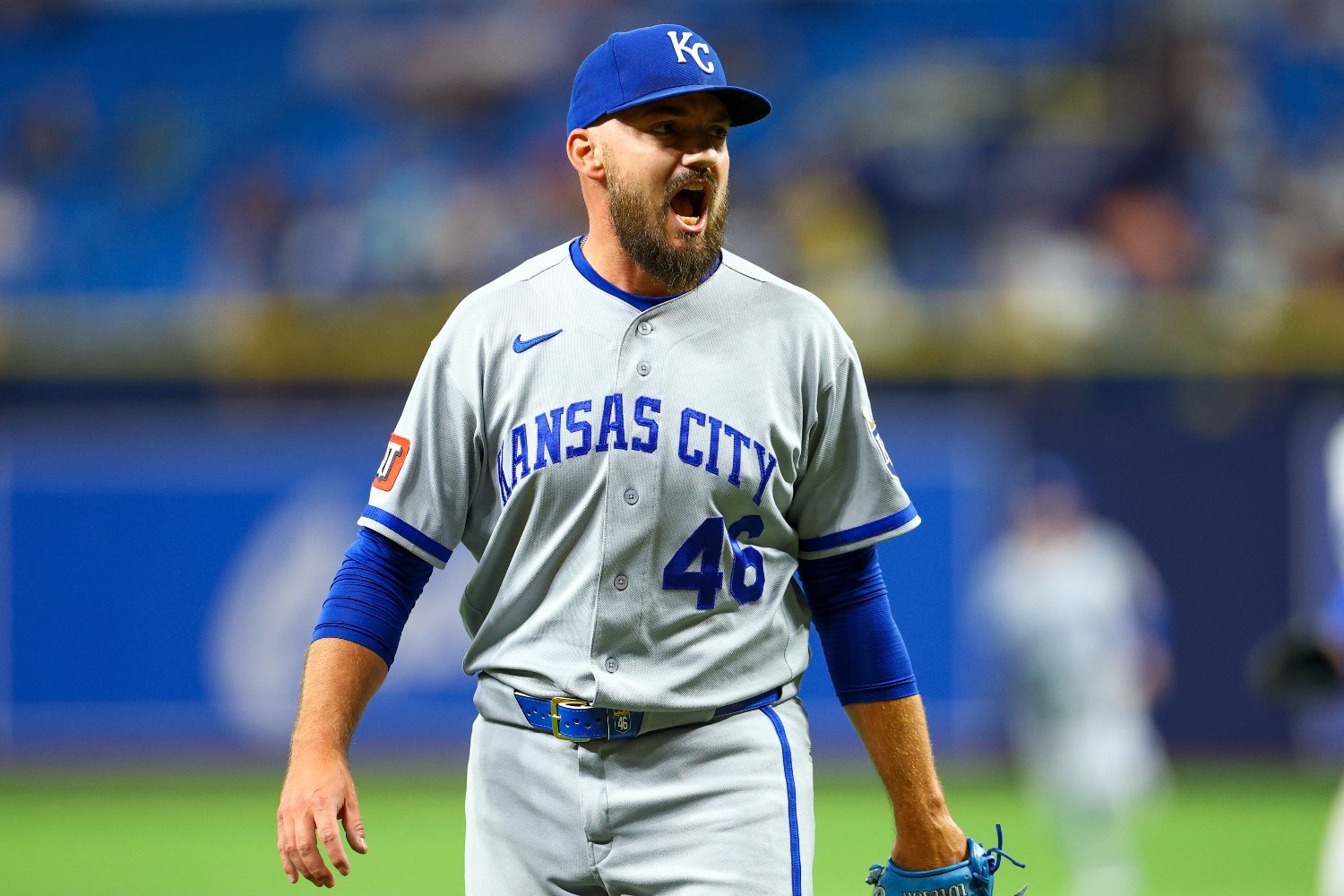 The Washington Nationals have been one of the most surprising teams in baseball in 2026. After letting go of general manager Mike Rizzo, the Nationals have cleaned house and begun anew under new President of Baseball Operations Paul Toboni. They hired Blake Butera as manager, made some key front-office and roster changes, and are now 41-40 as of June 25. Last season, they were 66-96 in Rizzo's last year as head of Nationals baseball operations. Washington has one of the best offenses in the league, which has been key to their surprising success. As of June 25, the Nationals rank 1st in runs scored, 2nd in stolen bases, and 4th in home runs and 4th in runs scored. The hitting has been led primarily by young stars such as outfielder James Wood, shortstop CJ Abrams, corner infielders Curtis Mead and Luis Garcia Jr., and outfielder Daylen Lile. All five players are 26 and under. Unfortunately, the pitching hasn't been great this year, with the bullpen being a particular area of struggle for the Nationals. According to Fangraphs, the Nationals rank last in pitching fWAR with a 0.5 mark. They rank 26th in ERA (4.70), 28th in xERA (4.96), and 29th in FIP (4.81). They have particularly struggled with the long ball as a staff, as their 13.3% HR/FB ranks 29th, better than only the Chicago Cubs (14.8%). The bullpen metrics alone are arguably even worse. The Nationals' bullpen ranks 27th in ERA (4.90), 29th in xERA (4.93), and 28th in FIP (4.93). In terms of bullpen fWAR, Washington ranks last in baseball with a -2.1 mark. They are slightly worse than the Royals, who rank 29th in reliever fWAR at -1.6. While the Royals do not have a ton of bullpen assets to offer, they do have one strong reliever who could make sense for the Nationals' bullpen: John Schreiber. After a slow start, Schreiber has put up one of his best seasons yet as a Kansas City reliever. In 34 games and 31.2 IP, he has a 2.56 ERA and 1.14 WHIP. The 32-year-old veteran hasn't been a strikeout machine by any means (19.2% K%), but he floods the strike zone, induces weak contact, and generates a lot of groundballs, as evidenced by his Statcast percentiles this season via TJ Stats. Now, the Nationals may not be buyers at the Trade Deadline. Toboni is in year one, and he's trying to rebuild the organization, which takes some time. While Washington is over .500, they are in a tough division, as they not only sit in second-to-last place in the NL East, but they only have 4.4% odds to make the postseason, according to Fangraphs. For context, the Royals, who are now 34-48 after today's 13-2 loss to the Rays, have 5.2% odds. Still, Washington has had some positive momentum, and it may be a good time to buy to build fan buy-in, especially after so many years of mediocrity since they last won the World Series in 2019. Without much great bullpen depth, the Nationals could acquire Schreiber to boost their reliever production and make a run for an NL Wild Card spot. Furthermore, the Royals could take advantage of the Nationals' reliever needs and perhaps get some much-needed prospect capital in return. Schreiber Has Been Excellent Since May 1 Schreiber has posted strong numbers this year, with an ERA under three. That's far better than what other key relievers have produced this year for Kansas City, such as Lucas Erceg (5.16) and Matt Strahm (6.20). However, it seems like Schreiber has tapped another level as a reliever since May 1. Since May 1, the former 15th-round pick has been the Royals' best reliever with a 1.35 ERA, 8.6 K/9, and 2.3 BB/9. Schreiber and newcomer Alex Lange have been the top Royals arms out of the bullpen over this nearly two-month sample. Lord, Beeter, and Orlando Ribalta are the only relievers with 10 or more appearances since May 1 with ERA marks under four. Mitchell Parker, Paxton Schultz, and Gus Varland all have 10 or more appearances over that same time frame, but they sport ERAs over 6. That is not effective, even for an offensive-first team. The Nationals wouldn't need Schreiber to come in and be their closer. It seems like Beeter can handle that situation just fine (and his 2.69 xERA and 2.58 FIP hint that better days are ahead). That said, Schreiber could be an effective 7th or 8th-inning setup man that could lock down in high-leverage situations. That gives the Nationals bullpen more weapons in the transition to Beeter in the ninth. Who Could the Royals Get From the Nationals? Schreiber is not going to command a great prospect package from Washington. After all, he's a reliever, and he's a free agent next year who likely wouldn't return to D.C. While I don't think Schreiber would command a top prospect, he could help the Royals net a "turnaround" project or two in return. Two names that could be included in a Schreiber deal are outfielder Robert Hassell III and pitcher Andry Lara. Both are post-hype prospects who have failed to do much in the Majors and are currently languishing in Triple-A. Hassell is the more high-profile of the two. He was one of the prized prospects in the Juan Soto trade with the Padres, but he hasn't hit enough to be a relevant player at the Major League level. In 70 games and 206 plate appearances last season, Hassell hit .223 with a 58 wRC+. He was plagued by a 30.1% K% and 3.9% BB% with the Nationals a year ago. In Triple-A this year, he's hitting .224 with a 67 wRC+ in 228 plate appearances. Thus, he's not due for a call-up anytime soon, especially with a 26.3% K%. However, he has shown some intriguing skills in his Statcast profile in Triple-A this season. That makes one wonder if he could thrive in a new change of scenery. Hassell barrels the ball at a decent rate (6.6%), and the average EV and LA Sweet-Spot% ranked in the 60th percentile or above. At 24 years old, he's too young to give up on, but he seems like a superfluous asset for the Nationals right now. Conversely, the Royals could give Hassell a chance in CF as soon as this year, especially with Kyle Isbel out for an extended period of time. The same story is true for Lara on the pitching end. Lara was ranked as the 27th-best prospect in the Nationals system in 2024, according to Fangraphs. He's primarily been utilized as a starter for Triple-A Rochester, with 13 starts (14 appearances) and 64.1 IP. The sample hasn't been great, as he has a 5.60 ERA, but his 5.02 FIP and 4.97 xFIP are more encouraging marks. He also demonstrated solid grades on the splitter and sinker, and they seem to generate soft contact well, based on xwOBACON. Lara made his MLB debut with the Nationals last year and posted an 8.79 ERA in nine outings and 14.1 IP. While his 5.44 FIP was better, he struggled with command, as evidenced by his 12.8% K% and 1.25 K/BB ratio. Thus, he doesn't seem to fit in either the Nationals' rotation or bullpen at this time. Still, he seems like a pitcher who could benefit from a change of scenery and a change in pitch mix. The Royals have successfully tweaked or added pitches to struggling pitchers' repertoires, with varying degrees of success. Lara seems like another candidate. Maybe throw the sinker and splitter more and four-seamer less? Add a changeup or sweeper into the mix? With those changes, it's easy to see Lara see a spike in positive production as a member of the Royals. Would Schreiber be enough for Hassell and Lara? That's hard to tell, but it's a conversation worth having between Toboni and Royals President of Baseball Operations JJ Picollo. View the full article
 -
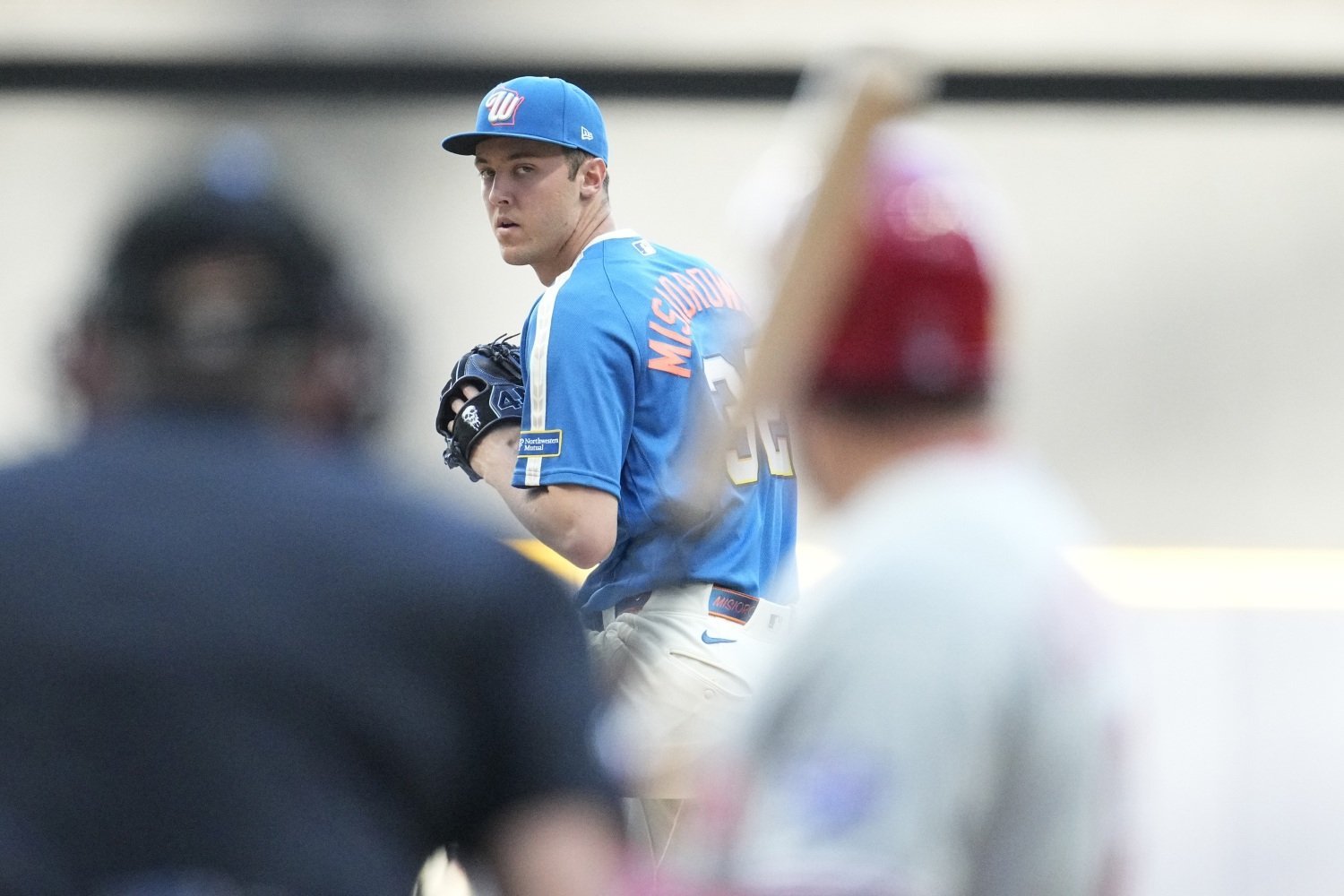 When Jacob Misiorowski takes the mound Friday night to face the Cubs at Uecker Field in Milwaukee, he'll do so on six days' rest. In fact, it will be the second time in a row that he pitches with an extra day—or what those of us born before 2000 would call an extra extra day, because the fifth day of rest between starts has only become as normal as the first four within the last few years. Misiorowski will be making his 31st regular-season appearance and 30th start since debuting last June, but he's only pitched on the traditional four days' rest four times. The Brewers know what they have in The Miz. They also know what dangers he faces. Though few pitchers in the game are better at generating power with their lower half, Misiorowski's velocity and extension—no pitcher in baseball history has had as lethal a combination of the two—mean that his body is undergoing extraordinary stresses when he pitches. So far, he hasn't broken. The team knows they can't take for granted that their luck or his ligaments will hold, though. Thus, they'll continue to treat him cautiously. His efficiency has allowed him to work deep into games, including completing one, but the team hasn't permitted him to throw more than 101 pitches in any start this year. They're also pouncing on every opportunity to stretch out the days between starts for him, as they try to avoid letting his workload skyrocket. In 2024, he pitched 97 1/3 competitive innings, divided between the top two levels of the minors. Last year, counting his playoff outings, he pitched 141 1/3 frames. This season, he's already at 93, and the team fully intends to play not just 162 games, but 175 or so. If he stays on this pace, he could throw 200 innings in 2026, including the postseason. Whatever you might have heard in the past, that's fine. The so-called Verducci Effect is bunk; the columnist for whom it's named did shoddy research and glibly published a piece that had needless staying power because of his ubiquity in the national baseball media at the time. It's fine and normal for Misiorowski to add 50-plus innings to his workload over a full season, even though he did something similar from 2024 to last year. However, while increasing workload doesn't act as a multiplier, per se, the more one pitches, the greater the risk of injury. The harder one throws, the greater the risk of injury. Misiorowski has been impressively available and healthy over the last 15 months, but no one is blind to the risk he faces. Thus, the team will take every viable step to mitigate that risk. Right now, what that looks like is akin to making Misiorowski a collegiate ace. Traditionally, in NCAA baseball, a team sends their top starter to the mound just once a week, and they line them up for Friday nights. It's a handy thing for scouts who want to see pro prospects. It also makes for predictably good viewing for local fans. Most of all, though, putting players on that schedule has helped lure coaches away from an even more ingrained tradition that prevailed before this one: abusing elite arms and burning through them in their early 20s. Misiorowski started on a Friday night two weeks ago against the Phillies. Last week, he got the nod again in the northwest suburbs of Atlanta. For the third week in a row, he'll be the Brewers' Friday Night Starter, this time against the Cubs. It raises the hype and the mania of what was already sure to be an electric ballpark, as the Crew welcome a streaking but ragged Chicago team to town and look to knock them out of the division race for good. He won't stay on the Friday Nights Only schedule next week, but he could bop back onto it soon thereafter. Friday marks the first of 18 games in 17 days, leading into the All-Star break. Having Misiorowski start the opener of such a rough spot in the schedule is a great way to set the tone, but he won't be able to wait until next Friday for his next appearance. That will probably come, instead, in the final contest of this six-game homestand, against the Reds next Thursday. After that, he might start on four days' rest for once, during the Crew's doubleheader in St. Louis—but it's more likely that his final start before the All-Star break will come July 8, to close out that series against the Brewers' toughest challengers for this year's NL Central crown. Presumably, Misiorowski will be asked to start the All-Star Game, but that will just be a brief engagement. Assuming he stays fully healthy between now and then, we could see him land back on the Friday Night Starter schedule beginning July 17, when the Brewers begin their official second half against Miami. They have off days on July 23 and July 30, so if the team elects to go with some form of a six-man rotation (a term Pat Murphy assiduously avoids, but which basically applies to the way they're running the staff right now), Misiorowski could start on July 17, July 24 and July 31, pitching twice at home in three straight weeks of Friday nights. Another run of 17 days between open dates for Milwaukee will force Misiorowski off a once-a-week schedule for most of August. However, it's easy to see how he might get back onto that plan in September. I can get him to the end of the season with 30 total starts, without ever having him truly miss a turn in the rotation. If the Brewers can do that, they almost certainly will. The most remarkable thing about this, though, is not Misiorowski himself. For once, he's not the story, although the story is about him. Rather, this one is about what the Brewers have afforded themselves. In addition to the best pitcher in baseball, they have a legitimate Cy Young Award contender in any other year, in Kyle Harrison; the dominant-when-healthy veteran Brandon Woodruff; and the best depth corps of any team in the league, featuring Brandon Sproat, Shane Drohan, Robert Gasser, Chad Patrick, and the currently injured Coleman Crow and Logan Henderson. They also boast the best farm system in baseball, from which could come more direct help, or from which they could deal to add one more starter before the trade deadline. Almost no other team in the league could afford to slowplay an ace like this. Milwaukee has so many versatile and valuable arms that they can survive five games in six days without Misiorowski getting involved. As they always seem to do, they've also created a buffer for themselves. A slight slip in the standings need not put a bead of sweat on their brows; they have control of the division. The combination of excellent depth and a lack of real urgency to win every last regular-season game in the second half should make taking it easy with Misiorowski relatively easy. The marketing department has to love this. What's easier than making money on a superstar who appears on a predictable schedule? The house is full as often as not during the summers in Milwaukee, but the team can make a real killing by promoting Misiorowski starts that come like clockwork, right alongside the weekend vibes. The front office and the coaching staff wouldn't do it for that reason, though. Misiorowski is being treated like a college arm right now because it's the best way to maximize the chances that he still has this much crackling heat in his arm when the NLCS begins in mid-October. View the full article
 -
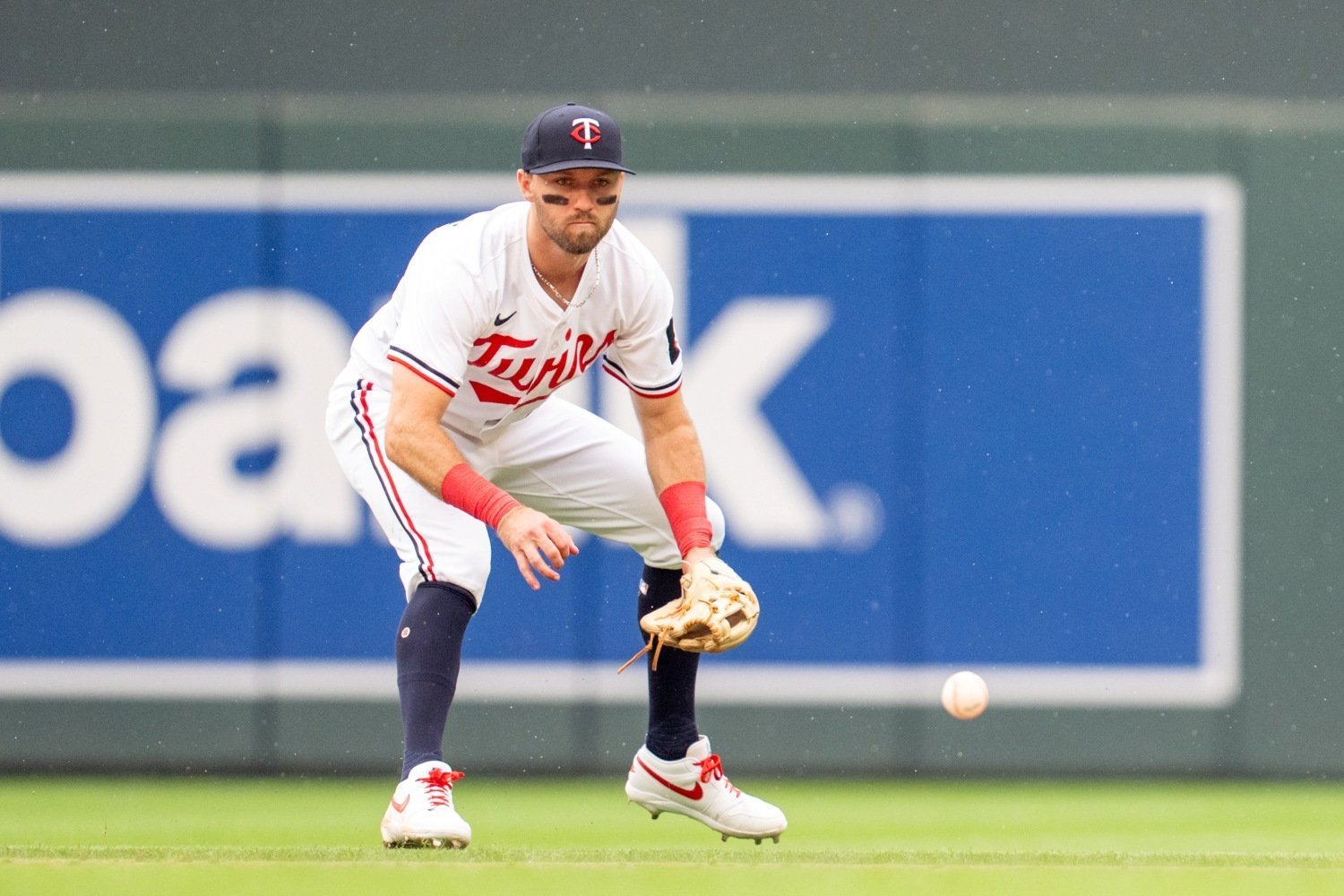 Defense can be one of the most difficult aspects of baseball to evaluate. While fans can easily identify a diving catch or a costly error, modern metrics attempt to capture the countless subtle plays that impact run prevention over the course of a season. The first installment of the 2026 SABR Defensive Index (SDI) rankings has been released, providing an early look at how Minnesota Twins players stack up defensively against the rest of the American League. The SDI serves as a key component in determining Rawlings Gold Glove Award winners and combines multiple defensive metrics, including Statcast data and traditional play-by-play analysis. While it's still early in the season, the rankings reveal several surprises for Minnesota—both positive and negative. All rankings were through games played on June 7, 2026. Bradley Leads the Pitching Staff Grading pitching defense is still challenging, and this year's rankings largely reflect that reality. Among Minnesota pitchers, Taj Bradley leads the way with a 0.6 SDI, ranking 16th among American League pitchers. Bailey Ober sits at an even 0.0, while Connor Prielipp checks in at -0.5. Joe Ryan's ranking stands out the most. His -0.7 SDI places him near the bottom of qualified AL pitchers, with only nine qualified hurlers posting a lower mark. For the entire 2025 season, he had a -1.9 SDI. While pitcher defense generally carries less value than other positions, it remains an area where Ryan has struggled throughout his career. Jeffers Showing Improvement Behind the Plate One of the more encouraging developments comes at catcher. Ryan Jeffers currently owns a 0.0 SDI, ranking eighth among American League catchers. That might not sound impressive on the surface, but it's a significant improvement from last season when he posted a -6.2 SDI. In 2025, only Logan O'Hoppe graded worse among qualified AL catchers. Victor Caratini sits slightly below average at -0.4 SDI, but he has seen more regular action since Jeffers went on the IL and his numbers have improved. Jeffers' improvement represents a notable step forward for a player whose offensive production has often overshadowed concerns about his defense. Can Clemens Continue Minnesota's Gold Glove Tradition? For years, the Twins have received strong defensive production at first base. Carlos Santana and Ty France each earned Gold Glove recognition during their time in Minnesota, and Kody Clemens appears determined to keep the Twins in the Gold Glove conversation. Clemens owns a 1.8 SDI, ranking sixth among American League first basemen. However, he is only 0.6 out of ranking among the top three. His defensive performance has quietly become one of the team's strengths. With Royce Lewis beginning to see more action at first base, it will be interesting to see whether he can develop into a capable defender there as the season progresses. Middle Infield Remains a Concern If there is one area where these rankings raise red flags, it's the middle infield. Luke Keaschall's -5.0 SDI ranks last among qualified AL second basemen. The sophomore’s bat has helped him remain in the lineup, but manager Derek Shelton has already acknowledged the defensive challenges. Shelton has reportedly discussed late-game defensive substitutions with Keaschall, recognizing that run prevention can become critical in close contests. Things look even rougher at shortstop. Brooks Lee's -5.9 SDI ranks last among qualified American League shortstops. While defensive metrics can fluctuate throughout a season, the struggles help explain why Minnesota has increasingly shifted Lee to third base. His offensive versatility remains valuable, but the organization appears to be searching for a more sustainable long-term defensive alignment. Interestingly, no Twins third baseman had accumulated enough innings to qualify for the rankings. Lewis had been demoted and moved off the hot corner. Lee will start showing up on the SDI ranking later this season. Mixed Results in the Outfield Minnesota's outfield rankings offer a blend of surprises. Trevor Larnach owns a -0.4 SDI in left field, with only three qualified AL left fielders ranking lower. While Larnach's offensive contributions remain valuable, defense continues to be an area where he grades below average. In center field, Byron Buxton sits at -0.1 SDI, tied for eighth among American League center fielders. While those numbers don't jump off the page, they represent improvement from last season's -4.6 SDI. Some of Buxton's decline in defensive metrics can be attributed to diminished arm strength. Opposing runners have been more willing to take extra bases against him than they were during his Gold Glove peak years, impacting his overall value despite still covering plenty of ground. The biggest surprise may come in right field. Austin Martin's 2.9 SDI ranks third among AL right fielders, trailing only Wilyer Abreu and Cam Smith. Martin's athleticism has long been evident, but his defensive impact has become one of the more underrated aspects of his game. While much of the focus remains on whether he'll hit enough to secure a long-term role, his glove is making a compelling case. A Snapshot, Not a Final Verdict As always, defensive metrics should be viewed as one piece of a much larger puzzle. Small samples, positioning, team strategies, and statistical variance can all influence these rankings. Still, the first SDI update highlights several clear trends. Minnesota continues to receive strong defense at first base, Martin is emerging as a legitimate defensive asset, and Jeffers appears to be making strides behind the plate. On the other hand, the middle infield remains a concern, with both Keaschall and Lee ranking at the bottom of their respective positions. With the Twins fighting to remain in the American League playoff race, every run saved could prove just as important as every run scored. What surprises you most about these rankings? Are you buying Martin as one of the AL's best defensive right fielders, and how concerned are you about the defensive struggles of Keaschall and Lee? Leave a comment and start the discussion. View the full article
 -
 Transactions: RHP Craig Yoho optioned to AAA Nashville from MLB Brewers RHP Peter Strzelecki signed to minor league contract and assigned to AAA Nashville INF/OF Jett Williams placed on AAA Nashville’s temporarily inactive list RHP Miguel Andrade placed on DSL Brewers Gold’s 7-day injured list Game Action: Nashville Pre-Game Media Notes Final: Nashville 3, Gwinnett (Braves) 0 Box Score Via the Sounds’ website, game details and we encourage readers to review affiliate write-ups as part of their Link Report routine: Sounds Earn Fourth Shutout of Season in Win Over Gwinnett RHP Lyon Richardson’s longest outing since 2024 led the staff’s impressive 2-hit shutout to claim a 2-1 lead in this week’s home series. As detailed in Nishant Brahme’s linked game report which includes three highlight videos, the Sounds used the long ball (3B Brock Wilken’s 388-foot solo homer), then small ball (OF Tyler Black’s full count walk earned via challenge, stolen base, scored on sac fly) to grab a 2-0 lead by the 4th inning. A massive “Job well done” to RHPs Junior Fernandez (2 IP, 1 K) and Peter Strzelecki (welcome back! – 1 IP, 2 Ks) for facing the minimum number of batters over the final 3 frames. DH Jeferson Quero (2-for-3, sac fly, 2 RBIs) and C Ramon Rodriguez (2-for-3) notched 4 of the team’s 7 hits and the Sounds were also stout defensively (3 double plays turned). Sounds’ Extras: Time will tell whether the 26-year-old Richardson (4 IP, 0 R, 2 H – both singles, 1 BB, 3 Ks) will be stretched out further, but it would solve a starting pitcher depth challenge that skipper Rick Sweet has been managing for at least three weeks. Three fifth inning walks issued by RHP Reiss Knehr (2 IP, 0 R, 0 H, 4 BB, 1 K) thankfully produced zero runs and Nashville’s staff did not allow any hits after the 3rd inning. After pitching 16 games for the Sounds from March-May, Strzelecki’s contract was selected by the Brewers, but he didn’t see game time. He then tried his luck with the Yankees’ AAA team for six games before opting out and returning to Nashville. Friday’s outlook: 24-year-old RHP Tyson Hardin is ready for his 8th AAA start (2.25 ERA, 0.95 WHIP, 9.2 K/9 in 40 IP), with Nashville looking to claim a 3-1 series lead. Biloxi Pre-Game Media Notes Rain Out: Biloxi at Montgomery Via the Shuckers’ website, rain out details: Shuckers, Biscuits Postponed Due to Rain at DABOS Park Biloxi leads the series two games to zero and the teams will hope to be able to play two games on Friday. Friday’s outlook: RHPs Jaron DeBerry and Manuel Rodriguez are scheduled to start the doubleheader, with Biloxi aiming for a sweep to clinch this week’s road series. Wisconsin Pre-Game Media Notes Final: Wisconsin 9, Cedar Rapids (Twins) 1 Box Score Via the Timber Rattlers’ website, game details: Eight-Run Second Inning is Enough for Wisconsin As usual for home games (but let’s not take it for granted), enjoy the video highlights compiled by Wisconsin’s terrific media team: And be sure not to miss the 16-minute Mehring-Timm post-game podcast, featuring RHP Ethan Dorchies, OF Josiah Ragsdale and Manager Nick Stanley. As you’ve read, seen and heard from the above links, SS Luis Pena (1-for-3, double, HBP, 2 RBIs) returned from a 16-day absence for a sore hamstring and all is right in Timber Rattler Land. Dorchies (7 IP, 1 R, 5 H, 1 BB, 3 Ks) worked around a 1st inning double, then a walk and an error in the 2nd frame to deliver his best start of 2026, likely comforted by the Udder Tuggers’ 8-run, 12-batter second inning. Every starting position player reached base via hit or walk, with Ragsdale (2-for-5, double, 2 RBIs), OF Braylon Payne (2-for-5), C David Garcia (2-for-3, HBP) and OF Tayden Hall (1-for-3, double, HBP, 2 RBIs) having particularly productive evenings. Timber Rattlers’ Extras: RHP Quinton Low continued his recent run of solid form with two scoreless innings of relief: 2 IP, 0 R, 1 H, 1 BB, 3 Ks. He’s unscored upon over his last 7 innings with 12 Ks. Friday’s outlook: LHP Wande Torres gets the call as Wisconsin seeks to clinch a home series victory. Wilson Pre-Game Media Notes Final: Fredericksburg (Nationals) 13, Wilson 3 Box Score Via the Warbirds’ website, game details: Fredericksburg Charges Past Wilson After retiring 5 of 7 batters to open the game, starting RHP Enniel Cortez allowed three consecutive 2-out RBI hits in the 2nd inning, then the first four batters of the 3rd inning reached via hit or walk to blow open the game. A strike ‘em out, thrown ‘em out double play to end that frame kept the contest at 6-0. OF Handelfry Encarnacion (2-for-2, double, walk, sac fly, RBI) had opened the game with a single, but was erased via a ground ball double play and the Warbirds did not collect their 2nd hit until the 5th inning, while already trailing 11-0 by that point. RHP Tyler Renz’s relief effort started poorly via three straight walks in a 5-run fourth inning, but he ultimately gave the team 3 innings of work to ease the bullpen strain (7 R, 6 ER, 6 H, 5 BB, 3 WP, 3 Ks). On the more positive side, RHP Ismael Yanez pitched two hitless, scoreless innings with 3 strikeouts, but 4 walks blemished his numbers (43 pitches, 20 strikes). SS Brady Ebel also had a decent stat line: 1-for-3, double, walk, RBI. Warbirds’ Extras: Other lowlights Thursday evening included an 0-for-10 effort with runners in scoring position, as well as 3B Juan Ortuno’s 10th error of the 2026 campaign. 1B Tyler Rodriguez’s on-base streak is now 19 games long after he drew a walk. Hot 18-year-old prospect OF Alexander Frias had an 0-for-4 game, but with no strikeouts. Friday’s outlook: LHP Andrew Healy gets the start, with Wilson needing a victory to even the series at two games apiece. Final: ACL Brewers 7, ACL Cubs 5 Box Score Starting RHP Chase Bentley (4 1/3 IP, 2 R, 2 H, 2 BB, 1 HBP, 10 Ks) struck out 10 Cubs and 1B Roderick Flores (1-for-2, HR, 2 walks, 2 RBIs) delivered a 2-run homer in the 5th inning to take a 3-2 lead in this competitive contest in 106-degree heat. Tied 3-3 entering the bottom of the 6th inning, 2B CJ Hughes (1-for-3, HR, walk, 2 RBIs) restored the Zona Crew’s lead with a 2-run, 107mph homer, with 3B Yu-Lin Liao (1-for-3, HR, walk, 2 RBIs) following with another 2-run homer three batters later to grab a 7-3 advantage. The Cubs narrowed the gap to 7-5 with 1-on, 1-out single in the 7th inning, but RHP Luke Roupe (3 IP, 2 R, 5 H, 1 BB, 2 Ks) induced a ground ball double play to preserve the lead. One inning later, there were 2-on, 1-out, when he induced another GIDP to get out of that mini-jam, closing out the 3-inning save one inning later. This game marked the return of OF Kenny Fenelon (2-for-5, SB) after a nine-day absence, restoring necessary position player depth. On-base machine SS Juan Martinez was solid yet again: 1-for-2, double, 2 walks, SB; 1.093 OPS. RHP Argenis Aparicio (1 2/3 IP, 1 R, 2 H, 0 BB, 1 K) collected the win in middle relief. Both teams notched three home runs and struggled with runners in scoring position (combined 2-for-13), but the Brewers’ strong defense (3 double plays, 0 errors) keyed their victory (vs. 0 DPs and 2 errors for the Cubs). Final: DSL Brewers Blue 9, DSL Padres Gold 8 Box Score The Blue squad trailed 4-0 early and 7-4 late but stormed back with a 5-run eighth inning to grab the lead and then hold on in a dramatic island affair that included a 73-minute rain delay in the 4th inning. They improved their record to 13-5. After a 1-out hit-by-pitch and two walks, DH/INF Jose Rodriguez (3-for-5, 2 doubles, 3 RBIs), C Sebastian Franeites (1-for-4, triple, walk, 2 RBIs; .989 OPS) and 3B Leanders Matos (1-for-3, 2 walks, RBI, 2 SBs; .999 OPS) delivered consecutive RBI hits to take a 9-7 advantage before the Padres sent their second baseman to the mound to stop the bleeding. RHP Jean (JC) Rodriguez had entered in relief in the top of the 8th inning with the Blue Men trailing 7-4, 2-on and nobody out, bearing down to strand the two baserunners (K, K, ground out). After the offensive outburst to take the lead, JC then conceded a single and an RBI triple to commence the 9th inning, putting the potential game-tying runner 90 feet from home plate with nobody out. JC amazingly escaped again though, getting a ground out, fly out and ground out to strand the runner and preserve the one-run victory. Every Brewers’ Blue batter reached base via hit or walk in the contest, including solid days by 1B Angel Gonzalez (1-for-2, 3 walks, RBI, SB), OF Frandy Lafond (2-for-5, RBI; 1.017 OPS) and SS Diego Frontado (1-for-4, double, walk; 1.053 OPS). Nobody distinguished themselves on the mound, though 17-year-old RHP Steven Duran handled the largest share of the work (4 IP, 4 R, 6 H, 1 BB, 1 HBP, 2 Ks). RHP Justin Lugo (3.38 ERA) is usually much sharper than this: 2 IP, 2 R, 1 H, 3 BB, 4 WP, 4 Ks. We hope that you enjoy the Minor League Link Report. On Friday, a whopping eight minor league games are scheduled for Brewers’ affiliates, starting with the DSL clubs at 10:00am CST and ending with ACL Brewers at 8:00pm CST. The Milwaukee Brewers also commence their home series against the Cubs at 6:45pm CST. Organizational Scoreboard including starting pitcher info, game times, MiLB TV links, and box scores Current Milwaukee Brewers Organization Batting Stats and Depth Current Milwaukee Brewers Organization Pitching Stats and Depth View the full article
 -
Shape of the Blue Jays: Shane Bieber, Alejandro Kirk, Trey Yesavage
DiamondCentric posted an article in Jays Centre
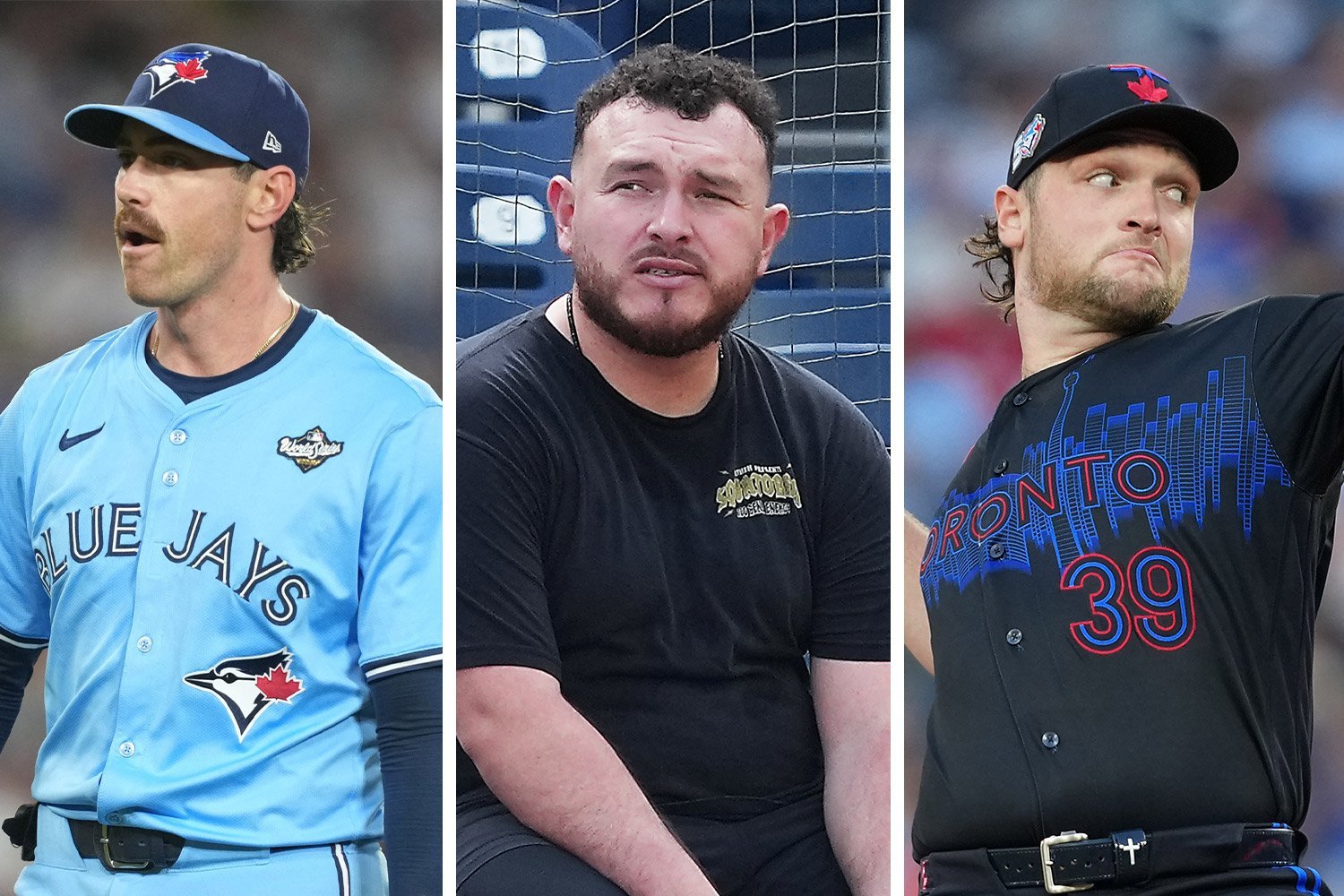 Welcome to Shape of the Blue Jays, my column where I dig into Statcast numbers to analyze recent pitch shape and swing shape trends for Toronto Blue Jays players and discuss how they have impacted their performance. Click here to read the last edition. Quick Hits: ABS Mishaps A lot of things went wrong in the Houston series, and one of them is flying under the radar due to the broader fundamental mistakes that cost the Jays in the rubber match: They got absolutely schooled by the Astros when it came to ABS challenges. Houston was a perfect 5-for-5 through 4 innings of Monday's opener, including 3-for-3 in the first inning. The Blue Jays went 0-for-2 and were out of challenges in the bottom of the 2nd. It's true that home plate umpire Bill Miller had a brutal start to the game, but the Blue Jays learned that just because the umpire isn't at his best doesn't mean it's okay to start blindly challenging every close pitch. If the top of the order is going to be lifeless and the margins are going to be thin, wasting challenges is something that will haunt them eventually. On Tuesday, the Jays were more careful, not even attempting a challenge through 7 innings. With the go-ahead run on base in a tie game in the top of the 8th, Vladimir Guerrero Jr. got a 1-0 slider from old friend Nate Pearson that was easily off the outside corner of the plate but called a strike anyway. Guerrero didn't challenge. The next batter, Jesus Sanchez, unsuccessfully challenged an obvious strike on an 0-1 fastball before striking out swinging on the very next pitch. In the finale, George Springer challenged a called third strike. It was a changeup that was in the zone by more than 3" according to Baseball Savant. Alejandro Kirk successfully overturned a ball call in the top half of the next inning at catcher, but he would lose one on a close call while hitting just a half-inning after that. Blue Jays hitters were victimized by multiple bad calls late in the game, but were unable to do anything about it thanks to their earlier mistakes, and it was an extremely fitting end to a disappointing series that the Astros won Wednesday's game on an overturned strike 3 call. Shane Bieber Bieber showcased passable stuff in his much-anticipated return to the mound. His four-seamer continued to sit in the low-90s with 19" of iVB and 11" of run compared to 18"/10" last year. He was able to mix in plenty of cutters, while the kick change that he revamped during his rehab process in 2025 got 4 whiffs on 8 swings. Unfortunately, none of that matters without good location, which is the primary reason he gave up 5 barrels, 10 hard hits (17 BBE), and 3 consecutive home runs to the Astros. He was never able to elevate the fastball, missing middle-down most of the time, while his slider was either hung or bounced with no real in-between. Only 1 of the 3 homers came on a true meatball, that being the fastball that Taylor Trammell sent into the 500 level, which perfectly illustrated why simply avoiding the heart of the plate isn't going to cut it when you don't throw hard. Command and execution have to be top-notch for a guy like Bieber. I'd be more concerned if his fastball was sitting in the high-80s, but he's going to have to do a better job of hitting his spots in his next start. Shane Bieber fastball (left) and slider (right) location, June 23 vs HOU (Statcast) Alejandro Kirk It's still very early on in the season for Kirk, which is good news as he's slashing just .222/.267/.259 since his return from the IL. His swing-and-miss and strikeout rates are slightly up compared to last year, but stop me if you've heard this before about some of his teammates: We're still waiting on the chase (+9.2% vs 2025) and batted ball quality (xwOBACON down 122 points vs 2025) to return to career norms. Interestingly, this is the most pull-oriented we've seen Kirk in his career, something he isn't doing when he's at his best. His current sample of batted balls is small enough to even out naturally in the near future, but the inflated pull rates are nonetheless backed up by his bat tracking stats. Year Bat Speed Bat Speed 90 Swing Length Swing Tilt Attack Angle Attack Direction Contact Point vs Center of Mass 2025 72.5 77.2 7.2' 24° 8° 5° oppo 30.1" 2026 70.6 74.8 7.3' 22° 7° 1° oppo 31.2" His groundballs and popups are up, a classic indicator of a guy still looking to find his timing. Brandon Valenzuela getting off to a hot start theoretically affords the Jays the ability to take things slowly with Kirk, although I'm not sure this is the sort of thing that will get better if he only plays 3-4 times per week. Trey Yesavage On Wednesday against the Astros, Yesavage threw the highest percentage of sliders (43%) we've ever seen from him in a big-league start, excluding game 5 of the World Series. His previous season-high was his last start in Boston (32%), and before that, it was two starts earlier against the Orioles (28%). This was a new culmination of a pattern that's been going on for a while now: A decreased feel for the splitter, which was used a season-low 20% of the time last night. We've also seen something like this with Kevin Gausman at times, which goes to show how important "feel" is for a pitch like the splitter. The difference last night was a loss of command on the four-seamer as well (34% zone, 45% strike), no doubt a factor behind the 5 walks he issued. Yesavage's stuff scores on the fastball have been down for about a month now, but he continues to induce batted balls at poor angles better than most pitchers in the league. Once again, my level of concern about him at this point is directly tied to how often he's in the zone, something that's more of a start-to-start thing. Regardless, as long as he has reduced confidence in the splitter, he'll still be searching for the pure dominance he has shown before. All stats entering June 25, 2026. View the full article
 -
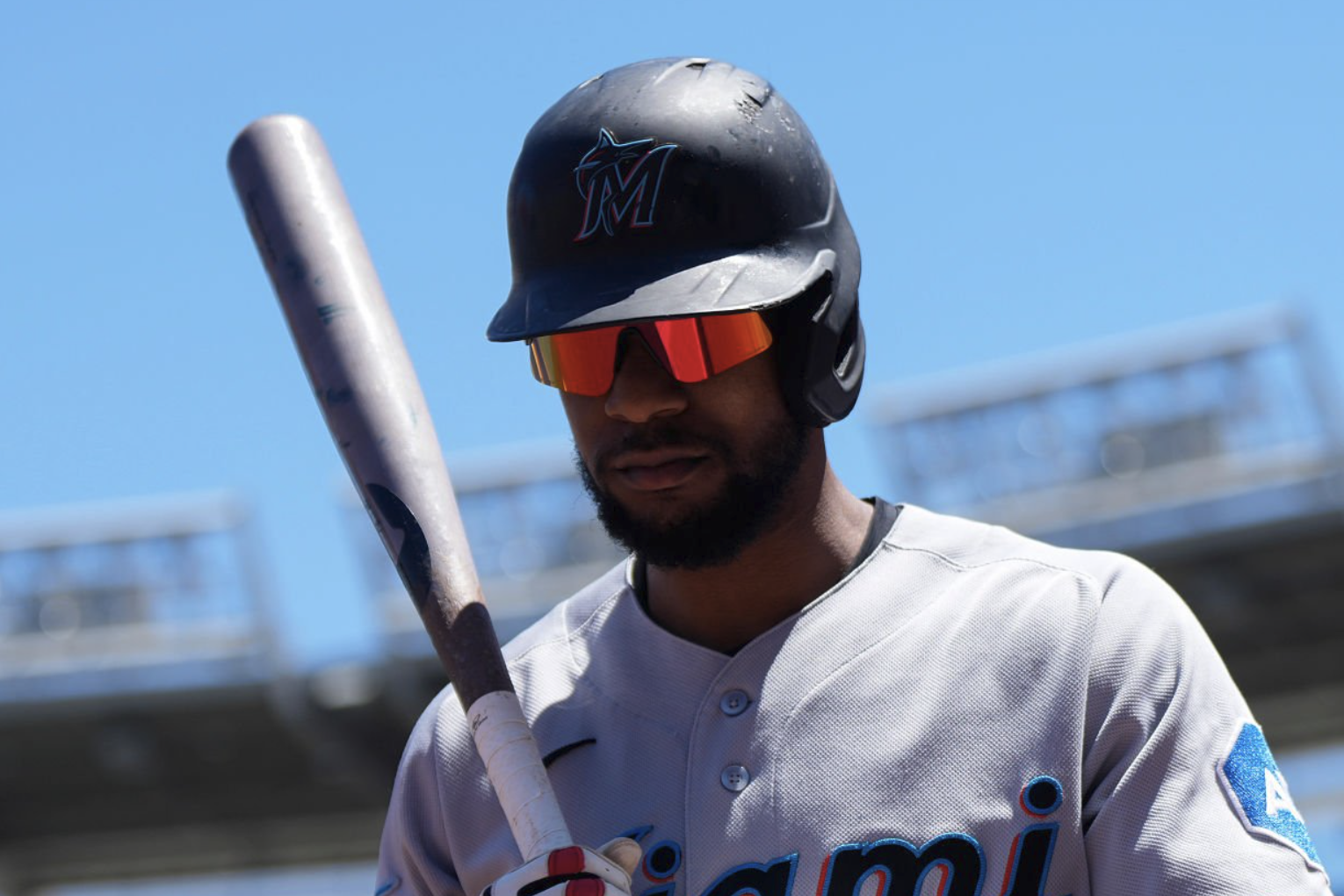 Watching him play on a daily basis, I admittedly have a bias, but it's hard to deny that Otto Lopez is having one of the most fascinating seasons of any MLB player in 2026. The Miami Marlins shortstop is on pace for 6.8 fWAR, roughly tripled his total from 2025. Much of that newfound value comes from simply compiling hits—Lopez's batting average has surged 94 points year-over-year. His .340 mark paces all qualified major leaguers entering Friday. Regression is inevitably coming for Lopez given how often he chases balls outside the strike zone and puts them on the ground. Can he overcome that to hold on and win the fourth National League batting title in Marlins history? With the Marlins having completed exactly half of their regular season schedule, I was curious to look back at how often the midpoint league leaders in batting average finish on top. The table below refers to the league leaderboards on this date throughout the past half-decade in both the AL and NL. More often than not, the midpoint leader has gotten knocked off their perch due to a dip in performance. League's Top Qualified Batting Average Entering June 26 Year League Player Won Batting Title? 2025 AL Aaron Judge Yes 2025 NL Will Smith No 2024 AL Bobby Witt Jr. Yes 2024 NL Shohei Ohtani No 2023 AL Bo Bichette No 2023 NL Luis Arraez Yes 2022 AL Luis Arraez Yes 2022 NL Paul Goldschmidt No 2021 AL Michael Brantley No 2021 NL Nick Castellanos No The only NL qualifier within 15 points of Lopez is Jung Hoo Lee of the San Francisco Giants (.332 BA). Although Lee excelled at hit collecting during his time in the Korea Baseball Organization, this is a massive departure from what he has previously done in MLB (career high of .266). During a typical Marlins season, Lopez's individual pursuit would already be top of mind for most fans due to the team's irrelevance in the postseason race. But for now, things are going well enough for the 42-39 Fish to keep the focus on winning as many games as possible. View the full article
 -
Justin Slaten Is More Useful As A Red Sox Trade Chip Than Reliever
DiamondCentric posted an article in Talk Sox
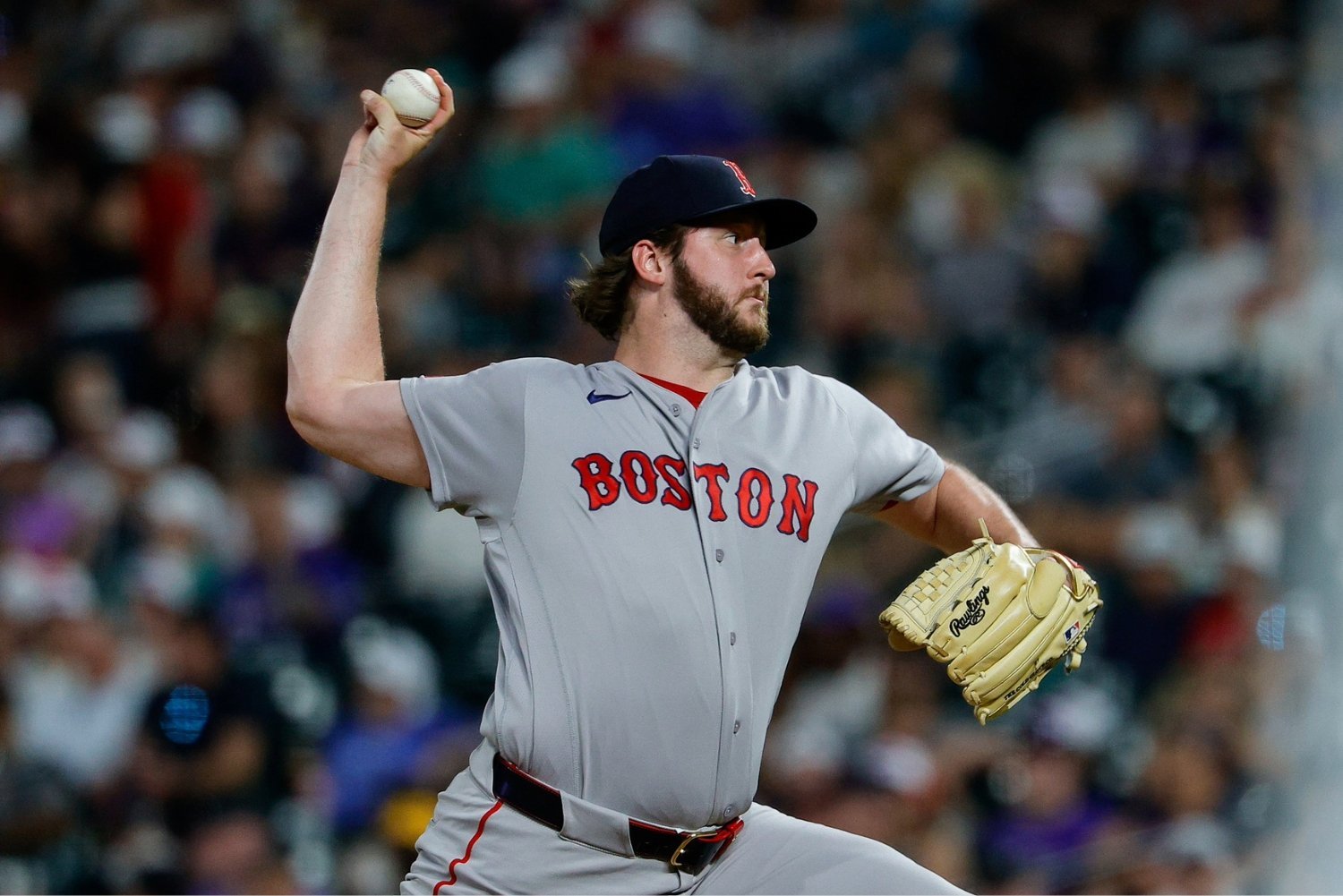 In every sense of the word, right-handed reliever Justin Slaten has been a major success story as a Rule 5 selection. However, as the Boston Red Sox stare down the barrel of being a deadline seller, shopping him makes the most sense for the organization. His 6.48 season ERA is incredibly misleading, as he's 15-for-19 in scoreless appearances. In his four outings allowing runs, he's allowed multiple, and twice it's been four. But despite the 6.14 ERA, he's got a 3.90 xERA and 3.31 xFIP across 16.2 innings. His strikeout rate is also at a career-best 26.3 percent, so there's a lot to be encouraged about despite the alarmingly high earned run average. Having already survived his first season on the big-league roster, Slaten is no longer option-ineligible. Additionally, he's got all three of his options at his disposal to go with three more years of team control beyond 2026. So why does trading him make sense for the Red Sox? It's hard to gauge how impactful his career has been so far. His rookie season is his only one of more than 35 innings, but the Red Sox missed the postseason entirely. Last year, Slaten had good under-the-hood metrics, but his strikeouts were way down, and injuries limited him to just 36 appearances and 34 innings. This year, injuries have him at just 16.2 innings. His strikeouts are way up, but the sample size is still so small. Moreover, the Red Sox are closer to the worst record in the sport than postseason contention. So, while he's overall performed well, with a misleading ERA, the team is again hardly reaping the benefits of it. At the trade deadline, every team is hungry to bolster its bullpen. Even the teams with obvious strengths in the late innings could use another warm body. If for nothing else, to cover against injury. The Red Sox, despite all their faults as a team, have three high-leverage relievers teams have already begun calling about. Four, if you want to count the recent stretch of veteran right-hander Tyron Guerrero. And whether this deadline signifies a full-scale teardown or not, the organization should be entertaining all means of recouping minor league assets, especially on the position-player side. It feels like a formality that bullpen ace Aroldis Chapman will be traded, but they're listening on everyone and should have a large market on all three. But Slaten, even above Garrett Whitlock, makes sense for the Red Sox to trade. Justin Slaten's Injuries Are Becoming A Pain Point Injuries are out of everyone's control in most cases, but some guys find themselves on the shelf more than others. Slaten, even in 2024, spent time on the injured list. Because of this, the Red Sox are almost just as likely to have to work around his unavailability than his production on the field. His medical records are easily accessible to any acquiring team, but he's still someone with serious arm talent. That said, for the Red Sox, they don't need to stay patient with him in hopes that he's healthy and productive in 2027 or beyond. It's also important to remember that diddle relievers grow on trees. While a Chapman trade would signal a likely promotion down the stretch for Slaten, one he received at the end of 2024 as well, he's largely used as a hybrid between middle- and high-leverage relief. While incredibly talented, there's not a whole lot about his arsenal that screams eventual breakout, All-Star-caliber reliever. His sweeper is elite, holding opponents to a .167 average and 50% whiff rate in 2026, but his cutter gets hit hard. His four-seam is underperforming expected data, but serious damage is done against it when it's hit. Part of why there's a lot of damage done against Slaten when he's off is because hitters have no issues pulling the ball in the air against him. The past two years, he's had Pull-Air rates of 11.6 and 13.7 percent. This year, it's up to 23.8 percent. Sure, it's quite possibly a one-off issue, but it's dramatically hindering his ability to avoid meltdowns when he doesn't have his best stuff. Slaten's Remaining Team Control Can Be Exploited By Red Sox While Chapman -- despite being a rental with a pending option -- is going to fetch the best return for the Red Sox this summer, Slaten having three added years of control makes him an enticing trade chip. He's not in the echelon of the Mason Millers, the Jhoan Durans, or even the Garrett Whitlocks of the world. What he is, however, is a relatively high-floor arm with high leverage experience. Couple that with team control through the 2029 season, and you have a reliever that'll certainly have intrigue surrounding him this summer. The silver lining of his bad ERA is the under-the-hood metrics. A 21.1% home runs per fly ball rate is simply unsustainable. As proof of concept, only 19 times has a reliever exceeded that threshold across 40-plus innings since 2002. That's out of 4,119 individual seasons meeting that minimum inning requirement. Likewise, his strikeouts are well above average this season, though he's not a qualified arm yet. He also is 83rd percentile in fastball velocity and extension, meaning he's already got a quality fastball that gets on the hitter a bit quicker than what the radar gun reads. There's doubt the Red Sox could get a top-100 prospect for Slaten, but they could likely get at least one (and probably two) organizational top-10. Given the volatility of relief pitching, plus the current state of the team, making that kind of trade would be a decent piece of business. View the full article
 -
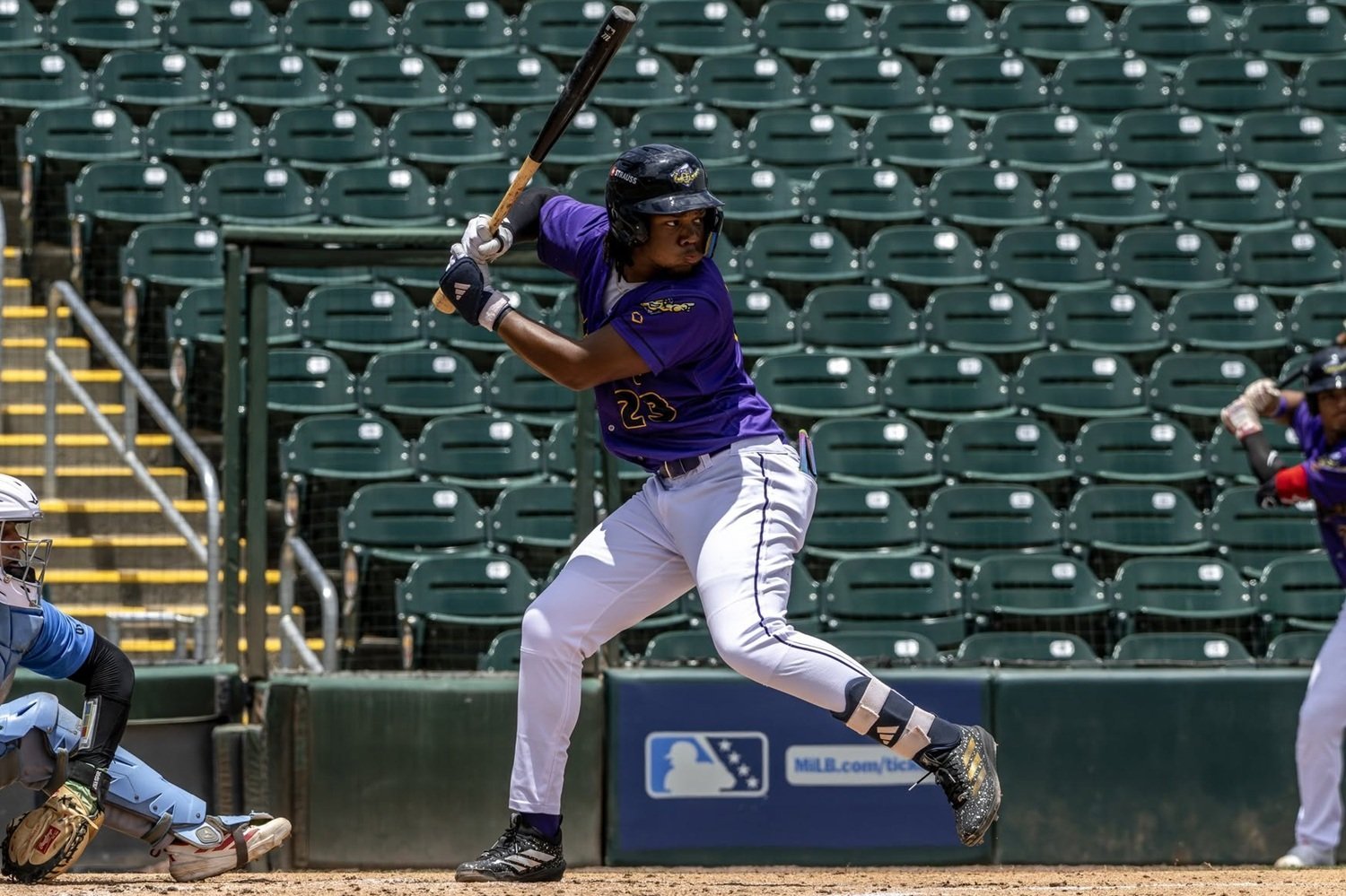 TRANSACTIONS Wichita placed OF Caleb Roberts on the 7-Day Injured List. Fort Myers placed UT Bryan Acuna on the 7-Day Injured List. SAINTS SENTINEL St. Paul, Louisville Box Score Elvis Presley once longed for the rain in Kentucky. The Saints and Bats likely would have preferred the rain not arrive until after their Thursday night game instead of before. Instead of playing Thursday, the teams will attempt to complete a doubleheader on Friday. WIND SURGE WISDOM Wichita 0, Midland 6 Box Score On Thursday, the Wind Surge found some tough times in Tall City. Their offense managed to be shutout on just three hits. Andrew Cossetti and Maddux Houghton each had a single. Marek Houston knocked his first Double-A double. Khadim Diaw was 0-for-2, but he walked twice in the game. The Surge went 0-for-8 with runners in scoring position and left six stranded. Sam Armstrong has been really good on the mound in June. He wasn’t as dominant on Thursday. He gave up two runs on two hits (including two home runs) over three innings. He struck out just one batter. But what he did was keep his team in the game by limiting the damage. Paulshawn Pasqualotto has had a really nice rebound season. In this game, he gave up three hits over two scoreless innings. He struck out two batters. Ruddy Gomez gave up one run on three hits in his inning. Jacob Webb gave up two runs on two hits in the seventh inning. Zach Vennaro gave up one run on two walks in the eighth inning. A little more on Khadim Diaw and his start in Wichita. In seven games played, he is 8-for-23, just over a hit a game, and giving himself a .348 batting average. What is incredible is that he has walked 10 times and struck out just twice since joining the Surge. He’s been on base at a .559 clip. He’s always hit line drives and hit for average, and he seems to have always had a real appreciation for getting on base whether by walk or by being hit by a pitch. KERNELS CHRONICLE Cedar Rapids 1, Wisconsin 9 Box Score In the house I grew up in, there was a hole in the wall of the main floor bathroom. It had a mini-door to open. But that’s where we would throw our clothes that needed to be washed. They would magically go in that space and drop into the basement, near the washing machine was brilliant. Most of you probably grew up and maybe still have homes with this “feature.” However, I was today years old when I realized that it was a “clothes chute,” not a “clothes shoot.” Shoot! I thought that the opening just kind of shot the clothes down, probably at a great force that simple gravity, and landed. When asked where the Wisconsin Timber Rattlers play their home games, most will answer by saying they play in Appleton, Wisconsin. And, frankly, the team’s mailing address is to Appleton. However, their home stadium, Neuroscience Group Field at Fox Cities Stadium” is in Grand Chute, which is essentially a suburb on the northern side of Lake Winnebago. I got curious and searched “What is a chute?” “A sloping channel or slide for conveying things to a lower level” So yeah, we had a “Clothes Chute.” Oh yeah, there was a baseball game in Grand Chute on Thursday night, pitting the Kernels against the Wisconsin Udder Tuggers. What a great minor-league name and check out their uniforms too! They will be the Udder Tuggers this whole weekend. Cesar Lares started for the Kernels. The lefty worked out of trouble in the first inning with some big strikeouts. However, he wasn’t able to stop the Tuggers from scoring in the second inning. In total, he gave up eight runs on six hits, two walks, and three hit batters. He had three strikeouts but really struggled with control and command. Adam Falinski got the final out of that second inning. He gave up one run on three hits and two walks over the next three innings. Mitch Mueller threw two scoreless innings, and Sam Rochard got the final three outs. Eduardo Tait went 2-for-3 with a walk in the game. He notched his 14th double of the year. He scored the team’s lone run in the sixth inning when Jacob McCombs singled him in. McCombs went 2-for-4. The Kernels hosted Wisconsin a couple of weeks ago. Even after top hitters Andrew Fischer and Josh Adamczewski were promoted last week to Double-A, the Rattlers lineup is still quite strong. Check out the Brewers Top 20 prospects, several on this Wisconsin roster, of our sister site Brewer Fanatic. MIGHTY MATTERS Ft. Myers 7, St. Lucie 6 Box Score First things first. Yes, Ryan Sprock got a hit. He was 1-for-4 with a walk. He also stole OK, this was a good, competitive game. The Mussels took an early 2-0 lead with two runs in the bottom of the first inning. With one out, Ramiro Dominguez reached on an error. Jayson Bass singled him to third. With two outs, Bass stole second and Dominguez stole home. The successful double steal gave the team a 1-0 lead. It was the 17th stolen base for each of them. Luis Fragoza followed with a double to drive in Bass with the second run. The Mets took the lead in the top of the fourth when they scored three runs. However, the Mussels responded immediately, scoring four runs in the bottom of the fourth. Ricardo Paez led off with a single and went to second on a wild pitch. Ricardo Pena was hit by a pitch. Harry Genth, to no one’s surprise, was also hit by a pitch to load the bases. Merphy Hernandez walked to tie the game at 3-3. Ryan Sprock came up and lined a single to right to drive in Pena and Genth. Sprock went to second and Hernandez scored on a throwing error to make it 6-3. Ramiro Villanueva started and gave up three runs on six hits. In five innings, he had four strikeouts. Callan Fang came in and gave up one run on one hit and one walk over three innings. He struck out four batters. Nick McAuliffe came in for the ninth. He gave up two runs on three hits and a walk. That sent the game to the bottom of the ninth, tied at six. With one out, Quentin Young stepped to the plate. He was 0-for-4 at that point with three strikeouts. The first pitch was a 97 mph fastball that Young took for ball one. It was just above the strike zone. The second pitch was a 95.9 mph fastball, thigh high in the middle of the inner half of the plate. Young swung. The ball left his bat at 108.1 mph at a 26-degree angle. It landed well beyond the fence in center field. The Mussels won in a Young walk off! The Mussels scored their seven runs on six hits and five walks. Fragoza went 2-for-4 with his 10th double. Hernandez walked twice and stole his 19th and 20th bases. Check out the newest of our DiamondCentric sites, Grand Central Mets. Check out their Top 20 Mets Prospect rankings. Several are members of this St. Lucie roster. COMPLEX CHRONICLES FCL Twins 3, FCL Braves 1 Box Score There wasn’t a lot of offense in this game, but the Twins were able to score two runs in the sixth inning to take the lead and hold on for the win. It also helps to have a young phenom throw well at the start of the game. Frederick Hiciano started and gave up one run on two hits over four innings. He hit a batter, walked none, and struck out six batters. Carter Holjes struck out three batters over the final three innings. He gave up no runs and no hits. He walked one and hit a batter to earn the Win. The Twins took the first lead in the top of the second when Darwin Almanzar singled to drive in Joyner Perez. The Braves tied it in the bottom of the fourth with a run. With one out in the top of the sixth, the Twins jumped ahead with some more traditional FCL runs. Yilber Herrera walked and advanced to third on a couple of wild pitches. Almanzar walked, and Daniel Pena was hit by a pitch to load the bases. Herrera scored on a ground out by Daiber De Los Santos, and Almanzar scored on a wild pitch to give them the 3-1 lead. Hiciano signed with the Twins on his 18th birthday. In late May, he was assigned to the FCL Twins from the DSL Twins. This is pretty rare. I can’t think of another pitcher in recent Twins history to have essentially skipped the DSL the year that he signed. I could be wrong. And frankly, he’s older than touted 2025 signings like Santiago Castellanos and acquisitions like Geromy Villoria and Miguel Caraballo. But it is exciting to see an 18-year-old get that opportunity to make that jump and take advantage of it by pitching quite well. Yovanny Duran and Darwin Almanzar each had two hits and a walk in the game. Duran hit his fourth double. Almanazar hit his second triple. Duran stole his 16th and 17th bases of the season. DSL Twins 0, DSL Phillies 7 (Suspended) Box Score Jendy Martinez led off the game for the Twins with a double. The next three batters struck out. And, it was downhill from there. The Phillies batters scored five runs in the first inning and two more in the second inning. The Twins had nine straight batters get out. And then the rains came, and after a delay, the game was suspended going into the bottom of the third inning. PLAYERS OF THE DAY Hitter(s) of the Day Eduardo Tait (Cedar Rapids): 2-for-3, BB, 2B(14), K Pitcher(s) of the Day Frederick Hiciano (FCL Twins): 4 IP, 2 H, 1 R, 0 BB, 1 HBP, 6 K PROSPECT SUMMARY Check out the Prospect Tracker for much more on our Twins Top 20 prospects after seeing how they did today. #4 - C Eduardo Tait (Cedar Rapids) - 2-for-3, BB, 2B(14), BB, R, K (batted second, played C). #5 - SS Marek Houston (Cedar Rapids) - 1-for-4, 2B(1), K (batted second, played SS) #12 - 3B/CF Brandon Winokur (Cedar Rapids) - 0-for-4 (batted first, played 3B) #13 - C/OF Khadim Diaw (Wichita) - 0-for-2, 2 BB (batted third, played C) #14 - 3B/SS Quentin Young (Ft. Myers) - 1-for-5, HR(9), RBI, R, 3 K. (batted sixth, played SS) #18 - OF Yasser Mercedes (Cedar Rapids) - 0-for-4, K (batted fifth, played RF) #20 - 2B/SS/CF Kyle DeBarge (Wichita) - 0-for-4, 2 K (batted first, played 2B) UPCOMING PROBABLES Friday, June 26 St. Paul @ Louisville (3:05 pm CT) - RHP John Klein (3-2, 5.52 ERA), RHP Ty Langenberg (2-2, 5.79 ERA) Wichita @ Midland (7:00 pm CT) - RHP Cory Lewis (0-2, 4.57 ERA) Cedar Rapids @ Wisconsin (6:40 pm CT) - RHP Ivran Romero (2-3, 9.63 ERA) St. Lucie @ Ft. Myers (6:05 pm CT) - RHP Jason Reitz (0-0, 2.63 ERA) FCL Twins @ FCL Red Sox (9:00 am CT) - completion of 6/20 game + regularly schedule game DSL Miami @ DSL Twins (10:00 am CT) - CURRENT W-L Records Minnesota Twins: 38-44 (3rd place (of 5) in AL Central, 4.5 GB)) St. Paul Saints: 43-33 (3rd place (of 10) in IL West Division, 4.0 GB)) Wichita Wind Surge: 26-44 (5th place (of 5) in TL North Division, 20.0 GB)) Cedar Rapids Kernels: 31-38 (4th place (of 6) in MWL West Division, 11.5 GB)) Fort Myers Mighty Mussels: 41-30 (2nd place (of 6) in FSL West Division, 0.5 GB)) FCL Twins: 21-17 (3rd place (of 6) in FCL South Division, 1.5 GB)) DSL Twins: 6-11 (6th place (of 7) in DSL East Division, 5.5 GB)) Please feel free to ask questions about the teams, the rosters, and discuss today’s games, or anything else Twins minor-league related! View the full article
