


DiamondCentric
-
Posts
2,631 -
Joined
-
Last visited
Never
Content Type
Profiles
Forums
Events
News
Tutorials & Help
Major League Baseball Videos
Guides & Resources
Store
Downloads
Gallery
Everything posted by DiamondCentric
-

Randy Vásquez's Command Woes Have Taken On A New Form
DiamondCentric posted an article in Padres Mission
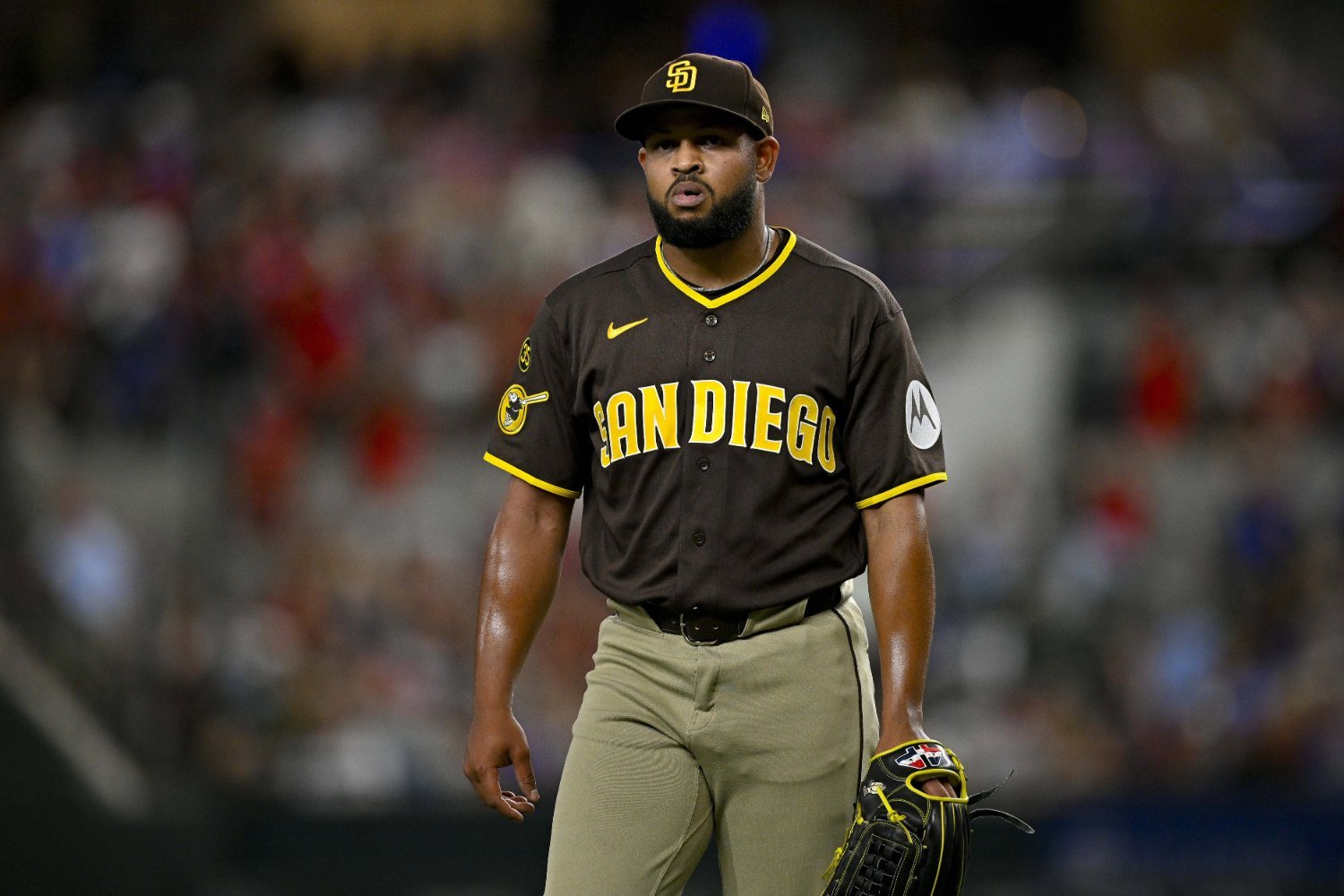 It was just two months ago that Randy Vásquez was one of the more exciting stories of the 2026 San Diego Padres. The former depth starter with command issues parlayed a strong spring into a firm gig in the rotation to start the year, with numbers in March & April that supported his role. As the calendar prepares to flip over to July, however, we're looking at some familiar issues manifesting for Vásquez in all new ways. The old book on the right-hander was that he is a more contact-oriented pitcher who needed to harness a deep mix of pitches to find success sans big strikeout numbers. The harnessing itself proved to be an issue in 2025 in particular, as he only struck out 13.7 percent of hitters against a 9.1 percent walk rate. His offseason work, however, proved fruitful, as he showed up to spring training with an uptick in velocity and compounded that with improved command in the season's first month. His strikeout rate sat way up at 24.8 percent in March & April with an 8.0 percent walk rate. He featured a 2.94 ERA that paired with a 3.40 FIP to indicate a pitcher demonstrating marked improvement rather than getting away with something. Then, the regression monster came for him in May. In the month that followed the strong start, Vásquez featured an ERA that jumped up to 3.71. That's a survivable figure in itself, but more worrisome was the fact that the FIP leapt to 5.35 while the strikeout rate cratered at just 11.6 percent. He managed to survive by a barrel rate that dropped between the two months and a walk rate of just 5.4 percent, but concerns certainly emerged for a player with little margin for error within his skill set and track record. Those worries have been further realized here in June. Through his first 17 innings and change of the month, Vásquez has an ERA up at 7.27. His strikeout rate is back up a touch but still sits at only 14.1 percent while the walk rate has climbed back up to 9.4 percent. The peak of those concerns came last Friday when Vásquez, who was spotted a 5-0 lead in the first inning, allowed eight hits and three walks through just 3.1 innings of work. Considering the aforementioned lack of a margin for error, it's difficult to pinpoint a central issue causing Vásquez's regression over the span of two months. His command has been fine in the sense that he's largely continued to mitigate walks even as he's begun to struggle. His case may start at the concept of a pitcher with three different types of fastballs (four-seam, cutter, sinker) and two different types of breaking pitch (curve & sweeper) struggling to solidify his usage. On the fastball side, the four-seam has increased steadily, the cutter has dropped quite a bit, and the sinker has varied. As far as his breaking stuff goes, he's ditched the more standard curve in favor of the sweeper. The reasoning for such a shift over these three months is unclear, but there are some other trends present beyond (and related to) the usage itself. For one, Vásquez is getting fewer hitters to chase. The breaking pitches were the highest source of chase in April. In May, hitters began chasing them less frequently and making hard contact at a higher clip, so Vásquez began relying on the four-seam and sinker more often. The latter represented his highest source of chase that month. In June, though, hitters have started to lay off the sinker and the cutter when they're thrown outside the zone, so he's pivoted back to the sweeper while continuing to rely on the four-seamer. The results on contact have varied, but it's all a bit muddled. If anything, there's a reactionary component to Vásquez that has mixed up his usage and pinned down his ability to remain consistent. That's not to say that usage in itself is the central issue, even if its messy nature could be yielding some of the declining results we're witnessing. There could be an issue with the stuff itself, as only the four-seam has resulted in a positive run value for Vásquez, and only the four-seamer (105) & sweeper (also 105) are above average in their effect by Stuff+. Or perhaps it's just a matter of the command needing continued refinement in order to find more sustained success. A pitcher in command of his arsenal would be able to locate not only for the called strikes we all love, but induce the chases he needs to avoid quality contact. Even if he's not walking people at as high a clip during this regression, the other elements speak to a pitcher not entirely in command. Whatever the issue may actually be, it's becoming increasingly clear that the Padres have a bit of a Randy Vásquez issue on their hands. For a rotation in as much peril as the Friars' is, both Vásquez and Michael King are the only members of the starting five entrenched in their role for the foreseeable future. Given those stakes, it's clear that the former needs to get back to his early season ways sooner rather than later. View the full article
 -
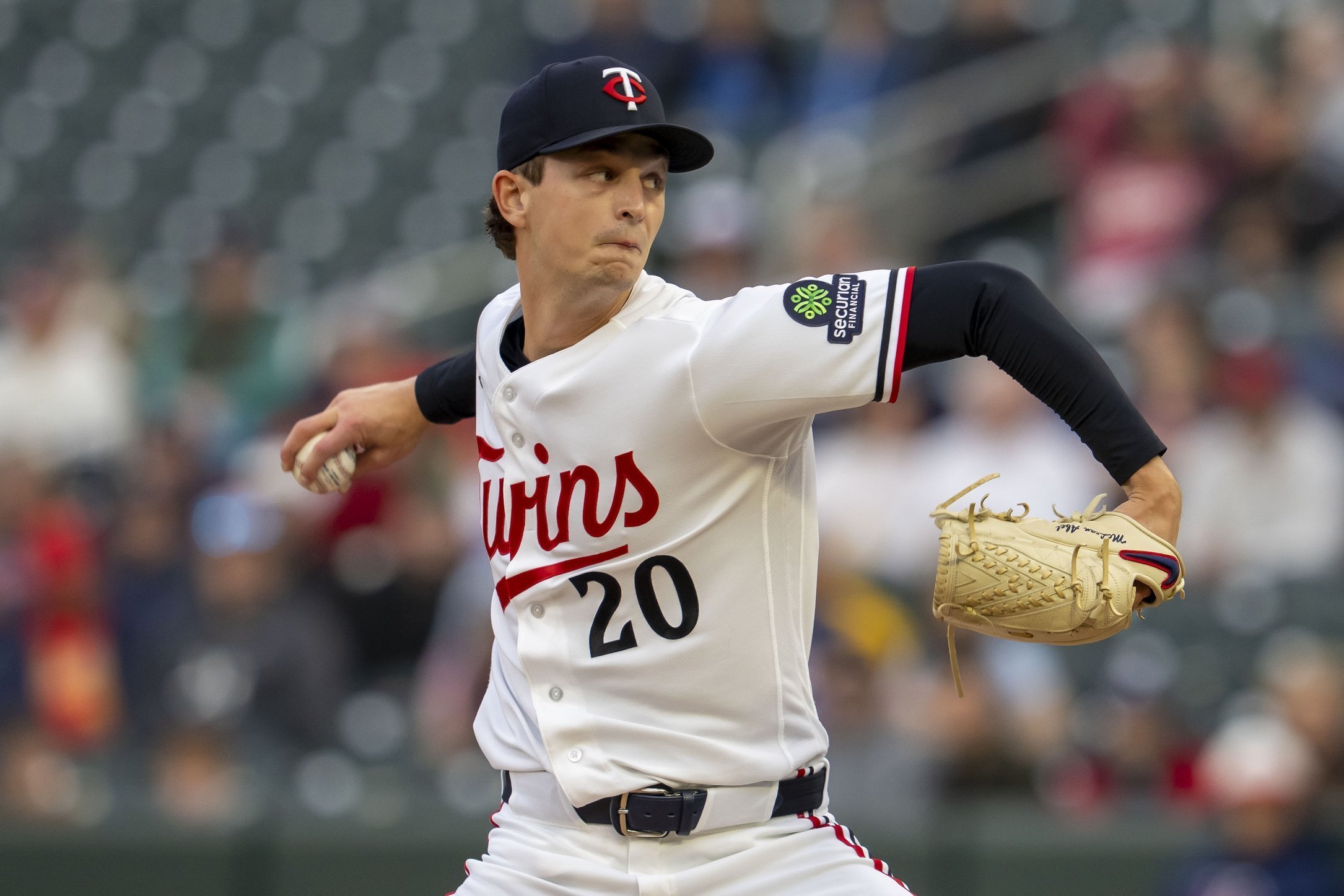 The Minnesota Twins received more disappointing pitching news on Wednesday when the club announced that right-hander Mick Abel will undergo arthroscopic surgery on his injured right elbow. For a Twins team already navigating a rotation battered by injuries, Abel's latest setback adds another layer of uncertainty to a pitching staff that has spent much of the season trying to patch together innings. The good news is that Abel's ulnar collateral ligament remains intact. This is not a Tommy John surgery situation, nor does it appear that an internal brace procedure is necessary. Instead, the operation is being recommended to address recurring discomfort that repeatedly halted his rehabilitation process. Unfortunately, that discomfort proved impossible to shake. A Promising Start Cut Short When the Twins acquired Abel along with catching prospect Eduardo Tait from the Phillies as part of last summer's Jhoan Duran trade, they were betting on upside. The former first-round pick arrived with plenty of prospect pedigree but also questions after an inconsistent start to his professional career. While his rookie season in Minnesota featured some growing pains, there were legitimate reasons for optimism entering 2026. Abel was one of the organization's standout performers during Spring Training. His fastball showed more life, his secondary pitches generated more swing-and-miss, and he looked poised to finally establish himself as a long-term rotation piece. That momentum carried into the regular season. Over his first 20 1/3 innings, Abel struck out 23 batters and flashed the type of stuff that once made him one of baseball's most highly regarded pitching prospects. Command remained a work in progress, but hitters were expanding the zone more frequently and struggling to square him up consistently. For the first time, it looked like the Twins were beginning to see the version of Abel they envisioned when they made the trade. Then came the elbow inflammation. Rehab Progress Followed by More Frustration Abel landed on the injured list in April after experiencing discomfort in his elbow. Initially, the injury didn't appear overly concerning, and the organization remained optimistic about a relatively quick return. Twice during his recovery process, Abel appeared to be nearing a return to game action. Twice, the elbow had other plans. Most recently, the right-hander was tentatively lined up to start Sunday's game in Arizona. That possibility disappeared after a bullpen session on Friday led to renewed discomfort the following day, forcing the Twins to scratch him before he could take the next step in his progression. Subsequent imaging provided some encouraging news. An MRI revealed no damage to either the UCL or the flexor tendon, two structures that often lead to season-ending surgeries for pitchers. Still, the recurring nature of the discomfort prompted consultation with renowned orthopedic surgeon Dr. Keith Meister, who ultimately recommended arthroscopic surgery to address the issue. Specific details regarding the procedure have not yet been released. Arthroscopic elbow surgeries can involve removing loose bodies, cleaning up bone spurs, or addressing other sources of irritation within the joint. A return timeline won’t be established until following the surgery. The Twins currently have an open spot on their 40-man roster after designating Austin Voth for assignment earlier this week. Once that vacancy is filled, Abel could become a candidate to be transferred to the 60-day injured list, creating additional roster flexibility. For now, the focus shifts to surgery and recovery. The organization can take some comfort in knowing that Abel avoided the worst-case scenario. An intact UCL leaves the door open for a return later this season and should preserve his long-term outlook. Still, after a spring that hinted at a breakout and an April that showcased some of the best pitching of his professional career, Abel's season has become another reminder of how quickly pitching development can be derailed by health concerns. View the full article
 -
 Carson Roccaforte and the Northwest Arkansas Naturals could not hold an early lead in a 7-1 loss, while the Quad Cities River Bandits fell 8-1 despite a Luke Pelzer RBI. The Omaha Storm Chasers rallied for two in the ninth but came up short, 3-2. In the lone win, Ryan McDonagh fired five scoreless innings, and Andy Basora closed it out as the Columbia Fireflies edged Kannapolis, 4-1, behind a two-run eighth. Mets Transactions Kansas City Royals signed free agent SS Andrew Velazquez to a minor league contract. Storm Chasers Rally Falls Short In 3-2 Loss The Omaha Storm Chasers nearly erased a three-run deficit in the ninth but fell 3-2 to the Columbus Clippers at home. Henry Williams turned in the longest outing, working 4 2/3 innings and allowing two runs on five hits with six strikeouts and four walks. Kris Bubic made a rehab start and was efficient in an inning of work. He had one strikeout and six strikes on eight pitches. Columbus scratched out single runs in the third, seventh, and eighth innings to build a 3-0 lead. Omaha's offense was quiet until the ninth. With Peyton Wilson aboard, Luca Tresh doubled to right field to score him, and Drew Waters followed with a double to center that brought Tresh home, cutting the margin to 3-2. The rally stalled there. Tresh, Waters, Wilson, Brandon Drury, Gavin Cross, and Kevin Newman each collected a hit, but Omaha stranded four runners and struck out 13 times as a team. Tresh and Waters drove in the only runs. The Storm Chasers' record fell to 34-42 with the loss. Player AB R H RBI BB K Abraham Toro 4 0 0 0 0 1 Peyton Wilson 4 1 1 0 0 3 Matthew Lugo 4 0 0 0 0 2 Luca Tresh 4 1 1 1 0 1 Drew Waters 4 0 1 1 0 1 Brandon Drury 4 0 1 0 0 0 Gavin Cross 3 0 1 0 0 1 Luke Maile 3 0 0 0 0 2 Kevin Newman 3 0 1 0 0 2 Player IP H R ER BB K HR Kris Bubic 1 0 0 0 0 1 0 Ethan Bosacker 1 1 0 0 0 1 0 Henry Williams 4 2/3 5 2 2 4 6 0 Mason Black 1 1/3 4 1 1 0 2 0 Ben Sears 1 1 0 0 0 0 0 Naturals Sink After Roccaforte's Early Homer In 7-1 Defeat The Northwest Arkansas Naturals jumped in front in the first inning when leadoff man Roccaforte homered to right field, but the offense went silent the rest of the way in a 7-1 loss at Springfield. Roccaforte finished 2-for-4 with a double and a home run, accounting for the lone run. Steven Zobac drew the bulk of the work, allowing one run on three hits over four innings with two strikeouts, two walks, and a home run. The game turned in the fifth, when Springfield erased a 1-1 tie by plating three runs, capped by a three-run homer off Oscar Rayo. The home side added three more in the eighth on a pair of home runs to pull away. Frank Mozzicato surrendered three runs in his single inning of work, and Rayo gave up three across 2 2/3 innings. Daniel Vazquez, Jack Pineda, Spencer Nivens, Colton Becker, and Canyon Brown each singled, but the Naturals stranded six and managed just the one run. They also went 0-for-7 with runners in scoring position. Northwest Arkansas is now 30-39. Player AB R H RBI BB K Carson Roccaforte 4 1 2 1 0 0 Jack Pineda 3 0 1 0 0 1 Sam Kulasingam 4 0 0 0 0 2 Spencer Nivens 4 0 1 0 0 0 Daniel Vazquez 4 0 1 0 0 2 Colton Becker 4 0 1 0 0 0 Omar Hernandez 3 0 0 0 1 0 Canyon Brown 3 0 1 0 0 2 Justin Johnson 3 0 0 0 0 2 Player IP H R ER BB K HR Steven Zobac 4 3 1 1 2 2 1 Frank Mozzicato 1 2 3 3 0 1 1 Oscar Rayo 2 2/3 4 3 3 2 2 2 Brandon Johnson 0 1/3 0 0 0 0 0 0 River Bandits Stymied In 8-1 Loss At South Bend The Quad Cities River Bandits managed only four hits and fell 8-1 to South Bend. The game was ended after eight innings due to rain. Emmanuel Reyes took the loss, allowing three runs, two earned, on three hits over four innings with one strikeout and three walks. South Bend struck first with three runs in the opening inning, one of which was unearned after a fielding error by Tyriq Kemp. The game broke open late. South Bend pushed across three runs in the seventh, then added two more in the eighth, including a two-run homer surrendered by Kamden Edge in his lone inning. Quad Cities answered in the eighth when Pelzer singled to left field to score Asbel Gonzalez for the team's only run. Gonzalez, Blake Mitchell, Pelzer, and Connor Rasmussen recorded the four hits, while Derlin Figueroa struck out four times. The River Bandits left eight runners on base and went 1-for-8 with runners in scoring position. Quad Cities is now 30-37 after the loss to South Bend. Player AB R H RBI BB K Nolan Sailors 4 0 0 0 0 3 Asbel Gonzalez 3 1 1 0 0 1 Blake Mitchell 3 0 1 0 1 1 Ramon Ramirez 4 0 0 0 0 2 Luke Pelzer 4 0 1 1 0 1 Derlin Figueroa 4 0 0 0 0 4 Tyriq Kemp 2 0 0 0 1 1 Connor Rasmussen 3 0 1 0 0 1 Angel Acosta 3 0 0 0 0 0 Player IP H R ER BB K HR Emmanuel Reyes 4 3 3 2 3 1 0 Max Martin 2 1 0 0 0 1 0 Nick Conte 0 2/3 1 3 3 3 1 0 Chase Jessee 0 1/3 1 0 0 1 1 0 Kamden Edge 1 4 2 2 0 1 1 McDonagh's Gem And Late Push Lift Fireflies To 4-1 Win Ryan McDonagh anchored the Columbia Fireflies in a 4-1 win at Kannapolis, throwing five scoreless innings and allowing just two hits while striking out three and walking two to earn the win. The Fireflies built their lead early, scoring twice in the second inning. Josi Novas singled to bring home Hyungchan Um, and the inning produced the game's first runs. Columbia tacked on two more in the eighth to create breathing room. Angel Ramirez lifted a sacrifice fly to score JC Vanek, and Jhosmmel Zue singled to left field to bring in Yandel Ricardo. Zue led the offense at 2-for-3 with a double and an RBI. Jhon Reyes, Hunter Alberini, and Andy Basora combined for three innings out of the bullpen, with Basora recording the save. Columbia worked nine walks but left nine runners on base. The Fireflies also went 2-for-6 with runners in scoring position. The lone Kannapolis run came in the seventh against Alberini and was unearned. The win improved Columbia's record to 36-35 for the season. Player AB R H RBI BB K Josh Hammond 5 0 0 0 0 0 Sean Gamble 4 0 1 0 1 3 Stone Russell 3 0 0 0 2 0 JC Vanek 3 1 1 0 2 0 Yandel Ricardo 4 1 1 0 0 1 Hyungchan Um 2 1 0 0 1 1 Angel Ramirez 3 0 0 1 0 2 Jhosmmel Zue 3 1 2 1 1 0 Josi Novas 3 0 1 1 1 2 Player IP H R ER BB K HR Ryan McDonagh 5 2 0 0 2 3 0 Jhon Reyes 1 0 0 0 2 0 0 Hunter Alberini 1 0 1 0 1 0 0 Andy Basora 2 2 0 0 0 1 0 Top-20 Prospect Performance Kendry Chourio: DNP David Shields: DNP Josh Hammond: 0-for-5 Blake Mitchell: 1-for-3, BB, K Sean Gamble: 1-for-4, BB, 3 K Ramon Ramirez: 0-for-4, 2 K Drew Beam: DNP Carson Roccaforte: 2-for-4, 2B, HR, RBI Asbel Gonzalez: 1-for-3, R, SB, K Yandel Ricardo: 1-for-4, R, K Michael Lombardi: DNP Ben Kudrna: DNP Justin Lamkin: DNP Felix Arronde: DNP Blake Wolters: DNP Steven Zobac: 4 IP, 3 H, R, 2 BB, 2 K, HR Austin Charles: DNP Daniel Vázquez: 1-for-4, 2 K Kamden Edge: 1 IP, 4 H, 2 R, K, HR Warren Calcano: DNP View the full article
 -
 Carson Roccaforte and the Northwest Arkansas Naturals could not hold an early lead in a 7-1 loss, while the Quad Cities River Bandits fell 8-1 despite a Luke Pelzer RBI. The Omaha Storm Chasers rallied for two in the ninth but came up short, 3-2. In the lone win, Ryan McDonagh fired five scoreless innings, and Andy Basora closed it out as the Columbia Fireflies edged Kannapolis, 4-1, behind a two-run eighth. Mets Transactions Kansas City Royals signed free agent SS Andrew Velazquez to a minor league contract. Storm Chasers Rally Falls Short In 3-2 Loss The Omaha Storm Chasers nearly erased a three-run deficit in the ninth but fell 3-2 to the Columbus Clippers at home. Henry Williams turned in the longest outing, working 4 2/3 innings and allowing two runs on five hits with six strikeouts and four walks. Kris Bubic made a rehab start and was efficient in an inning of work. He had one strikeout and six strikes on eight pitches. Columbus scratched out single runs in the third, seventh, and eighth innings to build a 3-0 lead. Omaha's offense was quiet until the ninth. With Peyton Wilson aboard, Luca Tresh doubled to right field to score him, and Drew Waters followed with a double to center that brought Tresh home, cutting the margin to 3-2. The rally stalled there. Tresh, Waters, Wilson, Brandon Drury, Gavin Cross, and Kevin Newman each collected a hit, but Omaha stranded four runners and struck out 13 times as a team. Tresh and Waters drove in the only runs. The Storm Chasers' record fell to 34-42 with the loss. Player AB R H RBI BB K Abraham Toro 4 0 0 0 0 1 Peyton Wilson 4 1 1 0 0 3 Matthew Lugo 4 0 0 0 0 2 Luca Tresh 4 1 1 1 0 1 Drew Waters 4 0 1 1 0 1 Brandon Drury 4 0 1 0 0 0 Gavin Cross 3 0 1 0 0 1 Luke Maile 3 0 0 0 0 2 Kevin Newman 3 0 1 0 0 2 Player IP H R ER BB K HR Kris Bubic 1 0 0 0 0 1 0 Ethan Bosacker 1 1 0 0 0 1 0 Henry Williams 4 2/3 5 2 2 4 6 0 Mason Black 1 1/3 4 1 1 0 2 0 Ben Sears 1 1 0 0 0 0 0 Naturals Sink After Roccaforte's Early Homer In 7-1 Defeat The Northwest Arkansas Naturals jumped in front in the first inning when leadoff man Roccaforte homered to right field, but the offense went silent the rest of the way in a 7-1 loss at Springfield. Roccaforte finished 2-for-4 with a double and a home run, accounting for the lone run. Steven Zobac drew the bulk of the work, allowing one run on three hits over four innings with two strikeouts, two walks, and a home run. The game turned in the fifth, when Springfield erased a 1-1 tie by plating three runs, capped by a three-run homer off Oscar Rayo. The home side added three more in the eighth on a pair of home runs to pull away. Frank Mozzicato surrendered three runs in his single inning of work, and Rayo gave up three across 2 2/3 innings. Daniel Vazquez, Jack Pineda, Spencer Nivens, Colton Becker, and Canyon Brown each singled, but the Naturals stranded six and managed just the one run. They also went 0-for-7 with runners in scoring position. Northwest Arkansas is now 30-39. Player AB R H RBI BB K Carson Roccaforte 4 1 2 1 0 0 Jack Pineda 3 0 1 0 0 1 Sam Kulasingam 4 0 0 0 0 2 Spencer Nivens 4 0 1 0 0 0 Daniel Vazquez 4 0 1 0 0 2 Colton Becker 4 0 1 0 0 0 Omar Hernandez 3 0 0 0 1 0 Canyon Brown 3 0 1 0 0 2 Justin Johnson 3 0 0 0 0 2 Player IP H R ER BB K HR Steven Zobac 4 3 1 1 2 2 1 Frank Mozzicato 1 2 3 3 0 1 1 Oscar Rayo 2 2/3 4 3 3 2 2 2 Brandon Johnson 0 1/3 0 0 0 0 0 0 River Bandits Stymied In 8-1 Loss At South Bend The Quad Cities River Bandits managed only four hits and fell 8-1 to South Bend. The game was ended after eight innings due to rain. Emmanuel Reyes took the loss, allowing three runs, two earned, on three hits over four innings with one strikeout and three walks. South Bend struck first with three runs in the opening inning, one of which was unearned after a fielding error by Tyriq Kemp. The game broke open late. South Bend pushed across three runs in the seventh, then added two more in the eighth, including a two-run homer surrendered by Kamden Edge in his lone inning. Quad Cities answered in the eighth when Pelzer singled to left field to score Asbel Gonzalez for the team's only run. Gonzalez, Blake Mitchell, Pelzer, and Connor Rasmussen recorded the four hits, while Derlin Figueroa struck out four times. The River Bandits left eight runners on base and went 1-for-8 with runners in scoring position. Quad Cities is now 30-37 after the loss to South Bend. Player AB R H RBI BB K Nolan Sailors 4 0 0 0 0 3 Asbel Gonzalez 3 1 1 0 0 1 Blake Mitchell 3 0 1 0 1 1 Ramon Ramirez 4 0 0 0 0 2 Luke Pelzer 4 0 1 1 0 1 Derlin Figueroa 4 0 0 0 0 4 Tyriq Kemp 2 0 0 0 1 1 Connor Rasmussen 3 0 1 0 0 1 Angel Acosta 3 0 0 0 0 0 Player IP H R ER BB K HR Emmanuel Reyes 4 3 3 2 3 1 0 Max Martin 2 1 0 0 0 1 0 Nick Conte 0 2/3 1 3 3 3 1 0 Chase Jessee 0 1/3 1 0 0 1 1 0 Kamden Edge 1 4 2 2 0 1 1 McDonagh's Gem And Late Push Lift Fireflies To 4-1 Win Ryan McDonagh anchored the Columbia Fireflies in a 4-1 win at Kannapolis, throwing five scoreless innings and allowing just two hits while striking out three and walking two to earn the win. The Fireflies built their lead early, scoring twice in the second inning. Josi Novas singled to bring home Hyungchan Um, and the inning produced the game's first runs. Columbia tacked on two more in the eighth to create breathing room. Angel Ramirez lifted a sacrifice fly to score JC Vanek, and Jhosmmel Zue singled to left field to bring in Yandel Ricardo. Zue led the offense at 2-for-3 with a double and an RBI. Jhon Reyes, Hunter Alberini, and Andy Basora combined for three innings out of the bullpen, with Basora recording the save. Columbia worked nine walks but left nine runners on base. The Fireflies also went 2-for-6 with runners in scoring position. The lone Kannapolis run came in the seventh against Alberini and was unearned. The win improved Columbia's record to 36-35 for the season. Player AB R H RBI BB K Josh Hammond 5 0 0 0 0 0 Sean Gamble 4 0 1 0 1 3 Stone Russell 3 0 0 0 2 0 JC Vanek 3 1 1 0 2 0 Yandel Ricardo 4 1 1 0 0 1 Hyungchan Um 2 1 0 0 1 1 Angel Ramirez 3 0 0 1 0 2 Jhosmmel Zue 3 1 2 1 1 0 Josi Novas 3 0 1 1 1 2 Player IP H R ER BB K HR Ryan McDonagh 5 2 0 0 2 3 0 Jhon Reyes 1 0 0 0 2 0 0 Hunter Alberini 1 0 1 0 1 0 0 Andy Basora 2 2 0 0 0 1 0 Top-20 Prospect Performance Kendry Chourio: DNP David Shields: DNP Josh Hammond: 0-for-5 Blake Mitchell: 1-for-3, BB, K Sean Gamble: 1-for-4, BB, 3 K Ramon Ramirez: 0-for-4, 2 K Drew Beam: DNP Carson Roccaforte: 2-for-4, 2B, HR, RBI Asbel Gonzalez: 1-for-3, R, SB, K Yandel Ricardo: 1-for-4, R, K Michael Lombardi: DNP Ben Kudrna: DNP Justin Lamkin: DNP Felix Arronde: DNP Blake Wolters: DNP Steven Zobac: 4 IP, 3 H, R, 2 BB, 2 K, HR Austin Charles: DNP Daniel Vázquez: 1-for-4, 2 K Kamden Edge: 1 IP, 4 H, 2 R, K, HR Warren Calcano: DNP View the full article
 -
 Sweet Lou and Ol Gregg try to figure out whether the Twins are frisky or not. How many more bullpen arms will sail into the Great Beyond? Will Byron Buxton be traded regardless of all evidence to the contrary? And we play a very original segment: Type This Up. Listen using Apple Podcasts: https://podcasts.apple.com/us/podcast/the-twins-off-daily-podcast/id1741266056 Listen using Spotify: https://open.spotify.com/show/4tb78XlurcPTYYSsARdbD7 Listen using iHeartRadio: https://www.iheart.com/podcast/263-the-twins-off-daily-podcas-167548600/ Listen using Pocket Casts: https://pca.st/nvclbt0w Watch on YouTube: https://www.youtube.com/@twinsdaily View the full article
 -
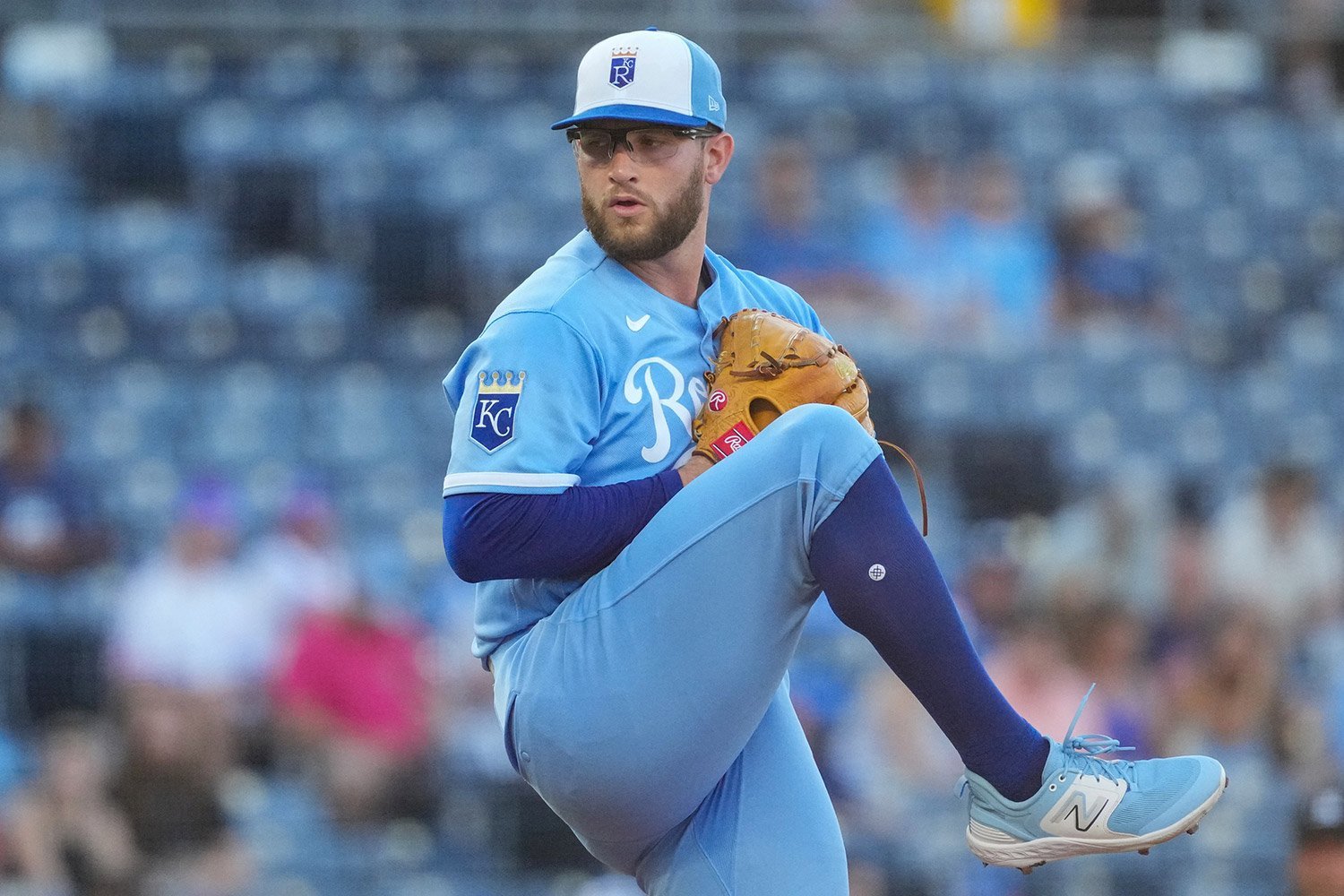 When the tying or go-ahead run is standing on second, the Royals' staff has a knack for falling apart in ways that cold, hard numbers, like the 50 homers they've surrendered with runners on base, the most in the majors, barely begin to capture. They've allowed 46.6% of their total runs via the long ball, the second-highest rate in baseball and well above the league-average mark of 39.8%. They've also given up 13 three-run homers, tied for third-most. The trend followed them to Washington in their last series, where six of the fifteen runs they coughed up came on just two swings; both three-run shots. The Strikeout Trap Noah Cameron has been, on paper, one of the more intriguing arms in the system. His slider generates whiffs, and his 18.6% strikeout rate in pressure-packed plate appearances is nothing to dismiss. But when Cameron misses, he misses in the worst possible locations. Across 70 high-leverage trips to the plate, he's allowed five homers, paired with a 15.7% barrel rate and a .552 expected slugging percentage. His heat map tells the whole story: a .696 xwOBA in the upper-middle third, and .452 on the inner half up. When he elevates his fastball or leaves it drifting into the hitter's wheelhouse, the punishment is immediate. Cameron hasn't lost his stuff—his sweeping slider is still nasty—but his arsenal, and particularly a fastball that lacks true vertical ride, is poorly suited for the high-leverage moments he's being thrown into. Michael Wacha sits on the opposite end of the spectrum. He doesn't beat himself with free passes (3.8% walk rate in high-leverage spots), but his fastball averages just 88.4 mph, and hitters know it's coming. His HardHit% in those same clutch situations sits at 45.2%, and the five homers he's allowed with the game on the line are no fluke. Wacha's heat map flashes danger zones at .720 on the low-outside corner and a staggering .779 in the lower-middle. Throwing strikes without the ability to miss bats or induce weak contact is a death sentence in today's game, and right now Wacha is turning too many at-bats into damage opportunities. The silver lining? His changeup and curveball remain legitimate weapons—and he'll need to lean on them heavily to reverse this trend. Pitcher Situation PA HR K% BB% Barrel/BBE% HardHit% xSLG xwOBA Noah Cameron Go-Ahead/Tie 70 5 18.6% 8.6% 15.7% 39.2% .552 .394 Michael Wacha Go-Ahead/Tie 80 5 18.8% 3.8% 9.7% 45.2% .540 .370 Seth Lugo Go-Ahead/Tie 65 2 18.5% 7.7% 16.7% 47.9% .618 .400 Lucas Erceg Go-Ahead/Tie 54 0 14.8% 13.0% 0.0% 31.6% .331 .333 Kris Bubic Go-Ahead/Tie 56 2 25.0% 7.1% 10.5% 44.7% .483 .345 Daniel Lynch IV Go-Ahead/Tie 38 2 26.3% 10.5% 12.5% 37.5% .438 .318 Seth Lugo is the most fascinating case study of the bunch. He's allowed only two homers across 65 high-leverage plate appearances, yet his .618 xSLG leads the team, and his HardHit% checks in at 47.9%. Lugo is surviving, make no mistake—but he is absolutely not dominating. His heat map is genuinely concerning: a .921 xwOBA up and away and .571 in the upper-middle. Hitters are squaring him up all over the zone, but Kansas City's elite defense has masked a surprising amount of loud contact. Lugo is navigating treacherous waters, and his expected slugging suggests those loud contact events are going to start finding grass and bleachers sooner rather than later. Lucas Erceg offers the stark contrast. He has allowed zero home runs in 54 high-leverage appearances. His barrel rate sits at an immaculate 0.0%, his HardHit% at 31.6%, and his .331 xSLG is the lowest on the entire staff. His heat map is ice-cold across almost every quadrant. That sinker, with its extreme horizontal run, generates weak grounders on command. Erceg isn't trying to punch anyone out; he's trying to keep the ball inside the yard, and so far, he's executing that mission flawlessly. Daniel Lynch IV: The Name No One Mentions Lynch has surrendered just two homers in 38 high-leverage plate appearances, striking out 26.3% of hitters while posting a .318 xwOBA—the second-lowest mark among the group. His heat map is the coldest of them all. He has a lone hot spot in the upper-middle (1.860 xwOBA), but everything else is deep blue: .265 up and away, .160 low and away, .097 low and in. Lynch leans on his changeup and slider to keep hitters off-balance and guessing. In a season where the pitching staff has been a perpetual headache, Lynch has quietly morphed into a reliable, go-to weapon. The Path Forward Cole Ragans is on the injured list. So is Kris Bubic. Carlos Estévez, who was supposed to anchor the bullpen, has been sidelined since April. Ragans, before his shutdown, was the most intriguing rollercoaster of them all: a dazzling 34.4% strikeout rate in high-leverage spots, undermined by a shaky 12.5% walk rate. His control issues turned every outing into a crapshoot. Bubic's absence (2 HR allowed in 56 PA, .483 xSLG) has left a void that neither Cameron nor Wacha has been able to fill with any consistency. The Royals need their arms to find the command that has so far eluded them when the game hangs in the balance. Erceg and Lynch have proven it's possible. Cameron and Wacha are due for adjustments. Lugo is walking a tightrope, and his heat map suggests the reckoning could be closer than his traditional ERA indicates. But this isn't just a pitching problem. The offense hasn't held up its end of the bargain, either. When the staff has coughed up runs in critical spots, the bats have largely gone silent. Kansas City has scored just 33.9% of its runs via the home run, ranking 26th in the big leagues. Worse, their homers have been overwhelmingly solo affairs—nine of their last ten have come with the bases empty. To win close, low-scoring affairs, you need more than just consistent pitching and defense; you need timely thunder. When Ragans, Bubic, and Estévez eventually return, the front office will have a chance to recalibrate the hierarchy. But the lesson of this season is already crystal clear: the talent is plainly there. What's missing is dependability when the game is hanging in the balance. If this staff can finally find its rhythm in pressure-packed situations—and if the lineup starts connecting with ducks on the pond—those narrow losses will start flipping into gritty wins. For now, though, the Royals are still searching for that elusive consistency. When they find it, one-run games will finally start tilting in their favor. View the full article
 -
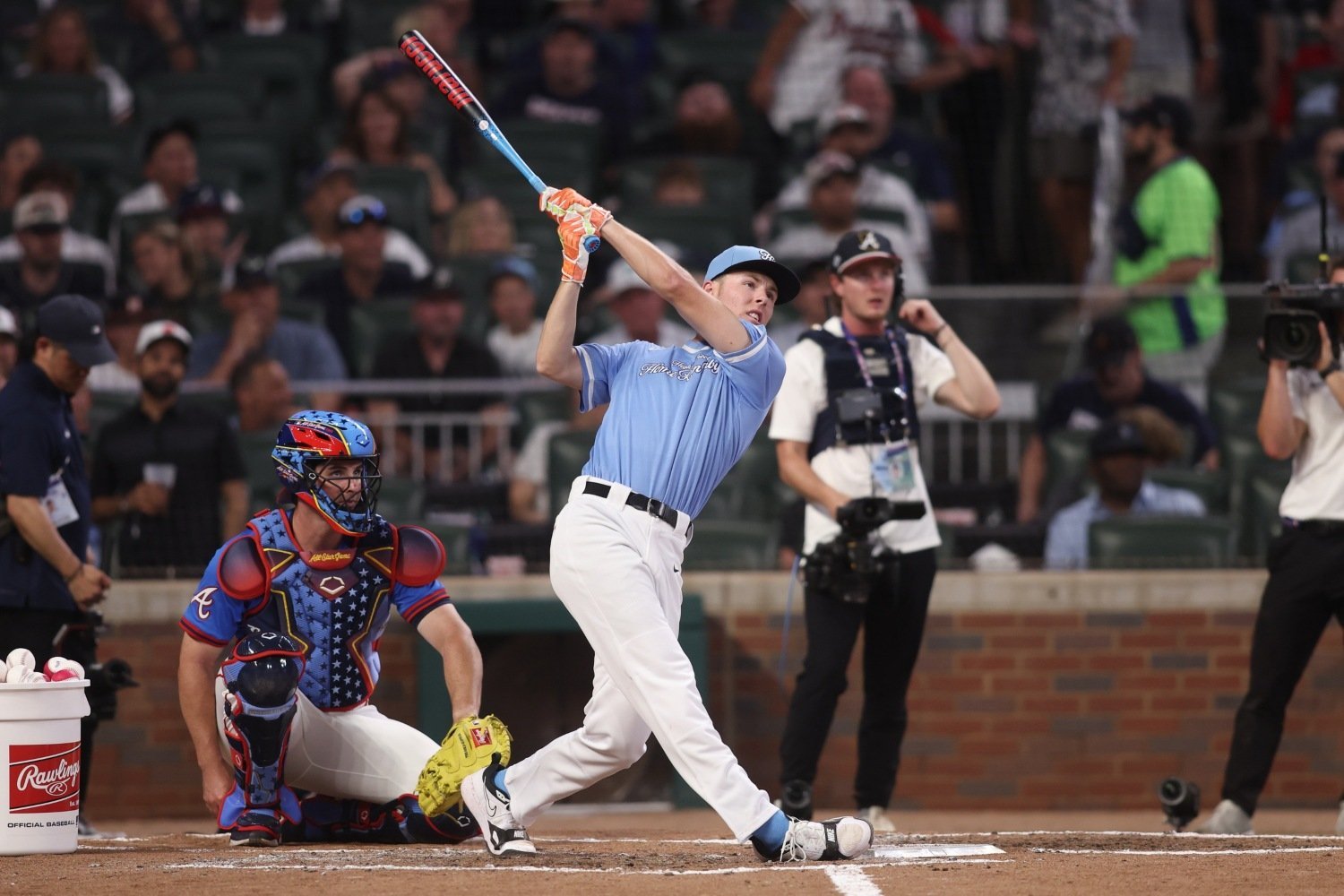 This week at Twins Daily, we’re continuing our series of deep dives into candidates for the third overall pick in the 2026 draft. After examining Georgia Tech catcher Vahn Lackey and UCLA shortstop Roch Chowlowsky, we're turning our attention to the top high school player in the class. It’s a testament to Grady Emerson’s skills and tools as a baseball player that he hasn’t suffered from more prospect fatigue just three weeks away from being drafted. He’s been famous (in amateur baseball circles) since he was 15. Emerson has gone wire-to-wire as the consensus top high school player in the 2026 class, only behind Roch Cholowsky in terms of overall draft stock. I think you may even see his name atop industry rankings before the draft kicks off on July 11. Let’s dig into his profile. Bio and Background Emerson grew up in Argyle, Texas, around 40 miles northwest of Dallas. The University of Texas commit has a lengthy track record in amateur baseball. He was the first player to be selected to four consecutive US National Teams, rotating through every infield position. Additionally, he was named 2026 Gatorade National Player of the Year. It’s fair to say he’s got an impressive pedigree. Emerson played the majority of his high school career at Argyle High School before transferring as a rising senior to Fort Worth Christian School, a smaller, private school (playing inferior competition) under the tutelage of former big-leaguer Rusty Greer. According to MaxPreps, Emerson hit .532/.648/.1.013 in 2026 with seven home runs, nine doubles, and four triples in 108 plate appearances. Emerson had a strong 2025 summer circuit, managing an .873 OPS in 143 plate appearances, while showing a combination of excellent contact skills and bat speed. Scouting Report Emerson hits from the left side of the plate. He sets up in an open stance, with a high hand set that will sit around shoulder height. It’s a quiet operation in general, with little additional or wasted movement loading his hands. His path to the ball is direct, giving the barrel of the bat plenty of time on plane. Emerson’s offensive profile starts with an excellent approach. He makes strong swing decisions, rarely expanding the zone at this early stage of his career. That, combined with his excellent bat-to-ball skills, makes him a brutal at-bat for pitchers. While Emerson’s profile is hit over power for now, that’s selling his bat speed short, for me. It’s likely 20-25 home run power as a pro. This aspect of his game is a little overlooked, as he rarely (if ever) sells out for power in games. Instead, he sprays line drives all over the field. Defensively, Emerson is a strong bet to stick at shortstop. He has a plus arm and can make all the throws the position requires. Additionally, there’s a good internal clock, and he looks equally comfortable ranging to either side of his body or charging the ball, maintaining a level of fluidity and body control that bodes well for his chances of sticking at short. Emerson has posted plenty of plus run times, too. He’s either a 60 runner or a 55 in terms of speed, depending on how you think his frame will develop in the coming years. Shifting Dynamics at the Top of the Draft How should we think of Emerson as part of the consensus top three in this draft? How does he stack up against Roch Cholowsky and Vahn Lackey? What do we know about the draft tendencies of the teams picking above the Twins? Emerson has been the number two player in this draft since day one. He’s never really been under threat from another prep player. He’s also closing the gap at the top of the board, getting closer to Cholowsky. The most logical comparison to make here is between Emerson and Cholowsky, as they play the same position. The consensus in the industry seems to be that Emerson is a better player at the same stage than Cholowsky (who was ranked 35th on our board as a high schooler ahead of the 2023 draft). If you’re the White Sox, do you take a risk on Emerson’s upside, or go with the greater certainty Cholowsky offers? It’s notable that both the White Sox and Twins had interest in drafting Cholowsky out of high school. It’s also worth considering how the Rays factor in at the top of the first round. The Rays took prep players with four of their first five selections in 2025, and three of their first four selections in 2024. In general, they seem to favor left-handed-hitting high school bats (Theo Gillen, Nathan Flewelling, Cooper Flemming, to name a few) and have a strong track record of developing them. Given industry speculation around the White Sox' consideration of Emerson and the Rays' recent track record, it feels less likely Emerson will be on the board at three than it was a month ago. The Twins have done (and will continue to do) extensive work on a number of players under consideration at three. In our final installment of this series, we’ll consider some dark horse candidates. For what it’s worth, I remain confident it’ll be one of Cholowsky, Emerson, or Lackey. View the full article
 -
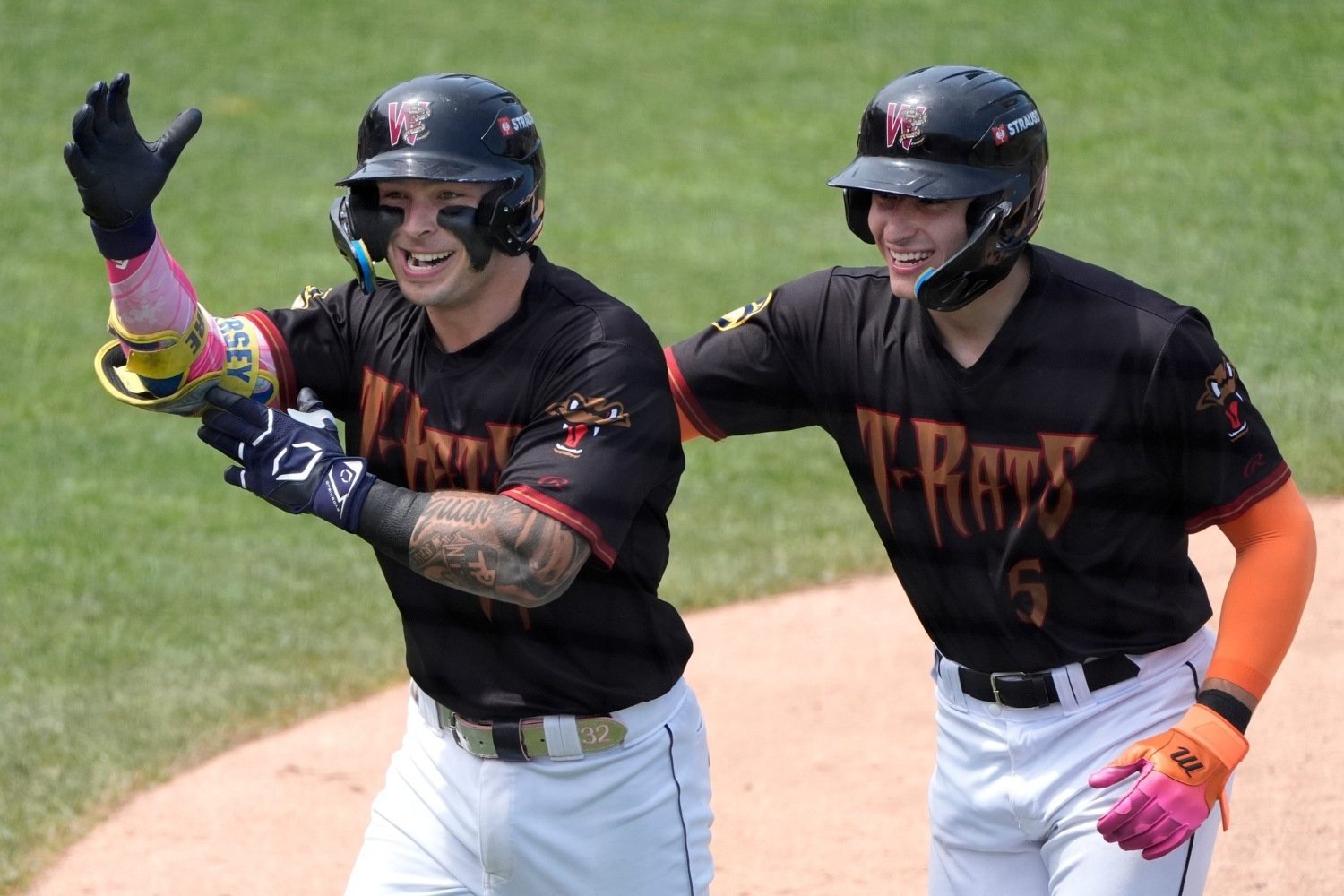 The Brewers' farm system continues to impress, despite several big-time graduations over the last few years. International signings continue to make names for themselves, which accounts for one of the new additions to our top 20 prospects list this month. Meanwhile, the other was a college draft pick who signed for $25,000 in 2024. The organization continues to find talent through all possible avenues. You can find the full list here! New Additions #18 OF Alexander Frias Frias signed out of the Dominican Republic in the Brewers' 2025 International signing class. His $350,000 signing bonus was tied for the sixth-highest in the Brewers' class. Frias missed the first month of the Dominican Summer League season due to injury, but began to produce the moment he got on the field, posting a 112 wRC+ over the first 112 plate appearances of his professional career. Frias was brought stateside this spring, and there were some whispers that he was performing extremely well in minor-league spring training games. He even posted a video of himself hitting a ball 115 MPH in a spring training game. Those whispers got louder once the Arizona Complex League season began, and Frias started posting ludicrous surface-level stats. Before his promotion to Low-A, which occurred this past weekend, Frias's 191 wRC+ was second among qualified batters between both Complex leagues. He finished with a bang at the level, going 8-for-10 in his final 10 at-bats, including a 6-for-6 game in his penultimate contest. Frias possesses plus-plus raw power. In games played on Statcast-equipped fields, Frias had an average exit velocity of 91.6 MPH, and maxed out at 117 MPH, which would be the hardest-hit ball by a big-league Brewer in 2026, and would trail only Oneil Cruz and Yordan Alvarez's max numbers for all of MLB. Frias is only 18 years old and doesn't turn 19 until March. To tap into that raw power more often, though, Frias will need to learn to elevate the ball more consistently. His ground ball rate was 44.1%, and the average launch angle in Statcast games was -3.9°. Not only does Frias show the potential for big-time power, but he also shows an impressive feel for limiting strikeouts. He only struck out at a 15.3% clip in the ACL. His whiff rates point to strikeouts still being a bigger part of the profile as he gets older, but they appear to be unlikely ever to be a major issue for him. He walked at a reasonable clip, too, though he does have a propensity to chase, which will be something to keep an eye on. Frias has a cannon of an arm (some scouts think he could throw upper-90s as a pitcher if he ever needed or wanted to go that route) and likely fits in right field long-term. He's an average runner, though probably better than average for his size. He could steal double-digit bases in his prime, though he will need to cut down on some of the aggressiveness the higher he climbs. Frias has started to generate major buzz. He just entered this list for the first time, but looks to be the type of talent that could find his way into the upper levels of the list in short order. He has already begun generating buzz among national evaluators for a future Top 100 spot. #19 RHP Jaron DeBerry DeBerry was the Brewers' third-round selection in the 2024 draft, signing for a measly $25,000 out of Dallas Baptist. Less than two years later, he finds himself among the top 20 prospects in the organization. The right-handed pitcher may have been drafted as a college senior, but there was always a lot of untapped potential there, despite his advanced age. DeBerry was mainly throwing in the 89-91 MPH range in college, but had a lot of room to pack good weight onto his frame. It was a six-pitch mix at the time, and has expanded to seven pitches in pro ball. DeBerry throws all three fastball variations, with his four-seam shape reportedly improving this season, while also sitting in the 92-94 MPH range and touching 96. His sinker is used against right-handed hitters as a ground-ball pitch, and his cutter is used against batters on either side of the plate. He spins the ball extremely well, which shows up mainly in his breaking ball mix. He will throw a big sweeper in the low 80s, a curveball with more depth and similar velocity, and also a shorter slider in the mid-80s. The sweeper is mostly used against righties, while the others are used more against lefties. His changeup has come a long way since college, as well. It gives him a solid pitch that fades away from the lefty bats. DeBerry had a slow start to the season, with a 7.25 ERA after his first six starts and a 20.6% walk-rate, which was the same as his strikeout rate in that time. Since then, though, he has posted a 2.51 ERA, while striking out 26.5% of the batters he's faced and only walking 6.6%. He has also gone deep into games, never working fewer than five innings in a start, working through the sixth in all but one of them and getting through seven in two of them. DeBerry has tapped into a lot of that potential he was showing out of college, and could get a chance in Triple-A relatively soon. At that point, he would become an option for the big-league club in short order. Biggest Risers #9 OF Braylon Payne -- Up four spots from #13 Payne got off to a really hot start this season. He cooled off a bit, but in 197 plate appearances has now settled into an .978 OPS and a 139 wRC+ for the Timber Rattlers. His season has been highlighted by his ability to tap into even more raw power, both in terms of his exit velocities and his ability to hit the ball in the air. His PullAir% of 17.3% is well above-average for High-A hitters. One of his home runs left the bat at 115 MPH earlier this season. He’s also a plus-plus runner, though his 14/20 success rate on stolen bases leaves a lot to be desired. The defense has taken a step forward in center, where his athleticism is always on display. The reads and jumps still need some work, but they are much better than in 2025. Payne has the tools to be a power and speed threat, though he will still need to limit his whiffs (35.5%) and strikeouts (28.9%) as much as possible. #16 RHP Craig Yoho -- Not ranked in May update Yoho has proven over and over that he is too advanced for Triple-A. His 0.90 ERA and 2.01 xERA at the level this season emphasize that. The inability to throw his pitches in the zone had cost him in his brief MLB stints in the past. With Nashville in 2025, he generated chases on 32.6% of pitches out of the zone, with 46.4% thrown in the zone, but only got chases on 21.4% of pitches out of the zone in MLB, where his zone rate was 44.3%, both well below average. This year in Triple-A, the zone rate is up to 50.5%, and in his last two MLB outings, it's at 60%. Overall, he's generated chases on 33.3% of pitches out of the zone in MLB this year, which is well above-average. It seems as though he could be on the verge of putting it together and becoming a key piece of the Brewers' bullpen in 2026. #6 OF Josh Adamczewski -- Up three spots from #9 Adamczewski laid waste to Midwest League pitching this season. After a slow start at the level in a small sample to close out the 2025 season, he returned with a vengeance. He posted a 162 wRC+ and a 1.026 OPS at the level. He has already surpassed his career high in home runs with nine (previously five in 2025), and he’s also kept his strikeout rate under 20%. His move to left field has also gone well, showing instincts that are better than expected, given his relative inexperience out there. Adamczewski could continue his climb up this list over the course of this season. He was promoted to Double-A last week and is 7-for-18 with two doubles at the level in his first five games. #5 3B Andrew Fischer -- Up three spots from #8 Like Adamczewski, Fischer also crushed Midwest League pitching this season. He posted an even more impressive 170 wRC+ and 1.118 OPS at the level. He hit 20 home runs in 191 at-bats, averaging one every 9.6 at-bats. Strikeouts (33.3%) and whiffs (39.2%) will be something to keep an eye on, but the overall production has been elite. His defense at third base has been more than serviceable, as well, though he still has work to do at the position. The arm plays more than well enough to handle the spot. Fischer was promoted with Adamczewski to Double-A last week and has already added three more home runs to his tally through five games—and has added a double and triple to the tally to account for all five of his hits. Biggest Fallers #7 3B Jett Williams -- Down three spots from #4 Williams has had a very up-and-down 2026. He got off to a very slow start, had a very strong stretch from the end of April through mid-May, but then slowed down again. The overall numbers in Triple-A are relatively pedestrian at the moment, with an 89 wRC+ and an OPS of .701. He has cut down some of the whiff concerns, but the power has not shown up as hoped, and the peripherals aren't screaming positive regression to the mean, either, as his xwOBA is .310 and his wOBA is .312, He's looked comfortable defensively at third base, and has played more shortstop since Cooper Pratt was promoted to the majors. That said, he will need to show quite a bit more offensively if he hopes to make it to Milwaukee in the near future. #13 C Marco Dinges -- Down three spots from #10 Dinges has performed well offensively in High-A this season. He's got a 115 wRC+ and an .863 OPS, while hitting eight home runs. The strikeouts and whiffs are both in similar places to 2025, and the walks are, too. The bat isn't a big concern, though it would have been nice to see positive steps in year two at High-A, rather than holding steady or regressing a bit in most categories. The defense is the bigger concern and is causing the slippage in the rankings. Some of the concern is that he simply has not been able to catch for the last month or so. He's reportedly dealing with a shoulder injury that has not allowed him to get behind the plate in that time. It's fair to wonder if the shoulder issue has affected the offense, as well. However, when he was healthy, he was showing some progress behind the plate. He had thrown out 7 of 23 players attempting to steal against him and had zero passed balls in his 16 games behind the plate this year. It seems that health, along with so many players performing well in the system, might be causing this fall, more than anything Dinges can control himself. Graduations #3 RHP Logan Henderson Henderson earned himself a spot in the Brewers' rotation, and looks like a potential mid-rotation arm for the future. He is currently on the IL with a back issue, and health will be one of the main things to watch for Henderson moving forward. #17 LHP Shane Drohan Drohan is also currently in the Brewers' rotation. While he could shift back into a bullpen role at some point this season, he has handled that rotation spot extremely well, and that should be his long-term role with the Brewers. Thank you to all of you who voted! View the full article
 -
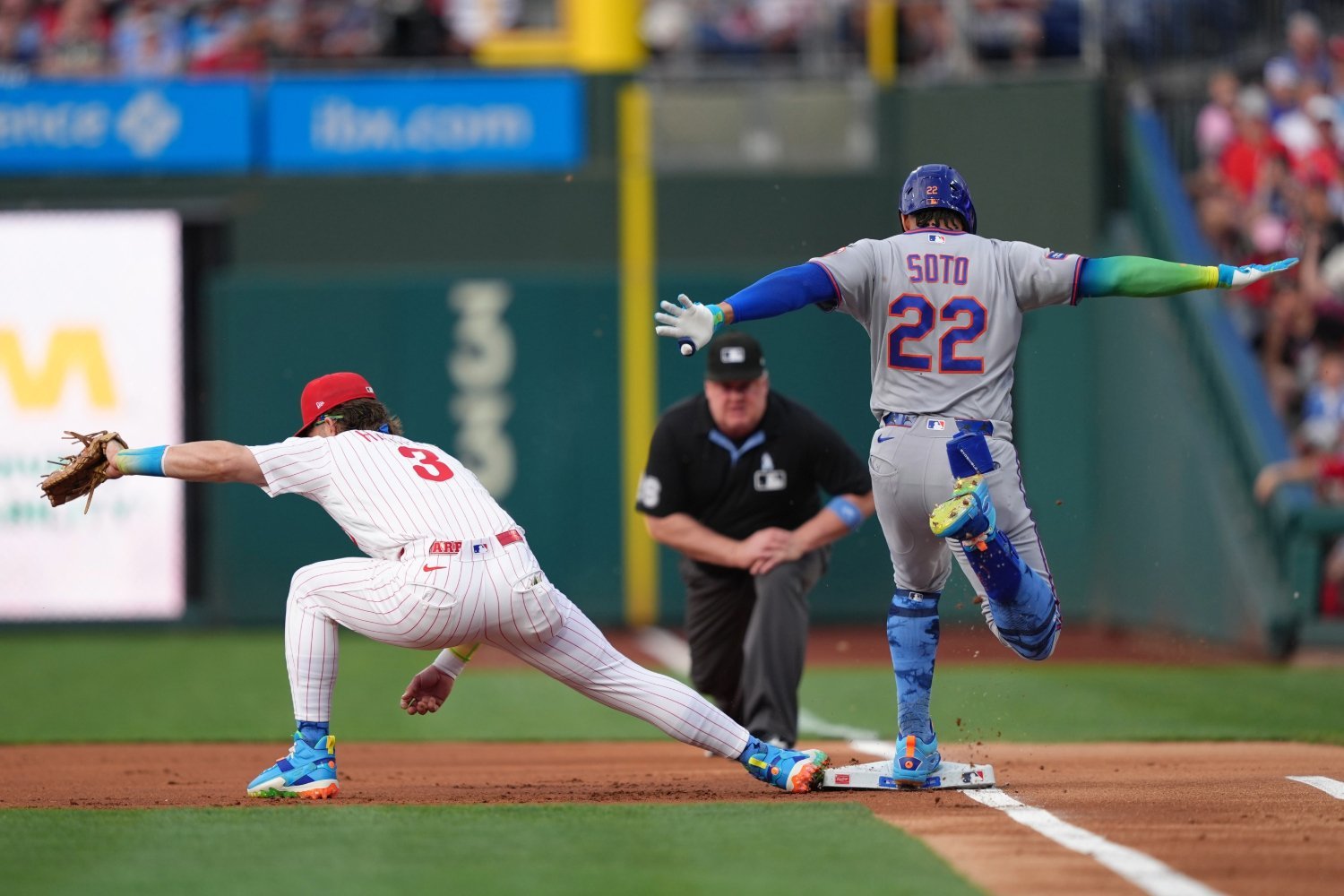 Juan Soto can impact a game in countless ways. He can drive a fastball into the opposite-field seats; he can turn a pitcher’s mistake into extra bases; he can change the scoreboard with a single swing. But the skill that made him a star long before he reached his physical peak has always been something simpler and, in many ways, more valuable: He refuses to give away outs. Few hitters of his generation understand the strike zone the way Soto does. His patience and pitch recognition are elite. Since arriving in the major leagues as a teenager, he has consistently known which pitches deserve his swing and which pitches deserve his restraint. That ability is what made him one of baseball’s most coveted players. The New York Mets were not simply investing in a single player when they handed him the largest contract in professional sports history; they were investing in an offensive philosophy built around reaching base. Which is why the reality of the first half of 2026 feels so surprising. Sure, Soto has done his job. His .395 on-base percentage is lower than usual but still a gargantuan figure in the modern game. The problem is that the lineup around him has not consistently followed suit. The most revealing number of the season may also be the simplest one; now nearly halfway through the 2027 season, the Mets have posted a collective .297 on-base percentage. That's historically poor. Since the beginning of the Divisional Era in 1969, only one Mets team reached base less frequently through its first 77 games. Season OBP Through 77 Games Record 2013 .296 33-44 2026 .297 34-43 1993 .300 23-54 1983 .300 29-48 2015 .300 40-37 The company, as any Mets fan will tell you, is striking. The 2013 Mets, for instance, were a rebuilding club with limited offensive talent and little expectation of contention. They eventually finished 74-88. The 2026 Mets are not the same. They were built around Juan freaking Soto. Yet both teams produced virtually identical on-base numbers through this point of the season. That raises an uncomfortable question: How can a team featuring one of the greatest on-base hitters of the modern era generate so little offensive traffic? While the Mets drifted toward the bottom of the league in team OBP, Soto continued to look exactly like Juan Soto. He finished March and April with a .441 OBP. He followed with a .369 mark in May. In June, he climbed back over .400. There are no signs that his strike-zone command has diminished, nor any evidence that the discipline which made him one of baseball’s most reliable offensive forces has suddenly disappeared. The challenge for New York is that the offense has become overly dependent on that skill. June provides perhaps the clearest illustration of this paradox: Player June OBP Juan Soto .403 A.J. Ewing .353 Bo Bichette .346 Francisco Alvarez .316 Carson Benge .316 Marcus Semien .260 Jared Young .254 Brett Baty .246 Mark Vientos .226 Soto continues to set the standard, as expected. A.J. Ewing has supplied quality plate appearances. Bo Bichette has finally begun to resemble the hitter the Mets expected when they acquired him. Even Carson Benge continues to show encouraging signs as he establishes himself at the major-league level. After that, though, the drop-off becomes difficult to ignore. Marcus Semien, brought in to provide stability and veteran consistency, owns a .260 OBP in June. Mark Vientos has fallen to a .226 mark. Brett Baty followed a strong .365 mark in May with a .246 OBP this month. The result is an offense that struggles to sustain pressure. Too many plate appearances are ending without a baserunner, and too many rallies die before they have a chance to develop. Too often, the lineup is asking its power hitters to create offense from empty bases. And thus we arrive at the ultimate failure of the 2026 Mets. This isn't a story about Juan Soto, but rather a story about offensive construction. Bichette spent much of April and May struggling to reach base before breaking through in June. Baty looked like a key contributor one month and took a significant step backward the next. Jared Young started well before losing momentum. Meanwhile, Ewing and Benge have emerged as legitimate contributors, but both are still learning how to navigate the daily demands of becoming core pieces on a contender. The inconsistency has pushed the offense toward a more fragile formula than the front office likely envisioned. For much of June, they have remained close to league average offensively because the power has shown up. Home runs and extra-base hits have helped compensate for the lack of baserunners. Unfortunately, as we've seen all too often this year, power and hot streaks are unreliable. Getting on base is a skill that tends last no matter what. Which is part of what makes the comparison to 2013 so fascinating. That roster lacked the offensive ceiling of the current club, but the responsibility for creating traffic was spread throughout the lineup. David Wright posted a .390 OBP during that stretch. Lucas Duda finished at .362. Daniel Murphy contributed a .315 mark. No single hitter carried the entire burden. In 2026, much of that responsibility has fallen on one player. Soto is not merely the best on-base hitter in the lineup. He is, by a considerable margin, the most dependable one. That distinction helps explain how a team can employ perhaps the most disciplined offensive player of his generation and still produce one of the lowest on-base percentages in modern franchise history. There are legitimate reasons to believe improvement is possible; a roster doesn't become this expensive without have a lot of talent to show for it, after all. But improvement will not come from asking more of Soto, because he is already providing exactly what the Mets paid for. The real question facing New York over the season’s second half is whether the hitters around him can transform his greatest strength into a shared identity. View the full article
 -
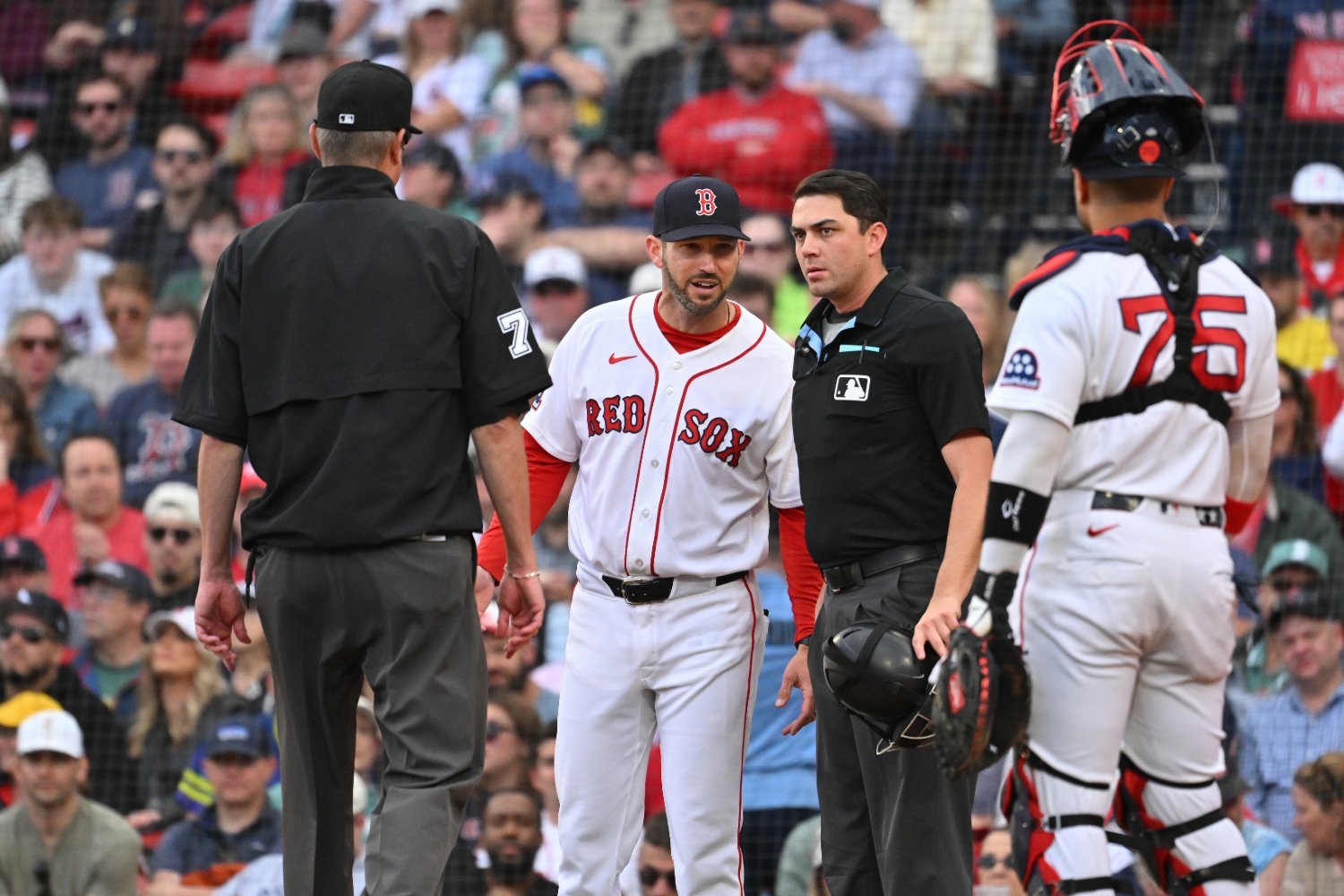 Organizational incompetence is not just evident with on-field performance. It leaks into every aspect of how the team shows up to the ballpark on a given day. Beyond the inability to drive in runners in scoring position or repeated miscues in the field, the Boston Red Sox have clearly come in with a lack of preparation regarding the new ABS system. The rules are a mere three months into adoption, but it's already become clear which teams understand the system and which ones came in unprepared. The Red Sox came out of the gates slow early in the season regarding ABS in their opening series. They put themselves in a position to let umpire C.B. Bucknor dictate the result of their at-bats because they had wasted their challenges so early on. The Reds, on the other hand, outclassed the Red Sox, and it resulted in a loss and Alex Cora getting ejected. Both squads, the Reds and the Red Sox, have remained at opposite ends of the ABS success spectrum this season. The Reds are second in getting a call flipped to a walk and seventh in getting a call flipped in their favor to a strikeout. More impressively, the Reds have a 56% success rate as the hitting team, third in MLB, and are first in success rate as the fielding team with a 71% success rate. The Red Sox, in contrast, sit in the bottom half of the league as the hitting team and middle-of-the-pack as the fielding team. Their success rate as the fielding team becomes less impressive when you look at their rate of challenges, on a mere 1.7% of all calls, 26th in MLB. They are also 22nd in challenge rate as hitters at 3.9% and have the second-fewest amount of ABS challenges in MLB at 128, ahead of only the Arizona Diamondbacks who have 127. The difference between the two clubs is that the Red Sox have -19.7 overturns over expected, whereas the Diamondbacks have +14.7. Expected challenges are based off a metric developed by Tom Tango and it takes into consideration count leverage, amount of runners on base and where, leverage with the game, location of the pitch, inning, and how many challenges remain. This Willson Contreras challenge for example, in the bottom of the fourth, down 6-2, with nobody on, one out, and one challenge remaining, would have an incredibly low expected challenge rate. The pitch was more than three inches inside the zone according to Baseball Savant as well. So the Red Sox, based on all of the above criteria, are not challenging when they're supposed to and challenging at bad times when they do. In contrast, the aforementioned Reds are fourth in the league in the metric, generating 24 more overturns over their expected rate. FanGraphs' Matt Martell recently published an article on league-wide ABS decisions and how organizations are making more informed decisions regarding the new system. He was able to gather quotes from multiple sources and cited the above Contreras example, almost as a contrast the smart organizations with the ones who are lagging behind. Cardinals outfielder Lars Nootbaar said regarding leverage situations: “If you’re down by four runs and nobody’s on with two outs in the third inning, it might not be worth it in that situation if you’re not 100% sure. So, understanding the weight of the at-bat, understanding how it could swing the game one way or the other.” Rays outfielder Taylor Walls also mentioned that the Rays are telling their guys to pull the trigger as much as possible, as an unused challenge is a wasted data point. As a result, the Rays have been among the league's worst in success rate with ABS challenges, but at least they have a plan. Based on the data, the Red Sox are too picky to challenge and not prepared enough to do it when they're supposed to. For a team that needed to win within the margins as a pitching-and-defense-first squad, one would assume they would leave no stone unturned, especially with a system that's increasing the league-wide walk rate. Each 90-foot stretch is so valuable when the team is scraping and clawing for runs, and yet they weren't even prepared for that. Craig Breslow has always been a data-first baseball operations guy, which made the ineptitude at surprising at first, but less so as the season crawls along. The ABS system is microcosm of 2026 Red Sox as whole: lost in space as the rest of the league points and laughs. They are drowning on the field, and their approach to the ABS challenge system is no different. View the full article
 -
 There is now a target date for the professional debut of 18-year-old LHP Frank Cairone, the 68th overall pick out of the 2025 draft. The young man from New Jersey, involved in a serious New Year's Day car accident, thanked his family and friends in his Instagram post nine weeks ago. Cairone is tentatively set to take the mound in Arizona one week from today. Transactions: N/A Nashville Pre-Game Media Notes Final: Gwinnett (Braves) 8, Nashville 5 Box Score and Game Log Via the Sounds, game details, and we encourage readers to always review affiliate write-ups as part of their Link Report routine: Five-Run Sixth Dooms Nashville on Wednesday Night - Jett Williams Produces Half of Sounds Hits with Multi-Hit Night As always, that game summary is must-read. Latching on to positives, if a player was going to have two of the Sounds' four hits, make it Jett Williams - a 102.3 MPH oppo line drive single to right and a 96.2 MPH lined double to left. That Luis Lara rough patch to begin June? A thing of the past - two walks after this first-inning knock: Lara was caught stealing, now 20-for-27, a 74.1 % success rate right on the cusp of being detrimental statistically. Williams was successful once and is 16-for-19 on the basepaths. There may be some extenuating circumstances, but the Jeferson Quero summary paragraph detailing his lack of success in throwing out attempted basestealers is disconcerting. Still a Will Childers fan, the 25-year-old was primed to at minimum make himself a candidate for a 2025 MLB debut or place himself in prime consideration for a pre-Rule 5 40-man spot, but it's been an uneven season for him. Good (and apparently final) rehab outing for Jared Koenig. All it takes is for one bullpen member to be off his game and a contest can fall apart - not a good night for J.B. Bukauskas, his 2nd rough outing in his last three times to the mound. Catch up with the latest Biloxi pre-game audio interview archives - With Andrew Fischer and Josh Adamczewski the latest, why yes, thank you very much Biloxi pre-game media notes Final: Biloxi 8, Montgomery (Rays) 7 Box Score and Game Log As always, you are encouraged to read the official round-up from the team’s site: Shuckers Continue Offensive Masterclass in Montgomery for 8-7 Win - Biloxi’s Bats Shine in Victory Over Biscuits Nice use of "masterclass" there, we don't see that often enough in print. On a night where Blake Burke, Josh Adamczewski and Mike Boeve combined to reach base nine times, it was 28-year-old RF Jacob Hurtubise (a veteran with 66 MLB at-bats) in the nine-hole who stole the show with a 4-for-5 effort, This stat notation was early in the game and only grew from there: Yeah baby, a John Cougar reference (pre-Mellencamp): The more traditional prospect Mr. Burke is featured twice within the Biloxi 'X' feed. As long as we're talking stolen bases today, Adamczewski swiped two and is now 12-for-13 on the season. LHP Jesus Broca didn't allow an earned run; he couldn't quite pick up teammates Hurtubise and Jesús Made after their respective errors in the 6th and 7th. For Made, it was his eighth miscue of the season. Wisconsin Pre-Game Media Notes (download link) Final: Wisconsin 12, Cedar Rapids (Twins) 6 Box Score and Game Log Home game weekday matinee? That means you get the oven-stuffed trifecta of a detailed game summary with individual video highlights, the full video feast, and then the interview-laced postgame audio. Enjoy all three courses! Via the Timber Rattlers, game details: Four Homers & a Strong Start from Knoth Push Wisconsin Past the Kernels - Dinges homers twice in Rattlers fourth straight win Postgame Podcast with Nick Stanley, Josh Knoth, & Marco Dinges Seventeen hits, six of the extra-base variety, plus eight walks, set up a productive 7-for-18 day in RISP situations, with every man in the lineup reaching base, six men driving in runs, and eight men scoring at least one run. Clean defense and a sweet Josh Knoth mound effort - 75 pitches in five innings of one-run ball - made for a fun entry here in Link Report Land. Clearly that Fischer cat and Adamczewski dude were holding the T-Rats back, still undefeated in the second half. Catch up with the latest Wilson pre-game audio interview archives (scroll down on page) - 20-year-old RHP Hayden Robinson the latest interview subject Wilson Pre-Game Media Notes Final: Fredericksburg (Nationals) 9, Wilson 3 Box Score and Game Log Six in Seventh Lift Fredericksburg Over Wilson We'll copy and paste the key summary paragraph - "A strong start from Miqueas Mercedes allowed Wilson (38-33, 2-3 second half) to strike first against Fredericksburg (49-22, 3-2 second half). With Brady Ebel and Juan Ortuño on base in a 0-0 game during the top of the fifth, newly promoted Alexander Frias launched his first Warbird home run to hand Wilson a 3-0 lead." Ebel had opened the 5th by reaching on an error by the Nationals' third baseman. Ortuno lined a sharp single to left. Then... Frias also singled in the 9th, an infield hit deflected by the first baseman. He lined out to right in his first at-bat. Handelfry Encarnacion walked in the first and singled in the 3rd. He was caught stealing in both innings, with the first attempt coming with two outs, sigh. Encarnacion is now 16-for-25 on the season (64% success). In his pro career, he's only 26-for-44 (59.0%). Brady Ebel singled and walked twice. Still 18 years old, Ebel has walked 60 times in 66 games. Final: DSL Brewers Gold 8, DSL Rojos (Reds) 6, seven innings as scheduled Box Score and Game Log The good guys trailed 6-0 after four innings, but even knowing it was a shortened game, the Gold Crew exhibited that Brewers undaunted flair late, scoring multiple runs in each of the final three innings in this road game while punching up zeroes on the mound over those final three frames. As you review the box, place kudos to the three 19-year-old relievers, all repeat guy in the league, for their scoreless work late. Christopher Peralta, in his 3rd season on the island, is indeed Freddy's cousin. No pitch clock, and Gold batters received 15 free passes (14 walks, one HBP), so that's partly why a seven-inning game took three-and-a-half hours to play. Venezuelan catcher Moises Salazar remains a favorite here - double, single, two walks, sacrifice fly. Oh, did we mention he's 16 years old until August 13th? This Brewers system, guys. and gals... Six games on tap Thursday with the DSL Blue squad replacing the Gold guys on the docket. The Maryvale gang returns to action as the four full-season squads join Maryvale in playing under the lights. Take care, everyone! Organizational Scoreboard including starting pitcher info, game times, MiLB TV links, and box scores Current Milwaukee Brewers Organization Batting Stats and Depth Current Milwaukee Brewers Organization Pitching Stats and Depth View the full article
 -
 Tuesday saw the San Diego Padres' top four affiliates go 2-2 as the Triple-A El Paso Chihuahuas were bounced by Sugar Land 7-1, the Double-A San Antonio Missions fell to Arkansas 8-5, the High-A Fort Wayne TinCaps edged Lake County 7-6 and the Low-A Lake Elsinore Storm prevailed 4-2. Padres Minor-League Transactions None. Sean Boyle's Emergency Start Foiled As Chihuahuas Stumble Late Despite a strong start from right-hander Sean Boyle, the Triple-A El Paso Chihuahuas succumbed to a late surge by the host Sugar Land Space Cowboys 7-1. Carlos Rodriguez went 3-for-4 for the Chihuahuas to extend his on-base streak to 32 games, while Nick Pratto had a pair of hits and Marcos Castanon drove in the only run on a fourth-inning sacrifice fly. The 29-year-old Boyle was making his first start since May 8, yet went five innings, allowing just one run on four hits with a pair of walks and three strikeouts. Boyle was starting in place of left-hander JP Sears, who was called up by the Padres. But the bullpen let the Chihuahuas down as right-hander Miguel Cienfuegos gave up two runs (one earned) in 1⅓ innings and right-hander Ethan Routzahn was roughed up for four runs in 1⅔ innings on five hits and a walk. Castanon's sac fly made it 1-1, then the Space Cowboys scored twice in the sixth and four more in the eighth to put this one away. Player AB R H RBI BB K Mason McCoy 4 0 1 0 0 1 Nate Mondou 4 1 1 0 0 2 Carlos Rodriguez 4 0 3 0 0 0 Marcos Castanon 3 0 0 1 0 0 Nick Pratto 4 0 2 0 0 1 Romeo Sanabria 4 0 1 0 0 0 Clay Dungan 3 0 0 0 1 1 Nick Schnell 4 0 0 0 0 2 Colton Vincent 2 0 0 0 0 0 Anthony Vilar 2 0 0 0 0 2 Player IP H R ER BB K HR Sean Boyle 5 4 1 1 2 3 0 Miguel Cienfuegos 1 1/3 3 2 1 1 0 1 Ethan Routzahn 1 2/3 5 4 4 1 0 0 Missions' Early Runs Don't Stand Up In Loss To Travelers Ryan Jackson had two hits and drove in two runs, while Jake Cunningham had his first three Double-A hits, but the San Antonio Missions watched the host Arkansas Travelers snap a tie with a four-run eighth inning for an 8-5 victory. Missions left-handed starter Jagger Haynes, Padres Mission's No. 11 prospect, struck out seven while matching his season high of 6⅔ innings, giving up four runs (three earned) on five hits and two walks. Right-hander Clay Edmondson got the final out of the seventh in his Double-A debut. After Arkansas grabbed a 3-0 first-inning lead, the Missions came back with two runs in the third as Carson Tucker hit a sac fly and Jackson an RBI groundout, then two more in the fifth on Jackson's run-scoring double and Cunningham's first Double-A RBI on a single to put the Missions up 4-3. The Travelers tied it in the bottom of the seventh, but then jumped on left-hander Harry Gustin for four runs in the eighth on two hits and two walks. Right-hander Tucker Musgrove, like Cunningham and Edmondson up from High-A Fort Wayne, made his Double-A debut with a walk and a strikeout in the three batters he faced to end the eighth. He also had a run-scoring wild pitch. Musgrove is Padres Mission's No. 14 prospect. SA_0624.mp4 Player AB R H RBI BB K Carson Tucker 4 1 1 1 0 2 Ryan Jackson 5 2 2 2 0 1 Tirso Ornelas 5 0 1 0 0 1 Jake Cunningham 5 0 3 1 0 1 Braedon Karpathios 4 0 0 1 1 0 Luis Verdugo 5 0 2 0 0 1 Albert Fabian 3 1 0 0 2 1 Kai Roberts 3 1 1 0 1 1 Brendan Durfee 2 0 0 0 0 0 Player IP H R ER BB K HR Jagger Haynes 6 2/3 5 4 3 2 7 0 Clay Edmondson 1/3 0 0 0 0 0 0 Harry Gustin 1/3 2 4 4 2 0 1 Tucker Musgrove 2/3 0 0 0 1 1 0 Newcomers Fuel TinCaps, Who Hang On For Win Over Captains Luke Cantwell homered on the first pitch he saw at High-A homer and drove in three runs, Kavares Tears had three hits with a homer and the Fort Wayne TinCaps held off a furious ninth-inning rally for a 7-6 victory over the host Lake County Captains, their fourth straight win. Tears finished a triple shy of the cycle. The Captains scored four runs in the bottom of the ninth and had runners on the corners when the final out was recorded. Right-hander Winyer Chourio picked up where he left off at Low-A Lake Elsinore in his TinCaps debut. Chourio allowed just one run on five hits but did walk three while punching out four over five innings. He did give up a homer. Ryan Wideman, another player just up from Lake Elsinore and Padres Mission's No. 5 prospect, singled and stole three bases, extending his minors-leading total to 46. Cantwell, who had two hits, hit a solo homer in the second inning after hitting just two at Lake Elsinore. He also doubled in a three-run fifth inning that put the TinCaps up 5-1. Tears' ninth homer of the season came one out after Cantwell went deep. The Storm, leading 5-2, tacked on what would prove to be two important runs in the top of the ninth as Wideman singled home Tears, with a wild pitch bringing in the second run. A leadoff error by Cantwell, the first baseman, opened the door for the Captains in the bottom of the ninth. Right-hander Will Koger, in his High-A debut, walked three straight after the error to bring in a run before he was replaced by left-hander C.J. Widger, who got a strikeout, issued a bases-loaded walk and two-run single before getting a strikeout to end the game for his second save. FW_0624.mp4 Player AB R H RBI BB K Ryan Wideman 4 1 1 1 1 0 Justin DeCriscio 3 1 0 0 2 0 Alex McCoy 5 0 0 0 0 3 Kerrington Cross 3 1 0 0 1 2 Luke Cantwell 4 1 2 3 0 1 Rosman Verdugo 4 0 0 0 0 4 Kavares Tears 4 2 3 1 0 1 Carlos Rodriguez 2 1 0 0 2 1 Kasen Wells 4 0 0 0 0 3 Player IP H R ER BB K HR Winyer Chourio 5 5 1 1 3 4 1 Daison Acosta 1 2/3 1 1 0 1 2 0 Igor Gil 1 1 0 0 2 2 0 Will Koger 2/3 0 4 0 3 2 0 C.J. Widger 2/3 1 0 0 1 2 0 Dawson Willis, Yoiber Ocopio Deliver Storm A Victory Dawson Willis homered and drove in two runs, while Yoiber Ocopio also had two RBIs as the host Low-A Lake Elsinore Storm turned back the Fresno Grizzlies 4-2. Storm right-handed starter Carlos Medina went three innings, giving up a run on three hits with no walks and four punchouts. Right-hander Isaiah Lowe, back with the Storm after a rough first half with High-A Fort Wayne, pitched two perfect innings. Right-hander Jordan Valenzuela, also made his return to the Storm after starting the season in the Arizona Complex League, walked two and struck out two in a scoreless sixth inning. He pitched in 10 games for the Storm last year. Right-hander Brandon Langley struck out two and allowed three hits in two innings, while right-hander Sean Barnett picked up his first professional save despite allowing a run on a hit and a walk while getting a strikeout. After Fresno jumped out to a 1-0 lead in the top of the second, the Storm came back with two in the bottom half as Yimy Tovar had a sacrifice fly that was dropped by the left fielder, allowing Ocopio, who had doubled and stolen third, to score and putting Tovar at first. Conner Westenburg reached on a forceout that erased Tovar, then stole second and third, giving him 29 on the year. Willis doubled to bring in Westenburg. Willis hit his second homer with the Storm in the fifth inning, a solo shot, to go up 3-1 and Tovar had an RBI single in the sixth for a 4-1 lead. LE_0624.mp4 Player AB R H RBI BB K Dawson Willis 4 1 2 2 0 0 Dylan Grego 4 0 1 0 0 1 Jose Verdugo 4 0 1 0 0 0 Truitt Madonna 4 0 1 0 0 3 George Bilecki 4 1 0 0 0 0 Yoiber Ocopio 4 1 2 0 0 0 Jorge Quintana 4 0 0 0 0 3 Yimy Tovar 2 0 1 2 0 0 Conner Westenburg 3 1 0 0 0 1 Player IP H R ER BB K HR Carlos Medina 3 5 1 1 0 4 0 Isaiah Lowe 2 0 0 0 0 0 0 Jordan Valenzuela 1 0 0 0 2 2 0 Brandon Langley 2 3 0 0 0 2 0 Sean Barnett 1 1 1 1 1 1 0 Padres Mission's Top-20 Prospect Performance Ethan Salas: On injured list Kash Mayfield: DNP Miguel Mendez: DNP Kruz Schoolcraft: DNP Ryan Wideman: 1-for-4 Jorge Quintana: 0-for-4, 3 K Ty Harvey: On injured list Kale Fountain: Injured, out for season Braedon Karpathios: 0-for-4 Lamar King Jr.: DNP Jagger Haynes: 6⅔ IP, 5 H, 4 R, 3 ER, 2 BB, 7 K Alex McCoy: 0-for-5, 3 K Truitt Madonna: 1-for-4, 3 K Tucker Musgrove: ⅔ IP, 0 H, 0 R, 0 ER, 1 BB, 1 K Garrett Hawkins: DNP Michael Salina: DNP Eric Yost: DNP Rosman Verdugo: 0-for-4, 4 K Bryan Balzer: DNP Deivid Coronil: DNP View the full article
 -
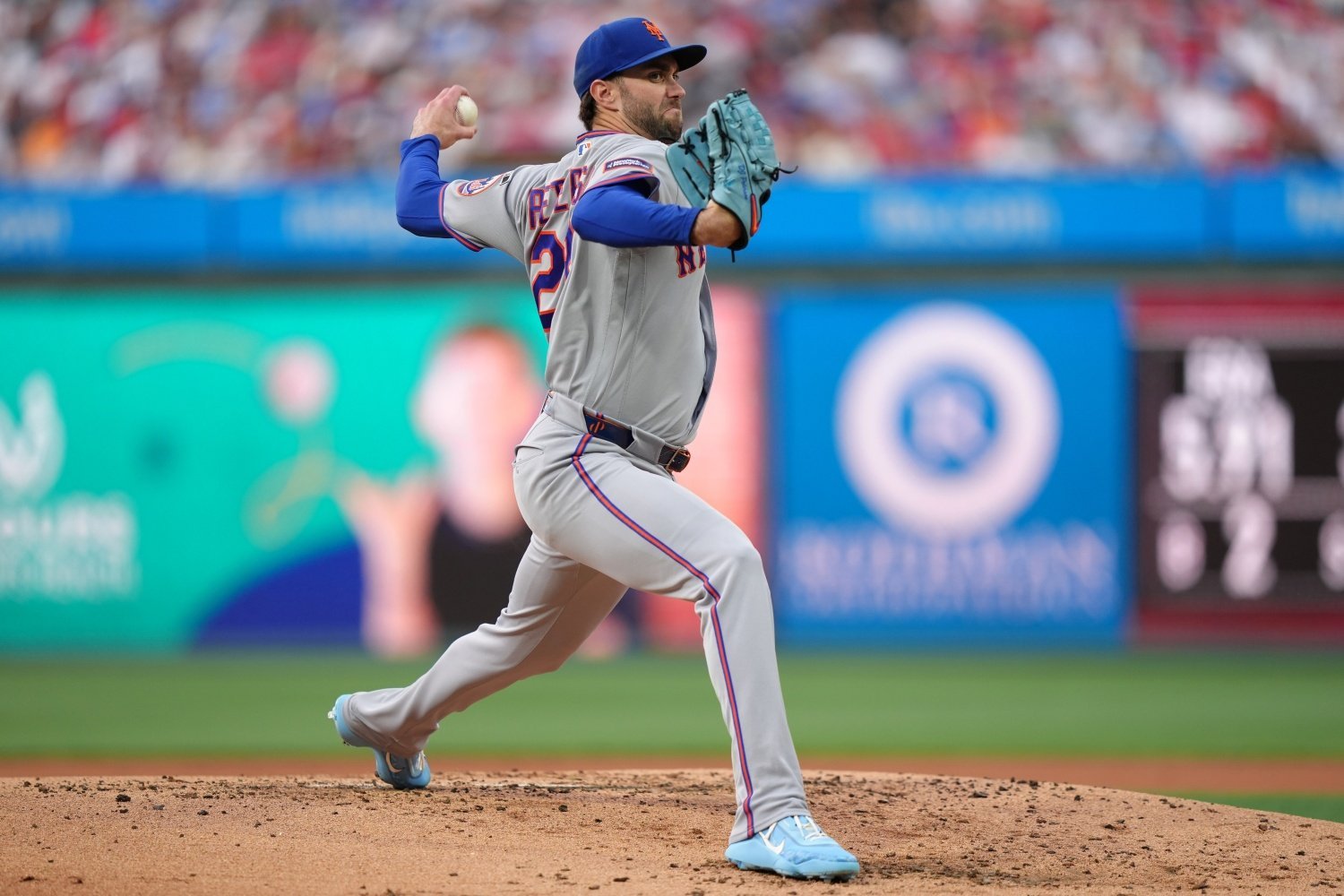 It's not about finding playoff-caliber starters right now. It's not about building a bridge to a long-term winner, either. The Cubs simply have games to play this weekend, and too few healthy starting pitchers to fill the slots on their schedule. Feeling around in the dark, they scooped up the first thing they could grab hold of, acquiring David Peterson from the Mets in a late-night trade Wednesday. Jeff Passan of ESPN was first with the news, on Twitter. A source with knowledge of the deal confirmed that the teams have agreed to terms. More details to come. View the full article
 -
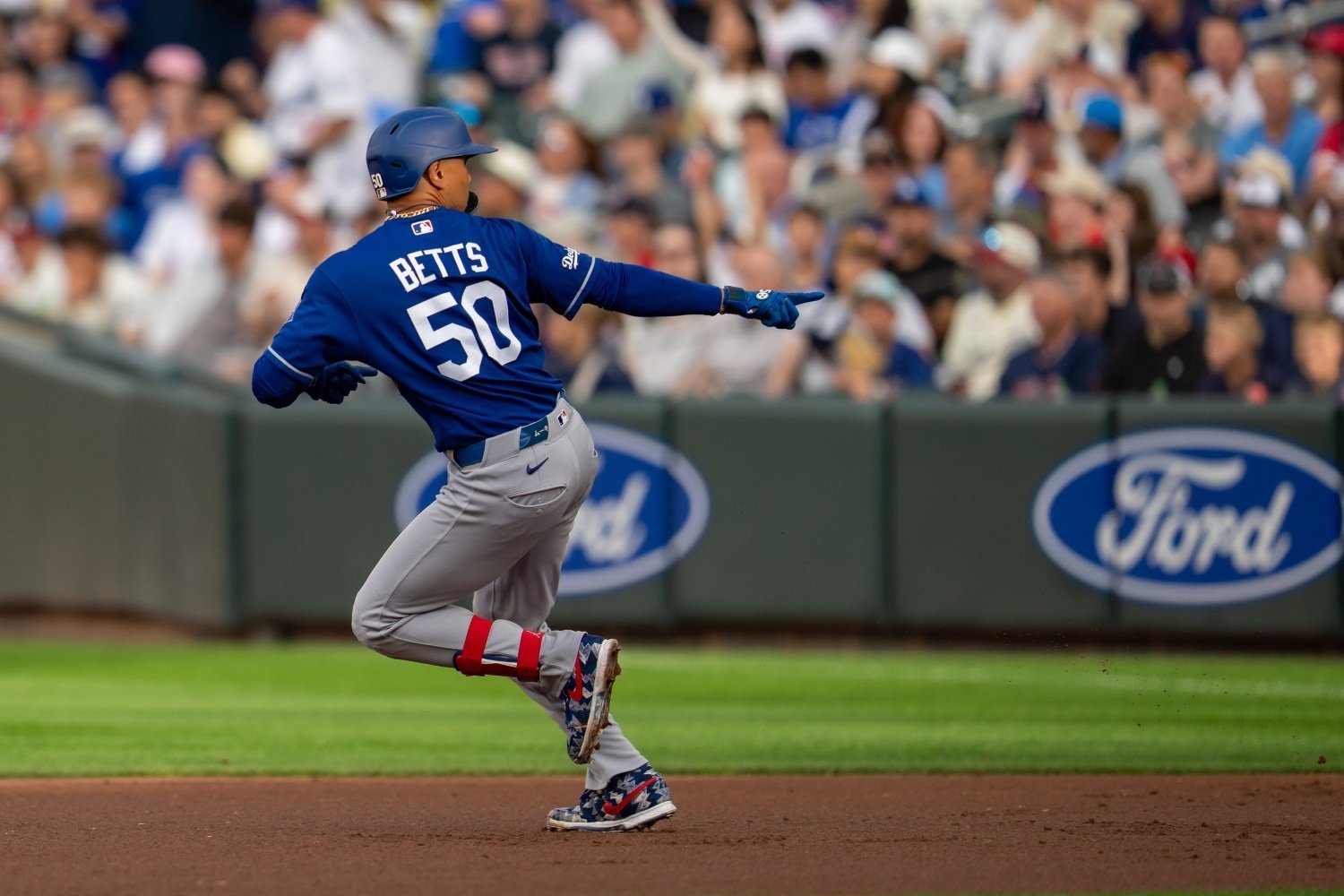 Box Score SP: Joe Ryan - 6 IP, 8 H, 4 ER, 4 BB, 9 K (98 pitches, 64 strikes) Home Runs: -0- Bottom 3 WPA: Byron Buxton (-0.26); Ryan Kriedler (-0.19); Josh Bell (-0.12) Win Probability Chart (via FanGraphs) Interleague Showdown The Dodgers looked far better than the Twins in the first two games of the teams' showdown at Target Field this week, but for the finale, the home side sent their ace to the mound. Joe Ryan got another summertime spotlight, as he dueled with starting pitcher/slugger Shohei Ohtani. It was Minnesota's best hope of stealing a win from the reigning champs. Ryan’s first hitter was Ohtani, and his first out was Ohtani. Ryan expressed frustration in his last outing, which was cut short in the fifth at 96 pitches, so in the final game against the Dodgers, the goal was to keep the pitches low and the strikes high. In his first inning, he threw only 13 pitches. In the second, however, Ryan allowed his scheduled “oopsie” home run of the game, to Mookie Betts. In a way, it was an honor: Ryan gave Betts his 300th career homer. It continued a frustrating pattern, though, whereby Ryan will sometimes execute exceptionally badly in a deep count—seemingly because he's trying too hard to be perfect. Here, a high fastball flattened out badly on him and begged Betts to sock it. The Twins played small ball in the second inning, chipping away at Ohtani and his battery mate Dalton Rushing. They loaded the bases with only one out, and the trainer for the Dodgers came out to check on Ohtani, but the unicorn stayed in the game. A passed ball by Rushing allowed Victor Caratini to score, tying the game at 1-1. After a mound visit got Ohtani back on the plate and Rushing back to knowing what was coming, Ryan Kreidler delivered the big hit of the inning, lining a single into center field that brought home both Brooks Lee and Tristan Gray. Kreidler was thrown out attempting to stretch the hit into a double, but not before driving in two runs and giving Minnesota the lead for the first time in the series, 3-1. Alas, in the top of the third, the Dodgers answered back right away on a double from Alex Freeland, followed by a single from Ohtani, bringing Freeland home to bring the score 3-2. With Betts on deck, Ryan issued a walk to Freddie Freeman. Freeman is a tough out, of course, but the free pass proved costly, as Betts singled to load the bases and Max Muncy and Alex Call each drove home a run, restoring the Dodgers to the high side at 4-3. Ryan and Ohtani had a true pitching battle for the next two innings, with neither allowing a run to come in. Minnesota nearly broke through in the fourth, though. Kreidler made a bid for a second two-run single on a grounder, but Betts made a truly marvelous play to retire him and pull Ohtani out of the fire. Ryan retired at the end of the sixth, relieved by Anthony Banda to start the seventh inning. Banda allowed a few runners, but shut down the inning on a nasty slider to Muncy. The Twins' next good chance came in the bottom of that same inning. Brooks Lee walked, then stole second during a long at-bat by Trevor Larnach. Eventually, Larnach walked, too, bringing Byron Buxton to the plate with the go-ahead run at first base and the tying tally in scoring position. Dodgers changeup specialist Kyle Hurt didn't have his best cambio, so he went with a slider to Buxton in a 2-2 count. Buxton, trying to force himself to stay back for the change, was late, and hit a foul pop-up behind first base to end the threat. Impressively, Minnesota mounted another spunky rally in the eighth. Caratini and Royce Lewis reached against southpaw Alex Vesia, with Lewis hanging in especially well after falling behind 0-2. Vesia threw him a fastball and he scalded a single to left field. On another fateful 2-2 pitch with the game on the line, however, Lee struck out. The Twins made offensive changes for the ninth inning, starting with Austin Martin coming in as pinch-hitter. Martin got on base, and after a flyout by Kriedler, Luke Keaschall came in as another pinch-hitter against lefty closer Tanner Scott, hoping to advance Martin to at least second with only one out. What Keaschall thought was a fourth ball was called a strike on a check swing (the right call; he failed to hold up), leaving the pressure of the game on Buxton’s shoulders. If he could click on a pitch from Scott, the team could walk off the winners. On another 3-2 slider, though, he took a full cut—and missed. Sweeeep. A full house witnessed a good game, but the bad guys won. What’s Next? The Twins have a day off before hosting the Rockies for the weekend. They're putting up Taj Bradley on the bump (6-3, 4.11 ERA), facing Tomoyuki Sugano (RHP, 8-4; 4.31 ERA) to start the series. Game one is Friday night, 7:10 CST. Postgame Interviews Coming soon. Bullpen Availability Chart View the full article
 -
Twins Minor League Report (6/24): Can Anyone Get Ryan Sprock Out?
DiamondCentric posted an article in Twins Daily
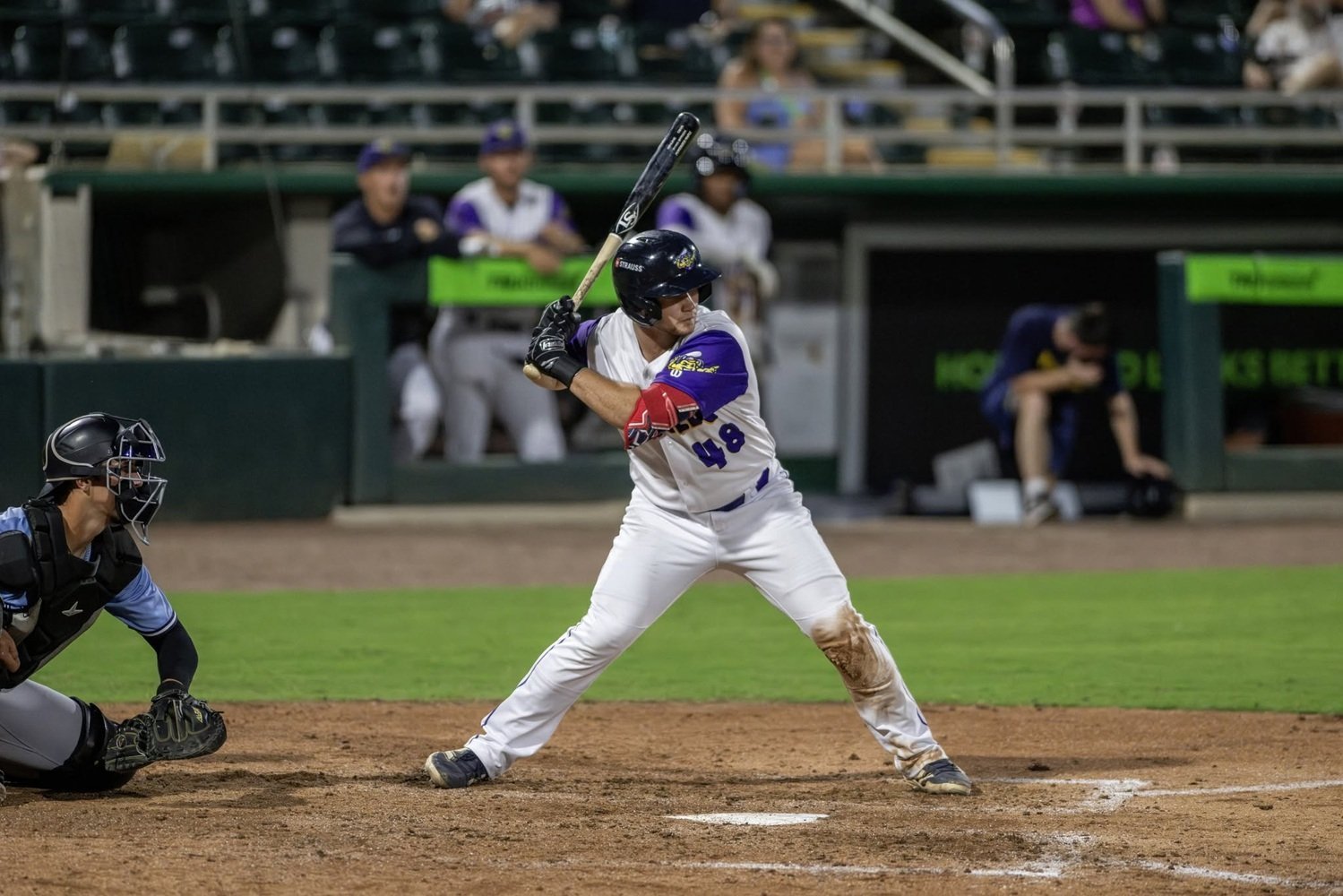 TRANSACTIONS LHP Kody Funderburk recalled by Twins RHP Marco Raya recalled by Twins LHP Kendry Rojas optioned to AAA St. Paul Saints Sentinel St. Paul 4, Louisville 3 Box Score Aaron Rozek: 6 IP, 4 H, 2 ER, 2 BB, 5 K HR: None Multi-hit games: Gabriel Gonzalez (2-for-5, 2 2B, 2 RBI), Kala’i Rosario (2-for-4, R), Tanner Schobel (2-for-3, 2B, R, RBI, BB) The Saints won by a slim margin on Wednesday. If there could be such a thing as a well-traveled minor leaguer, Aaron Rozek would fit the bill. Now 30, the Minnesota State, Mankato product started for the Saints for the 20th time in his career, becoming likely one of the rare few players to have 20+ starts in indy ball, at A+, AA, and AAA. If a nuclear apocalypse descends upon mankind, Rozek’s charred remains will remain on a mound in Minnesota, hunched over, looking at the catcher as he receives his signs. St. Paul scored one in the third off an unusual interference error on a pickoff attempt. Feeling that they needed to amend the score with runs scored by more ordinary means, Gabriel Gonzalez stepped to the plate with two on and bounded a chopper that hugged the third base line just enough; remaining fair as the Saints on base scrambled with vital urgency. Both runs scored. A fourth and final run arrived at home when Tanner Schobel fended off a single the other way to draw Cody Morissette in safely. Taylor Rashi earned a two-inning save. He surrendered a solo homer and a walk, but punched out three, including two in a row to strand the tying run at second to end the game. Louisville’s Héctor Rodríguez clocks in as sixth-best prospect in the Reds’ system; he homered once in three at-bats. Wind Surge Wisdom Wichita 4, Midland 8 Box Score Chris Vallimont: 3 IP, 4 H, 1 ER, 1 BB, 4 K HR: None Multi-hit games: Quinn McDaniel (2-for-4) A disastrous fifth inning sunk the Wind Surge on Wednesday. Welcome back Chris Vallimont! The former Twins farmhand re-started for the Wind Surge on the 19th, but this author didn’t cover that day, and he does for this one. The righty found a groove, hurling three innings with one earned run, striking out four in the process. And what has Lewin Diaz done recently? (He’s in the KBO, actually). Vallimont’s success did not translate to Jose Olivares, who started his day with a 1-2-3 fourth inning before coming undone one frame later. It was a flurry. Singles, steals. The flea-like RockHounds rally wore down and baffled Olivares, who was helpless to stop the scuffle. Finally, a triple broke the dam, and, in fact, scored the batter on a Kyle DeBarge throwing error. Two more singles and a homer concluded the nightmare. The Wind Surge held a lead for a brief moment when Jay Thomason doubled in two in the fourth. He later scored on an error. You should recognize the “De Vries” in the box score, as that is indeed Leo De Vries, the uber-prospect traded by the Padres at the deadline last year, who now ranks as the second-best prospect in baseball. He singled and walked in five plate appearances. Kernels Nuggets Cedar Rapids 6, Wisconsin 12 Box Score Riley Quick: 3 ⅔ IP, 6 H, 3 ER, 4 BB, 6 K HR: Henry Kusiak (1), Brandon Winokur (9) Multi-hit games: Enrique Jimenez (3-for-4, 2 R), Brandon Winokur (2-for-4, HR, 2B, 2 R, 3 RBI), Caden Kendle (2-for-4, RBI), Yasser Mercedes (2-for-4), Henry Kusiak (2-for-4, HR, R, RBI) The Kernels were trashed on Wednesday. Perhaps the early-season dominance was bad for Riley Quick; as, instead of accepting his recent slide as the common ills of a youngster debuting in pro ball, it feels as if his regal excellence was a mere mirage. That pitcher is in there, somewhere, he may just need to dig through some A+ ball clunkers before it re-reveals itself. Nonetheless, the latest start ballooned his Cedar Rapids ERA to 4.86. Quick will always find little solace in the fact that every Cedar Rapids hurler biffed it on Wednesday. Not one escaped the game with a lower ERA. The bats were lively, with Enrique Jimenez and Brandon Winokur serving as the driving forces. Jimenez, as the hit-happy table-setter, and Winokur as the thunderous force. The latter doubled and hit a homer that didn’t leave the yard as much as it never returned to earth after scraping its atmosphere. Jimenez’s Kernels career has started with pure nitro; he’s slashing .350/.435/.700 in five games since being promoted. Yasser Mercedes likely thoroughly enjoyed his multi-hit showing, as he entered the day 1-16 in his previous four games. Wisconsin is, of course, an affiliate of the Brewers and their awesome farm system. Wednesday saw their ninth-ranked prospect, catcher Marco Dinges, homer twice in a three-hit outing. Mussel Matters Fort Myers 12, St. Lucie 8 Box Score Kolten Smith: 3 IP, 3 H, 3 ER, 2 BB, 3 K HR: Jayson Bass (9) Multi-hit games: Ryan Sprock (3-for-3, 2B, 2 R, RBI, 3 BB), Ramiro Dominguez (2-for-6, 2B, RBI), Jayson Bass (3-for-4, HR, 2B, 3 R, 3 RBI, BB), Quentin Young (2-for-4, 3B, 2 R, RBI, BB), Irvin Nunez (3-for-5, R, 2 RBI) The Mighty Mussels rode an offensive explosion to victory on Wednesday. Ryan Sprock is on the mother of all heaters right now. He entered June slashing .262/.393/.338 and is currently at .325/.450/.455. He has 28 hits, 15 walks, and—of all the stats this is easily the funniest one—just three strikeouts. Three. In 61 at-bats. Call it scorching, torrid, or whatever synonym you prefer, the one thing few have called him is “out”. Fort Myers started with a pair in the 3rd, with Jayson Bass singling in one, and Quentin Young tripling in the one mentioned earlier in the sentence. Three crossed home plate in the fifth thanks to a run-scoring balk, and a two-run knock by Irvin Nunez. One each in the sixth and seventh have Fort Myers a slim 7-6 lead in what was obviously not a pitching duel sort of game. They fell down once more, but struck back with a vengeance, mighty and vigorous, plating five in the eighth to take a lead they would finally not relinquish. Jayson Bass started matters with a two-run homer—somehow their first long ball of the day—and two singles and a walk loaded the bases for Byron Chourio. The less heralded of the namesake ushered two home on a hit, though he was soon thrown out at second base in the fray. No problem. A hit by pitch and Sprock single totaled the 12th and final run of the game. The St. Lucie Mets are powered by the franchise’s sixth-ranked prospect, infielder Elian Peña, who singled once in five at-bats. TWINS DAILY PLAYERS OF THE DAY Twins Daily Minor League Pitcher of the Day – Aaron Rozek Twins Daily Minor League Hitter of the Day – Brandon Winokur PROSPECT SUMMARY Here’s a look at how the Twins Daily Top 20 Twins Prospects performed: #5 – Marek Houston (Wichita) - 1-4, 2 K #6 – Riley Quick (Cedar Rapids) - 3 2/3 IP, 6 H, 3 ER, 4 BB, 6 K #10 – Gabriel Gonzalez (St. Paul) - 2-5, 2 2B, 2 RBI, K #12 – Brandon Winokur (Cedar Rapids) - 2-4, HR, 2B, 2 R, 3 RBI #13 – Khadim Diaw (Wichita) - 2-5, RBI #14 – Quentin Young (Fort Myers) - 2-4, 3B, 2 R, RBI, BB, 2 K #18 – Yasser Mercedes (Cedar Rapids) - 2-4 #20 – Kyle DeBarge (Wichita) - 1-4 THURSDAY’S PROBABLE STARTERS St. Paul @ Louisville (5:35 PM) - RHP Ty Langenberg Wichita @ Midland (7:00 PM) - RHP Sam Armstrong Cedar Rapids @ Wisconsin (6:40 PM) - LHP Cesar Lares St. Lucie @ Fort Myers (6:05 PM) - RHP Ramiro Villanueva FCL Twins @ FCL Braves (11:00 AM) - TBD DSL Twins @ DSL Phillies (10:00 AM) - TBD View the full article
 -
Navarreto's wild day culminates in latest Marlins win
DiamondCentric posted an article in Fish On First
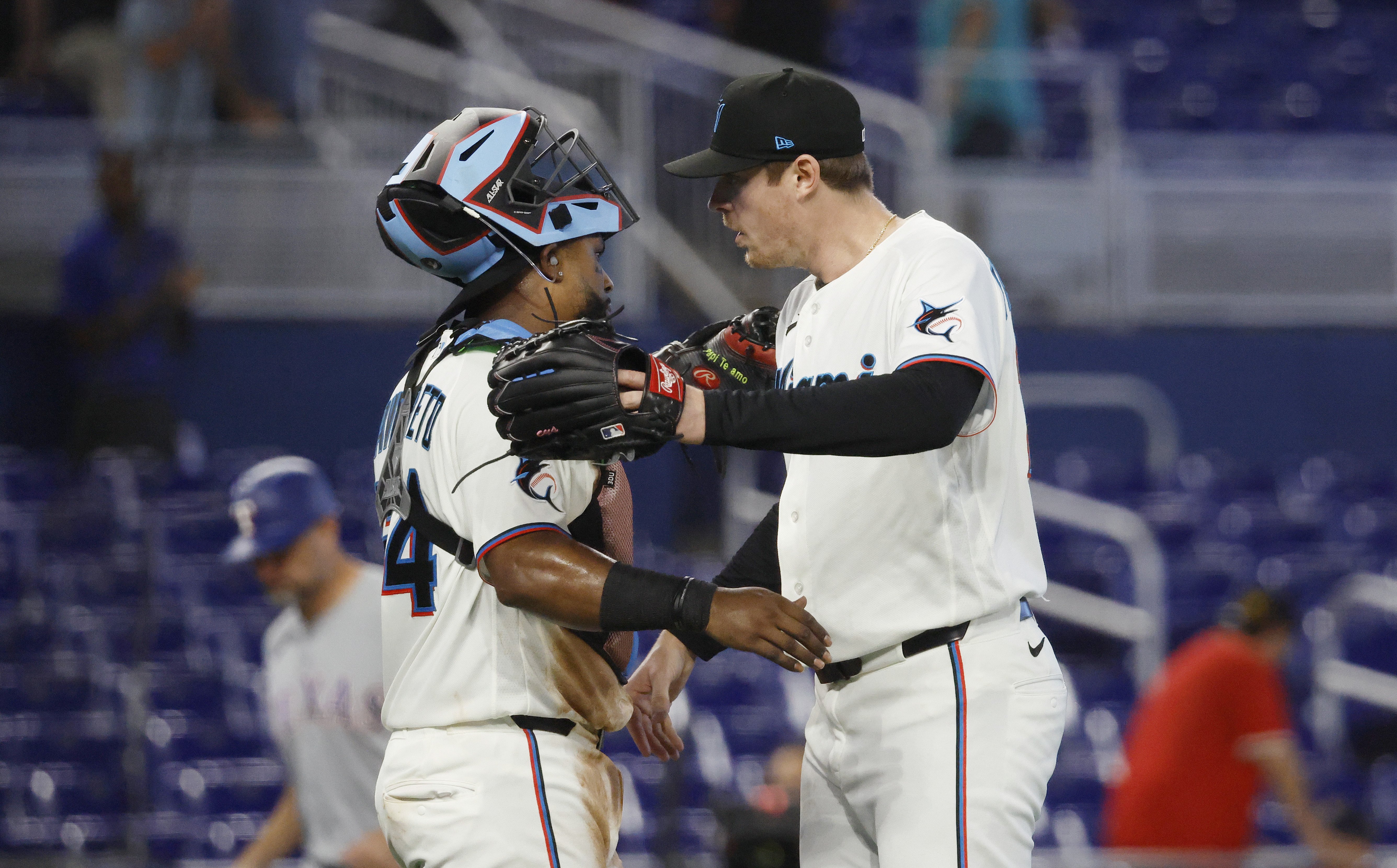 MIAMI—Brian Navarreto showed up to work Wednesday morning believing it would be a day to remember. While he would be proven correct, the path that took him there featured more twists and turns than he could have imagined. A sudden allergic reaction around an hour before first pitch threw a wrench in what was slated to be Navarreto’s 2026 debut at the big league level. The 31-year-old wasn't about to let that excuse prevent him from playing, though. "Nobody's gonna take me out of this game, not even the allergies. We took care of it, and right now I'm good, but if you saw me before, it was kind of like a fight with (Manny) Pacquiao." A pickoff, caught stealing, sacrifice bunt and walk might not be sexy on the stat sheet, but when it's in tune with everything else Miami did in the matinee, it proved vital. Navarreto's gritty performance paced Miami in their 4-2 series-clinching win over Texas, their sixth in seven games. The Fish improve to a league-best 16-5 in June and 42-39 on the season, now sitting just one game out of the third National League Wild Card spot. Navarreto detailed his morning as normal, from his eating to how his body felt, before sudden puffiness of the face and intense itches alerted that something was wrong. While he remained unsure what caused the issues postgame, his patented defense would remain unaffected. A back-pick of Ezequiel Duran and caught stealing of Nicky Lopez in back-to-back frames gave recently recovered Eury Pérez the boost he needed. Pérez, who worked 4 ⅔ innings of one-run ball in his first start in nearly a month, described his catcher as “incredible” “The commitment that he puts out there today, even though he had a weird allergic reaction before the game and he. went out there his best-is incredible.” Joining Navarreto on the offensive side were should-be All-Stars Otto Lopez and Xavier Edwards, both of whom padded Miami’s lead in the later innings. Griffin Conine delivered the early game-tying swing with his first RBI in nearly three months. “We’re doing things in a lot of different ways,” said Marlins manager Clayton McCullough. “Playing right now a very clean brand of baseball and that's what you have to do to continue to win.” Following an off day on Thursday, McCullough's club returns to action Friday night in St. Louis to begin a set with postseason implications for both clubs. Max Meyer, who is expected to return from a stint on the bereavement list, toes the slab in the series opener. First pitch from Busch Stadium III is set for 8:15. View the full article
 -
Which Of The Twins' Big 3 Prospects Will Debut First?
DiamondCentric posted an article in Twins Daily
 With Kaelen Culpepper landing on the IL, the Twins' big three prospects in Triple-A have now all missed time in 2026 due to injury. Walker Jenkins is at least on the cusp of returning to the Saints lineup as early as this upcoming weekend, but it may be a while before any debut. Emmanuel Rodriguez last played on May 1. So Jeremy and Jamie ask which of the big three will debut first? View the full article
 -
 It’s not often that a team gets to add a former Cy Young winner to its rotation in the middle of June, but that’s exactly what the Blue Jays did on Tuesday afternoon when Shane Bieber made his season debut. Bieber’s return puts the Jays’ starting rotation as close to full strength as it's been since Cody Ponce blew out his ACL in the third inning of his own Blue Jays debut all the way back in March, but the best version of this rotation includes a much better version of Bieber than we saw in this start. Across 3.2 innings against the Astros, Bieber threw 75 pitches, allowing four runs on nine hits, including three consecutive solo homers in the fourth, and a total of 10 hard-hit balls. The important thing is that Bieber was actually able to get on a Major League mound and make a start. The Blue Jays will be more concerned with how he recovers from this than with the results, but the expectations for his performance going forward have to be much higher than what he showed here. The Jays will also be concerned with the underlying numbers, because they matched the poor results. Bieber’s fastball averaged 91.7 MPH, down almost a full mile compared to the 92.6 he got out of it in 2025. Bieber also forced only six whiffs, none of which were on his fastball. A ratio of 10 hard hit balls to six swings and misses is not a very sustainable practice. There’s no positives to find in his velo being down, but in all fairness, Bieber’s never been a stuff guy – he hasn’t averaged 93 MPH on his fastball since 2020. Instead, his ability to mix and locate five different pitches has helped him put up many impressive statistical seasons with Cleveland over the years. From 2019 through two starts in 2024 before undergoing UCL surgery, Bieber threw 728.1 innings and allowed just a 3.02 ERA for the Guardians. It’s what the Jays hoped they were acquiring when they traded for him at the 2025 trade deadline, and for the most part, it’s what they got down the stretch and deep into the playoffs. Bieber followed up a 3.57 ERA across 40.1 regular-season innings after the trade deadline with 18.2 innings and a 3.86 ERA through game seven of the World Series. After Bieber opted into his player option for just $12M at the beginning of the offseason, concerns were raised about some persisting health issues from that 2024 elbow surgery. Those concerns were vindicated when Bieber’s spring training build-up was delayed with forearm fatigue and elbow inflammation cited as he started the season on the injured list. His rehab process was extensive as well. Bieber made five starts between three minor league levels on his way back to the big leagues, and while the results don’t mean much of anything, he did get hit hard in those as well. Across 17 innings, he had a 6.88 ERA and struck out just 14. His velocity was also reported to be down in many of those. It’s not unusual to see established major leaguers struggle in minor league rehab outings and then turn it on once they get back to the big leagues, but that’s not what we saw in Bieber’s start against the Astros. Is it time to press the panic button on Bieber? Absolutely not. Regardless of the team’s need for dependable starting pitching, Bieber has shown he can be effective without elite-elite stuff as recently as October, and with some more effective pitch mixing and location, we’re sure to see him get back to being a reliable option every fifth day. The current shape of the rotation also gives Bieber essentially unlimited runway. Bieber came in to fill a slot that had been a bullpen day since Max Scherzer went back on the IL in early June, and if we’re honest, it was often a bullpen day even when Scherzer was making the starts. Even then, if you consider Dylan Cease, Kevin Gausman, and Trey Yesavage ahead of him on the depth chart, the Jays have been running out Scherzer and Patrick Corbin to various degrees of ineffectiveness for the better part of this season. Obviously, if Bieber can get back to anything close to his Cy Young form, he raises the Blue Jays’ ceiling drastically, but even if he ends up in some sort of five-and-dive routine, he’ll have raised the floor of the pitching staff. The Jays have thrown the fourth most innings out of the bullpen in 2026, and Bieber’s ability to provide some length should help the Jays find more days off for Louis Varland, Jeff Hoffman, Tyler Rogers, and Mason Fluharty, who are all top 12 in reliever appearances. Unfortunately, we didn’t see the ceiling or floor-raising version of Shane Bieber in that first outing on Tuesday afternoon, but if he can continue to shake off some rust going forward, he absolutely transforms the starting rotation. View the full article
 -
 Edward Cabrera and Ben Brown are the latest to hit the IL for the Cubs. What's next in a critical stretch for the squad? Listen on Apple Podcasts: https://podcasts.apple.com/us/podcast/the-north-side-baseball-podcast/id1798599313 Listen on Spotify: https://open.spotify.com/show/75wMGhBwlrDDYPt3kaF453 Listen on iHeartRadio: https://www.iheart.com/podcast/263-the-north-side-baseball-po-268998437/ Listen on Pocket Casts: https://pca.st/eey7h6ih Watch on YouTube: https://www.youtube.com/@northsidebaseball View the full article
 -
 That the Chicago Cubs' bullpen hasn't been a total catastrophe serves as something of a minor miracle in this 2026 season. Despite a fWAR figure that ranks just 24th in the league (-0.1), they sit comfortably in the top half of the league in reliever ERA (3.82), walk rate (9.2 percent), and groundball rate (42.6 percent). Those elements have helped them to remain afloat in the face of consistent instability permeating throughout the individuals in the group. The absence of stability in the team's relief corps stems from a few different factors. Its construction is one. Injuries, both internally and within the rotation, have represented another (perhaps even more significantly so). In the face of such turmoil, one unassuming arm has emerged as a source of stability for Craig Counsell in the form of Hoby Milner. Our Jason Ross last discussed Milner in this space back in April. Therein, he noted some of the successes that Milner was experiencing in the early going but also confronted some of the red flags. At that point in the year, the veteran southpaw was rolling at a 2.39 ERA but a FIP over six, with a sharp decline in his typical groundball tendencies. Milner ended April with 15 innings pitched and a 2.40 ERA. His strikeout rate, though, sat at 8.6 percent, a low number even by his modest standards. His 6.9 percent walk rate was also up a bit from his career norms, with a .192 opposing batting average that indicated some good fortune in the face of uneven trends. There were some role changes and subsequent usage tweaks at play that impacted him, but the bottom line was that the results weren't completely jiving with the underlying trends. Fast-forward almost exactly two months to now and many of the concerns around Milner's early performance have stabilized. As of this writing, he has a 3.38 ERA to his credit and a 4.20 FIP. He's still outperforming the peripherals a touch (4.94 xERA, 4.71 xFIP), but there's been a progression over the last three months that helps to illustrate his value as a steady arm in this bullpen. The two months since April have looked as follows: May: 10.1 IP, 2.61 ERA, 2.33 FIP, 15.9 K%, 4.5 BB%, 50.0 GB%, .250 opposing batting average June: 9.1 IP, 5.79 ERA, 4.39 FIP, 12.8 K%, 5,1 BB%, 40.0 GB%, .294 opponent batting average At first blush, the idea that Milner not only has his red flags behind him (as the headline posits) but is also a source of stability would seem outrageous. After really find his groove in May, the surface numbers are more indicative of a player falling back toward the regression feared by some of the trends back in April. However, it's important to note that Milner had an especially poor outing back on June 5. He allowed six earned runs in just a third of an inning. In his other nine innings of work, he's allowed zero runners to cross home plate. Which means that the image of Milner as a reliable arm in relief is still very much intact. His usage is starting to support that idea as well. In Jason's piece, he noted the increased usage of Milner's sinker given some of the higher traffic on the basepaths, as well as the higher-leverage situations into which an increased role had pressed him. That came at the expense of his sweeper. In the stretch of time since, he's gotten back to the arsenal we generally expect: The shift in usage from being sinker-heavy to blending the sinker and sweeper more effectively comes as a result of Milner not being asked to handle make-or-break moments, while also being deployed against left-handed hitters more frequently than righties. That June 5 outing notwithstanding, he's regained his form in limiting baserunners while also maintaining strikeout and walk trends more akin to his career norms. As a result, Milner has been able to maintain his status as perhaps the most stable arm this relief corps has to offer. He's taken on more work than any current member of the bullpen (34.2 IP), and while the early turbulence forced him to take on an increased role, the early red flags — the traffic, absence of strikeouts, and waning groundball contact — are largely behind him. Given how messy the configuration of this group of relievers has been (mostly for reasons which are out of their control), that Milner has settled back into his usual self speaks to exactly what the Cubs were hoping he'd provide as a veteran soft-tossing lefty. View the full article
 -
Mets Trade Deadline Candidates: Peterson, Peralta, & More
DiamondCentric posted an article in Grand Central Mets
 The Mets restructured their team during the 2025-2026 offseason. On paper, they were bound for the playoffs; however, that didn't go according to plan. We now approach the trade deadline, not discussing who they will get, but instead we are sitting here with who they will they trade. In this episode, we will discuss the likelihood of David Peterson, Freddy Peralta, and Francisco Lindor's odds of being traded. View the full article
 -
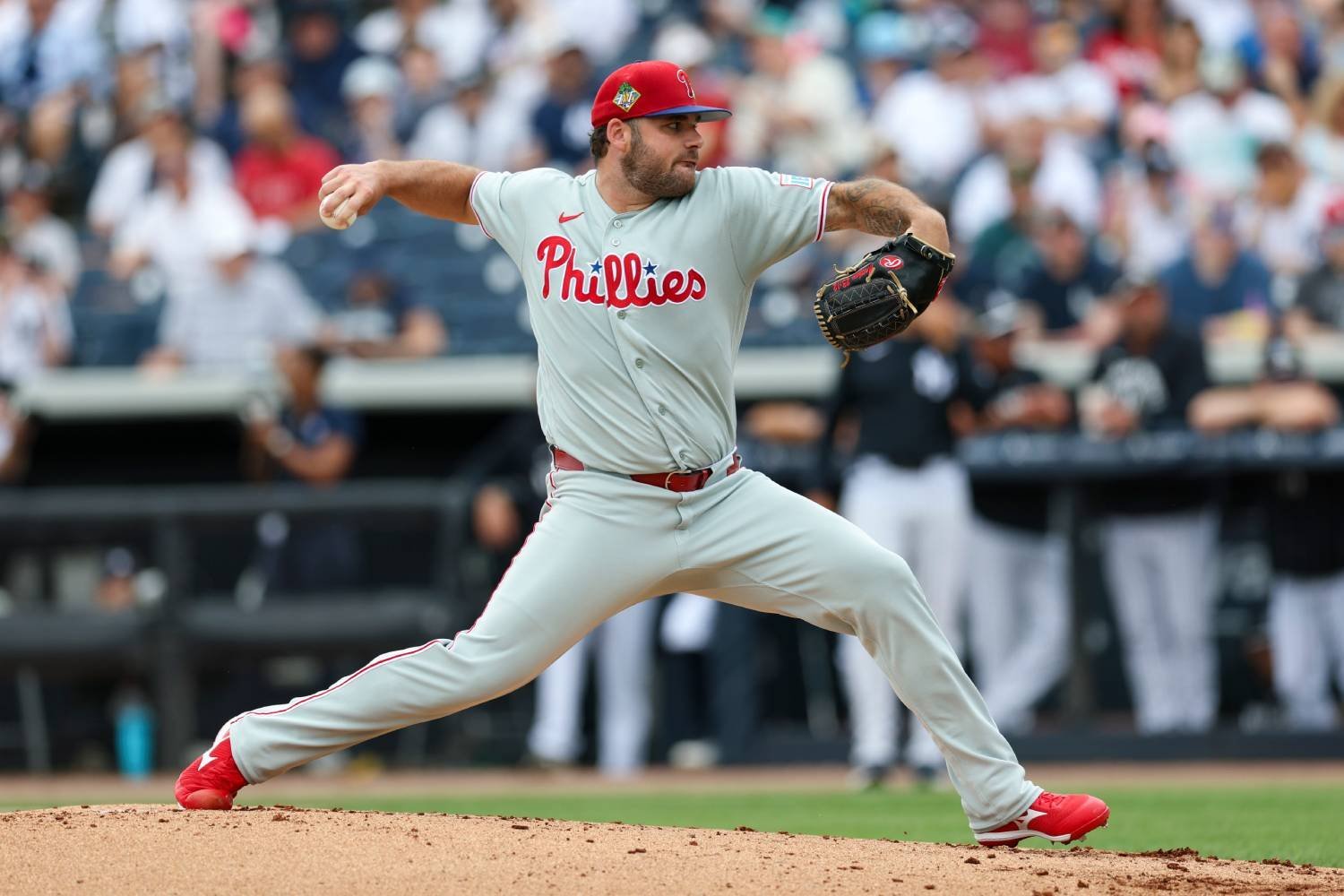 As injuries continue to hit the pitching staff, the Chicago Cubs continue to bring in help from wherever they can find it. The Cubs on Wednesday claimed right-hander Bryse Wilson off waivers from the Philadelphia Phillies. Right-handed reliever Christian Roa was designated for assignment to make room for Wilson on the 40-man roster. A move regarding the 26-man roster will need to be made once Wilson reports to the Cubs. Wilson was designated for assignment by the Phillies on Monday. The Cubs are approaching desperation mode after two more starting pitchers went on the 15-day injured list before Wednesday's doubleheader against the New York Mets in Edward Cabrera and Ben Brown. The good news is left-hander Matthew Boyd is set to come off the 15-day IL and rejoin the rotation Thursday. Wilson made just one appearance with the Phillies, pitching two scoreless innings in Saturday's 6-4 loss to the Mets. View the full article
 -
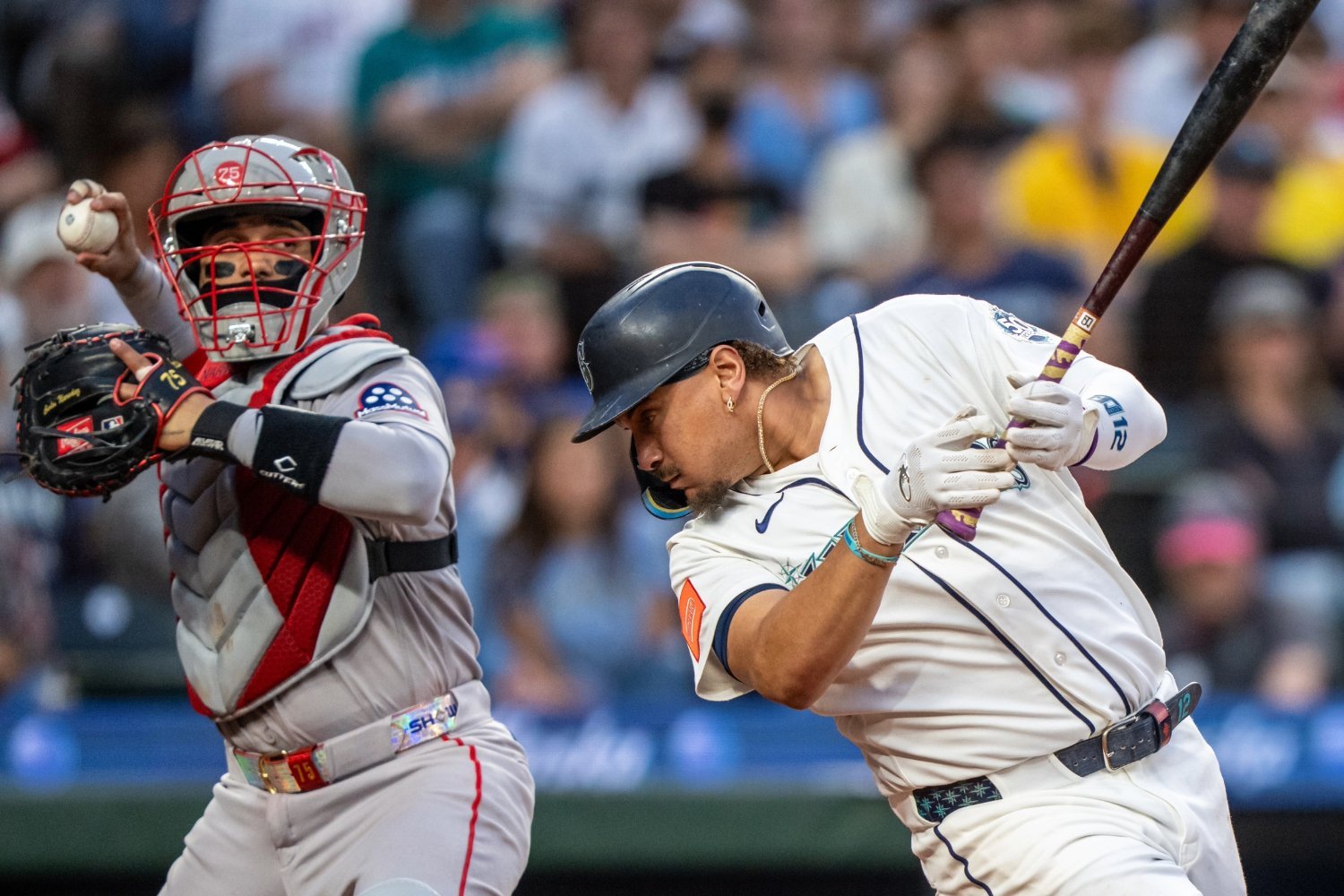 A catcher’s value is rarely found where most fans are looking. While Carlos Narváez continues searching for consistency at the plate, the Boston Red Sox may have already discovered something just as important: one of the American League’s most complete defensive catchers. The bat still has room to develop. A 53 wRC+ and -7.7 offensive runs reflect a player who has yet to establish himself at the plate at the MLB level. But those numbers also risk obscuring the bigger picture. Narváez is already providing value in some of the hardest areas of the game to measure—areas that rarely make highlight reels but often influence the outcome of games. What makes his emergence especially intriguing is that it is not being driven by one extraordinary physical tool. Instead, Narváez has built his profile through the accumulation of countless small advantages, executed with remarkable consistency. Carlos Narvaez Controls the Running Game Without A Cannon Arm For years, the image of an elite defensive catcher was tied to arm strength. The best catchers were the ones capable of discouraging runners before they even attempted a steal. Narváez is proving there is another way. With an average throwing velocity of 76.3 mph, his arm strength falls well below that of specialists such as J.T. Realmuto or Dillon Dingler. On paper, there is little reason to expect him to rank among baseball’s most effective catchers at controlling the running game. And yet, the results suggest otherwise. Since 2025, Narváez has accumulated +6.0 Catcher Stealing Runs, the fourth-highest total among major-league catchers. He has also recorded +9.3 Caught Stealings Above Average after throwing out 29 of the 103 runners who have attempted to steal against him. Running Game Leaders (Since 2025) Narváez consistently posts excellent transfer times from glove to throwing hand while maintaining the accuracy necessary to maximize every opportunity. The ball gets out quickly, arrives on target, and gives his middle infielders a chance to finish the play. Sure, it lacks the flash of a rocket throw to second base, but the value is no different. At catcher, fractions of a second often separate a stolen base from an out. Clean mechanics, efficient footwork, and precise execution can be just as impactful as elite arm strength. Stealing Strikes Is Another Way to Win Games A catcher’s defensive influence does not end when runners stay put, of course. Every pitch received presents an opportunity to affect an at-bat. One extra strike in a 2-2 or 3-2 count can completely alter the outcome of a plate appearance, and Narváez has quietly become one of the better practitioners of that craft. His framing metrics credit him with +3 runs, placing him among the most effective receivers in baseball this season. Only Adley Rutschman, Dillon Dingler, Brandon Valenzuela, and Austin Wells have produced better framing results. Catcher Defensive Value (2026) His blocking metrics grade out around league average, but that is part of what makes his overall profile so impressive. Narváez does not need to compensate for a glaring weakness because, to this point, one has not emerged. Positive framing, elite control of the running game, and stable performance in virtually every other defensive responsibility is a profile that, for a catcher with limited big-league experience, is an unusually complete package. A Defensive Reputation Built Through Accumulation Many catchers build their reputations around one defining skill. Realmuto became synonymous with arm strength. Patrick Bailey established himself through elite framing. Others derive much of their value from offensive production. Narváez is more well-rounded than most of his contemporaries. That type of profile tends to inspire confidence within an organization because it is not dependent on one rare physical tool. Technique, preparation, anticipation, and repetition are skills that can sustain value over time, and Narváez is already showing how impactful they can be. The offense will ultimately determine his ceiling. If he develops into even an average hitter for the position, his overall value would rise significantly. But that future offensive growth does not need to arrive before the Red Sox recognize what they already have. Narváez makes everyone around him better, which is perhaps the single-most important trait a catcher can have. View the full article
 -
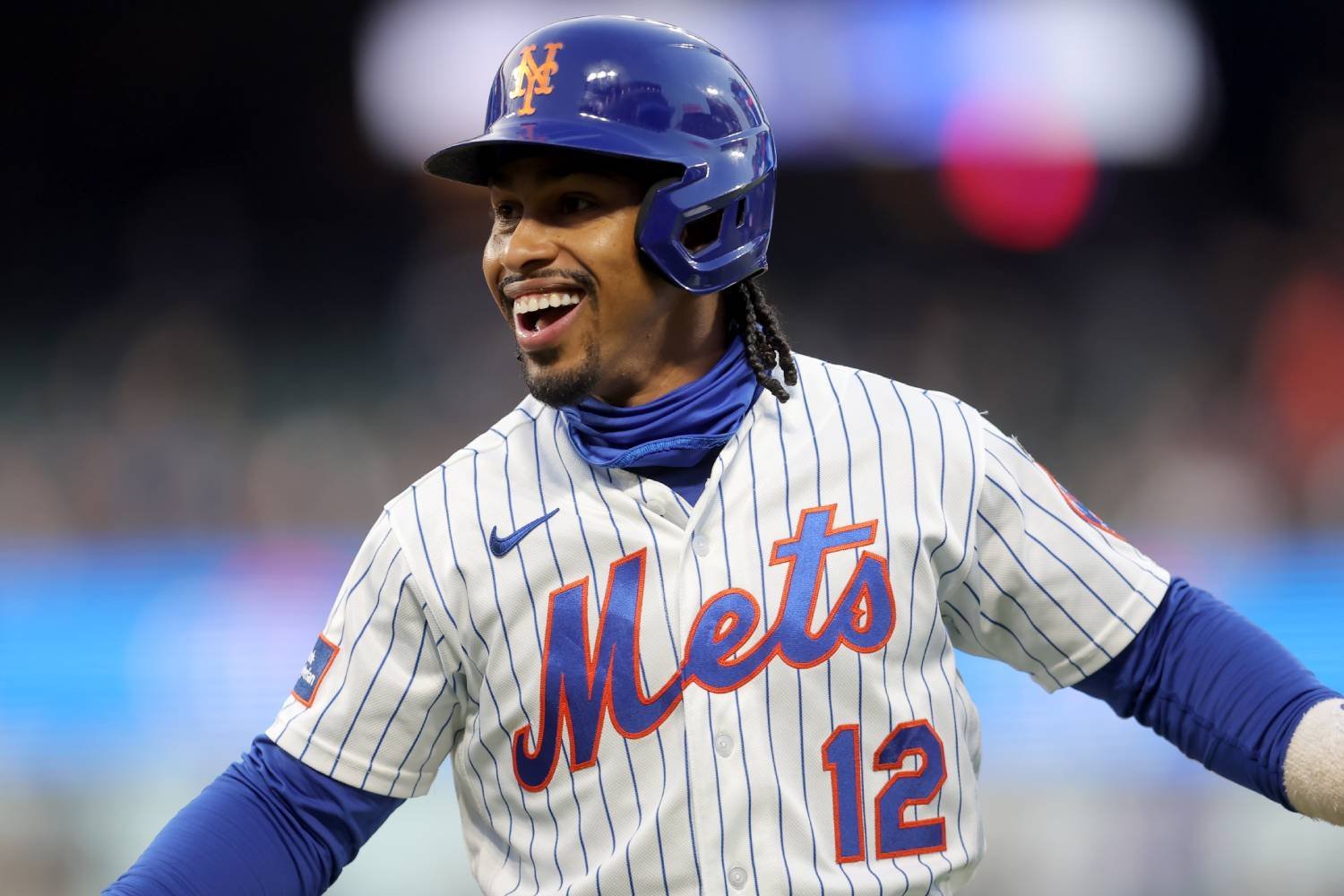 The New York Mets have their infield anchor back. Shortstop Francisco Lindor was activated from the 10-day injured list in time for the Mets' second game of a doubleheader Wednesday. The Mets lost to the Chicago Cubs 10-3 in the opener. Shortstop Ronny Mauricio was also activated from the 10-day IL following a fractured left thumb and optioned to Triple-A Syracuse. Shortstop Zack Short was designated for assignment as right-hander Jonathan Pintaro was brought up from Triple-A as the extra player for the doubleheader. Lindor has been out since April 23 with a strained left calf. He has appeared in just 24 games this season with a .226/.314/.355 slash line with two homers and five RBIs. Mauricio, who had been called up to fill in for Lindor, went on the IL on May 3. Short appeared in just three games and went 1-for-8 after being claimed off waivers June 15 from the Detroit Tigers, who had designated him for assignment. View the full article
 -
 MIAMI, FL—While the All-Star break is still nearly three weeks away, the Miami Marlins reached the midpoint of their 2026 regular season schedule on Wednesday afternoon. With 81 games played and 81 games remaining, the Marlins currently find themselves with a 42-39 record, good for third place in the National League East and half a game out of the third and final NL Wild Card spot. This is a six-game improvement from the previous year. The 2025 Marlins were playing well at the same point of the season, but dug themselves a deeper hole early on and had a 36-45 record. The 2026 team is in a much better position to potentially act as buyers at the MLB trade deadline and ultimately get back to the postseason. Last time the Marlins found themselves above .500 at the halfway point was in 2023, when they were 47-34. How much of the Marlins' success is sustainable entering the second half of the season and how might things look different moving forward, both for better and worse? Let's take a closer look. Positives It all starts with the breakout season Otto Lopez is having, slashing .340/.374/.483/.857 with six home runs, 35 RBI and a 136 wRC+. He currently leads MLB in hits and batting average and ranks third in doubles. Lopez also has 32 multi-hit games. Unfortunately, fans outside of Miami are not noticing him. While an All-Star selection looks inevitable, he will have to settle for being selected as a reserve at the shortstop position. His middle infield partner, Xavier Edwards, is also having a breakout season, hitting .293/.374/.425/.799 with six home runs, 28 RBI, 11 stolen bases and a 121 wRC+. The switch-hitter has take a step forward from the right side of the plate and has been a staple near the top of the order, even hitting cleanup at points this season. Although Liam Hicks is currently on the injured list with a low back strain, he leads the team with 13 home runs and 53 RBI. Hicks has primarily split time between first base and designated hitter with the emergence of Joe Mack, but he does still catch once or twice a week. The trio of Hicks, Edwards and Lopez carried the Marlins lineup through the first two months of the season before we finally saw the lineup begin to lengthen out with Kyle Stowers, Jakob Marsee and Owen Caissie beginning to hit. The return of Hicks will be a final boost before the All-Star break. If there is one offseason acquisition that has panned out for this team, it has been Esteury Ruiz, who is having a career year with the Marlins. He did not start the final game of the series against the Rangers, but entered in the bottom of the seventh inning. He is now slashing .257/.356/.541/.897 with four home runs, nine RBI, 14 stolen bases and a 145 wRC+ in 46 games thus far. Ruiz has been implemented into late-game situations to pinch run and for his defense. Max Meyer may be on his way to Philly at the rate he is pitching, now with a 2.80 ERA, 3.33 FIP, 10.20 K/9 and 3.40 BB/9 in 90.0 innings of work, which is a career-high for him. Meyer won't win the Cy Young by any means, but he could finish towards the bottom of the top 10 in voting. Meyer is set to make his next start on Friday against the St. Louis Cardinals. Since the incorporation of Joe Mack, teams are preparing differently for what can happen on the basepaths. Mack has thrown out 12 runners this season, which is good for a 34.3% caught stealing rate. Offensively, he is finally beginning to heat up, slashing .259/.317/.405/.723 with four home runs, 18 RBI and a 101 wRC+. The Marlins as a team continue to lead MLB in stolen bases with 88. Jakob Marsee has a team-high 18 steals. There are four players with 10 or more this season. Entering the series finale against the Rangers, the Marlins bullpen ranked seventh in ERA (3.42), FIP (3.65), fourth in K/9 (9.50) and 22nd in BB/9 (4.18). Although the walks remain an issue, performances from John King, Anthony Bender and Lake Bachar have carried the bullpen to becoming a strength of his ball club. That doesn't mean it is perfect, as Pete Fairbanks is having an up and down season. On Wednesday, the bullpen struck out six Rangers and allowed one run on three hits (one home run). The lone run the bullpen surrendered came in the top of the ninth inning from Joc Pedersen off Fairbanks, who did rack up his 12th save of the season. Negatives Injuries always suck. The absences of Robby Snelling, Eury Pérez and Janson Junk put the Marlins starting rotation in a situation where they had to rely on Braxton Garrett, Ryan Gusto and converted reliever Tyler Phillips. Somehow, they did manage to post a 15-5 record in the month of June before Pérez's return on Wednesday. In June, the Marlins bullpen has thrown 84 ⅓ innings pitched. Lake Bachar has been the real hero, having to start four games in June, throwing 13 ⅔ innings and posting a 1.32 ERA and 2.45 FIP in the span. Although Janson Junk is expected to return next month, the need for another starting pitcher or just pitching in general is there if the Marlins plan to contend in 2026. The biggest need for the Marlins is a third baseman. Amongst players who have played the position this year, they have a 43 wRC+, tied for worst in baseball with the Cincinnati Reds. Those who have played third base for the Marlins include Connor Norby, Leo Jiménez, Javier Sanoja and Graham Pauley, all who have a wRC+ well below 100 this season. Defensively, they have the third-worst fielding percentage in baseball (.944) and tied for the second-most errors (12). Jiménez, who the Marlins continue to give plenty of opportunities to, is now slashing .177/.283/.203/.486 with two extra-base hits and a 44 wRC+. His wRC+ is the eighth-worst in the National League among players with comparable playing time. You can sacrifice a bit more defense at third to increase production offensively. If Miami plans on buying, Matt Chapman of the San Francisco Giants and Isaac Paredes of the Houston Astros are two options who can help the team drive in runs, and Chapman will provide some help with his glove as well. Outlook The Marlins have had the advantage of a home-heavy schedule, playing 45 of their first 81 games at loanDepot park. That will be flipped around the rest of the way to even things out. They are set to begin a three-city road trip on Friday in St. Louis against the Cardinals. For any scoreboard watchers, the Cardinals (42-35) currently hold the first NL Wild Card spot, so this series is a huge one for the Marlins. View the full article
