


DiamondCentric
-
Posts
2,631 -
Joined
-
Last visited
Never
Content Type
Profiles
Forums
Events
News
Tutorials & Help
Major League Baseball Videos
Guides & Resources
Store
Downloads
Gallery
Everything posted by DiamondCentric
-
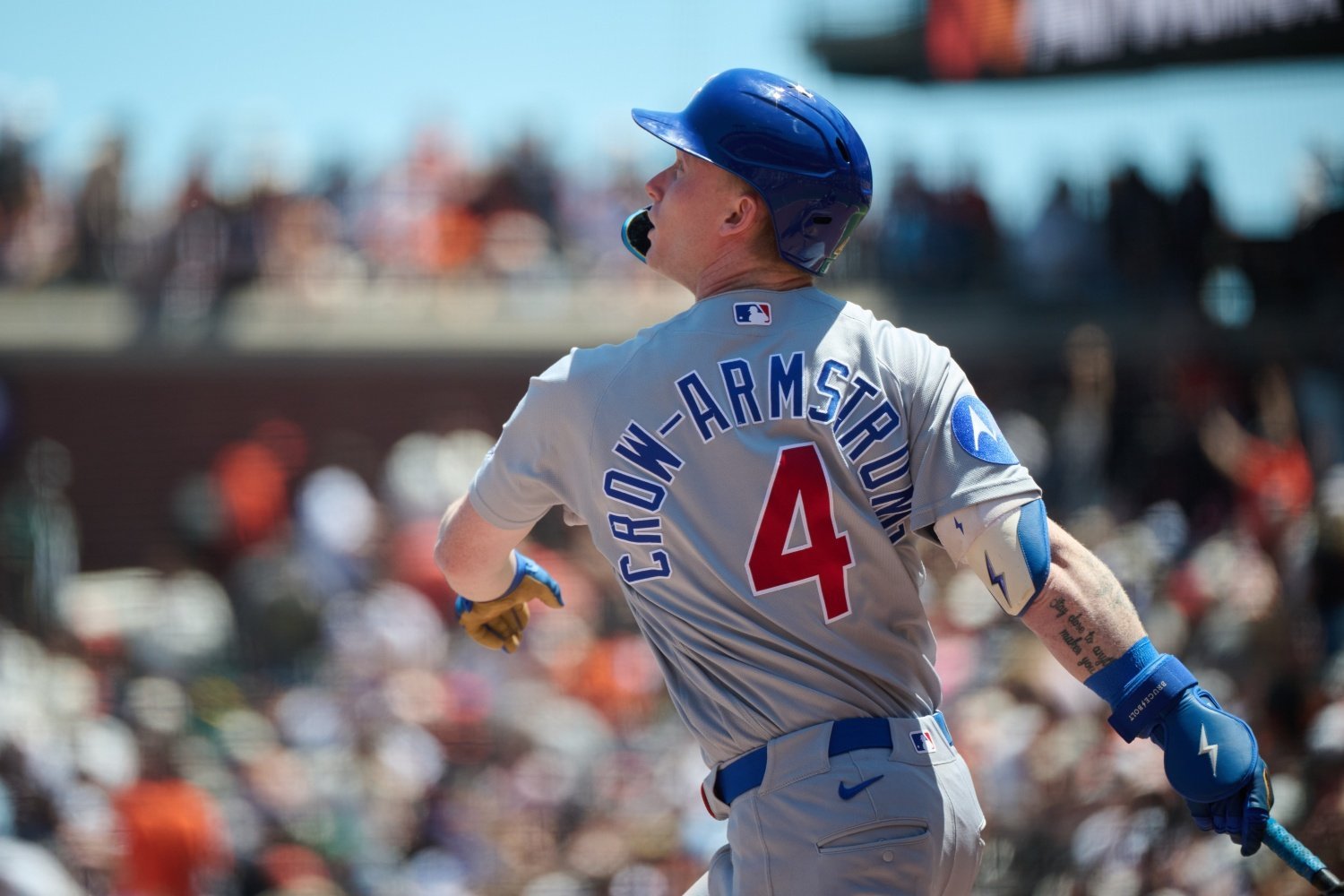 Over the course of a 162-game season, all 30 MLB teams find themselves tasked with overcoming various levels of adversity. What the Chicago Cubs have been mired in since the end of the first week of May is far more sinister: it's become a complex. By failing to produce in nearly every facet of the game, the Cubs have become their own worst enemies. Despite encouraging signs of life, that hard truth was further reinforced in another underwhelming week of baseball. The Cubs' arrival in the Mile High City was the continuation of a much lighter part of the club's schedule. A three-game set with the Rockies was a chance for the team to dig in, shed some of their worst habits, and notch a comfortable win or two. Such was not the case in the opener. Beleaguered starter Colin Rea did little to quell concerns about his viability as a starter. He surrendered seven earned runs in 4 2/3 innings of work. His offense didn't fare much better, stranding eight baserunners in an eight-hit performance wherein Michael Busch deposited a souvenir into the seats of Coors Field. The Rockies prevailed by 7-3. Not long ago, a start from Shota Imanaga was met with great exuberance. His outing in a losing effort in Game 2 of the series in Denver was actually not far off from the brand of pitching that delivered him to a place of prominence in the big leagues to begin with. The Pitching Philosopher logged five innings of scoreless baseball. Yet again, the game's frustrations belong at the feet of this inconsistent lineup, which only scratched across two runs, one of which came in the form of a game-tying solo shot from Ian Happ. Along with Pete Crow-Armstrong, Happ's frequent heroics have gone a long way in carrying the team on his back, but it's not clear the encumbered team-haulers are getting anywhere. Chicago dropped the middle game and the series by a score of 3-2. When this club's offense clicks, good things happen. Well, it clicked in Thursdsy's getaway game, with the visitors exploding for a 10-hit, 9-run performance. A fourth-inning grand slam from the ascending Seiya Suzuki seized the momentum from the home team and offered catharsis to a visiting dugout that had been waiting and pressing to break through. Despite coughing up two long balls, Edward Cabrera held steady in a 5 1/3-inning outing. While this starting rotation continues its search for stability, it needs Cabrera to find the groove that made him an attractive target in trade. The Cubs rolled to a 9-3 victory to escape Coors Field with some pride and hope. The squad's westward trek landed them in San Francisco for a three-game weekend series with Willy Adames and the Giants. For the first time since mid-May, the Cubs notched a victory in a series's opening tilt, with their 5-1 triumph over the Giants at Oracle. Spot starter Javier Assad stepped up impressively. His scoreless six-inning performance paved the way for this offense, led by a three-run blast into McCovey Cove from Busch. The bullpen enjoyed one of its quieter outings in some time, with the only trouble being a solo shot surrendered by Trent Thornton to Bryce Eldridge in the home half of the ninth. Ben Brown's breakout season remains one of the shining beacons of hope for this Cubs organization in 2026. His series-clinching showing in the middle game of this tilt proved only to reinforce this point. Though his five-inning, seven-hit performance wasn't his sharpest, he still only allowed one run to score, backed up by a superb defense on Saturday night in the Bay Area. Pete Crow-Armstrong led the offensive campaign for his club, launching a first-pitch, opposite-field homer to give his club an early lead. The All-Star center fielder came just a triple away from the cycle. He's not only back to his best form, but showing signs that he might be even better than anything he's shown in the past. If the rest of the team can follow suit, they might just be back in business. Slightly eroding all the goodwill from its first series win in ages, Rea and the Cubs faltered on a lazy Sunday in San Francisco. The opener, Ryan Rolison, gave way to Rea, and he was as perplexing as ever. A disastrous, marathon fifth inning dug a hole the offense could not fight its way out of. More stranded runners and empty at-bats kept the North Siders from a much-desired sweep in the series finale. The Cubs now return to the Friendly Confines for a six-game homestand. First up, they welcome the Rockies to town for a three-game tilt. Their rematch with the Rockies will set the stage for a three-game weekend series opposite Vladimir Guerrero Jr. and the Toronto Blue Jays. While it's difficult to see the forest through the trees with this frustrating ball club, by earning its first series win in over a month this week, the team showed it has plenty to play for, and plenty of resilience to make the play worthwhile. View the full article
 -

Week in Review: Injuries Amplify a Tough Homestand for the Royals
DiamondCentric posted an article in Royals Keep
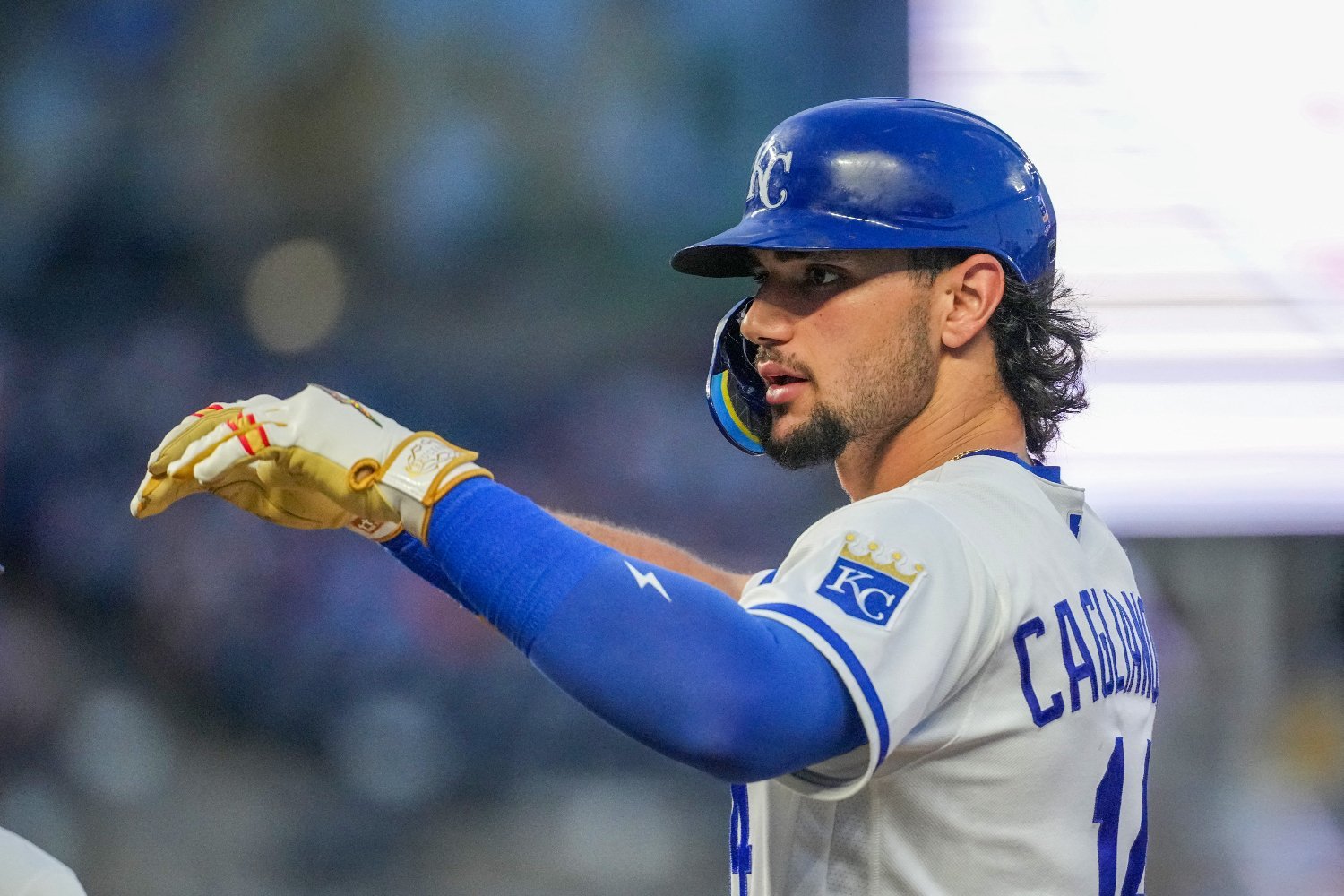 Week in a Nutshell The Royals came back to Kauffman this week to face the two Texas teams from the AL West: the Rangers and the Houston Astros. After a solid stretch in Cincinnati and Minnesota, Kansas City was hoping to build on that momentum and put on a good showing back home this week against two winnable opponents. While the Royals won the first and last games of the homestand, they lost four in a row in the middle, including two losses to Texas and two to Houston. However, while another losing homestand was difficult enough, the Royals were also beset by multiple injuries to key players this week, which only makes their slim playoff chances appear even bleaker. Record this Week: 2-4 Run Differential for the Week: -1 Record for the Year: 29-43 Run Differential for the Year: -49 Standing: 5th in the AL Central Game 67: KC 5, TEX 3 Game 68: TEX 6, KC 4 Game 69: TEX 4, KC 2 Game 70: HOU 10, KC 8 Game 71: HOU 8, KC 7 Game 72: KC 4, HOU 0 News and Notes In addition to the losses, the Royals' injuries piled up this week. In addition to many key players going on the IL, Kansas City also called up several players from Omaha to fill their spots. On June 9th, Stephen Kolek was activated off the Family Emergency list, and in a corresponding move, the Royals optioned Josh Rojas back to Omaha. Because Rojas has more than five years of service time, he had to accept an option to Triple-A. He decided to take the assignment back to the Storm Chasers rather than opt for free agency. Also on June 9th, pitcher Kris Bubic began a rehab assignment in Omaha. It was a rough outing for Bubic, as he gave up eight runs on nine hits in 1.2 IP. After the rehab outing, manager Matt Quatraro remarked that Bubic didn't recover well, as he was experiencing shoulder soreness. As a result, Bubic was taken off the rehab assignment and underwent further tests, which have been inconclusive so far. During the Royals' win over the Rangers on Tuesday, Kyle Isbel injured himself while rounding first base on a base hit. Tests revealed that he had a grade 3 tear of a portion of his left plantar fasciitis. As a result, Isbel will miss quite a bit of time, as reported by Jaylon Thompson of the Kansas City Star. In his place, the Royals promoted Kameron Misner, whom the Royals acquired from the Tampa Bay Rays this offseason. Misner has gotten off to a solid start in Kansas City this past week, as he collected six hits in 12 at-bats. On Wednesday, the Royals had a major scare as Seth Lugo was hit by a line drive batted ball by former Mets teammate Brandon Nimmo. Lugo was taken out of the game and placed on the 7-Day Concussion Protocol IL. CT scans were encouraging, but he was experiencing some headaches and worsening symptoms, which explained why he was placed on the IL. The Royals called up Eli Morgan to replace Lugo's spot on the roster. That said, Morgan was optioned back to Omaha on Sunday, and it is reported that Mitch Spence will replace Morgan. Spence, a starter acquired from the Athletics this offseason, is listed as the probable starter for Monday's road game against the Washington Nationals. Lastly, the Royals got another huge injury blow on Saturday, as Vinnie Pasquantino was removed from Saturday night's game after an awkward swing. It was reported that Pasquantino suffered a hamate bone injury. On Sunday, the Royals announced that he had a right hamate bone fracture and would miss approximately 4-6 weeks. John Rave was called up on Sunday to replace Pasquantino on the active roster, but Jac Caglianone is expected to receive a majority of the at-bats at first base. He made the start on Sunday at first base in the Royals' 4-0 win in the series finale against the Astros. Rave hit .196 with a .590 OPS, four home runs, and seven stolen bases in 72 games and 175 plate appearances with the Royals last year. Highlights Even though the Royals lost four games this week, the offense actually held its own. Kansas City's .293 team batting average was the 4th-best mark in baseball over the past week (unsurprisingly, the Rockies and the Athletics were the top two thanks to the hitter-friendly conditions of Las Vegas). They also scored 30 runs and were only outscored by one run. In the Astros series alone, they outscored Houston 19-18 over the three-game series (too bad it's not an aggregate scoring like soccer). The Royals also showed some ability to come back in spots this week, especially over the weekend. They nearly tied the Astros on Friday in their 10-8 loss, despite giving up nine runs in the top of the first. Furthermore, they had a 7-5 lead on Saturday before Jose Altuve tied things up with a two-run home run in the 8th before the rain delay. Individually, Caglianone was the Royals' top offensive performer. He collected 10 hits in 23 at-bats and hit .435 with a 1.239 OPS and two home runs and five RBI. He seemed to be key with runners on base, as he had a lot of moments in this homestand where he drove in runs, something he wasn't doing earlier in the year. The only blemish for Cags was the swing-and-miss this week. The former first-round pick had eight strikeouts, which led all Royals hitters this week. While Caglianone was the Royals' top performer offensively in this homestand, Bobby Witt Jr. wasn't far behind. The Royals shortstop had 9 hits, the second-most this week by a Kansas City hitter. He also hit .360 with an .847 OPS, stole three bases, and only struck out once. Witt particularly had a good game on Sunday, which also happened to be his 26th birthday. Maikel Garcia has been beset by injuries recently, but he started to get back into form in this homestand. He hit .286 with a .747 OPS and had a three-hit performance on Sunday, which included a couple of key RBI base knocks. Misner had a great Royals debut, and he's hitting .500 with a 1.038 OPS. The former Mizzou product also stole a base and had three RBIs. He will likely get a lot of opportunities in centerfield against right-handed starting pitchers with Isbel on the shelf due to his foot injury. Lastly, after a slow start at the leadoff spot, Carter Jensen had a strong week at the K. In 21 at-bats, he hit .286 with a .794 OPS, four doubles, four RBIs, and four runs scored. Manager Matt Quatraro has opted to utilize Jensen as the Royals' leadoff hitter against right-handed starting pitchers, and it seems like he's getting more comfortable in the spot with each start. Jensen also had a clutch double on Saturday night that helped the Royals overcome a 5-4 deficit in the bottom of the sixth inning. On the pitching end, it was another strong week from Stephen Kolek. He posted a 0.73 ERA and 1.22 WHIP in 12.1 IP with seven strikeouts to two walks. Kolek gave up a lot of hits, with 13 hits allowed, but he was able to escape trouble with runners on base. He only allowed two runs total in his two starts and only one earned run to boot. On Sunday, he had another masterful performance at the K, allowing no runs and only five hits in 7.1 innings of work in the victory over Houston. Safe to say, Kolek has emerged as the Royals' most valuable starter since the beginning of May. After a rough start to the season, which included getting optioned to Triple-A Omaha, Steven Cruz emerged as the Royals' most dependable reliever this week. In four outings and 5.0 IP, Cruz didn't allow a run, and he posted a 0.60 WHIP and 1.75 FIP. He also produced a 29.4% K% and a 23.5% K-BB% with a 72.4% strike%. When looking at his TJ Stuff+ summary from this week, not only did Cruz have excellent TJ Stuff+ marks, but he also flooded the strike zone, induced a lot of chases and whiffs, and limited hard contact, as evidenced by his xwOBACON. With the Royals' bullpen so shaky right now, Cruz may start to get more high-leverage opportunities in the future, especially with his ability to generate excellent stuff and a lot of whiffs, which is key in those pressure-packed situations. Another key reliever for the Royals this week was John Schreiber, who may be the Royals' best trade asset at this time. In three outings and 3.1 IP, he posted a 2.70 ERA, a 0.60 WHIP, struck out five batters, and didn't walk a single batter. The TJ Stuff+ wasn't as good as Cruz's, and his xwOBACON was slightly below average. That said, Schreiber was generating strong chase and whiff rates this week, which is encouraging. With many teams looking for bullpen help, Schreiber could be a key asset that could net the Royals some good value in return by the Trade Deadline. Lowlights While Kolek, Cruz, and Schreiber were strong contributors to the Royals pitching staff this week, it wasn't the best homestand for this group, especially the bullpen. The pitching staff gave up 10 home runs, which was the seventh-most by a pitching staff this week. The worst offender in this category was Matt Strahm. Not only did he give up three home runs this week, but he has also given up a home run in his last four outings and in six of his last eight appearances. In three outings and 2.1 IP this week, Strahm posted a 15.43 ERA and 1.71 WHIP. In addition to three home runs allowed, he gave up four earned runs and blew two save opportunities (i.e., he lost the lead for the Royals). While Strahm threw strikes this week and generated a strong chase rate, his whiff rate, xwOBACON, and TJ Stuff+ were all lackluster, as illustrated in his TJ Stuff+ summary below. The worst Royals pitching performance of the week probably belonged to Luinder Avila, who absolutely imploded in his Friday start against the Houston Astros. Avila failed to get out of the first inning, as he only went 0.2 IP. In that small sample, he allowed eight earned runs on five hits and three walks. He didn't record a strikeout, and he allowed two home runs, including a two-run bomb to Yordan Alvarez, who had two in the inning (with his other being a grand slam). In his TJ Stuff+ summary, nothing went right for Avila. He didn't throw strikes. He couldn't generate many chases. He got hit HARD. He did post a solid whiff rate, and his TJ Stuff+ wasn't bad considering the number of pitches he threw in the inning (49). That said, it was an outing to forget for the talented, but inconsistent Venezuelan pitcher. With Bubic and Cole Ragans on the IL and not a lot of reinforcements in Omaha (Ryan Bergert is also on the IL), Avila will continue to get starts. Hopefully, he can put this horrid outing behind him and bounce back in this short road trip against the Nationals (he's projected to start on Wednesday). Noah Cameron had a tough outing this week, as he allowed seven hits and four earned runs in 4.1 IP. Cameron didn't walk any batters, but he only had one strikeout, and he gave up two home runs. Looking at his TJ Stuff+ summary, it just wasn't a good day for Cameron, as his TJ Stuff+, zone rate, chase rate, whiff rate, and xwOBACON were all subpar. Lucas Erceg looked a little better this week, as he had a 3.86 ERA in three outings and 2.1 IP. However, his WHIP was 1.71, and he allowed three walks, hit a batter, and only struck out one. The chase, whiff rate, and xwOBACON were all encouraging this week, but his zone rate numbers were lackluster, and his K% was 8.3%, which resulted in a -16.7% K-BB%, not something Royals fans want to see from a pitcher who's supposed to be in high-leverage spots. On the hitting side, it was another brutal week for Salvador Perez. In 22 at-bats, he hit .182 with a .364 OPS, and he struck out five times while only walking once. All four of his hits were singles, and not only is he not producing in the power category, but he looks off-balance in the box as well. Whether it's nagging injuries or pressure from trying to break the Royals' all-time home run record, Perez just hasn't looked right in the box this year, and his Statcast percentiles only confirm that. Another Royals position player with a tough week was Nick Loftin. The former Baylor product hit .125 with a .597 OPS in eight at-bats. However, his biggest issue was a throwing error on Saturday night that gave the Astros the lead and, eventually, the win. Loftin has been atrocious in the field, especially at second base. He has a -8 OAA at second base, which is one of the worst OAA marks in all of baseball. Loftin is only hitting .221 with a .688 OPS this year in 116 plate appearances. While he can draw a walk (12.1% BB%), he doesn't provide much pop (32.9% hard-hit rate). Thus, his offensive profile is average at best, and his defense is a major liability. The Royals may be more apt to give new acquisition Matthew Lugo a chance in his spot, especially with Lugo absolutely tearing up Triple-A pitching. At 27 years old, Loftin doesn't have a whole lot of time to prove that he can be a long-term option in Kansas City. He may only have a couple of more weeks to prove himself in Kansas City, especially with the Royals 14 games under .500 and clearly building for 2027 at this point in the year. Loftin will be out of Minor League options next year, which makes him a non-tender candidate next offseason. Looking Ahead The Royals have a split week coming up with three games in Washington, D.C., against the Nationals and three games back at home against their I-70 rival, the St. Louis Cardinals. Due to the World Cup game on Saturday at the Truman Sports Complex, the Royals-Cardinals series will be played on Thursday, Friday, and Sunday. Though expectations weren't high in the preseason, the Nationals are 37-35 and in third in the NL East. They have a dynamic offense, as they are first in runs scored, second in stolen bases, fifth in OPS, and seventh in home runs. The offense has been led by James Wood and CJ Abrams, who had wRC+ marks of 162 and 150, respectively. Wood hit his 20th home run of the season on Sunday. The pitching has been a little weaker for the Nationals, as their rotation ranks 24th in starter ERA and their bullpen ranks 26th in reliever ERA. However, the Nationals have a profile similar to that of the Astros, who just took two of three from the Royals at Kauffman Stadium this past weekend. The Cardinals took two of three from the Royals in St. Louis back in Mid-May, though the Royals only lost both games by a combined three runs. St. Louis is a balanced team with a solid offense (12th in OPS; 13th in runs scored), a strong rotation (11th in ERA), and a decent bullpen that has a mediocre ranking in reliever ERA (17th), but has one of the game's more dynamic closers. Riley O'Brien has a 3.86 ERA and 17 saves this year in 30.1 IP. However, he's been shaky in June with a 7.20 ERA, 2.40 WHIP, and -3.7 K-BB% in 5.0 IP. If the game is close, the Royals could perhaps get to the rattled closer at Kauffman. O'Brien has still generated chases and whiffs, but he has gotten hit hard and has struggled to find the strike zone. The Royals' approach has been much better as of late, and they are working pitchers better than a year ago, as evidenced by their 9.2% BB%, which ranks 13th in baseball. Getting to O'Brien, in front of a Kauffman crowd that will be at least half Cardinals fans, could be the momentum boost this Royals team needs. View the full article
 -
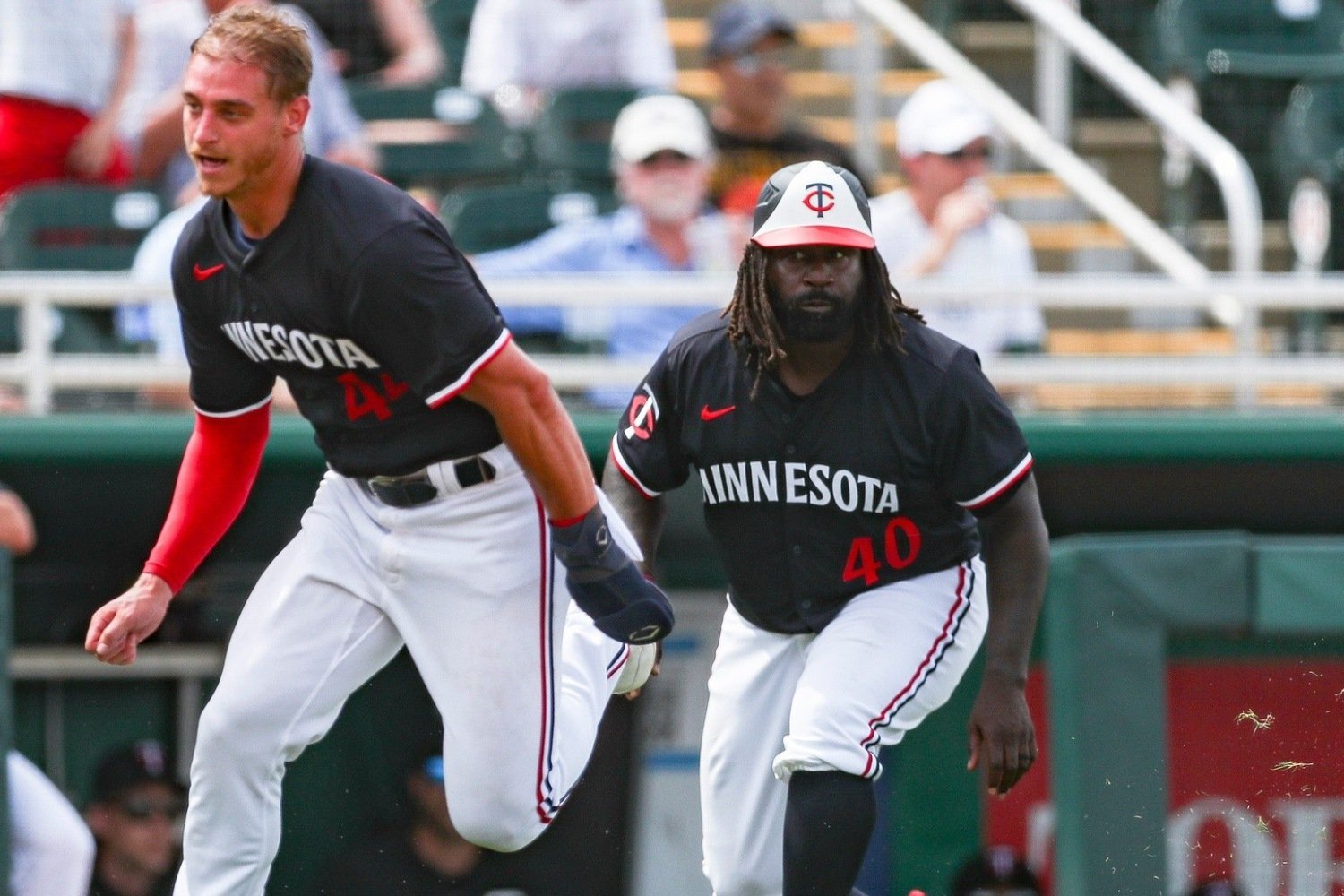 The Twins selected the contract of 26-year-old outfielder Kyler Fedko Sunday, designating veteran infielder Orlando Arcia in the process to make room on both the 40-man and active roster. Now that he’s finally in Minnesota, what will the Twins do with him? Fedko is a right-handed outfielder who can play all three outfield positions, though scouts suggest that his defense in center field isn’t good enough to be an everyday player out there. He’s also added first base to his bag of tricks, but he’s only got about 300 innings there across three seasons between Double- and Triple-A. He’s also played three games at second base this season, but it’s unlikely that the Twins will need to play that card. Often, transactions clearly show what a team’s plan with a player is. If the team cuts a left-handed corner outfielder and promotes a different left-handed corner outfielder to replace him, the old guy’s job is the new guy’s job. Not so with an Arcia-Fedko swap. We can’t just look at Arcia’s playing time and copy and paste it onto Fedko’s ledger. However, we can start with Arcia’s playing time and work from there, because there’s playing time to go around as a result of that move. Arcia has been playing approximately every other day. He’s been starting at shortstop against lefties, and he’s been filling in at first and second base, though he hadn’t had an appearance at either position since the return of Royce Lewis. (That's probably why, in the end, it made more sense to give Fedko a look than to hang onto Arcia. Having cut James Outman to recall Lewis, they were tipping toward being infielder-heavy and outfielder-light.) Arcia’s playing time at shortstop actually directly translates to Fedko's playing time, though. During each of Arcia’s recent appearances at shortstop, righty superutility player Ryan Kreidler has started in the outfield. Going forward, those platoon shortstop appearances can easily be transferred over to Kreidler, and Kreidler could take time from the strong side of the platoon, Tristan Gray—but this is a Fedko writeup, so we’ll skip that discussion. Fedko serving as a platoon outfielder is the most straightforward path to playing time. In the majors, he’s carried an OPS around .900, about 35% better than average for the level, but he’s been especially good against lefties this season, with an OPS of 1.262—though he’s historically had somewhat neutral platoon splits. The Twins have gotten below-average production from their corner outfielders against lefties—20th by OPS and 17th by wRC+. If Fedko can provide some thump against southpaws, he’ll have a place on this roster, joining Austin Martin as the right-handed corner outfielders. Trevor Larnach has been entrenched in left field, but he’s been platooned all season. Kody Clemens has seen more time in right field recently, but the Twins are probably open to playing a full righty lineup against lefty starters. It’s unclear if Clemens (who has a slightly above-average .714 OPS against lefties this season) would continue to get playing time against lefties in this alignment, because the Twins now have two righty corner outfielders, as well as the right-handed Luke Keashcall and Royce Lewis, who can play first and second base against lefties. But, again, that’s a conversation for another day. Speaking of Clemens, there’s also a center field component to discuss. Fedko is a bit stretched in center, but he’ll likely get some opportunity out there, given that Clemens has been used as their primary backup center fielder in recent weeks. The Twins’ previous fifth outfielder, Outman, was jettisoned from the roster last week to make room for Lewis after spending most of the season collecting dust at the end of the bench. The Twins have been hesitant to play Martin in center field, suggesting Fedko could be ahead of him on the depth chart. Kreidler is a solid center fielder, but the club will be relying on him in the infield more often. Given the choice between playing Clemens or Fedko in center field when Byron Buxton has a day off, it wouldn’t be surprising for Fedko to get the nod—even against righty pitching. As mentioned, Fedko can also play first base, but it’s difficult to see that happening often, given the presence of Clemens, Lewis, Josh Bell, and even Keaschall on the roster. Could it happen that he ends up over there for an inning or two? Maaaaybe. I could see that, and the fear is there. Given that about a third of starting pitchers are lefties, you’re looking at about two starts a week for Fedko in a corner. Then, if he gives Buxton a day off in center field, he’ll get another start every week or two, pending Buxton’s health. And of course, he could be used as a pinch-hitter. He’s a Minnesota Twin, after all. Two or three starts a week doesn’t sound like much, but it’s certainly more action than Outman was getting. And Fedko isn’t a prospect, per se; he’s a late-blooming 26-year-old. Even if he has a multi-year MLB career, he’s going to be a part-time player. They’re not doing him a disservice by using him in moderation. In games he doesn’t start, he could be used as a pinch-runner. He’s gone 47-for-59 as a basestealer over the past two seasons in the high minors, just under 80% of his attempts proving successful. So the Twins are under no pressure to force him into the lineup. But he certainly has an opportunity. Martin has slowed down in recent weeks and is not set in stone as the Twins’ fourth outfielder. Even if bigger names like Walker Jenkins, Emmanuel Rodriguez, Alan Roden, or Matt Wallner are called up to the big-league team, they’re all lefties, so the team would be well-served to carry a righty. There’s certainly an opportunity to show what Fedko can do. The door is open for Fedko, who had a 28-homer, 38-stolen-base season last year, to carve out a part-time role and try to stake a claim to more. He’s become a fan favorite, among fans who get attached to low-ceiling prospects, and it will be fun to see how it shakes out for him this season. View the full article
 -
 The Royals' affiliates split four games on June 14. Sam Kulasingam and Daniel Vazquez each homered in a five-run seventh as Northwest Arkansas rallied but fell short. Matthew Lugo drove in three for Omaha in a high-scoring loss. Quad Cities held on behind Max Martin and Yimi Presinal, who struck out four over two scoreless innings. Columbia stormed back as Henry Ramos homered and Andy Basora retired all seven hitters he faced to seal the win. Royals Transactions Kansas City Royals placed 1B Vinnie Pasquantino on the 10-day injured list. Right hamate fracture. Kansas City Royals recalled RF John Rave from Omaha Storm Chasers. Lugo's Power Not Enough As Omaha Falls In Extras The Omaha Storm Chasers fell 12-7 to the Las Vegas Aviators in 11 innings. Omaha is 30-38 and sits in 8th in the International West division, ahead of only Iowa and Indianapolis. Lugo led the offense, going 2-for-5 with a home run and three runs batted in, including a solo shot in the first inning and a tying single in the tenth. Gavin Cross added two hits and scored twice, and Elih Marrero doubled and drove in a run. Omaha left six runners on base. Starter Ryan Ramsey allowed four runs on six hits over 3 1/3 innings, walking two and striking out three. The game turned in the eleventh, when Las Vegas pushed across five runs against Dan Altavilla and Jose Cuas after the score had been tied at seven. Altavilla took the loss, allowing six runs, two earned, on four hits across 1 1/3 innings. Eric Cerantola provided two scoreless, hitless innings of relief earlier in the contest. Player AB R H RBI BB K Josh Rojas 5 0 1 2 0 2 Peyton Wilson 5 2 1 0 0 3 Brett Squires 5 0 0 0 0 1 Matthew Lugo 5 1 2 3 0 1 Luca Tresh 5 1 1 0 0 3 Drew Waters 4 1 0 0 1 1 Gavin Cross 4 2 2 0 0 1 Elih Marrero 4 0 1 1 1 1 Connor Kaiser 3 0 0 1 0 2 Abraham Toro 1 0 1 0 0 0 Kevin Newman 0 0 0 0 0 0 Player IP H R ER BB K HR Ryan Ramsey 3 1/3 6 4 4 2 3 0 Ben Sears 1 2/3 3 2 2 1 2 0 Andrew Pérez 2 1 0 0 1 1 0 Eric Cerantola 2 0 0 0 0 1 0 Dan Altavilla 1 1/3 4 6 2 0 2 0 Jose Cuas 2/3 1 0 0 1 1 0 Naturals' Seven-Run Seventh Falls Short In Arkansas The Northwest Arkansas Naturals lost 12-7 to the Arkansas Travelers despite a furious late rally. The Naturals' record now drops to 27-34 for the season. Vazquez, the No. 18 Royals prospect at Royals Keep according to our latest rankings, led the way, going 2-for-3 with a home run, three runs batted in, and two walks. Kulasingam and Omar Hernandez also homered, with Hernandez collecting two hits. Northwest Arkansas left eight runners on base. The Naturals trailed early after a difficult start from No. 7 Royals prospect Drew Beam, who allowed six runs on five hits over 1 1/3 innings, walking two and striking out two before taking the loss. The Travelers built their lead with seven runs in the second inning. Northwest Arkansas answered with five runs in the seventh, when Kulasingam, Vazquez, and Hernandez all went deep, but the comeback came up short. Andrew Morones provided 1 2/3 scoreless, hitless innings out of the bullpen with two strikeouts. The Naturals stranded eight runners and went 1-for-11 with runners in scoring position. Player AB R H RBI BB K Carson Roccaforte 5 1 1 0 0 1 Jack Pineda 4 2 1 0 0 0 Sam Kulasingam 4 1 1 2 1 0 Spencer Nivens 3 1 0 0 2 1 Daniel Vazquez 3 1 2 3 2 0 Omar Hernandez 5 1 2 1 0 2 Rudy Martin Jr. 3 0 1 1 1 0 Alberto Rodriguez 4 0 0 0 0 2 Connor Scott 4 0 0 0 0 2 Player IP H R ER BB K HR Drew Beam 1 1/3 5 6 6 2 2 0 Augusto Mendieta 2 2/3 2 2 2 1 4 2 Caden Monke 1 0 0 0 2 1 0 Chase Jessee 1/3 0 2 0 1 0 0 Andrew Morones 1 2/3 0 0 0 0 2 0 Dennis Colleran Jr. 1 1 2 2 1 0 1 River Bandits Hold On For One-Run Win In Beloit The Quad Cities River Bandits edged the Beloit Sky Carp 5-4 to collect their 28th win of the season. Nolan Sailors led off and went 2-for-4 with a double and a run batted in, while Chris Brito, Erick Torres, and Diego Guzman each collected two hits. Quad Cities left 13 runners on base and went 3-for-16 with runners in scoring position. However, the River Bandits did just enough, scratching out single runs in four different innings. Starter Tanner Jones allowed three runs on four hits over 3 1/3 innings, walking four and striking out two. Max Martin earned the win with 1 2/3 scoreless innings, and Yimi Presinal closed it out with two scoreless frames, striking out four and earning the save. The bullpen of Martin, Nick Conte, L.P. Langevin, and Presinal allowed just one run over the final 5 2/3 innings to preserve the lead. Player AB R H RBI BB K Nolan Sailors 4 0 2 1 1 0 Asbel Gonzalez 4 0 0 0 1 1 Ramon Ramirez 4 1 1 0 0 2 Luke Pelzer 4 1 1 1 1 0 Chris Brito 5 1 2 0 0 1 Erick Torres 5 1 2 1 0 1 Tyriq Kemp 2 0 1 0 1 0 Trevor Werner 4 0 1 0 1 2 Diego Guzman 5 1 1 0 0 2 Player IP H R ER BB K HR Tanner Jones 3 1/3 4 3 3 4 2 0 Max Martin 1 2/3 1 0 0 1 2 0 Nick Conte 1 0 0 0 0 1 0 L.P. Langevin 1 1 1 1 0 2 1 Yimi Presinal 2 0 0 0 1 4 0 Fireflies Rally Past Delmarva Behind Ramos And Basora The Columbia Fireflies came from behind to beat the Delmarva Shorebirds 8-5 in Sunday's series finale to clinch their seventh win in their last eight games. Leadoff man Ramos went 2-for-3 with a double, a home run, a run batted in, and a walk, scoring twice. Sean Gamble, our No. 3 Royals prospect at Royals Keep, reached three times, drawing two walks and scoring twice. Columbia left six runners on base. Starter Shane Van Dam allowed three runs on six hits over four innings, striking out two. After Delmarva built an early lead, Columbia surged ahead in the sixth and seventh. In the sixth, JC Vanek and Gabriel Silva delivered run-scoring hits, and the Fireflies added three more in the seventh on a pair of sacrifice bunts and a sacrifice fly that took advantage of two Delmarva throwing errors. Ramos capped the scoring with a home run in the eighth, his fourth of the season. The home run had an exit velocity of 104 MPH and helped seal the game for Columbia. Basora earned the win with a sterling effort on the mound, retiring all seven hitters he faced over 2 1/3 innings with two strikeouts. Player AB R H RBI BB K Henry Ramos 3 2 2 1 1 0 Josh Hammond 4 1 0 0 0 1 Yandel Ricardo 3 1 0 0 0 1 Stone Russell 3 1 1 1 0 0 Sean Gamble 2 2 1 0 2 0 JC Vanek 2 1 1 1 1 1 Josi Novas 1 0 0 0 0 1 Angel Ramirez 3 0 0 1 0 0 Gabriel Silva 2 0 1 1 1 1 Ivan Sosa 4 0 0 0 0 0 Player IP H R ER BB K HR Shane Van Dam 4 6 3 3 1 2 0 Luis Valdez 2 2 1 1 0 2 0 Yeri Perez 2/3 1 1 1 3 1 0 Andy Basora 2 1/3 0 0 0 1 2 0 Top-20 Prospect Performance Kendry Chourio: DNP David Shields: DNP Sean Gamble: 1-for-2, 2 BB Blake Mitchell: DNP Josh Hammond: 0-for-4, 1 K Ramon Ramirez: 1-for-4, 2B, 2 K Drew Beam: 1 1/3 IP, 5 H, 6 R, 6 ER, 2 BB, 2 K Asbel Gonzalez: 0-for-4, 1 BB, 1 K Ben Kudrna: DNP Carson Roccaforte: 1-for-5, 1 K Yandel Ricardo: 0-for-3, 1 K Felix Arronde: DNP Blake Wolters: DNP Michael Lombardi: DNP Luinder Avila: DNP Steven Zobac: DNP Frank Mozzicato: DNP Daniel Vazquez: 2-for-3, HR, 3 RBI, 2 BB Warren Colcano: DNP Shane Panzini: DNP View the full article
 -
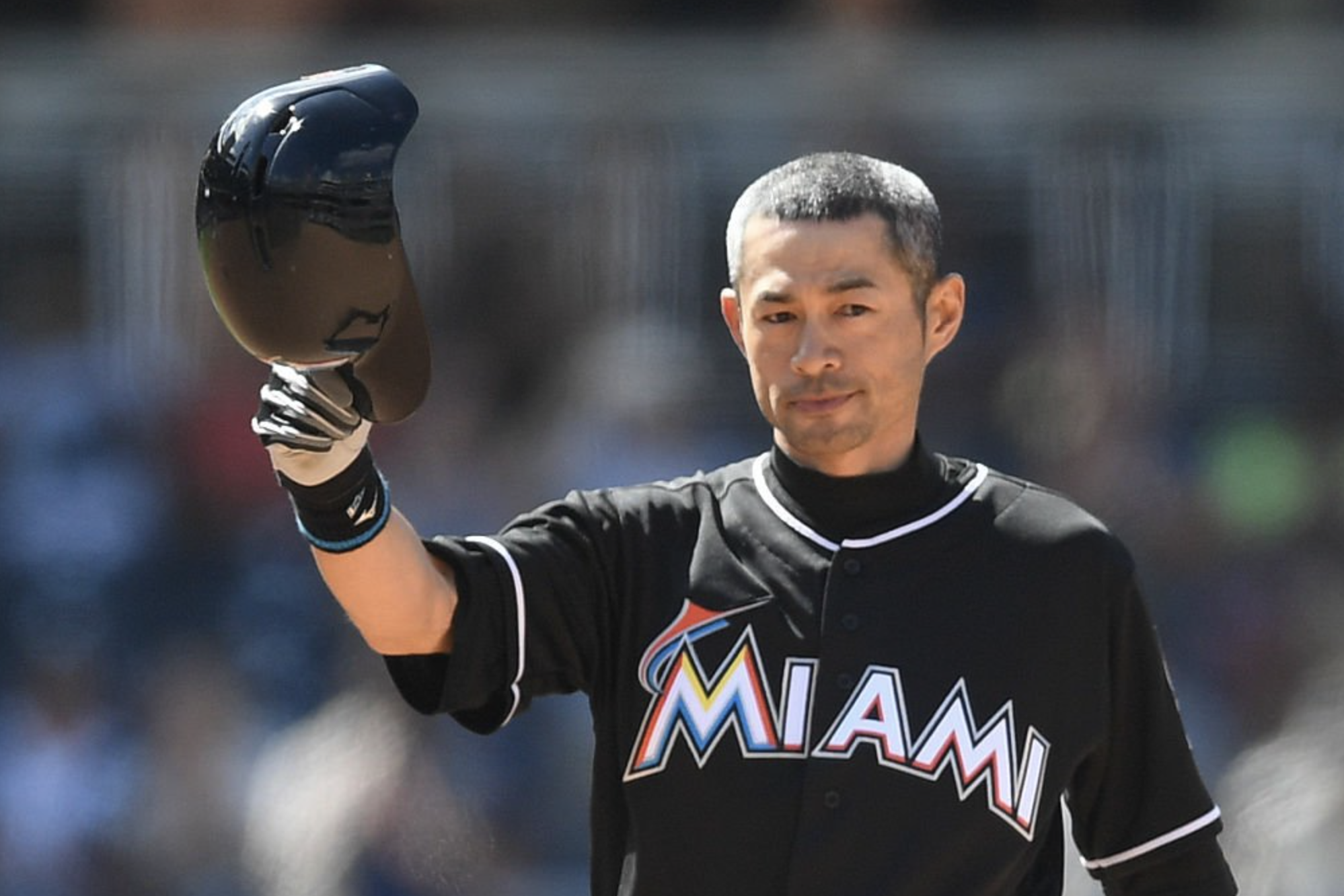 To baseball fans in America, most would still probably consider Pete Rose to be the all-time leader in hits. Ask those in Japan and other parts of the world and one might get a different answer. On this day 10 years ago, Ichiro Suzuki passed Rose for the most hits at the highest levels of baseball and did so as a member of the Miami Marlins. Coupled with his time in Nippon Professional Baseball in Japan, Suzuki collected his 4,257th hit in a 6-3 loss to the San Diego Padres. As the Marlins went for the three-game sweep of the Padres at Petco Park on June 15, 2016, Suzuki sat one hit behind Rose with 4,255 for his career in Nippon and Major League Baseball. He wasted little time drawing even. On just the second pitch of the game, Suzuki dribbled one just past the plate but was able to use his speed for the infield single and hit No. 4,256. He’d come around to score the game’s first run on an RBI single by Christian Yelich later in the inning. Over his next three at-bats, Ichiro grounded out twice and struck out once. With the Padres up 6-3 after eight innings, there was no guarantee that Suzuki would get another at-bat. A single by Adeiny Hechavarría to lead off the ninth, however, gave Ichiro a chance to bat against closer Fernando Rodney with two outs in the inning. On a 2-1 pitch, Suzuki smashed Rodney’s offering into the right-field corner for a standup double. The two-bagger not only broke Rose’s record, but it brought the tying run to the plate. Unfortunately for Miami, Rodney was able to get Martín Prado to fly out to end the contest. As for the game itself, the Padres used five unanswered runs to avoid the sweep. After San Diego’s B.J. Upton tied the game with a solo home run in the second, an RBI single from J.T. Realmuto and a sacrifice fly from Miguel Rojas gave the Marlins a 3-1 lead in the fourth. The Padres scored a run in the fourth before taking the lead on a two-run single from Derek Norris during a three-run fifth. In addition to Ichiro’s two hits, Hechavarría added a pair of knocks for the Marlins. Upton finished 3-for-3 with the aforementioned home run, two runs scored and two RBIs for San Diego. After giving up the history-making hit to Suzuki, Rodney would become his Marlins teammate via trade later in the year. Between Japan and Major League Baseball, Ichiro finished with 4,367 hits. He moved ahead of Pete Rose on this day a decade ago. View the full article
 -
Why the Marlins bullpen is among the best in baseball
DiamondCentric posted an article in Fish On First
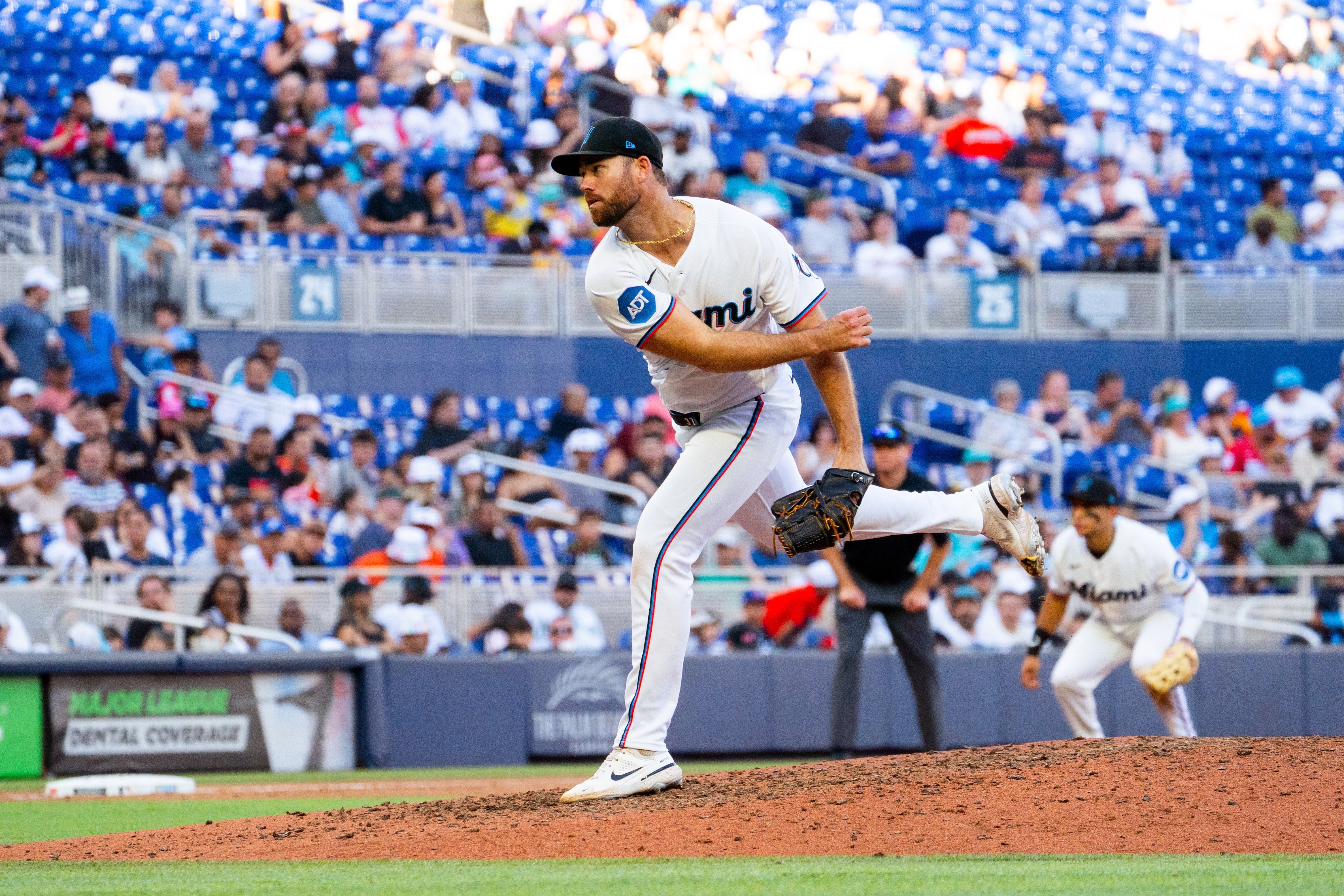 Going into the season, the Miami Marlins bullpen was seen as one of the strengths of the ball club. Through 72 games, that has proven to be the case, even though injuries have taken their toll and some pitchers are taken on different roles than originally planned. Following the team's fourth straight series win, this time against the Pittsburgh Pirates, the Marlins bullpen has a 3.49 ERA (eighth in MLB), 3.67 FIP (fourth), 9.73 K/9 (fourth) and 4.49 BB/9 (23rd). In the month of June, where they are 10-2, the bullpen has a 2.81 ERA, 2.99 FIP, 11.25 K/9 and 4.50 BB/9. Their win streak was snapped at six games on Saturday against the Pirates. "They throw really, really good stuff," said bullpen coach Brandon Mann. "They have stuff that they can compete in the zone with, and I think you see that we get a lot of swing-and-miss out of our guys. We attack guys early and we try to get punchies when we have advantage counts." One of the most lethal individual pitches this year has been Anthony Bender's sweeper (plus-9 run value). It currently grades out as the second-best sweeper in baseball, behind Shohei Ohtani (plus-11), and easily the best amongst all relief pitchers. Bender's sweeper has 19.9 inches of horizontal break on average. Last year, it had 16.8 inches of horizontal break. The Major League Baseball average for sweepers in 2026 is 14.6 inches, per FanGraphs. It wasn't all sunshine a rainbows for Bender in 2026, as in his first 10 appearances of the season were rough. Along with a 7.56 ERA, he blew two games, walked eight hitters and surrendered seven runs. The only positive was that he had a 3.83 FIP in that span, meaning he was running into some bad luck. In his next 20 games, he has a 1.29 ERA, 2.01 FIP and has struck out 24 hitters and only walked three. Overall, Bender now has a 3.07 ERA, 2.53 FIP, 11.05 K/9 (career-high) and 3.38 BB/9 in 30 appearances. Lake Bachar, who the Marlins claimed off waivers from the San Diego Padres in the midst of the 2024 season, has been one of the most crucial pieces of the bullpen. With injuries in the starting rotation, Bachar has had to start three of the Marlins bullpen games. In his first two starts, he has been perfect, going 5 ⅔ innings, striking out six in the process. On Saturday against the Pittsburgh Pirates, Bachar went two innings, allowing one run on one hit, walked one and struck out four. "It’s not out of the realm possibility to see someone like Lake continue to get stretched out because he has shown he’s got a lot of weapons that can go through a lineup a couple of times," Marlins manager Clayton McCullough told reporters in Pittsburgh about Bachar. Bachar's pitch mix isn't typical of a reliever, as he has six pitches in his arsenal, but all of them have been either at league average, or above that in terms of run value. His two best pitches thus far have been the slider and sweeper, both sporting Run Values of three. The slider has generated a 45.5% whiff rate and 45.7% PutAway rate, the highest of all his pitches and in his career. It is his also second most used pitched this season (24%). One incorporation into his already extensive arsenal is a curveball, which he has thrown 12.6% of the time. In his start against the Pirates, Bachar threw it 21% of the time, generating two whiffs, but did not strike anyone out with that pitch. Overall, the curveball has a 38.7% whiff rate rate and 27.6% PutAway rate. It has a Run Value of one. Bachar also added a two-seamer, which is also known as a sinker to his arsenal. The first time he threw it in game was in his second start of the season, which came against the Tampa Bay Rays. He threw it 13% of the time in that start, only using it against right-handed hitters. In three appearances (two starts) using the sinker, he's only thrown is 11 times (1.8%), his least used pitch, but has a 20% whiff rate, but hasn't struck anyone out with it yet. "It graded out as his best pitch (on Saturday)," Mann said the day after his start against Tampa. "Being able to bring something new into the mix, now he has more of an east-west profile and a north-south that profile really opens up more opportunities for Bachar to face lefties and righties." In 22 appearances (three starts), Bachar has a 3.05 ERA, 3.70 FIP, 10.57 K/9 and 3.05 BB/9. It is uncertain wether Bachar will continue to be the Marlins starter when they have a bullpen game, but he certainly has given the team quality innings and length to save the overall bullpen a little bit more. When the Marlins signed lefty John King to a one-year deal, they expected him to be used in certain pockets that they didn't have the luxury of using a left-handed pitcher in last season because they only had one. Early in the season, King was exactly that. In his first 10 appearances, King posted a 1.04 ERA, but 4.61 FIP. Since then, he has a 3.10 ERA and 3.99 FIP. In the bullpen games, King has already had to make one start, which came in Queens against the New York Mets. For the most part, King continues to be used in certain pockets, but his usage has gone up, leading the Marlins with 31 games pitched this season. King's secondaries weren't very good in 2025, so he is throwing them less and relying more on his sinker (plus-3 RV) and slider (plus-1 RV). The sinker (32.3% usage rate) has generated a 22.4% whiff rate and 27.6% PutAway rate. Although it is his third most used pitch, King's changeup is getting the most whiff (33.3%) and his sweeper, the fourth most used pitch and new to his arsenal, is putting hitters way the most (25%). After struggling against right-handed hitters in 2025, he is now dominating them, as they are slashing .152/.250/.239/.489 with one home run in 52 plate appearances. Fish On First spoke to King early in the season and after meetings with the pitching staff in the organization, they cut down his sinker usage (now at 32.3%) and bumped up his slider and sweeper usage. In 31 appearances, King has a 2.48 ERA, 4.17 FIP, 6.83 K/9 and 2.48 BB/9. His high FIP is due to his hard-hit% ranking in the 85th percentile, barrel percentage going up from 5.1% in 2025 to 8.1% Hitters overall are just able to attack King more, but his high ground ball rate and strong defense behind him have allowed him to find success in 2026. The final name we will dive into is closer Pete Fairbanks. It's been mixed results so far for the $13M man. The Marlins have made it clear that they will avoid using the flamethrower in any situation where the team is down. If they are tied or leading in a game that falls under a save situation (winning by three or less), Fairbanks will go out there. He has been used in the ninth inning in all but one situation this season. Fairbanks has a 6.75 ERA, 4.75 FIP, 13.05 K/9, 4.95 BB/9 and nine saves in 22 appearances this season. He did land on the injured list just one time this season, but the overall lower usage rate has been because of the situations Miami is looking to use him in. In his most recent appearance, which came in a save situation against the Pirates, Fairbanks surrendered one home run, but struck out two in the process. "I think he's trending," Mann said. "I think the the numbers don't necessarily match up with with how I think he's personally pitched. I know his ERA versus his xERA is very, very different. He's punching out guys at a very high clip...He goes the next 17 innings and givea up one run, we're talking about how great Pete's been. I think he is trending in that that way." The cutter which showed good results towards the end of the 2025 season and throughout all of spring training, it has a negative Run Value. The pitch has generated a 31.4% whiff rate and 17.4% PutAway rate. The slider, which he is throwing 18.6% of the time in 2026, has been his best PutAway pitch (34.6%). After plenty of doubts on a low strikeout rate the previous two seasons, his 13.05 K/9 is the highest its been since the 2023 season (13.50). Other names who have made an impact is Michael Petersen, who in 27 appearances has a 3.07 ERA, 2.76 FIP, 10.43 K/9 and 3.99 BB/9. The recently called up William Kempner has a 0.00 ERA, 1.60 FIP, 10.80 K/9 and 2.70 BB/9 in five appearances. Kempner has been used in more lower-leverage situations, but has thrived thus far. Overall, the bullpen has some nasty stuff, proving to be strikeout machines, but their sustainability is in question if the Marlins continue to rely on bullpen games every fifth day. Also, the group's high walk rate will eventually come back to bite them if it is not addressed. For now, it is worth admiring how good they have been. View the full article
 -
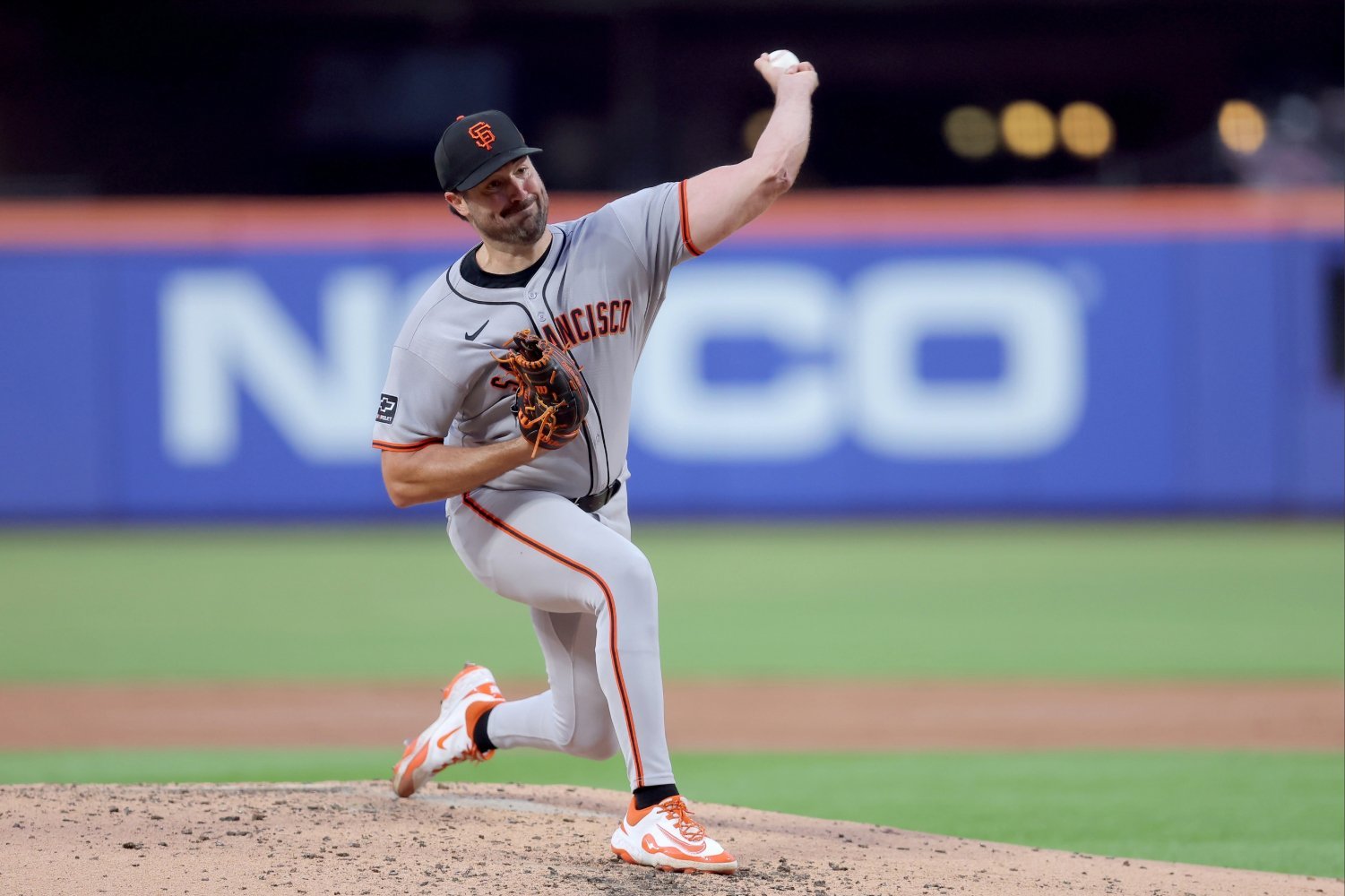 The New York Mets enter the middle of June at 31-39, deep into last place in the NL East.. Still, there's a lot of season left and a lot of time for the Mets to turn things around. Just think back to 2024, when this franchise used the power of vibes to ride a June hot streak all the way to the NLCS. If they are going to make the 2026 a season to remember, though, they will need reinforcements at the trade deadline. A lot of things will have to go right between now and August to get to this point, but let's examine the kind of trade haul David Stearns would have to bring in to make the Mets contenders again. Mets' Best Trade Targets if They Buy 3. LHP Robbie Ray The Mets need help in the starting rotation, and the Giants are looking to sell impending free agents. Ray has been solid in 2026 and will eat innings for the Mets. He’s posted a 21.0 strikeout percentage in his 73.1 innings of work, and his track record suggests he's capable of more. A lot of Ray’s underlying metrics this season, like his xERA of 5.16, don’t look great, but he has been consistent and victimized by a few really bad starts in 2026 and not going as deep into games as he did in the past. Still, the veteran southpaw is viewed as one of the better starters that could be moved this season, and it would be a straight rental deal as he’s a free agent after the season. He shouldn't be the only starter acquired by the Mets if they go all-in at the deadline, but he'd be a nice back-of-the-rotation buy. Robbie Ray, K'ing the Side in the 2nd...with 2 Swords. ⚔️⚔️ pic.twitter.com/Gc13wsqqc4 — Rob Friedman (@PitchingNinja) April 14, 2026 The Mets are looking for magic in 2026, and they will need help both in the starting rotation and offensively if the team is looking to go on a run to the postseason like they did in 2024. View the full article
 -
Blue Jays Clutch Plays: McAdoo's Welcome, Schneider's Return
DiamondCentric posted an article in Jays Centre
 Welcome back to Blue Jays Clutch Plays, a recurring post that highlights the six most pivotal plays (three pitching, three hitting) from the past week of Blue Jays baseball, according to MLB's win probability model. Click here to read last week's edition. It was a week in which the Blue Jays hung tough the entire time, but they let too many opportunities slip away against the Phillies and Yankees on their way to consecutive series losses. Leaving runners on base was a constant theme once again, especially on the weekend, and the physical toll the bullpen has undergone here in the first half of the season is catching up to them in a big way. They're now 34-38 and 1.5 games back of the final Wild Card spot heading into a Fenway-Wrigley road trip. Pitching 3. Spencer Miles: Max Schuemann Fielder's Choice, Top 6, 6/14 (+10.2% WPA) Miles continued to give the Jays some extremely valuable bulk relief innings last week. He put himself in a tough spot in the sixth inning on Sunday by issuing a leadoff walk to the lightning-quick Jazz Chisholm Jr., who stole second and advanced to third on a groundout, but then Miles quickly induced a comebacker from Max Schuemann that retired Chisholm after a successful rundown play. 2. Braydon Fisher: Ryan McMahon Flyout, Top 7, 6/12 (+10.3% WPA) Things got nerve-wracking for Braydon Fisher in the seventh inning of Friday's opener against New York. After an infield hit from José Caballero loaded the bases, #8 hitter Ryan McMahon nearly took him deep to dead center for a go-ahead slam. While this ball was technically barreled up, it was hit to the wrong part of the ballpark, and after what felt like an eternity, it settled harmlessly into the glove of Myles Straw for the final out. 1. Tyler Rogers: Jasson Domínguez Groundout, Top 8, 6/13 (+11.2% WPA) This week's clutch pitching play is really an emphatic introduction to this column for Charles McAdoo, who dove for this 96-mph grounder off the bat of Jasson Domínguez and speared it beautifully on the backhand to save a run. In fact, if this ball had the legs to make it into the corner, his grab might've even saved two runs. McAdoo learning second base likely got him to the big leagues faster, but on this play, he found himself at one of the corner infield spots that clearly comes naturally to him. Hitting 3. Davis Schneider: Solo HR, Bot 7, 6/14 (+18.6% WPA) In his second game since getting called back up, Schneider got a sinker that Jake Bird left too far out over the plate and cranked it all the way over the center field wall to tie the game at three. Davis didn't see any strikes down in Triple-A Buffalo – he hit .188 with a .550 OBP in 14 games – so it's fair to wonder how many chances he actually got to work on his swing. Despite that, at 413 feet, this is the farthest ball he's hit in 2026. 2. Jesús Sánchez: Solo HR, Bot 6, 6/9 (+19.0% WPA) The Blue Jays were tasked with some of the toughest pitching matchups that a three-game regular season series could possibly offer. After Cristopher Sánchez went seven innings on Monday, it appeared that Zack Wheeler was going to do him one better until Jesús Sánchez brought his hands in and turned on an up-and-in fastball. He knocked it into the visitors' bullpen to tie the game at one, which, with the help of Dylan Cease's brilliant effort on the mound, set the table for a Blue Jays comeback and a walk-off winner. 1. Yohendrick Piñango: Single, Bot 9, 6/9 (+29.0% WPA) It was Brandon Valenzuela who recorded the game-winning single to seal Jhoan Duran's first blown save of the year on Tuesday night, but the real turning point in the ninth inning came one batter before. Yohendrick Piñango smacked Duran's 1-0 splitter into the ground at a -27° launch angle, but with Philadelphia's infield at double-play depth, it bounced into right field for a base hit and moved Myles Straw, who was already in motion, to third. Daulton Varsho would come in to pinch-run for Straw and score on Valenzuela's liner for the Jays' fourth walk-off win of the year. View the full article
 -
San Diego Padres affiliate split their four games as the Triple-A El Paso Chihuahuas lost to Round Rock 5-4 in the ninth, the Double-A San Antonio Missions winning with a 12th-inning walk-off 6-5 over Frisco, the High-A Fort Wayne TinCaps were pummelled 17-1 by Dayton and the Low-A Lake Elsinore Storm winning 5-4 over Ontario on a ninth-inning walk-off. Padres Minor-League Transactions San Diego Padres selected the contract of C Blake Hunt from El Paso Chihuahuas. C Colton Vincent assigned to El Paso Chihuahuas from ACL Padres. San Diego Padres sent RHP Matt Waldron on a rehab assignment to El Paso Chihuahuas. El Paso Chihuahuas sent RHP Daison Acosta on a rehab assignment to Lake Elsinore Storm. Matt Waldron Makes First Rehab Start, But Chihuahuas Walked Off Padres right-handed starter Matt Waldron had a nice first rehab appearance, but the Triple-A El Paso Chihuahuas surrendered a pair of runs in the bottom of the ninth-inning, including a walk-off bases-loaded walk, in a 5-4 loss to the Round Rock Express. The Chihuahuas (31-38) still won four of the six games in the series. Carlos Rodriguez extended his career-high hitting streak to 20 games, with his on-base streak at 24 games, by going 2-for-5 with a run scored. Clay Dungan had a pair of hits and drove in two for the Chihuahuas. Marcos Castanon singled, giving him a hit in 23 of his last 24 games. Waldron has been on the 15-day injured list since May 15 with a right brachialis muscle injury. In his first rehab start, he threw 27 pitches, including 19 strikes, and went 2⅓ innings, giving up just a hit with no walks or strikeouts. The Express scored twice in the fourth after Waldron exited, with Dungan getting one back on a fifth-inning RBI single, only to see Round Rock go back up 3-1 in the bottom of the fifth. Dylan Grego, just promoted from Low-A Lake Elsinore due to recent Chihuahuas being called up by the Padres, and Nate Mondou had RBI singles in the top of the sixth to tie the game 3-3. Dungan then drew a bases-loaded walk in the eighth to put the Chihuas on top 4-3. But a run-scoring double with one out and bases-loaded walk with two outs off right-hander Ethan Routzahn gave the Express the win in the bottom of the ninth. EP_0614.mp4 Player AB R H RBI BB K Carlos Rodríguez 5 1 2 0 0 0 Nick Pratto 3 0 1 0 2 0 Clay Dungan 4 0 2 2 1 2 Marcos Castañon 5 0 1 0 0 0 Nick Schnell 5 0 0 0 0 3 Victor Duarte 4 1 1 0 0 3 Anthony Vilar 4 1 0 0 1 2 Dylan Grego 3 0 1 1 1 0 Nate Mondou 3 1 1 1 1 0 Player IP H R ER BB K HR Matt Waldron 2 1/3 1 0 0 0 0 0 Michael Flynn 2/3 1 0 0 0 0 0 Marco Gonzales 4 3 3 1 1 2 0 Sean Boyle 2/3 1 0 0 0 0 0 Miguel Cienfuegos 1/3 0 0 0 0 0 0 Ethan Routzahn 2/3 2 2 2 3 0 0 Romeo Sanabria Launches 12th-Inning Walk-Off HR For Missions Romeo Sanabria crushed a two-run walk-off homer with two outs to cap a three-run bottom of the 12th inning as the host Double-A San Antonio Missions rallied for a 6-5 victory over the Frisco RoughRiders. The win was just the second in the six-game series for the Missions (27-36). After a scoreless 10th and 11th innings, Frisco scored twice in the top of the 12th to go up 5-3. With one out, Ethan Salas, Padres Mission's No. 1 prospect, grounded a single up the middle to score zombie runner Kai Roberts. After a strikeout, Salas was caught stealing for the second out. But Braedon Karpathios kept the inning alive with a double to left. Sanabria stepped up and worked a full count, drilling the seventh pitch of the at-bat out to right-center for his seventh homer of the season. Missions right-handed starter Victor Lizarraga gave up a pair of runs in five innings on four hits and two walks with two strikeouts. From there, the bullpen was really good as seven relievers allowed five hits over the final seven innings, but did give up the tying run in the top of the ninth. That came after the Missions scored three times in the eighth to take a 3-2 lead. Ryan Jackson had a two-run triple and scored on a two-out wild pitch. SA_0614.mp4 Player AB R H RBI BB K Ryan Jackson 6 1 2 2 0 1 Ethan Salas 5 0 1 1 1 1 Braedon Karpathios 6 1 1 0 0 4 Romeo Sanabria 6 1 2 2 0 2 Francisco Acuna 5 0 2 0 0 0 Albert Fabian 5 0 0 0 0 2 Brendan Durfee 2 0 0 0 1 1 Tirso Ornelas 0 0 0 0 2 0 Luis Verdugo 4 1 1 0 1 1 Kai Murphy 2 0 1 0 0 1 Kai Roberts 2 2 0 0 0 1 Player IP H R ER BB K HR Victor Lizarraga 5 4 2 2 2 2 1 Andrew Moore 1 0 0 0 3 3 0 Josh Mallitz 1 1 0 0 0 1 0 Andrew Thurman 1 0 0 0 0 2 0 Johan Moreno 1 2 1 1 1 1 0 Omar Cruz 2 0 0 0 0 5 0 Clark Candiotti 2/3 1 2 1 0 0 0 Chris Sargent 1/3 1 0 0 0 0 0 TinCaps Pummeled By Dragons In Rain-Shortened Rout Kavares Tears homered for the second game in a row, but a slew of High-A Fort Wayne TinCaps pitchers couldn't slow down a six-homer attack by the Dayton Dragons in a 17-1 loss. The game was called after seven innings due to rain. The TinCaps (25-38) won just once in the six-game series and have lost 10 of their last 11. Tears hit a solo shot in the fifth inning, but by that time, the TinCaps were already down 6-0. The Dragons poured it on from there, with two more in the bottom of the fifth, six in the sixth and the final three in the seventh. All six TinCaps pitchers gave up at least two runs, including four by right-hander Isaiah Lowe, who made his first start since April 29. FW_0614.mp4 Player AB R H RBI BB K Justin DeCriscio 4 0 0 0 0 0 Carlos Rodriguez 3 0 1 0 0 0 Lamar King Jr. 3 0 1 0 0 0 Alex McCoy 2 0 2 0 1 0 Jake Cunningham 3 0 0 0 0 1 Rosman Verdugo 3 0 0 0 0 1 Kavares Tears 2 1 1 1 1 1 Zach Evans 3 0 1 0 0 0 Kasen Wells 3 0 1 0 0 1 Player IP H R ER BB K HR Isaiah Lowe 2 3 4 4 2 1 2 Kleiber Olmedo 2 4 2 2 1 2 0 Jeferson Villabona 1 1 2 2 2 1 1 Luis Germán 2/3 0 4 0 3 1 0 Braian Salazar 1/3 3 2 2 1 0 2 C.J. Widger 2/3 3 3 3 2 1 1 Ryan Wideman Drills Walk-Off HR As Storm Close To Clinching Ryan Wideman, the minors' stolen base leader, smashed a walk-off homer on the first pitch of the bottom of the ninth inning as the host Lake Elsinore Storm pulled out an 8-7 victory over the Ontario Tower Buzzers. The Storm (36-27) won the final two games of the series to split the six-game set and lead the California League's South Division by 2½ games over Rancho Cucamonga. There are three games left in the first half, with the Storm's magic number down to one. The homer, off the scoreboard in right-center field, capped a 4-for-5 day in which Wideman, Padres Mission's No. 5 prospect, drove in three and scored two. He did not steal a base, but was picked off once, and has 42 for the season. The homer was Wideman's sixth of the season. The Storm trailed 3-0, but scored seven times in the fifth inning, the only other inning they scored before Wideman's homer in the ninth. Yoiber Ocopio led off the inning with an infield single and went to second on a throwing error by the third baseman. After a strikeout and a pitching change, Jorge Quintana was hit by a pitch and a wild pitch advanced both runners. George Bilecki walked to load the bases, Conner Westenburg was hit by a pitch to drive in the first run, then Wideman singled home two more to tie the game 3-3. Kerrington Cross walked to reload the bases and, following a second pitching change in the inning, Jose Verdugo walked to snap the tie. Luke Cantwell and Ocopio, batting for the second time in the frame, also followed with bases-loaded walks to make it 6-3. After a strikeout, Quintana was hit by a pitch for the second time in the inning to bring in the final run of the seven-run rally. Ocopio was the only other Storm player besides Wideman to get a hit, going 2-for-3. The Storm needed seven pitchers to get through nine innings. Player AB R H RBI BB K Ryan Wideman 5 2 4 3 0 1 Kerrington Cross 2 1 0 0 2 2 Jose Verdugo 3 1 0 1 1 0 Luke Cantwell 3 0 0 1 1 0 Yoiber Ocopio 3 1 2 1 1 1 Truitt Madonna 4 0 0 0 0 2 Jorge Quintana 2 1 0 1 0 0 George Bilecki 3 1 0 0 1 1 Conner Westenburg 3 1 0 1 0 2 Player IP H R ER BB K HR Carlos Medina 3 2/3 5 3 3 2 1 1 Carson Swilling 1 1/3 0 0 0 1 3 0 Nick Falter 2/3 4 4 4 1 1 2 Vicarte Domingo 1/3 0 0 0 0 1 0 Sean Barnett 1 0 0 0 2 1 0 Brandon Langley 1 0 0 0 0 0 0 Will Koger 1 0 0 0 1 2 0 Padres Mission Top 20 Prospect Performance Ethan Salas: 1-for-5, K Kash Mayfield: DNP Miguel Mendez: DNP Kruz Schoolcraft: DNP Ryan Wideman: 4-for-5, HR, K Jorge Quintana: 0-for-2 Ty Harvey: On injured list Kale Fountain: Injured, out for season Braedon Karpathios: 1-for-6, 2B, 4 K Lamar King Jr.: 1-for-3 Jagger Haynes: DNP Alex McCoy: 2-for-2 Truitt Madonna: 0-for-4, 2 K Tucker Musgrove: DNP Garrett Hawkins: DNP Michael Salina: DNP Eric Yost: DNP Rosman Verdugo: 0-for-3, K Bryan Balzer: DNP Deivid Coronil: DNP View the full article
-
What are your Marlins vs. Phillies series predictions?
DiamondCentric posted an article in Fish On First
 Once again in 2026, I will be monitoring Miami Marlins predictions from our valued SuperSubs, Fish On First staffers and livestream guests. Individual article pages like this one will be created prior to every Marlins series and featured prominently on the FOF site. Consistent participation is key if you want to win this annual contest. Submissions only take a few seconds. Scoring system A "perfect" series is worth three points: Earn one point for predicting which team will win the upcoming series Earn one point for predicting the precise number of victories for each team Earn one point for predicting the “Series MVP” who accumulated the highest win probability added (WPA) during the series as calculated by FanGraphs (could pick a player from either team) FOF staffer Jeremiah Geiger is currently atop the 2026 season leaderboard, which will be updated between every Marlins series. If you are a SuperSub, leave a comment with your Prediction Time picks on this page, or join the Marlins Discord Server and submit there. We'll feature them on the upcoming Fish On First LIVE episode and track your points throughout the season! Any picks submitted prior to the first pitch of the series opener will be counted. If you are not a SuperSub, please consider signing up here to support the FOF staff. Series preview notes Probable starting pitchers: RHP Ryan Gusto (MIA) vs. RHP Zack Wheeler (PIT) on Monday RHP Tyler Phillips (MIA) vs. LHP Jesús Luzardo (PHI) on Tuesday RHP Sandy Alcantara (MIA) vs. RHP Andrew Painter (PIT) on Wednesday The Marlins rank 20th in MLB with a 97 wRC+ and 10th in MLB with a 3.92 FIP. They are 8-2 in their last 10 games and have a 13-20 record on the road this season. The following Marlins players are on the injured list: Griffin Conine (60-day IL), Josh Ekness (15-day IL), Ronny Henriquez (60-day IL), Janson Junk (15-day IL), Adam Mazur (60-day IL), Andrew Nardi (60-day IL), Eury Pérez (15-day IL) and Robby Snelling (60-day IL). The Phillies rank 27th in MLB with a 90 wRC+ and second in MLB with a 3.59 FIP. They are 6-4in their last 10 games and have a 19-17 record at home this season. The following Phillies players are on the injured list: Kyle Backhus (15-day IL) and Adolis García (60-day IL). View the full article
 -
Marlins-Pirates series reaction: June dominance continues
DiamondCentric posted an article in Fish On First
 Fish On First staffers react to the latest Miami Marlins series and prepare you for what lies ahead. Sunday's show was hosted by Ely Sussman and featured panelist Kevin Barral. The following topics were covered: Sensational Jakob Marsee catch Max Meyer wins again, bolstering All-Star candidacy Heriberto Hernández raking his way to an expanded role Christopher Morel and Leo Jiménez providing no value Checking in on the crowded National League Wild Card race Previewing and predicting the next series against the Philadelphia Phillies You can find Fish Unfiltered and Fish On First LIVE on the Fish On First YouTube channel, Apple Podcasts, Spotify or wherever else you get your pods. Our next FOF LIVE episode will be Wednesday at approximately 7:00 p.m. ET following the Marlins-Phillies series finale. View the full article
 -
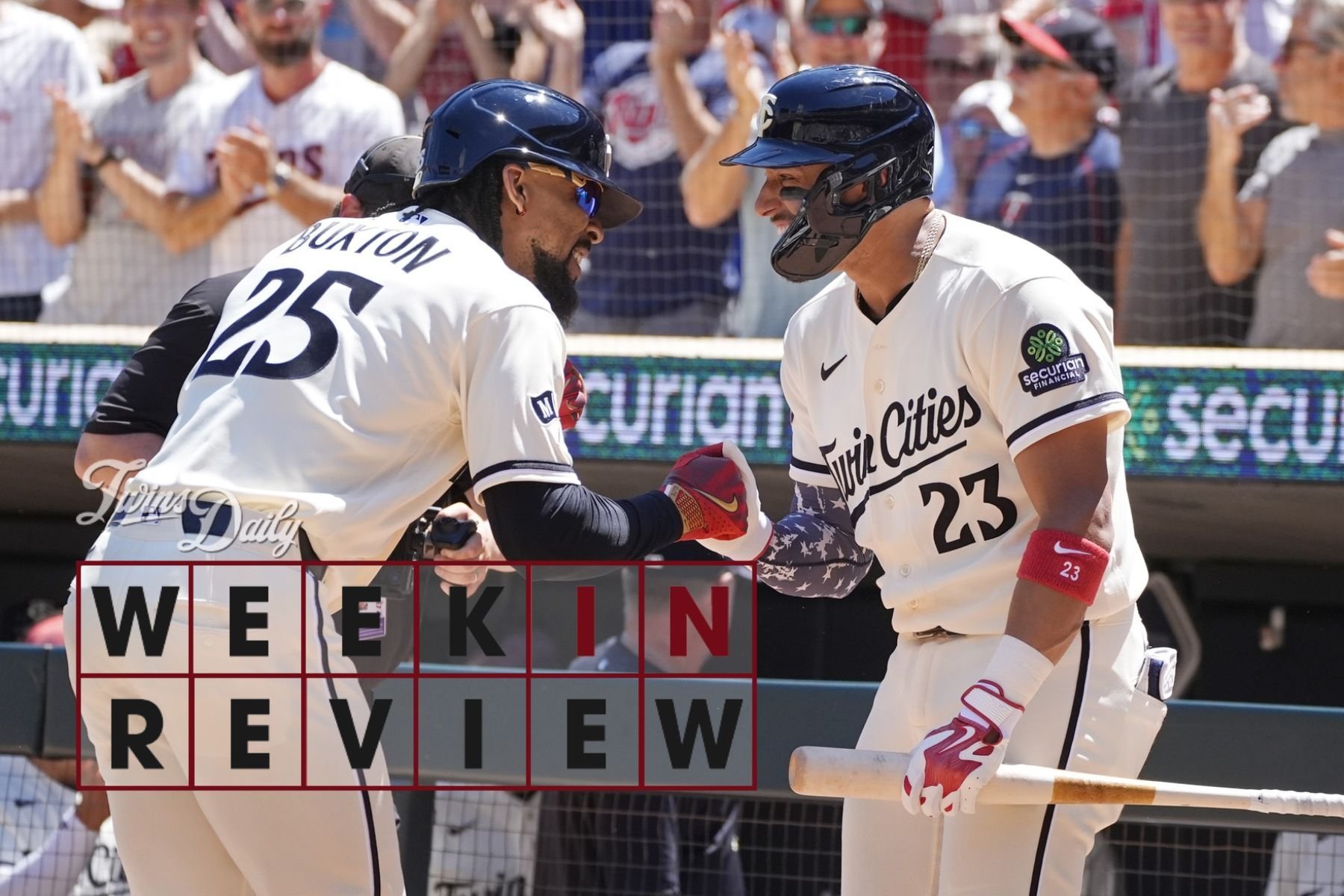 The Week in a Nutshell: We all know that this Twins season has been an erratic seesaw of an experience for fans, and the last week truly encapsulated that dynamic. They closed out a rough series in Detroit with perhaps their worst loss of the year, an 11-0 drubbing that ended with Alex Jackson lobbing BP on the mound. The next day brought arguably their best win of the season: a resilient comeback over the Cardinals that saw the Twins surge ahead on clutch homers after several late lead changes. Then they lost the following day, and bounced back to wrap the week up with another impressive comeback win. As has been the case more broadly, the highs weren't enough to outweigh the lows, and the sum result was a stagnation at seven games under .500 as the season approaches its halfway point. This team needs an infusion and, as it happens, that might soon be in the cards. Weekly Snapshot: Mon, 6/8 through Sun, 6/14 *** Record Last Week: 3-3 (Overall: 33-40) Run Differential Last Week: -16 (Overall: -42) Standing: 3rd Place in AL Central (6.5 GB) Latest Game Results Game 68 | DET 10, MIN 4: Twins Hit 4 Solo Homers But Pitching Can't Hold Up Bradley: 4.1 IP, 5 ER, 3 BB, 3 K, 3 HR Game 69 | MIN 6, DET 4: Big Bombs from Buxton and Lewis Help Even Series Buxton: 2-4, HR, 3 RBI Game 70 | DET 11, MIN 0: More Power Hitting Carries Tigers in Series-Clinching Rout Matthews: 6 IP, 7 ER, 1 BB, 4 K, 3 HR Game 71 | MIN 9, STL 8: Twins Prevail Over Cards in Thrilling Back-and-Forth Slugfest Buxton: 3-3, HR, 2 2B, BB Game 72 | STL 9, MIN 6: Lineup Shows Fight But Falls Short as Bullpen Suffers Implosion Lawrence: 0.2 IP, 4 ER, 2 HR Game 73 | MIN 5, STL 4: Another Late-Game Rally Secures a Series Victory Over St. Louis Kreidler: 2-2, 2B, RBI NEWS & NOTES For seemingly the hundredth time this season, the Twins traded for a waiver-bound pitcher to usher through their revolving-door bullpen. This time it was Taylor Rashi, acquired from the Arizona Diamondbacks for cash considerations. Rashi is a 31-year-old right-hander with a 5.40 ERA in limited major-league time, but strong numbers in the high minors. Sound familiar? Rashi has yet to make his Twins debut. In more exciting news, Mick Abel fired up a rehab stint at Triple-A and Wednesday and looked fantastic, striking out five with no walks over three efficient, scoreless innings. He also said afterward he felt great, which matters even more than results as the right-hander works his way back from an arm injury that has sidelined him for two months. He's due to make another start for the Saints on Tuesday and, if things go well, he should be back in the Twins rotation next weekend. After Sunday's game, Minnesota promoted Triple-A outfielder Kyler Fedko to the big leagues at long last, designating Orlando Arcia for assignment to make room. The 26-year-old Fedko has been steadily putting up big numbers for St. Paul over the past two years, slashing .278/.364/.532 in 100 games, but hasn't gotten a shot until now. Apparently, the persistently strong production and the very real need for some right-handed pop on the roster compelled the Twins to open the door. Let's see what he can do with it, and how much of an opportunity he gets. HIGHLIGHTS Byron Buxton returned to the lineup in Detroit on Tuesday after missing the final stretch of the previous home stand with a shoulder injury. He homered in his first at-bat, naturally. The following night, Buxton launched a key three-run blast, his 20th of the season, to lift the Twins in their two-run victory. He delivered another monster performance on Friday night, finishing 3-for-3 with a homer, two doubles and a walk. Then he went deep again as part of a 2-for-4 effort on Saturday. On Sunday he added three more hits, including a crucial RBI single to spur the comeback win. Buxton's overall results for the week: 11-for-26 (.423), 4 HR, 3 doubles, 7 RBIs and a steal. WHEW. Even with some missed time, the center fielder is on a nearly 50-homer pace, and I say "center fielder" with delight because he's back out there regularly, suggesting his hip feels better. Maybe the series of days off to mend his shoulder were a hidden blessing in that regard. Buxton is legitimately playing at an MVP-caliber level. Royce Lewis has emerged from his stint in the minor leagues with new life, notching 10 hits through his first 29 at-bats back with the Twins. Last week he drilled three home runs, including a 444-feet nuke that ranks as the second-longest of his career. We're seeing a glimpse of vintage Royce at the plate. As importantly, he struck out only four times with three walks, hinting at the type of improved discipline that lends legitimacy to his hot streak. Lewis is now playing first base regularly and starting to look more comfortable; it could be his new long-term home and would actually fill a pretty stark need for the team. Joining the power parade were Kody Clemens and Brooks Lee, who chipped in two homers apiece. Clemens has been scorching in June, with an OPS over 1.000, while providing real value on the defensive side — he made an exceptional diving catch in center field late in Saturday's game. Lee is still searching for an offensive identity outside of popping the occasional long ball, but what really encouraged me about his performance in the past week is that he drew four walks and didn't strike out. The Twins' pitching staff has generally been trending in the wrong direction, but a few arms are notably bucking the trend. Anthony Banda has turned his season around in a massive way, allowing zero earned runs on seven hits in his past 15 appearances with improved stuff and execution. He tossed 2 ⅔ scoreless frames last week. Newcomer Mike Paredes is proving helpful in a long-relief role; he started a bullpen game on Wednesday and contributed three innings of one-run ball to set the tone in a victory. Andrew Morris struck out six with no walks in his three innings of work, picking up a win, a hold and a save. LOWLIGHTS This was probably the worst week of the season for the pitching staff, which surrendered 46 runs on 61 hits, 23 walks and 17 home runs in six games. The bullpen had its share of troubles — Eric Orze and Taylor Rogers combined to yield eight earned runs in 3 ⅔ innings — but the fast-fading Twins rotation is at the core of this staff's fall from grace. Taj Bradley and Zebby Matthews both continued their momentum-shattering cold spells with a pair of clunkers in Detroit. Matthews was tagged for three homers on Thursday, allowing seven earned runs for a second time in his past three starts. Bradley gave up three homers on Tuesday and then two more against St. Louis on Sunday. He has allowed 17 earned runs in 19 ⅔ innings over his past four starts, looking mostly lost since returning from a pectoral injury. On Saturday, Connor Prielipp stumbled out of the gates against the Cardinals, surrendering four runs over the first two innings, although to his credit he settled in to get through six without further damage. Alas, it was his fifth consecutive non-quality start, and during this stretch he's seen his ERA rise from 2.88 to 5.26. Bradley, Matthews and Prielipp are all positioned as building blocks of a revamped rotation that's meant to lead the Twins back into relevance. Just a few weeks ago they all had an ERA under three, offering one of the biggest reasons for optimism looking forward. But now they're all simultaneously going through it, and that is beyond deflating. On the offensive side, it's hard to look forward when so many lineup spots are being occupied by mediocre-or-worse veterans who have no real purpose other than holding a place. Tristan Gray, still inexplicably drawing regular starts at shortstop while Kaelen Culpepper remains in the minors, went 2-for-13 with five strikeouts. Arcia was 1-for-8 before being DFA'ed at week's end. Victor Caratini homered on Sunday and Ryan Kreidler came through with the game-winning RBI double off the bench, but those two were previously a combined 3-for-17 and in general, neither inspires any kind of confidence offensively. Granted, the Twins are semi-limited in their healthy options to replace these guys — a state of affairs that may soon change, as we'll discuss — but it's just such a drag to watch them flail away day after day. The same goes for Minnesota's misfit-laden relief corps. Why is Justin Lawrence throwing in the seventh inning of a tie game, as he did on Saturday while taking the loss? We know why: because the Twins are utterly talent-deprived in the bullpen, largely by their own doing. It's quite upsetting to watch marginal minor-league signings and waiver-wire fodder fumble games away while wasting the high-end performances of Buxton and Joe Ryan in their primes. This rotation and lineup had the core components to put up a fight but the surrounding cast is grossly insufficient, and that was evident coming in. There's rather little to be done about that now, but even if the Twins aren't going to be factors in the postseason race, I at least want to watch players who have some semblance of intrigue or future potential. Fedko, while not likely to be a difference-maker, is a step in the right direction. Culpepper's arrival can't be far off. And more then there's this: TRENDING STORYLINE Reinforcements are on the way. Several key acquisitions from last year's deadline who've been sidelined are on the official rehab trail. It starts with Abel, who has a strong rehab start in the books and looks to be in line for one more before rejoining the Twins rotation. He's set to start in St. Paul on Tuesday with a target of 65 pitches. If Abel can return and pick up where he left off (16 K over 13 scoreless innings in his last two starts before going down), that would provide a critical boost for a unit that is currently floundering. Kendry Rojas threw a live bullpen in Ft. Myers on Saturday as he tracks toward a rehab assignment. He'd provide a much-needed bullpen salve. Alan Roden is on the verge of completing his own rehab at Triple-A, which is noteworthy as Trevor Larnach and Austin Martin slump in the outfield corners. All three of these pickups from last year's deadline bullpen sell-off have been sidelined and Bradley's been struggling while Louis Varland, Jhoan Duran and Griffin Jax all excel for their new teams to varying degrees. It's not the best look. The Twins (and their front office) could badly use a shift in the narrative, and if these rehabbing players can come back and bolster the club in needy areas, it'll definitely move the needle. One other big development on the injury recovery front: #1 prospect Walker Jenkins returned to action over the weekend in Ft. Myers to start a rehab stint. In his first game back on Saturday, he went 4-for-4 with a home run. Jenkins been out since early May with a shoulder injury but is working toward a return to the Saints, and could still be in line for a second-half MLB debut. That's the kind of spark of energy this fanbase really needs. The current product has gotten stale but it really feels like there's some motion toward a refresh. LOOKING AHEAD The Twins travel to Texas to face a middling Rangers team that is hovering around .500 in an underwhelming AL West. That three-game series has a unique quirk: a day off sandwiched in the middle, due to a World Cup game scheduled next door at AT&T Stadium on Wednesday. Over the weekend the Twins will head to Arizona to take on the Diamondbacks, who've been mediocre overall but have one of the best home records in the NL. There are two TBD (bullpen) games in the queue for Minnesota, on Monday and Sunday; I'd expect Paredes to be the bulk guy again on Monday, but if things go smoothly for Abel on Tuesday, he'll be in line to step back for the second of those games. MONDAY, JUNE 15: TWINS @ RANGERS — TBD v. LHP MacKenzie Gore TUESDAY, JUNE 16: TWINS @ RANGERS — RHP Zebby Matthews v. RHP Kumar Rocker THURSDAY, JUNE 18: TWINS @ RANGERS — RHP Joe Ryan v. RHP Jack Leiter FRIDAY, JUNE 19: TWINS @ DIAMONDBACKS — LHP Connor Prielipp v. RHP Michael Soroka SATURDAY, JUNE 20: TWINS @ DIAMONDBACKS — RHP Taj Bradley v. RHP Zac Gallen SUNDAY, JUNE 21: TWINS @ DIAMONDBACKS — TBD v. RHP Ryne Nelson View the full article
 -
Twins Minor League Report (6/14+6/13): Bats Come Alive Everywhere
DiamondCentric posted an article in Twins Daily
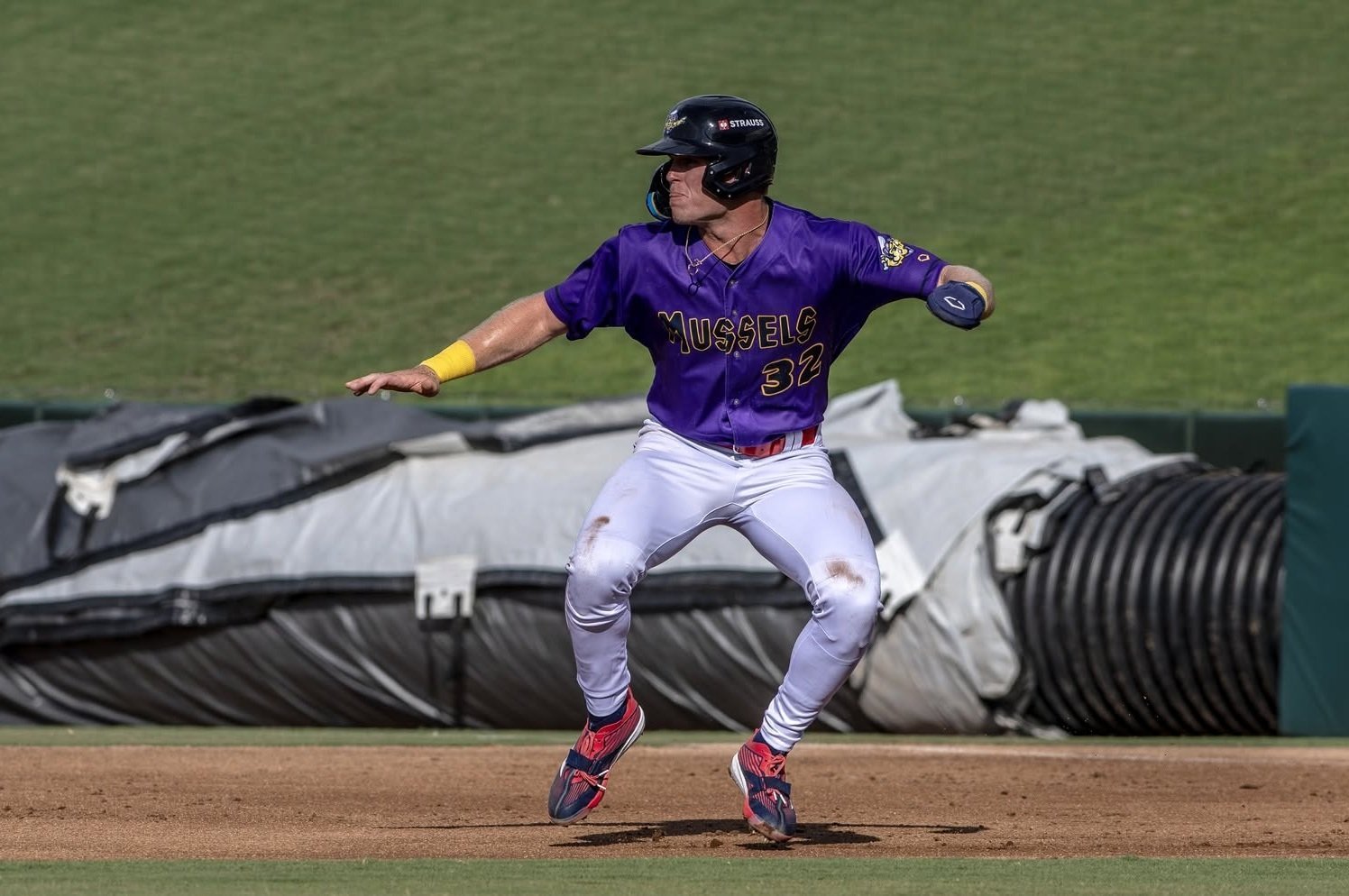 Seth ran into trouble finishing up the minor league report for 6/13, so this will be a hybrid post including what he had written with minor amendments from me, and the report for 6/14. TRANSACTIONS 6/13: RHP Andrew Bash activated from development list (AAA) OF Hendry Mendez placed on 7-day IL with left shoulder impingement OF Walker Jenkins sent to A Fort Myers on rehab RHP Ruddy Gomez sent to FCL Twins on rehab RHP Jason Doktoczyk moved from 7-day IL to 60-day IL RHP Hendry Chivilli promoted to A Fort Myers 6/14: SS Harry Genth promoted to AAA St. Paul RHP Reed Moring placed on 7-day IL with right biceps tendinitis (A Fort Myers) OF Graham Brown promoted to AAA St. Paul Saints Sentinel 6/13: St. Paul 6, Toledo 1 Box Score Aaron Rozek: 6 IP, 4 H, 1 ER, 2 BB, 5 K HR: Matt Wallner (8) Multi-hit games: David Bañuelos (2-for-3, 2B, 2 R, BB) (Seth): The only innings that there were runs scored in this game were the third and fourth innings. The Saints scored three runs in the top of the third. The Mudhens scored one run in the bottom of the third inning. The Saints added three more runs in the top of the fourth inning. Besides those frames, nothing but zeroes. In the third inning, Matt Wallner hit his eighth Saints home run, a three-run blast. The top of the fourth inning began with walks to 7-8-9 hitters, Noah Cardenas, Henry Kusiak, and David Banuelos. Cardenas scored when Kaelen Culpepper reached on an error. Kusiak scored on a wild pitch. Banuelos scored on a Matt Wallner fielder's choice. Aaron Rozek did his part, putting together a Quality Start. The lefty from Burnsville tossed six innings of one-run ball. He gave up four hits, walked two and had five strikeouts. Marco Raya came on and threw two scoreless innings. Raul Brito pitched a scoreless ninth inning. Wallner went 1-for-5 but he hit his eighth home run and drove in four runs. David Banuelos was 2-for-3 with a walk and his second double. Noah Cardenas walked twice, and Kyler Fedko walked three times. (Matt): A call-up for Kaelen Culpepper? Not so. The shortstop was removed from the game early—prompting speculation and excitement—but it was because of glute tightness. Always watch out for your butts, kids. 6/14: St. Paul 14, Toledo 10 Box Score Ryan Gallagher: 3 IP, 7 H, 7 ER, 1 BB, 2 K HR: Graham Brown (1), Noah Cardenas (3) Multi-hit games: Ben Ross (2-for-4, 2B, 3 RBI, BB), Tanner Schobel (2-for-5, 2B, 2 R, BB), Noah Cardenas (3-for-5, HR, 3 R, 2 RBI), Henry Kusiak (3-for-5, 2B, 3 R, RBI), Graham Brown (3-for-3, HR, 3 R, 2 RBI, BB) The Saints won in an offensive explosion on Sunday. The sixth. That was the only inning that didn’t see a run. What, did the Las Vegas series bleed out into all the other baseball played in the country? It was an “everyone get in here” kind of showing from the lineup: every batter in the lineup reached base at least once, and five players did so at least thrice; Graham Brown one-upped everybody by safely touching first all four times he stepped up to the plate. Did we mention this was his AAA debut? Or that he had never taken an at-bat above A-ball? Unfortunately, Ryan Gallagher struggled mightily in his start. Sunday was his second-straight start allowing seven earned runs, pushing his AAA ERA to a ghastly 8.00 mark across 36 innings. He’ll need to adjust somehow. The tricks that got him to the level are not cutting it. Matt Wallner has thoroughly enjoyed the month of June. He’s slashing .326/.367/.848 in the month with 10 of his 15 hits going for extra-bases. A sign that he found again what once made him an elite MLB hitter? The Royce Lewis secret sauce? Who knows. At least his confidence must be overflowing. One pitcher who avoided the run quagmire that bogged down other hurlers was C.J. Culpepper, who tossed his finest outing as a Saint, whiffing four across two shutout innings. He allowed no baserunners. With the big league squad desperate for bullpen help, the blonde California Baptist product could find himself in the majors soon, if he continues to pitch like this. Mud Hen Max Clark ranks as the seventh-best prospect in baseball, and he lived up to the billing, scattering three hits in four at-bats with a walk. Wind Surge Wisdom 6/13: Wichita 7, Tulsa 8 Box Score Preston Johnson: 4 ⅔ IP, 3 H, 1 ER, 2 BB, 7 K HR: Billy Amick (16), Kala’i Rosario (10) Multi-hit games: Billy Amick (3-for-5, HR, 2 2B, 2 R, 3 RBI) (Seth): This game was going quite well for the Wind Surge and their fans. They held a 6-1 lead and things were looking good. However, the Dodgers Double-A affiliate crossed home plate six times in the bottom of the sixth to take the 7-6 lead. That’s how the score remained until the ninth inning. Preston Johnson started and gave up one run on three hits. In 4 2/3 innings, he walked two and had seven strikeouts. Yehizon Sanchez came on to get the final out of the fifth inning. He quickly got the bases loaded and nobody out. Bengard got three outs, but not before all three inherited runners scored and one more run over his two ok (Matt): frames. That sixth inning proved a deadly endeavor: Wichita had plated six between the third and fourth innings thanks to a Garrett Spain double, and a fourth-frame skirmish capped by a Billy Amick three-run shot. And what a homer that was, huh? Amick barely budged, raising his left foot slightly as an 0-2 defense mechanism, then he reached down, nearly scraping the plate with his swing in an effort to catch the slider, and the whole ordeal resulted in a bomb. That’s just good hitting. The Drillers are, of course, a member of the famous Dodgers farm system. Though the names and faces change, the talent remains, always replenished, always impressive. This year they possess two top-20 prospects in Jose De Paula and Zyhir Hope. De Paula earned three hits while Hope singled once in four at-bats. 6/14: Wichita 10, Tulsa 21 Box Score Jose Olivares: ⅔ IP, 5 H, 6 ER, 2 BB, 1 K HR: Poncho Ruiz (2), Caleb Roberts (3), Andrew Cossetti (6) Multi-hit games: Andrew Cossetti (2-for-5, HR, 2 R, 2 RBI), Garrett Spain (2-for-5, 2B), Poncho Ruiz (3-for-4, HR, 2B, 3 R, RBI, BB) The Wind Surge were clubbed on Sunday. A terrible day to be a man on the mound. Pitches went for nothing and the hits were free. No matter who walked out of the Wind Surge bullpen, one future stared at them with ferocity: pain. An ERA bump that would hurt. All six hurlers surrendered at least one run, and four of them suffered multi-run outings, and it’s best to leave what happened to Jose Olivares and William Fleming unspoken. Poncho Ruiz found the day inviting, at least, as he ripped three hits and walked in a game so potent it raised his season OPS by over .100 points. Perhaps some attention should go to Kala’i Rosario, who entered the series in Tulsa slugging a relatively meager .386, and who left the city with a more robust .459 mark. His second go-around at AA hadn’t yet evolved beyond the tepid; might this series propel him forward, potentially into St. Paul? The Two Towers prospects De Paula and Hope were once again effective, combining for five hits, four runs, and three RBIs. De Paula was especially excellent: the strapping 6’3” combines a powerful left-handed hack with unreal plate discipline, resulting in a .563 slugging percentage with more walks than strikeouts this year. He reached base five times on Sunday. Kernels Nuggets 6/13: Cedar Rapids 23, Lansing 15 Box Score Garrett Horn: 2 ⅔ IP, 4 H, 1 ER, 3 BB, 4 K HR: Eduardo Tait (11), Khadim Diaw (5), Danny De Andrade 2 (5, 6), Yasser Mercedes (4), Miguel Briceno (4) Multi-hit games: Marek Houston (5-for-6, 2B, 4 R, RBI), Eduardo Tait (2-for-7, HR, R, 2 RBI), Khadim Diaw (3-for-7, HR, 3 R, 3 RBI), Jay Thomason (6-for-6, 3 R, RBI), Yasser Mercedes (4-for-6, HR, 2B, 3 R, 4 RBI), Miguel Briceno (2-for-5, HR, 2 R, 4 RBI, BB), Danny De Andrade (4-for-6, 2 HR, 2 2B, 3 R, 4 RBI), Luis Hernandez (4-for-6, 3 R, RBI) (Seth): What a crazy game in Michigan on Saturday night. The Kernels scored in each of the first six innings. Lansing scored in six straight innings between the third and eighth innings. Fortunately, the Kernels scored 23 runs in their six-inning run while the Lugnuts “only” scored 15 runs in their six-inning run. The Kernels had innings in which they scored three runs twice, four once, and six twice. The Kernels had 30 hits in the game. Brandon Winokur has been playing really well the past 5-6 weeks, and I have to say that because he took an 0-for-7 in this game. He was the only Kernels hitter with less than two hits. First Baseman Jay Thomason went 6-for-6 with three runs scored. Shortstop Marek Houston went 5-for-6 with his 12th double, his 20th stolen base, and four runs scored. He is now hitting .326 with an .854 OPS. Second Baseman Danny De Andrade went 4-for-6 with his fourth and fifth doubles, his fifth and sixth home runs, three runs scored and four RBI. Right Fielder Yasser Mercedes went 4-for-6 with his seventh double, fourth home run, three runs scored and four RBI. Catcher Luis Hernandez went 4-for-6 with three runs scored. Center Fielder Khadim Diaw went 3-for-7 with his fifth home run, three runs and three RBI. He ended the day hitting .300 on the dot with an .859 OPS. Left Fielder Miguel Briceno went 2-for-5 with a walk and his fourth home run, and four RBI. Eduardo Tait DH’d and was 2-for-7 with his 11th home run. Garrett Horn started for the Kernels. He was charged with one run on four hits and three walks. In 2 2/3 innings, he had four strikeouts. MItch Mueller came on for his first Kernels outing. He gave up two runs on two hits in 1 1/3 innings. Brian Zeldin completed two innings and gave up two runs on two hits and two walks. He also had two strikeouts. Eston Stull gave up one run in the seventh inning. He started the eighth inning, faced seven batters, and all of them reached base. He left the game with the bases loaded and four runs already on the board. Xavier Kolhosser came in and allowed all three inherited runners to score and two more runs in the nine-run eighth frame. Stull was charged with eight runs in one inning. Kolhosser pitched a scoreless ninth, so his line showed him giving up two runs on four hits in two innings. He had five strikeouts. (Matt): Sometimes you just have to stare in awe of a box score like this. I think my favorite stat is that the Kernels only walked once. This was an onslaught of hitters doing just that—hitting. 6/14: Rain cleared any chance of a sequel to Saturday’s bizarre adventure. The game was canceled and will not be made up at a later date. Mussel Matters 6/13: Fort Myers 5, Dunedin 15 Box Score Ramiro Villanueva: 4 1/3 IP, 5 H, 6 ER, 0 BB, 3 K HR: Ryan Sprock (3), Walker Jenkins (1) Multi-hit games: Walker Jenkins (4-for-5, HR, 2B, 2 R, RBI), Luis Fragoza (2-for-5, 2B, R) The Mighty Mussels were thoroughly bested on Saturday. Let’s skip to the shining good news beacon from this game: Walker Jenkins played baseball. Mighty good baseball, at that. The rehabbing 21-year-old cracked four hits including a double and an aesthetically gorgeous home run that streaked through the Fort Myers night like Halley’s Comet. Dunedin is an affiliate of the Blue Jays, and they are spearheaded by MLB’s 29th-ranked prospect, shortstop JoJo Parker. He collected four hits in six at-bats including a triple. 6/14: Unplayable field conditions ended matters on Sunday before they could begin. The game was canceled and will not be made up at a later date. TWINS DAILY PLAYERS OF THE DAY Twins Daily Minor League Pitcher of the Day – C.J. Culpepper Twins Daily Minor League Hitter of the Day – Poncho Ruiz PROSPECT SUMMARY Here’s a look at how the Twins Daily Top 20 Twins Prospects performed on Sunday: #10 – Gabriel Gonzalez (St. Paul) - 1-3, 2 RBI #12 – Andrew Morris (Twins) - 1 IP, 1 H, 0 ER, 0 BB, 3 K #16 – Ryan Gallagher (St. Paul) - 3 IP, 7 H, 7 ER, 1 BB, 2 K #17 – C.J. Culpepper (St. Paul) - 2 IP, 0 H, 0 ER, 0 BB, 4 K #20 – Kyle DeBarge (Wichita) - 1-4, 2B, R, BB MONDAY’S PROBABLE STARTERS FCL Orioles @ FCL Twins (9:00 AM) - TBD FCL Orioles @ FCL Twins (Game Two) - TBD DSL NYY Bombers @ DSL Twins (10:00 AM) - TBD View the full article
 -
 Weekly Snapshot: Record Last Week: 3-3 (Overall: 43-26) Runs Scored Last Week: 41 Runs Surrendered Last Week: 34 Standing: 1st in NL Central Game 64 (6/8) | MIL 15, OAK 14 Game 65 (6/9) | OAK 7, MIL 5 Game 66 (6/10) | OAK 4, MIL 3 Game 67 (6/12) | MIL 6, PHI 0 Game 68 (6/13) | PHI 9, MIL 8 Game 69 (6/14) | MIL 4, PHIL 0 Game 64 | Brewers 15, Athletics 14 MIL Starter: Kyle Harrison (2.1 IP, 8 H, 2 BB, 8 ER, 4 K) Top Performers: Jake Bauers (2 H, BB, HR, 3 RBI) Andrew Vaughn (4 H, 2 2B, HR, 4 RBI) William Contreras (3 H, BB, HR, 3 RBI) It was a tough day to be a pitcher in Las Vegas on Monday, with the Brewers and A’s facing off in a game that saw the most hits (34), runs (29), home runs (11), and ABS challenges (16) a single game had seen all season. (Tellingly, some of those standards were topped by another game the A's played on Sunday against the Rockies.) The absurdities don’t end at just the counting stats, though, as the game saw multiple blown 4-run leads and 14 different pitchers, coupled with other late-game dramatics. William Contreras’s 3-run homer (+26.7 WP%) Game 65 | Athletics 7, Brewers 5 MIL Starter: Robert Gasser (5.0 IP, 8 H, 2 BB, 6 ER, 7 K) Top Performers: Coleman Crow (2.0 IP, H, BB, 0 ER) Garrett Mitchell (3 H, 2 2B) Jackson Chourio (H, HR, 2 RBI) It was a much more normal affair scoring-wise on Tuesday, but like all the pitchers had the day before, Brewers starter Robert Gasser struggled to keep the ball in the ballpark, as Athletics batters put the ball over the fence four times against the lefty. No furious comeback followed him either, despite a 3-hit day from Garrett Mitchell. The A’s evened the series with a 7-5 win. Jackson Chourio goes deep (+15.0 WP%) Game 66 | Athletics 4, Brewers 3 MIL Starter: Brandon Sproat (6.0 IP, 4 H, BB, ER, 4 K) Top Performers: Trevor Megill (1.0 IP, H, 0 ER, 2 K) Andrew Vaughn (2 H, BB, RBI) Jackson Chourio (2 H, HR, RBI) Brandon Sproat turned in what was debatably his best start as a Brewer in the rubber match, twirling six innings of one-run baseball. Once again, though, the home run ball bit the Brewers, with two big flies off of Chad Patrick in the 7th inning flipping the scoreboard in favor of the A’s for good. Gary Sánchez’s solo homer (+9.5 WP%) Game 67 | Brewers 6, Phillies 0 MIL Starter: Jacob Misiorowski (9.0 IP, H, 0 BB, 0 ER, 15 K) Top Performers: Joey Ortiz (2 H, 2B) Jake Bauers (H, BB, HR, 3 RBI) Friday night was a historic one for Jacob Misiorowski. On just 95 pitches, Misiorowski faced the minimum against the Phillies, allowing just one hit, walking none, and striking out 15 in what is surely the most dominant start in Brewers history. Misiorowski's historic complete game shutout Game 68 | Phillies 9, Brewers 8 MIL Starter: Shane Drohan (5.0 IP, 8 H, 0 BB, 4 ER, 7 K) Top Performers: Jackson Chourio (4 H, 2 HR, 4 RBI) Garrett Mitchell (2 H, HR, 2 RBI) William Contreras (3 H) Another rough day on the pitching front followed the Miz's dominance, as Shane Drohan and Chad Patrick couldn't contain the Phillies' offense through the first six innings. The Brewers would battle back, though, thanks in part to a two-homer day from Jackson Chourio and a 3-hit day from William Contreras. That comeback effort wasn't quite enough, however, with the Phillies nabbing a 9-8 win to set up a Sunday decider with their ace on the mound. Jackson Chourio's monster day Game 69 | Brewers 4, Phillies 0 MIL Starter: Kyle Harrison (6.0 IP, 3 H, 0 BB, 0 ER, 3 K) Top Performers: Blake Perkins (2 H, HR, 2B, 3 RBI) Jackson Chourio (2 H, HR, RBI) Aaron Ashby (2.0 IP, 0 H, 0 BB, 0 ER, 3 K, SV) Kyle Harrison bounced back from his rough Vegas outing by outdueling Christopher Sanchez, cruising through six innings of scoreless baseball. Meanwhile, Jackson Chourio hit his third homer in two days, while Blake Perkins was the hero, launching his first homer of the season off one of the NL's best pitchers to land an early KO blow. Blake Perkins' first home run of the season (+22.0 WP%) Transactions: 06/12/26 - Placed RHP Coleman Crow on the 15-day injured list with a right forearm flexor strain. (Retroactive to June 10, 2026) 06/12/26 - Recalled RHP Craig Yoho from Nashville Sounds. 06/10/26 - Signed free agent RHP Lyon Richardson to a minor league contract. 06/10/26 - Traded RHP Jacob Waguespack to Detroit Tigers. 06/09/26 - Sent RHP Brandon Woodruff on a rehab assignment to ACL Brewers. 06/09/26 - RHP Jake Woodford assigned to Milwaukee Brewers. 06/09/26 - LHP Brian Fitzpatrick was transferred from the 15-day injured list to the 60-day injured list with a Left elbow injury. 06/09/26 - Optioned CF Luis Lara to Nashville Sounds. 06/09/26 - Selected the contract of CF Luis Lara from Nashville Sounds. 06/08/26 - Placed RHP Carlos Rodriguez on the 15-day injured list retroactive to May 31, 2026. 06/08/26 - Activated RHP Joel Kuhnel. 06/08/26 - Optioned RHP Craig Yoho to Nashville Sounds. 06/08/26 - Sent RHP Jake Woodford outright to Nashville Sounds. Looking Ahead: Tuesday, 6/16 - Guardians @ Brewers - 6:40 PM CDT Wednesday, 6/17 - Guardians @ Brewers - 6:40 PM CDT Thursday, 6/18 - Guardians @ Brewers - 1:10 PM CDT Friday, 6/19 - Brewers @ Braves - 6:15 PM CDT Saturday, 6/20 - Brewers @ Braves - 3:10 PM CDT Sunday, 6/21 - Brewers @ Braves - 12:35 PM CDT View the full article
 -
Jarren Duran, Masataka Yoshida and the Nature of Baseball Slumps
DiamondCentric posted an article in Talk Sox
 The month of June has not been exceptionally kind to either Jarren Duran or Masataka Yoshida. The Boston Red Sox, naturally, are worse off for it. While Duran had a massive May, it seems like things have gone haywire for him again. His nine home runs last month pointed towards him finally figuring out a batting stance and leg kick combination that made sense for him. He was starting in the outfield on a daily basis and the thought was the consistent playing time was letting him finally find his groove offensively. Yoshida had seen a bit of an uptick in playing time in the wake of Roman Anthony’s finger injury, but so far this month, he has been regulated to occasional pinch hitter duty while mostly being seen wandering around the dugout and taking dry swings as he sits on the bench. It’s gotten so bad that he’s essentially been replaced in the lineup by Mickey Gasper. That’s not totally a knock on Gasper (he’s played well since being promoted in May), but he’s a journeyman, Quadruple-A level of player who is already falling back to earth after his hot start. Before we dive into what may be going on for both outfielders, let’s take a look at their numbers so far in June. Jarren Duran: .167/.167/.286, .194 wOBA, 12 wRC+ 42.9 K%, 0.0 BB%, -0.2 fWAR over 42 at bats Masataka Yoshida: .111/.200/.111 .161 wOBA, -10 wRC+, 30.0 K%, 5.0 BB%, -0.3 fWAR over 20 at bats Duran has looked like a shell of himself at the plate for the majority of the season. It’s not a mirage that he hasn’t walked once and is striking out almost half of the time this month. If we take a step back and look at his swing decisions as a whole over the season, we see that he’s chasing pitches out of the zone at a 35% clip, the most he’s done in his career. To go along with that, his chase contact percentage is down to 38.9% in 2026 from 44% in 2025. Likewise, his whiff percentage has shot up from 24.8% during his career year in 2024 to 35.9% this season. To make matters worse, when he is making contact this month, he’s driving the ball into the ground almost 46 percent of the time; when he's hitting the ball into the air, 37.5% of those are infield fly balls. He’s making weak, ineffective contact the majority of the time when he’s at the plate and the team is suffering because of it. Due to the fact that he’s swinging at less and less first pitches, opposing pitchers are able to get a strike over on him and start him off down in the count. His pitch heatmap shows that most pitchers don’t even have to nibble around the zone to get Duran out. Instead, they are peppering the strike zone against him. Once he’s down, his approach at the plate shifts dramatically and he becomes the free-swinger that aggravated fans in 2021 and 2022 when he was new to the league. Meanwhile, Yoshida’s fall from grace has been long predicted and shouldn’t surprise any astute observer. Former manager Alex Cora arguably played Yoshida more than he should have, neither Chaim Bloom nor Craig Breslow have able to move his contract when it’s best for roster construction to do so, and interim manager Chad Tracy seems to have no desire to get Yoshida any real playing time on a regular basis since taking over the job. Taking that same step back as we did with Duran, we see almost the exact opposite approach. He’s only chasing 28% of the time but he’s making contact on 74.4% of those chases. Even his 2026 whiff percentage is tied for a career low at 14.6%. So what is going on with him? In short, he’s getting nothing to hit and when he does make contact, it’s weak. His pitch heatmap is also the exact opposite from Duran’s. With Duran, we see a hitter who is struggling with pitches in the heart of the zone. With Yoshida, we see someone who is getting fed pitches high in the zone almost exclusively. Yoshida's biggest issue seems to be that he just can’t barrel a baseball to save his life. He’s currently ranked in the sixth percentile for barrel percentage at 1.8%. There’s just nothing productive going on for him when he’s at the plate. He’s not impacting the ball in any meaningful way, and on the off chance he does manage to put something in play, his groundball percentage is right at 50%. Like Duran, he’s driving the ball directly into the ground for easy and weak outs. The question is how can Jarren Duran and Masataka Yoshida be fixed in 2026? More consistent playing time in the field? Duran has proven that’s not working. Exclusively hitting at designated hitter so they can study mechanics and make alterations in the cage between at-bats? Both have shown that doesn’t work. There’s no easy answer to the question anymore, as both Duran and Yoshida are costing the Red Sox valuable production as they attempt to navigate the rest of this season and beyond. The alternatives are practically nonexistent while Anthony is down, so the Red Sox have little choice but to keep deploying this duo. Barring a turnaround from either, the offense figures to continue being a train wreck in Boston. View the full article
 -
Brewers Promoting Prospect Cooper Pratt To Make His MLB Debut
DiamondCentric posted an article in Brewer Fanatic
 After a contract extension to begin the season, Cooper Pratt is set to make his MLB debut. Pratt, Brewer Fanatic's No. 4 prospect, will be called up from Triple-A Nashville before Tuesday's series opener against the Cleveland Guardians, according to Brewer Fanatic's Spencer Michaelis (via direct observation on MiLB.tv) and MLB.com's Adam McCalvy (via organizational sources). The 21-year-old Pratt, a shortstop, signed an eight-year, $50.75 million contract extension at the end of March. He is an excellent defender who has shown some signs of offensive progress. At Nashville this season, his first at the Triple-A level, Pratt has a slash line of .244/.353/.392 with six homers, 32 RBIs and 17 stolen bases. The six homers in less than half a season are two shy of his career high of eight, which he accomplished each of the last two seasons. Whom Pratt replaces on the Brewers' roster is another question. Third baseman Luis Rengifo appeared to sustain a mild shoulder injury in Sunday's 4-0 victory over the Philadelphia Phillies. Rengifo, who is also a candidate to be designated for assignment, did remain in the game. Another possibility would be optioning shortstop Joey Ortiz to Triple-A. There could be another possibility as well. Pratt is already on the 40-man roster by virtue of his contract extension. Pratt was a sixth-round draft choice in 2023 out of Magnolia Heights High School in Senatobia, Miss. He is one of two prospects the Brewers have locked up with contract extensions this season. Center fielder Luis Lara just signed a seven-year, $31 million deal. He is also 21. View the full article
 -
BREAKING: Twins to Promote Kyler Fedko for Major-League Debut
DiamondCentric posted an article in Twins Daily
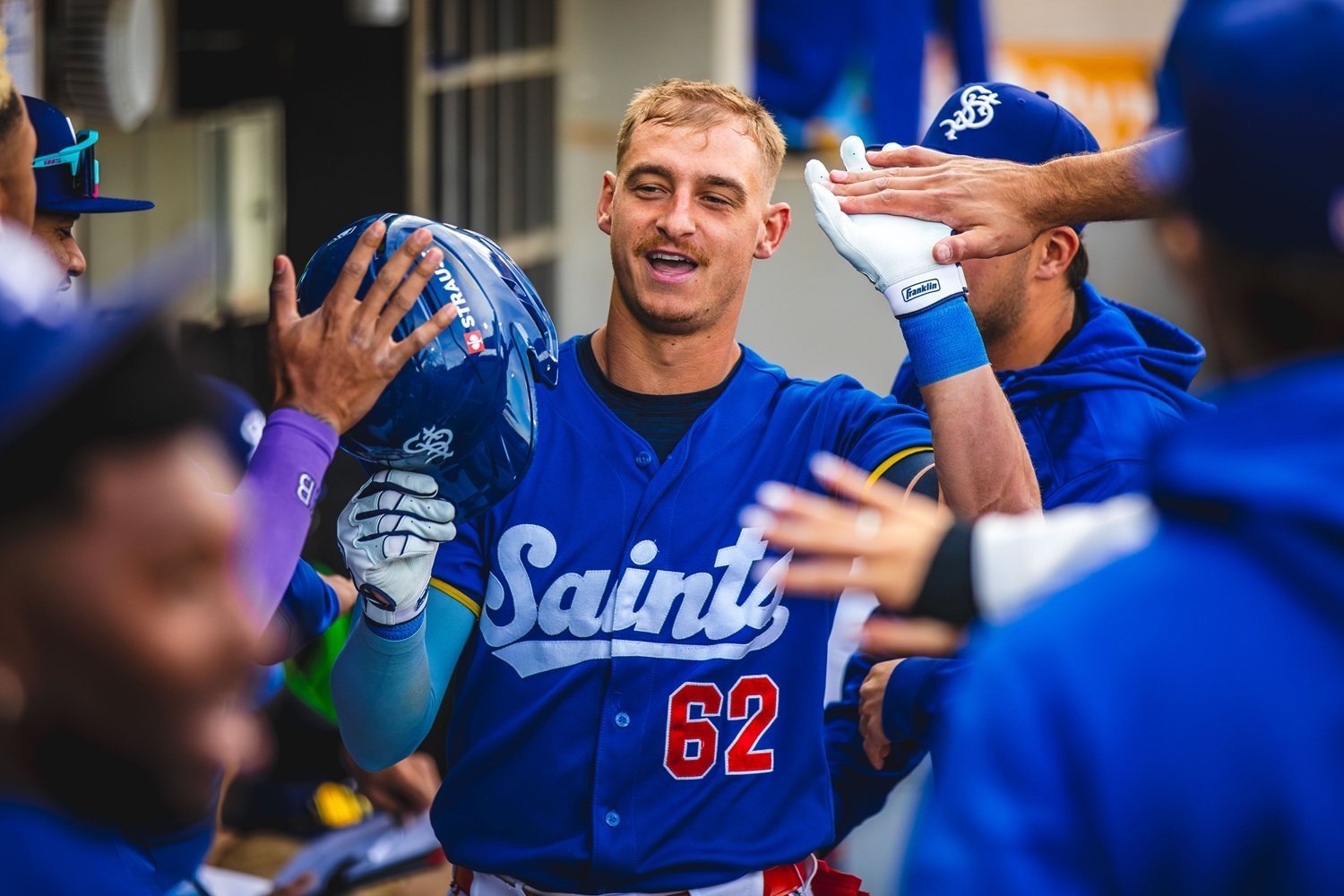 The Twins are making a move, promoting outfield prospect Kyler Fedko to join the big-league team for their week-long road trip, sources told Twins Daily. Orlando Arcia has been designated assignment to make room on both the 26-man and the 40-man rosters. Fedko, a 12th-round selection in the 2021 MLB Draft (369th overall), was a $125,000 signing out of UConn. A late bloomer who spent his early minor-league years repeating levels of the system frequently, He took off at Double-A during the 2025 season. In 130 games combined at Wichita and at Triple-A St. Paul, he hit .258/.367/.476, with 28 home runs and 38 stolen bases at an 83% success rate. After a slow start with the Saints in 2026, Fedko has heated up in May and June. Through 58 games for St. Paul, he’s hitting .286/.372/.578 (138 wRC+) with 15 home runs among 28 extra-base hits and 9 stolen bases. Fedko brings an intriguing skill set. His recent power surge is anchored in pulling the ball in the air, as opposed to huge bat speed or upper-end exit velocities. Fedko has a knack for finding the barrel, with a 46% hard-hit rate in 2026. There are some orange flags in the offensive profile. Fedko chases at a troublesome clip (34%), a tendency major-league pitchers will attempt to exploit. He can certainly help the big-league team, though. The Twins have needed additional right-handed help in the outfield for several years, and Fedko has above-average speed and a solid glove, with the versatility to move throughout outfield spots defensively. It’s also worth noting that Fedko mashes left-handed pitching, managing a 1.262 OPS against southpaws in 2026. We should see him spell other outfield positions regularly, be in the lineup with consistency against left-handed pitching, and have a chance to establish himself as a fourth outfielder for the Twins. It's possible he grows into even more than that, but as Derek Shelton moves the pieces around his chessboard, Fedko comes in as another good one who can be utilized in the proper turns, rather than leaned on to do everything. View the full article
 -
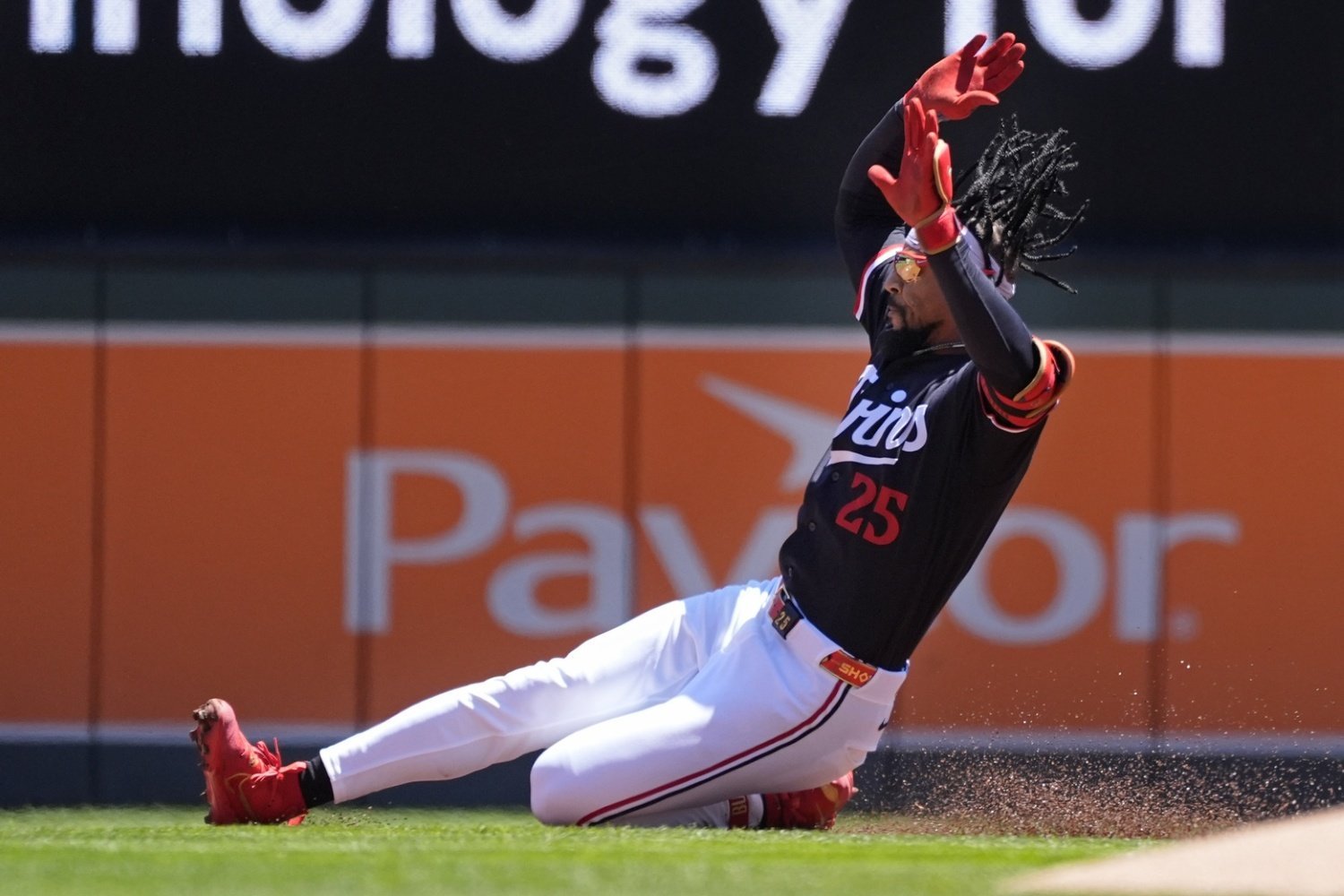 Box Score: Starting Pitcher: Taj Bradley: 6 2/3 IP, 5 H, 4 ER, 1 BB, 7 K (101 Pitches, 66 Strikes, 65.3%) Home Runs: Victor Caratini (4) Bottom 3 WPA: Ryan Kreidler (0.38), Yoendrys Gómez (0.16), Caratini (0.13) Win Probability Chart (Via BaseballSavant): The Twins are on life support, slipping further away from a .500 record as the trade deadline looms a month and a half away. Royce Lewis, Kody Clemens and Byron Buxton are raking, and if you're an optimist, there is lineup help in Triple-A St. Paul. But the pitching is still a liability, so a June surge to keep the veterans in tow feels unlikely. A wild card in that equation is Taj Bradley, who started today against St. Louis. Bradley was a revelation early, but since hitting the IL with a pectoral injury in May, the right-hander has seen his command evaporate, with 12 walks and little success over his four starts since returning. Bradley came out dealing, throwing much more competitive pitches around the zone while hitting 99 MPH with his fastball. He struck out two in the first and didn't allow a hit until a single in the third inning—to 9-hole hitter Nathan Church on a splitter. The Twins lineup was tasked with facing right-hander Michael McGreevy, a young pitcher who succeeds in the Sonny Gray mold, featuring six pitches he can throw for strikes and despite a lack of premium velocity. The Twins made him work in the first, with Buxton rifling a double to the left field corner and Lewis drawing a hard-fought walk. McGreevy then fell behind 3-0 to Josh Bell, before inducing a tapout to end the inning. Bradley allowed a home run on a hanging curveball in the fourth to the red-hot Alec Burleson, who recently homered in four straight games (make that five out of six). But Bradley didn't get scared out of the zone, striking out Jordan Walker and Lars Nootbaar convincingly to end the frame. The Twins' two struggling free-agent pickups flipped the score in their half of the fourth. Bell singled, and Victor Caratini launched a massive home run 411 feet to give the Twins a one-run lead. Looking for the shutdown inning, Bradley worked a quick 1-2-3 frame, overpowering Jose Fermin on a fastball down in the zone for the finishing strikeout. At that point, he had thrown 57 pitches. Perhaps he should have been taken out at that point. His command again abandoned him in the sixth, as he walked Church and fell behind 3-1 to impressive rookie JJ Wetherholt. Wetherholt got a fastball to his liking, knowing Bradley did not want to walk two in front of the meat of the Cardinals' lineup, and rocked it 380 feet to flip the score once again. The Twins tried to rally in their half of the sixth. Bell singled once more, and Caratini drew a walk with one out. Alas, Brooks Lee hit a sharp liner to Blaze Jordan at first, who speared the ball and tagged out Caratini retreating to first. Bradley nearly made it through the seventh unscathed, but allowed two bloop singles with two outs before giving way to Anthony Banda to face Wetherholt. Wetherholt scoffed at his platoon disadvantage and flipped another single to left to score the Cardinals' fourth run. These Twins aren't great, but they do have some fight in them. They began the seventh against lefty Jojo Romero by pinch-hitting Austin Martin, who struck out while wasting the Twins' last challenge. However, Luke Keaschall drew a walk, Ryan Kreidler singled, and Buxton singled as well, bringing in Keaschall. Clemens then singled, loading the bases for Lewis. A fourth straight single brought home Kreidler, and the game was tied. Buxton waited to see the ball drop and was unable to score, a rare occurrence. Andrew Morris struck out the side in the eighth—impressive, considering two of the hitters he faced were Walker and Nootbar. The bottom of the eighth began with two quick outs before Keaschall got hold of a George Soriano fastball for a line drive double. Kreidler then worked a seven-pitch at-bat, resulting in a double off the wall in left-center field that gave the Twins the lead. Yoendrys Gómez got the ball for the ninth, and the first ball in play was an impressive diving stop and throw from Kreidler, combined with a great scoop at first from Lewis. Fermin was initially called safe, but the play was overturned on replay review. Gómez struck out Church and got Wetherholt to fly out to cement the victory. Stuff I'm Tracking: Buxton's trade value may never be higher than it is right now. You start to wonder if a package similar to what the Padres gave up for Juan Soto in 2022 is in play. Both players had/have two and a half years of team control remaining. While Buxton is maybe a shade or two less proficient as a hitter than Soto was, he offers still elite-ish defense at a premium position, excellent baserunning and a cheaper contract. The Soto trade netted the Nationals James Wood Jr., Robert Hassell III, C.J. Abrams and Mackenzie Gore. Hassell has been a bust, but was considered an elite prospect at the time. The other three players have all become All-Stars. Gore was then flipped this past offseason for five more prospects who are all performing well in the Nats' minor league system. I love Byron Buxton, but if his legacy ends up being that he brought in a boatload of talent to supplement a Walker Jenkins-led team that has a (potential) salary floor in place, I'll be happy to see him win in another market. Tristan Gray made an error at shortstop that could have led to a big inning with Bradley struggling in the sixth. He looks like he is constantly looking to homer at the plate, which is cute but perhaps misplaced for a hitter with a .385 slugging percentage and middling exit velocities. He's fine as a pinch-hitter and flexible defensive replacement, but there is no real upside here- Ryan Kreidler would be my choice to start at shortstop. Not to say Kreidler does have upside, but he looks like the most capable shortstop on the Twins' roster currently (he also went 2-2 with two clutch hits). What’s Next: The Twins head to Texas for a three-game set against the Rangers. The Twins have not announced a starter, while they will face prized trade acquisition Gore (4-5, 4.18 ERA). Gore has been up and down with his new club, and the Twins will need to be patient as the righty has been somewhat wild, yielding 4.2 walks per nine innings. Postgame Interviews: Bullpen Usage Chart: WED THU FRI SAT SUN TOT Adams 31 0 0 37 0 68 Morris 39 0 9 0 17 65 Paredes 58 0 0 0 0 58 Gómez 27 0 15 0 10 52 Banda 30 0 9 0 11 50 Rogers 14 0 22 0 0 36 Laweryson 0 32 0 0 0 32 Lawrence 0 0 0 24 0 24 Orze 0 0 16 0 0 16 View the full article
 -
Meyer outduels Skenes leading to a series win in Pittsburgh
DiamondCentric posted an article in Fish On First
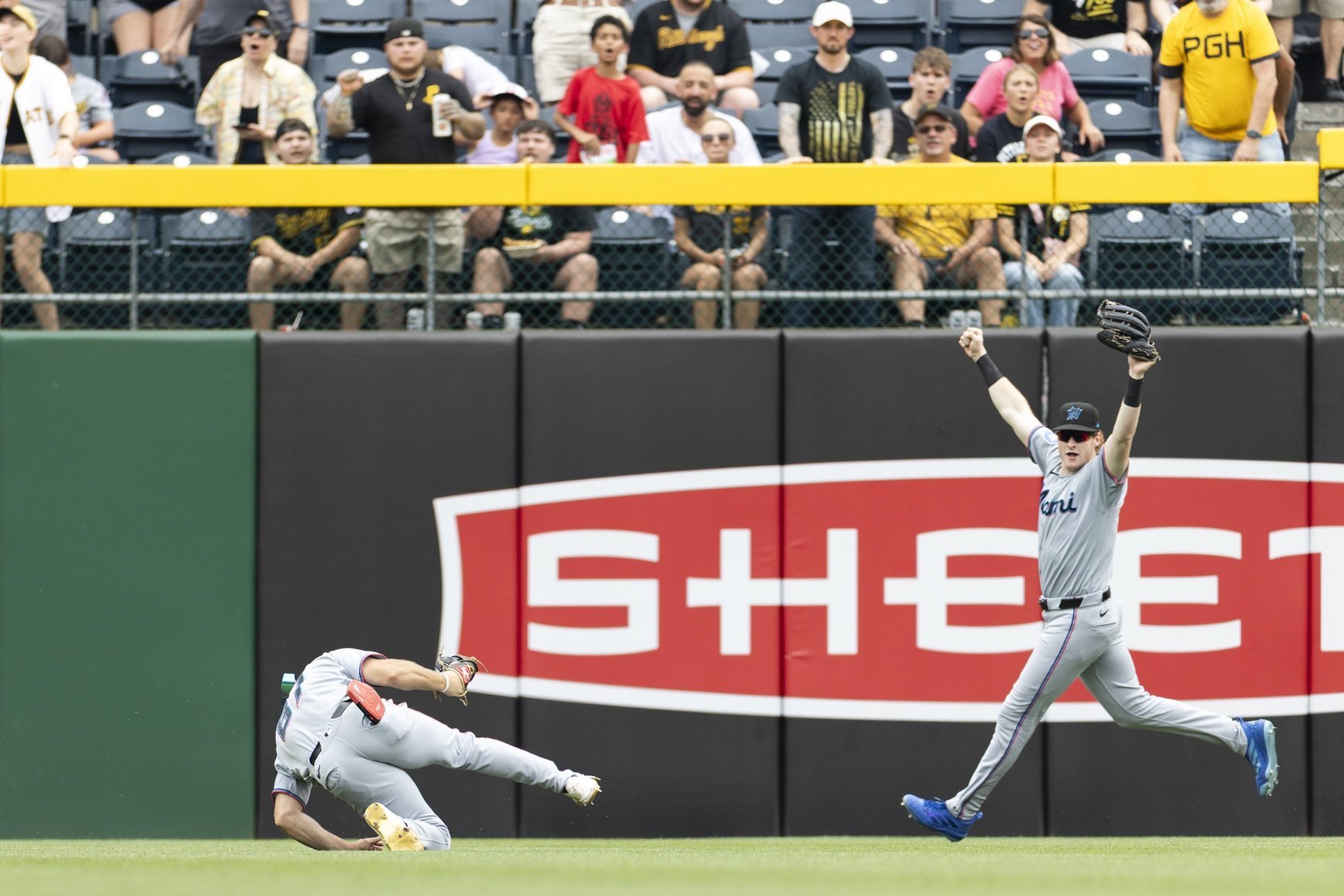 The version of Max Meyer we have seen in 2026 has been automatic. After toiling for a handful of years at the big league level, Meyer has finally ascended to what was once promised upon his drafting, now six years ago. On Sunday, the prospective All-Star had his grandest test to date, squaring off against reigning NL Cy Young Award winner Paul Skenes. In keeping with the 2026 Meyer narrative to this point, the 27-year-old came out on top, firing six innings of one-run ball in Miami's 4-2 win over the Pirates. Meyer registered eight of his nine strikeouts with his lethal sweeper-slider tandem, including a 54% whiff rate on the latter. Now 7-0, Meyer's 15-start stretch without recording a loss represents a new franchise record. Back to .500 for the second time in three days at 36-36, Miami owns the majors' best record in June, improving to 10-2. What Skenes (2.85 ERA) did should not be without mention, though, as the two-time All-Star tied a season-high with 10 strikeouts over his six innings of work. After trading zeroes in the first, Miami would ambush Skenes with a pair of solo home runs, starting with Heriberto Hernández, the owner of a robust 1.062 OPS in the month of June. Joe Mack, who has neutralized the running game since his arrival, continued to show added promise at the plate, depositing his second home run over the center field wall of PNC Park. Himself a slow starter, Mack owns a .902 OPS in June after OPS'ing just .500 in his inaugural big league month of May. After getting to Meyer for a run in the fourth, Pittsburgh would load the bases for Jake Mangum in the bottom of the fifth. Sending a hanging sweeper into the right-center gap, Jakob Marsee made a five-star catch in every sense of the word, diving to his right to save a trio of runs. "Max had a couple of balls not go his way, but he's been shoving all year, so I just tried to make a catch for him...he's fun to play behind," noted Marsee. Miami pitching held the Pirates 1-4 hitters to a .118 (2-for-17) clip on Sunday, with the top of the order not breaking through until Bryan Reynolds, currently riding a 21-game on-base streak, launched a solo home run in the bottom of the ninth. Looking Ahead The Marlins will continue their trek through the Northeast when they travel to the City of Brotherly Love to commence a three- game series against the surging Philadelphia Phillies on Monday. Ryan Gusto (0-1, 6.00 ERA), off his best start of the season, where he tossed four scoreless innings against Arizona. Zack Wheeler (5-1, 2.22 ERA) will look to continue his brilliance against Miami (career 2.68 ERA against), as he opposes Gusto. First pitch from Citizens Bank Park is slated for 6:40 EST. View the full article
 -
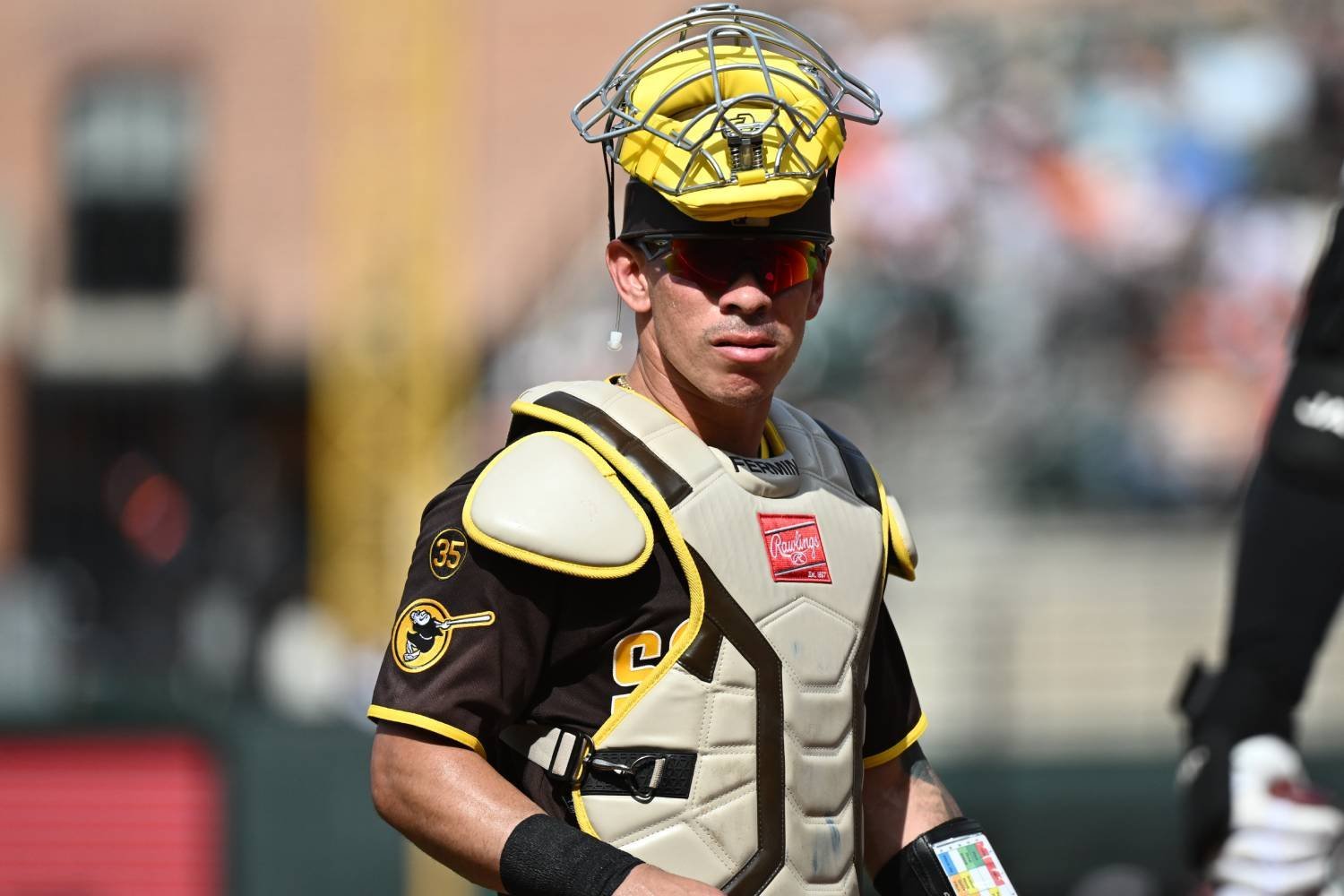 A freak occurrence has sidelined Freddy Fermin. The catcher was put on the seven-day concussion list Sunday by the San Diego Padres, who called up catcher Blake Hunt from Triple-A El Paso. Right-handed reliever Ty Adcock was designated for assignment to make room for Hunt on the 40-man roster. Fermin was injured in the sixth inning of Saturday's 9-3 win. As left-handed reliever Yuki Matsui was warming up, he spiked one of his pitches. Fermin turned his head as he attempted to stop it, but the ball ricocheted and hit him in the back of the head. He was removed from the game, replaced by Rodolfo Duran. Luis Campusano, the Padres' other main catcher, remains on the 10-day IL with a fractured big left toe. Fermin is the second Padre to currently be on the concussion list, joining second baseman Jake Cronenworth, where he has been since May 5. Fermin had been coming around with the bat recently, homering in three straight games. He has a .148/.243/.262 slash line with those three homers and 11 RBIs in 51 games. Hunt was slashing .289/.431/.533 in 15 games in the minors with three home runs and eight RBIs. His season was delayed by an oblique injury. Adcock was signed to a major-league contract in the offseason. An oblique injury in spring training sidelined him. In the minors, Adcock has a 7.15 ERA in 11⅓ innings over 11 appearances, with six walks and 15 strikeouts. He has appeared in 18 MLB games the last three seasons with the Seattle Mariners and New York Mets. View the full article
 -
Vinnie Pasquantino On Royals' Injured List With Hamate Fracture
DiamondCentric posted an article in Royals Keep
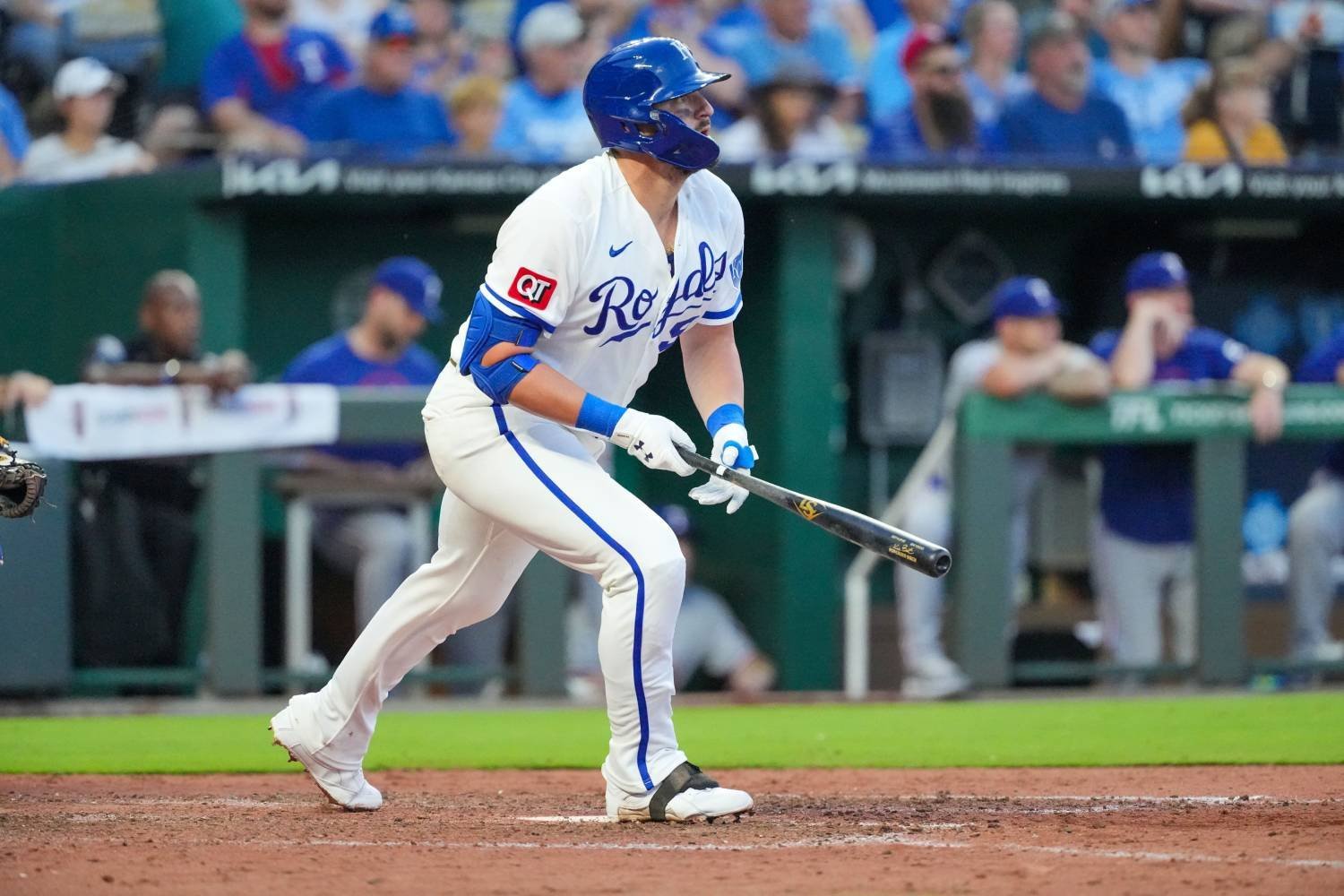 Another round of hamate injuries have snared a few MLB stars. One of them plays for the Kansas City Royals. First baseman Vinnie Pasquantino was placed on the 10-day injured list Sunday by the Royals with a fractured right hamate bone. Outfielder John Rave was called up from Triple-A Omaha. Following surgery, hamate injuries typically take between one and two months to recover from. Cleveland Guardians third baseman Jose Ramirez also sustained a hamate fracture Saturday. Pasquantino was injured Saturday on a swing in the fifth inning in which he popped up to the third baseman. He immediately grimaced and held his arm in a way that signified the injury. Pasquantino was removed from the game, replaced by left fielder Isaac Collins in the lineup with Jac Caglianone moving from the outfield to first base. Pasquantino is part of the heart of the Royals' offense, but his .224/.309/.350 slash line with six homers and 32 RBIs is one reason why the team is struggling. Rave made his MLB debut last season, slashing .196/.283/.307 with four homers and 14 RBIs in 72 games. At Triple-A this year, he has a slash line of .278/.395/.475 with 10 homers and 32 RBIs. View the full article
 -
Two Aces and a King: The Trio That Made Minnesota Believe in 2006
DiamondCentric posted an article in Twins Daily
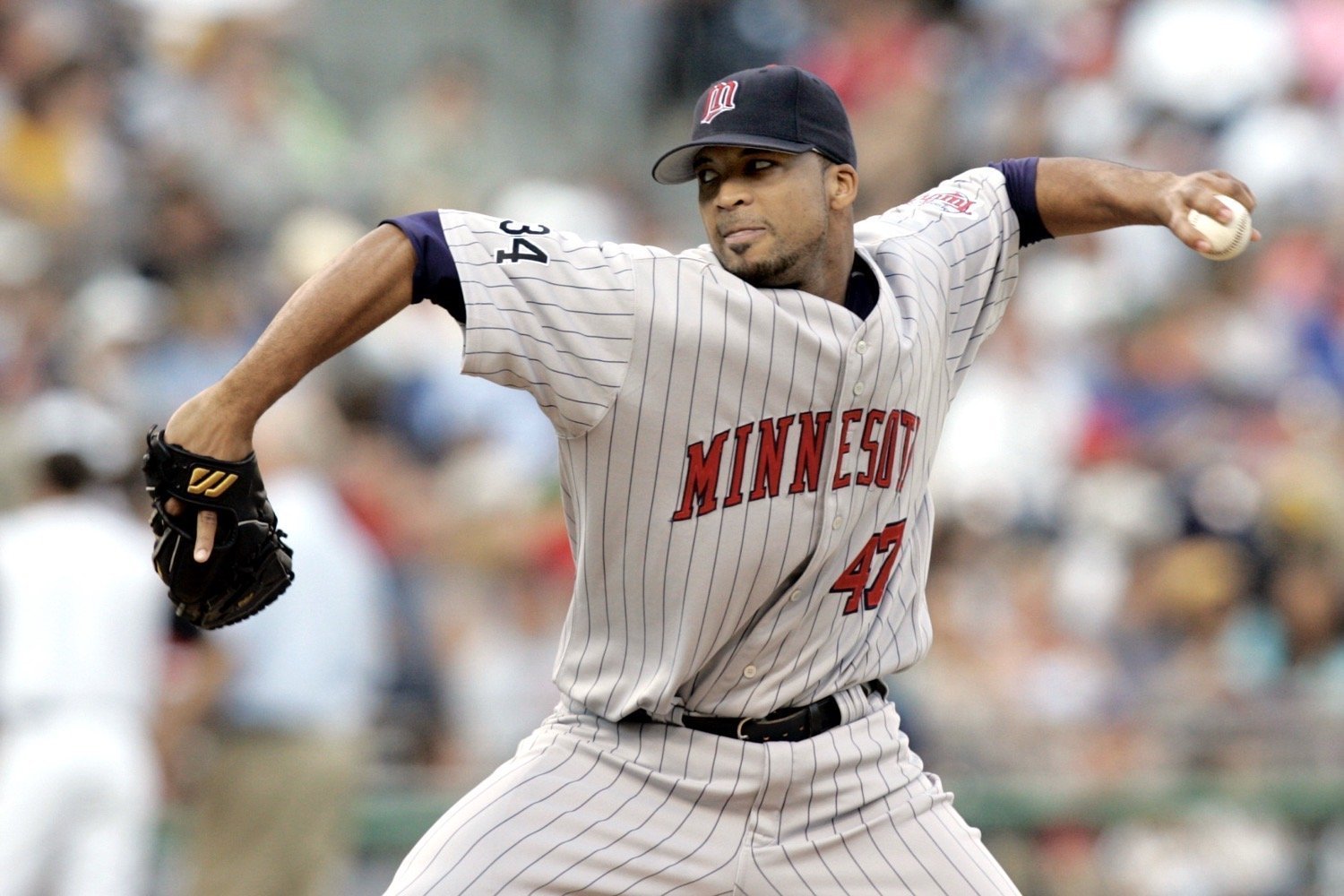 It's hard to believe two decades have passed since the 2006 Minnesota Twins season. For much of that summer, the Twins looked like a legitimate World Series contender, fueled by a trio of stars who seemed nearly impossible to stop. Joe Mauer was emerging as baseball's premier catcher. Johan Santana was solidifying his place as the best pitcher in the game. And a rookie named Francisco Liriano arrived with a level of dominance rarely seen from a first-year player. Looking back 20 years later, it's hard not to wonder what might have happened had all three remained healthy and at their peak when October arrived. Let's take a look back at that team, which was 27-34 at one pont that season—but, at this very time of year, won 19 out of 20 games to thrust themselves into playoff picture. The King: Joe Mauer 2006 First Half: .378/.446/.535 (.981), 7 HR, 1 3B, 22 2B, 38 BB, 30 K Mauer's rookie season in 2004 was interrupted by a torn medial meniscus, and although he played 131 games in 2005, he was still developing into the superstar many envisioned when Minnesota selected him first overall in the 2001 MLB Draft. His 107 OPS+ that first full season showed promise, but 2006 became the season where everything clicked. The first half was a masterclass in contact hitting. Mauer entered the All-Star break leading the American League in batting average. By season's end, he became the first catcher in American League history to win a batting title, finishing at .347. He earned his first All-Star selection, captured his first Silver Slugger Award, and announced himself as one of baseball's elite players. For Twins fans, that first half served as the opening chapter of a Hall of Fame career. Ace No. 1: Johan Santana 2006 First Half: 19 G, 131 IP, 2.95 ERA, 138 K, 1.00 WHIP, .629 Opponent OPS Santana entered 2006 with something left to prove. He had already won the 2004 Cy Young Award, and many believed he was deserving of the honor again in 2005. Instead, he finished third, despite leading the American League in strikeouts, ERA, WHIP, and several advanced metrics. Whether fueled by that perceived snub or motivated by the electric young left-hander sharing his rotation, Santana delivered another dominant first half. Every fifth day, he overwhelmed hitters with a devastating changeup that remains one of the best pitches of the modern era. His 138 strikeouts before the break led the American League, and he continued to establish himself as the standard for pitching excellence. The second half only strengthened his Cy Young case. Santana finished the season leading all of baseball in wins (19), ERA (2.77), strikeouts (245), WHIP (0.99), ERA+ (162), and rWAR (7.6). He was the unanimous AL Cy Young Award winner, receiving all 28 first-place votes. Yet, for a brief stretch during the summer, there was a legitimate debate about whether he was even the most dominant pitcher on his own team. Ace No. 2: Francisco Liriano 2006 First Half: 22 G, 88 1/3 IP, 1.83 ERA, 102 K, 0.97 WHIP, .543 Opponent OPS Few pitching prospects in Twins history have generated as much excitement as Francisco Liriano. The left-hander opened the season in a multi-inning relief role, giving Minnesota a weapon unlike anything else in baseball. Over his first 22 1/3 innings, he struck out 32 batters while walking only four and posted a 3.22 ERA. The Twins moved him into the starting rotation on May 19, and his season immediately took off. Over his next 10 appearances before the All-Star break, Liriano allowed just 10 earned runs while striking out 70 batters. He posted a remarkable 1.36 ERA as a starter, and Minnesota went 9-1 in those games. His slider was unhittable. His fastball exploded through the zone. Hitters often looked defeated before stepping into the batter's box. Initially left off the American League All-Star roster, Liriano eventually earned a spot after injury replacements opened a place on the team. He joined Mauer and Santana in Pittsburgh, giving Minnesota three of the game's brightest stars on baseball's midsummer stage. At that point, it appeared the Twins had assembled the type of top-of-the-rotation duo capable of carrying a club deep into October. The Second-Half Fallout Unfortunately, the story took a heartbreaking turn. Liriano was scratched from a late-July start because of forearm inflammation. Initial examinations revealed no structural damage, creating optimism that the issue would be minor. That optimism disappeared on August 7 when he left a start after throwing only 67 pitches because of renewed elbow discomfort. After rest and a brief rehab assignment, Liriano attempted a September return. It lasted just 27 pitches. During that outing, he felt and heard a "pop" in his elbow. The diagnosis (a torn ulnar collateral ligament; structural damage this time) ultimately led to Tommy John surgery in November, ending his season and forcing him to miss all of 2007. The injury robbed Minnesota of one of baseball's most electric young pitchers and permanently altered the trajectory of what looked like a budding superstar career. A Team Built to Dream The Twins still won 96 games and captured the American League Central despite beginning the season 25-33. They surged during the second half behind Mauer's batting title, Santana's Cy Young season, and a roster that found its identity after a sluggish start. However, the loss of Liriano cast a shadow over everything that followed. Minnesota entered the postseason with legitimate championship aspirations, but the pitching staff no longer featured the devastating one-two punch that had terrorized opponents during the summer. The Twins were swept by Oakland in the Division Series, extending a frustrating postseason trend that had haunted the franchise since 2002. Twenty years later, the memories remain vivid. Mauer became a Hall of Famer. Santana cemented his place among the greatest pitchers of his generation. Liriano's brilliance still sparks conversations about what could have been. Together, they formed a trio that made Twins fans believe a World Series was within reach. That's why the 2006 season remains one of the most fascinating "what-if" chapters in franchise history—a summer when Minnesota had two aces, a king, and every reason to dream. What stands out about the 2006 season? Leave a comment and start the discussion. View the full article
 -
Desperate Padres Might As Well Lean Into Samad Taylor's Skillset
DiamondCentric posted an article in Padres Mission
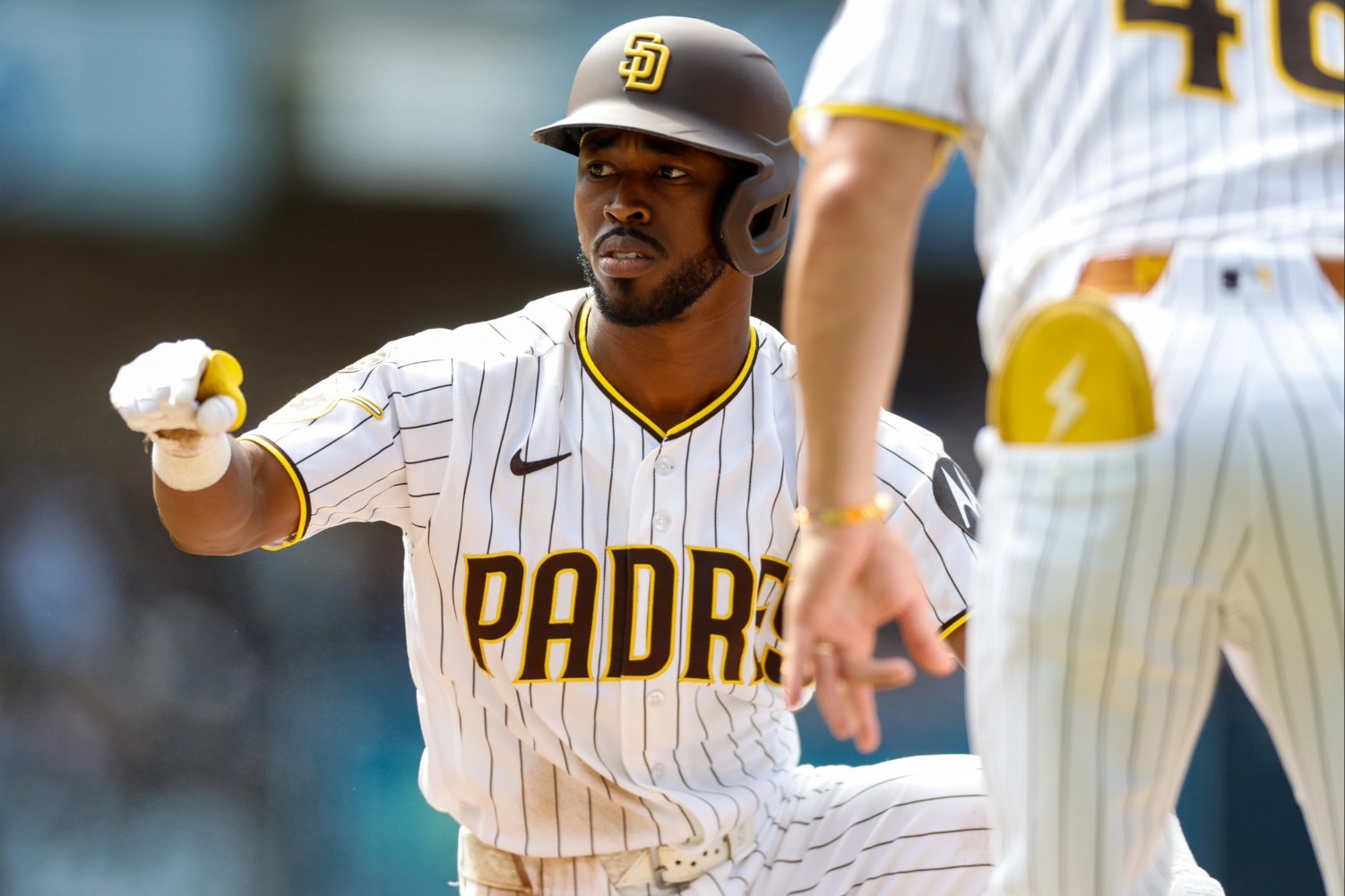 As far as samples go, it's nearly impossible to glean anything from less than 20 plate appearances for a player. And that really goes for any point during the season, let alone the first 20. Samad Taylor, though, is providing a bit of intrigue through his minuscule sample for the San Diego Padres, and it has less to do with what he's done in those trips to the plate and more with what he's done elsewhere. That's not to say that the work at the play hasn't been solid thus far. Heading into the weekend series agains the Orioles, Taylor slashed .333/.444/.400 while walking 15.8 percent of the time. He's also knocked in five runs and swiped a pair of bases. That's objectively good work, even if we're only looking at a quintet of games in which he's appeared for the Padres thus far. If anything, his play has been crucial for a team that will take offense anywhere that they can get it at present. Taylor's value, though, lies in what he's been able to bring with the glove. The Padres have spent 2026 ascending up the defensive leaderboard, courtesy of an improved situation behind the plate and upgraded personnel — in the form of a newly-signed Ty France at first and an adapting Fernando Tatis Jr. at second — at key spots. The early returns on Taylor have continued to add to that defensive growth, especially in the wake of Ramón Laureano's potentially season-ending absence. On Sunday against the New York Mets, Taylor made this catch in what had become a close game: He was at it against the next night against Cincinnati, preserving a tie game with a runner on second base: Against the Reds, he went on to give the Padres the lead on a bunt single in the seventh inning before adding two more on another single later in the game. He repeated the effort on Tuesday night, tying the game on a single in the bottom of the 10th inning (though the Padres would go on to lose the latter contest). For a team like the Friars, Taylor's skill set is one that has value. The defensive aspect is crucial. Laureano had been putting together a better defensive season than the team saw from him post-deadline in 2025, and the Padres stood to lose quite a bit by rolling Gavin Sheets out in left field with regularity. Taylor's speed and defensive acumen help to ensure stability in the outfield in Laureano's absence. Given how paramount run prevention has become for a team that is starved for offense, that stability is more essential than it may be for your average club. Taylor's speed, in itself, is another asset to the Padres. It's not elite speed, mind you, as he sits narrowly above league average at 27.9 ft/sec. However, the Padres are a slow baseball team in terms of their regulars. Each of Ty France, Manny Machado, and Gavin Sheets rank well below the average threshold in sprint speed while a number of others linger right around the average mark. Taylor's wheels have proven to be a benefit not only in his defense, but in the bunt single that propelled the team to a win on Monday night. We're not necessarily talking about a game-breaker in Samad Taylor. This is a journeyman player with only 102 plate appearances to his name at the major-league level across three seasons. However, considering San Diego's current roster and overall struggles, one imagines he could be primed for his most extended run at this level to date. That could greatly benefit both parties if he keeps up his early stretch of sound play. View the full article
 -
How Can the Brewers Use Their Newly Extended Prospects in 2026?
DiamondCentric posted an article in Brewer Fanatic
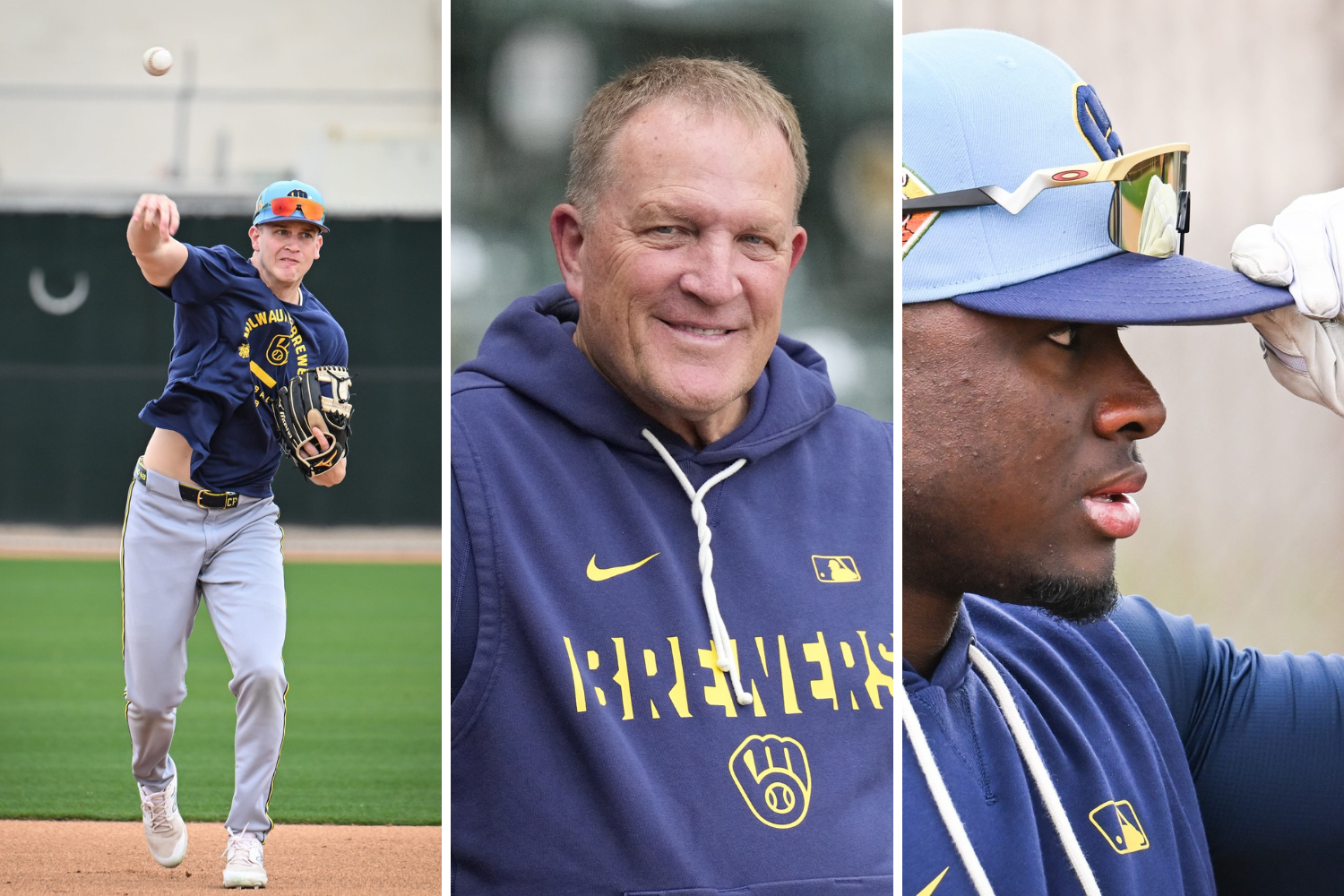 The Brewers have made some long-term plans in 2026, making it clear that shortstop Cooper Pratt and center fielder Luis Lara will be around for a long time via extensions that (if all options are exercised, and if they're not traded) will keep them both in Milwaukee until 2035. So, while they could now be key components of the major-league team for nine-plus seasons each, could they be assets for the Brewers today? There are certainly some ways in which they could, with each of them filling holes and allowing the team to make major improvements. What Luis Lara Can Do For Milwaukee In 2026 First, let’s look at the most recent extendee. Before this season, Luis Lara looked like a more pesky version of Blake Perkins, who was a 2024 Gold Glove finalist and who was not horrible at the plate. Lara had on-base skills from the get-go, and he was also a threat on the basepaths. Something did seem to shift for Lara in 2025, when his doubles total shot up to 32 over a full season. (His previous career high had been 23 the previous year, split between Advanced-A Wisconsin and Peoria in the Arizona Fall League.) Lara also drew a lot more walks in 2025: 89, compared to a previous high of 53. In the wake of the news of his new deal, our Jake McKibbin wrote a great piece detailing those improvements in swing decisions and the uptick in power, in terms of what they do for his long-term outlook. What could Lara do for Milwaukee in 2026? Defensively, he could take over center field and be a defensive improvement over Garrett Mitchell. In the short term, that would probably sacrifice some offense, but the team could also consider moving Mitchell to right field and further reducing Sal Frelick's playing time—or optioning him to the minors for an offensive reset. Offensively, his biggest contribution could be to take over the leadoff slot, currently split between Christian Yelich and Jackson Chourio. Not that the Brewers are doing poorly, but Yelich and Chourio are (arguably) better used as big boppers in the lineup, and Lara could simply get on base to come around when one or both of those players comes up with an extra-base hit. In all likelihood, he's not ready to translate his minor-league on-base skills to the majors so well as to merit that top spot in the order. But if he can deliver elite outfield defense and even act as a second leadoff man at the bottom of the lineup card, he has value for this team as they look toward October. What Cooper Pratt Can Do For Milwaukee In 2026 Joey Ortiz is one of the Brewers whose continued presence in the starting lineup has been understandable, yet baffling. Ortiz is an incredible defender; nobody disputes that. The problem is that his offense makes people yearn for the likes of Yuniesky Betancourt and Orlando Arcia. Pratt received his $50 million extension at the end of March. Like Lara, Pratt’s been an exceptional defender, picking up a Minor League Gold Glove. Pratt, though, is a pure hitter in many aspects: he doesn’t strike out much, he can draw walks, he can steal a lot of bases, and he’ll even take a free base by getting plunked occasionally. At that performance level, Pratt’s a good investment at shortstop, especially since some reports indicate he is also a very positive presence in the clubhouse. The tantalizing part is that there may be power in his 6-foot-4, 210-pound frame. That part is likely to take more time to unlock. But even at his current level, Pratt has a chance to be a viable lineup extender with the speed to make some good things happen. (Despite being so big, he's stolen 79 bases and been caught just nine times in his pro career.) He could allow David Hamilton and Luis Rengifo to split time at third base, and the Brewers to get the upgrade they desperately need at shortstop. Lara and Pratt now have clearer spots in the future of the Milwaukee Brewers, but that future could start a lot sooner than some people think. They have to show the team their offensive processes are good enough to justify them supplanting Frelick and/or Ortiz before their turns will come, but their exceptional defense and athleticism make that a real possibility. View the full article
 -
 Let's review all that happened down on the Chicago Cubs' farm system on Saturday (June 13). Alcántara Drives In Two But Iowa Falls Late In Louisville Iowa scratched across three runs in the sixth inning but could not hold on, dropping a 4-3 decision to the Louisville Bats. With one out in the sixth, Owen Miller singled home a run, and Kevin Alcántara followed with a two-run double to put the Cubs ahead 3-0. Alcántara finished 2-for-4 with two doubles and two runs batted in, and Jonathon Long added two hits including a double. Louisville answered with a two-run homer in the bottom of the sixth, then took the lead in the seventh on a run-scoring double and an RBI single. Vince Velasquez allowed two runs on three hits over four innings, walking two and striking out five. Ty Blach opened with two scoreless, hitless innings and two strikeouts. Luis Peralta surrendered two runs in the seventh to take the loss, and Christian Roa struck out three in a scoreless eighth. Iowa left seven runners on base. For the folks interested in defense here's a nice grab by Alcántara to go along with the bat. Player AB R H RBI BB K Brett Bateman 3 1 1 0 2 2 Jonathon Long 4 1 2 0 0 1 Scott Kingery 0 0 0 0 0 0 BJ Murray 2 0 0 0 2 1 Owen Miller 4 1 1 1 0 0 Kevin Alcántara 4 0 2 2 0 2 James Triantos 4 0 0 0 0 1 Chas McCormick 4 0 1 0 0 3 Justin Dean 0 0 0 0 0 0 Christian Bethancourt 3 0 0 0 0 0 Ben Cowles 4 0 0 0 0 1 Player IP H R ER BB K HR Ty Blach 2 0 0 0 0 2 0 Vince Velasquez 4 3 2 2 2 5 1 Luis Peralta 1 3 2 2 1 2 0 Christian Roa 1 0 0 0 1 3 0 Rojas Homers As Knoxville Erupts For 12 In Montgomery Knoxville scored in double digits to beat the Montgomery Biscuits 12-5. Trailing 3-0, the Smokies seized the lead with a six-run third inning. Jefferson Rojas got it started with a two-run homer, Alex Ramírez doubled in a run, and a string of hits and a Cameron Sisneros sacrifice fly capped the rally. Rojas finished 3-for-5 with three runs batted in, Ramírez went 3-for-5 with two doubles and two runs batted in, and Hayden Cantrelle added three hits. Owen Ayers reached three times and scored twice. Knoxville pulled away with a five-run ninth. Frankie Scalzo Jr. provided the key relief work, allowing no runs on three hits over three innings with one strikeout. Jackson Kirkpatrick followed with two hitless, scoreless innings and six strikeouts. Starter Tyler Schlaffer was charged with three runs on four hits across two innings, walking two and striking out three. Knoxville left seven runners on base. Player AB R H RBI BB K Karson Simas 6 1 2 0 0 0 Jefferson Rojas 5 2 3 3 0 0 Owen Ayers 4 2 2 0 1 0 Andy Garriola 4 2 1 1 1 2 Carter Trice 4 1 2 1 1 1 Alex Ramírez 5 2 3 2 0 1 Cameron Sisneros 3 0 2 2 0 0 Ed Howard 0 0 0 0 0 0 Edgar Alvarez 0 1 0 0 1 0 Ariel Armas 5 0 1 0 0 2 Hayden Cantrelle 5 1 3 1 0 1 Player IP H R ER BB K HR Tyler Schlaffer 2 4 3 3 2 3 0 Frankie Scalzo Jr. 3 3 0 0 0 1 0 Jackson Kirkpatrick 2 0 0 0 0 6 0 Vince Reilly 2 2 2 1 1 2 1 Three First-Inning Homers Lift South Bend To First-Half Crown South Bend hit three home runs in the opening inning and held on to beat the Peoria Chiefs 6-4, clinching the first-half Midwest League Western Division title. It is the Cubs' first postseason berth since 2022, and their first first-half division title since 2016. With one out in the first, Josiah Hartshorn launched a two-run homer, Jose Escobar followed with a two-run shot, and Justin Stransky added a solo blast to make it 5-0 before the inning was over. Escobar finished 3-for-3 with a double, a home run, and three runs batted in, while Hartshorn drove in two. South Bend tacked on a run in the fifth when Escobar singled home Matt Halbach. Koen Moreno allowed two runs on five hits over five innings, striking out three without a walk. Jackson Brockett followed with four innings, surrendering two runs on three hits and striking out five. South Bend left eight runners on base. Player AB R H RBI BB K Kane Kepley 3 0 0 0 0 0 Ty Southisene 3 1 1 0 1 1 Josiah Hartshorn 4 1 1 2 0 1 Matt Halbach 3 1 2 0 1 0 Miguel Useche 3 1 1 0 1 1 Jose Escobar 3 1 3 3 1 0 Justin Stransky 3 1 1 1 1 1 Alex Madera 3 0 0 0 1 0 Christian Olivo 4 0 0 0 0 1 Player IP H R ER BB K HR Koen Moreno 5 5 2 2 0 3 2 Jackson Brockett 4 3 2 2 0 5 0 Myrtle Beach Bullpen Shines In Loss To Augusta Myrtle Beach received strong relief pitching but fell 4-3 to the Augusta GreenJackets. The Pelicans trailed 3-1 after Augusta pushed across two runs in the third inning on a bases-loaded walk and a sacrifice fly. Alexey Lumpuy cut the deficit with a solo home run in the fifth, his first hit in a 2-for-5 day, and Michael Carico doubled home a run in the eighth to make it 4-3, but Myrtle Beach could not complete the comeback. Kaleb Wing struggled in the start, charged with three runs, all earned, on one hit over 2 1/3 innings while walking four and striking out three. The bullpen was excellent behind him. Yoendris Gonzalez struck out five over 2 2/3 scoreless innings, Jhon Rosario allowed one run across 2 2/3 innings, and Sam Mettert struck out three in 1 1/3 scoreless frames. Myrtle Beach left eight runners on base. Player AB R H RBI BB K Alexey Lumpuy 5 1 2 1 0 3 Alexis Hernandez 4 1 2 0 1 2 Eli Lovich 3 1 0 0 1 2 Logan Poteet 3 0 1 1 1 1 Michael Carico 3 0 1 1 1 1 Edward Vargas 0 0 0 0 0 0 Yahil Melendez 4 0 0 0 0 2 Darlyn De Leon 3 0 0 0 1 0 Henniel Alcala 4 0 0 0 0 1 Ezequiel Pena 3 0 0 0 1 0 Player IP H R ER BB K HR Kaleb Wing 2 1/3 1 3 3 4 3 0 Yoendris Gonzalez 2 2/3 0 0 0 0 5 0 Jhon Rosario 2 2/3 2 1 1 2 2 0 Sam Mettert 1 1/3 0 0 0 0 3 0 Top-20 Prospect Performance Jefferson Rojas: 3-for-5, HR, 3 RBI Jaxon Wiggins: DNP Pedro Ramirez: DNP Kevin Alcantara: 2-for-4, 2 2B, 2 RBI, 2 K Josiah Hartshorn: 1-for-4, HR, 2 RBI, K Ethan Conrad: DNP Kane Kepley: 0-for-3 Jonathon Long: 2-for-4, 2B, K James Triantos: 0-for-4, K Cole Mathis: DNP Owen Ayers: 2-for-4, 2B, BB Brooks Caple: DNP Juan Cabada: DNP Kaleb Wing: 2 1/3 IP, 1 H, 3 R, 3 ER, 4 BB, 3 K Angel Cepeda: DNP Dominick Reid: DNP Jostin Florentino: DNP Ty Southisene: 1-for-3, BB, K Will Sanders: DNP Brandon Birdsell: DNP View the full article
