


DiamondCentric
-
Posts
2,631 -
Joined
-
Last visited
Never
Content Type
Profiles
Forums
Events
News
Tutorials & Help
Major League Baseball Videos
Guides & Resources
Store
Downloads
Gallery
Everything posted by DiamondCentric
-
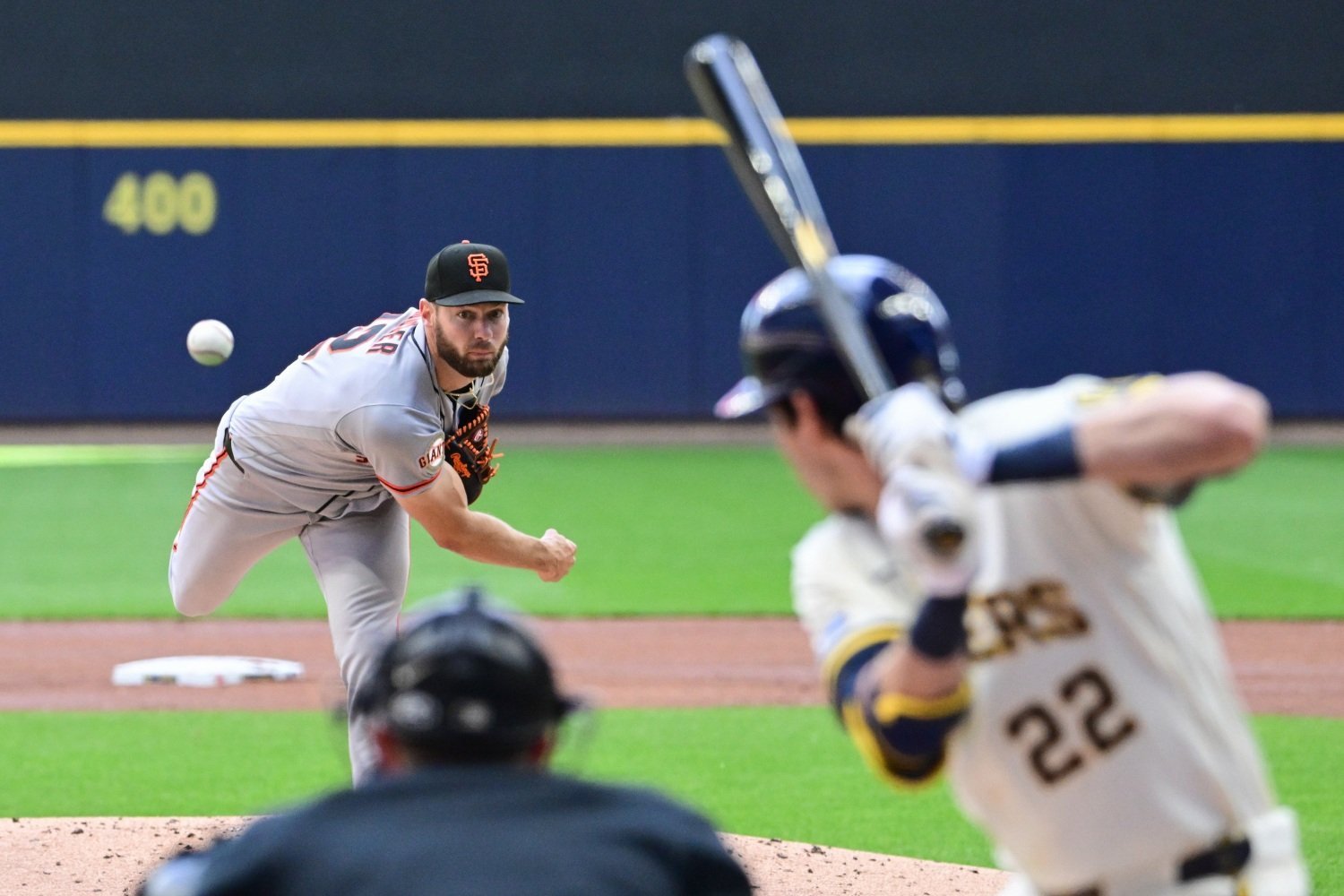 "Why are you worrying about Christian Yelich?" you might be asking, and you'd have a fair point. David Hamilton is only slowly pulling himself out of a career-threatening cold snap to start the season. Sal Frelick is mired in the same depth of trouble. Blake Perkins, Joey Ortiz and Luis Rengifo are holding onto big-league jobs by their fingernails, and that's especially bad news in their cases, because they only really do well when they're working with their glove. Yelich, meanwhile, is batting .287/.354/.434. It's a normal season. Find a new slant. Well, no. Sorry. There's real danger lurking behind Yelich's superficially solid numbers, and we had better talk about it a bit. Thankfully, some new data from Statcast sheds plenty of light on the problem. Yelich is running into some concrete problems with clear explanations, even if not all of those problems are solvable. He's over his skis right now, and uisually, when you get over your skis, you end up crashing. In 158 plate appearances this year, Yelich is striking out 28.5% of the time. Only in the hopelessly bizarre, meaningless 2020 season did he punch out more often. Even that year, he walked at a shockingly high 18.6% rate. This season, that number is less than half as high, at 8.9%. This would be, in short, the worst strikeout rate and the worst walk rate of his career. He's also hitting the ball less hard on average, hitting it hard less often, and hitting it on the ground more. If none of that sounds good, give yourself a gold star; you know ball. Expected stats don't always tell the whole story, but Yelich's stand in unusually stark contrast to his solid surface-level numbers. He's not controlling the zone well, and he's not making up for that by hitting the ball productively in any sense. He's not going to keep being a good hitter for long, if this keeps up. And here's why. This image comes from Baseball Savant's new leaderboards showing swing timing and miss distance. Initially, they might seem inscrutable, but walk through them with me. Here, we've isolated what Yelich is doing on swings against breaking balls, and we're comparing 2025 to 2026. As you can see, last year, he had a fairly normal distribution in his swings against breaking pitches, in terms of where he met (or would have met) the ball on the bat, horizontally (left); whether he was early, late or on time against them (center); and whether he swung above, below or right through the ball, vertically (right). Those are the slightly forest-hued green curves. In 2026, something different is happening. As he tries to adapt to what's happening with his body, Yelich is taking a bifurcated approach, which is producing a bimodal distribution. Sometimes, he's sitting on a breaking ball. Other times, he's gearing up for the heat. When it's the former, he's usually on time, and he centers the ball on his barrel laterally pretty well. When it's the latter, he's usually early, which means he either ends up getting the ball with the end of his bat or running out of bat altogether and whiffing. The right-hand image might be the most interesting, though it contains the least obvious difference from one year to the next: he's swinging over the ball (be it very slightly, leading to contact but downward launch angles, or extremely, leading to whiffs) even when he's otherwise lined things up. This is why Yelich is whiffing on roughly half the breaking balls he sees this year. It's why he's hitting worse against those pitches than he has since he was a pup in Miami: You could chalk this problem up to Yelich sitting on fastballs, but you'd be wrong. For one thing, he hasn't gotten any extra juice out of his swings against fastballs, really. More importantly, though, look at how well he's hitting offspeed pitches. We already saw that he's sometimes sitting on breaking stuff, putting him on time for them more often than in the past. He's doing the same thing with changeups, but succeeding much more often. The reason is simple: Yelich has gotten much more grooved, with his swing. This trend began last year, when his contact rate on pitches outside the zone fell to a career-low (except 2020) 44.2%. This season, that figure has plunged all the way to 36.3%, the lowest of his career even if you want to count that husk of a year in the shadow of COVID. He has one swing plane on which he can succeed. He's unable to adapt the way he used to, without presetting his plan to aim higher or lower than usual. Against changeups, that works. Most (though not all) hitters can spot and intuit the way most changeups will drop en route to the plate. Pitchers with a good combination of ride on the fastball and depth on the change can get whiffs from hitters based on the movement, but most of a changeup's effectiveness comes from the speed differential on it. This is also why flatter swings work best, on average, against offspeed stuff. Breaking balls are different. Even a great hitter who's an expert at spotting the telltale dot on a slider and/or is hunting a breaking ball can struggle to adapt to their movement, which can be extreme and vary widely even from pitch to pitch for a given hurler. As a result, you have to be able to bend and adjust your swing while the ball is in flight. That sounds impossible, and if you're thinking about it up there, it is. Through enough reps and their extraordinary talent, though, many hitters learn to do it. At some points in his career, Yelich has been able to do it, too. A lot of that subtle, even subconscious adjustment happens in your lower half, though. A lot of it happens in your spinal column. At this point in his career, on the other side of major back surgery, Yelich simply doesn't have that adaptability. He's gotten stiffer, as virtually everyone does when they enter their mid-30s and as everyone does after they have back surgery. Thus, even when he sits on breaking balls and ends up on time, he can come up completely empty. In fact, he's often doing so. The league's average whiff rate on breaking pitches for which they're on time is 17.5%. Yelich's mark has hovered just above that all along (as far back as 2023, when bat-tracking data went live), but this year, it's gone through the ceiling. Last year, he whiffed on 22.9% of on-time swings against breaking balls, swinging over the ball 21% of the time and missing by 3.9 inches, on average. This year, he's whiffing on 39.5% of those on-time swings, swinging over it 37% of the time and missing by 4.8 inches. Here's what that often looks like. R0JyenJfWGw0TUFRPT1fQkFaWVVRRUJVUVFBQVZKVFVnQUhBMVVIQUZsV0J3VUFWRmNGQVZBQkJGQUdCd0FE.mp4 "Ok," you might say, "but that's just a bad swing decision. He was sitting on a fastball that time, and chased a pitch down and out of the zone." That's true, to some extent. We'll even ignore the fact that he might be making more of those poor decisions because, as he ages, he's losing bat speed and needs to decide earlier about each pitch. But plenty of his breaking ball whiffs also look like this. TkFOWE9fWGw0TUFRPT1fQVFVQ0JsMVhVZ01BWFFZTFVBQUhWQVJYQUFOV0JsWUFDMUFFVmxZTlYxQmNWUVpT (1).mp4 Or like this: b0d3OWxfWGw0TUFRPT1fVWdSWEIxUlNCMVFBWEZWUlh3QUhCZ1JlQUFBRkJnTUFBbEVGQndGWFZBY0JCZ1JV (1).mp4 Both of those are cases of pitches nipping the corners of the zone, forcing Yelich to swing. He was on time for them, which tells us he was ready to attack them. Still, he swung right over them. Lots of other left-handed batters—and, importantly, past versions of Yelich, too—would have at least fouled off one of these, and perhaps crushed them. Yelich wasn't even especially close to them, given how tight the movement on each was. Is this problem fixable? Maybe, and partially. Yelich isn't going to get younger, and it's unlikely that his health baseline will improve much from here. He might eventually need to change his approach a bit and stop chasing certain pitches. That spot down and in might now be a hole in his swing, if a pitcher executes it well. However, Yelich can also put in work to adjust and improve in this regard. Targeted cage and Trajekt machine work can make it easier for him to recognize and lay off pitches that are breaking out of his hitting zone. He can also change the way he presets his swing path a bit, based on situation and opponent. The erosion of his quality of contact and his plate discipline can be stopped, if not reversed. He can continue to outperform his expected stats, because he's strong and uses the whole field and knows how to outguess opposing pitchers at times. It's not fun to ponder the underlying red flags around Yelich. It's not good that there's a persistent and significant problem causing his problems. However, it's fun to have new insight on the nature of that issue, and since we can be sure the Brewers know everything we do (and then some), it's somewhat comforting. In all likelihood, this is already a project on Daniel Vogelbach's to-do list, and a part of Yelich's routine. View the full article
 -

There's an Awful Lot Riding on the Shoulders of Kaelen Culpepper
DiamondCentric posted an article in Twins Daily
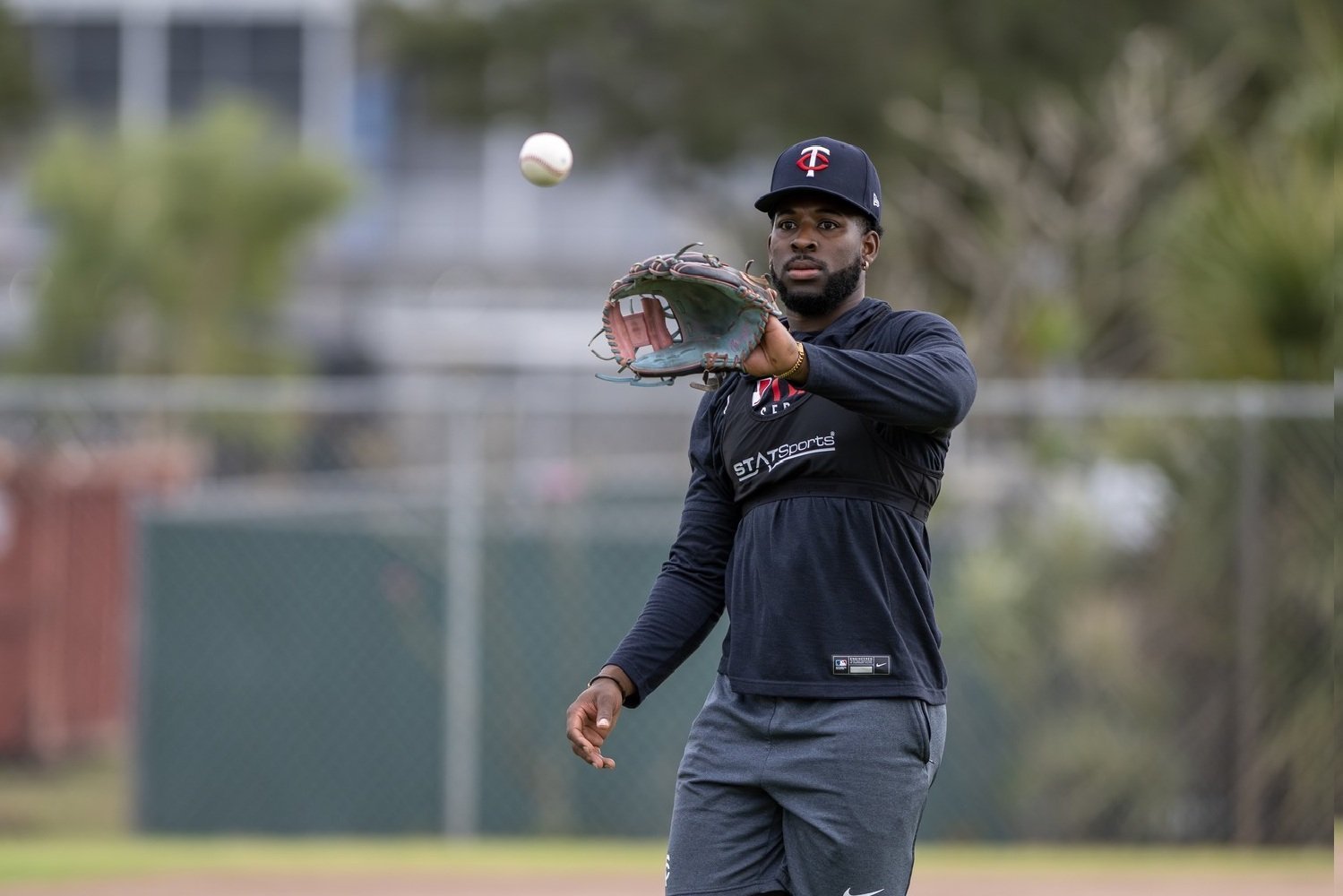 There's a growing buzz throughout the Twins sphere that Kaelen Culpepper's arrival in the majors is imminent. A promotion would certainly be warranted — the 23-year-old has been on fire in Triple-A, slashing .391/.481/.696 here in June after posting a .947 OPS in May. He's homered five times in his past 14 games while showing improved plate discipline and playing shortstop almost everyday. It's fair to say he looks ready. But Culpepper's success in St. Paul is only one factor driving the sense of urgency to get him up to the big-league club. The other side of it is that Minnesota's infield has been horrible, offensively and defensively. Most troubling: this state of affairs can primarily be tied back to a set of players who not long ago were in the same position as Culpepper: former high draft picks turned top prospects who were being counted on as key parts of the solution for the Twins infield. Brooks Lee's OPS has hovered around mediocrity, which is a relatively good outcome in light of his ugly underlying metrics. His fielding has graded out very poorly, albeit better at third than short, and as a result he's been a borderline replacement-level player. That still puts him ahead of Royce Lewis, who's checking in at a .554 OPS and negative-0.2 fWAR after returning from a brief banishment to the minors. Lee has also outperformed Luke Keaschall, who's been getting on base at a solid rate recently but is slugging .324. Not good enough for a bottom-tier defender at second base. Twins fans are constantly being reminded that the path from top prospect to impact major-leaguer is non-linear if not a dead end. The two biggest talents in the Twins' system aside from Culpepper, Walker Jenkins and Emmanuel Rodriguez, are both injured (again), which only reinforces that sense of wariness. Nothing is promised. In fact, around here, it almost feels like what's promised is disappointment. Still, hope springs eternal, and when you see a touted talent like Culpepper tearing it up at the closest level to the majors, you can't help but shake off past experiences and feel excited. He looks like a good one. The Twins need him to be, and fast. It's not so much about salvaging this season, which feels like a moot point. It's more so about rejuvenating any sense of optimism and confidence within the fanbase. This year has already been a morale beatdown: modest winning stretches followed by deep funks, myriad injuries to the pitching staff, and — as mentioned — the so-called "post-hype prospects" meant to propel a turnaround have flopped almost without exception. Fans need a beacon for a better future they can grasp onto. There's little on the current roster to provide it, and there's little else on the way in the near term. Fair or not, Culpepper carries a heavy weight. Here's hoping he's up to the task. History says he'll let us down. But history is only that. View the full article
 -
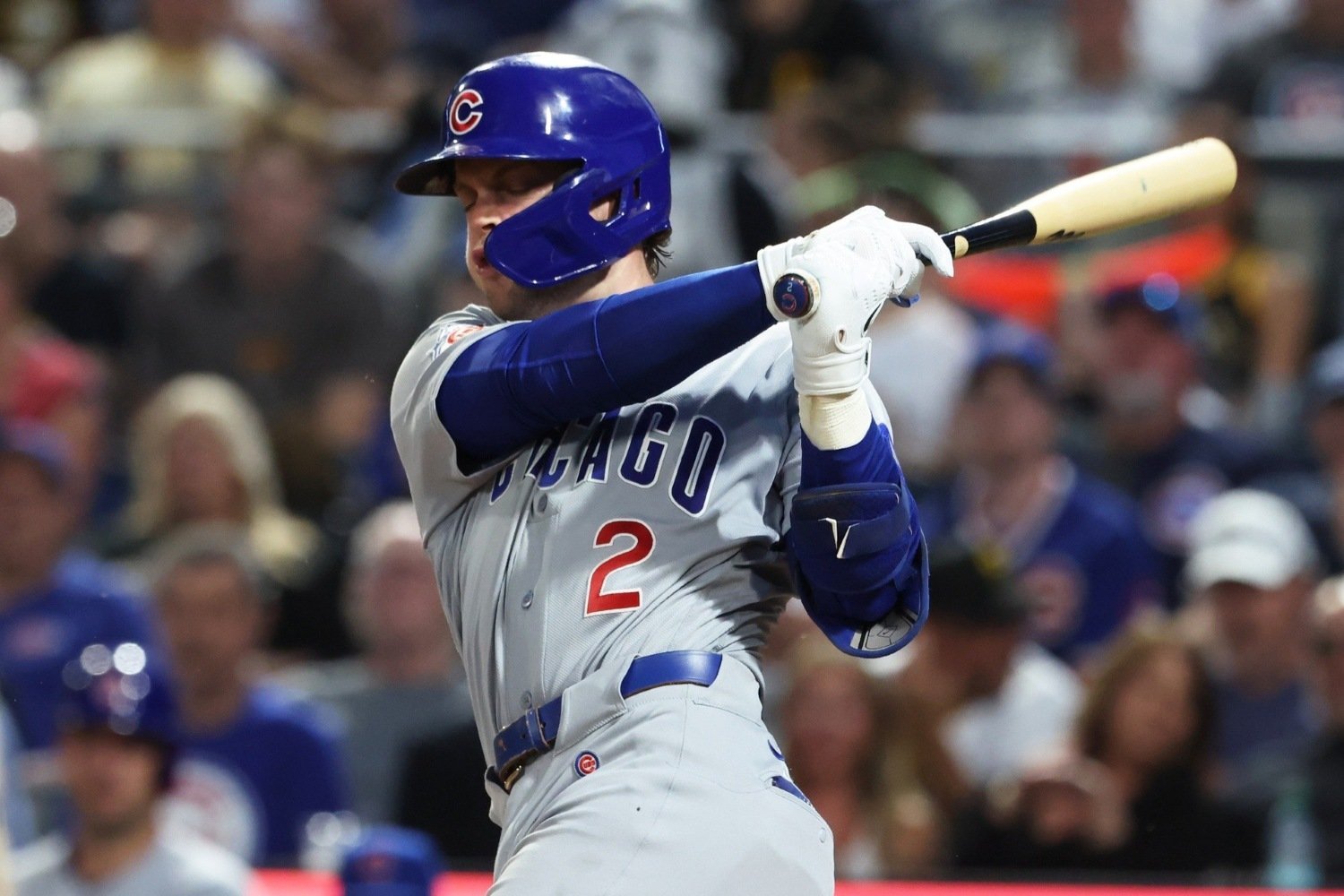 It's not fair, really. In baseball, they usually just ask you to hit the ball hard, and Nico Hoerner is doing that—doing it, anyway, as much as can be expected from a player whose game really isn't centered on power. He's the best hitter in baseball at hitting the ball in the middle of his bat, according to new data out this week from Statcast. Your eyes haven't been lying to you; he has a feel for squaring the ball up that no one can top. Unfortunately, because of Hoerner's below- average bat speed, that's not good enough. In fact, it's part of his problem right now. After a hot April, he got really locked in during May, getting on time with his swing more consistently. Instead of improving, though, his numbers got much, much worse. At the end of April, he was batting .291/.370/.449, with eight doubles and four homers. Since the start of May, he's at .206/.292/.250. In 154 plate appearances over the last six weeks, he's managed six doubles and no homers. He's making great swing decisions (at least in a vacuum), leading to 17 walks and just six punchouts in that long span. He's squaring the ball up, at least vertically. What, then, is wrong? The answer lies here. The differences here look tiny, and in a way, they are. After all, Hoerner is making contact at an elite rate, and he's hitting the ball harder lately than he did early in the year. I've isolated the pitches on which he got the barrel lined up with the ball, vertically, so we're throwing out the swings on which he was too high or too low by enough to produce a whiff on that basis. We shouldn't expect to see some glaring difference. This is one of those times when a great hitter and a maddeningly unproductive one are separated by mere millimeters, or milliseconds. It just happens to be the same hitter, this time. Early in the season, Hoerner was, on average, a bit more likely to swing slightly too early when he also caught the ball correctly in a vertical dimension, and to get the ball significantly out on the end of his bat. He was, on average, hitting very slightly higher on the bat (or lower on the ball) than he has since the calendar turned to May. This level of granularity is a great way to show this, because the differences between good and bad for him are so small, but it's not quite necessary, either. Now that we know what happens when he has the ball squared up vertically and should be producing line drives, we can look at where batted balls hit well (88+ MPH, for these purposes) and in a good launch-angle range (8-32°, which Statcast labels the launch angle sweet spot) went for Hoerner through the end of April: And where they've gone since the start of May: All of the balls Hoerner hit out of the park early in the year (and a handful of hard, line-drive singles to left field, too) are gone. In their place lie more frustrating flyouts to center field. Many of these are not only well-struck, but relatively low liners. They're just right at the center fielder. b0d3OWxfWGw0TUFRPT1fVWdSUUJWVldCUWNBVzFZR0F3QUhBQUVFQUFNTUJnTUFCbFVCQTFBQUNBRUJBd1JX.mp4 Hoerner is on time for most of these balls; that's why they're hit hard to center field. He's getting some of them just off the handle or the end of the bat, but the main problem is directional. For Hoerner to produce value with his caliber of power, those hard-hit air balls have to go to the gaps, or down the line. They can't go out to center. He will never have the juice to find grass or clear fences out there, against modern defenses. Being so on time is, in a sense, a curse for Hoerner right now. He has to find a way to be early more often, again. He also has to get the sweet spot on the bat, horizontally, better than he's done lately. The key to that, as it turns out, is probably swing decisions. He'll simply have to learn to let pitchers work the outer edge against him a bit more, and then attack when they try to come back inside at all. Through the end of April, he was living on balls in the heart of the zone: But hurlers have adjusted, slowly asking him to chase pitches on the outer third, where he's more likely to hit that impressive but harmless liner to center. He's obliging. Most of the pitches he's swinging at are still strikes, but he has to have a bit more faith in his contact skills. He has to be willing to wait and work for the pitch with more of the plate, so he can get around it and put the sweet spot of the bat on it. He has to get the bat head out there a little bit more, risk a few more whiffs—those, he can afford more than most hitters—and rediscover the pull field. We could (and did) spot this issue without the new data Statcast offers. Seeing just how fine the margins are and how good he still is at timing pitchers up and hitting it squarely is a beneficial insight, though. Hoerner might need to be even more patient for a bit, and get into a right-field mindset once there are two strikes, so he can drive the ball the other way. He certainly needs to get back to living a little ahead of many pitches, where he can be early in a good way and hammer the ball to left. Until that happens, his slump will continue. Because he's such a gifted hitter (and because we can see just how tiny the adjustments necessary really are), though, you can feel fairly confident that a rebound is coming. View the full article
 -
Keith Law’s Latest Mock Draft Hands the Twins a Dream Scenario
DiamondCentric posted an article in Twins Daily
 There is roughly a month remaining before the 2026 MLB Draft, and most of the top amateur prospects have already wrapped up their seasons. With the on-field evaluations largely complete, front offices are entering the most challenging phase of the process. At this point, the draft becomes less about collecting new information and more about determining organizational preferences. Teams must weigh talent against signability, bonus pool strategy, and long-term upside. It is a complicated balancing act, especially near the top of the draft, where every decision can reshape a farm system. In his latest mock draft, Keith Law presented a scenario that would likely have Twins fans sprinting to the podium if it became reality. Law projects the White Sox to select catcher Vahn Lackey with the first overall pick. Lackey's stock has steadily climbed throughout the spring, and he has become one of the hottest names in the draft class. His combination of offensive production and defensive value behind the plate has made him a favorite among evaluators. The connection to Minnesota is notable because there has been industry speculation that the Twins have spent considerable time evaluating Lackey as a potential third-overall pick. The bigger surprise in Law's mock comes with the second selection. He has the Rays taking Tyler Bell, a player Tampa Bay originally drafted out of high school before he chose the college route. Bell is a talented prospect, but most public draft boards have not consistently placed him among the top three players available. The selection would likely indicate that Tampa Bay is prioritizing bonus pool flexibility, potentially saving money at the top of the draft in order to be aggressive later on. If that sequence unfolds, Minnesota would be left with an opportunity that currently feels almost too good to be true. Law has the Twins selecting Roch Cholowsky with the third overall pick. For much of the draft cycle, Cholowsky has been viewed by many evaluators as the favorite to go first overall. He is widely regarded as one of the most complete players in the class, combining a polished offensive profile with the defensive ability to remain at shortstop. Depending on who you ask, he is either the best college shortstop available or the best overall player in the entire draft. That is why this mock stands out. Most projections have Cholowsky off the board before Minnesota is on the clock. If he somehow reaches the third pick, it would be difficult to imagine the Twins passing on the opportunity. Talent tends to win out at the top of the draft, and Cholowsky's combination of floor and upside would make him an ideal addition to the organization's long-term plans. Of course, Minnesota would still have attractive alternatives available if the board unfolds differently. Texas prep standout Grady Emerson remains one of the most exciting hitters in the class and has generated significant buzz throughout the scouting community. Meanwhile, Jackson Flora has emerged as the top college pitching prospect available and could provide the Twins with another premium talent to consider. Both players would represent strong selections at No. 3 overall. Still, if Cholowsky is sitting there when Minnesota is on the clock, the decision could be one of the easiest the organization has made in years. The reality is that mock drafts remain educated guesses, and there is still plenty of time for opinions to change before draft day arrives. Teams continue gathering medical information, conducting final meetings, and refining bonus strategies. One unexpected selection can completely alter the board. That uncertainty is what makes the MLB Draft so fascinating. Today, Law's projection gives the Twins a dream scenario. Whether that scenario survives the next month of rumors, negotiations, and last-minute adjustments remains to be seen. View the full article
 -
 The Kansas City Royals will be without their starting center fielder for a bit. Kyle Isbel was placed on the 10-day injured list Wednesday by the Royals due to a left plantar fasciitis. Outfielder Kameron Misner was called up from Triple-A Omaha to take his place. Lane Thomas was in the starting lineup as the center fielder for Wednesday's game against the Texas Rangers. Isbel was hurt after singling in the seventh inning of Tuesday's game and making a turn as if he was going to go for a double, but changed his mind and dove back into first base. He was removed from the game, with Tyler Tolbert pinch-running. Isbel has a slash line of .244/.298/.354 with three homers, 11 RBIs and five stolen bases in 56 games. Misner was acquired from the Tampa Bay Rays after being designated for assignment in November for a player to be named, which wound up being minor-league right-handed reliever Matthew Hoskins. This will be his Royals debut after appearing in 79 games with the Rays over the last two seasons with a .203/.260/.325 slash line with five homers and 22 RBIs. At Triple-A this year, Misner was slashing .276/.373/.547 with 13 homers, 51 RBIs and 11 steals in 59 games. View the full article
 -
How Joe Mack has changed the Marlins defensively since debut
DiamondCentric posted an article in Fish On First
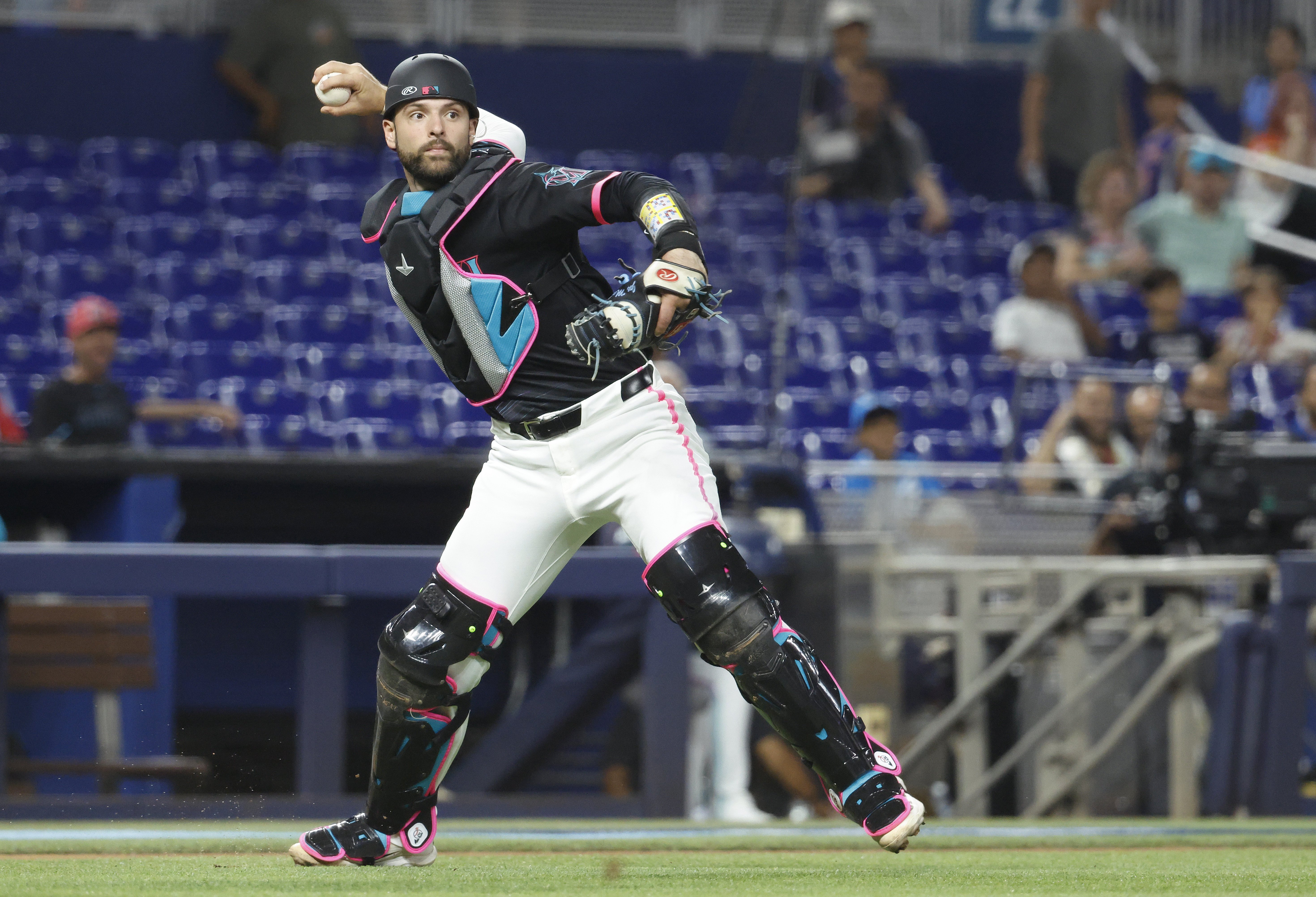 MIAMI, FL—Following Tuesday's Miami Marlins win over the Arizona Diamondbacks, catcher Joe Mack sent a message to the entire league: "I want them to steal. I'm hoping that they steal. I'm like, 'Please run.' It's my favorite part of my game and I know my ability to throw people out and get a guy off scoring position." Throughout the 2025 season and continuing through the first month or so of 2026, the Marlins struggled mightily against opposing base-stealers. Mack's call-up immediately flipped that weakness into a strength. The rookie has thrown out 10 runners on 26 attempts, ranking in the 90th percentile of MLB catchers in caught stealing above average, per Baseball Savant. His combination of pop time (1.89 seconds) and accuracy is elite despite his limited experience. Mack claimed another victim on Tuesday against the Diamondbacks when he threw out Geraldo Perdomo in the top of the second inning. On a night when Marlins starter Max Meyer allowed more traffic on the bases than usual, that extra out helped him work into the sixth inning. "It takes a little bit more pressure off the pitcher, and they can pitch a little bit more loosely," Mack told Fish On First. Amongst the runners that Mack has thrown out include Chandler Simpson (96th percentile sprint speed), Nasim Nuñez (97th percentile sprint speed) and Jacob Young (95th percentile sprint speed). Manager Clayton McCullough has leaned heavily on Mack—prior to Wednesday's day off, he had caught seven consecutive complete games. The Marlins won six of those seven, allowing only 3.3 runs per game during that span. "Someone like Joe has the ability to make up for some pitchers that are a little slower...He's thrown out some real runners and come up with some big throws, so I think that part has really helped out on the run prevention side of things." Defense really became a priority for Mack in 2024. Former Marlins catching coordinator Chris Briones, who was with the organization from December 2018 until January 2026, was a big influence on him. "He just had a lot of good things for me to hear," Mack said. "Just really connected with me very well. He would always joke with me, make me feel comfortable and make me feel out of my comfort zone as well. It was just a great experience then, and I take a lot of pride in that." Mack has been Meyer's battery mate in each of his last six starts. "Everyone sees it: he's got a cannon," Meyer said. "Just having him back there is awesome. He's got his feet wet now and he's been challenging well, too. He knows the game. He's able to those runners, so it's awesome having a guy back there that can do that and takes off a lot of pressure to the pitchers too in innings where you know that if they steal, there is a very good chance that they are going to get hosed, so just makes you execute a bit better." Fish On First (@fishonfirst) • Instagram photos and videos WWW.INSTAGRAM.COM 2,660 likes, 22 comments - fishonfirst on June 9, 2026: "JOE MACK IS UNREAL BEHIND THE PLATE 😳🔥 Joe Mack has already thrown out 10 runners this season, and his confidence is... Mack has brought a loose and fun personality to the Marlins clubhouse that his teammates appreciate, in particular starting pitcher Sandy Alcantara. Alcantara has called Mack a Gold Glove-caliber catcher and continuously praised him." "Just hearing that from him, especially a Cy Young Award winner and great pitcher through and through, is awesome," Mack said. "Bunch of these guys are also awesome pitchers. I'm just here to help them be their best selves, and if I can do that by catching the ball, blocking the ball, throwing guys out for them, then that's awesome. If I can also do that, helping them by talking with them, making them laugh or making them lock it in a little bit more, whatever it may be, then great." As a bonus, Mack has settled in as a hitter as well following a very slow start in that department. So far in the month of June, he is slashing .391/.417/.565/.982 with one home run and seven RBI. His overall wRC+ is 75. "I think it's lowering my hands a little bit to be more consistent and more short with my load," Mack said. "I think that's something that helps me be more consistent throughout and also just maintaining the backside and opposite part of the field is a big part of my game. When I'm going hot over there, pull-side stuff will happen." Thanks to his defense, Mack is already making a positive impact for the Marlins. If he continues to trend in this direction offensively and hit like an average catcher—MLB average for the position is a 88 wRC+—it would make it clear that the franchise has found its long-term solution behind the plate. View the full article
 -
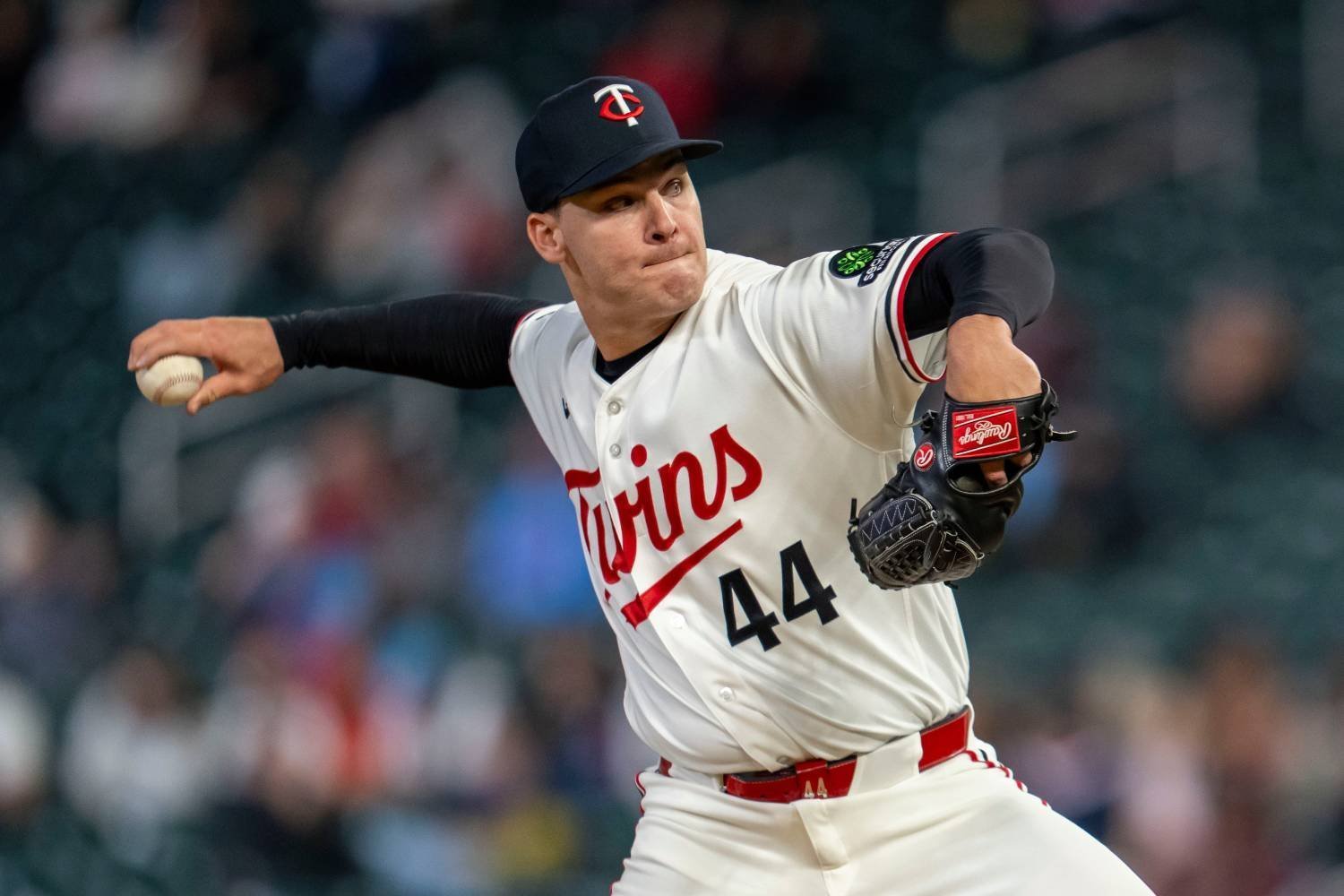 The Twins received discouraging news this week when right-hander Cole Sands was pulled off his rehab assignment after experiencing continued issues with his strained right forearm. Sands made his first rehab appearance with Triple-A St. Paul on Tuesday, and the outing appeared to be a positive first step toward rejoining Minnesota's bullpen. In one inning, he didn’t allow any hits and struck out one batter on 13 pitches. He had two swinging strikes and three strikes looking. However, his arm did not recover quickly enough afterward to allow him to continue pitching. As a result, the Twins have shut down the rehab assignment and will give him additional time to rest and receive treatment before restarting a throwing program. At this point, there is no clear timeline for when Sands could return to the major league roster. Under league rules, the Twins must wait at least a week before he can begin another rehab assignment. Even then, the organization will likely proceed cautiously given the nature of the injury. While Sands' traditional numbers do not jump off the page, his absence has been felt. The right-hander owns a 4.63 ERA across 11 2/3 innings this season, but the underlying metrics suggest he was performing better than the results indicated. He maintained a strong strikeout rate and carried a 3.65 SIERA, pointing toward a pitcher whose effectiveness was better than his ERA suggested. Looking back, there may have been warning signs before Sands landed on the injured list. His final appearance came against Seattle on April 28 when he surrendered two runs in an outing that lacked the crispness typically seen from him. The quality of his stuff appeared diminished, and the radar gun provided additional evidence that something was wrong. Velocity declines are often one of the first indicators of a physical issue. After averaging roughly 95 mph on his fastball during the 2025 season, Sands sat closer to 93.1 mph this year before being sidelined. When forearm discomfort accompanies a noticeable drop in velocity, teams naturally become cautious. That reality makes every step forward in his recovery process meaningful, even if those steps are currently smaller than the Twins had hoped. Sands entered the season expected to be a significant contributor in Minnesota's late-inning mix. Few relievers on the roster possess his combination of experience and ability to handle leverage situations. Although his early-season results were inconsistent, the Twins viewed him as an important piece of a bullpen that has spent much of the year searching for consistency. Minnesota's relief corps has been in near-constant flux throughout the season as injuries and performance fluctuations have forced the club to shuffle roles. The Twins have received strong contributions from several relievers like Yoendrys Gomez and Anthony Banda, but the group still lacks the stability that teams need over the course of 162-games. Getting Sands healthy remains one of the organization's priorities because his return would provide another trusted arm capable of handling meaningful innings. Until then, the Twins will continue looking for answers while hoping one of their most important bullpen reinforcements can eventually make his way back to Target Field. View the full article
 -
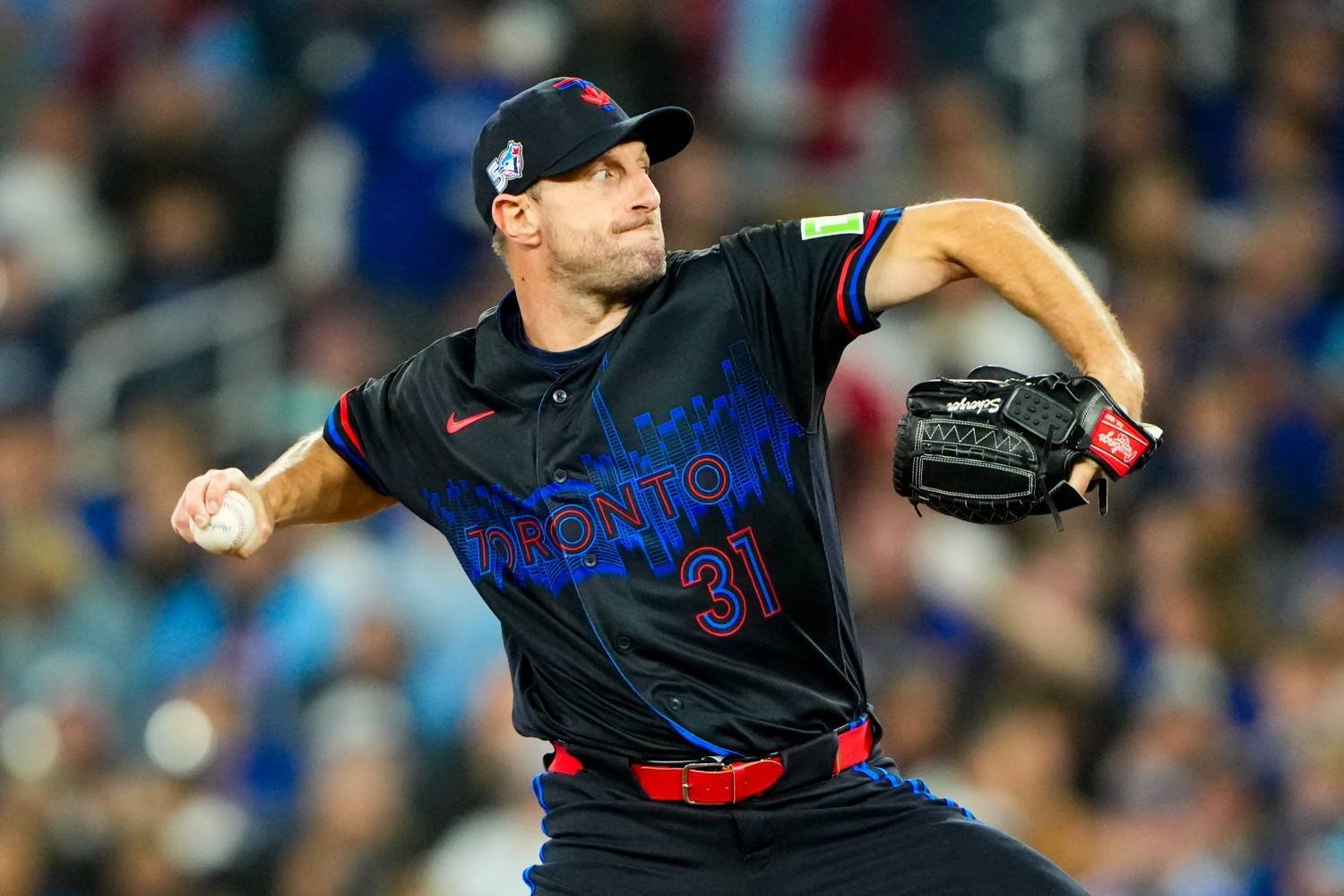 Mad Max is back with the Toronto Blue Jays. Right-hander Max Scherzer was activated from the 15-day injured list Wednesday and will start the series finale against the Toronto Blue Jays. Right-handed reliever Connor Seabold was designated for assignment. Scherzer, a three-time Cy Young Award winner and two-time World Series champion, has been on the Il since April 27 with tendinitis in his right forearm and inflammation in his left ankle. The tendinitis has been the trickier of the two ailments for the 41-year-old. He had struggled to an 8.35 FIP (9.64 ERA) in five starts in which he lasted just 18⅔ innings, posting an abnormally worse walk rate (9.5%) and strikeout rate (11.9%). His career numbers are 6.5% and 29%, while he had rates of 6.4% and 22.9% last season, his first with the Jays. Scherzer made two rehab appearances and went 6⅔ innings, walking three and striking out nine while giving up three runs for a 4.05 ERA. Scherzer is the second starter the Jays have gotten back in the last two days after Dylan Cease returned from injury Tuesday. Seabold was in his second stint with the Jays. He signed a minor-league contract in the offseason, but was released late in spring training. He latched on with the Detroit Tigers, where he made the Opening Day roster and had 11 appearances out of the bullpen, with a 4.12 FIP (3.45 ERA) before being DFA's May 24. The Jays, in need of pitching due to a slew of injuries, traded for Seabold. He pitched in five games with a 4.30 FIP (8.10 ERA) in just 3⅓ innings. View the full article
 -
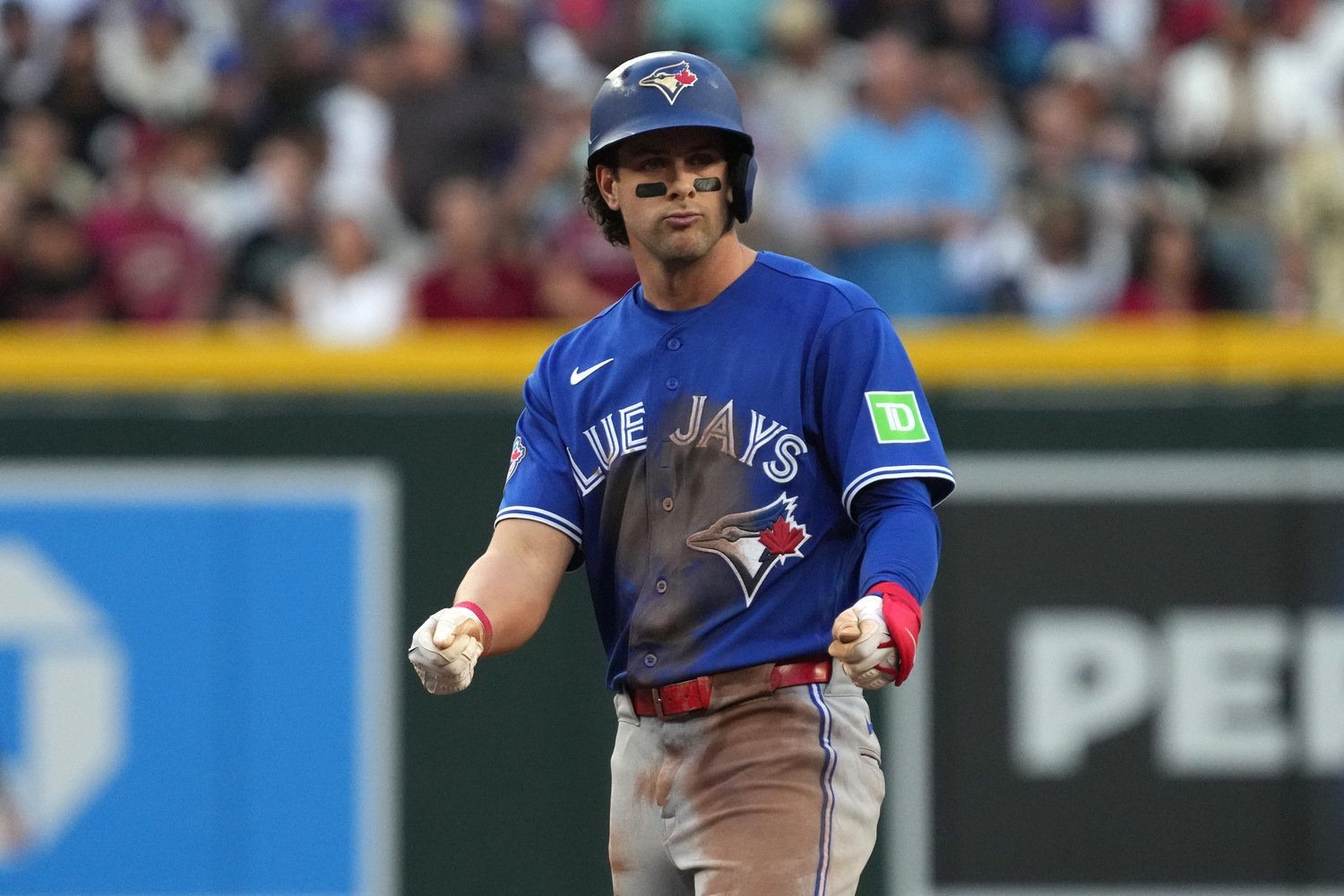 Before the season, my Jays Centre colleague Jesse Burrill asked all the writers here to make a bold prediction for 2026. At the time, I was very pleased with what I came up with: Two Blue Jays will make their first All-Star Game this summer. I knew it was statistically improbable, but I genuinely thought it was going to come true. That's the perfect bold prediction. Well, in theory. In practice, it's starting to look like my "perfect bold prediction" may not have been bold enough. Dylan Cease was my ace in the hole, and I acknowledged as much. Other names that made me confident in my prediction were Daulton Varsho, Kazuma Okamoto, Cody Ponce, and Louis Varland. With just over a month to go until the All-Star Game, Cease and Varland are strong contenders to earn a spot on the AL squad. But there's a third Blue Jay with a serious All-Star case, and it's one I didn't even consider before the season. Heck, it's one I didn't even consider when voting opened last week. It's Ernie Clement. (Pictured below: Me showing my emphatic support for Ern Dog.) Image courtesy of Daniel Kucin Jr. – Imagn Images via Reuters Connect Thanks to a red-hot stretch over the last three weeks, Clement ranks fifth in the AL with a .304 batting average. His 79 hits lead the American League (Jesse will have more to say on that topic tomorrow). The rest of his numbers don't jump off the page, but the competition at his position is so nonexistent that Toronto's second baseman really might be the strongest choice. Clement has 1.4 fWAR and bWAR through 67 games. That's well above average, although it isn't a number that screams 'All-Star' – and certainly not 'All-Star Starter.' Before injury replacements get the call, 20 position players will be named to the AL All-Star team. Clement doesn't even rank among the top 30 by either version of WAR. The thing is, there has to be a starting second baseman. There has to be a reserve second baseman, too, and they both actually have to play second base. Shortstops Kevin McGonigle and Colson Montgomery are more deserving All-Stars than Clement, and I'm sure either one of them could handle the keystone just fine, but that isn't how it works. One of the 15 second basemen on the ballot will get the starting nod, and another will be the backup. Of those 15, I don't see a better choice than Ernie. As you could have guessed, Clement leads AL second basemen in hits and batting average. He doesn't lead in any other major categories, but his .789 OPS and 119 wRC+ both rank second, behind Ezequiel Duran's .802 and 124 marks. Clement also has a 62 PA lead over Duran, which means he has provided more overall value at the plate. His 37 weighted runs created (the counting stat version of wRC+) lead the field. Strangely poor defensive numbers (-1 DRS, -1 FRV) are dragging down Clement's WAR totals, but I don't care about defensive metrics as much at this point in the season, especially when we all know how valuable Ernie can be in the field. I refuse to accept that Duran is a better fielder, even if the metrics give him the edge. [Related: Toronto Blue Jays Defensive Plays of the Month - May 2026] Let me be clear: I'm not saying Clement is far and away the best choice. What I'm saying is that no one else is obviously more deserving, at least right now. A vote for Ernie Clement wouldn't just be Blue Jays homerism; it would be a perfectly justifiable choice. Some fans will argue that star power should matter when it comes to All-Star voting. They might use that argument to justify a vote for star rookie Travis Bazzana or a multi-time All-Star like Gleyber Torres or Jazz Chisholm Jr. These fans would tell you the All-Star Game is about having a good time, and it's more fun when the biggest names are on the field. Personally, I'd respond that baseball is always more fun when Ernie Clement is on the field. Yes, I'm aware that I'm sliding into homerism territory now, but if fans outside of Toronto don't know the joy of watching Clement, it's only because they haven't watched him enough. Electing him to the All-Star Game could help change that. At the risk of sounding like a sponsored post for Major League Baseball, here is the link to the 2026 MLB All-Star ballot. Here it is again. (Remember, you can vote five times a day!) I don't believe in just voting for all the players on my favourite team, but I do believe in doing everything I can to support the ones who deserve it. So, here's that link one more time. If you're so inclined, please join me in voting, and let's get Ernie Clement to the All-Star Game. I couldn't be more excited for my bold prediction to be proven wrong. View the full article
 -
 Chicago Cubs Minor League Report - June 10 Affiliate Overview Triple-A Iowa Cubs Series at Louisville Bats (Cincinnati Reds): Cubs lead, 1-0 Season Record: 26–36 Double-A Knoxville Smokies Series at Montgomery Biscuits (Tampa Bay Rays): Biscuits lead, 1-0 Season Record: 30–27 High-A South Bend Cubs Series vs. Peoria Chiefs (St. Louis Cardinals): Cubs lead, 1-0 Season Record: 35–19 Single-A Myrtle Beach Pelicans Series vs. Augusta GreenJackets (Atlanta Braves): GreenJackets lead, 1-0 Season Record: 21–35 Affiliate Highlights Triple-A: Iowa Cubs Season Record: 26–36 Series Opponent: Louisville Bats (33–30) Series Standing: Lead, 1-0 June 9: The Iowa Cubs opened their series at the Louisville Bats with a 10-2 win on Tuesday at Louisville Slugger Field. The Cubs jumped out to a 3-0 lead in the first thanks to an RBI-double from Owen Miller (2-for-5) and a two-run shot from BJ Murray (2-for-5). Iowa pushed its lead to 7-0 with a four-spot in the fourth. Christian Bethancourt (1-for-5) launched a three-run homer and Miller picked up his second RBI of the ballgame with a single. James Triantos slugged the I-Cubs’ third home run of the game, a two-run blast in the fifth, to make it 9-0. The Bats finally stopped the scoring run with two runs in the sixth but Iowa got one of those runs back in the seventh thanks to a solo shot from Jonathan Long (1-for-4). Iowa would hold Louisville scoreless over the final three frames to cruise to the 10-2 victory. Doug Nikhazy got the start for the Cubs but did not factor into the decision. Nikhazy worked four scoreless innings, allowing just two hits to go along with two walks and two strikeouts. Christian Roa picked up his first win of the season thanks to 1 1/3 shutout innings, allowing one hit and whiffing two. Double-A: Knoxville Smokies Season Record: 30–27 Series Opponent: Montgomery Biscuits (31–25) Series Standing: Trail, 1-0 June 9: The Knoxville Smokies dropped their series opener to the Montgomery Biscuits, 6-5, on Tuesday at DABOS Park. The Biscuits took a 4-0 lead in the third but the Smokies were able to halve the deficit with runs in the fourth and fifth. Owen Ayers (2-for-4) launched a solo shot, his 10th of the season, and Hayden Cantrelle (0-for-1) would bring home a run on a sacrifice fly. Carter Trice’s (2-for-4) two-run blast in the sixth tied the game at 4-4 and Ariel Armas’ (2-for-4) RBI-single in the seventh gave Knoxville the lead. The advantage would be short lived as Montgomery instantly scored twice after the stretch to take a 6-5 lead. The Smokies would leave the tying run on second in the eighth and go down in order in the ninth to end the ballgame. Grant Kipp got the start for Knoxville and took no decision. Kipp allowed four runs on five hits over four innings of work, whiffing four batters and walking one. Tony Santana turned in two scoreless frames out of the bullpen, allowing just one hit while striking out two. High-A: South Bend Cubs Season Record: 35–19 Series Opponent: Peoria Chiefs (30–28) Series Standing: Lead, 1-0 June 9: The South Bend Cubs continued their winning ways with a 6-3 victory in their series opener vs. the Peoria Chiefs at Four Winds Field. The Cubs took a 4-0 lead in the second thanks to a pair of home runs, first a solo blast from Cole Mathis (1-for-4) and then a three-run shot from Kane Kepley (2-for-2). The Chiefs made it 4-2 with a pair of runs in the fourth but South Bend was able to restore their four-run advantage in the seventh with two runs, thanks to RBI-singles from Matt Halbach (1-for-5) and Leonel Espinoza (1-for-4). Peoria would score once more in the ninth but Alfredo Romero would still go on to earn his fourth save of the season, thanks to three innings of one-run ball, to give the Cubs their 19th win in their last 24 contests. Nazier Mulé got the start for South Bend but took no decision. Mulé allowed two runs on four hits over 4 1/3 innings of work, striking out six with just one walk issued. Jackson Brockett picked up the win in relief to improve to 4-1 on the season. Brockett tossed 1 2/3 scoreless frames, allowing just one hit while punching out three. Single-A: Myrtle Beach Pelicans Season Record: 21–35 Series Opponent: Augusta GreenJackets (31–27) Series Standing: Trail, 1-0 June 9: The Myrtle Beach Pelicans dropped their eighth-straight contest as they fell in their series opener to the Augusta GreenJackets, 5-2. Augusta opened the scoring with a run in the fourth and it would take until the seventh for the Pelicans to get on the board. Geuri Lubo (1-for-4) launched a solo-shot to tie the game, his third of the year, and Eli Lovich (1-for-3) gave Myrtle Beach the lead with a sacrifice fly in the eighth. Augusta, however, would score four times in the top of the ninth to hand the home team the loss. David Bracho started on the mound for the Pelicans but did not factor into the decision. Bracho tossed four innings on one-run ball, allowing just two hits to go along with six strikeouts and a walk. Daniel Avitia turned in four scoreless frames in relief, allowing five hits while whiffing seven batters and walking two. View the full article
 -
Mets Call Up Jonathan Pintaro To Bolster Bullpen
DiamondCentric posted an article in Grand Central Mets
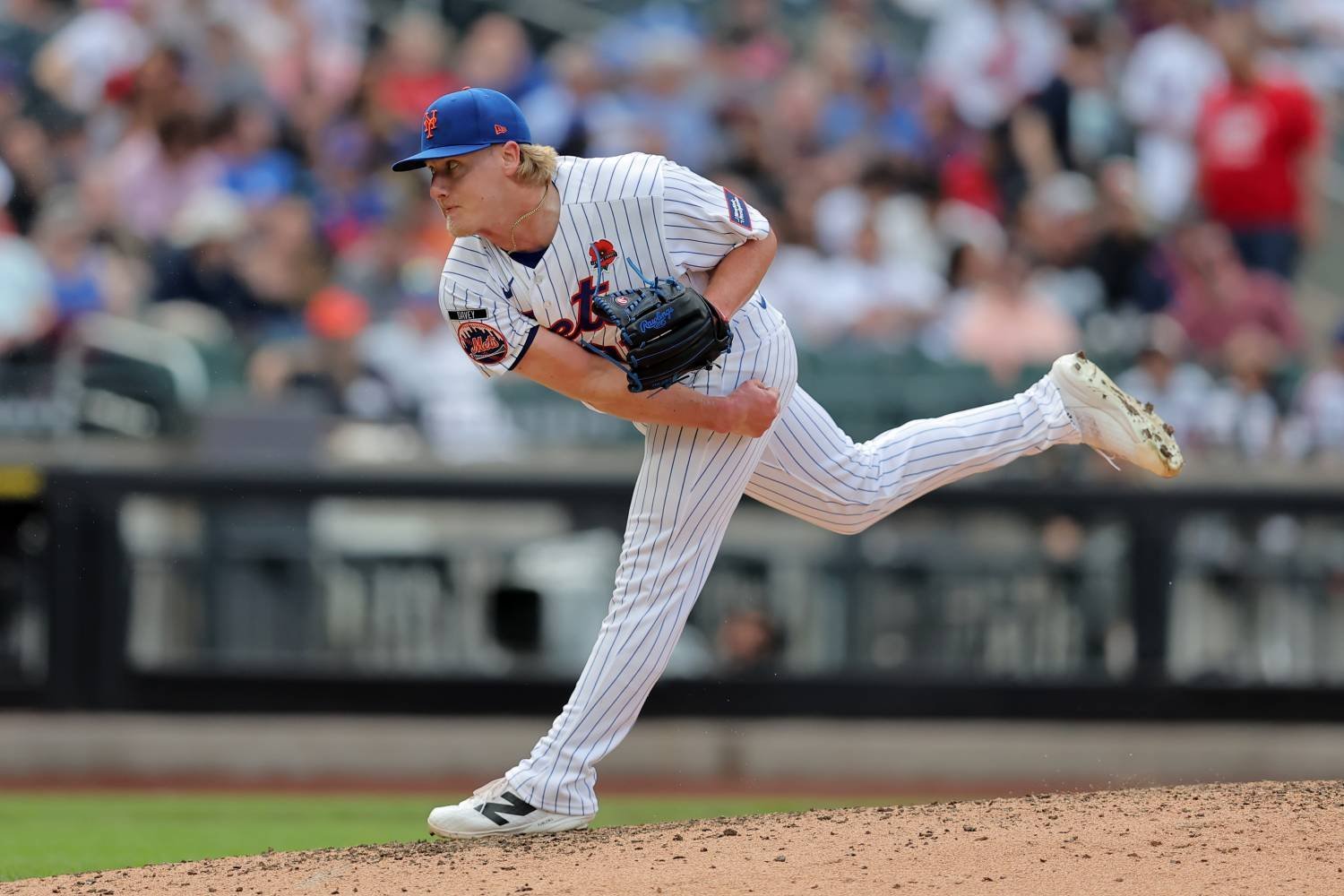 The New York Mets continue to churn the back end of the bullpen. Right-handed reliever Jonathan Pintaro was called up Wednesday from Triple-A Syracuse by the Mets, with right-handed reliever Joey Gerber was sent down to Triple-A. Gerber pitched two innings in Tuesday's 7-0 loss to the St. Louis Cardinals, giving up a run on three hits with a strikeout. It was his second appearance after being called up June 3 and third of the season after an early-April promotion. Pintaro is up for the second time after making two appearances in late May. In 3⅔ innings, he didn't allow a run or a hit with one walk and three strikeouts. In 19 games and 31⅓ innings at Triple-A this year, Pintaro has a 10.6% walk rate and 30.9% strikeout rate. View the full article
 -
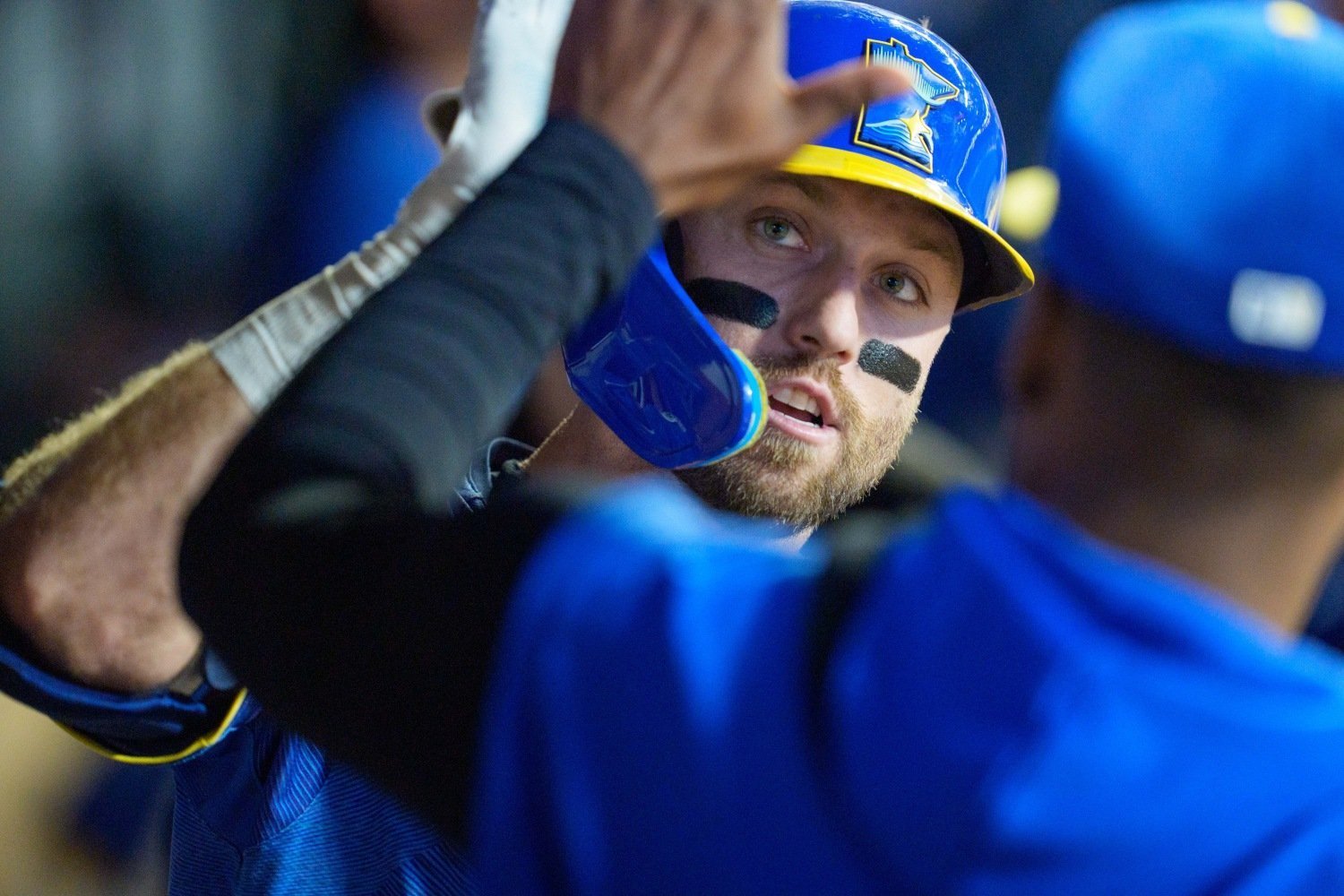 As the MLB trade deadline approaches, much of the conversation surrounding the Twins centers on the biggest names on the roster. If Minnesota decides to sell, teams will undoubtedly call about Joe Ryan. Ryan Jeffers could draw interest from clubs looking for help behind the plate, and Byron Buxton's name will continue to generate speculation, even if a deal remains unlikely. However, trade deadlines are often shaped by more than just blockbuster moves. Contending teams are constantly searching for complementary pieces that can improve a roster's depth, strengthen a bullpen, or provide matchup advantages down the stretch. Those players rarely generate headlines, but they can still become valuable trade chips. If the Twins find themselves moving pieces at the deadline, these four under-the-radar players could emerge as realistic trade candidates. UTIL Kody Clemens Few waiver claims (or, as is technically the case, cash deals in lieu of letting a DFA'd player hit waivers) have worked out as well for Minnesota as Clemens. Since joining the organization last season, Clemens has carved out an important role as a versatile bench player capable of contributing on both sides of the ball. In 112 games with the Twins last year, he posted a 96 OPS+ while accumulating 1.2 rWAR. This season, he has taken another step forward with a 118 OPS+ and 0.9 rWAR through 55 games. His value extends beyond the batter's box. Clemens has provided strong defense at first base and has produced some of the best Defensive Runs Saved totals among players at the position. Add in his ability to move around the diamond, and he becomes an attractive option for a contender seeking a left-handed bat with defensive flexibility. The return would likely be modest, but utility players who can fill multiple roles often become valuable deadline additions for playoff contenders. Clemens also has great makeup, which would give an acquiring team extra incentive to target him as a role player on a could-be champion. LHP Taylor Rogers Rogers returned to Minnesota hoping to finish his career where it started, but there is a scenario where he ends the season elsewhere. The veteran left-hander may be in the final season of his career, and contenders are always searching for experienced bullpen help in July. While Rogers has not completely stabilized Minnesota's relief corps, some underlying numbers suggest he has pitched better than his traditional statistics indicate. His 4.97 ERA stands in sharp contrast to a much stronger 3.58 FIP. He has also been more effective against left-handed hitters, holding them to a .684 OPS compared to an .967 OPS allowed against right-handed batters. A team looking for a veteran left-handed specialist or matchup reliever could view Rogers as a worthwhile addition. His postseason experience and long track record may hold more value to a contender than they do to a Twins club focused on the future, though he'd fetch even less in a deal than Clemens. OF Trevor Larnach Larnach spent much of the offseason surrounded by trade speculation. Minnesota reportedly explored moving him during the winter, but ultimately, they held onto the former first-round pick. Instead of seeing his value decline, Larnach has reestablished himself as a productive major-league regular. Through his first 55 games, he owns a 110 OPS+ and 0.6 rWAR. He continues to thrive against right-handed pitching, posting an .801 OPS in those matchups. His struggles against left-handed pitchers remain evident, however, as he has managed just a .427 OPS against southpaws. That profile may actually increase his appeal to contenders. Many playoff teams look for platoon bats capable of maximizing favorable matchups. Larnach's left-handed power and success against righties could make him a valuable piece for a club seeking additional offense from a corner outfield spot or designated hitter role, and at this point, he can't reasonably expect to play every day. That experiment has failed. RHP Yoendrys Gómez Few players have boosted their stock more dramatically over the last couple of months than Gómez. The Twins acquired Gómez from the Rays for cash considerations earlier this season, and the move has quickly paid dividends. Since arriving in Minnesota, he has posted a 0.64 ERA, 2.24 FIP, and 0.86 WHIP while striking out 18 batters and walking only six in 14 innings. Minnesota has utilized a closer-by-committee approach throughout the season, but Gómez became the first Twins reliever to reach three saves. His combination of swing-and-miss stuff and affordable team control could make him attractive to organizations looking for bullpen help. The timing will be important. If Gómez continues pitching at this level throughout June and into July, Minnesota could find itself in a position to sell high on a reliever they acquired for virtually nothing. Even a modest prospect return would represent a strong piece of business for the front office. Trade deadline discussions often focus on stars and headline-grabbing names, but roster depth can be just as valuable for teams chasing a postseason berth. Clemens, Rogers, Larnach, and Gómez each bring a specific skill set that could appeal to contenders looking for affordable upgrades. Whether the Twins ultimately move any of these players remains to be seen. Much will depend on where Minnesota sits in the standings as the deadline approaches. Still, these are the types of players who frequently change uniforms in July and quietly help shape the playoff race. Will the Twins trade any of the players mentioned above? What kind of trade value exists for these lower-tier players? Leave a comment and start the discussion. View the full article
 -
What Can the Milwaukee Brewers Expect From Luis Lara?
DiamondCentric posted an article in Brewer Fanatic
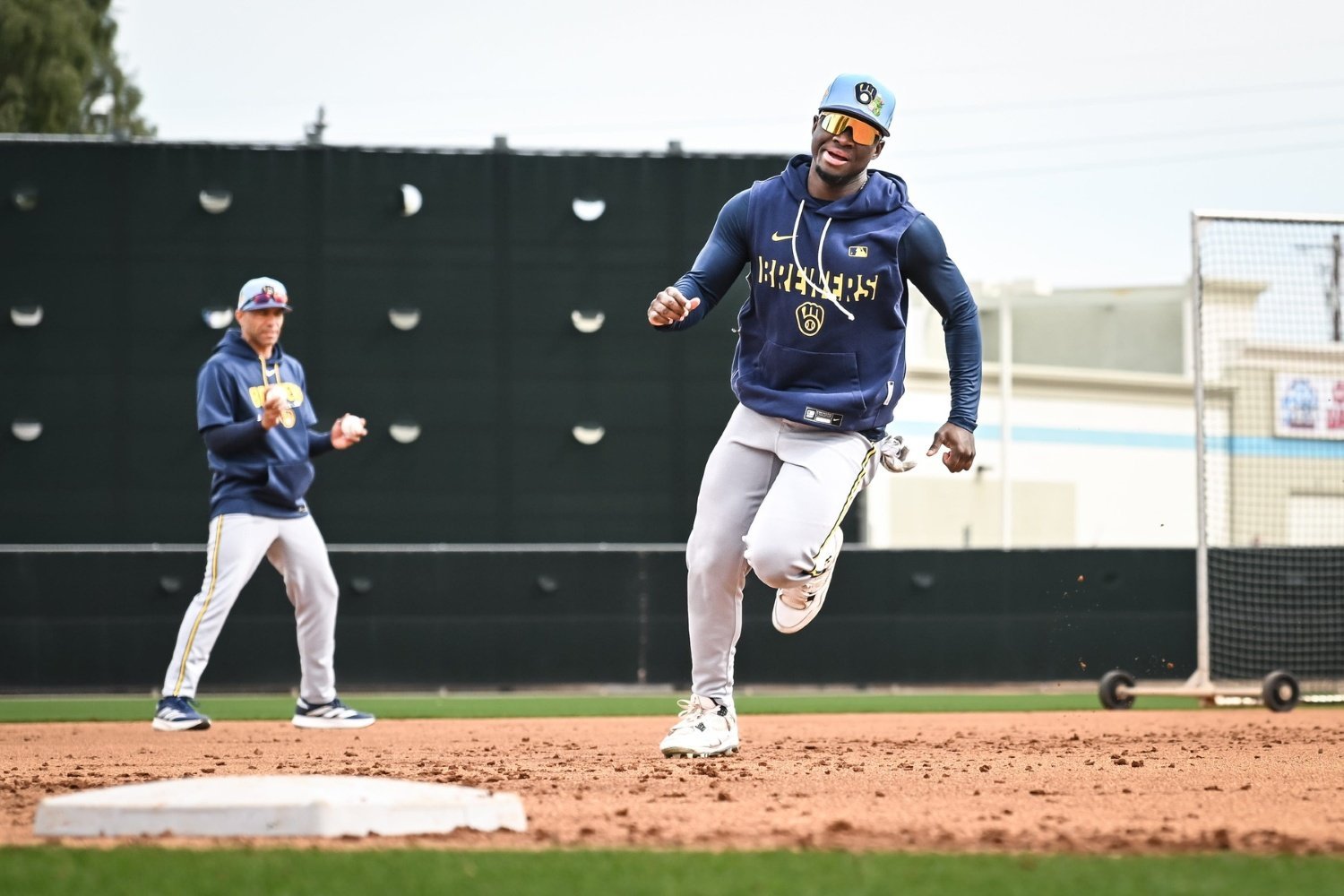 There are two things this should be prefaced with. One is that a lot of information on Luis Lara (and other top prospects) can be gleaned from listening to Spencer Michaelis wax lyrical each week on the Brewer Fanatic pod. Secondly, a massive congratulations to the young man for securing his future and defying a lot of stereotypes around his size and player archetype. Now, let's ask: why did the Brewers do this, and what future do they envision for him? Luis Lara is a phenomenal defender. Otherworldly. I'm not saying he's Pete Crow-Armstrong, because Crow-Armstrong is the greatest range monster we've seen in the outfield for a very long time, and possibly ever. That being said, Lara is close to that level of outfield coverage, combining exceptional jumps and reads with speed and great hands to flag down fly balls and line drives. This catch, in particular, shouldn't be marred simply because there's a position player on the mound: He currently holds a Minor League Gold Glove for his outfield prowess from last season, and there aren't really any faults. His arm strength has really improved over the past few years. He recorded 10 outfield assists in 2025 with the Double-A Biloxi Shuckers, and has three so far this season with Nashville. In short (a word Lara has been tagged with many times in his young career), this is the kind of defense the Brewers crave in their outfield mix, especially with the fly ball configuration of their pitching staff this season. The other facet of his game in which Lara has greatly excelled is his control of the strike zone—especially his contact rates. Lara has come a long way with his chase rates, which used to be a weakness, and is now above-average in that category, with some of the best bat-to-ball skills in Triple A. TJStats has a nice graphic showing his percentiles this season with the bat: He's a patient hitter who's walked more than he's struck out. He's consistently put the ball in play and has started pulling the ball in the air. All of those are really positive things, and perhaps the biggest is the hard-hit rate, which is now in the 55th percentile. Lara is just 5-foot-7, and while he's been young for nearly every level he's passed through on his journey, the ability to impact the ball has been lacking at those stages. This is the first season in which Lara's isolated power number (or the difference between his batting average and slugging) has been over .090 since he left the DSL. One thing we know from watching Sal Frelick and Luis Rengifo this year is that simply making contact is not enough in the big leagues. So this development is important, but it does come with a caveat: These are Lara's splits hitting as a lefty against right-handed pitching, and vice-versa. It seems like he's been a very different hitter when facing each side of the platoon. Against righties, Lara is battling and grinding his at-bats, taking his walks and getting on base, but he's not providing much—if any—thump. Contrast that with his performance against left-handers, and there's a noticeable difference. He swings more, he's more aggressive, and he's been barrelling up baseballs regularly. His expected weighted on-base average (xwOBA) tells the story, and it's important to pay attention to this. What it means is that Lara's everyday opportunity might need to wait a little longer, until he can handle right-handers with a little more panache. The majority of pitchers are right-handed, and simply being patient and hoping to walk or put a weakly hit ball in play against big league-caliber command and stuff won't cut it over the long term. Lara is, at present, an incredibly effective defensive fourth outfielder. He's also a good candidate for that role as a pinch-hitter against left-handers, something Sal Frelick can benefit from. Brandon Lockridge also fills this role well, however, and was beginning to show signs of his own adaptation prior to his calamitous collision with the concrete down the left-field line. He's due back sometime in the next few weeks, should his rehab stint go well. The Brewers will be hoping for big things from Lara. He's a 21-year-old playing in Triple A, and he's already shown some progress in the exit velocity department. This contract was arranged under the premise that they think more is to come, and Lara appears to be a very fast learner. He's shown that in the first half of the season, with improving launch angles. His xwOBA has steadily ticked up this year. He'll need to keep progressing if he wants to become a regular, and like Cooper Pratt, that may mean a little more seasoning for now. If all goes according to plan, he'll be worth the wait. View the full article
 -
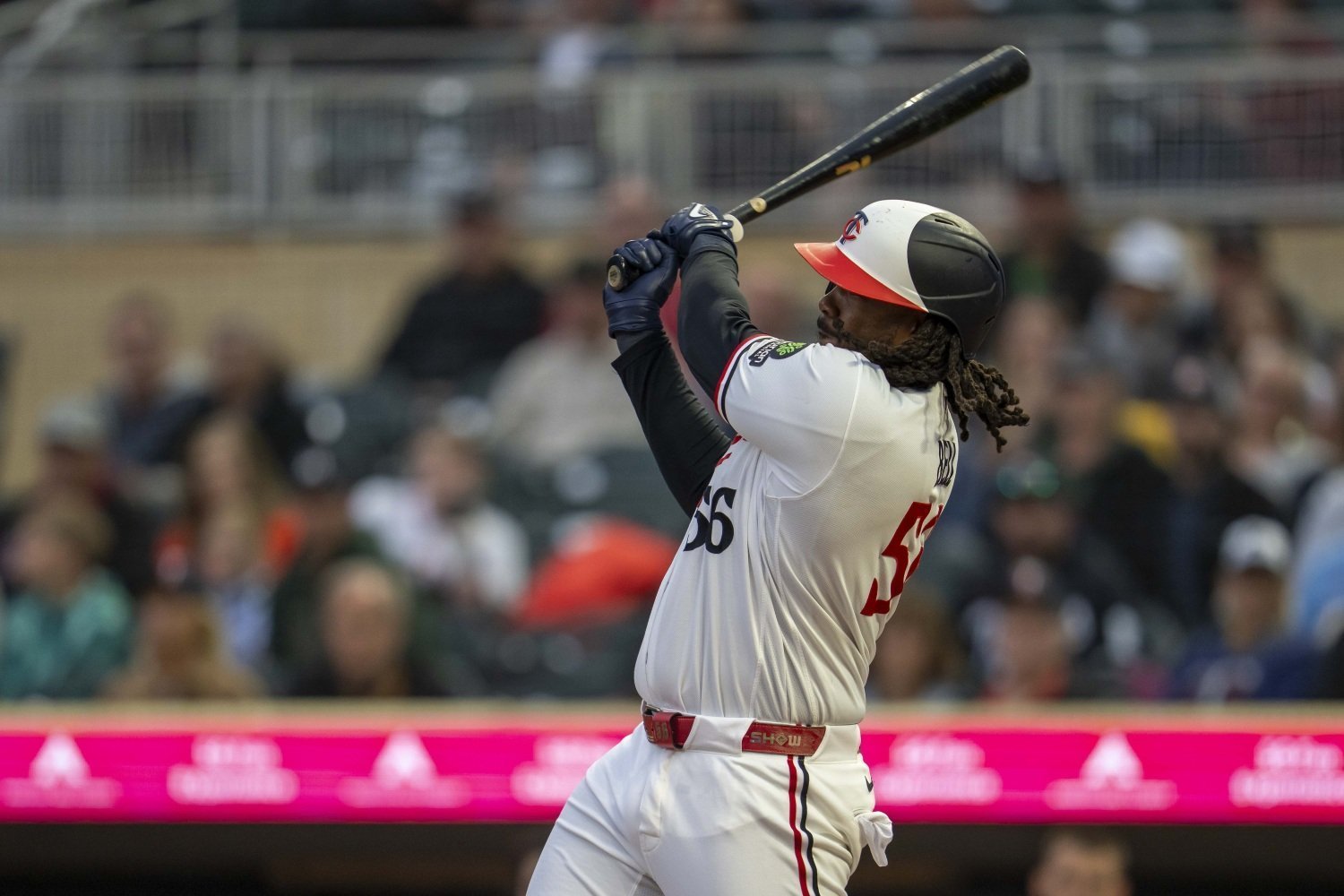 Josh Bell wasn't brought to Minnesota to save runs with his glove. The Twins signed the veteran switch-hitter to a one-year, $7-million contract because they believed his bat could deepen the lineup. Through the first 65 games of the season, that investment hasn't paid off. Bell is hitting .228/.286/.367, with 7 home runs. His 80 OPS+ ranks well below league average; he sits 140th among 160 qualified hitters in OPS. For a player who spends most of his time at designated hitter and first base, those numbers are difficult to overlook. Still, Bell's career has followed a familiar pattern. Every season seems to begin with questions about whether his production has disappeared for good, only for him to heat up as the weather does. The challenge for Minnesota is determining whether this is simply another slow start or the beginning of a permanent decline. 3 Reasons Josh Bell Might Be Cooked 1. The Plate Discipline Numbers Are Alarming Despite his imposing 6-foot-3, 261-pound frame, Bell has never fit the profile of an all-or-nothing slugger. Throughout his career, he has generally controlled the strike zone well and avoided excessive strikeout totals. That hasn't been the case this season. His 24.3% strikeout rate would be the second-highest mark of his career, while his 6.9% walk rate would be his lowest. The combination becomes even more concerning when looking at recent trends. During May, Bell posted a 25-to-3 strikeout-to-walk ratio. June hasn't started much better, with a 10-to-1 ratio. Among the 50 months of his career in which he has accumulated at least 75 plate appearances, May 2026 produced his worst walk rate and strikeout-to-walk ratio. For a hitter whose value is tied almost entirely to offensive production, those are major warning signs. 2. Age Is No Longer On His Side At 33 years old, Bell is no longer in the prime years of his career. Slow starts are easier to dismiss when a player is 27 or 28 and has a long runway ahead of them. When veterans begin showing declining plate discipline and diminished production, teams have to consider whether age-related decline is becoming a factor. The Twins signed Bell expecting a bounce-back season, especially after the way he finished the 2025 campaign (see below). Instead, they're watching a veteran whose offensive indicators are trending in the wrong direction. At some point, Bell is not going to have a bounce-back after a cold start, and that might be happening this year. 3. The Defensive Value Isn't There Players can survive offensive slumps when they contribute elsewhere. Bell doesn't have that luxury. He provides limited defensive value and has spent much of the season serving as the designated hitter. If the bat isn't producing, there isn't another aspect of his game offsetting the struggles. That puts extra pressure on every plate appearance and makes prolonged slumps significantly harder for a contending club to tolerate. Minnesota has limited his exposure at first base, but he has still been worth -1 run at the position. 3 Reasons Josh Bell Might Be Ready to Break Out 1. He's Built a Career on Slow Starts If there is one player who deserves the benefit of the doubt in this situation, it's Bell. Over 11 major-league seasons, he has developed a reputation for starting slowly before finding his rhythm later in the year. This doesn't show up in a huge split between first halves and second halves for his whole career, but look at the last three seasons: 2023: 1st Half: .701 OPS - 2nd Half: .793 2024: 1st Half: .644 - 2nd Half: .885 2025: 1st Half: .678 - 2nd Half: .842 This is, broadly speaking, what he does. No stats-savvy fan or front office will be comfortable betting on it, but the pattern here is real. 2. The Swing Data Looks OK Bell has lost some bat speed this year, relative to last season—but last season represented a huge step forward in that regard. He's generating enough bat speed to produce consistent power, and his bat path, contact point and timing are all similar to where they were when he was mashing last summer. He's still hitting the ball hard at an above-average rate. The process is worrisome when it comes to swing decisions, but the swing itself isn't yet breaking down in an obvious way. 3. The Calendar Has Historically Been His Friend Bell's overall career numbers improve dramatically once the season moves beyond the first two months. He owns a career .795 OPS after June 1 and has posted an OPS above .750 after June 1 in each of his nine full major-league seasons. That's an incredibly consistent trend. While past performance doesn't guarantee future results, Bell has repeatedly demonstrated an ability to make adjustments and produce once summer arrives. Few hitters have shown such a clear distinction between their early-season and late-season performance. The sample size is tiny, but Bell has shown some encouraging signs recently. After his homer Tuesday night, he's batting .286/.333/.571 in June, with two home runs. His slugging average this month is higher than his OPS was in May. Those numbers alone don't prove a breakout is imminent, but they represent the kind of gradual improvement that has often preceded his midseason turnarounds in previous years. The evidence supporting both sides of the argument is compelling. Bell's declining walk rate, rising strikeout totals, and age suggest there is legitimate reason for concern. At the same time, nearly every season of his career has featured similar doubts before he eventually found his footing. The Twins signed Bell believing his second-half adjustments from last season were real. Now they must decide how long they're willing to wait for those adjustments to show up again. If history repeats itself, Bell could be one of Minnesota's more productive hitters over the final four months of the season. If it doesn't, the Twins may be left wondering whether they mistook a temporary rebound in 2025 for evidence that there was still plenty left in the tank. For now, the answer remains somewhere between cooked and ready to break out, but the needle is moving in the right direction. What has stood out about Bell so far in 2026? Is he cooked? Is he ready to break out? Leave a comment and start the discussion. View the full article
 -
 Alex and Maddie sit down and recap the recent drama that’s been surrounding the Red Sox. They break down Brayan Bello’s demotion to Triple-A and Craig Breslow’s out-of-touch comments about the situation. They ponder the state of Breslow and Theo Epstein’s relationship. Are they veering towards a friends-to-betrayal-to-enemies-with-benefits type of relationship? Finally, they discuss how ownership (one of John W. Henry, Tom Werner, Sam Kennedy, or Theo Epstein) is reportedly involved with trade talks. Listen on Apple Podcasts: https://podcasts.apple.com/us/podcast/the-talk-sox-podcast/id1783204104 Listen on Spotify: https://open.spotify.com/show/3qPrPXEngu0CxgTmlf0ynm Listen on iHeartRadio: https://www.iheart.com/podcast/263-the-talk-sox-podcast-244591331/ Listen on Pocket Casts: https://pca.st/4tmd121v Watch on YouTube: https://www.youtube.com/@talksox View the full article
 -
 Boston Red Sox Affiliate Recap (June 9) Triple-A Worcester Red Sox Season Record: 33-28 The WooSox pulled out an extra-innings 6-5 victory over the Rochester Red Wings (Washington Nationals). The Worcester Red Sox climbed out of a three-run hole and won it in the tenth inning on the road. The WooSox spent most of the night chasing, but a late power surge and a little help from the bullpen flipped the game. After a scoreless start through the first four innings, Rochester broke through with a solo homer in the fifth. That was the only run Jack Anderson gave up in his solid start, tossing six innings, giving up just one run on three hits with six strikeouts. Worcester answered in the seventh when Kristian Campbell worked a walk, then came around to score on a Jason Delay single to tie it 1-1, but the Red Wings responded immediately in the bottom half with a two-run shot, then tacked on another run with a solo blast in the eighth to extend their lead to 4-1. Then came the turning point. Allan Castro reached base thanks to a throwing error from the pitcher, and Tsung-Che Cheng drew a walk to put two runners on in the top of the ninth with two outs. Matt Lloyd was the next man up and was hitless so far in the game; that hitless game was ended after he crushed a clutch three-run homer to tie the game 4-4. Wyatt Olds came into the game in the bottom half and had a three-up and three-down inning, forcing extras. In the tenth, Worcester pushed across the go-ahead runs: With the bases juiced, Tyler McDonough scored on a Matt Thaiss double play, then Campbell delivered an RBI single to bring home Braiden Ward, putting the WooSox up 6-4. Noah Song came in for the bottom half with the hopes of closing it out, Rochester scratched one back but thankfully, stranded the tying run. Song earned his second save of the season as Worcester escaped with the 6-5 win. Standout Performances: Jack Anderson: 6 IP, 3 H, 1 ER, 6 K Wyatt Olds: 1 IP, 0 H, 0 ER, 3 K Matt Lloyd: 1-for-4, HR, 3 RBI Double-A Portland Sea Dogs Season Record: 29-28 The Portland Sea Dogs jumped out early but couldn't hold on, dropping a 7-5 decision at Reading (Philadelphia Phillies). Boston's Double-A club out-hit the Fightin Phils 10 to 7, yet one swing from the other dugout decided the night. Portland struck first with three runs in the top of the first. Franklin Arias led the game off with a single, and Will Turner followed with a walk to put two on with no outs. Arias scored on a Brooks Brannon ground-rule double, then Turner came home on a Johanfran Garcia single, and Brannon scored on a Marvin Alcantara sacrifice fly for an early 3-0 lead. In the bottom half, Arias made a tough throwing error that later led to Reading scoring a run on an RBI single, putting the game at 3-1. The Red Sox star prospect Anthony Eyanson had a very weird outing. He had one unearned run (Arias' error) while throwing five walks and four strikeouts in his 2 ⅔ innings of work. His command was way off compared to usual, especially since he has not walked batters much this season, throwing only 37 of his 68 pitches for strikes. His fastball velocity was down from usual as well, sitting around 91-93 MPH. It was noted that he seemed to focus on throwing his curveball on two strikes; unfortunately, his command was lacking. The game completely flipped in the fourth; the Fightin Phils unloaded a grand slam to right-center, putting them ahead 5-3. Reading struck again in the eighth inning with a two-run homer, stretching the lead to 7- 3. Portland mounted a ninth-inning push: a Caden Rose lead-off solo homer and an RBI groundout from Nate Baez gave the Sea Dogs a little hope, pulling them within two, but that was not enough as they suffered a 7-5 defeat. Outside of Arias, Brannon, and Garcia, who combined for eight of the team's 10 hits, Portland's lineup could not produce many hits when it mattered most. Portland had a ton of chances to put runs on the board with runners in scoring position, but they could not string together hits in the big spots, going 2-for-11 with runners in scoring position. Another recipe for disaster is the four errors the Sea Dogs committed: one error led to a run, and another to the grand slam that ultimately cost them the game. Standout Performances: Franklin Arias: 3-for-5, 2B, R Brooks Brannon: 3-for-5, 2B, R, RBI Johanfran Garcia: 2-for-4, 2B, RBI Caden Rose: 1-for-3, HR, R, RBI High-A Greenville Drive Season Record: 23-32 The Greenville Drive trailed three separate times but finally grabbed the lead for an 8-7 win over the Winston-Salem Dash (Chicago White Sox). The Dash jumped on the Drive’s starter Devin Futrell early, a two-run single in the first and a two-run homer in the second made it 4-0, putting Greenville in a hole. The Drive struck right back in the bottom of the second with two two-run homers. Luke Heyman drew a walk, setting up Isaiah Jackson to launch his ninth homer of the year. Jack Winnay followed up with a single to keep the line moving. It was Ronny Hernandez's turn at the plate as he clobbered a two-run homer, his fifth in 13 games, tying it up 4-4. From there, both teams scored, but it stayed tight for a few innings. Winston-Salem nudged ahead with a solo homer in the third inning, 5-4. Greenville tied it again, 5-5, in the fourth on a Hernandez RBI single after Mason White hit a double, then the Dash pushed the lead further out in front, 7-5, in the fifth inning with an RBI single and groundout. Greenville owned the seventh: Hernandez and Justin Gonzales led off the inning with back-to-back singles, putting two runners aboard with no outs for Enddy Azocar. Like he has been doing all year (hitting extra-base hits), he roped a double down left field, bringing home two runs to put the Drive one run short of tying it. Yoeilin Cespedes showed he has ice in his veins as he delivered the go-ahead two-run single to make it 8-7. Calvin Bickerstaff was the MVP of the pitching staff, slamming the door with 2 ⅔ scoreless no-hit innings with three strikeouts to earn his fourth win of the season. Standout Performances: Calvin Bickerstaff: 2 ⅔ IP, 0 H, 0 IP, 1 BB, 3 K Yoeilin Cespedes: 2-for-3, 2 RBI Ronny Hernandez: 3-for-4, HR, 2 R, 3 RBI Enddy Azocar: 1-for-4, 2B, R, RBI Isaiah Jackson: 1-for-4, HR, R, 2 RBI Low-A Salem RidgeYaks Season Record: 24-34 The RidgeYaks almost completed an incredible comeback, falling just short 7-6 to the Fayetteville Woodpeckers (Houston Astros). Salem dug an early hole, starter Jason Gilman lasted just two innings, surrendering six runs (three earned) on a rough couple of innings that included three costly errors from catcher Adonys Guzman, one of which allowed two runs to score on one play in the first inning, putting the Woodpeckers up 2-0. The second inning was more detrimental: a lead-off homer, an RBI double, and another bad throw from Guzman on a steal attempt led to another run, 5-0. The frustrating second inning got worse when Gilman balked, leading to one more run to cross the plate, extending the Woodpeckers' lead to 6-0. Fayetteville pushed it to 7-0 in the fourth inning with an RBI single, digging Salem in a massive hole to make the game a potential laugher. After tallying just one hit through five innings, the RidgeYaks offense came out of nowhere. Salem drew walk after walk: Louis Andujar, Avinson Pinto, and D'Angelo Ortiz all worked bases-loaded RBI walks. Afterward, Ilan Fernandez lined a two-run single to make it 7-5. They added one more in the ninth when Andrews Opata singled home Stanley Tucker to make it 7-6, but the rally ended there, unfortunately. Knowing that the RidgeYaks came up one run short in a 7-6 game, while the offense finally woke up, but some bad throws helped the other team, makes this defeat even more frustrating. View the full article
 -
Mets Minor League Report: St. Lucie Twirls No-Hitter
DiamondCentric posted an article in Grand Central Mets
 St. Lucie was the clear bright spot, riding Cam Tilly's six and one-third hitless, scoreless innings to a 7-0 no-hitter, with Antonio Jimenez and Trey Snyder driving the offense. At Triple-A, Kevin Parada homered in a Syracuse loss, while Jose Ramos knocked in both Binghamton runs. In Brooklyn, Jose Chirinos struck out ten over six innings in a hard-luck Quality Start that ended in a 3-0 defeat. Mets Transactions New York Mets signed free agent C Jack Scanlon to a minor league contract. New York Mets optioned C Hayden Senger to Syracuse Mets. Parada Homers but Syracuse Falls in Buffalo The Syracuse Mets dropped a 7-2 decision to the Buffalo Bisons. Andy Ibáñez and Jihwan Bae each collected two hits, and Kevin Parada added a home run and an RBI. Syracuse struck first in the opening inning when Bae singled, then scored on an Ibáñez line-drive single to left. Buffalo answered in the bottom of the first with two runs and pulled away with two more in the third and three in the fifth. Parada's solo home run in the fifth accounted for the final Syracuse run. The Mets managed six hits, did not draw a walk, and left three runners on base. Jonah Tong took the loss, allowing four runs on five hits and four walks while striking out four over four innings. Daniel Duarte struggled in relief, giving up two runs in one-third of an inning, and Zach Peek allowed one run while striking out two over two-thirds of an inning. Player AB R H RBI BB K Nick Morabito 3 0 0 0 0 1 Ji Hwan Bae 3 1 2 0 0 1 Andy Ibáñez 3 0 2 1 0 0 Ryan Clifford 2 0 0 0 0 0 Yonny Hernández 2 0 0 0 0 0 Grae Kessinger 2 0 0 0 0 0 Cristian Pache 2 0 1 0 0 0 Jackson Cluff 2 0 0 0 0 0 Kevin Parada 2 1 1 1 0 1 Player IP H R ER BB K HR Jonah Tong 4 5 4 4 4 4 0 Daniel Duarte 1/3 1 2 2 1 0 0 Zach Peek 2/3 2 1 1 0 2 0 Early Lead Slips Away as Binghamton Falls in Somerset The Binghamton Rumble Ponies lost 10-2 to the Somerset Patriots. Jose Ramos drove in both Binghamton runs with a first-inning single, and Jacob Reimer reached base twice with a hit and a walk. Binghamton jumped ahead in the top of the first when Chris Suero and Reimer drew walks and Ramos lined a single to left to score both. The lead did not hold. Somerset answered with a run in the first, then broke the game open with three runs in the fourth and added single runs in the sixth and seventh before a four-run eighth. Binghamton managed just two hits, walked five times, struck out 14 times, and left five runners on base. R.J. Gordon took the loss, surrendering four runs, three earned, on three hits and three walks with three strikeouts over 3 1/3 innings. Douglas Orellana provided scoreless relief across 1 2/3 innings, while Dan Hammer and Brian Metoyer each allowed a home run. Player AB R H RBI BB K Chris Suero 3 1 0 0 1 2 Jacob Reimer 3 1 1 0 1 1 Eli Serrano III 4 0 0 0 0 2 Jose Ramos 3 0 1 2 1 2 Nick Lorusso 4 0 0 0 0 2 JT Schwartz 4 0 0 0 0 0 Vincent Perozo 4 0 0 0 0 3 Jaylen Palmer 2 0 0 0 1 1 Wyatt Young 2 0 0 0 1 1 Player IP H R ER BB K HR R.J. Gordon 3 1/3 3 4 3 3 3 0 Douglas Orellana 1 2/3 1 0 0 1 2 0 Dan Hammer 2 3 2 2 0 3 1 Brian Metoyer 1 2 4 0 0 3 1 Chirinos Strikes Out Ten but Brooklyn Blanked at Home The Brooklyn Cyclones were shut out 3-0 by the Frederick Keys despite a strong start from Jose Chirinos. JT Benson doubled, and John Bay singled and stole a base, but the offense never broke through, managing four hits, drawing one walk, striking out nine times, and leaving four runners on base. Brooklyn's best late threat came in the ninth, when Ronald Hernandez and Corey Collins each singled, but the inning ended without a run. Frederick scored all of its runs against Chirinos, taking the lead on a two-run home run in the fourth and adding a run on a double in the sixth. Chirinos turned in a Quality Start in defeat, allowing three runs on four hits and three walks while striking out ten over six innings. Danis Correa, Ryan Dollar, and Hoss Brewer combined for three scoreless innings of relief, striking out five. Player AB R H RBI BB K Mitch Voit 4 0 0 0 0 1 John Bay 3 0 1 0 0 1 Ronald Hernandez 4 0 1 0 0 2 Corey Collins 3 0 1 0 1 0 Yonatan Henriquez 4 0 0 0 0 0 Daiverson Gutierrez 3 0 0 0 0 0 JT Benson 3 0 1 0 0 1 Colin Houck 3 0 0 0 0 1 Trace Willhoite 3 0 0 0 0 3 Player IP H R ER BB K HR Jose Chirinos 6 4 3 3 3 10 1 Danis Correa 1 0 0 0 0 2 0 Ryan Dollar 1 1 0 0 0 1 0 Hoss Brewer 1 0 0 0 0 2 0 Cam Tilly Dominates as St. Lucie Cruises to No-Hitter The St. Lucie Mets rolled to a 7-0 win over the Palm Beach Cardinals behind a dominant pitching performance. Antonio Jimenez homered, walked, and scored twice, Trey Snyder tripled and drove in two runs, and Simon Juan added two hits, including a double. St. Lucie built the lead steadily, scratching across a run in the third when Elian Peña scored on a fielder's choice and a throwing error. The Mets added two more in the fifth, capped by a Julio Zayas single that scored Jimenez. The decisive blow came in the sixth, when Juan doubled, and Snyder followed with a two-run triple to make it 5-0. Jimenez tacked on a solo home run in the ninth. St. Lucie collected seven hits, drew three walks, and left eight runners on base. Cam Tilly was overpowering, allowing no hits and no runs while walking three and striking out four over 6 1/3 innings to earn the win. Elwis Mijares finished the shutout with two and two-thirds hitless, scoreless innings, walking one and striking out three. Player AB R H RBI BB K Elian Peña 3 3 0 0 1 1 Trey Snyder 4 1 1 2 1 1 Antonio Jimenez 4 2 1 1 1 1 Yohairo Cuevas 4 0 2 1 0 0 Julio Zayas 5 0 1 1 0 1 Chase Meggers 5 0 0 0 0 3 Branny De Oleo 4 0 0 0 0 0 Jeremy Rodriguez 4 0 0 0 0 2 Simon Juan 4 1 2 0 0 1 Player IP H R ER BB K HR Cam Tilly 6 1/3 0 0 0 3 4 0 Elwis Mijares 2 2/3 0 0 0 1 3 0 Top-20 Prospect Performance Nolan McLean: DNP Carson Benge: DNP A.J. Ewing: DNP Jonah Tong: 4 IP, 5 H, 4 R, 4 ER, 4 BB, 4 K Ryan Clifford: 0-for-2 Jacob Reimer: 1-for-3, BB, K Jack Wenninger: DNP Elian Pena: 0-for-3, BB, K, 3 R Mitch Voit: 0-for-4, K Nick Morabito: 0-for-3, K Jonathan Santucci: DNP Chris Suero: 0-for-3, BB, 2 K Zach Thornton: DNP Wandy Asigen: DNP Will Watson: DNP Eli Serrano III: 0-for-4, 2 K Ryan Lambert: DNP Dylan Ross: DNP Antonio Jimenez: 1-for-4, HR, RBI, BB, K, 2 R R.J. Gordon: 3 1/3 IP, 3 H, 4 R, 3 ER, 3 BB, 3 K View the full article
 -
San Diego Padres' Lack Of Punch Is Threatening To Tank Season
DiamondCentric posted an article in Padres Mission
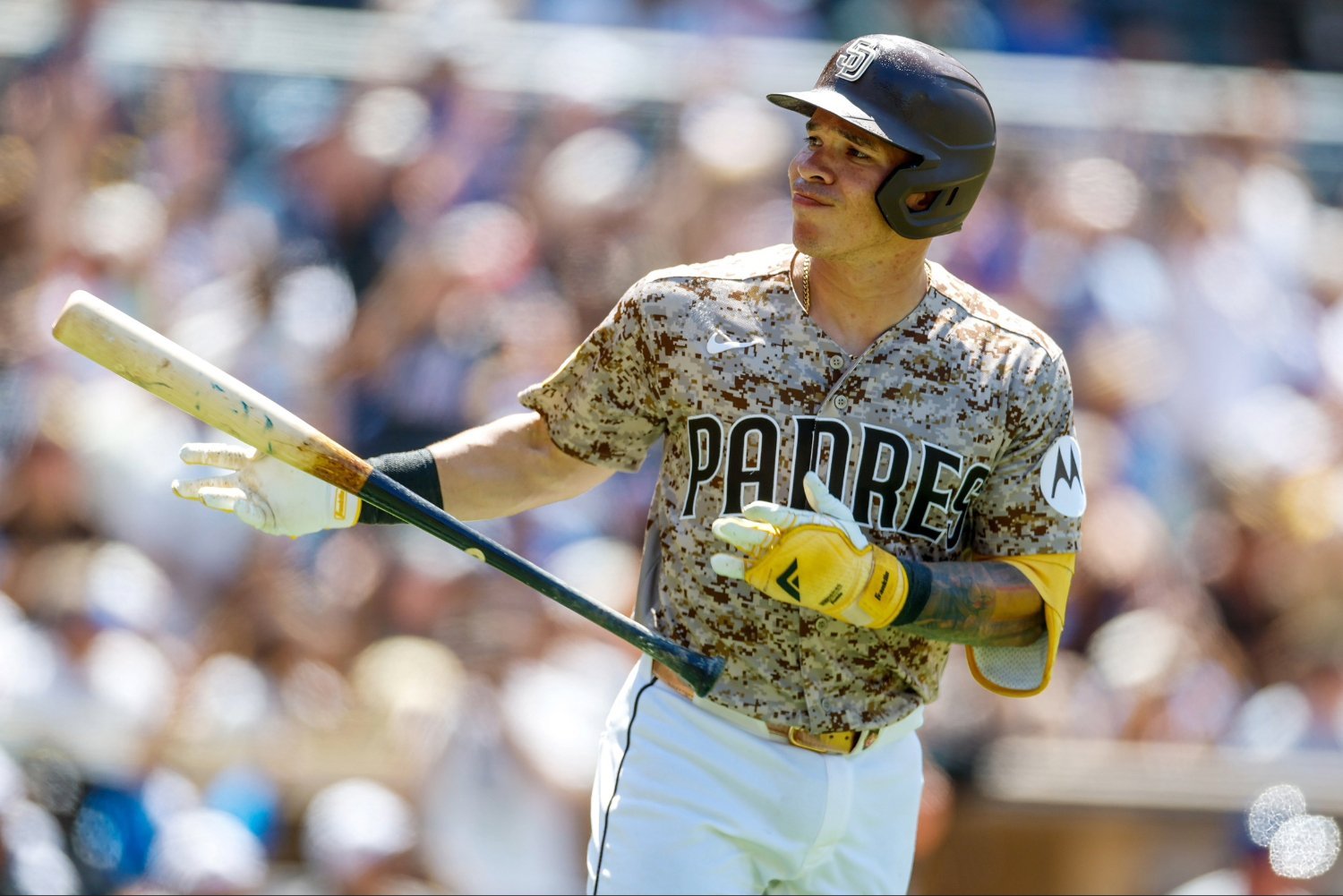 Freddy Fermin was the San Diego Padres’ offense over the weekend. His performance exposed just how low the hitting group has fallen in 2026. The light-hitting catcher drove in five of the club's six runs in a three-game set against the New York Mets. He clubbed a pair of two-run home runs and hit an RBI double — all after being asked to lay down sacrifice bunts each of his first two times up Saturday. Only one other Padre collected an extra-base hit in the series: Fernando Tatis Jr., who doubled in the finale on Sunday. The inability to slug is one of the biggest things killing this team. The Padres entered their series against the Reds last in the majors with a .644 OPS and .355 slugging percentage and tied with the Colorado Rockies for 29th with an 85 wRC+. They were last in total bases by a wide margin — 63 behind the 29th-place Tampa Bay Rays and 64 behind the 28th-place Mets. This is not a raw power issue, even though it might seem that way now that Fermin has twice as many homers as Tatis. The Padres entered this week's play 20th in the league with 65 home runs, but they were also 29th with 83 doubles and tied for 17th with seven triples. That comes out to 155 extra-base hits. Only the Rays (150) had hit fewer. The club's league-worst 6.9 hits per game would be forgivable if more of them did damage. San Diego was 23rd with a .141 ISO. How can this situation be, specifically the lack of doubles and triples, when Petco Park's outfield is spacious in the gaps and the lineup is led by accomplished veterans? The simplest explanation is that the hitters just aren't good enough as a group. Their 40.6 percent hard-hit rate was tied for eighth in MLB entering Monday, but their 18.3 percent line-drive rate was 26th and their 45.3 percent ground-ball rate was tied for the second-worst. Maybe that's a consequence of being bad against all pitches; they rank in the bottom 10 in Statcast's pitch run value (via Fangraphs) against all types of fastballs and breaking balls. Their best ranking is 18th against changeups. On top of that, they’re hitting in some bad luck. According to Baseball Savant, the Padres’ xSLG through 64 games was .392, 19th:-best in the league and almost 40 points better than the real-life production. And luck bit the Friars hard last weekend. Twice on Sunday, Mets outfielders robbed Padres hitters of extra bases. First, left fielder MJ Melendez laid out in to snag a second-inning Miguel Andujar liner that was heading toward the corner. Later, center fielder A.J. Ewing ran down a Xander Bogaerts drive in the eighth that likely would have scored two runs and given the Padres a legitimate chance at a comeback. But, luck or no luck, the fact is the lineup is packing the weakest punch in baseball and is canceling out the team's strong defense and bullpen. The Padres have a huge opportunity this week to muscle up. They have three games each against the Cincinnati Reds (home).and Baltimore Orioles (away), clubs that entered Monday's play ranked in the bottom five in runs allowed. If they get shut down against those staffs, then this group surely will be beyond help. Everything will need to be on the table — benchings, demotions, panic trades. The time for trust and patience will be over. View the full article
 -
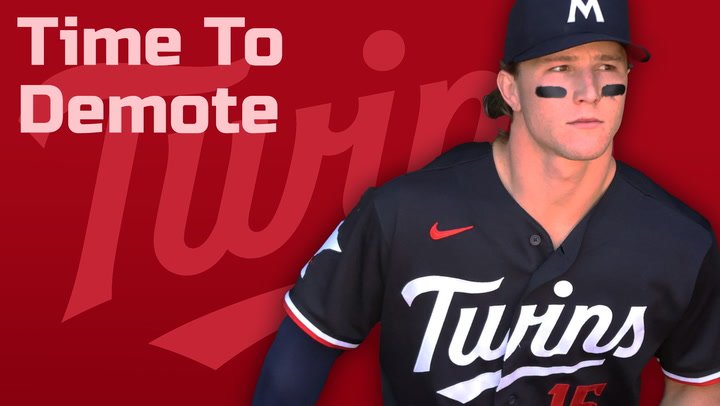 Luke Keaschall was supposed to be a key contributor for the Twins. Instead, two-and-a-half months of struggles have left the Twins facing a difficult decision they may no longer be able to avoid. View the full article
 -
 The Royals returned to Kauffman Stadium on Tuesday to begin a three-game series against the Texas Rangers, and Jac Caglianone was back in the lineup after nursing a sore shoulder for the last two games. Safe to say, he didn't look at all injured against the Rangers in the first game of their six-game homestand. Against Texas starter Nathan Eovaldi and the Rangers bullpen, Cags went 3-for-3 with two home runs and a walk. Below is a look at his batted-ball chart from Tuesday's 5-3 win over the Rangers, courtesy of TJ Stats. He got lucky on the single, as Texas second baseman Ezequiel Duran was playing back and couldn't quite make the play. However, his other two batted balls, both home runs, were absolutely smoked, generating average exit velocities of 107.9 MPH and 105 MPH, respectively. As the Royals' social media team pointed out, Caglianone generated 852 feet of batted-ball distance on his home runs in just two innings. After Tuesday's game, Cags is slashing .261/.338/.442 with a .780 OPS in 222 plate appearances. The former Florida Gator has eight home runs, 23 runs scored, 18 RBI, 3 stolen bases, and a 104 TJ Bat+. Suddenly, Cags has become one of the Royals' most productive hitters in the Royals lineup. According to TJ Stats, his .358 xwOBA is the second-best mark among Royals hitters with 50 or more plate appearances, and his .321 wOBA ranks second as well. Has Jac finally arrived as an established hitter after so much hope and prospect hype since being drafted in 2024? Or is this just a hot streak for Cags that will fade soon enough? Furthermore, what does the former first-round pick need to do to continue to grow his profile as a possible star in Kansas City? Let's break down those questions regarding the talented Royals slugger. Caglianone Has Been On Fire in June In April, Cags slashed .256/.341/.410 with a .751 OPS in 78 at-bats. He also hit two home runs and scored 11 runs in that first full month of play. Thus, it looked like Cags was on his way to having a productive season in 2026 after a strong start. Unfortunately, he took a big step back in May. In 90 at-bats, the 23-year-old slashed .222/.271/.367 with a .638 OPS. He hit one more home run in May (3) than in April (2), stole a base, but overall things regressed for Cags in his second full month. Thus, there was some concern that he might be only a semi-regular player or that he needed more seasoning, especially as pitchers adjusted to him. (I talked about three things that Cags needed to work on to solidify his spot in the Royals lineup on May 21st.) Well, it seems like Cags has made those adjustments and then some in June. In 21 at-bats this month, he's slashing .476/.593/.952 with a 1.545 OPS. Cags also has three home runs, five runs scored, seven RBI, and two stolen bases. However, the most impressive development he may have had this month is walking five times and only striking out five times. For context, he had only six walks to 27 strikeouts in May and eight walks to 29 strikeouts in April. That's a 0.22 BB/K ratio in May and a 0.28 BB/K ratio in April compared to a 1.00 BB/K ratio in June. Lastly, when it comes to Statcast percentiles this month, he's been in the upper percentiles in nearly every category, especially when it comes to hard-hit rate, barrels, exit velocity, and launch-angle sweet-spot%, just to name a few. Cags ranks in the 100th percentile in three categories this month (wOBA, hard-hit rate, and LA sweet-spot rate) and is above the 96th percentile in six others (BB%, Swing%, Z-Swing%, 90th EV, average EV, and xwOBA). Those are characteristics of an elite power hitter, even with the lackluster rankings in O-Swing% (13th percentile) and Z-Contact% (20th percentile). The Numbers Overall Are Still Solid While it's easy to focus solely on Cags' performance in June, it's important to look at the bigger sample when it comes to his performance so far in 2026. Thankfully, one can say that the Royals outfielder is doing well overall, even with the boost of this hot June at the plate. In addition to a 104 TJ Bat+, he is also performing very well in many important batted-ball categories. Much like his Statcast percentiles in June, Cags is thriving in categories such as bat speed, exit velocity, barrel rate, and hard-hit rate. That can be seen in his TJ Statcast summary below. Overall, the top half of his Statcast summary looks quite similar to the top half of his June Statcast summary. The bottom half, unfortunately, looks vastly different. While Cags has shown improvement in his BB% and K% this month, his BB% ranks in the 40th percentile, and his K% ranks in the 11th percentile this season. Furthermore, his whiff% and Z-Contact%, his lone issues in June, have been poor the whole season. They rank in the 11th and 19th percentiles, respectively. Cags was criticized for an overeager, free-swinging approach at Florida, and it seems that hasn't improved much at the Major League level. That said, it's not as if he hasn't made any changes since his disastrous rookie campaign in 2025. Two important adjustments Cags has made this year are his improvements in launch angle and pulling the ball in the air. Below is his TJ Statcast summary from a season ago. Notice what his percentiles looked like in those two categories. Last season, Cags' 30.4% LA Sweet-Spot% ranked in the 5th percentile, and his 12% PullAir% ranked in the 30th percentile. This season? His LA Sweet-Spot% is 38.2%, ranking in the 65th percentile, and his PullAir% is 16%, ranking in the 60th percentile. Furthermore, his spray chart shows many more balls pulled this year, especially on home runs. It's not like Cags is a hitter without flaws. He strikes out a lot, chases too much, and isn't consistent when it comes to making contact on balls in the zone. That will likely prevent him from being a .300+ average hitter in his career. However, he's showing a decent eye with a penchant for being aggressive on balls that he can launch for home runs. That has been particularly evident in June, not just with his two home runs on Thursday against the Rangers, but also against the Reds last week. Even if this is what Caglianone is long-term, that's a profile the Royals can be satisfied with. He's finally showing that 25-30+ HR power, which is much needed with this Royals lineup, especially with the sharp regression of Salvador Perez and his offensive production this season (62 TJ Bat+). What Are Some Other Concerns? Offensively, Cags is trending in the right direction, which is a positive development for a franchise that's currently 28-39 and doing whatever they can to escape the AL Central basement. That said, the outfielder has some other areas that he needs to work on, with outfield defense being the primary one. Now, Cags has demonstrated one of the best outfield arms in the game in his short career. His +1 arm value ranks in the 83rd percentile, and his 97.6 MPH arm strength ranks in the 100th percentile. That's elite arm strength, which is nice to have in right field regularly. Unfortunately, Cags' range in the outfield has declined significantly after a strong start to the season. According to Savant, he has a -3 OAA in right field and -4 OAA overall (he is -1 at 1B). His success rate is 86%, two percentage points below his estimated success rate of 88%. When looking at his OAA box plot data, Cags has done better on plays going to his right and behind. However, he's performed much worse on plays to his left and when he has to come in. The big light-blue box shows that he struggles on plays where he has to decide whether to play it conservatively off the bounce or aggressively by diving. He struggled on such a play on Tuesday, as he misplayed a ball in front of him hit by Joc Pederson, and the slow third baseman ended up getting a triple (anyone else may have gotten an inside-the-park HR). Cags has the athleticism to be at least an average defensive right fielder, especially with his arm strength. However, his defensive form and instincts need polishing. Today's misplay against Pederson's batted ball didn't hurt Daniel Lynch IV or the Royals too much. That said, it could be different in the future, especially with Cags' sloppy form on many flyball outs he gets to. Tonight was an example of that poor form coming to bite him and the Royals in the butt. Granted, it's not like he has to be a Gold Glove out there in right field. If he stays a below-average right fielder defensively, Royals fans can live with that as long as he is hitting the ball hard and mashing home runs. On the flip side, Cags has the potential to be a special player. He's running more on the basepaths than he did a year ago, and he's shown the ability to make sensational defensive plays in right field over the past two years. He's not Hunter Renfroe or Edward Olivares out there by any means. Thus, let's hope that Cags can continue to work on his form and instincts in the outfield, with the goal of becoming an average defensive outfielder by 2027. That will only improve his chances of becoming an All-Star next year and beyond. View the full article
 -
 Honorable Mentions Logan Henderson 4 GS, 21 IP, 2.14 ERA, 2.49 FIP, 33.3 K%, 6.2 BB% For the past two seasons, Henderson has been just outside the major-league rotation, but he's been effective when called up. Brandon Woodruff’s injury seemed like the perfect time for him to get some real innings under his belt, but then came the unfortunate news that he would be hitting the injured list with a back strain. The situation is even sadder when considering that, prior to getting hurt, he continued his strong showing from last year and was one of the better starters for Milwaukee last month. His tendency to give up plenty of pulled balls in the air may have been a concern in the long run, but he managed to keep most of the fly balls in the ballpark. He’ll be out of commission for about a month, but assuming his comrades start to get healthier, the team may not have a clear place to put him when he gets back. Statistical Nugget: Despite having an average velocity of 93.1 mph, Henderson’s four-seam fastball has a whiff rate of 28.4%, partly thanks to its 18.1 inches of induced vertical break. Aaron Ashby 11 G, 17 ⅔ IP, 1.53 ERA, 2.09 FIP, 29.6 K%, 9.9 BB% Ashby has a real shot at being one of the league’s most impactful relievers this year. It’s only the start of June, and he has already pitched 40 innings, setting him up to comfortably eclipse the 66 ⅔ innings he pitched last year. The best part is that he has remained effective despite his monstrous workload. The Brewers ask a lot out of their trusty multi-inning southpaw, and he has consistently delivered. His sinker has gotten hit around a bit, but the breaking ball duo of his curveball and slider has helped limit the damage, with both pitches having whiff rates greater than 56%. Along with his sheer stamina, he is a rare case of a pitcher who has both elite strikeout (32.6%) and ground ball (53.7%) rates, making him an invaluable component of Milwaukee’s bullpen. Statistical Nugget: Ashby has a higher whiff rate on his curveball (56.8%) than any MLB pitcher who has thrown at least 100 pitches. Trevor Megill is in second place (50.6%). Kyle Harrison 5 GS, 28 IP, 0.96 ERA, 2.00 FIP, 28.2 K%, 5.5 BB% In the offseason, the Brewers packaged away much of their infield depth to acquire a couple of underwhelming young starting pitchers and David Hamilton. It seemed like a bizarre move at the time, but after a few months of seeing the results, it’s clear that Milwaukee may have committed their most egregious act of robbery yet. Kyle Harrison has officially broken out and has become one of the best left-handed starters in the sport. In May, the only pitchers to accumulate more fWAR (1.2) than him were Chris Sale (1.3) and Cristopher Sánchez (2.1) He recently had the unfortunate privilege of pitching in the first game of the high-altitude Las Vegas Series, where he was on the wrong end of an offensive onslaught by the Athletics. This caused his numbers to take a steep decline, but he’s clearly demonstrated that under more normal conditions, he has what it takes to be a very solid #2 option in the Brewers’ rotation. Statistical Nugget: Harrison’s go-to secondary pitch is his slurve. Last year, opposing hitters slugged .639 against the pitch. This year, they’re slugging just .227. Pitcher of the Month — Jacob Misiorowski 6 GS, 38 ⅓ IP, 0.23 ERA, 0.68 FIP, 41.9 K%, 4.4 BB% Was there ever any doubt? I would say that Misiorowski posted video-game numbers in the month of May, but it’s difficult to find any video games that are this easy. Milwaukee’s ace dominated opposing hitters in his six starts, and if not for a historic scoreless stretch by Phillies ace Cristopher Sánchez and the medical marvel that is Shohei Ohtani, Misiorowski would be a clear favorite for the NL Cy Young. Two of the main criticisms levied at the 24-year-old were that his inning count was limited by being inefficient and that he lacked command of his otherworldly stuff. Last month, only one of his six starts was shorter than six innings, and three of his starts were stretched to seven. He did this while limiting free passes and reducing his overall walk rate on the season to just 7.3%. His dominance in May rightfully earned him quite a bit of the mainstream spotlight, but this is the pitcher that Milwaukee has known about since they drafted him in 2022. With a 1.50 ERA over his first 78 innings of the year, the sky’s the limit for the future face of the franchise. Statistical Nugget: Misiorowski officially added a cutter this year, and it has quickly become a lethal weapon in his arsenal. Its Run Value per 100 pitches is 5.5, more than any other cutter in baseball (min. 100 pitches). View the full article
 -
 For the first month of the season, Taj Bradley looked like a legitimate ace. The Twins' right-hander was outperforming Joe Ryan, posting dominant stat lines in practically every start, and looking every bit like the frontline starter Minnesota believed he could be when they traded for him last summer. Through his first five starts, Bradley carried a sparkling 1.63 ERA. Three of those outings were quality starts. He was generating whiffs at an elite rate, and opposing hitters looked completely overmatched. At the time, it felt like the Twins may have fleeced the Rays. That still might end up being true. But over his last seven starts, Bradley has looked like an entirely different pitcher. Across 37 1/3 innings during that stretch, he's allowed 24 earned runs on 37 hits and 19 walks. His ERA has climbed from 1.63 to 4.02, and nearly every meaningful trend has moved in the wrong direction. The biggest reason for that decline isn't bad luck. It's command. Only 46.7% of all pitches Bradley has thrown this year have landed in the strike zone. On its own, that number isn't necessarily alarming. Plenty of successful pitchers live outside the strike zone and rely on hitters chasing pitches they can't drive. The problem is that Bradley doesn't generate enough chase to make that approach work. Too many of his misses aren't competitive and end up nowhere near the strike zone. In his latest home start last week against Chicago, multiple splitters were nearly missed by catcher Victor Caratini because they were so high. That's not an isolated occurrence, either. Similar misses have shown up throughout the season. There have also been several splitters and cutters that have bounced well in front of the plate, as well as too many fastballs that finish at a hitter’s eyes. Over this putrid seven-start stretch, his walk rate is 11.4%, which has dragged his seasonal walk rate to a career-worst 10.2%. The four starts he's made since returning from the IL in late May have been especially worrisome. Over a combined 18 innings, he's issued 12 free passes. At times, it almost looks like Bradley doesn't know where the ball is going out of his hand, and that's not something that's popped up recently. That's been an issue plaguing him throughout the season, and his results are suffering as a result. When a pitcher consistently misses by that much, he inevitably falls behind in counts. Once that starts happening, everything becomes more difficult. Hitters become more selective; pitchers are forced to throw strikes in predictable situations; and mistakes become far more costly. That's exactly what has happened to Bradley over the last month and a half. While the raw hit totals aren't especially concerning, the quality of contact he's allowing has become a major problem. After not allowing a homer over his first five starts, he's surrendered nine in these last seven starts. Three Tigers long balls wrecked his start Tuesday night and put the Twins behind the 8-ball. Working from such a high arm angle, he's always going to be a fly-ball guy. He has to locate well to keep from being forced to throw meatballs, and to avoid running into barrels. Once again, it all traces back to command—which is unfortunate, because the stuff itself remains outstanding. Bradley throws hard, and his pitches still move very well. When he's locating them properly, hitters rarely do much damage against him. That's what makes this stretch so frustrating. The raw talent is obvious. The ingredients that made him look like an ace in April haven't disappeared. But the command has. There may also be a pitch-mix component worth discussing. Roughly 89% of Bradley's arsenal sits between 91 and 97 miles per hour, with his four-seam fastball, splitter, and cutter. That by itself isn’t necessarily a bad thing, and all three pitches move differently. But it’s a very small margin for error when they’re not landing over the plate. He'll mix in a curveball occasionally, but it's not a major part of his game plan. That leaves hitters seeing a lot of pitches with similar velocity profiles throughout an at-bat. According to Statcast's new data on swing timing and miss distance, Bradley is pretty good at getting hitters to swing either too low or too high. The extreme movement separation of his four-seamer and curve, the deceptiveness of his splitter, and his comfort at the top of the zone with the heater make that happen. However, hitters are on time on 72% of their swings against him, which is far above the league average of 65%—and they get the right part of the bat on the ball more often than average, too. Adding a slider or sweeper could help Bradley. Not only would it create a larger speed gap, but it would also give him another glove-side offering that moves differently than the rest of his arsenal, especially since his curveball is very up-and-down, with little horizontal movement. Those pitches would also offer more velocity separation than his cutter or splitter do, relative to the fastball, making it harder to time him up. Would that solve all of the problems? Probably not, and it would probably be an offseason adjustment, anyway. But even if the Twins introduced another pitch tomorrow, Bradley would still need to locate it. The command issue remains the biggest obstacle standing between him and becoming the pitcher he looked like during the season's first month. The solution isn't necessarily complicated, even if executing it is. Bradley has to throw more strikes. There have simply been too many hitter-friendly counts, too many free passes, and too many wasted pitches that force him into disadvantageous situations. If executing means sacrificing a mile per hour of velocity, it may be worth considering. His splitter and cutter are already good enough to generate whiffs when they're located properly. The focus should be on getting ahead in counts, working at the bottom of the strike zone with those secondaries, and forcing hitters to react more defensively. If he can do that, the results should follow. Bradley hasn’t lost his ability to pitch. Even with his struggles recently, there have still been outings wherein he looks dominant. His first two starts in May were exactly that, combining for just three earned runs over 11 innings with 15 strikeouts to four walks. He came off the injured list throwing 100 MPH. We know how talented he is. But none of that matters if you can’t find the strike zone. View the full article
 -
 Matthew Lugo crushed a grand slam in a five-run seventh as Omaha rallied but fell short. Drew Beam struck out six over 5 2/3 innings in Northwest Arkansas’ loss. Tanner Jones spun six strong frames of three-run ball for Quad Cities, while Luke Pelzer and Asbel Gonzalez each scored. Henson Leal fired two scoreless innings to close, and a wild pitch in the 8th inning led to the winning run in Columbia’s 7-6 victory. Royals Transactions No Roster Moves Lugo Grand Slam Not Enough As Storm Chasers Fall Late Omaha dug an early hole and could not climb all the way out, dropping an 8-5 decision to the visiting Las Vegas Aviators. The Aviators jumped immediately on starter Kris Bubic, who was making his first rehab stint after a lengthy stay on the IL. They scored four runs in the first inning against the Royals' All-Star and two more in the second before he was pulled. Bubic was charged with five earned runs on eight hits over 1 1/3 innings, walking one and striking out none. Jose Cuas steadied things with 1 2/3 scoreless innings, and Ryan Ramsey gave the Storm Chasers length, allowing two runs over five innings while striking out three. The bats stayed quiet until the seventh. With the bases loaded, Lugo cleared them with a grand slam to left center, scoring Kevin Newman, John Rave, and Peyton Wilson to pull Omaha within one. Lugo finished 2-for-5 with four runs batted in. The comeback stalled after Lugo's grand slam, and Las Vegas added insurance in the ninth. Omaha drew nine walks but stranded a heavy load of baserunners, leaving eight on base and going 1-for-11 with runners in scoring position. Kameron Misner was pulled in the fifth inning and replaced by Gavin Cross. This move corresponded with Kyle Isbel suffering a foot injury in Tuesday's Royals win over the Rangers. Isbel was pulled from the game and likely will go on the IL. Misner is likely a candidate to replace Isbel on the active roster. Player AB R H RBI BB K John Rave 3 1 1 0 2 1 Peyton Wilson 2 1 1 0 3 0 Kameron Misner 2 0 0 0 1 1 Gavin Cross 2 0 0 0 0 1 Matthew Lugo 5 1 2 4 0 2 Brett Squires 3 0 0 0 1 1 Drew Waters 4 1 0 0 0 1 Abraham Toro 3 0 1 0 1 0 Luke Maile 4 0 0 0 0 1 Kevin Newman 3 1 0 0 1 0 Player IP H R ER BB K HR Kris Bubic 1 1/3 8 6 5 1 0 0 Jose Cuas 1 2/3 1 0 0 0 1 0 Ryan Ramsey 5 2 2 2 2 3 1 Eli Morgan 1 1 0 0 1 3 0 Naturals Stymied In Lopsided Loss At Arkansas Northwest Arkansas managed just six hits and never threatened in an 11-2 loss to the Arkansas Travelers. Beam started the game and kept it close into the sixth, striking out six over 5 2/3 innings. However, the home side eventually broke through against him and the bullpen. Beam allowed seven runs, four earned, on seven hits with no walks before exiting. Arkansas blew the game open with six runs in the sixth and three more in the seventh. The Naturals’ lone run came in the seventh, when Jack Pineda lined a single to left that brought home Alberto Rodriguez and Connor Scott. Pineda went 2-for-3 with two runs batted in to pace the offense. Carson Roccaforte added a hit out of the leadoff spot. The lineup struck out 12 times and could not sustain pressure against Arkansas' pitching. They stranded seven runners on base and went 1-for-6 with runners in scoring position. Player AB R H RBI BB K Carson Roccaforte 4 0 1 0 0 1 Jack Pineda 3 0 2 2 1 0 Sam Kulasingam 3 0 0 0 0 0 Spencer Nivens 3 0 1 0 1 0 Colton Becker 4 0 1 0 0 2 Rudy Martin Jr. 4 0 0 0 0 2 Alberto Rodriguez 4 1 1 0 0 2 Connor Scott 3 1 0 0 1 2 Canyon Brown 4 0 0 0 0 3 Player IP H R ER BB K HR Drew Beam 5 2/3 7 7 4 0 6 1 Chase Jessee 1 1 2 2 2 1 0 Zachary Cawyer 1 3 2 1 1 2 0 Andrew Morones 0 1/3 0 0 0 0 1 0 River Bandits Edged Despite Jones’ Strong Start Quad Cities took a late lead but could not hold it, falling 6-4 to the Beloit Sky Carp. Jones turned in the best work on the mound, allowing three runs over six innings with no walks and five strikeouts. The River Bandits answered each early Beloit push, tying the game in the second on Jose Cerice’s sacrifice fly that scored Pelzer. Quad Cities grabbed the lead in the fifth. Ramon Ramirez grounded into a double play that brought Nolan Sailors home, and Pelzer followed with a sharp single to left that scored Asbel Gonzalez for a 4-3 edge. The lead lasted until the seventh, when Beloit pushed across three runs against the bullpen to take control. Gonzalez reached base twice and scored twice from the two-hole, and the River Bandits swiped seven bases, but five left on base and 1-for-5 with runners in scoring position proved costly. Player AB R H RBI BB K Nolan Sailors 4 1 2 0 0 1 Asbel Gonzalez 3 2 1 0 1 0 Blake Mitchell 2 0 0 0 2 1 Ramon Ramirez 4 0 0 0 0 0 Luke Pelzer 3 1 1 1 1 1 Derlin Figueroa 4 0 0 0 0 2 Jose Cerice 1 0 0 1 2 0 Tyriq Kemp 3 0 0 0 1 2 Angel Acosta 4 0 1 0 0 0 Player IP H R ER BB K HR Tanner Jones 6 7 3 3 0 5 1 Josh Hansell 1 3 3 3 1 0 0 L.P. Langevin 1 0 0 0 0 1 0 Ramos Scores Winning Run In Fireflies’ Comeback Columbia jumped out fast and held on for a 7-6 win over the Delmarva Shorebirds. The Fireflies sent ten men to the plate in a five-run first inning, getting run-scoring hits from Stone Russell and Hyungchan Um, a bases-loaded walk to Sean Gamble, and a run on a double play. Starter Shane Van Dam labored through 3 2/3 innings, allowing three runs on eight hits while striking out three and walking three. Delmarva chipped away and tied the game with three runs in the seventh off the bullpen. Columbia answered in the eighth, when a wild pitch by Delmarva allowed Henry Ramos to score the go-ahead run from second base. Ramos led off and finished 3-for-4 with two runs scored. Leal slammed the door with two scoreless innings and three strikeouts to secure the win. Randy Ramnarace also chipped in 2 1/3 scoreless frames out of the bullpen. Player AB R H RBI BB K Henry Ramos 4 2 3 0 1 0 Josh Hammond 5 1 2 0 0 0 Yandel Ricardo 4 1 1 0 1 1 Stone Russell 4 1 1 1 0 1 Sean Gamble 2 2 0 0 2 1 Hyungchan Um 4 0 2 1 0 0 Jhosmmel Zue 3 0 0 0 1 1 Connor Rasmussen 4 0 1 1 0 0 Josi Novas 4 0 0 0 0 1 Player IP H R ER BB K HR Shane Van Dam 3 2/3 8 3 3 3 3 0 Randy Ramnarace 2 1/3 0 0 0 1 2 0 Jhon Reyes 1 3 3 3 1 0 1 Henson Leal 2 3 0 0 0 3 0 Top-20 Prospect Performance Kendry Chourio: DNP David Shields: DNP Sean Gamble: 0-for-2, 2 R, 2 BB, K Blake Mitchell: 0-for-2, 2 BB, K Josh Hammond: 2-for-5, R Ramon Ramirez: 0-for-4 Drew Beam: 5 2/3 IP, 7 H, 7 R, 4 ER, 0 BB, 6 K (1 HR) Asbel Gonzalez: 1-for-3, 2 R, BB Ben Kudrna: DNP Carson Roccaforte: 1-for-4, K Yandel Ricardo: 1-for-4, R, BB, K Felix Arronde: DNP Blake Wolters: DNP Michael Lombardi: DNP Luinder Avila: DNP Steven Zobac: DNP Frank Mozzicato: DNP Daniel Vazquez: DNP Warren Colcano: 0-for-4, 1 R, 2 K Shane Panzini: DNP View the full article
 -
 Hitting is hard, unless a pitcher makes it easy for you. That's a fundamental truth of baseball; it's why batters who hit .300 make All-Star teams. The pitcher has all kinds of advantages in their showdown with the batter, up to and including the literal high ground. They also have a defense working as a team behind them. Most of the time, to produce a valuable result, a batter has to hit the ball squarely and get at least a little lucky. They have to make an almost superhuman ballistic assessment of the pitch coming their way, adjust well and connect cleanly. They have to hit the right spot on the barrel of the bat, without hitting the top or bottom of the ball instead of the center, and they have to be on time to hit it in a good direction. All a pitcher has to do is disrupt one of those three aspects to win most of their battles. Pitchers get paid incredibly well, though, so if pitching were as easy as all that, everyone would do it. In practice, the above often proves hard to do. Pitchers have to aim for a relatively small space from a relatively significant distance, and throwing the ball past the best hitters in the world while working in and near that square-shaped strike zone isn't as easy as it sounds. To produce enough speed to make a hitter's adjustments difficult, most pitchers must sacrifice some movement or command. To produce enough movement to fool them, most must give up some speed or command. To demonstrate sufficient command... look, you get it. Each side has to make tradeoffs. Last season, Ben Brown mostly made the wrong tradeoffs. In fairness to him, though, he spent much of the season in a role to which he was not well-suited. Fifteen of Brown's 25 appearances for the 2025 Cubs came as a starter, but at the time, he was a two-pitch pitcher with little wiggle on his fastball. He needed to consistently wreck hitters' timing to succeed, either by overpowering them with his heater or by catching them hunting that pitch and throwing them his sharp curveball instead. At times, that did work, and his strikeout rate was a robust 25.6%. He didn't put batters on base for free very often, either, with a very good 6.8% walk rate. However, pacing himself for full outings meant he didn't throw as hard as he needed to to beat hitters with the fastball most of the time, because his four-seam fastball doesn't have an especially good shape and is more reliant on speed than that of most starters. In just over 106 innings, he gave up 18 home runs. His ERA was 5.92, which is almost impossibly bad for a pitcher with such good strikeout and walk numbers. Batters simply found the barrel on him too often. Even when the ball wasn't clearing the fence, it zipped off the bat. He yielded a 91.2-MPH average exit velocity, and a lot of that contact was line drives. What's changed this year? Well, you know about his new sinker, and his slightly increased faith in a changeup. If you hang out around here, you also know that he's lowered his arm slot this season, with delightfully beneficial effects. His strikeout and walk rates haven't improved at all. Can those small changes really explain the drop from an opponents' batting line of .279/.333/.467 last year to .170/.236/.205, and Brown's sparkling 1.74 ERA? Thanks to new data from Statcast, the answer to that is 'yes'. What Brown is doing differently this year is responsible for much of the improvement in his numbers, even if some positive regression was inevitable, and even if he's been a bit lucky this spring. Here's what we're talking about. Last season, righties were able to put up surprisingly competitive at-bats against Brown. A guy with a high-90s fastball and such a hard curve usually does very well against same-handed batters, but right-handed hitters had a .728 OPS off Brown in 2025. This year, that figure is .369. To understand why, first, look at these visuals from the new swing timing and miss distance leaderboard at Baseball Savant. This is Brown's profile against righties last year. As you would guess, Brown's curveball (in blue) often got hitters out to (or beyond) the end of their bat, as seen in the left-hand image. It often forced them to be early (center image), and they often swung over the top of it (right-hand image). Those are all related, of course. A hitter sees the pitch, thinks it's the fastball they're trying to time their swing for, and attacks it. They're wrong, so their swing leaves the hitting zone too early, with the ball still out beyond the end of their flailing lumber. Usually, they've also misjudged where the pitch will end up, because they thought fastball and got the biting breaker. However, notice how well hitters usually stayed on the sweet spot of their bat against his fastball (in red). The distribution in the left-hand image shows that Brown got to the handle or to the end of opponents' bats much less than some pitchers do with that four-seamer last year. He did sometimes force the batter to be late and to swing beneath the ball, but he wasn't exceptionally good at either thing. Plenty of times, righties were getting off a swing that made them on time, caught the good part of the bat and did it in the center of the baseball. That's why Brown got hit so hard. Here's the same set of images for 2026, again against righties. The introduction of the sinker (in orange) and the small change in his arm angle has changed everything. In the left-hand image, you can see that the sinker is producing more batted balls on which the hitter is tied up or jammed, where Brown got in on their hands. The four-seamer, both because batters are now trying to cover that sinker more and because adding the sinker has allowed him to focus on attacking the outer edge with the four-seamer, is getting to the ends of bats a bit more often. In the center image, look how much more often batters are late on his heater this year, as they try to discern between the sinker and the four-seamer and still get to whichever it is on time. The four-seamer is above bats more often, for the same reason. The sinker has gotten below them consistently, yielding some whiffs but even more help in the ground-ball department. Hitters have, perhaps out of self-preservation, looked for the curve a bit more often this year. They're not early on it or swinging over it as much as they were in 2025. That's why the whiff rate on that pitch hasn't climbed at all. However, they're getting it off the end of the bat, when they do hit it, so the quality of contact is lower. Again, having the sinker to keep hitters honest on the inner third is helping a pitch that's usually going to the outer third. Many of the same trends show up for lefties. He's throwing the curve more against them this year, and they've adjusted to that, so they're on time for that pitch as much as ever. It's not enough to make them effective against it, though. On the contrary, his whiff rate is still just under 50% on the curve to lefties. As he's thrown it more and they've tried to be ready for it, they've also been late and off the barrel on the four-seamer much more often. Brown won't carry a sub-2.00 ERA all season. The changes he made this winter and spring, however, have turned him into a legitimate front-of-the-rotation starter. If he can continue to locate the sinker and work from an arm slot that gives his whole arsenal a bit more adaptability, he'll continue to dominate opponents—not just with whiffs, but by limiting hard contact better than he has in the past. View the full article
 -
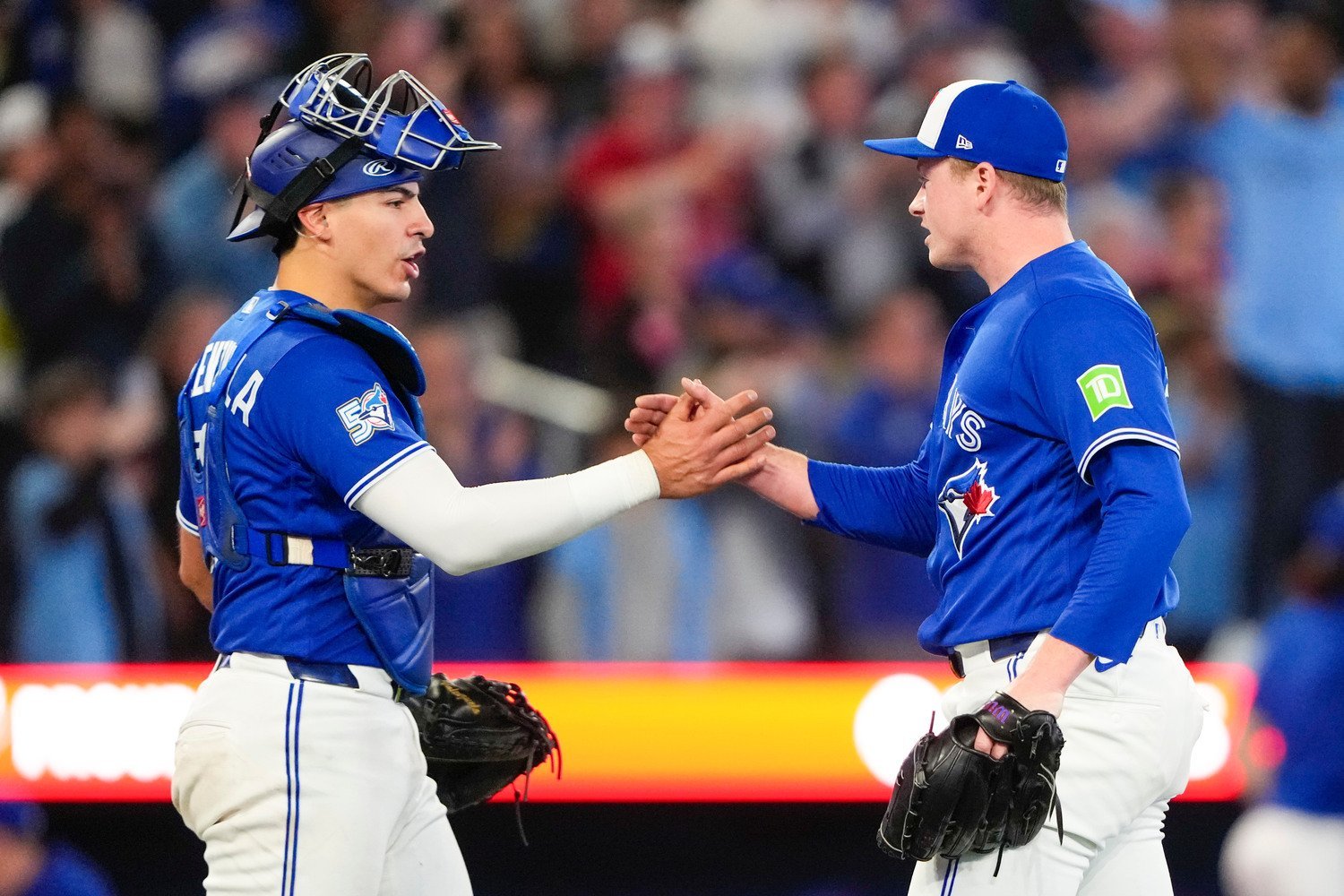 The Toronto Blue Jays are seeing massive success from two of their trade acquisitions at last season's deadline. Louis Varland was acquired from the Minnesota Twins along with Ty France in exchange for Alan Roden and prospect Kendry Rojas. In a smaller-scale trade, the Blue Jays acquired Brandon Valenzuela from the San Diego Padres for Will Wagner. Although it's early in the season, Toronto looks like the clear winner of both deals, given how its acquisitions are performing. Varland has been one of the best relievers, if not the best, in the American League throughout the first 10 weeks of the season. Through 34 2/3 innings (as of June 8), he has an out-of-this-world 0.28 ERA, a 34.1 percent strikeout rate, and a 1.29 FIP. All three statistics would be career-best numbers if this were the end of the season. Due to his success, he has been called upon to replace Jeff Hoffman to close out games, and Varland has been exceptional. He's converted all 11 of his save opportunities. What's even more impressive is that the righty has pitched in 18 straight outings without allowing an earned run. His Baseball Savant profile is entirely red, with him ranking in the 90th percentile or higher across 10 statistics. Varland doesn't become a free agent until the 2031 season, which makes him a valuable long-term asset, and he is quickly making a case as one of the Blue Jays' greatest trade deadline acquisitions in team history. Obviously, some regression will come; he can't be this perfect all season long. Or can he? When Valenzuela was acquired last season, he was thought to be a defensive-minded catcher. In 2023, he had an .828 OPS after 156 High-A plate appearances. That was the last time he had an OPS above .715 at any professional level, and he's never had an ISO above .180 until this year. This season, he's slashing .252/.338/.471 with seven home runs, 17 runs, 16 runs driven in, a .809 OPS, and a .218 ISO. When Alejandro Kirk went on the injured list in early April, Valenzuela was called up to back up Tyler Heineman. However, Heineman's struggles at the plate led the Blue Jays to split the backstop role between Heineman and Valenzuela. Lately, though, Valenzuela has gotten the majority of starts each week due to his offensive success. With Kirk starting a rehab assignment, the Blue Jays will have to make a difficult choice about who to send down if all goes well. Do you keep Valenzuela, a rookie who is performing better offensively, or Heineman, a veteran who is just as strong defensively? Both catchers rank in the top four among MLB catchers in Fielding Run Value. Valenzuela ranks third with a +7 value, and Heineman ranks fourth with a +6 value. The tough decision about who to keep on the 26-man roster stems from Heineman no longer having any options available. So, he would have to be designated for assignment, and with his strong defensive skills, he's nearly guaranteed to be selected off waivers. It might be smart to keep Heineman on the 26-man roster, while Valenzuela gets regular at-bats in Triple-A rather than making a start or two each week in the big leagues. Keeping Heineman also strengthens the team's catching depth in case of an injury towards the end of the season. Kirk isn't expected to need many at-bats during his rehab stint, so a return could come this weekend in a series against the division rival New York Yankees. I would expect Heineman to stay and back up Kirk, but luckily, I'm not the one who makes these tough decisions. Stats updated prior to games on June 9. View the full article
