


DiamondCentric
-
Posts
2,631 -
Joined
-
Last visited
Never
Content Type
Profiles
Forums
Events
News
Tutorials & Help
Major League Baseball Videos
Guides & Resources
Store
Downloads
Gallery
Everything posted by DiamondCentric
-

 Kendry Chourio worked six innings of two-run ball for Columbia, striking out four, as the Fireflies won 9-6 behind home runs from Yandel Ricardo, Hyungchan Um, and Ivan Sosa. Trevor Werner drove in five with two homers in Quad Cities' 12-6 win, and Jack Pineda homered for a 6-4 Northwest Arkansas victory in the nightcap after a 1-0 loss in game one. Omaha fell 9-6 in extras. Royals Transactions No Roster Moves Aviators Rally Past Storm Chasers In Extras Omaha jumped out early but could not hold on, falling 9-6 to the Las Vegas Aviators in ten innings. The Storm Chasers built a 5-0 lead through two innings. In the first, Matthew Lugo singled home two runs, and Drew Waters grounded into a run-scoring double play. In the second, Abraham Toro and John Rave each delivered RBI singles. Luca Tresh paced the offense with four hits, while Lugo added two hits and two RBIs. Henry Williams started and allowed three runs, all earned, on five hits with two walks and three strikeouts over five innings. The lead slipped away in the tenth, when the Aviators plated four runs against Anthony Gose, who recorded just two outs while allowing three earned runs on two hits and three walks. Omaha stranded nine runners on the night and managed only a Brett Squires-scoring groundout in the bottom of the tenth. They went 6-for-17 with runners in scoring position. Player AB R H RBI BB K Peyton Wilson 3 2 0 0 2 0 Abraham Toro 4 1 1 1 0 1 John Rave 3 1 2 1 0 1 Connor Kaiser 1 0 0 0 0 0 Brett Squires 1 1 1 0 0 0 Matthew Lugo 5 0 2 2 0 0 Luca Tresh 5 0 4 0 0 1 Drew Waters 5 0 0 1 0 0 Gavin Cross 5 0 0 0 0 1 Luke Maile 3 1 1 0 1 0 Elih Marrero 1 0 0 0 0 0 Kevin Newman 4 0 1 0 0 1 Player IP H R ER BB K HR Henry Williams 5 5 4 3 2 3 0 Ethan Bosacker 2 0 0 0 0 1 0 Luke Jackson 2 3 1 1 0 2 0 Anthony Gose 0 2/3 2 4 3 3 1 0 Jose Cuas 0 1/3 0 0 0 1 0 0 Naturals Shut Out Despite Strong Pitching In Game One Northwest Arkansas dropped a tight game-one decision 1-0 to the Arkansas Travelers. This was a makeup game from Friday night. The lone run came in the third inning on a sacrifice fly. The Naturals managed just three hits from Jack Pineda, Spencer Nivens, and Omar Hernandez and never advanced a runner across the plate. Steven Zobac started and gave up the run, which was earned, on one hit while walking three and striking out two over 2 1/3 innings. Frank Mozzicato followed with 2 1/3 scoreless innings, allowing two hits and a walk while striking out three. Brandon Johnson and Zachary Cawyer combined for the rest of the relief work without surrendering a run. The Naturals struck out seven times and stranded five runners in the loss. Northwest Arkansas went 0-for-1 with runners in scoring position. Player AB R H RBI BB K Carson Roccaforte 3 0 0 0 0 1 Colton Becker 3 0 0 0 0 0 Sam Kulasingam 3 0 0 0 0 1 Jorge Alfaro 1 0 0 0 0 1 Jack Pineda 2 0 1 0 0 1 Spencer Nivens 3 0 1 0 0 0 Daniel Vazquez 3 0 0 0 0 1 Omar Hernandez 2 0 1 0 0 0 Canyon Brown 2 0 0 0 0 1 Justin Johnson 2 0 0 0 0 1 Player IP H R ER BB K HR Steven Zobac 2 1/3 1 1 1 3 2 0 Brandon Johnson 0 2/3 0 0 0 0 1 0 Frank Mozzicato 2 1/3 2 0 0 1 3 0 Zachary Cawyer 0 2/3 0 0 0 0 1 0 Pineda And Scott Power Naturals To Nightcap Win Northwest Arkansas answered with a 6-4 win over the Arkansas Travelers in game two of the traditional doubleheader, scoring five runs in the seventh inning to erase a 4-1 deficit. Connor Scott started the rally with an RBI double, and Pineda capped it with a three-run homer that drove in Scott and Roccaforte. Scott finished 2-for-3 with two doubles and two runs, and Pineda drove in three. Hunter Owen took the ball and allowed four runs, all earned, on six hits with a walk and two home runs over 5 1/3 innings. Tommy Molsky picked up the win with 2/3 of an inning, and Dennis Colleran Jr. closed it out with a scoreless inning for the save. The Naturals collected seven hits and left four runners on base. They also went 2-for-8 with runners in scoring position. Player AB R H RBI BB K Carson Roccaforte 3 1 0 0 1 1 Colton Becker 4 0 0 0 0 2 Jack Pineda 4 1 1 3 0 0 Spencer Nivens 4 0 1 0 0 0 Daniel Vazquez 3 0 1 0 0 1 Rudy Martin Jr. 2 1 1 0 0 1 Alberto Rodriguez 2 1 1 0 1 1 Canyon Brown 3 0 0 0 0 2 Connor Scott 3 2 2 2 0 1 Player IP H R ER BB K HR Hunter Owen 5 1/3 6 4 4 1 0 2 Tommy Molsky 0 2/3 0 0 0 1 1 0 Dennis Colleran Jr. 1 1 0 0 0 0 0 Werner's Two Homers Carry River Bandits To Blowout Quad Cities overcame an early deficit to beat the Beloit Sky Carp 12-6, scoring in four different innings on the way to a 13-hit attack. Werner did the most damage with two home runs and five RBIs, including a two-run shot in the fourth and a three-run blast in the eighth. Erick Torres added three hits and three RBIs, and Ramon Ramirez reached base, scored three runs, and drove in two. The decisive eighth inning produced seven runs, fueled by Werner's homer, a Ramon Ramirez two-run single, and a Tyriq Kemp two-run double. Blake Wolters started and was tagged for six runs, all earned, on seven hits with three walks across four innings, though he struck out seven and surrendered one home run. The bullpen trio of Kamden Edge, Josh Hansell, and Cory Ronan combined for five scoreless innings, with Hansell earning the win. The River Bandits left five runners on base and went 6-for-14 with runners in scoring position in the six-run victory. Player AB R H RBI BB K Asbel Gonzalez 4 1 1 0 1 2 Blake Mitchell 3 1 0 0 2 2 Ramon Ramirez 5 3 2 2 0 0 Luke Pelzer 5 1 2 0 0 1 Derlin Figueroa 4 0 1 0 0 2 Tyriq Kemp 1 1 1 2 0 0 Erick Torres 4 2 3 3 1 0 Trevor Werner 5 2 2 5 0 1 Angel Acosta 4 0 0 0 1 2 Diego Guzman 4 1 1 0 0 2 Player IP H R ER BB K HR Blake Wolters 4 7 6 6 3 7 1 Kamden Edge 2 1 0 0 0 4 0 Josh Hansell 2 0 0 0 0 1 0 Cory Ronan 1 0 0 0 0 2 0 Chourio And Three Homers Lift Fireflies Columbia rode a strong start and a trio of home runs to a 9-6 win over the Delmarva Shorebirds. No. 1 prospect Chourio set the tone, allowing two runs on four hits with a walk and four strikeouts over six innings. The Fireflies built their lead across the early frames, getting a Ricardo two-run homer and an Um sacrifice fly in a three-run third, then breaking it open in the fourth on Sosa's two-run homer and a Sean Gamble RBI single. Ricardo finished 2-for-4 with two runs and two RBIs, Henry Ramos collected three hits from the leadoff spot, and Um and Sosa each homered and drove in two. Chourio earned the win, and after Jhon Reyes was charged with four runs in relief, Randy Ramnarace closed out 1 1/3 scoreless innings for the save. Columbia drew eight walks and left 17 runners on base. Player AB R H RBI BB K Henry Ramos 5 2 3 0 0 1 Josh Hammond 4 1 0 0 1 1 Yandel Ricardo 4 2 2 2 1 0 Stone Russell 3 1 2 1 2 0 Sean Gamble 4 0 2 1 1 0 Hyungchan Um 4 1 1 2 0 2 JC Vanek 3 0 0 0 1 0 Roni Cabrera 2 1 0 0 2 0 Ivan Sosa 4 1 1 2 0 2 Player IP H R ER BB K HR Kendry Chourio 6 4 2 2 1 4 1 Jhon Reyes 1 2/3 5 4 4 2 0 1 Randy Ramnarace 1 1/3 0 0 0 0 1 0 Top-20 Prospect Performance Kendry Chourio: 6 IP, 4 H, 2 R, 2 ER, 1 BB, 4 K, 1 HR David Shields: DNP Sean Gamble: 2-for-4, 2B, RBI, BB, SB Blake Mitchell: 0-for-3, R, 2 BB, 2 K Josh Hammond: 0-for-4, R, BB, K Ramon Ramirez: 2-for-5, 3 R, 2 RBI Drew Beam: DNP Asbel Gonzalez: 1-for-4, R, BB, 2 K, SB Ben Kudrna: DNP Carson Roccaforte: Game 1: 0-for-3, K. Game 2: 0-for-3, R, BB, K Yandel Ricardo: 2-for-4, 2 R, 2B, HR, 2 RBI, BB Felix Arronde: DNP Blake Wolters: 4 IP, 7 H, 6 R, 6 ER, 3 BB, 7 K, 1 HR Michael Lombardi: DNP Luinder Avila: DNP Steven Zobac: 2 1/3 IP, 1 H, 1 R, 1 ER, 3 BB, 2 K Frank Mozzicato: 2 1/3 IP, 2 H, 0 R, 0 ER, 1 BB, 3 K Daniel Vazquez: Game 1: 0-for-3, K. Game 2: 1-for-3, 2B, K Warren Colcano: 1-for-4, 1 R, 1 BB, 3 K Shane Panzini: DNP View the full article
 -
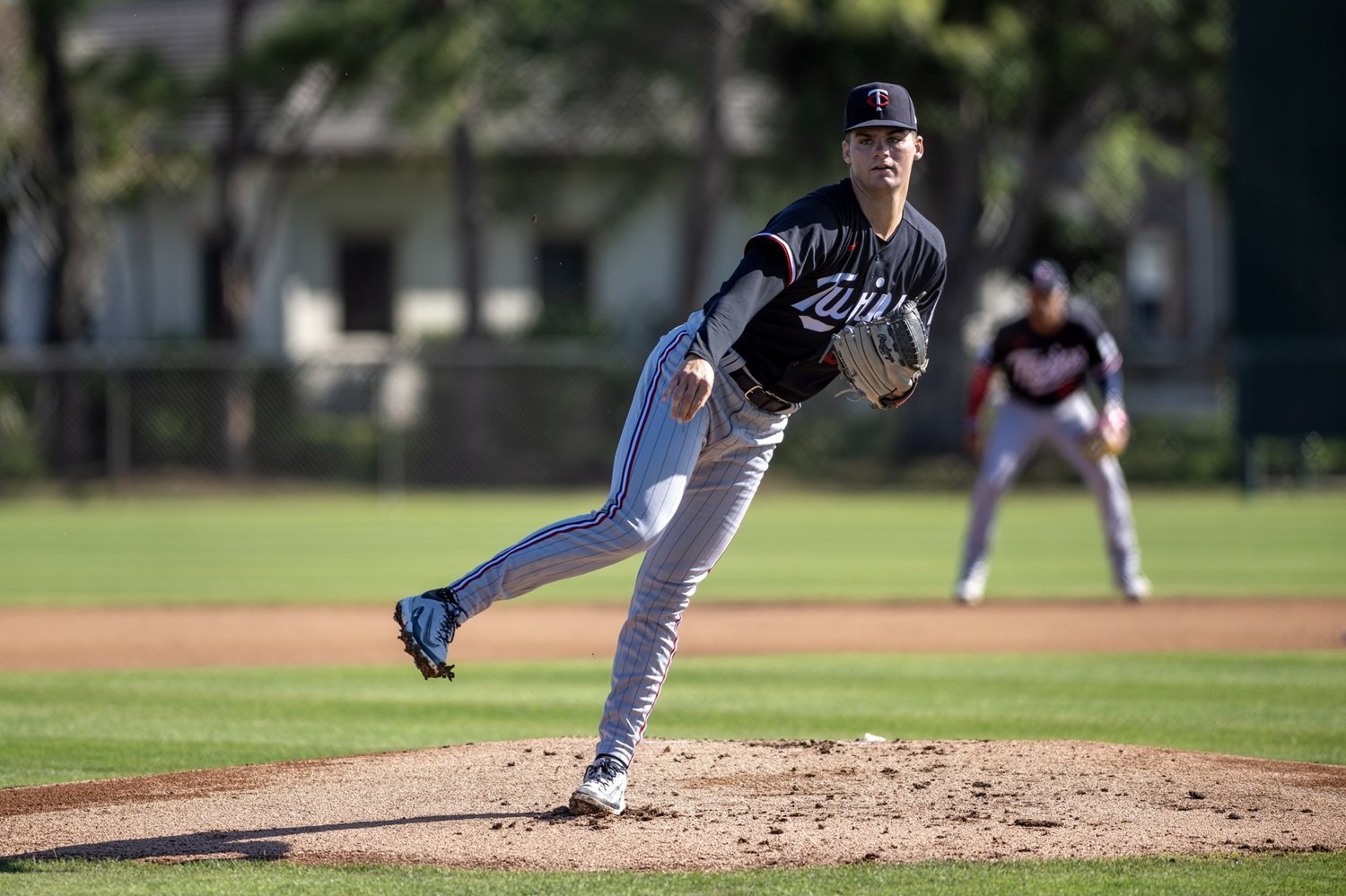 Riley Quick is quickly (pun intended) becoming one of the most exciting Twins prospects to watch. The Twins drafted him with the 36th overall pick in last summer's MLB Draft, and the early returns on that investment have been extremely promising. Across 33 innings between Low-A Fort Myers and High-A Cedar Rapids, the 6-foot-6, 255-pound right-hander owns a 3.27 ERA and a 0.97 WHIP. He's also racked up a staggering 52 strikeouts compared to just 14 walks. Even those numbers don't fully capture just how dominant he's been. Quick's strikeout rate currently sits at a ridiculous 40.3%, which ranks fifth among all minor league pitchers with at least 30 innings pitched this season. That's not just good; that's not even just great. What Riley Quick is doing right now simply isn't normal. Of course, there's a reason he was available at pick #36 to begin with, and it had very little to do with his talent. Quick tore his UCL during his 2024 season debut at the University of Alabama and underwent Tommy John surgery shortly after. While the injury ultimately pushed him down draft boards, he showed plenty of promise upon returning in 2025, posting a 3.92 ERA over 62 innings. That's important context because his ability has never been in doubt. The question was always going to be whether he could get healthy and stay healthy. So far, he's answering that question with a resounding yes. Still, because of that elbow surgery, the Twins may ultimately decide to slow-play him through his development, which would be understandable to an extent. But what if they didn't? When the Twins drafted Quick, he already possessed a very impressive three-pitch mix. His fastball was a legitimate weapon, his slider generated lots of whiffs, and his changeup looked like a quality third offering. If the early results are any indication, all three pitches are still very much playing at a high level. Quick currently owns an outrageous 18.1% swinging-strike rate. For some perspective, fellow highly-touted pitching prospect Dasan Hill (who also has very impressive stuff) sits at 12.8%. Don’t mistake that as a knock on Hill. It's a testament to just how overwhelming Quick has been. The underlying numbers support that reality. Riley Quick, the 36th pick in the ‘25 draft, set a new pro career high in strikeouts last night for the @CRKernels and now has a 40.3 K% this season ? 4.2 IP / 4 H / 3 R / 2 BB / 9 K He topped out at 97.5 MPH and had a 70% whiff rate (7/10) on his SL on the day ⛽️ pic.twitter.com/zxcS3i73eZ — Twins Player Development (@TwinsPlayerDev) June 12, 2026 At first glance, some might point to Quick's 4.32 ERA at High-A and have some questions. But that’s far from the full story. His strikeout numbers remain elite, his walk rate is manageable, and much of the damage against him can be attributed to a high BABIP rather than hitters consistently squaring him up. In other words, the stuff is still dominating, and that's what makes this conversation so interesting. Quick isn't some raw high school arm learning how to pitch for the first time, either. He comes from the SEC, which is widely regarded as the toughest conference in college baseball. Eight of the top 27 picks in last year’s draft class resided from that conference. Quick not only experienced that environment, but he thrived in it, as he struck out more than one of every four batters he faced. So you've got a pitcher whose stuff is playing at an extremely high level, who appears healthy, and who already owns a track record of success against high-level competition. If I'm the Twins, I want to see what he looks like against Double-A and Triple-A hitters. Regardless of my personal beliefs, that's not necessarily the route they'll take. Again, the elbow surgery is a factor here. The organization may have innings limits in mind and may prefer a more gradual progression. There's certainly logic behind that approach. At the same time, it's become increasingly common for organizations to move pitchers quickly through the minor leagues when the performance justifies it. Trey Yesavage of the Blue Jays is a great recent example. Toronto selected him in the first round of the 2024 MLB Draft. He opened the 2025 season in Low-A, but his stuff was so dominant that the Blue Jays aggressively challenged him throughout the year. By this time last season, he had already reached Double-A. By mid-August, he was pitching in Triple-A. He eventually was promoted to the majors and carried that momentum into the postseason, playing a major role in helping Toronto come within one win of a World Series title. The similarities between Yesavage and Quick are hard to ignore as well. Both are mature college arms, both possess outstanding stuff, both have piled up gaudy strikeout totals, and both entered professional baseball with strong collegiate track records. The only big difference is that Yesavage didn't have a previous elbow surgery. But if Quick is taking the mound every fifth day, missing bats at an elite rate, and sitting in the mid-90s with his fastball, I'd argue he's feeling pretty good. This isn't to say the Twins should completely abandon whatever development plan they've established for him; far from it. Player development isn't always linear, and organizations have more information than we do regarding workload, recovery, and long-term projections. Still, I think it would be a mistake not to see what you've got at, bare minimum, the upper levels of the minor leagues at some point this season. Pitchers with Quick's combination of size, athleticism, velocity, and swing-and-miss ability don't come around very often. The Twins may choose to be patient, and that's perfectly reasonable. But if he continues to flat-out overpower hitters, the organization is eventually going to run out of reasons to keep him in the lower levels of the minors. Will we see Riley Quick make his major league debut in 2026? Probably not, but the odds of that happening are—or at least should be—above zero. And if he keeps pitching like this, those odds are only going to keep climbing. View the full article
 -
 With playoff hopes dashed in Appleton, but races coming to a head this week for Nashville and Biloxi, we must be on the precipice of the much-anticipated player promotions after Sunday's games, right? Transaction: Wisconsin Timber Rattlers sent RHP Michael Fowler on a rehab assignment to ACL Brewers. Fowler, in his 2nd year as an undrafted sign out of Southern Miss, turns 24 in July. He had been placed on the injured list on May 7th after nine relief appearances with Wisconsin. Nashville Pre-Game Media Notes Final: Durham (Rays) 6, Nashville 4 Box Score and Game Log Via the Sounds, game details, and we encourage readers to always review affiliate write-ups as part of their Link Report routine: Stallings Strikes Out Season High Nine in Nashville Loss - Jones Hits First Home Run of the Season As usual, the summary paints a detailed picture, please be sure to review. As we eventually look back on the 2026 Milwaukee Brewers Championship Season, we'll always have Greg Jones' unique .095/.095/.095 line in 22 plate appearances with the big-league crew. See you at the ring ceremony, Greg! This was Jones' 4th start at second base for Nashville. If you came here hoping for top prospect breakout games, sorry to disappoint. Jett Williams plated a run on a sacrifice fly. Cooper Pratt laid down a successful sacrifice bunt. Jeferson Quero was 0-for-4 as two Durham baserunners stole bases. Unsurprisingly the best we have to offer is Luis Lara pulling a ball 94.5 MPH into right field for a single (no video), as well as drawing a walk, lifting his OBP to a ridiculous .446 (.926 OPS). LHP Mark Manfredi has a sharp 1.17 WHIP in his four relief appearances since his bump to Nashville, along with eight K's over six innings of work. However, he's been scored upon in three of those games, with two HBP's and two walks along the way. It was pretty much a veteran bench who sat this one out - Eddys Leonard, Luis Matos, Freddy Zamora, Ethan Murray and Ramon Rodriguez. Valuable, versatile and solid - RHP Garrett Stallings will be 29 years old this fall when he hits minor league free agency. A former teammate opened the scoring: There are eight "lowlights" (all marked with the date of June 13th) on the Bulls' video page. Memphis (Cardinals) also lost, so the Sounds remain one game back of a playoff spot. I did enjoy learning about Voice of the Sounds Jeff Hem's background in this extended interview. Catch up with the latest Biloxi pre-game audio interview archives - Former Shuckers Manager and current Brewers MiLB Field Coordinator Joe Ayrault is the latest chat Biloxi Pre-Game Media Notes Final: Biloxi 9, Birmingham (White Sox) 3 Box Score and Game Log Late Surge Brings Shuckers within Half Game of First - Shuckers set season-high with 15 hits, score 8 off Barons' bullpen Five of the season-high 15 Biloxi hits were doubles, so naturally the Shuckers' (still awesome) 'X' feed features five singles before a Jacob Hurtubise double made the cut. (Any run-scoring hit tends to be camera-archive friendly.) MLB Pipeline combined all three of Jesús Made's three hits, including a double into one post, thanks! RH starter Bishop Letson's first five innings were scoreless, and Letson deftly (underused adverb, by the way) navigated around a leadoff double in the 3rd, and a one-out double in the 4th. After the Shuckers plated three in the top of the 6th to grab a 4-0 lead, Letson went single-walk-walk-double, forcing his exit. RHP Edwin Jimenez did well to only allow one of the two no-out inherited runners to score in order to maintain the lead and net Letson the official win on his ledger. It's unfair to Letson, but the one piece of video available is his final batter of the evening. Speaking of opposing team video, Matthew Wood, who has caught exclusively while Darrien Miller has been idle since leaving Wednesday's game early (no injured list stint as of yet), was robbed here: In his Friday interview, Manager Mike Guerrero indicated that Dylan O'Rae won't need to go on the IL but that he has been sidelined a bit with an injury he did not disclose. O'Rae pinch-ran here, stealing his 33rd base in 41 tries, so we're guessing it's not a lower-body issue. Blake Burke doubled but fanned his other four times up, lifting his K% to a still manageable but keep-an-eye-on-it 24.6%. Mike Boeve, Eric Brown Jr. (on base four times), and Hurtubise all earn your box score review approvals. The consistent worthwhile efforts and outings of RH reliever Cameron Wagoner since his May 2nd debut have been very much worth our attention (game log). Wisconsin Pre-Game Media Notes (download link) Final: Great Lakes (Dodgers) 3, Wisconsin 1 Box Score and Game Log Via the Timber Rattlers, game details: Rattlers Drop 3-1 Decision to Great Lakes - Wisconsin eliminated from first half playoff contention If not for the Voice of the Rattlers Chris Mehring detailing what could have escalated into a full-blown brawl for us in that linked recap, we may have never known, outside of those in the stands or tuning in live (so thank your Link Report friend here for pointing Chris' write-up out as well). So, there you go, that grabbed your attention, didn't it? Click above, please, because what is described didn't make the video footage (somewhat understandably). This was RH reliever Peyton Niksch's High-A debut, and he performed well. Bullpen mate Yerlin Rodriguez aided Niksch's cause by stranding two baserunners. Jason Woodward has now made 11 appearances (seven starts) since his Tommy John surgery recovery. He's pitched into a 5th inning of work just once, on May 30th, as the organization exercises caution on the 2023 4th rounder. Your box score review will indicate that CF Braylon Payne has had much better days, and the K% now sits at 30.6%, up slightly from 2025's 30.1% with Carolina. Folks watching this series may have noticed that one of MiLB's current female umpires has been on hand. Tanya Millette is a French-Canadian and has the language skills to verify that. Millette found herself in the middle of the episode referred to in the game summary. Let's see, the Timber Rattlers can't win the first half. Biloxi can, with a week to go. Nashville is in their own hunt, as noted above. The big-league club has well-documented needs. The teams have their normal day off Monday. Are bags packed? Are plane tickets bought? Will the Brewers continue to mess with our promotion-monitoring heads? Wilson Pre-Game Media Notes Final, completion of Friday's suspended game: Hill City (Guardians) 4, Wilson 3 Box Score and Game Log Final, regularly scheduled game: Hill City 1, Wilson 0, seven innings as scheduled Box Score and Game Log Warbirds Swept in Saturday Doubleheader - Warbirds Drop Both Contests to Hill City For those of us following the nightly forum thread, my fellow Link Reporter "Ro" succinctly brought us up to date on the Warbirds' night here. For whatever reason, this seems to be strikeout percentage notation night, and Wilson slugger José Anderson has been a prime topic on that subject all season. First of all, let's remember this is Anderson's age 19 season. Anderson fanned in four of his seven at-bats Saturday, increasing his K% to 41.6%. But Anderson also did this in the top of the 8th to tie the game, as the Wilson summary deftly (ha!) noted: José Anderson homers (16) on a fly ball to left field. Luis Lameda scores. Tyler Rodriguez scores. Do you know who wasn't acting deftly Saturday night? MiLB.com's video feed, which normally spoils us. It's showing nothing but a black screen for Anderson's latest blast, his 16th. Every Wilson position player saw action during the course of the night save for outfielder Nick Monile, who last played on Sunday the 7th. 20-year-old undrafted RHP Thomas Conrad has been solid for Wilson, but he was on the mound for the nightcap walkoff home run. Rylan Mills was the designated hitter in the opener (from Friday) and began the nightcap behind the plate. Mills was replaced on defense to begin the bottom of the 5th, and there is nothing in the game log to provide a hint on that exit. As we surmised in yesterday's report, RH starter Carlos Carra did not pitch in the completion opener, as he had gone through all his pre-game routine Friday night. RHP Tyler Renz is credited with a "game started" in his game log, though the box score gives the bulk reliever listing. The 19-year-old Renz only walked one in six innings as he improves in that aspect over his most recent outings. 20-year-old Nicaragua native Enniel Cortez started Game Two and had his best outing of the season. Final: ACL Brewers 7, ACL Royals 4 Box Score and Game Log Hey, they even played nine innings. Back to "Ro" for a moment: "In Friday's 13-9 ACL defeat, Alexander Frias, Juan Martinez and Jonathan Rangel reached base 11 of 12 times, with 6 RBIs. In Saturday's 7-4 victory, they reached base 10 of 14 times, with 4 RBIs." So yeah, that's sweet as each player maintains a four-digit OPS as the team is 32 games into the season. Those figures will make a box score pop. Enhancing Martinez' stellar season-to-date, he's now 19-for-21 in stolen base attempts. Frias added an outfield assist from center. This was only his second career game manning that spot, seeing all his other work on the outfield corners. Is Rangel still just 5'9"? Because the sometimes catcher actually has an offensive game that could support a long-term first base profile (he played there Saturday, but 5'9" is 5'9".) We sang LF Engel Paulino's power praises yesterday, hopefully he didn't get caught up in the press clippings, as his box score line will hint may have been the case. Michael Fowler's rehab outing was scoreless (five batters faced), and yet another Nicaraguan RHP, 18-year-old starter Diustin Mayorquin, remains an intriguing arm. Final: DSL Brewers Blue 14, DSL Brewers Gold 7, seven innings as scheduled Box Score and Game Log The teams combined to issue 17 free passes (16 walks, one HBP, plus five wild pitches and a balk) in just the seven frames, so that won't please the pitching coaches. The three fielding errors were from the recent bonus baby shortstops, as Diego Frontado and Ricki Moneys are up to a combined nine miscues on the season, barely ten games in. Then again, we should know better (shame on me) to spend energy on such things at the complex league level. I'm sure Frontado (home run, single, walk, SB) and Moneys (triple, two singles, five RBI) are thrilled that we highlighted the day's defense. Sorry, gents. The big early lead for Blue prevented Gold from attempting any steals, while Blue runners went 5-for-6. It's difficult to single out am arm on a super-positive effort, but 3rd-year 20-year-old righty Carlos Canales gets a rare mention for his 1-2-3 outing, and RHP Luis Aguayo of Mexico, working his way back from a long-term injury that snatched his 2025 season, tossed a scoreless first inning in his 3rd pro game. Congrats to LH bat OF Gerlyn Payano, DH'ing here, on his first pro home run. Same goes for CF Enrique Lovera, a year younger in age and experience than Payano, on his first career tater. Others on the Blue side of the ledger had productive days, so enjoy your box score click. As for Gold, we're still waiting for first baseman Jefer Lista's six-game bubble to pop, but he walked twice and is still sporting an OPS north of 1.500 (1.549, to be exact). Back to a traditional four-game afternoon starts scoreboard for Sunday, and the rotation openers are juicy as the link below will show. Have a great Sunday, everyone! Organizational Scoreboard including starting pitcher info, game times, MiLB TV links, and box scores Current Milwaukee Brewers Organization Batting Stats and Depth Current Milwaukee Brewers Organization Pitching Stats and Depth View the full article
 -
 Jonathan Jimenez carried St. Lucie with six innings of one-run ball, and Yohairo Cuevas and Jeremy Rodriguez each collected three hits in a 10-1 rout. Elwis Mijares struck out three over two scoreless frames. Cristian Pache went 4-for-4 for Syracuse, but Buffalo walked off the Mets 8-7 in 10 innings. Vincent Perozo homered for Binghamton in a 4-3 loss, while Colin Houck and Corey Collins homered for Brooklyn in a 5-4 extra-inning defeat. Mets Transactions No Roster Moves Buffalo Walks Off Syracuse In Extras Despite Pache's Four Hits Syracuse fought back from an early hole but fell to the Buffalo Bisons 8-7 in 10 innings. Cristian Pache led the offense, going 4-for-4 with a double, a walk, and three runs scored. Jackson Cluff added three hits, and Nick Morabito went 2-for-4 with a walk and an RBI. Grae Kessinger drove in two runs, and Matt Rudick also knocked in two. The Mets left 10 runners on base. Buffalo jumped ahead with three runs in the first inning. Syracuse trailed 6-4 entering the ninth before mounting a rally. Jihwan Bae was hit by a pitch, and Morabito walked to open the frame. After Ryan Clifford singled and Andy Ibáñez popped out, Kessinger doubled to left field, scoring Morabito and Clifford to tie the game at 6-6. Buffalo answered in the bottom of the ninth with a home run to force extra innings, then pushed across the winning run in the 10th when the zombie runner came around to score on a single. Zach Thornton struggled, recording only two outs while allowing three runs, two hits, and two walks with one strikeout, though none of the runs were earned. Ofreidy Gómez followed with three scoreless innings, allowing two hits with four strikeouts. Yonny Hernández took the loss, allowing two runs, one earned, on three hits over 2 2/3 innings. Player AB R H RBI BB K Ji Hwan Bae 5 1 1 0 0 2 Nick Morabito 4 1 2 1 1 1 Ryan Clifford 4 1 1 0 1 1 Andy Ibáñez 5 0 1 0 0 1 Grae Kessinger 5 0 1 2 0 3 Cristian Pache 4 3 4 0 1 0 Jackson Cluff 4 1 3 0 1 1 Kevin Parada 4 0 0 0 1 1 Matt Rudick 4 0 0 2 0 0 Player IP H R ER BB K HR Zach Thornton 2/3 2 3 0 2 1 0 Ofreidy Gómez 3 2 0 0 0 4 0 Joey Gerber 1 1/3 2 1 1 1 1 0 Dylan Ross 1 2 2 2 2 2 0 Matt Turner 1 2 0 0 0 1 0 Yonny Hernández 2 2/3 3 2 1 1 1 1 Perozo Homer Not Enough As Binghamton Falls Late To Somerset Binghamton dropped a 4-3 decision to the Somerset Patriots. Vincent Perozo provided the power with a solo home run and drove in one of the team's three runs. JT Schwartz went 2-for-4 with two doubles, and Kevin Villavicencio added two hits, including a double. Jaylen Palmer reached base three times on walks and scored twice, and TT Bowens drove in two runs. The Rumble Ponies left six runners on base. The most pivotal frame for Binghamton came in the second inning. Perozo led off with a home run to right-center field to cut the deficit. Palmer then drew a walk and moved to second on a single by Wyatt Young. Bowens followed with a single to center field that scored Palmer and tied the game at 2-2. Somerset retook the lead in the bottom of the second and never trailed again, adding single runs in the second and fourth innings to build the final margin. Brendan Girton turned in the start, allowing three runs on four hits and three walks over two innings with two strikeouts and a home run. Douglas Orellana followed with two innings, allowing one run on two hits with two strikeouts. Jordan Geber worked 2 1/3 scoreless innings despite issuing five walks, and Guillo Zuñiga closed with 1 2/3 hitless, scoreless innings, walking one and striking out two. Player AB R H RBI BB K Jacob Reimer 4 0 0 0 0 0 Eli Serrano III 3 0 1 0 0 0 Chris Suero 0 0 0 0 0 0 Jose Ramos 4 0 0 0 0 2 JT Schwartz 4 0 2 0 0 0 Vincent Perozo 4 1 1 1 0 2 Jaylen Palmer 1 2 0 0 3 0 Wyatt Young 4 0 1 0 0 1 TT Bowens 3 0 1 2 0 1 Kevin Villavicencio 4 0 2 0 0 0 Player IP H R ER BB K HR Brendan Girton 2 4 3 3 3 2 1 Douglas Orellana 2 2 1 1 0 2 0 Jordan Geber 2 1/3 1 0 0 5 1 0 Guillo Zuñiga 1 2/3 0 0 0 1 2 0 Houck's Ninth-Inning Homer Ties It, But Frederick Edges Brooklyn In 10 Brooklyn fell 5-4 to the Frederick Keys in 10 innings. Colin Houck and Corey Collins both homered, with each driving in a run, and Houck scored once. Mitch Voit doubled, and Yonatan Henriquez drove in a run while drawing two walks. Trace Willhoite reached base three times with two walks and scored a run. The Cyclones left 11 runners on base. Trailing 3-1 in the eighth, Brooklyn began to climb back. Willhoite and Sam Biller walked, and after a strikeout, Francisco Toledo singled to load the bases. Voit was hit by a pitch, and Henriquez grounded into a force out that scored Biller to make it 3-3. In the ninth, after John Bay struck out, Houck homered to left field to tie the game at 4-4. Frederick pushed across the go-ahead run in the 10th on a single that scored the zombie runner. Noah Hall turned in a strong start, working five innings and allowing two runs, one earned, on six hits and three walks with two strikeouts. Garrett Stratton struck out five over two innings, allowing three hits and two unearned runs. Cristofer Gomez fired a scoreless inning with two strikeouts, and Hunter Hodges allowed one run on one hit with three strikeouts in his inning of work. Player AB R H RBI BB K Mitch Voit 4 0 1 0 0 0 Yonatan Henriquez 3 0 0 1 2 2 Corey Collins 3 1 1 1 1 1 John Bay 3 0 0 0 0 1 Colin Houck 4 1 1 1 0 2 Trace Willhoite 2 1 0 0 2 0 Sam Biller 3 1 0 0 1 0 Nick Roselli 4 0 0 0 0 2 Francisco Toledo 4 0 1 0 0 1 Player IP H R ER BB K HR Noah Hall 5 6 2 1 3 2 0 Juan Arnaud 1 2 0 0 0 0 0 Hunter Hodges 1 1 1 1 1 3 1 Cristofer Gomez 1 0 0 0 0 2 0 Garrett Stratton 2 3 2 0 0 5 0 Jimenez And A Big Fifth Power St. Lucie Past Palm Beach St. Lucie rolled to a 10-1 win over the Palm Beach Cardinals. Yohairo Cuevas went 3-for-5 with a double and three runs scored, and Jeremy Rodriguez also went 3-for-5, scoring twice and driving in a run. Julio Zayas added three hits and an RBI. Trey Snyder doubled and drove in two runs, while Branny De Oleo reached base four times with two hits and two walks. Leadoff man Elian Peña drove in a run and scored once. The Mets left 14 runners on base. The decisive frame was a four-run fifth inning. With one out, Rodriguez singled and later moved into scoring position. Peña walked, and Snyder doubled to center field to score Rodriguez and Peña. Cuevas and Zayas followed with walks to load the bases, and De Oleo walked to force in Snyder. Chase Meggers then walked to bring home Cuevas, pushing the lead to 4-0. St. Lucie continued to add on, scoring in the sixth, seventh, eighth, and ninth innings to pull away. Jonathan Jimenez was excellent in his start, allowing one run on two hits over six innings without issuing a walk while striking out four, a Quality Start. Elwis Mijares followed with two scoreless innings, allowing one hit with three strikeouts. Franyel Diaz closed with a scoreless inning, allowing one hit. Player AB R H RBI BB K Elian Peña 4 1 0 1 1 3 Trey Snyder 5 1 1 2 1 1 Yohairo Cuevas 5 3 3 0 1 1 Julio Zayas 5 0 3 1 1 1 Branny De Oleo 4 1 2 1 2 0 Chase Meggers 4 2 1 1 1 2 Simon Juan 4 0 1 1 0 2 Jeremy Rodriguez 4 2 3 1 1 0 Jackson Hauge 4 0 1 0 1 1 Player IP H R ER BB K HR Jonathan Jimenez 6 2 1 1 0 4 0 Elwis Mijares 2 1 0 0 0 3 0 Franyel Diaz 1 1 0 0 0 0 0 Top-20 Prospect Performance Carson Benge: DNP A.J. Ewing: DNP Jonah Tong: DNP Elian Pena: 0-for-4, RBI, BB, 3 K Jack Wenninger: DNP Ryan Clifford: 1-for-4, BB, K Jacob Reimer: 0-for-4 Nick Morabito: 2-for-4, RBI, BB, K Mitch Voit: 1-for-4, 2B Jonathan Santucci: DNP Chris Suero: 0-for-0, HBP Zach Thornton: 2/3 IP, 2 H, 3 R, 0 ER, 2 BB, 1 K Wandy Asigen: DNP Will Watson: DNP Eli Serrano III: 1-for-3 Randy Guzman: DNP Ryan Lambert: DNP Dylan Ross: 1 IP, 2 H, 2 R, 2 ER, 2 BB, 2 K Antonio Jimenez: DNP R.J. Gordon: DNP View the full article
 -
The Biggest Reason Zebby Matthews Keeps Getting Burned
DiamondCentric posted an article in Twins Daily
 The upside remains enormous for Zebby Matthews, but his path to reaching it starts with fixing one critical issue. View the full article
 -
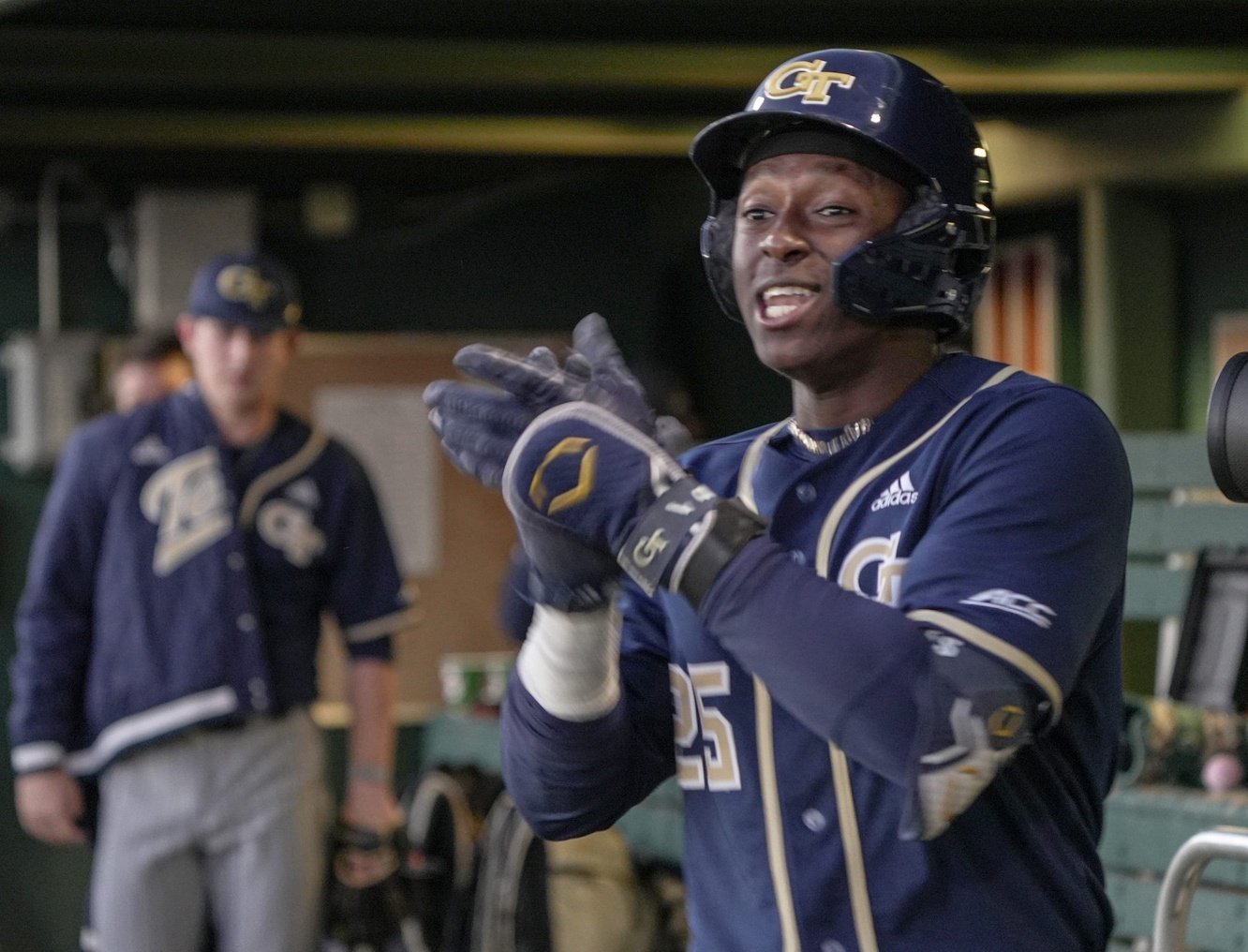 Vahn Lackey has a strong case to make for college baseball’s most improved player in 2026. It’s been a meteoric rise for the Georgia Tech backstop who is about to be the latest first round selection from ‘Catcher U’ (joining Jason Varitek, Matt Wieters, Joey Bart, and Kevin Parada). It’s worth noting that Lackey doesn’t turn 21 until four days before the draft. Along with Jackson Flora, he’s one of the youngest college prospects likely to hear their name called in the first round come July. This will appeal to the draft models of pro organizations. BIO AND BACKGROUND Originally hailing from Suwanee, Georgia, Lackey wasn’t a hailed recruit coming out of high school. Rated as the #16 catcher in the state as a senior by Perfect Game coming out of Collins Hill HS, he was named a team captain in his senior year. A growth spurt in his senior year caught the eye of Georgia Tech and mitigated Lackey having few college offers as a prep player. Lackey entered his collegiate career with a reputation as a defense first catcher. His offensive profile was anchored in good bat-to-ball skills and the bet that a physical late bloomer with standout athleticism could develop a well rounded offensive skillset. COLLEGE STATS AND PERFORMANCE Lackey played 36 games as a freshman, hitting .214/.330/.381 with 4 home runs, an 11.7% walk rate, a 17.5 K%, and a modest 60 wRC+. The roots of Lackey’s offensive skillset were evident though, even in a season with mediocre production. Lackey showed excellent bat-to-ball skills from day one, managing an 82% contact rate (93% in zone) as a freshman. Lackey also showcased his excellent approach, rarely expanding the zone, and taking plenty of free passes, despite a lack of extra base impact. As a sophomore, Lackey improved significantly. Moving into the starting catcher’s role full time, he managed a .347/.421/.500 line with 6 home runs (21 XBH), while walking 9.4% of the time and maintaining his excellent contact skills, managing a 14.3 K%. As a sophomore, Lackey produced a 110 wRC+, also stealing 18 bases at 86%. The impact and added strength began to show up in his second year, despite not adding much home run power, Lackey supplied plenty of extra base hits, and saw jumps in both his average EV and EV90, both of which jumped above the 75th percentile among D1 teams. Lackey’s damage on contact was limited by an elevated (pun intended) ground ball rate. Let’s take a moment to dig into his swing. Lackey sets up at the plate in a neutral stance with a chin-high hand set, often planting himself deep in the batter’s box. Lackey loads and prepares to swing early, getting into a medium-to-significant leg kick while pulling his hands behind his front shoulder. Lackey gets a ton of stretch in his swing, rotating well with increased bat speed and often meeting the ball in front of the plate. It’s a violent, pretty swing (as right-handed swings go). As a junior, Lackey ascended offensively, trading off a marginal degree of his batted ball excellent for significant extra base impact. In 61 games, he hit .397/.519/.772 with 20 home runs (39 extra base hits), a 17.7 BB%, a 13.4 K%, all while stealing 15 bases at 94%. In 2026, he managed a 170 wRC+. Sheesh. That's some of the best offensive production in college baseball, regardless of position. Unpacking those numbers further presents an equally rosy picture. Lackey maintained an overall contact rate of 83% (88% in zone). He doesn’t chase too much (~17%), his average EV and EV90 are both north of the 95th percentile in D1 baseball. Finally, Lackey has figured out how to pull the ball in the air with consistency. For the Baseball Savant slider truthers, it’s a sea of red. In short, it’s a complete offensive profile. WOOD BAT PERFORMANCE It’s worth unpacking Lackey’s performance with wooden bats. In 2024, he managed a .640 OPS in the Northwoods League with Traverse City (through 176 plate appearances). A year later he had a .314 OPS in 26 plate appearances on the Cape for Hyannis. Normally, I'd spend more time unpacking this, but the truth is, Lackey simply isn’t the same player offensively as he was in 2025, and certainly in 2024. Call it an orange flag if you want to, I’m not taking much stock in it, given how he’s performed offensively in 2026. DEFENSIVE PROFILE So, what about the defense that has earned Patrick Bailey comps? Folks will know I don’t like comps, I think they place unrealistic and unfair expectations on players too early, and we’re often not clear with what we’re comping (a swing, production, etc.). What’s universally agreed upon is Lackey has a chance to be a plus defensive catcher. Operating from a one-knee down setup, it’s easily a plus arm, and while his career caught stealing percentage (~25%) might seem light, this is more of a reflection of a need for more precision with his throws, at times, than a lack of arm strength. Lackey put up similar numbers in controlling the running game on the Cape (33 % caught stealing). While there’s some refinement needed to maximize the tools here, the tools are in place, as Lackey routinely posts pop times between 1.85-1.95 seconds. While he can continue to refine his receiving game, Lackey has snappy wrists and moves fluidly enough to suggest he’ll be able to steal plenty of strikes as a pro. Lackey’s lateral movement might be his most impressive defensive trait. He works side to side incredibly smoothly, or with explosive precision when the need arises. It’s a rare level of body control we can find examples of throughout his defensive play. Lackey has a characteristic ‘lateral shuffle’ when positioning his body to throw out a would-be base stealer, that gives him a clear throwing lane, and a better angle to second base. He’ll use his explosiveness to catch base runners off guard, too, backpicking four hitters in 2026 alone. WHAT TEAMMATES AND COACHES SAY Lackey is a high-energy player, earning rave reviews for both his work ethic and how he carries himself as a team mate. Teammate and fellow first round prospect Drew Burress had this to say after Georgia Tech were eliminated from postseason play. Head Coach Jacob Ramsey described recruiting Lackey to Georgia Tech as ‘watching a shortstop play catcher’. It’s a backhanded compliment, describing both his natural athletic ability and the level of rawness with which he entered collegiate baseball. Ramsey played Lackey in every defensive position except pitcher in a non-conference game in early 2026, to showcase his versatility. FINAL THOUGHTS Twins fans have been clamoring for a succession plan for Ryan Jeffers for several years. Lackey (if available) is the rare intersection of pick position, value, and an area of organizational need. He appears to be a unicorn prospect, a catcher with contact skills, power and speed, and the foundations of excellent defense. If he’s on the board at number three, he’d be an excellent, fast moving addition to the Twins system, locking up one of the toughest defensive positions to fill for the next half decade. View the full article
 -
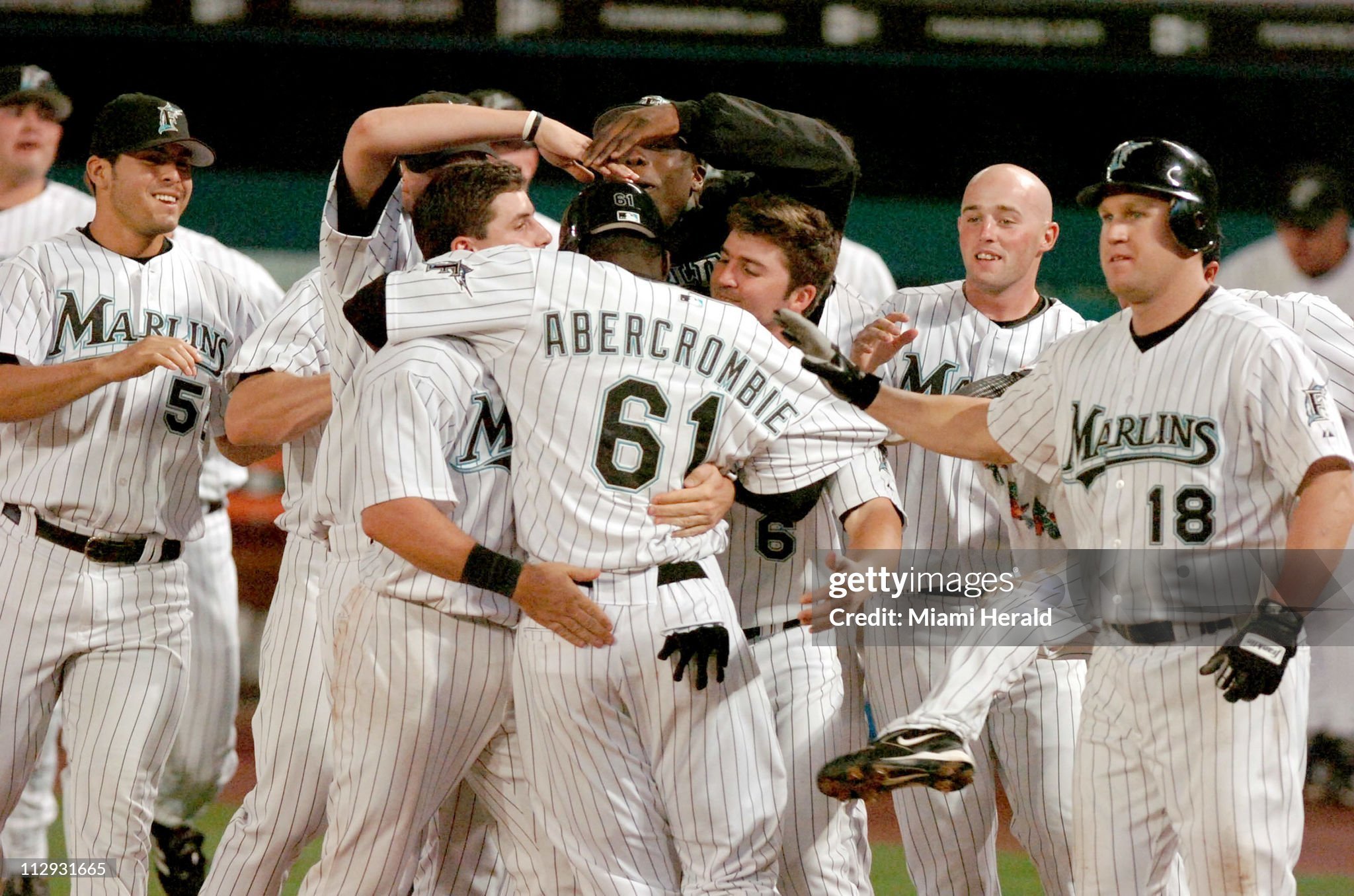 After going just 11-31 over their first 42 games, the 2006 Florida Marlins tied a franchise record with nine straight wins from June 10 through 20. The lone walk-off win of that stretch came on this day 20 years ago. In a contest in which the Marlins trailed by three in the eighth inning, a throwing error allowed the winning run to score. An errant throw led to celebration as Florida rallied past the Atlanta Braves in 10 innings, 6-5. The Marlins trailed 5-2 entering the bottom of the eighth inning at Dolphins Stadium on June 14, 2006. Against Atlanta reliever Ken Ray, it was a nine-pitch walk to Miguel Cabrera with one out that started the Florida rally. Three pitches later, Cody Ross plated the first run of the inning with an RBI double. Jeremy Hermida followed by working a seven-pitch at-bat but ultimately struck out swinging. To the plate came former Atlanta utility man Wes Helms. Helms had belted a solo home run in the fourth inning that cut the deficit to 3-2. After getting ahead in the count, Helms blasted Ray’s 3-1 offering over the “teal tower” in left-centerfield for the game-tying two-run home run. With the score now tied 5-5, Joe Borowski worked out of a bases-loaded, one-out jam in the ninth with consecutive strikeouts. In the top of the 10th, Florida lefty Taylor Tankersley used consecutive strikeouts to end the inning and leave the go-ahead run in scoring position. In the bottom of the inning, Cabrera lined a double off Óscar Villarreal to get things started. Villarreal hit Ross the very next pitch. The Braves turned to lefty Mike Remlinger, who fired just one pitch; it was the ensuing throw, however, that proved costly. As he fielded the bunt from Hermida, Remlinger tried to get the lead runner at third but his throw went past teammate Chipper Jones, allowing pinch runner Reggie Abercrombie to score the walk-off run and the Marlins to complete the comeback. The Marlins won despite being outhit 13-9. Helms finished 3-for-4 with three RBIs and two runs scored. Ross, Cabrera and Alfredo Amézaga each finished with two hits. Marcus Giles and Jeff Francoeur each finished with two hits and a home run for Atlanta. Francoeur recorded three RBIs. Matt Diaz added three hits in the loss. After winning the first game of the set by a 4-1 score, Florida completed the three-game sweep of the Braves with a 3-2 win the following night. For the month of June, the Marlins went a stellar 18-7 in 2006. The lone walk-off win from that month came on this day two decades ago. View the full article
 -
 San Diego Padres affiliates went 2-2 as the Triple-A El Paso Chihuahuas dropped Round Rock 7-2, the Double-A San Antonio Missions were pounded by Frisco 10-1, the High-A Fort Wayne TinCaps fell to Dayton 7-3 and the Low-A Lake Elsinore Storm cruised past Ontario 17-1. Padres Minor-League Transactions San Diego Padres selected the contract of 1B Nick Solak from El Paso Chihuahuas. SS Dylan Grego assigned to El Paso Chihuahuas from Lake Elsinore Storm. El Paso Chihuahuas activated 2B Victor Duarte from the Development List. Two Homers From Marcos Castanon Send Chihuahuas Past Express Marcos Castanon homered twice and newcomer Nick Pratto went deep and drove in three runs as the Triple-A El Paso Chihuahuas toppled the host Round Rock Express 7-2. Carlos Rodriguez made it a career-best 19 games in a row with a hit, but it took a ninth-inning infield single to keep it going. He has also reached base in 23 straight games. Chihuahuas left-handed starter Jackson Wolf struck out six over five innings, allowing two runs on five hits and three walks. Right-handers Logan Gillaspie (two innings), Ty Adcock and Alek Jacob pitched four scoreless innings, allowing just two hits and no walks. El Paso jumped out to a 5-0 lead after the top of the fourth. Castanon hit a solo shot in the second inning to left field, then followed Nick Schnell's RBI single with a sacrifice fly in the third inning for a 3-0 edge and Pratto delivered his second homer in three games after joining the Chihuahuas on Wednesday after playing for the Express. After the Express scored once in the bottom of the fourth, Castanon got that run back on a one-out solo homer in the fifth on an opposite-field line shot down the right-field line, his 10th of the season, for a 6-1 lead. Castanon has four multihomer games in his career. Round Rock answered right back with a run in the bottom of the fifth, but that would be it against the Chihuahuas' bullpen. Pratto sealed things in the ninth with an RBI single. EP1_0613.mp4 EP2_0613.mp4 Player AB R H RBI BB K Carlos Rodriguez 3 2 1 0 2 0 Nick Pratto 4 2 2 3 1 1 Clay Dungan 4 1 0 0 0 2 Nick Schnell 5 0 1 1 0 3 Marcos Castanon 3 2 2 3 0 0 Blake Hunt 3 0 0 0 1 0 Anthony Vilar 4 0 1 0 0 2 Dylan Grego 3 0 0 0 1 1 Nate Mondou 4 0 0 0 0 0 Player IP H R ER BB K HR Jackson Wolf 5 5 2 2 3 6 1 Logan Gillaspie 2 1 0 0 1 1 0 Ty Adcock 1 0 0 0 0 0 0 Alek Jacob 1 1 0 0 2 0 0 Missions Come Apart Late In Falling To Frisco For the second time this week, the host Double-A San Antonio Missions were held to just three hits and lost, this one punctuated with all 10 Frisco runs coming in the eighth and ninth innings as the RoughRiders won 10-1. For quite a while, it looked like the Missions were going to make Tirso Ornelas' first-inning solo homer with two outs stand up. But the RoughRiders scored two runs in the top of the eighth when, with runners on second and third, third baseman Luis Verdugo couldn't handle a throw from catcher Brendan Durfee after pitcher Sadrac Franco fielded a comebacker and threw home. Both runners scored for a 2-1 lead. The floodgates opened in the ninth when the RoughRiders scored eight runs, including a pair of homers. Before that, Missions pitching had been pretty good. Right-handed starter Ian Koenig pitched five shutout innings, giving up a pair of his while walking three and striking out a pair. Left-hander Harry Gustin struck out four in two shutout innings, while Franco allowed the two unearned runs on one hit and a walk with two punchouts. Right-hander Francis Pena was tagged for five runs and didn't record an out in the ninth, while right-hander Clark Candiotti gave up the other three runs. SA_0613.mp4 Player AB R H RBI BB K Braedon Karpathios 4 0 0 0 0 3 Romeo Sanabria 4 0 0 0 0 1 Tirso Ornelas 4 1 1 1 0 1 Ryan Jackson 3 0 0 0 1 1 Albert Fabian 4 0 1 0 0 1 Francisco Acuna 2 0 0 0 1 1 Brendan Durfee 3 0 1 0 0 0 Luis Verdugo 3 0 0 0 0 3 Kai Roberts 3 0 0 0 0 3 Player IP H R ER BB K HR Ian Koenig 5 2 0 0 3 2 0 Harry Gustin 2 2 0 0 0 4 0 Sadrac Franco 1 1 2 0 1 2 0 Francis Pena 0 3 5 5 2 0 0 Clark Candiotti 1 3 3 3 0 1 2 TinCaps Unable To Keep Up With Dragons Justin DeCriscio homered for the second game in a row, but the High-A Fort Wayne TinCaps dropped a 7-3 decision to the host Dayton Dragons, who scored four runs in the fourth inning. After hitting a grand slam the night before as the TinCaps snapped an eight-game losing streak, DeCrisco went deep for the fourth time this year, leading off the game with a drive to left field. Kavares Tears also homered for the TinCaps, hitting a solo shot to right-center in the fourth inning, his sixth this season. That put the TinCaps up 2-1, but the Dragons took control with four runs in the bottom of the fourth inning and put it away with two more in the seventh. TinCaps left-handed starter Jamie Hitt surrendered five runs on six hits and two walks with a pair of strikeouts in 3⅓ innings. Tucker Musgrove, Padres Mission's No. 14 prospect, pitched a perfect ninth inning with two punchouts. With 36 strikeouts in 16⅔ innings, Musgrove leads all minor-league relievers (10 innings minimum) with 19.44 strikeouts per nine innings. FW_0613.mp4 Player AB R H RBI BB K Justin DeCriscio 5 1 2 1 0 0 Carlos Rodriguez 4 0 1 0 1 1 Rosman Verdugo 4 0 1 1 1 1 Alex McCoy 4 0 1 0 0 0 Kavares Tears 3 1 1 1 1 2 Jack Costello 4 0 0 0 0 2 Zach Evans 4 0 1 0 0 3 Oswaldo Linares 4 0 0 0 0 0 Kasen Wells 2 1 1 0 2 0 Player IP H R ER BB K HR Jamie Hitt 3 1/3 6 5 5 2 2 1 Igor Gil 1 2/3 0 0 0 0 3 0 Javier Chacon 2 3 2 2 2 2 0 Tucker Musgrove 1 0 0 0 0 2 0 Tyler Schmitt Fans 11, Storm Explode For 17 Runs In Rout Right-handed starter Tyler Schmitt struck out a season-high 11 over six innings, while Kerrington homered and drove in four runs as the host Low-A Lake Elsinore Storm blitzed the Ontario Buzzers early and often for a 17-1 victory. It was the Storm's second-highest run total, behind only a 21-0 victory over Rancho Cucamonga on April 9. Schmitt, who made his pro debut after being a 17th-round draft choice last year, allowed just four hits and a walk and surpassed his previous season high of nine set two starts ago. Right-hander Daichi Moriki allowed just one hit in two innings, while left-hander Cal Riehl allowed a run in the ninth. Yoiber Ocopio had four hits and scored three times, Truitt Madonna went 3-for-4 with a double, three RBIs and two runs scored, George Bilecki homered and drove in three, Cross had a pair of hits and scored twice and Ryan Wideman, Padres Mission's No. 5 prospect, went 2-for-3 with two walks, three runs scored and two more stolen bases to bring his minors-leading total to 42. Cross' ninth homer was a two-run shot that highlighted a four-run first inning, while a six-run third inning featured runs scoring on a hit by pitch, a wild pitch, a sacrifice fly, two balks and Cross' RBI double to cap the outburst. Four more runs came across in the fifth on a hit by pitch, two more bases-loaded walks and another wild pitch. In the seventh, Madonna had an RBI double and Bilecki a two-run homer. The Storm drew nine walks in addition to pounding out 17 hits. LE_0613.mp4 AB R H RBI BB K Ryan Wideman 3 3 2 0 2 1 Qrey Lott 1 0 1 0 0 0 Kerrington Cross 4 2 2 4 0 0 Yimy Tovar 1 0 0 0 0 0 Jose Verdugo 4 1 1 1 1 0 Alcides Hernandez 1 0 0 0 0 1 Luke Cantwell 4 2 1 1 2 1 Yoiber Ocopio 5 3 4 0 0 0 Truitt Madonna 4 2 3 3 1 1 Jorge Quintana 6 0 1 0 0 1 George Bilecki 4 2 1 3 1 2 Conner Westenburg 2 2 1 0 2 1 Player IP H R ER BB K HR Tyler Schmitt 6 4 0 0 1 11 0 Daichi Moriki 2 1 0 0 2 0 0 Cal Riehl 1 2 1 1 0 1 0 Padres Mission Top 20 Prospect Performance Ethan Salas: DNP Kash Mayfield: DNP Miguel Mendez: DNP Kruz Schoolcraft: DNP Ryan Wideman: 2-for-3, K Jorge Quintana: 1-for-6, K Ty Harvey: On injured list Kale Fountain: Injured, out for season Braedon Karpathios: 0-for-4, 3 K Lamar King Jr.: DNP Jagger Haynes: DNP Alex McCoy: 1-for-4 Truitt Madonna: 3-for-4, 2B, K Tucker Musgrove: 1 IP, 0 H, 0 R, 0 BB, 2 K Garrett Hawkins: DNP Michael Salina: DNP Eric Yost: DNP Rosman Verdugo: 1-for-4, K Bryan Balzer: DNP Deivid Coronil: DNP View the full article
 -
 Blue Jays Affiliate Overview (June 11-12) Triple-A Buffalo Bisons Series vs Syracuse Mets (New York Mets): 3-1 Season Record: 31-36 Double-A New Hampshire Fisher Cats Series vs Hartford Yard Goat (Colorado Rockies): 1-3 Season Record: 30-29 High-A Vancouver Canadians Series vs Everett AquaSox (Seattle Mariners): 3-1 Season Record: 26-35 Single-A Dunedin Blue Jays Series vs Fort Myers Mighty Mussels (Minnesota Twins): 2-2 Season Record: 27-34 FCL Blue Jays Week Record: 0-2 Season Record: 20-9 DSL Blue Jays Blue Week Record: 0-4 Season Record: 3-6 DSL Blue Jays Red Week Record: 2-2 Season Record: 2-7 Triple-A Buffalo Bisons Season Record: 31-36 Series vs Syracuse Mets (New York Mets) June 11: On Thursday, Shane Bieber made another rehab start for the Buffalo Bisons, and it was by far his best to date. He would make it through the fifth innings without giving up a run and put Buffalo in a great position to earn a win against Syracuse. While the outing didn't result in Bieber allowing a run, each inning did seem to get worse for him. In the first inning, Bieber was flawless, getting the Mets in order, 1-2-3. In the second, he allowed a single, but pitched around it. The next inning, he gave up a lead-off double, followed by a single. Je'Von Ward picked up his pitcher though, throwing out the runner at home and keeping the Mets off of the scoreboard. In the fourth, Bieber saw the Mets get a single and a stolen base, then Buffalo got the runner out on a fielder’s choice, before getting out of the inning. In his last inning, Bieber was again working around trouble, allowing a walk and a double, but getting a ground out to strand the runners at second and third base. The Buffalo bats were doing much less work than Syracuse's were, as they also put up a zero on the scoreboard by the end of the top of the fifth, but with much fewer threats. In the bottom half of the inning, Carlos Mendoza finally broke the scoring drought from both teams. He launched his third home run of the season, a two-run blast to left field that brought home Ryan McCarty, who had walked. Later in the inning, Jonatan Clase doubled home Sean Keys, who had reached on a single to center. Buffalo closed the game out with 2.1 scoreless innings from Chad Dallas. The Bisons won 3-1 and stopped the slide they have been on, which saw their record plummet to 30-36 following the win. June 12: Josh Fleming was on the mound Friday, and he had what was possibly the best start of any pitcher this season for Buffalo. He dominated the Syracuse Mets lineup for six innings; his only blemishes in the game were two singles in the third inning, which resulted in one run. Outside of those two hits, he was perfect on the day and even struck out eight batters. Despite his near perfection on the mound, he handed the ball to the bullpen with a no-decision. Je'Von Ward singled home Jonatan Clase in the bottom of the fourth. Sean Keys gave Buffalo the lead in the bottom of the seventh with an RBI double. Eloy Jiménez added to the lead by following Keys with an RBI single on a line drive to left. Carlos Mendoza added an insurance run in the bottom of the eighth with a sacrifice fly that scored William Simoneit. Buffalo turned to Brendon Little for the ninth, and he rewarded them with a 1-2-3 inning to earn the save and secure the win for, 4-1, for Buffalo. Double-A New Hampshire Season Record: 30-29 Series vs Hartford Yard Goat (Colorado Rockies) June 11: Jake Bloss got the start for New Hampshire as he continued working his way through the minor leagues on his rehab assignment. Hartford got to him quickly with Dylan Jorge hitting a double, and then he swiped third base, finishing off his trip around the bases with a steal of home. In the bottom of the second inning, a walk and a two-run home run from Zach Kokoska put Hartford up three. In the fifth, Roc Riggio doubled to give Hartford a four-run lead. New Hampshire finally got on the scoreboard in the seventh, when Victor Arias led off the inning with a monster line drive home run. He was quickly followed by Aaron Parker, who launched his sixth home run of the season to put the Fisher Cats down two. An RBI groundout later in the inning made the deficit just one. In the ninth, Cole Messina drove in a run on an error by Jorge Burgos. New Hampshire would go on to lose 5-3. June 12: In the Friday night game between New Hampshire and Hartford, the Fisher Cats fell behind early and often. Bryant Betancourt launched a home run in the second inning, a two-run shot. In the fourth inning, things went from manageable to ugly, as Hartford brought 13 men to the plate and scored eight runs. Betancourt continued his hot hitting against the Fisher Cats with two singles in the inning, and Hartford added two doubles, which scored five runs themselves. New Hampshire finally got on the board in the eighth inning, when Adrian Pinto launched his second home run of the season, a solo shot to left field. In the end, the Fisher Cats lost this one pretty easily, 11-1. High-A Vancouver Season Record: 26-35 Series vs Everett AquaSox (Seattle Mariners) June 11: The Canadians tried to win three straight against the Aqua Sox, and Johnny King taking the mound was a good way to go about that. The lefty went four innings, and despite allowing four walks, was able to prevent those runners from scoring, as the only run he gave up was a solo homer in the fourth inning. Tucker Toman, who’s been much better this season after dropping switch-hitting, hit an early two-run homer in the first inning. Reece Wissinger got the win, as although he gave up an RBI double in the fifth inning, he went four strong innings himself. The Canadians then took the lead in the eighth, with Alexis Hernandez having an RBI double himself, and J.R. Freethy scored him with a single right after. Trace Baker then came in the ninth and got the save, striking out the side for the Canadians' third win in a row. June 12: The Canadians did not have the fourth game of the series go their way, as the AquaSox bats woke up and scored 11 runs. Holden Wilkerson had his second start in a row, and he pitched well heading into the third inning. He got the first two outs, but then walked a batter, and gave up a double as the AquaSox took the lead. Wilkerson got the first out with a K, but then walked the next three batters, forcing in recently promoted Jack Nedrow. Nedrow got a grounder back to the mound, but was unable to field it cleanly, resulting in a run scoring. He then allowed a sac fly for a second run to score, before getting out of the inning with a pop-up. Nedrow allowed three more runs in the fifth inning, and then Jack Eshleman gave up a bomb in the seventh. The Canadians finally got on the board with an RBI groundout from J.R. Freethy, but the runs kept coming from Everett, as the Canadians lost 1 to 11. Single-A Dunedin Season Record: 27-34 Series vs Fort Myers Mighty Mussels (Minnesota Twins) June 11: The D-Jays got their seventh straight win, with the offense doing a lot of damage in what was supposed to be the first game of the doubleheader. Hedbert Perez hit a homer at 106.9 mph in the first inning, with Juan Sanchez driving in JoJo Parker with an RBI double, which gave the Jays a two-run lead. Dylan Watts took the mound, and he didn’t look sharp, giving up a homer in the second inning and then another in the third as the Mighty Mussels tied it up. It stayed tied until the sixth inning, where Watts walked the first two batters and allowed a single to load the bases, before being taken out for Lluveres Severino without getting an out. Severino allowed a base hit and then allowed a sac fly for all three inherited runs to score. The Jays came back, however, loading the bases in the seventh themselves, and they put up eight runs in the seventh and final inning, as they won 10-5. June 12, Game 1: This game was supposed to be played the day prior, but it was suspended until the 12th, and Carson Messina ended up making his Dunedin debut. The talented righty didn’t show the velocity he had in the Florida Complex League, but he sat in the mid-90s, showing really strong shape with his fastball, striking out four batters in a little over two innings pitched. He did allow a run in the third inning, but the Jays tied it up with a Juan Sanchez single in the fifth. They went to extra innings, as Austin Smith, Angel Obando and Bradley Wilson kept it scoreless. Adam Hackenberg then took the lead for the Jays with an RBI single in the top of the eighth, scoring the ghost runner Blaine Bullard, but Wilson could not close it out in the bottom of that inning, as he gave up a three-run homer to lose on a walk-off to end the win streak. June 12, Game 2: Blake Purnell took the bump for game two, and the Mighty Mussels were able to tag him for a homer in the second inning. The Jays answered back with a three-run third, as Kolten Smith balked in two runners before allowing a sac fly. Purnell ended up giving up the lead as former D-Jay Alan Roden hit his first homer on rehab assignment to tie it up, and Purnell lost the lead in the fifth, giving up a sac fly. The Jays had a chance to tie it up in the top of the seventh, as they had the bases loaded with Aldo Gaxiola up to bat, but he grounded into a double play for a disappointing end to the game. FCL Blue Jays Season Record: 20-9 June 11: Thursday saw the FCL Blue Jays take on the FCL Yankees. Miguel Pantoja was on the mound for the Blue Jays, and he continued to throw deep into games for a young pitcher in Rookie ball. He went 4.2 innings this time and allowed three runs on six hits, with three walks. He only struck out two. The runs came on a groundball single in the second inning and two solo home runs in the fourth. Giaconino Lasaracina homered in the second and the eighth inning for the Blue Jays. In between, Angel Guzman continued his hot hitting with a pair of RBI singles. It wasn't enough, though, as Wilberson De Pena homered for the Yankees to help them score seven. The Blue Jays couldn't match them, losing 7-6. June 12: Suspended DSL Blue Jays Blue Season Record: 3-6 June 11: BJB had a 3-1 deficit and went into the seventh inning with a challenge to overcome. Cristopher Polanco rose to the challenge and, with bases loaded, smacked a bases-clearing triple to give BJB the lead. Juan Caricote then hit a ball to left field for a sacrifice fly, scoring Polanco. BJB turned to David Hernandez after a lead-off walk to open up the bottom of the seventh. He gave up a single and a walk to load the bases up, then a sacrifice fly and a single tied the game back up at five. Jonathan Valle for the Giants DSL team would provide the fireworks for the wrong team. He launched a walk-off three-run home run to left field. BJB fell late, 8-5. June 12: BJB had another rough game on Friday. They only reached base six times, which included only four hits. Juan Caricote had an RBI double in the sixth, which followed Michael Mesa's RBI groundout. The team didn't strike out much at all, only three times in the game, but just couldn't get anything going to get runs on the board. 19-year-old Manuel Parra was the best of the arms for BJB. He went 2.1 innings out of the bullpen, giving up just one hit and one unearned run. BJB lost this one by a score of 6-2. DSL Blue Jays Red Season Record: 2-7 June 11: On Thursday, BJR sent Cristhian Duarte to the mound, and he was spectacular. He went five innings, struck out six, only walked one, allowed just one hit, and one unearned run. He actually left the game in line for a win, as the bats pushed two runs across the plate early in the game. In the second, Ayberson Ortega doubled, followed by a walk from Fabian Gonzalez, then a groundout by Frelian Flores scored a run. In the bottom of the third inning, Gabriel Porras singled, stole second, moved to third on a throwing error by the opposing catcher, then scored on a groundout from Elian Reyes. In the sixth, Duarte's replacement, Fayon Dumorne, was wild to begin with. He ultimately would give up two sacrifice flies, which would prove to be the game-winning runs. BJR lost this one 3-2. June 12: Friday's game was another competitive, but a heartbreaker for BJR. Elaineiker Coronado helped to get things started with a walk and two stolen bases in the first inning. Luis Nunez then had the only extra-base hit of the game for BJR, an RBI triple to right field. Diego Arce then singled Nunez home and gave BJR the 2-0 lead. After giving up four runs in the bottom half of the first inning, BJR got another run on an error from a pickoff attempt. BJR would get three more runs in the top of the fifth to take the lead back. They got one when Jose Gori was hit by a pitch with the bases loaded, another on a wild pitch, and a third from a sacrifice fly by Coronado. With the game tied back up at six, it would be another loss on a walk-off home run for the Blue Jays DSL organization. Samil Serrano led off the bottom of the seventh for the Nationals with the walk-off blast, and BJR lost 7-6. View the full article
 -
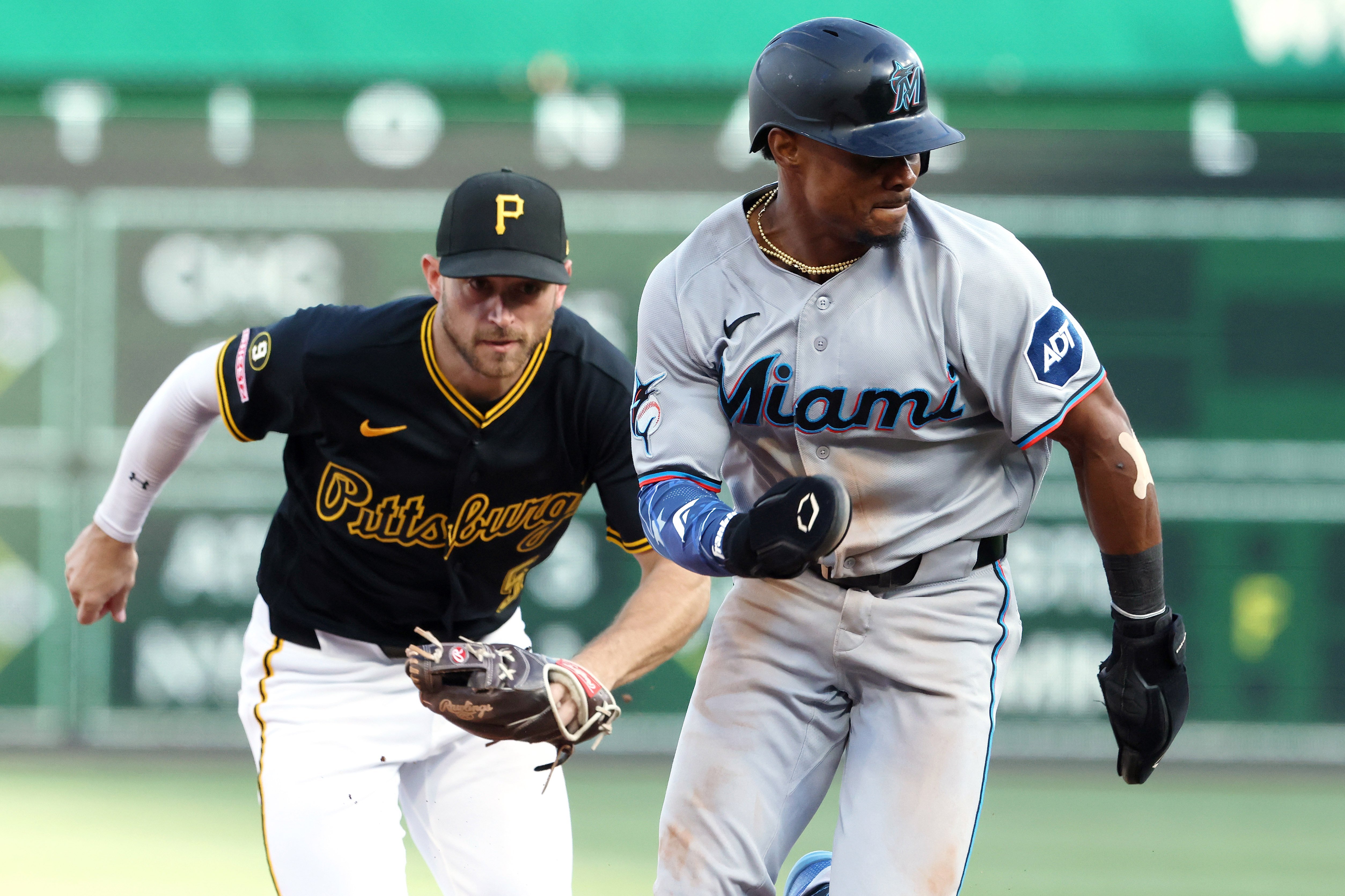 PITTSBURGH -- Common tropes of the Marlins' scorching two-week stretch have been steady late-game pitching and timely hitting. On a picture-perfect Saturday afternoon in the Steel City, it was the same knacks that flipped for the worst. Miami's 2-for-13 day with runners in scoring position and struggle to secure a clutch knock in the final two frames proved fatal, as a rare sideways eighth from Anthony Bender ended up being the inevitable nail in the coffin of their season-long six-game win streak. Gregory Soto's tenth save of the year raised the Jolly Roger and sank Miami simultaneously, evening the weekend set with a 3-2 Pirates victory. "It was intense. It was a good game," said Marlins skipper Clayton McCullough postgame. "We had some chances, got the tying run there to second base in the ninth. It was just a good game, and they came through a little bit more than we did." Incredibly, Pittsburgh boasted even worse numbers with runners on, sporting an abysmal 1-for-12 with RISP and eleven men left stranded. The decisive run scored against Bender was the product of a two-out rally that featured two singles and a walk, before a 97 mph sinker drifted too far in, beaning Spencer Horwitz on the shin and plating the eventual winning run. Bender's rocky inning marked both his first loss of the season and first earned runs of June. Most notably, the 31-year-old surrendered multiple hits in an appearance since the end of April in San Francisco. "I thought Anthony threw the ball well," added McCullough. "Unfortunately, it was a hit by pitch with the bases loaded, but hey, you know what, they did their job, move some forward and push one across...Anthony's been on a really incredible run." Preluding Bender was Miami's latest bullpen game, started by Lake Bachar. Both Bachar and John King surrendered a run apiece in their efforts, but scoreless outings from Calvin Faucher, Cade Gibson and Michael Petersen held down the fort, keeping their offense in it. Miami's aforementioned chances in the eighth and ninth saw runners on first and second and a runner on second, respectively. Three strikeouts and the decision not to pinch-hit Owen Caissie for the slumping Leo Jimenez stifled the former, while a forceout, strikeout and putout of Liam Hicks spelled doom in the latter. "(We were) weighing the potential of (lefty Evan) Sisk versus Caissie or Leo, who's been in the game. Certainly trust him in that at-bat there against Yohan (Ramirez) in the eighth, so that's what went into that." It was team RBI leader Hicks and Heriberto Hernandez who cashed in Miami's only two runs earlier in the contest. Hernandez, who was a Bryan Reynolds robbery away from a sixth homer of the year, continues to shine in parallel with Miami's stretch. The sophomore outfielder's OPS sits north of 1.000, courtesy of seven RBI and base hits in eight of nine. "The swings he's getting off are incredibly aggressive," said McCullough of Hernandez's success. "Bert hits the ball hard, can handle velocity, and hits a mistake with spin. I think we've just seen a much more confident version of Bert since he's come back. He's cleared his head a little bit, and he's not as tentative as I thought his plate appearances were early in the season; there's more conviction behind it. This is the Bert-the type of swings he's getting off-that I think we saw last year." If you crave another mid-day, low-scoring affair, look no further than Sunday's series finale. Max Meyer, still sporting an undefeated 6-0 record, goes toe-to-toe with 2025 National League Cy Young winner and superstar Paul Skenes. First pitch from a likely rainy day in Pittsburgh is slated for 12:15. View the full article
 -
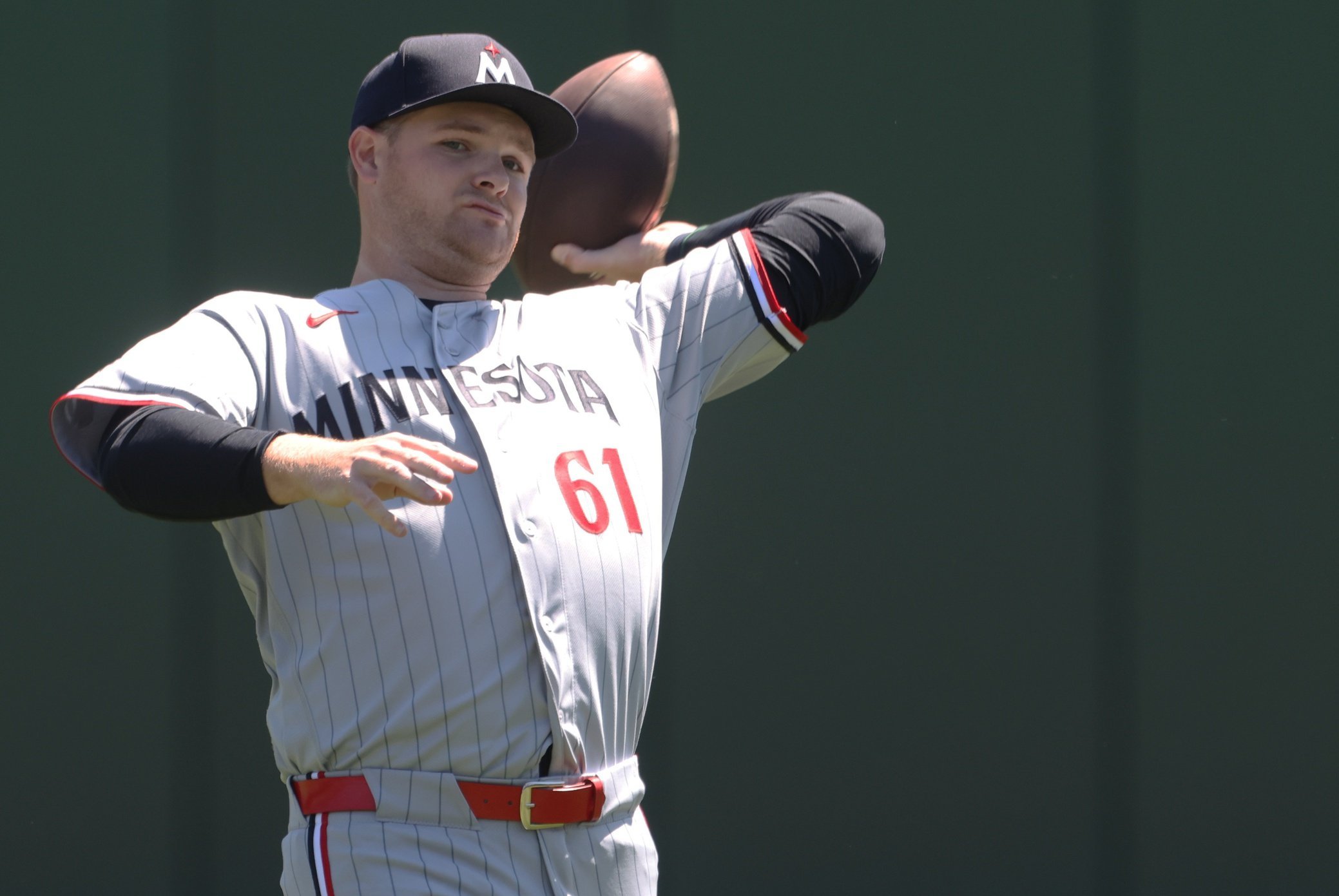 Box Score SP: Connor Prielipp - 6 IP, 7 H, 4 ER, 2 BB, 2 K (98 pitches, 66 strikes (67%)) Home Runs: Byron Buxton (22), Royce Lewis (6), Luke Keaschall (2) Bottom 3 WPA: Justin Lawrence (-0.32), Travis Adams (-0.14), Prielipp (-0.12) Win Probability Chart (via FanGraphs) The Twins came into Saturday's matinee at Target Field riding the waves of an exciting comeback victory. Young lefty Connor Prielipp hoped to right his ship after a series of sub-par performances, especially as his 2026 inning count approaches max capacity. Not-so-young lefty Matthew LIberatore took the ball for the Cardinals in hopes of sparking another St. Louis winning streak. Prielipp Ambushed Early and Often This game got off on the wrong foot for the home team, as Prielipp couldn't control his fastball in the opening at-bat, losing Masyn Winn to a five pitch walk with mostly non-competitive efforts. As designated hitter Ivan Herrara stepped into the box, Prielipp was determined to get a fastball over the plate. By the time that center-cut fastball landed in the bullpen for a 2-0 Cardinals lead, the momentum of Friday night had morphed into a typical Saturday afternoon funk. The top of the second inning didn't start out any better for the home team. Prielipp again served up a center-cut first pitch fastball, this time to Blaze Jordan who promptly put it over the super-short arms of Austin Martin and off of the right-field wall. By the time Ryan Kreidler could catch up to the ball, Jordan was standing on third with a lead-off triple. Pedro Pages doubled in Jordan, and eventually came around to score himself to make it 4-0 Cardinals. Royce Lewis is On a Tear, and that Buxton Guy Liberatore tore through the Twins lineup in the early innings like they were wet toilet paper. When he faced Lewis in the bottom of the second inning, Lewis ripped a double but got stranded at third. That was the only hit the Twins could muster in the first three frames, so things were starting to get desperate as the bats came back around in the bottom of the fourth. This time it was Liberatore's turn to see what happened when a first pitch fastball catches the power zone for a major league hitter. That hitter was Byron Buxton, and the Twins were finally on the board. Two batters later, Lewis decided to not rely on his teammates to get him home. He took of that part himself with his third homer in the last four days to pull the Twins within two at 4-2. Afternoon Rallies and Homer Hankies The Twins came into Saturday's contest a measly 14-20 during day/afternoon games in 2026. If they want to get back into the Wild Card race, finding a way to get awake in time for matinee outings will have to be a part of the equation. Liberatore did his best to wake-up the Twins offense again in the bottom of the fifth. After losing Kriedler on a full count walk to start the inning, the Cardinals lefty thought he might get away with a first pitch fastball to Luke Keaschall. Wake up Twins fans! Its a 4-4 ballgame! Falvey's Sins Remain As unlikely as it seemed in the second inning, Prielipp managed to cover six full innings before giving way to his minor league bullpen. For all the excitement of last night's victory, the effort left the Twins bullpen pretty exhausted. With few quality options available, first man up was Justin Lawrence. The seventh inning started off innocently enough with two strike outs, but then Herrera and Jordan Walker went back-to-back. Derek Shelton stuck with the steaming hand of Lawrence not once, but twice more, as Lars Nootbaar and Alec Burleson both got to tee off for singles. Finally, Travis Adams came in to stop the bleeding. Instead, he started a gusher. This time the center-cut fastball gave Blaze Jordan his first career homerun, and the Cardinals a sudden and depressing 9-4 lead. Adams remained in the game as the sacrificial bullpen lamb, and he managed to get his team into Sunday. The Twins briefly got their rally mojo going again in the bottom of the eighth, but after a Kody Clemens RBI single, Lewis aggressively tried to pull a first pitch changeup on the outside corner. That leads to a rolled-over 6-4-3 rally killer in most Major League ballparks, and it did here today as well. Things got slightly interesting again in the bottom of the ninth, as reliever Riley O'Brien tried his best to keep the home crowd in it by walking the bases loaded to bring the tying run to the plate with nobody out. Keaschall got the first crack at the hero moment, but went down looking for the first out. Josh Bell got the next attempt, and he could only muster an RBI fielder's choice grounder to second. Shelton thought that Victor Caratini stood a better chance of keeping the rally alive than today's lead off man Austin Martin, but he was wrong. A harmless pop fly generated a 9-6 Cardinals victory, with Buxton left on-deck. What’s Next? Tomorrow is another day, but unfortunately for the afternoon-challenged Twins its another day game. Twins righty Taj Bradley (5-3, 4.02 ERA) looks to get his season back, while the Cardinals will turn to former 1st rounder, righty Michael McGreevy (3-5, 2.99 ERA). First pitch is scheduled for 1:10pm CDT. Twins bullpen implosion is scheduled for approximately 3:15pm CDT. Postgame Interviews: Coming Soon Bullpen Usage Spreadsheet TUE WED THU FRI SAT TOT Adams 0 31 0 0 37 68 Paredes 0 58 0 0 0 58 Rogers 17 14 0 22 0 53 Lawrence 26 0 0 0 24 50 Morris 0 39 0 9 0 48 Laweryson 12 0 32 0 0 44 Gómez 0 27 0 15 0 42 Orze 23 0 0 16 0 39 Banda 0 30 0 9 0 39 View the full article
 -
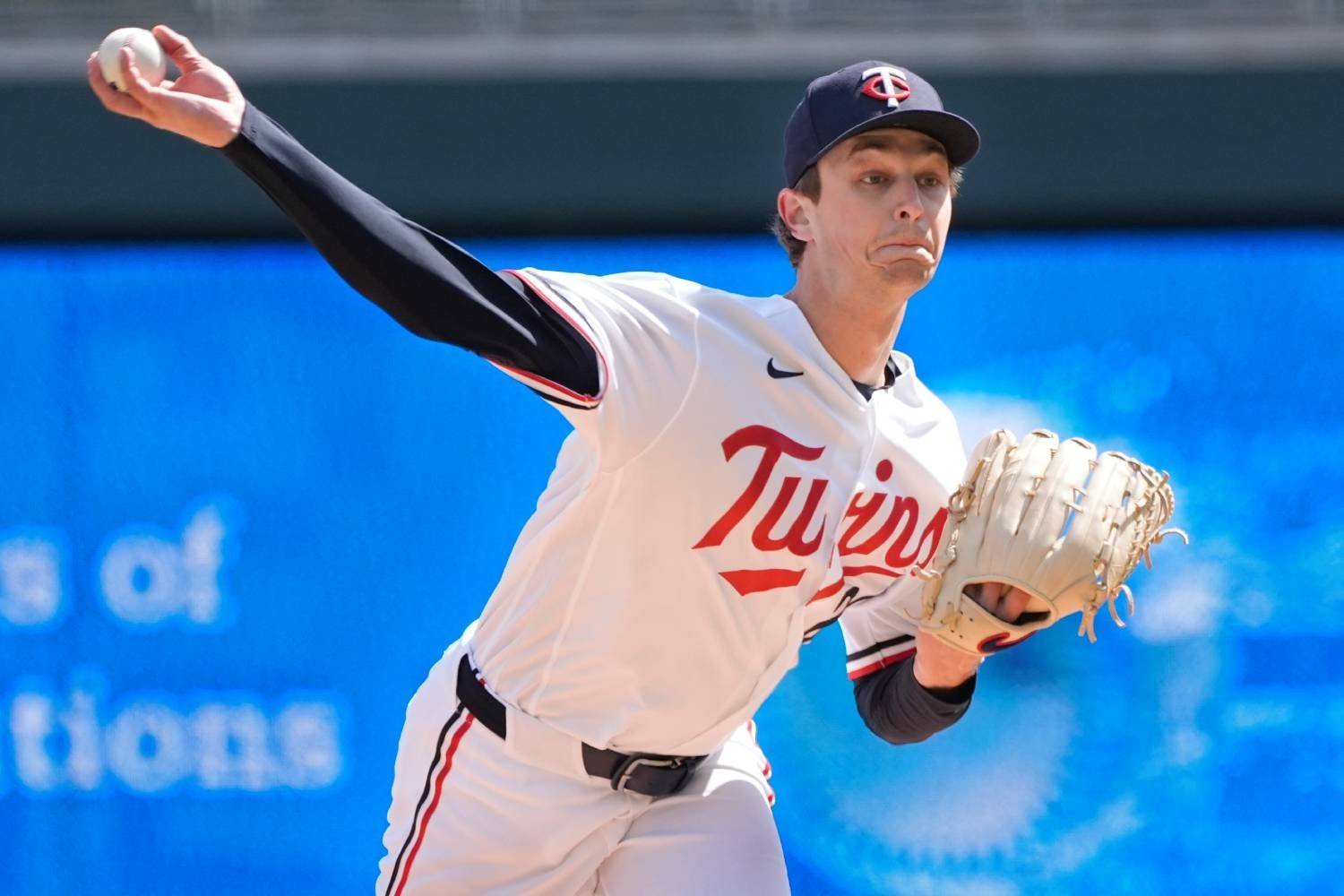 For much of the 2026 season, the Twins have been forced to navigate an endless stream of injuries. While the club continues to battle through those setbacks, Friday brought several pieces of positive news. Three notable names—top prospect Walker Jenkins, right-hander Mick Abel, and left-hander Kendry Rojas—are all progressing toward returns. Each player reached a significant checkpoint in his recovery process this weekend, offering hope that reinforcements could soon be on the way. Walker Jenkins Nearing Return to Game Action The Twins expect Jenkins to begin a rehab assignment with Low-A Fort Myers on Saturday, marking his first game action since suffering a Grade 2 AC joint sprain in his left shoulder on May 5. The injury occurred while he crashed into an outfield wall while making a catch for Triple-A St. Paul. Minnesota's top prospect was still finding his footing early in the season after arriving at Triple-A, but he entered the injured list on a much stronger note than he started. Before getting hurt, Jenkins had improved his season line to .256/.396/.389 (.785) across 111 plate appearances. That followed a 2025 campaign in which he posted a .286/.399/.451 (.850) slash line while climbing all the way to Triple-A. Since being selected fifth overall in the 2023 MLB Draft, the 21-year-old has dealt with a series of injuries. A hamstring strain cost him significant time in 2024, while an ankle sprain sidelined him for nearly two months in 2025. He also battled another hamstring issue during spring training this year. When healthy, Jenkins has consistently looked like one of baseball's premier prospects. If he returns from this latest injury and performs well at Triple-A, the possibility of a major-league debut later this season remains very much alive. At minimum, he appears poised to put himself in a position to contribute in Minnesota sometime during 2027. Mick Abel Closing In on Return to Rotation Abel's next step comes Saturday when he is scheduled to throw a light bullpen session following an impressive rehab outing earlier this week. Pitching for Triple-A St. Paul on Wednesday, Abel tossed three scoreless innings, striking out five while allowing only two hits. Perhaps most encouraging was the quality of his stuff. His fastball averaged 96.3 mph and topped out at 97.9 mph, looking much like the weapon that helped him dominate before landing on the injured list. The Twins shut Abel down on April 20 because of inflammation in his right elbow. His recovery appeared to be nearing completion in early May before lingering soreness in his right triceps after a simulated bullpen session temporarily halted his progress. The setback eventually led to a cortisone injection and additional recovery time. Before the injury, Abel was pitching some of the best baseball of his young career. He had thrown 13 consecutive scoreless innings over his final two starts and looked increasingly comfortable against major-league hitters. His return would arrive at an ideal time for Minnesota. Bailey Ober remains sidelined with a right flexor strain, leaving the Twins scrambling to piece together a rotation. The club has relied on multiple bullpen games in recent weeks, with Joe Ryan, Taj Bradley, Connor Prielipp, and Zebby Matthews carrying the workload. If Abel continues progressing without issue, he could soon provide the stability Minnesota desperately needs in the fifth spot. Kendry Rojas Taking Another Step Forward Rojas is scheduled to face hitters in a live batting practice session Saturday in Fort Myers as he works his way back from left triceps inflammation. The 22-year-old has been sidelined since May 29. Few pitchers have exceeded expectations this season the way Rojas has. He quickly established himself as a valuable multi-inning weapon. In 14 1/3 innings, Rojas has posted a sparkling 1.26 ERA while striking out 14 hitters. He has also demonstrated the flexibility to help in multiple roles. Earlier this season, Rojas made a spot start against the Houston Astros and responded by throwing four scoreless innings at Target Field. That versatility has become increasingly important as injuries continue to pile up throughout Minnesota's pitching staff. Whether he returns as a long reliever, spot starter, or bulk innings option, Rojas would give the Twins another reliable arm capable of reducing the burden on an already stretched pitching corps. After weeks of discouraging injury news, Minnesota finally has reason for optimism. None of these returns is guaranteed to happen immediately, but the progress of Jenkins, Abel, and Rojas offers a reminder that help may finally be on the horizon. View the full article
 -
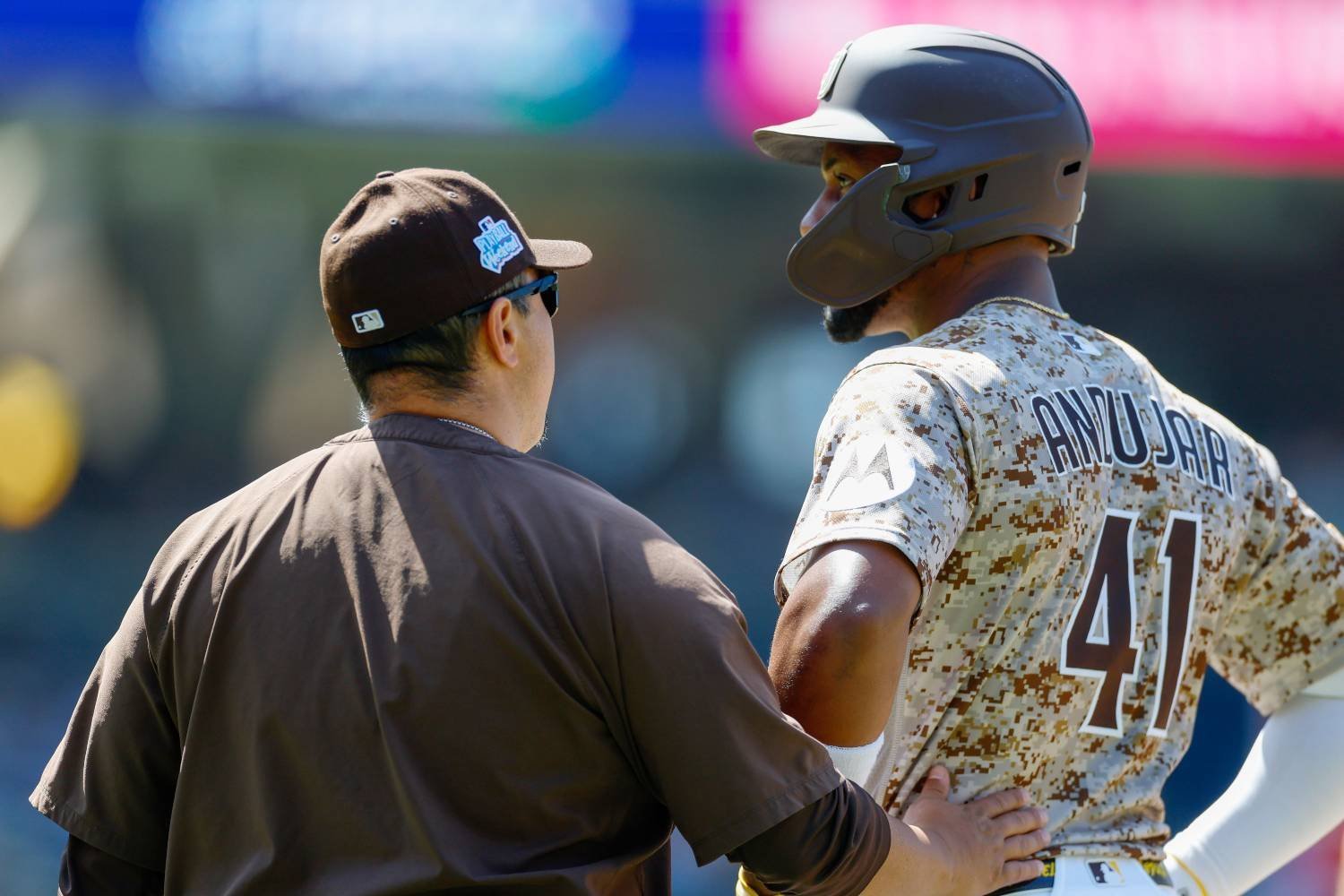 One of the San Diego Padres' subtle offensive contributors will be sidelined for a bit. Designated hitter-third baseman Miguel Andujar was placed on the 10-day injured list Saturday by the San Diego Padres due to a strained left hamstring. Outfielder-DH Nick Solak was called up from Triple-A El Paso to take his place. The Padres had an opening on their 40-man roster after outfielder Bryce Johnson was designated for assignment Friday. Andujar injured his hamstring in Sunday's 7-3 loss to the New York Mets on a seventh-inning single. While he originally stayed in the game, he was removed, with Johnson pinch-running for him. Andujar did have pinch-hit appearances Tuesday and Wednesday against the Cincinnati Reds, replaced by pinch-runner Jase Bowen after drawing a walk Tuesday. It is the same hamstring that bothered Andujar earlier in the season. Solak is the fourth member of the Chihuahuas to come up in the past two weeks, joining outfielder-infielder Samad Taylor, outfielder Jase Bowen and infielder Will Wagner. Solak has a good track record offensively, but has been a liability defensively, particularly when he was playing second base. He has stuck to corner spots (first base, left field, right field) in recent seasons. This year at El Paso, Solak was slashing .333/.412/.512 with nine homers and a team-high 40 RBIs. His .333 batting average is the highest among players currently in the Pacific Coast League and has reached base in 17 of his last 18 games. Solak has 259 games of MLB experience since making his debut in 2019 with a career slash line of .250/.325/.369 with 21 homers and 93 RBIs. View the full article
 -
 Chicago Cubs Minor League Report - June 13 Affiliate Overview Triple-A Iowa Cubs Series at Louisville Bats (Cincinnati Reds): Tied, 2-2 Season Record: 27–38 Double-A Knoxville Smokies Series at Montgomery Biscuits (Tampa Bay Rays): Smokies lead, 3-2 Season Record: 33–28 High-A South Bend Cubs Series vs. Peoria Chiefs (St. Louis Cardinals): Tied, 2-2 Season Record: 36–21 Single-A Myrtle Beach Pelicans Series vs. Augusta GreenJackets (Atlanta Braves): Tied, 2-2 Season Record: 23–36 Affiliate Highlights Triple-A: Iowa Cubs Season Record: 27–38 Series Opponent: Louisville Bats (35–31) Series Standing: Tied, 2-2 June 12: The Iowa Cubs evened their series at the Louisville Bats with a 6-4 win on Friday night at Louisville Slugger Field. BJ Murray’s (2-for-3) RBI-triple in the first put the Cubs in front and the visitors doubled their lead on Scott Kingery’s (1-for-4) RBI-groundout in the second. The Bats pulled one back in the third but Iowa got that run back in the fourth when Murray drew a bases-loaded walk. Will Sanders delivered a much-needed good start for the I-Cubs, allowing just one run on three hits over five innings of work, striking out eight batters to improve to 3-0 on the season. The Cubs made it 6-1 in the sixth when Jonathan Long (1-for-3) doubled home a pair and Murray followed with an RBI-double of his own. Louisville pulled three runs back in the eighth to make it 6-4 but Gavin Hollowell worked a 1-2-3 ninth to earn his second save of the campaign. Double-A: Knoxville Smokies Season Record: 33–28 Series Opponent: Montgomery Biscuits (32–28) Series Standing: Lead, 3-2 June 12: The Knoxville Smokies won their third-straight game and took a 3-2 series lead with their 9-3 victory over the Montgomery Biscuits on Friday night at DABOS Park. Andy Garriola (1-for-4) broke the deadlock in the fourth with a solo shot, his 12th of the year. Owen Ayers’ (2-for-5) RBI-double in the sixth made it a 2-0 game but the Biscuits evened the contest with a pair of runs in the home half of the frame. Alex Ramírez (2-for-5) put Knoxville back in front with a two-run blast in the seventh and the visitors broke the game open with four in the eighth. Carter Trice (2-for-4) brought in a run with a single and Ramírez left the yard for a second time with a three-run homer to make it 8-2. Montgomery plated one in the eighth but Jefferson Rojas (3-for-5) got that run back with a single in the ninth to make it 9-3, which would be the final score of the ballgame. Jace Beck got the start on the mound for the Smokies and took no decision. Beck tossed four scoreless frames, allowing just two hits, to go along with seven strikeouts and two walks. Rojas turned in a three-hit performance for the second-straight game and for the third time this month. It was also his sixth multi-hit effort in June in 11 games. Rojas is now slashing .378/.420/.667 during that span with two doubles, a triple, three home runs and 12 RBI. High-A: South Bend Cubs Season Record: 36–21 Series Opponent: Peoria Chiefs (32–29) Series Standing: Tied, 2-2 June 12: The South Bend Cubs had their bats go quiet in a 3-1 defeat to the Peoria Chiefs on Friday night at Four Winds Field. The Chiefs scored twice in their first trip to the plate before the Cubs were able to get on the board in the fifth when Josiah Hartshorn (1-for-3) was hit by a pitch with the bases loaded. Peoria restored their two-run advantage with a run in the seventh and would shut down South Bend’s offense the rest of the way to draw the series even at 2-2. Jostin Florentino got the start on the mound for the Cubs and took the loss, falling to 0-3 on the season. Florentino allowed two runs on two hits over three innings of work, striking out four and walking three. Adam Stone worked 1 2/3 scoreless innings in relief, allowing just two hits to go along with two strikeouts and a walk. The South Bend offense was held to just five hits on the night, with none going for extra bases, going 2-for-9 with runners in scoring position, leaving 10 on base. Single-A: Myrtle Beach Pelicans Season Record: 23–36 Series Opponent: Augusta GreenJackets (32–29) Series Standing: Tied, 2-2 June 12: The Myrtle Beach Pelicans were routed by the August GreenJackets, 13-3, on Friday night at Pelicans Ballpark. Both teams put crooked numbers up on the board in the first, with the GreenJackets scoring three times and the Pelicans twice through a two-run shot from Logan Poteet (1-for-3). The Myrtle Beach offense was unable to keep up with their Augusta counterparts, who made it a 9-1 game after scoring four in the second and two more in the sixth. In the home half of the sixth, the Pelicans would get their final tally of the ballgame on a sacrifice fly from Geuri Lubo (0-for-3). The visitors would add one more in the seventh and three more in the ninth to cruise to the 13-3 win. Dominick Reid started on the mound for Myrtle Beach and suffered the loss, falling to 2-4 on the season. Reid allowed five runs on three hits over 1 1/3 innings of work, walking four and striking out one. View the full article
 -
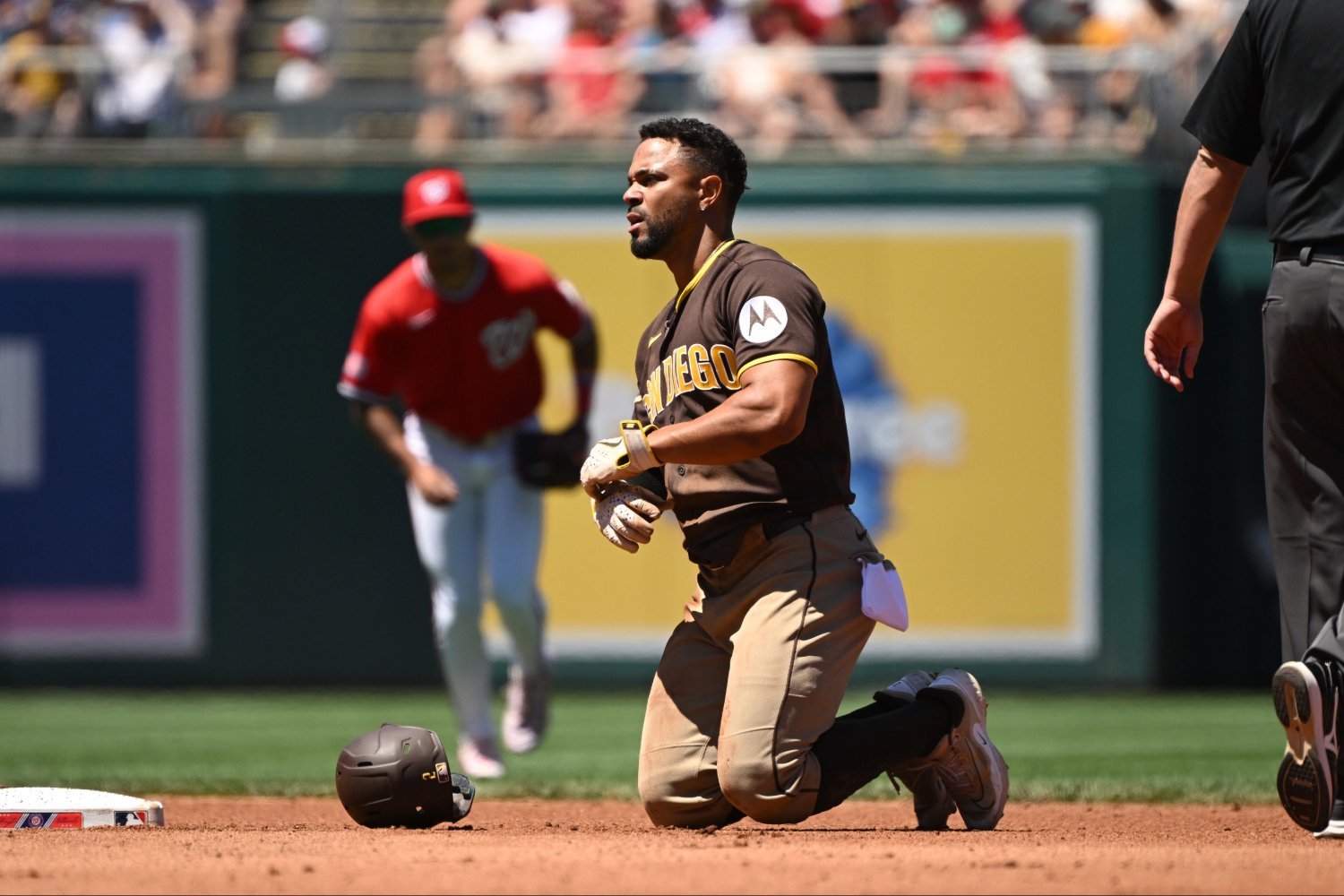 For years, following a Xander Bogaerts season was almost an exercise in predictability. The numbers might fluctuate slightly from one year to the next, but the outcome was usually the same: a hitter well above league average, capable of getting on base, driving in runs, and providing offensive stability from a premium defensive position. That consistency was exactly what convinced the Padres to make a major investment in him before the 2023 season. Three years later, the conversation looks very different. Bogaerts continues to provide value through his defense, experience, and durability. However, the 2026 season appears to confirm a trend that began shortly after he left Boston: the hitter who spent years as one of Major League Baseball’s most complete shortstops is no longer showing up with the same frequency. The percentiles help illustrate the problem. In 2026, Bogaerts ranks below average in several key offensive metrics, including Run Value (41st percentile), xwOBA (48th percentile), and Sprint Speed (47th percentile). His power has also declined noticeably, with Barrel% (35th percentile) and Sweet Spot% (17th percentile) among the lowest marks of his career. By contrast, his defense remains a strength, supported by an 83rd-percentile Fielding Run Value and an outstanding 88th-percentile Outs Above Average. Xander Bogaerts' Numbers Tell a Concerning Story The progression of his statistics since his final season with the Red Sox reveals more than a simple decline. It shows the point at which Bogaerts stopped looking like the player he had been for much of the previous decade. Season AVG OBP SLG wRC+ 2022 (BOS) .307 .377 .456 133 2023 (SD) .285 .350 .440 119 2024 (SD) .264 .307 .381 95 2025 (SD) .263 .328 .391 104 2026 (SD) .231 .303 .356 90 His first season in San Diego was a successful one. A 119 wRC+ still represents production comfortably above league average and helped justify part of the organization’s investment. It has also been his best offensive season as a Padre. Since then, the results have ranged from mediocre to below average. His current 90 wRC+ is the second-worst mark of his career among seasons with at least 200 plate appearances and reflects a decline that can no longer be dismissed as temporary. The expected metrics offer some room for optimism. His .320 xwOBA sits well above his actual .296 wOBA, suggesting a degree of bad luck. Even so, that expected production remains far below the standard he maintained during his peak years in Boston. The Power That Supported His Offensive Profile Has Eroded What stands out most about Bogaerts’ decline is that it does not appear to be driven by a major loss of plate discipline. His 9.3% walk rate is his highest since 2022. His strikeout rate remains a reasonable 18.6%, while his chase metrics are still close to the levels he posted throughout much of his career. The problem begins when he makes contact. Season Team Events Barrel% HardHit% ISO 2015 BOS 518 2.5% 33.8% .101 2016 BOS 532 5.3% 33.5% .152 2017 BOS 457 1.3% 31.7% .130 2018 BOS 417 9.8% 41.7% .234 2019 BOS 498 8.6% 44.4% .246 2020 BOS 163 8.6% 36.8% .202 2021 BOS 423 9.7% 43.0% .198 2022 BOS 446 6.5% 39.5% .149 2023 SDP 492 6.1% 34.6% .154 2024 SDP 355 5.1% 33.2% .117 2025 SDP 406 6.9% 39.2% .128 2026 SDP 177 6.8% 36.7% .122 The best version of Bogaerts never needed to hit 40 home runs to dominate. His value came from a rare combination of contact ability, plate discipline, and enough power to turn mistakes into immediate damage. That balance has gradually disappeared. His ISO has remained below .130 for three consecutive seasons, a significant drop from the years when he was one of the most productive offensive shortstops in the majors. Likewise, his barrel rates and hard-hit rates are no longer close to the levels he produced during his peak seasons in Boston. The consequence is straightforward: he creates less damage when he puts the ball in play and has less margin for error to overcome the inevitable ups and downs that come with a long season. Pitchers Are Exploiting An Older Bogaerts During his best years, Bogaerts was especially dangerous against fastballs. Between 2019 and 2022, he posted wRC+ marks of 204, 234, 149, and 168 against four-seam fastballs. That was the kind of production that forced opponents to completely rethink their pitching plans. Today, the situation is different. While he has shown some improvement against fastballs compared to 2025, the real problem emerges against secondary pitches. Pitchs (2026) AVG K% wRC+ Changeup .071 31.3% -4 Curveball .250 50.0% 50 Splitter .000 80.0% -100 If there is one primary explanation for Bogaerts’ offensive decline in 2026, it is probably found here. Off-speed pitches have given him enormous trouble. Against changeups, he is hitting just .071 with a wRC+ of -4. Splitters have produced strikeouts in 80% of plate appearances ending with that pitch, while curveballs have generated strikeouts in half of his matchups. Bogaerts vs. Off-speed Pitches (2023–2026) Season Perfect Contact % Flawed Swing % Whiff Rate Avg. Miss Dist. (in) Avg. Under Swing 2023 23% 7% 31.1% 2.9 64% 2024 18% 8% 33.3% 4.1 71% 2025 32% 15% 37.7% 3.7 62% 2026 6% 19% 39.6% 3.7 40% The most alarming statistic in the entire table is not the increase in flawed swings or even the rising whiff rate; it is the collapse of perfect contact. In 2023, Bogaerts produced ideal contact against off-speed pitches 23% of the time. That figure climbed to 32% in 2025. In 2026, it has plummeted to just 6%. That drop helps explain much of his offensive decline. He is no longer punishing the pitches he once recognized with ease. Too often, he arrives late, misses entirely, or produces contact incapable of doing meaningful damage. Fastballs still allow him to compete. Secondary pitches, however, have become an obvious vulnerability. And when a hitter loses the ability to adjust to changing speeds, opposing pitchers usually find a way to exploit it quickly. These are the indicators that point toward a gradual and sustained decline rather than an isolated bad season. At 33 years old, he still provides value through his defense, experience, and baseball intelligence. But the offensive profile that made him one of the most complete shortstops in the game for so many years appears increasingly distant. View the full article
 -
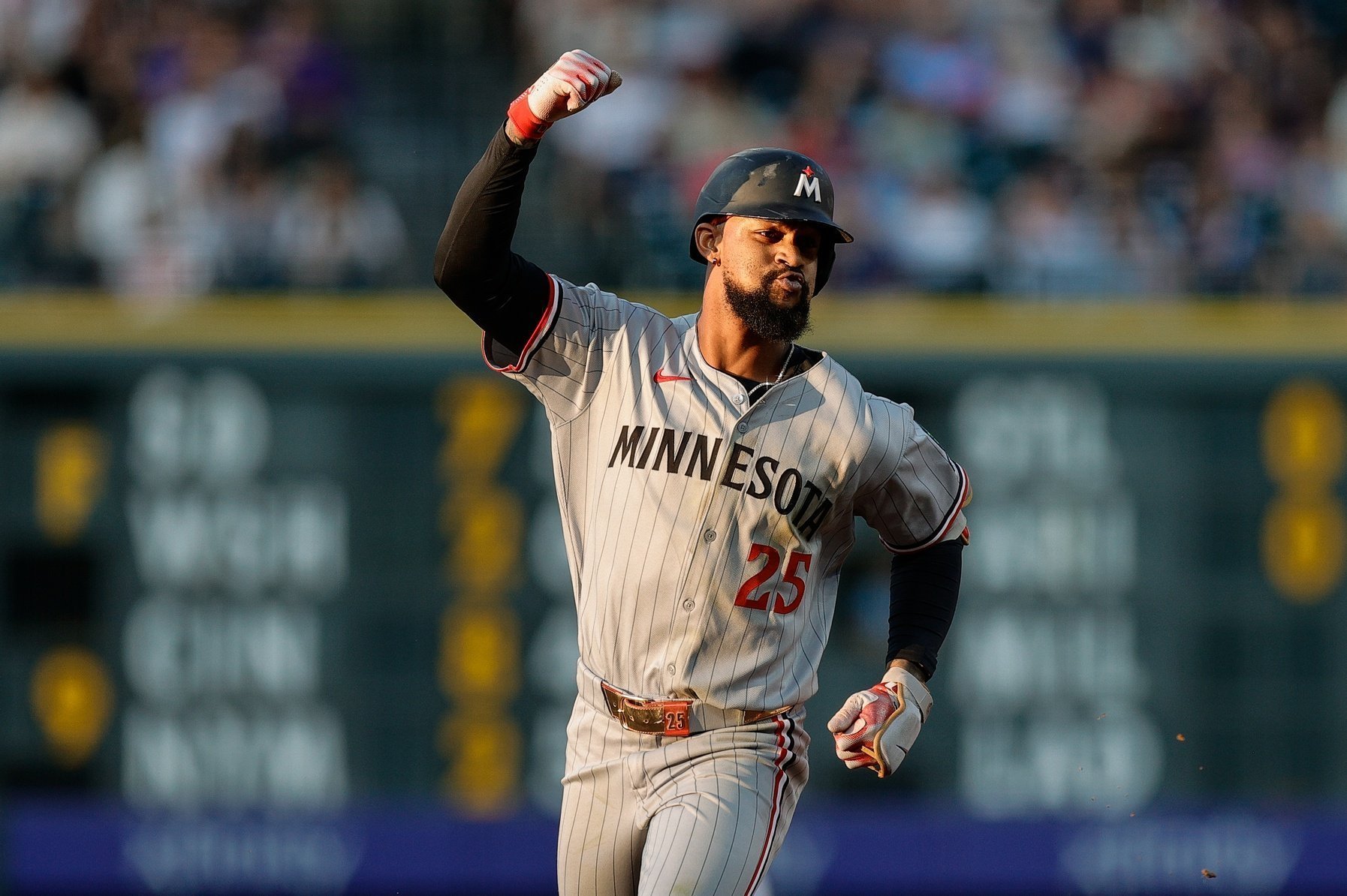 Byron Buxton is putting together a stretch unlike anything Twins fans have seen from him before. The center fielder's recent power binge isn't just impressive by modern standards. It is historic when viewed through the lens of franchise history. Over the last month and a half, Buxton has joined a group that includes Harmon Killebrew, Kent Hrbek, Brian Dozier, and Nelson Cruz—some of the most prolific home run hitters ever to wear a Twins uniform. As he continues launching baseballs at a remarkable rate, the conversation is beginning to shift from whether Buxton can stay healthy to just how high his ceiling might be this season. A Slow Start Gave Way to an Explosive Turnaround It wasn't long ago that Buxton looked completely out of sync at the plate. Through his first 14 games of the season, he failed to hit a home run while slashing just .182/.258/.273 (.531). He collected only four extra-base hits during that span and posted a 17-to-5 strikeout-to-walk ratio. For a player expected to carry Minnesota's lineup, it was an alarming start. The sluggish beginning was largely attributed to his participation in the World Baseball Classic. While representing Team USA provided a unique opportunity, it also disrupted his normal spring routine. Buxton returned from the tournament with fewer traditional spring training at-bats than usual and appeared to spend the opening weeks of the regular season searching for his timing. For most players, a rough two-week stretch isn't noteworthy. For Buxton, however, it now serves as a dramatic contrast to what has followed. Baseball's Hottest Power Hitter Since that slow start, Buxton has transformed into arguably the most dangerous power hitter in baseball. Over his last 44 games, he has crushed 20 home runs while slashing .279/.337/.645 (.981). During that stretch, no hitter in baseball owns a higher slugging percentage. In fact, Buxton's mark sits 28 points ahead of the next closest player. The only hitter who has matched his 20 home runs during that timeframe is Kyle Schwarber, and Schwarber needed six more games to reach the same total. What's perhaps most impressive is that Buxton hasn't produced these numbers while operating at full strength. He has already missed time because of both hip and shoulder issues, reminders of the physical challenges that have followed him throughout his career. Even while battling through those ailments, he has continued to punish opposing pitchers at a historic pace. Joining Some of the Greatest Power Surges in Twins History Buxton's recent stretch becomes even more impressive when viewed against more than six decades of Twins history. Only four other Twins hitters have recorded a stretch of more than 20 home runs across a 45-game span: Harmon Killebrew in 1964 Kent Hrbek in 1987 Brian Dozier in 2016 Nelson Cruz in 2019 That's elite company. Killebrew finished the 1964 season with 49 home runs, still the highest single-season total in franchise history. Hrbek launched 34 homers while helping lead Minnesota to its first World Series championship in 1987. Dozier authored one of the most memorable offensive seasons by a Twins infielder when he blasted a career-high 42 home runs in 2016. Cruz followed three years later by pacing the Bomba Squad with 41 home runs as Minnesota set a major league record with 307 team homers. Now Buxton's name sits alongside theirs. For a player who has had his fair share of ups and downs throughout his career, that distinction highlights just how extraordinary this stretch has become. Why Is Buxton Hitting for More Power Than Ever? At first glance, the answer shouldn't make sense. Buxton's bat speed has declined compared to previous seasons. Last season, he was at 75.0 mph, and this season he is down to 74.0 mph. That's a natural part of aging and something nearly every player experiences as they move through their 30s. Normally, less bat speed leads to diminished power. Instead, Buxton is producing the best power numbers of his career. The explanation may actually be tied to that slight decline in bat speed. Against fastballs, Buxton has been late a bit more often than he was in previous years. However, he has also done a better job of centering those pitches horizontally on the barrel. The occasional late swing has been more than offset by his improved performance against breaking pitches. He's covering spin more effectively than ever. Buxton is swinging over fewer breaking balls and running out of bat less frequently than he did a year ago. The slightly slower swing appears to have improved his timing window, allowing him to stay back longer and make more consistent quality contact against off-speed offerings. In short, he has sacrificed very little against velocity while becoming significantly better against secondary pitches. That tradeoff has unlocked a new level of offensive production. However, it's also a sign of more inevitable decline ahead. Can Buxton Become the First 50-Home Run Twin? That question no longer feels unrealistic. Killebrew's franchise-record 49 home runs have stood for more than six decades. Numerous Twins sluggers have threatened the mark, but none have reached the 50-homer plateau. Buxton is now forcing his way into that conversation. If he maintains anything close to his current pace and stays on the field, he has a legitimate opportunity to challenge Killebrew's record and become the first player in franchise history to hit 50 home runs in a season. Twins fans have spent years imagining what a peak Buxton season might look like. The answer may finally be unfolding in front of them. After a slow start that appeared tied to a disrupted spring schedule, Buxton has erupted into one of the most dominant power hitters in baseball. His recent run places him alongside some of the greatest home run stretches in franchise history and has revived conversations about records that once seemed untouchable. Whether he ultimately reaches 50 home runs remains to be seen. What is already clear is that Buxton is producing a stretch of power that deserves a place among the most memorable offensive runs ever witnessed in a Twins uniform. Can Buxton reach 50 homers? Should fans be worried about his decreased bat speed? Leave a comment and start the discussion. View the full article
 -
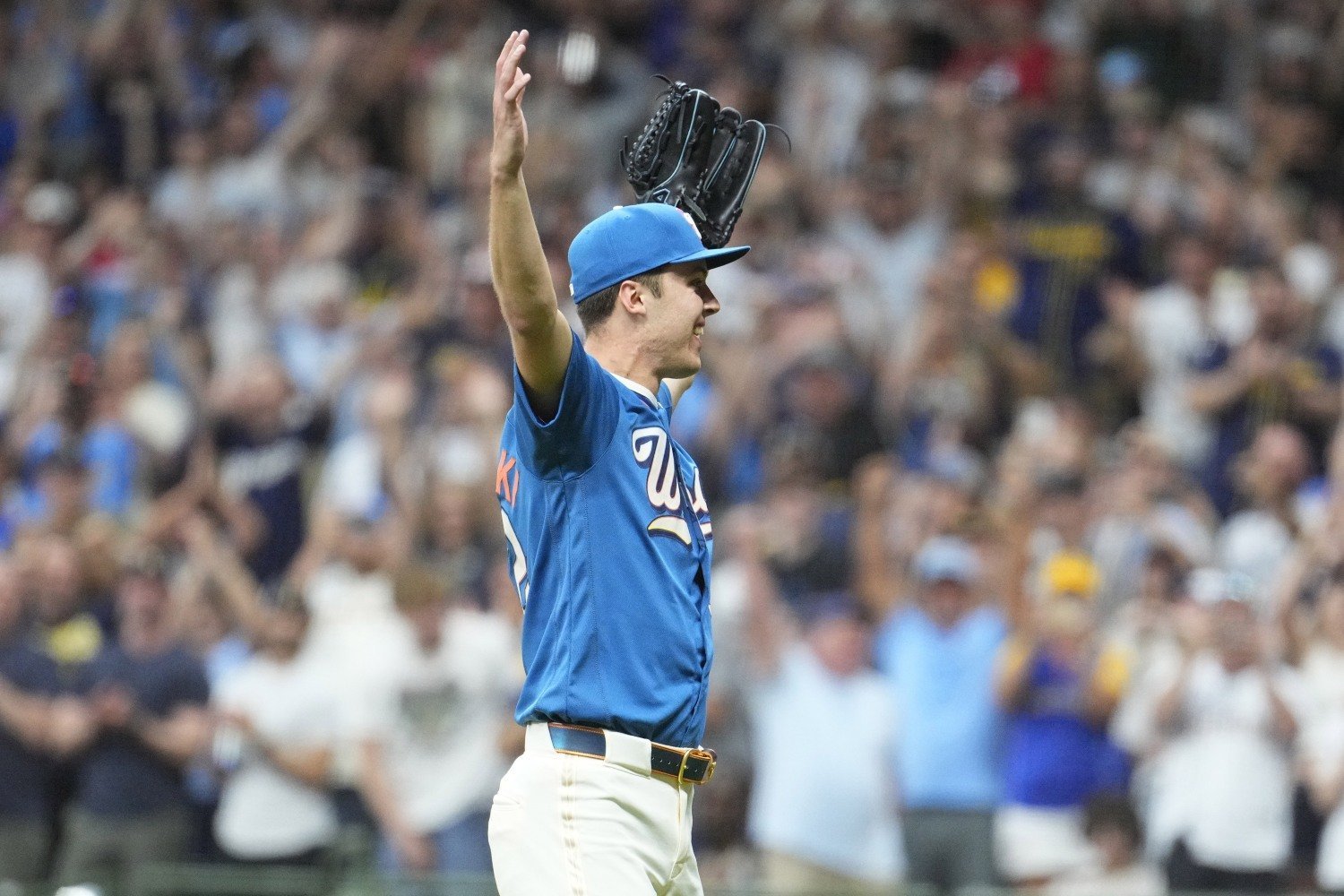 On the one-year anniversary of his big-league debut, Jacob Misiorowski delivered one of the best starts in modern baseball history. That might sound like hyperbole, but it’s hard to dominate hitters more wholly than Misiorowski dismantled Philadelphia Phillies hitters on Friday night at American Family Field: a 95-pitch, one-hit complete-game shutout with 15 strikeouts. According to Stathead, it was the most strikeouts in a Maddux (a complete-game shutout in under 100 pitches, named for inner-circle Hall of Famer Greg Maddux) since consistent pitch-count tracking began in 1988. “For me, personally, that was as good as it gets,” Pat Murphy said postgame. “That’s probably the first one ever,” Misiorowski said, when asked if he had ever pitched that well at any level in his life. Just listing the box score line doesn’t fully do the start justice. Misiorowski threw hard. He missed bats. He induced weak contact. He controlled the count. He showed five different pitches. There’s a lot to unpack regarding just how complete his dominance was, so let’s walk through each notable number one by one. 104.5 mph This is where Misiorowski first turned heads, and it happened right out of the gates, when he struck out Kyle Schwarber to lead off the game. The 2-2 fastball that Schwarber foul-tipped for strike three was 104.5 mph, the fastest pitch thrown by a starting pitcher in the pitch-tracking era (since 2008). And Misiorowski threw it when he felt his worst all night. “To be honest, the first few innings, I feel like I didn’t have it all that well,” he said. “I was just hoping they would swing, and they were hacking away, so that helped a lot.” Misiorowski has set that record multiple times, as he now owns the 17 fastest measured pitches thrown by a starter. He actually set the new high twice in the Schwarber at-bat, the first coming when he unleashed a 104-mph fastball with his third pitch. He still thinks there’s more in the tank, too. “It’s awesome,” Misiorowski said of setting another velocity record. “I mean, honestly, that’s really cool, but I think there’s always another step to go with it, so keep pushing it.” 15 strikeouts It was a career-high for Misiorowski, who has already pitched eight 10-plus strikeout games in 29 career regular-season appearances. He became the third pitcher in franchise history to record at least 15 strikeouts in a game, and the first since Corbin Burnes on August 11, 2021. Misiorowski’s outing was also baseball’s first 15-strikeout start in nearly a year, since Atlanta’s Grant Holmes did it on June 15, 2025. Eight of those strikeouts came against the first nine batters he faced, and 12 were on his signature fastball. Misiorowski’s heater has done the heavy lifting in most of his starts this year, and Friday night was no different. 24 fastball whiffs That’s the second-most swings and misses against a four-seam fastball in any outing in the pitch-tracking era. Only James Paxton managed more when he induced 25 four-seam whiffs on May 2, 2018. (Paxton struck out 16 that day in just seven innings of work, but needed 105 pitches to get those 21 outs.) Misiorowski threw his fastball 72.6% of the time, the second time this season he’s thrown it at more than a 70% rate in a start. For most of the night, he peppered one after another near the top of the zone, where it’s nearly impossible to get on top of with the bat. 3 hard-hit balls When the Phillies did make contact, it wasn’t solid contact. Of their 12 batted balls against Misiorowski, only three were hit with an exit velocity above 95 mph. Two of those were ground balls. The other was Schwarber’s line-drive single on a slider in the fourth inning, the lone Philadelphia baserunner of the night. “I thought I located it well, maybe slightly off,” Misiorowski said. “I don’t remember exactly where it was at, but I’m happy with it. Just trying to jump out ahead of him. He’s probably thinking heater, and he poked it through.” 95 pitches, 74 strikes Getting as much swing-and-miss as Misiorowski did is often a double-edged sword. It can put the pitcher in control of an outing, but it can also cut that outing short by inflating pitch counts. Balls in play make for quicker outs than strikeouts. That didn’t matter for Misiorowski, though, because he was historically efficient. He issued zero walks and never reached a three-ball count. Only five batters reached two balls. Misiorowski’s command has made massive strides this year. A year ago at this time, he was debuting in the big leagues after walking 12.2% of batters in Triple-A Nashville. His walk rate in 2026 is now 6.7%, well below the league average of 9.2%. That’s the product of focused, diligent work with the Brewers’ big-league trainers and pitching coaches. After adding muscle and ironing out his mechanics, Misiorowski’s lower half is stronger and more controlled than ever. “It’s a lot of work from people behind me and in the training room and weight room and all that,” he said. “The kid is working for it,” Murphy said. “He’ll be here tomorrow doing his work, and that’s what it’s about. Today is over. It’s a great accomplishment, enjoy it, but tomorrow’s a day of work. Get back to it tomorrow. He’s that type of kid.” 9 innings Given how he felt earlier in the outing, the thought of going the distance didn’t cross Misiorowski’s mind for most of the night. “Honestly, I thought the seventh was going to be it,” he said. “When we scored all those runs, I thought they were going to turn to me and be like, ‘Well, you’re done.’” Misiorowski went back out for the eighth, though. After he completed that frame with just 86 pitches, there wasn’t much discussion. “At the end of the eighth, I’m like, ‘You’re good, right?’” Murphy said. “He looked at me like, ‘No way. I’m going back out.’ I was joking, of course. William [Contreras] looked at me like, ‘Really?’” American Family Field came to its feet when Misiorowski returned for the ninth inning. When he reached the mound, he paused for a few seconds to take it all in. “That was cool,” he said. “It’s awesome to have the support from the city and everyone like that.” Misiorowski’s velocity dipped below triple digits a few times in the eighth inning, but the adrenaline boost of the moment helped him reach back for some of his best velocity to close things out. His average fastball velocity in the ninth was 102.6 mph, his highest since the first inning. His last fastball of the night was 103.1 mph. It struck out Justin Crawford swinging, the final bow on the most dominant Maddux on record. “I can’t remember one better,” Murphy said. In Milwaukee, at least, no one can. View the full article
 -
 Nick Lorusso drove in five runs with a double and a three-run homer as Binghamton outlasted Somerset, 7-5. Colin Houck added four RBIs and Daviel Hurtado spun five scoreless innings in Brooklyn's 13-4 rout of Frederick. Jonathan Santucci struck out five for the Rumble Ponies. Jackson Hauge's two-run double lifted St. Lucie past Palm Beach, 2-1, with Joel Lara and Zack Mack combining to allow one run. Syracuse dropped its game at Buffalo. Mets Transactions No Roster Moves Morabito's Third-Inning Single Is Syracuse's Only Answer In Buffalo Loss The Syracuse Mets managed just three hits and a single run in a 4-1 loss to the Bisons in Buffalo. The lone run came in the third inning. Kevin Parada singled to start the rally, Jackson Cluff reached on a force out, and Nick Morabito followed with a single to right field that brought Cluff around to score. That was the extent of the offense. Syracuse did not record another hit until Yonny Hernández doubled in the seventh, and the lineup finished with twelve strikeouts. Morabito, Hernández, and Parada accounted for all three Syracuse hits. Starter Jack Weisenburger turned in the most effective outing of the day for Syracuse, working four innings and allowing one run on four hits with three walks and four strikeouts. The bullpen let things creep away. Buffalo scratched out a run in the fourth, added two more in the seventh, and tacked on another in the eighth to pull away. Jefry Yan struck out three over a scoreless inning, and Ben Simon worked around two hits in a scoreless frame, but Nate Lavender and Adbert Alzolay each surrendered runs. Ryan Clifford, batting cleanup, went 0-for-3, and the heart of the order could not string anything together. Syracuse Mets: Hitting Player AB R H RBI BB K Nick Morabito 4 0 1 1 0 3 Ji Hwan Bae 4 0 0 0 0 2 Andy Ibáñez 4 0 0 0 0 1 Ryan Clifford 3 0 0 0 0 0 Yonny Hernández 3 0 1 0 0 0 Hayden Senger 3 0 0 0 0 3 Cristian Pache 3 0 0 0 0 2 Kevin Parada 3 0 1 0 0 0 Jackson Cluff 3 1 0 0 0 1 Totals 30 1 3 1 0 12 Syracuse Mets: Pitching Player IP H R ER BB K HR Jack Weisenburger 4 4 1 1 3 4 0 Jefry Yan 1 0 0 0 2 3 0 Nate Lavender 1 2 2 2 1 2 0 Ben Simon 1 2 0 0 0 1 0 Adbert Alzolay 1 1 1 1 1 0 0 Totals 8 9 4 4 7 10 0 Nick Lorusso's Five RBIs Carry Binghamton Past Somerset Binghamton scored three runs in the ninth inning to break a tie and beat the Patriots, 7-5, in Somerset. Nick Lorusso was the driving force, going 3-for-5 with a double, a home run, and five runs batted in. He opened the scoring in the first inning, when Eli Serrano III walked, Jose Ramos reached on a fielder's choice and advanced on a throwing error, and Lorusso laced a two-run double to center field. The Rumble Ponies and Patriots traded runs from there, and Chris Suero's solo home run in the fourth was part of a back-and-forth that left the score tied at four entering the ninth. In the ninth, Serrano and Ramos drew walks, and Lorusso ended the tie with a three-run home run to right field. Somerset pushed across a run in the bottom half, but it was not enough. Serrano finished 2-for-3 with a double, two runs, and two walks, and Ramos added a double and two runs. Starter Jonathan Santucci pitched four innings and allowed three runs, all earned, on four hits with five walks and five strikeouts. The bullpen carried it from there. Gabriel Rodriguez, Carlos Guzman, Dan Hammer, and Brian Metoyer combined to strike out ten over the final five innings. Guzman and Hammer were perfect across their two-plus innings, while Rodriguez and Metoyer each yielded a run. Binghamton's eight walks made the difference. Binghamton Rumble Ponies: Hitting Player AB R H RBI BB K Chris Suero 5 1 1 1 0 2 Eli Serrano III 3 3 2 0 2 0 Jose Ramos 4 2 1 0 1 0 Nick Lorusso 5 1 3 5 0 1 JT Schwartz 4 0 0 0 1 1 Vincent Perozo 3 0 0 0 1 0 Jaylen Palmer 4 0 1 0 0 1 TT Bowens 4 0 0 0 0 2 Kevin Villavicencio 4 0 0 0 0 2 Totals 36 7 8 6 5 9 Binghamton Rumble Ponies: Pitching Player IP H R ER BB K HR Jonathan Santucci 4 4 3 3 5 5 1 Gabriel Rodriguez 1 2/3 2 1 1 1 3 0 Carlos Guzman 1 1/3 0 0 0 1 3 0 Dan Hammer 1 0 0 0 0 1 0 Brian Metoyer 1 1 1 0 1 3 0 Totals 9 7 5 4 8 15 1 Colin Houck And A Five-Run Fifth Power Brooklyn's Rout Of Frederick Brooklyn pounded out ten hits and overwhelmed the Keys, 13-4, at home. The Cyclones broke the game open with a four-run second inning and a five-run fifth. In the second, John Bay and JT Benson drew walks, Colin Houck reached on a force out, and Trace Willhoite walked to load the bases before Diego Mosquera laced a two-run double. Mitch Voit added a run-scoring groundout, and Yonatan Henriquez doubled home another to make it 5-0. The fifth was capped by Houck, who launched a three-run home run after John Bay reached on an error and JT Benson walked. Voit drove in another with a single, and Daiverson Gutierrez added a bases-loaded walk. Corey Collins and John Bay hit solo home runs in the eighth. Houck led the way, going 2-for-5 with the home run and four runs batted in. Gutierrez finished 2-for-4 with a double and two runs batted in, Mosquera drove in two, and Voit added two from the leadoff spot. Starter Daviel Hurtado set the tone, throwing five scoreless innings and allowing just one hit with one walk and two strikeouts. Tanner Witt followed with one and two-thirds scoreless innings and three strikeouts. The Keys did their damage late, scoring three in the eighth on a home run off Ryan Dollar and one more in the ninth against Hoss Brewer. Eight walks and four doubles fueled a balanced Brooklyn attack. Brooklyn Cyclones: Hitting Player AB R H RBI BB K Mitch Voit 4 2 1 2 0 1 Yonatan Henriquez 4 0 1 1 1 0 Corey Collins 4 1 1 1 1 2 Daiverson Gutierrez 4 1 2 2 1 0 John Bay 3 3 1 1 2 0 JT Benson 3 1 0 0 2 2 Colin Houck 5 2 2 4 0 1 Trace Willhoite 3 2 1 0 1 1 Diego Mosquera 4 1 1 2 0 0 Totals 34 13 10 13 8 7 Brooklyn Cyclones: Pitching Player IP H R ER BB K HR Daviel Hurtado 5 1 0 0 1 2 0 Tanner Witt 1 2/3 0 0 0 2 3 0 Ryan Dollar 1 1/3 2 3 3 2 3 1 Hoss Brewer 1 1 1 1 1 1 0 Totals 9 4 4 4 6 9 1 Jackson Hauge's Eighth-Inning Double Lifts St. Lucie Over Palm Beach St. Lucie rallied for two runs in the eighth inning to beat the Cardinals, 2-1, in Palm Beach. The Mets trailed 1-0 after the Cardinals scratched across a run in the seventh. In the eighth, Chase Meggers and Branny De Oleo singled, with Meggers taking third on an error, and Jackson Hauge delivered the decisive blow, a two-run double to left field that scored both runners. Hauge finished 1-for-2 with the double, a walk, and two runs batted in. Trey Snyder added a double among the team's five hits. The pitching held the slim lead. Starter Joel Lara worked three innings and did not allow a run, surrendering two hits while walking three and striking out two. Tyler McLoughlin followed with two scoreless innings and three strikeouts, and Luis Alvarez gave up the Cardinals' only run over his two innings. Zack Mack closed it out with two scoreless innings and three strikeouts to preserve the win. St. Lucie's staff struck out eleven and scattered six hits, holding Palm Beach to a single run despite the home team putting runners on throughout. The two-run eighth was all the offense the Mets needed. St. Lucie Mets: Hitting Player AB R H RBI BB K Jeremy Rodriguez 4 0 0 0 0 1 Trey Snyder 4 0 1 0 0 0 Antonio Jimenez 4 0 0 0 0 0 Yohairo Cuevas 4 0 1 0 0 0 Julio Zayas 4 0 0 0 0 1 Chase Meggers 3 1 1 0 0 0 Branny De Oleo 3 1 1 0 0 1 Simon Juan 3 0 0 0 0 1 Jackson Hauge 2 0 1 2 1 0 Totals 31 2 5 2 1 4 St. Lucie Mets: Pitching Player IP H R ER BB K HR Joel Lara 3 2 0 0 3 2 0 Tyler McLoughlin 2 3 0 0 0 3 0 Luis Alvarez 2 1 1 1 2 3 0 Zack Mack 2 0 0 0 0 3 0 Totals 9 6 1 1 5 11 0 View the full article
 -
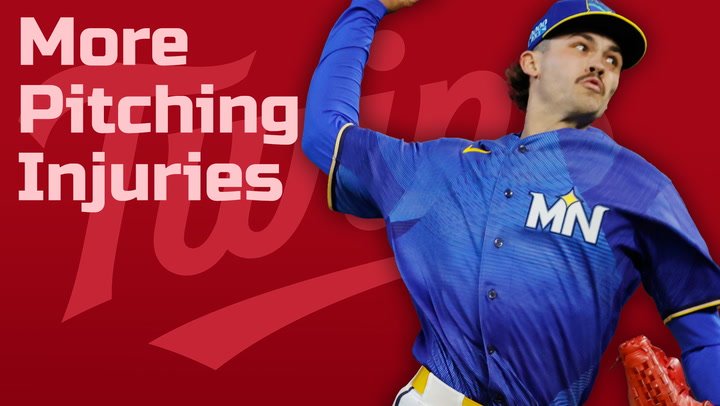 A huge spike in strikeouts hasn't been enough to offset another troubling development in Andrew Morris's recent outings. View the full article
 -
 We've got you covered in case your minor league attention was distracted by a certain 6'7" righty in Milwaukee. We wish we had more victories to tell you about, but as always, we find positives to spotlight. Transactions: Milwaukee Brewers recalled RHP Craig Yoho from Nashville Sounds (as RHP Coleman Crow hits the big-league IL) SS Leonard Rijo assigned to ACL Brewers from DSL Brewers Blue RHP Lonell Downs assigned to DSL Brewers Blue from DSL Brewers Gold Nashville Pre-Game Media Notes (unavailable) Final: Durham (Rays) 7, Nashville 4 Box Score and Game Log Via the Sounds, game details, and we encourage readers to always review affiliate write-ups as part of their Link Report routine: Nashville Drops First of Series to Durham There really is no 5th starter on the team at this moment to complete the Stallings - Hardin - Pannone - Wichrowski rotation. Perhaps Jake Woodford is stretched out to that role in time. Easton McGee is not the answer for that spot, he allowed ten baserunners in his three-inning struggle here. Lefty Tate Kuehner is missed, as are Carlos Rodriguez and Coleman Crow on the big-league injured list. From May 26th to June 5th, Jett Williams was hitless in six of eight games. He currently has a five-game hit streak including two hits on Thursday but sat out Friday night. Overall, it's been an uninspiring stretch and an at-best middling .229/.342/.37 line overall (.709 OPS). Cooper Pratt 0-for-4 with a K, flied out twice, topping out at 93.6 MPH on one of those outs. Tyler Black has dropped to a .200 batting average with a .300 slug, and to be honest, has never been more irrelevant in the big picture. In case recent Nashville posts on 'X' have you confused, the admins for the Sounds and Bulls have had a silly thing going mainly because Durham only awards some sort of beef reward to their own players who hit the scoreboard in Durham, but not visitors. It's time to drop the back-and-forth, but that'll explain any odd captioning on this Luke Adams HR, also 93.6 MPH. Adams also doubled in the 5th (only 74.4 MPH off the bat), The prettiest of the Sounds' five base hits may have been this Luis Lara 96.8 MPH single poked the other way from the LH batter's box. We'll give props to RH relievers Kaleb Bowman and Junior Fernandez for the six innings of one-run ball they provided. Catch up with the latest Biloxi pre-game audio interview archives - RHP Jack Seppings, recently up from Wisconsin, is the latest chat Biloxi Pre-Game Media Notes Final: Birmingham (White Sox) 3, Biloxi 2 Box Score and Game Log Hurtubise Has Multi-RBI Game in Shuckers 3-2 Setback - Shuckers Walked Off by Barons for Third Straight Loss The Southern League standings show a well-balanced eight-team quagmire of mostly mediocrity, but the Shuckers have now lost three in a row to the one league outlier - the Birmingham Barons are still only 24-37 after their three wins over Biloxi. Fortunately for Biloxi, division frontrunner Montgomery has also lost three in a row. Barons first baseman Anthony DePino is on a tear, you'll see him victimize an otherwise strong Jaron DeBerry and then Travis Smith for the walk off in the two videos linked here. DePino had clubbed a three-run homer in Thursday's 8-0 Biloxi loss. 28-year-old OF Jacob Hurtubise pretty much made it a one-on-one tennis match with DePino, including clutchness in the top of the 9th. Take away the DeBerry DePino deposit (see what I did there?) and Jaron would have pitched six shutout frames. DeBerry's game log shows five of his last six starts as very attractive. Jesús Made singled in four trips (described as a sharp line drive to left), though his 11 June games have been sub-par to his standards. Made avoided striking out, something his lineup mates (save for Hurtubise) did not do, 14 K's altogether. Wisconsin Pre-Game Media Notes (download link) Final, Game One: Wisconsin 5, Great Lakes (Dodgers) 3, seven innings as scheduled Box Score and Game Log Via the Timber Rattlers, game details: Fischer Does It Again! - Rattlers slugger hits twentieth homer of the season to beat Great Lakes Enjoy Chris Mehring's write-up linked just above and the two home run videos within. Then settle in and watch the long balls a second time as part of the overall game package here: You'll notice no Luis Pena here (nor in the nightcap). Pena exited Tuesday's game early, limping after legging out a strike out on a wild pitch. Not the sharpest final line for 6'5" 19-year-old (yes, 19 years old all season at High-A) RH starter Ethan Dorchies, but he looks the part on the mound and seemingly there were encouraging aspects of this outing, though three walks, a HBP and a wild pitch will be found within the stat totals. This was the best of RHP Tanner Perry's three relief appearances since his promotion from Wilson. Now for a score copy-and-paste with a bit of unfortunate reversal - Final, Game Two: Great Lakes 5, Wisconsin 3, seven innings as scheduled Box Score and Game Log Via the Timber Rattlers, game details: Great Lakes Gains Split with 5-3 Victory over Wisconsin - Rattlers suffer costly loss in first half playoff race Before you watch this next set of highlights, you are strongly encouraged to read the linked game summary for details on why the T-Rats were the road team here, the bleak playoff picture and much more. "Ever so softly" - yes, that was the call on the key base hit vs. reliever Ayendy Bravo as he attempted to rescue starting southpaw Wande Torres from a bases-loaded situation. Bravo's a 19-year-old who was jumped to Wisconsin, bypassing Wilson, in an extreme need for the T-Rats back on May 17th. Torres, meanwhile, remains exceedingly frustrating, as he issued eight free passes (six walks, two HBP's). Pena provides a right-handed bat, and it's missed. We've seen on several occasions this season where a left-handed reliever is lined up with a very LH-leaning Wisconsin lineup - speaking in general terms, the Rattler outfield mix (Adamczewski, Ragsdale, Payne, Castillo, plus the corner infield of Bitonti and Fischer). You likely noticed that late in the highlight package for Game Two. Former Brewers draft pick LHP Justin Chambers (sent to the Dodgers for LHP Bryan Hudson before he ever saw action for the Crew) pitched for Great Lakes, the second time he has faced Wisconsin this season. Suspended, bottom of the first inning: Wilson 0, Hill City (Guardians) 0 Box Score and Game Log (thus far) Unlike the Howlers, Wilson did not "waste" a starting pitcher with a brief outing. RHP Carlos Carra did not throw an official pitch, but surely went through his pre-game routine, and we'll have to see if he throws as scheduled in Saturday's resumed game, or perhaps the nightcap. Shortstop Brady Ebel was among the players scheduled to have Friday night off. Via the Warbirds: LYNCHBURG, V.A. – The Wilson Warbirds and Hill City Howlers game on Friday night at City Stadium was suspended due to rain and will be made up as part of a doubleheader on Saturday beginning at 3:30 p.m. (2:30 Central) The first game of the doubleheader will be picked up in the bottom of the first inning and will be a 9-inning contest while the second game of the twin bill will follow approximately 30 minutes after the conclusion of game one and will be a 7-inning game. Final: ACL Angels 13, ACL Brewers 9, seven innings as scheduled Box Score and Game Log We'll dive deeper in a moment, but your keys: Behold the #4 and #5 spots in that box score for Maryvale, wow. In the #6 spot, Jonathan Rangel singled, walked, and reached via HBP. We'd love to see Rangel find a home with his glove, but the 19-year-old has now split eight errors evenly between catcher (Friday night) and first base. Perhaps there isn't a better example in several years of a player benefitting more from repeating the Dominican Summer League than infielder Juan Martinez, as his MiLB Player Page yearly stat lines will show. His 2024 $125,000 signing bonus could prove quite the bargain. Speaking of bonus bargains, hello to the $350,000 Alexander Frias received in January of 2025. As trade deadline season nears, we don't see Frias going anywhere, but other organizations would be wise to ask for a bonus add-on prospect like Martinez on any proposed deals. 18-year-old Dominican native Leonard Rijo made his stateside debut, drawing a walk and stealing a base (Rijo was 21-for-24 in SB attempts in 2025). In a combined 98 DSL/ACL games the prior two seasons OF Engel Paulino hit two home runs. He clubbed his 4th here (105.8 MPH) in 51 at-bats though other aspects of his game have dropped in 2026 and he's seeing action in only about 60% of the team's games. Undrafted RHP Caleb Nieman has been hit-or-miss in his seven appearances, this was a miss and a matter of getting work in as scheduled. RHP Hayden Vucinovich with small steps of improvement, two scoreless frames that included two walks, two wild pitches and a hit batter, one unearned run allowed. Hey, you don't learn how to pitch around men on base unless, you guessed it, there's men on base. In his four starts, this was the first time RHP Luke Roupe (2025 17th round pick out of a North Carolina high school) completed two innings. His pro debut was complicated and delayed a bit by an unspecified injury. The Brewers K'd 15 times in the seven-inning game, which had a first-pitch temperature of 100 degrees. Final: DSL Padres Gold 9, DSL Brewers Gold 6 Box Score and Game Log Game was tied at 5-5 through seven innings, but the golden San Diego players four-run 8th trumped the golden Milwaukee men and their one-run 9th. That 9th inning run came off the bat of Ricki Moneys, his lone hit in five at-bats, but it was a line drive pulled out of the yard. Moneys was the DH here, and his small-sample 6-for-38 isn't exquisite, but four of the six knocks have gone for extra bases, and he has walked (six) nearly as often as he's K'd (eight) and remains 4-for-4 in SB attempts. Speaking of going deep, infielder Osiris Ramirez, only five weeks removed from his 17th birthday, went deep for the 4th time in just 31 at-bats, well, hello there. Pipeline wrote this on January 15th: "Another standout in the Amateur Scouting League, much like Moneys, was Dominican shortstop Osiris Ramirez. Although he will reportedly fetch just a $100,000 signing bonus from Milwaukee, there’s a ton of power coiled up in his right-handed swing, and he moves well laterally on the infield. His defensive home is a bit more of a question mark, but it’s the offensive profile that will earn his keep." We've seen subsequent reports that Ramirez' final bonus figure was actually $450,000. Either way, the initial power reports are proving conclusive. First baseman Matthew Moses' six-game sample is well, just six games, but he reached four times here (two singles, two walks) to lift his OPS to 1.108. First-year OF Manny De Los Santos turned 17 in March. In 28 plate appearances, he has walked ten times and stolen nine bases in ten tries. Baseball America indicated De Los Santos signed for a $325,000 bonus, with reports highlighting "his standout contact abilities, along with his strong baseball IQ and plus speed". Despite three wild pitches, no batter put a ball in the air vs. suddenly exciting 2nd year southpaw Santiago Martinez, who will turn 18 in July. Of course, when batters are striking out eight times in four one-run innings, any ball in play is a story. Behold Santiago's game log for his two appearances thus far on the young season. Exciting! Suspended, bottom of the 5th inning: DSL Red Sox Red 3, DSL Brewers Blue 3, scheduled for seven innings Box Score and Game Log (thus far) Game at the Brewers complex was delayed by 40 minutes. Where's the roof? This game will be completed on Monday, June 22nd as part of a doubleheader. In just his 2nd pro appearance, 17-year-old Venezuelan native RHP Daniel Munoz dazzled. In four innings, the only three men to reach base against him were via free passes (two walks, one HBP). Munoz struck out seven. Also making just his second ever appearance, 6'5 lefty Alexander Mercedes' outing to start the 5th was limited to just two batters - walk, balk, home run, then exit. Unless weather was complicating things, something to monitor? It's not like there's a three-batter rule at the complex level (we don't think). Infielder Leander Matos, again playing third base here, doubled in each of his at-bats. He is 16 years old until July 2nd, and yes, the small sample on another mid-level bonus signing ($300,000) is very shiny in the box score line. Premium bonus baby Diego Frontado walked both times up thus far, giving him ten in 41 plate appearances. See you on the 22nd. We'll be reporting on six scheduled games when our next Link Report is out Sunday AM, including a matchup of Brewers' DSL clubs, 6-2 Blue at 3-6 Gold. The game in Arizona has the usual Saturday daytime start time despite the sun and heat, allowing folks to get to the rest of their weekend off. In late afternoon and then evening action, Wilson will play two games as referenced above. Hope it's a wonderful Saturday for all! Organizational Scoreboard including starting pitcher info, game times, MiLB TV links, and box scores Current Milwaukee Brewers Organization Batting Stats and Depth Current Milwaukee Brewers Organization Pitching Stats and Depth View the full article
 -
 There's a simple way to describe how Huascar Brazobán is succeeding in 2026: hitters are late, they can't find the barrel, and when they do make contact, it doesn't hurt. But that description doesn't do justice to what's actually happening mechanically, and it doesn't explain why this year's numbers look sustainable rather than like a hot stretch waiting to collapse. The story doesn't start with velocity. Brazobán throws his sinker at 95.9 mph, virtually unchanged from previous years. There's no new pitch. No grip adjustment, no revelation about a revamped approach. The Statcast data, however, tells a different story. Huascar Brazobán's Pitch That Changed Everything In 2025, Brazobán's changeup was functional. Hitters posted a .235 AVG and .331 wOBA against it — respectable numbers for a middle-innings reliever. In 2026, those figures have collapsed to .137 AVG and .192 wOBA, with an xwOBA of just .179. The whiff rate on the changeup sits at 32.3%, the hard-hit% dropped from 36.8% in 2025 to 15.8% in 2026, the SLG allowed is .196, and the pitch has generated a +5 Run Value on the season. Those are the numbers of a genuinely eliet pitch. Changeup Metric 2025 2026 AVG .235 .137 wOBA .331 .192 xwOBA .309 .179 xSLG .362 .278 Hard-Hit% 34.5% 22.2% Whiff% 23.9% 25.6% Barrel% 8.1% 2.2% Avg Exit Velocity 87.1 mph 83.5 mph ERA 3.57 2.18 xERA 3.96 2.75 Source: Baseball Savant The Sinker as Setup, Not Star The easy analytical mistake is to dismiss the sinker because it doesn't miss bats. Its whiff% is modest, and a 27.0% hard-hit rate isn't going to show up in any Statcast highlight. But the sinker isn't designed to strike anyone out; it's designed to set up the changeup. At 95.9 mph, the sinker forces hitters to respect the inner-lower portion of the zone. It shapes their mechanics. It demands a short, explosive swing toward that quadrant. Then, the changeup arrives — out of nearly the same tunnel, at 90.5 mph — with a movement profile that stays indistinguishable for most of its flight path. The velocity gap isn't dramatic, just five miles per hour. But both pitches share the same visual corridor before separating late, and that's where the damage gets done. Savant's Bat Tracking tab makes the strongest case that this improvement is real. Against his changeup in 2026, hitters are generating an elevated rate of late swings. The "Under" contact rate sits at just 3%, meaning almost no one is getting to the ball with the barrel in a good position. On the sinker, 72% of contact is "lined up," though it hardly results in real damage, because the timing was already compromised before the swing even started. The 2026 percentile rankings confirm it from another direction: 98th in Hard-Hit%, 99th in GB%, 92nd in xERA, 99th in Average EV, 98th in Barrel%. Five independent metrics pointing the same way. The one outlier is the strikeout rate, sitting at the 31st percentile — which fits the profile perfectly. Brazobán isn't a strikeout pitcher. He's a controlled-contact pitcher, and when multiple measurement systems converge on the same diagnosis, it usually isn't a fluke. Why This Matters for the Mets Carlos Mendoza has deployed him as an opener in high-leverage situations, sending him out against the top of opposing lineups before the game has a chance to develop. That makes sense: his peak value is concentrated in the first nine or twelve batters he faces, when the sinker-changeup combination is still an unknown for the other dugout. The real test comes in August and September, when teams will have more video. But a 2.2% Barrel rate and a 2.75 xERA aren't numbers that self-correct. Brazobán isn't on a run. He's in the best stretch of his career, with the data to back it up. View the full article
 -
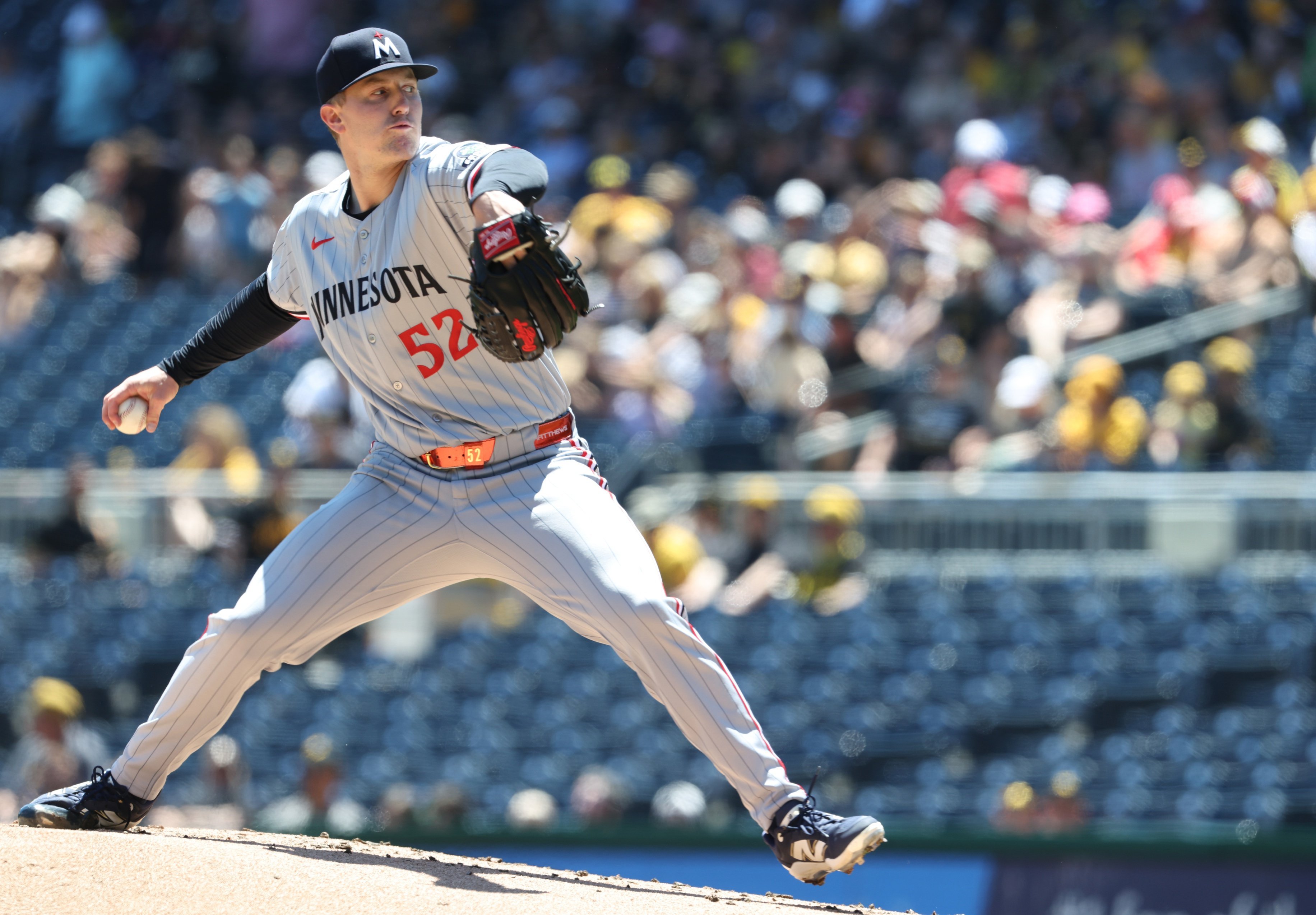 There’s a lot to like with Zebby Matthews as a player. For a pitcher that’s still on the younger side at just 26 years old, Matthews possesses the one fundamental trait that organizations covet the most: the ability to throw strikes consistently. Throughout his professional career, he’s shown outstanding control of the strike zone, limiting walks and forcing hitters to earn their way on base. Matthews owns a career 2.6 BB/9 rate, and his strikeout-to-walk ratio sits at an impressive 3.66-to-1. More often than not, that’s a formula for becoming a quality major league starter, and pitchers with those kinds of numbers find success. But there’s been something else that has plagued Matthews since arriving in the majors back in 2024. For the first couple years of his big league career, Matthews was allowing far too many hits. Across 117 innings between 2024 and 2025, he surrendered a staggering 145 hits. That comes out to 11.2 hits per nine innings, which is an alarming number for any starting pitcher. A lot of that damage was tied directly to the long ball. Of those 145 hits, 23 left the yard. So the hope coming into this season was that Matthews would be able to limit the total number of hits he allowed, but especially the home runs. If he could do that, the results would likely follow. Fast forward to mid-June, and to his credit, Matthews has done a better job of limiting overall contact. He’s allowing fewer than one hit per inning, his line-drive rate has dropped substantially, and he’s generating more ground balls than he did previously. The problem is that while the line drives have decreased, the fly balls have increased. And with more fly balls have come more home runs. Through just 36 innings with the Twins this season, Matthews has already allowed eight homers, including three on Thursday against the Tigers. Now, through 31 career major league starts, Matthews has allowed 31 home runs. That simply isn’t a recipe for long-term success. So what’s causing the quality-of-contact issues? I think it starts with the fact that his four-seam fastball has simply not been a very effective pitch. While Matthews' secondary offerings continue to generate swings and misses, the fastball has lagged behind. Opposing hitters haven't had much trouble handling it, and the whiff rate on the pitch sits at just 12% this season. That’s a concerning number considering how frequently he uses it. Matthews throws the four-seamer roughly 38% of the time, and when hitters put it in play, they’re doing damage. Opponents own a .500 slugging percentage on fastballs put in play against him this season. A big reason for that comes down to location. Matthews' fastball, along with his slider and curveball (his two main secondary pitches), are catching far too much of the plate. I mentioned his low walk rate earlier – Matthews has outstanding control of the strike zone. However, command of the strike zone is a different conversation entirely. Control is the ability to throw strikes. Command is the ability to throw quality strikes. And far too often, Matthews' pitches are finishing out over the heart of the plate. Thursday’s outing against Detroit served as a perfect example. The first home run he allowed came on a 2-1 curveball that was left right over the middle of the plate to Spencer Torkelson. The second was a 3-0 fastball that I’m not sure could’ve been more center-cut, and the third was a first-pitch changeup that stayed elevated in the zone and got punished. None of those pitches were located well, and all three mistakes wound up in the seats. That’s been the story for Matthews throughout much of his major league career so far. He pounds the strike zone. In fact, he may pound it a little too much. The encouraging part is that there’s still a tremendous amount of upside here. The home run problem is significant, but it also feels fixable. Matthews has a deep arsenal. He misses bats with his secondary pitches, he limits walks, and he works efficiently while consistently getting ahead in counts. Those are all traits that successful starters possess. The next step is simply improving his command within the strike zone. If Matthews can do a better job of keeping his pitches off the barrel and limiting hard contact, there’s still plenty of reason to believe in his long-term outlook. The ingredients are all there. The strike-throwing ability, the swing-and-miss stuff, and the ability to work deep into games are all things Zebby Matthews has. Now it’s just about refining his location. If he can get the home runs under control, a potential frontline starter is still very much within his range of outcomes. That’s obviously easier said than done, but we’ve also seen him dominate when teams aren’t squaring him up. The gap between where Matthews is now and where he can be might just come down to a few misplaced pitches each start. View the full article
 -
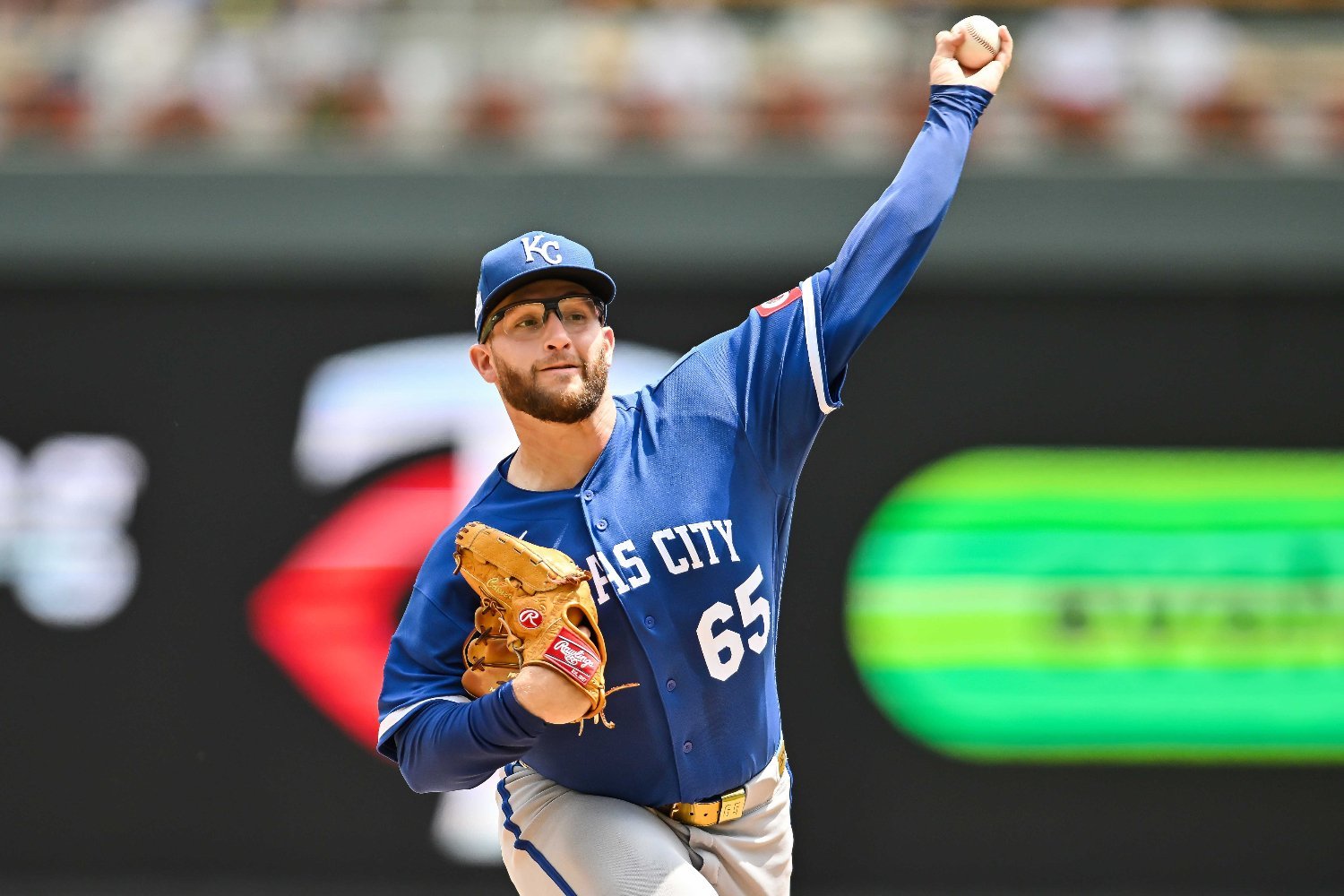 When it comes to diving into different pitching metrics, pitch tempo is rarely mentioned or used. For those unaware of pitch tempo, it can be defined as follows, per Baseball Savant. A pitcher can use pitch tempo in many ways. Pitchers who opt for a faster tempo use this approach to catch hitters off guard, especially when hitters're having a hard time reading that pitcher's arsenal. Pitchers who opt for a slower tempo may give hitters more time, but they may also force them to overthink or get uncomfortable at the plate. Thus, there's no "ideal" pitcher tempo for a pitcher or a team. Nonetheless, it's worth paying attention to, as it could provide insight into a pitcher's efficiency and effectiveness in certain categories. With that said, where do the Royals rank in pitch tempo both as a team and individually? Additionally, what are any takeaways from this particular data set? Let's break down that pitch tempo data from 2026 and see if it can reveal anything about this pitching staff and their performance this season. Royals Rank at the Top in Team Pitch Tempo When it comes to organizing pitch tempo data in Savant, I focused on highlighting pitch tempo and the percentage of pitches categorized as "Fast Tempo." Here's a definition of the difference between "fast" and "slow" pitches tempo-wise, according to Baseball Savant. Now, the pitch tempo data I am sharing is only for pitches with the bases empty. The CVS file didn't include pitches with runners on base. However, even though the data is only for one kind of situation, it still gives an idea of the Royals' and other teams' overall pitch tempo approach. This season, the Royals had the second-fastest pitch tempo and the highest fast-pitch percentage, per Savant. That can be seen in the table below. The data here isn't sticky in these categories either. Lugo ERA is outperforming his xERA by 1.41 points, but Mears is also outperforming his ERA by 1.15 points, and his tempo is the second-slowest of Royals pitchers this season. In terms of wOBA difference, Bubic, a slow-tempo pitcher, is outperforming his xwOBA by 40 points. Conversely, Lugo and Cameron, two fast-tempo pitchers, are also outperforming their xwOBA by 25 and 20 points, respectively. Therefore, not a ton can be concluded about whether the Royals pitchers' fast tempo benefits or hinders their pitching performance, at least this season. It does seem to help Salvador Perez and Carter Jensen limit free runners on the basepaths, though that ability to limit stolen bases seems to be more of a correlation with fast pitch tempo rather than a causation, especially when looking at those other team samples. Regardless, it's a metric where the Royals actually rank highly this season, which can't be said in many areas, unfortunately. Furthermore, Kansas City's fast-pitch tempo is at least aesthetically pleasing to fans, especially those who prefer faster-paced games. Safe to say, Royals fans won't have to worry about a lot of pitcher pitch clock violations with Kansas City pitchers this season. View the full article
 -
 The Omaha Storm Chasers blanked Las Vegas behind home runs from Abraham Toro and John Rave, with the bullpen combining for nine strikeouts. Blake Mitchell launched a homer at each end of the Quad Cities' doubleheader, and David Shields struck out 10 over 5 2/3 innings in the nightcap win. Columbia fell to Delmarva despite Ivan Sosa's three-run shot, as the Fireflies issued 12 walks. Northwest Arkansas was postponed due to weather, and they will play a doubleheader tomorrow. Royals Transactions No Roster Moves Toro And Rave Power Storm Chasers Past Aviators The Omaha Storm Chasers rode the long ball and a strong bullpen to a 3-1 win over the Las Vegas Aviators. Omaha got everything it needed in its win early on against the Aviators. In the bottom of the second, Toro homered to right field, scoring Brett Squires for a two-run shot that put the Storm Chasers ahead 2-0. In the bottom of the third, Rave homered to right field to make it 3-0, and those runs held up the rest of the way for the Storm Chasers. Toro finished 2-for-4 with two RBIs, Rave went 1-for-3 with a walk and an RBI, and Peyton Wilson added two hits. Omaha collected eight hits but left six runners on base. The pitching staff allowed just one run, which was unearned. Bailey Falter struck out four and walked one over 2 2/3 innings while allowing three hits and the lone run. Mitch Spence and Dan Altavilla each tossed a scoreless inning to open the game, Génesis Cabrera worked two scoreless frames, and Helcris Olivárez closed it out over 2 1/3 innings, striking out two and earning the save. Player AB R H RBI BB K Josh Rojas 3 0 1 0 1 0 Peyton Wilson 4 0 2 0 0 1 John Rave 3 1 1 1 1 0 Matthew Lugo 4 0 0 0 0 2 Brett Squires 3 1 0 0 1 1 Abraham Toro 4 1 2 2 0 0 Gavin Cross 3 0 2 0 0 1 Luke Maile 3 0 0 0 0 0 Kevin Newman 3 0 0 0 0 1 Player IP H R ER BB K HR Mitch Spence 1 0 0 0 0 2 0 Dan Altavilla 1 0 0 0 0 0 0 Bailey Falter 2 2/3 3 1 0 1 4 0 Génesis Cabrera 2 2 0 0 0 1 0 Helcris Olivárez 2 1/3 1 0 0 2 2 0 River Bandits Erase Early Hole But Fall To Sky Carp In Opener The Quad Cities River Bandits jumped out early but could not hold off the Beloit Sky Carp in an 8-7 loss in the doubleheader opener. Quad Cities scored twice in the first inning, when Mitchell singled home Asbel Gonzalez and Derlin Figueroa singled home Mitchell. The River Bandits then took the lead in the second, as Angel Acosta singled home Trevor Werner, Gonzalez singled home Nolan Sailors, and Figueroa drew a bases-loaded walk to score Gonzalez, building a 5-3 advantage. Beloit answered with four runs in the fourth inning to seize control, and Quad Cities could not recover even after Mitchell tied it with a solo homer in the sixth. Mitchell led the offense at 3-for-4 with a home run, two RBIs, and a walk, while Figueroa drove in two and Gonzalez reached base three times with two stolen bases. The River Bandits drew eight walks but left nine on base. Emmanuel Reyes struggled on the mound, allowing seven runs, all earned, on 11 hits with one walk and six strikeouts over four innings, surrendering three home runs. Nick Conte, L.P. Langevin, and Max Martin followed, with Martin charged with the loss after allowing the deciding run in the eighth. Player AB R H RBI BB K Nolan Sailors 4 1 1 0 0 0 Asbel Gonzalez 2 2 1 1 1 0 Luke Pelzer 2 0 0 0 0 0 Blake Mitchell 4 2 3 2 1 0 Ramon Ramirez 3 0 0 0 1 1 Derlin Figueroa 2 0 1 2 2 0 Erick Torres 4 0 0 0 0 0 Tyriq Kemp 2 1 0 0 2 1 Trevor Werner 3 1 1 0 1 2 Angel Acosta 3 0 1 1 0 1 Diego Guzman 0 0 0 0 0 0 Player IP H R ER BB K HR Emmanuel Reyes 4 11 7 7 1 6 3 Nick Conte 2 1 0 0 1 2 0 L.P. Langevin 1 0 0 0 0 2 0 Max Martin 0 2/3 0 1 0 0 0 0 Shields Fans 10 As River Bandits Take Nightcap The Quad Cities River Bandits took the second game of the doubleheader 3-2 over the Beloit Sky Carp, riding a dominant pitching performance from Shields. Quad Cities built its lead across the second and third innings. Figueroa homered to center field in the second to make it 1-0, and in the third, Mitchell singled home Sailors, and Ramirez singled home Mitchell for a 3-0 cushion. Beloit pushed back with two runs in the sixth inning, one of which scored on an error, but that was as close as the Sky Carp got to the River Bandits in the second leg of the doubleheader. Shields was overpowering, striking out 10 while allowing just three hits and two runs, one earned, with no walks over 5 2/3 innings to earn the win. The No. 2 prospect at Royals Keep, Shields carried a no-hitter into the sixth inning. It was a nice bounce-back start for the lefty pitcher after a rough performance in his previous start. Coleman Picard recorded the final four outs over 1 1/3 scoreless innings for the save. At the plate, Sailors went 2-for-4 with a double, Mitchell singled, drove in a run, and stole a base, and Ramirez and Figueroa each added an RBI. The River Bandits managed eight hits and left four runners on base. Player AB R H RBI BB K Nolan Sailors 4 1 2 0 0 0 Blake Mitchell 3 1 1 1 0 2 Ramon Ramirez 3 0 1 1 0 0 Luke Pelzer 2 0 1 0 1 0 Derlin Figueroa 3 1 1 1 0 1 Jose Cerice 3 0 0 0 0 1 Erick Torres 3 0 0 0 0 1 Tyriq Kemp 3 0 1 0 0 2 Diego Guzman 3 0 1 0 0 2 Player IP H R ER BB K HR David Shields 5 2/3 3 2 1 0 10 0 Coleman Picard 1 1/3 0 0 0 0 0 0 Walks Doom Fireflies In Loss To Shorebirds The Columbia Fireflies issued 12 walks and could not overcome a big Delmarva rally in a 9-6 loss to the Shorebirds. The game turned in the seventh inning, when Delmarva scored four runs to break a 2-2 tie and pull away to a 7-2 lead. Columbia mounted a late charge in the eighth, when Sosa homered to left center field to score Roni Cabrera and Connor Rasmussen, but the deficit was too large to erase. Sosa led the way at 1-for-4 with the three-run homer, Cabrera went 3-for-4 with two RBIs, and Rasmussen tripled, drove in a run, and drew two walks. Columbia collected 10 hits but stranded 13 runners and struck out 12 times. Michael Lombardi turned in a steady start, striking out six while allowing two runs over 4 2/3 innings, though he walked five and took the loss. Hunter Alberini struggled in relief, allowing four runs in one inning, and the bullpen as a whole issued seven of the team's walks. Player AB R H RBI BB K Henry Ramos 5 0 0 0 0 1 Josh Hammond 5 0 1 0 0 3 Yandel Ricardo 5 0 1 0 0 1 Jhosmmel Zue 2 1 1 0 0 0 Gabriel Silva 3 0 0 0 0 0 JC Vanek 4 0 1 0 0 1 Angel Ramirez 4 2 1 0 0 2 Roni Cabrera 4 1 3 2 0 1 Connor Rasmussen 3 1 1 1 2 1 Ivan Sosa 4 1 1 3 0 2 Player IP H R ER BB K HR Michael Lombardi 4 2/3 3 2 2 5 6 1 Dash Albus 1 1/3 1 1 1 3 2 0 Hunter Alberini 1 5 4 4 1 3 0 Henson Leal 1 2 2 2 1 2 0 Brandon Herbold 1 0 0 0 2 0 0 Top-20 Prospect Performance Kendry Chourio: DNP David Shields: 5 2/3 IP, 3 H, 2 R, 1 ER, 0 BB, 10 K (W) Sean Gamble: DNP Blake Mitchell: Game 1 3-for-4, HR, 2 RBI, BB; Game 2 1-for-3, RBI, K, SB Josh Hammond: 1-for-5, 3 K Ramon Ramirez: Game 1 0-for-3, BB, K; Game 2 1-for-3, RBI Drew Beam: DNP Asbel Gonzalez: 1-for-2, RBI, BB, 2 SB Ben Kudrna: DNP Carson Roccaforte: DNP Yandel Ricardo: 1-for-5, K Felix Arronde: DNP Blake Wolters: DNP Michael Lombardi: 4 2/3 IP, 3 H, 2 R, 2 ER, 5 BB, 6 K, HR (L) Luinder Avila: DNP Steven Zobac: DNP Frank Mozzicato: DNP Daniel Vazquez: DNP Warren Colcano: 1-for-2, R, BB, K Shane Panzini: DNP View the full article
 -
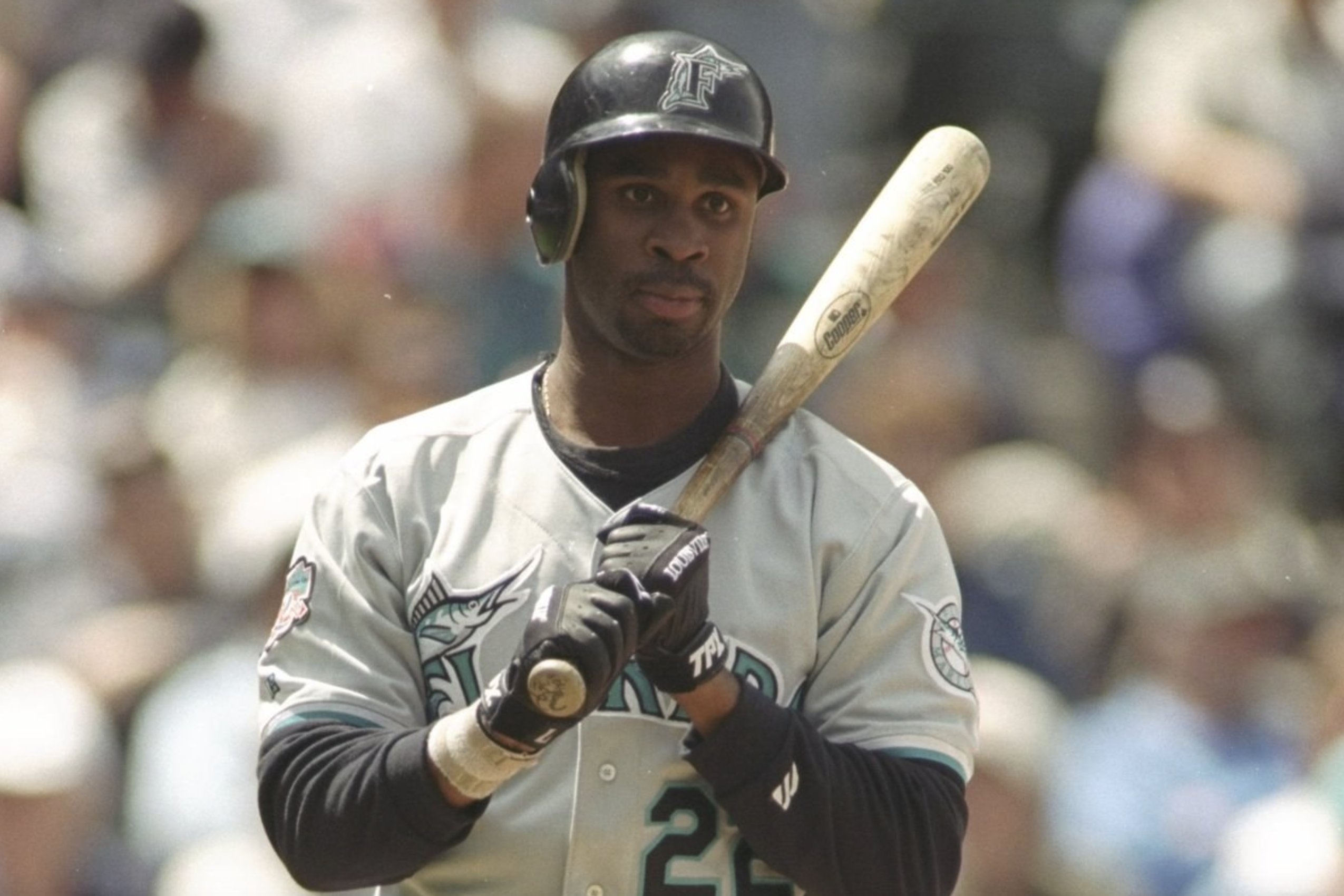 A seven-time Gold Glove winner for the California Angles and Toronto Blue Jays and a two-time World Series champion in Toronto, Devon White brought speed, stellar defense and a much-needed veteran presence to the clubhouse when he signed with the Florida Marlins prior to the 1996 season. On this day 30 years ago, White put those qualities to good use with a game-winning two-run single in the ninth as Florida rallied past the Pittsburgh Pirates, 4-3. White used the aforementioned speed to beat out a ground ball and bring home a run in the top of the eighth. But as the Marlins came to bat in the top of the ninth at Three Rivers Stadium on June 13, 1996, they were on the short end of a 3-2 score. Pittsburgh closer Francisco Córdova began the inning by getting Jesús Tavárez to pop out. After consecutive singles from Joe Orsulak and Kurt Abbott, Alex Arias drew a walk to load the bases. To the plate came White. On a 1-1 pitch, White lined it to centerfield. Both Osulak and Abbott scored standing up. White was thrown out trying to advance to second but the damage was done. In the bottom of the ninth, Florida's Robb Nen got Mark Johnson to ground back to the mound on the first pitch before striking out both Carlos García and Al Martin to end the game. After a quality start from David Weathers, Yorkis Pérez threw 1.1 innings of scoreless relief to earn the win. Starter Zane Smith allowed just a run on five hits in seven innings for Pittsburgh. Prior to the eighth, a solo home run from Gary Sheffield in the fourth had accounted for all the Marlins offense. Abbott finished 3-for-4 with two runs scored in the win. García had two of the seven hits for manager Jim Leyland and the Pirates. The following season, Leyland and White would share a dugout as the two helped Florida win the 1997 World Series. As adversaries in the mid-June contest in 1996, however, White delivered the biggest hit of the game. It came on this day three decades ago. View the full article
