


DiamondCentric
-
Posts
2,631 -
Joined
-
Last visited
Never
Content Type
Profiles
Forums
Events
News
Tutorials & Help
Major League Baseball Videos
Guides & Resources
Store
Downloads
Gallery
Everything posted by DiamondCentric
-

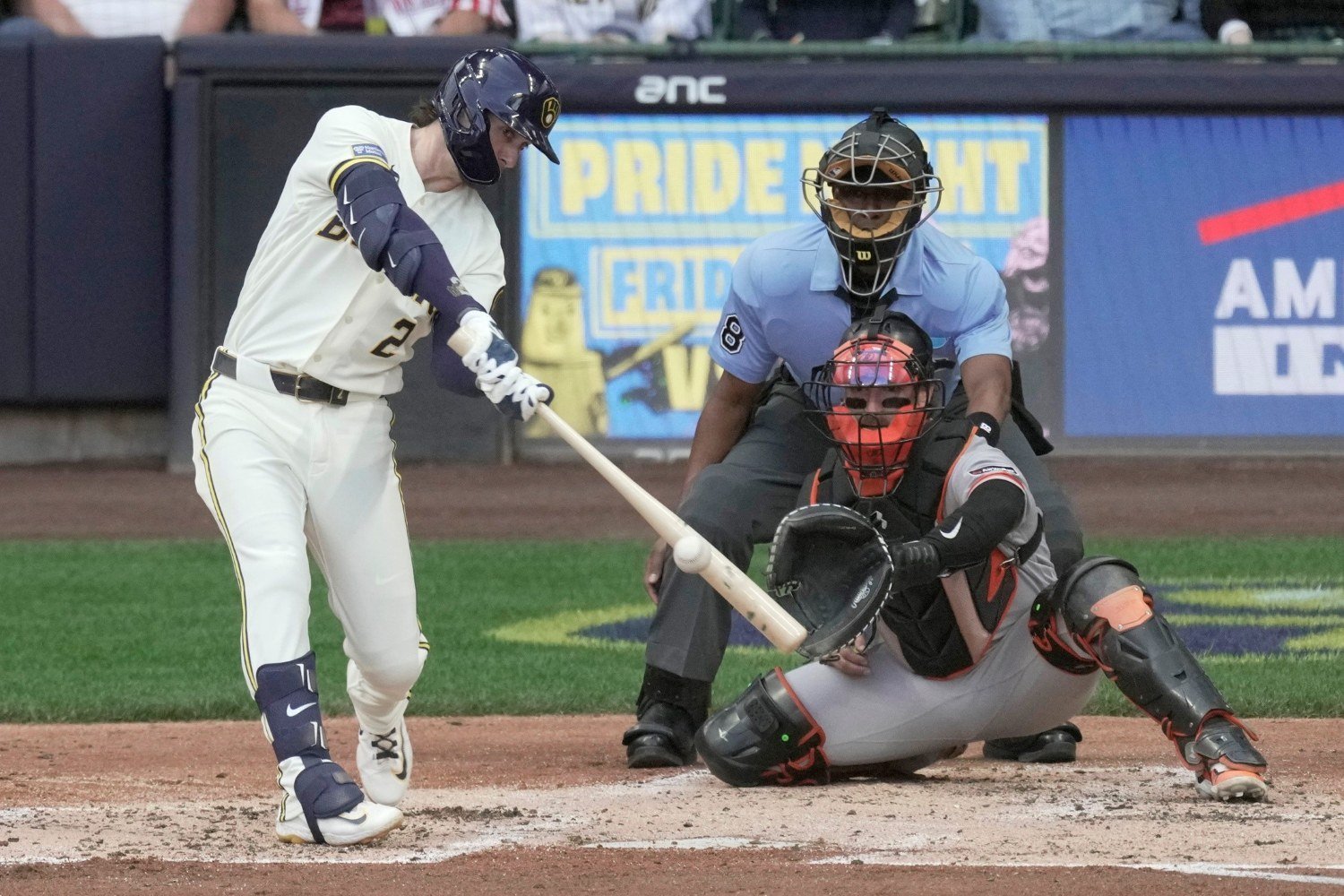 Brice Turang had a career night (or something like it) in just six innings Monday night. As the Brewers blew out the Giants, Turang departed early, but before doing so, he had a line-drive double, a long triple, and a pair of walks. If you watched the first six weeks of this season like a hawk and then were extremely busy for about three weeks, it probably felt like business as usual. Quietly, though, Turang went through a prolonged slump to end May. A good approach kept him viable—most hitters go through some slump during the season, and his .623 OPS during his is a lot better than most hitters' nadirs—but he stopped being the engine of the team's elite offense. Here, in a snapshot, is why—and why you could see his return to form coming, even before he snapped out of his funk Monday night. Remember last season, when Turang entered August with a .271/.339/.363 batting line, and then hit .321/.399/.580 the rest of the way? It happened because, at long last, he opened himself up to pulling the ball. The above is his rolling average for attack direction over 100-plate appearance samples. When he stopped being baseball's most extreme opposite-field hitter (not in terms of batted-ball distribution, but in terms of the angle of his barrel at his contact point on each swing), he suddenly became one of its most dangerous hitters. He maintained that terrifying blend of strike zone control, feel for contact and the ability to blast the ball well into this season, too. Then, as you can see via the highlighting above, he had a relapse. Turang got back to being, to put it one way, late. Unlike most players, he whiffs almost as frequently on fastballs as on other pitch types. The league's average contact point on balls in play is about 4 inches deeper in the hitting zone than the intercept point on whiffs, but Turang's intercept point is 2 inches farther in front of him on balls in play. In other words, when he whiffs, it's more often because he was late on the ball, compared to other players. Indeed, when he sagged back into being an extreme opposite-field guy with regard to attack direction, his contact rate fell. It coincides just about perfectly with the decline in his overall production. Ah, but go back to that first chart, and note the direction of the tail at the far right. Over the last week or so, Turang had trended back toward being square to the ball. He went 0-for the week against the Cardinals and Astros, but quietly, he was creeping back into his lost groove. On Monday, he found it again, even though both of his hits were to the opposite field. It's too early to say he's fixed, but the signs of a revival are here. Turang is a guy whose biggest upside comes when he gets forward more than is strictly comfortable; that capacity comes and goes a bit. Right now, though, he looks like he's on time, and another binge like what we saw for the first month-plus of the season could be at hand. View the full article
 -
One Twins Prospect May Save Last Year's Trade Deadline Selloff
DiamondCentric posted an article in Twins Daily
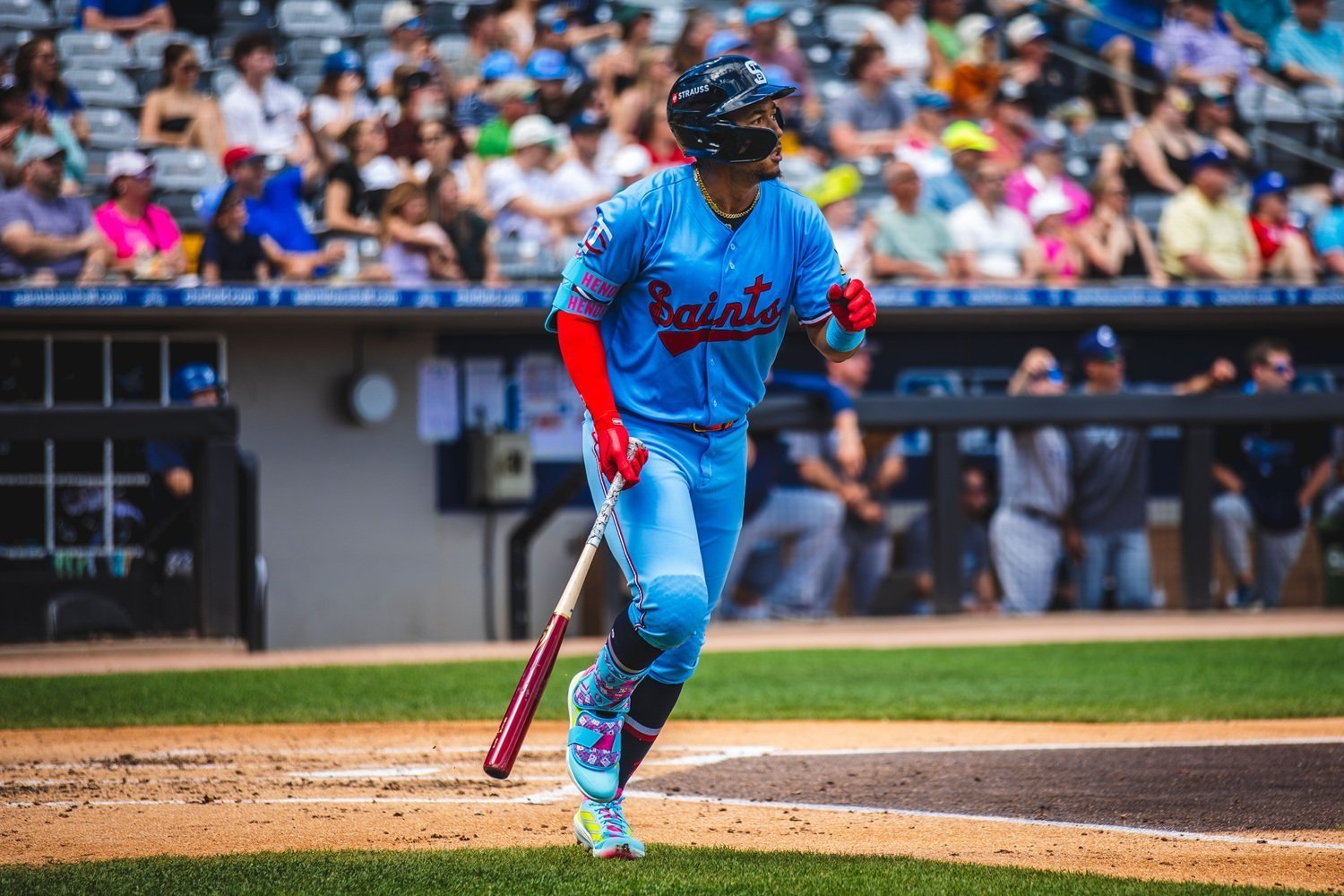 When the Twins pivoted into seller mode at the 2025 trade deadline, the reaction from fans was mixed. Minnesota traded several established big leaguers for younger talent, hoping to build a stronger foundation for the future. While much of the attention centered on the headline deals, one of the quieter transactions is beginning to look like one of the organization's biggest wins. The Twins sent veteran outfielder Harrison Bader to Philadelphia in exchange for outfield prospect Hendry Mendez. At the time, it felt like a modest move involving a pending free agent and a promising but unproven minor leaguer. Less than a year later, Mendez is emerging as one of the most intriguing hitters in the organization and perhaps the best return Minnesota received during its deadline selloff. For Philadelphia, the deal accomplished its short-term objective. Bader provided quality defense, speed, and production during the stretch run as the Phillies pushed toward another division title. He hit .305 with five home runs and an .824 OPS across 50 regular-season games with Philadelphia. Unfortunately, injuries limited his postseason impact before he departed in free agency following the season. The Twins, meanwhile, acquired a player who continues to increase his value every month. Mendez was already producing at Double-A before the trade. After arriving in Wichita, however, he took another step forward. He posted a .911 OPS over his final 33 games of the season while walking more often than he struck out. That performance helped elevate his prospect status and put him firmly on the radar heading into 2026. Instead of slowing down this season, Mendez has accelerated. He opened the year with Wichita and quickly demonstrated that he had little left to prove at that level. Through 24 games, he carried an .857 OPS and earned his first promotion to Triple-A St. Paul in early May. The jump to Triple A has looked almost effortless. Mendez recently put together a perfect 4-for-4 performance that included two doubles, two singles, and a walk. Through his first 20 games with the Saints, he hit .372 with three home runs, 15 RBI, and a 1.017 OPS. Just as encouraging, he continued to show excellent plate discipline, walking 16 times and striking out only 12. Those numbers are impressive on their own, but the underlying approach may be even more encouraging. Mendez consistently controls the strike zone with a 16.3 K%. He rarely expands his zone (12.8 BB%), makes frequent hard contact (54.5 Hard Hit%), and shows an advanced understanding of how pitchers are attacking him. His smooth left-handed swing generates power to all fields, allowing him to impact games without selling out for home runs. The 22-year-old has already experienced plenty of change during his professional career. Originally signed by Milwaukee as an international free agent out of the Dominican Republic, he later moved to Philadelphia before eventually landing with Minnesota. Some prospects struggle after changing organizations multiple times. Mendez has done the opposite, seemingly improving at every stop. There are reasons to expect some statistical regression. His expected batting average is nearly 50 points lower than his actual batting average at Triple-A, and his ground ball rate remains elevated. Long term, the Twins would likely prefer to see him elevate the baseball more consistently in order to maximize his power production. Even with those caveats, the overall profile remains highly attractive. Mendez is already on Minnesota's 40-man roster, which could put him in line for a major league opportunity sooner rather than later. The Twins have seen several young hitters force their way into the conversation through strong minor league performances, and Mendez appears to be doing exactly that. Prospect evaluations can change quickly, and there is still development ahead. However, the return on this trade already looks extremely favorable for Minnesota. Turning a few months of a rental player into a 22-year-old hitter who is thriving at Triple-A is exactly the type of transaction successful organizations need to make. The Twins acquired several intriguing pieces during last summer's selloff. Right now, though, no player is doing more to validate those moves than Mendez. If his current trajectory continues, Minnesota may eventually look back on this trade as one of the defining steals of the 2025 deadline. Is Mendez the best player the Twins received at last year’s trade deadline? Leave a comment and start the discussion. View the full article
 -
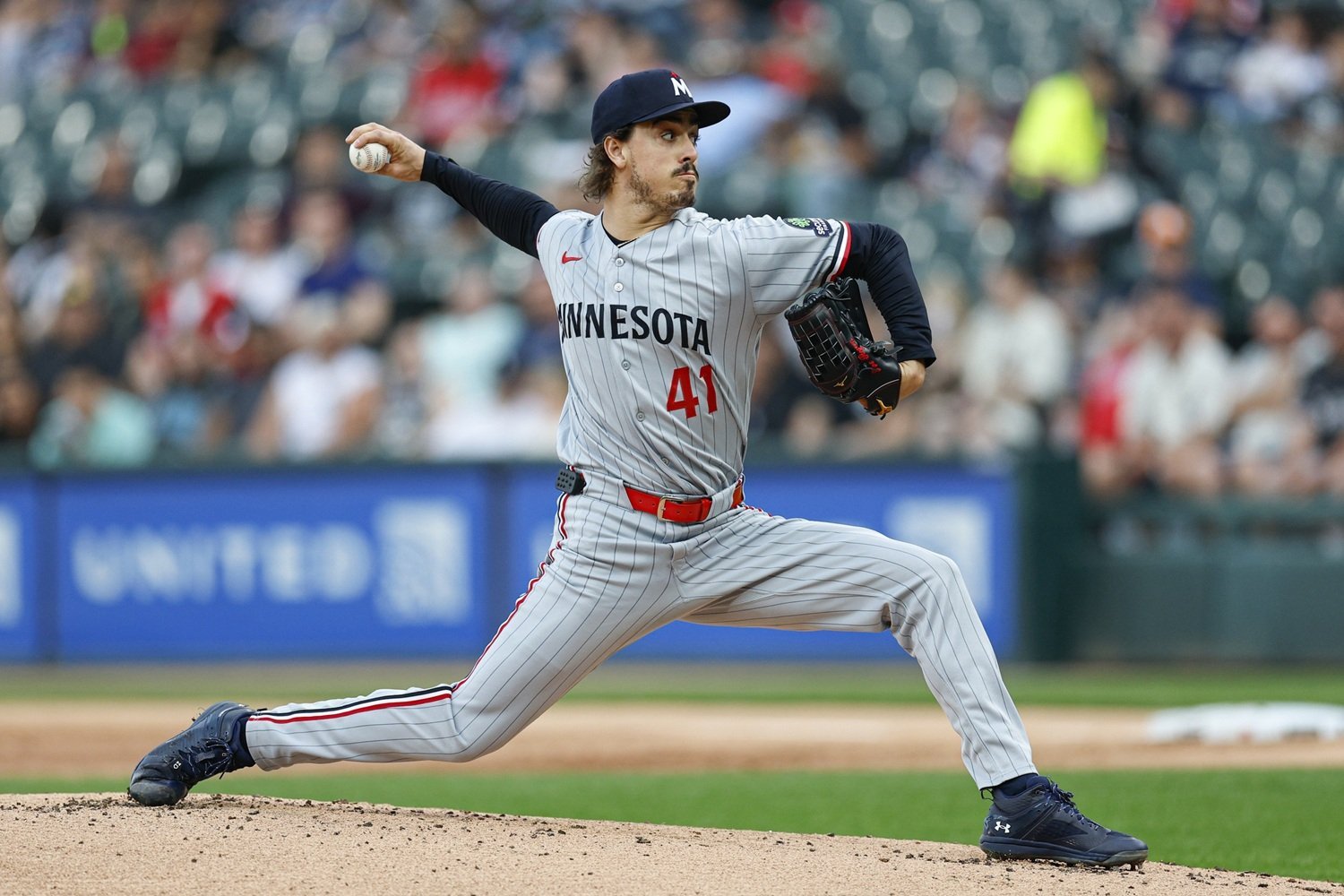 The month of May was not kind to the Twins’ pitching staff. They allowed six or more runs in 12 of 28 games (including multiple 15-run nights) and were hit very hard by the injury bug. Taj Bradley missed a couple weeks, Cole Sands missed the entire month, and both Kendry Rojas and Bailey Ober were placed on the injured list over the weekend. Not to mention, Mick Abel is still hurt, and oh, Simeon Woods Richardson and Justin Topa were DFA’d. It’s been an eventful month, and not in a good way. Still, there were some positives, too. There have been some younger names who have thrived with increased opportunity, and the reps they’ve been able to get could be big for the future of Minnesota’s pitching staff. Here’s a look at the top-performing pitchers from May for the Twins. 4. Andrew Morris May Stats: 11 G, 12 1/3 IP, 2.19 ERA, 1.38 WHIP, 10 K, 6 BB, 2.91 FIP The Twins’ bullpen as a whole gets a lot of grief due to inconsistent play, but Morris was about as consistent as you could ask for in May. His month started with 3 2/3 scoreless innings after Joe Ryan’s early exit due to elbow soreness, and he finished as a reliable late-inning option. The underlying data shows he’s been elite when it comes to getting soft contact, which has been his calling card since entering the league. Morris has shown he can be used in multiple roles, and he should continue to be a staple of the Twins’ bullpen for the remainder of the year. 3. Kendry Rojas May Stats: 4 G, 12 1/3 IP, 1.46 ERA, 1.30 WHIP, 14 K, 7 BB, 2.75 FIP While his May ended on a sour note (an IL stint due to triceps inflammation), Rojas looked good in his four outings. While only one of those four came as the starting pitcher, he thrived in a long reliever/spot starter role. His arsenal, led by his fastball-slider combo, has generated a ton of whiffs, and he did a much better job of pounding the strike zone. For now, it remains unclear just how long he’ll be sidelined. He was set to be cleared to begin throwing again by Twins doctors Monday night, and Jeremy Zoll indicated that the ramp-up should be quick, given the short time that he was shut down. The month of May left a lot to be excited about for Kendry Rojas. 2. Yoendrys Gómez May Stats: 12 G, 10.1 IP, 0.87 ERA, 0.87 WHIP, 13 K, 4 BB, 2.30 FIP After being acquired from the Rays on May 6, Gómez has quickly emerged as a reliable late-inning option out of the Twins’ bullpen. He’s limited baserunners, and his May stats benefited as a result. While the underlying numbers would suggest he’s been better than he should be, games are won and lost on the field, not in tables or spreadsheets. Derek Shelton clearly trusts him, as he’s logged a pair of saves since his arrival. Gómez should continue to be a late-inning reliever for the Twins. Twins Pitcher of the Month: Joe Ryan May Stats: 5 G, 26 IP, 1.73 ERA, 0.77 WHIP, 31 K, 5 BB, 2.11 FIP Ryan’s May started with an immediate injury scare. But after being removed after just nine pitches on May 3, he looked every bit like an ace. All of Ryan’s starts after the early removal were quality, and he didn’t allow more than two earned runs in any of them. That length has been especially crucial over the last couple of weeks, since the Twins haven’t had an off day since May 21 and won’t for another week. Ryan’s dominance is especially interesting when you consider that he’s throwing his best pitch (his four-seam) about 10% less than he did at the start of the season. But that decline in usage has increased his whiff rate and has made that four-seam (along with the rest of his arsenal) more effective. As long as he’s healthy, Ryan will be the Twins’ #1 pitcher. But given his performance this year, how long he’ll be a Twin might be the bigger question. While the non-Ryan rotation options struggled in May, there are still some encouraging takeaways from the last month. Morris, Rojas, and Gómez are all young, promising arms that flashed and can serve multiple roles if needed. Injuries have done serious damage to the starting rotation over the last month, but we’ve already seen what that unit is capable of earlier in the season. It’s easier said than done, but a little more consistency (and health), mixed with further development from the bullpen, could lead to a promising pitching staff for the next few months and beyond. View the full article
 -
By Starting Jordan Wicks, Cubs Keep Losing Games on Purpose
DiamondCentric posted an article in North Side Baseball
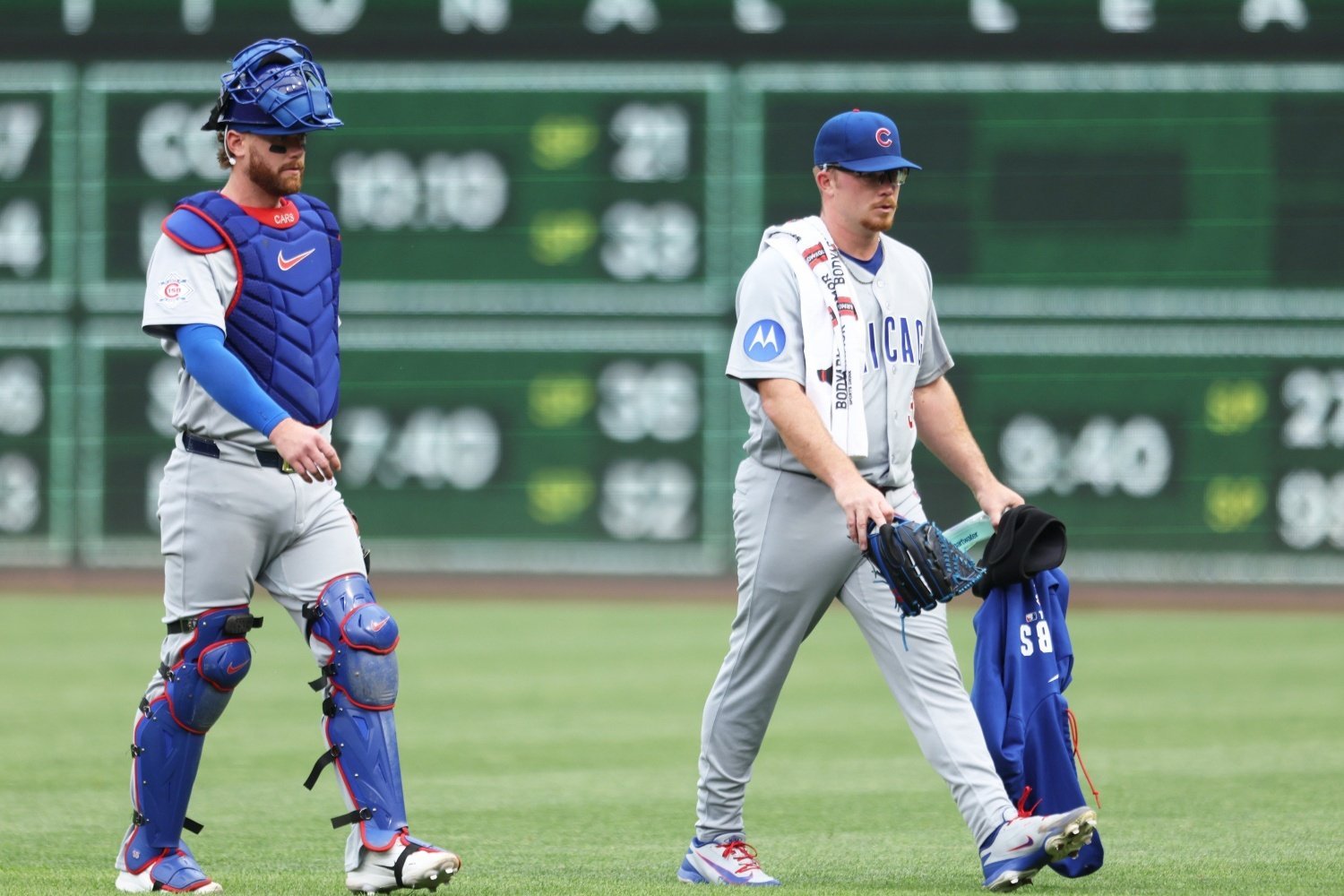 Sunday, May 31. The Cubs faithful sit in front of the screen, tuning in to NBC or Peacock, looking forward to a rivalry tilt against the Cardinals. High off of Pete Crow-Armstrong's epic Saturday night, momentum is there to be seized. All optimism was destroyed after looking at the starting pitcher. Jordan Wicks was tasked with taking the mound. Momentum is the next day's starting pitcher, and this one was a brick wall—a stopper, but for a winning streak, rather than a losing one. A competitive team like the Cubs cannot keep giving starts to guys that they clearly have no faith in. They (rightfully) distrust Jordan Wicks, and he proved that distrust correct, failing to reach the third inning and allowing three runs. After his even more disastrous first start, his ERA sits at an incredible 15.63. These were two throwaway starts, and a game or two can make a huge difference when the calendar flips to September. Don't get me wrong: Jordan Wicks isn't to blame. Jed Hoyer and the Cubs' failure to develop pitching depth are. But it's the injuries, right? No team can weather such a storm? Well, look north up I-94, and there's a perfect example. The Milwaukee Brewers, faced with a similar crunch on April 7 of last year, made an under-the-radar deal for Quinn Priester from the Boston Red Sox. He was more than solid; he finished 13-3 with a 3.32 ERA in his 24 starts. The Brewers saw a need, identified a target, and used excess prospects to get the player in, and it helped them to a first-place finish. This year, they are facing similar struggles—and are winning the division. Brandon Woodruff and young prospect Logan Henderson are on the shelf, and prize trade return Brandon Sproat (obtained for Freddy Peralta) was just called out from his manager with his current 6.24 ERA. But Coleman Crow has filled in with two solid starts and Chad Patrick with six (2.60 ERA overall). They can thrive in adversity, because they have built tremendous depth from the bottom of the minors to the major-league squad. The Brewers also went back to the well in Boston and traded for Kyle Harrison. Perhaps Boston needs to evaluate their trade process, and avoid Milwaukee? Harrison has been electric, pitching to a 1.57 ERA with 61 strikeouts in 51 innings so far. They dealt extra third baseman Chad Durbin for Harrison, a clear win already. By the by, they also got Shane Drohan, who made a strong (though short) start in their win Monday night, in that same deal. What the Brewers do is identify pitching depth and extract maximum value of the pitchers others overlook. It's the secret sauce to their recent stretch of division dominance. The Cubs, conversely, have not been able to build any pitching depth or develop healthy arms in their system. Jaxon Wiggins, currently injured, is their only top-10 organizational prospect who's a pitcher. Twenty of their top 30 prospects are hitters, and five of the pitchers who show up are in the 20-30 range for the system. Cade Horton had graduated, but the team couldn't figure out a way to outrun his injuries. Unlike other teams, they have zero arms they can call on from the minors to come up and compete. Compounding this issue is the inability to keep arms healthy. Cade Horton is already done this season and much of next, and Justin Steele is trending in that direction. Edward Cabrera has had diminished stuff as a Cub, as well as a blister issue keeping him on the IL. We've already discussed the lack of options in the minors. The Cubs need to be able to generate Chad Patrick-level players, at minimum, to win division titles. This has been their issue for years. Trading for an arm is also problematic. The Cubs don't have an excess of prospects from which to deal from MLB.com 23rd ranked system. They cannot afford to deal Moisés Ballesteros or Matt Shaw. They're too important to the team, regardless of slumps or injuries. And nobody else in the system is exciting enough to entice a team to jump. Cam Smith and Owen Caissie were dealt (for what now feel like underwhelming returns) already. The Cubs do have a few prospects, but none of the major ones are at all expendable; they're the only hope for the Cubs to develop a homegrown core. That's what made Sunday's game so frustrating. Wicks is a symptom of the disease plaguing the Cubs front office. When in desperate need of a major league-quality arm for a start or two, the team with playoff aspirations had nowhere else to turn. For a decade, the Cubs have struggled to produce the pitching depth the Brewers seem to effortlessly churn out. Until that changes, Wicks won't be the last emergency starter trotted out into an impossible situation. View the full article
 -
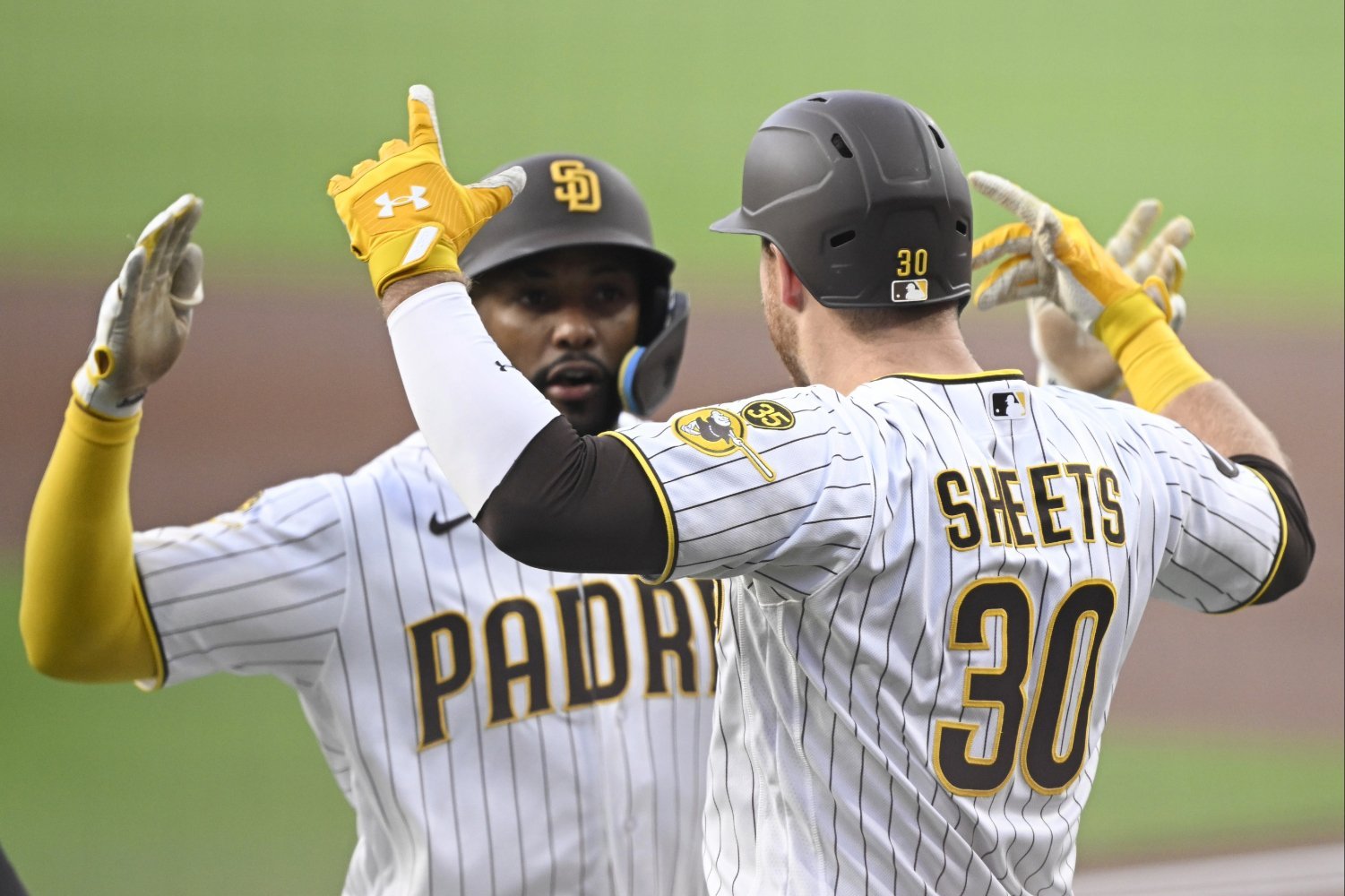 The month of May was a rollercoaster for the San Diego Padres. After missing an opportunity to overtake the Los Angeles Dodgers in the National League West standings, they instead found themselves juggling second place with the Arizona Diamondbacks. While the pitching staff remained solid, the offense has still yet to find its footing. The Padres sit in the bottom five of the league for the least amount of runs produced as a team, and much of the blame has fallen on the team's “Big Three” of Fernando Tatis Jr., Manny Machado and Jackson Merrill, all of whom have gotten off to slow starts. More than months into the season, Tatis leads the trio with a modest .266 batting average, while the other two hover slightly above or below the .200 mark. Their contributions have been highly missed as the Padres own a league-worst team batting average of .218. Yet despite their offensive struggles, San Diego remains 32-26 and holds the top National League Wild Card spot. While the lineup has been lackluster, a few unsung heroes have stepped up to make sure the team continues to capitalize on the advantageous positions created by their pitching staff and keep their heads afloat. Ranking Padres' Best Hitters in May #3: Fernando Tatis Jr. While much of the concern surrounding the team has been focused on the struggles of their “Big Three”, Tatis did his best to take his name out of those conversations. In May, Tatis led the team with a .296 batting average and 29 hits, providing a much-needed boost to an offense searching for consistency. His month was highlighted by him hitting his first home run of the season on May 30, ending his career-long 55-game homer-less streak. While his performance garnered a lot of praise, there was still a glaring hole in his game that must be addressed: His bat went cold with runners in scoring position. Despite his strong batting average, Tatis only batted .200 with runners in scoring position and posted a -0.1 weighted runs above average (wRAA). While his performance definitely hints that he is moving in the right direction, the team will need him to start producing in scoring scenarios to take a true step forward. #2: Miguel Andújar In his first season in San Diego, Miguel Andújar continues to be a solid contributor to the middle of the lineup. While he hit just .225 in May, he still recorded 23 hits, four homers, 11 runs scored and 10 RBIs as he solidified himself as the team's number one option at DH. But the month was mostly used as an opportunity to endear himself into the fanbase. Andújar's breakout moment as a Padre came during the team's series against the rival Los Angeles Dodgers. In the three-game series, Andújar homered twice, including a clutch solo shot in the team's 1-0 win in the opener. In a National League West that remains highly contested, Andújar’s production has helped bring life to an offense that is still trying to stay in the playoff picture while working out its kinks. #1: Gavin Sheets In a month that was overall bleak for the Padres' offense, Gavin Sheets emerged as one of the clubs most reliable contributors. In 24 games, Sheets batted .274/.411/.493 with a .904 OPS as he raised his overall batting average to .245. During a stretch where producing runs was scarce, his power proved invaluable. He hit five home runs while bringing in 11 RBIs and scoring 11 runs. Most importantly, he consistently delivered in key situations. With runners in scoring position, Sheets had a batting average of .357 with two home runs and eight RBIs. His biggest moment came on May 13 against the Milwaukee Brewers, when he hit a three-run homer in the top of the ninth inning that propelled them to overcome a shutout and steal a win. In a month that started with Sheets being absent from the lineup and losing at-bats to Ty France, the left-handed slugger quickly changed his perception within the organization. He finished the month batting as high as second in the lineup and is proving himself as one of the team's most dependable power options in 2026. View the full article
 -
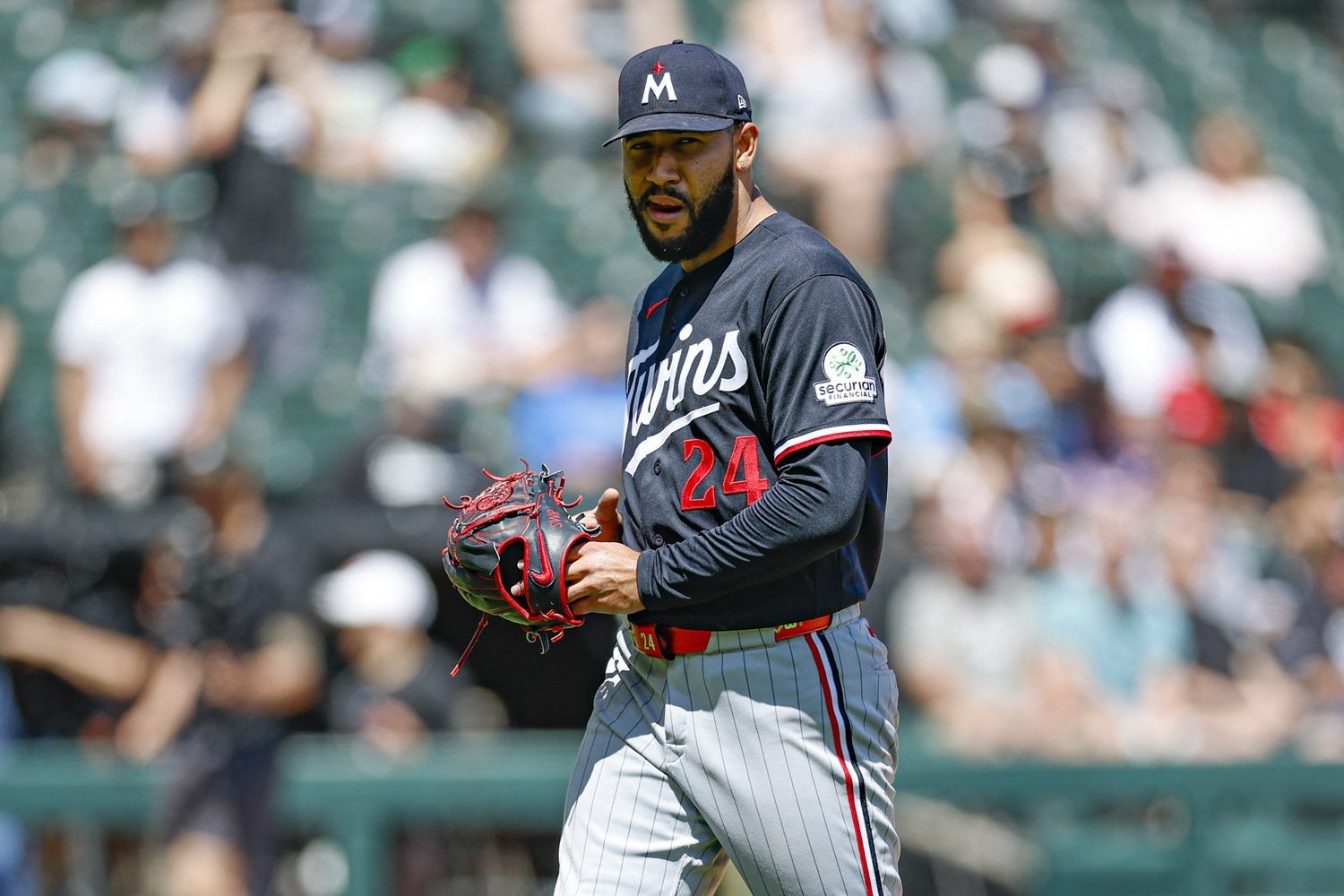 The Jays need pitching. Their top three of Dylan Cease, Kevin Gausman and Trey Yesavage have all been excellent, with xERAs ranking in the top 20 in the American League (min. 35 IP). And Patrick Corbin has – so far – outperformed his 5.26 xERA with a strong 3.65 ERA. Yet, with Cease’s injury and Corbin’s bubble at risk of bursting, the Jays could badly use another MLB-ready starter. Someone like Simeon Woods Richardson, recently DFA'd by the Minnesota Twins. SWR has struggled in 2026, with a 7.74 ERA and declines in every conventional pitching statistic. So, why might the Jays be interested? Age and Control SWR comes with considerable risk. That is not necessarily a determining factor. Risk can be acceptable if it comes with a commensurate return. If the Jays were to gamble on “fixing” SWR, they would want to know that he will not retire next season – or leave as a free agent. In that respect, SWR is an attractive gamble. He is only 25 years old, and with less than two years of service time entering 2026, he will not be a free agent until 2031. So if the Jays did succeed in turning him around, the benefits could be long-term Price Woods Richardson is still in his pre-arbitration years, earning only $796,000 in 2026. He would only enter arbitration for the first time this coming offseason. That makes him cheap enough that the financial side of the gamble would be minimal. Pedigree SWR is having a poor 2026, but his performance from 2024-25 gives considerable cause for optimism. Consider this table: Pitcher IP ERA xERA SIERA Kevin Gausman 374 3.71 4.24 4.01 José Berríos 382 3.81 4.74 4.4 Chris Bassitt 341.1 4.07 4.35 4.13 Simeon Woods Richardson 245 4.08 3.83 4.48 On an xERA basis, SWR outperformed all three of the Jays’ top three starters over those two years. If he could return to that level, he would be – at a minimum – a solid No. 3 starter. And if Cease, Gausman, Yesavage, and Shane Bieber were ahead of him in the rotation, he could be one of the very best No. 5s in all of baseball. Fit One likely reason for SWR’s xERA being lower than his ERA is the Twins’ defence. SWR is not a power, strikeout pitcher. His fastball only averages 93 mph, and he strikes out less than a batter per inning. He needs a strong defensive team behind him. In 2025, Minnesota’s -12.4 team Def (as calculated by FanGraphs) was 22nd in the majors. Toronto’s +38.8 was first. The xERA stat is calculated on the basis that every ball is hit into an “average environment,” so it is entirely possible that, with an elite defence behind him, SWR could even outperform his 2024-25 xERA. Fly Balls SWR is a flyball pitcher. His career air rate of 64.1% is substantially higher than the MLB average of 55.8%. So, he needs an elite outfield defence. What about one led by someone like, say, Daulton Varsho – whose +34 OAA in the outfield since 2023 is fifth best in baseball. And that is despite multiple injuries and his having to play in left and right field as well as centre. The Projections The major baseball projection systems all predict a recovery for SWR over the remainder of 2026. Steamer projects a 4.12 ERA, while ZIPS projects 4.66. These are only projections, and many of them envision limited innings and a move to the bullpen, but there is still a consensus that his current 7.74 ERA does not tell the whole story. The Red Flags With all that said, there are still red flags. SWR’s split-finger fastball, a major weapon in 2025 with a 32.7% whiff rate and a .168 xwOBA, is at 20.4% and .427 so far in 2026. But this is despite improved velocity and better vertical and horizontal movement. Could the issue be that the increased usage of his splitter – from 10% in 2025 to almost 27% in 2026 – has reduced the “surprise factor”? Or could the drop in velocity differential between his splitter and four-seamer (7.1 mph in 2025, 6.0 in 2026) have had an impact? The Bottom Line Without question, SWR is struggling. And there is no guarantee that the Jays’ defence (which is itself struggling to repeat its 2025 performance) and a healthy dose of Pete Walker magic will be enough to turn the 2026 frog back into the 2025 handsome prince. But the financial risk is small, the potential upside larger, and the need even larger still. It may be true that SWR’s future “ain’t what it used to be,” but it is equally true that “it is tough to make predictions – especially about the future.” View the full article
 -
The Twins Have Another Surging Power Bat In The Minors
DiamondCentric posted an article in Twins Daily
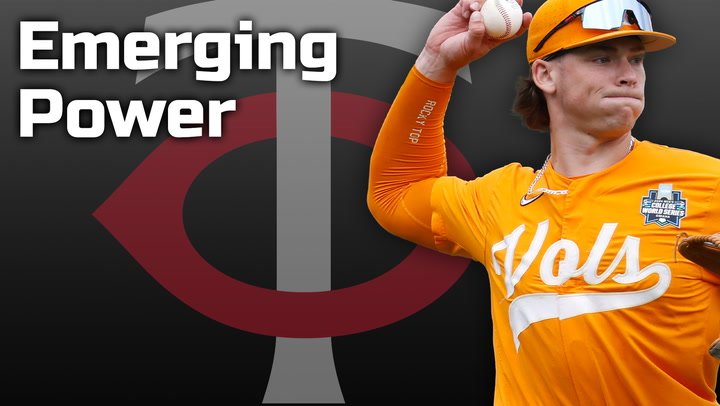 Billy Amick has shown a strong blend of contact and power since he was drafted in 2024. The former second-round pick could be forcing his way into the Twins' long-term plans. View the full article
 -
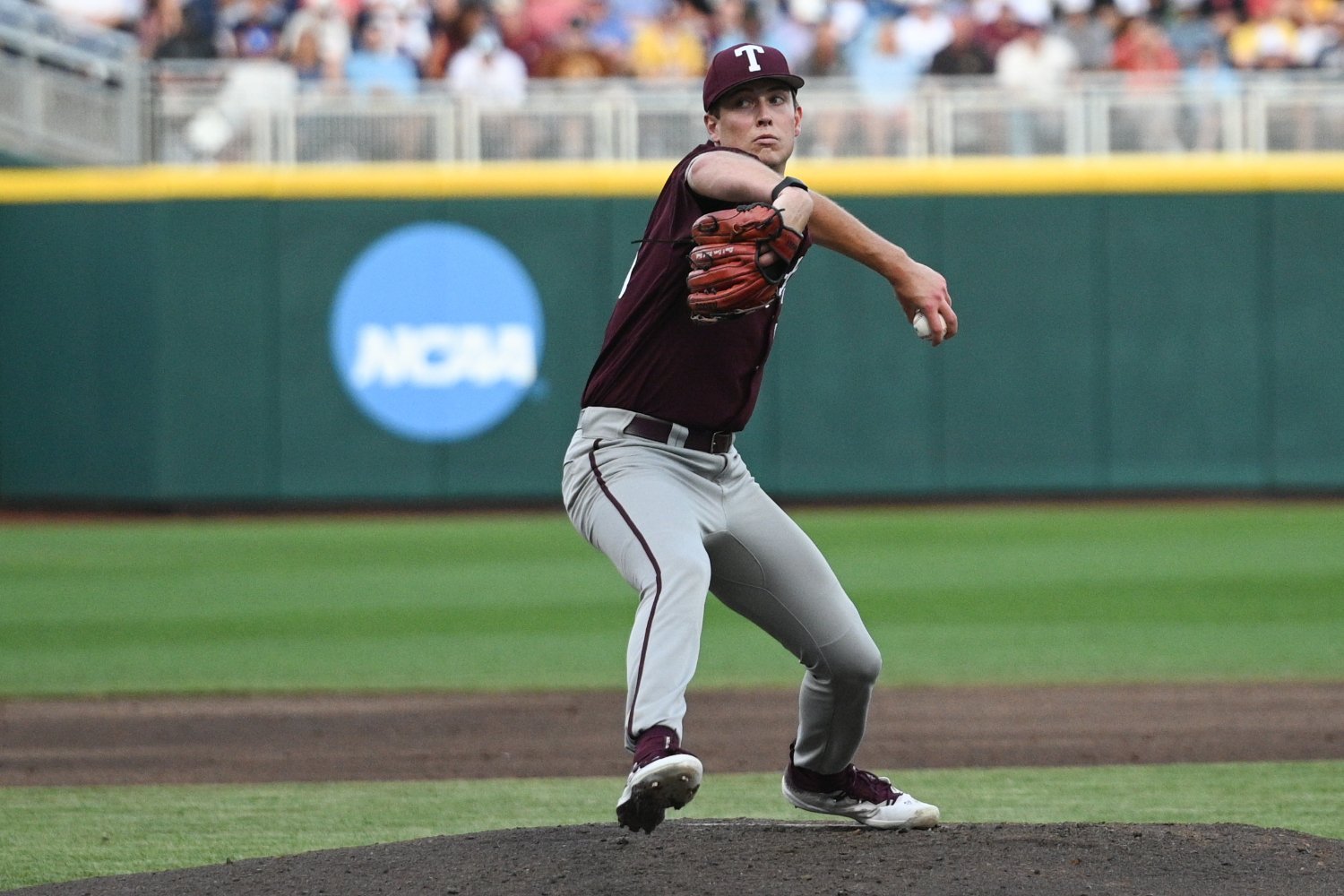 When it comes to identifying the Minor League Pitcher of the Month for May, no pitcher stood out more than left-hander Justin Lamkin. The 71st overall pick in the 2025 MLB Draft out of Texas A&M, the Royals moved slowly with Lamkin after drafting him in the competitive round a season ago. He didn't pitch professionally in 2025, but he built up in the Complex and prepared for the 2026 season, starting in High-A Quad Cities. In six outings and 28.1 IP, Lamkin absolutely dominated Midwest League pitching. He posted a 1.27 ERA, 0.92 WHIP, a 34.9% K%, and 24.8% K-BB% with the River Bandits. In May, with the Quad Cities, he allowed two runs on six hits with no walks while striking out 14 in 10.2 IP. That strong start in May led to his promotion to Double-A Northwest Arkansas. Lamkin had a rough Double-A debut on June 14th, allowing four runs on seven hits and three walks while striking out seven in 5.2 IP. However, he had a much stronger second start on May 20th. He went 6 IP, allowed one hit, one run, no walks, and struck out eight. Overall, the percentiles have been good for Lamkin in his two starts in Double-A, as he is generating a 34.9% K% (92nd percentile), a 35.1% whiff rate (82nd percentile), and a 37.4% CSW% (98th percentile). Here's a complete look at Lamkin's Double-A Season Pitching Percentiles chart via TJ Stats. Thus, it's not just the results where Lamkin is thriving, but he's also producing solid whiff, contact, and called-strike metrics in his time in the Minors this season. Lamkin doesn't have eye-popping stuff, as his four-seamer profiles in the 92-93 MPH range. That said, he has impeccable control and command and attacks batters, which is illustrated not just by his high strikeout numbers but also by his low walk numbers. With the Royals in rebuilding mode this year, and likely going to trade one of their starting pitchers (Michael Wacha or Seth Lugo) at the Trade Deadline, Lamkin could get a shot in the Majors this year if he continues to produce in Double-A Northwest Arkansas. Triple-A Omaha: Eric Cerantola, RHP 7 G, 8 IP, 7 H, 2 ER, 4 BB, 13 K, 2 SV, 2.25 ERA, 1.38 WHIP Cerantola got another promotion to Kansas City, though he was optioned after one rough outing this past week. That included giving up a home run to Texas' Joc Pederson, who had a stellar series against Kansas City this past weekend. In Omaha, however, the 26-year-old righty has been solid. Over the past 30 days, Cerantola posted a 2.25 ERA and 1.38 WHIP with two saves, 13 strikeouts, and just four walks in eight innings of work. Cerantola's slider has been his strongest offering this month. That is illustrated by his 105 TJ Stuff+, 41.1% chase, and 53.8% whiff rate on the pitch this month. Overall, he posted a 37.5% whiff rate and 30.6% chase rate, which offset his low zone rate (41.7%) and mediocre xwOBACON (.390). Cerantola will likely get more chances to prove himself in the Majors, especially with the bullpen being such a mess. To stay longer in Kansas City, he will need to improve his secondaries, as his four-seamer (91 TJ Stuff+) and cutter (81 TJ Stuff+) didn't profile well this month in terms of TJ Stuff+. High-A Quad Cities: L.P. Langevin, RHP 7 G, 10.2 IP, 4 H, 4 R, 10 BB, 17 K, 1.69 ERA, 1.31 WHIP Seen as a sleeper pitching prospect in the Royals system after pitching in the Arizona Fall League this past fall, Langevin has seemingly gotten comfortable on the mound in Quad Cities. He had a strong May, emerging as one of the River Bandits' best relievers. In seven games and 10.2 IP, Langevin posted a 1.69 ERA and 1.31 WHIP. He also struck out 17 batters and generated a 36.2% whiff rate and 30.7% CSW. Control was a bit of an issue, as he had 10 walks and a zone rate of only 43% this past month, which ranked in the 22nd percentile. That said, Langevin has done an amazing job of not just getting whiffs but limiting contact on pitches in the strike zone, as illustrated by his 59% Z-Contact%. That's a sign that his stuff could continue to play as he moves up the Royals system. There's something "old school" about Langevin and his approach, which makes him fun to watch. His approach is similar to that of Greg Holland or Wade Davis in that he knows his fastball is his premium pitch and isn't afraid to throw it, regardless of the hitter's caliber. That mindset and approach are what a reliever needs to be successful, especially in late-inning situations. He doesn't have a diverse pitch mix (he's pretty much a two-pitch guy), but he rears back and lets loose and isn't afraid to attack hitters. While walks are an issue, it seems like he's progressing with each outing at the Minor League level, which should make Royals fans hopeful that he'll sport enough control to still be an effective reliever at the MLB level. Low-A Columbia: Michael Lombardi, RHP 5 G (4 GS), 21 IP, 11 H, 3 R, 11 BB, 33 K, 0.86 ERA, 1.05 WHIP Lombardi was named our Pitcher of the Month in April at Royals Keep, and while he wasn't the overall best pitcher this month in the Minors, it was hard to omit him this month based on his performance. The former Tulane product was a strikeout machine this past month, striking out 33 batters in 21 IP. He also posted a 0.86 ERA and a 1.05 WHIP and had a 23.8% K-BB%. Kendry Chourio may have more upside and a more illustrious prospect profile. However, there may not be a better "swing-and-miss" pitcher in the Fireflies rotation than Lombardi, who was a two-way player at Tulane. The 22-year-old former second-round pick did struggle with the walks a bit this month. He had 11, and the CSW of 28.8% ranked in the 47th percentile, which is lower than one would want to see from an "ace". That said, there were more positives than negatives for Lombardi in May, and he seems primed for a call-up to Quad Cities soon to join former Fireflies teammate Jordan Woods, who was recently promoted to High-A not too long ago. View the full article
 -
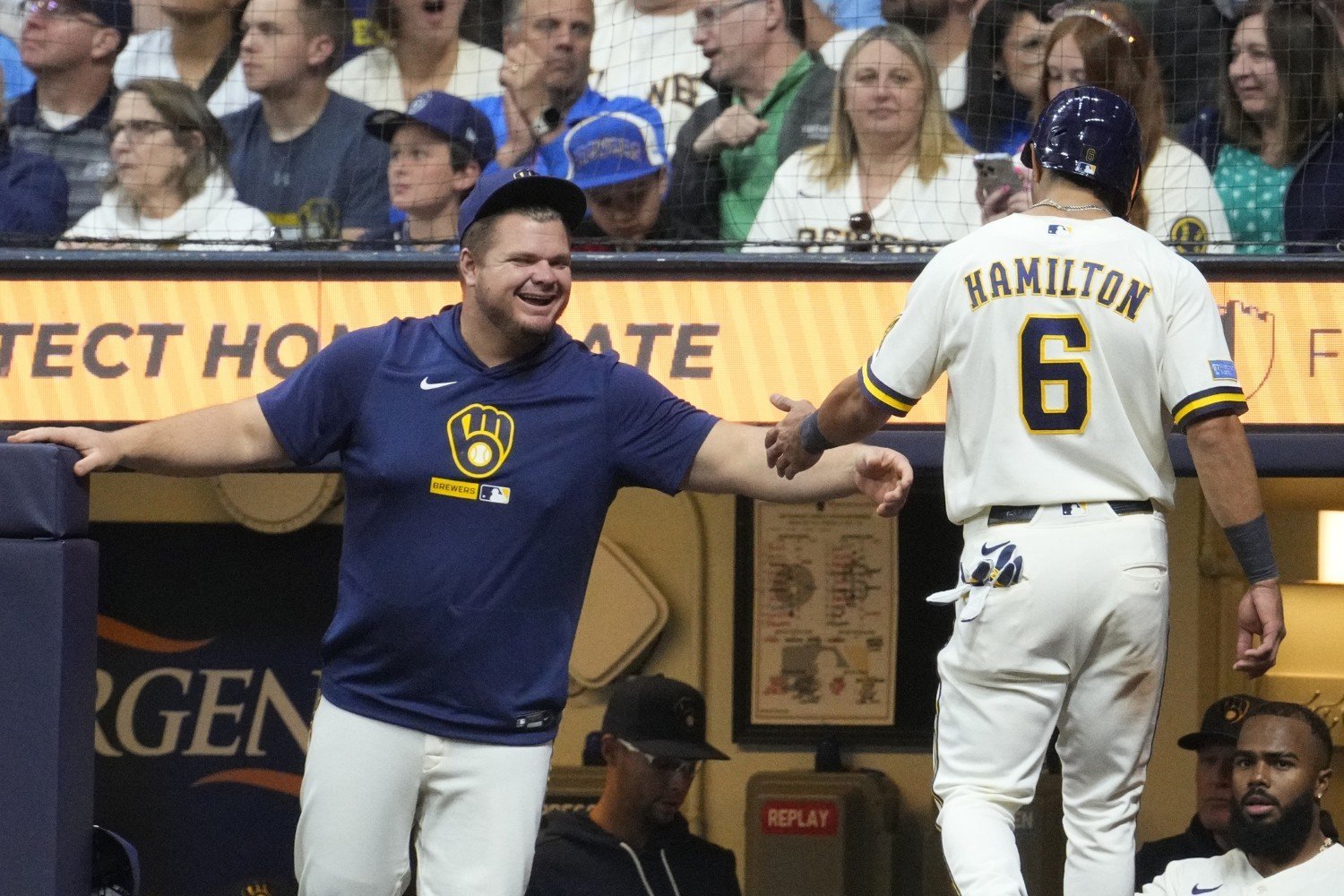 Pat Murphy has spoken highly of David Hamilton all season, even though he’s been far from the Brewers’ most productive position player. His OPS has hovered beneath .600 for most of the year, and he’s been inconsistent in the field. Still, Murphy and the Brewers have repeatedly pointed to his upside and how he’s impacted the game in smaller ways, such as bunting for hits and taking extra bases with his speed. Murphy could offer new compliments on Monday night, as Hamilton went 3-for-5 in a blowout win over the San Francisco Giants. Since May 20, he’s hitting .276/.290/.483 for a strong .773 OPS while flashing more of that upside the club has insisted is in the tank. Hamilton’s hard-hit rate during this stretch on non-bunts is 50%, and his average exit velocity is 90.2 mph. Before, those marks were 28.2% and 84.3 mph, respectively. That’s a small sample of just 24 batted balls, but it might be more than a blip on the radar. Hamilton is swinging the bat harder than he was before. His average bat speed has increased from 69.1 mph before his hot streak to 70.8 during it. He added three more hard-hit balls on Monday, including a double he pulled to the right-field wall in his last at-bat. His bat speed was at least 72.5 mph on each of those three hard hits. Only eight players with at least 100 batted balls this year have a greater separation between their maximum exit velocity and their average than Hamilton, and most of the players with whom he shares that leaderboard are sluggers. He can hit the ball much harder than the waterbug types to whom people tend to compare him; that has always been in there. “He’s made some adjustments,” Murphy said. “No one has been tinkered with more than Hamilton, and to see him handle it all and do what he’s doing, he knows he’s found a home back where he started.” Hamilton still isn’t fully calibrated. Five of his hard-hit balls during this stretch have had an expected batting average below .200, because he got under the pitch and hit it too high for an easy flyout. Improving what Murphy refers to as his “flight plan”—effectively, the launch angle of his batted balls—remains a work in progress. Hamilton will fare better on hard line drives than hard fly balls, but hitting more balls hard in general by cutting his ‘A’ swing loose is a step forward. Furthermore, that swing has looked more well-rounded than it did earlier in the year. A point of emphasis has been keeping Hamilton’s front side from flying open on most swings, which had confined his productive contact to pitches low and inside. Here’s a hard 97.9-mph lineout against the Los Angeles Dodgers last week that saw Hamilton stay on a splitter away. lineout.mp4 Hamilton’s first home run of the season in Houston was an undeniable Crawford Box Special; it was hit 94.1 mph, traveled just 343 feet, and had a .140 xBA. But it was another example of staying closed on a pitch slightly away. HR.mp4 “He had a whole front side get out of there type thing going on, and he only handled one pitch,” Murphy said. “Now he’s starting to handle more pitches and more areas.” Hamilton has also flashed more of his upside in the field. He made a rangy play in the hole against the St. Louis Cardinals last week, along with a diving stop toward second base and an acrobatic leaping catch in shallow left-center. On Monday night, Hamilton converted a fielder's choice that was more impressive than it looks on video. With the pull-heavy Willy Adames hitting, he was shaded toward third base. By the time the camera cut, he had already taken several steps toward second. Hamilton quickly covered a good deal of distance to reach Adames's hard grounder, gobbling it up with a slide before flipping to Brice Turang for an inning-ending forceout. He again showcased his range a few innings later at second base, sprinting into center field for a challenging over-the-shoulder catch. Hamilton must maintain and build on the swing improvements he's flashed lately. His defense still isn't consistent enough, as he made a routine throwing error against the Cardinals before those Web Gems. But within the last two weeks, the seeds the Brewers planted have noticeably sprouted. “He knows we believe in him, and it’s showing up,” Murphy said. View the full article
 -
Chicago Cubs Pitchers of the Month: May 2026
DiamondCentric posted an article in North Side Baseball
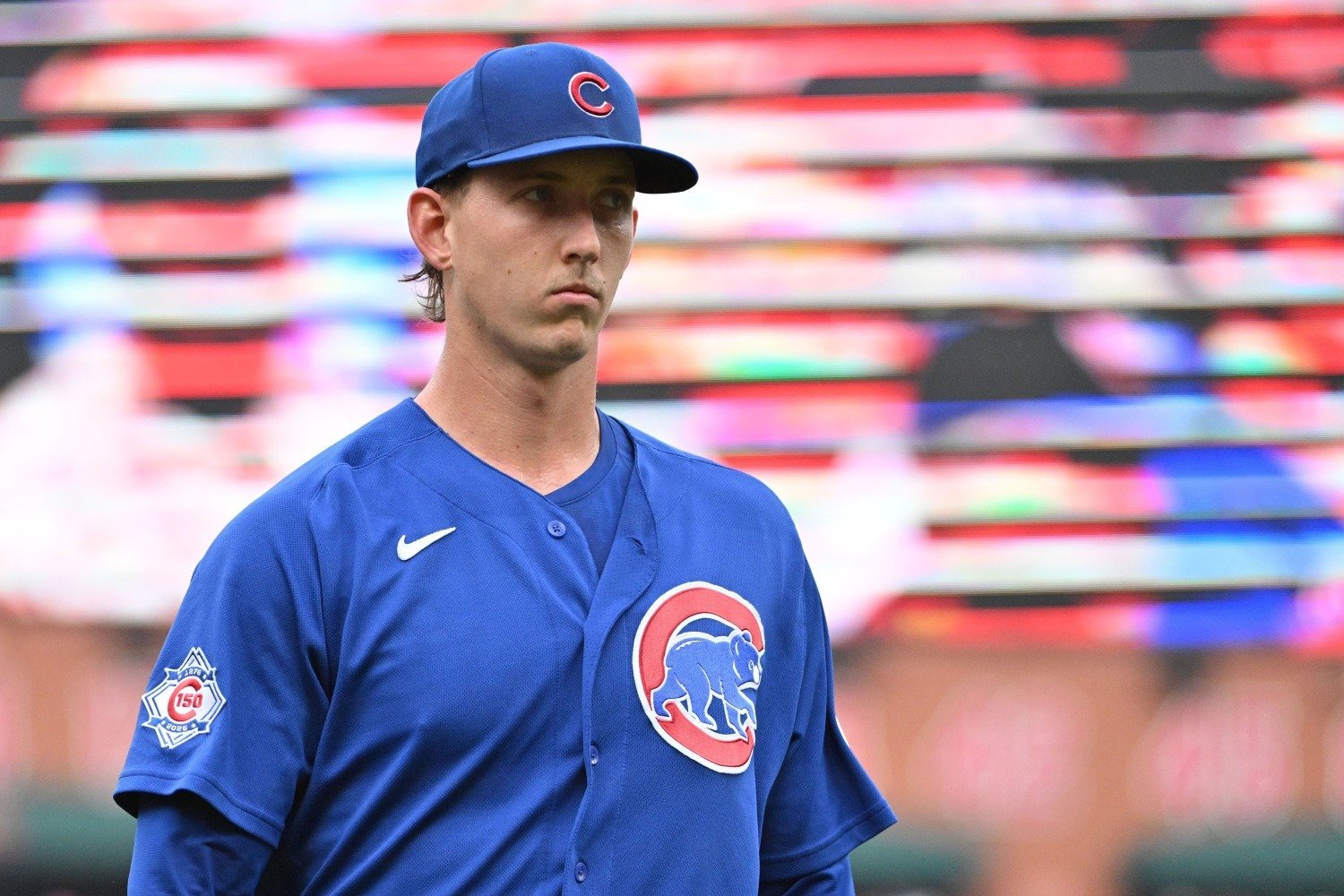 Believe it or not, there were some bright spots in what was a really ugly month of May for the Chicago Cubs. A 13-16 record yielded a lot of questions about the offense, and it was that offensive underperformance that perhaps allowed the pitching to slip under the radar a little bit. To be clear, the offense wasn’t great, but a 4.42 ERA for the team sure didn’t help matters either. With that out of the way, though, let’s revel in those aforementioned bright spots for a bit and take a look at the pitchers of the month for May of 2026. 3. Ethan Roberts: 9 G, 2.03 ERA, 13.1 IP, 7 BB, 10 K I love any baseball player that is a little bit different. At 5-foot-10 and 180 pounds, Roberts doesn't look like a typical professional pitcher. The 19.6% strikeout rate in the month of May would support that he simply is not the typical professional pitcher. Roberts has always walked a tightrope from atop the rubber. Not striking a lot of guys out means that you have to manage contact really well. After having been a fly ball pitcher for most of his first few brief seasons in the majors, Roberts has suddenly turned into a ground-ball machine, with a ground-ball rate of 64.7% in May, according to FanGraphs. This is after never posting a ground-ball rate above 36.4% in any full season in his career. He won’t maintain a .235 batting average on balls in play. Nobody does. We already saw some of that come back to earth in his outing Sunday against the Cardinals, when a bloop double found grass and denied him what could have been a big escape from a jam. But if the ground-ball rate remains that high, he just might be able to remain a viable option in the bullpen. The Cubs really need it. 2. Jacob Webb: 12 G, 0.64 ERA, 14 IP, 3 BB, 19 K Matthew Trueblood wrote about Webb here at Northside Baseball just last week. He concluded that Webb has dialed in the location on his changeup, which has unlocked him as a relief ace for the Cubs. Webb’s numbers in May certainly support this. According to Baseball Savant, hitters slugged .611 against his changeup in March and April. They had a 30% hard hit rate (a ball hit with an exit velocity of 95 mph or higher), and they whiffed on 42.9% of their swings. In May, hitters slugged just .167 to go along with a hard hit rate of 15.4%, and a whiff rate of 52.7%. That’ll certainly contribute to a month where a pitcher strikes out 19 guys and walks only three. 1. Ben Brown: 7 G, 1.86 ERA, 29 IP, 8 BB, 31 K A lot has been written about Brown at Northside Baseball as well, and for good reason: he is one of the only good things going for the Cubs at the moment. He was inserted into the rotation out of necessity on May 8, and has responded by being the team’s best starting pitcher for the month ,by a mile. Jeremy Tecktiel recently wrote about how Brown’s new sinker has turned him into a ground ball pitcher. Similar to Roberts, that is a huge development for Brown, especially given he has managed to continue to strike hitters out at an above average rate. Since we’ve written about the sinker, I would like to take a moment to acknowledge Brown’s changeup, which was thrown 4% of the time in March and April, and increased to 8.8% in May, per Baseball Savant. Hitters hit just .111 and slugged .222 against the pitch in May, while whiffing on 46.7% of swings. It’s been more than just a “third time through the order pitch,” too. Here he is fooling Brandon Nimmo with a perfect changeup on just the second pitch of a start in Texas: NXk5Z1BfWGw0TUFRPT1fQUFaVlVsTlNWd2NBWGxNQUJ3QUhCZzlYQUZrQ1ZBQUFBbFVHVWxWUkIxVUVWQWRU.mp4 It’s been a long time coming for Brown, and it finally seems to be coming together. With all of the injuries the pitching staff has dealt with so far this year, the timing couldn’t have been better for the Cubs. Congrats to Ben Brown on being the Cubs’ pitcher of the month for May. They might need him to win this quasi-award again in June. View the full article
 -
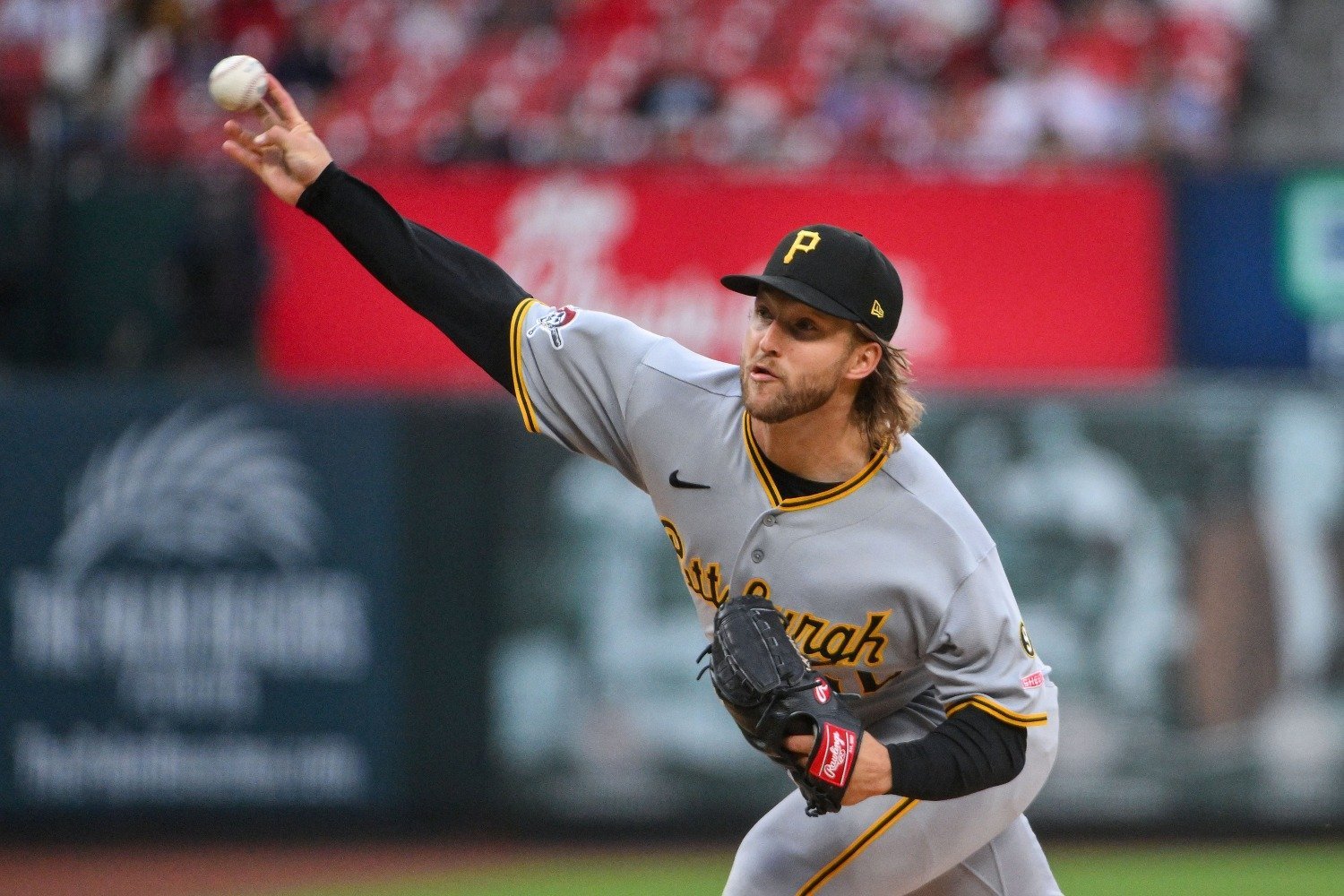 Last Friday, Pittsburgh Pirates starting pitcher Jared Jones returned to the PNC Park mound, making his first major league start since undergoing Tommy John surgery in May 2025. The home crowd celebrated Jones’s return, as the 24-year-old pitched 4 1/3 innings against the Minnesota Twins, surrendering five earned runs over 21 batters faced. However, the hard-throwing righty’s return to Pittsburgh’s five-pitcher rotation was partially overshadowed by how Carmen Mlodzinski (who held Pittsburgh’s fifth rotation spot for most of 2026) responded to Pirates decision-makers informing him that he would be transitioned back into the bullpen upon Jones’s return. “(I’m) still communicating with the organization and the people in my corner, whether that’s my family or my agency, about what is next,” Mlodzinski said, when asked about transitioning back to the bullpen during a media scrum last Thursday. Unsurprisingly, Mlodzinski’s quote took off among national baseball media, with many criticizing the 27-year-old’s dejected response to returning to the bullpen. Many of those critiquing Mlodzinski are doing so solely to profit from the salaciousness of a conflict between player and team, but for those viewing the situation more clearly, it's easy to see why Mlodzinski would be upset about the change in roles. Through 55 innings pitched, Mlodzinski has generated a 3.76 ERA, 3.31 FIP, and a 19.3% strikeout rate, while making nine proper starts. According to Wins Above Replacement at FanGraphs (fWAR), the righty has been Pittsburgh's fourth-most valuable starting pitcher, coming in behind Braxton Ashcraft, Paul Skenes, and Mitch Keller. Mlodzinski is firmly above the Pirates’ fifth-most valuable starting pitcher, Bubba Chandler, earning 1.0 fWAR over 44 innings pitched as a starter compared to Chandler’s 0.2 fWAR over 52 innings. Still, Pittsburgh opted to keep Chandler in the rotation over Mlodzinski, seemingly due to Chandler’s far superior raw stuff and higher ceiling as a starter. Pittsburgh placed Mlodzinski on the restricted list on Sunday, citing the pitcher expressing that he wasn’t ready to pitch in the series finale against Minnesota. Big-leaguers are unpaid while on the restricted list. However, the 24-year-old’s stint on the list was short-lived, as he was reinstated Monday night. In effect, they suspended him for two days and docked his pay for the missed time. According to Jason Mackey of MLB.com, Mlodzinski didn’t request a trade, and is expected to pitch out of the bullpen in a bulk role during the club’s Tuesday night contest against the Houston Astros. Still, animosity between Mlodzinski and Pittsburgh lingers, making a trade of the 27-year-old likely before the trade dealine on August 3. If that is the case, Twins top baseball executive Jeremy Zoll should aggressively pursue an early-June trade for Mlodzinski, handing the talented righty a solidified role in Minnesota’s five-pitcher starting rotation. Like Pittsburgh, Minnesota entered the 2026 campaign with a surplus of high-end starting pitching talent, headlined by Joe Ryan, Bailey Ober, and budding stars Taj Bradley and Mick Abel. However, injuries have quickly decimated the club’s rotation depth, with Ober, Abel, and talented, young lefty Kendry Rojas on the 15-day IL for the foreseeable future. Losing these three arms, Minnesota is down to a four-pitcher rotation, headlined by Ryan, Bradley, a struggling Connor Prielipp, and an inconsistent Zebby Matthews. Mike Paredes is on the 26-man roster as a long reliever, at least for the moment, but even after the team picked up another Pirate (Justin Lawrence, a short reliever) in a cash deal Monday night, it's not clear who will start Thursday evening against the Royals. Minnesota is still in dire need of starting pitching depth, particularly if the club wants to remain in postseason contention as the dog days of summer near. ""Yeah, I think everything needs to be on the table," Zoll told reporters Monday about the apparent hole in the rotation. "We've worked through all the considerations ... but I think when you go true bullpen games, that can be challenging, but we probably need to see how we get through the next day or two and the state of the bullpen before we finalize any plans." Primarily throwing a four-seamer, splitter, sinker, and curve, Mlodzinski would instantly slot in as a valuable member of Minnesota’s starting rotation, likely filling the third spot behind Ryan and Bradley. Even if Ober, Abel, and/or Rojas return soon, Mlodzinski would be in position to retain a rotation spot, given Prileipp’s, Matthews’s, and Rojas’s inconsistency this season and the team's desire to keep Prielipp and Rojas from taking on too large a workload too quickly. Though it's hardly ideal, the team might well switch to a six-man rotation for some stretches, giving their young starters an extra day between appearances to both optimize recovery and slow their accumulation of innings. Any team that acquires Mlodzinski would want to avoid recreating the awkward series of events that has led to the promising righty’s falling out with Pittsburgh’s decision-makers. Given the injuries Twins starting pitchers have sustained this season, Mlodzinski would be all but guaranteed a rotation spot with Minnesota for the rest of the 2026 season, potentially playing an integral role in the club’s ability to return to the postseason for the first time since 2023. Besides, there's one person we know likes Mlodzinski as a starter, and who gave him that job for the first time at the end of spring training last year: then-Pirates manager Derek Shelton. "I think through the spring, we saw him not only increase in velocity, but saw him maintain the velocity, which was something that really made us feel confident that he can be a starting pitcher,” Shelton said after Mlodzinski returned to the rotation last March, having spent the previous two seasons working in relief. “It wasn't one time through the order; we saw it maintain in the fourth inning, fifth inning in Spring Training." There's familiarity between the manager and this prospective addition—and a history of the kind of trust and faith the pitcher clearly needs to feel from his superiors. There's also a glaring need. Presumably, the Pirates won't give up Mlodzinski for nothing—he remains under team control through 2029 and isn''t even arbitration-eligible until this winter. If the cost of acquiring him has been dramatically reduced by the tension between employers and employee, though, the Twins should swoop in. View the full article
 -
Luinder Avila May Be a Key Piece to This Royals Rotation
DiamondCentric posted an article in Royals Keep
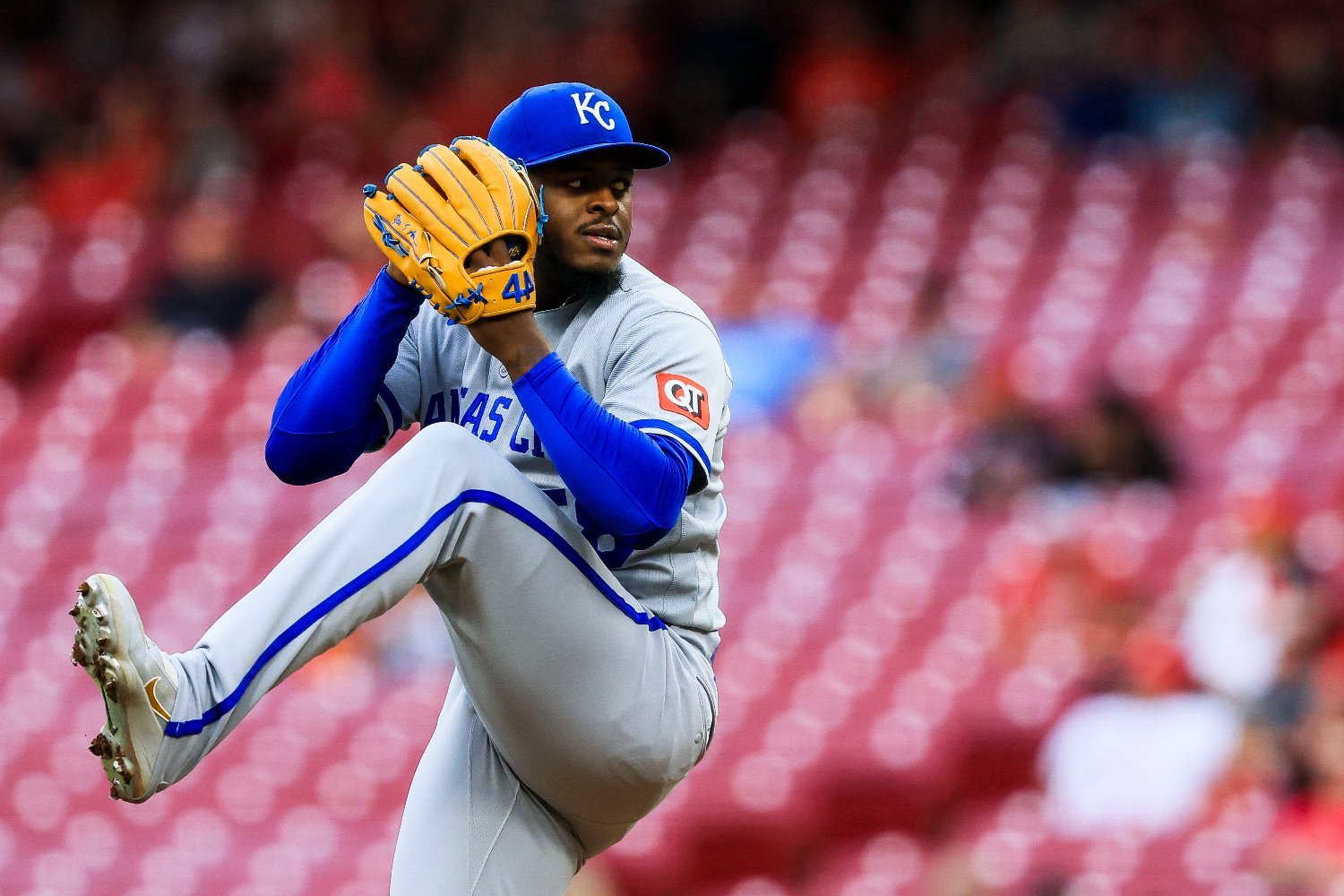 Going into the 2026 season, many viewed Luinder Avila as more of a bullpen piece than a rotation option for the Royals. To be honest, it made sense at the beginning of Spring Training to see him in that fashion based on what the Kansas City pitching staff looked like at the time. The rotation seemed full, not just with projected starters like Cole Ragans, Seth Lugo, Michael Wacha, Kris Bubic, and Noah Cameron, but also with other arms who saw starts in 2025 like Stephen Kolek, Ryan Bergert, and Bailey Falter. On that end, Avila seemed like an eighth or ninth option in the Royals' rotation at best, especially since he didn't make any starts at the Major League level in 2025. Furthermore, in limited Major League action in September, Avila was solid out of the bullpen. In 14 IP, he posted a 1.29 ERA, 0.93 WHIP, 2.15 FIP, a 28.6% K%, and 17.8% K%. He also produced strong TJ Stuff+ metrics, chase, whiff, and xwOBACON numbers. That is illustrated in his TJ Stuff+ summary from 2025. That said, in Spring Training, JJ Picollo and Matt Quatraro remained steadfast in their belief that Avila had the potential to be an impact arm in the rotation. Furthermore, injuries to starting pitchers Ragans, Bubic, and Bergert thrust Avila into the rotation, even though he had been built up earlier in the year as a reliever. It's been an up-and-down sophomore campaign for Avila at the Major League level, both as a starter and reliever. However, on Monday in the Royals' 9-2 victory over the Reds, the Venezuelan righty demonstrated why Picollo and the Royals organization have so much belief in Avila and his outlook as a starter. Avila Prevails in Impressive, Though Flawed, Victory To be frank, it wasn't a perfect or efficient outing for Avila on Monday. In five innings of work, Avila allowed a run on two hits with four walks and five strikeouts. He threw 86 pitches, an MLB career-high for him. Furthermore, when looking at his pitch type chart from today's game via Savant, many of his pitches were sprayed all over the strike zone. Avila missed down and armside a lot, especially with his changeup, sinker, and four-seamer. He also left a lot of balls in the middle that the Reds didn't do enough with. That is illustrated in his ball/strike pitch chart below, which shows not too many of those balls in the heart of the zone put in play. While the Reds didn't take advantage of those pitches in the heart of the strike zone, credit has to be given to Avila for his stuff and ability to make batters miss or buckle on pitches in that area of the strike zone. Avila wasn't like Falter out there a week ago against the Yankees, throwing hittable pitches with low stuff quality in the middle of the zone. Rather, Avila was demonstrating excellent quality on all his pitches on Monday in Cincinnati, as illustrated in his TJ Stuff+ summary from today's outing. When looking at Avila solely on TJ Stuff+, he was beyond impressive. Overall, the 24-year-old generated a 105 TJ Stuff+ with four pitches with grades of 60 or better. All five of his pitches had grades over 50, and four of his pitches had TJ Stuff+ marks over 100. The only pitch with below-average TJ Stuff+ was his sinker, which had a 96 mark. That said, it was still effective, as illustrated by his .027 xwOBACON and 25% whiff rate. Below is an example of Avila effectively using his sinker to strike out Edwin Arroyo, who was making his MLB debut. It may not rate as well compared to his other offerings, but the sinker has nasty movement and potential. For over-eager hitters, it can lead to poorly connected balls or awkward-looking whiffs, as was the case with Arroyo on Monday. His sinker and four-seamer (107 TJ Stuff+) weren't the only impressive pitches on Monday. His slider, his primary breaking pitch (26.7% usage), was effective, as illustrated by a 40% chase rate and .189 xwOBACON. It didn't generate as many whiffs as he probably wanted, as illustrated by his 30% whiff rate. However, he was able to get swings and misses when needed, as evidenced in this sword strikeout of JJ Bleday, who hit a home run off Avila earlier in the game. Once Avila gets more comfortable with his control and command, he could become even more effective with more nasty strikeouts, similar to the ones that we saw this evening at the Great American Ballpark. Granted, the Venezuelan struggled with efficiency on Monday in the longest outing of his career. Not only did he walk four batters, but he also had a zone rate of 34.9%. That is nearly 10% lower than his 44% zone rate for the season, which rates as below average. It's going to be hard for him to be effective and eat innings unless he improves his control in subsequent starts and appearances. That said, when Avila started trusting his stuff more and finding the zone, he was able to keep reasonable pitch counts in each inning. The most he had in an inning was 20, which was in the fourth. He did this while maintaining his pitch velocity in the later innings, which is not typical for most starting pitchers. Below is a look at his pitch velocity chart from Monday's game, via Savant. If anything, Avila ramped up in the later innings, a sign of the competitiveness and ability that he has in those key spots. Finishing on that kind of positive note should give him some much-needed confidence and momentum that he can carry into his next scheduled outing on the mound. The Stuff is Better This Year From Avila (Which Is Promising) When looking at his TJ Stuff+ Summary this season compared to 2025, the improvement in TJ Stuff+ marks across all his pitches is what sticks out the most with Avila in 2026. Not only is Avila's overall TJ Stuff+ two points better, but he has two 60-grade pitches this year compared to zero in 2025. He has also seen a five-point improvement in four-seamer TJ Stuff+, a three-point improvement on the slider, and two-point improvements on the sinker and changeup. The curveball is the only pitch that has remained the same. Granted, the overall metrics haven't exactly improved along with the stuff. His chase rate is down 1.6%, and his whiff rate is down 5.3%. He has also experienced a 97-point increase in xwOBACON. That said, Avila has thrown more pitches this year, as he has nearly 300 more pitches in 2026 than his total in 2025. Thus, these numbers may simply be a result of initial regression with more pitches, and we're starting to see some positive regression from Avila lately, especially with this most recent start. As he makes more starts and pitches in more games, his control and ability to minimize hard contact will be key developments to watch. When looking at his Statcast percentile summary via TJ Stats this year, Avila's velocity, extension, hard-hit% allowed, and groundball rate are all well above-average marks. Conversely, he's struggled to give up barrels and to consistently find the strike zone, which are not great traits for a starting pitcher. Though there's more blue in this Statcast profile summary than what Royals fans would like, he's trending in the right direction, especially in some key categories like CSW (36th percentile) and whiff rate (34th percentile). If he can build on Monday's win against the Reds, it wouldn't be surprising to see those categories continue to improve over the course of the season. With the Royals unsure about the futures of Ragans and Bubic, they need pitchers to step up not just to eat innings but to provide effective, quality innings as well. Avila did just that on Monday, even though it wasn't pretty or dominant by any stretch of the imagination. That said, Kansas City may not need that from Avila. All they need right now from him are quality outings, even if they aren't officially "quality starts" just yet. Outings where he can go 4-5 innings for now will lead to "official" quality starts down the road, where he can go 6-7 innings and limit the bullpen usage even further. While the Royals won on Monday, they are still 23-37 and 10.5 games behind the first-place Cleveland Guardians in the AL Central division race. They might as well continue to give Avila starts with the hope that he can develop his command and control with each start and become a long-term piece in the rotation that could make Wacha, Bubic, or Lugo expendable at the Trade Deadline. View the full article
 -
 Transactions: N/A Although there were no official transactions on Monday, we have outstanding news on LHP Frank Cairone and an expected return date for Timber Rattlers OF Braylon Payne (last played May 21st). Did you carve out time for these listens yet, prospect faithful? Final: ACL Brewers 7, ACL Dodgers 6, ten innings Box Score and Game Log Gutty road win for the A-Crew, now 11-12 on the season. Brewers scored two in the 8th to increase their lead to a seemingly safe 5-1, but the LA kids tried to be cool and rallied for five runs in the bottom of the inning to take the lead against 19-year-old RHP Ma'Kale Holden, one of the better-performing pitchers season to date. That rally came a bit out of nowhere as Holden had retired all six men he faced in the prior two innings, five of them by strikeout. The game log will reveal that the Dodgers cracked two two-run homers in the frame. It was sweet that the good guys tied the game at 6-6 in the top of the 9th, but in reality, they could have done more, as the first three batters walked. The tying run scored as speedy CJ Hughes grounded into a double play, and a flyout ended the rally. 20-year-old RHP Cesar Espinal allowed a lone single in the bottom of the 9th, and it was on to ghost-runner town, and not much effort was needed to plate the go-ahead (and what would prove to be the winning run). First baseman Jonathan Rangel began the inning at second base, immediately took third on a wild pitch, and right after that scored on a passed ball. Easy-peasy. Good thing, too, because the rest of the inning intertwined three strikeouts among two walks. Espinal, the 20-year-old Dominican native acquired as the PTBNL in the Mark Canha-to-KC trade (ah, you had forgotten about that, hadn't you?) then was aided by a lineout unassisted double play to second baseman Roderick Flores, eliminating the LA Manfred Man. A strikeout swinging ended the game in fine fashion. This box score has all kinds of goodies to peruse, including nine combined wild pitches, including two by Maryvale starting southpaw Joey Broughton, but as Broughton's game log reveals, he's had a wonderful spring including Monday's pretty line, as his pre-draft Tommy John surgery in 2024 is well in his rear-view mirror. RHP Gerson Garabito continues his broken foot rehab prior to an eventual Nashville placement, and utilityman Daniel Guilarte's Timber Rattlers rehab entered his Game Two. Brewers stole seven of eight bases, with another out coming on a pickoff, so we'll call it 7-for-9. The teams combined for a 5-for-28 RISP total. Brewer pitchers walked only one. LA arms issued 15 free passes. How was this a squeaker again? Brewer batters also K'd 17 times. The Dodger catcher played all ten innings; you think he caught a few pitches in this one? LF Kenny Fenelon, on base five times. CF Brailyn Antunez, four times, including his 4th home run. Four of the six Maryvale hits went for extra bases. Please review the box to see who hit the three doubles and the game log to see how the A-Crew plated their earlier runs. Final: DSL Brewers Blue 11, DSL Orioles Black 5 Box Score and Game Log In this colorful matchup, it was a "bruising" black-and-blue affair. (I crack myself up.) First of all, I thought as a BrewerFanatic Minor League Forum team, thought we did a tremendous job in posting many of the nuggets you should know about the now-upon-us 2026 Dominican Summer season. Important roster and stat links you can bookmark, a full-blown archive video of the "other" Brewers game (looks overcast to me, box score says the default "sunny"), the acquisition means of each player in the starting lineups (both games), a reminder about Spencer Michaelis' scouting reports from last winter, the available bonus information, immediate reactions, and more. Please visit the thread and take it all in, in full. The Men in Blue started their season with a bang despite allowing two runs in the top of the 1st, immediately scoring four of their own, and then three more in the 2nd. 16-year-old Dominican native and third baseman (he'll turn 17 in a month but get him to Am-Fam tonight ) Leanders Matos pulled a grand slam to left field in his very first professional at-bat. Only slightly outdone by Matos, $1.6 million bonus baby Diego Frontado clubbed a three-run shot in his 2nd pro plate appearance. The young men committed five errors, including two by Frontado, as the three Brewer arms only allowed two earned runs. Third-year DSL RHP Ruben Saldana (a Mexico native) earned a three-inning save in which he did not walk a batter. As for daily Link Reporting on the DSL games, we will not be quite as thorough as with the full-season affiliates, or even Maryvale. Time and effort constraints are real when the daily grind presents at least seven games on many days, and sometimes even eight or nine! We invite our wonderful readers and posters to reply to our reports with any insights you wish to share. Thanks! Final: DSL Orioles Orange 5, DSL Brewers Gold 2 Box Score and Game Log The Golden Boys committed as many errors as they had hits (four apiece). Second-year player Jefer Lista reached all four trips (double, three walks). 17-year-old switch-hitting LF Manny De Los Santos' first pro hit was a double, plus he walked twice. Shortstop Ricki Moneys was 0-for-4 with a walk and a stolen base out of the leadoff spot. Overall, the team was 4-for-6 on the basepaths. Here's Spencer's early analysis of 16-year-old catcher Moises Salazar in his debut game. Moneys committed his first error, but it was a tougher day in the field for debuting third baseman Josue Rodriguez, who was charged with three of his own (two throwing, one fielding). Second-year RHP Derlin Garcia was the most impressive of the three Brewer arms, working his way through five innings allowing two runs. There are seven games on tap for Tuesday, and MiLB has finally figured a way to place the complex leagues on the same scoreboard page as the full-season clubs, yay! Link below. Organizational Scoreboard including starting pitcher info, game times, MiLB TV links, and box scores Current Milwaukee Brewers Organization Batting Stats and Depth Current Milwaukee Brewers Organization Pitching Stats and Depth View the full article
 -
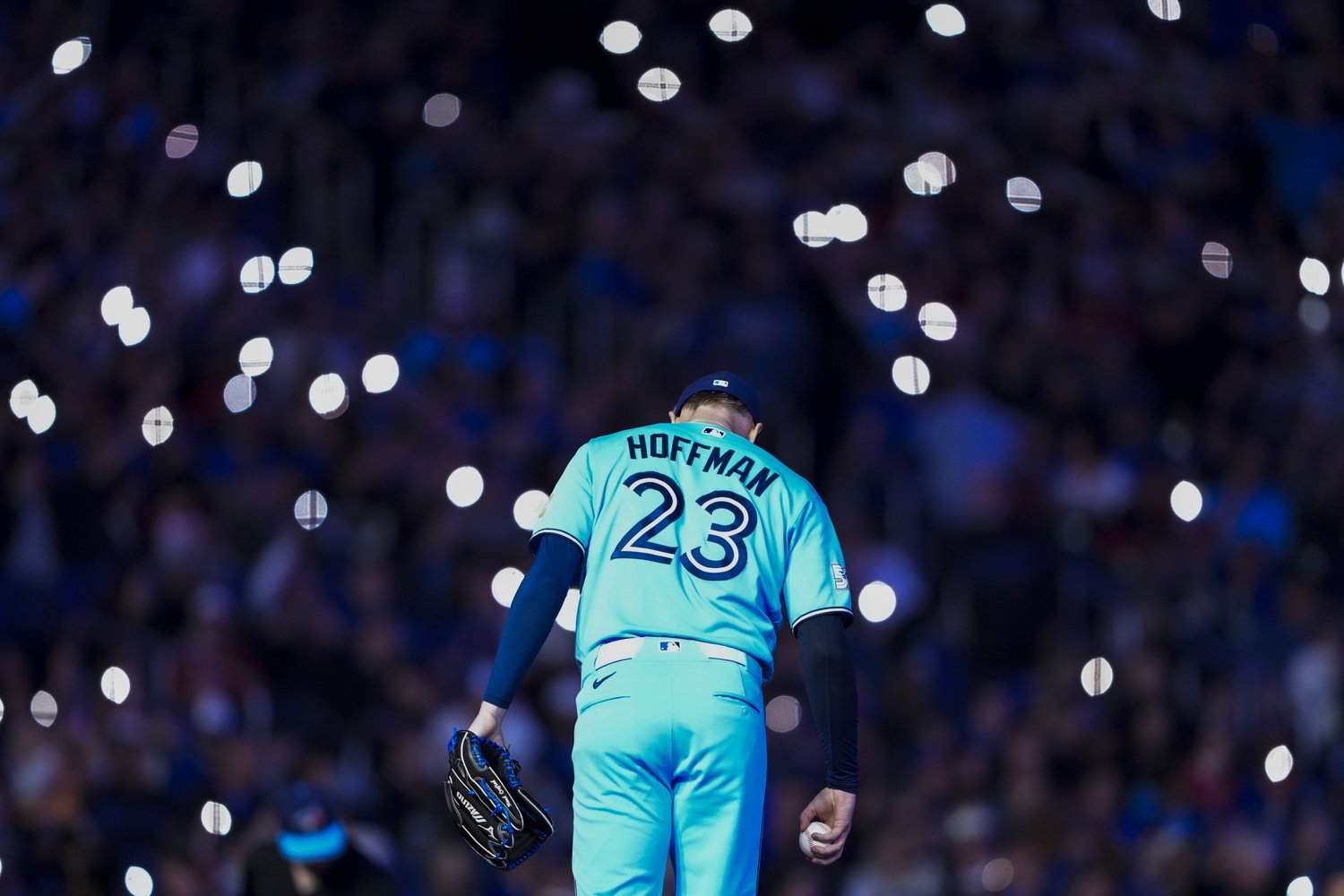 It wasn't an optimal end to what started as a promising weekend for the Blue Jays. While the offense showed some late-game life, the puzzle of the bullpen led to the team splitting a series they should have at least won. There were signs throughout the weekend that the offense was beginning to find its footing (again), even if the production didn’t always show up right away. Slow starts are still an issue, and they continue to put this team behind more often than not. When you spend the first few innings not working counts and leaving opposing starters full of confidence, you’re playing with fire. Failure to cash in runs early and often is not only adding pressure to the lineup, but the bullpen too. Every game feels like it is September baseball. The Jays' leverage arms must be dangling a bit. Mason Fluharty’s inning of relief on Sunday was his 31st appearance of the season. Braydon Fisher is at 30 while Louis Varland, Tyler Rogers and Jeff Hoffman are at 28. Outside the offense, the puzzle at the back end of games is still a work in progress. Two bullpen days every five starts is not ideal, but it is where the Jays are right now. The balancing act that manager John Schneider and pitching coach Pete Walker are trying to navigate in real time would be fun if this were a video game, not so much when the team feels like it is this close to finding a groove. Every decision feels layered. The Blue Jays are not only trying to secure outs in the moment, but they are trying to preserve availability for the next game or next series, protect pitchers from overuse, and maintain some level of stability in defined roles. Saturday demonstrated that pendulum in real-time. Trey Yesavage didn’t have his command, and there were stretches where it looked like the afternoon could unravel quickly. Yet, Yesavage battled through it, and the relievers who followed him did exactly what needed to be done. That is, until the ninth. It’s easy after the fact to question whether a move should have come sooner, whether a hook was delayed by one batter too many, or whether another arm would have been better suited for that moment. It just doesn’t capture the complexity of what is happening outside that one game. Hoffman, in that situation, wasn’t stepping into chaos. He was facing the lower part of the lineup, with a win feeling almost assured. Schneider has his favourites. Varland and Rogers have leapfrogged Hoffman on that list, but Hoffman is still a trusted arm. And be honest, in the past week or two (before Saturday), he had been pretty good. After the game, Schneider said Connor Seabold would have gotten the ball if the Jays had scored one more run. Four runs seems like plenty of breathing room. Relief pitching can turn in an instant, especially against a lineup like Baltimore’s, even when you’re not facing the top of the order. The Orioles have built a lineup that does not give away a lot of at-bats. That’s what unfolded. It wasn’t one singular mistake, but rather a sequence where pitches weren’t executed with the precision required. Some were left in hittable zones, others missed entirely and forced deeper counts. Hindsight is always so clear, isn’t it? The winning RBI single up the middle sure looked like a tailor-made double play if the middle infielders were playing back. Sunday told a slightly different story, but the underlying themes remained. The bullpen, in a broader sense, wasn’t brutal. There were competitive pitches, but one less-than-ideal inning. It is easy to say the bullpen cost the Jays the series, but that oversimplifies what is a layered situation. Yes, there were moments where execution faltered and games slipped away. Austin Voth and Hayden Juenger weren’t great. But there is also the context of usage patterns, the fatigue that accumulates when starters don’t consistently pitch deep into games, and the challenge of matching up against disciplined and decent lineups. What Schneider and Walker are attempting is not just in-game management. It is season management. They are trying to stretch a group of arms through a demanding schedule while still keeping the team competitive. The timing of yesterday's off day couldn’t have been better. This team needed a reset, not just physically but mentally. They're back under .500, but they are looking better. There is hope. Facing the Braves will present a different kind of challenge, one that will test both the pitching depth and offensive consistency. It is not a series in which the Jays can afford to ease into games or hope things sort themselves out late. There is, however, an opportunity within that challenge. The Blue Jays have a chance to turn the page quickly, to take what were positive stretches from this past series (and the past week and a half) and build on them without carrying the frustration forward. That is often how successful teams navigate long seasons. Looking a little further ahead, there are reinforcements on the horizon that could change the complexion of this pitching staff. The potential return of Dylan Cease and Max Scherzer in the near term offers more than just added talent. It provides flexibility. Fewer innings to cover translates to more defined roles and fresher arms in leverage situations. And it doesn’t stop there. The progression of Shane Bieber, now working his way back through live game action, suggests that the rotation depth could soon become a different kind of conversation entirely. It is not often that a team transitions from searching for stability to potentially managing a surplus of starting options. That shift, if it materializes, will introduce a new set of decisions for the coaching staff. For the Blue Jays, that potential scenario could be the turning point in how the bullpen is utilized. If you can shorten games reliably, if you can hand off a lead to a more clearly defined late-inning structure, many of the current issues begin to settle. None of this erases the disappointment of how this weekend ended. The Blue Jays had positioned themselves to take more from this series, and those are the games that can stand out when you look back over a season. But within that frustration, there are still hints that this team is not far from finding a more consistent rhythm. For now, the record reflects a weekend that could have been more. The Jays will take the day, reset, and prepare for what comes next. The questions around the bullpen will still be there on Tuesday, but so will the chance to answer them, one outing at a time. View the full article
 -
Could the Marlins trade from their outfield depth?
DiamondCentric posted an article in Fish On First
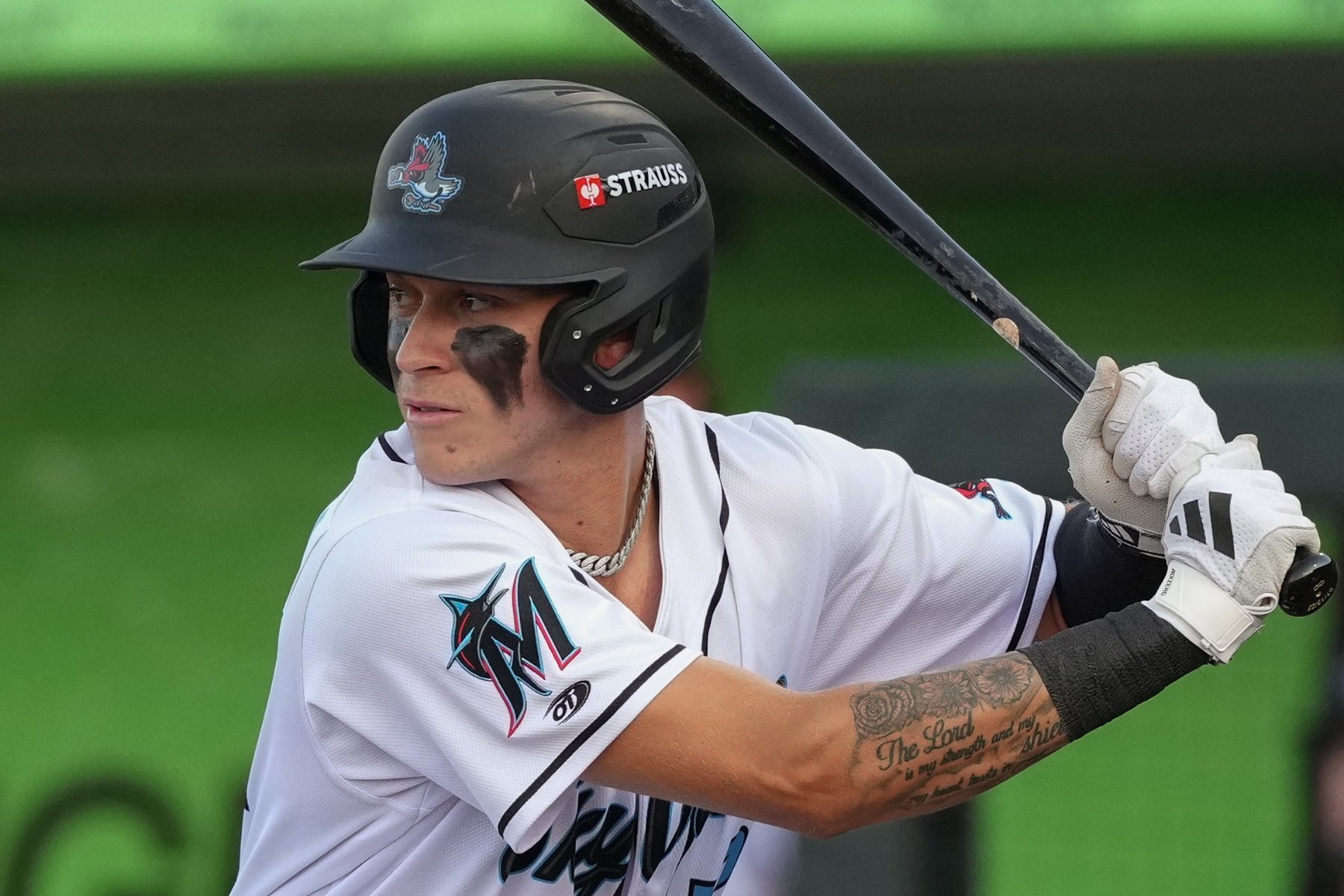 In the last two weeks, the Miami Marlins have lost Robby Snelling and Eury Pérez for extended periods, and Janson Junk until at least the middle of June. Their starting rotation now consists of Sandy Alcantara, who has struggled mightily since mid-April, Max Meyer, who has already surpassed his previous MLB career-high in innings pitched, and Tyler Phillips, who isn't even fully stretched out as a starter yet. While the organization is severely lacking pitching depth at the moment, the opposite is true in the outfield. Miami has accumulated so many promising players at the position that it is becoming increasingly difficult to find everyday playing time for prospects who deserve it, much like Ely Sussman anticipated back in January. Alex Carver of Fish On First reported Monday morning that Cam Cannarella (FOF #11 prospect) is being promoted to Double-A Pensacola. The Blue Wahoos' outfield currently features Brendan Jones (FOF #14), Dillon Lewis (FOF #5), and Fenwick Trimble (FOF #16), each of whom is comfortably meeting expectations, if not exceeding them. How will Cannarella find the necessary at-bats to continue his development? Trimble, in particular, looks more than ready for a promotion to Triple-A Jacksonville. The problem is that Jacksonville has its own outfield logjam. The Jumbo Shrimp currently have Kemp Alderman (FOF #8), who was knocking on the door of the major leagues before his recent elbow injury. Matthew Etzel is having a breakout season, and Rece Hinds, who was acquired less than two weeks ago, is hitting over .300 on the year. Andrew Pintar is the best defender of the bunch and posted a 1.017 OPS in May. Even the major league roster offers little flexibility. Miami's everyday outfield consists of Kyle Stowers, Jakob Marsee, and Owen Caissie. Off the bench, the club has Esteury Ruiz, Heriberto Hernández, and Javier Sanoja to primarily receive opportunities against left-handed pitching. So what could the Marlins do to capitalize on this uneven distribution of talent? DFA Christopher Morel and recall Rece Hinds This would merely be a baby step, but a helpful one, nonetheless. The Marlins would be parting ways with their least productive right-handed hitter—Morel has a 23 wRC+ this season—while also freeing up spot in Jacksonville. In adding even more outfield options to the active roster, Sanoja could focus fully on the infield moving forward. Trade minor league outfield depth for pitching The Marlins are desperate for innings at this point and will take them any way they can get them. Trading from a position of organizational strength could help address multiple issues at once. Moving one or two outfielders would create opportunities throughout the system while potentially bringing back a starter capable of eating innings until the rotation gets healthy. A 40-man roster crunch is coming after the 2026 season no matter what, with the likes of Alderman and Etzel due to become Rule 5 draft-eligible for the first time. Might as well get out in front of that predicament. Promote aggressively and let performance dictate decisions The Marlins entered 2026 with the goal of both developing young talent and remaining competitive at the major league level. If that mindset remains unchanged, the organization may eventually have to become more aggressive with its roster decisions. If major league players continue to struggle while prospects continue to perform, Miami could begin optioning underperforming players and rewarding those who have earned opportunities. For an organization suddenly lacking pitching depth while possessing a surplus of outfield talent, standing pat may not be an option for much longer. Whether that solution comes through a trade, a series of promotions, or roster changes at the major league level, the Marlins have reached a point where performance throughout the organization may force their hand. With several prospects knocking on the door and a rotation searching for answers, Miami could soon face one of its most important roster decisions of the season. View the full article
 -
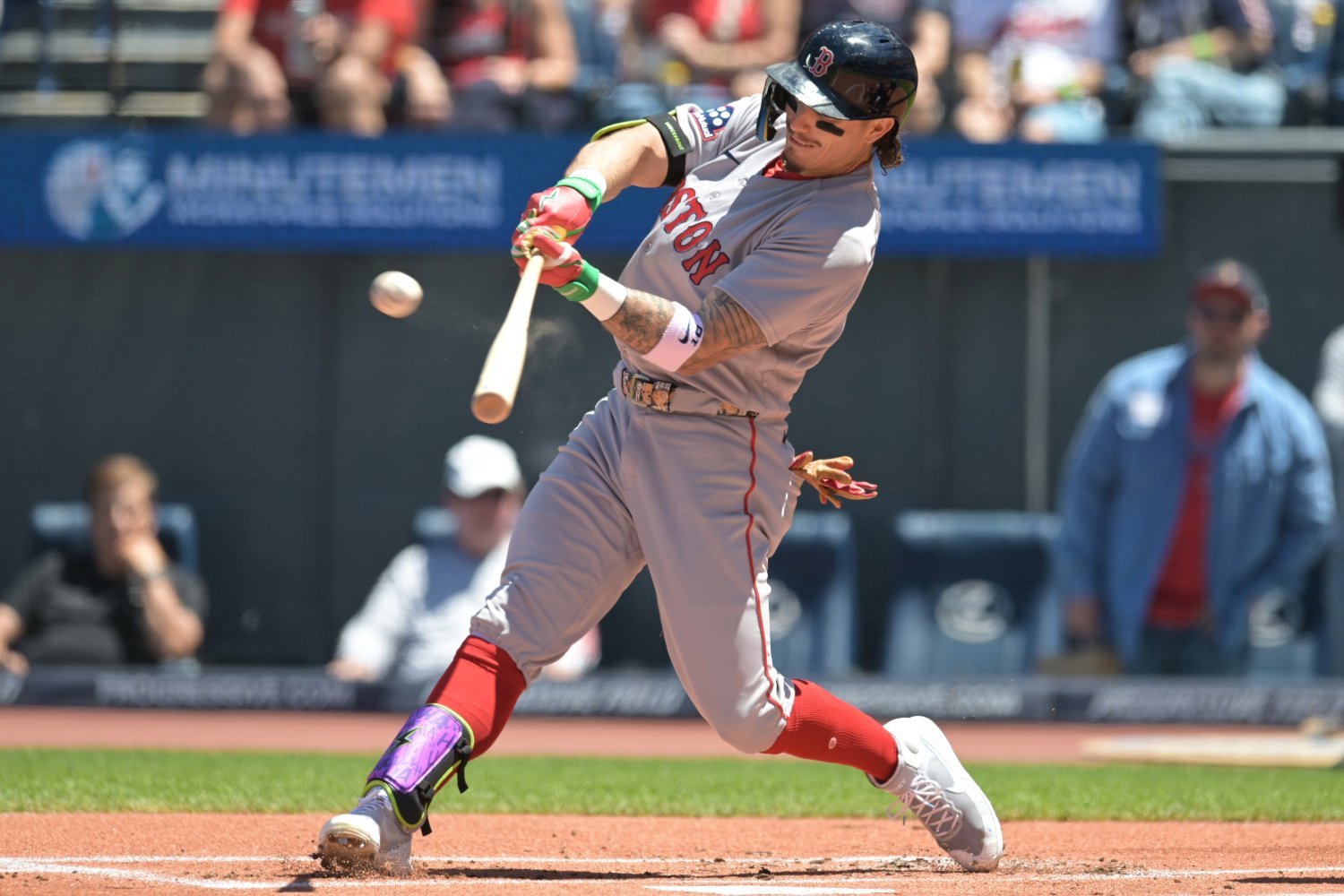 The Boston Red Sox lineup provided improved output in the month of May compared to the slower start of March and April. In April, the Red Sox as a team had a slash line of .236/.312/.354, good for 22nd, 24th, and 28th respectively in MLB during that stretch. For a more robust view at their offensive production in April, they had a 86 wRC+, which was 28th in MLB. That was not the start the Red Sox were looking for. While there is still plenty of room for improvement for Boston, we saw the lineup take a step in the right direction in May. The club had a slash line of .265/.330/.406 ranking 2nd, 6th, and 9th in each respective statistic. Their output culminated in a 103 wRC+, top-11 in MLB. The charge has been led by several Red Sox who found their groove at the plate in May. Ranking Red Sox's Best Hitters in May #3: Ceddanne Rafaela May Stats: .286 AVG, .346 OBP, 19.6 K%, 6.5 BB%, .194 ISO, 127 wRC+ In May, Ceddanne Rafaela led the team with seven doubles while tying for second in hits, home runs, and RBIs. Overall, it was a really productive month at the plate for the already-elite defensive center fielder, culminating in a 127 wRC+. It is great to see Rafaela put everything together like this. With elite defense and flashes of offensive contributions like we saw in May, paired with his remaining contract through 2031, he feels like a building block for a Red Sox team that has struggled this year. He can improve even more by focusing on his plate discipline and taking a few more walks. The 6.5 BB% from last month is an improvement but still low; getting a free base more often and putting his speed on the basepaths only bodes well for the Red Sox. #2: Jarren Duran May Stats: .261 AVG, .331 OBP, 29.2 K%, 8.5 BB%, .287 ISO, 137 wRC+ Jarren Duran had a bit of a power surge this month, homering nine times leading to a .287 ISO which was top-12 in MLB over that span. Duran also totaled a team-leading 30 hits and 22 RBIs. Overall, his recent production has been a welcomed sight to see for the fans. His performance has even led to trade rumors resurfacing. One thing Duran should look to improve is the high strikeout percentage, 29.2%, that he carried throughout the month. His season strikeout rate sits at 27.7%. Even lowering this a few ticks to the roughly 24% we have seen from him over the last several seasons would grant him the more well-rounded profile we saw during his breakout 2024 campaign. #1: Willson Contreras May Stats: .315 AVG, .394 OBP, 21.2 K%, 8.7 BB%, .213 ISO, 151 wRC+ Willson Contreras has been Boston’s best hitter all season, and it hasn’t been close. Wilyer Abreu was making it interesting earlier in the season but took a step back in May, and while we have seen Duran rise as previously mentioned, Contreras has been the most consistent. While the power faded a bit in May, totaling only four home runs last month, he managed to be productive in almost every other way. He produced a .315 average with a solid 8.7% walk rate leading to an elite on base percentage of .394. When you are on base that often, you are giving the guys behind you in the lineup a chance to do damage consistently. The more this happens, the better the team tends to do. That is exactly what has happened for the Boston Red Sox offense over the last four series, averaging 5.3 runs a game and scoring five or more runs in seven of their last 12 games. The offense, led by Rafaela, Duran, and Contreras, saw an improvement in May. They will look to build on that in the month of June with a gauntlet of divisional matchups ahead as well as a trip to Seattle to take on a surging Mariners team. The outcome of these next few weeks, largely driven by this group of hitters, will have sway to the outlook of the rest of the season and the Red Sox's trade deadline plans. View the full article
 -
 The New York Mets entered May with a 10-21 record. Needless to say, they were in desperate need of a solid showing to maintain any hope of reaching the postseason. While they were unable to go on a ridiculous tear to get back to .500, they finished the month 16-12 and sit at 26-33. Outside of a 1-7 stretch from May 19 through May 26, the Mets looked like the team everyone expected at the start of the season, and the bats coming alive helped carry the day. After averaging 3.4 runs per game over March and April, the Mets cranked up the activity on the basepaths and produced a sterling 4.75 runs per game in May. In large part, the Mets’ surge was powered by three hitters, who, despite injuries and the continued struggles of marquee hitters, kept the team’s season alive. Ranking Mets' Best Hitters in May #3: Brett Baty Through the month of April, Brett Baty’s last name played like a cruel joke. He had a wRC+ of 60 thanks to a .211 batting average (AVG), .255 on-base percentage (OBP), and .311 slugging percentage (SLG). As a rule of thumb, it’s bad to rarely get on base and slug like you’re holding a limp noodle at the plate. However, when the calendar flipped to May, Baty started to swing like he holding an actual bat. In May, he produced a wRC+ of 115 with a .253 AVG, .354 OBP, and .373 SLG. He was able to offset an increase in strikeout rate, from 27.6% to 28.9%, thanks to his walk rate more than doubling to 12.4% from 6.1%. While his SLG still isn’t ideal, and he has been the benefactor of some BABIP fortune (.358 BABIP), he earned his walk rate in May. Baty cut his out-of-zone swing rate from 31.6% to 25%. While that might not sound massive, it’s the difference between ranking 25th and 79th, among qualified hitters. The Mets are going to need him to keep showing a discerning eye at the plate, and hope it leads to a few more hitters’ counts, which will in turn lead to a few more round trippers. All told, Baty, beginning to live up to his namesake, was a May boon for the Mets. #2: Carson Benge Similar to Brett Baty, Carson Benge completely turned his season around in May. His 133 wRC+ in May was second on the team, and that was despite underperforming his Statcast expected metrics (wOBA: .360; xwOBA: .381). It’s still a little too early to proclaim Benge a future All-Star, but, like his .375 May OBP, it wouldn’t be off-base. So, how did Benge go from hitting like a pitcher to hitting like a star? By leaning into what he does well, and not selling out for the modern-META of lift and pull. Benge cut his pull percentage from 32.8% in April to 25.9% in May and saw his Statcast hard-hit rate jump from 41.8% to 47.1%. His decision to square up the ball and use the whole field is how he was able to hit the same number of home runs in May (two) as he did in April and March, and still boost his SLG from .278 to .426. Benge has feasted as a doubles machine, and there’s no reason for him to stop. Home runs and walks are great and all, but some hitters are just built different. As May showed, Benge is the rare hitter who can go up there looking to find a gap and prosper. It may be unconventional in today’s game, but runs are runs. #1: Juan Soto The Mets have been two teams this season. The one with Juan Soto in the middle of the order, and the one without him. In 42 games where Soto has featured, the Mets are 23-19, good for a .548 winning percentage, and in the 17 games he missed due to injury, they’re 3-14. It doesn’t take a math genius to understand how stark a difference that is, and his May only further reinforced how valuable a hitter he is. Over 26 games in May, Soto posted a 167 wRC+, ranking ninth in the league for the month, on the back of a .281 AVG, .369 OBP, and .615 SLG. His 10 home runs led the Mets and were one behind Kyle Schwarber for the major league monthly crown. He came into May looking for trouble, and that’s just what he did — at least from the pitchers’ perspective. What makes Soto’s incredible month so incredible is just how un-incredible it is for him. Soto has a career 159 wRC+, and he was actually better in his brief April and March stint (187 wRC+). Soto was by far the Mets' best hitter, basically performing at his baseline. It's crazy that this wasn’t anywhere near his best, and yet he was one of the most dangerous hitters in the sport. Don’t be surprised if he takes the #1 spot a few more times this season. Considering the continued struggles of Bo Bichette and Marcus Semien and the extended absences of Francisco Lindor, Francisco Alvarez, and Jorge Polanco, the Mets' offense has plenty of room to grow. The season hasn’t been salvaged just yet, but if everyone can get healthy and recapture their form, there should be plenty to play for come September. View the full article
 -
The Twins have acquired RHP Justin Lawrence from the Pittsburgh Pirates in exchange for cash considerations. Basically, this means the Twins paid a little extra to jump the teams ahead of them on the waiver wire to ensure they would acquire Lawrence. Lawrence has thrown 22 innings for the Pirates this year, and his results have been not great leading to the Pirates designating him for assignment on May 29. Over the 22 innings, Lawrence has 25 strikeouts, but has also given up 12 walks while surrending 20 runs (13 earned) in that time frame. Lawrence throws three pitches, a sinker, a sweeper, and a four seam fastball, throwing primarily the sinker (42.2%) and sweeper (39.6%). Lawrence will provide some depth in a bullpen that desperately needs it. The Twins are hoping his results can improve in a new situation. Last season, he looked much better out of the Pittsburgh bullpen, throwing 17.2 innings with 23 strikeouts and a 0.51 ERA and a 2.25 FIP. If he can get back to those type of results, he could earn some higher leverage spots in a bullpen that has struggled. View the full article
-
 Box Score SP: Joe Ryan 6 IP, 8 H, 4 ER, 9 SO, 0 BB HR: Tristan Gray (4) Top 3 WPA: Gray 0.32, Trevor Larnach 0.24, Josh Bell 0.08 Win Probability Chart (via FanGraphs): The Twins desperately needed a reset Monday afternoon. After limping home from Pittsburgh on a five-game losing streak and coming off a sweep at the hands of the Pirates, Minnesota returned to Target Field looking to stop the bleeding against a White Sox club that arrived with momentum of its own. Chicago entered the series opener riding a five-game winning streak, after sweeping Detroit over the weekend. With the Twins searching for stability, the ball was in the hands of the one starter who has consistently provided it all season. Joe Ryan took the mound as Minnesota's unquestioned ace. At a time when injuries and inconsistency have left the rotation searching for answers, Ryan has remained the one arm the Twins can count on every fifth day. They needed another strong effort from him against White Sox rookie David Sandlin, who was making just the second start of his major league career after allowing one run in his debut victory. The Twins wasted little time making the rookie uncomfortable. Minnesota opened the bottom of the first inning by stringing together three hits, with Trevor Larnach delivering an RBI single that gave the Twins an early 1-0 advantage. The lead was short-lived, however, as Andrew Benintendi answered in the top of the second with an RBI single that tied the game. The contest remained deadlocked until the fourth inning, when the Twins finally broke through in a big way. Josh Bell started the rally with a leadoff double, and Minnesota continued to apply pressure by putting additional runners on base. That brought Tristan Gray to the plate with the bases loaded, and the infielder delivered the game's biggest swing. Gray launched a grand slam to right-center field for his fourth home run of the season and his first since April 23. It was also his second grand slam of the year, sending Target Field into a frenzy and giving the Twins a 5-1 lead. What looked like a comfortable advantage quickly became anything but. Ryan muscled his way through much of his outing, but ran into trouble in the fifth inning. Miguel Vargas connected for a two-run homer to trim the deficit, and Benintendi followed immediately with a solo shot of his own. Back-to-back home runs suddenly cut Minnesota's lead to 5-4 and put the pressure right back on the home club. This time, the offense answered immediately. The Twins erupted in the bottom half of the inning, collecting three hits, drawing two walks, and pushing four runs across the plate. Austin Martin contributed an RBI single that snapped an 0-for-18 slump, and by the end of the inning, Minnesota had rebuilt its cushion to 9-4. That offensive outburst proved critical. Ryan ultimately did not record a quality start after allowing four earned runs across six innings, but he still gave the Twins exactly what they needed. The right-hander limited further damage, completed six frames, and struck out nine hitters, matching his season high. More importantly, he kept Minnesota in position to capitalize on its best offensive performance in days. Kody Funderburk and Yoendrys Gómez each delivered scoreless innings in the seventh and eighth, preserving the lead and keeping Chicago at arm's length. The White Sox made one final push in the ninth when Vargas struck again, launching his second homer of the game, a two-run shot off Travis Adams that cut the deficit to three. The late drama wasn't enough to spoil Minnesota's night. Powered by Gray's grand slam and a four-run answer in the fifth inning, the Twins held off the White Sox 9-6 to snap their five-game losing streak and open a seven-game homestand with a much-needed victory. What's Next The Twins will look to secure a series victory Tuesday evening when Connor Prielipp takes the mound seeking a bounce-back performance after consecutive rough outings. Standing in his way will be White Sox right-hander Davis Martin, who has been Chicago's most effective starter this season with a 2.00 ERA across 67 2/3 innings. First pitch from Target Field is scheduled for 6:40 PM CT. Postgame Interview Bullpen Usage Report THU FRI SAT SUN MON TOT Paredes 0 0 0 60 0 60 Orze 0 23 0 0 0 23 Adams 12 0 0 0 19 31 Banda 14 18 0 0 0 32 Gómez 17 14 0 0 15 46 Morris 29 0 0 0 0 29 Funderburk 0 0 27 0 16 43 Rogers 7 12 0 0 0 19 Laweryson 0 16 0 0 0 16 View the full article
 -
 The Miami Marlins finished the month of May on a five-game losing streak, losing two out of three to the Toronto Blue Jays and getting swept by the New York Mets. The final leg of the three-city road trip featured the Washington Nationals, who entering play on Monday had scored the most runs in baseball. On the flipside, they have the fifth-worst pitching staff in baseball, which the Marlins got to in order to snap their losing streak, defeating the Nationals by a final score of 7-3. Nationals starter Cade Cavalli went five strong innings, striking out six. After allowing a bases loaded walk to Owen Caissie in the top of the first inning, he shutout the Marlins until the top of the sixth inning. He allowed a base hit to Leo Jimenez and was taken out of the game in place of Richard Lovelady. Going into Monday, the Nationals bullpen had a 4.52 ERA, which is 22nd in MLB. They have also allowed the second-most earned runs (143) in baseball. In 17 appearances with the Nationals, Lovelady had a 2.25 ERA, but a 4.45 FIP. With Jimenez on first, Clayton McCullough pinch hit Heriberto Hernandez to face the lefty. On the fifth pitch of the at-bat, Lovelady served up a slider that landed right in the middle of the plate and Hernandez took him deep to left field for his third home run of the season. It tied the game at three apiece. For Hernandez, it marked his third career pinch-hit home run, with two of them coming this season. All three of his career pinch-hit home runs have come against left-handed pitching. Lovelady proceeded to hit Jakob Marsee. A sac bunt from Joe Mack moved Marsee to second and Connor Norby drove him in on an RBI double, giving Miami the lead, 4-3. In the ninth inning, the Nationals turned to Cole Henry, who in eight appearances had a 5.00 ERA. Liam Hicks hit his 12th home run of the season, making it 5-3. That would Mark Hicks' 46th RBI of the season, making it a new career-high for the 27-year old. All-Star voting is set to open on Wednesday, and the main question for Marlins fans will be at which position Hicks will be listed. If it's at catcher, he may have a better chance of getting in. He currently leads all catchers in RBI, and is second in home runs, second in OPS, third in batting average, third in hits and entering play on Monday, he had the third lowest strikeout rate (9.2%) in baseball. "Hicks has had a phenomenal season," Marlins manager Clayton McCullough said. "He's been able to build off his strengths which have been his ability to control the strike zone and we have seen the difference this year. With the home run tonight, he was able to elevate the ball to the pull side with more regularity, which has led to some more home runs. He just takes good at-bats, you can trust him when he's up there and he's been a key part to our offense this year." Kyle Stowers finally seems to be getting it going as he hit his fourth home run of the season, extending the Marlins lead, 7-3. He is now slashing .221/.301/.379/.680 with four home runs, 13 RBI and a 90 wRC+. The Marlins were coming off a bullpen game in Queens where they trotted out six relievers, so Sandy Alcantara, who is coming off a month of May that he'd like to forget, needed to step up. On top of that, Eury Pérez, who is now on the injured list, is not going to be around until after the All-Star break and Janson Junk will also be out for some time. Alcantara gave the Marlins seven innings of work allowing three runs on seven hits (one home run) and struck out three. Monday's start marked the fourth time this season that he completed seven innings or more and did not allow a walk. "It's what I expect from Sandy," McCullough said. "He's going to eat up innings and he's going to give us a chance to win. That's what he's been doing now for almost a decade. Every inning that he is able to take down it's one less inning that someone in the bullpen is going to need to cover. We needed a big one from him tonight and he came through." Alcantara got off to shaky start, surrendering a home run to outfielder Jacob Young in the bottom of the second inning, a two-run blast giving the Nationals a 2-1 lead. Curtis Mead laced an RBI single in the third inning, extending the lead, 3-1. With the win, the Marlins are now 27-34 on the season, fourth place in the National League East and 5.5 games out of the third and final Wild Card spot. Although it is currently listed as a TBD for tomorrow, Fish On First can report that the Marlins are calling up Ryan Gusto to make his first start of the season. In 10 appearances (seven starts) in Triple-A this season, Gusto has a 3.83 ERA, 3.50 FIP, 10.48 K/9 and 3.43 BB/9. First pitch is at 6:45 pm EST on Marlins.TV. View the full article
 -
Twins Minor League Report (6/1): Quiet Bats in DSL Opener
DiamondCentric posted an article in Twins Daily
 Monday kicked off the month of June, which also kicked off games for the DSL Twins. Below, we will recap the games the FCL and DSL Twins played and preview the upcoming series for the other Twins affiliates, as Monday is their traditional off day. TRANSACTIONS The St. Paul Saints, in conjunction with the Minnesota Twins placed C Ricardo Olivar placed on the 7-day IL (Right Knee Sprain) The Minnesota Twins and Fort Myers Might Mussels transfer INF Yilber Herrera to the FCL. SAINTS SENTINEL As the Saints head into the week, they welcome Indianapolis into town, who are currently 10th in the International League West. Indianapolis will have a tall task. The Saints have several players swinging hot bats, with the top six players in Twins Daily's May Minor League Hitters of the Month spending part of their month with the Saints. That, of course, includes Twins Daily’s hitter of the month, Aaron Sabato, who slashed .312/.402/.699 (1.101 OPS) with eight home runs. (The Twins Daily Minor League Pitcher of the Month, along with the Twins top hitter and pitcher for May, will be announced in the next day or two.) Indianapolis boasts many of the Pittsburgh Pirates top prospects, and the Saints will hope they can fare better against the "Baby Bucs" than their major-league counterparts fared over the weekend in the major league matchup of these two organizations. Indianapolis will bring six Top 10 organizational prospects to CHS Field. On the offensive side are OF Esmerlyn Valdez (6), 2B/OF Nick Yorke (9), and 2B Termarr Johnson (10). On the pitching side are LHP Hunter Barco (5), RHP Antwone Kelly (7), and RHP Thomas Harrington (8). WIND SURGE WISDOM The Wichita Wind Surge are also playing a series at home this week as they welcome the San Diego Padres affiliate, the San Antonio Missions, to town. The Missions bring in nationally recognized catching prospect Ethan Salas, who tops the Padres' system. It is the second series already this season between Ethan and Wind Surge utilityman Jose Salas. Alongside Salas is the Padres' second-ranked prospect, RHP Miguel Mendez. Both are putting together a good season. Salas is hitting .311/.359/.503 (.862). Mendez’s ERA isn’t as pretty as he would like at 4.76, but his 26.9 K% and 11.1 K/9 are looking good. A reminder that Padres Mission is our sister site. Check out how their writing staff ranks the Pades prospects. KERNELS CHRONICLE The Kernels are set to welcome the Wisconsin Timber-Rattlers, the Milwaukee Brewers High-A team, to Iowa. Wisconsin will bring three top 10 organizational prospects, all on the offensive side. The highest-ranked is SS Luis Pena (2), who is 19 years old and putting together an incredible offensive start to 2026, hitting .348/.463/.485 (.948 OPS). He returned to the team after missing about a month after collapsing in the dugout during a game. CF Braylon Payne (6) will join Pena. Payne’s numbers are not as impressive across the board as Pena's, but he is still hitting well in his own right, slashing .260/.368/.569 (.937). Rounding out the top prospects making the trip to Cedar Rapids is 3B Andrew Fischer, who is hitting .275/.411/.625 (1.036). The Kernels pitching will have a tall task keeping those three at bay throughout the week’s series. Check out another sister site of Twins Daily, Brewer Fanatic. Check out how their writing staff ranks the Brewers prospects. MIGHTY MATTERS The Fort Myers Might Mussels will be traveling to play the Lakeland Flying Tigers, affiliate for the division rival Tigers. Lakeland isn’t bringing much in the way of top-end organizational talent, but there are a pair of starting pitchers that will look to challenge Fort Myers. Kelvis Salcedo would like to bring his 5.68 ERA down and will look to do so by striking out batters. Salcedo brings to the series a 32.8% K% and a 13.5 K/9. Malachi Witherspoon will feel similarly to his teammate. His 5.18 ERA is not where the right-hander would like to be, but he also has the ability to induce some strikeouts. He isn’t quite as prolific as Salcedo but still has a 29.2% K% and a 11.5 K/9. FCL TWINS Twins 2, Rays 7 Box Score As the FCL Twins took on the top team in their league, the Rays, none of their pitchers walked away with a clean outing. In his second rehab outing, right-hander Matt Barr got the start and went 1 1/3 innings. He allowed two hits, one run on a home run, and issued one walk. Hendry Chivilli had the longest outing He went 3 2/3 innings and allowed five hits, four runs (three earned runs), three walks, and two strikeouts. Yoel Roque worked the final two innings. He gave up two runs on two hits. He walked three and had one strikeout. On the offensive side, Jhomnardo Reyes led the team with two hits and scored one of the Twins two runs on a Carlos Taveras single. Reyes also had three stolen bases. Jose Barrios scored the Twins second run on a Yovanny Duran single that at the time brought the Twins within one run of the Rays in the bottom of the fourth inning. Barrios reached on his third double of the season. Teilon Serrano walked twice. DSL TWINS Twins 1, Rangers 5 Box Score The Twins DSL opener did not go as they had hoped it would. Agustin Campusano got the start for the DSL Twins. Campusano pitched 12 games in 2025, recording a 0-1 record, 4.80 ERA, and 25 strikeouts over 30 innings. The 18-year-old right-hander went 3 2/3 innings, gave up five hits, two walks, struck out three, and gave up three runs. Two of which were earned runs. Miguel Martinez came in relief of Campusano and had a strong outing for the Twins. Martinez went 3 1/3 innings, giving up no hits, no runs, walking one batter, and striking out four strike outs. As evidenced by the lack of run scoring, the offense was not quite fully firing on all cylinders in its 2026 debut. Outfielder Jhon Gonzalez had the most impressive of outputs, gathering two hits, which included a triple on a line drive to left field in the sixth inning. Luis Duarte, Juan Holmann, and Abel Sosa each collected a hit to round out the team's five total hits on the day. Sosa also drove in the Twins lone run on a sacrifice fly that scored Joaquin Arias Jr. in the bottom of the 5th inning. At the time, it brought the Twins within two runs of the lead, 3-1. TWINS DAILY PLAYERS OF THE DAY Hitter: Jhon Gonzalez: 2-4, 1 BB, 3B, 2 K Pitcher: Miguel Martinez: 3 1/3 IP, 0 ER, 1 BB, 4 Ks TUESDAY’S PROBABLE STARTERS Indiana @ St. Paul Saints- Aaron Rozek San Antonio @ Wichita Wind Surge- Sam Armstrong Wisconsin @ Cedar Rapids Kernels- TBD Fort Myers Mussels @ Lakeland- TBD FCL Twins @ FCL Rays- TBD DSL Twins @ DSL Tigers- TBD View the full article
 -
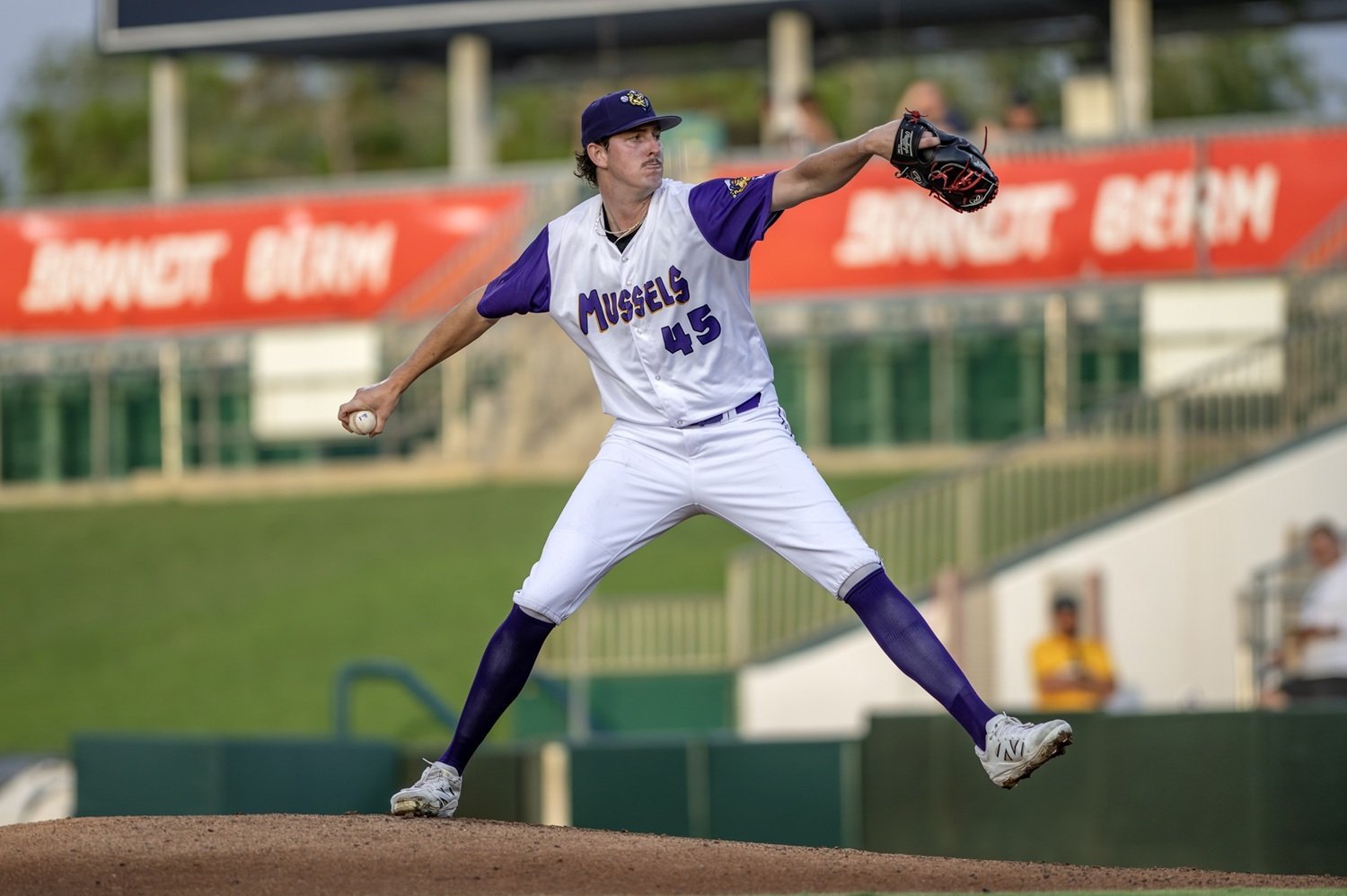 As the calendar turns to June, much of the attention around the Minnesota Twins farm system remains focused on top-ranked prospects. However, some of the organization's most interesting developments are coming from players who are forcing their way into the conversation through strong recent performances. Ryan Gallagher is testing himself against older competition in Triple-A. Jason Reitz is beginning his professional career with encouraging signs of improved command. Khadim Diaw continues to show that his bat plays at every level when he is available. Here's a closer look at three prospects who have been trending in the right direction. RHP Ryan Gallagher– St. Paul Saints How He Got Here: Gallagher's road to professional baseball has not been without obstacles. The former University of California, Santa Barbara standout burst onto the collegiate scene by earning Big West Freshman of the Year honors in 2022 before Tommy John surgery cost him an entire season. The lost year ultimately did little to slow his ascent. After returning to the mound, Gallagher dominated Division I competition, posting a 2.22 ERA while leading the nation with a sparkling 0.84 WHIP. His combination of command and effectiveness convinced the Chicago Cubs to select him in the sixth round of the 2024 MLB Draft. Gallagher quickly climbed through Chicago's system and had recently earned a promotion to Double-A when Minnesota acquired him as part of last summer's Willi Castro trade. He finished the year with Wichita and has continued advancing through the Twins organization. Hitting the Hot Button: Gallagher delivered his strongest Triple-A outing to date during his latest start. After allowing a triple in the opening inning and an infield single in the second, he settled in and retired eight consecutive hitters. The right-hander completed five shutout innings, scattered four hits, struck out five, and earned his first victory at the Triple-A level. Perhaps most encouraging was the velocity. Gallagher reached 97 mph, his highest reading of the season. There is plenty to like about his profile. At just 23 years old, he is roughly four and a half years younger than the average Triple-A player. His ability to miss bats has remained intact with a 25.4% strikeout rate across Double-A and Triple-A this season. The area to watch moving forward is command. After posting a 5.9% walk rate last season, that figure has climbed to 11.9% in 2026. If Gallagher can bring that number back down while maintaining his strikeout ability, his stock could continue to rise quickly. RHP Jason Reitz– Fort Myers Mighty Mussels How He Got Here: The Twins targeted pitching early in the 2025 draft, and Reitz represented another intriguing arm added to the system. Minnesota selected the Oregon product in the fourth round after a strong junior campaign that elevated his draft status. Before transferring to Oregon, Reitz spent two seasons at Saint Mary's. His lone season with the Ducks was productive, as he posted a 3.50 ERA while striking out 73 batters in 64 1/3 innings. What immediately jumps off the scouting report is his size. Standing 6-foot-11, Reitz possesses one of the most unique frames in professional baseball. That size creates impressive extension toward home plate, but can also make it difficult to consistently repeat his mechanics. While command was considered a developmental hurdle entering professional baseball, the Twins clearly believed there was enough athleticism and raw stuff to bet on the upside. Hitting the Hot Button: Reitz recently made his home debut for Fort Myers and gave fans plenty to be excited about. He threw three hitless innings while allowing just one walk and striking out two batters. His fastball reached 95 mph and showed the type of life that helped make him an appealing draft target. The early professional results have been encouraging. Between the Florida Complex League and Fort Myers, Reitz has allowed only one earned run over six innings. He has surrendered four hits while posting five strikeouts against just one walk. For a pitcher whose command was viewed as a question mark entering the draft, the early control gains are particularly noteworthy. The sample size remains small, but it is exactly the type of progress the Twins hoped to see. C/OF Khadim Diaw– Cedar Rapids Kernels How He Got Here: Few prospects have battled more injury adversity than Diaw, yet he continues to hit whenever he steps onto the field. His college career at Loyola Marymount was interrupted multiple times. A back fracture wiped out much of his freshman season, and a broken thumb limited him to only 20 games in 2024. Despite those setbacks, his offensive production never disappeared. Diaw hit .314/.396/.500 (.896) in 2023 and remained productive during his limited action the following season. Strong performances in both the Cape Cod League and the MLB Draft Combine helped solidify his status as a legitimate prospect, leading the Twins to select him in the third round of the 2024 draft. The injury challenges followed him into professional baseball. After getting off to a promising start, a broken wrist and later a hamstring injury limited him to just 39 games during his first full season. Hitting the Hot Button: Diaw recently earned recognition as MiLB's Prospect Team of the Week catcher after a dominant stretch for Cedar Rapids. Over the course of the week, he slashed .545/.560/.909 (1.469) with five extra base hits, five RBIs, seven runs scored, two walks, and 20 total bases. His production has steadily improved throughout the season. After posting a .720 OPS in April, he boosted that figure to .795 during May. Another encouraging trend is how he has handled more advanced competition. Roughly 60% of the pitchers he has faced have been older than him, yet he owns an OPS nearly 60 points higher against those older opponents. Questions remain regarding his long-term defensive home, but the athleticism is undeniable. Diaw has split his time between catcher and center field, giving the organization multiple avenues to keep his bat in the lineup. These three prospects arrive at their success from very different paths. Gallagher is proving he belongs against advanced competition while working through command adjustments. Reitz is beginning to show why the Twins were intrigued by his rare combination of size and athleticism. Diaw continues to demonstrate that health may be the biggest thing standing between him and a significant rise up prospect rankings. Each player has something left to prove, but all three have given Twins fans a reason to keep checking the box scores. What stands out about these three players? Leave a comment and start the discussion. View the full article
 -
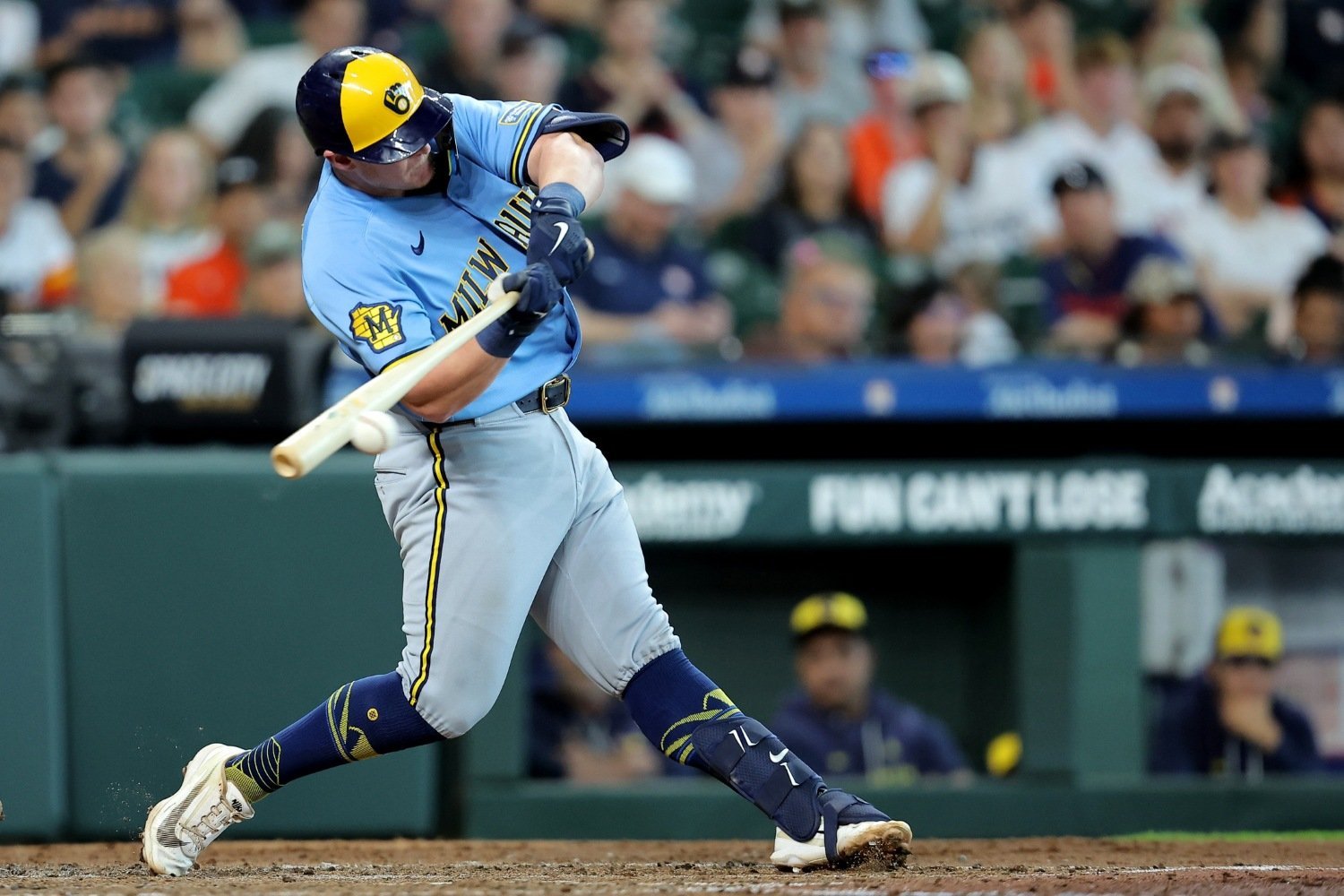 Throughout April, the Milwaukee Brewers' lineup struggled to scratch, claw, steal and bunt any run they could get across home plate. They survived a war of attrition in the first month of the season, covering for the absence of two players who were meant to be spark plugs in 2026: their young phenom Jackson Chourio and the resurgent former top draft pick, Andrew Vaughn. Combining for 41 games (22 for Chourio, 19 for Vaughn) since their return, though, they've managed to provide just three home runs. The Brewers have done Brewers things and continued to win, but they need to show more power if they're going to go all the way in 2026. So why haven't Vaughn and Chourio fired as expected? Andrew Vaughn Misses His (Ha)Mate The first one to tackle is, perhaps, the easier of the two. Vaughn was sidelined by a broken hamate bone in the first game of the 2026 season. That's an injury notorious for sapping bat speed. Bat speed is volatile and takes a while to even out, as the pitch location (and therefore swing length) have a big effect on the raw data. That being said, after a month, we have enough of a sample size to say Vaughn is swinging roughly 3 MPH slower than in 2025. The good news: Vaughn is a hitter, not just a slugger, and he's found ways to keep the quality of contact high. He's not chasing; he's not whiffing; he's hitting a lot of solid contact in the air. It just isn't leaving the park. Here are his 2025 exit velocity numbers by strike zone area: In 2025, Vaughn was crushing basically every pitch, but his real damage came on the inner and middle thirds of the plate. If it was belt-high in those zones, he crushed it in the air. Vaughn averaged 70.7 mph of bat speed in 2025, good for the 27th percentile in baseball, meaning he's not likely to clear the fences to straightaway center and does rely on that pull-side power. That's why getting the bat around on stuff inside is so important to him. With slower bat speed, this year (down to 67 mph on average), he's struggling to get the bat sufficiently out in front on the inner third to turn on the ball, and that's been hurting him, with exit velocities dropping on the inner third: The other big thing is that Vaughn had just enough in the exit velocity department to be a slugging threat last season. The majority of his batted balls in play were in the 100-105 range, compared with other 5-MPH increments, as you can see below: In fact, he was one of the most consistent producers of high-quality contact in baseball last season. That's continued to some extent in 2026, but the entire histogram has shifted one step to the left, now hitting the majority of his batted balls in the 95-100 mph range: This isn't terminal, and perhaps in two months' time, we'll see the bat speed return, as is traditional for hamate injuries. For now, we'll have to enjoy the quality of contact and strong at-bats, and perhaps hope for more of the power to come back in the second half of the season. Jackson Chourio Has Found The In-Between I couldn't resist a little Stranger Things metaphor. Chourio came into this year with one goal: to reach the heights his talent permits via better swing decisions. It showed in spring training, in his rehab stints, and even the World Baseball Classic. Chourio was being more selective, and there were hopes he could make strides in his chase rate. Let's take a look at his base for 2025 compared to the 2026 performance: He was aggressive with pitches inside the strike zone, and his bat-to-ball was good enough that, even while chasing to this extent, he was putting a lot of balls in play. Those balls were ineffective, weak contact, however, and that was hurting his results. It's the one clear area where he could make a step forward. Fast-forward to 2026, and Chourio is being more patient and less swing-happy... just on all the wrong pitches. His swing rate is down, but it's because he's swinging at fewer pitches inside the strike zone. If we look at the specific areas inside the strike zone, it's not pretty, either. It's more like intermittent passivity than being genuinely selective, although he does appear to be focusing on reducing swings on the outer third of the plate (these are how many percentage points up or down Jackson Chourio is swinging by zone in 2026 vs 2025) He's swinging less at meatballs, less on the inner third, and it's hurting him. Watching the games, Chourio has some at-bats where he seems to really effectively decipher pitch types and locations, and others where he's just guessing. He has the ability to let the ball travel and drive pitches to right-center field, and then turn on any breaking pitches off the back of that. His timing is just off at present, and his approach looks completely lost. The good news is, the under-the-hood swing mechanics are actually looking good. Bat speed is up; he's finding more ideal attack angles on baseballs despite not quite finding the barrel of the bat. That being said, these were never real problems for Chourio to begin with. In 2026, Joey Ortiz has a better differential between his in-zone swing rate and his chase rate than does Chourio. That speaks volumes. As always, if he can find an approach that works for him at the plate, the sky is the limit for Chourio. There's no better team to work with him on that than the Brewers. Still, after two and a half years, one might have hoped to see a little more progress than we have so far, and in fact, 2026 has been a regression, rather than progress. The Brewers need that to change. Thanks to Jake Bauers, they can live with a smaller role and a bit less pop than they might have hoped for from Vaughn. Not so with Chourio. To blossom into the superpower they can be, they need their young dynamo to become a more productive one. View the full article
 -
 May was an interesting month for the Chicago Cubs, and ultimately a futile one. The team ended a second 10-game win streak, only to follow with a 10-game streak on the opposite side of the ledger. The lineup, of course, was a huge part of this, and many notable players struggled. Still, there are a few players worth giving some flowers to for trying to keep the offense afloat. Ranking Cubs' Best Hitters in May Carson Kelly: .269/.319/.299, 0 HR, 2 RBI No, these are not stellar stats, but Kelly gets the third place nod for his consistency compared to his expectations. He didn't underperform. Overall, he is providing the value expected of him, which this month was a wonderful blessing for Craig Counsell and the Cubs. While the power hasn't manifested this season, Kelly has been a rare beacon of consistency in May. In losses, he maintained a .391 OBP; in wins it was .386. Player stats tend to be lower in losses, so this is a rare win for the Cubs lineup. Another metric Kelly has done well with is batting with runners in scoring position. The veteran catcher has an .869 OPS in those situations, with a .289/.385/.467 slash line. By virtue of his consistency, and due to a lack of better options, Carson Kelly is third for this prestigious made-up award. Michael Busch: .300/.446/.510, 4 HRs, 24 RBIs Yes, Michael Busch is a good hitter, and he showed that this month. After a lackluster start (.576 OPS in April) when the rest of the lineup was clicking, Busch's stats went a bit under the radar due to the rest of the team struggling. Busch was the only consistent power bat for the month. Busch has adapted to playing every day against left-handed starters overall. He's getting on base against them at a solid clip, with a .338 OBP. Nothing else has been great, however; his batting average is just .197 against them, and his OPS dips 200 points, from .816 against RHP to .616 vs. LHP. Against starting pitchers, though, Busch has done well with his platoon disadvantage. He's hitting .296 against them with 3 homers in 58 plate appearances. That's solid! Relievers, though, pitching in higher-leverage spots and designed to maximize platoon advantages, have had his number. He's 1-20 against them. That is the only flaw so far in Busch's profile. Ian Happ: .230/.347/.480, 6 HRs, 19 RBIs No, these numbers aren't as good as Michael Busch. No, they aren't particularly close. But Happ, more than any other player, is representative of the struggles and successes of the Cubs as a whole. Happ's stats from May have hilarious splits. Last 7 Days: .323/.344/.710, 3 HR Last 14 Days: .216/.259/.471, 3 HR Happ tends to look awful at the plate for long stretches only to morph into Ted Williams at a moment's notice. Before his last seven-game heater, Happ was 1-for-20 in the week prior. He was so off, he got a couple of reset games, then came back strong last week. He's not the best hitter, but he does get the award due to being emblematic of the Cubs as a whole. Having ten-game win streaks and loss streaks consecutively is the definition of streaky; so is Happ, obviously. Overall, he'll end up with the same numbers, but the ride will of course be a wild one. So, as a nod to the Cubs' hot-to-cold nature, we'll give the award to their most notorious hot-to-cold hitter. To wrap this up, let's have a little extra fun with Happ. The main thing that stands out is that he hits cleanup, but is notably bad in clutch situations. It's not just noise either; Happ has awful numbers. He has 9 RBIs in the cleanup spot, which extrapolated to 162 games puts him on pace for around 40. His strikeout rate spikes to 40% (36% strikeout rate during the losing streak). It's not fair to compare Happ to other teams' cleanup hitters. That's simply a function of the position player group composed without an alpha bat. To make matters worse for Happ, he's notoriously bad when the team loses. When they're behind, he has 35 strikeouts in 76 at bats and just a .158 batting average. That type of production is covered over in wins, but when the team goes on a losing bender the memories of whiffs with runners on optically stands out. Happ will look to be more consistent, but don't expect it. Just expect a WRC+ between 116-122, walk rate around 15%, a .240 batting average, and 20 HR and you'll be satisfied. View the full article
 -
 It may be hard to distinguish Caribbean teenagers at signing. One leads to another leads to another, and by the time they (maybe) get on the radar as prospects a few years later, much of what (if anything) might have distinguished them at signing has faded from memory, and you have to get a read on them all over again. Transactions, 5/28/2026 COMING Signed as International Amateur Free Agent out of The Dominican Republic, Not Yet Assigned Starting Pitchers Randiel Vicente R/R DoB: 2009-03-27 High Level: MLB (2026) Given half a chance, you might remember strapping young Randiel Vicente as the kid whose jacket lapels popped out of his uniform top in his signing photo. Or you might remember his disturbingly recent (but not recent enough) birthdate of March 27, 2009 being the date that shocked you into realizing kids born in 2009 were eligible to be signed. Michael Jackson died before this kid was born. Bitcoin was in circulation before this kid was born. The Miracle on the Hudson happened before this kid was born. What really makes him interesting though is had already been reported last month to be committed to The Phillies, so any value gained by signing this young man is lost to the Phillies, and that's double-stuff good. Hard to find confirmation but a Spanish-language report seemed to suggest he trained with old friend Hansel Robles, who is still bringing it this summer in The Mexican League. Your 2026 New York Mets Starting Pitchers Nolan McLean Freddy Peralta David Peterson Christian Scott Jonah Tong R/R DoB: 2001-07-24 R/R DoB: 2996-06-04 L/L DoB: 1995-09-03 R/R DoB: 1999-06-15 R/R DoB: 2003-06-19 Relief Pitchers Huascar Brazobán Sean Manaea A.J. Minter Cionel Pérez Brooks Raley Austin Warren Luke Weaver R/R DoB: 1989-10-15 R/L DoB: 1992-02-01 L/L DoB: 1993-09-02 R/L DoB: 35176 L/L DoB: 1988-06-29 R/R DoB: 1996-02-05 R/R DoB: 1993-08-21 Relief Pitchers Catchers Infielders Devin Williams Hayden Senger Luís Torrens Bo Bichette Brett Baty Vidal Brujan Marcus Semien R/R DoB: 1994-09-21 R/R DoB: 1997-04-03 R/R DoB: 1996-05-02 R/R DoB: 1998-03-05 L/R DoB: 1999-11-13 S/R DoB: 1998-02-09 R/R DoB: 1990-09-17 Infielders Outfielders Mark Vientos Eric Wagaman Carson Benge A.J. Ewing MJ Melendez Juan Soto Jared Young R/R DoB: 1993-12-11 R/R DoB: 1997-08-14 L/R DoB: 2003-01-20 L/R DoB: 2004-08-10 L/R DoB: 1993-11-29 L/L DoB: 1998-10-25 L/R DoB: 1995-07-09 Also on 40-Player Roster Starting Pitchers Relief Pitchers Clay Holmes Tylor Megill Kodai Senga Zach Thornton Alex Carrillo Daniel Duarte Reed Garrett R/R DoB: 1993-03-27 R/R DoB: 1995-07-28 L/R DoB: 1993-01-30 L/L DoB: 2002-01-17 R/R DoB: 1997-06-06 R/R DoB: 1996-12-04 R/R DoB: 1993-01-02 Relief Pitchers Catchers Infielders Justin Hagenman Tobias Myers Dedniel Núñez Jonathan Pintaro Dylan Ross Francisco Alvarez Francisco Lindor R/R DoB: 1996-10-07 R/R DoB: 1998-08-05 R/R DoB: 1996-06-05 R/R DoB: 1997-11-07 R/R DoB: 2000-09-01 R/R DoB: 2001-11-01 S/R DoB: 1993-11-14 Infielders Outfielders Ronny Mauricio Jorge Polanco Luis Robert, Jr. Nick Morabito Tyrone Taylor S/R DoB: 2001-04-04 S/R DoB: 1999-11-13 R/R DoB: 1997-08-03 R/R DoB: 2003-05-07 R/R DoB: 1994-01-22 Designated for Assignment Relief Pitchers "Anderson Severino " L/L DoB: 1994-09-17 Your Mets Coaching Staff Manager Bench Coach Pitching Coach Hitting Coordinator Third Base Coach First Base Coach Bullpen Coach Ass't Pitching Coach Carlos Mendoza Kai Correa Justin Willard Jeff Albert Tim Leiper Gilbert Gomez José Rosado Dan McKinney DoB: 1979-11-27 DoB: 1989-07-14 DoB: 1990-09-09 DoB: 1992-08-16 DoB: 1996-07-19 DoB: 1992-03-08 DoB: 1974-11-09 DoB: 1989-06-06 Hitting Coach Strategy Coach Catching Coach Coaching Assistant Bat'g Practice Pitcher Equipment Manager Bullpen Catchers Bullpen Catchers Troy Snitker Danny Barnes J.P. Arencibia Rafael Fernandez Kevin Mahoney Kevin Kierst Eric Langill Dave Racaniello DoB: 1988-12-05 DoB: 1989-10021 DoB: 1986-01-05 DoB: 1988-08-03 DoB: 1987-05-11 DoB: 1964-07-09 DoB: 1979-04-09 DoB: 1978-06-03 Your Mets Training Staff Director of Player Health Head Athletic Trainer Assistant Athletic Trainer Reconditioning Coordinator Reconditioning Therapist Head Performance Coach Assistant Performance Coach Performance Coordinator Soft Tissue Specialist Brian Chicklo Joseph Golia Bryan Baca Sean Bardanett Josh Bickel Dustin Clarke Tanner Miracle Jeremy Chiang Hiroto Kawamura DoB: 1972-07-17 DoB: 1978-??-?? DoB: Circa 1980 DoB: 1988-06-23 DoB: 1996-??-?? DoB: 1987-??-?? DoB: 1991-??-?? DoB: ????-??-?? DoB: 22846 View the full article
