


DiamondCentric
-
Posts
2,631 -
Joined
-
Last visited
Never
Content Type
Profiles
Forums
Events
News
Tutorials & Help
Major League Baseball Videos
Guides & Resources
Store
Downloads
Gallery
Everything posted by DiamondCentric
-

![More information about "[COPY] - Chicago Cubs Trade Deadline Scenarios: Welcome to the Darkest Timeline"](//d317trerw33y7b.cloudfront.net/monthly_2026_06/rssImage-99fa834d4b389988d58173d4466eaac7.jpeg.14ba1f7cbc7976d46c4b34f6b23ffb2a.jpeg) Welcome to the Darkest Timeline. We pessimists live in fear of the Darkest Timeline. This year, we may be seeing it play out in real time. The Cubs haven't won a series in a month. The infield is struggling at the plate, concerning for players over or near 30. Cade Horton is hurt. Justin Steele is (still) hurt. If the Darkest Timeline persists, the Cubs may have to sell off some assets and do a reset. No, it's not a likely scenario. The Cubs project to be much better than this, and this is Jed Hoyer's Ode to the IVY Model. If there's any chance of a Wild Card berth, the Cubs will explore every avenue to achieve it. They were built to win this year. A selloff was not even supposed to be a passing thought. What would spawn the Darkest Timeline into existence? As of this writing, the Cubs are 5-18 since their last 10-game win streak. If they repeat this and are 10-36 over a quarter of the season, the division is out of reach and they likely will be out of the Wild Card hunt. Given the 12 potential free agents on the roster, losing out on any prospect capital to lose them for nothing is an unlikely scenario. It probably won't—can't—get that bad, but what if they go 15-30 over the next six weeks? That would put them completely into sell mode by the end of July. TRADE OPTION 1: MATTHEW BOYD If he can return from his meniscus injury (as the team currently hopes will happen late next week) and pitch effectively, Boyd would be an attractive commodity for, well, every team. Last season, the veteran averaged six innings per start and pitched beyond that point seven times, reaching 180 innings for the season. Any team that looks to contend into October can use a reliable arm. Boyd's trade value hinges on his health. He's only made five starts this year with a 6.00 ERA, has a current knee injury, and is not exactly a glowing beacon of durability. But teams will value an innings eater with playoff experience, especially on a contract they won't have to pay for next year. Boyd's contract ends this season and the team acquiring him would only be on the hook for part of his $14.5-million salary. Boyd would probably welcome a chance to pitch in meaningful games (remember, this is the Dark Timeline for the Cubs, not for everyone) to enhance his earning potential next offseason. Boyd would be the first domino to fall in a series of events. TRADE OPTION 2: IAN HAPP/SEIYA SUZUKI Yes, they have no-trade clauses, so the Dark Timeline has to account for that. This is the scenario that could lead either of these free agents-to-be to be dealt this summer: The Cubs, seeing their foundation crumble and not wanting to extend older outfielders, inform Happ and Suzuki that Matt Shaw and Kevin Alcántara will be prioritized, and they will not get consistent playing time the rest of this season. The team also tells them that they have zero intention to bring them back for 2027. The two outfielders then decide to move on, play meaningful games, and hopefully increase the value of their free agency for 2027. The Cubs, at this point, are short on arms in the minor leagues, as well as potential impact youngsters. Dealing Happ and Suzuki is almost akin to dealing Yu Darvish. They would need to get at least one legitimate prospect, much like the team received when they dealt Javier Báez to the Mets for Pete Crow-Armstrong. The idea would be to jump-start their flagging farm system. Both players would have appeal to contenders seeking middle-of-the-order bats without long-term commitments. Teams who miss out on bigger deadline names could view either outfielder as an important addition for a playoff push. TRADE OPTION 3: CALEB THIELBAR/JACOB WEBB/HOBY MILNER/ANY RELIEVER NOT NAMED PHIL MATON Bullpen arms are always in high demand at the deadline, especially expiring contracts. All of these players listed can be free agents next season, lessening risk to the acquiring team. For the Cubs, dealing relievers can result in high-upside arms. (Where would the team be without Ben Brown, whom they got for David Robertson in 2022?) None of these relievers would cost much in salary, either, and they've all been quite successful in Chicago. It would hurt to lose them for Jed Hoyer, but remember, this is the Dark Timeline, and they stink. So why keep aging relief pitchers on one-year contracts? The Dark Timeline dictates the Cubs disperse these valuable players to other teams, where their talents can be on a bigger October stage. Would all of these be painful, especially for the architect, Hoyer? Absolutely. But if the Cubs eventually want another true contender, they can't skip steps. They have to extract maximum value from their current assets if the season goes sideways. For better or for worse, the Cubs are married to their core of Alex Bregman, Dansby Swanson, Nico Hoerner, and Pete Crow-Armstrong for at least four more seasons, and how they build around their strengths and weaknesses will dictate the team's success. If the Dark Timeline becomes the actual timeline, the Chicago Cubs would look much different in September, and fans will be looking down the barrel of another retool, if not a full rebuild. Even here, in a timeline the darkness of which we don't yet know, it's starting to feel like the pies are burning. View the full article
Welcome to the Darkest Timeline. We pessimists live in fear of the Darkest Timeline. This year, we may be seeing it play out in real time. The Cubs haven't won a series in a month. The infield is struggling at the plate, concerning for players over or near 30. Cade Horton is hurt. Justin Steele is (still) hurt. If the Darkest Timeline persists, the Cubs may have to sell off some assets and do a reset. No, it's not a likely scenario. The Cubs project to be much better than this, and this is Jed Hoyer's Ode to the IVY Model. If there's any chance of a Wild Card berth, the Cubs will explore every avenue to achieve it. They were built to win this year. A selloff was not even supposed to be a passing thought. What would spawn the Darkest Timeline into existence? As of this writing, the Cubs are 5-18 since their last 10-game win streak. If they repeat this and are 10-36 over a quarter of the season, the division is out of reach and they likely will be out of the Wild Card hunt. Given the 12 potential free agents on the roster, losing out on any prospect capital to lose them for nothing is an unlikely scenario. It probably won't—can't—get that bad, but what if they go 15-30 over the next six weeks? That would put them completely into sell mode by the end of July. TRADE OPTION 1: MATTHEW BOYD If he can return from his meniscus injury (as the team currently hopes will happen late next week) and pitch effectively, Boyd would be an attractive commodity for, well, every team. Last season, the veteran averaged six innings per start and pitched beyond that point seven times, reaching 180 innings for the season. Any team that looks to contend into October can use a reliable arm. Boyd's trade value hinges on his health. He's only made five starts this year with a 6.00 ERA, has a current knee injury, and is not exactly a glowing beacon of durability. But teams will value an innings eater with playoff experience, especially on a contract they won't have to pay for next year. Boyd's contract ends this season and the team acquiring him would only be on the hook for part of his $14.5-million salary. Boyd would probably welcome a chance to pitch in meaningful games (remember, this is the Dark Timeline for the Cubs, not for everyone) to enhance his earning potential next offseason. Boyd would be the first domino to fall in a series of events. TRADE OPTION 2: IAN HAPP/SEIYA SUZUKI Yes, they have no-trade clauses, so the Dark Timeline has to account for that. This is the scenario that could lead either of these free agents-to-be to be dealt this summer: The Cubs, seeing their foundation crumble and not wanting to extend older outfielders, inform Happ and Suzuki that Matt Shaw and Kevin Alcántara will be prioritized, and they will not get consistent playing time the rest of this season. The team also tells them that they have zero intention to bring them back for 2027. The two outfielders then decide to move on, play meaningful games, and hopefully increase the value of their free agency for 2027. The Cubs, at this point, are short on arms in the minor leagues, as well as potential impact youngsters. Dealing Happ and Suzuki is almost akin to dealing Yu Darvish. They would need to get at least one legitimate prospect, much like the team received when they dealt Javier Báez to the Mets for Pete Crow-Armstrong. The idea would be to jump-start their flagging farm system. Both players would have appeal to contenders seeking middle-of-the-order bats without long-term commitments. Teams who miss out on bigger deadline names could view either outfielder as an important addition for a playoff push. TRADE OPTION 3: CALEB THIELBAR/JACOB WEBB/HOBY MILNER/ANY RELIEVER NOT NAMED PHIL MATON Bullpen arms are always in high demand at the deadline, especially expiring contracts. All of these players listed can be free agents next season, lessening risk to the acquiring team. For the Cubs, dealing relievers can result in high-upside arms. (Where would the team be without Ben Brown, whom they got for David Robertson in 2022?) None of these relievers would cost much in salary, either, and they've all been quite successful in Chicago. It would hurt to lose them for Jed Hoyer, but remember, this is the Dark Timeline, and they stink. So why keep aging relief pitchers on one-year contracts? The Dark Timeline dictates the Cubs disperse these valuable players to other teams, where their talents can be on a bigger October stage. Would all of these be painful, especially for the architect, Hoyer? Absolutely. But if the Cubs eventually want another true contender, they can't skip steps. They have to extract maximum value from their current assets if the season goes sideways. For better or for worse, the Cubs are married to their core of Alex Bregman, Dansby Swanson, Nico Hoerner, and Pete Crow-Armstrong for at least four more seasons, and how they build around their strengths and weaknesses will dictate the team's success. If the Dark Timeline becomes the actual timeline, the Chicago Cubs would look much different in September, and fans will be looking down the barrel of another retool, if not a full rebuild. Even here, in a timeline the darkness of which we don't yet know, it's starting to feel like the pies are burning. View the full article -
 The Jays have had their share of injuries and pitching issues. Jose Berrios recently had Tommy John surgery. Shane Bieber, Dylan Cease, Max Scherzer, and Bowden Francis are all on the Injured List. They have been in need of both starting and relief pitching. In the last few days, Toronto has acquired Simeon Woods Richardson from the Twins for #OldFriend Cash Considerations. They also just signed Justin Topa who was released by the Twins last week. Austin Voth had been pitching at Triple-A Buffalo most of this season. He recently came up to the big-league club and worked six innings over two games before they DFAd him and he chose free agency. Voth, who will turn 34 at the end of the month, was a fifth-round pick of the Washington Nationals out of the University of Washington. He worked his way up the organizational ladder, and in 2018, he pitched in four games (12 1/3 innings) in the big leagues. He made eight starts (nine appearances) in 2019. He made 11 starts during the Covid-shortened 2020 season. In 2021, he was moved to the bullpen and pitched in 49 games. Midway through the 2022 season, he was DFAd by the Nationals and claimed by the Orioles. In 2024, he spent the season with his hometown Mariners and posted a 3.59 ERA. In 2025, he spent a season pitching for Chiba Lotte in Japan. The Twins front office continues to work the edges of their 40-man roster. Since spring training, they have been very busy on the waiver wire and continuing to add minor-league free agents with big-league time. Some have worked. Others did not. In the offseason, they signed veterans like Liam Hendriks, Dan Altavilla, and Matt Bowman. All three are now with other organizations. The Twins were able to sign veterans like Drew Smith, Jon Brebbia. Smith remains in St. Paul, but Brebbia was let go. Luis Garcia was claimed. Zak Kent and Christian Roa were too. Clearly Anthony Banda was going to make the team with his track record, and the Twins stood by him through early-season struggles. They brought back Cody Laweryson right as spring training started, and he made the opening day roster. With his unique release point, 97 mph fastball and intriguing sweeper, Justin Lawrence sure looks the part of big-league reliever. Garrett Acton looked good after the Twins claimed him, but he only worked in four games before being injured. And if we thought the Joe Ryan for two bad months of Nelson Cruz was a great trade for the Twins from the Rays, well, Yoendrys Gomez for Cash Considerations is looking pretty good so far too. Back to Austin Voth. He'll likely be used in different roles and different situations. He could be a spot starter, an opener, a three-to-four innings guy twice per week, a traditional one-inning guy. Will he eventually get a shot with the Twins? Who knows? But the Twins absolutely should be frequently acquiring these types of players. If they can end the season with three of Banda, Laweryson, Lawrence, Acton and Gomez pitching well and in the plans for 2027, that's a Win. View the full article
 -
Boston Red Sox Minor League Hitters of the Month: May 2026
DiamondCentric posted an article in Talk Sox
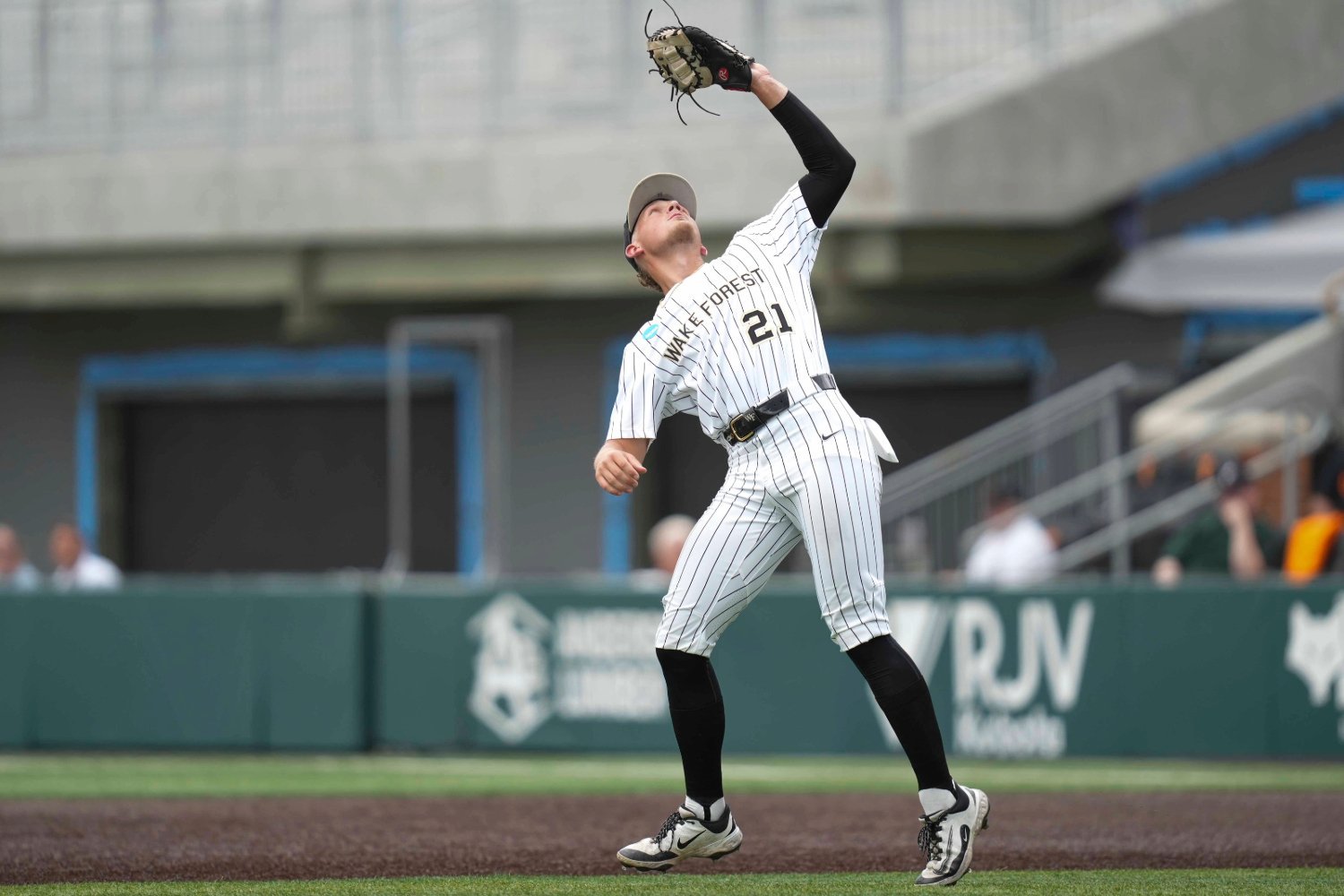 The baseball season is now roughly one-third of the way finished, and many prospects have showcased their skills this year. For the Boston Red Sox, there have been a plethora of minor-league players who have broken out with the bat. Some players were so good in May that they even earned an early season promotion. Overall, it’s been a fun season to follow the Red Sox minor-league teams to watch their prospects develop. With that, we’ve narrowed this award down to the six best hitters in the Boston Red Sox’s minor-league system from last month. Ranking Red Sox's Best Minor-League Hitters in May Honorable Mention: Nick Sogard (Triple-A Worcester) Sogard would have been in contention for the actual award had he remained in Worcester for the entire month. Instead, he only played 11 games for Triple-A prior to being recalled to Boston. Sogard made a statement during those 11 games however, hitting .310/.404/.548 with four doubles, two home runs and nine RBIs. Sogard as a hitter has been consistent during his time in Worcester since first making it to the highest level of minor league baseball back in 2022. A familiar face in the lineup, Sogard was a player that Iggy Suarez was able to rely on for the month of May, both at the plate and in the clubhouse. Sogard has since remained in Boston, appearing in 12 games and hitting .257/.350/.371 with two doubles, one triple and two RBIs. Honorable Mention: Yoeilin Cespedes (High-A Greenville) Last month. Cespedes was the second-best offensive prospect for TalkSox’s award. This month, he's an honorable mention not because he had worse month than April, but because of the production from the rest of the competition. In 20 games, Cespedes put up a stat line of .315/.333/.494 with four doubles, four home runs and 14 RBIs. Through his first two months with Greenville, he’s managed to shed a lot of the worry that he would be a bust after a down 2025 season with Salem. Though, there is a lot of strikeout concern for the infielder as he struck out 27 times in the month. Add to it just four walks, and the gap between the two was one reason he was left out of the top three. Should Cespedes continue to hit as he has, conversation about promoting him to Portland should start to heat up, especially once there is room for an infielder to join the Double-A team. Honorable Mention: Brooks Brannon (Double-A Portland) While Brannon started the season on the IL, he’s been an offensive force since returning from it. Now playing first base, he’s been able to stay on the field, and his bat has been very crucial to the Portland offense. In 20 games, Brannon has hit .308/.389/.603 with six doubles, a triple, five home runs and 19 RBIs. His power has been for real and while there is some strikeout concern in his game (27 strikeouts in May), he manages to get on base at a high enough clip that it shouldn’t be too big of a red flag. With Brannon, the importance with his bat is taking advantage of his power to drive runners in, which he did last month by leading the team with 19 RBIs. It’s starting to look like it’s just a matter of time until Brannon gets the promotion to Worcester, especially with their lack of first base depth. #3: Anthony Seigler (Triple-A Worcester/MLB) Seigler has increased his organizational value thanks to his outstanding month of May. Viewed as a depth piece that was acquired in the Kyle Harrison-Caleb Durbin trade, Seigler got injured in spring training and had to play catch up. That was shown in April when he struggled, but once the calendar flipped to May, he seemed to turn a corner. In 18 games, Seigler was Worcester’s most important hitter as he slashed .344/.468/.531 with three doubles, three home runs and 14 RBIs. The infielder came up with several key hits over the month as the WooSox seemed to be desperate for offense some nights after the promotions of Mickey Gasper and Sogard. Now, Seigler has turned himself into an MLB bench piece in Boston. #2: Mason White (High-A Greenville) Making White the number two offensive prospect this month was tough. If anyone was deserving of the top spot, it would have been him, as the infielder continued to showcase the power he had in college. Last season, he did not have much time to fully showcase his power, hitting just five doubles in 26 games. Now in 2026, he’s had plenty of chances to show why the Red Sox drafted him. Appearing in 21 games in May, White would hit .342/.425/.618 with four doubles, one triple, five home runs and a team-leading 17 RBIs. The ball was flying off his bat while playing for Greenville, and now there is some discussion as to whether he should be given a shot in Portland. His scorching hot May helped bring his numbers on the season to an impressive .299/.386/.569 with eight doubles, one triple, nine home runs and 25 RBIs. #1: Jack Winnay (High-A Greenville) In a system that was filled with offensive talent for the month of May, it was the Belmont, MA native who was named the top offensive player. Winnay, who was a 13th-round pick in 2025, was known for his power as a college prospect, and after a slow April managed to showcase it. Appearing in 21 games, Winnay hit .290/.490/.623 good for an organization-leading OPS of 1.113. He hit two doubles and led the team with seven home runs, averaging one for every three games played. He also drove in 14 runs while walking 26 times. With a combination of power and patience, Winnay could develop into a middle-of-the-order bat for the Boston Red Sox. It’ll all come down to how his power grows once he leaves the hitter-friendly confines Fleur Field in Greenville. Though his ability to put the ball in play and walk will help mitigate any potential loss of power with a move to a different ballpark. View the full article
 -
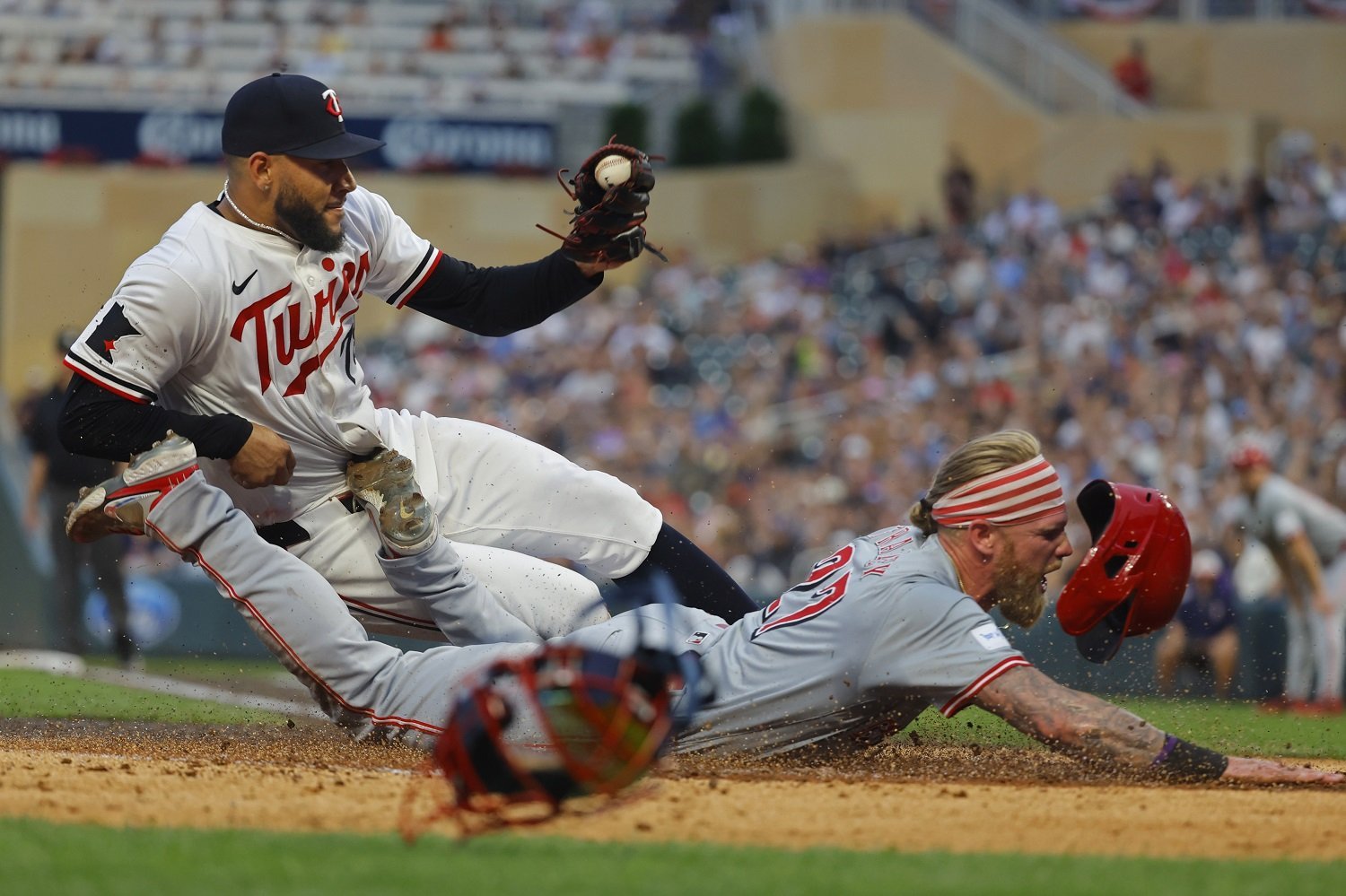 The Minnesota Twins have traded right-handed pitcher Simeon Woods Richardson to the Toronto Blue Jays in exchange for cash considerations. The move comes just days after the Twins designated Woods Richardson for assignment following his emergency start on Saturday. In that outing, the right-hander allowed five runs in 2 2/3 innings, raising his season ERA to 7.74. Once Woods Richardson was designated for assignment, the Twins had the opportunity to trade him before placing him on outright waivers. Teams interested in acquiring him could jump the waiver line by working out a trade, and the Blue Jays were seemingly the only club willing to do so. As a result, Minnesota's return was limited to cash considerations. The trade marks a return to the organization where Woods Richardson first emerged a top pitching prospect. He was acquired by the Twins alongside Austin Martin from Toronto at the 2021 trade deadline in exchange for José Berríos. Over parts of five seasons with Minnesota, Woods Richardson logged 302 1/3 innings at the major-league level, posting a 4.76 ERA while making 62 appearances. What do you think of the move? Did the Twins make the right decision by moving on from Woods Richardson, or would you have preferred they hold onto him for additional depth? View the full article
 -
Royals' Stephen Kolek Goes On Family Medical Emergency List
DiamondCentric posted an article in Royals Keep
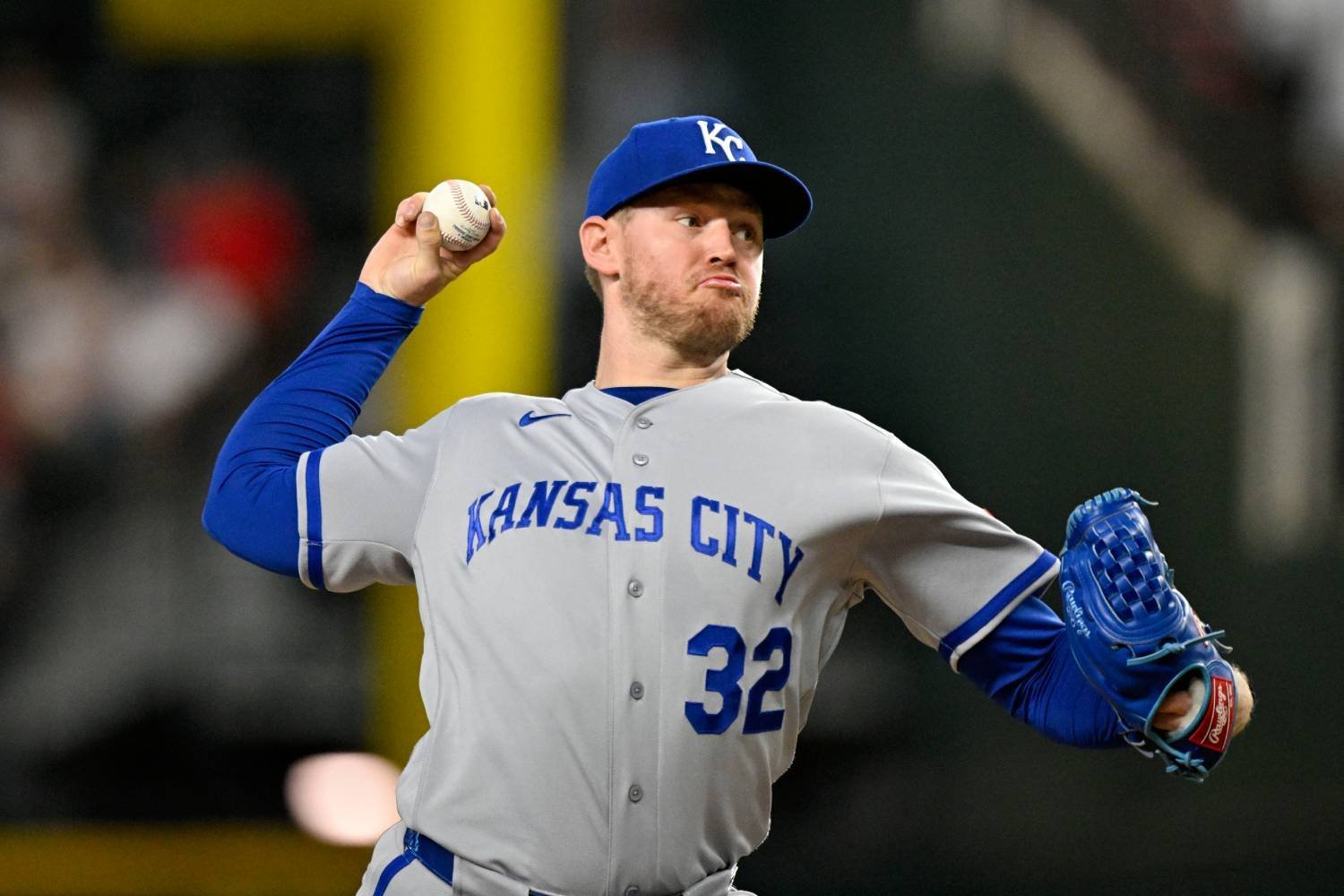 The Kansas City Royals placed right-handed starter Stephen Kolek on the family medical emergency leave list on Thursday and promoted infielder Josh Rojas from Triple-A Omaha. There were no details immediately available on Kolek's situation. Rojas was not on the 40-man roster, so the Royals created space by transferring Jonathan India, who is out for the season with an injured left shoulder, from the 15-day injured list to the 60-day IL. Kolek has been a reliable member of the starting rotation. In his six starts, he put up a 3.32 ERA with eight walks and 27 strikeouts in 38 innings. He threw a four-hit shutout May 23 vs. the Seattle Mariners. The 31-year-old Rojas, a seven-year MLB veteran, was slashing .247/.309/.437 at Triple-A with six homers and 26 RBIs. View the full article
 -
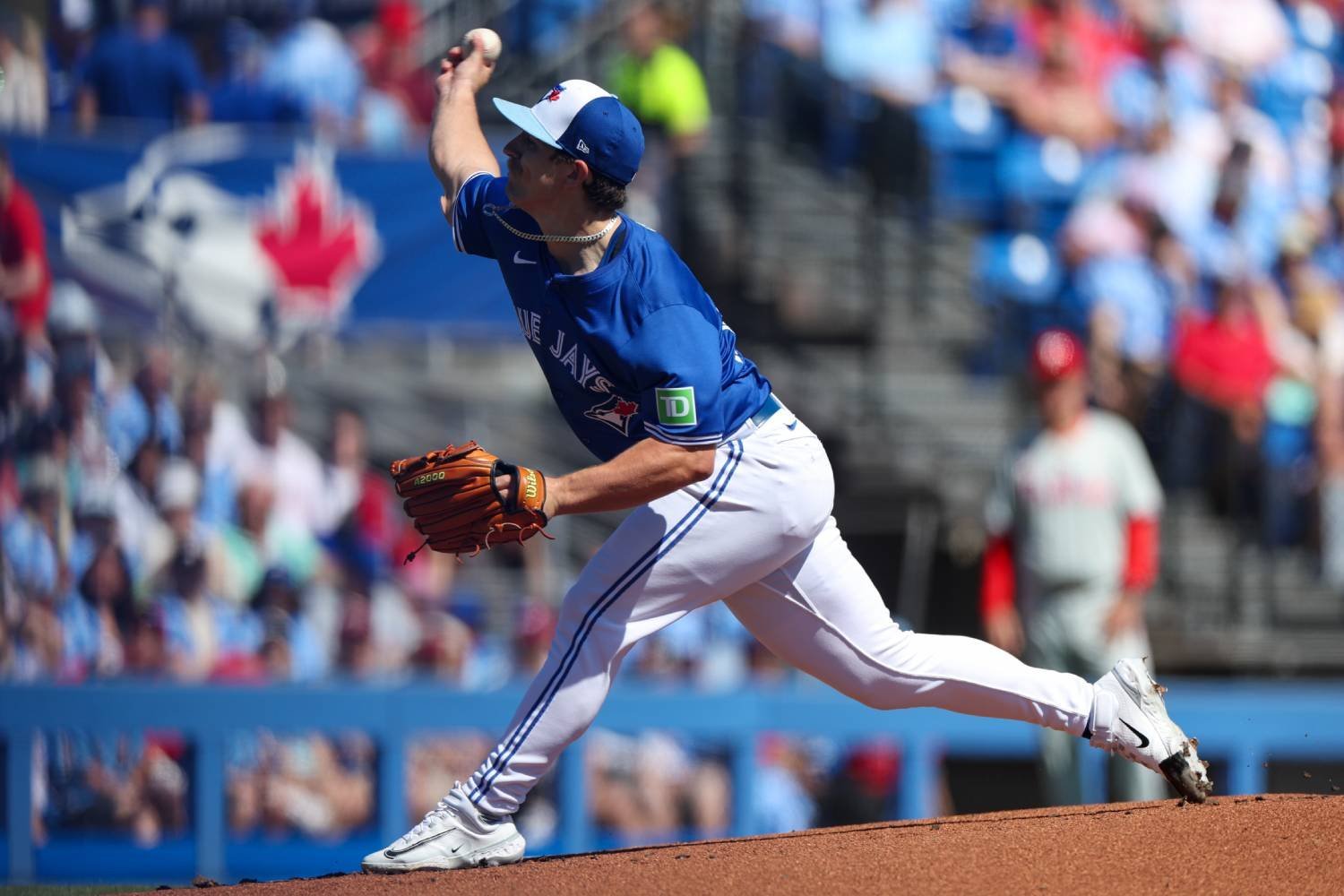 The unexpected journey of the Toronto Blue Jays' pitching staff has led to Dallas. Chad Dallas, that is. The right-handed starter had his contract selected from Triple-A Buffalo to and is expected to make his MLB debut Thursday against Atlanta. The Jays optioned right-handed reliever Hayden Juenger, who made his MLB debut Sunday, to Triple-A. Right-handed reliever Tanner Andrews was designated for assignment to make room for Dallas on the 40-man roster. Dallas, a 25-year-old who was the Jays' fourth-round draft choice in 2021 out of Tennessee, has made eight starts in his 10 appearances this year at Triple-A, where he had a 4.50 ERA with 13 walks and 38 strikeouts in 36 innings. Juenger pitched twice in his four days in the majors. He allowed three runs in his debut Sunday, giving up two hits and walking two with no strikeouts in a 9-5 loss to the Baltimore Orioles. But he bounced back with a perfect inning Wednesday in a 7-3 loss to Atlanta. Andrews, who was at Triple-A, had appeared in two MLB games with the Jays, throwing three shutout innings, giving up one hit and two walks with a strikeout. At Triple-A, he had a 1.29 ERA in 17 games and 21 innings, allowing 15 walks and striking out 23. View the full article
 -
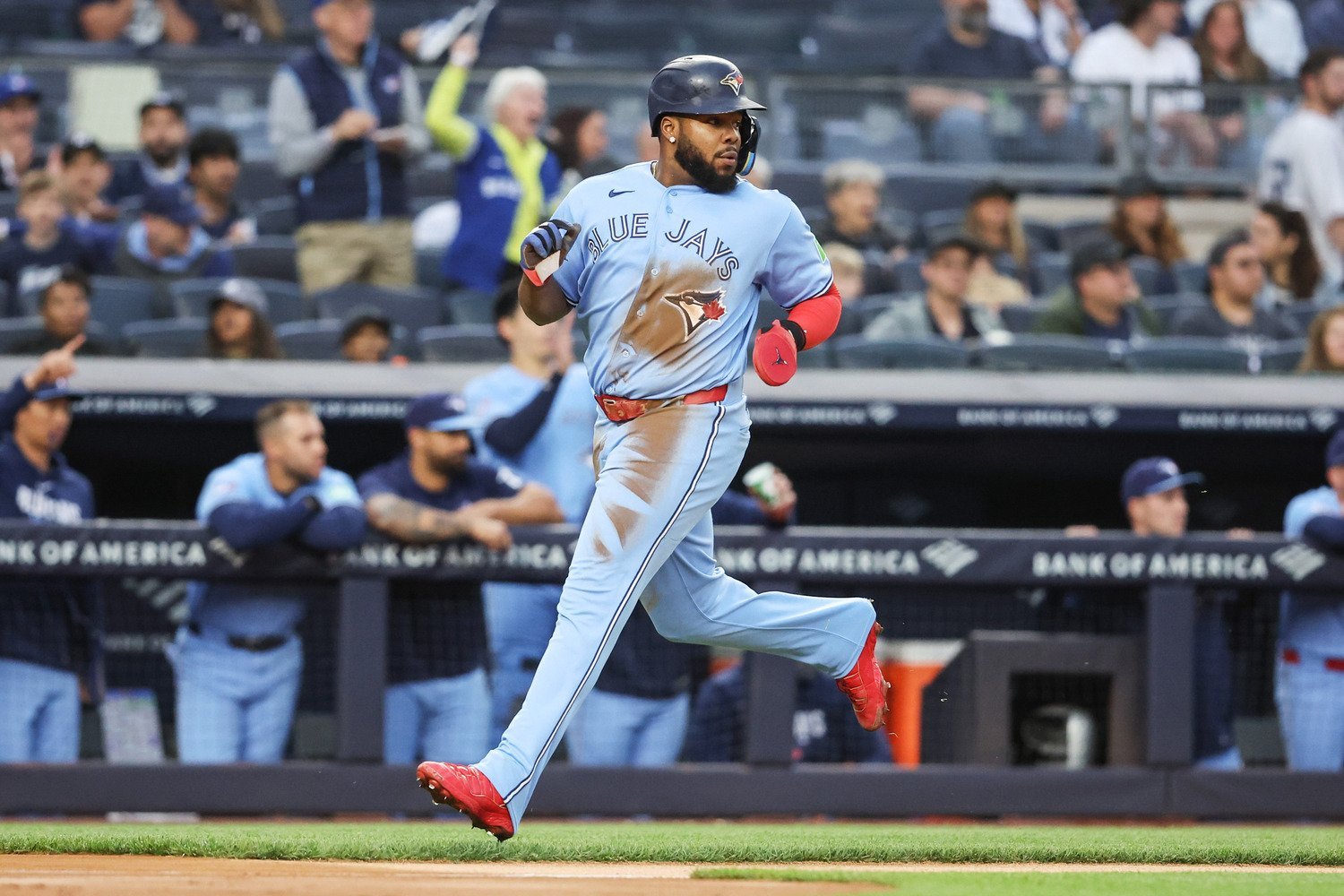 June is upon us. The days are at their longest, and it's sort of a sweet spot in the year where we here at Jays Centre no longer have to litter every article with the words "it's still early," but it also isn't quite crunch time either. The Blue Jays have yet to consistently start winning, but the AL is still terrible, the weather in southern Ontario has been nothing short of spectacular, and there's lots to learn about the remainder of the season. Like many of you, I began the month of June by letting out a tremendous cackle after hearing that Louis Varland somehow didn't win Reliever of the Month. Just before that, though, I was checking in on some 365-day leaderboards over at FanGraphs. The calendar turning reminded me that looking at player stats at the season level can be considered arbitrary. It's also worth noting that it has now been a full calendar year since the Jays started to get hot and begin their glorious march to the AL pennant. 365-day leaderboards tell us about the best players in the league over the past year, something that multi-season leaderboards don't quite capture. As I was scanning the batting leaders since June 2 of last year, I found something that I had to stare at for a while just to make sure I was seeing it properly. Before I go any further, I'll emphasize that I'd like to consider myself a rational baseball fan who gathers facts and uses logic, rather than reactive emotion, to form opinions. As such, I've grown to detest things like the blind side-by-side player stat comparisons that are often seen on social media. They lack context and are mostly posted to get a reaction. However, after looking at these leaderboards, I just couldn't resist despite my best efforts. I apologize profusely. Below is a comparison of offensive stats since June 2, 2025, for two position players. Hopefully the Only Blind Player Comparison I Will Ever Share Player GP PA AVG OBP SLG HR wRC+ K% BB% Player A 156 668 .297 .380 .448 18 132 11.8% 11.1% Player B 149 564 .282 .372 .455 17 131 15.1% 12.2% As you likely surmised by the title, one of these guys is Vladimir Guerrero Jr. He is player A. Player B is Spencer Horwitz. I'll be the first to admit this is narrative-ball at its finest. Like I said before, context matters. Guerrero has proven to be an above-average hitter against lefties and righties, but the former Blue Jay Horwitz, a lefty, has historically been pretty bad against left-handed pitching, and while he isn't in a strict platoon role, he doesn't always start when a lefty pitcher is on the mound. Guerrero is also blessed with more physical gifts. He hits the ball very hard and almost never strikes out. His raw talent means he'll likely begin his physical downturn later in his career, and it'll probably be a more graceful decline than Horwitz's. Another aspect of this that's hard to quantify is Guerrero's reputation internationally, especially in his native Dominican Republic. The Blue Jays owe a considerable portion of their fanbase, as well as their status in the eyes of future free agents, to #27. He does more for the organization than you might think just by being here. This is all a long-winded way of saying yes, I'd rather have Vladimir Guerrero Jr. than Spencer Horwitz. But I also don't think I'm crazy to suggest there should be more separation between him and Horwitz in their most recent full-season sample of non-playoff games. According to Spotrac, Guerrero is making a little more than $40M this year, the first season of his record-breaking 14-year, $500M extension. Meanwhile, Horwitz is still a year away from being eligible for arbitration, so he's only making $802K. There is, though, the elephant in the room. The playoffs. As my editor Leo Morgenstern rightfully pointed out to me, if you include the postseason, Guerrero ranks among the top 15 in wOBA and OPS among all MLB hitters over the past 365 days (min. 500 PA). That's what you want out of your franchise cornerstone, plain and simple. Anyone's one-year performance will look worse if you omit their best stretch from consideration, and for him, that came in October. He shouldn't be punished for that, but the fact remains that for an entire year, his regular-season offensive performance has been nearly indistinguishable from the guy he was blocking on the depth chart not too long ago. Why is that the case? Well, Guerrero's worst regular-season stretch of the past year was, by a mile, his most recent: May 2026. As I write this, his pristine .390 OBP exceeds his mind-boggling .387 SLG. Where he has gone astray this year is a perfect encapsulation of the Jays' offensive regression from last year: He's chasing more. The 2025 squad was famous for their ability to get bat on ball, but make no mistake, their true standout quality was hitting for enough power to make that mean something. When you chase more, you're in worse counts. When you're in worse counts, you get less to hit. Vladimir Guerrero Jr.'s Power Outage Is a Byproduct of His Swing Decisions Year Chase% Chase Contact% Early-Count Swing% % Ahead in Count % Behind in Count Hard-Hit% Barrel% 2025 21.5% 61.7% 33.0% 26.1% 31.4% 50.7% 12.2% 2026 31.2% 73.7% 40.7% 22.4% 36.4% 44.2% 6.8% Sure, it would be great if he started lifting the ball all of a sudden, but he's now in his eighth full season in the majors with over 1,000 games of experience. If he hasn't figured out how to push his attack angle above 3° by now, when will it happen? The relative lack of patience is the more prudent issue here. He has managed great seasons with a high groundball rate before. There are many ways to digest this, but the one that makes the most sense to me is that this is all a prime example of how baseball progresses over time. If you look at the same 365-day leaderboard but shifted back one year, from June 2024 to June 2025 instead, Guerrero's 164 wRC+ is third in all of baseball, behind only Aaron Judge and Shohei Ohtani. He went nuclear in the second half of 2024 for the retooling Jays after a sluggish first month and a half. In any given three-year window, these are simply the ups and downs of the game. Were we wrong to expect so much of Guerrero after his magical October? He has shown that his ceiling is in that range before. 2021. Most of 2024. October 2025. We all know it's in there somewhere, which is what makes his recent struggles frustrating or not as bad as they seem, depending on how you take it. At this point, though it's fun to dream on, I don't think it makes sense to expect he'll ever pair his exit velocities with truly optimal launch angles. He's chasing more than we've ever seen and has proven that can lower his floor, but if a .290 AVG and .390 OBP with no power is what that looks like, it could be worse. The fact that he makes so much contact and hits the ball so hard to all fields means his floor will never be that of a squarely unproductive player over the course of a full season. Baseball reminds us all the time that it moves in waves. Sometimes those reminders are pleasant, and sometimes they aren't. Relatively speaking, Guerrero's monster final two-thirds of 2024 ended up being a peak in between the two valleys of his 2023-into-slow-start-to-2024 and the much less severe 2025 regular season. Similarly, his 2025 postseason was another peak in between the two valleys of the preceding regular season and what he's going through now. If the rough cadence of this cycle continues, he's in for better days not too far from now. The Blue Jays paid him $500M for a lot of reasons. The postseason he gave them was one. The fact that his absolute floor is an above-average hitter is another. Shoutout Spencer Horwitz for not falling too far behind. All stats entering June 3, 2026. View the full article
 -
The Twins Can't Ignore Kyler Fedko Much Longer... Right?
DiamondCentric posted an article in Twins Daily
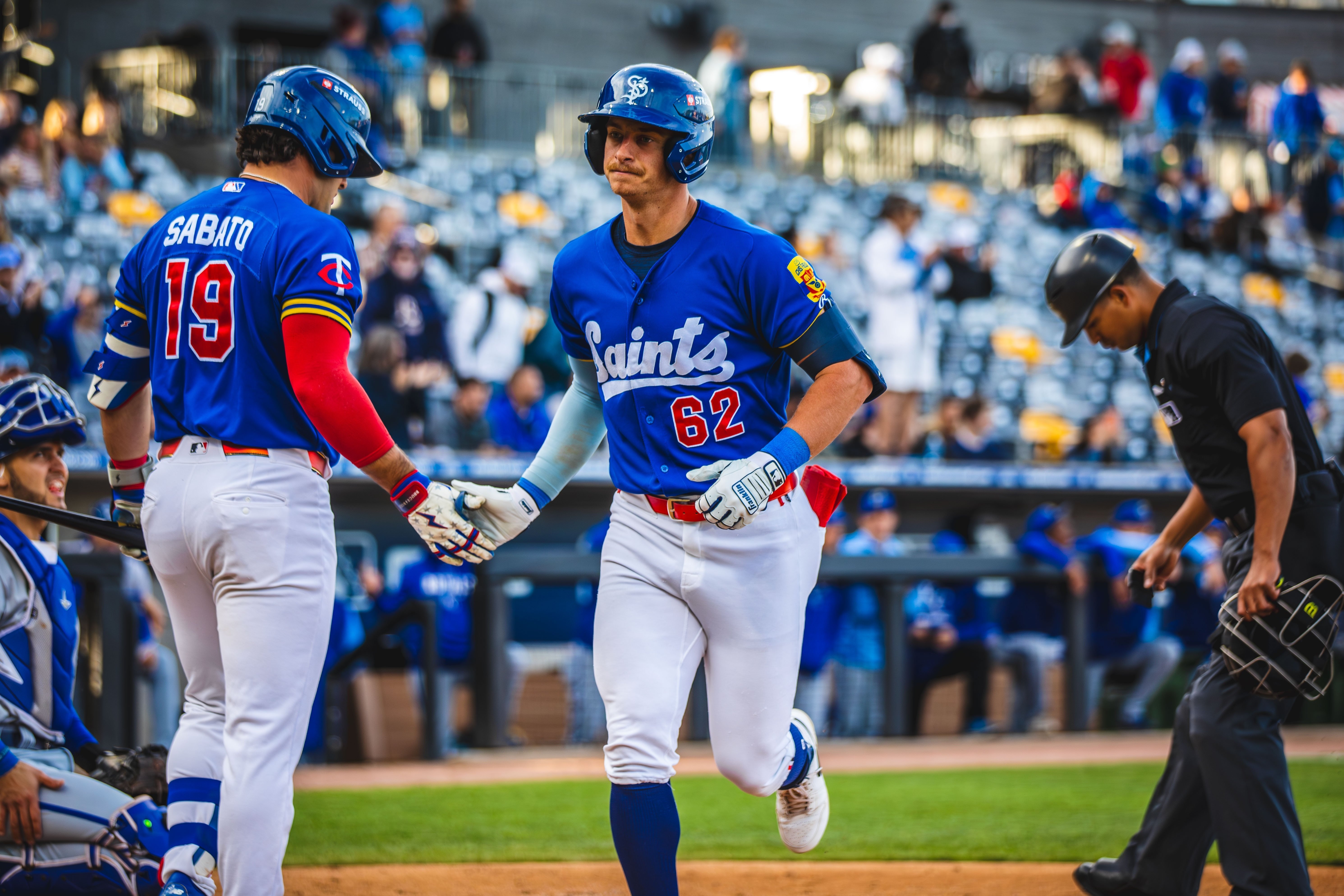 Minnesota Twins outfield prospect Kyler Fedko has been on an absolute tear to start the 2026 season. And really, it's been happening in every facet of the game. At some point, the conversation has to shift from simply acknowledging how well Fedko is playing to asking a much bigger question: when does he get a shot? Through his first 194 plate appearances with the St. Paul Saints, Fedko is hitting .286, with an outstanding .931 OPS. He's already launched 11 home runs, collected 23 extra-base hits, and added eight stolen bases for good measure. The production has been difficult to ignore. While his strikeout rate remains a little higher than ideal (roughly 22%), he's doing enough damage when he makes contact (and drawing enough walks) to offset those concerns. For a player whose game has become increasingly centered around power, the overall offensive profile has been extremely encouraging. The underlying batted-ball trends are interesting, as well. Fedko isn't the biggest player in professional baseball, but at 6 feet and 215 pounds, he's built like someone capable of generating legitimate power. More importantly, he's started leaning into those strengths. His fly-ball rate has increased by roughly five percentage points compared to where it was at Triple-A a season ago, and he's developed into a much heavier pull hitter. That's not always a positive for every player, but for someone with Fedko's strength and power potential, it appears to be part of a deliberate offensive adjustment. And so far, it's working. The biggest reason Fedko started generating attention within the organization last season was because of his sudden power breakout. In 2024, he hit just three home runs across 77 games. One year later, that number exploded to 28. Whenever a player makes that kind of leap, there's always a question of whether it's sustainable or simply a one-year outlier. But the fact that Fedko already has 11 homers this season suggests the power surge was no fluke. Instead, it looks like he has fully embraced a power-first approach at the plate, and the results certainly support that conclusion. Of course, what Fedko is doing offensively is only part of the story. There are a couple of other reasons why he deserves serious consideration for a major-league opportunity. The first is his defensive versatility. Fedko has logged extensive time at all three outfield positions this season and has yet to commit an error. On top of that, he's already recorded three outfield assists. That combination of reliability and arm strength gives the Twins flexibility in how they could deploy him. He appears capable of handling either corner-outfield spot, and he has enough experience in center field to provide coverage there, as well. For a team that values defensive flexibility, that's a significant advantage. The versatility doesn't stop in the outfield, either. Fedko has also seen limited action at both first base and second base. While those aren't likely to become his primary positions, the ability to move around the diamond only increases his value as a potential bench option or roster depth piece. There's also an argument that Fedko fills a different organizational need than many of the Twins' other upper-level outfield prospects. Much of the club's outfield depth is left-handed. Trevor Larnach, Matt Wallner and (once he’s healthy) Alan Roden all hit from the left side, while top prospects Emmanuel Rodriguez, Walker Jenkins, and Hendry Mendez are left-handed hitters, as well. Fedko, meanwhile, bats right-handed, giving him a profile that is somewhat unique among the organization's current outfield options. That doesn't automatically make him a better prospect than those players, but it does make him an intriguing fit. If the Twins were looking to add another outfielder to the major-league roster, a right-handed bat with power, defensive versatility, and experience at Triple-A could complement the roster better than simply adding another left-handed hitter to the mix. One issue here is that Fedko is not currently on the 40-man roster. But if he continues producing at this level, the combination of his performance, age, and right-handed bat could make it increasingly difficult for the organization to keep him in St. Paul. If the Twins needed immediate outfield help, giving Fedko an opportunity now could make more sense than waiting for a younger prospect to finish developing. However, because he’s not on the 40-man roster, that means someone would have to go. The name that immediately stands out (in my mind) is James Outman. Outman hasn't provided much offensive production and has largely filled a role as a late-game defensive replacement and pinch-runner. While those skills certainly have value, it's fair to wonder whether Fedko's all-around game would provide more impact at this point. It's probably too early for the organization to move on from Wallner, and it seems unlikely the Twins would sacrifice pitching depth or infield depth given the current state of those groups. That's what makes the roster discussion complicated. But regardless of how the Twins ultimately choose to navigate it, Fedko is building an increasingly strong case for himself every day he stays in Triple-A. The offensive numbers are there, the power is real, and his defensive versatility is valuable. At 26 years old, Fedko has reached the point where the organization should seriously consider finding out whether his game can translate to the next level. If Fedko keeps performing the way he has through the first two months of the season, it feels less like a question of if he'll get his opportunity and more like a question of when. For now, all he can do is keep producing, and that's exactly what he's been doing. View the full article
 -
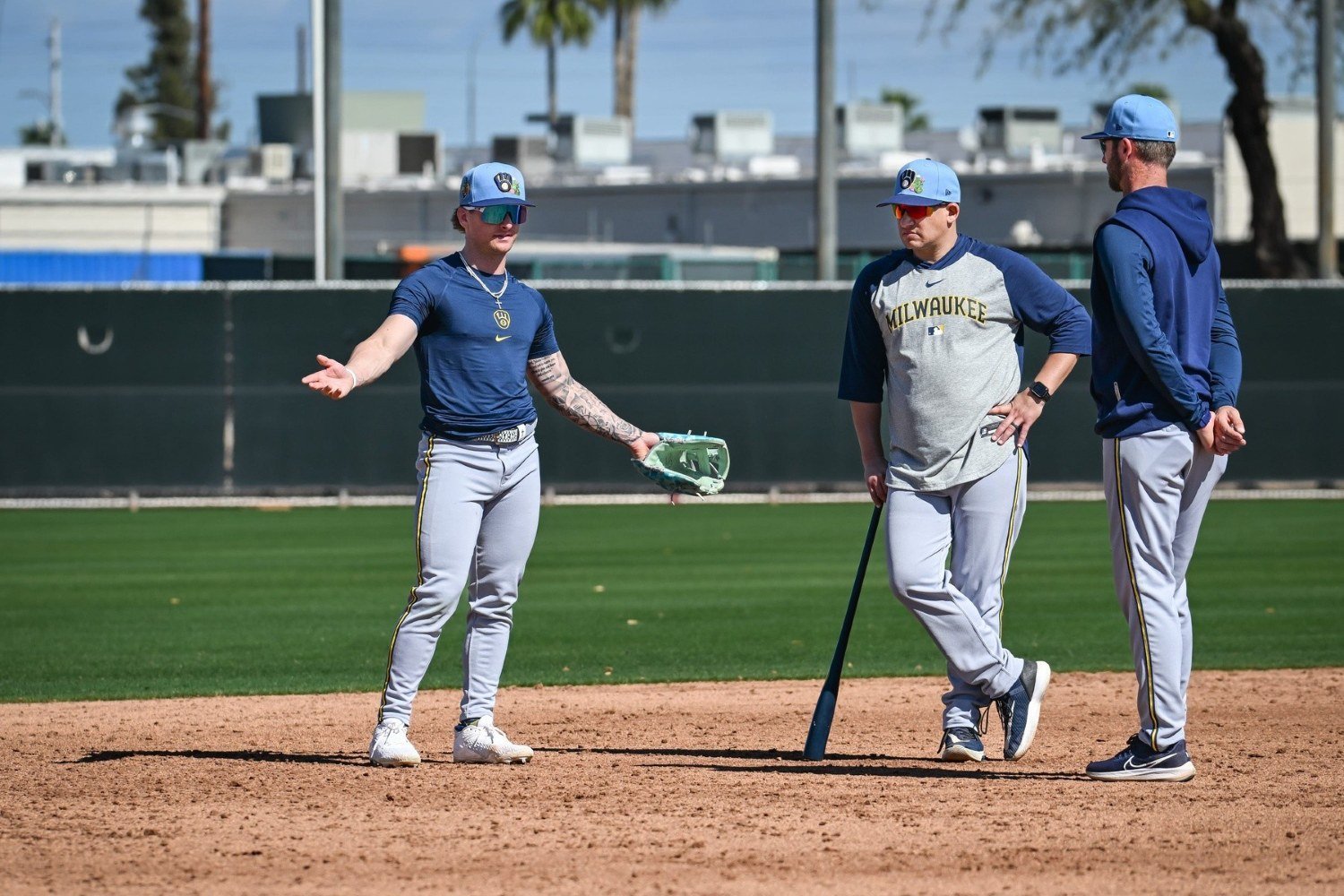 The Brewers have two consensus top-100 prospects who can cover the left side of the infield at Triple A right now, one of whom has already signed a 10-year contract. The Brewers also rank 24th in wRC+ from third base and 29th in wRC+ at shortstop. It seems like a clear problem with an obvious solution, but that solution is murkier than first glance suggests. As much as we enjoy a shiny new toy over something we've seen already (prospects are always exciting for that reason), neither Cooper Pratt nor Jett Williams has yet shown the type of production to force themselves up onto the Brewers roster. Both have made some developments in their profiles, but they're not showing themselves as ready yet, with some flaws in their first two months of games that give red flags. The Brewers are the type of organization that ensures that players are genuinely ready for the major leagues and are happy to be patient until they feel the time has come. That's not always in the form of on-field production, but the underlying approach, quality of contact and mentality that players have. The step from Triple A to the heat of a playoff chase is monumental, and to date, neither Pratt nor Williams has done enough to imply that they'll produce more than the current incumbents. Cooper Pratt Pratt is a player the Brewers are extraordinarily high on—hence the long-term deal signed before he was even especially close to a promotion to the majors. His range, body control and arm all play very well at shortstop, with a high defensive floor, strong baseball instincts and good bat-to-ball skills. Coming into the season, Pratt's two areas to work on were his approach at the plate (specifically chasing down and away) and trying to tap into more damage, with questions arising over his bat speed. A slow start ensued, with Pratt struggling to square up baseballs in April but eventually finding some timing in May. That being said, let's consider those two work-ons. First up, this is his rolling chase rate over a 100 pitch sample size: After some real improvements and a steady decline in his chase rate until the first week in May, it's been on the rise ever since. Sitting around the 25th percentile is manageable in some profiles, but those profiles have high exit velocities and thump to compensate for their tendency to swing outside the zone. Pratt has never been this type of hitter, but has he shown any improved ability to impact the baseball? Most certainly yes, albeit not to the level he would need to push for a promotion, A lot of hitters see regression in their average exit velocity when they reach the big leagues, due to facing a higher quality of pitching, making it more difficult to find the barrel with regularity. Pratt has seen some improvements, finding the barrel more often and averaging 86-87 mph exit velocity, but that's still below average for the level. To compound that, he isn't pulling the ball in the air as we saw from Caleb Durbin or Isaac Paredes, who can get by with lower exit velocities by targeting the shorter fences: The Brewers have a plan for Pratt, and it's going to be something in the mold of Brice Turang's profile. They believe there's impact in that bat, and they're prepared to be patient to bring that out, at least in 2026. He just hasn't reached the culmination of that plan yet, and that's okay, but it does mean the Brewers can't definitively rely on him as an upgrade to their shortstop and third base problems. Jett Williams Jett Williams is, on the surface, a very Brewers-y hitter: yet another grindy, smaller hitter who looks to scrap his way on base, use his plus-plus speed on the basepaths, and provide strong defense at second base or even in center field, as he showed in 2025. The Brewers have had him working almost exclusively at third base this year, identifying a path for him to join their team, and defensively, he's been playing well. That being said, it's the bat that can bring him to the next level. Where Williams differs from the Brewer's militia of minions is that he can actually hit the ball hard. We saw a taste of this in spring training (always to be taken with a pinch of salt), but Williams showed that, when pitchers make mistakes, he can hit those mistakes hard: It's a small sample size of just 22 plate appearances, so we should definitely take these as an indicator of what he's capable of, rather than his current abilities. He was squaring the ball up consistently with hard line drives and fly balls, he wasn't whiffing, and his walks and strikeouts were in a strong place. A quad injury hampered him from getting more playing time, and since he's been in Triple A, the results haven't quite been there, but if we compare his 2026 season (right) to his 2025 efforts (left) we can see some improvements: Williams is walking more, making more in-zone contact, and swinging more at pitches in the strike zone. It's a more consistent profile, and he's made real strides in those areas the Brewers covet, with all of these stats combining to give tougher, better at-bats. The problem is, he's just not impacting the ball in the same vein he showed in the Mets organisation. Just Baseball-projected average exit velocities combined with his air-pull rates would allow him to tap into solid power with Milwaukee, but those hard-hit rates and exit velocities have been anything but average to date. His hard-hit rate is trending up slightly, but that's also been offset by more strikeouts over the last while, and it's fair to say that a .292 expected Weighted On-Base Average is not going to be drawing a lot of eyes. This sounds more negative than I initially intended. Williams will be similar to Pratt, with defined work-ons with his plate discipline and potentially his swing path to try and maximize his contact rates before he finds the power again. It's the type of profile that could click overnight, but for now, it's not at a point where he's ready to impact the big-league ballclub. The big carrying tool for both of these players to reach the majors is how they hit. Both are adept defensively in positions with a clear need, but the upgrade will come from how well they hit when they land in Milwaukee. If this sort of performance continues for the next month or so, the Brewers may have to start looking for external help, rather than internal promotions, to fill the gaps in their lineup as they gear up for yet another playoff push. Both Williams and Pratt are players in whom the Brewers have extreme faith to make impactful contributions for many years at the highest level of the sport. They appear to be in the middle of some fine-tuning to get to that stage, and it shouldn't be seen as a negative that they haven't reached that level just yet. Their time will come, but that time just shouldn't be right now. View the full article
 -
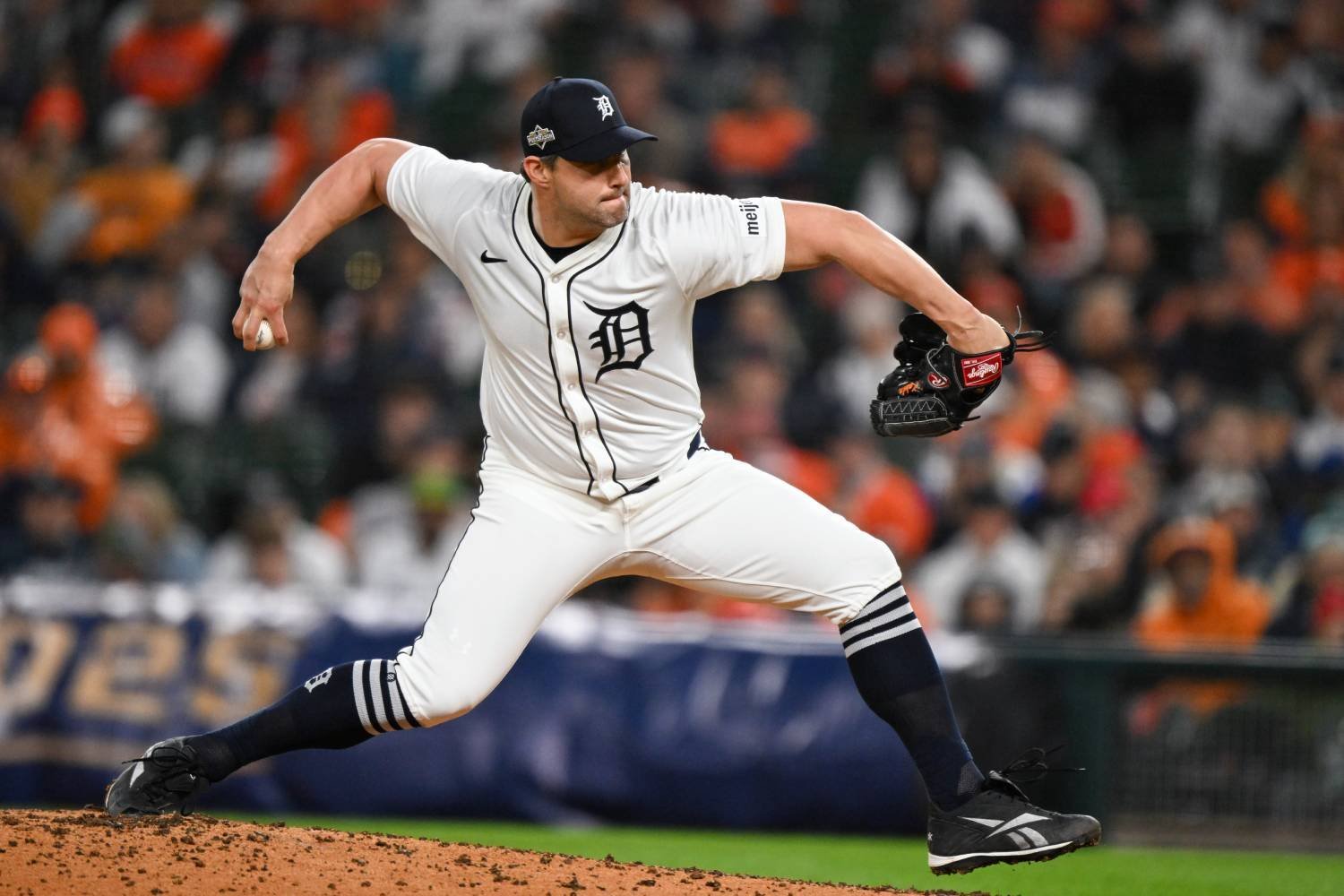 However it happened, Tommy Kahnle is back on an MLB roster. The right-handed reliever was called up by the Boston Red Sox from Triple-A Worcester on Thursday and left-handed reliever Tyler Samaniego was optioned to Triple-A. To make room on the 40-man roster, shortstop Trevor Story (sports hernia) was transferred from the 15-day injured list to the 60-day IL. The 36-year-old Kahnle signed a minor-league contract with the Red Sox late in spring training, March 19, and had a June 1 opt-out close if he was not brought up to the majors. The Red Sox had to make a decision by Thursday on whether to add Kahnle after he triggered the opt-out clause. He also had an upward mobility clause in his contract that he exercised in May, but he did not receive an MLB job. At Triple-A this season, Kahnle appeared in 18 games and covered 19⅓ innings, putting up a 1.40 ERA and converting all five save opportunities. He walked 11 and struck out 21. Kahnle was with the Detroit Tigers in 2025, when he posted a 4.43 ERA over 66 appearances (63 innings) with an 11.6% walk rate and 18.7% strikeout rate, both below average. Samaniego, who made his MLB debut this season, has appeared in 20 games over 20⅓ innings, with a 2.66 ERA. He walked eight and struck out 17. Moving Story to the 60-day IL was simply a paperwork move. There has not been a setback. View the full article
 -
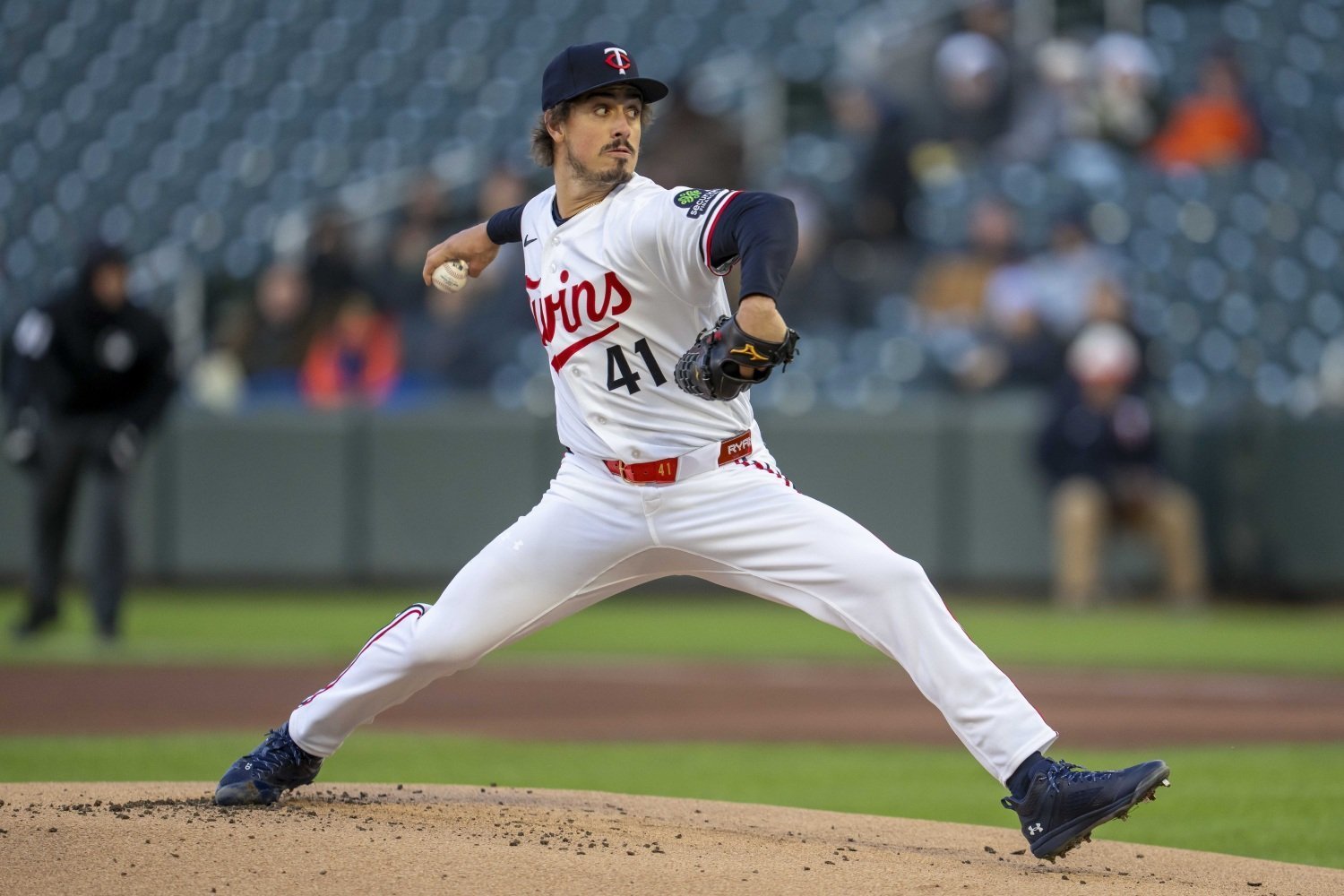 Joe Ryan has never been a pitcher who hides his emotions. Throughout his Twins career, fans have seen his reactions go viral, whether he's celebrating a spectacular defensive play behind him or watching a mistake leave the ballpark before it lands in the seats. Ryan wears his emotions on his sleeve; that's part of what makes him so compelling to watch every fifth day. For some players, showing emotion can become a distraction. For Ryan, it often serves as fuel. His competitiveness is evident in everything from his body language on the mound to his postgame interviews. That's why his comments after Monday's win over the White Sox stood out. Even after another quality start and a much-needed Twins victory, Ryan sounded frustrated with how the game unfolded. Monday's start against the White Sox looked like another example of him leading the Twins to victory. Though he surrendered a pair of home runs, Ryan worked six innings and helped the Twins snap their five-game losing streak. It was his second straight outing against Chicago after facing them last Tuesday, and the results were largely similar. Ryan attacked hitters, limited damage, and handed the game over with Minnesota in position to win. Yet after the game, his mood suggested something was bothering him. When asked about the game plan against the White Sox this time around, Ryan offered a noticeably brief response. "We pitched today, and we won," said Ryan, glancing around and sounding half-exasperated. "It was good." For a pitcher who is typically thoughtful and willing to discuss his approach, the answer felt unusually short. His next response provided more insight into why, in baseball lingo, he had the ass. "I don't feel like I gave enough length,” Ryan explained. “There's some things that could have gone differently, and trying to mix things up when we didn't need to be doing that, and adding things in that we haven't done all year.” What attempts to mix things up bugged him? “Just kind of changing the plan at times, and it limits the innings there. I was probably in a spot to go a couple more innings. Certain things didn't go the way we probably should have stuck to. It happens." That answer raised eyebrows, because Ryan rarely sounds dissatisfied following six innings of work, especially in a victory. The key phrase may have been "adding things in that we haven't done all year." Later, he was asked a follow-up question regarding the game plan and approach. "Just a couple of things we were doing that we'll talk about this week, and we'll figure [it] out. But it won't happen again." Whatever those changes were, Ryan clearly wasn't a fan. His tone conveyed that, as much as his words. Specifically, rather than lamenting his own mistakes, he seemed to imply that there were elements of pitch-calling or planning that put him in a position to fail. The details weren't revealed publicly by players or coaches, but it's fair to wonder whether the adjustments involved how Minnesota attacked Chicago's left-handed hitters. Facing the same team in back-to-back starts is never easy. Hitters gain familiarity. They remember sequencing. They recognize release points. Sometimes, a pitcher and coaching staff feel pressure to introduce something different simply to avoid becoming predictable. The challenge is finding the balance between adjustment and overthinking. Ryan's success this season has been built on trusting what already works. His fastball plays better than its velocity suggests because of its shape and carry through the strike zone. His splitter generates weak contact and swings and misses. His breaking pitches complement everything else. When Ryan is at his best, he's attacking with conviction, rather than searching for something new. Looking at the Baseball Savant pitch data from Monday, there are signs the plan may have shifted. His velocity was up across the board. Ryan's fastball averaged 1.4 mph harder than his season average, and similar increases showed up throughout his pitch mix. The stuff itself wasn't the problem. Against left-handed hitters, Ryan leaned heavily on his fastball and knuckle curve. He threw his four-seamer 54% of the time and his knuckle curve 22% of the time. Compared to his season averages against lefties, that represented an 8% increase in fastball usage and a 6% increase in knuckle curve usage. Those numbers suggest an intentional adjustment. The question becomes whether the change actually played into Chicago's success. Ryan's four-seam fastball has carried a 46.3% Hard Hit rate this season. On Monday, White Sox hitters put 10 of his fastballs into play and produced six hard-hit balls. Fortunately for Ryan, only three became hits. One of those hits left the yard for a home run. While the final line wasn't disastrous, the quality of contact was probably higher than Ryan would have liked. If the plan involved challenging left-handed hitters more aggressively in the zone with fastballs and breaking balls, it's understandable why he may have viewed the results skeptically. Below shows how Ryan approached left-handed batters in his last two starts versus Chicago. Ryan and the Twins leaned harder into the high fastball and went away from using the sweeper the way he did in the previous outing. That's especially true considering how dominant Ryan has been throughout the season. Pitchers who are performing at an elite level often develop tremendous confidence in the routines and strategies that got them there. When something changes, and it leads to damage (even minor damage), it can be frustrating. Perhaps the most notable takeaway from Ryan's comments wasn't that he disagreed with the approach. It was how strongly he felt about it. Ryan has been a major success story of the Twins' pitching development process. Monday served as a reminder that even in collaborative environments, pitchers still need to feel ownership of the game plan. The good news for Minnesota is that Ryan's frustration came after another quality outing, not after a disastrous one. His velocity was excellent. His stuff looked sharp. He still completed six innings and helped secure a much-needed victory. If anything, Ryan's comments reveal the mentality that has helped turn him into one of the American League's best starters. He wasn't satisfied with six innings and a win, because he believed there was more in the tank. He thought he could have pitched deeper into the game and prevented some of the damage if the Twins had stuck with the approach that has carried him all season. For a pitcher leading one of baseball’s most injured rotations, that dissatisfaction may actually be a positive sign. Ryan isn't focused on the box score. He's focused on maximizing every outing. And if his postgame comments are any indication, don't expect to see the same experimental game plan the next time he takes the mound. What will change with Ryan before his next start? Should Ryan have been mad? Leave a comment and start the discussion. View the full article
 -
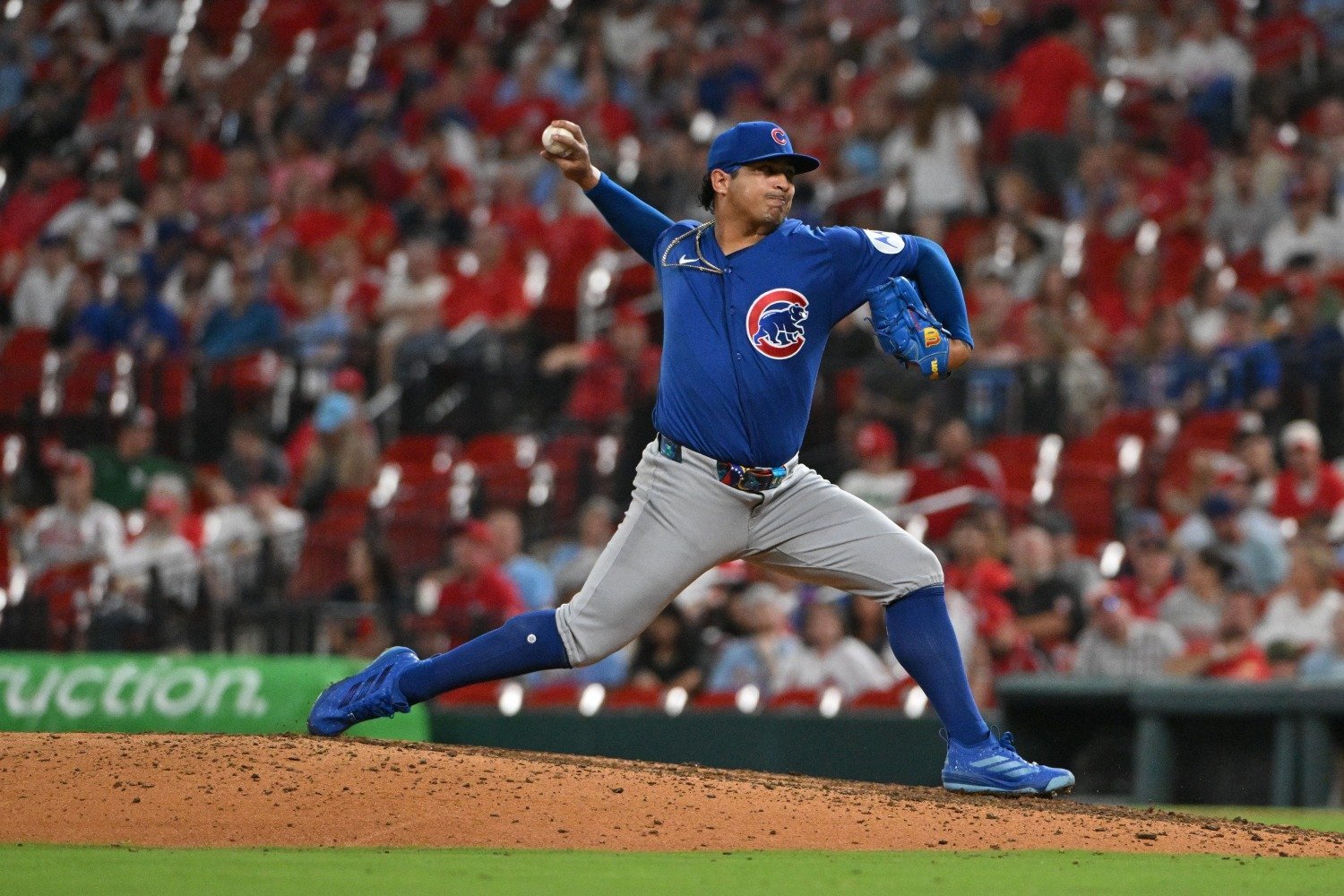 The 2026 Cubs have played 62 games. Their star closer, Daniel Palencia, has entered in a traditional save situation just twice. Palencia spent a few weeks on the injured list with a mild strain in his lat, but he's made 15 total appearances. He's just not getting chances to close games, because the Cubs rarely win, and when they do, they have an odd knack for winning in big, cathartic ways. All three times he's had a chance to save a game, Palencia has done it. However, the first such occasion didn't come until the team's eighth game of the season. It would be more than a month until the second, which wasn't even a normal save; he came on to get the final out of an 8-3 win against the Reds on May 7. A week after that, he got his third save (and second typical one) of the season. It's now been three full weeks since, without a fourth opportunity arising. Craig Counsell has therefore had to find times to use his closer, just to give him work, but even those games have been relatively thin on the ground. After Palencia's stint on the IL, the Cubs are using him carefully on purpose, a plan that makes a ton of sense for a tight, muscular athlete who throws this hard—but which gets very complicated when the usual chances to pitch aren't coming. Until Counsell used him in each of the first two games of the team's current series against the Athletics, Palencia hadn't worked on fewer than two days' rest since May 7. He's had five days between healthy appearances as many times as he's appeared on back-to-back days this year: twice each. It's been maddening, for the team and for its fans, to watch a pitcher who became an international star in March with a dominant run for the World Baseball Classic champion Team Venezuela have almost no impact on their season to date. Palencia hasn't been idle, though. He's only getting better, even if he's had to wait and wait and wait for chances to prove it. The samples are, alas, too small to jump to conclusions about whether Palencia's improvement in avoiding hard contact is sustainable. He's been prone to getting hit hard at times in the past, despite (or because of) his exceptional velocity. This year, barely over 26% of the batted balls he's allowed have been hit 95 MPH or harder, down from a career rate over 45% entering this season. He's also keeping his walk rate very low, for a late-inning reliever who throws so hard. That's all great, but it's impossible to say whether it's permanent, given how little he's worked. However, there are other things we can study that lend some credence to those improvements in results. Here's Palencia throwing a slider to the Brewers' Brice Turang during the NLDS last year: TkE0MjdfV0ZRVkV3dEdEUT09X0JnZ0FWMUpXQTFRQVcxVlFBd0FIVXdSZkFBQlJVd01BQWwxVEFWY0ZCd3BjVTFkWA==.mp4 And here's him throwing one to Christian Yelich, last month: b0d3OWxfWGw0TUFRPT1fVWdSWEIxUlNCMVFBWEZWUlh3QUhCZ1JlQUFBRkJnTUFBbEVGQndGWFZBY0JCZ1JV.mp4 If you can, ignore the results of the two offerings. Watch Palencia pitch. Can you spot the important differences? There are two. Firstly, his lower half gives him more power and direction. His stride is longer down the mound, which gets him into his legs more and helps him get over his front leg as he releases the ball. Second, his arm slot is higher. His average arm angle is up about 4° on his slider and 3° on his fastball this year. That sounds small, and isn't necessarily a sign of a conscious change in the way he's moving, but it makes a difference. Here's Palencia's spin profile for 2025, with the distribution of spin directions out of the hand for each pitch type on the left and the actual movement of the pitches on the right: Here's the same pair of images for 2026: Changing his delivery a little bit has dramatically improved the consistency with which Palencia executes his slider, giving it a shape he can tweak a bit but which seems to be devastating in whatever form he chooses for it. On average, he's also throwing it about 2 MPH harder (despite his fastball sitting right where it was last year), but that's because he's found ways to turn it into more of a cutterish offering at times, then increasing its depth (and giving back that extra velocity) at others. Palencia's extension at release is up significantly this year. That's created half a tick of increased perceived velocity even on a fastball technically traveling the same speed, according to Statcast. His whole arsenal plays up because of that. The Palencia we saw in March is still here; he just hasn't had enough chances to save the day for his domestic club. Hopefully, that will change soon, because the wasted outings by an elite reliever are getting hard to stomach. View the full article
 -
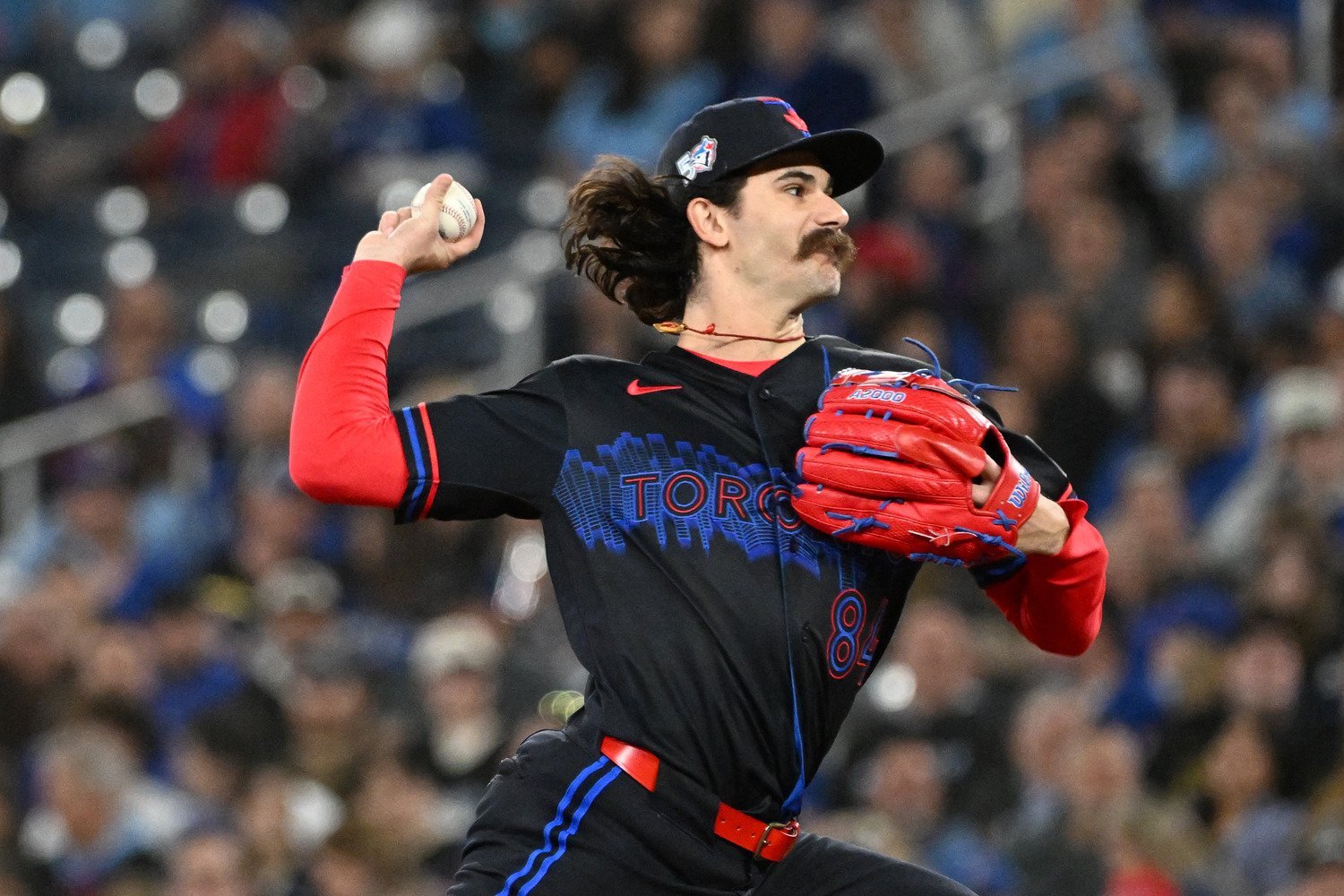 Every June, the Blue Jays pepper their marketing via email and social with a specific brand of optimism. It almost always includes some slick graphics and a catchy slogan to remind and entice the fan base to vote Jays players into the All-Star Game. This year, the game will be in Philadelphia, and the slogan is: Brothers Go Together. Vote Blue Jays. Vote Phriendship. Die-hard Jays fans are going to vote for a Jay at every position, whether or not they deserve it. Sometimes stats don’t tell the whole story, but often they do. Let’s not kid ourselves, the All-Star Game is primarily a popularity contest. The outcome doesn’t matter, so do the players involved really need to earn the right to represent their leagues? There used to be high stakes in the game, with the winning league having home-field advantage in the World Series, but not since 2017. Instead, winning or losing only impacts the bonuses of those participating. If the best players in baseball are supposed to be playing in the Midsummer Classic, should a team like the Jays have more than one representative on the team? Two months into the season, the Jays are under .500. Granted, they have been playing a bit better of late. They aren't a disaster, but they aren't dominant either. When the Jays build a campaign around Vladimir Guerrero Jr., Kazuma Okamoto, and Ernie Clement, they’re playing the hand they were dealt. These are their most recognizable and productive names. But for any of them to actually make the team would require voters to buy into the campaign rather than this season’s production. Take Vladdy. He’s a great example of when reputation meets reality. He’s hitting .293, getting on base at a .387 clip, and his contact metrics suggest a hot streak could happen at any second. Maybe his leadership on the team and playoff performance from last season are enough to merit a spot representing the American League at first base. The Yankees’ Ben Rice is hitting .304 with 17 home runs. Vladdy is second among AL first basemen in batting average and has the most hits (63), but only three home runs so far. Nick Kurtz of the Athletics is hitting .288 but has 11 homers. When you stack Vladdy’s power numbers against the rest of the American League first basemen, there is a gap. Other guys, like Munetaka Murakami, are just driving the ball out of the park more often. Murakami’s OBP is .378 with 20 home runs so far and 41 runs batted in. Vladdy’s star power gives him a massive edge, and if the fan base completely buys into the Vote Phriendship push, he could absolutely win a starting spot. It wouldn't be the first time a popular star got the nod, but it would be a testament to Toronto’s fan base more than his actual first-half production. Okamoto is a totally different story. Ironically, he might have the closest thing to a classic All-Star tool on this roster: pure power. He leads the team with 13 home runs, showing off the exact pop that brought him to the Jays. When he connects, like in the last two series, it's electric. The problem is everything else. His batting average is sitting right around .220, his OBP is a modest .309. He is playing just a bit better than a player adjusting to major league pitching. That’s not a bad thing, but is it All-Star worthy? He’s gone through some slumps that have kept his overall line down around the league average. For a guy in his first MLB season, that’s completely normal. There are plenty of flashes that suggest he’s going to be a real force once he settles in. Right now, Okamoto looks like a promising rookie with great power, not a top-tier AL third baseman. He is up against third basemen like the Guardians’ José Ramírez and Junior Caminero of the Rays, not to mention White Sox third baseman Miguel Vargas, who has an OBP of .368 and 15 home runs so far. Then you have Ernie Clement, who basically represents everything that has gone right for the depth on this roster. He’s been a safety net with an AL-best, at second base, .303 average. His ability to consistently put the ball in play has provided a ton of stability to a lineup that has struggled to perform. The hurdle for Clement is name recognition. Gritty, high-contact, formerly utility players rarely win fan votes because they don't produce highlights that casual fans look for. If you watch the Blue Jays every single day, you know exactly how valuable he is, but that everyday value doesn't always translate to a national ballot. His World Series performance might help garner some votes. If you want to make a pure performance-based argument for a Blue Jays All-Star, you have to look at the pitching staff. Before hitting the IL with a hamstring strain, Dylan Cease was providing the team with exactly what he was brought in to do. He is carrying a 3.05 ERA and racking up strikeouts. With one exception, against the White Sox, he has been putting together the kind of dominant outings that grab attention across the league. Kevin Gausman has been his usual reliable self, hovering around a 3.36 ERA and delivering the kind of steady, quality innings that voters love to reward on the players' ballot. Even the bullpen has a couple of high-strikeout, low-ERA arms that could sneak in on merit. How could they overlook Louis Varland or Mason Fluharty? So, how many Jays will actually end up making the trip? Realistically, probably just one or two. Every team gets a representative, and right now, the safest bet is a pitcher like Cease or Gausman who carries weight in the player voting. Varland could be a commissioner's office selection. Vladdy remains the ultimate wild card because of the fans, which is why teams promote All-Star fan balloting. Could they get more? Sure. But as it stands today, the Blue Jays look like a team still searching for someone to carry them. They have plenty of good players, but no one outside of the bullpen has put together the kind of undeniably dominant season that demands a spot on the national stage. If the American League roster was picked purely by the numbers today, the Jays’ presence would be pretty minimal. But with a passionate fan base and a heavy promotional push behind them, they’ve at least given themselves a fighting chance. Don’t be too disappointed if the Jays don’t send everyone to Philadelphia. Given all the injuries and the less-than-ideal start to the season, several days of rest might be literally be what the doctor ordered. View the full article
 -
San Diego Padres Minor-League Hitters of the Month: May 2026
DiamondCentric posted an article in Padres Mission
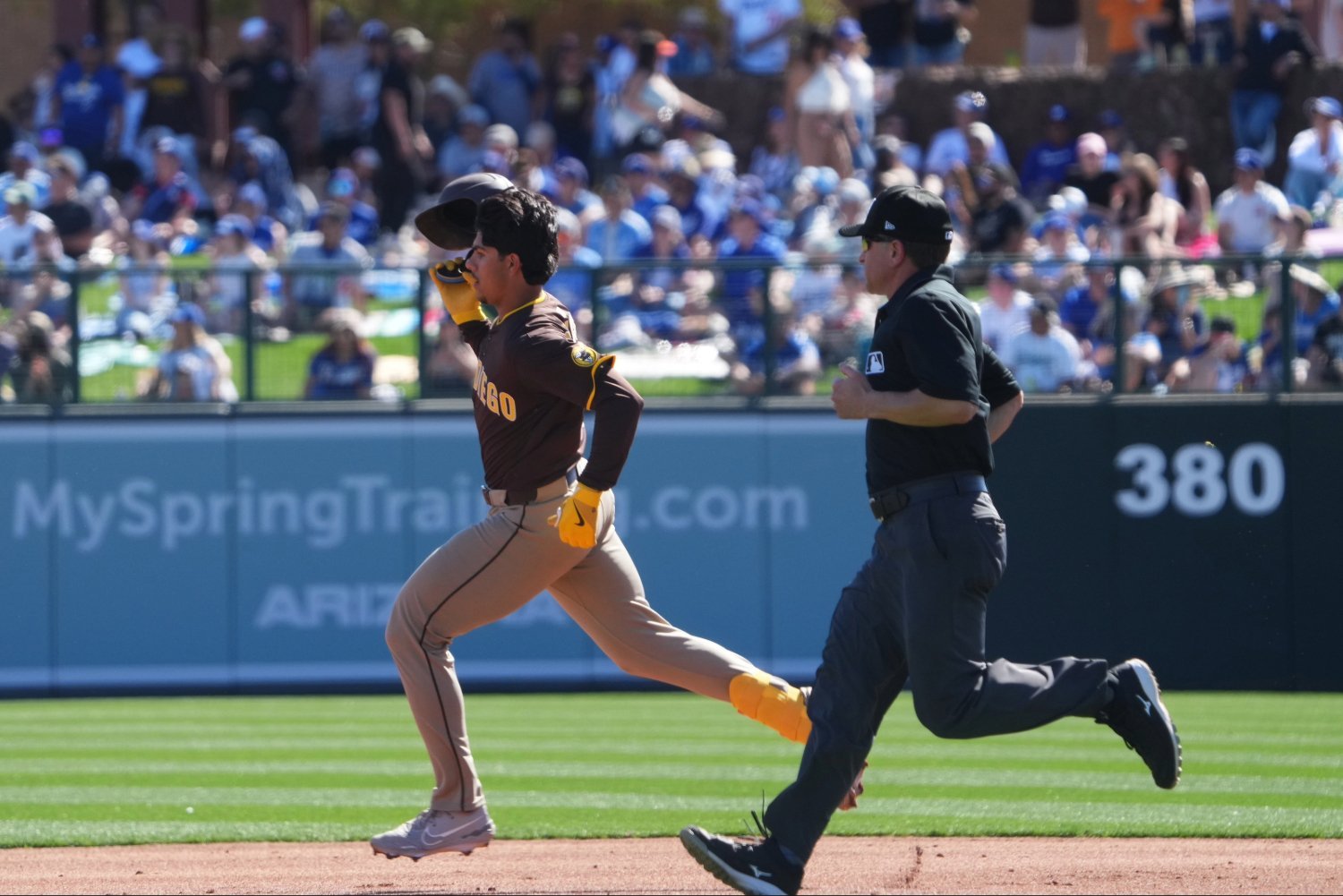 There was no shortage of offensive stars in the San Diego Padres' system in the month of May, with big-time production coming from recent draft picks and players with MLB experience just hoping to get another shot. Ranking Padres' Best Minor-League Hitters In May Honorable Mention: Ryan Wideman, CF, Low-A Lake Elsinore Storm May stats: .324/.348/.486, 26 games, 17 R, 9 2B, 3 3B, 1 HR, 15 RBI, 3 BB, 21 K, 19 SB, 4 CS The dynamic center fielder, who leads the minors with his 36 stolen bases, had hits in 20 of 26 games in May, finishing with a seven-game hitting streak that included three three-hit games. His power was down as he only went deep once in May after hitting three in April, but he did have nine of his 16 doubles and three of five triples in the month. Honorable Mention: Nick Solak, 1B-OF, Triple-A El Paso Chihuahuas May stats: .352/.412/.604, 23 games, 25 R, 3 2B, 1 3B, 6 HR, 16 RBI, 7 BB, 11 K, 3 SB, 1 CS Solak had a nice little stretch where he homered in four out five games and added his sixth homer of the month (and seventh of the season) on Sunday, his third of the series against Albuquerque. The first half of the month saw Solak extend an on-base streak to 24 games during which he hit ,398 with a .477 on-base percentage. He had seven extra-base hits and 16 RBIs during that run. No. 3: Ethan Salas, C, Double-A San Antonio Missions May stats: .313/.349/.500, 25 games, 19 R, 6 2B, 0 3B, 4 HR, 18 RBI, 8 BB, 13 K, 5 SB, 2 CS Padres Mission's No. 1 prospect started May with a bang, homering in back-to-back games after having a three-game homer streak in late April, giving him five in seven games. While he only had two more homers the rest of May, he did have a .313 average, which boosted his season number to .311. That ranks fifth in the Texas League. There are some numbers to take note in Salas' performance thus far. For the season, he has an 8.2% walk rate and a 17.6% strikeout rate. That walk rate is almost right on the MLB average (8.4%), while the strikeout rate is a good bit lower (22.3%). Salas also had a .319 BABIP and a .193 ISO, which has helped him produce a 131 WRC+. Fans love to get jumpy and want prospects to move up at the slightest sign of success, but more time at Double-A is probably best for Salas' short-term development. The hitter-friendly conditions of the Pacific Coast League can inflate stats and perhaps develop bad habits for a young player who has franchise player potential about him. SALAS_0601.mp4 No. 2: Pablo Reyes, IF, Triple-A El Paso Chihuahuas May stats: .365/.449/.649, 19 games, 14 R, 9 2B, 0 3B, 4 HR, 22 RBI, 12 BB, 8 K, 5 SB, 1 CS The MLB veteran has been a steady offensive force for the Chihuahuas. He reached base in the first 30 games he played this season, a streak that ran through May 14. He had a .441 on-base percentage during that run. Naturally, his May production was extremely strong. He had 10 multi-hit games, including three three-hit performances. All four of his homers in May came in his first four games, including a two-homer game May 6 that gave him a combined 101 homers between the minors (93) and the majors. Reyes missed a few games after going on the temporary inactive list, but picked up right where he left off with a 2-for-5 game to begin an 8-for-18 stretch. He has played all over this season, with 12 starts at third, eight at second, five at first and four at first, along with 10 at designated hitter. Even with that production, Reyes is simply a safety net in case of big injuries on the Padres' MLB roster. The 32-year-old has an MLB career slash line of .245/.305/.342. REYES_0601.mp4 No. 1: Kerrington Cross, 3B-1B, Low-A Lake Elsinore Storm May stats: .368/.510/.684, 25 games, 19 R, 7 2B, 1 3B, 5 HR, 18 RBI, 20 BB, 18 K, 6 SB, 1 CS One of a handful of very interesting bats playing for the Storm, the seventh-round draft choice a year ago out of Cincinnati put together a May that featured a 1.194 OPS. In two months filled with highlights, Cross provided yet another one Thursday when, after the Storm scored three in the eighth to take a 4-3 lead and Inland Empire tied it in the top of the ninth, Cross yanked a 2-0 pitch down the left-field line for a walk-off homer. It was the second walk-off win for the Storm in the series and third of the season. CROSS_0601.mp4 For Cross, it was his fourth homer of May and he added No. 5 on Sunday. Of his 28 hits in the month, 13 were for extra bases, also notching seven doubles and a triple. His .368 average for the month raised his season average from .184 at the end of April to .307 at the end of May. Cross plays both corner infield spots, seeing more action at first base (17 starts) than third base (14) this year. He made his pro debut last year with 14 games at Lake Elsinore, but his .190/.433/.214 slash line did not portend what was to come so far in 2026, especially not to the extent he did in May. Cross is helped by his ability to draw walks and not strike out a ton. In fact, his walk and strikeouts rate as a pro are very similar; in that brief time last year, Cross had a 23% walk rate and 24.6% strikeout rate. This year, those are at 20.7% (walk) and 21.3% (strikeout). His April struggles would seem to indicate that he still needs to figure some things out offensively, but he made the adjustments in May. If those numbers continue in June, he could find his way to Fort Wayne at some point. View the full article
 -
Looking Back On Top May Performers In The Red Sox System
DiamondCentric posted an article in Talk Sox
 This week, Nick is back and looking into some of the best performers in the organization for the month of June. Familiar names such as Franklin Arias, Anthony Eyanson, and Jake Bennett are talked about, while new names like Leighton Finley and Barrett Morgan of the Salem Red Sox are joined with slugger Jack Winnay as players to watch and be excited for after great Mays. Listen on Apple Podcasts: https://podcasts.apple.com/us/podcast/the-talk-sox-podcast/id1783204104 Listen on Spotify: https://open.spotify.com/show/3qPrPXEngu0CxgTmlf0ynm Listen on iHeartRadio: https://www.iheart.com/podcast/263-the-talk-sox-podcast-244591331/ Listen on Pocket Casts: https://pca.st/4tmd121v Watch on YouTube: https://www.youtube.com/@talksox View the full article
 -
 Kevin Valdez carried South Bend to the lone win, allowing one run over five innings with five strikeouts in a 4-3 decision. Chas McCormick homered for Iowa in a 10-2 loss, and Kaleb Wing struck out six over 3 1/3 innings for Myrtle Beach despite a 9-5 defeat. Knoxville was blanked 2-0 behind seven walks drawn, while Jace Beck struck out five in two scoreless relief innings for the Smokies. Cubs Transactions No Roster Moves McCormick's Homer The Lone Bright Spot As Iowa Falls To Toledo The Iowa Cubs managed just six hits and struck out 11 times in a 10-2 loss to the Toledo Mud Hens. Chas McCormick provided the offense, going 1-for-3 with a home run, two RBI, and a walk. Matt Shaw added two hits, and James Triantos, Jonathon Long, and Eric Yang each singled. Iowa left 12 runners on base. Javier Assad worked a scoreless first inning with a strikeout. The game turned in the sixth, when Toledo broke through for two runs against Zac Leigh, who allowed a run-scoring single and a second run on another single before the inning closed, taking the loss. The Mud Hens blew the game open in the eighth. Christian Roa allowed three runs in his two innings of work, and Gavin Hollowell could not record an out, surrendering five runs on three hits and three walks. Toledo pushed across a pair of doubles and a groundout to turn a four-run game into a 10-0 lead. Iowa avoided the shutout in the ninth when McCormick homered to center field, scoring Triantos. Gabe Klobosits and Christian Bethancourt combined for two scoreless innings of relief to close it out. Player AB R H RBI BB K Brett Bateman 4 0 0 0 0 2 Matt Shaw 4 0 2 0 0 0 Jonathon Long 4 0 1 0 0 1 BJ Murray 4 0 0 0 0 2 James Triantos 4 1 1 0 0 0 Chas McCormick 3 1 1 2 1 1 Ben Cowles 4 0 0 0 0 1 Eric Yang 3 0 1 0 0 1 Justin Dean 3 0 0 0 0 3 Player IP H R ER BB K HR Javier Assad 1 0 0 0 0 1 0 Zac Leigh 2 1 1 1 2 1 1 Collin Snider 2 2 1 1 0 2 1 Christian Roa 2 3 3 2 1 4 1 Gavin Hollowell 0 3 5 5 3 0 0 Gabe Klobosits 1 1/3 0 0 0 0 0 0 Christian Bethancourt 0 2/3 0 0 0 2 0 0 Smokies Stranded As Knoxville Bats Go Quiet In Shutout Loss The Knoxville Smokies drew seven walks but could not push a run across in a 2-0 loss to the Birmingham Barons. Knoxville collected five hits, including two triples, and stranded 16 runners. Hayden Cantrelle went 2-for-3 with a triple, Carter Trice tripled, and Owen Ayers doubled and walked. Alex Ramírez added a single. Grant Kipp turned in a solid start despite the loss, allowing two runs, one earned, over four innings with two walks and four strikeouts. The decisive runs came in the third, when Birmingham scored twice, capped by a run-scoring single. Knoxville's bullpen was excellent the rest of the way. Jace Beck struck out five over two scoreless innings, walking two, and Tyler Ras allowed one hit over three scoreless innings with three strikeouts. Player AB R H RBI BB K Alex Ramírez 4 0 1 0 0 1 Owen Ayers 3 0 1 0 1 0 Jefferson Rojas 4 0 0 0 0 2 Andy Garriola 3 0 0 0 0 0 Cameron Sisneros 2 0 0 0 2 1 Carter Trice 4 0 1 0 0 0 Edgar Alvarez 4 0 0 0 0 1 Ariel Armas 3 0 0 0 1 1 Hayden Cantrelle 3 0 2 0 0 1 Player IP H R ER BB K HR Grant Kipp 4 4 2 1 2 4 1 Jace Beck 2 0 0 0 2 5 0 Tyler Ras 3 1 0 0 0 3 0 Four-Run First Lifts South Bend Past Quad Cities The South Bend Cubs scored all of their runs in the opening inning and held on for a 4-3 win over the Quad Cities River Bandits. South Bend managed only four hits but drew three walks and stranded just three runners. Alex Madera went 1-for-4 with an RBI, Jose Escobar drove in two runs on a single, and Josiah Hartshorn and Matt Halbach each singled and scored. The first inning produced everything South Bend needed. Kane Kepley walked and scored on a Madera single, then Escobar singled home Madera and Hartshorn to make it 3-0. Drew Bowser grounded into a force out that brought in Halbach for the fourth run. Kevin Valdez had a nice start, allowing one run over five innings on six hits with a walk and five strikeouts to earn the win, the lone blemish a solo home run in the fourth. The bullpen made it interesting in the seventh, when Quad Cities scored twice against JP Wheat, who walked four in his appearance. Eli Jerzembeck steadied things with scoreless relief, and Grayson Moore worked a scoreless ninth with two strikeouts for the save. Player AB R H RBI BB K Kane Kepley 3 1 0 0 1 0 Alex Madera 4 1 1 1 0 0 Josiah Hartshorn 3 1 1 0 1 1 Matt Halbach 3 1 1 0 0 1 Miguel Useche 4 0 0 0 0 3 Jose Escobar 4 0 1 2 0 0 Justin Stransky 3 0 0 0 1 0 Drew Bowser 3 0 0 1 0 0 Christian Olivo 3 0 0 0 0 1 Player IP H R ER BB K HR Kevin Valdez 5 6 1 1 1 5 1 JP Wheat 1 2/3 0 2 2 4 1 0 Eli Jerzembeck 1 1/3 2 0 0 1 1 0 Grayson Moore 1 0 0 0 1 2 0 Late Pelicans Push Comes Up Short In Charleston The Myrtle Beach Pelicans scored five runs in the eighth inning but could not overcome an early deficit in a 9-5 loss to the Charleston RiverDogs. Myrtle Beach collected nine hits and drew seven walks while striking out 13 times and stranding 17 runners. Yahil Melendez drove in three runs with a double, Logan Poteet went 2-for-4 with a double and an RBI, and Darlyn De Leon added two hits. Kaleb Wing was sharp early, allowing one run over 3 1/3 innings with a walk and six strikeouts. Charleston built its lead through the middle innings, scoring once in the third, three times in the sixth against Sam Mettert, and three more in the seventh off Braylon Myers. Myrtle Beach answered in the eighth. Poteet doubled home Eli Lovich, Melendez cleared the bases with a three-run double, and Henniel Alcala singled home Melendez to pull within 7-5. Charleston responded in the bottom half against Jhon Rosario, who allowed two runs to restore the four-run margin and close the door on the comeback. Player AB R H RBI BB K Darlyn De Leon 5 0 2 0 0 1 Eli Lovich 4 1 1 0 1 2 Logan Poteet 4 1 2 1 1 2 Michael Carico 2 1 0 0 3 1 Derniche Valdez 4 1 1 0 1 1 Yahil Melendez 5 1 1 3 0 2 Geuri Lubo 4 0 0 0 0 1 Edward Vargas 3 0 1 0 1 1 Henniel Alcala 4 0 1 1 0 2 Player IP H R ER BB K HR Kaleb Wing 3 1/3 3 1 1 1 6 0 Sam Mettert 1 2/3 1 3 2 3 2 0 Braylon Myers 2 2 3 1 2 0 0 Jhon Rosario 1 2 2 2 1 2 0 Top-20 Prospect Performance Jefferson Rojas: 0-for-4, 2 K Jaxon Wiggins: DNP Pedro Ramirez: DNP Kevin Alcantara: DNP Josiah Hartshorn: 1-for-3, BB, K Ethan Conrad: DNP Kane Kepley: 0-for-3, BB Jonathon Long: 1-for-4, K James Triantos: 1-for-4 Cole Mathis: DNP Owen Ayers: 1-for-3, 2B, BB Brooks Caple: DNP Juan Cabada: DNP Kaleb Wing: 3 1/3 IP, 3 H, 1 R, 1 ER, 1 BB, 6 K Angel Cepeda: DNP Dominick Reid: DNP Jostin Florentino: DNP Ty Southisene: DNP Will Sanders: DNP Brandon Birdsell: DNP View the full article
 -
 Fish On First staffers react to the latest Miami Marlins series and prepare you for what lies ahead. Wednesday's show was hosted by Jeremiah Geiger and featured panelists Kevin Barral, Alex Carver, Isaac Azout and Nate Karzmer. The following topics were covered: Impressive offensive showing in sweeping the Washington Nationals A peek at the National League Wild Card race Reacting to recent wave of minor league promotions Marlins down to only three regular starting pitchers Previewing and predicting the next series against the Tampa Bay Rays You can find Fish Unfiltered and Fish On First LIVE on the Fish On First YouTube channel, Apple Podcasts, Spotify or wherever else you get your pods. Our next FOF LIVE episode will be Sunday at approximately 6:30 p.m. ET following the Marlins-Blue Jays series finale. View the full article
 -
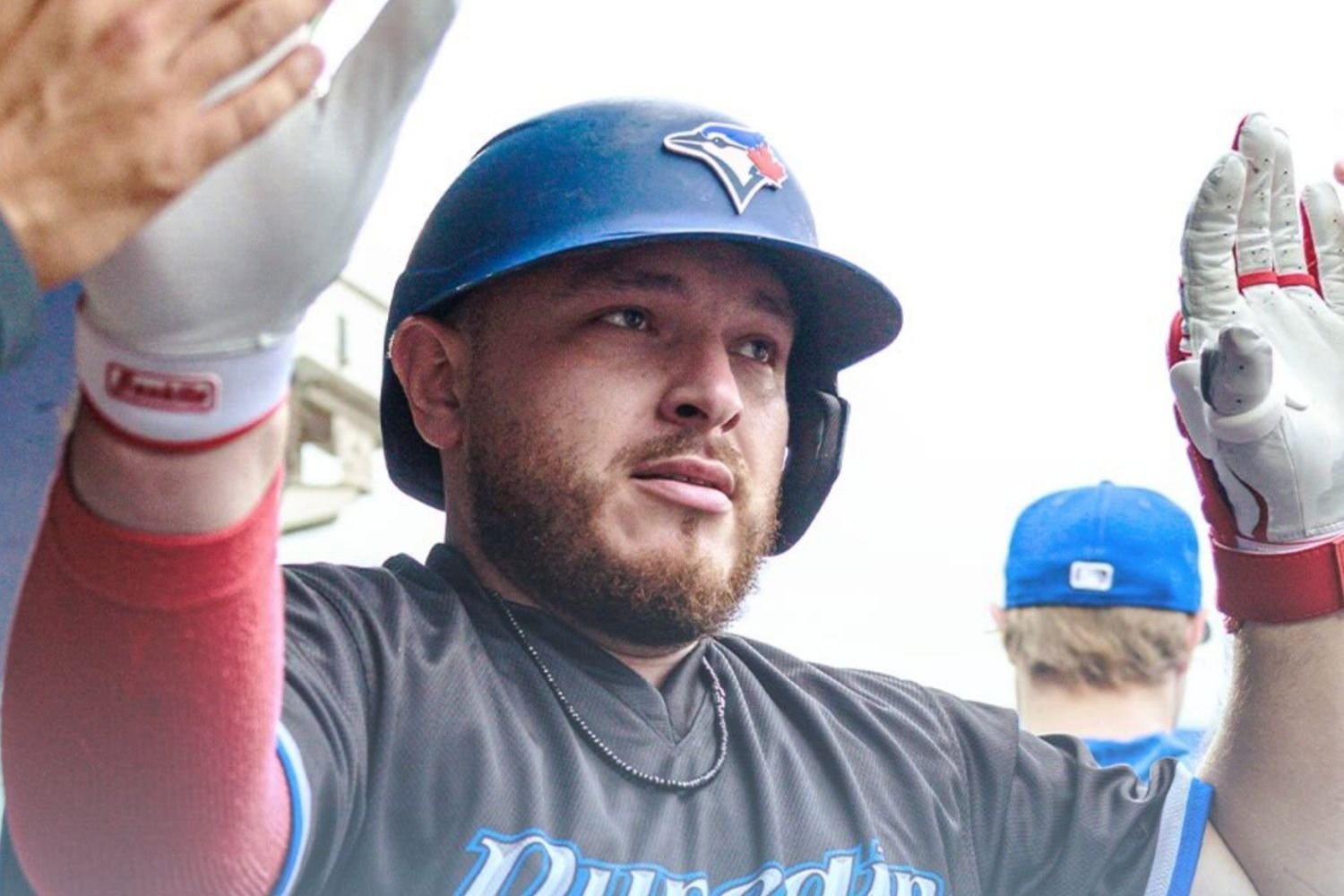 Blue Jays Affiliate Overview (June 2 - June 3) Triple-A Buffalo Bisons Series vs Worcester Red Sox (Boston Red Sox): 1-1 Season Record: 28-31 Double-A New Hampshire Fisher Cats Series vs Altoona Curve (Pittsburgh Pirates): 1-1 Season Record: 27-23 High-A Vancouver Canadians Series vs Tri-City Dust Devils (Los Angeles Angels): 1-1 Season Record: 23-31 Single-A Dunedin Blue Jays Series vs Daytona Tirtougas (Cincinnati Reds): 1-1 Season Record: 21-32 FCL Blue Jays Week Record: 0-1 Season Record: 17-6 DSL Blue Jays Blue Week Record: 1-1 Season Record: 1-2 DSL Blue Jays Red Week Record: 0-1 Season Record: 0-2 Triple-A Buffalo Bisons Season Record: 28-31 Series vs Worcester Red Sox (Boston Red Sox) June 2: Buffalo opened a new series against Worcester on Tuesday, but they seemed to leave their bats in Lehigh Valley. The Bisons only managed to scrape together five hits, but they offset that by tallying six walks. Davis Schneider has settled into the lead-off role the last few games. In this one, he walked three times and scored a run. He would get by a pitch in the sixth, steal second base, and then come around to get the first run of the game on the scoreboard for Buffalo. The run tied the game up at one and was thanks to an RBI double from Josh Kasevich. RJ Schreck was the next batter, and he singled to center field and brought home Kasevich, giving the Bisons the lead. Buffalo held the 2-1 lead as the bottom of the ninth inning began. CJ Van Eyk, who was on his fifth inning of work out of the bullpen, started the inning off poorly by giving up a lead-off double to Anthony Seigler. A batter later, Mikey Romeo got a hold of a pitch for an RBI triple to tie the game. After a groundout. Van Eyk threw a wild pitch, allowing Romero to score from third, as Buffalo lost on the walk-off 3-2. June 3: Wednesday's game against Worcester began much the same way as Tuesday's game did: The bats were missing, and runs were rarer than an extinct dodo bird. Going into the seventh inning, the game was all square at zero, as Josh Fleming had his best start of the season for Buffalo. He would end his day throwing seven innings, walking none, not giving up a run, and striking out five. His strong effort on the mound would be rewarded with a win, with the bats deciding to take over the game in the final three innings. Josh Rivera got the scoring started with a bases-loaded single that scored two runs in the seventh. Carlos Mendoza would double home a run in the frame as well. In the eighth, Buffalo loaded up the bases with two singles and a walk, setting up the stage for a monster six-run inning. They scored two runs on bases-loaded walks, a run off of a sacrifice fly by William Simoneit, as well as three more on RBI singles by Rivera, Mendoza, and Josh Kasevich. In the ninth, Mendoza had the cherry on top of his monster game, a three-run home run to right field. Buffalo pulled away in this game to win 12-0. Double-A New Hampshire Season Record: 27-23 Series vs Altoona Curve (Pittsburgh Pirates) June 2: Gage Stanifer was on the mound for the start of the series between New Hampshire and Altoona. He was fantastic and continued making a push toward Triple A. He went five innings, struck out eight batters, gave up four hits, two earned runs, and allowed two walks. His slider was almost perfection on the night, as it was the best version of the slider he has had in a while. He used it frequently, while mixing in his splitter and fastball. His command was still off at times with the fastball, but better than it has been. A definite step in the right direction. Altoona got a leadoff walk and a double later in the inning to take the early lead in the first inning, but New Hampshire flipped that quickly. Jace Bohrofen hit his 12th home run of the season in the bottom of the inning, and was immediately followed by Sean Keys, crushing his 13th home run of the year. In the third inning, Altoona tied the game after a single that hit Stanifer and a double brought in a run. That would be all they could get off of Stanifer, though, as he finished the third, fourth, and fifth innings, only allowing a walk and a hit-by-pitch. In the seventh, Nick Goodwin drove in Jay Harry, who had hit his fourth triple of the season earlier in the inning. In the ninth, New Hampshire couldn't hold onto the lead, with Altoona scoring six in the inning. The Fisher Cats lost this one 8-3. June 3: In the Wednesday game between New Hampshire and Altoona, the Fisher Cats had their hitting shoes on. They began the game scoring six runs over the first two innings, with the big hits coming on a Jace Bohrofen RBI double and two RBI singles from Victor Arias and Adrian Pinto. Altoona got their two lone runs off of starter Austin Cates in the fifth inning on two RBI groundouts. Things flipped to a complete blowout of a game in the bottom of the eighth, as Sean Keys homered, Arias hit another RBI single, then Cutter Coffey and Patrick Winkel added home runs. New Hampshire scored eight in the inning, as the Fisher Cats won big this time, 14-3. High-A Vancouver Season Record: 23-31 Series vs Tri-City Dust Devils (Los Angeles Angels) June 2: The Canadians once again faced the Tri-City Dust Devils, and this time, Landen Maroudis went head-to-head with 2025 second overall pick Tyler Bremner. Bremner pitched just 1.2 innings before getting taken out in the second inning, and Carter Cunningham gave the Canadians their first two runs with a two-RBI single in the third inning off of Bremner’s replacement. Maroudis started off well with two scoreless innings, before giving up a two-run homer in the third, and another run off an RBI triple before getting taken out of the ball game himself for Gilberto Batista. Batista had a shaky fifth inning, allowing a bunt single to advance to second on a throwing error, then allowing the runner to score, but he was able to keep the game close. J.R. Freethy brought the game within one on a sac fly in the seventh inning, but the wheels fell off for Batista in the seventh inning, as he allowed four runs to score after getting two quick outs, putting the Canadians behind by five runs, which eventually led to a Dust Devils victory. June 3: It was a Daniel Guerra masterclass to get the Canadians back on track. The Canadians took the lead early as Brennan Orf hit a sac fly in the first, before Dub Gleed had homer number six in the third to make it 2-0 for the Canadians. Guerra had his third start of the season with 10 strikeouts or more, and his only blemish was a two-run homer given up in the third inning to even up the game. The high-powered righty was able to blow past hitters with 28 whiffs on the night, and Guerra is tied for fourth in the minor leagues with 70 strikeouts on the season. Gleed was the story on the offensive end, as the infielder had a four-hit night, and he drove in his second run of the game in the fifth inning to give the Canadians the lead, which they wouldn’t relinquish. Orf had his second ribbie of the day on an RBI double in the sixth, and Carter Cunningham drove Orf in with one of his own. Carson Myers also is getting settled in Vancouver, with his first save in the Northwest League with three innings of one-run ball to clinch a solid victory. Single-A Dunedin Season Record: 21-32 Series vs Daytona Tirtougas (Cincinnati Reds) June 2: The two teams with the worst records in the Florida State League went head-to-head. Silvano Hechavarria was the starter once again, but still struggled, with his ERA still hovering above 10 after last year’s strong performance. After a scoreless first inning, he gave up a walk and two doubles, which led to two runs scoring. The D-Jays evened it up after Juan Sanchez hit his third homer of the season, and the Jays loaded the bases with two outs and scored a run on a balk. Hechavarria allowed another two runs in the third, with two more doubles and a balk. The Jays got another run in after Blaine Bullard made some good base running and scored on a wild pitch. Josbel Garcia replaced Hechavarria in the fourth inning and gave up a solo homer to Bernard Moon in the fifth inning, which gave the Tortugas a two-run lead. Bradley Wilson then gave up another two runs after replacing Garcia, despite striking out six batters, and he also walked four. Sanchez hit another bomb in the eighth to get two runs back, and Eric Snow had his first pro homer in the ninth inning, but the Jays just fell short. June 3: It was the return of two important players for the Blue Jays, as Alejandro Kirk and Yimi García both were put on rehab assignments on the same night, and both performed. Blaine Bullard started it off with his sixth homer of the season, and he’s shown more power than people thought early on in his professional career, to go with great speed. Kirk followed up with a homer in the third inning, and Adam Hackenberg drove in a run on a single to make it three to nothing for the D-Jays. On the pitching end, it was the best start of Troy Guthrie’s young professional career as the young righty was able to use his fastball and solid command to get 12 whiffs on the night. It was the second quality start of his career, and first of the season, as he went six scoreless with eight strikeouts. García looked solid in his first rehab outing back as the veteran reliever averaged 94 mph on his fastball and touched 96. He struck out one batter in a no-hit seventh inning. It got a little dicey as Ramon Suarez was unable to get out of the eighth inning as he walked the bases loaded, then allowed two sac flies, but Franly Urena held it down and struck out four batters in 1.2 innings to earn the save. Eric Snow added an insurance run in the ninth to make the save a bit easier as well, with his ninth double of the season. FCL Blue Jays Season Record: 17-6 June 2: The FCL Blue Jays were on the road on Tuesday against the New York Yankees FCL squad. It was a game dominated by pitching, and no one was better than Carson Messina again. He went four innings, while striking out seven batters, only allowing two hits and a walk. He didn't surrender a run and lowered his ERA on the year down to 1.69. Cade Doughty homered in the first inning to give the Blue Jays team a lead. Andres Arias stole home in the seventh on a double steal to put the Blue Jays up two, but a three-run homer by David McCann in the bottom of the inning gave the Yankees the lead right back. That was where the scoring would end, as the FCL Blue Jays lost this one 4-3. DSL Blue Jays Blue Season Record: 1-2 June 2: Jose Andrades was on the mound for BJB on Tuesday. He was signed back in 2025, during the J15 international signing period. He was dominant for the Blue Jays, throwing five innings in his debut, striking out four; he didn't walk anyone and didn't give up a run. They would win the game on the backs of two gift runs, one scored on a groundball double play and the other on a wild pitch. Catcher Isay Veras was the best hitter on the day, going 2-for-4 with two singles. The two base knocks brought his batting average up to .300 for the season. BJB won their first game of the year 2-1 in seven innings. June 3: The DSL Blue team for the Blue Jays took on the Angels DSL team on Wednesday. BJB scored the first run in the third inning, when Isay Veras grounded out, scoring Daniel Dominguez. In the fourth, an RBI single and a sacrifice fly gave the Angels squad the lead. In the fifth, they would add to that lead with an RBI single from Anderson Rodriguez and another RBI single from Adonanfer Reyes. Juan Caricote drove in the second BJB run in the fifth inning with an RBI single (he also had three HBP on the day). Veras would score on a wild pitch as well. In the seventh, a balk and wild pitch gave the Angels two more runs and a commanding lead. In the bottom of the inning, Michael Mesa hit a line drive double, scoring a run, and Samuel Orellana drove in two with a double. That is where it ended, as BJB lost this one 7-6. DSL Blue Jays Red Season Record: 0-2 June 2: The BJR game on Tuesday was marred by errors. They committed four errors in the game, which led to five unearned runs. On offense, they walked seven times in the game, but only managed three hits and were never able to get a run across home plate. Gabriel Porras was the best hitter for BJB, going 1-for-2 with two walks. They lost their second game in a row to start the season. Transactions 06/03/26 RHP Chad Dallas roster status changed by Buffalo Bisons. 06/03/26 RHP Justin Topa assigned to Buffalo Bisons. 06/03/26 Toronto Blue Jays sent C Alejandro Kirk on a rehab assignment to Dunedin Blue Jays. 06/03/26 Toronto Blue Jays sent RHP Yimi García on a rehab assignment to Dunedin Blue Jays. 06/02/26 Toronto Blue Jays sent RHP Lazaro Estrada on a rehab assignment to Buffalo Bisons. 06/02/26 RHP Yancarlos Vasquez assigned to DSL Blue Jays Blue. View the full article
 -
Brewer Fanatic Readers Pitch Trade Ideas for the Brewers
DiamondCentric posted an article in Brewer Fanatic
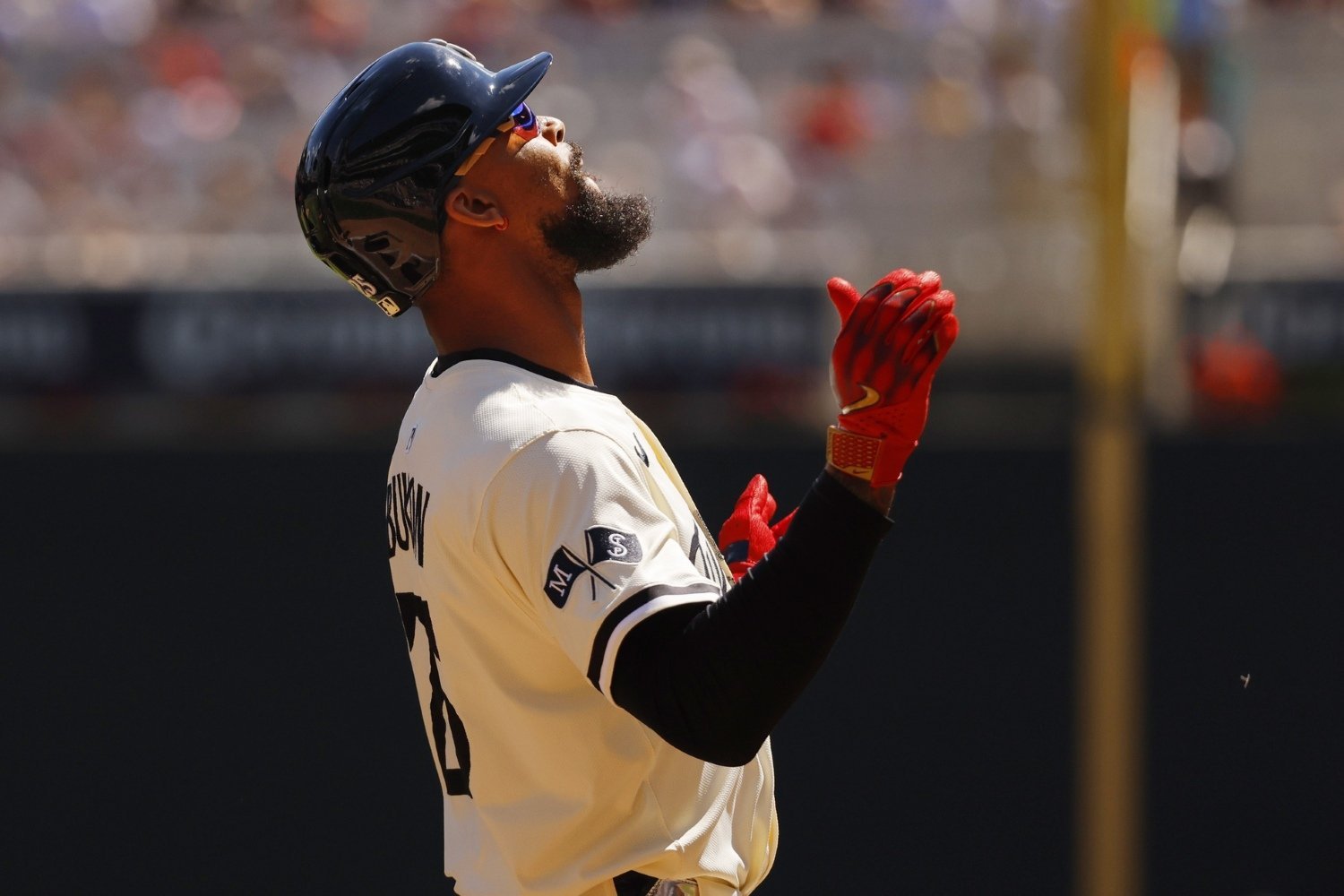 Last Friday, we posted a forum thread that asked for our readers’ preferred trade targets for this year’s deadline, assuming they could only pick one name. We had more than a few intriguing answers, and I’m here to take a closer look at each pitch. @TwinsBrewersWorldSeries said: Freddy Peralta (just to watch heads explode). We roll with some combo of Miz, Harrison, Patrick, Henderson in the playoffs….but Peralta replacing Sproat or Gasser gets us the 1 seed. Aside from the obvious value of a homecoming for our glorious king Freddy Peralta, this is a pretty solid take. On the surface, his 3.38 ERA and average Statcast numbers don’t seem like much to write home about, but because he’s Freddy Peralta, there’s a solid chance that he would be even more effective in Milwaukee than he currently is in Queens. To me, the most important quality that Peralta would give to the Brewers’ rotation is length. The current rotation is mostly made up of younger players, and while one of them is throwing jet fuel on his 90th pitch, the others don’t quite have the same stamina. Milwaukee already has a tendency to demand a lot from its bullpen, and with many of their starters going fewer than six innings, it’s even more pronounced this year. Five of Milwaukee’s relievers have already made 23 or more appearances, and Aaron Ashby has been forced to throw 37 ⅓ innings. Poor guy. @owbc said: Joe Ryan is mine. It would be Skubal, but I think he might go ahead of the deadline, and we are more concerned about October than getting more regular-season starts. Joe Ryan is arguably the only good thing the Twins rotation has had going for them over the last two years. After a strong 2025 campaign, he has been even better this year, pitching to a 3.20 ERA with a 2.76 FIP over his first 13 starts. He has elite strikeout and walk rates, and his four-seam fastball is one of the best in the business. Minnesota isn’t out of the playoff race just yet, but it seems like it’ll be quite the uphill battle for them to make it there. Thus, it’s likely that they’ll be sellers at the deadline as they were last year. Their farm system is quite solid (ranked No. 9 by MLB Pipeline in March), and Ryan seems like he’ll be their most sought-after asset this year, so expect a steep asking price. @cragi said: Skubal The Tigers are going to get a lot of calls about Skubal this summer, but I’d be surprised if the Brewers were one of the parties dialing in, mostly because I think the $32 million salary is enough for Milwaukee to pass. You could ask the Tigers to pay down what he's owed, but that means giving up even better prospects. Additionally, their current southpaw options aren’t too shabby. Kyle Harrison is putting up video-game numbers and would probably be getting even more attention if his stablemate Misiorowski weren’t playing an even cooler video game. Shane Drohan hasn’t had as many innings but hasn’t been half bad when he has pitched, posting a 2.87 ERA over 31.1 IP with a 2.77 FIP. You can thank the Red Sox for both of these fellas. Throw in the fact that the Brewers have two multi-inning left-handed relievers in Ashby and DL Hall, and I don’t think the front office is even willing to pay Skubal’s remaining salary, let alone give up significant prospect capital to even have the ability to do so. @nate82 said: Highly unlikely, but if Witt becomes available, that is the only player I would go after. Highly unlikely indeed, especially given his eye-watering $288-million contract, but it would be nice to have a player of his caliber covering one of Milwaukee’s weakest positions. Neither Joey Ortiz nor David Hamilton has been offensively viable at shortstop this year, and they’ve combined for a .531 OPS, making the Brewers comfortably dead last in terms of shortstop OPS. Third base isn’t much better, which means that the entire left side of the infield is a point of concern and will probably be one of the organization’s priorities down the stretch. I don’t know if that means making a trade or calling up one of their current infield prospects, but I do know that it definitely doesn’t involve getting Bobby Witt Jr. in a Brewers jersey. @jay87shot said: Byron Buxton, I would love a SS/3B, but I don’t see a difference maker really being available. I will give a shout out to Reid Detmers, I think he is a guy like Harrison that has the tools to be a top line guy but needs to get out of LA. Thank you for agreeing with my last point Mr. 87shot! What a timely response. This seems like it will be the third consecutive season that Buxton will post an OPS+ above 130, and I’m all for it. He’s a great player with some exceptional tools and is one of the best outfielders in the game when healthy. His seven-year, $100-million contract extension might actually be the only successful move made by Minnesota’s front office since I started watching baseball. Assuming the Twins would be willing to trade their current face of the franchise, he’d be a great fit on paper for the Brewers, but I have to wonder if Milwaukee would be willing to give up on the cheaper and almost-as-good alternative in Garrett Mitchell. At least they both share a penchant for spending time on the injured list. As for Detmers, I don’t doubt that he’d excel in Milwaukee over Anaheim and would likely benefit from more separation between his arsenal (his four-seam, sinker, and changeup have very similar profiles right now). However, the Brewers may not be as enthusiastic about giving up minor-league talent for a project starter who may not even fit in the current postseason rotation. I do want to point out that over the last two seasons, he has pitched to a 4.31 ERA and 3.04 FIP. Tantalizing, but not sure if it’s enough to push him over the edge. The front office is probably keeping an eye on him, though. @LouisEly said: If Toronto stays out of it, Ernie Clement. This gets back to the original problem the team currently has with the left side of the infield, which has simply been lackluster. Ernie, whose legal name is evidently not Ernest, has been a valuable utility piece for the Blue Jays. While many teams have utility players that simply fill several roles at a near replacement level, Clement has been one of the most valuable players on the team since 2024. He has spent most of his time filling in at second base now that Kazuma Okamoto has taken over the starting job at third base, but Clement would still be a meaningful upgrade over Luis Rengifo, who has struggled to be impactful with the bat or the glove thus far. With a strong skillset, a few remaining years of club control, and a dedicated fanbase in Toronto, he won’t come cheap, but he could be the answer to one of Milwaukee’s most glaring issues right now. @HarryDoyle said: Literally any mediocre hitting third baseman. It’s time to start a dialogue. Thanks for all of your contributions. I hope to do this again soon! View the full article
 -
 JT Schwartz drove in seven runs on the strength of a grand slam to power Binghamton past Reading, while Christian Arroyo collected four RBI in Syracuse's nightcap rout. Cam Tilly spun five scoreless innings of relief in a St. Lucie loss, Jose Chirinos struck out four over five frames for Brooklyn, and Matt Turner earned the win in relief for Syracuse. Ben Rortvedt and TT Bowens added home runs, and Elian Peña doubled and drove in a run for St. Lucie. Mets Transactions New York Mets optioned RHP Jonah Tong to Syracuse Mets. New York Mets recalled RHP Joey Gerber from Syracuse Mets. RailRiders Rally Twice to Sink Syracuse in Opener Syracuse dropped the doubleheader opener to the Scranton/Wilkes-Barre RailRiders, 6-3, undone by two multi-run innings. Ben Rortvedt led the offense with a two-run homer, his third, and Matt Rudick added an RBI single. Nick Morabito tripled and scored a run, while Ryan Clifford and Jackson Cluff each struck out three times. Kodai Senga, making the start, allowed three runs on six hits over five innings, walking two and striking out five. The damage began in the third, when a run-scoring single, a sacrifice fly, and another RBI single staked Scranton to a 3 to 0 lead. The visitors blew it open in the seventh against Danis Correa, who surrendered back-to-back home runs and an RBI double as three runs crossed. Syracuse answered in the bottom of the seventh, when Rortvedt homered to score Cristian Pache, and Rudick singled home Morabito, but the comeback fell three runs short. Syracuse left five runners on base. Player AB R H RBI BB K Nick Morabito 4 1 1 0 0 1 Jorge Polanco 2 0 0 0 0 1 Matt Rudick 1 0 1 1 1 0 Christian Arroyo 3 0 0 0 1 1 Ryan Clifford 3 0 0 0 0 3 Ji Hwan Bae 2 0 0 0 1 0 Yonny Hernández 2 0 1 0 0 0 Cristian Pache 2 1 0 0 0 2 Ben Rortvedt 2 1 1 2 0 0 Jackson Cluff 3 0 0 0 0 3 Player IP H R ER BB K HR Kodai Senga 5 6 3 3 2 5 0 Danis Correa 2 4 3 3 0 1 2 Arroyo Drives In Four as Syracuse Routs Scranton in Nightcap Syracuse split the doubleheader with a 13-2 win over the Scranton/Wilkes-Barre RailRiders. Christian Arroyo led the way, going 2-for-3 with a double and four RBI, while Kevin Parada added a double and three RBI, and Matt Rudick reached base three times with two hits and an RBI. Ryan Clifford reached three times, and Nick Morabito scored twice from the leadoff spot. The third inning broke the game open: Arroyo doubled home two runs, and Andy Ibáñez singled in another as Syracuse pushed across four runs. The rout was completed in the sixth, when eight runs scored. Arroyo singled home two, Ibáñez added a sacrifice fly, Parada cleared the bases with a three-run double, and Rudick capped the frame with an RBI single. Zach Peek worked two scoreless innings, allowing two hits with two strikeouts, and Matt Turner earned the win with 1 1/3 hitless innings. Syracuse left seven runners on base. Player AB R H RBI BB K Nick Morabito 3 2 1 0 1 2 Ji Hwan Bae 4 2 1 0 1 1 Christian Arroyo 3 2 2 4 1 1 Ryan Clifford 3 2 2 0 1 0 Andy Ibáñez 3 0 1 2 0 1 Yonny Hernández 2 1 0 0 2 1 Jackson Cluff 2 1 0 0 2 1 Kevin Parada 3 1 1 3 1 2 Matt Rudick 3 2 2 1 1 0 Player IP H R ER BB K HR Zach Peek 2 2 0 0 0 2 0 Matt Turner 1 1/3 0 0 0 1 1 0 Daniel Duarte 1 1/3 1 1 1 1 0 1 Nate Lavender 1 1/3 1 1 0 0 2 0 Jonathan Pintaro 1 0 0 0 0 0 0 Schwartz's Seven RBI Carry Binghamton in Slugfest Binghamton outlasted the Reading Fightin Phils, 16 to 11, in a back-and-forth slugfest. JT Schwartz was the headliner, going 3-for-4 with a grand slam and seven RBI from the cleanup spot. Vincent Perozo added two hits, a double, and three RBI. Jaylen Palmer drove in two, and TT Bowens and Chris Suero each collected two hits, with Bowens adding a home run. Binghamton jumped ahead early, scoring four in the first on RBI hits from Schwartz, Perozo, and Wyatt Young plus a run-scoring force out, then tacking on five more in the second behind another Schwartz single, Perozo's double, and a Palmer double. Reading clawed back to tie it, taking a brief lead in the seventh. Binghamton answered with five in the bottom of the seventh, capped by Schwartz's grand slam, and Bowens added a two-run homer in the eighth. R.J. Gordon struggled, allowing five runs, four earned, on six hits over 2 2/3 innings with a walk and three strikeouts. Douglas Orellana provided two scoreless innings with three strikeouts. Binghamton left seven runners on base. Player AB R H RBI BB K Chris Suero 5 2 2 1 1 3 Jose Ramos 5 2 0 0 1 2 Nick Lorusso 4 3 2 0 0 1 JT Schwartz 4 3 3 7 1 1 Vincent Perozo 5 1 2 3 0 1 Jaylen Palmer 5 1 2 2 0 1 Wyatt Young 3 1 1 1 2 1 TT Bowens 5 2 2 2 0 2 Kevin Villavicencio 5 1 2 0 0 0 Player IP H R ER BB K HR R.J. Gordon 2 2/3 6 5 4 1 3 0 Gabriel Rodriguez 1/3 0 3 2 3 1 0 Douglas Orellana 2 1 0 0 0 3 0 Guillo Zuñiga 1 1 1 1 1 1 0 Carlos Guzman 1 2 1 1 0 1 0 Saul Garcia 1 1/3 3 1 1 1 2 0 Brian Metoyer 2/3 0 0 0 0 2 0 Cyclones Fall on Walk-Off in Extras at Jersey Shore Brooklyn led late but fell to the Jersey Shore BlueClaws, 5 to 4, on a walk-off single in the tenth inning. Trace Willhoite led the offense with two hits, a double, and an RBI, while Grae Kessinger doubled and drove in a run, and Daiverson Gutierrez tripled among his two hits. Jose Chirinos turned in the strongest pitching performance, allowing one run on three hits over five innings with three walks and four strikeouts. The Cyclones built their lead in the fifth, when Diego Mosquera's sacrifice fly scored Willhoite, and Kessinger doubled home Sam Biller for a 4 to 1 edge. Jersey Shore erased that cushion in the seventh, scoring three runs against Bryce Jenkins on a run-scoring double, an RBI single, and another double to tie the game. In the tenth, with the zombie runner aboard, the BlueClaws pushed across the winning run on a single after Brooklyn could not cash in its own zombie runner, as Biller was thrown out at the plate. Brooklyn left five runners on base. Player AB R H RBI BB K Mitch Voit 5 0 1 0 0 0 Grae Kessinger 5 0 1 1 0 3 Corey Collins 3 0 0 0 1 2 Daiverson Gutierrez 4 1 2 0 0 1 John Bay 4 0 0 0 0 4 Colin Houck 4 1 1 1 0 2 Trace Willhoite 3 1 2 1 1 0 Sam Biller 4 1 1 0 0 2 Diego Mosquera 2 0 0 1 1 1 Player IP H R ER BB K HR Jose Chirinos 5 3 1 1 3 4 0 Bryce Jenkins 1 2/3 2 3 3 1 3 0 Gregori Louis 1 1/3 1 0 0 0 0 0 Parker Carlson 1 0 0 0 0 2 0 Hunter Hodges 1/3 1 1 0 0 0 0 Tilly's Five Scoreless Wasted in St. Lucie Shutout Loss St. Lucie was no-hit by the Clearwater Threshers, 2-0, in the doubleheader opener, managing no hits on the day. Elian Peña and Randy Guzman each drew a walk for the Mets' only base runners, while Antonio Jimenez struck out three times from the second spot. Cam Tilly was excellent in relief, throwing five scoreless innings without a walk and striking out five while scattering four hits. The only runs of the game came in the sixth, when Clearwater strung together a two-run single off Christian Rodriguez, who was charged with two runs, one earned, over two innings with three walks and four strikeouts. The St. Lucie offense never threatened, stranding two runners on base. Player AB R H RBI BB K Elian Peña 2 0 0 0 1 0 Antonio Jimenez 3 0 0 0 0 3 Trey Snyder 3 0 0 0 0 2 Randy Guzman 2 0 0 0 1 1 Yohairo Cuevas 3 0 0 0 0 2 AJ Salgado 2 0 0 0 0 0 Branny De Oleo 2 0 0 0 0 2 Chase Meggers 2 0 0 0 0 1 Jeremy Rodriguez 2 0 0 0 0 1 Player IP H R ER BB K HR Cam Tilly 5 4 0 0 0 5 0 Christian Rodriguez 2 2 2 1 3 4 0 Errors Sink St. Lucie in Nightcap Defeat St. Lucie dropped the nightcap to the Clearwater Threshers, 5-3, with defensive miscues proving costly. Elian Peña led off and went 1 for 2 with a double, a run, an RBI, and two walks. Randy Guzman added a hit and an RBI, and Antonio Jimenez drove in a run. Conner Ware led the staff with four innings of one-run ball, walking two and striking out four, though he surrendered a home run. St. Lucie tied the game in the fifth on Peña's run-scoring double and Jimenez's RBI single. The decisive seventh unraveled in the field: Clearwater scored once on a throwing error, then plated three more when two runs came home on a fielding error at first base, turning a tie into a 5 to 2 deficit. St. Lucie answered with one run in the bottom of the seventh on Guzman's RBI single, but could not complete the rally. St. Lucie left seven runners on base. Player AB R H RBI BB K Elian Peña 2 1 1 1 2 1 Antonio Jimenez 4 0 1 1 0 2 Randy Guzman 2 0 1 1 1 1 Yohairo Cuevas 4 0 0 0 0 1 Jackson Hauge 3 0 0 0 0 1 Francisco Toledo 3 0 0 0 0 1 Branny De Oleo 3 0 0 0 0 1 Jeremy Rodriguez 3 0 1 0 0 2 Sam Robertson 1 2 0 0 2 1 Player IP H R ER BB K HR Conner Ware 4 1 1 1 2 4 1 Zack Mack 2 1 0 0 1 3 0 Josh Blum 1/3 2 4 0 1 0 0 Miguel Mejias 2/3 0 0 0 0 0 0 Top-20 Prospect Performance Nolan McLean: DNP Carson Benge: DNP A.J. Ewing: DNP Jonah Tong: DNP Ryan Clifford: 0-for-3, 3 K (Game 1); 2-for-3, R, BB (Game 2) Jacob Reimer: DNP Jack Wenninger: DNP Elian Pena: 0-for-2, BB (Game 1); 1-for-2, 2B, R, RBI, 2 BB (Game 2) Mitch Voit: 1-for-5 Nick Morabito: 1-for-4, R, 3B (Game 1); 1-for-3, 2 R, BB (Game 2) Jonathan Santucci: DNP Chris Suero: 2-for-5, 2 R, RBI, BB, 3 K Zach Thornton: DNP Wandy Asigen: DNP Will Watson: DNP Eli Serrano III: DNP Ryan Lambert: DNP Dylan Ross: DNP Antonio Jimenez: 0-for-3, 3 K (Game 1); 1-for-4, RBI, 2 K (Game 2) R.J. Gordon: 2 2/3 IP, 6 H, 5 R, 4 ER, BB, 3 K View the full article
 -
 Boston Red Sox Affiliate Recap (June 3) Triple-A Worcester Red Sox Season Record: 28-28 It was a nightmare at home for Worcester as they got blown out 12-0 by Buffalo. The WooSox pitching staff imploded in the late innings. The game was scoreless through six, then everything fell apart. Worcester's pitchers issued an astonishing 14 walks on the night, and Buffalo made them pay for every one of them. Four of the five pitchers for Worcester walked three batters each, while the other pitcher walked two. The seventh inning finally started the scoring barrage. Eduardo Rivera, who had kept Buffalo off the board for two innings, was pulled after he lost the zone, hitting a batter, then walking two more batters to load the bases. Angel Bastardo came in and immediately made things worse, giving up two singles and a double that brought in three runs to make it a 3-0 game. The total meltdown happened in the eighth. Bastardo stayed in the game and got shelled. The Bisons' lineup batted around, 12 batters came up to the plate and scored a total of six runs as a group, pushing the lead to 9–0. Runs were scoring on walks, sacrifice flies, deflected grounders, and everything possible was happening in a bad way. It got so bad that catcher Nathan Hickey had to come in to pitch the rest of the ninth (his sixth pitching appearance this season). He gave up four hits, three runs, and three walks in his inning of work, extending Buffalo's lead to 12-0. Double-A Portland Sea Dogs Season Record: 28-24 A wild back-and-forth slugfest ended in a Sea Dogs 10-7 victory over the Yard Goats. Hartford struck first with a big blow, smashing a three-run homer in the top of the second to put the Yard Goats up 3–0 early. Portland cut the deficit in the bottom half, Will Turner and Nelly Taylor walked, and Caden Rose reached base due to a fielding error from Hartford's shortstop, loading the bases. Ahbram Liendo had one thing on his mind when he stepped up to the plate: being aggressive out of the gate, as he ripped a two-run single on the first pitch to cut it to 3–2. Both teams traded blows in the fifth inning, Hartford blasted another three-run homer to push the lead to 6–2. It felt like Portland was in real trouble, but the Sea Dogs came right back with a massive bottom half of the fifth. Liendo stayed hot, leading off the inning with a solo homer to center field, 6–3. Portland started a two-out rally, Johanfran Garcia singled, Ronald Rosario and Turner walked to load the bases. Nelly Taylor came through in a big moment, hitting a sky-high pop-up to shallow right-center field that dropped in no-man's land, clearing the bases to tie the game 6–6. Some sloppy defense from the Yard Goats led to a balk with Taylor on third base, bringing him across the plate to give Portland its first lead of the game. This was now a brand new ballgame. Hartford retook the lead in the sixth on a solo homer to tie it again, 7-7. But Portland responded yet again in the bottom half. Liendo smacked a double (his third hit of the game), then advanced to third after a fielding error from the left fielder, and Franklin Arias singled him home to take back the lead 8–7. Garcia launched a solo homer to right-center (his ninth of the year), giving Portland some comfort room, 9–7. Turner put the exclamation point on the game in the seventh with a solo homer to center, 10–7. Portland had all the cushion it needed. John Holobetz and Cade Feeney both had rough outings, but Reidis Sena locked it down with two perfect innings of relief to close the game, no hits and walks with three strikeouts, earning his fourth save of the season. Standout Performances: Ahbram Liendo: 3-for-4, HR, 2B, 2 R, 3 RBI Johanfran Garcia: 3-for-5, HR, 2B, 2 R, RBI Will Turner: 1-for-2, HR, 3 R, RBI, 2 BB Nelly Taylor: 1-for-3, 2B, 2 R, 3 RBI, BB Reidis Sena: 2 IP, 0 H, 0 ER, 3 K High-A Greenville Drive Season Record: 21-30 After the tough loss yesterday, Greenville bounced back on the road by defeating the Emperors 9-3. Greenville got on the board first in the third inning. Yophery Rodriguez led off with a single, Antonio Anderson reached base with a walk, then Enddy Azocar ripped an RBI double down the left field line to score Rodriguez, 1–0. Gerardo Rodriguez followed with a sacrifice fly that brought in Anderson. The Drive had a 2–0 cushion early. Jack Winnay provided the power in the fifth. Before he came up, Gerardo Rodriguez hit an infield single, then Isaiah Jackson grounded into a fielder's choice to put him on first base instead. Winnay stepped up to the plate and took advantage of the first strike he saw, launching a two-run homer to left-center (his ninth of the year) to push it to 4–0. Rome responded in the bottom half with a solo homer and a double that led to a wild pitch, bringing in a run to cut it to 4–2, but Greenville was firmly in control. The sixth inning buried Rome, and Greenville put up a five-run inning that put the game out of reach for the late innings. Yophery Rodriguez collected his second hit of the game with a double, then Antonio Anderson drove him in with a single to right field, 5–2. After Azocar and Justin Gonzales each lined a single to load the bases, Gerardo Rodriguez lined an RBI single to make it 6–2. Isaiah Jackson expanded the lead more after he cracked a two-run double, scoring Azocar and Gonzales, pushing Greenville's lead to 8–2. Mason White added on with an RBI force-out to cap the inning, 9–2. Other than a rough fifth inning, the Drive’s pitching staff dealt with business. Devin Futrell was solid in his 4 ⅓ innings of work, giving up two runs on three hits and two walks while punching out six batters. Ben Hansen continued to look solid ever since he moved to the bullpen, tossing 3 ⅔ innings, striking out four while giving up two hits and one unearned run (throwing error from Winnay). Matt McShane came on in the ninth to close out the game, throwing a perfect inning and striking out one batter. Greenville’s bats were on point in this matchup, multi-hit games coming from Azocar (3rd multi-hit day in four games), Gonzales, Gerardo Rodriguez, and Yophery Rodriguez. The lineup combined for 11 hits and six walks. Standout Performances: Gerardo Rodriguez: 2-for-4, R, 2 RBI Enddy Azocar: 2-for-5, 2B, R, RBI Jack Winnay: 1-for-4, HR, 2 RBI, BB Yophery Rodriguez: 2-for-4, 2B, 2 R, 2 RBI, BB Devin Futrell: 4 ⅓ IP, 3 H, 2 ER, 2 BB, 6 K Ben Hansen: 3 ⅔ IP, 2 H, 1 R, 0 ER, 1 BB, 4 K Low-A Salem RidgeYaks Season Record: 23-30 The RidgeYaks lose back-to-back games to start the six-game series against the Warbirds, this time falling just short 2-1. Jason Gilman was the story for most of the game; it was unfortunate that Salem’s bats could not get going. Gilman was absolutely dominant in his start, throwing six innings of two-hit shutout ball with 10 strikeouts and no walks. He kept Wilson completely off balance for more than half the game, giving Salem every opportunity to build on a slim lead. Salem scratched across their lone run in the sixth. Louis Andujar reached base on a throwing error from Wilson’s pitcher, Adonys Guzman singled him over to third, then Frederik Jimenez lined an RBI single to make it 1–0. It wasm't much, but with the way the pitching was going, it felt like it could be enough. The game flipped in the eighth. Jay Allmer relieved the seventh and got out of the inning with no damage, then came back in the eighth and immediately lost the strike zone, walking his first batter. Wuilliams Rodriguez entered and things got worse, failing to field the ball cleanly, putting two runners on, then a single loaded the bases with one out. A bases-loaded walk tied the game 1–1, then an RBI groundout was all Wilson needed to get a 2–1 lead. The offense never gave the pitching staff any margin for error. Salem managed five hits and just one run on the night. Adonys Guzman was the only RidgeYaks player with multiple hits, collecting two of the five hits. They drew six walks, showing the plate discipline, but couldn't string anything together with RISP, going 2-for-13. Standout Performances: Jason Gilman: 6 IP, 2 H, 0 ER, 10 K Adonys Guzman: 2-for-3, 2B, BB View the full article
 -
Ty France Is A Reminder That Baseball Isn't One Size Fits All
DiamondCentric posted an article in Padres Mission
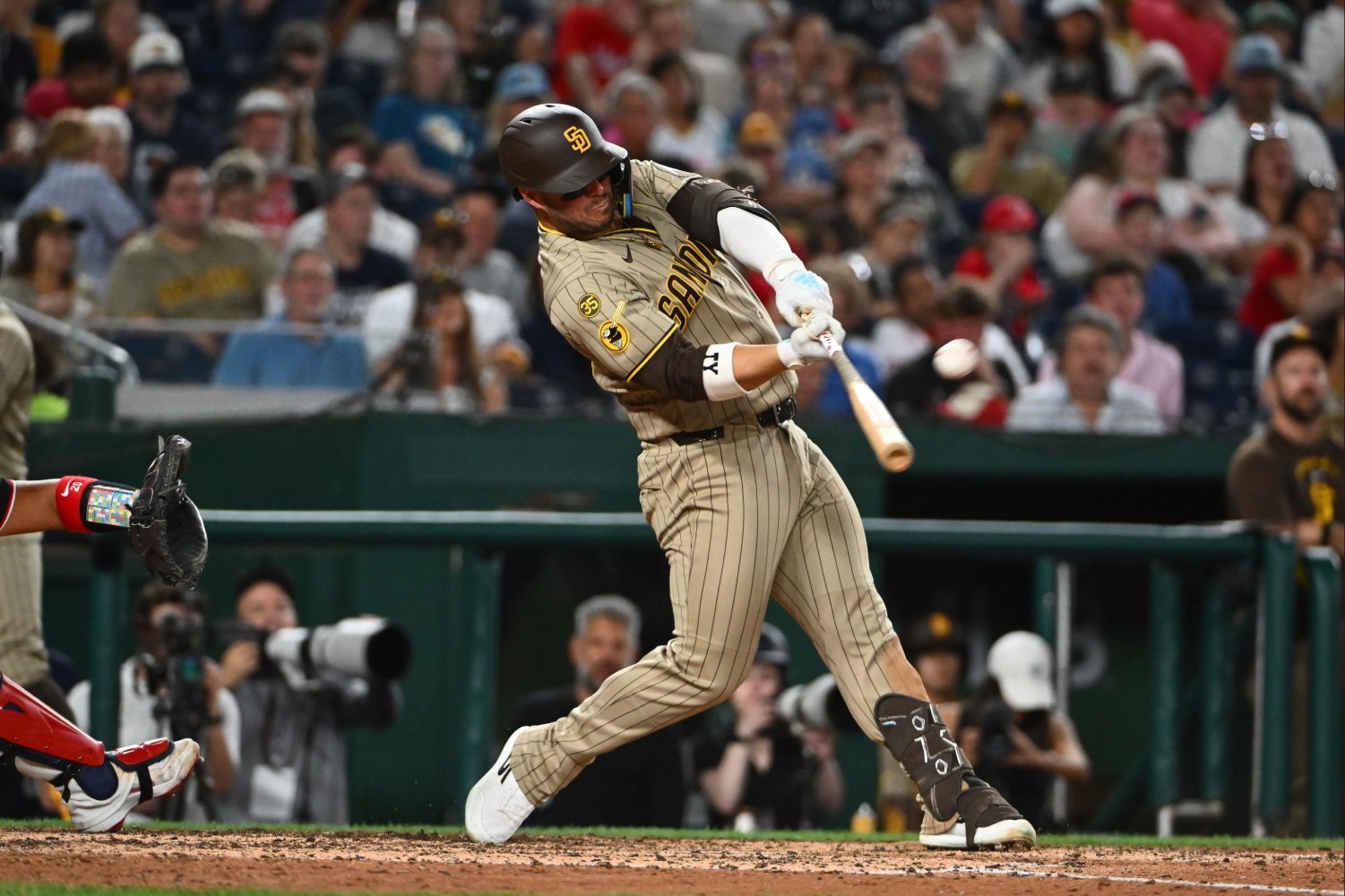 Where would the San Diego Padres be without Ty France? It’s impossible to know, but they almost certainly wouldn’t be 32-27. His 137 wRC+ leads the team among players with over 100 plate appearances, but that’s not really the interesting part. Unheralded players go through hot streaks all the time and carry their team in the process. While France has done that to some degree, it’s how he’s doing that which is noteworthy. Modern baseball hitting philosophy can be boiled down to three words: lift and pull. The reason for this is relatively simple. When you lift and pull, you’re more likely to hit the ball hard and in the air, which leads to extra bases. On top of that, if the pitcher knows you can do serious damage on contact, they pitch you more carefully, which means more balls and more walks. Functionally, lifting and pulling the ball leads to more power and on-base, which is kind of the name of the game. However, every hitter is different, and there is no one-size-fits-all approach, which brings us back to Ty France. France has gotten off to a torrid start by hitting the crap out of the ball. His 3.6% walk rate is scary, especially next to a 23.4% strikeout rate, but when you make that much contact and pair it with a 50% hard-hit rate, you can prosper. What is unusual is that France isn’t lifting and pulling his way to glory; in fact, he’s doing the opposite. On average, major leaguers pull 41% of their contact and go to the opposite field 23.7% of the time. By this metric, France doesn’t really stand out. He’s pulling 41.8% of his contact and going the other way at a 21.5% rate. However, that doesn’t mean he isn’t one of the most opposite-field-oriented hitters in baseball. On pulled contact, France is hitting fly balls 18.2% of the time, compared to the MLB average of 24.9%, and 58.8% of his opposite field contact are fly balls, against the MLB average of 62.20%. So, while France pulls the ball in the air much less than average, that’s still not really what makes him so interesting. Where you hit the ball is less important than how well you hit the ball. If you hit the ball hard enough, you have much more leeway with spray and launch angle, and this is where France has zigged where everyone else has zagged. France is currently sporting a 47.1% hard-hit rate on balls to the opposite field. If he had enough plate appearances to qualify, he’d rank third in that metric, behind only James Wood and Drake Baldwin, and even that undersells what he’s doing. On average, the MLB hard-hit rate is only 20.5% on balls to the opposite field, which France is more than doubling. When you factor in that France has a 29.4% line drive rate, on top of a 58.8% field fly ball rate, it’s easy to see why this unique profile is working. He’s lifting and crushing pitches to the opposite field in a way that few hitters have. Lift and pull isn’t actually about pulling the ball. In general, most hitters simply hit the ball harder to the pull side and struggle mightily to go the other way with authority. The thing is, France is not one of those hitters. He is elite at hitting the ball hard in the air to the opposite field, so why should he stop? Over the long haul, I doubt France will continue to run a wOBA of .368, as he has an xwOBA of .336, but that’d still constitute a successful bounce back after two mostly forgettable seasons. However, even if his production erodes, the first two months of the season have taught us a lesson: Hitting the ball hard, even the other way, is the key to hitting. View the full article
 -
 The Chicago Cubs continue to struggle as the calendar has turned to June. What should the next move be? Listen on Apple Podcasts: https://podcasts.apple.com/us/podcast/the-north-side-baseball-podcast/id1798599313 Listen on Spotify: https://open.spotify.com/show/75wMGhBwlrDDYPt3kaF453 Listen on iHeartRadio: https://www.iheart.com/podcast/263-the-north-side-baseball-po-268998437/ Listen on Pocket Casts: https://pca.st/eey7h6ih Watch on YouTube: https://www.youtube.com/@northsidebaseball View the full article
 -
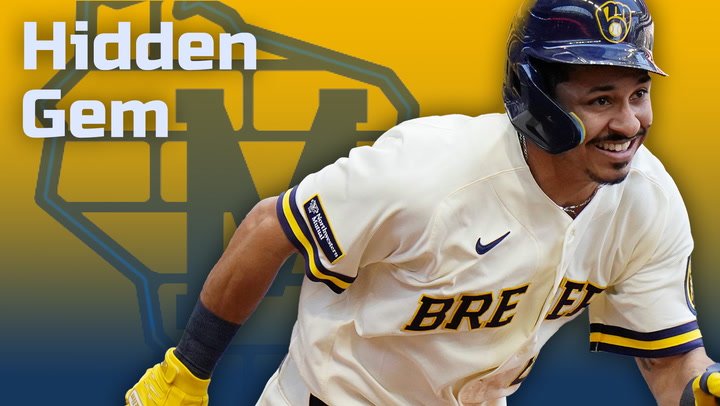 David Hamilton, who came to Milwaukee as part of the package that sent Caleb Durbin to Boston, has been tinkered with more than anyone, according to Milwaukee Brewers manager Pat Murphy. Two months into the season, we're seeing it paying off. Is it sustainable? View the full article
 -
 A look at what has clicked for Nolan Perry, a Blue Jays pitching prospect in High-A Vancouver, and a breakdown of his loud arsenal. View the full article
![More information about "[COPY] - Chicago Cubs Trade Deadline Scenarios: Welcome to the Darkest Timeline"](http://d317trerw33y7b.cloudfront.net/monthly_2026_06/rssImage-99fa834d4b389988d58173d4466eaac7.jpeg.14ba1f7cbc7976d46c4b34f6b23ffb2a.jpeg)
