


DiamondCentric
-
Posts
2,631 -
Joined
-
Last visited
Never
Content Type
Profiles
Forums
Events
News
Tutorials & Help
Major League Baseball Videos
Guides & Resources
Store
Downloads
Gallery
Everything posted by DiamondCentric
-

One Bold Brewers Prediction For Each Month Of The Season
DiamondCentric posted an article in Brewer Fanatic
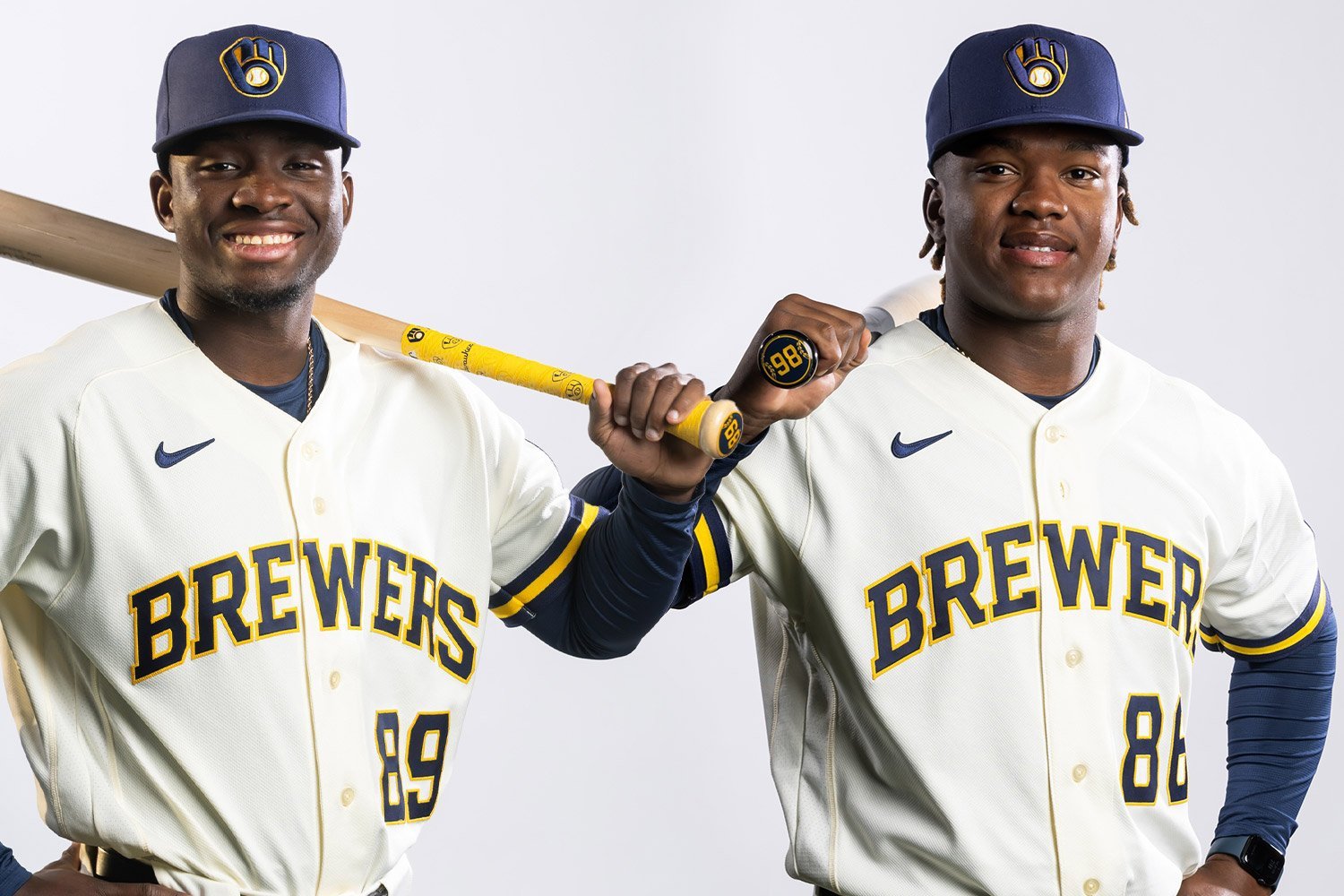 With 61 games down and 101 to go in the 2026 season, what could happen next? Well, a lot has already happened, including a rash of injuries that has the Brewers in a scramble mode. Still, there is a lot of baseball to play, and a five-game lead in the NL Central isn’t decisive in early June. Here’s one bold prediction for each month of the season that is left. June: Luis Lara forces his way to Milwaukee Sal Frelick has looked a lot more like the 2024 version (Gold Glove defense, below-average production) than the 2025 version (above-average offense with near-Gold Glove defense). The same can’t be said for Blake Perkins, who has scuffled (to put it mildly) in 2026 and 2025 after a leg injury. With Luis Lara tearing things up at Nashville, it’s getting harder not to go for a bit of a shuffle, with Lara starting in center, Garrett Mitchell moving to right, and Jackson Chourio handling left, with Frelick taking over as fourth outfielder. Lara could take the leadoff spot as well, so the Brewers aren’t wasting power bats like Chourio and Christian Yelich in the leadoff spot. July: The Brewers pull a roster-clearing blockbuster Nashville has plenty of talent, but some of them appear blocked. The Brewers will need to clear some roster space while also recharging the farm system. The way things are, there is a way for them to do both – it will be a blockbuster deal that will be one heck of a dice roll. The Brewers send Jake Bauers, Garrett Mitchell, and Jeferson Quero to the Rays, snagging utility player Taitn Gray, catcher Caden Bodine, and the Competitive Balance A pick the Rays acquired from Baltimore in return. This might seem like a huge risk, but Bauers is a free agent after 2026, and even with his offensive breakthrough, Milwaukee may not use the qualifying offer on him. In addition, Bauers and Mitchell fill a need for Tampa: In left field and center field, their current incumbents are making some good impressions of Luis Rengifo and Joey Ortiz at the plate. They also could use a long-term catcher, and Quero could fill the need for them, especially when Milwaukee has a number of talented options working their way through the system, along with very solid options on the major-league roster. August: Cooper Pratt, Tyler Black, Eddys Leonard, and Jett Williams are in Milwaukee Why might the Brewers move Bauers, Mitchell, and Quero? The answer is simple: They need the roster spots – because Rengifo and Ortiz will not be sustainable, and sooner or later, those replacements will need to happen. The Brewers will roll with their farm system, and it may actually make them better. September: The Brewers Lock Down Cornerstones The pennant race will not be the only excitement Brewers fans have. The July trade, in a sense, will set the Brewers up to meet the probable salary floor coming in the next collective bargaining agreement. Currently, they have a $139.5 million payroll, per Sportrac. The floor will likely be in the $170-175 million range, so Mark Attanasio will have to spend another $30-35 million. Assuming Brandon Woodruff departs after 2026, the team will also need to spend the $22 million QO salary. How do you spend about $50 million wisely? The obvious answer would be to lock in players who are likely cornerstones for the franchise. In this case, Jacob Misiorowski, Brice Turang, and William Contreras. Brewers fans will love it. The team execs will be okay with it. The rest of the National League? They’ll probably hate it. October: The Brewers win two playoff series The Brewers will have a good playoff run in 2026, even with the counterintuitive July trade. The big reason will be the talent of young players like Lara, Pratt, Williams, Black (who is just 25), and Leonard (also just 25). That said, this team will likely again make a NLCS exit, partially because they run out of gas, but mostly because Atlanta and Los Angeles still look like juggernauts, and Milwaukee’s path to the World Series will likely go through both of them unless the Crew gets the #1 overall seed in the playoffs, but pushing for that would only raise the question of how much more the Brewers have left in the tank. November: Jesus Made gets his extension Lockout or no lockout, there is one certainty: Jesus Made is going to be in Milwaukee come 2027, no matter when Opening Day is. It makes sense that the Brewers are going to give him a Chourio-type extension. What do you think will happen during the rest of the 2026 season? Let us know in the comments below! View the full article
 -
 Chicago Cubs Minor League Report - June 6 Affiliate Overview Triple-A Iowa Cubs Series vs. Toledo Mud Hens (Detroit Tigers): Mud Hens lead, 3-0 Season Record: 24–35 Double-A Knoxville Smokies Series at Birmingham Barons (Chicago White Sox): Tied, 2-2 Season Record: 28–26 High-A South Bend Cubs Series at Quad Cities River Bandits (Kansas City Royals): Cubs lead, 3-2 Season Record: 33–19 Single-A Myrtle Beach Pelicans Series at Charleston RiverDogs (Tampa Bay Rays): RiverDogs lead, 4-0 Season Record: 21–32 Affiliate Highlights Triple-A: Iowa Cubs Season Record: 24–35 Series Opponent: Toledo Mud Hens (29–31) Series Standing: Trail, 3-0 June 5: The Iowa Cubs dropped their fifth-straight contest, falling to the Toledo Mud Hens, 8-4, on Friday night at Principal Park. The Mud Hens took a 3-0 lead in the second, but the Cubs were able to scratch a run across in the bottom of the inning on Chas McCormick’s (1-for-4) solo blast. James Triantos (2-for-4) made it a 3-3 game in the third with a two-run double, but Toledo took the lead right back with three more in the fourth to make it 6-3. The visitors put two more on the board in the sixth before Jonathan Long’s (1-for-4) solo shot in the seventh made it 8-4, which would become the final score of the ballgame. Jordan Wicks got the start for Iowa and took the loss, falling to 0-3 on the season. Wicks allowed six runs on seven hits over 4 2/3 innings of work, striking out five and walking two. Connor Noland turned in two shutout innings in relief, allowing no hits and whiffing one. Double-A: Knoxville Smokies Season Record: 28–26 Series Opponent: Birmingham Barons (21–33) Series Standing: Tied, 2-2 June 5: The Knoxville Smokies evened their series against the Birmingham Barons with an 8-7 walk-off win in extra innings on Friday at Covenant Health Park. Owen Ayers (3-for-4) gave the Smokies a 1-0 lead in the first with an RBI-double before the Barons tied it at 1-1 in the third. In the home half of that inning, Ayers gave Knoxville the lead right back with a three-run homer, his eighth of the season. Three runs from Birmingham in the fifth tied the game at 4-4, and the visitors would take their first lead of the ballgame with a run in the seventh. Hayden Cantrelle’s (1-for-4) RBI-triple after the stretch made it 5-5, which would be the score of the game as it headed to extra innings. Both teams scored one run in the 10th, with the Smokies getting their run on Ayer’s RBI-single, his fifth run driven in of the night. Birmingham would score once in the 11th to go up 7-6. Karson Simas (3-for-5) tied the game with an RBI single, and Jefferson Rojas (2-for-6) secured the victory with a game-winning, two-out, RBI double. Dawson Netz got the start for Knoxville and took no decision. Netz allowed one run on three hits over three innings of work, striking out two and walking four. Tyler Santana picked up the win in relief, allowing one run on two hits over 1 1/3 innings, whiffing one. High-A: South Bend Cubs Season Record: 33–19 Series Opponent: Quad Cities River Bandits (24–29) Series Standing: Lead, 3-2 June 5: The South Bend Cubs split their doubleheader at the Quad Cities River Bandits, falling in the opener, 13-8, before coming away with a 4-3 victory in the nightcap. Game 1: The Cubs dropped their doubleheader opener to the River Bandits, 13-8, in seven innings. Quad Cities jumped out to a 9-0 lead with four runs in the first and five in the second, but South Bend responded with eight runs in the third to cut the deficit to one. Kane Kepley (1-for-3) doubled home a run, and Christian Olivo followed by scoring on a wild pitch. Kepley would score on Josiah Hartshorn’s (1-for-3) sacrifice fly, and Matt Halbach (1-for-4) came through with an RBI-double. Halbach would then score on an error, and Alex Madera (1-for-4) would drive in two with a triple a batter later. Justin Stransky (1-for-1) capped the furious rally with an RBI single to make it 9-8. Despite the onslaught in the inning, the Cubs would manage just one hit the rest of the way as the River Bandits dealt the decisive blow with four runs in the fifth to make it 13-8. Jostin Florentino took the loss on the mound for South Bend, falling to 0-2 on the season. Florentino allowed four runs on six hits over just one inning of work. Game 2: South Bend got back in the win column with a 4-3 triumph over Quad Cities in the doubleheader nightcap, in a game that was being made up from April 3. The River Bandits, playing as the “road” team, opened the scoring with two runs in the second, but the Cubs hit back with three in the bottom of the inning to take the lead. Miguel Useche (1-for-3) tied the game with a two-run shot, his fifth of the year, and Drew Bowser (1-for-3) gave the “home” team the lead with an RBI-double. Quad Cities leveled the ballgame with a run in the third, but Ty Southisene’s (1-for-3) RBI-single in the fifth would prove to be the decisive swing as South Bend would hold on for the 4-3 win. Mason McGwire picked up the first win of his High-A career by allowing three runs on three hits over five innings of work, striking out four and walking one. Kenyi Perez earned his third save of the campaign by working two shutout innings to close the game, allowing no hits, whiffing five batters, and walking one. In his two outings of this series, Perez has amassed 11 strikeouts in four innings, while issuing just two walks, picking up a save in both games. Single-A: Myrtle Beach Pelicans Season Record: 21–32 Series Opponent: Charleston RiverDogs (30–25) Series Standing: Trail, 4-0 June 5: The Myrtle Beach Pelicans dropped their fifth-straight contest as they were walked off by the Charleston RiverDogs, 9-8. Derniche Valdez (1-for-5) gave the Pelicans the lead in the first with a two-run double, and Logan Poteet (2-for-4) made it a 3-0 game with a solo shot in the third, his eighth of the season. The RiverDogs stormed back with five runs in the sixth to take their first lead of the contest, but Eli Lovich (2-for-4) tied the game at 5-5 with a two-run blast in the seventh, his eighth of the year. Myrtle Beach went back in front with three runs in the eighth, thanks to a two-run double from Darlyn De Leon (1-for-4), who would also later score on a wild pitch. Charleston would stun the visitors, however, with four runs in the ninth to walk off the Pelicans. All four runs were scored with two outs. Noah Edders got the start for Myrtle Beach and took no decision. Edders tossed five scoreless innings, allowing just two hits to go along with three strikeouts and a walk. View the full article
 -
Javier Assad Returns To Cubs As Fresh Bullpen Arm
DiamondCentric posted an article in North Side Baseball
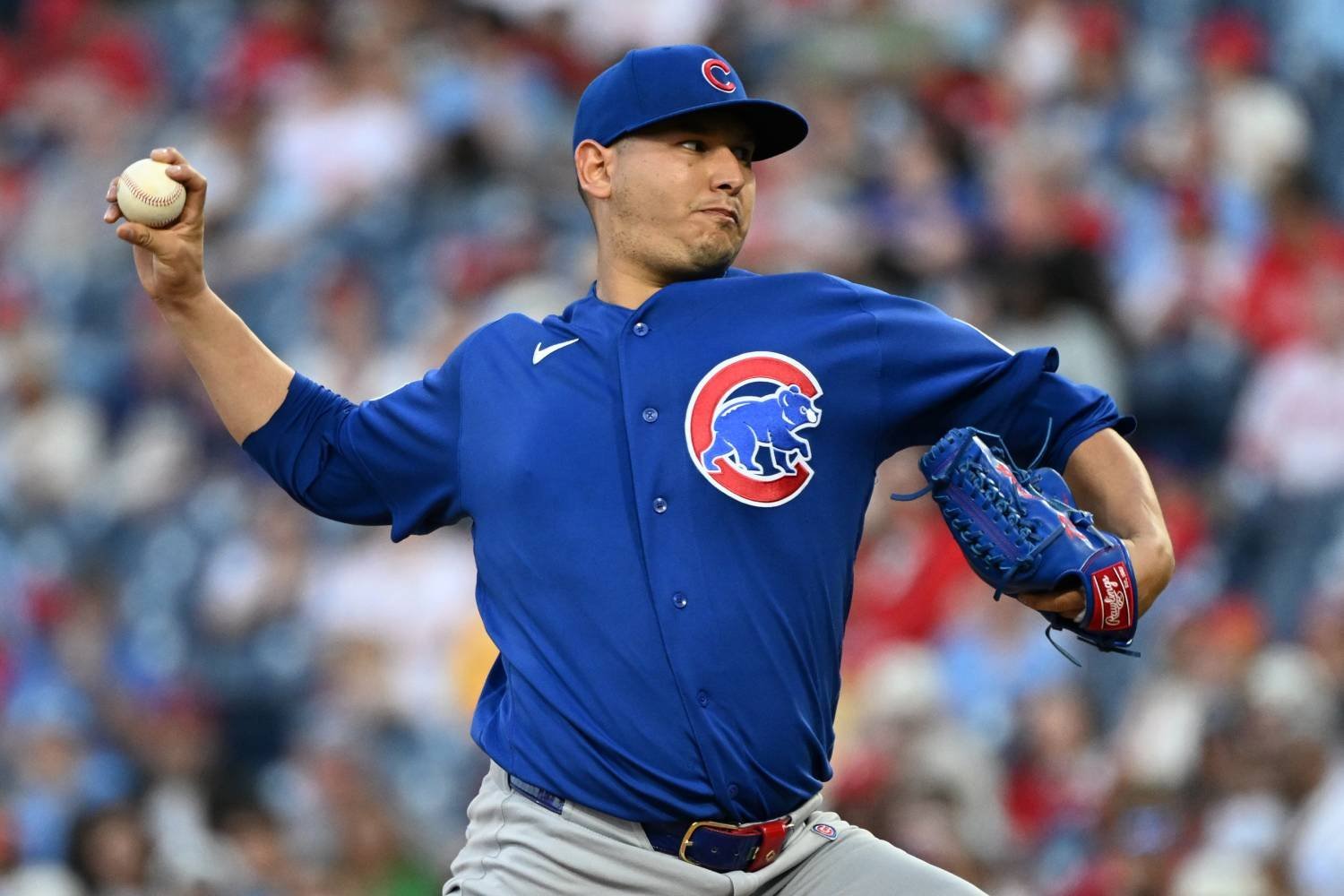 The need for a fresh arm apparently was more important than continuing to stretch out Javier Assad. The Cubs on Saturday called up the right-hander from Triple-A Iowa after just three outings totaling nine innings. Right-hander Ethan Roberts was sent down to Triple-A after being one of four relievers used in Friday's 18-3 loss to the San Francisco Giants. Assad had been sent down to Triple-A May 17 under the premise of stretching him out to be a starter. He did start all three games there, with the first two outings lasting 3⅔ and the second 4⅓. His third start, however, happened Wednesday and he went just one inning without allowing a run or a hit. Assad has made three starts among his eight appearances this year with a 4.84 FIP (5.88 ERA) over 26 innings. He has an excellent 6.5% walk rate but just a 13% strikeout rate this year. Roberts has a 3.77 FIP (1.98 ERA) in 14 appearances and 18⅓ innings, with a 9.7% walk rate and 19.4% strikeout rate. He allowed one run in 1⅔ innings vs. the Giants, a game that saw catcher Carson Kelly make yet another mound appearance. View the full article
 -
Royce Lewis is Back, James Outman Designated for Assignment
DiamondCentric posted an article in Twins Daily
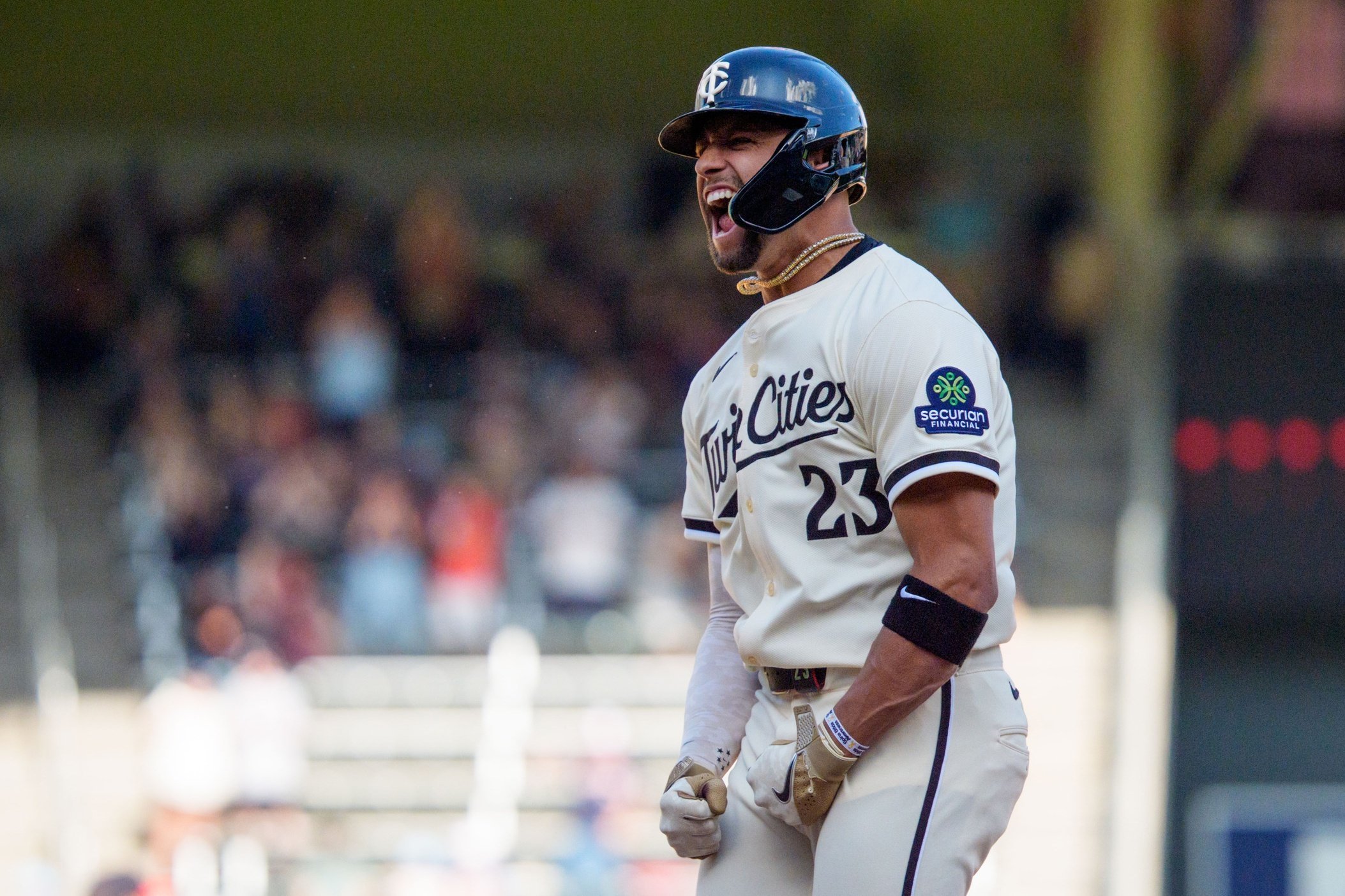 According to multiple reports, the Twins are recalling Royce Lewis from Triple-A St. Paul. In a corresponding move, James Outman has been designated for assignment. Just a few weeks ago, it was fair to wonder whether Lewis had played his last game in a Twins uniform. Injuries have repeatedly interrupted his career, and when he was healthy this season, he simply wasn't producing. Through his first stint with Minnesota in 2026, Lewis hit just .163/.261/.279 while striking out in 31.1% of his plate appearances. The Twins finally made the difficult decision to send him to Triple-A in mid-May, hoping he could reset both physically and mentally. Lewis responded exactly as the organization had hoped. In 13 games with the Saints, Lewis slashed .340/.417/.868 with eight home runs, 19 RBI, and 12 runs scored. Just as encouraging was the reduction in strikeouts. After fanning at an alarming rate in the majors, Lewis cut that number to 19.6% during his time in St. Paul. Of course, success against Triple-A pitching doesn't automatically guarantee major-league success. However, the Twins know better than anyone what Lewis is capable of when healthy and locked in. During the 2022 and 2023 seasons, injuries limited him to just 280 plate appearances, but he still posted a remarkable .307/.364/.549 (.913) slash line. The talent has never been in question. The challenge has always been keeping him on the field and consistently productive. His return also raises interesting questions about how the Twins plan to deploy him defensively. Lewis has spent most of his professional career at third base, and that was his primary position before the demotion. Since then, Brooks Lee has settled in at the hot corner while continuing to strengthen his case as a long-term fixture in the infield. With top prospect and shortstop Kaelen Culpepper tearing up Triple-A, the organization's future infield picture suddenly appeared much more crowded. Rather than limiting himself to third base, Lewis has started expanding his versatility. Earlier this week, he appeared at second base, his first professional game there since a brief experiment in 2024. He also made his first professional appearance at first base, giving the Twins another potential avenue to get his bat into the lineup. That flexibility could prove valuable. First base remains one of the more unsettled spots on the roster. Kody Clemens, Josh Bell, and Victor Caratini have all received significant playing time there this season. Since Ryan Jeffers suffered a hamate fracture in mid-May, Caratini has become the club's primary catcher, reducing his availability at first base. Bell, meanwhile, is hitting just .227/.289/.345 (.634) and is a pending free agent and isn’t in the team’s long-term plans. While the veteran still has value, there is a reasonable argument for reducing his workload if Lewis forces the issue offensively. Clemens presents another interesting wrinkle. He has enjoyed a productive season at the plate while providing defensive flexibility all over the field. The Twins have used him at every outfield position, and Matt Wallner's recent demotion created additional opportunities in the corners. Trevor Larnach and Austin Martin have performed well in those spots, but Clemens' ability to move around the diamond remains an asset. The reality is that Lewis' roster outlook looked dramatically different a month ago. Between his struggles at the plate, his growing salary through arbitration, and the emergence of Lee and Culpepper, there was a legitimate path toward a non-tender this offseason. At $2.85 million this year and with additional raises looming, Lewis needed to remind the organization why he remains worth investing in. His performance in St. Paul accomplished exactly that. As for Outman, the move is far less surprising. The 29-year-old never established a meaningful role on the roster and was used sparingly throughout the season. In 49 games, he posted a 34 OPS+ and accumulated -0.4 rWAR. For a player with parts of five major-league seasons on his résumé, the production simply wasn't enough to justify a roster spot. Now the focus shifts back to Lewis. The Twins don't need him to be the player who dominated Triple-A pitching over the past two weeks. They simply need him to look like the impact talent that once appeared destined to become a franchise cornerstone. The opportunities are still there, even if the path looks different from what it did a year ago. After a month that seemed to place his future in Minnesota in doubt, Lewis has earned another chance. What he does with it could go a long way toward determining whether he's part of the Twins' future or merely receiving one final opportunity to prove he belongs. What stands out about Lewis and his Triple-A performance? How will the Twins use Lewis defensively? Leave a comment and start the discussion. View the full article
 -
 Mitch Voit is the New York Mets' no. 8 prospect, per Grand Central Mets. What makes the 2025 first-rounder different from others? In this video, we'll discuss his advantageous two-way background, game-wrecking speed, budding plate discipline, and ultimately, when to expect his major league debut. Enjoy! View the full article
 -
Byron Buxton Leaves Friday’s Game After Colliding With The Wall
DiamondCentric posted an article in Twins Daily
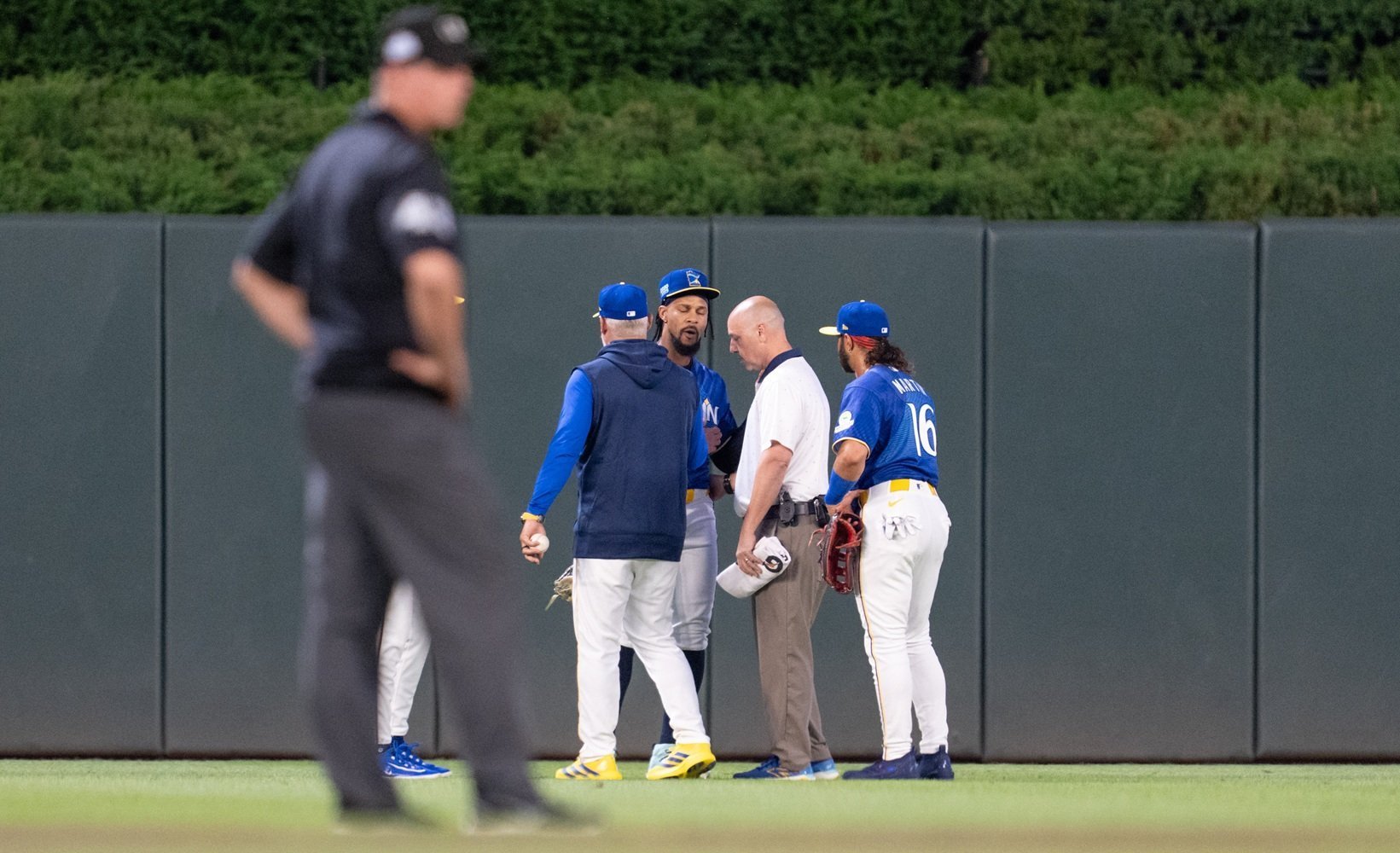 The Minnesota Twins have spent much of the season trying to keep Byron Buxton healthy while still allowing him to impact games in center field. On Friday night, that balancing act took another concerning turn. Buxton exited Minnesota’s game against the Kansas City Royals in the third inning after crashing into the center field wall while making a catch on a deep drive from Carter Jensen. The Twins later announced that Buxton suffered a right shoulder contusion. The play immediately drew concern at Target Field. Buxton raced back on Jensen’s drive, secured the out, and slammed into the wall at full speed. Although he remained in the game initially and stayed in center field for the next two outs, the situation quickly changed once he returned to the dugout. “I was concerned about it because he ran into it full speed, hard,” Twins manager Derek Shelton said. “He was shook up a little bit. When he came in, and he said he hit that shoulder, the same shoulder that he had the issue with — he wanted to hit, and I was like, ‘Nah, there's no chance if you’re feeling it in the same spot.’ " Head trainer Nick Paparesta spoke with Buxton after the collision, and the veteran center fielder initially believed he could continue playing. However, after remaining on the field for the rest of the inning, Buxton informed Shelton that the shoulder had taken the brunt of the impact. “He’s way too important to us to take an at-bat to try, so I just took it out of his hands and said no,” Shelton said. The injury is particularly concerning because it involves the same shoulder that recently limited Buxton's ability to play center field. He jammed his shoulder on a slide on May 23, affecting his throwing for roughly a week. Combined with a sore right hip flexor that forced him to miss five games in May, the Twins have been carefully managing his workload over the last several weeks. Buxton was playing center field for only the fourth time since May 13, entering Friday's game. Much of his recent playing time had come as the designated hitter while the Twins tried to keep his bat in the lineup without placing additional stress on his body. That bat has been one of the biggest reasons Minnesota remains in contention. Buxton entered Friday tied for fourth in Major League Baseball with 18 home runs and had homered against Kansas City on Thursday night. He has appeared in 55 of the Twins' first 65 games, an encouraging total for a player whose availability has often been one of the club's biggest questions. Unfortunately, Friday's collision created another health concern at a time when the Twins can least afford to lose him. Shelton said it’s unlikely Buxton will be in Saturday’s lineup because the first pitch was about 13 hours after last night’s game ended. The Twins should have a clearer picture of Buxton's status over the next couple of days, but Friday served as another reminder of both his value and the fine line Minnesota must walk in keeping one of baseball's most dynamic players on the field. View the full article
 -
Mets Minor League Report: Suero's Walk-Off Caps Mixed Night
DiamondCentric posted an article in Grand Central Mets
 Chris Suero crushed a walk-off three-run homer in the 10th to lift Binghamton past Reading, 5-4, after Jacob Reimer's early two-run shot. Brooklyn rode three home runs, including Corey Collins's three-run blast, to a 6-3 win as Dakota Hawkins struck out two over three innings. Bryce Conley fanned five in seven strong frames. St. Lucie fell 5-4 despite Emilio Obispo's five strikeouts, and Jack Wenninger took the loss as Syracuse was shut out 4-0. Mets Transactions No Roster Moves RailRiders Blank Syracuse As Mets No-Hit The Syracuse Mets were held without a hit in a 4-0 loss to the Scranton/Wilkes-Barre RailRiders. Syracuse drew four walks but stranded three runners and never pushed a runner across. Jorge Polanco worked two walks from the cleanup spot, and Christian Arroyo and Matt Rudick each added a free pass, but the lineup managed nothing else against Scranton's staff. Starter Jack Wenninger gave 5 1/3 innings and allowed three runs, one earned, on four hits with three walks and three strikeouts. The damage against him began in the second, when the RailRiders scored on a double-play groundout and then took a 2-0 lead on a run-scoring triple. They tacked on a solo home run in the fifth to make it 3-0. Ben Simon followed with 1 2/3 scoreless innings, striking out three. Scranton added an insurance run in the eighth on a solo home run off Adbert Alzolay, who struck out three in his lone inning. Ofreidy Gómez worked a scoreless ninth. Syracuse's offense, which struck out eight times as a team, never advanced a runner to third base. Player AB R H RBI BB K Nick Morabito CF 4 0 0 0 0 0 Jorge Polanco DH 2 0 0 0 2 0 Francisco Alvarez C 3 0 0 0 0 1 Kevin Parada C 1 0 0 0 0 0 Christian Arroyo 1B 2 0 0 0 1 0 Andy Ibáñez 3B 3 0 0 0 0 0 Yonny Hernández 2B 3 0 0 0 0 2 Cristian Pache RF 3 0 0 0 0 1 Jackson Cluff SS 3 0 0 0 0 2 Matt Rudick LF 2 0 0 0 1 2 Player IP H R ER BB K HR Jack Wenninger 5 1/3 4 3 1 3 3 1 Ben Simon 1 2/3 0 0 0 1 3 0 Adbert Alzolay 1 1 1 1 1 3 1 Ofreidy Gómez 1 1 0 0 1 1 0 Suero's Walk-Off Homer Stuns Reading In Extras Chris Suero hit a walk-off three-run home run in the bottom of the 10th inning to give the Binghamton Rumble Ponies a 5-4 win over the Reading Fightin Phils. Binghamton jumped ahead in the first when Jacob Reimer launched a two-run homer that scored Suero for a 2-0 lead. Reading answered with a two-run homer in the fourth to tie it, and the game stayed level into extra innings. In the top of the 10th, Reading took a 4-2 lead, scoring its zombie runner on a double and adding another run on a single. In the bottom half, Binghamton's zombie runner, Vincent Perozo, moved to third on a Wyatt Young single before Suero ended it with a drive to left center, scoring Perozo and Young. Suero finished 2-for-5 with a triple, a home run, and three runs batted in. Perozo had a big night as well, going 3-for-4 with two doubles and a run scored. Bryce Conley turned in the standout pitching performance, working seven innings and allowing two runs on three hits with three walks and five strikeouts. Brian Metoyer followed with two scoreless innings and three strikeouts, and Douglas Orellana earned the win despite allowing two runs in the 10th. Binghamton left 14 runners on base but did just enough late. Player AB R H RBI BB K Chris Suero C 5 2 2 3 0 0 Jacob Reimer 3B 3 1 1 2 1 2 Eli Serrano III CF 4 0 0 0 0 3 D'Andre Smith CF 2 0 0 0 1 0 Jaylen Palmer RF 1 0 0 0 0 1 Jose Ramos DH 3 0 0 0 1 1 Nick Lorusso 2B 4 0 1 0 0 1 JT Schwartz 1B 4 0 0 0 0 0 Vincent Perozo LF 4 1 3 0 0 0 Wyatt Young SS 4 1 1 0 0 0 Player IP H R ER BB K HR Bryce Conley 7 3 2 2 3 5 1 Brian Metoyer 2 1 0 0 0 3 0 Douglas Orellana 1 2 2 1 1 1 0 Three Homers Power Brooklyn Past Jersey Shore The Brooklyn Cyclones hit three home runs to beat the Jersey Shore BlueClaws, 6-3. After falling behind 1-0 on a Jersey Shore double in the second, Brooklyn seized control in the third inning. Corey Collins drove a three-run homer to right field, scoring Diego Mosquera and Ronald Hernandez to make it 3-1, and Yonatan Henriquez followed with a solo home run to push the lead to 4-1. Brooklyn added two more in the sixth when Colin Houck homered to right center, scoring Daiverson Gutierrez. Jersey Shore answered with two runs in the bottom of the sixth on a single, but got no closer. Collins finished 1-for-3 with the three-run homer and a walk, Henriquez went 2-for-4 with a double, a home run, and a run scored, and Houck added a 1-for-3 night with a home run and two runs batted in. Dakota Hawkins gave Brooklyn solid work, allowing one run on two hits over three innings with two strikeouts. Garrett Stratton struck out three over two scoreless innings, and Hunter Hodges, Parker Carlson, and Hoss Brewer combined to finish it. Brooklyn struck out 13 times as a team and left 13 on base, but did its damage with the long ball. Player AB R H RBI BB K John Bay CF 5 0 0 0 0 3 Grae Kessinger SS 3 0 0 0 1 2 Ronald Hernandez DH 4 1 0 0 0 2 Corey Collins 1B 3 1 1 3 1 1 Yonatan Henriquez LF 4 1 2 1 0 2 Daiverson Gutierrez C 3 1 0 0 0 0 JT Benson RF 3 0 0 0 0 1 Colin Houck 3B 3 1 1 2 1 1 Diego Mosquera 2B 3 1 0 0 0 1 Player IP H R ER BB K HR Dakota Hawkins 3 2 1 1 0 2 0 Garrett Stratton 2 2 0 0 1 3 0 Hoss Brewer 1 1 2 0 1 2 0 Hunter Hodges 2 1 0 0 0 1 0 Parker Carlson 1 0 0 0 0 0 0 St. Lucie's Late Rally Falls Short Against Clearwater The St. Lucie Mets fell 5-4 to the Clearwater Threshers despite a late push. Clearwater opened the scoring with three runs in the second inning, getting one across on a fielder's choice aided by a throwing error and two more on a single. The Threshers added two in the fifth on a home run for a 5-1 lead. St. Lucie chipped away, scoring its first run in the fourth when Elian Peña came home on a Randy Guzman double-play grounder. Yohairo Cuevas brought in another with a double in the sixth, scoring Francisco Toledo. The Mets made it interesting in the eighth, when Simon Juan doubled to left to score Peña and Cuevas and pull within 5-4, but they could not complete the comeback. Peña led the offense, going 2-for-3 with two runs scored, while Cuevas finished 2-for-4 with two doubles and a run batted in. Emilio Obispo turned in the top pitching effort, working four innings and allowing three runs, none earned, on two hits with one walk and five strikeouts. Elwis Mijares allowed two earned runs over two innings, and Joe Scarborough and Tyler McLoughlin combined for three scoreless innings out of the bullpen. St. Lucie struck out 12 times and left four runners on base. Player AB R H RBI BB K Elian Peña SS 3 2 2 0 0 0 Yohairo Cuevas LF 4 1 2 1 0 0 Randy Guzman LF 2 0 0 0 0 0 Simon Juan CF 2 0 1 2 0 1 AJ Salgado RF 4 0 0 0 0 2 Julio Zayas 1B 4 0 0 0 0 3 Branny De Oleo 2B 4 0 0 0 0 1 Jackson Hauge DH 3 0 0 0 1 2 Jeremy Rodriguez 3B 4 0 0 0 0 1 Francisco Toledo C 2 1 0 0 1 2 Player IP H R ER BB K HR Emilio Obispo 4 2 3 0 1 5 0 Elwis Mijares 2 2 2 2 1 1 1 Joe Scarborough 2 1 0 0 0 1 0 Tyler McLoughlin 1 0 0 0 1 0 0 Top-20 Prospect Performance Nolan McLean: DNP Carson Benge: DNP A.J. Ewing: DNP Jonah Tong: DNP Ryan Clifford: DNP Jacob Reimer: 1-for-3, HR, 2 RBI, BB, 2 K Jack Wenninger: 5 1/3 IP, 4 H, 3 R, 1 ER, 3 BB, 3 K Elian Pena: 2-for-3, 2 R Mitch Voit: DNP Nick Morabito: 0-for-4 Jonathan Santucci: DNP Chris Suero: 2-for-5, 3B, HR, 3 RBI, 2 R Zach Thornton: DNP Wandy Asigen: DNP Will Watson: DNP Eli Serrano III: 0-for-4, 3 K Ryan Lambert: DNP Dylan Ross: DNP Antonio Jimenez: DNP R.J. Gordon: DNP View the full article
 -
 Boston Red Sox Affiliate Recap Triple-A Worcester Red Sox Series vs. Buffalo Bisons (Toronto Blue Jays): 3-1 Season Record: 30-28 Tsung-Che Cheng lifted the WooSox to a 6-3 victory as they grabbed the series win. Patrick Sandoval made a rehab appearance on Friday as he opened the game for Worcester. He pitched one and ⅓ innings of no-hit ball as he continues to build back from 2024 surgery. Raymond Burgos made a bulk relief appearance following Sandoval’s stint, turning in four and ⅔ frames of work. Burgos got the win as he allowed one run on three hits and three walks. Kyle Keller got the ball going into the seventh and was flawless across his inning-long appearance. Zack Kelly took the last two innings, allowing two runs but sealing the win for Worcester. The WooSox bats were hot, even against future Hall of Famer Max Scherzer. Tsung-Che Cheng got to Scherzer first, scoring Max Ferguson and Tyler McDonough on a line drive single to right field. Matt Lloyd struck next for the WooSox, crushing a solo homer in the fourth inning to extend the lead to two. In the fifth, Allan Castro scored two more, Jason Delay and Mikey Romero, on a single as Worcester took control of the game. Cheng added a third RBI in the eighth, scoring Ferguson on another single to right field. Worcester amassed 12 hits in Friday’s game as they took a commanding series lead. Double-A Portland Sea Dogs Series vs. Hartford Yard Goats (Colorado Rockies): 2-2 Season Record: 28-26 Portland fell as the bullpen collapsed, allowing six runs in the ninth. Hayden Mullins took the first three innings for Portland, allowing two runs on two hits but sitting five batters down on strikes. He walked three and let up a homer but kept the opposing offense mostly in check. Dalton Rogers took the next four frames and was lights out. He didn’t allow a single hit as he walked three. He struck out three as well as he lowered his ERA to 1.17. Cooper Adams got the ball to start the eighth, getting off to a decent start. However, he fell apart in the ninth inning, allowing five runs before Patrick Halligan took over. Halligan got the loss as he allowed a bases-loaded double that gave Hartford the lead, and eventually, the win. Ahbram Liendo paved the way for Portland’s offense on Friday as he tallied four RBIs on one hit, a grand slam. Liendo crushed his third homer of the season in the sixth inning, scoring Miguel Bleis, Caden Rose, and Will Turner and giving the Sea Dogs a two-run lead. Later in the inning, Nate Baez added to the lead with a two-run single that scored Franklin Arias and Marvin Alcantara. Brooks Brannon capped off the seven-run inning with a double, driving in Baez. The pitching support was rough for Portland to say the least as they fell by one run. High-A Greenville Drive Series @ Rome Emperors (Atlanta Braves): 1-3 Season Record: 21-32 Greenville lost in walk-off fashion after a fierce pitching duel. Only three pitchers took the mound for Greenville on Friday as the pitching staff allowed just five hits. Jojo Ingrassia took the first four innings and was dominant. He lowered his season ERA to 1.53 with a six-strikeout performance, allowing just two hits. Joe Vogatsky took the next two frames, allowing two more hits and a walk as he compiled three strikeouts. After a masterful seven combined innings, Steven Brooks looked to save the Drive from a walk-off fate. He failed to do so, however, giving up a sacrifice fly in the bottom of the ninth as Rome took Friday’s contest. Despite six total hits, the Drive went 0-for-7 with runners in scoring position as they failed to come up clutch. Mason White drew two walks, but went hitless in two other at-bats. No Greenville hitter had a multi-hit day as they failed to capitalize on prime opportunities to score. Low-A Salem RidgeYaks Series @ Wilson War Birds (Milwaukee Brewers): 1-3 Season Record: 24-31 Despite holding a lead into the sixth, Salem fell on a walk-off grand slam. Brady Tygart made Friday’s start on a rehab assignment from High-A Greenville. He allowed two earned runs on two walks but no hits. He sent five batters packing via strikeout before turning the ball over to Leighton Finley in the third inning. Finley pitched into the seventh, racking up three strikeouts. He allowed two runs on five walks and four hits but minimized potential damage. Adam Bates took the next two and ⅔ innings, allowing one more run (unearned) and striking out four batters. In extras, Griffin Kilander looked to stave off the walk-off loss but failed to do so, allowing a walk-off grand slam as he walked two and earned the loss for Salem. The RidgeYaks managed to score seven runs on just four hits as Stanley Tucker crossed home twice. Tucker scored in the third as Salem opened the scoring. He crossed home on a Starlyn Nunez sacrifice fly to grab the lead. Kleyver Salazar and Skylar King each scored in the fourth on two separate passed balls. Later in the inning, Tucker doubled to left field, driving in Louis Andujar. Avinson Pinto then scored on a Givian Sirvania ground out before Tucker scored on yet another passed ball. After a hectic fourth, the RidgeYaks’ offense was quiet as Wilson tied the game. In the tenth, King put Salem in winning position with a single that scored Opata. However, the pitching staff let King down as the RidgeYaks fell in truly heartbreaking fashion. View the full article
 -
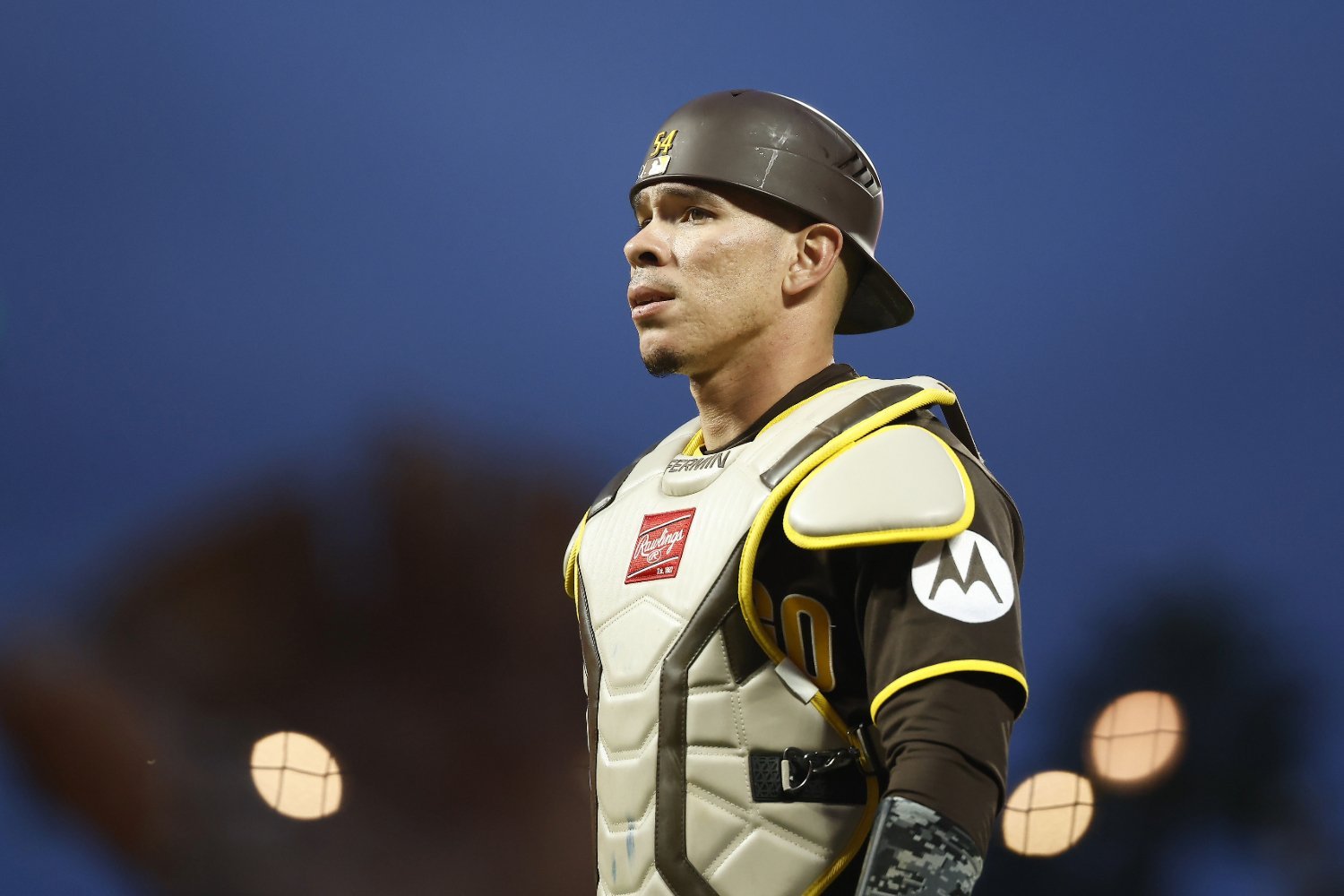 When the San Diego Padres acquired Freddy Fermin at last year's trade deadline, they were acquiring a 30-year-old backup catcher who had the potential to be a starter. To be clear: The Padres were desperate for an upgrade behind the plate. At the time, they were running with Elias Diaz and Martin Maldonado as their catching tandem. They were pretty bad offensively and not much better defensively. Turns out that Maldonado, once a defensive whiz, was in his last MLB season. Diaz ended up signing a minor-league contract in the offseason with the Kansas City Royals, Fermin's former team. Fermin was supposed to be a stabilizer at catcher for not just the final couple months of the 2025 regular season as the Padres made a postseason push, but for at least 2026 and perhaps 2027 as the Friars awaited the development of top prospect Ethan Salas. What did it cost the Padres to acquire such a catcher from the Royals? Apparently a lot. President of baseball operations A.J. Preller sent not just one young pitcher to the Royals, but two right-handed starters. In hindsight, that seems like a lot when other teams were sending out a lower-level top-30 prospect to acquire a backup catcher like the Milwaukee Brewers did when they picked up Danny Jansen at the trade deadline. Alas, the Padres sent right-handers Stephen Kolek and Ryan Bergert to the Royals. Kolek was 28 at the time and had made 14 starts for the Padres to decent results (4.28 FIP, 4.18 ERA, 7.7% walk rate, 16.7% strikeout rate), while Bergert was 25 years old and had made his MLB debut that year, starting seven of his 11 games and showing promise (4.28 FIP, 2.54 ERA, 12.1% walk rate, 22.8% strikeout rate). Kolek had been a Rule 5 selection whom the Padres used in a relief role as he made his MLB debut in 2024, while Bergert had been the Padres' No. 7 prospect at the time of the deal. Perhaps Preller didn't see an MLB future for either Kolek or Bergert like the Royals did, with Kolek in particular. After injuries prompted a call-up, Kolek has made five starts for the Royals and posted a 4.22 FIP (3.48 ERA). His highlight was a four-hit shutout of the Seattle Mariners on May 23. Bergert, who like Kolek saw time with the Royals after the trade, is out for the season after undergoing reconstruction surgery on his right UCL. He made just three starts at Triple-A before being hurt. That leads us to Fermin. Known as a good defender with a bit of potential with the bat, Fermin has managed to produce a meager .130/.233/.170 slash line through 43 games. For reference, Diaz and Maldonado both finished 2025 with a .204 average with the Padres. Fermin's defense has been good, ranking in between the 81st and 89th percentile in blocks above average (83rd), caught stealing (81st) above average and pop time (89th). Fermin's offense is the bigger concern, though. In four seasons with the Royals as Salvador Perez's backup, Fermin had a .268/.314/.383 slash line. Not fantastic, but acceptable for a catcher in today's day and age. He did play more than 100 games each of the last two seasons, so you can't exactly blame it on the workload. New manager Craig Stammen has done a nice job of splitting the catching duties, with Fermin usually getting three of the five starts each turn through the rotation. That left the other two for Luis Campusano, whose bat has always been his better attribute over his glove. No longer having to deal with Mike Shildt, who left as manager after last season, Campusano has flourished offensively, putting up a .288/.362/.596 slash line with three homers and 10 RBIs in 18 games. But a broken left big toe nearly a month ago has kept Campusano sidelined. That opened the door for 11-year minor-league veteran Rodolfo Duran to take over as the No. 2 catcher. Other than hitting a homer for his first MLB hit, Duran has done very little offensively. In fact, he has just two hits in 13 games for a .087/.250/.217 slash line. But Duran has drawn rave reviews from Stammen and the pitchers for his defensive work. Fermin's offensive woes have led to speculation that Duran should be kept over Fermin when Campusano returns. That's probably a step too far, but the fact that these conversations are taking place, with Stammen being asked about retaining Duran, says a lot about where Fermin is and how much of a disaster that trade has been. The Padres would certainly love to have had Kolek and Bergert in camp this spring instead of possibly banking on MLB veteran Marco Gonzales, coming off left flexor tendon surgery that caused him to miss all of 2025, to be in line for major-league innings. Unfortunately, Gonzales has struggled mightily at the Triple-A level and likely won't be a given a chance in the bigs. It's a painful truth in a season in which MLB-caliber starters have been hard to come by, but the Fermin trade is partly responsible for the Padres' woes on both sides of the ball. View the full article
 -
 Twins System Recap: The early part of this week was highlighted by some impressive displays of power from Royce Lewis and Matt Wallner on the Saints. Fort Myers continued to get excellent work from their arms out of the 2025 draft class, including Merit Jones, Jason Reitz, Matthew Dalquist, and Justin Mitrovich. Also, Eduardo Tait put me in my place with his big game on Thursday. Info on those performances and more in tonight's recap. View the full article
 -
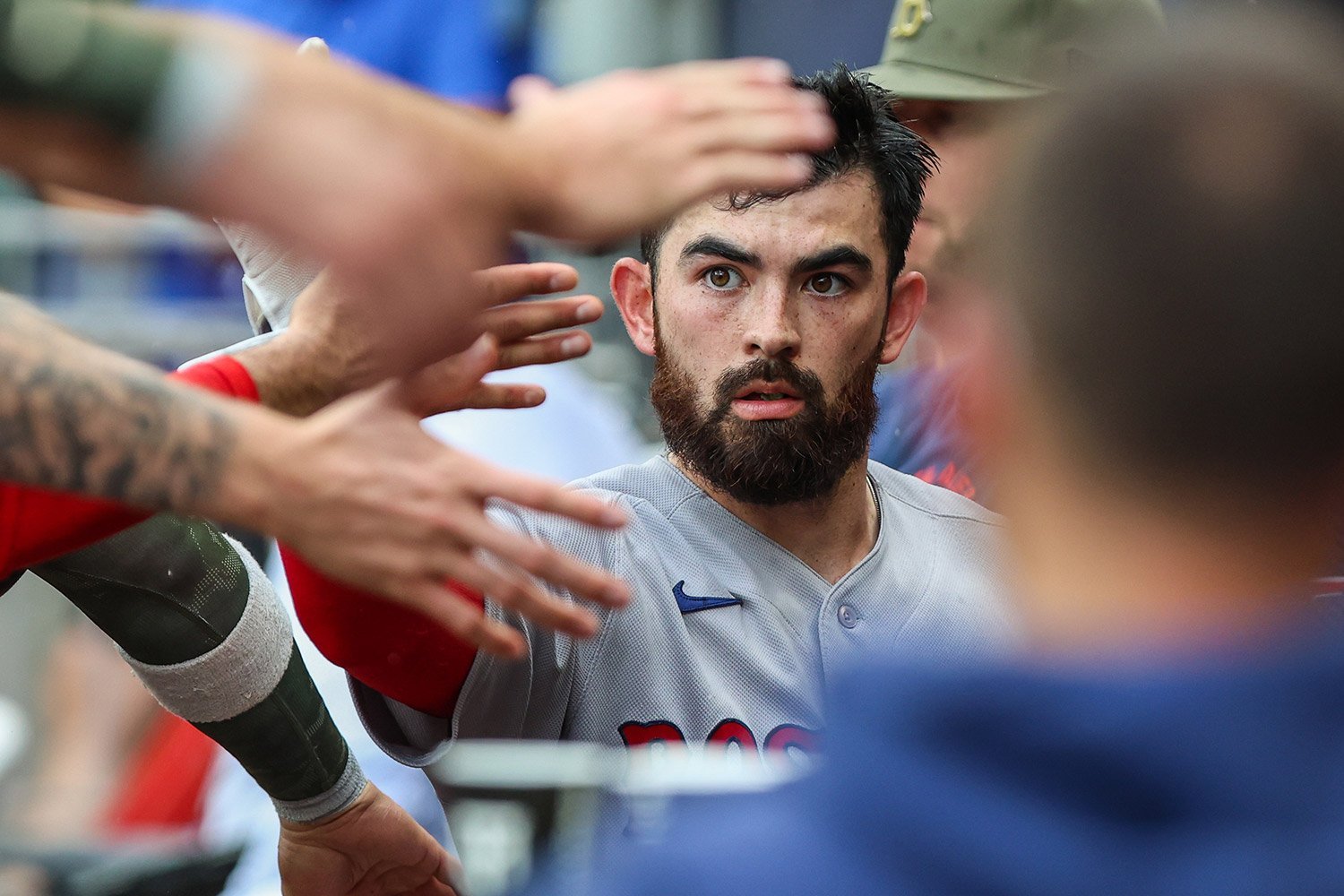 Yesterday, it was rumored that the Boston Red Sox were looking for a right-handed bat to improve their lineup. It seems that one of the players they may look to move to make this happen could be backstop Connor Wong. Jen McCaffrey of The Athletic is reporting that the Red Sox are "shopping" Wong, who has some depth at catcher with Carlos Narvaez and Mickey Gasper also on the 40-man roster. Wong has been solid, yet unspectacular this year, slashing .247/.305/.377 this year with 0 home runs and a stolen base. While those numbers are roughly league average (99 wRC+), the lack of power (.111 ISO) really mitigates any impact in the lineup. Moreover, he profiles has a below average (or worse) catcher behind the plate and it really makes you wonder what kind of value Wong has on the market. However, a team doesn't have to look back more than a couple of years to his 2024 breakout to see some potential in a guy who has two years of team control beyond 2026. It's also worth noting that McCaffrey says the Red Sox have received calls on some bullpen arms: Aroldis Chapman, Garrett Whitlock, and Justin Slaten. However, she reports that they currently have "no interest in dealing anyone from that bullpen trio." In other words, it's too early to label yourself a seller (and the Red Sox are very much in the Wild Card race). Do you think the Red Sox can get anything for Connor Wong? Join the conversation in the comments! View the full article
 -
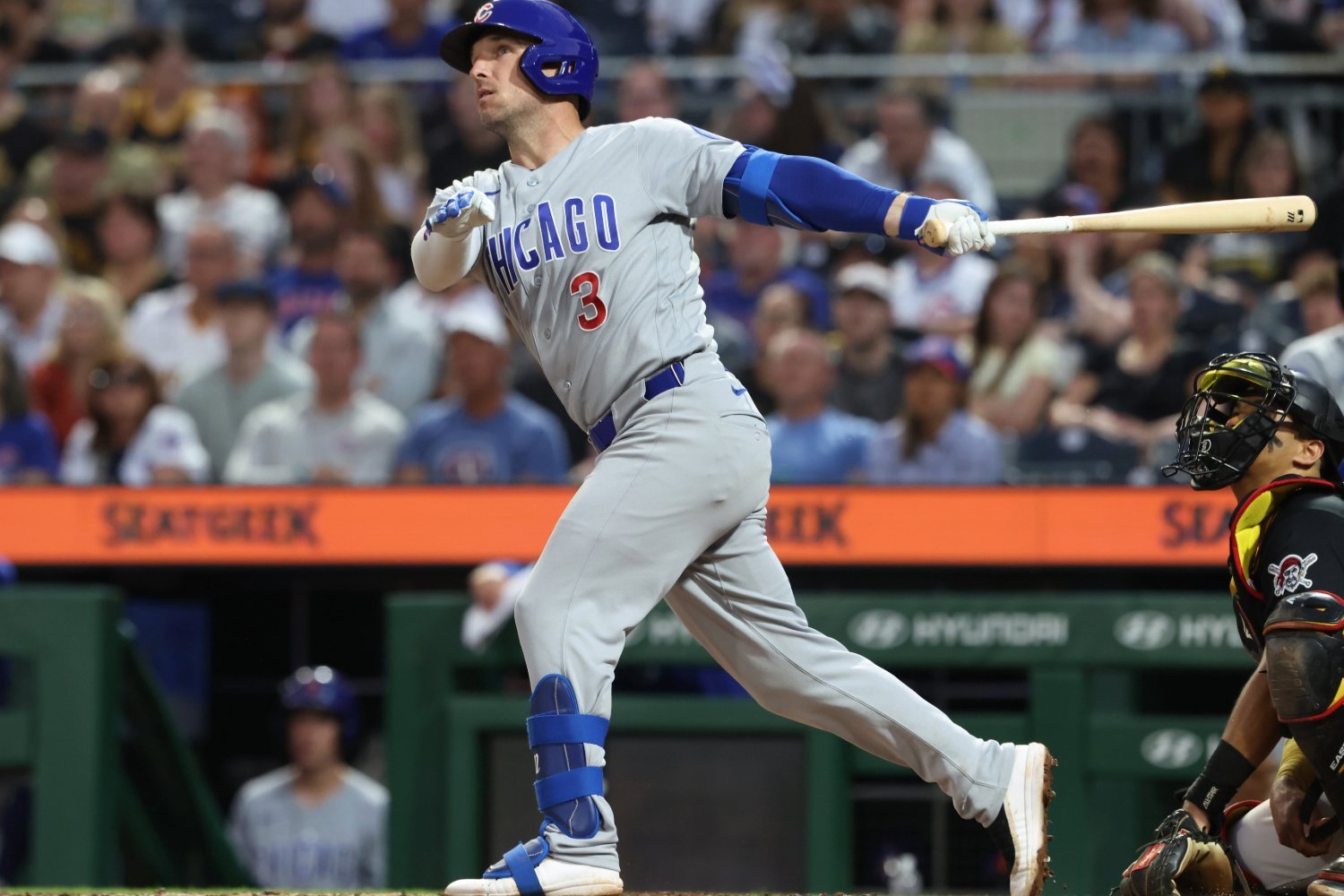 When the Chicago Cubs parted ways with Kyle Tucker and turned to Alex Bregman during the offseason, the logic seemed straightforward. Tucker had been one of the organization's primary sources of production from the left side of the plate, while Bregman arrived with the reputation of being one of the most consistent right-handed hitters of his generation. On paper, the transition pointed toward a more balanced lineup and one that would be less dependent on left-handed bats. Two months into the 2026 season, however, reality tells a very different story. Chicago's right-handed hitters own a collective 98 wRC+ this season. Left-handed hitters have produced a 116 wRC+, while switch-hitters have posted a 127 mark. The split is striking on its own, but it becomes even more interesting when you look at who is actually driving the offense. This story is not really about Bregman. It's about Michael Busch, Pete Crow-Armstrong, and Ian Happ. Michael Busch's Evolution Into Cubs' Best Hitter Few developments on the Cubs' roster have been as important as Busch's emergence. Since April 21, the first baseman has posted a 163 wRC+, placing him among the most productive hitters in Major League Baseball. Since May 1, he has been even better, compiling a 171 wRC+ and 1.6 fWAR. MLB leaders in fWAR since May 1 Player Team fWAR Bobby Witt Jr. Royals 2.0 Pete Crow-Armstrong Cubs 1.7 Michael Busch Cubs 1.6 Luis Arraez Giants 1.6 Cody Bellinger Yankees 1.6 Busch's presence on that list helps answer one of the most intriguing questions surrounding the Cubs this season: how did they absorb Tucker's departure without suffering a significant drop in offensive production? Part of the answer is that Busch had already shown signs of becoming this player. In 2025, he posted an outstanding 151 wRC+ against right-handed pitching, a figure that actually surpassed Tucker's 137 mark in the same split. The ability to punish right-handers was already there. What has changed is the consistency with which he has sustained that production during the first months of 2026. This season, Busch owns a 135 wRC+ against right-handed pitching and remains one of the biggest reasons the Cubs continue to receive elite production from the left side of the plate despite Tucker's departure. Pete Crow-Armstrong Eliminated the Biggest Weakness in His Offensive Profile If Busch has been the quiet engine of the offense, Crow-Armstrong has become the symbol of its evolution. Just a year ago, there was a fairly simple formula for limiting his offensive impact: attack him with left-handed pitching. The young outfielder could do damage against right-handers, but his numbers against same-side pitching represented one of the biggest questions surrounding his long-term development. Today, that weakness has virtually disappeared. Pete Crow-Armstrong vs. left-handed pitching Season AVG OBP SLG wRC+ 2025 .188 .250 .376 59 2026 .275 .363 .425 128 The difference is enormous. Crow-Armstrong has gone from being vulnerable in those matchups to becoming a legitimate threat regardless of the arm slot standing on the mound. That transformation helps explain why he ranks second among position player in fWAR since May 1. His elite defense and baserunning always gave him a high floor as a player. What has changed is that he now provides a much more complete offensive package, removing the biggest argument that once existed against his superstar ceiling. Ian Happ Remains A Critical Piece of the Puzzle While Busch and Crow-Armstrong have captured much of the attention, Happ continues to be a vital part of this story. Since May 1, he owns a 143 wRC+, has hit seven home runs, and has accumulated 1.0 fWAR. Those numbers place him among the National League's most productive hitters during that stretch. What's particularly interesting is how he has built that production. Although Happ has struggled against left-handed pitching, he has absolutely demolished right-handers. His 166 wRC+ against right-handed pitching is not only one of the best marks on the team but also one of the primary reasons Chicago's switch-hitters have produced at such a high level this season. His performance also illustrates why the Cubs' offensive success cannot be explained solely through Busch's breakout or Crow-Armstrong's development. While Busch supplies impact production from the left side and PCA has evolved into a far more complete hitter, Happ continues to provide the steady offensive output that gives the lineup its depth. The Alex Bregman Paradox All of this brings us back to the original question. When the Cubs acquired Bregman, it was reasonable to assume the offense would lean more heavily on its right-handed hitters. Instead, the season has unfolded in a completely different direction. Bregman has not been a problem, per se. He simply hasn't been the primary reason behind the offense's success. Alex Bregman in 2026 Split wRC+ vs. RHP 102 vs. LHP 94 Those are perfectly respectable numbers. The issue is that they are not the numbers defining the Cubs' offensive identity, nor are they worthy of the nine-figure deal he signed over the offseason. While Bregman has provided stability, Busch has emerged as one of the league's most productive hitters, and Crow-Armstrong has erased the most significant weakness in his offensive profile. Alongside Happ, they have driven a lineup that has developed in a way few people projected during the offseason. The Cubs believed Bregman's arrival would help compensate for Tucker's departure. What they discovered instead was that a significant portion of that production was already inside the organization. The result is an offense that, against all expectations, relies more heavily than ever on its left-handed and switch-hitting bats. View the full article
 -
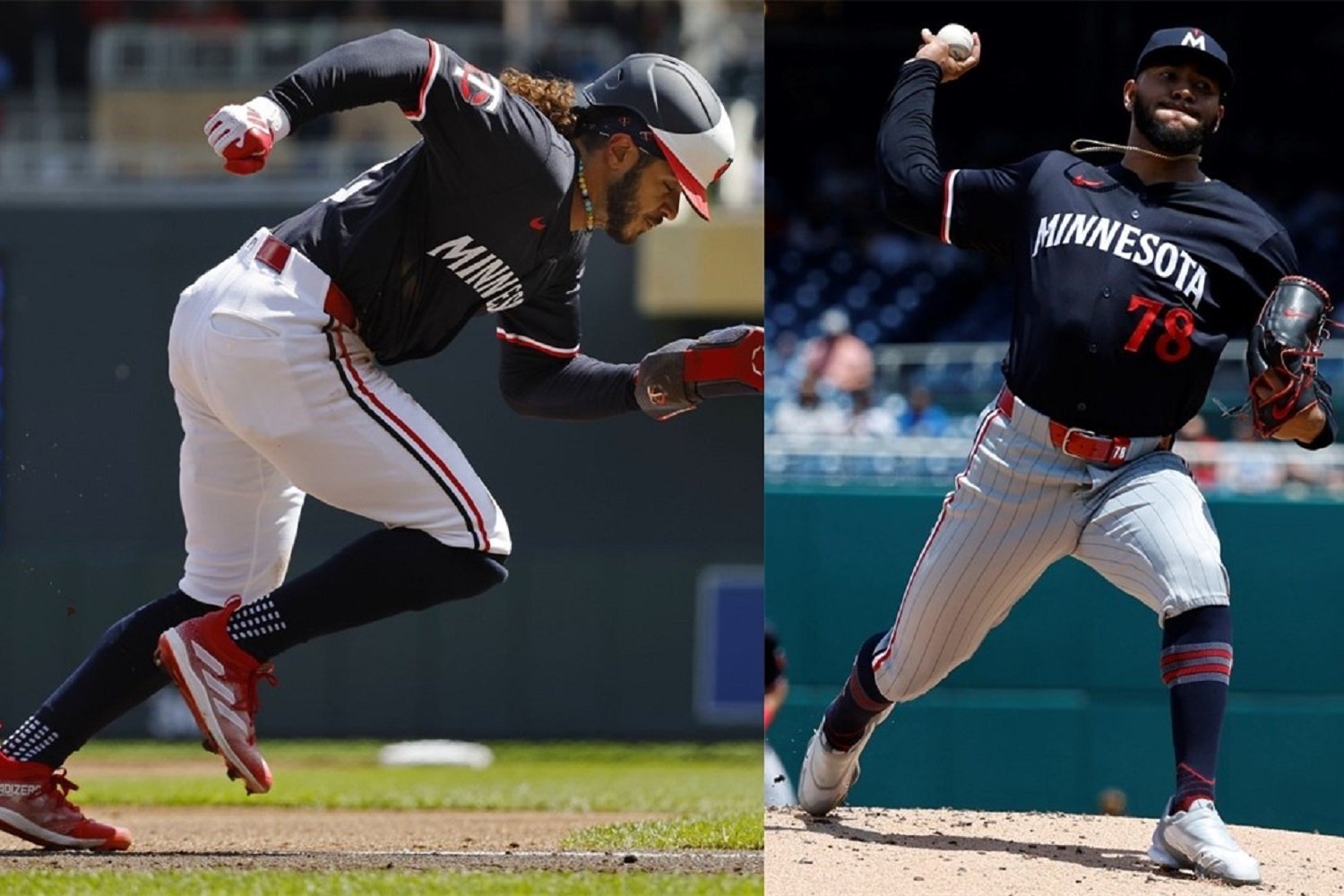 Five years have passed since Derek Falvey made one of the most consequential trades in recent Twins history. At the 2021 trade deadline, Minnesota sent homegrown ace José Berríos to the Toronto Blue Jays in exchange for two Top 100 prospects: Austin Martin and Simeon Woods Richardson. At the time, it felt like a franchise-altering deal. The Twins were selling after a disappointing season, and Toronto was aggressively pursuing a postseason berth. Now, with Berríos sidelined following Tommy John surgery, Woods Richardson heading back to Toronto, and Martin establishing himself as a regular contributor in the major leagues, there is enough distance from the trade to begin evaluating what each side actually received. What Was Said at the Time? When the trade was announced in July 2021, the baseball industry largely viewed it as a major win for Minnesota. The Twins had not actively shopped Berríos entering deadline week, but once they began listening, Toronto's offer exceeded expectations. FanGraphs described the return as a "bounty," noting that Minnesota had landed two Top 100 prospects for a pitcher with only a season and a half of club control remaining. That praise came with plenty of caveats. Martin, the fifth overall pick in the 2020 MLB Draft, possessed elite on-base skills but carried questions about his future defensive home, power potential, and rising strikeout rates. Woods Richardson was viewed as a polished pitching prospect, though evaluators wondered whether his command and lack of premium velocity would limit his upside. The Twins were betting on talent and projection. The Blue Jays were betting on certainty. Berríos Delivered Mixed Results in Toronto Toronto quickly demonstrated its commitment to Berríos by signing him to a seven-year, $131 million extension. However, that extension should not factor into the original trade evaluation. Minnesota only traded away the remainder of the 2021 season and the entirety of 2022. Berríos was excellent down the stretch in 2021. Across 12 starts with Toronto, he posted a 3.58 ERA and 1.10 WHIP while generating 1.5 rWAR. His performance looked very similar to what he had provided for the Twins throughout his career. The following season was a completely different story. Berríos struggled throughout 2022, finishing with a 5.23 ERA while leading the American League in both hits and earned runs allowed. He accumulated a disappointing -0.7 rWAR season. When all was said and done, the Blue Jays received just 0.8 rWAR during the season and a half of team control Minnesota traded away. Martin's Path Has Been Anything But Linear Few prospects have experienced a more winding road through the Twins organization than Austin Martin. Many of the concerns scouts identified in 2021 followed him through the minor leagues. Injuries slowed his development, and there were moments when it appeared he had fallen out of Minnesota's long-term plans altogether. Martin finally debuted in 2025, appearing in 93 games. The overall numbers were underwhelming. He posted a .670 OPS and an 89 OPS+ while finishing with -1.0 rWAR. Yet the story changed dramatically after the 2025 trade deadline. Following a stint at Triple-A and a healthier second half, Martin returned to Minnesota looking like a different player. Over his final 50 games, he produced 0.7 rWAR with a 106 OPS+. He also showcased the athleticism that once made him one of baseball's premier prospects, successfully stealing 11 bases in 15 attempts. On a team that collapsed down the stretch, Martin emerged as one of the few reasons for optimism. Entering 2026, his role remained uncertain. However, a strong April combined with struggles from several teammates helped him earn more consistent playing time. Through 54 games, Martin has already matched last year's 0.7 rWAR total while posting a 102 OPS+. The season has not been without challenges. After recording a .899 OPS in April, that figure dropped to .587 in May. Even so, he has established himself as a legitimate major-league contributor. Because he was a late bloomer, he remains under team control into his early 30s. Woods Richardson's Roller-Coaster Ride While Martin arrived with the bigger prospect pedigree, Woods Richardson arguably provided more value to Minnesota in the short term. Between 2024 and 2025, he developed into a reliable member of the Twins rotation. Across 245 innings, he produced 4.1 rWAR with a 4.11 ERA and a 103 ERA+. His future appeared especially bright late last season. Last September, Woods Richardson unveiled a splitter that transformed his repertoire. Over his final 27 innings, he posted a 2.33 ERA and struck out 36 hitters. The pitch generated swings and misses at a rate he had never previously achieved and looked capable of elevating him from a back-end starter to something more. Unfortunately, that momentum disappeared almost immediately in 2026. His first two starts offered little reason for concern. Against Kansas City and Tampa Bay, Woods Richardson allowed just three earned runs across 11 2/3 innings. Then everything unraveled. Over his next seven starts, he went 0-5 with a 9.79 ERA, surrendering 38 runs in only 30 1/3 innings. Opposing hitters consistently squared up his fastball, and the effectiveness of his splitter vanished. By the time the Twins designated him for assignment, he had accumulated -1.3 rWAR while leading the American League in both losses and earned runs allowed. It was a stunning collapse. So, Who Won the Trade? Trade evaluations rarely provide simple answers, and this one remains incomplete. If the conversation is limited strictly to the value Minnesota traded away, the Twins appear to have done exceptionally well. Berríos produced only 0.8 rWAR during the year and a half of control Toronto acquired before reaching free agency. Meanwhile, Woods Richardson alone generated 4.1 rWAR during his productive 2024 and 2025 seasons. Even after accounting for his disastrous 2026 campaign, he still provided substantially more value than Berríos did during the control window that was exchanged. Martin's story is still being written. After posting a combined 1.4 rWAR over the last two seasons, he remains a controllable major-league player who could continue adding value for several more years. At the moment, the Twins have already received more on-field production than the Blue Jays got from Berríos during the period they originally acquired him. That alone makes the trade look favorable for Minnesota. However, the final verdict may still be years away. Martin is only beginning to establish himself in the majors, and his future contributions could ultimately determine just how significant this trade becomes in Twins history. Five years later, what once looked like a prospect-heavy gamble appears to be paying off. Whether it becomes one of the franchise's best modern trades depends on what Martin does next. How should fans view this trade after five years? Leave a comment and start the discussion. View the full article
 -
 Transactions: RHP Craig Yoho promoted to MLB Brewers from AAA Nashville LHP Brian Fitzpatrick promoted to MLB Brewers from AAA Nashville Hoping for the best, but this seemed devastating in Denver Friday night - LHP Mark Manfredi Sr. transferred to Nashville from Biloxi OF Damon Keith placed on Biloxi's 7-Day Injured List (Keith last played on Tuesday, May 23rd) RHP Wandy Cabrera assigned to DSL Brewers Blue from DSL Brewers Gold. RHP Carlos Canales assigned to DSL Brewers Blue from DSL Brewers Gold. Both 20-year-old's (Cabrera actually turns 20 today, Saturday 6/6) are in their 3rd year of island ball, and each had made one appearance for DSL Gold this week before these swaps. Nashville Pre-Game Media Notes Final: Jacksonville (Marlins) 4, Nashville 3 Box Score and Game Log Via the Sounds, game details, and we encourage readers to always review affiliate write-ups as part of their Link Report routine: Sounds Let Late Lead Slip Away When veteran LHP Thomas Pannone tossed six innings of two-run ball in his prior effort last Saturday, we made note that he'd become a worthy candidate to assist the big-league rotation as needed. Well, after 5.2 innings of scoreless ball with one walk, "as needed" seems fairly imminent. Don't believe we learned why RH reliever Will Childers missed a month (activated May 23rd), but this was an unfortunate 8th inning outing, and it began with a quick triple, walk, and a tough location for this pitch to a LH bat: Childers quickly then retired the next three batters, and Brock Wilken's two-out oppo taco only closed the gap to one - Luis Lara missed a 3rd consecutive game, no known update. From the 4th inning, Luis Matos gave the Sounds a two-run lead. Matos has been productive, but he'd have to really light up to find his way back to the Brewers. Cooper Pratt doubled and singled (and importantly discussed his mustache). Ethan Murray, playing third base as Jett Williams (0-for-4, 2-for-his-last-19) again patrolled center field. Williams might be eyed at this point as more of a diverse Blake Perkins replacement in the short run, but also remember Brandon Lockridge is due back fairly soon. With Fitzpatrick surely headed to the Milwaukee IL, Carlos Rodriguez seems to be a logical return candidate, and Easton McGee is in play as well. Manager Rick Sweet's juggling will continue, and Sweet should be fine as long as super-brief starts are avoided. The game summary linked above, is chock full as always. Oh, hey there, Bradley Blalock on the Jacksonville mound. Catch up with the latest Biloxi pre-game audio interview archives - Manager Mike Guerrero's Friday night chat is among those listed Biloxi Pre-Game Media Notes Final: Biloxi 3, Montgomery (Rays) 1 Box Score and Game Log O’Rae’s Late Game Dinger Drives Shuckers Past Biscuits - Shuckers Retake First Place with Friday Victory The game summary was as concise as the final score, doing a nice enough job of filling you in. Good thing for these long balls, because Biloxi was 0-for-6 with RISP. Each of the first six men in the lineup reached at least once, Matthew Wood twice. Right fielder Mark Coley II walked twice out of the 9-hole and was on base for the Dylan O'Rae go-ahead blast. RHP Stiven Cruz turns 25 in November. He's not truly a candidate for 40-man addition, but he'll be a popular target as a minor league free agent this fall. His solid work with Nicaragua in the WBC will aid his cause as well. We shouldn't gloss over the work of RHP Yorman Galindez, 23, and LHP Anthony Flores, 21. Consider them un-glossed. Versatile Jheremy Vargas didn't play in this one, but he remains a tool in Mike Guerrero's back pocket, as Vargas is the lone non-catcher on the Biloxi bench at this time. And yes, that means long-awaited bumps from Wisconsin are truly imminent after this weekend. Hope you saw some of the key Timber Rattlers in recent weeks. Speaking of the T-Rats... Wisconsin Pre-Game Media Notes (download link) Final: Cedar Rapids (Twins) 8, Wisconsin 3 Box Score and Game Log Via the Timber Rattlers, game details: Kernels End Wisconsin’s Win Streak with Late Comeback - Fischer homers and Dorchies deals for Rattlers in tough loss at Cedar Rapids As Chris Mehring's game summary notes (and look for Tayden Hall's RBI and Andrew Fischer's 17th tater within): "South Bend is four games ahead of the Timber Rattlers after play on Friday night. Wisconsin has thirteen games left in the half. The Cubs have twelve games remaining." We've seen this before from the Brewers. Give the current Rattlers the chance to claim a first-half crown, and that may factor into some of the promotion decisions we're waiting upon. No video of the first-inning balk by Ethan Dorchies that gave the Kernels an early lead. but Dorchies' outing was very encouraging. As for the Wisconsin bullpen struggles, the Cedar Rapids "X" feed has you covered, unfortunately. Wisconsin managed just four hits, one walk, and a Tayden Hall HBP. The starting outfield was Hall in left, utilityman Luiyin Alastre made his second career start in center, and Luis Castillo in right. On the bench all at once, and there's likely more to the story that will work itself out, be it banged-up players or otherwise - Josh Adamczewski, Braylon Payne and Josiah Ragsdale. Yes, safe to say the T-Rat reserve roster is flooded compared to what we just discussed in Biloxi. A reminder - both A-Ball rosters limits are 30 active, while it's 28 active at AAA and AA. The Shuckers are sitting at 25 currently. By the way on Hall, we're 122 plate appearances into his 2026, and his OPS is still north of .900 at .915. Wilson Pre-Game Media Notes Final: Wilson 11, Salem (Red Sox) 7, 11 innings Box Score and Game Log Anderson Slams Door on Salem - Walk-off Grand Slam Completes Comeback I've completely lost count, as have many of you. Who among us is willing to go through the Wilson's season day-by-day results for home games and count the walkoffs, pointing out how many of those walkoffs have been via the home run variety. It's unreal, and what a treat for the new fans in Wilson! They've been spoiled so far, even with the first couple of weeks of missing offense. This time it was Jose Anderson. Scoreless on both sides in the 7th, 8th, and 9th - you can pick up the game log to see how the four half-innings in extras played out, including videos throughout all the innings in the log (MiLB.com has come so far, all for our betterment as fans.) Brady Ebel, DH'ing here, walked three times, lifting his OBP to a shiny .404. Now in his 4th year, it's hard to think of Pedro Ibarguen still as a teenager, but he is for another month. He doubled, singled, and walked twice. He was also caught stealing for the 9th time (ouch) in 17 attempts. RHP's Tyler Renz, Peyton Niksch and Joshua Quezada impressively combined to toss 9.1 innings, allowing only one earned run, two walks, nine strikeouts. Fellow righty Miqueas Mercedes has his toughest outing of 2026, but that helped set up the late dramatics. Darn it, Warbirds, you need to promote these player and coach interviews from the current and prior homestands, the latest with Coach Ricky Carvajal. This collection flew under our radar completely unless they were just added to your Virtual Press Box page (scroll to the bottom). Catch up with Manager Eddy Morgan and outfielder Nick Monile from this week and then sample prior interviews from the list as you wish. By the way, I caught up on all the interviews while composing this report! Final: ACL Brewers 14, ACL Rangers 13, ten innings Box Score and Game Log All those runs plus extra innings, oh my! If you were checking out our Minor League Forum daytime thread, you caught these notes within two posts for this matinee. Again, oh my! (Thanks, Ro Mueller.) Where to begin - six pitchers for Maryvale, and four of them pitched well, including a professional debut for 23-year-old RHP Bryce Schaum, as we had posted this on his signing previously. Still so young out of a Minnesota high school, 18-year-old 2025 8th round RHP Hayden Vucinovich (19 in two weeks) has fanned 16 in just 11.1 innings. Walks and hit batters now total 22, however. RHP Bryan Regalado is also struggling. Signed out of the Dominican Republic in May of 2025, Regalado turned 19 this past April, and it's a bit odd that he was brought stateside after only two Dominican League appearances last summer. CJ Hughes doubled with one out in the 7th and stayed on the basepaths as the next two Brewers struck out. As noted at the link above, he did not return to the field in the top of the 8th. 18-year-old Alexander Frias is it, folks. He singled three times and walked twice. Now, if you're like me and checking exit velocities on those knocks, none of them were impressive for this game (rare for Frias), but they found holes. Be sure to learn more about Frias and the other ACL boys, you won't need to wait long as it's where Spencer and Alex begin their system journey from their recent pod: Again, referring to the link just above, what a special walk-off home run moment for 18-year-old corner infielder (third baseman on Friday) Yu-Lin Liao, so far from his Taiwan home. Here's hoping the @BrewersPD 'X' account provides video eventually of the Liao blast (pulled to LF, 387 feet, 102.1 MPH) and celebration. Final: DSL Tampa Bay 11, DSL Brewers Blue 4, seven innings as scheduled Box Score and Game Log Blue was down 6-0 heading to the bottom of the 6th but scored four at that point to narrow the gap. Just 17 years old, Venezuelan RHP Daniel Munoz made his pro debut to begin the 5th and would face 17 batters in all, retiring six through the first few batters of the 8th. Munoz walked four and plunked two. His defense didn't help as both the box score line and game log review will show. Third-year RHP Ruben Saldana didn't quiet the Rays bats either, though an error contributed to his troubles as well. Second-year catcher Johanderson Tarazona made his season debut and singled once within his three trips to the plate. Blue batters walked nine times, including three for bonus baby shortstop Diego Frontado. Final: DSL Royals Ventura 1, DSL Brewers Gold 0, seven innings as scheduled Box Score and Game Log No, you're not imagining things, these same two teams combined for 27 runs just 24 hours earlier (a 14-13 Brewers loss)! Where's Jayson Stark to chime in, "Baseball!" The Royals scored the lone run of the game in the 6th after starting 17-year-old southpaw Santiago Martinez exited following his five shutout innings, 7 Ks, 1 single, 1 walk. In the fateful 6th, reliever Jean Rivero of Venezuela made his pro debut and learned quickly you don't walk the leadoff batter. However, he then had the runner picked off but shortstop Santiago Garcia's error at the 2nd base bag on the play proved harmful. A one-out flyout to right advanced the man to 3rd, and then a wild pitch scored the game's lone run. A two-out single for first baseman Matthew Moses in the 7th was one of his two hits in the game (the Golden Boys only managed three), but Moses was stranded and the team fell to 0-4 despite allowing just one hit. Can't imagine a more completely diverse pair of consecutive losses by a Brewers affiliate, perhaps in all of the 26 years of Link Report history. There are seven games on tap for Saturday, early games for the complex clubs and under the lights at the full-season level. Is it getting more summer-like where you are? Enjoy! Organizational Scoreboard including starting pitcher info, game times, MiLB TV links, and box scores Current Milwaukee Brewers Organization Batting Stats and Depth Current Milwaukee Brewers Organization Pitching Stats and Depth View the full article
 -
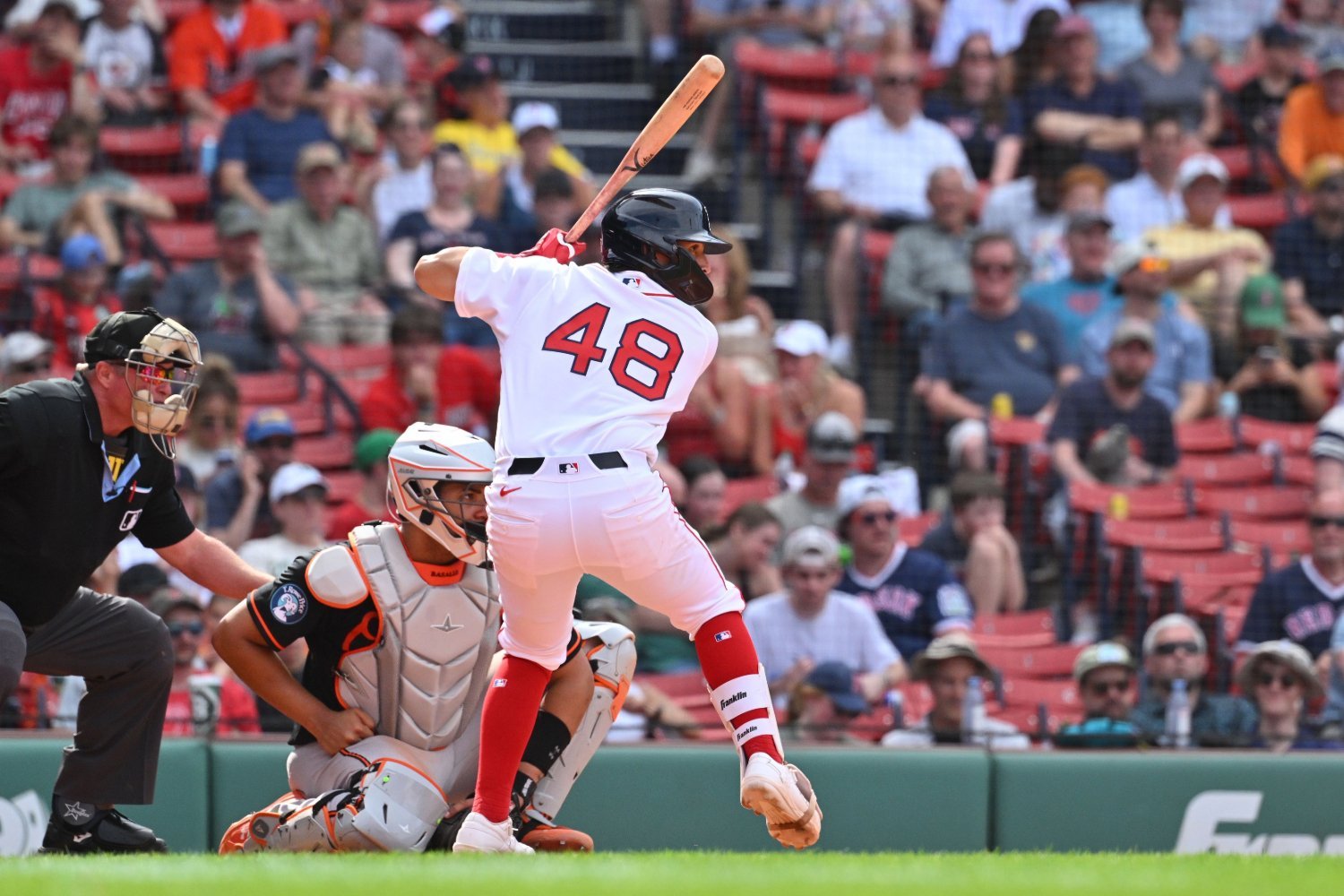 Worcester, MA — Things moved quick for infielder Anthony Seigler on Tuesday night. Not long after being a part of a walk-off win, Seigler was celebrating for a different reason: being called back up to the major leagues “It was kind of quick,” acting manager Iggy Suarez explained before Thursday night’s game against the Buffalo Bisons. “We got the phone call from Abes [Brian Abraham], who let us know that was going to be the move. Good thing he hadn’t left the ballpark yet, so he was still here, he was pumped. He probably had an idea with being called into the office.” Seigler, who was acquired as part of the Caleb Durbin-Kyle Harrison trade, had a rough start to his Boston Red Sox career. The former first-round pick was injured early in spring training, miss the entirety of it with left knee patellar tendinopathy. The injury followed into the regular season, having the start of his year halted until April 9 when he began a rehab assignment. Without a proper ramp-up period, Seigler got off to a slow start, appearing in just 11 games while slashing .222/.364/.361 with three doubles, a triple and seven RBIs. The slow start didn’t go unnoticed by Suarez or the WooSox coaching staff. “He didn’t have a spring training, so now a month in, that’s spring training for him. Now, he’s getting into the swing of things and getting his rhythm back. I think having that month under his belt when he was a month behind helps a lot," Worcester's skipper said. To say Seigler turned a corner in May would be an understatement. Appearing in 18 games across the month, the infielder was a force on offense for a team that lost two of its best hitters in Nick Sogard and Mickey Gasper. During that time, Seigler became a consistent bat in the lineup for Suarez, hitting .344/.468/.531 with three doubles, three home runs and 14 RBIs while playing both second base and third base. His production didn’t go unnoticed. With the major-league club in need of another infielder after placing Sogard on the injured list, his name was called. Seigler, who originally was a fringe 40-man roster player when he was acquired, had transformed his value within the organization over the span of a month. Now, he’s up in the majors for the second time in his career after appearing in 34 games last year with Milwaukee. The promotion was well deserved as Seigler will now look to provide as a left-handed bat off the bench while providing defensive versatility for the infield. “You kind of see his eyes light up and everything,” Suarez said of Seigler's reaction to the news. “The first time’s always good, but I think anytime you hear that, going back up to the big leagues, they’re gonna have a cool reaction so he was pumped about it. Well deserved man, he’s at a point where he’s swinging it. That’s opportunities that come up. You hate to see someone like Sogie go on the IL but again, it’s an opportunity he was ready for. I think it’s a good time for him to go up there.” The loss of Sogard won’t be easy for the Red Sox to manage, as he had appeared in 12 games since being promoted on May 16. The utility player managed to hit .257/.350/.371 with two doubles, one triple and two RBIs while appearing at all four infield positions at least once. His versatility was important for manager Chad Tracy along with his production from the left-handed side of the batter’s box. A sore side kept him from hitting as a left-handed batter and ultimately led to his placement on the injured list. After the infielder was told of the news Tuesday night, he returned to Polar Park Wednesday morning during the WooSox’s morning game to gather his belongings. With equipment now in tow, Seigler departed Polar Park and the Heart of the Commonwealth as he made the trip up the Masspike to Boston. Come Thursday afternoon, he got into his first action with the Boston Red Sox, coming off the bench to pinch hit in the seventh inning for Andruw Monasterio. His at-bat concluded with a lineout to left field before playing the final two innings at second base. Now, Seigler will look to step into the role Sogard previously filled. It’ll be a lot to ask of the former first-round pick immediately, but he proved in May that he's more than capable of living up to the task. View the full article
 -
Mets' Misfortune Can Only Be Explained By the Baseball Gods
DiamondCentric posted an article in Grand Central Mets
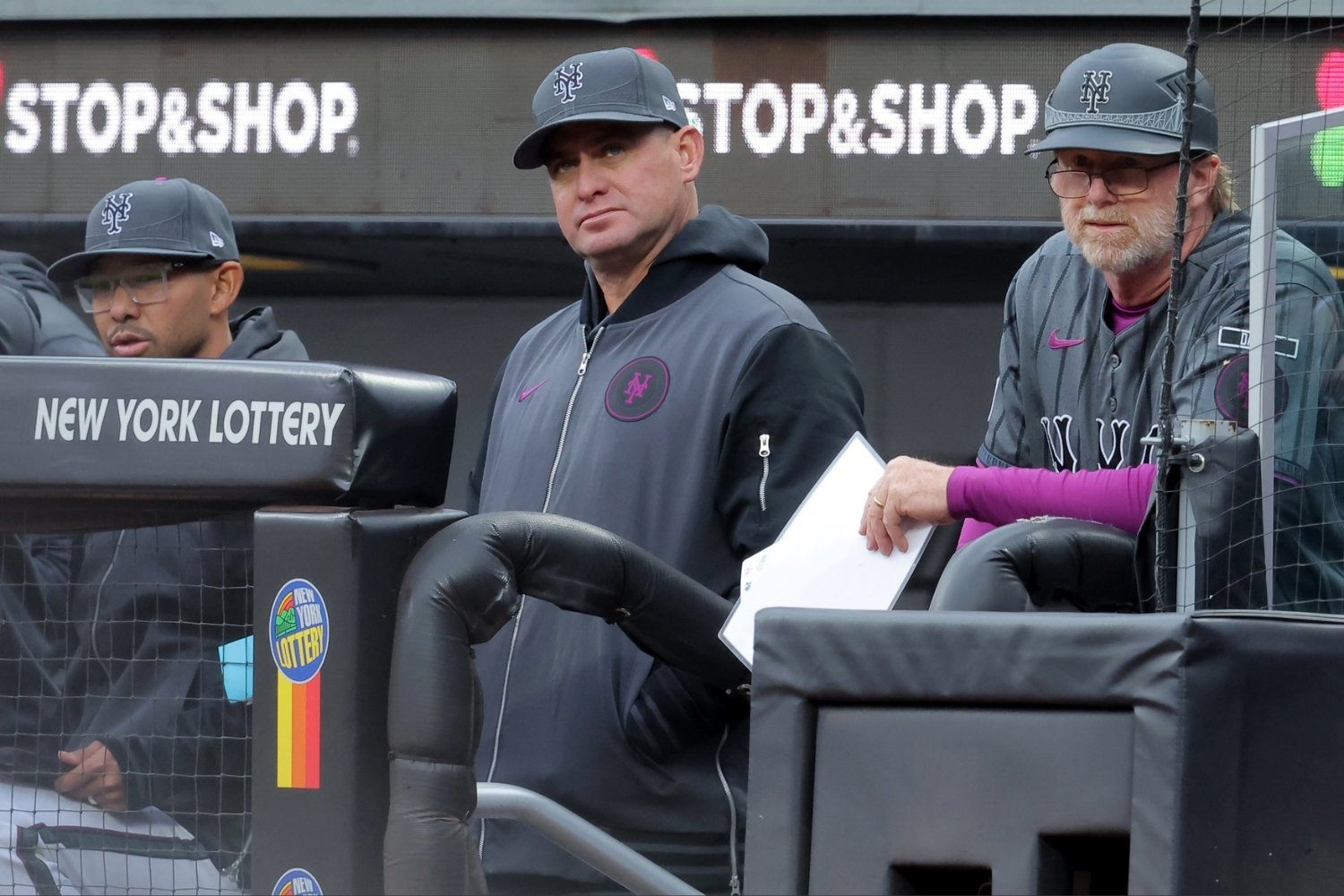 As of the start of their series against the San Diego Padres, the New York Mets are tied for the league’s lowest wOBA at .291 with the very same Padres. Considering the talent on the roster, that’s simply an unacceptable level of performance, but they’re not entirely to blame. The Mets own the lowest wOBA in baseball, not because they’ve built a lineup of hapless scrubs, but because they’ve angered a vengeful god. It wouldn’t be inaccurate to suggest that the Mets have been the unluckiest lineup in baseball. Their wOBA of .291 is objectively awful, but their xwOBA of .318 sits at much more respectable 16th. Unsurprisingly, the Mets’ wOBA-xwOBA difference of -0.027 is the largest in the league, and dwarfs the Rays’ +0.012 over-performance. Now, every season has to have a luckiest and unluckiest team; that’s just the way things work. But the depths of the Mets’ misfortune have them speeding toward the lower mantle. Taking every team’s xwOBA and wOBA difference, we can see just how dire the Mets' start has been. At -2.656 standard deviations from the mean, no team, positively or negatively, is in the same ballpark as the Mets. And just to make sure that this isn’t a somewhat common, although unfortunate, occurrence, last season, the biggest underperformers were the Pirates at -0.015, good for -1.670 standard deviations from league average. It should be noted that the Athletics posted a positive difference of +0.014, good for 2.493 standard deviations from the mean, but they played half of their games in a Triple-A park. The Mets should see a heaping helping of positive regression, but that doesn’t mean there isn’t something intrinsic about this lineup that might cause it to underperform its expected metrics. While it’s easy to point to expected metrics as the gospel, at the end of the day, they’re just a useful tool, and they leave out one critical detail: spray angle. By now, the average fan has heard of launch angle and exit velocity, which are the two primary ingredients in xwOBA. Player sprint speed is thrown into the equation for certain types of batted balls, so blaming a lack of team speed isn’t an out (although that feels like every fanbase's go-to gripe with an under-performing lineup). However, one crucial, although smaller, ingredient that xwOBA leaves out is spray angle. Exit velocity is how hard you hit a ball. Launch angle is how high. And spray angle is where you hit it. Some players, usually by being extreme pull hitters, routinely outperform their xwOBA, and others, by crushing pitches to center and the opposite field, will consistently go under it. However, that really shouldn’t be an issue when evaluating a team. The players who really under or over-perform their expected metrics are outliers, and it’s dang near impossible to build an entire team from outliers, try as the Rays may. So, let’s take a look and see if the Mets have built a lineup where underperforming their xwOBA should be the expectation. The Mets, based on their team-wide spray chart, shouldn’t secretly be over-performing their xwOBA, but they also shouldn’t be underperforming it to the degree they have. Compared to the rest of the league, they hit their groundballs in the most productive places, and while their pull-air rate isn’t amazing, it also isn’t anywhere near the Brewers, who are 30th at 12%, and are hitting almost exactly to their xwOBA. If the spray angle isn’t to blame, then perhaps there is one particular type of batted ball that the Mets have been struggling with. (The (+) metrics are weighted so that 100 is exactly average, and each point is a percentage away from average. Example: a SLG+ of 95 is 5% below league average, while a BABIP+ of 103 is 3% above league average.) If you hate the Mets, this should be hung in the Louvre, but I’m guessing that’s not the case if you've made it this far. The Mets are dramatically under-performing on every type of batted ball, except for pulled grounders, which are, by far, the least valuable type of batted ball to begin with. This looks like a team that made a deal with the devil to gain a marginal edge on the thinnest of margins at the cost of the whole operation. So, what does this all mean? Well, since the Mets are fifth in MLB at 6.3% barrels per plate appearance, own the fifth-highest EV50 in the league (100.4 MPH), and have the eighth-best exit velocity average on line drives and fly balls (93.5 MPH), they should start hitting as their xwOBA suggests. That doesn’t mean they’ll necessarily reach their xwOBA by season's end, as a lot of damage has already been done, but they should certainly start moving in the right direction. The Mets, miraculously, aren’t dead in the water despite this cataclysmic underperformance on their batted balls. It might be a stretch to say some god or pantheon of deities hates them, but they certainly look cursed. While the numbers say everything should begin to turn around, just to be safe, consult with your local exorcist. View the full article
 -
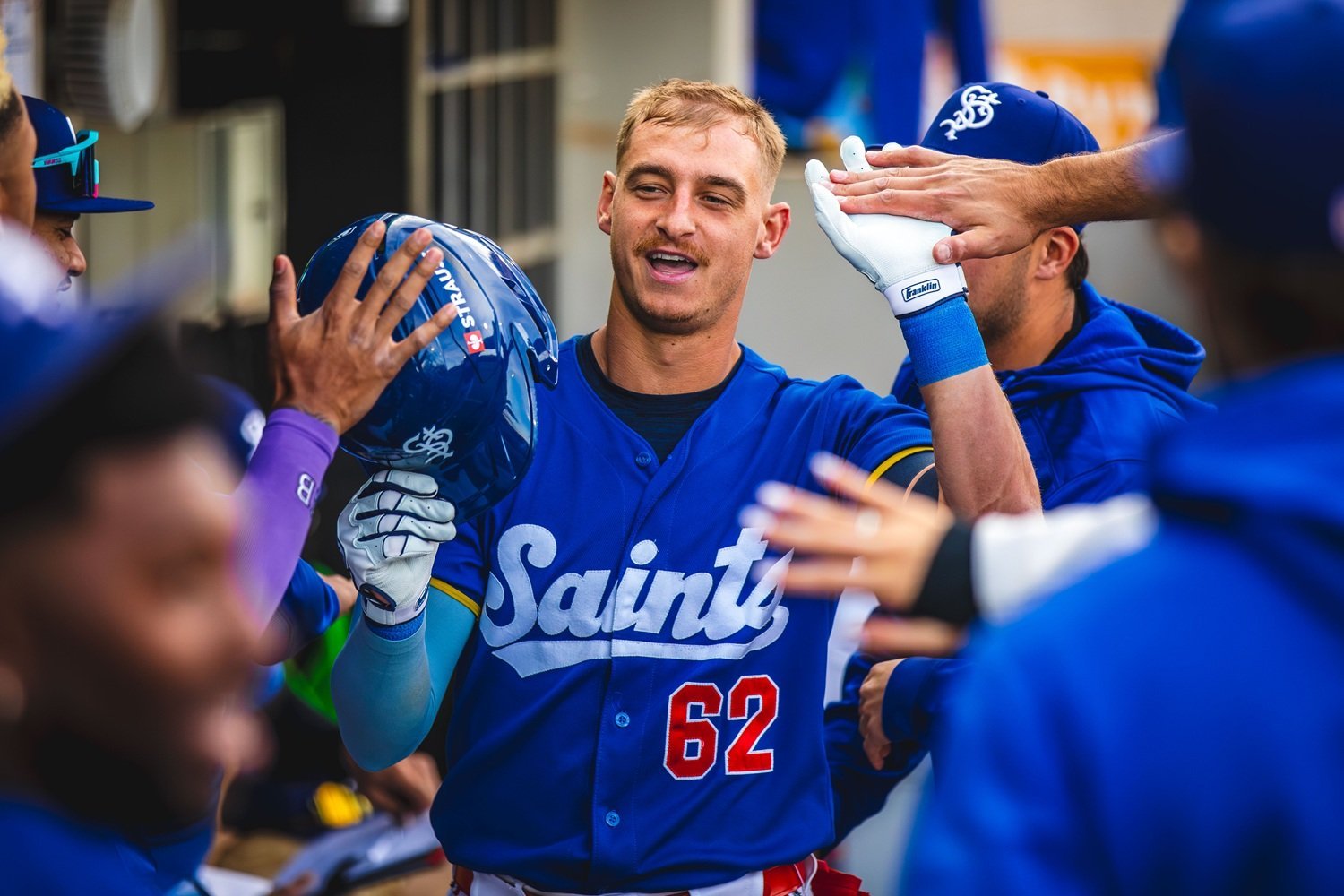 TRANSACTIONS On Friday, the Twins signed another pitcher out of the independent leagues. Halton Hardy was pitching for the Gastonia Ghost Peppers in the Atlantic League. In 21 innings this season, the 24-year-old has 23 strikeouts to just four walks. An Athens, Georgia, native began his college career in 2021 at Division II Francis Marion. He pitched there for two years and was still there in 2023 when he missed the season with injury. In 2024, he transferred to Division I Kennesaw State and shifted from starter to reliever. That’s the role he’s carried into the professional ranks. In addition, Saints catcher Ricardo Olivar was moved from the 7-Day Injured List to the 60-Day Injured List after having knee surgery this week. SAINTS SENTINEL St. Paul 3, Indianapolis 8 Box Score Ricky Castro started for the Saints and gave up four runs on seven hits and a walk in just 2 2/3 innings. He had six strikeouts. C.J. Culpepper came on and gave up one run on two hits and two walks and 1 1/3 innings. Kody Funderburk gave up two runs on two hits and a walk in his inning (though, if you watched that inning, the defense was not helpful). Jake Higginbotham made his first Saints appearance. He gave up a homer to the first batter he faced, and then he struck out the next four batters. Grant Hartwig struck out three batters in 1 2/3 innings. Andrew Bash pitched a scoreless ninth inning. Kyler Fedko hit his 12th and 13th home runs of the 2026 season. An inning later, Kaelen Culpepper reclaimed the team’s home run lead by hitting his 14th homer. He was 2-for-4. The Saints went 0-for-2 with runners in scoring position. The loss ended the team’s five-game winning streak. WIND SURGE WISDOM Wichita 0, San Antonio 2 Box Score Jose Olivares made the start for the Wind Surge. He gave up one run on five hits in four innings. Darren Bowen gave up one hit over two scoreless innings. Hunter Gregory made his Twins org debut with a scoreless inning. Jaylen Nowlin gave up one run in his inning. Yehizon Sanchez gave up two hits and two walks but somehow did not give up a run in his inning. The San Antonio Missions are the Double-A affiliate of the San Diego Padres. Be sure to check out one of our DiamondCentric sites, Padres Mission. Also, check out how many of these Missions players appear on the Padres Mission Top 20 Prospect Rankings. Miguel Mendez is one of their top pitching prospects. He tossed five scoreless inning on Friday night. The Wind Surge were shut out and had just three hits. They did walk seven times though. They were 0-for-10 with runners in scoring position and left seven runners on base. Jaime Ferrer hit a double. Kala’i Rosario walked three times. This weeks’ fourth Salas-palooza event found the Wind Surge shortstop as the winner. Jose Salas went 1-for-1 with two walks and his third double. He also stole his 13th base. The younger brother, Ethan Salas, went 0-for-5 in the game. And he was the catcher when Jose stole his base. KERNELS CHRONICLE Cedar Rapids 8, Wisconsin 3 Box Score The TimberRattlers roster is loaded with prospects, some pitchers but the lineup has a lot of potential big leaguers. Be sure to go to our sister site, Brewer Fanatic, and check out how many of their top prospects play for Wisconsin. Riley Quick set the tone for the Kernels in this game. The right-hander tossed the first four innings and gave up one run on two hits. He had six strikeouts and issued no walks. He threw strikes and worked efficiently. Brian Zeldin came on and tossed two innings of one-run ball. He gave up a solo home run. Yes, to Andrew Fischer. Nick Trabacchi gave up one run on one hit and a walk over three innings and was credited with the win. Marek Houston led the offense in this game. He went 3-for-5 with his fourth and fifth home runs and three RBI. He also stole his 15th base. The Kernels scored their eight runs on eight hits and nine walks. Quinn McDaniel went 2-for-4 with two RBI. Khadim Diaw was 1-for-2 with three walks. Brandon Winokur and Yasser Mercedes each walked twice. Winokur stole his 13th and 14th bases. MIGHTY MATTERS Ft. Myers 9, Lakeland 7 Box Score Through six innings, the Mussels were behind 6-2. The Mussels scored three in the seventh inning and two runs in the eighth inning. Lakeland scored one in the bottom of the eighth and the game was tied at 7-7. Both teams went scoreless in the ninth inning. The Mussels scored two runs in the top of the 10th inning With two outs in the seventh inning, Dameury Pena doubled, Ramiro Dominguez singled, and then Enrique Jimenez hit a three-run home run. In the eighth inning, Luis Fragoza hit his fourth home run of the season, a two-run blast that gave the Mussels the 7-6 lead. In the top of the 10th, Henry Kusiak doubled to drive in Jayson Bass, the inning’s Manfred Man. Kusiak then scored on a Fragoza double. Reed Moring started and gave up three runs on three hits and a walk over five innings. Dylan Questad gave up three runs on three hits in 1/3 of an inning. Brent Francisco struck out two batters in 1 1/3 innings. Jonathan Stevens gave up an unearned run on two walks in his inning. Mike McKenna got four outs. Mitch Mueller recorded his third save with a perfect 10th inning. Luis Fragoza went 2-for-5 with his sixth double and fourth home run. Jimenez went 2-for-5 with his second home run and three RBI. Dameury Pena went 2-for-6 with his fifth and sixth doubles. Henry Kusiak was 1-for-3 with two walks and his fifth double. Ramiro Dominguez was 2-for-5. COMPLEX CHRONICLE FCL Twins 6, FCL Red Sox 1 Box Score A month into the season, Santiago Castellanos made his 2026 debut. He gave up one run on two walks in his inning. He had one strikeout. Santiago Rojas came in and struck out seven batters over four scoreless innings of one-hit ball. Jake Covey made his affiliated ball debut, his first appearance in a Twins uniform. He tossed two scoreless innings and gave up two hits, a walk and hit a batter. He had three strikeouts. The Twins had a five-run fourth inning to take control of this game. Ricardo Pena led off that inning with a walk. Yilber Herrera reached on an error. Ricardo Paez walked to load the bases. Daiber De Los Santos walked to bring in a run. Victor Leal walked to bring in a run. After a pitching change, there was a strikeout for the first out. Then Yovanny Duran walked to bring in a third run. Teilon Serrano then his a sacrifice fly. Finally, when Jhomnardo Reyes walked, and the sixth run scored on a wild pitch. Yilber Herrera went 2-for-3. He had two of the team’s three hits. Ricardo Pena had two of the team’s seven walks. DSL Twins 21, FCL Marlins 10 Box Score Each team got three possessions. Miami scored on a touchdown and added a field goal. Minnesota was able to score touchdowns each time they had the ball. Oh wait, this is baseball. This was not a pretty game. The TWins scored multiple runs in all six innings in which they batters. They scored three in the first, three in the second, two in the third, two in the fourth, eight in the fifth and three in the sixth. Frankly, the Marlins were throwing position players starting in the fifth inning. Adrian Martinez started and gave up three runs on two hits and two walks. He struck out three batters. Herkyn Taveras gave up three runs on three hits and a walk in 1 1/3 innings. Juan Collado gave up four runs on one hit and five walks. He had three strikeouts over two innings. Cristian Alvino gave up two hits in a scoreless seventh frame. Abel Sosa led the way. He went 4-for-4 with his first two home runs, four runs scored and seven RBI. Daiyer Barboza went 1-for-1 with three walks. Juan Holmann was 1-for-3 with two walks and his second home run. Jhon Gonzalez went 2-for-3 with two walks, four runs scored. Luis Suarez went 2-for-4 with three RBI. (Note: If you want to see the home runs, here is the checklist and timelines): Abel Sosa: 3:56:20 Juan Holmann: 4:16:55 Luis Suarez 4:28:50 Abel Sosa: 5:00:44 DSL Marlins vs DSL Twins 6/5/2026 - YouTube PLAYERS OF THE DAY Hitter(s) of the Day Abel Sosa (DSL Twins): 4-for-4, BB, 2 HR(2), 4 R, 7 RBI. Marek Houston (Cedar Rapids): 3-for-5, 2-HR(5), 2 R, 3 RBI, SB(15) Kyler Fedko (St. Paul): 2-for-4, 2 HR(13), 2 R, 2 RBI Luis Fragoza (Fort Myers): 2-for-5, 2B(6), HR(4), R, 4 RBI Pitcher(s) of the Day Riley Quick (Cedar Rapids): 4 IP, 2H, 1 ER, 0 BB, 6 K, 52 pitches, 38 strikes (73.7%) Santiago Rojas (FCL Twins): 4 IP, 1 H, 0 R, 0 BB, 7 K, PROSPECT SUMMARY Check out the Prospect Tracker for much more on our Twins Top 20 prospects after seeing how they did today. #1 - OF Walker Jenkins (St. Paul) - 7 Day Injured List (left shoulder) #2 - IF Kaelen Culpepper (St. Paul) - 2-for-4, HR(14), R, RBI. (batted first, played SS #3 - OF Emmanuel Rodriguez (St. Paul) - 7 Day Injured List (thumb) - Had surgery. #4 - LHP Connor Prielipp (Minnesota) - Did Not Pitch. #5 - C Eduardo Tait (Cedar Rapids) - 0-for-4, BB, R, K (batted second, played catcher). #6 - LHP Dasan Hill (Cedar Rapids) - Did Not Pitch. #7 - SS Marek Houston (Cedar Rapids) - 3-for-5, 2-HR(5), 2 R, 3 RBI, SB(15) (batted first, played SS) #8 - RHP Riley Quick (Cedar Rapids) - 4 IP, 2 H, 1 ER, 0 BB, 6 K, 52 pitches, 38 strikes (73.1%) #9 - LHP Kendry Rojas (Minnesota) - Injured List. #10 - OF Gabriel Gonzalez (St. Paul) - Did Not Play #11 - RHP Charlee Soto (Cedar Rapids) - Injured List #12 - RHP Andrew Morris (Minnesota) - Did Not Pitch #13 - OF Hendry Mendez (St. Paul) - 1-4, BB, R (batted second, played LF) #14 - 3B/SS Quentin Young (Ft. Myers) - Did Not Play. #15 - 3B/CF Brandon Winokur (Cedar Rapids) - 0-for-3, 2 BB, 2 R, 2 K, 2 SB(14) (batted third, played 3B) #16 - RHP Ryan Gallagher (St. Paul) - Did Not Pitch #17 - RHP C.J. Culpepper (St. Paul) - 1 1/3 IP, 2 H, 1 ER, 2 BB, 0 K, 30 pitches, 16 strikes (53.3%) #18 - RHP James Ellwanger (Ft. Myers) - 60 Day Injured List (right elbow sprain) #19 - C/OF Khadim Diaw (Cedar Rapids) - 1-for-2, 3 BB, R (batted fourth, played C) #20 - 2B/SS/CF Kyle DeBarge (Wichita) - Did Not Play. UPCOMING PROBABLES Saturday, June 6: Indianapolis @ St. Paul (6:37 pm CT) - LHP Aaron Rozek (0-0, 3.50 ERA) San Antonio @ Wichita (4:05 pm CT) - RHP Sam Armstrong (1-1, 5.31 ERA), Wisconsin @ Cedar Rapids (6:35 pm CT) - LHP Cesar Lares (first MWL start) Ft. Myers @ Lakeland (5:00 pm CT) - RHP Merit Jones (1-1, 3.32 ERA) FCL Twins @ FCL Red Sox (9:00 am CT) - RHP Melvin Rodriguez (1-0, 6.55 ERA) DSL Angels @ DSL Twins (9:00 am CT) - RHP Sebastian Echavarria (1st pro start) CURRENT W-L Records Minnesota Twins: 29-35 (3rd place (of 5) in AL Central, 6.5 GB)) St. Paul Saints: 32-28 (4th place (of 10) in IL West Division, 5.0 GB)) Wichita Wind Surge: 22-31 (5th place (of 5) in TL North Division, 12.0 GB)) Cedar Rapids Kernels: 27-28 (4th place (of 6) in MWL West Division, 7.5 GB)) Fort Myers Mighty Mussels: 32-23 (2nd place (of 6) in FSL West Division, 3.0 GB)) FCL Twins: 12-12 (4th place (of 6) in FCL South Division, 4.5 GB)) DSL Twins: 1-3 Please feel free to ask questions about the teams, the rosters, and discuss today’s games, or anything else Twins minor-league related! View the full article
 -
Slump Or Exposed: What The Data Says About Austin Martin
DiamondCentric posted an article in Twins Daily
 For the first six weeks of the season, Austin Martin was one of the Minnesota Twins' best hitters. Thrusted into an everyday role after Matt Wallner was optioned, he's chased more and walked less. Is he in the middle of a slump, or have his weaknesses been exposed? View the full article
 -
 Abner Uribe is an electric, high-leverage reliever for the Milwaukee Brewers. A season removed from a run where he logged 75 appearances and a sub-2 earned run average in 2025, his sinker/slider combo makes up one of the deadliest arsenals in MLB. In this video, we'll break down what truly makes Uribe so lethal. View the full article
 -
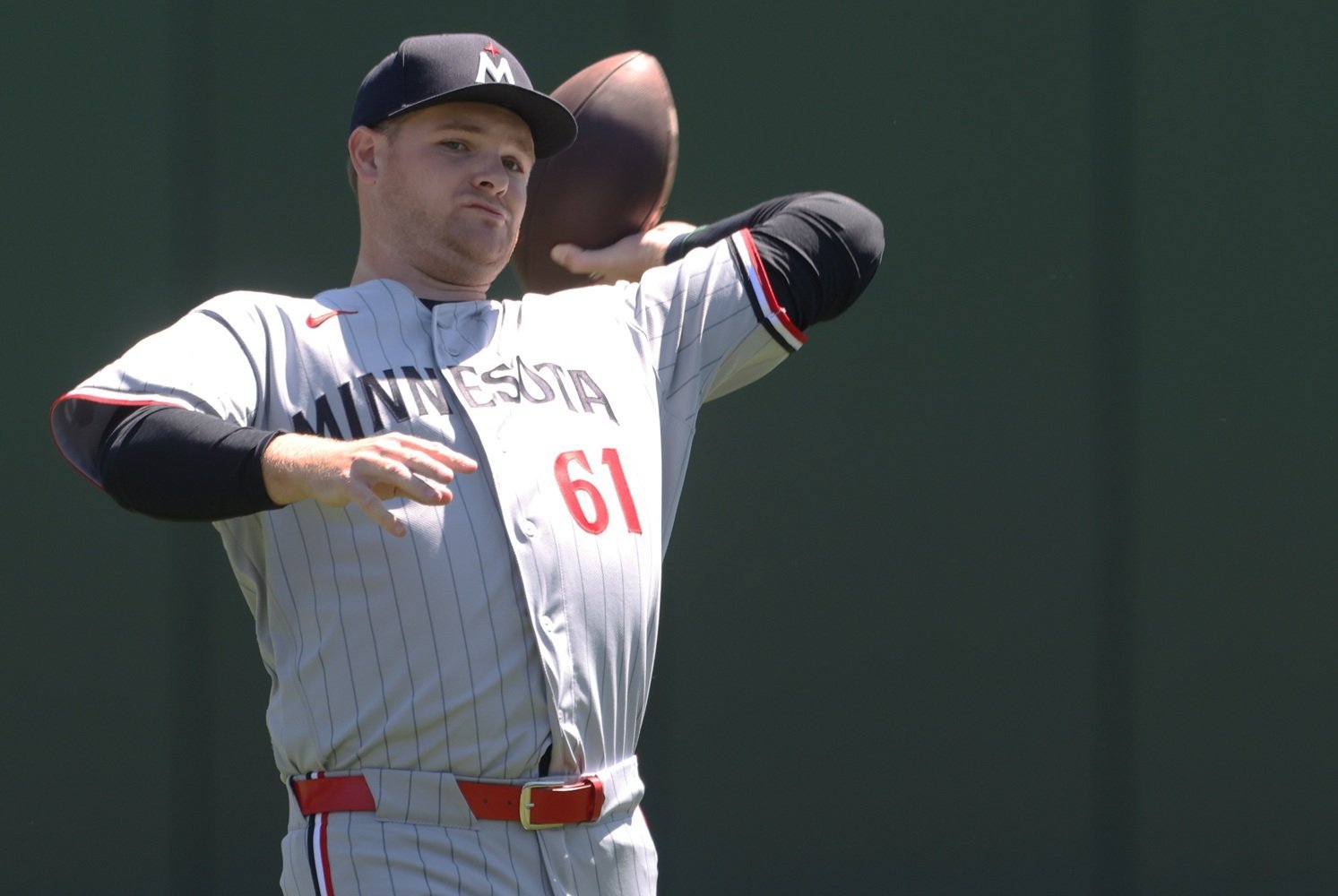 Connor Prielipp’s last three starts have not been encouraging. Before taking the mound on May 22, the Twins' rookie looked like one of the biggest bright spots in their rotation. Through his first handful of major league starts, he carried an ERA below 3.00, was striking out more than a batter per inning, and looked every bit like a pitcher capable of settling into the top half of a big-league rotation. Since then, however, the results have gone in the opposite direction. Over his last three outings, Prielipp has allowed 15 earned runs in 14 1/3 innings while posting a 13-to-8 strikeout-to-walk ratio. The dominance that was present during the first month of his major league career simply has not been there. As a result, his season ERA has climbed to 5.26, his WHIP now sits at 1.35, and he’s averaging less than five innings per start. That naturally leads to a pretty straightforward question: Is it time to worry about Connor Prielipp? There are reasonable arguments on both sides. On one hand, it’s hard to ignore how impressive he looked during his first several starts. His stuff was electric, hitters struggled to square him up, and he consistently generated swings and misses. On the other hand, the recent stat lines are impossible to completely dismiss. More earned runs than innings pitched is ugly no matter how you slice it. The strikeout numbers have come down, the walks have increased and opposing offenses have found far more success against him than they did earlier in the season. Still, after digging a little deeper into the numbers, it’s hard to come away believing that Prielipp is pitching nearly as poorly as his recent results suggest. In fact, there’s a strong case that bad luck has played a significant role in his struggles. To be fair, everything hasn’t been perfect. His swing-and-miss numbers have dipped, and the command hasn’t been quite as sharp as it was during his first month in the majors. You’d certainly like to see fewer walks, and there are areas of his game that need to improve. But overall, the underlying indicators paint a much more encouraging picture than the surface-level statistics. The biggest reason for that optimism is the quality of contact he has allowed. Earlier in the season, hard contact was arguably Prielipp’s biggest issue. While he was still producing strong results, hitters were barreling baseballs at a relatively high rate when they did make contact. Through his first 24 innings, he surrendered four home runs, and those long balls accounted for much of the damage against him. Ironically, the exact opposite has happened during his recent rough stretch. Over his last three starts, Prielipp has allowed 21 hits, yet none of them have left the ballpark. Even more telling is the quality of those hits. His hard-hit rate during that span sits below 30 percent, which is an extremely impressive number. Generally speaking, pitchers who are limiting hard contact at that level should not be giving up hits in bunches. While not every softly hit ball turns into an out, a hard-hit rate that low suggests hitters have not been consistently squaring him up. That’s what makes the recent results somewhat misleading. When a pitcher is allowing weak contact but still getting burned by a high volume of hits, there’s often an element of poor fortune involved. Ground balls find holes, soft line drives fall between defenders, and bloopers drop into shallow outfield grass. Those things happen over the course of a season. The problem is that when several of them happen in a short period of time, the box scores can look much worse than the actual performance. But there’s another factor worth monitoring as well. Prielipp has started relying less on his breaking balls. Earlier in the year, his slider and curveball combined for over 60 percent of his pitch usage. More recently, that number has dropped to around 48 percent. To some extent, the reasoning would be understandable. Prielipp has dealt with more than his share of arm injuries throughout his career, and breaking balls are known for being taxing on an elbow. If the Twins are attempting to reduce stress on his arm by slightly altering his pitch mix, there could be logic behind the decision. At the same time, those breaking pitches are his bread and butter. They’re his best swing-and-miss offerings and help make the rest of his arsenal more effective. When hitters have to respect both the slider and curveball, his fastball plays up considerably. It would be interesting to see the Twins gradually increase that usage again. Not enough to create durability concerns, but even a small bump back toward where it was earlier in the season could help him regain some of the whiffs that have disappeared over the last few weeks. At the end of the day, Prielipp hasn’t been flawless. The command could be better, the strikeout numbers could be higher, and the walks need to come down. Those are legitimate concerns. But the overall picture is far less alarming than a glance at his ERA might suggest. The underlying metrics indicate a pitcher who is still limiting hard contact at an impressive rate. The recent hit totals appear somewhat inflated by factors outside of his control, and there are still plenty of signs that the talent that made him so successful earlier in the year remains intact. Because of that, it feels premature to sound the alarm. Connor Prielipp’s last three starts have undoubtedly been frustrating, but they look much more like a temporary bump in the road than the beginning of a larger problem. The Twins still appear to have a talented major league starter on their hands. And if the quality of contact remains this strong, there’s a good chance the results will start reflecting that again sooner rather than later. View the full article
 -
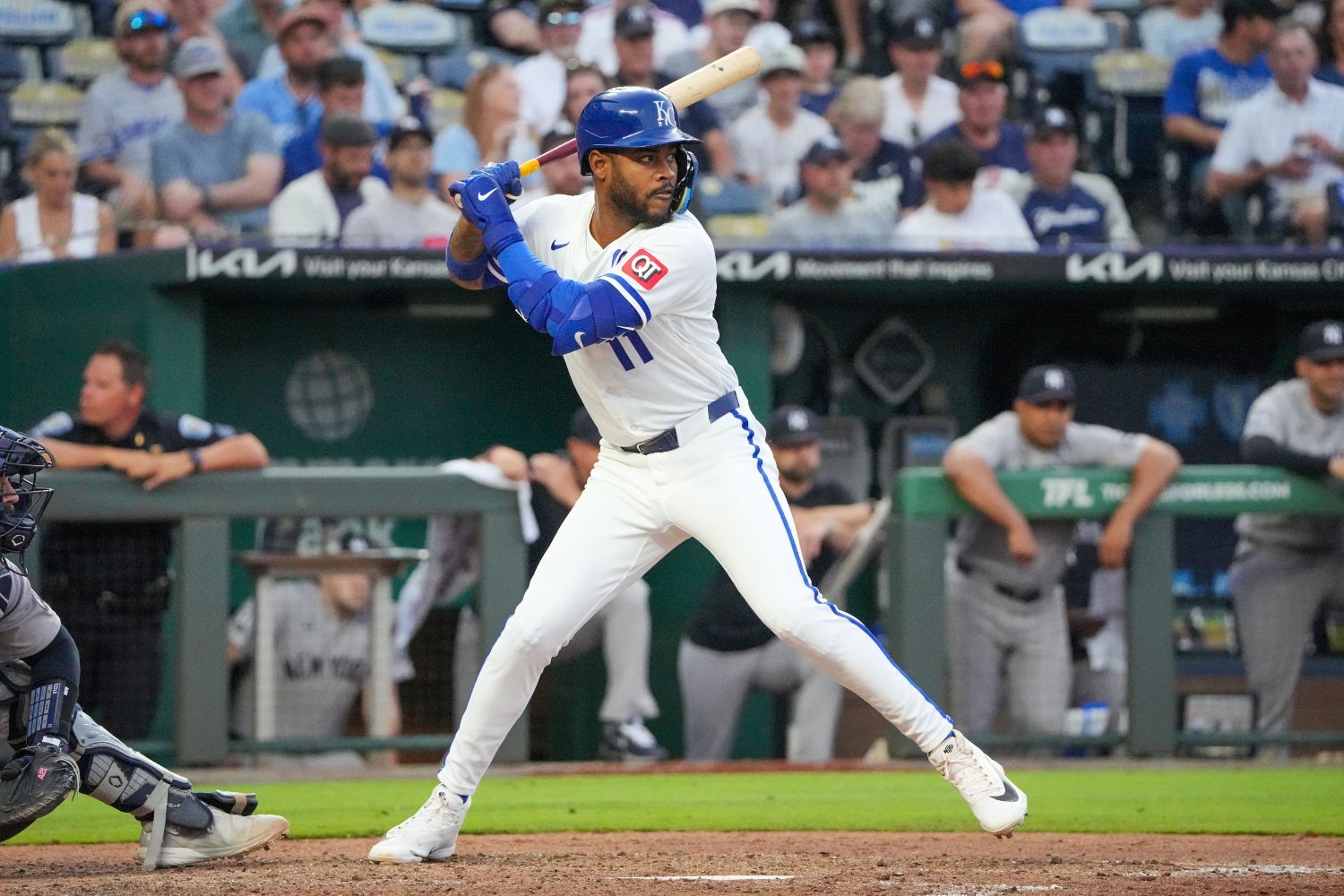 On May 30th, the Kansas City Royals experienced an injury scare, as Maikel Garcia pulled his hamstring rounding second base against the Texas Rangers. Tests revealed a grade 1 hamstring strain for Garcia, which was relatively good news. Anything more than that would've resulted in a lengthy IL stint and some recovery time in Omaha. However, a grade 1 strain meant the Royals could choose between keeping him on the roster and easing him back in or placing him on the IL for a quicker 10-Day IL stint. The Royals opted for the former option, and it seemed like Garcia was progressing positively day by day, according to reports from MLB.com Royals beat writer Anne Rogers. Rogers reported that he was not just taking infield and batting practice but was available off the bench to pinch-hit as soon as Thursday's game against Minnesota. Garcia ended up pinch-hitting in the Royals' 8-5 win over the Twins on Thursday evening, drawing a walk in his lone plate appearance. However, while he initially started on the bases, he was pulled after moving to second base on Josh Rojas' two-RBI single. Royals manager Matt Quatraro said they were being cautious, especially with questionable field conditions after a rain delay. Conversely, Garcia didn't exactly look "100 percent" on the basepaths. Unsurprisingly, Garcia didn't start again on Friday in game two of the Royals' four-game series against the Twins in Minneapolis. It was his sixth-straight game out of the starting lineup. After six straight games out of the lineup, one has to wonder if the Royals made the right decision by not adding Garcia to the IL right away. Why the Royals Didn't Add Garcia to the IL It does seem like Kansas City can be hesitant when adding players to the IL, especially key ones. Earlier in the season, the Royals opted not to add Salvador Perez to the IL after he suffered a hip injury. Rather, Kansas City opted to keep Salvy on the active roster, limit him to DH and first-base duties, and call up Elias Diaz to be the third catcher who could split duties with Carter Jensen as Perez recovered. The strategy seemed to work somewhat. Salvy recovered and eventually reached full strength. Diaz only had 23 plate appearances and hit just .227. However, the 35-year-old veteran did hit two home runs and posted an .852 OPS. Thus, Diaz was able to hold things down behind the plate and in the lineup until Perez returned to more regular innings at catcher. It seemed like the Royals were hoping to do something similar with Garcia. Since going on the IL, Nick Loftin has gotten regular starts at third base. Though he's struggled overall defensively this season (-9 OAA), he profiles much better at third base than second base and the outfield. It hasn't been a great year for Loftin offensively so far. He's hitting .214 with a .657 OPS in 103 plate appearances. However, he did hit his first home run of the year on Wednesday in the series finale against the Reds. While Loftin can hold down the hot corner in Garcia's absence, much like Diaz held down the catcher position when Salvy was out, Garcia isn't even getting starts at designated hitter. The hamstring injury is affecting not just his baserunning but his hitting as well, which explains why Garcia has only gotten two pinch-hit at-bats since May 30th (he's 0-for-1 with a walk and an RBI). That makes Garcia's situation not just dissimilar to Salvy's but ultimately, much more frustrating as well. Garcia Would've Been Better Served on the IL Watching Garcia's two pinch-hit appearances in this Twins series has been brutal. Not only did he not make much hard contact, but he just looked like he was still nursing his hamstring injury, whether in the batter's box or running up the first base line. It's been a down season for the WBC MVP, who made his first All-Star team a year ago. In 248 plate appearances this year, Garcia is slashing .267/.327/.382 with a .709 OPS. He has three home runs, 28 runs scored, 22 RBI, and just four stolen bases on seven attempts. After posting a .769 OPS in March and a .785 OPS in April, he only had a .632 OPS in May. Furthermore, while his chase and whiff rate metrics have been solid, the rest of his Statcast profile, especially when it comes to barrel rate, hard-hit rate, and LA Sweet-Spot%, has been middling to mediocre, via TJ Stats. The Royals want to stay competitive, and they are obviously more competitive when they have Garcia than when they have Josh Rojas, Abraham Toro, or Kevin Newman from Omaha. That said, it's obvious that Garcia's not fully healed from his hamstring injury, and they would be better off with a 100 percent Rojas or another Storm Chasers veteran infielder than a 70-75% Garcia (and that's putting it nicely). The Reds were in a similar situation before their series with the Royals, with Elly De La Cruz, who also suffered a hamstring injury in their series against the Atlanta Braves. However, Cincinnati put him on the IL right away, and he should be ready to go in 2-4 weeks. If the Royals had put Garcia on the IL right away, he would already be six games in and be eligible to return by the start of Kansas City's homestand against the Texas Rangers and Houston Astros. He would have had more time to fully rest and recover, and probably in Kansas City, where he would have had more access to medical resources through the team. Instead, manager Matt Quatraro has to go day to day, hoping that Garcia's hamstring will improve sooner rather than later. Unfortunately, Garcia is not looking great, and that doesn't bode well for the Venezuelan infielder's outlook in the Saturday and Sunday games against Minnesota. Right now, the Royals are 25-39, 14 games under .500. Their odds to make the postseason are 5.7%, the lowest of any team in the AL Central division, according to Fangraphs. When it comes to decision-making with this team, GM JJ Picollo and Quatraro need to make decisions in the team's best long-term interest, not short-term ones. That said, it seems the Royals have focused too much on the short term with Garcia, and that's compromising his rest-of-the-season outlook, as trying to gut it out day by day isn't helping his confidence or performance at the plate. It may be too late to rectify this situation with Garcia, as putting him on the IL now would only set him back even further. Conversely, they need to learn from this mistake and place players on the IL right away rather than waiting. In a season like this, it's okay for the Royals to give chances to players in Triple-A and maybe even Double-A. Royals fans saw tonight what Beck Way could do long-term, as he struck out two batters in an inning of work and posted some gaudy chase and whiff rate metrics. The Royals have to give guys chances. And to do so, they need to be cautious and on the safe side with players when they suffer injury, no matter how minor. Hopefully, Picollo and Quatraro learned their lesson with Garcia and will move much more quickly on IL moves in the near future. In a season like this, Garcia won't be the last key Royals player to suffer an injury. View the full article
 -
 Luke Pelzer drove in five runs as Quad Cities outslugged South Bend 13-8 in the High-A opener, and the River Bandits split the doubleheader with a 4-3 loss in the nightcap. Omaha cruised to an 11-2 win behind Kameron Misner, Matthew Lugo, and Luke Maile, who each homered. Northwest Arkansas fell 8-4 to Midland, and Columbia dropped a 3-2 decision to Fayetteville despite a ninth-inning rally led by Yandel Ricardo. Royals Transactions Kansas City Royals signed free agent IF Juan Batista to a minor league contract. Kansas City Royals transferred 2B Jonathan India from the 10-day injured list to the 60-day injured list. Left shoulder subluxation. RHP Stephen Kolek's roster status was changed by the Kansas City Royals. Kansas City Royals selected the contract of 3B Josh Rojas from Omaha Storm Chasers. Misner, Lugo, and Maile Power Omaha Past Columbus The Omaha Storm Chasers broke open a close game with a six-run fifth inning and rolled to an 11-2 victory over the Columbus Clippers. The Storm Chasers led 1-0 before the fifth, when Drew Waters walked with the bases loaded to score Misner, Abraham Toro doubled in three runs, and Maile capped the rally with a two-run home run. Misner finished 2-for-5 with a home run, two runs, and two RBI, while Lugo went 2-for-4 with a home run, a double, three runs, and an RBI. Maile added two hits, two runs, and two RBI, and Toro drove in three. Starter Mitch Spence set the tone with three scoreless innings, allowing one hit and no walks while striking out five. Helcris Olivárez followed with two innings, surrendering one run on one hit with three strikeouts and two walks. Omaha added insurance in the eighth on home runs from Misner and Lugo, and Kevin Newman singled home a run in the ninth. The Storm Chasers left eight runners on base but collected 12 hits on the night. Five pitchers combined to hold Columbus to two runs, both on solo home runs. Player AB R H RBI BB K John Rave 5 0 1 0 1 1 Peyton Wilson 4 1 1 0 1 2 Kameron Misner 5 2 2 2 0 1 Matthew Lugo 4 3 2 1 1 0 Brett Squires 4 1 0 0 1 1 Drew Waters 3 1 1 2 1 1 Abraham Toro 4 1 1 3 1 1 Luke Maile 4 2 2 2 0 1 Kevin Newman 4 0 2 1 1 1 Player IP H R ER BB K HR Mitch Spence 3 1 0 0 0 5 0 Helcris Olivárez 2 1 1 1 2 3 0 Dan Altavilla 2 0 0 0 1 2 0 Andrew Pérez 1 1 1 1 1 2 1 Génesis Cabrera 1 0 0 0 1 2 0 Naturals Stumble Late in 8-4 Loss to Midland The Northwest Arkansas Naturals jumped ahead early but could not hold the lead in an 8-4 loss to the Midland RockHounds. Northwest Arkansas scored three runs in the second inning, getting an RBI single from Connor Scott and a two-run single from Alberto Rodriguez to take a 3-1 lead. Midland answered with three runs in the fifth, keyed by a bases-clearing triple, and pulled away with single runs in the seventh and a three-run ninth. Starter Ethan Bosacker turned in a solid outing, allowing one run on four hits over 3 2/3 innings with two strikeouts and two walks. The bullpen could not preserve the deficit, as Zachary Cawyer allowed three runs in one inning and Tommy Molsky gave up three runs in the ninth. Scott led the offense with two hits and an RBI, Rodriguez added two RBIs, and Omar Hernandez reached base twice with a hit and two runs scored. The Naturals managed just six hits and left four runners on base. Daniel Vazquez struck out three times in a hitless afternoon, and Carson Roccaforte went hitless with a walk atop the order. Player AB R H RBI BB K Carson Roccaforte 3 0 0 0 1 2 Colton Becker 4 0 1 0 0 2 Jack Pineda 3 0 1 0 1 0 Spencer Nivens 3 1 0 0 1 1 Daniel Vazquez 4 0 0 0 0 3 Omar Hernandez 3 2 1 0 1 0 Connor Scott 4 1 2 1 0 2 Alberto Rodriguez 4 0 1 2 0 0 Justin Johnson 3 0 0 0 0 1 Player IP H R ER BB K HR Ethan Bosacker 3 2/3 4 1 1 2 2 0 Zachary Cawyer 1 2 3 2 1 1 0 Andrew Morones 3 1 1 1 1 2 0 Tommy Molsky 1 2 3 3 3 1 0 Pelzer Drives In Five as River Bandits Win Slugfest 13-8 Pelzer had the night of the series, going 4-for-4 with three doubles and five RBI to lead the Quad Cities River Bandits past the South Bend Cubs 13-8. The River Bandits scored four times in the first inning, with Blake Mitchell, Luke Pelzer, Derlin Figueroa, and Tyriq Kemp each driving in a run. Quad Cities added five more in the second, sending the lead to 9-0, as Asbel Gonzalez, Pelzer, and Kemp delivered run-scoring hits, and Figueroa walked in a run. South Bend answered with an eight-run third inning, aided by three Quad Cities errors, to climb within 9-8, but the River Bandits responded with four runs in the fifth, three of them on a Pelzer double. Gonzalez finished 3-for-4 with two runs and an RBI, and Mitchell reached base four times with a hit, two walks, and three runs scored. Starter David Shields struggled, allowing eight runs, four earned, on three hits and two walks over 2 2/3 innings with no strikeouts. Max Martin steadied things with 2 1/3 scoreless innings, and Yimi Presinal closed with two scoreless frames, allowing no baserunners. The River Bandits left seven runners on base. Player AB R H RBI BB K Nolan Sailors 4 2 2 0 0 0 Asbel Gonzalez 4 2 3 1 0 0 Blake Mitchell 2 3 1 1 2 1 Ramon Ramirez 2 2 1 0 1 0 Luke Pelzer 4 2 4 5 0 0 Derlin Figueroa 3 1 1 2 1 1 Jose Cerice 4 0 1 1 0 1 Tyriq Kemp 4 0 2 2 0 0 Angel Acosta 4 1 0 0 0 0 Player IP H R ER BB K HR David Shields 2 2/3 3 8 4 2 0 0 Max Martin 2 1/3 2 0 0 2 1 0 Yimi Presinal 2 0 0 0 0 0 0 River Bandits Drop Nightcap 4-3 to South Bend The Quad Cities River Bandits took an early lead but fell 4-3 to the South Bend Cubs in the second game of the doubleheader. Quad Cities scored twice in the second inning, as Erick Torres singled home a run and Acosta added a run on a sacrifice bunt for a 2-0 lead. The River Bandits pushed across another run in the third on a Pelzer fly out to take a 3-2 edge. South Bend tied the game in the second on a two-run home run and a double, then won it with single runs in the fifth. Starter Cory Ronan absorbed the loss, allowing three runs, two earned, on four hits and two walks over 1 2/3 innings with three strikeouts and a home run. Coleman Picard followed with 2 1/3 scoreless innings, allowing one hit and striking out one, and Josh Hansell pitched two innings, giving up one run on three hits. Pelzer and Derlin Figueroa each collected a hit, while Torres drove in a run. The River Bandits managed three hits and left three runners on base and went 1-for-4 with runners in scoring position. This second game was a makeup of their April 5th game in South Bend, and thus, the Cubs were the home team in the nightcap of the doubleheader. Player AB R H RBI BB K Nolan Sailors 3 0 0 0 0 3 Blake Mitchell 2 1 0 0 1 1 Ramon Ramirez 2 0 0 0 1 0 Luke Pelzer 3 1 1 0 0 1 Derlin Figueroa 3 1 1 0 0 0 Jose Cerice 1 0 0 0 0 0 Erick Torres 3 0 1 1 0 1 Angel Acosta 2 0 0 1 0 1 Diego Guzman 2 0 0 0 0 1 Tyriq Kemp 1 0 0 0 0 1 Player IP H R ER BB K HR Cory Ronan 1 2/3 4 3 3 2 3 1 Coleman Picard 2 1/3 1 0 0 0 1 0 Josh Hansell 2 3 1 1 0 1 0 Fireflies Rally Comes Up Short in 3-2 Loss The Columbia Fireflies nearly erased a three-run deficit in the ninth inning but fell 3-2 to the Fayetteville Woodpeckers. Fayetteville scored all of its runs in the third inning on a three-run home run. Columbia was held without a run until the ninth, when Daniel Lopez and Henry Ramos reached, and Stone Russell singled home a run to make it 3-1. Ricardo followed with a run-scoring double to pull within 3-2, but the rally ended there. Starter Darwin Rodriguez delivered a strong outing, allowing three runs, two earned, on five hits and two walks over 5 2/3 innings while striking out nine. Luis Valdez followed with 1 1/3 scoreless innings and a strikeout, and Randy Ramnarace tossed a scoreless ninth despite two walks. Ricardo led the offense with a double and an RBI, and Russell drove in the other run. Columbia managed six hits and left four runners on base, with Sean Gamble, Roni Cabrera, and Gabriel Silva combining for seven strikeouts. Player AB R H RBI BB K Henry Ramos 4 1 1 0 0 0 Sean Gamble 4 0 0 0 0 2 Josh Hammond 4 0 1 0 0 1 Stone Russell 4 0 1 1 0 0 Josi Novas 0 0 0 0 0 0 Yandel Ricardo 4 0 1 1 0 2 Roni Cabrera 4 0 0 0 0 2 Connor Rasmussen 3 0 1 0 0 2 Gabriel Silva 3 0 0 0 0 3 Daniel Lopez 3 1 1 0 0 1 Player IP H R ER BB K HR Darwin Rodriguez 5 2/3 5 3 3 2 9 1 Luis Valdez 1 1/3 0 0 0 0 1 0 Randy Ramnarace 1 0 0 0 2 1 0 Top-20 Prospect Performance Kendry Chourio: DNP David Shields: 2 2/3 IP, 3 H, 8 R, 4 ER, 2 BB, 0 K Sean Gamble: 0-for-4, 2 K Blake Mitchell: 1-for-2, 3 R, RBI, 2 BB, K (Game 1); 0-for-2, R, BB, K (Game 2) Josh Hammond: 1-for-4, K Ramon Ramirez: 1-for-2, 2 R, BB (Game 1); 0-for-2, BB (Game 2) Drew Beam: DNP Asbel Gonzalez: 3-for-4, 2 R, RBI Ben Kudrna: DNP Carson Roccaforte: 0-for-3, BB, 2 K Yandel Ricardo: 1-for-4, 2B, RBI, 2 K Felix Arronde: DNP Blake Wolters: DNP Michael Lombardi: DNP Luinder Avila: DNP Steven Zobac: DNP Frank Mozzicato: DNP Daniel Vazquez: 0-for-4, 3 K Warren Colcano: DNP Shane Panzini: DNP View the full article
 -
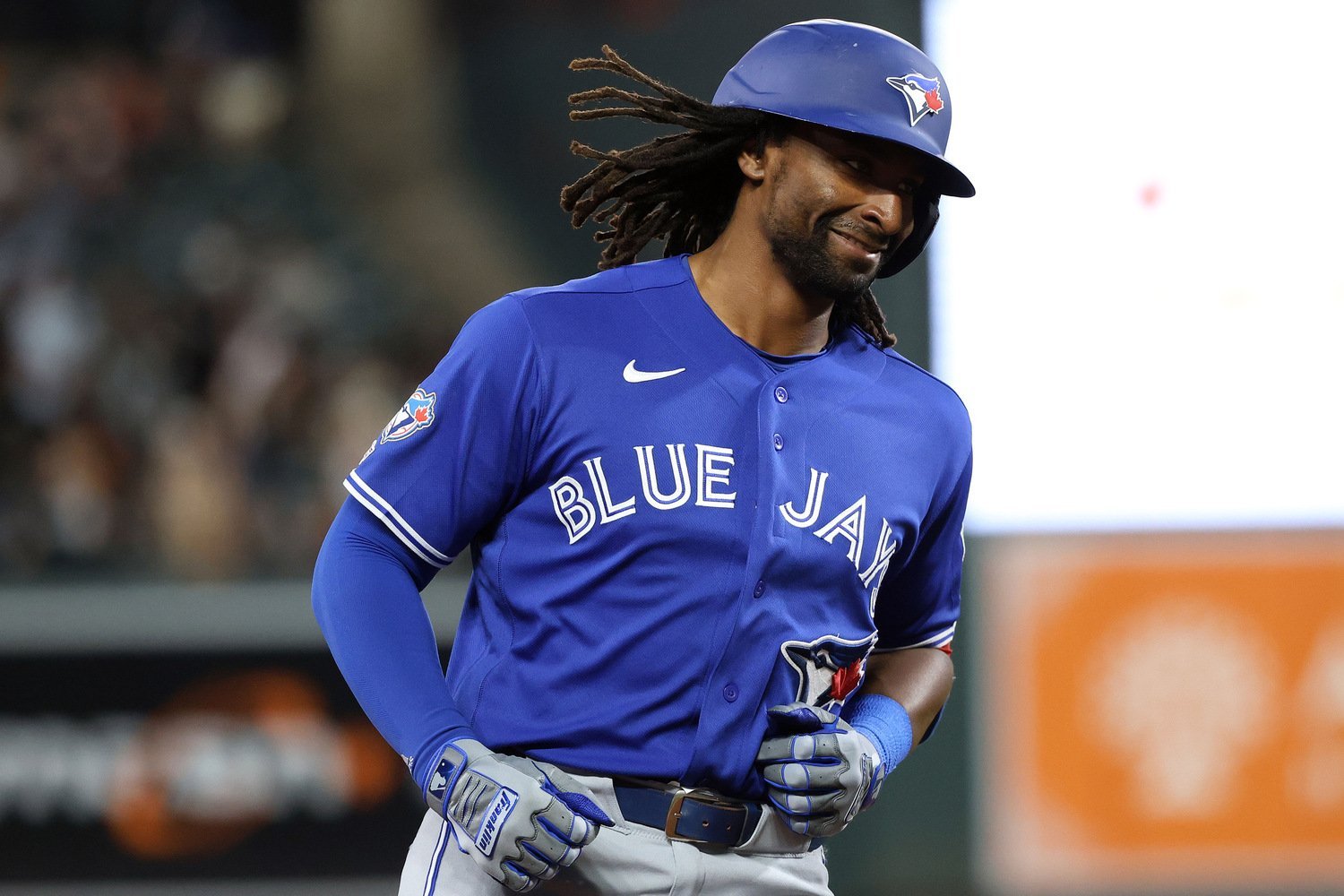 Charles McAdoo is one of the newest members of the Toronto Blue Jays. Now remember, this is an offense that found itself near the top of the MLB leaderboards in almost every category last year, so there’s quite the lofty expectation that they continue to produce like that this year (even without Bo Bichette). So far, they haven't. In this article, I'll dive into who McAdoo is, what he can provide for this offense and his overall outlook with the team. McAdoo's Background McAdoo is listed as the No. 14 prospect in the Blue Jays’ system, per Jays Centre's rankings. The Pittsburgh Pirates originally selected him in the 13th round in the 2023 MLB Draft. Three years later, the 377th overall pick in that year’s draft is a big leaguer. This is someone who was a part of the Bucs’ pipeline for all of 2023, when he hit over .300 and flashed the power (five home runs in 28 games) in his professional debut with the Bradenton Marauders (Low-A). Halfway through the 2024 season, the Pirates dealt him to the Jays in a trade for Isiah Kiner-Falefa. He took his lumps with the Double-A New Hampshire Fisher Cats, but eventually worked his way to a Triple-A spot to start this year, where he smacked eight home runs and registered a .789 OPS over the course of 50 games. A 'Big' League Debut Fast forward to just recently, and the 24-year-old slugger made his big league debut. He didn’t just show up either. McAdoo smacked a two-run home run in his first MLB game to make quite the first impression: After 323 minor league games and over 1,100 at-bats at various affiliated levels, the corner infielder wasted no time making his statement on the most prominent stage. Strengths and Weaknesses The former late-round pick’s strength lies in his pop. Standing at six feet and 210 pounds, he sports 55-grade power. Over the last couple of years, the Jays’ development staff has been working on getting his fundamentals down and aligning two key metrics. One is exit velocity, while the other is elevating the ball at an ideal launch angle. The more that somebody with McAdoo’s stature can elevate the baseball, the better. The power has already shown up, as he’s smacked 46 long balls over 323 MiLB games. This is also somebody with a walk rate of over 10%, meaning opposing pitchers have plenty of respect for what he brings to the table. McAdoo isn’t a perfect prospect by any means, and while his raw athletic ability and strength give him power, he’s had trouble fitting in on the defensive end. The Blue Jays have him listed as a corner infielder (with the ability to play second), but his 45-grade fielding tool implies that there’s still work to be done with his glove. There’s a possibility that he finds a long-term home as a corner outfielder, but his main strength is the elite bat speed and sheer power that he can generate at the plate. Charles McAdoo's Outlook While McAdoo may not have a solidified spot on defense, he could one day hit his way into being an everyday starter for a Blue Jays team that poured on the runs en route to a World Series appearance in 2025. For now, he’ll likely plug into the lineup from time to time until either his bat motivates Toronto to keep him there or his glove improves enough to make his appearances come on a more consistent basis. Overall, this is still a remarkable story of a late-round draft pick who has climbed the minor league ladder and overcome a change in scenery via the trade market, who has now managed to earn a big league debut in just three years. View the full article
 -
 The San Diego Padres' affiliates went 2-2 on Friday. The Triple-A El Paso Chihuahuas dropped a 9-6 decision to Sugar Land, while the Double-A San Antonio Missions blanked Wichita 2-0, the High-A Fort Wayne TinCaps fell to Lake County 11-8 and the Low-A Lake Elsinore Storm rolled past Fresno 9-4. Padres Minor-League Transactions Padres recalled RHP David Morgan from El Paso Chihuahuas. Padres activated RHP Jhony Brito from the 60-day IL and optioned him to El Paso Chihuahuas. Chihuahuas Can't Keep Pace With Space Cowboys In a game in which all the scoring happened in the first five innings, the host Triple-A El Paso Chihuahuas didn't have enough to overcome the Sugar Land Space Cowboys, who won 9-6. Nick Schnell and Carlos Rodriguez each had two RBIs, while Nick Solak and Clay Dungan each had a pair of hits for the Chihuahuas. Each team scored three times in the third inning, with Schnell squeezing home Will Wagner and Rodriguez drove in a pair with a single. Sugar Land put up a run in the third and three in the fourth and two in the fifth for a 9-3 advantage. Solak led off the bottom of the fifth with a single, then Castanon drove him in with a double. Two outs later, Dungan singled him home, then stole second and scored on Schnell's double. Chihuahuas left-handed starter JP Sears was tagged for seven runs in 3⅔ innings, giving up seven hits and two runs while fanning five. Right-hander Ty Adcock gave up the other two runs while only getting one out. But right-handers Garrett Hawkins (1⅔ innings), Alek Jacob (one inning) and Logan Gillaspie (two innings) didn't allow a hit the rest of the way. EP_0605.mp4 Player AB R H RBI BB K Pablo Reyes 3 0 1 0 2 1 Carlos Rodríguez 5 0 1 2 0 1 Nick Solak 5 1 2 0 0 1 Marcos Castañon 5 1 1 1 0 1 Will Wagner 3 1 0 0 2 1 Mason McCoy 5 0 0 0 0 2 Clay Dungan 4 2 2 1 1 0 Nick Schnell 3 1 1 2 1 0 Anthony Vilar 4 0 1 0 0 2 Player IP H R ER BB K HR JP Sears 3 2/3 7 7 7 2 5 1 Michael Flynn 1/3 1 0 0 0 0 0 Ty Adcock 1/3 1 2 2 3 1 1 Garrett Hawkins 1 2/3 0 0 0 2 1 0 Alek Jacob 1 0 0 0 0 0 0 Logan Gillaspie 2 0 0 0 0 1 0 Miguel Mendez Spearheads Missions' 3-Hit Shutout Right-handed starter Miguel Mendez and two relievers combined on a three-hit shutout as the Double-A San Antonio Missions edged the host Wichita Wind Surge 2-0. Mendez, Padres Mission's No. 3 prospect, allowed two hits with a pair of walks and four strikeouts over those five innings, lowering his ERA to 3.90. He faced the minimum through four innings, but allowed a baserunner each of the first three. In the first, the leadoff hitter tried stretching a single into a double, but right fielder Braedon Karpathios threw him out. In the second, a leadoff walk was erased when the next batter hit into a double play. In the third, a one-out double by Jose Salas, Ethan Salas' brother, was eliminated when Mendez picked him off second. Mendez, who went three scoreless innings in his previous start, then retired the side in order in the fourth. Right-hander Eric Yost struck out two in two hitless innings, but he did walk five while matching his season best for innings. Right-hander Johan Moreno finished off the shutout with two innings and three punchouts. It was the third shutout for the Missions this year. Karpathios and Francisco Acuna each had a pair of hits, while Romeo Sanabria drove in one run and a balk brought in another. That came in the fourth inning when Tirso Ornelas doubled, Karpathios singled him to third and, after Karpathios stole second, a balk brought in Ornelas. It stayed 1-0 until the eighth. Carson Tucker drew a leadoff walk, stole second and went to third on an Ethan Salas groundout before Sanabria grounded an RBI single up the middle for a 2-0 lead. SA_0605.mp4 Player AB R H RBI BB K Carson Tucker 3 1 1 0 2 2 Ethan Salas 5 0 0 0 0 0 Romeo Sanabria 4 0 1 1 0 1 Kai Roberts 0 0 0 0 0 0 Tirso Ornelas 4 1 1 0 0 0 Braedon Karpathios 4 0 2 0 0 1 Ryan Jackson 4 0 1 0 0 2 Francisco Acuna 3 0 2 0 1 0 Albert Fabian 3 0 1 0 1 0 Luis Verdugo 4 0 1 0 0 1 Player IP H R ER BB K HR Miguel Mendez 5 2 0 0 2 4 0 Eric Yost 2 0 0 0 5 2 0 Johan Moreno 2 1 0 0 0 3 0 Jake Cunningham Blasts 3 Homers, But TinCaps Let Lead Slip Away Jake Cunningham had a three-homer game and drove in six, but for the second night in a row, the host High-A Fort Wayne TinCaps' bullpen couldn't protect a lead, giving up eight runs over the final three innings in an 11-8 loss to the Lake County Captains. Cunningham is the fourth player in TinCaps history to hit three homers in a single game. TinCaps left-handed starter Kash Mayfield, Padres Mission's No. 2 prospect, had a solid five innings, allowing three runs on seven hits with a pair of walks and four strikeouts. This came after he only got two outs and allowed six runs last week against South Bend. Cunningham hit a three-run homer in the first inning, a two-run homer in the third inning and a solo shot in the fifth for his third multi-homer game of the year. He took over sole possession of the team lead with 13 homers and moved into second place in the Midwest League. Justin DeCriscio also had three hits, all singles, with an RBI and a run scored, while Kavares Tears Cunningham's solo homer put the TinCaps up 6-2, but the Captains scored three in the seventh, four in the eighth to take the lead and another in the ninth. Cunningham had a chance at a fourth homer in the ninth inning. Kasen Wells was hit by a pitch with one out and went to third on DeCriscio's single. Rosman Verdugo singled home Wells to pull within 11-8. After a flyout, Cunningham came up with a chance to make it a one-run game, but he popped out to the first baseman to end the game. TinCaps right-hander Clay Edmondson, who had given up four earned runs all season in 22 innings, was touched for three runs in the eighth and ninth while getting just two outs. He leads the minors with 10 saves and had a 0.41 ERA entering the game, which rose to 1.59. FW_0605.mp4 Player AB R H RBI BB K Justin DeCriscio 5 1 3 1 0 1 Rosman Verdugo 4 1 1 1 1 0 Carlos Rodriguez 4 1 1 0 1 0 Jake Cunningham 5 3 3 6 0 1 Jack Costello 4 0 1 0 0 1 Kavares Tears 4 0 0 0 0 3 Zach Evans 4 0 0 0 0 3 Jonathan Vastine 3 1 1 0 0 2 Lamar King Jr. 1 0 0 0 0 1 Kasen Wells 3 1 0 0 0 2 Player IP H R ER BB K HR Kash Mayfield 5 7 3 3 2 4 3 Ryan Och 1 1/3 2 3 1 1 0 0 Jeferson Villabona 2/3 0 0 0 2 0 0 Igor Gil 2/3 1 2 2 1 1 0 Clay Edmondson 2/3 3 3 3 2 0 2 C.J. Widger 2/3 1 0 0 0 1 0 Top Of The Order, 7-Run Fifth Fuel Storm Triumph Ryan Wideman, Kerrington Cross and Luis Verdugo, the top three hitters in the lineup, combined for seven hits and six RBIs as the Low-A Lake Elsinore Storm used a seven-run fifth inning to topple the host Fresno Grizzlies 9-4. Wideman, Padres Mission's No. 5 prospect, went 3-for-5 with two RBIs and two runs scored, while Cross and Verdugo each went 2-for-4 with a homer, a pair of RBIs and a run scored. Both homers scored Wideman. Yoiber Ocopio, hitting cleanup, and Jorge Quintana each added two hits, while Dylan Grego drove in two runs. Verdugo hit a two-run homer in the third for a 2-1 lead, then the Storm opened it up in the fifth with seven runs. Cross hit a two-run homer, another run scored on Quintana's infield single and a throwing error, Grego had a two-run double and Wideman capped the outburst by tripling home a pair of runs. Storm left-handed starter Kruz Schoolcraft, Padres Mission's No. 4 prospect, allowed just one run on four hits with no walks and three punchouts. The five innings were a career high for Schoolcraft, who didn't allow a walk for the first time in his 10 starts this year. LE_0605.mp4 Player AB R H RBI BB K Ryan Wideman 5 2 3 2 0 0 Kerrington Cross 4 1 2 2 1 1 Jose Verdugo 4 1 2 2 1 1 Yoiber Ocopio 5 0 2 0 0 1 Truitt Madonna 5 1 1 0 0 1 George Bilecki 3 1 1 0 1 0 Qrey Lott 1 0 0 0 0 0 Jorge Quintana 5 1 2 0 0 1 Dylan Grego 3 1 1 2 1 0 Bradley Frye 0 0 0 0 0 0 Conner Westenburg 3 1 0 0 1 0 Player IP H R ER BB K HR Kruz Schoolcraft 5 4 1 1 0 3 0 Cal Riehl 1 2 1 1 0 0 0 Rordy Mejia 2 2 2 0 0 2 0 Carson Swilling 1 0 0 0 0 0 0 Top 20 Prospect Performance Ethan Salas: 0-for-5 Kash Mayfield: 5 IP, 7 H, 3 R, 3 ER, 2 BB, 4 K, 3 HR Miguel Mendez: 5 IP, 2 H, 0 R, 0 ER, 2 BB, 4 K Kruz Schoolcraft: 5 IP, 4 H, 1 R, 1 ER, 0 BB, 3 K Ryan Wideman: 3-for-5, 2B, 3B, 2 RBI Jorge Quintana: 2-for-5, K Ty Harvey: On injured list Kale Fountain: Injured, out for season Braedon Karpathios: 2-for-4, K Lamar King Jr.: 0-for-1, K Jagger Haynes: DNP Alex McCoy: DNP Truitt Madonna: 1-for-5, K Tucker Musgrove: DNP Garrett Hawkins: 1⅔ IP, 0 H, 0 R, 0 ER, 2 BB, 1 K Michael Salina: DNP Eric Yost: 2 IP, 0 H, 0 R, 0 ER, 5 BB, 2 K Rosman Verdugo: 1-for-4, RBI, BB Bryan Balzer: DNP Deivid Coronil: DNP View the full article
 -
Twins 5, Royals 3: Sixth Inning Ambush Fuels Comeback Win
DiamondCentric posted an article in Twins Daily
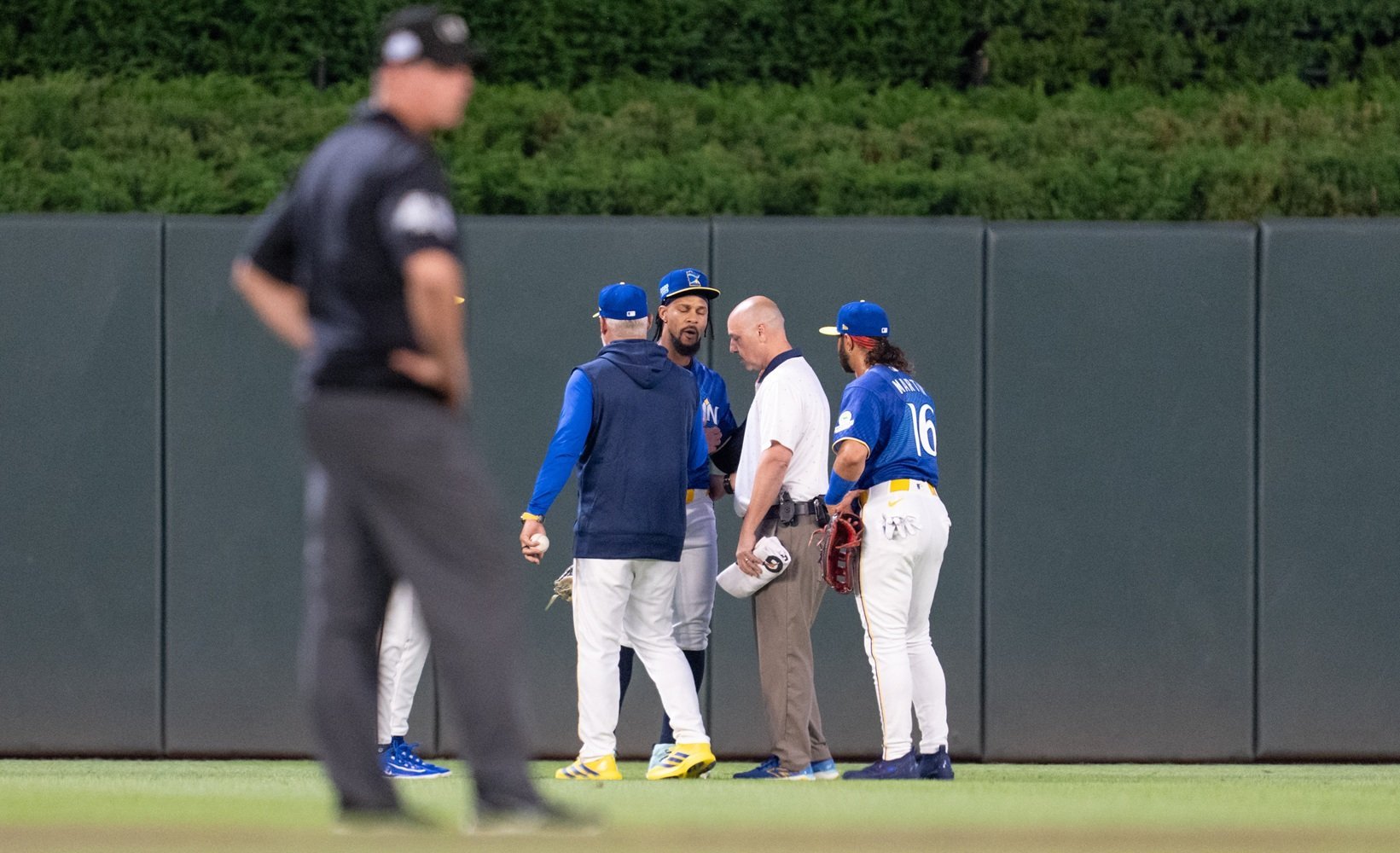 Box Score SP: ............Zebby Matthews: 7 IP, 5 H, 2 ER, 4 BB, 2 K Home Runs: Brooks Lee (9) Top 3 WPA: Zebby Matthews (.130), Brooks Lee (.120), Orlando Arcia (.120) Win Probability Chart (via FanGraphs) There was rain. Or maybe there wasn’t. Well, there was supposed to be rain. Those who should know told us, anyways. And it might be back there in the distance somewhere. We’ll push this game back an hour and a half. It’ll build character. And then we’ll make them get an Apple TV subscription again. That’ll also build character. Are you tired of all the character? Nestled in Minneapolis—on the outskirts of the skyscrapers and man-made institutions that inspire awe and assert dominance—sits the stadium that contains the baseball played on Friday. The field, a beautiful arrangement of limestone, greenery, and screens, gave way to a classic back-and-forther on Thursday, the kind of game that could entertain even the most arduous baseball hater, though it ended in a loss for the protagonist Twins. And this is where we find our heroes: lauded and mired in the common traps and pitfalls of a team that simply may not be good. Not bad. Just not good. The Lord would spit them from his mouth if given the opportunity. Zebby Matthews certainly didn’t begin his start well. Fresh off the vague, esoteric rain delay, the square-jawed hurler found the terrain unfamiliar and rude. Kansas City crushed his offerings. A Bobby Witt Jr. walk portended a stolen base, placing the dynamic speedster in scoring position for any hitter. Vinnie Pasquantino made the point moot with a double cracked into right field. Jac Caglianone brought home his Italian-American brethren with a double off the Jericho wall in right-center. The instant offense paralyzed the Twins. Their offense remained dormant for two innings. The clever finesse veteran Michael Wacha knew which buttons to press and selected them with the acumen of a hurler 14 years into his major league career. Finally, matters turned in favor of Minnesota—ironically after they lost their best player, Byron Buxton, who exited following a failed encounter with the center field wall. Alex Jackson singled, and pinch-hitter Tristan Gray reached first on a bunt, sending the leading runner to third in the process. Brooks Lee grounded out to conclude the manufactured run. At this point, Matthews was settled in, comfortable. The Royals found him more troublesome than before—though thanks in part to Austin Martin throwing out a would-be runner at home in the fourth. A pitcher can sometimes only be as good as his defense, after all. Sitting at a 2-1 stalemate in the sixth, the Twins trudged to the batter’s box draped in the common misfortune of an offense that couldn’t get going. They needed a hit to fuel things, yet the only fuel for such an endeavors is a hit. Quite the pickle. So, Lee simplified the situation by blasting a solo home run. “Homers kill rallies,” say some. In this case, they ignite them. Minnesota's bats became a flurry. Doubles by Kody Clemens and Josh Bell shot the Twins into the lead, and Orlando Arcia added on with an RBI knock into right field. Back-to-back wild pitches coaxed the scampering Arcia home safely. Suddenly, it was 5-2 Twins, and the Royals were no longer the aggressors in the game; they hadn’t flashed teeth since the first; they still couldn’t stop running into outs at home; Martin remained an armed terror manning right field with a vigor unseen since the cathedral was raised (outside of Max Kepler, but he never threw runners out quite like this. Matthews ended his night after seven innings, ushering in the bullpen to end what the youngster had brilliantly started. Anthony Banda did so drama-less. Travis Adams did so with a soft tepid feeling of uneasiness, but he never devolved into worse territory, eventually closing the game with a soft pop-up off Kyle Isbel's bat. Notes: Post-Game Interview: What’s Next? The Twins and Royals return to the Target Field confines Saturday for an early afternoon melee, sparring Joe Ryan against Luinder Avila. First pitch is at 1:10 PM. Maybe. An estimation of rain could soil the start time. Bullpen Usage Spreadsheet Morris 0 18 0 48 0 66 Paredes 0 0 0 50 0 50 Gómez 15 15 0 18 0 48 Lawrence 0 0 19 24 0 43 Orze 0 0 26 16 0 42 Banda 0 20 0 8 14 42 Adams 19 0 0 0 16 35 Laweryson 0 0 26 0 0 26 Rogers 0 0 12 11 0 23 View the full article
