


DiamondCentric
-
Posts
2,631 -
Joined
-
Last visited
Never
Content Type
Profiles
Forums
Events
News
Tutorials & Help
Major League Baseball Videos
Guides & Resources
Store
Downloads
Gallery
Everything posted by DiamondCentric
-

Will Royce Lewis Show An Ability To Be Coached In St. Paul?
DiamondCentric posted an article in Twins Daily
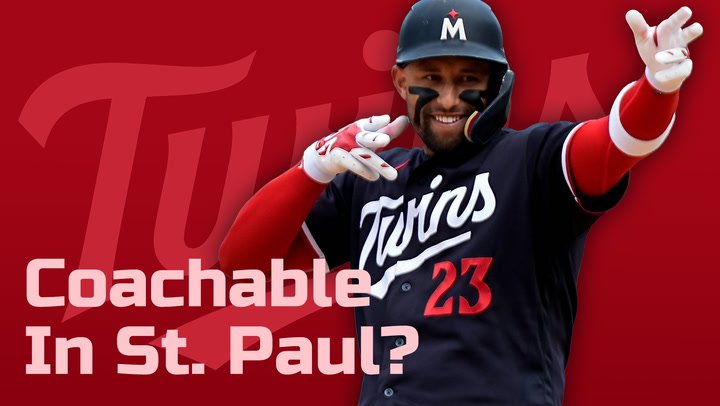 Royce Lewis was sent down to Triple-A St. Paul to reset his swing after having a .163 batting average in 31 games to start the year. In the past, when Lewis has struggled, he hasn't always shown a willingness to be coached and learn from his faults. Will things be different this time? View the full article
 -
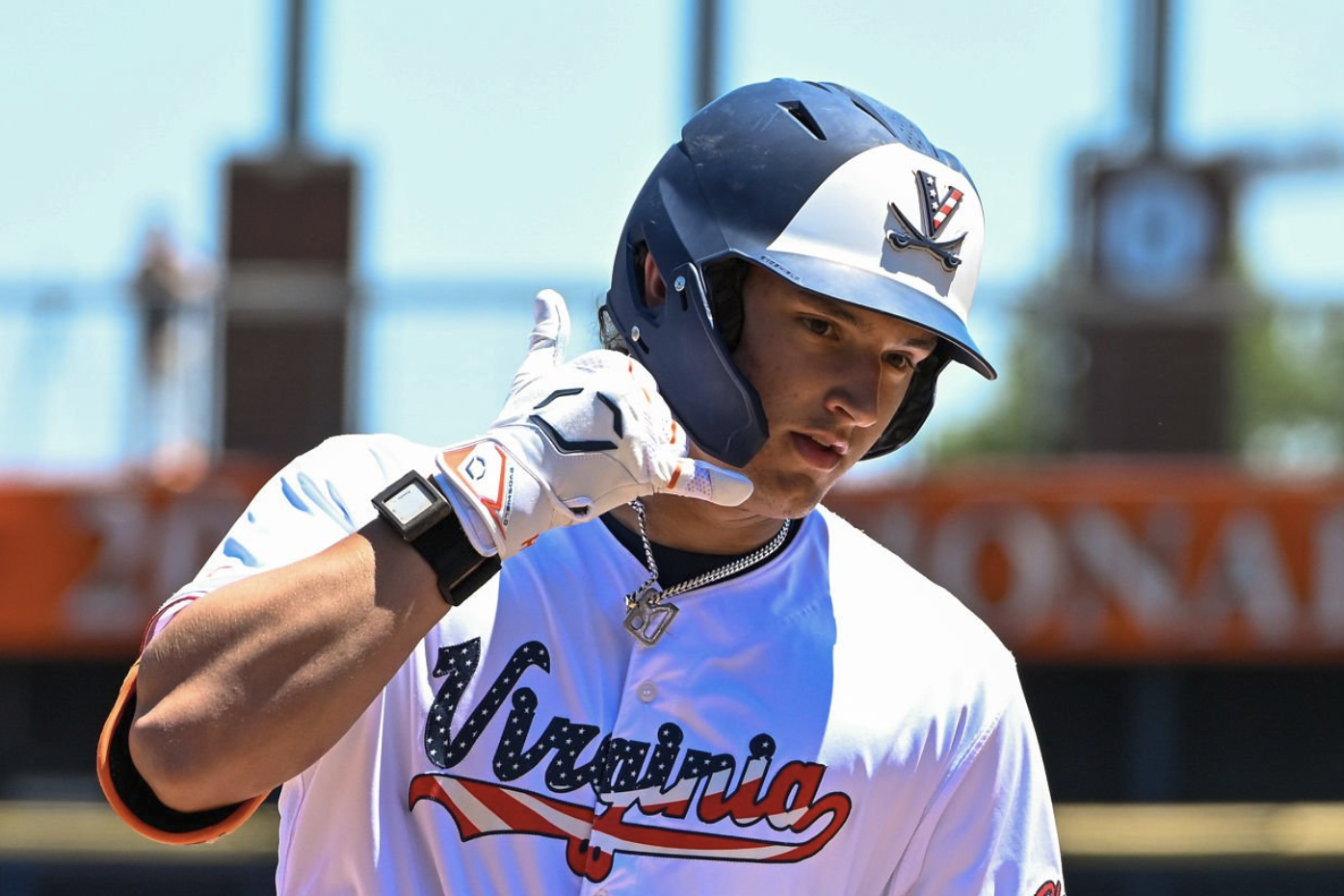 We are less than two months away from the 2026 MLB Draft. Fish On First has already published profiles for many of the prospects worth considering for the Miami Marlins in the first round, as well as an updated draft big board. It's time to dive even deeper with a three-round mock draft. The Marlins will make four selections within the first three rounds—14th, 52nd, 71st, and 87th. Their overall bonus pool is the largest in franchise history at $11,960,100. Here is the 2026 Fish on First MLB Mock Draft 1.0. First Round (14th overall)—AJ Gracia, OF, Virginia Slot value: $5,444,900 With the 14th pick of the 2026 MLB Draft, the Miami Marlins select outfielder AJ Gracia. The Marlins have one of the most complete hitters in this draft class with the selection of the Virginia outfielder. AJ Gracia is the 6’3”, 195-pound outfielder out of the University of Virginia. On MLB Pipeline, Gracia is the eleventh-ranked prospect in the 2026 MLB Draft class. On Baseball America, Gracia is the fifteenth-ranked prospect in this draft class. At the plate, Gracia is an excellent bat-to-ball hitter who rarely chases pitches out of the zone and can drive the ball to all fields. He has consistently hit at a high level throughout his collegiate career. However, Gracia is pretty limited defensively as he projects as a left fielder at the next level. During the 2026 season, Gracia has played and started in 53 games. Gracia is slashing .3338/.478/.616 with 67 hits, thirteen doubles, fourteen home runs, 42 RBIs, 45 walks, and a 1.095 OPS. Second Round (52nd overall)—Joseph Contreras, RHP, Blessed Trinity HS (GA) Slot value: $1,892,500 With the 52nd pick of the 2026 MLB Draft, the Miami Marlins select right-handed Joseph Contreras. The Marlins use their second round pick to draft their first high school prospect with the selection of Contreras. Contreras is the son of former MLB veteran right-handed pitcher José Contreras. He also pitched for Team Brazil in the 2026 World Baseball Classic. He even jammed Aaron Judge with a mid-90s fastball to induce a broken-bat double play. On the mound, Contreras has a four-pitch mix including his fastball, slider, forkball, and changeup. His fastball sits in the mid-90s but was clocked at 99 mph this past spring. He has a good low-80s slider, but his best secondary pitch is his forkball. Just like his dad, Contreras generates a lot of ground balls and whiffs with his forkball. On MLB Pipeline, Contreras is the 54th-ranked draft prospect. On Baseball America, Contreras is the 55th-ranked prospect in the 2026 MLB Draft Class. Contreras is signed to play college baseball for the Vanderbilt Commodores. Competitive Balance Round B (71st overall)— Dee Kennedy, SS, Kansas State Slot value: $1,192,600 With the 71st pick of the 2026 MLB Draft, the Miami Marlins select shortstop Dee Kennedy. With their extra pick, the Marlins grab one of the biggest risers on draft boards since the beginning of the season. Kansas State shortstop Dee Kennedy had a major breakout season for the Wildcats this season. He has been one of the most improved players in the country, especially after he had LASIK surgery. In his junior season, Kennedy played and started in 57 games. He’s slashing .357/.461/.733 with 79 hits, seventeen doubles, three triples, 20 home runs, 69 RBIs, 22 stolen bases, and a 1.194 OPS. Kennedy is a very well-rounded prospect who can hit and also plays strong defense after a premier position. While he doesn’t have one tool that really stands out, he’s a very solid prospect who could make an immediate impact in Miami’s farm system. Third Round (87th overall)—Daniel Cuvet, 3B, Miami Slot value: $929,700 With the 87th pick of the 2026 MLB Draft, the Miami Marlins select third baseman Daniel Cuvet. The Marlins grab a hometown kid and one of the most productive hitters in college baseball since he arrived on campus. Daniel Cuvet is the best hitter for the Miami Hurricanes and is a former First-Team All-American. He’s a very sound hitter who has lots of power to all fields but doesn’t run well and likely projects at first base at the next level. During the 2026 season, Cuvet has only played and started in 41 games due to an injury. Cuvet is slashing .305/.437/.649 with 46 hits, fourteen doubles, twelve home runs, 45 RBIs, 33 walks, and a 1.086 OPS. On Baseball America, Cuvet is the 88th-ranked draft prospect. On MLB Pipeline, Cuvet is the 105th-ranked prospect in the 2026 MLB Draft Class. Cuvet’s bat is legit and could come up through the minor leagues quickly if he can continue to consistently hit like he has with the Hurricanes. View the full article
 -
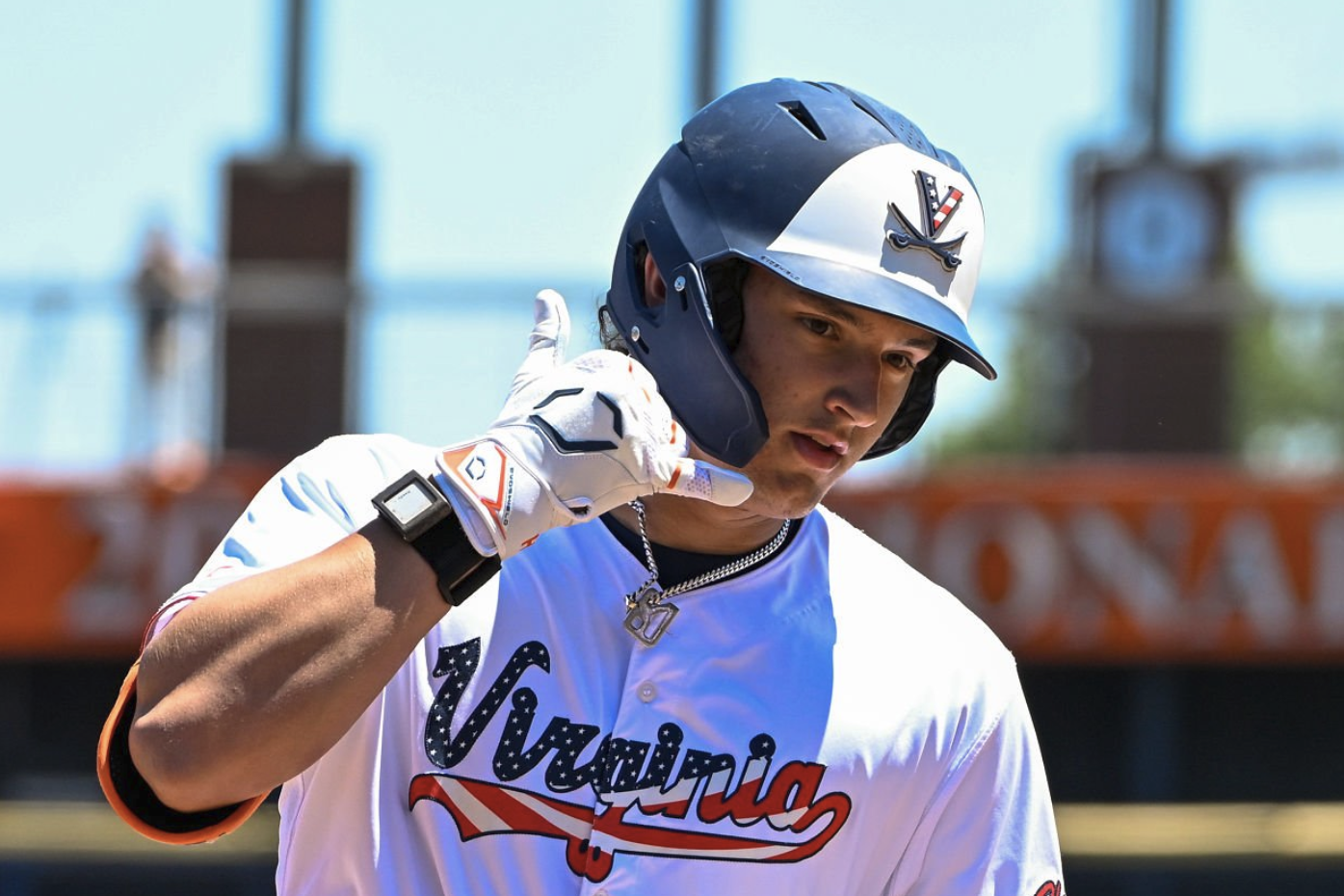 We are less than two months away from the 2026 MLB Draft. Fish On First has already published profiles for many of the prospects worth considering for the Miami Marlins in the first round, as well as an updated draft big board. It's time to dive even deeper with a three-round mock draft. The Marlins will make four selections within the first three rounds—14th, 52nd, 71st, and 87th. Their overall bonus pool is the largest in franchise history at $11,960,100. Here is the 2026 Fish on First MLB Mock Draft 1.0. First Round (14th overall)—AJ Gracia, OF, Virginia Slot value: $5,444,900 With the 14th pick of the 2026 MLB Draft, the Miami Marlins select outfielder AJ Gracia. The Marlins have one of the most complete hitters in this draft class with the selection of the Virginia outfielder. AJ Gracia is the 6’3”, 195-pound outfielder out of the University of Virginia. On MLB Pipeline, Gracia is the eleventh-ranked prospect in the 2026 MLB Draft class. On Baseball America, Gracia is the fifteenth-ranked prospect in this draft class. At the plate, Gracia is an excellent bat-to-ball hitter who rarely chases pitches out of the zone and can drive the ball to all fields. He has consistently hit at a high level throughout his collegiate career. However, Gracia is pretty limited defensively as he projects as a left fielder at the next level. During the 2026 season, Gracia has played and started in 53 games. Gracia is slashing .3338/.478/.616 with 67 hits, thirteen doubles, fourteen home runs, 42 RBIs, 45 walks, and a 1.095 OPS. Second Round (52nd overall)—Joseph Contreras, RHP, Blessed Trinity HS (GA) Slot value: $1,892,500 With the 52nd pick of the 2026 MLB Draft, the Miami Marlins select right-handed Joseph Contreras. The Marlins use their second round pick to draft their first high school prospect with the selection of Contreras. Contreras is the son of former MLB veteran right-handed pitcher José Contreras. He also pitched for Team Brazil in the 2026 World Baseball Classic. He even jammed Aaron Judge with a mid-90s fastball to induce a broken-bat double play. On the mound, Contreras has a four-pitch mix including his fastball, slider, forkball, and changeup. His fastball sits in the mid-90s but was clocked at 99 mph this past spring. He has a good low-80s slider, but his best secondary pitch is his forkball. Just like his dad, Contreras generates a lot of ground balls and whiffs with his forkball. On MLB Pipeline, Contreras is the 54th-ranked draft prospect. On Baseball America, Contreras is the 55th-ranked prospect in the 2026 MLB Draft Class. Contreras is signed to play college baseball for the Vanderbilt Commodores. Competitive Balance Round B (71st overall)— Dee Kennedy, SS, Kansas State Slot value: $1,192,600 With the 71st pick of the 2026 MLB Draft, the Miami Marlins select shortstop Dee Kennedy. With their extra pick, the Marlins grab one of the biggest risers on draft boards since the beginning of the season. Kansas State shortstop Dee Kennedy had a major breakout season for the Wildcats this season. He has been one of the most improved players in the country, especially after he had LASIK surgery. In his junior season, Kennedy played and started in 57 games. He’s slashing .357/.461/.733 with 79 hits, seventeen doubles, three triples, 20 home runs, 69 RBIs, 22 stolen bases, and a 1.194 OPS. Kennedy is a very well-rounded prospect who can hit and also plays strong defense after a premier position. While he doesn’t have one tool that really stands out, he’s a very solid prospect who could make an immediate impact in Miami’s farm system. Third Round (87th overall)—Daniel Cuvet, 3B, Miami Slot value: $929,700 With the 87th pick of the 2026 MLB Draft, the Miami Marlins select third baseman Daniel Cuvet. The Marlins grab a hometown kid and one of the most productive hitters in college baseball since he arrived on campus. Daniel Cuvet is the best hitter for the Miami Hurricanes and is a former First-Team All-American. He’s a very sound hitter who has lots of power to all fields but doesn’t run well and likely projects at first base at the next level. During the 2026 season, Cuvet has only played and started in 41 games due to an injury. Cuvet is slashing .305/.437/.649 with 46 hits, fourteen doubles, twelve home runs, 45 RBIs, 33 walks, and a 1.086 OPS. On Baseball America, Cuvet is the 88th-ranked draft prospect. On MLB Pipeline, Cuvet is the 105th-ranked prospect in the 2026 MLB Draft Class. Cuvet’s bat is legit and could come up through the minor leagues quickly if he can continue to consistently hit like he has with the Hurricanes. View the full article
 -
One Bold Prediction for Every Month Left in the Twins’ Season
DiamondCentric posted an article in Twins Daily
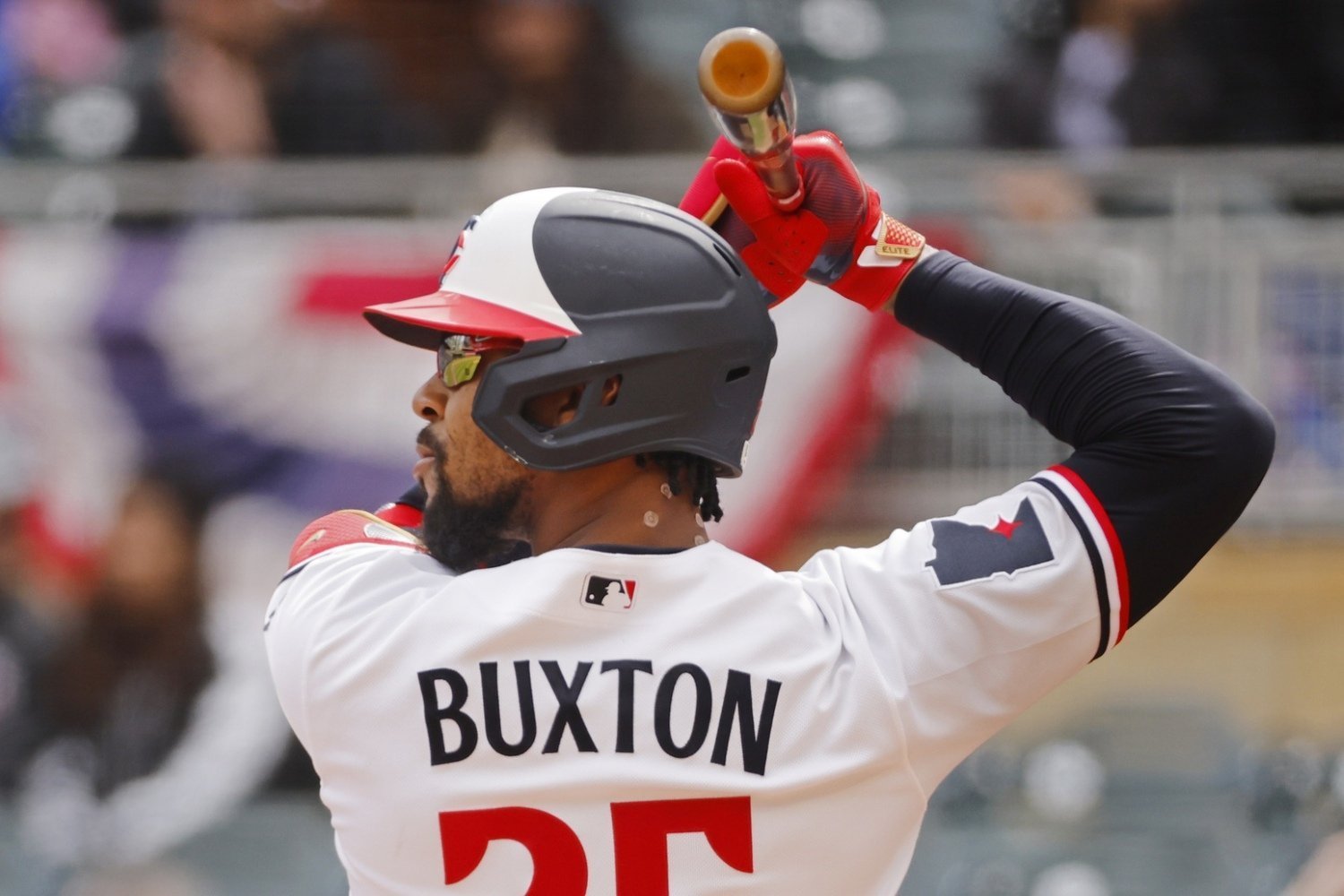 The Twins have spent most of the season floating in baseball purgatory. They haven’t looked like a legitimate contender, but they also haven’t played poorly enough to fade from the American League playoff race completely. Nearly every time the season feels ready to spiral, Minnesota responds with a strong series win or a timely stretch of baseball that keeps the club hovering near the Wild Card picture. Part of the reason the Twins have stayed alive is that the American League has lacked separation. Outside of a handful of true contenders, the rest of the league has been filled with inconsistent clubs carrying obvious flaws. That reality has allowed Minnesota to remain within striking distance despite its own shortcomings. For this team, the formula moving forward is straightforward. Keep winning series. Stay near the .500 mark. Let the standings sort themselves out. Whether that ultimately leads to meaningful September baseball remains to be seen, but the rest of the season should provide plenty of intrigue. Here’s one bold prediction for every month left in the Twins’ season. June: The Twins Stay Near .500 and Remain in the Wild Card Hunt The Twins continue hovering around the .500 mark through the end of June, keeping themselves firmly planted in the middle of the Wild Card conversation. That might not sound particularly impressive on the surface, but for a club that entered the year with limited expectations, remaining relevant into the summer would still represent an accomplishment. Injuries, offensive inconsistency, and a lack of overall roster depth have created plenty of opportunities for the season to collapse. Instead, Minnesota keeps finding ways to stabilize itself. The rotation continues to carry much of the workload. Joe Ryan pitches like a frontline starter, Bailey Ober provides valuable innings, and the bullpen does just enough to protect late leads. Offensively, the lineup remains streaky, but Byron Buxton’s production helps prevent the club from falling into extended losing streaks. The bigger factor may be the American League's weakness. There are very few dominant teams battling for the final playoff spots, which keeps the Twins firmly in the mix despite their flaws. June becomes less about separating from the pack and more about surviving long enough to stay relevant heading into July. If Minnesota reaches the All-Star break within a few games of a playoff spot, the season suddenly feels much more interesting than many expected back in March. July: The Twins Begin Preparing for Another Deadline Selloff Even while remaining close to contention, the Twins quietly begin laying the groundwork for another trade deadline selloff. Joe Ryan and Ryan Jeffers emerge as two of the organization’s most discussed names leading up to the deadline. Ryan would instantly become one of the top starting pitchers available on the market because of his production, affordability, and years of team control. Jeffers also draws plenty of attention from contenders seeking help behind the plate. Meanwhile, Buxton’s name dominates rumor cycles throughout the month. Rival executives continue checking whether Minnesota would consider moving the face of the franchise. Ultimately, though, the Twins hold onto Buxton while deciding to capitalize on the value of Ryan and Jeffers. The return package mirrors the organization’s recent strategy. Instead of targeting lower-level lottery ticket prospects, Minnesota prioritizes players who are close to major-league ready. The front office wants to remain competitive in the near future rather than commit to a lengthy rebuild. Trading Ryan would be difficult for both the clubhouse and the fan base. He has developed into the reliable ace the Twins have desperately needed for years. Still, the organization understands that controllable starting pitching rarely carries more value than it does at the trade deadline. The Twins may not fully wave the white flag in July, but they begin making decisions with the future clearly in mind. August: Walker Jenkins Finally Arrives in Minnesota Walker Jenkins finally makes his long-anticipated major league debut before the end of August. His shoulder injury significantly delays the timeline. Instead of aggressively pushing him through the system, the Twins choose patience. Jenkins likely doesn’t return to Triple-A St. Paul until late June or early July, limiting the amount of time he has to force the issue before the second half. Once he gets rolling, though, the talent becomes impossible to ignore. By late August, Minnesota rewards its top prospect with a promotion that instantly changes the energy around the organization. Jenkins arrives with massive expectations because of his advanced offensive approach, mature plate discipline, and ability to impact the baseball to all fields. The youth movement may not stop there. Kaelen Culpepper, Emmanuel Rodriguez, and Gabriel Gonzalez could all factor into the second-half picture as the organization begins transitioning toward its next core. Suddenly, the Twins become one of the more fascinating teams in baseball despite lingering around the edges of contention. That wave of young talent provides excitement for both the clubhouse and the fan base. Even if the playoff odds remain slim, the final weeks of August become must-watch baseball because of the organization’s future arriving in real time. September: The Twins Fade from the Race, but Buxton Earns MVP Recognition The Twins ultimately run out of steam during September and fall out of the playoff race. The combination of deadline trades, roster inconsistency, and limited depth eventually catches up to them. Minnesota remains competitive for much of the season, but the lack of established impact talent becomes too difficult to overcome over a full six-month grind. Still, the season closes with one of the most rewarding individual performances of Buxton’s career. For the first time, Buxton finally finishes inside the top 10 of American League MVP voting. The talent has always been worthy of that level of recognition. Health has prevented him from putting together a complete season before last year. He finished with the eleventh-highest vote total in last year’s voting cycle. This year will finally be different. Buxton is one of the only bright spots on the Twins, and he almost single-handedly keeps the club competitive. The numbers could be spectacular. Forty home runs, elite defense in center field, baserunning impact, and highlight reel moments every week would force voters to recognize his value. Even on a team that misses the postseason, Buxton establishes himself as one of the American League’s most dynamic players. The Twins are walking a difficult line between competing in the present and preparing for the future. That balancing act should define the remainder of the season. There will likely be moments where the club looks capable of making a legitimate Wild Card push. There will also be stretches where another organizational reset feels inevitable. In many ways, that uncertainty perfectly reflects where the franchise currently stands. Still, the rest of the season could provide something equally important as postseason baseball: clarity. If Jenkins arrives as expected, and if the next wave of prospects begins establishing itself at the major-league level, the Twins could leave 2026 with a much stronger vision for what comes next. Even if October baseball ultimately slips away, the final four months may still shape the future of the organization for years to come. What are other bold predictions for the coming months? Leave a comment and start the discussion. View the full article
 -
 David Shields struck out five over five innings for Quad Cities, while Northwest Arkansas's Omar Hernandez homered and drove in four, and Carson Roccaforte doubled in a run. Columbia's Yandel Ricardo collected two hits, two RBIs, and two steals, Josh Hammond singled in a run, and Ramon Ramirez doubled for High-A. Hunter Owen punched out six in relief at Double-A, and Darwin Rodriguez fanned three across four-plus frames for Single-A in losing efforts across the system. Royals Transactions Kansas City Royals placed RHP Nick Mears on the 15-day injured list retroactive to May 28, 2026. Right shoulder impingement. Kansas City Royals signed RHP Dan Altavilla. Kansas City Royals recalled RHP Eric Cerantola from Omaha Storm Chasers. Storm Chasers Silenced In 13-1 Loss To Memphis Omaha managed just five hits and one run against Memphis, striking out 15 times as a team and leaving 10 runners on base. Abraham Toro and Kevin Newman each collected two hits, and Toro drove in the lone run. The damage began early. In the second inning, the Redbirds scored three runs, capped by a three-run home run that put Omaha in a hole. Memphis added single runs in the third and fourth before breaking the game open in the sixth, when a double, two singles, and another single produced four runs to make it 10-1. Toro's run-scoring force out in the fifth, which plated Connor Kaiser, accounted for the only Storm Chasers tally. On the mound, Jose Cuas opened with 1 2/3 scoreless innings, allowing no hits while walking one and striking out one. The relief work behind him struggled, as Ben Sears surrendered six hits and four runs while recording just one out, and Andrew Pérez allowed five hits and three runs over 1 2/3 innings. Position players Abraham Toro and Anthony Gose were pressed into mound duty late, with Toro allowing three runs in his inning of work and Gose tossing a scoreless ninth. Memphis added three more in the ninth to close out the rout. Player AB R H RBI BB K John Rave 3 0 0 0 2 3 Abraham Toro 5 0 2 1 0 2 Kameron Misner 4 0 1 0 0 3 Drew Waters 4 0 0 0 0 2 Brett Squires 0 0 0 0 0 0 Dustin Dickerson 4 0 0 0 0 3 Gavin Cross 3 0 0 0 0 1 Luke Maile 3 0 0 0 1 1 Connor Kaiser 3 1 0 0 1 0 Kevin Newman 4 0 2 0 0 0 Player IP H R ER BB K HR Jose Cuas 1 2/3 0 0 0 1 1 0 Ben Sears 1/3 6 4 4 0 0 0 Andrew Pérez 1 2/3 5 3 3 1 0 0 Dan Altavilla 1 1/3 1 0 0 1 1 0 Abraham Toro 1 4 3 3 0 0 0 Chase Jessee 2 3 3 3 3 3 1 Anthony Gose 1 0 0 0 1 0 0 Naturals Undone By Eighth-Inning Collapse In Tulsa Northwest Arkansas led 4-3 entering the eighth inning before Tulsa erupted for seven runs to pull away in an 11-7 loss. Hernandez powered the offense with a three-run home run and four RBIs, Carson Roccaforte and Alberto Rodriguez each doubled, and Sam Kulasingam reached three times with two stolen bases and scored twice. The Naturals had built their lead steadily, scoring in the second on a run-scoring double play, the fourth on Hernandez's sacrifice fly, the fifth on Roccaforte's RBI double, and the seventh on Rodriguez's run-scoring double. Hernandez's three-run shot in the eighth pushed the lead to 7-4, but the bullpen could not hold it. Tommy Molsky retired just two batters while allowing four hits, four runs, and a home run, taking the loss and blowing the save as the Drillers' seven-run eighth, which ended on a grand slam, flipped the game. Owen turned in the longest outing, working 4 2/3 innings and allowing five hits and four runs while walking four and striking out six. Brandon Johnson followed with 2 2/3 innings, surrendering two hits and three runs with a walk and a strikeout. The Naturals went down in order in the ninth to seal the defeat. Player AB R H RBI BB K Carson Roccaforte 5 0 1 1 0 1 Colton Becker 5 0 0 0 0 4 Sam Kulasingam 3 2 1 0 1 0 Spencer Nivens 2 1 0 0 2 1 Jack Pineda 2 1 1 0 1 0 Omar Hernandez 3 1 1 4 0 1 Connor Scott 2 1 0 0 1 1 Canyon Brown 4 1 1 0 0 2 Alberto Rodriguez 4 0 1 1 0 1 Player IP H R ER BB K HR Hunter Owen 4 2/3 5 4 4 4 6 0 Brandon Johnson 2 2/3 2 3 3 2 1 0 Tommy Molsky 2/3 4 4 4 2 1 1 Shields Solid But River Bandits Fall Short In Cedar Rapids Quad Cities jumped ahead early but could not hold the lead in a 3-2 loss to Cedar Rapids. The River Bandits scored both of their runs in the first inning, when Blake Mitchell grounded out to bring home Nolan Sailors, and Ramirez doubled in Asbel Gonzalez. The offense went quiet from there, managing just three hits on the day. Gonzalez singled, stole a base, and scored, while Ramirez's double was the lone extra-base hit. Shields turned in a strong start, working five innings and allowing six hits and three runs, only two earned, while walking three and striking out five. He took the loss as the Kernels chipped away, scoring twice in the third on a double and a triple and adding the go-ahead run in the fourth on a sacrifice fly. Josh Hansell opened the game with a scoreless inning, and Nick Conte finished with two scoreless innings of relief, allowing one hit and striking out two. The River Bandits left only one runner on base over the final innings and stranded the tying run as Cedar Rapids held on. Player AB R H RBI BB K Nolan Sailors 3 1 0 0 1 1 Asbel Gonzalez 4 1 1 0 0 1 Blake Mitchell 4 0 0 1 0 3 Ramon Ramirez 3 0 1 1 0 2 Derlin Figueroa 2 0 0 0 1 0 Jose Cerice 3 0 0 0 0 0 Tyriq Kemp 3 0 0 0 0 2 Erick Torres 3 0 1 0 0 1 Angel Acosta 2 0 0 0 0 0 Player IP H R ER BB K HR Josh Hansell 1 0 0 0 0 0 0 David Shields 5 6 3 2 3 5 0 Nick Conte 2 1 0 0 0 2 0 Fireflies Fast Start Fades In 8-4 Loss To Charleston Columbia scored four runs in the first inning but was shut out the rest of the way in an 8-4 loss to Charleston. The Fireflies erupted early, as Hammond singled in Henry Ramos, Ricardo followed with a two-run single, and Jhosmmel Zue doubled home another run to build a 4-2 lead. Ricardo led the offense with two hits, two RBIs, and two stolen bases. Hammond added a hit and a run driven in, and Stone Russell and Zue each doubled. The lead did not last. Charleston pulled within one in the third, then took control with a four-run seventh inning that turned a 4-3 deficit into a 7-4 advantage, the rally fueled by a triple and a two-run single. Jhon Reyes struggled in relief, recording four outs while allowing three hits, four runs, and three walks to take the loss and blow the save. Rodriguez gave the most length, working 4 2/3 innings and allowing six hits and three runs while walking three and striking out three. Yeri Perez allowed a run over 1 2/3 innings, and Dash Albus struck out two over 1 1/3 scoreless innings. The RiverDogs added an insurance run in the ninth as Columbia stranded the leadoff hitter and could not answer. Player AB R H RBI BB K Henry Ramos 3 1 1 0 0 2 Sean Gamble 4 0 1 0 0 1 Josh Hammond 4 1 1 1 0 1 Stone Russell 4 1 1 0 0 0 Yandel Ricardo 4 1 2 2 0 0 Jhosmmel Zue 4 0 1 1 0 2 JC Vanek 3 0 0 0 0 2 Roni Cabrera 3 0 0 0 0 3 Connor Rasmussen 3 0 0 0 0 0 Player IP H R ER BB K HR Jhon Reyes 1 1/3 3 4 4 3 0 0 Darwin Rodriguez 4 2/3 6 3 3 3 3 0 Yeri Perez 1 2/3 1 1 1 2 1 0 Dash Albus 1 1/3 0 0 0 1 2 0 Top-20 Prospect Performance Kendry Chourio: DNP David Shields: five innings, 6 H, 3 R, 2 ER, 3 BB, 5 K Sean Gamble: 1-for-4, 1 K Blake Mitchell: 0-for-4, RBI, 3 K Josh Hammond: 1-for-4, RBI, 1 K Ramon Ramirez: 1-for-3, 2B, RBI, 2 K Drew Beam: DNP Asbel Gonzalez: 1-for-4, SB, 1 K Ben Kudrna: DNP Carson Roccaforte: 1-for-5, 2B, RBI, 1 K Yandel Ricardo: 2-for-4, 2 RBI, 2 SB Felix Arronde: DNP Blake Wolters: DNP Michael Lombardi: DNP Luinder Avila: DNP Steven Zobac: DNP Frank Mozzicato: DNP Daniel Vazquez: DNP Warren Colcano: DNP Shane Panzini: DNP View the full article
 -
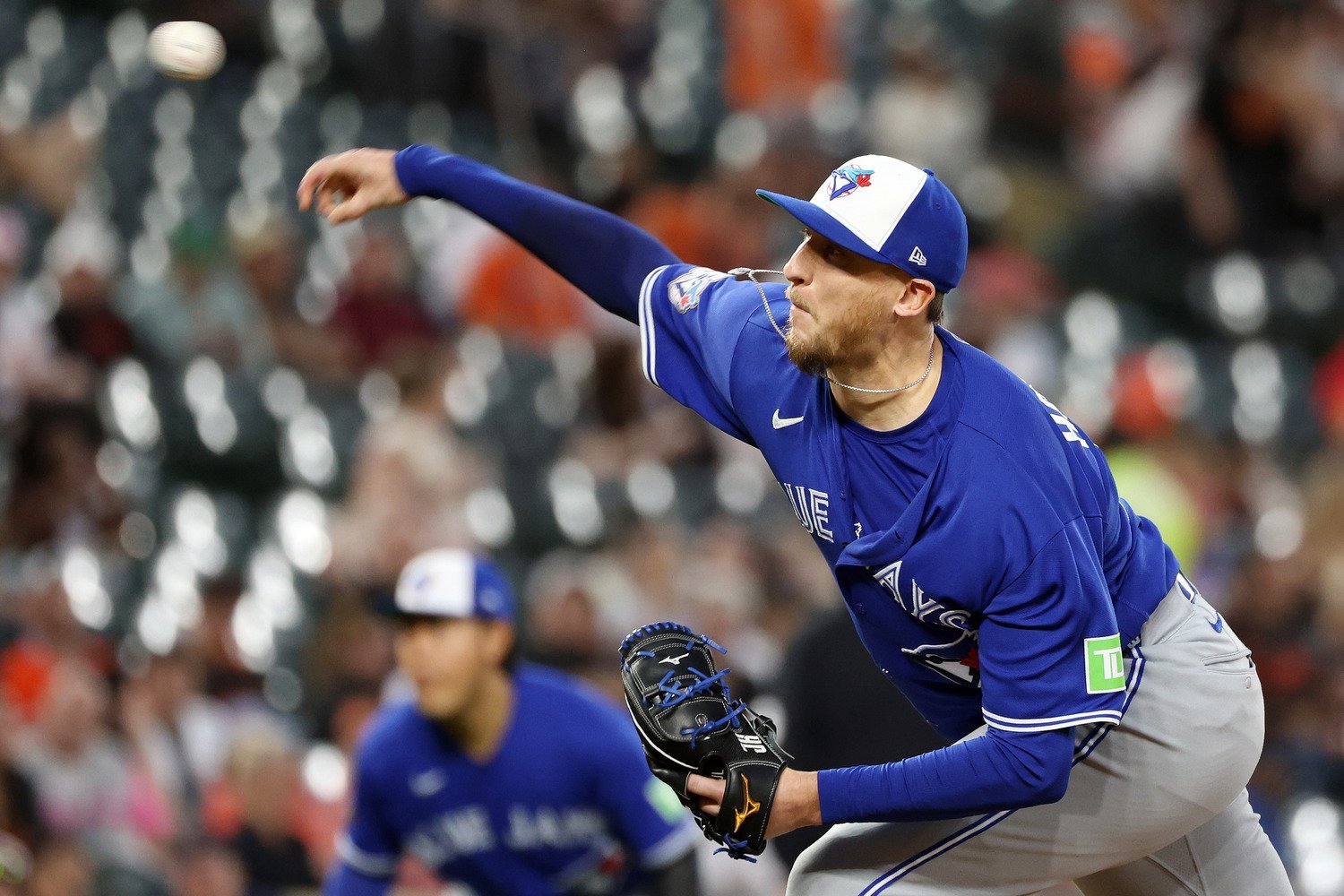 Editor's Note: This article was written prior to yesterday's game. Hoffman took the loss on Saturday, giving up five runs in the bottom of the ninth. He threw his slider 54% of the time (13 out of 24 pitches), Jeff Hoffman’s removal from the closer role in late April could have easily become one of the defining stories of the Blue Jays season. Instead, Louis Varland ran with the opportunity, emerging as one of the best relievers in baseball and solidifying the late-game picture for the Blue Jays. Lost in Varland’s dominance has been Hoffman's own reinvention. Since being removed from the role, Hoffman has quietly posted a 2.45 ERA, while striking out 20 batters and walking just two. The improved results may not be a coincidence either. Over the past few weeks, Hoffman has made a significant change to how he attacks opposing hitters. Hoffman has been one of the more perplexing pitchers in Toronto’s bullpen since arriving in Toronto. At times, he’s looked virtually unhittable, overpowering hitters with elite swing-and-miss stuff. Then on occasion, he’s been surprisingly vulnerable, particularly when it comes to the home run ball. In 2025, Hoffman allowed 15 home runs, the most of any reliever in the American League, a surprising outcome for a pitcher with such impressive underlying characteristics. Historically, Hoffman has relied on a three-pitch mix: a fastball that averages 97 mph with 17.4 inches of vertical break, a slider that generated a 47.3% whiff rate in 2025, and a splitter that he would use as a weapon predominantly against left-handed hitters. In 2025, as well as early on in 2026, he led with his four-seam fastball, throwing it 37.4% of the time last season, and 38.4% through his first 21 games this season. The problem with that is that Hoffman’s fastball simply hasn’t been very effective. Here's how his three most used pitch types performed in 2025: Four-seam fastball: .915 OPS, 10 HR Slider: .498 OPS, 3 HR Splitter: .642 OPS, 2 HR Those trends have continued so far in 2026: Four-seam fastball: .960 OPS, 3 HR Slider: .725, 0 HR Splitter: .641, 0 HR For Hoffman, the fastball has been the pitch that has given him the most trouble. The obvious solution would seem incredibly simple: just throw it less often. Over his past six appearances, Hoffman has been doing exactly that. Over his last six games, Hoffman has leaned heavily on his slider as his primary pitch, throwing it 64.9% of the time, compared to a 35.2% on the regular season. The fastball is down to just 16% usage, compared to 34.6% overall rate in 2026. The change is an understandable one. The slider has consistently been Hoffman’s most effective pitch, and the disparity in results between it and the fastball makes the adjustment a logical one. Since making the change, he’s thrown six innings, allowed four hits, faced 20 batters, struck out 10 of them, and walked none. On the surface, the adjustment makes perfect sense. After all, Hoffman's slider has consistently produced better results than his fastball. What's more interesting is figuring out why his fastball has struggled so much in the first place. The surprising part is that Hoffman isn’t getting hit because he lacks stuff. In fact, it's quite the opposite. Looking at the Stuff+ metric on FanGraphs, Hoffman’s four-seam fastball ranks eighth in baseball among pitchers with at least 20 innings pitched: It's unusual for a pitch that grades this well to produce results so poor. In other words, the problem isn’t in the quality of the pitch itself. Usually, when that happens, location is the first issue that comes to mind, but for Hoffman, that hasn’t necessarily been the case either. Location+ has Hoffman's fastball third highest on the team. It is also the second-highest of those eight pitchers named on the previous list. So, if that's not the case, it's time to dive a little deeper, and the problem seems to stem from when he throws his fastball. Here's where he's thrown the pitch when he’s ahead in the count: When he’s behind in the count: And when the count is even: The data suggests Hoffman may be becoming too predictable. When hitters find themselves in even counts, they’re frequently getting a fastball in the portion of the zone where four-seamers are the most vulnerable. At that point, the quality of the pitch matters less than the hitter's ability to anticipate it. Since he’s made the change, Hoffman has posted a 31% zone rate and a 38.5% chase rate on the slider. The challenge with any slider-heavy approach is maintaining enough strike-throwing ability to keep hitters honest. If opposing hitters become too comfortable taking the pitch, Hoffman could find himself back in situations where hitters can sit on his fastball, and as we’ve seen, that doesn’t historically go well. His adjustment also reflects a broader league-wide trend. League-wide, fastball usage has dropped even though fastballs are being thrown harder than ever before. For the Blue Jays, this is another example of them trying to get the most out of what they have in a pitcher. Varland remains the headline act in Toronto’s bullpen, but Hoffman’s recent adjustment may be just as important. By shifting away from a fastball that has consistently been his most vulnerable pitch and leaning into a slider that has long been his most dominant weapon, Hoffman appears to be evolving into a more complete reliever. For a Blue Jays team that has struggled offensively for most of the season, turning late leads into wins is critical, and Hoffman’s new approach could play a major role in making that happen. View the full article
 -
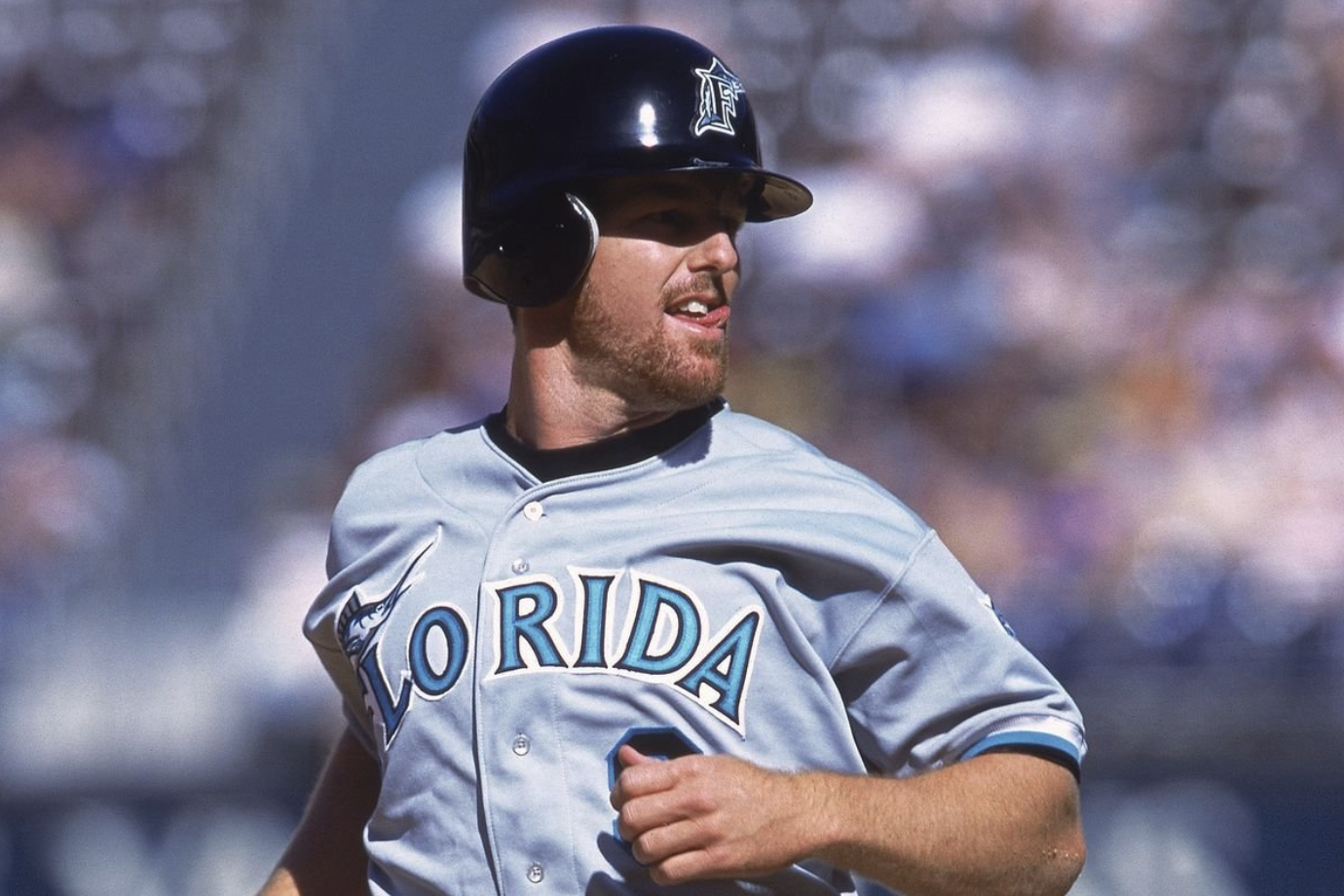 During the 1990s and into the early-2000s, one of the most feared home run hitters in baseball was a man named McGwire. On this day 25 years ago, however, a guy named McGuire also showed he could leave the yard. In a pinch-hitting role for the Florida Marlins, Ryan McGuire had the biggest swing of the game. His pinch-hit grand slam capped a five-run seventh and lifted the Marlins to a 5-3 win over the New York Mets. With the Mets leading 3-0 at the seventh-inning stretch on May 31, 2001, Florida had managed just four hits off New York starter Glendon Rusch. Three pitches into the inning, the Marlins’ fortunes began to change as Mike Lowell went deep to left for a solo home run to cut the lead to 3-1. After walking Charles Johnson and giving up a single to Kevin Millar to put the tying run on base, Rusch’s evening had come to an end. The Mets turned to Turk Wendell, who proceeded to walk Álex González on four pitches. With the bases loaded and nobody out, Florida turned to the left-handed hitting McGuire. To that point, McGuire had just four hits for the year. Wendell was able to get ahead in the count 1-2, but his fastball got all of the plate and McGuire launched it to right field for a grand slam. McGuire’s blast turned what had been a two-run deficit into a 5-3 lead. After Armando Almanza and Braden Looper combined for a 1-2-3 eighth for Florida on the mound, Antonio Alfonseca threw a scoreless ninth to pick up the save. Florida starter Ryan Dempster, who allowed three runs on six hits and four walks with eight strikeouts in seven innings, picked up the win. Both teams finished with seven hits in the contest. Cliff Floyd went 3-for-4 for the Marlins while Millar added two hits. Mike Piazza went 2-for-4 with a solo home run for the Mets. Desi Relafordprovided the rest of the New York offense with a two-run single in the fourth. As for McGuire, he would manage just seven home runs in parts of six seasons in the big leagues. The last of those and only blast as a member of the Marlins served as the game-winner and the lone grand slam of McGuire’s career. It came on this day a quarter-century ago. View the full article
 -
 Two big innings sparked the Triple-A El Paso Chihuahuas to a 13-7 victory over Albuquerque. Miguel Mendez and four relievers combined on for a 1-0 victory by the Double-A San Antonio Missions over Corpus Christi. The High-A Fort Wayne TinCaps managed just three hits in a 7-0 blowout loss to South Bend. Tyler Schmitt struck out a season-high nine as the Low-A Lake Elsinore Storm prevailed 2-0 over Inland Empire. Padres Minor-League Transactions San Antonio Missions activated RHP Eric Yost from the 7-day injured list. Carlos Rodriguez's First Homer Of Year Leads Chihuahuas Carlos Rodriguez capped a six-run fourth inning with his first homer of the season that propelled the Triple-A El Paso Chihuahuas to a 13-7 victory over the host Albuquerque Isotopes. Rodriguez finished with three RBIs, Pablo Reyes had three doubles with a pair of RBIs and two runs scored, Marcos Castanon had two hits, including a solo homer, two RBIs and two runs scored and Nick Schnell hit a two-run homer. Schnell and Castanon's homers were back-to-back. Jase Bowen walked twice and scored twice, while Mason McCoy tripled and scored twice. The Chihuahuas were up 2-1 on sacrifice flies by Nick Solak in the first inning and Rodriguez in the third when they opened the game up in the fourth inning. McCoy had a sacrifice bunt that included a throwing error by the pitcher to score the first run of the inning, then Castanon had a one-out run-scoring single to make it 4-1. Reyes doubled home a pair with two outs for a 6-1 advantage when Rodriguez smacked his two-run homer and an 8-1 cushion. But the Chihuahuas weren't done. After Albuquerque scored twice in the bottom of the fourth, the Chihuahuas came back with a four-run fifth inning. McCoy had a one-out RBI triple, then Schnell hit a two-run blast, his 10th this season and third in four games, and that was followed by Castanon's sixth homer of the year and a 12-3 lead. Chihuahuas left-handed starter JP Sears gave up five runs in five innings, allowing four hits and three walks with seven strikeouts. Right-handed relievers Sean Boyle (three innings) and David Morgan covered the final four innings and didn't issue a walk. EP_0530.mp4 Player AB R H RBI BB K Pablo Reyes 4 2 3 2 0 0 Carlos Rodriguez 4 1 1 3 0 0 Nick Solak 3 1 0 1 1 1 Jase Bowen 3 2 0 0 2 1 Will Wagner 2 1 0 0 2 0 Mason McCoy 4 2 1 1 0 0 Nick Schnell 5 1 1 2 0 4 Marcos Castanon 4 2 2 2 0 0 Anthony Vilar 4 1 1 0 0 2 Pitcher IP H R ER BB K HR JP Sears (W) 5 4 5 5 3 7 2 Sean Boyle (H) 3 5 2 2 0 0 0 David Morgan 1 0 0 0 0 0 0 Miguel Mendez Stellar As Missions Shut Down Hooks Right-handed starter Miguel Mendez led a dominant performance by San Antonio pitchers and Chris Sargent's fifth-inning single drove in the game's only run as the host Double-A Missions squeezed out a 1-0 victory over the Corpus Christi Hooks. Mendez, Padres Mission's No. 3 prospect, pitched just three innings in his fourth start since a brief stint on the seven-day injured list. Mendez struck out four and allowed just two hits and a walk. It was Mendez's third shutout start, with none lasting more than four innings. Four relievers followed and gave up just three hits and struck out nine over the final six innings. Right-hander Josh Mallitz gave up a hit in two innings with one walk and on strikeout, while right-hander Eric Yost allowed a hit and two walks while fanning two in 1⅓ innings in his first game back off the IL. Right-hander Andrew Moore went 1⅔ innings, allowing no hits and one walk while punching out four, while right-hander Clark Candiotti gave up a hit and struck out two in picking up his first professional save. It wasn't easy, though, as Candiotti gave up a two-out double and threw a wild pitch to put the tying run on third. But he struck out the final batter. The only run came in the bottom of the fifth. Kai Roberts drew a leadoff walk and was bunted to second by Francisco Acuna. Sargent, the backup catcher, attacked the first pitch and lined it to center. Roberts had to hold up as the ball short-hopped the center field and went to third, but the throw back to the infield got away, allowing Roberts to come home and Sargent to take second. SA_0530.mp4 Player AB R H RBI BB K Carson Tucker 4 0 1 0 0 1 Ethan Salas 4 0 0 0 0 0 Romeo Sanabria 4 0 0 0 0 2 Tirso Ornelas 3 0 1 0 0 0 Albert Fabian 3 0 0 0 0 2 Ryan Jackson 3 0 1 0 0 0 Kai Roberts 2 1 0 0 1 2 Francisco Acuna 2 0 1 0 0 1 Chris Sargent 3 0 1 0 0 2 Pitcher IP H R ER BB K HR Miguel Mendez 3 2 0 0 1 4 0 Josh Mallitz (W) 2 1 0 0 1 1 0 Eric Yost (H) 1 1/3 1 0 0 2 2 0 Andrew Moore (H) 1 2/3 0 0 0 1 4 0 Clark Candiotti (S) 1 1 0 0 0 2 0 TinCaps Held To 3 Hits, Blanked By South Bend A shaky start and an offense kept in check led to a 7-0 loss for the High-A Fort Wayne TinCaps against the host South Bend Cubs. TinCaps right-handed starter Abraham Parra surrendered five runs (four earned) in season-high 5⅓ innings, giving up four hits and three walks while striking out seven, matching his career best. Right-hander Ty Adcock, on a rehab assignment from Triple-A El Paso following an oblique strain in spring training, pitched a scoreless seventh inning, allowing a hit with a walk and a strikeout. This was his fourth appearance with the TinCaps after three in the Arizona Complex League. South Bend held the TinCaps to just three hits: a double by Jack Costello and singles by Rosman Verdugo and Jake Cunningham, who had Fort Wayne's first hit leading off the fourth inning. The TinCaps did draw six walks while striking out 12 times. South Bend scored twice in the second, once in the third and put it away when Drew Bowser launched a seventh-inning grand slam, his second in as many games. Player AB R H RBI BB K Justin DeCriscio 3 0 0 0 1 2 Rosman Verdugo 3 0 1 0 1 1 Lamar King Jr. 3 0 0 0 1 0 Alex McCoy 4 0 0 0 0 2 Jake Cunningham 3 0 1 0 1 2 Carlos Rodriguez 4 0 0 0 0 0 Jack Costello 4 0 1 0 0 2 Jonathan Vastine 3 0 0 0 1 2 Kasen Wells 3 0 0 0 1 1 Pitcher IP H R ER BB K HR Abraham Parra (L) 5 1/3 4 5 4 3 7 0 Igor Gil 2/3 1 2 2 1 1 1 Ty Adcock 1 1 0 0 1 1 0 Will Varmette 1 0 0 0 0 1 0 Tyler Schmitt Fans Season-High 9 As Storm Blank 66ers Right-hander starter Tyler Schmitt bounced back from his second-worst start of the season by striking out a season-high nine over six shutout innings as the host Low-A Lake Elsinore Storm edged the Inland Empire 66ers 2-0. Jose Verdugo had an RBI triple in the first inning and Alcides Hernandez scored from second following an eighth-inning error on a grounder by Kerrington Cross, who had two hits. Schmitt, who gave up five runs in 4⅓ innings in his previous start, allowed four hits and three walks. His nine punchouts were two more than he had in 3⅓ innings in his pro debut this season. Cross singled with one out in the bottom of the first, then scored when Verdugo lined an opposite-field triple down the right-field line, scoring Cross. It remained 1-0 until Hernandez doubled leading off the eighth and, two outs later, Cross hit a grounder to the shortstop, who misplayed the ball as Hernandez crossed in front of him, with the ball going into left and Hernandez easily scoring. Right-hander Nick Falter pitched two scoreless innings, yielding two hits and a walk with three punchouts and right-handed closer Will Koger allowing a hit in the ninth for his fifth save. LE_0530.mp4 Player AB R H RBI BB K Ryan Wideman 4 0 1 0 0 2 Kerrington Cross 4 1 2 0 0 0 Jose Verdugo 3 0 1 1 0 0 Truitt Madonna 3 0 0 0 0 1 Yimy Tovar 3 0 0 0 0 0 Jorge Quintana 3 0 0 0 0 0 George Bilecki 3 0 0 0 0 1 Alcides Hernandez 3 1 1 0 0 0 Conner Westenburg 3 0 0 0 0 0 Pitcher IP H R ER BB K HR Tyler Schmitt (W) 6 4 0 0 3 9 0 Nick Falter (H) 2 2 0 0 1 3 0 Will Koger (S) 1 1 0 0 0 0 0 Top 20 Prospect Performance Ethan Salas: 0-for-4 Kash Mayfield: DNP Miguel Mendez: 3 IP, 2 H, 0 R, 1 BB, 4 K Kruz Schoolcraft: DNP Ryan Wideman: 1-for-4, 2 K Jorge Quintana: 0-for-3 Ty Harvey: On injured list Kale Fountain: Injured, out for season Braedon Karpathios: DNP Lamar King Jr.: 0-for-3, BB Jagger Haynes: DNP Alex McCoy: 0-for-4, 2 K Truitt Madonna: 0-for-3, K Tucker Musgrove: DNP Garrett Hawkins: DNP Michael Salina: DNP Eric Yost: 1⅓ IP, 1 H, 0 R, 2 BB, 2 K Rosman Verdugo: 1-for-3, BB, K Bryan Balzer: DNP Deivid Coronil: DNP View the full article
 -
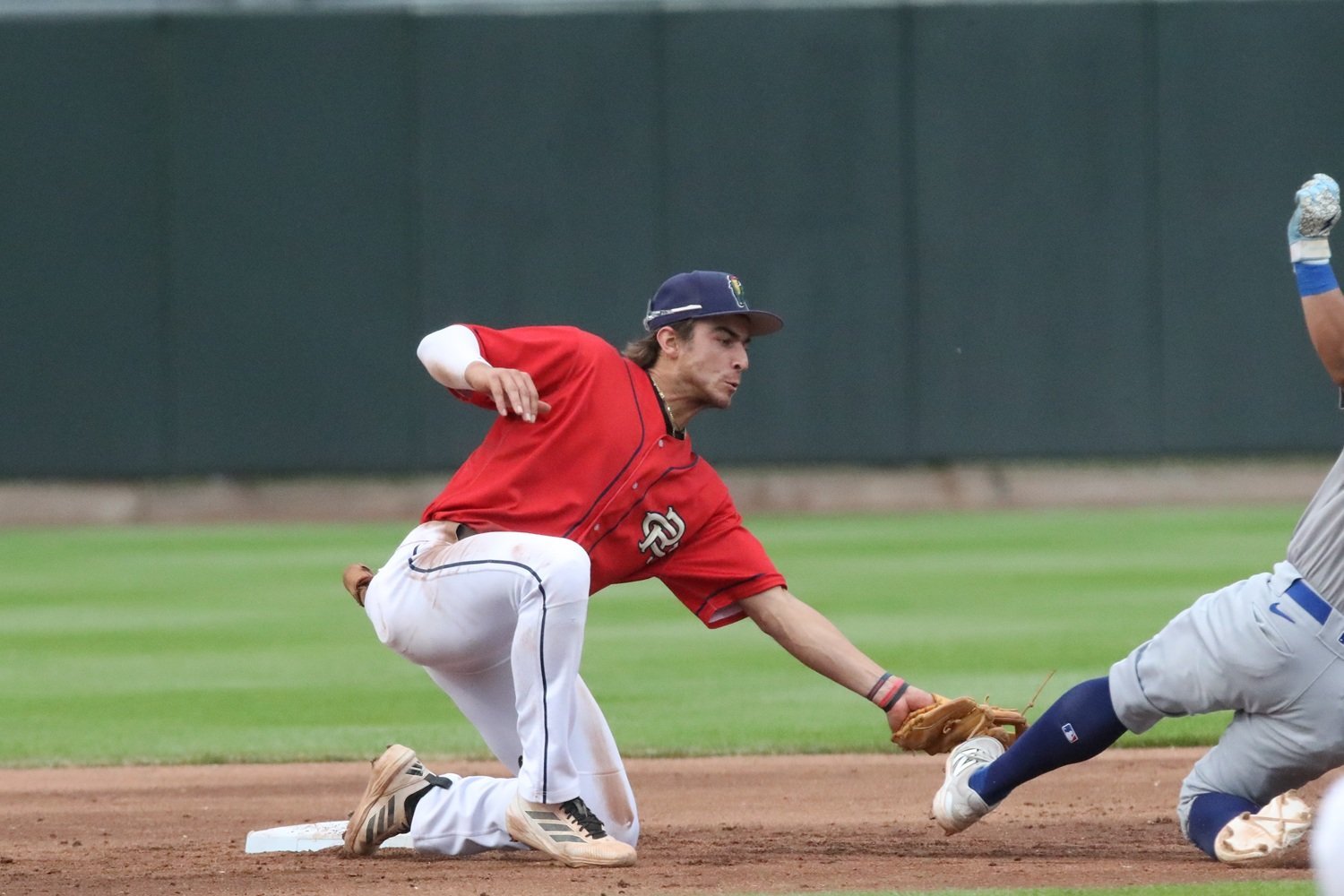 TRANSACTIONS In a surprise Saturday morning move, the Twins announced that Simeon Woods Richardson was Designated for Assignment. Despite a rough start to his 2026 season, he is just 25 years old and has shown he can pitch in the big leagues over extended points in 2023 and 2024. Taking his spot with the Twins is RHP John Klein who had been scheduled to start for the Saints on Saturday. How did Brian Dinkelman adjust? RHP Mitch Mueller was promoted from Fort Myers to Wichita. Born in the Twin Cities, he grew up and went to high school in Brookfield, Wisconsin. He pitched one college season at Winona State. The Twins signed him in early May 2015. (Here is his first Double-A strikeout, against a rehabbing big leaguer). Cedar Rapids placed RHP Eston Stull on the 7-Day IL. Infielder Yilber Herrera returned to the Mighty Mussels from the FCL Twins. RHP Callan Fang, the Twins 13th round pick in 2025 out of Harvard, began a rehab assignment with the FCL Twins. He’s been on the 60-Day Injured List all season. Fang went to Pennsbury High School in Fairless Hills, Pennsylvania, the same school that 16-year NFL star Troy Vincent, a former Walter Payton Man of the Year Award recipient, went to in the 1980s. Maybe a bit more relevant to this article and this website, Fang and Twins 2025 ninth-round draft pick Justin Mitrovich were both 2022 graduates of Pennsbury. Mitrovich is currently in the Mighty Mussels starting rotation. RHP Frederick Hiciano was assigned to the FCL Twins from the DSL Twins roster. The Twins also signed 17-year-old RHP Cristian Alvino. SAINTS SENTINEL St. Paul 7, Louisville 2 Box Score For the second straight game, the Saints scored seven runs. They just feel much better about that when the team gives up two runs like on Saturday rather than the 11 runs they gave up on Friday night in Louisville. The Bats scored single runs in the bottom of the first and the bottom of the second innings. The Saints had two runners reach base in the first two innings but didn’t score. That drought ended in the third. Kaelen Culpepper and Hendry Mendez started the inning with singles. With one out, Kyler Fedko knocked his 10th double to drive in Culpepper with the first run. With two outs, Gabriel Gonzalez singled to left to drive in Mendez and Fedko and give the Saints the 3-2 lead. Gonzalez now has an 11-game hitting streak during which he has hit .447. With one out in the top of the fifth inning, Matt Wallner singled. With two outs, Ben Ross singled. Following a pitching change, Ricardo Olivar hit his second home run in as many days to give the Saints a 6-2 lead. He took a 0-1 fastball and crushed it 107 mph. It landed about 430 feet from home plate. That was it for the scoring until the top of the ninth. Culpepper singled to lead off the inning. With one out, Royce Lewis doubled to left field at 108 mph to drive in the seventh run. Culpepper went 3-for-4 with a walk. Lewis and Wallner were both 2-for-5. Lewis’s double was his third. Marco Raya made his first start of the season. He gave up two runs on three hits over three innings. He had four strikeouts. Alejandro Hidalgo came in and had five strikeouts over three scoreless, one-hit innings. Raul Brito recorded the save with three scoreless innings. He walked one and had two strikeouts. WIND SURGE WISDOM Game 1: Wichita 3, Springfield 3 (Suspended after six innings) Box Score They were hoping to get two games in on Saturday. Instead, they got through six innings. The game was tied, and with just one inning to go (maybe), the field conditions became unplayable and the game was suspended. The hope is to play out the suspended game (a 7-inning game) and then play a nine-inning game after that. The missed game will be made up later in the season. A more complete rundown of this game will be available when it gets final. A couple of quick notes. First, in the top of the second, Andrew Cossetti’s third home run of the season drove in Kala’i Rosario and gave the Wind Surge a 2-0 lead. Through four innings, they found themselves down 3-2. In the top of the fifth inning, Jose Salas hit his fifth home run of the season, a solo shot that tied it up. KERNELS CHRONICLE Cedar Rapids 3, Quad Cities 2 Box Score Riley Quick was back on the mound for the Kernels on Saturday night. He gave up two runs in the first inning but then worked three more frames without letting the Bandits add on. He gave up two runs on two hits and two walks, and he had three strikeouts. Early in the game, he was sitting 96-97 mph. Michael Ross came in and worked the next four innings. He gave up no runs and just one hit. He had four strikeouts and no walks. In fact, he faced the minimum of 12 batters in four innings. The second batter he faced singled, but he was erased on a double play ball. Eston Stull returned from the Injured List. He was given the ninth inning. He faced three batters and struck out all three of them to earn his third save. The Kernels faced one of the Royals top pitching prospects, lefty David Shields. He started with two scoreless innings despite multiple base runners in both frames. Marek Houston led off the bottom of the third inning with a single. He advanced to second with his 12th stolen base. With two outs, Yasser Mercedes doubled, his fourth, to right field to drive in the first Kernels run. Quinn McDaniel followed with a triple to the left center field gap to drive in the second run and tie the game. It’s his second triple since joining the Kernels las week. In the bottom of the fourth inning, Jay Thomason reached on an error. Danny De Andrade followed with a walk. A wild pitch moved runners to second and third with nobody out. After a strikeout, Houston flew out to right field, deep enough to drive in Thomason from third base and give the team a 3-2 lead. And that was it for the scoring in the game as both bullpens pitched well. Marek Houston went 3-for-3 with two stolen bases. The team had just seven total hits and three walks in the game. By the way, if you're into sports photography MIGHTY MATTERS Ft. Myers 4, Jupiter 1 Box Score The Mussels got a fantastic start, took an early lead, added on a bit, and the bullpen came through late to help the team to a very nice win on Saturday. Matthew Dalquist started the game with five shutout innings. He gave up three hits, walked none and had three strikeouts. He was also efficient, needing just 60 pitches (44 strikes, 73.3%). Consider that the first inning began with a ground rule double against him, and two batters later, they had runners on first and third with one out. He worked out of that situation. He gave up just one more hit and no more runners reached third base over his final four innings. The Mussels took a 1-0 lead in the second inning. JP Smith and Henry Kusiak started the inning with singles, and Jayson Bass walked to load the bases. Smith scored on an Irvin Nunez sacrifice fly. They added on in the bottom of the fifth inning. With one out, Smith singled. After a pitching change, Kusiak got a 1-0 hanging curveball over the inner half of the plate and hit his first home run in affiliated ball to give the team a 3-0 lead. Dylan Questad pitched the sixth inning. He gave up one run on two walks. He had two strikeouts. Jonathan Stevens came in and gave up a hit and two walks, but no runs in 1 2/3 innings. Lefty Jake Murray recorded the final four outs. He walked one batter, but he had four strikeouts to earn the Save. There were a lot of baserunners for both teams, but not a lot of them crossed home plate. Jupiter went 1-for-12 with runners in scoring position. They left nine on base. The Mussels, on the other hand, scored their four runs on 10 hits and 11 walks. They were also 1-for-12 with runners in scoring position, but they left 15 runners on base. Dameury Pena went 2-for-2 with three walks. JP Smith went 3-for-4 with a walk. Henry Kusiak went 2-for-3 with two walks and his first home run. Luis Fragoza went 2-for-4. Irvin Nunez and Jayson Bass each walked twice. COMPLEX CHRONICLE FCL Twins 9, FCL Red Sox 10 Box Score Callan Fang made his first appearance in a regular game since he was drafted last July. In his first rehab appearance, he gave up two unearned runs on one hit, a hit batter, and two walks. He recorded two outs, one on a strikeout. Melvin Rodriguez came in and gave up five runs on one hit and four walks over two innings. He struck out three batters. Carter Holjes gave up one run on two hits and two walks over 1 1/3 innings. Brad Rudis struck out two batters over two scoreless innings. Nick McAuliffe struck out five batters over two innings. He gave up one run on two hits. Pablo Castillo gave up an unearned run (the Manfred Man) in the ninth inning on one hit. The FCL Twins committed six errors in this game. They also allowed four players to steal a combined 13 bases. Edwin Darville alone had five stolen bases. When the FCL Twins came to the plate for the bottom of the fourth inning, they were already behind 8-0. They got on the board when Teilon Serrano and Carlos Taveras started the inning with singles. Serrano scored on a double play ball. Just one run, but it was a start. In the bottom of the fifth inning, Jose Barrios walked with one out. He scored on a double by Yovanny Duran which cut the deficit to 8-2. In the bottom of the sixth inning, Ricardo Paez led off with a walk. Darwin Almanzar doubled him to third. They scored on a wild pitch and then a passed ball. 8-4. With one out, Victor Leal walked and went to third base on a Jose Barrios double. Leal scored on a sacrifice fly by Duran. That made the score 8-5. In the top of the seventh, the Red Sox added a run to push the lead back to four runs. Paez and Almanzar walked. A strikeout and a flyout left the Twins one out from a loss. Barrios was hit by a pitch to load the bases. Yovanny Duran came to the plate and crushed his third home run of the season, a grand slam that tied the game at 9-9. The Twins went scoreless twice in extra innings. In the ninth inning, position player Pablo Castillo pitched. Yovanny Duran is a switch-hitting, 18-year-old outfielder from Venezuela. He went 2-for-3 with a walk, his second double, his third home run, and five RBI. Jose Barrios went 2-for-3 with a walk and his second double. He was also hit by a pitch. He stole his third base. Jhomnardo Reyes was 1-for-3 with two walks. Miguel Caraballo hit his fifth double. He also walked once and was hit by a pitch. Danny Almanzar hit his second double. PLAYERS OF THE DAY Hitter(s) of the Day Kaelen Culpepper (St. Paul): 3-for-4, BB, 2 R, K. Marek Houston (Cedar Rapids): 3-for-3, R, SF RBI, 2 SB(13) Dameury Pena (Fort Myers): 2-for-2, 3 BB. Henry Kusiak (Fort Myers): 2-for-3, 2 BB, HR(1), R, 2 RBI JP Smith II (Fort Myers): 3-for-4, BB, 2 R, K Yovanny Duran (FCL Twins): 2-for-3, BB, 2B(2), HR(3), 5 RBI. Pitcher(s) of the Day Matthew Dalquist (Fort Myers): 5 IP, 3 H, 0 R, 0 BB, 3 K, 60 pitches, 44 strikes (74.2%) Alejandro Hidalgo (St. Paul): 3 IP, 1 H, 0 R, 0 BB, 5 K, 31 pitches, 23 strikes (74.2%) Michael Ross (Cedar Rapids): 4 IP, 1 H, 0 R, 0 BB, 4 K, 48 pitches, 31 strikes (64.9%) PROSPECT SUMMARY Check out the Prospect Tracker for much more on our Twins Top 20 prospects after seeing how they did today. #2 - IF Kaelen Culpepper (St. Paul) - 3-for-4, BB, 2 R, K. (batted first, played SS) #7 - SS Marek Houston (Cedar Rapids) - 3-for-3, R, RBI, 2 SB(13), PO (batted first, played SS) #8 - RHP Riley Quick (Cedar Rapids) - 4 IP, 2 H, 2 ER, 2 BB, HB, 3 K, 56 pitches, 35 strikes (62.5%) #10 - OF Gabriel Gonzalez (St. Paul) - 1-for-4, 2 RBI, 2 K. (batted sixth, played 1B) #13 - OF Hendry Mendez (St. Paul) - 1-for-4, BB, R, K (batted second, played DH) #15 - 3B/CF Brandon Winokur (Cedar Rapids) - 1-for-4, 2 K (batted second, played 3B) #19 - C/OF Khadim Diaw (Cedar Rapids) - 0-for-3, BB (batted third, played CF) #20 - 2B/SS/CF Kyle DeBarge (Wichita) - 0-for-3, game suspended (batted first, played SS) UPCOMING PROBABLES Sunday, May 31: St. Paul @ Louisville (12:05 pm CT) - RHP Mike Paredes (2-1, 3.38 ERA) Wichita @ Springfield (suspended game + 9-inning game starting at 2:15 pm CT) - RHP Eli Jones (0-2, 4.20 ERA), Quad Cities @ Cedar Rapids (1:05 pm CT) - LHP Garrett Horn (0-0, 0.00 ERA) Jupiter @ Ft. Myers (11:05 am CT) - RHP Reed Moring (1-0, 1.42 ERA) Monday, June 1: FCL Rays @ FCL Twins (11:00 am CT) - TBD DSL Rangers Red @ DSL Twins (10:00 am CT) - TBD CURRENT W-L Records Minnesota Twins: 27-32 (3rd place (of 5) in AL Central, 6.5 GB)) St. Paul Saints: 28-27 (6th place (of 10) in IL West Division, 6.0 GB)) Wichita Wind Surge: 21-26 (4th place (of 5) in TL North Division, 8.5 GB)) Cedar Rapids Kernels: 25-25 (3rd place (of 6) in MWL West Division, 6.0 GB)) Fort Myers Mighty Mussels: 28-22 (2nd place (of 6) in FSL West Division, 2.0 GB)) FCL Twins: 10-10 (3rd place (of 6) in FCL South Division, 3.5 GB)) DSL Twins: 0-0 (season begins Monday, June 1) Please feel free to ask questions about the teams, the rosters, and discuss today’s games, or anything else Twins minor-league related! View the full article
 -
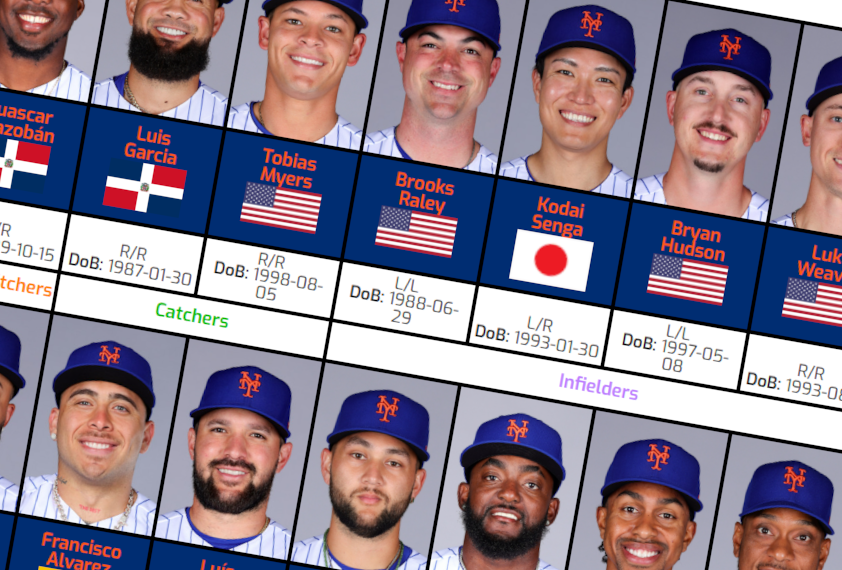 It speaks to how sickly the Mets — and baseball in general — understand their audience to be, that one of their primary sponsors is Thrive Well Infusion. If you need plasma or medication delivered intravenously, you have our compassion, thought it feels unseemly that our wellbeing has not only become such a commercial enterprise, but has become the commercial enterprise, to judge from baseball advertisements. Well, that and gambling. But nobody understands more than the Mets, who are in a constant state of being re-infused. Transactions, 5/26/2026 COMING Signed as International Amateur Free Agent out of The Dominican Republic, Not Yet Assigned Relief Pitchers Enmanuel Feliz R/R DoB: 2007-04-25 High Level: Academy (2026) There are several Enmanuel Felizes (the plural may possibly be Felices) who have passed through the affiliate minor-league universe in recent years. This guy may possibly be one of them, but it appears that no, this is a new young fresh fellow. We hope to soon find a face for this out-of-season Dominican signing, but please know that an infusion has occurred for the DSL Mets. An infusion of Felicity. Transactions, 5/28/2026 COMING Transferred from St. Lucie to Syracuse on Rehab Assignment Signed away from Schaumberg (Frontier League), Assigned to FCL Mets Starting Pitchers Infielders Kodai Senga Jackson Hauge L/R DoB: 1993-01-30 High Level: MLB (2026) R/R DoB: 2001-02-03 High Level: Frontier League (2025) Kodai Senga's rehab starts have kind of gone like his recent MLB starts. A little bit to impress at the outset, with a dancing ghost fork and more velocity than he's shown in previous seasons, but then he kind of falls over himself by his third inning — losing the plate and laying get-it-over hangers in there until he gets pulled mid-inning. Whether it hints at an ongoing health matter or a future in the bullpen is an open question, but the Mets don't seem to be in a hurry to have him back, and will hope the ongoing Jonah Tong infusion can be potent enough in the mentime. Infusing his way out of the Frontier League is Jackson Hauge. Boss Hauge is coming off a rock solid career with Minnesota State and Kansas, where he mostly played outfield. He's mostly seeing time at first base as a pro, which suggests that his speed is less than impressive. The bat certainly plays (he put in four outstanding seasons in the wood-bat Northwoods League), but the MLB draft is down to 20 rounds, and righthanded firstbasemen often aren't a big get. Here's hoping the bat proves them wrong. Transactions, 5/30/2026 GOING COMING Demoted to Syracuse Designated for Assignment Added to Roster and Promoted from Syracuse Relief Pitchers Relief Pitchers Relief Pitchers Tobias Myers Anderson Severino Cionel Pérez R/R DoB: 1998-08-05 High Level: MLB (2026) L/L DoB: 34594 High Level: MLB (2022) R/L DoB: 35176 High Level: MLB (2026) Is Tobias Myers' exile to the minors just and excuse to get a fresh arm in the pen after an extra-inning win, or are the Mets trying to turn him into a starter? The latter was suggested by Grand Central Mets forum poster Gwreck, when he excerpted this Carlos Mendoza quote from a team report: “It’s just going to be more scripted,” Mendoza said. “Where if you’re going to go and throw 35-45 pitches, then he’s able to get the three or four days after that, something that at this level with the competition you aren’t able to do. Intriguing, no? We mean, it's not all together clear what the Mets manager is saying, but it's something intriguing. Anyhow, as impressive the AAA ERA of veteran Cionel Perez' is (2.57 in seven innings), and as impressive his symmetrical beard is in his thumbnail, Anderson Severino (DFA'd to create roster room) is doing even better at Syracuse (1.31 in 20 2/3 innings), even if his beard is shrubbier. We're guessing that Perez simply had the fresher arm, or perhaps that the Mets place a high premium on beard neatness ... when they are looking for an infusion. Your 2026 New York Mets Starting Pitchers Nolan McLean Freddy Peralta David Peterson Christian Scott Jonah Tong R/R DoB: 2001-07-24 R/R DoB: 2996-06-04 L/L DoB: 1995-09-03 R/R DoB: 1999-06-15 R/R DoB: 2003-06-19 Relief Pitchers Huascar Brazobán Sean Manaea A.J. Minter Cionel Pérez Brooks Raley Austin Warren Luke Weaver R/R DoB: 1989-10-15 R/L DoB: 1992-02-01 L/L DoB: 1993-09-02 R/L DoB: 35176 L/L DoB: 1988-06-29 R/R DoB: 1996-02-05 R/R DoB: 1993-08-21 Relief Pitchers Catchers Infielders Devin Williams Hayden Senger Luís Torrens Bo Bichette Brett Baty Vidal Brujan Marcus Semien R/R DoB: 1994-09-21 R/R DoB: 1997-04-03 R/R DoB: 1996-05-02 R/R DoB: 1998-03-05 L/R DoB: 1999-11-13 S/R DoB: 1998-02-09 R/R DoB: 1990-09-17 Infielders Outfielders Mark Vientos Eric Wagaman Carson Benge A.J. Ewing MJ Melendez Juan Soto Jared Young R/R DoB: 1993-12-11 R/R DoB: 1997-08-14 L/R DoB: 2003-01-20 L/R DoB: 2004-08-10 L/R DoB: 1993-11-29 L/L DoB: 1998-10-25 L/R DoB: 1995-07-09 Also on 40-Player Roster Starting Pitchers Relief Pitchers Clay Holmes Tylor Megill Kodai Senga Zach Thornton Alex Carrillo Daniel Duarte Reed Garrett R/R DoB: 1993-03-27 R/R DoB: 1995-07-28 L/R DoB: 1993-01-30 L/L DoB: 2002-01-17 R/R DoB: 1997-06-06 R/R DoB: 1996-12-04 R/R DoB: 1993-01-02 Relief Pitchers Catchers Infielders Justin Hagenman Tobias Myers Dedniel Núñez Jonathan Pintaro Dylan Ross Francisco Alvarez Francisco Lindor R/R DoB: 1996-10-07 R/R DoB: 1998-08-05 R/R DoB: 1996-06-05 R/R DoB: 1997-11-07 R/R DoB: 2000-09-01 R/R DoB: 2001-11-01 S/R DoB: 1993-11-14 Infielders Outfielders Ronny Mauricio Jorge Polanco Luis Robert, Jr. Nick Morabito Tyrone Taylor S/R DoB: 2001-04-04 S/R DoB: 1999-11-13 R/R DoB: 1997-08-03 R/R DoB: 2003-05-07 R/R DoB: 1994-01-22 Designated for Assignment Relief Pitchers Anderson Severino L/L DoB: 1994-09-17 Your Mets Coaching Staff Manager Bench Coach Pitching Coach Hitting Coordinator Third Base Coach First Base Coach Bullpen Coach Ass't Pitching Coach Carlos Mendoza Kai Correa Justin Willard Jeff Albert Tim Leiper Gilbert Gomez José Rosado Dan McKinney DoB: 1979-11-27 DoB: 1989-07-14 DoB: 1990-09-09 DoB: 1992-08-16 DoB: 1996-07-19 DoB: 1992-03-08 DoB: 1974-11-09 DoB: 1989-06-06 Hitting Coach Strategy Coach Catching Coach Coaching Assistant Bat'g Practice Pitcher Equipment Manager Bullpen Catchers Bullpen Catchers Troy Snitker Danny Barnes J.P. Arencibia Rafael Fernandez Kevin Mahoney Kevin Kierst Eric Langill Dave Racaniello DoB: 1988-12-05 DoB: 1989-10021 DoB: 1986-01-05 DoB: 1988-08-03 DoB: 1987-05-11 DoB: 1964-07-09 DoB: 1979-04-09 DoB: 1978-06-03 Your Mets Training Staff Director of Player Health Head Athletic Trainer Assistant Athletic Trainer Reconditioning Coordinator Reconditioning Therapist Head Performance Coach Assistant Performance Coach Performance Coordinator Soft Tissue Specialist Brian Chicklo Joseph Golia Bryan Baca Sean Bardanett Josh Bickel Dustin Clarke Tanner Miracle Jeremy Chiang Hiroto Kawamura DoB: 1972-07-17 DoB: 1978-??-?? DoB: Circa 1980 DoB: 1988-06-23 DoB: 1996-??-?? DoB: 1987-??-?? DoB: 1991-??-?? DoB: ????-??-?? DoB: 22846 View the full article
 -
The Marlins' offensive identity? Warning track power
DiamondCentric posted an article in Fish On First
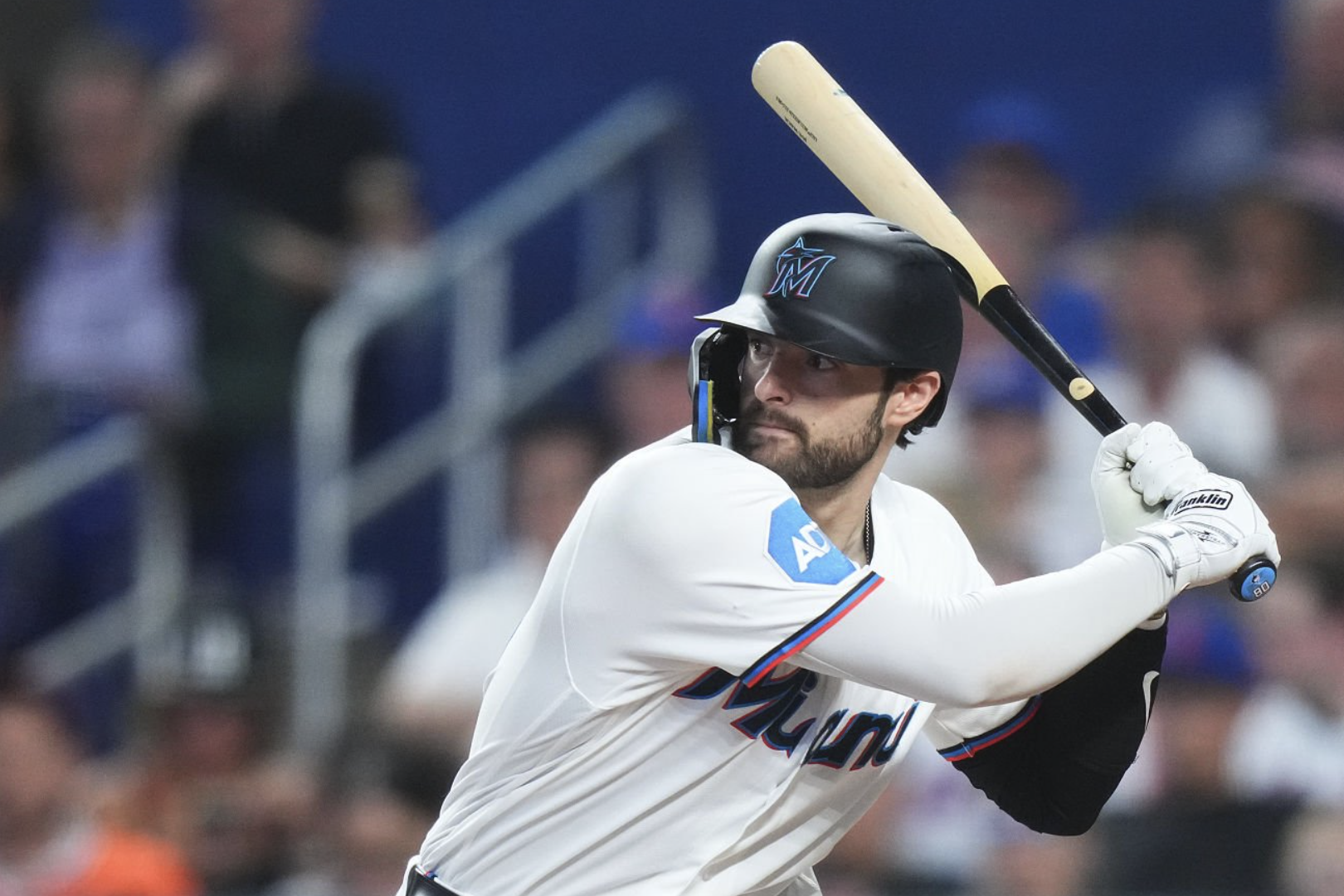 NEW YORK — The sign still exists. You know, the white one with the black and blue border that reads "LET'S PARTY FIGHTIN' FISH." I saw it in the Miami Marlins dugout two hours before Saturday's game. There just haven't been many occasions to use it lately, or many occasions throughout the 2026 season, for that matter. The Marlins celebrate with the sign after hitting home runs. Well, they have been out-homered in four consecutive games (all losses) and rank 28th among MLB teams in that category. This lack of power is stressing them in other areas and rapidly sinking their chances of postseason contention. Saturday really exemplified how slim the margin can be between offensive excellence and futility. The Marlins scored only one run against the New York Mets despite very well-struck balls off the bats of Otto López, Kyle Stowers and Joe Mack. They traveled 358 feet, 380 feet and 402 feet, respectively, but each of them ultimately landed in an outfielder's glove. Lopez leads the league in hits this season, but only four of those have cleared the fence. A year after breaking out as an All-Star with 25 long balls, Stowers has been limited to three. The rookie Mack is homerless through his first 21 career games. "Get a good pitch to hit, you put a good swing on it, and after that, there's not a whole lot that's within your control," manager Clayton McCullough said postgame. That is an oversimplification. If the quality of contact and its launch angle are good enough, the result is a home run and the opposing defense doesn't have an opportunity to make a play. The Marlins are struggling to reach that standard with their swings. Meanwhile on New York's side, unheralded part-time players Jared Young and Hayden Senger crushed solo shots off Lake Bachar that would've left the vast majority of MLB ballparks. The Marlins have a lot of continuity on the position player side after a surprisingly competitive 2025 campaign. Rather than investing in veterans with proven, consistent track records, they are depending on their young bats to utilize the experience that they've gained and the coaching that they've received to improve. With the notable exceptions of Xavier Edwards and Liam Hicks, most Marlins have regressed instead. Consider these year-to-year decreases in isolated power (slugging percentage minus batting average): Kyle Stowers is down 120 points Heriberto Hernández is down 89 points Jakob Marsee is down 79 points Agustín Ramírez is down 67 points (demoted to Triple-A) Graham Pauley is down 37 points (demoted to Triple-A) Combining their caught stealings/pickoffs with other mistakes on the bases, the Marlins have run into more outs than any other club this season. McCullough has spun it as a positive when speaking publicly, taking pride in being "aggressive" and constantly "pushing the envelope." The reality is, the Marlins play this way out of necessity. Instead of waiting for homers that rarely come, their baserunners have to do more of the heavy lifting themselves. Overall, Miami's offensive production has been nearly average (97 wRC+), but the distribution of those runs is uneven because of how often they are held homerless. That means plenty of good-but-not-great starting pitching performances go to waste. Currently on pace for a 91-loss season, the Marlins have left some meat on the bone. They are capable of playing better defense, for example, and their most experienced pitchers—Sandy Alcantara and Pete Fairbanks—are bound to find their rhythm as the season goes on. However, they won't even sniff a playoff berth without more dingers. View the full article
 -
Pirates 10, Twins 9: The Twins Keep Finding Ways to Lose
DiamondCentric posted an article in Twins Daily
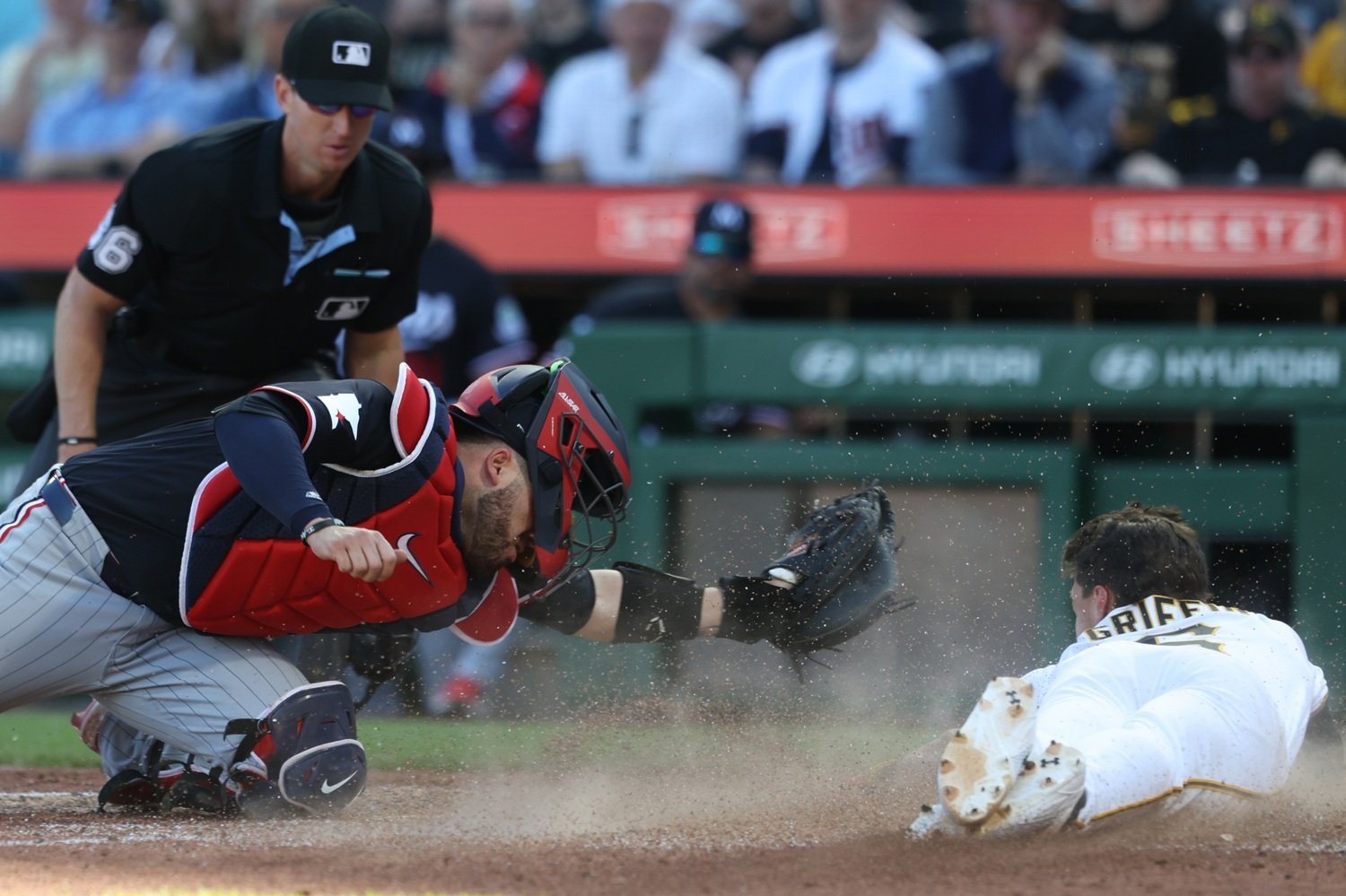 Box Score SP: Bailey Ober - 4.2 IP, 12 H, 8 ER, 1 BB, 3 K (97 pitches, 72 strikes (74%)) Home Runs: None Bottom 3 WPA: Ober (-0.51), Austin Martin (-0.17), Orlando Arcia (-0.16) Win Probability Chart (via FanGraphs) The Twins watched a victory turn into defeat in the bottom of the ninth on Friday night on the shores of the Allegheny River. On Saturday, Minnesota played the midpoint game of a brutal 17 games in 17 days stretch of this 2026 season. Bailey Ober took the mound in hopes of providing many innings of quality work for a pitching staff in the midst of injury and roster maneuvering. Ober's hopes, and the hopes of Twins fans everywhere got dashed, and resurrected, and dashed again. Ober and the Anti-Maddux On May 12th, Ober threw a "Maddux," meaning that he got a complete game shutout with less than 100 pitches. On Saturday, Ober threw an "Anti-Maddux," meaning he couldn't clear five innings and gave up eight runs in the first two innings, functionally taking his team out of the game from the start. The misplays started right from the first Pirates batter, as Spencer Horwitz pulled a first pitch 89.9 mph fastball foul. With the entire world shouting "Changeup!," Victor Caratini typed in the heater instead, and Ober grooved a 88.7 mph fastball in the same location that would fit Horwitz's swing perfectly for a booming homer into the river. Things only got worse from there for the Twins' battery. After Kody Clemens doubled to start the second, he came around to tie the game at one on a Caratini blooper into the sun in left (remember that sunshine please). In the bottom of the second inning, Ober tried another high-80's fastball down the heart of the plate after four straight off-speed pitches to the light-hitting Jake Mangum. Mangum now can say he hit a homerun in 2026, and the floodgates began to crack open. With two outs, Horwitz struck again, this time with a lazy fly ball to left field. Trevor Larnach never saw it. Not once. He was wearing his sunglasses. He properly used his glove in an attempt to find it. The ball plopped in front of him, and then the next four batters reached. By the time Oneil Cruz sent his three-run homer into the seats, Ober's day was ruined and things looked bleak with the Pirates leading 7-1 after only two innings. For Everyone Who Turned Off the Game at This Point... With the game effectively over before it could barely begin, Byron Buxton led off the top of the third inning with the kind of single that happens when you are a fast human. He found his way to third base after a wild pitch and a groundout. Turns out he could have stayed at first, because Clemens was cycle-hunting and drove a triple over Cruz's head to close the gap to 7-2. At the time, any excitement generated by this moment was sarcastic. In the top of the fourth, the excitement turned ecstatic. Mitch Keller got Caratini to line out to start the inning, but he gave up singles to Orlando Arcia and Luke Keaschall. Tristan Gray took his second chance at RBI's and delivered with a double that made it 7-4! Buxton walked, but Larnach flied out to put the rally on ice again. That is, until Josh Bell cleared the third baseman's glove with a liner that rolled all the way to the wall to clear the bases and make it 7-6! Remember Clemens? Cycle-hunter? This time it was just a single, but it tied us up at seven apiece! No Relief in Sight for Twins With a brand-new ballgame in the fourth inning, but with both starting pitchers laboring early, it was clear that the bullpens would determine the victor yet again on Saturday. Ober and Caratini started the bullpen action off for the Twins in the fifth by allowing a single, committing a catcher interference, and again grooving a center-cut fastball after success on off-speed pitches to Mangum. That single put the Pirates back up 8-7 and sent Ober to the dugout for another early exit. Kody Funderburk came in and escaped the jam that remained in the fifth, and he survived walks and stolen bases and pressure in the sixth. In the bottom of the seventh, Derek Shelton rode the newly returned lefty two batters too many, as a walk and a single put runners at the corners with nobody out. John Klein got his Day 1 assignment after taking Simeon Woods Richardson's place on the roster, and he eventually allowed Funderburk's runs to score via walks, more stolen bases, hits and a sac fly. Just like that, another winnable game was lost by the Twins' bullpen. For Everyone Who Turned Off the Game at That Point... The bipolar nature of Saturday's ballgame kept on swinging through the top of the eighth, as Keaschall, Ryan Kreidler, and Buxton loaded the bases with one out against lefty reliever Mason Montgomery. Brooks Lee got the pinch-hit call to do what Brooks Lee does, and he walked. With the score now 10-8, and the bases still loaded, Bell came up with a hero moment in his former stomping grounds. He didn't "fail," but he didn't become a hero. Bell's slow ground-out to first plated Kreidler to pull the Twins to within a run, but now the pressure fell to Cycle-Hunter Clemens. The Pirates brough in lefty fireballer Gregory Soto to wreck the comeback plans. Soto threw a 1-1 sinker ball that left Kody's bat at 100.1 mph, but Tyler Callihan snared the grounder with a sweet backhand to break the Twins faithful's hearts once again. Soto stayed on for the ninth, but after two rallies the Twins had nothing left in the tank. 10-9 Pirates. You should have just kept the game turned off after all. What’s Next? The Twins look to salvage the final game of the series, and a .500 road trip by beating the Pirates on Sunday. Twins righty Zebby Matthews (1-2, 2.37 ERA) looks to deliver what Ober could not, while the Pirates will send righty Braxton Ashcraft (4-2, 2.75 ERA) out in hopes of proving they were right to fire their old manager. First pitch on Sunday afternoon is scheduled for 12:35pm CDT. Postgame Interviews Bullpen Usage Spreadsheet TUE WED THU FRI SAT TOT Gómez 18 0 17 14 0 71 Orze 0 29 0 23 0 52 Banda 10 0 14 18 0 49 Rogers 16 0 7 12 0 48 Klein 0 0 0 0 39 39 Morris 8 0 29 0 0 37 Funderburk 0 0 0 0 27 27 Laweryson 0 0 0 16 0 16 View the full article
 -
 Blue Jays Affiliate Overview (May 28-May 29) Triple-A Buffalo Bisons Series vs Lehigh Valley IronPigs (Philadelphia Phillies): 1-3 Season Record: 26-29 Double-A New Hampshire Fisher Cats Series vs Somerset Patriots (New York Yankees): 2-2 Season Record: 25-21 High-A Vancouver Canadians Series vs Eugene Emeralds (San Francisco Giants): 2-2 Season Record: 20-29 Single-A Dunedin Blue Jays Series vs Clearwater Threshers (Philadelphia Phillies): 1-3 Season Record: 20-29 FCL Blue Jays Week Record: 4-3 Season Record: 16-4 Triple-A Buffalo Bisons Season Record: 26-29 Series vs Lehigh Valley IronPigs (Philadelphia Phillies) May 28: Thursday's starter Josh Fleming has had a surprisingly good season thus far while at Triple-A Buffalo. He had only given up more than two runs in just one of his prior eight appearances. Unfortunately for Buffalo, Thursday would not continue that trend. Thanks in part to an error by Riley Tirotta in the second, Lehigh Valley capitalized on the extra out Buffalo provided them and had a monster inning. They would score six unearned runs in the frame, highlighted by Bryan De La Cruz's two-RBI double. After Lehigh Valley added two more runs in the sixth inning from Paul McIntosh's two-run home run, Buffalo sat in an 8-0 hole. Willie MacIver and Je'Von Ward tried to fuel a comeback for the Bisons in the bottom half of the sixth. MacIver tripled in two runs, and then Ward blasted a two-run home run to cut the lead down to four. Ward's blast came on a splitter middle-in and had an exit velocity of 106.1 mph and traveled 422 feet. It would be the closest Buffalo would get to Lehigh Valley, as the IronPigs added a late insurance run and took the game 9-4. May 29: After some excitement that Chad Dallas could be called up to make a start in Baltimore for the big league club, he had to settle for being the bulk pitcher behind Brendon Little at Triple-A for Buffalo. Little threw a perfect inning, and then Willie MacIver gave the Bisons the early lead with a sacrifice fly in the bottom half of the first. Dallas entered the game at the start of the second inning and did well, until he was tagged with a two-run home run by Felix Reyes in the third inning. Dallas would then make it through the fourth and fifth innings without really any other trouble, before handing the ball off to Richard Gallardo in the sixth. In the bottom of the sixth, MacIver continued his big day with an RBI double that tied the game up at two. Gallardo would give up two runs in the seventh, before a big Riley Tirotta two-run home run to tie the game back up. With the game all square at four, it went into extra innings, where neither team scored in the tenth. Lehigh Valley then got an RBI single to break the tie in the eleventh, while Buffalo went 1-2-3 in the bottom half of the inning to lose 5-4. Double-A New Hampshire Season Record: 25-21 Series vs Somerset Patriots (New York Yankees) May 28: In the Thursday game between New Hampshire and Somerset, home runs were wild, and they were hit often for the Fisher Cats. Jay Harry started things in the first inning, this time with a rocket pulled to the right field corner for a solo home run. Later in the inning, a Jace Bohrofen RBI single and a Cutter Coffey two-run double would put New Hampshire up four runs quickly. In the fourth, a home run from Nick Goodwin and another home run from Sean Keys would give the Fisher Cats a commanding seven-run lead. The fifth inning was on repeat for New Hampshire, as Aaron Parker crushed a 115 mph home run that went 467 feet. Later in the inning, Goodwin launched his second home run of the game to put the Fisher Cats up nine. Harry would get in on the double home run feat, with his second in the seventh inning. It would be the last home run for the Fisher Cats, as they went on to win this one easily, 14-2. May 29: Fresh off of their six-home run night the day before, New Hampshire had the bats going from the start once again for the Friday night game. Jay Harry again started things with a home run in the first, but this time he was followed by Jace Bohrofen and Nick Goodwin also hitting home runs in the inning. With a six-run first, New Hampshire couldn't hold on though, as Somerset chipped away at the lead. In the fourth inning, Eddie Micheletti Jr. hit an RBI double to put the Fisher Cats back up three runs. Adrian Pinto would drive him in, putting the lead up to four. In the fifth inning, Goodwin would homer again, his fourth in two games. That put New Hampshire up 10-6, but it wouldn't last long. In the seventh inning, Somerset used two home runs and a couple of bases-loaded walks to take the lead by two. In the ninth, Patrick Winkel brought New Hampshire within one with an RBI single, but it wasn't enough. The Fisher Cats lost this one 12-11. High-A Vancouver Season Record: 20-29 Series vs Eugene Emeralds (San Francisco Giants) May 28: Daniel Guerra struggled early on in his start against the Emeralds, giving up a run in the first after giving up three straight singles. In the second inning, he hit the leadoff batter and gave up another hit. He was able to pick off one of the baserunners but then allowed hits to Dakota Jordan and Gavin Kilen, leading to two more runs scored. He locked it in after that though, getting the next 10 batters out in a row in a solid five-inning start. A Manuel Beltre double and a wild pitch that sent him to third base led to a Maddox Latta RBI single to give the Canadians their first run in the bottom of the fifth, but Trace Baker gave that run back after a Beltre throwing error. Baker gave up an earned run in the seventh inning. Hayden Gilliland was able to knock in a run with his second hit of the night to make up for it, but the Canadians couldn’t catch up despite getting the same number of hits as the Emeralds on the night. May 29: The Canadians had some big extra-base hits to score the first runs of the ball game, with Carter Cunningham knocking in Jacob Sharp with his ninth double of the season and Brennan Orf hitting his first homer of the season in the second inning. Danny Thompson Jr. was the starter for the Canadians and had another good start, but gave up a homer in the third inning to lower the lead to one. The Canadians consistently pushed runs across the board though, as Sharp hit an RBI single in the third, and Orf had his second ribbie of the night with a single of his own in the fourth inning. Thompson gave up a two-run shot in the fifth to again make it a one-run game. Manuel Beltre kept up the scoring for Vancouver though, with an RBI single in the fifth inning to push the lead back to two. Reece Wissinger earned his first hold in Vancouver since getting promoted with three scoreless innings. A pair of sac flies from Sharp and Maddox Latta (after Orf had his third hit of the day with a triple) capped off the scoring for the Canadians, and Carson Myers finished the game off with a scoreless inning of his own for a great win to even up the series. Single-A Dunedin Season Record: 20-29 Series vs Clearwater Threshers (Philadelphia Phillies) May 28: It was a high-scoring affair as the Threshers and the Blue Jays kept on trading blows. The Jays were the first to strike as Juan Sanchez got hit by a pitch, then Aldo Gaxiola continued his hot streak with a double to put a runner on second and third. David Beckles hit a chopper to third to score Sanchez and Gaxiola as Nolan Beltran threw the ball away. Dariel Ramon then hit his fourth homer of the season to make it a four-run inning for the D-Jays. Lazaro Estrada made his first rehab start and pitched two scoreless innings, but everything got away from him in the third inning, letting the first four batters on base and getting replaced by Austin Smith, who allowed two more inherited runs to score. Troy Guthrie replaced Smith and gave up a triple and a single immediately to give up the lead. Some errors allowed another run to score, and then, with a runner on third, Guthrie threw a wild pitch to put the Threshers up by two. The game was tied up once again as Eric Snow and Gaxiola both drove in runs. Guthrie also started to settle down, going four more strong innings without allowing another run to score. The game remained tied heading into the seventh, but a JoJo Parker HBP led to a Sanchez double to put runners on second and third with no outs. Gaxiola got his third hit of the night, a big double to put the Jays up two. Lluveres Severino came in the ninth for a save opportunity and generated a double play despite walking his first two batters. The Jays just needed one more out to get the win, but Severino could not hold on, allowing a two-run homer to even up the ball game and send it to extras. The Jays scored three runs in the 10th inning, and it looked like they could win it, but Severino allowed three doubles in a row to lose the game on a walk-off in the 10th. May 29: In a lower-scoring affair, the Jays and Threshers still ended up heading to extra innings. Karson Ligon was the starter for Dunedin and allowed two runs early on in the first inning. Sam Shaw got a run back for the Jays in the second, but Ligon allowed his third run of the game on a homer to Nolan Beltran. Dylan Watts replaced Ligon and used his changeup effectively in 5.1 perfect innings, striking out five batters. Still, the Jays remained behind until the seventh inning, as with the bases loaded, Juan Sanchez drove in two runs on a single to tie it up. The game stayed tied until extras, where the Jays exploded. JoJo Parker knocked in the ghost runner Shaw, then Aldo Gaxiola hit his seventh homer of the season to make it six to three. Jake Cook hit a single for his fifth time getting on base of the game to add another run, before a wild pitch capped off the scoring for a five-run 10th inning. Franly Urena didn’t allow a run in the inning, and the Jays finally won their first game of this series. FCL Blue Jays Season Record: 16-4 May 28: It was a wild affair in the Thursday game between the FCL Blue Jays and the FCL Phillies. The Phillies scored three in the second inning on a wild pitch and a two-run triple. They would take a four-run lead in the third on a bases-loaded walk. In the fifth, the Blue Jays put up a five-spot, the big hit being a C.J. Stubbs three-run home run. Stubbs continued his big day by adding a two-run home run in the seventh, and Renyel Campos had an RBI single to put the Blue Jays up one. The score wouldn't hold, as a three-run burst for the Phillies in the eighth inning gave them a 10-8 lead, and that is where it ended, as the Blue Jays squad lost this one. May 29: Yimi García was on the mound for a rehab start in this one for the FCL Blue Jays against the Phillies squad again. Things didn't go well, as he gave up an RBI double, a sacrifice fly, and a home run in the first inning. In the fourth, the Blue Jays squad put up six runs, with the big hit being a two-run homer from Hedbert Perez, who also had a bases-loaded hit-by-pitch later in the inning. Angel Rivero had a great game on the mound for the Blue Jays. He went four innings, gave up four hits, one run, and struck out nine batters. The Blue Jays team would win this one 8-4. View the full article
 -
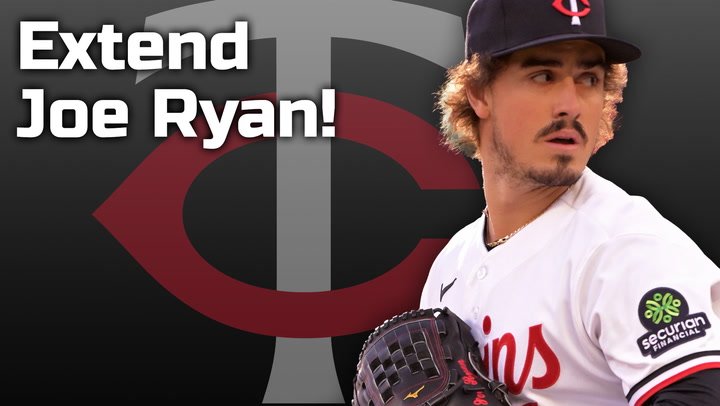 Once again, Joe Ryan is looking like a legitimate ace to start the season. Once again, the Minnesota Twins have a decision to make - should they trade him or should they look to extend him? View the full article
 -
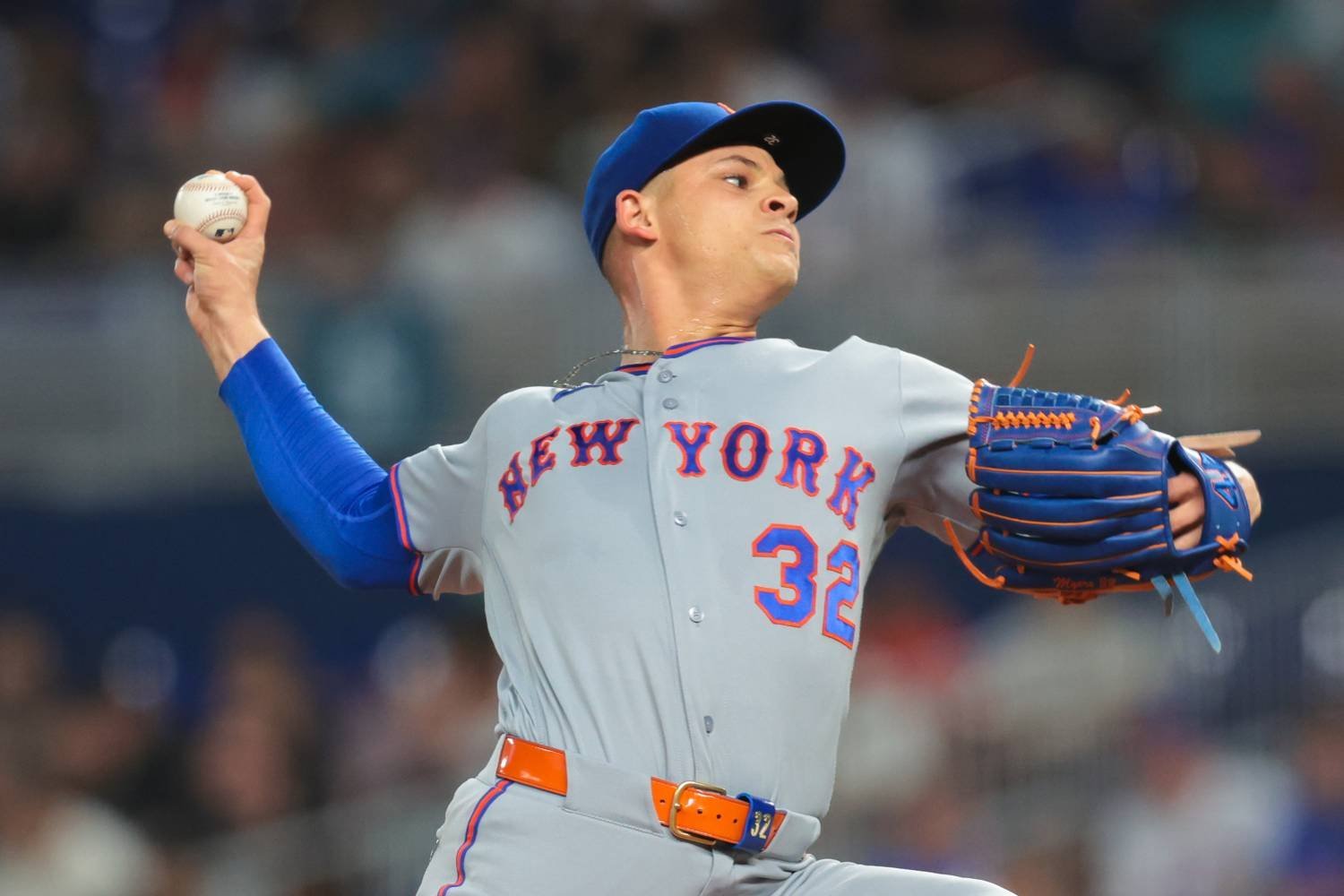 The other player the New York Mets acquired in the huge Freddy Peralta trade has been sent to the minors. Right-hander Tobias Myers was optioned to Triple-A Syracuse on Saturday, with left-hander Cionel Perez having his contract selected from Triple-A. To make room on the 40-man roster, left-hander Anderson Severino was designated for assignment. Myers has made 18 of his 20 appearances this year out of the bullpen, putting up a 4.05 ERA in 33⅓ innings. He last appeared in a game Friday, allowing two runs on two hits, including a homer, in one inning, in a 9-7 win in 10 innings over the Miami Marlins. Myers was acquired along with Peralta in the big trade with the Milwaukee Brewers in exchange for two prospects: infielder-outfielder Jett Williams and right-handed starter Brandon Sproat. Perez signed a minor-league deal with the Mets on May 9 after being designated for assignment by the Washington Nationals and electing free agency rather than going to Triple-A. With the Nationals, Perez had an unsightly 6.19 ERA in 16 appearances and 16 innings, walking 11 and striking out nine. He pitched in six games at Syracuse, walking five and striking out 10 in seven innings for a 2.57 ERA. Severino has not pitched in the majors since 2022, which was also the last time he spent time in affiliated ball, and signed a minor-league contract with the Mets this winter. He had spent the last two seasons in the Mexican League. At Syracuse this year, he had a 1.31 ERA in 20⅔ innings over 18 appearances, walking 11 and striking out 20. View the full article
 -
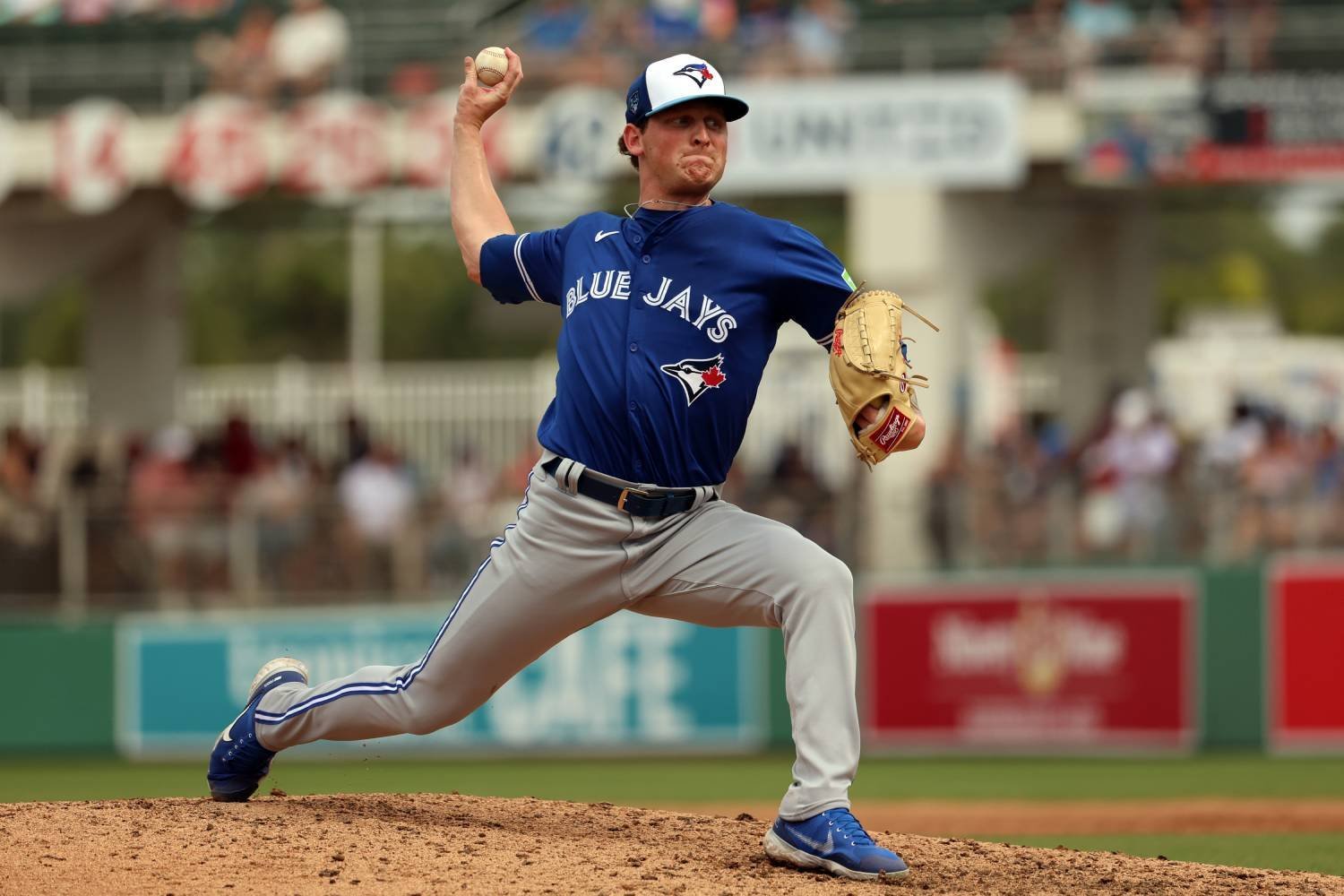 The Toronto Blue Jays on Saturday called up right-handed reliever Hayden Juenger to make his MLB debut. Right-handed reliever Austin Voth was designated for assignment. A sixth-round draft choice by the Jays in the 2021 draft out of Missouri State, the 25-year-old Juenger has been good at Triple-A this season, posting a 3.15 ERA in 17 appearances and 20 innings, walking eight and striking out 23. He has been a reliever these last four seasons after trying his hand at starting in 2022. He rose through the ranks quickly, debuting at High-A in 2021, then splitting time between Double-A and Triple-A in 2022. He has been at Triple-A since, other than some rehab appearances last year. For his career, Juenger has a 4.45 ERA. Voth appeared in Friday's 6-5 loss to the Baltimore Orioles, giving up five runs in 3⅓ innings, including five hits and four walks with no strikeouts. View the full article
 -
 Boston Red Sox Affiliate Recap Triple-A Worcester Red Sox Series at Scranton/Wilkes-Barre RailRiders (New York Yankees): 4-0 Season Record: 27-25 Worcester extended their winning streak to four, winning 6-5. Michael Sansone opened the game for Worcester still trying to find his feet in Triple-A. The southpaw has bounced between Worcester and Portland a few times this season and has a 6.20 ERA in five starts for the WooSox. On Friday, he let up four runs on six hits across three and ⅔ innings. In addition to the six hits, Sansone walked four as he continued to struggle to find his feet against better opponents. Across two and ⅓ innings of relief, Noah Song struck out two. He allowed one baserunner on a walk, but was otherwise dominant. It was an encouraging sign from the 29-year-old who has seen his fair share of struggles this season. Zack Kelly made his second appearance since being optioned from the big league club last week. Despite blowing a save on Friday, he earned the win for two innings of work. He let up one run on two hits. Finally, Tommy Kahnle pitched a flawless ninth inning, lowering his ERA to 1.40 and sealing the win for Worcester. The WooSox bats were lively as they faced a familiar face in Elmer Rodriguez. Mikey Romero and Nathan Hickey led the way with two RBIs apiece, as Nate Eaton and Allan Castro totalled two hits each. Down by one run in the third, Eaton scored from first on a fielder’s choice. Just one batter later Romero mashed an opposite field two-run homer, scoring Vinny Capra and taking a two-run lead. Nathan Hickey joined in on the fun in the fourth, singling on a ground ball as Tsung-Che Cheng and Matt Lloyd scored. With the game tied in the top of the eighth, Jason Delay hit a ground ball single to left field, scoring Castro from third. Delay’s single proved to be the difference in a close game as Worcester clinched the series. Double-A Portland Sea Dogs Series at Binghamton Rumble Ponies (New York Mets): 3-1 Season Record: 25-23 The Sea Dogs four-game hot streak was snapped as they fell 5-4 in extras. Dalton Rogers took the first three innings of Friday evening’s matchup. Rogers struggled with command but was otherwise excellent. He let up one hit but allowed four baserunners via walks. However, he struck out three and lowered his ERA to an impressive 1.42. Cade Feeney took the next three and saw mixed results. He walked just one batter and struck out a season-high five batters. But he allowed four runs on four hits as his ERA rose to 6.85. Portland needed a solid relief outing to follow Feeney, and Reidis Sena delivered. Across another three inning outing he allowed only one baserunner and struck out three as he was nearly perfect. However, it was all in vain when catcher Raudelis Martinez came in to pitch. Martinez was thrust into a high-stakes position for his first career pitching appearance and he couldn't come up clutch. He allowed a walk-off single as Binghamton snapped Portland’s streak. At the dish, Nate Baez came up with a two-run homer and Franklin Arias had two hits. It was Caden Rose who got Portland on the board, however. He slapped a ground ball off of the second baseman’s glove for a single as Nelly Taylor crossed home from second. Down by two runs in the sixth Nate Baez hit a two-run nuke to left center, scoring Marvin Alcantara. Tyler McDonough followed this up with an RBI of his own, driving in Brooks Brannon and snagging the lead. The lead was short-lived however, as Portland failed to score over the last three frames. High-A Greenville Drive Series vs. Asheville Tourists (Houston Astros): 3-1 Season Record: 19-28 Like Portland, Greenville’s winning streak was snapped as they lost by five runs. Greenville depleted their bullpen on Friday as six pitchers made appearances. Jojo Ingrassia made his first appearance in over a month as he started Friday’s game. It was an excellent return as he allowed just one hit and struck out six across two innings. Shea Sprauge followed with an inning of his own, but it was less than ideal. He allowed six runs on just three hits, walking four as his ERA shot to 7.89. As the Drive desperately needed stability from the bullpen, they turned to Danny Kirwin. Unfortunately, Kirwin couldn’t answer. He allowed one more run and three walks over just ⅔ of an inning. The Tourists offense was temporarily cooled as P.J. Labriola came into the game. Across three and ⅓ innings he allowed one more run and two hits, striking out three. However, Labriola couldn't pitch the rest of the game, turning the ball over to Steven Brooks. Over an inning, Brooks allowed two more runs on three hits. Catcher Hudson White pitched the final inning for Greenville, surrendering another three runs before the game concluded. Despite three RBIs from both Mason White and Gerardo Rodriguez, the Drive couldn’t climb back into the game. Enddy Azocar got a hit as well, scoring in the first on a double from Rodriguez who got the scoring started. Later in the first, Mason White clobbered his ninth homer of the year. It was a three-run shot to center, scoring Isaiah Jackson and Rodriguez as the Drive extended their lead. However, by the time the Drive scored again, they faced a six-run deficit. In the eighth, Yoeilin Cespedes scored on a wild pitch. Later in the inning, Yophery Rodriguez drew a walk with the bases loaded, scoring Jackson once more. In the bottom of the ninth, G. Rodriguez cut the lead to five with a two-run shot, but it wasn’t enough to prevent the loss. Low-A Salem RidgeYaks Series vs. Hickory Crawdads (Texas Rangers): 1-3 Season Record: 21-28 Salem fell by six as their losing streak reached three games. Jose Bello earned his second loss of the year for his four and ⅓ innings on Friday. He let up two runs on just one hit, walking four. He punched out three, but it wasn’t enough to limit the Hickory offense. Adam Bates pitched two and ⅔ innings in relief, allowing another two runs to cross home. He struck out four batters as well. The game got away from Salem as Harry Blum took the mound. His ERA hit 10.02 after his appearance, which was poor to say the least. He allowed five more runs on three hits and three walks over just one frame of work. For the final inning of the night, Griffin Kilander put together a near perfect outing. He allowed one walk as he struck out two. As impressive as it was, it did little to rectify the poor performances that came before him. Despite a two-hit day from D’Angelo Ortiz, the RidgeYaks only totaled one RBI as they struggled at the plate. Salem’s lone RBI came in the fourth on a Skylar King home run to tie the game at 1-1. In the fifth, Salem scored their other two runs. Stanley Tucker stole home as Starlyn Nunez later scored on a passed ball. It was all the offense Salem could muster, however, as they lost by six. View the full article
 -
 Chicago Cubs Minor League Report - May 29 Affiliate Overview Triple-A Iowa Cubs Series at Indianapolis Indians (Pittsburgh Pirates): Cubs lead, 3-1 Season Record: 24–30 Double-A Knoxville Smokies Series at Chattanooga Lookouts (Cincinnati Reds): Lookouts lead, 2-1 Season Record: 23–24 High-A South Bend Cubs Series vs. Fort Wayne TinCaps (San Diego Padres): Cubs lead, 3-1 Season Record: 28–17 Single-A Myrtle Beach Pelicans Series vs. Wilson Warbirds (Milwaukee Brewers): Tied, 2-2 Season Record: 20–27 Affiliate Highlights Triple-A: Iowa Cubs Season Record: 24–30 Series Opponent: Indianapolis Indians (22–33) Series Standing: Lead, 3-1 May 29: The Iowa Cubs clinched at least a series split with an 8-3 victory over the Indianapolis Indians on Friday night at Victory Field. The Cubs took a 3-0 lead in the second thanks to RBI-singles from Chas McCormick (2-for-5) and Casey Opitz (2-for-5). Owen Miller (4-for-4) brought home a run in the third and Christian Bethancourt (2-for-5) made it 6-0 in the fifth with a two-run double. BJ Murray’s (3-for-5) two-run double in the sixth made it 8-0 before the Indians finally got on the board in the bottom of the inning with a run. Paul Campbell got the start for Iowa but did not factor into the decision. Campbell spun four scoreless innings, allowing just one hit and striking out four. Indianapolis would plate two more in the ninth but it was not enough as the I-Cubs claimed the win. Five Iowa batters recorded multi-hit efforts, amassing 15 hits in total. Miller’s four-hit game was his second of the series. Double-A: Knoxville Smokies Season Record: 23–24 Series Opponent: Chattanooga Lookouts (27–21) Series Standing: Trail, 2-1 May 29: The Knoxville Smokies were rained out on Friday. They will make up that contest today as part of a doubleheader. High-A: South Bend Cubs Season Record: 28–17 Series Opponent: Fort Wayne TinCaps (23–26) Series Standing: Lead, 3-1 May 29: The South Bend Cubs had their eight-game winning streak snapped with a 9-8 defeat to the Fort Wayne TinCaps on Friday night at Four Winds Field. The Cubs plated seven in the first to take a commanding lead in the contest. Josiah Hartshorn (1-for-5) continued his hot start to his High-A career by launching a two run homer and Jose Escobar (1-for-5) followed with an RBI-single three batters later. Drew Bowser’s (1-for-4) grand slam put an emphatic stamp on the opening frame. The TinCaps began to claw back with a run in the second before adding two more in the fourth to make it 7-3. South Bend got that run back in the home half of the inning on Miguel Useche’s (3-for-4) RBI-single. Fort Wayne scored twice in the sixth to make it 8-5. After the Cubs were able to keep the TinCaps off the board in the seventh and the eighth, the visitors stunned the hosts with four in the ninth to snap South Bend’s winning run. Single-A: Myrtle Beach Pelicans Season Record: 20–27 Series Opponent: Wilson Warbirds (25–24) Series Standing: Tied, 2-2 May 29: The Myrtle Beach Pelicans tallied 15 hits on offense to hold off the Wilson Warbirds for an 11-10 victory on Friday night at Pelicans Ballpark. Edward Vargas (3-for-5) gave the Pelicans the lead with an RBI-single in the second before the Warbirds evened the contest in the third. Myrtle Beach went back ahead in their half of the third on Eli Lovich’s (3-for-5) run-scoring single. Wilson scored three times in the fourth to go up 4-2 and they would take that lead into the sixth. The Pelicans put up a five-spot in the frame to take their third lead of the ballgame. Alexis Hernandez (1-for-5) drove in a run with a single and Darlyn De Leon (2-for-4) raced home on a wild pitch to tie the game. Lovich capped the frame with a three-run blast, his seventh of the season, to put Myrtle Beach ahead for good. The Warbirds cut the lead back to one with two in the seventh but the Pelicans responded with three runs in the bottom half of the inning. The hosts scored two of their runs via a bases-loaded hit by pitch and a wild pitch before Alexey Lumpuy (1-for-5) brought in a run with a double. De Leon drove in an important insurance run in the eighth to make it 11-6, as Wilson tallied four in the ninth, but Myrtle Beach was able to hold on for the win. View the full article
 -
BREAKING: Twins Designate Simeon Woods Richardson for Assignment
DiamondCentric posted an article in Twins Daily
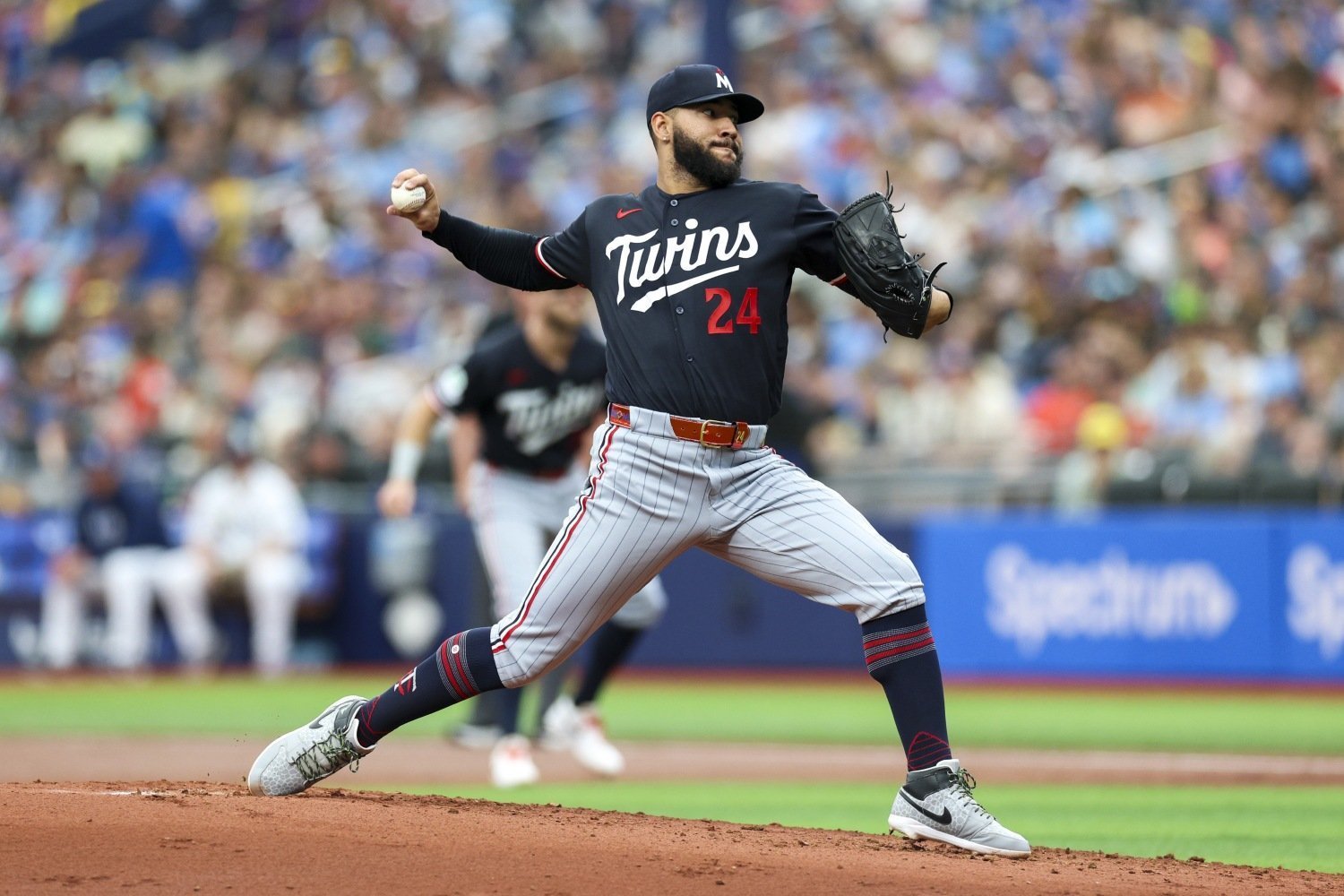 The Minnesota Twins have made several eye-opening roster decisions over the past few weeks. Demotions for Matt Wallner and Royce Lewis certainly grabbed headlines, but Saturday's announcement may be the most unexpected move of the season. The club designated right-hander Simeon Woods Richardson for assignment, effectively removing him from both the active roster and the 40-man roster. In a corresponding move, Minnesota promoted fellow right-hander John Klein from Triple-A St. Paul. Because Klein already occupied a spot on the 40-man roster, the Twins now have just 38 players on their 40-man roster. The significance of the move goes beyond a simple roster shuffle. Woods Richardson entered the season without any minor league options remaining. That means the Twins could not send him back to Triple-A without first exposing him to waivers, where any club can claim him and immediately place him on its major league roster. For a pitcher who entered the year expected to provide valuable rotation depth, things unraveled quickly. Woods Richardson posted a 7.74 ERA across 47 2/3 innings this season while recording 26 strikeouts against 25 walks. The lack of swing-and-miss stuff combined with ongoing command issues left him struggling to consistently navigate major league lineups. Two weeks ago, Minnesota removed him from the starting rotation in hopes that a relief role might unlock better results. The experiment showed some signs of improvement. Woods Richardson worked three scoreless innings across two bullpen appearances, though he still allowing too many base runners in each outing. His return to the rotation came out of necessity rather than performance. After Kendry Rojas was scratched with an elbow issue earlier this week, Woods Richardson was called upon to start Thursday's game against the White Sox. The outing did little to strengthen his case for a roster spot. He surrendered five runs in just 2 2/3 innings during Minnesota's 6-2 loss. That appearance appears to have been the final straw. What's particularly fascinating about this decision is what it says about the Twins' internal evaluation. Minnesota's bullpen depth has been tested throughout the season, and organizations are usually hesitant to part with pitchers who still possess starting experience. By designating Woods Richardson for assignment, the Twins are signaling that they do not view him as a viable long-term bullpen solution. If the organization believed there was a meaningful role for him moving forward, exposing him to waivers would have represented a significant risk. Now the Twins must wait to see whether another organization is willing to take a chance on the 25-year-old right-hander. Given his former prospect pedigree and major league experience, there is a reasonable possibility another club will be interested. For Minnesota, the move creates immediate roster flexibility. For Woods Richardson, it could mark the end of his tenure with the organization that acquired him as part of the José Berríos trade nearly five years ago. Check back for additional updates as more details become available. View the full article
 -
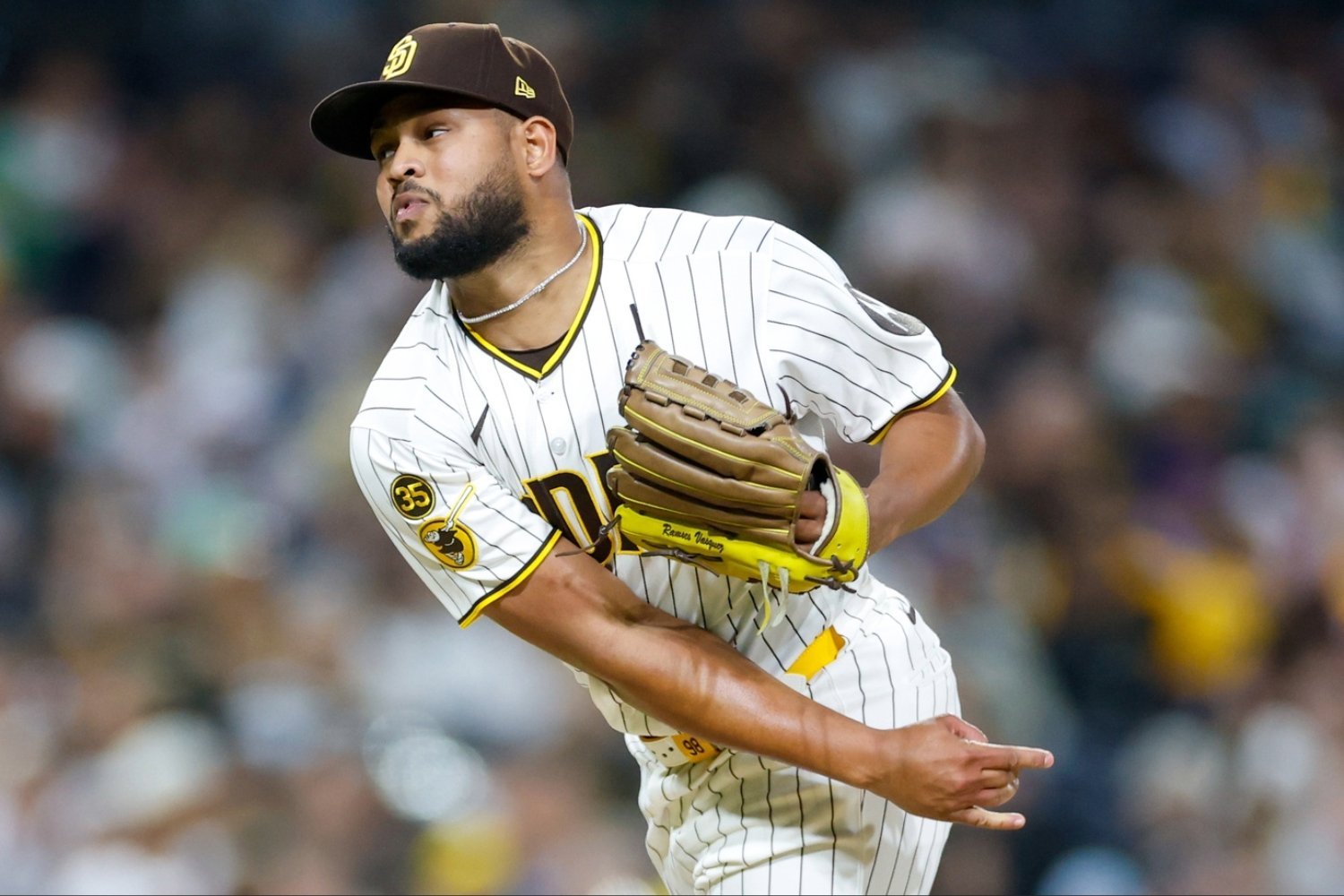 Randy Vásquez seems to be turning into exactly the kind of pitcher who can live dangerously in modern baseball: one capable of generating more swings and misses… while also allowing devastating damage whenever he misses his location. That’s what happened Tuesday night at Petco Park. And perhaps what his entire season has been hinting at all along. The Padres’ 4-3 loss to the Phillies revealed something more important than just a third straight defeat. It exposed the paradox surrounding Vásquez for weeks now. The right-hander allowed three home runs in the first three innings — all after recording two outs — and turned a manageable game into a hole too deep for a San Diego offense that continues to struggle with runners in scoring position. But the truly interesting story is not the combined three home runs from Bryce Harper, J.T. Realmuto, and Trea Turner’s 434-foot blast. The story is how he got here. Because for much of the early season, Vásquez genuinely looked like he was evolving. He finished the March/April stretch with a 25% strikeout rate, a 26.3% Whiff%, and a .468 xSLG allowed. He faced 136 hitters and surrendered only two home runs. His journey through May has been brutal. Before allowing four runs in 5 ⅔ innings Tuesday night, Vásquez had seen his strikeout rate collapse to 12.8%, his Whiff% drop to 19.9%, and his xSLG spike to an alarming .532. The Padres have desperately needed stability in a rotation battered by injuries and uncertainty, and the Dominican right-hander surprised everyone in April by offering something that had never consistently been part of his profile: swings and misses. At times, he looked like a completely different pitcher. His ability to generate whiffs took a massive leap. He also improved his ability to induce chase swings and raise his strikeout rate without inflating his walk rate. Randy Vásquez's Profile Evolution Randy Vásquez Profile Evolution 2025 2026 Whiff% 15.7% 23.8% Chase% 25.2% 30.4% K% 13.7% 20.1% BB% 9.1% 7.1% That is not a minor change. A 23.8% Whiff% no longer describes a pitcher surviving through contact management. It describes a starter who, at least at times, appears to have found a legitimate way to escape the hard contact that once defined his outings. But if we dig deeper into Vásquez’s trends against opposing hitters, a far more complicated story emerges. And Tuesday’s three home runs — two off his cutter, and Turner’s against a sinker — help tell it. The cutter has long been Vásquez’s wildcard pitch. In 2023, when he threw only 111 cutters all season, opponents hit .300 against it and slugged .650, including two home runs. It was a high-risk weapon: capable of generating whiffs (22.9%) but also extreme punishment. In 2025, usage jumped to 535 cutters, and while the batting average allowed dropped to .268, the xSLG remained high at .447. It was still a gamble. This year, Vásquez has adjusted something. His cutter now accounts for 25.1% of his pitches (220 entering Tuesday night’s start), with similar velocity (90.0 mph) and a still-solid 22.0% whiff rate. The problem is that when hitters do make contact, the damage has become even more severe: a .351 batting average allowed, a .541 xSLG, and a 90.0 mph average exit velocity. Tuesday night’s two blasts were not exceptions. They were the physical manifestation of the risk that has always lived inside that pitch. The rest of his arsenal shows a similar pattern. His sinker (94.6 mph) remains the foundation for ground balls, but it has still allowed a .319 xSLG and a 91.8 mph average exit velocity. His changeup, used mostly against left-handed hitters, looks devastating: 36.7% whiff rate and .340 xSLG. Meanwhile, the sweeper — a reliable secondary weapon in 2025 (25.2% whiff, .377 xSLG) — has lost some effectiveness this year (17.6% whiff, .417 xSLG). In other words: Vásquez now has more weapons capable of generating swings and misses than ever before. But none of them are truly safe. And the cutter, in particular, lives on a razor’s edge: it can produce a quick out or end up in the seats. On Tuesday, it was the latter. Twice. And that is where the season begins to look different. The hard-contact indicators had been flashing warning signs for weeks. Beneath the apparent progress, there were metrics suggesting a far more fragile profile than it initially appeared. Vasquez's Allowed Contact Quality Allowed Contact Quality 2025 2026 Barrel% 10.9% 12.5% Hard-Hit% 39.3% 45.0% Avg Exit Velocity 89.1 mph 90.3 mph xSLG Allowed .372 .425 That is where the contradiction lives. Vásquez is generating more swings and misses than at any point in his career. But when he doesn’t get the whiff, the damage has become more severe than ever. And that perfectly explains why Tuesday’s outing felt so strange. It was not a complete disaster. He did not completely lose command. He did not walk the bases loaded. In fact, he continued competing. He recorded the first two outs in each of the first three innings. He pitched into the sixth. He prevented the game from completely unraveling. But every major mistake ended up beyond the wall. The Phillies took 49 swings against Vásquez and made contact 88% of the time. He generated only six swinging strikes: hitters went 3-for-17 against the four-seam fastball, 2-for-10 attacking the cutter, and 1-for-12 against the sinker. The rest of Philadelphia’s swings connected against the curveball (5), slider (3), sweeper (1), and changeup (1). That changes the entire math of an outing. Because modern baseball tolerates many things: walks, deep counts, short starts. What it does not tolerate are home runs. Especially when they come in sequence and erase entire innings of solid work. Three swings can destroy an entire night. And that is exactly what happened against Philadelphia. The fascinating part for the Padres is that the progress is probably real. The whiffs are real. The chase rate is real. His ability to make hitters uncomfortable has improved. But another trend also appears real: Vásquez may be transforming into a different kind of vulnerable pitcher. Before, he depended too heavily on contact. Now, he seems to be entering that modern class of starters who generate enough swings and misses to survive… but pay an enormous price whenever they miss their location. And that is where the question that now haunts his season begins to emerge: Did Randy Vásquez really solve the biggest problem in his profile? Or did he simply replace one flaw with another equally dangerous one? View the full article
 -
 Jake Bauers is on pace to blow his single season home run career-high (12) out of the water, as he has eight to start the season. What's contributing to the 30-year-old first baseman's breakout campaign? In this video, we dive into Bauers' exit velocity, hard-hit rate, adjusted launch angle and more.View the full article
 -
 Nicolas Carreno was the story of the night, firing 5 2/3 scoreless innings with seven strikeouts as St. Lucie blanked Bradenton 8-0. Brooklyn rode a six-run seventh to a 10-5 win, with JT Benson driving in two. Binghamton walked off Portland 5-4 in 10 innings on Chris Suero's single, after Jorge Polanco's three-run homer. Syracuse pushed across seven runs in the third behind Christian Arroyo and Ryan Clifford homers, but lost 9-8 in 11 innings. Mets Transactions No Roster Moves Syracuse Buries Seven In The Third But Drops Extra-Inning Heartbreaker Syracuse erupted for seven runs in the top of the third but could not hold on, falling 9-8 to the Rochester Red Wings in 11 innings. The big frame began with a Jihwan Bae walk, and a Kevin Parada single, and Jackson Cluff brought home the tying run with a single. Nick Morabito followed with a two-run double, Christian Arroyo crushed a three-run homer, and Ryan Clifford added a solo shot to make it 7-1. Syracuse scratched out one more in the eighth when Bae singled and scored on a Parada double, but it was not enough. Bae led the offense by reaching base three times with two hits, two runs, and a stolen base. Parada added two hits, two runs batted in, and a run, and Cluff and Morabito each contributed two hits. Arroyo drove in three on his home run, and Clifford and Cluff also knocked in runs. Starter Xzavion Curry struggled, allowing five runs on eight hits across four innings with no walks and two strikeouts, surrendering two home runs. The bullpen could not protect the lead, and Alex Carrillo took the loss after allowing a run on one hit and three walks over 1 1/3 innings. Syracuse left seven runners on base. Player AB R H RBI BB K Nick Morabito 6 1 1 2 0 2 Yonny Hernández 4 1 1 0 1 0 Christian Arroyo 5 1 2 3 0 1 Ryan Clifford 5 1 1 1 0 1 Andy Ibáñez 5 0 0 0 0 2 Cristian Pache 5 0 0 0 0 3 Ji Hwan Bae 4 2 2 0 1 0 Kevin Parada 4 1 2 1 0 0 Jackson Cluff 4 1 2 1 1 1 Player IP H R ER BB K HR Xzavion Curry 4 8 5 5 0 2 2 Daniel Duarte 1 1 0 0 0 1 0 Ben Simon 1 0 0 0 0 0 0 Jonathan Pintaro 1 1 2 2 1 1 1 Matt Turner 1 1 0 0 0 0 0 Dylan Ross 1 1 1 1 1 1 1 Alex Carrillo 1 1/3 1 1 0 3 2 0 Polanco And Suero Power Binghamton To Walk-Off Win Binghamton walked off the Portland Sea Dogs 5-4 in 10 innings. The Rumble Ponies broke through in the fifth, when Jaylen Palmer walked and Wyatt Young singled ahead of Jorge Polanco's three-run homer to make it 3-1. Portland answered with three in the sixth to take the lead, but Binghamton tied it in the bottom half on Jaylen Palmer's run-scoring double that brought home Jose Ramos. In the 10th, zombie runner TT Bowens moved to third and scored the winning run on Chris Suero's single to center. Polanco led the way, going 1-for-1 with a home run, three runs batted in, two walks, and a run scored. Wyatt Young added two hits, and Palmer contributed a double, a run batted in, and a run. Suero and Jose Ramos each chipped in a hit. Starter Brendan Girton turned in a steady effort, allowing four runs on six hits over 5 1/3 innings with one walk, one strikeout, and one home run allowed. The bullpen was perfect the rest of the way, with Dan Hammer earning the win after a scoreless inning. Binghamton left eight runners on base. Player AB R H RBI BB K Jorge Polanco 1 1 1 3 2 0 TT Bowens 1 1 0 0 1 0 Marco Vargas 3 0 0 0 2 1 Chris Suero 5 0 1 1 0 2 Jacob Reimer 4 0 0 0 0 1 Eli Serrano III 4 0 0 0 0 2 Jose Ramos 3 1 1 0 1 1 JT Schwartz 4 0 0 0 0 2 Jaylen Palmer 3 1 1 1 1 1 Wyatt Young 4 1 2 0 0 1 Player IP H R ER BB K HR Brendan Girton 5 1/3 6 4 4 1 1 1 Felipe De La Cruz 1 2/3 2 0 0 1 3 0 Guillo Zuñiga 0 1/3 1 0 0 2 0 0 Saul Garcia 1 2/3 2 0 0 0 1 0 Dan Hammer 1 0 0 0 1 0 0 Brooklyn's Six-Run Seventh Sinks Wilmington Brooklyn rallied from a five-run deficit to beat the Wilmington Blue Rocks 10-5, breaking the game open with six runs in the seventh. Trailing 5-2, the Cyclones loaded the bases and chipped away: a hit-by-pitch and a walk forced in two runs, Yonatan Henriquez tied it on a sacrifice fly aided by an error, Colin Houck walked in another, and JT Benson capped the burst with a two-run single to make it 8-5. Brooklyn added two more in the eighth on a Daiverson Gutierrez single and a force out. Benson led the offense with two hits, two runs batted in, and a run. Grae Kessinger added a double, two runs batted in, and two runs, while leadoff man John Bay reached base twice with two runs scored. Henriquez drove in two, and Corey Collins reached base three times. Frank Camarillo had a rough outing, allowing five runs on eight hits over 5 2/3 innings with two walks, two strikeouts, and two home runs allowed. The bullpen slammed the door, with Garrett Stratton striking out three over 1 1/3 hitless innings to earn the win. Brooklyn left eight runners on base. Player AB R H RBI BB K John Bay 4 2 1 1 1 2 Grae Kessinger 3 2 1 2 1 1 Corey Collins 3 1 1 1 2 2 Daiverson Gutierrez 5 0 1 1 0 2 Yonatan Henriquez 4 1 0 2 0 0 Colin Houck 4 0 0 1 1 1 JT Benson 3 1 2 2 1 1 Sam Biller 0 2 0 0 4 0 Diego Mosquera 2 1 0 0 0 1 Player IP H R ER BB K HR Frank Camarillo 5 2/3 8 5 5 2 2 2 Garrett Stratton 1 1/3 2 0 0 0 3 0 Joe Jacques 1 0 0 0 1 0 0 Cristofer Gomez 1 0 0 0 1 2 0 Carreno's Seven Strikeouts Lead St. Lucie To Shutout St. Lucie cruised to an 8-0 shutout of the Bradenton Marauders behind a dominant pitching effort. The Mets jumped ahead early, scoring twice in the first when Elian Peña scored on a force out, and Jamari Baylor singled home a run. They added two in the second on Peña's solo homer and a hit-by-pitch that plated another. St. Lucie tacked on single runs in the seventh and ninth and two more in the eighth to pull away. Leadoff man Elian Peña paced the attack, going 2-for-4 with a home run, a run batted in, two walks, and three runs scored. Jamari Baylor was a force with three hits, two doubles, two runs batted in, and two runs. Randy Guzman added two hits. Nicolas Carreno was overpowering, tossing 5 2/3 scoreless innings while allowing just two hits with two walks and seven strikeouts to pick up the win. The bullpen finished the shutout, combining for 3 1/3 scoreless innings. St. Lucie stranded 16 runners on base. Player AB R H RBI BB K Elian Peña 4 3 2 1 2 0 Branny De Oleo 2 2 0 1 1 2 Randy Guzman 5 0 2 0 1 2 Julio Zayas 4 0 1 1 2 1 AJ Salgado 5 1 1 2 0 1 Jamari Baylor 6 2 3 2 0 2 Chase Meggers 3 0 0 0 2 2 Jeremy Rodriguez 5 0 0 0 0 1 Simon Juan 4 0 1 0 1 2 Player IP H R ER BB K HR Nicolas Carreno 5 2/3 2 0 0 2 7 0 Tyler McLoughlin 1 1/3 0 0 0 2 2 0 Jorge De Leon 1 0 0 0 1 1 0 Ernesto Mercedes 1 0 0 0 1 0 0 Top-20 Prospect Performance Nolan McLean: DNP Carson Benge: DNP A.J. Ewing: DNP Jonah Tong: DNP Ryan Clifford: 1-for-5, HR, 1 K Jacob Reimer: 0-for-4, 1 K Jack Wenninger: DNP Elian Pena: 2-for-4, HR, 2 BB Mitch Voit: DNP Nick Morabito: 1-for-6, 2B, 2 K Jonathan Santucci: DNP Chris Suero: 1-for-5, 2 K Zach Thornton: DNP Wandy Asigen: DNP Will Watson: DNP Eli Serrano III: 0-for-4, 2 K Ryan Lambert: DNP Dylan Ross: 1 IP, 1 H, 1 R, 1 ER, 1 BB, 1 K, 1 HR Antonio Jimenez: DNP R.J. Gordon: DNP View the full article
 -
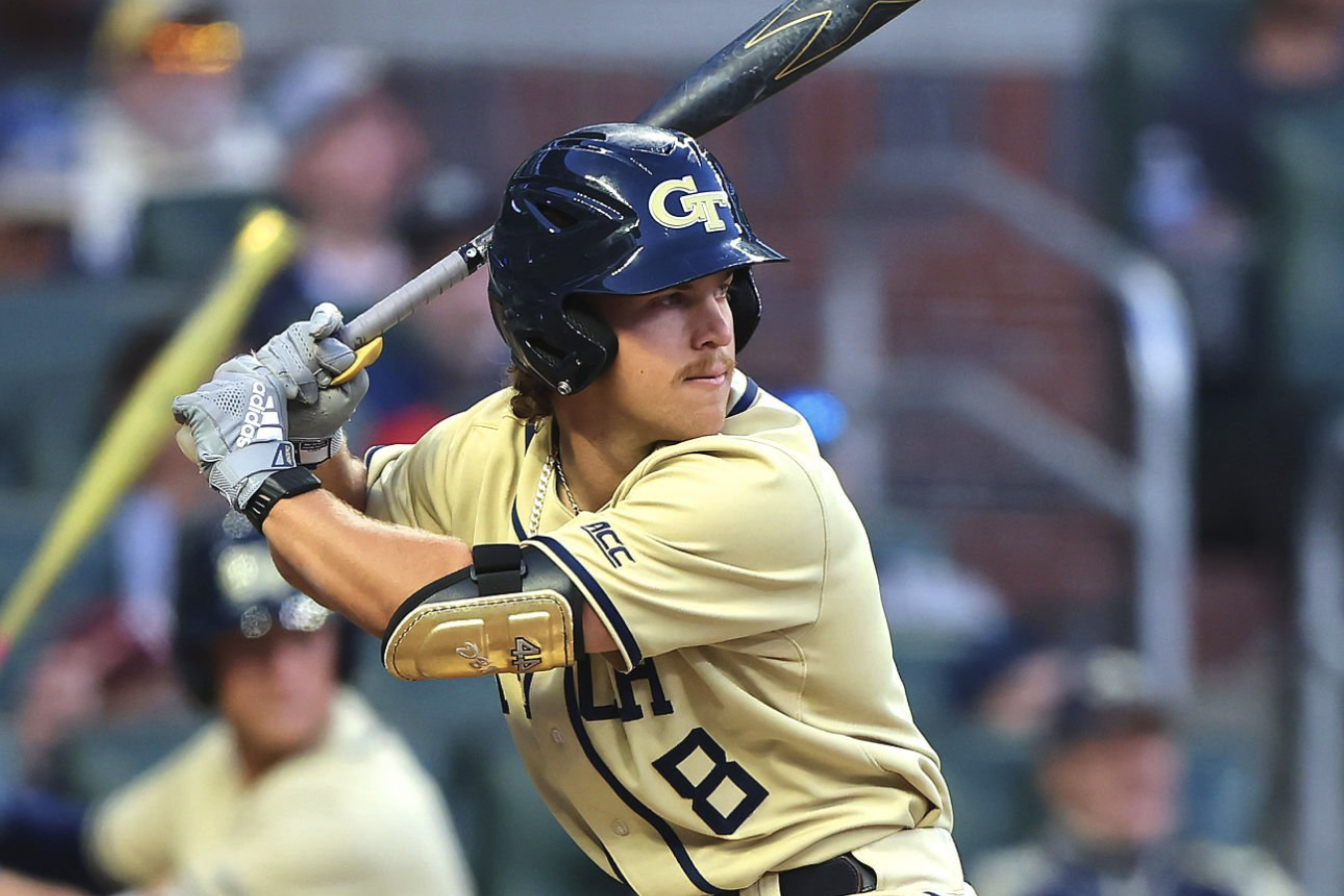 Leading up to the 2026 MLB Draft, Fish On First brings you a series of scouting reports on top prospects in this draft class who could realistically wind up in Miami. Overview Position: OF Height: 5’9″ Weight: 185 pounds School: Georgia Tech Drew Burress is a 5’9”, 185-pound outfielder who plays for Georgia Tech University. Burress has been an excellent hitter since he arrived on campus at Georgia Tech. He’s one of the best overall players in the country and should be an early pick in the first round of the 2026 MLB Draft. Coming out of high school, Burress was an elite-level prospect from Houston County High School in Perry, Georgia. On Perfect Game, Burress was the eighteenth-ranked prospect and the fourth-ranked outfielder in the Class of 2023. He was also the second-ranked prospect and the #1 outfielder out of the Peach State. Burress went undrafted and honored his commitment to Georgia Tech. During his freshman season, Burress made a major impact and was already proving himself to be one of the best players in college baseball. Burress played and started in all 58 games. He slashed .381/.512/.821 with 83 hits, fifteen doubles, 25 home runs, 67 RBIs, 58 walks, and a 1.333 OPS. Burress was named the Freshman of the Year, Freshman All-American, and Second Team All-American on D1 Baseball. In the 2025 season, Burress continued to produce like one of the most productive hitters in the country. Burress played and started in all 60 games. He slashed .333/.469/.693 with 76 hits, 23 doubles, nineteen home runs, 62 RBIs, ten stolen bases, 53 walks, and a 1.162 OPS. He was named a First Team All-American and First Team All-ACC. During this season, Burress has helped lead Georgia Tech’s offense to be one of the best in the country. Burress is slashing .361/.476/.651 with 87 hits, 22 doubles, three triples, fourteen home runs, 56 RBIs, ten stolen bases, 47 walks, and a 1.128 OPS. He was named First Team All-ACC. At the plate, Burress has an open stance and uses his lower half very well. Burress has a short, compact swing with natural lift and generates a lot of power from his big leg kick and impressive bat speed. Burress did have some mechanical issues with his swing and leg kick during the season, but made adjustments and has played more to his capabilities. He’s one of the most complete hitters in this draft class with an advanced approach and doesn’t chase too many pitches out of the zone. Defensively, Burress projects to stay in center field at the next level. He has above-average speed and a 60-grade arm strength. Even if he moves off of the position by the time he reaches the majors, Burress could be an excellent defensive right fielder due to his arm strength. Strengths 60-grade power Highly productive college hitter Georgia Tech for all three years Excellent bat speed Hits the ball with leverage naturally 60-grade arm strength Projected to stick in CF Weaknesses Doesn’t have much projectability left Swing tends to get a little long Will probably need to shorten his leg kick Pro Comparison: Ramon Laureano Projection: Top 10 pick Bottom Line With how productive Drew Burress has been since he stepped foot at Georgia Tech, it doesn’t seem like many teams will pass up on the opportunity to draft him. He’s a well-rounded prospect who could quickly move through the minor league system. On ESPN, Burress is the seventh-ranked prospect and the #1 collegiate outfielder in the 2026 MLB Draft. On MLB Pipeline, Burress is the eighth-ranked draft prospect. He is the tenth-ranked draft prospect on Baseball America. The Marlins will have the 14th overall pick in the draft. Burress would be an excellent option, but he is unlikely to be on the board for them. If he does fall to the Fish, they would really have to consider taking him. More 2026 MLB draft profiles LHP Gio Rojas RHP Cameron Flukey OF Eric Booth Jr. 3B Ace Reese LHP Carson Bolemon RHP Jackson Flora INF Jacob Lombard OF AJ Gracia View the full article
 -
 If reading this report on Saturday AM, there's still time to get questions in to @Spencer Michaelis and longtime Brewers minor league Instagrammer of note "@BrewersFarm" for what should be an awesome new addition to the BrewerFanatic family of podcasts. Think of it as an extended 'Minor League Sandbox', we're all looking forward to it (recording today, Saturday). Speaking of Spencer, be sure to read his latest: Transactions: Milwaukee Brewers sent LHP Jared Koenig on a rehab assignment to Nashville Sounds. Nashville Sounds placed LF Greg Jones on the 7-day injured list. Nashville Sounds activated C Eric Martinez from the Development List. Wilson Warbirds activated RHP Miqueas Mercedes from the 7-day injured list. ACL Brewers placed SS Moises Polanco on the 7-day injured list. Nashville Pre-Game Media Notes Final: Nashville 4, Gwinnett (Braves) 3 Box Score and Game Log Via the Sounds, game details, and we encourage readers to always review affiliate write-ups as part of their Link Report routine: Sounds Win Second Straight over Gwinnett Another fine write-up from the Sounds, highly suggested. For those exasperated with the Luis Rengifo experience, we check in on Jett Williams, batting 5th in the lineup and only getting three at-bats in this home game win. It was this 91 MPH line single into center, nicely done, that scored the final (and deciding) run of the game. In the nearly complete month of May, Williams has posted a .253/.383/.425 line (.808 OPS), though the 22-year-old has only one multi-hit game in his last ten, and the knock you just watched was his first base hit in four games. In other words, not exactly banging the door down to immediately provide Brewers fans with much-needed Rengifo relief. Brock Wilken was idle for a second consecutive game - he's slugging .254 in May; that's not a misprint. Along with Robert Gasser (much mentioned in the game summary and seen here) and Koenig, it was a continued southpaw brigade with Drew Rom and Brian Fitzpatrick. Would love to see Fitzpatrick focus on multi-inning work, as that seems to be the priority working so well in the big-league bullpen. That value still has me thinking that Rob Zastryzny (idle in this one) doesn't have a true fit in Milwaukee and will be biding time as two weeks remain on his 30-day rehab stint capped length. As for the two runs Gasser allowed, it was hardly a barrage. On this play, you'll see how left fielder Eddys Leonard's error set up Gasser's second run to be unearned, and here you'll see a broken bat flair brought in that unearned run. So, a solid night for Bob Gas overall. Old friend Brewer Hicklen was 0-for-4, with two K's, but YTD he's at .335/.410/.542, impressive four-A player he is. Sorry for making you wait, Ramon, here's your big fly: Catch up with the latest Biloxi pre-game audio interview archives Biloxi Pre-Game Media Notes Final, Biloxi 9, Columbus (Braves) 3 Box Score and Game Log Shuckers Tie Franchise Record for Stolen Bases in Win Over Clingstones - Eight Stolen Base Evening for Biloxi Clinches Win in Columbus The southern-based fans in Nashville and Biloxi do love themselves the Atlanta Braves franchise, so the two wins to kick off our report tonight may sting the locals some. Plenty of offense-minded content in that game summary, but perhaps this is the most important takeaway: "Shuckers starter Brett Wichrowski (6.0 IP, 5 K) worked into the sixth inning for the third straight start and has punched out 19 batters over those three appearances." Wichrowski's still in just his age 23 season, and we should remember his professional experience below the AA level consists of only his first four starts, kicking off the 2024 season with the Timber Rattlers. Count me among those who feel the righthander's development trajectory may have been different if he had been allowed to simmer longer in Appleton that summer. Regardless, nice to see recent results, though he did walk four here (walks have not been an issue season-to-date). Right-fielder Damon Keith and his .925 OPS last played on Saturday the 23rd. Circumstances for Darrien Miller - this could only happen because there were two outs: In some skillset ways, Mike Boeve is set to become the new Tyler Black, minus Black's 40-man roster status. LH bat, LF/1B/3B but no set home, and given Black's out-of-options situation for 2027, we'll be viewing Boeve in Black terms next spring. Those May numbers, by the way - .299/.353/.455. Boeve's first RBI in this game was hardly scorched but did the job (video). Speaking of doing the job, if you're a sacrifice fly fan, watch Matthew Wood's fly to center and Eduardo Garcia's fly to right. Three Shuckers were plunked in this game, all lived to talk about it. A player who did exit early, however, was first baseman Blake Burke. Burke led off the 5th with a double, pulling a sharp line drive to right. Take another look at that Boeve RBI video above, Burke was hit by the thrown ball as he slid across home plate. He popped right up, trotting to the dugout, but he did not re-enter on defense in the bottom half of the inning. Glad you're feeling better, Jesus Made (no more illness)! Hitless Friday, but contributing, as your box score review indicated. Wisconsin Pre-Game Media Notes (download link) Final: Peoria (Cardinals) 7, Wisconsin 5, ten innings Box Score and Game Log Via the Timber Rattlers, game details: Chiefs Top Timber Rattlers in Ten Innings - Early lead not enough for Wisconsin Yeah, frustrating to lose a game in which the boys were up 3-0 after one inning, no T-Rat scores after the 5th. The game summary has your primary details, then translate that reading into what you'll see here, including Andrew Fischer's oh-so-close attempt to tie things up in the 10th. Manager Nick Stanley is the guest on Chris and Jonathan's Postgame Podcast. Luis Pena idle after easing back into action. Josh Adamczewski was scheduled for a night off but was called on to pinch-hit in the 10th. He was the victim of a checked swing that was called a full swing, wasn't happy about it. We are still on Braylon Payne watch, no new info. It may have been mentioned in recent broadcasts, but we haven't picked up on that yet. Speaking of the broadcast, I paused the big-league Brewers game on the DVR, pulled up the final two innings of the Rattlers, and projected those innings from my phone onto the big-screen TV in my living room. My 2001 Rookie Link Reporter self would not have believed the comfort and technological progress in following the farm in 2026. Deserved shoutout to Great Britain WBC RHP Jack Seppings - stranded an Ethan Dorchies runner to end the 6th and took it the rest of the way (zero walks). The one earned run against him was weak, as catcher David Garcia mishandled Eric Bitonti's (admittedly low) throw at the plate in the 10th. Wilson Pre-Game Media Notes Final: Myrtle Beach (Cubs) 11, Wilson 10 Box Score and Game Log Wilson Rally Comes Up Short on Friday Night - Warbirds leave bases loaded in ninth inning Ah yes, first time I get to see if I can spell "Myrtle" correctly out of the gate. Sometimes a Link Reporter is getting towards the back end of his daily duties hoping to coast into the home stretch with a couple of low-scoring contests and then realizes that the Wilson and Maryvale games produced a combined 36 runs. Sigh.... Thought the Pelicans might have posted that nerve-wracking final out, Pedro Ibarguen's six-pitch at-bat ending in a strikeout, but no. Handelfry Encarnacion's two-out, two-run triple in the 4th was a bit of a gift to his season stats, as the outfielder obliged: Kevin Garcia's two-run double in the 7th also came with two outs: We see you, Tyler Rodriguez, on base all five times up and three successful stolen base attempts. Rodriguez, playing left field, singled twice and walked thrice. Brady Ebel walked twice and was also hit by a pitch. Ebel is inching his walk total (37) closer to his K total (41), while remaining a perfect 19-for-19 on the basepaths. Rylan Mills (designated hitter) also reached three times without a knock, three bases on balls. Those were among the 12 walks earned by Wilson. Encarnacion has played 35 games in right field, six in center, and his 5th error of the season and first in center did occur Friday. Starting pitcher Miqueas Mercedes danced around baserunners to allow one run in his two-inning injured list return after a month away. RHP Jarrette Bonet's game log for May will reveal a tough month outside of his stellar bulk relief outing last time out. As you might imagine, all told, there are 13 MiLB video clips archived, five at the Warbirds site and eight at the Pelicans' locale. Nearly 4,800 on hand at the beach, impressive. Final: ACL Brewers 8, ACL Mariners 7, seven innings as scheduled Box Score and Game Log From earlier this week, thanks to my fellow Link Reporter "Ro" for bringing this to our attention, it's an excellent read, actually a must-read for diehards: Concern about quality of ACL/FCL play and impact on young player development: What a 29-2 score says about the state of low-level minor-league baseball — and why MLB fans should care As for this shortened game, first this: Center fielder Brailyn Antunez missed his first game of the season (infielder Cristopher Acosta is now the lone Maryvale everyday iron man). As Ro wrote in the Link Report for Thursday's games: Hopefully the victory did not come at a cost, as DH/OF Brailyn Antunez exited one inning after being hit-by-pitch. The A-Crew knocked out four home runs, perhaps the one most of note being rehabbing Luke Adams' 2nd Arizona League blast in his three desert games. 19-year-old RF Engel Paulino remained hot, with two solo home runs Friday, now 5-for-his-last-13 with another home run within that span. CF Kenny Fenelon had the other long ball, his 4th. Maryvale scored five in the 5th to overcome a 4-1 deficit and maintained the tight lead the rest of the way, with additional runs scored by each club. Two Brewers errors in the final inning added to the drama. Nashville fans following rehabbing RHP Gerson Garabito's progress (broken bone in his foot) will see a scoreless 4th (a two-out double), in his 3rd scoreless Arizona outing. Soon-to-be 19-year-old RH starter Hayden Vucinovich struck out seven in three innings of work but only walked two. He's now at 14 BB and 15 K in 9.2 innings (that's lots of pitches!). This is one of those games where you review the play-by-play game log, pretend you're there, are actually entertained depending on your virtual imagination level. Six games on tap for Saturday with the Biloxi road twinbill, they get underway at 4:05 Central. Everyone else is under the lights, with the exception of the usual Maryvale Saturday 1:00 Central matinee. Enjoy your day, all! Organizational Scoreboard including starting pitcher info, game times, MiLB TV links, and box scores Current Milwaukee Brewers Organization Batting Stats and Depth Current Milwaukee Brewers Organization Pitching Stats and Depth View the full article
 -
 With both Royce Lewis and Matt Wallner being optioned to Triple-A within a week's timeframe, both are being given an opportunity for a hard reset in a pressure-free environment. But which of these two players faces more pressure to show signs of improvement over this hard reset, Wallner or Lewis? View the full article
