


DiamondCentric
-
Posts
2,631 -
Joined
-
Last visited
Never
Content Type
Profiles
Forums
Events
News
Tutorials & Help
Major League Baseball Videos
Guides & Resources
Store
Downloads
Gallery
Everything posted by DiamondCentric
-

Ryan Gusto returns to the majors with more swing-and-miss upside
DiamondCentric posted an article in Fish On First
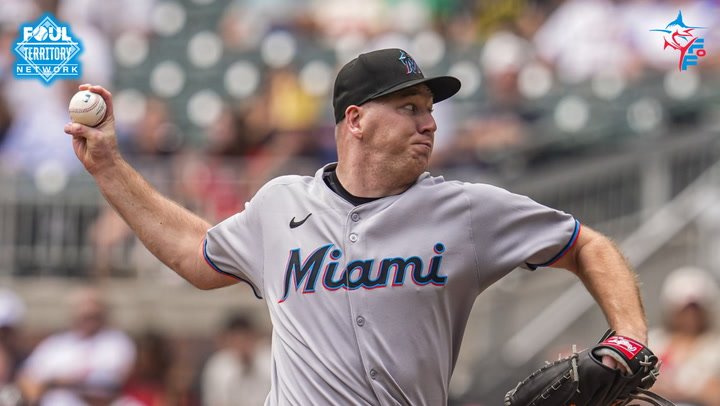 Fish On First LIVE discusses Marlins right-hander Ryan Gusto. Injuries have created an opening for Gusto in the starting rotation, and he's now better equipped to take advantage of the opportunity than he was last season.View the full article
 -
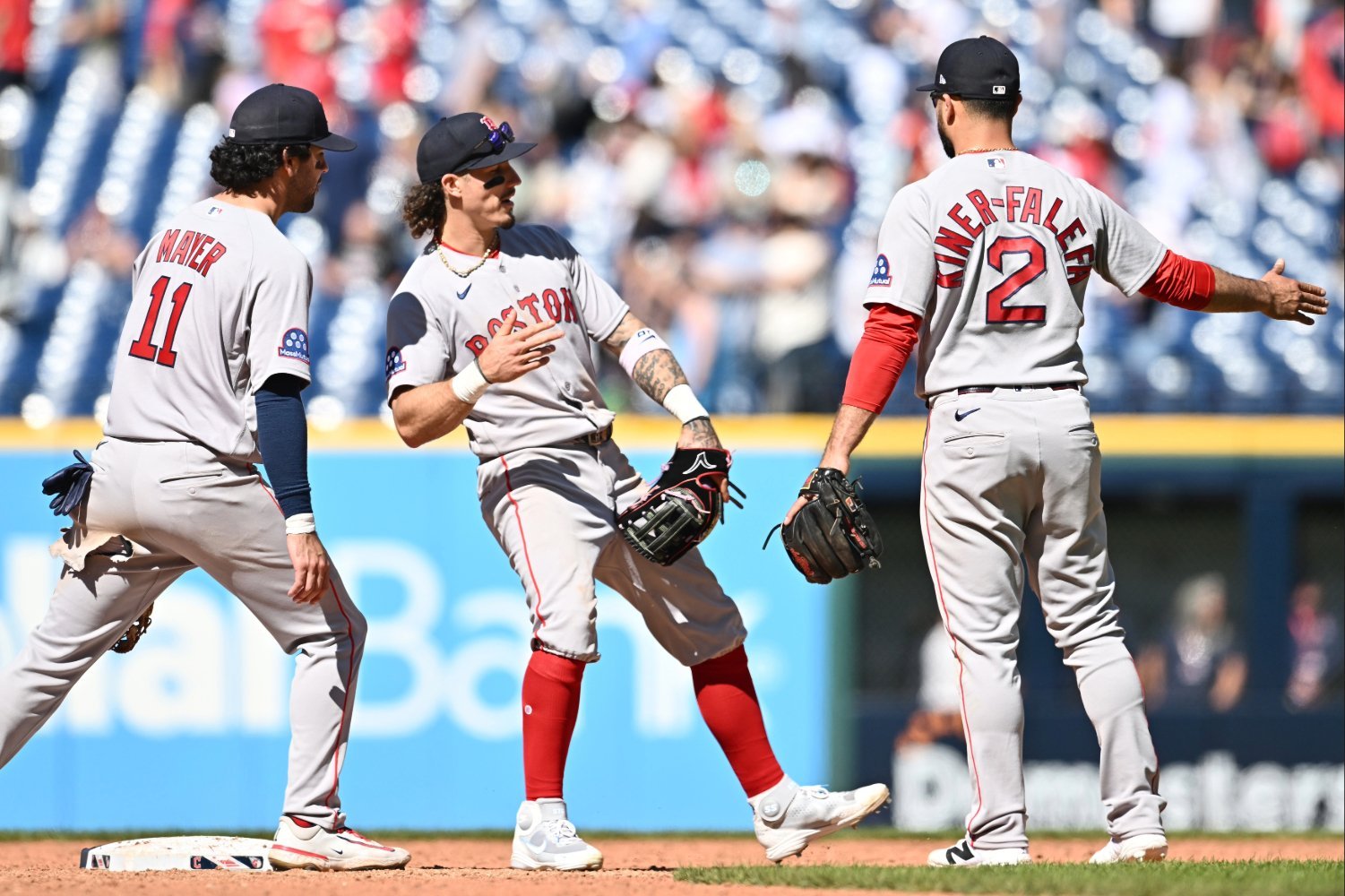 Boston Red Sox Weekly Snapshot Record Last Week: 3-3 Runs Scored Last Week: 37 Runs Surrendered Last Week: 26 Standings: 5th in AL East 12 GB First Place Transactions: 05/28/26: Red Sox recalled LHP Tyler Samaniego from Worcester Red Sox. 05/28/26: Red Sox placed RHP Garrett Whitlock on the 15-day injured list retroactive to May 25, 2026. Left knee inflammation. Scores: Game 52 (05/26): BOS 6, ATL 7 Game 53 (05/27): BOS 8, ATL 0 Game 54 (05/28): BOS 2, ATL 10 Game 55 (05/29): BOS 3, CLE 4 Game 56 (05/30): BOS 9, CLE 1 Game 57 (05/31): BOS 9, CLE 4 Series Breakdown/Highlights Braves Series: The home woes continued for the Red Sox against the Braves. As of this writing, the Sox are 9-19 at home and they tend to play the most uninspired version of baseball at Fenway Park this season. It’s unfortunate, because the team got after the top of the rotation in the first two games of this series. They hung three earned runs on Spencer Strider and tagged elite reliever Raisel Iglesias for two runs later in the game. Those two runs are the only earned runs he’s given up on the season so far. Unfortunately, the Braves managed to take advantage of Tyron Guerrero’s two-inning relief stint and the Sox were unable to mount a comeback in the bottom of the ninth inning. In game two, the Sox tagged Bryce Elder for five earned runs over 3 ⅓ innings while they held the best offense in baseball scoreless. They didn’t flinch in front of two of the best starters that the National League has to offer. In game three, though, there was a different story. Old friend Chris Sale was slightly better than rookie Payton Tolle through the first five innings, but the Sox’s bullpen just absolutely melted. Danny Coulombe, Greg Weissert, Jovani Moran, and Ryan Watson combined to give up eight earned runs while the calls to either demote or DFA both Coulombe and Weissert have grown louder and louder. It’s a shame Boston couldn’t string two wins together in games one and two because both were winnable against a team that is in a different stratosphere from the Red Sox. Guardians Series: The Red Sox traveled to Cleveland for a date with the AL Central leaders, though by the end of the series, they looked like the better team. Game one was closer than it should have been after opener Tyler Samaniego gave up four earned runs in the first, but Brayan Bello continued to show his dominance as a bulk-reliever by tossing seven scoreless innings. The Red Sox scored three runs off starter Slade Cecconi but defensive lapses were the name of the game early on and the team couldn’t get over that combined with the buzzsaw that is the back of Cleveland’s bullpen. Games two and three saw drastically different offenses than game one. The Sox scored 18 combined runs over those two games while the starting pitching was a bit of a mixed bag, thanks to Ranger Suarez. Sonny Gray tossed six innings of seven strikeout, one-run baseball. Justin Slaten worked more than one inning and kept his velocity up during the outing while striking out two. Ranger Suarez looked visibly upset during the third game, especially after Masataka Yoshida lost a ball in the sun in left field. He settled through five innings but he hasn’t looked as sharp as the Red Sox have needed him to be as of late. The two biggest news stories to come out of this series have to be the fact that Jarren Duran has been red hot to close out the month of May and Caleb Durbin seems to have figured out his plate approach. If both of them can be even league average hitters, the Red Sox may be onto something. Website Highlights Red Sox’s Identity has Collapsed During Team-Wide Power Outage by Yirsandy Rodriguez Jake Bennett Is Restoring Faith in Red Sox’s Pitching Depth by Nick John Boston Red Sox Flashing more of the Same Despite Manager, Coaching Staff Changes by Jordan Leandre Looking Ahead 06/01: Day Off 06/02: Orioles (Shane Baz) @ Red Sox (Connelly Early): 6:45 PM EDT 06/03: Orioles (Chris Bassitt) @ Red Sox (Payton Tolle) 6:45 PM EDT 06/04: Orioles (Trevor Rogers) @ Red Sox (TBD): 1:35 PM EDT 06/05: Red Sox @ Yankees: 7:05 PM EDT 06/06: Red Sox @ Yankees: 7:35 PM EDT 06/07: Red Sox @ Yankees: 1:35 PM EDT View the full article
 -
Padres Set To Call Up Jase Bowen To Make MLB Debut
DiamondCentric posted an article in Padres Mission
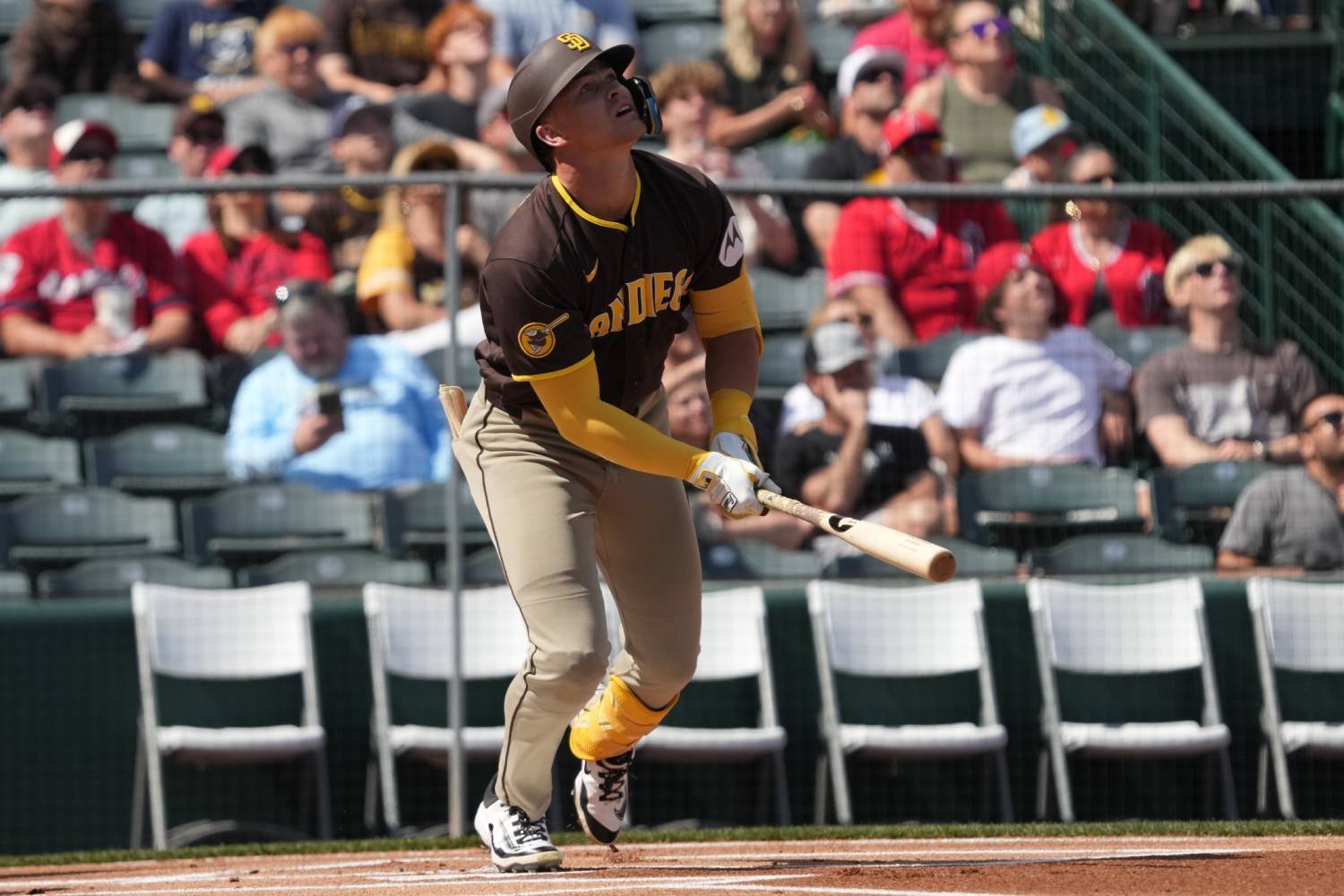 Looking for a jolt in their moribund offense, the San Diego Padres are dipping down into the minors for some help. Outfielder Jase Bowen is set to be called up from Triple-A El Paso by the Padres to make his MLB debut before Tuesday's series opening against the Philadelphia Phillies, ESPN's Kiley McDaniel reported Monday. A corresponding move to get Bowen on the 26-man and 40-man rosters will be needed. The 25-year-old Bowen has been one of the Chihuahuas' best hitters all season, posting a slash line of .292/.362/.600 with 13 homers and 36 RBIs. His 13 homers are second in the Pacific Coast League and his 36 RBIs are tied for the team lead with Mason McCoy. Bowen notched his 13th home in Sunday's 8-7 loss to the Albuquerque Isotopes. Bowen also has seven steals in 11 chances. Bowen ranks in the top five in the PCL not only in homers, but in slugging percentage (.362), triples (5), extra-base hits (29), total hits (57) and runs (48). The Padres rank last in MLB with a .218 batting average and next-to-last with a .656 OPS. An 11th-round draft choice by the Pittsburgh Pirates in 2019 out of Central Catholic High School in Toledo, Ohio, the two-sport star turned down a football scholarship to Michigan State, where he would have been a wide receiver, to sign. Bowen joined the Padres this offseason on a minor-league contract after becoming a six-year free agent. In spring training, Bowen tied for the team lead with four homers and drove in 11 while also stealing a team-high seven bases. Who Bowen takes over for is another question. The Padres could opt to send infielder Sung Mun Song back down to Triple-A. Song has been a backup and late-inning defensive replacement at second base since Jake Cronenworth went on the seven-day concussion list May 5. It is not known when Cronenworth might return. Fernando Tatis Jr., the Platinum Glove right fielder, has been starting most of the time at second base. Two other possibilities are in the outfield. One would be a simple swap of Bowen for Bryce Johnson, the current backup outfielder. The other would solve both roster issues: designating Nick Castellanos for assignment. View the full article
 -
David Peterson Demoted To Bullpen, Can He Get Back On Track?
DiamondCentric posted an article in Grand Central Mets
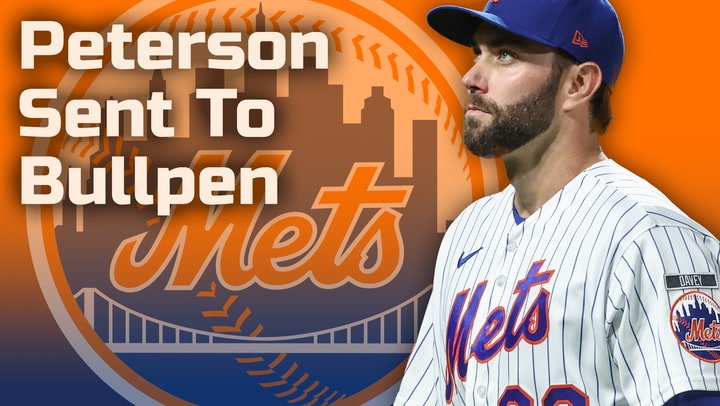 David Peterson had some great seasons as a starting pitcher for the Mets. 2025 was by far his best season after he was selected as an All-Star and set new highs in innings pitched. Peterson has struggled this season mostly due to command and was demoted to the bullpen for a long relief role. Hopefully, this gets him back on track for a return as a starter. View the full article
 -
The Ripple Effect Of Moving Brooks Lee To Third Base
DiamondCentric posted an article in Twins Daily
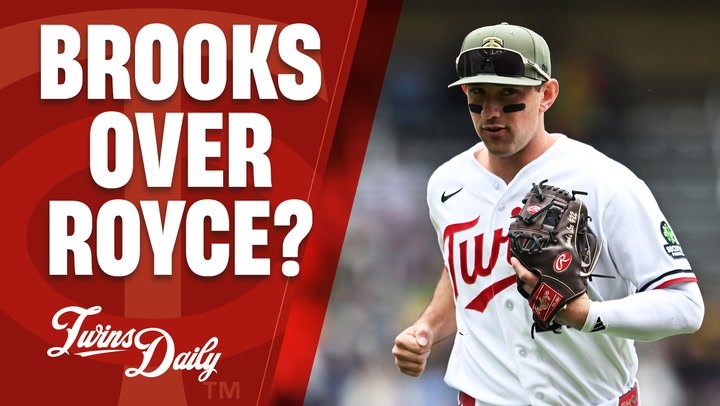 Minnesota Twins manager Derek Shelton recently stated that Brooks Lee will be the Minnesota Twins' third baseman moving forward. How does this impact Royce Lewis, Luke Keaschall, and the Twins' top prospects? View the full article
 -
Could Top Prospect Roch Cholowsky Fall to the Minnesota Twins?
DiamondCentric posted an article in Twins Daily
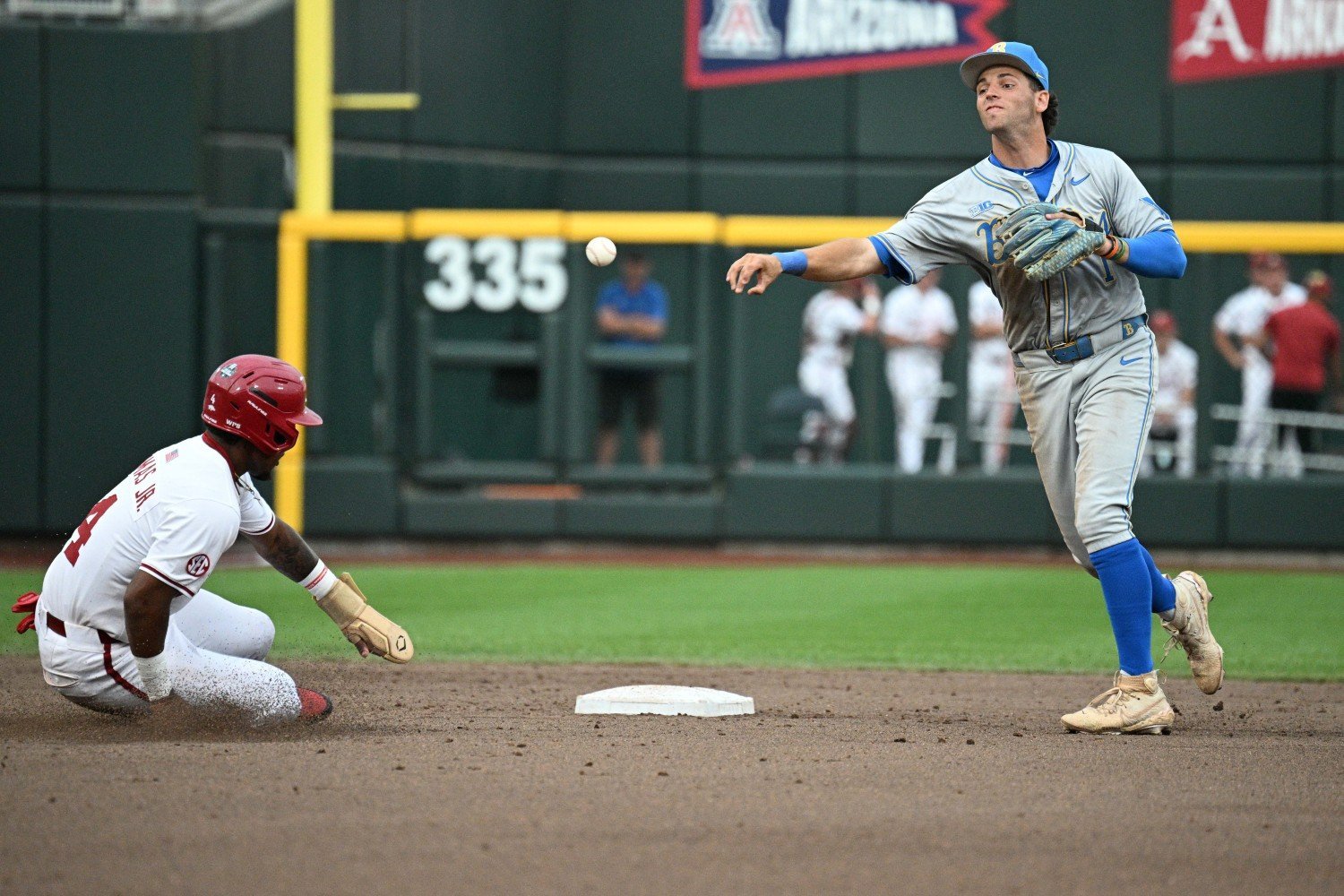 We all know who is going to be selected first overall in the 2026 MLB Draft in July by the Chicago White Sox. What if we don't, though? This weekend, in one of the more stunning upsets in the history of postseason collegiate baseball, No. 1 national seed UCLA was eliminated by fourth-seeded St. Mary’s. A few months ago, the Bruins looked like a shoo-in for Omaha. In truth, they had been sputtering for weeks, peaking too early, scraping through the B1G Ten conference tournament, and losing key personnel (such as Friday night starter Logan Reddemann) to injury. Roch Cholowsky has been the presumptive No. 1 pick in the 2026 MLB Draft since the 2025 event took place, marking the possibility that an amateur prospect goes wire-to-wire in the consensus top spot in industry rankings for the first time since Adley Rutschman in 2019. This morning, however, Over Slot published their updated top-500 draft rankings, with a new name at the top of the pile: Georgia Tech catcher Vahn Lackey. With all this in mind, let’s walk through a quick update on each of the top three players in the class. Roch Cholowsky, SS, UCLA Cholowsky had a strong season, even if the end was muted. Despite going 2-12 in regional play, the top player in the class hit .320/.452/.636 on the season, with 21 home runs. Cholowsky walked and struck out a matching 12% of the time. Add his offensive performance together, and you have a 146 wRC+, which down from 2025 (164 wRC+), but impressive when you consider he's probably the best defensive shortstop in the class. Cholowsky has a path to four plus tools (speed being the exception). There are some concerns around his swing and load being elongated and impacting his rotation against higher velocity in pro pitching, but he’s not encountered a litmus test for that concern in amateur baseball. Grady Emerson, SS, Fort Worth Christian HS It’s a testament to the quality of Emerson’s profile that he’s been relatively insulated from prospect fatigue. He’s been famous (in youth baseball terms) for several years, playing for four different iterations of the US National team (and playing every infield position with them). Emerson is probably a better player at the same age than Cholowsky was, with the best hit tool in the draft class. Questions around his future profile center more on how much power he will develop. He’s seen as a lock to stick at shortstop as a professional, with evaluators placing him in the same caliber of prep prospects as Max Clark and Walker Jenkins from the 2023 cycle. Notably, the Rays (picking ahead of the Twins) have leaned heavily into left-handed-hitting prep bats in recent classes. Vahn Lackey, C, Georgia Tech Lackey has had the most impressive season of any college player. While he doesn’t have the same historical prospect pedigree as Cholowsky, he’s had an incredible 2026, punctuated by two 450-foot home runs during regional play this weekend. Lackey has hit .407/.529/.790 on the season with 20 home runs (175 wRC+), walking 18% of the time and striking out 13.3%. He’s stolen 15 bases at a 94% success rate and earns Patrick Bailey comps for his defensive work. There are undoubtedly front offices who see him as the best prospect in the class. Such has been his rise in 2026. In recent weeks, we’ve seen the arc of the top pick narrative slowly shift. Initially, the White Sox were doing ‘due diligence’ on other candidates at number one. On May 7, MLB Pipeline draft expert Jim Callis opined that ‘the vibe right now is 55-60 percent that the White Sox take Roch Cholowsky’. Today, on June 1, for the first time, he’s not the number one prospect on every major industry draft board. The next few weeks of postseason collegiate play will dictate the extent to which this narrative continues to be spun. Will Lackey continue to swing a hot bat? Do you think Roch Cholowsky’s grip on the number one spot in industry draft rankings is under threat? Let us know how you think it will play out in the comments. View the full article
 -
MiLB Update: Catching Up With The Brewers' Farm After Two Months
DiamondCentric posted an article in Brewer Fanatic
 Spencer is joined by Alex Robbins (BrewersFarm) to discuss the first two months of the Brewers' minor-league season. They dive into who's hot, who's not, and some pleasant surprises at each level. They also discuss some sleepers in the system, some slow starters who might get it going, and a quick preview of DSL names to watch. Players discussed include Alexander Frias, Jayden Dubanewicz, Jesus Made, Bishop Letson, Tyson Hardin, and many more! Apple Podcasts: https://podcasts.apple.com/us/podcast/the-brewer-fanatic-podcast/id1740648724 Spotify: https://open.spotify.com/show/5CY8mWsQayqjDXqw9OT2Td iHeartRadio: https://www.iheart.com/podcast/263-the-brewer-fanatic-podcast-166534588/ Pocket Casts: https://pca.st/ommzz627 Watch On YouTube: https://www.youtube.com/@brewerfanatic View the full article
 -
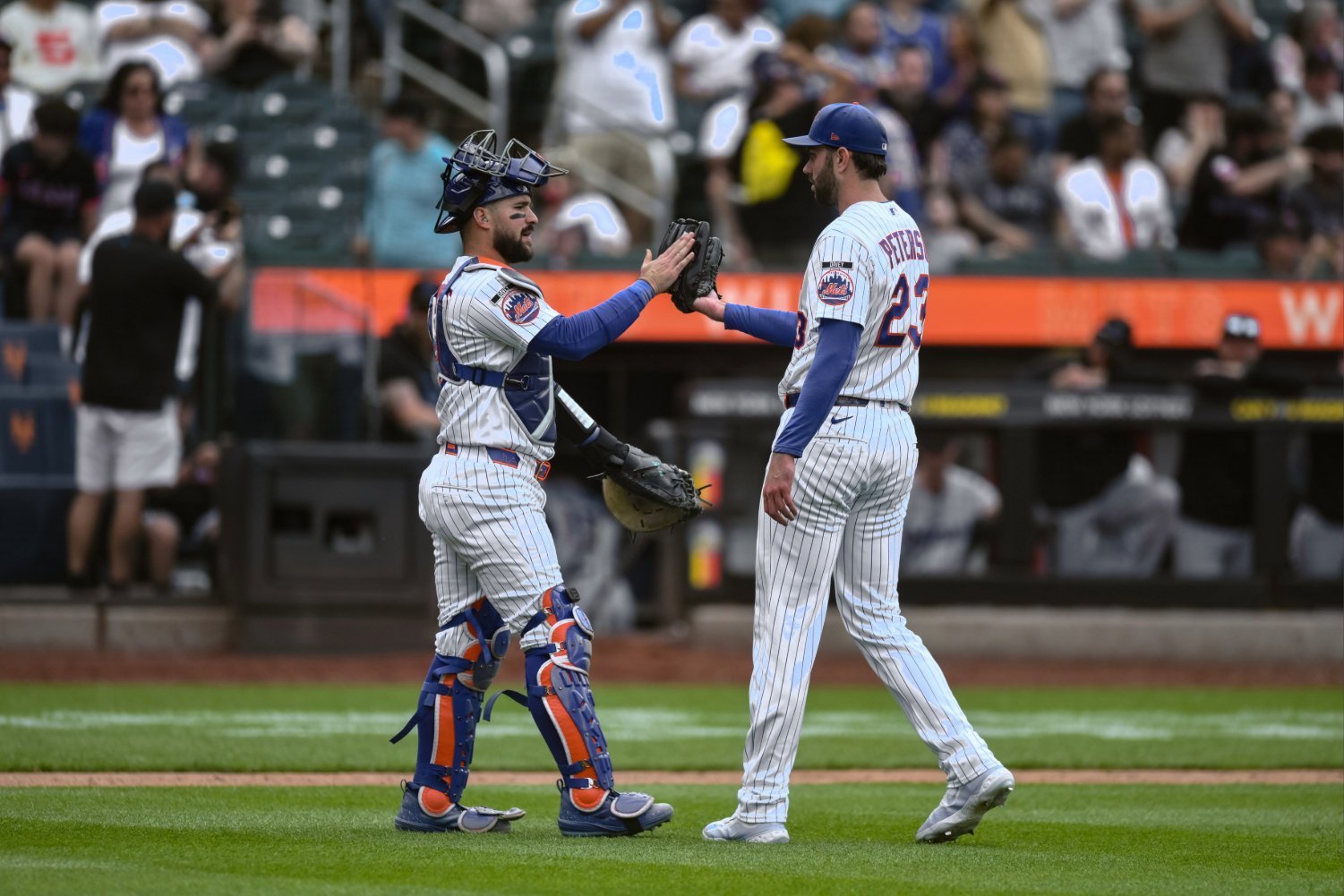 New York Mets Weekly Snapshot Record Last Week: 4-3 Runs Scored Last Week: 33 Runs Surrendered Last Week: 25 Standings: 4th in NL East (26-33) 13.5 GB of 1st Place, 5.5 GB of a Wild Card Spot Transactions: 5/26 New York Mets transferred CF Luis Robert Jr. from the 10-day injured list to the 60-day injured list. Lumbar spine disc herniation. 5/26 New York Mets activated 1B Jared Young from the 10-day injured list. 5/26 New York Mets placed CF Tyrone Taylor on the 10-day injured list. Right hip flexor strain. 5/26 New York Mets activated LHP A.J. Minter from the 60-day injured list. 5/26 New York Mets optioned RHP Jonathan Pintaro to Syracuse Mets. 5/26 New York Mets optioned LF Nick Morabito to Syracuse Mets. 5/26 New York Mets selected the contract of 1B Eric Wagaman from Syracuse Mets. 5/27 New York Mets sent 1B Jorge Polanco on a rehab assignment to Binghamton Rumble Ponies. 5/28 New York Mets sent RHP Kodai Senga on a rehab assignment to Syracuse Mets. 5/30 New York Mets designated LHP Anderson Severino for assignment. 5/30 New York Mets optioned RHP Tobias Myers to Syracuse Mets. 5/30 New York Mets selected the contract of LHP Cionel Pérez from Syracuse Mets Scores: Game 53: NYM 2, CIN 7 Game 54: NYM 2, WAS, 7 Game 55: NYM 4, WAS 2 Game 56: NYM 9, MAI 7 (10) Game 57: NYM 6, MAI 1 Game 58: NYM 10, MAI 1 Series Breakdown/Highlights Reds Series: The Mets came home from a subpar road trip to take on the Reds at Citi Field. In game one, Nolan McLean struggled for his second straight outing. He gave up seven runs in 3.1 innings, including two home runs. McLean struggling is not something the Mets want to see given the other issues in their rotation. His offense was only able to score two runs, a Marcus Semien home run and a Carson Benge RBI groundout. Game two was not much better for the Mets. Chase Burnes shut them down for all but a Juan Soto two-run homer in the sixth inning. David Peterson gave up 11 hits and six runs over five innings. His poor performance cost him his spot in the Mets rotation, as his offense only recorded five hits and struck out 10 times. Game three saw Jonah Tong pitch well once again, giving up just one unearned run in 3.2 innings, despite four walks and three hits. Tong’s success so far at the MLB level has been promising for the Mets with some of the other rotation issues. Carson Benge (two hits), Juan Soto (HR), and Eric Wagaman (HR) all drove in runs. Devin Williams came in for the save and loaded the bases with one out on three walks, but he also struck out three in the inning to earn his 8th save of 2026. Marlins Series: The Mets had a bad series against the Marlins in Miami earlier this year. In return, they looked to give the Marlins a bad series in Queens—and succeeded. Game one was a rock’em, sock’em game. The Mets took an early lead on some costly Marlins errors, but errors of their own and another bad outing by Tobias Myers, giving up an eighth-inning, game-tying two-run homer to Owen Cassie, sent this game to extra innings. Some Mets magic in the bottom of the 10th inning gave them a win on an MJ Melendez walk-off two-run home run off Marlins closer Pete Fairbanks. Game two was as clean of a Mets win as you can have (until game three, ironically). Christian Scott pitched five innings, giving up just one run, and earned his first career MLB win as a result. His offense picked him up. Mark Vientos got the scoring started with a two-run double in the fourth inning, and the Mets never looked back. Carson Benge recorded three hits in the game, and Marcus Semien had two hits, and that was enough to hold down the Marlins. Game three saw Nolan McLean get back to form, going five innings and giving up one run on just two hits while striking out two. He walked five batters in the outing, which should be a bit of a concern going forward, but he earned the win. David Peterson pitched four scoreless innings, allowing just two baserunners en route to his first career save. The Mets offense was started early off a Carson Benge solo home run and a five-run sixth inning, the big blow being a grand slam off the bat of Juan Soto that led the Mets to a laugher 10-1 win. Website Highlights Luke Weaver's May Resurgence Is Proof Things Can Get Better For Mets Mets’ Greatest Defensive Experiment Already Has a Verdict: Bo Bichette Is Working at Third Base Carson Benge's Updated Scouting Profile 2 Months Into MLB Career Looking Ahead June 1st: vs. SEA (9:40pm) June 2nd: vs. SEA (9:40pm) June 3rd: vs. SEA (3:40pm) June 4th: OFF June 5th: vs. SDP (9:40pm) June 6th: vs. SDP (10:10pm) June 7th: vs. SDP (4:10pm) View the full article
 -
 The Blue Jays had won four in a row and made it back to the .500 mark! Until Jeff Hoffman fell apart, and after a series that started so promisingly, ended with a split against the Orioles. Jesse and Matthew touch on the meltdown and what the Blue Jays should do with their talented yet struggling reliever. They also touch on Orioles fans throwing baseballs at Jesus Sanchez, the major league debut of Charles McAdoo and Hayden Juenger, plus break down Trey Yesavage's seven walk day, and if they're worried about the future of Spencer Miles. All that and so much more! Listen on Apple Podcasts: https://podcasts.apple.com/us/podcast/the-jays-centre-podcast/id1846108462 Listen on Spotify: https://open.spotify.com/show/3Bi7SzfpcqMo5xYWnbCeoL Listen on iHeartRadio: https://www.iheart.com/podcast/263-the-jays-centre-podcast-300304824/ Listen on Pocket Casts: https://pca.st/2qk9wqxd Watch on YouTube: https://www.youtube.com/@jayscentre View the full article
 -
 Syracuse erupted for a four-run fourth and rode home runs from Nick Morabito and Ryan Clifford to an 11-6 win, while Jonathan Santucci spun five scoreless innings in a Binghamton loss. Brooklyn's bullpen finished a combined shutout behind Daviel Hurtado, and St. Lucie could not solve Bradenton in an 8-3 defeat. Across the system, the pitching standouts were Santucci, Hurtado, and Brooklyn closer Cristofer Gomez. Mets Transactions No Roster Moves Morabito And Clifford Go Deep In Syracuse Slugfest Syracuse broke a scoreless game open in the fourth inning at Rochester. Kevin Parada lined a two-run single to right, Matt Rudick followed with an RBI single, and Nick Morabito capped the rally with a three-run home run, his fifth of the season, to make it 6-0. The Mets kept adding on as Clifford homered in the fifth, Jackson Cluff homered in the sixth, and Cluff later doubled home a run in the ninth. Morabito finished 2-for-4 with the homer and three RBI, Clifford went 2-for-4 with a home run, a walk, and two runs scored, and Cluff added two hits, two runs, two RBI, and a stolen base. Rudick chipped in two hits and two RBI. Starter Jack Weisenburger turned in a strong outing, allowing one run on three hits over 4 1/3 innings while walking two and striking out five. Nate Lavender struck out five over 1 2/3 innings to pick up the win. The bullpen wobbled in the seventh, when the Red Wings scored four runs to climb within 8-6, but Syracuse answered with a run in the eighth and two in the ninth to pull away. Dylan Ross worked a scoreless ninth with two strikeouts. Syracuse left six runners on base. Player AB R H RBI BB K Nick Morabito 4 1 2 3 1 0 Ji Hwan Bae 5 0 0 0 0 0 Andy Ibáñez 5 2 2 0 0 0 Ryan Clifford 4 2 2 1 1 0 Yonny Hernández 3 1 0 0 1 0 Cristian Pache 4 1 0 0 0 3 Jackson Cluff 4 2 2 2 0 0 Kevin Parada 5 1 1 2 0 0 Matt Rudick 3 1 2 2 1 0 Player IP H R ER BB K HR Jack Weisenburger 4 1/3 3 1 1 2 5 1 Nate Lavender 1 2/3 1 1 1 0 5 1 Joey Gerber 1/3 2 3 3 1 0 0 Jonathan Pintaro 1 2/3 1 1 1 0 4 0 Dylan Ross 1 1 0 0 1 2 0 Santucci Dominates, But Binghamton Falls In Seventh Jonathan Santucci gave Binghamton everything it could ask for, allowing no runs on three hits over five innings with a walk and five strikeouts against Portland. The Rumble Ponies took a 1-0 lead in the third when JT Schwartz homered, his fifth of the season, and that was nearly enough. The trouble came in the seventh, when Portland pushed across three unearned runs to take a 3-1 lead that held. Gabriel Rodriguez was charged with the loss after recording two outs while walking two and surrendering the deciding runs, though all three were unearned. Binghamton's offense managed five hits and could not recover. Schwartz led the way, going 3-for-3 with the home run and an RBI. Marco Vargas added two hits, including a double, and Jose Ramos doubled. The lineup struggled to make contact otherwise, striking out 19 times as a team. Guillo Zuñiga, Dan Hammer, and Jefry Yan combined for 3 1/3 scoreless innings of relief, but the offense never threatened after Schwartz's early blast. Binghamton left seven runners on base. Player AB R H RBI BB K Marco Vargas 3 0 2 0 0 0 Vincent Perozo 1 0 0 0 0 0 Chris Suero 4 0 0 0 0 1 Jacob Reimer 3 0 0 0 1 2 Eli Serrano III 4 0 0 0 0 3 D'Andre Smith 4 0 0 0 0 2 Jose Ramos 4 0 1 0 0 1 Nick Lorusso 3 0 0 0 0 2 JT Schwartz 3 1 3 1 0 0 Wyatt Young 3 0 0 0 0 2 Player IP H R ER BB K HR Jonathan Santucci 5 3 0 0 1 5 0 Guillo Zuñiga 1 0 0 0 0 2 0 Gabriel Rodriguez 2/3 1 3 0 2 1 0 Dan Hammer 1 1/3 0 0 0 1 0 0 Jefry Yan 1 1 0 0 0 0 0 Brooklyn Blanks Wilmington Behind Hurtado And The Bullpen Brooklyn shut out Wilmington 2-0 with a steady pitching effort and a pair of timely hits. Daviel Hurtado set the tone, allowing one hit over 3 2/3 innings with a walk and three strikeouts. Four relievers followed, and Bryce Jenkins, Juan Arnaud, Hunter Hodges, and Cristofer Gomez combined for 5 1/3 scoreless innings, with Gomez closing it out for the save. Jenkins picked up the win. The Cyclones got both runs without much trouble. Corey Collins opened the scoring in the second with a solo home run, his fourth of the season, to make it 1-0. Brooklyn added an insurance run in the seventh when Trace Willhoite doubled home JT Benson for a 2-0 lead. Ronald Hernandez led the offense with two hits and a stolen base, Collins reached base twice, and Benson doubled and scored. The pitching staff held Wilmington to four hits on the night. Brooklyn left seven runners on base. Player AB R H RBI BB K Mitch Voit 3 0 0 0 1 1 Grae Kessinger 4 0 0 0 0 1 Ronald Hernandez 4 0 2 0 0 1 Corey Collins 3 1 1 1 1 2 Daiverson Gutierrez 4 0 1 0 0 0 JT Benson 4 1 1 0 0 0 Colin Houck 3 0 1 0 0 1 Trace Willhoite 3 0 1 1 0 1 Sam Biller 2 0 0 0 1 1 Player IP H R ER BB K HR Daviel Hurtado 3 2/3 1 0 0 1 3 0 Bryce Jenkins 1 1/3 0 0 0 2 2 0 Juan Arnaud 1 2/3 1 0 0 2 3 0 Hunter Hodges 1 1/3 1 0 0 0 2 0 Cristofer Gomez 1 1 0 0 0 2 0 St. Lucie Bats Go Quiet In Bradenton Loss St. Lucie managed just three runs and fell 8-3 to Bradenton. The Marauders built an early lead, and St. Lucie did not get on the board until the fourth, when AJ Salgado singled home Yohairo Cuevas to cut the deficit to 4-1. The Mets mounted their best threat in the sixth, loading the bases on three walks. Cuevas scored on a wild pitch during a strikeout, and Julio Zayas came home on a Chase Meggers groundout, trimming the margin to 6-3, but the rally ended there. Starter Jonathan Jimenez struggled, allowing four runs on four hits over three innings while walking three and striking out three, taking the loss. Justin Armbruester and Josh Blum provided scoreless relief, combining for 2 2/3 innings, but the offense could not close the gap and Bradenton tacked on two more in the eighth. Cuevas reached base three times with a double and two walks, Zayas added two hits and two walks, and Kevin Villavicencio collected two hits. St. Lucie left nine runners on base. Player AB R H RBI BB K Elian Peña 4 0 0 0 1 1 Antonio Jimenez 5 0 0 0 0 1 Randy Guzman 5 0 0 0 0 0 Yohairo Cuevas 1 2 1 0 2 0 Julio Zayas 2 1 2 0 2 0 AJ Salgado 3 0 1 1 1 1 Branny De Oleo 4 0 0 0 0 3 Chase Meggers 4 0 0 1 0 0 Kevin Villavicencio 4 0 2 0 0 1 Player IP H R ER BB K HR Jonathan Jimenez 3 4 4 4 3 3 1 Elwis Mijares 1 1/3 3 2 1 0 3 1 Justin Armbruester 1 2/3 0 0 0 0 2 0 Josh Blum 1 0 0 0 0 1 0 Joe Scarborough 1 2 2 2 1 0 0 Top-20 Prospect Performance Nolan McLean: DNP Carson Benge: DNP A.J. Ewing: DNP Jonah Tong: DNP Ryan Clifford: 2-for-4, HR, BB, 2 R, RBI Jacob Reimer: 0-for-3, BB, 2 K Jack Wenninger: DNP Elian Pena: 0-for-4, BB, K Mitch Voit: 0-for-3, BB, K Nick Morabito: 2-for-4, HR, BB, 3 RBI Jonathan Santucci: 5 IP, 3 H, 0 R, 1 BB, 5 K Chris Suero: 0-for-4, K Zach Thornton: DNP Wandy Asigen: DNP Will Watson: DNP Eli Serrano III: 0-for-4, 3 K Ryan Lambert: DNP Dylan Ross: 1 IP, 1 H, 0 R, 1 BB, 2 K Antonio Jimenez: 0-for-5, K R.J. Gordon: DNP View the full article
 -
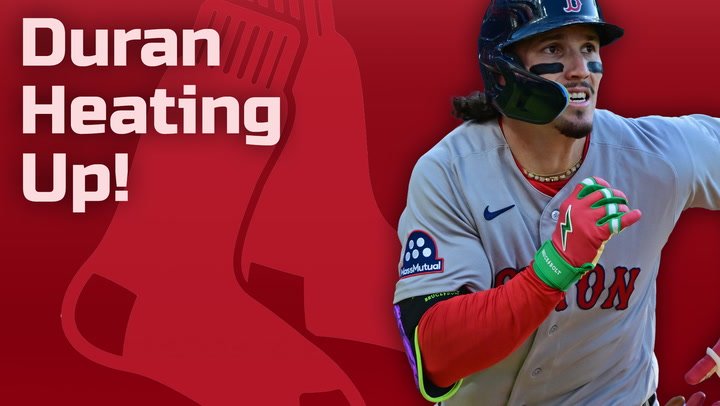 The past three seasons, Jarren Duran's offense has been well above average. The start of this season has been a whole different story; however, since mid-May, he has turned things around. Duran's struggles have been contact and letting things get to him mentally. Finally, he appears to be on the right track. View the full article
 -
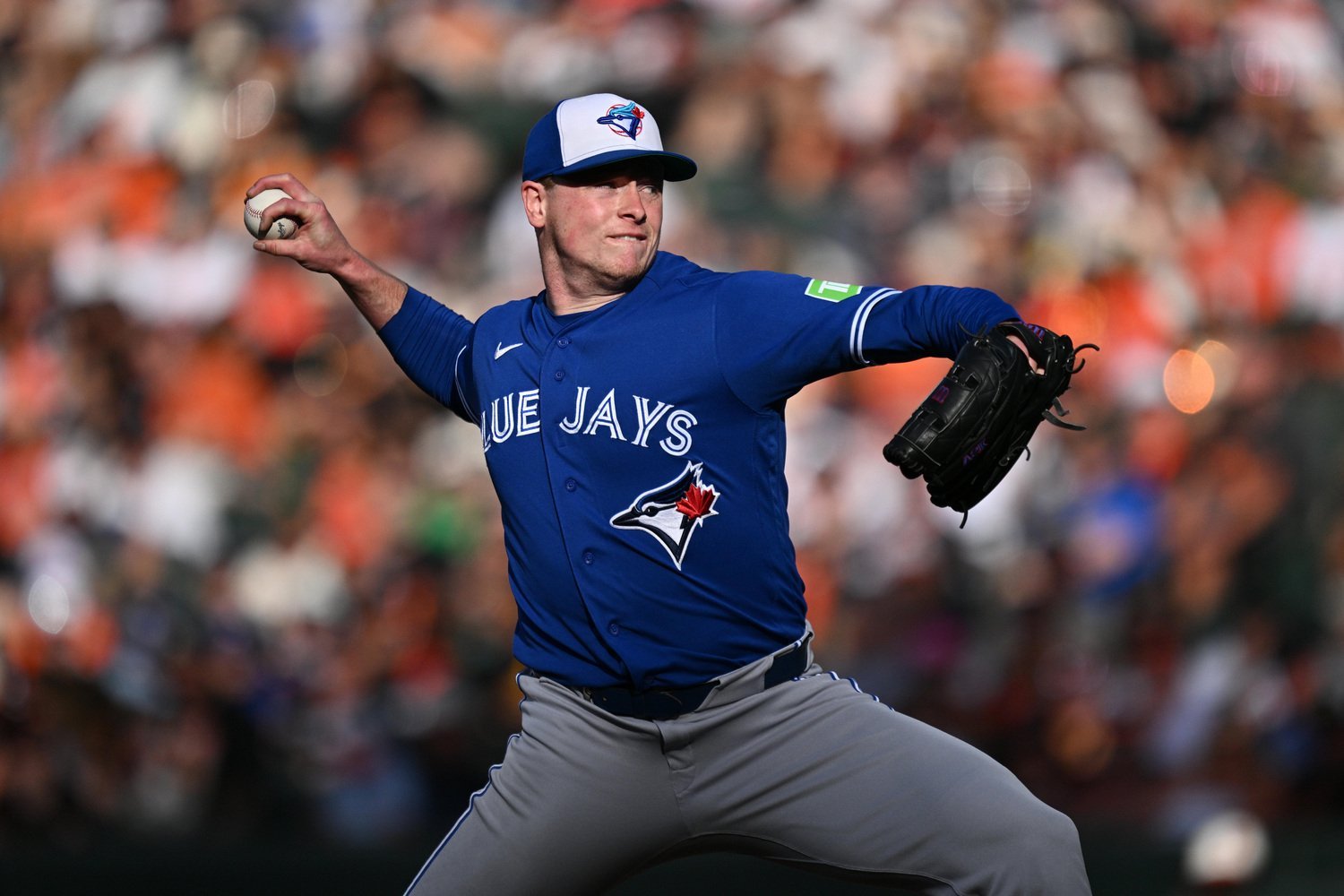 It's been a rollercoaster of a ride for the Blue Jays through two months of the regular season. The team has battled injuries and inconsistent production, and its lineup has struggled to score runs regularly. The one standout through all the injuries has been the pitching staff. In May, the Blue Jays' 3.45 ERA ranked fourth in the AL. Their 14.5% K-BB% also ranked fourth, and by the Stuff+ numbers on FanGraphs, the staff ranked third, just behind the Mariners and Rays. Not bad for a team that currently has seven starting pitchers on the IL. Add recent injuries to Joe Mantiply and Tommy Nance to pair with Yimi García’s extended absence, and the Blue Jays are down three prominent relievers as well. In this piece, we’re going to take a look at some of the pitchers that have stood out to make the Blue Jays' staff stand strong as they head into the summer months of the season. Honourable Mention: Mason Fluharty May Stats: 11.0 IP, 9 H, 1 ER, 14 K, 2 BB, 0.82 ERA, 0.909 WHIP Mason Fluharty has overcome a rocky start and was one of the team's more dominant relievers in May. Not only is he now the undisputed number one left-handed option in the bullpen, but he’s also been one of the best in all of baseball. Coming into the finale against the Orioles (in which he struck out all three batters he faced), Fluharty’s FIP ranked third among left-handed pitchers during May (min. 10 IP). His 31 appearances on the season have him atop the MLB leaderboard, and his workload will be worth monitoring. But for now, Fluharty has been excellent, has clearly earned his manager's trust, and has established himself as a key member of this bullpen. Honourable Mention: Kevin Gausman May Stats: 28.2 IP, 32 H, 10 ER, 26 K, 4 BB, 3.18 ERA, 1.27 WHIP Out of all the pitchers that have dealt with injuries this season, it's somewhat surprising that the pitcher who threw the most pitches and faced the most batters in 2025 isn't one of them. Kevin Gausman’s month as a whole was quietly effective, but his durability and ability to pitch quality innings don’t go unnoticed. His strikeout totals have dipped from his career norms, but he consistently attacked the strike zone this month, leading all Blue Jays pitchers (min. 10 IP) in walk rate (3.7%) and leading all Blue Jays starters in chase rate (38.4%), accumulating 1.0 fWAR in the process. Gausman just quietly keeps getting it done. Honourable Mention: Dylan Cease May Stats: 30.2IP, 23 H, 11 ER, 43 K, 9 BB, 3.23 ERA, 1.04 WHIP Dylan Cease has been the best Blue Jays starter this season, and he was well on his way to being number one on this list until a hamstring injury put him on the IL for the first time in his career. When he was on the mound, he was nasty as always. He threw seven innings in each of his first three starts of the month, including a 10-strikeout, no-run outing against the Angels. The home run ball caught up to him in his final two starts of the month, allowing two to the Yankees and two more against the Pirates, which made his numbers go from outstanding to just very good. Once Cease recovers from his injury, all signs point to him being a dominant pitcher once again. No. 3: Spencer Miles May Stats: 20.2 IP, 17 H, 9 ER, 19 K, 7 BB, 3.92 ERA, 1.16 WHIP Where would this team be without Spencer Miles? Rule 5 picks with virtually no professional experience rarely become meaningful contributors, let alone one as impactful as Miles. Miles was tasked with being the de facto “long man” out of the bullpen to cover one of the bullpen days, and he’s done it with flying colours. A four-pitch mix with excellent command has done him wonders, and his ability to induce soft contact has been noticeable, as his 85.4 average EV was the lowest among the "starters" (min. 20 IP) in May. Sunday’s rough outing may have been his first sign of fatigue, but it shouldn't overshadow what was an excellent month for him. No. 2: Trey Yesavage May Stats: 31.2 IP, 22 H, 9 ER, 36 K, 17 BB, 2.56 ERA, 1.23 WHIP Welcome back, Trey Yesavage! After his 2026 season start was delayed by right shoulder impingement, Trey returned and immediately made an impact. His 31.2 innings led all Blue Jays pitchers in May, as did his 1.1 fWAR. The swing-and-miss stuff is still clearly evident, as he led all Blue Jays starters with a 14.9% swinging strike rate. The highlight was when he went into Yankee Stadium, matched up against fellow rookie Cam Schlitter, and Yesavage got the better end of it, striking out Aaron Judge three times and, most importantly, earning the win. His command has wavered at times, as evidenced by a 38.7% zone rate and a seven-walk performance on Saturday, ultimately keeping him from the top spot on this list. Still, it's hard to argue with the results, and he was one of the biggest reasons the Blue Jays’ pitching staff excelled in May. No. 1: Louis Varland May Stats: 15.0 IP, 11 H, 0 ER, 16 K, 5 BB, 0.00 ERA, 1.07 WHIP Louis Varland is not only the best reliever on the Blue Jays, but you could also make an argument that he’s been the best reliever in baseball this season. In the month of May, Varland led all MLB relievers in Win Probability Added (1.66). He led all Blue Jays pitchers in groundball rate, soft contact rate, ERA, and saves. John Schneider has trusted him to get outs against the toughest parts of opposing lineups, and on three separate occasions, Varland has recorded multi-inning saves, highlighted by a scoreless ninth and 10th inning in Detroit earlier in the month. If Varland keeps this up (and there’s no reason to think he won't), then that first All-Star Game is likely in sight. Varland was Jays Centre's Pitcher of the Month for March/April, and he makes it twice in a row with his appearance here in May. Heading into June, the Blue Jays' pitchers will need to continue carrying their share of the load as the club looks to climb back into the playoff picture. With reliable veterans like Gausman, emerging contributors like Yesavage and Miles, and reinforcements like Max Scherzer and Shane Bieber on the way, the pitching staff is finally starting to come together. With Varland continuing his dominance at the back end of the bullpen, the Blue Jays' pitching staff is going to be in good shape going forward. View the full article
 -
 Chicago Cubs Minor League Report - May 31 Affiliate Overview Triple-A Iowa Cubs Series at Indianapolis Indians (Pittsburgh Pirates): Tied, 3-3 Season Record: 24–32 Double-A Knoxville Smokies Series at Chattanooga Lookouts (Cincinnati Reds): Smokies win, 4-2 Season Record: 26–24 High-A South Bend Cubs Series vs. Fort Wayne TinCaps (San Diego Padres): Cubs win, 5-1 Season Record: 30–17 Single-A Myrtle Beach Pelicans Series vs. Wilson Warbirds (Milwaukee Brewers): Tied, 3-3 Season Record: 21–28 Affiliate Highlights Triple-A: Iowa Cubs Season Record: 24–32 Series Opponent: Indianapolis Indians (23–33) Series Standing: Tied, 3-3 May 31: The Iowa Cubs split their series with the Indianapolis Indians following an 8-1 defeat on Sunday at Victory Field. The Indians went ahead in the second with a run and later made it 3-0 with two more in the fifth. Runs in the sixth and seventh made it 5-0 Indianapolis before the Cubs got their lone run of the ballgame in the eighth on Brett Bateman’s (1-for-3) RBI-double. The hosts plated three more in the bottom of the frame to coast to the 8-1 win. Matthew Boyd, making the first appearance of his rehab assignment, allowed three runs, two earned, on four hits over four innings of work, striking out two and walking one. The Iowa offense was limited to just four hits in the contest, with Bateman’s double the lone extra-base tally. Double-A: Knoxville Smokies Season Record: 26–24 Series Opponent: Chattanooga Lookouts (27–24) Series Standing: Win, 4-2 May 31: The Knoxville Smokies claimed a series win with a 4-2 triumph over the Chattanooga Lookouts on Sunday. The victory extends the Smokies winning streak to three games and also moves the club just a half game behind the Lookouts for first place in the Southern League North Division. Chattanooga took the lead with a run in its first trip to the plate but Knoxville starter Brooks Caple would put up four-straight zeroes on the board to keep his team in the ballgame. Caple would not factor into the decision, allowing just one run on four hits over five innings of work, striking out seven and walking one. His work would be rewarded in the sixth when Jefferson Rojas (2-for-4) tied the game with an RBI-single. Rojas would then put the Smokies in front with another RBI-single in the eighth. Later in the frame, Carter Trice (1-for-4) and Edgar Alvarez (1-for-4) would also tally run-scoring singles to make it a 4-1 game. The Lookouts would add a run in the bottom of the inning but Vince Reilly was able to shut the door in the ninth to record his fourth save of the season, a two-inning effort. Jace Beck picked up the win in relief to improve to 4-2 on the year. Beck posted two shutout innings, allowing no hits and whiffing three to go along with one walk. High-A: South Bend Cubs Season Record: 30–17 Series Opponent: Fort Wayne TinCaps (23–28) Series Standing: Win, 5-1 May 31: The South Bend Cubs won for the 10th time in their last 12 games with their 7-5 victory over the Fort Wayne TinCaps on Sunday. The Cubs now have a four-and-a-half game lead in the Midwest League West Division. Fort Wayne took a 3-0 lead in the first and kept South Bend off the board until the fourth, when Miguel Useche (3-for-4) launched a solo shot, his fourth home run of the season. The Cubs kept the TinCaps off the board until the ninth inning, thanks in large part to a three-inning scoreless outing in relief from Nazier Mulé. Mulé allowed just one hit and struck out five, with two walks issued. South Bend went ahead in the game with a four-spot in seventh, with Matt Halbach (1-for-5) driving in one with a single, with a second run scoring on an error on the play. Back-to-back bases-loaded walks from Justin Stransky (2-for-3) and Drew Bowser (0-for-3) gave the Cubs a 5-3 lead. Useche came up big in the eighth for the hosts, driving in two more on a single to make it 7-3. Fort Wayne would score twice in the ninth and load the bases with two outs but Kenten Egbert was able to retire the only batter he faced to earn his first save of the season. Single-A: Myrtle Beach Pelicans Season Record: 21–28 Series Opponent: Wilson Warbirds (26–25) Series Standing: Tied, 3-3 May 31: The Myrtle Beach Pelicans split their series with the Wilson Warbirds following Sunday’s 10-1 defeat at Pelicans Ballpark. The Pelicans were held to just four hits in the ballgame and would go 0-for-9 with runners in scoring position, leaving nine runners on base. The Warbirds took the lead in the third with a run and later added three in the fourth to make it 4-0. Another run in the fifth and three more in the sixth from Wilson made it 8-0 before Myrtle Beach got on the board in the bottom-half of the inning on Derniche Valdez’ (0-for-4) RBI-groundout. The Warbirds would then add on runs in the seventh and the ninth to hand the Pelicans the 10-1 defeat. Pierce Coppola took the loss in the start for Myrtle Beach, falling to 0-4 on the season. Coppola allowed just one run on one hit over three innings of work, striking out four but walking five. View the full article
 -
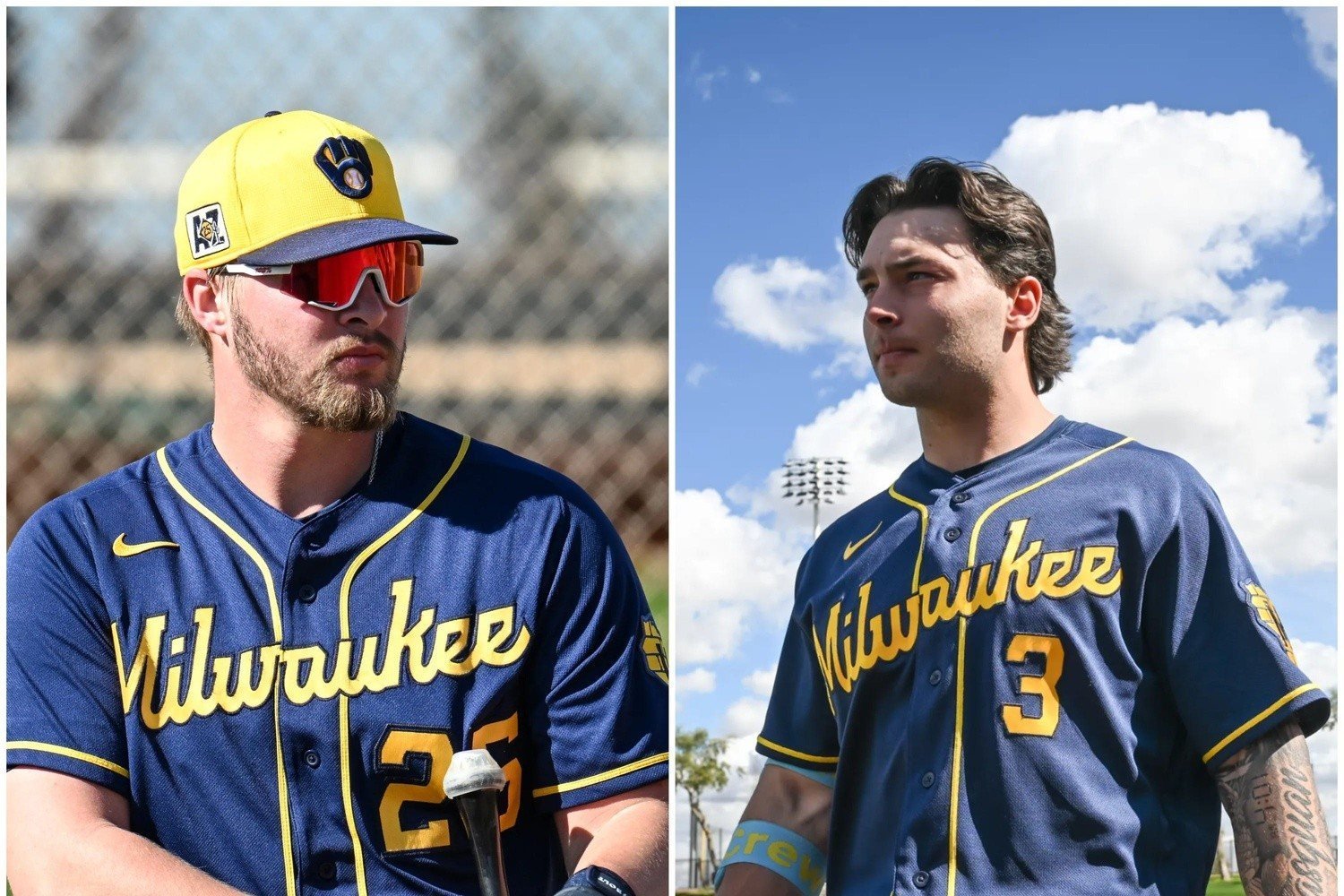 The start of June always hits a baseball fan like an unexpected glimpse of a kid growing up faster than you'd noticed. Too soon, the campaign is becoming real and weighty, when we still want to tell ourselves it's early. That's true even in the minor leagues, where the season starts later but winds down sooner, too. It's a reasonable time, then, to take a look at which Brewers prospects have earned organizational All-Star status so far this year—or at least, who goes on the ballot. Catcher Darrien Miller, Double-A Biloxi: .284/.492/.614 with eight home runs and 20 RBI in 88 at-bats Marco Dinges, Advanced-A Wisconsin: .252/.380/.463 with seven home runs and 25 RBI in 123 at-bats Miller, a long-time Brewers farmhand, has had a minor offensive breakout this season, adding to his already impressive OBP skills. We could call it more than minor, even, but for his age and the fact that this is his third look at the Southern League. The negatives remain: his weak throwing arm (a career CS rate of 16%) and a high strikeout total (29 in 88 at-bats). On the other hand, at 25, Miller may have put it all together. Dinges has been a huge bat the Brewers are trying to develop into a catcher, with some success. He has a 30% CS rate in 2026, but most of his work will need to focus on receiving skills. Honorable Mentions: Jeferson Quero, Triple-A Nashville; Matthew Wood, Double-A Biloxi First Base Blake Burke, Double-A Biloxi: .247/.333/.511 with 12 home runs and 33 RBI in 182 at-bats Burke was the guy the Brewers selected with the competitive-balance pick they acquired in the Corbin Burnes trade. His lefty power bat looks like an excellent fit for Uecker Field, and he's also a threat on the basepaths—although the Brewers sometimes let their big, slugging corner infielders run a bit in the minors, only to have them naturally rein it in as they get closer to the bigs. Honorable Mention: Jonathan Rangel, Rookie ACL Brewers Second Base Dylan O’Rae, Double-A Biloxi: .317/.437/.389 with one home run and 13 RBI in 167 at-bats O’Rae’s big tools are speed and OBP skills. Think of long-time Marlins player Luis Castillo. O’Rae currently appears blocked by Brice Turang, but his speed and a bit of versatility—he's also played decently in center field—could make him a valuable role player down the road. Honorable Mention: Juan Ortuno, Single-A Wilson Third Base Andrew Fischer, Advanced-A Wisconsin: .275/.409/.621 with 14 home runs and 36 RBI in 153 at-bats The only real knock on Fischer is that he’s striking out a lot. Otherwise, he’s looked ready to force his way to Double-A Biloxi, and soon. When you draft a polished collegiate hitter, this is what you hope will happen in their first full season. Honorable Mention: Jett Williams, Triple-A Nashville Shortstop Jesus Made, Double-A Biloxi: .271/.350/.442 with six home runs and 36 RBI in 181 at-bats Made, like Jackson Chourio before him, is looking every bit the potential franchise cornerstone. The real question will be when the Brewers elect to bump him to third base to get reps in there, because his bat certainly seems ready for Triple-A. It's not too early to call him an organizational All-Star, but it's too early to rule out a 2026 big-league debut. Honorable Mention: Cooper Pratt, Triple-A Nashville Outfield Luis Lara, Triple-A Nashville: .359/.481/.518 with seven home runs and 26 RBI in 195 at-bats Braylon Payne, Advanced-A Wisconsin: .280/.368/.569 with 10 home runs and 19 RBI in 123 at-bats Josh Adamczewski, Advanced-A Wisconsin: .310/.448/.550 with seven home runs and 27 RBI in 129 at-bats Lara has been forcefully making his case for a promotion to Milwaukee, particularly given the struggles of Sal Frelick and Blake Perkins. Payne and Adamczewski have been powering a potent Timber Rattlers team, and each is probably happy to move gradually through the system for now; it would be hard to find room for either in the majors anytime soon. In the big picture, it's a big deal that Payne, in particular, is starting to look like he'll pan out, after initially looking like the rare Brewers first-round pick that might go amiss. Honorable Mentions: Handelfy Encarnacion, Single-A Wilson; Josiah Ragsdale, Advanced-A Wisconsin Utility Eddys Leonard, Triple-A Nashville: .298/.354/.534 with eight home runs and 33 RBI in 161 at-bats Leonard was picked up as a minor-league free agent, but he’s hit very well and played multiple positions. He’s making the case for a long look to be on the 40-man, much as Isaac Collins did. He even seems to have more pop than Collins, based on the numbers—though this year, in the minors, the numbers are all liars. Honorable Mentions: Mike Boeve and Eduardo Garcia, Double-A Biloxi Designated Hitter Tayden Hall, Advanced-A Wisconsin/Double-A Biloxi: .259/.425/.481 with four home runs and 24 RBI in 81 at-bats Hall’s been a solid hitter with power potential, but no real defensive home, shuffling between catcher, first base, designated hitter, and left field, with some playing time in right field this season. Honorable Mention: Jadyn Fielder, Single-A Wilson Who do you think should be on this all-farm system team? Let us know in the comments below! View the full article
 -
Minnesota Twins Minor League Hitter of the Month - June 2026
DiamondCentric posted an article in Twins Daily
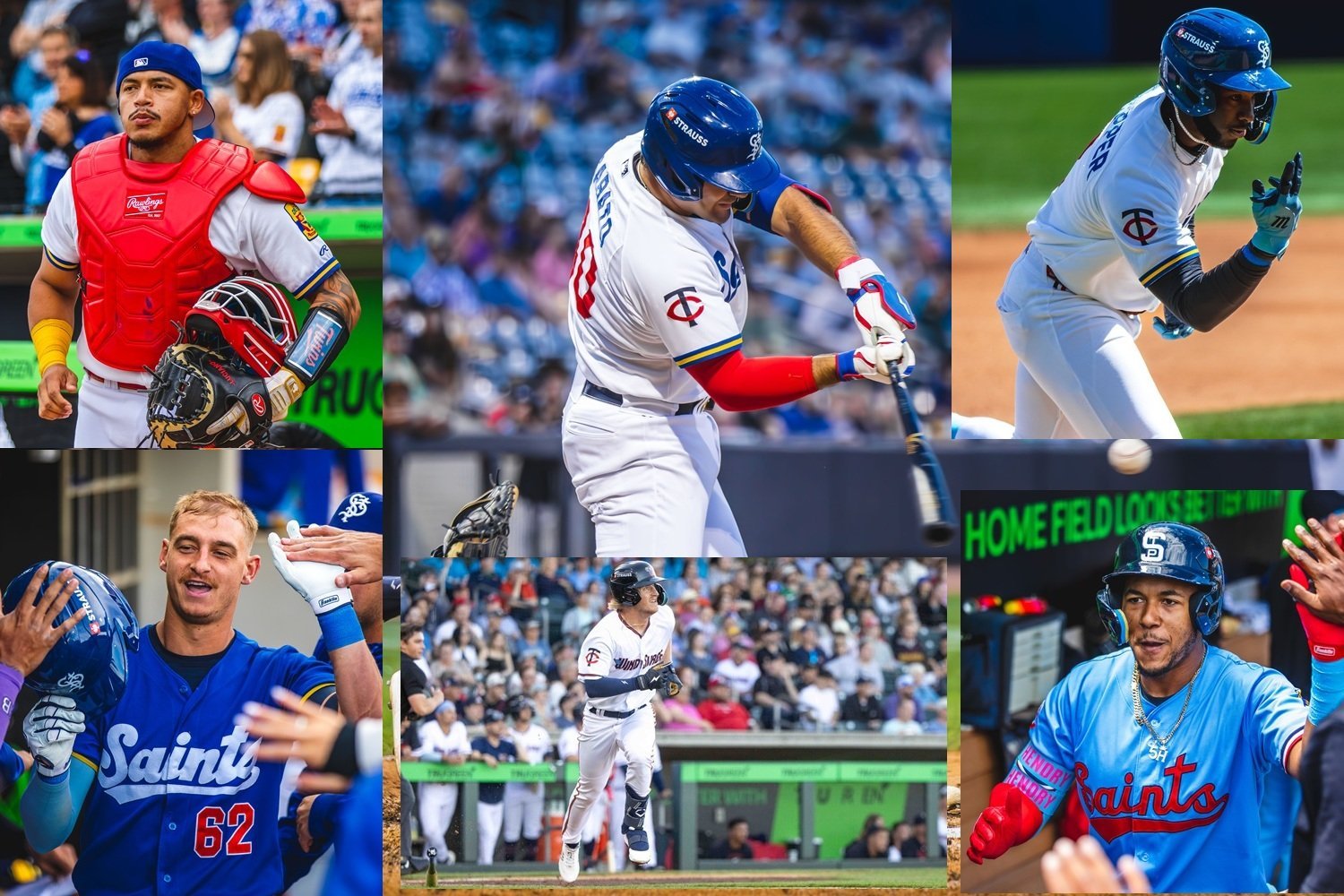 I have been writing up these monthly reports for a good 15-20 years, and I am almost 100% certain that what you'll see below, I have never seen before. The Saints offense has been tremendous this season. They are hitting homers at a record-setting pace and scoring a lot of runs. The nice thing is that most everyone is contributing. Guys coming up from Wichita or down from the big leagues are contributing. For now, let's just say that you'll see a few Saints players near the top of this list. But there were a lot of strong offensive performances this month. Below you will find the Top 5 hitters of the month, including our choice for Twins Minor League Hitter of the Month. But, because there were so many options, I wrote up "The Next Three" Hitters too. There are also eight Honorable Mentions. I'm curious what our readers think and how they would rank the top hitters of the month. There were even a few FCL Twins mentioned in the Honorable Mention section. You could certainly make an argument for one of them being in the Top 8 or 10, but that player had just 13 games played where others played as many as 27 games. What a great month for hitters in the Twins minor leagues! Let's get started. Leave feedback in the comments below. HONORABLE MENTIONS 1B/OF Jaime Ferrer - Cedar Rapids Kernels/Wichita Wind Surge 24 G, 21-88, .239/.337/.477 (.814), 1-2B, 1-3B, 6-HR, 20 RBI, 12 R, 10 BB, 25 K UT Jay Thomason - Cedar Rapids Kernels - 21 G, 15-65, .231/.375/.462 (.837), 2-2B, 2-3B, 3-HR, 9 RBI, 10 R, 15 BB, 21 K C/CF Khadim Diaw - Cedar Rapids Kernels - 26 G, 26-91, .286/.362/.440 (.802), 9-2B, 1-3B, 1-HR, 11 RBI, 18 R, 10BB, 16 K OF Jayson Bass - Fort Myers Mighty Mussels - 22 G, 17-70, .243/.375/.443 (.818), 4-2B, 2-3B, 2 HR, 16 RBI, 12 R, 15 BB, 23 K. 2B Dameury Pena - Fort Myers Mighty Mussels - 24 G, 32-103, .311/.393/.350 (.743), 2-2B, 1-3B, - HR, 15 RBI, 17 R, 13 BB, 7 K C Miguel Caraballo - FCL Twins - 17 G, 13-48, .271/.400/.500 (.900), 5-2B, 2-HR, 8 RBI, 10 R, 9 BB, 17 K OF Yovanny Duran - FCL Twins - 17 G, 18-61, .295/.371/.508 (.879), 2-2B, 1-3B, 3-HR, 13 RBI, 14 R, 7 BB, 17 K OF Jhomnardo Reyes - FCL Twins - 13 G, 14-37, .378/.511/.892 (1.403), 3-2B, 2-3B, 4-HR, 15 RBI, 12 R, 9 BB, 7 K THE NEXT THREE HITTERS Number 8 - OF Yasser Mercedes (21) -Fort Myers Mighty Mussels/Cedar Rapids Kernels 24 G, 24-for-91, .264/.364/.495 (.859) with 7 double, 1 triple, 4 home runs, 21 R, 20 RBI, 15 BB, 23 K Mercedes has had a career filled with ups and downs, but so far 2024 has been a definite up! No one has ever questioned his athleticism and general talent level. But that hasn’t always translated statistically. While his season started late, Mercedes just looks different on the field. Maybe it’s body language, but he’s playing much more confidently. In 21 games for Fort Myers, he hit .321/.439/.642 (1.081) with four doubles, two triples and six home runs. He’s played in 16 games for Cedar Rapids and is hitting .203/.304/.373 (.677) with four doubles and two homers. More importantly, he doesn’t look overwhelmed. He also has a combined 19 stolen bases. Number 7 - 3B/SS/CF Brandon Winokur (21) - Cedar Rapids Kernels 26 G, 33-99, .333/.427/.495 (.922), 4-2B, 4 HR, 17 RBI, 16 R, 15 BB, 25 K. If only looking at OPS, this is the best month of the former third-round pick’s career. While he has played more third base in 2026, he’s still getting quite a bit of playing time in both center field and at shortstop. He struggled in April, but in May, he took off. Manager Brian Meyer moved him into the leadoff spot for a few games, and he seemed to respond well. He took better at-bats and carried that forward regardless of his spot in the lineup. Could a promotion be coming soon? Number 6 - OF Hendry Mendez (22) - Wichita Wind Surge/St. Paul Saints 23 G, 31-90, .344/.449/.489 (.938), 4-2B, 3-HR, 18 RBI, 17 R, 17 BB, 13 K. Mendez played two May games in Wichita. He has now played 21 games for the Saints and reached base in all of them. He hits for average. He’s a big guy with power potential. He has a very good eye and has consistently had more walks than strikeouts. THE TOP FIVE HITTERS Number 5 - C Ricardo Olivar (24) - Wichita Wind Surge/St. Paul Saints 21 G, 24-81, .296/.352/.642 (.994 OPS), 7-2B, 7-HR, 24 RBI, 14 R, 6 BB, 22 K. Olivar ended the 2024 season with a few weeks in Double-A. He spent the entire 2025 season in Wichita, and that’s where he began the 2026 season as well due to the depth above. In mid-May, Twins catcher Ryan Jeffers swung at a pitch and broke his hamate bone. He will be out for two months. The Twins called up Alex Jackson to the big-leagues, and Olivar finally got his promotion to the Saints. After not homering for his first 11 games this season in Wichita, he went on a run in which he hit 10 home runs in 13 games. The first five came in April, the next five in May. He went 0-for-4 with three strikeouts in his first Saints game. In his second game, he hit a bloop single to drive in a run. He then drove in runs in five straight games. In his third game, he had two hits. In his fourth game, he hit his first double. In his fifth game, he had a double and hit his first home run. In his sixth game, he hit another home run. At a new level, it has to be a good feeling to start out well and feel like you below. Number 4 - IF Kaelen Culpepper (23) - St. Paul Saints 25 G, 28-100, .280/.407/.540 (.947), 5-2B, 7-HR, 21 RBI, 26 R, 19 BB, 21 K. There was definitely some adjustment needed for Culpepper as he moved up to Triple-A in 2026. In March/April, he hit .234, but he did hit five home runs. He was much improved and much more consistent in June. He has done a nice job at the top of the Saints lineup. Not only does he know the strike zone pretty well (19 BB) and he puts the ball in play a lot, but he can give the team an early lead with a home run. With his offensive tool set, Culpepper can be an instigator, a catalyst at the top of the order. But he’s strong and can drive the ball to all fields. He can be a run producer. In addition, it’s no surprise that he played at a solid college program because he has strong instincts to go with strong fundamentals. The Twins are clearly creating a path for Culpepper. Generally speaking, it’s rarely as obvious as the Twins are making it. The first few weeks of the season, he would play three games at shortstop and one each at second base, third base, and DH. He hasn’t played second base since early May. He has not played third base since Royce Lewis was optioned. With that transaction also pushing Brooks Lee from shortstop to third base in the big leagues, there is an opening at shortstop for the Twins. It’s a position that can be filled in the short-term by Orlando Arcia and Ryan Kreidler, but it’s a position that every manager wants to have a guy they put in that spot 155-160 games per season. Is Culpepper ready for the big leagues right now? I don’t know. I certainly won’t say that he isn’t. I think he could come up now and hold his own. Personally, I’d like to see him spend another three or four weeks for St. Paul. Continue to do the things he did in May; play solid defense, take quality plate appearances, hit the ball hard, use the whole field. Honestly, just keep playing baseball. Remember, the goal is not to get players to the big leagues fast. It’s to have them ready to stay there when they get there. Number 3 - UT Ben Ross (24) - St. Paul Saints 27 G, 25-88, .284/.452/.523 (.975), 9-2B, 4 HR, 15 RBI, 21 R, 24 BB, 27 K Ross backed up his April Twins Daily Minor League Hitter of the Month with a strong first full month at Triple-A. Ross started the season with 16 games in Wichita before ending the month with four games with the Saints. Combined, he hit .365/.460/.676 (1.136) with eight doubles and five home runs. He had a little adjustment offensively to the higher level, but maybe the best thing is that for multiple reasons, he has had to be in the lineup every day. His last day off was the last day of April. He’s primarily played center field, followed closely by time at shortstop. He’s also played second base, third base and left field in his time with the Saints. But while his batting average expectedly dropped from .365 to .284, he was able to continue working walks and getting on base. His speed, athleticism, strong defense and ability to take quality plate appearances should continue to get playing time all over the diamond. Number 2 - OF Kyler Fedko (26) - St. Paul Saints 22 G, 29-87, .333/.433/.586 (1.019), 8-2B, 1-3B, 4-HR, 18 RBI, 23 R, 14 BB, 17 K. If you have only followed the Twins and their minor league system the past two seasons, you just might think that Kyler Fedko is the greatest hitter in Twins minor league history. In 2025, he spent about two-thirds of the season at Double-A Wichita and finished the season with 42 games in a Saints uniform. Combined, he hit .258/.367/.487 (.854) with 25 doubles, 28 homers, 82 RBI and 38 stolen bases. He earned an invitation to Twins big-league spring training and began the season with the Saints again. In April, playing time was inconsistent with Walker Jenkins and other “prospects” being eased back into the lineup. He hit just .222, but he ended the month with two doubles, a triple, and seven home runs. Since mid-April, he has been in the Saints lineup most every day. As shown above, he hit for average, took walks and got on base, and ended the month with 13 extra base hits. The 12th round pick in 2021 out of UConn continues to play solid all-around baseball on defense, on the base paths and at the plate. He continues to wait for an opportunity to get to the big leagues. The Twins Minor League Hitter of the Month of May is: 1B Aaron Sabato (26) - St. Paul Saints 25 G, 29-for-93, .312/.402/.699 (1.101), 10-2B, 1-3B, 8-HR, 22 RBI, 17 R, 13 BB, 27 K. April 23rd was a big day for Aaron Sabato. In the 3 1/2 weeks of the season prior to that date, he was playing about twice per week. Since that date, he has only been out of the Saints lineup twice. What happened on April 23rd? That’s the day that the Twins DFAd Eric Wagaman from the 40-man roster. He was claimed by the Mets. May 5th was a big day for Aaron Sabato. That’s the day that the Saints went to Las Vegas for a rare series against a Pacific Coast League team. On that day, he went 4-for-5 with a double, three home runs and seven RBI. The next night, he went 2-for-5 with another home run and two RBI. In the third game of the series, he was 2-for-4 with a double. On Friday, he went 0-for-3 but had two walks… and a stolen base. In the series' fifth game, he went 2-for-5 with a homer and three RBI. In his last game in Vegas, he went 0-for-4. A nice, great, powerful week, but then what? Was that it? Well, on May 12th, the Saints played two straight weeks at CHS Field. Sabato went hitless, but he walked twice, starting a 14-game on-base streak. He had at least one hit in 13 straight games. Within that stretch, he had eight doubles and three more home runs. In 38 total games this season, the former first-round pick is hitting .289/.366/.622 (.988) with 13 doubles, a triple, and 10 RBI. It will be very interesting to see what the Twins do with Sabato. If not on the 40-man roster following the World Series, he can become a minor-league free agent. If the Twins fall well out of contention, could they look to sell veterans again? Specifically, Josh Bell - playing on a one-year deal - would likely be dealt? Will the Twins brass decide to give him a couple of months in the big leagues to see how he responds? Will he hit for power? Will he put the ball in play? That’s for other people to figure out. My job, at least for this article, was simply to write about the top offensive performances in May. For me, Aaron Sabato was the easy choice. Congratulations to Saints first baseman Aaron Sabato, Twins Daily’s choice for Minor League Hitter of the Month for May of 2026. Feel free to share your thoughts and ask questions. How would you rank the top five hitters in the Twins organization in May? View the full article
 -
 Boston Red Sox Affiliate Overview Triple-A Worcester Red Sox Series at Scranton/Wilkes-Barre RailRiders (New York Yankees): 4-2 Season Record: 27-27 Worcester fell back to .500 as they lost 1-0 in a pitching duel. Alec Gamboa got the start in the series finale on Sunday afternoon. He turned in four frames of good pitching, allowing one solo home run amid three hits. He struck out four in what would have been an excellent outing had he not been out-pitched by the RailRiders’ Adam Kloffenstein. Kloffenstein one-upped Gamboa with six shutout innings and ten strikeouts. Despite Gamboa’s early exit, the WooSox bullpen strung together an excellent six innings of one-hit ball. Seth Martinez allowed the hit in his inning of immediate relief, punching out three before Angel Bastardo took over. Bastardo was nearly perfect, allowing one walk and striking out two in his inning. Kyle Keller came in next with a flawless inning, striking out one. Wyatt Olds finished the game, allowing one baserunner and striking out one. It was an excellent performance from the WooSox who were just barely outmatched. On the other side of the ball, the WooSox offense was stumped by the RailRiders’ dominant pitching. Only three batters, Vinny Capra, Anthony Seigler, and Tsung-Che Cheng, recorded hits as each collected a single. Cheng and Kristian Campbell were the only batters to draw a walk as Worcester totaled just five baserunners all game. On the other hand, they struck out an astonishing fifteen times in just 27 at-bats. The WooSox offense will look to reset next week as they managed to go home with the series win. Double-A Portland Sea Dogs Series at Binghamton Rumble Ponies (New York Mets): 4-2 Season Record: 26-24 The Sea Dogs returned to the win column with a 3-1 win led by strong pitching. Gage Ziehl allowed Binghamton’s lone run in his four inning start. The run came on a solo home run, one of three hits allowed by Ziehl as he punched out six batters, his most in nearly a month. Max Carlson earned the win for his two-inning relief effort. Allowing two hits, Carlson K’d two before turning the ball over to Cooper Adams to start the seventh. Adams went the distance, closing the game and earning his fourth save of the year as he matched his season best with five strikeouts. Despite the two-run win, Portland’s batters were quiet in the box. Five batters collected a single as the Sea Dogs drew four walks as well. Not a single batter recorded an RBI, however, as all three of the Sea Dogs runs scored by way of a throwing error. In the seventh, Franklin Arias reached second on an error with the bases loaded. As the Rumble Ponies’ left fielder bobbled the catch, Miguel Bleis, Nelly Taylor, and Tyler McDonough raced around the bases. All three scored as Portland took a late lead and didn’t give it up. High-A Greenville Drive Series vs. Asheville Tourists (Houston Astros): 4-2 Season Record: 20-29 Greenville won their first series of the month behind Kyson Witherspoon’s best start yet. Kyson Witherspoon’s professional career got off to a rocky start as the acclaimed prospect has struggled to settle in. However, on Sunday Witherspoon was excellent. Over five innings, the longest start of his season, Witherspoon allowed three hits and three walks. It was the first time he hadn’t allowed a run to score as he showed flashes of his brilliant potential. Witherspoon struck out four as he lowered his season ERA to 5.55. Calvin Bickerstaff got the ball to start the sixth, and things nearly got out of hand for the righty. Over one and ⅔ innings, Bickerstaff allowed three runs on three hits and a walk. Luckily for Greenville, Danny Kirwin was able to stave off the upset as he closed out the win. Over the final two and ⅓ innings, Kirwin struck out four and allowed one hit. It was a slugfest for Greenville on Sunday as four of their five runs came via solo home runs. Justin Gonzales struck first with a lead-off home run in the first, his seventh of the year. In the fourth, Hudson White drove in Jack Winnay on a sac fly to extend the lead to two. Winnay then smashed his seventh homer of the season in the sixth inning. After a three-run inning from Asheville tied the game, Isaiah Jackson joined the home run party. He cranked his seventh of the year to grab the lead. Winnay stepped to the plate next, hitting his second homer of the night as he and Jackson went back-to-back to put an exclamation point on the victory. It was the first series win for Greenville since late April, the last time the two teams faced off. Low-A Salem RidgeYaks Series vs. Hickory Crawdads (Texas Rangers): 3-3 Season Record: 23-28 Carried by an excellent performance from their pitching staff, the RidgeYaks prevailed 1-0. Jacob Mayers lowered his ERA to 2.16 during his three-inning appearance on Sunday afternoon. Mayers allowed three baserunners via walk, but none on hits. He struck out three before Cole Tolbert took over. Tolbert earned the win as he continued to campaign for a call up to High-A. The righty allowed just two hits and a walk over four and ⅔ innings as he struck out three, lowering his season ERA to an impressive 1.35. Wuilliams Rodriguez earned his second save of the season as he sealed the game with a perfect one and ⅓ innings of work. It was a stellar game all around for a staff that let up nine runs just two days prior. Salem was quiet at the plate, but did just enough to claim the win. The game's only run came in the first inning as Andruw Musett drove in Andrews Opata on a line drive single. The RidgeYaks tallied six hits, but failed to draw a walk in Sunday’s contest. Opata led the way with two hits and the games only run as Salem salvaged a series tie in the finale. View the full article
 -
Garrett Mitchell Continues Stretching Hitting to Extremes
DiamondCentric posted an article in Brewer Fanatic
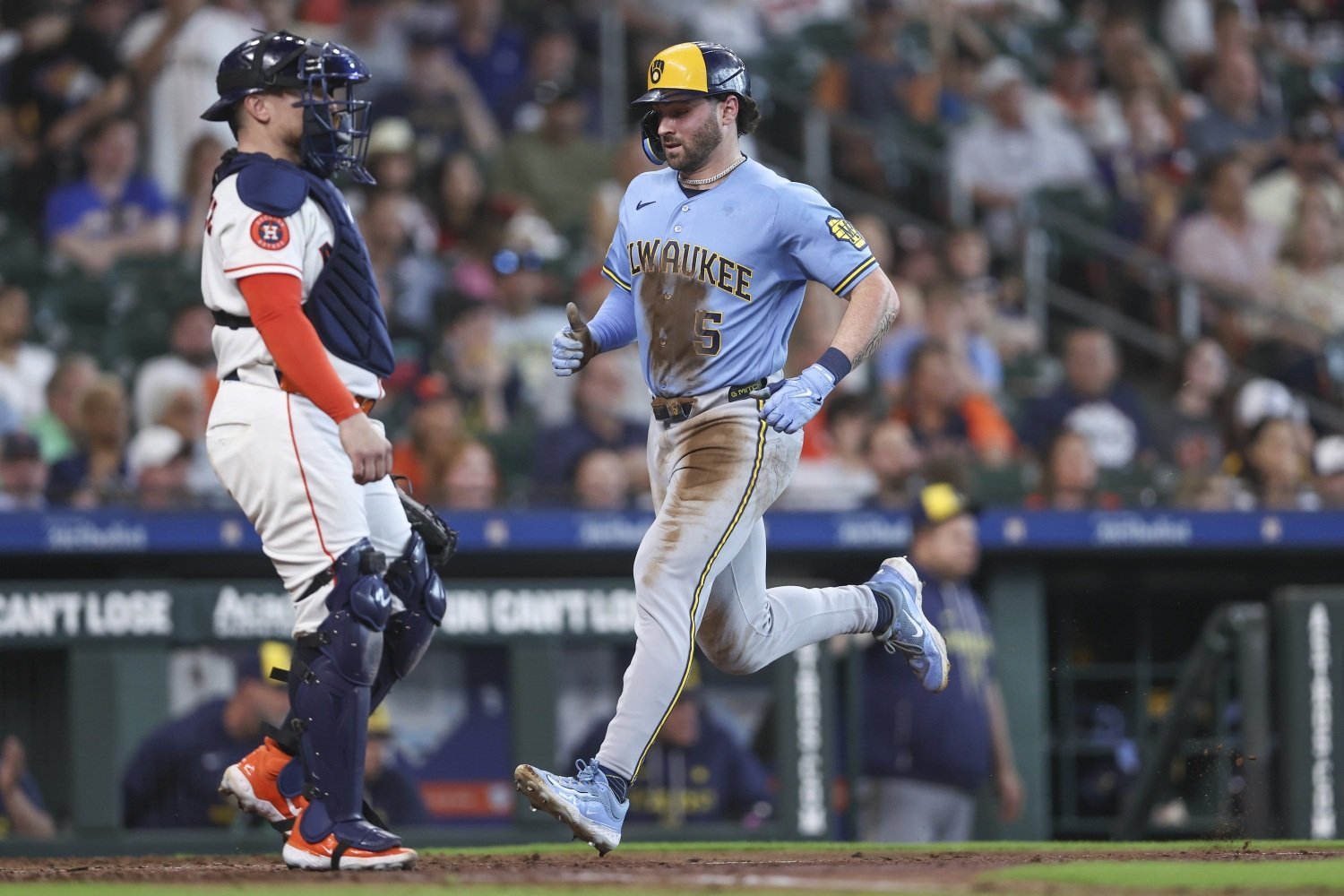 It feels like we've waited half a decade for a long look at Garrett Mitchell, and while 40-some games might not qualify as 'long' in baseball, it’s already the second-most games he has ever appeared in within a single season. This season, we hoped to nail down who Garrett Mitchell is, but to this point, putting him in a box has proved exceedingly difficult. So far, I would simply put Mitchell in a box labeled “Extreme!” Here’s where he ranks in some key metrics among qualified hitters, starting with the positives. For this, we'll utilize Statcast's method for percentiles, meaning you always want your hitter to be as close to the 100th percentile as possible, whether the stat itself is something good (like walk rate) or bad (like strikeout rate): BB%: 90th percentile Hard Hit%: 92nd percentile Barrel%: 84th percentile Outfield range: 78th percentile Arm Strength: 96th percentile Baserunning value: 90th percentile And the negatives: GB/FB ratio: 3rd percentile Whiff%: 2nd percentile K%: 1st percentile Squared-Up%: 5th percentile Arm Value: 2nd percentile To boil this all down, Mitchell hits the ball hard, but it’s very likely to be a ground ball. He swings and misses a lot, but barrels the ball when he hits it. He shows exceptional range and arm strength in the outfield but--this year at least--he has lost a ton of value on his throws. And finally, he’s extremely fast and valuable on the bases. There’s a lot to unpack in all of this data. The first thing that pops out for me is Mitchell’s strikeouts. The history of hitters playing a full season with a strikeout rate over 35% is a short one, and Mitchell’s currently sits at 37%. Using 500 plate appearances as the minimum to rid us of a shortened 2020, a rate of 35% or higher has happened just six times in the history of the game. The responsible parties are Joey Gallo (twice), Chris Davis (twice), Chris Carter, and Mark Reynolds. Now, one of these seasons was just about the worst in league history, in which Davis posted a .292 SLG and -2.5 fWAR in 2018. The others, however, range from slightly below-average by wRC+ to quite good. This makes sense, of course. If you have a player with a 35%+ strikeout rate who is also NOT hitting, you aren’t letting him reach 500 trips to the plate—unless you’re paying him like the Orioles were Chris Davis. So, it is possible to strike out as much as Mitchell has and still be an above-average hitter, it’s just extremely unlikely. Of these six seasons, just three resulted in wRC+ figures over 100: Carter in 2013, and Gallo in 2017 and 2018. To make this work, these hitters sold out for home runs. The highest grounder-to-fly ball ratio from any of these three seasons was 0.66. Mitchell’s is 1.95, the fourth-highest in the league this year. Of course, Mitchell is less than halfway to 500 plate appearances. It seems fairly likely that his strikeout rate will drop somewhat as the season goes on, purely because we’re dealing with small samples. It’s the same reason I had to remove 2020 from our pool of K% leaders. In a year when players didn’t even need 200 PAs to qualify, four hitters posted a strikeout rate over 35%, and two were above 40%. This small sample warning applies to every stat we'll discuss here. The second thing that pops out is Mitchell’s tremendously high BABIP, and the low batting average that comes with it. Currently, Mitchell ranks 4th in the Majors in BABIP (.395), but is hitting just .236. From a sustainability perspective, Mitchell has an excellent player profile for a high BABIP, with extremely hard-hit balls on the ground to complement blazing speed. Still, no one maintains a nearly .400 BABIP for their career. While Mitchell does have a career .380 BABIP, he currently has 610 career PAs, fewer than some players will have in 2026 alone. In the longest season of Mitchell's career so far, 2024, Mitchell posted a 124 wRC+ despite an even more extreme 2.48 GB/FB rate. It's very difficult to find another ground ball-hitting speedster who strikes out anywhere near as much as Mitchell. The only player with as few homers as Mitchell (3) and a strikeout rate north of 28% in 2026 is Trevor Story, who is struggling this year and owns a .547 OPS. But Mitchell hasn't always lacked pop; he has 16 career homers in those 610 career PAs. Thus, the closest thing to a comp for Mitchell that I can find is Pirates center fielder and physical phenom Oneil Cruz. The pair are currently the top two qualified hitters in strikeout rate; they both hit a lot of ground balls (though Mitchell still hits more); and their wRC+ marks are within a few points of each other. The key differences here are that Cruz hits the ball even harder, but chases pitches a lot more and walks a lot less. Cruz is also grading out poorly in range defensively this year, as the former shortstop continues his defensive odyssey. Here are Mitchell and Cruz offensively side by side, with Chase% and BB% (where Mitchell has a huge edge) removed to highlight their similarities: The good news is, as far as comps go, Cruz is a solid name to be associated with. He has a career 102 wRC+, and Mitchell has considerably better instincts in the outfield. Cruz has hit the ball better than Mitchell this year, leading to a large gap in xSLG, but the on-field results have been quite similar. Ultimately, Mitchell’s career wRC+ is currently 113. To me, that feels high for projecting him moving forward, but he truly does not have to be an above-average hitter to succeed in this league, as long as he’s healthy and his center field defense returns to solidly above average. One thing is certain: if Mitchell does stick as a long-term player, he'll do it with one of the most extreme offensive profiles in Brewers history. Statistics courtesy of Statcast & FanGraphs View the full article
 -
Cubs Week in Review: When Will It Get Better?
DiamondCentric posted an article in North Side Baseball
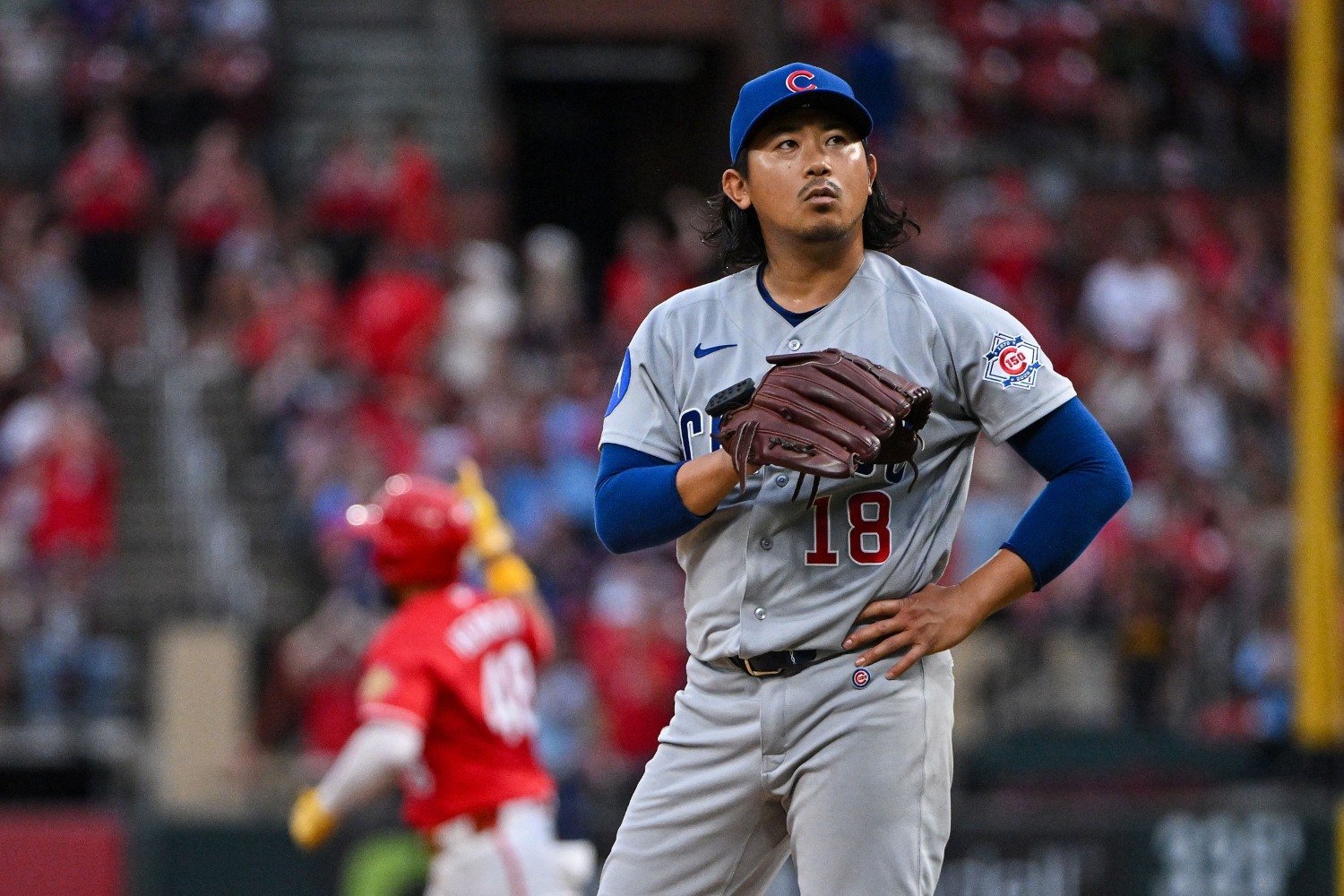 Since securing their last series win against the Reds on May 6, the Cubs are 7-15. They're standing naked in the cold spotlight right now, and some of those laughing in the dark are their fiercest rivals. With a demoralizing combination of stranded baserunners and inconsistent pitching, the city's North Side baseball team has lived a nightmare for the last three weeks. A late recharge of this squad's bats and some masterful pitching performances from unexpected places proved that it's far from over. The renewal of a division rivalry feels more important than a tilt featuring more unfamiliar opponents. With the North Siders kicking off a four-game set in Pittsburgh on the Memorial Day holiday, this sentiment was clearly on the minds of players in both dugouts. The suddenly marvelous Ben Brown took the bump. He went six full innings, surrendering just four hits and one earned run, and punching out seven Pirates. The club's inept offense doomed them once again, however, as they were flummoxed by Pittsburgh starter Carmen Mlodzinski. Chicago mustered its only run, a solo shot off the bat of Michael Busch, against the Buccos starter, but that's where it ended, leaving seven stranded in a 2-1 victory for the Pirates. The loss of Cade Horton near the outset of this campaign set into motion the world's worst game of musical chairs. Craig Counsell and his staff have looked in every corner of this clubhouse for answers, from Javier Assad to Tuesday's starter, Jordan Wicks. Alas: nothing has panned out for the North Siders. In his first start of the season, Wicks was roughed up, surrendering eight earned runs on nine hits. Racking up eight hits and just one run, the offense went an astonishing 1-for-13 with RISP. This is a team that's had a hard time getting out of its own way, and this contest was no different, with the Pirates winning 12-1. It's no secret that Pittsburgh native Ian Happ loves to work at PNC Park. With a five-RBI day, Happ powered his squad to their first convincing victory in weeks Wednesday, in a 10-4 triumph. One element of this slide that has doomed the Cubs is inconsistent pitching, but despite Jameson Taillon giving up another pair of home runs, the staff largely kept their opponents in check. The bullpen had one of its best showings of late, with solid appearances from Ethan Roberts, Jacob Webb, Phil Maton, and Caleb Thielbar. The tilt served as a reminder that this Chicago team has much to play for. With the offense finally clicking, the Cubs salvaged a split on Thursday. Michael Busch, Alex Bregman, and Happ all recorded critical hits, with the squad's left fielder crushing another long fly. Colin Rea delivered a steady showing, coughing up just two earned runs in 5 1/3 innings of work. In the smallest of sample sizes, the Cubs put forth their most encouraging two games of offense, restoring some of the good habits and better vibes that have been so sorely missing from this ball club. The final score was 7-2. A lack of synchronization between the team's offense and defense dragged them to the depths of the NL Central cellar for a moment in the past week. A 6-5 loss in the opener of their three-game set with the archrival Cardinals supplied a convincing demonstration of this case. Happ homered in his third-straight game, but a dismal appearance from Shota Imanaga put the North Siders behind early. Though he's not the only starter who struggles with the long ball, Imanaga allowed the Cards to swat three long flies. The 6-5 win for the home team ended Chicago's win streak at two. Ben Brown is, by default, the momentary ace of this staff, and his virtuoso performance in game two of the series evened things. Brown was as confident as he was efficient, cruising through the early innings with his balanced arsenal. He frustrated the Cardinals lineup with a wicked curveball and his two-seam fastball. Pete Crow-Armstrong put his stamp on the game with his best performance of the year: a four-hit game, placing the tarps back on to a raucous Saint Louis crowd with a 444-foot moonshot, his seventh on the year. The sparkling night at the plate helped the Cubbies to a 6-1 win. In front of a sold-out Sunday Night Baseball crowd, the North Siders squandered their shot at the second series win of the month. Wicks followed up his previous pedestrian outing with a shorter but not better one. He couldn't find much of a groove, yielding four hits and three earned runs. As he went, so went the club's worst offensive tendencies, with a solo homer from Alex Bregman providing the only offense in the rubber match. The North Siders' pitching woes have been known for some time, but if they wish to really gain ground in this division, it's a problem they must solve, and fast. Chicago fell 5-1 at Busch Stadium. The calendar now turns to June, with Craig Counsell's club still seeking a consistent formula for success. The squad gets a day off on Monday before returning to the Friendly Confines for a three-game set with the competent Athletics. The weekend festivities at Wrigley will see the San Francisco Giants pay a visit. While there are still a few positives to speak to regarding this baseball team, the negatives are dominating at the moment. There's time, but the Cubs had better be keeping better track of it. View the full article
 -
Padres Week in Review: Well, At Least Fernando Tatis Jr. Homered
DiamondCentric posted an article in Padres Mission
 San Diego Padres Weekly Snapshot Record last week: 1-5 Runs scored last week: 16 Runs allowed last week: 28 (season run differential: minus-6) Standings Scores Game 53 (Monday): Phillies 3, Padres 0 Game 54 (Tuesday): Phillies 4, Padres 3 Game 55 (Wednesday): Phillies 3, Padres 0 Off Thursday Game 56 (Friday): Padres 7, Nationals 5 Game 57 (Saturday): Nationals 9, Padres 4 Game 58 (Sunday): Nationals 4, Padres 2 Week in Review and Highlights Phillies series Game 1: There are times where you tip your cap to an opposing pitcher and others where you feel frustrated by all the missed opportunities. The Memorial Day game fell into the latter bucket for the Padres, who gave up a pair of homers, but were shut out for the fifth time after going 0-for-10 with runners in scoring position. The result was a 3-0 loss to the Philadelphia Phillies. Kyle Schwarber, MLB's home run leader, hit a solo shot in the first inning, his 21st of the season and 21st in 50 games (including the postseason) at Petco Park. Brandon Marsh clubbed a two-run homer in the seventh. But that wasn't really needed with the way the Padres were hitting with guys in scoring position. Manny Machado was the biggest culprit in this game. He struck out with the bases loaded in the first inning, grounded into an inning-ending double play with runners on the corners in the third and left a runner on third when he struck out in the eighth. The Padres, who struggle against left-handed pitching, were limited to four hits over six innings by Phillies lefty starter Jesus Luzardo, who walked two and struck out six. The only other hit came on Ty France's single with two outs in the ninth. It was a mixed performance for Padres right-handed starter Griffin Canning, who was making his fifth appearance of the season since coming back from an Achilles injury. He went a season-high 6⅔ innings and struck out five, but two of the three hits he allowed were homers. He left after Marsh's homer, with right-hander Jeremiah Estrada getting the final out of the seventh and left-hander Yuki Matsui retiring six of the seven batters he faced. The game also marked the first for Nick Castellanos against his old team, the Phillies. He held court before the game with media from Philadelphia peppering him with questions. Game 2: While there have been brief exceptions, the one glaring inconsistency has been the lack of offensive production by the Padres, particularly by Machado and Fernando Tatis Jr., their two superstar hitters. Until that changes, a repeat of what has transpired in the first two games of this series will continue. For the fifth time in eight games, the Padres had five or less hits, which resulted in a 4-3 loss to the Phillies. Of course, it doesn't help that right-handed starter Randy Vasquez gave up three solo homers, each with two outs, in each of the first three innings. It would have been four homers if not for center fielder Jackson Merrill robbing yet another would-be homer in the fourth. But Vasquez's otherwise solid performance (5⅔ innings, eight hits, four runs, one walk, two strikeouts) looks a bit worse because of the Friars' offensive rut. The fact that the Padres won two of those five games with no more than five hits also keeps things looking a little brighter. But the Padres know this can't continue. "We can't sustain it," Machado said of the offensive woes, this time at the hands of Phillies right-handed starter Aaron Nola. Machado did hit his ninth homer of the year, a two-run shot in the fourth inning to slice the Friars' deficit to 4-2, but the three-time Silver Slugger has a paltry .173/.270/.346 slash line following this loss. Tatis' woes are well-documented. He is hitting the ball as hard as anyone in the game, but has yet to launch a homer as he approaches 200 plate appearances. His slash line of .255/.336/.296 is better than Machado's, but still under his career numbers (.275/.353/.498). The Padres still managed to make his a one-run game as Ramon Laureano delivered his seventh homer of the year leading off the bottom of the eighth. A Tatis one-out single and Gavin Sheets two-out walk set up Machado, who grounded out to end the eighth. This comeback fell short. Game 3: The last thing the Padres needed to see considering their offensive funk was a pitcher on a historic run. But that is what transpired in the series finale as Phillies right-hander Cristopher Sanchez tossed seven more shutout innings to extend his scoreless streak to 44⅔ innings in the Padres' 3-0 loss. The Friars were swept in a series for the first time this season and have lost a season-worst four in a row for the second time. Sanchez struck out nine, allowed six hits and didn't issue a walk. Sanchez's run is the seventh-longest in a single season in MLB history and he is three innings shy of having the third-best streak. Two Padres had loud outs with Sheets and Machado hitting long fly balls, but they were still outs. They were shut out for the second time in this series and third time in seven games. Following this series, the Padres are tied for the fourth-fewest runs (3.89 per game) and the worst batting average (.218) and on-base percentage (.291). Their .652 OPS is next-to-last. Padres right-handed starter Walker Buehler had a nice outing. He allowed two runs over 5⅓ innings, giving up three hits with no walks and two strikeouts. This was the third time in five starts Buehler did not issue a walk. Both runs scored in the sixth after Buehler left a jam for left-hander Adrian Morejon to escape. But Morejon gave up an run-scoring single to Schwarber and an RBI grounder to Trea Turner. Buehler was very efficient, throwing just 58 pitches. The Padres went 3-6 on their longest homestand of the season. They now head out on a six-game road trip, which will include three games in Philadelphia and a rematch with Sanchez, who has five consecutive starts of not allowing a run. Nationals series Game 1: In a roller-coaster affair, the Padres' bullpen once again proved to be the difference. While not quite as dominant as last year, the relief corps turned in what would have been a quality start in reverse, covering the final 6⅓ innings and allowing one run. That combined with timely home runs by France and Merrill provided the winning margin in a 7-5 triumph over the Washington Nationals. The victory snapped a four-game losing streak. You could tell it was going to be one of those games when the first inning took 30 minutes, but only three runs were scored between the two teams. Giolito, still showing rust following his late signing, needed 35 pitches to get the first three outs and gave up a two-run homer to the third batter of the game. There was another homer in the second inning, this one of the solo variety, then the fourth is when it became clear it wasn't Giolito's day. After getting the first two batters out, he gave up a walk and a wild pitch before an RBI single put the Nats up 4-1. Another single and a walk ended Giolito's day with the bases loaded. Left-hander Yuki Matsui escaped further damage. The Padres had kept things close on Xander Bogaerts' first-inning sacrifice fly and Machado's RBI single in the third that snapped an 0-for-36 team funk with runners in scoring position. The Friars' manufactured a pair of runs in the fourth inning on Freddy Fermin's run-scoring groundout and Tatis' single that tied the game 4-4. The Nationals countered with a run in the fifth for a 5-4 lead, then France smashed his sixth homer of the season to left field to tie it 5-5. In the seventh, Bogaerts reached on a one-out error and, with two outs, Merrill lined a two-run homer to right, his first long ball since May 4, for a 7-5 edge. That was just enough for the Friars' bullpen. Matsui allowed the only run in his two innings, while Estrada and Morejon each struck out a pair in 1⅓ innings apiece. The plan went a bit askew in the eighth after Morejon got a comebacker for the first out. Right-handed setup man Jason Adam came on and gave up singles to the next two hitters to put runners on the corners thanks to a Tatis error in right. That got closer Mason Miller stirring in the bullpen, but Adam still had to face another hitter for the three-batter minimum. Fortunately, he got a fly ball that was shallow enough to keep the bases loaded and that brought Miller into the game to face Nationals superstar James Wood, the former Padres prospect. Wood drew a walk to load the bases, but Miller got out of it with a line out to deep left. Miller issued another walk leading off the ninth, then struck out two of the next three batters for his 17th save in as many chances. Game 2: The seasonlong nightmare finally came to an end. Tatis hit a homer. It was bittersweet, however, as it came in a 9-4 loss to the Nationals, who scored eight runs over the seventh and eighth innings to hand the Padres their fifth loss in six games. For Tatis, at least he can take a deep breath now that he hit his first homer of the season. He ended a streak of 238 plate appearances by going deep in his third trip Saturday, a no-doubt, 451-foot blast in the fifth inning. He raised his arms in celebration at the plate, almost as if he had just hit a series-winning blast in the postseason. Except, as Tatis said postgame, the baseball gods didn't allow a proper clubhouse celebration. That is because Friars right-handed starter Michael King, who was very good for six innings, unraveled in the seventh. After allowing one run on four hits through six, King opened the seventh by allowing a hit, a groundball, a walk and a hit batter that drove in a run to pull the Nats within 3-2. Right-hander Bradgley Rodriguez was tasked with minimizing the damage, but he couldn't. Part of that came when Rodriguez got a potential double-play ball to Tatis at second, but Bogaerts, the shortstop, was ruled not to be on the bag and he didn't make a relay due to a hard slide. A replay review allowed the call to stand, which led to mild-mannered Craig Stammen's first ejection as manager. A run scored on the play to tie the game 3-3. What followed was a bases-loaded walk, a two-run single and a run-scoring grounder that put the Nats up 7-3. Peralta surrendered two more runs in the eighth. Tatis' homer was one of three by the Padres' big three hitters. Bogaerts hit a solo shot in the second inning, his eighth this year, and Machado hit his 10th of the season, also a solo shot, in the fourth inning. Tatis, for his part, hasn't been sulking. He has a six-game hitting streak, with 13 hits in 27 plate appearances, plus a pair of walks. He has a slash line of .520/.556/.680 during this stretch with three straight multihit games and five of six. Game 3: After a fantastic April, the Padres had a mundane May. That fact was punctuated by a 4-2 loss to the Nationals, the Friars' sixth loss in seven games. That funk left the Padres with a 13-15 mark in May and 32-26 overall. As it has been most of the season, offense was at the root of this loss. The bats produced just three hits through six innings against Zack Littell, who entered the game with a 5.23 ERA. The Padres eventually got to him in the seventh, scratching out a pair of runs. That type of production puts more scrutiny on the starting rotation, which has still been solid for the Friars. On this day, Canning gave up three runs in five innings, including a pair of homers, with the bullpen surrendering an insurance run over three frames. The Padres continue to have the game's worst batting average, now at .218 after a six-hit performance Sunday. Now the Padres head to Philadelphia for another three games against the Phillies, who just took three games from the Friars at Petco Park. Marvelous Mason Miller Some of the amazing stats for the Padres' closer: Season stats: 1-1, 0.72 ERA, 24 games, 17 saves, 17 chances, 25 IP, 10 H, 3 R, 2 ER, 11 BB, 49 K, .119 opponent average. Recorded his MLB-leading fourth four-out save Friday. Has not allowed an extra-base hit in last 44 appearances (46⅓ innings), by far a club record (26, Joe Thatcher in 2012). That is the longest streak in MLB since Brandon Morrow's 44-gamer between the 2017-18 seasons. Random Stats Of the 32 games at Petco Park, 25 have been sellouts. The Padres continue to rank second in MLB in attendance. Jackson Merrill is one of three players with at least 10 steals without being caught. Merrill is 10-for-10. Fernando Tatis' 451-foot homer was the longest by a Padre this season. Five Friars have now hit their longest home runs this week: Ramon Laureano (447 feet, Tuesday), Manny Machado (436, Saturday), Jackson Merrill (436, Friday), Xander Bogaerts (424, Saturday). The only other time Tatis, Machado and Bogaerts homered in the same game was April 29, 2023, in Mexico City. Saturday's six-run seventh inning was the fourth time the Padres have allowed that many runs in a single frame. Only the Los Angeles Angels and Detroit Tigers have allowed six or more runs more often, both doing it five times. Transactions No transactions this week. Website Highlights Padres' offensive woes have brought forth a damning question: Does San Diego actually have a plan at the plate? — Randy Holt More dominant, more fragile: Inside Vasquez's strange leap in 2026 — Yirsandy Rodriguez The mechanics behind Miller's modern relief masterclass — Taylor Leonard Giolito providing early stability for Padres with room for improvement — Randy Holt Merrill hasn't found love in the heart of the zone — N.B. Lindberg Padres' silent crisis finally exploded — Yirsandy Rodriguez Looking Ahead Monday: Off Tuesday: Padres (Randy Vasquez) at Phillies (Aaron Nola), 3:40 p.m. Wednesday: Padres (Walker Buehler) at Phillies (Cristopher Sanchez), 3:40 p.m. Thursday: Padres (Lucas Giolito) at Phillies (Zach Wheeler), 10:05 a.m. Friday: Mets at Padres (Michael King), 6:40 p.m. Saturday: Mets at Padres (Griffin Canning), 7:10 p.m. Sunday: Mets at Padres (Randy Vasquez), 1:10 p.m. View the full article
 -
Minnesota Twins Prospect Retrospective: Mike Paredes
DiamondCentric posted an article in Twins Daily
 When the Twins announced that Mike Paredes would join the major league roster following Bailey Ober's placement on the injured list with elbow inflammation, many fans were left asking the same question: Who is Mike Paredes? Unlike many of Minnesota's recent pitching call-ups, Paredes never appeared near the top of national prospect rankings. He wasn't a highly touted draft pick, nor was he a pitcher who generated buzz with triple-digit velocity. Instead, he has steadily climbed through the organization by doing something the Twins value highly: throwing strikes, limiting damage, and finding ways to get outs. Now, after nearly five years in the organization, Paredes is set to make his big-league debut. The Twins selected Paredes in the 18th round of the 2021 MLB Draft out of San Diego State University. His college numbers hardly suggested a future major leaguer. Across 35 appearances, including 20 starts, he posted a 5.28 ERA and 1.38 WHIP while recording fewer than one strikeout per inning. Minnesota nevertheless saw something worth developing. After signing, Paredes made just two appearances for the FCL Twins, offering little insight into his long-term projection. His first full professional season arrived in 2022 at Low-A Fort Myers, where he worked in both starting and relief roles. Over 24 appearances, including 13 starts, he posted a 3.27 ERA while pairing an 18.6% strikeout rate with an impressive 4.7% walk rate. The strikeout totals weren't eye-popping, but the command immediately stood out. That trend continued in 2023 at High-A Cedar Rapids. His strikeout rate increased by nearly four percentage points, though it came with a slight rise in walks. Even so, he finished the year with a 3.14 ERA and a respectable 3.54 FIP, continuing to establish himself as a dependable arm in the system. Paredes split the 2024 season between High-A and Double-A. His first exposure to Wichita produced some growing pains as he surrendered 12 earned runs in fewer than 19 innings. Still, there were encouraging signs beneath the surface. With an improved sweeper, his strikeout rate jumped to 23.2% while his walk rate fell below five percent. The Twins saw a pitcher beginning to miss more bats without sacrificing the command that had become his calling card. Everything came together in 2025. Spending nearly the entire season at Double-A Wichita, Paredes emerged as one of the organization's biggest pitching surprises. Across 103 2/3 innings, he posted a 2.43 ERA and 1.01 WHIP while holding opponents to a .202 batting average. The Wind Surge primarily used him as a multi-inning reliever, averaging roughly three innings per appearance, and he thrived in the role. That success elevated him from organizational depth piece to legitimate major league consideration. The 2026 season didn't begin particularly well. Assigned back to Double-A Wichita, Paredes struggled through four starts, posting a 7.07 ERA and allowing opponents to hit .298 against him. However, even during those rough outings, there was one encouraging development. He struck out 21 batters while issuing just one walk in 14 innings. The command never disappeared. Minnesota promoted him to Triple-A St. Paul on April 21, and his results quickly improved. Across nine appearances with the Saints, he posted a 3.38 ERA while limiting opponents to a .237 batting average. He also maintained strong underlying metrics with a 23.4% strikeout rate and 5.7% walk rate. The performance suggested that his early struggles in Wichita may have been more small-sample noise than a sign of regression. One of Paredes' most impressive outings came Wednesday afternoon in Louisville. Entering the game, he had thrown his sweeper just 9.0% of the time this season. Against the Louisville Bats, however, he dramatically altered his approach, leaning heavily on the pitch. The results were overwhelming. Of his 63 pitches, 31 were sweepers, and 22 landed for strikes. Louisville hitters swung 19 times against the offering and missed on 12 of them, generating a remarkable 63% whiff rate. After allowing a run in the opening inning, Paredes settled in and retired the final seven batters he faced. He completed five innings, allowed four hits and one run, and matched a career-high with seven strikeouts. The outing showcased another important aspect of his development: adaptability. The "Travis Adams Plan" Like several Twins pitching prospects this season, Paredes has operated under a developmental plan designed to gradually build workload while maximizing effectiveness. After working primarily as a long reliever in 2025, he has shifted into a role where he's regularly throwing around four innings and approximately 65 pitches every four days. The transition has gone smoothly. Paredes isn't going to light up radar guns. His fastball averages 93.5 mph, while his cutter sits around 89.9 mph. Those velocities are solid but far from elite by today's standards. What makes him effective is the way his arsenal works together. Alongside the fastball and cutter, Paredes mixes a slider, sweeper, curveball, and changeup. His ability to command multiple pitches, change eye levels, and keep hitters guessing has allowed him to succeed despite lacking a premium fastball. The Twins have consistently shown a willingness to develop pitchers who excel through pitch-ability and command rather than pure velocity, and Paredes fits that mold perfectly. What Role Can He Fill in Minnesota? Paredes arrives in Minnesota at an interesting time. With Ober sidelined, the Twins need innings. While Paredes is technically making his debut as a starter replacement, his long-term value may come in a more versatile role. His recent development path has prepared him well for multi-inning appearances, spot starts, bulk relief outings, and emergency rotation coverage. That flexibility could make him an important piece of the pitching staff throughout the summer. The Twins don't need Paredes to become an ace. They simply need him to continue doing what he's done throughout his professional career: throw strikes, avoid free passes, and keep the team competitive every time he takes the mound. Few 18th-round picks ever reach the major leagues. Fewer still carve out meaningful careers. Paredes has already beaten the odds by making it to Minnesota. Now comes the opportunity to prove that his steady climb through the organization was only the beginning. What stands out about Paredes so far in his professional career? How will the Twins use him? Leave a comment and start the discussion. View the full article
 -
Week in Review: A Winless Week and Trending in Wrong Direction
DiamondCentric posted an article in Royals Keep
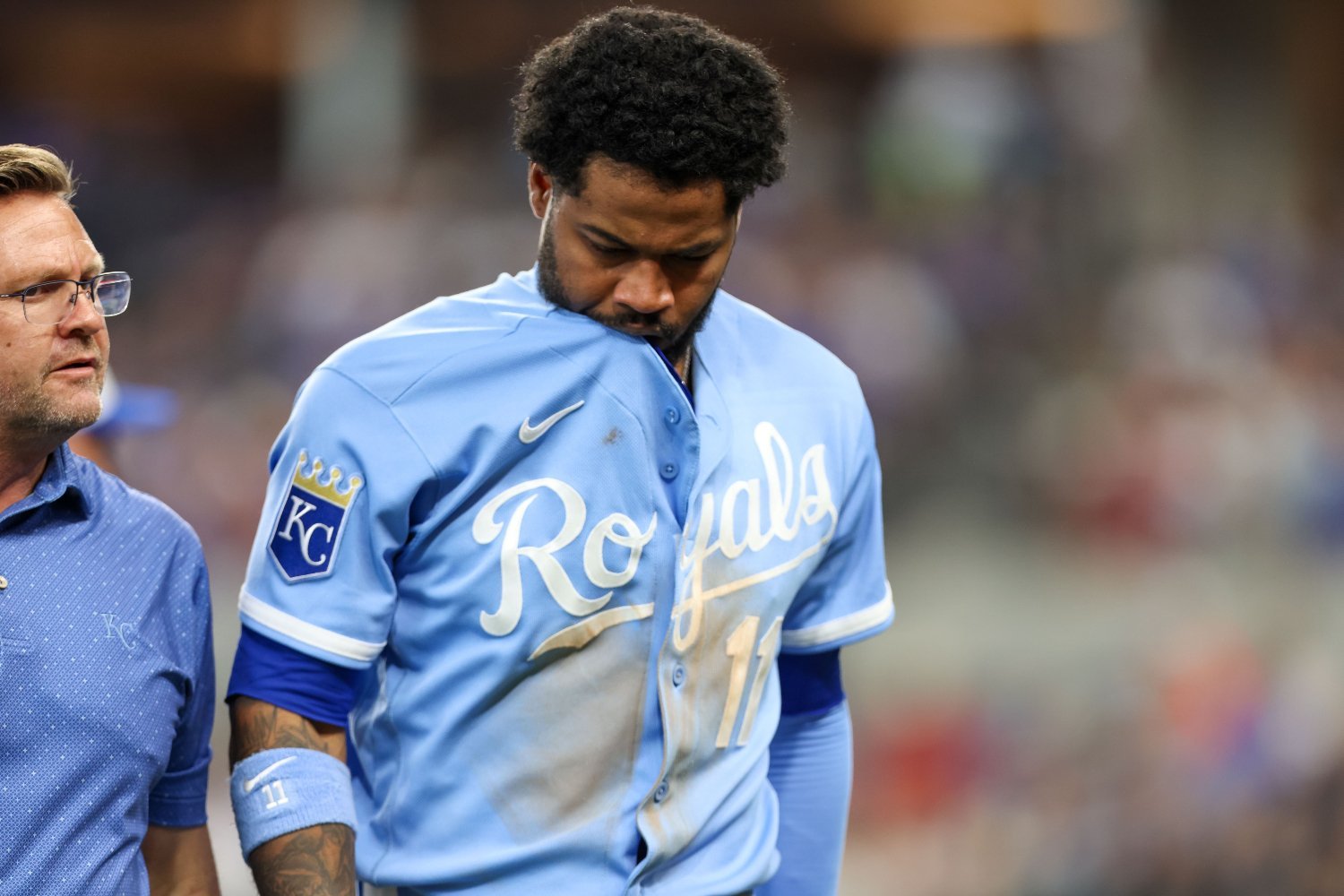 Week in a Nutshell The Royals' woes continued this week as they went winless against the Yankees at Kauffman Stadium and the Rangers in Arlington. Kansas City had only three games decided by three runs or fewer. Since beating the Detroit Tigers on May 9th, the Royals have lost 16 out of their last 19 games. That has included being swept four times (by the White Sox, Red Sox, Yankees, and Rangers). For May, the Royals went 10-18, which was one win worse than a month ago. The Royals also got some rough injury news, as Maikel Garcia suffered a hamstring injury on Saturday that forced him to miss Sunday's series finale against Texas. The Royals are hoping that it's not a long-term ailment that will require an IL stint. Record this Week: 0-6 Run Differential for the Week: -34 Record for the Year: 22-37 Run Differential for the Year: -59 Standing: 4th in the AL Central Game 54: NYY 4, KC 3 In a national game on ESPN, the Royals got a solid performance from Michael Wacha, who went seven innings and allowed two runs on five hits and two walks while striking out two. Though the Royals faced an early deficit, they came back to eventually tie the game and take the lead on a Bobby Witt Jr. solo home run in the 8th. Unfortunately, Lucas Erceg could not close out the game in the ninth, and the Yankees scored two runs and won 4-3. Game 55: NYY 15, KC 1 After the letdown of Monday's Memorial Day game, Kansas City was absolutely thrashed on Tuesday. Bailey Falter gave up seven runs on nine hits in 2.1 IP. Luinder Avila, Steven Cruz, and Eli Morgan combined to give up six runs in 5.2 IP, and Tyler Tolbert closed it out by giving up two runs in the top of the ninth. The lone run came on a Witt solo home run. Game 56: NYY 7, KC 0 Gerrit Cole made his return to Kauffman Stadium and absolutely dominated, generating 10 strikeouts and allowing no runs in 6.2 IP. Noah Cameron went 5.0 IP and allowed two runs on four hits and one walk while striking out four. Nick Mears struggled, giving up three runs on two hits and one walk in 0.2 IP. Maikel Garcia was the lone Royals player with multiple hits (two). Game 57: TEX 9, KC 1 The Rangers jumped on Stephen Kolek early, tagging him for four runs in the first inning. Kolek eventually gave up six runs in five innings of work. He struck out five, walked one, and allowed six hits. Garcia and Vinnie Pasquantino each had two hits. MacKenzie Gore shut out the Royals in 6.2 IP. Game 58: TEX 7, KC 6 The Royals seemed en route to end their losing streak, especially after Carter Jensen's two-run home run in the 8th inning off reliever Chris Martin. Unfortunately, Lucas Erceg was unable to close out the game, giving up three runs on five hits and failing to record a single out. Seth Lugo produced another quality start, giving up three runs in six innings of work, and Alex Lange, Daniel Lynch IV, and John Schreiber held the game in check until the ninth. Jensen had two hits, and Pasquantino and Isaac Collins also had two-hit performances. Game 59: TEX 6, KC 3 The series finale started very similarly to the series opener, as Wacha spotted the Rangers a four-run lead in the first inning. Wacha struggled in this one, giving up six runs on eight hits and four walks while striking out five. Rangers starter Jack Leiter dominated the Royals, striking out 10 batters in 5.2 IP. The Royals got some runs near the end, thanks to a two-run home run by Michael Massey, his fourth of the season. News and Notes After Falter's disastrous outing, the Royals designated him for assignment and called up Mason Black to replace him in the Kansas City bullpen. No word has been shared yet on whether Falter has been claimed on waivers, will be outrighted to Omaha, or will elect free agency. data:image/gif;base64,R0lGODlhAQABAPABAP///wAAACH5BAEKAAAALAAAAAABAAEAAAICRAEAOw== After the Royals' 7-0 loss in the series finale against the Yankees, Kansas City added Mears to the 15-Day IL due to right shoulder impingement. Eric Cerantola, who had been performing well in Omaha, replaced him on the active roster. data:image/gif;base64,R0lGODlhAQABAPABAP///wAAACH5BAEKAAAALAAAAAABAAEAAAICRAEAOw== Lastly, before the Sunday series finale, Kansas City activated Matt Strahm from the IL. Strahm had been on the IL due to inflammation in his left knee. Strahm replaced Cerantola, who was optioned back to Omaha. data:image/gif;base64,R0lGODlhAQABAPABAP///wAAACH5BAEKAAAALAAAAAABAAEAAAICRAEAOw== The Royals also added some depth to their Omaha bullpen by signing veteran relievers Genesis Cabrera and Dan Altavilla this week, as well as Minor League relievers Juan Cordero and Andruw Solarte. Highlights Unfortunately, there were not many highlights this week for the Royals, both on the hitting and pitching ends. On the offensive end, Witt had a .740 OPS and two home runs in 24 at-bats. However, he hit just .208 and struck out 5 times while walking only once. His home run against the Yankees on Memorial Day was a clutch moment, though it wasn't enough for Kansas City to snap its 2+ year losing streak to the Bronx Bombers. data:image/gif;base64,R0lGODlhAQABAPABAP///wAAACH5BAEKAAAALAAAAAABAAEAAAICRAEAOw== Pasquantino didn't have a home run this week, but he had a solid week at the plate. In 21 at-bats, he hit .286 with a .781 OPS and had four walks to four strikeouts. Garcia hit .316 in 19 at-bats, and his six hits this week were tied with Vinnie's for the most by a Royals player over the past seven days. Michael Massey only had 10 at-bats, but he produced in his limited action this week. He hit .300 with a 1.033 OPS and launched his fourth home run of the season on Sunday. With Jonathan India out for the year and this offense starving for production, an effective Massey would go a long way. On the pitching side, Lugo's quality start carried the Royals starters this week, as he was the only starter with an ERA under 3.50. On the bullpen end, Lange and Schreiber each had scoreless weeks, giving up zero runs in two outings each. While neither pitcher struck out many batters (only one combined), they also walked no batters. That's encouraging to see, especially considering their control issues earlier in the year. Lowlights After going 0-6 this week, there's a lot to talk about when it comes to "lowlights," unfortunately. Kolek and Wacha had rough weeks after being pretty stellar the week before. They posted ERA marks of 7.20 and 6.00 this week, and both took losses against the Rangers. Mears, Erceg, and Falter had the worst ERA marks of the bunch, posting ERAs of 40.50, 45.00, and 27.00 this week. Mears is on the IL, Falter is no longer with the Royals, and Erceg likely will be moving out of the closer's role soon. On the offensive end, it was a rough week for Jac Caglianone. In 21 at-bats, he hit .190 with a .451 OPS and struck out nine times and only walked twice. All four of his hits this week were singles, not exactly what Royals fans want to see from their "power" hitter. Nick Loftin and Kyle Isbel also struggled this week, hitting .154 and .167, respectively. While Isbel had the higher batting average, Loftin's .445 OPS was better than Isbel's .417 mark. Both have regressed dramatically after solid starts to begin the 2026 season, and Loftin's defense, especially at second base, has left a lot to be desired. I explored in a recent post on Royals Keep whether he and Collins should switch defensive positions. Salvador Perez hit a home run this week, but he only hit .143 with a .583 OPS in 21 at-bats. While Garcia hit well, he strained his hamstring on Saturday, which sidelined him on Sunday and for an undisclosed period. Thankfully, it won't require an IL stint for now, according to manager Matt Quatraro. data:image/gif;base64,R0lGODlhAQABAPABAP///wAAACH5BAEKAAAALAAAAAABAAEAAAICRAEAOw== The Royals have two open spots on the 40-man roster. If they decide to move Garcia to the IL, they could replace him with veteran options such as Josh Rojas, Abraham Toro, or Kevin Newman, all of whom are on the Triple-A Omaha roster. Looking Ahead The Royals will turn the page on May and continue their road trip with stops in Cincinnati and Minneapolis this week. The Reds are in last place in the NL Central, but unlike the Royals and Tigers, Cincinnati has a winning record (30-28). They have dynamic players, especially on offense, including Elly De La Cruz and Sal Stewart. Unfortunately for the Reds, De La Cruz was removed on Sunday with a hamstring issue, so his status is in question for the series against Kansas City. data:image/gif;base64,R0lGODlhAQABAPABAP///wAAACH5BAEKAAAALAAAAAABAAEAAAICRAEAOw== Luinder Avila will make the start for the Royals on Monday, with Cameron and Kolek going on Tuesday and Wednesday. The Royals will likely face Chase Burns, Andrew Abbott, and Chris Paddack. Burns has been the Reds' best pitcher, as evidenced by his 1.96 ERA in 64.1 IP this season. After Cincinnati, the Royals will head up to Target Field for a four-game series against the Twins, who are currently in third place in the AL Central, ahead of the Royals and Tigers. The Twins have been up-and-down this year, as they have a 27-33 record. They have lost five in a row, including three straight to the Pirates in Pittsburgh over the weekend. Byron Buxton has been the catalyst for this Twins offense, as evidenced by his 142 wRC+. However, Minnesota has gotten solid production from Kody Clemens (113 wRC+), Trevor Larnach (119 wRC+), and Austin Martin (115 wRC+). On the pitching end, Minnesota is projected to start Marco Raya, Zebby Matthews, Joe Ryan, and Connor Prielipp. Ryan has been solid as usual with a 2.94 ERA this year, and he has a history of success against the Royals. Raya and Prielipp are less proven, and Matthews has been shaky against Kansas City in the past. Target Field has been a tough venue for the Royals over the past couple of years. Despite Kansas City having winning records in 2024 and 2025, they went 2-5 in Minneapolis in 2024 and 2-4 in 2025. View the full article
 -
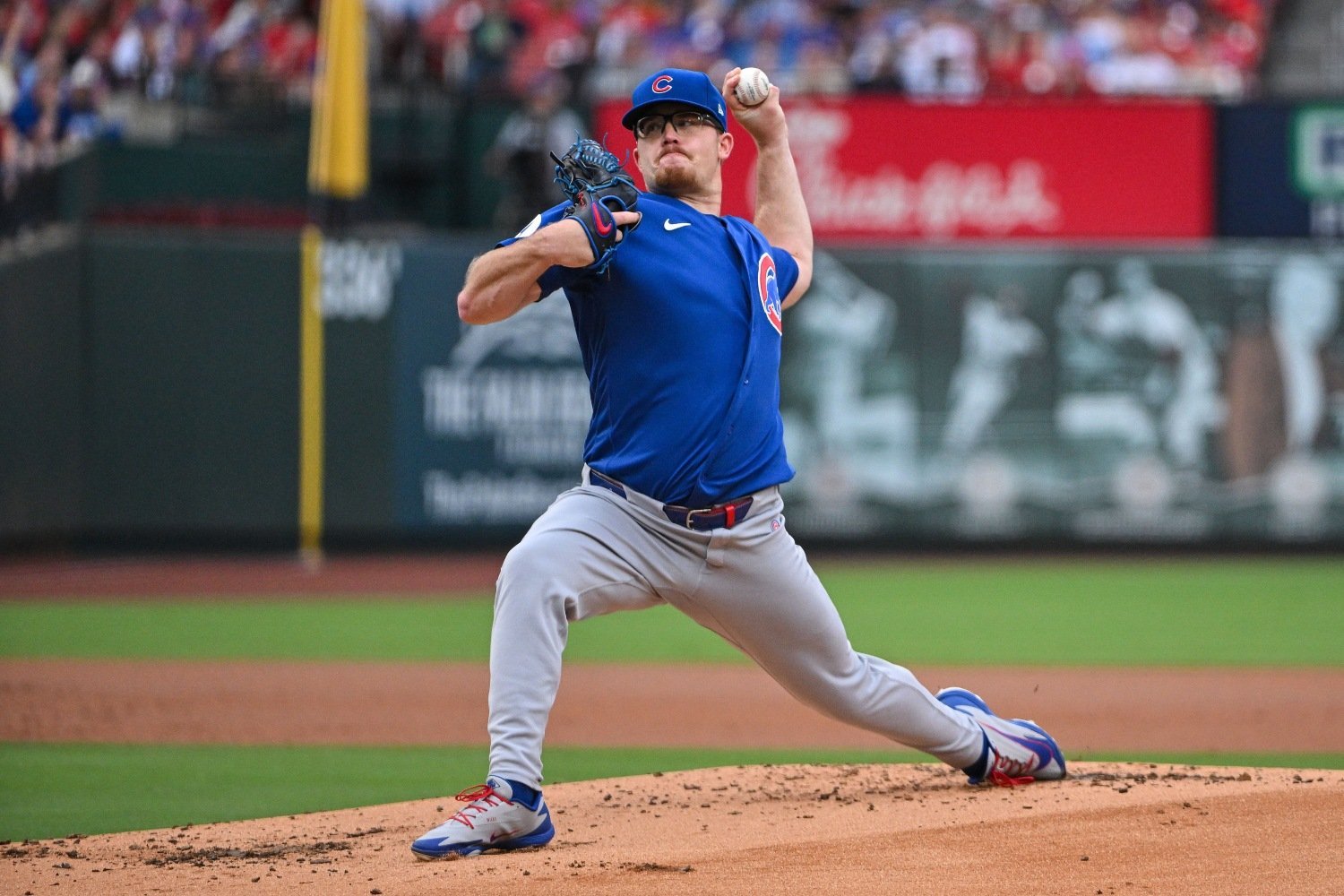 Matthew Boyd can't come back too soon. The veteran lefty is on the rehab trail, and threw 63 pitches in four innings in a rehab start for Triple-A Iowa Sunday afternoon. He wasn't exceptionally effective, but the Cubs didn't need to see him dominate minor-league batters to know they want him back in their starting rotation. Boyd averaged 93 miles per hour on his fastball, and if his surgically repaired knee responds well over the first two days of this week, Boyd could certainly make his next start with the parent club over the weekend. Edward Cabrera might not be far behind Boyd. Sidelined since May 20 by a blister, Cabrera should be back with the team in the first half of this month, though he won't even be eligible to return until the end of the week. Even before he landed on the IL, he was less effective and less impressive than he'd been at the beginning of the season, and the team will want to make sure the blister has time to fully resolve before reinstating him. At the same time, last week made it appallingly clear: the Cubs can't afford to wait any longer than is absolutely necessary. In a 3-4 week against two division rivals, Chicago gave away two games by sending out starter Jordan Wicks to take Cabrera's turns in the rotation. They weren't expecting a miracle; they weren't expecting anything. The Cubs don't believe in Wicks, at this point, any more than you or I do—and I don't quite know about you, but I don't believe in Wicks at all. He's a pitcher whose ceiling was always low, and for whom an attempt to reengineer his mechanics and tap into more intense stuff only brought on a series of injuries that have dropped the floor out from under him. He could have a big-league future; he has no meaningful future with the Cubs. Unfortunately, with Boyd (twice), Cabrera and Cade Horton already having been shelved this year, the team had few alternatives to giving Wicks another shot. They've already pulled Colin Rea and Ben Brown back from bullpen assignments into the rotation. Javier Assad got a shot, too, but he's been so unable to make his kitchen-sink magic work this spring that even when the Cubs could have recalled him to replace Cabrera on the roster, they elected not to do so. Assad is now eligible to return to the majors for non-injury reasons, but he might not be back any time soon, anyway; he's just gone backward as a pitcher. Brown (with his lower arm angle and newfound sinker-heavy approach against righties) has taken wonderfully to the rotation. He, Shota Imanaga, Jameson Taillon and Rea look locked into the starting group for now, with Boyd likely to take the next turn that would otherwise go to Wicks. When Cabrera returns, Rea might get shoved back into the pen, rather than Brown, but that (perhaps too hopefully) assumes no one else is hurt and that Taillon and Imanaga are able to keep the ball in the park a bit better in the next couple of starts. A fan in a summery mood could have sat down late in the winter and sketched a dream-like summer rotation for this team: Boyd, Horton, Cabrera, Imanaga, and Justin Steele all at their best, with Taillon, Rea, Brown and Assad as mere reinforcements. Instead, this team has no ace unless Brown proves this burst to be sustainable (which is unlikely), and very shaky depth. Suddenly but urgently, and at a rough time of year for it, they need pitching depth, badly. Over the weekend, the Twins designated right-handed starter Simeon Woods Richardson for assignment. Richardson is young and relatively controllable. He has a fastball that can touch the mid-90s and a slider and a splitter that each flash above-average. However, he also has an 0-7 record and a 7.74 ERA this season, and he can't be optioned to the minors. Fixing him is probably a bigger project than the team can handle in the time and space provided. Sunday saw the Pirates place righty Carmen Mlodzinski on the restricted list, after he (more or less) refused a reassignment to the bullpen. Mlodzinski is easy to underrate, but he's a six-pitch guy with a fastball that sits 95 and a 3.37 career ERA. If the Pirates are overflowing with starters (or, as is more accurate, just believe more in a couple of guys yet to prove as much as Mlodzinski has, in Bubba Chandler and Jared Jones), the Cubs could try to swoop in and take the disgruntled one they've displaced off their hands. That would work much better, of course, were the Cubs and Pirates not both in the NL Central. In all likelihood, even if the Pirates do trade Mlodzinski, they'll ship him far from home, to some team in the American League. Besides, disgruntled or not, Mlodzinski has three-plus years of team control remaining and can probably slot fourth into most big-league rotations. The Cubs don't have whatever Pittsburgh would demand in return for Mlodzinski—or, if they do, they can't afford to trade it. For the moment, the team is stuck. Whatever positive momentum they could have created this week was wasted by Wicks surrendering 11 runs while getting just 19 outs, leaving his team no chance to win in two of their seven games. Boyd might be able to slap a Band-Aid on this problem, but Jed Hoyer has been given his wakeup call. The Cubs need to make a move, and not in two months. They need help right now, or they can kiss their dreams of a first true division title since 2017 goodbye. View the full article
 -
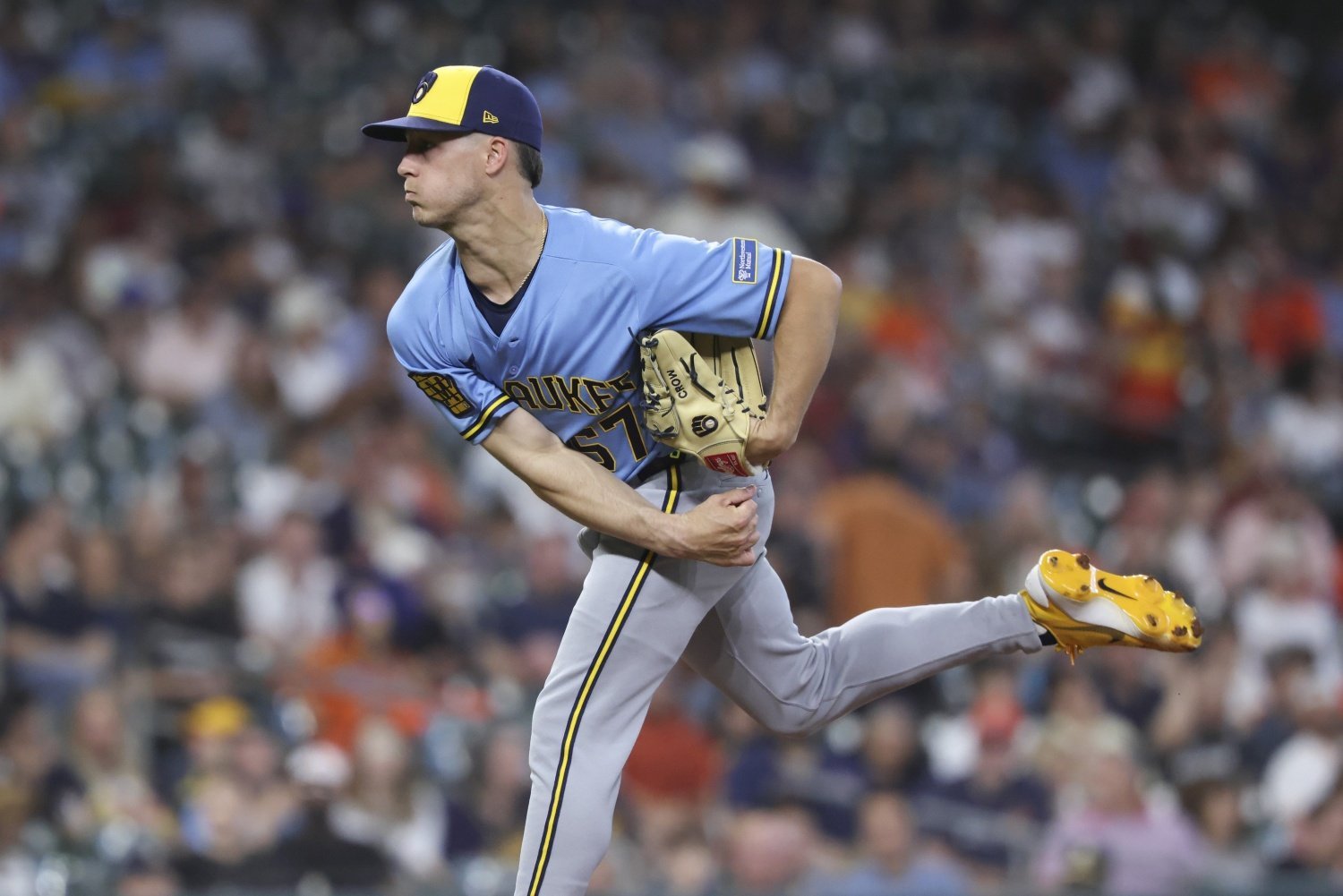 Coleman Crow is a game planner’s dream. He’s the right kind of natural supinator, meaning his wrist instinctively angles away from his body as he releases the baseball, but in a controlled, adjustable way. That allows him to create a wide array of pitch shapes. Crow has expanded his arsenal to five pitches this year. With his four-seamer and sinker both averaging just over 91 mph, mixing those shapes and speeds effectively is a necessity. Crow’s bread and butter, though, is his breaking stuff. His curveball has averaged an elite 2,926 RPM this year, with -14.3 inches of induced vertical break (IVB) and 17.5 inches of glove-side break. His sweeper similarly averages 2,946 RPM, with 21.3 inches of horizontal break. Crow’s cutter, four-seamer, and sinker draw mixed reviews from pitch modeling metrics, but every public model agrees that his breaking balls are his best offerings. The drawback is that pitches with such big break are not very versatile. They can be harder to land in the strike zone early in counts. Because Crow’s spinners both average under 80 MPH, they’re likely to generate more weak contact than swings and misses. There are limits to how often he can use his breaking pitches as a starter, which made the cutter and sinker necessary additions to his mix. Still, spinning the ball is his strength, and his curveball and sweeper should be a significant part of what he’s doing on the mound in any role. Crow sequenced his arsenal well in Triple-A this year. Against righties, he worked ahead with cutters and sinkers before expanding the zone with both his sweeper and curveball. Lefties saw cutters early, followed by curveballs and high four-seamers as put-away pitches. Overall, 65.5% of his pitches have been some version of the fastball, meaning he used his breaking stuff at a 34.5% clip—noticeably higher than the MLB average of 29.1% for starting pitchers. It was a similar approach in his first two big-league starts. Unsurprisingly, William Contreras and the fastball-favoring Brewers nudged his mix slightly further in that direction, throwing 69% heaters. However, they still utilized Crow’s breaking balls an above-average 31% of the time. That changed on Friday night in Houston, when a whopping 81% of his pitches were fastballs. It’s unclear whether this was the plan from the get-go or an in-game shift to the pitches Crow was throwing most competitively that night. He wasn’t his sharpest, throwing just 48% of his pitches in the strike zone after attacking it aggressively (58.4% and 55.9%) in his first two starts. Both his curveball and sweeper had in-zone rates of 25%. However, Contreras and Crow didn’t exactly give themselves much of an opportunity to see how competitive those breaking balls could be throughout the start, throwing just eight curveballs and four sweepers. Furthermore, while a couple of sweepers were non-competitive misses, most of Crow’s curveballs were just outside the zone, and four induced chases. Meanwhile, the Astros made loud contact against Crow’s fastballs. His cutter produced zero whiffs and yielded three hard-hit balls, for an average exit velocity of 93.1 mph. Similarly, his sinker was responsible for a pair of hard hits and an average exit velocity of 94.8 mph. His final line of four runs (two earned) in four innings was partially the product of shoddy defense, but the fastball-heavy version of Crow wasn’t putting himself in positions to succeed, either. Above all else, Crow will need better command than he had on Friday to navigate most outings. All three of his fastballs are useful pitches that give him a counter for most swing paths, counts, and hitter timing. However, spinning a breaking ball remains his specialty. His best work will come when he’s throwing his curveball and sweeper competitively. Crow must prove those pitches can be consistent, and the Brewers’ game planners must give him the opportunity to throw them. View the full article
 -
 John Rave's go-ahead homer powered Omaha to a 6-5 win, while Justin Johnson's grand slam and Spencer Nivens' four hits fueled a Northwest Arkansas comeback that ended just short at 10-9. Daniel Vazquez and Carson Roccaforte each reached multiple times. Blake Wolters struggled across 4 1/3 innings as Quad Cities fell 8-1, with Asbel Gonzalez collecting the lone run-scoring hit. Michael Lombardi struck out seven over three innings for Columbia in a 3-2 loss. Sean Gamble homered in the Fireflies' losing effort. Royals Transactions Kansas City Royals sent LHP Cole Ragans on a rehab assignment to Omaha Storm Chasers. Storm Chasers Edged By Memphis On Late Home Runs The Omaha Storm Chasers fell to the Memphis Redbirds, 6-5, after surrendering the lead over the final two innings. John Rave provided the highlight, going 1-for-4 with a home run, two runs batted in, a walk, and a stolen base. Josh Rojas led the offense with two hits, a run, and an RBI, and Brett Squires added a run-scoring double. Omaha appeared in control after the seventh, when Dustin Dickerson, who reached base three times, came around to score on Rave's two-run shot to left field for a 5-3 lead. Memphis answered in the eighth, scoring twice to tie the game at five, and took the lead for good in the ninth on a solo home run that made it 6-5. The Storm Chasers could not respond in the bottom half. Mitch Spence turned in the longest outing, working 5 2/3 innings and allowing two runs, both earned, on seven hits with one walk and two strikeouts. Omaha's bullpen surrendered four runs over the final 3 1/3 innings. The Storm Chasers stranded seven runners on the night. Player AB R H RBI BB K Josh Rojas 5 1 2 1 0 1 John Rave 4 1 1 2 1 0 Brett Squires 4 0 1 1 1 0 Luca Tresh 3 0 0 1 0 2 Kameron Misner 4 0 1 0 0 2 Peyton Wilson 4 0 0 0 0 1 Gavin Cross 4 1 1 0 0 2 Drew Waters 4 0 1 0 0 2 Dustin Dickerson 1 2 1 0 1 0 Player IP H R ER BB K HR Mitch Spence 5 2/3 7 2 2 1 2 0 Génesis Cabrera 2/3 3 1 1 1 0 0 Luke Jackson 1 2 2 1 0 1 0 Beck Way 2/3 1 0 0 0 2 0 Eric Cerantola 1 1 1 1 0 1 1 Johnson Grand Slam Caps Naturals Comeback Bid In Tulsa The Northwest Arkansas Naturals fell to the Tulsa Drillers, 10-9, despite a furious late charge. Johnson drove in four runs on a 1-for-4 game highlighted by a grand slam, and Spencer Nivens went 3-for-4 with a double and two RBI. Sam Kulasingam added three hits, Roccaforte scored twice atop the lineup, and Rudy Martin Jr. homered. Tulsa built a 9-1 lead through three innings, and the Naturals chipped away before erupting in the eighth. Trailing 10-4 entering the frame, Johnson cleared the bases with his grand slam to left field, and Nivens followed with a run-scoring single that brought Northwest Arkansas within 10-9. The rally stalled there, unfortunately, as the Naturals were unable to come through in the ninth. Frank Mozzicato struggled in his start, retiring three batters while allowing seven runs, all earned, on six hits with three walks and three strikeouts in one inning. Andrew Morones followed with two innings, surrendering two runs, and Caden Monke provided two scoreless frames. Zachary Cawyer and Dennis Colleran allowed a combined run and two hits in three innings of work, allowing Northwest Arkansas to stay in the game despite the early deficit. The Naturals left nine runners on base. Player AB R H RBI BB K Carson Roccaforte 5 2 2 0 0 2 Colton Becker 3 0 1 0 0 0 Sam Kulasingam 5 1 3 0 0 0 Spencer Nivens 4 0 3 2 1 0 Daniel Vazquez 5 0 1 1 0 3 Jack Pineda 5 1 2 0 0 1 Omar Hernandez 3 2 2 0 0 0 Rudy Martin Jr. 3 2 1 2 2 1 Justin Johnson 4 1 1 4 1 0 Player IP H R ER BB K HR Frank Mozzicato 1 6 7 7 3 3 1 Andrew Morones 2 3 2 2 2 4 1 Caden Monke 2 2 0 0 2 2 0 Zachary Cawyer 2 1 1 1 1 1 1 Dennis Colleran Jr. 1 1 0 0 1 1 0 River Bandits Bats Quiet In Loss At Cedar Rapids The Quad Cities River Bandits managed just one run in an 8-1 loss to the Cedar Rapids Kernels. Gonzalez accounted for the lone run-scoring hit, doubling home Nolan Sailors in the third inning to briefly cut the deficit to 3-1. Sailors reached base twice and stole two bases, and Chris Brito added a hit and two walks. The offense otherwise stalled, finishing with three hits while striking out nine times. Cedar Rapids pulled away in the fifth, plating three runs, two of which crossed on bases-loaded walks. Wolters took the loss, allowing five runs, all earned, on three hits with four walks and four strikeouts across 4 1/3 innings. L.P. Langevin recorded two outs and allowed a run, while Mason Miller gave up two runs over two innings. Kamden Edge closed with a scoreless inning. Quad Cities stranded six runners. Player AB R H RBI BB K Nolan Sailors 2 1 0 0 2 1 Asbel Gonzalez 4 0 1 1 0 1 Blake Mitchell 4 0 0 0 0 2 Chris Brito 2 0 1 0 2 1 Derlin Figueroa 4 0 0 0 0 2 Erick Torres 4 0 1 0 0 0 Tyriq Kemp 4 0 0 0 0 0 Trevor Werner 2 0 0 0 1 0 Diego Guzman 3 0 0 0 0 2 Player IP H R ER BB K HR Blake Wolters 4 1/3 3 5 5 4 4 0 L.P. Langevin 2/3 1 1 1 3 2 0 Mason Miller 2 3 2 2 0 2 0 Kamden Edge 1 0 0 0 0 1 0 Lombardi Dazzles But Fireflies Fall Late To Charleston The Columbia Fireflies dropped a 3-2 decision to the Charleston RiverDogs, undone by two ninth-inning runs. Lombardi was excellent in his start, working three innings and allowing one run, unearned, on two hits with four walks and seven strikeouts. Henson Leal followed with three scoreless innings, and Hunter Alberini added 1 1/3 hitless frames. Dutch pitcher Brandon Herbold was given the first shot to save the game, but he walked a batter, and Andy Basora came in to close it out. Unfortunately, Basora was unable to hold the Fireflies' lead, allowing the inherited runner to score and giving up an earned run on two hits in 2/3 IP. It was Basora's third blown save of the year. Gamble provided the highlight at the plate, homering in the sixth to tie the game at one. Gamble finished 1-for-3 with the home run and an RBI, and Josh Hammond reached base and swiped two bases. Columbia took a 2-1 lead in the eighth when Connor Rasmussen singled, advanced to second, and scored on Hammond's groundball force out. That lead held until the ninth, when Charleston pushed across two runs on a pair of singles, the second plating the go-ahead run. The Fireflies struck out 12 times and left five runners on base. Player AB R H RBI BB K Henry Ramos 4 0 1 0 0 2 Sean Gamble 3 1 1 1 0 1 Josh Hammond 4 0 1 0 0 1 Hyungchan Um 4 0 0 0 0 2 Yandel Ricardo 1 0 0 0 0 0 Ivan Sosa 3 0 1 0 0 1 Stone Russell 3 0 1 0 1 0 Jhosmmel Zue 4 0 0 0 0 3 Roni Cabrera 3 0 1 0 0 0 Connor Rasmussen 3 1 1 0 0 2 Player IP H R ER BB K HR Michael Lombardi 3 2 1 0 4 7 0 Henson Leal 3 1 0 0 0 2 0 Hunter Alberini 1 1/3 0 0 0 0 1 0 Brandon Herbold 1 0 1 1 1 0 0 Andy Basora 2/3 2 1 1 0 1 0 Top-20 Prospect Performance Kendry Chourio: DNP David Shields: DNP Sean Gamble: 1-for-3, HR, RBI, K Blake Mitchell: 0-for-4, 2 K Josh Hammond: 1-for-4, 2 SB, K Ramon Ramirez: DNP Drew Beam: DNP Asbel Gonzalez: 1-for-4, 2B, RBI, K Ben Kudrna: DNP Carson Roccaforte: 2-for-5, 2 K Yandel Ricardo: 0-for-1 Felix Arronde: DNP Blake Wolters: 4 1/3 IP, 3 H, 5 R, 5 ER, 4 BB, 4 K Michael Lombardi: 3 IP, 2 H, 1 R, 0 ER, 4 BB, 7 K Luinder Avila: DNP Steven Zobac: DNP Frank Mozzicato: 1 IP, 6 H, 7 R, 7 ER, 3 BB, 3 K Daniel Vazquez: 1-for-5, RBI, 3 K Warren Colcano: DNP Shane Panzini: DNP View the full article
 -
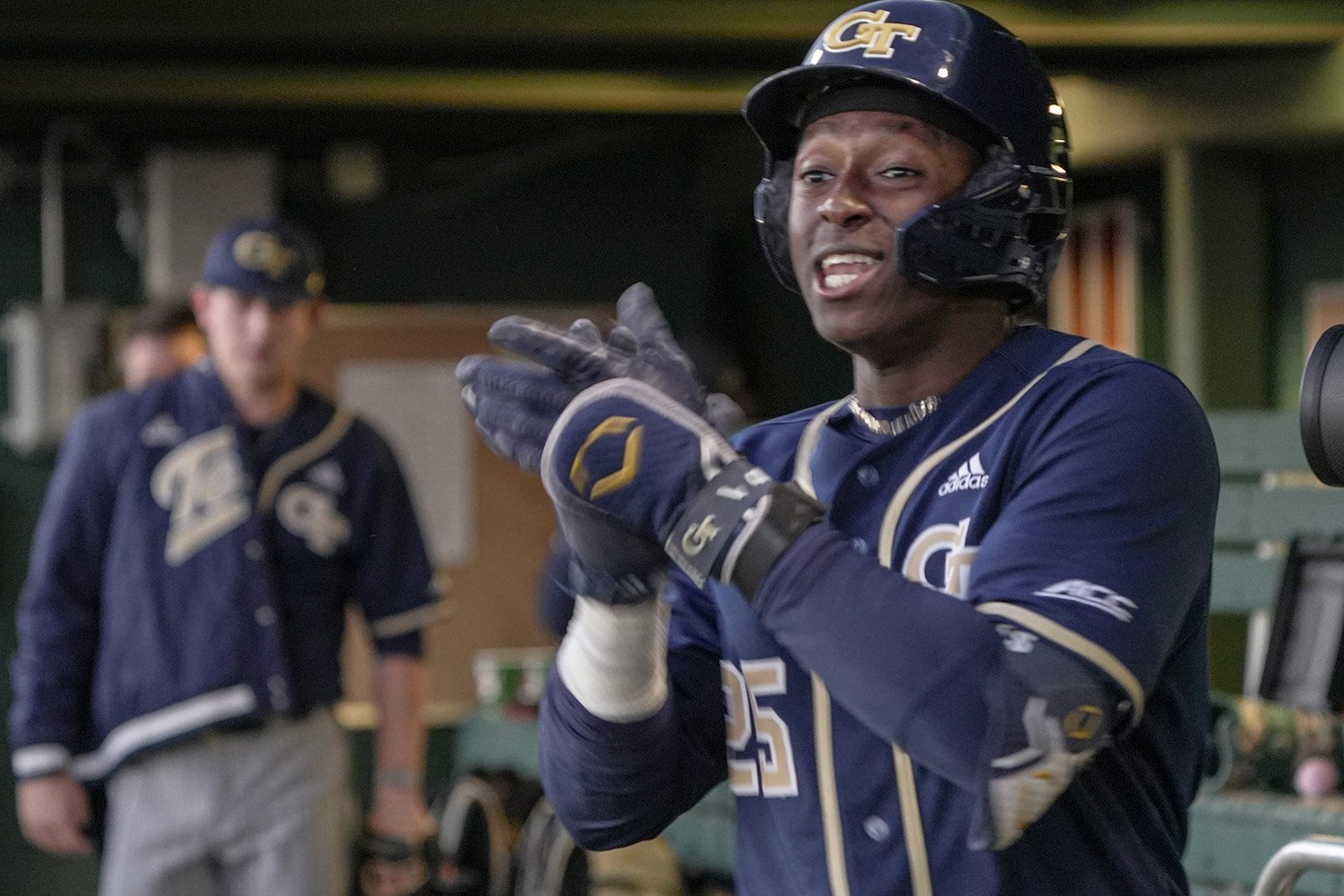 The 2026 MLB Draft is quickly approaching, and the Minnesota Twins find themselves in unfamiliar territory. After securing the third overall selection, Minnesota holds its highest draft pick since taking Royce Lewis with the first overall pick in 2017. With the draft board beginning to take shape, much of the industry expects shortstops Grady Emerson and Roch Cholowsky to come off the board with the first two selections, though there remains debate about which player will ultimately go first overall. That uncertainty could leave the Twins with a fascinating decision at No. 3. According to the Pioneer Press, Charley Walters wrote that “there is little doubt” the Twins are set on selecting Georgia Tech catcher Vahn Lackey. Some evaluators believe Lackey is not only the top catcher in the class, but the best college player available. If the Twins are indeed zeroing in on the Yellow Jacket’s star, the decision would represent both a tremendous opportunity and a calculated gamble. The Case for Drafting Lackey Few players in this draft can match Lackey's combination of production, athleticism, and developmental trajectory. The Georgia Tech junior has dominated college baseball this season, hitting .412 with 20 home runs, 78 RBIs, and an OPS north of 1.300 while leading the Yellow Jackets to one of the best records in the country. His offensive profile checks nearly every box teams look for in a premium position player. Lackey controls the strike zone exceptionally well and consistently puts the ball in play. He has cleaned up a swing that was considered somewhat busy, and he rarely gets beaten by velocity while using the entire field effectively. Scouts believe there is enough raw power in his bat to support annual 20-plus home run production at the professional level, and his increasing ability to elevate the baseball has unlocked another level of offensive impact this season. What makes his profile especially intriguing is that he remains relatively new to his current level of physical development. Lackey was a classic late bloomer in high school. He received little recruiting attention until his senior season and was largely overlooked by scouts because he rarely attended showcase events. As a freshman, Lackey struggled against ACC competition and posted a .174 batting average in conference play. Yet, Georgia Tech remained committed to his long-term development. That patience has paid off in a major way. Each season has brought significant improvement, culminating in one of the most impressive campaigns in college baseball this spring. For organizations that prioritize player development and growth potential, Lackey's story is particularly appealing. He has already shown an ability to identify weaknesses, make adjustments, and maximize his natural tools. The Defensive Value The offensive production alone would make Lackey a top draft prospect, but his defense behind the plate elevates his overall profile. Lackey was named ACC Defensive Player of the Year and has developed into one of the nation's premier defensive catchers. His athleticism stands out immediately. At 6-foot-2 and 215 pounds, he moves exceptionally well for a catcher and displays the agility needed to handle the position at a high level. His arm strength is another significant weapon. Last season, he threw out 14 of 29 attempted base stealers, a remarkable success rate that showcases both arm strength and accuracy. This season, he has thrown out 7 of 31 runners. He also posted a .985 fielding percentage while continuing to refine his receiving skills. Perhaps most importantly, his athleticism provides a potential fallback option if catching ever becomes too demanding. He played 13 errorless games at third base in 2025, giving teams confidence that his bat could remain valuable elsewhere on the diamond if necessary. For a Twins organization that values versatility and defensive flexibility, that added layer of security could be attractive. The Concerns About Taking a Catcher Third Overall As impressive as Lackey's resume may be, there are legitimate reasons for caution. The first concern is positional risk. Catchers carry some of the highest attrition rates in professional baseball. The physical demands of the position often slow offensive development, and even elite amateur catchers can struggle to handle the workload required at the major-league level. Recent draft history provides examples of highly regarded catching prospects who required significant developmental time before reaching their ceilings. Pittsburgh took Henry Davis with the first overall pick in 2021, and he’s accumulated -1.7 rWAR. Adley Rutschman looked like a slam-dunk pick at number one for the Orioles in 2019, but injuries derailed his rapid ascent toward superstardom. Though it looks like he'll stop the trend this year, he's posted fewer wins above replacement (WAR) in each of his big-league seasons than in the one before it. There are also some questions about Lackey's offensive profile. While his power is undeniable, scouts have noted that his swing can produce too many ground balls. Although he has made meaningful improvements in that area this season, professional pitchers may challenge him differently than collegiate competition. Defensively, while his tools are excellent, evaluators still point to occasional lapses in focus and consistency. Those issues are common among young catchers, but they will require continued development. Another factor is organizational fit. The Twins have invested heavily in catching talent in recent years. While drafting for need is rarely advisable at the top of the draft, Minnesota must determine whether Lackey's upside clearly exceeds that of other available options, particularly if a premium shortstop or another impact position player remains on the board. Why the Twins Might Ultimately Be Sold The strongest argument in favor of Lackey may be that his best baseball could still be ahead of him. Most top-three picks arrive with years of national attention and showcase experience. Lackey's path has been different. He entered college as an under-the-radar recruit and has improved dramatically every season since arriving at Georgia Tech. That developmental curve suggests there may still be additional upside. Organizations are constantly searching for players who have not yet reached their ceiling. Lackey's combination of athleticism, intelligence, work ethic, and year-over-year growth makes him one of the more compelling bets in the class. His profile also aligns with traits the Twins have traditionally valued. Minnesota has often targeted players with strong baseball instincts, defensive versatility, and a demonstrated ability to improve. Lackey checks all of those boxes. For the Twins, the decision may come down to a simple question: Do they believe Lackey's future is still ascending? If the answer is yes, Minnesota could be looking at a franchise cornerstone capable of impacting the game on both sides of the ball for years to come. If his development continues on its current trajectory, the Twins may not simply be drafting the best catcher in the class. They may be drafting one of the best players in baseball's next generation. Of course, it could also be a decision that's made for them, if the Chicago White Sox or Tampa Bay Rays take Lackey first. A month and a half out from the draft, it's just beginning to be time to assess choices like this one, as the options come slowly into focus. Will Lackey be Minnesota’s selection at number three? Leave a comment and start the discussion. View the full article
