


DiamondCentric
-
Posts
2,631 -
Joined
-
Last visited
Never
Content Type
Profiles
Forums
Events
News
Tutorials & Help
Major League Baseball Videos
Guides & Resources
Store
Downloads
Gallery
Everything posted by DiamondCentric
-

 For the week, Nashville (5-1) and Biloxi (3-2) were series winners, Wilson fought to a 3-3 draw and Wisconsin fell just short (3-4). Transactions: LHP Rob Zastryzny activated by MLB Brewers from 60-day injured list and minor league rehab RHP Carlos Rodriguez optioned to AAA Nashville by MLB Brewers RHP Wilmer Duarte assigned to DSL Brewers Blue INF Cristian Montilla assigned to DSL Brewers Blue from DSL Brewers Gold RHP Diego Trillo assigned to DSL Brewers Gold and placed on 7-day injured list RHP Manuel Moreno placed on DSL Brewers Blue's 7-day injured list RHP Lonell Downs assigned to DSL Brewers Gold from DSL Brewers Blue and placed on 7-day injured list LHP Daniel Garcia placed on DSL Brewers Gold's 7-day injured list RHP Brailin Aguirrez placed on DSL Brewers Blue's 7-day injured list C Roniel Paulino placed on DSL Brewers Blue's 7-day injured list A trusted source also has an update on C Isais Chavez, who we’ve been expecting to make his stateside debut. And don’t forget that Monday is Opening Day for the Dominican Summer League (DSL), with our 2026 international signees, including infielders Diego Frontado, Jose Rodriguez and Ricki Moneys, all expected to make their minor league debuts. Game Action: Nashville Pre-Game Media Notes Final: Nashville 4, Gwinnett (Braves) 3 Box Score Via the Sounds’ website, game details and we encourage readers to review affiliate write-ups as part of their Link Report routine: Sounds Hook Five This Week Against Stripers The packed game report from Nishant Brahme includes four highlight videos, making our job quite a bit easier. Sunday’s come-from-behind victory puts Nashville into a first place tie with Memphis atop the 20-team International League, half a game ahead of Rochester. The Sounds only sent 19 batters to the plate in the first 6 innings against Gwinnett starter Austin Gomber, but SS Cooper Pratt (1-for-4, SB) and OF Luis Lara (1-for-3, RBI) immediately jumped on the Stripers’ bullpen with back-to-back >95mph singles to start the 7th inning rally from a 3-1 deficit, with 2B Freddy Zamora delivering the clutch 2-out RBI single for the only lead Nashville’s staff would require. Handed that 4-3 advantage, RHPs Craig Yoho (3-up, 3-down, 1 K) and Blake Holub had minimal trouble closing it out, retiring 6 of 7 batters faced, although the Stripers did have the potential game-tying runner on third base (walk, 2 ground outs) when Holub induced the game-ending fly out. Sounds’ Extras: Starting RHP Garrett Stallings delivered an effective shift in spite of heavy early traffic (4 IP, 2 R, 5 H, 2 BB, 5 Ks; 80 pitches), while LHP Jared Koenig had a positive 2nd rehab outing (1 IP, 0 R, 1 infield hit, 0 BB, 0 Ks; max velocity 94.6mph). OF Luis Matos had Nashville’s top offensive line of the day: 1-2, HR, walk, RBI, SB – his 100.3mph solo homer sailed 401 feet to cut the deficit to 2-1 in the 2nd inning. Out-hit 8-6, the Sounds also grounded into 3 double plays, ultimately stranding only 1 baserunner as they went 2-for-3 with runners in scoring position (vs. 3-for-14 for Gwinnett, with 8 left on base, including 5 in the first 2 innings). Next week’s outlook: Nashville (35-22) head down to Jacksonville (32-25) to play six games against the Marlins’ affiliate, commencing on Tuesday. Biloxi Pre-Game Media Notes Rain Out: Biloxi at Columbus Via the Shuckers’ website, rain out details: Shuckers, Clingstones Postponed in Series Finale on Sunday Time will tell whether Biloxi and Columbus will really play 8 games in 6 days from June 16-21 to make up for various rain outs. After this week’s road series win, the club sit 1.5 games behind Montgomery for first place in the Southern League South division. Next week’s outlook: Biloxi (25-23) return home to face Rays’ affiliate Montgomery (27-22), with RHP Manuel Rodriguez the most likely starter after Sunday’s wash out. Wisconsin Pre-Game Media Notes Final: Wisconsin 5, Peoria (Cardinals) 3 Box Score Via the Timber Rattlers’ website, game details: Sunday Win at Home for Wisconsin Wisconsin followed Nashville’s script with a nice comeback victory, as captured in the linked game report and YouTube highlights compiled by the Timber Rattlers’ media team: We’re blessed to also have the Chris Mehring and Jonathan Timm post-game podcast to add more game context and organizational nuggets, featuring comments from Chandler Welch, Luis Castillo, Daniel Dickinson and Manager Nick Stanley. The game turned in a big way in the 6th inning, as RHP Quinton Low escaped a bases loaded jam via swinging strikeout to keep the deficit at 3-2, with 3B Andrew Fischer (4-pitch walk) and OF Josh Adamczewski (8-pitch walk) then triggering the 2-run rally in the bottom half of the inning. 21-year old starting LHP Wande Torres had a respectable outing (5 IP, 3 R, 7 H, 1 BB, 5 Ks), while RHP Chandler Welch (3 IP, 0 R, 2 H, 2 BB, 3 Ks) worked through a 2-on, nobody out 8th inning and leadoff walk in the 9th inning to close out the victory. Veteran C David Garcia struggled at the plate (0-for-4), but threw out an attempted basestealer to help out Welch in the final inning. With the calendar now turning to June, we’ll be checking daily for possible promotion news, especially for the team’s offensive studs: Fischer (1-for-3, HR, walk, RBI; 1.036 OPS), Adamczewski (1-for-3, walk; .988 OPS), Braylon Payne (.937 OPS), Luis Pena (0-for-4; .881 OPS), Eric Bitonti (2-for-4; .863 OPS), Marco Dinges (.843 OPS), Josiah Ragsdale (1-for-4; .833 OPS). Timber Rattlers’ Extras: Let’s once again credit the team’s grit, as they’d already dropped the series with Saturday’s defeat and were missing Payne (last played May 21) and Dinges (last played May 28), but still battled hard for the win. Massive kudos to OF Luis Castillo (2-for-4, HR, 2 RBIs; .766 season OPS) for closing out his best offensive month (.871 OPS in 75 May plate appearances) since July 2024. His 2-run homer tied the game in the 2nd inning. Chiefs’ DH Tre Richardson exited after a hit-by-pitch in the 6th inning, so we wish him a prompt recovery. Next week’s outlook: Wisconsin (26-22) travel to battle Twins’ affiliate Cedar Rapids (26-25) for 6 games, with LHP JD Thompson schedule to start the series opener on Tuesday. Wilson Pre-Game Media Notes Final: Wilson 10, Myrtle Beach (Cubs) 1 Box Score Via the Warbirds’ website, game details: Wilson Soars Past Pelicans in Series Finale While RHP Carlos Carra (5 IP, 0 R, 1 H, 2 BB, 6 Ks) dominated in his best start of 2026, Wilson’s offense was relentless, led by big days for OF Nick Monile (2-for-3, double, 2 walks, 2 RBIs, 3 SBs, 3 runs on wild pitches) and C Kevin Garcia (2-for-6, HR, 3 RBIs). After missing out on 2-on, nobody out and 2-on, 1-out opportunities in the first two frames, Monile walked and scored on a wild pitch in the third inning, then delivered his first career extra-base hit with a 2-out, 2-run double in the fourth inning. Carra’s only difficult frame came while leading 1-0 in the third inning, as he successfully worked around a leadoff triple (ground out, K, HBP, ground out) to put yet another zero on the board. Garcia’s 3-run blast put the game out of reach at 8-0 in the 6th inning: Every Warbird reached base via hit or walk in the contest, which tends to happen when you deliver 9 hits and draw 15 walks. The middle infield of 2B Luis Lameda and SS Brady Ebel drew a combined 8 walks, with Lameda adding a single and a stolen base. Outfielders Jose Anderson (1-for-4, 2 walks) and Handelfry Encarnacion (1-for-4, double, walk, RBI) also had solid days. Warbirds’ Extras: Coming on in long relief, RHP Tyler Renz (3 IP, 1 R, 2 H, 3 BB, 2 Ks) worked through traffic in his second solid outing of the week, after delivering 5 scoreless innings on Tuesday. The once-struggling Wilson offense is now 4th in the 12-team Carolina League in runs per game (5.18), helped out by a team on-base percentage of .355 that’s second in the league. Next week’s outlook: Wilson return home to host Red Sox affiliate Salem, with the first of six games commencing on Tuesday evening. We hope that you enjoy the Minor League Link Report. On Monday, the DSL commences play at 10:00am CST, with Brewers Blue hosting Orioles Black and Brewers Gold playing at Orioles Orange. The Milwaukee Brewers also commence their home series against the Giants at 6:40 PM CST before ACL Brewers (10-12) play at the ACL Dodgers (8-14) at 8:00 PM CST. Organizational Scoreboard including starting pitcher info, game times, MiLB TV links, and box scores Current Milwaukee Brewers Organization Batting Stats and Depth Current Milwaukee Brewers Organization Pitching Stats and Depth View the full article
 -
Blue Jays Clutch Plays: Guerrero's Biggest Hit of the Season
DiamondCentric posted an article in Jays Centre
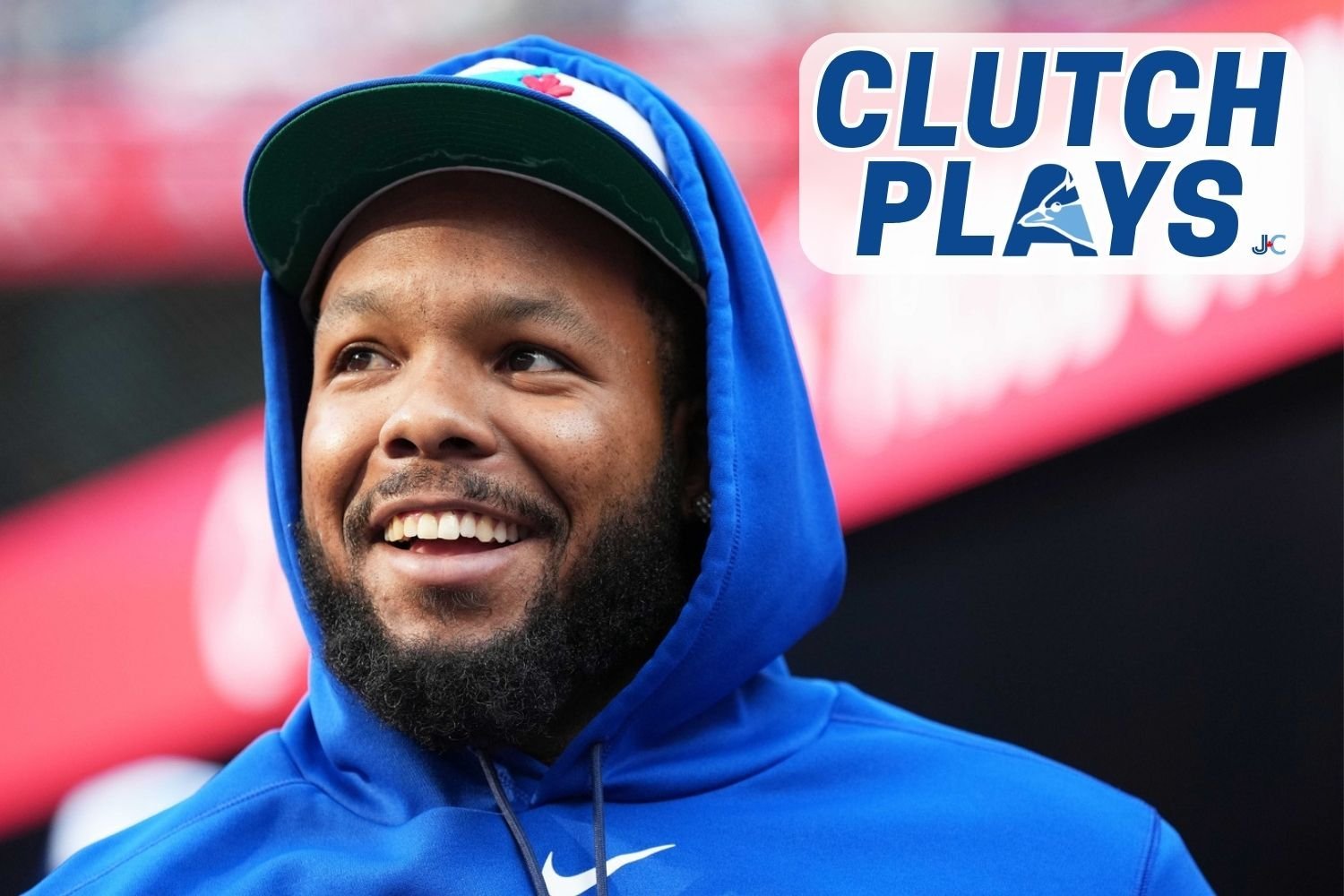 Welcome back to Blue Jays Clutch Plays, a recurring post that highlights the six most pivotal plays (three pitching, three hitting) from the past week of Blue Jays baseball, according to MLB's win probability model. Click here to read last week's edition. The Toronto Blue Jays took two of three from the Miami Marlins to finish off their final homestand of May, but after finally completing the journey back to .500 by taking the first two games of the weekend series in Baltimore, they painfully let one slip away on Saturday and lost a mostly uncompetitive series finale. It was still technically a winning week, but the opportunity was right in front of them to at least remain at .500 with some more distance between themselves and the bottom of the division, and they couldn't take advantage. They have a much-needed day off before a series in Atlanta against the MLB-leading Braves this week. Pitching 3. Yariel Rodríguez: Coby Mayo GIDP, Bot 6, 5/30 (+18.6% WPA) Yariel Rodríguez, who was responsible for the pitching staff's most clutch play of the 2025 regular season, made his first entry onto this season's list by getting a groundball in a key spot. With Toronto clinging to the slimmest of leads and the go-ahead run on base with nobody out, he completely flipped the script of the inning by inducing a 6-4-3 double play on a down-and-away slider. 2. Trey Yesavage: Jeremiah Jackson GIDP, Bot 4, 5/30 (+21.1% WPA) It felt like Trey Yesavage was tapdancing his way out of trouble all afternoon on Saturday. I'm sure he wasn't even thrilled with the location of the pitch that freed him from the fourth inning, but Jeremiah Jackson swatted an elevated slider up the third base line. Kazuma Okamoto turned the unassisted double play to end the frame, and Yesavage would wind up only allowing a single run despite a career-high seven walks. 1. Louis Varland: Connor Norby Strikeout DP, Top 8, 5/27 (+29.4% WPA) The Marlins were running wild in Wednesday's series finale, and what initially seemed like it would be a thorn in the sides of the Blue Jays ended up dooming a brilliant chance that Miami had to come back. With men on the corners and one out against Louis Varland, Connor Norby took a curveball at the top of the zone for strike three. Jakob Marsee took off for second, and if the plan was for that to distract the Jays with Otto Lopez on third, it was not played to perfection. Marsee was hung up following a good throw from Tyler Heineman, Lopez could not score, and the inning was over. The effects of close games are on full display here, as each of the clutch pitching plays from this week is inside the top eight on the season. Hitting 3. Nathan Lukes: RBI Double, Bot 5, 5/27 (+18.3% WPA) I'd be remiss not to mention the extremely long two-out walk Tyler Heineman worked off Michael Petersen to extend the inning and turn the lineup card over for Nathan Lukes, who drilled one up the alley in right-center to score Heineman and tie the game. Lukes's return was a timely shot in the arm for Toronto's lineup; he has hit for a 213 wRC+ since being activated off the IL. 2. Yohendrick Piñango: RBI Single, Bot 5, 5/25 (+18.7% WPA) Unfortunately, this hit preceded a couple of costly Yohendrick Piñango errors in left field that allowed the Marlins to blow the doors off the series opener last Monday, but at the time, he was the only one who came through with an RBI after the Jays stacked baserunners early against Janson Junk. Down in the count, Piñango got to an inside fastball from Junk and took it right back up the middle to put his team on the board. 1. Vladimir Guerrero Jr.: 2-RBI Double, Top 8, 5/29 (+34.2% WPA) Vladimir Guerrero Jr.'s biggest hit of the season put the Blue Jays in as good a position as they'd been in since the opening weekend sweep of the A's. After Kazuma Okamoto and Charles McAdoo homered in the seventh inning to make the game close, Vlad Jr. yanked a sinker down the left field line to score both baserunners and put Toronto on top in the 8th. The Jays continue to own Yennier Cano, who has given up eight earned runs in 5.2 innings against them since the start of last year. This was Guerrero's most impactful hit by WPA since his tiebreaking solo shot in the 7th inning of a rubber match against the Cubs in August 2025. View the full article
 -
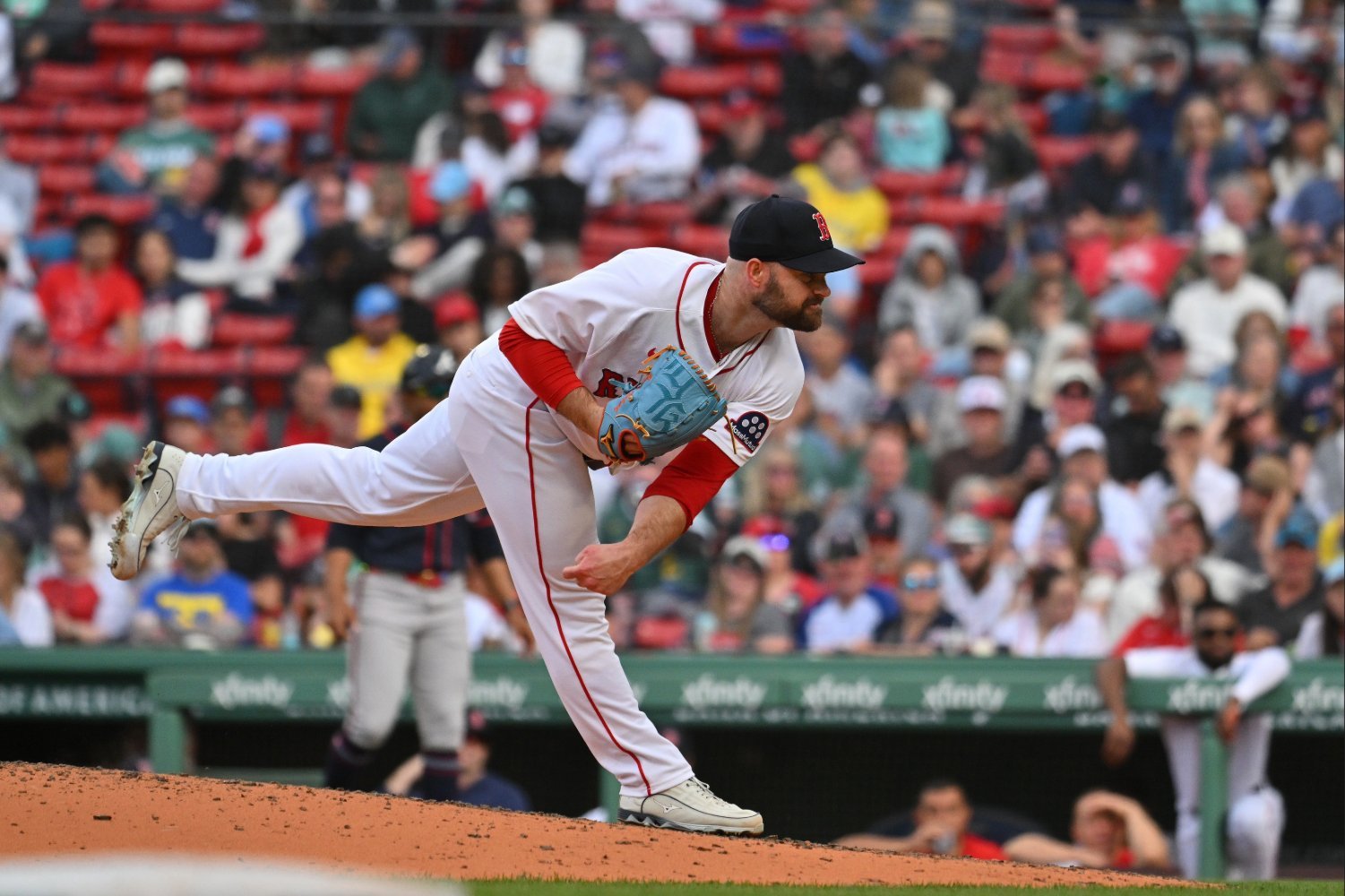 Most of your traditional baseball statistics are descriptive. They tell you what has already happened. Earned run average (ERA) shows how many runs a pitcher allows across nine innings. ERA tends to ruffle some because it fails to consider factors outside of a pitcher’s control, like team defense. A pitcher with a low ERA could be blessed with a strong defense behind him, whereas a pitcher with a high ERA might not be getting bailed out by luck or good gloves. Fielding independent pitching (FIP) was created to isolate a pitcher’s performance. It measures events that pitchers have control over — strikeouts, walks, hit-by-pitches, and home runs — and removes outcomes outside a pitcher’s control. Expected statistics attempt to measure what “should” have happened. Anything with an “x” before it is an expected stat. xERA converts xwOBA to the ERA scale. xwOBA factors how much contact (hits, strikeouts, walks, and hit-by-pitches) and the quality of contact (launch angle, exit velocity, and hard-hit rate) to determine what a player’s wOBA should’ve been. xFIP uses the same equation as FIP, but swaps out the actual number of home runs allowed for the number of fly balls multiplied by the league average home-run-to-fly-ball rate. Expected statistics are not predictive by any means, but including them in our analysis helps us paint a clearer picture of how effective a pitcher was at preventing runs, separate from what happened around them. Among left-handed relievers, the Red Sox have posted a 2.01 ERA, the lowest in the majors. Their 3.38 FIP ranks tenth. Thanks to their strong defense, more balls in play are being converted to outs than expected. Willson Contreras has been phenomenal at first (3 DRS), and Caleb Durbin is one of the best defensive third basemen in the American League. .batable { border-collapse: collapse; font-family: sans-serif; font-size: 14px; width: 100%; } .batable th { background-color: #0d2b5e !important; color: #fff !important; text-align: left; padding: 10px 14px; font-weight: 700; border: 1px solid #000; } .batable td { padding: 9px 14px; border: 1px solid #000; color: #000; } .batable col:first-child { width: 160px; } Player IP K-BB% ERA xERA FIP xFIP Aroldis Chapman 17.2 23.5% 0.51 3.09 1.82 2.94 Jovani Morán 26.2 15.5% 2.03 2.69 3.89 4.17 Tyler Samaniego 17.1 8.3% 1.04 4.89 3.87 4.42 Danny Coulombe 10.0 2.20% 7.20 4.54 5.06 5.46 Boston’s lefty relievers' -1.35 ERA-xERA differential is the lowest in baseball, meaning their ERA is outpacing their expected ERA (3.38) by a considerable margin. Looking ahead, there’s bound to be some regression for the group. Aroldis Chapman (-2.58) and Tyler Samaniego (-3.85) hold the two highest ERA-xERA differentials. Last year, Chapman outperformed his expected stats, and unlike Samaniego, he’s posted the 7th highest strikeout-minus-walk rate in the American League this year. I’m more concerned about Chapman’s drop in velocity, which has been a glaring issue since Opening Day. Jovani Morán has looked sharp, though I feel bad that he’s being charged for runs as the sacrificial lamb opener during Brayan Bello’s starts. Danny Coulombe dealt with an injury (cervical spasms) earlier this year. His 2.20% K-BB% is concerning, and he hasn’t shown an ability to strike guys out or induce ground balls. The team’s minus -0.59 FIP-xFIP differential isn’t as substantial, and the team’s defense has been one of the bright spots in an otherwise not-so-great season. I just threw a ton of numbers at you. (I can’t help it; I’m a mathlete!) What does this all mean? So far, the Red Sox’s left-handed relievers have been outperforming, and they’re bound for some regression. How much is the real question. Expected stats are fun, but no single equation should carry all the weight in an analysis. Despite Trevor Story’s injury, the team’s infield defense is stronger without him, and I think that it will hold up better than expected. Sox fans have witnessed a revolving door of relievers toss in games, but among the qualified players, lefties only account for three of the seven pitchers, and Justin Slaten’s return bolsters the bullpen. Even if one of the lefties regresses, he should help them pick up the slack. View the full article
 -
What are your Marlins vs. Nationals series predictions?
DiamondCentric posted an article in Fish On First
 Once again in 2026, I will be monitoring Miami Marlins predictions from our valued SuperSubs, Fish On First staffers and livestream guests. Individual article pages like this one will be created prior to every Marlins series and featured prominently on the FOF site. Consistent participation is key if you want to win this annual contest. Submissions only take a few seconds. Scoring system A "perfect" series is worth three points: Earn one point for predicting which team will win the upcoming series Earn one point for predicting the precise number of victories for each team Earn one point for predicting the “Series MVP” who accumulated the highest win probability added (WPA) during the series as calculated by FanGraphs (could pick a player from either team) FOF SuperSub Nicholas Milton is currently atop the 2026 season leaderboard, which will be updated between every Marlins series. If you are a SuperSub, leave a comment with your Prediction Time picks on this page, or join the Marlins Discord Server and submit there. We'll feature them on the upcoming Fish On First LIVE episode and track your points throughout the season! Any picks submitted prior to the first pitch of the series opener will be counted. If you are not a SuperSub, please consider signing up here to support the FOF staff. Series preview notes Probable starting pitchers: RHP Sandy Alcantara (MIA) vs. RHP Cade Cavalli (WSH) on Monday TBA (MIA) vs. RHP Miles Mikolas (WSH) on Tuesday Probably RHP Ryan Gusto RHP Max Meyer (MIA) vs. LHP Andrew Alvarez (WSH) on Wednesday The Marlins rank 20th in MLB with a 96 wRC+ and 14th in MLB with a 3.97 FIP. They are 4-6 in their last 10 games and have a 8-19 record on the road this season. The following Marlins players are on the injured list: Griffin Conine (10-day IL), Ronny Henriquez (60-day IL), Janson Junk (15-day IL), Adam Mazur (60-day IL), Eury Pérez (15-day IL) and Robby Snelling (60-day IL). The Nationals rank fourth in MLB with a 110 wRC+ and 28th in MLB with a 4.74 FIP. They are 6-4 in their last 10 games and have a 12-17 record at home this season. The following Nationals players are on the injured list: Josiah Gray (60-day IL), DJ Herz (60-day I), Jake Irvin (15-day IL), Max Kranick (60-day IL), Ken Waldichuk (60-day IL) and Trevor Williams (60-day IL). View the full article
 -
 Fish On First staffers react to the latest Miami Marlins series and prepare you for what lies ahead. Sunday's show was hosted by Ely Sussman and featured panelists Kevin Barral, Nate Karzmer, Alex Carver and Alex Krutchik. The following topics were covered: An awful weekend series in New York Injuries to Janson Junk, Andrew Nardi and potentially Josh Ekness Owen Caissie's month-to-month improvement What to expect from Ryan Gusto as he enters the starting rotation Previewing and predicting the next series against the Washington Nationals You can find Fish Unfiltered and Fish On First LIVE on the Fish On First YouTube channel, Apple Podcasts, Spotify or wherever else you get your pods. Our next FOF LIVE episode will be Wednesday at approximately 7:00 p.m. ET following the Marlins-Nationals series finale. View the full article
 -
 In a day highlighted by close losses, the Triple-A El Paso Chihuahuas were walked off by Albuquerque 8-7, the Double-A San Antonio Missions dropped a 6-5 decision to Corpus Christi, the High-A Fort Wayne TinCaps lost to South Bend 7-5 despite a quality start from Jamit Hitt and the Low-A Lake Elsinore Storm cruised past Inland Empire 11-6. Padres Minor-League Transactions No roster moves. After 3-Run Ninth Inning, Chihuahuas Get Walked Off By Isotopes A three-run top of the ninth inning tied the game, but the Triple-A El Paso Chihuahuas lost to the host Albuquerque Isotopes 8-7 as Charlie Condon hit a walk-off homer with one out in the bottom of the ninth. The Chihuahuas went 2-4 in the six-game series. Nick Solak, Jase Bowen, Marcos Castanon and Carlos Rodriguez each had two hits, while Will Wagner had a pinch-hit two-run homer for the Chihuahuas. Solak and Bowen each homered and scored twice. Behind Bowen's team-leading 13th homer, which is second-most in the Pacific Coast League, and Solak's sixth of the season, the Chihuahuas built a 4-0 lead in the top of the sixth. But the Isotopes got one back in the bottom of the sixth, then poured across five runs in the seventh and another in the eighth to take a 7-4 advantage. In the top of the ninth, Castanon drew a one-out walk and Rodriguez smoked a two-out triple to pull the Chihuahuas within 7-5. Wagner then pinch-hit and lined his third homer of the season to right, tying the game 7-7. Condon then hit the first pitch from right-hander Justin Yeager for a no-doubter to right-center. Chihuahuas left-hander Fernando Sanchez turned in his second shutout start of the month since converting from a relief role. Sanchez went five scoreless innings, allowing two hits and two walks without striking anyone out. He also went five scoreless in his first May start, May 6 vs. Midland. EP_0531.mp4 Player AB R H RBI BB K Pablo Reyes, 2B 4 0 0 0 0 2 Samad Taylor, LF 4 0 0 0 0 2 Nick Solak, DH 4 2 2 1 0 1 Jase Bowen, CF 4 2 2 1 0 0 Marcos Castañon, 1B 3 1 2 1 1 1 Mason McCoy, SS 4 0 0 0 0 2 Carlos Rodríguez, RF 4 1 2 2 0 1 Victor Duarte, C 3 0 0 0 0 1 Will Wagner, PH 1 1 1 2 0 0 Anthony Vilar, C 0 0 0 0 0 0 Clay Dungan, 3B 3 0 0 0 1 0 Player IP H R ER BB K HR Fernando Sanchez 5 2 0 0 2 0 0 Garrett Hawkins 1 0 1 1 2 2 0 Kyle Hart 1 5 5 5 0 1 2 Ethan Routzahn 1 1 1 1 2 1 0 Justin Yeager 1/3 1 1 1 0 0 1 Ninth-Inning Rally Comes Up Shy As Missions Lose Tirso Ornelas had three hits and two RBIs and a ninth-inning rally came up just short as the host Double-A San Antonio Missions fell to the Corpus Christi Hooks 6-5. The teams split the six-game series. Ethan Salas, Padres Mission's No. 1 prospect, went 2-for-4 and drove in a run. There were two outs in the bottom of the ninth and the Missions trailed 6-4 when Salas laced his 10th double of the season and was replaced by pinch-runner Ryan Jackson. After Romeo Sanabria walked, Ornelas singled to right, scoring Jackson and moving Sanabria to third. Braedon Karpathios walked to load the bases, but Luis Verdugo grounded out after a pitching change to end the game. Missions left-handed starter Jagger Haynes, Padres Mission's No. 11 prospect, allowed four runs on five hits in 4⅔ innings, walking three and striking out six. It was a back-and-forth game as the Hooks scored twice in the top of the third, then the Missions one each in the bottom of the third and fourth, before each team scored twice in the fifth. The Hooks took a 6-4 lead with two more in the top of the seventh. SA_0531.mp4 Player AB R H RBI BB K Carson Tucker, 2B 5 0 1 0 0 2 Ethan Salas, C 4 0 2 1 0 1 Ryan Jackson, PR 0 1 0 0 0 0 Romeo Sanabria, 1B 3 2 1 0 1 1 Tirso Ornelas, DH 5 1 3 2 0 1 Braedon Karpathios, RF 2 0 1 1 3 0 Luis Verdugo, 3B 4 0 0 1 1 1 Kai Murphy, LF 4 0 0 0 0 0 Francisco Acuna, SS 3 1 1 0 0 1 Kai Roberts, CF 3 0 0 0 0 3 Albert Fabian, PH 1 0 0 0 0 0 Player IP H R ER BB K HR Jagger Haynes 4 2/3 5 4 4 3 6 0 Andrew Thurman 1 1/3 2 2 2 0 1 0 Omar Cruz 1 1 0 0 0 0 0 Andrew Dalquist 2 0 0 0 0 2 0 Jamie Hitt's Quality Outing Can't Prevent TinCaps From Falling Despite a quality start from left-hander Jamie Hitt, the High-A Fort Wayne TinCaps watched as the host South Bend Cubs scored six late runs to pull out a 7-5 victory. The TinCaps, who put together a ninth-inning rally, went 1-5 in the six-game series. Hitt threw 96 pitches in going 6⅔ innings, both season highs, allowing three runs on seven hits, including a homer, with four walks and three strikeouts. Left-hander Javier Chacon gave up two runs on a hit and four walks without recording an out and right-hander Tucker Musgrove, Padres Mission's No. 14 prospect, gave up two unearned runs in the final 1⅓ innings while fanning four. The TinCaps jumped out to a quick 3-0 lead in the top of the first inning. Justin DeCriscio and Kasen Wells got things started with back-to-back doubles for a 1-0 lead, then Lamar King Jr. reached on an error that put Wells on third. King stole second and, after two strikeouts, Kavares Tears tripled to right to bring both home. It remained that way until South Bend scored one in the fourth, then four in the seventh to take the lead and two more in the eight for a 7-3 advantage. The TinCaps put together a ninth-inning rally as Tears walked, Zach Evans had a one-out single and Oswaldo Linares walked to load the bases. Jake Cunningham pinch-hit with two outs and walked to bring in a run and King followed suit to make it 7-5. But a pitching change stopped the rally as Alex McCoy hit a game-ending grounder. DeCriscio had three of the TinCaps' seven hits. FW_0531.mp4 Player AB R H RBI BB K Justin DeCriscio, SS 5 1 3 0 0 0 Kasen Wells, CF 4 1 1 1 0 1 Jake Cunningham, PH 0 0 0 1 1 0 Lamar King Jr., 1B 3 1 1 1 2 0 Alex McCoy, DH 4 0 0 0 0 2 Jack Costello, LF 4 0 0 0 0 2 Kavares Tears, RF 3 1 1 2 1 1 Rosman Verdugo, 2B 3 0 0 0 1 1 Zach Evans, 3B 3 1 1 0 1 0 Oswaldo Linares, C 3 0 0 0 1 0 Player IP H R ER BB K HR Jamie Hitt 6 2/3 7 3 3 4 3 1 Javier Chacon 0 1 2 2 4 0 0 Tucker Musgrove 1 1/3 2 2 0 0 4 0 Early Eruption Sends Storm To Easy Victory Ryan Wideman, Kerrington Cross and Jose Verdugo each drove in a pair of runs as the host Low-A Lake Elsinore Storm rolled to an 11-6 victory over the Inland Empire 66ers. The Storm won five times in the six-game series. Wideman, Padres Mission's No. 5 prospect, had a pair of doubles among his three hits and also scored three times. Dylan Grego also had three of the Storm's 14 hits and scored three runs. Wideman, Cross and Verdugo each hit in the top three spots Sunday. Cross and Qrey Lott hit home runs, both in the second inning. Storm right-handed starter Carlos Medina went five innings, allowing three runs on seven hits and striking out a season-high seven. Medina, who made his pro debut this year, struck out six on April 15 against Stockton in 3⅔ relief innings. The Storm scored once in the first, five times in the second and four more in the third for a 10-0 lead. LE_0531.mp4 Player AB R H RBI BB K Ryan Wideman, CF 5 3 3 2 0 0 Kerrington Cross, 1B 4 1 2 2 1 2 Jose Verdugo, SS 4 2 1 2 0 0 Yoiber Ocopio, C 4 0 2 1 1 0 Bradley Frye, 3B 5 0 1 1 0 1 Yimy Tovar, 2B 4 0 0 0 1 0 Qrey Lott, LF 5 1 1 1 0 1 Dylan Grego, DH 4 3 3 0 0 0 Conner Westenburg, LF 3 1 1 0 0 0 George Bilecki, RF 0 0 0 0 1 0 Player IP H R ER BB K HR Carlos Medina 5 7 3 3 0 7 0 Brandon Langley 1 1 0 0 0 1 0 Joseph Herrera 1 1 0 0 1 0 0 Sean Barnett 1 1 0 0 1 1 0 Cal Riehl 2/3 2 3 3 1 1 2 Carson Swilling 1/3 1 0 0 1 0 0 Top 20 Prospect Performance Ethan Salas: 2-for-4, 2B, RBI, K Kash Mayfield: DNP Miguel Mendez: DNP Kruz Schoolcraft: DNP Ryan Wideman: 3-for-5, 2 2B, 2 RBI, 3 R, SB Jorge Quintana: DNP Ty Harvey: On injured list Kale Fountain: Injured, out for season Braedon Karpathios: 1-for-2, RBI, 3 BB Lamar King Jr.: 1-for-3, RBI, 2 BB, R, SB Jagger Haynes: 4⅔ IP, 5 H, 4 R, 4 ER, 3 BB, 6 K Alex McCoy: 0-for-4, 2 K Truitt Madonna: DNP Tucker Musgrove: 1⅓ IP, 2 H, 2 R, 0 ER, 0 BB, 4 K Garrett Hawkins: 1 IP, 0 H, 1 R, 1 ER, 2 BB, 2 K Michael Salina: DNP Eric Yost: DNP Rosman Verdugo: 0-for-3, BB, K Bryan Balzer: DNP Deivid Coronil: DNP View the full article
 -
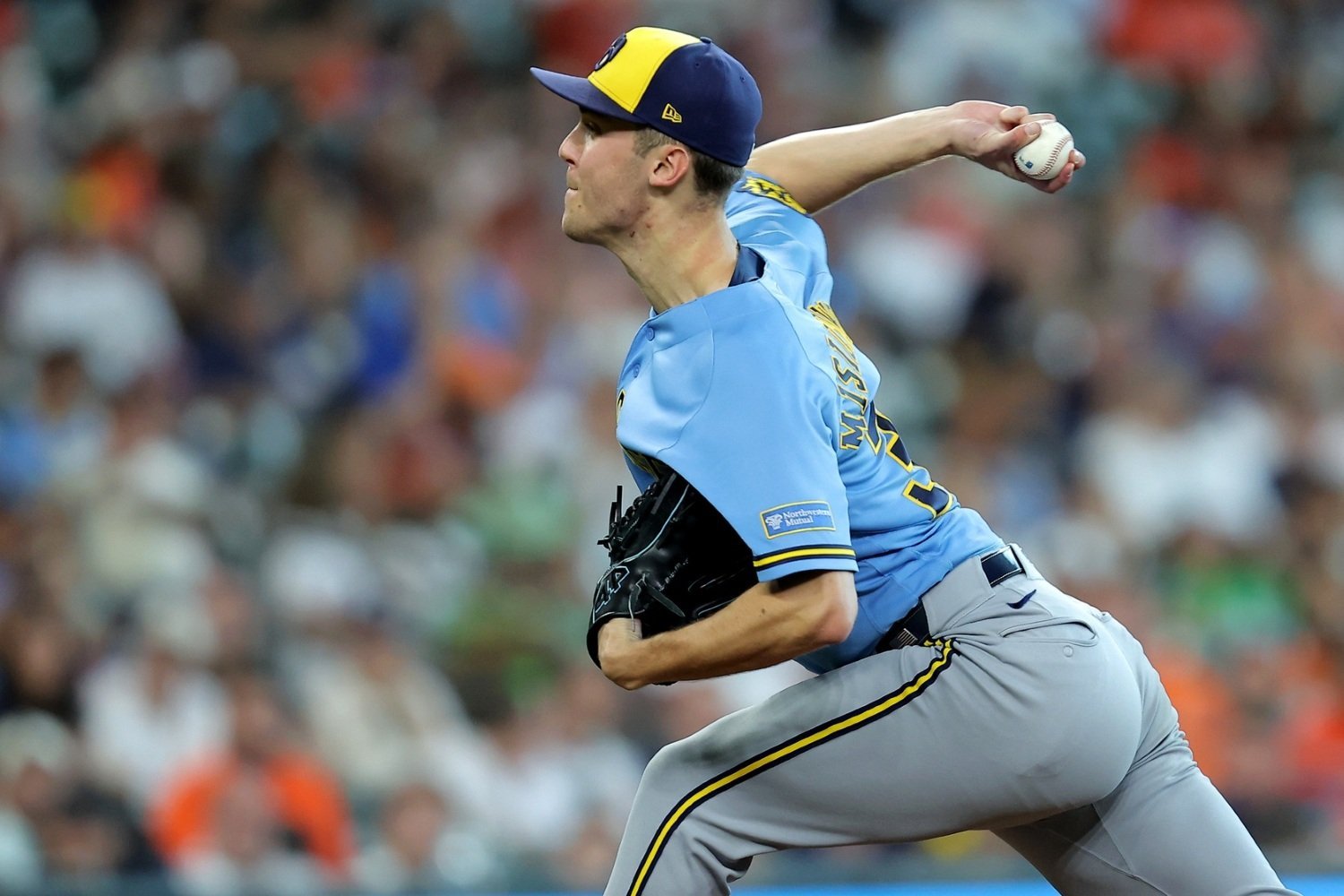 Weekly Snapshot Record Last Week: 5-1 (Overall: 35-21) Runs Scored Last Week: 22 Runs Surrendered Last Week: 15 Standing: 1st in NL Central Game 51 (5/25) | MIL 5, STL 1 Game 52 (5/26) | MIL 6, STL 0 Game 53 (5/27) | MIL 2, STL 1 Game 54 (5/29) | MIL 5, HOU 4 Game 55 (5/30) | HOU 9, MIL 2 Game 56 (5/31) | MIL 2, HOU 0 Game 51 | Brewers 5, Cardinals 1 MIL Starter: Jacob Misiorowski (7.0 IP, 2 H, BB, ER, 12 K) Top Performers: Aaron Ashby (2.0 IP, 0 H, 0 BB, 0 R, 1 K) Andrew Vaughn (3 H, 2 2B, RBI) Christian Yelich (2 H, HR, 2 RBI) Jacob Misiorowski continued to dazzle with his start on Monday, despite his long scoreless inning streak being snapped. He pitched seven brilliant innings against St. Louis, striking out 12, while the Brewers jumped on Matthew Liberatore early and never looked back. Yelich’s 2-run home run (+14.6 WP%) Game 52 | Brewers 6, Cardinals 0 MIL Starter: Kyle Harrison (6.0 IP, 4 H, 0 BB, 0 ER, 2 K) Top Performers: Christian Yelich (3 H, 2B) William Contreras (2 H, 2B, 2 RBI) Garett Mitchell (H, HR, 3 RBI) The 1-2 punch of Kyle Harrison and Misiorowski was effective in its second leg on Tuesday, as behind Harrison’s six strong innings, the Brewers captured the series. With the bats, both Garrett Mitchell and Jake Bauers went deep, and Christian Yelich’s return to the leadoff spot saw him get on base three times. Jake Bauers’s team-leading eighth home run (+12.5 WP%) Game 53 | Brewers 2, Cardinals 1 MIL Starter: Chad Patrick (4.0 IP, 5 H, BB, ER, 4 K) Top Performers: Shane Drohan (2.0 IP, H, 0 BB, 0 R, K) Aaron Ashby (2.0 IP, H, BB, 0 R, 2 K) Trevor Megill (1.0 IP, H, 0 BB, 0 ER, K, SV) It looked as if Cardinals starter Dustin May was not only going to salvage the series for St. Louis on Wednesday, but make history while doing so. He shut down the Brewers offense through seven innings, carrying a no-hitter into the eighth inning before a Mitchell double broke up the no-no. The Brewers then seized the opportunity, scoring two runs in quick fashion, and snagging a signature comeback win. Christian Yelich’s RBI knock (+30.0 WP%) Game 54 | Brewers 5, Astros 4 MIL Starter: Coleman Crow (4.0 IP, 4 H, 2 BB, 2 ER, K) Top Performers: Jackson Chourio (H, BB, HR, 2 RBI) DL Hall (2.0 IP, 0 H, 2 BB, 0 ER, 3 K) Trevor Megill (1.0 IP, 0 H, 0 BB, 0 R, 2 K, SV) The action shifted to Houston after an off day on Thursday, with Coleman Crow taking the ball for his third start of the season. He’d end up surrendering four runs over his four innings (two of them unearned), but for the second straight game, the Brewers battled back. The bullpen would keep the Astros offense in check after Crow’s exit, and eventually, the Brewers would tie the game in the eighth, then win it in the 10th. Jackson Chourio’s 2-run home run (+17.0 WP%) Game 55 | Astros 9, Brewers 2 MIL Starter: Brandon Sproat (4.1 IP, 6 H, 0 BB, 5 ER, 4 K) Top Performers: Andrew Vaughn (2 H) Saturday’s contest was all Astros, who knocked around Brandon Sproat and Carlos Rodriguez. Peter Lambert, meanwhile, limited the Brewers' bats to just two runs, and then the struggling Astros bullpen was even better behind him, allowing nothing. Jackson Chourio drives in a run (+11.1 WP%) Game 56 | Brewers 2, Astros 0 MIL Starter: Jacob Misiorowski (7.0 IP, 3 H, 0 BB, 0 R, 8 K) Top Performers: David Hamilton (H, BB, 3 SB) Jake Bauers (H, HR, 2 RBI) Andrew Vaughn (2 H, 2B) Jacob Misiorowski was back on the mound for his second outing of the week, and again, he turned in seven magnificent innings. This time it was to the tune of eight strikeouts and no runs, capping off his near-historic month of May. Jake Bauers, on the other hand, provided all the offense for the Brewers, as his 9th home run of the season was all the offense the Brewers needed to capture the series in Houston. Jake Bauer sends one out (+20.8 WP%) Transactions: 05/31/26 - Transferred LHP Angel Zerpa from the 15-day injured list to the 60-day injured list. 05/31/26 - Activated LHP Rob Zastryzny from the 60-day injured list. 05/31/26 - Optioned RHP Carlos Rodriguez to AAA Nashville. 05/29/26 - Sent LHP Jared Koenig on a rehab assignment to AAA Nashville. 05/28/26 - Signed free agent RHP Bryce Schaum to a minor league contract. 05/28/26 - Signed free agent RHP Yancarlos Vasquez to a minor league contract. 05/28/26 - Signed free agent RHP Deivy Gonzalez to a minor league contract. 05/27/26 - Signed free agent LHP Noel Cepeda to a minor league contract. 05/26/26 - Placed RHP Logan Henderson on the 15-day injured list with a lower back strain. (Retroactive to May 23, 2026) 05/26/26 - Signed free agent RHP Manuel Davila to a minor league contract. Looking Ahead: Monday, 6/1 - Giants @ Brewers - 6:40 PM CDT Tuesday, 6/2 - Giants @ Brewers - 6:40 PM CDT Wednesday, 6/3 - Giants @ Brewers - 6:40 PM CDT Thursday, 6/4 - Giants @ Brewers - 1:10 PM CDT Friday, 6/5 - Brewers @ Rockies - 7:40 PM CDT Saturday, 6/6 - Brewers @ Rockies - 8:10 PM CDT Sunday, 6/7 - Brewers @ Rockies - 2:10 CDT View the full article
 -
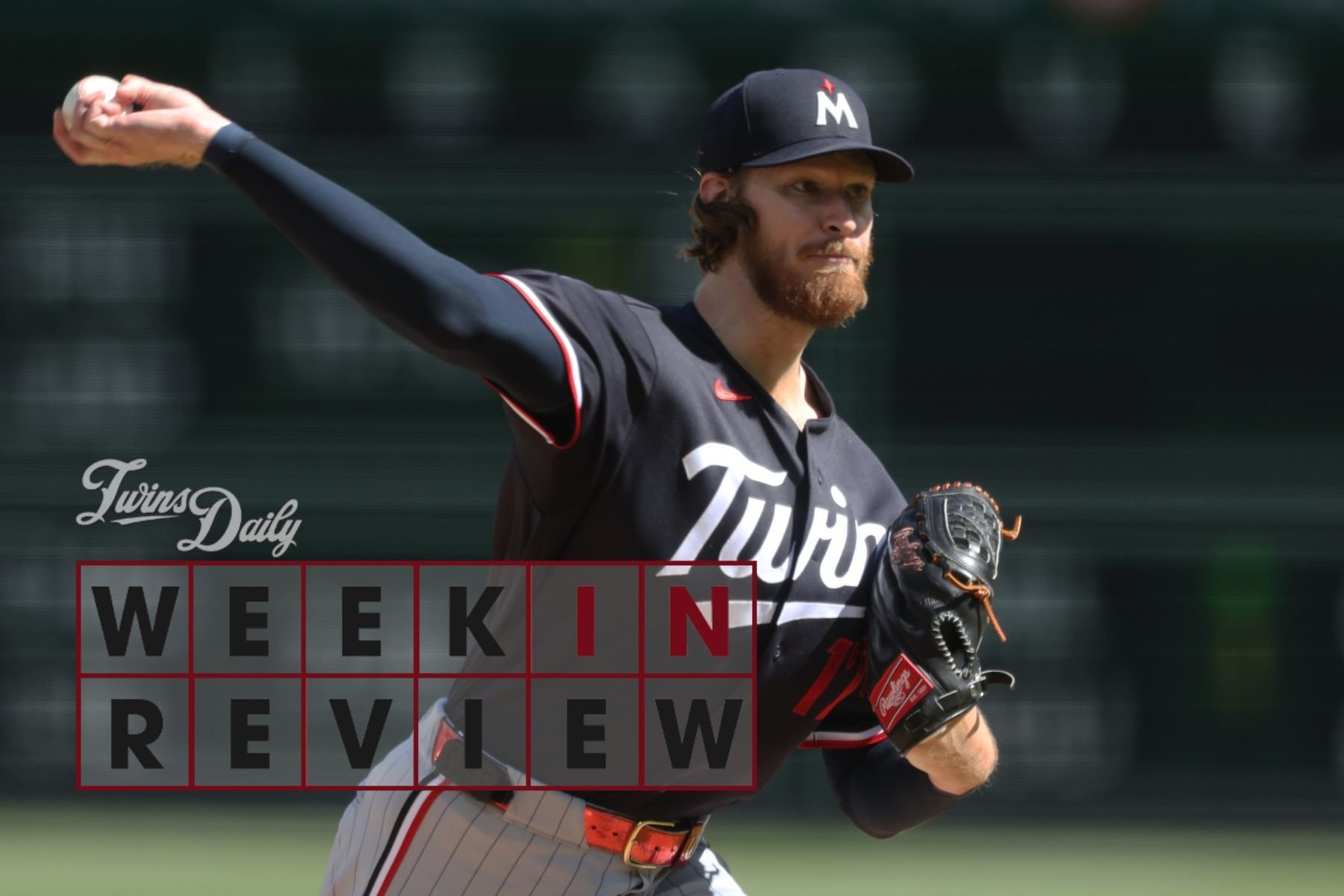 The Weekly Nutshell: The past week represented an interesting opportunity for the Minnesota Twins to match up against a couple of franchises in similar positions. The White Sox and Pirates are also lower-budget teams that are focused on development and building toward the future while also trying to stay competitive in the present. During these two series, the Twins looked to be miles behind both opponents. They lost six of seven games, with the only win coming in a laborious 11-inning affair on Tuesday. An increasingly injury-ravaged and filler-packed pitching staff gave up nine-plus runs on three separate occasions as the team's biggest strength from the first third of the season lapsed into a liability. Now the Twins will limp back to Target Field on a five-game losing streak, hoping to capture any kind of positive energy with the season sinking back into darkness. Weekly Snapshot: Mon, 5/25 through Sun, 5/31 *** Record Last Week: 1-6 (Overall: 27-33) Run Differential Last Week: -25 (Overall: -21) Standing: 3rd Place in AL Central (6.5 GB) Latest Game Results Game 54 | CWS 3, MIN 1: Twins Come Out on Losing End of Chi-Town Pitching Duel Martin, Bell, Clemens: 0-12 Game 55 | MIN 5, CWS 3 (11): Lee's Clutch Three-Run Double Secures Win in Extras Ryan: 7.2 IP, 2 ER, 5 H, 0 BB, 9 K Game 56 | CWS 15, MIN 2: Regression Hits Like Load of Bricks in Massive Blowout Orze, Adams: 2.2 IP, 8 ER, 2 H, 2 BB, 3 K Game 57 | CWS 6, MIN 2: Walks, Mistakes Cost Twins Early in Disappointing Series Finale Woods Richardson: 2.2 IP, 5 ER, 5 H, 3 BB, 4 K Game 58 | PIT 6, MIN 5: Reynolds Walks Off Rogers with Two-Run Homer in Ninth Inning Larnach: 2-4, HR, 2 RBI Game 59 | PIT 10, MIN 9: Fierce Comeback Effort Fall Short After Ober Digs Big Early Hole Ober: 4.2 IP, 8 R (7 ER), 12 H, 1 BB, 3 K Game 60 | PIT 9, MIN 3: Pirates Rough Up Tiwns Pitching Once Again to Seal Sweep at PNC Matthews: 4.1 IP, 7 ER, 6 H, 2 BB, 7 K IF YOU'D RATHER LISTEN TO THE WEEK IN REVIEW THAN READ IT, YOU CAN GET IT IN AUDIO FORM! FIND THE LATEST EPISODE ON OUR PODCAST PAGE, AS WELL AS ON APPLE AND SPOTIFY. SUBSCRIBE TO OUR CHANNELS SO YOU DON'T MISS OUT! NEWS & NOTES The Twins already have Mick Abel and Alan Roden — two key pieces acquired at last year's trade deadline — on the injured list indefinitely, and they've seen Taj Bradley sidelined for a spell. On Friday, another hopeful future fixture from that deadline class landed on the shelf, with Kendry Rojas placed on the 15-day IL due to elbow soreness. The injury is being billed as inflammation, and Joe Ryan's recent example taught us not to overreact, but this is certainly ominous news for Rojas, whose health history was part of the reason behind Toronto's willingness to give up his promising arm in the Louis Varland trade. Stepping back into the rotation on short notice for Rojas was Simeon Woods Richardson. Unfortunately, he picked up right where he left off, coughing up five earned runs on five hits and three walks in 2 ⅔ innings. At that point, the Twins had seen enough: they designated Woods Richardson for assignment on Saturday, exposing the 25-year-old to waivers and potentially losing him for nothing. A major downfall from the strong finish last year, and from my view a bit of a questionable decision. One day after designating Woods Richardson for assignment, the Twins lost another former rotation anchor, with Bailey Ober also heading to the injured list due to elbow inflammation. After impressively giving up just five homers through 52 innings in his first nine starts, Ober had given up seven in his past three, and he got flat-out crushed by the Pirates on Saturday. We'll see how long he's out, and we'll see if Woods Richardson is able to get through waivers and stick around, because the depth would be even handier now. The Twins selected the contract of right-hander Mike Paredes from St. Paul to replace Ober on the roster. Paredes is a fun story as a former 18th-round draft pick out of high school who has turned himself into, if not a prospect, at least an intriguing arm who has captured the Twins' attention. Working as a 4-5 inning starter with the Saints, the 25-year-old posted a 2.70 ERA and 25-to-5 K/BB ratio in May, and he also has plenty of experience pitching in relief. Paredes made his MLB debut on Sunday, shaking off early control issues to allow just one earned run in 3 ⅔ innings. In other pitching moves, Travis Adams was sent down and called back up, while John Klein was called up and sent back down. Kody Funderburk also returned to the fold from Triple-A. The Twins, who've already used 18 pitchers in relief this year (not counting Orlando Arcia) are in a constant churn to keep fresh arms at their disposal. HIGHLIGHTS The Joe Ryan experience continues to be a very enjoyable one. He turned in a fourth consecutive excellent outing in the wake of his early-May elbow scare, holding the White Sox to two runs over 7 ⅔ innings with zero walks and nine strikeouts. As so much goes amiss in the rotation around him, Ryan has been beyond steady, putting up quality starts in seven of his past nine turns while seemingly looking better each time out. He ranks fifth among MLB starters in fWAR and appears very much on track to make a second straight All-Star team. It's a little bittersweet that, as Ryan excels and the Twins unravel, the biggest implication of his success is what it means for his trade value rather than this team's outlook. It was an interesting week for Kody Clemens. On Wednesday he made his first professional start in center field, and then he was back there three times in the next four days. To his credit, Clemens mostly held his own in the surprising assignment, and he also delivered a power-packed week at the plate with two homers, two triples and a double. Finally, Brooks Lee deserves a shout out. He came through with the clutch three-run double in extras to lift the Twins in their lone victory of the week, and also homered three times, pushing his season total to eight. Lee's output this season has been highly sporadic, and that was the case again last week — he was 2-for-21 with one walk outside of those four extra-base hits — but the occasional power flurry is welcome and it's nice to see him at least holding his own at the plate with an OPS that's been hovering around average. If he's going to keep batting second and playing third base, he'll need to meet a higher bar for consistency. LOWLIGHTS Rojas is hurt. Ober is hurt. Abel remains sidelined. Bradley is still fresh off the injured list, but had his shortest start of the season on Friday (4 IP, 5 ER) after being pushed back a day. And now Woods Richardson is out the door. The rotation has been one of the biggest strengths and stabilizers for the Twins over the first two months, but has taken a quick and drastic turn for the worst. Even in the healthier contingent, things are not trending well aside from Ryan. Zebby Matthews got knocked around by the Pirates on Sunday, coughing up seven earned runs in 4 ⅓ innings. It was his second straight start allowing multiple homers, succumbing to what has largely been his kryptonite as an MLB pitcher. He's got to keep the ball in the yard. Connor Prielipp is bogging down in his own introduction to the big leagues. After posting a shiny 2.88 ERA through his first five starts, Prielipp has turned in back-to-back rough outings, including his latest against the White Sox: 4.1 IP, 6 ER, 8 H, 3 BB, 5 K. The erratic performance included a pair of wild pitches. Prielipp's ability and raw stuff have never been in doubt. The big question is how he will handle throwing 85-90 pitches every fifth day with an arm that hasn't been conditioned for such rigors. Hopefully what we're seeing now is a temporary stumble rather than a sign of Prielipp struggling to endure the taxing workload of an MLB starting pitcher. As the pitching staff wears down, Minnesota's offense is not proving capable of keeping pace with the opposition. In these seven games, they were outscored by 25 and out-hit by by 23. The White Sox and Pirates went 12-for-13 on stolen bases (including 5-for-5 against Victor Caratini on Saturday) while the Twins went 1-for-3. Minnesota's hitters struck out 67 times against 13 walks. There are too many non-factors in the lineup on a day-to-day basis. The Twins are going out of their way to keep Austin Martin in right field even as his production falls off a cliff — he went 1-for-22 with a walk in the past week and his OPS dropped by 187 points in the month of May. Using Martin routinely in right field against right-handed pitchers, against whom he has a sub-.650 OPS, is a glaring sign of this offense's shortcomings and lack of optimization. So too is Josh Bell batting third, as he did on Saturday despite an OPS that had nearly dropped below .600. He did deliver three RBIs in that game but Bell has been a major liability while hitting in the middle of the order. The Twins hoped he could bring both power and discipline as a veteran presence but in May, Bell managed just two home runs with 30-to-3 K-BB ratio in 102 plate appearances. He entered play on Sunday tied with Pittsburgh's Marcell Ozuna for the worst fWAR among qualified big-leaguers at negative-0.8. Trevor Larnach, another early-season success story, is slumping with a deteriorating plate approach: he went 3-for-24 with 10 strikeouts and one walk. Luke Keaschall is slugging .322. Caratini has four extra-base hits all aseason. Aside from Byron Buxton, who remains clearly hobbled and limited to DH, there is just no one in this lineup who inspires much faith at all. With the attrition and struggles on the pitching staff, unless several of these languishing hitters can step up and show something, things are prone to get pretty ugly here in June. TRENDING STORYLINE Royce Lewis is campaigning for a recall at Triple-A. He's been on a tear ever since his demotion, batting .324 with five homers and three doubles in nine games. It bears noting that he's still striking out a fair amount (eight times in 21 plate appearances over the past week) but the production is there and he's swinging with a visibly renewed confidence. I'm not under the illusion that Royce has suddenly been "fixed" by a couple good weeks against minor-league pitching, but at some point the Twins will need to bring him back and see if he can channel that against the real deal. Might they feel an extra sense of urgency to seek a spark as their offense spins its wheels a with lineup full of punchless bats. The big question, of course, is where he will fit in, whenever the Twins deem him ready to return. Brooks Lee appears to be digging himself in at third base, which is where Lewis has played exclusively since being optioned. It seems notable that Arcia was the starter at first base on Sunday, which at least sets up the stylistic precedent for Lewis to play there. Will he start getting some reps there with the Saints? Or maybe at second base, or even the outfield? Presumably the Twins will want to at least work him in at a few positions to establish some flexibility before bringing him back. I'm more interested to see how many positions he plays in the coming week than how many more homers he pops against Triple-A pitchers. LOOKING AHEAD The Twins return home to wrap up their longest stretch of the season without an off day. They've played 10 straight and they'll play seven more at Target Field, with the White Sox arriving for a quick-turnaround rematch followed by a matchup against the struggling Royals. The Twins would love to bounce back against the Sox and may find the going a little easier with Munetaka Murakami now on the injured list. It remains to be seen how Ober's spot in the rotation will be filled. MONDAY, JUNE 1: WHITE SOX @ TWINS —RHP David Sandlin v. RHP Joe Ryan TUESDAY, JUNE 2: WHITE SOX @ TWINS — RHP Davis Martin v. LHP Connor Prielipp WEDNESDAY, JUNE 3: WHITE SOX @ TWINS — RHP Erick Fedde v. RHP Taj Bradley THURSDAY, JUNE 4: ROYALS @ TWINS — RHP Seth Lugo v. TBD FRIDAY, JUNE 5: ROYALS @ TWINS — RHP Michael Wacha v. RHP Zebby Matthews SATURDAY, JUNE 6: ROYALS @ TWINS — TBD v. RHP Joe Ryan SUNDAY, JUNE 7: ROYALS @ TWINS — LHP Noah Cameron v. LHP Connor Prielipp View the full article
 -
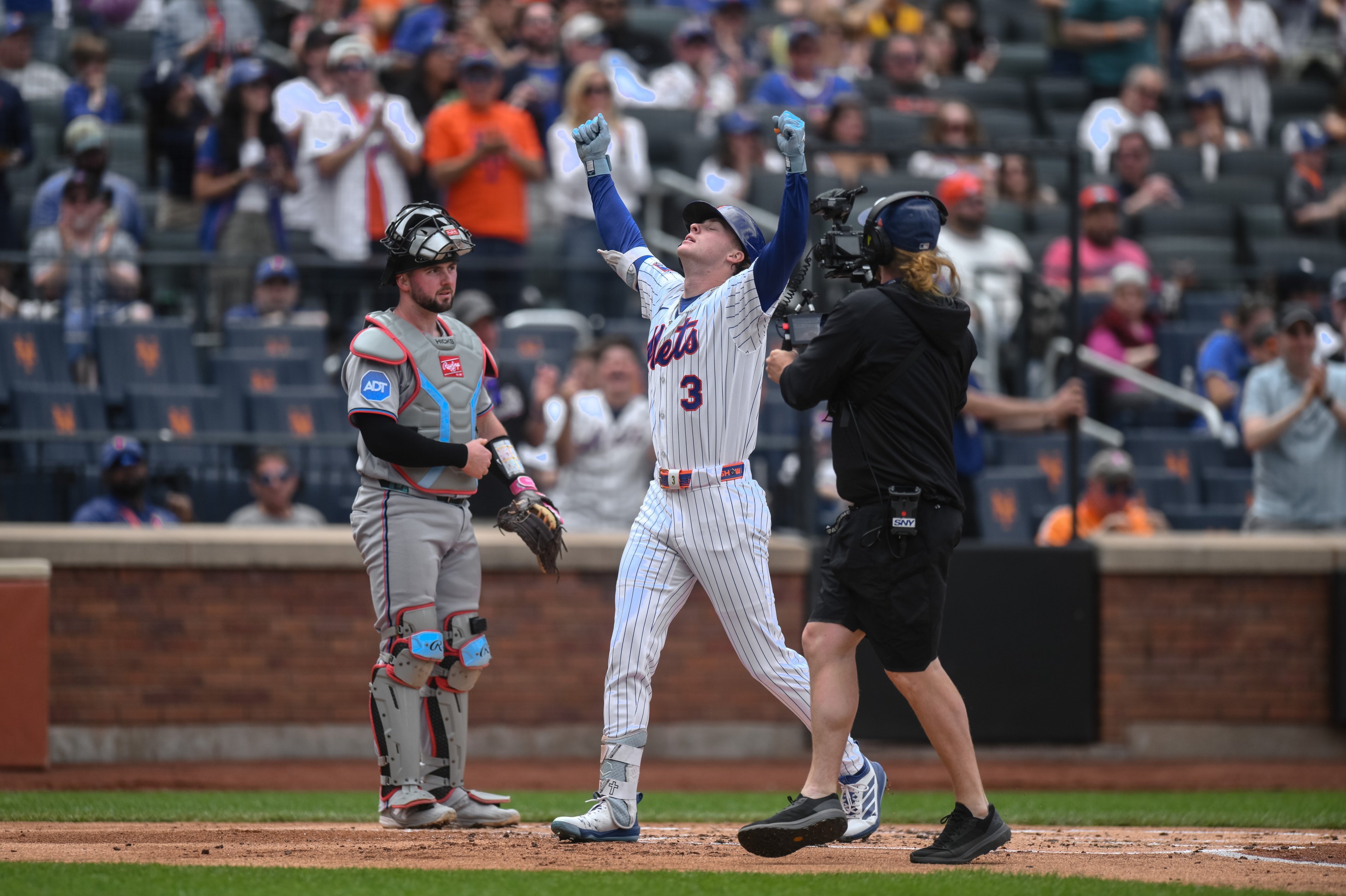 Bad news seems to follow the Miami Marlins of late. Less than 24 hours after learning that left-handed reliever Andrew Nardi was headed to the injured list, joining him was another hurler, this one a starter in Janson Junk. "I was still able to do my job, I feel like," Junk explained prior to Sunday's game regarding his right shin bone inflammation, "but maybe subconsciously I was compensating for it a little bit...Being able to get checked out is, I think, the right thing to do, and ultimately was the right thing." However, it posed a major challenge for Marlins manager Clayton McCullough, who had to resort to a bullpen game against the cellar-dwelling New York Mets. The end result was allowing double-digit runs to one of the sport's feeblest lineups. One week after completing a sweep of the Mets at loanDepot park, the Marlins found themselves on the other end of the equation, dropping the series finale, 10-1. Now 26-34, the Marlins fall to last place in the National League East amid a season-worst five-game losing streak and losers in five of their last six. "This was tough," said a sighing McCullough, who reflected on Miami's numerous missed opportunities this series. For the weekend, Marlin hitters went a combined 5-for-30 in at-bats with runners in scoring position. Making his first career start in 241 appearances at the major league level, John King would be gotten to from the get-go when Carson Benge sent his fourth home run of the season and career over the center field wall. The home run also marked the first leadoff blast of Benge's career. Things would not get any easier from there, as Anthony Bender, entering late in the second inning for King, would serve up a home run to his first batter faced, veteran second baseman Marcus Semien, to increase New York's lead to three. Miami's lone run would come in the top of the fourth on an Owen Caissie double. After hitting just over .200 with a .565 OPS through April, Caissie hit .281 with an .835 OPS in May, his best month as a big leaguer to date. The only positive to come from Sunday's series blowout was that the Marlins didn't have to face the ascendant Nolan McLean more than they did, as the right-hander worked around five walks in five innings of one-run ball. After tacking on a pair in the fourth, the Mets would all but end the game when Juan Soto, facing Josh White in the latter's major league debut hit a grand slam, his 19th home run in 107 games against Miami. The Marlins will conclude the month of May going 11-18, and falling to 8-19 in games away from loanDepot park. Looking Ahead The Marlins will travel to the nation's capital, where they are slated to commence the month of June with a three-game series against the surprisingly competitive Washington Nationals. Sandy Alcantara (3-4, 4.66 ERA) will be tasked with eating as many innings as possible on Monday for a fatigued Marlins pitching staff. Cade Cavalli (3-3, 3.62 ERA) will start the series opener for Washington. Cavalli's 3.00 FIP is easily the best in the Nats rotation and he's riding a streak of three consecutive quality starts. First pitch from Nationals Park is slated for 6:45 EST. View the full article
 -
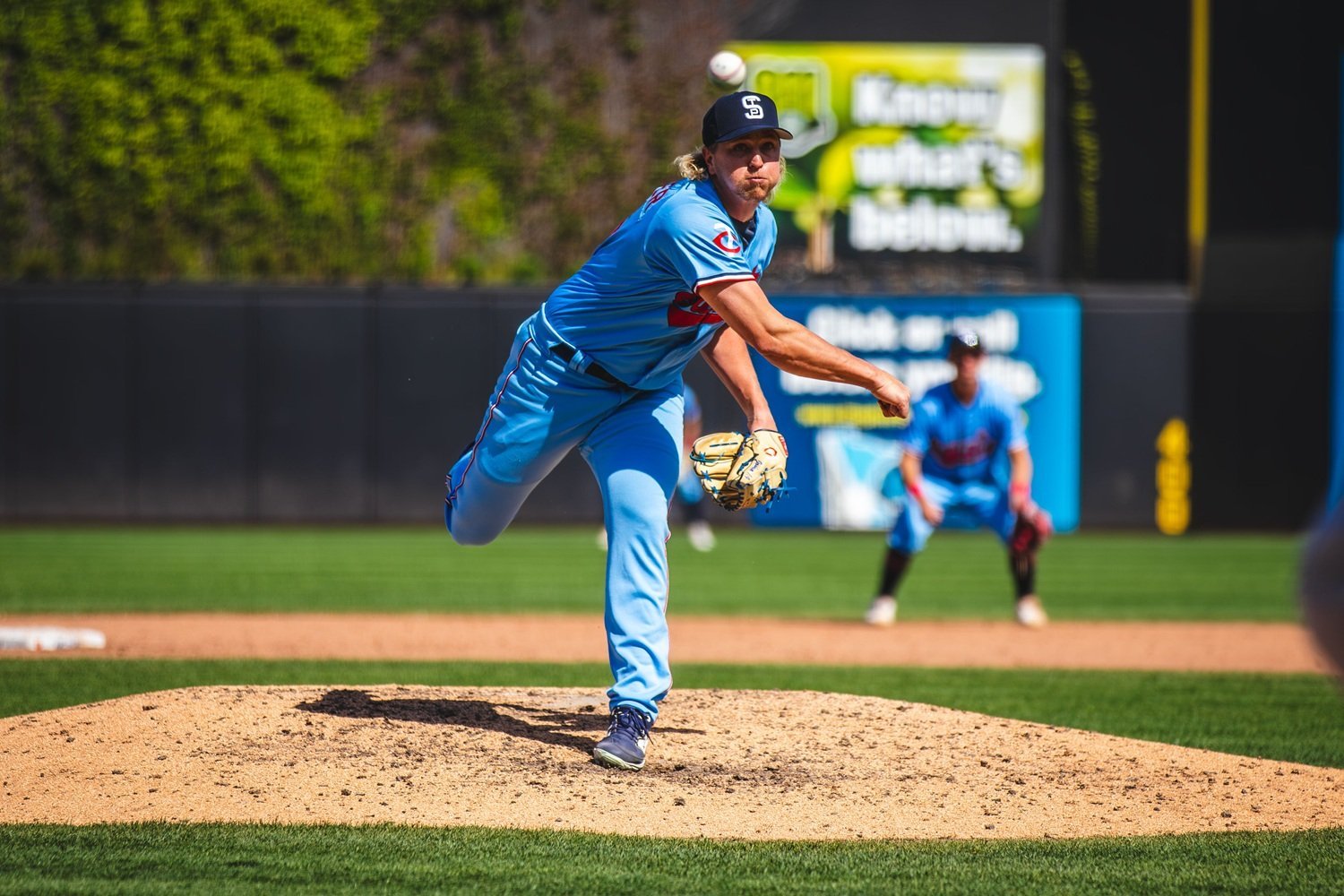 TRANSACTIONS RHP Travis Adams recalled by Twins RHP Ricky Castro promoted to AAA St. Paul RHP Mike Paredes selected by Twins Saints Sentinel St. Paul 3, Louisville 0 Box Score Trent Baker: 1 IP, 1 H, 0 ER, 0 BB, 0 K HR: Matt Wallner (1) Multi-hit games: Matt Wallner (2-for-5, HR, R, RBI) The Saints pitched a combined shutout on Sunday. Though Trent Baker appeared first, he was a false starter: indeed, C.J. Culpepper and Ricky Castro teamed up to provide bulk frames in this match. The day was a triumph for both pitchers; for Culpepper, as it was easily his best appearance as a Saint; and for Castro, who performed better for St. Paul than he did during his substitute teaching foray in late April. Combined, they totaled six shutout innings with eight strikeouts. The big blast in the game came from Matt Wallner, who popped his first longball since his demotion. And it was a vintage sight: a fastball coming in at 98 that left the bat with screaming, evil intentions. Héctor Rodríguez, who doubled twice and singled once on Sunday, ranks as the Reds’ fifth-best prospect, according to MLB.com. Wind Surge Wisdom Game One: Wichita 3, Springfield 4 (8 innings) Box Score Cory Lewis: 3 IP, 2 H, 2 ER, 1 BB, 3 K HR: Andrew Cossetti (3), Jose Salas (5) Multi-hit games: Andrew Cossetti (2-for-2, HR, R, 2 RBI, BB) This was a continuation of Saturday’s game, which was suspended after six innings. Perhaps matters should have been forgotten about entirely: Wichita returned to the field and found the grass unfriendly and the dirt cruel. The squandered an opportunity with two men in scoring position in the eighth, before losing outright when third baseman Murphy Stehl airmailed his toss to second in an effort to turn two. Fun stuff. Game Two: Wichita 5, Springfield 6 Box Score Jose Olivares: 4 IP, 1 H, 0 ER, 3 BB, 1 K HR: Caleb Roberts (2) Multi-hit games: Garrett Spain (2-for-3, 2B, RBI, BB), Caleb Roberts (2-for-3, HR, R, RBI, 2 BB) The Wind Surge were walked off on Sunday. You don’t see many shutout outings with more balls than strikes, yet that’s exactly what Jose Olivares delivered, shutting out the Cardinals for four frames despite having 29 of his 56 pitches fall safely outside the strike zone. “Effectively wild,” you may call it. The Wind Surge offense laid dormant for six innings, putting men on in nearly every frame without successfully advancing anyone home. Ironically, the seventh seemed like it would be more of the same, as a leadoff single was erased by a double play. Back-to-back walks returned hope, and singles from Garrett Spain and Kala’i Rosario placed two runs on the board. That broke the dam: Caleb Roberts cracked a solo homer in the eighth, and Kyle DeBarge drew two more home with a double later in the inning. The Wind Surge led 5-1. Such a lead ordinarily should have been safe, but the bottom of the ninth proved to be no ordinary inning, as a flurry of singles, and a sacrifice fly suddenly cut the deficit in half. No matter. Jarrett Whorff needed just one more out to escape the inning—and the game—with the lead. He reared back and fired a slider—one of the cement mixing variety—and Miguel Ugueto blasted the offering out to left field to catapult the Cardinals into the lead. An imminent win turned sour in seconds. Springfield catcher Rainel Rodriguez clocks in as the game’s 24th-best prospect. He went 0-4. Rehabbing big leaguer Lars Nootbaar DH’d for Springfield, walking twice in five plate appearances. That sounds like Lars Nootbaar, alright. Kernels Nuggets Cedar Rapids 8, Quad Cities 1 Box Score Garrett Horn: 3 IP, 1 H, 1 ER, 2 BB, 5 K HR: None Multi-hit games: Marek Houston (2-for-4, 2B, 2 R, 2 RBI, BB), Quinn McDaniel (2-for-3, R, 2 RBI, BB) The Kernels crushed their opponent on Sunday. Marek Houston established the game’s story immediately, walking and on five pitches before reaching third on a pair of wild pitches. He finished his hero’s journey around the bases thanks to a Khadim Diaw sacrifice fly. And he wasn’t done: the shortstop stepped to the plate in the second with two one, and he brought both home with a sharp double into the left field corner. Seven of Cedar Rapids’ nine batters reached base on Sunday. Quinn McDaniel continues to be a force in the Twins organization. He’s played just 15 games but has collected 26 hits—that’s as many as Cal Raleigh across his 41 major league games this year. The indy-ball signing rapidly earned a promotion to Cedar Rapids; a ticket to Wichita may arrive in no time. On Sunday, he singled twice and walked. Garrett Horn made his second start for the Kernels since returning from injury, and he was once again extremely effective, whiffing five over three innings. He allowed one run. Including his rehab outings, the lefty allowed just one earned run and three hits across 12 frames in May. Catcher Blake Mitchell ranks as the 54th-best prospect in baseball, according to MLB.com. He went 0-4 on Sunday with a pair of strikeouts. Mussel Matters Fort Myers 5, Jupiter 4 Box Score Reed Moring: 3 ⅔ IP, 5 H, 1 ER, 2 BB, 2 K HR: Quentin Young (5) Multi-hit games: Graham Brown (2-for-3, 2 R, RBI) The Mighty Mussels scored five unanswered to win on Sunday. As always, disaster started with Nixon. Chirinos, in this case. The Hammerheads catcher may not be a crook, but he helped Jupiter steal three runs in the second, when a walk portended a Henry Kusiak throwing error, which portended a pair of run-scoring hits. Jupiter was playing chess while Fort Myers was stuck with checkers. The gaffe snapped the Mighty Mussels back into focus. Quentin Young got the team on the board with a skyscraping opposite-field blast in the third, and Luis Fragoza slugged in a pair on a double two innings later. Suddenly, Fort Myers was only down by one. Suddenly, Jupiter looked meek. A Yilber Herrera sacrifice fly in the seventh evened the score—and Graham Brown snuck one up the middle one frame later to complete the comeback. Michael Hilker and Mike McKenna combined to retire 15 consecutive Hammerheads to end the game. Andrew Salas—brother of Padres prospect, Ethan, and Wind Surge, Jose—ranks as the Marlins’ 11th-best prospect. He went 1-for-4 with a double. TWINS DAILY PLAYERS OF THE DAY Twins Daily Minor League Pitcher of the Day – C.J. Culpepper Twins Daily Minor League Hitter of the Day – Caleb Roberts PROSPECT SUMMARY Here’s a look at how the Twins Daily Top 20 Twins Prospects performed: #2 – Kaelen Culpepper (St. Paul) - 1-3, 2 BB, K #5 – Eduardo Tait (Cedar Rapids) - 0-5, K #7 – Marek Houston (Cedar Rapids) - 2-4, 2B, 2 R, 2 RBI, BB #10 – Gabriel Gonzalez (St. Paul) - 1-2, 2B #13 – Hendry Mendez (St. Paul) - 0-4, BB, K #14 – Quentin Young (Fort Myers) - 1-3, HR, R, RBI, BB, K #15 – Brandon Winokur (Cedar Rapids) - 1-3, R, BB, K #17 – C.J. Culpepper (St. Paul) - 3 IP, 1 H, 0 ER, 0 BB, 5 K #19 – Khadim Diaw (Cedar Rapids) - 1-2, R, 2 RBI, BB #20 – Kyle DeBarge (Wichita) - 1-8, 2B, R, 2 RBI, BB, 2 K MONDAY’S PROBABLE STARTERS FCL Rays @ FCL Twins (11:00 AM) - TBD DSL Rangers Red @ DSL Twins (10:00 AM) - TBD View the full article
 -
Josh White closes out wild month of Marlins MLB debuts
DiamondCentric posted an article in Fish On First
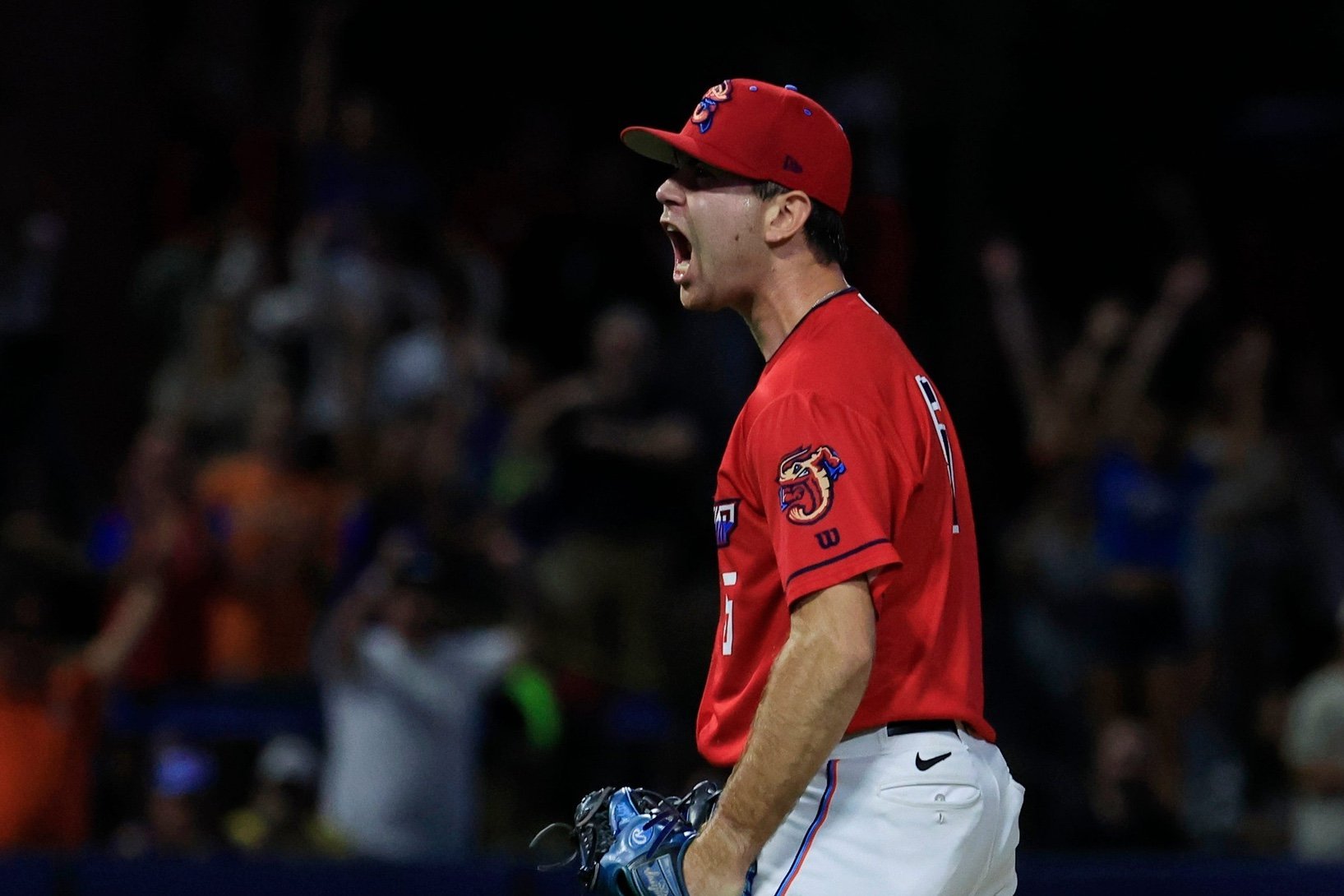 NEW YORK — There's no shame in losing a battle to Juan Soto in your major league debut. The disturbing part for Josh White and the Miami Marlins is what brought Soto to the plate in the first place. After nearly a full calendar year of terrorizing Triple-A hitters, White was recalled by the Marlins prior to Sunday's game. The corresponding roster move was placing Janson Junk on the 15-day injured list with right shin bone inflammation. The news of White's call-up was first reported by marlins.city on Instagram. Fish On First's 21st-ranked prospect entered in the bottom of the sixth inning and looked comfortable initially. White struck out fellow rookie A.J. Ewing with a backdoor slider, then jammed Brett Baty with an inside fastball for a routine flyout. However, poor control fueled an epic two-out rally from there: Walk Hit by pitch Walk Walk Home run (grand slam) Walk A New York Mets team that had only been averaging 3.95 runs per game put up a five-spot against White in two-thirds of an inning. The Ewing slider was an anomaly, as you can see below. White had difficulty landing any of his secondary pitches in the strike zone. Just 20 of his 43 total pitches were strikes. During the month of May alone, White is the sixth different Marlin to make his MLB debut. He joins Josh Ekness (May 3), Joe Mack (May 4), William Kempner (May 5), Dax Fulton (May 6) and Robby Snelling (May 8), the first three of whom are still on the Marlins active roster...for now. View the full article
 -
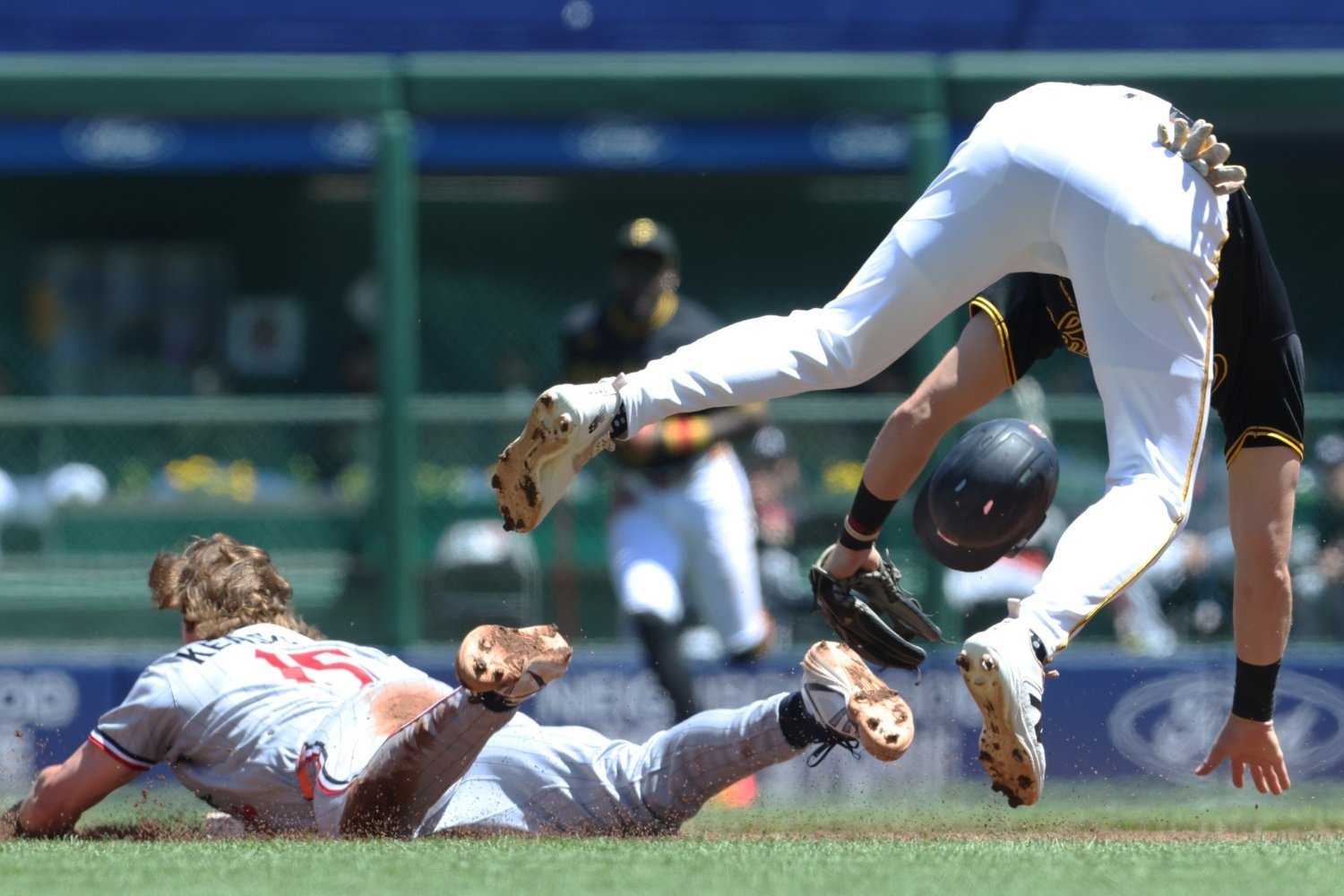 Box Score: Starting Pitcher: Zebby Matthews: 4 1/3 IP, 6 H, 7 ER, 2 BB, 7 K (100 Pitches, 63 Strikes, 63%) Home Runs: Brooks Lee 2 (8) Bottom 3 WPA: Matthews (-0.25), Orlando Arcia (-0.07), Austin Martin (-0.06) Win Probability Chart (Via BaseballSavant): After playing quite well against some traditionally strong franchises in the Astros and Red Sox, the Twins have struggled mightily against two perennial laughstocks, the White Sox and the Pirates. Granted, these teams are much better this year and feature plethoras of young, intriguing talent. Speaking of which, the Twins were tasked with facing Braxton Ashcraft, starting for Pittsburgh. Ashcraft is a former second-round pick and features a 98-MPH fastball and 93-MPH slider. Over 138 innings in his career, he carries a sub-3.00 ERA and a 25% strikeout rate—not a bad complement to Paul Skenes and Mitch Keller in their rotation. Ashcraft encountered very little resistance from the Byron Buxton-less Twins lineup. Brooks Lee struck out on three fastballs, while Trevor Larnach struck out on three straight sliders. Josh Bell began the second inning with a sharp single, but was erased on the next pitch on a double play tapper from (first baseman?) Orlando Arcia. Zebby Matthews made the start for the Twins and had a solid first inning, locating his array of pitches and striking out Bryan Reynolds on a nasty changeup to end the inning. He would start to unravel in the second, however. Ryan O'Hearn got Matthews on a cement-mixer slider that resulted in a home run to the right field corner, Oneil Cruz walked, and Jake Mangum and Jared Triolo slapped opposite-field singles to bring in a second run. The third inning featured a hit-by-pitch to Reynolds, and then, with two outs (perhaps not wanting to face Cruz with two men on), Matthews hung another slider, this one to Nick Gonzales, who launched for his first home run of the year, doubling the deficit and sullying Matthews's line. Matthews had good command of his fastball, which sat 93-96 MPH and only allowed a single hit on the pitch until the fifth, when perhaps he began to rely too much on it. Spencer Horwitz laced a double to the gap, and Brandon Lowe brought him in with a long single to the right field corner. After striking out O'Hearn on a nice breaking ball, Matthews gave way to newly added Mike Paredes, who began his Twins career with eight straight balls, walking in a run before allowing a sacrifice fly to Jake Mangum for the seventh run on Matthew's line. Nine-hole hitter Henry Davis then looped a single to drive in the eighth and ninth runs. On the second-hand embarrassment scale, Paredes's debut was between an episode of The Office and watching Chet Holmgren try to score on Victor Wembanyama. The long layoff while his team scored four runs perhaps rattled Ashcraft, as he walked Alex Jackson before leaving a fastball in Brooks Lee's nitro zone. Lee smacked a home run down the right field line, a two-run shot. Ashcraft then remembered he was dealing, and struck out Kody Clemens and Bell easily. Paredes looked a lot better in his second inning, giving up a bloop single to O'Hearn but striking out Gonzales for his first strikeout. He pitched scoreless seventh and eighth innings, as well. Meanwhile, the Twins could muster almost nothing against the Pirates bullpen. Stuff I'm Tracking: -Luke Keaschall had an infield hit, and will finish May with an .800 OPS, including an OBP over .400 in the month. His defense isn't great, but that stat line will play. -Simeon Woods Richardson was designated for assignment a day before Bailey Ober was placed on the IL with elbow inflammation. That's not great. If Woods Richardson clears waivers, that would be nice in terms of maintaining depth, but if his splitter continues to be terrible (.352 BA against), I can't see him having any viability in any team's rotation or bullpen. -Did James Outman make some deal with Danhausen? Combining Matt Wallner's demotion, the injuries to Buxton, Walker Jenkins and Emmanuel Rodriguez and the front office's hatred of Kyler Fedko, Outman's runway (despite terrible play) certainly seems supernatural. -These Pirates seem legit. Their offense is top-10 in the league with the additions of O'Hearn and Brandon Lowe standing out, their starting pitching is solid and features three buzzsaws in Skenes, Ashcraft and Jared Jones. If they can fortify their bullpen at the deadline, maybe by acquiring a closer who can push Gregory Soto to an eighth-inning role, I see no reason why they can't compete in the National League. What’s Next: The Twins return home to face the White Sox, who took three of four from the Twins in Chicago this past week. Joe Ryan (3-3, 2.94 ERA) faces David Sandlin (1-0, 1.50 ERA). Ryan was brilliant against the Sox last week, up until Munetaka Murakami touched him for an eighth-inning two-run homer. Fortunately for Ryan, Murikami is on the IL, but the Sox are still feisty. Postgame Interviews: Bullpen Usage Chart: WED THU FRI SAT SUN TOT Paredes 0 0 0 0 60 60 Orze 29 0 23 0 0 52 Klein 0 0 0 39 0 39 Banda 0 14 18 0 0 32 Gómez 0 17 14 0 0 31 Morris 0 29 0 0 0 29 Funderburk 0 0 0 27 0 27 Rogers 0 7 12 0 0 19 Laweryson 0 0 16 0 0 16 View the full article
 -
Josh White earns Marlins call-up after domination of upper minors
DiamondCentric posted an article in Fish On First
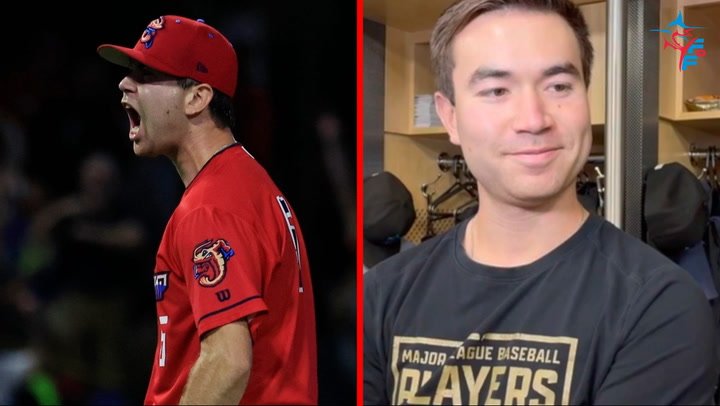 Prior to making his major league debut, Marlins right-hander Josh White speaks with the media about getting the big news, developing a splitter and the various ways he could be used out of the bullpen.View the full article
 -
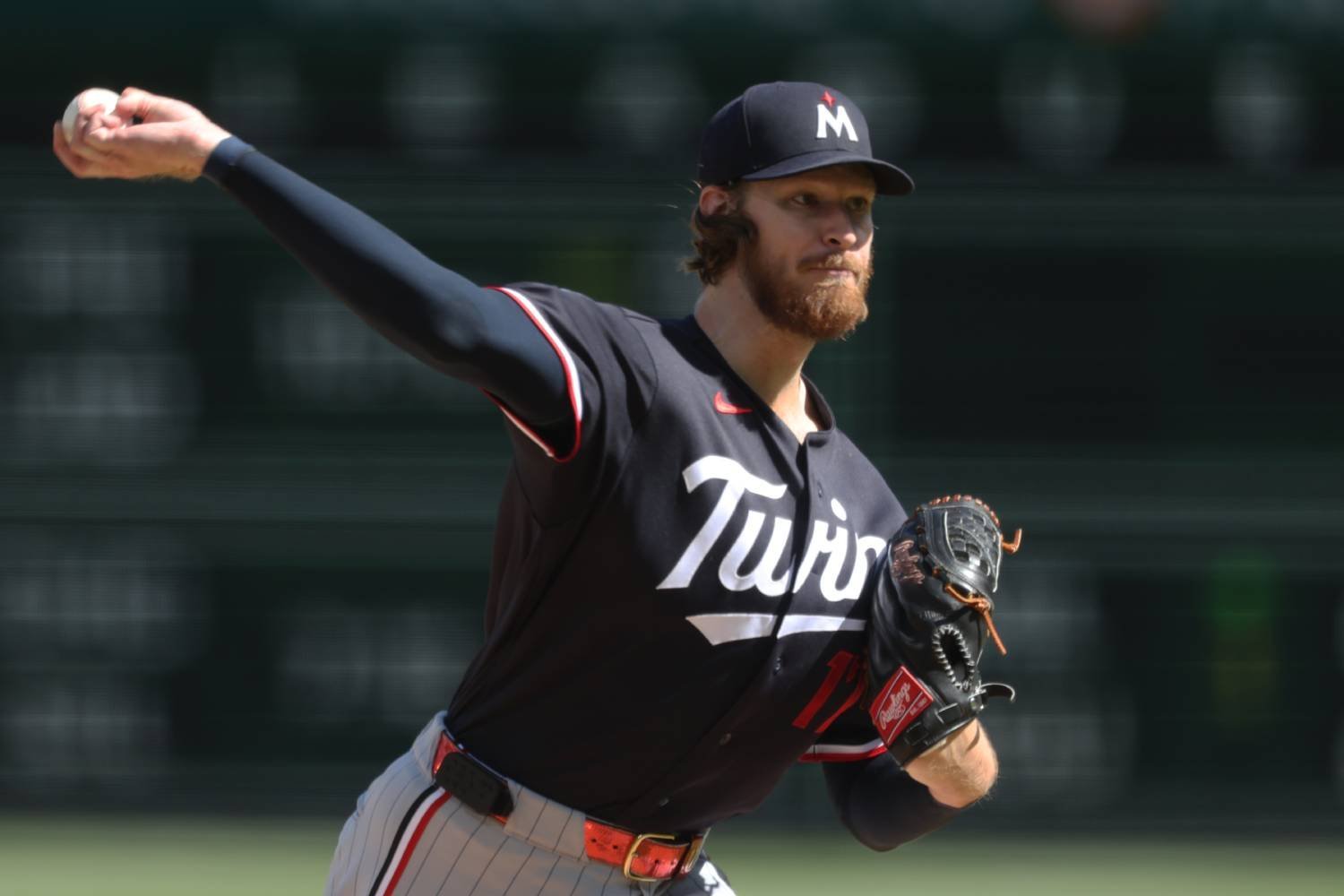 The Minnesota Twins' dwindling pitching depth took another hit Sunday. The Twins placed right-handed starter Bailey Ober on the 15-day injured list with inflammation in his right elbow. Right-hander Mike Paredes had his contract selected from Triple-A St. Paul and will be making his MLB debut. Also, the Twins called up Travis Adams and optioned fellow right-handed reliever John Klein to St. Paul. Ober was tagged for eight runs in 4⅔ innings of Saturday's 10-9 loss to the Pittsburgh Pirates. He becomes the seventh Twins pitcher to go on the IL this season. Ober has been uneven this season, including giving up three homers Saturday and seven long balls in his last three starts. He has a 4.59 ERA with a 6.4% walk rate and 16.4% strikeout rate in his 12 starts this season, which includes a shutout. Paredes is an 18th-round draft choice in 2021 out of San Diego State and has pitched for Double-A Wichita and Triple-A St. Paul this season. Between the two stops, he has made 13 appearances, including 10 starts, and thrown 48⅔ innings, walking nine and striking out 54. Adams is making his third trip up from St. Paul this month after beginning the season on the 15-day injured list with a strained right triceps. Adams has appeared in seven games, throwing 10 innings with five walks and 12 strikeouts for a 7.20 ERA. The bullpen was in need of a fresh arm. Klein went two innings Saturday after being called up earlier in the day. He didn't allow a run, although he walked three and gave up a hit. Klein made his MLB debut this month and has now appeared in three games, allowing two runs in 4⅓ innings. 05/31/26 Minnesota Twins placed RHP Bailey Ober on the 15-day injured list. Right elbow inflammation. 05/31/26 Minnesota Twins selected the contract of RHP Mike Paredes from St. Paul Saints. 05/31/26 Minnesota Twins recalled RHP Travis Adams from St. Paul Saints. 05/31/26 Minnesota Twins optioned RHP John Klein to St. Paul Saints. View the full article
 -
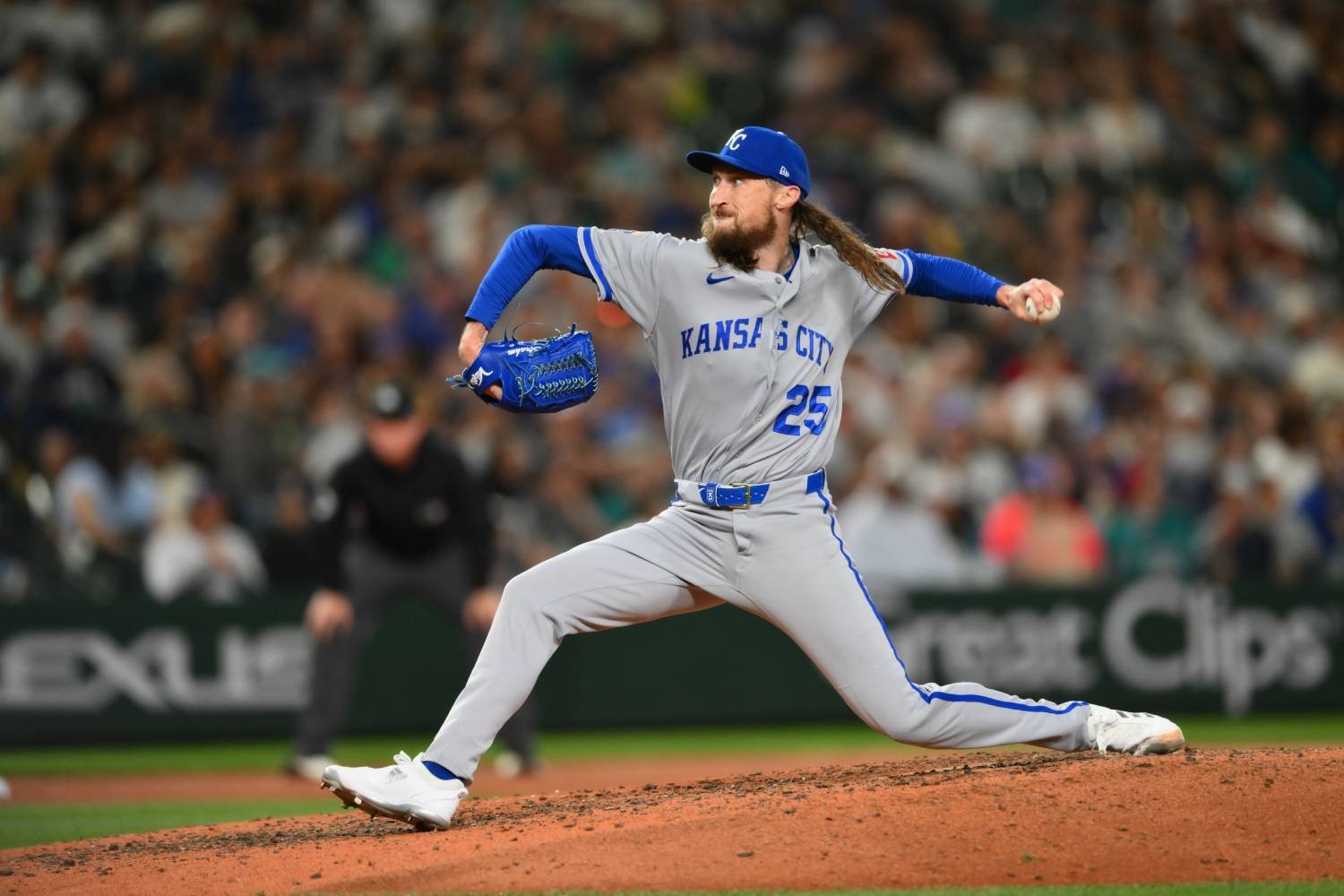 The Kansas City Royals are getting a key arm back in their bullpen. Left-handed reliever Matt Strahm was activated off the 15-day injured list by the Royals, who optioned right-hander Eric Cerantola back to Triple-A Omaha. Strahm missed the minimum 15 days with left knee inflammation. Acquired in an offseason trade with the Philadelphia Phillies, Strahm has a 3.86 ERA in 17 games and 16⅓ innings, with seven walks and 17 strikeouts. Cerantola, in his second call-up this year, pitched in Friday's 9-1 loss to the Texas Rangers, allowing a solo homer and striking out two. View the full article
 -
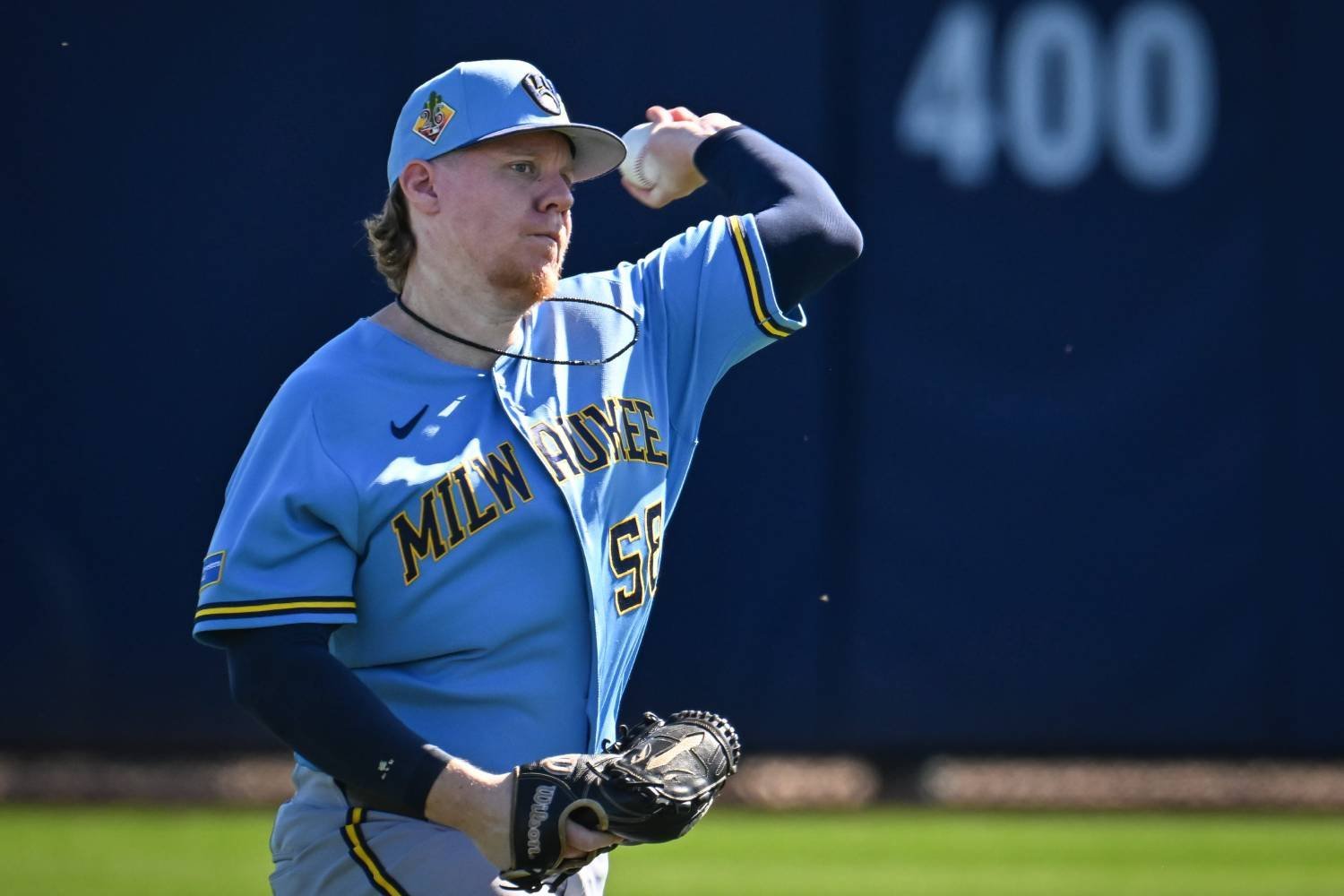 The reward for saving the rest of the bullpen Saturday? A one-way ticket to Nashville. The Milwaukee Brewers on Sunday optioned right-hander Carlos Rodriguez to Triple-A Nashville and activated left-handed reliever Rob Zastryzny from the 60-day injured list. Zastryzny has been on the IL since the end of spring training with a strained left shoulder. Left-handed reliever Angel Zerpa was transferred to the 60-day IL to make room for Zastryzny on the 40-man roster. Zerpa is out for the season after having Tommy John surgery a few weeks ago. Rodriguez pitched 3⅓ innings in Saturday's 9-2 loss to the Houston Astros, coming within an out of finishing the game. He did allow three runs. Rodriguez has been much better for the Brewers this season, with two of his previous three bullpen appearances being shutout efforts. Zastryzny gives the Brewers four left-handers in the bullpen, joining Aaron Ashby, DL Hall and Shane Drohan. Zastryzny is coming off a 2025 in which he posted a 2.45 ERA in 26 appearances over 22 innings. He walked 10 and struck out 20. View the full article
 -
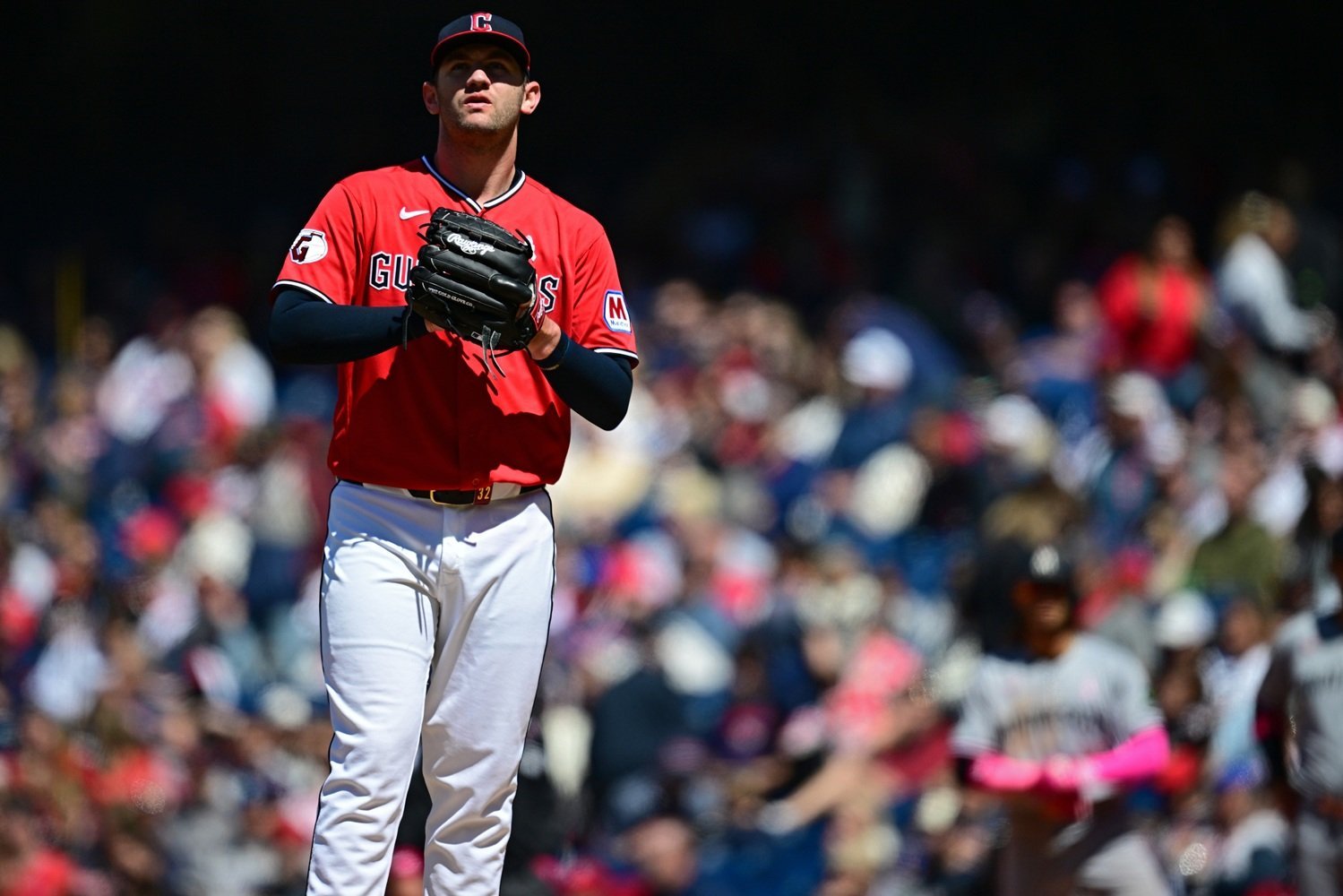 The AL Central has been widely regarded as a poor overall division in the past. 2021 through 2023 saw the division champion be the only team above .500, while 2024 and 2025 had four and three teams respectively. The Guardians are the hottest as of late, winning three out of the last four division championships and have established themselves as the team to beat in the division, despite significantly better efforts from the Tigers and Royals in recent years. Now, shifting focus to 2026, the Guardians lead the way in the standings once again. The other clubs trail behind, searching for consistency in a wide-open American League this year. With the season beginning to take shape with the summer months upon us, here is how the A.L. Central teams stack up so far this year, and maybe a thing of two the Twins can learn from their competitors. No. 1 - Cleveland Guardians (34-26) Pythagorean Record- 31-29 (+3) RS/G – 4.08, RA/G – 3.98 The Guardians currently lead the division by two games. While two-time All-Star Steven Kwan (71 OPS+) is struggling, young players such as Travis Bazzana, Brayan Rocchio, Chase DeLauter, and Angel Martinez have all stepped up, each with above average OPS marks. Cleveland made a notable trade already as well, acquiring Patrick Bailey from San Francisco for his defensive ability behind the plate. Gavin Williams (3.07 ERA, 3.31 FIP) and Parker Messick (2.24 ERA, 3.03 FIP) are the key arms in the rotation, while the ever-reliable Cade Smith leads MLB in saves with a 2.70 ERA (1.19 FIP). Cleveland has something that the Twins currently don’t: young hitters performing at the MLB level. Bazzana, Rocchio, DeLauter, and Martinez have provided energy into a Cleveland lineup that desperately needed it, and the Twins could use that from Kaelen Culpepper, Walker Jenkins, Gabriel Gonzalez, and more of their in the lower ranks. Nevertheless, expect Cleveland to be in the hunt for the division title once again if they aren’t already leading come the later months. No. 2 – Chicago White Sox (31-27) Pythagorean Record – 30-28 (+1) RS/G – 4.71, RA/G – 4.59 One of the great surprises in baseball this year, the White Sox currently hold the second wild card spot. Free agent signee Munetaka Murakami leads the way with a .947 OPS, good for fifth in the league. The slugger is in the 93rd percentile or above in xSLG, average exit velocity, barrel percentage, hard hit percentage, and walk percentage, while being in the 5th percentile in strikeout rate. Murakami is a Three True Outcome hitter and the deal he signed this past offseason is only looking better as the season progresses. However, Murakami could miss the next four-to-six weeks with a hamstring injury. Miguel Vargas’ presence as an offensive contributor has been welcomed as well after a few down years, rocking a 133 OPS+ going into Friday’s action. The Twins could learn something from Murakami and the White Sox in that it is okay to spend a little money in free agency and take a chance. Players such as Josh Bell and Victor Caratini are pretty known commodities at this point in their careers, and a bat like Murakami would be nice to slot in at first base daily. On the pitching side, Davis Martin is off to a great start with a 2.00 ERA (2.30 FIP) over 67 2/3 innings of work while striking out 71. These excellent results are largely due to three pitches: his changeup, sinker, and slider, each of which have a run value of 4. Left-handed reliever Bryan Hudson (1.37 ERA, 2.57 FIP) and 26-year-old starter Sean Burke (3.90 ERA, 3.40 FIP) have been good as well. The White Sox could be a formidable force by the end of the year; however, they’ll likely need to work on their walk problems (pitchers have walked 215 batters so far, sixth worst in the league) and perhaps another bat to replace Andrew Benintendi in the DH spot (77 OPS+ so far in 2026). Still, Murakami has made the White Sox a fun team to watch so far in 2026, and they’ll hope to catch the Guardians to win their first division title since 2021. No. 3 – Minnesota Twins (27-32) Pythagorean Record – 28-31 (-1) RS/G – 4.61, RA/G – 4.86 The Twins sit just a game back of a wild card spot entering Friday’s games, a spot most fans and analysts didn’t expect them to be. Performances from All-Stars Byron Buxton (147 OPS+) and Joe Ryan (2.94 ERA, 2.58 FIP) lead the way, while players such as Austin Martin (119 OPS+) and Taj Bradley (2.77 ERA, 3.26 FIP) have provided value where little was expected. Still, an injury to Ryan Jeffers and struggles and eventual demotions to Royce Lewis and Matt Wallner has left the lineup thin. Nevertheless, this team goes as Buxton and Ryan go, and if they are both still on the team after the trade deadline it wouldn’t be surprising to see this team in contention for a wild card spot come August, though it isn’t likely the postseason will be a part of the Twins’ season. Performances from the franchise players, as well as younger players like Martin and Brooks Lee (in the clutch), are making this team fun to watch at least. No. 4 – Detroit Tigers (22-37) Pythagorean Record – 25-34 (-3) RS/G – 3.77, RA/G – 4.41 A playoff team last year, the Tigers spent big in the offseason, signing Framber Valdez to a three year, 115-million-dollar deal while bringing in other arms such as Justin Verlander, Kyle Finnegan, and Kenley Jansen. Gleyber Torres accepted his qualifying offer to come back to Detroit after being an All-Star in 2025. Even with those additions, the Tigers haven’t performed up to par in 2026, currently second to last in all of MLB ahead of just the Rockies. 2025 Cy Young winner Tarik Skubal is on the IL due to a surgery to get a loose body out of his elbow while Verlander had just one start before going to the IL as well. Valdez’s pitching has been mediocre, with a 4.28 ERA (4.08 FIP) and has spent more time in the news for hitting Trevor Story after giving up back-to-back homers than for the positives of his game. Casey Mize has been a bright spot for this pitching staff, worth 2.2 bWAR with a 2.27 ERA (2.37 FIP). Offensively, injuries have continued to remove Tigers from the lineup, with Torres, Kerry Carpenter, and Javier Baez all on the injured list. Struggles from Spencer Torkelson (99 OPS+), Colt Keith, (96 OPS+) and Zach McKinstry (32 OPS+) haven’t helped either. Riley Greene leads the way with a 136 OPS+ for this group, though 21-year-old rookie Kevin McGonigle follows close behind (131 OPS+) and leads the team in bWAR currently. The Tigers have a big decision to make. The way their season is going, they could sell off some or their larger pieces, such as Skubal, to get a haul at the deadline, or they could wait it out, get healthy, and try to make a playoff push later in the year. Detroit must hope they can find some of the magic they had last year soon, otherwise they could be a big seller come August 3rd. No. 5 – Kansas City Royals (22-36) Pythagorean Record – 23-35 (-2) RS/G – 3.76, RA/G – 4.72 An above .500 team a year ago, the Royals sit second to last in the division. Only two of their qualified hitters have an OPS above .700, one of which being superstar shortstop Bobby Witt Jr. (137 OPS+) with the other being third baseman Maikel Garcia (100 OPS+). Besides those two, struggles to Vinnie Pasquantino, Salvador Perez, and Isaac Collins, among others, has led to the 2nd lowest runs scored per game in MLB, better then only the Giants. On the mound, Seth Lugo (3.74 ERA, 3.07 FIP) and Michael Wacha (2.69 ERA, 3.90 FIP) have led the way for a rotation currently without lefties Kris Bubic and Cole Ragans. The Royals should use this season as a reminder of how good their franchise shortstop is, and with their record well on the wrong side of .500, need to do everything in their power in building a competitive team around him in 2027. The A.L. Central has been criticized over the years for being an overall bad division, but it has been more competitive as of late. Cleveland still leads the way, while Chicago and Minnesota follow closely in hopes of making it a race come August and September. Detroit and Kansas City sit at the bottom, both 10 or more games back from Cleveland entering June. As the summer unfolds, the hope is that the Twins can be competitive in this division, but only time will tell as they have overperformed expectations so far. With plenty of baseball still left to play, the AL Central remains a division filled with stars and teams searching for answers to how to move forward, and that likely won’t change at the end of this season. So how would you rank the five AL Central teams? View the full article
 -
 Chicago Cubs Transactions None Iowa Falls To Indianapolis After Late Collapse The Iowa Cubs lost 14-5 to the Indianapolis Indians, undone by a string of big innings allowed by the bullpen. Iowa had taken a 5-2 lead, building it on RBI from Scott Kingery, Brett Bateman, BJ Murray, and a pair of run-scoring singles from Chas McCormick, who finished 2-for-5 with two RBI. Ben Cowles added two hits, and Owen Miller scored twice with two stolen bases. The game turned in the fifth inning, when Indianapolis scored five runs to take the lead for good, then added three in the sixth and four in the eighth. Christian Roa was charged with four runs, three walks, and a home run while recording two outs. Zac Leigh took the loss after allowing five runs, four walks, and a home run while retiring one batter. The lone bright spot on the mound was Connor Noland, who allowed two runs, one earned, on three hits over four innings, walking one and striking out six. Player AB R H RBI BB K Brett Bateman 3 0 1 1 1 0 Justin Dean 3 1 0 0 1 2 BJ Murray 4 0 0 1 1 1 Owen Miller 4 2 1 0 0 1 Chas McCormick 5 0 2 2 0 2 Ben Cowles 5 1 2 0 0 2 James Triantos 4 1 1 0 0 0 Eric Yang 1 0 0 0 3 1 Scott Kingery 3 0 1 1 0 2 Player IP H R ER BB K HR Ryan Jensen 1/3 0 0 0 2 0 0 Christian Roa 2/3 1 4 4 3 1 1 Collin Snider 1 2/3 5 3 3 0 1 0 Zac Leigh 1/3 1 5 5 4 0 1 Gavin Hollowell 1 0 0 0 0 2 0 Connor Noland 4 3 2 1 1 6 0 Knoxville Powers Past Chattanooga With Four Homers The Knoxville Smokies hit four home runs to beat the Chattanooga Lookouts 7-5. Owen Ayers, batting second, finished 1-for-4 with a home run and two RBI, and Jefferson Rojas, Ethan Hearn, and Edgar Alvarez each added a homer. Alex Madera went 2-for-2 with a double, an RBI, and a run, and Hayden Cantrelle reached base twice with two hits. Knoxville scored three times in the third inning, the most decisive frame of the game. Ethan Hearn led off the second with a solo home run, then in the third Alex Madera doubled home Hayden Cantrelle before Owen Ayers homered to bring in Madera, putting Knoxville ahead 4-1. Edgar Alvarez added a two-run homer in the sixth, and Jefferson Rojas homered in the seventh to provide the final margin. Starter Dawson Netz allowed one run on two hits over 3 1/3 innings, walking one and striking out two, to earn the win. Evan Taylor surrendered three runs in one inning of relief, and Jake Knapp settled things down with 2 2/3 innings, allowing one run on three hits with two strikeouts. Player AB R H RBI BB K Alex Ramírez 4 0 0 0 0 1 Owen Ayers 4 1 1 2 0 0 Jefferson Rojas 4 1 1 1 0 1 Andy Garriola 4 0 2 0 0 1 Ethan Hearn 4 1 1 1 0 1 Carter Trice 2 1 0 0 1 1 Edgar Alvarez 3 1 1 2 0 0 Hayden Cantrelle 3 1 2 0 0 0 Alex Madera 3 1 2 1 0 0 Player IP H R ER BB K HR Dawson Netz 3 1/3 2 1 1 1 2 1 Evan Taylor 1 4 3 3 2 1 0 Jake Knapp 2 2/3 3 1 1 1 2 0 South Bend Shuts Out Fort Wayne Behind Bowser's Grand Slam The South Bend Cubs blanked the Fort Wayne TinCaps 7-0 on the strength of a combined three-pitcher shutout and a four-run sixth inning. Drew Bowser drove in all four runs with a grand slam to left field, scoring Josiah Hartshorn, Matt Halbach, and Justin Stransky to break the game open. It was South Bend’s second grand slam of May, a new single-month record for the affiliate. South Bend had built its lead earlier with two runs in the second, when Jose Escobar and Justin Stransky hit back-to-back doubles, the first scoring Matt Halbach and the second scoring Escobar. Halbach added an RBI single in the third to bring home Ty Southisene. Bowser finished 1-for-4 with the grand slam and four RBI, and Escobar, Stransky, Halbach, and Southisene each collected a hit. Starter Eli Jerzembeck worked two scoreless innings, walking two and striking out two, to earn the win. Mason McGwire was dominant in relief, striking out six over three hitless and scoreless innings while earning a save. Koen Moreno closed it out with four scoreless innings, allowing two hits and four walks with four strikeouts. Player AB R H RBI BB K Kane Kepley 5 0 0 0 0 1 Ty Southisene 4 1 1 0 0 1 Josiah Hartshorn 3 1 1 0 1 1 Matt Halbach 1 2 1 1 2 0 Miguel Useche 3 0 0 0 1 3 Jose Escobar 4 1 1 1 0 0 Justin Stransky 3 1 1 1 1 1 Drew Bowser 4 1 1 4 0 2 Christian Olivo 4 0 0 0 0 1 Player IP H R ER BB K HR Eli Jerzembeck 2 0 0 0 2 2 0 Mason McGwire 3 1 0 0 0 6 0 Koen Moreno 4 2 0 0 4 4 0 Lubo And Melendez Homer As Myrtle Beach Holds Off Wilson The Myrtle Beach Pelicans beat the Wilson Warbirds 7-5, pulling away with a three-run eighth inning. Geuri Lubo led the offense, going 2-for-4 with a double, a home run, and three RBI, and his three-run homer in the eighth, which scored Eli Lovich and Jairo Diaz, provided the winning margin. Yahil Melendez went 1-for-4 with a two-run homer in the fifth, and Alexey Lumpuy reached base twice with two hits, a run, and two stolen bases out of the leadoff spot. Myrtle Beach also scratched out runs early, taking a sacrifice fly from Henniel Alcala in the second that scored Derniche Valdez and a run in the third when Lovich scored on a wild pitch. Noah Edders gave up four runs on five hits over 3 1/3 innings, walking two and striking out three. Braylon Myers picked up the win with 1 1/3 scoreless innings, and Riely Hunsaker worked 4 1/3 innings, allowing one run on three hits with three walks and two strikeouts. Player AB R H RBI BB K Alexey Lumpuy 4 1 2 0 0 1 Alexis Hernandez 4 0 1 0 0 2 Eli Lovich 3 2 0 0 1 2 Yahil Melendez 4 1 1 2 0 1 Derniche Valdez 4 1 0 0 0 0 Jairo Diaz 2 1 0 0 1 0 Geuri Lubo 4 1 2 3 0 0 Henniel Alcala 3 0 0 1 0 2 Edward Vargas 3 0 0 0 0 1 Player IP H R ER BB K HR Noah Edders 3 1/3 5 4 4 2 3 0 Braylon Myers 1 1/3 1 0 0 0 1 0 Riely Hunsaker 4 1/3 3 1 1 3 2 0 Cubs Transactions No Roster Moves Top-20 Prospect Performance Jefferson Rojas: 1-for-4, HR, RBI, K Jaxon Wiggins: DNP Pedro Ramirez: DNP Kevin Alcantara: DNP Josiah Hartshorn: 1-for-3, BB, R, K Ethan Conrad: DNP Kane Kepley: 0-for-5, K Jonathon Long: DNP James Triantos: 1-for-4, R, SB Cole Mathis: DNP Owen Ayers: 1-for-4, HR, 2 RBI, R Brooks Caple: DNP Juan Cabada: DNP Kaleb Wing: DNP Angel Cepeda: DNP Dominick Reid: DNP Jostin Florentino: DNP Ty Southisene: 1-for-4, R, K Will Sanders: DNP Brandon Birdsell: DNP View the full article
 -
Red Sox Minor League Report: Portland’s Extra Inning Woes Continue
DiamondCentric posted an article in Talk Sox
 Boston Red Sox Farm System Recap Triple-A Worcester Red Sox Series at Scranton/Wilkes-Barre RailRiders (New York Yankees): 4-1 Season Record: 27-26 Worcester’s offense was quiet on Saturday as its hot streak was snapped. The game went sideways early on for the WooSox as Raymond Burgos struggled in his start. Over just three and ⅓ innings, Burgos allowed eight hits and two walks as the RailRiders scored five times. Since allowing just one run in his WooSox debut the lefty has struggled, posting an ERA of 8.79 across four starts. Jacob Webb steadied the ship in his one and ⅔ innings of relief. He allowed a hit and struck out two before turning the ball over to Eduardo Rivera. Rivera gave up one more run on two hits in a two inning appearance but maintained a respectable 2.79 ERA. In the final inning of the game, Devin Sweet allowed one more run to cross home as the RailRiders won easily. Sweet allowed two hits and a walk. Worcester's offense struggled to give itself opportunities, tallying only four at bats with runners in scoring position. Tsung-Che Cheng had two hits and Anthony Seigler drew three walks as the pair were the only highlights from Saturday’s game. The WooSox only two runs came late in the game. In the ninth inning, Matt Thaiss drove in Allan Castro and Cheng on a ground ball that snuck through the defense. It was a frustrating game for the WooSox, who had recorded six or more runs in three of their last four contests. Double-A Portland Sea Dogs Series at Binghamton Rumble Ponies (New York Mets): 3-2 Season Record: 25-24 After opening the series 3-0, Portland fell in extras for the second straight game, losing 4-3. Coming off of a flawless three-inning appearance a week ago, Jedixson Paez opened Saturday’s game with high hopes. Unfortunately for the 22-year-old, he was unable to replicate last week's outing. Over four innings, Paez allowed three runs on four hits. He was able to control his command, striking out four and allowing just one walk. Caleb Bolden got the ball going into the fifth and absolutely dominated over the next four frames. He sat down five on strikes and allowed a solo baserunner on a walk. With the game on the line in the bottom of the ninth, Portland turned to Erik Rivera. Rivera walked the first batter he faced before getting his first out on a pop-out. After a wild pitch and another walk, Binghamton had men on first and second. The lead runner stole third and advanced home, winning the game on a throwing error from Johanfran Garcia. Each of Portland’s hitters reached base once through Saturday’s game, but they were unable to muster more than three runs. The Sea Dogs went 2-for-12 with RISP, stranding seven baserunners. Facing an early three-run deficit, Nate Baez put Portland on the board with an RBI groundout in the third that pushed Franklin Arias across home plate. Later in the inning, Garcia drove in Will Turner on a line drive single. One inning later, Ahbram Liendo hit an RBI single of his own, scoring Tyler McDonough. Similar to the game prior, Portland failed to score down the stretch, going silent over the last five innings. High-A Greenville Drive Series vs. Asheville Tourists (Houston Astros): 3-2 Season Record: 19-29 Despite a formidable comeback attempt in the ninth, Greenville fell to ten games below .500. Alex Bouchard started Saturday’s game and it was a disaster from the jump. Over just an inning and ⅔, Bouchard allowed seven runs on seven hits and only struck out one. With two outs in the second, Brandon Neely bailed Bouchard out before turning the ball over to Matt McShane. McShane allowed three more runs (one unearned) on two walks and a hit as Asheville took a commanding lead. Tyler Uberstine entered in the fifth, making his second rehab appearance. He allowed two hits and a walk, but didn’t let the Tourists add to their lead. Osvaldo Berrios took the next two and ⅓ innings and was nearly perfect. He allowed one walk and struck out two before catcher Hudson White made his second pitching appearance in as many days. White allowed one hit but that was all. After a rough start, Greenville’s bullpen turned in a so-so outing. The Drive scored three runs through the first eight innings, but came to life in the ninth. They scored five as they attempted to pull off the improbable upset. Prior to the comeback bid, Enddy Azocar put the Drive on the board as he continues to impress since being called up from Low-A Salem. He drove in Justin Gonzales with a triple in the first, his second triple of the year. Henry Godbout drove in Azocar on a groundout as Greenville nabbed an early lead. In the fourth, Mason White added one more run. He drove in Luke Heyman on a soft ground ball single back to the pitcher. The Drive’s offense surged in the ninth, loading the bases with no outs. Antonio Anderson was hit by a pitch, driving in Jack Winnay. Then, Gonzales scored White on a single. Azocar drove in his second run of the day as he was hit by a pitch. With the lead down to four, Anderson scored on a passed ball. With the lead in sight, Yoeilin Cespedes drove in Gonzales on a sac fly. However, the comeback was stymied and Greenville fell for the second night in a row. Low-A Salem RidgeYaks Series vs. Hickory Crawdads (Texas Rangers): 2-3 Season Record: 22-28 Salem snapped their three-game skid with a solid 5-1 win. Leighton Finley matched his longest start of the year on Saturday, turning in five frames of work. He allowed six baserunners, four by way of hits and two via walks. Despite the traffic on the basepaths, he held Hickory to just one run and sent seven back to the dugout on strikes. Finley’s lone run was let up on the first, and he settled in nicely afterward. He lowered his ERA to 3.19 with another quality start. Joey Gartrell followed with three excellent innings of his own. He allowed two hits and K’d two in his second appearance since being sent down from High-A Greenville. Drew Allmer capped off the dominant day from Salem’s pitching staff with a perfect inning, closing out the win. It was a successful day on both sides of the ball for Salem as the offense totalled ten hits and five runs. Starlyn Nunez led the way with three hits in four at-bats. He hit a lead-off home run to open the game and put Salem on the board. In the second, Ilan Fernandez drove in Avinson Pinto on a single to give Salem the lead. The RidgeYaks didn’t look back and didn’t relinquish the lead for the rest of the afternoon. In the fourth, Givian Sirvania tacked on another run with a bases loaded single, driving in Adonys Guzman. In the fifth, Nunez hit his second homer of the day to extend the lead to three. Finally, Guzman drove in Nunez on a single in the seventh to put the game out of reach. It was a nice rebound for the RidgeYaks as they’ve struggled as of late. View the full article
 -
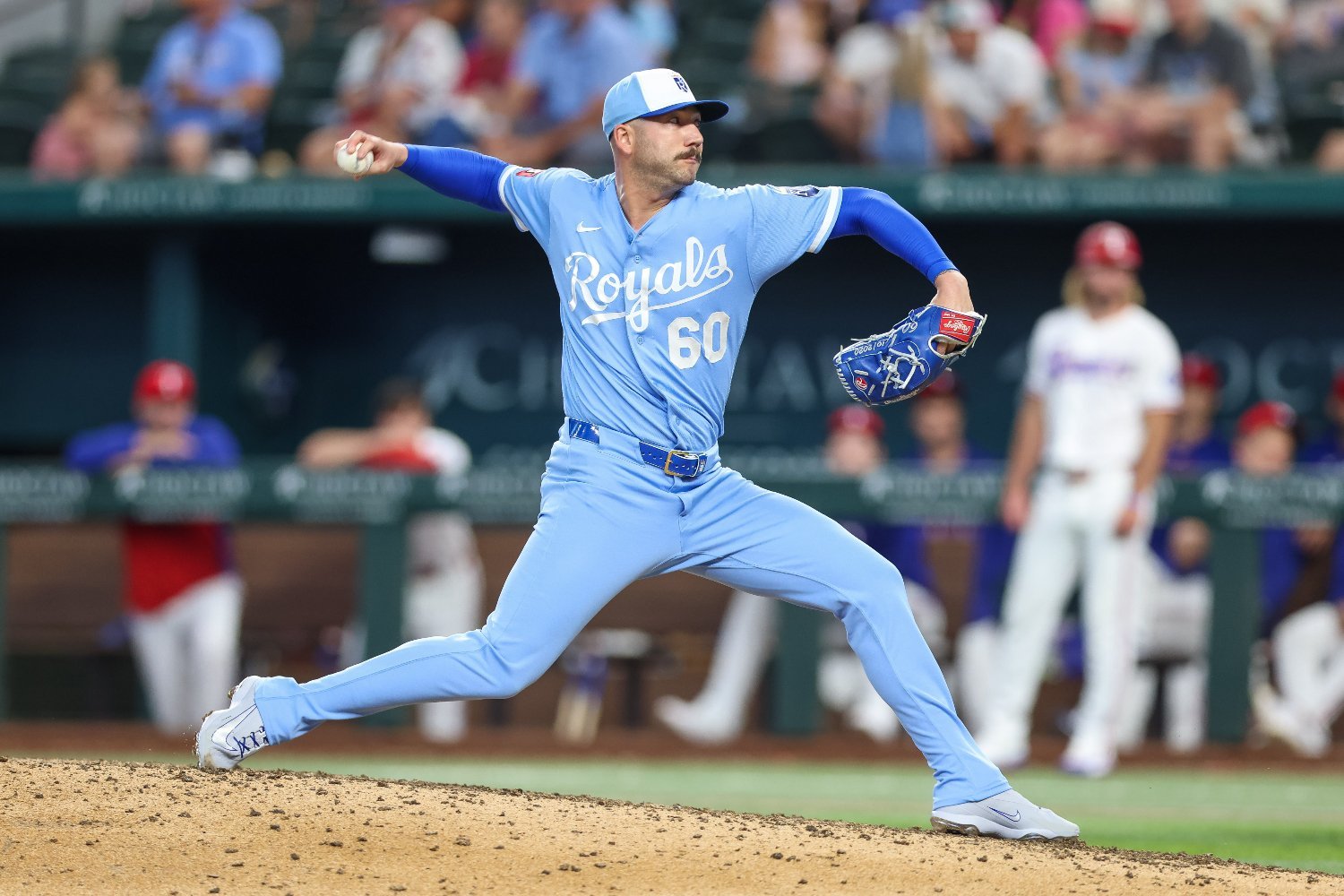 The Royals' nightmare stretch and season continued on Saturday afternoon in Arlington. Despite leading 6-4 in the bottom of the ninth, Royals closer Lucas Erceg gave up three runs on five hits to blow the game to Texas. Ezequiel Duran had the game-winning single that scored Brandon Nimmo from third base with no outs. After closing out the game against the Cardinals on May 17th, Erceg has given up eight runs on 13 hits in three appearances. His ERA has risen from 3.26 to 6.33 over that three-game span, and his WHIP has risen from 1.45 to 1.92. Overall, it's been a challenging season for Erceg, as he has not just struggled to generate whiffs and strikeouts, but has also posted a career-worst wOBA, as illustrated in his TJ Stats percentiles below. The percentiles aren't pretty in many categories. According to TJ Stats, Erceg ranks in the 27th percentile in K%, 19th percentile in O-Swing% and Whiff%, 15th percentile in Strike%, 13th percentile in BB%, 8th percentile in wOBA, and 2nd percentile in CSW. He has done a good job of maintaining strong numbers in average EV on batted balls (77th percentile), GB% (79th percentile), and fastball velocity (87th percentile). Unfortunately, those positives have been overshadowed by the negative categories. For comparison, here's what Erceg's TJ Statcast summary looked like back in 2024, when he helped lead the Royals to the ALDS after coming over from Oakland at the Trade Deadline. As Royals fans can see, Erceg had only two categories below the 50th percentile in 2024 (swing% and zone%). He had all the characteristics of an elite reliever in 2024. While things regressed a little in 2025, he was still much better in many categories last season, especially in wOBA, O-Swing%, and BB%, as illustrated below. So what has happened to Erceg in 2026? Why has he declined so dramatically since 2024 and become so unproductive in the late innings this season? A lot can be tied to his regression in TJ Stuff+ and to the command of his pitch arsenal, especially with two key pitches. Erceg's TJ Stuff+ Has Declined Heavily Overall Since 2024 When it comes to a pitcher declining in production from one season to the next, a drop in velocity is often highlighted as the primary culprit. That was the case with Carlos Estevez, who went from throwing in the upper 90's to under 90 this season. Unfortunately, that's not the case with Erceg. His velocity, on all of his pitch types, has remained pretty similar to previous seasons, as illustrated by his pitch velocity chart by season below, via Baseball Savant. Yes, there's a small decline in velocity this year, but it's not enough to be alarming. For context, here's a look at Estevez's average pitch velocity chart over his career. That's a pretty sharp decline for Estevez and a sign that something was seriously wrong (as a result, he's on the IL, and it's unlikely that he will return this season). As for Erceg, the decline in velocity is evident, but it's not excessive or a massive outlier from previous seasons. That said, there's more to a pitch's effectiveness than just velocity. Movement, spin rate, and release point are key, and the quality of those characteristics of a pitch can often be measured with various pitch-tracking tools, including TJ Stuff+, created by Thomas Nestico, the founder of TJ Stats. For those unfamiliar, TJ Stuff+ can be defined as follows, per TJ Stats' website. When it comes to TJ Stuff+, Erceg has seen a massive regression in his pitches compared to 2024, as illustrated in his TJ Stuff+ summary below, which shows the differences in certain categories from two seasons ago. Here is a breakdown of the declines on all of the pitches in his arsenal from 2024. Four-Seamer: Seven-point decline. Slider: Four-point decline. Sinker: 10-point decline. Changeup: one-point decline. Overall: Six-point decline. The decline in overall TJ Stuff+ has led to regression in many important categories. His chase rate is down by six percent, and his whiff rate is down by 10.6%. The change in zone and xwOBACON has been minimal, with differences of -0.1% and +0.006%, respectively. For a more complete breakdown of the difference from 2024 to 2026, here is a complete comparison of his TJ Stuff+ summaries from 2024 to 2026, which also includes the difference in pitch break from 2024 to 2026. There doesn't seem to be a whole lot of difference in his pitch break chart. The arm angle has a one-degree difference, but the pitches break this year move similarly to how they did in 2024. That said, we do see the TJ Stuff+ and grades from 2026 sport major differences from 2024. In 2024, Erceg had an overall TJ Stuff+ of 106, two pitches with grades over 70, and no pitches with grades under 54. This year? He has a 100 overall TJ Stuff+, no pitches with grades of 70 or over, and only two pitches with grades over 50 (sinker and changeup). In terms of vertical and horizontal movement, the four-seamer has less iVB (induced vertical break) this year, and the sinker has MORE iVB. The slider also has more HB (horizontal break) than two years ago, and the spin is down on all four of his pitches. Those movement changes, combined with subtle regression in velocity, have seemed to make the TJ Stuff+ on Erceg's pitches more mediocre this year. That lackluster TJ Stuff+ has resulted in chase and whiff rates under 30% this year, a big drop from the 30+% marks he had in those categories two seasons ago. The Sinker and Slider Are the Main Concerns What made Erceg so effective as a reliever was that he had two premium pitches: the sinker and slider. In 2024, the sinker had a 72 grade (109 TJ Stuff+), a 30.6% chase rate, a 21% whiff rate, and a .211 xwOBACON. The slider had a 54 grade (105 TJ Stuff+), a 34% chase, 37.5% whiff, and .283 xwOBACON. When sequenced together and located effectively, the pitch combo could be absolutely nasty. Below is a compilation of clips of Erceg generating whiffs with the sinker and slider back in 2024 against the Yankees' Juan Soto and the Reds' Stuart Fairchild. Erceg SI SL-2024.mp4 To break down Erceg's sinker and slider further, let's utilize his pitch heatmap summary data from those two pitches via TJ Stats. That could give us an idea not just of where those pitches were located, but also of the metrics derived from that heatmap data. Here's a look at the sinker heatmap data. Erceg was pretty consistent with his location of the sinker, keeping it arms side and down against both lefties and righties. It was more of a weapon against righties, as evidenced by his 39.8% usage against righties compared to a 3.6% usage against lefties. However, it was equally effective against both sides of the plate. Against lefties, he had a 35.3% CSW and .217 xwOBACON. Against righties, it had a 28.1% CSW and .210 xwOBACON. When he wasn't generating called strikes or whiffs, he was limiting hard contact, which is what one wants to see from a sinker. Now, let's take a look at the slider heatmap data. Erceg distributed the slider more evenly against hitters. It had 24.3% usage against lefties and 31.6% against righties. Against righties, he focused more on locating the pitch low and away, while against lefties, he was more willing to be spread out in his location. The pitch was a great CSW pitch against both sides of the plate, with a 34.5% mark against lefties and 34% mark against righties. However, against lefties, it produced better chase (40.3% O-Swing to 29.1% O-Swing against righties) and xwOBACON (.128 against lefties; .372 against righties). Now, let's take a glance at the sinker heatmap data this season for Erceg. The biggest difference with the sinker is that he's throwing it WAY more in the heart of the plate against both lefties and righties. In 2024, the heart% was 35.3% against lefties and 27.6% against righties. This year? Those percentages are 42.4% against lefties and 37.9% against righties. That's a difference of 7.1% and 10.3%, respectively. While it's important to throw strikes with the pitch, Erceg is leaving the sinker too much in the middle of the zone. And what happens when a pitcher leaves it in the middle of the zone too much? It gets hit. The xwOBACON is .272 against lefties this year, which is higher than the .217 mark in 2024. Against righties, the xwOBACON is good, but his 15.4% whiff rate is down from 21.7% a season ago. The sinker is profiling better than his four-seamer, but it's not quite the elite pitch that it was back in 2024. The same is true with the slider, as illustrated by the heatmap data via TJ Stats. The slider heatmap location has been much different this season compared to 2024. The heatmap is totally different on the left side: he is throwing fewer pitches in the heart% zone, but the lower pitch location has led to fewer whiffs and chases. Because Erceg's slider was so diverse in terms of location to lefties, it had a 34.5% CSW, 37.5% whiff, and 40.3% O-Swing% in 2024. This year? He has a 12.5% CSW on the slider, 17.6% whiff rate, and 19.4% O-Swing%. Those are significant differences and make the pitch far less effective against lefty hitters. Below is an example of a 0-2 pitch this season against Milwaukee's Christian Yelich that Yelich spits on because it misses the zone so badly. Because lefties are keen that it's not going to be in the middle of the zone, they tend not to respect the slider, even in pitcher-friendly counts. QXc3ZEtfWGw0TUFRPT1fVjFCWEJWQlZBQUlBVzFNQ1V3QUhCQU5TQUZnR0FnSUFWQUVFQmxFTlVGWmRCRkZU.mp4 Now let's take a look at 2024, where Erceg can get Andres Gimenez swinging on a two-strike slider. It's located more on the edges of the strike zone, and it's a harder, sharper offering. That makes it a lot tougher for hitters to lay off, especially in two-strike counts. cThMMHZfWGw0TUFRPT1fRGdKU1ZnWUdVMU1BQ0Z0V1V3QUFBd1pXQUZnTldsRUFCVkFEQndCUUFsWlJBZ2RV.mp4 Erceg, struggling with that sinker-slider command, with the latter particularly against lefties, has been a big reason he's not generating CSW or chase in 2026 and has led to his lackluster numbers overall this season. What To Do With Erceg Going Forward? Right now, I wouldn't be surprised if Erceg hits the IL with an injury. We have seen a trend where relievers with bad stretches end up going on the IL with some kind of issue or ailment. It happened with Estevez, Matt Strahm, and Nick Mears. Considering how poorly Erceg has pitched recently, it wouldn't surprise me if the same fate befalls him. At the same time, Erceg's issues are command-related, not stuff-related. The stuff is fine, though I would like to see his slider be a sharper, harder offering than the loopy one it has become this year. He could work on that in lower-leverage work, whether at the Major League level or in Omaha on a rehab stint. Regardless, Erceg probably needs to be out of the closer's role for some time while he regains command. Granted, that puts the Royals in a tough dilemma. Yes, Daniel Lynch IV has been good this year, but can he handle high-leverage outings consistently? This is the first year he's really been in those situations. And the options are thin after Lynch. While some are questioning Matt Quatraro for bringing in Erceg, his other options were to push John Schreiber to another inning (not a good idea), or call on Steven Cruz, Eric Cerantola, or Eli Morgan. Safe to say, the results would've probably been similar to Erceg with those other pitchers. Which leads to a bigger question: why have the Royals struggled to build bullpens under JJ Picollo? Granted, some of it has been injury luck, but the Royals have had a mediocre-to-bad bullpen under Picollo in 2.5 of his 4 seasons as President of Baseball Operations. While some organizations like the Cleveland Guardians and Seattle Mariners have become bullpen factories, the Royals have been the opposite. The Ercge and 2026 bullpen situations emphasize that some changes are needed. Whether it's making changes in coaching, talent acquisition, or player development, the Royals have to do something. They can't continue this trend of poor performance in relief. If it does, for another season or two, the Royals may be looking at a new regime up top. Let's hope that Erceg's struggles can be a catalyst for change from Picollo and the Royals' front office. View the full article
 -
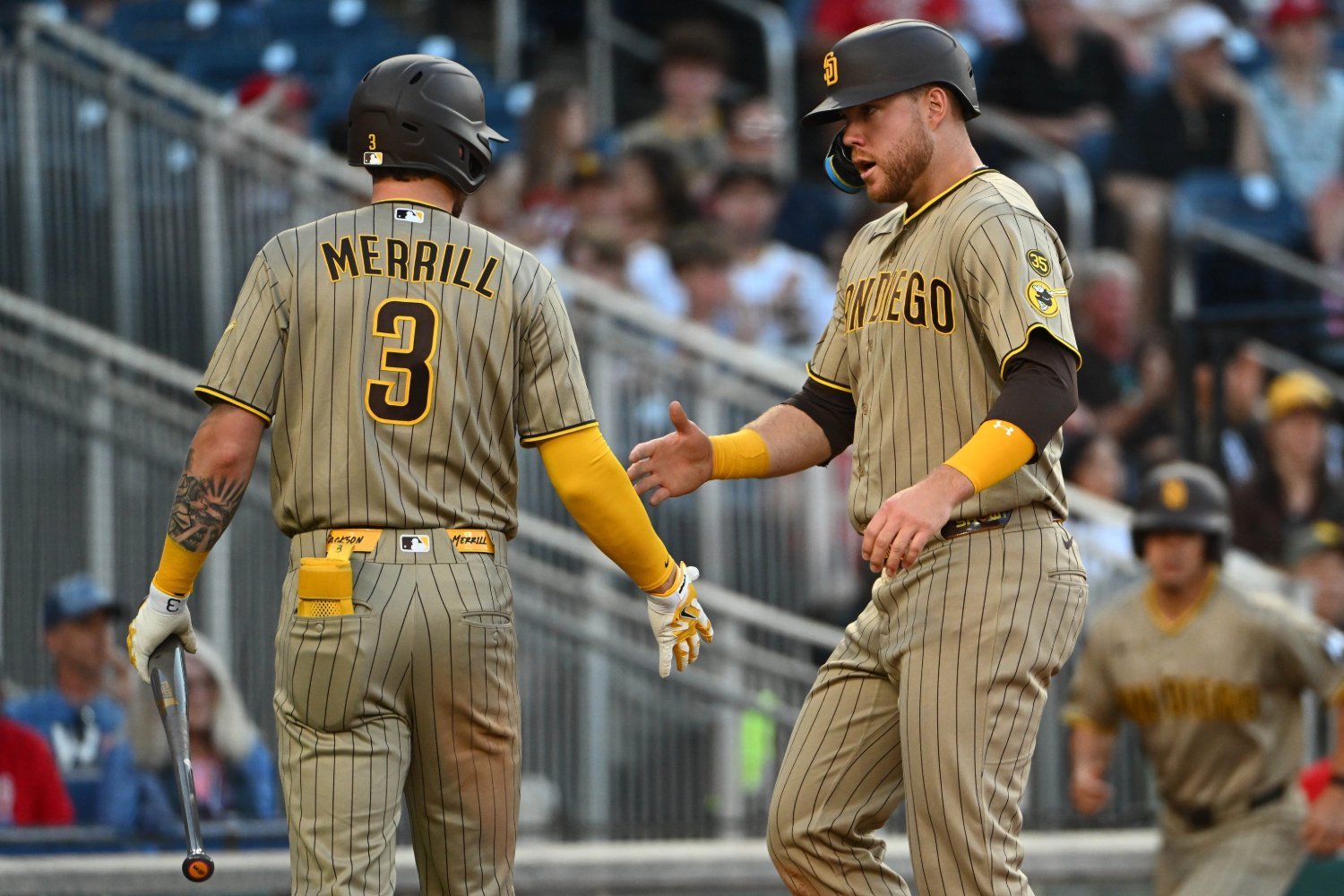 There’s a statistic that can permanently change the way you see a baseball team. It’s not batting average, not home runs, not even OPS. It’s much simpler and much crueler: how many times you get a runner to second or third base and still fail to do anything with it. Forget expectations. Forget theoretical production. In baseball, you win with results in the moments that matter most. The San Diego Padres have spent weeks playing a kind of parallel sport, a ghost version of baseball where they load the bases and then empty them without scoring, as if there were some unwritten law stating that a runner may reach third base but no farther. This is not the story of one bad week. It’s the story of a trend that has been building for a long time and finally overflowed during the worst possible stretch: a three-game home sweep at the hands of the Philadelphia Phillies, with final scores of 3-0, 4-3, and 3-0 that say less about what Philadelphia did right and more about what San Diego failed to do when it mattered most. The numbers that don’t lie: Heading into a weekend series against the Nationals, in their last eight games, the Padres have been the worst team in Major League Baseball with runners in scoring position. Their batting average in those situations during that stretch sits at .045, alongside a .140 expected batting average, also the worst mark in the league. To put that into perspective: in 52 at-bats with runners in scoring position, they collected two hits. Two. If you flipped a coin 52 times and it landed heads exactly twice, you’d suspect the coin was rigged. The Padres hit worse than a fair coin in the situations that decide baseball games. The second-worst team in that span, the New York Mets, hit .143. The Phillies—the same team that swept San Diego—hit .152. Even they, despite struggling with runners on base themselves, tripled the Padres’ production. By the time you reach tenth place on that list, you’re looking at batting averages around .212. The distance between San Diego and the rest of the league is not a gap. It’s an abyss. Their BABIP was .057. For all practical purposes, that is impossible to sustain over time. But the fact that it happened at all is equally significant: it means that whenever the Padres put the ball in play with men on base, it found a defender’s glove with almost suspicious precision. All MLB teams with RISP: last 8 games (May 19–27, 2026) Sorted by BA/RISP ascending. TEAM BA ISO BABIP SLG wOBA xBA K% BB% HardHit% San Diego (SD) .045 .000 .057 .045 .105 .140 21.2% 9.6% 34.3% NY Mets (NYM) .143 .000 .200 .143 .138 .250 28.9% 2.2% 23.3% Philadelphia (PHI) .152 .182 .143 .333 .291 .172 27.9% 16.3% 39.1% Chicago Cubs (CHC) .161 .107 .211 .268 .263 .218 26.9% 7.5% 33.3% St. Louis (STL) .172 .207 .146 .379 .263 .242 22.2% 6.3% 45.2% Cleveland (CLE) .176 .098 .209 .275 .211 .227 19.3% 5.3% 20.9% Toronto (TOR) .181 .096 .246 .277 .229 .208 29.3% 6.5% 29.3% Detroit (DET) .182 .055 .250 .236 .254 .174 27.1% 15.7% 25.0% Tampa Bay (TB) .208 .094 .286 .302 .259 .207 30.8% 13.8% 48.6% Kansas City (KC) .212 .038 .234 .250 .228 .214 13.3% 8.3% 29.8% But then you look at the xBA, and the Padres sit at .140 in those situations. That’s not outstanding, but it’s not .045 either. There’s a massive gap between what they should have hit and what they actually hit, and that gap has only two possible explanations: bad luck and something behavioral, something in the swing or the adjustments hitters fail to make when the scoreboard matters most. It’s probably both. To understand what happened this week, you have to zoom out. The last eight days were the breaking point, but the Padres’ issues with runners in scoring position did not begin on May 19. This has been building for months, one failed at-bat at a time, attached to specific names and faces. The most painful story belongs to Manny Machado. Not because his numbers are the worst on the roster—Cronenworth sits at .074 and Fermin at .048, both lower—but because Machado is Machado. A seven-time All-Star and three-time Silver Slugger. One of the ten greatest third basemen in baseball history. The player around whom Petco Park was built in franchise terms. And yet, with the 2026 season unfolding around him, he’s hitting .132 in pressure situations, with a .097 BABIP that feels almost physically impossible for a hitter of his caliber. Machado’s .097 BABIP with runners in scoring position has to rise. That’s close to a mathematical certainty. But the fact that it ever reached that number is already a sign that something is happening. Elite hitters usually do not hit the ball directly at defenders this consistently, especially not in the moments that matter most. There is something in Machado’s mechanics or approach with runners on base that is making him less effective, and that is the concerning part. Then there’s Jake Cronenworth, hitting .074 with a .056 BABIP. When a hitter posts a BABIP that low, the first conclusion is bad luck. But it’s also fair to ask whether he’s changing his approach in pressure situations: becoming too conservative, trying too hard not to make the inning-ending out and, in the process, turning into exactly that. San Diego Padres: individual RISP statistics, 2026 season Sorted by wOBA/RISP descending. Players BA/RISP ISO BABIP wOBA PA K% Gavin Sheets .355 .451 .368 1.200 33 24.2% Luis Campusano .375 .188 .500 .974 17 23.5% Jackson Merrill .289 .178 .343 .863 55 16.4% Ty France .280 .200 .368 .813 27 22.2% Ramón Laureano .243 .189 .304 .718 42 33.3% Miguel Andújar .286 .085 .294 .714 38 2.6% Fernando Tatis Jr. .290 .000 .333 .671 43 18.6% Xander Bogaerts .227 .137 .216 .703 53 11.3% Nick Castellanos .250 .250 .273 .786 35 25.7% Manny Machado .132 .157 .097 .549 50 18.0% Jake Cronenworth .074 .148 .056 .416 31 25.8% Freddy Fermin .048 .047 .059 .337 29 20.7% Bryce Johnson .111 .000 .250 .384 12 41.7% The counterpoint is that some Padres have responded in these spots. Jackson Merrill is hitting .289 with runners in scoring position and owns an .863 wOBA, making him one of the club’s best hitters in the moments that matter most. Gavin Sheets has posted a .355 average and a .451 ISO, proving that when he bats with men on base, the baseball leaves the bat with intent. Fernando Tatis Jr. is hitting .290 with a .671 wOBA, although surprisingly his power has completely disappeared in those situations (his ISO remains .000, meaning he has not recorded an extra-base hit with RISP this season). The problem is that baseball is not an individual equation. It is a nine-man one. And when three or four of those nine cannot execute in critical moments, the total collapses everything the others are building. To get a complete picture, let's dive into that sweep at the hands of the Phillies. Monday, Game 1. The Padres loaded the bases with nobody out in the first inning against Jesús Luzardo. Nobody out. Bases loaded. It was the kind of moment that defines a series, the moment where winning teams seize control and refuse to give it back. Machado struck out. Merrill struck out. Castellanos grounded out to shortstop. Zero runs. Luzardo carried the enormous weight of that escape through the next five innings and still never allowed a run. In the third inning, the Padres again put the first two hitters on base. Bogaerts grounded into a force out. Machado hit into a double play. Threat over, zero runs. San Diego lost 3-0. Tuesday looked different on the surface (the Padres scored three runs), but the underlying pattern stayed the same. Machado came to the plate with two outs in the bottom of the eighth and runners on first and second. The Phillies led 4-3. Machado attacked the first pitch from Brad Keller and rolled it to third base for the inning’s final out. The Padres lost 4-3. Wednesday brought Cristopher Sánchez, who extended his streak of consecutive scoreless innings to 44⅔, breaking a 115-year-old Phillies franchise record. In the fourth inning, Laureano ripped a two-out double that threatened the streak. Merrill, needing only any kind of hit, grounded out to second baseman Bryson Stott. San Diego lost 3-0. The sweep was complete. What makes these three losses so revealing is not what Philadelphia did right, but the consistency with which San Diego arrived at the critical moment and failed to cross it. Not once. Not twice. Systematically, as though an invisible wall existed between second base and home plate. And yet, this is where the narrative becomes complicated in the best possible way. The Padres are 7-6 in one-run games. San Diego has still found ways to win seven times. Not simply stay close. Win. Someone delivered the necessary hit. Someone refused to shrink under pressure. But they also lost six. And many of those losses carry the unmistakable signature of failed RISP opportunities. A 7-6 record is not the mark of a bad team. It is the mark of a team that knows how to compete but still has not learned how to flip the scoreboard often enough. And there is a massive difference between those two things. The teams that win in October are not necessarily the teams that compete the hardest. They are the teams that convert opportunities into runs with enough consistency for close games to tilt in their favor. The Padres are showing the first half of that equation—they keep reaching close games—but they continue failing the second. What can they do? The honest answer is: wait for the BABIP to normalize. A .057 BABIP with runners in scoring position over eight games has to rise; the statistical laws of baseball simply do not allow that number to survive forever. Eventually, the hard-hit balls will begin finding gaps instead of gloves. Eventually, Machado will line that ball into the outfield in the exact moment it is needed. But they also need to examine the hitters who are changing their swings as the pressure rises, and they need to have uncomfortable conversations about approach, pitch selection, and whether the effort to avoid making the “big out” is turning them into passive hitters precisely when they need to be more aggressive. For now, while that question remains unresolved, San Diego’s runners keep reaching third base. And there they stay. View the full article
 -
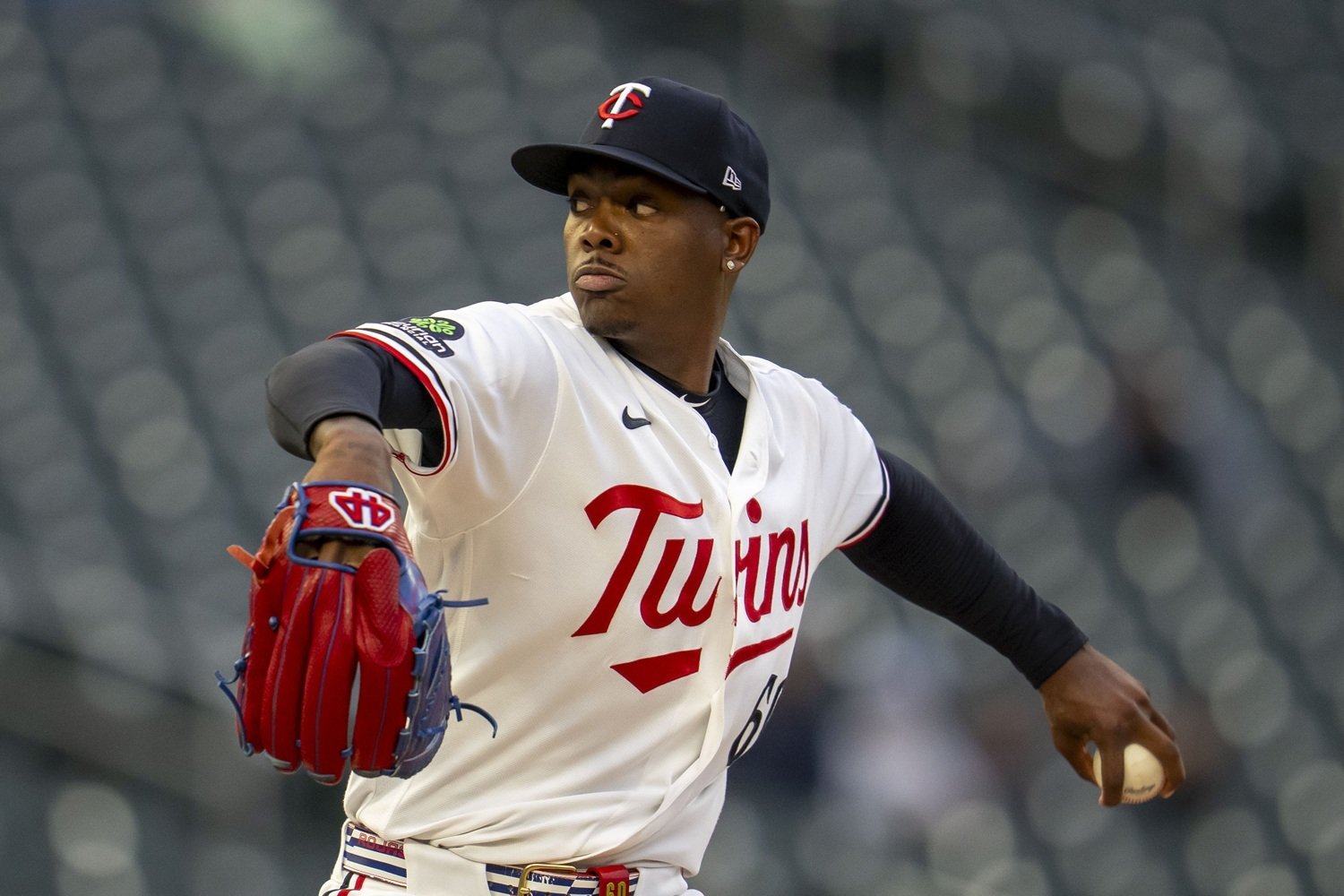 In 2025, one of the season-long storylines in the Twins’ system was the use of piggyback relievers. At many levels of the organization, in addition to the team’s starting pitchers, there were a handful of pitchers who threw in bulk but were not in the rotation. And they also threw more often, typically on three days’ rest, one day fewer than a typical starter’s four days. Many questioned whether that plan would ever be carried over into the majors, but after the trade deadline last season, the Twins utilized set piggyback bulk relievers like Travis Adams, Pierson Ohl, and Thomas Hatch, who would throw multiple innings out of the bullpen on a schedule. Of course, the second half of the 2025 Twins season came at the end of a lost year, when wins and losses didn’t matter. So it was still unclear at the beginning of the 2026 season whether the team would continue to use this strategy. On Opening Day, the Twins did not appear to roster one of these guys, though players like Cody Laweryson, Justin Topa, Kody Funderburk, Zak Kent, and Eric Orze would be counted on to throw more than an inning. Technically, though, they did start this using a form of this strategy in just the third game of the season, as Mick Abel piggybacked with Bailey Ober, throwing 3 1/3 innings in relief (to poor results, giving up five runs and not completing four full innings). Garrett Acton threw multiple innings in his Twins debut, then, on three days’ rest, threw another couple of innings on April 13th. He wasn’t asked to do so again, falling into a more traditional end-of-the-pen mop-up pitcher before his late April injury. Andrew Morris, though, stepped into this type of role fairly quickly upon his debut. Morris, a starter to this point in his career, debuted April 12th, throwing three innings of relief from the 6th to 8th inning. He next pitched on six days later, this time tasked with attempting a two-inning save, blowing it after recording just four of the required six outs. After this appearance, Morris sat three days and threw 2 2/3 innings, then sat three days and threw three innings. This usage pattern was more or less in line with the role the Twins have used in the minors. However, Morris was trending toward a more high-leverage role. He recorded a four-out hold on two days’ rest, then on two days’ rest recorded 3 2/3 innings in relief of an injured Joe Ryan. Following this appearance, he transitioned to more of a short relief role, and he hasn’t recorded more than four outs since May 3rd. Around that time, Kendry Rojas entered the picture as an additional arm with some length. Rojas, a starter like Morris, had been recovering from injury and started his season late, not fully stretching out as a starter by the time he got his number called for his MLB debut, which was two innings of relief in a piggyback start with fellow rookie Connor Prielipp. He was sent down shortly after his April debut but returned to MLB action on May 10th. Since then, he has followed the usage pattern one would expect of a player in this role. He recorded 10 outs as the bulk arm in a bullpen game against Cleveland on May 10th, then threw two innings on three days’ rest against Miami, closing out a blowout. After three more days of rest, he started his first game, throwing four innings against Houston. On four days’ rest after that, he threw three innings of relief against Boston. Rojas was then in line to start another game on four days’ rest on Thursday, May 28th, but he was scratched due to elbow soreness. Sadly, fans of this role may be without it for a while, but Rojas showed how useful a player in this role can be. He was off to a start to his career in which he was probably having more success than his performance suggested (his 1.47 WHIP is higher than his ERA), but he was almost an old-school swingman, cutting into the bullpen’s workload while also being available to start when the rotation needed to push someone back or fill in for a day. This oddball scheduled bulk reliever was actually working, at least for a while. Adams, one of the pioneers of the role in 2025, has also potentially been working into this role, starting his season throwing 2 1/3 innings on two days’ rest, two innings on five days’ rest, then two innings on two days' rest. However, it seems that the Twins might be gearing him toward working on shorter outings with shorter rest, even if he could be asked to throw more than an inning at a time, similar to the usage seen with players like Orze or Funderburk. Simeon Woods Richardson could have potentially replaced Rojas in this role, but he was DFAd on Saturday morning. It's hard to imagine SWR not being claimed by another organization. Woods Richardson was in line to throw in bulk in his May 18th bullpen debut, but the game entered a rain delay after his first inning of work, shutting him down for the night. He rested six days before pitching again in relief, this time two innings in a losing effort in Chicago. He started Thursday afternoon’s game on just two days’ rest when Rojas was scratched from the start. He didn't even make it through three innings before allowing five runs. Whatever the plan is with Woods Richardson, it doesn’t seem like this role is in the cards. However, using this formula has been something of a success. If you combine this type of multi-inning relief appearances from Morris, Rojas, and Adams, they’ve combined to throw 29 innings, allowing eight earned runs, which is a 2.48 ERA. If you include the four shutout innings Rojas threw as a spot starter on three days’ rest, it drops down to 2.18 in 33 innings. Unfortunately (or fortunately, if you’re of the opinion this role is new-age made-up nonsense), the Twins haven’t been able to keep a player in this role long. Morris has been thrust into late-innings work, Rojas is on the injured list now with inflammation in his triceps, and Adams (who is the least stretched out) has been sent down to Triple-A due to high usage over the last week. And right now, it’s unclear that the Twins have another horse to slide into this role. The current Twins’ pen, outside of the aforementioned arms, doesn’t have anyone who can slide into this role. John Klein was called up to take SWR's roster spot. He didn’t impress in his debut but has been throwing multiple innings at Triple-A to middling effectiveness. Laweryson and Funderburk have also both struggled at Triple-A, and they have been promoted to fill Rojas and Adams's spots, which probably spells the end of the experiment, for now. Marco Raya, a high-octane recently converted starter, has been throwing multiple innings very frequently at Triple-A thus far this season, racking up 10 appearances with at least two full innings pitched. After a very shaky and discouraging start to the season, he’s settled into a more respectable 3.68 ERA in eight May appearances across 14 2/3 innings. He’s typically throwing on two or three days’ rest, though he’s topped out at 35 pitches. Still, he might be the best choice the Twins have if they want a hard-throwing bullpen arm who throws multiple innings with any regularity. C.J. Culpepper was just last month converted to a reliever upon his promotion to St. Paul, but he's throwing shorter outings than Raya and isn't on the 40-man. The position may be more trouble than it’s worth in the long run, and it may be suited only for players like Rojas and Morris who are close to being MLB-ready starters, but early returns on a stretched-out reliever who throws multiple innings on a somewhat predictable schedule have been encouraging. It’ll be interesting to see how much faith the Twins have in continuing its usage as the calendar turns to June. View the full article
 -
Mets Minor League Report: Late Rallies Lift Three Affiliates
DiamondCentric posted an article in Grand Central Mets
 Vincent Perozo's three-run homer carried Binghamton to a 4-3 walk-off win, while Bryce Conley struck out seven. Brooklyn cruised 8-1 behind home runs from Mitch Voit and John Bay, and Tanner Witt fanned six over two innings. Emilio Obispo spun five scoreless frames as St. Lucie won 6-3 in 10 innings, with Randy Guzman collecting three hits. Jack Wenninger absorbed the loss in Syracuse's 5-3 defeat at Rochester. Mets Transactions New York Mets designated LHP Anderson Severino for assignment. New York Mets optioned RHP Tobias Myers to Syracuse Mets. New York Mets selected the contract of LHP Cionel Pérez from Syracuse Mets. Wenninger Roughed Up As Syracuse Drops Road Game In Rochester The Syracuse Mets fell 5-3 to the Rochester Red Wings despite out-walking and threatening late. Christian Arroyo led the offense, going 2-for-4 with a home run, a walk, and an RBI, and Ryan Clifford added two hits, including a double, with a walk. Jihwan Bae also collected two hits. Syracuse drew six walks but stranded 12 runners and managed just three runs on nine hits. Jack Wenninger struggled, allowing five runs, four earned, on nine hits and a walk while striking out two over four innings to take the loss. The game turned in the bottom of the sixth and seventh. In the sixth, Rochester scored twice on a groundout and a sacrifice fly to push the lead to 3-0. In the seventh, two more runs came across on a single that scored a runner from third, followed by another run-scoring single, making it 5-0. Syracuse answered with a run in the eighth on a bases-loaded walk to Cristian Pache and added two more in the ninth on Arroyo's home run, but the rally fell short. Zach Peek, Matt Turner, and Ofreidy Gómez combined for four scoreless innings in relief. Player AB R H RBI BB K Nick Morabito 5 0 1 0 0 1 Ji Hwan Bae 4 0 2 0 1 1 Christian Arroyo 4 1 2 1 1 1 Ryan Clifford 4 1 2 0 1 1 Andy Ibáñez 5 1 1 0 0 0 Yonny Hernández 4 0 1 0 1 0 Cristian Pache 3 0 0 1 1 0 Ben Rortvedt 4 0 0 0 0 3 Matt Rudick 2 0 0 0 1 0 Player IP H R ER BB K HR Zach Peek 2 3 0 0 0 2 0 Jack Wenninger 4 9 5 4 1 2 1 Matt Turner 1 0 0 0 0 1 0 Ofreidy Gómez 1 0 0 0 0 2 0 Perozo's Homer And A Ninth-Inning Throwing Error Walk Off Binghamton The Binghamton Rumble Ponies edged the Portland Sea Dogs 4-3 on a walk-off in the ninth inning. Vincent Perozo provided the power, going 1-for-3 with a three-run home run that accounted for all of Binghamton's early offense. D'Andre Smith reached base three times, going 2-for-2 with a walk and a stolen base. Binghamton managed only four hits but drew four walks and stole three bases. Bryce Conley turned in a short start on 46 pitches, allowing three runs over four innings on five hits and three walks while striking out seven. In the bottom of the second, Perozo launched his three-run homer to give Binghamton a 3-0 lead. Portland answered with two runs in the third on a groundout and an RBI single, then tied the game in the fourth on another run-scoring single. The score held at 3-3 until the bottom of the ninth, when Chris Suero and Eli Serrano III pulled off a double steal, and Suero scored the winning run on a throwing error by the catcher. Douglas Orellana, Carlos Guzman, and Brian Metoyer combined for five scoreless innings in relief, with Metoyer earning the win. Player AB R H RBI BB K Jorge Polanco 2 0 0 0 0 2 Jaylen Palmer 2 0 0 0 0 1 Marco Vargas 4 0 0 0 0 2 Chris Suero 3 1 1 0 1 0 Jacob Reimer 4 0 0 0 0 1 Eli Serrano III 3 0 0 0 1 1 D'Andre Smith 2 1 2 0 1 0 Nick Lorusso 2 1 0 0 1 0 Vincent Perozo 3 1 1 3 0 2 TT Bowens 3 0 0 0 0 0 Player IP H R ER BB K HR Bryce Conley 4 5 3 3 3 7 0 Douglas Orellana 2 1 0 0 0 2 0 Carlos Guzman 2 1 0 0 0 1 0 Brian Metoyer 1 0 0 0 0 2 0 Voit And Bay Go Deep As Brooklyn Routs Wilmington The Brooklyn Cyclones rolled to an 8-1 win over the Wilmington Blue Rocks behind a balanced attack and sharp pitching. Leadoff man Mitch Voit went 2-for-4 with a home run, two runs, and an RBI, while John Bay reached three times, going 1-for-2 with a home run, a walk, three runs, an RBI, and a stolen base. Yonatan Henriquez was the offensive standout, going 3-for-4 with two doubles, two runs, and an RBI, and JT Benson drove in three on a 2-for-4 day. Irving Cota worked three scoreless innings, allowing one hit and a walk, and Tanner Witt followed with two scoreless innings, striking out six. The game broke open in the third and fourth. In the third, Brooklyn scored four times, getting RBI singles from Henriquez and Colin Houck before Benson capped the rally with a two-run single, making it 6-0. In the fourth, Voit and Bay hit back-to-back home runs to push the lead to 8-0. Wilmington's only run came in the sixth on an RBI single. Brooklyn's bullpen allowed just one run across the final six innings. Player AB R H RBI BB K Mitch Voit 4 2 2 1 0 0 John Bay 2 3 1 1 1 1 Ronald Hernandez 4 0 1 1 0 2 Daiverson Gutierrez 3 1 0 0 0 0 Yonatan Henriquez 4 2 3 1 0 1 Colin Houck 4 0 1 1 0 3 JT Benson 4 0 2 3 0 0 Trace Willhoite 4 0 0 0 0 1 Nick Roselli 4 0 1 0 0 2 Player IP H R ER BB K HR Irving Cota 3 1 0 0 1 0 0 Tanner Witt 2 0 0 0 1 6 0 Parker Carlson 1 2 1 1 1 0 0 Gregori Louis 1 2 0 0 1 1 0 Dakota Hawkins 1 0 0 0 0 1 0 Hoss Brewer 1 0 0 0 1 0 0 St. Lucie Erupts For Four In The Tenth To Beat Bradenton The St. Lucie Mets pulled away late for a 6-3 win over the Bradenton Marauders in 10 innings. Randy Guzman led the way, going 3-for-5 with a home run and two RBI. AJ Salgado came through with a 1-for-1 night that included a triple and an RBI, and Antonio Jimenez added a hit and a run. St. Lucie drew five walks and stole two bases while leaving seven on base. Emilio Obispo set the tone with five scoreless innings, allowing two hits and no walks while striking out four. The game stayed tight before St. Lucie broke it open in the top of the 10th. With Francisco Toledo as the zombie runner, Salgado tripled him home, then scored on Peña's fielder's choice. Guzman followed with a run-scoring single, and Julio Zayas drove in another on a groundout, turning a 2-2 tie into a 6-2 lead. Bradenton scored once in the bottom of the 10th when their zombie runner, Dylan Palmer, came home on a bases-loaded walk, but St. Lucie closed it out. Joel Lara struck out four over two innings. Player AB R H RBI BB K Elian Peña 5 1 0 1 0 1 Antonio Jimenez 5 1 1 0 0 1 Randy Guzman 5 1 3 2 0 0 Yohairo Cuevas 3 0 0 0 2 1 Julio Zayas 4 0 0 1 1 1 Branny De Oleo 5 0 1 0 0 1 Francisco Toledo 4 1 0 0 0 0 Jeremy Rodriguez 2 1 0 0 2 2 Sam Robertson 3 0 1 0 0 1 AJ Salgado 1 1 1 1 0 0 Player IP H R ER BB K HR Emilio Obispo 5 2 0 0 0 4 0 Joel Lara 2 1 1 0 2 4 0 Miguel Mejias 2 2 1 1 0 2 0 Christian Rodriguez 1 1 1 0 2 2 0 Top-20 Prospect Performance Nolan McLean: DNP Carson Benge: DNP A.J. Ewing: DNP Jonah Tong: DNP Ryan Clifford: 2-for-4, 2B, BB Jacob Reimer: 0-for-4, K Jack Wenninger: 4 IP, 9 H, 5 R, 4 ER, BB, 2 K Elian Pena: 0-for-5, RBI, K, SB Mitch Voit: 2-for-4, HR, 2 R, RBI Nick Morabito: 1-for-5, K Jonathan Santucci: DNP Chris Suero: 1-for-3, R, BB, SB Zach Thornton: DNP Wandy Asigen: DNP Will Watson: DNP Eli Serrano III: 0-for-3, BB, K, SB Ryan Lambert: DNP Dylan Ross: DNP Antonio Jimenez: 1-for-5, R, K R.J. Gordon: DNPh View the full article
 -
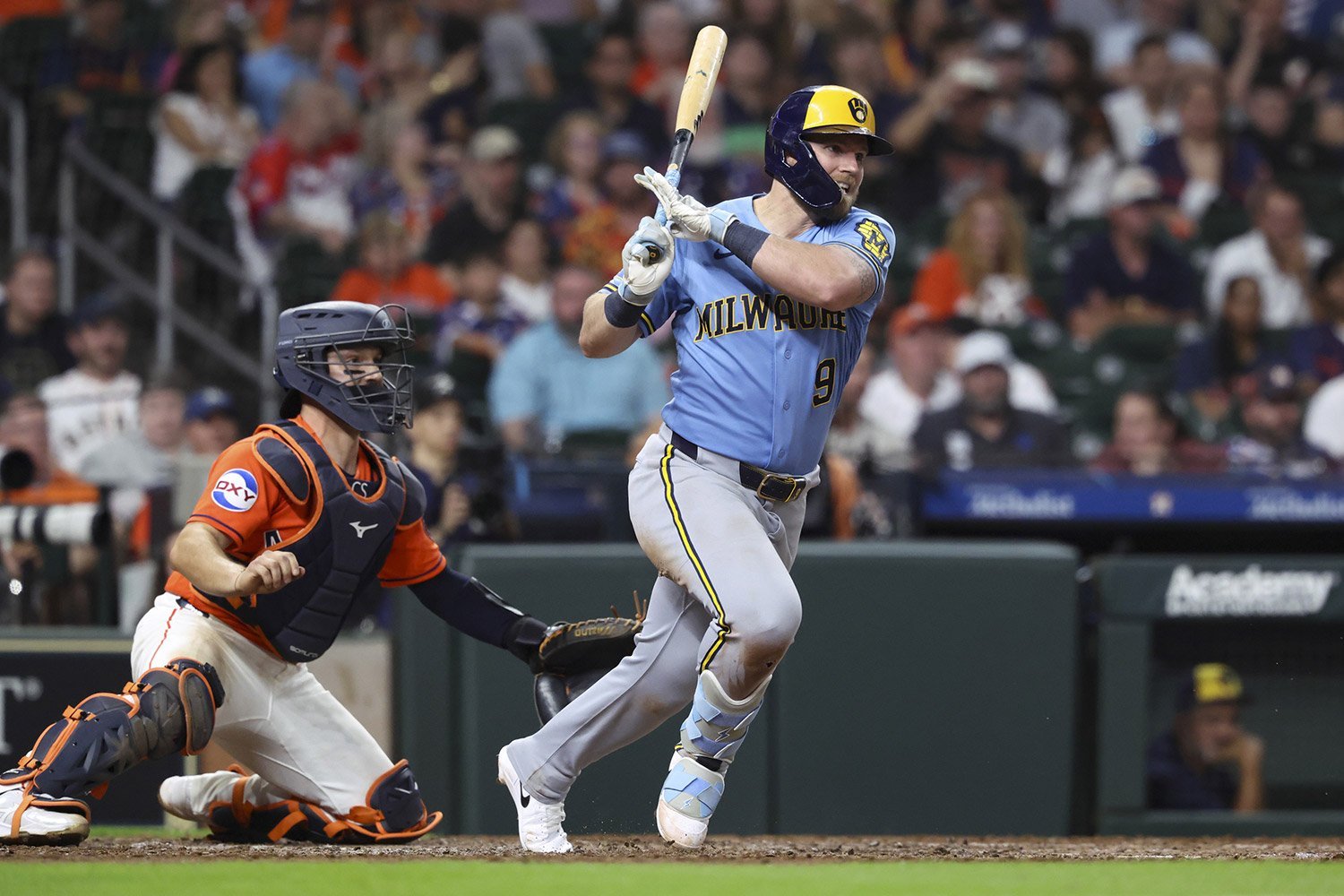 Jake Bauers’ 2026 season is off to a promising start. The Brewers’ first baseman has looked calm, cool, and collected up there and is on pace for some career power numbers while being one of the better overall hitters on Pat Murphy’s squad. Today, we’ll dive into what Bauers is doing differently, if anything, to make for a more productive run this time around. Jake Bauers Background For starters, Jake Bauers is a 30-year-old lefty; the first baseman has seven years of major league baseball experience, as he was originally a 7th-round pick in the 2013 MLB Draft, when the San Diego Padres selected him. Since that point, he’s been in and out of starting lineups and has had major league service time with the Rays, Guardians, Mariners, and Yankees before joining the Brewers in 2024. He has been with Cream City ever since. Bauers is a career .218 hitter, yet this year, he’s hitting .281 with a .355 on-base percentage. His career-best home run total is 12 in a season, yet the guy has eight this year, well before the halfway point of the season. What’s contributing to this breakout season at 30 years old? Before getting into advanced analytics, I have to think there’s some value in stability. This is someone on his fifth big league squad since 2018, and it’s the first time ever that Bauers has suited up for the same ball club three years in a row. Getting into the same routine, working with the same development staff, and other factors don’t hurt. Bauers Is Hitting The Ball Harder Than Ever Diving into his advanced metrics, this is somebody who is hitting the ball extremely hard. 30 might be the new 24 for Bauers, because his hard-hit percentage of 52.8%, or the percentage of times he pieces up a ball at 95 MPH off the bat or more, is one of the best rates in all of baseball. Bauers is in the 95th percentile. How does the veteran first baseman make such pure contact? It starts with a wicked fast bat speed, a metric where he falls in the 96th percentile. Other indicators like his barrel percentage (77th percentile) and squared-up percentage (80th percentile) fall right in line, showing the Crew’s corner infielder is catching the ball as clean as anyone. Bauers has been a part-time player for most of his career, and here are his three most recent qualified years in Baseball Savant: Bauers' Discipline Much like a lot of Brewers hitters, Bauers has the mindset down, too. His plate discipline has been remarkable early on, as he’s chasing just 19.7% of the time, nestling him into the 95th percentile as one of the stingiest batters in the bigs. Bauers does whiff around the league average, and his strikeout and walk rates sit in that same vein, but his ability to lay off of baseballs outside of the zone has bought him more trips on base and a much better slash line overall. A Slight Tweak Bauers has routinely been someone who skies the baseball, as he registered a career-high 22.6 degree launch angle back in 2024. He cut into that mark significantly, lowering the average launch angle off of contact to 16.6 degrees in 2025. This year, it’s at a career low of 8.8 degrees. Bauers is hitting line drives, and combined with an average exit velocity that’s well above league average, that’s a great trend for someone who is on pace to blow his career-high home run total out of the water. Overall, this is somebody who has been with the same team long enough that they can finally start to make some significant strides with their attack at the plate. The result? It could be a career year on a variety of fronts for a 30-year-old making some of his best contact yet. View the full article
 -
 Transactions: UTL Eddys Leonard placed on the Nashville Temporary Inactive List INF/OF Daniel Guilarte sent on rehab assignment from Wisconsin Timber Rattlers to ACL Brewers Milwaukee Brewers signed free agent RHP Yancarlos Vasquez to a minor league contract. Milwaukee Brewers signed free agent RHP Deivy Gonzalez to a minor league contract. Milwaukee Brewers signed free agent LHP Noel Cepeda to a minor league contract. The Temporarily Inactive List is "a designated status for players who are unavailable to render active service due to excused personal obligations, family emergencies, or brief absences" (per MiLB). A player must spend a minimum of 3 days on the list. We hope all is well with Leonard, but we often don't learn the circumstances around TIL absences, which is fair. Guilarte had last played on April 24th. The bit of info we have on the young pitchers can be found here. These teenagers are just a tad bit older than the norm signed back as part of the January 2026 international class. So, they had made strides since that time, caught the Brewers eye, and Milwaukee determined there was room in the organization to slot them in. FYI - the Phillies had recently traded some of their Dominican Summer League talent, deciding to pare back from two DSL teams to one. The Brewers clearly aren't anywhere near that type of decision. Speaking of the DSL, the season opens Monday morning. On Saturday, the Brewers formally finalized their two rosters, with all the new additions since January 2026 to the present assigned, and other players repeating the league, but migrating between the "Blue" and "Gold" rosters noted. You can view those transactions here. Nashville Pre-Game Media Notes Final: Nashville 8, Gwinnett (Braves) 3 Box Score and Game Log Via the Sounds, game details, and we encourage readers to always review affiliate write-ups as part of their Link Report routine: Sounds Deliver a Backyard Beatdown to Take Series over Stripers - Zamora Collects Four RBI to Back Pannone's Quality Start The other Brewers' affiliates do fine jobs on their game summaries, but across MiLB, it's tough to top what the Sounds compose on a daily basis. Touching on and following up some of the paragraphs from this game's report: 21-year-old Cooper Pratt on base four times to lift his OBP to .364, why yes, please. Reaching base 33 times via BB/HBP vs. just 31 K's, why yes again, thank you. We all agree that MLB and AAA pitching staffs are two very different animals, but there are certain skills that translate easier than others, and Pratt's skillset should migrate nicely. It won't dazzle, but much will carry over to the highest level. If you think Pratt's plate discipline and avoidance of the dreaded strikeout is something, then remind yourself that Luis Lara has now received 40 free BB/HBP passes and has fanned only 31 times. The fellow 21-year-old is three months younger than Pratt, and it has to be a near-lock that no other organization has two 21-year-old's performing as well at the AAA level. It's getting easier to picture 32-year-old veteran LHP Thomas Pannone (50 MLB games, including 13 starts) being inserted into the Brewers rotation at some point this season to help navigate upcoming long stretches without days off. Of course, his out-of-options status complicates things, but should rotation thinning continue via injury / ineffectiveness, keep this in mind. I've been adamant that the Brewers will go the "ride-or-die to the end" route with William Contreras, just as they did with Willy Adames. It'd be impossible to replace via trade (one year's service time) what Contreras brings to the team. I'm not one for shooting down others' conversation topics, but whether it's national media or your buddy at the gym, please quickly dismiss their trade thoughts on Contreras this winter and set them straight. Three games and counting since we last saw Brock Wilken. Did you notice the four former members of the Brewers organization who saw action for Gwinnett Saturday? That's one way to make sure you review the box score. Poor Freddy Zamora, it's taken us this long to highlight you on the video review level: Kudos, Gwinnett social media team (sound up). Catch up with the latest Biloxi pre-game audio interview archives Biloxi Pre-Game Media Notes Final Game One, Biloxi 9, Columbus (Braves) 4, seven innings as scheduled Box Score and Game Log Final Game Two, Biloxi 5, Columbus 0, seven innings as scheduled Box Score and Game Log DeBerry's First Career Complete Game Shutout Leads Shuckers to Sweep - DeBerry records 11th complete game shutout in franchise history, 1st in career since 2021 in junior college Like the linked game summary, we'll visit things chronologically. Third Game One hit for Jesús Made, the 7th time this season with 3+ hits - With boppers Blake Burke and Damon Keith sidelined again for the day (both games), an impressive offensive output, to be sure. The thing about Saturday absences is that they often morph into Sunday sit-outs as well, in order to take advantage of Monday's rest day. Just as was the case in Nashville's game, everyone in the lineup reached base at least once. We mentioned age 21 as a key in the Sounds' write-up above. Let's remember that RHP Bishop Letson will also be just 21 years old for the entirety of this season. Making his first appearance in two weeks, if Letson's break was a fine-tuning reset, it was successful for the most part, no earned runs over five-and-a-third innings. Of his six baserunners allowed, four were via the walk. Even so, consider this a good step. Heck, Brandon Sproat is 25 years old. Is it possible to picture Letson even further along than Sproat in four years' time? Sure, though hopefully that timeline can be quickened a bit. My point is patience with Letson is needed. As for Game Two (nice Trey Supak reference in the summary, by the way), keep in mind this was Mike Boeve's 11th appearance at first base (9th start) this season. If his glove even tips this a tiny bit as it scoots into right field, we're talking a no-hitter: So, how's that 2024 3rd round bonus money spent on DeBerry look now (just $25,000 as a senior sign out of Dallas Baptist, allowing for bonus pool manipulation with the other picks). Completely disregard the current 4.84 ERA, the Brewers know what they have in DeBerry. Will it get to the point that the team petitions MLB to lower-case Jaron's "D" as in "deGrom"? Oh, that would be sweet. 22-year-old Dylan O'Rae singled and walked twice. You may win a pub bet by asking who has the higher OPS as of this morning, O'Rae or Jesús Made? Successful once and not successful once, O'Rae is 29-for-35 in SB attempts. Speaking of Mr. Made, we love it when the Voice of the Shuckers takes a team tweet and enhances it: Other highlights are available via the team's 'X' feed, including an Eric Brown, Jr. effort in center field that earns a 9.5 in Olympic scoring for the catch and a 10.0 for the subsequent tumbling routine. Wisconsin Pre-Game Media Notes (download link) Final: Peoria (Cardinals) 8, Wisconsin 3 Box Score and Game Log Via the Timber Rattlers, game details: Peoria’s Two-Out Rally in Sixth Sinks Wisconsin - Chiefs score five runs with two outs to take 8-1 lead The video package supplements you game summary - That Luis Pena play is worth another look - This was RH reliever Ayendy Bravo's second appearance for Wisconsin, and first in nine days. In only his age 19 season, Bravo opened the season with five appearances for Wilson, making his full-season ball debut, whereupon he was shifted back to Maryvale. Bravo would make three brief appearances there before he was brought to Wisconsin at the time when giving up football scores (high football scores, actually) was becoming the norm for the Timber Rattlers. Bravo mixed in a balk and pitch timer violation into his less-than-ideal line. Should the Dominican native be in Appleton at this time? Not really, but the roster juggling act is a dance. We can all agree that his surname is going to be awesome to yell out at Am-Fam Field someday should his career path land him there. Pretty much everything after the first four pitches of the game for Jason Woodward was pretty darn good. With Jacob Misiorowski on the hill for the Brewers Sunday, and his bobblehead set as Sunday's giveaway for the T-Rats, it's worth posting Voice of the Rattlers Chris Mehring's two-tweet combo here: 16-7 away record, 9-15 at home, really? Odd... Wilson Pre-Game Media Notes Final: Myrtle Beach (Cubs) 7, Wilson 5 Box Score and Game Log Pelicans Rally Late to Sink Warbirds - Three-run Eighth Dooms Wilson Good for Filippo Di Turi here, his lone hit of the game: Do you know what was also good for the 20-year-old Venezuela native? His January 2023 $1.3 million signing bonus. The only real advancement Di Turi has made over a poor 2025 Mudcats season is on the basepaths, 13-for-14 this season, an unsightly 6-for-14 last summer. One hopes Di Turi and his advisors invested wisely, and I guess it's invisible within clubhouse dynamics for the most part (it's a sensitive topic, so it's not surprising we ever hear it mentioned in various player or administration interviews), but it must be tough to ignore among teammates that certain players received massive windfalls, absolutely life-changing money. Seeking more positives? How about RBI singles for Luis Lameda and Brady Ebel? Lameda Ebel Tyler Rodriguez has reached via walk or HBP 15 times in 12 Warbird games this season. It's been a minute since we checked on Jose Anderson's strikeout percentage, it's "down" to 41.9%. Final: ACL Reds 6, ACL Brewers 4 Box Score and Game Log NOTE: Huge thanks to my fellow Link Reporter "Ro" for this Maryvale writeup. Two untimely errors resulted in 3 unearned runs allowed, as the Zona Crew (10-12) dropped their 9-inning, 11:00 AM home contest to the ACL Reds 6-4, despite outhitting them 6-3. OF Brailyn Antunez (1-for-3, walk) was back in the starting lineup after exiting Thursday’s game early and the game started well with rehabbing RHP Daniel Corniel's 1-2-3 first inning and DH Luke Adams’ homer (his 3rd in four games; 2-for-4, HR, walk, 2 RBIs, SB today) to lead off the bottom of the 1st inning. However, a two-out dropped fly ball to left field allowed two runs against Corniel (2 IP, 2 R (0 ER), 2 H, 0 BB, 4 Ks), then 4 walks, 1 HBP and 1 balk issued by 19-year old RHP Dariel Jaquez (2 1/3 IP, 2 R, 1 H, 2 Ks) helped push the deficit to 4-1. Down 6-1 late, the first three Brewers reached in a two-run eighth inning (2 walks, Adams’ RBI single), then C Freider Rojas (1-for-3, walk) delivered a two-out RBI single in the bottom of the 9th inning to cut the deficit to 6-4. Adams followed with a seven-pitch walk, but 18-year-old 3B Yu-Lin Liao (0-for-3 today; 2-for-25 in his short career to date) flew out to end it. The game had a funny way of finding Liao, who entered as a substitute for rehabbing SS Daniel Guilarte (K, BB in his first game since April 24), as he committed a run-scoring error in the 8th inning and also struck out for the team’s first out in the bottom half of that frame. RHPs Jhosep Ospino (1 2/3 IP, 0 R, 0 H, 1 BB, 1 K) and Argenis Aparicio (1 2/3 IP, 0 R, 0 H, 1 BB, 0 Ks) were solid in relief to give the comeback a chance, while RHP Josue Toledo struggled a bit with control (1 1/3 IP, 2 R (1 ER), 0 H, 3 BB, 2 Ks). 2B CJ Hughes had a productive game (1-for-3, walk, 2 SBs) and Rojas gunned down 2 of 3 attempted basestealers. Our young men in Arizona have an off day tomorrow but return to action at the ACL Dodgers (8-14) on Monday at 8:00 PM CST. Afternoon action everywhere except in Myrtle Beach, home of their outstanding center field camera and gamebug with radar readings. Head over to your MLB.TV app at 5:35 Central to catch the early evening action. Happy Sunday Funday, everyone! Organizational Scoreboard including starting pitcher info, game times, MiLB TV links, and box scores Current Milwaukee Brewers Organization Batting Stats and Depth Current Milwaukee Brewers Organization Pitching Stats and Depth View the full article
