


DiamondCentric
-
Posts
2,631 -
Joined
-
Last visited
Never
Content Type
Profiles
Forums
Events
MLB News, Rumors & Analysis
DiamondCentric Tutorials & Help
Major League Baseball Videos
MLB Fan Guides & Resources
Store
Downloads
Gallery
Everything posted by DiamondCentric
-

The State of the Blue Jays' Roster Entering the 2026-27 Offseason
DiamondCentric posted an article in Jays Centre
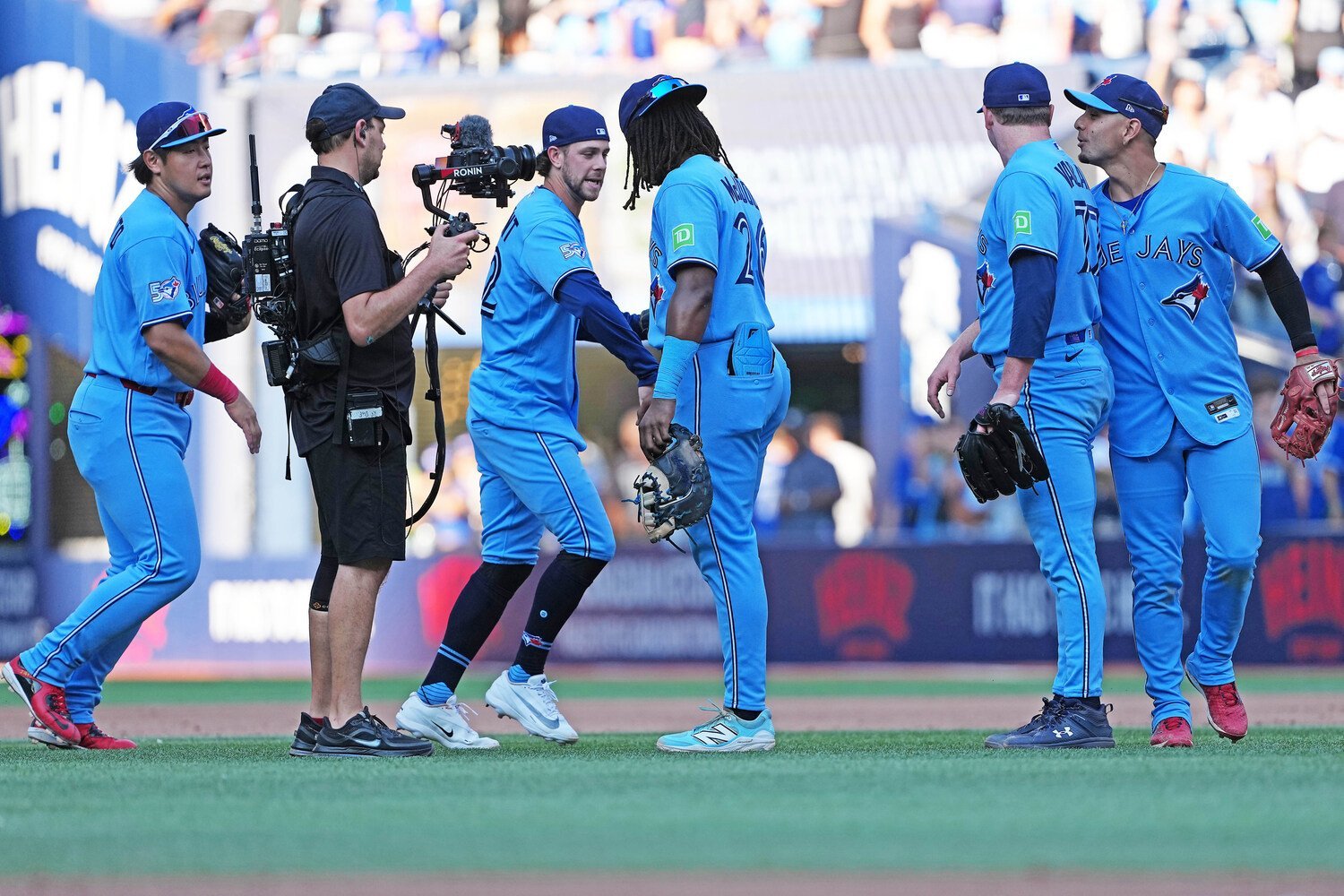 Normally, free agents can start signing with teams five days after the World Series concludes. However, this offseason will be different. With a strike looming, teams might hesitate to make big moves until a new collective bargaining agreement is agreed upon. With that in mind, let’s take a look at the Toronto Blue Jays' 40-man roster. Under Contract 1B - Vladimir Guerrero Jr. SP - Dylan Cease SP - José Berríos (*opt-out available) 2B/SS - Andrés Giménez 1B/3B - Kazuma Okamoto RP - Tyler Rogers OF - Anthony Santander C - Alejandro Kirk SP - Cody Ponce All of these players are signed through at least 2028, when Berríos's, Rogers's, and Ponce’s contracts expire. Berríos is highly unlikely to exercise his opt-out. With his injury history over the last two seasons, he'd be crazy to give up his guaranteed $49 million remaining over the next two seasons. He's also not expected to return from the injured list until mid-to-late next season, depending on his recovery. Arbitration Eligible These players will either be Blue Jays next season or be non-tendered. INF - Ernie Clement SP - José Soriano Util - Josh Smith RP - Louis Varland OF - Nathan Lukes SP - Spencer Arrighetti Util - Davis Schneider SP - Bowden Francis Each of these players is likely safe to return except Francis and Arrighetti. Francis missed the entire season due to Tommy John surgery, and his health will factor into whether the team non-tenders him to free up a 40-man roster spot. He’s shown flashes of success, but the Blue Jays have several players who could join the roster and stay healthy. Arrighetti is also an option to non-tender, as he was a massive disappointment after the Blue Jays acquired him from the Houston Astros at the trade deadline. He posted a 6.35 ERA over seven appearances (two starts). His one benefit is that he offers MLB experience at a discount, though it hasn’t been very successful. Schneider could also be a non-tender candidate, but the Blue Jays love their utility players, so he makes sense to hold onto for depth. He was a strong offensive producer when he first came up, slashing .276/.404/.603 in 141 plate appearances during his rookie season (2023). However, he's been more forgettable at the plate since then, hitting .195 over the last three seasons. It may be time to move on from Schneider and add someone who can be more reliable at the plate. As hard as it is to believe, Clement could also be a candidate to be non-tendered. He'll be 31 at the start of next season and took a significant step backward both offensively and defensively in the second half this past season. It could be time for the Jays to give their younger players more playing time and cut a player who was a liability down the stretch. Players Not Yet Arbitration Eligible Util - Addison Barger RP - Brendon Little RP - Braydon Fisher RP - Mason Fluharty LF - Jonatan Clase SP - Trey Yesavage SP/RP - Spencer Miles C - Brandon Valenzuela RP - Chase Lee SP/RP - Jake Bloss LF - Yohendrick Piñango 2B/3B - Charles McAdoo 1B/3B - Sean Keys CF - Brett Bateman SP/RP - Chad Dallas SP/RP - Ricky Tiedemann SP/RP - CJ Van Eyk RP - Brendan Cellucci LF - Rudy Martin Jr. RP - John Klein RP - José Rodriguez C - Shawn Ross Of these players, Martin, Klein, and possibly Rodriguez are the earliest DFA candidates. Martin was a feel-good story this season, making his MLB debut after nine minor league seasons. However, he’ll be 31 at the start of next season and won’t be on the Opening Day roster. The Blue Jays have plenty of younger players with the same skills, if not better, to take that spot on the 40-man roster. Klein and Rodriguez have had roller-coaster seasons in the minors. They provide depth, but other prospects or free agents could deliver more consistent performances. Impending Free Agents The Blue Jays are returning a majority of this season’s team. They are losing some older players, including Straw, if they don’t exercise his club option. OF - George Springer SP - Jameson Taillon OF - Myles Straw (*has an $8 million club option) SP - Max Scherzer SP - Patrick Corbin SP - Shane Bieber RP - Yimi García RP - Paul Sewald SP/RP - Michael Lorenzen Util - Luis Urías The Blue Jays face a significant roster crunch this offseason. They must add eight of the nine players on their 60-day injured list back to the 40-man roster (Corbin, who is set to reach free agency, is the exception). They have nine players eligible for free agency, but none of them are must-re-sign options. Bieber, Sewald, and possibly Taillon are the only free agents to consider re-signing. Bieber posted his second-worst ERA (4.37) of his nine-year career, but he started only 11 games. He began the season on the injured list due to right elbow inflammation. He returned June 23, but less than two months later, he was back on the IL, this time with a right teres major injury. When healthy, Bieber is a steady producer. Sewald was a great acquisition when the Arizona Diamondbacks designated him for assignment. He posted a 0.63 ERA over 14 1/3 innings after joining Toronto. However, he hasn’t finished any of the last three seasons with an ERA under 4.30. He’s 36, but would be a discount veteran arm. Taillon has been a solid contributor over his 10 MLB seasons, and posted a 3.60 ERA with Toronto after the Chicago Cubs designated him for assignment before the trade deadline. However, he made only three starts because he spent two stints on the IL. He went for surgery shortly after the season ended. The Blue Jays need rotation depth, so if healthy (a big if), Taillon would make sense to re-sign. Neither of the other pitchers is worth bringing back because of their age, injury history, or poor performance. However, if Scherzer decides to not hang up the cleats yet, it'd likely be because the Blue Jays are willing to re-sign him. Straw was a great defensive outfielder in a platoon role, but the Blue Jays are deep in the outfield, especially with Santander and Barger returning. So Straw isn't worth $8 million just for his glove and contact hitting. The Blue Jays also need to consider how many eligible players are worth protecting from the Rule 5 draft. To protect them from being selected, the Blue Jays would need to add the prospects to their 40-man roster. The notable minor leaguers eligible are: RHP - Gage Stanifer INF - Josh Kasevich RHP - Nolan Perry RHP - Josh Winckowski OF - RJ Schreck RHP - Daniel Guerra INF - Jay Harry SP - Josh Stephan Perry seems like a lock to protect after an outstanding season, posting a 2.50 ERA and 117 strikeouts over 82 2/3 innings combined across Single, High, and Double A. He could be another young starter to contend for an Opening Day rotation spot with a solid spring. Guerra and Stanifer have shown signs of success, but will the Blue Jays have enough room to protect all three? Stanifer is the odd man out to keep, but he hasn’t shown enough for another team to select him and keep him on their roster all season. Winckowski is in an interesting circumstance. He's pitched in the majors for four seasons for the Boston Red Sox, but he was designated for assignment and non-tendered in the offseason. The Blue Jays signed him to a two-year minor-league contract. The righty underwent an internal brace procedure in December and returned in late August for a rehab stint. He is healthy and could be stretched out as a starter. Even though he signed a two-year contract, he spent all of the 2026 season in the minors, making him eligible for the Rule 5 draft. With his MLB experience, he could be an option for other teams if he's healthy. The Blue Jays also need to decide between Harry and Kasevich. Harry had a breakout season in 2026, slashing .298/.343/.495 with 14 home runs over 429 plate appearances. A team will likely select him if the Blue Jays don’t protect him because he can play both middle infield and all three outfield positions. Kasevich is a utility infielder who slashed .282/.364/.363, but he’s a contact hitter, and the Blue Jays don’t need more of that. He has a solid glove, but with the tough task of keeping their roster to 40 players, the Blue Jays can risk losing Kasevich. The last time there was a lockout, there wasn’t a Rule 5 draft. The Blue Jays still added prospects to their 40-man roster to protect them, but it’s unclear how a lockout would affect the draft this time. Toronto will likely be aggressive in free agency as well. However, any major moves may be delayed until the owners and players agree on a CBA. The Blue Jays have several ways to navigate their 40-man roster questions, but they'll prioritize a power bat or two in free agency. Toronto can’t repeat finishing last in runs and home runs among MLB teams. The AL East will remain competitive, so the Jays need to take a massive step forward offensively if they want to return to the postseason. Also, after this season's plethora of pitching injuries, depth with MLB experience will be a target. View the full article
-
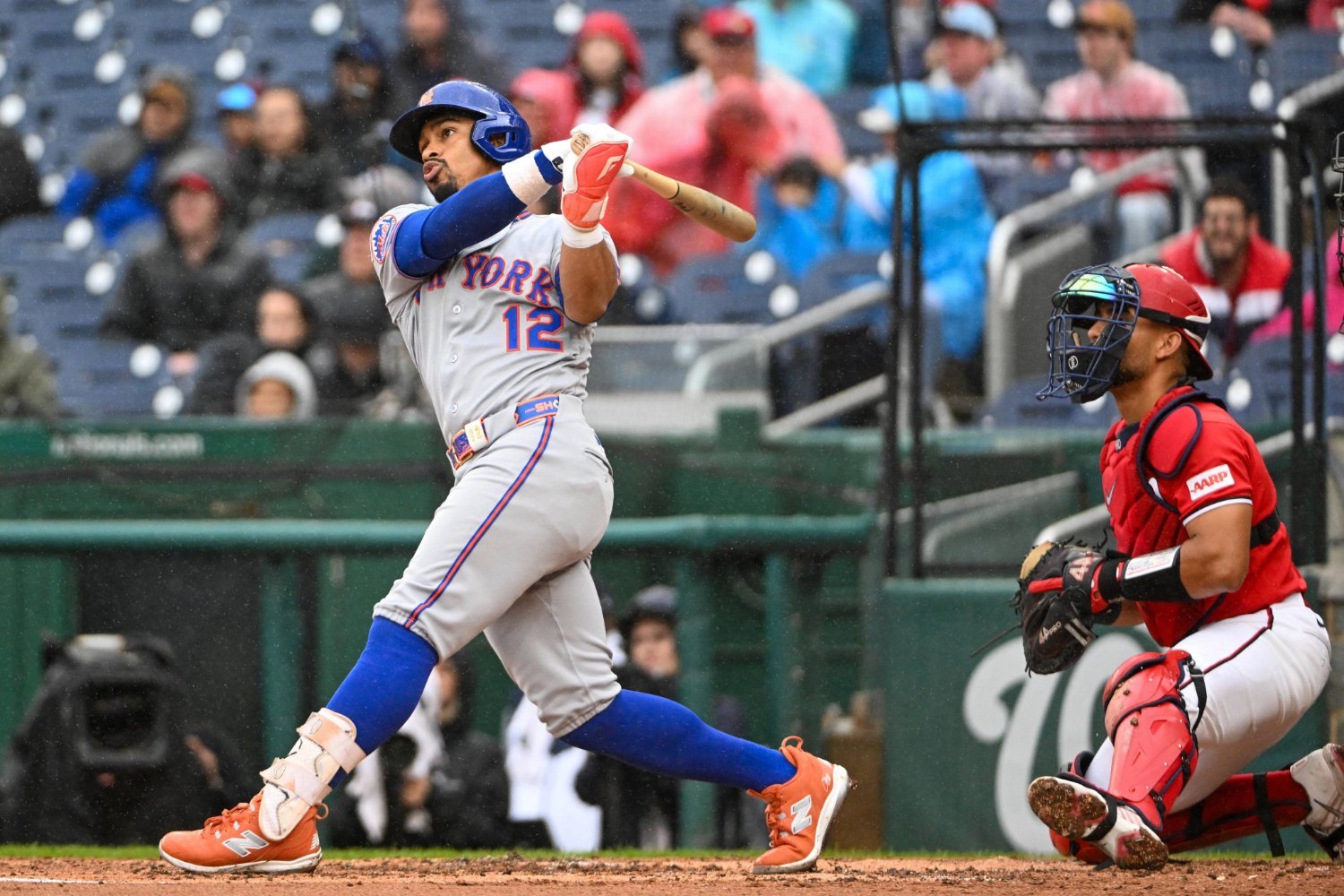 Not many shortstops have managed to hit 300 home runs in the majors. Francisco Lindor, who reached the total on September 27, became the most recent member of a very exclusive club that includes Ernie Banks, Cal Ripken Jr., Miguel Tejada, and Alex Rodriguez. It was a cool achievement in a very difficult season for the All-Star shortstop. Lindor was limited to 105 games and 469 plate appearances, in which he hit a slightly disappointing (for his lofty standards, at least) .225/.309/.423 with 21 home runs, 63 runs scored, 49 RBI, three stolen bases, a 105 wRC+, and 2.2 fWAR. His 105 wRC+ was his lowest mark since that rocky debut season with the Mets in 2021, in which he posted a 101 mark. A Season Derailed By Injuries: Francisco Lindor's 2026 In Review It’s important to clarify that Lindor needed hamate bone surgery in February, around the start of spring training, and was on a race to be ready for the start of the regular season. These injuries are notorious for impacting offensive performance, particularly in the power department. Lindor was ‘ready’ in time for the season opener, but he was clearly still adjusting to the fact that he got virtually no time to properly train and get ready. Then, in late April, he was placed on the injured list with a left calf strain. He was activated in late June, a little over two months after hitting the list. Lindor had to start over again, for the second time this year. Naturally, his 114 second-half wRC+ was much better than his 89 mark before the break. He played better as he got further removed from his injuries, but he never hit the kind of ceiling he's shown in the past. From a power standpoint, Lindor didn’t do so badly considering the wrist injury and the limited number of games played. His stolen base output plummeted, though, which is likely related to the significant calf injury. Whether it was because of the two major injuries, the natural aging process (he’ll be 33 next month), or just a bad season, Lindor showed some signs of decline. Here is a comparison of some of his metrics over the last three campaigns: Usually a star in all facets of the game, Lindor was merely average in hitting and fielding this year, and well below-average in baserunning value, in the 29th percentile. As his sixth percentile LA Sweet-spot% suggests, he rarely squared up the ball in the most ideal angles, and that was reflected in his low batting average. He did manage to put up an elite hard-hit rate, in the 91st percentile, but his 20.3 percent strikeout rate was the highest of his career. Lindor helped himself out a lot by pulling fly balls at a 25.7 percent rate, and that likely helped him maintain his power despite the problematic wrist injury early in the season. Both the .225 batting average and the .309 on-base percentage were career-worst marks, though, limiting his offensive output. Is Lindor starting to decline? It’s possible, but it’s hard to tell when almost his entire 2026 campaign was severely impacted by injuries. Perhaps it’s best to wait to see how he does in 2027 before we go down the doom-and-gloom route. For now, the shortstop is still part of the long-term plans of the organization. Chances are that he bounces back in a big way next year if the league and the union give us a chance to enjoy baseball. With a fully healthy wrist and a calf that is 100 percent, Lindor has some serious bounce-back potential, even if he probably won’t be the 7.6-fWAR player he was in 2024, when he was an MVP candidate and his Statcast profile was full of red. View the full article
-
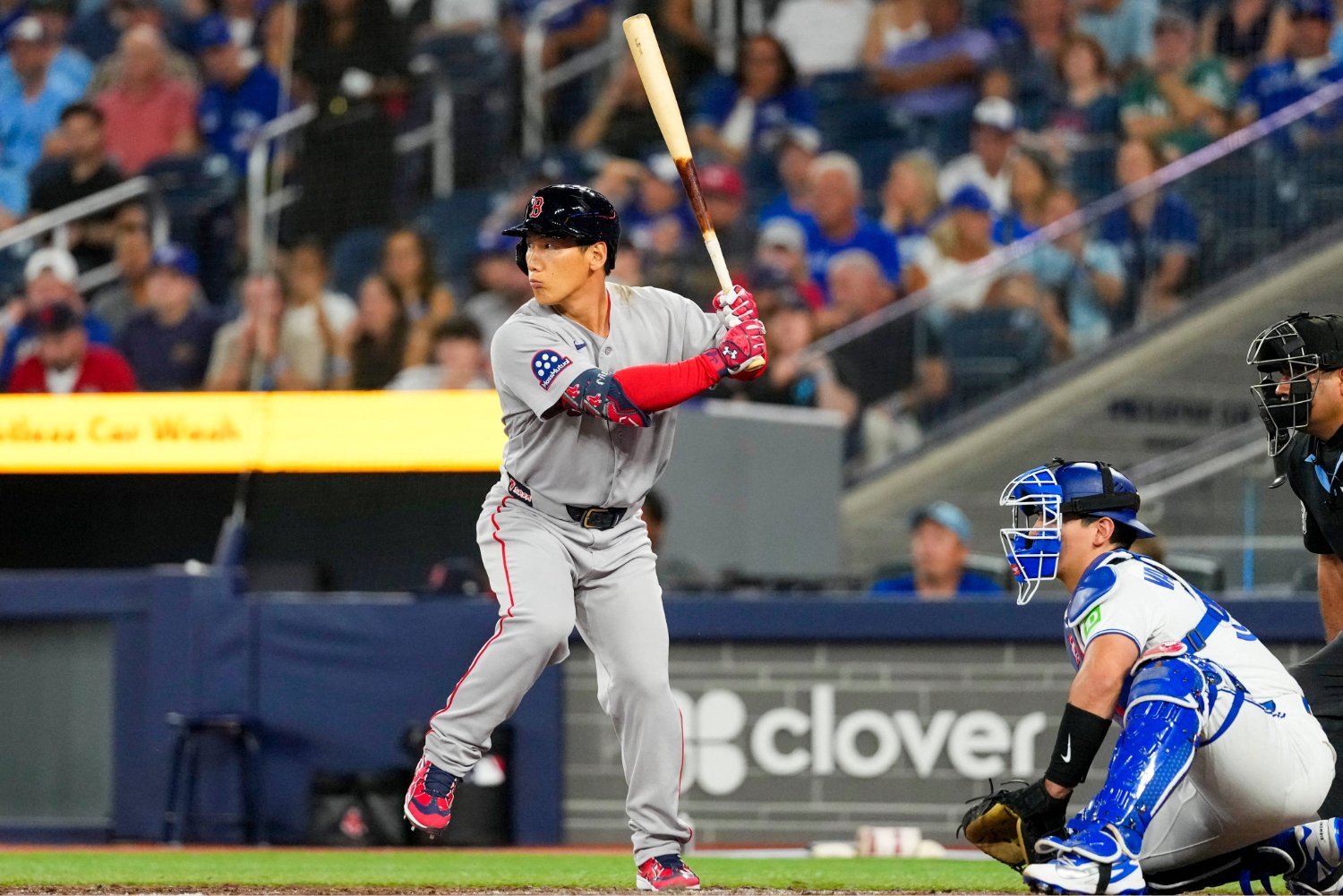 While the Boston Red Sox were thoroughly boat raced in the Wild Card Round by the New York Yankees for a second season in a row, it further highlighted a roster construction issue that has been plaguing the team since 2021: The Sox lack a legitimate power threat in the lineup. Sure, Willson Contreras had a career season while Wilyer Abreu took a step forward to set career highs in both home runs and RBIs, but the team was wanting for a power bat when the schedule mattered the most and they had nowhere to turn. Remember, the organization has built World-Series-winning teams around massive offensive firepower for the entirety of their championship runs. In 2004 and 2007, the team had David Ortiz and Manny Ramirez; Papi then led the charge in 2013, JD Martinez was the primary slugger in 2018, and in 2021 the team traded for Kyle Schwarber at the deadline to give their offense a boost. Now, though? There’s a missing piece in the middle of the lineup that keeps opposing pitchers honest. Since Craig Breslow became the President of Baseball Operations in Boston, the designated hitter position has been treated as a way to cycle a number of outfielders through the spot to keep them all in the lineup, as well as giving guys a rest day without putting them totally on the bench. Since Breslow took over as POBO in October of 2023, the Red Sox have featured 33 players at designated hitter. Let that sink in for a second—the team that relied on one hitter in the middle of their lineup for 14 seasons has had 33 different players cycle through the spot in three years. I won’t list them all here, but there are some wholly uninspiring names on this list. Obviously, Masataka Yoshida leads all hitters in appearances, followed by Rafael Devers second and Roman Anthony third in terms of pitches seen. Fourth on that list? Rob Refsnyder. Fifth? Mickey Gasper. Other names from that list who make you go ‘hmm’ would be Garrett Cooper, Enmanuel Valdez, Danny Jansen, Bobby Dalbec, and Tyler Heineman. Talk about whatever the opposite of a Murderer's Row is. I understand Breslow’s thinking, to a point. When you have an outfield mix of guys like Anthony, Abreu, Ceddanne Rafaela, Jarren Duran, and Masataka Yoshida, then you need to get creative to be able to get most of their bats in the lineup on a nightly basis. What that does, though, is hamstring the depth chart at a position that helped propel them to such a long run of success. By shucking the DH position and using it as a revolving door for outfielders who are struggling at the plate for an entire season, Breslow is effectively saying that the DH position isn’t that important in his organization. What’s still going on in the playoffs proves him wrong. In both League Championship Series this year, each team has a legitimate power threat in at least two spots in the lineup. The Brewers have the hybrid 1B/DH the Red Sox ideally want in Jake Bauers with Jackson Chourio leading off. The Dodgers have Shohei Ohtani (who was obviously playing through an injury), plus Freddie Freeman, Max Muncy, and Kyle Tucker who are all threats to go deep. The Rays have Yandy Diaz and Junior Caminero. The Guardians have Jose Ramirez as their main threat, but Jo Adell and Chase DeLauter both have pop off the bat. Realistically, who do the Red Sox have that could provide that kind of spark in the postseason? Contreras and Abreu? Anthony? Curtis Mead? Adley Rutschman? Even Triston Casas? If we’re counting on back-to-back career years from Contreras, we’re already in a situation no one is going to be happy with. Abreu took a positive step forward against left-handed pitchers while taking a step back against right-handed ones. Anthony has yet to put together a healthy season in professional baseball. Mead has had one at-bat with the Red Sox. Rutschman has big seasons from his past, but there are concerns about his conditioning and he has a lengthy injury history. Casas has been an offensive powerhouse when healthy, but he’s had back-to-back debilitating injuries that have kept him off the field for over two years. While Justin Gonzalez looks incredibly promising in Portland, he’s still only a teenager and is at least a year off from being big league ready. Franklin Arias isn’t that type of player, either; he’s toolsy, but he’s not a middle-of-the-order threat. What the Red Sox need to do to fix the power issue at designated hitter is to go big-game hunting this offseason. There are clear pitfalls with that plan, though. First, this free agent class is incredibly weak. While both Randy Arozarena and Seiya Suzuki make sense for the Red Sox for different reasons, both players will be entering their age-32 seasons in 2027. After that, there’s a pretty significant decline in the quality of bats on the open market. The team could turn to the trade market, but after the Rutschman, Mead, and Erik Miller deals at the deadline, most experts rank the Red Sox’s farm system in the lower third of the league. They’d have to deal from the major-league roster and that just opens a new hole while trying to patch this one. The Red Sox are on the cusp of being a legitimate threat to the AL East thanks to their pitching and defense, but their lack of offensive firepower will continue to hold them back until they add a legitimate power threat to the lineup. There are paths in the offseason that will allow Craig Breslow to do just that, but he’s going to have to get incredibly creative to pull it off without hurting the future of the franchise at the same time. View the full article
-
 Fish Unfiltered discusses what pending free agents Adrián Morejón, Sean Newcomb and Steven Okert would bring to the Marlins bullpen.View the full article
-
The Twins Greatest Players: Juggernauts & Supernovas
DiamondCentric posted an article in Twins Daily
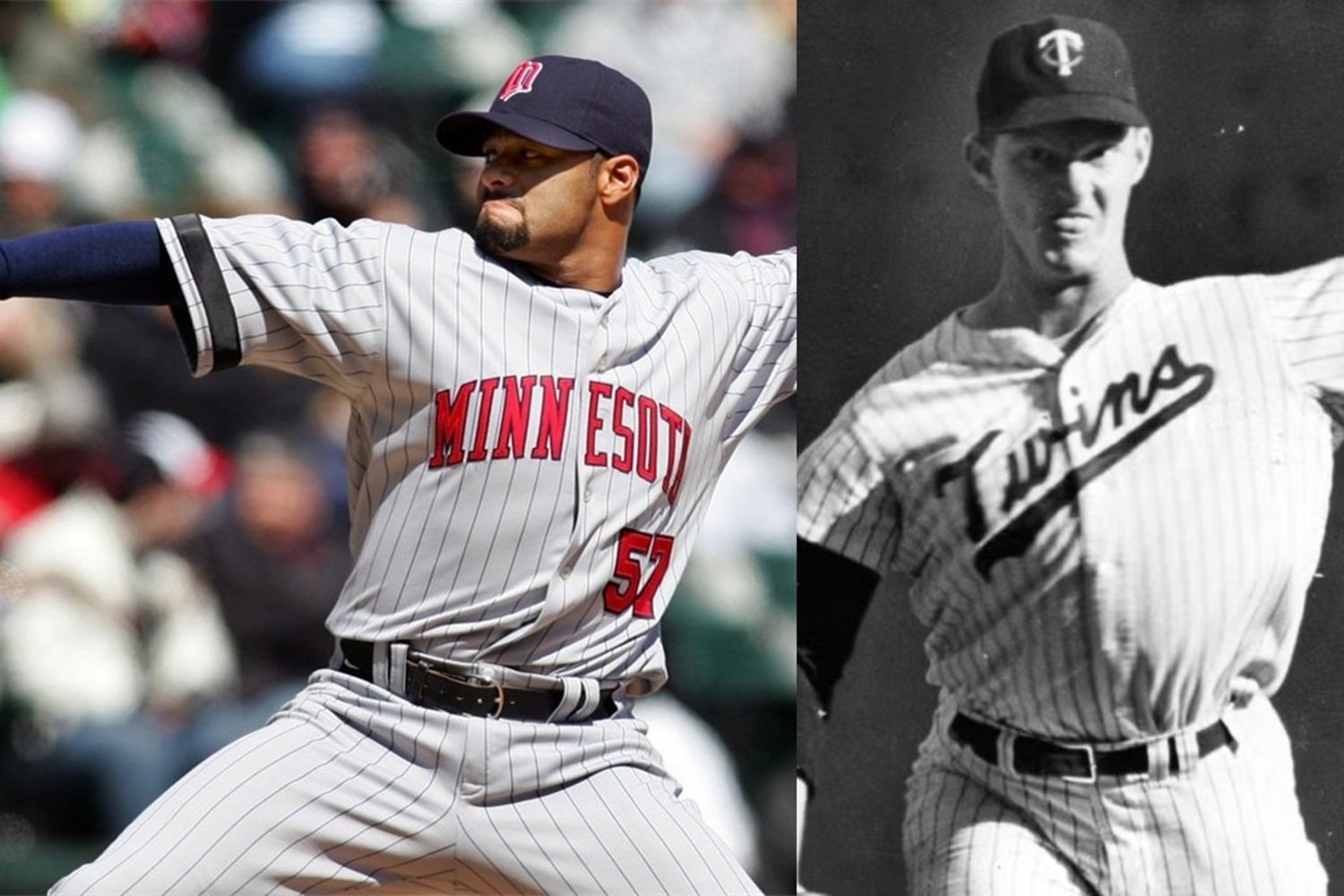 The Sporting News has been celebrating its 140th anniversary by examining the greatest baseball players of all time. Rather than simply ranking 140 players from first to last, the publication divided them into 14 position-less rooms, with each group representing a different form of greatness. The project considers more than 500 candidates and attempts to account for different eras, changes in the game, modern statistics, and the history of the Negro Leagues. According to The Sporting News, “Our ‘rooms’ serve not only to honor the game’s greatest players, but to contextualize their standing in baseball history — for better or worse.” These categories provide an interesting framework for examining Minnesota Twins history. Some players are remembered for their longevity, while others are defined by a handful of spectacular seasons. A player's place in Twins history might also differ from how national audiences view his overall career. This series will take two players from Twins history and place them into each of The Sporting News' 14 categories. The goal is not necessarily to duplicate the publication's selections, but to explore how these different forms of greatness have shaped the franchise. Two veteran pitchers headline the Juggernauts, while a pair of award winning stars represent the Supernovas. Juggernauts: Jim Kaat and Bert Blyleven The Sporting News describes its Juggernauts as players who “delivered season after season, authoring some of the game’s most storied chapters.” Their prolonged excellence distinguishes them from players whose greatness was concentrated in a smaller window. For the Twins, Jim Kaat and Bert Blyleven provide excellent examples of that sustained success. Both built lengthy careers, accumulated impressive statistics, and left a lasting mark on Minnesota baseball. Jim Kaat Kaat's career stretched across 25 major league seasons, making him one of the most durable pitchers of his generation. His career began with the Washington Senators before the franchise moved to Minnesota, and he remained a fixture in the team's rotation for more than a decade. Kaat was not merely collecting innings while hanging around the league. He consistently gave his teams quality starts and developed into one of baseball's best defensive pitchers. His 16 consecutive Gold Glove Awards from 1962 through 1977 remain an extraordinary accomplishment. The first 12 came with the Twins. Kaat's place in the franchise record book further demonstrates his importance. He remains the franchise leader in wins with 189, starts with 422, and innings pitched with 2,959 1/3. He also ranks among the organization's leaders in complete games and strikeouts. His time in Minnesota featured some memorable individual seasons. Kaat went 18 and 11 during the Twins' 1965 American League pennant winning campaign, helping the franchise reach its first World Series after moving to Minnesota. He started three games against the Los Angeles Dodgers, including a complete game victory over Sandy Koufax in Game 2. The following season, Kaat delivered arguably the best statistical year of his career. He finished 25 and 13 in 1966, leading the American League with 19 complete games while throwing 304 2/3 innings. He finished fifth in the league's Most Valuable Player voting. Those accomplishments help explain why Kaat belongs in the Juggernauts discussion. His career was about far more than one outstanding season. He combined durability, regular production, defensive excellence, and the ability to remain valuable through changing stages of his career. Kaat eventually earned induction into the National Baseball Hall of Fame in 2022. His Cooperstown recognition added another achievement to a career that already placed him among the most important pitchers in franchise history. Bert Blyleven Blyleven offers another example of sustained pitching excellence, although his career followed a different path. Blyleven spent 11 of his 22 major league seasons with the Twins, pitching for Minnesota from 1970 through 1976 before returning from 1985 through 1988. His devastating curveball became one of the defining pitches of his era, and he consistently demonstrated the ability to miss bats over a lengthy career. Blyleven finished with 287 victories, 3,701 strikeouts, and 4,970 innings pitched. He ranks fifth in major league history in strikeouts, a remarkable accomplishment for a pitcher who was not always surrounded by championship caliber teams. His contributions to Minnesota were equally significant. Blyleven recorded 149 victories with the Twins, second in franchise history, and his 2,035 strikeouts remain the organization's career record. His two Minnesota stints also connected different eras of Twins baseball. The first came when the club was establishing itself as an American League contender. His return helped the organization build toward its 1987 championship, giving Blyleven a World Series title with Minnesota after previously winning one with Pittsburgh in 1979. Blyleven's career was not defined by one brief stretch of dominance. Instead, he sustained his effectiveness across two decades, building a résumé that ultimately earned him election to the Hall of Fame in 2011. Kaat and Blyleven reached greatness through durability and consistency. They remained relevant across multiple seasons and left behind statistical records that still define the Twins' pitching history. Those qualities make them fitting representatives of the Juggernauts. Supernovas: Johan Santana and Zoilo Versalles The Supernovas represent a different kind of baseball greatness. The Sporting News describes this group as players who “reached the game’s highest level, if only briefly,” with their legacies defined by extraordinary peaks rather than career longevity. These players showed what was possible when everything came together. Whether their prime was shortened by injuries, circumstances, or an inability to maintain their previous production, their best seasons placed them alongside the game's elite. Johan Santana and Zoilo Versalles fit that description from a Twins perspective. Their career paths were different, but both produced performances that remain among the franchise's most remarkable individual achievements. Johan Santana Santana's rise from Rule 5 Draft selection to dominant ace remains one of the best player development stories in Twins history. Minnesota acquired him through a trade involving the Florida Marlins and Houston Astros, and he eventually developed into one of the most effective starting pitchers in baseball. Santana's peak from 2003 through 2007 was exceptional. During that five season stretch, he went 82 and 35 with a 2.92 ERA and 1,152 strikeouts across 1,070 2/3 innings. He combined overpowering stuff with pinpoint command and an excellent changeup. The individual seasons were just as impressive. In 2004, Santana finished 20 and 6 with a 2.61 ERA and 265 strikeouts. He led the American League in ERA and strikeouts while winning his first Cy Young Award unanimously. Two years later, he reached another level. Santana went 19 and 6 with a 2.77 ERA and 245 strikeouts in 2006, leading the American League in all three categories and capturing another unanimous Cy Young Award. Those two awards placed Santana among the best pitchers of his generation. He also finished in the top five of Cy Young voting in 2003, 2005, and 2007, showing that his dominance extended beyond his two award winning campaigns. Santana's overall major league career did not last as long as those of Kaat or Blyleven, but that is precisely what makes the Supernovas category so appropriate. His best seasons were so dominant that they remain the standard against which Minnesota's modern starting pitchers are measured. Zoilo Versalles Versalles reached a similarly remarkable height during the 1965 season. The Cuban born shortstop put together one of the greatest all around campaigns in Twins history, earning American League Most Valuable Player honors while helping Minnesota capture the pennant. Versalles hit .273/.319/.462 with 19 home runs, 77 RBIs, and 27 stolen bases. He also scored 126 runs, collected 45 doubles, and hit 12 triples. Those totals led the American League in runs, doubles, triples, and total bases. His offensive production was especially impressive considering his position. Shortstops were expected to provide defensive value, but Versalles contributed at the plate, on the bases, and in the field. He earned a Gold Glove Award to go with his MVP trophy, completing an outstanding season. Versalles received 19 of the 20 first place votes for MVP, edging teammate Tony Oliva for the award. His 7.2 Wins Above Replacement, according to Baseball Reference, further illustrates how much value he provided during that pennant winning season. The performance was difficult to sustain. Versalles remained a major league player for several more years, but he never again approached the level he reached in 1965. His WAR dropped to 1.3 in 1966, underscoring the dramatic difference between his career defining season and the years that followed. That does not diminish what he accomplished. The Twins needed a complete team effort to reach the World Series, and Versalles became one of the central figures in the franchise's breakthrough season. His MVP award remains part of the organization's history, and his 1965 campaign stands alongside the best individual seasons produced by a Minnesota shortstop. Versalles fits the Supernovas because his greatest season was extraordinary. He demonstrated how a player could reach the sport's highest level for a concentrated period and leave behind a legacy that outlasted his prime. Different Paths to Greatness The Juggernauts and Supernovas illustrate two distinct ways players become legends. Kaat and Blyleven built their reputations through longevity, consistency, and production across many seasons. Their careers show how sustained excellence can create a lasting place in baseball history. Santana and Versalles reached greatness through particularly dominant peaks. Santana gave the Twins some of the best pitching seasons of the modern era, while Versalles delivered an MVP campaign that helped bring a pennant to Minnesota. All four players made a lasting contribution to the franchise, even though their career paths looked very different. That is the appeal of The Sporting News' room concept. Baseball greatness cannot always be measured by one statistic or a single ranking. Sometimes it is about how long a player excels, and sometimes it is about how spectacularly he performs when everything comes together. Who else should be included in the above categories? Leave a comment and start the discussion. View the full article
-
Arbitrary Thoughts: Kyle Isbel's Run Prevention Premium
DiamondCentric posted an article in Royals Keep
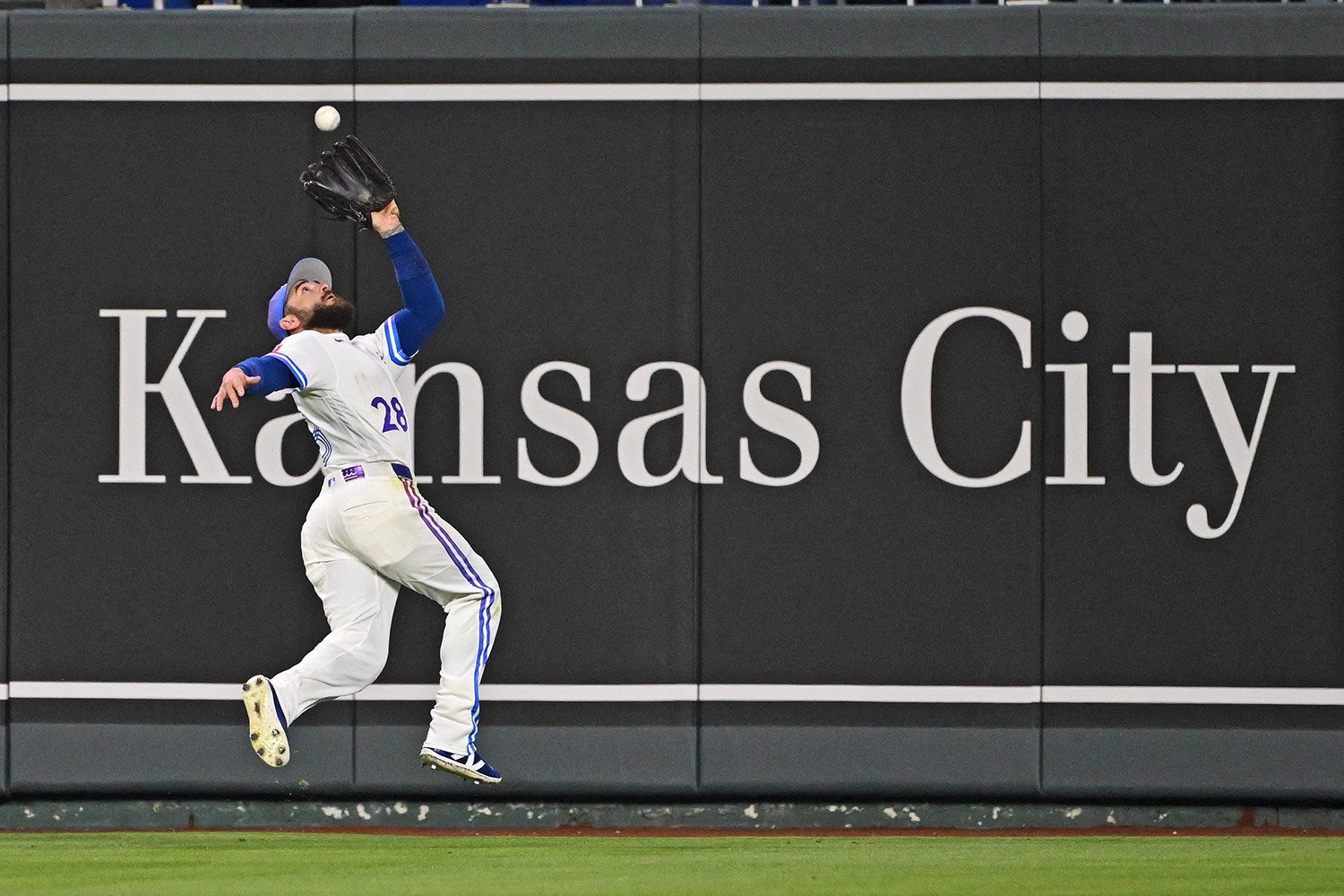 Kyle Isbel, OF 2026 Stats: 100 G, 323 PA, .224/.268/.323 (.591), 6 HR, 9 2B, 1 3B, 24 RBI, 4.6 BB%, 22.9 K% 2023 Salary: $727,500 2024 Salary: $758,250 2025 Salary: $1,750,000 2026 Salary: $2,700,000 Kyle Isbel Background The Royals drafted Kyle Isbel 94th overall in the 2018 MLB draft. Isbel was originally a second baseman but transitioned into an athletic outfielder in the minor leagues, where he advanced through the system and secured a spot on the Opening Day roster in 2021. His major league debut was a memorable one as he posted 3 hits and 2 RBIs, becoming just the fourth player in Royals history to record 3 hits in his MLB debut. However, Isbel shuttled between Omaha and Kansas City for a couple of years before becoming an everyday player at the major league level. Since becoming a regular major league player, Isbel has established himself as a solid defensive center fielder, but has struggled with consistency at the plate. Heading into the 2026 season, it looked like he would be a key piece of the Royals' outfield, coming off his best season, in which he hit .255 and had a career-high 94 hits. However, a grade 3 tear of his left plantar fascia in June cost him roughly two months of the season. The injury impacted his overall production, as he dropped to a career low over 100 games, hitting .224/.268/.323. While his baseline statistics fell, his underlying data showed a gap between actual output and his physical tools. He continued to make decent contact and maintained a 22.9% strikeout rate, which is right at league average. However, his lack of hitting for power and depressed batting average on balls in play of .278 decreased his offensive value. For a player primarily penciled into the lineup for his defensive skills, posting a well-below-league-average wRC+ of 61 showed that his offensive production was not the same as in years prior, and that his primary role is to play solid center field defense. In the 100 games he appeared in this year, Isbel recorded 7 outs above average and also prevented 6 runs with a 91% success rate on 275 defensive attempts. Royals Depth At Center Field John Rave: 40-man roster Isaac Collins: 40-man roster Matthew Lugo: 40-man roster Tyler Tolbert: 40-man roster Minor Leagues: Angeibel Gomez, Luke Pelzer, Dominic Battista The primary internal threat to Isbel's playing time is John Rave, a natural center fielder who took on a larger role during Isbel's time on the IL this season. Utility options like Isaac Collins and Tyler Tolbert are also on the 40-man roster and can play center field. Both are less of a threat, though, as Collins struggled offensively this season, posting a wRC+ of 83, and Tolbert is primarily a bench piece often used as a utility player and pinch runner. Why The Royals Should Offer Isbel Arbitration There is a compelling case for the Royals to tender a contract to Kyle Isbel this offseason. The front office values defensive stability and demands a center fielder who can cover a lot of range in a difficult-to-cover outfield. When fully healthy, the argument could be made that Isbel is a borderline Gold Glove-caliber center fielder, as shown by his +7 Outs Above Average in 2026 (though Defensive Runs Saved liked him far less at -4). High-level defensive talent is difficult to replace on the open market, and letting him walk would be a high-risk move for the organization. With a projected arbitration value of $3.5 million, that is far from a major financial commitment. For a team looking to get back into contention for a division title and the playoffs, paying a premium for a reliable defensive specialist adds low-risk depth. The Royals could argue that Isbel's 2026 offensive struggles were partly due to the plantar fascia injury. At worst, he anchors the bottom of the lineup with elite defense and provides a reliable bench piece at a modest cost. Why the Royals Should Non-Tender Isbel The Royals are entering a critical offseason in which adding dynamic offensive producers is a necessity for the ball club. Isbel's projected $3.5 million arbitration salary may not be justified by the organization considering his offensive struggles this past season. He offers minimal power at the plate, walks infrequently, and is not a threat on the base paths. If the Royals intend to pursue top outfielders and power bats via free agency or trades, they need to maximize every dollar in their payroll. Spending $3.5 million on a defensive specialist who lacks power at the plate may not be the direction they want to go in for a small-market team. If the front office believes they can find cheaper baseline production internally through someone like John Rave or if they want to pursue an outside acquisition, non-tendering Isbel or trading him may be an unfortunate but practical move. Isbel Projection Expect the Royals to tender him a 2027 contract around the projected $3.5 million mark. Historically, the organization has been defensive-minded, and Isbel fits well into that strategy at an affordable price. View the full article
-
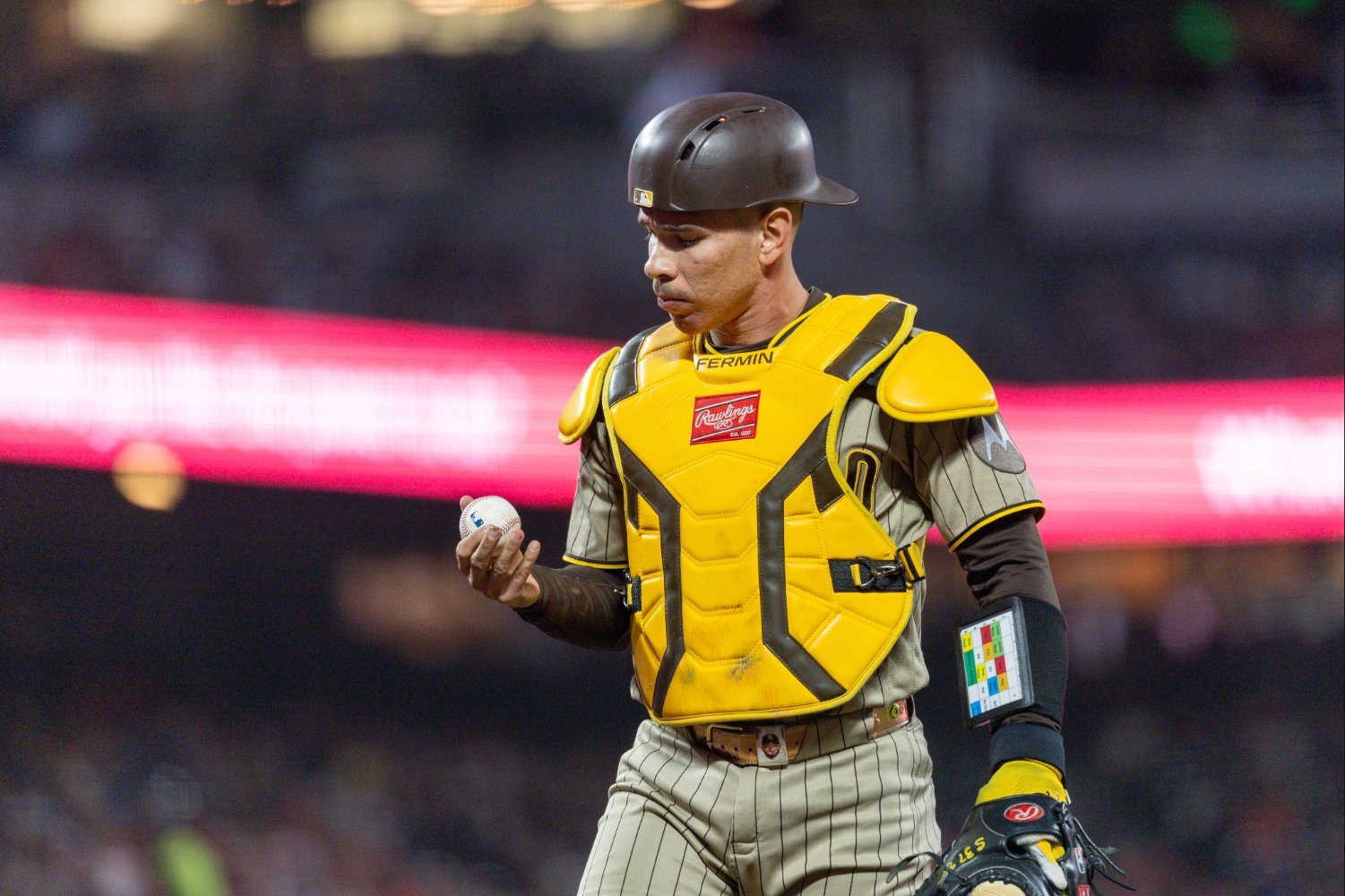 The San Diego Padres entered 2026 with a pretty clear picture of what they wanted their catching tandem to look like. With a pair of big-league backstops on the roster in Freddy Fermin & Luis Campusano, the team elected not to seek additional support in favor of the defense-first nature of the former and the offensive upside of the latter. There were not necessarily any delusions about what Freddy Fermin is (or was) on the part of the Padres ahead of the season. Acquired from Kansas City at the 2025 trade deadline in hopes of stabilizing the position, he represents a catcher of an above-average defensive quality but with middling skills at the plate. With offensive upside elsewhere in the lineup, they could afford to get only occasional contributions out of their catcher if it meant that he would greatly support the pitching staff. Unfortunately, his bat couldn't live up to even those modest expectations. Coming off a year in which he slashed a combined .251/.277/.339 (77 wRC+) for each of the Royals & Padres, Fermin turned in a woeful .203/.274/.315 (68 wRC+) line. There was a very brief glimmer of hope of an increase in June when Fermin posted a wRC+ of 133 and a .297 ISO, but that was almost exclusively on the strength of three of his four home runs coming in that month (he otherwise hit .189 in June). While his numbers were respectable over the remainder of the from that point forward he wound up only catching in 35 games the rest of the way. What he did do well, however, was here: Fermin graded out as one of the best defensive catchers in Major League Baseball, with those percentiles translating to ranking 17th in framing, sixth in blocking, and third in throwing. You absolutely love that kind of production, but even that becomes difficult to navigate in absence of any production from an offensive standpoint. In total, Fermin saw time in 95 games for the Padres. Sixty of those came in the first three months. In June, Campusano was back in the mix following a toe injury. By September, wunderkind catcher Ethan Salas had arrived. Campusano showcased improved defense that crept closer to league average in addition to being a crucial secondary bat in the second half of the season. Salas already has defensive chops and an intriguing-enough bat that the Padres were willing not only to add him to the mix in September, but give him meaningful innings in the postseason. That leaves Fermin's standing with the organization fairly unclear moving forward. Salas, if his upside is realized, is the total package. Campusano's defensive chops have reached a point where he can serve as a reasonable option as a backup catcher or as a designated hitter when he's not behind the plate. While the Padres ran with three catchers down the stretch—an ideal setup for their bench composition at that particular time—it may be unreasonable to expect them to do so with a full season to play in 2027, even if Fermin does have another three seasons of team control. There are teams out there that might have a place for Fermin. Perhaps one with a surefire starting option in need of a suitable defensive backup will come calling this offseason. While the possibility exists that the Padres could move Campusano in hopes of maximizing defense behind the plate, it feels likely that they saw enough growth from him in 2026 to keep him in the mix. Fermin's offense was never expected to rise to either his level or the upside of Salas, but with how brutal it actually landed on the stat sheet, it's more likely that he's the odd-man out. View the full article
-
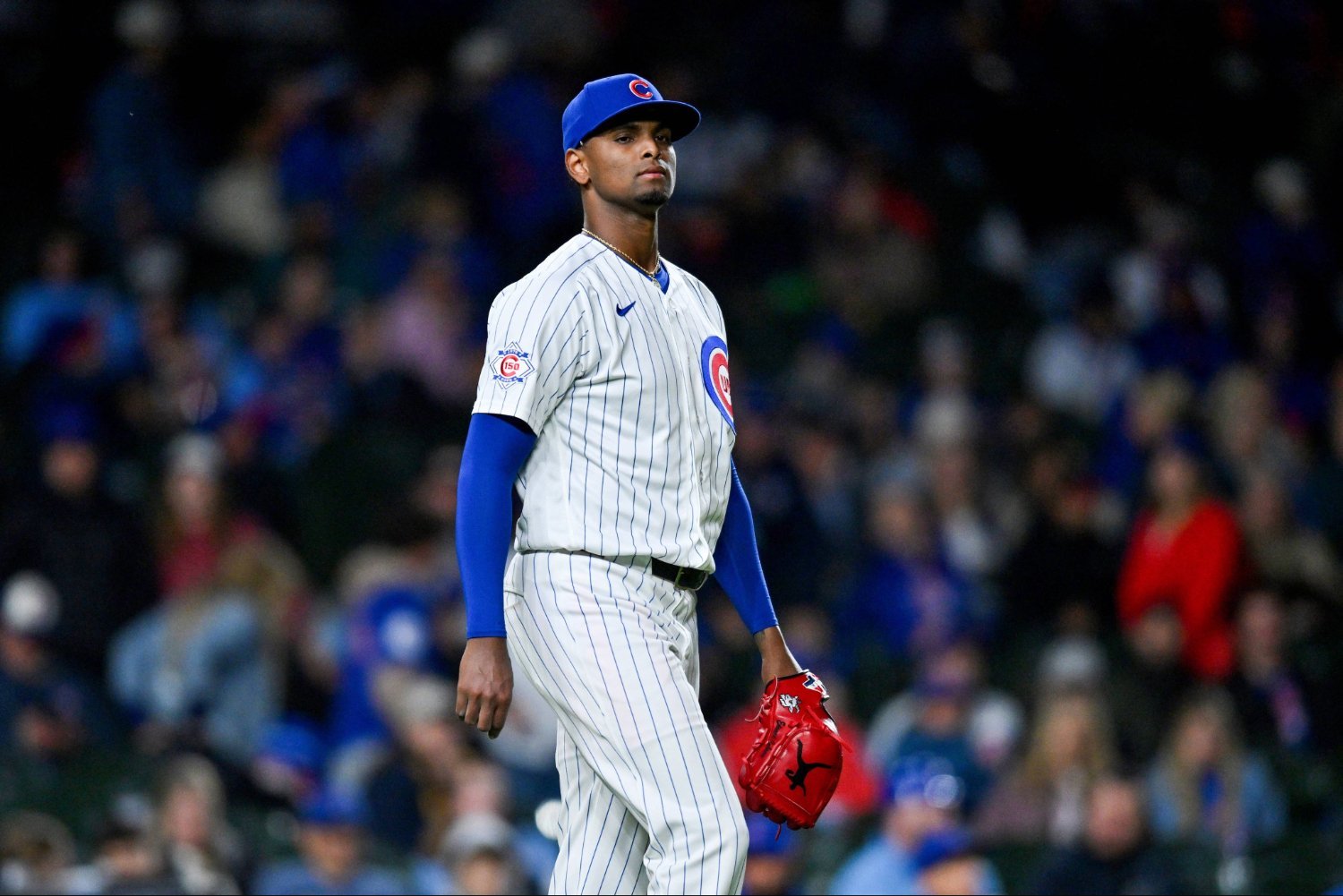 The 2025 Chicago Cubs’ starting rotation finished 28th in baseball in average four-seam fastball velocity, so for the 2026 season, they needed an additional power arm to pair with Cade Horton. On January 7, they acquired that arm in Edward Cabrera, at the expense of their top organizational prospect Owen Caissie, as well as some additional pieces. Cabrera had spent the entirety of his five-year career with the Miami Marlins, and was consistently regarded as one of the game’s higher-end pitching prospects. Injuries and control issues prevented him from achieving that breakout season many thought was around the corner, but in 2025 he made 26 starts with a 3.53 ERA, striking out 150 in 137⅔ innings. A healthy Cabrera was supposed to be another anchor in their rotation, and the Cubs’ pitching lab was supposed to help him evolve into a frontline starter. At least the story got off to a nice beginning. Cabrera was excellent in his first start as a Cub, pitching six innings, allowing only one hit, one walk, and striking out five in a 7-2 win against the Angels. He continued his nearly unhittable ways through his next start in Cleveland, allowing one hit over 5⅔ innings, but in this start he walked five, which had been par for the course so far in his career. Unfortunately, those two starts ended up being the two best starts of his 2026 season. Over his next six outings, opposing teams averaged 7.3 hits per game, allowing exactly three earned runs per start, except one where he allowed five. He was at least reining in the walks during this period, never allowing more than three in a start, and he did strikeout eight Reds on May 4, which was his season high. Still, he was pitching more like a mid-rotation starter, not a frontline guy that the Cubs were hoping for when they moved their top prospect. On his tenth start of the season, he only lasted three innings, allowing three runs to the Brewers. Four days later, he was placed on the 15-day injured list with a blister. This would mark the first of his three trips to the injured list, which again, is nothing new for him. When he returned in early June, the Giants promptly torched him for eight runs, knocking three homers in 3⅔ innings. After this blowup, his ERA on the season rose to 4.99. He made three more starts, tallying two, five, and two earned runs before injury-list stint number two with a hamstring strain. He returned for a mid-August start against the Cardinals, who were over .500, but had dwindling playoff hopes. Cabrera kept those hopes alive a little bit longer, as the Redbirds lit him up for seven earned runs, knocking him out of the game before the fourth inning. That lone clunker of a start marked his only appearance from July through August, as he was, for the third time, placed on the injured list with another blister. That also ended up being the last start he made of the season, as he was sent to the bullpen when he returned in mid-September. With David Peterson holding his own, plus the acquisitions of Clay Holmes and Kevin Gausman at the trade deadline, the Cubs were not in nearly a dire enough position to bring Cabrera and his 5.68 ERA back into the rotation. There was hope that he would be more effective in shorter stints, as well as lessening his risk for re-injury. Craig Counsell compared Cabrera to Roki Sasaki, hoping he could be an effective multi-inning reliever in the same way the Japanese phenom was for the 2025 Dodgers in the playoffs. The sentiment was nice, but then Cabrera was tagged for five runs across three relief appearances. The Cubs ended up not needing him in the playoffs anyway, because the regular season’s best offense could only push across one run in their quick two-game dismissal by the Padres. In fact, the guy who ended up being their “big” pitching addition in the offseason did not make the postseason roster. Cabrera ended the season with a 5.96 ERA over 18 games (15 starts), striking out 71, while accumulating -0.1 fWAR. Outside of his rookie season in 2021 where he only pitched 26⅓ innings, this was the only time Cabrera had posted a negative fWAR. His 7.99 K/9 represents the lowest mark of his career, while his ERA represents the highest. A look into his Savant page shows us just how much he has regressed since his breakout 2025 season. Below is his year-to-year change chart, and most of the trends are going in the wrong direction. Simply put, it seems opposing hitters have figured him out. He is allowing more quality contact, his fastball velocity is down, and he is issuing more walks. His pitches that were dominant in 2025 were average, at best. Below is his run value chart separated by each pitch type. In 2025, his changeup, curveball, and slider were his best pitches. Each one has regressed significantly. The changeup was his most-used, and second-most effective, pitch last year, so he used it even more this season. It ended up going from a plus pitch to average. The curveball and slider usage went down in favor of the sinker, which was the only pitch that got any better this year. Could this be the Cubs’ pitch lab trying to fix something that wasn’t broken last season? Or could this all be attributed to his injury issues? Cabrera pitched as a fine back-end starter before he got hurt the first time. The Cubs' offense was rolling, and did not really need him to be anything close to great. He kept the game close more often than not, and that’s enough to keep my season-long grade for him (a C-) from being any lower. If the Cubs did not start the season as hot as they did, who knows if they would have fallen out of the Wild Card race with their September cold spell. The right-hander has two more seasons to get it right in Chicago, but he needs to be healthy for a whole season, something that has never happened in his career. The trade stings less because Owen Caissie produced -0.5 fWAR in his first year in Miami, but now the Cubs could really use an outfielder as well. Cabrera will have every opportunity to start next season, but it’s clear that he's got work to do to earn his keep in Chicago. View the full article
-
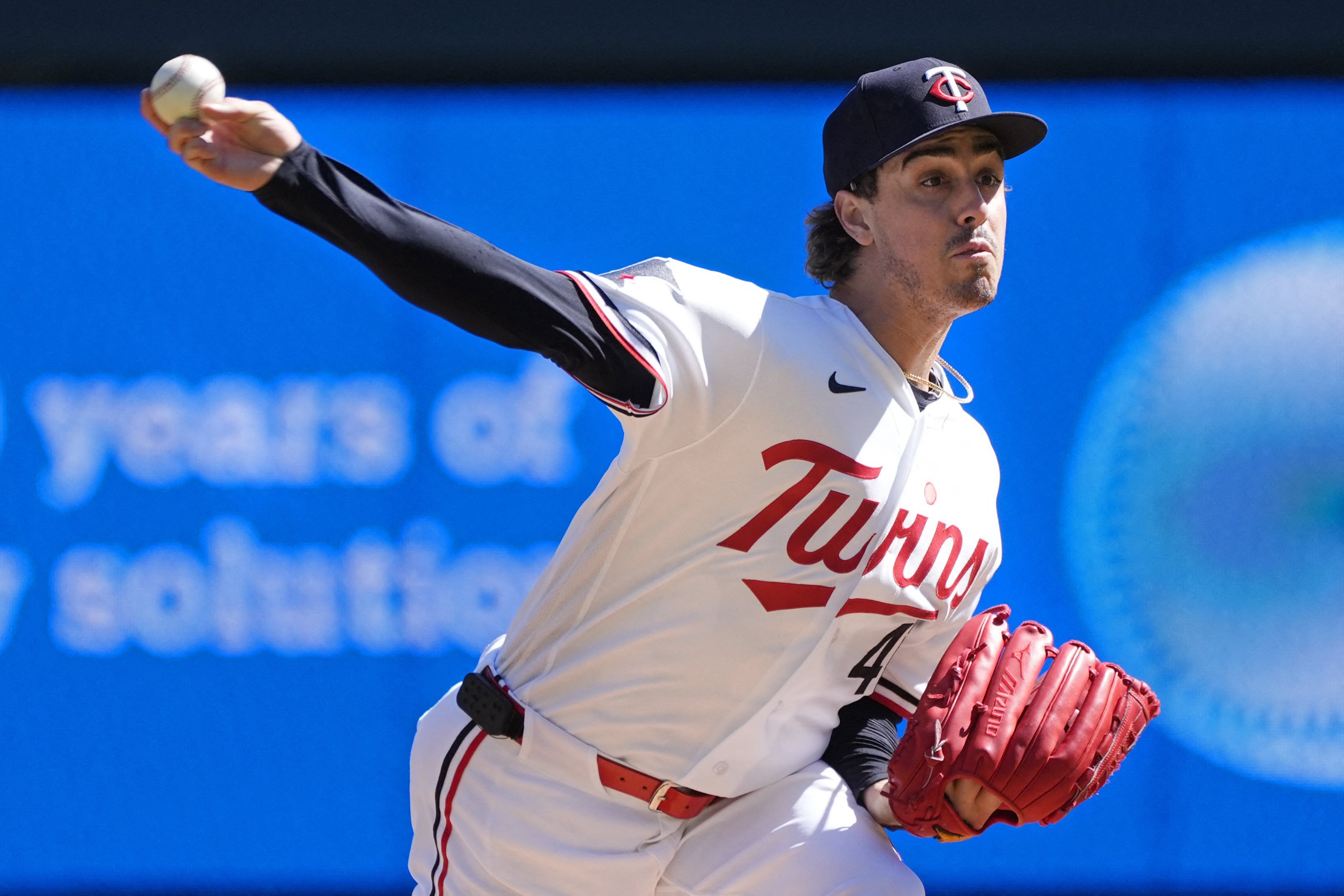 The Twins currently possess an accumulation of starting pitchers heading into 2027, potentially making Joe Ryan a name to watch on the trade market this offseason as he enters his last year of arbitration. While Ryan has established himself as a high-end arm over the past few seasons, concerns about with his consecutive second half falloffs has led many to question if he is going to be a Twin long term. Minnesota’s pitching depth could create an opportunity for the Twins to move what should be a valuable asset in exchange for some help elsewhere on the roster or in the minor leagues. The San Francisco Giants stand out as a fit among trade partners. A potential deal would depend on Minnesota’s willingness to part with the two-time All Star as well as San Francisco’s willingness to trade high-value players or prospects. It would be difficult for the Twins to trade one of their better pitchers in recent memory. Ryan has been worth 13.7 career fWAR through six seasons in Minnesota, pitching to a 3.79 ERA (3.80 FIP) in 786. total innings. However, his first-half versus second-half splits are a cause of concern. His career ERA in the first half is 3.17, compared to 4.98 in the second half, whereas in 2026 his ERA skyrocketed from 2.85 pre-All-Star break to 6.82 after. Still, Ryan is an elite arm when he is on, and maybe new pitching coach Brian Reith will be able to unlock Ryan’s effectiveness into the second half. Interestingly enough, Ryan does have some connection to the Giants. He is from San Francisco, so this would be a homecoming for the now 30-year-old. The Giants also took a flier on Ryan in the draft before he went to college, selecting him in the 39th round of the 2014 MLB draft. Of course, Ryan didn’t sign and was selected by Tampa Bay in the 7th round four years later. So, why would the Giants do this? Outside of Logan Webb, injuries and trades have removed a lot of top options from the 2026 Giants rotation. Robbie Ray and Tyler Mahle were traded to the Padres and Braves respectively at the deadline, while young pitchers like Carson Whisenhunt, Blade Tidwell, Hayden Birdsong, and Trevor McDonald suffered significant elbow injuries in 2026. President of Baseball Operations Buster Posey has swung big in the past as well, signing shortstop Willy Adames to the largest contract in team history and trading for slugging first baseman Rafael Devers back in 2025. Posey could look to make a few big time moves this offseason to compete in the challenging N.L. West, and one of those moves could be an arm like Ryan to slot behind Webb in the rotation. As for the Twins, there are lots of options when it comes to the starting rotation in 2027. Ryan, Pablo Lopez, and Taj Bradley would be the clear 1-2-3, but there are too many names for not enough spots. Bailey Ober, Zebby Matthews, Deam Kremer, Connor Prielipp, Mick Abel, and Kendry Rojas could all start games for Minnesota in 2027, so something has to give with the rotation. Moving Ryan may not make sense completely, but if management does not plan on signing him to an extension anyway, they should try to get something for him. The Giants have the fifth-best farm system according MLB.com, containing five top-100 prospects including the recent #4 overall draft pick, starting pitcher Jackson Flora. Tarik Skubal was traded to the Dodgers at the deadline as a rental this past season for three prospects, two of whom were in MLB.com’s top 100. Ryan is obviously not on Skubal's level as a starter, but with the full year of control versus two months, the return should be in somewhat the same range. He should net at least one top-100 prospect and additional pieces from San Francisco if he were to be moved there. Ultimately, a Joe Ryan trade could make sense for both sides. San Francisco has the prospect ammo to make a move after their teardown at this past trade deadline, while Minnesota could get good value for a player they may not re-sign to begin with. While his second-half struggles could raise some questions about his overall value, Ryan's track record as an effective, frontline starter at a price tag under $10 million should make him attractive to numerous teams if the Twins were to make him available. San Francisco clearly has the prospect capital to make it happen, so if Buster Posey wants to make an impactful move and put faith back into the hearts of Giants fans, bringing Ryan home to the Bay Area could be an intriguing place to start. What are your thoughts? Could the Twins trade Ryan to the Giants? Who would you want in return? View the full article
-
A Look at the Twins 40-Man Roster Heading into a Key Offseason
DiamondCentric posted an article in Twins Daily
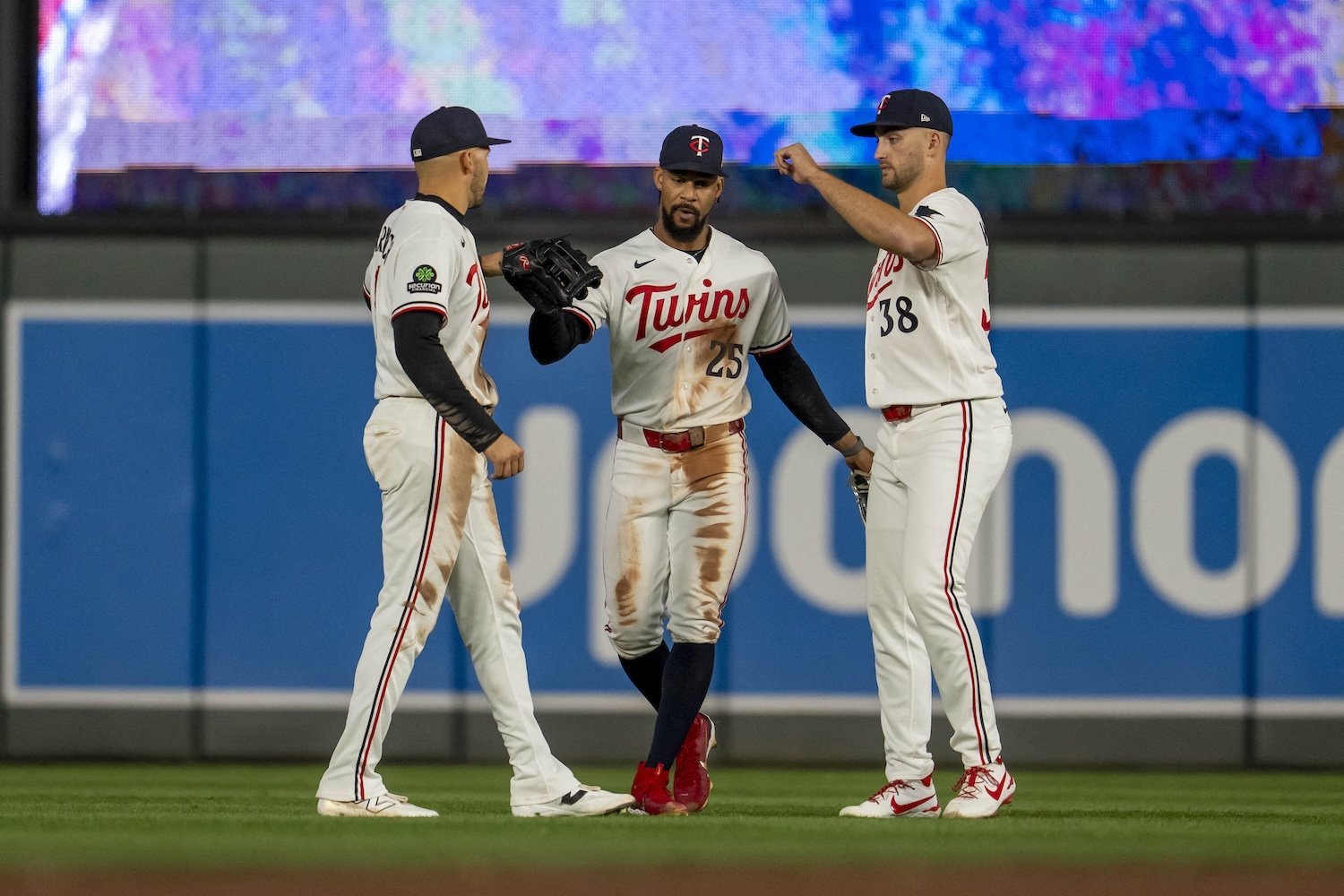 The Twins finished the 2026 season with a full 40-man roster, but there's plenty of movement ahead as the front office works to reconfigure and revamp its collection of usable talent over the winter. As we start thinking about where the Twins might add or overhaul during the offseason, it's helpful to get a clear read on where they stand heading in. Below, you can find a breakdown of the 40-man roster as it sits before things get moving. I've broken the 40 players down into three groups: locked in, on the bubble, and pending free agents. The latter four players will officially hit the open market the day after the World Series ends, opening up four spots immediately, although several of those spots will be filled by players needing to be activated from the 60-day injured list (Mick Abel, David Festa, Pablo López). Locked In B. Buxton, OF V. Caratini, C K. Clemens, 2B K. Culpepper, SS G. Gonzalez, OF W. Jenkins, OF L. Keaschall, OF R. Kreidler, UTIL B, Lee, 3B A. Martin, OF H. Mendez, OF A. Roden, OF E. Rodriguez, OF T. Adams, RHP T. Bradley, RHP K. Funderburk, LHP Y. Gomez, RHP J. Hoffman, RHP D. Kremer, RHP Z. Matthews, RHP A. Morris, RHP C. Prielipp, LHP M. Raya, RHP K. Rojas, LHP J. Ryan, RHP On the Bubble T. Gray, IF T. Larnach, OF R. Lewis, 1B B. Ross, UTIL A. Sabato, 1B M. Wallner, OF G. Acton, RHP J. Anderson, RHP T. Nance, RHP B. Ober, RHP E. Orze, RHP Pending Free Agents J. Bell, DH R. Jeffers, C A. Minter, LHP T. Rogers, LHP 60-Day Injured List M. Abel, RHP A. Banda, LHP D. Festa, RHP P. Lopez, RHP M. Paredes, RHP C. Sands, RHP Breaking Down the Bubble Candidates I characterized 11 players who are currently on the 40-man roster, and three players on the 60-day IL, as "on the bubble." They are still under team control for 2027, but there's at least a reasonable chance the Twins will choose to move on via non-tender, DFA, or low-scale trade. There's a range for degree of likelihood here — they are almost certain to move on from Matt Wallner, and I can't imagine Aaron Sabato makes it past the first cut. Someone like Royce Lewis or Eric Orze, meanwhile, is more of a coin flip. Either way, between the four pending free agents and those bubble candidates, that's 15 total spots that could be cleared up without a whole lot of pain. Again, we have to assume that three will be taken over by the returns of Abel, Festa and López — TBD on Anthony Banda, Mike Paredes and Cole Sands — but there is no shortage of available space for new additions. Protecting Prospects from the Rule 5 Draft Of course, another key consideration for 40-man roster planning is the need to protect eligible prospects from being plucked away in the Rule 5. Last year's batch included Kendry Rojas, Connor Prielipp, Andrew Morris, John Klein, Gabriel Gonzalez and Hendry Mendez. The first three went on to play fairly significant roles for the Twins staff in 2026. This year, there are relatively few obvious names who would merit consideration for this purpose. That's not to say there aren't plenty of prospects capable of contributing to the team's future, but there's little urgency to add them now, especially since it means starting up a young player's three-options timeline. Among newly eligible players, Yasser Mercedes is the standout name. Cody Christie wrote about the tough decision the Twins face here, as Mercedes has plenty of intriguing tools but hasn't turned them into consistent performance in the low minors. think they'll lean toward protecting him, and there might be some other sleepers that aren't really on the radar (such as Klein a year ago), but I don't envision the Twins needing to set aside nearly as many roster spots for incoming prospects. An Open Slate Maybe it's not surprising for a team that won only 77 games, but the Twins are far from facing a 40-man roster crunch. They will have plenty of flexibility to add during the offseason, so it comes down to how ambitious the front office will be in shaking things up, and how aggressive ownership will be in providing resources to support meaningful upgrades. View the full article
-
 The Brewers are going to the World Series! Jack and Spencer break down how they won their first NL pennant and what made this year's NLCS different. Players discussed include Jake Bauers, Garrett Mitchell, David Hamilton, Abner Uribe, Aaron Ashby, and William Contreras. Apple Podcasts: https://podcasts.apple.com/us/podcast/the-brewer-fanatic-podcast/id1740648724 Spotify: https://open.spotify.com/show/5CY8mWsQayqjDXqw9OT2Td iHeartRadio: https://www.iheart.com/podcast/263-the-brewer-fanatic-podcast-166534588/ Pocket Casts: https://pca.st/ommzz627 Watch On YouTube: https://www.youtube.com/@brewerfanatic View the full article
-
The Twins Have a Tough Rule 5 Decision with Yasser Mercedes
DiamondCentric posted an article in Twins Daily
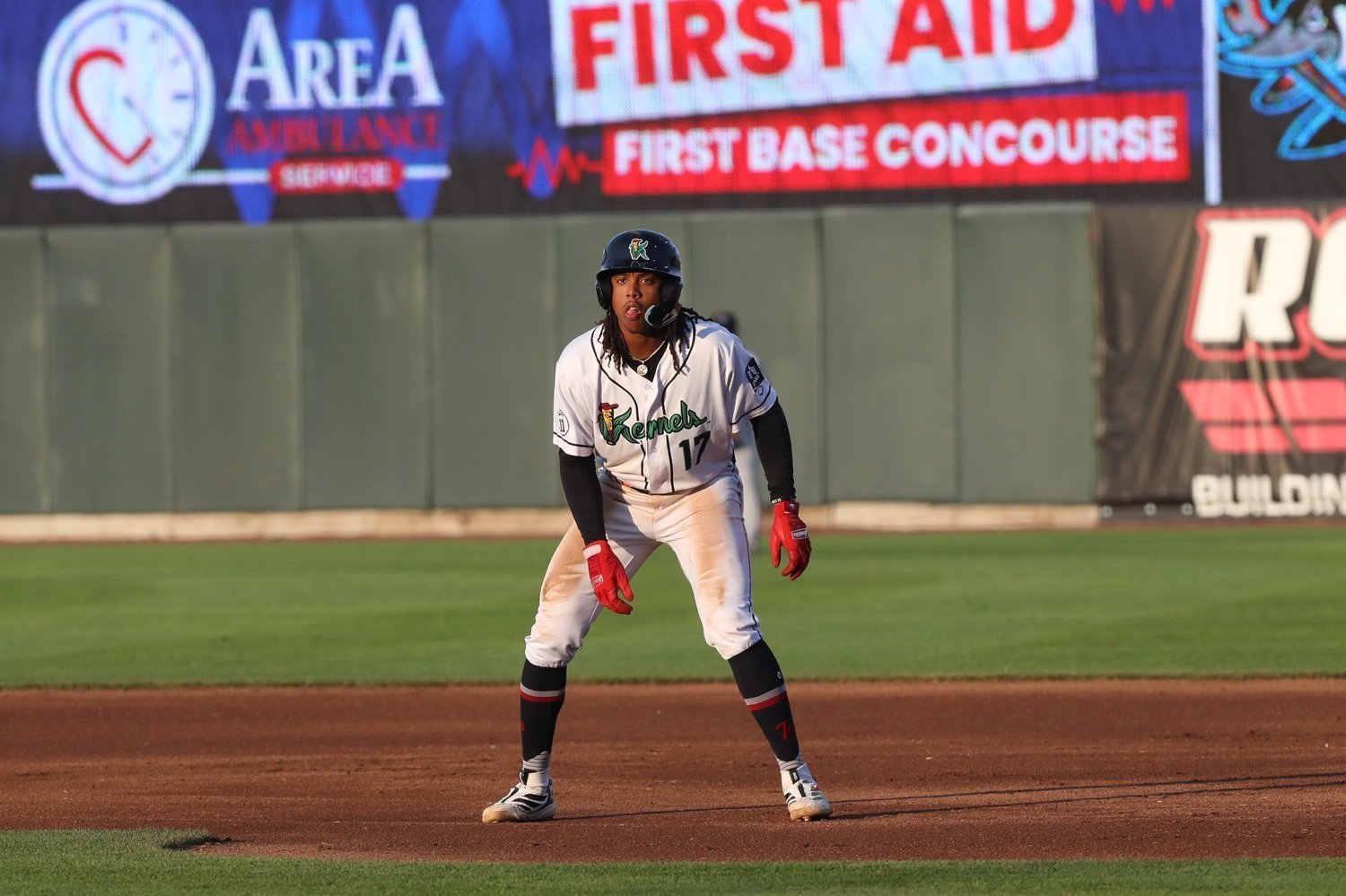 The Arizona Fall League gives prospects another opportunity to develop after the minor league regular season ends. For some players, it is a chance to make up for lost time because of injuries. For others, it provides a final opportunity to impress their organization before an important offseason decision. The Minnesota Twins have several prospects playing for the Salt River Rafters this fall, but Yasser Mercedes stands out as the group's most intriguing name. The 21-year-old outfielder is the highest-ranked Twins prospect participating in the league (currently 19th on Twins Daily’s rankings), and his combination of power and speed makes him an interesting player to watch. He also has a decision approaching that could shape his future with the organization. Minnesota must evaluate its eligible prospects before the November 17 deadline to add players to the 40-man roster. Players left unprotected can become available to other organizations in the Rule 5 Draft, assuming the major league phase takes place as scheduled. During the last lockout, the Rule 5 Draft was cancelled, but it could be rescheduled as part of the new Collective Bargaining Agreement. Mercedes presents a difficult case for the Twins. His performance in 2026 offered encouraging signs of progress, but questions remain about his ability to consistently handle better pitching. Should Minnesota use a valuable 40-man roster spot to protect his potential, or should the organization give him another season to develop? Who Is Yasser Mercedes? The Twins signed Mercedes for $1.7 million in January 2022, making him one of the more notable outfielders in that year's international signing class. The right-handed hitter arrived with intriguing offensive tools, particularly his ability to generate bat speed and produce power. However, turning those raw abilities into consistent production has taken time. Mercedes immediately made an impression in the Dominican Summer League, batting .355/.420/.555 (.975) with a 154 wRC+. His transition to the United States proved more challenging. He struggled during his first season in the Florida Complex League (63 wRC+) before showing improvement in 2024 (168 wRC+). Even so, his move to full-season baseball brought another set of challenges, and injuries interrupted parts of his development. The 2026 campaign finally provided some momentum. Mercedes opened the season with Fort Myers in the Florida State League and hit .321/.439/.642 with a 176 wRC+ across his first 21 games. His six home runs during that stretch helped earn him a promotion to High-A Cedar Rapids in May. The adjustment to the Midwest League was more difficult. Across 88 games with the Kernels, Mercedes recorded a .232/.320/.409 slash line, with 12 home runs and 116 strikeouts against 39 walks. He finished the season with career highs of 18 home runs and 52 stolen bases, hitting .249/.343/.453 in 109 games between the two levels. His final 30 games at Cedar Rapids also provided some encouragement as he began to show more consistent production (.727 OPS). Those numbers help explain why the Twins remain interested in his future. Mercedes has demonstrated that he can impact a game in multiple ways, even when his hitting becomes inconsistent. His physical tools are a significant part of the appeal. Mercedes generates impressive bat speed and has the potential to drive the ball with authority, particularly when he stays within his approach instead of trying to do too much. His speed also remains an asset, and he finished the season with more stolen bases than any other player in the Twins organization. Defensively, Mercedes continues to receive opportunities in center field while also getting work in right field. His athleticism gives him a chance to remain in the middle of the outfield, while his strong arm could be particularly useful in a corner position. Why the Twins Should Add Him The strongest argument for protecting Mercedes is the difficulty of finding players with his combination of tools. Home runs and stolen bases do not always come together in the same prospect, and Mercedes demonstrated that he can produce both over a full season. MLB Pipeline analyst Jim Callis has pointed to that combination as a reason to remain interested in Mercedes. On the traditional 20-to-80 scouting scale, Callis sees the potential for above-average raw power and speed, both of which could make Mercedes an intriguing player if his offensive approach continues to develop. Those tools are difficult to ignore. If Mercedes learns to turn his raw power into more consistent production while maintaining his ability to reach base and steal bags, he could become a valuable outfielder. Minnesota has invested significant resources in his development, and his age leaves room for improvement. There is also a practical consideration. Leaving Mercedes unprotected creates an opportunity for another organization to take a chance on him. A rebuilding team or an organization with an open roster spot might be willing to gamble on his physical abilities, particularly if its scouts believe his offensive struggles are correctable. The Rule 5 Draft does impose an important restriction on any team selecting him. A player chosen in the major league phase generally must remain on the selecting club's active roster for the entire season, subject to the applicable injured-list provisions, or be offered back to his original organization. That requirement makes Mercedes a risky selection, but it does not eliminate the possibility that a team could be tempted by his upside. Adding Mercedes to the 40-man roster would protect him from that outcome without requiring Minnesota to put him on its Opening Day roster. He could continue developing in the minors while remaining part of the organization. If the organization believes Mercedes is beginning to put everything together, using a roster spot now could be a worthwhile investment in his future. Why the Twins Might Wait The argument against protecting Mercedes is just as compelling. While his final numbers show progress, much of his production came during his dominant opening month at Fort Myers. His results became less impressive after he reached High-A, where pitchers exposed some of the weaknesses that have followed him throughout his development. The strikeout numbers are particularly concerning. Mercedes had a 27.8 K% with Cedar Rapids, compared to a 9.9 BB%. That is a substantial amount of swing-and-miss for a player who has yet to establish himself above High-A. His power is real, but power alone does not guarantee success. Mercedes needs to demonstrate that he can recognize pitches, make consistent contact and use his offensive tools against more advanced pitching. Until those improvements become more reliable, projecting him as a future major leaguer remains a bet on potential rather than a conclusion supported by sustained production. The distance between Mercedes and the major leagues is an important consideration. The outfielder has not played above High-A, and his results at that level have not yet established him as a prospect who is close to contributing in the majors. That creates a difficult situation for any club considering a Rule 5 selection. A team would have to carry Mercedes on its major league roster rather than send him to the minors for additional development. Asking a 21-year-old with his strikeout concerns to make that jump would be a significant gamble. The Complicated Decision Mercedes is exactly the type of prospect who makes Rule 5 decisions challenging. His 18 home runs and 52 stolen bases demonstrate the impact he can have when his tools translate into production. His early-season dominance and strong finish at Cedar Rapids also provide reasons to believe he is making progress. However, the Twins still need to see more consistency before treating Mercedes as a near-term major league option. The strikeouts, uneven High-A performance and distance from the majors make protecting him a difficult proposition when 40-man roster spots are limited. It seems more likely for the Twins to leave Mercedes unprotected for now, accepting the risk that another organization could take a chance on his tools. That approach would give Minnesota more time to determine whether his 2026 season represents a meaningful step forward. The decision is not without danger. Another team could see the same power and speed and decide Mercedes is worth the gamble. If the Twins believe his offensive development is further along than the numbers suggest, protecting him would be defensible. Ultimately, the organization must decide how much weight to place on what Mercedes could become compared with what he has accomplished so far. His potential makes him worth watching, but the next step in his development may be more important than the decision made this November. Should the Twins protect Mercedes? Leave a comment and start the discussion. View the full article
-
Andrew Morris Had a Strong Rookie Year. Now Comes the Next Step.
DiamondCentric posted an article in Twins Daily
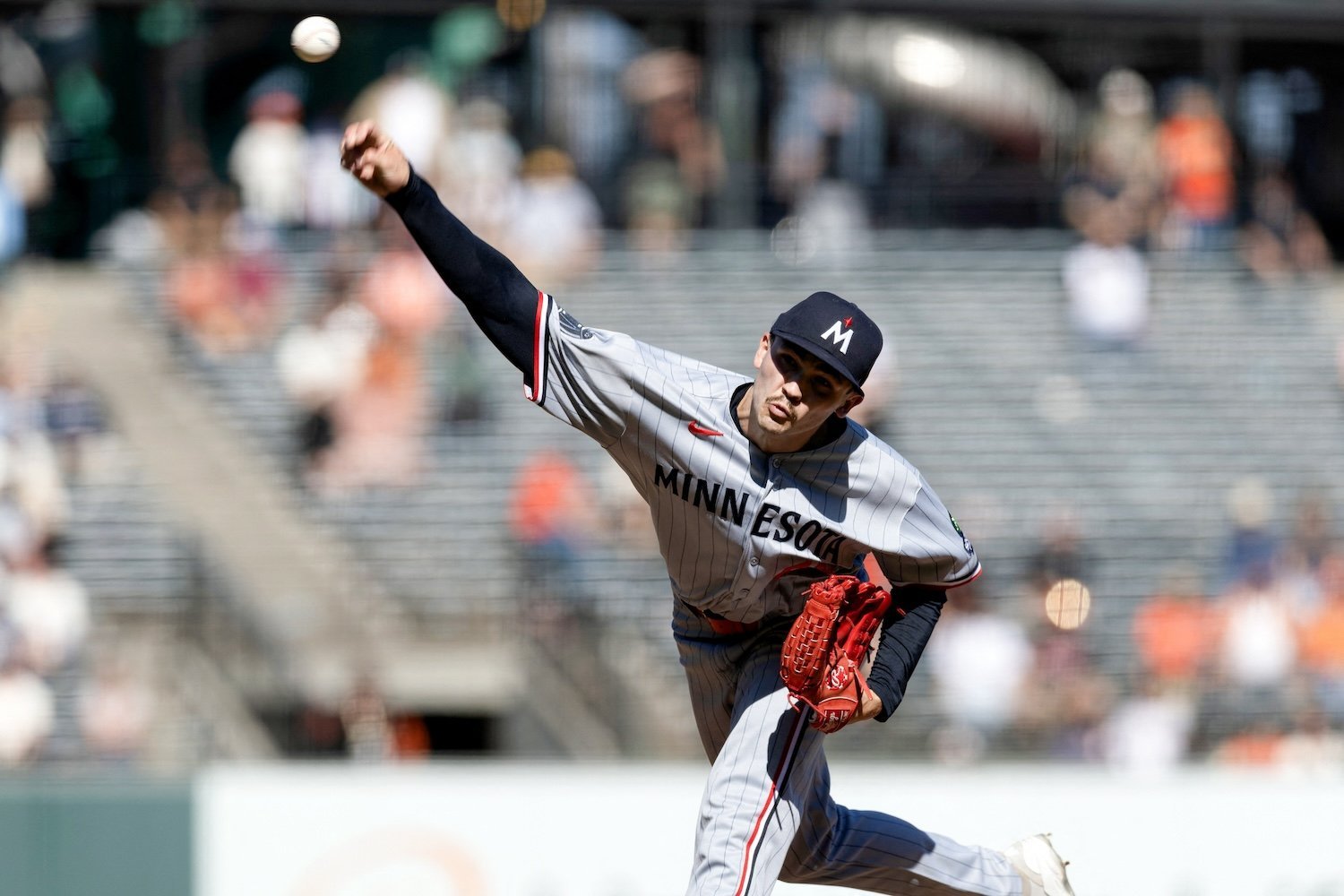 The 2026 season was full of young arms and bats making their major-league debuts for the Minnesota Twins. The first of those players to get the call was right-hander Andrew Morris. Morris was drafted and developed as a starter, and he made a pair of starts in St. Paul before earning his promotion in early April. However, the Twins moved him to the bullpen out of need. The surface-level numbers don't necessarily reflect how well Morris pitched as a rookie. He finished the season with a 4.40 ERA and 1.37 WHIP, along with 69 strikeouts and 27 walks across 73 ⅔ innings. Those stats aren't particularly impressive, but they also don't tell the entire story of his first year in the majors. There was a rather large discrepancy between Morris's traditional statistics and what the underlying data suggested about his performance. Both his FIP and expected ERA hovered around 3.30, indicating that he pitched considerably better than his ERA would suggest. A big reason for that difference was his ability to limit hard contact. He ranked in the 91st percentile or better among major league pitchers in both barrel rate and average exit velocity allowed. His hard-hit rate was also in the top quarter of the league, showing that hitters had a difficult time squaring him up consistently. That approach is interesting when considering that Morris’s four-seam fastball averaged 97.4 mph, the highest average velocity of any Twins pitcher. Despite that premium velocity, however, he didn't overpower hitters in the traditional sense. He didn't generate many strikeouts, swings and misses, or chases outside the strike zone. But that's never really been Morris's game. He's always been a pitcher who relies on commanding the strike zone and limiting damage rather than blowing hitters away. And while his rookie numbers weren't perfect, he showed that approach can translate to the major leagues. I'd consider Morris's first season a strong foundation to build upon. However, as he heads into his first offseason as a major leaguer, there are some things he can polish up. I think the biggest opportunity lies in his arsenal and how he distributes his pitches. Part of what allowed Morris to limit hard contact so effectively was his six-pitch mix. He's embraced the modern three-fastball approach, working with a four-seam fastball, sinker, and cutter. He also features a changeup, sweeper, and curveball, giving him plenty of options to keep hitters off balance. The problem is that not all six pitches were equally effective. In particular, I'd argue that his sinker was a weakness in his arsenal. The pitch has a relatively lackluster movement profile and was the only offering in his arsenal to receive a below-average Stuff+ grade. Hitters also had their most success against the sinker, posting an expected weighted on-base average (xwOBA) of .400 against it. In other words, hitters were producing like James Wood against his sinker. Not the ideal comparison. His changeup presents a slightly different situation. Like the sinker, it lacks the kind of horizontal movement that can make a pitch particularly difficult to square up. Morris's steep, over-the-top arm angle allows him to generate plenty of vertical movement, especially with his four-seam fastball riding high in the strike zone. However, that same arm angle makes it difficult to generate arm-side run on his secondary pitches. Someone like Joe Ryan, who has a much flatter arm angle, can create more pronounced tailing action, which is what’s made him so successful over the last few years. Morris's changeup still played reasonably well, largely because of how frequently he threw fastballs. But I think there's an opportunity to reduce his changeup usage slightly in 2027 and give another pitch a larger role. That pitch should be his sweeper. The sweeper was Morris's best pitch according to Stuff+, earning an outstanding 135 grade. Among pitchers who threw at least 70 innings in 2026, that was the third-highest mark in the league. That's not something the Twins should overlook, especially when looking for ways to get more out of a young pitcher with plenty of potential. Morris threw his sweeper just 9% of the time, making it a much different look from his fastballs and changeup. It's easy to look at that usage and suggest he should dramatically increase it, but I don't think that's necessarily the answer. I'd like to see Morris use his sweeper a little more often; around 15% of the time. It's a quality pitch that could help him generate more swings and misses, but there's no need to turn it into a primary offering. Keeping its usage relatively modest would allow him to maintain the deception that makes it so effective. Meanwhile, he should continue leaning on his four-seam fastball and cutter. Those pitches can serve as the foundation of his arsenal, while the sweeper gives hitters another look to consider. I'd also like to see him scale back his sinker and changeup usage, effectively giving the sweeper a larger role in his pitch mix. It's a relatively simple adjustment, but one that could make a meaningful difference. Morris already does an excellent job limiting hard contact, and he doesn't need to completely reinvent himself to take the next step. Finding a better balance between his six pitches could help him generate more whiffs without sacrificing the contact quality that made him successful in his rookie season. The Twins have plenty of questions to answer as they look toward 2027, particularly when it comes to building a more dependable bullpen. Morris isn't going to solve every late-inning problem on his own, but he has the foundation to become an important piece of that group. With some adjustments to his pitch usage, Morris could take another step forward and establish himself as a shutdown late-inning option. Considering how much the Twins could use another reliable arm in high-leverage situations, that's an outcome worth getting excited about. View the full article
-
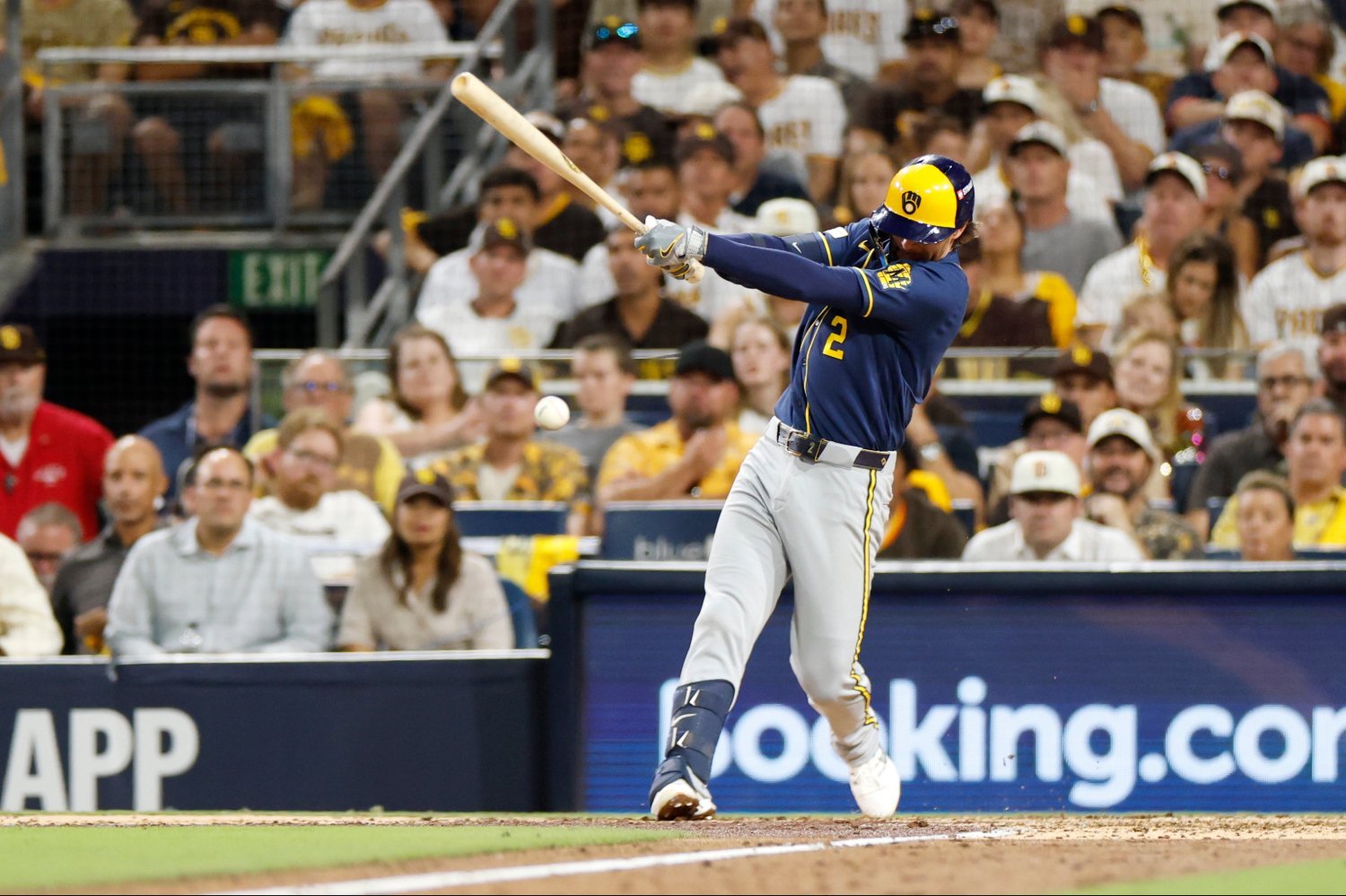 The problem was in front of our eyes the entire time, and time keeps proving that we were not wrong. There has not been a more difficult left-handed-hitting offense to beat in these playoffs than the Milwaukee Brewers. With a sweep of the Los Angeles Dodgers in the NLCS now behind them, it's clear how good their lineup really is. Prior to heading to L.A. for those final two games of the championship series, Milwaukee’s left-handed hitters lead the postseason with a 115 wRC+, .270 batting average, .398 on-base percentage, and the pure identity of their “small-ball” game, a .371 BABIP and 2.25 GB/FB. So, when the San Diego Padres finished quickly annihilating the Chicago Cubs in the Wild Card Series, it was inevitable to start exploring what the matchups and the keys might be for them to stop the Brewers. Obviously, we know that it was not about some command mistakes that could be destroyed by big swings. That is not what the Brewers usually do. The Padres had overcome the Cubs’ left-handed hitters by limiting them to an 0-for-14 line with a 41.2 K% in 17 plate appearances. Perhaps Chicago could have recovered somewhat if the series had been best-of-five or best-of-seven, but they never managed to make the adjustments. Instead, the pitching could not stop Milwaukee’s left-handed hitters. Robbie Ray was never able to meet the level the Padres needed from him after acquiring him at the trade deadline, and along with Walker Buehler, Jason Adam, and Adrian Morejon, they could not record a single strikeout against the 26 batters they faced combined. Although the samples were small, with the exception of Joe Musgrove, Michael King, and Nick Pivetta, the rest of the pitchers struggled to prevent left-handed hitters from reaching base. How did the Brewers manage to be so consistent? Let’s explore some interesting details in this pair of charts. On the left is the expected batting averages of the Brewers’ left-handed hitters against San Diego’s pitchers in the past postseason, and on the right, the summary of all hitters. It is easy to notice one particular detail: the ability to get good results against pitches on the edges of the strike zone, right where they should be more difficult to reach. This result reveals how difficult it was to avoid contact and strike out most of these hitters, who tend to be aggressive throughout the zone. The best averages are precisely against low pitches over the plate, and in the high-and-outside zone for left-handed hitters, locations where the Padres were more dominant throughout the regular season. As you can see here, San Diego managed to limit left-handed hitters in the high-and-outside zone, and they had no problems when they pitched outside the strike zone. But the plan did not work against Milwaukee and, in the end, it was the left-handed hitters who made the difference with their quality at-bats. Yes, Jackson Chourio (six RBIs) and William Contreras (two RBIs) combined to capitalize on several key at-bats with runners on base that shaped the direction of the series, but when you look at the final results, it was the left-handed hitters who did the most damage; they scored eight of Milwaukee’s 13 runs, with five stolen bases in the same number of attempts. View the full article
-
The Man Goes On the Roster: Brandon Woodruff and the Non-Dilemma
DiamondCentric posted an article in Brewer Fanatic
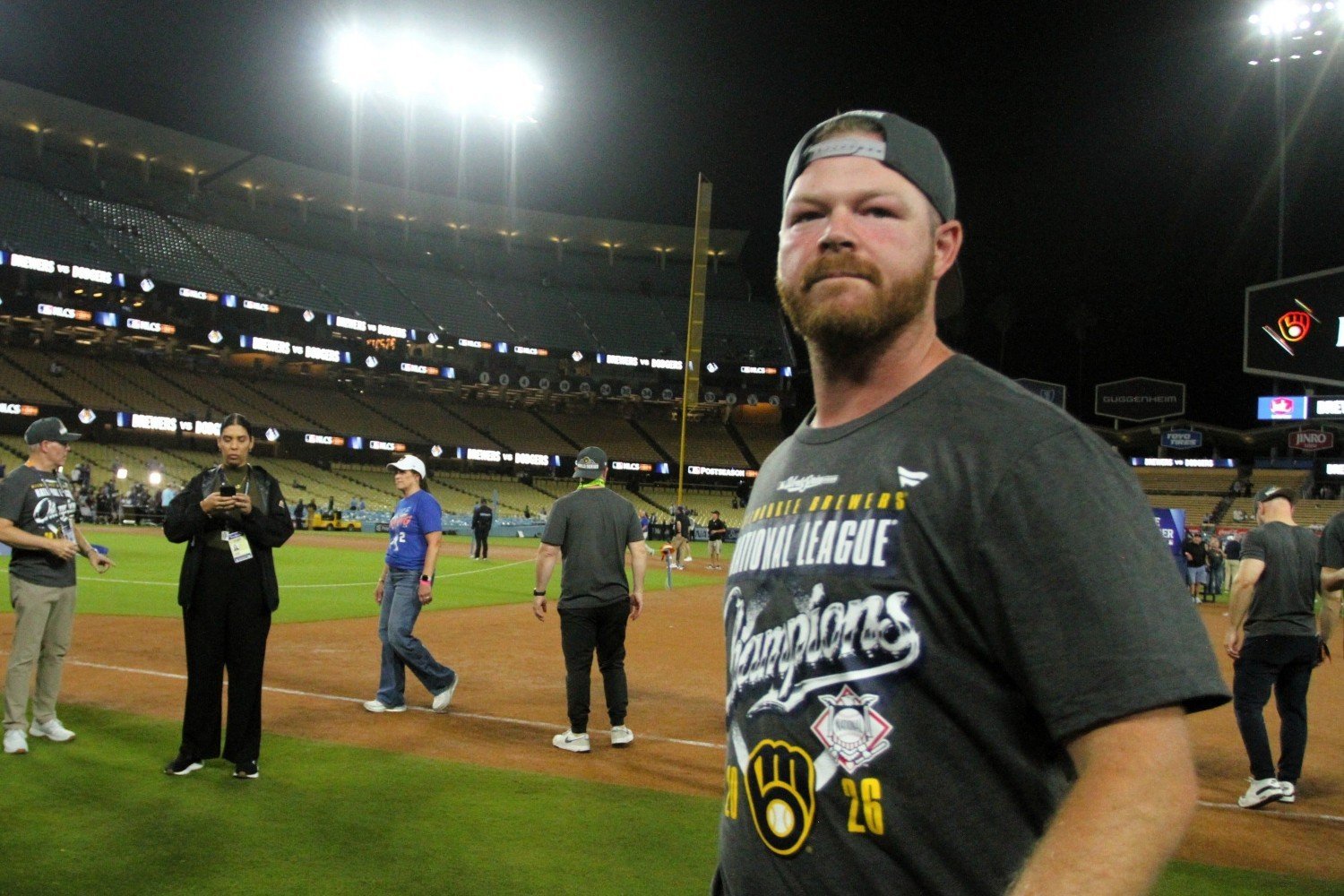 It's all pretty fragile. It's all pretty turbid. There's no good way to know, really, whether Brandon Woodruff will be ready to get people out in the high-pressure, high-stakes environment of a World Series. He told reporters he felt very good about his bullpen session during the NLCS, and he told Curt Hogg of the Milwaukee Journal-Sentinel (after the Brewers clinched their first National League pennant) that it would be hard to keep him off the World Series roster, but there's a good chance he's not actually ready to pitch at a high level. He admitted that he only took one brief glance at the data providing feedback during his mound session. He fought for the right to return to the active roster, earlier this season, even though his velocity was way down and he was clearly not back to full health. To that, I say this: Who cares? It doesn't matter. It's very, very simple: the man goes on the roster. If Woodruff is upright; if his arm isn't in a sling; and if he believes he can help his team in even the smallest, most emergency-only way, he goes on the roster. Woodruff is the most respected veteran in the organization, above even newly minted captain Christian Yelich. He's the one guy the team has made big exceptions for. He's a symbol of what makes the team special, on several levels. When Woodruff's shoulder gave way in September 2023, it didn't actually bring a sudden and premature end to the Brewers' season, but it felt like it. Losing their prospective Game 1 starter was one thing. Losing that guy and their leader and competitor-in-chief (all in one bundle) was another. It was particularly cruel and worrisome, too, because by the time the Brewers had been swept out of the postseason by the Diamondbacks, it was clear that Woodruff would need surgery and miss the entirety of 2024. In fact, the injury was career-threatening, and worse still, it almost didn't matter whether he would eventually make it back or not. That 2024 season was to be Woodruff's last under team control, and only if the team elected to tender him a contract and absorb the high salary he would earn in his final year of arbitration eligibility—for a player who wouldn't take the field all season. Fat chance. Until he got hurt, there was much speculation about whether the team would trade Woodruff in the ensuing offseason, just as there was about Willy Adames. Sure enough, the team non-tendered Woodruff later that fall. He nearly signed elsewhere. He nearly signed—perish the thought—with the Cubs, to whom Craig Counsell had defected in November. At the last moment, though, he and the Brewers fell back together, with Milwaukee getting him cheap in 2024 and a bit less cheap in 2025, when both sides hoped he might return. Return he did, last summer, although it took longer than anyone hoped. At the start of spring training, there was chatter about whether he could be back in the rotation before the end of April. Ultimately, he wouldn't pitch for the big-league team until early July. He was phenomenal when he was on the mound, but heartbreakingly, his shoulder balked again late in the regular season, and he was unavailable for the playoffs again. His free agency rushed up to meet both parties again, and the Brewers faced another tough decision: whether to extend the qualifying offer. Normally, this would be a no-brainer. The Brewers don't offer players $22 million and change when it's not clear that they can be high-end contributors, and it was not at all clear that Woodruff could be a high-end contributor. The shoulder felt like it was hanging by a thread. He'd lost 21 months to one injury, come back for not even three months, and suffered another. This time, he entered the offseason with a reasonable expectation of health and readiness for the following season, but the former workhorse would need to be handled with kid gloves. That's no way for a team on a tight budget to spend around 15% of its payroll. Yet, the team gave him the QO. It was pretty clear he would accept it, but they gave it to him, anyway. For a second time, the organization made an exception where Woodruff is concerned, because (as a teammate and a competitor and as a performer) he's exceptional. A team like the Brewers doesn't dominate for one decade and stand in position to do so for another one without sticking to its rules, but no team succeeds if it can't spot the places where exceptions to strict rules are in order. The rules that have made the Brewers great might dictate that they eschew putting Woodruff on the World Series roster. Twice this year, he suddenly lost velocity in alarming ways and had to be placed on the injured list. The last time we saw him, he was barely touching 90 miles per hour with his heater, and trending down. Ordinarily, a team with as stringent and well-calibrated a set of best practices as any in the league wouldn't put that guy in position to have to pitch with the first championship in team history hanging in the balance. Then again, though, Woodruff had a 2.98 ERA even this year, and since coming back from the surgery last July, he's struck out roughly 30% of the batters he's faced and walked barely more than 5%. You can make a case that he belongs on the roster even through an objective lens, if his rehab has been going as well as he feels and if he looks good facing some live batters over the next few days. But it shouldn't matter. This is not an ordinary situation, in the slightest. This is Brandon Woodruff. Besides, the Brewers haven't trusted Kyle Harrison or Chad Patrick enough to put them on the mound at all over the first two rounds of their playoff run. To put either of them on the roster and leave off Woodruff would be absurd. If Woodruff can pitch, the man goes on the roster. This World Series is not for funsies. It's not an exhibition. The Brewers should fight fiercely to win it. But this playoff run has been about redemption, and about completing a story the team left painfully unfinished in 2018, 2019, 2021, 2023, 2024 and 2025. It's been about the project this team began a decade ago to fruition. Only one player available to them next week was in organization a decade ago. Only one has been at the heart of it all, and even been its beating heart, at times. One player has the strongest ties of any player to the late Bob Uecker, and has already been the subject of multiple exceptions made to the rules that helped the Brewers get this far. One player represents this team's improbable and soul-stirring defiance of baseball's economic system and its very natural laws. If he can so much as fire one good strike in there, that man goes on the roster. View the full article
-
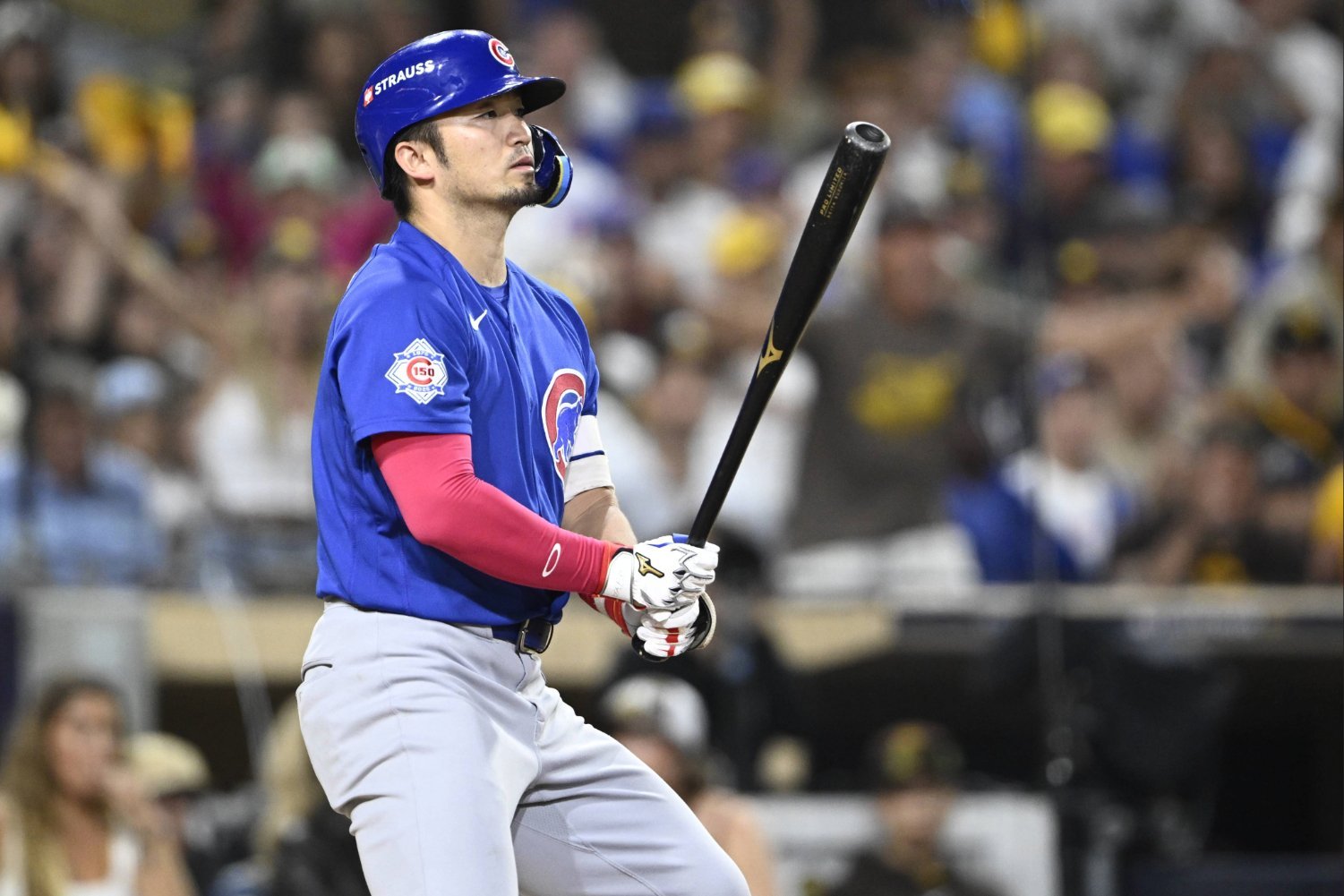 When he chose to sign with the Chicago Cubs after coming over from the NPB, Seiya Suzuki provided a much-needed power bat in right field that could be counted on to be in the lineup each and every day. Since then, he has done nothing but show up to the ballpark and mash, and that was no different in 2026, a season that very well may have been his last with Chicago. Suzuki has provided some incredible moments in his time with the Cubs, such as his home run off Freddy Peralta in his third game at Wrigley Field, or his game-tying solo homer off Nick Pivetta in Game 1 of the 2025 Wild Card Series. With 113 career home runs already under his belt, he's been a reliable source of power with a knack for the clutch over the past half-decade. Now, as for his 2026 outlook, it was sort of a hot-cold, hot-cold type season for Suzuki. He missed the beginning of the campaign after suffering an injury in the World Baseball Classic, but he was stellar when he made his season debut, He collected 67 at-bats in April and slashed .328/.430/.567, good for an OPS of .998 with a double, five home runs, nine RBIs, and 10 walks. It was the exact type of start to the season Suzuki had envisioned for himself headed into a free-agent year. Then the calendar turned to May and that's when the cold stretch began. He had 105 at-bats and managed just a .190 average with two home runs, four doubles and 32 strikeouts, his most in any month the entire season. The oscillating production had his numbers looking wonky at the time, but as the weather got hot, so did his bat. From June-August, Suzuki hit .297 with 17 home runs, 23 doubles, 45 walks, 61 RBI and an OPS near 1.000. That has been a major theme of Suzuki's career, with a lot of his success coming in the summer months when the weather is nice and the ball is jumping, The right fielder was a major reason for Chicago getting within three games of first place in the NL Central at one point in the summer. September rolled around, though, and much like the rest of the offense, Suzuki struggled in a major way, He slashed just .226/.356/.357, giving him an OPS of .714 with just five extra-base hits and 23 strikeouts. He was one of several players that went limping into the postseason series that saw Chicago manage just one run in 18 innings. Still, he ended the year with an excellent 134 wRC+, and that only tells half the story. Suzuki's much-improved defense this season was a major narrative for the Cubs, as he accrued +5 Outs Above Average and was nominated as a finalist for a Gold Glove Award for the first time in his MLB career. That was another added element that he hadn't yet showcased since leaving Japan, yet has now become a big part of what makes him such a valuable player. Overall, Suzuki is coming off arguably the best season of his MLB career -- his 4.6 fWAR was by far his best mark ever -- and he will be an extremely hot commodity in free agency. He's a right-handed power bat that does a lot of slugging and can also give you well-above average defense in right field. The Cubs may not love the idea of handing out big money to a 32-year-old, but it would behoove them to keep the Japanese star around as long as possible. View the full article
-
 While the major-league club struggled at times to produce offense, those climbing through the Boston Red Sox's minor-league system have provided a positive outlook for the future of the franchise. With that being said, it’s worth looking at the top minor league performances across the system this season. Talk Sox’s Best Red Sox Minor League Hitters of the Season (2026) Honorable Mention: Henry Godbout 2B/SS, Talk Sox #4 Prospect Season Stats: 61 games played, .291/.402/.530, 11 2Bs, 15 HRs, 35 RBIs Godbout was having a fantastic season prior to a broken left-hand injury from a hit by pitch. Undergoing surgery on June 8, the middle infielder would not return to action until July 31 when he started a rehab assigning with Low-A Salem. Prior to the injury, he had been hitting .277/.410/.492 and showcasing an important improvement in the power department. He also got better at putting the ball in play, displaying a strong understanding of the strike zone. His strikeout rate was 16.8% while he walked at a 13.7% rate, the result of frequent favorable counts. He was also a player that quickly took to the Red Sox's philosophy of trying to pull the ball in the air, doing so at a 27.9% rate which helped with his power in 2026. Upon his promotion to Portland in mid-August, Godbout continued to play well, elevating the ball often as he pulled it in the air at a 25.8% rate and hit the ball on the ground at a 30.8% rate, one of the best (e.g., lowest) in Double-A Portland during his time there. He does have some adjustments to make coming into 2027, however, as his strikeout rate rose to 25.8% while his walks cratered to just 5.2%, a likely effect from facing more advanced pitching. Despite that, he only whiffed on 21.5% of the pitches he swung at, showing an ability to still make consistent contact. #3: Franklin Primera C, FCL/Low-A Salem, Talk Sox #3 Prospect Season Stats: 78 games played, .367/.499/.581, 16 2Bs, 1 3B, 13 HRs, 53 RBIs Primera burst onto the scene in 2026, but his offensive potential was on display since the 2025 season when he hit .333/.465/.430 in the Dominican Summer League. Upon coming stateside, Primera began the season in the FCL where he slashed an outrageous .427/.549/.718 in 32 games and quickly earned a promotion to Salem, where his hitting only continued despite being nearly a year and a half younger than the average competition. Just 19 years old, the catcher quickly rose through various prospect rankings to become one of the top prospects in the system. Containing great bat-to-ball skills along with an understanding of the strike zone, Primera constantly put the ball in play while also flashing some power with Salem despite playing in a pitcher-friendly home ballpark and league. During his time with Salem, the catcher struck out just 11.2% of the time while walking in 12.6% of his at-bats, putting his remarkable maturity on full display (though he was caught chasing at a 27.16% rate). When he swung, however, he often made contact as shown by his zone-contact rate of 90.36% along with a whiff rate of just 18.4%. It won't be a surprise if the young catcher opens 2027 with Salem, as it allows him a chance to improve upon some areas of his game while not rushing the top prospect. However, should he replicate his 2026 success early on, don’t be surprised if he gets a quick promotion to High-A Greenville. #2 Justin Gonzales OF/1B, High-A Greenville/Double-A Portland, Talk Sox #2 Prospect Season Stats: 107 games played, .266/.385/.449, 14 2Bs, 3 3Bs, 19 HRs, 69 RBIs Everyone who’s followed the Red Sox's minor-league system this season knows about Gonzales in some shape or form. The 6-foot-7 giant has brought excitement and hype over the past few seasons thanks to his exit velocities when he makes contact. This year was no different, as the 19-year-old showcased his talents once more. Splitting 2026 between High-A Greenville and Double-A Portland, Gonzales put on a show with the Drive as he was one of their top players offensively. In 89 games with Greenville, the slugging outfielder had 12 doubles, two triples, and 17 home runs, making mincemeat of the competition. Still, there were still some areas he had to work on; while he only struck out at an 18.7% rate, he had a habit of chasing, doing so at a 31.8% rate. Despite that, he still showed a good eye by walking in just over 13% of his at-bats and making contact on just under 85% of the pitches he swung at in the strike zone. Thanks to his performance in Greenville, Gonzales got promoted for the last few weeks of Portland’s season. He ended up pulling the ball less, down to 8% of the time while he started striking out with a little more frequency. However, he counterbalanced that with an inclination to take more free passes as well. It's hard to be too upset about a 19-year-old struggling in his first taste of Double-A. The outfielder will open the season with Portland barring an unforeseen move by the organization and should be able to adapt to the pitching in a manner similar to how he adjusted to High-A after struggling in his first taste of the level. #1: Franklin Arias 2B/SS, Double-A Portland/Triple-A Worcester, Talk Sox #1 Prospect Season Stats: 117 games played, .323/.400/.557 28 2Bs, 1 3B, 25 HRs, 91 RBIs There should be no debate as to who had the best season in the system. After a breakout campaign in affiliate ball in 2025, Arias took it one step further in 2026 thanks in part to a display of power not previously foreseen. In fact, his 25 home runs this season were seven more than the 18 he had hit combined between 2023 and 2025. However, it was his impressive bat-to-ball skills that helped vault him up Top 100 prospect boards. During his time in Worcester, he sported a 15.1% strikeout rate that was helped in part to a 17% whiff rate and a 91% zone-contact rate. Those numbers were in line with his Double-A performance, as he had a 13.9% strikeout rate and 19.1% whiff rate to go along with an 89.9% zone-contact rate. But the contact skills aren’t much of a surprise as Arias showcased them since his professional debut in the Dominican Summer League back in 2023. Long viewed as an advanced hitter that would drive the ball into the gap, Arias instead increased his offensive (and overall) potential thanks to a change in approach at the plate. During his time with Greenville in 2025, Arias had a ground-ball rate of 46.8% while only pulling the ball in the air at a 10.2% rate. Fast-forward to 2026 with Portland, and those numbers changed to a 39.4% ground-ball rate to go along with a pull-air rate of 21.2%. As of the end of the 2026 season, Arias appears to be the next top prospect in a system that has been flush with them recently. Just 20 years old (he’ll turn 21 on November 19), there are still parts of his game that he needs to work on before we can dream on his MLB debut. Fortunately, the Red Sox have time to develop him -- with a little luck, a 2027 ETA isn't out of the question. View the full article
-
 The New York Mets’ roster is full of former top prospects. Guys like Juan Soto, Bo Bichette, and Francisco Lindor all fit that description and have had long, successful major league careers. But there’s another Francisco who’s still trying to put everything together: Francisco Alvarez. The 24-year-old catcher hasn’t quite reached the level many expected when he was one of the top prospects in baseball a few years ago. However, there have been plenty of glimpses of what he can become, and I think we saw more of those flashes during the 2026 season. Across 420 plate appearances, Alvarez hit .233 with a .311 on-base percentage and a .710 OPS. Those numbers aren’t particularly inspiring, and his 99 OPS+ suggests he was basically a league-average hitter. But while the surface-level production wasn’t anything special, there was plenty to like about what he did at the plate this season. For starters, Alvarez consistently made hard contact. His average exit velocity of 90.8 mph ranked in the 80th percentile among major-league hitters, while his hard-hit rate was even better, landing in the 86th percentile. Pair those with a barrel rate in the 96th percentile, and the underlying numbers suggest he probably deserved better results than he actually got. His expected slugging percentage was 32 points higher than his actual mark, as an example of just one obvious area in which he's due for positive regression. Not many hitters consistently hit the ball as hard as he does, and that kind of quality contact gives him a solid foundation to build on. The problem, however, is that he doesn't make enough contact. Alvarez has struggled with the swing-and-miss part of his game since reaching the upper levels of the minor leagues, and 2026 was no exception. Both his whiff and strikeout rates were career lows this season. He swung through more than one of every three pitches he offered at and struck out in more than three of every 10 plate appearances. Both numbers ranked in the sixth percentile or worse among qualified hitters. That's a tough combination for any batter to overcome, especially one who relies on power to do most of his damage. Plenty of power-first hitters struggle with strikeouts because they're willing to sacrifice more contact in exchange for louder contact. But Alvarez needs to find a better balance if he's going to maximize his offensive potential. I'd also like to see him get the ball in the air more often. His fly-ball rate has hovered around 35% over the past couple of years, and he's paired that with a relatively low line-drive rate. Given how hard he hits the ball, getting more balls into the air could help him turn some of those hard-hit balls into extra-base hits and improve his overall production. Of course, Alvarez's development isn't just about what he does at the plate. As a catcher, there's another side of his game that needs attention, and his defense behind the plate remains a work in progress. The biggest issue this season was his ability to block pitches in the dirt. Alvarez finished with minus-13 blocks above average, the worst mark of any major-league catcher. It's an area where he's struggled throughout his career, but the numbers were particularly concerning in 2026. However, it wasn't all bad defensively. He was a strong pitch framer, giving the Mets some value in an area that doesn't always show up in traditional statistics. He also took a step forward when it came to controlling the running game, throwing out 27% of opposing basestealers—that was a career high for him. Teams are beginning to respect his arm more than they have in the past, and when they do test him, he had a lot more success than most catchers would. Overall, I don't think the surface-level numbers tell the entire story of Alvarez's 2026 season. His offensive production was underwhelming, but the quality of contact he made was encouraging, and he provided some real defensive value outside of his struggles with blocking pitches. There are still areas he needs to improve. He has to make more consistent contact at the plate, find ways to elevate the ball more frequently and become a more reliable presence behind the plate. Those aren't minor adjustments, but they're also not impossible hurdles for a 24-year-old catcher to overcome. View the full article
-
 We do not need to revisit the trade that brought Kendry Rojas over at the 2025 trade deadline, but it’s fair to say it hasn’t worked out the way the Twins had hoped it would thus far. The young left-hander made his MLB debut in 2026 but was unable to make a notable impact on the pitching-starved roster. There are many questions left for Rojas to answer, but 2027 should provide a lot more clarity. Rojas came over to Minnesota with plenty of red flags already raised regarding his ability to stick as a starting pitcher. One of the main concerns was his ability to remain on the field, which is now a growing concern after another injury-riddled campaign in 2026. After barely surpassing 130 combined innings in 2024 and 2025, Rojas failed to build on those modest workloads in 2026. He missed the beginning of the season with a hamstring strain, missed almost a month midseason due to triceps problems, and then suffered an oblique strain at the end of August. He finished the season with just under 70 total innings across all levels. His 84 innings pitched in 2023 in A ball remain his career high. Rojas has also had spells of wildness in his minor league career, which escalated to a concerning level in 2026. The walks he allowed in the minor leagues weren’t terribly high, but the 16.9% walk rate he posted at the big-league level was a major reason Rojas couldn’t stick with the big-league club last season. Too often, he racked up pitch counts through inefficiency and walked a tightrope with so many free baserunners. Such extreme walk issues are completely untenable in any big-league role, but being a starter with so many free passes is out of the question. The first hurdle for Rojas to clear in 2027, of course, is his availability. If he can’t take a notable step up in workload, his path to a long-term rotation spot starts to narrow as we look to 2028 and beyond. At some point he has to take a step toward a starting pitcher's workload if that's his long-term role. If he can’t get the walks under control, performance becomes a concern, as despite his ERA and related indicators looking solid last season, it’s hard to expect that to continue with so many free base runners and such poor efficiency. Regardless of whether he’s in the middle to back end of the rotation or serving as a high-leverage bullpen arm, the Twins need Rojas to become a contributor to their big-league pitching staff. The return on the 2025 trade deadline sell-off does not look good thus far, and Rojas developing and staying healthy would make it look a lot better. More importantly, the Twins are lacking pitching depth throughout their system. They need some young arms to step up, and Rojas is at the top of the list after their choice to invest as much as they did in him. 2027 is a very important year for Kendry Rojas. He has the raw stuff and arm talent to be an impactful piece of the Twins’ pitching staff for years to come, but it’s time for him to show he’s up to the task. Can he do it? View the full article
-
Discussing Padres' Free Agency And Arbitration Questions
DiamondCentric posted an article in Padres Mission
 With the San Diego Padres in the early days of their offseason, the postseason press conferences and letters from the owners have been delivered. Now, it is time to discuss who stays and who goes. Randy Holt and Steve Drumwright delve into the many free-agent decisions—from Adrian Morejon and Ty France to Griffin Canning and Austin Hays—the Padres have (and don't have) and discuss whether they should return in 2027. Who do you want to see return? Listen on Apple Podcasts: https://podcasts.apple.com/us/podcast/padres-mission-podcast/id1896922834 Listen on Spotify: https://open.spotify.com/show/033xclmydmbLmEp0exYuYz Listen on iHeartRadio: https://www.iheart.com/podcast/1333-padres-mission-podcast-336930560 Watch on YouTube: https://www.youtube.com/@padresmission View the full article
-
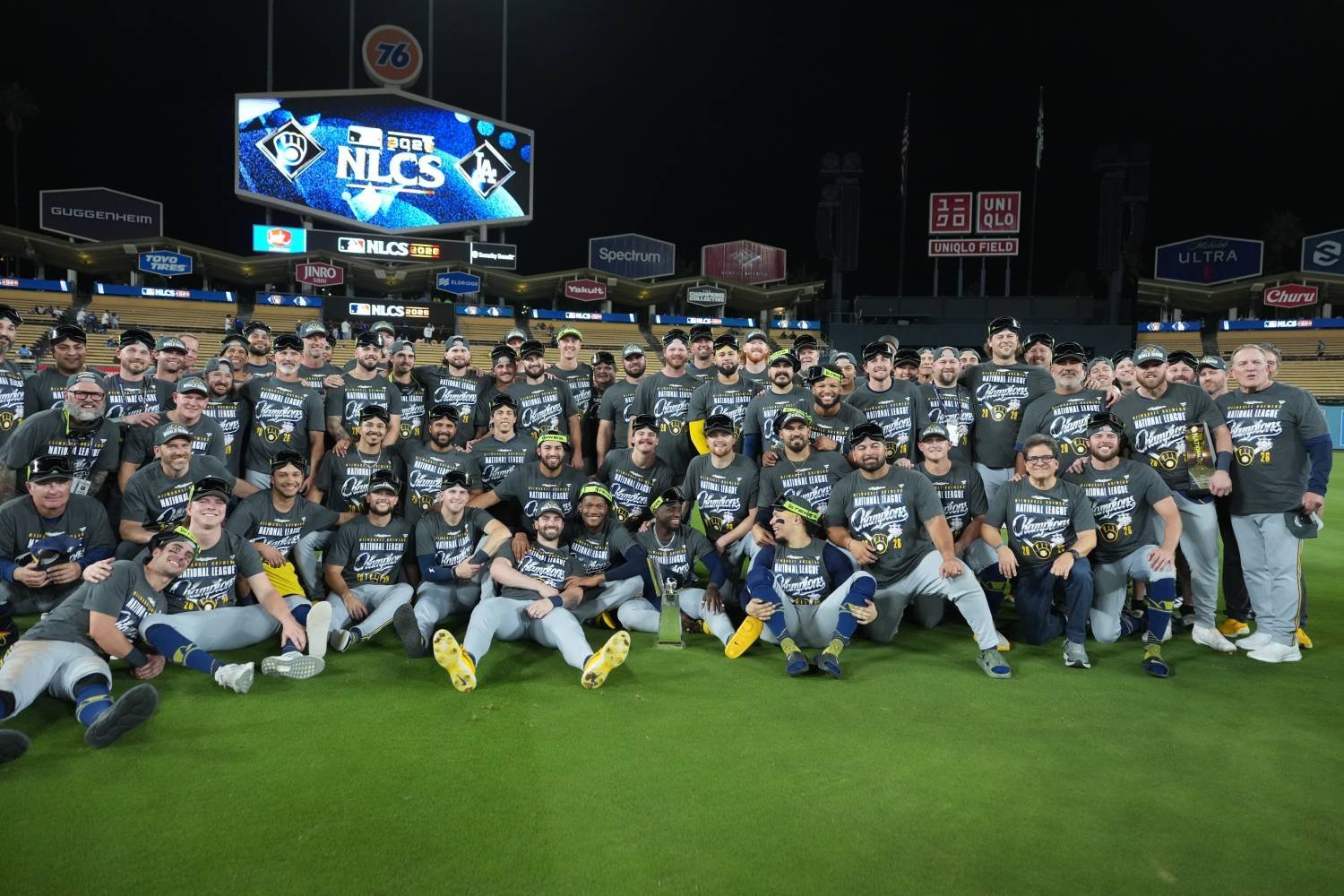 Clear your calendars, Wisconsin. Game times have been set for all seven games of the World Series. MLB on Friday set the start times for 7 p.m. CT for all seven games of the World Series, which for the first time since 1982 will feature the Milwaukee Brewers. The Brewers swept the two-time defending champion Los Angeles Dodgers in the NL Championship Series and now await the winner of the AL Championship Series between the top-seeded Tampa Bay Rays and the second-seeded Cleveland Guardians. While MLB says 7 p.m., there are often ceremonies that lead into World Series games that could push actual start times back about 10 to 20 minutes. The Brewers will host the first two World Series games at American Family Field on Friday, Oct. 23 and Saturday, Oct. 24. After taking a day off, Games 3-5 will be at the AL site the following Monday-Wednesday, with Games 6 and 7 back in Milwaukee that Friday and Saturday (Oct. 30-31). Yes, the World Series could finish on Halloween. Fox will carry all seven games, with pregame shows beginning at 6 p.m. CT. Joe Davis and John Smoltz, the same crew that called the NLCS, will call the games for the World Series. View the full article
-
 On Wednesday, Rawlings Baseball announced the finalists for the National League and American League Gold Glove Awards. Miami Marlins Javier Sanoja was one of three NL finalists at third base along with Alex Bregman of the Chicago Cubs and Max Muncy of the Los Angeles Dodgers. Sanoja is the only Marlin to be a finalist this year. Last season, Sanoja won the NL utility Gold Glove. That snapped what had been an eight-year Gold Glove drought for the Marlins organization; prior to him, the most recent Marlins winner was Marcell Ozuna (LF in 2017). Sanoja received more playing time in his second full MLB season and a more defined role. He had opportunities at six different non-pitcher positions, but mainly found a home at third base. In 119 games there (778 ⅓ innings), he posted five defensive runs saved (ranked sixth in NL) and six outs above average (tied for fourth in NL). Bregman, a 2024 AL Gold Glover, is likely the main threat to Sanoja winning the award. The Cubs star has the stronger statistical case (15 DRS and 9 OAA) over a much bigger sample size (1,248 innings). Sanoja is hoping to join an exclusive club. The only Marlins to ever win multiple Gold Gloves are Charles Johnson and Luis Castillo. Even if this isn't his year, Sanoja just turned 24 last month and has a long career ahead of him. The Gold Glove winners will be announced on November 1. View the full article
-
 It was another year of coming up short for the Minnesota Twins. It’s frustrating for the players, for the fans, and certainly for ownership. Nobody wants to lose, and if things are going to change in 2027, the Twins are going to need more from their roster. The front office can help address some of those issues this winter by adding talent to the roster. However, if this team is going to get over the hump next season, they’re primarily going to need some players already in the organization to take a step forward. Whether it’s young players looking to establish themselves in the majors or veterans who need to get back on track, there are plenty of candidates who could make a significant difference with a strong 2027 campaign. With that in mind, here are four Twins who need to step up next season. Connor Prielipp Prielipp’s rookie year was filled with ups and downs. Overall, he finished with a 4.87 ERA and a 1.29 WHIP across 125 ⅔ innings. He also recorded 128 strikeouts against 44 walks, showing some promising traits despite the inconsistent results. There’s reason to believe he was better than his ERA would indicate. His 3.73 FIP and 3.95 expected ERA suggest he was a bit unlucky, and there were plenty of things to like about his performance throughout the season. Both his strikeout and walk rates were better than league average, while his breaking balls consistently generated swings outside the strike zone. Those are important building blocks for a young starting pitcher, particularly one who could play a significant role in Minnesota’s rotation moving forward. Of course, there’s still work to be done. Prielipp needs to find ways to limit hard contact and avoid putting himself in difficult situations against opposing hitters. His overall numbers suggest there’s room for improvement, and making those adjustments could go a long way toward turning him into a reliable rotation option. If he can clean up some of those issues in 2027, there’s a legitimate case to be made that he could break out next season after a highly encouraging rookie season. The Twins have plenty of questions surrounding their rotation heading into the offseason, even with Joe Ryan, Taj Bradley and a (hopefully) healthy Pablo López. The outlook gets even cloudier after next year. Minnesota needs young starters to emerge, and a big year from Prielipp would help address one of the organization's biggest needs. Royce Lewis This one comes with an asterisk. There’s some uncertainty surrounding whether Lewis will even be on Minnesota’s roster when the 2027 season begins. Still, assuming he remains with the organization, there’s really no way around it: the Twins need more from him. Lewis slashed just .227/.287/.380 this season, finishing with an uninspiring .667 OPS. That marked the second consecutive year he posted an OPS below .700, which isn't nearly good enough for a player expected to be a key part of the lineup. His underlying metrics suggest he should have been slightly better offensively, but that only goes so far. At some point, the production needs to show up on the field, and he hasn't delivered enough of it over the past two seasons. Defensively, there's also work to be done. His long-term home isn't on the left side of the infield, and regardless of where he eventually settles, his glove hasn't been good enough to make up for his offensive shortcomings. Lewis needs to make some meaningful strides this offseason, both in terms of his approach at the plate and his overall consistency. We've seen what he's capable of when everything is clicking, even at times this season. Lewis has the talent to be a productive hitter, and there have been stretches when he's looked like the player Minnesota envisioned when he first arrived in the majors. The problem is that the cold spells have far outweighed the hot stretches. The Twins can't afford to keep waiting for Lewis to put everything together, especially if they're serious about competing in 2027. Whether he gets that opportunity in Minnesota remains to be seen, but if he's still wearing a Twins uniform next season, he needs to take a significant step forward. Walker Jenkins Jenkins' first taste of the majors this season isn't enough to draw any definitive conclusions about what kind of player he'll become, and I'm certainly not suggesting he struggled beyond repair. However, this is a player who could have a much bigger role in 2027, and the Twins are going to need him to take advantage of that opportunity. Jenkins finished with a .226/.293/.393 slash line and a .686 OPS. Those numbers aren't particularly impressive, but there were some encouraging signs as he adjusted to major-league pitching. In particular, Jenkins appeared to get more comfortable at the plate toward the end of the season. He showed above-average discipline, giving himself a foundation to build on as he gains more experience against big league pitchers. The next step is making more consistent hard contact. Jenkins has the tools to become an impact hitter, but he'll need to translate his approach into more productive at-bats. Being selective is important, but it won't mean much if he's not consistently driving the ball when he gets pitches to hit. That's a natural adjustment for a young player, and there's no reason to overreact to a relatively small sample of major league plate appearances. Still, the Twins need their top prospect to continue developing if they're going to build a competitive lineup around their young core. If Jenkins can pair his plate discipline with more consistent contact and power, the sky's the limit. He's arguably the organization's most important long-term piece, and a strong rookie campaign could accelerate his development into a legitimate cornerstone. Kendry Rojas Rojas' first taste of the majors was similar to Prielipp's in many ways. There was plenty to like, but there were also some clear areas that need improvement before he can become a dependable piece of Minnesota's pitching staff. The swing-and-miss stuff was evident, and he did a nice job limiting hard contact. His ERA and expected ERA both finished around 3.40, suggesting his results were largely supported by the quality of his underlying performance. The foundation is there, but it's far from complete. Rojas struggled mightily with walks, posting a 16.9% walk rate. That's a significant problem for any pitcher, especially for someone who’s been asked to work multiple innings at a time, even if it’s not in the rotation. He needs to find a way to improve his command and limit the free passes. The swing-and-miss ability is valuable, but consistently falling behind hitters and putting runners on base will make it difficult to turn that talent into sustained success. Health is another major concern. Rojas appeared in just 27 games this season, splitting his time between 14 relief appearances and 13 starts. Regardless of which role the Twins ultimately envision for him, none of his upside will matter if he can't stay healthy enough to take the mound. As the saying goes, the best ability is availability. There's immense upside with Rojas, and his early results suggest he could become an important part of Minnesota's pitching staff. However, he needs to get out of his own way, improve his control, and stay on the field long enough to realize that potential. The Twins have plenty of work to do this offseason, and adding outside talent will be important if they want to return to contention. But the organization's path forward will also depend on the players already in the building. If Prielipp can solidify his place in the rotation, Lewis can rediscover his offensive production, Jenkins can take another step forward, and Rojas can turn his raw talent into consistent availability, Minnesota could be in a much better position next season. None of those outcomes are guaranteed, but the potential is there. And if the Twins want 2027 to look different from the past couple of seasons, they'll need more of their own players to start delivering. View the full article
-
 Jake McKibbin and Jason Wang talk about the Brewers sweeping the Dodgers to go to the 2026 World Series! With Aaron Ashby, David Hamilton, Garrett Mitchell, and Jake Bauers helping push the Brewers over the Dodgers, who was your NLCS hero? Apple Podcasts: https://podcasts.apple.com/us/podcast/the-brewer-fanatic-podcast/id1740648724 Spotify: https://open.spotify.com/show/5CY8mWsQayqjDXqw9OT2Td iHeartRadio: https://www.iheart.com/podcast/263-the-brewer-fanatic-podcast-166534588/ Pocket Casts: https://pca.st/ommzz627 Watch On YouTube: https://www.youtube.com/@brewerfanatic View the full article
-
Breaking Down Pedro Ramírez's Rookie Season
DiamondCentric posted an article in North Side Baseball
 Pedro Ramírez had his share of ups and downs during his rookie campaign, but the young infielder showed plenty of reasons for optimism. If he can build on his contact skills and unlock more power, there's another level to his game. View the full article
