


DiamondCentric
-
Posts
2,631 -
Joined
-
Last visited
Never
Content Type
Profiles
Forums
Events
News
Tutorials & Help
Major League Baseball Videos
Guides & Resources
Store
Downloads
Gallery
Everything posted by DiamondCentric
-

 Elian Peña had two hits, two RBIs and a run scored to lead Brooklyn to a 5-2 victory over Hudson Valley on Thursday. The game was one of just three played by New York Mets minor-league affiliates thanks to two rainouts in eastern Pennsylvania. Peña , ranked third in Grand Central Mets’ prospect Top 20, has struggled against High-A pitching after being promoted from Single-A St. Lucie 10 days ago. His two hits Thursday also came with two strikeouts, giving him 15 punchouts in 44 plate appearances. He’s slashing .194/.318/.194 over eight games. On the positive side, he has six RBIs in those eight games. He singled home a run in the fifth and lifted a sacrifice fly in the eighth on Thursday. He scored in the seventh after reaching on his second single of the game. Trey Snyder and Antonio Jimenez had two hits each Chase Meggers walked four times after entering the game as pinch hitter in the second inning. Gregori Louis earned the win with 1 1/3 scoreless innings of relief. He worked around four walks, three of which loaded the bases in the fifth. He got a double-play ball to end the inning. Elsewhere in the organization: Syracuse, at Lehigh Valley, and Binghamton, at Reading, were both rained out. The teams will make up those games Saturday as part of doubleheaders. St. Lucie split a doubleheader with Daytona, losing the first game 8-2 and winning the second game 3-1. Owen Woodward was the pitching star for the Mets with his three-inning save in the nightcap. Ryan Tayman and Aiden Robbins homered for St. Lucie’s runs in the opener. The Mets turned a triple play in the first inning of Game 1. New York Mets Transactions New York Mets optioned RHP Chayce McDermott to Syracuse Mets. New York Mets recalled RHP Xzavion Curry from Syracuse Mets. Peña Has Big Hand In Cyclones’ Win Peña lined a run-scoring single to right after the Cyclones loaded the bases with none out on walks to Meggers, Jimenez, and Eddinson Paulino. A fielder’s choice grounder by Yonatan Henriquez brought in the second run of the inning and put Brooklyn ahead 3-0. Peña started the Cyclones’ rally in the seventh with his second single. He came around to score on Snyder’s two-out double to right, giving Brooklyn a 4-0 lead. Hudson Valley cut the lead in half in the bottom of the seventh, but Peña got the run back an inning later when drove in Colin Houck with a fly ball to center. Joel Diaz started and threw 3 2/3 scoreless innings. He allowed one hit, walked one and struck out four. After Louis’ high-wire act, Elwis Mijares went the next two, allowing both Hudson Valley runs in the seventh. Ryan Dollar came on in the eighth and struck out five in a six-out save. Brooklyn Batting Player AB R H RBI BB K Elian Peña 4 1 2 2 0 2 Aidan Smith 5 1 1 0 0 2 Yonatan Henriquez 5 0 1 1 0 3 Trey Snyder 5 0 2 1 0 2 John Spikerman 4 0 1 1 0 1 Colin Houck 4 1 1 0 1 1 Daiverson Gutierrez 0 0 0 0 0 0 Chase Meggers 1 1 0 0 4 1 Antonio Jimenez 4 1 2 0 1 1 Eddinson Paulino 2 0 0 0 2 2 Totals 34 5 10 5 8 15 Brooklyn Pitching Player IP H R ER BB K HR Joel Diaz 3 2/3 1 0 0 1 4 0 Gregori Louis 1 1/3 0 0 0 4 1 0 Elwis Mijares 2 4 2 2 0 0 0 Ryan Dollar 2 1 0 0 0 5 0 Totals 9 6 2 2 5 10 0 Early Break Fails To Spur St. Lucie in Opener St. Lucie got its night off to a good start by turning three to end the first. Mets starter Ethan Lanthier walked the first two batters of the game before shortstop Boston Baro caught a line drive, stepped on second base for the second out and threw to first baseman Julio Zayas to complete the triple play. St. Lucie then took a 1-0 lead in the second on Tayman’s homer. It was his second of the year and first since his first professional at-bat on July 28. But Daytona took control with four runs in the third against Lanthier. A one-out solo home run got things started. After two were out, a walk, a stolen base, an RBI single, a walk and a two-run double stretched the Tortugas’ lead to 4-1. Daytona broke the game open with two runs in the bottom of the fourth against Candido Cuevas. Robbins smashed his fourth homer in the fifth to cut the Mets’ deficit to 6-2. Daytona responded with single runs in the fifth and sixth. St. Lucie Batting Player AB R H RBI BB K Boston Baro 4 0 2 0 0 0 Aiden Robbins 3 1 2 1 1 0 Jack Toomey 3 0 0 0 0 1 Kuhio Aloy 2 0 0 0 1 2 Yovanny Rodriguez 3 0 0 0 0 1 Ryan Tayman 3 1 1 1 0 1 Jeremy Rodriguez 3 0 0 0 0 0 Julio Zayas 2 0 0 0 1 1 Dylan Carey 2 0 0 0 0 1 Totals 25 2 5 2 3 7 St. Lucie Pitching Player IP H R ER BB K HR Ethan Lanthier 3 3 4 4 5 2 1 Candido Cuevas 1 2 2 2 1 1 0 Caden Wooster 2 3 2 1 2 4 0 Totals 6 8 8 7 8 7 1 St. Lucie Efficient In Earning Split The Mets scored their runs on five consecutive hits in the third inning. Jack Toomey started the rally with a one-out single. Yovanny Rodriguez doubled him to third. Jeremy Rodriguez singled in Toomey to tie the game 1-1. Branny De Oleo singled home Yovanny Rodriguez to give St. Lucie the lead. Wyatt Vincent singled home Jeremy Rodriguez to make it 3-1. Mets starter Nathan Hall went 3 1/3 innings, allowing a run on two hits with no walks and five strikeouts. Zack Mack got the final two outs in a 1-2-3 fourth, which was enough for him to be credited with the win in the seven-inning game. Woodward allowed two hits, walked none and struck out three in his three innings of work. St. Lucie Batting Player AB R H RBI BB K Vladi Gomez 4 0 0 0 0 0 Aiden Robbins 4 0 0 0 0 1 Jack Toomey 3 1 1 0 1 2 Yovanny Rodriguez 3 1 1 0 0 0 Jeremy Rodriguez 3 1 1 1 0 0 Branny De Oleo 3 0 2 1 0 0 Wyatt Vincent 3 0 1 1 0 1 Reed Stallman 2 0 1 0 1 1 Jake Ogden 2 0 0 0 1 1 Totals 27 3 7 3 3 6 St. Lucie Pitching Player IP H R ER BB K HR Nathan Hall 3 1/3 2 1 1 0 5 0 Zack Mack 2/3 0 0 0 0 1 0 Owen Woodward 3 2 0 0 0 3 0 Totals 7 4 1 1 0 9 0 Top-20 Prospect Performance Jonah Tong: DNP Jack Wenninger: DNP Elian Peña: 2-for-4, 2 RBI, 2 K Mitch Voit: DNP Ryan Clifford: DNP Nick Morabito: DNP Jonathan Santucci: DNP Carson Wiggins: DNP Jacob Reimer: DNP Aiden Robbins: 2-for-7, 2B, HR, RBI, BB, K Randy Guzman: DNP Wandy Asigen: DNP Chris Suero: DNP Jefferson Rojas: DNP Will Watson: DNP Shane Sdao: DNP Eli Serrano III: DNP Antonio Jimenez: 2-for-4, BB, K Emilien Pitre: DNP Dylan Ross: DNP View the full article
 -
 Boston Red Sox Affiliate Recap Triple-A Worcester Red Sox Season Record: 65-59 After an offensive rut in the last game, Worcester’s bats woke up, defeating the Scranton/Wilkes-Barre RailRiders (New York Yankees) 7-1. Eight of Worcester’s nine hitters collected a hit, including multi-hit games from Roman Anthony, Isiah Kiner-Falefa, and Vinny Capra. Roman hit a single over the third baseman for a single in the first inning, then came around to score on a Trevor Story sacrifice fly. Later on in the sixth, Anthony cracked a double, hitting off the right field wall to bring in Tsung-Che Cheng, who also hit an RBI double beforehand. The Sox had four doubles as a group; two more came from Nate Eaton and Kristian Campbell in back-to-back fashion, both of which brought in runs. After an amazing month of July, Kristian has cooled down a bit in August, showing some promise with the double clocked at a 100.1 MPH exit velocity. Blake Wehunt had arguably his best start since his promotion to Worcester, punching out four batters while giving up just one run on four hits and two walks through five innings, while also earning his second win for Worcester. Osvaldo Berrios had some trouble finding the zone but still came out of his two no-hit innings of work unscathed. Seth Martinez followed up with two solid innings of his own to end it off, allowing one hit and one walk while striking out five RailRiders. Standout Performances: Roman Anthony: 2-for-4, 2B, R, RBI Blake Wehunt: 5 IP, 4 H, 1 ER, 2 BB, 4 K Seth Martinez: 2 IP, 1 H, 0 ER, 1 BB, 5 K Double-A Portland Sea Dogs Season Record: 62-60 The Sea Dogs' impressive all-around effort led to a blowout 11-2 victory over first-place Richmond Flying Squirrels (San Francisco Giants). Richmond took a quick 1-0 lead in the first inning, and Portland responded in the second with a two-run bases-loaded single from Justin Gonzales, who got on base four times this game, putting the Sea Dogs ahead 2-1. The Flying Squirrels tied it up on an unfortunate wild pitch in the fourth, but the tie game did not last long. Portland had a massive fifth inning, blowing the game open. With runners on the corners and no one out, Brooks Brannon hit a screamer directly over the right fielder, bringing in two runs. After a wild pitch brought in another run, Ahbram Liendo, who recorded his first save in his career as a pitcher, blasted a two-run homer to make it a 7-2 game. Liendo did not stop swinging, hammering another run in with an RBI single in the seventh, while also coming around to score on a bases-loaded Gonzales walk, now a 9-2 game. Henry Godbout wanted in on the fun, blasting a two-run bomb to extend Portland’s lead, 11-2. The Sea Dogs came out with a bullpen game, with Steven Brooks starting the game out with two one-run innings. Caleb Bolden, who earned the win, gave up a run on a wild pitch while tossing two solid innings. Joe Vogatsky came in after the big lead, throwing four fantastic innings, giving up no runs with three strikeouts, then catcher Hudson White made his 12th appearance as a pitcher, throwing a shutout ninth inning to end it. Standout Performances: Ahbram Liendo: 2-for-4, HR, 2 R, 3 RBI Justin Gonzales: 2-for-4, R, 3 RBI, 2 BB Brooks Brannon: 2-for-4, 2B, R, 2 RBI, BB Henry Godbout: 1-for-4, HR, 3 R, 2 RBI, 2 SB High-A Greenville Drive Season Record: 54-66 Greenville followed up their one-run performance in the last game with a 7-1 victory against the Rome Emperors (Atlanta Braves). Isaiah Jackson started out the game with a bang. The outfielder's 20th homer of the season was a two-run bomb, putting the Drive on top 2-0 in the first. Rome hit a home run of their own in the second, but Nazzan Zanetello responded with a solo bomb as well, making it a 3-1 game. Third baseman Antonio Anderson recorded two RBIs, a sacrifice fly in the third, and an RBI single in the fifth. Ronny Hernandez added to the extra-base hit party with an RBI double, his 11th of the season. Jackson’s third RBI of the night was a double in the seventh inning to bring in Jake Schaffner, who not only recorded a triple and two singles, but also scored every time he was on base thanks to his teammates. Dylan Brown pitched great through 6 ⅓ innings, giving up just one run on two hits and punching out five Emperors. Brandon Neely battled in his 1 ⅔ innings of work, allowing three walks but still did not push any runs across the plate. Joey Gartrell finished it off, tossing a scoreless ninth with one strikeout. Standout Performances: Isaiah Jackson: 2-for-2, HR, 2B, 3 R, 3 RBI, BB, SB Jake Schaffner: 3-for-4, 3B, 3 R Dylan Brown: 6 ⅓ IP, 2 H, 1 ER, 1 BB, 5 K Low-A Salem RidgeYaks Season Record: 52-69 Game postponed due to rain, makeup on August 30. View the full article
 -
 Chicago Cubs Transactions Chicago Cubs optioned OF Kevin Alcántara to Iowa Cubs. Owen Ayers' Walk-Off Double Finishes Iowa's Rally The Iowa Cubs beat the Omaha Storm Chasers 7-6 on a two-run double in the bottom of the ninth inning. Iowa finished with 11 hits, three doubles, one triple, three errors, and eight runners left on base. Iowa built its lead in the second inning. BJ Murray tripled, and Chas McCormick brought him home with a single. Jordan Nwogu struck out, then Greg Jones singled McCormick to second base. Ben Cowles followed with a single that scored McCormick and Jones for a 3-0 lead. James Triantos added a two-out single before the inning ended. Two more runs followed in the fifth. Owen Miller doubled to open the frame, and after two strikeouts, McCormick singled him in. Nwogu then doubled McCormick home to make it 5-0. Omaha answered with five runs. Two walks and a single loaded the bases, a wild pitch scored one run, a fielding error by Miller let two more score, and a two-run double tied the game at 5-5. Omaha took a 6-5 lead in the eighth on a two-out single. Iowa needed three batters in the ninth. Leadoff man Triantos singled, Miller walked, and Owen Ayers doubled to center field to score them both. Andrew Wantz turned in a scoreless five innings with three hits allowed, two walks, and three strikeouts. Antoine Kelly recorded one out and gave up three hits, five runs, four of them earned, two walks, and a strikeout. Eduarniel Núñez retired both batters he needed, striking out one. Jaxon Wiggins allowed one hit and struck out one. Grant Kipp took the win with two innings, one hit, one run, and two walks. McCormick went 2-for-4 with two runs and two RBI, Cowles went 2-for-3 with two RBI and a walk, and Triantos went 2-for-4 with a walk. Player AB R H RBI BB K James Triantos 4 1 2 0 1 0 Owen Miller 4 2 1 0 1 1 Owen Ayers 5 0 1 2 0 3 BJ Murray 3 1 1 0 1 1 Chas McCormick 4 2 2 2 0 1 Jordan Nwogu 4 0 1 1 0 3 Greg Jones 4 1 1 0 0 1 Ben Cowles 3 0 2 2 1 0 Justin Dean 3 0 0 0 0 1 Totals 34 7 11 7 4 11 Player IP H R ER BB K HR Andrew Wantz 5 3 0 0 2 3 0 Antoine Kelly 1/3 3 5 4 2 1 0 Eduarniel Núñez 2/3 0 0 0 0 1 0 Jaxon Wiggins 1 1 0 0 0 1 0 Grant Kipp 2 1 1 1 2 0 0 Totals 9.0 8 6 5 6 6 0 Jake Knapp's Seven Strikeouts Cannot Offset Knoxville's Quiet Night The Knoxville Smokies lost 8-1 at Biloxi. Knoxville managed six hits, two doubles, and five walks, struck out eight times, and left seven runners on base. Biloxi opened the scoring with three runs in the second inning on a run-scoring double, a throwing error by Andy Garriola, and a two-run home run. Two more came in the third on a walk and a two-run home run, which pushed the deficit to 5-0. Knoxville's only run came in the fourth. Edgar Alvarez doubled to lead off the inning, and after a strikeout, Carter Trice doubled him home to cut the lead to 5-1. Two more outs followed, and that was the closest the Smokies came. Biloxi added two runs in the fifth and one in the seventh. Jake Knapp struck out seven over 2 2/3 innings, but he allowed five hits, five runs, one walk, and two home runs, and he took the loss. Grayson Moore worked 2 1/3 innings and gave up four hits, two runs, a home run, and a strikeout without issuing a walk. Kenyi Perez had the strongest outing of the group, allowing one hit and one walk over one scoreless inning with two strikeouts. Luis Rujano covered two innings with one hit, one run, one walk, three strikeouts, and a home run. The Knoxville staff struck out 13 in total. Trice led the offense at 2-for-3 with a double, a walk, and the team's only RBI. Alvarez went 1-for-4 with a double and scored the run. Alex Ramírez, Garriola, and Alex Madera each had one hit. Player AB R H RBI BB K Kane Kepley 3 0 0 0 1 1 Miguel Useche 3 0 0 0 1 1 Alex Ramírez 4 0 1 0 0 1 Edgar Alvarez 4 1 1 0 0 0 Andy Garriola 4 0 1 0 0 2 Carter Trice 3 0 2 1 1 0 Alex Madera 3 0 1 0 1 1 Karson Simas 4 0 0 0 0 1 Dom Krupinski 2 0 0 0 1 1 Totals 30 1 6 1 5 8 Player IP H R ER BB K HR Jake Knapp 2 2/3 5 5 5 1 7 2 Grayson Moore 2 1/3 4 2 2 0 1 1 Kenyi Perez 1 1 0 0 1 2 0 Luis Rujano 2 1 1 1 1 3 1 Totals 8.0 11 8 8 3 13 4 South Bend Held To Four Hits In Wisconsin Shutout The South Bend Cubs were shut out 9-0 at Wisconsin. South Bend collected four hits and two walks, struck out 11 times, committed two errors, and left five runners on base. Wisconsin scored once in the second inning, then broke the game open with four runs in the third. A walk and a double put runners at second and third base, a two-run double followed, another walk loaded the bases, and a walk paired with a wild pitch brought home two more runs for a 5-0 lead. Wisconsin added single runs in the fifth and eighth innings and two in the seventh. South Bend's best chance came in the seventh. Kade Snell singled, and Alexey Lumpuy followed with a single that moved Snell to second base, but the inning ended there. Justin Stransky singled in the fourth, and Michael Hallquist doubled in the eighth for the team's only extra-base hit. Nazier Mulé took the loss after 2 1/3 innings with three hits, five runs, four of them earned, four walks, and three strikeouts. Ethan Bell followed with two innings, two hits, one run, and two walks without a strikeout. Yoendris Gonzalez worked 2 2/3 innings and allowed one hit, two runs, and a home run while striking out two. JP Wheat gave up three hits and one run in one inning with two strikeouts. Leadoff hitter Josiah Hartshorn drew a walk and struck out twice. Angel Cepeda also walked. No South Bend hitter recorded an RBI, and the two runners who reached third base, Snell and Hallquist, were both stranded there. Player AB R H RBI BB K Josiah Hartshorn 3 0 0 0 1 2 Justin Stransky 4 0 1 0 0 1 Angel Cepeda 3 0 0 0 1 2 Kade Snell 4 0 1 0 0 0 Logan Poteet 4 0 0 0 0 1 Alexey Lumpuy 3 0 1 0 0 1 Reginald Preciado 3 0 0 0 0 1 Leonel Espinoza 3 0 0 0 0 2 Michael Hallquist 3 0 1 0 0 1 Totals 30 0 4 0 2 11 Player IP H R ER BB K HR Nazier Mulé 2 1/3 3 5 4 4 3 0 Ethan Bell 2 2 1 1 2 0 0 Yoendris Gonzalez 2 2/3 1 2 2 0 2 1 JP Wheat 1 3 1 1 0 2 0 Totals 8.0 9 9 8 6 7 1 Caden Sorrell Drives In Four In Myrtle Beach Loss The Myrtle Beach Pelicans fell 8-4 at Augusta despite four RBI from Caden Sorrell. Myrtle Beach finished with seven hits, one double, one home run, and four walks, struck out 11 times, and left six runners on base. Myrtle Beach scored first. Corey Nunez doubled with two outs in the first inning, and Sorrell singled him home for a 1-0 lead. Augusta took the lead back with two runs in the first and pushed it to 5-1 with three runs in the fifth on a single, a walk, a run-scoring single, another walk, a double play that brought home a run, and a wild pitch. The Pelicans got most of it back in the sixth. Alexis Hernandez walked, Nunez singled him to second base, and Sorrell homered to right center field to make it 5-4. Juan Cabada was hit by a pitch, but a strikeout and a double play ended the threat. Augusta scored once in the sixth and twice in the seventh on a two-out single to close out the 8-4 win. Kevin Camacho took the loss after four innings with two hits, two runs, one walk, three strikeouts, and a home run. Cristopher Aranguren allowed three hits, four runs, two walks, and a home run over two innings with three strikeouts. John Alkire II worked two innings with two hits, two runs, and three strikeouts. Nunez went 3-for-4 with a double and two runs. Sorrell went 2-for-4 with the home run and four RBI. Fernando Cruz and Derik Alcantara each had a hit, and Alcantara added a walk. Player AB R H RBI BB K Darlyn De Leon 5 0 0 0 0 1 Alexis Hernandez 3 1 0 0 1 3 Corey Nunez 4 2 3 0 0 0 Caden Sorrell 4 1 2 4 0 2 Derniche Valdez 2 0 0 0 0 1 Juan Cabada 1 0 0 0 0 0 Jose Silva 3 0 0 0 1 3 Fernando Cruz 4 0 1 0 0 1 Derik Alcantara 3 0 1 0 1 0 Ivan Cespedes 3 0 0 0 1 0 Totals 32 4 7 4 4 11 Player IP H R ER BB K HR Kevin Camacho 4 2 2 2 1 3 1 Cristopher Aranguren 2 3 4 4 2 3 1 John Alkire II 2 2 2 2 0 3 0 Totals 8.0 7 8 8 3 9 2 Top-20 Prospect Performance Josiah Hartshorn: 0-for-3, BB, 2 K Cade Townsend: DNP Jaxon Wiggins: 1 IP, 1 H, 0 R, 0 BB, 1 K Owen Ayers: 1-for-5, 2B, 2 RBI, 3 K Kane Kepley: 0-for-3, BB, K Ethan Conrad: DNP Caden Sorrell: 2-for-4, HR, 4 RBI, 2 K Kaleb Wing: DNP Myles Bailey: DNP Brooks Caple: DNP James Triantos: 2-for-4, BB Will Sanders: DNP Juan Cabada: 0-for-1, HBP Jostin Florentino: DNP Derniche Valdez: 0-for-2, K Grant Kipp: 2 IP, 1 H, 1 R, 1 ER, 2 BB, 0 K, W Jose Escobar: DNP Ariel Armas: DNP Fernando Cruz: 1-for-4, K Brandon Birdsell: DNP View the full article
 -
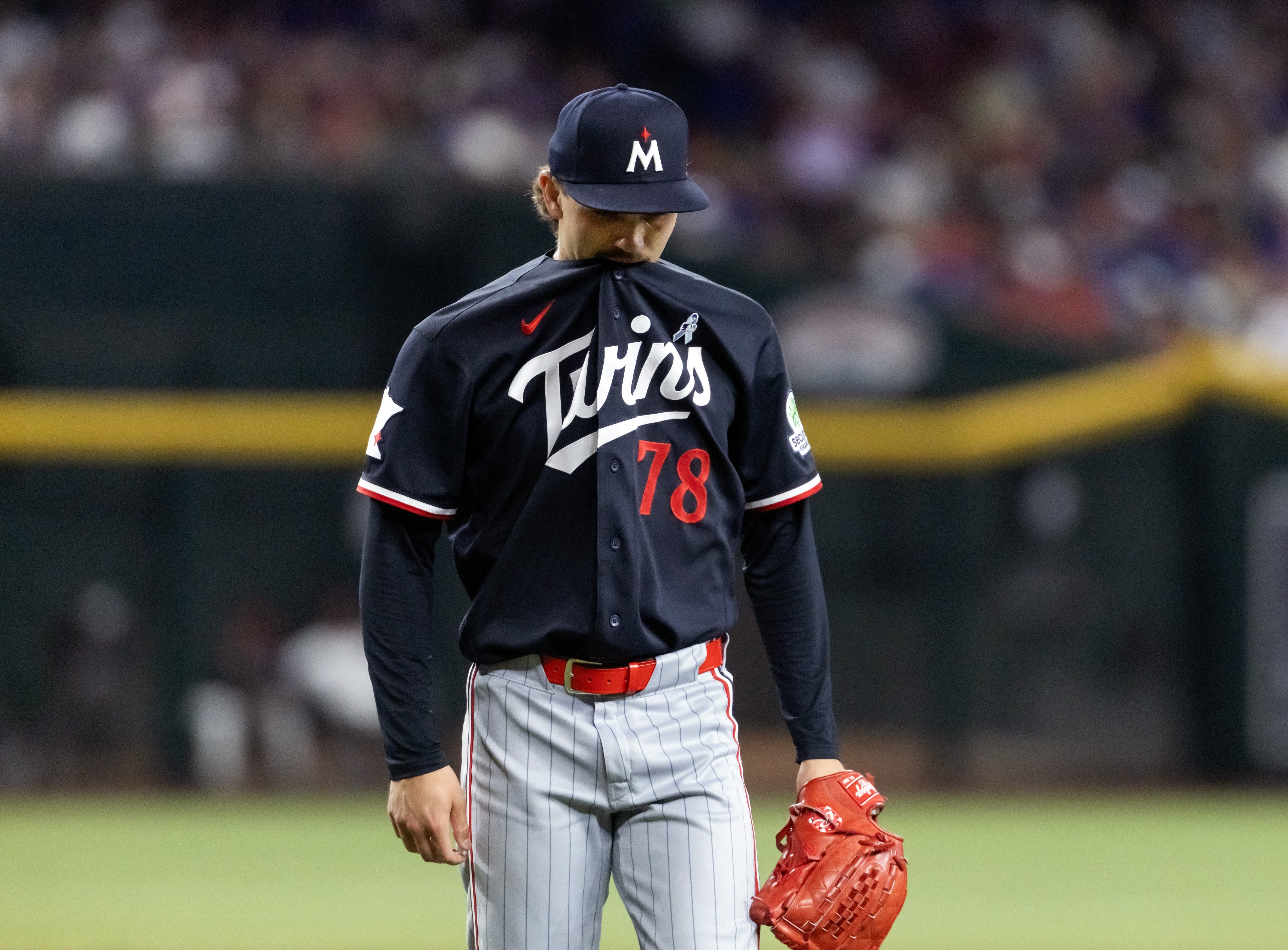 Baseball has never been more paranoid about pitch tipping. The technology available to teams has made it easier than ever to identify the subtle movements that can give away what is coming. High-speed cameras can isolate a pitcher's tendencies down to the smallest details, while markerless biomechanical systems can uncover movements that might have gone unnoticed a generation ago. Then there are the dugouts themselves, now filled with more coaches, analysts and information than ever before. Somewhere among them is usually a person with what amounts to a master's degree in sniffing out anything that might help identify a pitch. One of the biggest areas of concern has historically come when a pitcher has runners on base and has to work from the stretch. For decades, pitchers would come set with their hands in front of, but somewhat away from, their bodies. That created opportunities for hitters to pick up on subtle tells. A glimpse of the throwing hand dipping below the glove could provide an indication of what was coming. More palm might be visible on a fastball, while a breaking ball could cause the hand to turn slightly. A changeup, with its wider grip, might cause a pitcher to flare his glove. Certain pitches might be held higher in the glove than others. None of these tells necessarily had to be obvious but the game’s top hitters pick up on patterns quickly. In the past, identifying those tendencies meant a player or coach had to notice them, remember them, and then pass the information along through the scouting process. Now, the combination of technology and video has accelerated that process considerably. Something discovered during a previous series can make its way into a pregame hitter's meeting almost immediately. For their part, the Twins have taken steps to eliminate some of those variables for their own pitchers. The most notable is the organizational practice of having pitchers cup their gloves around their midsection when working from the stretch. The idea is simple: hide the grip and eliminate as much visual information as possible before the pitch is delivered. When Andrew Morris was first summoned to the big leagues, he set his hands around his belt, a fairly traditional position for a pitcher working from the stretch. That was quickly adjusted after his first career outing, with Morris instructed to keep his glove as tight to his midsection as possible. It's a practice the Twins have also used with Mick Abel and even Pablo López in recent history. But all of that camouflage only addresses the things a pitcher can control with his hands and body. Pitchers are still human, and humans have habits. Sometimes those habits have nothing to do with the pitching motion itself. A pitcher chewing gum on one type of pitch but not another can be enough. Morris found that out the hard way toward the end of 2025. “I would stop chewing it on offspeed pitches, and I continued to chew it on fastballs,” Morris told the Star Tribune after giving up 10 runs in two outings against the Iowa Cubs early in 2025. “I really just had no idea what was going on. They were just on everything for a couple starts. I know those are some conscious things I do with my mouth, so that’s tough. It’s not anything, like, physical. It was weird. It was tough.” Morris had actually started chewing gum because he believed he had previously been giving away pitches with his tongue. The gum was supposed to give him something else to occupy himself with but became another tell. That history makes what has happened to Morris in August worth watching. For most of the season, Morris had been one of the Twins' most reliable late-inning weapons. In June and July, he made 25 appearances, going 3-0 with two saves and 10 holds while posting a 2.22 ERA and 2.77 FIP. He struck out 31 hitters in 28⅓ innings and, at least arguably, became the strongest bridge the Twins had to get from the middle innings to the back end of the bullpen. August has been a different story. It’s one of blown leads and losses. It’s an inflated walk rate with an over 7.00 ERA to boot (and if it weren’t for a catcher’s interference call in San Diego, it could be substantially worse). Relief pitchers can be fickle and small sample sizes can skew things quickly, but there seems to be more at play with Morris. Let’s go back to his outing in San Diego. Morris was called upon to protect a 5-2 lead against a surging Padres offense. He retired Xander Bogaerts on a ground ball, and then Freddy Fermin reached first after catcher Ryan Jeffers was charged with interference. From there, the floodgates opened: The next four Padres reached base, and the Twins' 5-2 lead became a 6-5 deficit. To be clear, Fermin reaching base was not Morris' fault. Neither was Kaelen Culpepper attempting to cut down the runner at third with one out. Baseball is full of sequences where several independent events snowball into one ugly inning. What makes this particular inning interesting is how some of the Padres' swings looked. Take Fernando Tatis Jr. going the other way on a 1-2 elevated fastball: VndQVlJfWGw0TUFRPT1fVjFWWVZRVlFCQVFBQ2dZQlVnQUhWd01DQUZoWFZWY0FWMUFHQUZBTVVnQldVd0lG.mp4 Or Jake Cronenworth waiting on a 0-0 fastball at the top of the zone and slicing it into the gap for a two-run double: VndQVlJfWGw0TUFRPT1fVndGUUFnQUVBbEVBV1FRR1Z3QUhBZ05VQUZrRkFBY0FDbE1DQVFSVUNGQUdCZ0Zm.mp4 After Tatis scores, the broadcast shows him running toward the next hitter and communicating something. What that something was is impossible to know from the television broadcast. It could have been as simple as relaying information about the shape of Morris's fastball or offering a reminder to stay back and stay on top of the elevated pitch. It could have been something from the scouting report, perhaps a tendency involving Morris's gum chewing or another physical tell. Or it could have been nothing particularly meaningful at all. That distinction matters. Manny Machado came to the plate next and did not see a single fastball. He saw four consecutive cutters, eventually grounding one to Culpepper at shortstop. Then Ty France followed and produced another swing that looked similar to what Tatis and Cronenworth had done earlier in the inning: VndQVlJfWGw0TUFRPT1fQlZKWFUxY0dYMUVBV3dkWFVnQUhCd1VDQUZnRUFWTUFWQVFFQVFFTkNGSlVCZ1VI.mp4 A similar thing showed up in the series against the geographically abandoned Athletics, when savvy veteran Jeff McNeil turned on a first-pitch fastball and lasered a double down the line. MnI5T05fWGw0TUFRPT1fVjFOWUFWQUJVUW9BV1ZJRFV3QUhVd2NDQUFBQlZnTUFBbEpUVlFzQlVnUlRWZ3Rl.mp4 Similar to the Padres outing, Morris's work was undone a bit by below average defense. Still, at this point, it is reasonable to wonder whether what we're seeing is some combination of scouting and tipping. From the center-field camera angle, there is nothing particularly obvious about Morris's delivery that screams THIS PITCH IS COMING. His glove is tucked against his body, and the Twins have seemingly done what they can to eliminate the traditional visual tells that can accompany working from the stretch. Of course, hitters aren't standing in center field. They're standing 60 feet, six inches away, looking directly at him. There may be some tiny movement, tick or habit visible from the batter's box that isn't apparent from the broadcast angle. Maybe it's the gum. Maybe it's tongue placement. Maybe it's something completely unrelated to the pitching motion that teams have picked up through their preparation. Then again, there is another explanation that may be considerably less interesting. Morris' pitch selection has been reduced to mostly hard stuff this month. He's throwing four-seamers, sinkers and cutters, with very little in the way of a true change of pace. In fact, over his last four outings, he's thrown just one changeup, which put him ahead of Tatis 0-2 after a pretty silly swing. If opposing hitters have reached the conclusion that Morris is going to challenge them with hard stuff, they don't necessarily need a tell. They can just wait. And that could explain some of the swings we've seen recently, particularly the ones that appear geared toward staying on top of elevated fastballs. If hitters know a four-seam fastball or cutter is coming and expect it to be at the top of the zone, they can adjust their approach accordingly. That is where the distinction between pitch tipping and scouting becomes important. A hitter doesn't need to know exactly what pitch is coming to have an advantage. Sometimes knowing what a pitcher likes to throw in a particular situation is enough. For Morris, the answer may be somewhere in between. He has the stuff to operate as a power arm in the bullpen, and three different fastballs can be enough to get through an inning when they're executed properly. But if hitters have started sitting on those pitches, whether because of scouting, tendencies or an actual tell, Morris needs another answer. That could mean bringing the changeup back into the mix more frequently, incorporating his sweeper or curveball, or changing the sequencing enough to keep hitters from becoming comfortable sitting on one part of his arsenal. The Twins have already shown how seriously they take pitch tipping. They've changed where their pitchers hold their gloves, adjusted Morris' setup and, in the past, dealt with a pitcher whose gum chewing was inadvertently telling hitters what was coming. The technology can find the tells. The scouting department can find the tendencies. And sometimes, all it takes is one hitter seeing something and walking down the dugout steps to tell the next guy. Whether that is happening with Morris right now is impossible to say from the outside. But given what happened in San Diego, and what we've seen from hitters since, it is at least worth watching. View the full article
 -
 In the midst of a pennant race, the San Diego Padres introduced new owners Monday: Jose E. Feliciano and Kwanza Jones. Randy Holt and Steve Drumwright took in the press conference and gave their thoughts on the power couple taking over. The vibes were good, with not a lot of empty promises or corporate chatter typical of most introductory ceremonies. Randy and Steve also discuss the week that was, including a big comeback that helped sweep the Minnesota Twins before running into some good pitching before salvaging the finale of the series against the Pittsburgh Pirates. They also take a look at the NL wild-card standings and the upcoming road trip to face the Tampa Bay Rays and Cincinnati Reds. Listen on Apple Podcasts: https://podcasts.apple.com/us/podcast/padres-mission-podcast/id1896922834 Listen on Spotify: https://open.spotify.com/show/033xclmydmbLmEp0exYuYz Listen on iHeartRadio: https://www.iheart.com/podcast/1333-padres-mission-podcast-336930560 Watch on YouTube: https://www.youtube.com/@padresmission View the full article
 -
 The Chicago Cubs offense may appear to be statistically one of the best in baseball, led by the likes of Alex Bregman, Seiya Suzuki, and Pete Crow-Armstrong. But their offense day-to-day can be very frustrating to watch. Struggles with runners in scoring position and generally having days where it's difficult to produce runs. But their rankings in key offensive categories say otherwise. View the full article
 -
 Jack and Spencer debate whether Pat Murphy should have benched Cooper Pratt in New York, break down Jacob Misiorowski excelling without his best stuff, and more. Apple Podcasts: https://podcasts.apple.com/us/podcast/the-brewer-fanatic-podcast/id1740648724 Spotify: https://open.spotify.com/show/5CY8mWsQayqjDXqw9OT2Td iHeartRadio: https://www.iheart.com/podcast/263-the-brewer-fanatic-podcast-166534588/ Pocket Casts: https://pca.st/ommzz627 Watch On YouTube: https://www.youtube.com/@brewerfanatic View the full article
 -
Minnesota Twins Prospect Retrospective: Walker Jenkins
DiamondCentric posted an article in Twins Daily
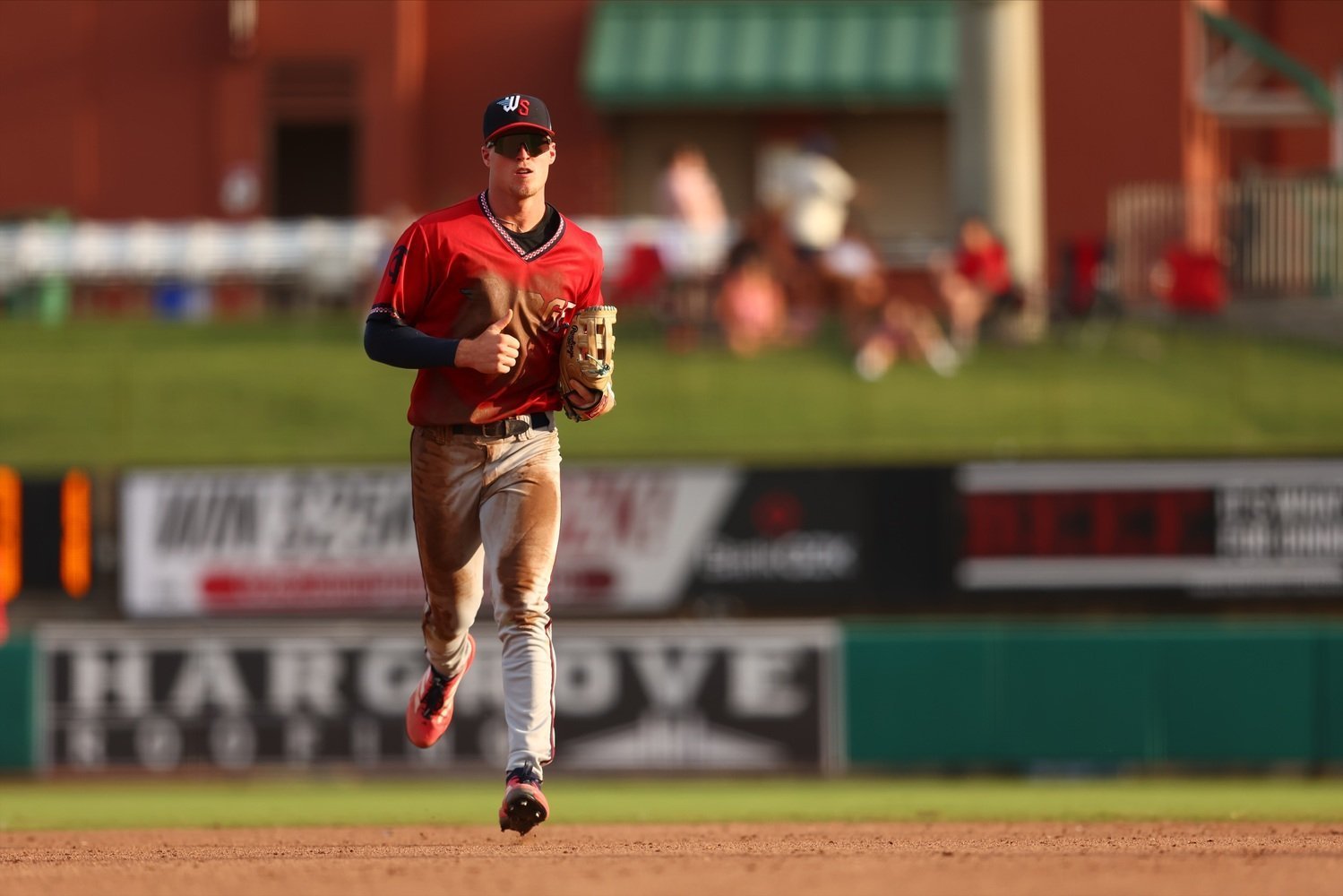 Sometimes, getting the right player comes down to scouting. Sometimes, it comes down to development. And sometimes, a little bit of luck helps. For the Minnesota Twins, Walker Jenkins was a combination of all three. The Twins entered the first-ever MLB Draft Lottery with the 13th-best odds of landing the No. 1 overall pick. They were poised to pick 13th. Instead, they jumped all the way to No. 5. That stroke of luck gave Minnesota a chance to select one of the most talented high school hitters in the 2023 draft class. Jenkins wasn't simply viewed as a good prospect. He was considered one of roughly five players with legitimate No. 1 overall talent. Now, just over three years after selecting him fifth overall, Jenkins is set to make his major-league debut. The road hasn't been completely smooth. Injuries have repeatedly interrupted his development, limiting him to fewer than 85 games in each of the last two seasons. But whenever Jenkins has been healthy, he has looked remarkably similar to the player Minnesota thought it was getting on draft night. Now, the Twins are finally ready to see what all of that looks like at Target Field. Jenkins was widely regarded as the best high school hitter to come out of North Carolina since Josh Hamilton went first overall in 1999. Entering the 2023 draft, he was considered one of a handful of players who could reasonably be selected with the No. 1 pick. When Jenkins was still available, the Twins pounced, signing him for the full slot value of $7.14 million. Jenkins immediately showed why Minnesota was so excited. He played 26 games in his professional debut and posted a combined .988 OPS, quickly forcing his way into full-season baseball. For a player fresh out of high school, the transition was remarkably smooth. That performance immediately put him on the national prospect map and gave the Twins something they desperately wanted: a potential impact bat at the top of their system. Walker Jenkins's First Full Professional Season Jenkins's first full professional season in 2024 was a reminder that prospect development is rarely a straight line. The talent was obvious, but the outfielder couldn't stay on the field. A quad strain slowed him early in the season, and a hamstring injury later cost him roughly six weeks. Those injuries prevented Jenkins from accumulating the number of at-bats normally expected from a first full season. In 82 games, he posted a 141 wRC+ with an .833 OPS. Still, he accomplished something significant. He played his way to Double-A. Jenkins was just 19 years old for much of the season, yet he continued advancing through an organization filled with older, more experienced players. The injuries interrupted his momentum, but they didn't change the underlying evaluation. Every time Jenkins returned, he looked like the same hitter. His swing remained smooth and repeatable. He consistently found the barrel. He showed the ability to draw walks (15.2 BB%) without allowing his strikeout rate to spiral (12.8 K%). The Twins weren't simply hoping Jenkins would eventually become a good hitter. They were seeing evidence that he could become a really good one. An Aggressive Promotion In 2025, Minnesota aggressively pushed its top prospect toward the highest levels of the minor leagues during his age-20 season. That decision said plenty about how the organization viewed him. Jenkins had already demonstrated that he could hit. Now the Twins wanted to challenge him against more advanced pitching and see how quickly he could adapt. There were obvious risks. Jenkins had already missed significant time because of injuries, and he was still extremely young. But the Twins believed he was ready. For the most part, Jenkins proved them right. Even with the missed development time, Jenkins finished third in the organization among players with at least 350 plate appearances with a 135 wRC+. For a 20-year-old facing older pitchers at the upper levels of the minor leagues, it was another reminder of just how advanced his bat could be. There were still areas to refine, particularly when it came to tapping into his power more consistently (10 HR in 371 PA). But the foundation was there. And the Twins kept pushing. Another Injury, Another Comeback The biggest question surrounding Jenkins has never been his talent. It's been his availability. That theme continued into 2026. After Minnesota sent him back to Triple-A, Jenkins got off to a somewhat tepid start before suffering another setback. He crashed into an outfield wall and injured his left shoulder, suffering a shoulder joint sprain that forced him to miss more than a month. After returning, Jenkins went on an absolute tear. Over his final 18-games at Triple-A, the 21-year-old hit .411/.488/.795 with eight home runs. That was Jenkins reminding everyone why the Twins have been so patient with him and why prospect evaluators have continued to place him among baseball's elite young talents. The power was suddenly everywhere. The walks were there. The hard contact was there. And the hit tool that has always been Jenkins' calling card was fully on display. After another injury interruption, he looked like a player making up for lost time. Jenkins's prospect journey has been anything but typical. He has been extraordinarily young for nearly every level he's reached. He's been challenged aggressively. He's played his way up the organizational ladder. And he's repeatedly been forced to pause because of injuries. Through all of it, the production has remained. Now, the wait is over. Jenkins is finally coming to Minnesota. And after everything it took to get here, it's time to find out just how good he can be. What stands out about his time in the minors? Leave a comment and start the discussion. View the full article
 -
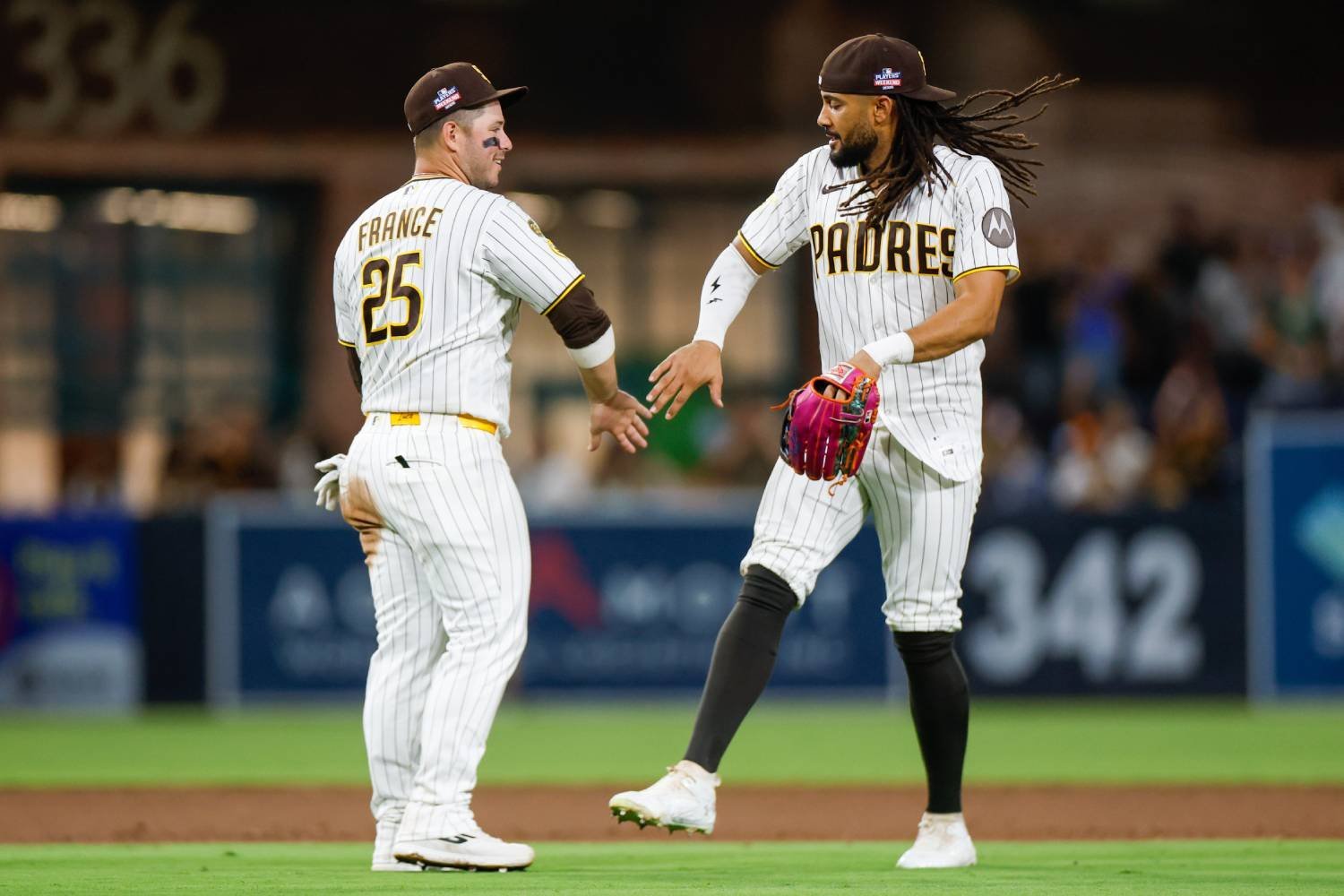 As the San Diego Padres enter the final weekend of August, there is a really good argument that they have endured the toughest part of their schedule. Sure, there are four series remaining that will certainly test the Friars, but there will be plenty of chances to improve their standing so the games at the end of the season don't really matter that much. With four weeks and this weekend remaining, here is a look at what remains for the Padres in their pursuit of a spot in the postseason: Remaining Padres Schedule At A Glance Games remaining: 28 Home and road: 12, 16 Games vs. teams above .500: 15 Strength of schedule: 16th-toughest (.497 winning percentage) Padres Storylines in the Final Weeks What's At Stake? The Padres hold the third and final NL wild-card spot, trailing the No. 2 Philadelphia Phillies by two games and ahead by a game of the Arizona Diamondbacks, who are sitting on the outside of the postseason picture entering the weekend. Realistically, three three teams are battling for two NL wild-card spots, although another team could get hot and enter the equation. It would also take a good slump by the Chicago Cubs to fall from the No. 1 wild-card perch. Rough Stretches Are Over After having 17 straight games without a day off before the All-Star break, 10 consecutive games after and then 16 in a row after their only day off besides the four from the break, the Padres are currently in a stretch of having five straight Thursdays off, including the next two. They will have one more day off the Monday of the final week of the regular season following 10 games in a row. Facing Contenders Of the nine remaining series, four are against definite contenders, with a fifth on the borderline at the moment. This weekend, the Padres hit the road for three games against the Tampa Bay Rays, who have the best record in the AL and are trying to stave off the New York Yankees for AL East supremacy. The second comes next weekend (Sept. 4-6) at home vs. the Yankees, who in addition to trying to chase down the Rays are looking to fend off the rival Boston Red Sox for the better AL wild-card seed. The Yankees currently hold the No. 1 AL wild card. The other two series you probably know about. Those would both come in the final week with a three-game trip up the 5 Freeway to face the rival Los Angeles Dodgers (Sept. 22-24), who comfortably lead the NL West over the Friars, for three games before concluding the regular season against the Diamondbacks (Sept. 25-27). The one series that comes against a questionable contender is Sept. 18-20 vs. the Miami Marlins. The Marlins enter the weekend just behind the D-Backs, but face a very loaded September schedule and could be out of the picture by the time they arrive at Petco Park. Close To Home (Mostly) The six-game road trip that starts this weekend is the last against teams not in the NL West. After the Rays, the Padres travel to the Cincinnati Reds (Monday-Wednesday), who have not truly been in the postseason picture for quite some time this year, although they do hang out on the periphery. Their final three road opponents are the San Francisco Giants (Sept. 11-13), the Colorado Rockies (Sept. 14-17) and the Dodgers. The Rockies series is a four-gamer before returning home to face the Marlins. The Padres, who are 31-34 away from Petco Park, do play on the road more than at home, which is the biggest downside to the remaining schedule. There is only one true homestand. That will be the six games against the Yankees and Washington Nationals (Sept. 7-9). The other two home series are separate three-game sets. When September Ends Baseball just works out this way. Facing the Dodgers and the D-Backs to end the regular season has always felt like impact games. Even with a rather favorable schedule before then and the opportunity for the Friars to minimize the importance, those final six games are going to come into play somehow. Perhaps it will be the Padres and Phillies battling for the No. 2 wild card, or maybe the Padres and D-Backs will be engaged in a sudden-death clash for the final playoff spot in the National League. View the full article
 -
 Andrew Fischer smacked three homers, and Eric Bitonti had a four-RBI performance in big wins for Biloxi and Wisconsin. Nashville scored eight runs but came up short and Wilson was rained out. Transactions: INF/OF Eduardo Garcia activated from AAA Nashville’s 7-day injured list INF Daniel Guilarte assigned to AAA Nashville from AA Biloxi INF/OF Eric Brown Jr. placed on AAA Nashville’s 7-day injured list RHP Josh Knoth promoted to AA Biloxi from High-A Wisconsin SS Brady Ebel placed on High-A Wisconsin’s 7-day injured list RHP Carlos Carra placed on Low-A Wilson’s 7-day injured list C Kegnnalex Seijas released by DSL Brewers Gold RHP Merwin Manrique released by DSL Brewers Blue Game Action: Nashville Pre-Game Media Notes Final: Jacksonville (Marlins) 10, Nashville 8 Box Score Via a Sounds’ press release: Sounds Drop Seesaw Battle in Jacksonville Nashville’s valiant comeback from an early 6-1 deficit unfortunately went for naught as the runs (10) and hits (16) just kept coming from the Jumbo Shrimp. OF Akil Baddoo (3-for-5, double, 2 RBIs), DH Jeferson Quero (1-for-3, HR, walk, HBP, 3 RBIs) and 1B Blake Burke (1-for-4, HR, walk, RBI) did their part to keep the Sounds in the game, driving in the team’s first six runs to even the contest by the top of the 6th inning. Baddoo 2-run single Starting RHP Coleman Crow (5 IP, 6 R (5 ER), 1 BB, 8 Ks) extended his scoreless streak to 21 innings before conceding an unearned run in the 3rd inning and then five two-out runs in the 4th inning in an uncharacteristically rough outing for him. RHP Carlos Rodriguez (1 2/3 IP, 4 R, 4 H, 4 BB, 3 Ks) was coming off of two scoreless relief outings but walked three of the first four batters he faced as his difficult 2026 campaign continued. Baddoo doubled and Quero was hit-by-pitch to open the 9th inning, bringing the potential game-tying batter to the plate three times, but two ground outs and a sacrifice fly ended it. Sounds’ Extras: Quero exited for a pinch runner after that 9th inning hit-by-pitch, so we’ll have to watch his availability going forward. LHP Jared Koenig (1 1/3 IP, 0 R, 1 H, 0 BB, 2 Ks) touched 96.2 MPH twice in the 7th inning, then peaked at 93.8 MPH on his final pitch of the 8th inning. OF Tyler Black reached base four times (1-for-2, 3 walks, 2 SBs), while fellow 40-man MLB rosteree OF Brandon Lockridge came aboard once (0-for-4, walk). Friday’s outlook: RHP Brandon Sproat has been terrific over his last two outings (combined 8 IP, 0 R, 13 Ks) and gets the chance to even up this week’s series at Jacksonville. Biloxi Pre-Game Media Notes Final: Biloxi 8, Knoxville (Cubs) 1 Box Score Via the Shuckers’ website, game details and we encourage readers to review affiliate write-ups as part of their Link Report routine: Fischer Makes History with Three-Homer Night in Shuckers Win - Shuckers shatter franchise single-season home run record with 15 games remaining in regular season Starting RHP Bishop Letson (5 IP, 1 R, 3 H, 3 BB, 5 Ks) turned in one of his strongest starts of 2026, while 1B Andrew Fischer (3-for-4, 3 HR, 5 RBIs) turned the contest into the Fischer show. Letson only allowed an infield hit and two walks over his first three innings of work, while OF Damon Keith and Fischer both smacked two-run homers to give Biloxi a 5-0 advantage by that point. Fischer added his second blast in front of 1,515 home fans before a one hour, 51-minute rain delay. Those who stayed thereafter were fortunate to see his third dinger and Minor League-leading 42nd homer of 2026 to lead off the bottom of the 7th inning. Shuckers’ Extras: Outfielders Mike Boeve (3-for-4) and Braylon Payne (2-for-4, double) both had multi-hit games, while 3B Luis Pena (1-for3, walk, SB) reached base twice to extend his hitting streak to ten games. Boeve also had an outfield assist to end the top of the 6th inning. RHPs Yorman Galindez (1 IP, 0 R, 0 Ks) and Stiven Cruz (3 IP, 0 R, 3 Ks) were solid in relief to close out the big win. Friday’s outlook: RHP Jaron DeBerry is the scheduled starter, as Biloxi aim to grab a 3-1 home series lead. Wisconsin Pre-Game Media Notes Final: Wisconsin 9, South Bend (Cubs) 0 Box Score Via the Timber Rattlers’ website, game details: Bitonti Makes Wisconsin Home Run History While Torres is Terrific on the Mound - Rattlers shut out South Bend 9-0 A big thanks to Wisconsin’s media team for compiling video highlights of their victory: And don’t miss the 19-minute Chris Mehring-Jonathan Timm post-game podcast, featuring 1B Eric Bitonti (3-for-4, HR, 2 doubles, 4 RBIs), LHP Wande Torres (6 2/3 IP, 0 R, 3 H, 2 BB, 8 Ks) and Manager Nick Stanley. 21-year-old starting pitcher Torres had come into the game red-hot (2.60 ERA with 68 Ks in prior 55 1/3 innings) and that didn’t change as he retired the first ten Cubs in order in yet another terrific performance. Four doubles from C Yannic Walther, 2B Daniel Dickinson and Bitonti (2) helped boost Torres and the Timber Rattlers to a 6-0 lead by the 5th inning, with Bitonti adding his franchise record-breaking 24th homer of the 2026 campaign two frames later. Timber Rattlers’ Extras: Dickinson (1-for-3, double, 2 HBPs) and OF Sawyer Strosnider (1-for-3, double, 2 walks) joined Bitonti in reaching base three times. With Ebel sidelined due to a concussion, Luiyin Alastre filled in at shortstop admirably: 1-for-3, walk; no errors. He was also part of a 1-6-3 double play induced by Torres to end the top of the 4th inning. LHP Bjorn Johnson stranded two baserunners for Torres and covered the final 2 1/3 innings (0 R, 1 H, 0 BB, 3 Ks) in one of his best relief outings. Friday’s outlook: The Timber Rattlers are set to give RHP Jose Meneses his first start since June 2024, as Wisconsin aim to claim a 3-1 series advantage. Wilson Pre-Game Media Notes Postponed: Hickory at Wilson Via the Warbirds’ website, rainout details: Warbirds, Crawdads Postponed on Thursday Friday’s outlook: Wilson is set to host its second home doubleheader of the week against Hickory, presently trailing two games to one in the series. RHPs Diustin Mayorquin and Luke Roupe are the most likely starters for the twin-bill. We hope that you enjoy the Minor League Link Report. On Friday, five minor league games are on tap, including an early start (11:05pm CST) for Nashville and Wilson’s doubleheader from 4:05pm CST. The Milwaukee Brewers also host the Rangers at 6:40pm CST. Organizational Scoreboard including starting pitcher info, game times, MiLB TV links, and box scores Current Milwaukee Brewers Organization Batting Stats and Depth Current Milwaukee Brewers Organization Pitching Stats and Depth View the full article
 -
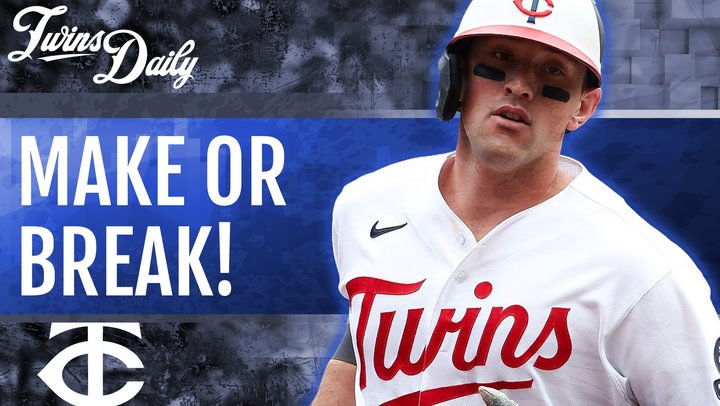 After going 1-5 against the San Diego Padres and Athletics, the Minnesota Twins are on the brink of missing the playoffs. However, the next 15 games are all against American League Central foes. Can they right the ship and save their season?View the full article
 -
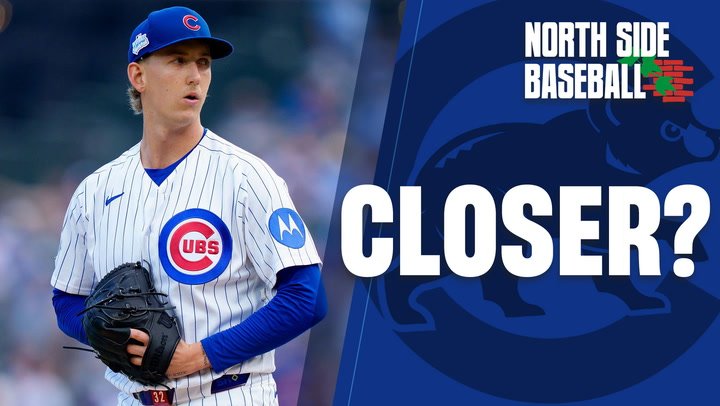 The rollercoaster ride of the Cubs' bullpen comes into play every time they need someone to step up and close out baseball games. Ben Brown and Justin Steele, both currently on rehab assignments, could come into play a pivotal role for the bullpen in September and October. View the full article
 -
 With speculation about prized Twins prospect Walker Jenkins at a fever pitch, many are wondering what, exactly, was the hold up in his promotion to the big leagues. We're finally getting some answers. "Walker loves the bright lights of St. Paul and simply doesn't want to leave," said Scott Boras, Jenkins's agent. "The First National Bank sign, the Wabasha Street Caves, miles and miles of biking and walking trails... simply put, St. Paul has it all. Why would Walker want to leave? Why would anyone?" With Byron Buxton's continued health problems and the playoffs looking increasingly out of reach, many are perplexed why a player with Jenkins's offensive upside was still down on the farm, with increasingly harsh invective directed at the team's front office. It turns out to be a bit more complex than that. "We've tried to get ahold of anyone in the Saints clubhouse to say, 'Hey, we might be in need of a player shortly'," said a Twins front office source. "We just get a voicemail saying they're out enjoying a show at the Ordway, the restaurants of Cathedral Hill, or watching the sunset on Harriet Island. "We've even texted Jenkins, and he'll just respond with a selfie from Mancini's. He's got a bowl of garlic bread in front of him. I've never seen anyone so happy and living in the moment. I guess that's just what happens when you spend your days in that great American city, St. Paul, Minnesota.'" Rather than a call, Jenkins got the call Thursday. He's due in Minneapolis Friday afternoon. No word yet on whether he's willing to make the move. "The last time I spoke with Walker, he was at the Como Zoo," said Boras. "He said he was as one with the animal kingdom, celebrating the wonders of nature in a uniquely beautiful urban setting. He was hoping to hop on a tour of the James J. Hill House before batting practice so he could learn ever more about the colorful history of St. Paul, Minnesota's capital city." Although it seems unlikely, the Twins could force Jenkins's hand by driving to St. Paul and bringing him back across the river. The front office source says that presents its own set of problems. "Obviously, Walker is under contract and has to observe our decisions. The problem is that whenever we send an employee or intern there, they never come back—so overwhelmed are they by the beauty and vivacity of St. Paul that they refuse to leave. We're running a skeleton crew here, honestly." That's been true in the outfield, too. The challenge of the day is finding someone who can be sent to extradite Jenkins, and who will actually return from the mission. View the full article
 -
It’s Time For The Royals To Consider A Jac Caglianone Extension
DiamondCentric posted an article in Royals Keep
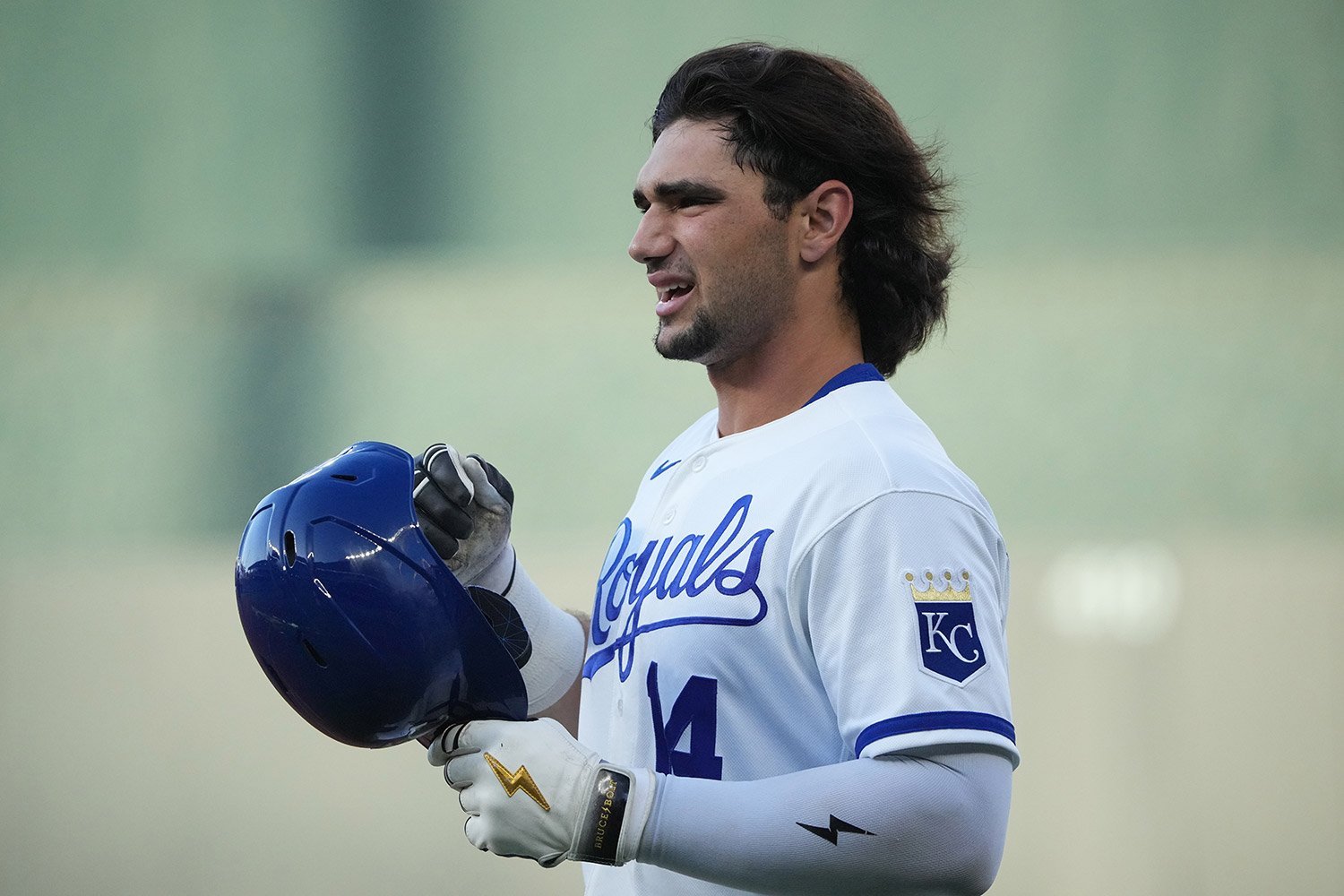 Jac Caglianone is in the midst of his breakout season for the Royals. 2025 was not the start that the Royals imagined when they called up the 2024 first-round draft pick. In his rookie campaign, he slashed .157/.237/.295 with a 47 wRC+ and a -1.6 fWAR. This season, he is much improved to a slash line of .276/.328/.491 with a 124 wRC+ and 2.2 fWAR. Since June 1st, he has taken his performance to the next level, where the 23-year-old ranks 10th among all qualified hitters with a 149 wRC+ and a slash line of .305/.347/.566. Yirsandy Rodríguez posted an excellent breakdown analyzing Caglianone’s performances from 2026, the first half of 2026, and the second half of 2026. Considering his new level of production, The Royals may now have enough information to believe that Caglianone will continue to be a threat in the middle of the lineup for years to come.. The Royals have been aggressive lately in signing their young stars to contract extensions. There are currently three recent examples of how the Royals could construct an extension. Cole Ragans | 3 years - $13,250,000 Before the 2025 season, the Royals rewarded Ragans with a contract extension following his first full season in Kansas City, where he finished fourth in American League Cy Young voting with a 3.14 ERA over 186 ⅓ innings. This type of extension is rather short compared to most contract extensions. With only three years of guaranteed money, Ragans will still be eligible for one year of arbitration before becoming a free agent in 2029. This type of extension is seen as more of a compromise, where Ragans is rewarded with near-top-of-the-market guaranteed salaries for those three years but is unable to earn a higher payout in arbitration if he were to continue his Cy Young trajectory. Unless the Royals expect Caglianone to command high arbitration numbers with top finishes in MVP voting, this path is less likely. Vinnie Pasquantino signed a similar extension this past offseason, avoiding his first two years of arbitration with a guaranteed contract and would still be eligible for his final year of arbitration before hitting free agency in 2029. This extension was perhaps a slightly different case, since it was signed during a period when Pasquantino and the Royals could not agree on a contract and were headed to arbitration. Maikel Garcia | 5 years - $57,500,000 The Royals inked Garcia to this extension this past offseason after his breakout season. In 2025 Garcia slashed .286/.351/.449 with a 121 wRC+ and 5.7 fWAR. He also earned his first All-Star selection, won the Gold Glove at third base, and finished 14th in AL MVP voting. Garcia’s contract extension is more of the prototypical extension where the team “buys out” the player's first year of free agency in exchange for the increase in guaranteed money well above the expected value for a player going through arbitration. Garcia will also hit free agency at an age where he could still earn a good contract after this one expires. Garcia would become a free agent going into his age-31 season (or age-32 season if the Royals pick up his club option for 2031). Every pre-arbitration contract extension signed this season has followed a similar model, in which the player would finish their contract at or before 30 years old. Bobby Witt Jr. | 11 years - $288,777,777 Witt signed his extension after his second season in the majors. There are only a few players who have signed pre-arbitration deals that would take the player through their early 30s. Those players are Fernando Tatis Jr., Julio Rodriguez, and a player from the Rays who should remain nameless. The only players who command this type of extension are players who have already proven they can compete at an MVP-caliber level. Rodriguez signed his deal after winning Rookie of the Year, and Tatis signed after finishing fourth in NL MVP voting at 21 years old. Witt was also coming off a season where he finished seventh in MVP voting. The players also play premium defensive positions. Witt and Tatis (at the time) play shortstop, and Rodriguez plays center field. With Caglianone not yet being able to display the same caliber of production at less important positions, it is unlikely that he will command this type of extension if he gets one. What does this all mean going forward? The Royals should strongly consider locking down Caglianone long-term. With Garcia and Witt entering their prime years, adding Caglianone to that mix could solidify the heart of the Kansas City lineup for many years to come. Pasquantino’s future also could play a role in extension talks. If he does not factor into the Royals’ plans, Caglianone could shift back to his more-natural position at first base. First basemen are typically in lower demand because it is a less valuable position. Caglianone will want to be paid like an outfielder, but the Royals could prefer to value him as a first baseman. If the Royals do intend to secure Caglianone long-term, a deal would likely fall into a deal similar to Garcia’s with a few more years since Caglianone is earlier in his career. A seven-year contract would take away two years of free agency, end after his age-30 season, and also remove two seasons where he would be making the league-minimum salary. A structure that makes sense could be similar to Tyler Soderstrom’s contract, which was for seven years and $86 million with a $27 million club option for the eighth season. Soderstrom has seen a similar path as Caglianone; both were drafted out of high school and struggled in their first season in the majors. Soderstrom was also at the same age when he signed his extension, entering his age-24 season. With Soderstrom playing first base, his valuation could work as a baseline for Caglianone’s expected average annual value. Other Complicating Factors The Royals could choose to remain conservative with any extension talks. Witt has opt-outs that begin following the 2030 season, and if the Royals do not pick up the club option for Garcia, his contract also ends in 2031. With Caglianone not set to become a free agent in 2032, the Royals could look at the next four seasons as their window to compete and not be as interested in securing Caglianone for the years to follow. The impending lockout is also a wrinkle to consider. With the CBA expiring in December this year, the landscape for contracts in the coming seasons remains uncertain. The Royals may intend to hold off on extensions until there is more clarity for future payroll structures. The Royals and Caglianone have the potential to secure the heart of the lineup for years to come and secure the core of the franchise. Will the Royals be ambitious enough to make the deal, or will the uncertain future result in hesitancy to commit to increasing payroll? Right now could be the perfect time to sign an extension since it is still to be determined how valuable Caglianone will be in the future. As a small market team, continued improvements from Caglianone could take him out of their price range. With the team rarely willing to compete for top free agents, the Royals should secure their best players before they’re gone View the full article
 -
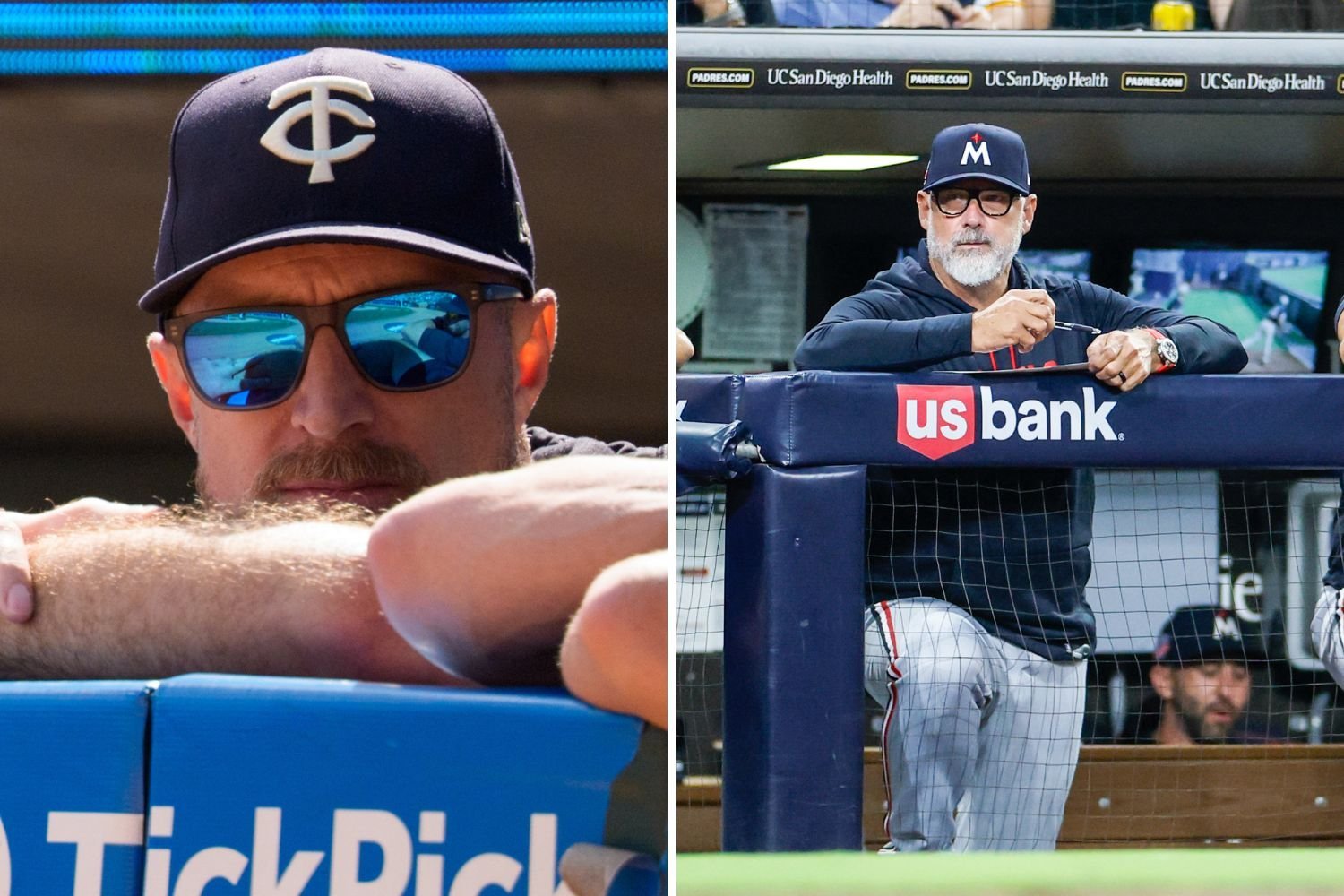 Last year, the Twins stumbled into the month of August, dropping four of their last five in July to fall six games below .500 and spur an unprecedented deadline sell-off. In what would prove to be Derek Falvey's final big swing at the helm, Minnesota's front office traded away 10 major-league players. The outgoing wave included their three best relievers in Jhoan Duran, Griffin Jax and Louis Varland, and one of their top-three position players in Carlos Correa. What remained was an ill-suited starting shortstop in Brooks Lee and a bullpen full of marginal (at best) MLB talent. The ensuing result was predictably very bad. Through August 27th, they were 9-16, a .360 winning percentage. Their decimated bullpen ranked 19th among MLB teams in fWAR, while their rotation ranked 18th and their offense ranked 21st. This year, August started on a very different note for the Twins. They won seven of their last nine games in July, bouncing back from a post-break slump, and by the time the trade deadline arrived, they had emphatically emerged as buyers. They traded one of their top pitching prospects for Jeff Hoffman, after also shipping out noteworthy prospects for reliever A.J. Minter and starter Dean Kremer. Following Tom Pohlad's edict, first-year baseball ops leader Jeremy Zoll invested in his roster, in an effort to bolster the club's chances in August and September as they competed for a playoff spot. And in response to that investment, through August 27th, this year's Twins have gone ... 8-15, good for a .348 winning percentage that is slightly worse than 2025 through this date. The revamped bullpen has been modestly better (15th), albeit with a far worse Win Probability Added, while the rotation and offense have both been middle-of-the-pack. Just as expectations played to Shelton's favor in the first half of the season, they now work against him relative to where Rocco Baldelli stood one year ago. Last August, people were commending the Twins for playing free and easy, absent the weight of contention status and urgency. Now the current team is collapsing under pressure, struggling across all phases, with poor play accompanied by questionable decision-making from both Shelton and Zoll's front office. The difference is that the ending of this year's story remains unwritten. We know where it went from here last season: from August 28th onward the Twins went 10-19 to end up in fourth place with 92 losses. There's still time for the Twins to turn the ship around and at least make things interesting. Their remaining schedule is favorable. Walker Jenkins is on his way and Joe Ryan is hopefully not far behind. But in order to avoid irrelevance by mid-September, an outcome that would cast huge scrutiny on their decision to parse out future assets for short-term help three weeks ago, these beefed-up Twins need to show they are better than the dismantled, resigned team that marched to the finish line a year ago. So far, they haven't proven it in the least. View the full article
 -
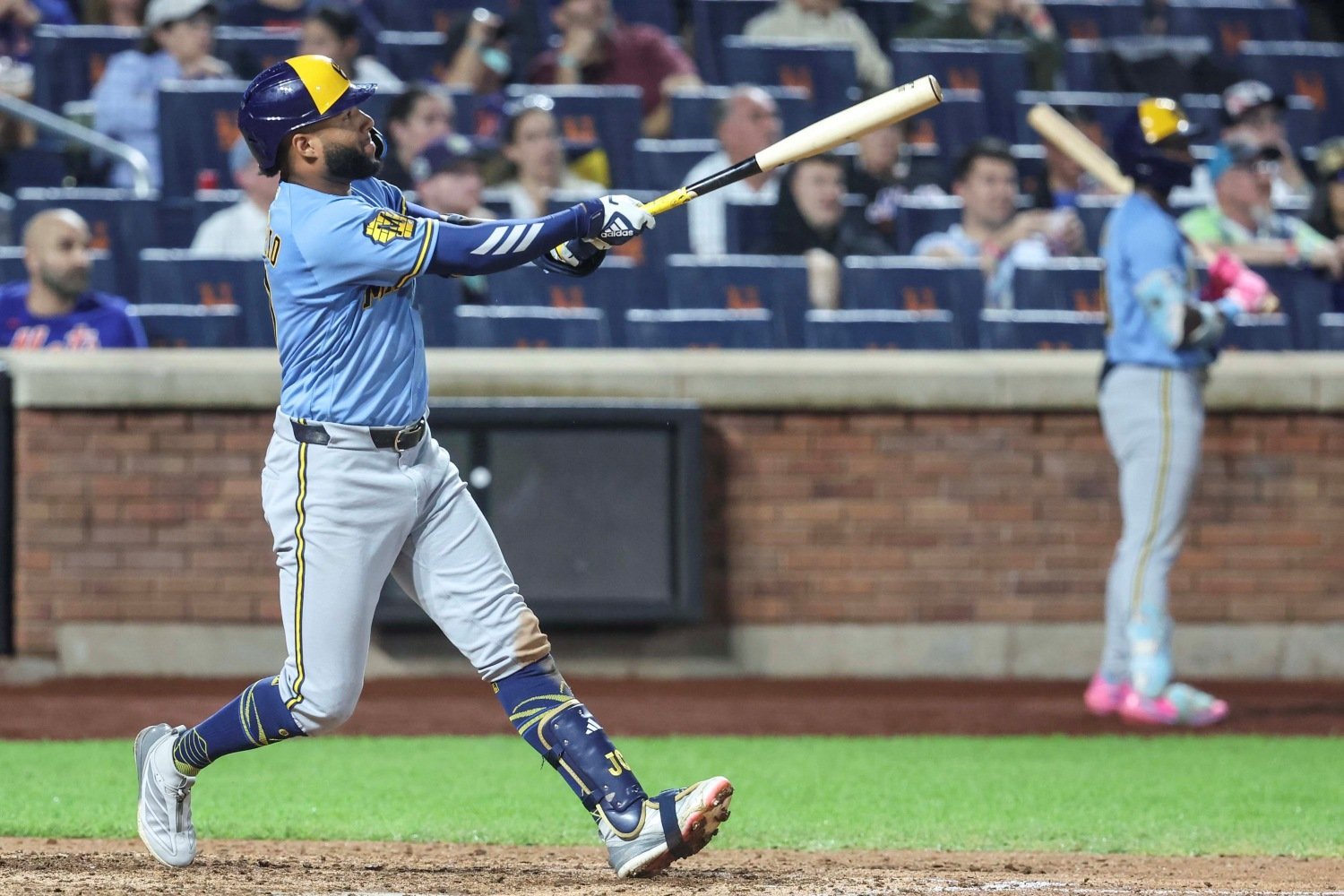 CRACK! Hope you didn't take long to find your seat at Citi Field on Thursday night. If you did, you missed your first chance to glimpse greatness. Jackson Chourio hit Sean Manaea's first pitch through the left side of the infield for a single. He topped it a bit, in truth, and it was hit hard, but not searingly so. What stood out, if you did have your hot dog and your seat dried off and your head turned toward the plate, was just how violent a pass Chourio took at the pitch. His swing clocked in at 83.0 MPH. It's not unprecedented for a leadoff hitter to go up there with a malicious ambush in mind, but that's just the 11th time in the three-plus years of swing tracking that the first pitch of the game has been hit with that hard a swing for a hit of any kind. No one doubts Chourio's raw power—it's very impressive. But he's not normally going to show up on a list with guys like Kyle Schwarber, Nick Kurtz and Elly De La Cruz. Clearly, Chourio meant business. Sure enough, when he came up in the second, he was ready to unload on the first pitch again. His swing was a hair less fast this time, but the result was even more impressive: an opposite-field two-run homer on a meatball of a heater. By then, it should have been clear to you that you were in for one of those nights. The Mets, at least, must have felt it by then. Jacob Misiorowski was in control of things on the mound, and Chourio was on the attack. In his third plate appearance, Chourio stayed on the attack. Having learned his lesson, though, Manaea refused to give him another fastball. The first three pitches were sweepers, of which Chourio fouled off the first two before laying off the third. Finally, Manaea showed him the fastball, way off the outer edge—just forcing him to think about something other than another big, roundhouse sweeper coming straight at him. That's what the fifth pitch was, and Chourio laid off that, too. On 3-2, Manaea refused to give in—but he had to land the sweeper closer to the zone. It still made its way in off the plate, and Chourio couldn't do what he'd done to that heater in the second on it, but he got around and found enough of the barrel to hit the ball squarely, living a one-hopper through the left side for his third hit of the night. Xzavion Curry was the only Mets hurler who got Chourio out all night. He left a BP fastball up on a 1-1 count and got lucky: Chourio cut losse with a vicious cut but got just underneath it. Alas, the poor thing, he had to face Chourio again, trying to keep the game within range on a night on which he didn't have his best stuff and the Mets needed length. Curry nibbled in his second showdown with Chourio, working away, away, away. Finally, on his second 2-2 offering, he threw a fastball well above the zone over the inner half—but Chourio wasn't going to pop one up again. He hit a laser over the wall in left-center, for his second homer of the day. Between his five turns and five hard-hit balls, Chourio made plays in the field, too. In the bottom of the fifth, he made a fine running catch on one line drive, and on another that was too far in front of him, he charged and picked a tricky in-between hop, then fired a one-hop strike to the plate for what could have been a run-saving out, but for a slightly errant swipe tag by Gary Sánchez. It was a wake-up call, for anyone still letting Chourio's greatness slip beneath their notice. This is a Hall of Famer in progress. How Jackson Chourio Already Compares to the Best Young Hitters Ever Perhaps that sounds like hyperbole. It isn't. The thing that makes baseball magical—that sucks you in and holds you in its hard blue glow all spring and summer and leaves you longing for it all winter, the same way you long for 9 PM sunsets—is its difficulty. Greatness is elusive, and it's hard-won, and sometimes, it's damnably subtle. The game defies solving, and it defies domination. For young players, especially, it defies anyone who aspires to consistency. There's so much to learn and so much to suffer in the game that it takes almost everyone until at least their mid-20s to find consistency, even if they stumble upon brilliance sooner than that. To wit, only 15 players since World War II have put together three seasons with at least 400 plate appearances and an OPS+ of 110 or higher through their age-22 seasons. This is the list, in chronological order: Eddie Mathews Mickey Mantle Al Kaline Frank Robinson Orlando Cepeda Vada Pinson Tony Conigliaro Johnny Bench Ken Griffey Jr. Álex Rodríguez Mike Trout Bryce Harper Carlos Correa Juan Soto Chourio Of this group, the only players who didn't go on to have Hall of Fame-worthy careers were Pinson, Conigliaro and Correa. Even those three had great, memorable careers, and but for injuries, each of them would probably be in (or, in Correa's case, en route there), too. Being a good hitter over this much playing time in the majors at this young an age is foolproof evidence of historic greatness. Chourio is not quite on Pete Crow-Armstrong's level this season, given all the value Crow-Armstrong provides on defense and on the bases and the way he's rapidly matured at the plate. Then again, Chourio is just a couple weeks short of two years younger than Crow-Armstrong. When we say he hasn't had an MVP-caliber season yet, the emphasis belongs on the 'yet', rather than the 'hasn't'. That's coming. Thursday night was just the latest warning flare. Beware, rest of the league. Chourio is coming for you. Jackson Chourio's Swing Adjustment Has Unlocked More Damage on Fastballs Beyond this one game, though, there's a bigger trend to observe. Chourio hasn't just sustained the success he enjoyed as soon as he reached the majors; he's burgeoning. This has been by far his best season yet. After his outburst in the series-clinching win over the Mets, he's batting .283/.345/.477 on the season, which would mark career bests in all three stats. The key to that step forward is a tweak to Chourio's swing, which has made him more dangerous to all fields and better able to cover the whole arsenal of most opposing pitchers. Here's a fastball Chourio saw against Boston's Garrett Crochet last season. It was right down the middle, on the first pitch of the at-bat, but Chourio only managed to foul it off. bmJNZ3lfWGw0TUFRPT1fVndoVVZsUUVCd1lBQ0FOUkFBQUhCRmNEQUZoUVZGSUFVMWRXQ1FaWEExVlhBUXRR.mp4 Now, here's a similar heater from José A. Ferrer of the Mariners, from earlier this month. It's not some 450-foot homer, but Chourio hits this pitch for a clean and well-struck single. NXk5UUJfWGw0TUFRPT1fVUFBQVVGd0RBZ29BREZOVEJ3QUhWMUplQUZrQkJsTUFDZ0VBVkZjTkJsQlhVbGRU.mp4 We could cherry-pick one particular pitch from each of two seasons to tell whatever story we want, but in this case, the contrast between these outcomes reflects a true transformation. On fastballs right down the middle in 2025, Chourio realized -2 runs in context-neutral value. He whiffed on 16.1% of his swings on those pitches, and even when he didn't do that (or stare at a called strike), his barrel wasn't on time and on target enough to generate as much positive value as a hitter should get from that kind of offering. This season, he's whiffed on only 4.9% of his swings at fastballs down the middle, and he's created 9 runs of positive value, overall. That's not counting what he added by riding Manaea's juicy heater out of the park Thursday night. To see the difference, let's put a couple of key moments within Chourio's swing side-by-side. First, here's the moment when Chourio's front heel lands in each swing. This is when he can start really hitting against his front side. It's subtle, but look at his hips in each picture. He's begun to turn them more in the swing this year; he's building torque from his lower half earlier. Now, here's another telling moment, from just a frame or two later in each video. This looks almost like two different moments in the swing, but I promise, it's functionally the same one in each. We can see the downstream effects of getting the hips turning around a stable core sooner: Chourio is more open with both his hips and his front shoulder on the right. But look at his hands, too. Last season, he was bringing them very low toward a pitch he read as being in the heart of the zone. That meant tucking his back elbow in very, very close to his side and flattening that back forearm, delaying any real power generation by the top hand until late in the stroke. This year, he's getting much earlier separation between hands and torso, and he's carrying the hands higher into the back part of the hitting zone. That means creating slightly more tilt from hands to barrel, and indeed, Chourio has a slightly steeper swing this year. He's slashing cleanly through the ball, in a way he couldn't quite do last season. Because of that slightly earlier activation of his lower half and his core, Chourio is getting around and working up through the ball more this year. He's also catching the ball a couple inches farther in front of himself than he was last season. Yet, he's not pulling the ball any more often—the opposite. We're seeing him make major strides in power production and quality of contact, but he's pulling it in the air less often than ever, and far less than the league does, on average. For those at all versed in this kind of hitting analysis, that should raise an eyebrow. This isn't normal. Hitters who rotate earlier, extend earlier and catch it farther out front also pull it more. Why isn't that happening with Chourio? Biomechanically, the explanation lies in that extra tilt. But there's a bigger explanation, too. Much of the change in Chourio's game this year lies not in his swing, but in how and when he's using it. His approach is as big an explainer of his evolution as his movements. In general, Chourio is swinging less often this year, almost across the board. He's still at a stage of his career in which he goes through long periods with big chase rates, when he seems not to be seeing the ball well, but his plan is getting better, and his zone is getting tighter and better-controlled. Before swinging at the first pitch so zealously and often Thursday night, his early-count swing rates were notably down this season. He doesn't expand as often late in counts, either. As a result, he's walking more this season, and not just because the ABS system has reduced the size of the strike zone. Specifically, though, Chourio has leaned into that steeper swing (literally, sometimes) by focusing more on pitches on the inner half, which tied him up with his former moves but which he can now hit squarely. He's not swinging more at pitches on the inner half, per se, but a greater percentage of the pitches he's swinging at are in that area, because he's really cut back on swings at pitches away—especially down and away. That, again, makes sense. When you have what's still a flatter-than-average swing and have made the conscious choice to get steeper with it and to open up more as you swing, you need to focus on hammering stuff from the middle of the plate in, and leave alone the pitches your swing no longer suits. Indeed, the big gains Chourio has realized in terms of hitting the ball hard this year have nearly all come on pitches in—especially up and in. But the secret to hitting inside pitching isn't to hook it, if you're a relatively flat swinger. Chourio has gotten steeper this year, but he's still a flat-swing guy. He's never going to be the one who buggy-whips underneath his front side and catches inside offerings far in front of himself. His swing tweaks (and a move of a couple inches away from the plate) have made enough room for him to put the barrel on inside pitches, and he can do it with his bat working uphill at the right angle to produce line drives and fly balls far more consistently than in the past. When he does so, though, the bat is usually still angled toward the opposite field; it's just how you keep hard contact fair when attacking inside pitching with this swing. The modern game has trended away from opposite-field power, and toward optimized swings that focus on lifting and pulling. Most players have to go through that optimization process and succeed according to formula, to thrive against the caliber of pitching that now suffuses the league. Chourio, however, is not most hitters. He's a future Hall of Famer, just coming into his own. That means freaky talent, and a bigger menu of ways to be great than most players have. It means he can now hit your fastball, no matter how hard or where you throw it, and it means he's ready to anchor the Brewers' offense for a third October running. Just get him from here to there healthy. View the full article
 -
Pete Crow-Armstrong Hasn't Been an Elite Defender Lately
DiamondCentric posted an article in North Side Baseball
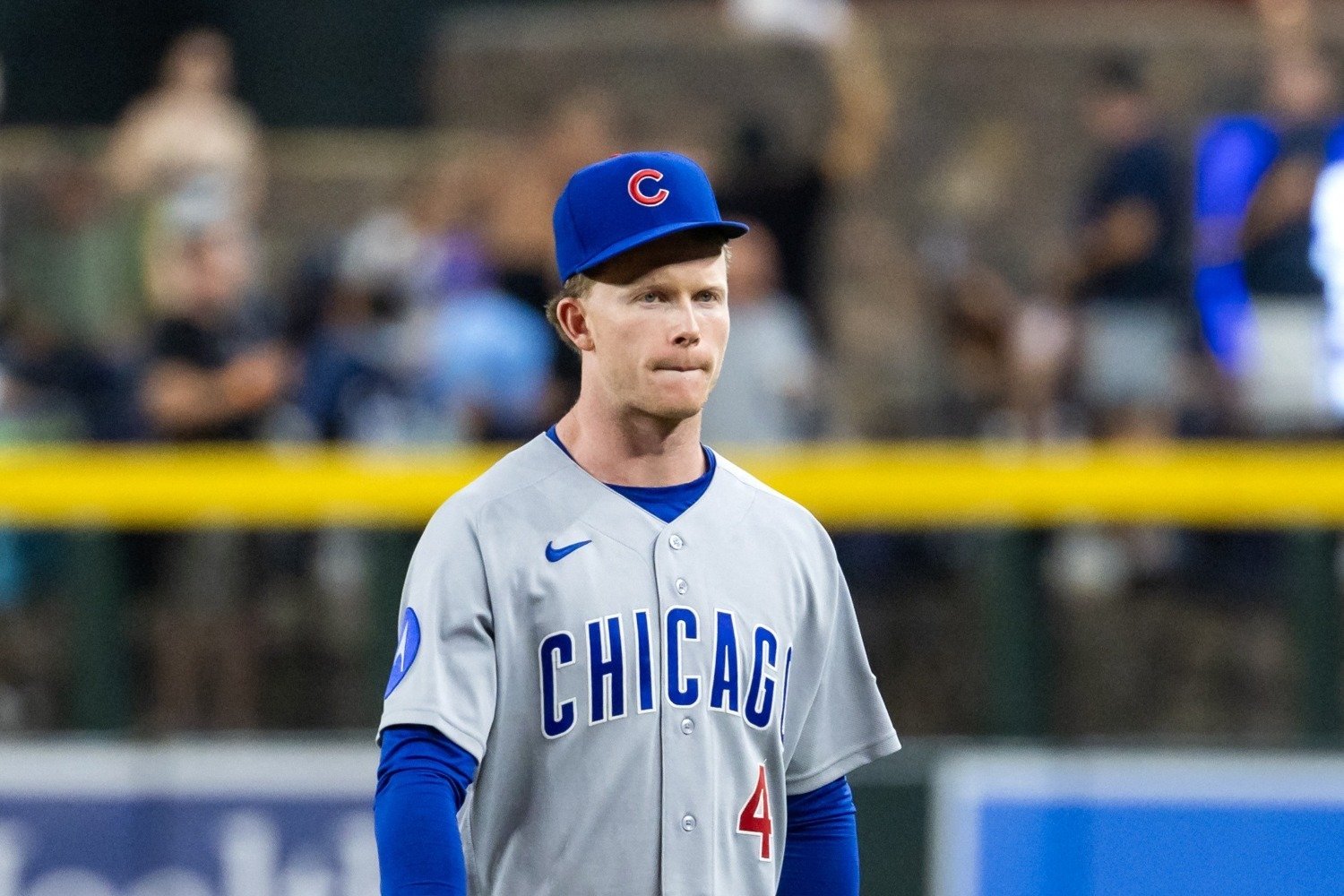 The cruel thing about expectations is that you have to earn them, and then you have to live up to them—and then, once you live up and even exceed them, they just rise, and it's even harder to meet them from then on. Athletes make brilliant plays and put up great statistics, and maybe they time it just right and that makes them rich and famous and beloved, but even if it does, it also makes them an object of scrutiny. And it means dealing with lots of ever-rising expectations. Pete Crow-Armstrong is having a season for the ages. He should win the National League MVP Award, unless something unforeseen happens between now and the end of the campaign. He's matured extraordinarily quickly at the plate, and the cut-to-the-bone intensity of the way he's competed all season is irresistible. He's an elite slugger who also runs the bases like it's his last day on Earth. He's carried a thoroughly average team to a comfortable playoff position as the calendar flips to September. And, of course, he's the best center fielder in the game, defensively. Right? Look: he's certainly not bad. Crow-Armstrong is, in fact, above-average out there, even this month, according to Statcast. He's been worth 2 runs in center in August, if you believe Fielding Run Value, and since that's the only publicly available defensive metric that allows us to split it out by month, you kind of have to believe it, right? Crow-Armstrong is a plus center fielder; that's not in question. However, he was worth 7 runs in March and April, and 7 more in May. He had a bit of a sag in June (I felt that one, too, but thought it best to see if the blip was just that), but he saved 6 runs in July, too. In those months—the first third of the season, essentially, and then July, especially after the All-Star break—he was clearly the best defender in the game. He ran down everything. His body control was exquisite. His arm, which got some of its potency from the genius of his footwork, was a weapon. There just didn't seem to be any undefended grass for the opponents to find in center field; that's an empowering feeling for a pitching staff. It's not quite true lately. This is normal; I'm not excoriating or castigating Crow-Armstrong. The grind takes its toll on everyone; you can't opt out of getting tired by seeming to be the human incarnation of Red Bull. Then, too, there's the fact that Crow-Armstrong has plainly worked hard to keep good weight on his frame this season, so he can maintain the exceptional bat speed that has made him such a fearsome slugger. You pay a price for that, too, when you previously moved like Hermes in cleats and cut through the wind like a blade. He's a sturdier guy than he was even a year ago, which means he's a tiny bit slower and less lithe—and maybe, when it's been almost three weeks since the team's last day off and your legs are heavy, more than a tiny bit. Hopefully, though, you've also noticed this, because it's not just some artifact of the numbers. Here's a single hit by Kyle Tucker when the Dodgers were in town at the start of this month that didn't have to fall in. M3k2MTFfWGw0TUFRPT1fRGxBRFhBRURVQWNBWFZ0V1ZRQUhCbFJTQUFOVVZGRUFVQU5UVVZZRlZBTUVDQVpR (1).mp4 Any center fielder will tell you that the hardest ball to read is the line drive coming right at you. In a tied game and with no outs in the inning, Crow-Armstrong might have been thinking at least half-consciously about not taking undue risks. He also excels mostly when going to his left or his right; he's never been the most daring center fielder in the league when coming in straight in on the dive. However, he's made catches on balls just like this before—including earlier this year, against the Dodgers, in Los Angeles. Playing this one safe is the kind of tiny, subtle sign that a player is either conserving some energy or not quite as razor-sharp as is required to be an elite defender in this increasingly fast game. This one is a more straightforward example of Crow-Armstrong not making a play he would normally make. d2V3eFFfV0ZRVkV3dEdEUT09X1ZBbFVVd1pWQUZNQUR3TUtVZ0FIQnc4RkFGbFRXbGdBVjF3QlZnWlRVd01EQWxSVA==.mp4 See the way he leans forward, and the stomping deceleration as he approaches this ball while it falls? That's not the mark of a below-average fielder. It's extremely normal. This is how just about everyone plays this ball. The thing is, go back in time a few months, and it's not how Crow-Armstrong plays it. His unique brilliance laid in the fact that on balls just like that one, he would glide through the ball without slowing down at all. He showed a once-in-a-generation feel for running through the catch point, or even sliding or diving through it with as little lost speed as physics would allow. The guy who almost makes this very important play, but doesn't quite get there? He's not letting the team down, or anything, but he's not saving the day, the way Crow-Armstrong usually does. This happened the very next day. TzA0cm9fWGw0TUFRPT1fVUFaVUJRVUNWZ3NBV1ZzQ0F3QUhBUWRWQUZrQldnSUFCQVJVQTFBSENGVmNBQVZl.mp4 This was even more catchable. Situationally, though, it demanded a bit more caution, and Crow-Armstrong was more cautious, all right. He didn't even rush onto the short hop, as he did the day before. He made a calculated decision to pull up and wait on this ball. That wasn't necessarily the wrong choice; it kept the runner who began the play on first base from reaching third. He made the safe play. In May, though, that ball is caught. It might be that Crow-Armstrong is actually slower lately, either in responding to the ball off the bat or in that fateful final step or two in pursuit of the ball. It might be that he's choosing to play the percentages, to avoid some of the ugly errors that befell him even while he was making such incredible plays earlier this year. I think the most likely explanation is different, though. I think Crow-Armstrong is preserving himself a bit. I would guess that's subconscious, because he seems utterly incapable of throttling back on purpose; he just burns too hot. But this is common—almost universal. When young players who have traditionally been high-motor defensive stars blossom into elite offensive producers, they usually become more conservative, less valuable defenders. This is true in other sports, too, but it's especially true in baseball. Teams not only don't mind this, but often encourage it. The better you hit, the more conversations about your defense start to center on reducing mileage on your legs or avoiding that fateful rollover wrist sprain. Playing great defense requires putting your body at risk, especially at high-value defensive positions. Teams like when their star sluggers do a tiny bit less of all that. Baseball—life itself, I guess, but especially baseball—is about tradeoffs. Many of those tradeoffs are unavoidable, even if we wish they weren't or can't quite articulate why they are. To spare some energy; to avoid those nagging injuries; and to find extra time for BP, a player often gives up a bit of pregame defensive work or pulls up on a fly ball they almost could have caught. It's normal. It's fine. It might even be crucial. It's sad, though, to me. The exhilaration of the completeness of Crow-Armstrong is a bit deflated by this turn. No matter how clear-eyed you are about those tradeoffs we mentioned and about the reasonable limits of all-around superstardom, be honest: a little piece of you wants Crow-Armstrong to keep being the best defender you've ever seen and to go steal 50 bases, in addition to hitting the way he's been hitting since late May. That, it turns out, might not be possible. Willie Mays used to play so much and so hard and put so much of himself into all facets of his breathtakingly gorgeous game that he would end up in the hospital for a day or two, a time or two a year, due to exhaustion. No one wants to see Crow-Armstrong push himself quite to that extreme, and the fury of his competitiveness makes that feel like a real risk sometimes. It's ok that he's currently taking just enough weight off the gas pedal to keep the car under control. We'll all just have to hope that he can put the pedal back down when the games matter most, and that the part of his game that initially made him stand out hasn't been permanently diminished by his transformation into an equally excellent hitter. View the full article
 -
 Welcome to Shape of the Blue Jays, my column where I dig into Statcast numbers to analyze recent pitch shape and swing shape trends for Toronto Blue Jays players and discuss how they have impacted their performance. Click here to read the last edition. All stats entering August 27, 2026, unless otherwise stated. Quick Hits: Bullpen Reinforcements? Daniel Guerra (RHP) is a name with some helium down on the farm. The 22-year-old Venezuelan was signed as an international free agent four summers ago. I named him one of the Jays' minor league starting pitchers of the month back in April after the promising start he had in Vancouver's rotation. Earlier this summer, Guerra was shifted to the bullpen, a move that has accelerated his path to the big leagues. Earlier this week, he was promoted to Triple-A Buffalo, facing four batters and giving up a solo homer in his debut. His jump from High A to Double A, and then a much quicker leap to Buffalo, has some wondering whether he could be in Toronto next month. Guerra is simply an imposing presence on the mound. He's 6-foot-6, 230 lbs with a high overhand release and nearly seven feet of extension in his delivery. The stuff is already MLB quality: a 98-mph cut-ride fastball, a 90-mph cutter with considerable lift and glove-side action, a no-spin 89-mph sinker with over 13" of run (impressive considering his arm angle), and a high-80s changeup to bridge the movement profiles between the four-seamer and two-seamer. That's undeniably nasty, but he was in the zone less than 30% of the time in his Bisons debut. If he can show stronger command, he could be a shot in the arm for a solid but exhausted Blue Jays bullpen, especially if they can stay in the Wild Card race into September. Chad Dallas John Schneider knew he would need quality innings in some form as the Blue Jays re-adjusted to life without Shane Bieber on Wednesday. Chad Dallas delivered, completely neutralizing the Royals en route to a shutout win for Toronto (2.2 IP, 0 R, 0 H, 4 K, 0 BB). Dallas's shapes are fun to analyze because he's an outlier in terms of his ability to get tremendous sidespin from a high release point. Since his primary pitch is a cutter and other teams know that everything moves glove-side, he hasn't been a high-whiff guy at this level, but he's done an excellent job getting hitters to chase and miss barrels. At 93 mph, his cutter velocity stands out. Opponents are hitting just .111 against it so far. The curveball, his secondary of choice against lefties, is about as 12-6 as it gets. The sweeper has plus velocity and plus horizontal break with downward vertical action, making it something of a unicorn offering, especially from his slot. On Wednesday, Dallas leaned on his cutter more against lefties, and the sweeper was his primary offering against righties as the curve took more of a tertiary role. The cutter was responsible for three of his four strikeouts, but Kansas City was completely fooled by his sweeper (five whiffs on six swings, 33% zone swing, 71% chase). I'm declaring him the King of Supination until further notice. Spencer Arrighetti We got our first glimpse of Spencer Arrighetti as a Blue Jay last Friday at Yankee Stadium (3.1 IP, 3 ER, 3 H, 4 K, 2 BB). He's evolved into a kitchen-sink type with a low 3/4 release, but the book on him when he came over from Houston was essentially plus curveball, deceptive vertical action on the four-seamer, and iffy command. The Blue Jays clearly had a planned adjustment in mind, as he threw his sinker 23% of the time in New York, up from 11% on the year. Its specs are half-decent: low 90s velocity, 17" of tail (which makes sense given his 19° arm angle), and separation in movement from both the four-seamer and changeup. The location models hosted on FanGraphs don't like it, but when he first started toying with it in 2025, it had a 65% zone rate, highest in his arsenal. This year, its zone rate is tied for second-highest in his arsenal behind his cutter, which he has deliberately backed off of in recent years. Spencer Arrighetti Sinker, 8/21 vs NYY His best pitch stuff-wise is the curveball, which he struggles to locate. His four-seamer can play as a primary pitch in a wide arsenal, but it only started getting results once he stopped throwing it 40% of the time. I believe the Jays' thinking here is that throwing the sinker more often is a way for him to be in the zone more while allowing the four-seamer and curve to play up. Its results from this outing suggest the Yankees weren't expecting to see it as much as they did (38% chase, three whiffs on seven swings). Paul Sewald Just three seasons ago, Paul Sewald was closing games for the pennant-winning Diamondbacks. They cut him loose earlier this month. He's been the same type of pitcher for a few years now: low arm angle, low-VAA four-seamer, and a sweeper. Both his strikeout and walk rates are actually better than they were last year, but the home run ball singlehandedly ended his time with Arizona (2.47 HR/9, first-percentile barrel rate). The four-seamer (.546 SLG, .558 xSLG) was mostly at fault. Naturally, we saw more of the sweeper and less of the four-seamer in his first few outings as a Blue Jay. However, he went back to the fastball more often on Tuesday and Wednesday against the Royals. Sewald's arm angle has slowly dropped over the past few seasons, and the vertical break on his fastball has slowly fallen with it. The ballooning home run rate suggests it doesn't play middle-up in the zone like it used to, which is where he has lived with it for most of the season. On Tuesday especially, he was broadening his locations with it. He hasn't given up a homer yet in five appearances with Toronto. Paul Sewald Fastball Locations, 8/25 vs KC – hey, wait, that actually looks like a photo of Mason Fluharty... He's a flyball pitcher who was running a career-worst 17.4% HR/FB rate with the D-backs, so some of that is positive regression. However, I actually like the idea of him throwing more four-seamers out of the zone moving forward. After all, damage was the reason he got cut, and it's a lot harder to hit homers on pitches above the top rail than at the belt! View the full article
 -
 The current form of Mickey Gasper has created his strongest argument yet for carving out a more permanent role on the Boston Red Sox's roster heading into the playoffs. In a roller-coaster season for Boston, Gasper has taken advantage of his limited opportunities, providing an offensive spark each time he has been called up. Since his late call-up in August, Gasper is hitting .417/.576/1.167 with a 1.742 OPS, 12 RBIs and five home runs after going without one through the first half of the season. While he also offers positional versatility with experience at catcher and first base, his newfound power could be what helps him move up the depth chart. What's Behind Mickey Gasper's Recent Surge Since returning to the majors, Gasper has made slight adjustments to his swing path that have helped him make better contact and produce more power. Against fastballs, he increased his average attack angle from 9 degrees to 11 degrees, allowing him to better capitalize on pitches left higher in the strike zone. His average exit velocity against fastballs has increased from 89.0 mph in June to 97.2 mph in August. Gasper has hit four of his five home runs against fastballs. Against off-speed pitches, Gasper has favored an opposite approach, decreasing his average attack angle from 20 degrees to 17 degrees. The adjustment has helped flatten his swing and allowed his bat to meet the middle of the ball rather than getting underneath it or completely whiffing. Against off-speed pitches in August, Gasper has posted a 25.0% whiff rate, down from 26.7% back in June. If these adjustments remain consistent, his recent power surge could offer the team a game-changing option off the bench. An Opportunity Behind the Plate That offensive production could become particularly valuable behind the plate, where Boston’s depth has been tested throughout the season. At the beginning of the season, the Red Sox expected Carlos Narváez to continue building on his strong rookie season while Connor Wong served as his backup. However, after Narváez experienced a steep regression, Boston moved on and acquired three-time All-Star catcher Adley Rutschman in a trade. Rutschman’s addition to a Red Sox team in the middle of a playoff push appeared to solve the team’s questions behind the plate, but he has yet to find his footing. Since joining the team, he has been batting .146/.255/.244 with a .499 OPS. While there should be little question about Rutschman’s status as the starter, Gasper’s recent form could reopen the conversation about who should serve as the team’s second option. Currently, Gasper sits behind Wong on the depth chart. Wong has been a solid option, batting .246/.327/.374 with a .701 OPS, but has struggled to consistently produce power, hitting only four home runs this season. In nearly 50 fewer at-bats, Gasper has recorded only eight fewer hits than Wong, giving Boston another reason to consider whether his recent offensive surge deserves a larger role. Versatility Could Be the Difference Gasper's production does not necessarily make a case for him to be Boston’s starting catcher. However, his ability to provide offensive production while playing both catcher and first base could make him an appealing option for a postseason roster. At the very least, he's more capable of handling late-game substitution situations than Wong, which could prove to be the tiebreaker as the Red Sox mull over their best 26 players ahead of October. View the full article
 -
 I was going to start this article today with what is now the third paragraph. But then I took about a second and thought. Hmmm, the Minnesota Twins are calling up their top prospect on Friday. Maybe that should be the introductory paragraph. It was clear that Jenkins would be a big leaguer. It was always a matter of when, and not if. Even this year, he had a couple of stints on the Injured List, first with a hamstring strain and later a shoulder issue. That delayed him, but when he played, he did everything. Well, almost everything. The one thing he had really not shown yet was in-game power. Sure, he hit some homers, and some of them went a long way. And then came August. Jenkins played in 18 games for the Saints. He had multi-hit games in 11 of them. He had his first three multi-homer games this month. He hit eight home runs including five of them in the past six games. In August, he hit .411/.488/.795 (1.283) with two doubles, a triple, eight homers and 13 RBI. He also walked 11 times and had seven stolen bases. There’s no way to know how Jenkins will perform in his first month in the big leagues, but he should be coming into the league with a lot of confidence. I know he’s no longer a Twins pitching prospect, but lefty Dasan Hill was a nice addition to the Twins organization the past couple of years. He had a big breakout season in 2025, and despite struggles in 2026, remained a very intriguing prospect. The Twins were able to acquire RHP Jeff Hoffman in large part due to including Hill in the trade package. On Thursday, Hill posted a video on YouTube. In it, he mentioned his love for the Twins organization, teammates and coaches and trainers and everyone. He had an immediate reaction to the trade, clearly still reeling from the surprise. He then talked about his transition over to the Blue Jays organization. He’s excited, of course. He also broke down a recent outing that he had. I definitely encourage people to take the 13ish minutes to watch his YouTube video. TRANSACTIONS The recently-signed veteran RHP Ron Marinaccio was placed on the temporarily inactive list. Infielder Ramiro Dominguez was promoted from Fort Myers to Cedar Rapids. RHPs Rainer Marin and Aidan Russell were promoted from the FCL to Fort Myers. SAINTS SENTINEL St. Paul 3, Toledo 9 Box Score The Twins made the decision to call up Walker Jenkins from the Saints. Emmanuel Rodriguez has been showing all of his skills and tools in recent weeks as well. On Thursday night, Rodriguez went 2-for-4 with his fifth double and his 10th home run. He played left field, and it will be interesting to see if he gets to the big leagues too before the season ends. Tanner Schobel went 2-for-3 with a walk and his sixth home run, a two-run shot in the fifth inning. Tristan Gray went 2-for-4. Those three accounted for six of the team’s seven hits. Matt Wallner walked twice. The Wind Surge went 0-for-7 with runners in scoring position, but it didn’t matter on this night. Ricky Castro started for the Saints and was charged with five runs on five hits. In 3 1/3 innings, he walked three and had six strikeouts. Alejandro Hidalgo gave up two runs on two hits in 1 1/3 innings. He had four walks and two strikeouts. Eric Orze calmed things with 2 1/3 scoreless innings with two strikeouts. Marco Raya gave up two runs on one hit and two walks in his inning. He struck out three batters. Woo-Suk Go struck out two in a perfect ninth inning. If the Twins were to need to make a 40-man roster move on Friday, Go could be gone. In nine games with the Saints, he is 2-1 with a 12.54 ERA. In 9 1/3 innings, he’s given up 13 earned runs on nine hits and 11 walks. The 28-year-old also struck out nine batters. WIND SURGE WISDOM Wichita 4, Arkansas 8 (10 innings) Box Score The Surge took an early lead in the third inning. From there it was back and forth. Through nine innings, the game was tied 3-3. Arkansas scored five runs in the top of the 10th frame to take the commanding lead. The Kernels scored in the bottom of the 10th but fell far short. In the bottom of the third inning, Marek Houston notched a one-out single. With two outs, Brandon Winokur’s ninth Surge homer gave Wichita a 2-0 lead. On Thursday night, Winokur set his career high with his 18th home run. On Friday, he added to that total with his 19th overall home run of the season. Ty Langenberg got the start for Wichita and continued to pitch well. He gave up one run on two hits and a walk over five innings. He had five strikeouts. Wichita added a run in the bottom of the seventh inning, but they could have had more. Jaime Ferrer and Graham Brown started the inning with singles. Quinn McDaniel drove in Ferrer with a double to make it 3-1. Runners were on second and third base with nobody out. Unfortunately, the next two batters struck out, and a ground out ended the inning. Spencer Bengard came in and gave up just one hit and one walk over two scoreless innings. He struck out two batters. Jaylen Nowlin gave up two runs (1 earned) on one hit and two walks in the top of the eighth which tied the game at 3-3. Mitch Mueller came on and pitched a scoreless ninth inning. He went out for the tenth inning and faced five batters. He got no outs. He gave up five runs (3 earned) on two hits and two walks. Kyle Bischoff came on and got three outs, two on strikeouts. He also walked one batter. Brandon Winokur drove in the Wichita Manfred Man to make it 8-4, but that was as close as it got. Winokur went 3-for-5 and drove in three runs, all with two outs. Kyle DeBarge went 2-for-4 and stole his 32nd and 33rd bases of the season. McDaniels’ double was his second with Wichita. For the second time since joining Wichita, Marek Houston was ejected. KERNELS NUGGETS Cedar Rapids 10, Lake County 11 Box Score Through four innings, the Kernels found themselves behind by a score of 8-3. By the end of the seventh inning, Cedar Rapids had a 10-8 lead. Unfortunately, a three-run eighth inning gave the Captains a one-run lead that they held onto. Merit Jones started and was charged with eight runs (7 earned) on nine hits and four walks. Michael Ross came in and worked the final five innings. He gave up three runs on three hits and two walks. He struck out four batters. Byron Chourio led off the bottom of the first inning with a single. He stole a base and Vahn Lackey walked. With two outs, Danny De Andrade hit his 14th home run to give his team the early 3-2 lead. Andy Lugo led off the bottom of the fifth inning with a walk. Ramiro Dominguez walked to the plate. He had flown out in his first at-bat with the Kernels, in the second inning. Wearing the #2 on his white Kernels jersey, he lined a first-pitch fastball over the wall in left field. It hit the foul pole and cut the Kernels deficit to three. The bottom of the sixth inning began with walks by JP Smith and Danny De Andrade. With one out, Irvin Nunez was hit by a pitch to load the bases. Then, with two outs, #2 stepped to the plate again. On a 2-1 pitch, Dominguez crushed another ball. There was no question if it was fair or foul, and it was no question if it was deep enough. He turned a three-run deficit into a one-run lead with the blast. Dominguez ended the day 2-for-4 with six RBI. In 90 games for Fort Myers, he hit nine homers. As noted, the Kernels gave up three runs in the eighth and took the tough loss. We reached out to the Kernels, but we have not yet heard back from them at the time of publication. We wanted to address the rumors that the Kernels are thinking about giving Dominguez the number 3 on his uniform for the game on Friday. There were also some reports that first baseman JP Smith offered to give up #46 to Dominguez right before Merit Jones offered him uniform #51. We’ll be sure to follow up. No, not really. Danny De Andrade went 3-for-3 with two walks, his 14th home run and four RBI. Byron Chourio went 2-for-5. Vahn Lackey had his first hitless game since joining the Kernels. He was 0-for-1 with four walks. The photo at the top of this article is one of nearly 5,000 photos that David Malamut of Malamut Photography took at last night's Kernels game in Cedar Rapids. David can be seen at most Kernels home games, and we are lucky enough to be able to use some of his great photos. And, if you're planning on going to Cedar Rapids, or maybe at Twins Fest, you can order some photos from David himself. You can check the home page and find links to the 2026 games (and further back). You can also use the search functionality and type in names of current or past Kernels players and find their photos. The current Kernels roster has Top 20 prospects like Vahn Lackey, Eduardo Tait, and Yasser Mercedes. Marek Houston, Riley Quick, Khadim Diaw, Enrique Jimenez, Brandon Winokur are Top 20 prospect who were with the Kernels earlier this year. Caden Kendle and Adrian Bohorquez were in Cedar Rapids until recently. Want to see more Ramiro Dominguez photos, check out Thursday's Kernels game photos. And if you're a fan of minor leaguers from other organizations, you might be able to find them. For instance, on Thursday, Brewers slugging prospect Andrew Fischer hit three homers, his 41st, 42nd and 43rd of the season. A search of the Malamut Photography site shows us that he's posted 85 photos of the Brewers 2025 first-round pick. MIGHTY MATTERS Fort Myers 4, Bradenton 2 Box Score The Mussels got off to an early lead and then held on for the win. Merphy Hernandez led off the bottom of the first inning with a triple. Carson Tinney followed with a walk. With one out, Isaiah Lane drove in Hernandez with a single. Bryce Fowler led off the second frame with a double. Quentin Young followed with an RBI single to left to make it 2-0. The third inning began with a Tinney walk. Colby Turner hit a ground rule double to advance Tinney to third base and then scored on a passed ball. Walks by Lane and Fowler loaded the bases. Young hit a fly ball to center field, deep enough to drive in Turner with the team’s fourth run. Cristian Hernandez started and gave up one run on six hits in 3 2/3 innings. He walked one and had six strikeouts. Rainer Marin gave up two hits and a walk over 1 1/3 scoreless innings. Adam Falinski gave up one run on three hits and two walks in his two innings. Nick McAuliffe tossed two scoreless innings to record the save. Lane was the lone Mussel batter to record a multi-hit game. He was 2-for-3 with a walk. Fowler’s double was his second, and Turner’s double was his fifth of the season. Tinney went 1-for-3 with two walks. Merphy Hernandez went 1-for-2 with three walks and his second triple. He stole his 45th and 46th bases of the season. That pushed him past Ben Revere in 2009 for second-most steals in franchise history (dates back to 1992). It is fairly unlikely that Hernandez will surpass the current leader and jump into the #1 spot. That belongs to outfielder Anthony Felston who, in 1998, stole 86 bases for the Miracle. Felston was the Twins 34th round pick in the 1996 draft out of the University of Mississippi. Felston stole 86 bases and was caught 26 times in 114 games in his age-23 season. Hernandez will not turn 20 until mid-December and has 46 bases in 56 Mussels games. (It’s also important to note that the Miracle were the organization’s High-A affiliate until the 2021 season when it became the Low-A affiliate.) A quick search of Twins Daily, brings back these articles in which Hernandez was tagged. COMPLEX TOPICS The Florida Complex League and the Dominican Summer League seasons are complete. On Thursday, The FCL Twins Yovanny Duran was named an FCL All Star outfielder. PLAYERS OF THE DAY Hitter(s) of the Day Danny De Andrade (Cedar Rapids): 3-for-3, 2 BB, HR(14), 2 R, 4 RBI, SB(1) Ramiro Dominguez (Cedar Rapids): 2-for-4, 2-HR (2), 2 R, 6 RBI Murphy Hernandez (Fort Myers): 1-for-2, 3 BB, 3B(2), R, K, 2 SB(46) Brandon Winokur (Wichita): 3-for-5, HR(9), R, 3 RBI Emmanuel Rodriguez (St. Paul): 2-for-4, 2B(5), HR(10), R, RBI Pitcher(s) of the Day Ty Langenberg (Wichita): 5 IP, 2 H, 1 R, 1 BB, 5 K PROSPECT SUMMARY Check out the Prospect Tracker for much more on our Twins Top 20 prospects. See how they did today. #1 - OF Walker Jenkins (Minnesota) - Did Not Play. Called up to Twins. #2 - C Vahn Lackey (Cedar Rapids) - 0-for-1, 4 BB, R, SB(2) (batted second, played catcher) #3 - IF Kaelen Culpepper (Minnesota) - No Game. #4 - SS Marek Houston (Wichita) - 1-for-4, R, K, ejected in 8th (batted first, played SS) #5 - RHP Riley Quick (Wichita) - Did Not Play. #6 - OF Emmanuel Rodriguez (St. Paul) - 2-for-4, 2B(5), HR(10), R, RBI (batted second, played LF) #7 - OF Hendry Mendez (St. Paul) - 1-for-4, 2 K (batted fifth, played DH) #8 - C Eduardo Tait (Cedar Rapids) - 0-for-5 (batted third, played DH) #9 - 1B/OF Gabriel Gonzalez (St. Paul) - 0-for-4, K (batted third, played 1B) #11 - C Carson Tinney (Fort Myers) - 1-for-3, 2 BB, R, K (batted second, played Catcher) #12 - 3B/CF Brandon Winokur (Wichita) - 3-for-5, HR(9), R, 3 RBI (batted third, played CF and SS) #18 - 3B/SS Quentin Young (Ft. Myers) - 1-for-3, 2 RBI, SF, SB(8) (batted seventh, played SS) UPCOMING PROBABLES Friday, August 28 Toledo @ St. Paul (7:07 pm CT) - RHP German Marquez (0-0, 7.71 ERA) Arkansas @ Wichita (6:35 pm CT) - RHP Chris Vallimont (2-3, 4.86 ERA) Lake County @ Cedar Rapids (6:35 pm CT) - RHP Justin Mitrovich (2-1, 3.08 ERA) Bradenton @ Ft. Myers (6:05 pm CT) - RHP Matthew Dalquist (3-3, 4.66 ERA) CURRENT W-L Records Minnesota Twins: 64-70 St. Paul Saints: 73-55 Wichita Wind Surge: 51-70 Cedar Rapids Kernels: 45-76 Fort Myers Mighty Mussels: 67-55 FCL Twins: 33-26 (Season Complete) DSL Twins: 19-35 (Season Complete) Please feel free to ask questions about the teams, the rosters, and discuss today’s games, or anything else Twins minor-league related! View the full article
 -
 Thursday saw the San Diego Padres' four full-season affiliates go 1-3 and one of their Dominican Summer League teams lost the opener of the championship series. The Triple-A El Paso Chihuahuas posted the only win, beating Oklahoma City 5-4, while the Double-A San Antonio Missions dropped a 7-2 decision to Springfield, the High-A Fort Wayne TinCaps losing 9-3 in 10 innings and the Low-A Lake Elsinore Storm falling 3-2. In Game 1 of the Dominican Summer League championship series, Padres Gold lost to the Reds 9-5. Padres Minor-League Transactions RHP Ian Koenig assigned to El Paso Chihuahuas from San Antonio Missions. El Paso Chihuahuas placed DH Will Wagner on the temporarily inactive list. El Paso Chihuahuas activated OF Kai Murphy from the Development List. RHP Abraham Parra assigned to San Antonio Missions from Fort Wayne TinCaps. Fort Wayne TinCaps placed OF Ryan Wideman on the 7-day injured list. OF Ryan Gerety assigned to Fort Wayne TinCaps from ACL Padres. Joe Musgrove Shines In Final Rehab Game; Chihuahuas Win It looked like Joe Musgrove was motivated to return to the Padres. The right-handed starter was extremely efficient in what is expected to be his final rehab start, pitching five-plus innings, while Ethan Salas went 3-for-4 with a triple in the Triple-A El Paso Chihuahuas' 5-4 victory over the host Oklahoma City Comets. Marcos Castanon homered as part of a 3-for-4, two-RBI day, also scoring three runs, for the Chihuahuas. Musgrove, coming back from Tommy John surgery and a spring training setback that will end up costing him five months of the regular season, threw all six of his pitches and consistently sat at 94 mph and reached 95 mph twice. He faced two batters in the sixth, yet only needed 60 pitches, 42 of which were strikes. As long as everything remains good, Musgrove is likely to return to the Padres' rotation either Wednesday in the series finale against the Cincinnati Reds or, more likely, back at Petco Park to open the New York Yankees series. This start was pushed back after he had a slight back injury while weightlifting last week. After needing just eight pitches to complete the first inning, it took him just 10 to finish the second, 12 in the third, nine in the fourth and 15 in the fifth. He only threw six pitches to the two batters he faced in the sixth, giving up a single and RBI double to Alex Freeland. He finished allowing five hits and no walks while striking out three. His max velocity was down from the 96.8 mph he had in his previous start Aug. 14. He topped out at 95.5 mph on a fourth-inning sinker and hit 95 once with his four-seamer, while regularly being at 94 mph. In the third inning, Castanon had an RBI double and Salas, Padres Mission's No. 1 prospect, brought in another on a chopper back to the mound that was booted by left-hander Cole Irvin to make it 3-0. Castanon then went deep to center, his team-leading 16th homer of the season, to put the Chihuahuas up 4-0. After the Comets scored off Musgrove in the sixth, Salas lined an opposite-field RBI triple to left-center to score Castanon. The Chihuahuas hung on as the Comets got a three-run homer in the bottom of the ninth against right-hander Hans Crouse, but right-hander Alek Jacob came on to retire two of the three hitters he faced for his team-high ninth save. EP1_0827.mp4 EP2_0827.mp4 Player AB R H RBI BB K Sung-Mun Song 4 0 0 0 1 0 Mason McCoy 5 0 1 0 0 1 Nick Solak 4 1 0 0 1 0 Marcos Castañon 4 3 3 2 1 0 Ethan Salas 4 1 3 1 1 0 Gage Workman 5 0 0 0 0 3 Rodolfo Durán 4 0 1 0 0 2 Clay Dungan 4 0 0 1 0 2 Bryce Johnson 3 0 1 0 1 1 Player IP H R ER BB K HR Joe Musgrove 5 5 1 1 0 3 0 JP Sears 3 1 0 0 0 2 0 Hans Crouse 1/3 1 3 3 2 1 1 Alek Jacob 2/3 1 0 0 0 1 0 Slow Starts Costs Missions In Setback To Cardinals Tirso Ornelas was on base three times and Romeo Sanabria had two hits, but the Double-A San Antonio Missions fell behind early in a 7-2 loss to the host Springfield Cardinals. The Missions struck out 18 times, including four each by Alex McCoy, Padres Mission's No. 8 prospect, and Braedon Karpathios, Padres Mission's No. 9 prospect. Ornelas had a double among his two hits and also had a walk, an RBI and a run scored. Ornelas doubled with two outs and scored on Sanabria's single in the top of the first. Ornelas then singled home Anthony Vilar, who had a leadoff walk, with two outs. Missions right-handed starter Victor Lizarraga gave up two runs in each of the first two innings en route to allowing five runs in 3⅓ innings on seven hits and two walks. He did strike out five. SA_0827.mp4 Player AB R H RBI BB K Braedon Karpathios 4 0 0 0 0 4 Alex McCoy 4 0 0 0 0 4 Tirso Ornelas 3 1 2 1 1 0 Romeo Sanabria 4 0 2 1 0 1 Albert Fabian 4 0 1 0 0 2 Jack Costello 3 0 1 0 1 2 Justin DeCriscio 4 0 1 0 0 2 Wyatt Hoffman 4 0 0 0 0 2 Anthony Vilar 3 1 0 0 1 1 Player IP H R ER BB K HR Victor Lizarraga 3 1/3 7 5 5 2 5 1 Josh Mallitz 1 2/3 2 1 1 1 3 0 Garrett Hawkins 2 2 1 1 0 3 1 Johan Moreno 1 1 0 0 0 0 0 TinCaps Rally, But Fall After Another Big Inning In Extras Lamar King Jr. tied the game with an eighth-inning single, but the host High-A Fort Wayne TinCaps yielded another big inning in extra innings, falling to the Dayton Dragons 9-3 in 10. It was the third extra-innings loss in nine games so far on this homestand. One of those came Friday, when Great Lakes scored five runs in a 13-8 win in 10 innings. Kerrington Cross had two hits, including a homer, and scored twice, while King (Padres Mission's No. 10 prospect) also had two hits and drove in a pair. King had an RBI double in the second to pull the TinCaps within 3-1, then Cross hit his 16th homer of the season, fifth with the TinCaps, in the sixth inning, a two-run shot that tied it 3-3. In the eighth, Luke Cantwell singled, went to second on a grounder, then scored on King's single to left. A grand slam off right-hander Will Koger in the six-run 10th foiled what had been a good game by the bullpen. Left-hander Javier Chacon allowed one hit in three shutout innings, striking out four, while right-hander Jack Pineau, an undrafted free agent, went two hitless innings in his second pro game and first since being promoted Tuesday from Low-A Lake Elsinore. FW1_0827.mp4 FW2_0827.mp4 Player AB R H RBI BB K Kasen Wells 4 0 0 0 1 1 Bradley Frye 4 0 0 0 1 2 Ryan Gerety 0 0 0 0 0 0 Rosman Verdugo 4 0 1 0 1 1 Luke Cantwell 5 1 1 0 0 2 Kerrington Cross 5 2 2 1 0 0 Lamar King Jr. 3 0 2 2 1 0 Yoiber Ocopio 4 0 1 0 0 1 Dylan Grego 4 0 1 0 0 0 Conner Westenburg 4 0 0 0 0 3 Player IP H R ER BB K HR Matthew Watson 3 5 3 3 3 4 1 Javier Chacon 3 1 0 0 1 4 0 Jack Pineau 2 0 0 0 0 3 0 Will Koger 1 1/3 5 6 5 1 2 1 Nick Falter 2/3 0 0 0 0 1 0 Lan-Hong Su Fans 7, Joe Tiroly Hits Third HR, But Storm Fall Seventh-round draft pick Joe Tiroly hit his third home run and right-handed starter Lan-Hong Su struck out a season-high seven over three shutout innings, but the Low-A Lake Elsinore Storm gave up three late runs in a 3-2 loss to the host Rancho Cucamonga Quakes. Su allowed just two hits and a walk while surpassing his previous best total in his debut season of five, which he tied last week in a four-inning outing. This was by far the best of the 19-year-old's 10 games with the Storm and rivals his best in 16 games this year. Right-hander Albert Roblez, the Padres' 16th-round draft pick and former Valley View High School (Moreno Valley) athlete, went two scoreless with three strikeouts in his second pro appearance, while right-hander Jordan Valenzuela pitched a scoreless sixth inning. But left-hander Zack Qin gave up three runs (two earned) in 1⅔ innings. Tiroly hit his second homer in four games and third in 11 pro games when he went deep to left field in the top of the fourth. Qrey Lott tripled and scored on Jose Verdugo's sacrifice fly in the fifth. LE_0827.mp4 Player AB R H RBI BB K Jose Verdugo 3 0 1 1 0 0 Joe Tiroly 4 1 1 1 0 0 Chris McHugh 4 0 0 0 0 2 Ty Harvey 4 0 0 0 0 2 Jorge Quintana 3 0 0 0 1 3 Truitt Madonna 2 0 0 0 1 0 Elliot Lascelles 1 0 1 0 0 0 Jesmaylin Arias 4 0 1 0 0 1 Dawson Willis 3 0 1 0 1 2 Qrey Lott 4 1 2 0 0 2 Player IP H R ER BB K HR Lan-Hong Su 3 2 0 0 1 7 0 Albert Roblez 2 0 0 0 3 3 0 Jordan Valenzuela 1 0 0 0 1 1 0 Zack Qin 1 2/3 4 3 2 1 2 0 Andrew Wright 1/3 0 0 0 0 1 0 Padres Gold Drop Game 1 Of DSL Championship Series Box score Dayquer Alfonzo drove in four runs and Sebastian Nadales hit just his second homer of the season, but Padres Gold dropped the opener of the Dominican Summer League championship series 9-5. Game 2 of the best-of-three series is Friday. Alfonzo ranked ninth in the DSL regular season with 49 RBIs and had three more in five postseason games before his four in Game 1. Padres Mission's Top 20 Prospects Performance Ethan Salas, C: 3-for-4, 3B, RBI, BB Ryan Wideman, CF: On injured list Coleman Borthwick, RHP: In Arizona Kruz Schoolcraft, LHP: DNP Ty Harvey, C: 0-for-4, 2 K Kale Fountain, OF: Injured, out for season Jorge Quintana, SS: 0-for-3, BB, 3 K Alex McCoy, LF: 0-for-4, 4 K Braedon Karpathios, RF: 0-for-4, 4 K Lamar King Jr., C: 2-for-3, 2B, 2 RBI, BB Elliot Lascelles, SS: 1-for-1 Tucker Musgrove, RHP: On injured list Jagger Haynes, LHP: DNP Jake Cunningham, OF: DNP Truitt Madonna, C: 0-for-2, BB Eric Yost, RHP: DNP Winyer Chourio, RHP: DNP Jesus Castro, RHP: DNP Michael Salina, RHP: DNP Rosman Verdugo, SS: 1-for-4, BB, K View the full article
 -
 Ryan McDonagh held Charleston to one hit over four scoreless innings, and Sean Gamble homered as Columbia rolled to an 8-1 win. Hunter Owen struck out 10 in 5 2/3 innings, but Northwest Arkansas was shut out 7-0. Omaha scored five in the sixth and led late before losing 7-6 in the ninth. Jose Cerice's three-run double keyed Quad Cities, which fell 11-5. Jesus Oliveira and Yeri Perez finished off a three-hit night for the Fireflies' staff. Kansas City Royals Transactions Kansas City Royals placed 2B Michael Massey on the 7-day injured list retroactive to August 26, 2026. Concussion. Kansas City Royals recalled 3B Josh Rojas from Omaha Storm Chasers. Kansas City Royals optioned RHP Mason Black to Omaha Storm Chasers. Kansas City Royals selected the contract of LHP Anthony Gose from Omaha Storm Chasers. Omaha Erases A Five-Run Deficit, Loses In The Ninth Omaha wiped out a five-run hole in Des Moines, took the lead, and then lost 7-6 when Iowa scored twice in the ninth. Henry Williams allowed five runs on nine hits across 4 2/3 innings, walking one and striking out seven. The Cubs put three on the board in the second and two more in the fifth, and Omaha trailed 5-0 through five innings. However, the Storm Chasers were able to keep things close due to some stellar defense. The sixth changed the game. Brett Squires and Abraham Toro drew walks, and Peyton Wilson followed with a single to load the bases. Jacob Berry then reached on a fielding error, and Squires, Toro, and Wilson all came around to score. Drew Waters singled to put runners on first and second, and after a strikeout, Elih Marrero doubled to center field to bring home Berry and Waters. Five runs scored in the inning, and the game was tied 5-5. Omaha took the lead in the eighth. Brandon Drury walked, Colton Becker came on to run for him, and Carson Roccaforte singled to right field to score Becker. Ryan Ramsey, Easton McGee, and Carlos Duran combined for 3 1/3 scoreless innings out of the bullpen, allowing no hits with two walks and four strikeouts. Nolan Hoffman could not finish it, facing four batters without recording an out and giving up a single, a walk, and a two-run double that ended the game. Squires had two hits, both doubles, and a walk. Wilson added two hits and a walk. Marrero drove in two. Omaha left eight runners on base and went 3-for-18 with runners in scoring position. The Storm Chasers are 58-68. Player AB R H RBI BB K Carson Roccaforte, CF 5 0 1 1 0 1 Alejo Lopez, SS 5 0 0 0 0 1 Brett Squires, 1B 4 1 2 0 1 0 Abraham Toro, DH 3 1 0 0 2 0 Peyton Wilson, 2B 4 1 2 0 1 1 Jacob Berry, RF 4 1 0 1 0 0 Drew Waters, LF 3 1 1 0 1 1 Brandon Drury, 3B 3 0 1 0 1 1 Colton Becker, 3B 0 1 0 0 0 0 Elih Marrero, C 4 0 1 2 0 1 Totals 35 6 8 4 6 6 Player IP H R ER BB K HR Henry Williams 4 2/3 9 5 5 1 7 0 Ryan Ramsey 1 1/3 0 0 0 1 1 0 Easton McGee 1 0 0 0 0 1 0 Carlos Duran 1 0 0 0 1 2 0 Nolan Hoffman 0 2 2 2 1 0 0 Totals 8 11 7 7 4 11 0 Northwest Arkansas Wastes Hunter Owen's 10 Strikeouts In A Shutout Loss Owen turned in the best start of the night across the system, and Northwest Arkansas lost anyway, falling 7-0 to Frisco at home. Owen worked 5 2/3 innings, allowing one run on six hits with one walk and 10 strikeouts. The only run charged to him came in the first, when the RoughRiders opened with a double and brought the runner home on a sacrifice fly. From there, Owen retired batters in bunches and left with the Naturals down 1-0. The seventh unraveled for the Naturals. Caden Monke walked a batter, struck out another, and walked a second before a single scored two runs. A double moved the go-ahead runner to third, and another single scored two more. Frisco was up 5-0. A throwing error by Daniel Vazquez then let a sixth run cross. Monke was charged with five runs, four earned, on three hits and three walks while recording two outs. Tommy Molsky followed with 1 2/3 scoreless innings, allowing no hits with one walk and two strikeouts. Anthony Simonelli allowed a solo home run over his inning of work. The offense never got started, resulting in another shutout loss. Northwest Arkansas managed three hits and three walks, and struck out 12 times. Spencer Nivens had both of the team's multiple-hit contributions, going 2-for-3 with a double and a walk. Connor Scott added a single. Daniel Vazquez struck out four times, and Jorge Alfaro struck out three. The Naturals left five runners on base and did not get a runner past second base. They went 0-for-5 with runners in scoring position. Northwest Arkansas is now 51-70 this season. Player AB R H RBI BB K Luke Pelzer, CF 3 0 0 0 1 1 Spencer Nivens, LF 3 0 2 0 1 0 Daniel Vázquez, SS 4 0 0 0 0 4 Jorge Alfaro, DH 4 0 0 0 0 3 Connor Scott, 1B 4 0 1 0 0 0 Justin Johnson, 3B 3 0 0 0 0 0 Canyon Brown, C 3 0 0 0 0 2 Alberto Rodriguez, RF 3 0 0 0 0 2 Ángel Acosta, 2B 2 0 0 0 1 0 Totals 29 0 3 0 3 12 Player IP H R ER BB K HR Hunter Owen 5 2/3 6 1 1 1 10 0 Caden Monke 2/3 3 5 4 3 1 0 Tommy Molsky 1 2/3 0 0 0 1 2 0 Anthony Simonelli 1 2 1 1 0 0 1 Totals 9 11 7 6 5 13 1 Cerice's Three-Run Double Not Enough For Quad Cities Quad Cities got the lead in the fourth inning and never held it again, losing 11-5 to Beloit at home. Emmanuel Reyes gave up five runs on eight hits over 4 2/3 innings, walking three and striking out none. Beloit answered Quad Cities' fourth-inning lead with three runs in the fifth to go ahead 5-3. The River Bandits built their fourth-inning rally with patience. Blake Mitchell walked, Ramon Ramirez singled to left field, and Derlin Figueroa singled to load the bases. Jose Cerice then doubled to center field to clear them, scoring Mitchell, Ramirez, and Figueroa for a 3-2 lead. That was the last time Quad Cities was in front. The bullpen could not slow Beloit down. Aiden Jimenez allowed three runs on three hits in 2 1/3 innings with three strikeouts. Jackson Cleveland gave up three runs on two hits and four walks in 1 2/3 innings, including a home run. Dash Albus struck out the only batter he faced. Quad Cities added a run in the sixth on Erick Torres' sacrifice fly, which scored Ramirez, and one more in the eighth when Torres singled home Ramirez again. Ramirez scored three of the five runs on the night, finishing with a single and two walks. Figueroa had two hits, including a triple. Austin Charles added two singles. Cerice drove in three. Mitchell and Asbel Gonzalez each drew two walks. The River Bandits left nine runners on base and went 4-for-13 with runners in scoring position. The loss dropped Quad Cities' record to 65-53. Player AB R H RBI BB K Nolan Sailors, RF 5 0 0 0 0 3 Asbel Gonzalez, CF 3 0 0 0 2 1 Blake Mitchell, DH 3 1 0 0 2 1 Ramon Ramirez, C 3 3 1 0 2 1 Derlin Figueroa, 1B 5 1 2 0 0 1 Jose Cerice, 3B 4 0 1 3 0 2 Austin Charles, SS 4 0 2 0 0 0 Erick Torres, LF 3 0 1 2 0 0 Tyriq Kemp, 2B 4 0 0 0 0 0 Totals 34 5 7 5 6 9 Player IP H R ER BB K HR Emmanuel Reyes 4 2/3 8 5 5 3 0 0 Aiden Jimenez 2 1/3 3 3 3 0 3 0 Jackson Cleveland 1 2/3 2 3 3 4 1 1 Dash Albus 1/3 0 0 0 0 1 0 Totals 9 13 11 11 7 5 1 Columbia Breaks Out Early And Late In An 8-1 Win Columbia scored three times before recording a third out in the first inning, added four more in the sixth, and beat Charleston 8-1. McDonagh set the tone with four scoreless innings, allowing one hit and one walk with two strikeouts. Jesus Oliveira followed with three innings, giving up one run on one hit with a walk and two strikeouts, and earned the win. Yeri Perez closed it out with two innings, allowing one hit and three walks while striking out four. The staff held the RiverDogs to three hits. The first inning came together quickly. Josh Hammond singled to center field, and cleanup hitter Sean Gamble homered to right field for a 2-0 lead. Tyson Moran and Connor Rasmussen followed with singles, and Ricson Gonzalez singled to center field to score Moran. The sixth was the bigger inning for Columbia. Moran tripled to center field, Rasmussen walked, and Ricson Gonzalez walked to load the bases. Jhonayker Ugarte singled to left field to score Moran. After a strikeout, leadoff hitter Henry Ramos was hit by a pitch to force in Rasmussen, and Yandel Ricardo walked to force in Gonzalez. Camden Johnson then lifted a sacrifice fly to score Ugarte, and the lead was 7-0. Columbia tacked on in the seventh when Daniel Lopez singled home Rasmussen. Moran finished with two hits, including the triple, and two runs scored. Ricson Gonzalez had two hits, a walk, and a run batted in. Lopez added two hits. The Fireflies collected 10 hits and five walks, left eight runners on base, and went 4-for-11 with runners in scoring position. The win improved Columbia's record to 61-61. Player AB R H RBI BB K Henry Ramos, LF 3 0 0 1 1 1 Yandel Ricardo, DH 3 0 0 1 1 1 Gabriel Silva, DH 1 0 0 0 0 0 Josh Hammond, SS 2 1 1 0 1 1 Camden Johnson, 3B 1 0 0 1 0 0 Sean Gamble, CF 5 1 1 2 0 0 Tyson Moran, 1B 4 2 2 0 0 0 Connor Rasmussen, 2B 2 2 1 0 1 0 Ricson Gonzalez, C 3 1 2 1 1 0 Jhonayker Ugarte, SS 4 1 1 1 0 1 Daniel Lopez, RF 4 0 2 1 0 1 Totals 32 8 10 8 5 5 Player IP H R ER BB K HR Ryan McDonagh 4 1 0 0 1 2 0 Jesus Oliveira 3 1 1 1 1 2 0 Yeri Perez 2 1 0 0 3 4 0 Totals 9 3 1 1 5 8 0 Top-20 Prospect Performance Kendry Chourio: DNP David Shields: DNP Josh Hammond: 1-for-2, BB, K Blake Mitchell: 0-for-3, 2 BB, K Sean Gamble: 1-for-5, HR, 2 RBI Ramon Ramirez: 1-for-3, 2 BB, K Zion Rose: DNP Asbel Gonzalez: 0-for-3, 2 BB, K Carson Roccaforte: 1-for-5, RBI, K Taylor Rabe: DNP Yandel Ricardo: 0-for-3, BB, RBI, K Justin Lamkin: DNP Drew Beam: DNP Michael Lombardi: DNP Jack Slightom: DNP Felix Arronde: DNP Angeibel Gomez: DNP Ben Kudrna: DNP Steven Zobac: DNP Blake Wolters: DNP View the full article
 -
Casey Mize's Slider Has Become A Problem Padres Can't Ignore
DiamondCentric posted an article in Padres Mission
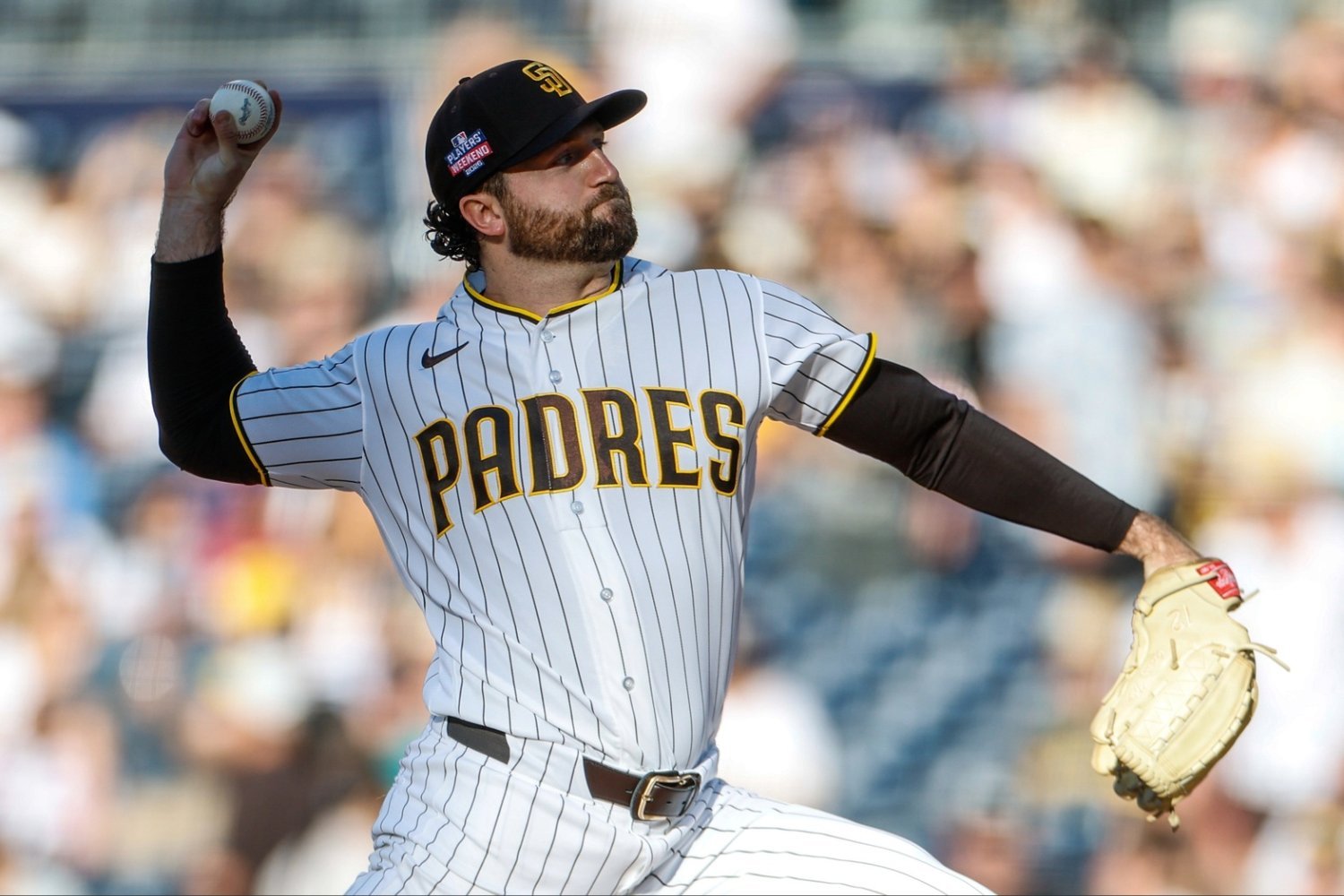 Before this season, Casey Mize’s slider had never been his most reliable pitch. After allowing a .529 slugging percentage in 2024, he tried to get it back in 2025. The adjustments led to an interesting improvement in his Vertical Break from 0.2 to 4.5 inches. This season, Mize began giving his slider more presence in key situations. He increased its usage by 11.0 percentage points, and kept the opposition under control while his fastball and split-finger continued to function as his most dominant pitches. However, the story began to take a turn after June and, after arriving in San Diego, the slider has become a problem for Mize and the Padres. Month O-Swing% Z-Swing% O-Contact% Z-Contact% SwStr% Mar/Apr 25.0% 50.7% 55.6% 76.3% 11.7% May 32.3% 51.5% 30.0% 76.5% 17.2% Jun 23.1% 50.0% 50.0% 89.5% 7.8% Jul 18.6% 78.1% 37.5% 88.0% 10.3% Aug 13.6% 40.8% 66.7% 85.0% 5.4% Aug vs Jul -5.0% -37.3% 29.2% -3.0% -4.9% Aug vs Jun -9.5% -9.2% 16.7% -4.5% -2.4% The most concerning points here lies in opposing hitters’ ability to connect with pitches outside the strike zone. They are not doing it with more swings. Since June, O-Swing% has fallen by 9.5%, but hitters have posted a 16.7% increase in O-Contact%. Mize has increased his slider usage by 7.0% since joining the Padres’ rotation in August, and opponents have raised their O-Contact% rate to 66.7%, the highest in any month this season. Mize has also stopped generating swings and misses. His SwStr% rate peaked at 11.7% and 17.2% between March/April and May. Over the last two months, it has fallen from 10.3% in July to 5.4% this month. There is one key point that may be at the root of the situation: the Vertical Drop on Mize’s slider has declined from 36.8 inches in his dominant 2024 season to 30.3 this year. Left-handed hitters, in particular, have taken advantage of Mize’s command lapses to produce better at-bats against his slider. Split PA K% BB% xBA xOBP xSLG BABIP Whiff% Hard Hit% Ideal Attack Angle % vs LHB Mar/Apr-Jun 32 21.9% 6.3% .181 .238 .361 .136 25.0% 47.8% 43.8% vs LHB Jul-Aug 22 4.5% 9.1% .344 .410 .516 .368 5.7% 47.4% 58.8% Differences — -17.4% 2.8% .163 .172 .155 .232 -19.3% -0.4% 15.0% As expected, Mize has stopped trusting his slider, limiting its usage with two strikes this month to 17.9% compared to the pitch distribution in July. That answers part of the reasons why we have seen his K% fall by 17.4%. That said, the danger has been present when left-handed hitters have put the ball in play over the last two months. To begin with, look at the 15.0% increase in Ideal Attack Angle. That says a lot about how well hitters are reading his pitches when attacking the slider. Then, the result of the expected metrics tells us the rest of the story: left-handed hitters have adjusted in such a way that they have raised their BABIP by .232 points, while cutting their swing-and-miss rate by a significant margin. There are almost no differences in HardHit%, but even without increasing the quality of contact, the production has been much higher across all expected metrics. Here we have the xSLG averages on the left during the initial stretch between March/April and June against left-handed hitters. Then, the rest of the season. Hitters are crushing the slider from the middle of the zone toward the lower outside corner. They have also gotten devastating contact in the lower inside part of the zone. Mize’s slider has only had a little life when it stays in the upper part of the zone or moves away. During the first months of the season, that was also where the most dominant trend was marked. Mize will have to choose a new plan to sustain his repertoire. He has the weapons, but his slider is definitely not at the level it needs to be to prove that the Padres’ bet on strengthening their rotation at the trade deadline was the right one. View the full article
 -
The Cubs Will Go As Far As the Bullpen Allows
DiamondCentric posted an article in North Side Baseball
 The Cubs bullpen has a swing-and-miss problem. Only three relievers on the Cubs have over a 25% strikeout rate, striking out one out of every four batters or better. This can work; the Cubs have what can be an all-time great defense. But comparing the team to their main competition (namely, the Dodgers and Brewers) illustrates a key flaw in Jed Hoyer's roster construction. The Dodgers have eight pitchers with over a 25% strikeout rate; the Brewers have five. These pitchers have a higher chance to end innings without the batter making contact. One only needs to watch the last couple of losses for the Cubs to see what a strikeout arm can do—or could do, if the team had enough of them. Saturday night's loss to the Seattle Mariners illustrates this perfectly. Jacob Webb (more on him below) retired the first two batters while protecting a two-run lead in the ninth. He then allowed a solid double to Weston Wilson, then a weakly hit single to right. Of course, then Randy Arozarena walked it off with a home run to ruin the Cubs' night—one where they led 4-2 and played otherwise solid baseball. The lack of swing-and-miss led to contact, leaving Webb subject to the vagaries of BABIP. Tuesday night, Diamondbacks catcher Gabriel Moreno doubled to right off of Daniel Palencia. Box score watchers miss the context; it was a weakly hit line-hugger the opposite way, on a checked swing. But the result was a double, which set up Arizona to come back for another gut punch for Chicago. Palencia did strike out one batter, but the contact allowed once again led to defeat snatched from the jaws of victory. We may be watching regression to the mean in real time. FIP compared to ERA shows nearly all of the Cubs pitchers are overperforming their metrics. If you assume that FIP is more predictive of future performance (and you should—empirically, that's true), the bullpen outlook is worrisome with October looming. Ryan Rolison, Hoby Milner, and Aaron Civale all have ERAs one full run below their FIP. Javier Assad is 1.50 ahead of what FIP would suggest, and Webb's FIP says his ERA should be nearer to 4.00 than his current 2.91. Even recently acquired Ryan Zeferjahn is half a run lower than his FIP of 6.93, and Caleb Thielbar is performing right where his 5.03 FIP suggests. The struggling pitchers don't look to have much hope to right their respective ships, and the heavily-used arms have overperformed all season. So, what should the Cubs and Craig Counsell do? They need to manage the game that's in front of them, not slavishly follow the analytic models they favor. A quick hook for relievers who don't have it that day will be a requirement. Counsell also needs to channel the era in which he played. The Cubs need to ride their starters until they can't. This week's sojourn in the Arizona desert showed what the Cubs' starters can do; Kevin Gausman, Clay Holmes, and Matthew Boyd all pitched deep into the game. The cost of facing a lineup for the third time is lower than the cost of exposing a weaker arm to playoff-level lineups. They'll need to ride their starters longer than they have in the past—assuming, of course, that their starters continue to handle that extra work well. Hoyer's bullpen has performed adequately for most of the season. When the impressive pen he though he'd assembled over the winter (including Phil Maton and Hunter Harvey, among others) fell apart, Hoyer rebuilt the unit around Webb, Rolison and Trent Thornton. The patchwork has worked. However, underlying metrics show it might not be quite as good as it seems. Counsell will have his hands full managing it, both for the balance of the regular season and in the playoffs. With the news that Ben Brown is likely to miss the rest of the season, the bullpen could be looked back upon as the Cubs' Achilles heel. The bullpen has survived despite mediocre swing-and-miss numbers. Its ERA has been better than its underlying indicators. The Cubs have lost games where weak contact turned into damaging rallies. And now, with Brown likely gone, they have fewer ways to compensate. They'll need to field the best defenses they can. They'll need to hope they can get someone who does rack up some strikeouts back into the mix, be that Shelby Miller, Justin Steele or the good versions of Zeferjahn and Palencia. Somehow, this team needs to assemble a solid bullpen for the third time this year—and hope that, this time, it holds up. View the full article
 -
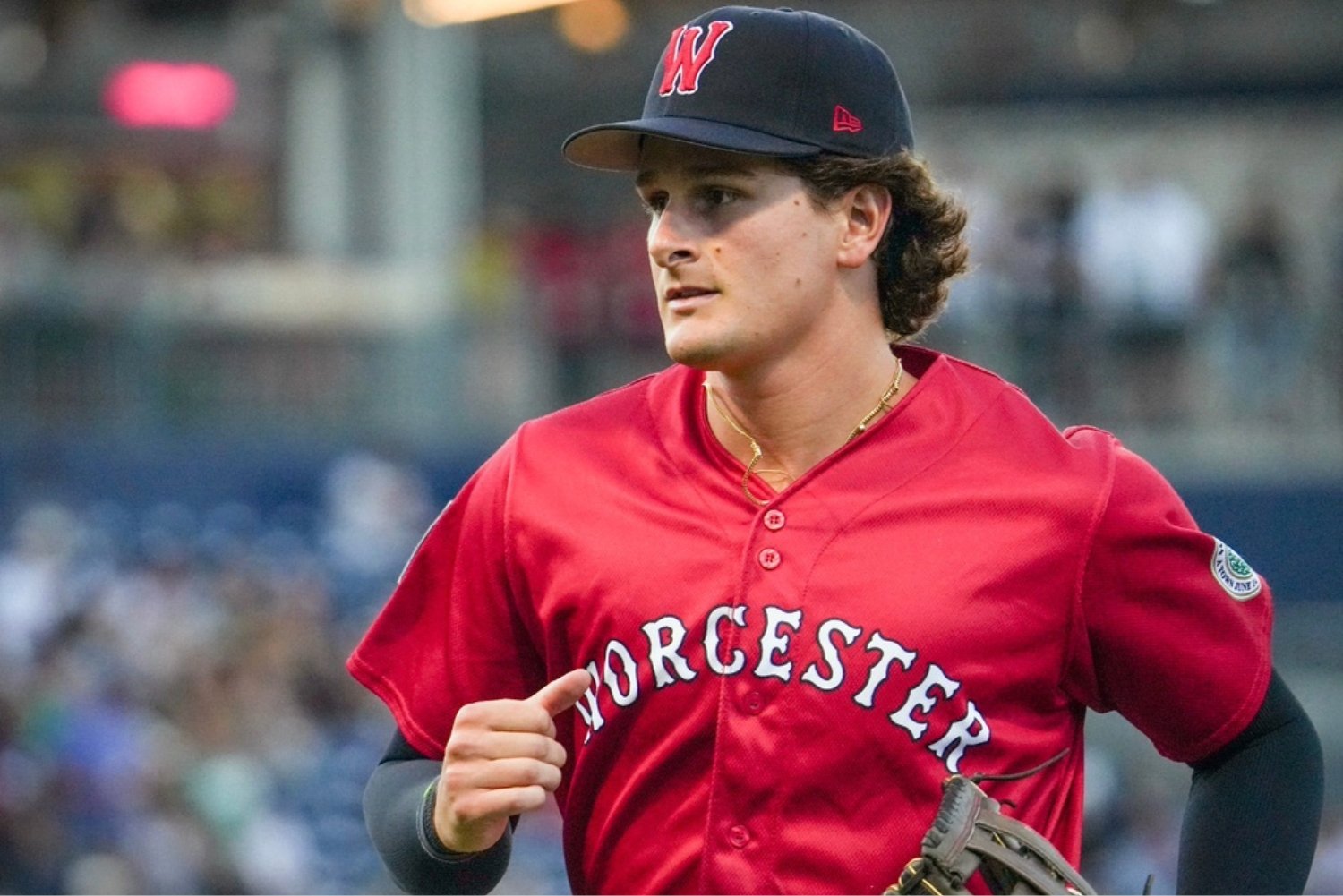 “I’m taking it super day-by-day. There’s no plan, there’s no ‘you gotta be ready by this time’. For me it’s about taking one pitch at a time and we’ll reassess how I feel after tonight. There’s no plan, no flight that’s booked or anything like that,” Roman Anthony explained to the media prior to making his latest rehab appearance at Polar Park. The Boston Red Sox have been one of the hottest teams in baseball, and they’ve been doing it without a handful of players who were meant to contribute in key roles for the club. Now, as the team prepares for a key weekend series against their dreaded rivals, the New York Yankees, they might be getting reinforcements. Prior to Tuesday night’s game, Anthony had his rehab stint reassigned to Worcester after playing the previous week in Portland. The star outfielder, who has been out of action since being placed on the injured list on May 7, has looked comfortable in his return to action as he’s gone 5-for-19 across six games including two huge home runs. With Anthony, the biggest hurdle to getting back on the field was trying to be pain free while swinging a bat and making contact especially against high velocity. Now, there doesn’t seem to be any issue. He’s been able to take good swings, bad swings and check his swing without any issues occurring over the past few days in Portland and Worcester. Despite having no set plan for when he would be activated, the outfielder admitted he was to play back-to-back games in Worcester and play the field for nine innings before assessing how he was doing. Following Wednesday night’s game, it was the first time he played back-to-back full games in the outfield since early in the season. “I’m feeling good, just gotta make sure that everything is really good and where it needs to be before we make a decision and kind of go from there. As far as right now, everything’s good again just trying to continue to get back into that rhythm in the box, the outfield and the bases as a complete player. “We’re in a situation now where, when that decision is to come back and play with the team it’s full-go and we’re in a great situation as a team. I want to get back up there as fast as I possibly can. All three of us want to do that. But I think there’s part of that, that has to make sure we are going and leaving no doubts at least leaving our rehab assignments.” Anthony wasn’t the only rehabber in Worcester, as both Trevor Story and Isiah Kiner-Falefa have been working their way back from their respective injuries. Both have been rehabbing for roughly the same amount of time as Anthony, but have remained just in Worcester as they traveled to Syracuse with the team. For Kiner-Falefa, while he wants to get back to the majors and help the club with the playoff race, he also knows that taking his time to be in the best shape would be most important. “I feel like I could be sharper. I feel good right now, I don’t feel at my best and with the amount of time I’ve taken off. I need the at-bats. I want the at-bats, and I want to come back and contribute. It’s not my decision, but the extra games would help a lot. Another week would be nice, but it’s not my decision,” Kiner-Falefa explained following Tuesday night’s game. In it, he wound up going 1-for-3 with two walks while playing at second base. Overall in his rehab process, the infielder has gone 2-for-18 with one RBI in six games. He also admitted that his timing is not quite there, but he feels close. He described it as being close to how he felt last season when he played with Toronto during their run in the playoffs. The goal for him is to win a World Series and if it means taking extra time rehabbing to be able to contribute when it matters most, he’s willing to do just that. Injury-wise. Kiner-Falefa stated he felt healthy and that he’s focusing on the baseball side of his progression. The main thing that Kiner-Falefa is looking to work on is his consistency, going as far as to say that his at-bats in Syracuse were terrible and weren’t close to where he wanted to be. However, after Tuesday's game he felt he was heading in the right direction as he saw the ball well. He did admit that he was still late on his swing and wanted to improve his timing. The final member of the rehabbing trio, Story, has had the toughest go of things. In eight games with Worcester, he’s gone 4-for-29 with two RBIs and 10 strikeouts. The shortstop has been out of action since May 14 as he recovered from his sports hernia surgery. While defensively he’s looked fine, it’s his work at the plate that has been questionable. After starting his rehab going 3-for-9, he has since gone 1-for-20 including six strikeouts in his last 12 at-bats. The right-handed hitter has shown a tendency in his latest rehab appearances to chase pitches that are away, especially down and away. On Tuesday, he either struck out or made a groundout on a pitch that would be on the outer portion of the plate, along with being at around his knees or lower. Wednesday’s game was more of the same as he struck out three times, including twice on pitches that were down and away. There was a moment Wednesday night where there might have been some concern, as Story made a diving attempt on a ground ball before coming up slowly. “First dive [since rehabbing] and kind of the belt buckle landed on the scars. It was the first time so it just kind of dug in a little bit.” He would remain in the game after the play, with there being no real concern and the team taking it as an expected reaction from such a landing. Despite the slow start in his rehab process, Story still has his sights set on rejoining the team in New York. “We haven’t decided yet [on the next step], we’re going to talk about it tonight [Wednesday night], all the possibilities are open still. Some point in New York is the goal. Like I said, I gotta reconvene with the boys and talk it out.” As of now, Story isn’t sure if he’ll have a day off on Thursday or play for Worcester. Whatever the decision is, Story feels good and says he's ready to go when the big-league club comes calling. View the full article
