


DiamondCentric
-
Posts
2,631 -
Joined
-
Last visited
Never
Content Type
Profiles
Forums
Events
News
Tutorials & Help
Major League Baseball Videos
Guides & Resources
Store
Downloads
Gallery
Everything posted by DiamondCentric
-

Brewers Schedule Analysis, as Team Heads into Home Stretch
DiamondCentric posted an article in Brewer Fanatic
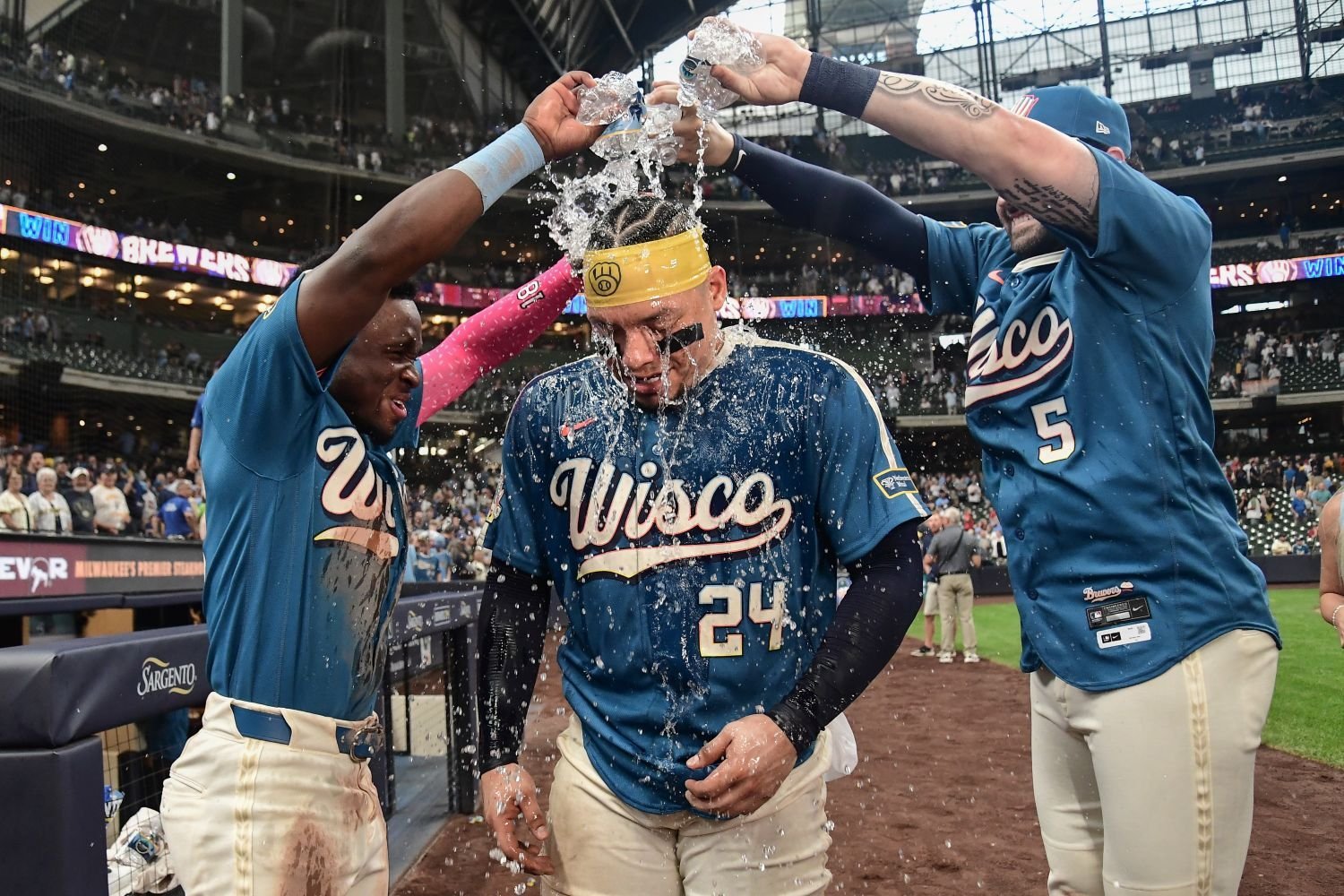 The Milwaukee Brewers have spent much of the season making it look easy, but with August nearly in the rearview mirror, the real work is about to begin. Milwaukee hasn’t punched its ticket to October just yet, but it has built enough separation to turn the final weeks of the regular season into a race for position, rather than a fight for survival. With September approaching, the Brewers are looking to make sure the road to the World Series runs through Milwaukee. Here’s a quick look at what’s left for the Brewers, schedule-wise. Remaining Brewers Schedule, at a Glance Games Remaining: 31 Home / Road: 12 / 19 Games vs .500+ Teams: 16 Remaining Strength of Schedule: 11th-hardest Key Storylines in the Final 5 Weeks Lots of NL Central Action The Brewers face all four of their divisional foes in at least one series before the end of the season. They play five straight series against NL Central teams, starting on August 31 against the Cubs and ending September 17 in Pittsburgh, against the Pirates. Chicago is the rival they face twice, with four of those games coming at Wrigley Field. Milwaukee has fared well against the division so far this year, going 22-11. Hopefully, the good times keep rolling en route to yet another NL Central title for the Brew Crew. Two Interleague Series Remaining The American League hasn’t been as great as the National League this year, and the Brewers have shown that, going 27-15 against the junior circuit so far. Two series remain: one against the Rangers in Milwaukee during the last weekend in August, and one in Baltimore. The Rangers are currently atop the AL West and are competing for a playoff spot, so that series should be competitive. As for the Orioles, they sold at the deadline but are only 2.5 games out of the last Wild Card spot. By the time that series rolls around, who knows where the O’s will be in the standings? But they still have some good bats, headlined by Pete Alonso. Those two series should give Milwaukee one last chance to test itself against the American League before the postseason arrives. If the Brewers can continue their success against AL opponents, they could head into October with plenty of confidence. A Race for the 1st Seed The Dodgers, Braves, and Rays all trail the Brewers by fewer than five games in the race for home-field advantage throughout the postseason, keeping the pressure on Milwaukee down the stretch. The Dodgers have the easiest remaining strength of schedule among the four teams, while the Rays and Braves face tougher schedules than the Brewers based on opponents’ winning percentages. That gives Milwaukee a favorable path over the final weeks, but with three teams still within striking distance, there isn’t much room for the Brewers to let up. The Brewers have put themselves in a great position heading into the final five weeks, but there’s still plenty left to play for. Between the NL Central race, a challenging group of remaining opponents, and the fight for the No. 1 seed, every game down the stretch will matter. If Milwaukee can keep doing what it has done all season, the Brewers should have a great chance to enter October as one of the favorites in the National League. What are your thoughts on the rest of the schedule? Do any games/series stick out to you? View the full article
 -
The Twins May Have Dodged Disaster with Framber Valdez
DiamondCentric posted an article in Twins Daily
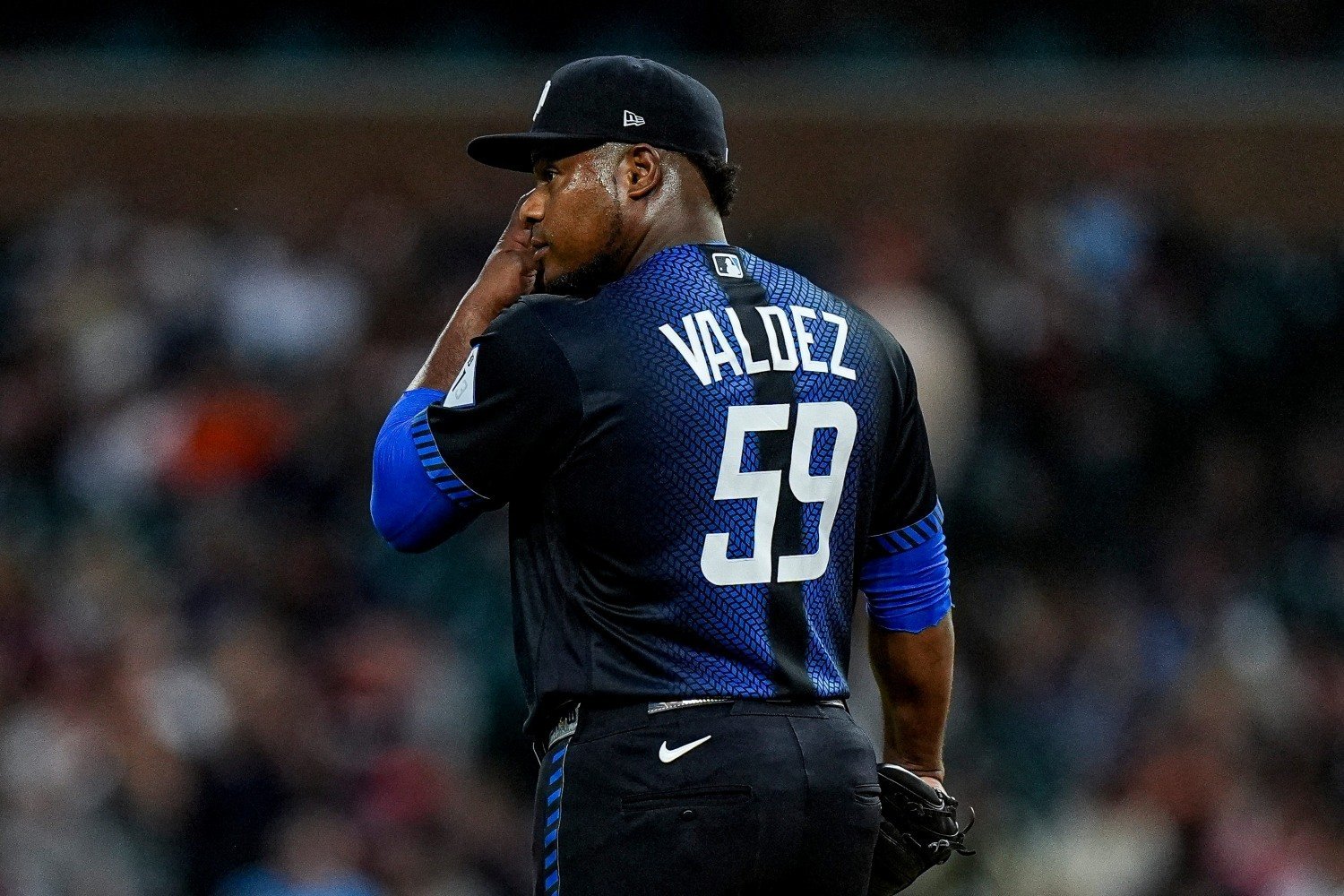 The Twins wanted Framber Valdez this offseason. It was one of the biggest free-agent pursuits of the winter, and for a minute there, it looked like Minnesota might actually land the left-handed ace. Ultimately, Valdez signed a three-year, $115-million contract with the Detroit Tigers, leaving the Twins without the big pitching addition many fans were hoping for. It was a late lunge after an unexpected pair of major leadership changes during the winter; there just wasn't enough runway to land the plane. According to Bobby Nightingale of the Minnesota Star Tribune, the Twins made a late pursuit of Valdez and put a multi-year offer on the table for the left-handed All-Star. Valdez was the last marquee free agent available, and signed on Feb. 10. Tom Pohlad later confirmed the pursuit and made it clear the Twins were willing to go well beyond their typical spending comfort zone if Zoll believed the move was right for the organization. At the time, the Twins missing out on Valdez became another piece of evidence for those who believed Pohlad had talked a bigger game than he was actually willing to play. The team had reportedly made a serious offer for one of the best starting pitchers available, but Valdez ultimately chose Detroit, and later reporting made it clear that the team was never especially close to wooing the southpaw. The more we see from Valdez this season, however, the more it looks like the Twins may dodged a bullet. There's no way around it: Valdez has been bad this season. Through 26 starts, the 32-year-old lefty has a 4.35 ERA and a 1.41 WHIP. His 1.5 fWAR is hardly what the Tigers envisioned when they handed him a huge annual average value (AAV). His expected ERA sits at 4.50, suggesting his results are a fairly accurate representation of how he has pitched. Even more concerning is what has happened to his ability to miss bats. Valdez has struck out just 17.4% of opposing hitters, the lowest rate of his career and a significant drop from last season. His whiff percentage has also fallen to a career-low 19.8%, down 6.8 percentage points from last year. Those numbers are particularly concerning for the Tigers, because Valdez's success has always been built around generating weak contact while still having enough swing-and-miss ability to get out of trouble. His velocity has taken a step backward across his pitch mix, providing another potential warning sign. The Tigers have been one of the most disappointing teams in all of baseball this season, and the performance of Framber Valdez is certainly part of what has ailed the team. Perhaps most concerning is that there isn't an obvious injury explanation for the dip in stuff. Valdez has remained in Detroit's rotation and hasn't missed time because of an injury. The only games he missed came because of the six-game suspension he served after intentionally throwing a ball at Boston's Trevor Story in May. Valdez will turn 33 after the season, making it possible the Twins were looking at an aging pitcher whose best days are behind him. That doesn't mean he can't bounce back, but it makes committing more than $100 million to him considerably more frightening. The Tigers can probably survive the Valdez contract if it turns into a bad one. Detroit typically operates with a payroll that gives the organization more room to absorb a mistake of this magnitude. The Twins have very little margin for error. We've already seen what happens when Minnesota gets locked into an expensive contract that doesn't work out. Carlos Correa's deal has become a perfect example, as the Twins eventually agreed to pay him $10 million per season for three years not to play for them. Imagine making a similar decision with Valdez while he's earning roughly $38 million per season. There's also another reason the Twins may have been better off avoiding Valdez: they don't necessarily need to buy a starting rotation. Their pitching situation is actually set up fairly well for next season. Pablo López, Joe Ryan and Taj Bradley are a locked-in trio to lead the starting rotation next season. They also have Mick Abel, Zebby Matthews, Connor Prielipp and Kendrys Rojas, while newly-added Dean Kremer provides another experienced option with another year of arbitration remaining. Had Minnesota signed Valdez, one of those young pitchers would almost certainly have been pushed out of the rotation picture. Instead, the Twins have flexibility to see what their young arms can do and determine where they actually need help. There's certainly a fair argument that the Twins should have been more aggressive this offseason. Pohlad said he was willing to make a splash, and the organization ultimately didn't make the kind of major investment that would have demonstrated a dramatic change in philosophy. Valdez, however, is a different conversation. He comes with makeup concerns, which the team might have factored into its reluctance to go as far as Detroit did. He also comes with major performance red flags, and the smaller-payroll Twins were wise not to let him become a drag on their operation. What do you think? Were the Twins lucky to miss out on Framber Valdez, or would you still rather have the veteran lefty locked into the rotation despite his struggles this season? Leave a comment below and start the conversation! View the full article
 -
Add Shane Bieber to the Lengthy List of Blue Jays Injuries (Again)
DiamondCentric posted an article in Jays Centre
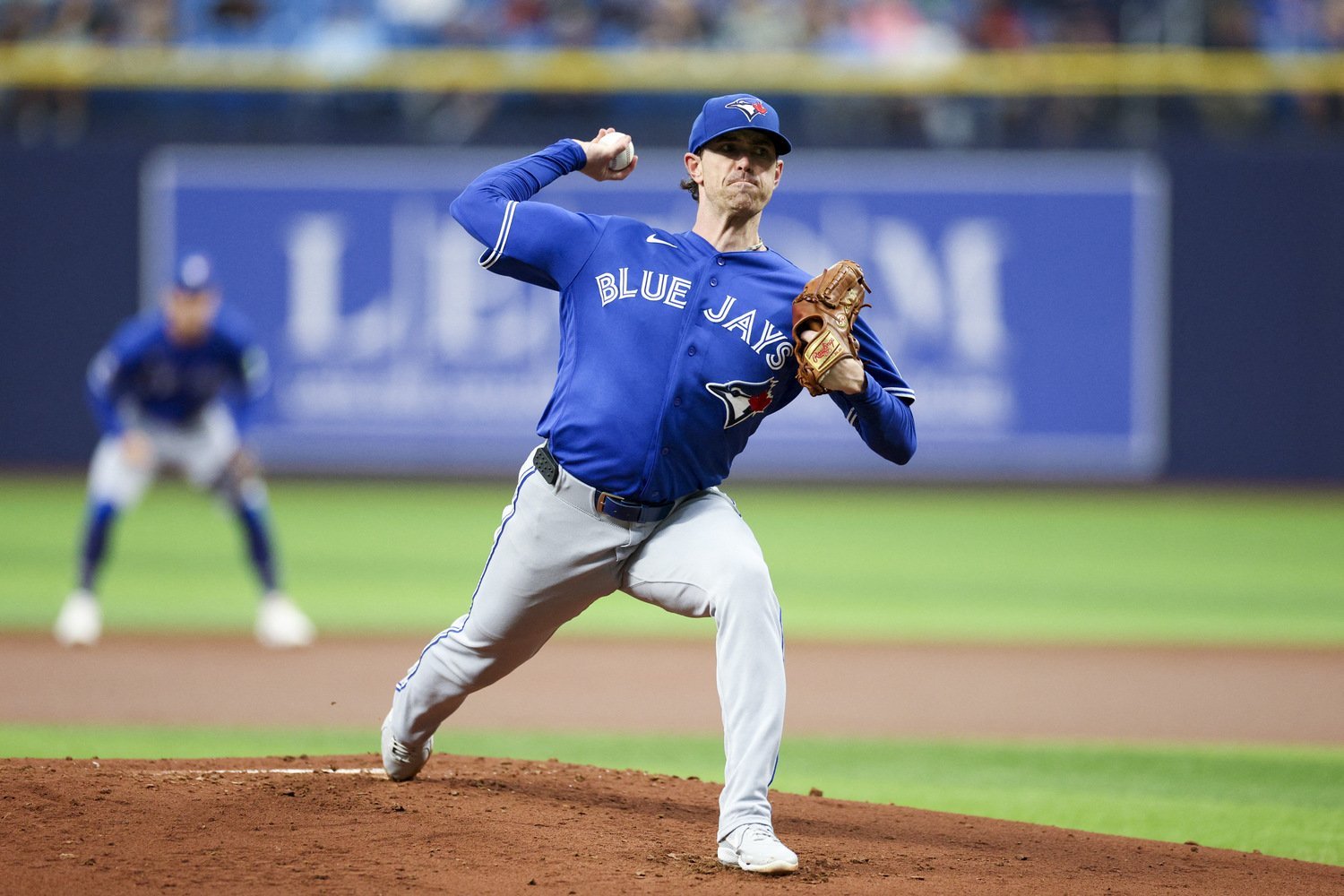 Sometimes, the injury bug just hits one team harder than others. This year, it's the Toronto Blue Jays. Shane Bieber is the latest player to hit the injured list, as he has been placed on the 15-day IL with right teres major inflammation, retroactive to August 21. Chad Dallas was recalled to replace him. According to Shi Davidi of Sportsnet, Bieber felt the issue in his bullpen session on Sunday, and John Schneider described the injury as mild to moderate. He will not throw for two weeks, with no timetable beyond that. Even though his season is not officially over, the Blue Jays only have 30 games remaining, and two weeks without throwing leaves Bieber with very little time to build back up before the end of the regular season. For Bieber and the team, this comes at an inopportune time; Bieber had been pitching his best baseball lately. After struggling during his first few starts off the IL, Bieber looked much better in his last seven games, pitching to a 3.08 ERA with a FIP that supported it. The highlight was his most recent start against the Rays, in which he went seven innings, threw over 100 pitches, and struck out a season-high seven batters. Bieber originally returned to Toronto after picking up his $16 million player option in the offseason, but after he began the season on the IL with elbow inflammation, injuries found him again. He’ll end up with only 11 starts for the Jays in 2026, barring a late-season comeback. The timing is also unfortunate for Bieber, who is set to become a free agent at the end of the season. After missing the majority of the 2024 campaign and a large portion of 2025 recovering from Tommy John surgery, he’s now battled both shoulder and elbow injuries in 2026. That will add another layer of uncertainty for teams interested in signing Bieber for 2027. Bieber's injury further muddles an already complicated pitching puzzle. Like Bieber, Trey Yesavage began the season on the IL, then returned to the Jays, and now he's back on the list. Patrick Corbin, who had made 15 starts for the team, is also out with a shoulder injury. Yimi García, Cody Ponce, and José Berríos, who were all supposed to play an important role in the pitching puzzle, have combined to throw less than three innings all season. Spencer Arrighetti is stretching out after returning from the IL last week, while Jameson Taillon and Joe Mantiply are still working their way back. The extent of the Blue Jays' pitching problems becomes even clearer when looking at Baseball Prospectus’s injury data. From a WARP perspective (Baseball Prospectus’s version of WAR), no team in baseball has lost more projected value due to injuries than the Toronto Blue Jays. Kevin Gausman and Eric Lauer have both been traded, and even some of the Blue Jays' pitching depth lower down the chart has taken a hit. Jake Bloss, who came from the Astros at the 2024 deadline, was eventually supposed to be a key part of this rotation, as was Bowden Francis, who would have had a very real opportunity to show what he could do in 2026. Instead, injuries have kept both pitchers off a major league mound all season. For now, the Blue Jays will start a bullpen game today against the Royals to fill Bieber's initial turn in the rotation, and as long as Arrighetti and Taillon return without setbacks, they’ll rejoin the starting five. That will leave the team with a rotation of: Dylan Cease José Soriano Max Scherzer Spencer Arrighetti Jameson Taillon Surprisingly, Scherzer is now the longest-tenured Blue Jay of the group. The injury comes at a rough time, as the Blue Jays find themselves thick in the AL Wild Card race, and any chance they have at making the playoffs relies on them playing competitive baseball down the stretch. Their remaining schedule is full of teams they are directly competing with in the standings, and the rest of their opponents are below .500, meaning if the Blue Jays can keep winning games, they have a chance to get into the playoffs. FanGraphs has their playoff odds at 10.4%. For Shane Bieber, it's back to the rest-and-rehab process, something he’s been getting all too familiar with. Unfortunately for the Blue Jays, they’ll have to find a new way to piece together their pitching puzzle, which is no new challenge for them either. It's been a season of trying and making rapid adjustments on the fly, and with Bieber's latest injury, the Blue Jays will be forced to make another one of those adjustments, this time with their playoff chances hanging in the balance. View the full article
 -
 Yovanny Rodriguez has been scuffling at the plate since his promotion to Single-A St. Lucie in late July. His performance Tuesday was a welcome change. The 19-year-old catcher from Venezuela had two home runs, a single and three RBIs in the Mets’ 12-5 victory at Daytona. He’s up to four homers in 17 games for St. Lucie, and that has helped push his slugging percentage with the club to .426. His first homer, a leadoff blast in the third, broke a 5-5 tie. It ended up being the game-winning hit as the Mets’ bullpen held Daytona scoreless over the final seven innings. His second homer, a solo shot in the eighth, closed the scoring. Rodriguez has found his power stroke in his third professional season. He had seven homers in 180 plate appearances for the FCL Mets prior to his promotion this summer. In his first two seasons, he had just four homers in 329 plate appearances in the Dominican Summer League. His other key numbers with St. Lucie are lacking: a .279 on-base percentage, a 38.2 percent strikeout rate and an 8.8 walk rate in 68 PAs. The home runs help ease the pain. Elsewhere in the organization: Syracuse lost 2-1 at Lehigh Valley. The IronPigs’ offense consisted of a two-run homer in the bottom of the first inning off starter Jonathan Santucci. Ronny Mauricio homered for the Mets’ run. Binghamton lost 8-6 at Reading, blowing leads of 4-0 and 6-3. They were up 6-4 in the eighth when Saul Garcia gave up two home runs and four runs in all. Five home runs accounted for all of Binghamton’s runs. Brooklyn was held to six hits in a 4-1 loss at Hudson Valley. Yonatan Henriquez had three of them, a home run and two doubles. New York Mets Transactions New York Mets sent 1B Mark Vientos on a rehab assignment to Syracuse Mets. Santucci Recovers From Early Homer In Syracuse Loss Santucci has struggled since moving up to Triple-A, so it was encouraging to see him move past the gopher ball and finish his start with four scoreless innings. He struck out seven and walked one while allowing two runs on five hits. The one walk was his fewest with Syracuse --- he issued at least three free passes in each of his first four starts for the club. Mauricio cut the deficit in half in the fourth with his 16th home run of the season. The Mets had a chance to take the lead in the top of the eighth. They loaded the bases after two were out on a double by Zack Short, a walk to Nick Morabito and a hit by pitch for Emilien Pitre, but Billy Amick struck out to end the threat. Mark Vientos (hand fracture) had his rehab assignment moved to Syracuse this week. He played seven innings at first base Tuesday and went 0-for-3 with two strikeouts. Syracuse Batting Player AB R H RBI BB K Nick Morabito 3 0 1 0 1 0 Émilien Pitre 2 0 1 0 1 0 Mark Vientos 3 0 0 0 0 2 Billy Amick 1 0 0 0 0 1 Ronny Mauricio 4 1 1 1 0 0 MJ Melendez 4 0 0 0 0 3 Nick Lorusso 4 0 0 0 0 2 D'Andre Smith 3 0 0 0 0 0 Hayden Senger 3 0 0 0 0 1 Zack Short 3 0 2 0 0 0 Syracuse Pitching Player IP H R ER BB K HR Jonathan Santucci 5 5 2 2 1 7 1 Matt Seelinger 1 1 0 0 1 1 0 Dan Hammer 1 0 0 0 0 1 0 Brian Metoyer 1 0 0 0 0 1 0 Binghamton’s Long Balls Go To Waste The Rumble Ponies got solo homers from Eli Serrano, Jefferson Rojas, John Bay and Corey Collins, and a two-run shot by Chris Suero. Serrano homered in the second for a 1-0 Binghamton lead. Rojas went deep in the fourth to make it 2-0. It was his fifth homer since joining the Rumble Ponies and his 20th overall this season. Suero’s homer pushed the lead to 4-0 in the sixth. Bay and Collins went back-to-back to lead off the seventh for a 6-3 lead after Reading scored three runs in the bottom of the sixth. Binghamton starter Gary Gill Hill was charged with those three runs and seven hits over 5 1/3 innings. The third run was inherited by Cristofer Gomez. Hill walked none and struck out seven. Reading got a run back in the bottom of the seventh to make it 6-4 and then jumped on Garcia in the eighth. A leadoff home run, a walk, a single and a run-scoring wild pitch tied the game 6-6. A two-out, two-run homer put the Fightin’ Phils up for good. Kevin Parada had two of the Ponies’ three non-homer hits. Collins had the other. Binghamton Batting Player AB R H RBI BB K Mitch Voit 4 0 0 0 0 1 Marco Vargas 5 0 0 0 0 1 Jefferson Rojas 4 1 1 1 0 3 Jacob Reimer 3 1 0 0 1 0 Chris Suero 4 1 1 2 0 1 Eli Serrano III 3 1 1 1 1 1 John Bay 4 1 1 1 0 3 Corey Collins 3 1 2 1 1 1 Kevin Parada 4 0 2 0 0 1 Binghamton Pitching Player IP H R ER BB K HR Gary Gill Hill 5 1/3 7 3 3 0 7 0 Cristofer Gomez 0 2/3 1 0 0 1 0 0 Carlos Guzman 1 2 1 1 1 1 0 Saul Garcia 1 3 4 4 1 0 2 Henriquez A Bright Spot In Brooklyn Loss Henriquez put the Cyclones in front 1-0 in the fourth with his 10th homer of the season. He doubled in the second and the ninth. Hudson Valley tied the game with a run in the bottom of the fourth and took the lead on a two-run homer in the fifth. All three runs came off starter Nicolas Carreno, who went 5 2/3 innings. Carreno allowed four hits, struck out seven and walked two. The Renegades’ final run came home in the seventh when catcher Daiverson Gutierrez committed a throwing error on a steal of third base. Trey Snyder chipped in two hits for the Cyclones, who were coming off a huge offensive series against Asheville. They scored 64 runs in winning four of the six games. Brooklyn Batting Player AB R H RBI BB K Sammy Stafura 4 0 0 0 0 0 Elian Peña 3 0 1 0 1 0 Aidan Smith 2 0 0 0 1 0 Eddinson Paulino 1 0 0 0 0 0 Ronald Hernandez 4 0 0 0 0 3 Trey Snyder 4 0 2 0 0 1 Yonatan Henriquez 4 1 3 1 0 0 John Smith III 0 0 0 0 1 0 John Spikerman 2 0 0 0 1 2 Daiverson Gutierrez 2 0 0 0 1 0 Antonio Jimenez 3 0 0 0 0 0 Brooklyn Pitching Player IP H R ER BB K HR Nicolas Carreno 5 2/3 4 3 3 2 7 1 Gregori Louis 1 1/3 1 1 0 0 1 0 Ryan Dollar 1 1 0 0 0 0 0 St. Lucie Rides Early Offense To Win The Mets scored twice in the first and three times in the second for a 5-0 lead. Kuhio Aloy drove in the game’s first run with a double, and Rodriguez plated the second with a fielder’s choice grounder. Aiden Robbins smashed a three-run homer in the second, his third homer since joining the Mets. Daytona erased the lead in the bottom of the second with lots of help from Mets pitchers. Cesar Rivera, who was making his first mound appearance in three years, walked all five batters he faced, forcing home two runs. Christian Rodriguez came on and issued two more bases-loaded walks to make the score 5-4. The fifth run of the inning scored on a fielder’s choice grounder. Yovanny Rodriguez restored the Mets’ lead in the third with his first homer. Boston Baro made it 8-5 later in the inning with a two-run double. St Lucie pulled away with a run on a wild pitch in the fifth, a two-run single by Jake Ogden in the sixth and Rodriguez’s second homer in the eighth. Christian Rodriguez worked 3 2/3 innings in bulk relief. Officially, he was charged with no runs. He allowed two hits, walked three and struck out four. Brett Banks earned the win with 1 1/3 hitless innings in relief. He struck out three. Rivera, 21, was activated from the injured list Tuesday after missing the entire 2024 and 2025 seasons and the first five months of the 2026 season. The left-hander signed with the Mets as a 16-year-old out of Panama in 2022. He appeared in nine games in the Dominican Summer League that year, and in 16 games in the DSL in 2023. St. Lucie Batting Player AB R H RBI BB K Boston Baro 5 1 2 2 0 0 Dylan Carey 1 0 0 0 0 1 Aiden Robbins 5 2 2 3 1 2 Ryan Tayman 4 1 0 0 2 1 Kuhio Aloy 6 1 2 1 0 0 Yovanny Rodriguez 5 2 3 3 0 1 Jeremy Rodriguez 4 1 0 0 1 2 Wyatt Vincent 5 2 2 0 0 1 Reed Stallman 4 0 2 0 1 1 Jake Ogden 4 2 3 2 0 0 St. Lucie Pitching Player IP H R ER BB K HR Ryan Lambert 1 1 0 0 0 1 0 Cesar Rivera 0 0 5 5 5 0 0 Christian Rodriguez 3 2/3 2 0 0 3 4 0 Brett Banks 1 1/3 0 0 0 0 3 0 Ernesto Mercedes 2 2 0 0 1 2 0 Zack Mack 1 1 0 0 1 0 0 Top-20 Prospect Performance Jonah Tong: DNP Jack Wenninger: DNP Elian Peña: 1-for-3, BB Mitch Voit: 0-for-4, K Ryan Clifford: DNP Nick Morabito: 1-for-3, BB Jonathan Santucci: 5 IP, 5 H, 2 R, 2 ER, 1 BB, 7 K Carson Wiggins: DNP Jacob Reimer: 0-for-3, BB Aiden Robbins: 2-for-5, HR, 3 RBI, BB, 2 K Randy Guzman: DNP Wandy Asigen: DNP Chris Suero: 1-for-4, HR, 2 RBI, K Jefferson Rojas: 1-for-4, HR, RBI, 3 K Will Watson: DNP Shane Sdao: DNP Eli Serrano III: 1-for-3, HR, RBI, BB, K Antonio Jimenez: 0-for-3 Émilien Pitre: 1-for-2, BB Dylan Ross: DNP View the full article
 -
 Boston Red Sox Affiliate Recap Triple-A Worcester Red Sox Season Record: 64-58 With Worcester fans and their dogs in attendance on a “Tail-Waggin” Tuesday, the Sox defeated the Scranton/Wilkes-Barre RailRiders (New York Yankees) 8-5. Starting his rehab assignment in Portland, Roman Anthony made his way to Worcester, joining his fellow rehabbing teammates Trevor Story and Isiah Kiner-Falefa. The 22-year-old drew a four-pitch bases-loaded walk with Story following up with one as well, giving their squad a 2-0 lead in the second. Roman collected two hits in his first WooSox rehab game; a single in the first inning gave him his first hit, then a two-run blast in the seventh put Worcester on top 5-4. The homer was destroyed, getting clocked at a 106.5 MPH exit velocity. Franklin Arias was the only other teammate with multiple hits, and they were very productive. The shortstop hammered a groundball into left field to bring Eaton home in the third, then brought in another to continue Worcester’s five-run seventh, doubling in Romy Gonzalez. Kristian Campbell and newly promoted Nate Baez capped off the inning with a pair of RBI singles, extending their lead to 8-4. After what seemed to be an unlucky start in his last appearance, Jedixson Paez dominated the RailRiders through five innings, striking out eight batters. The right-hander pounded the strike zone; 74% of his 54 pitches were strikes. He had a no-hitter through four innings, but the bid ended in the fifth when he gave up a solo homer, the only hit given up. Standout Performances: Jedixson Paez: 5 IP, 1 H, 1 ER, 8 K Roman Anthony: 2-for-4, HR, R, 3 RBI, BB Franklin Arias: 2-for-4, 2B, 2 R, 2 RBI, SB Double-A Portland Sea Dogs Season Record: 60-60 The Sea Dogs fought back but ultimately took an 8-7 defeat at the hands of the Richmond Flying Squirrels (San Francisco Giants). Portland’s bats had many chances to put runs on the board, but at the same time, you cannot expect to lose many games when you put up seven runs. Sadly, the pitching staff was disappointing. Every hitter for the Sea Dogs tallied a hit, 12 combined, three coming from Johanfran Garcia, one of which was an RBI single in the eighth. Justin Gonzales collected two hits that brought in runs, a two-run bomb in the fifth, his second homer in Double-A, and an RBI single in the sixth. The 20-year-old is now batting .350 and continues to show great plate discipline through five games, drawing three walks to five strikeouts in 20 at-bats. Portland’s late push in the sixth came on a Max Ferguson RBI double that brought in Will Turner, and a two-run single from Henry Godbout tied it up 6-6; unfortunately, the Sea Dogs lost the lead in the bottom half and never came back. Dalton Rogers was very wild in his 4 ⅔ inning start, giving up five walks, six hits, six runs (one unearned), while also committing two wild pitches. Tyler Davis came out of the bullpen afterward and had trouble missing bats, giving up two runs on three hits in 1 ⅓ innings. Erik Rivera was outstanding in his two innings of work, tossing two perfect frames with four strikeouts, giving Portland’s bats a chance to come back but the damage was already done. Standout Performances: Justin Gonzales: 2-for-4, HR, 2 R, 3 RBI, BB Johanfran Garcia: 3-for-4, RBI, BB Erik Rivera: 2 IP, 0 H, 0 ER, 4 K High-A Greenville Drive Season Record: 53-65 In the first game of the Drive's final homestand, a walk-off ended it 6-5 against the Rome Emperors (Atlanta Braves). After a shaky start from Jacob Mayers put Greenville in a 3-0 hole in the second, the bats put a run on the board in the fourth inning on a Maximus Martin sacrifice fly to make it 3-1. Owen Hull’s first hit came in the fifth after cracking an RBI single to bring in Antonio Anderson (3-2). Another run for Rome was brought in (4-2) during the seventh, but Jake Schaffner responded fast in the bottom half to make it a one-run game, pulling a line drive RBI single to right field, bringing in Nazzan Zanatello. A solo blast from the Emperors made it a two-run game in the ninth; it seemed over for Greenville, especially noting that they have not had a single lead all game. Starting off the bottom of the ninth, Yophery Rodriguez lined a double to left field, immediately bringing up the tying run to the plate. Anderson worked a walk on a 3-2 count, putting two runners aboard with no outs. Zanetello was fanned to record the first out of the inning, then came Schaffner in the clutch, hitting a ball up the middle to center field, bringing in Rodriguez (5-4). Up next was his college teammate Owen Hull, who then became the hero, smoking a deep fly ball to the center field wall, bringing in the tying and winning runs across the plate to walk it off. Behind Mayer's struggling start, Brady Tygart backed him up with six outstanding frames. Despite him allowing two runs (one unearned), the righty punched out nine batters while also keeping Greenville in the game as much as possible. Standout Performances: Brady Tygart: 6 IP, 2 R, 1 ER, 2 BB, 9 K Owen Hull: 2-for-5, 2B, R, 3 RBI Jake Schaffner: 2-for-5, R, 2 RBI, SB Low-A Salem RidgeYaks Season Record: 52-67 Salem’s lineup could not get anything done, still coming up just short 3-2 to the Fayetteville Woodpeckers (Houston Astros). The RidgeYaks recorded just five hits, while going 0-for-5 with RISP, absolutely not a recipe for success. However, Josue Brito still looks fantastic since his promotion to Salem. The outfielder from Venezuela tallied two hits and two of his team's only RBIs; his first Low-A homer was a first-pitch two-run bomb in the first inning. Salem’s three other hits came from Kleyver Salazar and Starlyn Nunez, who each had singles, while Adonys Guzman collected a double, the only other Salem batter with an extra-base hit. Cole Tolbert has had a rough month of August, but he ended it off strong with 3 ⅔ shutout innings with four strikeouts. Cam Padgett got hit around, giving up two runs on four hits and two walks while giving up two runs. Yermain Ruiz finished off the next 2 ⅓ innings, giving up one run, but with the way Salem’s offense had looked, the run he gave up did not seem to matter. Standout Performance: Josue Brito: 2-for-4, HR, R, 2 RBI View the full article
 -
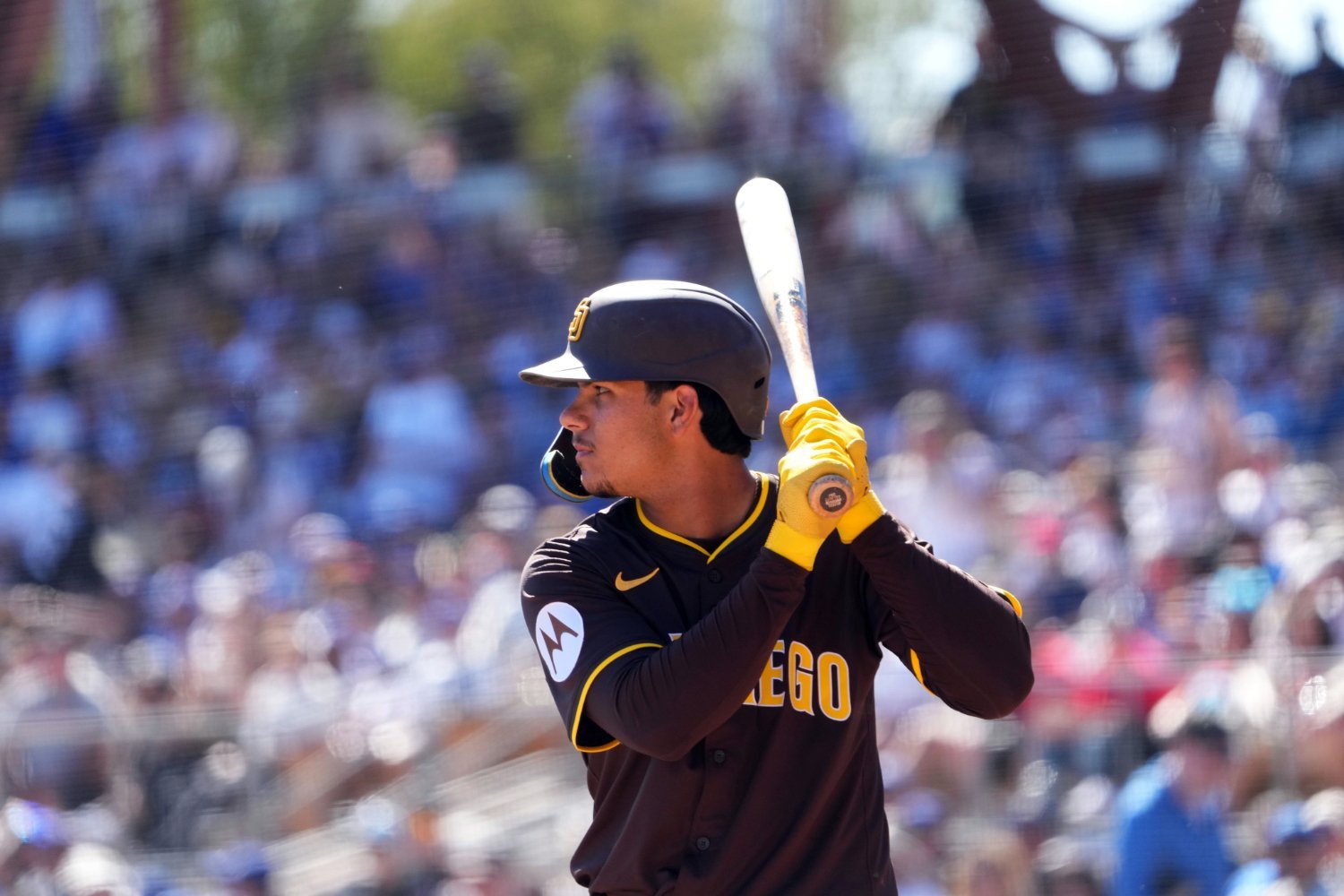 It’s extremely rare to see 20-year-olds in the major leagues. But the San Diego Padres’ top prospect, catcher Ethan Salas, has a chance to accomplish that feat in 2026. After a tough 2024 campaign at High-A Fort Wayne and a 2025 season that lasted all of 10 games due to a back injury, Salas has bounced back in a major way this year. And after putting together a strong stretch at Double-A San Antonio in mid-to-late July, the Padres decided it was time to give their top prospect a promotion to Triple-A. So far, a kid who can’t even buy a beer yet has looked like a man amongst boys. Across 19 games with El Paso, Salas is slashing .319/.393/.556 good for an outstanding 123 wRC+. He’s also collected 10 extra-base hits during that span, while walking 10 times compared to just eight strikeouts. Obviously, Salas isn’t going to sustain those numbers over an extended period of time; there will inevitably be stretches where he looks like a young player still figuring things out. But that doesn’t change how impressive this stretch has been. The fact of the matter is it’s not normal for a player this young to be doing the things Salas is doing at the highest level of the minor leagues. And when you combine his production with some of the underlying numbers, it becomes even easier to understand why the Padres have been so high on him for so long. Salas’ average exit velocity at Triple-A is above 90 MPH, with 25 of the first 55 balls he put in play coming off his bat at 95 MPH or harder. That’s a pretty impressive combination of quality contact and production for a player who is still just 20, and that doesn’t even mention what he can do behind the plate. He has a 70-grade fielding tool and a 60-grade arm, giving him the defensive ability to potentially be an impact catcher at the major-league level. This isn’t simply a prospect who is raking at Triple-A and hoping his bat can carry him to San Diego. This dude can play, and with September quickly closing in, Salas might be getting hot at exactly the right time. Come September 1, teams can expand their active rosters from 26 players to 28. One of those spots will likely go to another pitcher, but the other one would have to be a position player. With as hot of a bat as Salas is swinging right now, it’s at least possible he gets an opportunity as the Padres look to make a run to the postseason. Of course, a couple of things would have to happen first. For one, Salas would need to be added to the 40-man roster, and that’s where the biggest issue lies. Since he doesn’t have to be added to the 40-man roster until after next season, the Padres might not want to make that move right now. They would have to remove someone else from the roster, barring someone landing on the 60-day injured list, just to create room for him. That’s a decision San Diego would have to weigh carefully. The uncertainty surrounding what the 2027 season will look like could also play a role. With the Major League Baseball Collective Bargaining Agreement set to expire in December, a new agreement will have to be reached before the 2027 season can begin. Given the uncertainty surrounding what spending will or won’t look like under a new agreement, there’s at least a possibility that the season could be delayed. And in a worst-case scenario, it could potentially not happen at all. If the Padres call Salas up and the 2027 season gets delayed, there’s a chance he could lose out on valuable development time while owners and players work toward a new agreement. If he remains in the minors, that particular issue wouldn’t exist. There’s also the fact that the Padres already have two other catchers playing well in San Diego right now in Luis Campusano and Freddy Fermin. Campusano missed a good amount of time with a fractured toe, while Fermin has struggled offensively for most of the season. But both are currently healthy, and both are swinging the bat well. Campusano has posted an .790 OPS since the All-Star break, while Fermin is up to a 122 wRC+ in August. Fermin is also a very strong defensive catcher, just like Salas, and if both veterans continue hitting the ball well, there might simply not be enough room for the 19-year-old. There is a legitimate argument for letting Salas continue developing in the minor leagues, especially when you consider how much time he missed last season and the fact that he doesn’t need to be added to the 40-man roster yet. The Padres have no reason to rush one of the most important prospects in their organization. At the same time, opportunities like this don’t come around very often. It may be a bit of a long shot, but there’s a world where we see a 20-year-old phenom make his Padres debut this season. View the full article
 -
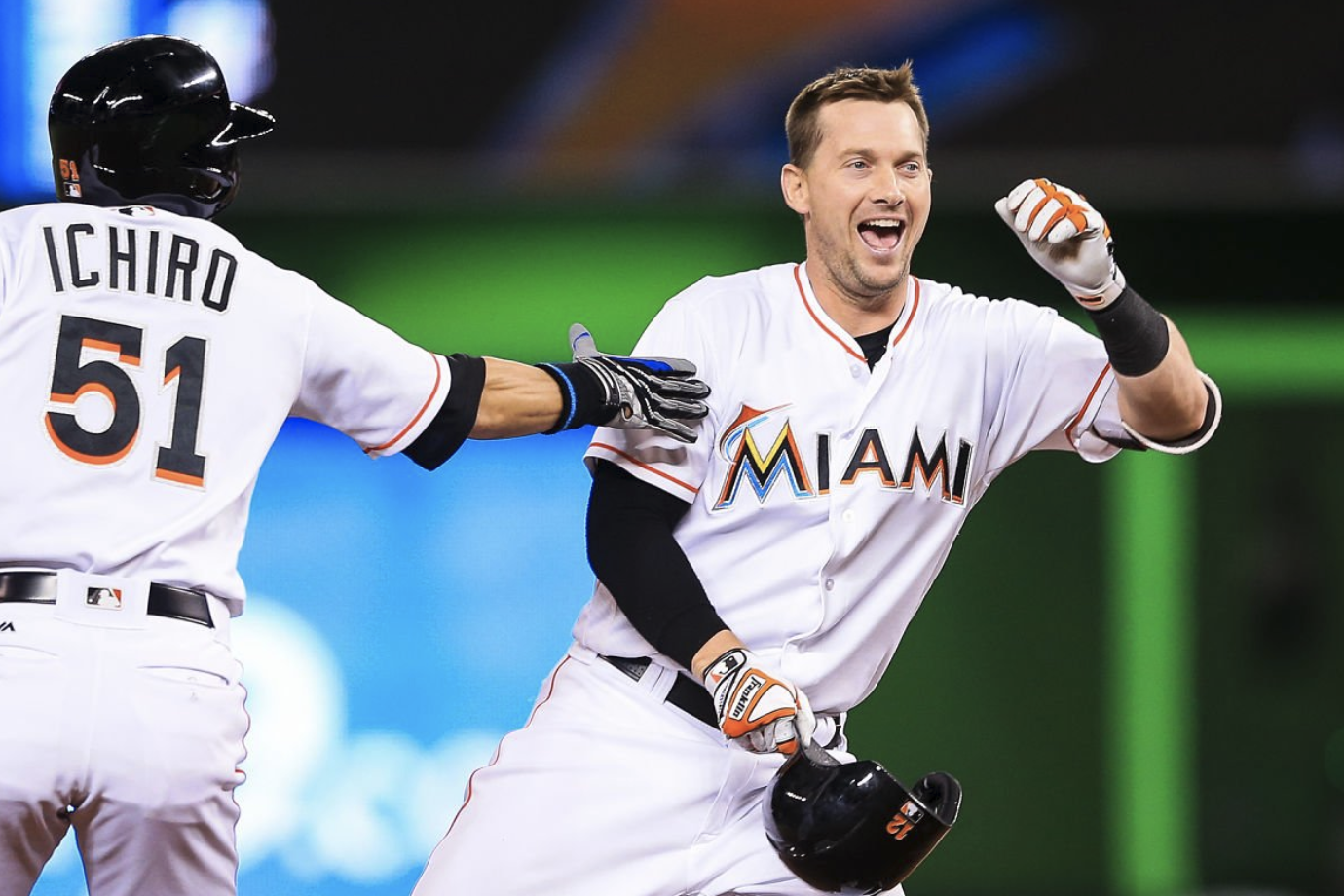 The 2016 season didn’t close the way that the Miami Marlins would have hoped, but toward the end of August, the team was unquestionably in the playoff hunt. On this day 10 years ago, the Marlins opened a three-game series against the San Diego Padres with an improbable rally. Down 6-2 through six and a half innings, the Marlins rallied with five unanswered runs. Chris Johnson’s walk-off ground-rule double completed the comeback in a 7-6 win. San Diego had scored six straight runs as Miami came to bat in the bottom of the seventh at Marlins Park on Aug. 26, 2016. After driving in the game’s first run in the first, Marcell Ozuna cut the deficit to 6-3 with an RBI single to score J.T. Realmuto in the seventh. The Marlins then drew even with three runs in the eighth. Against former Marlins lefty Brad Hand, Jeff Francouer and Robert Andino opened the inning with consecutive singles. After getting the forceout at third and striking out Johnson, however, Hand was one out away from keeping Miami off the board. That out never came as Hand walked Realmuto to load the bases. San Diego turned to Brandon Maurer, who got ahead of both Martín Prado and Christian Yelich, but both came through with singles to centerfield on 1-2 pitches. Prado’s liner brought home two before Yelich’s second RBI of the game knotted the score at 6 apiece. Fernando Rodney worked a 1-2-3 top of the ninth for the Marlins before Francouer’s third hit of the night – an infield single with one out – started the Miami rally in the bottom of the inning. After yielding a seven-pitch walk to pinch hitter Ichiro Suzuki, Maurer was able to strike out Miguel Rojas. With two on and two outs, Johnson took Maurer’s 2-1 fastball to the gap in right-centerfield. Johnson’s shot landed just past the outstretched arm of San Diego’s Travis Jankowski, off the warning track and over the wall for the walk-off double. Despite being forced to rally, the Marlins nearly doubled the Padres in the hit category, finishing with 13 to seven for San Diego. In addition to Francouer’s three knocks, Prado, Andino and Ozuna each had two hits for the Marlins. Ryan Schimpf and Luis Sardiñas each homered for the Padres. Sardiñas finished 2-for-3 with two runs scored and four RBIs. With the win, the Marlins improved to 67-61, but that’s as far over .500 as they would get for the remainder of the year. San Diego bounced back to take the next two games, which began a five-game losing streak for Miami to close August. The final victory of August, however, was an absolute thriller. It featured the final win of Rodney’s short Marlins tenure and ended on the final extra-base hit of Johnson’s career. It happened on this day a decade ago. View the full article
 -
Tuesday's Injury Feels Like a Huge One for Byron Buxton
DiamondCentric posted an article in Twins Daily
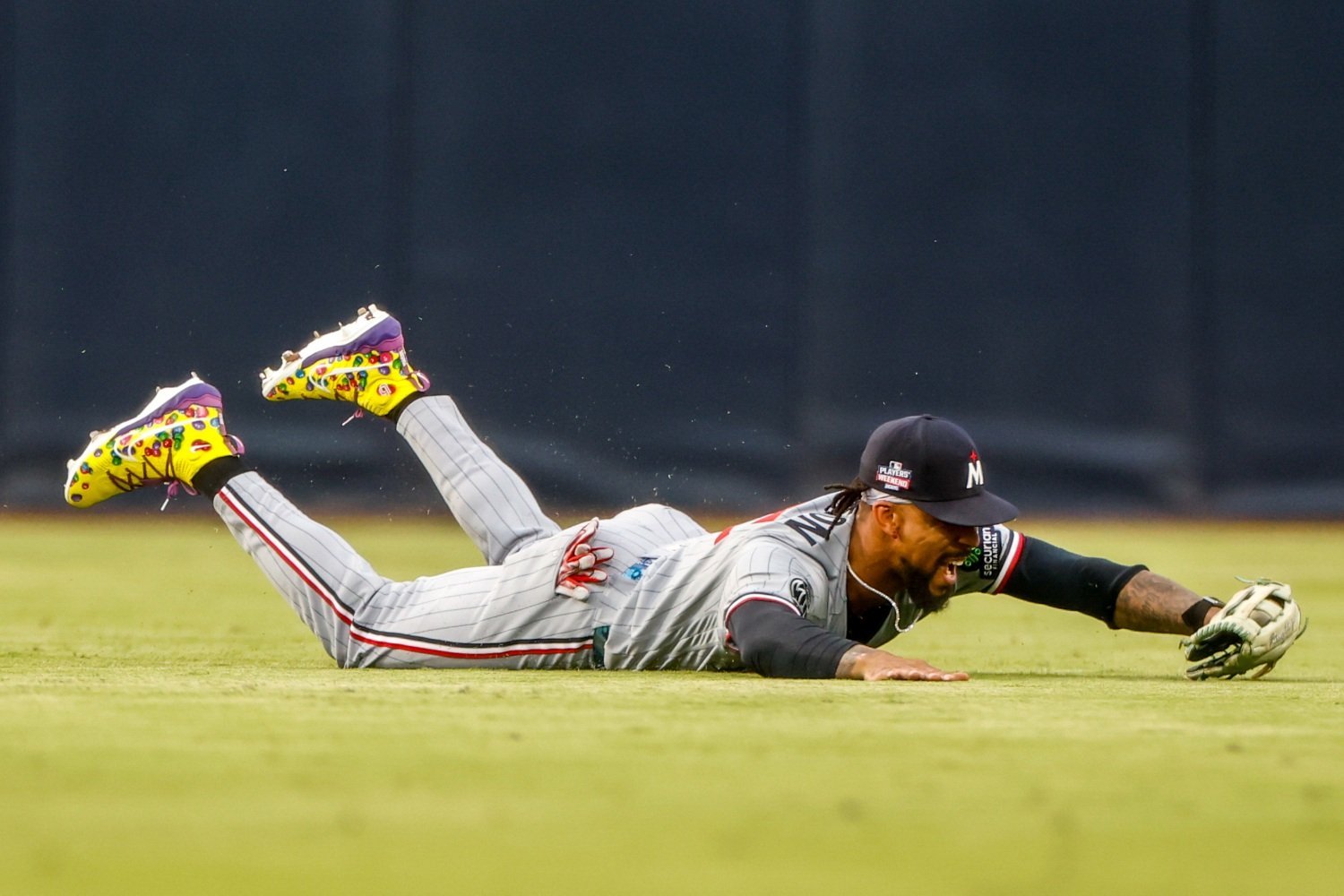 Willie Mays didn't start Game 2 of the 1973 World Series. He was almost a mascot by that point, playing out the string for the Mets as they won their second unexpected pennant in five years. At age 42, he'd been limited to playing first base and serving as a pinch-hitter for the final two months of the regular season, and even in those roles, he hadn't looked especially good. He did play a few innings in center at the end of the NLCS, and he got the start in Game 1 against the Oakland A's. However, he committed an ugly error in that first game of the Fall Classic, and it seemed like he might never step into the outfield again. New York had to call upon him to pinch-run in the top of the ninth, though, after starting center fielder Don Hahn was injured. Promptly, as he tried to accelerate and go from first to third on a single to right, he stumbled and nearly fell just before reaching second; he had to settle for going station-to-station. When he went out to center in the bottom of the ninth, he whiffed on a fly ball to left-center and fell down after missing it. Later, in extra innings, he missed another catchable ball and stumbled again. The Mets won that game in 12 innings, thanks in part to a hit by Mays. For many, though, that game was a tragic and devastating end to the greatest career in baseball history. That 12th-inning hit was the last Mays recorded in the bigs; he was kept out of the outfield for the balance of the series. For decades thereafter, that sequence was considered the epitome of a player sticking around too long—of being so thoroughly hollowed out that it was hard not to feel it taint the memory of the legendary player they once were. Things are not that dire for Byron Buxton—we hope. He's 10 years younger now than Mays was then. He still shows flashes of being a great athlete. The first half of this season was a dazzling display of what he can do: He had 25 home runs by June 22. Since that date, though, Buxton hasn't homered, and he has a .519 OPS. He's made two trips to the injured list, and played only 25 games in the last two months and change. There have been times when he looks completely unable to do the things he's always done, from beating out infield singles and would-be double play balls to flagging down fly balls to the gaps. He's had good days, or at least good plays, but he's never truly looked like himself long enough for anyone to muster much hope. On Tuesday night in West Sacramento (as conceptually close to doing it in Oakland, where Mays last played, as one can get right now), Buxton tried to cut off a Henry Bolte line drive ticketed for the wall in deepest right-center. Bolte had really caught it on the screws, at 112 MPH off the bat, and maybe Buxton tried a late acceleration because he realized he was in danger of being beaten. Maybe, since he was closing on the ball when something changed, he was preparing to bend low or to slide to snare the ball on the bounce. Either way, Buxton went to make a move, and then he didn't make one. Instead, he wound up standing near the wall in right-center, moving minimally and waiting for the trainer to arrive from the dugout. Bolte's hit had turned into an easy triple. Buxton limped to the gate in left field and back toward the visitors' clubhouse. Given his relative youth and the state of modern sports medicine, Buxton probably wasn't departing center field for the last time. He might be done out there for 2026, though. It's clear that he has a major injury to his right hip. Just as Mays's frailty was exposed by the fact that he couldn't keep his feet, the fact that Buxton couldn't get down to play the ball off his feet feels foreboding. All the historic evocations of that moment were unwelcome and uncomfortable. Buxton certainly isn't on Mays's level, but Mays is one of the giants of the game, in whose shadow all great center fielders toil and to whom everyone aspires to earn a comparison. Buxton has the remarkable power and speed that made Mays so captivating, and at their best, each was the best defensive center fielder in their league. Whatever Buxton has been playing through, it looks like his ability to do so has to be reevaluated. It's worth wondering whether, in a few years, we'll remember this as the moment when Buxton's time as a center fielder came to an ignominious end. It's not quite Mays and the World Series, but it felt just as sad and wrong. View the full article
 -
Time For Cubs To BUCKLE UP For The Stretch Run!
DiamondCentric posted an article in North Side Baseball
 With September rapidly approaching, can the Cubs make one final push at the NL Central crown? What are the early returns on Kevin Gausman and Clay Holmes? Listen on Apple Podcasts: https://podcasts.apple.com/us/podcast/the-north-side-baseball-podcast/id1798599313 Listen on Spotify: https://open.spotify.com/show/75wMGhBwlrDDYPt3kaF453 Listen on iHeartRadio: https://www.iheart.com/podcast/263-the-north-side-baseball-po-268998437/ Listen on Pocket Casts: https://pca.st/eey7h6ih Watch on YouTube: https://www.youtube.com/@northsidebaseball View the full article
 -
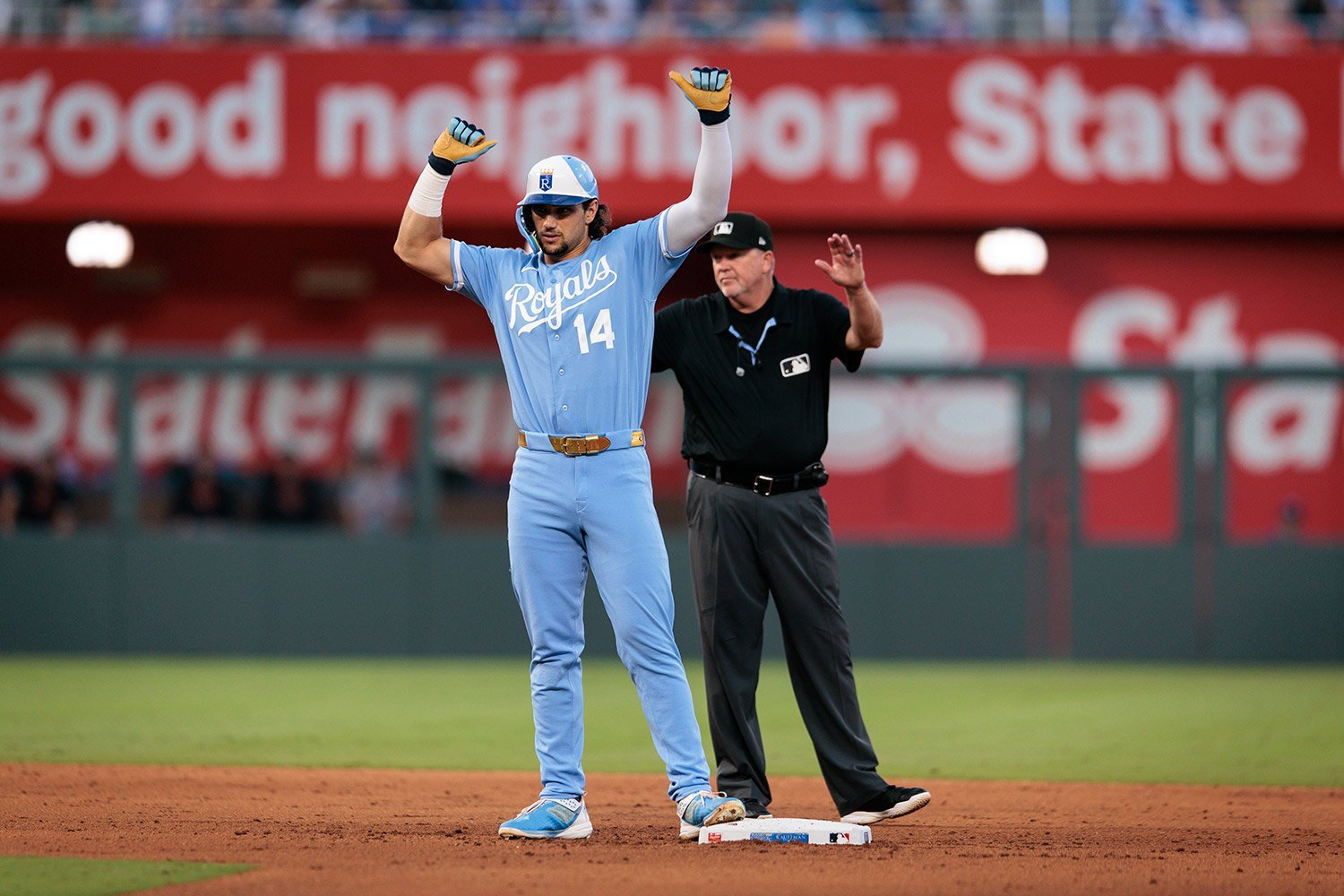 Looking at Jac Caglianone’s stats page on FanGraphs is an absolute delight, even if at some point you lost hope that he had enough talent to make an impact as a hitter in the major leagues. His debut last year with the Kansas City Royals was plagued by inconsistencies and only a few flashes of his potential in the batter’s box. But, for a rookie who was only 22 years old, there will always be some margin for error. Caglianone took advantage of it pretty quickly. Comparing his performance to last year shows two absurdly different versions. 2025: -1.6 fWAR, 46 wRC+, 7.8 BB%, 22.4 K%, .172 BABIP, 7 HR, 18 RBI, 232 PA 2026: 2.2 fWAR, 124 wRC+, 6.2 BB%, 25.8 K%, .336 BABIP, 22 HR, 60 RBI, 465 PA The first big difference between the two samples is plate appearances, as Caglianone has doubled last year’s sample. That starting point is much more impactful when we analyze the offensive breakout across all the major offensive patterns. Obviously, the differences in the power samples quickly grab your attention. But the categories that stand out to me the most are BABIP and the production shown by the jump in wRC+. However, the key point here goes far beyond the peripheral statistics. It all starts with his approach at the plate. Season Monthly O-Swing% Z-Swing% Swing% O-Contact% Z-Contact% Contact% F-Strike% SwStr% 2025 2025 38.5% 67.5% 51.3% 57.8% 87.5% 75.0% 62.5% 12.9% 2026 1st Half 35.5% 70.0% 51.7% 52.2% 82.5% 71.4% 62.8% 14.8% 2026 2nd Half 47.3% 77.6% 61.5% 62.5% 90.6% 79.2% 72.4% 12.8% Difference 11.8% 7.6% 9.8% 10.3% 8.1% 7.8% 9.6% -2.0% Caglianone is being more aggressive against pitches inside and outside the strike zone, and the results have been revealing: that extreme aggressiveness is accompanied by much more contact in this second half of the season. As you can see, his swing rate in the zone had already increased in the first half of this season compared to his 2025 metrics. The difference was contact, with a similar loss both inside and outside the zone. What comes next is even more absurd, as Caglianone has solved that reduction in contact with much more aggressiveness instead of trying to be more selective. This, obviously, is the starting point for getting to the best part of the adjustment. As you would expect, a more expansive swing is going to put many more balls in play. But, at the same time, aggressive hitters also end up reducing a large part of their quality of contact. On the other hand, what could tip the balance is if that additional contact can turn into production. Caglianone is achieving something that does not usually come with such marked aggressiveness: he is taking more swings, putting more balls in play, and turning that contact into production. His power when he gets to pull is evident, but what makes the adjustment even more interesting is that he is also producing when the ball ends up toward the opposite field. Season LD% GB% FB% HR/FB Pull% Cent% Oppo% Soft% Med% Hard% 2025 15.8% 50.0% 34.2% 13.0% 43.0% 37.3% 19.6% 21.5% 41.1% 37.3% 2026 22.8% 46.3% 30.9% 22.9% 46.9% 35.4% 17.7% 11.6% 45.7% 42.8% Differences 7.0% -3.7% -3.3% 9.9% 3.9% -1.9% -1.9% -9.9% 4.6% 5.5% Here you can see how two key points connect: his high aggressiveness in looking for pitches anywhere in the zone and how he has found a way to pull the ball more often. What he is achieving is lethal: a 7.0-percentage-point increase in line drives, a result that brings balance, especially by eliminating a portion of ground balls and fly balls. More hard hits, and a 9.9-percentage-point reduction in Soft%. There are only six qualified hitters with at least a 50% HR/FB rate and .300+ BABIP. Caglianone is in the elite! Name Team HR/FB BABIP GB/FB LD% GB% FB% IFFB% Drake Baldwin ATL 56.3% .351 4.00 24.5% 60.4% 15.1% 0.0% Jake Bauers MIL 56.0% .305 2.84 19.3% 59.7% 21.0% 0.0% Yordan Alvarez HOU 52.5% .450 1.60 30.7% 42.7% 26.7% 2.5% Willson Contreras BOS 51.2% .383 1.65 24.0% 47.3% 28.7% 4.7% Ryan O'Hearn PIT 50.0% .343 3.00 30.4% 52.2% 17.4% 5.0% Jac Caglianone KCR 50.0% .333 3.07 21.9% 58.9% 19.2% 10.7% Elite hitters such as Ben Rice, Luis García Jr. and Hunter Goodman have been left out because their respective BABIPs remained below .282. Well, Caglianone’s impact does not end here. Let’s now look at another of his potential highlights this year, and that is his production when he hits toward the opposite side of the field. I limited the filter to left-handed hitters with at least 50 plate appearances this year: Name Team PA wRC+ ISO BABIP AVG OBP SLG wOBA Garrett Mitchell MIL 63 270 .258 .525 .532 .532 .790 .570 Christian Yelich MIL 67 242 .313 .438 .463 .463 .776 .530 James Wood WSN 91 237 .396 .354 .418 .418 .813 .523 Tyler Soderstrom ATH 65 236 .415 .361 .400 .400 .815 .513 Jac Caglianone KCR 55 211 .236 .415 .436 .436 .673 .478 Caglianone is here again! And he is doing it in the Top 5 in wRC+ among the left-handed hitters in this group (211), along with other impressive numbers. Yes, I think you’ve already noticed that he is the only left-handed hitter who appears in both profiles: devastating power when pulling, and elite production when he manages to hit toward the opposite field. I’d like to know what you think, but personally, I love hitters who can combine this approach. I understand that power hitters should always be prepared to pull, but the fact that they can often make adjustments and find success toward the opposite side is another level. Caglianone is showing it in many ways. And he is doing it against all types of pitchers. Split Pitch % PA HR xSLG xwOBA BABIP Hard Hit% Bat Speed (MPH) Pull vs RHP 5.8% 96 9 .742 .498 .368 59.4% 79.3 Oppo vs RHP 2.6% 43 2 .687 .454 .341 58.1% 76.8 Pull vs LHP 2.5% 41 5 .672 .431 .333 46.3% 76.7 Oppo vs LHP 1.0% 16 0 .708 .492 .563 43.8% 72.7 What big signs can we see there? Look at the adjustment Caglianone is making against left-handed pitchers. What we see here is all about the outcome of the ball put in play. How does that .563 BABIP look? Yes, it has come on 16 balls in play, but the combination of BABIP and xwOBA has been fantastic, even with a lower bat speed. As we saw at the beginning, Caglianone has managed to find a highly productive balance once he does not get to pull. The correlation between BABIP and xSLG comes from his high hard-hit rates. Without a doubt, in the middle of such a disappointing season for the Royals, Caglianone’s big leap into the elite has become one of the most interesting stories of the entire season. The most encouraging thing is that he managed to unlock not only his power, but also an explosive aggressiveness that is leading to devastating contact. And all of that in a big leap during his second season at age 23. Of course, league adjustments will come, and some of that aggressiveness will have to adjust. But, for now, it is a pleasure to enjoy the feeling Caglianone is creating every time he is announced to step up to the plate. View the full article
 -
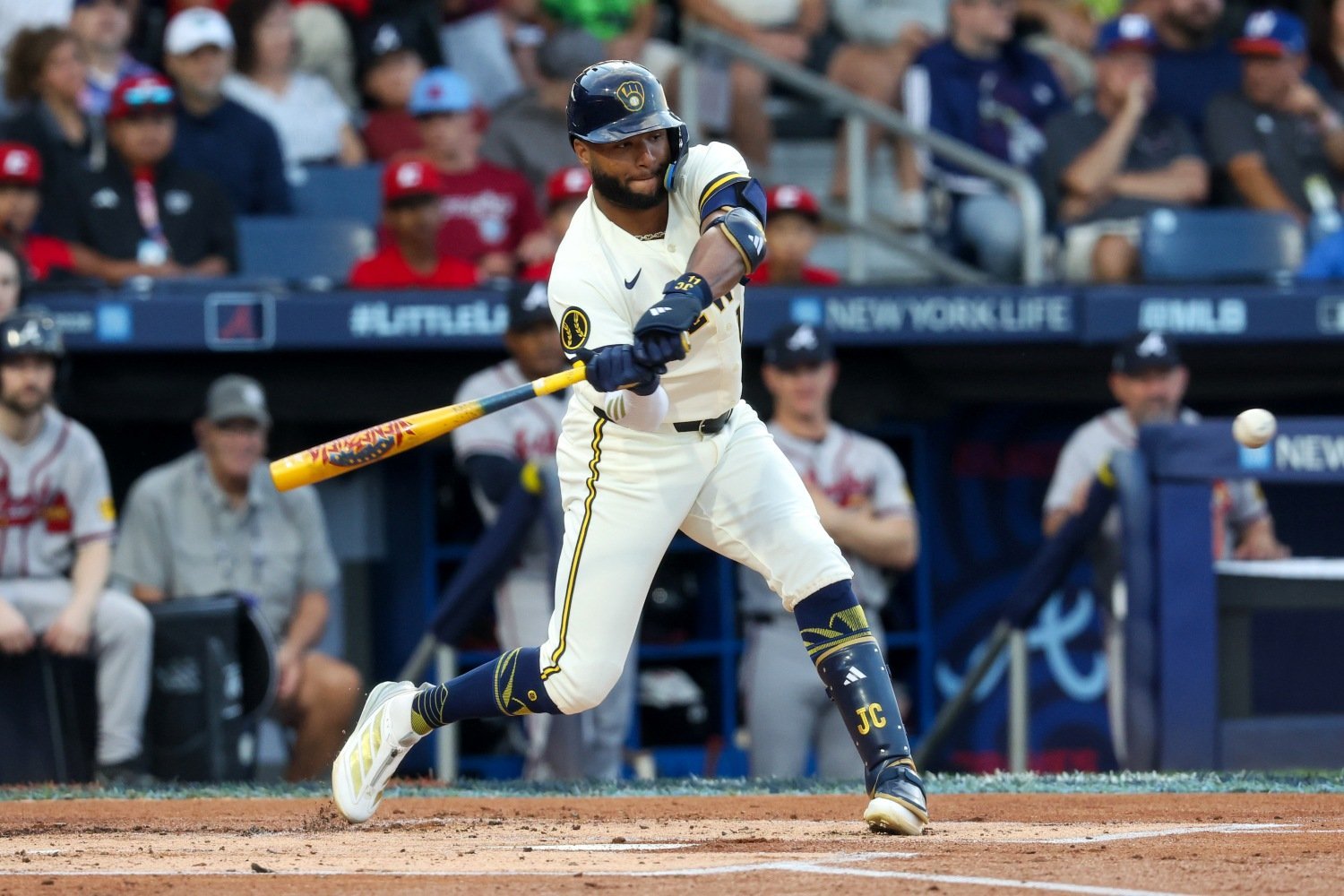 Jackson Chourio has been one of the Milwaukee Brewers' best hitters in 2026, sitting second behind Jake Bauers in home runs, wRC+ and slugging percentage. Yet despite that impressive overall production, Chourio has managed just 50 RBIs in just shy of 100 games. His frequent appearances at the top of the lineup and Milwaukee's lack of production behind him explain some of that, but there's a more interesting question hiding beneath the RBI total: does Chourio's approach at the plate change when there are runners on base? His RBI total isn't necessarily evidence of poor hitting, given his frequent spot at the top of the order, but it does raise an interesting question: does Chourio's offensive approach actually change when RBI opportunities arise? Let's take a look at his hitting metrics bit situation: Bases Empty Runners on Base Runners in Scoring Position Plate Appearances 252 185 119 Expected BA 0.296 0.205 0.199 Expected Slugging 0.547 0.371 0.289 Expected WOBA 0.388 0.273 0.247 BB% 8.70% 8.10% 10.90% K% 23.00% 25.40% 25.20% Hard Hit % 50.90% 41.30% 38.70% Chourio's expected offensive production drops dramatically when runners are on base. That's not something you would necessarily expect given how comfortable he's been under the spotlight in October, where Chourio has posted a 183 wRC+, but the difference in production raises the possibility that his approach is changing when the situation becomes more important. One of the best ways to investigate that is by looking at his swing decisions. Swing Decisions If we use FanGraphs to break down Chourio's swings by situation, a pattern begins to emerge. FanGraphs breaks the plate into three categories. The "heart" is self-explanatory, covering pitches over the middle of the plate. The shadow zone encompasses the ed ges of the strike zone, both inside and outside the ABS zone, while chase covers pitches comfortably outside the strike zone. Overall, Chourio is swinging more often at pitches over the middle of the plate, but he's also becoming more aggressive in each of the other zones: Pitchers are giving him less to hit over the heart of the plate and a lot more in the shadow zone, which suggests he's been on the receiving end of some good pitches. That's okay in two strike counts, but those pitches create a lot of weaker contact off Chourio's bat, and are bringing about cheaper outs early in an at bat when Chourio could be trying to gain count leverage and force hitter's into his hitting zone. That's one of the reason's he's been more successful with bases empty, he's waiting on his pitch to hit rather than forcing it against pitches on the edges of the strike zone. If we break the shadow zone down further, it's even more damning. Fangraphs has been able to separate the shadow zone that's inside vs outside the ABS strike zone, and it's outside the zone that Chourio is swinging at more often: The jump from a 45% swing rate in the outer shadow zone to around 60% with runners in scoring position is significant, and it appears to be where Chourio is losing some of the patience that makes him such an effective hitter. He's expanding the zone more frequently, and that can lead to weaker contact and less favorable counts. Overall, he's seeing fewer called strikes, more swinging strikes and fewer first-pitch strikes as the situation becomes more important. That points toward an approach that is becoming more aggressive as the pressure increases. The obvious solution is to retain the discipline that's served him so well with the bases empty, but whether Chourio can do that consistently in RBI situations remains to be seen. It's easy to forget that Chourio is just 22 years old. Yes, this is his third year in the major leagues, and there may be an expectation that he has a more concrete idea of his approach at the plate by now. At that age, however, he also doesn't have the same experience of dealing with adversity and pressure that comes with a longer career. Those experiences can be just as important in helping a young player manage difficult situations as anything he's doing mechanically at the plate. The good news is that Chourio has already shown he has an approach that works. With the bases empty, he's patient enough to wait for pitches he can drive, and the results speak for themselves. The challenge now is carrying that same discipline into situations where the temptation to do more is greatest. View the full article
 -
4 Triple-A Players Not Named Walker Jenkins Who Can Help the Twins
DiamondCentric posted an article in Twins Daily
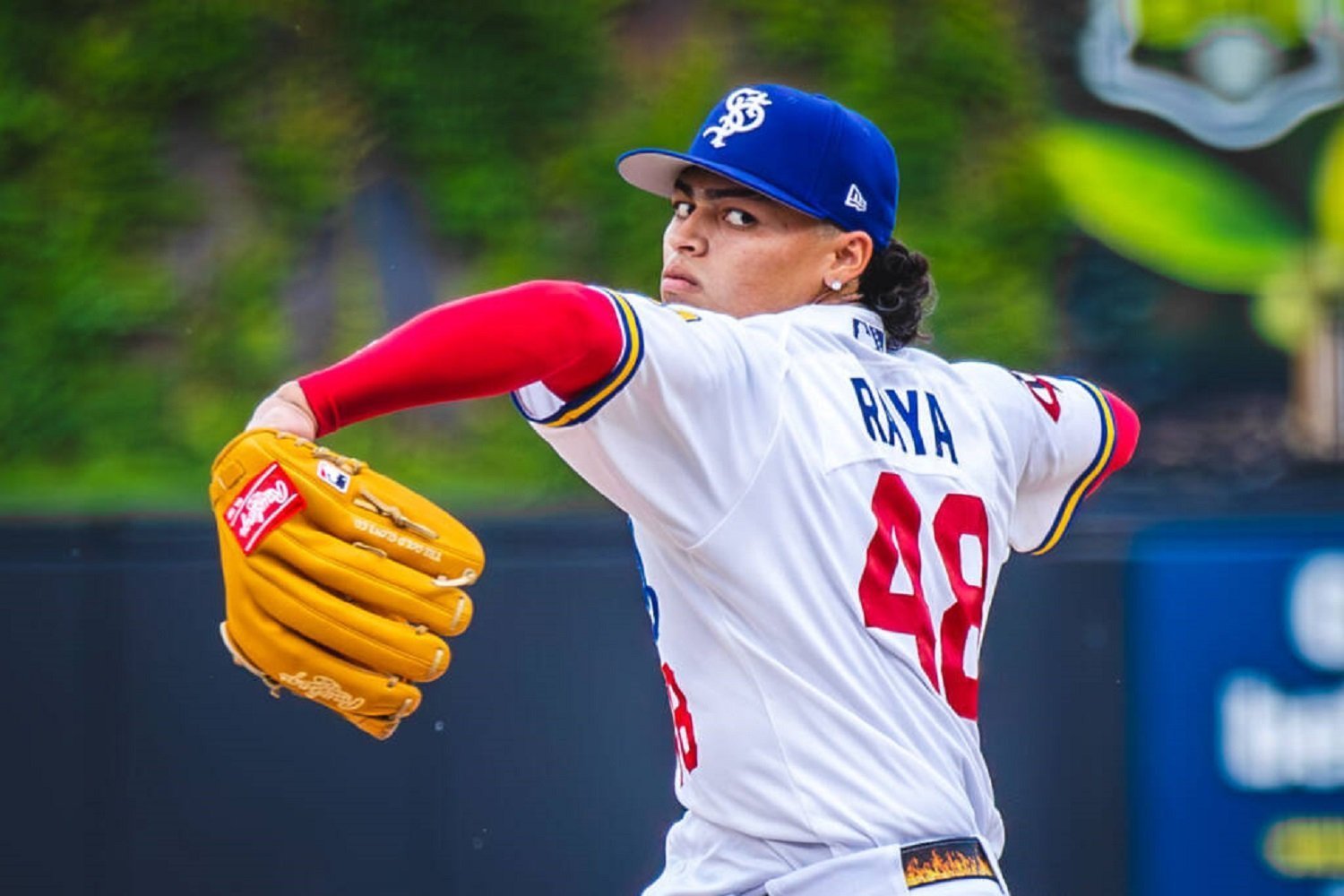 The Minnesota Twins have plenty of questions to answer as they navigate the final weeks of the regular season. Some of those will be answered by players already on the major-league roster. Others could be answered by someone currently playing for the St. Paul Saints. Walker Jenkins is the obvious name to watch. The top prospect has continued to make his case at Triple-A, and there's plenty of interest in when the Twins might decide he is ready for the next step. But Jenkins isn't the only player in Triple-A who could potentially help Minnesota during the stretch run. Whether it's an injury, a matchup, a need for defensive versatility or simply a desire to add another option, the Twins have several players in St. Paul who could get the call. Here are four names worth watching. OF Matt Wallner Truthfully, it feels like Wallner's place in the organization's long-term plans has evaporated. That doesn't mean the Twins can't find a use for him this season. Wallner recently set a new single-season home run record (23 homers, 135 wRC+) for the Saints, continuing to show the type of power that made him such an intriguing prospect in the first place. His ability to change a game with one swing remains valuable, even if his path to consistent playing time in Minnesota isn't particularly clear. The Twins don't necessarily need another left-handed bat right now. That's one of the biggest obstacles standing in Wallner's way. Still, injuries have a way of changing roster needs quickly. If an outfielder or another left-handed hitter goes down, Wallner becomes an easy name to consider. He's already on the 40-man roster, which eliminates another potential hurdle. Perhaps the Twins want to give Wallner one more opportunity to show that he can translate his power into consistent major-league production. OF/1B Gabriel Gonzalez Gonzalez's stock has taken a hit this season after he enjoyed a breakout 2025 campaign and was named Twins Daily's Minor League Hitter of the Year. His overall numbers haven't matched last year's production, but there are reasons to keep watching. Gonzalez owns a .753 OPS at Triple-A this season, which isn't overwhelming. However, his August performance has been much more encouraging. Through his first 12 games of the month, Gonzalez has posted a 1.054 OPS with four home runs. Perhaps even more encouraging, he's walked six times compared to only three strikeouts during that stretch. The Twins could eventually need another right-handed bench option, and Gonzalez has the offensive upside to make that role interesting. The August numbers don't erase the struggles from earlier in the season, but they do provide a reminder of why Gonzalez was once viewed as one of the organization's more promising young hitters. If he continues to produce, Minnesota could have an interesting decision to make. UTL Ben Ross Ross offers something the Twins could find particularly useful during a playoff push: defensive versatility. Like Gonzalez, Ross is a right-handed hitter. Unlike Gonzalez, however, Ross can provide the type of defensive flexibility that could allow the Twins to move him around the field and find favorable matchups. And he's not simply surviving offensively. Ross has posted a .917 OPS for the season, making him one of the more productive hitters in the Saints' lineup. He's been particularly effective against left-handed pitching, where he owns a 1.003 OPS. That combination could make Ross an intriguing bench option. A player who can cover multiple positions while providing a legitimate offensive threat against certain matchups can be extremely useful over the final month of a season. The Twins don't necessarily need another everyday player. They could need someone who makes the roster more flexible. Ross has a chance to be that player. RHP Marco Raya The bullpen has been much better for Minnesota in recent weeks, but that doesn't mean the Twins can stop looking for reinforcements. At some point, every team needs to dip into its minor-league depth. Raya's first season as a full-time reliever has been consistently inconsistent. There have been flashes of the pitcher who made him one of the organization's more interesting pitching prospects (25.6 K%), but the results haven't always been there (5.88 FIP). He's also been less effective when asked to work multiple innings. That could actually help define his potential role if the Twins decide to call him up. Rather than asking Raya to be a multi-inning weapon, Minnesota could look to simplify his assignment. One inning. One appearance. Attack hitters. Let him use his stuff in shorter bursts. That doesn't guarantee success, but the role could give Raya a better opportunity to succeed at the major-league level. And with the number of innings a bullpen has to absorb over the final weeks of a playoff race, another arm could become necessary sooner than expected. Who Gets the Call? The Twins don't have to make a move with any of these four players. That's part of what makes the situation interesting. They have options in Triple-A, and each player offers something different. Wallner brings power and familiarity with the organization. Gonzalez has started to show signs of rediscovering his offensive stroke. Ross offers right-handed production and defensive flexibility. Raya could provide another arm if the bullpen needs reinforcements. Then there's Jenkins, whose situation will continue to draw the most attention. The stretch run isn't just about the players currently on the roster. It's also about knowing which minor-league options can help when circumstances change. The Twins have several of those options in St. Paul. Will any of these players be added to the roster? Who else could help the Twins down the stretch? Leave a comment and start the discussion. View the full article
 -
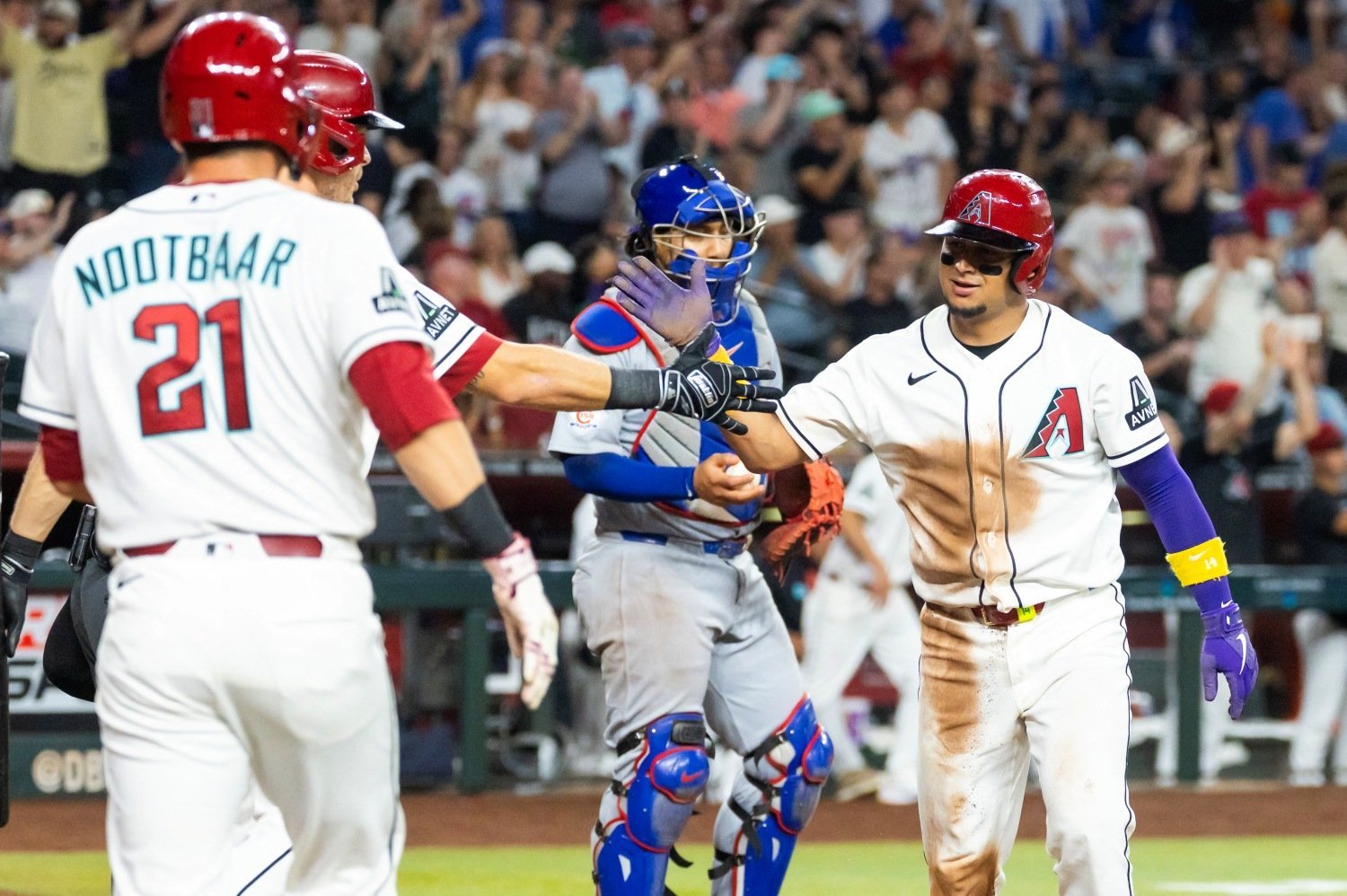 Calling the Cubs' loss Tuesday night in Arizona a gut punch would be inaccurate. A gut punch is a single, sudden blow to which you left yourself open, but which required the opponent to spot the vulnerability instantly and attack without hesitation or error. What happened to Chicago was more like losing your cap on a windy day; missing a chance to seize it before it spins away; and then plunging down a roadside embankment chasing the damn thing because you weren't watching where you were going. Let's review the carnage. Clay Holmes did everything the team could have asked of him. A sudden ace with a chance to pitch at the front end of Chicago's postseason rotation, Holmes was stellar, spinning seven scoreless innings against a Diamondbacks lineup that lacks some of its dynamism right now amid the ongoing Ketel Marte drama. Meanwhile, Ian Happ paid off a great at-bat with a three-run homer, and the team even tacked on an early insurance run. It looked like smooth sailing. To ensure it stayed that way, Holmes got some defensive help from newly-minted second baseman Pedro Ramírez. After seven innings, the Cubs not only enjoyed a comfortable lead, but hadn't been scored upon since early Sunday. They'd scored 30 runs since then, the first time they've put up that many runs between opponent tallies since 1969. It was all looking easy. That was the trap. It's never easy. In the bottom of the eighth, the Cubs found that out the hard way. Daniel Palencia's efforts to get back into a groove since coming off the injured list have been erratic, in costly ways, and this was no exception. After one quick out, he hit a batter, then walked a batter. He struck out the dangerous Corbin Carroll, and he had a 2-2 count on Gabriel Moreno; he was almost out of the jam. Then came that gust of horrible wind: a check-swing grounder by Moreno that somehow stayed fair up the first-base line. It eluded Michael Busch and trickled down the line, allowing one run to score and resulting in two more in scoring position. A Geraldo Perdomo single plated both runners, and Craig Counsell had to lift Palencia in favor of closer Jacob Webb. Four-out saves are a tall order for Webb. His improvements this season have been real, and he's a legitimate high-leverage arm, but he's not a top-tier relief ace. That means he's going to fail sometimes. To minimize the number of times those failures happen, it's important to avoid asking too much of him too often. To minimize the impact of the times when he does fail, it's important to have a decent-sized margin for error as often as possible. Lately, the Cubs are asking a lot of Webb, and doing so when the margin for error is minimal. Flawed Catch and Tag Cost Cubs Chance to End Game on Stolen Base Attempt Thus, even after he got the team out of the eighth with a 4-3 lead intact, Webb had a gauntlet to run, and this time, you knew it wouldn't be easy. With one out in the bottom of the ninth, he walked Tim Tawa. With two outs and pinch-hitter Ryan Waldschmidt at the plate, pinch-runner Jose Fernandez took off for second base, and that moment came when the Cubs could have spared themselves the loss of that cap to the win, before it even lifted off their head. Webb did a reasonably good job holding Fernandez. Miguel Amaya got off a good (though certainly not a great) throw, and there was a chance—or maybe just a ghost of a chance—to get Fernandez. The play was close enough that, even after the initial safe call, the Cubs elected to go to replay, because if the out had been converted, it would have ended the game. It was a very quick review; the call was confirmed. But we don't have to focus on the fact that Fernandez was safe; let's examine how close he came to being out, and whether he should have been. Amaya's throws to second on steal attempts have largely been quite accurate this year. He rates as average in terms of pure arm strength, the rapidity of his exchange and release, and that accuracy, but he makes lots of throws that feel even more accurate than the metrics reflect. He belongs to the class of catchers who generally see their throws tail into the runner, in a good way. Here's an example: SzRCeWxfWGw0TUFRPT1fQVZkWUJWY0hYbGNBV1FZR1Z3QUhVRkJmQUFNRVZGVUFDMVVEQ1ZFR1VBTURCZ1VE.mp4 There are other times when Amaya seems to be throwing a bit wide of the bag to the third-base side, only for the ball to run back over the base almost perfectly, like this: Uk85UjNfWGw0TUFRPT1fVjFJQ0FGRU1VRkFBWEFNQUJRQUhBUTVSQUFNR1dsRUFVMVlGVlFFSEIxRlZVVk5X.mp4 Unfortunately, the throw he made Tuesday night wasn't quite like either of those. It stayed true, and it stayed on the third-base side of second. Here's where Ramírez was (and Fernandez, the incoming runner, too) when the ball arrived: At this point, Fernandez is only a few feet from the base, and getting all the way from where Ramírez catches it to the runner's arm or shoulder before their hand reaches the base is no easy task. At this point, there was no chance of getting an out on the play. However, even a beat sooner, there was a chance to do so. Understanding how that chance slipped away offers some insight into the nature of this kind of play. Here's where everyone relevant was when the Diamondbacks broadcast first cut from the center-field camera to the one high and behind home plate. That looks innnocuous, but there's a morsel to comment on even here. Ramírez is in this habit, when playing second: he curls to the shortstop side of the bag, then gets out in front of it. That's how Dansby Swanson receives throws on plays like this one, but it's not how you typically see a second baseman do so. Most of them prefer to achieve that same position right at the front edge of the bag via the right side of the keystone. Here's Nico Hoerner on the play against the Pirates that we looked at earlier: This initially seems like a detail so small as not to matter, or at least to be rightfully subject to the comfort and whims of each inidividual, but how you address the base can change how the whole play works. Broadly speaking, the sooner you get to that spot right in front of the base, the less hurried all of your actions thereafter will be. Which side you arrive on will also color the way you prepare your body for the quick-twitch movements required to convert a caught-stealing opportunity, and what type of movement you (subconsciously) choose when that situation presents itself. Here's a key moment in the flight of this particular throw. Ramírez established his initial position, but now, he's reacting to the throw itself. The rest of this play is an improvisation, based on past reps that bear at least some resemblance; this is the last moment when he'd really deciding how to play the ball. By now, it's clear that Amaya's arm angle was a hair higher than usual, and that this ball is going to end up wide of the bag on the third-base side. In a way, that works out nicely for Ramírez, who showed up on that side of it, anyway. Now, though, he has to react and move quickly, to get into position for when the ball arrives. Here's the fateful step he chooses to do that. Just before this, Ramírez had taken a step that put his left foot about a foot in front of second base. That was a bit too aggressive, but it got him into position to stick that right foot out farther, building potential energy within his frame. It also gave him something firm to put his weight on, so he could edit that first step with the left foot. Had he turned his hips a bit more toward first base at that moment and pulled the left leg through, he could have moved toward the near-default of Swanson, an expert on these plays. He could have dropped into the one-knee tagging stance Swanson adopts on virtually every such play. (Yes, that stance can still work even when a throw looks like Tuesday night's did, a bit to the third-base side of the optimal spot.) Instead, though, Ramírez's rebalancing step with the left foot just went backward. He achieved a wider base and a powerful position for the turn-and-dive tag, but his hips got locked into place. From the reverse angle, you can see (as he's about to receive the ball) that he wasn't in a stable position where he could shift and turn off that left leg, either. By the time the ball got to him, Ramírez was pretty off-balance. He needed some of that lean, because he was a long way from getting his tag to its mark and was running out of time, but some of the awkwardness in his position really was just that. He ended up reaching for the ball, snaring it a bit sooner than was necessary, and his tag couldn't reach Fernandez in time. This might sound overwrought, but a throw-and-catch to nail a would-be baserunner really is a rapport play. Amaya and Ramírez, unfortunately, have almost no established on-field rapport. That matters on multiple levels. Catchers get used to throwing with certain defenders' moves and positions in mind. Infielders, on the other end, move in response to and in anticipation of a catcher's typical throws. Greater trust between catcher and middle infielder allows those infielders to let the ball travel more, which nearly always produces an earlier tag arrival than going and snatching the ball. Swanson is special as a receiver of these throws, too. His absence is heavily felt, on plays like this just as on balls hit in the hole or when it's time to turn a double play. But as is true in other areas, moving Hoerner over to stop the gap also leads to a downstream downgrade. Hoerner not only has much more experience working with Amaya, but is a lighter-footed athlete around the base than Ramírez is. Here (on the same play we studied above), look how he creates a moment in which both of his feet are off the ground just before the ball arrives, maximizing his opportunity to contort himself where needed to cover a big space with a lightning-fast tag move. Less explosive and less polished, Ramírez just isn't the whiz that Swanson and Hoerner are, and on the fateful play Tuesday night, those disadvantages were compounded by the fact that he and Amaya have worked together very little on throws like these. Swanson and Hoerner each could have gotten an out on that play, ending the game. Ramírez couldn't make that difficult play, so the game continued. Jacob Webb's Sudden Home Run Problem Dooms Cubs That just leaves falling down a hill, from our earlier metaphor. That's just what Webb did next. He hung a 2-1 slider in the thick of the zone to Waldschmidt, who launched a two-run, walkoff homer. It was the third time the team has been walked off in their last five gaesm, and the second time it came on a homer against Webb. The righty didn't have great feel for his fastball or for his signature changeup, so he went to the slider he's taken pride in this year—the one he believes has made him less predictable and harder to hit for right-handed batters. He just didn't execute it. It's always the little things that add up to something big and insurmountable. It's never just bad luck. It's bad luck, compounded by a slight deficiency in a skill you barely notice most of the time, and then seasoned with a combination of a bad mistake and an opportunistic foe. The Cubs found a uniquely excruciating way to lose Tuesday night, with a few small mistakes made worse by circumstances and sequencing. That's not easy to shake off, no matter what, but coming on the heels of two other games that slipped away in similarly miserable ways makes it exponentially worse. All the team can do is come back Wednesday and try to secure a series win, hoping they gained at least a little experience, rapport and wisdom from their failures. View the full article
 -
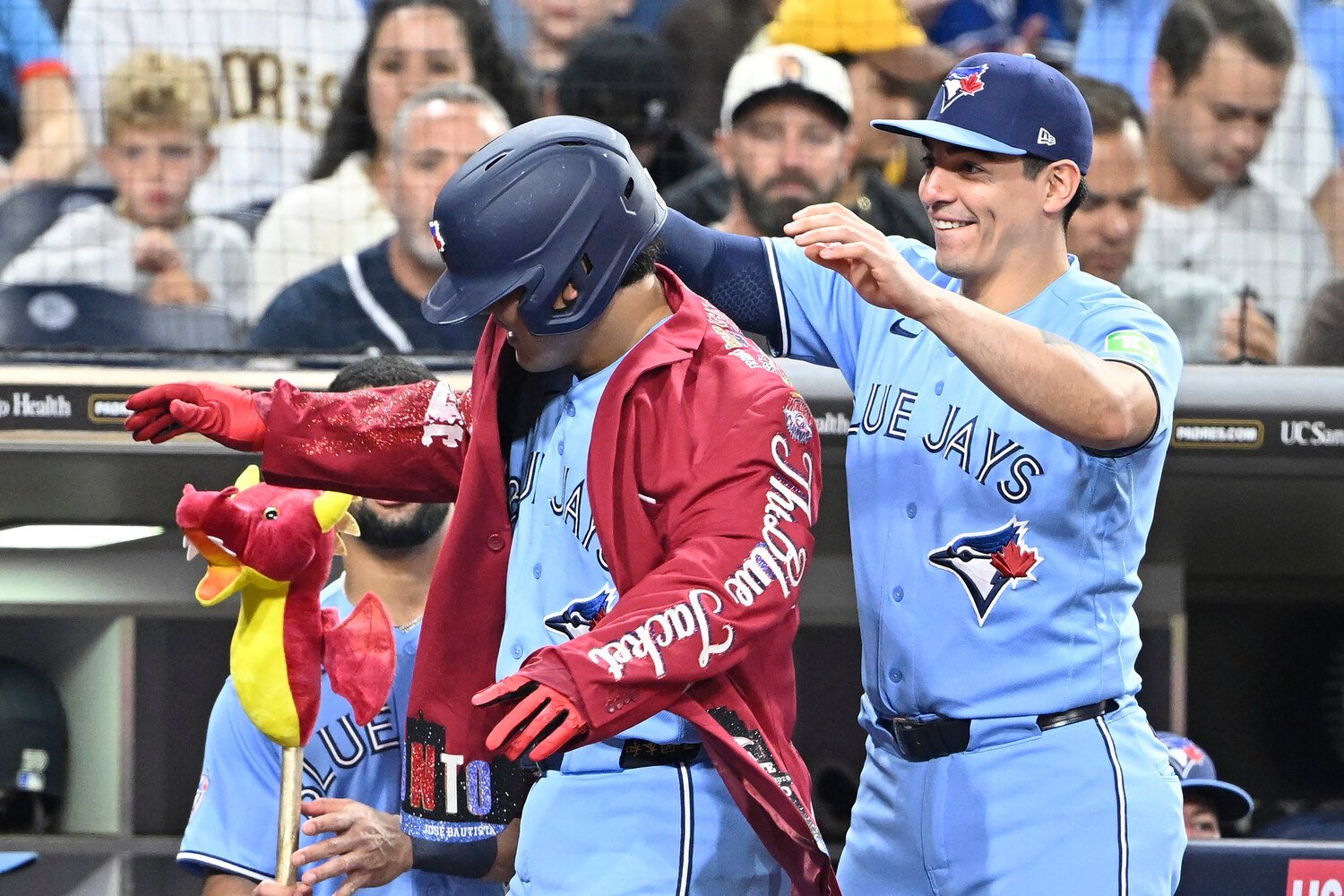 At some point during spring training, I realized the Blue Jays had a real shot to win the AL Rookie of the Year Award for the first time in 24 years. At the time, I felt silly that I hadn't thought of it sooner. Maybe that was because Kazuma Okamoto and Trey Yesavage didn't feel like rookies. Okamoto was already an NPB superstar, and Yesavage started Game 1 of the freaking World Series. Or maybe I had just forgotten that Blue Jays players were allowed to win Rookie of the Year. After all, it feels like a lifetime ago that Eric Hinske took home the prize in 2002. In any case, the Blue Jays' Rookie of the Year drought will continue for at least another year. The AL Rookie of the Year will be Kevin McGonigle, or maybe Parker Messick or Munetaka Murakami. It won't be Yesavage or Okamoto. However, 2026 has still been a year to celebrate when it comes to rookie performance. Between the contributions from Okamoto, Yesavage, and a handful of others, year 50 of Blue Jays baseball might just be the greatest team-wide rookie season in franchise history. On the position player side, Okamoto leads the team in home runs, runs, and RBI. His 26 homers (entering play on August 25) are already a franchise rookie record, and he's only 10 RBI away from tying Hinske in that category as well. Okamoto's big power isn't all that surprising. He led NPB's Central League in home runs three times and RBI twice. Far more unexpected has been Brandon Valenzuela's success. The 25-year-old started the year with Triple-A Buffalo but stepped up in a major way when Alejandro Kirk broke his thumb. He has looked like an elite defensive catcher, nearly on par with Kirk himself, thanks to masterful framing and a powerful arm. His offense remains a work in progress, but a red-hot stretch in May and June has his full-season batting line looking perfectly respectable. In addition to Okamoto and Valenzuela, the Jays have recently gotten some great production out of outfielder Brett Bateman, who came over in the Kevin Gausman trade. Bateman is batting .305 through his first 14 games, earning himself the leadoff spot in the order. He's had some clutch hits and made some nice catches; with Bateman in center, the losses of Gausman and Daulton Varsho have been significantly easier to stomach. Yohendrick Piñango, Charles McAdoo, and even Sean Keys have had their moments too. Altogether, those six have combined for 240 hits, 42 homers, 121 runs, 135 RBI, and 4.3 FanGraphs WAR. By the end of the season, Toronto's 2026 rookie class should rank third in franchise history in each of those statistics. The only seasons in which the Blue Jays received significantly more offensive production from their rookies were 2002 and 2019. In 2019, the Jays had an unusually high number of first-year players who helped the rookie class compile counting stats. Rookies took 2,481 PA for the Jays that year, about 500 more than in any other season. For comparison, this year's rookie class will likely end up ranking third in franchise history – with less than half as many trips to the plate. Blue Jays Rookie Hitters, 2019 (min. 5 PA) Name PA H HR R RBI fWAR Vladimir Guerrero Jr. 514 126 15 52 69 0.3 Cavan Biggio 430 83 16 66 48 2.6 Rowdy Tellez 409 84 21 49 54 -0.4 Danny Jansen 384 72 13 41 43 1.8 Billy McKinney 276 54 12 37 28 -0.4 Bo Bichette 212 61 11 32 21 1.4 Reese McGuire 105 29 5 14 11 1.2 Jonathan Davis 95 15 2 8 6 -0.1 Anthony Alford 30 5 1 3 1 0.0 Breyvic Valera 15 4 1 2 3 0.0 Data via FanGraphs Until 2019, it was the 2002 rookie class that held the franchise record for plate appearances in a season with 1,975. That 2002 group finished with 6.2 fWAR – nearly as much as the 2019 group's 6.5 fWAR – in about 80% of the playing time. Of course, the vast majority of that production came from one player: Hinske. Blue Jays Rookie Hitters, 2002 (min. 5 PA) Name PA H HR R RBI fWAR Eric Hinske 650 158 24 99 84 4.8 Tom Wilson 302 68 8 33 37 0.4 Josh Phelps 287 82 15 41 58 1.5 Ken Huckaby 283 67 3 29 22 -0.3 Orlando Hudson 207 53 4 20 23 0.7 Joe Lawrence 174 27 2 16 15 -0.9 Jayson Werth 53 12 0 4 6 0.3 Kevin Cash 15 2 0 1 0 -0.2 On a per-game basis, you could argue that the 2026 group of rookie hitters has outperformed the 2002 and 2019 cohorts. They have a higher wRC+, better defensive metrics, and more fWAR per PA. However, I think that would be missing the point. Counting stats matter in a conversation like this. One reason the 2002 and 2019 classes were so impressive was precisely because of the number of rookies who contributed. So, when it comes to the position players alone, the 2002 and 2019 classes still have this year's group beat. But when you consider pitching as well, the 2026 class jumps ahead. Blue Jays Rookie Pitchers, Selected Years Year IP ERA ERA- FIP FIP- 2026 229.0 3.89 94 3.91 93 2019 464.1 5.04 110 4.95 107 2002 316.1 5.01 109 5.24 118 The Blue Jays have had great rookie hitting seasons before. They've had great rookie pitching seasons before. But this might be the first time Toronto's new class of major leaguers has provided both quantity and quality on either side of the ball. If you combine pitchers and position players, the Blue Jays' 2026 rookie class already ranks second in franchise history, with 6.7 fWAR (and another 30 games left to play). They're about one win ahead of the 2002 rookie class and well ahead of any other year... except 2019. The 2019 class is all but uncatchable with 9.0 combined fWAR. As you probably remember, 2019 was a transitional year for the Blue Jays. They lost 95 games for the first time since their early years from 1977-80. Rookies took 40% of their plate appearances and threw one-third of their innings. Rookies have never seen anything close to that much playing time in any other season in franchise history. Now, I'm going to contradict myself. I said earlier that counting stats are important in a conversation like this. And they are! But rookies compiling playing time is far less impressive when their performance in that playing time is so poor. Blue Jays rookie pitchers compiled pretty much the same fWAR in 2019 as this year's group, but it took them twice as many innings to do so. And they weren't pitching all those innings because they earned the opportunity. They were pitching all those innings because the team didn't have any better options. In contrast, the Blue Jays have seen some truly excellent performances from a pair of rookie hurlers this year: Yesavage and Spencer Miles. Yesavage owns a 3.65 ERA and 3.36 xERA in 18 starts. He has battled through injuries to show that his 2025 breakout was no fluke. If Yesavage is comparable to Okamoto (i.e., the rookie we expected to be great), then Miles is the pitching staff's equivalent to Valenzuela. No one could have seen this coming from the Rule 5 draft pick with 14.2 professional innings to his name. But Miles has dominated as the most versatile arm on John Schneider's staff. In 80.1 innings across 40 games, he owns a 3.02 ERA and 3.00 xERA, with five wins, a save, and a hold. He can start, he can pitch in long relief, and he can deliver in high-leverage spots. Every team wants a pitcher like Miles, and the Blue Jays found him practically for free. The Blue Jays have seen good rookie seasons before, but I don't think they've ever had four rookies in one season who stood out as much as Okamoto, Valenzuela, Yesavage and Miles. Combine what the Jays have received from those four with the bits and pieces they've gotten from names like Bateman, Piñango, McAdoo, and Adam Macko (plus what's still to come; more Ricky Tiedemann, perhaps?), and there's no question this has been an outstanding year for Blue Jays rookies. Maybe even the best we've ever seen. Stats updated prior to play on August 25. View the full article
 -
 September is right around the corner, and even as the Boston Red Sox continue to rack up series wins and pull off miraculous come -from-behind victories seemingly every other night, there are still plenty of questions that remain about the future of this club. With just over a month to go, here’s a breakdown of the biggest Red Sox storylines to follow before the 2026 campaign comes to a close. Remaining Red Sox Schedule, At A Glance Games Remaining: 31 Home / Road: 15 / 16 Games vs. .500+ Teams: 18 Remaining Strength of Schedule: 18th-easiest in MLB 5 Key Red Sox Storylines in the Final 5 Weeks Will We See Franklin Arias in September? It’s kind of crazy to think that even in the midst of a playoff push, perhaps the number one question on every Red Sox fans’ mind is: Will we see Franklin Arias called up when rosters expand in September? Fans have every right to be excited about Arias as Boston’s top prospect, and the third ranked in all of baseball, has done nothing but rake since his promotion from Double-A Portland to Triple-A Worcester on July 24. In 23 games, Arias has slashed .292/.363/.483/.846 with four homers and 22 RBI to go along with 26 hits and 12 runs scored. What’s been interesting to keep an eye on is how the WooSox have deployed him thus far, playing him 12 games at short (102 innings) and seven at second base (62 innings), which could be an indicator of how the Red Sox may choose to utilize him if he gets the call to join them next month. While there is a lot to love about his game, and he may provide more of a spark than some other options Boston has waiting to come off the IL, a promotion for Arias may not be as easy as some fans hope it to be. While the act of adding him to the 40-man roster won’t be a difficult one, as the Red Sox currently have two open spots, the second guess will stem from the possibility of a lockout next season. If Arias does get added to the roster and the lockout does occur, then he will lose the ability to utilize team facilities, as opposed to being unaffected if he were to stay off and in the minors. As exciting as his talents may be, the Red Sox decision makers must walk a very narrow line when it comes to deciding the developmental future of their next potential star in the making. Where Do Roman Anthony And Garrett Crochet Slot In When They Return? If you told me a couple months ago there was a realistic chance of seeing Roman Anthony or Garrett Crochet again in 2026 I probably would’ve laughed in your face and told you you were insane. As September approaches, however, those pipe dreams seem to be becoming a reality more and more each day based on the latest reports for each player. Anthony has been partaking in a rehab assignment with Portland where in four games he’s 3-for-11 with one home run, three RBIs, and a .994 OPS while splitting time between left field and designated hitter. Hopes are obviously high for a sooner rather than later return for Anthony, as Chad Tracy recently told the media that he’d be re-evaluated on Thursday after his game with the WooSox. It will be curious to see where Tracy chooses to slot Anthony into the lineup when he does return, one that is deeper now with the addition of Adley Rutschman, but could still use a more competitive approach out of its leadoff spot. Red Sox Leadoff Hitter Team Rankings Category Statistic MLB Rank AL Rank AVG .227 27th 13th OBP .310 25th 13th SLG .376 23rd 12th OPS .686 25th 12th Hits 122 25th 12th wRC+ 91 28th 15th wOBA .304 25th 13th BABIP .280 23rd 11th When it comes to Crochet, his return doesn’t seem nearly as close as Anthony’s, but that doesn’t mean there should be any less hope for it to happen. The southpaw started August throwing at 50-60 feet and has since ramped that up to 90 over the last week and had recently told MassLive’s Chris Cotillo that he’d “a million percent” be returning in a bullpen role if he is able to make it back. A quick look at his career numbers as a reliever from 2020-2023 with Chicago (excluding when he missed all of 2022 recovering from Tommy John) should get Sox fans excited at the possibility; in 72 career relief appearances, he owns a 2.71 ERA in 73.0 innings, with a 3.16 FIP, .215 average against, 26.9 K% and 12.7 BB%. How Will Chad Tracy Handle The Infield Logjam Once Trevor Story And Isiah Kiner-Falefa Are Back? In this improbable run the Red Sox have gone on to drag themselves out of the grave, fans who have been following know that it hasn’t just been the club’s star players that have gotten them to where they are. It has been the likes of Andruw Monasterio, Nick Sogard, Anthony Seigler, and Mickey Gasper who have infused the Sox with much needed energy and clutch hitting time and time again. Now as we head toward September and expanded rosters, two of those players' seasons may be in jeopardy with the looming returns of Trevor Story and Isiah Kiner-Falefa. It will ultimately be up to Chad Tracy to decide how Story and Kiner-Falefa factor back into the roster and lineup, but the question a lot of fans have is: should they be factored back in? Are the Red Sox really a better team with either player in the lineup over any of those names who have helped to get them back into the playoff picture? Kiner-Falefa you could maybe make the case for, as he was hitting a respectable .277 with a 101 OPS+ and 100 wRC+ while playing solid defense (7 OAA) and pretty much carrying Boston’s offense on his back through May where he slashed .385/.467/.513/.980 with a wRC+ of 180. Plus, he could easily slot back in as a platoon bench option who could provide some defensive stability late in games or a pinch hit against a lefty if needed. Story’s return is where things get messy. Anyone who has been watching this season, and even his rehab appearances where he’s 4-for-21 with five strikeouts and no walks in six games, knows his bat isn’t an upgrade over any of the Red Sox's current options at short. Those who choose to defend him will most likely try to argue his defense will be an upgrade over the current option of Monasterio. However, a look into their advanced stats shows that may not be a valid claim either. In 49 games played at short this year, Monasterio has made five errors with zero Defensive Runs Saved and -9 Outs Above Average for a .974 Fielding Percentage. Story in ten less games has made six errors with -2 DRS, -3 OAA, and a fielding percentage of .958%. Advantage slightly to Monasterio. Does The Rotation Have Enough In The Tank? What was once looked at as the strength of the team may be starting to show some cracks as we approach the final stretch of the 2026 regular season. Sonny Gray and Payton Tolle have bounced back after some rough patches in July to pitch to nearly identical stat lines in August. The two have combined to go 5-1 over eight starts with a 2.16 ERA in 50 innings of work, striking out 56 and walking 12. The trio of Ranger Suarez, Patrick Sandoval, and Jake Bennett is where things start to get shaky. Bennett has looked like he’s hit his rookie wall, owning a team worst 5.73 ERA in August with an opponents average of .261 and 14 earned runs allowed over 22 innings pitched. Sandoval hasn’t been far behind with a 5.66 ERA and team worst 1.94 WHIP and .341 average against as the consistent flirting with danger he was able to avoid in July has caught up with him in August. As for Suarez, things just haven’t looked right from a command standpoint since he’s come off the IL, pitching to a 4.42 ERA, .250 average against, and 1.42 WHIP with just 12 strikeouts, and uncharacteristically high walks (nine) and hit batters (four). The Red Sox have options if they want to go the opener route to give some of their more overworked arms a breather down the stretch. They may even look to give Brayan Bello another shot at starting in what would almost definitely be a worst-case scenario given his dominance in the bullpen. But it will be interesting to see if the rotations struggles and lack of a bona fide addition at the trade deadline will once again hurt come playoff time. Can The Red Sox Secure A Home Playoff Series? The Red Sox currently sit 6.5 games up on the Cleveland Guardians for the second wild-card spot and seem destined for postseason baseball once again barring any sort of drastic collapse. Now, I’m sure some fans are perfectly content with keeping that pace and just making the playoffs given where this season looked to be heading a few months ago. Being just 2.5 games back of the fourth-seeded Yankees with a four-game series in the Bronx looming on the horizon, however, should make the mindset more aggressive. Let's secure the first wild-card spot and a home playoff series. They say history has a funny way of repeating itself, and we all remember what happened the last time the Red Sox had to go into the Bronx and try to win a playoff series at Yankee Stadium. We should all also remember what happened the last time that scenario was flipped and the Yankees had to come to Boston and try to win a one-game playoff at Fenway. Given the track record of these two teams, the advantage tends to go to the home team. Sticking with the theme of five, over the last five seasons the Red Sox are 19-16 when playing the Yankees at home, and 17-18 when they’ve gone on the road. All things considered, it’s pretty obvious where you should want another potential Yankees-Red Sox playoff series to be played. Getting the postseason back to Fenway will be no easy task for the Red Sox. Of their remaining 31 games, they have a close to even split of 15 at home and 16 on the road. Six of their remaining ten series will come against teams either at or above .500. As for the Yankees, their schedule looks to be the more favorable with 20 of their remaining 32 games coming at home, with just four of ten series being against opponents over .500. View the full article
 -
 With just a few weeks left in the minor-league season, the San Diego Padres' four full-season affiliates went 1-3, while a short-season one will be playing for a championship. The Triple-A El Paso Chihuahuas hung on for a 4-3 win over Oklahoma City, the Double-A San Antonio Missions were dumped by Springfield 8-0, the High-A Fort Wayne TinCaps fell to Dayton 9-6 and the Low-A Lake Elsinore Storm dropped a 5-3 decision to Rancho Cucamong. In the Dominican Summer League, Padres Gold swept its semifinal series with an 8-3 win over Giants Black. Padres Minor-League Transactions San Diego Padres sent RHP Nick Pivetta on a rehab assignment to Lake Elsinore Storm. San Diego Padres optioned 2B Sung-Mun Song to El Paso Chihuahuas. San Diego Padres selected the contract of LF Dustin Harris from El Paso Chihuahuas. San Antonio Missions placed RHP Tucker Musgrove on the 7-day injured list. San Antonio Missions activated C Oswaldo Linares from the Development List. RHP Jack Pineau assigned to Fort Wayne TinCaps from Lake Elsinore Storm. RHP Miguel Alvarez assigned to Lake Elsinore Storm from ACL Padres. Gage Workman, Sean Boyle Spearhead Chihuahuas' Victory Gage Workman went 3-for-5 with a pair of doubles and right-handed starter Sean Boyle went six solid innings as the Triple-A El Paso Chihuahuas turned back the host Oklahoma City Comets 4-3. Rehabbing Padres left fielder Samad Taylor went 0-for-2 with a walk and two strikeouts, while Mason McCoy had two hits and an RBI and Blake Hunt had a triple, an RBI and two walks for the Chihuahuas. For Workman, it was his third straight multihit game. Rehabbing Los Angeles Dodgers catcher Will Smith hit a two-run homer for the Comets. Boyle earned his ninth win by allow two runs on six hits and three walks while striking out three. He did give up Smith's homer in the fifth inning. Right-hander J.P. France allowed a run in 1⅓ innings, while right-hander Alek Jacob went the final 1⅔ innings without allowing a hit. The Chihuahuas scored two in the third and two in the fifth. Hunt had a leadoff triple to center in the third inning and scored after two walks on an RBI single by Carlos Rodriguez. After a flyout, Workman singled home Ethan Salas, Padres Mission's No. 1 prospect who had walked. In the fifth, Nick Solak had a one-out single, Workman doubled him to third, Will Wagner walked to load the bases and McCoy singled home Solak. After a popout, Hunt drew a bases-loaded walk to make it 4-0. Smith homered in the bottom of the inning and the Comets pulled within 4-3 in the bottom of the eighth. EP_0825.mp4 Player AB R H RBI BB K Samad Taylor 2 0 0 0 1 2 Ethan Salas 4 1 0 0 1 1 Carlos Rodríguez 4 0 1 1 1 1 Nick Solak 5 1 1 0 0 0 Gage Workman 5 1 3 1 0 1 Will Wagner 2 0 0 0 3 1 Mason McCoy 4 0 2 1 0 1 Nick Pratto 4 0 0 0 0 1 Blake Hunt 2 1 1 1 2 0 Player IP H R ER BB K HR Sean Boyle 6 6 2 2 3 3 1 J.P. France 1 1/3 2 1 1 1 1 0 Alek Jacob 1 2/3 0 0 0 0 1 0 Missions Shut Out, Give Up Four Homers Right-handed starter Eric Yost was tagged for doube-digit hits and three homers as the Double-A San Antonio Missions were blanked by the host Springfield Cardinals. Springfield had four homers overall. Yost, Padres Mission's No. 16 prospect, gave up 11 of the Cardinals 15 hits over five innings, allowing six runs. He surrendered a pair of solo homers in the first inning. Left-hander Harry Gustin allowed two runs in two innings, while right-hander Francisco Pena pitched a scoreless eighth. Luis Verdugo had two of the Missions' seven hits. Player AB R H RBI BB K Braedon Karpathios 4 0 0 0 0 3 Alex McCoy 4 0 1 0 0 3 Tirso Ornelas 3 0 1 0 1 0 Romeo Sanabria 3 0 1 0 1 2 Ryan Jackson 4 0 0 0 0 2 Albert Fabian 4 0 0 0 0 1 Luis Verdugo 4 0 2 0 0 0 Justin DeCriscio 3 0 1 0 0 1 Anthony Vilar 3 0 1 0 0 1 Player IP H R ER BB K HR Eric Yost 5 11 6 6 1 4 3 Harry Gustin 2 2 2 2 0 3 1 Francis Peña 1 2 0 0 0 2 0 TinCaps Can't Keep Up With Dragons Kasen Wells hit a two-run homer and Luke Cantwell also drove in a pair, but the host High-A Fort Wayne TinCaps were toppled by the Dayton Dragons 9-6. Fourth-round draft pick Robbie Lavey went 2-for-4 with an RBI and a run scored, while Kerrington Cross also had two hits for the TinCaps. TinCaps right-handed starter Winyer Chourio, Padres Mission's No. 17 prospect, struck out seven in 2⅔ innings, allowing four runs (two earned) on four hits and no walks. The TinCaps had two nice relief outings. Right-hander Nick Falter went 1⅔ hitless innings, while right-hander Will Varmette struck out five in the final 2⅓ innings. Lavey had an RBI single and Cantwell a sacrifice fly in the bottom of the first for a 2-0 TinCaps lead. The Dragons tied it in the top of the second, with the TinCaps getting two more in the bottom half on Wells' second homer of the year. Wells' other homer was an inside-the-parker June 19. It was more back-and-forth in the third as the Dragons got another two, but the TinCaps only got one back on Cantwell's RBI single that put Fort Wayne up 5-4. The Dragons took the lead with a two-run fifth and tacked on three more in the seventh. FW_0825.mp4 Player AB R H RBI BB K Kasen Wells 5 2 2 2 0 0 Bradley Frye 5 1 1 0 0 3 Rosman Verdugo 4 0 0 0 0 1 Robbie Lavey 4 1 2 1 0 2 Lamar King Jr. 4 0 0 0 0 1 Luke Cantwell 2 1 1 2 1 0 Kerrington Cross 4 0 2 0 0 1 Dylan Grego 4 1 1 1 0 0 Conner Westenburg 2 0 1 0 1 1 Player IP H R ER BB K HR Winyer Chourio 2 2/3 4 4 2 0 7 1 Carlos Medina 1 2/3 3 2 2 0 1 0 Nick Falter 1 2/3 0 0 0 1 2 0 Sean Barnett 2/3 3 3 3 1 1 0 Will Varmette 2 1/3 1 0 0 1 5 0 Nick Pivetta Returns To Mound, Turns In 3 Innings In Storm Loss Nick Pivetta's second attempt at a rehab outing went much better than the first. The Padres' right-handed starter went three innings in the Low-A Lake Elisnore Storm's 5-3 loss to the Rancho Cucamonga Quakes. The Storm have lost eight straight. Pivetta was three weeks removed from walking off the mound during his first rehab outing with right elbow discomfort. It turned out to be more of a scare than a setback, although it was that, too. Pivetta went 48 pitches (35 strikes), allowing three runs on four hits and a walk with four strikeouts. He was taken deep twice by third-round Los Angeles Angels draft pick Gavin Grahovac. Otherwise, Pivetta looked decent for a first rehab outing. He struggled a bit in the first inning, throwing 28 pitches and giving up a pair of runs on two three hits. He was very sharp in his second inning, throwing eight pitches, all strikes, and covering first base on an inning-ending grounder to the first baseman. He had a pitch-clock violation in the third inning and also yielded Grahovac's second homer of the day. Grahovac entered with three homers in his first 16 pro games. Sixth-round draft pick Nu'u Contrades hit his third pro homer, while Jose Verdugo and Dawson Willis each went 2-for-3 with a walk and a run scored for the Storm. After Pivetta left, right-hander Rordy Mejia pitched a scoreless fourth and right-hander Jesus Castro, normally a starter, pitched the final four innings in relief, striking out seven while allowing two runs on four hits and no walks. The game was tied 3-3 going into the sixth, where the Quakes scored twice. LE2_0825.mp4 Player AB R H RBI BB K Elliot Lascelles 4 0 0 0 0 3 Jose Verdugo 3 1 2 0 1 0 Alex Conover 2 0 1 0 2 0 Ty Harvey 4 0 0 1 0 1 Jorge Quintana 4 0 0 0 0 2 Nu'u Contrades 3 1 1 1 1 1 Jesmaylin Arias 4 0 1 0 0 2 Qrey Lott 4 0 0 0 0 4 Dawson Willis 3 1 2 0 1 0 Player IP H R ER BB K HR Nick Pivetta 3 4 3 3 1 4 2 Rordy Mejia 1 1 0 0 0 1 0 Jesus A. Castro 4 4 2 2 0 7 0 Padres Gold Advance To DSL Championship Series Box score Padres Gold scored all eight runs in the final four innings, including a four-run eighth inning, to beat Giants Black 8-3 and sweep the best-of-three Dominican Summer League semifinal series. Padres Gold advances to face the Reds, who swept Royals Fortuna in the other semifinal. The championship series is also a best-of-three. While being outhit 9-6, Padres Gold drew 11 walks, while their pitchers only issued four. Second baseman Yorvin Morla capped the four-run top of the eighth with a two-run double. Catcher Dayquer Alfonzo had a double and a triple, scoring twice. Former Padres prospect Joniel Hernandez, traded to the San Francisco Giants in the Robbie Ray deal, had an RBI single in the third inning. Padres Mission's Top 20 Prospect Performance Ethan Salas: 0-for-4, BB, K Ryan Wideman: DNP Coleman Borthwick: In Arizona Kruz Schoolcraft: DNP Ty Harvey: 0-for-4, RBI, K Kale Fountain: Injured, out for season Jorge Quintana: 0-for-4, 2 K Alex McCoy: 1-for-4, 3 K Braedon Karpathios: 0-for-4, 3 K Lamar King Jr.: 0-for-4, K Elliot Lascelles: 0-for-4, 3 K Tucker Musgrove: On injured list Jagger Haynes: DNP Jake Cunningham: DNP Truitt Madonna: DNP Eric Yost: 5 IP, 11 H, 6 R, 6 ER, BB, 4 K, 3 HR Winyer Chourio: 2⅔ IP, 4 H, 4 R, 2 ER, 0 BB, 7 K, HR Jesus Castro: 4 IP, 4 H, 2 R, 2 ER, 0 BB, 7 K Michael Salina: DNP Rosman Verdugo: 0-for-4, HBP, K View the full article
 -
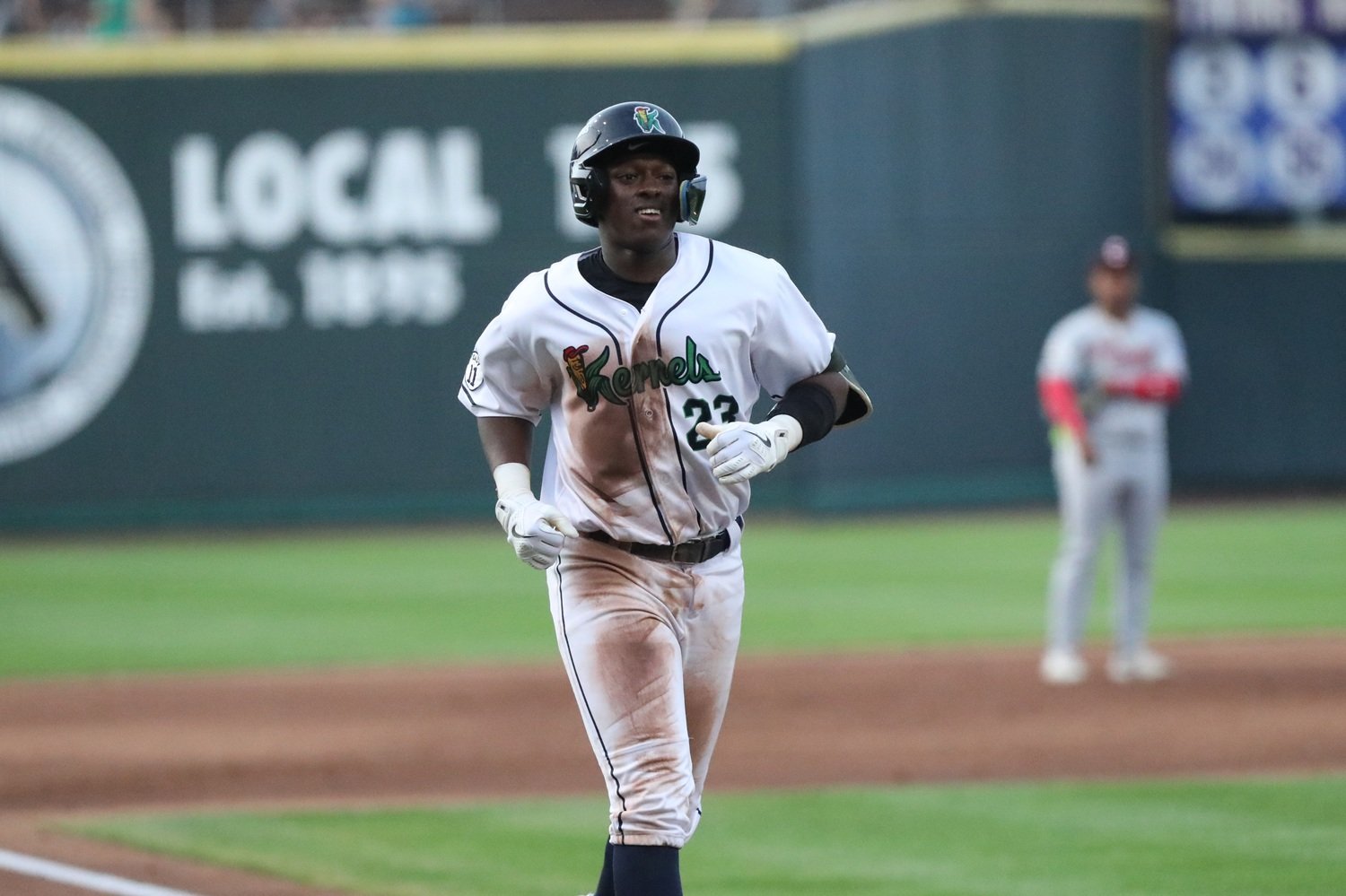 TRANSACTIONS In the International League, the St. Paul Saints swapped C David Banuelos for C Ian Daugherty. Banuelos came off the temporarily inactive list while Daugherty went to the Development List. In the Midwest League, the Cedar Rapids Kernels activated RHP Cole Peschl from the 7-day injured list. SAINTS SENTINEL Toledo 3, St. Paul 8 Box Score Like they have done all season, the St. Paul Saints wasted little time getting going in this one. Walker Jenkens led off for the home team with a walk. Ben Ross swung at the first pitch he saw and knocked it onto the concourse in left field for a 2-0 lead after two batters. After a pair of outs, Aaron Sabato reached on a single, and Hendry Mendez followed with another two-run shot on the first pitch of his at-bat to make it 4-0. Right-hander Trent Baker made the start at CHS Field and pitched into the fourth inning. He went one-two-three in each of the first two innings, but was charged with a single run in each of the third and fourth. He allowed those two earned runs on four hits and a walk in his 3 2/3 innings. He struck out one. David Banuelos joined the home run party with a solo shot in the fourth to make it 5-2, and Jack Anderson stabilized the pitching over his three innings. He allowed one earned run on four hits and a walk, striking out two. With two outs in the seventh Marco Raya was summoned and struck out three of the five hitters he faced, hitting one with a pitch for his only baserunner. In the bottom of the seventh singles from Jenkins and Emmanuel Rodriguez, and a walk to Matt Wallner loaded the bases for Sabato. He added some insurance with a two-run single to make it 7-3 Saints. They tacked on another run in the eighth after Tristan Gray and Cody Morissette started it with singles. Gray stole third and then scored on a passed ball to make the final tally. Julian Merryweather set the Mud Hens down in order in the ninth to clinch the victory, striking out one. The Saints got multiple hits from Matt Wallner (2-for-3, 2B, BB, K), Sabato (2-for-3, R, 2 RBI, K), and Morissette (2-for-4). Jenkins finished 1-for-4 with a walk and two runs scored. WIND SURGE WISDOM Arkansas 6, Wichita 7 Box Score Twins top pitching prospect Riley Quick made the start in this one, and came out firing. He struck out the side in the first, needing 14 pitches to do so. He retired the first seven hitters he faced, including five via strikeout, before the Travelers lineup finally got to him. An infield single followed by a two-run homer put Arkansas up 2-0. After a pair of walks prompted a mound visit, Quick struck out the next two hitters to end the threat. He reached his pitch count after one batter in the fourth to end his outing. He threw 64 pitches, with 41 going for strikes (64%), including 13 swings and misses. The Wind Surge cut the lead to one in the bottom of the third when Jake Rucker and Caden Kendle traded places with doubles. Darren Bowen finished off the fourth inning from the bullpen, and Cory Lewis came on to start the fifth. He struck out two in a one-two-three frame, but the sixth was a different story. He walked the first two hitters of the inning before recovering to strike out two more. Then a third walk loaded the bases and a two-run single made it 4-1 Travelers to prompt another pitching change. Paulshawn Pasqualotto got them through the eighth inning, allowing a solo home run but no further damage in 2 1/3. He struck out three. Kyle Bischoff allowed an earned run on two walks and a hit in the ninth, striking out one to push the Arkansas lead to 6-1. This is where the magic happened. Graham Brown led off with a single. Quinn McDaniel drew a walk. Jaime Ferrer smoked one over the head of the left-fielder in the gap for a two-run double and a spark. Jake Rucker followed by launching a double of his own off the wall and glove of that same left-fielder in the same gap. “He’s on fire!” Caden Kendle followed with an RBI single to pull Wichita within two with nobody out, causing the Travelers to reach back into their bullpen. A catchers interference swing from Brandon Winokur re-loaded the bases, and Garrett Spain worked an RBI walk in a 10-pitch battle to put the tying and winning runs in scoring position. Andrew Cossetti took a big hack and sent a fly ball well deep enough to tie the game at six and move the winning run to third base. Kyle DeBarge then sent a liner up the middle for the walk-off single and exclamation point on the ninth-inning comeback. Despite being down by five heading into the bottom of the ninth, the Wind Surge ended up outhitting the Travelers 11-5 in the game. Rucker (3-for-5, 2 R, 2 2B, K), Kendle (2-for-5, R, 2B, 2 RBI, K, SB), DeBarge (2-for-4, RBI, BB, 2 SB), and Ferrer (2-for-3, R, 2B, 2 RBI) each had multiple hits. KERNELS NUGGETS Lake County 19, Cedar Rapids 18 Box Score This one looked like a laugher early, but then it got weird —in a good way…Maybe? [queue the alien sound effects] At different points the Kernels trailed 9-0 and 16-9, but always had something in them to keep it interesting. Maybe there was something new around the clubhouse… Lefty Michael Carpenter got the starting pitcher assignment and would be the first to tell you he didn’t have his best stuff on this night. A pair of walks in the first led to a 1-0 lead before his team had an at-bat, and he wouldn’t get out of the second. He gave up seven earned runs on five hits and three walks in his 1 2/3 innings, picking up one strikeout and needing 47 pitches to do so. It didn’t get much better for the bullpen, as Michael Hilker (1 1/3 IP, 2 H, 2 ER, K), Cole Peschl (1 IP, H, ER, K), and Brian Zeldin (1/3 IP, 3 H, 6 ER, 3 BB) couldn’t come out unscathed either. At least the Kernels lineup wouldn’t take it sitting down. While they didn’t score a run in the first, the freshly promoted 2026 third overall draft pick, Vahn Lackey, delivered a hit in his first Midwest League at-bat. Down 9-0 already in the bottom of the second, Danny De Andrade and Jose Salas led off with back-to-back singles, with Byron Chourio following with a two-run double. In the third inning for his second MWL at-bat, Lackey went “Vahn Bomb” for his first High-A home run. Eduardo Tait followed him with a single, before JP Smith II clubbed a two-run shot of his own to make it 9-5. With the score 10-5 in the bottom of the fourth, the Kernels outdid themselves for the third inning in a row, scoring four to close within one. Yasser Mercedes got it started with a one-out single. Lackey drew a walk. After a pop-out, Smith II singled up the middle to score Mercedes, De Andrade followed with an RBI double, and Salas capped it with a two-run single. The Captains pulled away again with a six run top of the fight, but the Kernels weren’t going away. After a two-out error, Mercedes made them pay for it with a two-run homer to make it 16-11 heading into the sixth inning, and things actually calmed down a little. No runs were scored by Lake County in the sixth through eighth innings thanks to relievers Yehizon Sanchez (1 1/3 IP, 3 H, BB, K) and Brent Francisco (2 1/3 IP, 2 H, BB, 2 K), setting the stage for Cedar Rapids in the bottom of the eighth, down by five. Lackey led off with his second walk of the game and singles from Tait and Smith II scored the first run of the frame. A walk to Danny De Andrade loaded up the bases and brought in a new pitcher. Salas greeted him with an RBI single to cut the lead to three. Chourio and Andy Lugo drew walks around a strikeout to cut the lead to one. Another strikeout brought Lackey back up with two outs, the bases loaded, and his team trailing by one. He didn’t waste the opportunity. With the error tacked on all three runners were able to come around and score, putting the Kernels in front for the first time, 18-16. But all good things must come to an end, apparently. Christian Becerra came one for the save opportunity, and three errors contributed to the Captains being able to score three runs and take back the lead they had just relinquished. One came on a swinging-bunt down the third base line that Lackey is probably one of the few catchers on the planet athletic enough to even attempt to make a play on, but his throw was a bit high to first base. Then it was two ground balls up the middle that both appeared to deflect off Becerra, throwing off Salas at shortstop behind him and leading to a pair of bobbles. The Kernels did get another chance as this game almost got even weirder in their final at-bat. Lake County brought in the submarining Cam Schuelke to try and close it out, and he hit three Kernels with pitches to put the winning run in scoring position before a fly out ended one of the strangest games I’ve watched this year. Seven of the Kernels nine hitters had at least two hits in the game, with Lackey (3-for-4, 3 R, HR, 3 RBI, 2 BB, SB), Smith II (4-for-6, 3 R, HR, 4 RBI), and Salas (3-for-6, 2 R, 3 RBI, K) collecting three or more. Both teams ended up with more runs than they had hits, and the game clocked in at just over four hours long. MUSSEL MATTERS Bradenton 3, Fort Myers 5 Box Score Right-hander Matt Barr toed the rubber at Hammond Stadium on Tuesday, and was solid over his four innings. He scattered four hits, allowed just one earned run, and struck out five Marauders. He threw 52 pitches, with 38 of them going for strikes (73%), including seven swings and misses. A leadoff double in the fourth led to his only run allowed. He left the game with the score tied at one, as the Mighty Mussels lineup got on the scoreboard in the bottom of the first. Murphy Hernandez led off with a walk, and as he does, proceeded to steal second base for his 43rd swipe on the year with Fort Myers. The throw sailed into center field and he was able to take third as well. He then trotted home on a balk for the 1-0 lead. The home team added single runs in each of the fifth and sixth innings to go back in front. In the fifth it was Carson Tinney’s seventh home run of the season (third straight game), and Colby Turner joined him with a solo shot in the sixth, his second on the year with Fort Myers. Relievers Nick McAuliffe and Brad Rudis dealt with baserunners over the next 3 1/3 innings, but held Bradenton scoreless. McAuliffe allowed one hit, walked one, and struck out three in the fifth. Rudis allowed one hit and walked three over the next 2 1/3, striking out five. Adam Falinski came on with one out in the eighth and retired both hitters he faced on strikeouts. In the bottom half Fort Myers tacked on a pair of insurance runs after Isaiah Lane led off with a walk and Turner put them both in scoring position with a double. Ramiro Dominguez cashed them in with a two-run single and 5-1 lead. Back out for the ninth, Falinski served up a leadoff solo home run and another run, but with the added insurance was credited with his fifth save of the season. He was charged with two earned runs on three hits in his 1 2/3 innings, and struck out three. Turner (2-for-3, 2 R, 2B, HR, RBI, BB) led the way with a pair of extra base hits. Lane chipped in a double to the effort in addition to a pair of walks. Hernandez stole two bases. Quentin Young earned a precious metal brimmed-hat. Fort Myers pitchers racked up 16 strikeouts as a team. Tinney threw out a pair of runners at second base. TWINS DAILY MINOR LEAGUE PLAYERS OF THE DAY Pitcher of the Day – Riley Quick, Wichita Wind Surge (3 1/3 IP, 2 H, 2 ER, 2 BB, 7 K) Hitter of the Day – JP Smith II, Cedar Rapids Kernels (4-for-6, 3 R, HR, 4 RBI) PROSPECT SUMMARY Check out the Prospect Tracker for much more on our Twins Top 20 prospects after seeing how they did today. #1 - OF Walker Jenkins (St. Paul): 1-for-4, 2 R, BB, K #2 - C Vahn Lackey (Cedar Rapids): 3-for-4, 3 R, HR (1), 3 RBI, 2 BB, SB #5 - RHP Riley Quick (Wichita): 3 1/3 IP, 2 H, 2 ER, 2 BB, 7 K #6 - OF Emmanuel Rodriguez (St. Paul): 1-for-4, R, K #7 - OF Hendry Mendez (St. Paul): 1-for-4, R, HR (8), 2 RBI, 2 K #8 - C Eduardo Tait (Cedar Rapids): 2-for-6, 2 R, K #11 - C Carson Tinney (Fort Myers): 1-for-4, R, HR (7) RBI, K #12 - 3B/CF Brandon Winokur (Wichita): 0-for-4, R, 2 K #18 - 3B/SS Quentin Young (Fort Myers): 0-for-4, 4 K #19 - OF Yasser Mercedes (Cedar Rapids): 2-for-6, 2 R, 2 RBI, 2 K WEDNESDAY’S PROBABLE STARTERS Toledo @ St. Paul (7:07 PM CDT) - LHP Aaron Rozek (3-3, 3.94 ERA) Arkansas @ Wichita (6:35 PM CDT) - RHP Adrian Bohorquez (Double-A debut) Lake County @ Cedar Rapids (12:05 PM CDT) - RHP Reed Moring (1-1, 4.66 ERA) Bradenton @ Fort Myers, Game 1 (3:35 PM CDT) - RHP Jui-Chieh Lin (Low-A debut) Bradenton @ Fort Myers, Game 2 (makeup of 7/10 PPD) - TBD Please feel free to ask questions and discuss Tuesday’s games! View the full article
 -
 Nashville got contributions up and down the lineup, presenting an interesting question around who may get called up to Milwaukee next week. Biloxi's struggles in the month of August continued. Wisconsin pulled out a narrow victory and Wilson split a doubleheader in which we saw the Ebel brothers combine on a box score oddity. Transactions: Milwaukee Brewers sent LHP JoJo Romero on a rehab assignment to Wisconsin Timber Rattlers. Milwaukee Brewers sent RHP Abner Uribe on a rehab assignment to Wisconsin Timber Rattlers. SS Moises Polanco assigned to Wilson Warbirds from ACL Brewers. Game Action: Nashville 14, Jacksonville (Marlins) 6 Box Score No link available for the Sounds' formal game summary, so it is pasted here: Sounds Cruise to Fourth Straight Win Tyler Black Goes 3-for-4 with Three RBI JACKSONVILLE, FL – Nashville began a six-game series against the Jacksonville Jumbo Shrimp with a 14-6 win on Tuesday night at VyStar Ballpark. Tyler Black finished the night 3-for-4 with three RBI, falling a single shy of the cycle. The Sounds jumped out to a 14-0 lead with a pair of 5+ run innings and finished the night with 16 hits, including five different multi-hit games, eight extra-base hits, and three home runs to pick up their fourth straight win. Akil Baddoo got the scoring started with a solo home run in the top of the second off Jacksonville starter Brandon White (3.0 IP, 8 H, 7 ER, 3 K). The lead grew to seven runs after putting together a six-run third that saw Luke Adams and Black each record RBI triples in the frame. It was the first hit of the night for both, who each ended with 3-hit nights at the plate and combined to go 6-for-9 with four extra-base hits, four RBI, two walks, and three runs scored. Nashville used seven hits in the inning to plate their six runs and batted around before chasing White from the ballgame. Black added to his night with his second extra-base hit, making it a 8-0 advantage with a RBI double in the top of the fifth, scoring Baddoo for a third time after he drew a leadoff walk to start the inning. Nashville was back to work in the top of the sixth and once again sent all nine to the plate in the inning. Each of the first three reached base load the bases for Blake Burke who doubled home a pair of runs to make it 10-0. Baddoo added his third RBI of the night with a sacrifice fly and the first out of the inning. Brock Wilken extended the Nashville lead to 13-0 with his team-leading 14th home run of the season and cap a five-run inning. With position player Gage Miller on the mound for the Jumbo Shrimp in the top of the eighth, Black added his third hit, extra-base hit, and RBI of the night with a one-out solo home run to make it 14-0. Each of the next two batters were retired, making it a tall task to have another at-bat in the top of the ninth needing just a single to complete the cycle. Adams recorded his third hit of the game with a two-out single in the top of the ninth before Burke was retired on strikes - with Black sitting three batters behind in the lineup. Left-hander Colton Gordon worked five scoreless innings on the mound for Nashville as he picked up his first win since being acquired by Milwaukee. He surrendered four hits, struck out four and issued a walk in his outing. Joel Kuhnel tossed a scoreless inning in the sixth in relief before passing the baton to Gerson Garabito. The right-hander breezed through the bottom of the seventh, stranding a two-out single to Matthew Etzel before returning to the mound to begin the eighth. A three-base fielding error for Baddoo started a run of three-straight Jacksonville batters reaching base. Cam Cannarella broke up the shutout bid with a RBI double and would immediately score on a RBI single to make it 14-2. Garabito retired the next two before handing the reins to Garrett Stallings. A single and two-out walk to load the bases followed with Etzel turning a 14-0 Nashville lead entering the inning to a 14-6 ballgame with a grand slam. Blake Holub tossed a 1-2-3 bottom of the ninth, with back-to-back strike outs to start the inning as he spun his sixth straight appearance without an earned run allowed. Nashville continues their two-week road trip with game two of the series against the Jumbo Shrimp on Wednesday night with first pitch slated for 6:05 p.m. RHP Coleman Crow (8-1, 3.13 ERA) is scheduled to get the start for the Sounds. POSTGAME NOTES: THREES COMPANY: Tyler Black finished the night 3-for-4 with 3-RBI, falling a single shy of the cycle to start the series against the Jumbo Shrimp. It was his first three-hit game for Nashville since June 20 and third overall this season, including the first 3-hit MLB game of his professional career on April 28 vs. Arizona. Tuesday night was the first game of his professional career (501 G) with three XBH. He had only previously had 15 games with multiple XBH in the same game entering Tuesday with his last coming during that June 20 performance against Memphis where he finished 3-for-5 with a home run, triple, and RBI. Tuesday's series opener against Jacksonville was his sixth 3+ RBI game this year between Nashville and Milwaukee. Black is hitting .302 (19-for-63) with six XBH and 11 RBI in 18 games in August. He has recorded multi-hit performances in back-to-back games and has a hit in 13 of the 18 games this month. BROCKET POWER: Brock Wilken hit his team-leading 14th home run of the season on Tuesday night in Jacksonville and has three homers in the month of August (19 G). He's putting together his best month of the year, hitting .246 (17-for-69) with eight XBH, 14 RBI, 13 walks, and nine runs scored in August. He's riding a seven-game hitting streak with consecutive multi-hit games and has an XBH in four straight games. With five games remaining in the month, Wilken is looking to finish with the highest AVG in a single month this season after hitting .233 (14-for-60) across his 18 games in June. He ranks T-6th in RBI (71) and walks (75) and sits 7th in doubles (22) in the Brewers farm system this season. 38-of-70 (54%) hits in Triple-A this year for Wilken have gone for XBH. GONE STREAKING: Brock Wilken is leading four different Nashville players riding current hitting streaks of 5+ games after all four recorded a hit on Tuesday night against Jacksonville. Wilken has a hit in seven straight games since August 16, including four straight games with an XBH. Bo Naylor has a hit in each of his last six games (.346 AVG, 3 HR, 9 RBI), Eric Brown Jr. (.438 AVG, HR, RBI) and Ethan Murray (.278 AVG, 2 HR, 4 RBI) each have a hit in five straight. Murray has crossed the plate in each of his last seven games and has reached base in each of his last 10 overall dating back to August 13. Luke Adams is riding an 11-game on-base streak after finishing Tuesday night 3-for-5 with a triple and RBI for his first 3+ hit game since July 10 at Charlotte. After allowing a pair of runs on three hits in his first rehab game with Nashville on August 2 (0.2 IP), Joel Kuhnel has rattled off eight straight scoreless appearances (8.1 IP) on four hits. Right-hander Blake Holub extended his current streak of appearances without an earned run allowed to six straight games and has allowed just two earned runs over his last 19 games since the start of July. *** Nashville pounded Jacksonville into submission on Tuesday night, jumping out to a 14-run lead at one point, on their way to an easy 14-6 victory. As a team, Nashville collected 16 hits, including a whopping eight extra base hits (three doubles, two triples, and three home runs.) Some of the Sounds’ players most likely to get called up to the parent club next week are shone bright in this one. Akil Baddoo opened the scoring with a home run for Nashville. Baddoo, who has been on the Brewers’ 40 man roster all season, also added a two run double and scored three runs. Luke Adams, in his second game back from his most recent injury, was on base four times with three hits, including a triple. Tyler Black also had three hits and a triple. You can check out both players triples here, courtesy of the Sounds’ X account: Brock Wilken hit his 14th home run of the season: Every single player in the Sounds lineup had at least one hit and one run scored. It was a total team effort offensively. On the mound, Colton Gordon had his first scoreless outing with Nashville, and picked up his first win as a member of the Brewers’ organization. Gordon tossed five innings and struck out four. Joel Kuhnel and Blake Holub each tossed scoreless innings in relief as well. Jacksonville did manage to strike for six runs in the 8th inning, including a grand slam, but by then the game was well out of reach. With their 4th consecutive win, Nashville is now 69-57 on the season but looks like a long shot to make a playoff push. With more offense like we saw on Tuesday, perhaps they could chip away at the 5.5 game deficit and make it interesting in September. Biloxi pre-game media notes Knoxville (Cubs) 9, Biloxi 4 Box Score As always, you are encouraged to read the official round-up from the team’s site: Payne Hits First Double-A Home Run in Shuckers Loss to Knoxville - Brewers No. 2 prospect, Peña, extends hit streak to seven Biloxi’s dreadful month of August continued on Tuesday with a 9-4 defeat to Knoxville. The loss drops Biloxi to 2-19 in the month of August. In what has felt like a common characteristic of many of these losses, the Shuckers fell behind early and did not get enough pitching to keep the game close for their prospect-laden lineup. Knoxville got on the board in the first inning thanks to some batted ball luck. Three balls were sent top prospect Jesus Made’s way in the first and he was not able to corral any of the three for an out. Though none of the plays were necessarily routine, you would like to see your best player come up with one of those balls to get through the opening frame unscathed. However, the Biloxi pitching did not do enough to keep the game competitive from there, issuing nine walks and two HBP to go along with the 14 hits allowed. Jesus Broca gave the Shuckers a shot to tie the game with 2.1 IP scoreless. Unfortunately, the Shuckers offense didn’t have much going, with just six hits in the game. The lone extra base hit was Braylon Payne’s first AA home run, which you can see here courtesy of the Shuckers’ X account: Andrew Fischer had two singles and an RBI sac fly. Despite falling behind early 4-1, the Shuckers managed to tie the game at 4-4 on a balk, but Knoxville immediately responded with a three-run rally the next frame and then added two insurance runs in the 9th to seal the Shuckers’ fate. The Shuckers are the lone Brewers’ affiliate under .500 at 56-61 with the loss. However, they’re also likely to be the only affiliate playing in the playoffs due to their play in the first half. Hopefully the Shuckers can right things in time for the playoffs over the next few weeks. RHP Manuel Rodriguez (11-4, 4.82 ERA) will look to turn the tide on Wednesday when he toes the slab for Biloxi. Wisconsin pre-game media notes Wisconsin 4, South Bend (Cubs) 3 Box Score Rattlers Crack Cubs - Romero and Uribe both toss scoreless innings on rehab assignments from Milwaukee Wisconsin got their penultimate week of the season off to a good start with a tight 4-3 victory over South Bend on Tuesday. After Jojo Romero made his Brewers’ organization debut with a quick 11-pitch first inning, the Rattlers quickly grabbed the lead in the bottom of the frame. Daniel Dickinson and Sawyer Strosnider singled to set the table for Eric Bitonti. Bitonti then roped a double to the deepest part of the field to give the Rattlers an early 2-0 lead. Bitonti has 19 RBI in the month of August, but is still striking out far too often (30K in 77AB). Abner Uribe worked a clean second inning, including snaring a comebacker. Hopefully Uribe doesn’t need many innings to feel healthy again and he can rejoin the big league club soon. After Uribe, Josh Knoth (6IP 7H 3R 2ER 1BB 4K) took over, and despite working around quite a bit of traffic, was just good enough to earn his 5th win of the season. Strosnider paced the Rattlers with a three-hit day and gave the Rattlers the lead for good in the fifth inning with his RBI double. The Brewers’ 2026 2nd round pick now sports a .947 OPS in his first 47 at-bats. Tyler Rodriguez added an important insurance run with a late solo home run in the bottom of the 7th. Tayden Hall had two singles and Luis Castillo drew three walks on the night for the Rattlers. You can see all the highlights here, courtesy of the Rattlers’ YouTube page: Wisconsin improves to 63-53 on the season but are still five games back of a playoff spot. RHP Ethan Dorchies (5-9, 5.10 ERA) has had an up and down month of August. If the trend continues, we should see a bounce-back performance when he takes the mound for Wisconsin on Wednesday. Wilson pre-game media notes Game 1: Wilson 12, Hickory (Rangers) 4 (Completion of July 19 game) Game 2: Hickory 8, Wilson 5, F/7 Warbirds, Crawdads Split Doubleheader - Warbirds Score 12 in Game One Game 1 Box Score Wilson handily won their completion of their July 19 rainout with Hickory in what will live on as a box score oddity. Before rain halted play in July the Warbirds got off to a big six run first inning, sending 10 men to the plate and scoring six runs. Dearly departed Juan Martinez had a two run single, and Handelfry Encarnacion had two hits and a steal in the opening frame. When the game restarted in Tuesday, Brady Ebel was set to lead off with a 2-0 count, but Ebel has since been promoted to Wisconsin, so his younger brother Trey Ebel pinch hit for him and walked. Does it count as the two brothers playing together if they both appeared in the same box score, but not on the field together? That’ll make for a fun trivia question years from now. Article with Trey Ebel quotes via MLB.com - Brewers' 2026 first-rounder Trey Ebel steps in for brother Brady ... a month later Jarrette Bonet started the game for Wilson on the mound and had quite possibly his best start of the season. Bonet scattered three hits across six scoreless innings and struck out eight. The innings and strikeouts matched season-highs for Bonet. This was just the second scoreless outing (aside from 3IP in relief on August 7) for Bonet since May 22. In the fifth inning, the Warbirds added on to their lead with back-to-back home runs from Filippo Di Turi and Rylan Mills to make it 9-0. Check out Di Turi’s homer here, courtesy of the Warbirds X account and Mills' blast at the link earlier in this paragraph: Hayden Robinson came on for Bonet and proceeded to allow a grand slam in the seventh inning but then locked down Hickory the rest of the way. Brailyn Antunez responded in the Wilson 8th with an RBI single and Kyle Jones added a sac fly to make it 12-4 and the Warbirds closed the door on any notion of a comeback. Game 2 Box Score In game two of the doubleheader, Wilson fell behind early and then could never manage to catch up, falling 8-5 in seven innings. Hickory jumped on starter Joey Broughton (3IP 2H 4R 3ER 3BB 3K) for two runs in the first and never looked back. Di Turi cut the lead in half in the second on an RBI single, but Hickory answered with two runs in each of the 4th and 5th to put the game out of reach. Carsten Sabathia III hit a mammoth homer to cut the lead to 4-2. Sabathia has put up some video game numbers (.405 average, 1.158 OPS) in his first 11 professional games. Fellow 2026 draft pick Kyle Jones had the other RBI for Wilson on a single in the 9th to cap the scoring. With the split, Wilson is 64-55 in their inaugural season. RHP Miqueas Mercedes (2-1, 3.11 ERA) gets the ball in Wednesday’s game. Your Wednesday scoreboard is below. Organizational Scoreboard including starting pitcher info, game times, MiLB TV links, and box scores Current Milwaukee Brewers Organization Batting Stats and Depth Current Milwaukee Brewers Organization Pitching Stats and Depth View the full article
 -
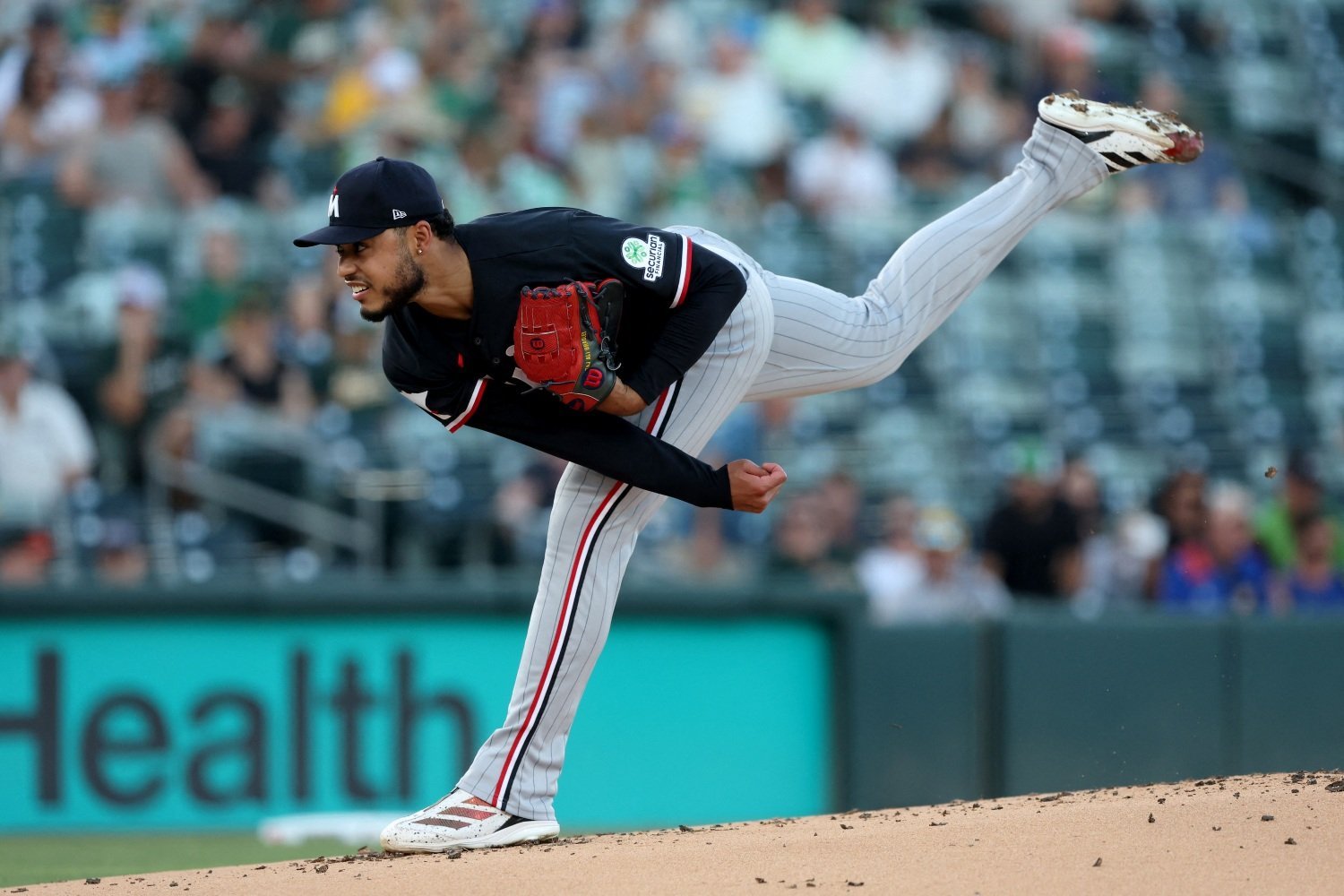 Box Score SP: Taj Bradley - 6 2/3 IP, 7 H, 4 R, 1 BB, 11 K (99 pitches, 72 strikes (73% strikes)) Home Runs: None Bottom 3 WPA: Kody Clemens (-0.12), Ryan Jeffers (-0.10), Byron Buxton (-0.09) Win Probability Chart The Twins entered Tuesday night's matchup against the A's looking to win the series after taking Monday night's opener. For most of the night, it looked like Minnesota had a chance to do exactly that, with Taj Bradley putting together a dominant performance on the mound—despite the A's repeatedly coming through with two-out hits. The Twins' offense struggled to generate much against Gage Jump early, managing just two hits through the first six innings. Minnesota finally broke through with two runs in the seventh, but they couldn't complete the comeback. To make matters worse, Byron Buxton left the game in the seventh after appearing to suffer another injury. He came up grabbing his side after a defensive play, adding another layer of concern to a night that already ended in a frustrating 4-2 loss. Taj Bradley's Immaculate Inning, Near-Immaculate Outing Bradley didn't have the easiest first inning, needing 20 pitches to work around a two-out walk and strike out Lawrence Butler to escape the frame. From there, though, the right-hander was nearly untouchable. He needed just 10 pitches to get through the third, then worked another clean fourth before putting together the highlight of his night in the fifth. After striking out Carlos Cortes and Brian Serven, Bradley froze Henry Bolte with a 100-mph fastball to complete an immaculate inning. It was the first immaculate inning in team history, and Bradley wasn't finished. He struck out Cortes and Serven again in the seventh, giving him 11 strikeouts on the night. Through six-plus innings, Bradley had allowed just three runs while piling up strikeouts at an incredible rate, but the A's ability to string together two-out hits ultimately proved to be his downfall. Bradley left the game with a runner on third after allowing another two-out hit in the seventh. He finished with 11 strikeouts on 81 pitches, and despite the final line, this was one of his better outings of the season. Unfortunately, the Twins couldn't give him enough offensive support. The A's offense wasn't exactly overwhelming Tuesday night; they just seemed to come alive whenever the Twins were one out away from getting out of an inning. Their first two runs came in the second after Alika Williams doubled with two outs and Carlos Cortes followed with a two-run homer. Bradley had retired the first two batters of the inning, but one mistake was all the A's needed to take the lead. The same thing happened again in the sixth. After Bradley retired Jeff McNeil and Zack Gelof, Butler singled to keep the inning alive. Tommy White then doubled off the wall in right-center, bringing Butler home and extending the A's lead to 3-0. Walton followed with another two-out single, and a throw home that missed the cutoff man allowed the A's to score another run and put a runner in scoring position. Just like that, the A's had turned three consecutive two-out hits into a three-run advantage. All four of their runs came with two outs. That's a brutal way to lose a game, especially when your starting pitcher is otherwise having such a strong night. Twins' 7th-Inning Rally Falls a Bit Short For most of the night, Minnesota's offense couldn't get anything going against Gage Jump. That changed in the seventh. Royce Lewis opened the inning with his second hit of the night, and after Kody Clemens reached on a fielder's choice, Kaelen Culpepper came through with a huge swing. He jumped on a first-pitch changeup, sat back on it and hammered it into right-center for an RBI double. After recording four hits Monday night, Culpepper followed it up with another big hit Tuesday, cutting the A's lead to 4-1. The Twins then got a fortunate break when Brooks Lee's pop-up down the first-base line bounced off Donovan Walton's glove and fell in for a double. That put two runners in scoring position with Victor Caratini at the plate representing the tying run. Caratini didn't get the hit, but he still brought Culpepper home after Zack Gelof made an excellent sliding stop at third. Suddenly, the Twins were within two. Kreidler then worked a walk to put the tying run on base, but Luke Keaschall went down looking to end the inning. Still, it was the first real sign of life from Minnesota's offense all night. After managing just two hits through the first six innings, the Twins had put together a four-hit inning and cut the A's lead in half. Unfortunately, it would be their final real threat of the night. Buxton Departs with Hip Trouble The seventh inning wasn't only significant because of Minnesota's attempted comeback. It also brought one of the most concerning moments of the night. Bolte lined a ball toward right-center field that got past Clemens, and Buxton attempted to make the play. The ball slipped underneath his glove, allowing Bolte to race all the way to third. More notably, Buxton immediately came up grabbing his side. The Twins' star center fielder has dealt with multiple IL stints because of hip issues over the last couple of months, so seeing him favor his side after the play was certainly unsettling. Trevor Larnach entered the game in his place, ending Buxton's night. There's no way to know the severity of the injury yet, and hopefully it's something minor. But considering Buxton's injury history and how late we are in the season, it's certainly something to keep an eye on. The play also ended Bradley's night, as Minter entered with Bolte standing on third. Minter got the final out of the inning when McNeil swung through a sinker that ran in on him, but somehow, an inning that didn't feature a run was still one of the most eventful frames of the game. Minnesota had one more chance to make things interesting in the eighth and ninth, but the A's bullpen shut the door. The Twins went down quietly in the eighth, with Larnach, Jeffers and Lewis all recording outs. That sent Minnesota to the ninth needing two runs to tie the game. Instead, Clemens struck out, Culpepper grounded out to third and Lee flew out to center to end the game. After struggling to produce anything offensively for the first six innings, the Twins finally put together a rally in the seventh, but it wasn't enough to overcome the A's early advantage. And once again, the biggest difference came down to two-out hitting. The A's scored all four of their runs with two outs, while Minnesota couldn't deliver the big hit when it needed one most. Bradley pitched well enough to win, striking out 11 and making history with the first immaculate inning in Twins history. Culpepper continued his strong stretch with another big offensive performance, and Minnesota briefly showed some life in the seventh. But the A's made their opportunities count. Now, the Twins will have to win Wednesday's series finale if they want to take the series. They'll also have to wait for more information on Buxton after a concerning exit that could potentially have much bigger implications for the remainder of the season. What’s Next? The Twins wrap up their series in Sacramento against the A’s tomorrow night. Left-hander Connor Prielipp will be on the mound for the Twins, and he’ll face off against righty J.T. Ginn. First pitch is set for 8:05 PM. Postgame Interviews Coming soon! Bullpen Availability Chart View the full article
 -
 Daniel Vazquez drove in five runs, and Spencer Nivens added two hits, as Northwest Arkansas rolled to a 12-4 win. Carson Roccaforte and Peyton Wilson each homered and drove in three in Omaha's 9-6 victory, backed by six strikeouts from Lucas Braun. L.P. Langevin struck out five and Dash Albus worked two scoreless innings as Quad Cities won 3-2 in 12. JC Vanek's go-ahead homer and Andy Basora's save lifted Columbia past Charleston 4-2. Kansas City Royals Transactions No Roster Moves Omaha Erupts For Five Homers In A 9-6 Win At Iowa Omaha collected 15 hits and five home runs in a 9-6 win over the Iowa Cubs. Braun started and worked five innings, allowing one run on three hits with one walk and six strikeouts. The Storm Chasers pushed ahead in the third. Carson Roccaforte led off with a home run, his first with the Storm Chasers. Alejo Lopez singled, moved to second on a Brett Squires groundout, and scored on a Wilson double. Two runs scored, and Omaha led 3-1. The eighth inning decided it. Josh Rojas opened with a home run, Jacob Berry followed with another, and Brandon Drury singled. Elih Marrero walked, and Roccaforte doubled to center to score Drury and Marrero. Four runs scored, and the lead was 8-1. Roccaforte finished 3-for-5 with a double, a home run, and three RBI. Wilson also went 3-for-5 with a double, a home run, and three RBI, including a solo shot in the ninth. Rojas had two hits, including a home run, plus a walk. Berry had two hits, a double, and a home run. Abraham Toro had two hits and a triple. Matt Moore struck out three over 1 2/3 scoreless innings without allowing a hit. Carlos Duran gave up three hits, two runs, and two walks in one inning with three strikeouts. Scott Alexander recorded one out. Easton McGee allowed three hits and three runs, two of them earned, with one walk and two strikeouts over one inning. Omaha left nine runners on base and went 3-for-14 against the rival I-Cubs. The Storm Chasers are now 58-66 this season. Player AB R H RBI BB K Carson Roccaforte 5 1 3 3 0 0 Alejo Lopez 5 1 1 0 0 0 Brett Squires 5 1 1 1 0 1 Abraham Toro 5 1 2 0 0 0 Peyton Wilson 5 1 3 3 0 1 Josh Rojas 4 1 2 1 1 1 Jacob Berry 5 1 2 1 0 0 Brandon Drury 4 1 1 0 1 1 Elih Marrero 4 1 0 0 1 0 Player IP H R ER BB K HR Lucas Braun 5 3 1 1 1 6 0 Matt Moore 1 2/3 0 0 0 1 3 0 Carlos Duran 1 3 2 2 2 3 0 Scott Alexander 0 1/3 1 0 0 0 0 0 Easton McGee 1 3 3 2 1 2 0 Vazquez Drives In Five As Northwest Arkansas Routs Frisco Northwest Arkansas scored 12 runs on 10 hits and eight walks in a 12-4 win over the Frisco RoughRiders. Chase Jessee started and went 3 1/3 innings, allowing two runs on five hits with one walk and three strikeouts. The Naturals scored twice in the first to set the tone against Frisco. Leadoff man Luke Pelzer tripled, Javi Vaz doubled him home, Sam Kulasingam was hit by a pitch, and Nivens walked. Vaz scored on a Vazquez double play grounder for a 2-0 lead. The fifth broke it open for the Naturals. Pelzer singled and stole second, Kulasingam walked, and Nivens singled. Vazquez singled to left to score Pelzer. Colton Becker walked with the bases loaded to score Kulasingam. Nivens scored on a balk, and Connor Scott grounded out to bring in Vazquez. Four runs scored, and the lead was 7-2. Four more followed in the sixth. Canyon Brown and Kulasingam walked, Nivens singled to score Brown, and Vazquez hit a three-run home run to left. Northwest Arkansas led 11-2. Vazquez finished 2-for-4 with a home run, five RBI, and two runs scored. Nivens had two hits, a walk, and an RBI. Pelzer had two hits, a triple, and two runs. Vaz added a double, a walk, and an RBI. Scott had a triple and two RBI. Augusto Mendieta struck out four over 1 2/3 scoreless innings, allowing one hit and one walk. Tyson Guerrero gave up one run on one hit over 1 2/3 innings with two walks and two strikeouts. Zachary Cawyer allowed one run on two hits over 1 1/3 innings with two walks and one strikeout. Dennis Colleran Jr. finished with a scoreless inning, allowing no hits and no walks. Northwest Arkansas left six runners on base and went 5-for-12 with runners in scoring position. The Naturals improved their record to 51-68. Player AB R H RBI BB K Luke Pelzer 5 2 2 0 0 2 Javi Vaz 4 2 1 1 1 0 Sam Kulasingam 2 2 1 0 2 1 Spencer Nivens 4 2 2 1 1 1 Daniel Vazquez 4 2 2 5 0 0 Colton Becker 4 1 1 1 1 1 Connor Scott 3 0 1 2 1 0 Justin Johnson 3 0 0 0 1 1 Canyon Brown 3 1 0 0 1 0 Player IP H R ER BB K HR Chase Jessee 3 1/3 5 2 2 1 3 0 Augusto Mendieta 1 2/3 1 0 0 1 4 0 Tyson Guerrero 1 2/3 1 1 1 2 2 0 Zachary Cawyer 1 1/3 2 1 1 2 1 0 Dennis Colleran Jr. 1 0 0 0 0 0 0 Quad Cities Outlasts Beloit 3-2 In 12 Innings Quad Cities won 3-2 in 12 innings over the Beloit Sky Carp, managing three hits and six walks. Jordan Woods started and went 4 2/3 innings, allowing one run on five hits with two walks and four strikeouts. The River Bandits trailed 1-0 until the seventh. Ramon Ramirez walked, moved to third on a Derlin Figueroa groundout, and scored on a Jose Cerice single to left. One run scored, and the game was tied 1-1. Later in the inning, Nolan Sailors walked, Austin Charles lined out, and Tyriq Kemp walked to load the bases before Asbel Gonzalez was called out on strikes. Thus, the River Bandits were unable to parlay those walks into a big inning. Beloit went back in front in the 10th. Quad Cities answered with its zombie runner, Kemp, who moved to third on an Asbel Gonzalez sacrifice bunt and scored on a Zion Rose sacrifice fly to tie it 2-2. The 12th ended it. Jose Cerice began the inning as the zombie runner at second, advanced to third on a Sailors sacrifice bunt, and scored on a wild pitch. Cerice went 1-for-5 with an RBI and a run. Sailors had a hit and two walks. Blake Mitchell had the other hit. Ramirez, Rose, Gonzalez, and Kemp each drew a walk. Kamden Edge followed Woods with 1 1/3 scoreless innings, allowing no hits and one walk. Ethan McElvain gave up one hit over two scoreless innings. Langevin struck out five over two innings and allowed one unearned run on one hit. Albus worked two scoreless innings with one walk and three strikeouts to earn the win. Quad Cities pitching combined for 14 strikeouts, and the team left nine runners on base while going 1-for-8 with runners in scoring position. With the win, the River Bandits improved to 64-52 this season. Player AB R H RBI BB K Asbel Gonzalez 3 0 0 0 1 2 Zion Rose 3 0 0 1 1 1 Blake Mitchell 5 0 1 0 0 3 Ramon Ramirez 4 1 0 0 1 1 Derlin Figueroa 5 0 0 0 0 2 Jose Cerice 5 1 1 1 0 0 Nolan Sailors 2 0 1 0 2 0 Austin Charles 4 0 0 0 0 1 Tyriq Kemp 3 1 0 0 1 1 Player IP H R ER BB K HR Jordan Woods 4 2/3 5 1 1 2 4 0 Kamden Edge 1 1/3 0 0 0 1 1 0 Ethan McElvain 2 1 0 0 0 1 0 L.P. Langevin 2 1 1 0 0 5 0 Dash Albus 2 0 0 0 1 3 0 Vanek's Eighth-Inning Homer Sends Columbia Past Charleston Columbia beat the Charleston RiverDogs 4-2 on eight hits, two of them home runs. Shane Van Dam started and threw four innings, allowing one run on four hits with two walks and three strikeouts. The Fireflies tied it in the third. Ricson Gonzalez singled, Daniel Lopez walked, and Yandel Ricardo moved both runners up with a sacrifice bunt. Vanek flied out to center, and Gonzalez scored on the sacrifice fly, making it 1-1. Camden Johnson homered to left-center in the seventh for a 2-1 lead. Unfortunately, Charleston tied it in the eighth. Columbia answered immediately in the bottom of the inning. Lopez doubled to left, Yandel Ricardo grounded out, and Vanek homered to right to score Lopez ahead of him. Two runs scored, and Columbia led 4-2 in the 8th. Sean Gamble and Camden Johnson walked before Roni Cabrera lined out to end the inning. Vanek finished 1-for-4 with a home run and three RBI. Johnson went 2-for-3 with a home run, an RBI, a walk, and a run. Lopez had a double, a walk, and a run. Gamble had a double and a walk. Ricardo, Cabrera, and Gonzalez each had a hit. Jhon Reyes followed Van Dam with 2 1/3 scoreless innings, allowing one hit and one walk with two strikeouts. Dalton Hill gave up one run on two hits over 1 2/3 innings with one strikeout and earned the win. Basora finished with a hitless inning and two strikeouts for his seventh save. Columbia left five runners on base and went 1-for-6 with runners in scoring position. The Fireflies got back to .500 with the win, as they are now 60-60 for the season. Player AB R H RBI BB K Yandel Ricardo 3 0 1 0 0 1 JC Vanek 4 1 1 3 0 2 Josh Hammond 4 0 0 0 0 2 Sean Gamble 3 0 1 0 1 0 Camden Johnson 3 1 2 1 1 0 Roni Cabrera 4 0 1 0 0 1 Jhosmmel Zue 3 0 0 0 0 1 Ricson Gonzalez 3 1 1 0 0 1 Daniel Lopez 2 1 1 0 1 0 Player IP H R ER BB K HR Shane Van Dam 4 4 1 1 2 3 0 Jhon Reyes 2 1/3 1 0 0 1 2 0 Dalton Hill 1 2/3 2 1 1 0 1 0 Andy Basora 1 0 0 0 0 2 0 Top-20 Prospect Performance Kendry Chourio: DNP David Shields: DNP Josh Hammond: 0-for-4, 2 K Blake Mitchell: 1-for-5, 3 K Sean Gamble: 1-for-3, 2B, BB Ramon Ramirez: 0-for-4, BB, R, K Zion Rose: 0-for-3, RBI, BB, K Asbel Gonzalez: 0-for-3, BB, 2 K Carson Roccaforte: 3-for-5, 2B, HR, 3 RBI, R Taylor Rabe: DNP Yandel Ricardo: 1-for-3, K Justin Lamkin: DNP Drew Beam: DNP Michael Lombardi: DNP Jack Slightom: DNP Felix Arronde: DNP Angeibel Gomez: DNP Ben Kudrna: DNP Steven Zobac: DNP Blake Wolters: DNP View the full article
 -
Heriberto Hernandez becomes first Marlin to reach 20 home runs
DiamondCentric posted an article in Fish On First
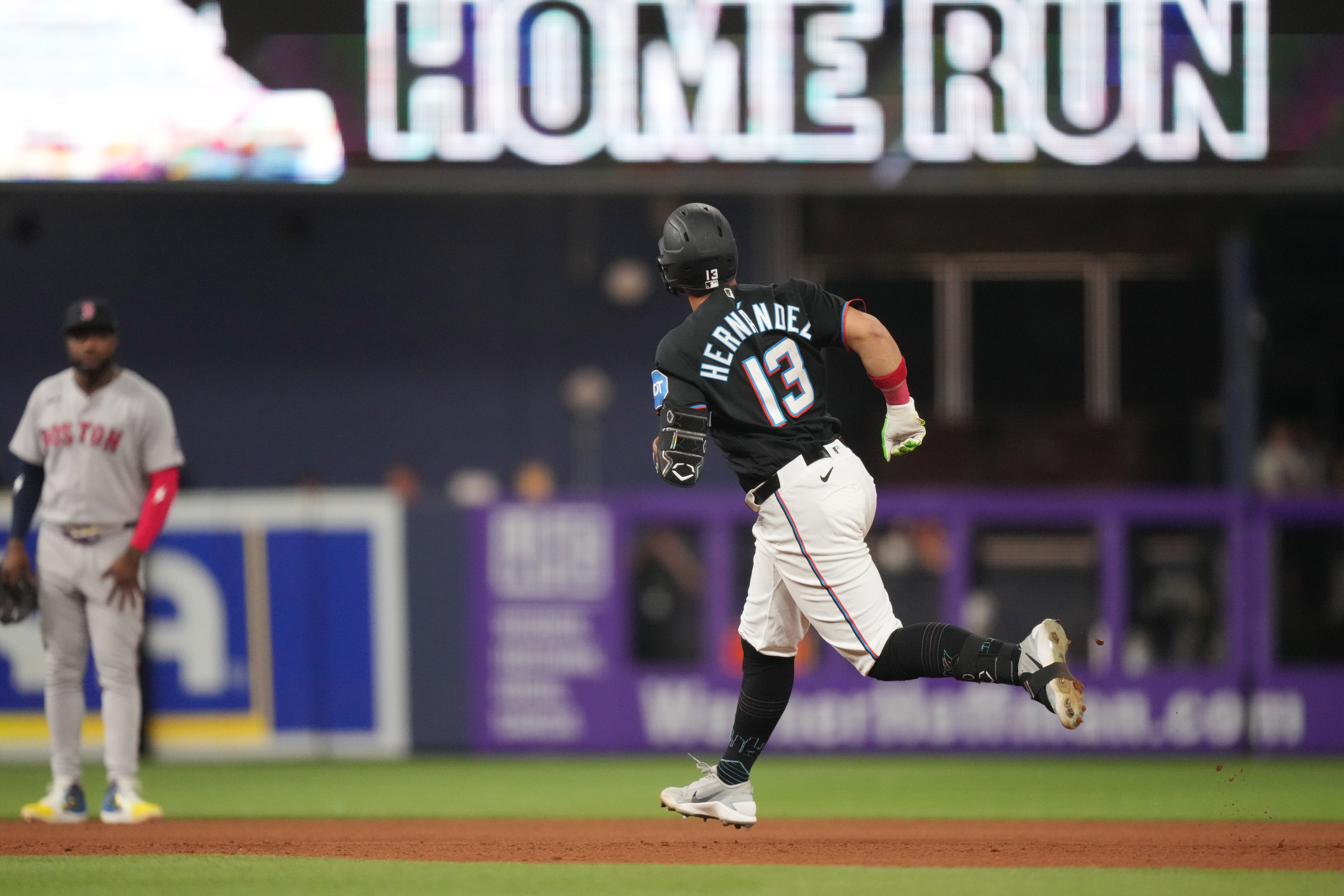 MIAMI, FL — Through the first 22 games of the season, Heriberto Hernandez was slashing .159/.284/.190/.474 with zero home runs and nine RBI. He was sent down to Triple-A Jacksonville on April 27 before being recalled on May 7. Since then, the switch has flipped. On Tuesday night against the Boston Red Sox, Hernandez hit his 20th home run of the season, doubling his total from last year. The Marlins fell to the Red Sox in extra innings by a final score of 7-3. Since being recalled from Triple-A, Hernandez entered Tuesday's game slashing .249/.320/.517/.837 with 19 home runs and 44 RBI. In August, he is now slashing .219/.329/.411/.740 with four home runs and 11 RBI. "The first couple of weeks to start this season, I think circumstances were different," Marlins manager Clayton McCullough said. "It's his first time making an Opening Day roster, somewhat wanting to pick up where he left off and just didn't seem as convicted in his at-bats, didn't seem as aggressive like we've seen him, and since he's come back has been a much different story." In the bottom of the sixth inning, he took Red Sox starting pitcher Payton Tolle deep, tying the game at two apiece. Hernandez became the tenth Marlin since 2018 to have a 20-homer season, most recently done by Kyle Stowers last year. Hernandez becomes just the third outfielder of that group to accomplish this feat. With 10 home runs in 128 plate appearances against left-handed pitching this season, OF Heriberto Hernández owns the third-highest HR/PA rate (.078) among hitters with at least 100 plate appearances against lefties, trailing only Baltimore's Coby Mayo (.108 HR/PA) and Cleveland's Joe Adell (.080 HR/PA). "I think that he certainly has a real presence in the box," McCullough said. "He gets off really good swings. He can hit fastballs, mistakes and spin in the zone. Hits verse right and left, so his ability to supply some power for us is really important." After not making his previous scheduled start in favor of a bullpen game, Tyler Phillips took the mound on Tuesday against the Red Sox. Despite surrendering a solo homer to Mickey Gasper, Phillips struck out seven in 4 1/3 innings of work. Victor Vodnik entered the game in the fifth inning to close things out. Gasper would notch his first career multi-homer game in the top of the sixth inning, hitting his fifth home run of the season off Marlins reliever Tyler Zuber. That gave the Red Sox a 2-1 lead. When the Marlins added Brian Navarreto to the active roster, he wasn't supposed to play a lot. When Navarreto does play, he is a spark plug in terms of the energy he provides and just another solid defensive catcher behind the plate. On Tuesday, he battled with Tolle in the bottom of the fifth inning. With the bases loaded and one out, Navarreto hit a sac fly to center field, allowing all runners to advance, tying the game, 1-1. In the seventh inning, he had a sac bunt, moving Jakob Marsee from first to second. Navarreto had his sixth caught stealing of the season, throwing out Eli White in the top of the ninth inning. "He's just a gamer," McCullough said regarding his backstop. "He had some opportunities, nice situations to do some things and he came through. The at-bats now certainly in his last three starts or so have really improved. In an at-bat where you see a lot of pitches, it's still a productive at-bat for the group." In extra innings, both teams scored a run in the 10th inning. With the bases loaded in the top of the 11th inning, Jarren Duran hit a grand slam off lefty Cade Gibson, giving the Red Sox a 7-3 lead that they wouldn't lose. With the loss, the Marlins drop to 67-66 on the season. Ryan Gusto will go opposite of Sonny Gray as the Fish look to avoid the sweep on Wednesday. View the full article
 -
Making the Playoffs Would Change the Twins’ Offseason
DiamondCentric posted an article in Twins Daily
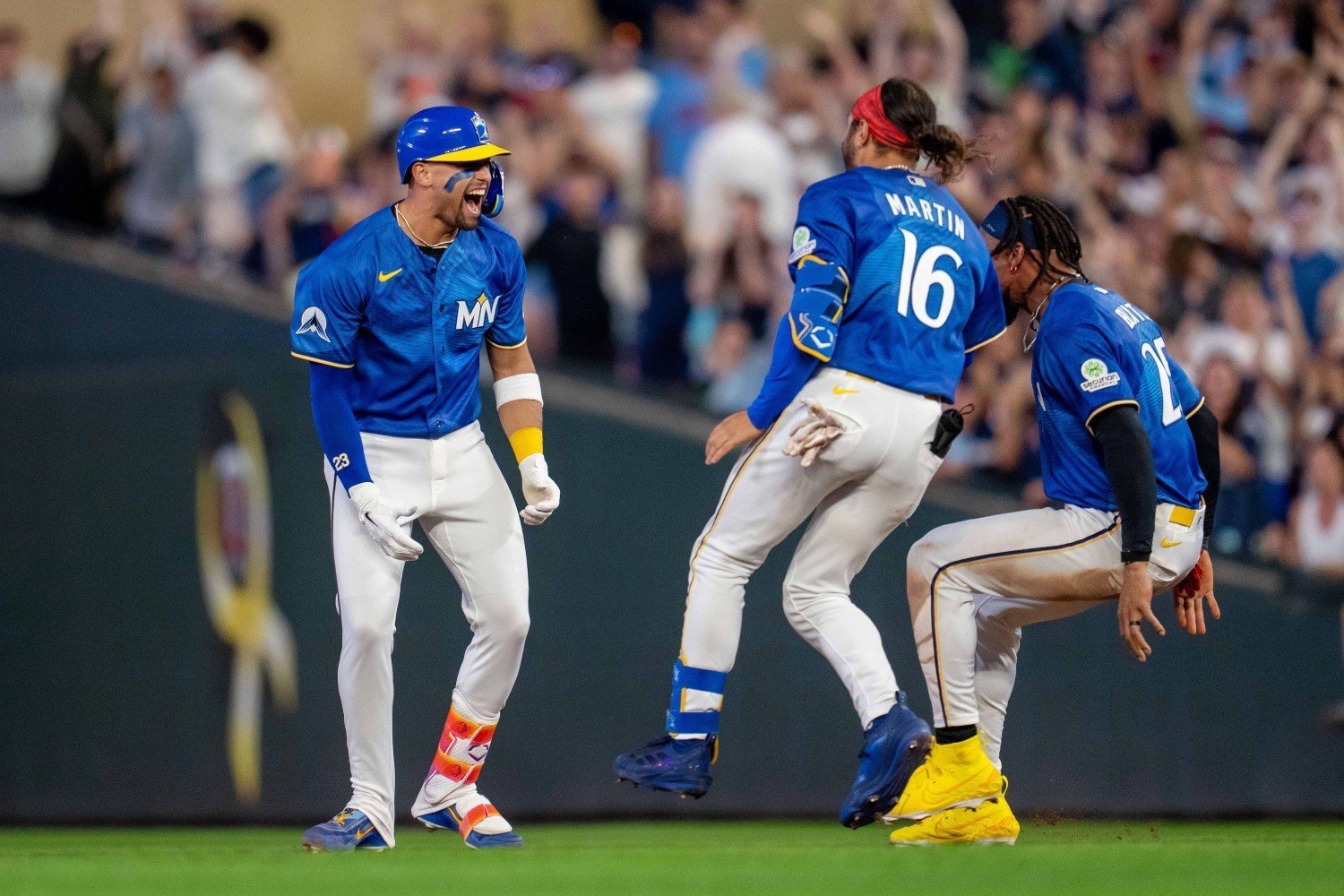 For most of the 2026 season, the Minnesota Twins have lived in an uncomfortable middle ground. They aren't rebuilding in the traditional sense, but they also aren't loaded with enough established talent to be considered a clear contender. Instead, they've spent much of the year hovering around the American League playoff picture while trying to figure out exactly what this roster can become. That uncertainty was understandable. The Twins entered 2026 coming off a massive organizational reset with a new general manager in Jeremy Zoll. Plenty of young players needed opportunities, veterans needed to prove they belonged in the next competitive version of the roster, and ownership faced questions about how aggressively it was willing to invest. Then something interesting happened. The Twins started winning enough games to make the postseason a realistic possibility. With the final month of the season approaching, Minnesota remains within striking distance of the American League playoff field. And that changes the conversation. A playoff appearance wouldn't simply give the Twins a few extra games in October. It would change the expectations surrounding the organization entering the offseason. The Twins Have Already Changed Their 2027 Expectations There is a temptation to view 2027 as another year of development. That was reasonable earlier this season. The Twins could have used 2026 to evaluate their young core, determine which prospects were ready to graduate and continue building toward a better team down the road. Even their trade deadline approach reflected that balance. Minnesota added A.J. Minter, Dean Kremer and Jeff Hoffman without surrendering its top prospect capital, preserving a farm system that remains one of the organization's biggest advantages. But the Twins also spent money. More than $8 million in prorated salary was added for the remainder of 2026, while Hoffman and Kremer created financial commitments for 2027. Hoffman is owed $11 million next season, with the Blue Jays paying a portion of that amount, while Kremer is positioned for an arbitration raise after making $5.75 million this year. That isn't the behavior of an organization preparing to spend another year simply waiting for its prospects to arrive. More importantly, Tom Pohlad has already made the organization's 2027 intentions clear. “I’m not hoping -- it will be higher,” Pohlad said when discussing whether the Twins' payroll would increase next season. He added that if the organization wants to become a consistently competitive postseason team, it has to invest in the roster. That statement came before the season was decided. If the Twins actually reach the playoffs, it becomes even more important. A Playoff Berth Changes the Free-Agent Conversation There is a big difference between telling free agents, "We think we're going to be good someday," and being able to say, "We just made the playoffs." The Twins won't suddenly become a premier free-agent destination because they win a Wild Card Series. Minnesota will still deal with the realities of playing in a smaller market, and there will always be financial limitations compared to baseball's biggest spenders. But a playoff appearance provides evidence. It gives Zoll something tangible to sell. It allows the front office to point to a young core that already competed against established clubs. It gives ownership an opportunity to argue that additional investment isn't about buying hope. It's about supporting a team that has already demonstrated it can win. That should make the free-agent market more interesting for Minnesota. The Twins don't need to chase every expensive name on the market. They shouldn't. Their best opportunity may be using payroll flexibility to target specific weaknesses while allowing their young players to continue taking larger roles. But there is a difference between making one or two modest additions and actually trying to build a roster capable of winning a postseason series. A playoff berth should push Minnesota toward the second option. The Twins have spent years building organizational depth, and they're finally beginning to see some of that investment reach the major leagues. Walker Jenkins is the obvious example. Vahn Lackey is another important piece of the long-term picture. Kaelen Culpepper has already reached the majors, while Luke Keaschall is part of the organization's young core. There are still plenty of prospects behind them. That creates an interesting problem for Zoll, and it's a good problem to have. The Twins don't need to buy an entirely new roster. They need to determine which positions require established major-league help around the young talent already in place. That's a much different offseason. A team that finishes outside the playoffs can rationalize another year of patience. A team that reaches October has a much harder time explaining why it shouldn't push the roster forward. The prospects don't become less valuable because the Twins make the playoffs. In fact, they become even more valuable because Minnesota can use those players to fill some positions while spending money elsewhere. That could be the organization's sweet spot: Develop internally, spend externally where necessary and don't be afraid to move an asset if doing so clearly improves the major-league roster. This might be the biggest consequence of all. The Pohlads have faced plenty of criticism about payroll since 2023. Some of it came from declining spending, while some stemmed from the perception that the organization wasn't willing to invest aggressively enough when opportunities presented themselves. Tom Pohlad's comments about increasing the 2027 payroll are an important starting point, but fans will ultimately judge the organization by what happens when the offseason arrives. That's where a playoff appearance could matter. If Minnesota reaches October and then enters the offseason with essentially the same financial approach it has used in recent years, the questions will come quickly. Why not add another starter? Why not improve the bullpen? Why not address the positions that have been obvious weaknesses? Why not take advantage of a young, relatively inexpensive core? A playoff team creates expectations. Once those expectations exist, it becomes much harder to sell patience for patience's sake. What Happens If They Miss? This is where things get complicated. Even if Minnesota misses the playoffs, the 2026 season could still be viewed as a success if the young core takes meaningful steps forward and the team proves it can compete. But missing the postseason after spending much of the year in the race would make the offseason decisions more nuanced. The front office could reasonably argue that another year of development is necessary. The other argument would be that the team got close enough that a few targeted additions could have made the difference. If the Twins finish two games out, lose a handful of winnable games in September and watch the bullpen implode down the stretch, the offseason conversation will be very different than it would have been after a 65-win season. Context matters. So does momentum. And the Twins are building both. That's why the final weeks of 2026 matter beyond the standings. Every win isn't just another step toward October. It's another piece of evidence that the Twins are ready for a different kind of offseason. For the first time in several years, Minnesota may enter the winter with more than hope. It may enter with expectations. How will the team's offseason be impacted by making or missing the playoffs? Leave a comment and start the discussion. View the full article
 -
 Jose E. Feliciano and Kwanza Jones had about 50 minutes on Monday to give a first impression of themselves to San Diego Padres fans during their introductory press conference. And the new owners of San Diego’s largest professional sports team appeared to hit a home run. Now, the hard work begins and making sure that first swing wasn’t their best swing. From all impressions, it won’t be. Feliciano and Jones felt genuine and relatable, not typical traits for a billionaire couple. Feliciano and Jones, who purchased the Padres for an MLB-record $3.9 billion, emphasized family and community, two things that were important to former owner Peter Seidler, who died in November 2024, leading to the sale of the team. But as successful business owners, they also know that while those endeavors are important, so is winning. “We understand that the Padres, this organization, is nothing without the fans,” Feliciano said. “And we're here for you, we're here as part of this community and we cannot promise that we're going to win, we hope that we're going to win. But we can promise that you're going to have our full dedication, engagement to try to make that happen.” What Monday’s press conference really did was give an initial glimpse for fans to see the types of people Feliciano and Jones are and how they intend to treat the team. While their personalities are strikingly different—Feliciano, a Puerto Rico native, comes off as more reserved, but that is an easy assumption due to Jones, born in Los Angeles and raised in Washington, D.C, being much more fiery (in a good way)—their vision is unified and the Padres are a personal mission for the couple. Padres CEO Erik Greupner, under his fourth ownership group, said Feliciano and Jones have a “competitive fire” and are coming along at the right time to take the Padres on the next step of the franchise’s evolution. That means a mix of not only on-field success and being able to sustain that—the Padres are on the verge of making the postseason for the third year in a row, which would be the first time in franchise history they've accomplished that feat—but maintaining the connection with the community and investing in the region. When talking about San Diego, they also made sure to mention “the Baja communities,” not just the city, showing their initial knowledge of the region. Here are some other takeaways from the press conference: This Isn’t About Them A lot of ownership introductions, regardless of sport, end up being a lot of talk about the individual or, in this case, couple. That certainly was not the case Monday. In fact, there was little talk about Feliciano and Jones as individuals. Instead, their words about how they are approaching ownership of the Padres said as much about them as anything else. “I think we want to continue that legacy that honestly Peter led, to dream big, to do the impossible, right? ... The impossible becomes possible when somebody does it. So let's do it.” Said Jones: “When we do something, we are committed. We're all in. ... We are so much more than lip service—because some people are only that. We are about living it. So (buying the Padres) was a natural extension (of what we do).” New Minority Owners In MLB This was not addressed during the press conference, but Feliciano and Jones give MLB another ownership that is not a white man. Feliciano grew up in Puerto Rico as a fan of the legendary Roberto Clemente, while Jones becomes the first Black person to be a majority MLB owner. There have been a number of women who have been majority owners. In a part of California that has a minority majority, that will certainly help them relate to Padres fans from the region and beyond, as well as vice versa. Perhaps because Feliciano is the control person, not enough attention has been given to Jones’ presence as a woman, much less a Black woman. But again, because they didn’t make it about themselves, this wasn’t brought up in the main part of Monday’s festivities. (There were side sessions with assembled media.) How Will They Approach The Team's Payroll And Finances? There was an article in the San Diego Union-Tribune that came out the morning of the press conference where Feliciano said of the spending plan: “We’re going to be ambitious with our spending. We are also going to be judicious and disciplined.” A reporter used a slightly different phrasing, which prompted this response from Jones: “You said aggressively, but intelligently,” Jones said. “I wish we had said that. That's beautiful. We said ambitiously and judiciously, but we will take aggressively and intelligently because I do think it is synonymous with how we are thinking of continuing to grow and build and be competitive.” Added Feliciano: “I don't want to sound like the baseball executive here. You know, we'll work with A.J. (Preller, the Padres' president of baseball operations), we'll work with Erik. We have been blessed with a team in a city that is supporting us in a way that is allowing us to invest back in that team, in that stadium and that city and we're committed to doing that. We are going to live within our means and that could mean different things in different years. But again, we want to win and we're going to continue supporting that goal in many different ways and that means that at some moments, to use your phrase, we're going to be aggressive. Some people might look at that that way, but we're always going to do it. You know, kind of with keeping the long-term health of the team in mind and I think those are things that we're going to balance. We're thinking about it in not only next week or next series. We're thinking about this in seasons, decades and I think our commitment to this city and to this team is that we're going to continue to do that and again hopefully win along the way.” Jones finished: “The key thing to understand is that, and Erik, you said it: We are competitive. You don't get to do what we do unless you are competitive and it's important for all of you all to understand that. We want to win. What does that look like? It may take a lot of different pictures, scenarios of what it could be and we will see. But please understand how competitive we are.” In other words, there aren’t likely to be some of the financial restrictions on Preller like there have been the past two offseasons, but he also isn’t getting a blank checkbook to bring in all of the players he wants. Beliefs Aligned With San Diego San Diego, the city, gets overlooked a lot on the national stage because of its television market, which is ranked 30th among all cities, not just MLB cities. Only Kansas City (No. 32) and Milwaukee (No. 38) are smaller. But also being locked to the north by Los Angeles and to the south by Mexico, with not much to the east keeps San Diego from having much reach. And that’s okay. “When you think of San Diego, the Baja community, first of all, we're small and mighty,” Feliciano said. “But more importantly, that story, that idea resonates with us. The idea that maybe people underestimate us, people don't think that we're capable of doing what we have done, including winning the bid for the Padres. That motivates us and I see that same grit, that same resilience, that same will to kind of overcome or to you know kind of surprise people that underestimate us. You see that as recently as Saturday, that comeback win. How amazing is that? This team doesn't give up and this city doesn't give up and we won't give up either.” Use that chip on the shoulder in whatever way helps you. Ownership Experience, But Learning About San Diego Feliciano is the co-founder and managing partner of Clearlake Capital, a very large private-equity firm based in Santa Monica. In 2022, Clearlake became a majority owner of Chelsea in the English Premier League, one of the most valuable men’s soccer teams in the world. So he has knowledge of a major pro sports franchise. But this is a different investment. This is a personal one with Feliciano and Jones owning about 45% of the Padres from their personal fortune. Nothing to do with Clearlake, although his co-founder, Behdad Eghbali, is part of the group of minority owners. They are looking for a place to live in San Diego and will be involved in the community with both the team foundation and their own foundation. “We have already experienced the ownership of teams and some pretty significant leagues around the world, so we're not rookies from that perspective. We understand that. I think our first job is to learn. To learn a lot about the league, about the Padres, about the people in the organization—and I should say to learn and listen—and then over time, I think will formulate kind of obviously strong opinions about some things and we'll defer to the experts and others. I think, like any owner in any business, you must at some point, hopefully early on, establish clear direction, clear goals. And then when we're deviating from that direction or goals, and at times life happens, you have to do that, we'll we'll chime in. We'll provide additional direction and objectives. There'll be some decisions that we'll be intimately involved in the nitty gritty and others that perhaps we'll delegate or be a little bit kind of less intimately involved. But at the end of the day, kind of our job is to be good stewards of this team for this city and for the Baja communities and to do that with that long-term perspective that owners, multi-generational owners, need to have.” Added Jones: “We all have to serve somebody and we know we're serving the fans. We want to win.” View the full article
 -
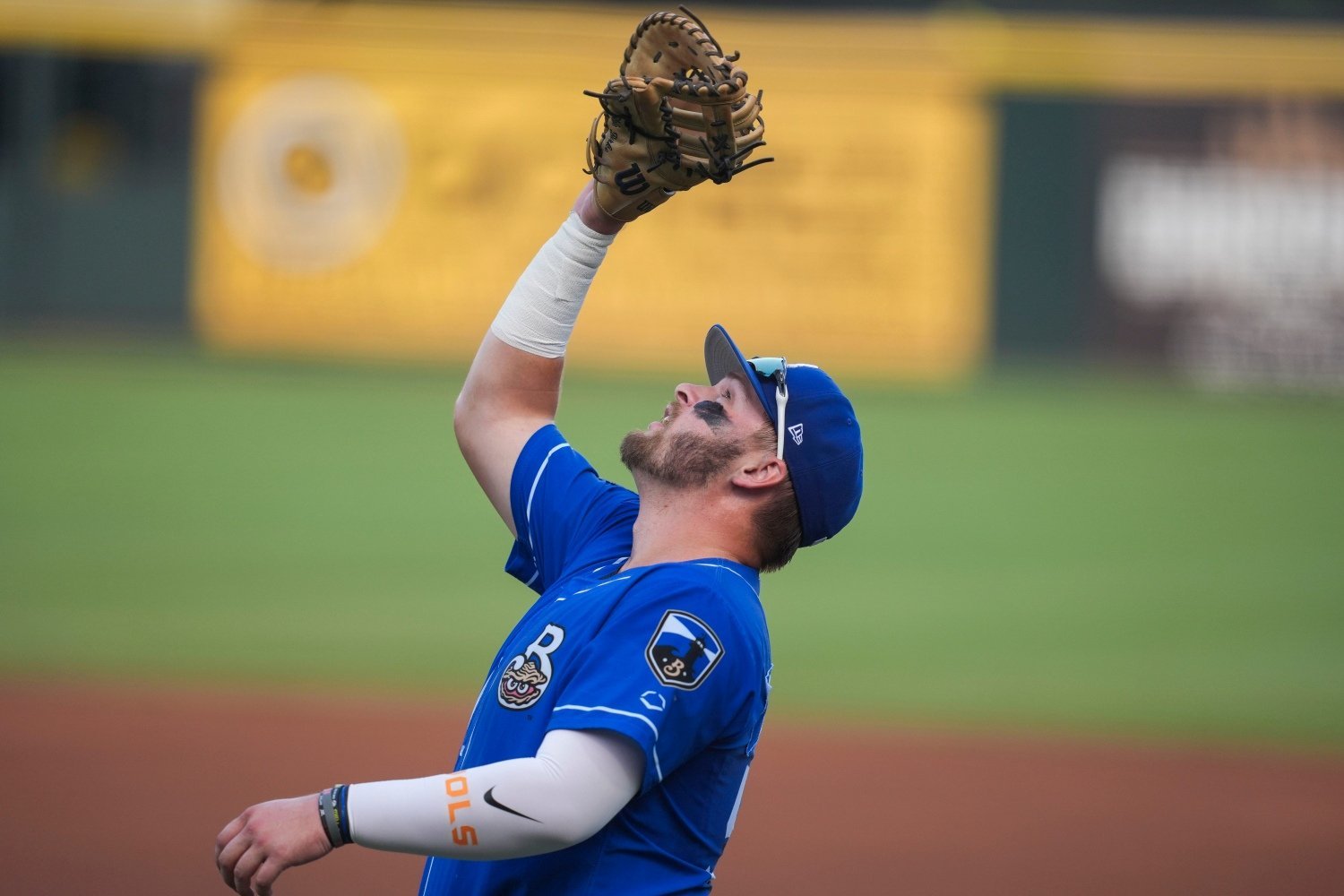 While there have been some notable sparks on the offensive side of the ledger, questions remain for this Brewers team. Milwaukee has the best record in baseball and should earn a first-round playoff bye. That has plenty of people looking ahead to October, but looking ahead to October always gets folks wondering whether history could repeat itself with another early postseason exit fueled by an offense that goes cold at the worst possible time. The opportunity to trade for reinforcements has come and gone, and, to be honest, there wasn't a whole lot of offensive help available at the deadline in the first place. The lineup has shown more life of late, but some additional thump (even in the form of a pinch-hitting option) could be valuable down the stretch and into October. With the trade market closed, it's time to look within the organization. Coming into the season, there were high hopes that some of the Brewers' infield prospects could eventually provide more power. Brock Wilken, in particular, put together the best half-season of his career last year at Double-A Biloxi, but he's struggled to consistently make contact since reaching Triple-A, frequently finding himself in pitcher-friendly counts. Jett Williams is another name whom many expected to feature this season, but some struggles and untimely injuries have kept him down. The latter has even put his season in jeopardy. While these two may have been front-runners entering the season, they're by no means the only potential contributors in what remains a stacked farm system. Two other bat-first options could contribute offensively down the stretch. Luke Adams Luke Adams is expected to return shortly, and his inertiatic approach at the plate continues to not just survive, but thrive as he rises through the levels. Pairing the third-lowest in-zone swing rate in Triple-A this season with an in-zone contact rate of 87.6% is a great place to begin. Adams knows what he wants in the at-bat and is willing to wait for it. When he gets it, he's been able to capitalize. Pairing strong exit velocities with a sky-high walk rate, a (somehow) reasonable strikeout rate, and the barrel control to elevate consistently has led to Adams being one of the strangest and most successful hitters in Triple-A this season. When he does swing, the contact quality has been strong, and he addresses another need the Brewers may have: he can crush left-handers. While Adams has performed admirably regardless of platoon matchup, his 1.097 OPS against southpaws stands out for a Brewers team that ranks 19th with a 95 wRC+ against left-handed pitching this year. Certain players (like Brice Turang, David Hamilton and Christian Yelich) have struggled against same-sided pitching, and Adams provides more versatility as a pinch-hit bat than someone like Gary Sánchez. Adams can play a capable third base, and that's where his value to this roster as a pinch-hitter would come into the fold. If he can hit the ground running to close out August, he may have a route to some playing time when rosters expand in September, especially if the Brewers are content with the versatility they have in their current 13-man position player corps. Blake Burke This is entirely predicated on one of two things happening: Yelich's recent struggles worsen, or either Yelich or Jake Bauers suffers an injury down the stretch. Outside of that, Burke would be a pinch-hitting option with extraordinary power, but the limited versatility would hurt his chances in September, and he would need those at-bats to push for an opportunity on a postseason roster. But let's eschew reason for a short second and look closer. Burke's one weakness is his swing decisions. He chases too much, but his in-zone contact rates are above-average; that's almost unheard-of for a hitter with Burke's sheer thump. The postseason creates tension, and with tension come mistake pitches. If put in a position with a mistake, there might not be many hitters in the Brewers organization more likely to crush that pitch. The barrel rate, hard-hit rate and maximum exit velocities tell a story. If you hang it, Burke will bang it. In a situation where the Brewers want a bat in a pinch-hitting situation to make a difference, Burke could present the perfect option. He showed throughout college how comfortable he is under the bright lights in the biggest moments, and while he's raw, there's a world where this gamble makes sense for the Brewers. Anyone else? I'm not sure about going much further down the list when it comes to potential impact players. Akil Baddoo has shown some lively contact in Nashville and probably would have played with the Brewers at some point this year, if not for some untimely injuries. That being said, he also looks like a Quadruple-A player, with passable contact numbers and plate discipline in Triple-A but an inability to make enough contact at the highest level to access the power that drives his profile. Bo Naylor has been more selective in the strike zone since joining the Brewers, adopting a more all-fields approach and reducing his strikeout rate in Triple-A. That being said, he would be the third catcher on the roster, behind both Sánchez and William Contreras. There are also service-time considerations that may impact a potential call-up. For those looking toward Double-A Biloxi, it's worth noting that Jesús Made has run into an inevitable adjustment period in August, hitting .200/.291/.280 while striking out more than has been typical for him this season. He's not a player the Brewers would want to rush under the best of circumstances, and it seems unlikely they would do so under these circumstances. Andrew Fischer is another name on many tongues, but he seems to be getting found out a little at Double-A. Typically, players see more intensive game planning as they move through the levels, and Fischer had some trouble with spin earlier in the season that might be rearing its head again now. He's slashing .136/.289/.348 this month with a 37% strikeout rate, and he'll have some adjustments to work through before he can find consistent production at Triple-A and above. All in all, the most likely boost is Adams. He's shown strong production throughout the year, despite a very quirky profile, and he can address the Brewers' struggles against left-handed pitching somewhat from the bench. He can also add to the second- and third-base options, with Joey Ortiz capable of handling second to make room for an all-right-handed infield on occasion. That gives the Brewers some maneuverability when it comes to finding at-bats. Burke is a different proposition. He lacks some of the positional coverage Adams possesses, while also having less time to prove himself at Triple-A and force his way into the Brewers' thoughts. That's not to say he can't succeed—his raw power is there for all to see—and it could be particularly effective over a small sample size. Still, barring an injury, we probably won't see him this season. Are there any other names you would consider for the expanded rosters? Anyone who might possess some of the power the Brewers so desperately crave right now? Let us know your thoughts in the comments below! View the full article
 -
John Schneider Might Want To Start Tracking His Steps
DiamondCentric posted an article in Jays Centre
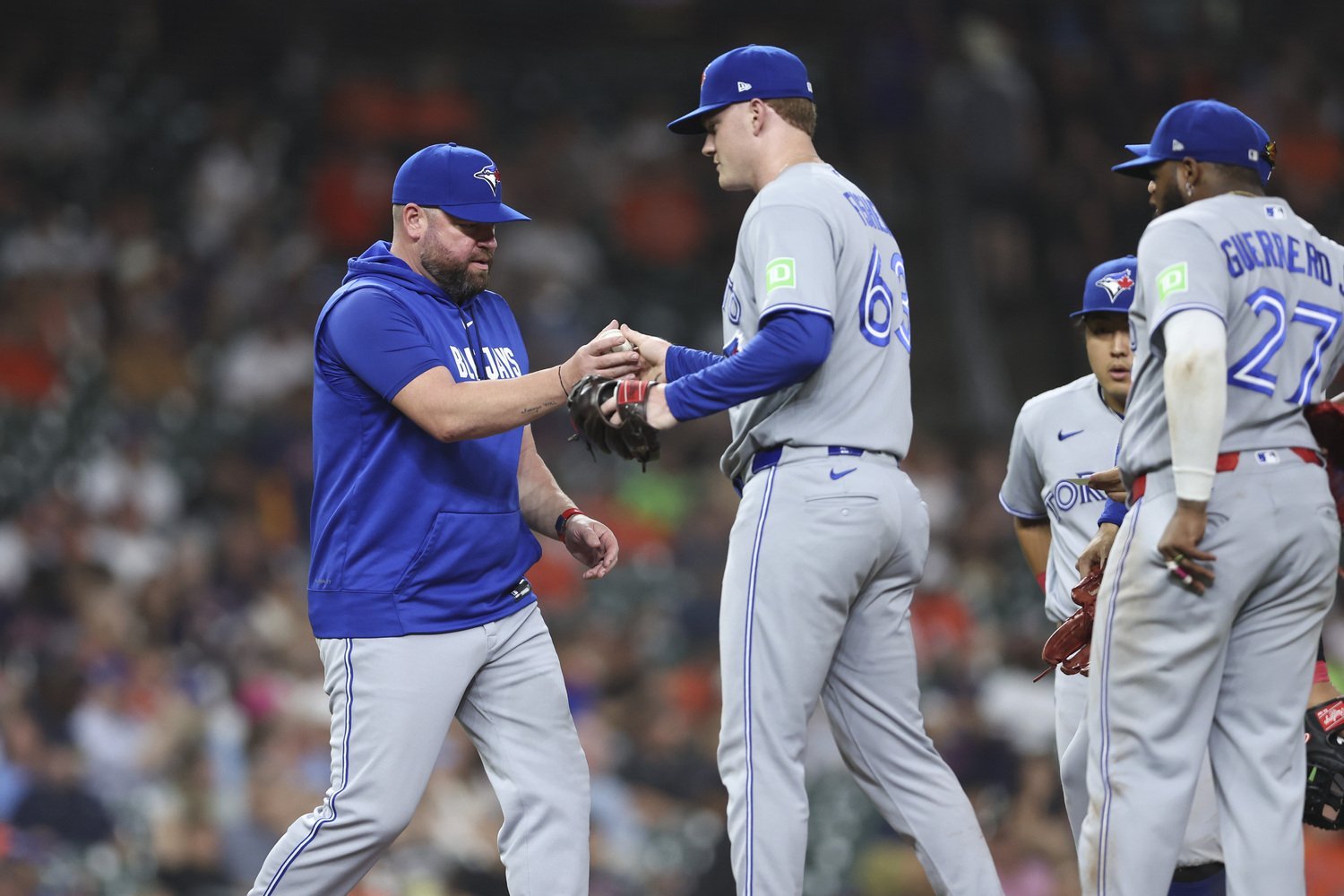 John Schneider, it's time to get out the step counter. The Blue Jays have made a ridiculous number of pitching changes this year. Coming into the homestand, the Blue Jays have made 489 pitching changes this season and are on pace to challenge the 2019 franchise record of 591. After digging through play logs and adding up the numbers, I found that 161 of those 489 (32.9%) pitching changes have involved Schneider coming to the mound and taking the ball from his pitcher. That's a lot of walking for Schneider. There’s no exact way to measure this, as every ballpark is different, and Schneider doesn't take the same pace out to the mound every time, but the average adult male travels roughly 2.5 feet/step, and the distance to the pitcher's mound from the dugout is roughly 90-105 ft, so it should take him anywhere from 35-50 steps to get to the mound. Using rough math, if we take the average of 40 steps to get to the mound, then another 40 back to the dugout, then multiply that by the 161 times he’s made that trip, he’s walked roughly 12,880 steps just in pitching changes on the season to date. (Technically, DeMarlo Hale made a few of those pitching changes instead of Schneider, but let's not exclude those steps from the count. After all, Hale was taking those steps in Schneider's shoes, so to speak.) For reference, those 12,880 steps are roughly 9.8 km. The Blue Jays website says the Rogers Centre has a diameter of 700 ft; multiply that by pi, and the circumference is just under 2,200 ft. Meaning Schneider has walked around Rogers Centre 14.6 times in pitching changes alone this year! At this rate, his next contract should probably include a footwear allowance. This certainly wasn’t part of the plan coming into the season. The Blue Jays pitching staff has been tested to the limit so far in 2026. Coming into spring training, the team looked like it had too many pitchers for too few spots; injuries and poor play tested its pitching depth early. The same happened after the trade deadline. The Jays were tentatively set to go to a six-man rotation, but after injuries to Jameson Taillon and Trey Yesavage (and now Shane Bieber), the team found itself churning through pitchers yet again. All in all, the Blue Jays have had 37 different players take the mound at some point this season; that's the most in the AL, and just two behind the Cubs for most in baseball (as of games on August 24). No team has made more appearances out of the bullpen than the Blue Jays, while they also rank among MLB’s top five in bullpen innings. This isn’t just a story of John Schneider getting his steps in; it points to a bigger picture of how the Blue Jays have used their pitchers to get to this point in the season. Injuries have played their part, but the Blue Jays have also struggled to get their starters deep into games. According to Baseball-Reference, here’s the leaderboard for average innings per start by team: 1. Seattle Mariners - 5.7 2. Cleveland Guardians - 5.5 3. Los Angeles Dodgers - 5.5 . . . 27. Toronto Blue Jays - 4.7 28. San Diego Padres - 4.6 29. Washington Nationals - 4.4 30. Chicago White Sox - 4.3 * League Average is 5.1 The Blue Jays find themselves in the bottom five of the league, and that's despite Dylan Cease ranking second in the AL with 6.0 innings pitched per start. When their starters give them length, the Blue Jays win less often than league average; when they don’t, the team has actually outperformed the league. The MLB average winning percentage when a starter throws six or more innings is .649, and the Blue Jays are 25-18 (.581) in those games this season. However, the Blue Jays have found a way to get more wins than average when their starters do not give them six innings in a start. MLB average is a .411 winning percentage, while the Blue Jays sit at 39-50 in those games with a .438 winning percentage. This raises a bigger question: Was this actually part of the Blue Jays' pitching strategy? Or was this something they were forced into? The real answer is it’s likely a bit of both. Schneider has proven to be capable at managing bullpen games, but that doesn't mean bullpen games were ever the plan. Coming into the season, the Blue Jays appeared to have plenty of pitching depth. The team wasn’t expecting to build its rotation out of bullpen games, or several four- or five-inning starts. Cody Ponce was supposed to make more than just one start; Trey Yesavage and Shane Bieber weren't expected to miss so much time; and the Jays certainly weren’t planning on trading Eric Lauer or Kevin Gausman coming into the year. That’s what makes Schneider's usage practices so interesting. This isn’t a manager who decided five-and-dive is enough from his starters; it's a manager who is trying to figure out how he can get the most out of the pitchers he has. That's worked surprisingly well so far. Blue Jays pitchers have collectively posted a 3.79 ERA on the season, and they’ve managed to outperform the league when their starter throws fewer than six innings. But there is a difference between surviving heavy bullpen usage and building a sustainable pitching strategy around it. Over the past decade, only a small handful of teams have been able to make the playoffs while ranking in MLB’s top five teams in batters faced by relievers. This is where the Blue Jays currently find themselves 2025 - Dodgers 2024 - Dodgers, Tigers 2023 - None 2022 - None 2021 - Rays 2020 - COVID Season* 2019 - Rays 2018 - Athletics 2017 - None 2016 - None In other words, it's not impossible, but the odds are certainly stacked against them. The Rays were among the first teams to use “the opener” and originally had success with it. The Dodgers are a recent example, but keep in mind the 2025 Dodgers struggled mightily with their bullpen; they used 40 different pitchers during the season, and 18 of them produced a negative bWAR. It wasn't until the postseason, when they moved some starters to the bullpen, that they found success. Historically, it's been hard to have success with a team that relies on its bullpen as much as the Blue Jays have in 2026. With all this being said, the Blue Jays still find themselves with a chance at playoff contention. The team has 30 games left, and the schedule does soften up, as the Jays play several games against teams below .500 and games against teams competing directly with them for the AL Wild Card spot. If the Jays want to get into the postseason, relying on John Schneider's legs can’t remain a part of the pitching plan. Eventually, the team will need more stability from its starting pitchers so it can turn its bullpen into a weapon instead of relying on it every night. Until then, Schneider might want to keep that step counter running; his laps around the Rogers Centre aren’t necessarily over yet. View the full article
