


DiamondCentric
-
Posts
2,631 -
Joined
-
Last visited
Never
Content Type
Profiles
Forums
Events
News
Tutorials & Help
Major League Baseball Videos
Guides & Resources
Store
Downloads
Gallery
Everything posted by DiamondCentric
-

The Cubs Should Give Jaxon Wiggins A September Opportunity
DiamondCentric posted an article in North Side Baseball
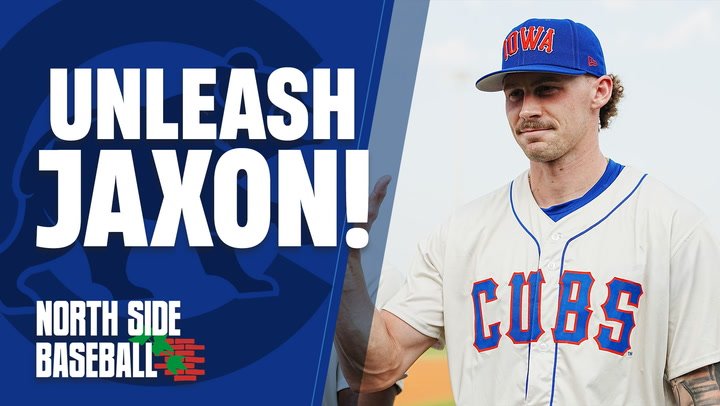 Jaxon Wiggins’ stock has taken a hit this season, but the Cubs still have plenty of reasons to believe in his long-term upside. A September call-up could give both sides a chance to find out just how close he really is. View the full article
 -
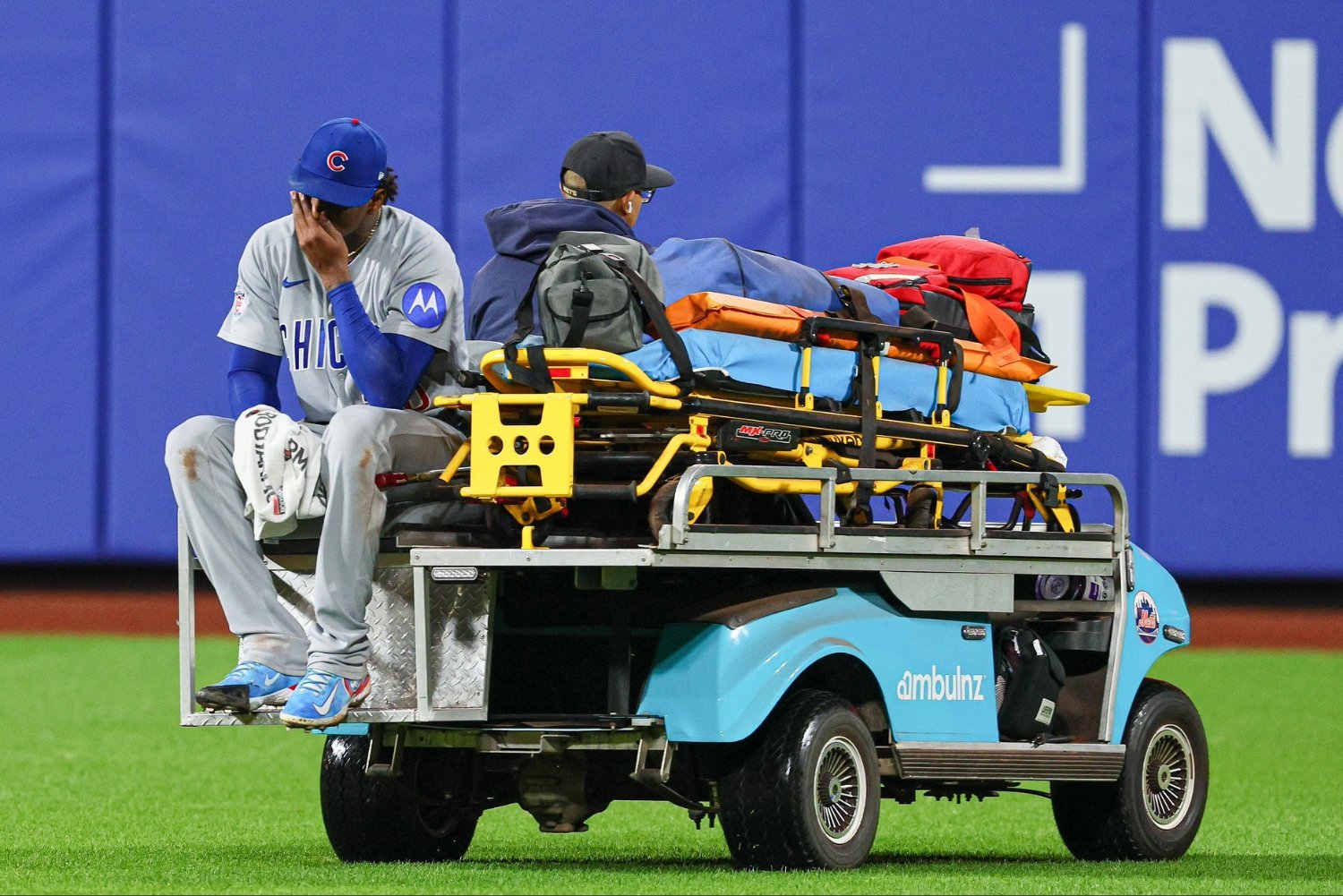 For as good as the 2026 Chicago Cubs have been, they’ve certainly battled their fair share of injuries. The team has been dealing with a plethora of ailments for most of the year, with the pitching staff taking the biggest hit. Though, to be sure, the lineup has also been forced to navigate some notable absences. And yet, despite all of that, the Cubs remain well ahead of the pack in the NL Wild Card picture. Of course, every fanbase manages to complain about injuries and how banged up their team is over the course of a season. But good news, Cubs fans: We actually can! In a recent FanGraphs article examining which teams have suffered the most due to injuries, the Cubs landed tied for the seventh-most potential WAR lost in baseball. According to ZiPS projections, Chicago has lost 10.0 potential WAR to injuries this season, trailing only six teams. And it becomes even more interesting when looking at the other end of the equation. The Cubs also have the fifth-most potential injury WAR remaining in baseball, with another 3.6 WAR potentially still on the table. Only the Red Sox, Athletics, Tigers and Yankees have more. Now, it’s important to note that this isn’t saying the Cubs would actually have 10 additional wins if everyone had stayed healthy; they’re projections. Still, it’s a pretty remarkable number for a team that has still managed to play so well despite the absences. So, how exactly did Chicago get there? Cubs' Injury Onslaught Has Cost Them So Much Production What better place to start than the pitching staff? The Cubs have seen both their starting rotation and bullpen get absolutely obliterated by injuries this season. Cade Horton made one full start before leaving his second outing, eventually undergoing season-ending Tommy John surgery in April. Justin Steele, meanwhile, has missed the entire season, removing two important pieces from Chicago’s rotation before the year even had a chance to fully get going. Then there’s Ben Brown, Edward Cabrera and Matthew Boyd, all of whom have missed significant time at different points throughout the season. Cabrera is particularly notable because Chicago acquired him in the offseason with the expectation that he would be an important piece of the rotation. He made one start after returning from his previous injury before being sent right back to the injured list, where he’s expected to remain through at least the end of August. But if you thought that was bad, the bullpen has been equally (if not more) decimated. Daniel Palencia has missed most of the season, while Riley Martin and Gavin Hollowell have also spent significant time on the shelf. Phil Maton and Hoby Milner have each missed substantial portions of the year as well. Considering all of that, it’s honestly pretty impressive that the pitching staff has held together as well as it has. The Cubs have had to continually shuffle their depth chart, finding replacements and asking other arms to take on larger roles than originally expected. The fact that they’re still 20 games above .500 is a testament to the organization’s depth and its ability to survive these injuries. It’s also not like the offense has had a perfect bill of health, either. Matt Shaw has been out since late June with a sprained left hand, although he is now on a rehab assignment. Seiya Suzuki also missed time earlier in the season, while Dansby Swanson was recently placed on the injured list with a strained oblique. Swanson is the biggest concern at this point. He could potentially miss the remainder of the regular season, and depending on his recovery, there’s even a chance his injury could sideline the Cubs’ shortstop into the postseason. So, while the offense has been considerably healthier than its pitching staff, it certainly hasn’t been immune to the injury bug. And that brings us back to the FanGraphs list. They still have 3.6 projected WAR remaining on the injured list, which ranks fifth in the league. That number could obviously change quickly. Brown could return soon, Shaw is on the mend, and with the Cubs sitting pretty in the playoff picture, they can afford to be a little more patient. But Horton is done for the year, and there are still several bullpen arms sidelined. There’s a legitimate possibility that Chicago’s injury situation continues to be a factor all the way into September and October. View the full article
 -
Vahn Lackey & Carson Tinney Are Already Flashing Their Upside
DiamondCentric posted an article in Twins Daily
 There’s plenty of development still ahead, but Vahn Lackey and Carson Tinney are already giving the Twins plenty to work with. View the full article
 -
Ranking the Depth Pieces That Have Kept the Blue Jays Afloat
DiamondCentric posted an article in Jays Centre
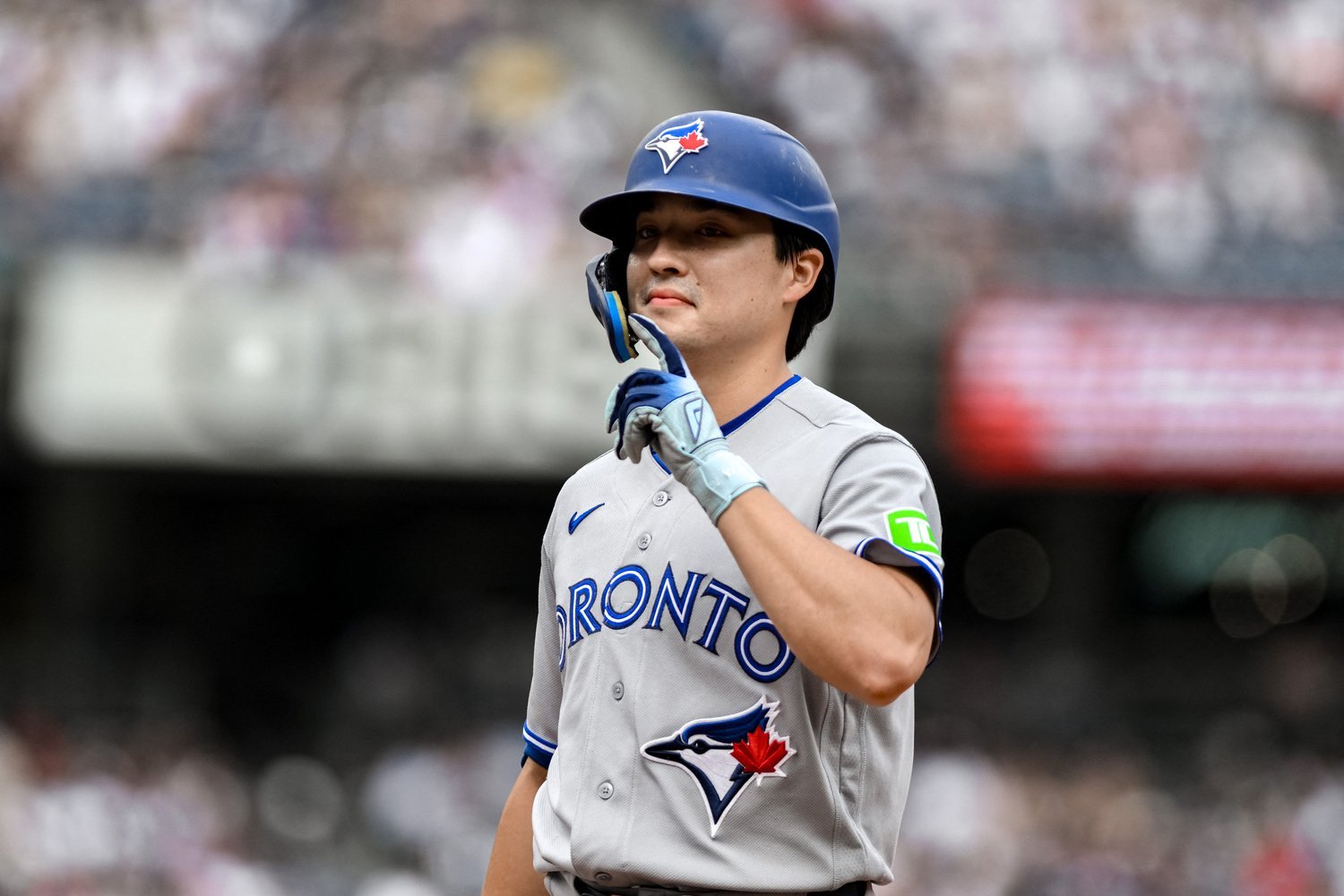 When Shane Bieber was asked recently about the Blue Jays' mentality, the veteran right-hander pointed to "the fight that this team has." As he put it, "That's why I love to be a Blue Jay." The fact that the Jays have found their footing after a lacklustre start is thanks in large part to a cast of unexpected contributors. Toronto's resurgence has been fuelled by a revolving door of newcomers, prospects, injury replacements and depth acquisitions who have collectively helped keep the season alive. They have become the backbone of the never-say-die mentality Bieber describes. The Blue Jays have used 59 players this season, and many of them have appeared in 30 games or fewer. The number is a bit convoluted this week, as Brendan Cellucci was promoted then quickly replaced by Spencer Arrighetti. The contributions from these players have played a significant role in keeping Toronto firmly in the playoff race while weathering injuries, roster turnover and underperformance from its core. According to MLB Pipeline, Toronto's farm system has steadily improved over the last two seasons. After ranking near the bottom of baseball not long ago, the organization has begun producing far more useful depth. In a season in which injuries and roster turnover have tested everyone, that organizational depth has become one of the biggest reasons the Blue Jays are still standing. Keep in mind that several players on this list would almost certainly have exceeded 30 games had injuries not interrupted their seasons. Here is a ranking of all the position players, relievers and depth contributors with 30 games or fewer who have contributed (both big and small) to the season thus far. Since most starting pitchers have not yet reached the 30-game threshold, starters have been excluded from this ranking. 1. Brett Bateman (13 G, .321 AVG, .367 OBP, 4 RBI, 1 SB) Bateman's spark was immediate. His speed, confidence at the plate, energy and athleticism have injected life into the lineup and given the Blue Jays another dimension offensively. 2. Charles McAdoo (19 G, .262 AVG, 2 HR, 10 RBI) McAdoo's second stint in Toronto has looked completely different from his first. He has shown poise, versatility and an ability to deliver in key situations. 3. Luis Urías (26 G, .250 AVG, 3 HR, 8 RBI) Urías brought veteran presence and positional versatility while also providing timely offense. His .803 OPS has made him one of the most productive call-up bats on the roster. 4. Adam Macko (22 G, 2-0, 4.91 ERA, 23 K) Macko delivered valuable innings during a difficult stretch. His performance ultimately helped create enough value to be included in a trade with Texas. Trade return: Utility infielder Josh Smith and minor-league right-hander Josh Stephan. 5. Lenyn Sosa (28 G, .188 AVG, 1 HR, 6 RBI) The numbers are modest, but Sosa provided flexibility, depth and capable defense before being sidelined. 6. Daz Cameron (4 G, .308 AVG, 1 HR, 2 RBI) Three games is hardly enough to evaluate a player, but Cameron's early impact has been impressive. 7. Chase Lee (7 G, 7.88 ERA, 1 SV) The numbers will not wow anyone, but Lee's ability to shuttle between levels and provide fresh innings has been valuable. 8. Brendon Little (19 G, 8.50 ERA, 26 K) Little has reinvented himself after a tough start to the season and a stint in Buffalo. 9. Patrick Corbin (19 G, 15 GS, 3-4, 5.51 ERA) Corbin was not acquired to be an ace, he was acquired to provide innings and stability. He did exactly that before getting injured. 10. Joe Mantiply (17 G, 2.04 ERA, 16 K) His time with the Jays before he landed on the IL was brief, but the veteran left-hander provided quality innings at a time when the team needed it. 11. Simeon Woods Richardson (6 G, 2-0, 0.55 ERA) When called upon, he has delivered. 12. Yariel Rodríguez (10 G, 7.71 ERA) Injuries and control limited his opportunities. His stuff, when on, is still impressive. 13. Lázaro Estrada (8 G, 5.54 ERA, 1 Save) Has shown potential and is an intriguing bullpen option. 14. Jonatan Clase (9 G, .273 AVG, 2 HR, 6 RBI) Clase brought speed, energy and far more offense than many expected. 15. Paul Sewald (3 G, 3 IP, 3 K, 0.00 ERA) A veteran reliever who might have found his groove again. 16. Eric Lauer (8 G, 6 GS, 1-5, 6.69 ERA) The numbers were not as strong as last year, but Lauer covered 36 innings when the Jays needed them early in the season. His value came less from results and more from preventing the team from overextending other arms at the time. Trade return (Dodgers): Player to be named later or cash considerations. 17. Eloy Jiménez (12 G, .290 AVG, 3 RBI) Wasn't able to translate a strong spring into a permanent fixture on the roster. 18. Sean Keys (12 G, .167 AVG, 1 HR, 5 RBI) His cup of coffee included some glimmers of promise, but he clearly needs more time to adjust to the big leagues. 19. Josh Smith (14 G, .250 AVG, 2 HR, 3 RBI) Smith is a left-handed utility player and looks capable of helping beyond this year. 20. Addison Barger (9 G, .045 AVG, 2 RBI) Frustrating injury-filled season, but his inclusion in a group of players who have played less than 30 games is a reminder of the injuries that the team has weathered. 21. Ricky Tiedemann (1 G, 1.2 IP, 5.40 ERA) Tiny sample, but he demonstrated that despite injuries, he still holds great potential. 22. Jameson Taillon (2 G, 8.0 IP, 3.38 ERA) Limited action so far, but useful innings. Could be an important piece if the Blue Jays need additional rotational depth. 23. Chad Dallas (3 G, 8.22 ERA) One rough outing against Houston inflated the numbers considerably. Still valuable developmental experience. 24. CJ Van Eyk (3 G, 4.76 ERA) A positive comeback story given his battles with injuries. 25. Connor Seabold (5 G, 8.10 ERA) Didn't quite pan out the way the Jays and Seabold had hoped. 26. Austin Voth (2 G, 9.00 ERA) Filled a role during a difficult period of roster turnover. 27. Tanner Andrews (2 G, 3.0 IP, 0.00 ERA) Another example of organizational depth answering the call. 28. Matt Waldron (4 G, 10.38 ERA) The results were mixed, and he has since been designated for assignment (claimed by the Nationals). 29. Hayden Juenger (2 G, 2.0 IP, 13.50 ERA) Continued his progression through the organization despite unimpressive results so far. 30. Josh Fleming (1 G, 3.0 IP, 12.00 ERA) Only one appearance. Honourable Mention: Tyler Heineman (33 G, .154 AVG, 1 HR, 6 RBI) A respected clubhouse veteran who couldn't quite recapture the magic of 2025. The 2026 Jays have survived because contributions have come from everywhere. Who knew the Jays had (or could find) this much depth? More importantly, who knew that depth would help steady the ship? A never-say-die mentality only works when someone keeps stepping forward every time adversity strikes. This season has delivered plenty of adversity. And yet, a collection of players with limited opportunities has contributed in ways both small and significant. Some players on this list barely made an impact, but they filled a void when it was needed. That is why the Jays look a bit different this season, and why they may look different again next week. In a season in which star power and familiar faces were supposed to drive success, it has been organizational depth that has carried Toronto through some of its most difficult moments. The Blue Jays' turnaround has not been built solely by their biggest names. It has been sustained by the players who answered the call when the organization needed them most, whether for a game, 30 games or somewhere in between. View the full article
 -
5 Weeks To Go: Breaking Down the Twins' Remaining Schedule
DiamondCentric posted an article in Twins Daily
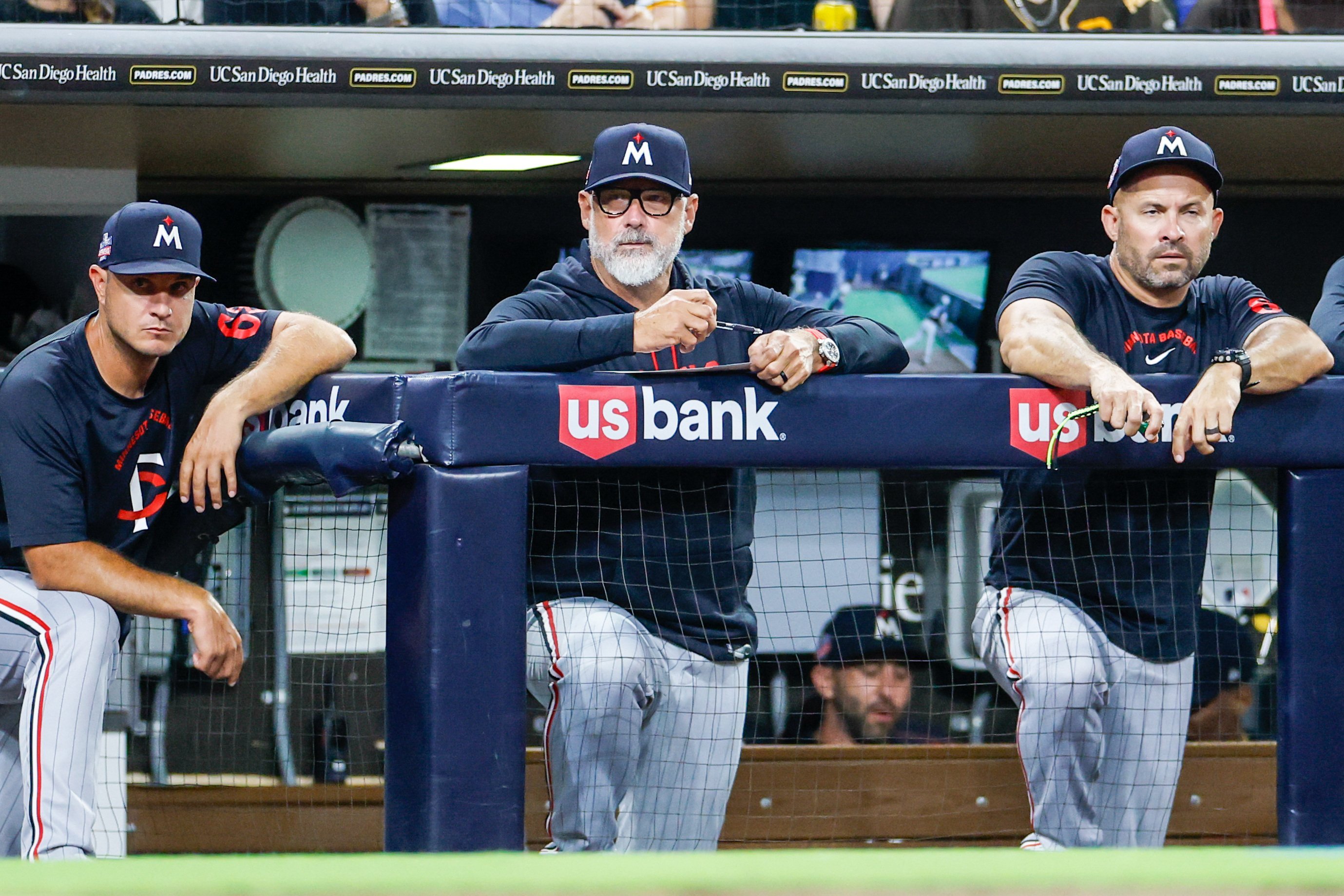 We're closing in on the end of August and while the Minnesota Twins haven't clinched anything, they have pretty firmly secured one of their most openly stated priorities for the season: playing meaningful baseball in September. The Twins entered this weekend in a tie for the final Wild Card spot in the American League, and they'll spend the home stretch of the schedule battling to stay in that mix. With one game left to go against the Padres followed by five more weeks of regular-season action, here's a quick overview of what's left for the Twins. Remaining Twins Schedule, at a Glance Games Remaining: 32 Home / Road: 15 / 17 Games vs. .500+ Teams: 10 Remaining Strength of Schedule: 5th-easiest in MLB Key Storylines in the Final 5 Weeks Soft September Schedule One of the Twins' biggest advantages relative to the field is their weak strength of schedule, which really presents itself in the month of September. As things currently stand, 18 of their 24 games in September will come against sub-.500 teams. That includes a road trip out west from the 17th through the 23rd where Minnesota will face the Angels and Giants, who are both on track for nearly 100 losses. The Twins haven't always fared as well as you hope in these softer matchups — see the Kansas City Royals — but they'll have a chance to make hay on bottom-dwellers in September, and that's not including their upcoming series against the Athletics who have a worse record than either. The Toughest Remaining Matchup While there are a number of unintimidating opponents on the schedule, one heavy-hitter does stand out. From the 14th through the 16th, just ahead of the soft pocket mentioned above, the Twins will go toe to toe with the New York Yankees at Target Field. It's possible they'll have Aaron Judge, who's been out since May, back by then. The Twins didn't demonstrate their usual submissiveness against the Yanks earlier this year, taking two of three in New York, but this is always a tough test and it comes in the midst of a 13-day stretch with no break, the biggest remaining gauntlet on the schedule. A Final Push for the AL Central Title? With Cleveland and Detroit failing to make strides, the Twins have risen to second place in the AL Central. They're still 4 ½ games behind the White Sox, which is a somewhat sizable gap to make up in five weeks, but the Twins control their destiny to some extent. They face Chicago six times in the final 32 contests. Going, say, 5-1 in those matchups would potential give Minnesota a chance to make a charge for one of the more unlikely division titles in franchise history. A Photo Finish in the Wild Card Race? The final weekend of the season could be a doozy if things stay the way they are now. The Twins are one game behind the last Wild Card spot, which is currently held by the Texas Rangers. Those two teams will face off at Target Field in the final series of the season, September 25th through 27th, in what could be an epic high-stakes showdown. What strikes you most about the Twins' remaining schedule? What are the biggest keys to coming out on top of this crowded postseason race? View the full article
 -
Bo Bichette Is, At Long Last, In Peak Form With the Mets
DiamondCentric posted an article in Grand Central Mets
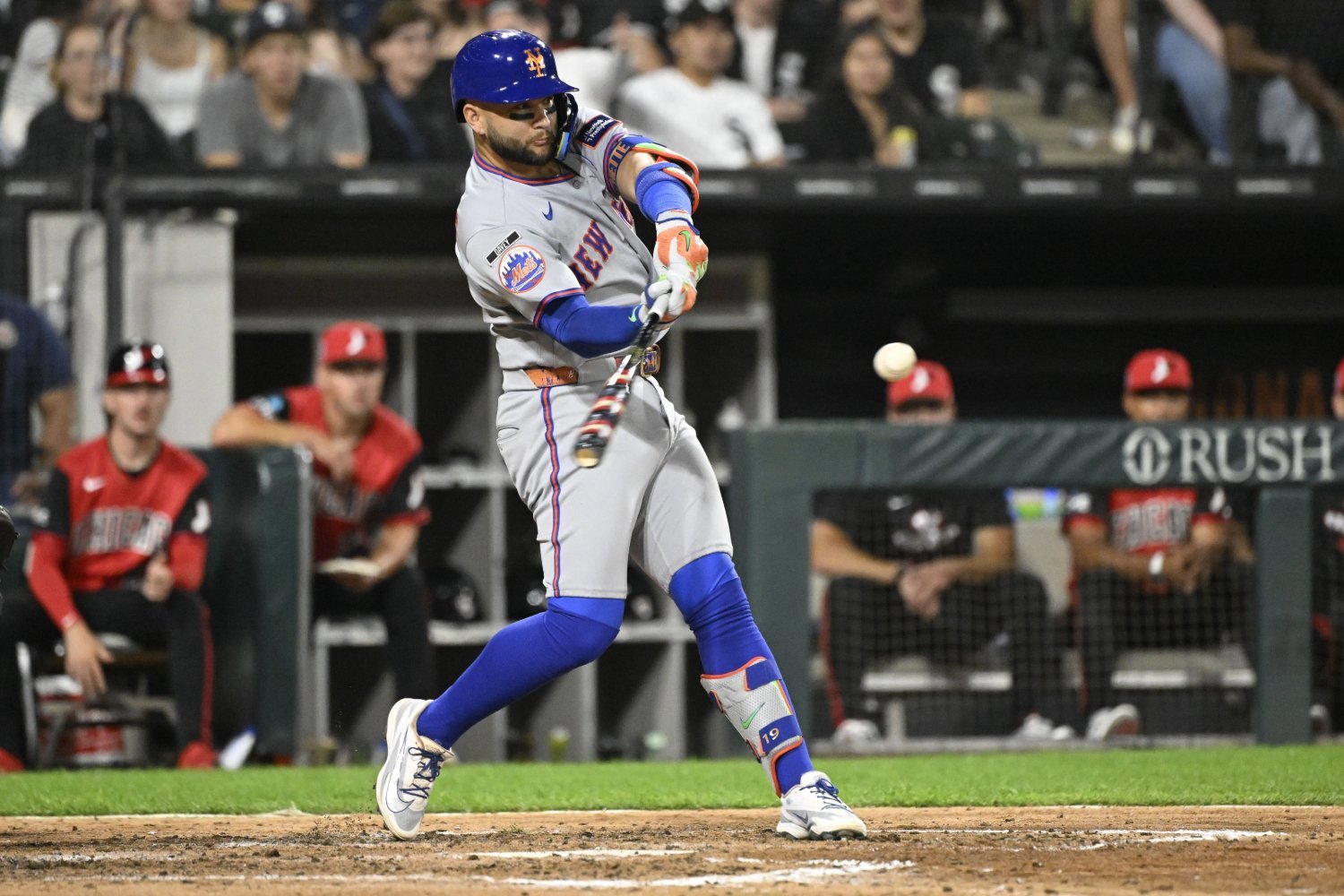 Over the winter heading into the 2026 season, the New York Mets signed third baseman Bo Bichette to a three-year contract with player options for the 2027 and 2028 seasons -- the total deal would be worth $126 million. The only problem is that the Mets have not seen the numbers from Bichette that he’d put up during his seven-year tenure with the Toronto Blue Jays. In Toronto, he owned a .290 batting average and .806 OPS to go along with 111 home runs and 437 runs driven in. Yet his offensive abilities have fallen off a cliff during his first year with the Mets as he currently sports a .266 batting average and .706 OPS with 13 homers and 65 runs batted in. That's not awful production, but certainly not what you'd expect from two-time All-Star Bichette. With the 2026 season nearly over, Bichette has only managed to put together two months of quality offensive production. He really struggled to start the season from April to May, where his OPS sat below .600 and it was looking like his contract might be a bust. He then provided a quick glimpse of hope in June, when he managed a .321 average and .883 OPS along with 13 extra-base hits and 18 runs driven in. At the time, it looked like he was starting to figure things out at the dish and might actually return to form for the rest of the season. Well, his performance fell back in July, hence his .275/.320/.308 slash line for the month. It would have been easy for him to roll over, accept his and the Mets' fate, and just opt-in to his $42 million salary for 2027. But that's not what happened. Bichette has played 18 games so far in August and it has proven to be the most effective stretch of time we’ve seen from him in a Mets uniform. Across a small sample size of 77 plate appearances, the third baseman has posted an excellent .329/.390/.557 slash line along with a 163 wRC+. His 0.9 fWAR during the month of August accounts for half of total fWAR for the season, which is both an indictment of his early play and a reminder of how good he can be when everything is clicking. He’s definitely on pace to make this month his best offensive stretch for the entire season. What Has Led to Bo Bichette’s Uptick In Performance? What’s actually been the biggest factor to Bichette’s inconsistency month-to-month has been his batted-ball tendencies. When he does a good job consistently hitting line drives is when we’ve seen him perform best, but when he starts to get rolled over and hit the ball on the ground is when he struggles. He's a free-swinger, which is contributing to this specific inconsistency. During Bichette’s best two months at the plate (June and August), his line-drive rate has been above 26%. For the whole season, Bichette owns a 21% line-drive rate. Now in August where he’s putting up his best monthly batting average for the season, his line-drive rate is at a season-best 28.8% mark. Over Bichette’s career, his two highest line-drive rates for an individual season resulted in a season batting average over a .300 mark (26% in 2020 and 27.4% in 2023). It’s not the only time when he's hit for at least a .300 average, but that gives us a pretty good idea of when he's his performing at optimal efficiency. Similarly, the reason why Bichette’s August performance has been even better than June is because he’s lifting the ball more in general and not hitting the ball on the ground as much. Thus far in August, he’s managed a 38.5% groundball rate, which is even better than his 44% clip back in June. Naturally, because he's lifting the ball more, Bichette has shown pretty good power in August, hitting two home runs, five doubles, and one triple. The question that most fans will have about this hot streak is whether or not it will affect his eventual option decision at the end of the year. It's going to be tough for him to turn down $42 million after his earlier struggles (especially with the lockout looming), but if he keeps hitting like this through the end of September, the Mets may need to reevaluate their third base plans in 2027 and beyond. View the full article
 -
![More information about "Calvin Bickerstaff's Unique Path to Professional Baseball Has Him Ready to Succeed With Red Sox [Exclusive]"](//d317trerw33y7b.cloudfront.net/monthly_2026_08/rssImage-462cea426592e9848d32526e07b15470.jpeg.bf2cf4b3a35e0bbc7487e83a634ee2a5.jpeg) Not everyone has the same path to professional baseball. While some will end up drafted, others will find out in the wildest of ways that their dream gets to continue. For Boston Red Sox prospect Calvin Bickerstaff, calling his draft experience unique would be an understatement. “I talked to a few teams throughout my senior year and nothing too crazy [came of it], so I was unsure going into the [draft], but had a feeling. I had a workout leading up to it and the day before the first day of the draft my college coach called me and said ‘We’re going to send you out to the Cape [Cape Cod] League to finish out the summer.' So, I was like, when do I need to be there and was told to be there in two days,” Bickerstaff explained. During the hectic travels, he admitted that communication was often bare when it came to the draft. The trip to play in the Cape Cod League was one nobody never would have imagined playing out how it did. “Drove out during the first day [of the draft] and finished the drive on the second day. On the third day my team had an off day so my dad who drove out with me, we were going to watch another Kent State player pitch. “I had never talked to the Boston Red Sox. I didn’t talk to them in high school, didn’t talk to them junior year or senior year. And we’re on the way [to the game] and my agent calls and says the Red Sox might take you. There’s one guy ahead of you, if they don’t take him, they’re going to take you. They ended up taking him and he [the agent] called me back and said they still want to take you.” While it was a 10-hour drive to get to Cape Cod and Bickerstaff never got to pitch even an inning, the drive back was easy. Even going as far as to describe his feelings as “being on cloud nine” during the ride back home. The rest for Bickerstaff was history. After pitching three seasons for Kent State that saw him appear in 56 games and tossing 122 2/3 innings, the right-hander was a professional athlete. Signing as an undrafted free agent, he would eventually make his professional debut for the then Salem Red Sox in 2024. Tossing 6 1/3 innings, the right-hander struck out seven batters. It had been a long journey, one that had helped to shape him into the pitcher he is today. He continued to grow, after his senior year in high school was cut short due to Covid-19; the former high school senior that was thrown off of baseball fields during the spring and summer of 2020 would go on to turn himself into a prospect after his college career. “The main thing was trying to figure out a way to stay in ready. We couldn’t use baseball fields in our community. I got kicked off of two different fields because I couldn’t even access my high school field, it was a college field for Franciscan University of Steubenville,” Bickerstaff reminisced about the end of his high school career. “They had the whole facility locked, but I would hop the fence of local high schools with a catcher. Next thing you know somebody was there to kick me out.” Fortunately, the right-hander had already committed to Kent State during his sophomore season and did not have to worry about the pandemic taking away his chance to pitch in college. But since signing with Boston following the 2024 draft, Bickerstaff quickly learned there was a difference between the college level and professional baseball. “It was everything I expected. It was great. I finished the month in Salem, Single-A, it was great. The days in pro ball were a bit different. It’s like practice every day and if you’re available, then you’re playing. It was a little different but awesome. I’m lifting, running, eating well, and then throwing.” Since signing with the Red Sox, Bickerstaff has spent time at four different levels, pitching in the Florida Complex League briefly in 2025 and making it all the way to Portland for a brief stay in 2026. Most of his time in the system has been spent with High-A Greenville. Overall, he’s appeared in 55 games and tossed 121 innings with a 4.31 ERA and 110 strikeouts. For someone who has bounced between the bullpen and rotation since high school, he admits that there is a difference in mindset if he knows he’s going to start or relieve, but he revels in being a flexible pitcher. “The biggest difficulty was going from high school as a starter to the bullpen in college. I would take my time, as much as I needed—15 minutes throwing a pregame bullpen, looking back I was throwing way more than I should have. That first year in the bullpen, I’d go in the first or second inning due to trouble and it’s like I got to figure this out because I don’t feel prepared. But I eventually figured it out." The right-hander continued to explain how his mindset also shifted depending on his role. If he were starting, Bickerstaff knew he needed to pace himself, planning not just for the current inning, but for what laid ahead for the rest of his outing. Since moving back to the bullpen after getting drafted, he’s viewed throwing each pitch as if “it’s the ninth inning”. In 2026, he’s appeared in 28 games so far, making one appearance for Salem, one for Portland, and 26 for Greenville. He’s given the organization 68 2/3 innings with a 4.33 ERA, striking out 53 and walking 22. The next step for Bickerstaff is to make it back to Portland as a permanent promotion, though even that is just a stepping stone on his unlikely journey all the way to the big leagues. View the full article
Not everyone has the same path to professional baseball. While some will end up drafted, others will find out in the wildest of ways that their dream gets to continue. For Boston Red Sox prospect Calvin Bickerstaff, calling his draft experience unique would be an understatement. “I talked to a few teams throughout my senior year and nothing too crazy [came of it], so I was unsure going into the [draft], but had a feeling. I had a workout leading up to it and the day before the first day of the draft my college coach called me and said ‘We’re going to send you out to the Cape [Cape Cod] League to finish out the summer.' So, I was like, when do I need to be there and was told to be there in two days,” Bickerstaff explained. During the hectic travels, he admitted that communication was often bare when it came to the draft. The trip to play in the Cape Cod League was one nobody never would have imagined playing out how it did. “Drove out during the first day [of the draft] and finished the drive on the second day. On the third day my team had an off day so my dad who drove out with me, we were going to watch another Kent State player pitch. “I had never talked to the Boston Red Sox. I didn’t talk to them in high school, didn’t talk to them junior year or senior year. And we’re on the way [to the game] and my agent calls and says the Red Sox might take you. There’s one guy ahead of you, if they don’t take him, they’re going to take you. They ended up taking him and he [the agent] called me back and said they still want to take you.” While it was a 10-hour drive to get to Cape Cod and Bickerstaff never got to pitch even an inning, the drive back was easy. Even going as far as to describe his feelings as “being on cloud nine” during the ride back home. The rest for Bickerstaff was history. After pitching three seasons for Kent State that saw him appear in 56 games and tossing 122 2/3 innings, the right-hander was a professional athlete. Signing as an undrafted free agent, he would eventually make his professional debut for the then Salem Red Sox in 2024. Tossing 6 1/3 innings, the right-hander struck out seven batters. It had been a long journey, one that had helped to shape him into the pitcher he is today. He continued to grow, after his senior year in high school was cut short due to Covid-19; the former high school senior that was thrown off of baseball fields during the spring and summer of 2020 would go on to turn himself into a prospect after his college career. “The main thing was trying to figure out a way to stay in ready. We couldn’t use baseball fields in our community. I got kicked off of two different fields because I couldn’t even access my high school field, it was a college field for Franciscan University of Steubenville,” Bickerstaff reminisced about the end of his high school career. “They had the whole facility locked, but I would hop the fence of local high schools with a catcher. Next thing you know somebody was there to kick me out.” Fortunately, the right-hander had already committed to Kent State during his sophomore season and did not have to worry about the pandemic taking away his chance to pitch in college. But since signing with Boston following the 2024 draft, Bickerstaff quickly learned there was a difference between the college level and professional baseball. “It was everything I expected. It was great. I finished the month in Salem, Single-A, it was great. The days in pro ball were a bit different. It’s like practice every day and if you’re available, then you’re playing. It was a little different but awesome. I’m lifting, running, eating well, and then throwing.” Since signing with the Red Sox, Bickerstaff has spent time at four different levels, pitching in the Florida Complex League briefly in 2025 and making it all the way to Portland for a brief stay in 2026. Most of his time in the system has been spent with High-A Greenville. Overall, he’s appeared in 55 games and tossed 121 innings with a 4.31 ERA and 110 strikeouts. For someone who has bounced between the bullpen and rotation since high school, he admits that there is a difference in mindset if he knows he’s going to start or relieve, but he revels in being a flexible pitcher. “The biggest difficulty was going from high school as a starter to the bullpen in college. I would take my time, as much as I needed—15 minutes throwing a pregame bullpen, looking back I was throwing way more than I should have. That first year in the bullpen, I’d go in the first or second inning due to trouble and it’s like I got to figure this out because I don’t feel prepared. But I eventually figured it out." The right-hander continued to explain how his mindset also shifted depending on his role. If he were starting, Bickerstaff knew he needed to pace himself, planning not just for the current inning, but for what laid ahead for the rest of his outing. Since moving back to the bullpen after getting drafted, he’s viewed throwing each pitch as if “it’s the ninth inning”. In 2026, he’s appeared in 28 games so far, making one appearance for Salem, one for Portland, and 26 for Greenville. He’s given the organization 68 2/3 innings with a 4.33 ERA, striking out 53 and walking 22. The next step for Bickerstaff is to make it back to Portland as a permanent promotion, though even that is just a stepping stone on his unlikely journey all the way to the big leagues. View the full article -
 RHP's Jaron DeBerry and Jayden Dubanewicz shined, but their respective Biloxi and Wisconsin offensive teammates had quiet nights. Ironically, Wilson plated plenty of runs but lost big regardless. This specific note from Thursday's first pool play game defines the end of the Dominican Summer League season for the Crew. Transaction: DSL Brewers Blue released RHP Lonell Downs. Downs, 19, spent three summers in the Dominican League, as his linked stats page will detail. The native of Nicaragua appeared in 30 professional games and ten of his 22 appearances in his first two seasons were starts, an indication the Brewers were initially high on his arsenal. Shifted to bullpen-only work in 2026, Downs never did make it stateside in the Brewers system. We wish him well. Nashville Press Release: Sounds, Tides Suspended Saturday Night Doubleheader Pushed to Sunday, August 23 NASHVILLE - Due to inclement weather in the top of the first inning, tonight's (Saturday, August 22) doubleheader against the Norfolk Tides at Harbor Park has been postponed and will resume on Sunday, August 23 beginning at 11:05 AM (10:05 AM Central). The Sounds and Tides will wrap up their series with two seven-inning games on Sunday. The Friday, August 21 game that was originally postponed has been cancelled and will not be made up. The game was four pitches old before being called with rehabbing Sal Frelick at the plate: We get it, it was fireworks night, the last Saturday night August gate for Norfolk, but this was at least the third time a Brewers affiliate (perhaps twice for Wilson?) had a game postponed in "we just got underway" manner. Either the local forecasters are wildly ineffective, of they were accurate and just weren't heeded by club officials. Mother Nature is undefeated and makes the call, unless you're the Chicago Cubs circa 2017. Will LHP Cade Povich be back on the mound at all for the Tides on Sunday? RHP Brandon Sproat was set to go for the Sounds, remains to be seen if he'll still start Game One Sunday. Y'know, routines and all... Biloxi Pre-Game Media Notes Final: Rocket City (Angels) 2, Biloxi 0 Box Score and Game Log DeBerry Strikes Out Eight, Shuckers Fall to Trash Pandas - Brewers No. 27 prospect extends lead for Southern League strikeout crown, allows one earned run over 6.0 innings We really shouldn't dismiss the 23 instances, each time when called upon, that RHP Jaron DeBerry has taken the ball for a Biloxi start this season. The 2025 3rd round senior sign out of Dallas Baptist ($25,000 bonus). DeBerry's .230 batting average against is 4th in the Southern League among inning-qualifiers, and as noted in the game summary headline, is the league strikeout leader. DeBerry's game log will reveal that there's been about one start per month that's been clunky enough to skew his ERA and other counting stats, but few pitchers avoid those games altogether in their development years. DeBerry turns 24 years old in five days and should be a key member of Nashville's 2027 rotation. DeBerry should have been credited with shutout ball in this game. A rare misplay by Braylon Payne (must have been the stadium lighting) led to this "triple", and catcher David Garcia threw away a pickoff attempt on the next play. There are your two runs, Trash Pandas. Jesus Made singled in the 4th and stole second base, his 33rd theft in 44 tries. That's as close to an offensive highlight as we can muster, and not a stitch of Biloxi video goodness at the plate in this one is available as RHP Tyler Bremner, the 2nd overall pick in the 2025 draft out of UC-Santa Barbara by the Angels, dominated through six innings. Wisconsin Pre-Game Media Notes (download link) Final: Lake County (Guardians) 6, Wisconsin 1 Box Score and Game Log Captains Sink Rattlers with One Big Inning - Lake County scores five runs with two outs in sixth inning to take control Direct from the game summary you just read - "The Lake County Captains took advantage of a break in the top of the sixth inning to score five runs with two outs to blow open a close game against the Wisconsin Timber Rattlers Saturday night at Neuroscience Group Field. In the top of the sixth, Dubanewicz gave up a lead-off double and recorded his fifth strikeout of the game before he gave way to reliever Chandler Welch. Welch walked the first two batters he faced to load the bases. He rebounded to get the second out of the inning with a strikeout and get ahead of Howard 0-2. Wisconsin thought Welch had struck out Howard on a check swing, but Howard was ruled not to have gone around to keep his at bat alive. Two pitches later, Howard blooped a single to left to score two runs. José Pirela was next to face Welch, and they battled for ten pitches. Welch again got ahead 0-2. Pirela fouled of a pair of 1-2 pitches and three 2-2 pitches before hitting a three-run home run to right for a 6-0 lead." Voice of the Rattlers Chris Mehring is an absolute master at providing context when necessary to his game summaries. The Media team then picks up the theme by including MLB Grade A video evidence of the poor check swing call (only two umpires at the A-Ball level, so making that decision from second base). Would it have been easy to gloss over the events of that inning? Is it better for us to understand Welch's line while reviewing the video in full below? You bet. Did you catch Jayden Dubanewicz' facial fun fifteen seconds into the highlights? Just 20 years old, Dubanewicz clearly read yesterday's Link Report discussing aggressive pitching placements and said, "see this". Actually, the 2024 16th round pick out of a Florida high school has been very effective all season save for two outings (game log) and is right to call me out. This game had many parallels offensively to the Biloxi game Saturday, which is to say there's not much to cling on to. The lone drive in was by Eric Bitonti, his 70th and 7th in the league this season. Be sure to check out who is 3rd in the league in RBI. Wilson Pre-Game Media Notes Final: Salem (Red Sox) 15, Wilson 9 Box Score and Game Log Warbirds Fall in Saturday Night Shootout - Encarnacion Leads the Way with Four Hits Salem doesn't post video to their 'X' feed, and Wilson was unable to pick up video for their own. As usual, our Spencer was hard at work: Here's Handelfry Encarnacion driving in the first run of the game with a long double. One place you can catch eight or so videos is via the RidgeYaks' video collection page, though the Wilson pitching coaches may not want you to visit. Every name in the Wilson lineup but one reached base at least twice, and the one who didn't, catcher Rylan Mills, did have a base hit. So, production throughout, enjoy your box score review (at least on the non-pitching side of the ledger). That being said, starting RHP Carlos Carra was OK through two innings before the lengthy rain delay ended his night. Recently called-up RHP Luke Roupe was effective in his August 11th Warbirds debut but has struggled in his two follow-up outings, though four of the nine runs he allowed were unearned. That box score review also showed you rough defensive nights for Mills and third baseman Frederi Montero (in only his 5th game at the hot corner this season). 18-year-old Antunez is up to a .405/.510/.734 line (1.244 OPS) through his first 97 Wilson plate appearances. We'd say video game numbers, but no video game could envision and calculate those figures. Final: DSL Brewers Gold 5, DSL Mariners 2 Box Score and Game Log The bulk of our daily forum thread was made up of posts discussing the status of the Gold squad in pool play and whether the convoluted tiebreakers of unknown definition would allow Gold to move on to the league semifinals. Alas, we learned that despite being one of three teams in the initial four-team pool to go 3-1, the Brewers club will not be advancing. The Mariners did not score until the 9th inning Saturday as RHP Raymond Sarmiento followed up his fine regular season with six no-hit innings, walking two and fanning five. The 18-year-old Venezuelan native will turn 19 in February and has seemingly punched a ticket to Maryvale (maybe Wilson?) to begin 2027. 17-year-old 3B Leander Matos singled twice and drove in two runs. 19-year-old RF Frandy Lafond doubled and singled. Both players stole a base. Like Sarmiento, they will be in Maryvale come spring. So, we say goodbye to the DSL season, you'll find all the individual sortable player stats on these pages: Blue and Gold. Follow five games Sunday prior to settling into the Little League showcase game tonight. Thanks for reading, have a fine day! Organizational Scoreboard including starting pitcher info, game times, MiLB TV links, and box scores Current Milwaukee Brewers Organization Batting Stats and Depth Current Milwaukee Brewers Organization Pitching Stats and Depth View the full article
 -
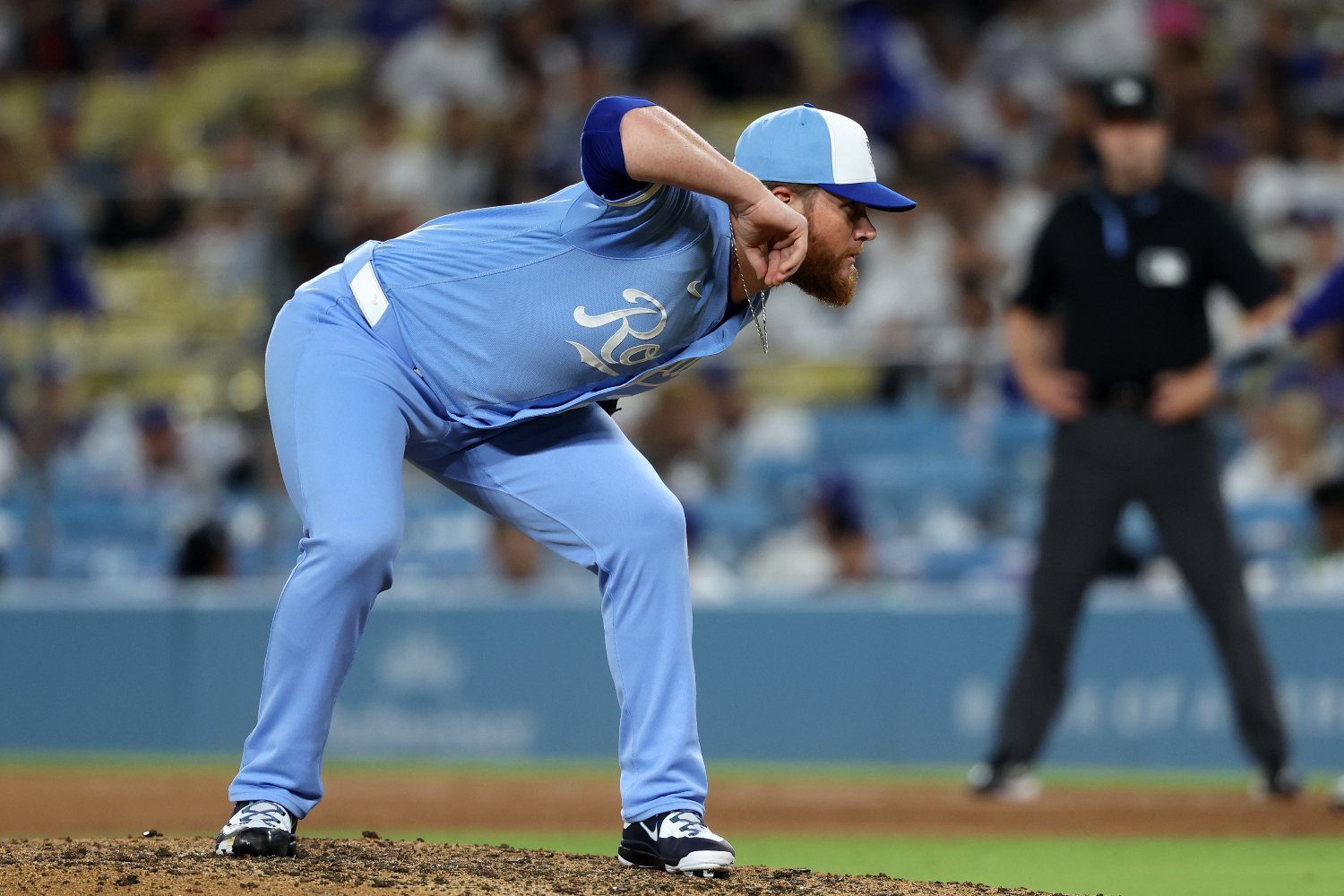 The Kansas City Royals may be the hottest team in baseball right now, which is wild to say for a team sitting in last place in their division. On Saturday, they won their seventh straight game, their sixth game on this homestand, and their second in a row against the Tigers. It was definitely a good night for the 23,156 in attendance on Saturday at Kauffman Stadium (unless you were a Detroit fan). With the win, the Royals improved to 57-74 and are just 7.5 games out of an American League playoff spot (which shows how dire the competition is in the AL). The Royals were helped on Saturday by home runs from Kyle Isbel and Salvador Perez, as well as a masterful performance from Michael Wacha (7 IP, 3 H, 1 R, 1 ER, 1 BB, 6 K). However, one of the more endearing stories from the K on Saturday was Carig Kimbrel getting the save, his first with the Royals and first since the 2024 season. According to manager Matt Quatraro in the postgame press conference, the Royals did not have Steven Cruz, Nate Pearson, or John Schreiber available because of their recent workload. All three pitchers have gotten not just saves, but closer opportunities with the Royals this season. Thus, Quatraro opted to go with the veteran, who's currently second on the active saves leader list, behind only Kenley Jansen, who actually was warming up in the Tigers' bullpen on Saturday during Kimbrel's appearance. So how did Kimbrel get his first save in nearly two years against a Tigers team still trying to claw for a spot in the postseason? Let's break down Kimbrel's outing and how he managed to close out Detroit to help Kansas City clinch the weekend series. Kimbrel Didn't Get Whiffs, But the Stuff and Chase Were Solid Looking at Kimbrel's TJ Stuff+ summary from Saturday, it was a bit of a mixed bag. Kimbrel threw 20 pitches on Saturday to earn his 441st career save. There were definitely some positives to glean from his save effort against Detroit. First off, the stuff looked really good on Saturday. Even though his four-seamer velocity was slightly below average at 93.8 MPH, he generated elite spin and iVB on the fastball offering, which he threw 65% of the time against the Tigers. That resulted in a 111 TJ Stuff+ and a 72 grade on the pitch on Saturday. He struggled to locate it (23.1%) and induce whiffs (16.7%), but he also generated a 40% chase with the offering. Kimbrel leaned heavily on his four-seamer, as only seven of his 20 pitches were secondary offerings. His best secondary pitch in terms of TJ Stuff+ was his knuckle curve, which had a 106 TJ Stuff+ and 61 grade. In terms of results? That was his changeup, which generated a 100% chase, 50% whiff, and .160 xwOBACON despite a 94 TJ Stuff+ and 46 grade (his worst marks in both categories). Overall, his TJ Stuff+ was 107, his chase was 56.3%, and his xwOBACON was .160. That made up for a lackluster overall zone rate (20%) and chase rate (16.7%). It's possible that Kimbrel struggled to find the zone because he was so amped up. His pitch chart from Saturday showed that, according to Savant, his four-seamer was missing up often. While Kimbrel didn't live in the zone, he lived on the Edges in Saturday's win. That was good enough, especially with home umpire Manny Gonzalez having a big zone and the Tigers being eager to chase in game two of the series. Retiring Keith and Dingler With Ease While the Royals got an insurance run in the sixth inning due to a wild pitch by Tanner Rainey that scored Jac Caglianone from third, Kansas City was nursing a thin two-run lead. To make matters worse, Kimbrel would be facing the third and fourth hitters in the lineup for Detroit: Colt Keith and Dillon Dingler. Both hitters have combined for 35 home runs this year However, the veteran closer put both hitters away with ease. Kimbrel got behind Keith, who led off the inning. He threw two balls to put Keith in a hitter's count. However, he was able to get a foul ball on the third pitch, and then induced a ground out to first base thanks to a changeup that threw Keith off after he saw nothing but fastballs in the previous three pitches. As Royals fans can see, Kimbrel missed badly with his first two pitches. However, he did a good job of locating the four-seamer up and on the edge and then countered with the changeup low and away on the next pitch. Keith was sitting fastball, and the offspeed pitch forced him to roll over and produce an easy ground out, as seen below. Dingler was an even easier at-bat for Kimbrel. Kimbrel attacked Dingler low with the sinker and the knuckle curve. Not only did Dingler chase, but he fouled off both pitches to get himself into an 0-2 hole. In the pitcher's count, Kimbrel threw a high four-seamer just above the top edge of the strike zone. Gonzalez rang him up for strike three, and surprisingly, Dingler didn't challenge even though the Tigers had two remaining. It is surprising that Dingler didn't challenge. Then again, Gonzalez had a big zone all day, and maybe it was close enough for Dingler that he didn't feel confident in challenging the pitch, even though they had two remaining. Regardless, Detroit's prudence there worked to Kansas City's benefit. A Walk to McKinstry Adds Tension, But Kimbrel Strikes Out Callahan McKinstry has long been a "Royals-Killer" of sorts over the years, and he showed why in the ninth inning against Kimbrel. After getting behind 2-0, Kimbrel battled to get back to 2-2 against the Tigers' No. 5 hitter. However, the veteran closer couldn't punch out or put away McKinstry. The Detroit right fielder not only fouled off a 2-2 fastball up and in, but he also laid off a four-seamer up and one down, generating a walk. Callahan came up as the game-tying run, which only added tension to the Royals fanbase in attendance at Kauffman. Things didn't get better either when Kimbrel balked, putting McKinstry in scoring position. However, despite that balk, Kimbrel settled down and got in the zone to generate the game-ending strikeout on an 0-2 pitch. Kimbrel didn't give Callahan a chance to breathe in this at-bat, as Kimbrel didn't throw a ball to the rookie outfielder. Though Callahan fouled off three Kimbrel pitches, he struck out on a foul tip on a four-seamer high and above the strike zone. It was the kind of four-seamer that Atlanta fans were used to seeing from Kimbrel back when he was one of the league's best closers. While it didn't have the same velocity as it did with the Braves, the movement and location were vintage Kimbrel, much to the enjoyment of Royals fans. Will We See More of This From Kimbrel in Kansas City? For Royals fans thinking that Kimbrel will be able to close the save gap between him and Jansen (the Tigers closer has 492 career saves), that kind of thinking may need to stop, even after Kimbrel's Saturday performance. Right now, Kansas City is building for 2027. So Cruz and Pearson will get most of the save opportunities going forward. Both weren't available tonight, so Quatraro had to go with another option. Kimbrel was the best one, especially after Alex Lange pitched in the eighth (he faced Detroit's 9-1-2 hitters and retired them in order). Still, it's likely that Kimbrel may have jumped Schreiber for save opportunities, which makes sense at the surface level. After all, Kimbrel has better stuff than Schreiber and more closing experience. Both are also going to be free agents after this year, so it's not like Schreiber has more long-term value to the Royals than Kimbrel. They both will (likely) be in other organizations in 2027. Even though Kimbrel's tenure in Kansas City will likely be short, he still gives some much-needed depth to a bullpen that's struggled all season. He's not what he once was, but the stuff is still there, and he's a future Hall of Famer to boot. That means something, not only to the clubhouse, but to the Royals fanbase looking for something positive to glean from games down the stretch. Kimbrel will fill in the 9th when Cruz and Pearson aren't available, plain and simple. There's no reason he should be getting save opportunities over those two. They need the experience in high-leverage spots so they can become valuable relievers for Kansas City in 2027 and beyond. However, when they're not available? Well, Royals fans can enjoy the fact that Kimbrel will be adding to his Hall of Fame resume in those sparse opportunities in the ninth. View the full article
 -
How Much Have Injuries Really Hurt the Twins in 2026?
DiamondCentric posted an article in Twins Daily
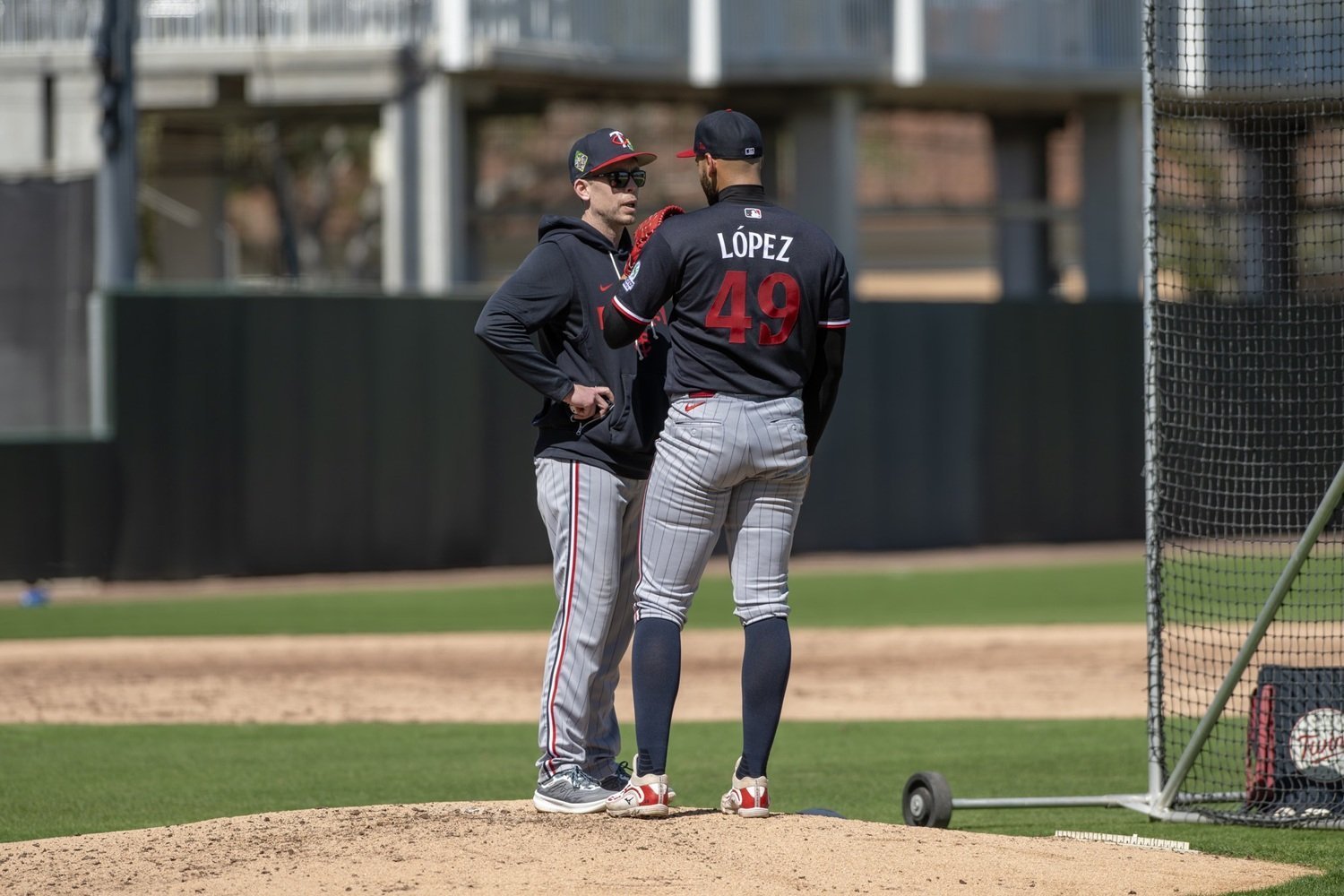 Injuries are one of the few parts of a baseball season that teams simply cannot control. Every fan base can point to the players who have spent time on the injured list and wonder how different the season might look if everyone had stayed healthy (cough… Pablo Lopez). For teams that haven't lived up to expectations, injuries can become an easy explanation for what went wrong. But are some teams actually dealing with significantly more injury-related losses than others? FanGraphs’ Dan Szymborski recently took a closer look at that question, examining how much potential WAR each team has lost because of injuries during the 2026 season. The answer provides some interesting context for the Minnesota Twins. An Aggregate Table of Sadness Szymborski began with the overall injury picture across baseball. “As I write this, there have been 690 independent IL stints so far in 2026, with 11 players hitting the IL on three separate occasions,” Szymborski wrote. To estimate the impact of those injuries, he had ZiPS rerun projections for each player at the time of his injury. From there, he estimated how much potential WAR was lost because the player was unavailable. Szymborski acknowledged that the exercise isn't perfect. Day-to-day injuries can be difficult to quantify, particularly when they aren't reported in detail. However, those injuries generally aren't significant enough to result in an IL stint. The result was what Szymborski jokingly called an “aggregate table of sadness.” And the Twins aren't at the top of it, nor even close. Minnesota has lost an estimated 7.1 potential WAR to injuries, which ranks 17th in baseball. That number is notable because several teams ahead of Minnesota are either competing for postseason spots or entered the season with legitimate championship aspirations. The Red Sox, Braves, Astros, Dodgers, Cubs and Brewers are among the teams that have lost more potential WAR to injuries. That doesn't necessarily mean those clubs have been unlucky in every sense. Some teams have larger payrolls and more established players, which naturally gives them more opportunities to lose projected WAR when someone gets hurt. The Dodgers are perhaps the most obvious example. Los Angeles has routinely embraced players with significant injury histories, betting that the organization's depth and resources can help overcome those absences when October arrives. It's a strategy that looks considerably different when viewed through the lens of injury data. How Minnesota Compares to the AL Central Within the American League Central, Minnesota falls somewhere in the middle of the pack. The Tigers have lost an estimated 10.0 WAR, while the White Sox sit at 7.5 WAR. The Twins' 7.1 WAR follows those two teams. Kansas City has lost 6.5 WAR, while Cleveland has lost only 2.2 WAR. In fact, the Guardians are tied with Philadelphia for the second-lowest projected WAR lost to injury. That doesn't mean Cleveland has avoided injuries entirely. It simply means the projected value of the players lost hasn't been as significant as it has been elsewhere. Losing a replacement-level player for a month isn't the same as losing an established star. The number of injuries alone doesn't tell the entire story. That's why Szymborski's methodology is useful in putting those absences into a more meaningful context. The Twins Could Still Lose More There's another part of Szymborski's analysis that should matter to Twins fans. He also looked at the projected WAR that teams could still lose to injuries for the remainder of the 2026 season. Minnesota has 2.4 potential WAR remaining on that list, which ranks 10th in baseball. That's the second-highest total in the AL Central. Detroit is projected to have another 3.8 WAR potentially lost to injury, while Chicago sits at 2.0 WAR. Kansas City is at 1.7 WAR, and Cleveland is at just 0.4 WAR. Again, these aren't predictions that specific players will get hurt. They're estimates of the potential value currently associated with players who will miss time. Currently, the Twins have six players on the 60-day IL including Lopez, Anthony Banda, David Festa, Mike Paredes, Mick Abel, and Cole Sands. None of those players are expected back this season. That impacts every game moving forward for Minnesota. Sometimes, It's Just Out of Your Hands Baseball teams can control a lot. They can control how they prepare players. They can control roster construction. They can control how they deploy their pitching staff. They can make trades and call up prospects. They can't control whether a player pulls a muscle running to first base. They can't control whether a pitcher feels something in his arm. And they certainly can't control how many injuries happen across the league. That's what makes Szymborski's numbers particularly interesting for the Twins. They have dealt with injuries this season, but their 7.1 potential WAR lost doesn't place them in some uniquely unfortunate category. Other contenders have dealt with even larger losses, and several teams around the division have experienced similar or greater problems. The Twins' fate over the final weeks will ultimately be determined by much more than their injury total. They still have to play the games, execute on the field and take advantage of the opportunities in front of them. But sometimes a team's fate is partially decided before it ever gets that far. Injuries don't care about standings, payrolls or postseason expectations. And unfortunately for every team in baseball, there's no strategy that can completely prevent them. Does it feel like the Twins should be higher? How will injuries impact the team the rest of the season? Leave a comment and start the discussion. View the full article
 -
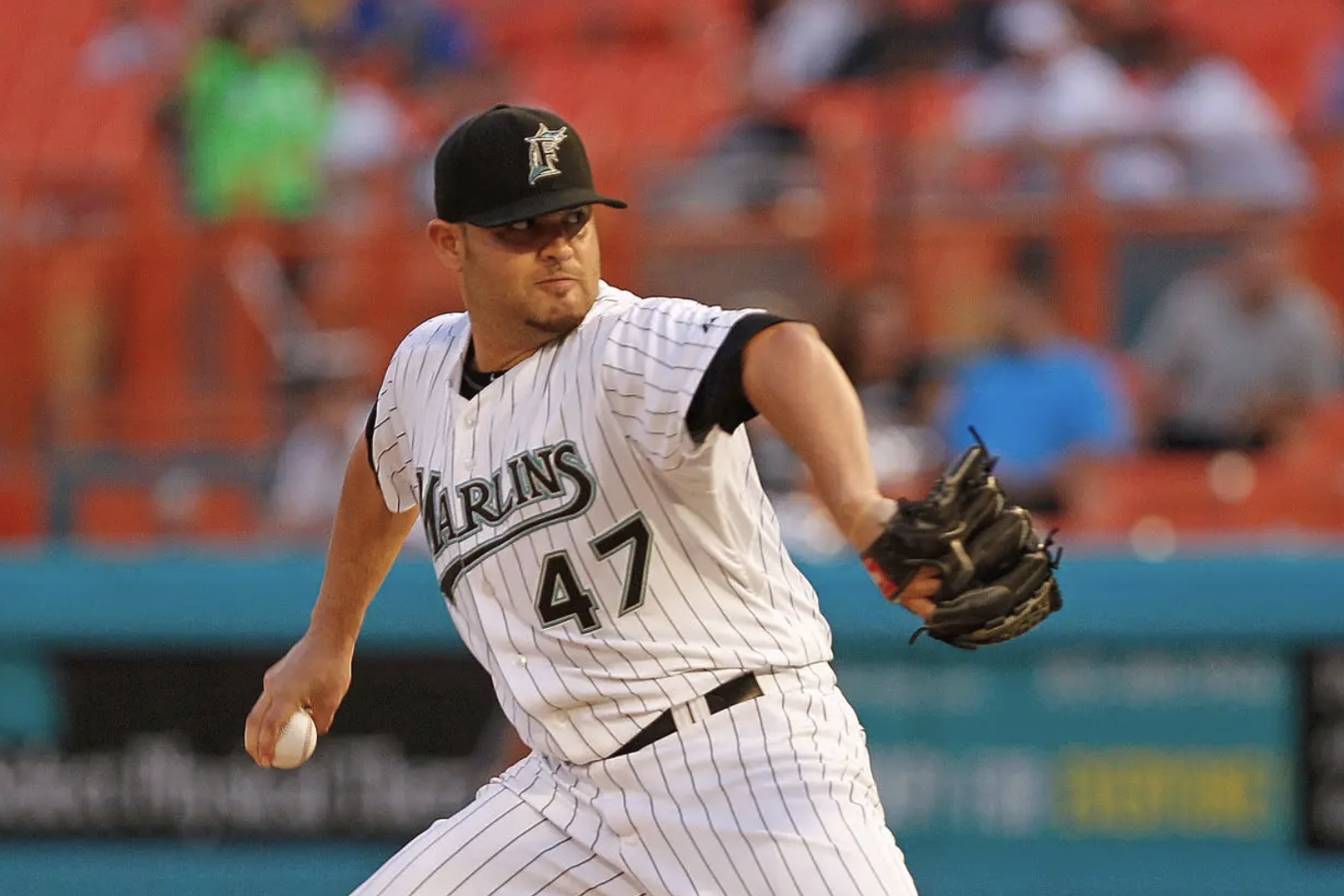 Several prominent Florida/Miami Marlins franchise pitching records have changed hands in 2026. On this day 15 years ago, Ricky Nolasco became the club’s all-time leader in strikeouts, a title he held until this past summer when he was eclipsed by Sandy Alcantara. Nolasco was tied with Dontrelle Willis atop the all-time list as the Marlins began a three-game series with the Cincinnati Reds at Sun Life Stadium on Aug. 23, 2011. It took six outs, but by the middle of the second inning, Nolasco broke the record. After allowing a home run to Yonder Alonso to open the second, Nolasco fanned Johnny Cueto, his counterpart, to break the mark and end the frame. It served as the 758th strikeout of his Major League Baseball career and Marlins tenure to that point. Then a member of the Reds, Willis was in the building to watch his record go down. Nolasco would finish the night with eight strikeouts while allowing four runs in 6 ⅔ innings. He left in line to be the winner, but unfortunately, a late lead wouldn’t hold up as the Marlins allowed four runs in the ninth in an 8-6 loss. Down 2-0 halfway through, the Marlins took the lead with three runs in the fifth. After Greg Dobbs’ sacrifice fly got Florida on the board, Omar Infante singled home the tying run before scoring on Gaby Sánchez’s RBI double. A two-run home run by Emilio Bonifácio extended the lead to 5-2 in the bottom of the sixth, but Jay Bruce answered with a two-run shot in the top of the seventh for Cincinnati. A sacrifice fly by Bonifácio in the eighth pushed the Florida lead to 6-4, but Juan Carlos Oviedo—then known as Leo Núñez—couldn’t close it out in the top of the ninth. Two-run doubles by Dave Sappelt and Alonso accounted for the four Reds runs. Francisco Cordero retired the Marlins in order in the bottom of the frame to close the contest. Sappelt and Alonso each finished with three hits and combined for six RBIs. Buck and Bonifácio each had two hits and two runs scored for Florida in the loss. Bonifácio had three RBIs. The late loss marred Nolasco’s record-breaking night, but history was made. That record would last nearly 15 years before Sandy Alcantara surpassed the mark earlier this season against the Texas Rangers on June 23. He broke the previous record surpassed on this day 15 years ago. View the full article
 -
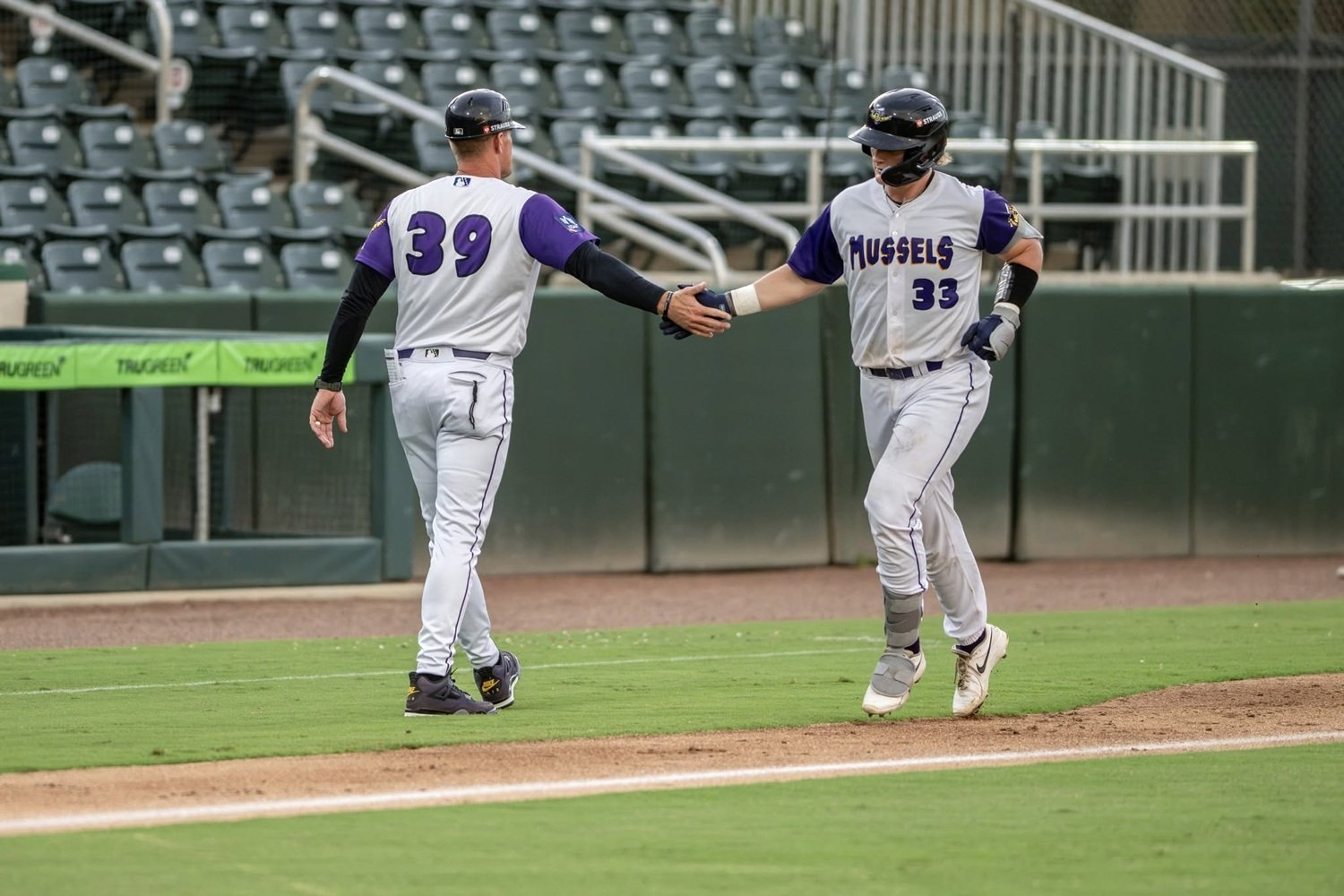 TRANSACTIONS The Twins signed veteran RHP Ron Marinaccio to a minor league contract and assigned him to the Saints. The Reds recently DFAd him. He cleared waivers and elected free agency on Thursday. The Twins signed him on Saturday. He has pitched in 149 big-league games over the past five seasons. He spent three years with the Yankees. He pitched for the Padres some in 2025 and began the season with 33 appearances for San Diego. He then pitched four games for the Pirates and four games for the Reds. He will join the Twins bullpen depth in St. Paul, looking for another opportunity. The Saints also placed Kendry Rojas on the injured list with a strained right oblique. Catcher David Banuelos was placed on the temporary inactive list. Catcher Ian Daugherty was activated from the Saints development list. SAINTS SENTINEL St. Paul 15, Columbus 11 Box Score After scoring just one run on Friday night, the Saints offense returned with a vengeance on Saturday. The pitching was certainly not great, but St. Paul had innings with four runs scored and six runs scored. The Saints got on the board first in the second inning with a familiar result. Tristan Gray hit a home run for the fourth day in a row. Walker Jenkins led off the third inning with a walk. After two strikeouts, he stole second. Emmanuel Rodriguez and Aaron Sabato walked to load the bases. Hendry Mendez responded with a two-run single to right field to make it 3-0. However, the Clippers scored five runs in the third and three runs in the fourth inning to grab an 8-3 lead. German Marquez started and tossed two scoreless innings before giving up five runs on five hits (including three homers) and a walk in the third inning. He walked three batters in a scoreless first inning. Ron Marinaccio made his organizational debut. In the fourth inning, he was charged with three runs on three hits (one homer) in the inning. But that Saints offense is potent. They scored six runs in the top of the fifth inning to reclaim the lead 9-8. The inning started with a Ben Ross double. With one out, Emmanuel Rodiguez hit his ninth home run with the Saints. With two on and two outs, Cody Morissette doubled to drive in Sabato and Gray. Noah Cardenas followed with his 12th home run of the season to give the Saints the 9-8 lead. Woo-Suk Go pitched a scoreless fifth, but when given a lead, he gave up two runs on a hit, a hit batter, and two walks in the sixth inning. Down 10-9 through six innings, Sabato led off the top of the seventh inning with a double. He moved to third on a groundout and then scored the 10th run on another grounder. Morissette and Cardenas walked to load the bases. After a pitching change, Walker Jenkins walked in the go-ahead run. The Saints kept adding on in the eighth. Rodriguez walked and stole second. Mendez walked. Tristan Gray hit into a fielder’s choice, but because of a throwing error, the bases were loaded. Morissett stepped to the plate and launched a grand slam to give his team a 15-10 lead. Marco Raya pitched a scoreless seventh inning. He gave up a solo home run and struck out three batters. Matt Bowman struck out three batters in a hitless, scoreless ninth inning. Morissette went 2-for-4 with a walk, his 14th double, his 11th home run, and six RBI. Walker Jenkins went 2-for-4, two walks and 15th stolen base. Aaron Sabato went 2-for-5 with a walk and his 27th double. Ross added his 22nd double and a walk. Rodriguez went 1-for-3 with three walks to go with his ninth home run and fifth stolen base. Cardenas walked in addition to his 12th home run of the season. WIND SURGE WISDOM Wichita 7, Frisco 5 Box Score The Surge scored three in the first and three in the second and then held on, keeping Frisco from completing the comeback. Jake Rucker led off the game with a walk and went to second on a throwing error. Caden Kendle followed with a walk. Brandon Winokur came up and drove in a run with his second Surge double. Kendle scored on a sacrifice fly by Garrett Spain. Andrew Cossetti walked. A Kyle DeBarge sacrifice fly to drive in Winokur with the third run. Jay Thomason led off the second inning with a single. He went to third on a Graham Brown double. With one out, Rucker launched his eighth home run to give them a 6-0 lead. Chris Vallimont started and gave up two runs on six hits. He had five strikeouts with no walks. Darren Bowen came on and gave up three runs (2 earned) on two hits and a walk in 1 2/3 innings. He struck out three batters. Jacob Webb got four outs and gave up just one hit. Mitch Mueller struck out three batters over two, one-hit innings. In the fifth inning, Caden Kendle hit his eighth home run to add on some insurance. Kendle is now hitting .382 (1.122) walked and homered in the game. Rucker had a walk and his eighth home run. Winokur and Brown each hit their second Double-A doubles. KERNELS NUGGETS Cedar Rapids 3, Beloit 11 Box Score Not a great game for the Kernels. They scored three runs despite just three hits and six walks. For the second straight start, Kolten Smith was unable to complete the first inning. He gave up three runs on one hit, one hit batter, and four walks. Both outs he recorded were on strikeouts. Ivran Romero came on and gave up three runs (2 earned) on four hits over 2 1/3 innings. Cleiber Maldonado gave up one run on one hit and a walk over two innings. He struck out four batters. Mike McKenna gave up four runs on five hits (two homers). He had three strikeouts and walked none. Michael Hilker tossed two scoreless innings with just a walk and a strikeout. The Kernels got on the board in the top of the third innings when Eduardo Tait launched his 21st home run of the season. In the top of the fifth, Andy Lugo walked, Yasser Mercedes was hit by a pitch, and Eduardo Tait walked to load the bases. Lugo scored on a sacrifice fly by JP Smith. In the sixth inning, Luis Fragoza walked and went to second on a wild pitch. Tait went 1-for-2 with two walks and a homer. Luis Fragoza went 0-for-2 but walked twice and stole two bases. MIGHTY MATTERS Fort Myers 5, Palm Beach 2 Box Score Palm Beach took an early 2-0 lead through the first three innings. In the middle three innings, the Mussels scored two runs. Rains came after seven innings, so the seventh inning is where the game was decided. Callan Fang started and gave up one run on two walks over the first two innings. He gave up no hits and struck out three batters. Following a nearly 100-minute rain delay, Jackson Sleeper came into pitch. He gave up one run on a solo home run. Over 1 2/3 innings, he gave up just one hit and walked two while striking out two batters. Nick McAuliffe came on and worked 2 1/3 scoreless, hitless innings. He walked two and had three strikeouts. Brian Strange came in for the seventh inning. He gave up no runs and no hits. He walked one and had two strikeouts to earn his first professional save. With one out in the top of the fourth inning, Carson Tinney knocked a double. He went to third on a passed ball. Aidan Teel drove him in with a single to center. In the sixth inning, Colby Turner and Carson Tinney started things with a single. Teel reached on a fielders’ choice. Tinney stole third base, and Teel stole second. Tinney scored on a sacrifice fly by Isaiah Lane. The score was tied 2-2 going into the seventh inning. The first two Mussels batters got out. Murphy Hernandez singled and went to third on a throwing error. (Speed is awesome!) He scored on a Turner single to right. Carson Tinney came to the plate and launched a two-run homer to make it 5-2. Tinney went 3-for-3 with a walk, his second double, his sixth home run, three runs scored and two RBI. He also stole his first professional base. Turner and Hernandez both went 2-for-4. PLAYERS OF THE DAY Hitter(s) of the Day Carson Tinney (Fort Myers): 3-for-3, BB, 2B(2), HR(6), 3 R, 2 RBI, SB(1). Eduardo Tait (Cedar Rapids): 1-for-2, 2 BB, HR(21), R, RBI. Cody Morissette (St. Paul): 2-for-4, BB, 2B(14), HR(11), 2 R, 6 RBI. Pitcher(s) of the Day Mitch Mueller (Wichita): 2 IP, 1 H, 0 R, 0 BB, 3 K PROSPECT SUMMARY Check out the Prospect Tracker for much more on our Twins Top 20 prospects. See how they did today. #1 - OF Walker Jenkins (St. Paul) - 2-for-4, 2 BB, R, RBI, SB(15) (batted first, played DH). #3 - IF Kaelen Culpepper (Minnesota) - 1-for-4, HR (2), R, RBI, (batted ninth, played SS) #6 - OF Emmanuel Rodriguez (St. Paul) - 1-for-3, 3 BB, HR(9), 3 R, 2 RBI, SB(5) (batted fourth, played CF) #7 - OF Hendry Mendez (St. Paul) - 1-for-3, BB, R, 2 RBI (batted sixth, played LF) #8 - C Eduardo Tait (Cedar Rapids) - 1-for-2, 2 BB, HR(21), R, RBI (batted second, played Catcher) #11 - C Carson Tinney (Fort Myers) - 3-for-3, BB, 2B(2), HR(6), 3 R, 2 RBI, SB(1) (batted third, played Catcher) #12 - 3B/CF Brandon Winokur (Wichita) - 1-for-4, 2B(2), R, RBI, K (batted third, played SS) #19 - OF Yasser Mercedes (Cedar Rapids) - 0-for-4, 2 K (batted first, played DH) UPCOMING PROBABLES Sunday, August 23 St. Paul @ Columbus (12:05 pm CT) - RHP Ryan Gallagher (5-6, 6.56 ERA) Wichita @ Frisco (7:05 pm CT) - RHP Sam Armstrong (7-8, 4.81 ERA) Cedar Rapids @ Beloit (6:35 pm CT) - LHP Cesar Lares (0-6, 13.18 ERA) Ft. Myers @ Palm Beach (5:00 pm CT) - RHP Eric Hammond (1-4, 4.76 ERA) CURRENT W-L Records Minnesota Twins: 63-67 St. Paul Saints: 72-52 Wichita Wind Surge: 50-67 Cedar Rapids Kernels: 44-73 Fort Myers Mighty Mussels: 64-53 FCL Twins: 33-26 (Season Complete) DSL Twins: 19-35 (Season Complete) Please feel free to ask questions about the teams, the rosters, and discuss today’s games, or anything else Twins minor-league related! View the full article
 -
 The four full-season San Diego Padres affiliates went 1-3 Saturday with the Triple-A El Paso Chihuahuas edged by Round Rock 7-6, the Double-A San Antonio Missions falling to Northwest Arkansas 3-2, the High-A Fort Wayne TinCaps rallying to beat Great Lakes 6-5 in 10 innings and the Low-A Lake Elsinore Storm tumbled to San Jose 6-2. Padres Minor-League Transactions El Paso Chihuahuas released RHP Andrew Thurman. RHP Brandon Langley assigned to Fort Wayne TinCaps from Lake Elsinore Storm. RHP Albert Roblez assigned to Lake Elsinore Storm from ACL Padres. RHP Jack Pineau assigned to Lake Elsinore Storm from ACL Padres. Lake Elsinore Storm transferred C Jake Bold to the Development List. Chihuahuas Get Big Hits, Just Not Enough In Late Loss Nick Solak homered and Dustin Harris had a bases-loaded triple, but the host Triple-A El Paso Chihuahuas saw the Round Rock Express score twice in the top of the eighth to snap a tie in a 7-6 loss. Solak had two hits, including a solo homer in the first inning, Nick Pratto had a pair of doubles and scored twice and Gage Workman also had two hits for the Chihuahuas. It was a bit of a back-and-forth game. After Solak's 14th homer of the season, the Express went up 3-1 with two in the second and one in the third, then the Chihuahuas came back with three of their own in the fourth. Two walks and a single loaded the bases and set Harris up for his fifth triple of the season and third since joining the Chihuahuas, putting El Paso up 4-3. The Express got one in each of the fifth and sixth to regain the lead at 5-4, then the Chihuahuas tied in the seventh on a Harris walk, a Workman single and Solak's RBI single. The Express took the lead for good with a pair in the top of the eighth. The Chihuahuas rallied in the bottom of the eighth as Pratto had a leadoff double, pinch-hitter Carlos Rodriguez singled and Clay Dungan had a sacrifice fly. But the next two hitters made outs to end the threat. EP_0822.mp4 Player AB R H RBI BB K Dustin Harris 4 1 1 3 1 0 Gage Workman 5 0 2 0 0 3 Nick Solak 4 1 2 2 0 0 Samad Taylor 1 0 1 0 0 0 Ethan Salas 4 0 0 0 1 0 Marcos Castañon 4 0 0 0 0 2 Nick Pratto 3 2 2 0 1 0 Rodolfo Durán 2 1 1 0 0 0 Carlos Rodríguez 1 0 1 0 0 0 Blake Hunt 0 0 0 0 0 0 Clay Dungan 2 0 0 1 1 0 Bryce Johnson 3 1 0 0 1 2 Player IP H R ER BB K HR JP Sears 1 2/3 2 2 2 2 2 0 Logan Gillaspie 3 1/3 5 2 2 0 3 0 Hans Crouse 1 2/3 3 1 1 2 3 0 Alek Jacob 2 1/3 3 2 2 1 3 0 Strong Outing By Ian Koenig Goes For Naught In Missions' Loss Right-hander Ian Koenig took a hard-luck loss, pitching into the seventh inning, where the host Double-A San Antonio Missions gave up the go-ahead run in a 3-2 loss to the Northwest Arkansas Naturals. Tirso Ornelas went 3-for-5 with an RBI, while Braedon Karpathios (Padres Mission's No. 9 prospect) had two hits, including a double, and scored once, while Romeo Sanabria had two hits and an RBI and Justin DeCriscio two hits for the Missions, who out hit the Travelers 12-7. Koenig, who has three seven-inning starts this year, came one out shy of a fourth, allowing all three runs on six hits with no walks and five strikeouts. This was his fifth straight outing of six or more innings. He left after allowing a double and a hit by pitch in the seventh, then left-hander Igor Gil uncorked a first-pitch wild pitch that brought in the go-ahead run, then two walks. Gil did not allow a run against him in his one inning of work, then right-hander Josh Mallitz finished the final 1⅓ scoreless. The Travelers scored one in the top of the first, then the Missions came back with Karpathios' double and Ornelas' one-out single. The Missions went up 2-1 in the third as Alex McCoy, Padres Mission's No. 8 prospect, doubled and scored on Sanabria's one-out single. The Travelers, however, tied it back up in the fourth. SA_0822.mp4 Player AB R H RBI BB K Braedon Karpathios 5 1 2 0 0 1 Kai Roberts 0 0 0 0 0 0 Alex McCoy 5 1 1 0 0 2 Tirso Ornelas 5 0 3 1 0 0 Romeo Sanabria 4 0 2 1 0 0 Jack Costello 4 0 1 0 0 1 Albert Fabian 4 0 0 0 0 1 Justin DeCriscio 4 0 2 0 0 1 Wyatt Hoffman 4 0 1 0 0 0 Brendan Durfee 3 0 0 0 1 1 Player IP H R ER BB K HR Ian Koenig 6 2/3 6 3 3 0 5 1 Igor Gil 1 0 0 0 3 2 0 Josh Mallitz 1 1/3 1 0 0 1 1 0 Lamar King Jr. Finishes Big Day With Walk-Off For TinCaps In yet another wild finish, the host High-A Fort Wayne TinCaps rallied from a 4-0 deficit, tying the game in bottom of the ninth on a wild pitch and winning it on Lamar King Jr.'s walk-off single in the bottom of the 10th for a 6-5 victory over the Great Lakes Loons. King, Padres Mission's No. 10 prospect, had three hits, including a double, and three RBIs. Ryan Wideman, Padres Mission's No. 2 prospect, went 2-for-3 with a double, a walk, a hit by pitch and his 63rd stolen base of the season, the second-most across all of the minors. Bradley Frye also had two hits, a walk and an RBI while scoring three times. Six Loons pitchers combined for 15 strikeouts. TinCaps right-handed starter Bryan Balzer allowed three runs over 3⅔ innings, walking four. Right-hander Abraham Parra followed by striking out seven in 5⅓ innings, giving up two runs and not walking anyone. Right-hander Jeferson Villabona pitched a perfect but unique top of the 10th, facing just two batters with the second hitting a liner back to Villabona, who spun and threw to second to nail the zombie runner for an inning-ending double play. Trailing 4-0 after five innings, the TinCaps sliced that deficit in half in the sixth on Frye's run-scoring single and King doubled home Frye. Kasen Wells then singled home Conner Westenburg in the seventh and King drove in Frye again in the eighth, this time on a single, to tie it 4-4. The Loons grabbed the lead in the top of the ninth on Emil Morales' minors-leading 111th RBI. Cross opened the bottom of the ninth with a single, then Westenburg had a bunt single. After a strikeout, Wideman was hit by a pitch to load the bases, then Cross scampered home on a wild pitch. In the 10th, Carlos Rodriguez bunted zombie runner Frye to third, then King flared the first pitch he saw to center for the victory. FW_0822.mp4 Player AB R H RBI BB K Kasen Wells 5 0 1 1 0 3 Ryan Wideman 3 1 2 0 1 0 Rosman Verdugo 5 0 1 0 0 3 Bradley Frye 4 3 2 1 1 1 Carlos Rodriguez 4 0 0 0 0 3 Lamar King Jr. 4 0 3 3 0 1 Yoiber Ocopio 3 0 0 0 0 2 Luke Cantwell 1 0 0 0 0 0 Dylan Grego 3 0 0 0 0 2 Kerrington Cross 1 1 1 0 0 0 Conner Westenburg 3 1 1 0 1 0 Player IP H R ER BB K HR Bryan Balzer 3 2/3 3 3 3 4 2 0 Abraham Parra 5 1/3 5 2 2 0 7 0 Jeferson Villabona 1 0 0 0 0 1 0 Tyler Schmitt, Draft Picks Shine, But Storm Fall Right-handed starter Tyler Schmitt struck out six while turning in five solid innings, but a three-run seventh inning was too much to overcome as the host Low-A Lake Elsinore Storm fell to the San Jose Giants 6-3. Seventh-round draft choice Joe Tiroly hit his second homer in eight professional games, while second-round draft pick Elliot Lascelles went 1-for-3 with two walks. The 18-year-old Lascelles, Padres Mission's No. 11 prospect, has hit in all four games he has played since making his pro debut Tuesday, going 7-for-13 (.538/.667/.769) with five walks and one strikeout. Fourth-round pick Alex Conover had a pair of singles and scored once. Schmitt went five innings, giving up a three-run third. He allowed four hits and walked three. Right-hander Yoesmerli Beltre gave up three runs while getting four outs. Right-hander Albert Roblez, the Padres' 16th-round draft pick and Riverside native who was promoted from the Arizona Complex League before the game, made his pro debut by retiring all four batters he faced, striking out two, including the first batter he faced. Right-hander Ryan Reed got the final four outs. Tiroly launched his homer in the bottom of the first, a solo shot down the left-field line. The Giants then scored three in the top of the second to take the lead for good. The Storm made it 3-2 when they executed a double steal and Conover swiped home, already his sixth steal in 11 games. The Giants put up another three-spot in the top of the seventh, with the Storm getting one of those back in the bottom half as Jesmaylin Arias singled and went to third as the right fielder booted the ball. One out later, Arias scored on a wild pitch. LE_0822.mp4 Player AB R H RBI BB K Elliot Lascelles 3 0 1 0 2 0 Jose Verdugo 3 0 0 0 1 2 Nu'u Contrades 1 0 0 0 0 1 Joe Tiroly 4 1 1 1 0 0 Ty Harvey 3 0 0 0 1 1 Alex Conover 3 1 2 0 1 0 Qrey Lott 3 0 0 0 1 2 Truitt Madonna 3 0 0 0 0 1 Chris McHugh 1 0 1 0 0 0 Jesmaylin Arias 4 1 1 0 0 1 Dawson Willis 3 0 0 0 1 1 Player IP H R ER BB K HR Tyler Schmitt 5 4 3 3 3 6 0 Yoesmerli Beltre 1 1/3 3 3 3 2 0 0 Albert Roblez 1 1/3 0 0 0 0 2 0 Ryan Reed 1 1/3 2 0 0 1 1 0 Padres Mission's Top 20 Prospect Performance Ethan Salas: 0-for-4, BB Ryan Wideman: 2-for-3, 2B, BB, HBP, R Coleman Borthwick: In Arizona Kruz Schoolcraft: DNP Ty Harvey: 0-for-3, BB, K Kale Fountain: Injured, out for season Jorge Quintana: DNP Alex McCoy: 1-for-5, 2B, R, 2 K Braedon Karpathios: 2-for-5, 2B, R, K Lamar King Jr.: 3-for-4, 2B, 3 RBI, K Elliot Lascelles: 1-for-3, 2 BB Tucker Musgrove: DNP Jagger Haynes: DNP Jake Cunningham: DNP Truitt Madonna: 0-for-3, K Eric Yost: DNP Winyer Chourio: DNP Jesus Castro: DNP Michael Salina: DNP Rosman Verdugo: 1-for-5, 2B, 3 K View the full article
 -
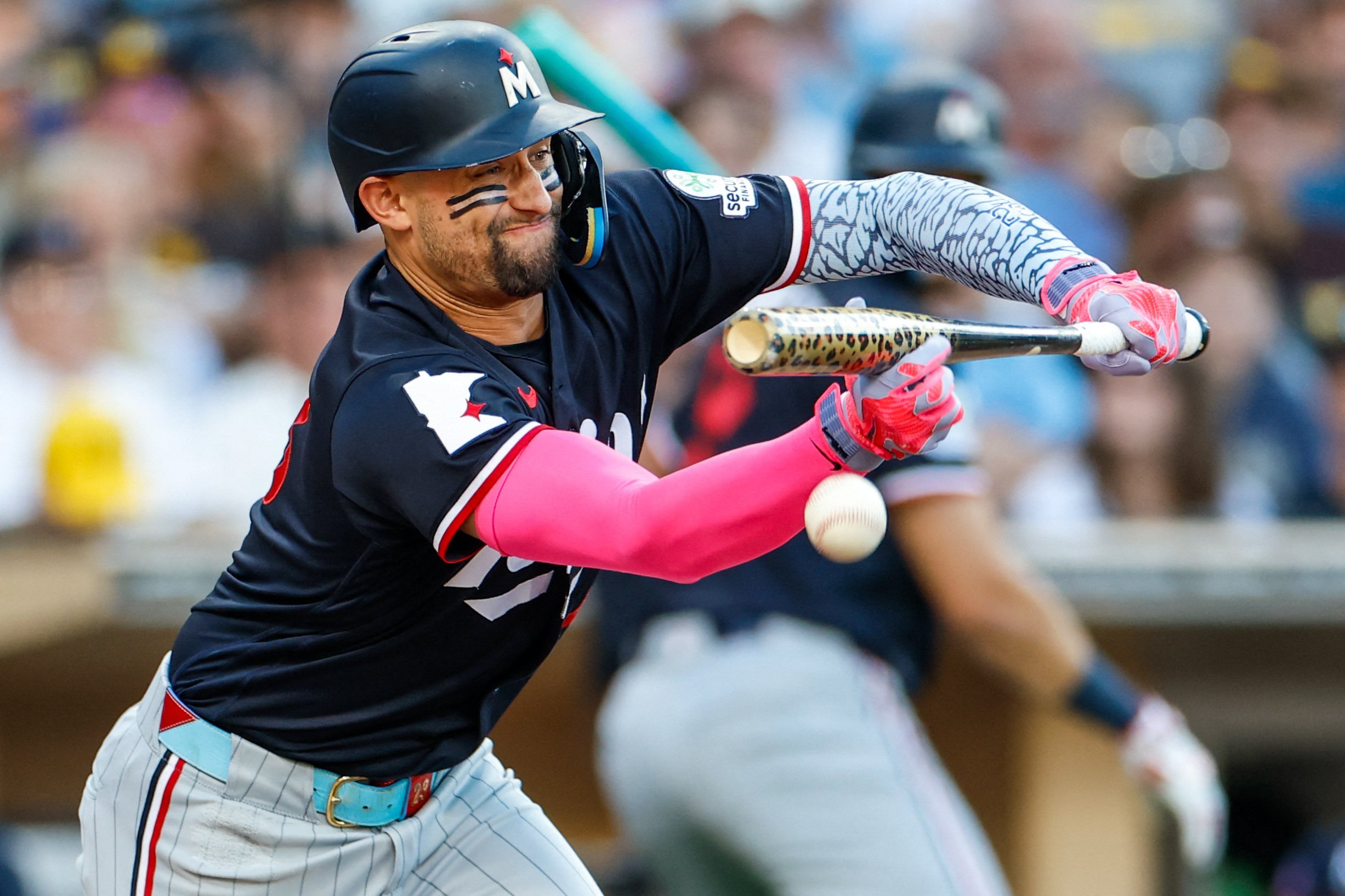 Box Score SP: Dean Kremer - 5 1/3 IP, 3 H, 2 R, 3 BB, 5 K (101 pitches, 59 strikes (58% strikes)) Home Runs: Luke Keaschall, Brooks Lee, Kaelen Culpepper Bottom 3 WPA: Andrew Morris (-0.64), Byron Buxton (-0.07), Tommy Nance (-0.06) Win Probability Chart The Twins entered Saturday night's matchup in San Diego looking to even the series after dropping Friday night's opener. For the first six innings, it looked like Minnesota was going to do exactly that, jumping out to an early lead while Dean Kremer kept the Padres' lineup mostly in check. Unfortunately, everything unraveled in the seventh. Luke Keaschall got the Twins on the board with a leadoff homer in the first before Brooks Lee and Kaelen Culpepper went back-to-back in the second. Kody Clemens added another RBI single in the third, and Keaschall drove in another run in the fourth to give Minnesota a 5-1 lead. Kremer worked five-plus strong innings before San Diego finally began chipping away in the sixth. The Padres then erupted for five runs in the seventh, turning a 5-2 deficit into a 6-5 lead before adding another insurance run in the eighth. The Twins couldn't mount a response against San Diego's bullpen, falling 7-5 and dropping to 63-67 on the season. THE TWINS COULDN'T HAVE ASKED FOR A BETTER START Minnesota wasted no time putting pressure on Casey Mize. Keaschall opened the game by jumping on a 2-1 slider that caught too much of the plate, sending it over the wall in left for his first homer of the night. It was the second time this season Keaschall had taken Mize deep, giving the Twins an immediate 1-0 lead. They would add to their advantage in the second. Lee took a fastball down and away and drove it out to left for his 19th homer of the season. Culpepper followed by jumping on the first pitch he saw from Mize, sending a heater over the wall for his second career major league homer and giving the Twins a 3-0 lead. It marked the sixth time this season Minnesota had hit back-to-back homers. The Twins weren't finished there. After Jeffers doubled in the third and Mize was removed from the game following a noticeable dip in velocity, Clemens lined an RBI single into center to make it 4-1. Keaschall then struck again in the fourth, singling home Lee and giving Minnesota a four-run advantage. For the first four innings, the Twins were doing just about everything right offensively. They were taking advantage of mistakes, getting runners on base and consistently putting pressure on San Diego's pitching staff. Unfortunately, they couldn't keep it going for the final five innings. DEAN KREMER GAVE THE TWINS EXACTLY WHAT THEY NEEDED Kremer's night was far from perfect, but the right-hander did a good job of limiting the damage and giving Minnesota a chance to win. After allowing a solo homer to Jackson Merrill in the second, Kremer settled into a strong rhythm. He worked around a pair of walks in the fourth, needing 27 pitches to escape the inning, but managed to strand both runners and keep San Diego off the board. He then worked a clean fifth on just 13 pitches, bringing his pitch count to 88 entering the bottom of the sixth. Kremer returned for the sixth and immediately ran into trouble. Cronenworth doubled to begin the inning before Machado worked a walk after Kremer had gotten him into an 0-2 count. After France lined out, Kremer's night came to an end at 101 pitches. Merrill followed with an RBI single to cut Minnesota's lead to 5-2, but Kremer had done his job. He finished with five-plus innings, allowing two runs while striking out five. Considering the Twins had acquired him at the trade deadline to provide stability in the rotation, this was another encouraging outing from Kremer. Unfortunately, the bullpen couldn't preserve the lead he handed over. THE SEVENTH INNING COMPLETELY CHANGED THE GAME This game looked like it belonged to Minnesota through six innings. Then everything fell apart in the seventh. Andrew Morris entered to begin the inning and quickly recorded the first out, but things spiraled from there. Freddy Fermin reached on catcher interference before Tatis singled to put two runners on, and Cronenworth followed with a double that scored both runners and cut the Twins' lead to 5-4. Suddenly, the Padres had all of the momentum. Machado then grounded a ball to short, and when Cronenworth tried to advance to third, Culpepper attempted to get the lead runner. The throw missed its mark, allowing Cronenworth to score the tying run while Machado advanced to second. It was a costly defensive mistake in an inning that was already getting away from Minnesota. France followed by dumping a ball into right field, scoring Machado and giving San Diego its first lead of the night at 6-5. Just like that, a game the Twins had controlled for six innings had completely flipped. Morris eventually escaped the inning, but the damage had been done. The Padres had scored four runs, taken the lead and forced Minnesota to play from behind for the first time all night. THE TWINS HAD AN OPPORTUNITY TO ADD ON Minnesota did have a chance to change the game's trajectory before San Diego ultimately pulled away. Lee led off the sixth with a single through the right side, putting him just a triple shy of the cycle. After Culpepper lined out, Keaschall was hit by a fastball before Buxton drew a walk to load the bases with one out. That gave Bell a chance to deliver a huge blow. Instead, he swung through a curveball for the second out, and Jeffers grounded out to short to end the inning. The Twins had put together a bases-loaded situation with a chance to extend their lead, but they walked away empty-handed. Given how the game eventually unfolded, that missed opportunity loomed even larger. Lee later struck out to begin the eighth, ending his attempt at the cycle. Culpepper and Keaschall followed with outs, and suddenly Minnesota was down to its final three outs. But by that point, the Padres had all of the momentum. SAN DIEGO ADDED THE INSURANCE RUN IT NEEDED The Padres weren't done after taking the lead in the seventh. Tommy Nance entered for the Twins in the eighth and immediately ran into trouble when a ball hit back to him kicked off his glove and was ruled a single. After Bogaerts struck out, Fermin singled to put two runners on for Tatis. The Padres' star then delivered another blow. Tatis grounded a ball up the middle, bringing home Fermin and extending San Diego's lead to 7-5. It was exactly the kind of insurance run the Padres needed with Mason Miller waiting in the bullpen. Cronenworth and Machado eventually struck out to end the inning, but the damage had been done. Minnesota entered the ninth needing two runs against one of the most dominant relievers in baseball. Buxton couldn't catch up to a 101-mph fastball for the first out, and Tatis then made a tremendous running catch along the right-field line to take a hit away from Bell. Jeffers grounded out to short for the final out, and just like that, the Twins had let one slip away. For six innings, Minnesota looked firmly in control. The offense jumped on Mize early, Kremer kept the Padres at arm's length, and the Twins carried a 5-2 lead into the bottom of the sixth. But the seventh inning changed everything. San Diego scored four runs, Minnesota couldn't answer, and the Padres eventually added another insurance run to secure the 7-5 victory. After controlling the game for most of the night, the Twins simply couldn't finish it. Minnesota now falls to 63-67 and will look to avoid the sweep Sunday in the series finale. What’s Next? The Twins and Padres will wrap up their weekend series in San Diego tomorrow. Bailey Ober will take the mound for the good guys, and he’ll face off against veteran right-hander Walker Buehler. First pitch is set for 3:10 PM. Postgame Interviews Bullpen Availability Chart View the full article
 -
 Blue Jays Affiliate Overview (August 20-21) Triple-A Buffalo Bisons Series vs Lehigh Valley IronPigs (Philadelphia Phillies): 1-3 Season Record: 61-63 Double-A New Hampshire Fisher Cats Series vs Erie SeaWolves (Detroit Tigers): 2-2 Season Record: 54-62 High-A Vancouver Canadians Series vs Eugene Emeralds (San Francisco Giants): 2-2 Season Record: 56-62 Single-A Dunedin Blue Jays Series vs Clearwater Threshers (Philadelphia Phillies): 3-2 Season Record: 55-60 FCL Blue Jays: Season Complete DSL Blue Jays Blue Week Record: 0-1 Season Record: 20-35 DSL Blue Jays Red Week Record: 1-0 Season Record: 34-18 Triple-A Buffalo Bisons Season Record: 61-63 Series vs Lehigh Valley IronPigs (Philadelphia Phillies) August 20: John Klein made his fourth start for Buffalo on Thursday, and it was a relatively short outing with more downs than ups. Klein would only last three innings, giving up four hits and two runs, while striking out just three. Devereaux Harrison would be the first man out of the bullpen for the Bisons, and he fared about the same as Klein. Harrison would also throw three innings, but gave up just three hits, struck out two, and surrendered three runs. With the pitching having a rough day, there was a lot of pressure on the bats to perform and do it at a high level. The hits were aplenty, but out of their 13 hits, 11 were singles and just two went for extra-base hits. Jay Harry paced Buffalo with three singles, while Carlos Mendoza and Nick Goodwin each had two singles. Peyton Williams only had one hit, but it was one of the two extra-base hits, a solo blast in the second inning. In the third, Yohendrick Piñango hit a ball to center for a sacrifice fly that scored Harry. Later in the inning, Goodwin singled home Sean Keys. Mendoza cut the Lehigh Valley lead to one in the sixth with a single to right, scoring Ismael Munguia. Down by three in the ninth, Buffalo tried to mount a rally, getting an RBI single from Keys, but that would be all they would get. The Bisons fell to Lehigh Valley 7-5. August 21: Sean Keys decided to provide all of the fireworks needed for the Friday night festivities. Keys smoked a three-run blast to center in the third inning. The home run came off the bat at 103 mph and went 413 feet to center field. In the fifth, it was Keys again, this time hitting a moonshot to right field with a launch angle of 40 degrees. The result was a two-run home run, and the Buffalo lead extended to 5-0. In the sixth, Jay Harry had an RBI single and Yohendrick Piñango had a two-RBI single. With the offense rolling, Buffalo put on cruise control, as Richard Gallardo, Austin Marozas, and Lazaro Estrada combined for a shutout. The Bisons won 8-0 thanks to two long balls by Keys. Double-A New Hampshire Season Record: 54-62 Series vs Erie SeaWolves (Detroit Tigers) August 20: In the Thursday matchup between New Hampshire and Erie, it was the Aaron Parker show. He went 2-for-4, with two home runs and three RBI. He crushed a home run in the first and then again in the fifth inning. In between, pitcher Danny Thompson Jr. had some issues on the mound. He gave up four runs on four hits and four walks. Alexis Hernandez continued his hot hitting by reaching base twice, on a double and a walk. That would be a good chunk of the offense, though, as New Hampshire lost this one 6-3. August 21: Johnny King was on the mound to start the Friday game between New Hampshire and Erie. He got the first two batters to fly out, then got behind Peyton Graham, who launched a fastball off the top of the wall for a double. King got behind Thayron Liranzo as well, who crushed a line drive off of King for an RBI single. King finished the inning and then was shaky in the second inning with his command. He still managed to get a strikeout and allowed just a walk. In the third through fifth innings, King locked in and cruised through the innings. He finished with five innings pitched, only allowed the two hits, maybe more importantly walked just one, and gave up one run total. King struck out three on the day, as he gave way to Gage Stanifer for his second appearance out of the bullpen this week. Stanifer looked very good this go-around. Pitching two innings, not allowing a hit or a walk, and striking out two. Dub Gleed's RBI double was the offense for New Hampshire until the ninth inning. Carter Cunningham had a sacrifice fly, and Cutter Coffey drove in two with a single. New Hampshire held on and won this one 4-2. High-A Vancouver Season Record: 56-62 Series vs Eugene Emeralds (San Francisco Giants) August 20: This was a back-and-forth offensive game, as the starters for both teams struggled. Connor O'Halloran pitched two scoreless innings, but had a rough third inning, allowing five straight singles, walking a batter with the bases loaded, then allowing an RBI groundout for four runs to score in that inning. Jean Joseph hit a three-run homer to right to even it up, and the inning after Bryce Chance and Gable Mitchell both hit RBI singles to make it a two-run lead. The Emeralds took it to a one-run game with a homer from Damian Bravo, but Jake Casey made it a two-run game again with an RBI double. A JoJo Parker throwing error allowed the Emeralds to even it up, and an inning after Jack Eshleman gave up a three-run homer, which ended up being the winning runs as they lost 10-7. August 21: It was another slugfest, and Austin Smith started it off with a bang with a leadoff homer. Bryce Chance had an RBI groundout to make it a 2-0 lead, but Dasan Hill gave back a run in the first inning. Jake Casey added back two runs for the Canadians with a double, but Hill couldn’t get out of the third inning, as the Emeralds tied it up. The game continued to go back and forth as JoJo Parker’s RBI grounder took the lead, then Holden Wilkerson lost it on a two-run homer to Jose Ramos. Casey’s second extra-base hit of the night flipped the lead again, then Wilkerson ended up giving the lead right back. Dariel Ramon made it nine runs for the Canadians in regulation, but the Emeralds would not go away, as the game was tied in the eighth inning, sending the game to extras. Casey officially won it for Vancouver as he hit a three-run homer in the tenth, and despite Carson Myers allowing the automatic runner to score, he had his fourth save of the season as they won it 12-10 in extras. Single-A Dunedin Season Record: 55-60 Series vs Clearwater Threshers (Philadelphia Phillies) August 20: Vladimir Guerrero Jr. made his return to his old stomping grounds, as he was placed on rehab assignment after being put on the seven-day concussion IL. He immediately made an impact, driving in the first run of the game on an RBI double in the first. He also walked twice before being taken out. The starter for the Jays was Carson Messina, who struck out six batters in just 2.2 innings pitched, but struggled with his command, giving up four hits and two walks, which resulted in two earned runs given up. Deiker Pineda replaced him in relief and allowed two more runs, which gave the Threshers the lead. The Jays tied it up with Jake Cook’s fourth homer of the season, and Aldo Gaxiola gave them the lead an inning after with one of his own, and they never looked back. They added some insurance runs with some RBI singles from Owen Carapellotti and Blaine Bullard, while Josbel Garcia and Dax Dathe closed it out in relief without allowing a run. August 21: Denis Samudio bounced back from his last rough start, going five innings of one-run ball, striking out five batters, but walked four batters. The Jays got their first run of the game on a strike-em-out, throw-em-out double play, as Blaine Bullard showed some heads-up baserunning and stole home, tying the game up. The Jays were able to break the game open in the fifth inning, as they tallied five hits and a walk, capped off by Dameury Pena’s two-RBI double for a big five-run inning. They kept their foot on the gas in the sixth inning, this time scoring four in the sixth inning, thanks to a Jake Cook two-RBI triple. The Jays have now won three in a row, this time winning 10-2. FCL Blue Jays Season Completed DSL Blue Jays Blue Season Completed DSL Blue Jays Red Season Record: 33-18 Playoffs: 2-0 (now 2-1) August 20: BJR began pool play for the DSL playoffs on Thursday. Their first opponent was the Tampa Rays’ DSL team (TAM). Aneudi Severino and Darwin Núñez each had RBI singles in the first inning to jump BJR out to an early lead. After TAM tied the game in the top of the third, Gabriel Porras and Samuel Orellana gave it back to BJR with RBI singles of their own in the bottom half of the frame. In the bottom of the fifth, Elian Reyes really broke the game open for BJR; he smacked a double to right with the bases loaded, scoring two, while Darwin Núñez was thrown out at home. BJR got another run in the frame with an RBI groundout by Ayberson Ortega. In the sixth, two sacrifice flies by Severino and Jose Gori, as well as an RBI single from Darwin Núñez, extended the BJR lead further. Porras wrapped up the scoring for BJR in the seventh with an RBI single. BJR rolled to a big 11-5. August 21: In their second pool play game, BJR faced the Cubs’ DSL team (CUB). It was Cristhian Duarte who was the bright spot for BJR. Duarte threw five innings of one-run baseball and struck out five to give BJR a solid chance at winning their second game in a row. An RBI single by Samuel Orellana in the first and a sacrifice fly by Darwin Núñez gave BJR an early lead again. Aneudi Severino and Ayberson Ortega each had two-RBI singles in the third inning, and Gabriel Porras doubled home a run in the fourth. BJR cruised to a 7-2 win, going 2-0 in their first two games of the DSL playoffs. View the full article
 -
Solo shots by Hernández, Marsee power Marlins to 40th home win
DiamondCentric posted an article in Fish On First
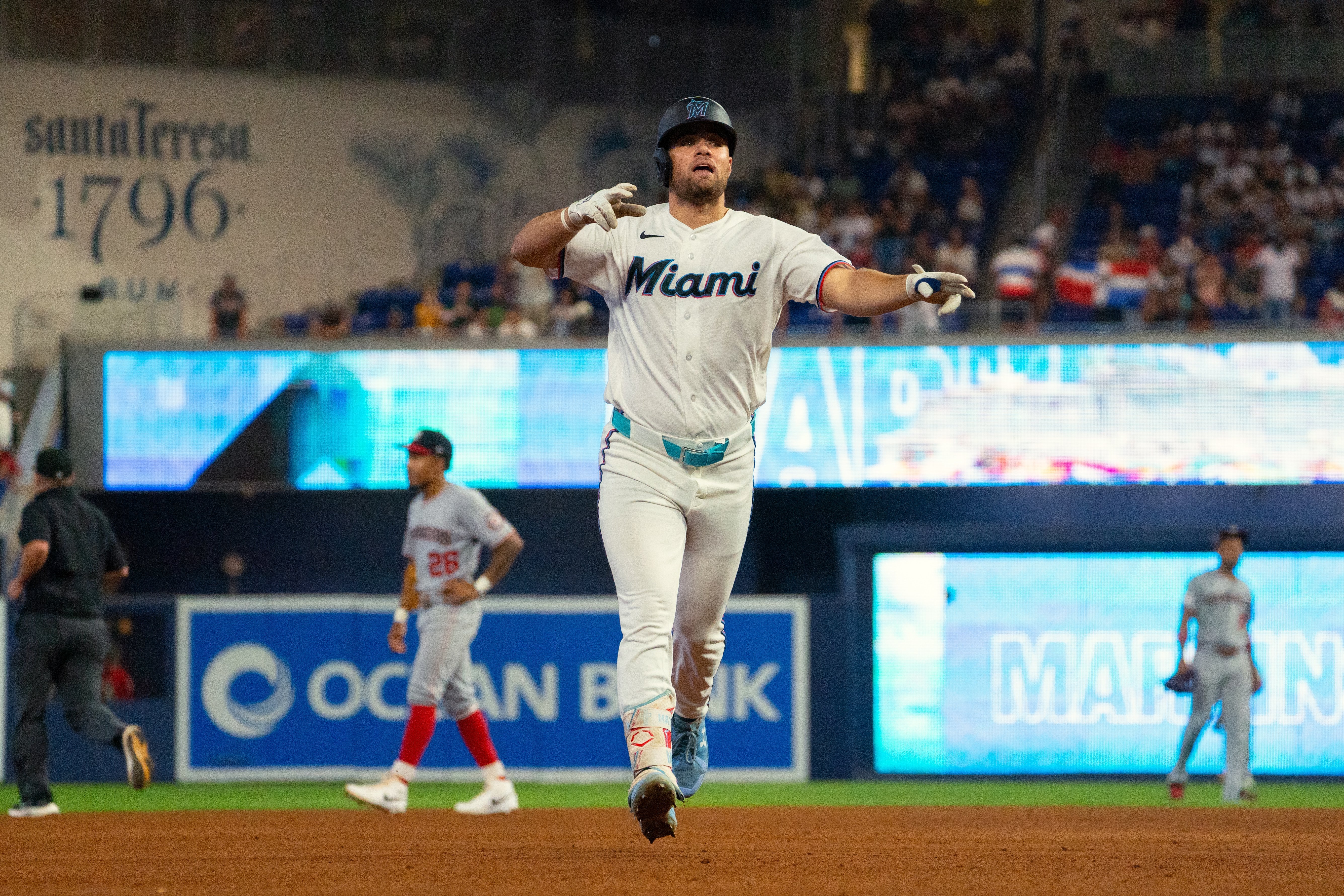 MIAMI, FL — The Miami Marlins continued their dominance over the Washington Nationals on Saturday afternoon. A 4-2 victory was their seventh in eight head-to-head matchups this season between the division rivals. The Marlins wasted no time getting to Nationals starter Jake Irvin. In the bottom of the first inning, following back-to-back hits from Griffin Conine and Owen Caissie, Otto Lopez knocked in a two-run single, giving the Fish an early 2-0 lead. López has slumped for the most part since the All-Star break, going into Saturday's game sporting a .530 OPS during that span. With hits in three straight games, he may finally be snapping out of it. In the ensuing inning, Heriberto Hernández hit his 19th home run of the season, extending the Marlins' lead to 3-0. Since being recalled from Triple-A Jacksonville back on May 7, he has an .815 OPS. Jakob Marsee plated Miami's final run with his eighth home run of the season in the bottom of the fourth inning. Marsee finished the afternoon with his fourth multi-hit game in the month of August. He is slashing .286/.385/.482/.867 with two home runs since the month began. "I feel like this past month and a half, I haven't really been stressed at all," Marsee said. "I've been really confident, having good at-bats and the results are starting to come, which is great. It sucks when you're not performing, and especially when I feel like I was having good at-bats or hitting the ball hard at times, and just things not going away, but that's baseball and I know I can make an impact in a lot of ways." For a second straight start, Eury Pérez struggled with his command. Against the Reds in his last start, he walked five, and on Saturday, he walked three in five innings of work. He also allowed two runs (one earned) on three hits and struck out four. The bottomline results have been great anyway as he owns a 1.99 ERA in the month of August. "There were a lot of armside misses today with Eury more consistently than we've seen and didn't really have a terrific rhythm," said Marlins manager Clayton McCullough. "Lots of deep counts, but we're talking about it differently now on those kind of days where it's a little bit more scattered. He's tough to hit and keeping the ball in the ballpark now at a much different rate than he ever has in his career." Pérez has now gone 60 straight innings, spanning nearly 10 full starts without allowing a home run. He also has a 1.67 ERA over his last 13 starts. José Fernández and Dontrelle Willis are the only Marlins pitchers ages 23 and younger to post a lower ERA in any 13-start span. In 23 starts for Pérez, he has a 3.17 ERA, 3.67 FIP, 9.66 K/9 and 3.67 BB/9. Now in uncharted territory when it comes to workload (127.2 IP), McCullough told Craig Mish on Marlins.TV that Pérez will not have any specific innings limit. McCullough said they will be mindful of his workload, but there are no plans to stop him from pitching. The Marlins bullpen was perfect. The combination of Michael Petersen, Josh Ekness, Tyler Zuber and Calvin Faucher combined to retire every batter they faced in four total innings of work. Ekness specifically hasn't allowed a run in his last five appearances. He has a 0.93 ERA in the month of August. Overall on the season, the rookie right-hander has a 1.20 ERA, 4.02 FIP, 6.00 K/9 and 4.20 BB/9 in 14 appearances. "We knew coming in that Josh would play a factor in this season at some point," McCullough said. "I think it's probably as good a fastball as there is in the bullpen in the big leagues. When you take into account the low release, velocity and vert on his heater, it's a real pitch. Right now, it's a really tough at-bat versus right, and I think we'll start to see as Josh continues to pitch here that the walks go down and the strikeouts go up." With the win, the Marlins improve to 66-64 on the season. That includes a 40-25 record at home, which is fourth-best in MLB—only the division-leading Milwaukee Brewers (45-23), Tampa Bay Rays (43-23) and Atlanta Braves (42-23) have been better. The Marlins go for the sweep on Sunday at 1:40 pm with Janson Junk starting. It will also be "Thank you Tommy Day," with a special pregame ceremony honoring longtime color analyst Tommy Hutton, who'll be retiring after this season. View the full article
 -
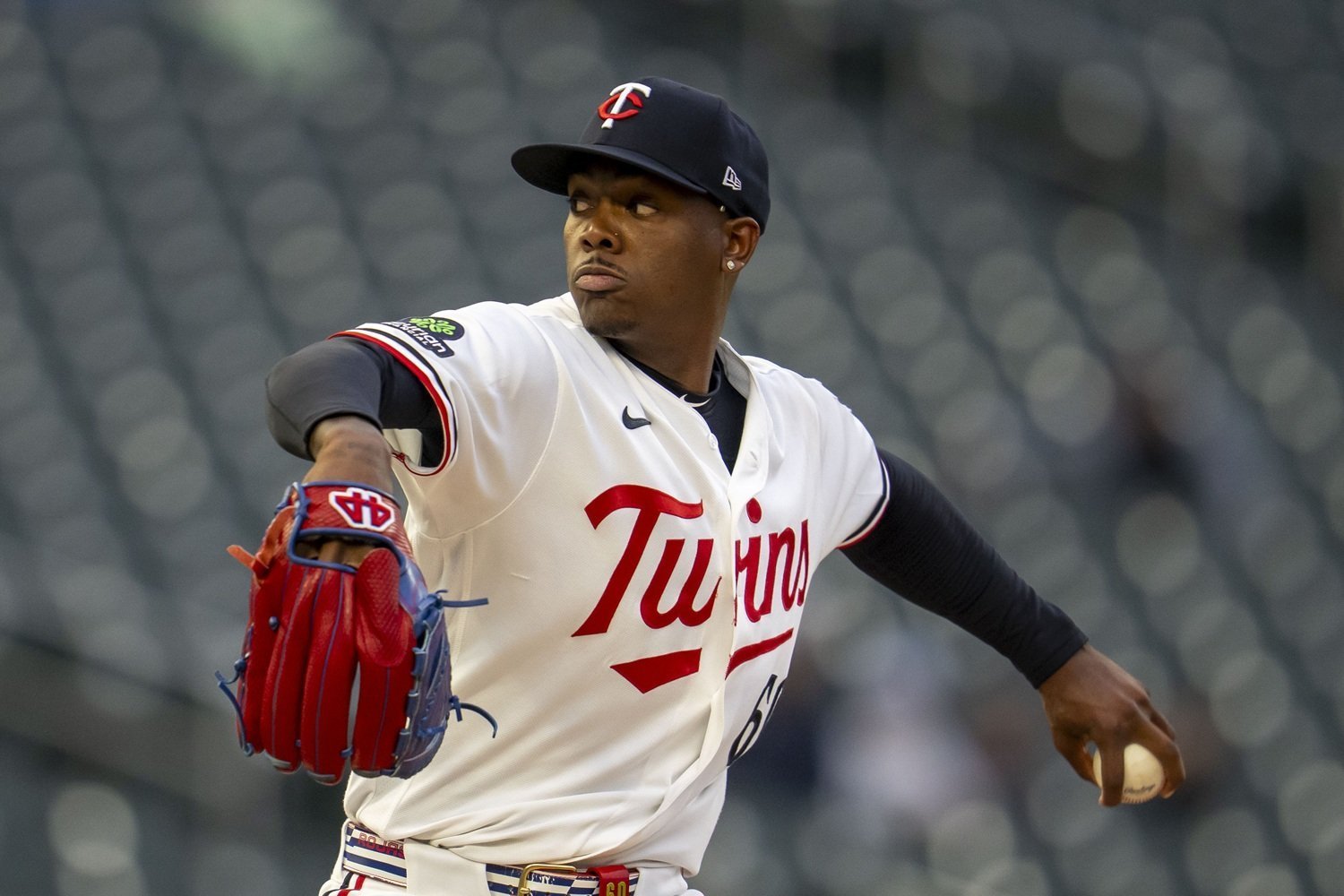 The Minnesota Twins have spent much of this season trying to piece together enough starting pitching depth to get through the final months of the season. Unfortunately, another piece just took a hit. Left-hander Kendry Rojas exited his Triple-A St. Paul start on Friday after apparently grimacing following a pitch in the second inning. After a meeting at the mound, Rojas left the game after throwing just one inning. He allowed one walk and did not surrender a hit. The diagnosis came Saturday, and it wasn't particularly encouraging. The Twins placed Rojas on the Triple-A injured list with a right oblique strain. That puts another dent in an already thin group of starting pitching options. More importantly, it puts Rojas' potential role down the stretch into question. Rojas Was Starting to Make a Case Before the injury, Rojas was doing exactly what the Twins wanted to see after sending him back to St. Paul at the beginning of August. In three starts since the demotion, the 23-year-old had thrown 11 innings while allowing just one earned run. He struck out 11, walked only two and held opposing hitters to a .180/.220/.256 slash line. Those are the kinds of numbers that force an organization to pay attention. Rojas has also already gotten a taste of the majors this season. He has made four appearances for Minnesota, including some outings in an opener-type role. Across 12 1/3 innings, he owns a 2.19 ERA with 14 strikeouts and seven walks. The most intriguing part might be how opponents have performed when Rojas has been used as a starter. They have produced just a .430 OPS against him. The question has never really been whether Rojas can get major-league hitters out. The next question was whether he could do it while handling a legitimate starter's workload. The Workload Was Supposed to Increase That was going to be the next phase of Rojas' development. On Sunday's episode of Inside Twins, general manager Jeremy Zoll said the organization planned to ramp up Rojas' workload in his upcoming starts. That made sense. The Twins don't simply need another pitcher capable of giving them two or three innings. With the rotation already dealing with injuries and uncertainty, they need someone who can potentially take the ball every fifth day and provide meaningful length. Rojas was beginning to get that opportunity. Now, the oblique injury interrupts the process. The hope, obviously, is that this is a relatively short-term setback and Rojas can get back on the mound soon. But oblique injuries can be tricky, particularly for pitchers. The Twins will have to be careful about rushing him back simply because they need pitching. Joe Ryan's return timeline remains an important variable for the Twins' rotation, and any additional injury could create another opening. Before Friday, Rojas looked like one of the more logical internal candidates to fill it. If Rojas can return quickly and resume building up his innings, he could still become an intriguing September option. But with the Twins already short on rotation depth, this is another injury the organization could have done without. View the full article
 -
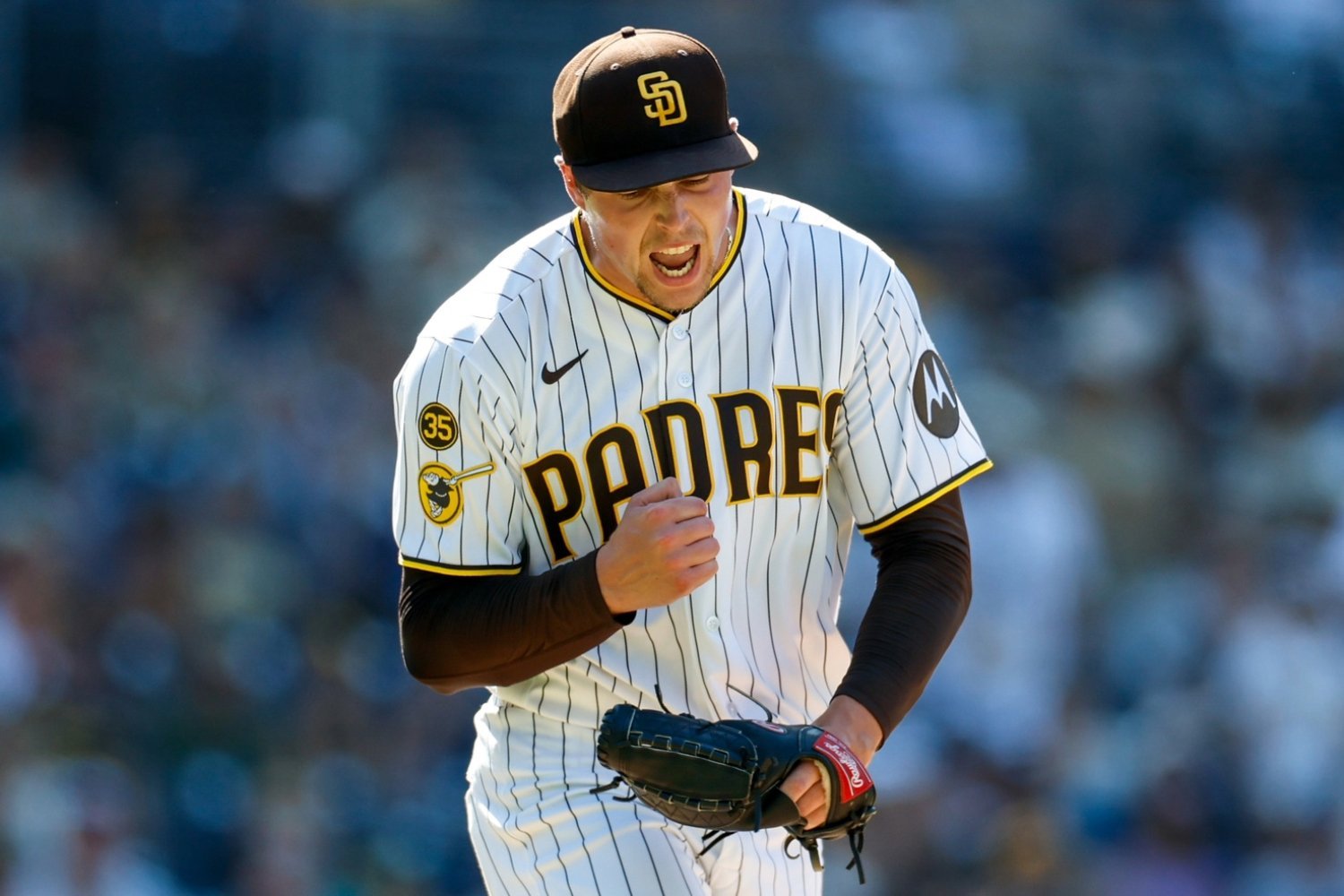 It’s no secret that pitching wins games in October. The San Diego Padres currently hold a record of 69-60, and they’re sitting just one game ahead of the Arizona Diamondbacks for the final National League Wild Card spot. If they’re not only going to make the postseason, but actually make a run once they get there, they’re going to need their pitching staff to step up. After acquiring Casey Mize and Robbie Ray at the trade deadline, their starting rotation is in a much better position to help accomplish that. But one thing this Padres team has that a lot of other playoff hopefuls don’t is a quality bullpen. In fact, San Diego’s late-game pitching has been among the best in baseball this season. Among all 30 teams, the Padres’ bullpen has the fifth-lowest ERA. They’ve also recorded the most strikeouts of any bullpen in the league. And keep in mind, they’ve done that without Jason Adam since late June, while Jeremiah Estrada has missed roughly three months with two separate injured-list stints. As I said, pitching wins games. But late-game pitching specifically can be the difference between moving on and going home. And I don’t think it’s crazy to say that, health permitting, San Diego could enter October with the best bullpen in baseball. Now, of course, that’s assuming the Padres make the playoffs to begin with. In addition to Arizona, both the Miami Marlins and St. Louis Cardinals sit within shouting distance of that final Wild Card spot. There’s still plenty of baseball left to be played, and the Friars certainly aren't guaranteed a postseason berth. But let’s think optimistically here and say the Padres hold on and make it to October. If they enter the sixth inning of any game with a lead, you’ve got to feel pretty darn good about their chances of holding onto it. That starts with Mason Miller, who has established himself as the best reliever in the league. Miller leads the National League with 31 saves in 32 opportunities, and with a microscopic 0.86 ERA across 52 1/3 innings, that’s about as “shutdown” as it gets. His whiff rate and strikeout rate are both in the 100th percentile among pitchers, which pretty much tells you everything you need to know about how difficult he is to hit. There is no better ninth-inning option in baseball. You could also argue there’s no better eighth-inning option than left-hander Adrián Morejón. The southpaw's 2.78 ERA doesn’t do justice to how dominant he’s been this season. Left-handers who can throw a triple-digit fastball and consistently pound the strike zone are extremely rare, but that’s exactly what Morejón brings to the table. His sinker sits around 100 mph, and because of his sinker-changeup-slider combination, his ground-ball and barrel rates both sit in the 99th percentile. His whiff and chase rates are both in the 96th percentile or better, while his 2.44 expected ERA suggests he’s been even better than his surface-level numbers indicate. I’ll plant my flag here: Morejón and Miller are the best eighth- and ninth-inning duo in the league. But the beauty of San Diego’s bullpen is that it doesn’t stop there. Right-handers Jeremiah Estrada and Jason Adam have both battled injuries this season, with Adam currently banged up but expected to return in mid-September. Health permitting, though, those are two darn good arms to have before getting to Morejón and Miller. Both generate an enormous amount of chases and whiffs. Neither gives up much hard contact, and they also provide completely different pitch mixes. Estrada leans heavily on his four-seam fastball while mixing in a splitter and slider. Adam, meanwhile, leads with his slider while also leaning heavily on a changeup and four-seam fastball. Both guys do a good job of keeping runners off the bases, and in a must-win type of game, Adam-Estrada-Morejón-Miller is about as dominant a group as you can ask for. And thats before we get to 22-year-old Bradgley Rodriguez, who has only gone unmentioned this long because of his lack of postseason experience. Rodriguez has been incredible in 2026, posting a 2.08 ERA while putting together exceptional contact-quality metrics that provide a strong foundation for a reliable postseason arm. And while Yuki Matsui’s expected ERA is more than a full run higher than his actual 2.22 mark, he gives Craig Stammen another quality left-handed option to deploy. You could offer up a few other relief corps for the honor, but it's not a stretch to say that the San Diego Padres’ bullpen is the best in baseball. It isn’t just that they have an elite closer. They have multiple arms capable of handling high-leverage situations, different arsenals that can attack hitters in different ways and, perhaps most importantly, the potential to shorten games considerably if everyone is healthy. When October rolls around, the importance of late-game pitching gets magnified. For a Padres team that won’t enter the postseason, assuming they make it, as one of the favorites, this kind of bullpen could be exactly what they need. A fifth or sixth seed doesn’t need to be the most talented team in October. It just needs to find a way to win close games. And if the Friars can get to the late innings with a lead, they might have the group capable of turning them from a Wild Card team into a legitimate World Series contender. View the full article
 -
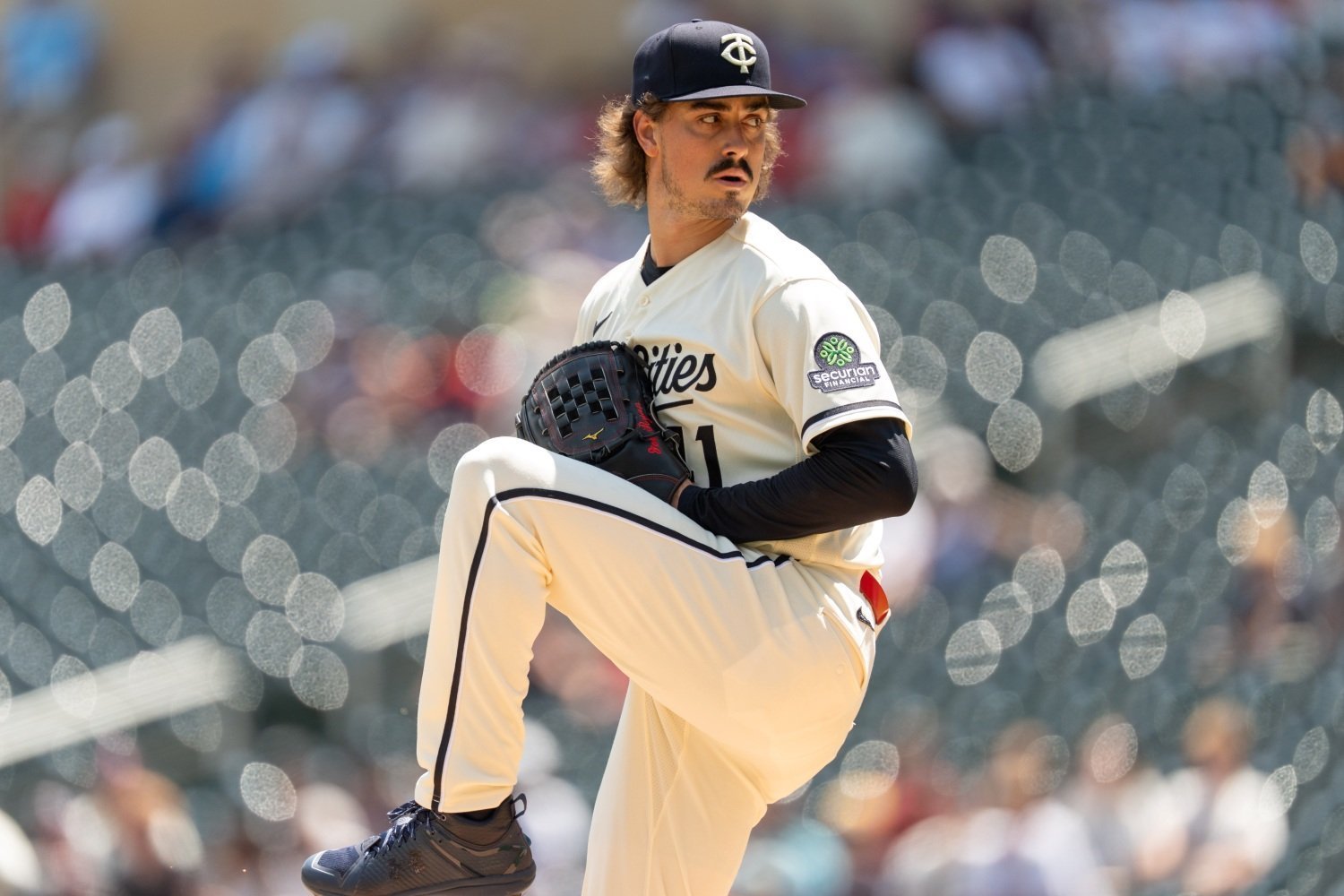 There was a point earlier this month when the Minnesota Twins’ playoff hopes looked like they were slipping away. A rough stretch against the Brewers and Phillies had Minnesota searching for answers, and the team entered its series with Atlanta having plenty of questions about whether it could stay in the American League Wild Card race. Then everything changed rather quickly. The Twins swept the Braves, their first series sweep since June, and suddenly Minnesota is back in a playoff spot with more than a month remaining. That does not mean the hard part is over. Quite the opposite. The Twins have 33 games remaining, and the margin for error is going to remain extremely small. There are plenty of teams crowded around the postseason cutoff, meaning a handful of wins or losses could completely change the picture. So what will determine whether Minnesota actually gets there? These five things could be the biggest variables. 1. Joe Ryan’s Return This one might be the most obvious. Ryan is arguably the most important pitcher on the Twins’ roster, and Minnesota simply looks different when he is leading the rotation. The right-hander landed on the injured list with a mild left glute strain after his August 4th start. The good news is that his recovery appears to be moving in the right direction. Ryan recently threw his first bullpen session since the injury, another important step toward returning to the rotation. Now comes the difficult part. The Twins don't just need Ryan to return. They need him to look like Joe Ryan from the first half. There is a difference. Minnesota's rotation has had to navigate injuries and inconsistency throughout the year. Taj Bradley has been solid with some inconsistencies that marked his time in Tampa. Bailey Ober has continued to work through some uneven outings, while the organization has leaned on younger pitchers such as Connor Prielipp and Zebby Matthews for important starts. That can work for stretches. It is much harder to sustain over six weeks while trying to win a playoff spot. Ryan gives the Twins a legitimate front-line starter who can change the complexion of a series. Getting him back for the stretch run could be the biggest pitching development of the next few weeks. 2. Byron Buxton’s Health The Twins' playoff ceiling is also tied directly to their most dynamic player. Buxton missed time with a right hip impingement before returning to the roster in August. He is clearly not 100%, but even at less than full strength, Buxton can be a difference maker. Buxton has carried Minnesota’s lineup through different portions of the season, especially when the club was scuffling through portions of the first half. But the Twins don't need one spectacular week from him. They need him available consistently through September. There is also a practical element to this. The Twins have enough offensive talent to score runs without Buxton, but they are a much more dangerous lineup when he is creating pressure at the top of the order. His presence changes how opposing pitchers attack the rest of the lineup. There is no way around it: Minnesota needs Buxton on the field. Not necessarily every inning of every game. Not necessarily playing center field every day. Just available. During a playoff race this tight, that matters. 3. Royce Lewis This might be the most fascinating variable of the five. Lewis has experienced just about every possible storyline in 2026. He struggled badly enough early in the season to be optioned to Triple-A, then returned to Minnesota and started looking much more like the player the organization believed could become a cornerstone. More recently, he has been one of the hottest hitters on the roster. Prior to Friday's 0-for-3 against San Diego, Lewis had reached base in 18 consecutive games and posted a .308/.378/.554 slash line during that stretch. In August, he has .867 OPS with seven doubles and two homers. That is the Royce Lewis the Twins need. Not necessarily the player who hits a home run every night. Not the guy who has to carry the offense by himself. They need the version of Lewis who consistently controls at-bats, makes hard contact and gives the middle of the lineup another dangerous threat. Because there is a big difference between the Twins' lineup with Lewis producing and the Twins' lineup asking other players to compensate for an unproductive corner infield spot. The encouraging part is that Lewis appears to be trending in the right direction. The challenge is sustaining it. 4. The Rotation Has to Hold Together Even if Ryan returns and even if Buxton and Lewis stay healthy, Minnesota is not making the playoffs without dependable starting pitching. The Twins have spent much of the season trying to find the right combination. Ober and Bradley have been inconsistent. Younger pitchers have been asked to handle meaningful innings. Dean Kremer has been added to the mix. And the team has had to be creative with its pitching staff as injuries have piled up. That is a lot of moving pieces for a team trying to win games in September. The rotation doesn't need to become dominant overnight. It simply needs to become stable. The Twins need starters who can routinely get into the sixth inning and give the bullpen a chance to work with a lead. They need fewer games where the opposition gets an early advantage and forces Minnesota to spend the rest of the afternoon or evening trying to climb back. That becomes especially important because the Twins invested heavily in rebuilding their bullpen at the trade deadline. There is legitimate relief help available now. But those relievers are much more effective when they aren't being asked to cover half a game every other night. 5. The Remaining Schedule Eventually, the standings are going to stop being theoretical. The schedule will decide this. And Minnesota has a fascinating path ahead. After the current trip to San Diego, the Twins head to Oakland for three games before returning home for series against the White Sox and Tigers. Then comes another three-game series against Chicago followed by three more against Detroit. That stretch is enormous. Minnesota will have repeated opportunities to gain ground directly against teams involved in the same playoff race. The September schedule also includes Cleveland, the Yankees, the Angels, the Giants and Texas. This is where the Twins can either create separation or get swallowed by the pack. The games against Chicago, Detroit and Cleveland will carry extra weight because Minnesota can gain a game while simultaneously taking one away from an AL Central competitor. That is the good news. The bad news is that there won't be many easy nights. The Twins need to play like a team that belongs in the postseason. The Margin for Error Is Small That might be the biggest takeaway from all of this. The Twins are not relying on one thing going right. They need several things to go reasonably well at the same time. Ryan needs to come back healthy. Buxton needs to stay on the field. Lewis needs to keep hitting. The rotation needs to become dependable. And Minnesota needs to take advantage of its remaining schedule. That is a lot to ask. But that's what happens when a team spends the final month of the season fighting for one of the last playoff spots. The Twins have given themselves another opportunity. Now they have to take it. And over the next six weeks, these five variables could determine whether this surprising playoff push becomes a real postseason run or another season of what-ifs. What would you add to this list? Leave a comment and start the discussion. View the full article
 -
 Chicago Cubs Minor League Report Affiliate Overview Triple-A Iowa Cubs Series at Toledo MudHens (Detroit Tigers): Tied, 2-2 Season Record: 50–70-1 Double-A Knoxville Smokies Series at Pensacola Blue Wahoos (Miami Marlins): Blue Wahoos lead, 2-1 Season Record: 64–53 High-A South Bend Cubs Series vs. West Michigan Whitecaps (Detroit Tigers): Tied, 2-2 Season Record: 67–47 Single-A Myrtle Beach Pelicans Series vs. Fayetteville Woodpeckers (Houston Astros): Woodpeckers lead, 4-0 Season Record: 45–70 Triple-A: Iowa Cubs Season Record: 50–70-1 Series Opponent: Toledo Mud Hens (58-65) Series Standing: Tied, 2-2 Aug. 21: The Iowa Cubs evened their series at the Toledo Mud Hens with an 8-3 victory on Friday night at Fifth Third Field. The Mud Hens opened the scoring with two runs in the second but the Cubs would rally to take the lead with five runs in the fourth. James Triantos (1-for-3) was hit by a pitch with the bases loaded, which was then followed by Ben Cowles (1-for-4) drawing a walk. Justin Dean (1-for-4) drew a bases-loaded walk of his own two batters later to give Iowa the lead and Matt Shaw (2-for-4) singled home a pair to make it 5-2. Jordan Nwogu (1-for-5) then made it 6-2 in the sixth with an RBI-single. The I-Cubs then added a run in the seventh, on a wild pitch, and another in the ninth, a Cowles RBI-single, to go up 8-2. Toledo managed to pull one run back in the ninth to make it 8-3. Grant Kipp picked up the win in relief for the Cubs to improve to 2-0 on the season. Kipp tossed three scoreless frames, allowed three hits, walked one and struck out seven. Hoby Milner, making his eighth rehab start with Iowa, turned in a scoreless inning of work, allowed one hit and whiffed one batter. Double-A: Knoxville Smokies Season Record: 64–53 Series Opponent: Pensacola Blue Wahoos (67–50) Series Standing: Trail, 2-1 Aug. 21: The Knoxville Smokies dropped their contest to the Pensacola Blue Wahoos, 6-3, on Friday night at Blue Wahoos Stadium. Ariel Armas (1-for-4) gave the Smokies the lead in the first with an RBI-single and run-scoring knocks from Edgar Alvarez (2-for-4) and Carter Trice (2-for-3) in the fourth made it 3-0. The Blue Wahoos pulled one of those runs back in the bottom of the fourth and rallied for four runs in the fifth to take a 5-3 lead. Pensacola would push one more run across in the seventh to make it a 6-3 ballgame and would prevent Knoxville from mounting a comeback. Jackson Brockett got the start on the mound for the Smokies and took no decision. Brockett worked four innings of one-run ball, allowed four hits, walked one and struck out five. Yenrri Rojas allowed one unearned run over two innings of work, yielded one hit and punched out two. Cubs No. 5 prospect Kane Kepley (North Side Baseball) went 1-for-4 to extend his hitting streak to eight games. During that span, Kepley has posted a slash of .345/.472/.586 with nine runs scored, two doubles, a triple, one home run, seven RBI and five walks. The Cubs second round selection in the 2025 MLB Draft has hit safely in 10 of his first 12 Double-A contests. High-A: South Bend Cubs Season Record: 67–47 Series Opponent: West Michigan Whitecaps (55–61) Series Standing: Tied, 2-2 Aug. 21: The South Bend Cubs evened their series vs. the West Michigan Whitecaps with a 7-5 victory on Friday night at Four Winds Field. Angel Cepeda (1-for-4) opened the scoring in the ballgame with an RBI-triple in the third, which was followed by an RBI-double from Jose Escobar (1-for-4) and the Cubs plating a third run in the frame on a double play groundout. Alexey Lumpuy (2-for-3) made it 4-0 in the fourth with a solo blast, his first-career home run at the High-A level. The Whitecaps made it a one-run game with a three-spot in the seventh but South Bend got all those runs back after the stretch to restore their four-run advantage, thanks to a three-run shot from Brennan Hudson (1-for-3). West Michigan scored twice more in the eighth to make it 7-5 but Ethan Bell shut the visitors down in the ninth to pick up his eighth save of the season to seal the win for the Cubs. Cole Reynolds got the start on the mound for South Bend and took no decision. Reynolds spun four scoreless frames, allowing four hits to go along with six strikeouts and no walks. Single-A: Myrtle Beach Pelicans Season Record: 45–70 Series Opponent: Fayetteville Woodpeckers (62–53) Series Standing: Trail, 4-0 Aug. 21: The Myrtle Beach Pelicans were routed by the Fayetteville Woodpeckers, 12-3, on Friday night at Pelicans Ballpark. The Woodpeckers took a 1-0 lead in the second but the Pelicans were able to respond in the third to take the lead, thanks to Juan Cabada’s (2-for-4) two-run shot. Fayetteville would score the next 10 runs in the ballgame to go ahead 11-2, scoring twice in the fourth and fifth, and three times in the sixth and eighth. Alexis Hernandez (1-for-4) picked up an RBI-single in the eighth before the Woodpeckers added one more in the ninth to make it 12-3. View the full article
 -
 Let's check in on all the action from the Boston Red Sox's farm system on Friday night. Triple-A Worcester Red Sox Series @ Syracuse Mets (New York Mets): 1-3 Season Record: 63-56 The WooSox struggled to generate offense in a close game, losing on a walk-off. Blake Wehunt took the bump to start the game for Worcester. Wehunt turned in a solid outing across 4⅔ innings. He allowed one run on three hits, and issued four walks. Wehunt struck out four before turning the ball over to Patrick Halligan. Halligan was less successful in a two-inning relief appearance. He let up two runs on five hits and Syracuse took a 3-0 lead. Halligan punched out two before Hobie Harris took over in the middle of the seventh. Harris finished the seventh and pitched through the eighth in a shutout performance. He surrendered one hit and sat down two on strikes before Sam McWilliams entered for the ninth. McWilliams got a quick out before allowing a single and hitting a batter. With two outs, he allowed a walk-off double to left field as Syracuse took a two-game lead in the series. Worcester was even worse on the other side of the ball. The WooSox tallied just three hits and had just nine total baserunners as they struggled to make noise. Franklin Arias led the way with two RBIs, but the 6-9 batters didn’t record a single combined hit. The offense came late, with Arias driving in Nate Baez and Nate Eaton on a line drive double to left field. An inning later, Allan Castro tied the game on a single to center, scoring Romy Gonzalez. It looked like the WooSox had a brief moment to take the lead, but the opportunity was squandered as Syracuse claimed victory. Double-A Portland Sea Dogs Series vs. Reading Fighting Phils (Philadelphia Phillies): 2-2 Season Record: 60-57 Roman Anthony drove in two and Justin Gonzales put up two hits as Devin Futrell turned in a solid start despite a 5-2 loss. Futrell made his longest start in three appearances with Portland, hurling six frames of two-run ball. He walked one and struck out four in his best start at Double-A. Tyler Davis took the seventh and eighth frames as Reading pulled ahead. Davis allowed three runs on two hits as he issued three walks. He struck out two and earned the loss. Erik Rivera took the final frame of the night, spinning a perfect ninth and striking out two as he tried to give Portland room to mount a comeback. Portland drove in just one RBI on Friday, going 0-for-9 with runners in scoring position and generating just seven baserunners. Gonzales led the way with two hits, but the bottom half of the order failed to muster a hit. Anthony was responsible for both of Portland’s runs as he teed off in the fourth inning. He sent a double to center field and advanced to third as Gonzales scored, cutting the lead in half. In the sixth, Anthony struck again. He scored Gonzales once more on a sac fly to center, tying the game 2-2. However, the Sea Dogs were silenced for the rest of the night as they fell. High-A Greenville Drive Series vs. Winston-Salem Dash (Chicago White Sox): 2-1 Season Record: 52-62 Greenville led through three innings before the game was suspended due to rain. Dylan Brown was three frames into a shutout start before the game was called, and it’s unclear whether he will continue when the game restarts. The Drive were efficient in a short time period, scoring twice in the early stages of the game. In the second, Maximus Martin drove in Carlos Gutierrez on a two-run homer as the Drive jumped out to an early lead. The game will be completed prior to Saturday’s contest, beginning at 4:30 and picking up in the third inning. Low-A Salem RidgeYaks Series vs. Wilson Warbirds (Milwaukee Brewers): 2-2 Season Record: 51-65 Salem surrendered an early lead and couldn’t recover, falling 7-5. Leghton Finley allowed only one run his last time on the mound, and hoped to carry over that success to Friday’s start. However, Finley fell apart and earned his fifth loss of the season. He allowed seven runs (two unearned) on five hits and issued two walks in 4⅔ innings. He struck out four before Carson Revay made his Low-A debut. Revay allowed three hits and walked one, but kept the Warbirds scoreless across 1⅓ innings. Cam Padgett entered in the seventh and closed the game in dominant fashion. Across three frames Padgett didn’t allow a hit and issued one walk. He struck out three as he completed an excellent bullpen outing from Salem despite the loss. Adonys Guzman led the way with two RBIs on Friday as Salem turned in a solid day at the plate. The Yaks were successful up until it came time to drive runs home, going just 1-for-7 with RISP. Salem dropped the ball throughout multiple chances to make the game more competitive. After a six-run second inning, the Yaks found themselves down seven early. In the fourth, Wills Maginnis put Salem on the board as he scored on a wild pitch. Franklin Primera then scored on an errant pickoff attempt. Guzman scored Starlyn Nunez on a double to center as Salem put up a three-run frame. In the fifth, Primera scored Anderson Fermin on an RBI single as Salem inched closer. In the sixth, Guzman brought the Yaks within two on a solo homer to center field. However, Salem failed to score in the final three frames as they lost. View the full article
 -
Pablo López Takes First Throwing Step in Long Road Back
DiamondCentric posted an article in Twins Daily
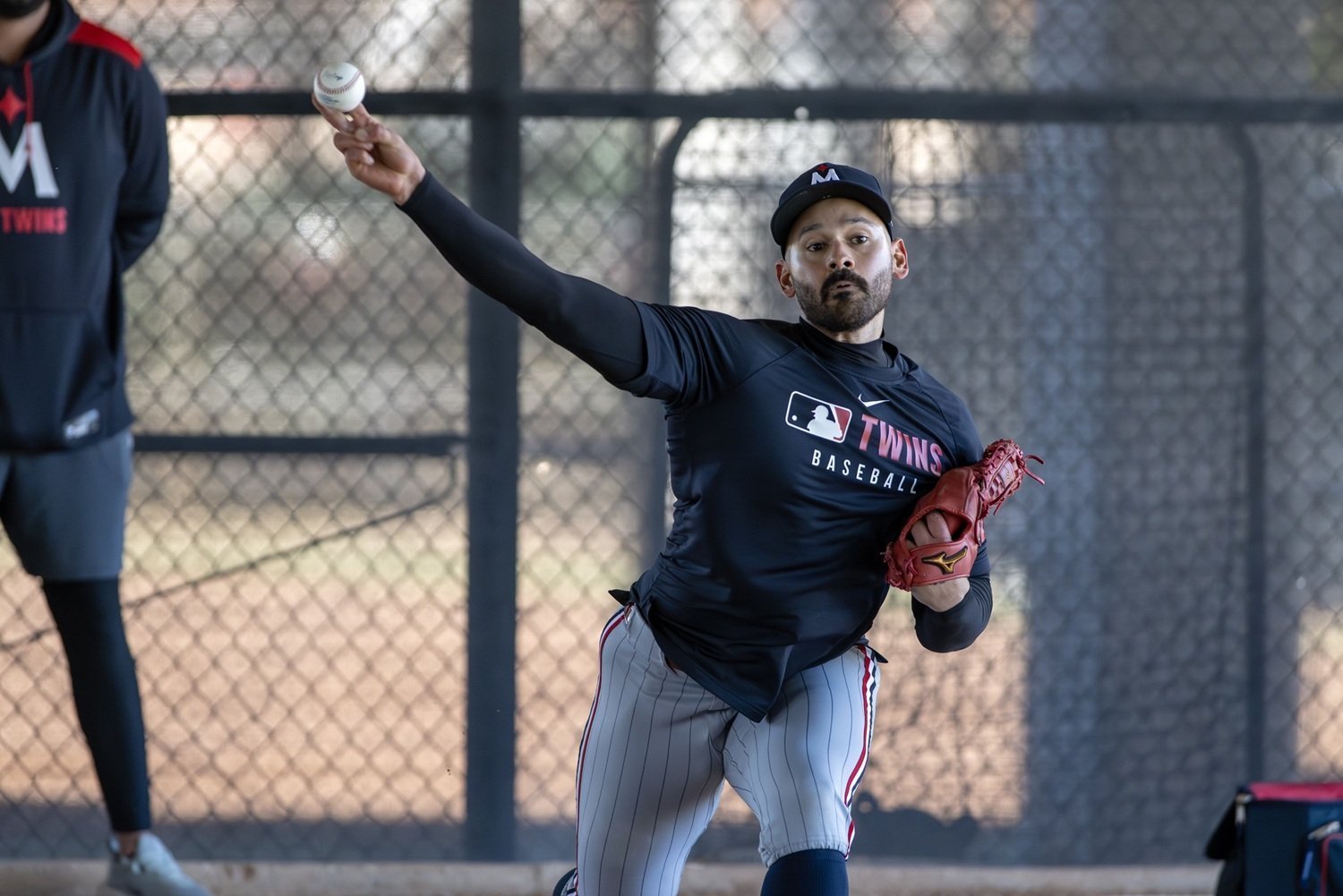 For most players, playing catch is about as routine as it gets. For Pablo López, it represented something much bigger. After spending the first several months of the season rehabbing from Tommy John surgery, López finally picked up a baseball and started throwing again Friday at Petco Park. It was a small session, with the Twins right-hander working from approximately 30 to 45 feet. But after everything López has been through, it was a significant moment. “It felt good, and what a place to do it, San Diego is perfect,” López said. “It was nerve wracking. I felt like I was warming up to throw a postseason game, because they let me do my normal pre-throw routine, which I had to figure out on the spot. I was trying to remember. So I went through some muscle memory, transitioned from one station to the other. But once I got out there, I was able to just feel the arm path. From such a short distance, 30-45 feet, there’s not going to be a lot of air under the ball. It’s really just getting into a good rhythm, feeling your tempo.” That first throwing session came after López received clearance from Dr. Keith Meister, who performed the right-hander’s second Tommy John surgery on February 25. Meister met with López in Texas earlier this month and gave him the green light to begin the throwing program he had been waiting to start. López's last throw before Friday came on February 16, when he was attempting to work through his first live batting-practice session of spring training. That session was cut short by right elbow soreness, leading to an MRI that revealed significant damage to his ulnar collateral ligament. After seeking a second opinion from Meister, López underwent surgery later that month. Now, the process of working his way back has finally entered a new phase. “It’s not a small step,” said Twins manager Derek Shelton. “It is a large step because his arm was moving forward and there was a baseball that came out of it. I mean, even though it was 30 feet and 45 feet, I think it was very encouraging. He left with a smile.” Shelton wasn't the only one smiling. López described the session as nerve-wracking, which is understandable considering the circumstances. But once he got through the initial routine and began throwing, the focus shifted toward finding his rhythm and trusting his arm again. The next part of the rehab will involve gradually increasing both the distance and volume of López's throwing. Exactly when he moves to each stage will depend on how his arm responds and what Meister sees during future evaluations. López said he has a general idea of what the next steps could look like, but there is still plenty of uncertainty. His body will ultimately dictate the pace. That's particularly important given the history involved. This is the second Tommy John surgery of López's career. He previously underwent the procedure in 2014 while in the Seattle Mariners organization. The Twins acquired López from the Miami Marlins before the 2023 season for Luis Arraez, and he quickly became an important part at the top of the rotation. His return won't come soon enough for Minnesota, but the organization has been clear that there is no reason to rush the process. The goal is to have López healthy and ready to contribute in 2027. Friday didn't guarantee that outcome. It wasn't supposed to. It was simply the first throw. But after months of waiting, wondering and rehabbing, that first throw represented something López and the Twins hadn't seen since February: progress. And sometimes, after Tommy John surgery, progress is worth celebrating. View the full article
 -
 Trade deadline acquisition Spencer Arrighetti came off the injured list and made his Blue Jays debut on Friday. Unfortunately, the right-hander took the loss, as he gave up three runs in 3.1 innings against the Yankees. He walked two and allowed a tough-luck home run to Spencer Jones; according to Statcast, it wouldn't have left the yard in almost any other stadium. It's clear the Blue Jays like Arrighetti's stuff. Manager John Schneider said as much after yesterday's game, and MLB.com's Keegan Matheson reports that the Jays "want Arrighetti to take the No. 5 job and run with it." If he can do that, it would make a huge difference for a rotation that has been plagued by injuries (not to mention a bullpen that has been heavily overworked) all year. On the position player side of things, center fielder Brett Bateman (acquired in the Kevin Gausman trade) appears to have avoided an IL stint of his own. The rookie exited early on Wednesday with a right hamstring issue. He sat out Thursday, but he returned to Toronto's lineup on Friday and played the best game of his young career. Bateman went 3-for-5 with a double, a triple, and a run scored. Here's a quick rundown of some more injured Blue Jays who could return to help the team down the stretch. Vladimir Guerrero Jr. Vladimir Guerrero Jr. is eligible to return from the seven-day concussion IL today. All signs suggest he's feeling well enough to do so. The first baseman played a rehab game on Friday for Single-A Dunedin. He reached base in all three of his plate appearances, hitting a double and drawing two walks. It's always best to err on the safe side when it comes to concussions, but the Jays will certainly be glad to have their superstar back after a minimum stint on the IL. He's been having a disappointing season, but no one on this roster can make as big of a difference as Vladdy when he's at his best. Andrés Giménez Andrés Giménez left early on Thursday. He appeared to injure his right hamstring while running to first base. While he did not play on Friday, the Blue Jays seem optimistic about his condition. John Schneider told reporters that Giménez would not need an MRI (at least for now), which suggests an IL stint is unlikely. Hopefully, the shortstop's condition continues to improve. He doesn't contribute much with the bat, but he leads the team in stolen bases, outs above average, and – because of his baserunning and defense – FanGraphs WAR. Josh Smith The same day the Blue Jays reinstated Arrighetti from the IL, they placed another trade deadline acquisition on the shelf. Utility player Josh Smith injured his left hamstring on Wednesday. He'll be out until at least August 30. John Schneider told Sportsnet's Hazel Mae that Smith "didn't feel great" and would need an MRI, although he didn't seem especially concerned about a serious issue. In place of Smith, the Blue Jays recalled Davis Schneider for another stint in Toronto. Despite his sharp eye at the plate, Schneider has struggled to make any kind of impact in the majors this year. Trey Yesavage Trey Yesavage had surgery to repair a tear in his left meniscus earlier this month, but remarkably, the Blue Jays believe he might be able to pitch again in 2026. He reportedly started playing catch this week, so he still has a ways to go in his rehab efforts. Yet, it appears he's moving in the right direction. The rookie might not make much of an impact for the rest of the regular season, but if Toronto can sneak into the playoffs, he could be this team's secret weapon for a second year in a row. Jameson Taillon Jameson Taillon only made two appearances for Toronto before the curse of the 2026 Blue Jays rotation caught up to him. The veteran landed on the IL with right forearm tendinitis on August 11. The Blue Jays haven't given us a ton of information about the severity of Taillon's injury or his timeline to return. However, according to Sportnet's Arden Zwelling, Taillon "felt good" after throwing a bullpen session this week. He will throw another one tomorrow or Monday. If all goes well, a rehab assignment is hopefully the next step. Joe Mantiply Joe Mantiply was a pleasant surprise for the Blue Jays in April and May, pitching to a 2.04 ERA in 17.2 innings, striking out 16 and walking only four. Then a knee injury forced him to the IL. After three months, Mantiply returned to a mound this week, making a rehab appearance for Dunedin. He threw a scoreless inning, striking out one. According to Zwelling, the southpaw is feeling good. He might only need a couple more rehab outings (likely with Buffalo) before he's back in the Blue Jays' bullpen. View the full article
 -
 Syracuse nearly lost Friday night after holding visiting Worcester hitless for the first 7 1/3 innings. It blew a three-run lead after the no-no was broken up. After the Red Sox tied the game in the top of the ninth, MJ Melendez rescued the Mets in the bottom half with a walk-off RBI double, giving them a 4-3 win. Syracuse was in control of this game as Jack Wenninger (five innings) and Ofreidy Gomez (two) kept Worcester without a hit through seven. But Matt Turner gave up a one-out, two-run double in the eighth after issuing a pair of walks, and Ben Simon surrendered a run in the ninth to blow the save. The Mets have taken three of the first four games in this series. Elsewhere in the organization: Binghamton got big nights from JT Benson and Jefferson Rojas in an 8-5 victory over Altoona. Benson drove in four runs, while Rojas homered and drove in three. Mark Vientos made a rehab start at DH. Brooklyn pounded out 20 hits as it out-slugged Asheville 16-12. Yonatan Henriquez homered twice and drove in five runs. Seven different Cyclones batters had at least two hits. St. Lucie lost 6-3 to Lakeland. Jeremy Rodriguez and Aiden Robbins homered, and Jonathan Jimenez was effective in three-plus innings of relief. New York Mets Transactions No Roster Moves. Syracuse Walks It Off After ‘Pen Meltdown The Mets’ offense went to work in the bottom of the ninth after Simon’s blown save. With one out, Ronny Mauricio singled and Amick was hit by a pitch. With Melendez at the plate, Mauricio was picked off second by the catcher and thrown out attempting to steal third. Amick advanced to second on the play. Melendez then hit an opposite-field liner to the wall in left field to win the game. Asheville made things interesting with three runs in the bottom half. Smith reached base five times, with three hits and two walks. Snyder finished with three RBIs. Meggers and Paulino each had three hits. John Smith III doubled twice in a 3-for-5 effort. Brooklyn starter Will Watson lasted just 2 1/3 innings. He allowed three runs on three hits. Rafi Vazquez was awarded the win despite allowing two runs and four hits in two innings of relief. Player AB R H RBI BB K Elian Peña 6 1 1 0 0 5 Aidan Smith 4 2 3 1 2 1 Trey Snyder 6 1 2 3 0 1 John Smith III 5 3 3 1 0 0 Yonatan Henriquez 5 4 3 5 1 1 Antonio Jimenez 5 0 0 0 1 3 Daiverson Gutierrez 6 1 2 2 0 0 Chase Meggers 5 2 3 1 0 0 Eddinson Paulino 5 2 3 2 0 1 Player IP H R ER BB K HR Will Watson 2 1/3 3 3 3 0 4 1 Conner Ware 2 2/3 3 2 2 6 3 0 Rafi Vazquez 2 4 2 2 1 2 0 Hunter Hodges 2 4 5 5 1 4 1 St. Lucie Falls To Lakeland Again The Mets have dropped the first four games of this six-game set. They fell behind early Friday as Lakeland scored three runs in the top of the second. The Flying Tigers extended their lead to 4-0 in the fifth before St. Lucie got a run back in the bottom half on a sacrifice fly by Jake Ogden. Rodriguez’s solo homer in the seventh and Robbins’ solo homer in the eighth closed the gap to 4-3. Lakeland added a pair of insurance runs in the top of the ninth. St. Lucie outhit Lakeland 11-9 in the game. Dylan Carey had three of the hits, while Bohan Adderley and Julio Zayas each had two. The Mets used seven pitchers in a bullpen game. Jimenez was the only one to pitch multiple innings. He came on in the sixth and left after facing one batter in the ninth. That batter came around to score with Miguel Mejias pitching. Player AB R H RBI BB K Jeremy Rodriguez 4 0 1 0 0 2 Aiden Robbins 4 1 1 1 0 2 Eli Serrano III 4 0 1 0 0 1 Kuhio Aloy 4 0 0 0 0 1 Yovanny Rodriguez 4 1 1 1 0 3 Dylan Carey 4 0 3 0 0 0 Julio Zayas 3 1 2 0 1 0 Bohan Adderley 4 0 2 0 0 0 Jake Ogden 3 0 0 1 0 1 Player IP H R ER BB K HR Camden Lohman 1 1 0 0 1 0 0 Nate Isler 1 4 3 3 1 1 1 Zach Crotchfelt 1 0 0 0 0 1 0 Brett Banks 1 1 0 0 0 2 0 Candido Cuevas 1 1 1 1 2 1 0 Jonathan Jimenez 3 2 1 1 2 4 0 Miguel Mejias 1 0 1 0 1 2 0 Top-20 Prospect Performance Jonah Tong: DNP Jack Wenninger: 5 IP, 0 H, 0 R, 0 ER, 2 BB, 6 K Elian Peña: 1-for-6, 5 K Mitch Voit: DNP Ryan Clifford: DNP Nick Morabito: 1-for-5, RBI, K Jonathan Santucci: DNP Carson Wiggins: DNP Jacob Reimer: DNP Aiden Robbins: 1-for-4, HR, RBI, 2 K Randy Guzman: DNP Wandy Asigen: DNP Chris Suero: 0-for-3, BB, 2 K Jefferson Rojas: 2-for-5, HR, 3 RBI, K Will Watson: 2 1/3 IP, 3 H, 3 R, 3 ER, 0 BB, 4 K Shane Sdao: DNP Eli Serrano III: 1-for-4, 2B, K Antonio Jimenez: 0-for-5, BB, 3 K Émilien Pitre: 1-for-4, BB Dylan Ross: DNP View the full article
 -
The Real Reason Behind Trevor Larnach’s August Slump
DiamondCentric posted an article in Twins Daily
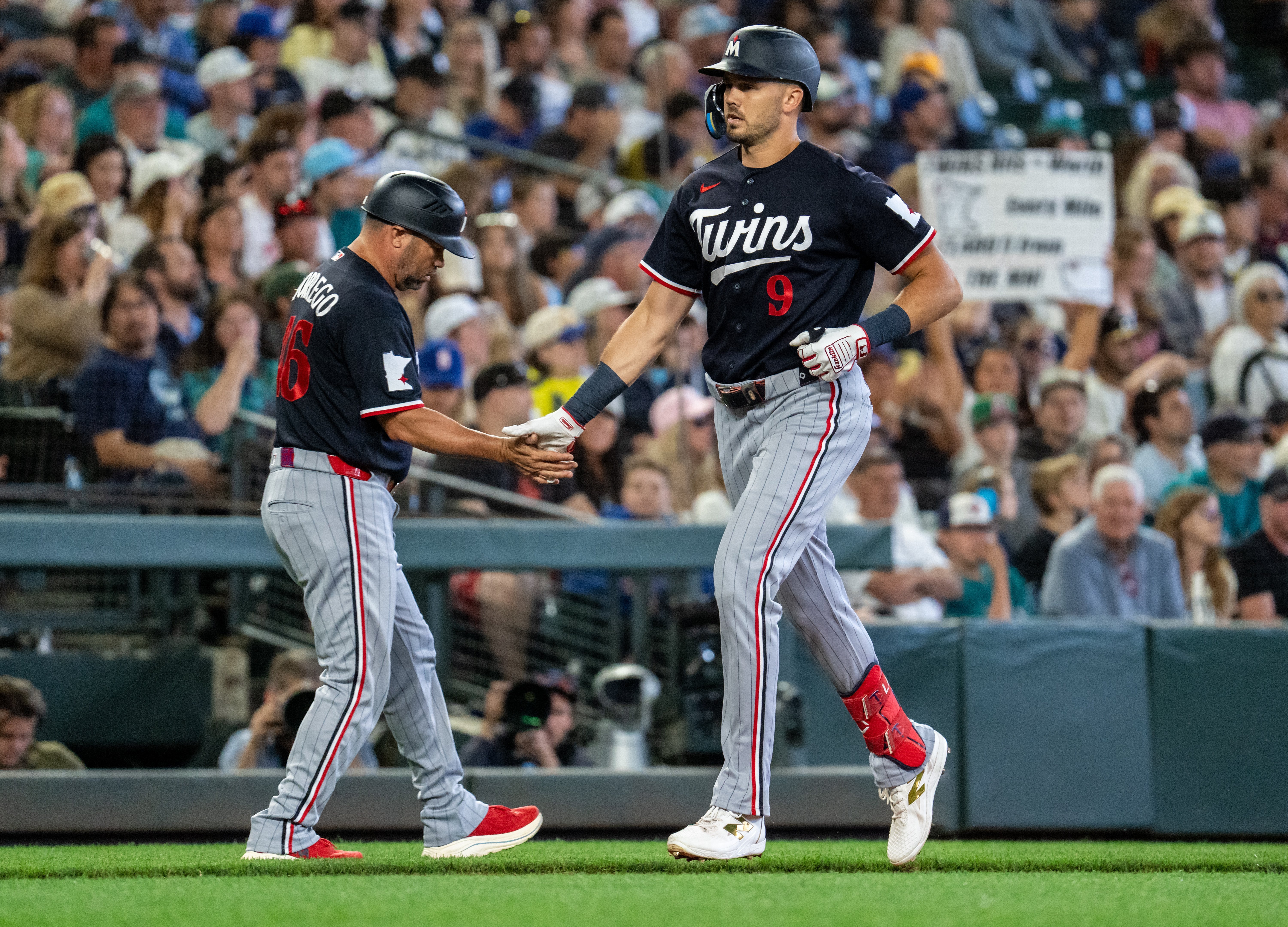 Trevor Larnach has been one of the most impactful bats in the Twins’ lineup this season. Through 380 plate appearances, Larnach is currently sporting career-high marks in batting average (.266), on-base percentage (.351) and OPS (.769). And while he had largely been a glorified strong-sided platoon bat for much of his career, he has taken his performance to another level in 2026. Through the first half, Larnach looked like a legitimate middle-of-the-order contributor rather than simply a player who needed to be shielded from certain matchups. Then came the trade deadline. A lot of people, myself included, believed Larnach would be traded to make room for the next wave of outfield talent within the Twins’ system. With players like Walker Jenkins, Emmanuel Rodriguez and Hendry Mendez looming, it made sense to wonder whether Larnach’s time in Minnesota was coming to an end. And for a minute, it looked like it was. The Twins and Astros reportedly had a deal lined up that would have sent Larnach to Houston in exchange for reliever Bryan Abreu. But Astros owner Jim Crane ultimately vetoed the trade because of his unwillingness to subtract talent from Houston’s major league roster during a playoff push. Just like that, Larnach was staying in Minnesota. And from that moment on — whether it was because of almost being traded or simply a coincidence — he hasn’t been the same player. Across 53 plate appearances in August, Larnach is hitting just .163. He’s striking out at a higher frequency, getting on base less often and, after serving as the Twins’ leadoff hitter against right-handed pitching for most of the summer, he’s now hitting in the bottom half of the lineup. On the surface, it looks like a player who has completely lost his way. But there’s a pretty important caveat to Larnach’s recent struggles: He might just be one of the unluckiest hitters in baseball right now. Larnach’s quality of contact in August has actually been some of the best contact he’s made all season. His average exit velocity is 89.3 MPH, comfortably above his season-long mark of 87.7 MPH. His 51.4% hard-hit rate is exceptionally high, especially for a player who is hitting .163. His overall offensive approach hasn’t drastically changed. The same types of batted balls that have helped Larnach find success throughout the season simply haven’t been finding holes in August. His BABIP sits at just .171 during the month, an extremely low mark for someone making contact at the quality Larnach has been. That doesn’t mean every part of his slump can be dismissed as bad luck. Strikeouts and an inability to get on base are still legitimate concerns, and eventually, poor results can point toward an underlying issue. But when a hitter is making harder contact than usual without seeing the results follow, it’s difficult to completely panic. Still, there is one notable change with Larnach that goes beyond his batted-ball profile. The pitch he has struggled with the most this season is the split-finger. He has whiffed on half of the swings he’s taken against splitters, and offspeed pitches in general have given him trouble in 2026. But the splitter, in particular, has been a problem. It would seem as though opposing pitchers have caught onto that, too. In August, Larnach is seeing splitters at more than double the rate he saw them during the rest of the season. Splitters have accounted for 13.3% of the pitches he has seen this month. From May through July, when Larnach was arguably at his best, that number was right around 4.5%. Even if Larnach’s contact quality remains strong, opposing pitchers have clearly identified a potential weakness in his profile. If a hitter has struggled to make contact against a particular pitch, there’s little reason for pitchers not to continue testing him with it. And that creates a different challenge for Larnach than simply waiting for his BABIP to normalize. If pitchers are going to throw him more splitters and offspeed pitches, Larnach has to prove he can adjust. That could mean laying off pitches below the zone, doing a better job of recognizing the splitter out of the pitcher’s hand or simply finding a way to make more consistent contact against it. Whatever the adjustment looks like, it will be an important one for a hitter who had seemingly figured things out for most of the season. Because despite the last few weeks, the foundation that made Larnach so successful remains intact. He’s still hitting the ball hard, his approach hasn’t fallen apart, and his season-long numbers remain far better than anything he has produced over a full season to this point in his career. That’s why it’s probably too early to look at his August numbers and assume Larnach has suddenly reverted to the player he was earlier in his career. There’s certainly some bad luck involved. But opposing pitchers also introduce a new wrinkle, and Larnach will have to show he can counter it. For a Twins team fighting for a postseason spot, getting Larnach back to his normal self could be a major development. The player who emerged as one of Minnesota’s most reliable offensive pieces earlier this season is still in there. Now, he just needs to prove he can adjust. View the full article
![More information about "Calvin Bickerstaff's Unique Path to Professional Baseball Has Him Ready to Succeed With Red Sox [Exclusive]"](http://d317trerw33y7b.cloudfront.net/monthly_2026_08/rssImage-462cea426592e9848d32526e07b15470.jpeg.bf2cf4b3a35e0bbc7487e83a634ee2a5.jpeg)
