


DiamondCentric
-
Posts
2,631 -
Joined
-
Last visited
Never
Content Type
Profiles
Forums
Events
News
Tutorials & Help
Major League Baseball Videos
Guides & Resources
Store
Downloads
Gallery
Everything posted by DiamondCentric
-

Week in Review: Are the Royals Back in the Postseason Hunt?
DiamondCentric posted an article in Royals Keep
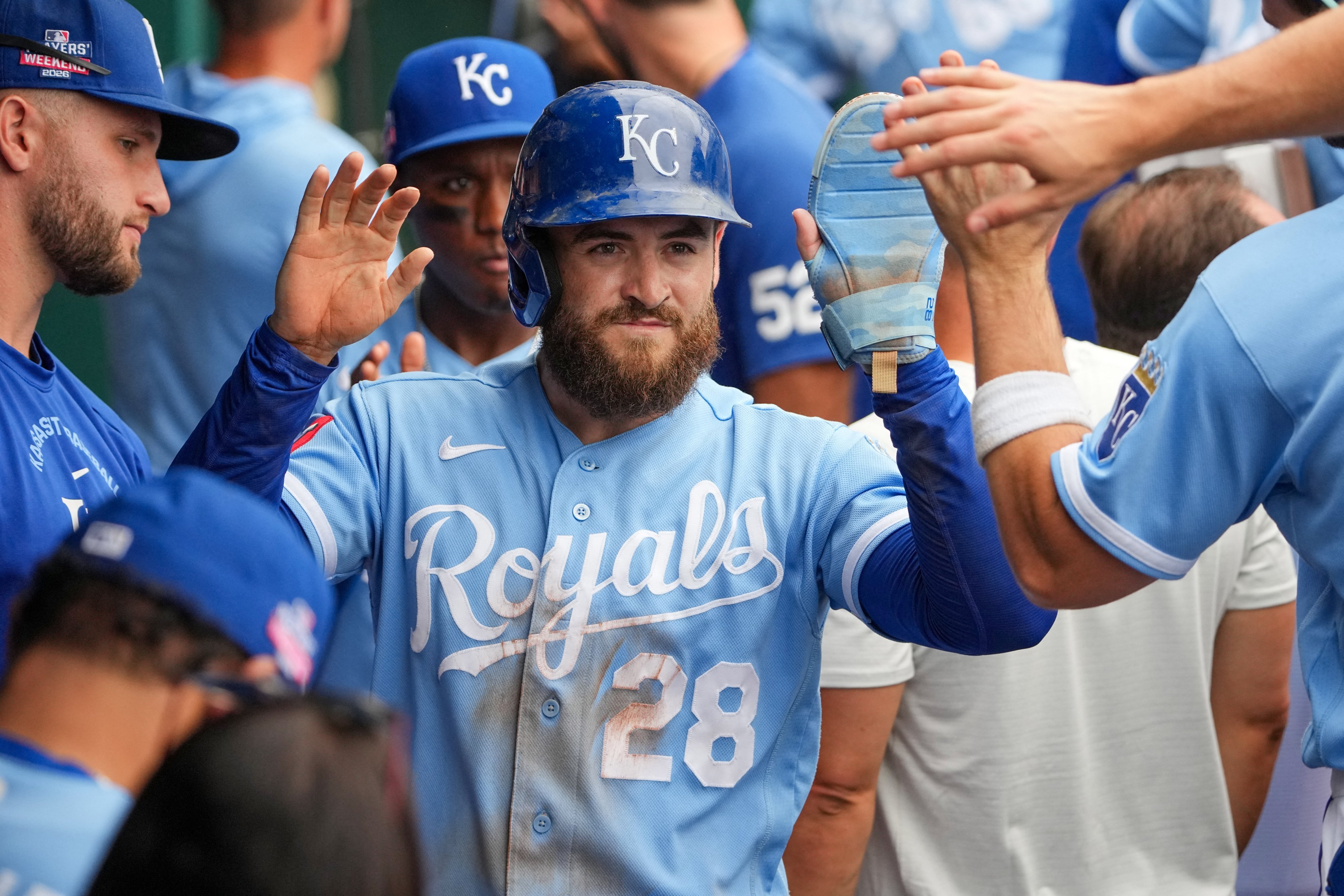 Week in a Nutshell After taking two of three in Anaheim last weekend, the Royals returned to Kauffman Stadium for their final homestand of August. And what a homestand it was. The Royals won every game on this homestand and outscored the A's and Tigers by a combined 23 runs. They extended their winning streak to eight games, the longest win streak of the season and their longest win streak since May of 2025. As a result of this hot stretch, the Royals have suddenly thrust themselves back into the "longshot postseason" picture, though the odds remain heavily stacked against them (0.1% playoff odds, according to Fangraphs). Furthermore, after this week, the Royals clinched season series matchups against the A's (5-2) and Tigers (7-6). Even though Kansas City still remains in last place in the AL Central, they are setting themselves up for a strong September that could not just help them escape the division cellar, but perhaps build some much-needed momentum for 2027. Record this Week: 7-0 Run Differential for the Week: +23 Record for the Year: 58-74 Run Differential for the Year: -91 Standing: 5th in the AL Central One Sentence Game Summaries Game 126: KC 9, ATH 5 The full-strength Royals take it to former Royals prospect Mason Barnett in a four-run victory. Game 127: KC 4, ATH 3 The Royals score three in the ninth and complete a ninth-inning comeback, with Witt's base hit being the winner. Game 128: KC 9, ATH 7 Vinnie has three hits, and Kansas City scores seven runs in the eighth to help the Royals clinch the series against the Athletics. Game 129: KC 6, ATH 2 Garcia hurts his hamstring, but the Royals rally and complete the sweep against the Athletics on Thursday afternoon. Game 130: KC 5, DET 2 Royals fans keep the faith on Faith Night, with Cameron winning his eighth game and Isbel and Jensen going yard in Friday's win. Game 131: KC 3, DET 1 Wacha tames Tigers once again, allowing just one run on three hits while striking out six in seven innings of work. Game 132: KC 11, DET 7 Pitching stumbles a bit, but the Kansas City offense picks them up, scoring 11 runs on 12 hits, including home runs from Loftin and Rave. News and Notes The Royals got much-needed returns from Maikel Garcia and Vinnie Pasquantino, as they were activated off the 10-Day IL on August 17th. To make room on the roster, Kansas City designated veteran outfielder Starling Marte for assignment. Marte failed to produce in his limited stint in Kansas City. In 59 games and 168 plate appearances, the 37-year-old hit .242 with a 71 wRC+ and posted a -0.5 fWAR. No move has been announced officially on Marte, but it's unlikely that he remains in the Royals organization. Garcia returned from the IL and got off to a good start in the Athletics series. In 15 at-bats, he hit .400 with a 1.000 OPS. However, on Thursday, he hurt his hamstring while rounding third on a Salvador Perez single, and he was promptly put on the IL before the Tigers series. The Royals also made some moves with their bullpen this week. Before the Athletics series, the Royals promoted Connor Thomas and optioned Jose Cuas to Omaha. The left-handed Thomas was formerly in the A's organization and was claimed by the Royals on August 4th. In three appearances and three innings of work this week, Thomas allowed no runs, only two hits, one walk, and struck out three. On the flip side, Kansas City also optioned struggling reliever Lucas Erceg to Omaha after struggling on Monday, August 17th against the Athletics. Erceg posted a 6.23 ERA and 1.89 WHIP in 43.1 IP with the Royals this season. In his place, the Royals promoted Carlos Duran, who was acquired at the Trade Deadline from the Dodgers for Kris Bubic. Duran's stint with the Royals was short-lived. On Tuesday, he produced a scoreless inning with one strikeout and earned his first career MLB victory. On Thursday, however, he allowed two runs on two hits and three walks in just 0.1 IP. He was optioned to Omaha following the rough outing, and Cuas returned to Kansas City to pitch in his place. Lastly, with Garcia going on the IL on August 21st, Matthew Lugo was called up from Omaha. Lugo was hitting .271 with a 110 wRC+ in 226 plate appearances with the Storm Chasers. He also hit 11 home runs and drove in 36 runs. The former Angel has yet to make his Royals debut this season. Highlights On the hitting end, Pasquantino had a stellar return to the Royals after missing time due to a hamate injury. In 26 at-bats, the Pasquatch hit .385 with a 1.217 OPS and two home runs. Not only did Pasquantino have 10 hits, four doubles, and five RBI, but he also walked three times and didn't strike out once. He looked totally locked in at the plate, something the Royals have been missing from him this season, especially when he was on the IL. Kyle Isbel also had a homestand to remember, which was nice to see after he missed time on the IL due to plantar fasciitis. Isbel hit .333 with a 1.031 OPS, two home runs, and eight RBI. The Royals center fielder hit home runs on back-to-back nights on Friday and Saturday against the Tigers. The Royals haven't gotten much from Isbel offensively this year, as he was hitting .229 with a .611 OPS before the weekend series against Detroit. His average is now up to .241, and his OPS is up to .658. Having a strong-hitting Isbel at the bottom of the lineup only strengthens the Royals' offense going forward. As usual, Bobby Witt Jr. had another banner week for Kansas City. In 27 at-bats, he hit .370 with a 1.115 OPS and two home runs. He also had five RBI, five walks, three stolen bases, and a game-winning hit. He not only looks healthy again, but is once again making a push for AL MVP consideration. On the pitching end, Wacha had a mediocre outing against the Athletics, giving up four runs on six hits (including three home runs). However, he was masterful on Saturday against the Tigers, limiting Detroit to just one run in seven innings. Wacha didn't have his best stuff, but he capitalized on his defense and worked quickly and efficiently in a game that took two hours and 11 minutes. If the Royals are looking to make any kind of push in September to challenge for a postseason spot, they will need Wacha to produce as he did against the Tigers rather than the Athletics. Noah Cameron only made one start, and it wasn't a quality one, as he only went five innings (most likely to conserve him after he threw 115 pitches in his complete-game shutout on Sunday against the Angels). However, he earned the victory in his Friday-night outing, limiting the Tigers to no runs on two hits and two walks while striking out three. On the bullpen end of things, Steven Cruz and Nate Pearson are proving that they can be key contributors to the 2027 bullpen with each and every outing. This week, Cruz posted a 4.15 ERA and 1.15 WHIP in four appearances and 4.1 IP. He also struck out three batters, only walked one, and earned a save. As for Pearson, he didn't allow a run in four appearances (4.0 IP) and struck out two while walking two. Like Cruz, Pearson earned a save in his only save appearance this week. An underrated story was Craig Kimbrel earning a save on Saturday night against the Tigers, his first save since 2024. Kimbrel struck out three batters this week in three appearances and didn't allow a single run. He's proving to be a nice contributor to the Royals bullpen, even with the club's unlikely playoff chances. Lowlights It's been a nightmare season for Erceg, and Monday was more fuel to the fire. In his lone outing this week, he allowed one run on one hit and two walks and didn't record a single out. I wrote this week that the Royals need to decide what to do with Erceg long term, which could force some tough short-term decisions with the 31-year-old reliever. Erceg wasn't the lone Royals veteran to struggle this week. Seth Lugo had a rough start against the Athletics, and he continues to trend in the wrong direction as the 2026 season comes to a close. Even though the Royals offense picked him up, Lugo gave up five runs on nine hits in six innings of work. Lugo's stuff wasn't there against the Athletics. He not only struggled to generate chases and whiffs against a depleted A's lineup, but also gave up a lot of hard contact, according to his TJ Stuff+ summary. While Lugo has been able to eat innings this year, the quality hasn't been there. His 4.71 ERA this year is 0.56 points higher than a year ago and 1.71 points higher than his AL Cy Young runner-up campaign in 2024. After signing an extension last season after the Trade Deadline (instead of getting traded), Lugo is looking more like a mediocre starter than one that the Royals can depend upon for 2027. On the bullpen end, Mason Black had a forgettable outing today, as he gave up three runs on three hits and a walk in 0.2 IP. His lackluster outing, while relieving a solid Daniel Lynch IV start, allowed the Tigers to tie the game. However, the Royals offense quickly took back the lead in the bottom of the inning. For the week, he posted a 12.27 ERA in two outings and 3.2 IP. Control has been an issue for Black this week, with four walks and only one strikeout. With Lynch building more stamina, the Royals may not need Black to piggyback Lynch starts for much longer. On the hitting end, the Royals did very well, so it was hard to argue with much this week (especially after they went 7-0). That said, Isaac Collins and Tyler Tolbert had down weeks and could see themselves on the outside looking in when it comes to regular playing time. In 15 at-bats, Collins only hit .200 with a .550 OPS. On a positive note, he drew four walks and produced a .350 OBP. However, he hasn't produced much else but singles, and it seems like he's been losing playing time as of late to other outfielder options. As for Tolbert, while his 2026 season has been strong, this week was far from it. In 13 at-bats, he hit .154 with a .467 OPS. Tolbert did steal a base and had two walks to three strikeouts, so at least he's getting on base and doing something on the basepaths. That said, Tolbert is proving that he's more of a platoon player rather than a regular one. Looking Ahead The Royals take an eight-game win streak on the road to North of the Border in Toronto and then to Cleveland. Both teams are in the playoff hunt, even though both are under .500. The Guardians are slightly better at 65-66 compared to Toronto's 64-68. Toronto hasn't been playing its best ball lately, going 5-5 in its last 10 games and posting a -55 run differential for the year. However, they just played the Yankees in the Bronx, and they will face three pitchers with big names but lackluster ERA marks against the Royals: Max Scherzer (7.40 ERA), Shane Bieber (4.53), and Spencer Arrighetti (4.73). The Royals will miss Dylan Cease, who's been their best starting pitcher this year, as evidenced by his 2.37 ERA and 5.0 fWAR. The Guardians will be a much tougher challenge. They have won four in a row (against the Rockies) and are 6-4 in their last 10. They still have a negative run differential, but it's only -9, much better than the Blue Jays. The Royals will face Tanner Bibbee, former Royal Foster Griffin, and Parker Messick, who have all had solid seasons in 2026. For the Royals to have a chance in Cleveland, the pitching will need to suppress a Guardians offense that ranks 30th in OPS and 26th in runs scored. If the Royals pitching can step up, and if the hitting can do just enough, then the Royals have a chance to have a winning road trip to close out August before returning to Kauffman Stadium in September. A winning road trip could set up an intriguing September for Kansas City, especially if two or three of those wins can come against Cleveland (the Royals play the Guardians at home to close out the 2026 season). View the full article
 -
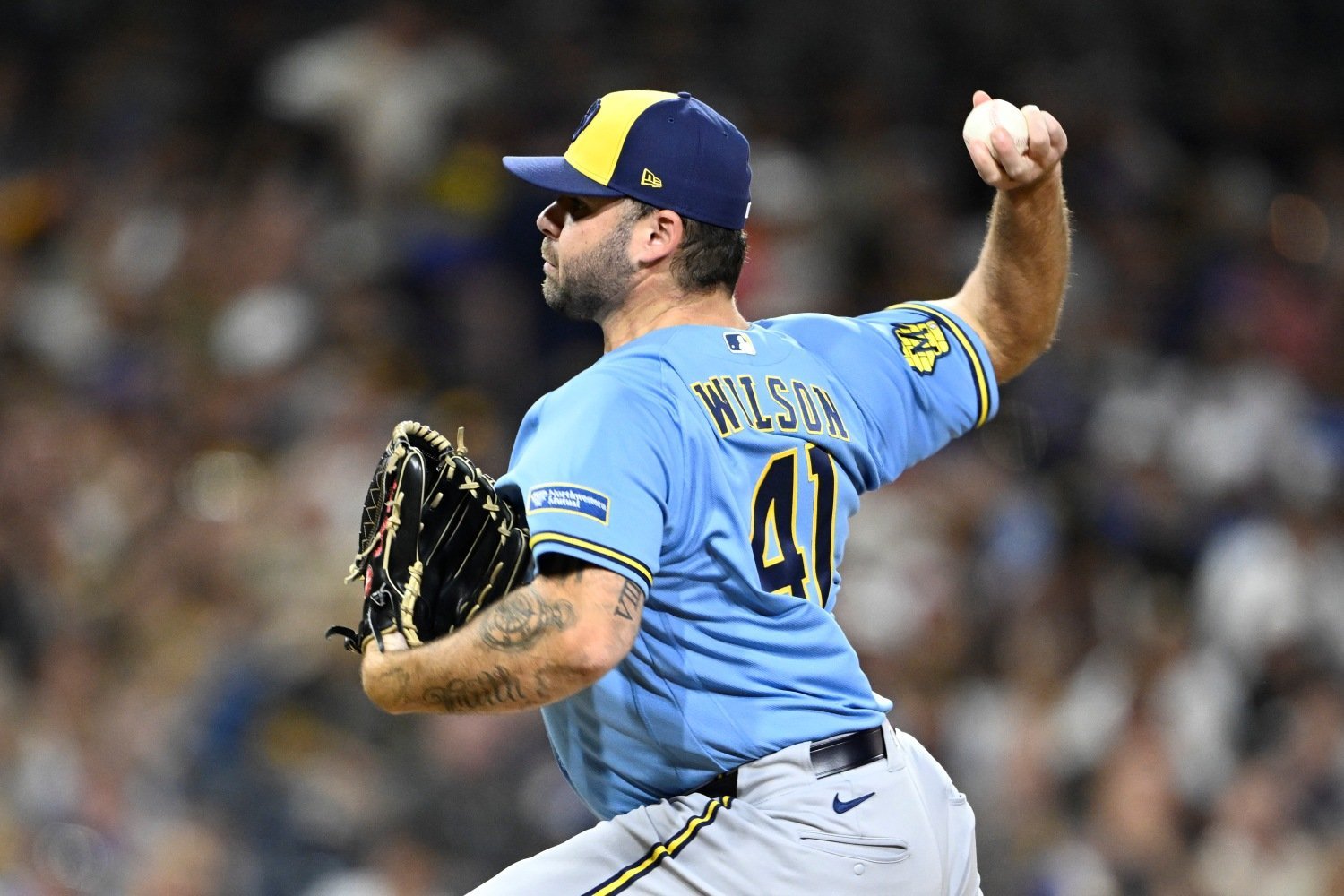 Since July 10, 171 pitchers throughout Major League Baseball have thrown at least 20 innings. Bryse Wilson is the only one who has not issued a walk. July 10 was the day Wilson signed a big-league deal to return to the Brewers, for whom he filled every role from starter to high-leverage reliever across the 2023 and 2024 seasons. This time around, his role has been more strictly defined as the long man. It's the least glamorous task on a pitching staff and comes with a mundane job description: throw strikes to eat innings. Because the game is often nearly decided by the time a long reliever takes over, keeping runs off the board is a plus, but not a necessity. Wilson understands his assignment and has flooded the strike zone with impressive efficiency. He's recorded six or more outs in five appearances, maxing out at four innings in a July 21 outing. Since his signing last month, his 55.3% zone rate is the fifth-highest among those pitchers with at least 20 innings. "If I come in and we're down a lot of runs, I know that innings have to be covered," Wilson said. "I just go in and do the best I can to cover as many innings to where the next day, we have a much better chance to win because everybody's available and there's more options to go to in the bullpen." Wilson's strike-throwing and embrace of his role have not gone unnoticed by his manager. "He's been magnificent. He really has," Pat Murphy said. "It's the epitome of that role, understanding that role. I think of a long snapper. I think of a great punter, a great kicker—somebody [who] just contributes when not too many people are noticing the greatness, and he does his role." While the game situation in most of his outings has freed Wilson to be even more aggressive in the zone, he also posted zone rates above 50% in each of his previous two seasons with the Brewers. He acknowledged that their emphasis on tunneling different fastball variations within the zone has typically worked best for his unassuming stuff, making Milwaukee a uniquely good fit. "I think it's just a lot of filling up the zone and just trusting that I can get guys out in-zone," Wilson said. "I'm not necessarily going after chase. Kind of avoid the longer at-bats." "He just pounds [the zone], but he pounds with command, and that ball is going all different ways," Murphy said. "He's not afraid 2-0 to throw a heater, where in today's game the amount of 2-0 heaters has decreased immensely. He's not afraid to just cut a heater or use a little comeback sinker on a 2-0 count, and he's got that kind of command." Wilson isn't just throwing strikes with his fastballs. He's throwing quality strikes. Since signing, he's been one of baseball's best command pitchers by Location+, and his stuff is playing better than ever. In his first two seasons as a Brewer, Wilson's 3.42 ERA masked a less impressive 4.73 xERA, 4.68 FIP, and 4.33 SIERA. This time, he's pitched to a 3.15 ERA, 3.33 xERA, 1.93 FIP, and 2.95 SIERA. Wilson hasn't been a soft-contact specialist, but he's held hitters to a meager 3.1% barrel rate. That success has come after Wilson returned to what worked best for him before, with a few new wrinkles. Last season, the White Sox tried to help him develop his secondary pitches, including a new changeup reliant on seam-shifted wake (cutting the ball just the right amount, so that the distribution of airflow around the seams pushes the ball down and to the arm side). Wilson lowered his arm slot, which impacted the movement of his fastballs and may have reduced his deception. Most notably, his cutter lost some of the downward and glove-side movement that made it effective. This season, Wilson has raised his slot slightly, and his pitches are moving as they did during his first stint in Milwaukee. Since rejoining the Brewers, he's also transitioned back toward his old mix, leaning increasingly on his cutter and sinker at the expense of his curveball and a new split-changeup. His refined command may also stem from improved timing in his delivery. When he was last a Brewer, Wilson lowered his hands toward his lap as he began his windup, which meant he had to bring them back up during his leg kick. 2024 windup.mp4 This year, he's eliminated some of that movement by using an over-the-head windup and starting his hands at his chest out of the stretch. Now, when Wilson begins his leg kick, he no longer needs to worry about where his hands are to ensure his arm is on time when his front foot lands. 2026.mp4 "Earlier this season, I was kind of having a tough time finding the timing in the break of when the hands separate, and so I was just kind of going through different things and trying to figure out what felt good," Wilson said. "Back when I played with Atlanta, I went over the head and had some success doing it, and so I tried it, and it felt good. The timing felt good, and I just didn't feel like I had to think about it as much. So we just kind of rolled with it." Wilson's latest tenure in Milwaukee has technically been two stints, as the partnership survived unusual roster math when the club used a six-man rotation over a stretch of 17 games in 17 days. When a 34-pitch outing left him unavailable for a few days, the Brewers designated him for assignment on August 8 to add a fresh arm, in Lyon Richardson. After Wilson cleared waivers and elected free agency, they signed him again on August 11 to replace Richardson, who pitched the night before. "In my mind, I thought there was a possibility that we could come back," Wilson said. "It was just about seeing it through, and then the timing of it just kind of worked out perfectly to where they needed to make a move, and I had just cleared waivers, so it was just good timing and kind of worked out all around." As one of the last relievers in the bullpen—particularly one who cannot be optioned to the minor leagues—Wilson's spot on the 40-man roster will never be fully secure. However, he's thrown well enough to help keep the rest of the bullpen reasonably fresh, and the Brewers can add one more reliever to their bullpen as a September call-up next week. If he continues performing, Wilson could stick through the rest of the season. "He's been great," Murphy said. "He's loved in that locker room." View the full article
 -
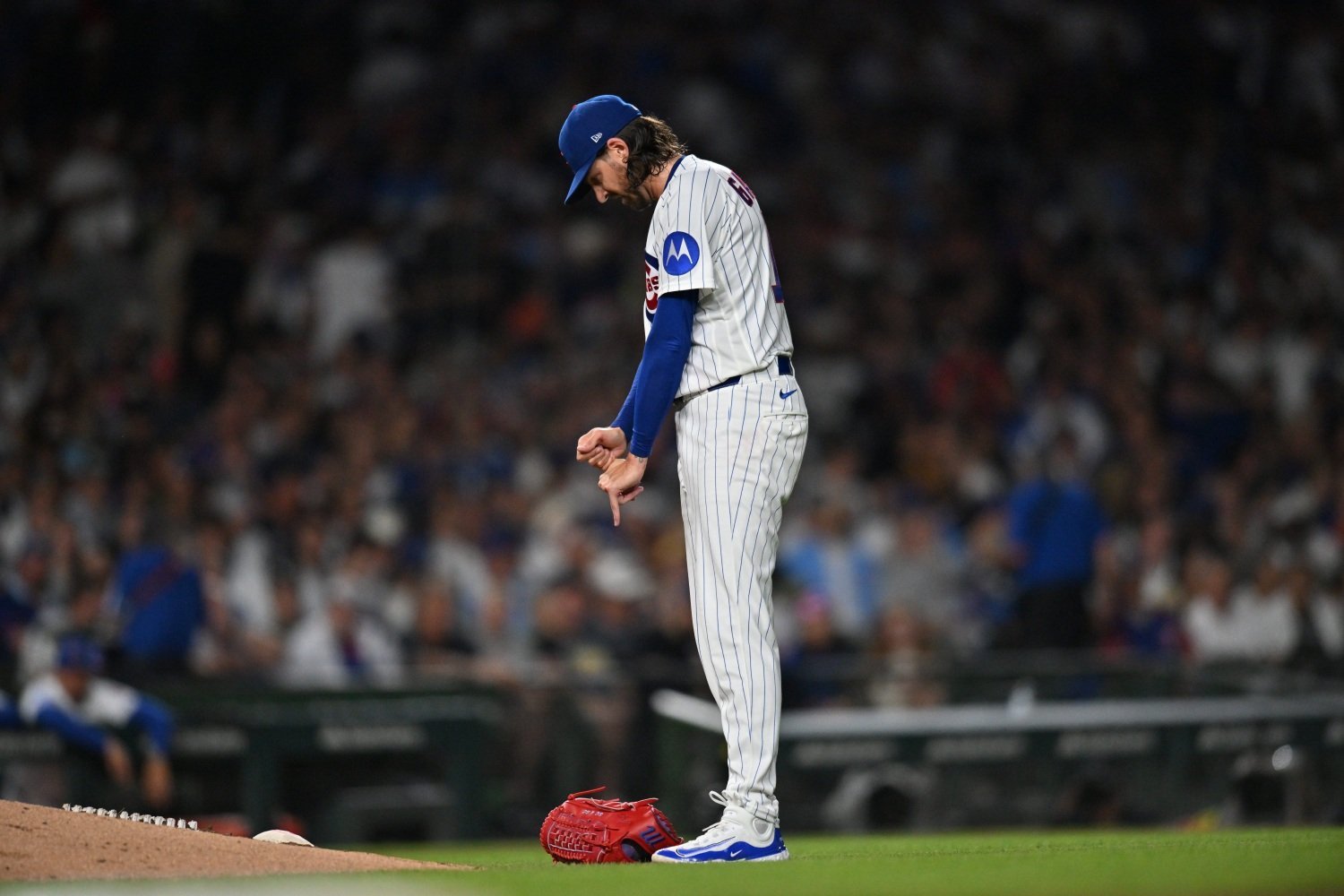 The three division races in the National League feel as though they're over. The Dodgers will win the NL West; they face no serious competition for their crown. The Brewers have put a comfortable cushion between themselves and the Cubs in the Central, with 6 games in the standings and an edge in the race to claim the head-to-head tiebreaker. The team from Atlanta's most concrete-crusted inner-ring suburb has only three games on the Phillies, after a surge by the second-place Phils, but it still feels like the current leaders will win each sub-pennant. That, in a way, puts the Cubs in an ad hoc division race of a different kind for the final five weeks. To host the Wild Card Series again this year, Chicago needs to hold off the Phillies, over whom they enjoy a de facto 2.5-game lead. It's only 2.0 games on the standings table, but the Cubs also have the tiebreaker sewn up between the teams. They're another two games ahead of San Diego, and two more ahead of Arizona. Though the Marlins and Cardinals are at least clinging to the periphery, it feels like four teams are vying for three spots—and, with three strong division champions in the league, you really don't want to have either the second or the third Wild Card berth, any more than you want to miss the playoffs altogether. The Cubs should view claiming the top Wild Card spot as a miniature division title to chase, because doing so would mean hosting whoever finishes second for a best-of-three series at Wrigley Field. Right now, by FanGraphs's estimation, they have a narrow lead in that race, in terms of projections. It's lovely to have that edge, however small, and the team can further stretch it by winning even once in Arizona this week. They swept the Diamondbacks when they visited Wrigley early this season, so a lone victory would mean the Cubs own the tiebreaker in all relevant cases. As you can see, though, the gap isn't wide. The team's margin for error hasn't swelled the way they might have hoped it would. In fact, Chicago is merely back to the same projected wins total they first reached on May 7, after a long dip in between. They shot up to 92 and 93 projected victories for a few short days at the beginning of this month, for a simple reason: their trade deadline. Adding Kevin Gausman, Clay Holmes, Ryan Zeferjahn, Braxton Garrett and Tyrone Taylor—basically, adding Gausman and Holmes, alone—boosted their projections nicely, because those players all addressed key needs for the team. Unfortunately, since then, the team has realized mixed results. Zeferjahn is struggling to adjust to life in his new environs. In the first six games started by Gausman and Holmes, meanwhile, the team is an underwhelming 3-3. The two have each shown flashes of what the team felt they were trading for, but neither has demonstrated consistent front-line stuff or delivered the hoped-for volume. That needs to change in the desert. The Cubs need to put together at least one more nice winning streak to reach their destination for the season and host another playoff series on the North Side. That means getting more out of Gausman and Holmes, and figuring out how to get Zeferjahn past the mental block he appears to have hit since coming to town. It doesn't have to mean winning the series against Arizona, though that should be the goal. It does, however, need to mean solid outings and as few setbacks as possible for each of their deadline pickups. Whatever urgency they already felt on that score, it must have risen Sunday, when Shota Imanaga looked frighteningly like the version of himself who proved unpitchable by the end of the 2025 season. If that start was just a blip, the Cubs can survive it, but if Imanaga is trending downward again, the team will need the boost of Gausman and Holmes pitching to their pedigrees considerably more. Technically, their advantage in projected standings is already smaller than the one they have in the real standings. They need to widen that gap, or start convincing the projections they're for real, with their games against the Diamondbacks and the lowly Reds this week. Gausman and Holmes stand at the center of that need, but it goes deeper, too. Making the playoffs is no longer the primary objective. At this point, they can almost take that for granted. They need to bear down and plan on winning the first Wild Card seed. That will take some doing, and it has to begin with getting what the numbers expect out of players for whom they gave up a bounty of young talent early this month. View the full article
 -
An Extreme Approach Has Caught Up to Trevor Larnach in Ugly Fashion
DiamondCentric posted an article in Twins Daily
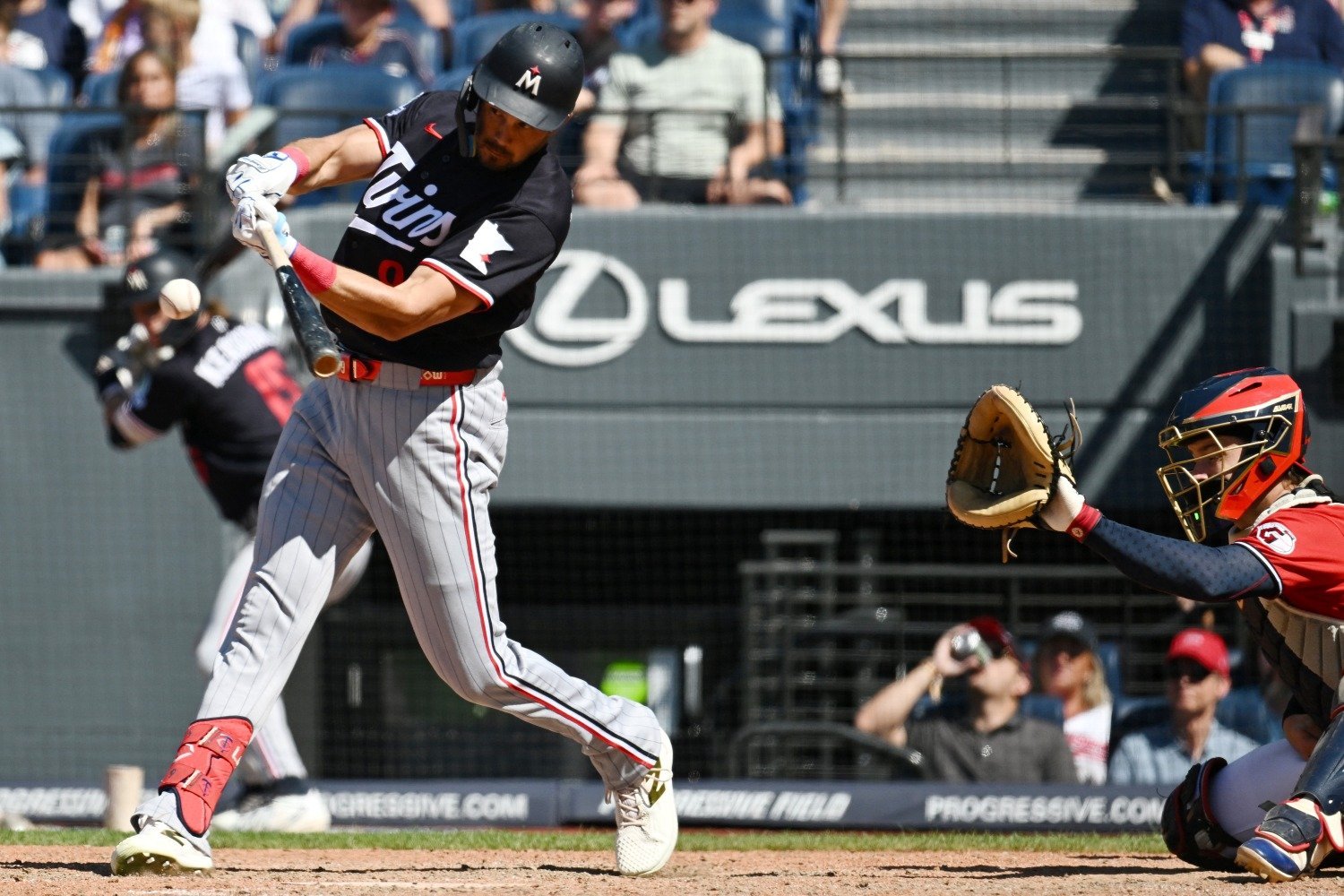 Hitting, in 2026, is all about conviction. Conviction, in turn, is about confidence. Sometimes, it even needs to be about arrogance. Trevor Larnach has always been a hitter defined by extremes, and taking hitting to extremes means walking that tightrope of braided confidence and arrogance across the abyss of self-doubt and overthinking. It means getting from the batter's box to second base without looking down. He's never struck that balance better than he did for the first four months of this season, but suddenly, he's caught a toe, turned his head, and finds himself freefalling. If all that sounds a bit grandiose, well, that's life in the big leagues—and life, especially, in the heat of an unexpected push toward the playoffs. Larnach was not supposed to be a key cog in a Twins offense charting its course for October, but here we are. He entered the season as a platoon bat on whom the organization had gone lukewarm, if not quite cold; Derek Shelton named Matt Wallner as the left-hitting corner outfielder who would play even against lefties. Larnach would have to earn his keep. Earn it he did, though. Wallner has spent the last 100-plus days in St. Paul, while Larnach emerged over the first half as a fixture at the top of Shelton's lineup card against right-handed starters. He weathered the lefty-heavy early stretch of the season by drawing oodles of walks, but as April's frost yielded to May's mere chill, Larnach warmed up faster than the weather. By July 1, he was batting .284/.376/.428. You want more power than that from your lumbering left fielder, but you can't argue with those numbers. Then, a funny thing happened: he got even hotter. In his first 60 plate appearances of July, he hit .333/.400/.574, with seven extra-base hits. There was the power. His star turn was underway. There are two ways to explain what's happened since—which is, in a word, calamity. In the last four weeks, over 68 plate appearances, Larnach is batting .127/.191/.222. One way to explain that is that he got greedy. Fueled by that July surge and home runs on back-to-back days even to begin August, he got big. He got pull-happy. He got a little "dig me" in him, as big-leaguers say, and that loss of focus pulled him out of the narrow groove in which he found all that success in the first place. The other explanation is sadder—or maybe the two explanations are equally sad, but this one casts Larnach as a more sympathetic figure. Right around the time that he plunged into the abyss we talked about a minute ago, the Twins agreed to trade him to the Astros in a deal that would have netted them reliever Bryan Abreu. Houston owner Jim Crane, whose Batman villain name would be The Meddler, stepped in and scuppered the deal, and the Twins pivoted. They found their high-leverage reliever in Toronto, instead, and gave up prospects for Jeff Hoffman, electing to keep Larnach. It's not clear that that choice was all that active, though. Two league sources said the team talked to the Padres about Larnach on deadline day, so the team remained open to moving him in certain deals. That the nixed Larnach-Abreu swap went so widely public and became such hard evidence of the team's willingness to give up on him, though, has to have been difficult. In this second reading of the moment when he toppled off the tightrope, it was a crisis of confidence that did it—and his own team is guilty of having caused that crisis. Which of those two explanations you favor might depend on your generosity of spirit, or your mood, or what you think you know about ballplayers and their egos. The hard evidence tells a clear story about what's happened, but why is a much more muddled question. Let's tackle the 'what,' briefly; I'll leave the 'why' to you. Larnach has always been an extreme fastball hitter. When he came to the majors, he obliterated fastballs—but he was exceptionally vulnerable to anything else. He whiffed on breaking and offspeed stuff at such untenable rates that he often looked doomed to Quadruple-A status; he sold out for the heater. He also had, back then, an exceptionally steep swing. His plan was to hit line drives and fly balls by sitting on and finding fastballs; his conviction stemmed from his confidence that he could do that consistently enough to overcome his shortcomings elsewhere. Eventually, the league proved to him that that wasn't going to happen. You can count on one hand the number of players in each generation who tallywhack fastballs with such reliability and precision that they can be lousy against spin and changes of speed and still survive in the majors; Larnach learned that he isn't one of those sunkissed few. Instead, he moderated his swing, and his approach. Since the beginning of 2024, we've seen him reduce his whiff rates on non-fastballs, and since the start of 2025, he's been a flatter swinger, a change aimed at being more modular—more adaptable. Not all of that has happened consciously; Larnach is a very feel-oriented hitter. But that's what's happened. However, he's retained his extremity in one dimension. In fact, he's more pull-oriented than ever. Larnach's swing can sometimes produce slicing liners the other way, but those are accidents. Few batters anywhere in the majors get the bat head around the ball as much as Larnach does; his whole attack is centered on being early and directing his contact toward the pull field. As you can see, that hasn't become less true this year, but more so. What does it mean to be a fastball hitter who's also a dead pull hitter? It means living on conviction. It means being so certain of the pitch you sit on each time the pitcher winds up that no part of your body or mind is elsewhere. It means visualizing hard contact, by knowing your swing and knowing the timing of the pitch you're about to get. It means the arrogance of believing you see the future, even though obviously, that's impossible. For a while, Larnach had that going. You can see how it trended up, as he claimed his place of prominence in the lineup over the season's first few weeks and then started seeing more right-handed pitchers. You can see how it spiked when he got so red-hot for most of July. And then, you can see what's happened since. It's all written in the curvature of his ideal attack angle rate, which basically tells us how often Larnach was on time with his swing over any given period. 'On time,' here, means that his bat was working uphill at the angle he wants, which means that he met the ball where he meant to. For many other hitters, being as oriented to the pull field as Larnach always is would leave them feeling early, but you can see multiple periods this year during which that was not an issue for Larnach. By no coincidence, Larnach's actual production maps pretty neatly to the chart above. Here's his rolling average for weighted on-base average. He found enough value by drawing walks and avoiding strikeouts early (and then took long enough to tap into his power, in the middle third of the season) to avoid such a sharp rise and fall, but the gist is the same: good, then great, then ughhhhh. What happens to a hitter when they lose their conviction? What becomes of the extreme beats when they're tamed by their own self-doubt? You've heard that answer a hundred times, over the years: guys get caught 'in-between'. For Larnach, that's meant being 'on time' for the fastball as much as ever, by Statcast's swing timing reckoning—but for him, that means he's really been late more often. As you can see on the right, below, he's also been underneath the heater much too much of late. You could start to see that lostness creep into swings against breaking stuff, too. It's one thing to be a little late and underneath the fastball; it's another to end up underneath a breaking pitch, on which you're also radically early. That's what happened here: OHliak1fWGw0TUFRPT1fQkZCVFVGWlFCd2NBV1FSUlZBQUhVRmNGQUZnRFVRTUFDbEFCVXdwVVVsVmNBbFpX.mp4 And here: bGJ3d25fWGw0TUFRPT1fQkZBRUJRY0FCd0lBRFFFQ1ZRQUhWUUJUQUFBR1VRQUFBRlZXQmxZRVVGVlJCMVJR.mp4 Those aren't the misses of a guy who was sitting fastball. They're the misses of a guy who was sitting on the fastball's speed, but trying to cover the breaking ball's shape, and ended up doing nothing right at all. Those are the swings of a hitter caught in-between—of a hitter who's lost conviction. Again, there are multiple valid theories about why this has happened, and I don't propose a definitive answer either way. I can only say for certain what has gone wrong, but that feels like enough. Could Larnach rediscover that conviction, and reestablish his first-half swagger? Yes, it's possible. But the Twins are running out of time, and he's been a black hole in their lineup for too long already. They need to make other arrangements. Shelton has already arrived at this conclusion. He benched Larnach Sunday, despite Walker Buehler starting for the Padres. That's just one game, but it's the start of something. Minnesota should strongly consider calling up Walker Jenkins to meet the team Tuesday in West Sacramento. Jenkins doesn't have to take Luke Keaschall's playing time in right field, and he doesn't have to play any more in center than is made absolutely necessary by Byron Buxton's balky hip. He can and should play left field, at the expense of the exposed Larnach. Maybe the Twins broke Larnach. Maybe he was going to break on his own. Either way, he's fallen into a funk from which hitters like him struggle to recover, and the team doesn't have time to hope he proves to be that exceptional case this time. Jenkins is ready, and all the possible hurdles are out of the way. It's time to give him the left-field job, lest the team itself end up caught in-between. View the full article
 -
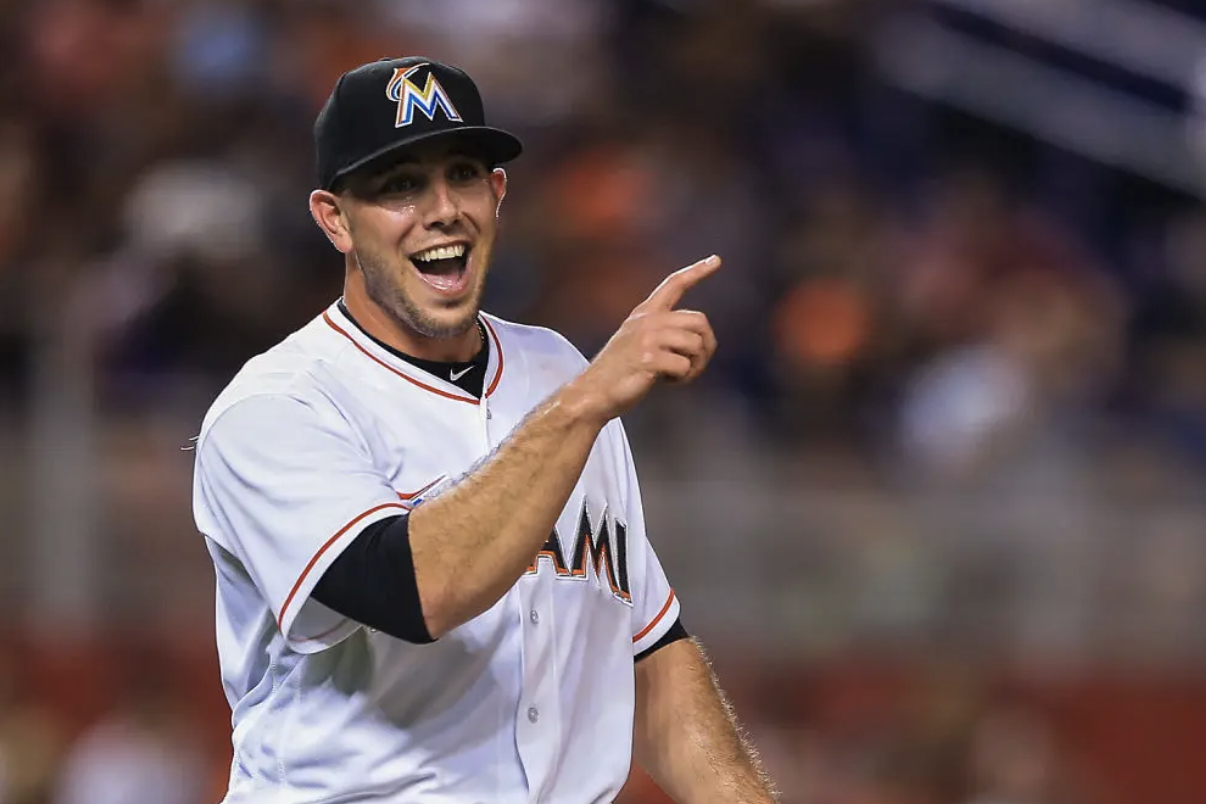 As most know, the life and Major League Baseball career of José Fernández was cut tragically short as the right-handed pitcher for the Miami Marlins died while operating a boat in September 2016. Although Fernández has become a tale of “what could have been,” his impact on the mound was undeniable over just four big-league seasons. On this day 10 years ago, Fernández made Marlins history. In a 3-0 win over the Kansas City Royals, Fernández tossed a gem and broke the club’s single-season strikeout record. Fernández was five strikeouts shy of tying Ryan Dempster’s 16-year-old record of 209 punchouts, set in 2000, as he took the mound at Marlins Park on Aug. 24, 2016. Fernández stole the show by scattering six hits and two walks in seven shutout innings while striking out nine. After stranding runners in scoring position in each of the two innings, Fernández eventually settled in, allowing three hits over his final five innings. Fernández struck out a batter in each of the first three innings before tying Dempster’s record by fanning Paulo Orlando and Christian Colón to open the fifth. In the sixth, Fernández was again able to pitch out of trouble after allowing consecutive singles to Eric Hosmer and Salvador Perez to open the inning. Fernandez made Marlins history by striking on Alex Gordon on three pitches, using his devastating curveball to surpass Dempster atop the club’s single-season strikeout list. Three pitches later, Fernández got Alcides Escobar to ground into a double play to end the threat. Despite the outstanding pitching effort from Fernández, the Marlins were still in a scoreless tie as the contest went to the bottom of the sixth. There to jumpstart the offense was Fernández. With one out, Fernández started the rally with a single. Dee Strange-Gordon and Martín Prado followed with singles of their own to load the bases before another single—this one from Christian Yelich—plated two and broke the 0-0 tie. Marcell Ozuna capped the scoring with a sacrifice fly three pitches later. Now leading 3-0, Fernández put the exclamation point on his record-breaking night by striking ot the side in the top of the seventh. After AJ Ramos worked a 1-2-3 eighth, Fernando Rodney was able to leave the bases loaded in the ninth to seal the win. In addition to his stellar night on the mound, Fernández had two of the seven hits for Miami. Escobar finished with two of the eight hits for Kansas City. An All-Star for the second time in 2016, Fernández finished the year with a Miami record of 253 strikeouts – a mark that may last awhile. He first moved into first place on the single-season list on this day a decade ago. View the full article
 -
Red Sox's Margin of Error Exists Solely Because of Their Elite Defense
DiamondCentric posted an article in Talk Sox
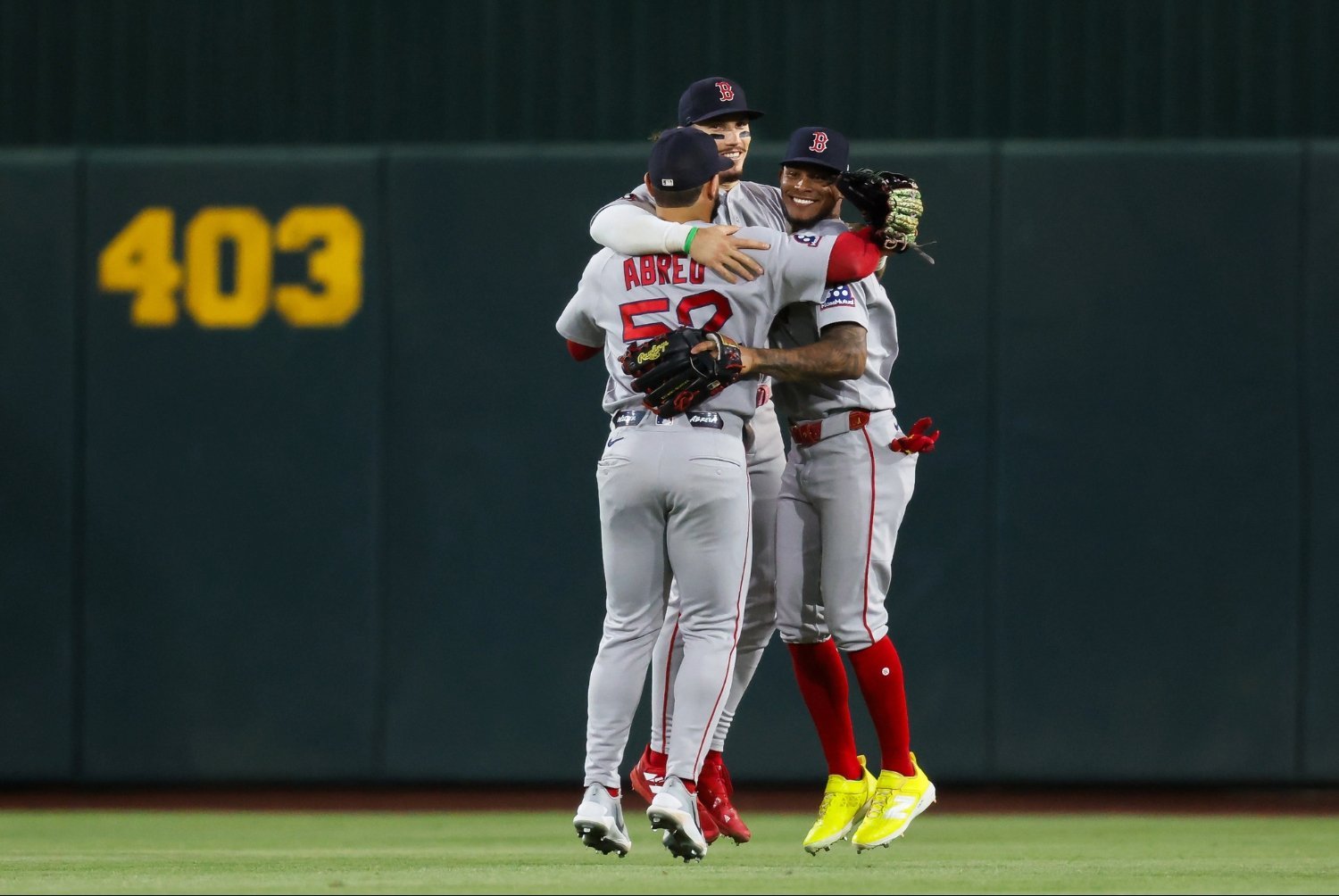 The Boston Red Sox have the most consistent bullpen in the major leagues this season, leading with fWAR (6.1) and xFIP (3.76). The starters have also done a dominant job, accumulating the second-best fWAR (12.3) in the American League. But when we talk about how they are dominating the opposition and controlling the game, we cannot forget the enormous contribution of the defense. In that equation, the outfielders have taken the team to another level. One of the reasons why Boston did not completely sink during their bad stretch in the first half of the season was its elite outfield defense. The Red Sox lead the majors with +49 DRS and 5.0 ARM (arm value). They also lead the league with 31 assists, 26 of them recorded by Ceddanne Rafaela (center fielder), Wilyer Abreu (right fielder), and Jarren Duran (left fielder). The only comparable trio in the entire league is that of the Chicago Cubs’ outfielders, who have the advantage because of the incomprehensible value Pete Crow-Armstrong provides (seriously, he's comically overpowered in center field). Let’s see how both groups compare this year by adding their DRS, OAA, and FRV values. Team DRS OAA FRV Totals CHC 30 27 35 92 BOS 46 22 21 89 The Red Sox dominate in DRS, but the Cubs make up ground in OAA and FRV. The difference, to a large extent, is PCA. Abreu and Rafaela surpass the Cubs' star in DRS, and this year Seiya Suzuki has also contributed important defensive value. The comparison between Duran and Ian Happ looks interesting in these combined metrics. Happ has won four Gold Gloves, but Duran surprised me a little by surpassing him in OAA. That Happ remains a great candidate to win the Gold Glove again in the National League for the fifth consecutive year is a pretty strong endorsement of the gains Duran has made on defense this season. The defensive consistency of Abreu and Rafaela is fascinating. Abreu is on his way to collecting his third consecutive Gold Glove, while Rafaela is also the favorite to get his second. Team Player DRS OAA FRV Totals Cubs Pete Crow-Armstrong, CF 14 23 24 61 Cubs Seiya Suzuki, RF 10 4 7 21 Cubs Ian Happ, LF 6 0 4 10 Red Sox Wilyer Abreu, RF 24 4 5 33 Red Sox Ceddanne Rafaela, CF 19 14 13 46 Red Sox Jarren Duran, LF 3 4 3 10 Were it not for PCA, Rafaela would be the most complete center fielder defensively in all of baseball this year. Among the center fielders that we can evaluate with FanGraphs metrics, Rafaela appears second in defensive value with 10.9, only behind PCA (21.7). Abreu leads the league with 24 DRS, but if we extend the filter to the last two seasons, Rafaela ties him with 39. Both are tied with Steven Kwan. PCA (29 DRS) fell a little farther behind, but leads both other main categories, with 43 OAA and 45 FRV. I do want to revisit Duran as well. In left field, he has -0.3 defense value, but +3 DRS with positive grades in arm value and range. His impact does not come close to that of Rafaela or Abreu, but with Roman Anthony out due to injury for a good part of the season, Duran has been a complement that continues to strengthen Boston’s defensive formula. The numbers also show the advantage that the Red Sox are getting from the defense against several of their main American League contenders. Defensive Rankings - 2026 Rk. Team Year Fielding Run Value INF/OF Runs Range Arm 1 Red Sox 2026 22 22 16 5 2 Rays 2026 19 19 22 -3 3 Guardians 2026 8 8 5 2 4 Astros 2026 5 5 7 -2 5 Blue Jays 2026 2 2 -1 3 6 White Sox 2026 1 1 2 -2 7 Yankees 2026 -6 -6 -6 0 8 Twins 2026 -6 -6 -3 -3 9 Angels 2026 -7 -7 -7 0 10 Rangers 2026 -7 -7 -1 -6 11 Royals 2026 -8 -8 -11 3 12 Orioles 2026 -9 -9 -7 -1 13 Tigers 2026 -10 -10 -4 -6 14 Mariners 2026 -14 -14 -13 0 15 Athletics 2026 -22 -22 -21 -1 The defense that comes closest to the Red Sox’s level is that of the Rays, although the former maintains a clear advantage. Among their main contenders, the Yankees (-6), Orioles (-9), and Tigers (-10) appear far below. That is a difference we cannot forget when the pressure is even greater in the final stretch of the season. And I still feel that these metrics do not tell the whole story of what a defense can generate when it operates as efficiently as this one. For us, it is much easier to have a judgment about a quality at-bat or a pitch that did not meet expectations at the key moment. On the other hand, you never really know how many opportunities a defensive error can give up. The Red Sox are not playing with the same margin for error as a year ago, but thanks to the strength of their defense, they do have a distinct advantage over every single American League contemporary. View the full article
 -
Padres Minor League Report: Lots of Zeroes, No Heroes
DiamondCentric posted an article in Padres Mission
 Sunday was not a fun day for the San Diego Padres' four full-season affiliates. There was a severe lack of offense all around as the Triple-A El Paso Chihuahuas lost to Round Rock 8-0, the Double-A San Antonio Missions fell to Northwest Arkansas 7-2, the Fort Wayne TinCaps fell to Great Lakes 2-0 in 10 innings and the Low-A Lake Elsinore Storm tumbled to San Jose 5-0. Padres Minor-League Transactions None. Chihuahuas Lose Grip Late, Run Over By Express A pitching duel for six innings turned into a blowout as the host Triple-A El Paso Chihuahuas gave up seven late runs in an 8-0 loss to the Round Rock Express. While being shut out for the fourth time this year, the Chihuahuas (50-75, 15-35 second half) went 2-4 in the six-game series. Rehabbing Padres left fielder Samad Taylor, batting leadoff, went 1-for-4 with a walk and a strikeout for the Chihuahuas. Taylor, coming back from an oblique injury, is 5-for-17 with a solo homer, two walks and six strikeouts in five rehab games. While Taylor might be ready, the Padres may also want to keep Taylor down another week before rosters expand Sept. 1. Chihuahuas left-handed starter Jagger Haynes allowed just one run in five innings on two hits and three walks with four strikeouts. Right-hander Daison Acosta then gave up three runs in two innings, right-hander Jose Leclerc four runs in two-thirds and right-hander Hunter Stratton a scoreless final 1⅓ innings. Ethan Salas, Padres Mission's No. 1 prospect, went 0-for-3 with two walks. He is 22-for-64 (.344/.449/.469) with three homers and 20 RBIs in 19 Triple-A games. Player AB R H RBI BB K Samad Taylor (LF) 4 0 1 0 1 1 Carlos Rodríguez (CF) 4 0 1 0 0 0 Nick Solak (DH) 4 0 1 0 0 0 Ethan Salas (C) 4 0 0 0 0 0 Marcos Castañon (1B) 4 0 0 0 0 0 Will Wagner (3B) 3 0 0 0 1 0 Mason McCoy (SS) 3 0 1 0 1 1 Gage Workman (2B) 4 0 2 0 0 0 Bryce Johnson (RF) 3 0 1 0 1 1 Totals 33 0 7 0 4 3 Player IP H R ER BB K HR Jagger Haynes (L, 0-4) 5 2 1 1 3 4 0 Daison Acosta 2 2 3 2 2 0 1 José Leclerc 0 2/3 5 4 4 1 0 0 Hunter Stratton 1 1/3 0 0 0 0 2 0 Totals 9 9 8 7 6 6 1 Missions Misfire In Splitting Series With Naturals The host Double-A San Antonio Missions were held scoreless until the ninth inning in a 7-2 loss to the Northwest Arkansas Naturals. The Missions (54-66, 23-28) won the first three games and ended up splitting the six-game series. The Missions had just two hits entering the bottom of the ninth. Romeo Sanabria had a one-out single and Albert Fabian blasted his 10th homer of the season, an opposite-field shot to left-center. Sanabria had two of the Missions' four hits, also notching a double. Missions left-handed starter Fernando Sanchez allowed two runs (one earned) in 3⅔ innings, striking out five. Right-hander Clay Edmondson gave up a run in 1⅓ innings, then right-hander Sadrac Franco tossed two scoreless innings. Right-handers Johan Moreno and Garrett Hawkins each gave up two runs in an inning. The Naturals scored once in each of the first, fourth and fifth innings and remained a 3-0 game until getting two in each of the eighth and ninth innings. SA_0823.mp4 Player AB R H RBI BB K Braedon Karpathios (RF) 4 0 0 0 0 2 Alex McCoy (DH) 4 0 0 0 0 2 Romeo Sanabria (1B) 4 1 2 0 0 0 Albert Fabian (LF) 4 1 1 2 0 1 Ryan Jackson (2B) 4 0 0 0 0 3 Justin DeCriscio (SS) 3 0 0 0 0 3 Luis Verdugo (3B) 2 0 1 0 0 0 Anthony Vilar (C) 3 0 0 0 0 2 Kai Roberts (CF) 3 0 0 0 0 2 Totals 31 2 4 2 0 15 Player IP H R ER BB K HR Fernando Sanchez (L, 1-3) 3 2/3 2 2 1 2 5 0 Clay Edmondson 1 1/3 2 1 1 1 2 0 Sadrac Franco 2 2 0 0 0 3 0 Johan Moreno 1 2 2 2 1 1 1 Garrett Hawkins 1 2 2 2 1 3 0 Totals 9 10 7 6 5 14 1 TinCaps Blanked, Fall Again In Extras To Loons Scoreless heading into extra innings, the host High-A Fort Wayne TinCaps couldn't keep the Great Lakes Loons off the board and then were unable to retaliate, leading to a 2-0 loss in 10 innings. The TinCaps (50-68, 23-29 second half) won four of the seven games in this series, including the completion of a suspended game. The final three games went to extra innings. TinCaps right-handed starter Kannon Kemp went five shutout innings, allowing three hits and two walks while fanning four. Right-hander Will Koger had a scoreless inning and right-hander Brett Langley made his High-A debut with two scoreless. He was promoted from Low-A Lake Elsinore on Saturday. Right-hander Bernard Jose finished the final two innings, giving up both the runs in the 10th. Offesnively, the TinCaps managed just four hits, but did walk seven times. Yimy Tovar walked three times, while Ryan Wideman (Padres Mission's No. 2 prospect) didn't have a hit, but did steal to bases to give him 65, which is second in the minors. He has 22 since being promoted from Lake Elsinore in late June. Player AB R H RBI BB K Kasen Wells (LF) 5 0 0 0 0 2 Ryan Wideman (CF) 4 0 0 0 0 2 Rosman Verdugo (SS) 1 0 0 0 0 1 Yimy Tovar (2B) 1 0 0 0 3 0 Robbie Lavey (DH) 4 0 0 0 1 3 Dylan Grego (PR) 0 0 0 0 0 0 Bradley Frye (SS) 4 0 1 0 1 2 Luke Cantwell (1B) 3 0 1 0 1 0 Kerrington Cross (3B) 4 0 1 0 0 0 Carlos Rodriguez (C) 3 0 0 0 1 2 Conner Westenburg (RF) 4 0 1 0 0 3 Totals 33 0 4 0 7 15 Player IP H R ER BB K HR Kannon Kemp 5 3 0 0 2 4 0 Will Koger 1 0 0 0 1 1 0 Brandon Langley 2 0 0 0 1 4 0 Bernard Jose (L, 0-1) 2 4 2 1 0 0 1 Totals 10 7 2 1 4 9 1 Storm Shackled, Only Get 2 Hits In 6-Game Sweep Right-handed starter Luis Maracara struck out seven over four shutout innings, but the host Low-A Lake Elsinore Storm could only produce two hits and gave up a five-run eighth in a 5-0 loss to the San Jose Giants. The Storm (61-59, 22-32 second half) lost all six games in the series and have dropped seven in a row. The only hits came from Truitt Madonna, who doubled in the third, and seventh-round draft choice Joe Tiroly, who singled in the seventh. Second-round draft choice Elliot Lascelles, Padres Mission's No. 11 prospect, had his four-game hitting streak to begin his career snapped, going 0-for-4. Maracara allowed just three hits and didn't walk anyone. The 19-year-old has struck out 20 over his last 11 innings in his last three starts. Right-hander Florangel Vasquez went two shutout innings. Left-hander Andrew Wright, an undrafted free agent out of Cal State Fullerton in his third pro game, allowed three runs in 1⅓ innings, while right-hander Jordan Valenzuela gave up two runs in two-thirds of an inning. Right-hander Jack Pineau, an undrafted free agent out of Creighton, made his pro debut with a scoreless ninth. Player AB R H RBI BB K Elliot Lascelles (SS) 4 0 0 0 0 2 Jorge Quintana (3B) 4 0 0 0 0 0 Joe Tiroly (DH) 3 0 1 0 1 0 Nu'u Contrades (2B) 4 0 0 0 0 2 Chris McHugh (RF) 2 0 0 0 0 2 Jesmaylin Arias (RF) 1 0 0 0 0 1 Alex Conover (LF) 3 0 0 0 0 1 Truitt Madonna (C) 3 0 1 0 0 1 Augie Lopez (1B) 2 0 0 0 0 0 Dawson Willis (1B) 1 0 0 0 0 1 Qrey Lott (CF) 2 0 0 0 1 1 Totals 29 0 2 0 2 11 Player IP H R ER BB K HR Luis Maracara 4 3 0 0 0 7 0 Florangel Vasquez 2 0 0 0 2 2 0 Andrew Wright (L, 0-1) 1 1/3 3 3 3 1 2 0 Jordan Valenzuela 0 2/3 1 2 2 2 0 1 Jack Pineau 1 0 0 0 0 1 0 Totals 9 7 5 5 5 12 1 Padres Mission's Top 20 Prospect Performance Ethan Salas, C: 0-for-4 Ryan Wideman, CF: 0-for-4, 2 K Coleman Borthwick, RHP: In Arizona Kruz Schoolcraft, LHP: DNP Ty Harvey, C: DNP Kale Fountain, OF: Injured, out for season Jorge Quintana, SS: 0-for-4 Alex McCoy, LF: 0-for-4, 2 K Braedon Karpathios, RF: 0-for-4, 2 K Lamar King Jr., C: DNP Elliot Lascelles, SS: 0-for-4, 2 K Tucker Musgrove, RHP: DNP Jagger Haynes, LHP: 5 IP, 2 H, 1 R, 1 ER, 3 BB, 4 K (L) Jake Cunningham, OF: DNP Truitt Madonna, C: 1-for-3, 2B, 1 K Eric Yost, RHP: DNP Winyer Chourio, RHP: DNP Jesus Castro, RHP: DNP Michael Salina, RHP: DNP Rosman Verdugo, SS: 0-for-1, 1 K View the full article
 -
What are your Marlins vs. Red Sox series predictions?
DiamondCentric posted an article in Fish On First
 Once again in 2026, I will be monitoring Miami Marlins predictions from our valued SuperSubs, Fish On First staffers and livestream guests. Individual article pages like this one will be created prior to every Marlins series and featured prominently on the FOF site. Consistent participation is key if you want to win this annual contest. Submissions only take a few seconds. Scoring system A "perfect" series is worth three points: Earn one point for predicting which team will win the upcoming series Earn one point for predicting the precise number of victories for each team Earn one point for predicting the “Series MVP” who accumulated the highest win probability added (WPA) during the series as calculated by FanGraphs (could pick a player from either team) FOF SuperSub David Fernandez is currently atop the 2026 season leaderboard, which will be updated between every Marlins series. If you are a SuperSub, leave a comment with your Prediction Time picks on this page, or join the Marlins Discord Server and submit there. We'll feature them on the upcoming Fish On First LIVE episode and track your points throughout the season! Any picks submitted prior to the first pitch of the series opener will be counted. If you are not a SuperSub, please consider signing up here to support the FOF staff. Series preview notes Probable starting pitchers: RHP Sandy Alcantara (MIA) vs. LHP Ranger Suárez (BOS) on Monday TBA (MIA) vs. LHP Payton Tolle (BOS) on Tuesday RHP Tyler Phillips expected to pitch multiple innings RHP Ryan Gusto (MIA) vs. RHP Sonny Gray (BOS) on Wednesday The Marlins rank 14th in MLB with a 100 wRC+ and 11th in MLB with a 3.98 FIP. They are 5-5 in their last 10 games and have a 41-25 record at home this season. The following Marlins players are on the injured list: Anthony Bender (15-day IL), Ronny Henriquez (60-day IL), William Kempner (60-day IL), Adam Mazur (60-day IL), Andrew Nardi (60-day IL), Robby Snelling (60-day IL) and Kyle Stowers (10-day IL). The Red Sox rank 12th in MLB with a 101 wRC+ and third in MLB with a 3.66 FIP. They are 7-3 in their last 10 games and have a 37-27 record on the road this season. The following Red Sox players are on the injured list: Roman Anthony (60-day IL), Triston Casas (60-day IL), Kutter Crawford (60-day IL), Garrett Crochet (60-day IL), Tanner Houck (60-day IL), Zack Kelly (60-day IL), Isiah Kiner-Falefa (60-day IL), Curtis Mead (10-day IL), Johan Oviedo (60-day IL), Justin Slaten (15-day IL), Trevor Story (60-day IL), Garrett Whitlock (15-day IL) and Masataka Yoshida (10-day IL). View the full article
 -
 Grant Gambrell struck out nine over five innings and allowed one hit as Northwest Arkansas won 7-2, with Jorge Alfaro homering and Spencer Nivens driving in three. David Shields fanned six over five innings in Quad Cities' 12-3 win, where Ben North, Austin Charles, and Tyriq Kemp all homered. Darwin Rodriguez struck out five, and Jesus Oliveira threw two hitless innings in Columbia's 3-1 loss, and Abraham Toro collected three hits in Omaha's 9-0 defeat. Kansas City Royals Transactions No Roster Moves Toro's Three Hits Wasted As Omaha Is Shut Out Omaha managed just four hits and never scored in a 9-0 loss to Rochester. Toro accounted for three of those hits, going 3-for-4 with singles in the first, fourth, and sixth innings. Peyton Wilson doubled and walked, Alejo Lopez and Carson Roccaforte each drew a walk, and the Storm Chasers struck out 10 times and left seven runners on base. Vince Velasquez worked five innings and gave up three runs on five hits with two walks and six strikeouts. All three runs came in the third, when Rochester put together back-to-back singles for a run and then added a two-run home run. Ben Sears followed with a scoreless inning and a walk. Stellar defense up the middle helped limit damage in his appearance. Luke Little retired two hitters and was charged with three runs on one hit and two walks. The seventh unraveled on a walk, a run-scoring single that advanced on Little's throwing error, another walk, a sacrifice bunt, and a two-run single that pushed the lead to 6-0. Nolan Hoffman recorded the final out with a strikeout, allowing one hit. Lucas Erceg pitched a scoreless inning with three hits allowed, a walk, and two strikeouts. Easton McGee closed the game and gave up three runs on two hits, walking one and striking out two. In the ninth, McGee issued a walk, allowed a single, and then surrendered a three-run home run to former Royals draft pick Cayden Wallace. Omaha committed two errors and never advanced a runner past third base. They went 1-for-7 with runners in scoring position and left seven runners on base. The Storm Chasers are now 57-66. Player AB R H RBI BB K Alejo Lopez 3 0 0 0 1 0 Peyton Wilson 3 0 1 0 1 0 Abraham Toro 4 0 3 0 0 1 Brett Squires 4 0 0 0 0 3 Carson Roccaforte 3 0 0 0 1 2 Josh Rojas 4 0 0 0 0 2 Jacob Berry 4 0 0 0 0 0 Drew Waters 3 0 0 0 0 1 Elih Marrero 3 0 0 0 0 1 Player IP H R ER BB K HR Vince Velasquez 5 5 3 3 2 6 1 Ben Sears 1 0 0 0 1 0 0 Luke Little 2/3 1 3 3 2 0 0 Nolan Hoffman 1/3 1 0 0 0 1 0 Lucas Erceg 1 3 0 0 1 2 0 Easton McGee 1 2 3 3 1 2 1 Gambrell Fans Nine And Alfaro Homers In Naturals Win Northwest Arkansas beat San Antonio 7-2 behind a dominant start and a late burst of offense. Gambrell allowed one hit over five innings, walked nobody, and struck out nine, which was a career high. He did not allow a run. The Naturals scored first in the opening inning. Colton Becker was hit by a pitch, moved to second on a groundout, and scored on a two-out single by Nivens. Northwest Arkansas added a run in the fourth on a wild pitch, and another in the fifth when Canyon Brown singled, Luke Pelzer walked, Becker singled to load the bases, and Sam Kulasingam grounded out to first to bring Brown home. The eighth broke the game open. Daniel Vazquez singled, Omar Hernandez reached on a force out, and Jorge Alfaro drove a two-run home run to left-center for a 5-0 lead. In the ninth, Pelzer walked, Becker singled, and Nivens delivered a two-run single to right. Becker finished 3-for-4 with two runs. Alfaro went 2-for-4 with the home run and two runs batted in. Nivens went 2-for-4 with a walk and three runs batted in. Vazquez added two hits, including a double. The Naturals collected 10 hits, drew five walks, struck out 14 times, and left eight runners on base. Caden Monke, Shane Panzini, and Frank Mozzicato each threw a scoreless inning out of the bullpen, combining for one hit allowed and three strikeouts. Tommy Molsky finished the game and gave up two runs on two hits, including a home run, while striking out three. The Naturals went 3-for-15 with runners in scoring position and stranded eight runners. With the win, Northwest Arkansas improved to 50-68. Player AB R H RBI BB K Luke Pelzer 3 1 0 0 2 0 Colton Becker 4 2 3 0 0 0 Sam Kulasingam 4 1 0 1 1 2 Spencer Nivens 4 0 2 3 1 1 Daniel Vazquez 5 0 2 0 0 3 Omar Hernandez 5 1 0 0 0 3 Jorge Alfaro 4 1 2 2 0 2 Justin Johnson 3 0 0 0 1 1 Canyon Brown 4 1 1 0 0 2 Player IP H R ER BB K HR Grant Gambrell 5 1 0 0 0 9 0 Caden Monke 1 1 0 0 0 0 0 Shane Panzini 1 0 0 0 0 2 0 Frank Mozzicato 1 0 0 0 0 1 0 Tommy Molsky 1 2 2 2 0 3 1 Three Home Runs And A Big Sixth Push Quad Cities Past Dayton Quad Cities scored in six different innings and beat Dayton 12-3. Shields set the tone with five innings of two-run baseball, giving up four hits, walking nobody, and striking out six. Both runs against him came in the third, on a solo home run and, two batters later, a pair of singles followed by a wild pitch. The River Bandits took the lead for good in the fourth on Austin Charles' solo home run, then added a run in the fifth when Tyriq Kemp reached on a force out and scored on Asbel Gonzalez' double. The sixth produced four runs. Chris Brito and Jose Cerice walked, Charles popped out, and Erick Torres grounded into a force out that scored Brito when the throw got away. North walked to load the bases, and Hyungchan Um tripled to left to score Torres and North. Um then scored on a wild pitch during Kemp's walk. North, an undrafted free agent from this year's draft class, homered in the eighth, his fourth of the year and his career. The ninth added four more, starting with Kemp's leadoff home run and continuing with Gonzalez' single, a walk to Brito, Cerice's run-scoring single, a single by Charles, and a Torres groundout that plated another run while a wild pitch brought in a third. North finished 2-for-4 with two runs batted in. Charles went 2-for-5, and Gonzalez went 2-for-5 with a double and a run batted in. Jackson Cleveland threw two scoreless innings on two hits, and Aiden Jimenez followed with two innings, no hits, one unearned run, two walks, and two strikeouts. The River Bandits went 5-for-12 with runners in scoring position and stranded five runners. Quad Cities now sits at 63-52 for the season. Player AB R H RBI BB K Tyriq Kemp 4 2 1 1 1 1 Asbel Gonzalez 5 1 2 1 0 2 Derlin Figueroa 5 0 0 0 0 2 Chris Brito 2 3 0 0 2 0 Jose Cerice 4 1 1 1 1 0 Austin Charles 5 1 2 1 0 0 Erick Torres 5 1 1 1 0 0 Ben North 4 2 2 2 1 2 Hyungchan Um 3 1 1 2 1 1 Player IP H R ER BB K HR David Shields 5 4 2 2 0 6 1 Jackson Cleveland 2 2 0 0 0 0 0 Aiden Jimenez 2 0 1 0 2 2 0 Early Deficit Sticks As Columbia Drops A 3-1 Decision Columbia collected eight hits but scored once in a 3-1 loss to Augusta. The Fireflies fell behind in the first inning, when a throwing error by Josh Hammond put a runner on, a walk followed, and a two-out single brought both runners home. Neither run was earned. Rodriguez worked 4 2/3 innings and gave up three runs, only one earned, on five hits with four walks and five strikeouts. He was helped by some smart defense and "interesting" baserunning by the Green Jackets. The third run scored in the fifth, when Augusta singled, and after a lineout and a strikeout, added a run-scoring single. Columbia answered in the sixth to make the game interesting. JC Vanek singled, Josh Hammond struck out, and Sean Gamble doubled to right to put runners on second and third. Jhosmmel Zue then reached on a fielder's choice that scored Vanek, though Gamble was retired at third. Connor Rasmussen struck out to end the inning. Zue finished 2-for-4 with a double and the run batted in. Tyson Moran went 2-for-3 with a walk. Gamble had a double, Hammond singled, Vanek singled and walked, and Daniel Lopez singled and walked. The Fireflies left eight runners on base and went 0-for-7 with runners in scoring position. The bullpen kept the game close. Michael Braswell III recorded four outs on one hit with a strikeout. Oliveira threw two scoreless innings with no hits allowed, a walk, and three strikeouts. Moises Amezquita finished with a scoreless inning, allowing a walk and striking out one. Columbia's relievers combined for 4 1/3 innings without a run. The Fireflies now sit at 59-60 this season. Player AB R H RBI BB K Henry Ramos 4 0 0 0 0 1 JC Vanek 3 1 1 0 1 0 Josh Hammond 4 0 1 0 0 2 Sean Gamble 4 0 1 0 0 1 Jhosmmel Zue 4 0 2 1 0 0 Connor Rasmussen 4 0 0 0 0 1 Tyson Moran 3 0 2 0 1 0 Jhonayker Ugarte 4 0 0 0 0 0 Daniel Lopez 3 0 1 0 1 1 Player IP H R ER BB K HR Darwin Rodriguez 4 2/3 5 3 1 4 5 0 Michael Braswell III 1 1/3 1 0 0 0 1 0 Jesus Oliveira 2 0 0 0 1 3 0 Moises Amezquita 1 0 0 0 1 1 0 Top-20 Prospect Performance Kendry Chourio: DNP David Shields: 5 IP, 4 H, 2 R, 2 ER, 0 BB, 6 K Josh Hammond: 1-for-4, 2 K Blake Mitchell: DNP Sean Gamble: 1-for-4, 2B, K Ramon Ramirez: DNP Zion Rose: DNP Asbel Gonzalez: 2-for-5, 2B, RBI, 2 K Carson Roccaforte: 0-for-3, BB, 2 K Taylor Rabe: DNP Yandel Ricardo: DNP Justin Lamkin: DNP Drew Beam: DNP Michael Lombardi: DNP Jack Slightom: DNP Felix Arronde: DNP Angeibel Gomez: DNP Ben Kudrna: DNP Steven Zobac: DNP Blake Wolters: DNP View the full article
 -
Twins Minor League Report (8/23): Walker Jenkins is Superhuman
DiamondCentric posted an article in Twins Daily
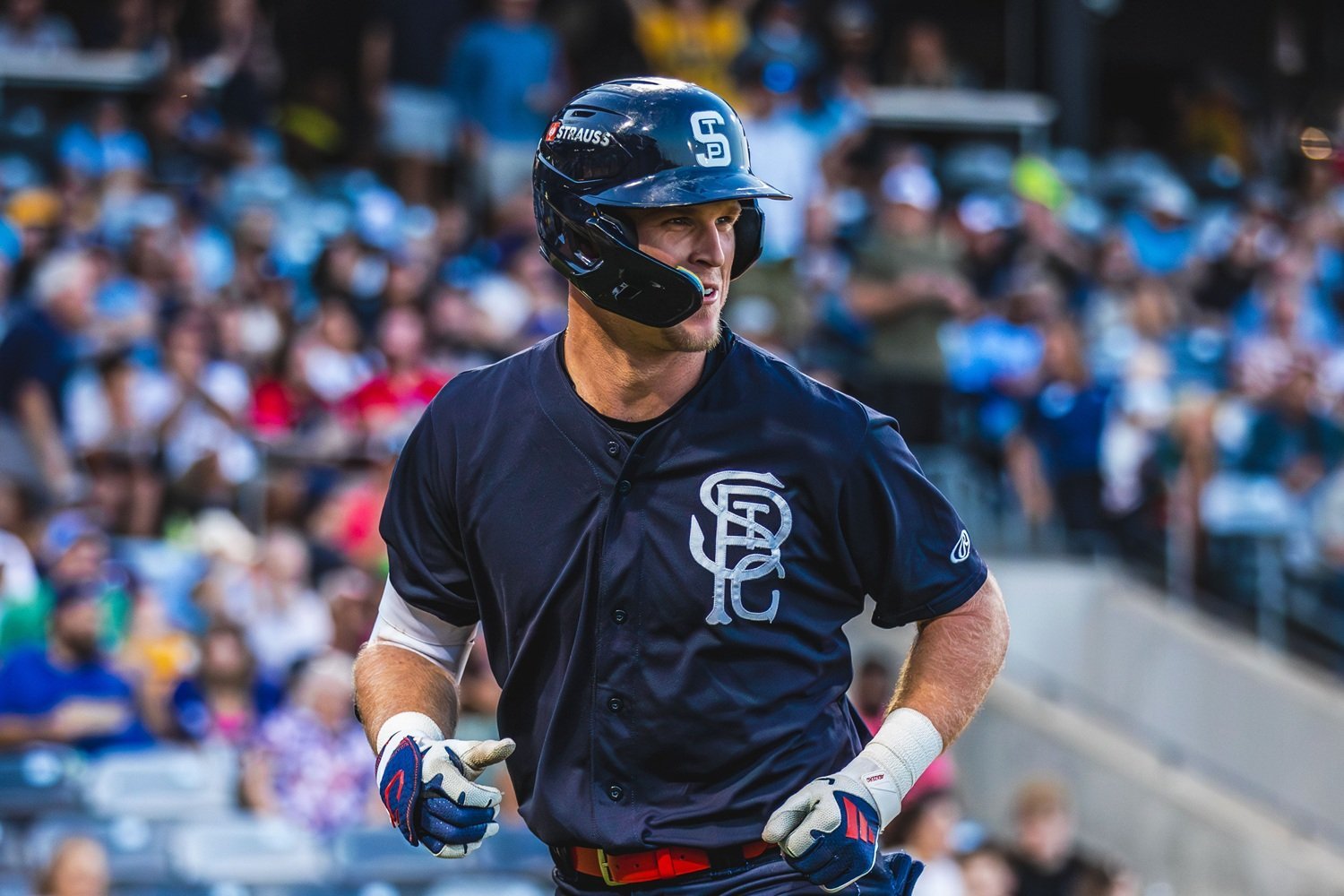 TRANSACTIONS No moves were made on Sunday. Saints Sentinel St. Paul 5, Columbus 8 Box Score Ryan Gallagher: 4 IP, 5 H, 5 ER, 1 BB, 5 K HR: Walker Jenkins 2 (10, 11), Tanner Schobel 2 (4, 5) Multi-hit games: Walker Jenkins (3-for-3, 2 HR, 2 R, 3 RBI, 2 BB), Ben Ross (2-for-5, 2B), Tanner Schobel (2-for-4, 2 HR, 2 R, 2 RBI) A disastrous first inning sunk the Saints on Sunday. Oh, Ryan Gallagher, you poor thing. First, he suffered a nine-run blowup on the 18th, then, he couldn't escape Sunday’s inaugural frame without enduring five earned runs. All of this after a three-start run of allowing three earned runs across 17 1/3 IP. So it goes. Anyways, on to the home run barrage. Tanner Schobel and Walker Jenkins exchanged blasts like Joe Walsh and Don Felder trading guitar solos on Hotel California. Schobel’s first was a pallet whetter: a perfectly solid shot out to left that traveled 394 feet. Then, a Jenkins swat with a touch more mustard, but a lower launch angle, more of a line drive that refused to return to the ground than a proper home run. Penultimately, the centerpiece. Jenkins hit a ball that was never seen again. It left the field, the stadium. The state? The planet? None may know its current whereabouts. The D.B. Cooper of long balls. All anyone knows is that it counted for two runs and helped fuel what has been a tremendous stretch for the youngster. He’s slashing .415/.493/.800 in August. Well, if awe and majesty is what we’re doing now, then Schobel is perfectly capable of matching his teammate. His second crack took off immediately and flew with the sky-scraping power of a Patrick Mahomes deep ball. MLB’s 31st-overall prospect played for the Clippers on Sunday. First baseman Ralphy Velazquez went 1-3 with a pair of RBIs. Wind Surge Wisdom Wichita 8, Frisco 12 Box Score Sam Armstrong: 3 IP, 10 H, 5 ER, 2 BB, 3 K HR: Graham Brown (2), Caden Kendle (9) Multi-hit games: Brandon Winokur (2-for-5, R), Graham Brown (3-for-4, HR, 2 R, 3 RBI), Jaime Ferrer (2-for-4, 2B, RBI) The Wind Surge fell in a high-scoring game on Sunday. Despite the end score, matters seemed to favor the Wind Surge during the match’s early stages. Graham Brown stepped up to the plate in the second and smoked a three-run homer to center; Wichita added on with a run-scoring groundout by Caden Kendle the following frame. Unfortunately, the good vibes ended there. Though strong in arm, Sam was not powerful in pitching acumen on Sunday. Frisco roughed up Armstrong with 10 hits in three innings, scoring six runs (five earned), as they overtook Wichita and slingshot into the lead. Staring at a 6-4 disadvantage in the sixth, the Wind Surge knotted the score, plating one with a Jaime Ferrer double and another with a Luis Hernandez RBI grounder. Tied once more, in a fleeting way. Lasting four pitches. A solo homer. A flurry of action. Suddenly, three runs. Two innings later, three more. Wichita hurlers found no rest or respite. No place to relax. Their ERAs speak for themselves. And, yet Wichita made it uncomfortable in the ninth. Caden Kendle carried a two-run homer out to left to bring the game within four. A walk and a hit by pitch sent reliever Eric Loomis from the game, with the incoming hurler one batter away from bringing the tying run to the plate. It didn’t happen. Kyle DeBarge struck out to end the game. The RoughRiders enjoy the work of MLB’s ninth-best prospect, infielder Sebastian Walcott. DH-ing, he singled and walked thrice, scoring four of Frisco’s 12 runs on the day. Kernels Nuggets Cedar Rapids 7, Beloit 1 Box Score Cesar Lares: 5 IP, 3 H, 1 ER, 1 BB, 3 K HR: None Multi-hit games: Byron Chourio (2-for-4, R, RBI, BB) The Kernels thumped their opponent on Sunday. We start in the fourth, when—with the bases loaded—Jose Salas lined out softly to the first baseman. He caught the ball, and then fired to third, unintentionally imparting the ball with wings that sported and soared way beyond the third baseman’s grasp and into a massive inside-jutted foul territory the infielder might still be digging around in. Beloit responded with a more ordinary RBI single stroked down the left field line. Then, the fifth. Do you like watching batters take walks? Yes? So did Beloit pitcher Peyton Fosher. He surrendered five of them, with a Salas pop out and an Eduardo Tait serving as the two lone respites in the outing. Still, two runs scored under his watch, and the Kernels tacked on three more after he left thanks to a two-run single by JP Smith II, and a double by Yasser Mercedes. Danny De Andrade scored on a wild pitch in the seventh to cap the scoring. Cesar Lares provided five workman-like innings, allowing one run in what was easily his finest start as a Kernel. His Cedar Rapids ERA started the day at 13.18. It ended at 11.45. The two Ross(es), Dunn, and Michael, who employs it as his surname, combined for four shutout innings out of the bullpen, striking out five with one base runner allowed. Beloit shortstop Starlyn Caba ranks as the seventh-best prospect in the Marlins system. He went 0-for-3, with a walk. Mussel Matters Fort Myers 1, Palm Beach 3 Box Score Eric Hammond: 4 2/3 IP, 1 H, 0 ER, 1 BB, 3 K HR: None Multi-hit games: Quentin Young (2-for-4) The Mighty Mussels were meager on Sunday. You couldn’t blame Eric Hammond for the shortcomings. The starter was excellent: he pitched 4 2/3 innings—the longest he’s gone all season—and didn’t allow an earned run. A runner reached base just twice against the righty. It was the culmination of a brilliant month for the Georgia product, as he now holds a 2.41 ERA across 18 2/3 frames in August. “Walk this way?” Perhaps. But Steven Tyler and Joe Perry were vague and unclear on what to do on the topic of hits, leading to Fort Myers batters earning just three of them while taking eight free passes on the day (plus two hit by pitches.) Vahn Lackey was especially patient, trotting to first three times with every BB coming on four pitches. Given that he has already racked up 14 walks in 15 games, the pitching at Low-A might not offer him the kind of challenge he needs. Quentin Young found hitting conditions just fine, singling twice to account for 2/3 of the team’s hits on the day. Charlie Scholvin earned the other knock. Hendry Chivilli struck out the side in an inning of work. The appearance continued a successful month for the former top international signee, as he holds a 3.46 ERA in August with as many strikeouts as frames (13). Fourth-ranked Cardinals prospect, outfielder Alexander Frias, went 1-4 with a homer. He came to the Cardinals organization at the trade deadline from the Brewers. TWINS DAILY PLAYERS OF THE DAY Twins Daily Minor League Pitcher of the Day – Eric Hammond Twins Daily Minor League Hitter of the Day – Walker Jenkins PROSPECT SUMMARY Here’s a look at how the Twins Daily Top 20 Twins Prospects performed: #1 – Walker Jenkins (St. Paul) - 3-3, 2 HR, 2 R, 3 RBI, 2 BB #2 – Vahn Lackey (Fort Myers) - 0-2, 3 BB #3 – Kaelen Culpepper (Twins) - 1-3 #4 – Marek Houston (Wichita) - 0-2 #6 – Emmanuel Rodriguez (St. Paul) - 1-5, 2 K #8 – Eduardo Tait (Cedar Rapids) - 0-4, BB, K #9 – Gabriel Gonzalez (St. Paul) - 0-4, K #12 – Brandon Winokur (Wichita) - 2-5, R, 3 K #15 – Ryan Gallagher (St. Paul) - 4 IP, 5 H, 5 ER, 1 BB, 5 K #18 – Quentin Young (Fort Myers) - 2-4, K #19 – Yasser Mercedes (Cedar Rapids) - 1-5, 2B, RBI, K MONDAY’S PROBABLE STARTERS No games for teams in the Twins’ system are scheduled for Monday. View the full article
 -
 Fish On First staffers react to the latest Miami Marlins series and prepare you for what lies ahead. Sunday's show was hosted by Ely Sussman and featured panelist Isaac Azout. The following topics were covered: Kyle Stowers coming back Deyvison De Los Santos optioned John King designated for assignment Jack Ralston debuts Key takeaways from Marlins' sweep of Nationals Updated NL Wild Card race with five weeks left Previewing and predicting the next series against the Boston Red Sox You can find Fish Unfiltered and Fish On First LIVE on the Fish On First YouTube channel, Apple Podcasts, Spotify or wherever else you get your pods. Our next FOF LIVE episode will be on Thursday at approximately 6:30 p.m. ET on the off day following the Marlins-Red Sox series finale. View the full article
 -
 The Weekly Nutshell: The Twins entered this past week coming off perhaps their worst series of the entire season — a demoralizing sweep at the hands of the Phillies that left Minnesota on the ropes, five games below .500 with six weeks remaining. Once again, the Twins put themselves in a tough spot. And once again, they resiliently bounced back, putting together perhaps their best series of the season in a sweep over the Braves. For a brief moment, Minnesota overtook sole ownership of the third AL's Wild Card spot. Then: all progress erased. The Twins traveled to San Diego and dropped all three against the Padres, including a blown four-run lead on Saturday. By the end of play on Sunday, three teams (Texas, Cleveland and Toronto) stood between Minnesota and the last postseason position, with the Orioles tied at two games back. That tells you how quickly things can swing in this tight race, but also underscores why the Twins can't afford more series like the ones against Philadelphia and San Diego. Fortunately, the schedule is about to ease up. Weekly Snapshot: Mon, 8/17 through Sun, 8/23 *** Record Last Week: 3-3 (Overall: 63-68) Run Differential Last Week: -6 (Overall: -54) Standing: 3rd Place in AL Central (5.5 GB); 2.0 games out of WC Latest Game Results Game 126 | MIN 4, ATL 2: Bats Stake Early Lead, Bullpen Holds Tight to Win Opener Twins bullpen: 4.2 IP, 0 R, 1 H, 2 BB, 4 K Game 127 | MIN 4, ATL 1: Matthews Leads Charge in Masterful Pitching Performance Matthews: 5.2 IP, 1 R, 5 H, 1 BB, 4 K Game 128 | MIN 6, ATL 4: Offense Shows Fight as Twins Complete Impressive Sweep Clemens: 2-4, 2B, 3 RBI Game 129 | SD 6, MIN 2: Prielipp Hits Mid-Game Wall Again, Lineup Held to Two Hits Prielipp: 6 IP, 6 ER, 8 H, 2 BB, 7 K Game 130 | SD 7, MIN 5: Early Lead Evaporates, Morris Melts Down in Four-Run Seventh Morris: 1 IP, 4 R (1 ER), 3 H Game 131 | SD 8, MIN 1: Twins Lineup Goes Feebly Against Buehler, Bullpen Struggles Twins bullpen: 3 IP, 7 ER NEWS & NOTES Austin Martin, who was injured in the series finale against Philadelphia last weekend, went on the injured list Monday with a hamstring strain. While the severity of the injury was deemed mild, it will keep Martin out into September, subtracting a useful right-handed bat from a lineup that continues to need all the help it can get against lefties. (Two more on tap in Sacramento to open the coming week, by the way.) To replace Martin on the roster, the Twins front office bypassed every interesting or exciting option, instead turning back to Alex Jackson, who'd just cleared waivers and been outrighted to Triple-A one day earlier. Jackson will resume his role as a sparsely-used third catcher offering no real utility on the roster. Walker Jenkins, who notched a pair of two-homer games in Columbus this past week, remains in the minors for the time being. Kendry Rojas exited Friday night's game for the Saints and landed on the IL a day later with a right oblique strain. It could be a season-ender given how little runway is left. At minimum he'll be sidelined for several weeks, taking a key potential weapon out of the pitching equation as the Twins make their push. HIGHLIGHTS Minnesota's rotation entered this past week in a major funk, ranking 29th out of all MLB teams in ERA since the All-Star break (5.86) and coming off a dreadful week against Baltimore and Philly. This unit badly needed to get on track, and they did so against the Braves. Bailey Ober kicked things off with a solid, albeit short, outing on Monday, allowing two runs in 4 ⅓ innings. Derek Shelton wisely exercised an early hook, handing a 4-2 lead over to the relievers who shut things down the rest of the way to seal a win. Zebby Matthews improved upon Ober's results the next night with 5 ⅔ innings of one-run ball in a 4-1 victory. Taj Bradley followed with one run allowed over five innings on Wednesday to help the Twins clinch a sweep. Dean Kremer was effective again on Saturday, allowing two runs in 5 ⅓, and Ober held the Padres to one run in five innings on Sunday. No one's getting through six innings but the whole point of the trade deadline strategy was to lessen the need for it. When the bolstered bullpen is holding up its end of the bargain and the offense is showing some fight, those types of outings are really all the Twins need from their starters. Kody Clemens came into the week with a sub-.500 OPS in the month of August, but caught fire against Atlanta and San Diego, driving in seven runs on eight hits (including a double and a triple) in 18 at-bats. Clemens was pivotal in Wednesday's win over the Braves, delivering two key run-scoring hits including the eventual game-winner. He's tied for the AL lead with six triples on the season, delivering power and clutchness that help make up for an OBP leaving plenty to be desired. Luke Keaschall, unlike Clemens, has been an on-base machine. He kept it rolling last week with multiple hits in four of six games, totaling 10 hits in 26 at-bats to lift his average to .274 for the year. Keaschall stumbled out of the gates with a cold month of April, but since May 1st his .402 OBP ranks third in all of baseball. Shelton has finally slid Keaschall up to the leadoff spot and I see little reason that should change. He's pretty much an ideal table-setter atop the order. A few other notable performances from an offense that is hopefully showing signs of awakening for the stretch run: Josh Bell supplied some pop with two doubles, a homer and five RBIs. He's enjoying a monster month of August after slumping through the second half of July. Bell leads the team with 77 RBIs on the season, and has an OPS north of 1.000 with runners in scoring position. Streaky Brooks Lee was 1-for-13 on the week before coming through with a three-hit game on Saturday night, which included a home run and a double. He then added another solo shot on Sunday — the lone damage Minnesota could muster against Walker Buehler and the Padres. Lee is up to 20 home runs on the season and he ranks second on the team behind Bell in RBIs with 69. Kaelen Culpepper launched the second home run of his young career on Saturday, as part of a 7-for-21 week that lifts his slash line to .289/.340/.444 through 13 games as a Twin. There have been some rough patches and learning moments for the rookie, but overall he has provided the kind of spark that the Twins hoped for when they promoted him. LOWLIGHTS It's great to see guys like Bell and Culpepper stepping up here in the late stage of the season, but the Twins continue to be held back by a lack of production from two hitters who carried their offense in the first half. Trevor Larnach had zero hits or walks in 13 plate appearances last week, and is batting .151 in August. Larnach has one RBI and no extra-base hits in his past 48 plate appearances as a breakthrough season cools into a much more ordinary one. He has essentially switched spots in the order with Keaschall against righties, with Larnach batting sixth, seventh and seventh in his past three starts after hitting leadoff almost exclusively since June. The player whose true form the Twins are missing more than anything, though, is Byron Buxton. He started five of six games, and pinch-hit in the other, so obviously Buxton is feeling well enough to be on the field. But, he does not look right. It comes through in the numbers — Buxton was 3-for-19 last week, and is batting .129 with no home runs and one RBI in eight games since being activated from the injured list. His level of discomfort is also very evident in watching him play. He hasn't been running hard, removing a key aspect of his value. Buxton tapped into double plays on both Saturday and Sunday, giving him two more GIDPs in one weekend than he had all of last year. He hasn't tried to steal a base since July 5th, when an attempt at Yankee Stadium flared up his hip and led to an IL stint. Buxton made a spectacular play in the outfield at Petco on Friday but it visibly took a toll, as he stayed on the ground for several seconds before slowly getting up and gingerly walking off the field. His diving grab in San Diego is a reminder that Buxton can still do special things even while physically compromised, but watching him swing the bat and run the bases makes clear just how affected he is. This is hardly the first time we've seen Buxton play through pain, but in the past, you'd usually rather have him at less than 100 percent than any of the alternatives. Right now, with Jenkins banging down the door in Triple-A and Emmanuel Rodriguez making a case in his own right, I'm not so sure that's the case. Is there a point where it stops making sense to push Buxton through what he's dealing with and try something else? The Twins also need to consider what their best course of action is with Connor Prielipp. Unlike Buxton, there is no sign Prielipp is playing through any injury, but he does appear to be wearing down. His start against the Padres on Friday was the second straight where he unraveled in the middle innings, turning a quality outing into a clunker. Prielipp had allowed two runs through four innings in San Diego before giving up four runs in the fifth on a parade of singles. Prielipp fell to 3-7 with the loss, on the heels of coughing up eight runs against the Phillies. His ERA is up to 5.57 and his control is beginning to elude him, with 12 walks across four August starts. The left-hander is already well beyond his career high for workload with 112 innings pitched this season, and his velocity was down a tick in this latest start. I don't know that the Twins can really afford to shut him down, especially with the Rojas injury eroding their already thin rotation depth, but a quicker hook might be in order versus letting him face lineups three times as he has in these past two starts. TRENDING STORYLINE We're heading into the home stretch, with five weeks left to go. The Twins have one of the softest remaining schedules, giving them a chance to make a run despite their relatively unfavorable current position. But in order to take advantage, they've got to play better baseball than we've largely seen this month. Buxton's ability to get on track looms large, as does the front office's willingness to press the red button and promote Jenkins. The other glaring question: When will Joe Ryan make it back? He threw off a mound on Tuesday and it sounds like that went reasonably well, with Ryan calling it "a step in the right direction." But the clock is ticking with only 31 games remaining on the schedule. I'll be closely watching to see what kinds of strides he is able to make in the coming seven days, and whether any plans for a rehab assignment are put into motion. LOOKING AHEAD Taking advantage of the relatively soft remaining schedule needs to start now, with a ripe opportunity at hand. The Twins are heading to Sacramento for three games against an A's team that leads the majors with 80 losses. Taking at least two of three is a must, because from there the Twins embark on a run of 15 consecutive games against AL Central opponents, including six against the division-leading White Sox. It's go time. MONDAY, AUGUST 24: TWINS @ ATHLETICS — RHP Zebby Matthews v. LHP Jeffrey Springs TUESDAY, AUGUST 25: TWINS @ ATHLETICS — RHP Taj Bradley v. LHP Gage Jump WEDNESDAY, AUGUST 26: TWINS @ ATHLETICS — LHP Connor Prielipp v. RHP J.T. Ginn FRIDAY, AUGUST 28: WHITE SOX @ TWINS — RHP Luis Castillo v. RHP Dean Kremer SATURDAY, AUGUST 29: WHITE SOX @ TWINS — TBD v. RHP Bailey Ober SUNDAY, AUGUST 30: WHITE SOX @ TWINS — TBD v. RHP Zebby Matthews View the full article
 -
Padres 8, Twins 1: Nando Goes Nanners, Padres Sweep Twins
DiamondCentric posted an article in Twins Daily
 Box Score: Starting Pitcher: Bailey Ober: 5 IP, 4 H, 1 ER, 3 BB, 3 K (87 Pitches, 54 Strikes, 62%) Home Runs: Brooks Lee (20) Bottom 3 WPA: Jeff Hoffman (-0.32), Josh Bell (-0.09), Victor Caratini (-0.07) Win Probability Chart (Via BaseballSavant): Last week, I described Sunday's loss to the Phillies, in which the team biffed a 5-0 lead to get swept at home, as the nail in the coffin of the season. What I did not take into account was that the American League is truly garbage, and that the Atlanta Braves would play like garbage. The Twins vaulted into the last Wild Card slot with the sweep of Atlanta—then proceeded to drop the first two against San Diego. The Padres are a good, serious team with talent throughout their roster. They are also opportunistic, as they showed in rallying from three runs down late in Saturday's game. To salvage a game from the series, the Twins turned to Bailey Ober on the mound, with San Diego countering with Walker Buehler. This wasn't vintage Buehler, but he has been healthy enough to make all his starts for the Padres. His ERA remains high and his under-the-hood numbers aren't great. He allowed a leadoff single to Luke Keaschall to start his afternoon. But a hobbled Byron Buxton grounded into a double play, and Buehler went on to face the minimum through three innings while consistently staying underneath the Twins' bats. Ober looked good early, generating some whiffs on his changeup and slider while staying out of the middle of the zone. The only hard contact was off the bat of Fernando Tatis Jr., who looks unconscious right now. He lined out to lead off the bottom of the first at 115 MPH. Ober worked around a couple of walks to cruise into the third, when Tatis got him for a solo home run that was 10 MPH less firm off the bat than his earlier lineout. It was a hanging slider, and Tatis is not missing that pitch right now. Buxton managed a bloop hit in the top of the fourth, but did not entertain the thought of stretching it into a double, something even a healthy-ish Buxton could have managed easily. He then chose not to run on a 3-2 pitch to Josh Bell, causing an inning-ending double play with Buehler clearly chasing grounders. With Buehler cruising, it looked like it might be another slow death for the Twins lineup. He got the first two outs of the fifth inning, but Brooks Lee worked a 10-pitch at-bat that culminated with a laser to right field: a home run that tied the game and rattled the previously unshakeable Buehler. You saw Ober take a deep breath after retiring Luis Rengifo in the bottom of the fifth. Tatis fell behind in the count, but worked back to 3-2 before lining a single at 109 MPH. At that point, I thought to myself, nice. Getting past Tatis without putting him immediately into scoring position or letting him leave the yard felt like a win. But Jake Cronenworth popped a ball up to no-man's land. Lee should have had it, but got turned around, and it fell between him and Alan Roden, putting two on for Manny Machado. Ober bore down and struck him out on a 74-MPH sweeper and got Ty France to fly out to end the threat. The escape didn't come as easily as it should have, but Ober still finagled it. Kody Funderburk came on for the sixth, hwoever, and didn't have good control. He did induce a weak grounder off the bat of Jackson Merrill, but Kaelen Culpepper booted it. The Twins seemed to get a reprieve when Merrill was picked off leaving early, but Funderburk then walked Luis Campusano and Austin Hays before giving way to Jeff Hoffman. Hoffman, in turn, walked Xander Bogaerts, which brought the infield in. Rengifo then rifled a ball down the first-base line, just past a diving Royce Lewis, scoring two runs. That brought up Tatis, and if ever there was a time to walk a guy with a base open, this was the time. But Hoffman is probably considered a good matchup against Tatis, given his elite slider. Tatis laced a slider into center field, scoring two more and putting the Padres squarely in the driver's seat. Anybody who has ever watched Tatis during a hot streak (or Barry Bonds, Bryce Harper, Aaron Judge etc.) knows that it's one thing to be a good matchup for a guy, and another to be a good matchup for that guy when he's this hot. Basketball teams know that when Steph Curry has hit five straight threes, you need to double him or get the ball out of his hands somehow, but in baseball we just have to watch our teams get bludgeoned and say, hey, it was the right call analytically. The Padres added on against Travis Adams in the seventh, with Merrill homering to deep right and Bogaerts doubling past the glove of Culpepper to bring in Hays, who had drawn the seventh walk of the game for San Diego. Furthering my point from earlier, Tatis homered off Taylor Rogers in the eighth. The hottest player in baseball with the platoon advantage against a veteran lefty playing out the string of his career? I would have been more surprised if he hadn't homered. He went 9-14 in this series, with more homers than strikeouts. Stuff I'm Tracking: I wonder if Buxton is consciously avoiding going full speed, with the thought that his swing is getting closer. That is quite a gamble, since a) he remains in a prolonged slump results-wise b) the Twins need his speed and defense and c) Walker Jenkins is homering every other at-bat for the Saints, or so it seems. Ober looked good and probably could have gone six or seven innings, if not for Tatis's heroics. He nibbled, but his control was so good he could afford to, and the Padres made tons of weak contact against him as a result. Hoffman looks out of whack and seems to be emphasizing his slider more. It's a great pitch, but even a great pitch isn't great when it's predictable. Culpepper made two rough misplays at shortstop. After his error in the sixth, he allowed a ball to skip by him in the seventh, leading to the seventh run for San Diego. What’s Next: The Twins head to Sacramento to take on the floundering A's. Zebby Matthews (7-8, 5.12 ERA) opposes Gage Jump (5-8, 4.83 ERA). Jump is a lefty, which tends to spell doom for the Twins' run-scoring prospects, but they are playing in Sacramento, one of the more lopsided parks in terms of favorability to hitters. Postgame Interviews: Coming Soon Bullpen Usage Chart: WED THUR FRI SAT SUN TOT Adams 0 0 17 0 34 51 Nance 16 0 0 27 0 43 Hoffman 20 0 0 0 17 37 Funderburk 17 0 0 0 17 34 Rogers 0 0 11 0 15 26 Morris 0 0 0 19 0 19 Minter 10 0 0 8 0 18 Gomez 13 0 0 0 0 13 View the full article
 -
 Let’s take a look at Saturday’s Boston Red Sox affiliate team action. Triple-A Worcester Red Sox Series @ Syracuse Mets (New York Mets): 1-4 Season Record: 63-57 The WooSox lost their third straight despite a shutout day from the bullpen. John Holobetz got the start on Saturday evening and turned in a less-than-ideal outing. Across four frames, Holobetz allowed three runs on seven hits. He issued one walk and punched out four before exiting the ballgame. Osvaldo Berrios entered in the fifth, looking to minimize Syracuse’s lead. Berrios succeeded, turning in a shutout, two-frame appearance. He let up one hit and struck out a pair before Tyler Samaniego took the seventh inning. Samaniego was just as dominant as Berrios, allowing one hit and striking out another. John Brebbia took the eighth and final frame of Saturday’s contest, and closed the loss in perfect fashion. Brebbia struck out two of the three batters he faced, capping off a successful bullpen outing despite the loss. The WooSox were able to muster just eight baserunners on Saturday, and went an abysmal 0-for-8 with RISP. Trevor Story and Tsung-Che Cheng recorded a single each as Brett Harris went 2-for-4 with a double. Allan Castro recorded a double as well. Double-A Portland Sea Dogs Series vs. Reading Fighting Phils (Philadelphia Phillies): 2-3 Season Record: 60-58 Portland conceded three late runs that gave Reading just enough to win Saturday’s ballgame. Michael Sansone spun an excellent start on Saturday, shoving six frames of one-run work. He let up two hits and walked three, but struck out six as he slowed the Phils’ offense. The excellent start was succeeded by a solid relief effort from Joe Vogatsky. Over two innings, Vogatsky allowed one run on one hit and issued three walks. He punched out a pair before Reidis Sena entered in the ninth. Sena looked to give Portland’s offense a chance for a walk-off win, but dropped the ball. He allowed three runs in just ⅔ of an inning as Reading took a late lead. Sena issued two walks and struck out one before Griffin Kilander was called in to finish the frame. Kilander struck out the only batter he faced, and Portland’s offense wasn’t able to rectify Sena’s disaster class. Despite the loss, the Sea Dogs remained competitive throughout most of the game. Three hits from Mason White led the way as he and Johanfran Garcia had an RBI each. Garcia struck first for Portland, driving Justin Gonzales home on a groundout to third. In the eighth, White tied the game in hopes of sparking a late rally. He drove home Miguel Bleis on a single to right field and gave the Sea Dogs a late opportunity. However, the bats came up short in the ninth as Portland lost in a heartbreaker. High-A Greenville Drive Series vs. Winston-Salem Dash (Chicago White Sox): 2-3 Season Record: 52-64 Despite leading through the first three innings, Greenville lost in Friday’s makeup game. Shea Sprague took over for Dylan Brown when play resumed, allowing two runs through four frames. He let up four hits and walked four more. He struck out four before Brandon Neely took over. Neely’s outing was poor, to say the least as he allowed five runs on three hits in just ⅔ of an inning. He issued a trio of walks before Matt McShane closed the game. McShane earned the loss for his performance, allowing one unearned run on one hit and issuing a pair of walks as the game went to extras. He struck out two in the blown save. Greenville’s bats didn’t skip a beat when play picked back up on Saturday, tallying 12 total hits and driving in seven runs. A three-RBI game from Maximus Martin led the way as Gerardo Rodriguez recorded three hits of his own. In the third, Carlos Gutierrez scored Owen Hull on a double to center before Martin scored Rodriguez on a double in the fifth. Later in the fifth, Ronny Hernandez sent Martin home on a single, giving the Drive a 5-0 lead. In the seventh, Rodriguez tacked on two more with a two-run homer to left center, giving Greenville a six-run lead. Unfortunately for Greenville, the pitching staff surrendered the large lead as it fell in the first game of the day. Matt Duffy got the start in the second game of the evening, turning in a two-and-⅓ appearance. He allowed two runs on two hits and issued one walk. He sat down four on strikes before Barrett Morgan took over. Morgan was nearly perfect as he threw 2⅔ innings of hitless ball. He issued one walk but punched out six of the nine batters he faced, impressing in his first appearance with Greenville. Joey Gartrell entered in the sixth inning and threw two innings. He allowed a pair of runs on three hits and walked one. He struck out another before catcher Hudson White took the final frame of the game. With the bullpen exhausted, White was called in to help in a high-stakes situation. He struggled heavily, allowing four runs (one unearned) on four hits as Winston-Salem took a late lead for the second time on the day. The Drive’s bats were just as lively in the second matchup of the day, tallying ten hits and going 4-for-13 with RISP. Down two in the bottom of the first, Isaiah Jackson launched his 19th homer of the season to center field, cutting the lead in half. One inning later, Stanley Tucker scored Nazzan Zanetello on a line drive single, tying the game. A few innings later, Yophery Rodriguez grounded into a force out, scoring Luke Heyman. Down one, Gutierrez scored Tucker on a double to center, tying the game at four runs apiece. However, the Drive faltered for the second time on the day, losing by a wide margin as the bats went quiet late. Low-A Salem RidgeYaks Series vs. Wilson Warbirds (Milwaukee Brewers): 3-2 Season Record: 52-65 Consistent offense powered Salem to a 15-9 victory as the bullpen held up late. Sadbiel Delzine rebounded in a strong way from a rough outing his last time around. In three innings, Delzine allowed just one hit as he struck out five batters. The top prospect lowered his ERA to 2.50 following his start. Alex Kranzler took the mound following Delzine, earning his first win of the season. He allowed three runs on two hits and issued a walk, but struck out three before Yermain Ruiz took over. Ruiz’s outing went as poorly as it could have as he allowed six runs on three hits in just ⅔ of an inning. He walked five and struck out two before Wuilliams Rodriguez entered to do some damage control. Wuilliams was exceptional as he threw three scoreless frames. He let up six hits and walked two, but staved off the Warbirds with two strikeouts. Shortstop Anderson Fermin took the final two outs of the game in uneventful fashion, capping off an easy win. The Yaks recorded 15 hits and drove in 15 runs as they absolutely dominated on offense. Every member of the batting order recorded a hit as D’Angelo Ortiz and Colton Coates drove in three runs each. Salem got started early as Josue Brito drove in Kleyver Salazar on a double to right field. Ortiz reached on a fielding error in the second as Andrews Opata crossed home. In the fourth, Andruw Mussett scored Avinson Pinto on a line drive to center before Martin Shelar scored Musett on a single of his own. Coates scored Ortiz and Shelar on a triple to center as Salem took a four-run lead. The Yaks exploded for six runs in the fifth as Andrews Opata scored Brito and Louis Andujar on a double to left. Opata scored on a Pinto single before Pinto scored on a Musett triple. Musett was driven home on a groundout from Ortiz before Coates scored Shelar on a line drive single. In the sixth, Pinto added on one more with a single that scored Opata, bringing the lead to four runs. In the eighth, Ortiz put a bow on the day with a two-RBI single, scoring Andujar and Pinto and bringing Salem to 15 runs. View the full article
 -
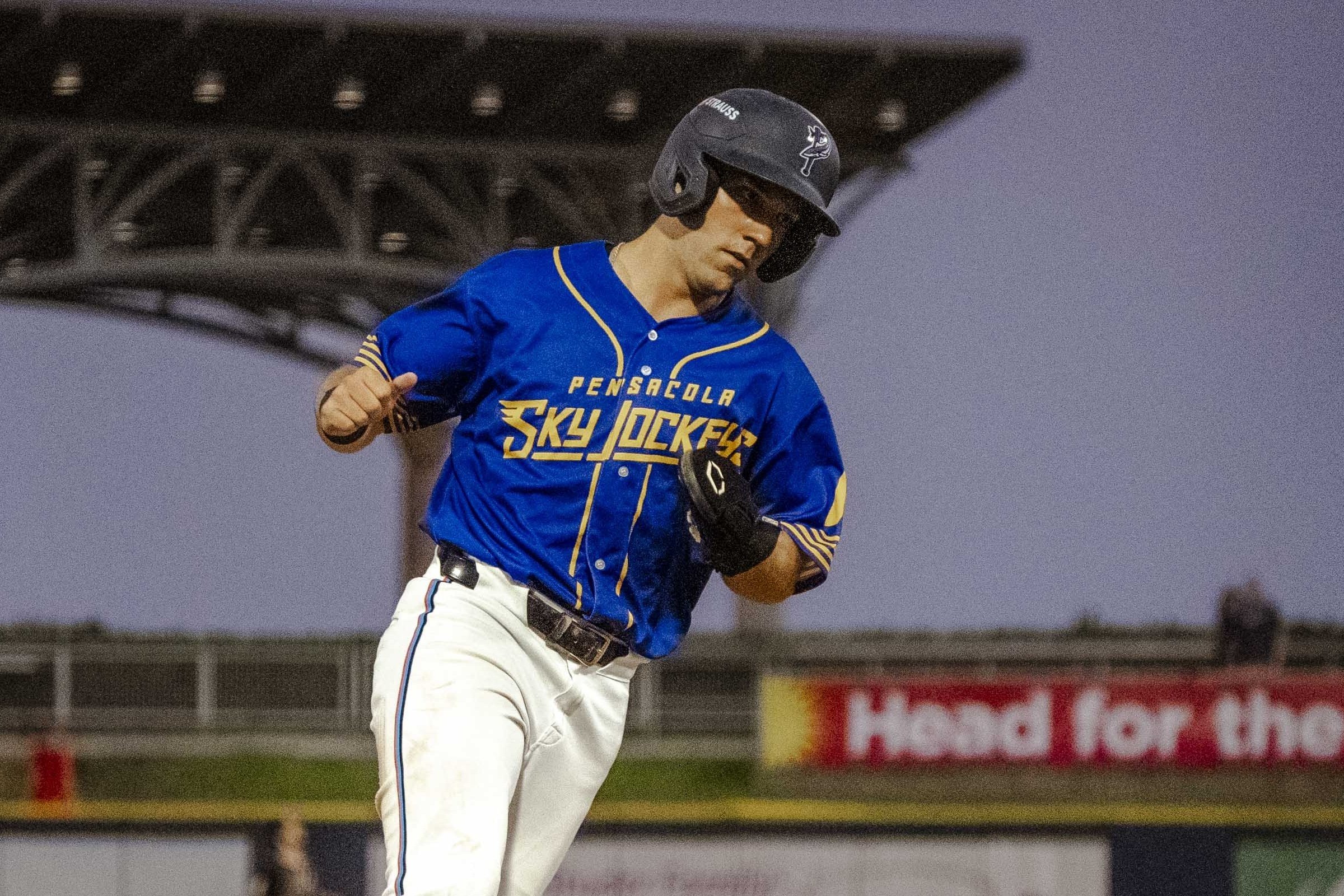 It has been a thrilling season for Miami Marlins prospects, particularly on the position player side. They hit a notable milestone on Sunday when Bennett Hostetler homered for the Jacksonville Jumbo Shrimp in the top of the fourth inning. This was the 666th Marlins minor league homer of 2026, establishing a new single-season record for the organization. This admittedly obscure record was previously held by the 2008 Marlins affiliates (665 HR). The structure of Minor League Baseball was different back then. The Marlins had an additional short-season stateside affiliate—the Jamestown Jammers of the New York-Penn League—but one fewer Dominican Summer League team than they have today. The old record will be shattered by season's end. Current Marlins affiliates are scheduled to play 66 more regular season games. Brandon Compton is the org's top individual home run hitter, going yard 30 times with High-A Beloit and Double-A Pensacola. Echedry Vargas ranks second with 22 (all with Low-A Jupiter). There are 25 players in the org who have double-digit MiLB homers; 20 of them have been acquired since November 2023 when Peter Bendix took over as president of baseball operations. Perhaps the most notable angle of this record is how dramatically Marlins MiLB long balls have increased from one season to the next. In 2025, with many of the same players, they combined for only 499 HR. If they maintain their current pace through season's end, their output will be up by nearly 50%! Hostetler is a prime example. The lightly used backup catcher went homerless in 37 games last year, but has cleared the fences six times despite only 16 appearances this year. Context is crucial, though. Home run rates have been way up across the minors in 2026. Even in breaking this longstanding franchise record, the Marlins rank only seventh this season in MiLB homers, trailing the New York Yankees (768 HR entering Sunday), Los Angeles Dodgers (723 HR), Minnesota Twins (694 HR), Seattle Mariners (691 HR), St. Louis Cardinals (667 HR) and Texas Rangers (667 HR). Rookie hitters Joe Mack and Owen Caissie have helped the Marlins in the power department this season, and Deyvison De Los Santos (18 MiLB home runs) was recalled from Jacksonville on Saturday. Compton, Kemp Alderman (18 HR), Cam Cannarella (13 HR) and Brendan Jones (12 HR), who's pictured atop this article, are all likely to reach the majors in 2027. View the full article
 -
San Diego Provides the Selling Blueprint for the Pohlads
DiamondCentric posted an article in Twins Daily
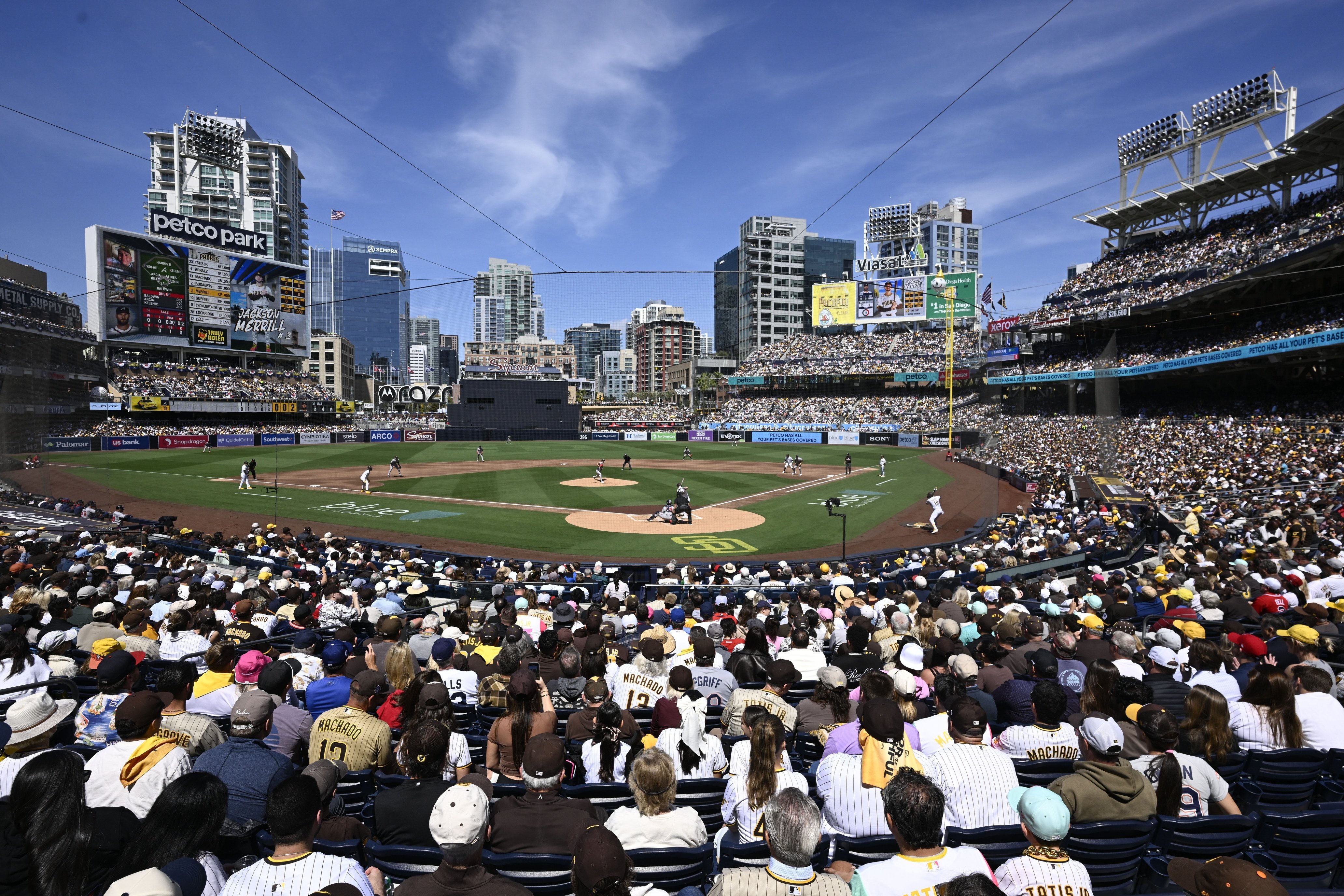 The Minnesota Twins have already been down this road once. The Pohlad family explored a sale of the franchise before ultimately deciding to maintain majority control and bring new limited partners into the ownership group. That decision didn't necessarily close the door on a future sale. It just meant the Twins would remain under Pohlad control for the time being. Now, the San Diego Padres have provided an interesting case study in what an MLB franchise can become when ownership treats the baseball operation as an arena for investment, rather than simply a cost to manage and minimize. The Padres were recently approved for a change in controlling ownership at a staggering $3.9 billion valuation, setting a new MLB record. The deal, led by José E. Feliciano and Kwanza Jones, surpassed Steve Cohen's $2.4-billion purchase of the Mets in 2020. That number is eye-catching, for plenty of reasons. San Diego has long been viewed as a small-market baseball operation. The Padres have dealt with television challenges, limited national attention and competition from the Dodgers in Southern California. Yet, the franchise became more valuable by building something people wanted to watch. That part should sound familiar to the Twins. The Pohlads don't need to copy everything the Padres did. They don't need to hand out every massive contract imaginable. But if there is still a long-term plan to eventually sell the franchise after the next collective bargaining agreement is settled, there are several lessons worth stealing. 1. Invest in the Product Before You Sell the Product This is the biggest lesson. The Padres didn't become a $3.9 billion franchise by simply waiting for the baseball market to appreciate their asset. They made the asset better. Manny Machado received a 10-year, $300-million contract. Xander Bogaerts signed an 11-year, $280-million deal. San Diego also acquired stars such as Yu Darvish, Blake Snell and Joe Musgrove. Those decisions came with enormous financial commitments, but they also created something ownership ultimately could sell: a winning baseball team. It's like redoing the roof or getting new windows before you sell a house; the increase in market price dwarfs what it costs to make the upgrades. The Twins have taken a different path at various points, often trying to find the line between competitiveness and financial responsibility. That can work when everything goes right. It's not the best strategy for maximizing franchise value, though. The Padres demonstrated that aggressive investment can create a feedback loop. Better players produce better teams. Better teams create more meaningful games. Meaningful games create more fans. More fans create more revenue. And greater revenue can make the entire franchise more attractive to prospective buyers, as well as—back to the beginning of the cycle—permitting investments in better players. The Pohlads need to think about the next several seasons through that lens—not simply, "How much does this player cost?" But "What might this player eventually make the franchise worth?" 2. Build a Team People Actually Want to Watch San Diego has ranked among MLB's top five teams in attendance every year since 2021. The club is also on pace for another season of 3 million-plus fans. That's the kind of number prospective owners notice. The Twins need to create the same type of urgency around Target Field. That doesn't mean Minnesota needs to become a 95-win juggernaut. It means the franchise needs to become relevant enough that fans feel compelled to be there. A roster built around Byron Buxton, Royce Lewis, Joe Ryan, emerging young players and a legitimate collection of stars could do that. A team that spends a significant portion of every summer fighting to stay around .500 will have a much harder time doing it. There's a difference between owning a baseball team and owning a destination. The Padres increasingly became the latter. The Twins should be trying to do the same. It'll be much harder in Minneapolis, where the Timberwolves, Vikings and Lynx compete directly for fans' entertainment dollars and the Wild and Loons offer less direct and proximate but real alternatives. The Padres have the luxury of aloneness. The Twins will have to find some way to achieve the same primacy, from much less powerful a position. 3. Turn Winning Into Revenue This is where the Padres' blueprint gets especially interesting. San Diego's business reportedly grew dramatically over the last several years, with sponsorship revenue and the number of corporate partners both increasing substantially. The Padres' executives pointed to a simple principle: the product on the field has a major impact on revenue. That should matter enormously to the Twins. A packed Target Field is more valuable than an empty Target Field. A strong sponsorship portfolio is built around a comeplling product. A franchise with a passionate regional following is more attractive to buyers than one whose fan base has become listless. This is where the Pohlads can create value even before another owner ever walks into the room. Put more people in the seats. Sell more premium experiences. Grow corporate partnerships. Make Target Field a place companies want to associate with. Create a baseball operation that people want to spend money around. The better the business performs, the easier it becomes for a prospective buyer to justify a higher price. 4. Stop Treating Payroll as the Finish Line The Padres didn't spend money simply to say they had a high payroll. They spent money to create a competitive roster. That distinction matters. Tom Pohlad has already said the Twins need to invest more if they want to become a consistently competitive playoff team. After the 2026 trade deadline, he went even further, saying the team's 2027 payroll "will be higher." That's a good start. But the next step is making sure that money is being converted into wins. A buyer isn't going to pay a premium because the Twins once had a higher payroll. That comes, instead, when a team has demonstrated that its revenue, fan base, player development and baseball operations are capable of sustaining success. The Padres' spending worked because it became part of a larger transformation. The Twins need the same thing. 5. Build Organizational Stability There's another Padres lesson hiding underneath all the big contracts. The franchise developed a recognizable baseball identity. A.J. Preller built an aggressive front office. Peter Seidler backed him. The organization developed into a destination for major players and continued investing even after previous disappointments. When the ownership transition was approved this month, Preller and CEO Erik Greupner were still in place to lead the organization. That continuity matters. Potential buyers aren't just purchasing 26 players and a ballpark. They're purchasing an organization. The Twins need to demonstrate that the front office knows what it is doing, that player development is producing major-league talent, that the coaching infrastructure works and that ownership is willing to provide the resources necessary to sustain it. There should be a clear answer to the question: What exactly are the Twins? A franchise preparing for a sale should not be searching for that answer at the same time. 6. Make the Next CBA Work for the Twins Timing could be especially important. MLB has already proposed a new collective bargaining agreement that would include a salary cap and salary floor, with the league's initial proposal calling for a $245.3 million cap and a $171.2 million floor in 2027. The current CBA is set to expire December 1, 2026. Whether a cap and floor ever become reality is impossible to know. But a new CBA will almost certainly change the financial landscape of baseball in some way. That creates an opportunity for the Pohlads. If the family truly believes the Twins could eventually be sold, it would make sense to maximize the franchise's position before that sale process begins. 7. Create a Franchise That Looks Bigger Than Its Market Perhaps the most important part of the Padres story is that San Diego never stopped being San Diego. The Padres were still dealing with the limitations of their local television market. They were still sharing a region with the Dodgers and Angels. They didn't magically become Los Angeles or New York. Instead, they made the franchise bigger than some of those limitations. That's the lesson for Minnesota. The Twins don't need to convince anyone that Minneapolis-St. Paul is Los Angeles. They need to make the Twins themselves more valuable. That means national relevance and recognizable stars. It means postseason appearances. It means a fan base that believes ownership is serious about winning. And it means creating enough revenue that a prospective owner sees opportunities, rather than limitations. The Pohlads Have a Blueprint None of this guarantees the Twins could approach a $3.9 billion valuation. The Padres' sale came during a period when MLB franchise values have surged, and scarcity alone makes owning one of the league's 30 clubs extraordinarily valuable. San Diego's record also reflects broader trends in professional sports, not just what happened on the field. But that's precisely why the Padres' example matters. The Pohlads don't control the market for MLB franchises. They do control what the Twins look like when somebody eventually comes shopping. The family has already changed course once, moving away from a full sale and bringing in new limited partners while retaining majority control. They did so because they hadn't staged the team well enough to sell it at a palatable price. The Padres didn't simply sell a baseball team. They sold the result of years spent making that baseball team matter more. The Twins have time to do the same thing. Can Minnesota follow San Diego’s blueprint? What area will be most challenging for the Pohlads? Leave a comment and start the discussion. View the full article
 -
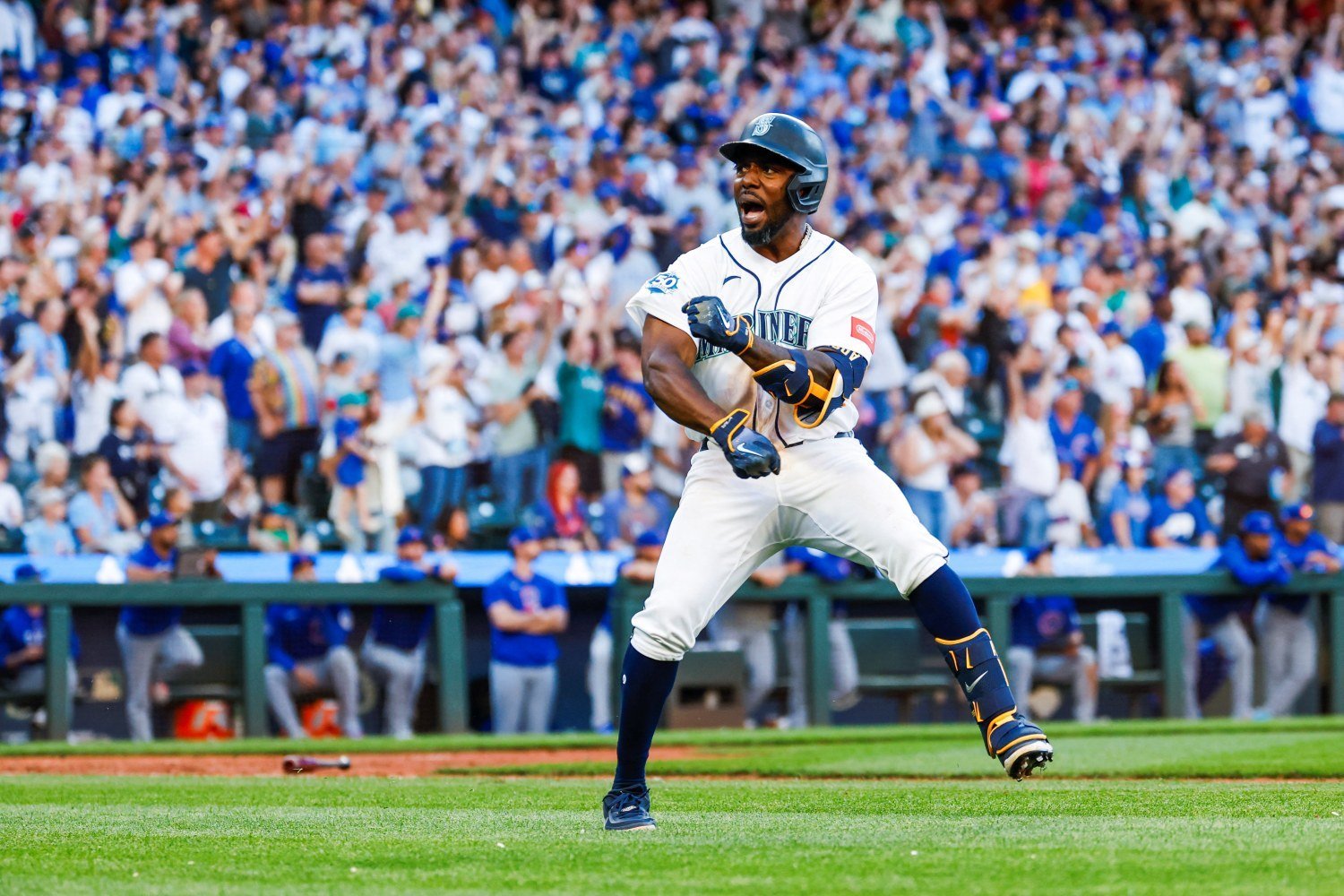 Sometimes, even things that happen to you aren't about you. That's one of life's most important truths, especially in an increasingly interconnected world, but it's also one of the hardest truths to accept. To even say it aloud sounds to obvious that lamenting it makes one sound petulant, but observing the excruciating reality doesn't make you a whiner. When it becomes clear that your role in the world is merely to be someone else's foil, plaything or punching bag, it's not irrational to feel wounded, or even furious. A mature, equanimous response is still required, but you're not crazy for feeling a boiling distemper in your gut at those moments. For the last few years, the Cubs have been secondary characters in the story of the NL Central. They've gone from pale and forgettable challengers to more robust ones, but there comes a point every summer where it becomes clear that the story belongs to the Brewers—that they were the ones with the depth and the stakes and the blessings of good luck to win the division, and that the Cubs were only there to make the story more interesting. Last season, they were hale enough to make one last, unexpected reappearance after the battle had been all but won, pushing the Brewers to the brink in the NLDS, but they were defeated, because the Brewers were better and were always ready for that final showdown, while the Cubs weren't. That's true again this year, at least in part. The Cubs made a valiant charge through July and into August, stringing together wins and savoring the superstar turn of Pete Crow-Armstrong, but it wasn't enough to catch Milwaukee. They never got closer than three games back of Pat Murphy's crew, who weren't as hot as the Cubs were during those weeks but didn't truly falter long enough to open the door for Chicago. After heartbreaking losses in the first two games in Seattle and two corresponding Brewers wins over the team from just outside Atlanta, Craig Counsell is suddenly seven games behind his mentor-turned-sidekick-turned-master again. The division is lost. Worse, the second of the weekend's defeats came on one of those days when you find out you're in someone else's story, too, even if it's a short story instead of the epic novel that is a full season. Less than a week after the game in which Pete Crow-Armstrong hit bookend homers and seemed to take over the contest with the White Sox in a way no other player could, Randy Arozarena did it right in Crow-Armstrong's face—and even one-upped him. Arozarena's homer-robbing catch ensured that the Mariners could keep the game close until the final inning, when Jacob Webb finally stumbled in a more meaningful way. Then Arozarena, whose leadoff homer had given Seattle its first run and whose hustle on an infield single had set up their only other tally until the ninth, hit the walkoff homer to seal his total victory, right over Crow-Armstrong's head. It was a gut punch of a loss, and an unwelcome reminder that not even greatness can protect you from sometimes being outclassed. Crow-Armstrong made the White Sox scenery in a play all about him; then Arozarena did the same thing to Crow-Armstrong's Cubs. The fury that rises in you when you feel like a mouse in the paw of a cat merely playing with its food before eating it isn't unearned. It won't do to rage about it; the mouse can't summon some reserve of strength it had simply forgotten about and overpower the cat. It won't do to ignore it, either. Sometimes, the horrible truth is that you're about to be eaten. No reaction is even required of you, but the more wise and measured your reaction, the better you'll come out in the end—be that merely because you preserved some dignity, or because there might be a twist neither you nor the cat has foreseen yet. Cubs fans should take plenty of solace from the last two days, and from their general recent trend. David Peterson pitched exceptionally well Saturday, and continues to look primed for an October start. Webb's implosion was unfortunate, but overdue, too. He's been so good for so long that a bad game was bound to happen to him; maybe Arozarena will turn out to have been merely a needed setback to properly tell the tale of Webb's transformation from forgettable middle reliever to October relief ace. Meanwhile, Alex Bregman has gotten scorching-hot, in the way the Cubs always knew he could and in a way that should position him (and the team) well for October. The bullpen is a glaring weakness for this team, but this weekend brought the news that Ben Brown and Justin Steele could return in time to help that pen in the postseason, along with Daniel Palencia (already back in the mix), Hoby Milner and Shelby Miller. If the club has to rely on Trent Thornton at all or on Webb to be perfect in October, they've already lost. If they can turn Thornton and Aaron Civale into (say) Brown and Steele, their margin for error should grow. The world we live in is not, of course, a prewritten story. The Cubs, like every team and like each of us as people, are actually writing their ever-changing story, day by day. The Brewers' lead in the Central is probably insurmountable, and if the two teams meet in the playoffs, the odds will favor the Crew. Ownership of the story can always change, but right now, this year remains more about Milwaukee than about Chicago. But while that anger at not being the best (or the most favored by Lady Luck) might linger, Cubs fans should begin to feel a sense of hope. Not all stories end with happy-ever-after for the protagonists, and some secondary characters end up with a well-earned happy ending of their own. The 2026 Cubs are better than any version since the 2017 team, and even a series of setbacks like this weekend's doesn't mean they're doomed to another disappointing denouement. A World Series title is extremely unlikely, but this club is still working its way toward what should be a satisfying place. View the full article
 -
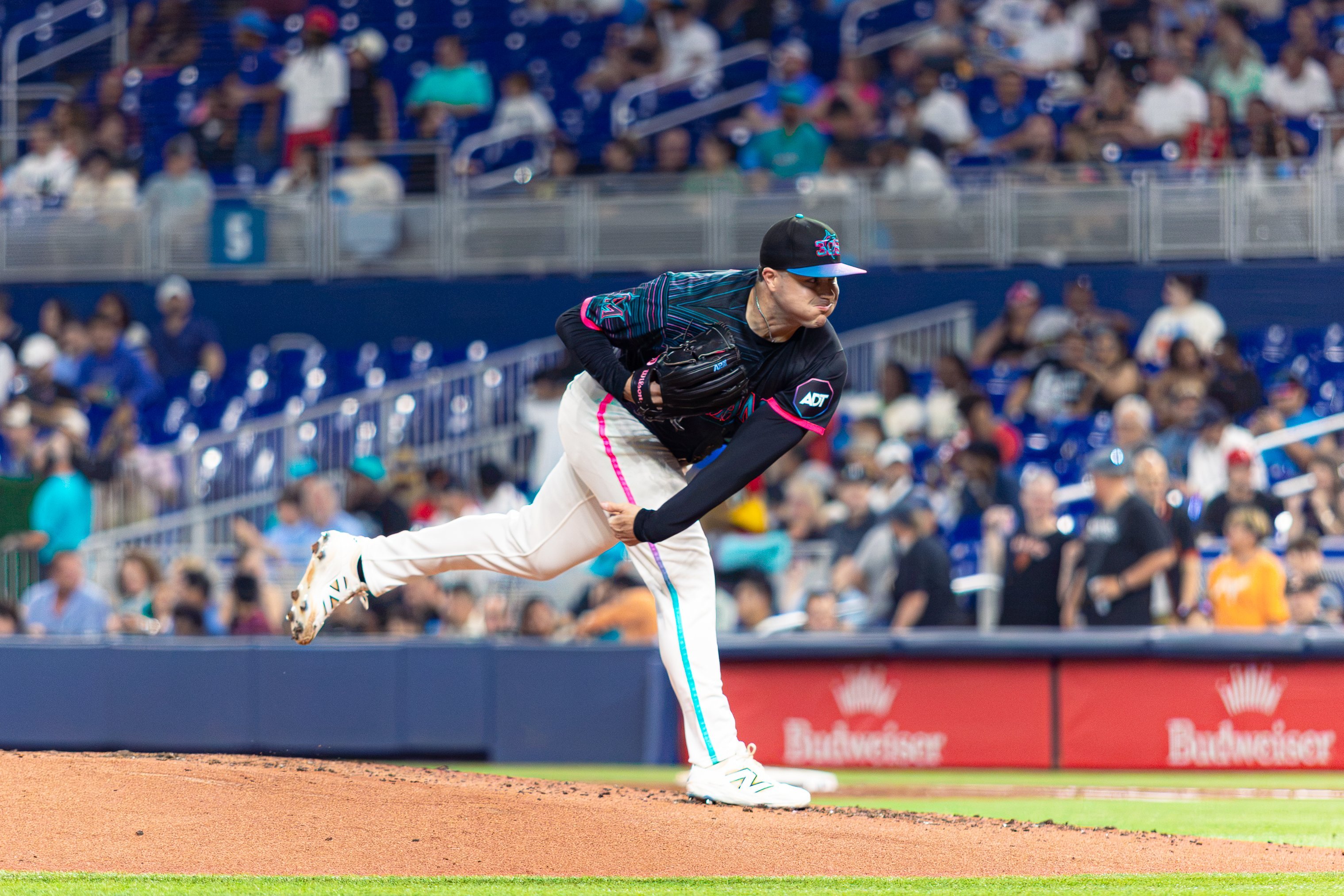 MIAMI, FL — On Sunday morning, the Miami Marlins designated left-handed reliever John King for assignment, making room for right-hander Jack Ralston in their bullpen. King was one of five offseason major league free agent signings that the Marlins made. Throughout the first half of the season, he was easily the best of the bunch, posting a 2.48 ERA and 3.93 FIP in 40 innings of work (40 appearances). He also stranded 23 of 25 inherited baserunners during that span. However, King never returned to form after missing time in July with an ankle injury. He's made 10 appearances since then, posting a 10.24 ERA and 8.67 FIP. In the month of August alone, he has a 13.50 ERA and only had one clean inning, which was his first outing of the month. "I got John probably on a Mount Rushmore of teammates. What a pro," Marlins manager Clayton McCullough said pregame. "John pitched a lot and I asked him to pitch even some times when it probably wasn't the most advantageous. It was about the team, and John always just took the ball and had no ego. This decision for me just came down to looking at our where we are now in this season and the group we have down in the 'pen." Previously the Marlins' top option against left-handed batters, McCullough admitted that King had fallen down the depth chart, pitching exclusively in "down games" that had gotten out of hand. "That's not a great spot for him, and I think for us, it just didn't make a lot of sense, either." The Marlins could have controlled King for the 2027 season via arbitration, but he would've required a raise from this year's $1.5 million salary. They decided he wasn't worth it. Pete Fairbanks is now the lone free agent signing who remains from the offseason, while Cade Gibson is the only left-hander on Miami's active roster. On the flip side, the Marlins calling up Ralston is the perfect move for a bullpen group that has struggled recently. In 39 appearances this season at the Triple-A level, he has posted a 1.66 ERA, 3.82 FIP, 11.31 K/9 and 4.37 BB/9. Ralston was recently added to the Marlins 40-man roster on August 3. President of baseball operations Peter Bendix previously highlighted Ralston as a prime example of somebody who his front office targeted in minor league free agency based on exciting underlying skills and approached with specific tweaks. "They got on phone calls with Jack, explained to him why we were interested, what we wanted to do and got Jack's buy-in, and then they executed," Bendix said. "Jack was the one who actually made those changes, executed on it and continued to get better." The Marlins and Nationals will face off to wrap up this three-game set on Sunday at 1:40 pm with Janson Junk taking the mound. View the full article
 -
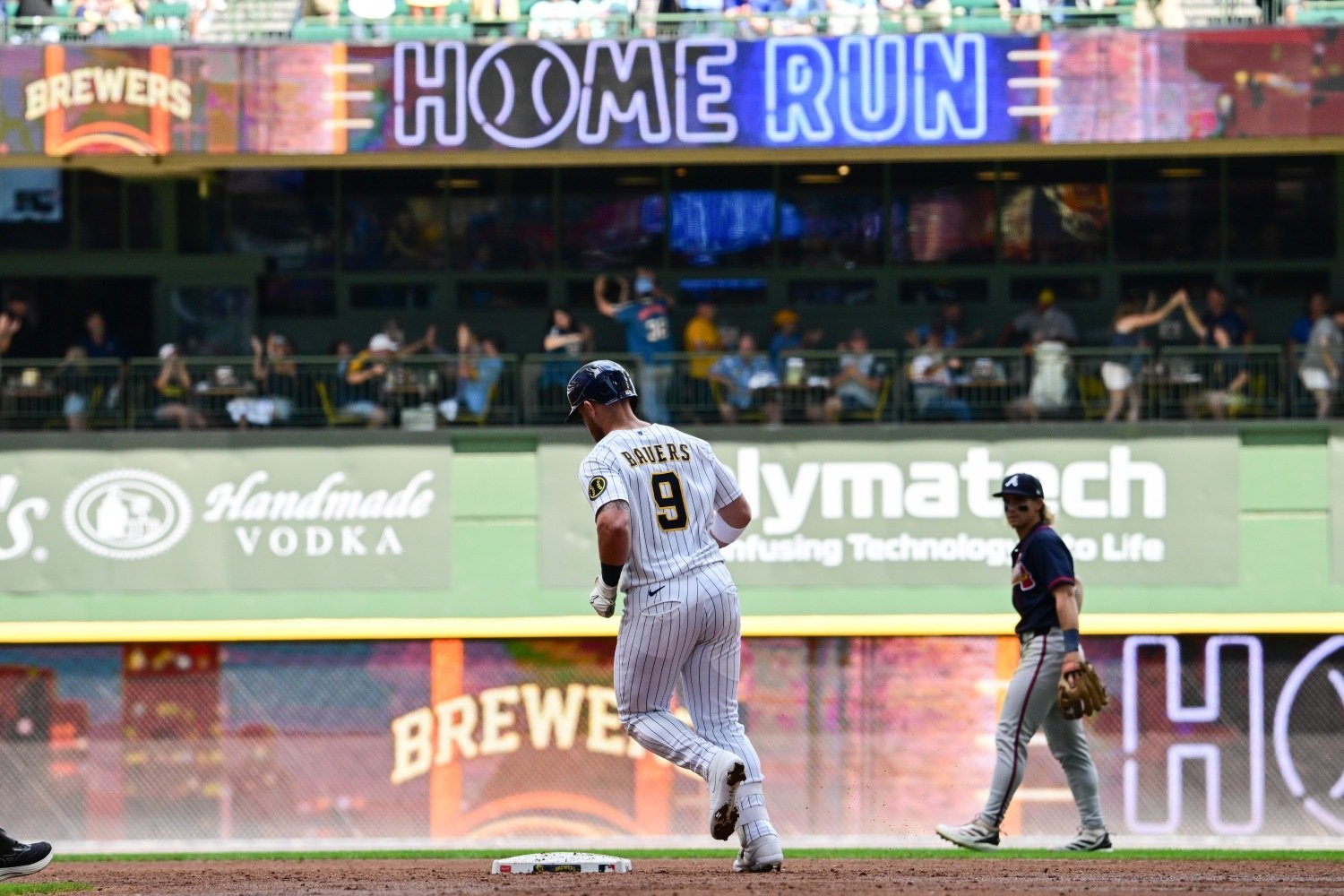 The box score will tell you Jake Bauers hit a two-run homer in the third inning Saturday. However, diving deeper into the at-bat, Bauers did something more impressive and important: he demonstrated how the Brewers have ended up winning three consecutive division titles, and are well on their way to a fourth. Prelude to the Showdown Bauers came into the game with identical .883 OPSes against both left-handed and right-handed pitching over the 2026 season—marking a breakout campaign even for a player who just had a smaller-scale breakout in 2025. Atlanta left-hander Martín Pérez has pitched fairly well this season, coming into the game with a 3.15 ERA and 1.20 WHIP, although he isn’t generating a lot of strikeouts and had issued 45 walks in 111 1/3 innings before the game began. The Situation Bauers faced Pérez with two outs and William Contreras on first base. The Brewers had just evened the score when Contreras hit an RBI single to plate Cooper Pratt, who had reached on an error by Pérez. The veteran southpaw had already thrown 17 pitches in the inning when Bauers came to bat, following 37 pitches in the first two innings. At that moment, in a 1-1 game, Pérez still looked like he would make it through the fifth, at least. He was one out away from escaping the third having given up just one run, and the visitors had gotten six strong innings from Chris Sale Friday afternoon. They were behind in the series, at that moment, but they had a fairly clear path to winning it. The Bauers at-bat, though, would change everything. The Showdown Pérez started by getting a called strike on a sinker, but his next pitch went into the dirt for ball one. Bauers was then fooled by a changeup, swinging and missing to go down 1-2. At that point, Pérez was one pitch away from getting to the dugout. He would have labored some, but it would also be a mental boost to just have gotten out of it. However, his second changeup missed low, evening the count at 2-2. Bauers then became pesky. Pérez threw all five of his pitches in succession, and Bauers fouled each offering off: backdoor sinker, top-rail four-seamer, curveball down, changeup down, front-hip cutter. The pitch count was climbing, but just as importantly, Bauers was proving he had all of Pérez's pitches covered. Bauers fouled off a sinker that would have been ball three (probably his worst swing decision of the plate appearance), and then he fended off a changeup in the lower inside portion of the strike zone. Then Pérez went with a four-seam fastball on the upper-outside portion of the strike zone for the 29th pitch of the inning. He'd run out of ideas and choices; that pitch was just a worse version of the one he'd thrown on the second 2-2 pitch. The result was thunderous. dnZ3ck9fWGw0TUFRPT1fVWdnRlhGQU1BMU1BQ0ZSVFV3QUhCd0ZTQUFCV1VsWUFCQU5XVWdZRVV3b0dCUVVF.mp4 The sudden two-run lead was lovely. With Logan Henderson on the mound and a bullpen as robust as Milwaukee's, even an early cushion like that feels like a big head start toward a win. The real tell, though, laid in the obvious effect that at-bat had on Pérez. This was a pitcher who's asking himself, "What more could I have done?" He got beaten, and he knows it. Martin Perez (Screenshot/X/@Brewers)" class="ipsImage ipsImage_thumbnailed" data-fileid="13778" data-ratio="44.63" data-unique="zmx68bsd1" style="width: 941px; height: auto;" width="1800" data-cke-saved-src="//d3631dqpbz5qlb.cloudfront.net/monthly_2026_08/image.jpeg.748cb6443ed8e94dff44ea16893ed063.jpeg" src="https://d3631dqpbz5qlb.cloudfront.net/monthly_2026_08/image.jpeg.748cb6443ed8e94dff44ea16893ed063.jpeg"> The Aftermath Pérez would get out of the inning, but not before being run to 37 pitches in the frame by an Andrew Vaughn walk and a Christian Yelich groundout. His pitch count was up to 74, and at that point, everyone knew he’d be lucky to get through the fifth inning. In the fourth, Pérez would throw “only” 23 more pitches, giving up another run via a sacrifice fly by Cooper Pratt. He wouldn’t come out for the fifth inning. The Brewers forced Braves manager Walt Weiss (who topped Joey Meyer for AL Rookie of the Year in 1988) to go to his bullpen after four innings, forcing Atlanta to get four frames from their pen even in a loss that cinched the series for the Crew. It was only a small step toward a sweep of the set, but it was a concrete one. The Overall Philosophy The Brewers have a distinct offensive philosophy. Relentless Resiliency is an excellent term for it: They create pressure on pitchers by avoiding strikeouts, avoiding “chasing” pitches out of the strike zone, and making contact. Eventually, the pitcher gets tired, frustrated, or both, leading to a mistake that the Brewers take advantage of. The Bauers-Pérez showdown in the third was that relentless resiliency, boiled down to one at-bat. A refusal to quit, some solid fundamentals, and waiting for the other guy to make that one mistake that lets you break the game open. It was brilliant work by Bauers in the moment, but it was also a microcosm of the team's decade-long run of success and the reasons why they've been able to sustain it. View the full article
 -
The Twins’ Homegrown Starting Pitching Has Been Few and Far Between
DiamondCentric posted an article in Twins Daily
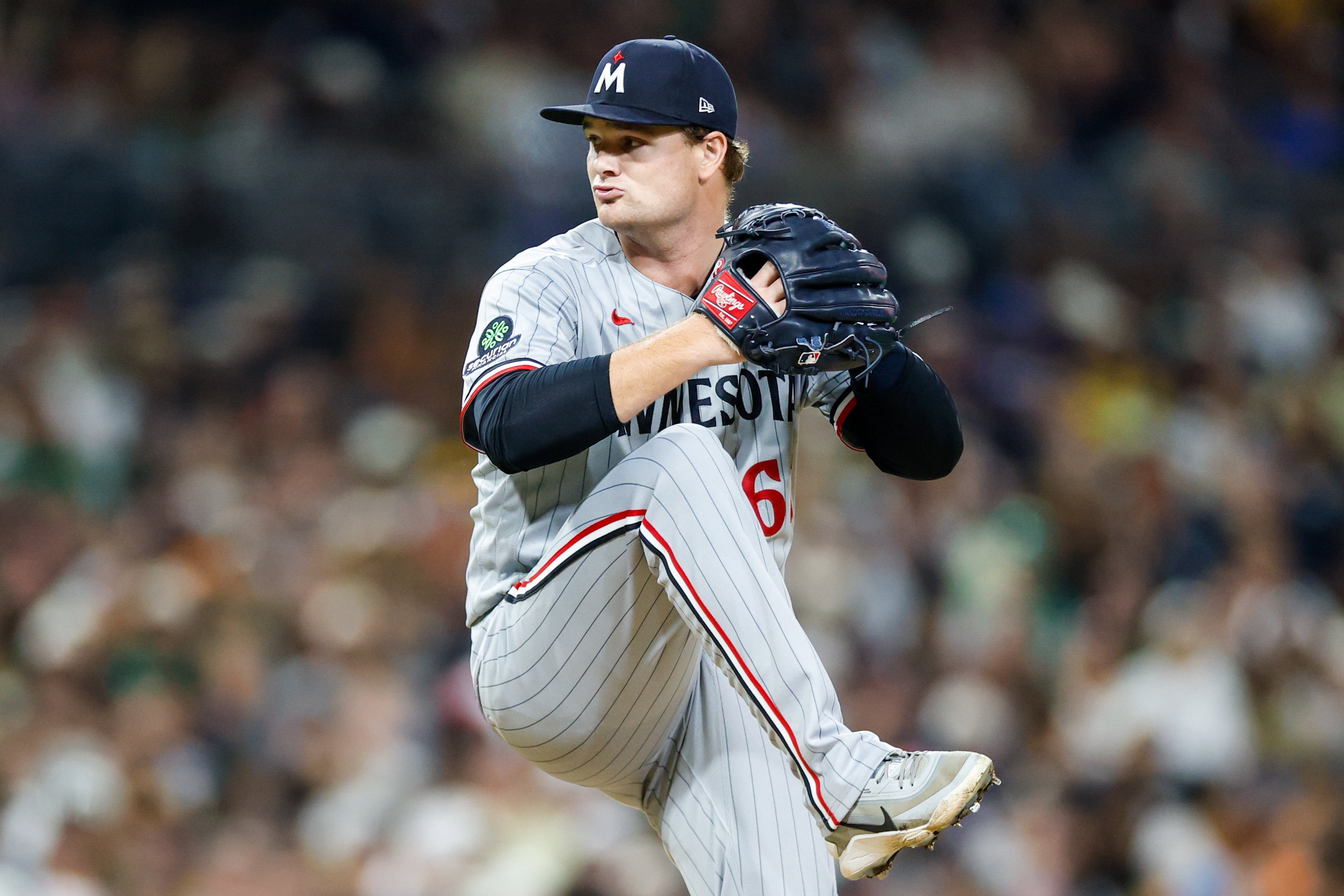 There are certain things, or positions, rather, that organizations can never have enough of. Starting pitching is one of those things, and the Twins have experienced firsthand this year just how important pitching depth can be. With injuries to guys like Pablo López, Mick Abel and, more recently, Joe Ryan, Minnesota’s starting rotation has been tested in ways that probably weren’t expected coming into the season. But seeing so much of the organization’s pitching depth has made me wonder something: Do the Twins have an organizational problem when it comes to developing homegrown starting pitchers? Obviously, there’s one clear outlier in that conversation. Ryan has spent most of his professional career in Minnesota, and the Twins have turned him into one of the better starting pitchers in the American League. He was acquired from Tampa Bay as part of the Nelson Cruz trade in 2021, developed into a legitimate major league starter and eventually became the kind of pitcher the Twins could confidently build a rotation around. But aside from Ryan — who himself was brought in from another organization — when was the last time the Twins turned a homegrown arm into a legitimate, quality starting pitcher? That’s where things get a little murky. I don’t think you can call anybody else currently in the organization a true quality starter. Guys like Zebby Matthews and Bailey Ober have each had flashes of becoming that kind of pitcher, and both were drafted and developed by the Twins. But ultimately, Ober has kind of stabilized as a back-end starter, and on a better team, you could even make the argument that his best role might be in the bullpen. Matthews, meanwhile, is starting to look like a pitcher whose future could eventually take him in that direction as well. Both guys have an ERA north of 4.60 this season, and given their respective track records, I’m not sure you can truly classify either one as a quality major league starter right now. That’s not to say either pitcher is a failure; far from it. The Twins have gotten major-league innings out of both, and Ober in particular has been a valuable part of the rotation for several years now. But there’s a difference between developing a serviceable starting pitcher and developing a legitimate impact arm. And that’s the part the Twins have struggled with. Connor Prielipp could eventually change that conversation. The 25-year-old left-hander has the kind of arsenal that makes you believe there’s something much bigger in there. A mid-to-upper 90s fastball paired with two filthy breaking balls is the profile of someone who could eventually develop into an ace, or at the very least a really good No. 2 or No. 3 starter. The problem is that we just haven’t seen enough consistency yet. Prielipp is still in his rookie season, and there’s obviously plenty of time for him to figure things out. But the fact that he represents one of the clearest candidates in the organization to become a legitimate frontline starter also says something about where the Twins are currently at from a pitching-development standpoint. Even when you look at the kind of pitchers Minnesota has drafted in recent years, there’s a lot of straightening out to do. Dasan Hill was moved at the trade deadline as part of the return for Jeff Hoffman. Riley Quick owns a 15.4% walk rate at Double-A, and Charlee Soto has struggled to stay on the field. It’s way too early to say what any of those guys ultimately will be, but that’s kind of the point. The Twins haven’t really had that future ace, top-100 type of pitching prospect emerge from their system in a long time. And I think a big part of that is because they haven’t been able to develop starting pitchers particularly well. Now, I didn’t mention Taj Bradley, Abel or Kendry Rojas. And that’s because all three did a significant amount of their development with their former organizations. Bradley threw 354 innings with Tampa Bay before coming to Minnesota. Abel made his MLB debut with Philadelphia last year, and Rojas only threw five innings beyond Double-A with Toronto before joining the Twins. You could certainly argue that Abel and Rojas (especially) are partially the products of Minnesota’s development system, especially considering how much of their recent development has happened with the Twins. But even still, they aren’t your traditional homegrown players, and in Rojas’ case, his current trajectory looks more like that of a potential relief pitcher than a future rotation anchor. That’s not necessarily an indictment of the Twins’ development system by itself. Teams acquire players from other organizations all the time, and the ability to take someone else’s prospect and maximize his talent is an important part of player development. But the Twins have also spent a significant amount of draft capital on pitching. In fact, nine of their top 11 picks in the most recent draft were pitchers. The Twins clearly believe they can figure this out. They’re betting heavily on their ability to identify arms, develop them and eventually turn them into major league contributors. Maybe guys like Quick, Prielipp and Abel will make me eat my words. Maybe one of them eventually becomes the kind of pitcher the Twins have been missing. But until that happens, I think the organization’s track record of developing major league starting pitchers is something worth addressing. Because teams can never have enough starting pitching, and right now, the Twins don’t seem to have enough of it coming from within. View the full article
 -
 Chicago Cubs Transactions No roster moves. Iowa Breaks Through With Four In The 10th At Toledo James Triantos led off the game with a home run, Iowa spent the next eight innings chasing the lead back, and a four-run 10th inning finished off a 7-3 win over the Toledo Mud Hens. Triantos drove his eighth of the season to left center, and that run stood alone until the Mud Hens moved ahead. Trei Cruz and Chris Meyers singled, and Max Burt lined a two-run single to center for a 2-1 Toledo lead. Iowa answered in the ninth. Jackson Cluff was hit by a pitch, Justin Dean came on to run, and Jordan Nwogu singled. Ethan Hearn then ripped a single to center to tie the game. Chas McCormick followed, reaching on a fielder's choice, and a fielding error let Nwogu score for a 3-2 lead. Toledo tied it again in the bottom half on a wild pitch. In the 10th, zombie runner Triantos moved to third on a pair of walks, Greg Jones walked to force in the go-ahead run, and Dean cleared the bases with a double for a 7-3 lead. Jordan Wicks opened for Iowa and gave up two runs over five innings, walking one and striking out six. Antoine Kelly allowed a run in one inning and earned the win. Shelby Miller, Hoby Milner, Ethan Roberts, and Tyler Ferguson combined for four innings without a run. Dean finished 1-for-1 with three runs batted in, Triantos went 2-for-5 with two runs, and Ben Cowles collected his 21st double. Player AB R H RBI BB K James Triantos 5 2 2 1 0 1 Ben Cowles 5 0 1 0 0 2 Owen Ayers 4 1 0 0 1 0 BJ Murray 4 1 1 0 1 2 Greg Jones 3 1 0 1 2 1 Jackson Cluff 3 0 0 0 0 1 Justin Dean 1 1 1 3 0 0 Jordan Nwogu 4 1 1 0 1 1 Ethan Hearn 5 0 1 1 0 3 Ed Howard 3 0 1 0 0 0 Chas McCormick 1 0 0 0 0 0 Player IP H R ER BB K HR Jordan Wicks 5 4 2 2 1 6 0 Shelby Miller 1 1 0 0 0 2 0 Hoby Milner 0 2/3 1 0 0 0 2 0 Ethan Roberts 1 1/3 0 0 0 0 1 0 Antoine Kelly 1 1 1 1 1 0 0 Tyler Ferguson 1 0 0 0 0 1 0 Knoxville Drops A 4-3 Decision At Pensacola Knoxville led early, watched the game turn on a three-run fifth inning, and could not complete the comeback in a 4-3 loss to the Pensacola Blue Wahoos. Leadoff hitter Kane Kepley started the game with a walk, moved to third on a groundout, and scored on a Miguel Useche line drive to center for a 1-0 lead. Pensacola tied the game in the fourth on a Dillon Lewis triple, then took control in the fifth. Ethan O'Donnell opened the inning with a home run, Fenwick Trimble followed with his 15th of the season, Juan Matheus doubled, and Brandon Compton singled him home for a 4-1 lead. Knoxville answered in the sixth. Useche drew a walk, and Edgar Alvarez pulled a two-run homer to right field, his 10th of the year, to make it 4-3. That was the last run the Smokies would get. Brooks Caple carried the bulk of the work for Knoxville, allowing four runs on seven hits over five innings with no walks and one strikeout. Both Pensacola home runs came against him. Ethan Flanagan followed with two hitless innings and three strikeouts, and Vince Reilly added a hitless inning with two strikeouts. The two relievers retired all nine hitters they faced. Knoxville managed four hits and five walks. Kepley walked three times and scored a run, Useche went 1-for-3 with a walk and a run, and Ariel Armas and Carter Trice each singled. Alvarez accounted for both Smokies runs batted in. Player AB R H RBI BB K Kane Kepley 1 1 0 0 3 0 Alex Ramírez 4 0 0 0 0 2 Miguel Useche 3 1 1 0 1 0 Andy Garriola 4 0 0 0 0 1 Ariel Armas 4 0 1 0 0 1 Edgar Alvarez 4 1 1 2 0 2 Carter Trice 4 0 1 0 0 1 Dom Krupinski 3 0 0 0 0 1 Karson Simas 3 0 0 0 1 0 Player IP H R ER BB K HR Brooks Caple 5 7 4 4 0 1 2 Ethan Flanagan 2 0 0 0 0 3 0 Vince Reilly 1 0 0 0 0 2 0 South Bend Rallies Past West Michigan For A 4-3 Win South Bend trailed by three runs with nine outs left, then took the lead an inning at a time in a 4-3 win over the West Michigan Whitecaps. Pierce Coppola opened the game with five hitless innings, walking two and striking out seven, and the Cubs carried a scoreless tie into the sixth. Cristian Santana singled, Jackson Strong walked, and Bryce Rainer drove a three-run homer to right center for a 3-0 Whitecaps lead. The Cubs got two of those runs right back. Leadoff hitter Josiah Hartshorn homered to right field for his 15th of the season with South Bend. Angel Cepeda followed two batters later with a home run to left, his sixth. That cut the deficit to 3-2, and the score held into the eighth. Logan Poteet started the eighth with a double, and Justin Stransky came on to run. Hartshorn lined a single to right to tie the game, Jose Escobar singled to center, and Cepeda grounded a single through the left side to bring Hartshorn home with the go-ahead run. Yoendris Gonzalez closed it out with two hitless innings and three strikeouts to earn the win. Hartshorn finished 3-for-4 with a home run, two runs batted in, and two runs scored, and Cepeda went 2-for-4 with a home run and two runs batted in. Nate Williams allowed three runs on three hits over two innings with two walks and four strikeouts. South Bend pitching struck out 14 and held West Michigan to three hits. Player AB R H RBI BB K Josiah Hartshorn 4 2 3 2 0 0 Jose Escobar 4 0 1 0 0 0 Angel Cepeda 4 1 2 2 0 1 Ethan Conrad 4 0 0 0 0 2 Kade Snell 4 0 0 0 0 2 Matt Halbach 3 0 1 0 0 0 Brennan Hudson 3 0 0 0 0 1 Logan Poteet 3 0 1 0 0 1 Justin Stransky 0 1 0 0 0 0 Alexey Lumpuy 3 0 0 0 0 2 Player IP H R ER BB K HR Pierce Coppola 5 0 0 0 2 7 0 Nate Williams 2 3 3 3 2 4 1 Yoendris Gonzalez 2 0 0 0 0 3 0 Myrtle Beach Pelicans: Postponed The Myrtle Beach Pelicans did not play. Their game was postponed. Top-20 Prospect Performance Josiah Hartshorn: 3-for-4, HR, 2 R, 2 RBI Cade Townsend: DNP Jaxon Wiggins: DNP Owen Ayers: 0-for-4, R, BB Kane Kepley: 0-for-1, 3 BB, R Ethan Conrad: 0-for-4, 2 K Caden Sorrell: DNP Kaleb Wing: DNP Myles Bailey: DNP Brooks Caple: 5 IP, 7 H, 4 R, 4 ER, 0 BB, 1 K, 2 HR James Triantos: 2-for-5, 2B, HR, 2 R, RBI, K Will Sanders: DNP Juan Cabada: DNP Jostin Florentino: DNP Derniche Valdez: DNP Grant Kipp: DNP Jose Escobar: 1-for-4 Ariel Armas: 1-for-4, K Fernando Cruz: DNP Brandon Birdsell: DNP View the full article
 -
 Over the last decade, there haven’t been many hitters as consistent as San Diego Padres’ third baseman Manny Machado. However, the 2026 season has begun to dismantle that narrative. In what’s been an unusually down year for the 34-year-old, Machado is hitting just .217 with an OPS barely above .700. The underlying data would indicate that there’s been some bad luck scattered throughout his season, but regardless, this simply isn’t what we’re used to seeing from one of the best hitters of his generation. For a player who has established such a high floor over the course of his career, Machado’s struggles have been especially noticeable. And that's after a brief period of time in which it looked like he had finally figured things out. Machado had an excellent month of July, slashing .292/.369/.552 for a .921 OPS. More importantly, the quality of contact behind those numbers was exactly what the Padres were used to seeing from him. He averaged 92.5 MPH in exit velocity, posted a 47.9% hard-hit rate and started getting the ball in the air more consistently. For the first time all season, he was also getting some favorable results on balls in play, posting a .319 BABIP. Everything seemed to be trending in the right direction. Unfortunately for player and team, that success has been short-lived. Across 81 plate appearances in August, Machado is hitting just .236 with two extra-base hits. His OPS during that stretch sits at a horrendous .613, while his wRC+ has plummeted from 151 in July to just 80 this month. So, after looking like his first-half struggles were behind him, Machado has found himself right back in another frustrating stretch. The biggest reason for that isn’t necessarily that he’s striking out more, either. In fact, Machado’s strikeout rate has actually gone down from where it was in July. Instead, it’s about how he’s hitting the baseball. Interestingly enough, the quality of contact Machado is making is still right in line with what we saw from him during his resurgent July. His average exit velocity sits at 92.2 MPH, while his hard-hit rate has actually increased. Those are encouraging signs. The problem is that he’s not putting the ball in the air nearly as often. Machado’s ground-ball rate is up roughly 17 percentage points from July, while his fly-ball rate has dropped by nearly the exact same amount. He’s also pulling the ball more frequently, but because so many of those balls are ending up on the ground, the results haven’t followed. That has played a significant role in his BABIP falling considerably. Thankfully, San Diego has been able to win games while Machado has struggled. The question now is what happens if he starts hitting again. Because as frustrating as this season has been for the third baseman, this most recent slump feels like one that should eventually come to an end. There’s simply too much quality in the underlying contact for him to remain this ineffective forever. If he can start elevating the baseball again and turn some of that hard contact into the type of results we saw in July, the numbers should follow. View the full article
 -
 Jack Toomey signed with the New York Mets as an undrafted free agent in July. He finally got into a professional game this week. On Saturday, he hit his first home run, and did he ever make it count. The former Boston College outfielder slugged a walk-off grand slam in the bottom of the 10th inning to give St. Lucie a 6-2 comeback victory over Lakeland. The Mets entered the inning down 2-1. Vladi Gomez tied the game with a sacrifice fly to right. St. Lucie then loaded the bases with two out on a walk, a single and a hit by pitch. Toomey stepped up next and, on the first pitch, sent a 390-foot drive over the left-field wall. Toomey finished 2-for-5 (he singled in the second), giving him four hits in 11 at-bats over his first three games. He also contributed an outfield assist as he doubled a runner off second base from right field. Those are all great ways for a player without a draft pedigree to get noticed. Elsewhere in the organization: Syracuse shut out Worcester 3-0. Jonah Tong limited the Red Sox to three hits and two walks over 5 2/3 innings for his fourth win of the season. The Mets scored all their runs in the second inning on a trio of RBI singles. Binghamton blanked Altoona 4-0. RJ Gordon went six innings for the win. His main offensive support came from Jacob Reimer, who hit a two-run single in the second. Brooklyn routed Asheville 15-3 one night after scoring 16 runs in a win. The Cyclones scored six runs before making an out in this game. Five different players drove in at least two runs. Elian Peña and Yonatan Henriquez each knocked in three. New York Mets Transactions No Roster Moves Syracuse Keeps The Line Moving In Decisive Inning The Mets did all their scoring after two were out. Hayden Senger walked and Shawn Ross singled to put runners at first and second. Zack Short lined a single to center to bring in Senger with the game's first run. Émilien Pitre followed with a ground-ball single to right to score Ross. ,D'Andre Smith grounded another single to right to score Short and make it 3-0. Tong struck out just three and was just OK throwing strikes (54 of 88 pitches, 61 percent), but he allowed just one baserunner in each of his first five innings. Tong's fielding may have been his biggest liability: he threw away a pair of pickoff throws to first base. Chris Devenski followed Tong and threw 1 1/3 hitless innings, striking out three. Tobias Myers got the final six outs for his first save of the season. He worked around two hits and a walk. Syracuse Batting Player AB R H RBI BB K Émilien Pitre, 2B 4 0 1 1 0 1 D'Andre Smith, CF 4 0 2 1 0 1 Ronny Mauricio, SS 4 0 1 0 0 2 Jose Ramos, RF 4 0 1 0 0 0 MJ Melendez, LF 4 0 0 0 0 3 Nick Lorusso, 1B 3 0 1 0 0 1 Hayden Senger, C 2 1 0 0 1 0 Shawn Ross, DH 3 1 1 0 0 1 Zack Short, 3B 3 1 2 1 0 0 Syracuse Pitching Player IP H R ER BB K HR Jonah Tong 5 2/3 3 0 0 2 3 0 Chris Devenski 1 1/3 0 0 0 0 3 0 Tobias Myers 2 2 0 0 1 1 0 Gordon, Reimer Push Binghamton Past Altoona The Rumble Ponies are 14-2 in August after their series-clinching victory. They're now 26-24 in the second half of the Eastern League season and tied for second, 2 1/2 games behind first-place Reading. Gordon earned the win despite having traffic on the bases all night. He was helped greatly by two double plays on the infield. He allowed four hits and three walks and struck out five. Binghamton scored its first run in the first on a bases-loaded walk to John Bay, which forced in Marco Vargas. The Ponies tripled the lead an inning later. Jamari Baylor led off with a single and Vincent Perozo walked behind him. Both moved up a base on Vargas' flyout. Jefferson Rojas fouled out to the catcher, but Reimer lined a single to center to bring in Baylor and Perozo and give Binghamton a 3-0 lead. Reimer finished the night 3-for-4. Perozo made it 4-0 in the fourth with his eighth homer of the year. Felipe De La Cruz, Brendan Girton and Carlos Guzman each threw an inning of relief to finish the shutout. Binghamton Batting Player AB R H RBI BB K Marco Vargas, DH 3 1 0 0 1 2 Jefferson Rojas, SS 3 0 1 0 1 0 Jacob Reimer, 3B 4 0 3 2 0 0 John Bay, CF 2 0 0 1 2 2 Corey Collins, 1B 4 0 0 0 0 1 Kevin Parada, C 4 0 0 0 0 1 JT Benson, RF 4 0 0 0 0 1 Jamari Baylor, 2B 4 1 1 0 0 1 Vincent Perozo, LF 3 2 1 1 1 0 Branny De Oleo, LF 0 0 0 0 0 0 Binghamton Pitching Player IP H R ER BB K HR R.J. Gordon 6 4 0 0 3 5 0 Felipe De La Cruz 1 0 0 0 0 0 0 Brendan Girton 1 0 0 0 0 1 0 Carlos Guzman 1 0 0 0 0 2 0 Brooklyn Gets Right Back To Work Against Asheville The first seven Cyclones batters reached base and 11 batters total came to the plate in the first.. Sammy Stafura led off the game with a walk and scored one batter later via two infield errors on Elian Pena's grounder. Aidan Smith walked. Ronald Hernandez singled to drive in Pena. Trey Snyder singled to load the bases. Henriquez doubled home Smith and Hernandez for a 4-0 lead. John Spikerman hit a two-run single, driving in Snyder and Henriquez, to complete the scoring. Brooklyn manufactured three runs in the third as it turned the game into a laugher. A Colin Houck single and walks to Daiverson Gutierrez and Peña loaded the bases. Smith scored Houck with an infield single, Hernandez walked to force in Gutierrez, and Snyder scored Peña with a sacrifice fly. Jose Chirinos started but did not get the win as he only went four innings. He allowed a run on four hits, walked two and struck out four. He threw 81 pitches, 50 for strikes. Ryan Dollar and Parker Carlson followed with two innings of relief apiece, Dollar was credited with the win despite allowing a run. Joe Scarborough allowed a run in the ninth. Stafura reached base five times from the leadoff spot with a hit, three walks and a hit by pitch. Brooklyn Batting Player AB R H RBI BB K Sammy Stafura, 2B 2 1 1 1 3 1 Elian Peña, SS 5 3 1 3 1 1 Aidan Smith, CF 5 2 2 1 1 2 Ronald Hernandez, 1B 4 1 2 3 2 1 Trey Snyder, LF 4 1 2 2 0 1 Yonatan Henriquez, 3B 6 2 2 2 0 0 John Spikerman, RF 5 2 2 2 1 2 Colin Houck, DH 5 1 1 0 0 1 Daiverson Gutierrez, C 2 2 0 0 2 1 Brooklyn Pitching Player IP H R ER BB K HR Jose Chirinos 4 4 1 1 2 4 0 Ryan Dollar 2 3 1 1 1 1 1 Parker Carlson 2 0 0 0 2 1 0 Joe Scarborough 1 1 1 1 0 3 1 Toomey Walk-Off Closes St. Lucie's Late Show The Mets were held scoreless for the first seven innings, but then scratched out a run in the eighth to tie the game 1-1. Reed Stallman led off with a single and Wyatt Vincent followed with a walk. Vladi Gomez failed to bunt them over as he was called out for batter interference. Ryan Tayman walked to load the bases. Eli Serrano III struck out looking for the second out. With Kuhio Aloy at the plate, Lakeland's pitcher threw a wild pitch to bring in Stallman. Lakeland took the lead in the top of the 10th on an run-scoring double, which set the stage for St. Lucie's closing act. Vincent bunted zombie runner Jake Ogden to third and Gomez followed with his tying sac fly. Tayman walked, Bohan Adderley singled, and Aloy was hit by a pitch to load the bases. Toomey then sent the home fans happy with his slam. Joel Lara pitched four innings in a bulk relief role after Aidan Keenan and AJ Krodel opened with an inning each. He allowed a run on two hits, walked four and struck out three. Ernesto Mercedes and Zack Mack each worked two innings after Lara, with Mack earning credit for the win. St. Lucie Batting Player AB R H RBI BB K Boston Baro, 2B 3 0 0 0 0 0 Vladi Gomez, 2B 1 0 0 1 0 0 Ryan Tayman, C 3 1 1 0 2 0 Eli Serrano III, LF 4 0 0 0 0 3 Bohan Adderley, CF 1 1 1 0 0 0 Kuhio Aloy, DH 2 1 0 0 1 1 Jack Toomey, RF 5 1 2 4 0 0 Jeremy Rodriguez, 3B 3 0 0 0 1 1 Dylan Carey, SS 4 0 0 0 0 3 Reed Stallman, 1B 4 1 1 0 0 2 Jake Ogden, PR 0 1 0 0 0 0 Wyatt Vincent, LF 2 0 0 0 1 2 St. Lucie Pitching Player IP H R ER BB K HR Aidan Keenan 1 1 0 0 0 1 0 AJ Krodel 1 0 0 0 0 2 0 Joel Lara 4 2 1 1 4 3 0 Ernesto Mercedes 2 0 0 0 1 4 0 Zack Mack 2 2 1 0 1 2 0 Top-20 Prospect Performance Jonah Tong: 5 2/3 IP, 3 H, 0 R, 0 ER, 2 BB, 3 K Jack Wenninger: DNP Elian Peña: 1-for-5, 3 R, 3 RBI, BB, K Mitch Voit: DNP Ryan Clifford: DNP Nick Morabito: DNP Jonathan Santucci: DNP Carson Wiggins: DNP Jacob Reimer: 3-for-4, 2 RBI Aiden Robbins: DNP Randy Guzman: DNP Wandy Asigen: DNP Chris Suero: DNP Jefferson Rojas: 1-for-3, BB Will Watson: DNP Shane Sdao: DNP Eli Serrano III: 0-for-4, 3 K Antonio Jimenez: DNP Émilien Pitre: 1-for-4, RBI, K Dylan Ross: DNP View the full article
 -
 Manny Machado looked like he had finally figured things out in July. A dramatic shift in his batted-ball profile has helped send him right back into a slump. View the full article
 -
The Cubs Should Give Jaxon Wiggins A September Opportunity
DiamondCentric posted an article in North Side Baseball
 Jaxon Wiggins’ stock has taken a hit this season, but the Cubs still have plenty of reasons to believe in his long-term upside. A September call-up could give both sides a chance to find out just how close he really is. View the full article
