


DiamondCentric
-
Posts
2,631 -
Joined
-
Last visited
Never
Content Type
Profiles
Forums
Events
News
Tutorials & Help
Major League Baseball Videos
Guides & Resources
Store
Downloads
Gallery
Everything posted by DiamondCentric
-

 Five pitchers combined on a four-hit shutout and Billy Amick hit his first Triple-A home run as Syracuse defeated Worcester 5-0 Thursday night. Kevin Herget worked the first two innings, allowing two hits. Brian Metoyer, Joe Jacques, Dan Hammer and Dylan Ross followed him out of the bullpen and combined to strike out 11 while allowing the other two hits. The Mets built their lead with single runs in each of the first four innings . Amick finished the picket fence with a two-out drive beyond the left-center field wall. Jose Ramos drove in two runs with an RBI single in the third and an RBI double in the seventh that completed the scoring. Elsewhere in the organization: Binghamton lost to Altoona 7-5. The Rumble Ponies were forced to play from behind after the Curve nicked starter Noah Hall for two runs in the first inning. Kevin Parada homered for the final margin. Brooklyn surrendered 10 runs in the fourth inning of its 13-6 loss to Asheville. The Cyclones walked four, two with the bases loaded, and committed a run-scoring passed ball in the frame. Trey Snyder hit a three-run homer in the first inning. St. Lucie allowed five unearned runs in its 6-2 loss to Lakeland. Jake Ogden drove in both Mets runs with a second-inning single. Christian Rodriguez allowed one run on two hits over the final 4 1/3 innings. New York Mets Transactions New York Mets sent 1B Mark Vientos on a rehab assignment to Binghamton Rumble Ponies. Metoyer Masterful In Syracuse Win Metoyer turned in the best outing among the Mets' five pitchers. He struck out five of the seven batters he faced over 2 1/3 perfect innings, including his last four. That performance was more than enough for him to earn the win from the official scorer. Jacques went 1 2/3 innings and Hammer worked two innings before Ross finished the shutout in the ninth. Syracuse's first run scored without a hit. Nick Morabito and Émilien Pitre walked to lead off the bottom of the first. Amick struck out, and MJ Melendez grounded into a force out that moved Morabito to third. Nick Lorusso walked to load the bases, Ramos reached on an error by second baseman Franklin Arias, the Red Sox's top prospect, bringing in Morabito. The Mets' second run came home on a throwing error by shortstop Isiah Kiner-Falefa, who is rehabbing with Worcester. Shawn Ross hit a pair of doubles and scored a run for Syracuse. Syracuse Mets Hitting Player AB R H RBI BB K Nick Morabito, LF 4 1 1 0 1 0 Émilien Pitre, 2B 3 1 1 0 1 0 Billy Amick, 3B 4 1 1 1 0 2 MJ Melendez, DH 4 0 1 0 0 0 Nick Lorusso, 1B 3 1 1 0 1 2 Jose Ramos, RF 4 0 2 2 0 1 D'Andre Smith, CF 4 0 0 0 0 2 Shawn Ross, C 4 1 2 0 0 2 Zack Short, SS 4 0 1 0 0 1 Totals 34 5 10 3 3 10 Syracuse Mets Pitching Player IP H R ER BB K HR Kevin Herget 2 2 0 0 0 1 0 Brian Metoyer 2 1/3 0 0 0 0 5 0 Joe Jacques 1 2/3 0 0 0 2 3 0 Dan Hammer 2 1 0 0 1 2 0 Dylan Ross 1 1 0 0 1 1 0 Totals 9 4 0 0 4 12 0 Parada Homers Late In Binghamton Loss Parada went deep with one out in the ninth inning to make the score 7-5. Corey Collins had walked ahead of him. It was Parada's fourth homer of the season for Binghamton. The Ponies' rally ended there, however, as JT Benson and Jamari Baylor both popped out to the second baseman to end the game. Hall went the first six innings and allowed five runs on seven hits. He walked one and struck out five. The good news was he pounded the zone, throwing 53 of his 78 pitches for strikes. Binghamton's other runs came on sacrifice flies by Benson and Jacob Reimer and a groundout by Baylor. Binghamton Rumble Ponies Hitting Player AB R H RBI BB K Jefferson Rojas, SS 4 1 1 0 0 1 Jacob Reimer, DH 3 0 0 1 0 0 Chris Suero, CF 4 0 1 0 0 2 John Bay, LF 4 1 1 0 0 3 Corey Collins, 1B 2 1 1 0 2 1 Kevin Parada, C 4 2 2 2 0 0 JT Benson, RF 3 0 0 1 0 0 Jamari Baylor, 2B 4 0 0 1 0 2 Branny De Oleo, 3B 3 0 0 0 0 3 Totals 31 5 6 5 2 12 Binghamton Rumble Ponies Pitching Player IP H R ER BB K HR Noah Hall 6 7 5 5 1 5 1 Brendan Girton 1 2 1 1 1 0 0 Saul Garcia 2 2 1 1 0 3 0 Totals 9 11 7 7 2 8 1 Brooklyn's Early Lead Vanishes At Asheville The Cyclones led 4-1 going into the bottom of the fourth. Thirteen batters later, they were staring at an 11-4 deficit. Aside from the walks and the passed ball, the Cyclones committed an error and surrendered six hits in the inning. Starter Joel Díaz and relievers Joe Scarborough, and Elwis Mijares were each charged with runs. Brooklyn got off to a fast start thanks to Snyder's home run, which followed walks to Sammy Stafura and Ronald Hernandez. The Cyclones' fourth run scored when John Smith III hit into double play in the top of the fourth, bringing home John Spikerman. Smith clubbed his first home run for Brooklyn in the sixth, a solo shot. Brooklyn Cyclones Hitting Player AB R H RBI BB K Sammy Stafura, SS 4 1 0 0 1 3 Aidan Smith, RF 4 1 0 0 1 3 Ronald Hernandez, 1B 3 1 1 0 2 0 Trey Snyder, CF 4 1 1 3 0 1 John Spikerman, DH 3 1 0 0 1 1 Antonio Jimenez, 2B 3 0 0 0 1 3 John Smith III, LF 3 1 1 1 0 0 Colin Houck, 3B 4 0 1 0 0 1 Daiverson Gutierrez, C 4 0 1 0 0 1 Totals 32 6 5 4 6 13 Brooklyn Cyclones Pitching Player IP H R ER BB K HR Joel Díaz 3 7 3 3 1 5 1 Joe Scarborough 0 1/3 0 4 4 4 1 0 Elwis Mijares 1 1/3 7 6 5 0 1 0 Gregori Louis 1 1/3 0 0 0 2 2 0 Juan Arnaud 1 0 0 0 1 2 0 Ryan Dollar 1 0 0 0 0 1 0 Totals 8 14 13 12 8 12 1 Defensive Mistakes Cost St. Lucie Lakeland's first five runs were aided by a Ryan Tayman passed ball in the first, a fielding error by first baseman Julio Zayas in the fourth, and a throwing error by shortstop Boston Baro in the fifth. Baro's error broke a 2-2 tie and led to a three-run inning for the Flying Tigers. Ogden's hit in the second put St. Lucie in front 2-1. Zayas walked and Vladi Gomez doubled to left to put runners at second and third with two outs. Starter Nathan Hall allowed three hits and one unearned run over three innings. He walked one and struck out one. Austin Brown followed and was tagged with four unearned runs over his 1 2/3 innings of work. Rodriguez surrendered the lone earned run, on a solo home run in the eighth. He struck out four and walked one. St. Lucie Mets Hitting Player AB R H RBI BB K Aiden Robbins, CF 5 0 0 0 0 2 Boston Baro, SS 2 0 1 0 0 0 Dylan Carey, SS 1 0 0 0 1 0 Ryan Tayman, C 3 0 0 0 1 2 Jack Toomey, LF 3 0 1 0 1 1 Yovanny Rodriguez, DH 3 0 0 0 1 2 Julio Zayas, 1B 2 1 0 0 2 1 Vladi Gomez, 3B 4 1 1 0 0 1 Jake Ogden, 2B 3 0 1 2 1 1 Wyatt Vincent, RF 3 0 0 0 0 1 Totals 29 2 4 2 7 11 St. Lucie Mets Pitching Player IP H R ER BB K HR Nathan Hall 3 3 1 0 1 1 0 Austin Brown 1 2/3 2 4 0 2 1 0 Christian Rodriguez 4 1/3 2 1 1 1 4 1 Totals 9 7 6 1 4 6 1 Top-20 Prospect Performance Jonah Tong: DNP Jack Wenninger: DNP Elian Peña: DNP Mitch Voit: DNP Ryan Clifford: DNP Nick Morabito: 1-for-4, BB, R Jonathan Santucci: DNP Carson Wiggins: DNP Jacob Reimer: 0-for-3, RBI Aiden Robbins: 0-for-5, 2 K Randy Guzman: DNP Wandy Asigen: DNP Chris Suero: 1-for-4, 2 K Jefferson Rojas: 1-for-4, 2B, R, K Will Watson: DNP Shane Sdao: DNP Eli Serrano III: DNP Antonio Jimenez: 0-for-3, BB, 3 K Émilien Pitre: 1-for-3, BB, R Dylan Ross: 1 IP, 1 H, 0 R, 0 ER, 1 BB, 1 K View the full article
 -
 With the San Diego Padres currently in postseason position, Randy Holt and Steve Drumwright take the opportunity to talk about the Friars' chances in the postseason. Do they have what it takes to win the franchise's first World Series? Or are they more apt to be eliminated in the Wild Card Series? Randy and Steve also take a look back at the week that was, beginning with Jose E. Feliciano and Kwanza Jones taking over as owners and then the six games against the Cleveland Guardians and New York Mets, including a superstar performance by Fernando Tatis Jr. They wrap things up by checking in on the newest draft pick to debut and look ahead to the weekend series against the Minnesota Twins. Listen on Apple Podcasts: https://podcasts.apple.com/us/podcast/padres-mission-podcast/id1896922834 Listen on Spotify: https://open.spotify.com/show/033xclmydmbLmEp0exYuYz Listen on iHeartRadio: https://www.iheart.com/podcast/1333-padres-mission-podcast-336930560 Watch on YouTube: https://www.youtube.com/@padresmission View the full article
 -
 Chicago Cubs Transactions No Roster Moves Iowa Doubles Its Way Past Toledo In Extra Innings The Iowa Cubs beat the Toledo Mud Hens 5-4 in ten innings, scoring in five different innings. Iowa finished with nine hits, five of them doubles, five walks, and eight runners left on base. Chas McCormick had three hits, two of them doubles, scored a run, and drove in a run. BJ Murray added two hits, including a double, with a run scored and a run batted in. Ben Cowles had a double and two walks with a run batted in, and James Triantos had a double, a walk, and a run batted in. Connor Noland worked 3 1/3 innings and allowed four hits and one run, walking two and striking out four. Shelby Miller struck out two over 2/3 of an inning, and Tyler Ferguson followed with a scoreless inning. Jayden Murray was charged with 1/3 of an inning, two hits, four walks, and three runs. Gabe Klobosits allowed one hit and three walks over 1 2/3 innings without a run, Eduarniel Núñez struck out three over two scoreless innings for the win, and Luis Peralta struck out one in a scoreless inning for the save. The sixth inning turned the game. Toledo opened with a single, a walk, and a single, drew a bases-loaded walk to score one, walked again to score another, and added a third run on an infield groundout. That put Iowa behind 4-3. Iowa answered in the ninth when Hayden Cantrelle walked and Triantos doubled him home to tie it. In the tenth, Owen Ayers began the inning as the zombie runner, moved to third on a BJ Murray single, and scored on a McCormick double play grounder for the go-ahead run. Iowa Cubs Hitting Player AB R H RBI BB K Justin Dean 4 0 1 0 1 1 James Triantos 4 1 1 1 1 1 Owen Ayers 5 1 1 0 0 1 BJ Murray 4 1 2 1 0 0 Chas McCormick 5 1 3 1 0 0 Greg Jones 5 0 0 0 0 3 Ben Cowles 2 0 1 1 2 0 Ethan Hearn 4 0 0 0 0 1 Hayden Cantrelle 3 1 0 0 1 0 Totals 36 5 9 4 5 7 Iowa Cubs Pitching Player IP H R ER BB K HR Connor Noland 3 1/3 4 1 1 2 4 0 Shelby Miller 2/3 0 0 0 0 2 0 Tyler Ferguson 1 0 0 0 0 1 0 Jayden Murray 1/3 2 3 3 4 0 0 Gabe Klobosits 1 2/3 1 0 0 3 1 0 Eduarniel Núñez 2 1 0 0 1 3 0 Luis Peralta 1 0 0 0 0 1 0 Totals 10 8 4 4 10 12 0 Smokies Score Nine In The First To Bury Pensacola (Game 1 of 2) The Knoxville Smokies took the doubleheader opener in Pensacola 16-5, batting around twice in the first inning and finishing with 14 hits, nine walks, two home runs, and four runners left on base. Andy Garriola had two hits, including a three-run home run, and four runs batted in. Edgar Alvarez had three hits, two runs batted in, and a walk. Alex Ramírez had two hits, three runs batted in, and a walk, while Ariel Armas had two hits, a home run, and a run batted in. Alex Madera had two hits, including a double, and Miguel Useche doubled in two runs and drew two walks. Leadoff man Kane Kepley had a hit, two walks, a hit by pitch, and three runs scored. Dawson Netz opened with one inning, one hit, and two strikeouts. Connor Schultz then worked four innings and allowed six hits, five runs, two walks, and one home run while striking out four, and he earned the win. Kenyi Perez allowed two hits and three walks over 1 1/3 innings without a run, Frankie Scalzo Jr. struck out two over 1 2/3 innings, and Marino Santy retired all three batters he faced. The first inning did the damage. Kepley was hit by a pitch, Garriola singled, and Useche walked to load the bases. Ramírez singled home two runs, Armas singled, and Alvarez singled home two more. After a strikeout, Madera brought in a run on a groundout and Drew Bowser singled in another. Kepley then walked, and Garriola followed with a three-run home run for a 9-0 lead. Knoxville added five in the fifth on a bases-loaded walk, a sacrifice fly, a two-run double by Useche, and a run-scoring single by Ramírez. Knoxville Smokies Hitting, Game One Player AB R H RBI BB K Kane Kepley 3 3 1 1 2 0 Andy Garriola 5 2 2 4 0 0 Miguel Useche 3 2 1 2 2 0 Alex Ramírez 4 1 2 3 1 0 Ariel Armas 5 2 2 1 0 1 Edgar Alvarez 4 2 3 2 1 0 Karson Simas 3 1 0 0 2 1 Alex Madera 4 1 2 1 1 0 Drew Bowser 4 2 1 1 0 2 Totals 35 16 14 15 9 4 Knoxville Smokies Pitching, Game One Player IP H R ER BB K HR Dawson Netz 1 1 0 0 0 2 0 Connor Schultz 4 6 5 5 2 4 1 Kenyi Perez 1 1/3 2 0 0 3 1 0 Frankie Scalzo Jr. 1 2/3 1 0 0 0 2 0 Marino Santy 1 0 0 0 0 0 0 Totals 9 10 5 5 5 9 1 Knoxville Held To Two Hits In The Nightcap (Game 2 of 2) The Knoxville Smokies lost the second game of the doubleheader in Pensacola 6-1, managing two hits and two walks in the seven-inning game while striking out nine times. Karson Simas accounted for the entire offense. He homered for his fifth of the season, drew a walk, and finished with the only run batted in. Kane Kepley had the other hit and drew a walk. No other Smokies hitter reached safely. Brody McCullough went 3 2/3 innings and gave up seven hits, five runs, three of them earned, and three walks while striking out one, and he took the loss. Tyler Schlaffer followed with 2 1/3 innings, two hits, one run, one home run, and three strikeouts without issuing a walk. The third inning put Knoxville behind. Simas homered to open the top half for a 1-0 lead, then Pensacola answered with a walk and a single to put runners at first and second. A single tied the game, and a double put the home team ahead 2-1. The fourth inning decided it. A two-out single, a walk, and another walk loaded the bases, and a single up the middle scored all three runners after a throwing error by McCullough allowed the play to continue. That made it 5-1, and a solo home run in the fifth against Schlaffer closed the scoring. Knoxville left two runners on base for the game, and the two hits and two walks were the only baserunners the Smokies produced. Knoxville Smokies Hitting, Game Two Player AB R H RBI BB K Kane Kepley 2 0 1 0 1 0 Andy Garriola 3 0 0 0 0 0 Miguel Useche 3 0 0 0 0 1 Alex Ramírez 3 0 0 0 0 1 Dom Krupinski 3 0 0 0 0 2 Carter Trice 3 0 0 0 0 2 Edgar Alvarez 2 0 0 0 0 2 Karson Simas 1 1 1 1 1 0 Colin Hynek 2 0 0 0 0 1 Totals 22 1 2 1 2 9 Knoxville Smokies Pitching, Game Two Player IP H R ER BB K HR Brody McCullough 3 2/3 7 5 3 3 1 0 Tyler Schlaffer 2 1/3 2 1 1 0 3 1 Totals 6 9 6 4 3 4 1 South Bend Loses The Lead In A Four-Run Ninth The South Bend Cubs led into the ninth inning and lost 5-2 to the West Michigan Whitecaps, finishing with seven hits, three walks, eleven strikeouts, and eight runners left on base. Josiah Hartshorn had two hits, one of them a double, and a walk. Justin Stransky had a hit, a walk, and a run batted in. Leonel Espinoza had a hit and a run batted in, and Alexey Lumpuy, Michael Hallquist, and Kade Snell each had a hit. Nazier Mulé was the story on the mound. He worked 5 1/3 innings, allowed four hits and one run, walked two, and struck out six. Luis Rujano followed with 2 2/3 hitless innings and three strikeouts. Jose Romero recorded one out and allowed two hits, two walks, and four runs, taking the loss and blowing the save. Nate Williams finished with 2/3 of an inning and a strikeout. In the fourth, Escobar and Stransky brought a twist to the strike out, throw out play that's well worth checking out. South Bend took the lead in the seventh. Lumpuy singled, Hallquist singled behind him, and Stransky lined a single to center to score Lumpuy. Espinoza then grounded out to third and Hallquist scored for a 2-1 lead. The ninth undid it. A leadoff single, a walk, and a hit batter loaded the bases. A wild pitch scored the tying run during a popout, a second wild pitch scored the go-ahead run during a walk, a balk brought home a third, and a single to right added the fourth run of the inning. South Bend went down in order in the bottom half. South Bend Cubs Hitting Player AB R H RBI BB K Leonel Espinoza 5 0 1 1 0 2 Jose Escobar 3 0 0 0 0 1 Josiah Hartshorn 3 0 2 0 1 0 Kade Snell 4 0 1 0 0 1 Matt Halbach 3 0 0 0 1 1 Brennan Hudson 4 0 0 0 0 2 Alexey Lumpuy 4 1 1 0 0 1 Michael Hallquist 4 1 1 0 0 2 Justin Stransky 3 0 1 1 1 1 Totals 33 2 7 2 3 11 South Bend Cubs Pitching Player IP H R ER BB K HR Nazier Mulé 5 1/3 4 1 1 2 6 0 Luis Rujano 2 2/3 0 0 0 0 3 0 Jose Romero 1/3 2 4 4 2 0 0 Nate Williams 2/3 0 0 0 0 1 0 Totals 9 6 5 5 4 10 0 Pelicans Waste Nine Strong Innings In A One-Run Loss The Myrtle Beach Pelicans lost 1-0 to the Fayetteville Woodpeckers, held to two hits while striking out twelve times. Myrtle Beach drew four walks and left five runners on base. Darlyn De Leon had a hit and a walk out of the leadoff spot, and Derik Alcantara had the other hit, a double. Corey Nunez, Eli Lovich, and Jose Silva each drew a walk. Derniche Valdez struck out three times, and Fernando Cruz struck out twice. Chase Meyer opened with four scoreless innings, allowing four hits and two walks while striking out four. Hayden Frank followed with four innings, three hits, one run, one walk, and four strikeouts, and he took the loss. John Alkire II struck out two in a scoreless inning to finish the game. The eighth inning produced the only run. Fayetteville opened with a double to center, then made an out on a fly ball to left. A ground ball single to center brought the runner home for a 1-0 lead. Frank retired the next two hitters on a lineout and a groundout. Myrtle Beach put a runner on in the bottom of the eighth when De Leon lined a single to right with two outs, and Alcantara grounded out to end the threat. The Pelicans went down in order in the ninth. Myrtle Beach left five runners on base for the game, and the pitching staff kept the deficit at one run the entire way. Myrtle Beach Pelicans Hitting Player AB R H RBI BB K Darlyn De Leon 3 0 1 0 1 1 Derik Alcantara 4 0 1 0 0 0 Corey Nunez 3 0 0 0 1 0 Eli Lovich 3 0 0 0 1 2 Derniche Valdez 4 0 0 0 0 3 Jose Silva 2 0 0 0 1 1 Fernando Cruz 3 0 0 0 0 2 Jan Luis Reyes 3 0 0 0 0 2 Ivan Cespedes 3 0 0 0 0 1 Totals 28 0 2 0 4 12 Myrtle Beach Pelicans Pitching Player IP H R ER BB K HR Chase Meyer 4 4 0 0 2 4 0 Hayden Frank 4 3 1 1 1 4 0 John Alkire II 1 0 0 0 0 2 0 Totals 9 7 1 1 3 10 0 Top-20 Prospect Performance Josiah Hartshorn: 2-for-3, 2B, BB Cade Townsend: DNP Jaxon Wiggins: DNP Owen Ayers: 1-for-5, K Kane Kepley: 2-for-5, RBI, 3 BB, HBP Ethan Conrad: DNP Caden Sorrell: DNP Kaleb Wing: DNP Myles Bailey: DNP Brooks Caple: DNP James Triantos: 1-for-4, 2B, RBI, BB, K Will Sanders: DNP Juan Cabada: DNP Jostin Florentino: DNP Derniche Valdez: 0-for-4, 3 K Grant Kipp: DNP Jose Escobar: 0-for-3, K, HBP Ariel Armas: 2-for-5, HR, RBI, K Fernando Cruz: 0-for-3, 2 K Brandon Birdsell: DNP View the full article
 -
 The Brewers got back on track with series wins against the Dodgers and Mariners. Jack and Spencer recap the week that was, concern level over Kyle Harrison's velocity, potential September call-ups, and more. Apple Podcasts: https://podcasts.apple.com/us/podcast/the-brewer-fanatic-podcast/id1740648724 Spotify: https://open.spotify.com/show/5CY8mWsQayqjDXqw9OT2Td iHeartRadio: https://www.iheart.com/podcast/263-the-brewer-fanatic-podcast-166534588/ Pocket Casts: https://pca.st/ommzz627 Watch On YouTube: https://www.youtube.com/@brewerfanatic View the full article
 -
3 Questions Facing Key Twins Players in Season's Final Weeks
DiamondCentric posted an article in Twins Daily
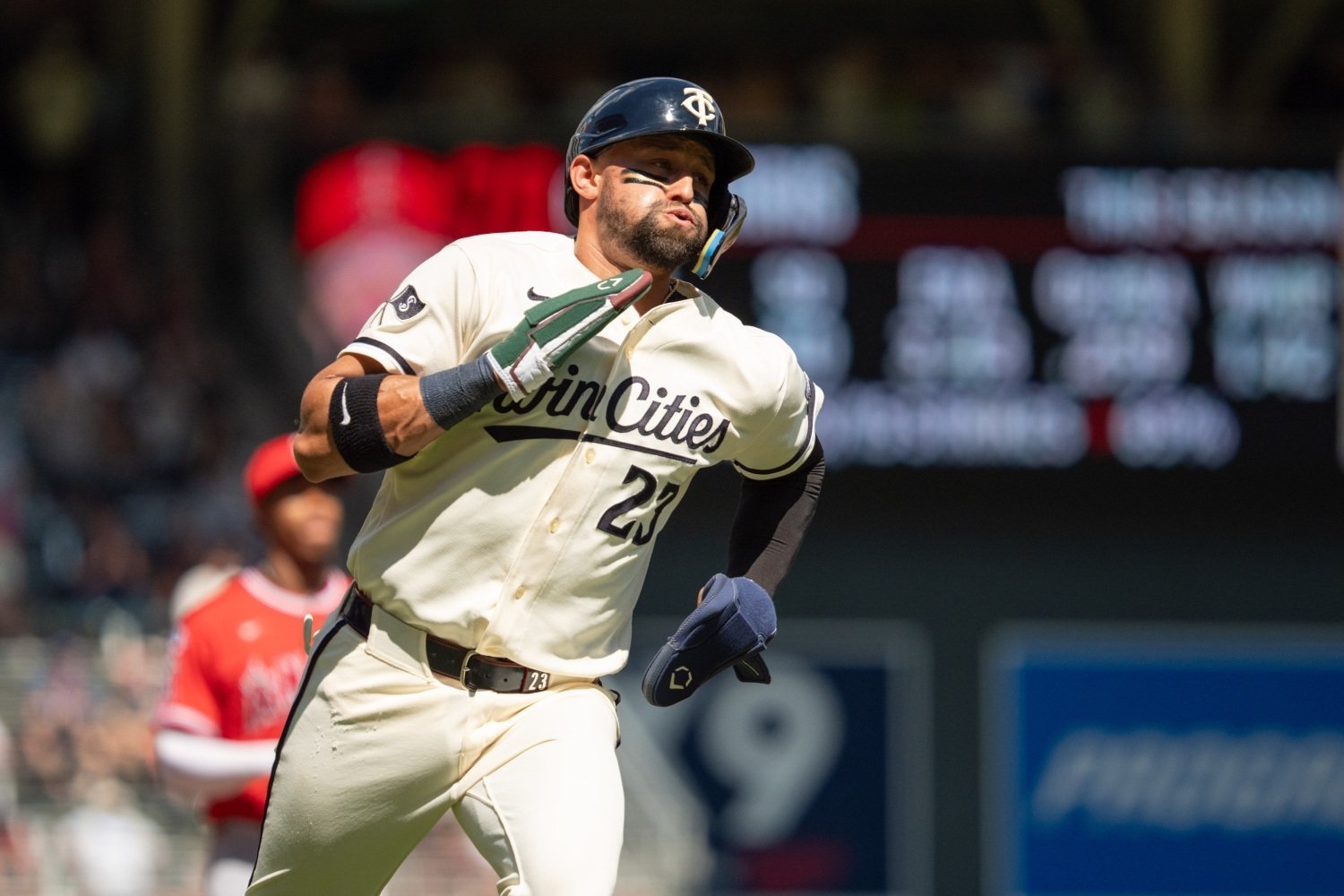 The Minnesota Twins still have plenty of baseball left to play. The final weeks of the season will provide an important opportunity to evaluate several players already on the roster. While the organization will eventually have to make decisions about its offseason plans, those decisions should be influenced by what happens on the field down the stretch. For some players, the remaining games are about establishing consistency. For others, it's an opportunity to show the Twins they can handle a different role or position. Every at-bat and inning provides another piece of information for the organization to consider. There's no shortage of questions surrounding the roster, but three players in particular have plenty to prove during the final weeks of the season. Zebby Matthews: Starter or Reliever? The Twins need to figure out where Matthews fits into their pitching plans. Matthews has already shown flashes that he can be a useful major-league pitcher, but Minnesota may not have enough starting pitching depth to simply pencil him into the rotation and assume everything will work itself out. Pablo López, Mick Abel, and David Festa are all working their way back from injuries. Even if all three are healthy when spring training begins, the Twins will have plenty of uncertainty behind them. That could make Matthews an interesting candidate to follow the Andrew Morris path. Morris began his professional career as a starter before eventually transitioning into a bullpen role. That move has allowed him to become a valuable part of Minnesota's pitching staff, and Matthews could follow a similar trajectory. The Twins shouldn't rush to make that decision, though. Matthews has enough starting experience that he should get every opportunity to compete for a rotation spot. At the same time, Minnesota needs to determine whether his stuff could play up in shorter outings. If the Twins believe Matthews can become a legitimate weapon out of the bullpen, that could be a valuable role for a team that has needed more depth in the pitching staff. The question: Is Matthews a future member of the starting rotation, or could he become a more valuable weapon coming out of the bullpen? Royce Lewis: Back in the Long-Term Plans? It wasn't long ago that Lewis's future with the Twins seemed considerably less certain. Minnesota sent Lewis to Triple-A earlier this season, creating plenty of questions about whether he would eventually regain his place as a cornerstone of the organization. Since then, however, something has changed. Lewis has transitioned into playing first base regularly, and his offensive production has taken a significant step forward. In 61 games since returning, he has an .822 OPS with 10 homers and 17 doubles. The change in position may have helped simplify things for him, while his bat has started looking much more like the one the Twins envisioned when they made him the No. 1 overall pick. That matters, because Lewis is still under team control for two more seasons. The Twins don't have to make a decision on his long-term future this winter. But they do need to determine whether Lewis is part of the next good version of this team. His recent performance could make that decision considerably easier. If Lewis can continue producing offensively and establish himself at first base, the Twins may have found a path that keeps him in the middle of their plans. His injury history and inconsistency remain legitimate concerns, but the organization has already invested heavily in his development. There is still time for Lewis to change the narrative. The question: Has Lewis done enough over the second half of the season to earn another opportunity to be part of Minnesota's long-term plans? Luke Keaschall: Are the Improvements for Real? Keaschall's season started about as poorly as anyone could have imagined. The offensive numbers were ugly, and it looked like the young infielder was having trouble adjusting to major-league pitching. At the end of April, he had a .542 OPS with 21 strikeouts in 31 games. Since then, however, Keaschall has worked to pull those numbers back toward respectable territory. In 87 games since May 1, he is slashing .294/.401/.422 (.823) with 22 extra-base hits. Minnesota has even started using him back at the top of the lineup because of his strong on-base skills. That doesn't mean every concern has disappeared. His defense in the outfield has been questionable at times, which is understandable considering the circumstances. Keaschall isn't a player who spent his minor-league career exclusively roaming the outfield. In fact, the Twins have essentially been moving him around on the fly. Keaschall played only 20 minor-league games in the outfield before reaching the majors. Asking him to learn a new position while simultaneously trying to adjust to big-league pitching was never going to be an easy assignment. That makes it difficult to determine exactly what Minnesota has in Keaschall right now. The offensive improvement is encouraging. But the Twins need to know whether it represents a genuine adjustment or simply a player going through a better stretch. There is still plenty of time for Keaschall to answer that question. If the bat continues trending upward, the Twins can afford to be more patient with the defensive development. But if the offensive struggles return, the organization will have to determine whether moving him back toward the infield is the better solution. The question: Are Keaschall's recent offensive improvements the beginning of a sustainable adjustment, or just a temporary hot streak? Three Players, Three Very Different Decisions The Twins don't necessarily need definitive answers on all three players before the season ends. They do, however, need more information. Matthews could help determine how Minnesota builds its pitching staff. Lewis could show the organization that he still belongs in the middle of its long-term plans. Keaschall could provide evidence that his difficult start was simply part of the learning curve. All three players have something to prove. And all three could have very different roles when the Twins return to Target Field next season. How would you answer the questions listed above? Leave a comment and start the discussion. View the full article
 -
Is The Cubs’ Rotation Good Enough For October?
DiamondCentric posted an article in North Side Baseball
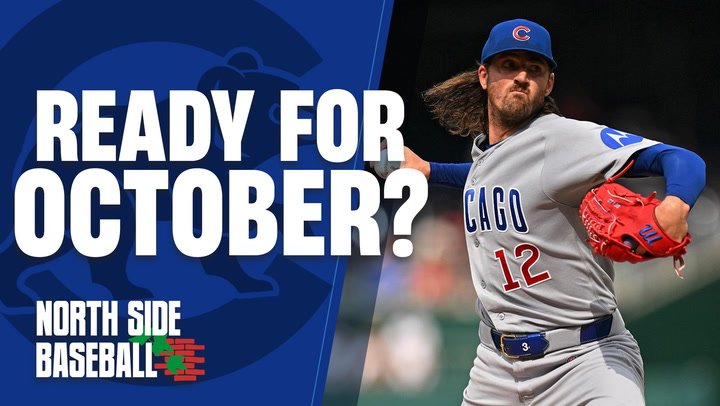 The Cubs have dramatically improved their starting rotation since Opening Day, adding Kevin Gausman and Clay Holmes at the deadline to complement Shota Imanaga, Matthew Boyd, and Edward Cabrera. But when you compare them to the Dodgers, Brewers, Phillies, and Braves, there’s still plenty of reason to question their October ceiling. View the full article
 -
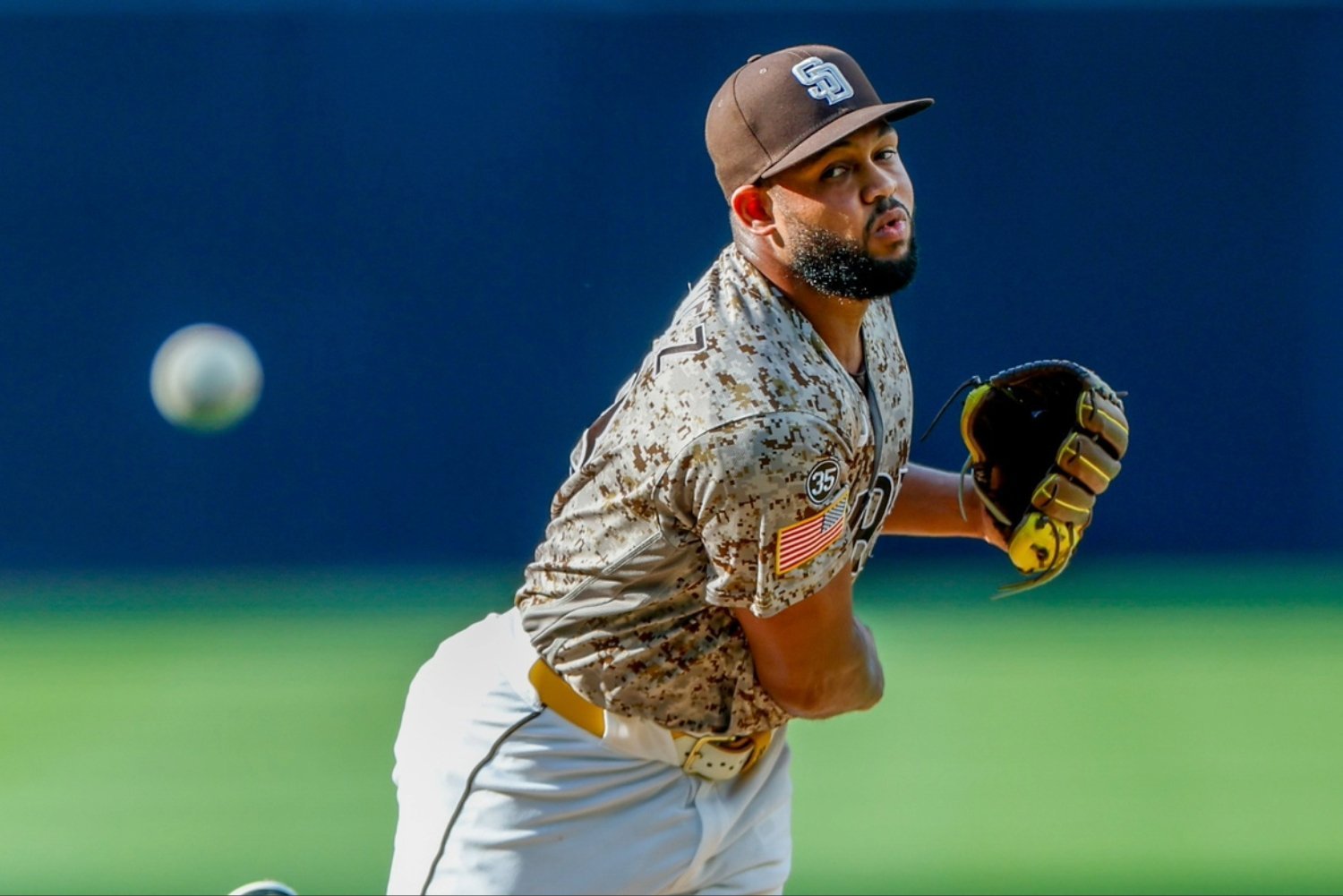 There was a part of the season early on where it looked like Randy Vásquez wasn't just going to be a factor in the San Diego Padres rotation, but an absolutely crucial element of it. Grabbing one of the team's many rotation spots early in spring camp, Vásquez turned in a 2.94 ERA through March & April before regressing slightly to a still-respectable 3.71 mark in May. He demonstrated proper command between the two months that illustrated growth from the issues that had plagued him earlier in his career, with an 8.0 percent walk rate in the first month that improved to 5.4 percent by the following one. Despite the improved results that came via better control, however, there were some warning signs early on. His inability to generate much on the strikeout side gave way to quality contact, with a hard-hit rate that grew from an already-high 44.4 percent in April to over 46 percent in May. As opposing hitters began to elevate their contact, the triumphant vibe with which Vásquez was working early on began to wane. In June, Vásquez was hit hard. That early steadiness gave way to a skyrocketing 7.84 ERA in June. Opposing hitters hit nearly .370 off of Vásquez while reaching base at a .423 clip. His hard-hit rate against checked in at an even 50.0 percent. Even through the recent improvement to which we will eventually reach in his 2026 chronology, his percentile distribution is a tough watch. Vásquez's last appearance of the month was of the bulk variety, wherein he surrendered seven runs across 3.1 innings of work. He, nevertheless, got a start his next time out in July and was unable to complete four innings after being struck by a comebacker and experiencing a fainting spell on his way to get x-rayed. It was 17 days before we'd see him on the mound again. Such is the nature of the Padres' collection of starting pitchers in 2026 that Vásquez remained an integral part of the staff through those struggles. Upon his return from the injured list, though, three of his final four appearances in July were in relief, with his lone starting stint coming across 2.2 innings as Craig Stammen introduced his "pitching chaos" to avoid any of his starters working too many times through the order. In the subsequent weeks, however, Germán Márquez has been designated for assignment while Griffin Canning has largely lost his grip on any role outside of mop-up duty. That's left Vásquez starting twice in three chances in August, where the results have at least started to trend back toward where he was early in the season. Starting his first two times out and working bulk in the third, Vásquez has worked to a 3.38 ERA this month. That's his best mark since the opening month of the campaign. His walk rate, at 3.3 percent, is his best of the season, while his 3.39 FIP indicates that he's not getting away with a whole lot, either. What's especially crucial is that his hard-hit rate reads just 33.3 percent. That's easily his best avoidance of quality contact this year. A key development has been his change in usage: The three-fastballs concept is nothing new for Vásquez. Nor should we expect any change in usage to have an impact on his characteristically-low strikeout rate. Leaning on the cutter, though, alongside the sinker (and both over the four-seamer) has yielded some really positive results. Most notable is the fact that it's helped him to reestablish some command. He's in the zone nearly 57 percent of the time, features a first-strike rate over 70 percent, and an 18.5 percent called-strike rate. Those are all season highs for an individual month. Factor in the decline in hard contact, and you've got a pitcher capable of contributing in serious fashion down the stretch. Of course, it remains to be seen just how much of a factor Vásquez will actually be as a member of the rotation. With Joe Musgrove's return becoming more imminent by the day, one of Vásquez or Walker Buehler will be pushed out as a result. Given Vásquez's more recent work in relief, he's likely to be the one. But having this version of him on standby as a spot starter or for bulk purposes remains a much more enticing option that it might otherwise have been considering where things stood less than two months ago. View the full article
 -
Twins Turn to 'Spite and Revenge' for Bench Player Decisions
DiamondCentric posted an article in Twins Daily
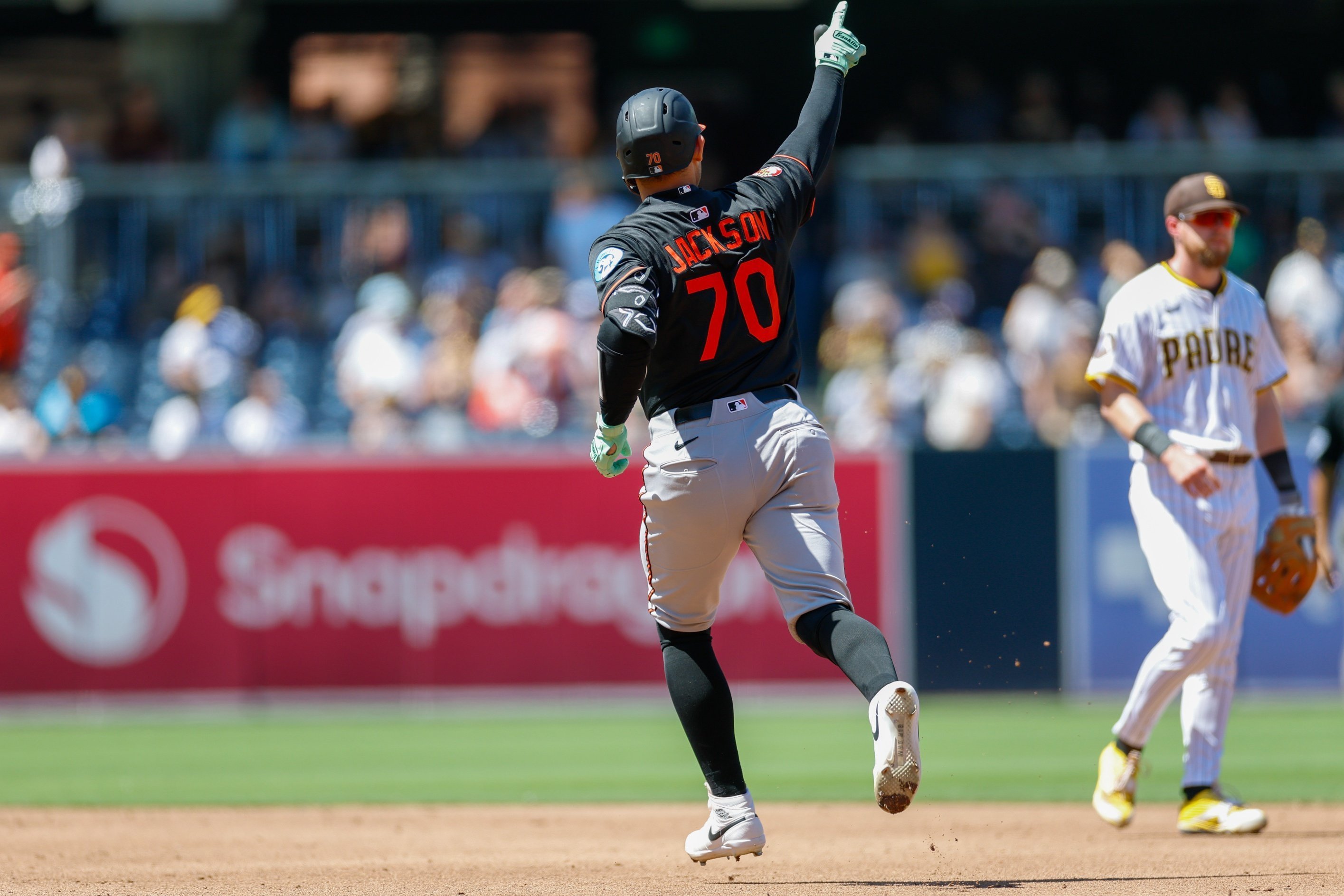 When Austin Martin went on the IL, many thought it would finally be the opening the Minnesota Twins needed to call up prized outfield prospect Walker Jenkins. Instead, they brought back Alex Jackson as their third catcher, despite Jackson clearing waivers from the other 29 teams the week prior. Those who cover the Twins were perplexed, as were many fans. Team sources say they had a good reason, though. “Spite,” said a front office source. “Pure spite.” While having a rarely-used, poor-hitting third catcher seems like an unnecessary luxury for a team that’s slumped mightily on offense without a healthy Byron Buxton, the source said other considerations were in play. “The writers and bloggers have been torching us about the bullpen for a whole year, and we finally fixed the stupid thing,” said the source. “Instead of a thank you, what do we get from them? Did we get a thanks? Nope. 800 words about why we aren’t calling up Walker Jenkins. Gelman and the Gooch [sic] did a whole podcast about it. So, yeah, you turds are getting Alex Jackson. We’d call him up twice if we could. [EXPLETIVE] you.” Jackson hasn’t been used since returning to the bigs, but the Twins put together a massive sweep of likely postseason contender Atlanta to stay in the Wild Card conversation. The front office source wanted to make sure everyone knows who gets the credit. “We don’t finish that sweep without old Al, that’s just a fact,” said the source. “His kind eyes and down-to-earth demeanor keep the clubhouse loose and inspired. And he never once said he was quote, ‘mystified,’ unquote about the front office’s decision-making.” With Ryan Jeffers healthy and Victor Caratini locked in as his backup, it seems unlikely that Jackson will see much playing time, barring injury. Even though rosters expand from 26 to 28 players on September 1, the source says anyone hoping to see Jenkins then will likely be disappointed. “Spite doesn’t go away,” said the source. “It festers. It metastasizes into something darker, malevolent. I’m only getting madder talking about this. All those guys can’t stand Tristan Gray. Guess who’s coming back. As for the 28th player… hmmm, maybe there’ll be a change of heart. Maybe we’d like to see what kind of pop one of those young bucks at Triple-A can do. “And even better, Matt Wallner is a hometown kid. Eat [EXPLETIVE], Gelman." View the full article
 -
Have Injuries Really Affected by the Kansas City Royals in 2026?
DiamondCentric posted an article in Royals Keep
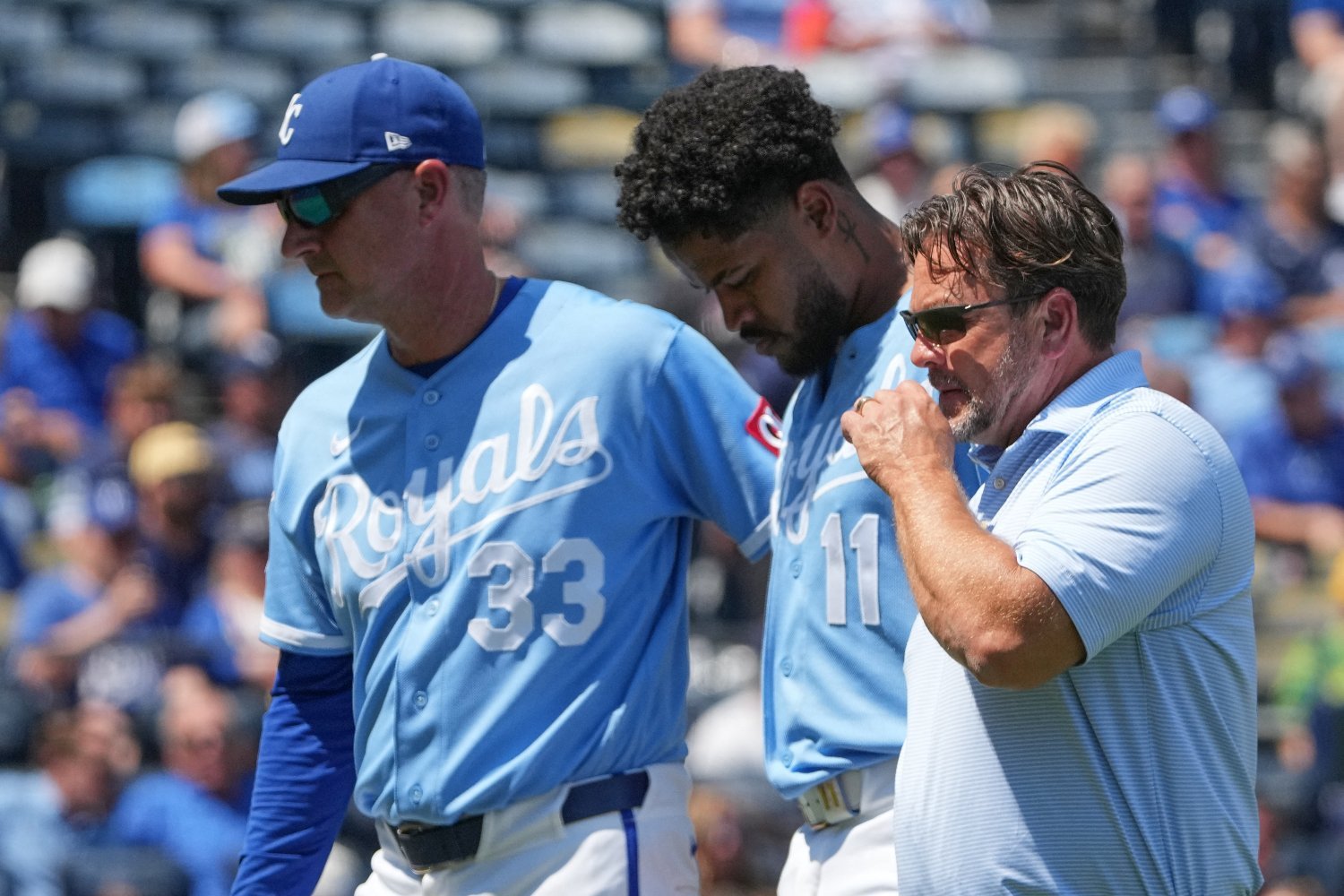 On August 18th, Dan Szymborski, the creator of ZiPS, penned an article on Fangraphs about which teams have been affected the most by injuries and IL stints this season. Lucas Shaefer broke down the piece and the data Szymborski presents on Diamondcentric today. Now, it's easy to say that injuries have affected the Royals and their performance in 2026. After being predicted to win between 82 and 86 games, the Royals are currently 55-74 and are now predicted to win 70 games this year, according to Fangraphs. While regression in performance from key players has had the biggest impact, prolonged IL stints with many players, especially on the pitching end, have limited Kansas City's ceiling this season. So what have been the key injuries this year for the Royals, and how have they led to Kansas City underperforming in 2026? Furthermore, what does the data say about the Royals' injury woes, and how does it compare to the rest of the league? Let's break down those two questions and what it could mean for 2027. Pitching Has Been Hit the Hardest By Injury The Royals have had particularly brutal injuries on both the hitting and pitching sides this season. However, pitching seems to have taken the biggest hit. Three particular injuries were major blows to the pitching staff: Opening Day starter Cole Ragans, former All-Star Kris Bubic, and All-Star closer Carlos Estevez. Ragans was predicted to be the Royals' best overall pitcher in 2026, based on ZiPS projections. ZiPS' 50th percentile projected Ragans to pitch 118 innings and produce a 3.10 FIP and 2.2 fWAR. Unfortunately, due to an elbow injury that eventually led to surgery, he was limited to only 35.1 IP. In that sample, he produced a 4.84 ERA, 6.17 FIP, and -0.3 fWAR. Looking at his Statcast percentiles via TJ Stats, Ragan still produced some intriguing stuff and velocity, and generated strikeouts, swings, and misses. Unfortunately, he struggled in nearly every other category, especially when it came to control and batted-ball profile. While Ragans was expected to lead this Royals pitching staff, Bubic was supposed to be the No. 2 arm in the rotation, according to ZiPS projections. In 106 IP, ZiPS projected a 3.48 FIP and 1.9 fWAR for Bubic. Unlike Ragans, the numbers were at least decent for Bubic, though he only made nine starts and pitched 50.1 innings. In that sample, he produced a 4.11 ERA, 3.70 FIP, and 0.8 fWAR. If Bubic had stayed healthy, it's possible that he could've been the Royals' best starting pitcher this year (only Noah Cameron has a better FIP at 3.58), as well as an All-Star. The whiff ability and extension remained strong for Bubic, according to his Statcast percentiles. However, the zone, walk, and hard-hit rates weren't as impressive as seasons past. Bubic has been sidelined since June 27th, and his outlook for the remainder of the year is questionable. However, that didn't stop the Dodgers from trading for him in exchange for reliever Carlos Duran (who had a rough one today against the Athletics). The last major pitcher to be injured this year was Estevez, who only made one appearance this year and has been on the IL since. ZiPS predictions were modest for Estevez: 3.97 FIP and 0.4 fWAR in 57 IP. For context, Lucas Erceg (0.5 fWAR), Jonathan Bowlan (0.6 fWAR), and Angel Zerpa (0.6 fWAR) were projected to have better seasons than Estevez. Still, while regression was expected for the Royals closer, fans didn't expect him to be this affected by injury. In one awful appearance in Atlanta, Estevez produced a 162.00 ERA, 60.09 FIP, and -0.3 fWAR. Estevez's Statcast percentiles were just as bad, even in a tiny sample. Maybe Estevez doesn't lead the league in saves again in 2026. However, he would've given the Royals more bullpen stability if he were healthy. The Royals currently rank 29th in reliever ERA and 30th in reliever WHIP. Here are some other pitching injuries this year and their preseason ZiPS projections from December. James McArthur: 0.3 fWAR (0 IP) Alec Marsh: 0.3 fWAR (0 IP) Ryan Bergert: 0.8 fWAR (0 MLB IP) Stephen Kolek: 1.3 fWAR (54 IP) Nick Mears: 0.3 fWAR (19.1 IP) The Royals also lost Luinder Avila recently to Tommy John after he produced a 0.3 fWAR in 70 IP. He was projected for a 0.6 fWAR, and he will be out for most, if not all, of 2027 due to recovery from Tommy John surgery. Position Player Injuries Have Been Impactful As Well The Royals haven't had the kind of long-term injuries that have affected their position player group this season. Maikel Garcia, Vinnie Pasquantino, Bobby Witt Jr., and even Salvador Perez have dealt with lingering injuries and missed time on the IL. However, they haven't had the kind of IL time as the pitching staff. The regular player most affected may be Garcia, who suffered a hamstring injury Thursday while rounding third base and will likely be on the IL for an extended period. ZiPS projected a 3.0 fWAR for Garcia in 634 PA, the second-best fWAR mark on the team (behind only Witt's 3.7). Unfortunately, he's just produced a 1.5 fWAR in 308 plate appearances. He currently ranks fifth among Royals position players in fWAR, and he may have been in the Top-3 if he had stayed healthy this season. Garcia has dealt with a lingering hand injury all season, which initially landed him on the IL on June 23rd. In addition to missed games, the hand injury has also sapped Garcia's power and barrel ability, as illustrated in his 2025 and 2026 Statcast comparison summary via TJ Stats. After signing an extension this offseason, the Royals need Garcia to get healthy this offseason and get back to that 2025 form that helped him earn a Gold Glove and an appearance in the All-Star Game. Pasquantino has also been affected by injury, as IL stints have limited him to 82 games and 384 plate appearances with the Royals this season. ZiPS predicted a 1.8 fWAR in 613 plate appearances this year. However, in his limited sample, he's generated a .307 wOBA and 0.4 fWAR. The big Statcast difference for Pasquantino is that his barrel and hard-hit rates have declined from a year ago, which has affected his overall wOBA line. That said, a lot of his other percentiles, especially in relation to contact ability and plate discipline, have either remained the same or gotten slightly better. Vinnie has come back and has looked locked in at the plate, which is encouraging to see, even against a poor team like the Athletics. Like Garcia, the Royals need a healthy and effective Pasquantino next year if they want to get back into playoff contention in the American League. The only other major injury to a position player was Jonathan India, who was lost to the season due to shoulder surgery after just 58 plate appearances. In that sample, India posted a 0.0 fWAR and .290 wOBA. ZiPS predicted a bounce-back for India after a poor 2025 season (-0.3 fWAR). In 555 plate appearances, ZiPS projected India to post a .314 wOBA and 1.6 fWAR. Thankfully, India's absence hasn't been felt too much, thanks to the emergence of Michael Massey. The 28-year-old second baseman has a .322 wOBA and 1.8 fWAR, the latter being the third-best fWAR among Royals position players (only Witt and Jac Caglianone have produced higher fWAR marks). Where Do the Royals Rank Compared to Other Teams? When looking at Szymborski's article, the Royals rank closer to the bottom of the league rather than the top when it comes to fWAR lost by injury. According to the data on Fangraphs, the Royals rank only 20th in fWAR lost due to injury. The Royals have lost 6.0 fWAR due to injury. That's more fWAR lost due to injury than the Reds, Rockies, Marlins, and Rays, but less than the Athletics, Mariners, Twins, and Brewers. According to Szymborski, only the Guardians have remained healthier than the Royals among AL Central teams. To be honest, the data is a bit surprising since the major narrative this year, especially around the Trade Deadline, is that injuries were the main contributor to this poor season. While injuries have been impactful, the data suggest those claims may be a bit overblown (at least on an fWAR end). Does that mean that the Royals shouldn't reload to try to turn things around in 2027? No, they have a good offensive core still, and this past sweep of the A's has demonstrated what the Royals can do when they're healthy and clicking (especially at Kauffman Stadium). That said, this team can't just blame injuries for a poor 2026 season. While injuries played a role, the data suggests other factors may have contributed to their disappointing campaign this year. This means the Royals' President of Baseball Operations, JJ Picollo, needs to address those issues this offseason, not just lean on the "well, everyone will get healthy" card for 2027. If he opts for the latter, the Royals may be due for another disastrous performance next season. And if that happens, Picollo and manager Matt Quatraro won't be around for long. View the full article
 -
How Michael Massey Is Thriving By Making Less Contact
DiamondCentric posted an article in Royals Keep
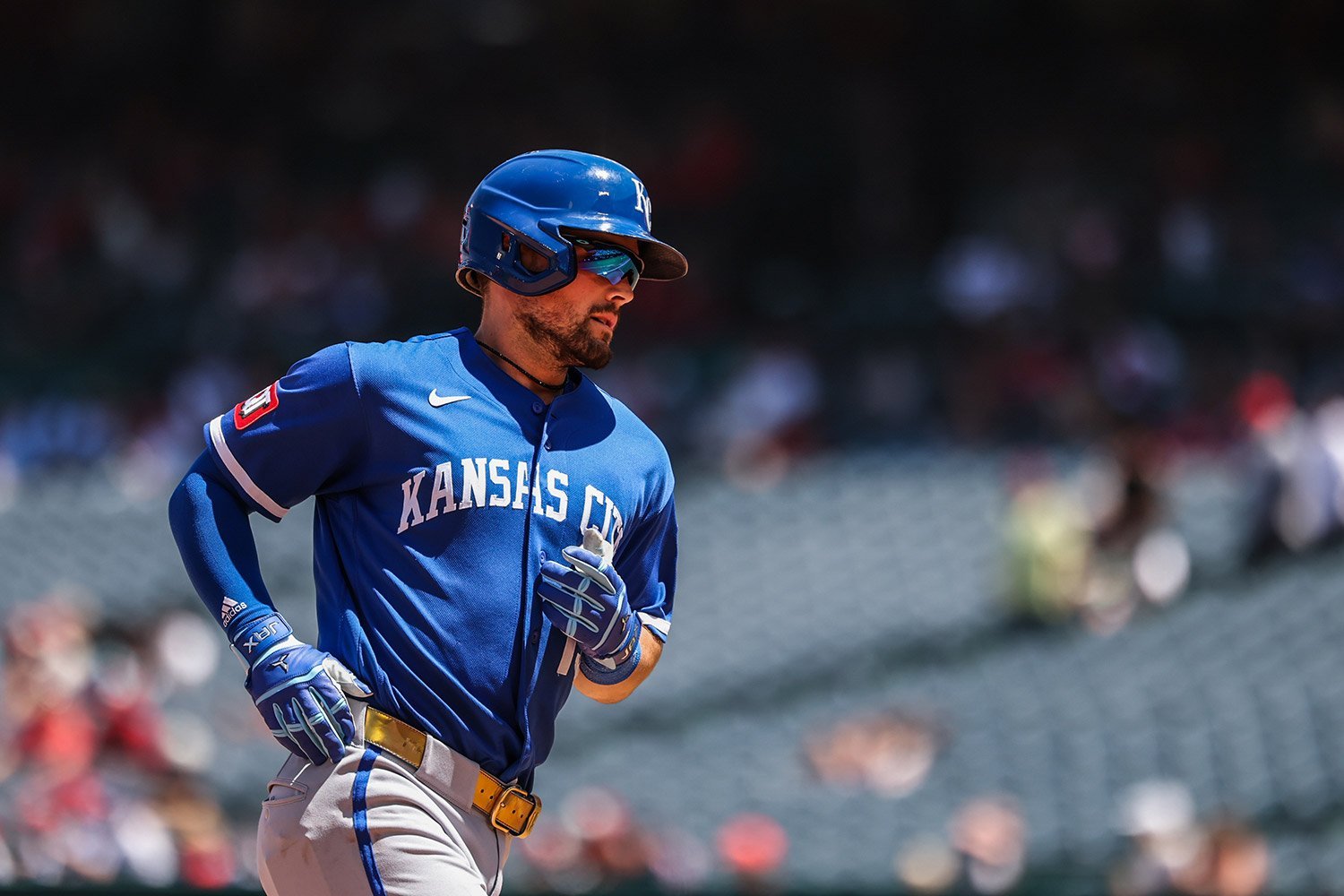 There are many doubts we can have around a baseball hitter, and one of the ones that creates the most expectations usually appears when he manages to erase one of his main problems at the plate. No matter how much he manages to distance himself from his historical inconsistencies, we remain attentive to the first sign of regression. Part of that narrative has been around Michael Massey's improvements in the batter's box this year, and we are already at the end of August. That means the final stretch of the season is approaching. At this point, many of the major trends among qualified hitters, whether good or bad, will be very difficult to reverse this late in the season. That makes Massey's story a much more reliable outcome. Throughout his career, since debuting with the Kansas City Royals in 2022, Massey has struggled against left-handed pitchers. Between 2022 and 2024, he averaged an 80 wRC+, with his improvement to 101 in 2024, but the following year he had the biggest drop of his career, recording just 41. His xSLG and xwOBA hit rock bottom, at .262 and .206, respectively. Massey's defensive ability at second base, forming a key combination with Bobby Witt Jr., along with his slight offensive impact against right-handed pitchers, justified part of his time as a starter. That story has taken a turn that seemed unsustainable, but has gradually become reality: Massey is posting a 140 wRC+, almost 100 points above his deepest drop last year, with an impressive .321/.346/.526 slash line, an .871 OPS and a .407 BABIP. Yes, it seems absurd, but he has increased his slugging by .249 points, his ISO by .162 (.205 from .043), his BABIP by .118 and his batting average by 87 points. Now, even more unusual is how he is doing it. Usually, this type of adjustment should be linked to better plate discipline, a higher contact rate both inside and outside the strike zone, and perhaps fewer strikeouts. What if I told you that Massey has done the exact opposite? It seems crazy, but he has broken all of those standards: his Contact% has fallen from 81.7% to 73.7%, his O-Contact% from 71.9% to 49.1%, he has increased his strikeout rate (K% from 18.4% to 25.6%) and has reduced his swings inside the strike zone by 9.1 percentage points (70.9% vs. 61.8%) compared with last year. Let's see how Massey has turned the tide in his favor in the lefty vs. lefty matchup, analyzing this 2025 vs. 2026 comparison: On the left, we have his 2025 heat map, and on the right, this season's. Notice how spread out the heat samples were last year. It is quite easy to notice how it has changed this year. This season, the intense heat points in the lower areas have a lot to do with the way Massey has hit the main pitches that neutralized him. In particular, he has made notable adjustments against sliders. Last year, his HardHit rate was just 22.2%, while Miss Distance reached 9.9, a combination that helps explain why his swing lost so much quality. This season, he has reduced that miss to an average of 3.2, with an xSLG of .438 and the highest hard-hit rate of his entire career (37.5%). His swings have not stopped being aggressive against sliders, and he has also paid the price with a 41.4% whiff rate, but the increase in quality at-bats has been worth it. Let's see here how Massey hit sliders. On the left are the results from this season. Compared with last year's samples, you can see how the opposition went back to attacking him in areas where they had controlled his swing. This year he has started to do damage in three different zones, two of them with an xBA above .750. Massey has received the highest percentage of pitches in the lower zones and toward the outside corner, so a key adjustment for him began by letting the pitches get to him. His bat speed stayed above 65 mph, and he also adjusted his launch angle from 21 degrees to 16. Against four-seam fastballs, the determining progress can be seen in IdealAtkAng%, which improved by 19.4%. Miss Distance has been reduced to 0.3, with better bat speed that has been reflected in a 4.6 increase in his HardHit% rate. Massey has also experienced improvements against the sinker, the pitch he was attacked with the most (4.4%) in 2025. This season, he has reduced his whiff rate by 7.1%, and his xSLG from .277 to .373. Look, there is something clear here, and that is that we do not know how long Massey will be able to maintain these adjustments. Left-handed pitchers have been throwing him too many fastballs and sliders, so I suspect that very soon we will begin to see a change in plan. Even so, the adjustment that could sustain this pace from Massey may be his total focus on contact. Since June, his BABIP has risen from .253 to .326, but the jump does not appear completely isolated: he is getting more line drives (24.6% from 13.3%), and his bat speed is allowing him to pull the ball more often (11.5%). For the first time, Massey is taking control in his matchups against left-handed pitchers, finally tasting the nectar of glory after walking back to the dugout with his head down so many times. Now it is no longer about knowing whether he can do it. The question is how long he will be able to sustain it. View the full article
 -
Have Injuries Really Affected the Kansas City Royals in 2026?
DiamondCentric posted an article in Royals Keep
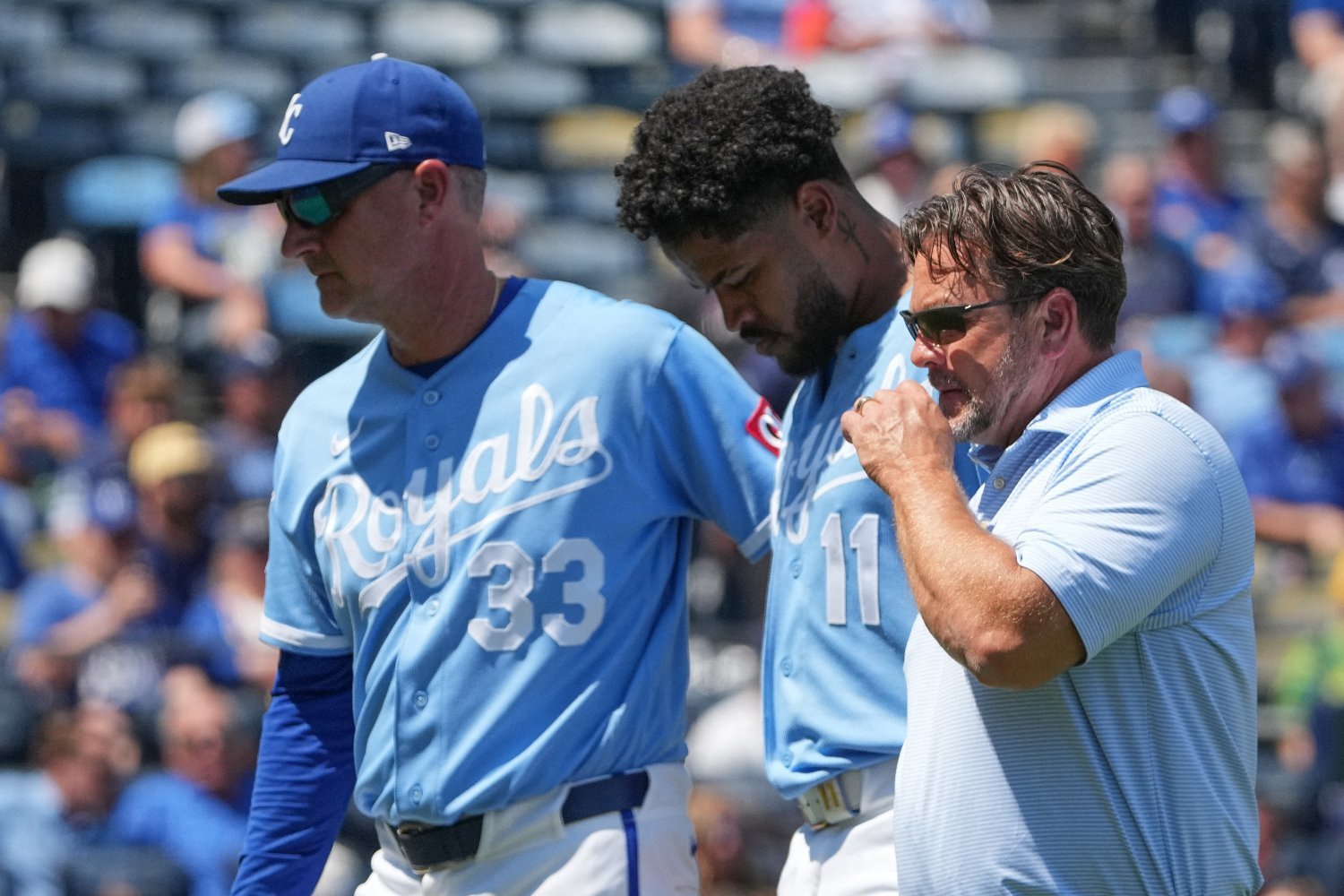 On August 18th, Dan Szymborski, the creator of ZiPS, penned an article on Fangraphs about which teams have been affected the most by injuries and IL stints this season. Lucas Shaefer broke down the piece and the data Szymborski presents on Diamondcentric today. Now, it's easy to say that injuries have affected the Royals and their performance in 2026. After being predicted to win between 82 and 86 games, the Royals are currently 55-74 and are now predicted to win 70 games this year, according to Fangraphs. While regression in performance from key players has had the biggest impact, prolonged IL stints with many players, especially on the pitching end, have limited Kansas City's ceiling this season. So what have been the key injuries this year for the Royals, and how have they led to Kansas City underperforming in 2026? Furthermore, what does the data say about the Royals' injury woes, and how does it compare to the rest of the league? Let's break down those two questions and what it could mean for 2027. Pitching Has Been Hit the Hardest By Injury The Royals have had particularly brutal injuries on both the hitting and pitching sides this season. However, pitching seems to have taken the biggest hit. Three particular injuries were major blows to the pitching staff: Opening Day starter Cole Ragans, former All-Star Kris Bubic, and All-Star closer Carlos Estevez. Ragans was predicted to be the Royals' best overall pitcher in 2026, based on ZiPS projections. ZiPS' 50th percentile projected Ragans to pitch 118 innings and produce a 3.10 FIP and 2.2 fWAR. Unfortunately, due to an elbow injury that eventually led to surgery, he was limited to only 35.1 IP. In that sample, he produced a 4.84 ERA, 6.17 FIP, and -0.3 fWAR. Looking at his Statcast percentiles via TJ Stats, Ragan still produced some intriguing stuff and velocity, and generated strikeouts, swings, and misses. Unfortunately, he struggled in nearly every other category, especially when it came to control and batted-ball profile. While Ragans was expected to lead this Royals pitching staff, Bubic was supposed to be the No. 2 arm in the rotation, according to ZiPS projections. In 106 IP, ZiPS projected a 3.48 FIP and 1.9 fWAR for Bubic. Unlike Ragans, the numbers were at least decent for Bubic, though he only made nine starts and pitched 50.1 innings. In that sample, he produced a 4.11 ERA, 3.70 FIP, and 0.8 fWAR. If Bubic had stayed healthy, it's possible that he could've been the Royals' best starting pitcher this year (only Noah Cameron has a better FIP at 3.58), as well as an All-Star. The whiff ability and extension remained strong for Bubic, according to his Statcast percentiles. However, the zone, walk, and hard-hit rates weren't as impressive as seasons past. Bubic has been sidelined since June 27th, and his outlook for the remainder of the year is questionable. However, that didn't stop the Dodgers from trading for him in exchange for reliever Carlos Duran (who had a rough one today against the Athletics). The last major pitcher to be injured this year was Estevez, who only made one appearance this year and has been on the IL since. ZiPS predictions were modest for Estevez: 3.97 FIP and 0.4 fWAR in 57 IP. For context, Lucas Erceg (0.5 fWAR), Jonathan Bowlan (0.6 fWAR), and Angel Zerpa (0.6 fWAR) were projected to have better seasons than Estevez. Still, while regression was expected for the Royals closer, fans didn't expect him to be this affected by injury. In one awful appearance in Atlanta, Estevez produced a 162.00 ERA, 60.09 FIP, and -0.3 fWAR. Estevez's Statcast percentiles were just as bad, even in a tiny sample. Maybe Estevez doesn't lead the league in saves again in 2026. However, he would've given the Royals more bullpen stability if he were healthy. The Royals currently rank 29th in reliever ERA and 30th in reliever WHIP. Here are some other pitching injuries this year and their preseason ZiPS projections from December. James McArthur: 0.3 fWAR (0 IP) Alec Marsh: 0.3 fWAR (0 IP) Ryan Bergert: 0.8 fWAR (0 MLB IP) Stephen Kolek: 1.3 fWAR (54 IP) Nick Mears: 0.3 fWAR (19.1 IP) The Royals also lost Luinder Avila recently to Tommy John after he produced a 0.3 fWAR in 70 IP. He was projected for a 0.6 fWAR, and he will be out for most, if not all, of 2027 due to recovery from Tommy John surgery. Position Player Injuries Have Been Impactful As Well The Royals haven't had the kind of long-term injuries that have affected their position player group this season. Maikel Garcia, Vinnie Pasquantino, Bobby Witt Jr., and even Salvador Perez have dealt with lingering injuries and missed time on the IL. However, they haven't had the kind of IL time as the pitching staff. The regular player most affected may be Garcia, who suffered a hamstring injury Thursday while rounding third base and will likely be on the IL for an extended period. ZiPS projected a 3.0 fWAR for Garcia in 634 PA, the second-best fWAR mark on the team (behind only Witt's 3.7). Unfortunately, he's just produced a 1.5 fWAR in 308 plate appearances. He currently ranks fifth among Royals position players in fWAR, and he may have been in the Top-3 if he had stayed healthy this season. Garcia has dealt with a lingering hand injury all season, which initially landed him on the IL on June 23rd. In addition to missed games, the hand injury has also sapped Garcia's power and barrel ability, as illustrated in his 2025 and 2026 Statcast comparison summary via TJ Stats. After signing an extension this offseason, the Royals need Garcia to get healthy this offseason and get back to that 2025 form that helped him earn a Gold Glove and an appearance in the All-Star Game. Pasquantino has also been affected by injury, as IL stints have limited him to 82 games and 384 plate appearances with the Royals this season. ZiPS predicted a 1.8 fWAR in 613 plate appearances this year. However, in his limited sample, he's generated a .307 wOBA and 0.4 fWAR. The big Statcast difference for Pasquantino is that his barrel and hard-hit rates have declined from a year ago, which has affected his overall wOBA line. That said, a lot of his other percentiles, especially in relation to contact ability and plate discipline, have either remained the same or gotten slightly better. Vinnie has come back and has looked locked in at the plate, which is encouraging to see, even against a poor team like the Athletics. Like Garcia, the Royals need a healthy and effective Pasquantino next year if they want to get back into playoff contention in the American League. The only other major injury to a position player was Jonathan India, who was lost to the season due to shoulder surgery after just 58 plate appearances. In that sample, India posted a 0.0 fWAR and .290 wOBA. ZiPS predicted a bounce-back for India after a poor 2025 season (-0.3 fWAR). In 555 plate appearances, ZiPS projected India to post a .314 wOBA and 1.6 fWAR. Thankfully, India's absence hasn't been felt too much, thanks to the emergence of Michael Massey. The 28-year-old second baseman has a .322 wOBA and 1.8 fWAR, the latter being the third-best fWAR among Royals position players (only Witt and Jac Caglianone have produced higher fWAR marks). Where Do the Royals Rank Compared to Other Teams? When looking at Szymborski's article, the Royals rank closer to the bottom of the league rather than the top when it comes to fWAR lost by injury. According to the data on Fangraphs, the Royals rank only 20th in fWAR lost due to injury. The Royals have lost 6.0 fWAR due to injury. That's more fWAR lost due to injury than the Reds, Rockies, Marlins, and Rays, but less than the Athletics, Mariners, Twins, and Brewers. According to Szymborski, only the Guardians have remained healthier than the Royals among AL Central teams. To be honest, the data is a bit surprising since the major narrative this year, especially around the Trade Deadline, is that injuries were the main contributor to this poor season. While injuries have been impactful, the data suggest those claims may be a bit overblown (at least on an fWAR end). Does that mean that the Royals shouldn't reload to try to turn things around in 2027? No, they have a good offensive core still, and this past sweep of the A's has demonstrated what the Royals can do when they're healthy and clicking (especially at Kauffman Stadium). That said, this team can't just blame injuries for a poor 2026 season. While injuries played a role, the data suggests other factors may have contributed to their disappointing campaign this year. This means the Royals' President of Baseball Operations, JJ Picollo, needs to address those issues this offseason, not just lean on the "well, everyone will get healthy" card for 2027. If he opts for the latter, the Royals may be due for another disastrous performance next season. And if that happens, Picollo and manager Matt Quatraro won't be around for long. View the full article
 -
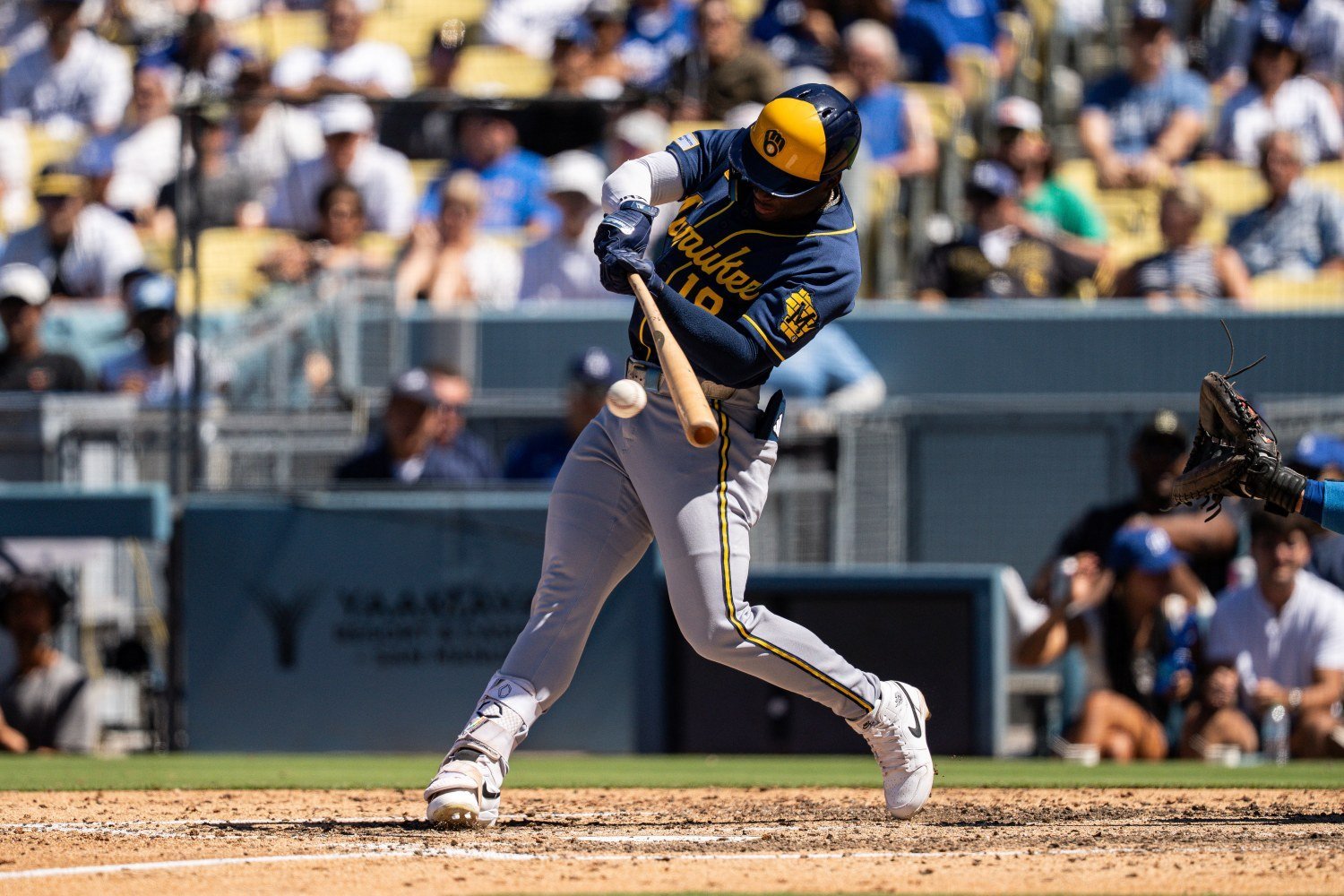 More than anything, the Brewers’ only loss in an otherwise successful series against the Mariners came because Dustin May put them in a 7-0 hole after two innings. Even after that, the offense battled back to make it a close 7-5 loss. Milwaukee might even have notched a three-game sweep, if not for a few poor at-bats that quashed potential late-inning rallies. Trailing 7-2 in the sixth, William Contreras and Christian Yelich walked. Andrew Vaughn singled to load the bases with nobody out for Luis Lara. Lara watched a pair of strikes to go down 0-2 (including a pitch fully inside the zone that he thought was a ball) before chasing an Eduard Bazardo sinker up and away. “The pitch before that might have been a ball, I don't know, but he let that really bother him,” Pat Murphy said postgame. “Then he went to the next pitch, and he wasn't as focused.” After Joey Ortiz’s sacrifice fly plated the runner from third to make it 7-3, Cooper Pratt stepped up with two outs. After Bazardo executed a back-door sinker for strike one, he missed badly with two sweepers to put Pratt ahead 2-1. Hitters say that there are no longer true fastball counts in the modern game. For the most part, they’re correct. The league fastball usage has steadily decreased throughout the pitch-tracking era, particularly since the turn of the decade. In 2015, hitters saw fastballs on 70.9% of pitches when ahead in the count. This year, that rate is down to 64.4%, a significant difference. This was a rare fastball count. The Mariners still had a four-run lead, and Bazardo had fallen behind on non-competitive breaking balls with leadoff hitter Brice Turang on deck. He needed an in-zone pitch to regain count leverage. Pratt didn’t need to sell out for velocity, but he needed to be ready to pull the trigger on a fastball over the heart of the plate. He wasn’t. Bazardo planted a sinker right down the middle, and Pratt watched it go by for strike two. That set up a chase on a sweeper that nearly hit the dirt for an inning-ending strikeout. Positioned for a big inning, the Brewers barely scratched across a run. Pratt had a shot at redemption in his next at-bat in the eighth, coming up as the tying run with runners on the corners in a 7-4 game. In a similar setup, Seranthony Domínguez fell behind 2-0, first with a sweeper that bounced in the other batter’s box, then a fastball yanked low and away. Again, Pratt needed to be ready for the fastball. He got it again and swung—but this time, he probably shouldn’t have. It was a sinker barreling toward the inner third of the zone. Pratt was late and got jammed, bouncing a double play to second that plated a run but left the bases empty while still trailing by two. It would be the last run the Brewers scored. “Pratt's last two at-bats, he just left the zone and left the zone [again],” Murphy said, referring the second time to a pitcher’s pitch that Pratt should have taken with no strikes. He was out of the lineup the following day, with Ortiz starting at shortstop, instead. Just three months apart in age, Pratt and Lara are traveling similar paths. Both are trying to establish themselves in the big leagues during a playoff push after signing pre-debut extensions. Both have been valuable from the get-go, thanks to their defense: Pratt already has 4 Defensive Runs Saved at shortstop, while Lara is at 1 Out Above Average in right field. Offensively, it’s been a mixed bag. That was expected. Pratt has posted better results (97 wRC+) than Lara (84 wRC+), but Lara’s at-bats have arguably been better. His .325 xwOBA and 91 DRC+, metrics that focus on plate discipline and contact quality, are higher than Pratt’s. Lara’s ball-strike recognition has been impressive for his age, as he’s chased just 21.7% of pitches outside the zone. After that strikeout, he bounced back with a line-drive single up the middle in his next at-bat. Pratt deserves some grace for a pair of rough at-bats in his first game back from a hamstring injury, but his swing decisions were less refined in the minor leagues. At times, he’s shown a knack for the measured opposite-field approach the Brewers wanted to see before he grows into his raw power, but his chase rate had been ballooning in recent weeks, even before the injury. “Those kids are 21,” Murphy said. “Sometimes in this league, when you're 21, you make those kind of mistakes. [Jackson] Chourio’s made them. He's done the same thing. So they'll have to learn from it.” Now is the time for those lessons. The Brewers aren’t asking Pratt or Lara to be their most important bats as rookies, but if they start games in the postseason, they could hit in pivotal situations. To succeed in those moments, they’ll need to stay mentally grounded and have smart at-bats. Milwaukee is constantly striking a balance between developing and competing in the big leagues, and they're experiencing both sides with their two youngest players. View the full article
 -
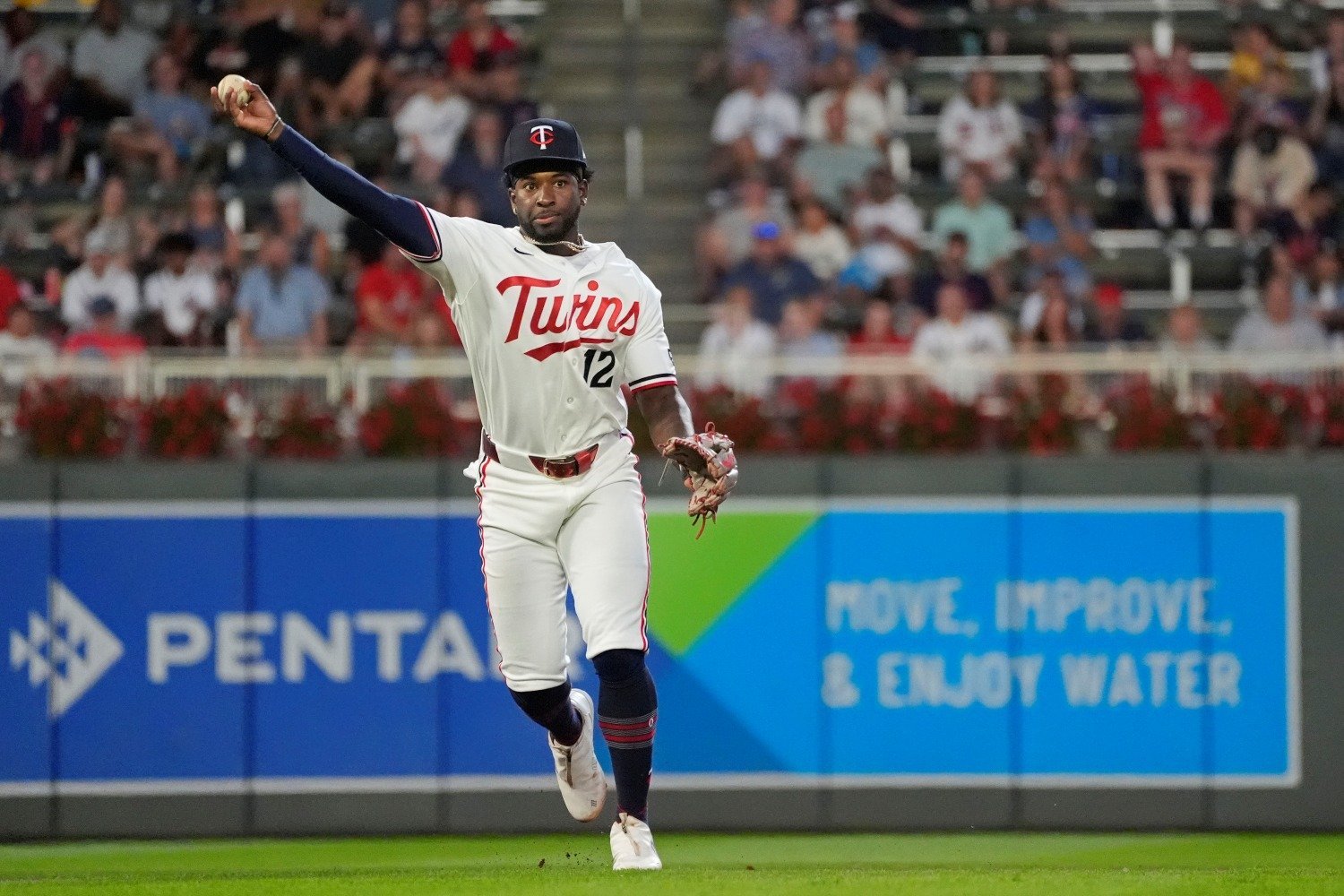 It would be foolish to draw any sweeping conclusions from the first fortnight of Kaelen Culpepper's major-league career. The Twins called up their top prospect on August 7, and through his first 10 games, we're talking about a player who has barely had enough time to get comfortable in a major-league clubhouse, let alone establish what kind of player he'll become. Culpepper was a first-round pick and entered the season as a top-50 prospect in baseball for a reason, but none of that guarantees that he will live up to those expectations. Ten games certainly aren't enough to answer the questions that followed Culpepper to this level, but they gave us our first look at some of the tools that made Culpepper such an intriguing prospect in the first place, as well as some of the adjustments he'll need to make if he's going to turn those tools into major-league success. So far, there have been plenty of reasons to be encouraged. The most obvious one is that the underlying swing numbers on Culpepper are every bit as advertised. Culpepper has developed into a violent swinger as he's worked his way through the Twins' farm system, and that violence has carried over to the majors. His Statcast numbers back it up, with Culpepper's 74-MPH swing speed ranking in the upper quartile of major-league hitters. While plenty of his other statistics are impossible to trust as they're based on an extremely small sample size, swing speed is one of the measurements that stabilizes extremely quickly. Bat speed also has a strong positive relationship with exit velocity and barrel rate, so seeing Culpepper come out of the gate with a swing speed in the neighborhood of hitters such as Byron Buxton, Miguel Vargas and Pete Alonso is exciting. We've also seen that swing speed translate into some legitimate impact. In just his second career at-bat, Culpepper launched a home run to left-center field after hitting the ball 100.2 MPH. A few days later, he doubled off Jesús Luzardo with a 103.4-MPH line drive. Those are obviously just two swings, and it would be silly to extrapolate them into anything more than that. However, seeing Culpepper pair the elite swing speed with the ability to produce 100+ MPH exit velocities is exactly what you want to see from a young hitter with his profile. The power is not merely theoretical. We've already seen glimpses of it against major-league pitching. The other side of the coin has been his plate discipline. Culpepper has struck out 11 times compared to just two walks through his first 10 games. His 43.4% chase rate would rank among the bottom 10 hitters in baseball if he maintained it over a full season. That's an area that will need to improve, but it's also an area where some growing pains should be expected. Plate discipline is often one of the biggest adjustments for young hitters making the jump to the majors. Major-league pitchers throw harder and locate more consistently. Breaking balls that might have been strikes in Triple-A suddenly finish outside the zone, while fastballs are coming in quicker than ever before. Young hitters have to learn which pitches they can damage and—perhaps just as importantly—which pitches they need to let go. Culpepper is learning that lesson in real time, but the encouraging part is that he's already started to look more comfortable. After going 1-for-9 to begin his career, Culpepper has recorded a hit in each of his last seven games. That's still an incredibly small sample, but he has looked more confident at the plate as the month has progressed, which is exactly what you'd hope to see from a young player trying to make one of the biggest adjustments of his baseball career. The defensive side has provided a similar mix of excitement and growing pains. Culpepper got an immediate introduction to the difficulty of playing shortstop in the majors during the fifth inning of his first career game, when he had two ground balls turn into singles that had sub-.200 expected batting averages, meaning they were plays that should have been outs. The first came from David Hamilton, who hit a ground ball that Culpepper wasn't able to range to quickly enough. Culpepper was forced to backhand the ball and couldn't complete the play. A few batters later, Garrett Mitchell hit another ground ball, and Culpepper took some extra time gathering himself before making his throw. The hesitation proved costly against a player with Mitchell's speed, as the throw was late and Mitchell beat it out for another single. Neither play is something the Twins should panic about, but both are good examples of what Culpepper is going to have to learn at the major-league level. Shortstop is a difficult position, and the difference between Triple-A and the majors can be exposed quickly. Runners are faster, balls are hit harder, and the window to make a decision and execute a throw gets smaller. Culpepper got a taste of that immediately. There have also been some clear positives defensively, particularly when it comes to his arm. That was one of the tools we knew Culpepper had coming into the season, and it's already translated to the major league level. He has recorded a max throw velocity of 86.3 MPH, although he doesn't yet have enough throws to establish a reliable overall arm-strength measurement. Still, the arm is clearly legitimate, as we saw on a strong throw to get Coby Mayo at first base. That's ultimately what makes this first week so interesting. We're not learning that Culpepper is going to be an All-Star, that he's going to be the Twins' shortstop for the next decade, or that his current strikeout and chase rates are going to be permanent. What we are learning is that some of the tools that made him a first-round pick and a top-50 prospect are real. The violent swing is real. The raw power is real. The arm strength is real. At the same time, we've seen some of the areas where he still has work to do. His plate discipline needs to improve, and he needs to become more comfortable with the speed and demands of major-league defense. That's perfectly normal for a young player making his debut. He looks like a young player who has some legitimate major-league tools, and is now figuring out how to put them all together. That's about as much as we could reasonably ask for after a couple of weeks. Now comes the fun part: watching what he does with it. What do you think of Kaelen Culpepper's first week in the majors? Are you encouraged by what you've seen so far, or are there areas that still concern you? Let us know in the comments. View the full article
 -
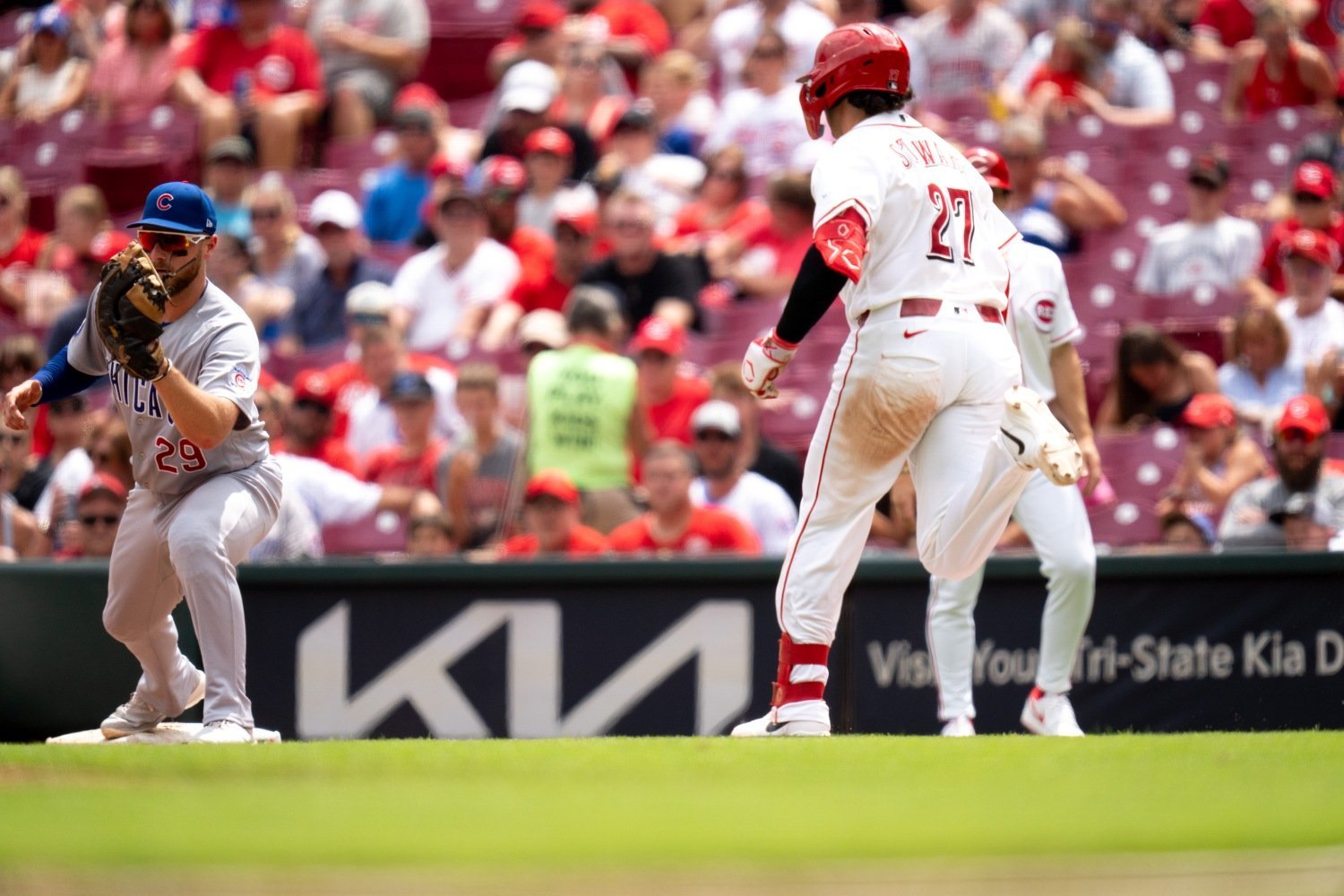 This week, Statcast rolled out new data evaluating the way first basemen receive throws from their teammates elsewhere on the infield. No seasoned baseball fan needs to be told that a well-timed stretch or an adroit scoop can make the difference between safe and out, but this is the first advanced, robust, transparent public framework that has been put forward to assign credit (and blame) for the work first basemen do to maximize outs on close plays and/or imperfect throws. Michael Busch doesn't light up the new leaderboard for this metric, on Baseball Savant. The net effect of first-base receiving ranges from about 8 extra outs to about 8 lost chances for one, but Busch stands solidly in the middle: he has 0 Outs Above Average (OAA) based on receiving this season. In fact, last season, he had... 0 OAA based on receiving. He's average. That's not very interesting, is it? Were it as simple as that, it wouldn't be, but there's a lot more to sift through here—and, alas, a real cause for alarm as we look toward the stretch run. When the throw is on target, Busch is a plus first baseman. He's flexible and fluid when stretching toward a throw, and good at nabbing runners by a fraction of a step. He reads plays well and cuts the ball off as early as he can, without compromising his ability to reach the ball. WERaOFhfV0ZRVkV3dEdEUT09X1YxTlRYRk1BQndvQVdWUUFBd0FIQWdBRUFGa0RWVk1BVTEwTkFBZFhBQXBRQWdSUQ==.mp4 Most on-target throws are near-automatic outs, but some first basemen—especially those under 6 feet tall, like the 5-foot-11 Busch—struggle to secure the ones that are fringy, because they don't stretch as well or move as decisively into the ball as the play demands. Busch might not quite be a good enough athlete to play second or third base, as the Dodgers (and, not so long ago, some Cubs fans) once hoped, but he reacts to throws like an infielder; he's comfortable making plays by receiving throws. There are plenty of first basemen of whom that's not true. Bryce Harper, whom the Phillies moved back to the outfield after the trade deadline, rates worst in the league as a receiver at first base, thanks partially to plays like this one: he just doesn't attack the ball quite enough, and catches it a crucial handful of inches later than he could have. NXk5SzFfWGw0TUFRPT1fQVFnRUFWMEJBRlFBRGdFTEFnQUhBUUZlQUZnQkFnQUFWRjBEQ0ZkUUJsZFVVZ3RX.mp4 Making sure good throws become outs is the first and most important duty of a first baseman fielding those throws. It's like pitch-framing for catchers, where stealing strikes just off the edges matters less than ensuring that pitches that really are strikes are properly called so. It's a real and important credit to Busch that he does that part of the job well. However, height—or, more accurately, wingspan—is an important factor in being a good receiver, and it comes into play on almost all forms of throws that aren't on target. For the purposes of the metrics, "on target" means that the throw arrives between 1 and 7 feet high and is within 5 feet of the base. Otherwise, throws are classified as wide, high, low, scoops (throws that bounce more than 5 feet from the bag but less than 15 feet away) or bounces (throws that bounce more than 15 feet from the base, producing long hops rather than short ones and a different fielding challenge than a scoop). Busch is above-average (1.5 OAA) when the throw is on target, but he lags behind on low (-1.2) and wide (-1.4) ones. At first blush, it might seem counterintuitive that the relatively short Busch struggles with low throws, but in fact, being a few inches shorter than players like Freddie Freeman and Nick Kurtz can turn throws that those players catch ankle-high into vicious short-hop situations. Busch just can't reach the ball before it hits the dirt, whereas another first baseman might be able to do so. Here's one such play. WU9WZ2dfWGw0TUFRPT1fQlFJQVVWVURWd2NBWEFaV0JRQUhBUUZTQUFNTVVWWUFWbEpYQkZFTUNWZGRBd0JX.mp4 It should be less surprising that Busch struggles to convert outs on balls thrown more than 5 feet wide of the base. He really does react well and read throws early, which is why he actually rates as average on high throws, despite his height: he's superb at leaping to snare the ball and finding the base on the way down. YkJMNk9fWGw0TUFRPT1fQTFJSFVWY0ZWZ1VBRGxzS1VBQUhBQTlWQUZoVUJsQUFDbFVDQ1ZCVEJGQlJWZ0FE.mp4 Anticipation can't go as far when an infielder misses the mark laterally, though. Physics don't work for you in that situation, the way they do when you spear a ball above your head and only need to work with gravity to get back to the place from which you leapt. It's not Busch's fault that he isn't 6-foot-3, but that does create a real constraint on his range as a receiver. bmJ3S0RfWGw0TUFRPT1fQWxCWlVGTU1WMU1BV1ZSV1ZBQUhVMU5TQUFNR0JWSUFVVkVBQkFRR0JsRlFBVmND.mp4 The dynamics at play are engrossing. You can work around some of the problems posed by being an undersized first baseman, but you can't completely eliminate them. You can be a good receiver around the bag even at 5-foot-11, but that value will be confined mostly to throws that are on target. Whenever you have to deal with balls that stretch your coveage radius, you're going to feel your lack of size working against you. Here's where things get really fun. Why has Busch been so consistently neutral as a receiver, despite being in trouble whenever a throw is off the mark? Because he faces fewer of those challenging throws than any other full-time first baseman. This season, among the 29 players who've had at least 200 opportunities to catch throws at first (Busch has a league-high 552 of them), none has seen as high a percentage of their throws rated as On Target than Busch's 85%. You can give him a tiny share of the credit for that, because he gets to the base quickly and clearly has a good rapport with his fellow infielders, but mostly, that stat is a testament to the steady work of Alex Bregman, Nico Hoerner and—gulp—Dansby Swanson. Of the 552 tracked opportunities Busch has had this season, 469 throws were On Target. If he were working with the Orioles' infield instead, as Pete Alonso is, he could expect to have just 435 of those throws hit their mark. That's about a 40% increase in the number of throws on which Busch would have to make a tougher play, exposing his shortcoming (no pun intended) in terms of range in all directions. The Cubs infielders don't have very strong arms, but they're so accurate that they make up for that lack of sheer power—and the value of that precision is boosted by the fact that their first baseman isn't well-equipped to save them when a throw goes astray. You can see the problem here. Swanson is now sidelined, perhaps for the year, with a Grade 2 oblique strain. That means a heavy dose of Hoerner at shortstop, and Pedro Ramírez at second base. A handful of other infielders (James Triantos, Owen Miller, Gabriel Arias and Matt Shaw among them) will get chances, too. I looked this up, so I feel obligated to report it. Since the start of 2023, among players with at least 50 tracked throws from shortstop, Hoerner has the highest On Target%. He's thrown 61 balls from short to first, and 58 of them have counted as being on the mark. However, I would apply a huge caveat to that. Firstly, Hoerner's arm is so weak that it sometimes isn't enough for him to merely be accurate. Here's the most impressive throw he's made as a shortstop since the start of 2023. It's a fine play, on a ball that took him to his right and prompted a jump-throw, but it also came from straightaway shortstop, rather than truly from the hole; he was shading heavily up the middle before the ball was hit. This was in 2024. OGdHajdfWGw0TUFRPT1fVkFaVFZWQUdVbGNBQ3dBRFZnQUFDVk5RQUFOUlYxWUFBbFpXQWxKWEJBUlhBZ3BT.mp4 Every other competitive play he's made at short over the last three and a half seasons has been less impressive than that. He has a weak arm, and it shows up even when he has time to get behind the ball and fire it off a strong platform. He doesn't transfer his weight well to get his body behind his throws; his upper body stays behind his front leg. He also pronates (turning his thumb down and his palm outward) harder than most infielders at release on most throws, resulting in de facto changeups thrown across the diamond. Worse, when Hoerner throws on the move, his accuracy gets lousy in a hurry. This is true even at second, but when he's trying to throw on the run or across his body from shortstop, it gets especially ugly. Busch was able to spare Hoerner an error on the play above, but you wouldn't want to bet on him being able to do so consistently. If you've ever shaken hands with Hoerner, this problem won't surprise you. He has unusual hands, thick and muscular but small; his fingers are longer (relative to his palms) than most people's. Thence come his struggles throwing the ball hard, and thence come the accuracy issues whenever he has to rush his release. As Hoerner slides to the left side to take over in Swanson's absence, there will be more off-target throws to first from the Chicago infield. That's likely to be exacerbated by the installation of Ramírez at second; he's not as smooth a fielder or thrower as Hoerner at that spot. That's bad news for Busch, whose skill set so nicely suits the accuracy of the throws he was receiving from the up-the-middle combo of Swanson and Hoerner. The Cubs are going to leak outs pretty badly over the coming weeks. Their rejiggered infield won't get to as many balls. They won't convert the ones they get to into outs as reliably, and they won't finish double plays as often. Busch isn't the problem in this altered equation, but expect to see an extra ball or two get away or an extra runner or two beating out a single by an eyelash. Busch is a fine receiver, but he's not gifted enough to be an excellent one. He's been thriving on the privilege of having exceptionally accurate teammates; he's going to have to survive without that privilege for the balance of this regular season. View the full article
 -
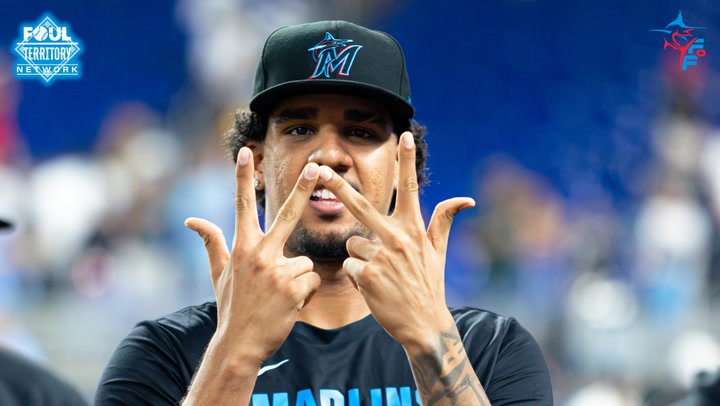 Fish Unfiltered discusses Eury Pérez's impressive turnaround this season, thanks to a combination of adjustments and intangible growth.View the full article
 -
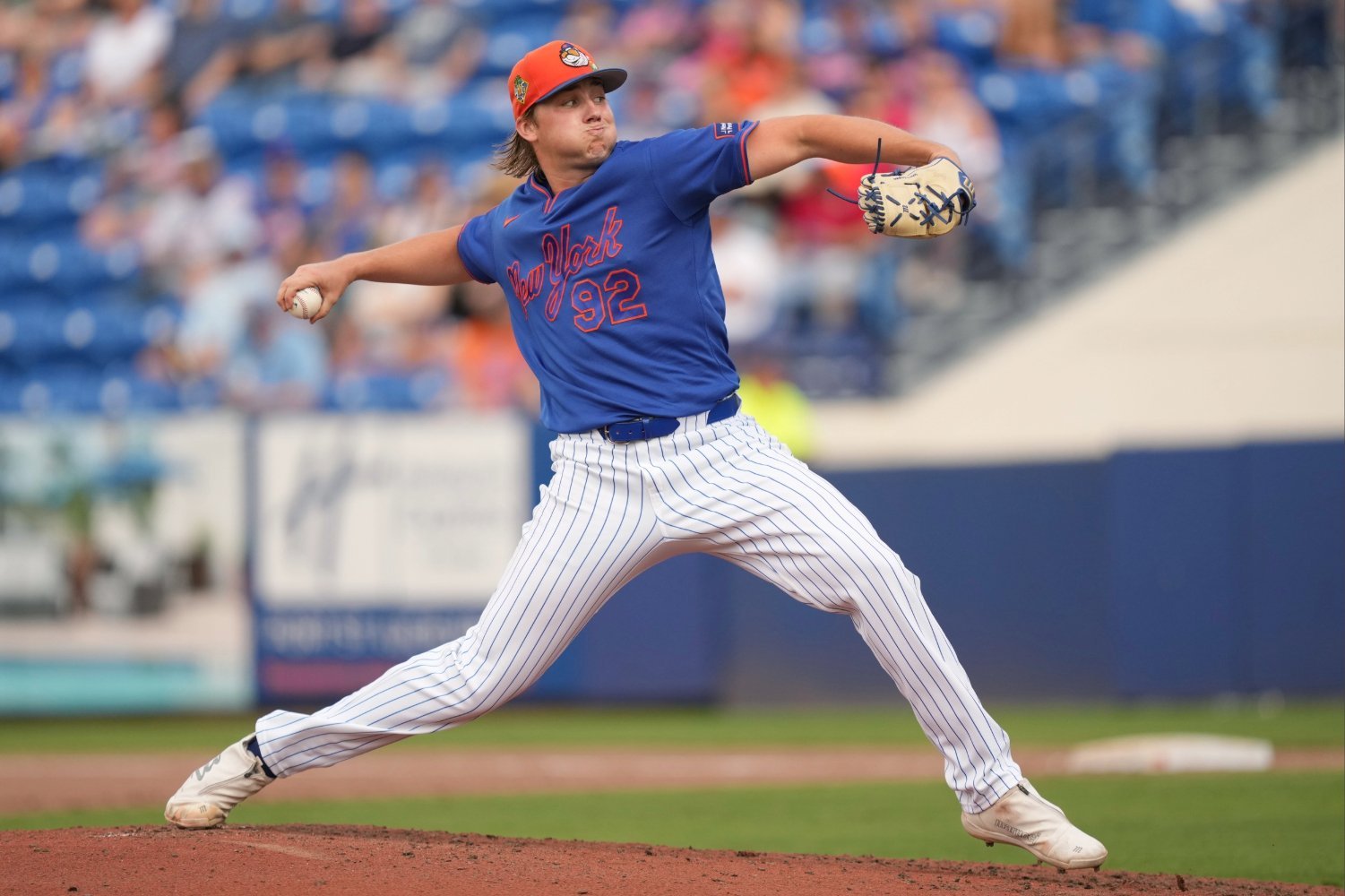 The summer reshuffling of the New York Mets’ organization has forced a corresponding shakeup of Grand Central Mets’ Top 20 prospect list. There was no change to the top two players for the August update, but after that, there was a free-for-all of risers, fallers, additions and subtractions. Five new players hit the revamped list: three 2026 draft picks and two trade deadline acquisitions. The displaced group included left-hander Zac Thornton, who has graduated to major-league status, and right-hander Jonathan Pintaro, who was pitching for New York as of this writing. With that, here is GCM’s new Top 20, as of August 2026. Moves up and down from the July update are in parentheses: New York Mets Top 20 Prospect List (August 2026) Jonah Tong, RHP, AAA Jack Wenninger, RHP, AAA Elian Peña, SS, A+ (Previously No. 4) Mitch Voit, SS/2B, AA (Previously No. 7) Ryan Clifford, 1B/OF, AAA (Previously No. 3) Nick Morabito, OF, AAA (Previously No. 5) Jonathan Santucci, LHP, AAA (Previously No. 8) Carson Wiggins, RHP, Unassigned (New) Jacob Reimer, 3B/1B, AA (Previously No. 6) Aiden Robbins, OF, A (New) Randy Guzman, 1B/OF, A+ (Previously No. 14) Wandy Asigen, SS, Rookie Chris Suero, C/OF, AA (Previously No. 10) Jefferson Rojas, 3B/SS, AA (New) Will Watson, RHP, A (Previously No. 11) Shane Sdao, LHP, Unassigned (New) Eli Serrano III, OF/1B, A (Previously No. 13) Antonio Jimenez, SS/3B, A+ (Previously No. 17) Émilien Pitre, 2B, AAA (New) Dylan Ross, RHP, AAA (Previously No. 15) Biggest Risers Mitch Voit Voit is a man in a hurry. He hit another gear after his promotion from High-A Brooklyn to Double-A Binghamton, and it helped him move up three spots to fourth. The 2025 first-round selection immediately became a top-of-the-order terror with the Rumble Ponies: in his first 17 games, he posted a 220 wRC+, with 10 doubles, a triple, a home run, 27 runs scored, 10 RBIs and six stolen bases. As he grows and learns, his command of the zone should help him unlock more thump, and he’ll need to generate more, because third base is already calling Rojas away from shortstop. The book on him coming into this year was that his hands and footwork were average. The Mets started him five times at third and twice each at short and second through Aug. 18. He played twice as much third as short with Knoxville this year. The biggest knock on Rojas, again per North Side Baseball, might be that there isn't a standout tool in his bag. The hit tool is good and there’s potential for double-digit home runs, but the field tool is already forcing a long-term position change. He could wind up being just a "jack-of-all-trades" player in the majors. Shane Sdao (No. 16) Sdao has yet to debut after being drafted in the fourth round out of Texas A&M University. He underwent Tommy John surgery in 2025, then returned to post a 7.03 ERA/5.35 FIP for the Aggies in 2026. But his potential is so high that the Mets took him anyway. His velocity didn’t fully return post-surgery. His fastball previously sat 92 to 94 mph and touched 97 mph. But his affinity for spin helped him greatly. He has a nasty sweeper that he can throw to left- or right-handed hitters, and a curveball that sits in the high-70s. He struck out 25.2 percent of the hitters he faced as a collegian, while walking just 6.0 percent. Emilien Pitre (No. 19) His hit tool got him moved up to Triple-A two weeks after the Mets acquired him in the trade that sent Freddy Peralta to the Tampa Bay Rays. Pitre struck out four times in 44 plate appearances at Binghamton and then put the ball in play all four times up in his Syracuse debut. He was a combined 17-for-44 (.386 average) as a Mets farmhand through Aug. 18. Between Syracuse, Binghamton, Double-A Montgomery and High-A Bowling Green, he has an 86.2 percent contact rate and 5.9 percent swinging strike rate this season. Power will not be a large part of his game unless he alters his swing to produce loft. He has homered at a 1.3 percent rate in more than 1,000 minor-league plate appearances. At least his speed is a playable tool, although he appears to need work on his baserunning. He has 33 steals this season but has been thrown out 12 times. Pitre’s position appears to be set: He is a second baseman. He has made 81 starts there between his four clubs in 2026. MLB Pipeline described his fielding ability this way: “(H)e was one of the most technically sound infielders in Tampa Bay’s system, with good pre-pitch preparation, strong footwork and efficient angles on grounders, although he needs to be more consistent nailing down the routine plays.” Dropped Out LHP Zac Thornton (previously ninth, graduated), RHP Ryan Lambert (previously 16th), RHP R.J. Gordon (previously 18th), RHP Jonathan Pintaro (previously 19th, in majors), and INF Marco Vargas (previously 20th) all fell off the list for one reason or another. View the full article
 -
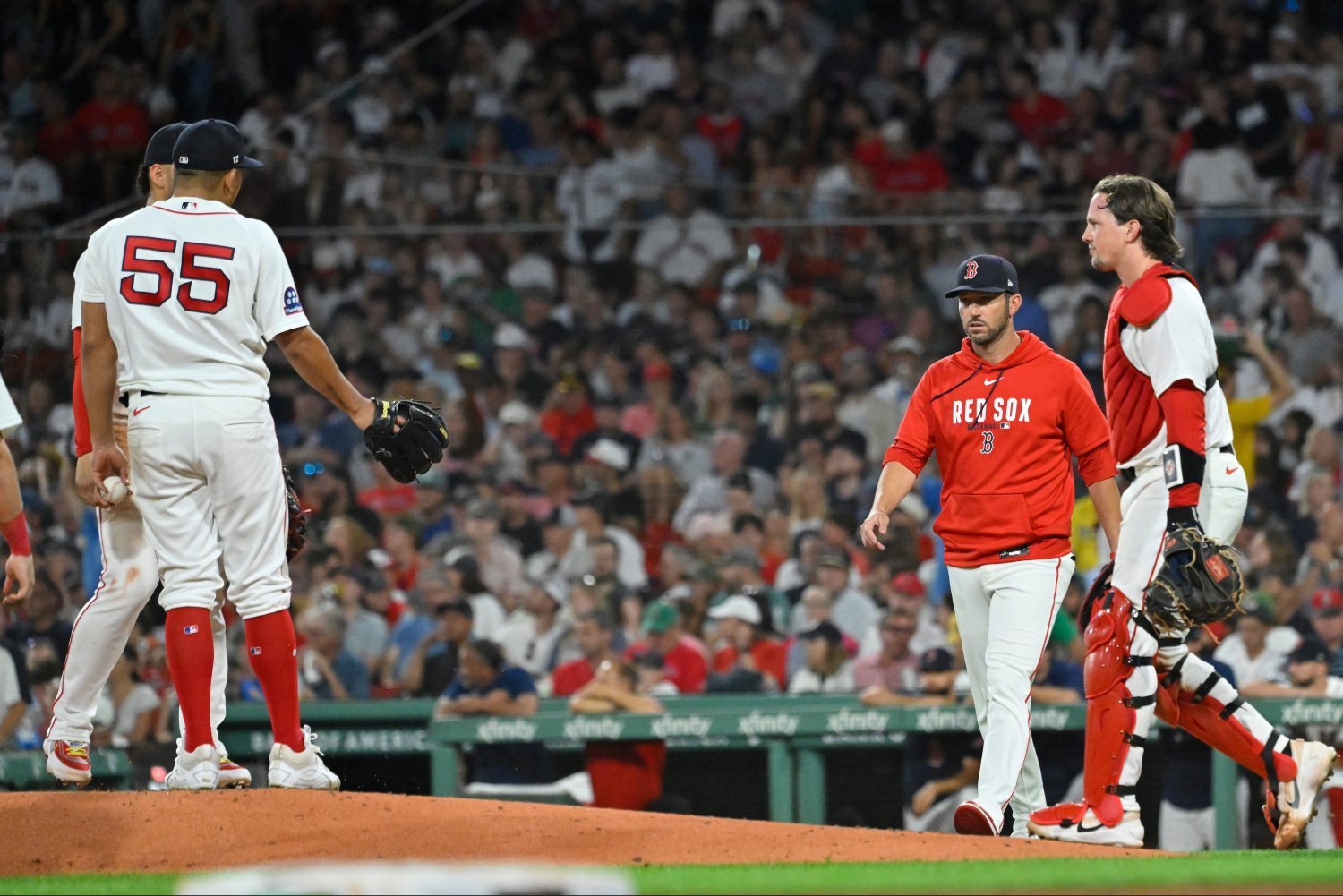 The bullpen for the Boston Red Sox was one of the driving forces behind their amazing run through the month of July and the early part of August. When the rotation turned in a short outing, the 'pen stepped up and kept the game in check by tossing lights out innings night after night. That’s why it was so surprising to watch the bullpen become the Achilles heel of the team as they’ve hit their second-half skid. As we approach the stretch run and, hopefully, the postseason, I wanted to rank the bullpen as it currently stands by most trustworthy. For this exercise, both Garrett Whitlock and Justin Slaten will not be included as they have recently landed on the injured list and there’s no set timetable for their return. When healthy though, both would be in the ‘most trustworthy’ category. Least Trustworthy Jovani Moran While it may feel weird to include Moran on the least trustworthy side of the list, it’s clear he’s pressing quite a bit and is very close to completely running out of gas. For the month of August, he’s tossed 8.2 innings over eight games. His ERA in that span is at 4.15 and he’s sporting an untenable 15.8% walk rate. His strikeout numbers are solid, but his command is all over the place and he’s regularly missing by leaving pitches middle-middle in the zone. While he hasn’t been tagged with a loss this month, he’s contributed to quite a few of them. [He’s also committed the lone balk of the month for the bullpen, for whatever that's worth.] He’d been rock solid through a large portion of the season, if you take out his handful of opener appearances, but he’s quickly becoming a liability in the 'pen and will likely only be used in low-leverage situations from here on out. Moderately Trustworthy Greg Weissert While Weissert has given us all heart palpitations at multiple points this season, he’s earned some amount of trust from Tracy as a late-inning, high-leverage arm right now. He’s appeared in six games so far this month and has pitched his way to a 2.25 ERA. He’s sporting an impressive 26.1% strikeout rate but his walk rate is a sky high 17.4% to go along with it. He was optioned at the beginning of the month to make room for Raymond Burgos after the 13-inning marathon game against the White Sox but never threw a pitch for the WooSox. He’s back up now and due to the injuries of Whitlock and Slaten, will be forced into a role that he really hasn’t seen since the World Baseball Classic when he was the closer for Team Italy. Tyron Guerrero Guerrero has been one of the most impressive arms out of the bullpen all season. He was an under-the-radar offseason addition that has transformed into a high-leverage arm out of the 'pen. The only reason he’s located in the moderately trustworthy section is because he’s started to look mortal in a couple of appearances this month. So far, he’s pitched 8.2 innings over nine games with a 5.19 ERA that was inflated by a blow-up performance against the Blue Jays where he allowed four earned runs. His strikeout rate has slumped to 17.1%, but he's made up for it with pristine command, as his walk rate sits at an impressive 5.7% for the month. He’s a flamethrower who keeps hitters off balance and he should return to his steady, dominant self as we push through the dog days of summer. Alec Gamboa The Boa Constrictor only has two games under his belt since being recalled but he’s sporting a flat zero ERA over four innings pitched. That being said, he also has a flat zero strikeout and walk rate. He’s not the most dominant arm out of the 'pen, but he eats innings and can be used in middle relief pretty safely. He may not still be on the active roster once names like Tanner Houck, Johan Oviedo, and possibly Kutter Crawford get closer to returning but for now, he’s safe to deploy in the middle innings. Raymond Burgos/Wyatt Olds These two are here by default; in truth, they'll likely be replaced once aforementioned options get healthy down the stretch. For now, Burgos has given the Red Sox 10 gutsy innings this month (2.70 ERA), while Olds has looked dominant in his two August innings. So long as they're on the roster, they can be trusted to handle low-leverage spots. Most Trustworthy Brayan Bello As a certified Bello day-one supporter, it’s been great to see him fully accept his bullpen role and thrive in it. For the month of August, he’s notched two wins and a save already while pitching 13.2 innings over four games. He’s working with a 1.32 ERA during that span and he’s been dominant on the bump. He’s striking out batters at a 19.2% clip and his walk rate is incredible at just 3.8%. If and when the Red Sox need a long-man in a crucial game over the next six weeks, Bello is the guy they'll go to. Erik Miller Newly acquired, Miller has tossed 6.1 innings in six games this month and, like Bello above, has been dominant. He hasn't allowed a run and is working with an astonishing 38.5% strikeout rate, and a 11.5% walk rate. There’s been a lot of discourse surrounding Miller due to the trade that brought him to Boston, but he’s been as advertised with even better command than he showed in San Francisco. He immediately slots into the set-up role in the bullpen where he should typically give the closer a clear runway to land the plane at the end of each game. Miller looks to be slowly taking over the role of ‘closer in waiting’ for the Red Sox, and Tracy should feel incredibly comfortable deploying him in any situation down the stretch. Aroldis Chapman Finally, the big man rounds out this list. Yes, he’s looked far more human at times, but he’s still one of the top closers in the game and should be trusted to slam the door shut in most situations. For the month of August, he’s sitting on a 3.60 ERA, which isn’t ideal, but he seems to have rediscovered his 100+ mph sinker in the last couple of appearances. His 20% strikeout rate is a bit down, but he’s been deploying his secondary pitches a bit more in an effort to pitch more to contact. Even if the numbers were worse than this, though, he’d pretty much have to be in the top-tier due to his pedigree and the fact that there’s no other closer option for the team through the end of the season. View the full article
 -
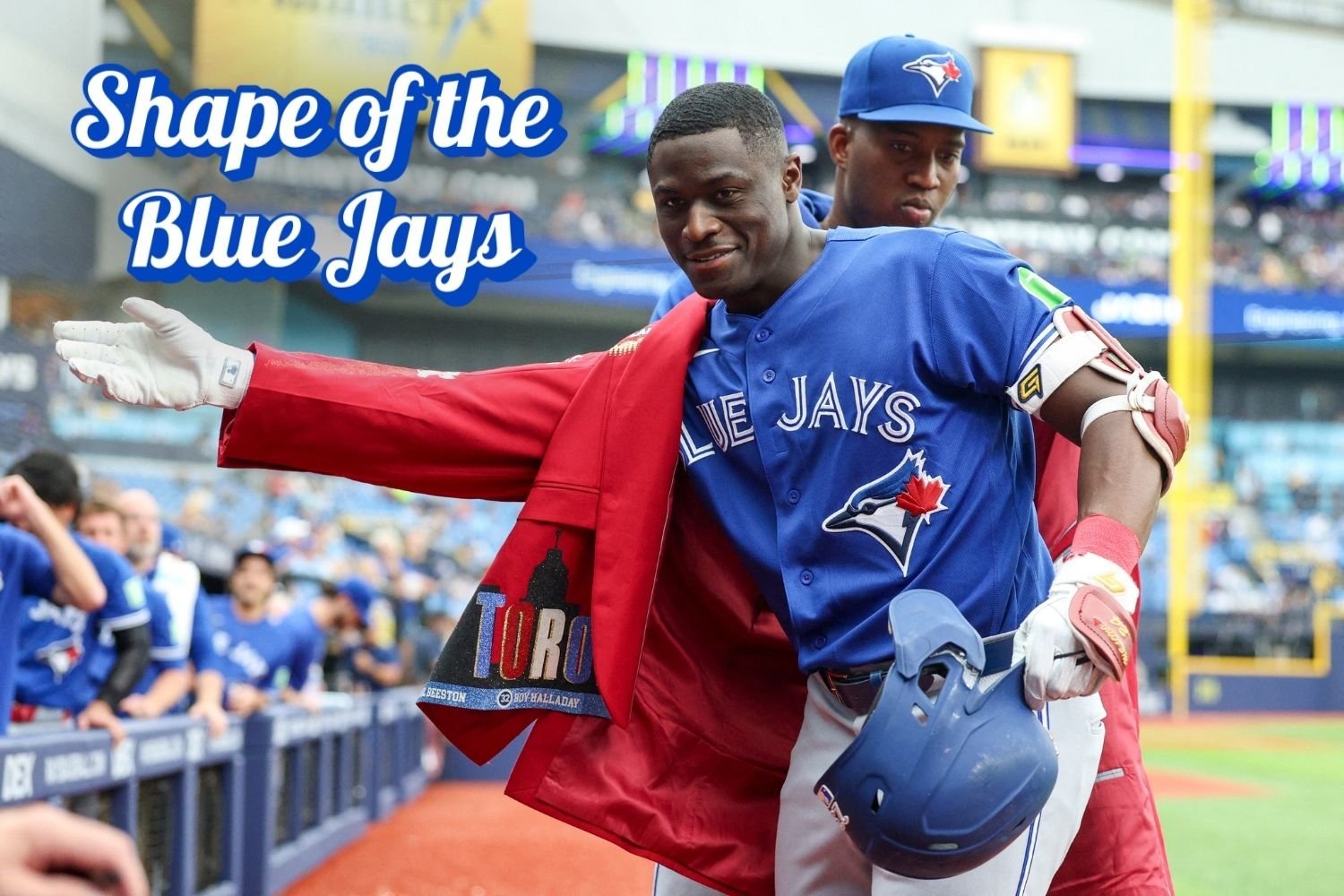 Welcome to Shape of the Blue Jays, my column where I dig into Statcast numbers to analyze recent pitch shape and swing shape trends for Toronto Blue Jays players and discuss how they have impacted their performance. Click here to read the last edition. All stats entering August 21, 2026, unless otherwise stated. Quick Hits: JoJo's Journey Continues A couple of weeks ago, JoJo Parker got to celebrate his 20th birthday by getting called up to High-A Vancouver. He has started well, and the helium continued to pick up yesterday, when he went 3-for-4 with 2 doubles. In seven games with the Canadians, Parker is slashing .346/.452/.500 for a 159 wRC+. He's striking out 23% of the time, walking 13% of the time, and has stolen three bases. Perhaps even more encouraging is the fact that the underlying numbers also suggest he's continuing to see the ball well, even against tougher pitching. His strikeout rate at Single-A Dunedin was 25% in 87 games earlier this season. His contact rate in Vancouver so far is 78%, the same as in Dunedin. Parker was extremely selective in his first taste of pro ball, chasing just 23% of the time in the FSL and swinging at only 57% of pitches in the strike zone, which works out to an overall swing rate of 39%. That has increased to 52% with the Canadians. We don't have Statcast data for High A, but it's reasonable to assume he's seeing more pitches to hit and he isn't missing a beat so far. Daz Cameron Daz Cameron has seized his latest big league opportunity in his three games with the Blue Jays (4-for-11, 1 double, 1 HR). In Thursday's rubber match against the Rays, he clobbered the team's farthest home run of the season by someone other than Kazuma Okamoto, sending an Ian Seymour changeup onto one of the catwalks at Tropicana Field. He began his season in the KBO. Prior to that, he spent time with three different MLB franchises from 2020 through 2025. A fringy hit tool and high strikeout rates have kept him from being productive at this level, but he's a different hitter than he was in his last stint on this side of the Pacific. It's an incredibly small sample, but swing-and-miss has not been an issue for Cameron so far with the Blue Jays, and for a lineup that needs slug, his combination of a high-end average bat speed (74.2 mph) and a short bat path (6.8' average swing length) is very intriguing. He's also adjusted his batting stance, standing at an angle of 29° open per Statcast, compared to 15° open with Milwaukee last year. His hands are no longer tucked behind his head pre-load, and the offset between his front and back foot has widened. Daz Cameron Batting Stance, May 2025 (right) vs August 2026 (left) Shane Bieber Shane Bieber delivered an outstanding performance to help the Jays win their first series at Tropicana Field since September 2023. He tossed seven innings of one-run ball, striking out a season-high seven without issuing a walk. With 101 pitches, he topped the century mark for the first time since his Tommy John surgery. He has completed seven innings twice this season, and it happened against the Rays both times. In his previous start against the Yankees, Bieber threw his four-seamer a season-high 49% of the time. He maintained that trend against Tampa Bay. The Rays have struggled against fastballs this season, and he successfully exploited that during his first trip through the order, when he threw the pitch half the time. The second time through the order, he upped the usage on his knuckle curve (44% CSW rate in this game) and slider (three whiffs on five swings) to great effect, before leaning on the changeup the third time through (three whiffs on six swings, 50% CSW rate, 29% zone swing, 57% chase). This was vintage Bieber: pounding fastballs to start the game, putting the other team in swing mode, and making them look foolish on the secondaries later on. The stuff isn't going to wow anybody, but he was constantly a step ahead of the Rays thanks to his command and elite sequencing. Here's a fun fact: Bieber's six walks in his past four starts have still yet to surpass the total from his six-walk clunker in Washington right before the deadline. He has a 2.96 ERA and 22 strikeouts in that span (24.1 IP). Shane Bieber Swings and Misses, August 20 vs Tampa Bay (Statcast) Charles McAdoo Charles McAdoo has been a sparkplug since his return to the big leagues, hitting for a 215 wRC+ in the month of August entering Thursday. However, a dose of reality may be on its way. He's running a .343 BABIP this season, and while the hit tool has improved (leading to an above-average line drive rate), he hits the ball in the air a lot and has been susceptible to popups, making his elite speed less likely to have a positive effect on his batting average. The projection models at FanGraphs are unanimously predicting a below-average rest-of-season wRC+ from him. That being said, I still feel he has a good shot at outperforming those because he's becoming more of a power threat. McAdoo has eight batted balls with an exit velocity of at least 100 mph so far in his Blue Jay career. Five of those have come within the past week. Projection systems like ZiPS do not capture the effects of in-season changes to a hitter's mechanics. Since getting recalled from Buffalo earlier this month, his attack angle has increased by 4° (again, not ideal if you want to skirt your way to a high BABIP with grounders and speed, but good for power) and his average point of contact has shifted nearly 3" further out front toward the mound. Like Cameron, he has that high bat speed & short swing combo that new-age hitting coaches love. The changes in his attack angle and intercept point have translated to more batted balls at ideal angles for him to tap into the power he has, and this has been another chapter in his evolution as a big-league hitter: He reined his swing in to focus on making more contact earlier this season in the minors, raising his floor and getting him a promotion to Toronto. Now, he's beginning to learn to balance that with the pop he has always had. A 215 wRC+ isn't sustainable, and he's done all of his hitting against lefties, but he has what it takes to continue thriving as another righty-hitting option for John Schneider's club. View the full article
 -
 Blue Jays Affiliate Overview (August 18- 19) Triple-A Buffalo Bisons Series vs Lehigh Valley IronPigs (Philadelphia Phillies): 0-2 Season Record: 60-62 Double-A New Hampshire Fisher Cats Series vs Erie SeaWolves (Detroit Tigers): 1-1 Season Record: 53-61 High-A Vancouver Canadians Series vs Eugene Emeralds (San Francisco Giants): 1-1 Season Record: 55-61 Single-A Dunedin Blue Jays Series vs Clearwater Threshers (Philadelphia Phillies): 1-2 Season Record: 53-60 FCL Blue Jays: Season Complete DSL Blue Jays Blue Week Record: 0-1 Season Record: 20-35 DSL Blue Jays Red Week Record: 1-0 Season Record: 34-18 Triple-A Buffalo Bisons Season Record: 60-62 Series vs Lehigh Valley IronPigs (Philadelphia Phillies) August 18: Tuesday was the start of a new series for Buffalo, this one against the Lehigh Valley IronPigs. The Bisons sent Grant Rogers to the mound, who did a fairly decent job of holding the bats from Lehigh in check. Rogers had one of his usual starts, giving up a bunch of hits (eight), but limiting the walks (one). He would have to pitch around traffic on the basepaths all game, which he has become accustomed to. He did well the first three innings, not allowing any of the base runners to cross home plate. In the fourth, though, the IronPigs finally broke through with an RBI double by Christian Cairo. In the fifth, Rogers surrendered a two-run home run to Kameron Misner. After Lehigh Valley got an out and a double in the seventh, Rogers gave way to Javen Coleman, who couldn't keep the runner off the board, as the IronPigs' lead jumped to 4-0. Following another run in the top of the eighth inning by Lehigh Valley, Buffalo finally got a run on the board in the bottom half of the inning. Josh Kasevich singled, then Sean Keys ripped a ball to right field for an RBI triple, scoring Kasevich. In the bottom of the ninth, Jay Harry doubled and Carlos Mendoza singled, but they were left stranded on the basepaths when Rudy Martin Jr. grounded out to end the game. Buffalo fell 5-1. August 19: Josh Stephan was on the mound for Buffalo on Wednesday, trying to right the ship and get the Bisons in the win column for the series against Lehigh Valley. Stephan came out of the gates locked in, striking out all three batters in the first inning, only throwing one straight pitch (a sinker). In the second inning, he started out throwing the sinker and got two ground outs on the pitch and a strikeout with the cutter. In the third inning, Lehigh Valley finally got to Stephan, with two singles and a two-RBI double by Tommy Pham. Stephan would end his outing throwing six innings, giving up just the two runs, and striking out seven. The Buffalo bats were stymied again by the IronPigs pitching. Their lone run came in the bottom of the seventh, as Ismael Munguia and William Simoneit each singled to open the frame. The base knocks were followed by a sacrifice bunt from Carlos Mendoza and a sacrifice by Yohendrick Piñango. In the bottom of the eighth, Buffalo had a great scoring chance, leading off the inning with three consecutive walks to load the bases. Then Kirby Snead came into the game for Lehigh Valley and proceeded to strike out Nick Goodwin, Munguia, and Simoneit all in a row, without a ball being put into play. Buffalo fell again, this time 2-1. Double-A New Hampshire Season Record: 53-61 Series vs Erie SeaWolves (Detroit Tigers) August 18: Nolan Perry got the start Tuesday in the opener of the week-long series between New Hampshire and Erie. He worked hitters well and didn't give up a lot of hard contact. He struck out just two on the day and gave up a two-run home run to Zyhir Hope in the third inning. Perry also surrendered a walk and four hits total over his four innings. Down one in the fourth, Edward Duran and Cutter Coffey drove in three runs on RBI singles from each. Gage Stanifer came in for the eighth inning again and surrendered one run as well. He gave up singles to Hope and Thayron Liranzo before a wild pitch scored Hope. After walking a batter, Stanifer locked in with two strikeouts in between another wild pitch. In the ninth, Hope tied the game with an RBI single to send the game into extra innings. After the two teams exchanged runs in the 10th inning, Victor Arias hit an RBI triple in the eleventh inning, which was the winning run because Erie failed to score in their half of the frame. New Hampshire won 6-5. August 19: Erie took the early lead in the Wednesday game with New Hampshire. Zyhir Hope had a sacrifice fly in the first and Luke Shliger hit an RBI double in the second inning. J.R. Freethy got New Hampshire on the board in the fifth inning, and they kept it rolling in the sixth. Carter Cunningham drove in Dub Gleed (who had three hits on the day) and then was followed by Alexis Hernandez driving in a run on a single, followed by a bases-loaded walk. Thayron Liranzo answered, though, crushing a home run in the Erie half of the sixth. Erie would then score the next two more runs and hold off New Hampshire. The Fisher Cats lost this one 6-5. High-A Vancouver Season Record: 55-61 Series vs Eugene Emeralds (San Francisco Giants) August 18: The Canadians face off against the league-leading Emeralds once again, and some early plate discipline and solid baserunning let the Canadians strike first after an early error by the shortstop. Maddox Latta’s fourth homer in the month of August made it a 4-0 lead, as the undrafted free agent has been on fire. Landen Maroudis also looked decent, going five innings for the sixth start in a row, but in the third inning with two outs, Maroudis made a mistake pitch that allowed the Emeralds to bring it within one with a three-run homer. Despite the blemish, Maroudis was able to strike out six batters and ended up getting the win thanks to some timely homers from Jake Casey, as he homered in the sixth to double the lead to two, and then in the sixth inning had a two-run homer to make it a five-run game. He added another sac fly in the eighth to make it four total RBIs in the game, almost matching the Emeralds’ total runs scored. The bullpen also struck out seven batters to close out the game, allowing only two runs as they won this one 10-5. August 19: Silvano Hechavarria struck out five of the first six batters he faced, but then faced disaster in the third inning, as the big Cuban righty allowed five runs to put the Canadians in a big hole. Ramon Marquez was also excellent for Eugene, as he pitched a quality start and allowed two runs on a JoJo Parker two-RBI double in the sixth. Austin Smith had himself a two-homer night to bring it closer, but they couldn’t get over the hump of the five runs Hechavarria gave up in the third, resulting in a 6-4 loss for Vancouver. Single-A Dunedin Season Record: 53-60 Series vs Clearwater Threshers (Philadelphia Phillies) August 18: Jack Nedrow pitched another strong start, although he only struck out one batter, allowing two runs, with one of them being unearned. The big bats in the Dunedin lineup gave them the lead as Giaconino Lasaracina hit a 105.7 mph homer to tie it in the fifth, and Jake Bennett’s homer barrage continued as he hit a two-run homer in the sixth to make it a two-run lead. Unfortunately for the Jays, Edrwin Veras gave up the equivalent of batting practice to the Threshers, as the reliever gave up 10 hits and six runs over two innings, without striking out a batter nor walking one. The offense could not recover from the thrashing on the other end, so the Jays ended up losing this one 8-4. August 19, Game 1: Miguel Pantoja got his first start in Dunedin after performing well in the Florida Complex League, and he pitched 3.2 innings, allowing two runs, but only one of them was earned. Owen Carapellotti homered in the second inning, which made it a tie ballgame, but he made a throwing error in the fourth, which gave the Threshers the lead. The D-Jays got a couple of runs back on a sac fly and an RBI groundout. After Pantajo was taken out, however, the dam broke loose, as they scored five runs on Nolan Higgins in the fifth inning. Carapellotti hit his second homer of the night to bring it within two, and Joe Mantiply pitched a 1-2-3 inning on rehab assignment, but the Jays couldn’t bring it back, falling 7-5. Game 2: This was a make-up game for a missing game from July, and Karson Ligon was once again the starter. He struck out the side in the first inning, but faced traffic in the second inning due to a catcher’s interference as well as a throwing error from Dameury Pena, which resulted in two runs being scored. Giaconino Lasaracina hit a mammoth tank 112.4 mph and 457 feet for the Jays’ first run, and Raimundo De Los Santos took the lead with a two-run homer in the same inning. Ligon was taken out in the fourth, and Landon Waters and Reese Bassinger both pitched two scoreless innings each to clinch the win for the Jays. Lasaracina had the cherry on top, as he hit another homer in the fourth for an insurance run at 109.4 mph this time. FCL Blue Jays Season Record: 38-20 Season Completed DSL Blue Jays Blue Season Record: 19-35 August 18: BJB wrapped up their season down on the island with two big innings and some fireworks as well. Down 3-0 headed into the top of the fifth inning, BJB loaded up the bases with two walks and a hit by pitch, then Isay Veras came to the plate. After his at-bat was over, BJB had the lead, as Veras sent a ball over the right field fence for a grand slam; the blast was his fourth of the season. After surrendering the lead back to the Giants Orange (GIO) team, BJB was in a one-run hole to begin the seventh. After Deret Gonzalez struck out, Cristopher Polanco launched his second home run of the season to right field, a solo shot. Later in the inning, Fabian Gonzalez ripped a ball to left and cleared the bases for a three-run triple. The three-run lead stuck, as BJB won their final game of the season, 8-5. DSL Blue Jays Red Season Record: 33-18 August 18: BJR put up enough runs on the scoreboard Tuesday to get the win and end the regular season on a high note. In the first, BJR scored on a wild pitch, an RBI groundout by Darwin Nuñez, and then a double steal of home and second by Aneudi Severino and Elian Reyes. Reyes then doubled home a run in the third inning on a fly ball to right field. Jose Gori would add an RBI on a groundout to third base later in the inning. Reyes would cap off his big game with another RBI single in the fifth. The six runs were enough for BJR to take home the win 6-4 and move on to the playoffs that began Thursday. Transactions 08/19/26 Toronto Blue Jays sent LHP Joe Mantiply on a rehab assignment to Dunedin Blue Jays. 08/19/26 RHP Miguel Pantoja assigned to Dunedin Blue Jays from FCL Blue Jays. View the full article
 -
Twins Minor League Report (8/20): Saints Bats Power Another Sweep
DiamondCentric posted an article in Twins Daily
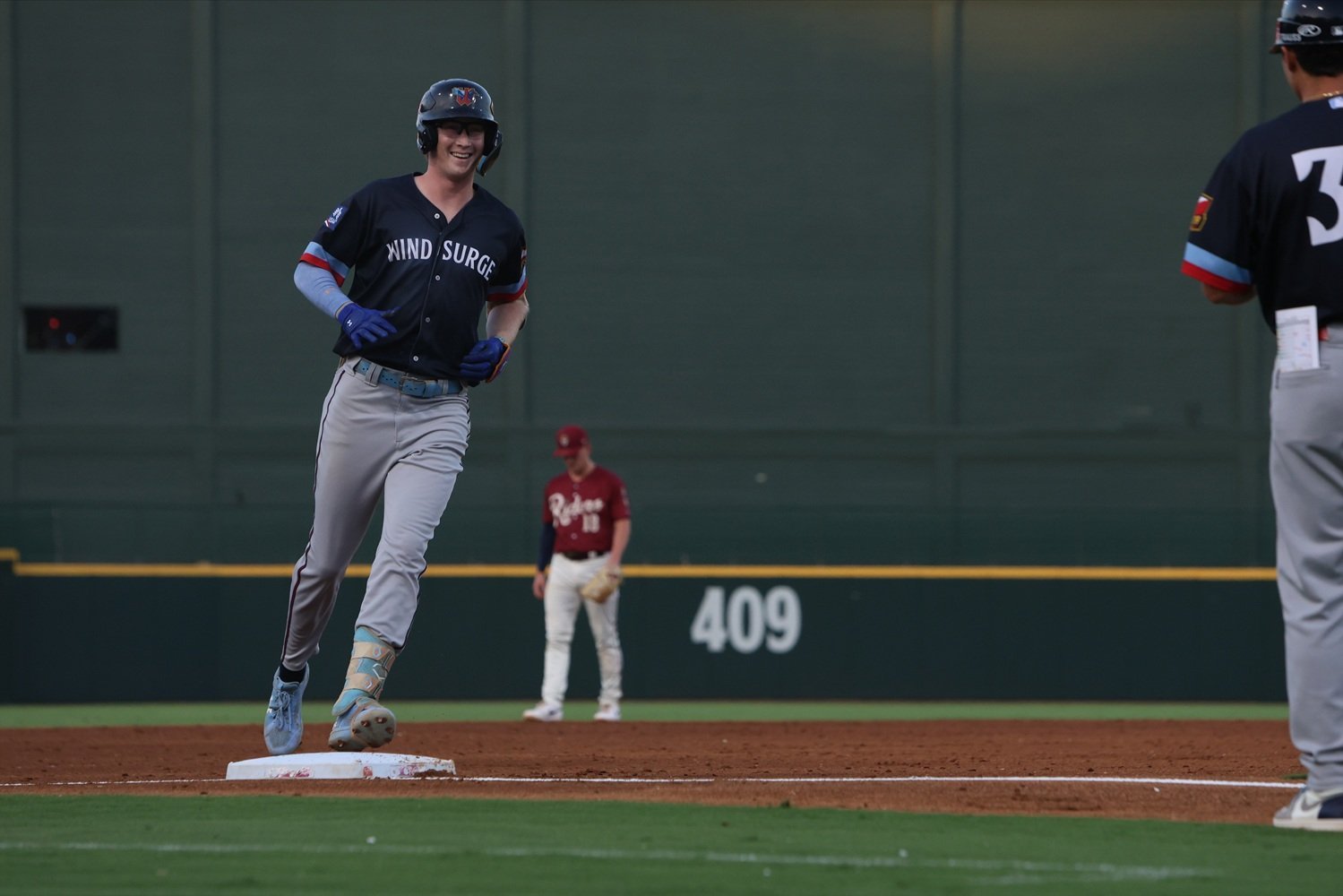 TRANSACTIONS With the DSL season now complete, the Twins have released infielder Luis Suarez and RHPs Failin Placencio and Wisarly Reinoso. The Twins signed RHP Jui-Chieh Lin out of Taiwan about six weeks ago. On Thursday, he was placed on the Fort Myers roster. SAINTS SENTINEL Game 1: St. Paul 10, Iowa 2 (Completion of Suspended Game) Box Score On Wednesday night, the game began a bit late due to rain. When they started, Walker Jenkins drilled a leadoff home run beyond the wall in center field. An inning later, Tristan Gray launched a home run to make it 2–0. Ricky Castro started the game and when the rains came, he had tossed 2 1/3 scoreless, hitless innings. The good? He had five strikeouts. The less-than good? He also walked four batters. Then in the bottom of the third, the rains came again, and the game was suspended. That’s where the game started on Thursday. When the game resumed on Thursday, Trent Baker took the mound. He gave up two solo homers, but he struck out eight batters over 4 1/3 innings. Eric Orze and Marco Raya combined for the final seven outs without allowing a base runner. They combined for three strikeouts, and Raya had three strikeouts. The Saints batters just kept adding on. They scored two runs in four of their final five innings to take a commanding lead and the win. All eight additional runs came on homers as well. In the fifth inning, David Banuelos knocked a two-out single. Jenkins followed with his second home run of the game. The top of the sixth inning began with homers by Gabriel Gonzalez and Tristan Gray, his second of the game. In the top of the eighth, Emmanuel Rodriguez walked, and Gonzalez knocked his second homer of the day. In the top of the ninth inning, Kala’i Rosario was hit by a pitch. Emmanuel Rodriguez followed with another two-run homer to give them a 10-2 lead. Gonzalez was 3-for-4 with a walk and his 14th and 15th home runs. Jenkins was 2-for-4 with a walk and his eighth and ninth home runs. Gray went 2-for-5 with his first two Saints home runs. Rodriguez hit his seventh home run and had a walk. Matt Wallner hit his 11th double and had a walk. Game 2: St. Paul 8, Columbus 6 (Regularly Scheduled Game) Box Score The Saints completed the sweep thanks to a big, four-run sixth inning to put themselves 20-games over .500. With two outs in the top of the second, Tanner Schobel walked. Noah Cardenas kept the day’s theme going by launching a two-run homer to give the Saints the first runs of the game. In the top of the third inning, Matt Wallner hit his franchise-record 23rd home run of the season. The shortened game was basically a bullpen game for the Saints. Jack Anderson started and went three innings. He gave up five runs on seven hits and a walk. He struck out three batters. Garrett Acton came on and gave up just one hit over two scoreless innings. He also struck out three batters. In the top of the fifth inning, the Saints did something unusual. With two outs, Gabriel Gonzalez walked. He then scored on a Matt Wallner double. After 11 runs scored on home runs, the team finally found another way to score. Down 5-4 going to the sixth inning, Kala’i Rosario led off with a game-tying home run. Tanner Schobel singled and Ben Ross walked before Emmanuel Rodriguez hit a three-run homer that gave the Saints an 8-5 lead. Julian Merryweather gave up one run on two hits over the final two innings to record his fifth save since coming back from injury. He had five strikeouts. Wallner went 2-for-3 with a walk, his 12th double and 23rd homer. Rosario went 2-for-4 with his first AAA double and his third Saints homer. Rodriguez’s homer was his eight with the Saints. He also walked. Cardenas homered for the 11th time this season. Ross walked twice, and Schobel had a single and a walk. WIND SURGE WISDOM Wichita 8, Frisco 4 Box Score The Wind Surge had the opportunity to face a rehabbing-Jack Leiter on Thursday night. The Surge grabbed a four-run lead in the top of the third. With one out, Jaime Ferrer reached on an error. Marek Houston walked. Jake Rucker hit his ninth double to drive in two runs. Brandon Winokur followed with a homer to make it 4-0. In the fourth inning, Andrew Cossetti walked before Leiter was removed from the game. Kyle DeBarge and Jay Thomason singled to load the baseball. Houston came up and drove in two runs with a single to make it 6-1. Preston Johnson started and gave up two runs on two hits (both solo homers) over four innings. He walked one and had five strikeouts. Hunter Gregory gave up two runs on two walks in his inning. Through five innings, the Surge lead was down to 6-4. In the top of the sixth, Cossetti led off with a single. DeBarge walked. Jay Thomason singled to drive in Cossetti with the team’s seventh run. DeBarge scored on a double play to make it 8-4. Cory Lewis came in and shut the door. He gave up three hits over four shutout innings. He walked none and had four strikeouts. Brandon Winokur went 2-for-5 with his second triple and seventh Wichita home run. Cossettie, DeBarge and Thomason each went 2-for-3 with a walk. Marek Houston was 1-for-3 with two walks. He also stole his 24th and 25th bases. KERNEL NUGGETS Cedar Rapids 1, Beloit 2 Box Score The Kernels grabbed a 1-0 lead in the top of the third? How? Well, with one out Danny De Andrade was one third base, and Byron Chourio was on second base. Yasser Mercedes flew out to right field, deep enough that De Andrade scored. But it was close because a strong throw from right field was cut off by the first baseman who threw across the diamond to third base where a sliding Chourio was called out. However, De Andrade scored before the tag at third, so the team had a 1-0 lead. Adrian Bohorquez is on a roll!! The righty gave up one run on one hit (a solo home run) over five innings. He walked two and had seven strikeouts. Merit Jones came on and gave up one run on four hits over three runs. He struck out two batters. The Kernels had four hits and five walks. They were 0-for-5 with five runners left in scoring position. There were no multi-hit games or extra base hits. De Andrade had a single and a walk. JP Smith walked twice. Yasser Mercedes stole his 35th base with the Kernels. MIGHTY MATTERS Fort Myers 8, Palm Beach 1 Box Score Cristian Hernandez gave up one run on one hit over four innings. He hit two batters and had three strikeouts. Jake Covey struck out five batters over three shutout innings. He gave up one hit and walked one batter. Hendry Chivilli struck out two over two scoreless, one-hit innings. In the top of the second inning, Isaiah Lane (who, along with Colby Turner have been the top performers among the Twins 2026 draft picks) went to the opposite field for his first professional home run. In the fifth inning, Bryce Fowler and Hideki Prather reached base. Murphy Hernandez drilled his fourth home run of the season to give the Mussels a 4-1 lead. With two outs in the sixth, Jimmy Keenan and Bryce Fowler singled before Hideki Prather was hit by a pitch to lead the bases. That brought Hernandez to the plate. He lined a single to center to drive in two more runs and give his team a 6-1 lead. The Mussels added two more in the top of the ninth, Ramiro Dominguez and Yovanny Duran walked. Lane singled to drive in Dominguez, and then Lane stole second base. A throwing error allowed Duran to score the eighth run. Hernandez went 2-for-5 with his fourth homer and five RBI. Lane was 2-for-5 with his first pro homer and his third stolen base. Fowler was 2-for-2 with two walks. The Mussels combined for 16 strikeouts in the game. You don’t want to look at Quentin Young’s performance on Thursday. PLAYERS OF THE DAY Hitter(s) of the Day Gabriel Gonzalez (St. Paul): 3-for-4. BB, 2-HR(15), 2 R, 3 RBI; Brandon Winokur (Wichita): 2-for-5, 3B(2), HR(7), R, 2 RBI. Merphy Hernandez (Fort Myers): 2-for-5, HR(4), R, 5 RBI. Pitcher(s) of the Day Cory Lewis (Wichita): 4 IP, 3 H, 0 R, 0 BB, 4 K Adrian Bohorquez (Cedar Rapids): 5 IP, 1 H, 1 ER, 2 BB, 7 K PROSPECT SUMMARY Check out the Prospect Tracker for much more on our Twins Top 20 prospects. See how they did today. #1 - OF Walker Jenkins (St. Paul) - Game 1: 2-for-4, BB, 2 HR(9), 2 R, 3 RBI, K (batted first, played CF). #4 - SS Marek Houston (Wichita) - 1-for-3, 2 BB, R, 2 RBI, 2 SB(25) (batted first, played SS) #6 - OF Emmanuel Rodriguez (St. Paul) - Game 1: 1-for-4, BB, HR(7), 2 R, 3 RBI (batted fifth, DHd); Game 2: 1-for-3, BB, HR(8), R, 3 RBI, 2 K (batted second, played CF) #7 - OF Hendry Mendez (St. Paul) - Game 2: 0-for-4 (batted fifth, played LF) #8 - C Eduardo Tait (Cedar Rapids) - 1-for-4, 2 K (batted second, played Catcher) #9 - 1B/OF Gabriel Gonzalez (St. Paul) - Game 1: 3-for-4, BB, 2 HR(15), 2 R, 3 RBI (batted sixth, played LF/1B); Game 2: 0-for-3, BB, R #12 - 3B/CF Brandon Winokur (Wichita) - 2-for-5, 3B(2), HR(7), R, 2 RBI (batted third, played CF) #18 - 3B/SS Quentin Young (Ft. Myers) - 0-for-5, 5 K (batted sixth, played DH) #19 - OF Yasser Mercedes (Cedar Rapids) - 1-for-3, SF RBI, 2 K (batted first, played CF) UPCOMING PROBABLES Friday, August 21 St. Paul @ Columbus (6:05 pm CT) - LHP Kendry Rojas (2-0, 3.27 ERA) Wichita @ Frisco (6:05 pm CT) - RHP Ty Langenberg (1-4, 3.64 ERA) Wisconsin @ Cedar Rapids (1:05 pm CT) - RHP Justin Mitrovich (2-1, 2.38 ERA) Ft. Myers @ Palm Beach (5:30 pm CT) - TBD CURRENT W-L Records Minnesota Twins: 63-65 St. Paul Saints: 71-51 Wichita Wind Surge: 48-67 Cedar Rapids Kernels: 44-71 Fort Myers Mighty Mussels: 63-52 FCL Twins: 33-26 (Season Complete) DSL Twins: 19-35 (Season Complete) Please feel free to ask questions about the teams, the rosters, and discuss today’s games, or anything else Twins minor-league related! View the full article
 -
 Thursday saw the San Diego Padres' four full-season affiliates go 2-2. The Triple-A El Paso Chihuahuas upended Round Rock 6-5, the Double-A San Antonio Missions walked off Northwest Arkansas 6-5 in 11 innings, the High-A Fort Wayne TinCaps lost to Great Lakes 7-2 and the Low-A Lake Elsinore Storm faltered late vs. San Jose 9-5. Padres Minor-League Transactions None. Clay Dungan, Dustin Harris HRs In Seventh Lift Chihuahuas Clay Dungan hit a go-ahead two-run shot in the seventh inning and Dustin Harris added a two-run homer of his own as the host Triple-A El Paso Chihuahuas rallied for a 6-5 victory over the Round Rock Express, snapping a five-game losing streak. Carlos Rodriguez homered and Will Wagner went 3-for-4, while Harris finished with a pair of hits as the Chihuahuas were outhit by the Express 13-10. Chihuahuas right-handed starter Jhony Brito went four innings and gave up two runs on six hits and no walks, striking out one. After right-hander Hunter Stratton struck out three in two scoreless innings, right-hander Hans Crouse gave up a run in one inning and right-hander David Morgan went two innings and picked up his fourth Triple-A save of the year despite allowing two runs in the ninth, including a homer. The Chihuahuas were down 3-2 entering the bottom of the seventh when Nick Pratto had leadoff single and Dungan blasted his two-run homer, his ninth, out to right-center on a 3-2 pitch. After Bryce Johnson walked and a pitching change, Harris went deep to center for his 12 of the year and sixth in 27 games since signing with the Padres, including second game in a row. EP1A_0820.mp4 EP2_0820.mp4 Player AB R H RBI BB K Dustin Harris 4 1 2 2 0 0 Gage Workman 4 0 0 0 0 1 Carlos Rodríguez 3 1 1 1 1 0 Ethan Salas 4 1 1 0 0 0 Will Wagner 4 0 3 1 0 1 Mason McCoy 2 0 0 0 2 1 Nick Pratto 4 1 1 0 0 1 Clay Dungan 4 1 1 2 0 0 Bryce Johnson 2 1 1 0 1 1 Player IP H R ER BB K HR Jhony Brito 4 6 2 2 0 1 1 Hunter Stratton 2 1 0 0 0 3 0 Hans Crouse 1 2 1 1 2 2 0 David Morgan 2 4 2 2 0 2 1 Alex McCoy Walks It Off As Missions Win In 11 Alex McCoy had his first Double-A walk-off, delivering a bases-loaded single with one out in the 11th to score Jack Costello as the host San Antonio Missions pulled out a 6-5 victory over the Northwest Arkansas Travelers. McCoy, Padres Mission's No. 8 prospect, and Ryan Jackson each had two hits, with Jackson, who had a double, driving in three. One of Jackson's RBIs came on a squeeze bunt that scored Tirso Ornelas in the bottom of the 10th that tied the game 5-5. After holding the Travelers scoreless in the top of the 11th, Costello started as the zombie runner. Justin DeCriscio bunted him to third before intentional walks to Anthony Vilar and Braedon Karpathios (Padres Mission's No. 9 prospect) loaded the bases for McCoy. McCoy then lined a 2-2 pitch over the drawn-in shortstop to left to bring in Costello with the winning run. Missions left-handed starter Jamie Hitt allowed two runs over five innings on four hits and no walks with four strikeouts. Right-hander Josh Mallitz turned in two shutout innings, while right-hander Garrett Hawkins went the final 1⅓ innings striking out three. SA_0820.mp4 Player AB R H RBI BB K Braedon Karpathios 5 1 1 1 1 2 Alex McCoy 6 1 2 1 0 0 Tirso Ornelas 5 1 0 0 0 2 Romeo Sanabria 1 1 0 0 3 0 Kai Roberts 1 0 1 0 0 0 Ryan Jackson 4 0 2 3 0 1 Albert Fabian 4 0 1 0 1 1 Jack Costello 5 1 1 1 0 1 Justin DeCriscio 3 1 1 0 1 2 Brendan Durfee 2 0 0 0 1 2 Luis Verdugo 1 0 0 0 0 0 Anthony Vilar 0 0 0 0 1 0 Player IP H R ER BB K HR Jamie Hitt 5 4 2 2 0 4 0 Sadrac Franco 2 2 2 2 0 3 1 Josh Mallitz 2 2 0 0 1 1 0 Igor Gil 2/3 0 1 0 0 0 0 Garrett Hawkins 1 1/3 0 0 0 0 3 0 TinCaps Can't Get Going In Loss To Loons A slow start and an inability to capitalize on four errors led to the host High-A Fort Wayne TinCaps to drop a 7-2 decision to the Great Lakes Loons. Rosman Verdugo went 2-for-4 as the TinCaps produced seven hits. Loons shortstop Emil Morales, one of the Los Angeles Dodgers' top prospects, drove in a pair of runs to give him a minors-leading 108 RBIs. TinCaps right-handed starter Carson Montgomery went 5⅓ innings, allowing five runs on five hits with a walk and three punchouts. Right-hander Will Koger gave up a pair of runs in 1⅔ innings, striking out two. Left-hander Braian Salazar went two-thirds without giving up a run and right-hander Nick Falter the final 1⅓ scoreless innings with two strikeouts. The Loons got three runs off Montgomery in the first two innings, then TinCaps pulled within 3-1 in the fifth on Verdugo's fielder's choice grounder that was booted by the third base and brought in Conner Westenburg, who had a leadoff walk. But the Loons broke this one open with a four-run top of the sixth. In the eighth, Bradley Frye doubled home Kasen Wells, who walked to begin the frame, for the TinCaps. FW_0820.mp4 Player AB R H RBI BB K Kasen Wells 4 0 1 0 1 3 Ryan Wideman 5 0 1 0 0 0 Rosman Verdugo 4 0 2 0 0 1 Luke Cantwell 4 0 1 0 1 2 Kerrington Cross 4 1 0 0 1 0 Lamar King Jr. 4 0 1 0 0 0 Carlos Rodriguez 2 0 0 0 2 1 Bradley Frye 4 0 1 1 0 1 Conner Westenburg 3 1 0 0 1 3 Player IP H R ER BB K HR Carson Montgomery 5 1/3 5 5 5 1 3 1 Will Koger 1 2/3 2 2 2 0 2 1 Braian Salazar 2/3 0 0 0 0 1 0 Nick Falter 1 1/3 2 0 0 0 2 0 Jorge Quintana Homers, Elliot Lascelles Reaches 4 Times In Storm Loss Jorge Quintana hit an early three-run homer and second-round draft pick Elliot Lascelles went 2-for-3 with two walks, but a ninth-inning bullpen meltdown led to seven runs as the Low-A Lake Elsinore Storm fell to the San Jose Giants 9-5. Storm right-handed starter Lan-Hong Su struck out five, matching his season high, over four innings, the longest of his 15 games in his debut season. He allowed two runs on four hits with no walks. Su has struck out 13 over his last 9⅔ innings. Right-hander Zack Qin followed with an impressive four hitless innings, walking two and striking out three. They handed a 5-2 lead to right-hander Jordan Valenzuela, who allowed three hits and walked two while giving up six runs and a balk, getting just one out in the ninth. Left-hander Andrew Wright, an undrafted free agent who made his pro debut Tuesday, came on to get the final two outs, giving up a run on two hits and notching a strikeout. Quintana, Padres Mission's No. 7 prospect, cranked his seventh homer of the season in the bottom of the third to put the Storm up 3-2. Lascelles, Padres Mission's No. 11 prospect, continued his hot start to his pro career. He is now 6-for-10 in three games and got his first RBI when he lashed an opposite field single to down the line in left in the fourth. Jesmaylin Arias doubled home a run in the fifth to make it 5-2. LE_0820.mp4 Player AB R H RBI BB K Elliot Lascelles 3 1 2 1 2 0 Jorge Quintana 5 1 1 3 0 2 Chris McHugh 4 0 1 0 1 0 Ty Harvey 5 0 0 0 0 1 Nu'u Contrades 3 1 2 0 1 0 Jesmaylin Arias 4 0 1 1 0 0 Dawson Willis 4 0 0 0 0 1 Augie Lopez 4 0 0 0 0 2 Qrey Lott 1 2 0 0 3 0 Player IP H R ER BB K HR Lan-Hong Su 4 4 2 2 0 5 0 Zack Qin 4 0 0 0 2 3 0 Jordan Valenzuela 1/3 3 6 6 2 0 0 Andrew Wright 2/3 2 1 1 0 1 0 Padres Mission's Top 20 Prospect Performance Ethan Salas: 1-for-4 Ryan Wideman: 1-for-5 Coleman Borthwick: In Arizona Kruz Schoolcraft: DNP Ty Harvey: 0-for-5, K Kale Fountain: DNP Jorge Quintana: 1-for-5, HR, 3 RBI, 2 K Alex McCoy: 2-for-6, RBI Braedon Karpathios: 1-for-5, 2B, RBI, BB, 2 K Lamar King Jr.: 1-for-4 Elliot Lascelles: 2-for-3, RBI, 2 BB Tucker Musgrove: DNP Jagger Haynes: DNP Jake Cunningham: DNP Truitt Madonna: DNP Eric Yost: DNP Winyer Chourio: DNP Jesus Castro: DNP Michael Salina: DNP Rosman Verdugo: 2-for-4, K View the full article
 -
What are your Marlins vs. Nationals series predictions?
DiamondCentric posted an article in Fish On First
 Once again in 2026, I will be monitoring Miami Marlins predictions from our valued SuperSubs, Fish On First staffers and livestream guests. Individual article pages like this one will be created prior to every Marlins series and featured prominently on the FOF site. Consistent participation is key if you want to win this annual contest. Submissions only take a few seconds. Scoring system A "perfect" series is worth three points: Earn one point for predicting which team will win the upcoming series Earn one point for predicting the precise number of victories for each team Earn one point for predicting the “Series MVP” who accumulated the highest win probability added (WPA) during the series as calculated by FanGraphs (could pick a player from either team) FOF SuperSub David Fernandez is currently atop the 2026 season leaderboard, which will be updated between every Marlins series. If you are a SuperSub, leave a comment with your Prediction Time picks on this page, or join the Marlins Discord Server and submit there. We'll feature them on the upcoming Fish On First LIVE episode and track your points throughout the season! Any picks submitted prior to the first pitch of the series opener will be counted. If you are not a SuperSub, please consider signing up here to support the FOF staff. Series preview notes Probable starting pitchers: RHP Ryan Gusto (MIA) vs. TBA (WSH) on Friday RHP Eury Pérez (MIA) vs. RHP Cole Irvin (WSH) on Saturday RHP Janson Junk (MIA) vs. LHP Jackson Kent (WSH) on Sunday The Marlins rank 14th in MLB with a 100 wRC+ and 11th in MLB with a 4.00 FIP. They are 5-5 in their last 10 games and have a 38-25 record at home this season. The following Marlins players are on the injured list: Anthony Bender (15-day IL), Ronny Henriquez (60-day IL), William Kempner (15-day IL), Adam Mazur (60-day IL), Andrew Nardi (60-day IL), Robby Snelling (60-day IL) and Kyle Stowers (10-day IL). The Nationals rank third in MLB with a 110 wRC+ and 28th in MLB with a 4.73 FIP. They are 3-7 in their last 10 games and have a 34-31 record on the road this season. The following Nationals players are on the injured list: Connelly Early (15-day IL), Josiah Gray (60-day IL), DJ Herz (60-day IL), Richard Lovelady (60-day IL), Drew Millas (10-day IL), Mitchell Parker (60-day IL), PJ Poulin (60-day IL), Ken Waldichuk (60-day IL) and James Wood (10-day IL). View the full article
 -
The Twins’ Deadline Additions Have Made an Immediate Impact
DiamondCentric posted an article in Twins Daily
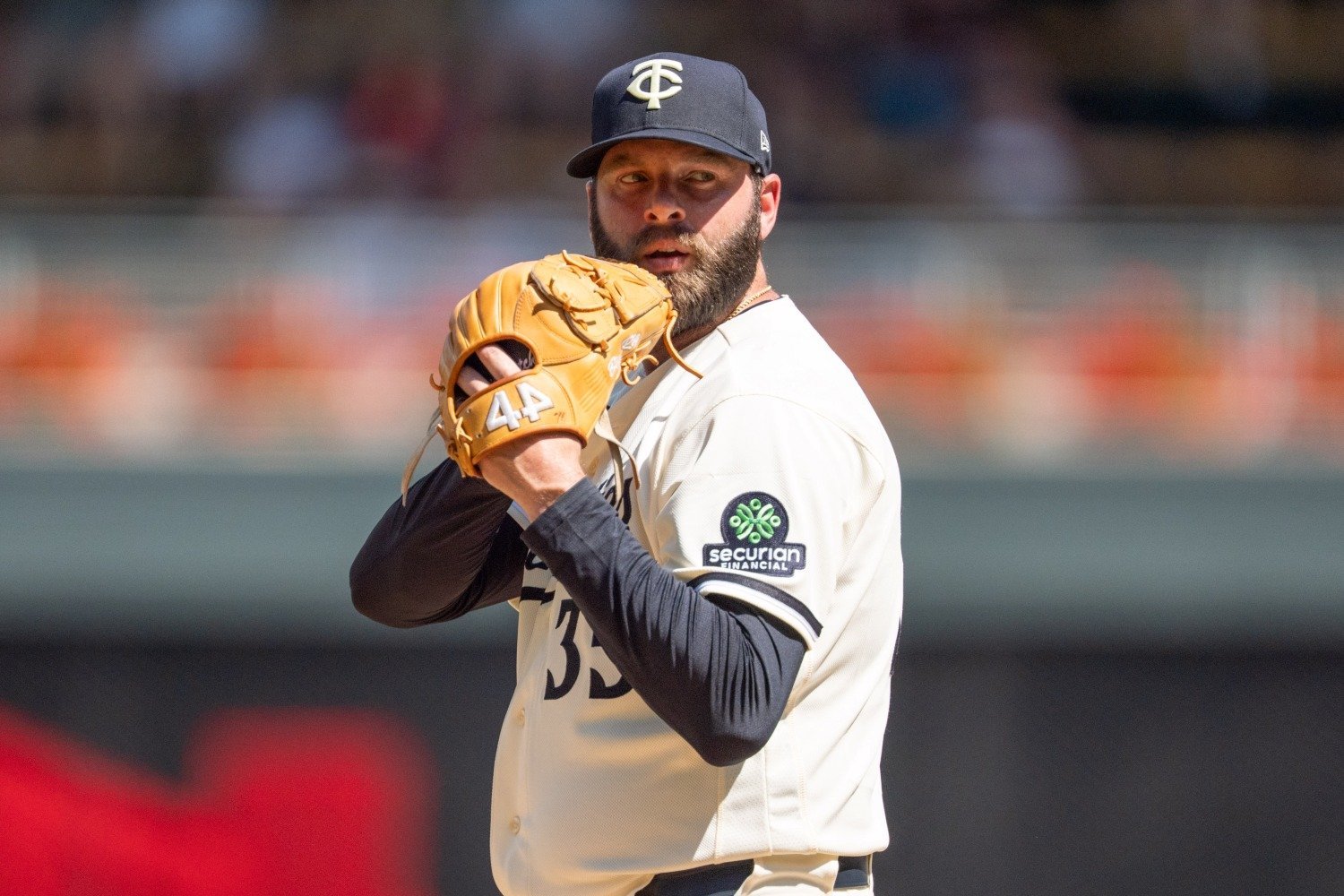 It’s been almost three weeks since the 2026 MLB trade deadline, and the Twins have already gotten plenty of production from the four pitchers they added in an effort to make a run at October baseball. Minnesota added three relievers (left-hander A.J. Minter and right-handers Tommy Nance and Jeff Hoffman), while also bringing in right-handed starter Dean Kremer. None of the four were household names, but all of them have made notable impacts since arriving in Minnesota. The pitching staff has looked sharp since the deadline, and that’s not a coincidence. Let's start with Kremer. Aside from his sixth inning against the Phillies, he’s been lights out. Over three starts with the Twins, Kremer is sporting a 3.12 ERA and a 0.81 WHIP across 17 1/3 innings. He’s allowed just nine hits and five walks, while striking out 15 batters. Of the six runs he’s given up as a Twin, four came in that sixth inning against Philadelphia on Sunday. Outside of that one frame, Kremer has been darn good, and arguably, he should have been out of there before some of the damage he absorbed. Part of that success can be attributed to a slight adjustment he’s made since joining the Twins. Kremer has raised his arm angle slightly, allowing him to get more ride on his fastball, and his splitter has been playing beautifully off of it. His cutter has also been effective. In Sunday’s start against Philadelphia, the pitch generated six whiffs on seven swings, giving Kremer multiple pitches that are playing at a high level. Considering the Twins were looking for another reliable starter to stabilize the rotation, they have to be pretty pleased with what they’ve gotten from Kremer so far. As for the bullpen additions, let’s start with the first of the trio: Nance. Nance was kind of the first move of the deadline, as the Twins acquired him on July 10, a little under a month ahead of time. Like Kremer, he’s performed extremely well since arriving in Minnesota. Over 13 1/3 innings as a Twin, Nance has allowed just two runs. He’s given up 12 hits and five walks, while punching out 16 batters. That strikeout production is particularly notable, because Nance’s strikeout rate has jumped nearly five percentage points compared to his time in Toronto. His slider, which has been his primary pitch both in terms of usage and in generating swing-and-miss, has played up since joining the Twins. In his most recent outing on Wednesday, Nance generated six whiffs on 16 pitches. He’s been a monster. In fact, I’d argue Nance has been better than his former (and now current, again) teammate, Hoffman. Hoffman has been good since arriving in Minnesota. He’s allowed just a pair of runs over seven innings, while striking out 10 batters. But some of the same issues he had in Toronto have followed him to Minnesota. Hoffman has issued six walks, an 18.2% walk rate. I think that’s a big part of the reason Derek Shelton has used him the way he has. Hoffman has primarily been a seventh-inning arm for the Twins since arriving in Minnesota. Because of his swing-and-miss ability, he’s someone you want to utilize late in games, but the consistency you crave from such a pitcher hasn’t been there. As far as pure stuff goes, the Twins don’t have anyone who can compare to Hoffman. His ability to miss bats is impressive, and when everything is working, he looks like a dominant late-inning reliever. But there’s a reason Louis Varland took over his closer role in Toronto, and there’s a reason Hoffman’s ERA and underlying data don’t always line up. Last but not least, there’s Minter. Minter had been extremely productive in New York before the deadline, and that hasn’t changed a bit since coming to Minnesota. Over 10 appearances with the Twins, Minter has allowed just one run in 8 2/3 innings. He’s given up only five hits and two walks while striking out five batters. While his strikeout rate is down, he’s made up for the lack of whiffs with extremely impressive contact quality. There have been 26 balls put in play against him. Minter’s opponents' average exit velocity is just 81.5 MPH. Only five of those balls have been hard-hit. The Twins didn’t trade for Minter to be a swing-and-miss machine. They traded for a consistent, reliable left-handed option. That’s exactly what he’s been. While none of the four pitchers the Twins acquired were flashy additions, they’ve all done their jobs. Fresh off a sweep of the Braves, Minnesota currently holds the final American League Wild Card spot. If the Twins are going to make a legitimate run at October baseball, they’ll need that pitching staff to continue performing at a high level. Based on what these four additions have done so far, there’s plenty of reason to believe they can. View the full article
 -
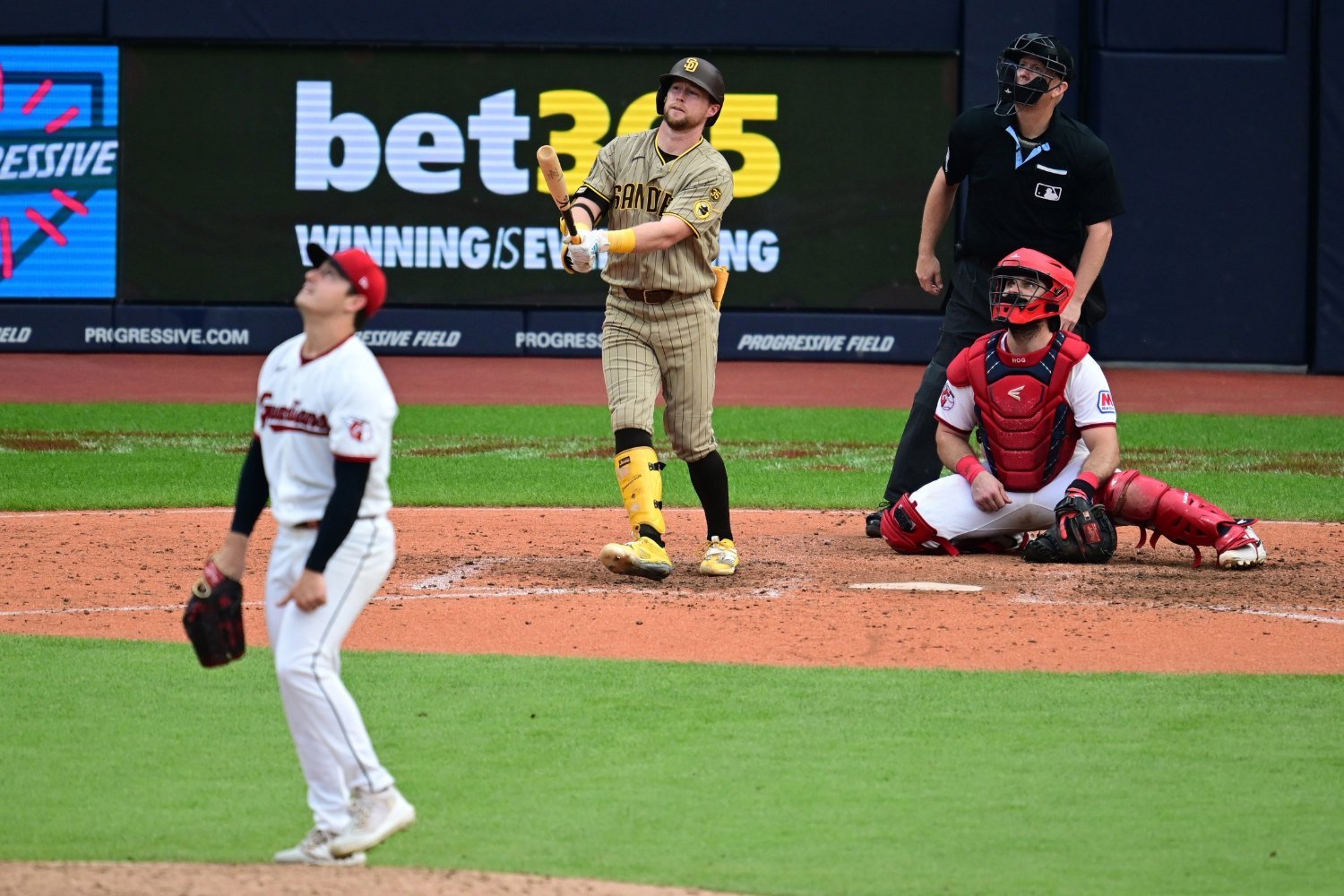 In baseball, one of the biggest concerns for a left-handed hitter is almost always facing a pitcher with the same profile. It is never comfortable enough, and one of the reasons is that you simply do not see lefty-vs.-lefty matchups every day. San Diego Padres second baseman Jake Cronenworth would tell you the opposite about that approach. There is a major reason behind that conversation, and it is that Cronenworth is being neutralized by right-handed pitchers. His 75 wRC+ in 222 plate appearances is the ninth-lowest in the league among left-handed hitters with at least 200 PA against right-handed pitchers this year. But that is not the worst part. Any hitter can go through a slump and then show signs of recovery. Cronenworth’s problem is unprecedented. He is going through the worst stretch of his career, and the offensive collapse has been devastating. Listen to and internalize what this combination of inconsistencies at the plate means: he is producing the highest ground-ball percentage of his career (50.0), the lowest line-drive percentage (16.4), along with his highest strikeout rate (23.0 K%). His .215/.308/.287 slash line, .595 OPS and .072 ISO are also career lows. Yes, there is more. The problems have reached his plate-discipline metrics, with career-worst rates in SwStr% (9.1), Contact% (79.4), O-Contact% (54.1) and O-Swing% (27.3). The strangest part of all is that Cronenworth has never had major consistency problems that have been exposed against right-handed pitchers. In fact, he is coming off a couple of seasons in which he averaged a 120 wRC+, and he is still a hitter who has outperformed the league over his career in this split. So this creates a major contradiction. What has caused such an unexpected collapse in Cronenworth’s profile, and how can he solve it? To start, it is true that he is striking out like never before in his career, but he is only 2.5 percentage points above the league average. He is still walking (10.8 BB%) at a rate close to the average (10.0) and remains above that standard in HardHit% (35.9). So, we have to go a little deeper to discover where the real breakdown is in Cronenworth’s swing and how opponents are limiting him. As usual, this story starts with fastballs. Opponents are using them 66.9% of the time, the second-highest percentage of his career behind the 69.6% from 2024. In other words, the rest of the pitches, between a litany breaking balls and off-speed pitches, represent about one-third of what he's seeing. This is what happened when I separated both groups and mixed in some key metrics for power, plate discipline and swing evaluation. Group K% xSLG xwOBA BABIP Whiff% Hard Hit% Ideal Attack Angle % Fastballs 14.3 .412 .362 .284 13.2 44.3 28.5 Not Fastballs 37.8 .207 .180 .261 40.4 19.1 44.6 Difference -23.5 .205 .182 .023 -27.2 25.2 -16.1 *Note: The statistics include all pitch types that were recorded at least five times.* As expected, there are several interesting trends here. Within the chaos, Cronenworth has continued to take advantage of fastballs. Even with a 16.1-point drop in Ideal Attack Angle%, he has managed to produce a .284 BABIP. He is striking out 23.5 percentage points less, has eliminated a large amount of Whiffs%, while sustaining a similar increase in Hard Hit% and double the xSLG and xwOBA, respectively. In other words, when you analyze Cronenworth only against right-handed pitchers’ fastballs, the story does not look nearly as chaotic. Quite the opposite, in fact, as it appears when we look the other way: all the pitches that are not fastballs. You can clearly see that BABIP is the only point where Cronenworth’s contact ability still makes a difference. Here we have the graphical comparison of Cronenworth against right-handers’ fastballs (left) and the rest of the pitches from righties (right). Notice how blue dominates the whiff rates against fastballs. There are no misses in the lower portions of the middle to the outer part. The biggest problems appear in the upper-third outside the strike zone and down and in. Those are pitches Cronenworth could stop chasing if he improves his plate discipline. Even so, check the expected averages on the right. His swing can still handle the fastball in the strike zone, and he can crush pitches on the inner part of the plate. Everything would be very different within this slump if he only had to face fastballs. But the game is much more challenging, and pitchers know where to look for weaknesses. And, you know, it all starts with a choice. Cronenworth is chasing too many pitches outside the strike zone. Unlike fastballs, he does not have problems when the rest of the offerings hang up high in the strike zone. His best xBA marks remain in similar areas where he has also punished fastballs. But there is a point here that I find even more revealing and that could be a key piece of this puzzle: Cronenworth is averaging 44.6% in Ideal Attack Angle. That is 16.1 percentage points higher than his swing against fastballs. But here is a difference we cannot overlook: the exit velocity on his batted balls is lower, at just 84.3 mph. If you're not hitting the ball hard... well, it doesn't really matter at what angle you strike it, does it? This is going to require a multitude of changes to fix, which means that this problem likely can't be solved during the middle of a playoff push. Cronenworth hasn't completely lost his way at the plate, but as right-handed pitchers continue to expose his weakness against the soft stuff, he's going to have to feast on the steady diet of fastballs he's receiving to salvage his season. View the full article
 -
 The past three games were a painful reality check for the Miami Marlins. Although still far away from being mathematically eliminated from NL Wild Card contention, they tumbled to six games back of the rival Philadelphia Phillies. AJ Ramos, Kevin Barral and Isaac Azout discuss the factors that contributed most to the sweep, continued awesome stretches for Eury Pérez and Griffin Conine and Triple-A players who are most deserving of promotions once the roster expands on September 1. Plus, AJ describes what it was like to be a player during the previous MLB lockout in the 2021-22 offseason. You can find Fish Unfiltered and Fish On First LIVE on the Fish On First YouTube channel, Apple Podcasts, Spotify or wherever else you get your pods. Entering Friday, the Marlins are four games back of the San Diego Padres for the third wild-card spot, with the Arizona Diamondbacks and St. Louis Cardinals in between them. View the full article
