


DiamondCentric
-
Posts
2,631 -
Joined
-
Last visited
Never
Content Type
Profiles
Forums
Events
News
Tutorials & Help
Major League Baseball Videos
Guides & Resources
Store
Downloads
Gallery
Everything posted by DiamondCentric
-
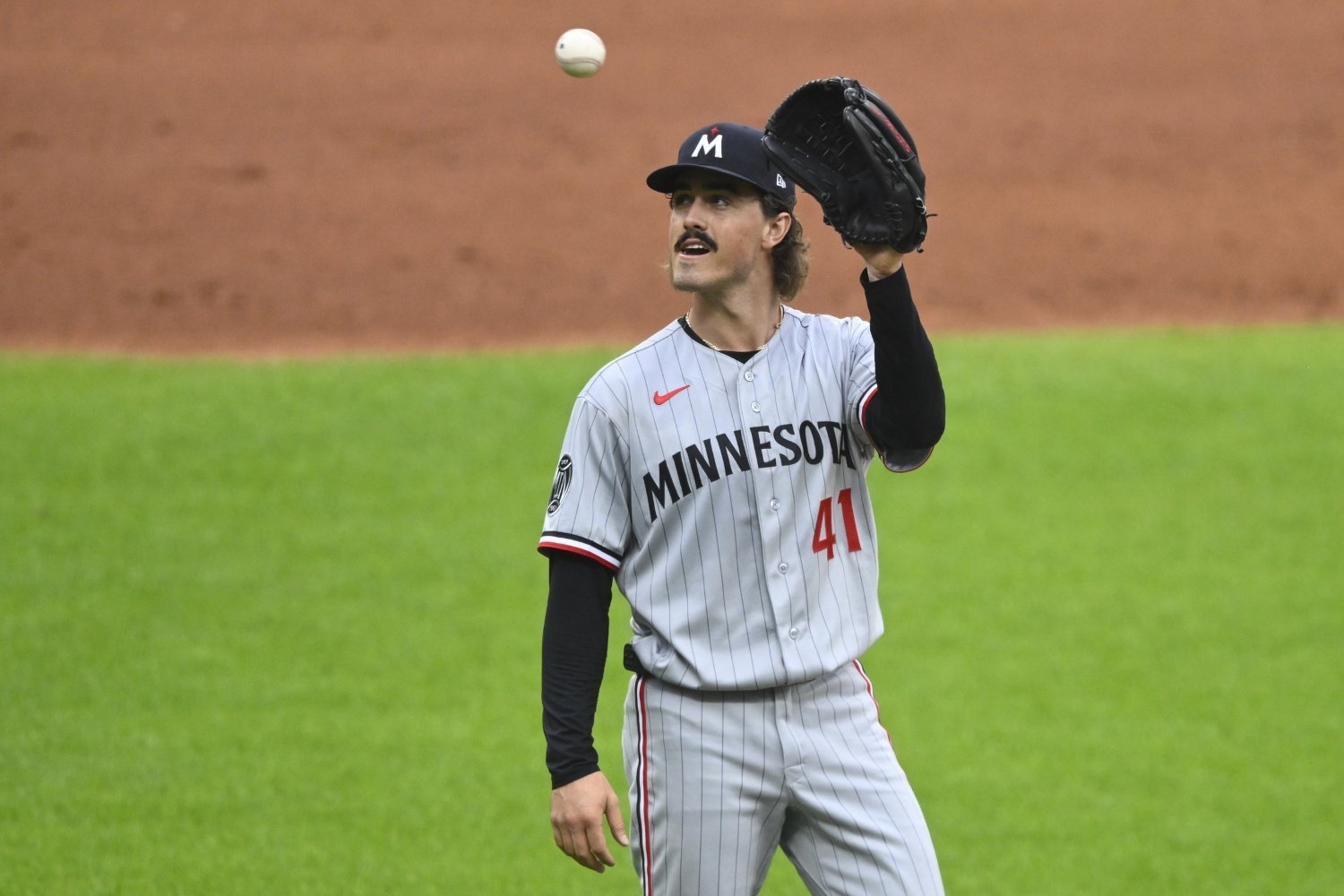 Joe Ryan's return to the Minnesota Twins rotation took another step forward Tuesday afternoon. Nearly two weeks after being placed on the injured list with a mild left glute strain, Ryan climbed back onto the mound at Target Field for his first bullpen session since the injury. The session was brief — just 25 pitches — but it represented a meaningful checkpoint for a Twins rotation that desperately needs reinforcements. Ryan left the Twins shortly after his August 4 start against the Kansas City Royals to undergo an MRI. The examination revealed the glute strain, which has kept him sidelined since. While he has been cautious about the injury, Ryan said he has continued throwing regularly because he wanted to keep his arm moving. Tuesday marked the first time he tested the injured area from a pitching mound. “It’s a step in the right direction for sure,” Ryan said. For the Twins, that was exactly what they wanted to see. “Very encouraging,” manager Derek Shelton said before Tuesday's game against Atlanta. “He looked free and easy. He’s a very important part of our team. To see him out there and be healthy — (it’s the) first step in the progression to getting him back.” Ryan Tests the Glute Ryan's bullpen was intentionally limited. He threw 25 pitches, all fastballs and sinkers, as the Twins continued to ease him through the recovery process. The goal wasn't to recreate a normal bullpen session. It was to see how Ryan's body responded to pitching off the mound. So far, so good. “I think it’s good to get off the mound and see how we feel,” Ryan said. “Just check in that area and, yeah, just do my job out there.” Shelton emphasized that Ryan still has several steps to complete before the Twins can consider activating him. The next bullpen session should include breaking pitches, adding another layer to the physical test. “I think anytime a guy’s dealing with an injury, to be able to cross hurdles like that, it’s extremely important,” Shelton said. “We diagnose what we think the situation is. And then we treat it and then we take the step of him getting out on the mound.” A Much-Needed Rotation Boost Ryan has struggled since returning from the All-Star Game, posting a stretch that included three consecutive losses before the injury. In his final three starts before landing on the IL, he surrendered seven home runs and 16 earned runs across 15 1/3 innings. Now, the Twins are hoping the time away allows him to get healthy and return to something closer to the pitcher who earned All-Star honors in both 2025 and 2026. Ryan has gone 6-8 with a 3.65 ERA this season. He also represented the American League in this year's All-Star Game in Philadelphia, throwing a scoreless inning while allowing one hit and striking out two batters in the AL's 4-0 victory. Minnesota's rotation has not exactly provided much stability since the All-Star break. Entering Tuesday, Twins starters had posted a 5.81 ERA across 29 games since the break. That ranked 29th in baseball during that stretch. The rotation had also allowed 24 home runs while issuing 59 walks. Those numbers make Ryan's progression particularly important. The Twins remain in a crowded American League Wild Card race, and every quality starting pitcher becomes increasingly valuable as the schedule moves toward September. Minnesota doesn't need Ryan to return simply because he's one of its best starters. It needs him because the current rotation needs another reliable arm. Ryan's return won't solve every problem facing the Twins, but getting a healthy two-time All-Star back into the rotation could dramatically change their outlook. The first step is now complete. The next few will determine just how quickly Minnesota can get its ace back on a big-league mound. View the full article
 -

Luis Fragoza: The Teenage Prospect Having A Breakout Season
DiamondCentric posted an article in Twins Daily
 Luis Fragoza is an unheralded teenage prospect who's having one of the best seasons of any prospect in affiliated baseball. With prospect hounds updating their end-of-season lists, will he get his flowers? View the full article
 -
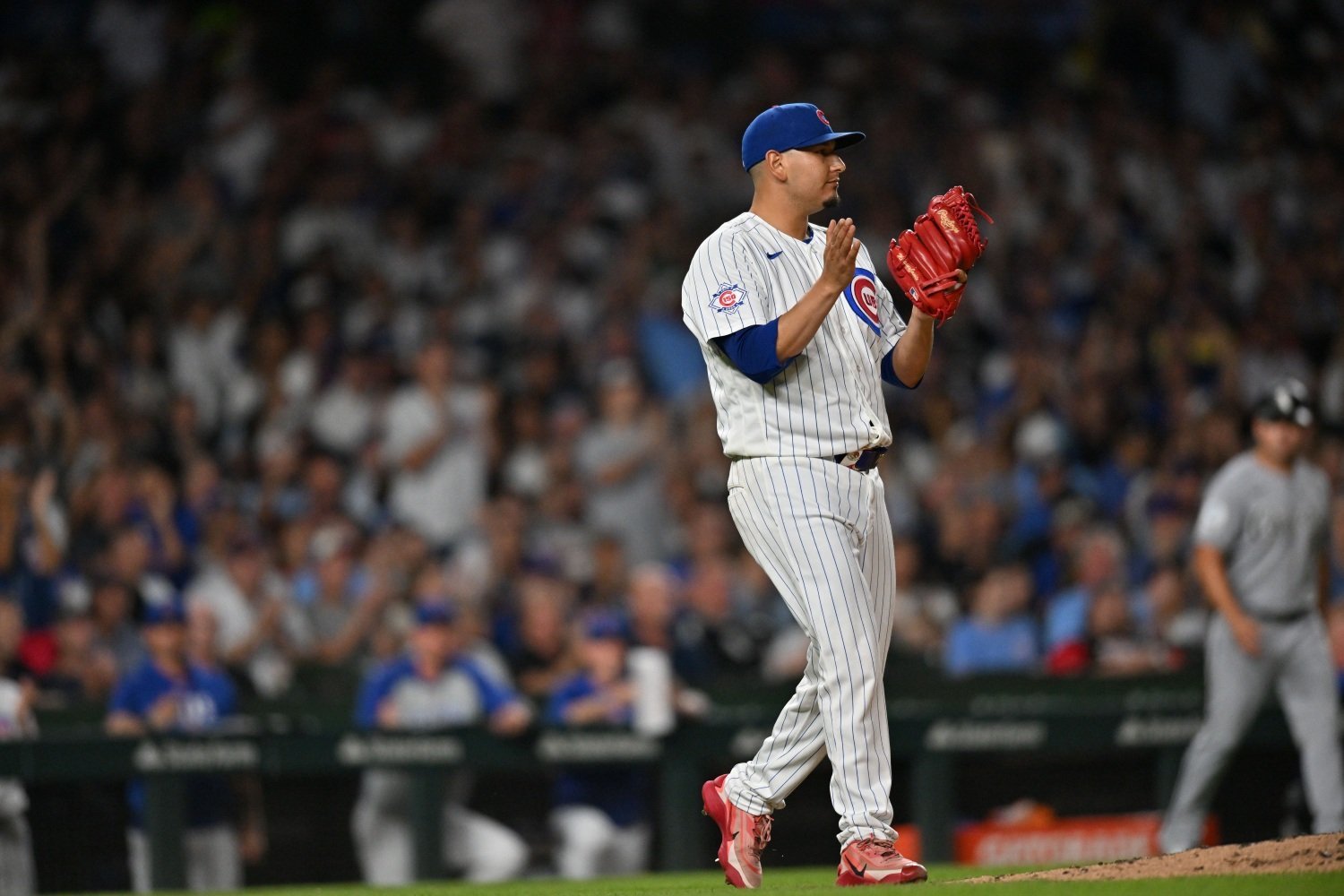 The previous Cub who went by 'Javy' also went by another name. Javier Báez cast gasp-inducing and delightful spells all over the diamond, from optical-illusion-quick tags around second base to now-you-see-it, now-you-don't slides on the bases. His nickname, 'El Mago', was a celebration of the way he seemed to want to entertain, as much as to win. Javier Assad is dabbling in darker magic. He casts some devastating spells over the game in his own right, but they feel a bit more worrisome. Like so many great stage acts, Báez titillated you with a wink and a smile. You knew the only real 'magic' was his genius. Assad is one of those street magicians whose act feels less sustainable and more enigmatic. He can't actually be communing with some force beyond our ken, or his... or can he? It raises the hairs on your arm. Sometimes, you wish he'd stop. This is magic that doesn't have a punchline. There's no moment of exhilaration, when he fools a hitter so badly that they fall over or blow a pitch by them at triple-digit velocity. He's not as physically entertaining as Báez. No, Assad's magic all shows up in the numbers, in all the ways you've been trained to believe are unsustainable. You've even been taught to mistrust and/or dislike pitchers who thrive this way. But you can't bring yourself to dislike Assad, can you? So, what does that say about you? Here are the black-magic numbers in question. Even before entering in a pinch on Tuesday night and firing three shutout innings against the White Sox, batters facing Assad had the following splits for his career. By outs in the inning: 0 Outs: .249/.326/.444 1 Out: .267/.333/.442 2 Outs: .206/.287/.307 By runners on base: Bases Empty: .260/.332/.447 Men On: .217/.295/.339 Runners in Scoring Position: .168/.247/.256 By Leverage Index: Low Leverage: .247/.326/.423 Medium Leverage: .256/.319/.421 High Leverage: .182/.280/.278 The samples involved aren't huge, of course, but nor are they tiny. Tuesday's was Assad's 100th career appearance, spangled across five seasons, and he's done all of this remarkably consistently throughout. He has a career ERA of 3.46; he has a 2026 ERA of 3.46. In Spanish, 'mago' is the name for a Báez-style magician—a showman and a dazzler. For those who seem to truly meddle with forces that ought not be meddled with, the better word is 'brujo'—a witch or sorcerer. That's what Assad is. You don't have to believe that his knack for escaping jams and coming up clutch is real, of course. In fact, it's extremely hard to buy into his profile in a far-seeing way, which is why the Cubs are always, always trying to replace him. He's only getting this latest shot to be on the roster because Edward Cabrera is hurt again. He only made an emergency appearance Tuesday night because Kevin Gausman's thumb cramped up in a strange and hideous sort of way, forcing an early departure. Statistically, it's unlikely that Assad keeps being this guy over a full career, and because modern teams run on what the stats tell them, it's unlikely that he even gets many more chances to have a full career. Assad's stuff ratings and his peripheral numbers (walks, strikeouts, hard-hit rates) all suggest the same thing as these splits, too: that there's regression ahead. He's not succeeding in a traditional way in terms of movement or velocity or missing bats, any more than in terms of when he succeeds and when he fails. He's allowed just a .272 career BABIP, and that number is .237 this year, but it's not at all easy to articulate how. He can't keep getting away with this. Right now, though, the Cubs are trying to catch the best team in baseball in their division, and strange setbacks keep afflicting many of their other pitching options. For now, there are much worse ways they could go than to place some trust in El Brujo. Nothing ever goes wrong when someone desperate for a particular outcome turns to black magic for help, right? View the full article
 -
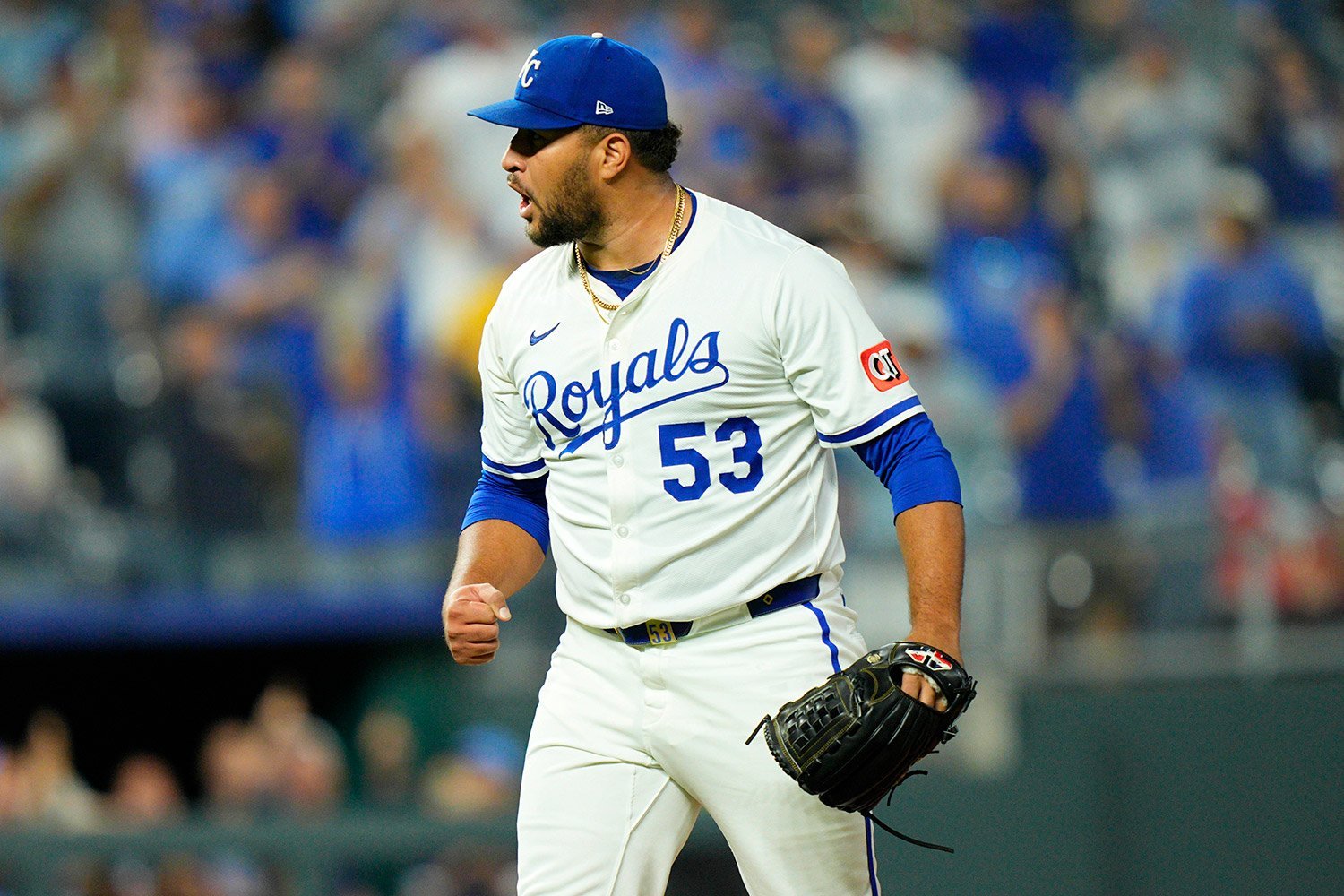 The Royals took a calculated risk at the trade deadline by not letting go of pitchers like Michael Wacha, Seth Lugo, and Daniel Lynch IV. The Royals front office believes that the Royals are able to compete for the playoffs in 2027. This belief makes sense on the surface since many Royals contributors are still under club control for next season. However, the deeper you look at the roster, the more 2027 starts to look less like a team one offseason away from contention and more like a team that has too many problems that need to be solved. This is one of two articles. To read the opposing viewpoint, click here. Unsettled Rotation The Royals entered last offseason with a surplus of major-league options to the point where they were open to trading away starters to bolster the lineup. With the summer coming to a close in 2027, only three of the starters from that group remain on the active roster: Michael Wacha, Seth Lugo, and Noah Cameron. To account for injuries and departures, the Royals have turned to Randy Dobnak and Lynch to fill the remaining rotation spots. Player Injury Last Played Estimated Return Cole Ragans UCL Repair 5/6/2026 Mid-2027 Kris Bubic Elbow Soreness 5/14/2026 Traded to Dodgers/Free Agent Stephen Kolek Tommy John Surgery 7/2/2026 Late 2027 Luinder Avila Tommy John Surgery 8/1/2026 Late 2027 Bailey Falter n/a - DFA 5/26/2026 Traded to Braves Ryan Bergert Tommy John Surgery Spring Training Early 2027 With the exception of maybe Bergert, none of these pitchers (those who are still in the organization) can be counted on for a high volume of innings next season, and the Royals will need to add a minimum of two major-league proven starters to have a chance at competing. While the front office could expect a return from Bergert and Ragans to help this team next season if their rehabs stay on schedule, the Royals would be asking a lot of those pitchers to make immediate impacts following their recoveries. While Dobnak has been a surprise spark to the rotation since joining in July. In his first five starts with the Royals, Dobnak has a 2.05 ERA over 26 ⅓ innings. However, his 3.57 FIP and 4.74 xERA indicate he is headed for a regression, and his spot with the Royals is not guaranteed after this season since he is set to be a free agent. Could the Royals decide to hold onto Dobnak after his successful start? Until this season, he had not thrown more than 10 major-league innings since 2021. Choosing to rely on him long term would carry its own risks. For Lynch, he has only pitched a total of four innings in his two starts since joining the rotation. In those short appearances, he has allowed six earned runs with two home runs. Lynch had previously been a starter for the Royals but has not started the majority of his appearances since 2023. He had been the Royals’ best reliever this season and will almost certainly need to return to the bullpen to regain his impact. The prospect options do not look like they will be able to provide an immediate impact either. Avila was called up this season and suffered a long-term injury. No. 18 prospect Ben Kudrna was projected to possibly make his major-league debut this season before he was sidelined for all of 2026 after undergoing surgery to repair a stress fracture in his elbow. Mitch Spence struggled in limited time this season. One intriguing option could be Lucas Braun, who was acquired from the Braves in exchange for Falter and Lane Thomas near this year’s trade deadline. Though in a season in which the Royals intend to contend for the postseason, relying on a prospect with only 14 starts in triple-A is usually not a recipe for success. Injury Issues Have Plagued The Lineup Unsurprisingly, Bobby Witt Jr. is the most consistent bat in the Royals’ lineup this season, with Jac Caglianone proving that he can be a threat in the middle of the order. After those two, there is a drop-off in production from Royals hitters this season. Of Royals players with at least 100 plate appearances, only Witt, Caglianone, Tyler Tolbert, and Lane Thomas have a wRC+ over 100 (league-average). Thomas was traded to the Braves, and Tolbert is only just above that qualifier with 104 PAs and had a streak of 12 straight PAs with a hit, which perhaps has skewed his stats. Previous offensive standouts Maikel Garcia and Vinnie Pasquantino are currently on the injured list and have spent extended stretches out of the lineup. Garcia was one of the standout performers last season for the Royals, and he was rewarded with a contract extension that runs through the 2030 season. He also had a strong World Baseball Classic with champions Venezuela and won the tournament MVP. Can Garcia return to his 2025 form after fully recovering from his injury? Pasquantino entered 2026 after finishing his only fully healthy season, where he hit 32 home runs and 113 RBIs with a 116 wRC+. In his limited time in 2026, he has a wRC+ of 84 with a lower wOBA of .295. First base is a position that is expected to provide power in the lineup. Pasquantino has not been able to provide that this season despite also having a strong performance in the WBC with Italy. He is another player that the Royals will need to return to his previous form in order to compete in 2027. The Bullpen Will Need A Full Reset What could go wrong in the bullpen has gone wrong for the Royals in 2026. The Royals' bullpen ranks among the bottom two in many key metrics, including fWAR, ERA, and FIP. Many standout performers from previous seasons saw severe regression. Carlos Estévez was the MLB saves leader in 2025 but saw an almost 5 mph drop in his pitch velocity. He has only appeared in one game this season and has been on the IL since. The Royals will certainly not be picking up his club option for 2027. Lucas Erceg assumed the closer job in Estévez’s absence, a job he would eventually lose after his ERA ballooned to 6 after having an ERA under 3 in each of his previous seasons in Kansas City. Erceg still has three years of control but will need to regain his command to make a meaningful impact in the bullpen moving forward. Other offseason acquisitions with years of control include Nick Mears and Alex Lange. Lange took over the closer role after Erceg and had a stretch of successful save opportunities. His ERA now sits above 6.00, and he no longer occupies the closer role. Mears has one more year of control, but hasn’t pitched since May with a shoulder impingement, with no current timetable for return. Left in the bullpen are Steven Cruz, Jose Cuas, Nate Pearson, Mason Black, Craig Kimbrel, and Lynch. Lynch, Cuas, and Pearson are the only relievers with positive fWAR, and with the exception of Kimbrel, who is definitely past his prime, none of these pitchers have extensive experience in high-leverage or save opportunities. The Royals will need to add proven bullpen arms to anchor the bullpen if they truly want to compete in 2027. The Outfield Isn't Settled Other than from Caglianone, the Royals must get more production from their outfield. The outfield has improved compared to 2026, when they ranked last in fWAR and wRC+, but the improvement has only moved the Royals to 17th in wRC+ and 24th in fWAR. A lot of that production was carried by Lane Thomas, who has since been traded to Atlanta. Isaac Collins has been a steady performer in left field, but he only has a league-average wRC+. His plate discipline is strong with low chase and whiff rates, but that is offset by his lack of power with an xSLG in the bottom 5% in MLB. Kyle Isbel has returned from injury to play center field, but he needs a platoon partner to face left-handed pitchers. Tolbert can be the player to split time in center, but he hasn’t proven to be a consistent threat to do damage in the lineup. For a lineup that has been over-reliant on Witt and Caglianone for power, at least one of Isbel, Tolbert, or Collins would need to step up to that role, but none of them have yet demonstrated the ability to do so. The Royals will need to add a player of that profile in the offseason. Other outfield options include John Rave and potential callup, former 1st-round draft pick, Gavin Cross. Rave has not been able to cement himself in the Royals lineup with streaky performances. Cross’s minor-league career has been full of ups and downs with a high strikeout rate. He could make an impact if given the promotion to the majors, but neither he nor Rave should truly be counted on for regular playing time next season at this time. Other Lingering Questions What role does Perez have in 2027? He has one more year left on his contract, but Father Time has caught up with him in 2026. He is having a career-worst season with a 68 wRC+ and -1.3 fWAR. Carter Jensen has assumed the starting catching duties, and Perez will need to take on a lesser role. If the Royals decide to make him the primary designated hitter, his bat will need to improve. Is Michael Massey the starting second baseman? Massey is having one of his better years with a 96 wRC+ and 1.4 fWAR. He has been able to remain relatively healthy. Can he continue to remain healthy and secure the second base position? To sum all of the above, on offense the Royals need Pasquantino and Garcia to regain their health and return to previous levels of production, add at least one outfielder who can ideally hit for power, and answer how to handle Perez and the DH position. For pitching, they need to add two MLB-proven starters and multiple relievers, one of which being the everyday closer. For a small-market franchise that does not have a history of making big moves in free agency, the laundry list of needs has gotten too long. The Royals are yet to prove that they are willing to make the moves necessary to take their roster to the next level. With an impending lockout after the CBA expires in December, free agency and offseason moves will have an added level of difficulty and anxiety to navigate. View the full article
 -
Brewers Staying Afloat Amid Tough Second-Half Schedule
DiamondCentric posted an article in Brewer Fanatic
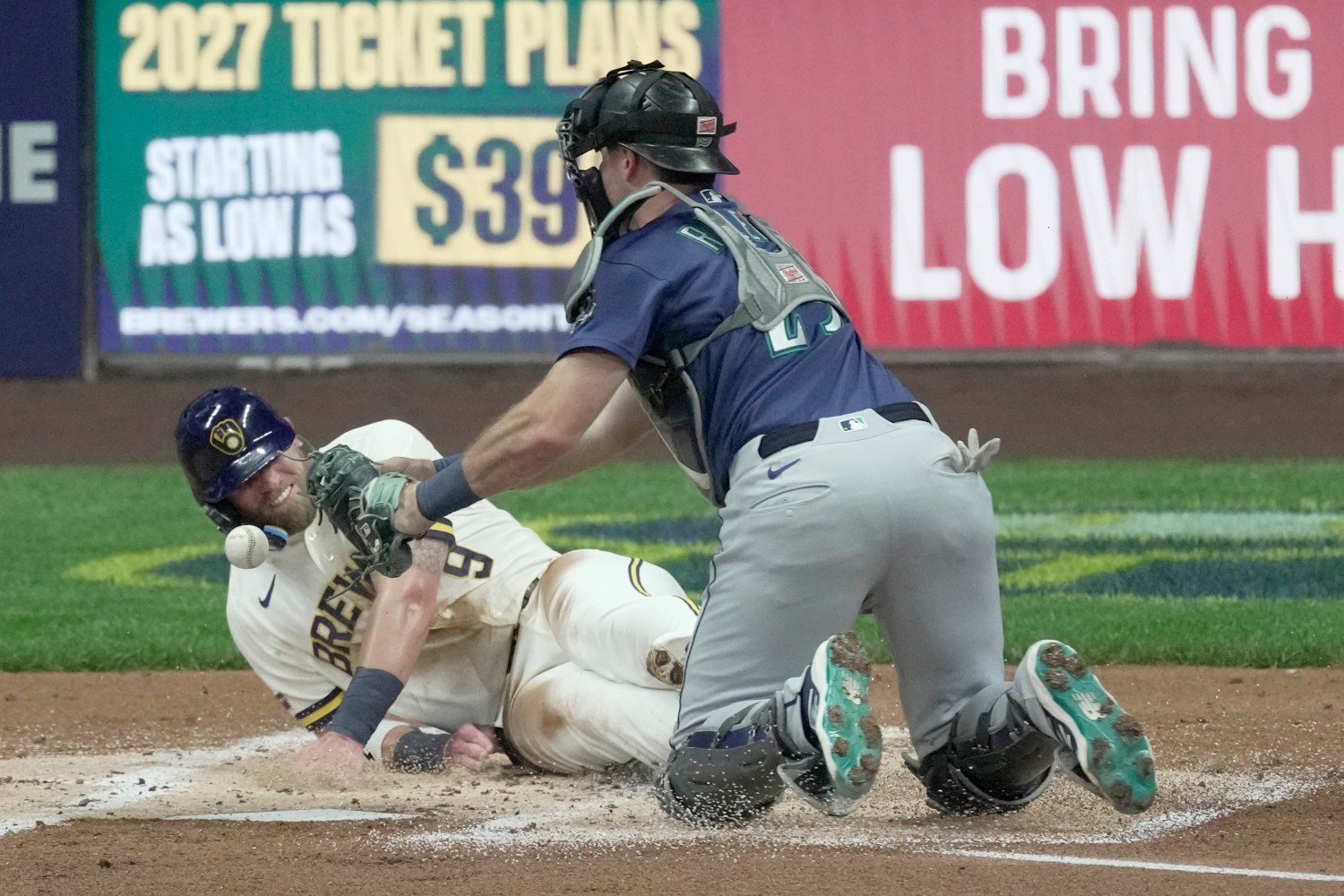 Kyle Harrison isn’t at his best right now. Since returning from a stint on the injured list with forearm tightness, his velocity and command have been below their first-half levels. That was the case again on Tuesday night. Harrison’s fastball averaged 93.5 MPH (well below his season average of 95 MPH) and he threw just 47% of them in the strike zone. “I think there was flashes of brilliance, and then there was times when he was kind of not in sync, and the fastball didn’t play like it normally does,” Pat Murphy said postgame. As Harrison approaches his career-high of 124 ⅓ innings from 2024 (between the big leagues and a rehab start last month, he’s at 104 this year), he’s battling mechanical issues. His arm angle has steadily gotten lower, particularly since his return from the injured list. “Just looking at the history of my time here, it’s been as the season gets longer, and as you go further in the season, the arm release likes to drop a little bit,” Harrison said. “I’ve always known that with myself, but then it’s staying consistent on the work throughout the week to make sure I maintain that.” Harrison is at his best when his arm angle is closer to 34°. That’s when his slot is high enough to drive through the baseball and backspin it to create the carry on his dominant four-seamer. In Harrison’s last start in San Diego, his slot dropped to a season-low 28°, and he allowed a season-high eight runs. Those velocity and mechanical declines are real concerns to monitor down the stretch. The Brewers will need the healthy and effective version of Harrison in October. For now, amid those issues, he still struck out eight in five scoreless innings Tuesday night. After just three swings and misses through his first three innings, he induced six whiffs over his final two frames. “I’d say the heater was more down in the zone early, and then just wasn’t really getting up to the arm slot I’d like,” Harrison said. “It took a little bit longer than I liked, but yeah, the heater command definitely got better.” Harrison is a microcosm of the Brewers as a team right now. The dog days of August are here, and they just played 17 games in 17 days—a stretch that included parts of two West Coast trips. They lost Joey Ortiz, Cooper Pratt, and Brice Turang to concurrent injuries, forcing a break-glass-in-case-of-emergency infield of Andrew Vaughn at third base and Gary Sánchez at first. Using a six-man rotation left them a man short in the bullpen even before Abner Uribe hit the injured list. They were swept by the Padres last week in a three-game series filled with poor situational hitting and questionable defense. “Seventeen games and two West Coast trips in a matter of three weeks wasn’t easy,” Jake Bauers said. “I think everybody was kind of feeling it a little bit. I don’t know that anybody in here will tell you that, but I think we were feeling it toward the end there.” And yet, the Brewers kept winning just enough. They snapped their three-game skid with a ninth-inning comeback win against the Dodgers, the first of three wins in the four-game series. At the start of those 17 games, they led the NL Central by 5.5 games. After going 10-7 in that stretch, they returned home with a five-game lead. Monday was a much-needed off day. With a grueling trip in the rearview mirror, the Brewers returned to play and clobbered the Mariners in a 22-0 win, the most lopsided victory in franchise history. It didn’t start that way. The Brewers were still in grind-it-out mode through the first half of the game, clinging to a 1-0 lead through four-and-a-half innings. That lone run scored on a gritty baserunning play by Bauers in the first. After an aggressive send by third base coach Matt Erickson on William Contreras’s two-out single to shallow left field and a strong throw by Randy Arozarena, Bauers looked like an easy out at the plate. He tried to dive headfirst into home, just as he did successfully on a nearly identical play in LA on Sunday. This time, the throw took Cal Raleigh into the lane to which Bauers had already committed himself, so Bauers’s dive attempt took him into Raleigh’s glove. “I saw the replay. I definitely wasn’t trying to hit his glove,” Bauers said. “I was more trying to protect him and me because I didn’t want to barrel through him. I didn’t want to break my neck on his chest protector.” In bracing himself, Bauers inadvertently swatted the ball out of Raleigh’s glove. As Raleigh retrieved it, Christian Yelich noticed that Bauers hadn’t touched the plate and yelled at him to dive back into home. “I don’t really remember what happened after that,” Bauers said. “I just remember Yeli screaming at me to touch home.” It wasn’t pretty, but Bauers’s left hand barely beat Raleigh’s tag to score the run. That kind of scratch-and-claw play epitomizes the Brewers’ identity under Murphy, and it’s been their means of survival during this stretch. Every inch has felt like a mile. “I play hard,” Bauers said. “I don’t know any other way. Regardless of the score, if I’m out there, I’m going to play hard.” After that 18-pitch first, the Brewers worked Bryce Miller for 23 more pitches in the second. The breakthrough didn’t come until the fifth, though. After they pecked away with two singles and a pair of walks (including an RBI knock by Jackson Chourio and a sac fly by William Contreras), Yelich blew things open with a three-run homer to make it 6-0. That ended Miller’s night at 92 pitches in just 4 2/3 innings. “That’s how we play,” Murphy said. “To be able to lay off really tough pitches and not panic that you have to swing because you’re down 0-1. Having two strikes is not a death [sentence]. Those type of at-bats. Then Yeli hits a big homer, and you break through.” The floodgates opened from there, with a combination of quality plate appearances and poor Seattle defense. Earlier in the day, there were symbols affirming that the most grueling portion of the schedule was over. Turang returned to the lineup after missing four games, and Pratt began what could be a one-game rehab assignment in Appleton. With each run that scored, the road trip seemed further in the rearview mirror. Exactly one week ago, Gary Sánchez was lobbing eephus pitches in a blowout loss. Now, he was finishing off a blowout win. More challenges lie ahead. The Brewers must manage the workloads of Harrison and their other young starters during a pennant race. Next week, they begin a stretch of 16 games in 16 days, seven of them against the second-place Cubs in two series that could decide the division. They still can’t let off the gas, even after weathering what was likely to be their toughest stretch on paper. Most teams have hot streaks throughout the course of a 162-game season. What separates the best teams is their ability to avoid prolonged losing streaks when they aren’t playing well and their environment is stacked against them. The Brewers earned a comfortable division lead by playing their best baseball in the first half. This is the time for staying afloat. So far, they’ve remained up to the task. View the full article
 -
It's Time to Move Byron Buxton to a Corner Outfield Spot
DiamondCentric posted an article in Twins Daily
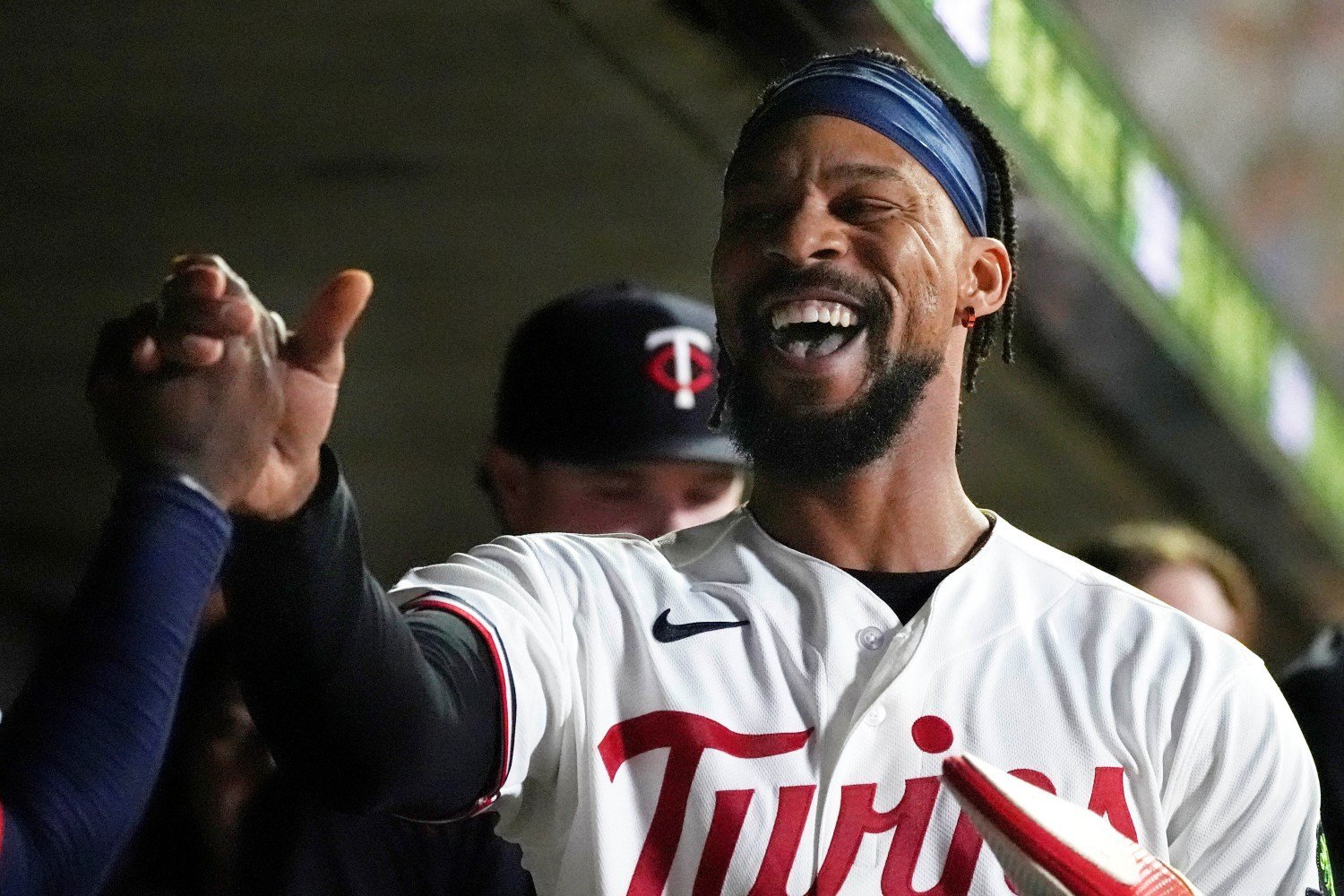 In 6,721 defensive innings over his 11-season major-league career, Byron Buxton has only ever played center field. The last time he played a position other than center in affiliated ball was in 2014, when he notched 14 innings in right field at High-A. This development shouldn’t come as a surprise to anyone who follows the Twins—or baseball, for that matter. Buxton has long been a world-class athlete, with elite sprint speed and a feel for making late adjustments when needed. That athleticism resulted in him winning a Platinum Glove Award in 2017, when he was arguably the rangiest center fielder of the 2010s. Nine years later, however, the 32-year-old is no longer one of the sport’s best center fielders. That's no knock against Buxton; him still being one of the fastest players in baseball 11 seasons into his career is a remarkable feat. Despite maintaining that speed on the bases, though, Buxton has regressed in multiple defensive metrics over the past two seasons. He still makes all the routine plays, but he no longer takes away should-be hits. Of course, Buxton doesn’t have to be an elite defender to remain at center field. He's still playable there, with 3 Outs Above Average (OAA) over 193 attempts this season. Cracks are still forming beneath the surface, however. He’s remained elite at tracking balls hit in front of and behind him this season. However, his ability to reach balls on which he has to range far to his left or right has steadily regressed over the past couple of seasons, with 2026 as a low point. Moving toward third base, Buxton has generated 1 OAA. At the same time, he has manufactured 0 OAA moving toward first. His combined 1 OAA while moving laterally would be the lowest mark of his career (save his 2018 campaign, when he played only 28 games). Can you guess his second-worst season getting to balls hit laterally? Great job, valued reader! You’re correct. It was 2025. Buxton has steadily regressed in his ability to reach balls hit in the gap over the past two seasons, and at this point in his career, it's extremely likely that he'll continue to fade. Again, nobody is holding Buxton to the same standard as Pete Crow-Armstrong or Ceddanne Rafaela. Twins decision-makers would be more than justified in finishing the 2026 season with Buxton as the club’s primary center fielder; his regression doesn’t require immediate attention. Still, Minnesota would be wise to have a succession plan in place for 2027. Luckily, the organization’s top solution is knocking on the door of the majors in Triple-A: first-ranked prospect Walker Jenkins. I’m not advocating that Minnesota call up Jenkins right now. He's a 21-year-old enjoying his first extended success against Triple-A pitching. He is still a platoon liability against left-handed pitching, netting a .277 xwOBA over 80 plate appearances at Triple-A. He is undeniably at the parent club’s door, preparing to rush through, with intentions of immediately becoming one of Minnesota’s best position players. That time will come, but there’s a strong chance it won’t be until 2027. Whenever Jenkins does get his contract selected from Triple-A St. Paul, the Twins should make him their primary center fielder, moving Buxton to the corner outfield. Jenkins has played center field in most of his appearances at Triple-A, with 370 innings at the position. He's been solid, with no errors and good range. Right now, Buxton is probably as good or better in center than Jenkins is. However, by this time next year, that won't be true. What separates Jenkins from Buxton now is the top prospect’s elite arm value, an area in which Buxton has declined more obviously and sharply. Buxton sports a -1 Arm Value over 168 advancement attempts in 2026, placing him in the bottom third of the league. Runners have been able to take extra bases on him, a trend that has become significantly worse since 2024, when Buxton was toward the top of the league. Jenkins, however, has one of the best arms in the minors. Whether Buxton moves to left or right field is largely inconsequential. Right field is higher on the defensive spectrum, with clubs often placing stronger-armed fielders there in order to reduce a runner’s likelihood of advancing from first to third on a single or tagging up from second to third on a flyout to right. Buxton is probably better-suited to left, particularly given that left-center is deeper than right-center at Target Field. One way or another, though, it's time to start making a succession plan—which, in this case, is also a relocation plan. View the full article
 -
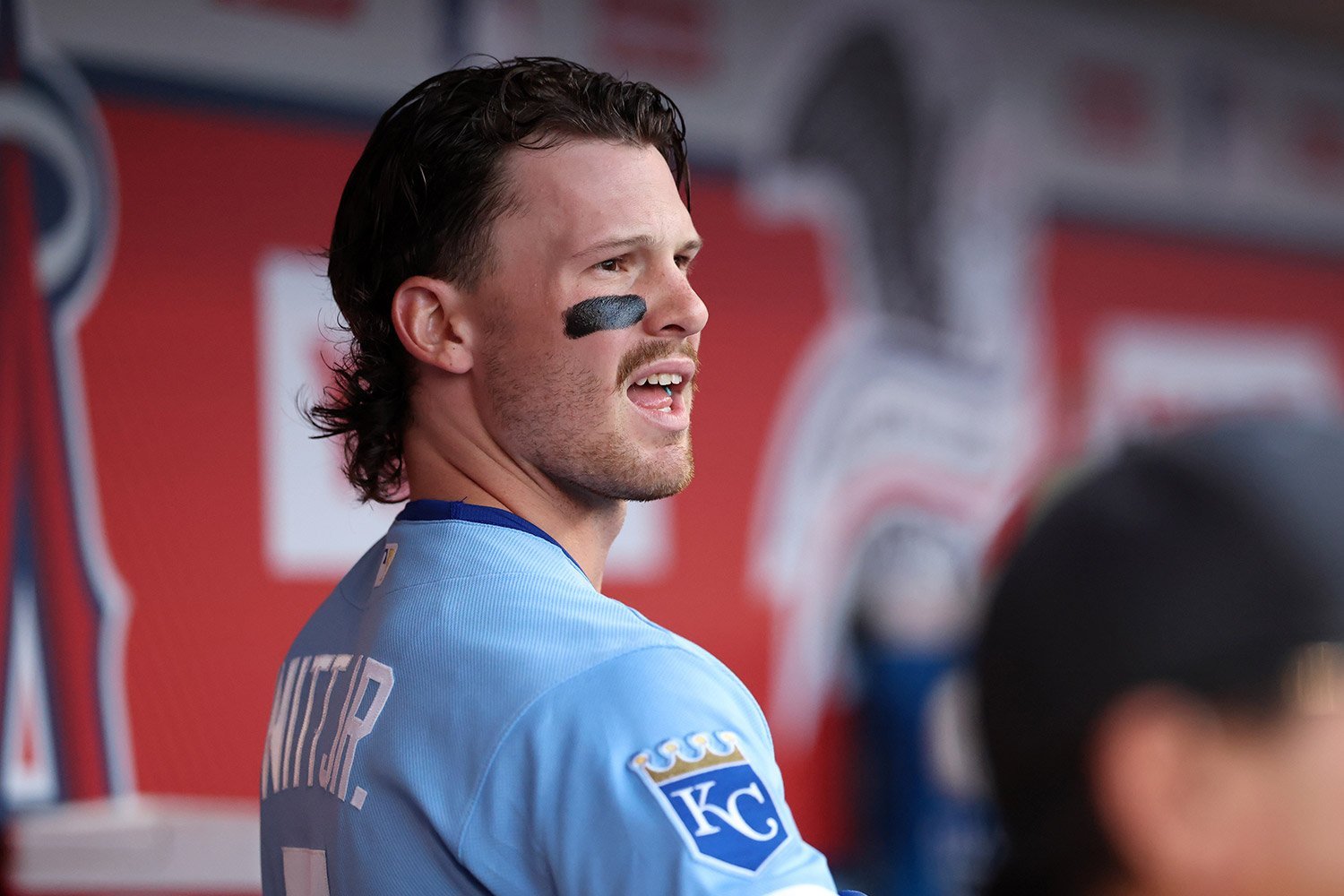 No one would argue that the 2026 season did not go as planned for the Royals. It turned out to be disappointing for a variety of reasons, but there is still some optimism if you look at parts of the roster. A return to being more competitive, not only in the AL Central but in the American League as a whole, is still realistic, even if it might not feel that way when looking at the Royals sitting in last place this year. While parts of the roster need more addressing than others, there are plenty of reasons for optimism when looking ahead to 2027 and beyond. Some of those reasons include a group of young lineup pieces that the organization should be able to build around, some veterans in both the rotation and in the lineup, and a group of complementary pieces who could take a step forward next year. This is one of two articles. To read the opposing viewpoint, click here. Let’s take a look at those things more in depth. Young Royals Players to Build Around The list of young players to build around goes well beyond superstar Bobby Witt Jr. Anyone who knows anything about baseball can see that Witt Jr is a bona fide superstar and someone that the Royals were smart to lock up when they did. At 26 years old, he will be well worth his contract. He has three top-10 MVP finishes and is likely headed for a fourth to go with two Gold Gloves and two Silver Sluggers as well. Witt’s contract has him signed through 2030 at a minimum with four years of player opt-outs, and then three years of club options beyond that. If Witt continues to perform to the standard he has set, it would be a foregone conclusion that he will opt out of his contract given the first opportunity after the 2030 season. This means he will stay with the Royals for at least the next four seasons. There are other young players to build around, giving the organization and fans alike hope for the future. Both OF/1B Jac Caglianone and C Carter Jensen have bounced back from tough starts to the year to look like locks in the lineup going into the future. Caglianone is under team control through 2031 via the arbitration process, and Jensen is as well. With those two under team control for a handful more years, the team will look to build around the core three and return to contention sooner rather than later. Complementary Roster Pieces Speaking of surrounding Witt Jr, Caglianone, and Jensen, the Royals have a few other pieces who could complement them and help them return to contention. These players include Vinnie Pasquantino, who is having a down year in 2026, and Maikel Garcia, whom the Royals signed to a long-term contract through 2030, including a club option for 2031. Both Pasquantino and Garcia have underperformed expectations, but it isn’t too crazy to think they could return to previous form and extend the Royals lineup. Both have upside as being above-average hitters, with Pasquantino having an above-average OPS+ each of the first four seasons prior to 2025 and Garcia having an above-average 2025, which earned him his long-term deal. However, he has regressed some and still been solid offensively in 2026. There is plenty of upside in other parts of the offense as well, including outfielders Kyle Isbel and Isaac Collins, and IF Michael Massey, so it is quite easy to see how the Royals could have an above-average offense as soon as the 2027 season. Veterans in the Rotation The Royals decided to keep both Seth Lugo and Michael Wacha at the trade deadline, even with trade rumors swirling around both right-handers. Both Lugo and Wacha provide stability in a rotation that includes some younger arms. Noah Cameron is having a coming-out party as of late, so he should easily slot into a rotation slot for next year as well. If healthy, Cole Ragans has tons of upside, as shown recently in 2024, when he threw 186 ⅓ innings, striking out 223 batters and pitching to a 3.14 ERA with an even better 2.99 FIP. With four of the spots already accounted for, finding a fifth starter shouldn’t prove too difficult, whether that be inserting Randy Dobnak into that spot until a younger pitcher with more upside is ready, or giving a longer look to Luinder Avila or Stephen Kolek as internal options. Another choice would be to sign a veteran fifth starter to provide more depth and stability to the end of the rotation, if they don’t want to rely on the trio of Dobnak, Avila and Kolek. Prospects Looking to Make an Impact The Royals will also have prospects that could be ready to make an impact as early as 2027. While many of the Royals' top prospects are in the lower minors, there are a few intriguing pieces that could carve out roles for themselves in the next year or so. There are a couple of position players, including OF Carson Roccaforte (#9 on Royals Keep), who has torn up Double-A this year, and C Blake Mitchell (#4), who has hit extremely well in High-A this year and could be on the fast track to the majors if he continues to hit for over a .900 OPS. On the pitching side, LHP Justin Lamkin (#12) and RHPs Lucas Braun, Ben Kudrna (#18), Drew Beam (#13) and L.P. Langevin could all be at Kauffman Stadium depending on how they perform in the near future. Braun was acquired in the Lane Thomas deal and is pitching at Triple-A Omaha. Kudrna is also at Triple-A, but has spent most of this year injured; otherwise, he may have made his debut already. Lamkin is in Double-A in his first professional season after being drafted in the second round in 2025, while Beam hasn’t pitched well at Double-A but could have a turnaround year and move up the organizational ladder, potentially as an option out of the bullpen. Langevin has pitched exclusively out of the bullpen with a 44.7% strikeout rate over 47 ⅔ innings this year. With those kinds of numbers, he could move up levels pretty quickly and be a force out of the Royals bullpen for quite some time. In looking at all of these things, it’s not hard to convince yourself that the Royals could return to contention, especially in the AL Central, and across the AL with how weak the American League has been this season. Let’s discuss in the comments what you expect from the Royals in 2027 and beyond! View the full article
 -
Exclusive Interview: Red Sox 2026 Draft Pick Jacob Webster
DiamondCentric posted an article in Talk Sox
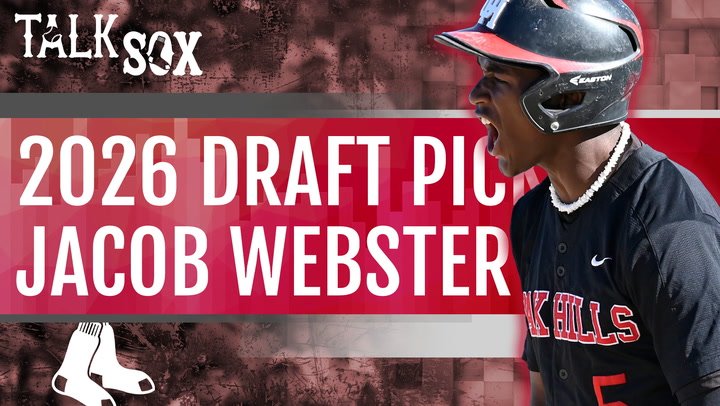 Drafted in the 12th round of the 2026 MLB Draft out of Oak Hills High School, Jacob Webster is a prospect full of potential. Sitting down with Talk Sox's Nick John, Webster talks about his draft experience, along with how things are going down in Fort Myers since officially signing with the Boston Red Sox. View the full article
 -
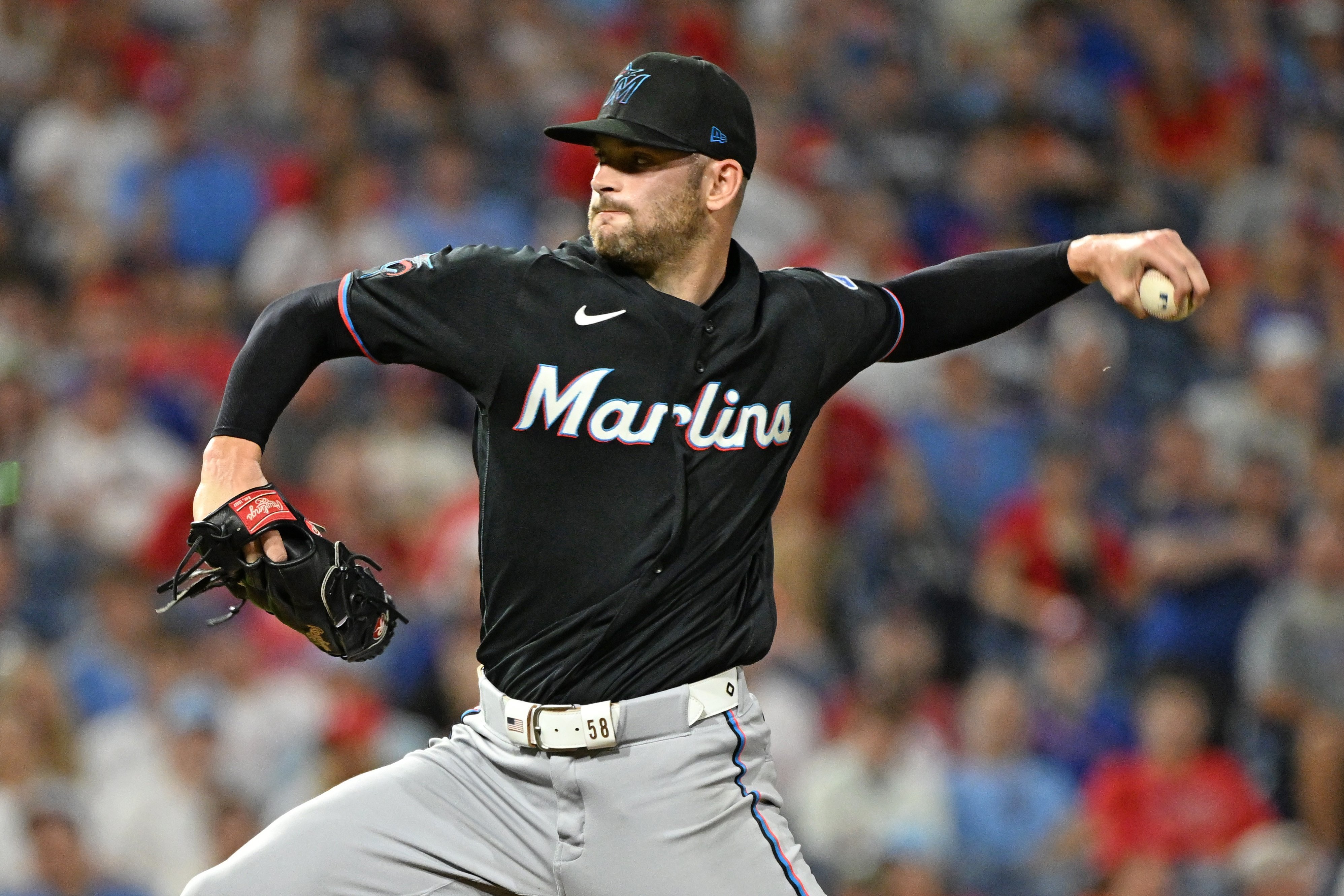 There is no shortage of reasons why the Miami Marlins lost to the Philadelphia Phillies Monday night. Poor hitting with runners in scoring position. An umpiring decision so inexplicable that it still boggles the mind. The enduring presence of Leo Jimenez. The excellence of Cristopher Sanchez, a continuation of Miami's years-long inability to handle lefty starting pitchers. However, I wanted to focus on something that might have flown under the radar. John King pitched horribly. Cade Gibson was better, but not by much. The ineffectiveness of Miami's lefty relievers since essentially the start of July is highly concerning. For much of the year, King looked unequivocally like the best of the Marlins' offseason acquisitions. Overall, he remains a positive WAR player with a 3.88 ERA and still-sterling 0.98 WHIP. Yet his season splits are eye-opening. First half? A 2.48 ERA and 0.75 WHIP. Second half? Those numbers have ballooned to a 10.48 ERA and 2.07 WHIP. To be fair, King's first-half stats come from 40 games' worth of appearances, compared to only nine games in the second half. He has also maintained a pretty clean sheet when it comes to high leverage. There hasn't been a meaningful velocity dip. A slight decrease in sweeper spin was evident on Monday, but there just isn't a lot to point to other than the poor results and an MLB track record that always indicated he was unlikely to maintain his elite pace. At least Gibson has been consistent in 2026. Unfortunately, that just means he's been equally unhelpful all season long. Going into Wednesday, that came out to a 5.25 ERA in the first half and a 6.55 ERA in the second. He has struggled all season long to recapture his 2025 form. He's been a -0.6 bWAR pitcher. Only two Marlins pitchers have been worse this season from that standpoint. One of those is Chris Paddack. The other is Pete Fairbanks, but he's showing every sign of having resurrected his season these past couple weeks. The clock might be ticking on this bullpen composition...except for the fact that the Marlins essentially have no impactful lefty reinforcements to call upon. Scheduled to undergo elbow surgery, Andrew Nardi, who thrived as the club's high-leverage lefty during their last NL Wild Card campaign in 2023, has been fully ruled out. Two of baseball's best southpaw prospects, Robby Snelling and Thomas White, are also hurt. The only 40-man roster alternative is rookie Dax Fulton. Dipping deeper into the organization, there's not much help. Other than Fulton, Patrick Monteverde and Justin King represent the lone lefty offerings at AAA. Monteverde, who's mostly been used as a starter in the minors, has just a 5.79 ERA and 1.49 WHIP. Justin King doesn't even meet that modest standard with a 6.84 ERA and 2.00 WHIP. Bottom line? No help is coming from within if the Marlins either continue to not get much help from their lefty relievers, or if it turns out the reason they have struggled is a yet to be revealed injury. Which makes it all the more essential that King (John) and Gibson turn it around ASAP. Well that, or some team decides to shed some salary and dumps a lefty on waivers over the next two weeks. View the full article
 -
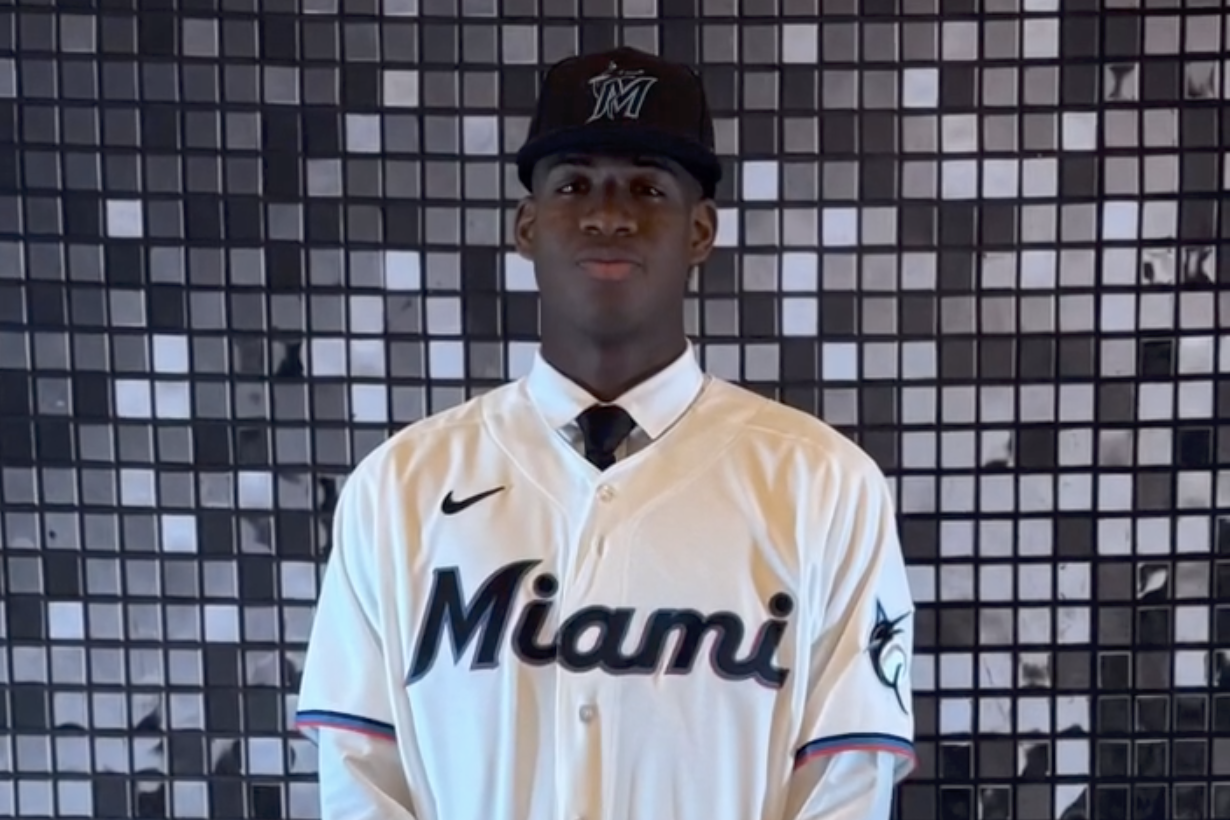 As documented here, the Miami Marlins have had a low hit rate on their international amateur free agent signings. Identifying talent and developing it has been particularly challenging on the position player side. We are nearly a decade and a half into the "bonus pool era," and with all due respect to Javier Sanoja—a 2019 signing out of Venezuela—none of the Marlins' international hitters during that span have become everyday MLB starters. Santiago Solarte took an encouraging first step in that direction this season. The $1 million signing bonus he received in January is already looking like money well spent by the Fish. The 17-year-old infielder just wrapped up a dominant, unprecedented campaign in the Dominican Summer League. Solarte's offensive numbers in 2026 were amazing. In only 52 games, he slashed .339/.450/.598 with 10 home runs, 42 stolen bases and a 149 wRC+. Solarte also ranked tied for seventh among all players in total bases (104) and 11th in OPS (1.048). Keep in mind, the league consists of 51(!) teams. We have comprehensive Minor League Baseball stats across all levels available dating back to 2006. Solarte is the only player on record to post a 10 HR/40 SB season in rookie ball (including both stateside and foreign leagues). Solarte has elite power potential long term. He pulls the majority of his batted balls to right field, but six of his homers went to left or center. This grand slam from August 11 was a no-doubter to the deepest part of the ballpark with an exit velocity of 106 mph. For context, fellow Marlins prospect PJ Morlando, who was coveted for his power coming out of the 2024 MLB Draft, has reached that exit velo only five times this season. Morlando is three and a half years older than Solarte. There's only so much we can learn from stolen base totals at the lower MiLB levels, but Solarte's legs are a legitimate weapon. At 6'5", he covers a lot of ground with his long strides. This grounder to the left side was fielded cleanly. Solarte easily beat it out for an infield single anyway. He grounded into only one double play all season. Let's not get too carried away, though. Solarte was the beneficiary of a .450 batting average on balls in play (third among DSL qualifiers). He will not come close to maintaining that against stateside competition, causing his overall batting average to dip. His plate discipline is still a work in progress. His walk rate (12.9 BB%) was lower than the average DSL hitter and his strikeout rate was significantly higher (26.3 K%). Solarte split his defensive reps between shortstop and third base. It's difficult to imagine him sticking at the former moving forward, where he averaged one error every 13 innings. Most of his struggles on that side of the ball occurred during the first month of the season, to be fair. Ranked 16th on the Fish On First Top 30, Solarte should be assigned to the FCL Marlins in 2027. Even with some anticipated regression at that level, he's a candidate to taste Low-A Jupiter during the second half of that season. View the full article
 -
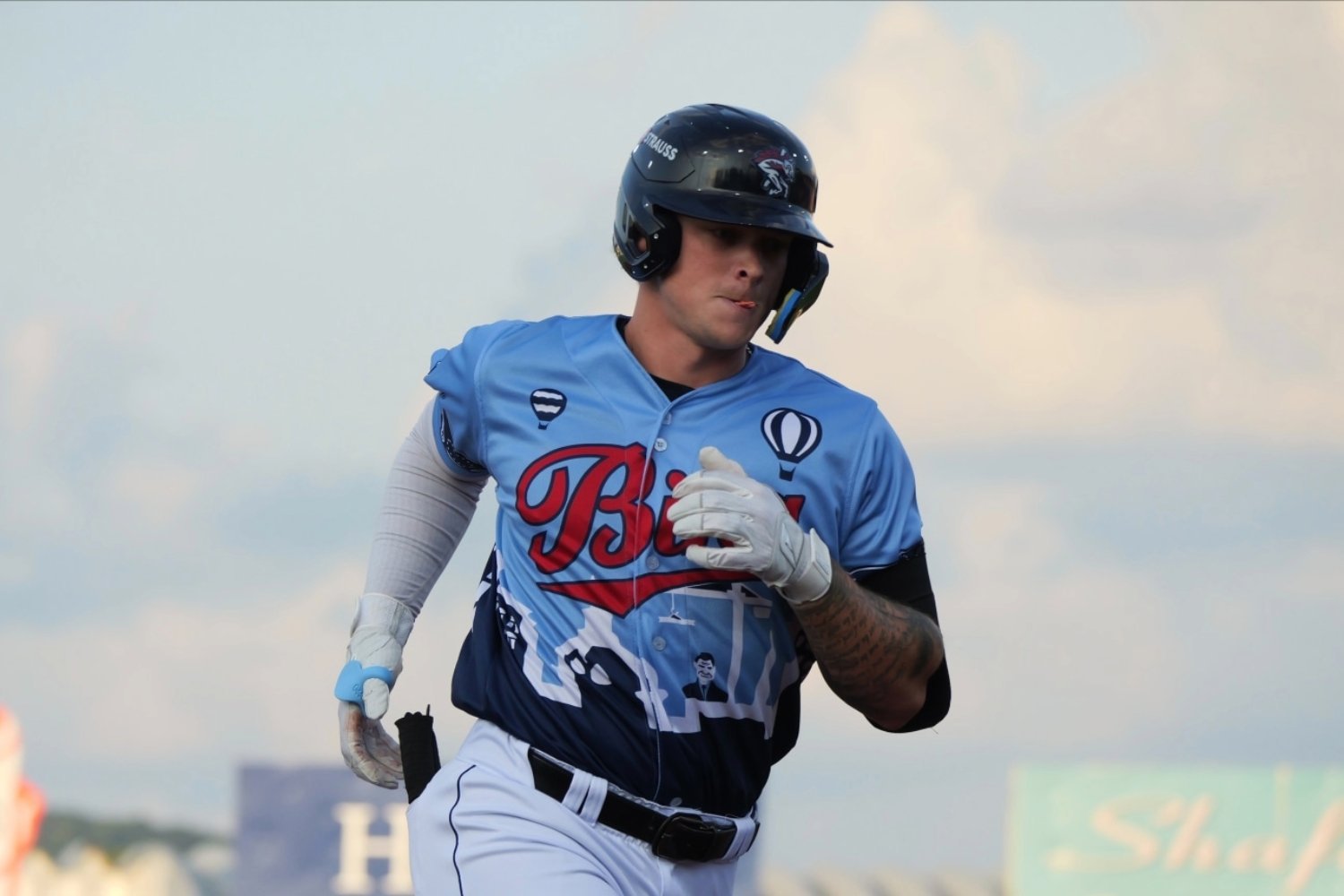 We're now more than two weeks removed from the MLB trade deadline, and the New York Mets organization is making aggressive moves with two of the prospects it acquired in its summer sell-off. Interestingly, the prospect you’d most expect to be moving up didn’t. The Mets promoted infielders Billy Amick and Emilien Pitre from Double-A Binghamton to Triple-A Syracuse on Monday. Infielder Jefferson Rojas, the top-100 player acquired from the Chicago Cubs in the Clay Holmes-Tyrone Taylor deal, stayed at Binghamton. Age had to play a role in the decision: Amick and Pitre are 23 and have major college experience, while Rojas is a 21-year-old international signee. New York acquired 11 minor-leaguers in the six trades they made over a 72-hour period at the start of August. Grand Central Mets offers initial impressions of these three, the most advanced hitters of the group: Jefferson Rojas Rojas has been merely a cog in Binghamton’s offensive machine, but he's not slowing it down. He’s slashing .263/.333/.447 (106 wRC+) after 10 games, with a home run and four extra-base hits. Three of those XBHs came in one game. While the slug may be spotty, it's real. Rojas has produced 16 home runs and 39 extra-base hits in 101 games between Binghamton and Double-A Knoxville, both career highs. Another big plus: his strikeout and walk rates are both at 10.2 percent at Binghamton, in line with his career numbers. He has an 81.0 percent contact rate and a 9.0 swinging strike rate since joining the Mets' organization. As he grows and learns, his command of the zone should help him unlock more thump. And he will need to find more, because third base is already calling Rojas away from shortstop. The Mets have started him four times at third and twice each at short and second since acquiring him. He played twice as much third as short with Knoxville this year. For now, he’s forming a dynamic infield duo at Binghamton with Mitch Voit and giving Mets fans visions of a young star tandem blossoming in the next year or two. Billy Amick His power surge is real, but what's also clear is that Amick is a classic all-or-nothing slugger. He has unlocked his power in his third pro season after totaling seven homers the first two years. He leaves Binghamton tied for the Double-A home run lead with 30 total. His seven dingers in 12 games for the Rumble Ponies powered a .304/.396/.763 slash line (1.179 OPS, 199 wRC+). The swing strategy is clear: lift and separate. He produced a 59.3 percent fly-ball rate with Binghamton, almost nine percentage points higher than his rate at Wichita. His pull-air rate with Wichita was in the 92nd percentile, according to Prospect Savant. Interestingly, his overall pull rate dropped sharply with Binghamton, from 48.1 percent to 29.6 percent, per Fangraphs, while his center-field rate jumped from 23.8 percent to 44.4 percent. But more than any changes in his swing habits, we have to address the strikeout issues. In ’24 and ’25, he punched out at a 27.7 percent rate (95 in 343 PAs); this year, it’s 29.3 percent (127 in 433 PAs combined). At Triple-A, he’ll face... maybe not the best pitching talent in a system, but enough quality arms to expose him. There’s no mystery with Amick: it’s the three true outcomes of home run, walk, and strikeout (32 combined in 54 PAs with Binghamton). The Mets’ organization is challenging him to expand his horizons and shrink his zone in the final month of the Triple-A season. If he does make progress, he’ll make life more uncomfortable for Ryan Clifford, who’s sporting a 54 wRC+ and 38.1 percent K-rate. Emilien Pitre Saying Pitre is the anti-Amick is trite, but accurate. He struck out four times in 44 plate appearances for Binghamton (9.1 percent), and his .375 slugging percentage was entirely the product of a .375 batting average, because he had zero extra-base hits in 10 games. But that contact is just too enticing. An 87.1 percent contact rate with the Rumble Ponies, which was slightly down from his 89.4 percent rate with Double-A Montgomery, is hard to pass up on. His 5.9 percent swinging strike percentage was higher, too, but it was still less than half Amick’s 12.6 percent. And the quality of Pitre’s contact could not be more different. He produced a 54.1 percent ground-ball rate and a 43.2 opposite-field rate with Binghamton. He was at 52.3 percent ground balls with Montgomery. Both ground-ball figures are sharply higher than his A-ball percentages. Then there’s the speed. His stolen base total has slowed at Double-A, with 12 in 47 games as compared to 21 in 51 games at High-A, but it’s clear he has wheels. Mets team president David Stearns reached for speed and up-the-middle skill in several deadline trades. Pitre was one of them, and his talents in those fields could land him a role with the big-club sooner than later. View the full article
 -
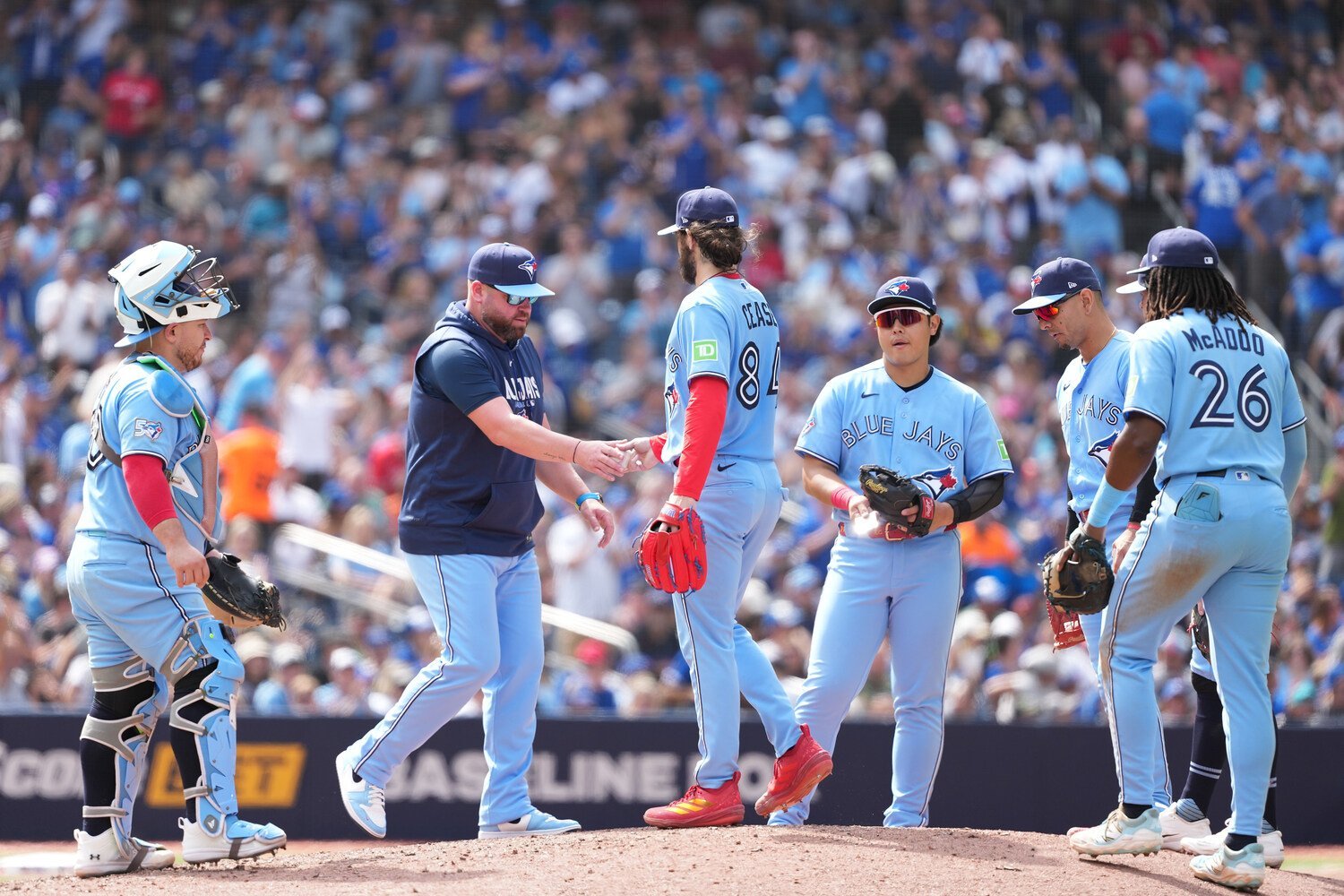 For what feels like the fifth or sixth time this season, the Toronto Blue Jays have arrived at another supposedly season-defining week. Every winning streak has been framed as a last stand. Each streak gains momentum then dissipates with a handful of losses. Yet here we are again. The Jays entered Tuesday with a 61-65 record, still four games below .500, but only a half-game back of the final American League Wild Card position. They are part of a peloton cluster of teams that appear unable to separate themselves from the pack. As of Tuesday, Toronto sits behind Baltimore, Texas, Detroit and Minnesota while battling with Cleveland and Seattle in one of the most congested playoff races in baseball. It isn't because each team is playing great baseball. It's because they are playing just well enough. Each team is showing signs of life but is being helped out in large part because the American League is not at its best. This week's games are important, but they are not the most important stretch of the season. The next seven days are less about determining whether Toronto is a contender and more about ensuring the club remains attached to the group of Wild Card hopefuls. A month ago, the Jays' season was on the brink. Their chances of making the playoffs were below 10%. Now, they have doubled. They appear to be back. They certainly aren’t frightening anyone, but they are keeping things close. Nearly every game in the past week or so has felt like a playoff game. From a team that looked to already be making off-season plans, the Jays might be relevant again. Winning six consecutive series and going 13-6 over a 19-game stretch justifies the big crowds at the Rogers Centre. A 7-3 record over their last 10 games has allowed them to leapfrog several teams. A 162-game season is long. Teams can have plenty of peaks and valleys. For the Jays, there have been far more valleys than peaks. Among the teams in the hunt, they are all flawed. The Rangers and Orioles remain inconsistent. Detroit has stumbled. Minnesota has struggled to gain traction. Cleveland and Seattle have spent much of the season hovering around the same level of mediocrity. As a result, the Jays have not imploded and are in the discussion. One of the defining characteristics of this year's Wild Card race is that nobody seems particularly eager to claim it. The Yankees and Red Sox have established themselves above the scramble. Behind them sits a remarkable collection of clubs with records clustered around the .500 mark. Ahead of games on Tuesday, Baltimore is 61-64, Texas is 61-64, Toronto is 61-65, Detroit is 61-64, Minnesota is 61-65, and Cleveland is 60-65. Seattle trails only slightly farther back at 59-66. In most years, a team sitting four games under .500 in mid-August would require a dramatic run to even be contemplating the playoffs. The Jays control much of their own fate because of where they currently sit. And let’s be honest, it is way too soon to be realistically talking about the playoffs. If the season ended next week, we’d already be calculating the possible do-or-die tie-breaker games to even grab the final Wild Card spot. There is no question the Blue Jays have been playing with greater confidence than they were earlier in the year. The pitching seems to be what is propping up this team. While the team’s fortunes have improved, one problem has remained stubbornly unchanged. The Blue Jays still aren't scoring many runs. The Jays have fought their way back into the race despite owning one of the largest offensive declines ever recorded by a defending division champion. They own a minus-57 run differential and have scored just 492 runs while allowing 549. Among division winners since 1961, very few defending champions have experienced a larger year-over-year collapse in runs scored per game than the current Blue Jays. According to historical data tracking division winners from 1961 to the present, the largest declines in runs scored per game after winning a division are: 2014 Boston Red Sox: -1.36 1972 Baltimore Orioles: -1.33 2024 Texas Rangers: -1.22 1981 Kansas City Royals: -1.14 2020 Houston Astros: -1.03 2026 Toronto Blue Jays: -1.01 As a result, the team’s margin for error remains extremely thin. Toronto's season is unlikely to be decided over the next seven days. Games on the road against the Rays and Yankees are never easy, and later in the season even tougher. If the Blue Jays go 4-3 or 3-4, they'll probably remain in the thick of the race. If they go 5-2, they could find themselves occupying a Wild Card position. A disappointing week may not completely eliminate them because every other team in the conversation is facing the same uphill climb. A 1-6 stretch would hurt because it might allow one or some of this group to break away. The Jays have a “softer” schedule after this week than most of the other teams in the hunt. They tend to play well against weaker opponents, but they have also played down to some opponents as well this season. The Jays will spend much of their final six weeks facing clubs with losing records. That does not guarantee anything, but it improves their chances. They still have more road games remaining than several of the teams they are chasing and will play a significant number of games against fellow Wild Card contenders. Which Blue Jays team will show up this week or, for that matter, the rest of the season remains in the air. They haven’t miraculously become a different team, although some weeks with the number of players coming and going from Buffalo it feels like it. They have been doing just enough to win series since the trade deadline, and that success means they are in this leading pack of teams. The regular season is scheduled to end on September 28. So, the Jays don’t need this to be their most important week. They are hoping that the last two or three weeks of September are even more important. This article was written prior to the Blue Jays' 10-5 victory over the Rays on Tuesday, August 18. View the full article
 -
 Blue Jays Affiliate Overview (August 15-17) Triple-A Buffalo Bisons Series vs Worcester Red Sox (Boston Red Sox): 4-2 Season Record: 60-60 Double-A New Hampshire Fisher Cats Series vs Somerset Patriots (New York Yankees): 1-5 Season Record: 52-60 High-A Vancouver Canadians Series vs Tri-City Dust Devils (Los Angeles Angels): 5-1 Season Record: 54-60 Single-A Dunedin Blue Jays Series vs Tampa Tarpons (New York Yankees): 2-4 Season Record: 52-58 FCL Blue Jays: Season Complete DSL Blue Jays Blue Week Record: 1-4 Season Record: 19-35 DSL Blue Jays Red Week Record: 5-0 Season Record: 33-18 Triple-A Buffalo Bisons Season Record: 60-60 Series vs Worcester Red Sox (Boston Red Sox) August 15: Buffalo had what amounted to a bullpen day on Saturday against Worcester. Richard Gallardo, Austin Marozas, and Beau Phillip all threw 1.2 innings, while Sam Gardner had the high mark in innings for Buffalo at 2.2. Gallardo struggled, to say the least, coughing up six hits and two walks, all leading to four runs in his short outing. Gardner was near perfection, he recorded eight outs on the day, five from strikeouts, and didn't allow a hit or walk. While the pitching was up and down, the hitting had similar stretches, scoring three in the second inning before going silent until late in the game. In the second, it was two missiles for home runs that provided the scoring, a solo blast from Peyton Williams to right and a two-run shot from C.J. Stubbs also to right field. Buffalo would be relatively quiet until the seventh, when Sean Keys roped a ball to right field, joining the duo with home runs on the day, his was of the two-run variety and gave Buffalo a 5-4 lead. It was looking good for the Bisons, until Chad Dallas surrendered the tying run in the eighth inning, sending the game into extra innings. In the top of the tenth, Buffalo started off with a single by Yohendrick Piñango and Nick Goodwin was hit by a pitch. Ismael Munguia then doubled to center, scoring Keys and Piñango, but Goodwin was thrown out at home. Williams and Stubbs would strike out and end the inning, stranding Munguia on the bases. It was more than enough of a lead for Buffalo, as Devereaux Harrison struck out two in a clean frame to give the Bisons the 7-5 win. August 16: Spencer Arrighetti made a second rehab start for Buffalo on Sunday, and it had some ups and downs with it. Arrighetti looked great in the bottom of the first inning, striking out two, as he worked a perfect frame. The second inning was also perfect, two flyouts and a lineout, keeping Arrighetti facing the minimum through two. Two pop ups, and a groundout in the third saw Arrighetti remain perfect through nine batters. It was the bottom of the fourth that tripped up Arrighetti; a single and two-run home run by Mikey Romeo would get Worcester on the scoreboard. Arrighetti would not make it out of the frame, giving up a single and a walk, before turning it over to the bullpen. When he left the game, Buffalo's bats had already put the Bisons on cruise control, scoring nine runs in the first four innings. Carlos Mendoza had a massive game at the plate for Buffalo, collecting four hits, including a two-run home run in the second, a two-RBI double in the third, and adding two more doubles for a total of three on the day. Davis Schneider capped off the scoring for Buffalo, with a three-run blast in the fourth, his sixth for the Bisons. Buffalo cruised to a 9-6 win. Double-A New Hampshire Season Record: 52-60 Series vs Somerset Patriots (New York Yankees) August 15: For the Saturday matchup between New Hampshire and Somerset, we got to see the Double-A debut of Johnny King. There was both the really good and some bad, as his command was a bit of a wild card on the day. In the first inning, a walk and a double scored a run for Somerset and were followed by another walk. In the second inning, King got his second and third strikeouts, but then allowed a single and a walk before finishing the inning. In the third inning, King walked the first two batters and then got three outs on a groundout, sacrifice fly, and pop up. The next inning, Carter Cunningham drove in a run to cut the lead in half for New Hampshire. In the bottom of the fourth, King had a clean inning with two more strikeouts and a groundout. For the day, King went four innings, allowed just two hits, but walked five, and struck out five. In the sixth, a home run and an RBI single gave Somerset the four-run lead. Daniel Guerra came in to pitch the seventh inning and was masterful. Hitting 99 mph on his way to striking out three batters and allowing a walk. New Hampshire lost this one 5-1. August 16: Things went better on Sunday for New Hampshire against Somerset. The Fisher Cats started with the lead in this one in the second inning. A run scored on a throwing error, and a second run came in via an Alexis Hernandez RBI groundout. In the fourth and sixth innings, Victor Arias added an RBI double and Hedbert Perez did the same. Tucker Toman would score later on a fielding error. Jackson Wentworth went five innings for New Hampshire and only allowed three hits and one run. He only struck out one as well. New Hampshire finished this one strong, as they ended up winning 7-1. High-A Vancouver Season Record: 54-60 Series vs Tri-City Dust Devils (Los Angeles Angels) August 15: The Jays love dipping their toes in Indy Ball, and Max Viera is another success story. The infielder spent the majority of the season with the FCL Blue Jays, but was promoted to the Canadians after the draft, and once again performed on offense, hitting a double in the second inning to put a runner on second and third, then scoring the first run after Jaxson West drove him in on a sac fly. Dasan Hill made his debut at Nat Bailey, and he looked great, not allowing a single walk and striking out three over four innings, only allowing a single unearned run after a JoJo Parker throwing error. The Canadians added to the lead when Maddox Latta hit a homer, and Viera helped add some insurance runs after hitting a triple and scoring in the sixth. Holden Wilkerson took the win after five strong innings in relief, allowing two runs as the Canadians won 5 to 3. August 16: Troy Guthrie was once again the starter for Vancouver, and he went five innings once again for the fifth time in six starts since getting promoted. The Canadians took the lead in the second after loading the bases, but could only score one run on a Jean Joseph sac fly. The Dust Devils were able to tie it in the fifth inning off of Guthrie, who left in line for a no-decision. Franly Urena gave up a homer to Ryan Nicholson which also gave up the lead, but once again Max Viera hit a triple to start the rally for the Canadians, as Dariel Ramon drove him in on a sac fly to tie it up, then in the eighth inning, Viera drove in two more runs with his third triple in two games, which ended up being the winning runs. The 25-year-old infielder now has a 1.412 OPS in Vancouver. Single-A Dunedin Season Record: 52-58 Series vs Tampa Tarpons (New York Yankees) August 15: The Tarpons blasted 4 homers against the D-Jays, as it was a non-competitive blowout. Denis Samudio had his worst start with the Jays organisation, walking three batters and allowing four runs in under three innings of work. The bullpen was not better, as each pitcher gave up a homer and the bullpen gave up 10 runs and 11 hits after Samudio was taken out. The Jays were able to score seven runs, including Jake Cook’s third homer of the season, but it was still an insurmountable lead, as they lost 14-7. August 16: What started out well with Brandon Barriera once again having a good start, going three scoreless innings and striking out five batters, quickly turned into a disaster. Jake Bennett and Dean West both had RBI hits in the second inning, but once Brayden Heidel replaced Barriera, things took a turn for the worse. Heidel was unable to get a single out, giving up eight runs with three walks and six hits, ballooning his ERA to 8.23. Josbel Garcia gave up no earned runs replacing him, but fielding errors led to three earned runs scoring. The Jays were able to claw some runs back with a couple of homers from Aldo Gaxiola and Owen Carapellotti, as well as a Jake Cook RBI single, but the seventh inning was another big inning for the Tarpons, as Isaac Williams and Dax Dathe gave up six runs, making it impossible to come back without a miracle, which eventually led to an 18 to 8 defeat for Dunedin. FCL Blue Jays Season Record: 38-20 Season Completed DSL Blue Jays Blue Season Record: 19-35 August 15: BJB scored five runs on the backs of a clogged base path for much of the game on Saturday. They had nine hits and seven walks in the seven-inning game. Eiker Lothar had three of the hits, two singles and a double, while Randy Soto provided some fireworks with his first home run of the season. Cristopher Polanco added two runs to the scoreboard in the fourth, with a two-RBI single on a ground ball to center. Michael Mesa walked with the bases loaded in the sixth and brought home Lothar. Then Soto's solo blast in the seventh capped off BJB's scoring. The five runs were just not enough against a Yankees Bombers squad that scored six in the top of the first inning and eased their way to a 7-5 win. August 17: Juan Caricote led the way for BJB against the White Sox DSL team on Monday. Caricote had an RBI double in the first, a solo home run in the third, and an RBI single in the fourth. He ended the day just a triple shy of hitting for the cycle and added three RBI and two runs scored. Michael Mesa had an RBI double in the first inning, matching Caricote. With a 5-0 lead after the fourth inning, BJB pitching kept giving up runs until the game was tied and went into extra innings. BJB got two runs in the top of the eighth, on Cristopher Polanco's two-RBI single, providing BJB enough of a lead to get a win 7-6. DSL Blue Jays Red Season Record: 33-18 August 15: BJR had the bats dialed in on Saturday against the White Sox DSL team, collecting nine hits and walking 11 times on their way to scoring 11 runs. Alex Linares had the only extra-base hit, a double in the second inning. Jose Gori had an RBI single in the first and a two-RBI single in the fifth. Frelian Flores also had a two-RBI single in the fifth. With the game tied up at eight, the game headed into extra innings, where BJR took a lead they wouldn't surrender. Flores scored on a wild pitch, Samuel Orellana was hit by a pitch with the bases loaded, and Aneudi Severino knocked in one on a single to center. While the bats were hot, the pitching was hit or miss. Carlos Olivo and Juan Ramirez each struck out five in 2.1 innings of work, but BJB coughed up eight runs (five earned) on the day. BJR was able to hold on for the win, 11-8 in ten innings. August 17: As good of an offensive game BJR had on Saturday, Monday was the exact opposite, just three hits and no walks on the day. Darwin Nuñez hit a solo home run in the second inning to left field; the blast was his third of the season. In the fifth, Ayberson Ortega hit a ball to center for a sacrifice fly, giving BJR a 2-1 lead. The pitching for BJR was great. Franiel Severino, Adrian Moreta, and Jose Melo combined to give up just one run on seven hits, while walking just five. BJR won 2-1. View the full article
 -
 The San Diego Padres' four full-season affiliates began a new set of series Tuesday by going 3-2, which included the conclusion of a suspended game. The Triple-A El Paso Chihuahuas were edged by Round Rock 5-3, the Double-A El Paso Chihuahuas walked off Northwest Arkansas 6-5, the High-A Fort Wayne TinCaps won twice over Great Lakes, 6-5 in the completion of a suspended game and 7-4, then the Low-A Lake Elsinore Storm fell 9-2. Padres Minor-League Transactions LHP Andrew Wright assigned to Lake Elsinore Storm from ACL Padres. SS Elliot Lascelles assigned to Lake Elsinore Storm from ACL Padres. LHP Joseph Herrera assigned to ACL Padres from Lake Elsinore Storm. RHP Maikel Miralles assigned to ACL Padres from Fort Wayne TinCaps. RHP Johan Moreno assigned to San Antonio Missions from El Paso Chihuahuas. RHP Jose Leclerc assigned to El Paso Chihuahuas from San Antonio Missions. OF Kai Murphy assigned to El Paso Chihuahuas from San Antonio Missions. RHP Bernard Jose assigned to Fort Wayne TinCaps from San Antonio Missions. SS Justin DeCriscio assigned to San Antonio Missions from Fort Wayne TinCaps. RHP Matthew Watson assigned to Fort Wayne TinCaps from San Antonio Missions. IF Yimy Tovar assigned to Fort Wayne TinCaps from Lake Elsinore Storm. RHP Victor Lizarraga assigned to San Antonio Missions from Lake Elsinore Storm. San Antonio Missions transferred C Oswaldo Linares to the Development List. San Antonio Missions activated LHP Luis Gutierrez from the 60-day injured list. Early Blow Too Much For Chihuahuas To Handle Left-handed starter Jagger Haynes gave up an early three-spot but was otherwise solid as the host Triple-A El Paso Chihuahuas fell to the Round Rock Express 5-3. Rehabbing Padres outfielder Samad Taylor went 0-for-3 with a walk and two strikeouts in his first rehab game after two weeks of workouts in Arizona. Taylor, who is coming back from a right oblique strain, played the entire game in left field, possibly indicating a short stay with the Chihuahuas. Dustin Harris went 2-for-3 with a homer, a steal and two RBIs out of the leadoff spot against the team he played the last 2½ seasons for and Marcos Castanon went 2-for-4 with an RBI for the Chihuahuas, who were held to five hits. That combo produced the first run of the game as Harris singled and, two outs later, Castanon doubled. Harris then belted his fifth homer since joining the Chihuahuas as a free agent and 11th of the season, a two-run shot, in the bottom of the fifth. Ethan Salas, Padres Mission's No. 1 prospect, went 0-for-4, ending his streak of reaching base in every game since being promoted from Double-A San Antonio at 14 games. Haynes, Padres Mission's No. 13 prospect, went five innings, giving up five runs (four earned) on seven hits and two walks with a pair of strikeouts. Right-handers Daison Acosta (1⅔ innings), Alek Jacob (1⅓ innings) and Ethan Routzahn (one inning) combined for four scoreless innings. EP_0818.mp4 Player AB R H RBI BB K Dustin Harris 3 2 2 2 0 0 Samad Taylor 3 0 0 0 1 2 Nick Solak 4 0 0 0 0 1 Marcos Castañon 4 0 2 1 0 2 Ethan Salas 4 0 0 0 0 1 Mason McCoy 4 0 0 0 0 1 Will Wagner 4 0 0 0 0 2 Rodolfo Durán 3 0 1 0 0 0 Nick Pratto 3 1 0 0 0 0 Player IP H R ER BB K HR Jagger Haynes 5 7 5 4 2 2 0 Daison Acosta 1 2/3 1 0 0 0 2 0 Alek Jacob 1 1/3 1 0 0 0 1 0 Ethan Routzahn 1 0 0 0 3 0 0 Romeo Sanabria Caps 4-Run Ninth With Walk-Off For Missions Alex McCoy had a two-run single and scored the winning run on Romeo Sanabria's walk-off single in a four-run bottom of the ninth as the host Double-A San Antonio Missions stunned the Northwest Arkansas Travelers 6-5. Tirso Ornelas had a game-tying single before Sanabria's hit as all four runs in the ninth came with two outs. The Missions were down to their final strike before McCoy and Ornelas got their hits and Sanabria's came on a 2-2 pitch just like the other two previous singles. Albert Fabian went 4-for-4 with an RBI and a run scored, while Ornelas was 3-for-5 with two RBIs and a run scored, McCoy (Padres Mission's No. 8 prospect) two hits and two runs scored and Sanabria two hits. Missions left-handed starter Fernando Sanchez gave up four runs over five innings with five strikeouts, but right-hander Garrett Hawkins (one inning), left-hander Harry Gustin (one inning), right-hander Johan Moreno (1⅓ innings) and right-hander Francis Pena (two-thirds of an inning) allowed just one run and three hits over the final four frames. The Travelers jumped out to a 4-0 lead in the second, then the Missions clawed back two in the sixth on an Ornelas RBI double and Fabian run-scoring single before Northwest Arkansas went up 5-2 in the seventh. In the bottom of the ninth, Fabian had a leadoff double and went to third on Luis Verdugo's single. After a pair of strikes, Verdugo took second on defensive indifference. Braedon Karpathios, Padres Mission's No. 9 prospect, walked to load the bases when McCoy grounded his two-run single to left field to pull the Missions within 5-4. After a pitching change, Ornelas lined a single to right, scoring pinch-runner Kai Roberts from second and beating the throw home, which advanced McCoy to third and Ornelas to second. SA1_0818.mp4 SA2_0818.mp4 SA3_0818.mp4 Player AB R H RBI BB K Braedon Karpathios 4 0 0 0 1 3 Kai Roberts 0 1 0 0 0 0 Alex McCoy 5 2 2 2 0 0 Tirso Ornelas 5 1 3 2 0 1 Romeo Sanabria 5 0 2 1 0 1 Ryan Jackson 4 0 0 0 0 1 Albert Fabian 4 1 4 1 0 0 Luis Verdugo 2 1 1 0 2 0 Justin DeCriscio 4 0 1 0 0 1 Brendan Durfee 4 0 0 0 0 3 Player IP H R ER BB K HR Fernando Sanchez 5 6 4 4 2 5 1 Garrett Hawkins 1 1 0 0 0 2 0 Harry Gustin 1 2 1 1 0 0 0 Johan Moreno 1 1/3 0 0 0 1 3 0 Francis Peña 2/3 0 0 0 1 0 0 Rosman Verdugo Helps TinCaps Finished Delayed Sweep The High-A Fort Wayne TinCaps improved their home and road record on the same day in sweeping a doubleheader from the Great Lakes Loons 6-5 and 7-4, snapping a season-worst eight-game losing streak. Thanks to a rainout nearly three weeks ago, the TinCaps were actually the visitor in the first game, the resumption of an Aug. 2 suspended game, to begin what is now a seven-game series in Fort Wayne. In the game that was suspended in the top of the fifth inning, Jack Costello, who was promoted to Double-A San Antonio a few days after this game started, had a two-run double in a three-run third inning as the TinCaps took a 4-1 lead. They added two more in the top of the fourth in a game that was started by right-hander Miguel Mendez, who was traded to the San Francisco Giants the day after this game started. In the regularly scheduled game, Rosman Verdugo had a two-run double in the first inning and finished with three RBIs. Kasen Wells went 2-for-3 with a walk, two RBIs and three runs scored out of the leadoff spot, while Bradley Frye went 3-for-4 with two RBIs and a run scored from the No. 2 slot. With Verdugo batting third, the top three in the TinCaps' lineup went 8-for-11 with seven RBIs and four runs scored. Kerrington Cross went 2-for-2 with a walk and two runs scored. It was Frye's first three-hit game in his 10 games with the TinCaps after being promoted from Low-A Lake Elsinore. TinCaps right-handed starter Kannon Kemp had the best of his 10 appearances since coming back from a left oblique injury in spring training. Kemp went four innings and allowed one run on six hits with no walks and a season-high six strikeouts. After right-hander Sean Barnett gave up three runs in 1⅓ innings while fanning four, right-hander Bernard Jose returned to Fort Wayne for his third stint this season with 1⅔ scoreless innings, allowing just a hit and his first High-A save and third of the season. He has also pitched at Double-A San Antonio and the Arizona Complex League this year. FW_0818.mp4 COMPLETION OF SUSPENDED GAME Player AB R H RBI BB K Justin DeCriscio 2 0 0 1 0 1 Bradley Frye 1 0 0 0 1 0 Ryan Wideman 3 0 0 0 0 2 Conner Westenburg 1 0 0 0 1 0 Alex McCoy 1 1 0 0 1 0 Dylan Grego 1 0 0 0 0 0 Luke Cantwell 3 1 1 1 1 1 Rosman Verdugo 4 1 2 0 0 2 Kerrington Cross 1 2 0 0 1 0 Jack Costello 1 1 1 2 1 0 Lamar King Jr. 2 0 0 0 0 1 Oswaldo Linares 1 0 1 1 1 0 Carlos Rodriguez 1 0 0 0 1 1 Kasen Wells 2 0 0 0 1 1 Player IP H R ER BB K HR Miguel Mendez 1 3 1 1 0 1 0 Carlos Medina 2 0 0 0 1 1 0 Javier Chacon 1 1 1 1 3 1 0 Isaiah Lowe 2 2/3 2 3 3 1 3 1 Will Varmette 1/3 1 0 0 0 0 0 REGULARLY SCHEDULED GAME Player AB R H RBI BB K Kasen Wells 3 3 2 2 1 0 Bradley Frye 4 1 3 2 0 0 Rosman Verdugo 4 0 2 3 0 2 Luke Cantwell 3 0 0 0 0 3 Robbie Lavey 3 0 0 0 0 2 Lamar King Jr. 3 0 0 0 0 1 Kerrington Cross 2 2 2 0 1 0 Dylan Grego 2 1 0 0 1 2 Conner Westenburg 2 0 0 0 0 1 Player IP H R ER BB K HR Kannon Kemp 4 6 1 1 0 6 0 Sean Barnett 1 1/3 3 3 3 0 4 1 Bernard Jose 1 2/3 1 0 0 0 0 0 Second-Rounder Elliot Lascelles Has 3 Hits For Storm In Debut Second-round draft choice Elliot Lascelles went 3-for-4 with a run scored in his pro debut, but that was the biggest highlight as the host Low-A Lake Elsinore Storm dropped a 9-2 decision to the San Jose Giants in a battle of the California League's two first-half division champions. Lascelles, Padres Mission's No. 11 prospect who was a high school shortstop out of Toronto and batted fifth, had a leadoff single on a 1-1 pitch against Giants right-hander Trey Seeley for his first pro hit. He then had his first stolen base. Lascelles singled leading off the fourth inning and tripled with one out in the sixth and scored on a wild pitch before grounding out to second to end the eighth inning. Chris McHugh, an 11th-round pick, and Dawson Willis each had two hits for the Storm. Storm right-handed starter Jesus Castro gave up five runs over four innings. Player AB R H RBI BB K Dawson Willis 4 1 2 0 0 0 Alex Conover 4 0 1 1 0 1 Chris McHugh 4 0 2 0 0 1 Ty Harvey 4 0 0 0 0 1 Elliot Lascelles 4 1 3 0 0 0 Jorge Quintana 4 0 1 0 0 1 Joe Tiroly 2 0 0 0 1 0 Truitt Madonna 2 0 0 0 2 2 Qrey Lott 4 0 0 0 0 0 Player IP H R ER BB K HR Jesus A. Castro 4 4 5 5 3 2 1 Brandon Langley 2 4 2 2 0 4 0 Yoesmerli Beltre 2 3 2 2 0 1 1 Andrew Wright 1 0 0 0 0 2 0 Padres Mission's Top 20 Prospect Performance Ethan Salas: 0-for-4, K Ryan Wideman: 0-for-3, 2 K Coleman Borthwick: In Arizona Kruz Schoolcraft: DNP Ty Harvey: 0-for-4, K Kale Fountain: Injured, out for season Jorge Quintana: 1-for-4, K Alex McCoy: 2-for-5, 2 RBI, 2 R (San Antonio); 0-for-1, BB, R (Fort Wayne, Game 1) Braedon Karpathios: 0-for-4, BB, 3 K Lamar King Jr.: 0-for-2, K (Game 1); 0-for-3, K (Game 2) Elliot Lascelles: 3-for-4, 3B, R Tucker Musgrove: DNP Jagger Haynes: 5 IP, 7 H, 5 R, 4 ER, 2 BB, 2 K Jake Cunningham: DNP Truitt Madonna: 0-for-2, 2 BB, 2 K Eric Yost: DNP Winyer Chourio: DNP Jesus Castro: 4 IP, 4 H, 5 R, 5 ER, 3 BB, 2 K Michael Salina: On injured list Rosman Verdugo: 2-for-4, R, 2 K (Game 1); 2-for-4, 2B, 3 RBI, 2 K (Game 2) View the full article
 -
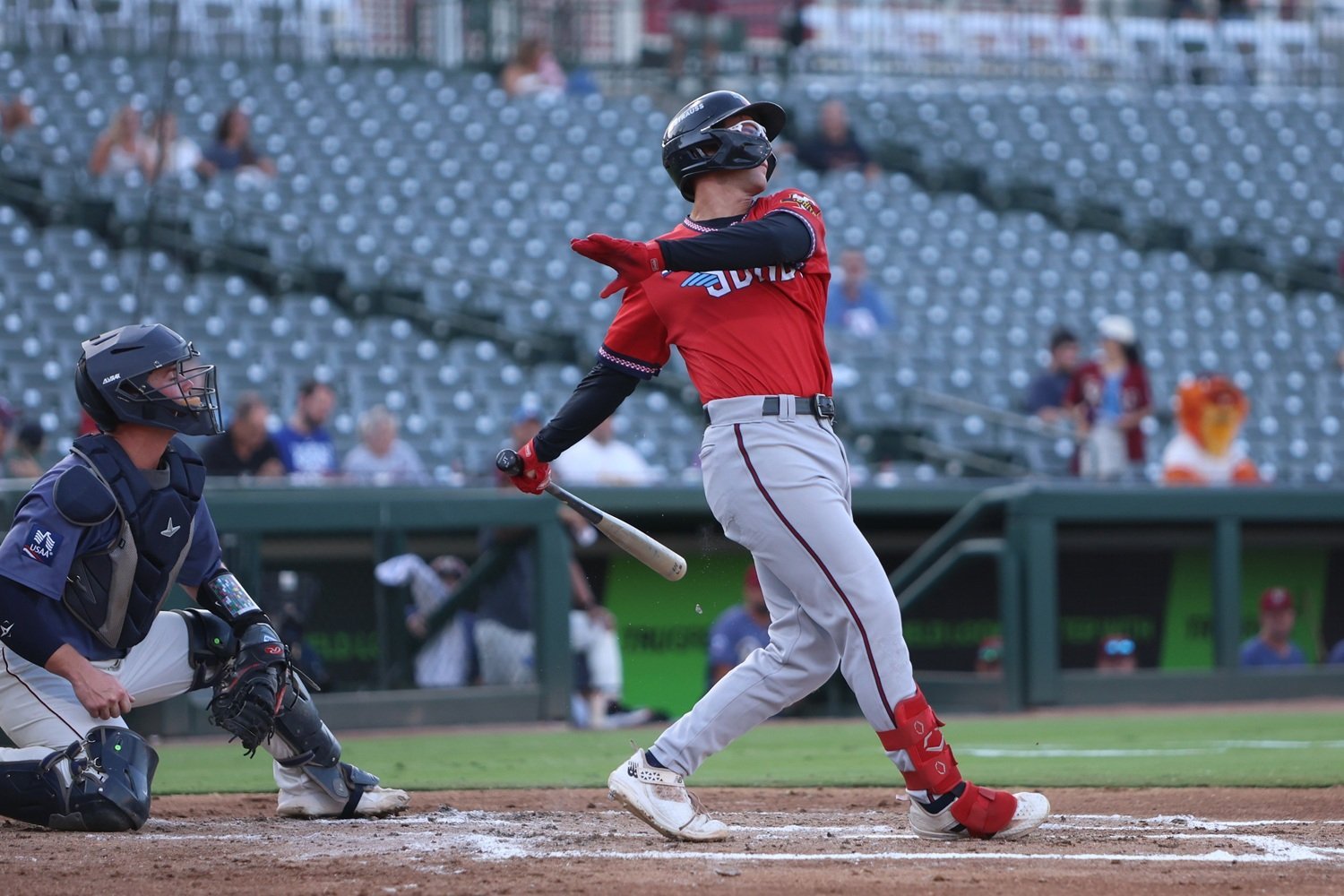 TRANSACTIONS In Triple-A the St. Paul Saints activated RHP Alejandro Hidalgo from the Development List. RHP Ruddy Gomez was placed on the 7-Day Injured List. IF Jorel Ortega was released from the Wichita Wind Surge roster. After multiple promotions yesterday, including 2026 breakout performer OF Luis Fragoza, the Fort Myers Mighty Mussels received some reinforcements from the FCL Twins roster. They included C Jimmy Keenan, RHP Brian Strange, and RHP Jackson Sleeper. SAINTS SENTINEL St. Paul 3, Columbus 19 Box Score I could swear I’ve written this same recap before… Oh that’s right, I have. Definitely some deja vu on the final score, and who ended up finishing the game on the mound for the Saints. I’m not sure if Tom Pohlad would have any reason to travel on the road to Columbus for this one, but I’m sure there were a few Twins scouts in attendance as the Clippers are the Clevaland Guardians top affiliate. This one actually started just the way the Saints like to draw it up, with Walker Jenkins leading off with a single and Ben Ross following with his 14th home run of the season with the Saints, for a 2-0 lead before their starting pitcher had warmed up. But while it took the Saints two hitters to score two runs, the Clippers one-upped them in the bottom of the first as it took them three hitters to score three runs. A pair of walks and a three-run homer were what greeted starter Ryan Gallagher, and it wouldn’t get any better from there. He was able to finish just 1 2/3 innings, and of the five hits he allowed, three of them left the yard and tallied up nine earned runs total thanks to pairing all that with five walks. Gallagher hadn’t allowed that many earned runs over his last five starts and 27+ innings. A stretch during which he went 3-1 and lowered his season ERA by nearly two runs. The rest of the pitching staff didn’t learn the lesson, either. C.J. Culpepper (2 1/3 IP, 2 H, 2 ER, 2 K), Matt Bowman (2 IP, ER, BB, 2 K), and Woo-Suk Go (1 IP, 2 H, 5 ER, 6 BB, 2 K) combined to be charged with eight earned runs themselves over the next five innings. Down 14-3 in the middle of the eighth, the Saints called on the eephus talents of infielder Tanner Schobel, and the softball swing of the Clippers’ Milan Tolentino resulted in a grand slam to make the final score. All that said, Schobel’s ERA on the season is a comfortable-for-a-position-player 6.00. The Saints lineup got multi-hit efforts from Jenkins (2-for-5, R, K), Ross (2-for-4, R, HR, 2 RBI, BB, K), and Gabriel Gonzalez (2-for-4, R, HR, RBI) who added his 13th home run of the season in the sixth. WIND SURGE WISDOM Wichita 10, Frisco 9 Box Score While Gallagher got bludgeoned on the road after a recent stretch of solid outings, Chris Vallimont was doing the same thing over his last five starts with Wichita… …and also got bludgeoned in an opposing ballpark on this night. Vallimont at least made it into the third inning, but he also didn’t finish it. The RoughRiders scored three, two, and three runs against him in the first three innings. Those eight earned runs came on nine hits and one walk over his 2 2/3 frames. He struck out only one and allowed two homers. Thankfully for the Wind Surge, their bullpen was up to the task. Five relievers combined to allow just one further run on four hits and five walks over the final six innings, giving the lineup a chance they didn’t waste in the ninth. Wichita did strike first to start the game as Caden Kendle hit a two-out double and was driven in by a single from Garrett Spain in the first. They scored two more in the second thanks to singles from Jay Thomason, Marek Houston, and Brandon Winokur and a wild pitch that made it 3-3 at the time. The lineup went cold until the top of the seventh when Winokur drove a slider out the opposite way to close the Frisco lead to four. After William Fleming (1 1/3 IP, H, K), Darren Bowen (1 IP, K), Jaylen Nowlin (1 IP, K), and Paulshawn Pasqualotto (2 IP, H, ER, 2 K) had reversed the pitching fortunes, the Wind Surge headed to the ninth down 9-4. Houston led off by reaching on an error, and after a strikeout of Winokur, Kendle reminded everyone why their hands burned when they touched him. His seventh home run with the Wind Surge, and fifth in his last nine games, trimmed the Frisco lead to three. After a groundout Wichita were down to their last out, but they still had fight in them. Jake Rucker beat out an infield single. Andrew Cossetti and Kyle DeBarge worked walks to load the bases, bringing up Jay Thomason. It may not have been the “ultimate” variety, but his grand slam brought the Wind Surge all the way back and then some to take a 10-9 lead. Kyle Bischoff came on for the save opportunity after probably believing he wasn’t going to be needed and gave up a solid liner into right to start the frame. Luckily for him, that batter thought he got more of the pitch than he did and wasn’t hustling out of the box. The bounce off the wall came right back to Kendle, who promptly spun around and fired a bullet into second to beat the runner there for the first out. Bischoff gave up another single but retired the other two batters he faced to pick up his fifth save on the season. The Wind Surge got two-hit efforts from each of Houston (2-for-5, 2 R, 2B), Winokur (2-for-5, R, HR, 2 RBI, K), Kendle (2-for-4, 2 R, 2B, HR, 2 RBI, BB, 2K), and Thomason (2-for-5, R, GS HR, 4 RBI, 2 K) in the dramatic comeback victory. KERNELS NUGGETS Cedar Rapids 0, Beloit 6 (6 innings) Box Score The Kernels were the victim of a complete game shutout on Tuesday, though that comes with the caveat that the game was called due to rain in the bottom of the sixth inning. Not that it would have mattered if it had gone the full nine the way this going for Sky Carp starter Liomar Martinez. Cedar Rapids had just one base runner through five innings and didn’t get their first hit until the top of the sixth, just in time to avoid adding a no-hitter to the complete game asterisk for Martinez. Yasser Mercedes’s two-out double gave the Kernels their only at-bat on the game with a runner in scoring position, and Eduardo Tait popped out to end the inning. Martinez struck out nine Kernels over his six frames. Lefty Michael Carpenter made the start for Cedar Rapids and was forced to work by the Beloit lineup. He pitched into the third inning, but a leadoff walk ended his outing after 49 pitches (30 for strikes). Carpenter was charged with four earned runs on four hits and a walk, while striking out two. Michael Ross was summoned and completed the final four innings. He allowed two earned runs on six hits and struck out four. In his Midwest League debut the reigning Florida State League Player of the Week, Luis Fragoza, finished 0-for-1 with a strikeout and reached base on a hit by pitch. MUSSEL MATTERS Fort Myers 7, Palm Beach 8 Box Score On the road this week in Palm Beach, the Fort Myers Mighty Mussels sent right-hander Eric Hammond to the mound to kick off their series against the Cardinals. He worked around baserunners in each of the first three innings, but after his pitch count hit 60 in the third inning, he was relieved by the newly promoted Brian Strange. Hammond allowed no runs on three hits and a pair of walks in his 2 2/3 innings, striking out two. Fort Myers got on the scoreboard first in the top of the second. Yovanny Duran led off with a walk, moved to second on a groundout, and stole his third base with the Mighty Mussels to put himself 90-feet away. Aidan Teel brought him in with a sac fly for the early 1-0 lead. They took a 5-0 lead in the fourth thanks to some loud contact from Carson Tinney and timely hitting elsewhere. With one out Tinney launched his fourth home run since being drafted, a solo shot. Duran and Colby Turner followed with singles, and Teel drew a walk to load the bases. Isaiah Lane followed with a two-run double, and Hideki Prather added a sac fly for the five-run lead. Strange got the Mighty Mussels through the fourth inning on the mound, allowing one hit and striking out three in his 1 1/3 innings. Jackson Sleeper’s Florida State League debut didn’t go as comfortably. The Cardinals tied the game at five in the fifth, with all of those runs being charged to Sleeper, though two of them went as unearned thanks to an error. He allowed two hits and walked three while recording just one out. Matthew Becker got them through the fifth with no runs being charged to himself, walking two of his own but also striking out two. Brent Francisco went the next two scoreless innings, allowing one hit, walking two, and striking out three. In the top of the ninth the Mighty Mussels were able to break the tie. Prather and Charlie Scholvin led off with singles. After a fielder’s choice off the bat of Merphy Hernandez, he stole second to put two runners in scoring position. MLB’s #2 catching prospect, Vahn Lackey, then delivered a clutch two-run single to put Fort Myers back in front. The save opportunity was given to Adam Falinski, and it was quickly put in jeopardy. It started with a hit by pitch, then a single. After a grounder for the first out, another single scored made it a one run game. The next single drove in two to walk it off for the Cardinals. The offense was led by Duran (2-for-4, 2 R, BB, K), Turner (2-for-4, R, 3B), and Lane (2-for-4, 2B, 2 RBI, 2 K) who each collected two hits. Lackey finished 1-for-4 with a walk and stole his third base. DOMINICAN DAILY Game 1: DSL Cardinals 7, DSL Twins (7 innings, completion of suspended game) Box Score This game was suspended in the top of the fourth inning all the way back on the fourth of July, and it picked up on Tuesday morning with the score 5-3 Cardinals. The Twins wasted little time resetting the scoreboard. In the bottom of the fourth back-to-back singles from Luis Suarez and Jeferson Abreu got it started. Daiyer Barboza drove them both in with a double. The Cardinals got both those runs back in the top of the fifth, but the Twins struck for three more in the bottom of the sixth to make the final score. Three walks and multiple wild pitches led to the first run of the inning. Another walk and stolen base from Jhon Gonzalez put runners on second and third, and Luis Duarte brought them both in with a single for the 8-7 final. Gonzalez finished 2-for-3 with two runs scored and a walk. Barboza and Duarte each drove in two to lead the offense. Juan Collado had made the start back in July and was charged with five earned runs on three hits and five walks. He struck out four. Jesus Moreno had recorded one out back then, too, before Collado re-entered the game. When play resumed on this day it was Alam Soriano on the bump. He picked up the win by completing 2 1/3 innings and allowed two earned runs on three hits and one walk, while striking out three. Aldwin Morillo picked up the save with a scoreless ninth. He walked two and struck out one. Game 2: DSL Twins 10, DSL Cardinals 14 (7 innings) Box Score The regularly scheduled contest between the two teams started off with a bang. In the top of the first the Twins sent 11 men to the plate, and eight of them came all the way back around to score. It started with a hit-by-pitch which was followed by a pair of singles to load the bases. Enmanuel Merlo got the scoring party started with a two-run double. Three walks later another run had scored, and the starting pitcher was removed without recording an out (he would re-enter the game later and record four outs). Another walk brought in a fifth run, and the sixth scored on a double-play ball. Leadoff man Daiyer Barboza then drew another walk, and scored on a double from Jendy Martinez, who was thrown out at third to end the inning. Unfortunately for the Twins, the Cardinals came back with seven runs in the bottom of the second to quell the momentum and turn it back into a game. Twins starting pitcher Yolcar Garcia worked a one-two-three first but lost his control in the second. He was charged with six earned runs on two hits and three walks in his 1 2/3 innings, striking out two. Failin Placencio didn’t fare any better, walking all four hitters he faced, but was only charged with one earned run. Camilo Made recorded the final out of the frame, and finished 1 2/3 total innings, pitching into the fourth. He was charged with three earned runs on two hits and two walks and struck out two. Fabian Ulloa delivered his first home run of the season to tie the game at 10 in the fifth, but the Cardinals would score the game’s last four runs. Miguel Martinez allowed one hit, walked two, and struck out two in 1 2/3 innings pitched. Herkyn Tavares gave up those last four runs on three hits and a pair of walks in his lone inning. He struck out one. TWINS DAILY MINOR LEAGUE PLAYERS OF THE DAY Pitcher of the Day – Brian Strange, Fort Myers Mighty Mussels (1 1/3 IP, H, 3 K) Hitter of the Day – Jay Thomason, Wichita Wind Surge (2-for-5, R, GS HR, 4 RBI) PROSPECT SUMMARY Check out the Prospect Tracker for much more on our Twins Top 20 prospects after seeing how they did today. #1 - OF Walker Jenkins (St. Paul): 2-for-5, R, K #2 - C Vahn Lackey (Fort Myers): 1-for-4, 2 RBI, BB, SB (3) #3 - SS Kaelen Culpepper (Minnesota): 1-for-3, R #4 - SS Marek Houston (Wichita): 2-for-5, 2 R, 2B #6 - OF Emmanuel Rodriguez (St. Paul): 0-for-3, BB, K #7 - OF Hendry Mendez (St. Paul): 0-for-4, K #8 - C Eduardo Tait (Cedar Rapids): 0-for-3 #9 - OF Gabriel Gonzalez (St. Paul): 2-for-4, R, HR (13), RBI #11 - C Carson Tinney (Fort Myers): 1-for-5, R, HR (4), RBI, 3 K #12 - 3B/CF Brandon Winokur (Wichita): 2-for-5, R, HR (6), 2 RBI, K #15 - RHP Ryan Gallagher (St. Paul): L, 1 2/3 IP, 5 H, 9 ER, 5 BB, 3 K #19 - OF Yasser Mercedes (Cedar Rapids): 1-for-3, 2B, K WEDNESDAY’S PROBABLE STARTERS St. Paul @ Columbus (6:05 PM CDT) - RHP Ricky Castro (3-2, 5.02 ERA) Wichita @ Frisco (7:05 PM CDT) - RHP Riley Quick (0-2, 5.68 ERA) Cedar Rapids @ Beloit (6:05 PM CDT) - RHP Reed Moring (1-1, 5.63 ERA) Fort Myers @ Palm Beach (5:30 PM CDT) - RHP Matt Barr (0-0, 6.43 ERA) Please feel free to ask questions and discuss Tuesday’s games! View the full article
 -
 It was an ugly night across the system for the Brewers' affiliates. Nashville was walked off. Biloxi dropped their 12th straight. Wisconsin lost a close one and Wilson was embarrassed. Sprinkled in, we saw some familiar faces in new places for the second straight week. The silver lining came in the DSL, where regular season play concluded and the DSL Gold squad clinched their division title. Transactions: Milwaukee Brewers sent SS Cooper Pratt on a rehab assignment to Wisconsin Timber Rattlers. Nashville Sounds activated SS Freddy Zamora from the 7-day injured list. Nashville Sounds placed SS Eduardo Garcia on the 7-day injured list retroactive to August 17, 2026. SS Luis Peña assigned to Biloxi Shuckers from Wisconsin Timber Rattlers. Biloxi Shuckers placed LHP Sam Garcia on the 7-day injured list. RHP Joshua Quezada assigned to Wisconsin Timber Rattlers from Wilson Warbirds. SS Brady Ebel assigned to Wisconsin Timber Rattlers from Wilson Warbirds. RHP Wenderlyn King assigned to Wilson Warbirds from ACL Brewers. SS Trey Ebel assigned to Wilson Warbirds from ACL Brewers. RHP Andrew Gaines assigned to Wilson Warbirds from ACL Brewers. Game Action: Norfolk (Baltimore) 8, Nashville 7 Box Score NOTE: There is currently not an online link available for the Sounds-provided summary, so we provide it directly here: Sounds Walked Off in Norfolk Tyler Black Belts Third Career Grand Slam NORFOLK, VA – Nashville suffered an 8-7 walk-off loss in Norfolk on Tuesday night to open a 12-game road trip. The Sounds tied the game with a ninth inning run but saw the Tides answer with the game-winner in the bottom of inning as Nashville was handed their eighth walk-off loss of the season. Sounds starter Colton Gordon saw Norfolk take a 4-0 lead after two innings and before the Sounds could even get a baserunner aboard off Norfolk starter Nestor German. Gordon loaded the bases in the bottom of the first off a walk, single, and hit batter with the first run of the game scoring via a sacrifice fly. The Tides leadoff batter in the bottom of the second singled his way aboard and advanced into scoring position on a throwing error by Brock Wilken. Gordon battled back to retire each of the next two but a two-out bunt single RBI scored Luis Vazquez from second on the play. Rece Hinds proceeded to make it a 4-0 game with a two-run home run to right field. Gordon finished his night after 4.0 IP with four runs allowed on four hits and struck out three with a pair of walks. Luis Matos served as the first baserunner of the game for Nashville after he led off the top of the third with a single. He was followed aboard by Ethan Murray who drew a walk and Freddy Zamora who also singled in his return to the Nashville lineup to load the bases. Tyler Black cleared them with his second grand slam of the season and third of his career to even the score at 4-4. Nashville took their first lead of the game in the fifth after Jeferson Quero doubled home Bo Naylor with a two-out RBI. Wilken made it a two-run Nashville advantage with his 13th home run of the season to begin the top of the sixth. After two scoreless innings in relief for Carlos Rodriguez, Brett Wichrowski took over on the mound for Nashville in the bottom of the seventh. Three straight one-out hits brought the Tides within a run after Heston Kjerstad doubled home a run and pushed the tying run to third. Wichrowski induced a ground ball to Murray who went home on the play to try and nab Hinds on a play at the plate. The tag by Naylor was late as Hinds scored with Kjerstad also able to score standing up on the play as the ball rolled away from Naylor towards the Norfolk dugout. In the top of the ninth with Nashville down a run, Zamora walked and stole second. Naylor added his lone hit of the night to score Zamora and tie the game at 7-7. It was the fourth straight game with a RBI for Naylor who has recorded eight total over his last four games played. Back-to-back flyouts from the heart of the Sounds batting order sent the game to the bottom of the ninth. Garrett Stallings was back on the mound after relieving Wihcrowski in the bottom of the seventh and stranding a two-out triple in the eighth. Hinds and Kjerstad each tallied their third hit of the night with singles to begin the inning with a wild pitch pushing both up an extra base and left Hinds standing on third as the potential winning run. A walk issued by Stallings loaded the bases for Jose Barrero who hit a ball deep enough to left field to allow Hinds to dash home for a third time and the walk-off win. The Sounds and Tides will continue their six-game series on Wednesday night at Harbor Park. First pitch is scheduled for 5:35 p.m. LHP Thomas Pannone (4-1, 4.09 ERA) will get the start for Nashville in game two of the series. POSTGAME NOTES: SLAMMIN SOUNDS, PT. 11: Tyler Black hit his second grand slam of the season and third of his career on Tuesday night in Norfolk. Black is now tied for the most grand slams hit by a Nashville player in their career. Erick Peterson and J.R. House also each hit three over their time in Nashville. Peterson hit two during the 1981 season and added his third in 1983 while House hit all three of his during the 2004 season. Black is the 17th different Nashville player to record multiple grand slams in the same season, and the fifth to do it this season, joining Brock Wilken, Luke Adams, Akil Baddoo, and Eddys Leonard. Nashville leads all Minor League Baseball with 11 grand slams this season. High-A Dayton (CIN), Double-A Somerset (NYY), and Double-A Springfield (STL) have each hit nine this year and are tied for second behind the Sounds. The 11 grand slams add to a historic season for Nashville, who had never hit more than six in any single season entering the year. BAYSIDE BROCKETS: Brock Wilken tied the team lead with his 13th home run of the season on Tuesday in Norfolk. He tied Luke Adams atop the Nashville leaderboard for round trippers and leads the club with his 65 RBI this season. The 13 long balls are the third-most Wilken has recorded in a single-season of his professional career behind his 18 in 2025 with Double-A Biloxi and 17 he hit in 2024 with the Shuckers. Wilken has 53 career home runs and is now tied for the second-most in the farm system since 2023 along with former Sound Wes Clarke. Eric Bitonti leads all Brewers minor leaguers over the span with his 56 home runs. R-BO-I: Bo Naylor recorded his fourth straight game with a RBI after plating Freddy Zamora in the top of the ninth inning on Tuesday night to tie the game at 7-7. Naylor has eight RBI total over his last four games played. He is the eighth different Nashville player to have a RBI streak of 4+ games this season for Nashville and the first since Luke Adams (July 9-17). Cooper Pratt posted a RBI in five straight games to lead all Nashville players. Since appearing in his first game with Nashville on August 4, Naylor is hitting .270 (10-for-37) with a double, three home runs, 10 RBI, and seven runs scored. Since making his Triple-A debut with Columbus in 2022, Naylor has produced 129 RBI in 180 games with 38 doubles and 38 home runs in Triple-A. Nashville lost a heartbreaker on Tuesday, rallying back from an early four run deficit to take the lead in the middle portion of the game, only to get walked off in the 9th. Colton Gordon (4IP 4H 4R 4ER 2BB 3K) started and put the Sounds in an early hole, but was bailed out when Tyler Black delivered a game-tying grand slam in the third inning, courtesy of the Sounds’ X account: In the 5th, Jeferson Quero popped a ground rule double into the wind to give the Sounds the lead, and then Brock Wilken extended the lead with his 13th home run of the year: Carlos Rodriguez gave the Sounds a chance with two shutout innings, but then the bullpen faltered. Brett Wichrowski continued his difficult season allowing three runs (two earned) while retiring just one batter in the seventh. That gave Salem a 7-6 lead heading into the 9th. In the 9th, the freshly activated Freddy Zamora walked, stole second, and then scored on a Bo Naylor single. But in the bottom half of the inning, the wheels fell off for Garrett Stallings. Stallings allowed a pair of singles, a wild pitch, and a walk to load the bases with nobody out. A sac fly then gave the walk-off win to Salem. The loss drops the Sounds to 65-56 on the season. Wednesday's starter is TBD. Biloxi pre-game media notes Rocket City (Angels) 7, Biloxi 3 Box Score As always, you are encouraged to read the official round-up from the team’s site: Peña Records 1st Double-A Hit, Shuckers Drop Opener to Trash Pandas - Thompson sets new career-high with eight strikeouts, Cruz strikes out seven in relief The tough times continued for Biloxi on Tuesday as the Shuckers once again fell behind early on their way to a 7-3 loss, their 12th consecutive defeat. 2025 2nd-round pick JD Thompson took his second start at AA and struck out a career high eight in four innings of work. Unfortunately Thompson allowed two runs in the first and another in the third and the Trash Pandas never looked back. The Shuckers’ prospect-laden lineup managed just five hits on the night. Luis Pena made his AA debut playing third base and collected his first hit, courtesy of the Biloxi X account: Damon Keith had the only extra-base hit for the Shuckers, with a run-scoring double to open the scoring: The other RBIs came courtesy of an Andrew Fischer sac fly and a Mike Boeve ground out. Stiven Cruz came on for Thompson and struck out seven in three innings of work. However, the bullpen couldn’t keep the game close as Rocket City responded to Biloxi’s rallies and were never really threatened until late in the game. In the top of the 9th, the Shuckers loaded the bases on an error, a walk, and a single. That brought Braylon Payne to the plate as the tying run, but Payne struck out to end the game. The loss drops the Shuckers below .500 (55-56) for the first time since May 27th. No starter has been named for Wednesday’s game. Wisconsin pre-game media notes Lake County (Guardians) 4, Wisconsin 3 Box Score Captains Steer Past Rattlers - Lake County’s late run tops Wisconsin Wisconsin dropped a tough defeat, losing 4-3 at home to Lake County on Tuesday. The game started out well, as Brady Ebel, in his Wisconsin debut, drew the first of his four walks to open the game. The rehabbing Cooper Pratt then singled, and eventually both players scored on Eric Bitonti’s clutch two-out two-run single. You can see all the highlights below from the Rattlers’ YouTube page. Unfortunately after the hot start, Wisconsin would not manage much offense the rest of the game. After Lake County had rallied off Rattlers’ starter Jacob Morrison (3.2IP 3H 3R 3ER 3BB 5K) to take a 3-2 lead, Pratt tied the game with a sac fly in the fifth. Wisconsin managed just five hits on the night and was 1-for-9 with RISP. The game remained knotted at three until the 8th, when Lake County used a HBP, double, and sac fly to take the lead. Andrew Healy was the tough luck loser in this one, despite throwing four innings of one-run ball with seven strikeouts. Healy has a 16:2 K:BB rate through his first 14 innings at the level. With the defeat, the Rattlers drop to 3.5 games back in the second half standings. RHP Josh Knoth (4-3, 4.68 ERA) takes the mound in the early game on Wednesday. Wilson pre-game media notes Salem (Red Sox) 21, Wilson 4 Box Score Wilson Allows Season Highs in Big Loss - Ebel Records First Hit Wilson was steamrolled in their series opening loss to Salem on Tuesday night. Salem put up three touchdowns across the first five innings of the game on their way to a 21-4 drubbing of the Warbirds. Joan Pena (2.1 IP 10ER), Thomas Conrad (1.2IP 5ER) and Enderson Mercado (.2IP 6ER) were all battered by the RidgeYaks’ lineup. Salem tallied rallies of 4-1-7-3-6 runs to open the game as the carousel kept spinning all night long. Only Ismael Yanez (1.1IP 1H 2B 2K) and seldom used backup catcher Eric Martinez (2IP 3H) got through the game unscathed. Perhaps the Salem offense tired themselves out by the 6th inning of play. The Warbirds did manage nine hits on offense. Juan Ortuno led the team with three hits, including a double, three steals and two runs scored. Brailyn Antunez continued his torrid stretch at Wilson with another multi-hit game, while Carsten Sabathia III doubled twice. Antunez is now carrying a 1.271 OPS through his first 18 games in Low A. Trey Ebel made his full-season debut and picked up right where his brother Brady left off with a hit and two walks. LHP Joey Broughton (0-3, 5.55 ERA) will make his 7th start (12th appearance) on Wednesday as Wilson will look to flush this one from memory as quickly as possible. DSL Brewers Gold 15, DSL Pirates Gold 6 Box Score The DSL Brewers Gold concluded their regular season on Tuesday with a resounding 15-6 victory over DSL Pirates Gold. The Brewers jumped all over the Pirates early and the outcome was never in doubt after the second inning. In the first inning Ricki Moneys and Leanders Matos each walked and stole base, then Josue Rodriguez plated them both on an RBI single to make it 2-1 Brewers. In the second inning, the Brewers sent 13 men to the plate and scored eight runs to put the game out of reach. Moneys had a two-run triple and Fernandez had the big blast with a three-run home run, part of a five RBI day for the 17-year-old left fielder. The hectic second inning featured six walks, four wild pitches, a balk, and an error. As a team, the Brewers had a staggering 17 walks on the day. Santiago Garcia was one of the other offensive stars of the day. Garcia finished a triple shy of the cycle and belted his first home run of the season (120 at-bats). On the mound for the Brewers; starter Daniel Garcia allowed three run in three innings of work. Joan Gonzalez was filthy, striking out eight in his four innings of work. Garcia was one out shy of a clean inning, when a two-out error in the seventh inning led to three unearned runs scoring before the final out was recorded With the win, the Gold squad (34-20) clinched the DSL Central Division and will advance to the DSL playoffs. We will await word on timing and first opponent for the playoff push. DSL Rojos (Reds) 10, DSL Brewers Blue 5 Box Score The DSL Brewers Blue finished their DSL season on a sour note, dropping a 10-5 decision to the DSL Rojos on Tuesday. The Blue squad fell behind early, but showed their grit rallying to tie the game and eventually take a brief lead. However, the Rojos put the game away with big rallies in the sixth and eighth inning. The Brewers actually outhit the Rojos 8-5 on the day, but were doomed by a pitching staff that allowed 10 walks. Angel Gonzalez paced the offense with three hits, including a triple. Jose Rodriguez had two hits, a walk, and a run scored. Diego Frontado knocked in two runs on a double. The 17-year-old Frontado finishes his impressive first season in the system with a .979 OPS and 46 RBI. The Brewers emptied the clip on the bullpen in the final game of the season. Six different pitchers were used. Carlos Canales (1IP 1BB) and Jean Rodriguez (2IP 2BB 1K) were the noteworthy performances as the pair worked hitless and scoreless outings in relief. The game turned when the Rojos capitalized on command issues from the Brewers bullpen, scoring four runs in the sixth with the help of three hit batters, three walks, and a wild pitch. The Brewers Blue finish the season 31-24 and just miss out on qualifying for the playoffs. Well, at least the Brewers game was a fun one on Tuesday. The DSL has wrapped on the regular season, so it's just the four full-season affiliates in play on Wednesday. Wisconsin once again has the early game at noon CT. Organizational Scoreboard including starting pitcher info, game times, MiLB TV links, and box scores Current Milwaukee Brewers Organization Batting Stats and Depth Current Milwaukee Brewers Organization Pitching Stats and Depth View the full article
 -
 The Quad Cities River Bandits took the only win of the night behind Jordan Woods, who allowed one hit over four innings with six strikeouts, and Nolan Sailors, whose grand slam capped a 7-2 victory. Grant Gambrell gave Northwest Arkansas five scoreless innings before a 6-5 loss. Vince Velasquez allowed three home runs in Omaha's 8-7 defeat. Moises Amezquita threw three scoreless innings for Columbia, which lost both ends of a doubleheader at Segra Park. Kansas City Royals Transactions Kansas City Royals optioned RHP Lucas Erceg to Omaha Storm Chasers. Kansas City Royals recalled RHP Carlos Duran from Omaha Storm Chasers. Omaha Rallies In The Ninth But Falls 8-7 To Rochester The Omaha Storm Chasers collected 14 hits and four doubles at Werner Park, but five Rochester home runs carried the Red Wings to an 8-7 win. Velasquez started for Omaha and worked 5 2/3 innings, allowing six hits and four runs, all earned, with one walk and five strikeouts. Three of the hits he allowed were home runs. Luke Little recorded one out, walked three, and struck out one. Easton McGee allowed two runs on two hits over one inning. Matt Moore was charged with three hits and two runs while recording a single out, and he took the loss. Ben Sears finished with 1 2/3 scoreless innings, allowing no hits with one walk and two strikeouts. Omaha broke through with four runs in the third. Abraham Toro doubled home two runs, Jack Pineda doubled in another, and Matthew Lugo added a sacrifice fly. Carson Roccaforte and Drew Waters delivered run-scoring singles in the fifth to build a 6-3 lead. Toro finished 3-for-5 with a double, two runs, and two RBI. Brett Squires went 3-for-5 with a double and an RBI. Pineda added two hits, a double, two runs, and an RBI. Luca Tresh had two hits and a run, and Peyton Wilson doubled. Roccaforte drew two walks to go with his run-scoring single. Trailing 8-6 in the ninth, Pineda and Squires singled to pull Omaha within a run, and Lugo followed with a single of his own. Roccaforte grounded out to end it, leaving the tying run in scoring position. Omaha struck out 10 times, drew two walks, left seven runners on base, and went 6-for-12 with runners in scoring position. The Storm Chasers are now 56-62. Player AB R H RBI BB K Abraham Toro 5 2 3 2 0 1 Jack Pineda 5 2 2 1 0 1 Brett Squires 5 1 3 1 0 2 Alejo Lopez 0 0 0 0 0 0 Matthew Lugo 4 0 1 1 0 2 Carson Roccaforte 3 0 1 1 2 1 Drew Waters 4 0 1 1 0 1 Brandon Drury 4 0 0 0 0 1 Luca Tresh 4 1 2 0 0 1 Peyton Wilson 3 1 1 0 0 0 Player IP H R ER BB K HR Vince Velasquez 5 2/3 6 4 4 1 5 3 Luke Little 0 1/3 0 0 0 3 1 0 Easton McGee 1 2 2 2 0 0 1 Matt Moore 0 1/3 3 2 2 1 1 1 Ben Sears 1 2/3 0 0 0 1 2 0 Justin Johnson's Three-Run Homer Is Not Enough In Naturals' Ninth-Inning Loss Gambrell gave the Northwest Arkansas Naturals five scoreless innings at Nelson Wolff Stadium, but San Antonio scored four times in the ninth for a 6-5 win. The Naturals starter allowed four hits and one walk with three strikeouts. Beck Way followed and gave up four hits and two runs while recording two outs. Anthony Simonelli struck out two over 1 1/3 scoreless innings. Augusto Mendieta was charged with four earned runs on three hits and a walk over 1 2/3 innings, and he took the loss. Zachary Cawyer allowed two hits without recording an out. Northwest Arkansas also got some help from some stellar defense, especially in the infield. The Naturals built their lead in the second. Colton Becker singled home Daniel Vazquez, and Johnson followed with a three-run home run, his 10th of the season, for a 4-0 advantage. Spencer Nivens singled in Johnson in the seventh to make it 5-2. Johnson finished 2-for-4 with two runs and three RBI. Vazquez went 2-for-3 with a walk and a run. Omar Hernandez added two hits and a run. Becker was 1-for-3 with a run and an RBI. Luke Pelzer had a hit and two walks from the leadoff spot. Nivens went 1-for-5 with an RBI, and Jorge Alfaro struck out three times in four at-bats. San Antonio opened the ninth with a double and a single, and after two strikeouts, a walk and three straight singles produced four runs. A throwing error by right fielder Sam Kulasingam allowed a runner to take second base during the rally. Northwest Arkansas finished with nine hits, four walks, and 10 strikeouts, left seven runners on base, and went 3-for-10 with runners in scoring position. The loss drops the Naturals to 47-66 this season. Player AB R H RBI BB K Luke Pelzer 3 0 1 0 2 0 Javi Vaz 5 0 0 0 0 0 Spencer Nivens 5 0 1 1 0 1 Jorge Alfaro 4 0 0 0 0 3 Sam Kulasingam 3 0 0 0 1 0 Daniel Vazquez 3 1 2 0 1 1 Omar Hernandez 4 1 2 0 0 2 Colton Becker 3 1 1 1 0 2 Justin Johnson 4 2 2 3 0 1 Player IP H R ER BB K HR Grant Gambrell 5 4 0 0 1 3 0 Beck Way 0 2/3 4 2 2 0 2 0 Anthony Simonelli 1 1/3 0 0 0 1 2 0 Augusto Mendieta 1 2/3 3 4 4 1 3 0 Zachary Cawyer 0 2 0 0 0 0 0 Sailors' Grand Slam And 16 Strikeouts Lift Quad Cities Past Dayton Quad Cities pitching struck out 16 Dayton batters, and Sailors' grand slam broke the game open in a 7-2 win at Day Air Ballpark. Woods started and allowed one hit over four innings, walking one and striking out six. Jackson Cleveland struck out four over two innings and gave up two runs on two hits, one of them a home run. Ethan McElvain turned in a scoreless inning and earned the win. Nick Conte and Yimi Presinal each added a scoreless inning, combining for five strikeouts and two walks. The staff allowed three hits in all. The River Bandits scored first when Asbel Gonzalez came home on a Zion Rose ground out. Derlin Figueroa homered for the 26th time this season, and Stone Russell added a sacrifice fly for a 3-0 lead. After Dayton pulled within a run, Quad Cities answered with four runs in the seventh, all of them on Sailors' grand slam, his sixth home run of the year. Sailors finished 2-for-4 with a run and four RBI. Figueroa went 1-for-4 with a walk, two runs, and an RBI. Gonzalez had a hit, a walk, and two runs from the leadoff spot. Rose drove in a run and walked, and Tyriq Kemp and Russell each singled. Quad Cities managed only six hits, but the club drew four walks and took advantage of three Dayton errors. Blake Mitchell struck out five times in five at-bats. The River Bandits struck out 16 times themselves, left seven runners on base, and went just 1-for-9 with runners in scoring position. With the win, they improved to 59-51 this season. Player AB R H RBI BB K Asbel Gonzalez 4 2 1 0 1 2 Zion Rose 4 1 0 1 1 2 Blake Mitchell 5 0 0 0 0 5 Derlin Figueroa 4 2 1 1 1 1 Jose Cerice 3 1 0 0 0 1 Nolan Sailors 4 1 2 4 0 2 Austin Charles 4 0 0 0 0 2 Tyriq Kemp 3 0 1 0 1 0 Stone Russell 3 0 1 1 0 1 Player IP H R ER BB K HR Jordan Woods 4 1 0 0 1 6 0 Jackson Cleveland 2 2 2 2 0 4 1 Ethan McElvain 1 0 0 0 0 1 0 Nick Conte 1 0 0 0 1 2 0 Yimi Presinal 1 0 0 0 1 3 0 Columbia's Three-Run Second Slips Away In Extra-Inning Opener The Columbia Fireflies led early in the doubleheader opener at Segra Park, but Augusta scored twice in the eighth for a 5-3 win. Shane Van Dam started and allowed seven hits and two earned runs over 4 1/3 innings, walking one and striking out five. Andy Basora struck out four over 1 1/3 innings and was charged with an unearned run. Dalton Hill allowed one hit over 1 1/3 scoreless innings. Jhon Reyes worked one inning, walked two, and allowed two runs, one of them earned, taking the loss. Columbia answered a first-inning run with three of its own in the second. Sean Gamble came home on an error, and Ricson Gonzalez singled in Connor Rasmussen and Tyson Moran for a 3-1 lead. That was the extent of the Columbia offense. The Fireflies finished with three hits, two walks, and nine strikeouts. Gonzalez went 1-for-3 with two RBI. Gamble was 1-for-4 with a run, and Moran was 1-for-3 with a run. Rasmussen walked and scored. Yandel Ricardo struck out three times in four at-bats, and Josh Hammond was hitless in four at-bats. Augusta tied the game in the sixth on a wild pitch and pushed across two runs in the eighth, the first of them by the zombie runner on a double-play ground ball. Henry Ramos walked in the eighth, but Columbia did not score. The Fireflies left five runners on base, went 2-for-9 with runners in scoring position, and were charged with one error. Player AB R H RBI BB K Henry Ramos 3 0 0 0 1 0 Yandel Ricardo 4 0 0 0 0 3 Josh Hammond 4 0 0 0 0 0 Sean Gamble 4 1 1 0 0 1 Roni Cabrera 3 0 0 0 0 1 Connor Rasmussen 2 1 0 0 1 1 Tyson Moran 3 1 1 0 0 1 Jhonayker Ugarte 3 0 0 1 0 2 Ricson Gonzalez 3 0 1 2 0 0 Daniel Lopez 0 0 0 0 0 0 Player IP H R ER BB K HR Shane Van Dam 4 1/3 7 2 2 1 5 1 Andy Basora 1 1/3 2 1 0 0 4 0 Dalton Hill 1 1/3 1 0 0 0 1 0 Jhon Reyes 1 0 2 1 2 1 0 Fireflies Shut Out In Doubleheader Nightcap Despite Amezquita's Three Scoreless Columbia managed four hits in the doubleheader nightcap and was shut out 3-0 by Augusta at Segra Park. Michael Braswell III started and allowed four hits and three earned runs over three innings, walking one and striking out three, and he took the loss. Moises Amezquita followed with three scoreless innings, allowing one hit and two walks with three strikeouts. Augusta scored once in the first on a sacrifice fly, then added two more in the third on a triple and another sacrifice fly. Sean Gamble made the catch in center field on both of those fly balls. The Fireflies never advanced a runner past second base. Ricardo led the offense with two hits in three at-bats, singling in the first and again in the fourth. Gamble singled behind him in the fourth, and Camden Johnson doubled in the seventh. Henry Ramos drew the only walk. Columbia struck out 12 times in a game shortened to seven innings, and the lineup was retired in order in three of the seven innings it batted. Ricardo had struck out three times in the opener, and Gamble finished the doubleheader with two hits in seven at-bats. Augusta did not need to bat in the seventh. Columbia left four runners on base and closed the day with seven hits across the two games. The Fireflies' record fell to 56-58 after being swept on Tuesday. Player AB R H RBI BB K Henry Ramos 2 0 0 0 1 2 Yandel Ricardo 3 0 2 0 0 0 Josh Hammond 3 0 0 0 0 1 Sean Gamble 3 0 1 0 0 0 Camden Johnson 3 0 1 0 0 1 Jhosmmel Zue 3 0 0 0 0 2 Connor Rasmussen 3 0 0 0 0 2 Gabriel Silva 2 0 0 0 0 2 Daniel Lopez 2 0 0 0 0 2 Player IP H R ER BB K HR Michael Braswell III 3 4 3 3 1 3 0 Moises Amezquita 3 1 0 0 2 3 0 Top 20 Prospect Performance Kendry Chourio: DNP David Shields: DNP Josh Hammond: Game 1: 0-for-4. Game 2: 0-for-3, K Blake Mitchell: 0-for-5, 5 K Sean Gamble: Game 1: 1-for-4, R, K. Game 2: 1-for-3 Ramon Ramirez: DNP Zion Rose: 0-for-4, R, RBI, BB, 2 K Asbel Gonzalez: 1-for-4, 2 R, BB, 2 K Carson Roccaforte: 1-for-3, RBI, 2 BB, K Taylor Rabe: DNP Yandel Ricardo: Game 1: 0-for-4, 3 K. Game 2: 2-for-3 Justin Lamkin: DNP Drew Beam: DNP Michael Lombardi: DNP Jack Slightom: DNP Felix Arronde: DNP Angeibel Gomez: 1-for-2, R, RBI, BB Ben Kudrna: DNP Steven Zobac: DNP Blake Wolters: DNP View the full article
 -
Sixth inning implosion clinches season-series for Phillies
DiamondCentric posted an article in Fish On First
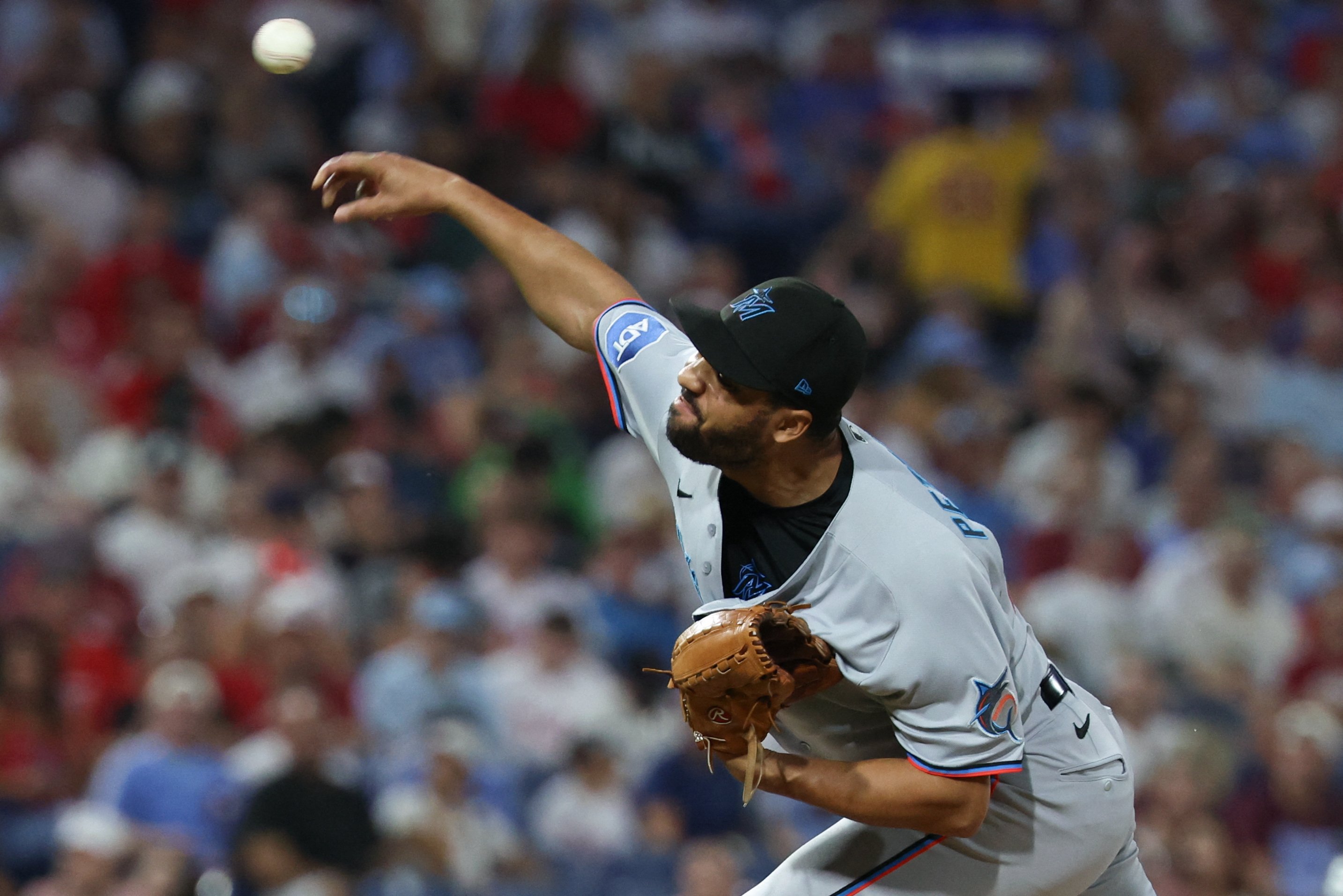 The Miami Marlins decided to roll with a bullpen game on Tuesday night in hopes of evening up the series against their division rival, the Philadelphia Phillies. Everything was going according to plan as Miami led 3-1, but in the bottom of the sixth inning, the Phillies scored four runs to take a lead that they never looked back on. The Phillies defeated the Marlins by a final score of 6-4, clinching the season-series against the Marlins. Between Cade Gibson, Tyler Zuber and Josh Ekness, they limited the Phillies to one run on three hits. On top of that, Griffin Conine hit his 14th home run of the season, tying the game at 1-1. Xavier Edwards gave the Marlins a 2-1 lead with an RBI single and Heriberto Hernandez grounded into a force out that scored Otto Lopez, extending the Marlins lead, 3-1. Conine went into the game sporting a .955 OPS since the All-Star break. In the month of August, he has a 1.027 OPS. The only other player in baseball with an OPS over 1.000 in August is Houston Astros star Yordan Alvarez. Overall, Conine is slashing .278/.371/.562/.933 with 14 home runs, 31 RBI and a 154 wRC+. Marlins manager Clayton McCullough went with Michael Petersen to get the final two outs in the bottom of the fifth and let him begin the sixth. Petersen started that inning by hitting Trea Turner. After Bryce Harper flew out for the first out of the inning, the Phillies went on to knock four-straight hits. Luis Arraez single, Alec Bohm RBI double, Bryson Stott RBI single and a Brandon Marsh single. Petersen was taken out of the game after that, with Philadelphia now leading, 4-3. Tyler Phillips entered the game with inherited runners and after striking out J.T. Realmuto, he allowed an RBI single to Justin Crawford to make it 5-3, Philadelphia. When the dust settled, it was a four-run bottom of the sixth. For Petersen, this marks his worst outing of the season, allowing four runs on four hits. He takes the loss and blown save in this ballgame. The Marlins tried to mount a comeback in the top of the eighth as Heriberto Hernandez knocked in an RBI single, making it 5-4, but Calvin Faucher surrendered an RBI single to Kyle Schwarber, icing the game, 6-4. With the loss, the Marlins are now 64-63 on the season, 3.5 games out of the third National League Wild Card spot. View the full article
 -
 Jason Ross and Jeremy Tecktiel discuss Pete Crow-Armstrong's MVP-like season and how special a year it truly is. We will then dive into possible playoff rotations, a minor league report, and finally a look into the current state of the NL Central. Listen on Apple Podcasts: https://podcasts.apple.com/us/podcast/the-north-side-baseball-podcast/id1798599313 Listen on Spotify: https://open.spotify.com/show/75wMGhBwlrDDYPt3kaF453 Listen on iHeartRadio: https://www.iheart.com/podcast/263-the-north-side-baseball-po-268998437/ Listen on Pocket Casts: https://pca.st/eey7h6ih Watch on YouTube: https://www.youtube.com/@northsidebaseball View the full article
 -
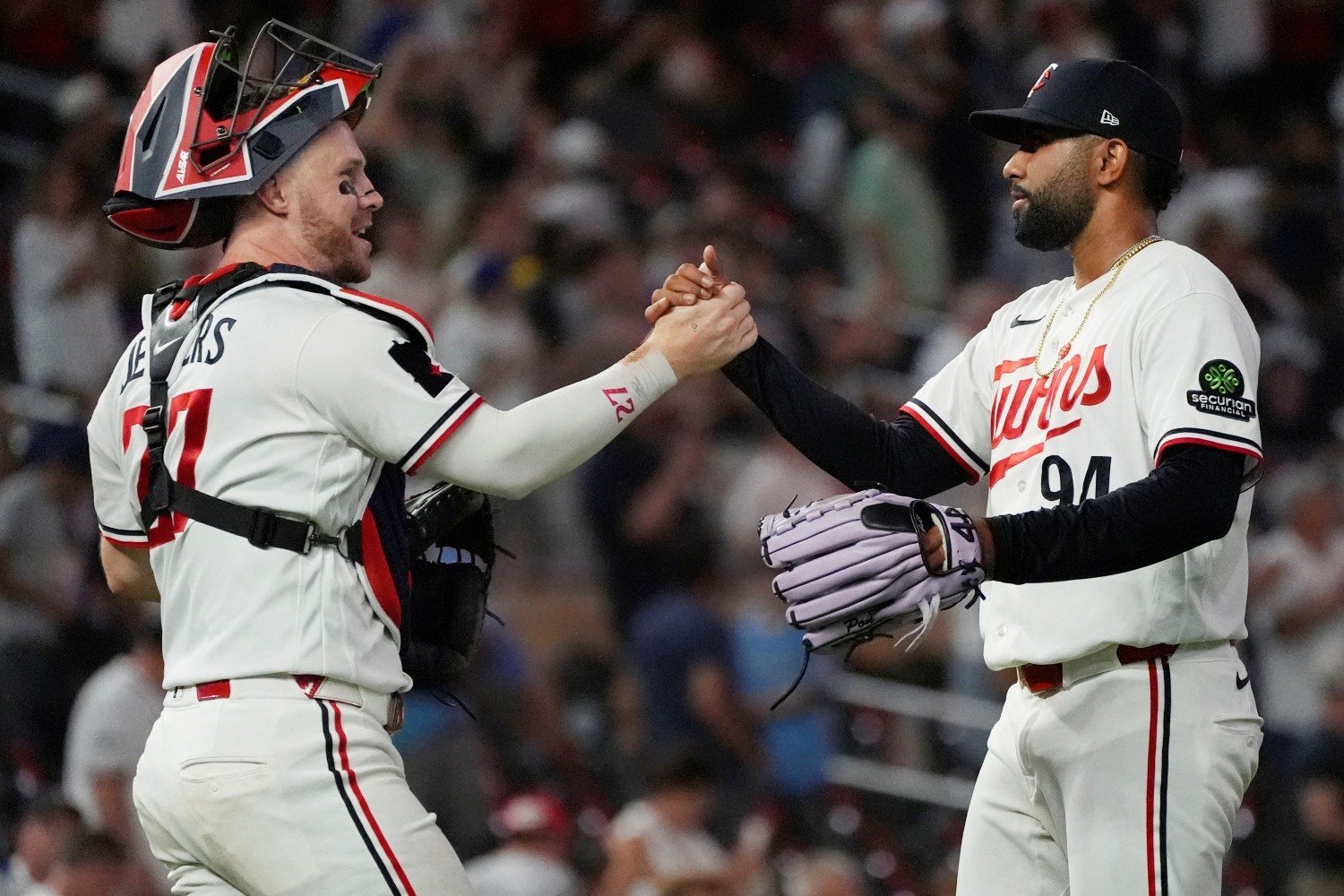 Box Score SP: Zebby Matthews 5.2 IP, 5 H, 1 ER, 1 BB, 4 K (90 pitches, 58 strikes (64%)) Home Runs: Josh Bell (17) Top 3 WPA: Bell (0.17), Matthews (0.15), A.J. Minter (0.12) Win Probability Chart (via FanGraphs) An 11-game and seven-year winless drought against the Braves was broken Monday night, and Zebby Matthews hoped to shock the world again by pitching the Twins to a series win on Tuesday night. The foe was ex-Twin Tyler Mahle, who has been taking care of business for his new team in two starts since the trade deadline. If you had "pitchers duel" on your bingo card, you were the only one—and you went home happy. The question remained, though: would Twins fans go home happy yet again? Starting Well Again For a solid week, the Twins seemed to repeatedly surrender first-inning runs in heart-wrenching fashion. The past two games saw the Twins jumping on the board early, with mixed eventual results. Tonight's game saw Matthews cruise through the top of the first, and Mahle initially looked poised to do the same—that is, until Ryan Jeffers reached second base on some outfielder pinball with two outs, and Josh Bell decided to send an 87.4-MPH splitter back at 110 MPH (with a 30° launch angle). Just like that, it was 2-0 Twins. Good Pitching Defeats Good Hitting... Every Time The second through sixth innings featured both pitches commanding the zone and fielders making the plays in front of them. Mahle needed 26 pitches to escape the first inning, but he only needed 41 pitches to mow through the next five, without surrendering another run. The Twins' early starts and mid-game fizzle were on full display yet again. Matthews matched Mahle in results at twice the effort, as he reached the 90-pitch mark in the sixth after serving up Drake Baldwin's 21st homer of the year. With only a one-run lead, Matthews stayed in and got into more trouble with runners at first and second with two outs. Derek Shelton brought in the emergency relief, and Kody Funderburk came through to keep the game 2-1 in favor of the home team. Can the Twins Really Win a Game Like This, After a Week Like That? Andrew Morris wore Sunday's Phillies loss, but he took the Braves out in order in the seventh. A.J. Minter faced the dangerous Baldwin, Ronald Acuña Jr., and Matt Olson trio in the eighth, but they all went back to the dugout disgruntled. Meanwhile, the Twins' bats had been dormant since the first, but Kaelen Culpepper ain't scared of relievers. He singled to start the bottom of the eighth. Luke Keaschall failed to advance him, but Shelton pinch-hit Byron Buxton for Trevor Larnach, which caused Walt Weiss to bring in the righty Didier Fuentes. Buxton singled on the first pitch he saw, and it took Ryan Jeffers only two pitches to make it a 4-1 Twins lead with a ringing double. With the game still a save situation, Yoendrys Gómez came in to shut the door. Michael Harris II instead slammed a leadoff double to put the anxiety back into the room. Harris never got past third base, however, and the unthinkable became reality at Target Field. Series victory in the books. It's time to see if Philly left any brooms in the building. What’s Next? The Twins look to sweep the Braves. I never thought I would get to type that, but here we are. Twins righty Taj Bradley (9-5, 3.98 ERA) looks to avenge his Field of Broken Dreams start, while the Braves will send recent call-up RHP AJ Smith-Shawver (0-0, 4.15 ERA) out to attempt to salvage a game. First pitch is scheduled for 12:40 pm CDT. Postgame Interviews Coming Soon! Bullpen Usage Spreadsheet FRI SAT SUN MON TUE TOT Morris 0 23 28 0 13 64 Hoffman 0 17 0 20 0 37 Gomez 0 0 0 19 16 35 Minter 0 12 14 0 6 32 Rogers 0 0 16 11 0 27 Funderburk 0 16 4 0 4 24 Adams 0 0 0 18 0 18 Nance 0 0 0 0 0 0 View the full article
 -
 Dansby Swanson, star defensive shortstop and linchpin of the Cubs' elite defense, will miss the lion's share of the remaining regular season, and even his availability for October is in doubt. He was diagnosed with a Grade 2 oblique strain, which makes it hard to see how he can return any sooner than late September. Nico Hoerner will man shortstop capably, if not as well as Swanson, who is in Gold Glove conversations yearly. Second base will be primarily Pedro Ramírez, with a smattering of Matt Shaw. The team just got worse at two defensive positions, and since Shaw might be needed to complement Michael Busch at first base, rest will be in short supply for Alex Bregman the rest of the way. This harkens back to 2019, when Addison Russell and Javier Báez switched spots in the double play combo. After Ruseell's shadow ban (and then official ban) for domestic violence, the team elected to let Báez handle shortstop and mixed Russell in (when he was available) with the likes of Ben Zobrist, Robel García (remember him?), Daniel Descalso and David Bote at second base. The stability at short was non-negotiable, but the defense was markedly worse for the swap. This is real adversity, even if it's a bit less disquieting than the cloud that hung over the team because of Russell's behavior back then. The last time the Cubs faced adversity to this level (when their pitching went to pieces in May and June), they went 7-23 in a 30-game stretch and nearly watched their season unravel. To avoid having that happen this time, the offense will have to heat up—Pete Crow-Armstrong's slump-busting virtuoso performance Monday was a good start—and the pitching staff will have to start missing more bats. Chicago is built around elite defense, and suddenly, they don't have one. If they want to catch the Brewers (or beat them in October), they have to play their best baseball, and that's harder to do without Swanson. They showed great resiliency (and surprising depth, especially in the persons of Ramírez, Jacob Webb and company) in recovering from their last stumble, but they have to avoid another one. That will be easier said than done. Unless and until Swanson returns, it's time to switch into survival mode. View the full article
 -
Does Austin Martin Still Have a Future With the Twins?
DiamondCentric posted an article in Twins Daily
 Even before his injury, Austin Martin was looking lost at the plate for months. With a roster crunch in the outfield, which will get worse this offseason, it's possible he could be in for a new role in 2026. What could that role look like? View the full article
 -
 By big-league standards, Kaelen Culpepper is not a big guy. When he was drafted, he was listed as 6 feet tall, but after being officially measured (as every hitter has to be, these days, to make the ABS system work), he's now 5-foot-10. He's not scrawny, by any means, but he's also far from stocky. If a player Culpepper's size is going to fit anywhere on the diamond, it's likely to be on the middle infield, but even middle infielders are getting taller and broader-shouldered. Culpepper's size is a constraint on his value. To be great, he has to find ways to make up for being smaller than a lot of the guys to whom one might first be inclined to compare him. Happily, he knows exactly what those ways are. "I'm a twitchy athlete," Culpepper said. "I'm explosive. I've got a lot of torque." In other words (and in more specific terminology), while he might not be huge or conventionally powerful, Culpepper is exactly the kind of athlete who thrives most in the rotational sport that is baseball. He can generate much more bat speed and much stronger throws than you would guess, comparing the physiques or even sheer, linear power measurements between him and players like Royce Lewis or Ryan Kreidler. Although he's not putting up huge numbers over his first few weeks in the majors, Culpepper has impressed his teammates, coaches and fans with his feel for the game and his poise. He's also flashed the tools that made him a fast-rising prospect on national rankings late in his progression to the big leagues, including an average bat speed of 74 MPH—well above the league average—and some strong throws from the left side of the infield. To understand him better and see where the upside is for the balance of the season, let's take a closer look at Culpepper's swing. This is a single Culpepper hit Monday night against Atlanta. For reasons we'll break down, it's a good place to start in an effort to understand his moves in the box. ZU53THlfWGw0TUFRPT1fRGdKV1VWMENCUVlBQVFFQlhnQUhWQTlYQUFBQkFBQUFVMXhUVVZaVVZGRmRCVkZX.mp4 Firstly, note his setup and his stride. For a short guy, he's fairly spread-out in his stance, but the leg kick and stride are especially aggressive. How much a hitter gets into their legs says a lot about what kind of pitches they're trying to hit and what parts of the kinetic chain are most important to them. Notice that Culpepper chooses to slightly outwardly rotate his front knee and point his toe toward the ball as he lands with that front foot, and how much he turns and drops his back knee toward the ground as he does so. That big movement in the lower half is where he gets his power; it's the foundation of the torque that we already touched on. "I have to clear my hips," Culpepper explained. "I have to make sure I get through there, to get the most out of my swing. I have to keep my back foot down, and open up enough." He's not alone among shorter hitters in using his legs to generate power. Shorter levers means that more of one's bat speed has to come from torque, and torque has to come from stretching the bands of the body. While much more thickly built, Andrew Vaughn of the Brewers is also 5-foot-10. Not coincidentally, he also gets deep into his legs when he swings; the low drop of the back knee is the visual giveaway when watching from the center-field camera. MnI0T1BfWGw0TUFRPT1fQkZCU1Z3RUFBMVFBWEFkVVZBQUhCUUFDQUZsVEFWa0FCUWRYQmdaVENBTlJWRk1G.mp4 If you're thinking that the upper half works differently for these two hitters, though, you're right. Culpepper lets his hands get away from his body a bit earlier in his swing than Vaughn does. If he wants to generate bat speed as good as Vaughn's or better, despite Vaughn having more raw power in his legs, Culpepper has to allow a bit more length in his swing. He had to lunge slightly at the first hit we looked at, because it was a breaking ball in a two-strike count, but you can really see how proactively he extends his arms early in his swing when watching him attack a fastball. OHliak1fWGw0TUFRPT1fVndsUlZsQlhVd0lBRFZSV1hnQUhVQWRRQUFCV0J3SUFVd01FVlZFRUIxRUFBUWNF.mp4 "I'm trying to stay inside the ball," Culpepper said. "But at the same time, I want to cover a guy's best heater, and then know I can adjust and handle the breaking ball; I've always been able to do that." When you see a pitch stand him up like that, you can see a slightly different comp, can't you? This one strikes a bit closer to home. Here, look: Uk85OGFfWGw0TUFRPT1fQmdSVVZGRUVVZ2NBQVZkWEF3QUhCbFJYQUZrQ1ZnVUFDMTBDQmdvRVVGQlRDQUlE.mp4 Byron Buxton starts and ends taller on most swings than does Culpepper. The younger man said he's never thought of his swing as mapping neatly to Buxton's. However, when it comes to the way they address the ball—and, therefore, to the pitches they handle and the direction in which their best contact tends to go—there are important similarities. "You're always looking to hit it hard back up the middle," Culpepper said. "I don't try to think about where I'm gonna hit it too much; I want to just see the ball and get the good part to it." In reality, though, all of Culpepper's hits in his career to date have gone to the pull side, and all but one of them has come on pitches from the middle of the plate out. Buxton is the same way: a rare pull hitter who's hunting for the ball away. Both guys let their hands get away from their bodies relatively early in their swing, and their best contact comes when they catch the ball out front, with their arms extended and the barrel turned slightly toward left field. Culpepper is even more extreme than Buxton in this regard, though. Taller and with more tilt in his stroke, Buxton can stay through the ball longer and catch it a bit flatter, in terms of attack angle and direction. Culpepper, though not telling himself to do so, succeeds by getting into a slightly steeper move earlier and reaching for the ball in front of his frame more. That's common among hitters who get into their legs the way he does. If you stride that aggressively, you get to a powerful position in your swing later than most hitters, and it's important not to let the ball get too deep into your kitchen. It comes down, really, to knowing the window within which you're going to make solid contact. Here's Culpepper's first career double, on a changeup left right in the heart of the zone. Watch the way he manages the torque of his swing with the front shoulder and trunk and maximizes his extension with the top hand and back side. eHl3a3pfWGw0TUFRPT1fQTFCU1ZBQlJYbFlBRFFNRVVRQUhBZ0JUQUZrSEIxQUFBRnhSQ1FZR1YxVlVDUUJV.mp4 For a smallish guy, Culpepper has great plate coverage, but it takes an unusual form. Given his size, he has great bat speed, but it has to be built from the ground up on every swing. For someone unlikely to post huge exit velocities, he should have plenty of power, and he can bolster the bottom of the Twins' lineup the rest of the way, but he'll have to keep showing the ability to spoil stuff on the inner part of the plate and let non-strikes go, so he can get hold of the mistake out over the plate when opponents make one. He has the right mindset for it, at the very least. "I'm just trying to do everything with a smile on my face," he said. "It's the same game here [as in the minors], but it's definitely an adjustment. The crowds are so much bigger; there's a lot more adrenaline. I'm way more tired after games. You can feel how important these games are. So I'm just enjoying it." View the full article
 -
 The Boston Red Sox received some injury updates Tuesday afternoon before the second game of their three-game series against the Arizona Diamondbacks. Following the injuries to outfielder Masataka Yoshida and pitchers Garrett Whitlock and Justin Slaten, the three were scheduled for MRIs. Only two of them came back positive. As first reported by MassLive's Chris Cotillo, both Whitlock and Slaten received good news as there was no structural damage, just inflammation, found in both of their MRIs. The two key pitchers of the Red Sox bullpen will remain shut down for now with the length of their downtime unknown. Yoshida, on the other hand, received tough news as his injury turned out to be significant with there being a chance he misses the remainder of the regular season. The loss of Yoshida's bat is a major blow to the Red Sox as they look to make it back to the postseason. In his last 22 games, the outfielder was hitting .292/.361/.403 with five doubles, one home run and 10 RBIs. The Red Sox also gave an update on Tanner Houck, stating that he threw a live bullpen session in Fort Myers and that it is now possible he could return this season. The right-hander underwent Tommy John surgery on August 18, 2025. View the full article
 -
 The Boston Red Sox's second-half resurgence has been a full-team effort, but no turnaround has been more remarkable than the revival of the offense. Before their historic winning streak, they had a bottom-10 offense in the league with a 91 wRC+, but since then, they have improved to a top-five offense with a 115 wRC+. But despite their improvements, the team has yet to find a consistent leadoff man. Before his long stint on the injured list, Roman Anthony was the team’s first option, but his injury caused manager Chad Tracy to turn to a committee of options. The manager's most recent choice was second baseman Nick Sogard, but Tracy shook up the lineup after Sogard went 0-for-13 during a three-game losing streak against the Toronto Blue Jays, which paved the way for Masataka Yoshida to take the reins. Known for his elite plate discipline and strong zone recognition, Yoshida seems like an obvious choice on paper. Primarily batting in the middle of the lineup this season, he has been a consistent contributor for the team, batting .274/.347/.399 with 72 hits, 34 runs and 28 RBIs. Yoshida has spent time in each spot in the batting order, but has spent most of his time batting fifth, where his ability to avoid strikeouts and prolong at-bats has made him valuable. But while no one questions his plate discipline, the knock against Yoshida batting leadoff has been the belief that he isn’t aggressive enough. Statistically, however, that couldn’t be further from the truth. This season, Yoshida has a 9.5% walk rate and 11.2% strikeout rate, the best marks of his MLB career. His selective approach at the plate makes him difficult to attack, as he chases pitches outside the strike zone at just a 28.1% rate but still makes contact on 72.4% of those swings. Combined with his 90.7% contact rate on swings at pitches in the strike zone, he rarely lets hittable pitches go to waste. However, just because he has a patient approach doesn't mean he isn’t aggressive when he gets a pitch he likes. In 0-0 or 0-1 counts this season, Yoshida is batting above .350, collecting 13 and 12 hits, respectively. He's batting only .243 from the leadoff position this season, but has been effective when leading off an inning, batting .306 with a .358 OBP. There shouldn’t be a question of whether Yoshida can be a leadoff hitter, but whether the leadoff spot is the best place to maximize his value. Batting him first does negate some of the value created by his contact; he has been particularly effective with runners on base. While he is batting just .200 with runners in scoring position overall, that number jumps to .286 when he bats fifth. So, really, perhaps the best solution is to keep him flexible. If the lineup is struggling to put traffic on the basepaths, batting Yoshida atop the order should help alleviate those issues. If they team is struggling to bring runners home, then maybe it's best to let him hit in the middle of the lineup. In the Red Sox’s most recent series against the Pirates, Yoshida suffered a left hamstring strain that will put him on the injured list and force Tracy to try other options at leadoff (he's gone back to favoring Sogard). That gives Boston additional time to evaluate its options at the top of the lineup and determine where Yoshida should play once he's healthy again. View the full article
