


DiamondCentric
-
Posts
2,631 -
Joined
-
Last visited
Never
Content Type
Profiles
Forums
Events
News
Tutorials & Help
Major League Baseball Videos
Guides & Resources
Store
Downloads
Gallery
Everything posted by DiamondCentric
-

 Quad Cities beat Fort Wayne 5-4 when Zion Rose singled home Asbel Gonzalez, after Yimi Presinal struck out four over two innings and Aiden Jimenez closed it out. Michael Braswell III threw three innings without a run, but Columbia fell 5-4 in 11. Felix Arronde gave Northwest Arkansas 5 1/3 innings in a 9-8 loss, and Maikel Garcia, Luke Pelzer, and Carson Roccaforte each had three hits. Omaha lost 6-2 behind two hits from Matthew Lugo. Kansas City Royals Transactions No Roster Moves Storm Chasers Held To Seven Hits In 6-2 Loss At Columbus Omaha dropped a 6-2 decision in Columbus, managing seven hits and one walk against eight strikeouts. Columbus scored twice in the first inning after two walks and a two-run single that Drew Waters misplayed in center field for an error, and the Storm Chasers spent the rest of the night chasing. Henry Williams took the loss after allowing five hits and four runs, three earned, over 4 2/3 innings. He walked four and struck out six. Easton McGee followed with 1 1/3 innings, allowing two hits and striking out two without giving up a run. Anthony Gose worked an inning without allowing a hit and struck out two. Nolan Hoffman gave up two runs on two hits and two walks in his inning. The Storm Chasers were helped early on by some solid defense, including a diving catch by Jacob Berry in the fourth. Omaha did not score until the sixth, when Alejo Lopez came home on Vinnie Pasquantino's ground ball double play. Matthew Lugo added the other run with a single that scored Peyton Wilson in the ninth. Lugo finished 2-for-4 with a triple and an RBI, the only Storm Chaser with more than one hit. Waters, Pasquantino, Brett Squires, Brandon Drury, and Lopez each had one hit. Squires drew the team's only walk. Jacob Berry struck out four times in four at-bats, and Jack Pineda and Elih Marrero were both held without a hit. Omaha left five runners on base and did not have an extra-base hit other than Lugo's triple. The Storm Chasers left five on base and went 1-for-7 with runners in scoring position. They are now 56-60 this season. Player AB R H RBI BB K Drew Waters, CF 4 0 1 0 0 1 Jack Pineda, SS 3 0 0 0 0 0 Vinnie Pasquantino, 1B 4 0 1 0 0 0 Peyton Wilson, PR 0 1 0 0 0 0 Brett Squires, LF 3 0 1 0 1 1 Jacob Berry, RF 4 0 0 0 0 4 Matthew Lugo, DH 4 0 2 1 0 1 Elih Marrero, C 4 0 0 0 0 1 Brandon Drury, 3B 3 0 1 0 0 0 Alejo Lopez, 2B 3 1 1 0 0 0 Totals 32 2 7 1 1 8 Player IP H R ER BB K HR Henry Williams 4 2/3 5 4 3 4 6 1 Easton McGee 1 1/3 2 0 0 0 2 0 Anthony Gose 1 0 0 0 0 2 0 Nolan Hoffman 1 2 2 2 2 1 0 Totals 8 9 6 5 6 11 1 Naturals Lose 9-8 After Springfield Answers An 8-1 Lead Northwest Arkansas carried an 8-1 lead into the bottom of the sixth inning in Springfield and lost 9-8, giving up eight runs over the final three innings. Arronde allowed eight hits and four runs, three earned, over 5 1/3 innings. He walked one and struck out three before leaving in the middle of the sixth with the lead. Brandon Johnson recorded two outs and allowed two runs on two hits, both of them home runs. Augusto Mendieta gave up three runs on three hits over two innings and was charged with the loss and a blown save. The Naturals staff allowed four home runs in all. The offense did its work in the middle innings, scoring five times in the fifth and twice in the sixth. Garcia, on a rehab stint, went 3-for-5 with a double and scored three runs out of the leadoff spot. Pelzer went 3-for-5 with a double, a triple, and three RBI. Roccaforte also had three hits in five at-bats, including a double, and drove in two. Northwest Arkansas finished with 12 hits, two walks, and 10 strikeouts, and did not hit a home run. Daniel Vazquez, Connor Scott, and Justin Johnson each singled. Spencer Nivens and Johnson drew the two walks. Roccaforte singled with one out in the ninth, but the Naturals did not score, and they left six men on base and went 3-for-11 with runners in scoring position. The Naturals dropped to 45-65 after the loss. Player AB R H RBI BB K Maikel Garcia, 3B 5 3 3 0 0 1 Luke Pelzer, LF 5 2 3 3 0 0 Carson Roccaforte, CF 5 1 3 2 0 0 Spencer Nivens, RF 4 1 0 0 1 3 Daniel Vazquez, SS 5 0 1 0 0 0 Javi Vaz, DH 3 0 0 0 0 1 Omar Hernandez, C 4 0 0 0 0 2 Connor Scott, 1B 4 0 1 0 0 1 Justin Johnson, 2B 3 1 1 0 1 2 Totals 38 8 12 5 2 10 Player IP H R ER BB K HR Felix Arronde 5 1/3 8 4 3 1 3 1 Brandon Johnson 2/3 2 2 2 0 1 2 Augusto Mendieta 2 3 3 3 0 2 1 Totals 8 13 9 8 1 6 4 River Bandits Walk Off Fort Wayne 5-4 On Zion Rose Single Quad Cities won 5-4 in the ninth inning, finishing off Fort Wayne with a walk-off single from Rose. Gonzalez started the rally with a walk, moved up on a wild pitch, and came home on Rose's line drive to right field. Blake Wolters started and lasted one inning, giving up three runs on one hit and three walks with two strikeouts. All three runs came on one swing, a three-run home run in the first. Mason Miller then threw three innings, allowing three hits and one run with three strikeouts. Jackson Cleveland and Ethan McElvain each worked an inning without allowing a run. Yimi Presinal struck out four over two innings and gave up one hit and two walks. Aiden Jimenez worked the final inning without allowing a hit and picked up the win. Derlin Figueroa answered the early deficit with a two-run home run, his 24th, and finished 2-for-4 with two runs scored. Nolan Sailors singled in a run in the fourth, and Stone Russell tied the game in the eighth with a single that scored Jose Cerice. Russell went 2-for-4 with an RBI, and Rose went 2-for-5. The River Bandits drew five walks, two of them by Angel Acosta, and struck out eight times. Blake Mitchell walked and scored a run. Gonzalez walked, and he was the last of five Quad Cities runners to cross the plate. The River Bandits finished with eight hits, left nine runners on base, and went 4-for-11 with runners in scoring position. Quad Cities has the best record of any of the Royals' full-season affiliates at 55-51. Player AB R H RBI BB K Asbel Gonzalez, CF 4 1 0 0 1 1 Zion Rose, LF 5 0 2 1 0 1 Blake Mitchell, C 3 1 0 0 1 2 Derlin Figueroa, RF 4 2 2 2 0 1 Jose Cerice, 3B 3 1 1 0 1 1 Nolan Sailors, DH 2 0 1 1 0 1 Tyriq Kemp, SS 4 0 0 0 0 1 Stone Russell, 1B 4 0 2 1 0 0 Angel Acosta, 2B 2 0 0 0 2 0 Totals 31 5 8 5 5 8 Player IP H R ER BB K HR Blake Wolters 1 1 3 3 3 2 1 Mason Miller 3 3 1 1 0 3 1 Jackson Cleveland 1 1 0 0 0 0 0 Ethan McElvain 1 1 0 0 0 1 0 Yimi Presinal 2 1 0 0 2 4 0 Aiden Jimenez 1 0 0 0 0 0 0 Totals 9 7 4 4 5 10 2 Fireflies Tie It In The Eighth, Fall 5-4 In 11 Innings At Wilson Columbia tied the game with a three-run home run in the eighth inning and lost 5-4 in 11 innings at Wilson, which ended the game with a bases-loaded walk. Coleman Picard allowed six hits and three runs over five innings, walking two and striking out two. Jhon Reyes gave up three hits and a run over two innings. Braswell III was the best of the group, throwing three innings and allowing one hit and one walk while striking out one, and he did not give up a run. Randy Ramnarace recorded one out and walked three, and the last of those walks brought in the winning run. Wilson scored twice in the first and added runs in the third and sixth. JC Vanek provided the tying blow with his 12th home run, a three-run shot that scored Josh Hammond and Sean Gamble. Vanek finished 1-for-4 with three RBI and a walk. Gamble had the best day at the plate, going 2-for-3 with a double and a walk. Jhosmmel Zue was 2-for-5, and Yandel Ricardo had a single and two walks. Henry Ramos had a hit and scored a run. The Fireflies drew seven walks and had chances in extra innings but could not convert. Hammond, the zombie runner in the 10th, moved to third on Gamble's sacrifice bunt and was stranded there. The zombie runner in the 11th was retired at third base on a fielder's choice. Columbia left 10 runners on base and went just 2-for-11 with runners in scoring position. The loss dropped Columbia to .500, as they are now 55-55. Player AB R H RBI BB K Henry Ramos, LF 5 1 1 0 0 2 Yandel Ricardo, 2B 3 0 1 0 2 0 Josh Hammond, SS 4 1 0 1 1 0 Sean Gamble, CF 3 1 2 0 1 0 JC Vanek, 1B 4 1 1 3 1 2 Jhosmmel Zue, C 5 0 2 0 0 1 Roni Cabrera, PR 0 0 0 0 0 0 Ricson Gonzalez, C 0 0 0 0 0 0 Connor Rasmussen, DH 3 0 0 0 2 0 Jhonayker Ugarte, 3B 5 0 0 0 0 1 Daniel Lopez, RF 5 0 0 0 0 1 Totals 37 4 7 4 7 7 Player IP H R ER BB K HR Coleman Picard 5 6 3 3 2 2 1 Jhon Reyes 2 3 1 1 1 1 0 Michael Braswell III 3 1 0 0 1 1 0 Randy Ramnarace 1/3 0 1 0 3 0 0 Totals 10 1/3 10 5 4 7 4 1 Top-20 Prospect Performance Kendry Chourio: DNP David Shields: DNP Josh Hammond: 0-for-4, BB, RBI Blake Mitchell: 0-for-3, BB, 2 K Sean Gamble: 2-for-3, 2B, BB Ramon Ramirez: DNP Zion Rose: 2-for-5, RBI, K Asbel Gonzalez: 0-for-4, BB, K Carson Roccaforte: 3-for-5, 2B, 2 RBI Taylor Rabe: DNP Yandel Ricardo: 1-for-3, 2 BB Justin Lamkin: DNP Drew Beam: DNP Michael Lombardi: DNP Jack Slightom: DNP Felix Arronde: 5 1/3 IP, 8 H, 4 R, 3 ER, 1 BB, 3 K Angeibel Gomez: 1-for-2, HR, R, RBI Ben Kudrna: DNP Steven Zobac: DNP Blake Wolters: 1 IP, 1 H, 3 R, 3 ER, 3 BB, 2 K View the full article
 -
 New York Mets Transactions No Roster Moves Syracuse Goes Quietly As It Loses Twice Syracuse managed just three hits in the regular game, and its runs in the seventh were scored without the benefit of a hit. MJ Melendez, Eric Wagaman, and Ryan Clifford drew consecutive walks to load the bases. After a strikeout, Shawn Ross was hit by a pitch to force in Melendez, and leadoff man Nick Morabito lifted a sacrifice fly to score Wagaman. A strikeout ended the game. Zach Peek started and took the loss. The big hit against him was a three-run homer with two out in the second. Matt Seelinger gave Syracuse 1 1/3 hitless innings with two strikeouts and three walks. Dylan Ross followed with a clean inning and two strikeouts. Joe Jacques and Ben Simon allowed the final four runs. Player AB R H RBI BB K Nick Morabito, CF 3 0 1 1 0 0 Vidal Bruján, 2B 1 0 0 0 1 0 Zack Short, 2B 2 0 0 0 0 2 Ronny Mauricio, SS 3 0 1 0 0 0 Christopher Morel, RF 3 0 0 0 0 2 MJ Melendez, DH 2 1 0 0 1 2 Eric Wagaman, 1B 2 1 1 0 1 0 Ryan Clifford, LF 2 0 0 0 1 0 Nick Lorusso, 3B 3 0 0 0 0 1 Shawn Ross, C 2 0 0 1 0 1 Player IP H R ER BB K HR Zach Peek 1 2/3 3 3 3 0 1 1 Matt Seelinger 1 1/3 0 0 0 3 2 0 Dylan Ross 1 0 0 0 0 2 0 Joe Jacques 1/3 1 2 2 1 0 0 Ben Simon 1 2/3 3 2 2 0 1 0 Binghamton Falls Hard As Run Ends Portland jumped on Hall immediately. A two-run homer, an RBI single and a sacrifice fly put him behind 4-0 in the first. Binghamton answered in the third with a Marco Vargas sacrifice fly and Billy Amick RBI double. Portland broke the game open with four runs in the fourth. A leadoff homer, an RBI double, an infield single and a bases-loaded walk pushed it to 8-2. Amick went 2-for-4 with two RBIs. Chris Suero, Yohairo Cuevas, and Emilien Pitre each had two hits, Player AB R H RBI BB K Mitch Voit, SS 5 1 1 0 0 1 Marco Vargas, DH 3 0 0 1 0 3 Émilien Pitre, 2B 3 1 2 0 0 1 Chris Suero, C 4 0 2 0 0 1 Kevin Parada, C 0 0 0 0 0 0 Billy Amick, 3B 4 0 2 2 0 1 John Bay, LF 4 0 1 0 0 2 Corey Collins, 1B 4 0 0 0 0 2 D'Andre Smith, CF 4 0 0 0 0 0 Yohairo Cuevas, RF 4 1 2 0 0 0 Player IP H R ER BB K HR Noah Hall 3 2/3 11 8 8 2 4 2 Douglas Orellana 1 1/3 0 0 0 3 2 0 Cristofer Gomez 1 0 0 0 0 3 0 Gabriel Rodriguez 1 1 2 2 2 2 1 JT Benson 1 1 0 0 0 1 0 Brooklyn Pitching Strikes Out 14 Without A Walk In 2-1 Defeat Brooklyn's staff struck out 14 and issued no walks, but two unearned runs decided a 2-1 loss to the Jersey Shore BlueClaws. Luke Gabrysh set the tone, allowing one hit over four scoreless innings with six strikeouts and no walks. Brooklyn took the lead in the third. After a fly out, Antonio Jimenez walked and moved to third when Carter Dierdorf reached on a fielding error. Leadoff man Sammy Stafura lifted a sacrifice fly to right to bring Jimenez home for a 1-0 edge. A strikeout ended the inning. Jersey Shore countered in the fifth without the benefit of an earned run. Colin Houck's fielding error put the leadoff man aboard, and a single moved him to third. A pop out brought Brooklyn within two outs of escaping, but the next hitter reached on a fielder's choice, and a throwing error by Ronald Hernandez on the play allowed both runners to score for a 2-1 lead. A fielder's choice out and a strikeout closed the frame. Luis R. Rodriguez took the loss despite allowing no earned runs, giving up one hit and striking out one over an inning. Rafi Vazquez struck out three over two clean innings, Elwis Mijares struck out two in a clean inning, and Ryan Dollar matched him with two strikeouts. Brooklyn managed just two hits. Jimenez went 1-for-2 with a triple and a walk, and Hernandez singled. Stafura drove in the only run. The Cyclones drew two walks, struck out 11 times, and left four on base. Player AB R H RBI BB K Sammy Stafura, SS 3 0 0 1 0 1 John Spikerman, CF 3 0 0 0 0 3 Ronald Hernandez, 1B 4 0 1 0 0 1 Trey Snyder, LF 4 0 0 0 0 1 Yonatan Henriquez, RF 4 0 0 0 0 1 Colin Houck, 2B 3 0 0 0 0 2 Daiverson Gutierrez, C 2 0 0 0 1 0 Antonio Jimenez, 3B 2 1 1 0 1 1 Carter Dierdorf, DH 3 0 0 0 0 1 Player IP H R ER BB K HR Luke Gabrysh 4 1 0 0 0 6 0 Luis R. Rodriguez 1 1 2 0 0 1 0 Rafi Vazquez 2 0 0 0 0 3 0 Elwis Mijares 1 0 0 0 0 2 0 Ryan Dollar 1 0 0 0 0 2 0 Dylan Carey's Two-Run Homer Pulls St. Lucie Close In 3-2 Loss St. Lucie dropped a 3-2 decision to the Jupiter Hammerheads despite four scoreless innings from its bullpen. Nathan Hall took the loss, allowing three runs on three hits over 1 1/3 innings with two strikeouts and two walks. Jupiter opened with a leadoff homer, then added a double and a walk before Hall escaped the first. The next inning proved decisive. After a strikeout, a single and a walk put two on. A fly out advanced the lead runner, another walk loaded the bases, and a two-run single made it 3-0. A strikeout ended the threat. That was all Jupiter would get. Tyler McLoughlin worked 1 2/3 innings without allowing a run, giving up two hits and two walks with a strikeout. Jonathan Jimenez followed with three hitless innings, walking one and striking out two. Ernesto Mercedes struck out three over 1 1/3 hitless innings, and Julio Gonzalez retired both hitters he faced with a strikeout. St. Lucie finally answered in the seventh. Wyatt Vincent doubled to left, and Dylan Carey followed with a two-run homer to left-center to cut the deficit to 3-2. A strikeout, a groundout, and a pop out followed, and the offense would not threaten again. Carey finished 1-for-3 with the homer, two RBI, and a walk. Vladi Gomez went 1-for-5 with a double, Kuhio Aloy had a hit and a double, and Vincent added a double. St. Lucie drew four walks, struck out 14 times, and left eight on base. Player AB R H RBI BB K Vladi Gomez, 3B 5 0 1 0 0 0 Aiden Robbins, CF 2 0 0 0 2 0 John Smith III, DH 3 0 0 0 1 1 Julio Zayas, 1B 4 0 1 0 0 3 Yovanny Rodriguez, C 4 0 0 0 0 4 Kuhio Aloy, RF 4 0 1 0 0 0 Wyatt Vincent, LF 3 1 1 0 0 2 Dylan Carey, SS 3 1 1 2 1 2 Kooper Schulte, 2B 3 0 0 0 0 2 Elian Peña, PH 1 0 0 0 0 0 Player IP H R ER BB K HR Nathan Hall 1 1/3 3 3 3 2 2 1 Tyler McLoughlin 1 2/3 2 0 0 2 1 0 Jonathan Jimenez 3 0 0 0 1 2 0 Ernesto Mercedes 1 1/3 0 0 0 1 3 0 Julio Gonzalez 2/3 0 0 0 0 1 0 Top-20 Prospect Performance Jonah Tong: DNP Jack Wenninger: DNP Ryan Clifford: 0-for-2, BB Elian Peña: 0-for-1 Nick Morabito: 1-for-3, RBI Jacob Reimer: DNP Mitch Voit: 1-for-5, R, K Jonathan Santucci: DNP Zac Thornton: DNP Chris Suero: 2-for-4, K Will Watson: DNP Wandy Asigen: DNP Eli Serrano III: DNP Randy Guzman: DNP Dylan Ross: 1 IP, 0 H, 0 R, 0 BB, 2 K Ryan Lambert: DNP Antonio Jimenez: 1-for-2, 3B, R, BB, K R.J. Gordon: DNP Jonathan Pintaro: DNP Marco Vargas: 0-for-3, RBI, 3 K View the full article
 -
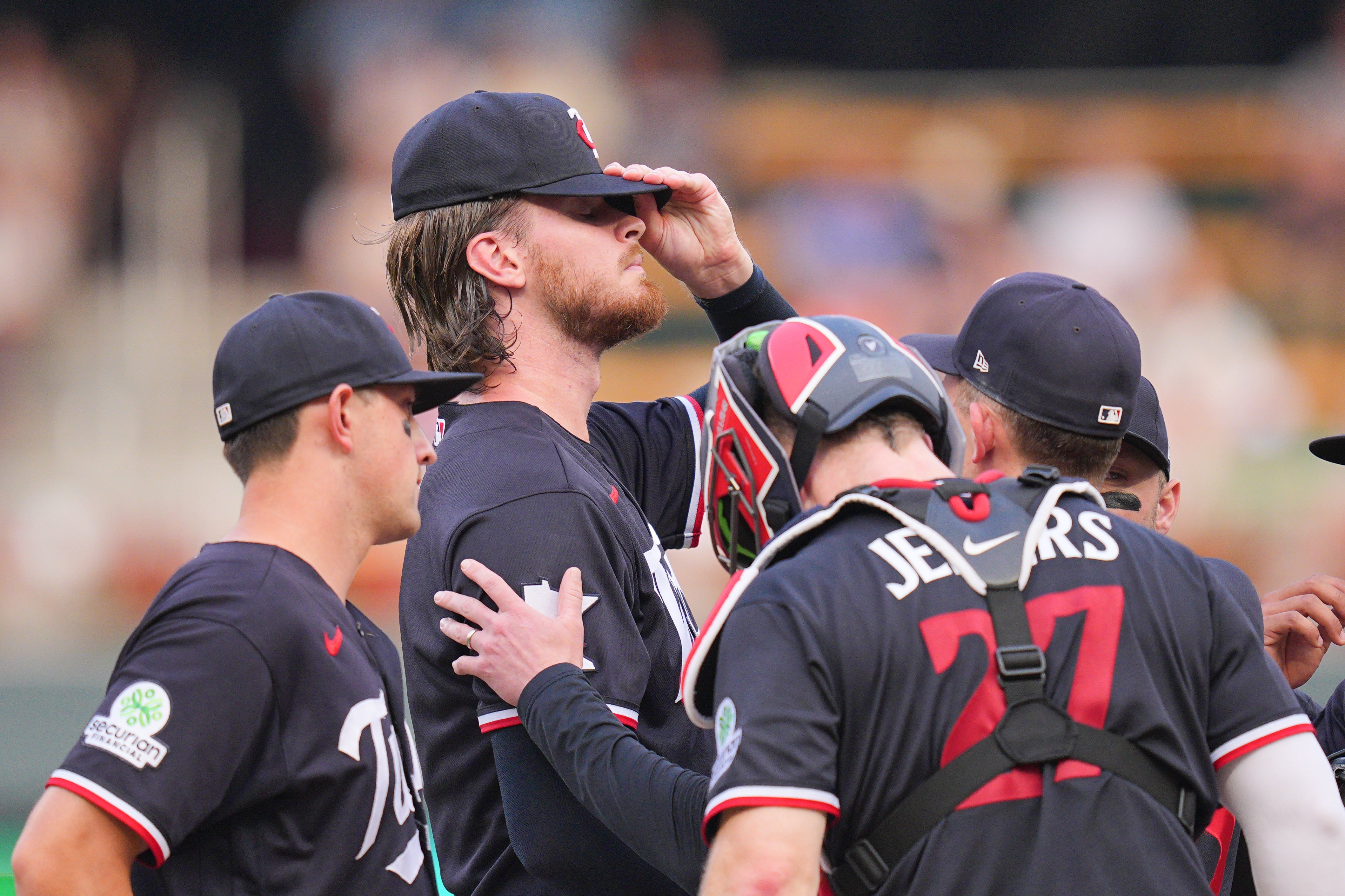 Bailey Ober has become something of a unicorn in modern-day baseball. When you see a 6-foot-9, 260-pound pitcher standing on the mound, the natural assumption is that he is going to overpower hitters with a high-velocity fastball. Ober, however, has never fit that mold. He has built his career around deception, extension and an unusual ability to make a relatively mediocre fastball play above its radar-gun reading. That formula has made him a key member of the Twins’ rotation over the past handful of seasons. But it’s becoming increasingly difficult to ignore how little room for error there is in Ober’s approach. Ober’s fastball is averaging just 88 mph this season, the lowest mark among all major league starting pitchers. And while velocity has never been his calling card, the problem is that the rest of his arsenal isn't compensating for it the way it once did. Through 99 innings, Ober owns a 4.64 ERA. That’s certainly an improvement from the 5.10 ERA he posted in 2025, but it’s hardly the type of production the Twins can comfortably build around. More concerning is that the underlying numbers don't exactly suggest a pitcher who has simply been the victim of some bad luck. Ober's whiff rate and strikeout rate both rank in the 11th percentile or lower among major league pitchers. That's particularly noteworthy because one of the biggest selling points of his unique profile has always been his ability to use his 6-foot-9 frame and more than seven feet of extension to make his pitches play differently than their raw velocity would suggest. Right now, that advantage doesn't appear to be doing enough. Additionally, there’s another issue that has followed Ober throughout his career: home runs. He has surrendered 17 homers in 99 innings this season, putting him at 1.5 home runs per nine innings. This isn't an isolated down year, either. Ober allowed 1.4 homers per nine innings in 2024 and 1.8 in 2025. His 11th-percentile barrel rate this season further illustrates the problem. Hitters aren’t merely making contact against Ober; they’re finding ways to do significant damage when they square him up. That's the tradeoff that comes with pitching at the bottom of the league in velocity. If Ober isn't generating many whiffs and isn't consistently getting weak contact, there isn't much left to fall back on when hitters get comfortable at the plate. And over the past few seasons, that appears to be happening more often. Ober's velocity has gradually ticked downward, his strikeout and whiff numbers have as well, and the home runs have remained a persistent problem. At some point, the question stops being whether Ober can make adjustments and becomes whether the Twins can continue waiting for those adjustments to materialize. That doesn't mean Ober suddenly has no value. He’s been a legitimate major league starter for a handful of years, and there’s still plenty to like about a 6-foot-9 pitcher who has demonstrated an ability to navigate lineups despite lacking premium velocity. His track record also matters. This isn't a pitcher who has never shown an ability to succeed at the major league level. But the Twins also have to look beyond what Ober has been and consider what he is likely to be moving forward. Ober turns 32 next year and will enter the final year of his contract. That puts him at an interesting crossroads, particularly for a team whose rotation could look dramatically different by the time next season begins. Assuming Pablo López and Mick Abel don't encounter any further setbacks in their recoveries, both should factor heavily into Minnesota's plans alongside Joe Ryan. Taj Bradley has also taken a step forward this season and should have a firm grip on a rotation spot. Connor Prielipp and Zebby Matthews remain in the picture, while Dean Kremer is now another legitimate option after joining the Twins at the trade deadline. Minnesota could also decide to add another starting pitcher — or perhaps even multiple starters — during the offseason. Suddenly, Ober's place doesn't look nearly as secure as it once did. Of course, injuries will inevitably play a role. Starting pitchers miss time every year, and the Twins could easily enter next season needing more depth than they currently have. It's also possible that one or more of the pitchers currently viewed as rotation pieces won't be with the organization by Opening Day. Those realities could create a path for Ober to remain in the rotation. But that's different from saying he should be considered a lock. For years, Ober's unusual profile made him an interesting exception to the conventional rules of pitching. A starting pitcher throwing in the upper 80s shouldn't work as well as it has. And for a while, Ober consistently found ways to make it work. The question now is whether that formula is finally breaking down. The declining velocity is concerning. The lack of whiffs is concerning. The elevated barrel rate is concerning, and the continued home-run problems are becoming increasingly difficult to overlook. Taken individually, none of those issues necessarily spells the end of Ober's time in Minnesota. Taken together, however, they paint a much more concerning picture. With a crowded rotation, a pitcher entering his age-32 season, and the possibility of more additions on the horizon, Ober's long-term role is no longer something the Twins can take for granted. It may not happen this offseason. It may not even happen before next season. But given everything we've seen from Ober lately, we may be witnessing the beginning of the end. View the full article
 -
 The affiliates won five of six games Friday, though Biloxi and its impressive-on-paper roster has somehow stumbled into a nine-game losing streak. The DSL teams scored a bunch of runs without a bunch of hits. Transactions: Milwaukee Brewers recalled RHP Grant Anderson from Nashville Sounds. Milwaukee Brewers signed free agent RHP Lyon Richardson to a minor league contract, assigned to Nashville Sounds. LHP Jared Koenig assigned to Nashville Sounds from ACL Brewers. Nashville Sounds activated C Ramón Rodríguez from the 7-day injured list. Biloxi Shuckers placed RHP Braylon Owens on the 7-day injured list. Biloxi Shuckers placed C Marco Dinges on the 7-day injured list. C Darrien Miller assigned to Biloxi Shuckers from Nashville Sounds. RHP Jack Seppings assigned to Biloxi Shuckers from Nashville Sounds. OF Braylon Payne assigned to Biloxi Shuckers from Wisconsin Timber Rattlers. Nashville Pre-Game Media Notes Final: Nashville 9, Indianapolis (Pirates) 1 Box Score and Game Log Via the Sounds, game details, and we encourage readers to always review affiliate write-ups as part of their Link Report routine: Bo Naylor's Multi-HR Night Highlights Sounds' Win I'm going to intersperse video with text from the linked game summary (which you should still read in full): The Sounds powered in front early thanks to the first home run in a Sounds uniform for Bo Naylor. After Sal Frelick drew a six-pitch walk to start the game, Naylor crushed the first offering from Noah Davis to put the Sounds up 2-0. After three straight walks to load the bases, Ethan Murray pushed the lead to four runs with a two-out, two-RBI single. Naylor then connected on his second home run in as many at-bats - his eighth career multi-HR game - to make it 5-0. Two batters later, Akil Baddoo launched his first home run since June 20. A pair of two-out walks in the bottom of the third turned the lineup over to Frelick, who continued to tee-off against Davis with Nashville's fourth home run through three innings to extend the lead to nine. It was the first home run of the rehab assignment for Frelick and his first since game one of a doubleheader against Indianapolis' parent club on July 11. Crow, the Brewers no. 22-rated prospect was excellent on the mound Friday night. The right-hander worked a season-high 6.2 IP without allowing a run on two hits. He struck out six and issued just one walk for his second straight quality start and fourth over his last five games en route to his team-leading seventh win of the season. It marks the 21st career quality start for Crow, who has worked a quality start every time going 6+ IP during his professional career. Friday night was the eighth time doing so without allowing an earned run. He allowed his first hit in the top of the fourth, retiring 10-of-11 to start the game, and facing the minimum until allowing a two-out single to Enmanuel Valdez. The combined shutout was gone after Will Childers was taken deep in the 9th. Eric Brown, Jr. must still be nursing an injury, has yet to play in the four games of this series but remains on the active roster. Catch up with the latest Biloxi pre-game audio interview archives - Brewers Hitting Coordinator Brenton Del Chiaro, consistently one of the best interview subjects in the system, is the latest guest, and his chat is formally linked here. Biloxi Pre-Game Media Notes Final: Pensacola (Marlins) 9, Biloxi 4 Box Score and Game Log Wood Slugs Third Grand Slam of the Season, Shuckers Beaten by Blue Wahoos - Biloxi Loses Ninth Consecutive Contest Blink and you missed the lone Shuckers' highlight of the night, once again brought to you in not-so-glorious standard definition: We'll have to try and drop the snarky comments on the video quality out of Keesler. My goodness, first world problem, right? We're so spoiled compared to not-that-many years ago when we had box scores and little else. As was pointed out in our daily forum thread, only one current healthy Shuckers pitcher has an ERA under 4.50 (RH reliever Edwin Jimenez at 4.05). Here's the stats page. It's a tradeoff. RH starter Manuel Rodriguez kept the ball in the park but walked four men for the first time all season. It was only the 2nd time he has walked three or more. Andrew Fischer singled but fanned twice. He wasn't alone in the K brigade, 11 on the night for Biloxi batters. Fischer is consistent as heck, and let's not forget his .987 Biloxi OPS in 47 games is impressive (hard to match the 1.118 mark posted as a Timber Rattler in 54 games). Those K rates, again consistent - 33.82% with Biloxi, 33.33% with Wisconsin. Fischer remains a fascinating case study. Braylon Payne enjoyed his 20th birthday off as he settled into his new environs. Josh Adamczewski sat for a second consecutive night, hopefully back Saturday. The Blue Wahoos' 'X" feed is packed with unfortunate pitches from the good guys. This one resulted in a fly ball to right field Damon Keith would tell you he should have held on to. Wisconsin Pre-Game Media Notes (download link) Final: Wisconsin 6, Cedar Rapids (Twins) 0 Box Score and Game Log Via the Timber Rattlers, game details (with four videos for your enjoyment): Dorchies Dominant in Rattlers Shutout Win - Wisconsin picks up much-needed 6-0 victory over Kernels Midwest League second half standings - what a dogfight! Fun promotion for the fans in Cedar Rapids despite the Kernels' loss - Happens to the best of prospects in a tiny two-game sample - Luis Pena 0-for-9 with six K's, golden sombrero here. Plenty of goodness within Chris Mehring's linked report. Remember, the squad is wrapping up a two-week road trip this weekend. A reminder that RHP Ethan Dorchies is 19 years old all season (20 in October). When he is on, and he has been "on" five times in his last nine starts, he's outstanding. Dive deep into his game log and you'll agree it's been a very solid season for the Illinois native. We're only halfway through August, so Eric Bitonti has time to up his .616 OPS for the month. As his monthly splits will show, even when he batted .213 in July, his OPS figure was strong. Wilson Pre-Game Media Notes Final: Wilson 5, Columbia (Royals) 4, 11 innings Box Score and Game Log Warbirds Put the 'Walk' in Walk-Off - Ortuño Leads the Way with Three Hits Four wins in a row, and 1.5 games out of first place. Audio interview from earlier this week - Manager Eddy Morgan discusses Brailyn Antunez and Rylan Mills among others I'd have to research it, but I feel like I've been on Link Report duty for all of Wilson's MiLB-leading 13 walkoffs, meaning the majority have come on Friday and/or Saturday nights. By the way, the manufacturer will need to update this T-Shirt. The Fireflies picked up Chris Edwards' Wilson call on the three-run home run that tied things in the 8th. No walkoff without this! Another box score in which every starter contributed. However, yikes Warbirds! Team RISP: 1-for-20. Team LOB: 12 Check out the "earned runs allowed" column in RHP Hayden Robinson's game log. The recently turned 21-year-old has rocked his 2026 season. Non-drafted 20-year-old RHP Thomas Conrad has been solid but was oh-so-money here. His three scoreless frames included working around the ghost runner in both the 10th and 11th innings as seen in the game log, which you are highly suggested to review for those innings here. Final: DSL Brewers Gold 8, DSL Braves 7 (Reds) Box Score and Game Log Gold now 33-18. Down 3-1 heading to the bottom of the 6th, the bats (Goldenrods) put up a four-spot on zero hits. DSL action, baby! HBP K (Ricki Moneys) Walk Walk Wild Pitch Popout Balk Wild Pitch The four Brewer pitchers only combined to walk three, but they plunked four. RHP Justin Lugo picked up the save in his first outing since switching over from DSL Blue. He didn't strike anyone out here, but has 29 K's in 18.1 innings in this, his 2nd pro season. Lugo's season-long stats aren't particularly shiny, but you'd win a bar bet or two by naming him as the Brewers' lone mound representative in last month's All-Star Game. Moneys and 17-year-old outfielder Josue Rodriguez each singled twice and were responsible for four of the team's five hits, with the only other knock a double by wunderkid Leander Matos, who is a "young" 17 - July 2nd birthday. Final: DSL Brewers Blue 11, DSL Red Sox Blue 7 Box Score and Game Log Six combined errors (three each team) only led to three unearned runs total. Red Sox pitchers threw six wild pitches, Brewers RH starter Brailin Aguirrez had two of his own. Imagine how many pitches in this league would be formally ruled as wild if ones that went to the backstop with no one on base were included. When did "Brailin", "Braylon", etc. become a hot trend birth name? Apparently 18-20 years ago, it seems. After six innings, Blue trailed 7-4. Shortstop Diego Frontado's 10th (!) HR led off a four-run 7th in which there was only one other base hit, a single. Then, the Blue Man Group plated three insurance runs in the top of the 9th on zero hits! Two different opponents, similar madcap results within the Crew's two island affairs Friday. This time in a bulk relief role, just-turned 18-year-old Venezuelan RHP Jesus Sanchez shined again, as not only the box score but his July and August game logs will show you. It's a solid starting pitcher lineup Saturday, with Bishop Letson, Wande Torres, and Diustin Mayorquin joining enigma Brandon Sproat in evening action. Have a great late-summer Saturday, all! Organizational Scoreboard including starting pitcher info, game times, MiLB TV links, and box scores Current Milwaukee Brewers Organization Batting Stats and Depth Current Milwaukee Brewers Organization Pitching Stats and Depth View the full article
 -
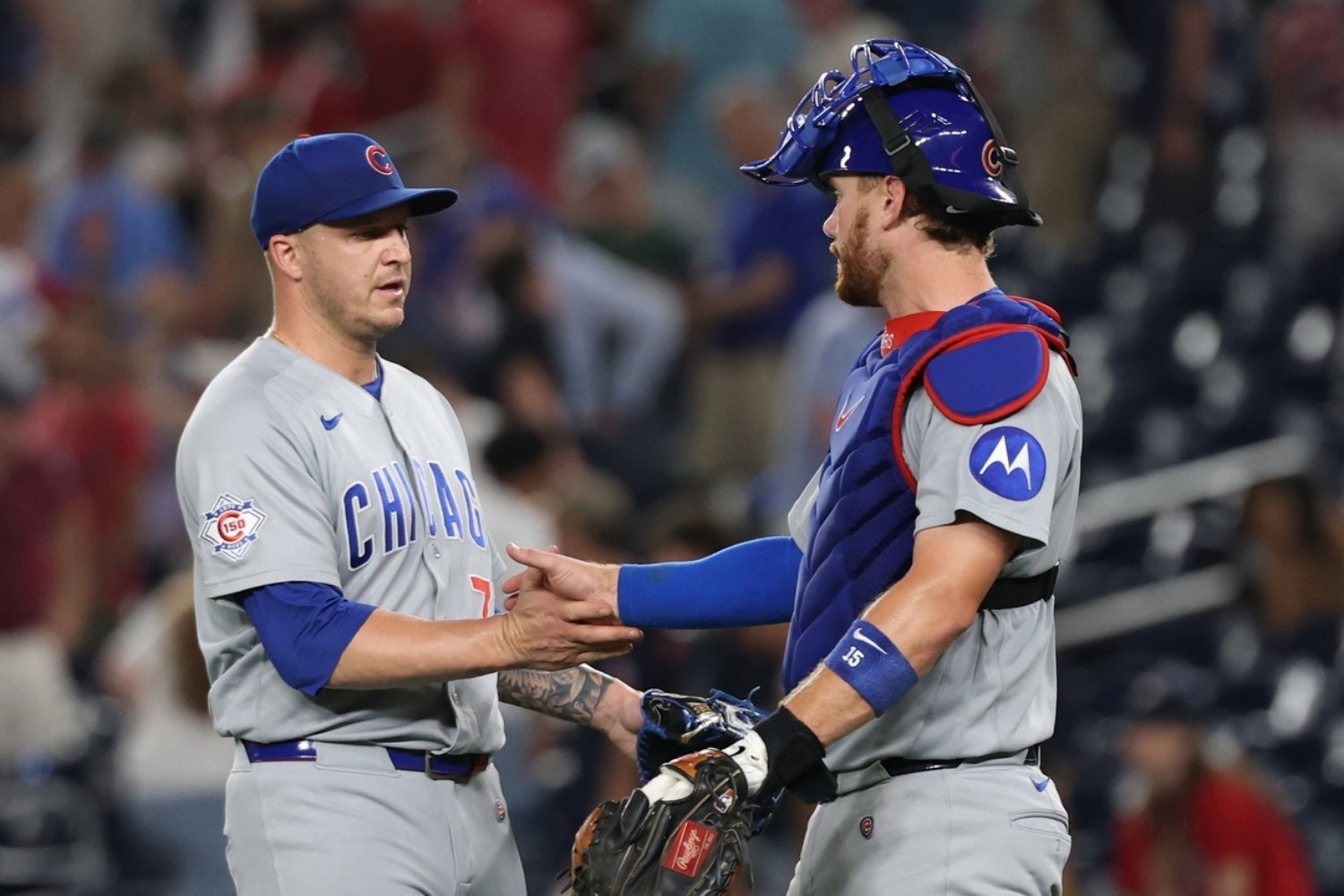 There’s a common saying in the world of sports: “Defense wins championships.” That’s certainly true in baseball. If you don’t play clean defense, bad things usually tend to follow. But when the calendar flips to October, postseason baseball is often won and lost in the hands of a pitching staff. One bad inning can completely change the complexion of a series, and one blown lead can be the difference between moving on and going home. That’s why it’s going to be important for Chicago Cubs manager Craig Counsell to have a strong understanding of who he can trust in late-inning, high-leverage situations. Fortunately for him, multiple bullpen arms have made a compelling case to handle those spots. We’ll start with the obvious one: Jacob Webb. Webb comfortably leads the Cubs in both saves (8) and save opportunities (12). Some of that can likely be attributed to the absence of Daniel Palencia, who should be returning in the near future from elbow inflammation. But regardless of the circumstances, Counsell has clearly shown that he trusts Webb when the game is on the line. And barring a catastrophic end to the regular season, that shouldn’t be any different once October arrives. Webb’s underlying numbers help explain why. His 95th-percentile whiff rate and 87th-percentile chase rate highlight just how nasty his stuff can be. He has the type of arsenal that can miss bats when he needs a strikeout and get hitters to expand the zone when he’s ahead in the count. That’s exactly the kind of arm you want available in the biggest spots of a postseason game. Even if Webb eventually loses the primary closer role when Palencia returns, that doesn’t mean his importance to the Cubs’ bullpen will diminish. In fact, it could allow Counsell to deploy him more strategically, using him whenever the most dangerous part of an opposing lineup comes to the plate. Speaking of Palencia, he should immediately factor into that equation once he’s healthy. A flame-throwing right-hander with a wipeout slider who is 26-for-30 in save opportunities over his career feels like a pretty safe bet to be trusted in high-leverage situations down the stretch. The biggest question is simply whether he can stay healthy. When he’s on the mound, there’s plenty to like. Palencia has the swing-and-miss stuff necessary to put away hitters; he has been significantly better this season at generating soft contact, and walks haven’t been a major concern. The sample size is admittedly small — he’s thrown just 16 2/3 innings this season — but the early results have been encouraging. And even if Palencia doesn’t immediately reclaim the ninth-inning role, he feels like a very safe bet to become one of Counsell’s most trusted high-leverage arms once he returns. The same can be said for one of Chicago’s recent trade deadline acquisitions: Ryan Zeferjahn. The Cubs surrendered Moisés Ballesteros and Mason McGwire to acquire Zeferjahn, and it’s pretty clear how they intend to use him. All four of his appearances with Chicago have come in the eighth inning, which is pretty tough to chalk up as coincidence. Zeferjahn’s sweeper-four-seam combination generates plenty of whiffs, while he has also shown an ability to generate soft contact. Those traits give him the type of profile that makes sense in a setup role, particularly when Counsell needs someone capable of navigating the heart of an opposing lineup. There’s no guarantee that bullpen roles remain completely rigid over the final weeks of the season, but Zeferjahn seems like about as safe a bet as there is to continue receiving important eighth-inning opportunities. Then there’s Ryan Rolison. The biggest difference between Rolison and the other three names mentioned is obvious: He’s left-handed. But that’s also part of what makes him valuable. The Cubs don’t necessarily need Rolison to be the guy they turn to for the final three outs of a game. What he has done is earn himself an opportunity to be trusted when the game is hanging in the balance. Rolison’s 2.28 ERA is the lowest among Cubs relievers, excluding Riley Martin, who has thrown only 8 1/3 innings. His underlying numbers don’t jump off the page in the same way Webb, Palencia or Zeferjahn’s do, but that doesn’t make him any less useful. Rolison has done a good job keeping the ball on the ground, and his presence gives Counsell a different type of weapon to deploy late in games. A bullpen doesn’t need four identical dominant arms to be effective. Ideally, a manager has different looks available depending on the situation, matchup and part of the lineup he’s trying to navigate. Rolison provides that versatility. You probably don’t want him closing out a game in the ninth inning with the season on the line, but he has earned a late-inning role down the stretch. Webb has already established himself as a trusted late-inning option. Palencia should add another explosive arm once he returns. Zeferjahn looks increasingly comfortable in the setup role, while Rolison gives Counsell a valuable left-handed option. There may not be one perfect answer for every late-game situation. But heading into the stretch run, the Cubs have something nearly as valuable: options. And come October, Counsell will need every one of them. View the full article
 -
Why Riley Quick Might Be the Twins' Most Important Prospect
DiamondCentric posted an article in Twins Daily
 Riley Quick has pitched at three different affiliated levels in 2026. He dealt with hand issues and was thrown into Double-A Wichita. Despite some uneven results, he's showing an elite ability to miss bats. When might we see Quick in the Twins rotation? Why is he one of the most important Twins prospects? View the full article
 -
Who The Cubs Call Up In September Could Change The Race
DiamondCentric posted an article in North Side Baseball
 With September around the corner. Who the Cubs call up could have an impact on the division race? Cubs have a bunch of pitchers expected to return from the injured list and a potential top prospect could maybe get his first taste of the big leagues. Players discussed include Ben Brown, Edward Cabrera, Hunter Harvey, Shelby Miller, Hoby Milner, Justin Steele, Matt Shaw, Kevin Alcantara, and Owen Ayers. View the full article
 -
Jorge Polanco Has Quickly Entered Himself Into Mets Infamy
DiamondCentric posted an article in Grand Central Mets
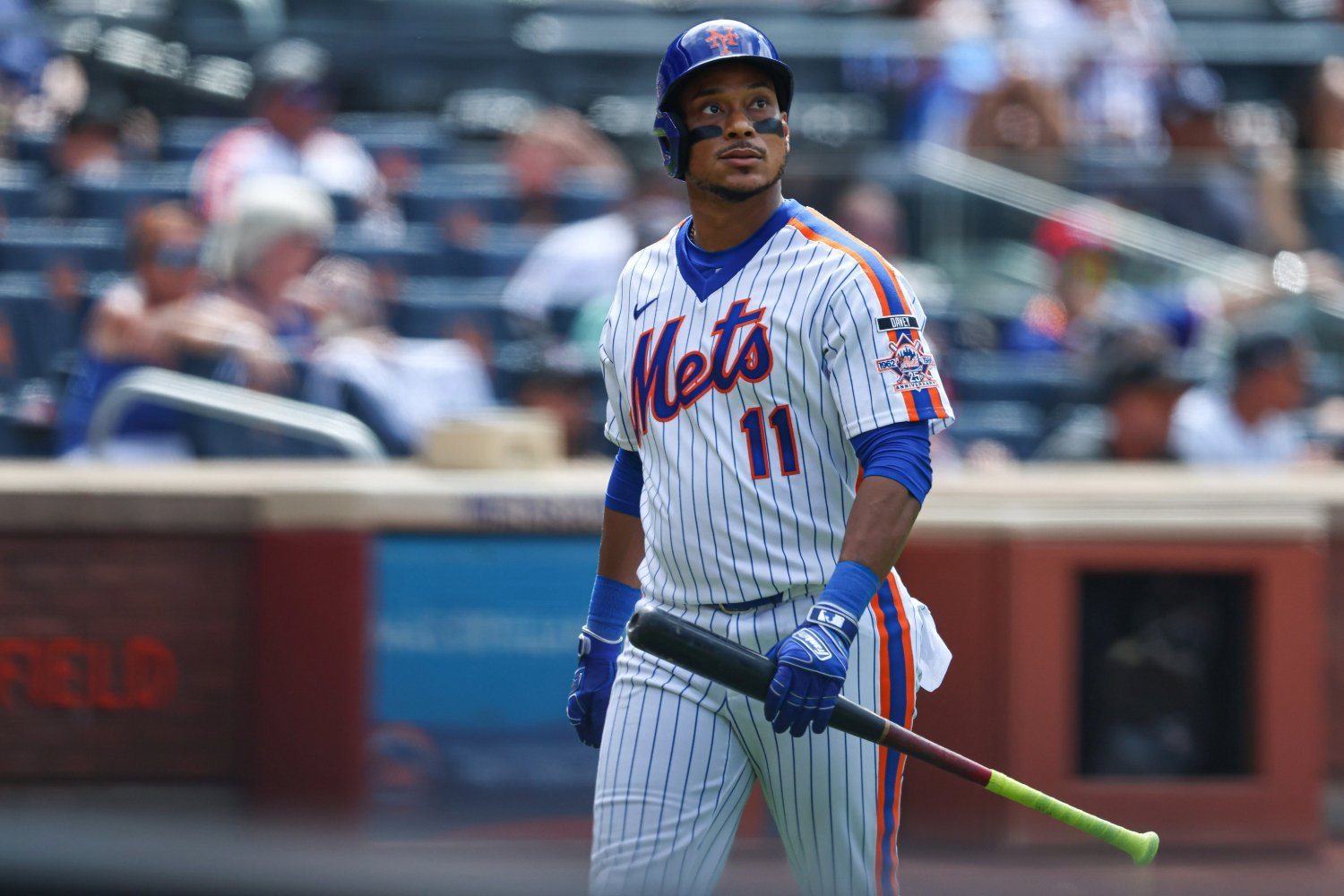 Shortly after the New York Mets let franchise icon Pete Alonso go in free agency, they signed Jorge Polanco to a two-year, $40 million deal. The 13-year veteran, who has been predominantly a second basemen his whole career, was tasked with learning first base in hopes of replacing Alonso. The Problem? Polanco has not been better than league average at any aspect of baseball this season. The 33-year-old has missed most of the season due to a right wrist contusion and chronic left achilles bursitis, playing in only 34 games. Currently, Polanco is tied for the lowest fWAR in baseball with -1.3, and his wRC+ of 19 suggests he's earning $20 million to be 81% worse than a league-average hitter. Yikes. Polanco’s slash line of .137/.195/.226 might not get much better down the stretch, as all advanced metrics show no signs of unlucky hitting. Jared Young has taken over the first base position in Polanco’s absence, and manager Andy Green surely won't make the switch back to Polanco with how good Young has been. In 2027, Polanco will be turning 34 coming off his career worst season as a starter, having played less than half of a season and will make another $20 million. When looking at the information in front of him during the offseason, Mets owner Steve Cohen and President of Baseball Operations David Stearns surely will not be happy with this result and will look to sign a replacement. Though unlikely, they could also look to offload his contract elsewhere. The Mets and Steve Cohen would have to take on a huge chunk if they want to get a deal done, though, which might not be as enviable in a post-lockout world. If all else fails, Stearns might just cut his losses like he did with Frankie Montas and release him. In the future, Stearns and his front office have to be better at discerning when to buy high on a player; coming off a career year last year at age 32 with a 133 OPS+, Polanco was bound for some sort of regression, and it came. With players like Munetaka Murakami, Pete Alonso, Josh Naylor, Luis Arraez, Kazuma Okamoto and Willson Contreras all available last offseason, regret is ripe in the air. The Mets' failed 2026 season could look a whole lot different if any of these players were playing first base these days. Alas, Polanco is here, though perhaps not for much longer. View the full article
 -
Alex Cora Plans to Continue Managing After Eight Seasons In Boston
DiamondCentric posted an article in Talk Sox
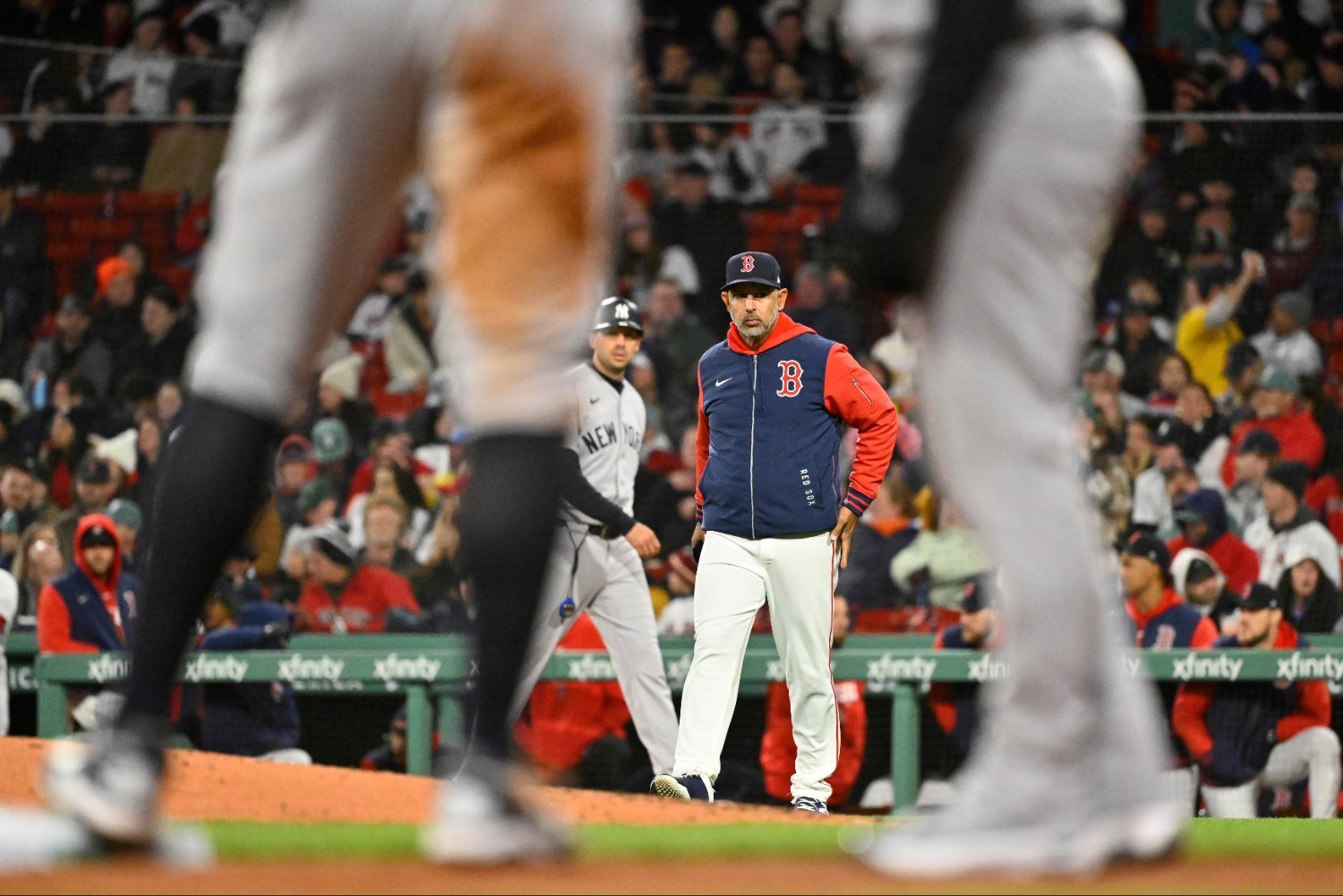 Alex Cora will manage a baseball team again. As of now, his timeline is uncertain. He mused on Karl Ravech’s “Dirt from the Dugout” podcast, “I think at one point, I’m gonna get back. When? We don’t know.” The Boston Red Sox fired Cora on April 25, after starting the 2026 season with a tepid 10-17 record. In his first season with the Red Sox, he led the team to a World Series title. The team made three postseason appearances under Cora. Overall, the skipper posted a 620-541 record (.534 W-L%) across eight seasons with his former team. Cora said he was “upset they didn’t let me finish the job,” but also “happy for my family… relieved I don’t have to go through scouting reports and the matrix and talk to the media twice a day and live in the bubble of ‘We have to do this.’” With more free time on his hands, Cora has enjoyed his summer. He returned to his hometown of Caguas, Puerto Rico, with his fiancée and twin sons. He attended some World Cup matches in Boston and traveled to Europe with his family. Cora is expected to be a popular managerial candidate in the offseason. He turned down an offer to manage the Phillies this season. Since Carlos Mendoza was fired, the Mets are also expected to have a managerial vacancy. Given the impending lockout, teams have a much narrower window to hire a new skipper. The regular season concludes at the end of September, so some teams have more time, but there's only one month between the end of the World Series and the Dec. 1 lockout. The bigger question is: Against all odds, could Boston go back to Cora a third time? I'm leaning no. Interim manager Chad Tracy is a frontrunner for the Manager of the Year Award and shepherded the team to an historic 27-3 stretch this summer. The Red Sox currently hold the second AL Wild Card spot after entering July all but out of the playoff race. Tracy has proved he’s more than capable of managing the team. Red Sox fans will always appreciate Cora’s contributions in the 2007 and 2018 World Series runs, but it's best for both sides to move on. Cora is still regarded as one of the best managers in the game, and he’ll succeed wherever he lands. View the full article
 -
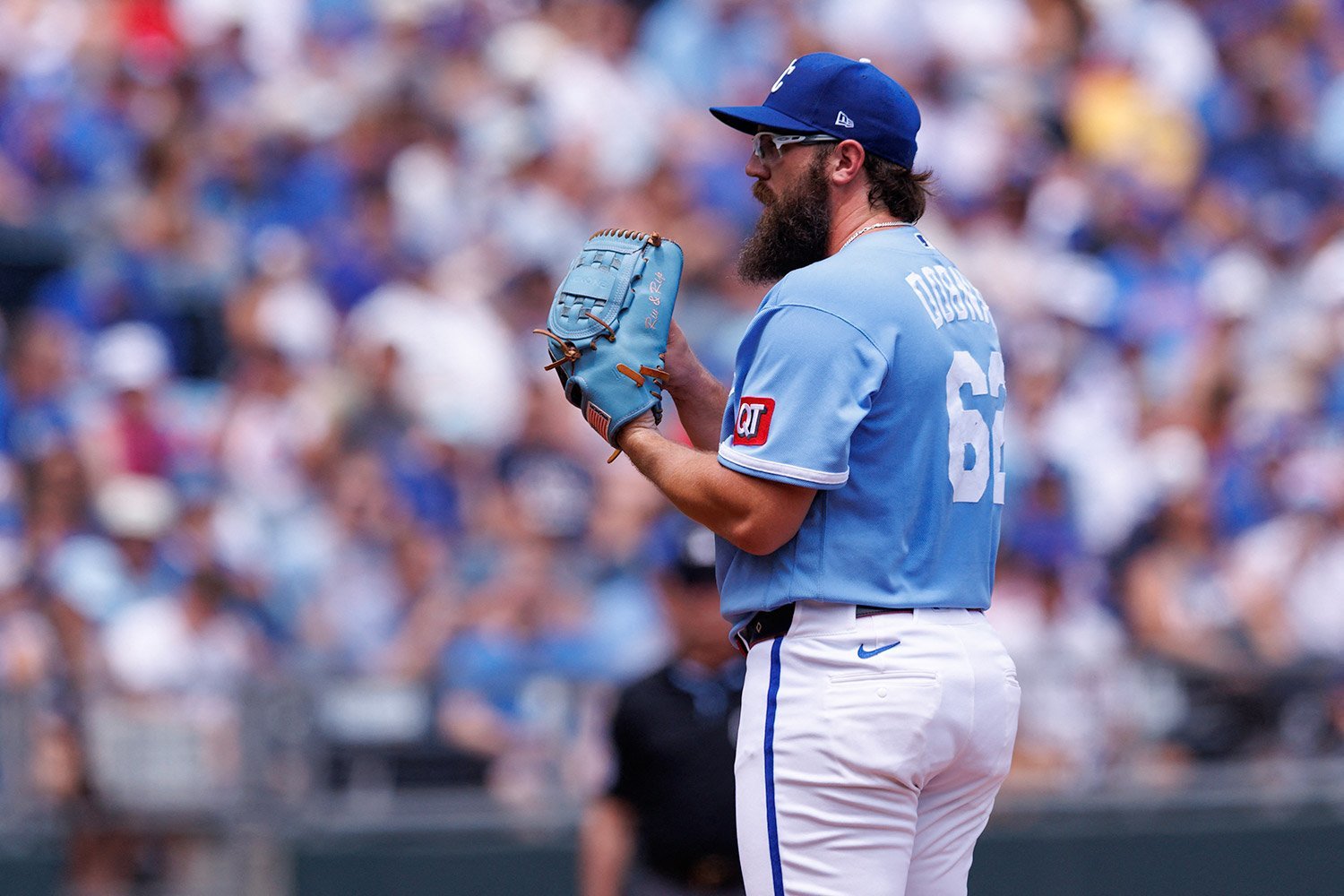 I don’t know if this has happened to you, but sometimes small samples can cause panic. Throughout his major league career, right-hander Randy Dobnak has had a few of them. The first time I saw Dobnak pitch this season was on July 2, during his debut with the Royals in relief against the Tampa Bay Rays at Kauffman Stadium. He entered after a terrible 42-pitch second inning from Stephen Kolek. The Tampa Bay Rays had taken a 3-0 lead. With Dobnak coming onto the mound, I had the feeling that his inning would be the inevitable reason to stop watching the game. I watched a couple more batters; Dobnak fell behind 2-1 in the count against Junior Caminero, but got him out on a groundball with a high sinker. One out. The next batter, Víctor Mesa Jr., grounded out to second on the first pitch, against a sinker on the outside corner. When it looked like everything was going to be fine, Chandler Simpson and Cedric Mullins collected back-to-back singles, and Taylor Walls walked. Bases loaded. On the first pitch, Richie Palacios missed a sinker away and hit a fly ball to left field. With a little scare, Dobnak escaped the third inning without allowing a run. He dominated the next five opponents and reached the fifth inning with two outs. Who cared about exit velocities? The man was getting outs! But just when everything seemed calm, Simpson and Mullins caught up with the sinker. Single and home run. The Rays extended their lead to 5-1. In the following inning, Dobnak allowed two more hits, but a great throw home by Isaac Collins cut down Hunter Feduccia at the plate to end the inning. Dobnak’s Royals debut was over. He threw four innings, allowing two runs with two strikeouts and one walk. He had seven baserunners and allowed two of them to score. That first look at Dobnak perfectly described the version of the pitcher he has been in the majors. When you look at his weapons against opposing hitters, you realize the contradiction contained in his profile: a pitcher whose fastball barely reaches 92 mph, with an insignificant strikeout rate and a lurking volume of contact allowed in the zone. Taken together, there is nothing that looks more vulnerable in a league where velocity and stuff occupy a central place. His 2021 season with the Minnesota Twins, when he had his biggest role as a reliever, confirms that reading with certainty: his hard-hit rate ranked in the first percentile of the league, along with a 10.3% barrel rate and a 6.81 xERA. So, how can a pitcher with that profile survive now? What were the desperate Royals looking at when they brought in Dobnak? Those were some of the inevitable questions following his debut in early July. The answer begins with his sinker, a pitch he uses 39.8% of the time. Yes, as contradictory as it may seem, the sinker is the starting point. When you look at Dobnak’s splits by count, there are some surprising things. Opponents have posted a .577 xSLG when ahead in the count, with a tiny 4.2% Whiff rate. Yet the result behind that devastating average tells another story. Batter Run Value tells us that the sinker is not being punished throughout the entire zone. There are six of the eight areas of the strike zone where the opposition has negative values. The efficiency inside the strike zone responds to the value that seems hidden in Dobnak’s sinker: his ability to generate groundballs. He does not have elite velocity or the ability to generate swings and misses frequently, but he makes up for that difference with location. And when opponents make contact, here is the success: he induces groundballs more than 67% of the time. Contrary to what we might believe when looking at the sinker’s results, Dobnak’s location problem has been outside the strike zone. Alongside the sinker, the sweeper and his changeup are the pitches that strengthen the plan. With the sweeper, Dobnak has posted his highest Whiff rate (35.5%), making it his two-strike weapon, while the changeup is his most efficient pitch. When opponents make contact with the sweeper, the xSLG jumps to .448, making it even more vulnerable than the sinker (.444). Against the changeup? Just .278, with an average exit velocity of 83.1 mph. The sweeper is most effective when it is out of the hitter’s reach, but when Dobnak misses with it, the result has been terrifying. Bat Tracking data helps explain why that difference is so important. Hitters have averaged a 4.6-inch Miss Distance against Dobnak’s sweeper, while the four-seam fastball (0.9) and sinker (2.0) remain the pitches opponents read best. The Perfect Contact% against the sinker (47%) and fastball (42%) is at its worst for Dobnak, but his ability to generate groundballs and maintain location on the corners has prevented major problems. That explains how Dobnak can survive without velocity, and I believe his uncommon profile was the reason the Royals have tested him as a starter. The result, considering his arsenal, has been surprising. Dobnak has allowed more than one run in only one start, and it came in his most recent outing, on August 9 against the Cubs. He has allowed just one home run against 136 opponents, has a .271 BABIP, and maintains a 55.1% groundball rate. His 2.00 ERA tells a story of success since he arrived in Kansas City, while his 4.79 xERA predicts that he has been too lucky. In an era when velocity has become a pitcher’s indispensable antidote, every inch matters for Dobnak because he does not have many other tools to compensate for a bad location. View the full article
 -
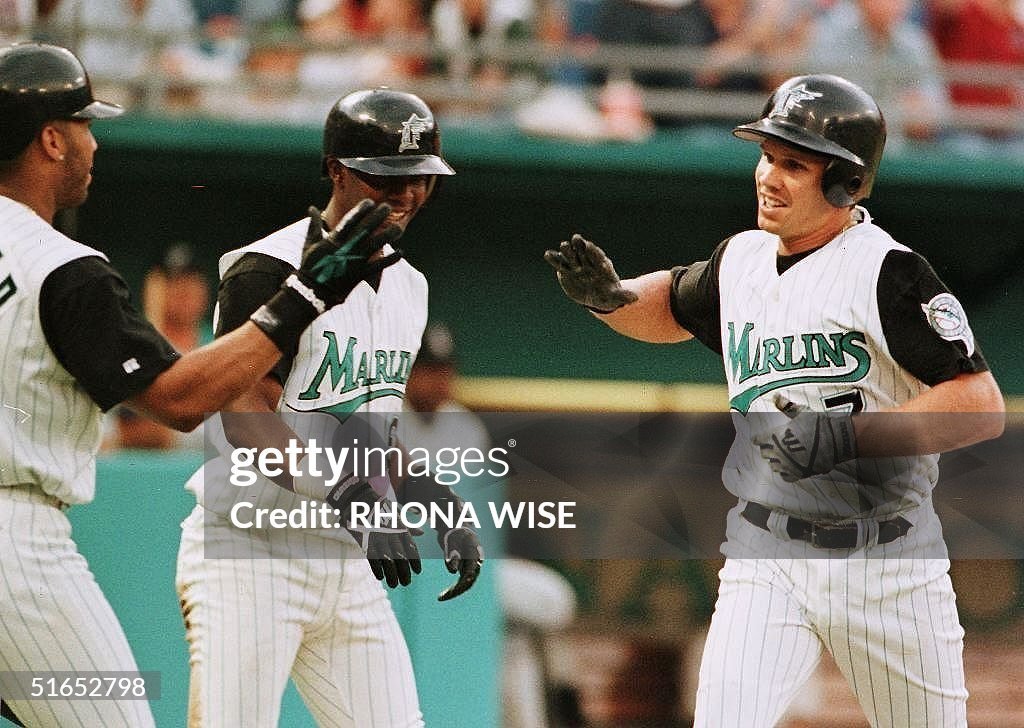 For the Florida Marlins, the 1996 season ushered in a handful of franchise-firsts, including the first no-hitter in franchise history, which was completed against Al Leiter against the Colorado Rockies. That, however, wasn’t the only memorable moment against Colorado from that campaign. On this day 30 years ago, the Marlins beat the Rockies in their final at-bat for the second day in a row. After Joe Orsulak’s solo home run in the eighth inning gave Florida a 2-1 clinched the series win the night before, the Marlins rallied to complete the three-game sweep with three runs in the eighth in the series finale. Édgar Rentería’s two-run single in the Florida seventh had tied the game 4-4 at Joe Robbie Stadium on Aug. 15, 1996, but the Rockies had an answered in the top of the eighth. A sacrifice fly from Jayhawk Owens put the Rockies back in front 5-4 before a Walt Weiss RBI triple on the very next pitch extended the lead two. Down 6-4, the Marlins had work to do against Colorado reliever Curt Leskanic in the bottom of the inning. Florida centerfielder Devon White started the rally with a double to start the frame. Leskanic bounced back to strike out Jesús Tavárez but a walk to Kurt Abbott led to a pitching change. Closer Bruce Ruffin was called upon with two on and one out. Ruffin would surrender the lead in just two pitches. Ruffin’s first pitch of the night was pulled down the third base line by Alex Arias for a game-tying two-run double. Arias was able to take third on the throw to the plate. One pitch later, he scored the go-ahead run on a sacrifice fly by Jeff Conine. In the bottom of the ninth, Robb Nen used a pair of ground balls back to the mound – one for a double play – to face the minimum and complete the save. Despite allowing the go-ahead Colorado hits in the top of the eighth, Jay Powell picked up the win for the Marlins. Prior to the eighth, Florida had never led. After the Rockies scored in the top of the first inning, the Marlins drew even in the bottom on a Gary Sheffield solo home run. Colorado went back in front with three runs in the third. Orsulak singled home Abbott in the fifth to cut the lead to 4-2. Ellis Burks, Weiss and Andrés Galarraga each finished with two hits and an RBI for the Rockies. Abbott scored two of the seven runs for Florida. For the 1996 season, the Marlins would finish with a then-franchise-best record of 80-82. Against Colorado, Florida went 8-5, including a perfect 7-0 at home. That included thrilling wins in each of the final two meetings, capped by a thriller on this day three decades ago. View the full article
 -
Brett Bateman Is Paying Early Dividends in His MLB Debut
DiamondCentric posted an article in Jays Centre
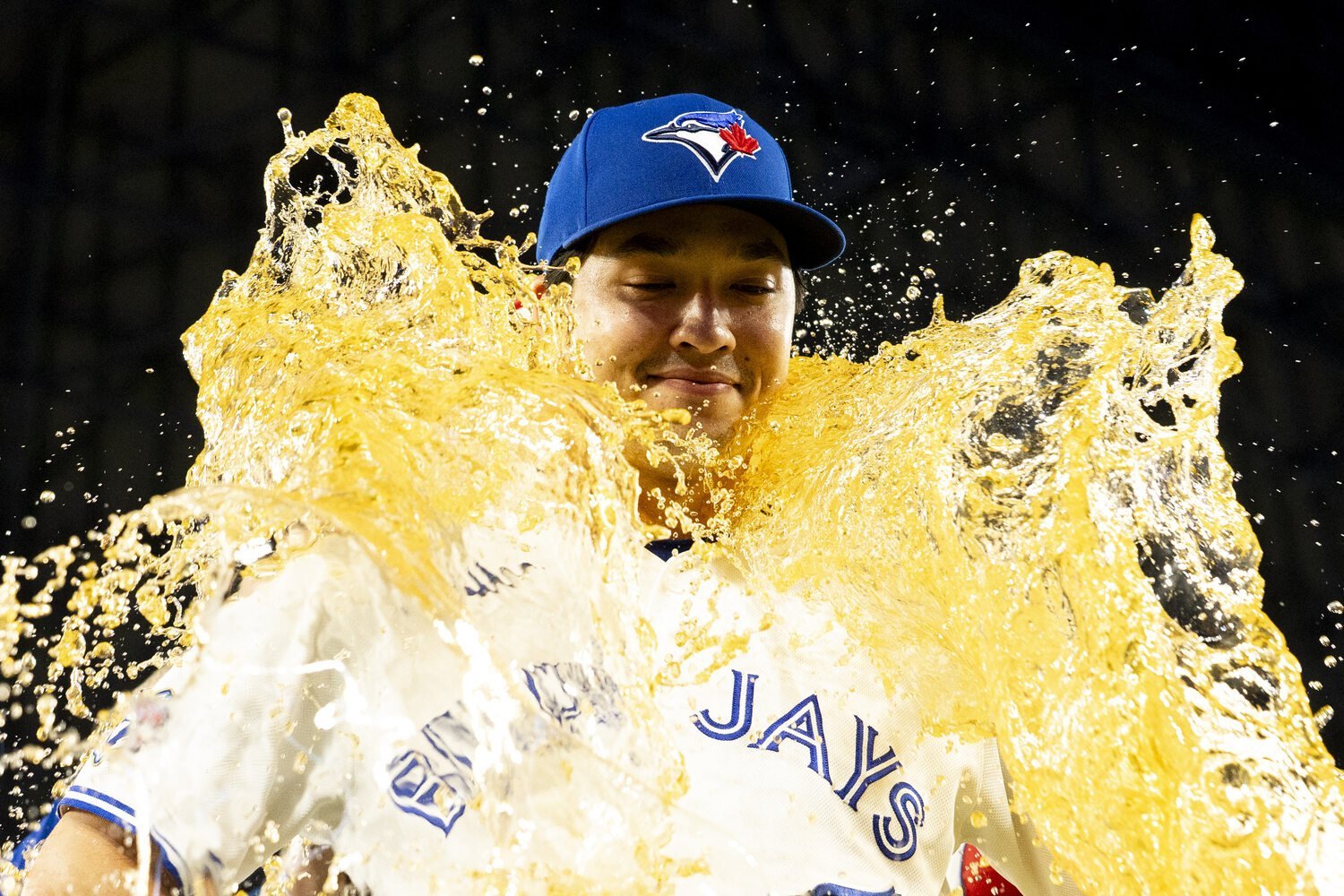 Before coming to the Toronto Blue Jays in the trade that sent Kevin Gausman to the Chicago Cubs, Brett Bateman's chances of an MLB debut this season were slim. He was blocked in the outfield by the Cubs' everyday starters, Pete Crow-Armstrong, Seiya Suzuki, and Ian Happ, and by their deep farm system with higher-rated prospects waiting patiently for their call-up. However, the Blue Jays desperately needed a spark for their offense, and Bateman has unexpectedly been that catalyst. He's played in six games since making his MLB debut last Friday (as of August 13), when his first at-bat resulted in a double off Philadelphia Phillies star Zack Wheeler. The rookie has a hit in five of his games, two runs, and three RBIs. The Blue Jays have also won five of the games that Bateman has played. He received the day off when they lost to the Boston Red Sox on August 13. The Blue Jays have shown a massive amount of faith in Bateman. He has played nearly every day and hit in the top two spots of the lineup. His speed gives the team a threat they have been lacking. He's yet to steal a base, but that'll likely change soon, as he had 83 stolen bases in 101 attempts in the minors. Toronto is known to adjust its lineup based on the matchup, but the rookie has avoided a platoon; as a left-handed bat, he has started half of his games against a lefty. The rookie has also shown the ability to provide a solid glove while handling center field. Filling the position was a major question mark after 2024 Gold Glove Award winner Daulton Varsho was traded to the Houston Astros at this season's deadline. A clear answer wasn't in the minor leagues. However, Bateman has filled in nicely. The sample is small, so the Blue Jays will see how the rest of the season plays out before they know if the rookie is their long-term answer. He doesn't provide power, which the Blue Jays also desperately need, but he offers reliable on-base skills and speed. He also possessed great plate vision in his minor league career, with a 0.86 walk-per-strikeout rate over four seasons. However, that hasn't translated to the majors yet, as he has a 0.33 walk-per-strikeout rate in his five games. He had two walks in his MLB debut but has yet to draw one since, while striking out six times. Bateman has given a positive first impression, allowing him the rest of the season to show the Blue Jays that he can be their center fielder for the foreseeable future. The Blue Jays threw him in the deep end and said, "Learn to swim." So far, Bateman has shown signs of being ready for the challenge. View the full article
 -
 TRANSACTIONS It’s a rarity, but on Friday, there were no transactions in the organization. SAINTS SENTINEL St. Paul, Iowa (Postponed by rain) Box Score I feel like I haven’t seen any rain for a month. But over the past 24 hours in Des Moines, they have had more than two inches of rain and it’s still coming down. So, Friday night’s game has been postponed, and the teams will attempt to play two games on Saturday. WIND SURGE WISDOM Wichita 1, Corpus Christi 0 Box Score It was a little cooler in Wichita on Friday than it was on Thursday. At game time on Thursday, the temperature was 104. On Friday night at first pitch, it was down to just 103 degrees. Wisely, the two teams decided to play a quick game. Wind Surge pitchers were fantastic. Preston Johnson made the start and tossed five shutout innings. He gave up just one hit, walked none, and had five strikeouts. Sam Armstrong came in next and struck out three batters over three scoreless innings. He gave up three hits. Hanging on to a 1-0 lead, Paulshawn Pasqualotto earned the save with a perfect ninth inning. Wichita pitchers gave up just four hits in the game. Wichita hitters recorded just four hits in the game. They also walked four times and twice were hit by pitches. In the fourth inning, Brandon Winokur and Garrett Spain walked. With two outs, Jake Rucker came through with a line-drive single to center field. Rucker went 2-for-2 with a walk and the lone RBI. Spain had a single and a walk. KERNEL NUGGETS Cedar Rapids 0, Wisconsin 6 Box Score One night after the Kernels shut out the Timber Rattlers, Wisconsin returned the favor by shutting out Cedar Rapids. Justin Mitrovich started and gave up one run on four hits over four innings. He walked three and had seven strikeouts. Merit Jones came in and gave up four runs (2 earned) on three hits and two walks over 3 2/3 innings. He had four strikeouts. Mike McKenna came in and gave up an unearned run on three hits over the final 1 1/3 innings. He also had a balk and a wild pitch. The Kernels had just five hits and two walks in the game. They also struck out 13 times, nine of them credited to Ethan Dorchies who tossed 6 2/3 innings for the Rattlers. Jayson Bass went 1-for-2 with two walks. The team was 0-for-4 with runners in scoring position and left eight on base. The Rattlers are the High-A affiliate of the Milwaukee Brewers. For more on the Brewers, Rattlers and the Milwaukee organization, check out fellow DiamondCentric site, Brewer Fanatic. Most of their Top 20 prospects have spent time in Wisconsin this season but are now up in Biloxi including outfielder Braylan Payne who played in Cedar Rapids on Thursday and was promoted to Biloxi on Friday. #2 Prospect Luis Pena is a Top 20 global prospect and 2026 draft pick, and #16 Prospect Sawyer Strosnider are with the Rattlers. MIGHTY MATTERS Fort Myers 10, Clearwater 12 Box Score First the game was delayed. They started 66 minutes after the scheduled start time. And then they played the longest, nine-inning game of the season, three hours and 26 minutes. When the Threshers scored seven runs in the top of the fifth, it gave them a 12-4 lead. To that point, they had scored in each of the first five innings. To the Mussels' credit, they didn’t give up. Even in the bottom of the ninth, there was a short time when the game-tying run was at the plate. But the comeback came up shy. The Mussels scored 10 runs on 12 hits and seven walks. They also were 9-for-9 in stolen base attempts. Merphy Hernandez has become an intriguing prospect. On Friday night, he went 3-for-4 with a walk and four stolen bases. He now has 39 steals this season. Ramiro Dominguez went 2-for-4 with two walks and his 23rd and 24th doubles. He stole his 23rd base. Isaiah Lane was 2-for-5 with his third double and third triple. Luis Fragoza went 1-for-2 with two walks and his 11th and 12th steals. Charlie Scholvin went 1-for-3 with two walks and a stolen base. The only other extra base hit was off the bat of Vahn Lackey, his second triple. He also accomplished his first Golden Sombrero, his first four-strikeout game. While he will shortly be making the move north to Cedar Rapids (and rightfully so), he has hit just .200/.365/.350 (.715) with two doubles, two triples and five RBI. Cristian Hernandez made his second Mussels start. The 21-year-old gave up three runs on five hits in 1 2/3 innings. He struck out one batter. Brent Francisco came on and gave up four runs on five hits and a walk over 2 2/3 innings. Brad Rudis gave up five runs on four hits and a walk in 1 2/3 innings. Adam Falinski came in and gave his team what they needed, three shutout innings. Of note, as I expected when the Twins traded Jhomnardo Reyes to the Orioles for Dean Kremer, the Twins promoted Yovanny Duran from the FCL Twins to the Mighty Mussels. In seven games, he has hit .231/.344/.423 (.767) with two doubles and a home run. He also has five walks to four strikeouts. Certainly not huge numbers, but having watched several of his plate appearances, he is holding his own. Jordan Smith has him hitting leadoff now, and he’s earned it with quality plate appearances. Defensively, he had two outfield assists on Friday night. And he won’t turn 19 until November 3rd. COMPLEX CHRONICLES DSL Twins 18, DSL Phillies 19 Box Score Most of the time when your offense starts the game with innings scoring three, three, five, and six, there’s a decent chance you’re going to win. Weird stuff can happen in the DSL. The DSL Phillies scored 11 runs in the first innings and then they scored four in the fifth inning and three more in the top of the sixth. The Phillies scored their 19 runs on 14 hits and 14 walks. The Twins scored 18 runs on 17 hits and five walks. Phillies defenders committed four errors. The Twins defense had five errors. Yosangel Braffit started and was charged with five runs in the first inning and got just one out. Aldwin Morillo came on and gave up six runs (5 earned) on three hits and three walks and he got just one out. Arthur de la Cruz came in and got the final out of the first inning. Braffit came back in for the second inning and went two scoreless innings. Like the rule or not, this is what it is meant for. And remember, the DSL players are six promotions from the big leagues. Stats are fairly meaningless. It’s all about development. Braffit could struggle, sit back down, think, get coached, overthink, and then go back on the mound and work on things. Miguel Martinez came in. He gave up one run on one hit and two walks and recorded just two outs. Jesus Moreno gave up four runs on three hits and three walks in 1 1/3 innings. Herkyn Taveras came on and worked the final two innings. He gave up three runs (1 earned) on four hits and a walk. Jhon Gonzalez went 4-for-5 with his fifth triple. He scored twice and drove in five runs. Jeferson Abreu went 2-for-4 with a walk, his eighth double, and his fifth home run. Fabian Ulloa went 2-for-4 with three runs and three RBI. Daiyer Barboza was 2-for-5. Abel Sosa was 2-for-5 with two RBI. Enmanuel Merlo was 2-for-4. Luis Duarte went 1-for-2 with two walks. Jendy Martinez went 1-for-3 with a walk and was hit by a pitch. He scored three runs and drove in two runs. PLAYERS OF THE DAY Hitter(s) of the Day Merphy Hernandez (Fort Myers): 3-for-4, BB, 2 R, 2 RBI, 4 SB (39) Jhon Gonzalez (DSL Twins): 4-for-5, 3B(5), 2 R, 5 RBI, Pitcher(s) of the Day Preston Johnson (Wichita): 5 IP, 1 H, 0 R, 0 BB, 5 K, 54 pitches, 42 strikes (77.8%) PROSPECT SUMMARY Check out the Prospect Tracker for much more on our Twins Top 20 prospects. See how they did today. UPCOMING PROBABLES Saturday, August 15 St. Paul @ Iowa (DH @ 4:08 pm CT) - LHP Kendry Rojas (2-0, 3.72 ERA), RHP Trent Baker (3-3, 5.40 ERA) Corpus Christi @ Wichita (6:05 pm CT) - RHP Cory Lewis (1-7, 3.97 ERA) Wisconsin @ Cedar Rapids (6:35 pm CT) - LHP Cesar Lares (0-5, 13.00 ERA) Clearwater @ Ft. Myers (5:05 pm CT) - RHP Ramiro Villanueva (0-4, 4.96 ERA) FCL Twins - Season Complete. DSL Tigers @ DSL Twins (9:00 am CT) - No Game CURRENT W-L Records Minnesota Twins: 60-63 St. Paul Saints: 66-50 Wichita Wind Surge: 45-65 Cedar Rapids Kernels: 44-66 Fort Myers Mighty Mussels: 61-49 FCL Twins: 33-26 DSL Twins: 17-33 Please feel free to ask questions about the teams, the rosters, and discuss today’s games, or anything else Twins minor-league related! View the full article
 -
 While the four San Diego Padres full-season affiliates only went 1-3 Friday, there were plenty of performances that were headline-worthy. The Triple-A El Paso Chihuahuas fell to Salt Lake 8-2, the Double-A San Antonio Missions were stunned by Frisco 14-12, the High-A Fort Wayne TinCaps got walked off by Quad Cities 5-4 and the Low-A Lake Elsinore Storm cruised past Inland Empire 12-4. Padres Minor-League Transactions San Antonio Missions placed OF Jake Cunningham on the 7-day injured list. OF Alex McCoy assigned to San Antonio Missions from Fort Wayne TinCaps. Lake Elsinore Storm placed RHP Michael Salina on the 7-day injured list. RHP Victor Lizarraga assigned to Lake Elsinore Storm from ACL Padres. Musgrove Stretches Out To 70 Pitches In Chihuahuas' Loss Padres rehabbing right-hander Joe Musgrove looked good while throwing 70 pitches, but the host Triple-A El Paso Chihuahuas were held hitless for 6⅔ innings in an 8-2 loss to the Salt Lake Bees. Musgrove went 4⅔ innings, the longest of his three rehab starts, and threw 47 of his 70 pitches for strikes as he looks to return to the mound for the first time since the 2024 postseason following Tommy John surgery. While the five runs on nine hits might not look good in the box score, Musgrove was regularly sitting around 96 mph in the first three innings, hitting his highest velo of 96.8 mph in the third inning. He struck out five and walked one. The fourth inning did see his four-seamer velo drop a couple ticks, although he did hit 96.3 and then 95 in the fifth. Musgrove did get tagged for a three-run homer by Omar Martinez in the second inning on a 96 mph four-seamer. Right-hander Daison Acosta followed Musgrove with 2⅓ scoreless innings, allowing just one hit and striking out two. Right-hander Ty Adcock gave up three runs in the eighth, while recently acquired Hunter Stratton pitched a hitless ninth. Bees right-handed starter Brett Kerry took a no-hitter into the seventh, then retired the first two hitters on groundouts. But Nick Solak foiled the bid with a line-drive single to right. Ethan Salas, Padres Mission's No. 1 prospect, followed with a single of his own before the next batter was retired. The Chihuahuas' runs came in the eighth as Rodolfo Duran, who caught Musgrove, had a one-out double and scored on Dustin Harris' single, and in the ninth when Solak walked and Salas had his fifth double in 13 Double-A games to plate Solak. Salas has reached in every game he has played with the Missions. EP_0814.mp4 Player AB R H RBI BB K Dustin Harris, CF 4 0 1 1 0 0 Gage Workman, SS 4 0 0 0 0 1 Carlos Rodríguez, LF 4 0 0 0 0 0 Nick Solak, RF 3 1 1 0 1 0 Ethan Salas, DH 4 0 2 1 0 0 Will Wagner, 3B 1 0 0 0 3 0 Mason McCoy, 2B 4 0 0 0 0 1 Nick Pratto, 1B 2 0 0 0 1 1 Marcos Castañon, PH 1 0 0 0 0 1 Rodolfo Durán, C 4 1 1 0 0 1 Totals 31 2 5 2 5 5 Player IP H R ER BB K HR Joe Musgrove (L, 0-1) 4 2/3 9 5 5 1 5 1 Daison Acosta 2 1/3 1 0 0 0 2 0 Ty Adcock 1 3 3 2 1 1 0 Hunter Stratton 1 0 0 0 1 0 0 Totals 9 13 8 7 3 8 1 Alex McCoy Smashes 2 HRs In Double-A Debut, Braedon Karpathios Has 2 HRs, 6 RBIs But The Missions Lose Late Alex McCoy homered twice, including in his first at-bat, as part of a 4-for-5 night in his Double-A debut, while Braedon Karpathios also went deep twice, including a grand slam, and drove in six, but the San Antonio Missions gave up a six-run eighth inning and fell to the host Frisco RoughRiders 14-12. The Missions had a 10-4 lead after a five-run top of the sixth and 12-8 in the eighth. The Missions hit six homers, while giving up four. It was the second two-homer game of the season and career for McCoy, Padres Mission's No. 8 prospect who was promoted from High-A Fort Wayne before the game and now has 17 on the season. His other came Aug. 1 vs. Great Lakes. Karpathios, Padres Mission's No. 9 prospect, had his first two-homer game of the season and third of his career. He has 14 homers this year, one short of his career high set last year. Albert Fabian and Luis Verdugo hit solo homers for the Missions. McCoy, playing right and batting third, hit a solo homer to left in his first trip to the plate in the first inning and a two-run shot to dead center in the eighth, his final at-bat. McCoy, who leads the Midwest League with 27 doubles, hit his first in the Texas League to drive in a run in fifth. Karpathios had a two-run blast to right, a 436-foot shot, in the fifth inning and followed that with his grand slam in the five-run sixth. Verdugo hit his solo shot in the sixth. The Missions brought the winning run to the plate in the ninth after pinch-hitter Romeo Sanabria walked with two outs and Ryan Jackson singled. With McCoy on deck, Tirso Ornelas grounded out to second to end the game. SA1_0814.mp4 SA2_0814.mp4 SA3_0814.mp4 SA4_0814.mp4 Player AB R H RBI BB K Ryan Jackson, SS 5 2 2 0 1 1 Tirso Ornelas, DH 5 2 1 0 1 2 Alex McCoy, LF 5 3 4 4 0 1 Braedon Karpathios, RF 4 2 3 6 1 1 Jack Costello, 1B 5 0 0 0 0 1 Albert Fabian, LF 4 1 2 1 1 1 Kai Roberts, CF 0 0 0 0 0 0 Luis Verdugo, 3B 5 1 2 1 0 1 Wyatt Hoffman, 2B 3 0 0 0 0 1 Brendan Durfee, C 3 1 1 0 1 1 Romeo Sanabria, PH 0 0 0 0 1 0 Totals 39 12 15 12 6 10 Player IP H R ER BB K HR Jamie Hitt 5 7 4 4 0 5 1 Francis Peña 0 2/3 3 3 3 0 1 0 Harry Gustin 1 3 1 1 0 1 0 Bernard Jose (H, 3) 0 2/3 5 4 4 0 1 1 Garrett Hawkins (L, 0-1) (BS, 2) 0 2/3 4 2 2 0 0 2 Totals 8 22 14 14 0 8 4 TinCaps Walked Off By River Bandits After two days off due to weather, both teams came out swinging, but it was the host Quad Cities River Bandits who swung last in beating the High-A Fort Wayne TinCaps 5-4 on a walk-off single by Zion Rose, the sixth overall pick in this year's draft by the Kansas City Royals. Fourth-round draft pick Robbie Lavey hit his first career homer, making it five of six Padres who have debuted in the last two weeks and homered. All did so in their first two games played. It was also Lavey's first career hit. The first two TinCaps reached to open the game, Justin DeCriscio on a walk and a stolen base and Ryan Wideman (Padres Mission's No. 2 prospect) also walked, when Rosman Verdugo went opposite field with a three-run homer, his 13th this year. The River Bandits got a two-run homer of their own in the bottom of the first. Lavey, a left-handed hitter, then drilled a 1-2 pitch out to right field off River Bandits left-hander Mason Miller to make it 4-2 in the fourth inning. But that would be it for the TinCaps as the River Bandits tied it in the eighth and won it in the ninth. Lamar King Jr., Padres Mission's No. 10 prospect, had two hits for the TinCaps. TinCaps right-handed starter Carson Montgomery allowed three runs over four innings on four hits and two walks with four punchouts, while right-hander Winyer Chourio (Padres Mission's No. 17 prospect) pitched four innings of relief, giving up one run on three hits with two walks and four strikeouts. FW_0814.mp4 Player AB R H RBI BB K Justin DeCriscio, SS 3 1 0 0 1 1 Ryan Wideman, CF 4 1 1 0 1 1 Rosman Verdugo, 2B 4 1 1 3 1 0 Robbie Lavey, DH 4 1 1 1 0 1 Lamar King Jr., C 4 0 2 0 0 1 Luke Cantwell, 1B 3 0 1 0 1 1 Kerrington Cross, 3B 4 0 1 0 0 3 Dylan Grego, LF 1 0 0 0 1 0 Kasen Wells, RF 4 0 0 0 0 2 Totals 31 4 7 4 5 10 Player IP H R ER BB K HR Carson Montgomery 4 4 3 3 2 4 1 Winyer Chourio 4 3 1 1 2 4 0 Sean Barnett (L, 0-1) 0 1 1 1 1 0 0 Totals 8 8 5 5 5 8 1 Trio Of Homers Power Storm Past 66ers Jorge Quintana, Truitt Madonna and Qrey Lott homered, while Alex Conover had two hits and drove in three as the Low-A Lake Elsinore Storm crushed the host Inland Empire 66ers 12-4. Quintana, Padres Mission's No. 7 prospect, had a three-run homer in a five-run third inning that also saw Lott go deep. It was Quintana's sixth and Lott's seventh of the season. Madonna, Padres Mission's No. 15 prospect, hit a solo shot in the second to trim the Storm's deficit to 3-1, his fourth this season. After Lott homered and Conover (fourth-round compensation pick) singled in a run to tie the game, Quintana's blast put the Storm on top for good at 6-3. After getting single runs in the fourth and fifth, the Storm put this one away with a four-run eighth. Sixth-round draft pick Nu'u Contrades drew a bases-loaded walk, Conover had a two-run single and Ty Harvey (Padres Mission's No. 5 prospect) an RBI groundout. Right-hander Victory Lizarraga, who was sent from Double-A San Antonio down to the Arizona Complex League after 17 games on July 14, returned to the Storm for the first time since 2022 and started, going three inings and allowing three runs while striking out six. After right-hander Yoesmerli Beltre tossed a scoreless fourth, right-hander Adler Cecil struck out seven over the next four innings, allowing just one hit and an unearned run with a walk. Right-hander Jordan Valenzuela pitched a scoreless ninth. LE_0814.mp4 Player AB R H RBI BB K Nu'u Contrades, 3B 5 2 2 1 1 0 Alex Conover, CF 5 1 2 3 0 0 Chris McHugh, DH 5 0 1 0 0 2 Ty Harvey, 1B 4 2 1 1 1 2 Jorge Quintana, SS 4 1 1 3 1 1 Jose Verdugo, 2B 4 0 1 1 0 0 Truitt Madonna, C 4 2 2 1 1 1 Jesmaylin Arias, RF 4 1 0 0 0 0 Qrey Lott, LF 3 3 2 1 2 0 Totals 38 12 12 11 6 6 Player IP H R ER BB K HR Victor Lizarraga 3 3 3 3 0 6 1 Yoesmerli Beltre 1 1 0 0 0 0 0 Adler Cecil (W, 1-0) 4 1 1 0 1 7 0 Jordan Valenzuela 1 1 0 0 0 1 0 Totals 9 6 4 3 1 14 1 Padres Mission's Top 20 Prospect Performance Ethan Salas: 2-for-4, 2B, RBI Ryan Wideman: 1-for-4, R, BB, K Coleman Borthwick: In Arizona Kruz Schoolcraft: DNP Ty Harvey: 1-for-4, 2B, RBI, 2 R, BB, 2 K Kale Fountain: Injured, out for season Jorge Quintana: 1-for-4, HR, 3 RBI, BB, K Alex McCoy: 4-for-5, 2B, 2 HR, 4 RBI, 3 R, K Braedon Karpathios: 3-for-4, 2 HR, 6 RBI, 2 R, BB, K Lamar King Jr.: 2-for-4, 2B, K Elliot Lascelles: In Arizona Tucker Musgrove: DNP Jagger Haynes: DNP Jake Cunningham: DNP Truitt Madonna: 2-for-4, HR, RBI, 2 R, BB, K Eric Yost: DNP Winyer Chourio: 4 IP, 3 H, 1 R, 1 ER, 2 BB, 4 K Jesus Castro: DNP Michael Salina: On injured list Rosman Verdugo: 1-for-4, HR, 3 RBI, R, BB View the full article
 -
Abner Uribe Goes On Brewers' Injured List With Flexor Strain
DiamondCentric posted an article in Brewer Fanatic
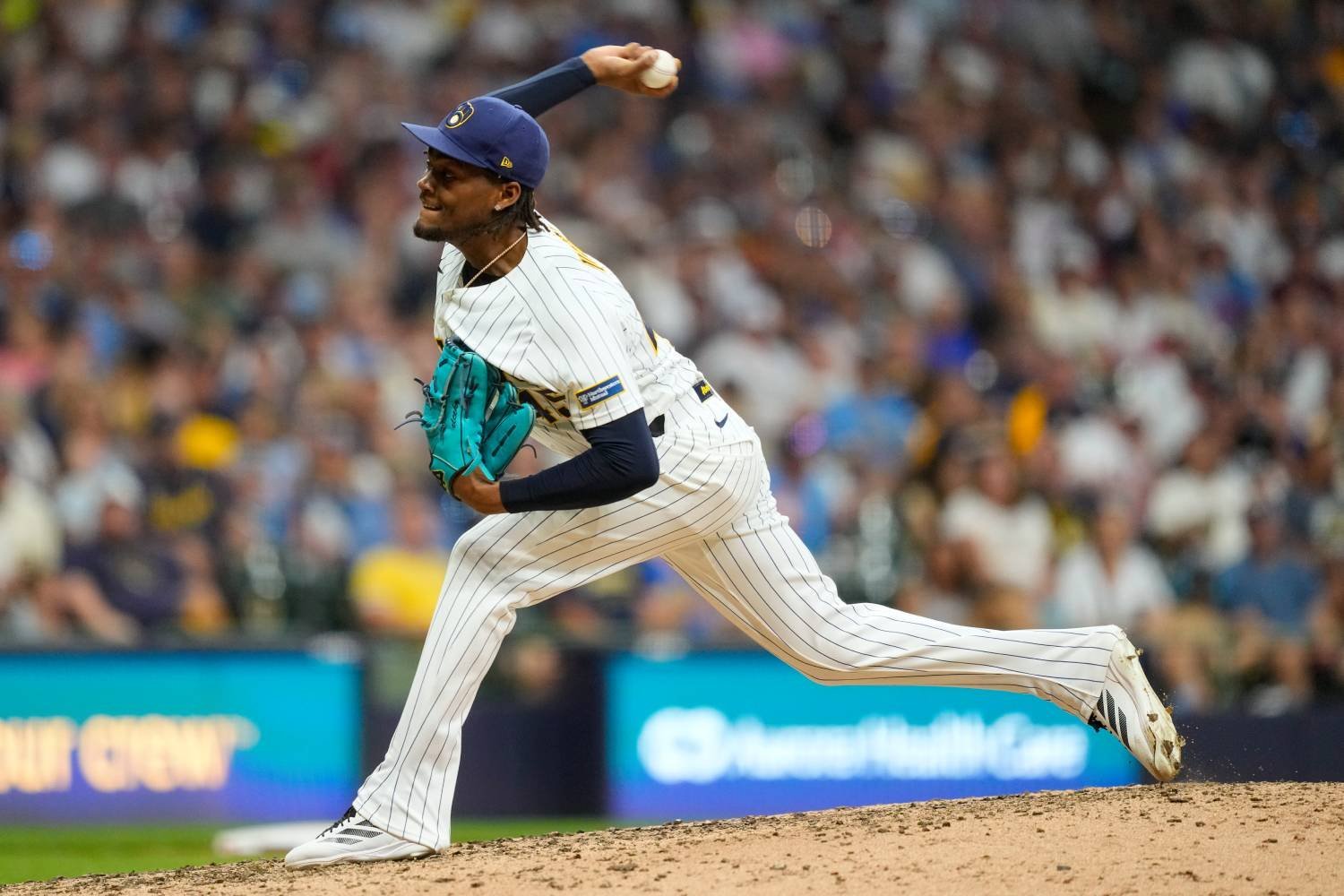 In a potentially big blow to the Milwaukee Brewers, right-handed reliever Abner Uribe was placed on the 15-day injured list Friday with a strained flexor in his right forearm. Right-handed reliever Grant Anderson was called up from Triple-A Nashville. The severity of the injury was not immediately known. Uribe has been the primary setup man for the Brewers after initially sharing closer duties with right-hander Trevor Megill. Uribe has a 3.08 FIP (2.05 ERA) in 49 games and 48⅓ innings this season. He has converted six saves in eight chances this season, while having a 9.4% walk rate and 25.1% strikeout rate. His strikeout rate is down about 5 points from last year's 30.2%. Losing Uribe for any length of time will be difficult for the Brewers' bullpen, but especially as the NL Central-leading team approaches the postseason. While Anderson fills that roster spot, filling that role will be more critical for manager Pat Murphy and pitching coach Chris Hook. Anderson has been at Triple-A Nashville since Aug. 4, when the Brewers activated left-handed starter Kyle Harrison from the 15-day IL. In 44 games and 48⅔ innings, Anderson has a 4.44 FIP (3.70 ERA) with a 9.4 walk rate and 21.5% strikeout rate. Also, the Brewers outrighted right-handed reliever Lyon Richardson to Triple-A. Richardson has the option of becoming a free agent or reporting to Nashville. View the full article
 -
 The Minnesota Twins have a problem that is usually considered a good problem to have. They're too versatile, and that versatility is holding them back. Not only is it blocking top prospects like Walker Jenkins, but it's also impacting performance on the field. View the full article
 -
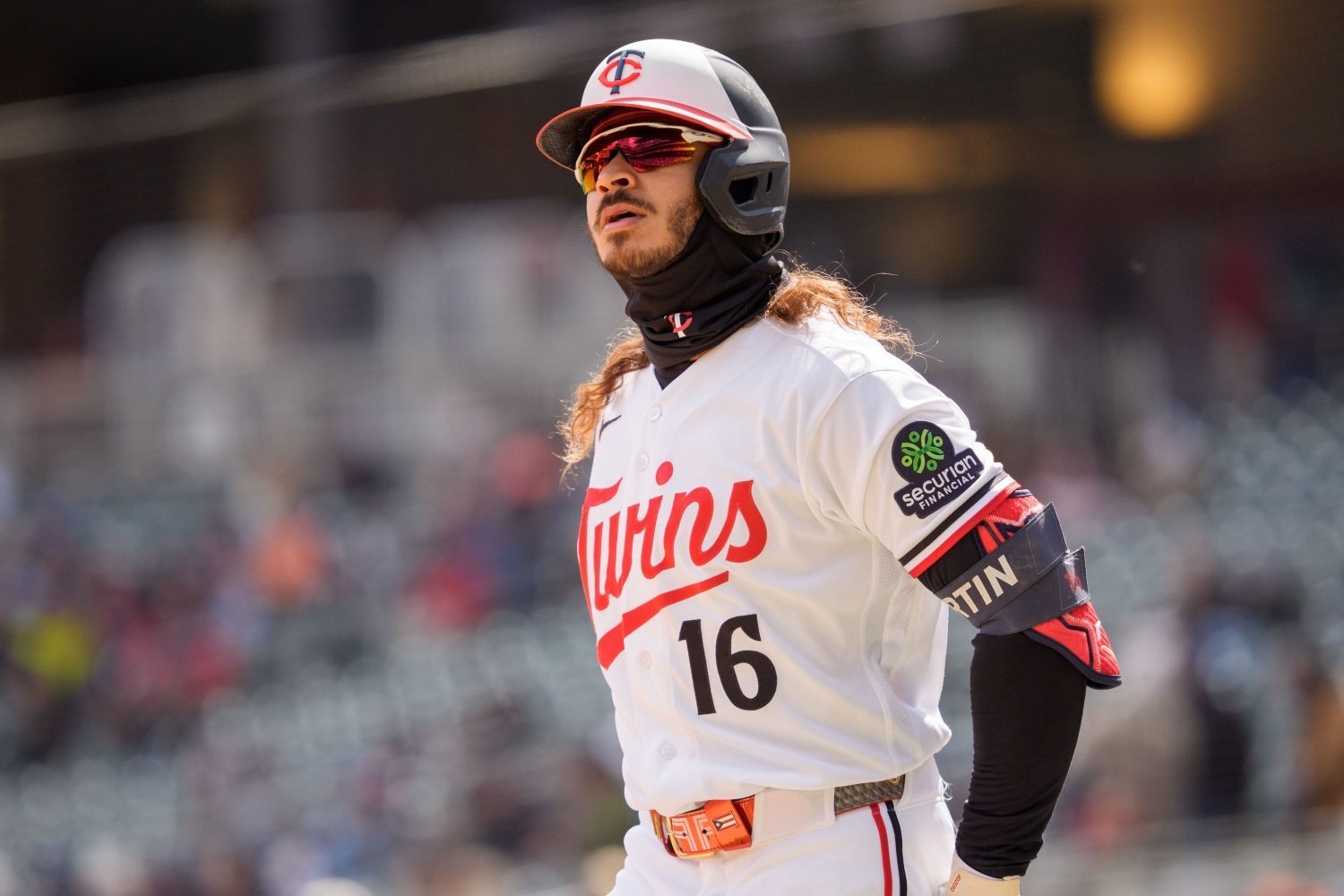 Austin Martin may have played the best game of his Twins career on Monday night against the Baltimore Orioles. He went 4-for-5 with a double, a home run, three runs scored, and a stolen base, putting together the kind of performance that reminded everyone why Minnesota was so excited to acquire him at the 2021 trade deadline. Martin was the top prospect coming back to the Twins in the Jose Berrios trade, and Monday provided a glimpse of the player the organization hoped he could eventually become. Unfortunately, one excellent game doesn’t erase what has been a prolonged stretch of poor offensive performance. For the first six weeks or so of the season, Martin looked like he was finally becoming the hitter the Twins envisioned when they acquired him. He was never expected to provide much power, but he was making up for it by leaning into the strengths that had always defined his offensive game. Martin was making consistent contact, showing impressive strike-zone awareness, and finding his way onto the bases with regularity. Through May 14, he owned a .333 batting average and a remarkable .454 on-base percentage, while drawing more walks than strikeouts. His 155 wRC+ during that span suggested Minnesota had found a legitimate high-level contact bat. At the end of April, Twins Daily named Martin the team’s Hitter of the Month, which was especially encouraging based on his strong finish to 2025 (108 OPS+ in 50 games). That early-season success made Martin's subsequent collapse even more difficult to understand. Since May 14, he is batting just .186/.290/.273 for a .563 OPS over 200 plate appearances. His strikeout-to-walk ratio during that stretch is 40-to-20, and he has been worth -0.83 WPA. Over a 162-game pace, that comes out to roughly -2.0 WPA. Those aren't numbers that simply suggest a player is going through a minor slump. They're the kind of numbers that make it difficult for a team trying to remain competitive to justify keeping a player in the lineup. The Twins have also tried to put Martin in situations where he can succeed. He has received some protection from right-handed pitching because the platoon numbers are so different. Martin owns a .587 OPS against right-handed pitchers compared to a much better .809 OPS against lefties. Still, some of those positive numbers versus southpaws came in the season’s early weeks. The problem is that opponents have also figured out that there isn't much reason to fear Martin's power. His .337 slugging percentage against fastballs is nearly 40 points lower than it was in 2025, while his contact against breaking and offspeed pitches has been particularly problematic. He is batting below .175 against those pitch types, making it increasingly difficult for him to consistently reach base the way he did earlier in the season. That's where the roster fit becomes especially difficult to defend. Martin's best traits are supposed to be his ability to make contact and get on base, but when neither of those things is happening consistently, there isn't much else to carry his offensive profile. He isn't providing enough power to make up for a low batting average, and the current version of Martin isn't getting on base at a high enough clip to justify sacrificing offense elsewhere in the lineup. The Twins also have a fairly easy solution available if they decide it's time for a reset. Martin has one minor league option remaining, meaning Minnesota can send him to Triple-A without having to expose him to waivers and potentially lose him for nothing. There is precedent for taking this approach with a talented player who has struggled at the big-league level, as the Twins did with Royce Lewis earlier this season. A trip to the minors could give Martin an opportunity to get regular at-bats, work through his swing, and rediscover the approach that made him so effective during the first six weeks of the season. The timing could make even more sense with Byron Buxton expected to return as early as this weekend. Instead of trying to find another way to squeeze Martin into an already crowded roster, the Twins could use Buxton's return as an opportunity to make the move. Martin can go to Triple-A and work on getting back to the player he looked like in April and early May, while Minnesota puts a more productive lineup on the field during a critical portion of the season. Monday's performance should not be ignored, either. Going 4-for-5 with a home run, double, three runs, and a stolen base is exactly the type of game that can remind a player and an organization what is possible. But the Twins can't make roster decisions based on one night, especially when the previous 200 plate appearances have been this poor. Martin still has time to change the narrative surrounding his Twins career. The organization invested heavily in his potential when it acquired him as part of the Berríos trade, and his early-season production showed that there may still be a legitimate big-league hitter somewhere in there. Right now, though, the Twins need production more than they need potential, and Martin hasn't provided enough of it for nearly half a season. Does Martin need a reset at Triple-A? Leave a comment and start the discussion. View the full article
 -
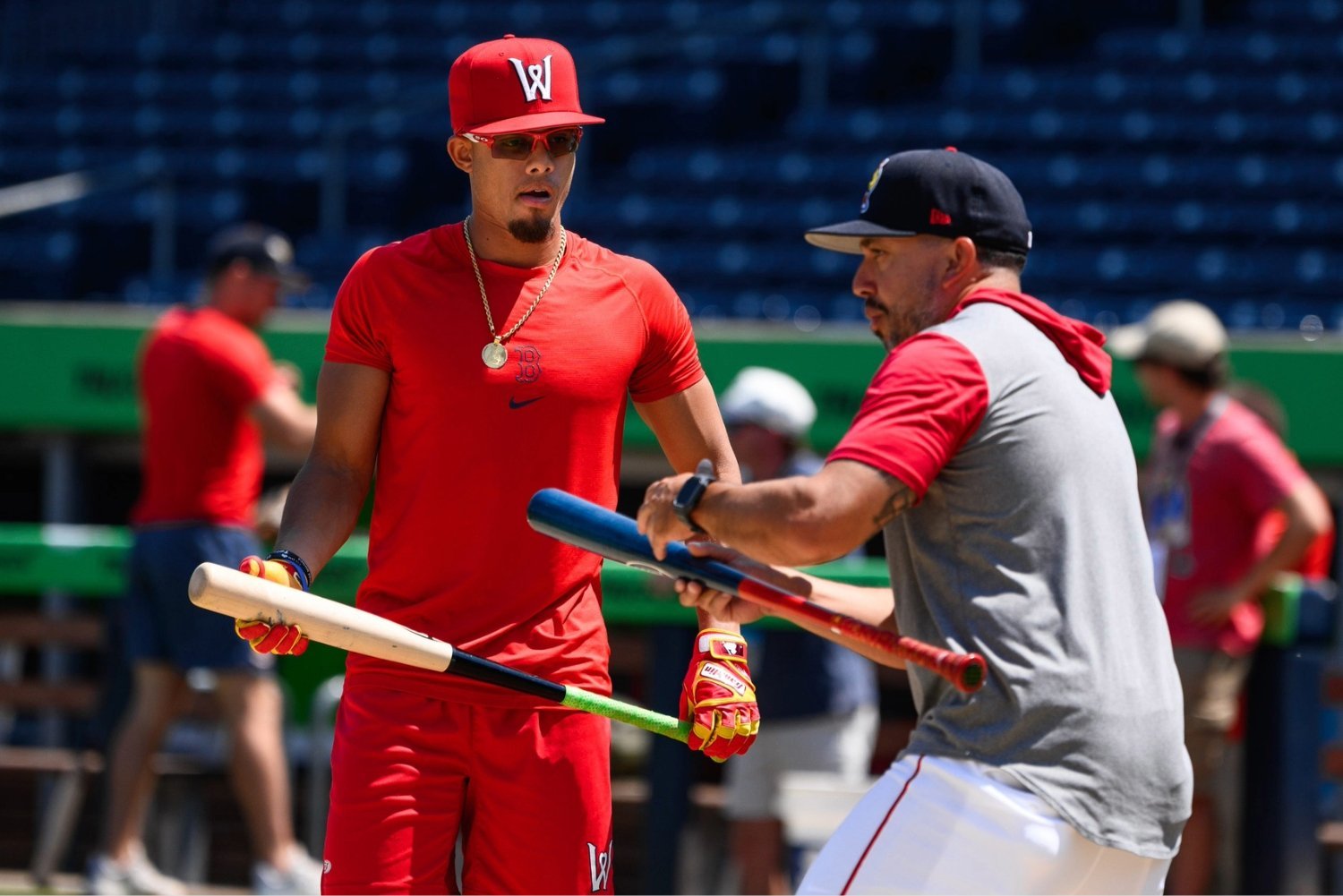 Winners of 16 of their last 20 games, Worcester is playing some of their best baseball at exactly the right time. Since traveling to Syracuse at the end of June, the WooSox have gone 24-10, vaulting themselves up the standings and into the conversation of being the potential second-half winners of the International League. In Triple-A, the season has been broken into two halves since 2022. In the International League, the team that has the best record between the two divisions at the end of each half secures a playoff spot. The Memphis Cardinals were this season’s first-half champions, securing home field for a best-of-three series to determine the league champion; the winner of that gets to play in Las Vegas against the Pacific Coast League’s champion to determine a Triple-A champion. Following a 2-1 win on August 12, the team sits just half a game back of Indianapolis for first place. The WooSox have put themselves into a situation where they have a shot to compete for their first championship since they moved to Worcester and the playoff format changed. To say that the thought of a playoff race isn’t on the team’s mind would be wrong. “I’m not gonna say I’m not thinking about it, cause I’d be lying if I wasn’t,” acting manager Iggy Suarez admitted to the media back when the team was two games back of first. “You look at the standings and kind of see where you are. You don’t scoreboard watch too much, you look where you are after games. But you can’t help to check. “We’re not talking about it around here. It’s like, we just gotta do what we do and whatever happens, happens. That’s all we can do." This isn’t the first time Suarez has been involved in a playoff chase. When he was a player back in 2006 with the Portland Sea Dogs, he was called up from the Wilmington Blue Rocks to help the team as they were competing for the Double-A championship. The team would go on to capture the franchise’s first Eastern League Championship that season. It wouldn’t be the only time Suarez was involved in a playoff race, as he was the manager of the Greenville Drive when they swept the South Atlantic Championship Series in 2023 with a roster that had a few guys who are now in Worcester. “It’s a cool time to be in. I’ve been fortunate enough as a player to do it, 2006 in Portland. I’ve done it as a manager, we won in ’23 [in Greenville]. The players know. Let’s keep playing our game and what we do.” Worcester’s season has been defined by not just one player carrying the team, but thanks in part to everyone stepping up at different times. Early in the season, they lost key players such as Payton Tolle, Jake Bennett, Mickey Gasper and Nick Sogard to the parent club. Despite that, the team hovered around .500 thanks to the contributions of guys like Allan Castro, Anthony Seigler, Raymond Burgos and Vinny Capra. Even when Seigler was promoted to Boston and the team lost a key offensive piece, others stepped up as Tyler McDonough and Max Ferguson were brought up from Portland and contributed immediately. Now in the second half, that playstyle has evolved. Since traveling to Syracuse at the end of June, the offense has been rolling. In the month of July, the team had 10 position players with an OPS over .700. Castro just missed that with an OPS of .690. Eight players had at least nine RBIs for the month and Brett Harris and Capra were tied for the team lead with 14. On the pitching side, the bullpen has stepped up all season. Without more than one available starting pitcher until late July, the team was constantly throwing bullpen games, sometimes four times a week as they navigated a lack of arms. Innings have been tough to cover, but the bullpen led by Angel Bastardo, Wyatt Olds, Seth Martinez, Eduardo Rivera and recently traded reliever Tyler Uberstine held down the fort in the month of July. Then, reinforcements from Double-A came in the form of Blake Wehunt, John Holobetz and Gage Ziehl. “When I got the text from Dan [Delucia] and it’s not all TBDs, when you see actual names, I was like is it for real. It’s a breath of fresh air. I bet the bullpen is pumping their fist in the ‘pen, give them a little bit of rest,” Suarez joked when the topic of the new starters was approached. The heavy reliance on the bullpen hasn’t gone unnoticed; following the August 12 game against Buffalo, Worcester has deployed 31 bullpen games. Overall, their record has been 19-12 across those games, a sign of how dominant their bullpen has been. “Before, we were asking a lot out of them and I think they understand the situation. They’ve stepped up. It’s not an easy thing to do, especially doing it as many times as we’ve done this year. I think it’s a mindset they’ve grown accustomed to and they’ve been getting better at. I’ve never seen this many like we’ve had this year, but again it’s a testament to how they prepare and are able to give us good outings.” For most of the season, the team would have four, sometimes five pitchers available each night. The plan was to navigate outs rather than plan innings. Most pitchers would deliver two innings a night, and some such as Noah Song and Hobie Harris have been able to provide length and give three innings. The hope was that the team would make it through each game with the four arms. If not, it was likely a position player such as Juan Montero or Nathan Hickey who would take the mound. “It’s a breath of fresh air. There’s still some hiccups that can happen here and there, but to be able to have starters that can give us three or four innings in the beginning of the game to go into the bullpen as opposed to going into the bullpen first and then Hickey’s coming in the seventh.” And now with everything starting to click for Worcester, the potential the team always had is now being shown. The players who kept the season alive are still thriving, but now with assistance from the next wave of incoming prospects. The roster has mostly stayed the same, but the latest additions that have been optioned from Boston and promoted from Portland has allowed the team to flourish. Each time it seemed they were out of a game during the second half, the team has fought back in and managed to win. Against Jacksonville on July 22 the team was trailing 7-0 and then 10-4 in a seven-inning game before eventually walking them off 13-12. “There’s an energy in the dugout knowing that if we’re within striking distance we’ll have a chance even if we’re behind. I think any kind of lead, we don’t panic. It’s just a matter of just giving ourselves good at-bats. Again, you feel the energy whether it’s in the dugout with our bats or coming from the bullpen and our pitchers on the mound. Once you have that energy and that mentality there’s no doubt we’ll be in it,” Suarez explained about the team’s recent hot streak. Worcester has never had a losing season since moving from Pawtucket, but this season has a different feel to it. The team has been a cohesive unit all year despite the roster being in a constant state of change. Led by players such as Arias, Campbell, Castro and Capra on the field, Worcester is now riding high and aiming for a trip to Las Vegas. View the full article
 -
Padres Promote Alex McCoy To Double-A San Antonio
DiamondCentric posted an article in Padres Mission
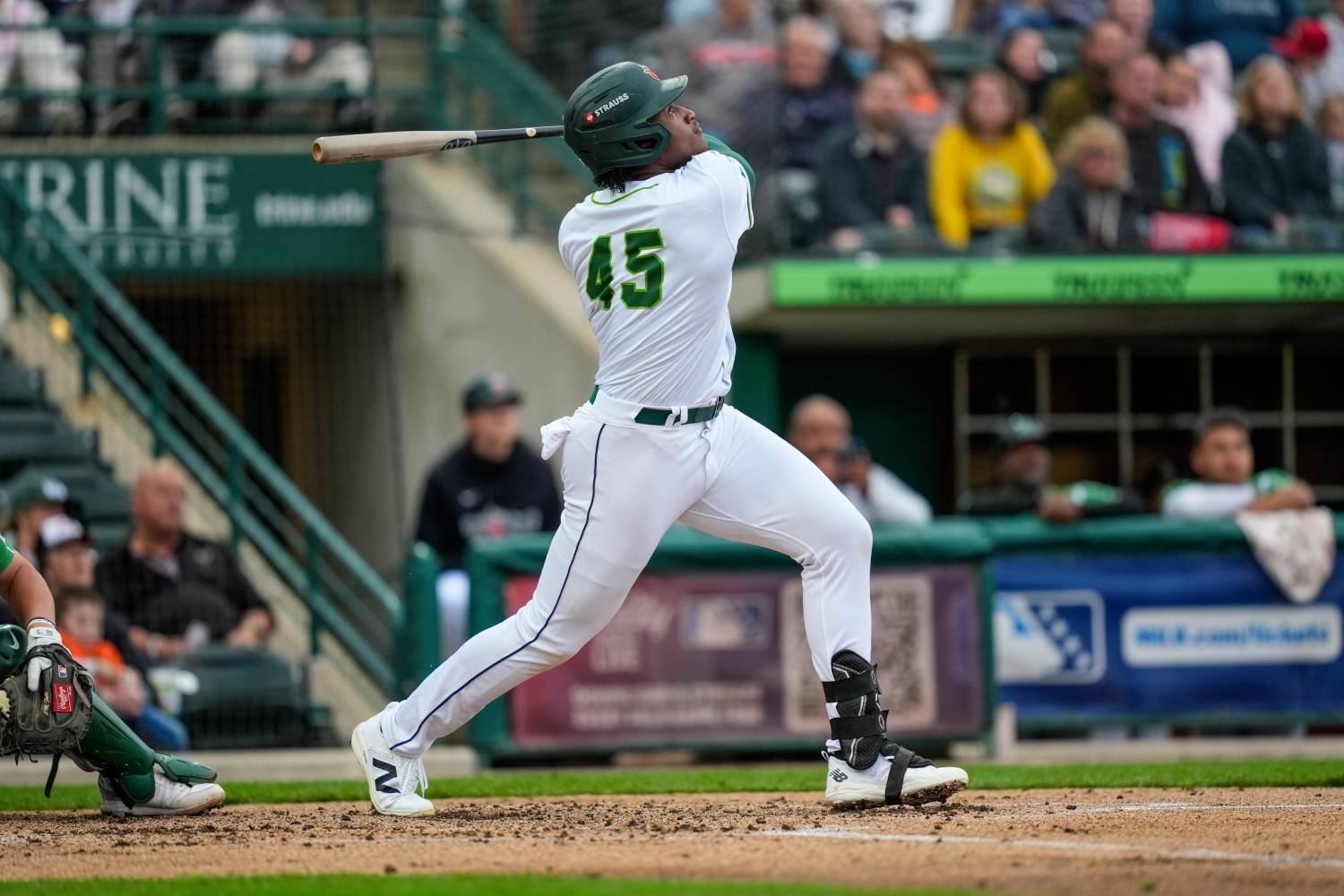 One of the better stories of the season in the San Diego Padres' system is movin' on up. Left fielder Alex McCoy, Padres Mission's No. 8 prospect, was promoted from High-A Fort Wayne to Double-A San Antonio on Friday. To make room on the Missions' roster, outfielder Jake Cunningham was placed on the seven-day injured list. The 24-year-old right-handed hitter signed with the Padres as an undrafted free agent in 2024 and has done nothing but hit since. This year with the TinCaps, the 6-foot-5, 240-pound McCoy slashed .268/.351/.469 with 15 homers and 55 RBIs, while stealing 20 bases in 97 games. He got off to a blazing start this year, posting a .354/.386/.683 in 22 April games. McCoy hit his Midwest League-leading 27th double in his last game Tuesday (the TinCaps have had their last two games wiped out by weather) as he had a hand in all four of Fort Wayne's runs in a 5-4 loss to the Quad Cities River Bandits. McCoy ranks in the top five in the Midwest League in three other categories: third in extra-base hits with 43, fourth in hits with 99 and fifth in total bases with 173. He leads the TinCaps in runs with 59, homers, RBIs, steals, multihit games with 27 and multi-RBI games with 15. View the full article
 -
Royals to play the Red Sox in Next Year's Field of Dreams Game
DiamondCentric posted an article in Royals Keep
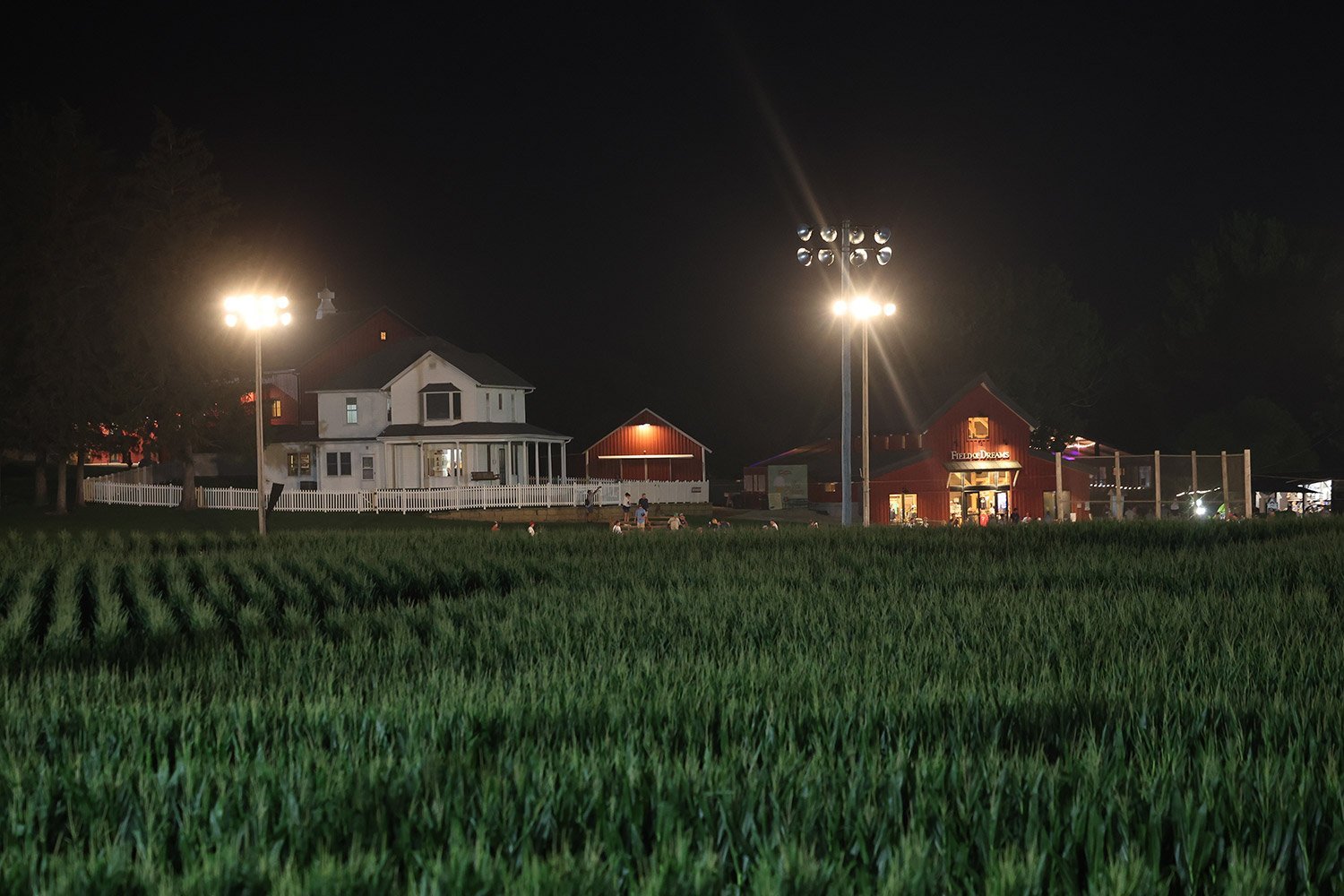 On Thursday, the Phillies and Twins played in Dyersville, Iowa continuing MLB's Field of Dreams Game series. The day after MLB's return to the cornfields of Iowa, Major League Baseball announced that the Royals will play the Boston Red Sox in next year's edition. The Royals will be listed as the home team, and the game will take place on Thursday, August 12 with NBC Sports providing coverage. Both teams will get a day off on the 13th before resuming the three-game series at Kauffman Stadium on August 14-15. This will be the fourth edition of the Field of Dreams Game. The series took a break following 2022 in order to renovate and expand the complex in Dyersville next to the original film site before resuming the series in 2026. Teams participating in the Field of Dreams Game have traditionally worn throwback uniforms. While the Royals have not changed their look drastically in their history, expect a look reminiscent from the early years of the franchise. The Royals are the first true expansion franchise to participate in the series, although the Twins previously wore the original uniforms from their first season in Minnesota after relocating from Washington. View the full article
 -
Gleeman & The Geek: Field of Dreams, Buxton, and 15 Years
DiamondCentric posted an article in Twins Daily
 You can listen by downloading us from: iTunes, Spotify, YouTube, iHeartRadio, Stitcher, GleemanAndTheGeek.com, or by clicking this link, or by watching/listening below. View the full article
 -
 The San Diego Padres have starting pitching? The San Diego Padres have starting pitching. The San Diego Padres have starting pitching! Randy Holt and Steve Drumwright recap the week that was, meaning a 5-1 homestand, including a sweep of MLB's best team, that vaulted them into the No. 2 NL wild-card spot. That is because the trade-deadline acquisitions of Robbie Ray and Casey Mize suddenly have made the starting rotation a strength instead of a question mark. That newfound depth also has a trickle-down effect that can only strengthen the Padres as they head into September. After checking in on the latest draft picks to make their pro debuts, Randy and Steve then look ahead to a six-game road trip to play the Cleveland Guardians and New York Mets. Listen on Apple Podcasts: https://podcasts.apple.com/us/podcast/padres-mission-podcast/id1896922834 Listen on Spotify: https://open.spotify.com/show/033xclmydmbLmEp0exYuYz Listen on iHeartRadio: https://www.iheart.com/podcast/1333-padres-mission-podcast-336930560 Watch on YouTube: https://www.youtube.com/@padresmission View the full article
 -
How Have the Newest Blue Jays Introduced Themselves?
DiamondCentric posted an article in Jays Centre
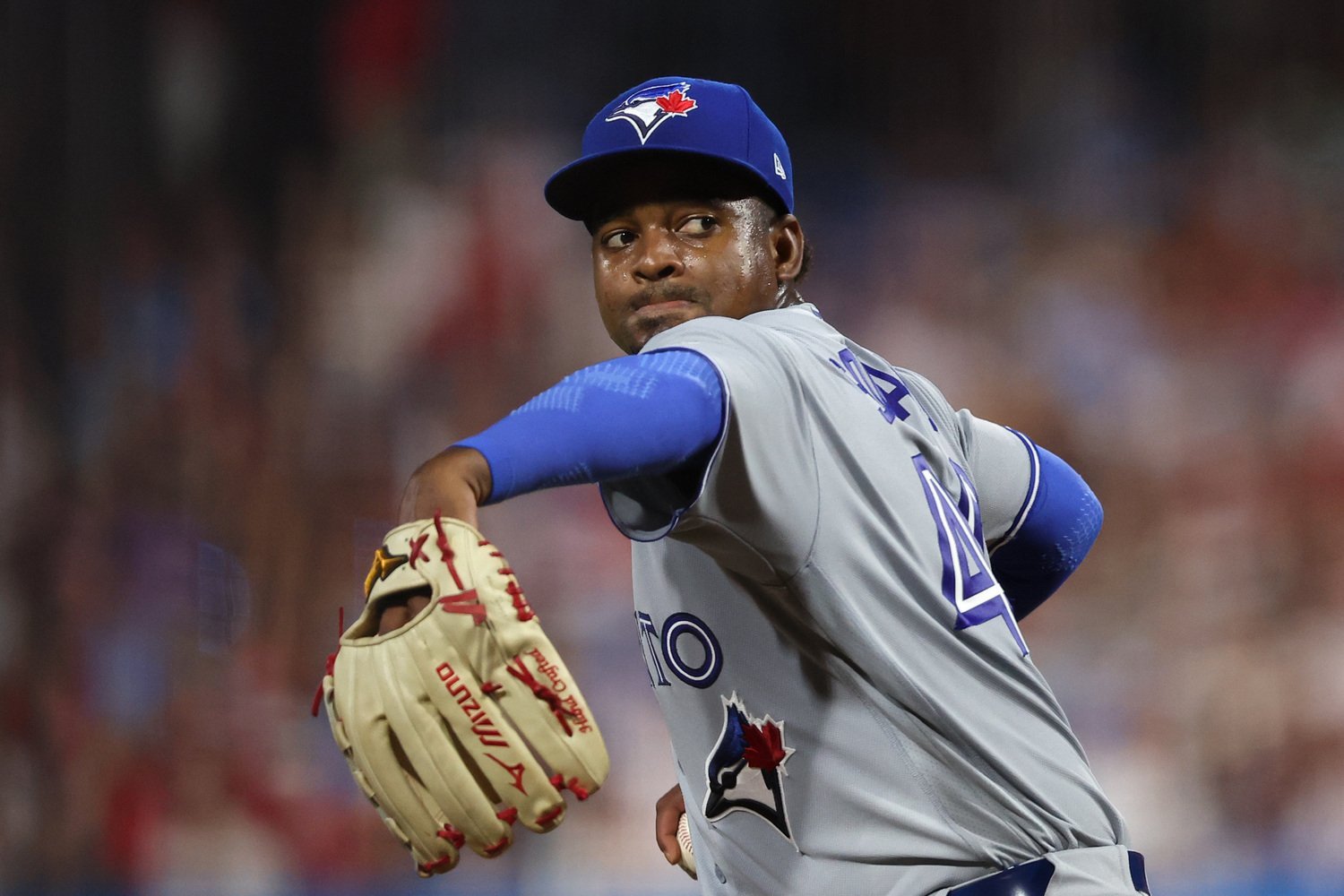 For better or for worse, the human brain is wired to make instantaneous evaluations of strangers. Within seconds, we’ve determined whether we should view them positively or negatively. It was a built-in safety feature for primal humans that has survived all of the rigorous years of evolution. Once we’ve formed that first impression, we filter all of our future impressions of this person through that lens, and we subconsciously seek confirmation to prove that our first perception was correct. Whether we like to admit it or not, we do the exact same thing with baseball players that suit up for our favourite teams. Jays fans will immediately think of J.P. Arencibia hitting a homer on the first pitch he saw in the big leagues and finishing his debut 4-for-5 with two homers and a double. Arencibia rode that debut through the next three years as the Jays’ primary catcher despite never really living up to his hot start for any extended stretches. A busy trade deadline and some roster churn have given Jays fans plenty more first impressions, and it’s hard not to be excited about a few of them. As smart baseball fans rather than hunter-gatherer cavemen, we do our best to turn off that primal instinct, watch the process and wait for a larger sample, rather than making determinations based on the immediate results from a guy’s first couple of times putting on the uniform. But that doesn’t mean we can’t overreact slightly to what we’ve seen from the newest Blue Jays in their first couple of opportunities with their new team. For example, I can’t blame you if you’re on the Brett Bateman bandwagon. The centre fielder was acquired from the Cubs in exchange for Kevin Gausman and made just two appearances in Buffalo for the Jays before Luis Urías went on the IL, opening up a spot on the major league roster. Bateman didn't have to wait for his welcome-to-the-big-leagues moment because his first start came against Zack Wheeler, a veteran of 12 major league seasons and one of the best pitchers of the last decade. Wheeler’s first pitch to the nine-hitter was a heater up in the zone, which Bateman mashed off of the left field fence for a double. The first hit of his career on the first pitch he saw. Bateman worked walks in both of his next two plate appearances against Wheeler and finished his debut 1-for-2 with a run scored. You can understand fans buying into the hype of a successful debut, but it really opened my eyes to just how impressed the manager was when the next day’s lineup came out and Bateman was batting in the two-hole against Aaron Nola. John Schneider obviously likes his fit at the top of the lineup, because when he’s been in there, the only time he’s found himself not in the two-hole since his first start against Wheeler was when he hit leadoff against Jesús Luzardo. The best part is that Bateman’s delivered. He’s got hits in five of his first six games, and at least one run scored or batted in in four of those games as well. Obviously it’s been tough to watch this Jays team that’s scored the second fewest runs in baseball, and Bateman putting up quality at-bats in key spots amidst a stretch of winning baseball has made him a quick fan favourite. But seriously. It can’t be understated how perfectly timed his hits have been. The defense has been quiet in a good way. He also adds a good pair of legs to a Jays team with the third lowest average sprint speed in baseball, and so far the hits have come at the right times. Long-term, there are still questions as to whether or not there will be enough power to justify an everyday role, and in the tiny sample, none of his batted ball numbers look very exciting. But first impressions matter, and it’s hard to make a better one than Brett Bateman has so far. A bit of a smaller-profile first impression has come in the form of Josh Smith. Picked up from the Texas Rangers in exchange for Adam Macko in a slightly head-scratching deal at the deadline, Smith had a 65 wRC+ across 154 PAs for the Rangers. The Jays liked the contact-heavy profile as well as the defensive versatility and saw Smith as a buy-low candidate. The early returns are relatively positive. The overall numbers are carried by a 3-for-4 with a homer day against the Phillies, but he’s also stolen a base and gotten a sacrifice bunt down. It’s not sexy. He’s nobody’s new favourite player, but he’s represented a fundamental soundness that the Jays have severely lacked at times this season. Would we look on him this fondly and talk ourselves into Josh Smith if the Jays had lost seven and won four since the deadline instead of the other way around? No way! But the Jays are winning, and Smith is contributing, so his first impression is a good one. The guy Jays fans were most excited to get our eyes on following the trade deadline has now completed two appearances, and the results on his first impression are in: José Soriano is going to be a very productive Blue Jay. I’m almost as confident as when he was first acquired. He’s done a great job of showing us what could be on the table going forward without actually doing it. Racking up 18 whiffs in his Blue Jays debut last week against the Phillies was certainly intriguing, but it only translated to three strikeouts across 4.2 innings. His second Jays start came against the Red Sox, and while he was able to work a quality start, only allowing one run over six innings, he lacked a certain dominance. He worked around four hits and a pair of walks. It’s really interesting that in his most recent start, Soriano threw 45.6% sinkers and 14.4% knuckle curves – his highest and lowest marks of the year, respectively – but again, the goal here isn’t to make any sweeping declarations about Soriano based on his first couple starts with his new team. There is obviously a plan with him that extends well beyond the final six weeks of 2026. If you gave Jays fans a truth serum and asked what they thought about Soriano’s first couple starts, I bet a lot of them would be forced to admit they’re a bit disappointed. Not because he’s been bad. But because when you acquire a pitcher with the stuff that Soriano has, and acquire him for a prospect with as much helium as Arjun Nimmala, you start to dream of dominance. The good thing for Soriano: We’re not cavemen, and he’s got plenty of runway to shape the narrative of his Blue Jays tenure. View the full article
 -
 Chicago Cubs Transactions N/A. Ben Cowles Drives In Five As Iowa Routs St. Paul, 10-3 The Iowa Cubs sent 11 batters to the plate in the first inning, scored six runs, and never gave the lead back in a 10-3 win over St. Paul. Owen Miller opened the scoring with a home run. Kevin Alcantara walked, Greg Jones singled, and Ben Cowles followed with a three-run home run. Ethan Hearn hit a home run of his own, Ed Howard singled, Hayden Cantrelle was hit by a pitch, and Justin Dean singled home the sixth run. Cowles was not done. He singled home Jones in the second, and he and Jones hit solo home runs in the fifth, and then Hearn drew a bases-loaded walk in the sixth for the final Iowa run. Add it all up, and Cowles finished 3-for-3 with two home runs, five RBI, a walk, and two runs scored. Jones went 2-for-4 with a home run, a walk, an RBI, and three runs scored. Howard added two hits, and Alcantara drew two walks. Iowa totaled 10 hits, five home runs, and 10 RBI, and left seven runners on base. Kohl Franklin started and worked four innings, allowing three hits and one run with two walks and three strikeouts. Evan Taylor took the win after two innings of two-hit relief with two strikeouts. Antoine Kelly gave up two hits over 1 1/3 innings and struck out three. Eduarniel Nunez finished with 1 2/3 innings, one hit, two runs, one walk, and three strikeouts. Player AB R H RBI BB K Justin Dean 5 0 1 1 0 2 BJ Murray 5 0 0 0 0 2 Owen Miller 4 2 1 1 0 0 Kevin Alcantara 3 1 0 0 2 2 Greg Jones 4 3 2 1 1 1 Ben Cowles 3 2 3 5 1 0 Ethan Hearn 3 1 1 2 1 0 Ed Howard 4 1 2 0 0 2 Hayden Cantrelle 3 0 0 0 0 3 Player IP H R ER BB K HR Kohl Franklin 4 3 1 1 2 3 1 Evan Taylor 2 2 0 0 0 2 0 Antoine Kelly 1 1/3 2 0 0 0 3 0 Eduarniel Nunez 1 2/3 1 2 2 1 3 1 Knoxville Breaks A 1-0 Deficit With Four-Run Seventh In 6-1 Win The Knoxville Smokies collected five hits without scoring through six innings before turning the game around in a 6-1 win over Rocket City. Trailing 1-0, Knoxville strung together a four-run seventh. Carter Trice singled, Karson Simas singled, and leadoff man Kane Kepley walked to load the bases. Alex Ramirez singled home a run, and Miguel Useche doubled to clear the bases and put Knoxville up 4-1. Two more runs followed in the eighth. Dom Krupinski walked, Alex Madera singled, Simas singled home a run, and Kepley doubled home another. Ramirez led the offense at 3-for-5 with an RBI. Simas matched him with three hits in four at-bats, an RBI, and a run scored. Useche went 2-for-4 with a double and three RBI, the most of any Smokies player. Brody McCullough started and gave Knoxville five innings, allowing three hits and one run without a walk while striking out eight. Daniel Palencia followed with a hitless inning on a rehab assignment. Yenrri Rojas earned the win with two innings, one hit, no runs, and two strikeouts. Tyler Ras closed it out with one inning and one hit. Knoxville pitching held Rocket City to five hits, walked none, and struck out 10. Player AB R H RBI BB K Kane Kepley 4 1 1 1 1 0 Alex Ramirez 5 1 3 1 0 0 Miguel Useche 4 0 2 3 0 1 Andy Garriola 3 0 0 0 0 1 Dom Krupinski 3 1 0 0 1 1 Carter Trice 3 1 1 0 1 1 Ariel Armas 4 0 1 0 0 2 Edgar Alvarez 0 0 0 0 0 0 Alex Madera 4 1 1 0 0 1 Karson Simas 4 1 3 1 0 0 Player IP H R ER BB K HR Brody McCullough 5 3 1 1 0 8 0 Daniel Palencia 1 0 0 0 0 0 0 Yenrri Rojas 2 1 0 0 0 2 0 Tyler Ras 1 1 0 0 0 0 0 South Bend Rallies Late But Falls At Great Lakes, 8-6 The South Bend Cubs spotted Great Lakes eight runs over the first four innings and could not close the gap, losing 8-6. South Bend answered in the first when Kade Snell walked and Josiah Hartshorn singled him home. Logan Poteet hit a home run in the second. Matt Halbach hit a home run in the seventh. Hartshorn drove in Snell again with a single in the eighth. The ninth inning brought South Bend within two. Alexey Lumpuy singled, Poteet singled, and Brennan Hudson doubled home a run. Snell grounded out to bring in another before Angel Cepeda struck out to end the game with Hudson standing at third. Hartshorn finished 2-for-4 with two RBI, and Halbach went 2-for-4 with a home run, an RBI, and a run scored. Poteet also had two hits, a home run, an RBI, and two runs scored. Lumpuy added two hits and a run. Nazier Mule started and took the loss, allowing six hits and eight runs, seven of them earned, over 3 2/3 innings with three walks and three strikeouts. Yoendris Gonzalez followed with 2 1/3 innings, four hits, no runs, and two strikeouts. Ethan Bell added two innings, two hits, no runs, and two strikeouts. Player AB R H RBI BB K Kade Snell 4 2 0 1 1 2 Angel Cepeda 4 0 0 0 1 2 Josiah Hartshorn 4 0 2 2 0 0 Jose Escobar 4 0 0 0 0 1 Matt Halbach 4 1 2 1 0 0 Alexey Lumpuy 4 1 2 0 0 1 Logan Poteet 4 2 2 1 0 0 Brennan Hudson 4 0 1 1 0 2 Geuri Lubo 4 0 0 0 0 2 Player IP H R ER BB K HR Nazier Mule 3 2/3 6 8 7 3 3 2 Yoendris Gonzalez 2 1/3 4 0 0 0 2 0 Ethan Bell 2 2 0 0 0 2 0 Derniche Valdez Drives In Four As Myrtle Beach Pulls Away, 11-4 The Myrtle Beach Pelicans broke a 4-4 tie and then buried Hill City with a six-run eighth inning in an 11-4 win. Myrtle Beach led 4-1 through three innings. Ethan Conrad singled home Jose Silva in the first with a well-placed chop to shallow right. Juan Cabada brought in Derik Alcantara on a force out in the second, and Corey Nunez doubled home Caden Sorrell before Derniche Valdez added a sacrifice fly in the third. Hill City tied it in the fifth without a hit. Nunez singled home Conrad to put Myrtle Beach back in front, then the eighth broke the game open. Ivan Cespedes was hit by a pitch, Cabada doubled, Silva singled in a run, and Sorrell singled in another. Nunez walked, and Valdez tripled to clear the bases. Nunez finished 3-for-4 with a double, a walk, two RBI, and two runs scored. Valdez drove in four on his triple and sacrifice fly. Cabada, Silva, Sorrell, and Conrad each had two hits. Myrtle Beach totaled 13 hits and left nine runners on base. Chase Meyer started and gave the Pelicans 3 1/3 innings, allowing two hits and one run with three walks and six strikeouts. Geovanny Vasquez did not allow a hit over 1 2/3 innings but walked three and gave up three runs, two of them earned. Jordan Henriquez worked one inning with one hit, one walk, and one strikeout. Luke Alwood took the win with three innings, one hit, one walk, and five strikeouts. Player AB R H RBI BB K Juan Cabada 5 1 2 1 0 0 Jose Silva 4 2 2 1 0 1 Caden Sorrell 5 2 2 1 0 2 Ethan Conrad 5 1 2 1 0 2 Corey Nunez 4 2 3 2 1 0 Derniche Valdez 4 1 1 4 0 1 Derik Alcantara 3 1 0 0 2 0 Fernando Cruz 4 0 0 0 1 3 Ivan Cespedes 3 0 1 0 0 1 Jan Luis Reyes 0 1 0 0 0 0 Player IP H R ER BB K HR Chase Meyer 3 1/3 2 1 1 3 6 0 Geovanny Vasquez 1 2/3 0 3 2 3 2 0 Jordan Henriquez 1 1 0 0 1 1 0 Luke Alwood 3 1 0 0 1 5 0 Top-20 Prospect Performance Jefferson Rojas: DNP Pedro Ramirez: DNP Jaxon Wiggins: DNP Josiah Hartshorn: 2-for-4, 2 RBI Kevin Alcantara: 0-for-3, 2 BB, 2 K Ethan Conrad: 2-for-5, 3B, RBI, 2 K Kane Kepley: 1-for-4, 2B, RBI, BB Owen Ayers: DNP Jonathon Long: DNP Kaleb Wing: DNP James Triantos: DNP Brooks Caple: DNP Mason McGwire: DNP Ty Southisene: DNP Will Sanders: DNP Juan Cabada: 2-for-5, 2B, RBI Eli Lovich: DNP Ariel Armas: 1-for-4, 2 K Jostin Florentino: DNP Grant Kipp: DNP View the full article
 -
 Spencer returns to the show as he and Jack assess the level of concern after a three-game sweep in San Diego. Apple Podcasts: https://podcasts.apple.com/us/podcast/the-brewer-fanatic-podcast/id1740648724 Spotify: https://open.spotify.com/show/5CY8mWsQayqjDXqw9OT2Td iHeartRadio: https://www.iheart.com/podcast/263-the-brewer-fanatic-podcast-166534588/ Pocket Casts: https://pca.st/ommzz627 Watch On YouTube: https://www.youtube.com/@brewerfanatic View the full article
