


DiamondCentric
-
Posts
2,631 -
Joined
-
Last visited
Never
Content Type
Profiles
Forums
Events
News
Tutorials & Help
Major League Baseball Videos
Guides & Resources
Store
Downloads
Gallery
Everything posted by DiamondCentric
-

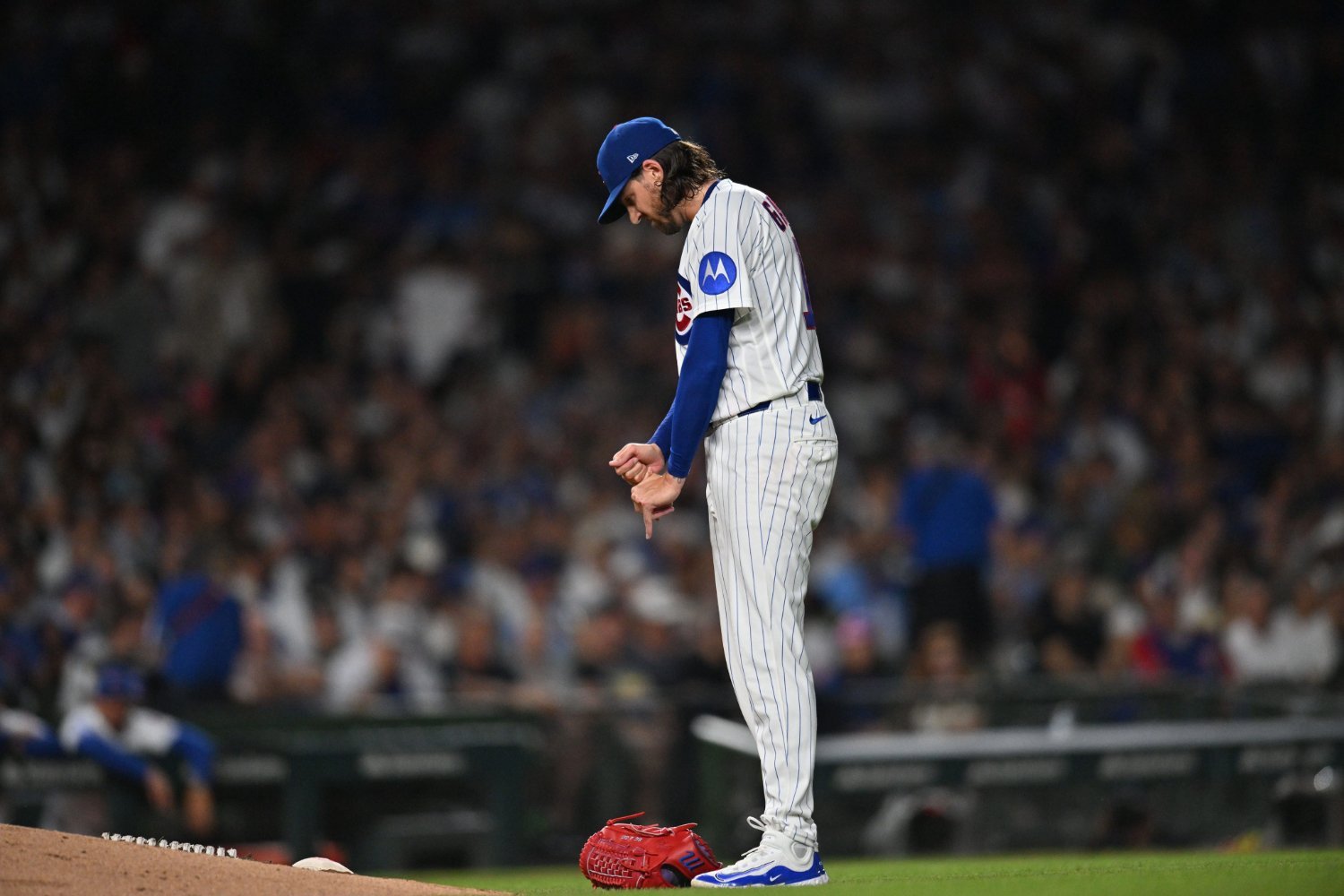 I don't think it's hard to argue that the Chicago Cubs’ starting rotation has been one of the more fascinating groups to follow around the league during the 2026 calendar year. After acquiring Edward Cabrera back in January, it looked like the North Siders would enter the season with, hopefully, four quality starting pitchers: Matthew Boyd, Shota Imanaga, Cabrera, and a promising young arm in Cade Horton. But as we all know, things move fast in professional sports... and they didn’t necessarily move in the Cubs’ favor. Horton made just two starts before undergoing Tommy John surgery, and after Ben Brown flashed as a starter following a move to the rotation in May, he was placed on the IL just a month later and has yet to return. Not to mention, Cabrera, who missed about two months earlier in the year, is now back on the IL with a blister issue; likewise, Boyd missed nearly two months himself. It’s been a rocky road for the pitching staff, but rather than fold, the front office became aggressive. Chicago added a trio of starting pitchers at the trade deadline in Kevin Gausman, Clay Holmes, and Braxton Garrett, who’s currently with the Iowa Cubs. With the team’s eyes set on October baseball, addressing the starting rotation was a huge point of emphasis, and there’s no question that unit is in a better place now. Boyd-Gausman-Imanaga-Holmes-Cabrera, when healthy, is a strong unit, and odds are good one of those names (presumably Cabrera) will get moved to a relief role come October. But how does the Cubs’ starting rotation stack up to other NL contenders? This team currently holds the top Wild Card spot in the National League, with a record of 74-54 The three teams above them in the standings are the Milwaukee Brewers, Atlanta Braves, and Los Angeles Dodgers, while everyone else is fighting beneath them for of the other two Wild Cards. And just to get it out of the way now: I’m not going to pretend that anyone has a better rotation than the Dodgers. Tarik Skubal and Yoshinobu Yamamoto are two of the top pitchers in the entire league, and there’s an absurd amount of depth behind them. When healthy, this is a team with six or seven names that could start in the postseason. Tyler Glasnow, Blake Snell, Justin Wrobleski, and Kris Bubic are all names that I’d feel good about taking the mound in October, and no other team has that combination of top-end talent and depth within their starting rotation. Injuries could sink them, but notice how I didn't even need to mention Shohei Ohtani's name in this paragraph to get my point across; these guys are just absurdly good on paper. The Braves and Brewers, however, are much more comparable. Obviously, both teams have legitimate aces in Jacob Misiorowski and Chris Sale. Behind them, though, things are a little thinner. Starting with the Braves: Martín Pérez has been great. However, his 4.29 expected ERA and poor underlying metrics would indicate his performance has been helped by some good luck. Grant Holmes and Bryce Elder have both been solid middle-to-back-end rotation options, but both have little, or no, postseason experience, and both have poor underlying metrics. Those tend to catch up to you in October against the best teams in the league. Spencer Strider is likely to be back soon, and Tyler Mahle has made a couple nice starts since Atlanta acquired him at the deadline. But this version of Strider is not nearly the same as he was a few years ago, and on the year, Mahle is sporting a 4.64 ERA. It’s a comparable unit to Chicago’s, and Sale is the ace the Cubs don’t have. But you have to prefer the Cubs' depth over Atlanta’s, and if I had to choose a rotation to run with for the postseason, I would take Chicago’s. The Brewers are a little scarier. Jacob Misiorowski is the heavy favorite to take home the National League Cy Young Award, and if there’s any team that’s gonna get the most out of their rotation, it’s Milwaukee. They’ve added a trio of starters via trade over the last six-ish months. They acquired left-handers Kyle Harrison and Shane Drohan from Boston back in February, as well as Dustin May from St. Louis at the deadline. Harrison has been a quality No. 2 starter for the Brewers this year, and has one of the highest strikeout rates in the league at 29.7%. Drohan and May have both pitched like serviceable middle-to-back-end rotation options, and the underlying metrics like them both even more than the surface-level numbers. And all of this is without mentioning Logan Henderson; he’s sporting a 2.70 ERA across 63 1/3 innings, and he’s striking out north of six batters for every walk he allows. His expected ERA, as well as both of his strikeout and walk rates, rank in the 94th percentile or higher among MLB pitchers. The Brewers have allowed the fewest runs of any National League team, and I hate to say it about a division rival, but the Cubs’ rotation simply doesn’t stack up. As far as the two other teams that are currently in the NL Wild Card, the Phillies and Padres, let's put it like this: The Phillies scare me, the Padres don’t. Philadelphia’s top three of Cristopher Sánchez, Zack Wheeler, and Jesús Luzardo can shut down any given lineup on any given night. They also have Aaron Nola in there as well. That’s a starting rotation that could make the Phillies a legitimate contender, even if they finish as a Wild Card team. As for the Padres, Michael King is a quality starter, but there are a lot of question marks behind him. They added a pair of starters at the deadline in Casey Mize and Robbie Ray, but both have been up and down since arriving in San Diego. Randy Vásquez and Walker Buehler are decent back-end starters, but neither poses as a huge postseason weapon. So I’d comfortably take the Cubs’ rotation in this hypothetical matchup. Pitching wins games in October, and the Cubs have positioned themselves to go into the postseason with an improved starting rotation. But compared to teams like the Dodgers, Brewers, and Phillies, I’m just not sure they’re there yet. That's going to put a huge onus on the offense to bridge the gap, which they've proven capable of doing to this point. View the full article
 -
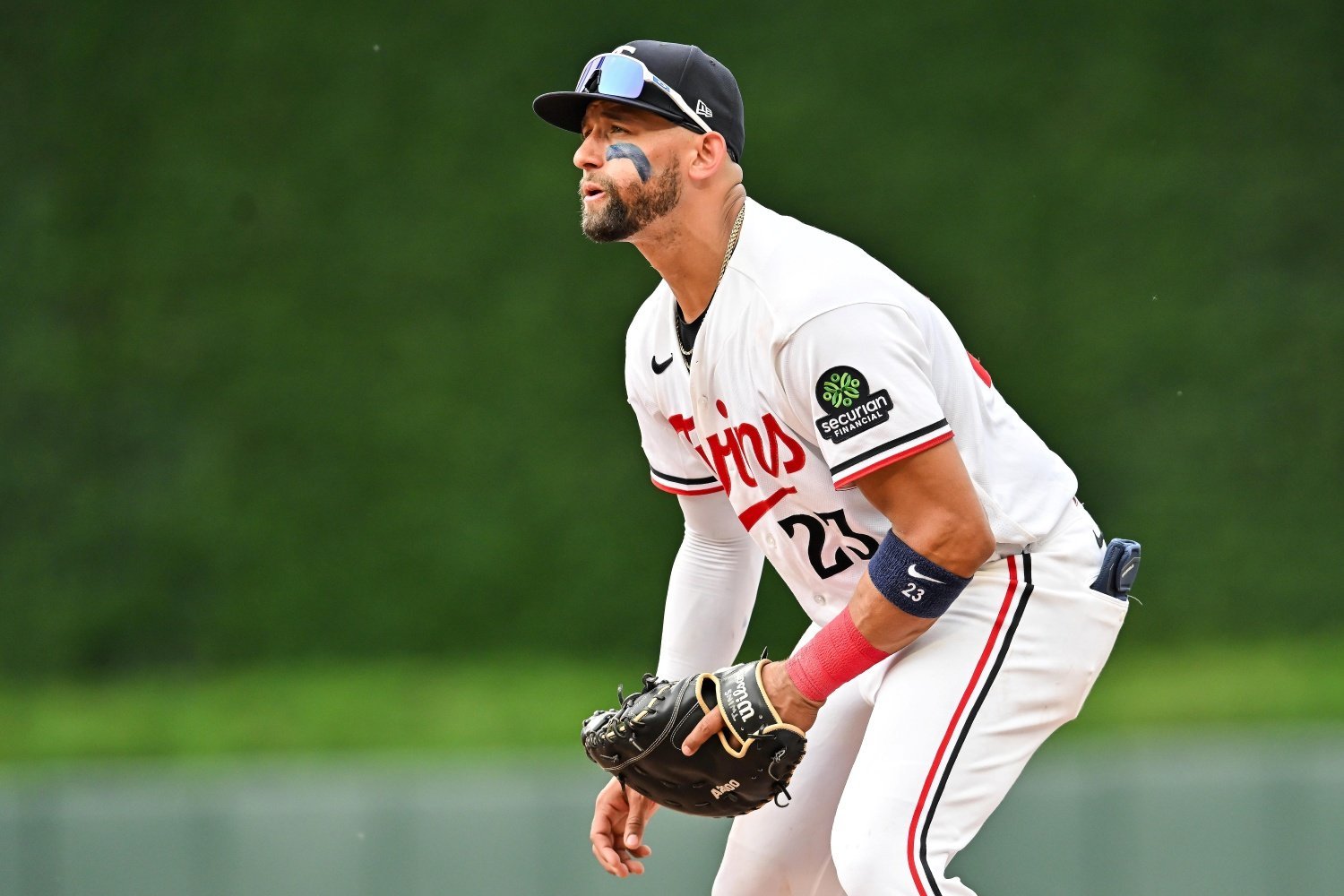 The first days of Royce Lewis's transition to first base were ugly. There are sitll times when it's ugly. He's inexperienced on the right side of the infield and in the mental game of that position, which is very different from the other spots on the dirt, and it shows. He's made the wrong play, or taken the wrong first step, more than once. He's learning on the job at that spot, just as Luke Keaschall is in the outfield. There are some moments, though, when you can see the real and durable benefit of having a player who still thinks of himself as "a shortstop playing first base." Specifically, as was highlighted when Baseball Savant rolled out new Statcast data this week documenting players' skills receiving throws at first base, Lewis is good at converting outs on throws from his teammates—and significantly better than the player his reemergence at that spot has displaced, Kody Clemens. According to Statcast, Lewis has already been worth 1 Out Above Average (OAA) as a receiver at first base, where he's had 164 tracked opportunities. Before Lewis moved to first and (mostly) pushed Clemens to second base, the latter had 142 tracked chances as a receiver at first, and was worth -2 OAA on those plays. Let's take a look at how and why. Clemens was fine on throws that were on target to him. A relatively athletic 6 feet tall and with ample experience around the bag (almost 1,500 professional innings at first base), Clemens has the basic toolkit to be a solid receiver. However, he struggled mightily on throws he had to field on the bounce, throughout the early part of the season. Statcast subdivides such plays into Bounce plays (where the ball skips at least 15 feet before the base) and scoops (where it bounces between 5 and 15 feet from the bag), but Clemens didn't experience much difference. He was worth -1.7 OAA on each type of play. Most of that lost value came from one correctable but (for whatever reason) enduring error in the way Clemens addressed the ball in those situations. He strongly preferred to work with his glove hand in front of his left leg as he anchored himself at first base, and to pick low throws backhanded. WnhuTk9fWGw0TUFRPT1fQXdVRFVRSU1VZ1VBWGx0VVZBQUhDVlZWQUFNTUJsVUFCbDFVQlFjRUNGZGRCZ1Zm.mp4 It's rare that you can put it this bluntly when it comes to how the best baseball players on Earth do their jobs, but this is simply wrong. A first baseman should stay relatively upright when they first reach the base, withholding their stride and lunge as long as possible so they can direct it toward the incoming throw. Most of the time, that allows one to field the ball with the glove in the forehand, fingers-down position. Only if a throw is tracking toward being wide by several feet should you turn your hips and reach for the hop with your thumb down. In the video above, you can see by his forward lean that Clemens committed himself too soon. If you have to play the ball backhanded, it's nice to be forward that way, so your front leg doesn't get in the way of being low enough to field the bounce cleanly, but that's a more difficult play than the throw required him to make. If he'd positioned his body more neutral and strode down through the ball later, with his glove hand freer to move and on the outside of his left leg, he could have picked this fairly easily. Nor was the above an isolated case. Here's an even more glaring one. Everything about this play, from where Lewis fielded the ball (and thus, the angle of the incoming throw) to the initial trajectory of the ball out of his hand, should have told Clemens to field the ball outside his leg, forehanded. Instead, he whiffed on the bounce because he mistimed the difficult maneuver of snatching it backhanded and turning the glove to secure the catch. MTZOVlZfWGw0TUFRPT1fQXdjRlhBWlFVbEFBQ2dFREJ3QUhBQUZXQUZoVFcxWUFBRkZXQUFNRlV3b0dWZ1ZV.mp4 A great many errors and infield singles involve some shared blame, and it's not entirely Clemens's fault that his record of playing bounces and scoops was so dreary. Neither of the throws above were good ones, even though Clemens should have done better with each. Statcast captures some of this, by estimating the expected out rate on all plays involving an infield throw and catch. That's how they assign responsibility and allot OAA in either direction. It also gives us some insight into how easy (or not) teammates made the job for any given first baseman. Overall, in his opportunities, Lewis has an expected out rate of 95.3%, 1.0 percentage points above the league average. Clemens's mark is 91.9%. Teamnmates (including and especially Lewis) made Clemens's job harder than it is for most first basemen; teammates (including Clemens) have made Lewis's job much easier. Not all of that is even captured by the numbers. There's a rhythm to infield playmaking, and shaky defense wrecks it. Sometimes, Clemens had to navigate not only an off-target throw, but one that arrived much later than he'd expected when he first read the ball off the bat and put his head down to break toward the base. Here's Lewis falling down on a ball he fielded cleanly, making a tough short-hop throw even harder to handle because the timing of the play was so disrupted. TzA0VmxfWGw0TUFRPT1fQkZkVlhGSU5Yd2NBWEFOVUFnQUhVdzlWQUFNTVcxWUFBRklEQUFKUVZWRlhDVkVD.mp4 There was more than one play similar to the above for Clemens early in the year, with both Lewis and Luke Keaschall often botching their first touch and having to rush a throw because they'd already half-ruined the play. Statcast can't really account for the way a first baseman's perception is thrown off when a teammate unexpectedly bobbles, drops or hitches en route to making a throw, but those things matter. It also can't capture the added deception of Lewis's fairly hideous overhand throwing motion from third base, which contributed to more than one misstep or missed catch by Clemens. However, that strangely unaddressed tendency to backhand balls that shouldn't have been fielded that way was the main driver of Clemens's failures to field throws well enough at first. Here's one where Lewis makes an imperfect but very long throw, and is essentially on target. Clemens just has to field the ball on his forehand side. He's so uncomfortable doing that that he falls over trying. R0JyM2pfWGw0TUFRPT1fQjFJRVUxRUVYZ29BQVZFR1VBQUhVQVpXQUZoUkIxUUFCd0VDVXdwVVVBWUJBRkJl.mp4 Again, that's supposed to be—is, really—the easier way to field that ball. Clemens is so habituated to the opposite that he couldn't handle it. He made life too hard on himself on low throws, and the way the team filled out its lineup card for most of the early season, there were too many low throws to make that a tenable state of affairs. For all his throwing trouble and the awkwardness of his playmaking at the hot corner, though, Lewis is a natural as a picker at first base. Here he is not only correctly choosing a time to backhand a ball, but making the play better. He doesn't lunge as early, and when he picks the short hop, he does so with his body moving fluidly through the ball. YVlkWjdfWGw0TUFRPT1fVlFBSFZRRUVYMUFBRGxwV1hnQUhVd2NBQUFNRUFWa0FDbE1CVlFCUkF3QlFBVmRY.mp4 This is a great instruction in one of the subtleties of athleticism, too. Lewis and Clemens are both 6 feet tall, as documented by the league for the purposes of applying an ABS strike zone to each. They're the same height, in the books and in real life, but Lewis's arms and legs are longer. That shows up in a big way when you see him make plays like the above, in contrast with the way Clemens has to attempt the same plays. Some of it is better mechanics, and perhaps better instincts or better coaching. Some of it is proportions working better for one player than for another of the same height. Again, though, Lewis does things the right way at first base, too, in a way Clemens didn't. Here he is making easy work of a throw that skipped to him, by simply playing it on the correct side of his body. M3k2MnlfWGw0TUFRPT1fVWdOWlVRZFFVQVFBWEZaWFZ3QUhBZzlXQUFBQ0JWZ0FDMU1FQmd0UUJnVURDVk5X.mp4 Here's an even better play, on which his instinct to stay back a bit longer and then make a fast, decisive move toward the ball (on the forehand side) was the finishing touch on a great play. (The runner was initially ruled safe, but a replay overturned that call.) WERadzlfWGw0TUFRPT1fQndWVEJWZFNWVk1BV1ZBRVZ3QUhWUU1DQUFBRUJWY0FVRkFCQkFZRkJBWmNWQVlD.mp4 There have been some miscues, but Lewis has been more than solid in this regard; he's been great. In his first week at first after being recalled in June, there was one play where he should have slid along the edge of the bag better and caught a high Keaschall throw while holding the base, for an out. On July 1, he simply clanked a routine throw for an error in Houston. Take away those two plays, though, and he rates even better than the 1 OAA of net value mentioned above. He's been every bit as good as a first-base receiver as Clemens was bad. For the Twins, this is a major development, and it bears watching down the stretch. Lewis is batting .274/.336/.481 since his return from the minors on June 6. That's production you'll happily take from an everyday first baseman. He's also a plus in this previously nebulous area of defense, and if he shows better range and feel for situational play as he racks up reps at the spot, he becomes a very valuable player again, in a somewhat unexpected way. Injuries defined Lewis's early career. He himself still brings them up frequently. For the bulk of the last two and a half seasons, though, he's been healthy. There were long stretches in there where it looked like he might have no viable defensive home; there were long stretches where it looked like he might not hit enough to remain a regular. Now, however, he's looking a lot like a good (if not quite star-caliber) first baseman, with some newfound durability and value on both sides of the ball. He seems to have cleared some important mental hurdles. His body is holding up better than it did before. When the team moved Lewis to first at the start of the summer, they did so (basically) as a Hail Mary. They needed to reinvigorate their lineup, and he was smashing Triple-A pitching. They needed someone to take over first base, allowing Clemens to spend his time at positions he plays better, but they didn't like what they saw defensively from either Josh Bell or Victor Caratini. Putting Lewis at that position was a last-ditch attempt to get anything good out of a player who was becoming a plausible trade candidate or a non-tender candidate come fall. As it turns out, that prayer might have been answered. Lewis might just have a medium-term home in the Twins' plans, and they might end up very glad that circumstances conspired to put their most fragile could-be slugger at a position he wouldn't have volunteered to play—but which suits his body and his skill set quite well. View the full article
 -
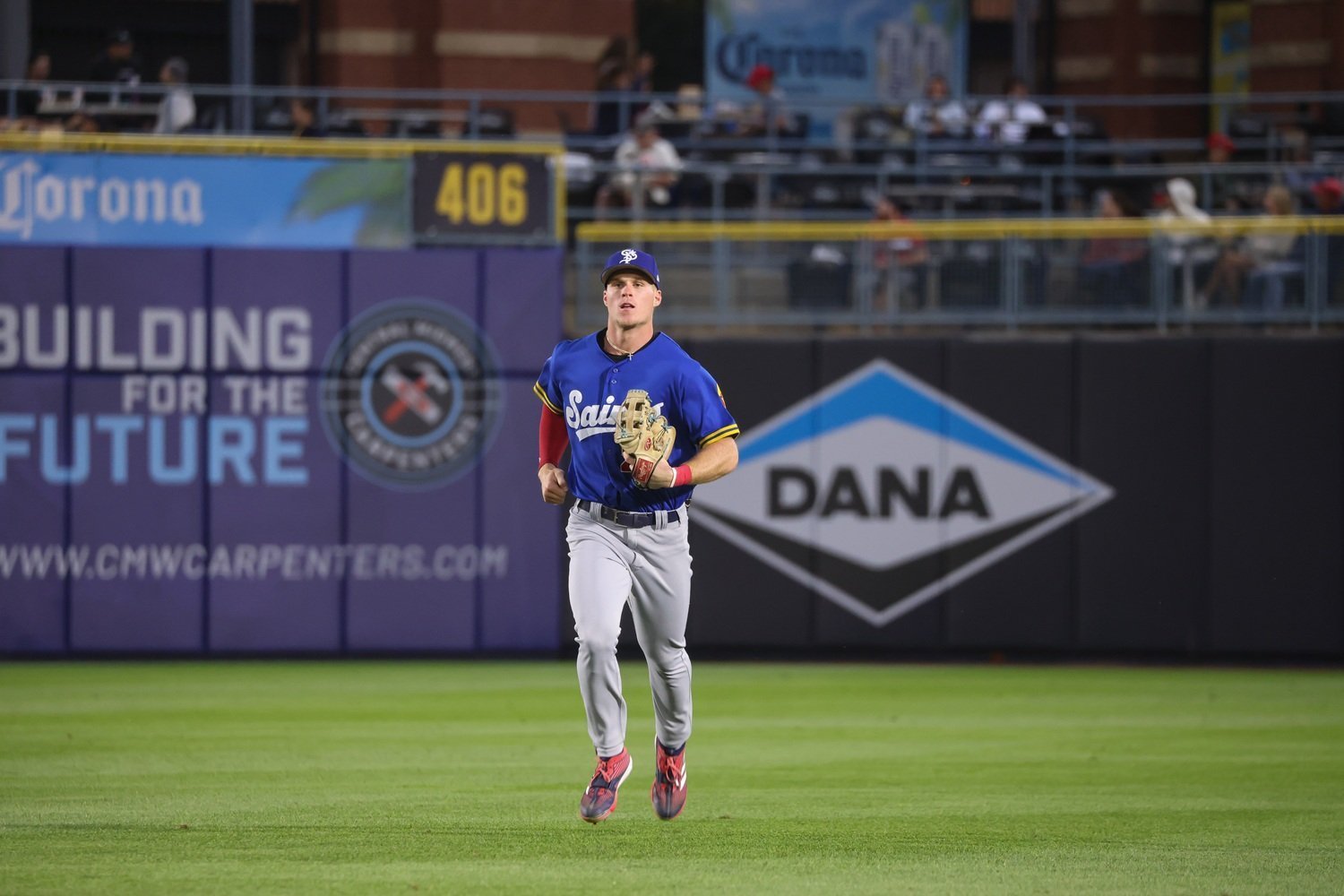 Player development is one of the biggest challenges facing every organization in baseball. When is a young player ready to take the next step? When does more time in the minor leagues help, and when does a player need to be challenged at the major-league level? The Minnesota Twins have struggled to develop consistent, star-caliber hitters at the big-league level for a long time. That makes the organization's approach with Walker Jenkins particularly important. The former first-round pick is arguably the best prospect to come through the Twins system since Byron Buxton, and Minnesota doesn't want to make a mistake when deciding when to bring him to the majors. Jenkins has already shown that he can handle many of the challenges placed in front of him. After losing months of the 2026 season to a shoulder injury, he has returned to Triple-A and performed well. Yet, despite his success, the Twins have not called him up. On Sunday's episode of Inside Twins, Twins general manager Jeremy Zoll offered some insight into why. Minnesota fans have watched another one of the organization's top prospects, Kaelen Culpepper, reach the majors this month. Several factors worked in Culpepper's favor. He's older than Jenkins. He plays shortstop, which has been a weak spot for the Twins throughout the season. He's also a right-handed hitter, which fits better into the current construction of Minnesota's roster. Zoll used Culpepper as an example when explaining how the Twins determine whether a prospect is ready for a promotion. The first factor, according to Zoll, is simple. "What is the opportunity that exists on the major-league team?" he said, posing the question to his imagined self in every theoretical situation akin to these. The Twins don't simply want to call up their best prospects because they've performed well in the minor leagues. They want those players to have a legitimate opportunity to play regularly once they arrive. For a young hitter, sitting on the bench in the majors isn't necessarily the best developmental environment. That's especially relevant when discussing Jenkins. Jenkins is a left-handed hitting outfielder. When Austin Martin landed on the injured list with a hamstring injury, it seemed like a potential opening for Jenkins, but the roster construction doesn't necessarily create an obvious everyday role for him. The Twins already have Alan Roden, another left-handed outfielder, on the roster. Roden hasn't received much playing time. If the organization believes Jenkins could end up in a similar situation, it's no wonder they've been reluctant to call him up. Against right-handed pitching, Minnesota has generally used Trevor Larnach and Luke Keaschall in the corner outfield spots. Jenkins has a case to play at the expense of either, or of designated hitter Josh Bell, but removing any of those three from the lineup risks hurting the team, and could also create friction in the clubhouse. That's essentially the situation Zoll was describing. There may be an opening on the roster, but there might not be an everyday opportunity. That difference matters. If Jenkins were a right-handed hitter, it's easy to imagine the conversation being different. His bat could provide a better fit for the current roster, while his arrival would give the Twins another option in a lineup that has struggled at times. Instead, Minnesota has a left-handed outfield prospect knocking on the door while already having left-handed outfielders on the major-league roster. The second factor Zoll mentioned was whether a prospect is "playing well enough to force the issue." That's where Jenkins appears to be moving in the right direction. Zoll said Jenkins continues to make strides, which is encouraging considering the amount of time he missed with his shoulder injury. But the organization may still believe there are more boxes for Jenkins to check before making the move permanent. There was also an interesting comment from Zoll regarding Jenkins's age. He referred to Jenkins as "super young" and pointed out that the Twins pushed him aggressively to Triple-A last season. Jenkins has already played at a higher level than many players his age. The Twins don't necessarily need to rush him because he's performing well after returning from injury. Zoll said Jenkins has things he can continue to do to put himself in the best position possible. He didn't elaborate on exactly what those things are. That leaves plenty of room for speculation, but it also reinforces the idea that the Twins don't view Jenkins's current Triple-A assignment as a punishment or a sign that they don't believe he's ready. They may simply believe he needs more time. Of course, there is another side to this argument. The Twins' offense has been scuffling. When a team is struggling to generate consistent production, adding one of the best prospects in the organization can be tempting. Jenkins has the type of talent that could provide a jolt to the lineup, and fans understandably want to see what he can do against major-league pitching. That's where the frustration comes from. It isn't difficult to look at the current Twins lineup and wonder whether Jenkins could make it better. But the organization has to think beyond the next few weeks. If the Twins call Jenkins up and he plays three or four times a week, does that actually put him in the best position to develop? If he struggles because he's bouncing between the bench and the lineup, does that create unnecessary pressure on a player who has already lost significant time this season? Those are the questions Minnesota has to answer. Based on Zoll's comments, the organization doesn't believe the opportunity is quite there yet. The frustrating part for fans is that baseball has a way of creating opportunities when players are ready. Injuries happen. Performance changes. Rosters evolve. A spot that doesn't exist today can suddenly become an everyday position tomorrow. That's particularly true for a team like the Twins, where the roster could look significantly different over the final weeks of the season. Jenkins doesn't need Minnesota to manufacture an opportunity. He needs to keep forcing the issue in Triple-A until the opportunity naturally presents itself. The Twins clearly believe in his talent. Otherwise, he wouldn't have been pushed so aggressively through the system in the first place. Now they're trying to make sure his first major-league opportunity is the right one. That patience may ultimately prove valuable. The question is whether Twins fans will be willing to wait. Do you agree with Zoll's reasoning for keeping Jenkins at Triple-A? Leave a comment and start the discussion. View the full article
 -
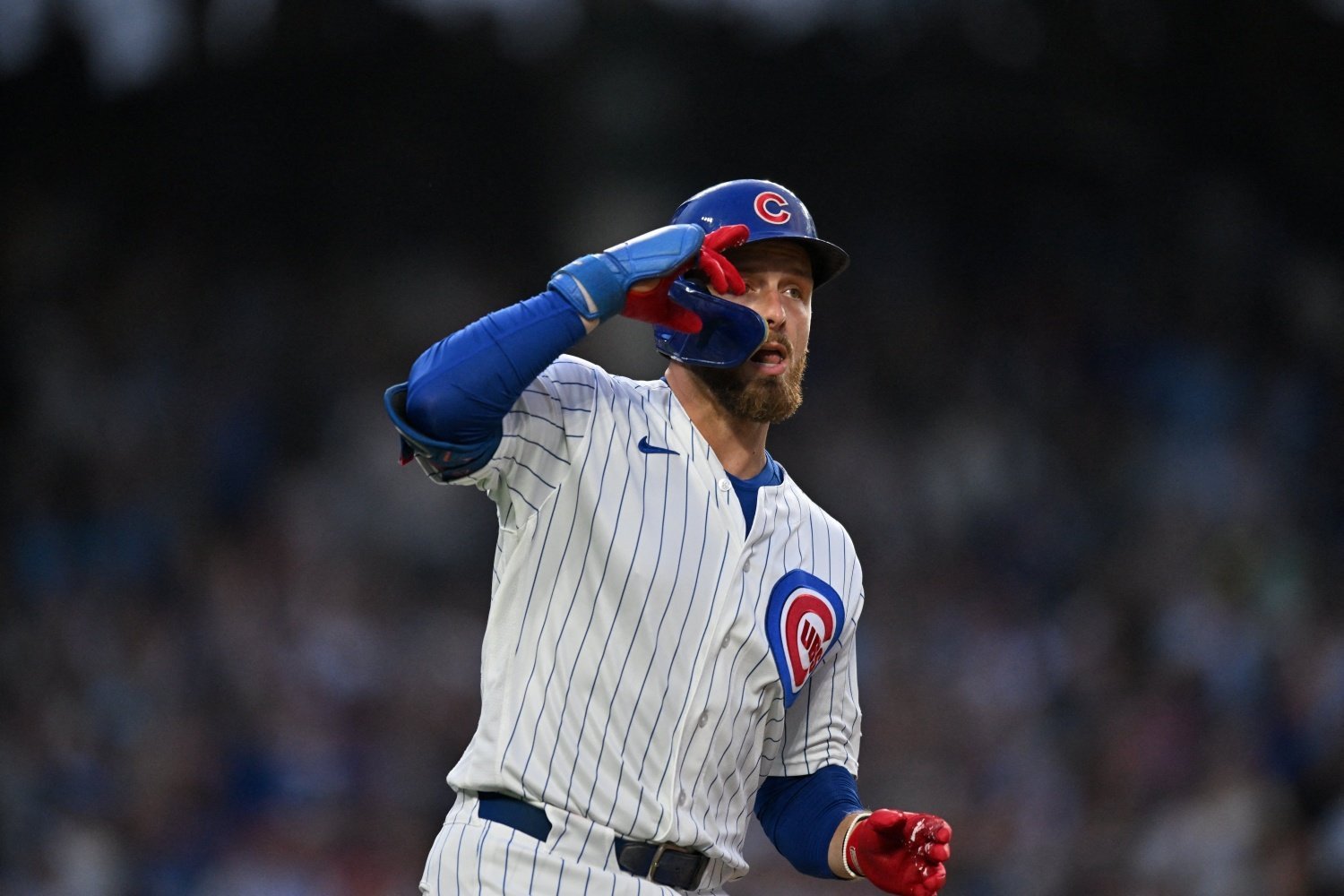 Michael Busch’s 2026 campaign has been far from consistent. It’s been a year of runs for the Cubs’ first baseman, and right now, he’s running cold. Since the All-Star break, Busch is slashing .250/.293/.364—an anemic showing for a bat-first player, and a rough change after a first half in which he had a 118 wRC+. The surface-level numbers are troubling enough, but one thing immediately jumps off the page when you look under the hood. Busch's walk rate is down to just 5%, after sitting at 15% before the All-Star break. That’s a pretty significant development for a player whose ability to work quality at-bats and reach base via the free pass has been a big part of his game over multiple productive seasons. With that part of his game currently absent, it’s no surprise that he’s in a slump. In fact, it’s gotten to the point where his production lines up closely with his abysmal April showing. In 132 plate appearances through the end of April, Busch hit just .193/.295/.281. He struck out 30 times while drawing 15 walks. That was, without question, the ugliest stretch of Busch’s 2026 season. But there’s an interesting distinction between what happened in April and what’s happening right now. April Busch simply wasn't hitting. He still had the ability to draw walks, which kept his on-base percentage from completely bottoming out. The current version of Busch isn’t giving himself that same cushion. After he seemed not to be able to execute his swing in the frigidity of April and early May, Busch is swinging the bat better, even now. His approach, however, has gone sideways. There’s also a power component to this slump that can’t be ignored, though. Busch hit 34 home runs and slugged .523 last year; it's a long way down from there to his sub-.390 slugging for this season. His hard-hit rate has fallen to just 33% since the All-Star break, well below his 38.3% mark for the season as a whole and an even more significant drop from the 47.3% mark he posted last year. Hitting for power is made up of four essential skills: Swing decisions: You have to work for a pitch you can drive; swinging at everything leads to too many balls in play that come on pitches unsuited to the slugger's purpose. Elevating: There's no slug on the ground, no matter how hard you hit it. You have to create some plane and lift the ball. Bat speed: This might seem the most obvious and elemental, but it's just one piece of the picture. That said, the faster you swing, the greater your margin for error in terms of hitting for power. The slower you swing, the more perfect you have to be, which brings us to Squaring up the ball: This matters almost as much as bat speed, and is where Busch has thrived in the past. If you can line up the ball and hit it squarely enough, a slower-than-average swing can frequently produce a faster-than-average batted ball. Do that on the right plane, and it'll go a long way. Busch's bat speed is down this year; that much is undeniable. It was especially low early, and has trended upward, but it's still lower than it was for much of last season—and even last season, he had below-average bat speed. That's one problem that has led to less frequent hard contact and (therefore) less pop from Busch of late. The more important one, though, is that he's also not squaring the ball up—and that aspect of his game is still trending the wrong way, and shows a greater separation from what he did last year. Busch still lifts the ball a lot. However, on that four-item power checklist, he's gone from having three of four boxes checked (lacking only plus bat speed) last season, down to just one. He's not making good swing decisions, and (partially because of that) he's not hitting the ball nearly as soundly when he does swing. The saving grace, to the extent that there's been one, is Busch's feel for contact. He's not whiffing as much as he did last year or early this year, which has reduced his strikeout rate. It's also cost him chances to hit a ball better and deep counts wherein he might have drawn more walks, but given what he's showing (and not showing) lately, that's fine. He's not doing enough things well in the batter's box right now to make anyone wish he were trading more contact for power; he needs to keep putting the ball in play. Soon, though, he needs to start doing it with much more authority, and that might prove impossible. In each season of his Cubs tenure, Busch has had at least one significant slump. That makes it easier to dream on him pulling out of this one. For now, though, he's mired deep. The lack of walks is certainly the biggest red flag, but the batted-ball data only exacerbates the concern. If Busch isn’t getting on base via the walk and isn’t consistently hitting the ball hard when he does make contact, there aren’t many paths to productive at-bats. This may not be as ugly as Busch’s April stretch was, but there are enough similarities—and some new underlying concerns—to make it worth watching closely. For a Cubs lineup that needs Busch to provide both on-base ability and power from the middle of the order, getting him back to his first-half version is crucial. Failing that, some of his playing time might soon need to go to Matt Shaw, Carson Kelly or newcomer Gabriel Arias. View the full article
 -
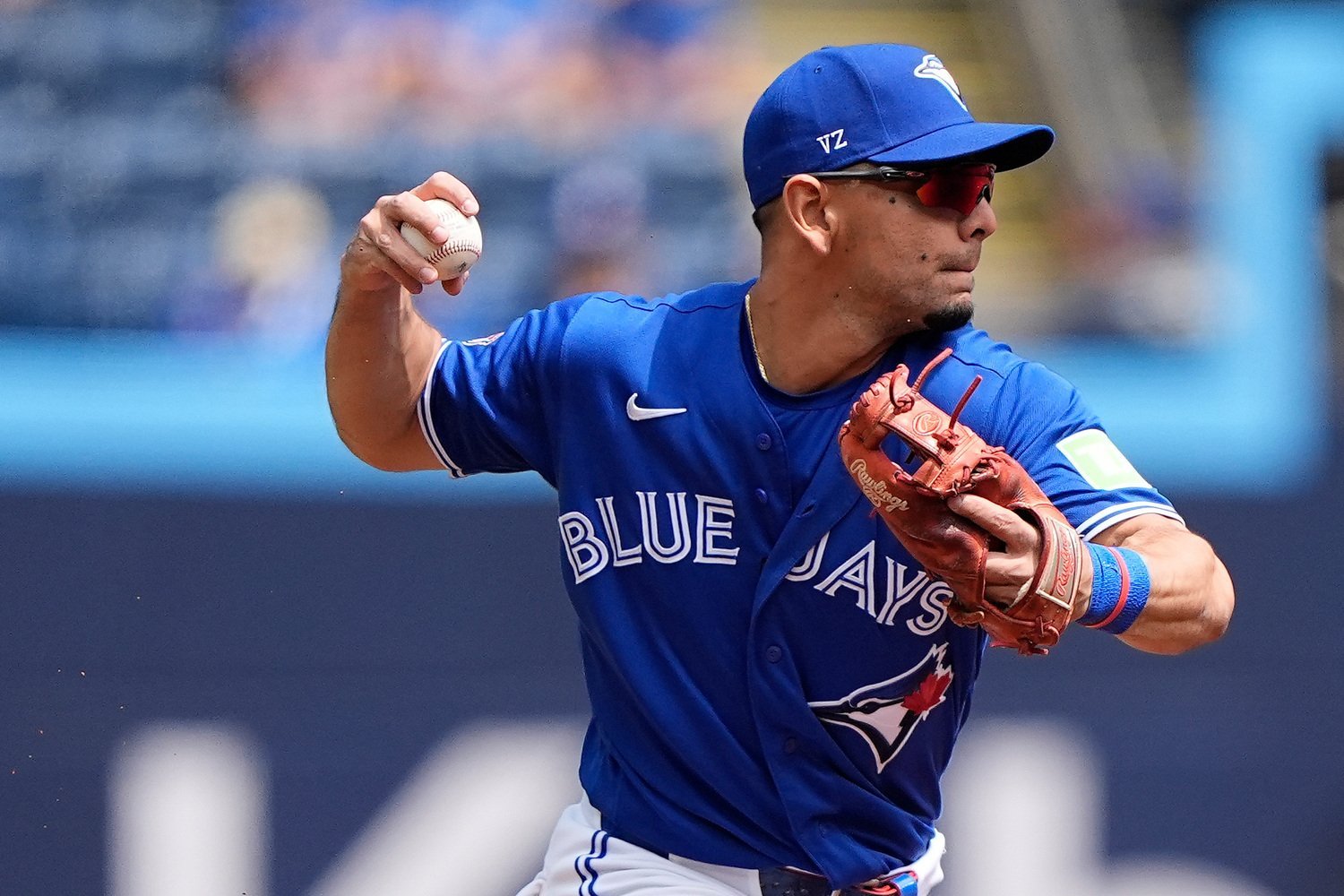 During recent offseasons, the Toronto Blue Jays have made acquisitions that emphasized top-tier defence. For example, they added Daulton Varsho, Kevin Kiermaier, Matt Chapman, Andrés Giménez and Myles Straw. In terms of total Fielding Run Value (“FRV”), Toronto ranked seventh in 2023 and first in both 2024 and 2025. This season, because the Blue Jays’ offence is poor (27th in wRC+ and 28th in runs), superior defence is critical if Toronto is to capture a place in the postseason. To that end, as of August 15, 2026, the Blue Jays posted a +34 FRV total, the second-highest in MLB. However, before the 2026 All-Star Game (the All-Star Game break occurred from July 13 to 16), Toronto’s defence ranked sixth (+17 FRV). On the good news front, after the Midsummer Classic, the team has generated an additional 17 FRV, the second-highest total during the July 17 to August 15 period. What would an article be without tables? Behold a table concerning Toronto’s recent FRV scores and rankings. Not to be forgotten, gaze upon details of the 2026 Blue Jays’ pre- and post-All-Star Game non-pitcher defence. Season Toronto Blue Jays' Fielding Run Values Total Catcher Infield Outfield Up the Middle 2026 34 25 8 1 39 2025 45 32 3 10 47 2024 51 19 2 29 39 2023 15 11 -12 15 22 Season Toronto Blue Jays' Fielding Run Value Rankings Total Catcher Infield Outfield Up the Middle 2026 2 1 9 12 2 2025 1 1 12 6 1 2024 1 3 17 1 1 2023 7 6 23 2 8 Source: Baseball Savant. The current season’s numbers are as of August 15, 2026. Toronto Blue Jays' Fielding Run Values 2026 Non-Pitcher Innings Total Catcher Infield Outfield Up the Middle Season to Date 8,910 34 25 8 1 39 Before All-Star Game 6,800 17 19 3 -5 24 After All-Star Game 2,110 17 5 5 7 15 Toronto Blue Jays' Fielding Run Value Rankings 2026 Non-Pitcher Innings Total Catcher Infield Outfield Up the Middle Season to Date 8,910 2 1 9 12 2 Before All-Star Game 6,800 6 1 14 18 3 After All-Star Game 2,110 2 1 4 2 2 Source: Baseball Savant, as of August 15, 2026. So, why has Toronto’s defence improved after the All-Star Game? The first matter to highlight is the top-tier performance from Toronto’s catchers. Before the All-Star Game, the Blue Jays generated a +17 FRV, 19 of which was attributable to the catchers. In 850 innings, the Alejandro Kirk-Brandon Valenzuela-Tyler Heineman trio’s performance in the categories of Catcher Framing (+14 FRV), Catcher Throwing (+3 FRV) and Catcher Blocking (+2 FRV) was, in total, MLB’s best. After the All-Star Game, Kirk and Valenzuela have produced a +5 FRV mark in 263 innings, which is MLB’s best during the post-Midsummer Classic period. Toronto’s catchers continue to excel defensively. If the Blue Jays’ catchers posted a +19 FRV before the All-Star Game, and Toronto’s total FRV was +17, then Toronto’s infield and outfield posted a -2 FRV in 5,950 pre-Midsummer Classic innings. Furthermore, Toronto’s infield/outfield FRV ranked 16th. In 2025 and 2024, the Blue Jays’ infield/outfield slotted in at #7 (+13 FRV) and #1 (+32 FRV), respectively. Clearly, the team saw a pre-All-Star Game relative performance drop-off in 2026 compared to the previous two campaigns. In the infield, two positive contributors stood out before July 17: Giménez (+8 FRV) in 725 innings and Vladimir Guerrero Jr. (+3 FRV) in 694. The infielder with the worst FRV was Ernie Clement (-5 FRV), who has struggled at second base. Other infielders with negative FRVs were Kazuma Okamoto (-1), Lenyn Sosa (-1) and Davis Schneider (-1). However, the infield crew has improved after the All-Star Game. Notably, Toronto’s infielders recorded the same net +4 FRV after July 16 in 1,054 innings as they did before July 17 (but in 3,400 innings). Notably, Giménez has been terrific recently. In 500 fewer innings than he played before the All-Star Game break, Giménez has generated a +5 FRV afterwards. Also, post-All-Star Game, Clement has produced a +2 FRV, which is a positive development. On the negative side of the ledger, Okamoto has struggled defensively after the All-Star Game break (-3 FRV). Overall, a happy story: Toronto’s infield has posted the fourth-highest FRV after July 16, whereas they ranked 14th before July 17. Concerning the outfield, the Blue Jays’ defence was a disappointment before the All-Star Game. The group's net -3 FRV slotted in at #18, quite different from 2025’s #6 ranking, 2024’s #2 slot and 2023’s numero uno perch. On the plus side, Toronto had four outfielders each with a +2 FRV: Varsho, Nathan Lukes, Straw, and Addison Barger. Jonatan Clase chipped in with a +1 FRV. On the negative side, oh boy. Jesús Sánchez rolled with -7 FRV, and Yohendrick Piñango “contributed” a -4 FRV. Given the poor outfield defence of Sánchez and Piñango, a variation of an old Michael Jackson joke seems apropos. What do Michael Jackson, Jesús Sánchez, and Yohendrick Piñango have in common? Each wears one glove for no apparent reason. However, things have improved after July 12. The Sánchez-Piñango Show has had a short post-All-Star Game run. The duo has roamed the outfield for a combined 101 innings, which is fewer than the 802 innings of pre-July 17 terror. In those limited innings, the duo has produced a -1 FRV after July 12. Conversely, the other outfielders have stepped up to the plate, if you will, after the All-Star Game. Lukes has shone brightly (+4 FRV) in 238 fewer innings, and Straw slides in with another +2 FRV, but in 180 innings, fewer than his 354 innings before July 17. The newly minted Brett Bateman has produced a +1 FRV in just 76 innings. Hence, there are three reasons for Toronto’s improved outfield defence after the All-Star Game. First, Sánchez and Piñango are patrolling the outfield a lot less than they did before. Second, Lukes and Straw have excelled after July 12. Third, as advertised, Bateman plays center field very well. The Last Word In recent seasons, the Toronto Blue Jays have been one of MLB's best defensive teams. In 2025 and 2024, Toronto produced the highest FRV scores in each of those seasons. As of August 15, Toronto ranks second-best. However, before the All-Star Game, the Blue Jays were only MLB’s sixth-best defence, and that ranking was masked by the defensive prowess of Toronto’s catchers. The infield and outfield, as a unit, ranked 16th; the catchers were MLB’s best. Separately, the infield had the 14th-highest FRV, and the outfield recorded the 18th-highest. The main drags on performance were second baseman Clement and outfielders Sánchez and Piñango. After the All-Star Game break, Toronto’s defence has been MLB’s second-best. The catcher tandem of Kirk and Valenzuela continues to provide Toronto with the best catcher defence. Furthermore, the infield’s defence is MLB’s fourth-best post-All-Star break, and the outfield has produced the second-most FRV. Toronto’s prowess in the field is critical if the Blue Jays are to make the 2026 postseason. Fortunately, post-All-Star Game, Toronto’s top-tier defence has returned! View the full article
 -
 Boston Red Sox Affiliate Recap Triple-A Worcester Red Sox Season Record: 63-54 Worcester broke their four-game losing skid with a 9-7 victory against the Syracuse Mets (New York Mets). After collecting just two hits in the game prior, the WooSox put up 11 hits and an outrageous 10 walks. Facing a 3-0 deficit in the fourth, Allan Castro put his squad on the board with an RBI groundout. Now staring down a 5-1 Syracuse lead, the Sox put two runners on base just for Jason Delay to send them in with a two-run double. In his first rehab assignment game, Isiah Kiner-Falefa hit a bloop single into right field to put two guys aboard once again, then came Trevor Story, who roped an RBI single into center field to make it a one-run game. Romy Gonzalez came through in a clutch moment, blasting a three-run homer to give Worcester their first lead of the game, 7-5. The Mets tried clawing back, but a bases-loaded Mikey Romero walk and a pinch-hit Franklin Arias RBI single brought in two more insurance runs. Hobie Harris closed out the ninth inning for a 9-7 victory. Standout Performances: Trevor Story: 2-for-4, R, RBI Romy Gonzalez: 1-for-5, HR, R, 3 RBI Double-A Portland Sea Dogs Season Record: 60-55 Portland took the second game of the series 6-4 against the Reading Fightin Phils (Philadelphia Phillies). Even without Roman Anthony in the lineup, who is taking the day off and scheduled to play in the outfield for the next game, this Sea Dogs lineup still looks exciting, filled with some of Boston’s most intriguing prospects. At this point, anything Justin Gonzales does should not be a surprise; the 19-year-old has done nothing but rake and throw guys out with his cannon of an arm. Leading off in the first, Gonzales set the tone early with a blast to right-center field to put Portland up 1-0. The runs did stop there, however; Jack Winnay got on base after getting plunked by a pitch, then shortstop Henry Godbout put the Sea Dogs up 3-0 after crushing a two-run homer over the monster, now hitting a homer in back-to-back games. The Fightin Phils actually outhit Portland with nine hits to their six, but the home runs powered their way to victory. Reading made it interesting in the fifth after making it a one-run game, but Tyler McDonough crushed their hopes of coming back after smoking a three-run shot to extend their lead 6-2. Portland ran a bullpen game for this matchup; while spending all season in a relief role, Steven Brooks made his first start. The former 11th-round pick was solid through 2 ⅔ innings, giving up just one run and punching out five. Joe Vogatsky earned the win with 2 ⅓ innings of work while allowing one run as well. Cooper Adams followed afterward with three innings in his bulk role, allowing two runs (one unearned) with three strikeouts, then Reidis Sena closed it out in the ninth inning to earn his sixth save of the season. Standout Performances: Justin Gonzales: 1-for-3, HR, R, RBI, BB Tyler McDonough: 1-for-3, HR, R, 3 RBI Henry Godbout: 1-for-3, R, 2 RBI High-A Greenville Drive Season Record: 51-62 Dominant pitching performances led to a 5-1 victory over the Winston-Salem Dash (Chicago White Sox). Even with the offense doing its job, Greenville’s pitching staff was absolutely dealing in this game, striking out 20 batters. Jacob Mayers struck out seven Dash batters through 3 ⅓ innings while allowing just one hit. Aaron Nixon threw the final 1 ⅓ innings and punched out three. Brady Tygart had arguably the most dominant relief appearance this season in the minors. Although he gave up one run, Tygart struck out 10 batters (six were swings and misses) in just 4 ⅓ innings. It is not normal for pitchers to punch out that many batters in that short span. With how excellent the pitching staff was, a three-run third inning for the Drive was all they needed. Jake Schaffner's third double of the season brought in two runs, followed by Luke Heyman’s RBI single, which made it a 3-0 game. Yophery Rodriguez’s 24th double of the season in the sixth also brought in two runs, extending Greenville’s lead to 5-1. Standout Performances: Brady Tygart: 4 ⅓ IP, 2 H, 1 ER, 1 BB, 10 K Jacob Mayers: 3 ⅓ IP, 1 H, 0 ER, 3 BB, 7 K Low-A Salem RidgeYaks Season Record: 51-63 An all-around stellar performance from Salem led to an 8-0 blowout against the Wilson Warbirds (Milwaukee Brewers). Andrews Opata had half of the RBIs the Yaks scored; a three-run bomb in the third and a sacrifice fly in the fifth made it a 5-0 game. Avinson Pinto brought in two of his own immediately after, smacking a two-run double to extend Salem’s lead to 7-0. D’Angelo Ortiz and Kleyver Salazar provided the other two runs, an RBI single from Salazar in the first, and an RBI single from Ortiz in the ninth. Christian Fouch and Ethan Walker were amazing for Salem, combining for nine one-hit innings. The only hit given up came in the first inning, then that was it. Fouch walked just one batter and struck out three batters through five innings. Walker cruised through the last four innings, allowing two walks but zero hits, along with four punchouts. Standout Performances: Christian Fouch: 5 IP, 1 H, 0 ER, 1 BB, 3 K Ethan Walker: 4 IP, 0 H, 0 ER, 2 BB, 4 K Andrews Opata: 1-for-3, HR, R, 4 RBI, BB, SB View the full article
 -
Ten Games In: What Kaelen Culpepper Has Already Shown the Twins
DiamondCentric posted an article in Twins Daily
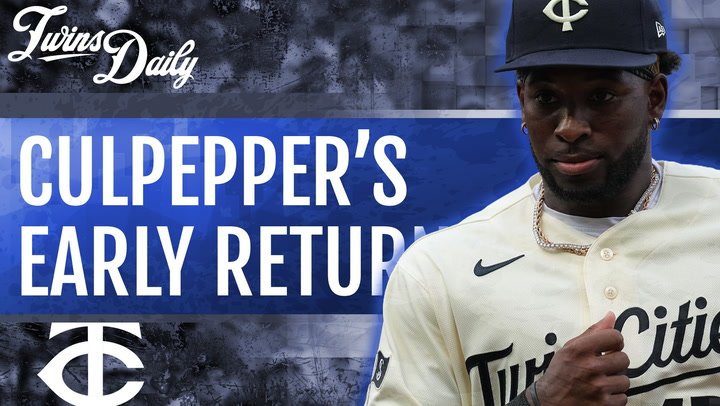 Kaelen Culpepper is nine games into his big league career, and the Minnesota Twins' rookie shortstop has already shown signs that he could be the guy moving forward. What do you think about his early returns? View the full article
 -
 All four New York Mets minor-league affiliates went through a stretch Wednesday night in which they gave up a lead or allowed an opponent to break the game open. Only Binghamton overcame its meltdown. The Rumble Ponies blew a four-run lead in the fifth inning against Altoona, retook the lead in the bottom half, and then allowed a game-tying run in the sixth. They regained control for good with a four-run seventh, capped by Corey Collins' three-run homer. Binghamton went on to a 10-6 victory. Elsewhere in the organization: Syracuse lost to Worcester 9-7. Jonathan Santucci allowed six runs (all earned) over four-plus innings after being staked to a 5-1 lead. MJ Melendez and Hayden Senger homered. Brooklyn allowed three unearned runs in the seventh to blow a two-run lead and lost 7-6 to Asheville. Yonatan Henriquez hit a two-run homer. Starter Emilio Obispo allowed two earned runs and struck out six over 4 2/3 innings. St. Lucie endured another lopsided loss to Lakeland, this time 11-1. Kuhio Aloy drove in the Mets' only run. The bullpen surrendered seven runs over 4 1/3 innings. New York Mets Transactions New York Mets placed DH Jorge Polanco on the 10-day injured list. Left ankle bursitis. New York Mets recalled 1B Eric Wagaman from Syracuse Mets. New York Mets recalled RHP Chayce McDermott from Syracuse Mets. Chicago Cubs claimed 3B Gabriel Arias off waivers from New York Mets. New York Mets optioned RHP Jack Weisenburger to Syracuse Mets. Santucci Falters, Syracuse Falls Santucci took a big lead into the fifth inning. He exited the frame five batters later without recording an out. Facing rehabbing major-leaguers and players with MLB experience, he allowed a walk, a single, a double, and two more singles before being replaced by Chris Devenski with Syracuse clinging to a 5-4 lead. The latter two hits went to rehabbing Isiah Kiner-Falefa and Trevor Story. Devenski struck out the first hitter he faced, but then gave up a three-run home run to rehabbing Romy Gonzalez to put Worcester ahead 7-5. Syracuse got a run back in the sixth when Nick Lorusso scored on a throwing error. After Worcester tacked on two runs in the eighth for a 9-6 lead, Morabito's second double of the game drove in Ramos in the bottom half. The Mets raced to a 3-0 lead in the first. Nick Morabito led off with a double, moved to third on a flyout, and scored on Ronny Mauricio's single. Melendez followed with his 15th homer of the season. They made it 5-0 in the fourth on Hayden Senger's two-run homer, his 10th round-tripper of the year. Zach Franklin pitched a perfect sixth and seventh. Matt Seelinger escaped a no-out, bases-loaded jam in the eighth without any more runs scoring. He went on to finish the game. Player AB R H RBI BB K Nick Morabito 5 1 2 1 0 1 Émilien Pitre 5 0 0 0 0 1 Ronny Mauricio 5 1 1 1 0 1 Billy Amick 4 0 0 0 1 1 MJ Melendez 5 1 1 2 0 2 Nick Lorusso 3 1 1 0 1 0 Jose Ramos 1 2 0 0 2 0 Hayden Senger 3 1 1 2 0 1 Zack Short 3 0 1 1 1 0 Player IP H R ER BB K HR Jonathan Santucci 4 6 6 6 4 3 0 Chris Devenski 1 2 1 1 2 2 1 Zach Franklin 2 0 0 0 0 1 0 Matt Turner 0 2 2 2 3 0 0 Matt Seelinger 2 1 0 0 1 0 0 Collins' Big Hit Helps Bail Out Binghamton The Rumble Ponies led 4-0 after five innings. They got first-inning home runs from Vargas, his third, and Chris Suero, his 16th, and then RBI singles by Vargas and Jacob Reimer in the fifth. Altoona scored five in the sixth to go ahead 5-4, but Binghamton retook the lead in the bottom half. Vincent Perozo was hit by a pitch with the bases loaded, forcing in John Bay, and Vargas hit a run-scoring groundout to make it 6-5. The Curve tied the game 6-6 in the seventh before Binghamton went ahead for good in the seventh. Reimer singled, Suero doubled, and Bay singled home Reimer home to put the Ponies back in front. Collins followed with his fifth homer of the season, a no-doubter to right. Those runs did hold up. Dakota Hawkins started and threw three scoreless innings. He allowed two hits and two walks and struck out two. Douglas Orellana earned the win with two innings of relief, although he did allow a run on four hits. Garrett Stratton got the final four outs, though he did not enter in a save situation. Player AB R H RBI BB K Marco Vargas 5 2 3 3 0 1 Jefferson Rojas 5 0 0 0 0 0 Jacob Reimer 5 1 2 1 0 1 Chris Suero 4 2 2 1 0 0 John Bay 4 2 2 1 0 2 Corey Collins 4 2 3 3 0 0 JT Benson 4 0 0 0 0 1 Jamari Baylor 3 1 1 0 1 1 Vincent Perozo 3 0 0 1 0 1 Player IP H R ER BB K HR Dakota Hawkins 3 2 0 0 2 2 0 Cristofer Gomez 1 0 0 0 0 1 0 Bryce Conley 1 2/3 7 5 5 0 2 0 Douglas Orellana 2 4 1 1 0 3 0 Garrett Stratton 1 1/3 1 0 0 0 1 0 Error, Missed Chances Doom Brooklyn The Cyclones beat themselves in this one. Not only did they allow the three unearned runs in the seventh, they also left 13 runners on base. The decisive rally started with a leadoff walk, was extended by Henriquez's two-out throwing error which brought in a run, continued with another walk, and climaxed with a two-run double that put the Tourists ahead. Brooklyn took a 6-4 lead in the top of the seventh when John Smith III's infield single was thrown away, allowing Trey Snyder to score. The Cyclones went up 4-1 in the fifth on a two-run homer by Henriquez, but Asheville tied the game in the bottom half with a pair of homers. Chase Meggers came home on Asheville's second run-scoring balk of the game to put Brooklyn back up 5-4 in the sixth. Player AB R H RBI BB K Sammy Stafura 5 0 1 0 0 3 Elian Peña 5 0 1 1 0 1 Aidan Smith 5 0 0 0 0 3 Ronald Hernandez 5 0 1 0 0 2 Trey Snyder 3 3 1 0 2 1 Yonatan Henriquez 5 1 1 2 0 0 John Smith III 4 0 3 0 1 1 Colin Houck 3 1 1 0 2 2 Chase Meggers 4 1 2 0 1 0 Player IP H R ER BB K HR Emilio Obispo 4 2/3 6 3 2 2 6 1 Parker Carlson 1 1/3 2 1 1 0 2 1 Luis R. Rodriguez 1 1 3 0 2 0 0 Calvin Ziegler 1 1 0 0 1 1 0 Middle-Inning Meltdown Sinks St. Lucie The Mets trailed only 2-0 after four innings. Lakeland ended any hopes of a comeback with three runs in the fifth, a run in the sixth and four runs in the seventh. Starter Ethan Lanthier went out for the fifth but allowed a single and a double to begin the inning. He got a popout for the first out, and then was replaced by Zack Mack, who promptly gave up a two-run double and a sacrifice fly to make it 5-0. Mack allowed a solo homer in the sixth to put the Flying Tigers up 6-0. Dillon Stiltner came on for the seventh and allowed the first five hitters to reach base. Two scored, one on a wild pitch. A fielder's choice brought in a third run, and then Stiltner issued a walk that ended his night. Ernesto Rodriguez came in and got a ground ball, but Vladi Gomez threw it away for an error that plated Lakeland's 10th run of the game. Lakeland pushed the lead to 11-0 in the eighth before Aloy singled home Eli Serrano III in the bottom half to break up the shutout. At least Jeremy Rodriguez and Reed Stallman each had two hits. Player AB R H RBI BB K Jeremy Rodriguez 3 0 2 0 2 0 Dylan Carey 5 0 0 0 0 0 Eli Serrano III 3 1 0 0 0 1 Kuhio Aloy 4 0 1 1 0 1 Yovanny Rodriguez 3 0 0 0 1 1 Vladi Gomez 4 0 1 0 0 1 Bohan Adderley 3 0 0 0 1 0 Reed Stallman 4 0 2 0 0 2 Wyatt Vincent 4 0 0 0 0 1 Player IP H R ER BB K HR Ethan Lanthier 4 1/3 6 4 4 1 3 1 Zack Mack 1 2/3 2 2 2 0 3 1 Dillon Stiltner 1/3 3 4 4 3 0 0 Ernesto Mercedes 1 2/3 2 1 0 1 2 0 Julio Zayas 1 1 0 0 0 0 0 Top-20 Prospect Performance Jonah Tong: DNP Jack Wenninger: DNP Elian Peña: 1-for-5, RBI, K Mitch Voit: DNP Ryan Clifford: DNP Nick Morabito: 2-for-5, 2 2B, RBI, K Jonathan Santucci: 4 IP, 6 H, 6 R, 6 ER, 4 BB, 3 K Carson Wiggins: DNP Jacob Reimer: 2-for-5, RBI, K Aiden Robbins: DNP Randy Guzman: DNP Wandy Asigen: DNP Chris Suero: 2-for-4, 2B, HR, RBI Jefferson Rojas: 0-for-5 Will Watson: DNP Shane Sdao: DNP Eli Serrano III: 0-for-3, K Antonio Jimenez: DNP Émilien Pitre: 0-for-5, K Dylan Ross: DNP View the full article
 -
 Chicago Cubs Transactions Chicago Cubs signed free agent SS Jackson Cluff to a minor league contract. Chicago Cubs transferred RHP Phil Maton from the 15-day injured list to the 60-day injured list. Chicago Cubs claimed 3B Gabriel Arias off waivers from New York Mets. Iowa Cubs Waste A Strong Night On The Mound In Toledo Kohl Franklin gave the Iowa Cubs five innings of one-run baseball, scattering five hits, walking one, and striking out four. He handed the game off tied, and the bullpen kept it that way for a long stretch. Iowa scored first. Leadoff man James Triantos worked a walk, and Owen Ayers lined a single to left field to bring him around. Toledo answered with a run-scoring single of its own, and the score sat at 1-1 for the rest of the night. Hoby Milner allowed one hit, and struck out one. Jaxon Wiggins was even better, retiring the side in order with two strikeouts for a clean inning. Antoine Kelly walked two but stranded both runners, striking out one to end the threat. Ayers finished 3-for-4 with the RBI single and was the only Iowa hitter with more than one hit. Ayers again demonstrated why is isn't the man to steal on in the 2nd. Matt Shaw, cleanup man BJ Murray, and Jordan Nwogu supplied the other three hits. Triantos reached on a walk, and on a hit by pitch. Justin Dean and Ben Cowles each drew a walk. Iowa left 10 runners on base, and the middle of the order could not push anything across after the opening frame. Justin Dean made a noteworthy catch out in right in the 4th. Ethan Roberts came on with the game still tied and gave up two hits, the second a two-out single that ended it. Toledo won 2-1, and Roberts took the loss. The Iowa staff held Toledo to two runs on eight hits, and struck out eight. Iowa Cubs Hitting Player AB R H RBI BB K James Triantos, 3B 3 1 0 0 1 0 Matt Shaw, 2B 3 0 1 0 0 1 Jackson Cluff, 2B 2 0 0 0 0 1 Owen Ayers, C 4 0 3 1 0 0 BJ Murray, 1B 4 0 1 0 0 1 Chas McCormick, CF 4 0 0 0 0 1 Justin Dean, RF 3 0 0 0 1 1 Greg Jones, SS 4 0 0 0 0 1 Ben Cowles, DH 3 0 0 0 1 2 Jordan Nwogu, LF 4 0 1 0 0 1 Hayden Cantrelle, LF 0 0 0 0 0 0 Iowa Cubs Pitching Player IP H R ER BB K HR Kohl Franklin 5 5 1 1 1 4 0 Hoby Milner 1 1 0 0 0 1 0 Jaxon Wiggins 1 0 0 0 0 2 0 Antoine Kelly 1 0 0 0 2 1 0 Ethan Roberts 2/3 2 1 1 0 0 0 Knoxville Smokies Postponed The Knoxville Smokies did not play. The game was postponed due to rain, but there is already a doubleheader set for tonight due to a suspended game from Aug. 18. A makeup date for the Aug. 19 game has not been announced yet. South Bend Cubs Shut Out At Home By West Michigan South Bend never solved the visiting pitching, managing three hits in a 9-0 loss to West Michigan. Braylon Myers took the brunt of it, allowing six runs, five earned, on six hits over four innings. Two of those hits left the yard, and a fielding error behind him extended one of the damaging frames. West Michigan pushed two across early, then broke it open with a four-run burst built on a leadoff home run, a double, a run-scoring single, and a two-run homer. Luke Alwood gave up a walk, a single, and a two-run double before settling down. Edwardo Melendez was the bright spot. He struck out five over three innings and allowed a single hit, a solo home run, along with two walks. Ethan Bell finished with a scoreless inning, walking one and giving up nothing else. Cleanup man Kade Snell accounted for two of South Bend's three hits, tripling to left field, and adding a ground ball single up the middle. Brennan Hudson had the other hit, a line drive to center field, and also drew a walk. Matt Halbach worked the team's other walk. Josiah Hartshorn went 0-for-4 with two strikeouts, and leadoff man Leonel Espinoza went 0-for-4 with three strikeouts. South Bend struck out 10 times as a team, and put only four runners on base after the second time through the order. The Cubs stranded four. South Bend Cubs Hitting Player AB R H RBI BB K Leonel Espinoza, CF 4 0 0 0 0 3 Jose Escobar, 2B 4 0 0 0 0 1 Josiah Hartshorn, 1B 4 0 0 0 0 2 Kade Snell, DH 4 0 2 0 0 1 Matt Halbach, 3B 2 0 0 0 1 1 Angel Cepeda, SS 3 0 0 0 0 0 Brennan Hudson, C 2 0 1 0 1 0 Geuri Lubo, RF 3 0 0 0 0 0 Michael Hallquist, LF 3 0 0 0 0 2 South Bend Cubs Pitching Player IP H R ER BB K HR Braylon Myers 4 6 6 5 0 2 2 Luke Alwood 1 2 2 2 1 1 0 Edwardo Melendez 3 1 1 1 2 5 1 Ethan Bell 1 0 0 0 1 0 0 Walks Bury Myrtle Beach In Lopsided Loss To Fayetteville The Myrtle Beach Pelicans issued 17 walks and hit two batters in a 19-1 loss to Fayetteville, and the free passes decided the night long before the hits piled up. Starter Jubrayker Salaya walked five and hit one in an inning and a third, and three of those runners came around. He allowed only two hits, but four runs were charged to him. Luis A. Reyes was the most effective arm Myrtle Beach used. He struck out five over two innings, allowing three hits, two of them home runs, along with two walks. Jhon Cabral followed with an inning and two thirds, and the three runs he allowed were all unearned after a throwing error opened the door. Geovanny Vasquez retired six straight before the wheels came off, and he finished with six runs allowed on two hits and five walks over two innings. Jhon Rosario inherited a bases loaded mess and gave up four hits, four runs, and five walks of his own across two innings, striking out three. The offense managed six hits. Caden Sorrell went 2-for-5 and drove in the only run with a triple to center field that scored Darlyn De Leon. Derniche Valdez went 2-for-4 with a double. Alexis Hernandez had a hit and a walk, and cleanup man Jhoander Irigoyen singled. Leadoff man Juan Cabada was hit by a pitch twice, and De Leon drew a walk. Myrtle Beach struck out nine times, and stranded 12 runners. Myrtle Beach Pelicans Hitting Player AB R H RBI BB K Juan Cabada, DH 3 0 0 0 0 1 Darlyn De Leon, CF 4 1 0 0 1 1 Caden Sorrell, LF 5 0 2 1 0 2 Jhoander Irigoyen, C 5 0 1 0 0 1 Eli Lovich, RF 4 0 0 0 0 2 Corey Nunez, 3B 3 0 0 0 0 0 Alexis Hernandez, 2B 3 0 1 0 1 1 Derniche Valdez, SS 4 0 2 0 0 0 Ivan Cespedes, 1B 4 0 0 0 0 1 Myrtle Beach Pelicans Pitching Player IP H R ER BB K HR Jubrayker Salaya 1 1/3 2 4 4 5 1 0 Luis A. Reyes 2 3 2 2 2 5 2 Jhon Cabral 1 2/3 2 3 0 0 1 1 Geovanny Vasquez 2 2 6 6 5 1 1 Jhon Rosario 2 4 4 4 5 3 0 Top-20 Prospect Performance Jefferson Rojas: DNP Pedro Ramirez: DNP Jaxon Wiggins: 1 IP, 0 H, 0 R, 0 ER, 0 BB, 2 K Josiah Hartshorn: 0-for-4, 2 K Kevin Alcantara: DNP Ethan Conrad: DNP Kane Kepley: DNP Owen Ayers: 3-for-4, RBI Jonathon Long: DNP Kaleb Wing: DNP James Triantos: 0-for-3, R, BB, HBP Brooks Caple: DNP Mason McGwire: DNP Ty Southisene: DNP Will Sanders: DNP Juan Cabada: 0-for-3, 2 HBP, K Eli Lovich: 0-for-4, 2 K Ariel Armas: DNP Jostin Florentino: DNP Grant Kipp: DNP View the full article
 -
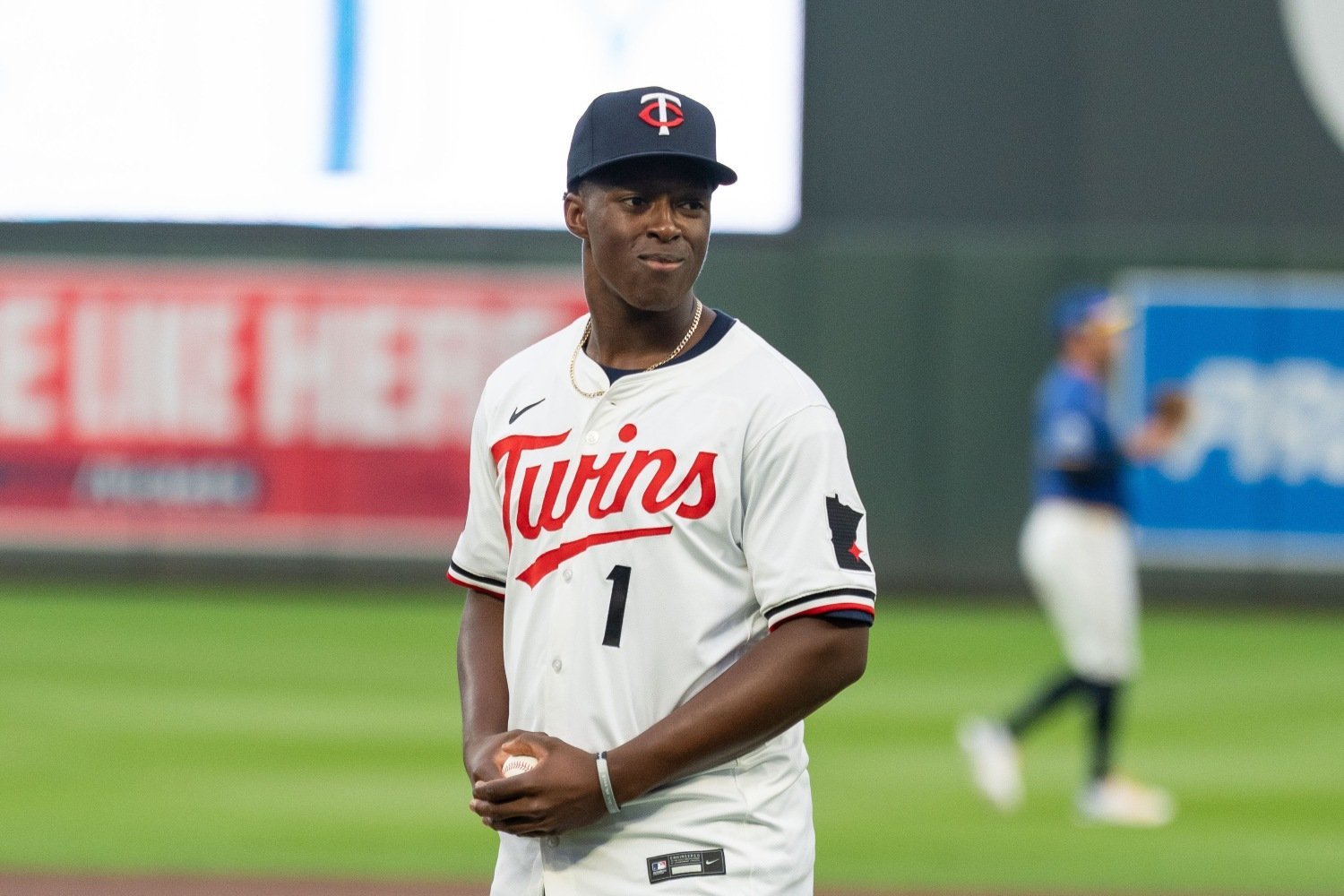 It’s been a little over a month since the 2026 MLB Draft, and we’re already at the point where a lot of the top prospects in this year’s class are everyday players within their respective organizations. The Twins’ top two draft picks, catchers Vahn Lackey and Carson Tinney, are part of that group. The two have been doing essentially all of the catching for Low-A Fort Myers, and while neither Lackey nor Tinney has even 60 plate appearances under their belt yet, it’s easy to see the upside they both clearly possess. We’ll start with Lackey. He got drafted first, so that only seems fair. Across 44 at-bats, Lackey has logged nine hits, including a pair of doubles and a pair of triples. He’s driven in seven runs, scored nine times, and his impressive athleticism has already led to three stolen bases. He’s also walked nine times, which is an encouraging sign considering that he hasn’t exactly been tearing the cover off the baseball. The biggest issue thus far for Lackey has been strikeouts. That’s not particularly surprising, considering this is his first taste of professional pitching. He’s struck out in 15 of his 44 at-bats, but the underlying numbers are actually pretty encouraging. The impressive plate discipline Lackey showed at Georgia Tech has carried over to professional baseball. En route to those nine walks, Lackey is swinging at just 36.8% of the pitches he’s seeing. That’s a pretty low number; most hitters swing at just under half of the pitches they face. Rather than aggressively chasing out of the zone, Lackey is taking what opposing pitchers are giving him, and they aren’t giving him many hittable pitches. His quality of contact hasn’t been exceptional, and he's yet to hit his first professional home run, but that’s not a huge concern at this point. He’s a smart, pure hitter with plus athleticism for a catcher. He’s made consistent contact and shown an ability to get on base. We’ve also gotten to see his defense on full display. Lackey has thrown out six baserunners on 23 attempts, good for a 26% caught-stealing rate. That’s not awful, and that number was considerably higher earlier in the month. But teams have been running on him a lot, and his defense was just as prominent as his bat coming into the draft. Because of that, his development behind the plate will be just as important as his development at the plate. There’s a lot to like about what Lackey has shown over his first stretch of professional baseball. The same can be said for Tinney, although it’s interesting to note the similarities and differences between the two. Tinney was drafted as much more of a power-first bat out of the University of Texas, and we’ve already seen some of that power on display. He’s launched four home runs across his first 13 games, including one walk-off home run. His first professional homer came off the bat at 115 MPH, giving us a glimpse of the impact power the Twins believed he could bring to the organization. But Tinney also came into professional baseball with impressive discipline at the plate, while his bat-to-ball skills lagged behind. Both of those traits have been on display early. In 58 plate appearances, Tinney has walked 13 times and struck out 19 times. Though he’s hitting just .159, his on-base percentage is .362. Much like Lackey, Tinney has been extremely selective. His swing rate is even lower than Lackey’s, at 30.9%. You could argue that’s too low, especially considering that he’s swinging at fewer than half of the pitches he’s seeing in the strike zone. It seems like both catchers could help themselves by being a little more aggressive on pitches in the zone. That’s obviously easier said than done when opposing pitchers aren’t giving them many pitches to hit, but as they continue to develop and get more professional at-bats under their belts, I’d expect that to change. When Tinney does connect, good things have happened. His average exit velocity is 92 MPH, paired with a 90th-percentile exit velocity of 103.3 MPH. We’re talking about an extremely small sample size here, but it’s encouraging to see Tinney’s power translating early in his professional career. The other side of the equation, however, hasn’t been quite as encouraging. Tinney’s 60-grade arm was a significant part of his profile coming into the draft, but it really hasn’t translated yet. Opposing runners have seven successful stolen bases, and Tinney hasn't thrown out anyone. Though teams haven’t been running on Tinney quite as much, they’ve been successful when they do. That’s something to keep an eye on as his development continues. It’s important not to overreact to any of these numbers. We’re talking about two players who have barely begun their professional careers. There will be plenty of highs and lows as both adjust to the daily grind of professional baseball. Lackey and Tinney have both shown flashes of the upside the Twins saw. There are obvious areas for both players to improve, particularly when it comes to their aggressiveness at the plate and their defensive development. That’s what this part of the process is all about. For now, the most important thing is that both Lackey and Tinney are getting everyday opportunities to develop, and both have already given Twins fans plenty of reasons to be excited about what could come next. Hopefully, this is just the start of a couple of long, successful careers. View the full article
 -
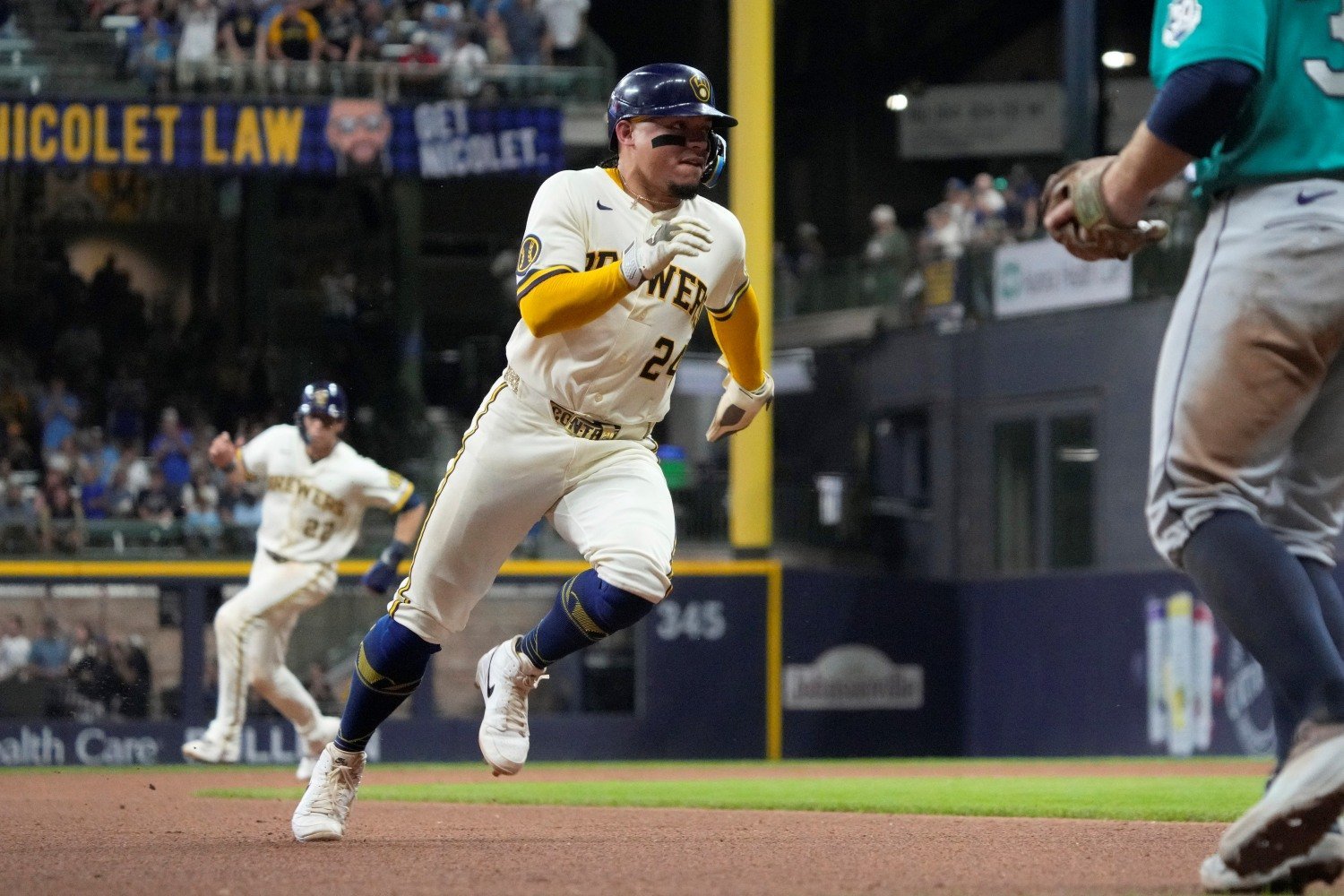 October baseball has a way of exposing teams' weaknesses. For the Brewers, one of the biggest questions (as they steam toward the postseason) is what happens if Christian Yelich and William Contreras remain below-average hitters. Both players were expected to be major offensive contributors heading into the season, but if they can’t provide that production when the games matter most, the Brewers will have to find other ways to score enough runs to win. That puts significant pressure on the rest of the lineup to perform, especially the younger guys and the players farther down the batting order. Even in the absence of offensive production from the two highest-paid position players, the lineup looks good at the top. Jackson Chourio, Brice Turang, and Jake Bauers are all having excellent seasons. Andrew Vaughn is, too, but would probably only appear high in the order against a lefty. Still, he could find crucial at-bats coming his way against right-handed pitching in October if Yelich and Contreras continue to struggle. So, the top of the order isn’t the main problem. It's the depth of the lineup that must be questioned, if the postseason started today. Rookies Luis Lara and Cooper Pratt have performed admirably to this point, each having their own highlight moments—while struggling, too, as rookies do. They shouldn’t be heavily relied on in the postseason, because this will be their first taste of the playoffs. Yelich and Contreras, by contrast, have been there before and won games. Obviously, any production from the rookies is welcome and will be needed, but that doesn’t answer the question of whether the team can win without their top bats making noise. If Yelich and Contreras remain poor at the plate, the Crew will need a step up from two hitters, in particular: Joey Ortiz and Sal Frelick. Ortiz struggled mightily last season, finishing with a slash line of .230/.276/.317. Those same struggles showed themselves again this season, as he possessed a .561 OPS through his first 170 plate appearances. June 16 is when things changed. Pratt was called up to play shortstop, and Ortiz shifted over to third base to replace Luis Rengifo, who was jettisoned. Since then, Ortiz boasts the second-highest OPS on the team, among players with at least 100 plate appearances during that stretch. It should be noted that his best stretch of play in the big leagues came in 2024, where he played third base primarily. Ortiz could be a key bat at the end of the order come October. Frelick is a little harder to feel good about, in the short term. After putting up a good 2025 season (finishing with a .756 OPS), Frelick regressed this year. He's slashing .236/.301/.330, with only 4 home runs, and has spent a long stint on the injured list with a shoulder injury. How much Frelick will play down the stretch will be intriguing, with Chourio, Lara, and Garrett Mitchell slated in the outfield most days. However, Frelick has postseason experience under his belt, and (like Ortiz) he has the potential to provide good at-bats at the bottom of the order when current players are struggling. Despite all of this, it doesn’t seem likely that the Brewers will go far in the postseason without Yelich and Contreras performing up to expectations. They’ve performed very well so far this season without those two guys contributing regularly, but the offense has stuttered for stretches this year, and that can’t happen in October. The real question is what they can do about it. Contreras will be in the lineup no matter what, as the starting catcher. He’s still a solid defender, and while Gary Sánchez has had a good year, he won’t be in the starting lineup unless a lefty is pitching for the opponent. Yelich may be a different story. Could they relegate their highest-paid player to the bench in the playoffs? It doesn’t seem like that will happen, but eventually, something has to give. Yelich is a designated hitter at this point of his career, and anyone can fill that spot. If he continues to struggle, Vaughn, Sánchez, or one of the other bench bats may find themselves in that spot come playoff time. When Yelich and Contreras produce, the Brewers are a significantly better team. Will that happen by the end of the year? Who knows? But if it doesn’t, what do you think the Brewers should do about it? View the full article
 -
Blue Jays Finding an Edge in MLB's ABS Challenge Era
DiamondCentric posted an article in Jays Centre
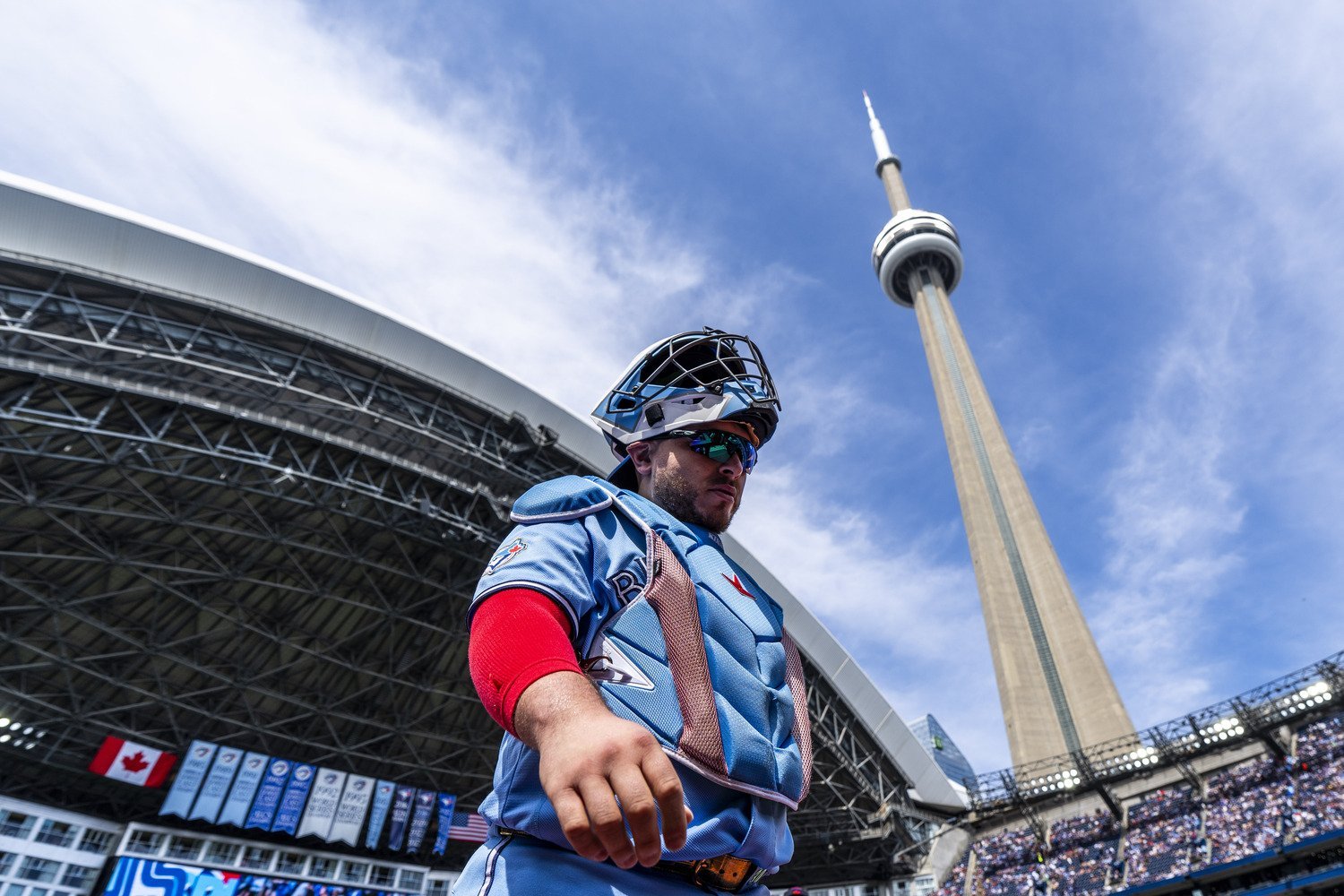 Fans used to yell at the TV when an umpire’s call didn’t agree with the strike zone overlay graphic. Now they yell at the hometown batter or catcher when there is a borderline call. “Challenge it!” The Automated Ball-Strike challenge system has worked out pretty well so far this season. Calls are confirmed or overturned quickly. The system seems to work even more efficiently than the replay system. Whether ABS can actually give teams a competitive advantage at this point is questionable. As of mid-August, 16 teams have won 50% or more of their challenges when at bat. Only two teams have below 50% overturns as fielding teams. Those two clubs, the White Sox and Pirates, both sit just a couple of percentage points below the 50% line. The White Sox have also challenged the most when on defence; they have been successful 102 times out of 211. The top challenging teams are not necessarily the top teams in the standings. On offense, the Diamondbacks, Reds, Astros, and Royals lead the way with 56% challenge success. For the Astros, who have challenged the most of that group (147 times), their batters have been right 82 times. Mets batters have challenged the most calls so far this season with 156, but only half of those have been successful. Meanwhile, catchers for the Reds have been the most successful so far this season with a 70% success rate when challenging defensively. The White Sox are the worst defensive, having been successful only 48% of the time. Yet, the White Sox's poor challenges haven’t dampened their results. Every game, both teams get two challenges. If a challenge is won, a team retains it. If lost, the team loses one of its two challenge opportunities. An additional challenge is awarded to teams (if out of challenges) at the start of extra innings. Most MLB batters and catchers are pretty good at knowing the strike zone, but even so, you do see the occasional two-inch discrepancy. And yes, pitchers can challenge too. Collectively, they are 54 for 140 (39%). That’s out of more than 8,000 total league-wide challenges this season. Catchers have had the most success, having overturned 2,499 of 4,263 challenges (59%). Batters collectively have overturned 49% (1,823 of 3,754). Regardless, every ball player is human. (As far as we know?!) At the outset of the season, the Jays were planning on leaning on Alejandro Kirk and Davis Schneider more than anyone else on the roster when it came to challenging ball and strike calls. Manager John Schneider openly identified both players as having elite knowledge of the strike zone and expected them to lead the team's decision-making in this new environment. Davis Schneider also had the benefit of having played in the minors as ABS was being tested, so he was familiar with the system heading into the season. Yet, with his time effectively being split between Buffalo and Toronto this year, most of the challenges have fallen to Kirk. Schneider sits fourth in the MLB (min. 10 challenges) with a batter success rate of 81.3% (13 of 16). Kirk sits in the top 10 (min. 50 challenges) with a catcher success rate of 63.8% (44 of 69). So far, the Jays have pretty well stuck to their ABS challenge plan. Overall, it has worked. Infrequently, they have used their challenges early in games in non-leverage or important situations. As one of baseball's top defensive catchers and pitch framers, Kirk entered the season with a reputation for understanding the strike zone. The challenge system has largely confirmed that assessment. While Schneider's contributions have been limited this season, his ABS performance has stood out. Why he hasn’t been able to capitalize on that part of his game, seeing more pitches, is hard to say. When at bat, an ABS challenge can overturn a strikeout, but that doesn’t automatically result in a positive outcome for that at-bat. Based on the way the Jays offense has performed this season, it would almost make more sense to only use the challenges to support their pitchers. Success rates across the league are higher for catcher challenges over batter challenges. League-wide data places the Blue Jays near the middle of the pack in total challenge success rate. They have not embarrassed themselves. They have also not separated themselves as one of baseball's ABS powerhouses. In 128 games, the Jays have challenged 262 times. That averages out to just over two challenges per game. Those challenges have resulted in 140 calls being overturned (53%). Their batters have challenged 119 with a 52% success rate. Their catchers have a slightly higher 55% success rate on 143 challenges. As a fun fact, the Jays are one of three teams (the Reds and Twins are the others) that have not had a pitcher make a challenge so far this season. As teams like the Jays gain more experience with ABS, front offices will likely begin evaluating challenge value through leverage indexes, run expectancy and game-state analysis. They can track success rates, monitor challenge quality, compare actual performance to expected performance and identify patterns over time, including what areas of the zone an umpire might favour. That data will eventually become part of advance scouting reports if it isn’t already. Teams already dedicate significant resources to studying pitcher tendencies, defensive positioning and opposing hitters. ABS trends will certainly become another area of focus. MLB teams spend enormous resources searching for marginal advantages. ABS challenge optimization is exactly the type of inefficiency smart organizations will start adding a little more focus. The addition of ABS has meant early retirements of weaker umpires, less arguing, less uncertainty and significantly more transparency. Fans may not always like the outcome, but at least there is a definitive process in place to determine whether a call was correct. In a season where not that much has gone right, limiting who can challenge and at what point in the game has worked for the Jays. The challenge system may never become a defining factor in determining division winners or playoff spots. However, over the course of a 162-game season, a handful of overturned strike calls can influence at-bats, innings and ultimately victories. In baseball, where organizations relentlessly pursue even the smallest edge, that is enough reason to take ABS seriously. In a game of inches, and one where you only have two challenges, challenges (and games themselves) can be won on the fringes. As the games become more important, the Jays need to maintain their ABS strategy. Trust the captain and avoid emotional challenges with an emphasis on leverage and context. This is only year one of ABS in the majors, so there is time to learn and adapt. In the meantime, fans can still yell at the TV or the players and ump because it looks so easy on the field. View the full article
 -
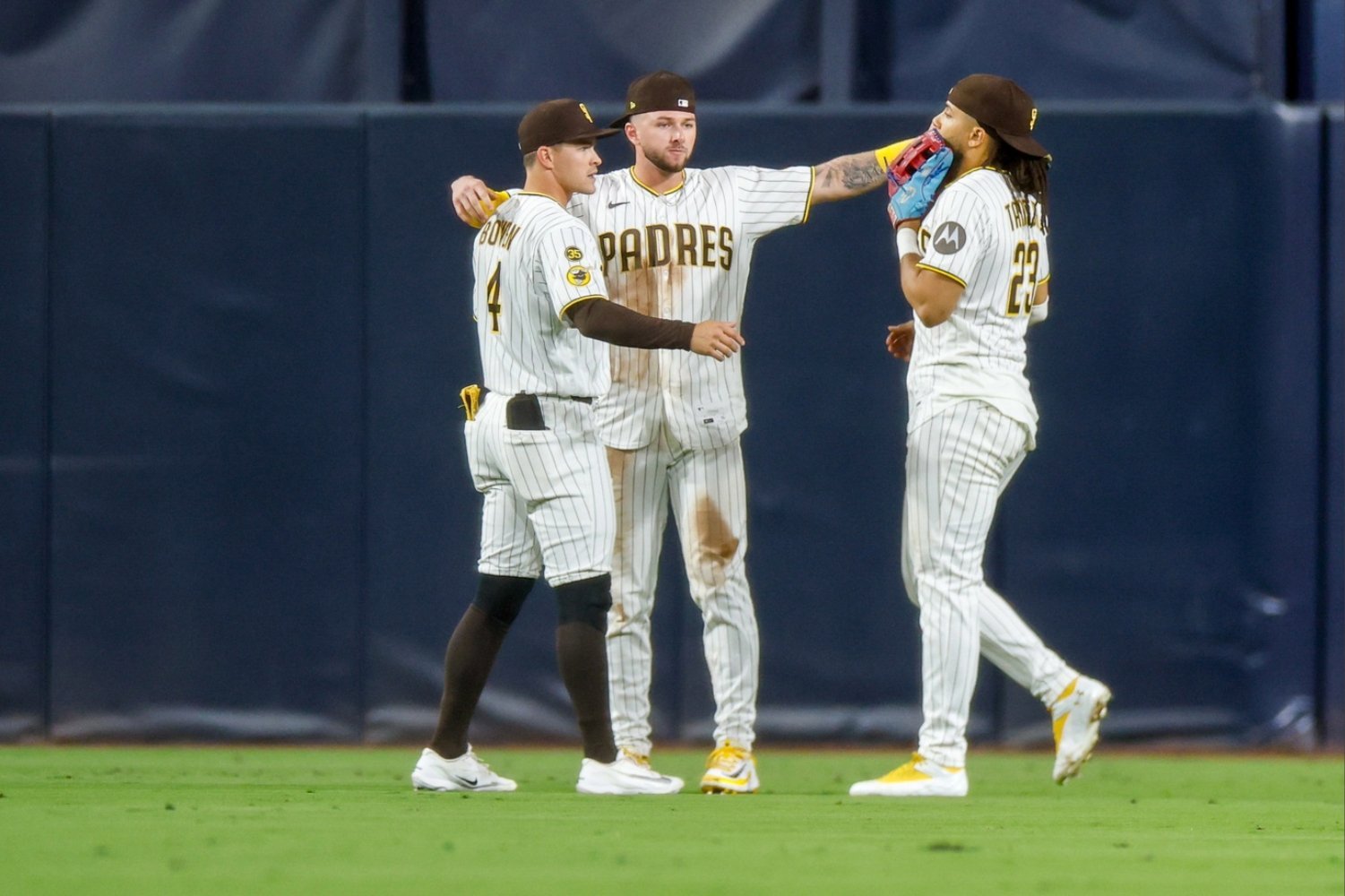 Throughout the 2026 season, there have been two stable truths about the San Diego Padres. The first is that they boast one of the league's best corps of relief pitchers. The other is that they are one of the most improved defensive teams from a year-to-year standpoint. We've given a lot of love to the former all year long; now, it's time to laud the latter. Last year's Padres were a below average defensive team, a label to which which no position group was especially immune. Their Fielding Run Value as a collective was -9, which had them 19th in Major League Baseball. Few regulars were able to avoid to such downtrodden defensive performance; each of Jake Cronenworth (-2 FRV), Gavin Sheets (-3), Manny Machado (-4), and Luis Arráez (-11) played out the full season with the team and contributed to the pinned-down metric. Even using Outs Above Average bumps only Cronenworth up to merely average status (0) and leaves the rest well below the threshold. On the other side of the coin, Fernando Tatis Jr. (9), Xander Bogaerts (6), and Jackson Merrill (5) excelled in the FRV game, contributing a range element that the defense sorely lacked. In the case of Tatis & Merrill, their arms each played heavily into their quality FRV figures, while Bogaerts was left slightly behind in that regard. Regardless, this was a team that was in need of defensive growth ahead of 2026, especially up against the shambles of a rotation that was held together by various forms of duct tape and non-guaranteed contracts. While that pitching staff hasn't entirely held up its end of the bargain throughout the season, the defense certainly has. In fact, the Padres are one of only three teams in baseball to turn in above-average glove work in 2026 after falling below the average threshold (by FRV) in 2025. The difference, however, lies in how significant the difference has been. While the Tampa Bay Rays & Chicago White Sox have each taken steps to dramatically improve their own defensive situations (Tampa Bay was at -39 last year & the Sox were at -38), the Padres are the only one of the trio to go from below-average defensively to one of the game's best. The Rays are at +1 FRV in 2026 while the White Sox are at +5. They've each certainly got their act together, but in a way that merely scratches above the league mean. San Diego, meanwhile, has ascended up to the status of a top-five defensive club at +20 FRV for the season thus far. There are myriad reasons for that. A full season of Freddy Fermin behind the plate; Ty France stabilizing the infield as the team's regular first baseman; Manny Machado has clawed back to his prior status as an above-average defender. It's the outfield defense, though, that is really carrying the Padres to these new defensive heights. His short stint at second base earlier this year aside, Fernando Tatis Jr. continues to serve as one of the premier players on the outfield grass. A smaller sample of innings has him at only +2 FRV for the season, but he's also doing things like this: At the same time, Jackson Merrill has been extraordinary in working adjacent to Tatis. Despite his offensive struggles for much of the year, Merrill's defense has been as good as ever. His +9 FRV is the fifth-best figure for outfielders, with nearly half of that being attributed to his arm. No other outfielder has garnered more FRV love for throwing the baseball than Jackson Merrill has in 2026. The combination of those two alone has helped the outfield to rank eighth in FRV for the league's outfield groups. And that's without left field being at all sorted. Nine different players have assumed the left field post in 2026, largely due to the fact that Ramón Laureano hasn't appeared in a game since early June. The issue there is that it's been mostly a collection of utility players whose skill sets tend to play better on the infield. That's led to a much more pedestrian -1 FRV for the position, with Laureano the only one of the group to post a mark deemed above average. Even if some of those utility players (namely, Luis Rengifo and Gavin Sheets) have managed to occasionally compensate for defensive shortcomings with their bats, left field does remain the shortcoming of an otherwise top-tier group. They're certainly not doing it alone given the improvement elsewhere, but it's become clear that between Merrill & Tatis, the Padres working with one of the best defensive outfields in the game. It's been a large part of what has catapulted them up the league rankings in their defensive performance, and the value of that in the midst of a wild-card chase with a still-in-question rotation cannot be overstated. View the full article
 -
Brooks Lee Is Hitting Better — So Why Is His Contact Getting Worse?
DiamondCentric posted an article in Twins Daily
 Brooks Lee has taken a step forward offensively, but his quality of contact has actually gone backward. So which version is the real one? View the full article
 -
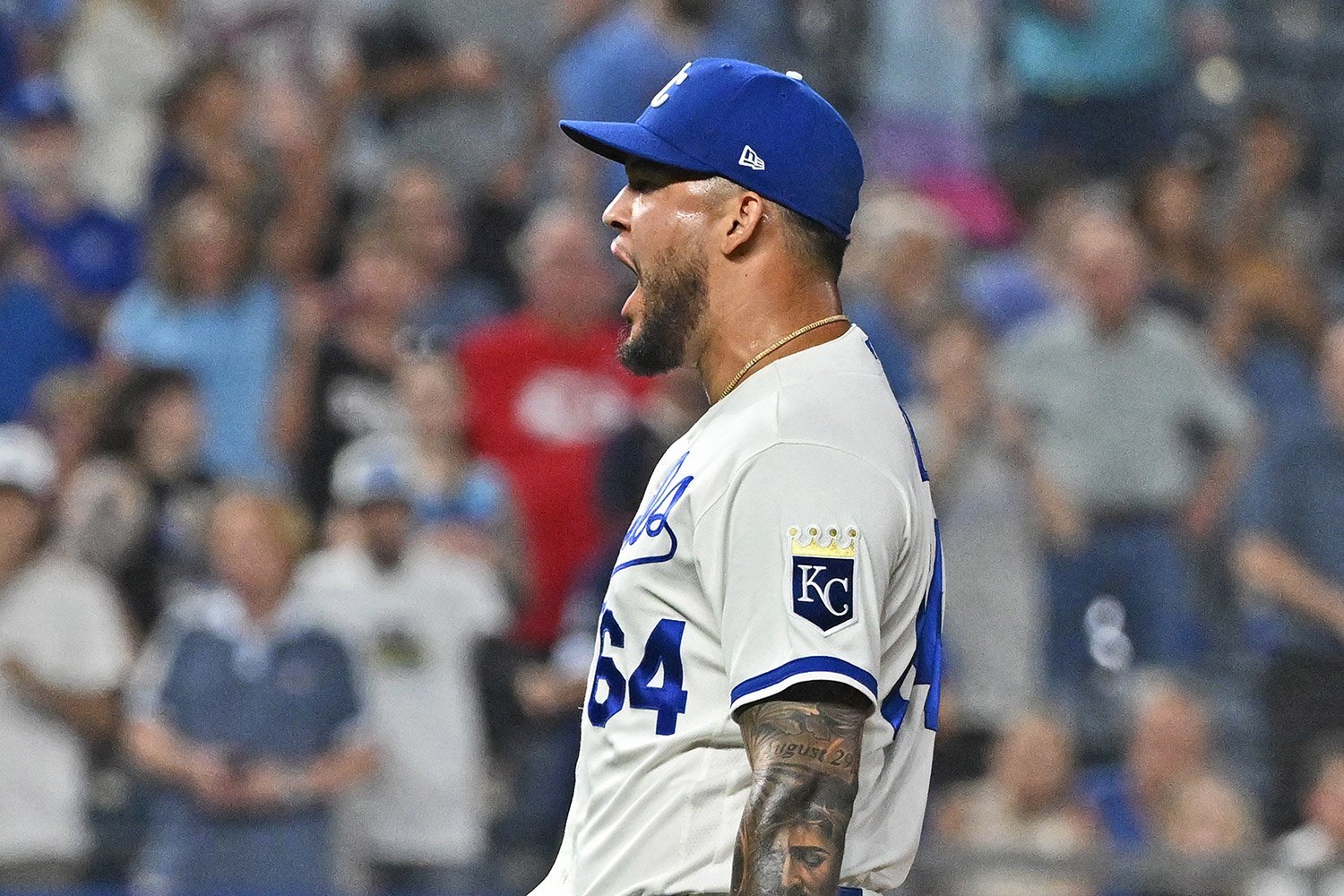 When you watch Kansas City Royals right-hander Steven Cruz pitch, there are two conclusions we can draw without checking his Baseball Savant page: he has one of the fastest fastballs in the league, but his velocity still isn’t enough to dominate. Contrary to what Cruz’s 98.4 mph fastball average, the highest of his career and 96th percentile in velocity this season, invokes from the mound, hitters have a clear idea of how to take advantage of his shortcomings. Among the 16 qualified pitchers with at least 45 innings pitched and a 98 mph average fastball, Cruz has the fifth-best Whiff% (29%). Listen to the names ahead of him: Jacob Misiorowski (41.9%), Mason Miller (40.7%), Mason Montgomery (30.8%) and Juan Morillo (30.0%). He has left behind several elite relievers such as Adrian Morejon, Grant Taylor, Andrés Muñoz, Louis Varland, and Abner Uribe. Opponents have posted a .229 xBA against Cruz’s fastball, and with two strikes, it has accounted for 54.9% of his 51 strikeouts. On that side of the stat sheet, those numbers invoke a display of dominance. However, if we stay focused on that one part, we would not know the inconsistencies that have kept Cruz from making the jump to the first tier of the Royals’ bullpen. When we look at the other side, in reality, his fastball is not as dominant as those numbers suggest. There have been many situations in which Cruz has solved things with his high velocity, but his 147 wRC+ allowed exposes that his fastball has been more vulnerable in situations where he needs to avoid contact. Its Run Value is -2, and for the third consecutive year, its xSLG has climbed above .400. This year, opponents are hitting .409 xSLG against him, a figure that rises to .475 when the hitter is ahead in the count. The only situation in which Cruz’s fastball becomes unreachable is with two strikes, when opponents have gone 3-for-45, with no extra-base hits, and have struck out (28) in 57% of plate appearances (49). That said, there is no doubt that the fastball is not Cruz’s most dominant pitch. And that is the Dominican right-hander’s biggest assignment: he has one of the fastest fastballs in the game, but he still has not been able to turn that potential into becoming a dominant enough pitcher. For Cruz, who uses the fastball 55.5% of the time, this presents a bigger problem. His fastball should be the center of his arsenal and, around it, he should put the rest of his repertoire to work, which is reduced to just two more pitches: his cutter and slider. Fortunately for Cruz, the cutter has become his saving pitch: it has the only positive Run Value in his arsenal (5.0), produces ground balls 54.1% of the time, and the league averages just a 36 wRC+. The cutter has been his evolving weapon: he has improved its Whiff% to 32.2% this year, and reduced his Perfect Contact% from 28% last season to 18%, well below the 33% he allowed between 2023 and 2024. But there is one important aspect Cruz should work on around the cutter, and it comes as a consequence of an improvement by the opposition in increasing its Over rate to 23%. In 2024, the league averaged 4% against him, and 7% last year. To a large extent, that anticipation seems concerning, and it is not what usually happens when the hitter takes longer to identify the pitches, which could become an open door to contact. Part of that problem begins with Cruz’s slider, by far the most punished pitch in his arsenal. Opponents have posted a 157 wRC+ against it, making contact 92.3% of the time within the strike zone. The breakdown hitters are taking advantage of has a lot to do with the slider’s location, especially in the upper third of the strike zone. That poor history could explain Cruz’s reasonable lack of confidence, as he has lowered his slider usage from 11.1% in 2025 to 4.0% this season when hitters are ahead in the count. Without a real possibility of his highest-velocity pitch still standing out as his main weapon on the mound, the cutter has taken center stage in Cruz’s arsenal. However, at the same time, it has been overexposed because the slider is far from being a reliable pitch. That is Cruz’s dilemma. His potential brings us closer to the idea that he has enough to make the jump to the elite level, but the fastball that should drive his arsenal still hasn’t quite done it. The cutter has had to take on part of that role, while the slider’s problems continue to prevent him from sustaining that dominance. View the full article
 -
In Latest Twist, Twins Add Fourth Catcher to Big-League Roster
DiamondCentric posted an article in Twins Daily
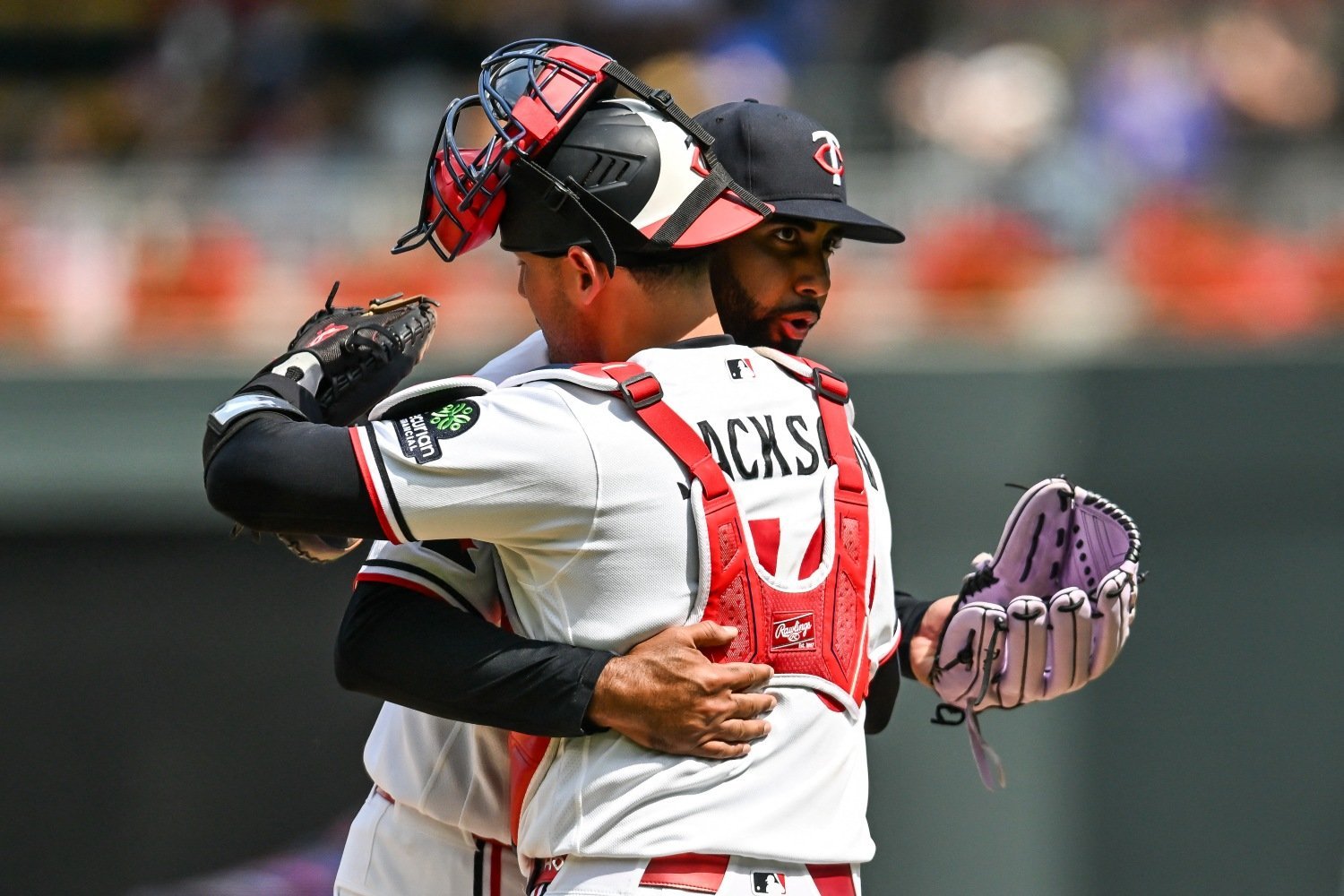 The Minnesota Twins have once again found a creative solution to a roster problem. This time, the club has decided that what its 26-man roster really needs is another catcher. Almost out of nowhere, they're selecting the contract of St. Paul Saints catcher David Bañuelos and promoting him to the major leagues. The fan base has clamored for days for the promotion of top prospect Walker Jenkins, perhaps to replace little-used outfielder Alan Roden. Instead, the club has elected to add its fourth catcher, with Bañuelos joining Ryan Jeffers, Victor Caratini and Alex Jackson on the active roster. Jenkins has game-changing potential, and the team has playoff odds just south of 40%, so it seems like a good time to go for broke. However, according to Twins General Manager Jeremy Zoll, the organization ultimately decided that there was simply too much value in carrying a fourth catcher. “We looked at bringing up Walker,” Zoll said. “Obviously, he's a very talented player and he's doing everything you could possibly ask him to do in Triple-A. But then we looked at the roster and realized we only had three catchers. That just didn't feel right.” Zoll explained that the Twins' internal discussions eventually centered around a simple philosophy. “Two catchers is necessary,” Zoll said. “Three catchers is a luxury. Four catchers is where you start seeing the real value. Four catchers is like two houses and a private plane. Billionaire [stuff].” The decision to add Bañuelos also appears to be influenced by the success of the Twins' current three-catcher strategy. Alex Jackson, who was designated for assignment just four days before being recalled to the majors, has already demonstrated the effectiveness of the plan. The Twins have reportedly been thrilled with his usage, which has involved appearing in a game approximately once every seven or eight days. When asked how Bañuelos would fit into the catching rotation, Zoll suggested that fans shouldn't expect the Twins to suddenly abandon their successful formula. Bañuelos isn't particularly likely to receive playing time. But the Twins believe that is actually a feature, not a bug. “People are looking at this the wrong way,” Zoll said. “It's not about how much he plays. It's about having the option to play him.” That option, apparently, was too valuable to pass up. The decision also means Jenkins will remain in Triple-A, where the Twins believe he can continue to develop and prepare for his eventual major-league debut. If at all possible, the team would love to see him move behind the plate and take some reps at catcher. Think about it. If one catcher gets injured, the Twins still have three catchers. If two catchers get injured, the Twins still have two catchers. If three catchers get injured, the Twins still have one catcher. And if all four catchers somehow get injured, the Twins will finally be able to promote Walker Jenkins—as long as he's ready to play catcher. As for Bañuelos, the veteran catcher will now get to experience the thrill of being a major leaguer, while simultaneously wondering why exactly he has been promoted. “We're really excited about David,” Zoll said. “He's earned this opportunity, and we're excited about what he brings to the roster.” What does he bring? Zoll paused. “A fourth catcher.” Sometimes, that's all a baseball team really needs. View the full article
 -
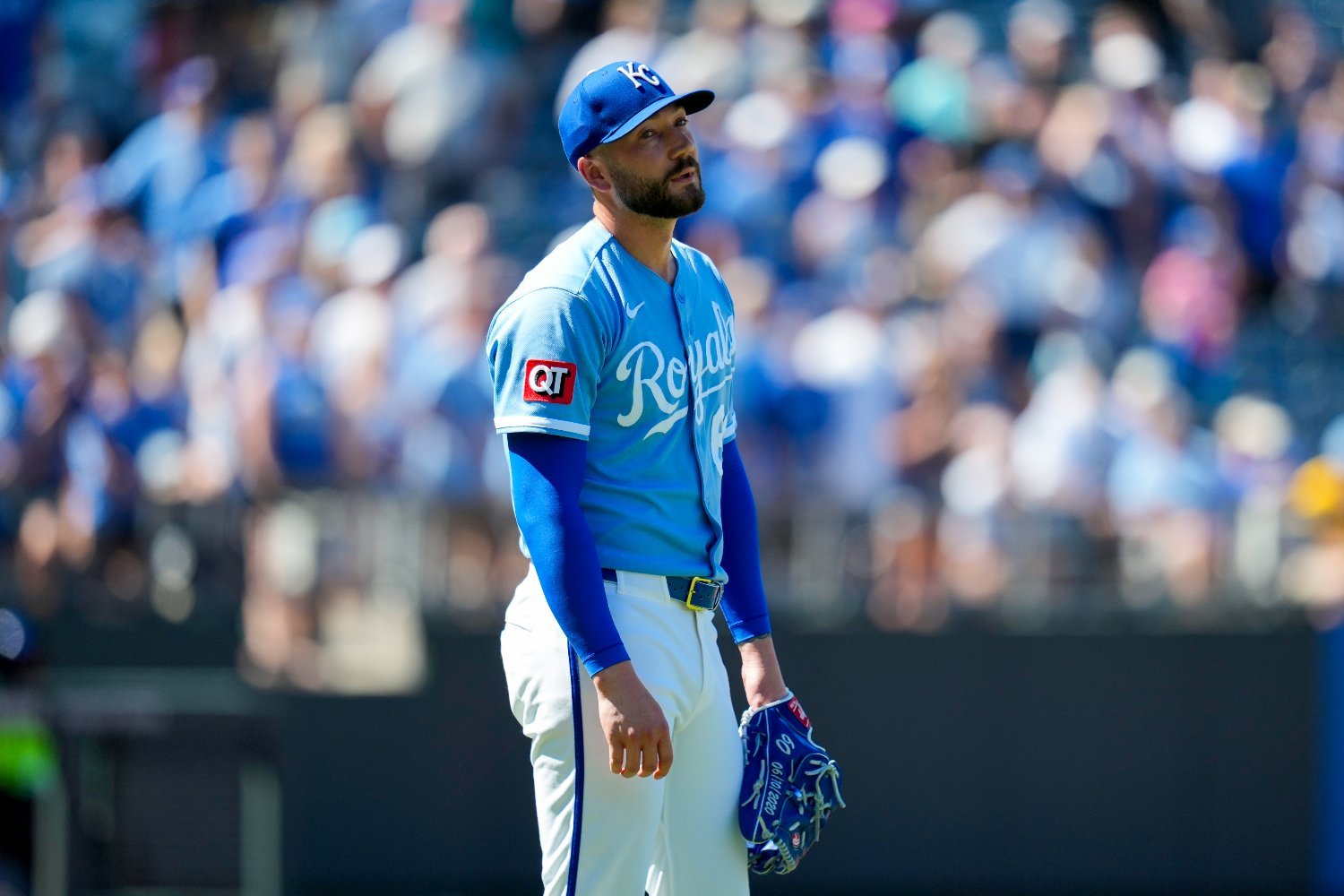 On Tuesday, before their 4-3 walk-off win against the Athletics, the Kansas City Royals optioned reliever Lucas Erceg to Omaha and promoted newly acquired pitcher Carlos Duran. Monday night's outing against the Athletics seemed to be the final straw for the struggling 31-year-old righty. Against his former team, Erceg failed to record an out and gave up a run on a hit and two walks. He threw only 14 pitches and posted a strike rate of just 42.9%. In addition to a disastrous line, his TJ Stuff+ was mediocre, and his zone, chase, whiff, and xwOBA metrics weren't good either, as illustrated below in his TJ Stuff+ summary from Monday's outing. Not only was Erceg's overall TJ Stuff+ subpar (98), but he also rated particularly poorly in chase rate (12.5%), whiff rate (0.0%), and xwOBACON (.514). Producing this in a five-run game at the time against one of the worst teams in baseball is not an encouraging development, and the Royals were left with no choice but to option Erceg, who's struggled immensely this year. After his latest performance, Erceg has a 6.23 ERA and 1.89 WHIP in 43.1 IP. For context, he had a 2.64 ERA and 1.17 WHIP in 61.1 IP in 2025 and produced a 3.36 ERA and 1.05 WHIP in 61.2 IP in 2024. When looking at his Statcast percentiles from this season and his breakout campaign in 2024, it's wild to see how far Erceg has regressed in so many key categories, including wOBA, xwOBA, CSW%, and K rate, just to name a few. Erceg will be entering his first year of arbitration this offseason, and even after this year, he will have two Minor League options remaining. Thus, the Royals have a few options they could pursue with the right-handed reliever, who is looking to put his 2026 season behind him. Let's look at those three options, why they make sense for the Royals, and the possible drawbacks of each path for Erceg in 2027. Non-Tender Erceg One option the Royals could take with Erceg is to non-tender him this offseason, as he will enter his first season of arbitration eligibility. They non-tendered Taylor Clarke last offseason (who has been better this year than Erceg) and, considering the volatility with relievers, the Royals may just decide to free up Erceg's roster spot and bring in a fresh arm in his place, whether from inside or outside the organization. This option feels unlikely, but shouldn't be ruled out entirely. Roster spots are valuable on any MLB team, and Kansas City should be getting some arms back in 2027. Nick Mears and Tony Gonsolin could be intriguing bullpen options in 2027 if fully healthy. Ryan Bergert should be coming back, as well as Ben Kudrna. Both could transition to the bullpen after getting surgery this season in an effort to limit their innings. Alec Marsh and James McArthur could finally come back after missing the past two seasons (though that feels unlikely). The Royals could also aggressively promote arms like Kendry Chourio and L.P. Langevin, who primarily pitched in High-A Quad Cities this year (TINSTAPP). Even if the Royals go outside the organization, acquiring a league-average reliever on a minimum deal would be a heck of a lot more valuable than what we saw from Erceg in 2026. Still, this move feels unlikely, especially based on pitching coach Brian Sweeney's comments after Erceg's demotion to Omaha in a recent article by MLB.com Royals beat writer Anne Rogers. Erceg doesn't have much value, and this year was absolutely brutal. That said, he likely won't command much in arbitration this offseason. The Royals could bring him back on a deal between $900K and $1.1 million at most. That's essentially what a cheap league-average free-agent reliever would cost. Maybe the former Cal product is done after this season. However, for around $1 million, it's in the Royals' best interest to give him another shot and see if he can turn it around in 2027 and get back to his 2024-2025 form. Change His Pitching Stance (To Help His Four-Seamer) One thing I have noticed with Erceg over the years is that his pitching stance has changed slightly. Whether it's intentional or not, he's moved from a more closed stretch to a more open one, and the results have regressed, especially with that change. Here's an example of Erceg generating a whiff on his four-seamer back in 2024 against the Yankees' Aaron Judge in the postseason. b0dOT1hfV0ZRVkV3dEdEUT09X0ExSUZBRlJWVVFNQVdnY0RYZ0FBQUFFRUFBTUVWMWtBVTF4VUJsQUZBZ0ZUQ0FCVA==.mp4 Now let's take a look at his 2025 pitching stance, when he generated a looking strikeout against the Angels' Zach Neto. N3lSYmpfWGw0TUFRPT1fQUFsWlhGeFFCVkVBQ3dNQkJ3QUhWdzlYQUZrTVVsTUFWRk1NQVZKV0Fnc0FDQVVD.mp4 In 2024, his back knee is bent, his left leg is straighter, and his left shoulder is directed more toward the middle of the plate. In 2025, his back leg is straighter at first, his left foot has less pressure on the mound, and his right shoulder points more off the plate. Now, let's take a look at 2026, which is a strikeout at Kauffman Stadium against the Cardinals' Jordan Walker. NHlLSzhfWGw0TUFRPT1fRDFSVFV3QUdWd29BRFFFSEFnQUhVQTVSQUFNQlVWZ0FWRk1EVXdVQ0ExVldBd2RV.mp4 2026 looks like a hybrid of 2024 and 2025. The back leg is a little more bent, and he's putting more weight on his left foot. He also keeps his hands closer to his body, especially compared to 2025 (when they seem further away). However, the shoulder seems more open than what we saw in 2024. Erceg generated a whiff in the video above against the Cardinals. However, the four-seamer whiff rate has plummeted in 2026 after staying stable in 2024 and 2025. Thus, the Storm Chasers coaching staff may be able to help Erceg adjust his pitching stance and return him to his 2024 form (or somewhere between 2024 and 2025). The four-seamer was so key for Erceg in 2024, as evidenced in his TJ Stuff+ summary from that season with the A's and Royals. Not only was his four-seamer his most utilized pitch in 2024 (30.8% usage), but it also had a 104 TJ Stuff+, a 25.2% chase rate, and a 28.6% whiff rate. Let's take a look at his TJ Stuff+ summary in 2026, with particular attention being paid to his four-seam fastball TJ Stuff+ metrics. His four-seamer is his most-thrown pitch this year with a 29.6% usage. However, the velocity is down (97.1 MPH), as is his TJ Stuff+ (95), chase rate (23.7%), and whiff rate (18.4%). For Erceg to get back into form, he needs to tap into his four-seamer again, since it was such an effective pitch for him two seasons ago when he was locked in as the Royals' closer. Perhaps working on his pitching stance and ironing out his mechanics in Omaha can help him regain that fastball effectiveness in 2027. Move Erceg to a Starting Role I wrote about this back in July on Royals Keep, but I think that this demotion to Omaha could be a prime opportunity for Erceg to perhaps try things out as a starter again. One reason it could work is that Erceg already has a fairly diverse pitch mix: a four-seamer, slider, sinker, changeup, and cutter. He's throwing the latter for the first time since 2023. Adding a sweeper or curve could help solidify Erceg's mix, but he has the right foundation, arsenal-wise, to make the move to the rotation. It's not like he's a two-pitch pitcher who can't throw other offerings like some relievers. Another reason a move to the rotation could work is that it could help Erceg change his mental approach on the mound. After a May 2nd save, Erceg, super amped up, let it fly in a postgame interview with Royals TV's Joel Goldberg. I get that having high intensity makes sense for a closer, and it works for many of them. Grant Balfour was a madman during his days in Oakland, and even Royals relievers like Kelvin Herrera were known for their intense approaches. That said, I think the overly intense approach backfired on Erceg, especially when things started going south. The struggles affected his confidence, and he just couldn't pitch in any spot this year, let alone high-leverage ones. Going to starting could help him not just be more relaxed, but maintain a more consistent mental approach on the mound that's been missing for him at the Major League level as a reliever. Maybe it worked early on, but it's not working now, and having to conserve himself over 4-6 innings of work may be the switch he needs to flip to becoming an effective pitcher again. We have seen other teams find success with former relievers moving into starting roles. Clay Holmes found success with the Mets last year. Griffen Jax went from a failed Rays closer to a solid Rays starter (until he got injured). Lastly, Seth Lugo is the epitome of moving from the bullpen to the rotation to excellent results. He finished second in the AL Cy Young race after pitching in the Mets bullpen two seasons prior. It's not like there are a lot of great starting pitching prospects coming up from Northwest Arkansas. Drew Beam and Felix Arronde, two ranked prospects on our list, might need to repeat Double-A. Thus, Erceg wouldn't be blocking anyone of note in Omaha if he moves to the rotation. With two Minor League options remaining after this year, the Royals might as well roll the dice and see what Erceg could do in a change of role. If it doesn't work out, they can always move him back to the bullpen, after all. View the full article
 -
3 Starting Pitchers the Twins Could Turn to Down the Stretch
DiamondCentric posted an article in Twins Daily
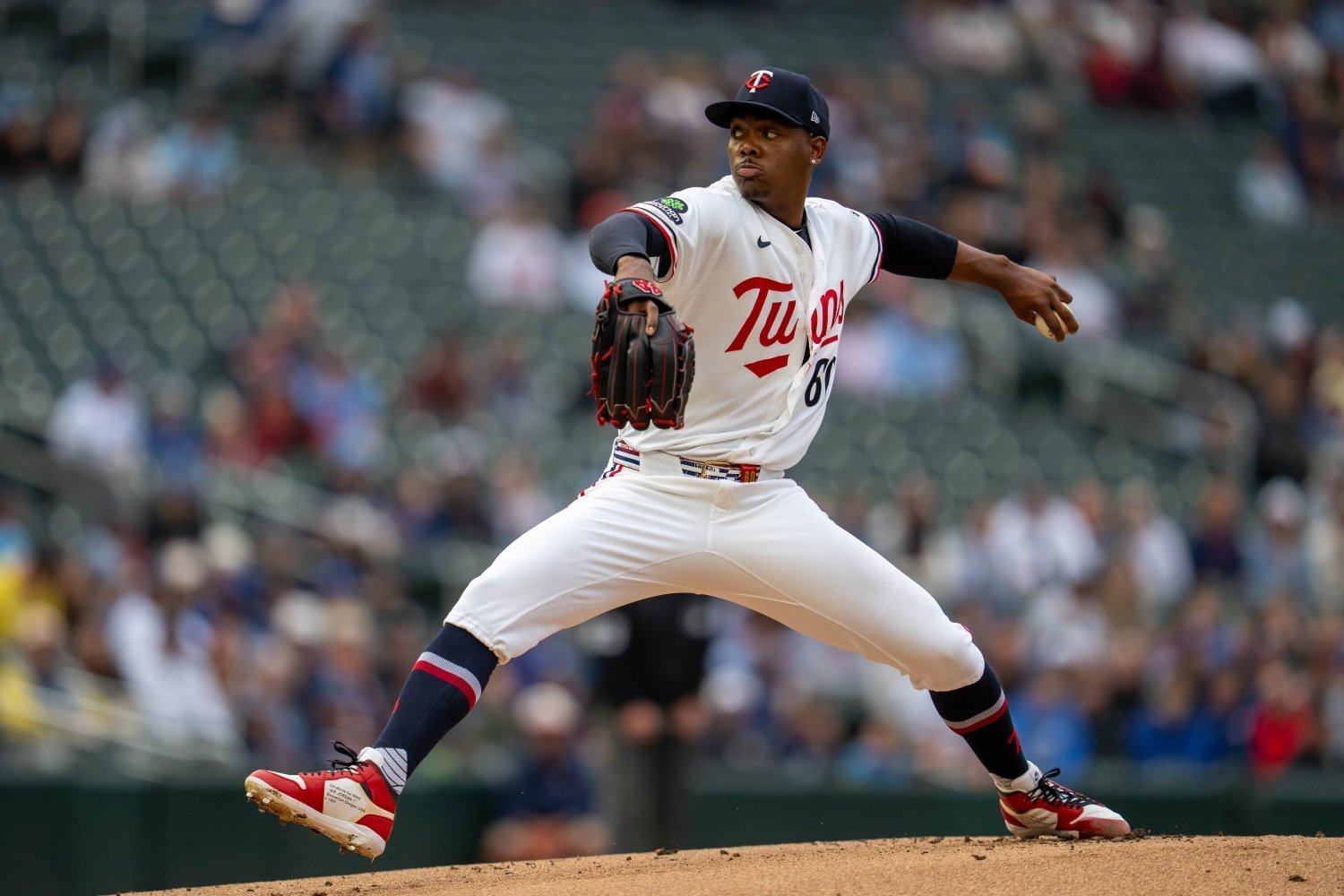 Minnesota’s starting rotation has taken its share of hits this season. Pablo López, Mick Abel, and David Festa are all out for the season. Joe Ryan is currently sidelined with a glute injury, and there is no firm timeline for his return. That leaves the Twins trying to navigate the stretch run with a rotation that looks considerably different than it did when the season began. For now, Minnesota is rolling with Taj Bradley, Dean Kremer, Bailey Ober, Connor Prielipp, and Zebby Matthews. There are certainly questions surrounding that group. More importantly, there are no guarantees that all five pitchers will still be in the rotation when September arrives. The Twins could need additional innings, and they have a few internal options who could become increasingly important over the next several weeks. Here are three pitchers to watch as potential reinforcements. RHP Germán Márquez The Twins signed Márquez to a minor-league deal last week, after the Padres had been using him in a swing role. Minnesota is now trying to stretch him back toward something resembling a starter’s workload. That process began Sunday with the St. Paul Saints. Márquez pitched four innings, allowing one run on four hits while walking one and striking out nobody. He threw 33 of his 57 pitches for strikes. The lack of strikeouts certainly stands out, but the workload is more important at this stage. Márquez had already thrown 80-plus pitches multiple times for San Diego as recently as the beginning of July, so there is a foundation to build upon. There was a time when Márquez was one of the more reliable starters in the National League. From 2017 through 2022, he accumulated 975 1/3 innings, sixth-most in the majors during that span. His 4.38 ERA over those seasons doesn't jump off the page, but plenty of those innings came at Coors Field. Reports indicate Márquez has an opt-out date of August 25, with another opportunity to opt out in September if Minnesota doesn't add him to the active roster. That could influence how aggressively the Twins accelerate his workload. If the organization believes Márquez can give them four or five competitive innings in September, he becomes a particularly interesting insurance policy. LHP Kendry Rojas Rojas clearly has the highest upside of the three options. Since being demoted at the beginning of August, he has made three starts and pitched 11 innings while allowing just one earned run. He has struck out 11 and walked only two, holding opponents to a .180/.220/.256 line. That kind of performance gets attention. Rojas has already made four starts among his 12 appearances for the Twins this season, with some coming in an opener role. Across those four outings, he owns a 2.19 ERA with 14 strikeouts and seven walks in 12 1/3 innings. Opponents have posted just a .430 OPS against him when he has been used as a starter. The next step is figuring out how much workload he can handle. On Sunday's episode of Inside Twins, general manager Jeremy Zoll said the plan is to ramp up Rojas's workload in his upcoming starts. That makes sense. The Twins don't simply need another pitcher capable of throwing two or three innings. If Rojas is going to become a legitimate rotation option, he needs to demonstrate that he can handle a starter's workload. That's why the next few weeks could be important for the 23-year-old. Rojas has already shown that he can navigate Triple-A hitters. Now, the organization needs to see whether he can do it while carrying a larger workload. Young pitchers can change the conversation quickly when they string together a few strong starts. Rojas has an opportunity to do exactly that. If Ryan isn't back soon and the current rotation develops another opening, Rojas could quickly move from an interesting prospect to a legitimate September option. RHP Jack Anderson Anderson is a different type of option. The Twins claimed him off waivers from the Red Sox on July 11. Boston had primarily used him as a starter at Triple-A this season, although his professional career has featured plenty of work as a long reliever. The Red Sox's attempt to move Anderson back toward starting has produced mixed results. He posted a 4.81 ERA, 20.5% strikeout rate, and 8.4% walk rate over 58 innings for Worcester. Still, the Twins clearly see something worth developing. Zoll recently mentioned that the organization plans to stretch Anderson back out after he was used primarily in one-inning relief appearances following his arrival in Minnesota. In four appearances for the Twins, he hasn't allowed a run over 4 1/3 innings. Since being sent back to Triple-A, Anderson hasn't made a start. However, the workload has gradually increased in a piggyback role. He's pitched multiple innings in each of his last three appearances. On Saturday, he provided his strongest outing of that stretch, throwing three shutout innings while allowing two hits and striking out five. He threw 30 of his 48 pitches for strikes. That's worth watching. Anderson may not be the traditional answer if the Twins suddenly need a starter, but he could be useful in a bullpen game or as an opener who can provide several innings afterward. If Minnesota continues increasing his workload, he could eventually become something closer to a traditional rotation option. The Twins don't necessarily need to find one pitcher who can solve all their rotation problems. They need options. Márquez provides experience and a track record of handling a starter's workload. Rojas offers youth and considerably more upside, if his workload can be increased safely. Anderson provides flexibility and could bridge the gap between the rotation and bullpen. That's important, because the current rotation comes with plenty of uncertainty. Bradley has seen some inconsistency in recent starts. Kremer was recently added to the group. Ober has dealt with his own velocity concerns. Prielipp is still developing as a starting pitcher (and, like Rojas, presumably faces some workload constraints), while Matthews remains a young pitcher trying to establish himself at the big-league level. The Twins don't need all three of these pitchers to emerge. They probably need at least one of them to become a legitimate option. With Ryan's return date still unclear and the organization already having lost López, Abel, and Festa for the season, Minnesota can't afford to wait until its rotation is completely depleted before figuring out where the next innings are coming from. The next few appearances for Rojas and Anderson, along with Márquez's continued transition back toward a starter's workload, could tell the Twins quite a bit. The rotation may not look the same by the time September arrives. If it doesn't, these are the pitchers who could have a chance to change the picture. What stands out about this group of potential starters? Leave a comment and start the discussion. View the full article
 -
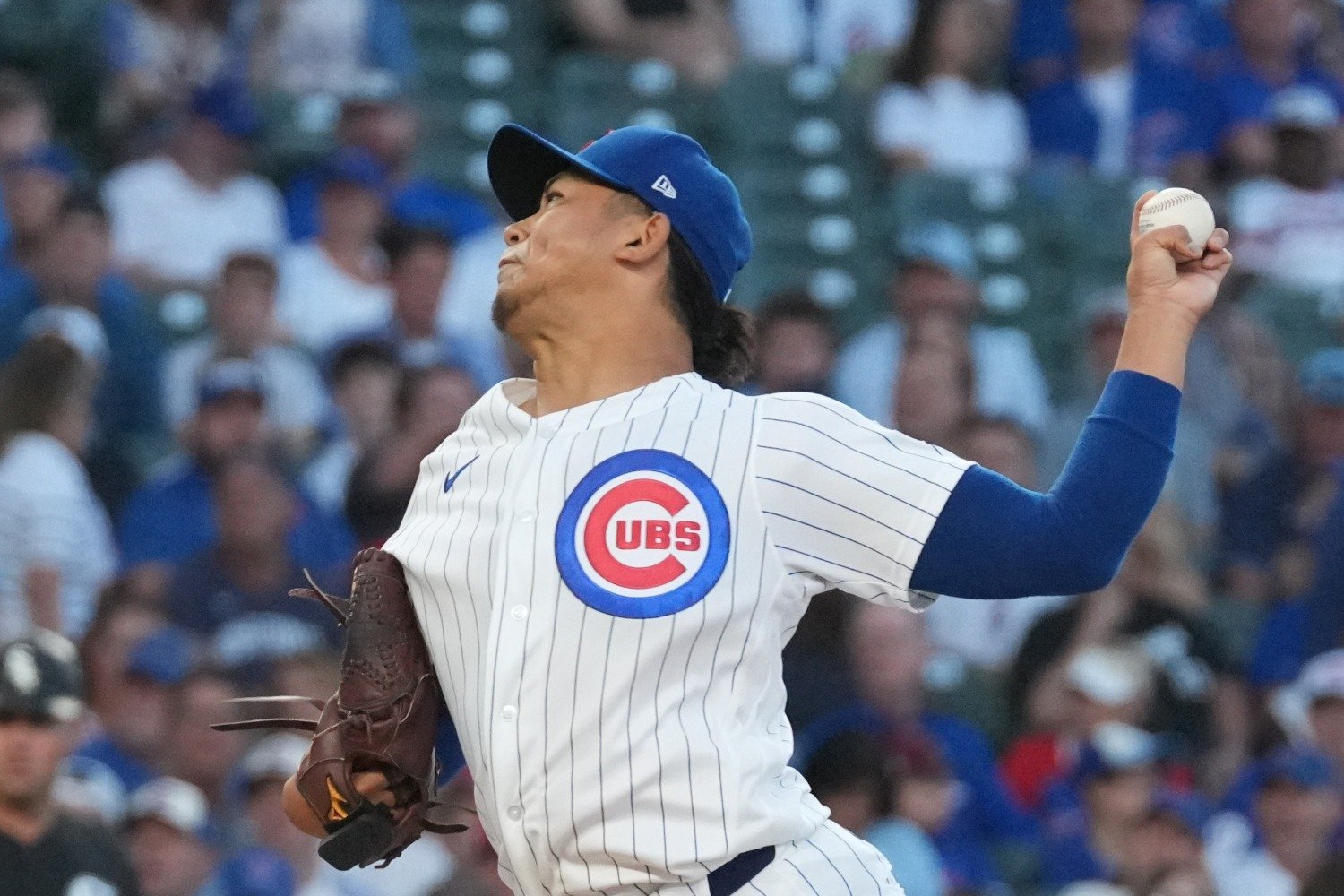 The end of the 2025 season—and specifically the playoffs—was an ugly stretch for Chicago Cubs starting pitcher Shota Imanaga. The affable lefty was pounded in his last two starts of the season and then rocked in the playoffs by the arch-rival Milwaukee Brewers. Imanaga started the season as the team's co-ace; he ended it by being passed over for a do-or-die start in Game 5 of the NLDS. The culprit in this demise was Imagana's propensity to give up the long ball at the wrong time. Sadly, that's cropped up again this year, as he's given up 29 homers already. Figuring out how to work around these is key as the team begins to look beyond the regular season (while continuing to pursue the Brewers in the NL Central). Sometimes, however, we have a bad habit of focusing on just the home runs. Imanaga's most recent start against the crosstown White Sox is a great example of this. The home run Randal Grichuk hit in the top of the fourth was the talk of social media; it defined his start for many people. Grichuk has made life hell for lefties for more than a decade, sporting a career 121 wRC+ against southpaws. Despite being 35 years old now, he's shown no signs of slowing down, posting a 161 wRC+ on the year against them. A left-handed pitcher with home run issues giving up a bomb to a guy who crushes lefties is not a wild outcome. What you may have missed, however, is that Imanaga had a great start minus that outcome. Not only did he strike out 10 hitters, but he induced 20 whiffs on 40 swings. The fastball velocity sat at 91.5 MPH—an important metric for Imanaga, who struggles significantly when the velocity dips below 91. The splitter was especially good, as it notched an 80% whiff rate when the Sox swung at it that night. That came against the offense with the 7th-best wRC+ against lefties this season. With Imanaga, there will be some home runs given up, but he has shown time and time again that despite that, he can dominate. Outside the 29 homers, Imanaga has had another fine season. He has a 3.77 ERA in 143 innings. With all of the injuries, he's been a rock in the rotation, taking the ball every turn and delivering as many quality starts (11) as the next two Cubs on the leaderboard (Matthew Boyd, 6; Colin Rea, 5). The underlying data assure us that the results aren't fluky; his xERA is 3.81 and his xFIP is 3.85. He's a fine mid-rotation starter. That said, the Cubs shouldn't enter the postseason having forgotten what happened last year, either. That Grichuk home run felt inevitable because it was an obviously bad matchup for Imanaga. But the worst part about that home run was the walk that preceded it. The Cubs lefty can survive a solo shot or two, but he cannot survive three-run blasts. Walks aren't generally an issue for him, but they will happen from time to time, and that's when things get a little scary. Walk the guy before a lefty-masher, and what seemed like a clean inning could turn into two runs. As you enter the playoffs, you're far more likely to face lineups that will force Imanaga into those exact uncomfortable situations. That will (rightfully) make most Cubs fans uneasy, The margin for error is razor-thin in the playoffs, and Imanaga lives on a razor's edge already. To mitigate the risk he presents, the Cubs should shield him from the third time through the batting order. The first time batters see him in a game, Imanaga has a 3.33 xFIP and a 29.3% strikeout rate. The second time he sees hitters, he has a 3.55 xFIP and a 25.3 K%. Once he gets to a third time, his xFIP jumps to 5.67 and his K-rate drops to a measly 12.6%. As a pitcher who really relies on two pitches as his primary options (fastball/splitter), it makes sense that he struggles the third time through. As often as the Cubs can avoid this, they should. With their roughed-up rotation leading to an exhausted bullpen, they haven't always been able to shield him from this during the regular season. Instead, they've often asked him to get through that one extra inning, maybe a little too often. The good news for the Cubs is that the rules of the game (figuratively) change in the playoffs. Teams don't use their starters or bullpens the same way they do over the first 162. The Dodgers won a World Series two years ago with two starters, using their bullpen the rest of the time; you can hide deficiencies in interesting ways. Luckily, the North Siders might just be set up perfectly to use Imanaga with these changes. Enter: the Cubs' changing bullpen. Between today and the end of the season, the Cubs' bullpen is likely to see lots of reinforcements. Ben Brown, Edward Cabrera, Daniel Palencia, Justin Steele, Hoby Milner and Shelby Miller might all return, building depth and variety for the pen. There are pitchers who may give you some length (two or three innings) and others who give you funky looks. There are pitchers who can attack very specific weaknesses, and others who will blow hitters away with pure stuff. That should allow the Cubs to utilize Imanaga more optimally. You can help Imanaga avoid bad matchups and the third-time through the order penalty by using those options. The Brewers might stack lefty-mashers Andrew Vaughn, Jackson Chourio and William Contreras at the top of their order to face Imanaga as many times as they can. Instead of letting the southpaw take the first inning, they could allow (say) Brown to take the first four or five outs of the game, then turn it over to Imanaga. Because of the sheer amount of trustworthy arms that may return and how teams handle playoff pitching staffs (being far more aggressive with early pulls), Imanaga also wouldn't be asked to go 18+ outs or be forced to see a lineup a third time. It's much more likely he would be asked to get something closer to 12 outs. He could give up a few baserunners and still never see a hitter a third time. Plus, by shortening his usage, you can ameliorate the issue with his fastball velocity. In shorter stints, it's more likely that he can max out the effort on the pitch. He may even be able to get it to the 92-93 MPH area that former Driveline pitching instructor Chris Langin suggested as the threshold Imanaga needs to reach to be at his best. Fans should hope the Cubs need to use four starting pitchers in the playoffs. As a team probably headed for the Wild Card round (FanGraphs gives the Cubs just an 11.1% chance to both win the division and secure a bye), the Cubs would only need a fourth starter in the second round. If the season ended today, recently-acquired starters Kevin Gausman and Clay Holmes would start two of the three games in a Wild Card round, leaving a decision to be made by Craig Counsell on whom the third pitcher would be. That debate would come down to Boyd and Imanaga. The team will need both if they move on, but finding a way to get the best out of Imanaga is key. Thankfully, the Cubs are getting healthy (at least, pitching-wise) at the right time, which should allow them to optimize usage of both hurlers. Unlike in 2025, this team looks ready to cover its October innings. In the interim. the Cubs will hope for more starts like Imanaga's against the White Sox. He will be a little more exposed going forward. Even with the rosters expanding, they'll ask him to get through five or six innings in most starts. They'll hope they see more solo bombs than ones with runners on. He'll have to face a few hitters (like Grichuk) who are just bad matchups. And he'll probably be just fine, as he's been most of the season. But when the playoffs happen, they'll be able to try different things. Piggybacking might be an option. Openers might be an option. In a way, Imanaga is the Cubs' glass cannon. The traditional glass-cannon arm is someone who's wonderful when healthy, but who rarely are. Imanaga isn't a big injury risk, but he tends to "break" in the ways described here: giving up home runs, diminished velocity and seeing the order a third time. He can be a hitter's nightmare when everything is working, but he has some serious flaws. Maybe the right term for him is Plexiglass Cannon, instead. He's not as breakable as many hurlers in the traditional sense, but pressure and repeated exposure can still crack him. Deploying Imanaga may take a deft hand, a strong bullpen and knowing when to pull him, but if you get it right, this Plexiglass cannon can be a real weapon. View the full article
 -
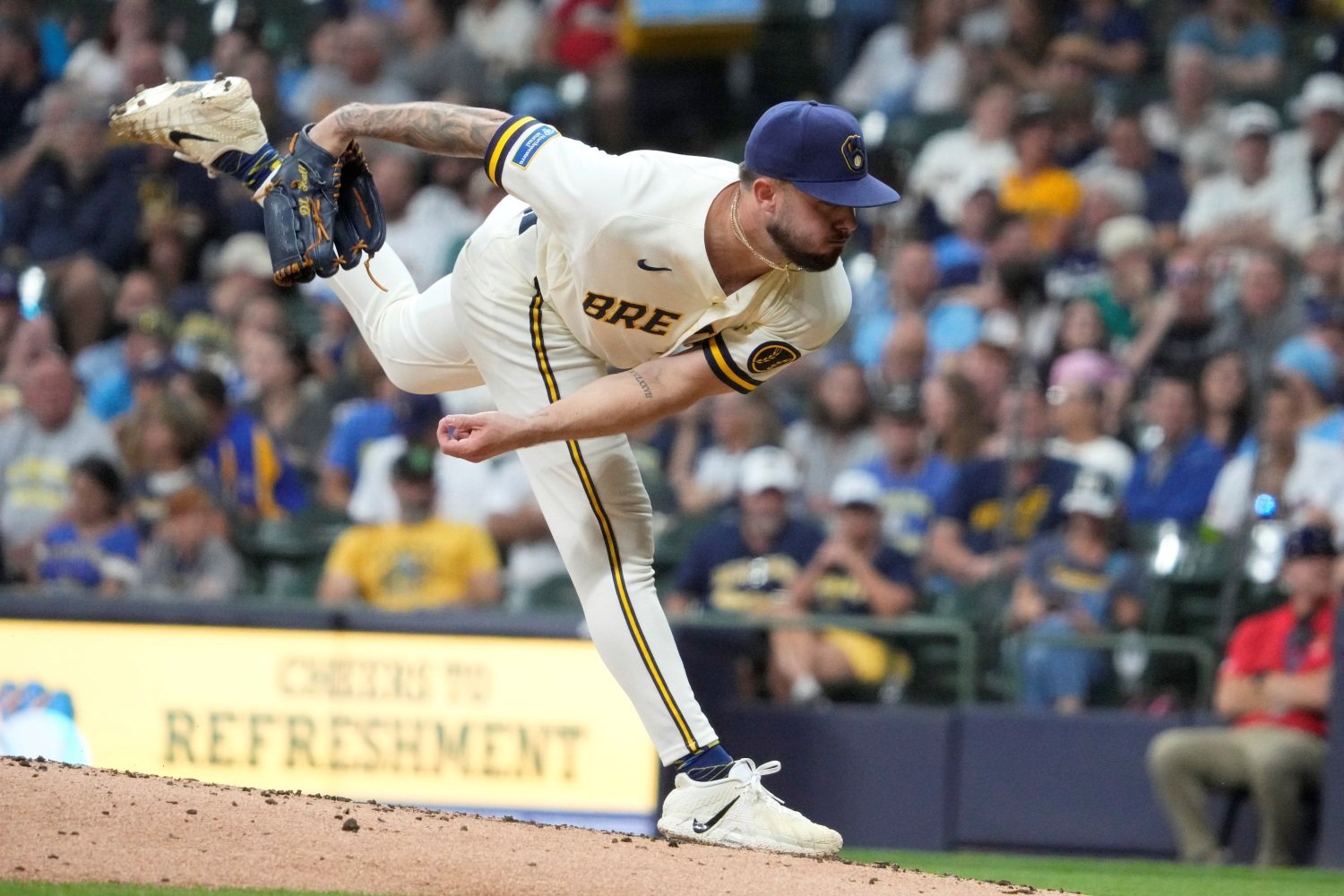 It was a bad night for the Brewers' latest two-player trade package. Dustin May's third start with the team went dreadfully, as the Mariners took out their frustrations over Tuesday's 22-0 whupping by chasing May after seven early runs. JoJo Romero is still on the injured list. The clock is ticking on getting value from that deal, since both May and Romero are impending free agents. Besides, it would have been nice to win that game, securing a series victory and widening the team's advantage over the Cubs after they lost Wednesday afternoon. For those willing to look beyond the final score, though, there was some real consolation to be found as the game unfolded. Joey Ortiz had three hits, including a home run, and his hot streak continues. In fact, it's only picking up steam. Since the promotion of Cooper Pratt that pushed Ortiz back to third base, the former Orioles farmhand is batting .302/.340/.519 in 142 plate appearances. He's not walking nearly as often as he did before that (6.3%, versus 11.8% prior to Pratt's call-up), but for Ortiz, walks aren't always a good sign. They often signal passivity, rather than real selectivity and a balanced approach at the plate. When Ortiz is focused on drawing walks, it's because he's not confident in his swing and because he's not able to get the bat head out and do damage. Over this recent stretch, he has 14 extra-base hits, more than doubling his season total in less playing time than he had before the transition. An aggressive Ortiz who's getting to the ball even a little bit farther out in front is the best version of the player, at least at this juncture of his career. It's helped that, of late, Ortiz's bat speed has trended up. Early this season, he struggled to generate the same lethal swings that made him enticing as a prospect, but that element is back in his game this summer. In a perfect world, a batter would create that extra whip without making a significant tradeoff in the shape of their swing. Ortiz isn't a perfect-world kind of hitter, though. He has an unusual profile, letting the ball get much deeper than most hitters with similarly flat swings. In some ways, it makes him dangerous and difficult to defend, but it's also the source of his inconsistency and occasional slumps. He's not a guy who comfortably generates bat speed the same way other hitters do; he's always making tradeoffs. Unsurprisingly, therefore, his boost in swing speed has come with a flattening of his bat path. What Ortiz has also done, though, is get rid of some of the bat wrap in his load. Early this year, you could see Ortiz counterrotate with his hands and shoulders even as his front foot came down, turning such that the end of his bat momentarily faced out toward the pitcher. That move creates considerable torque, but it also risks making you late. It makes your swing longer early, and it ever-so-slightly delays beginning your actual progress toward the ball. Nowadays, Ortiz isn't doing that as much. His move keeps the bat more neutral in its position before he starts to move his hands toward the hitting zone. When that does happen, there's a bit more snap to the hands. He can't create as steep a swing that way, but by generating the same bat speed and starting a hair earlier, he's getting to the ball with his bat working uphill more often than earlier this year—making the force he delivers to the ball pay off more handsomely. NXk5UUJfWGw0TUFRPT1fVlFaU0JnSUhBRmNBV1ZRQ1VRQUhBQUZWQUFNRVZBY0FWd05YQ1FaV0J3QUFDQVpV.mp4 For a few weeks this spring, it looked like Ortiz might not have any place in the Brewers' future. He was displaced positionally by Pratt, but if David Hamilton had been playing just a little better or Ortiz had responded just a little worse to that change, he might not even be in the majors right now. Because of Milwaukee's glut of infield options, he might still have to find his forever home somewhere else, but the last two months have made it clear that Ortiz can be a productive big-leaguer. Wednesday night offered the latest proof of his upside. One way or another, he's got a lot of value left to offer the team. Ditto, it seems, for DL Hall, who worked three shutout innings as the bullpen kept Seattle quiet. Over his last five appearances, Hall has fired eight frames of one-run ball, allowing two hits and two walks against eight strikeouts. Like Ortiz, Hall finds his success unconventionally. He's not a huge strikeout guy, and he walks more batters than is ideal, but he consistently limits damage by opposing batters. Earlier this summer, I wrote about the broad skill of swing disruption, using Statcast's swing timing and miss distance data. The piece focused on Aaron Ashby, but only because Hall was on the injured list at the time. It's Hall who best dominates batters in this specific sense. He's great at forcing them to slightly (only slightly, but that's often enough) mistime their swing, and at getting them to hit the ball off the end of the bat, and at getting them to hit the bottom third of the ball, which often results in lazy fly balls. Unconventional though he might be, Hall is now fully back in the groove, and he's more important to the team's bullpen than initially planned or hoped. His showing Wednesday night was the latest evidence that he's up to the task. The Brewers lost an ugly game, but it was just one. They're still in good shape as they try to sew up their fourth straight division title and secure a bye to the Division Series. The game also yielded reasons to hope that Ortiz and Hall can sustain their positive contributions, which is great news. Both players, acquired as a package like May and Romero but at the much higher cost of Corbin Burnes before the 2024 campaign, have multiple avenues by which they can help the team remain successful for several more seasons. View the full article
 -
A.J. Ewing's Summer Slump Is Both Multitudinous and Fixable
DiamondCentric posted an article in Grand Central Mets
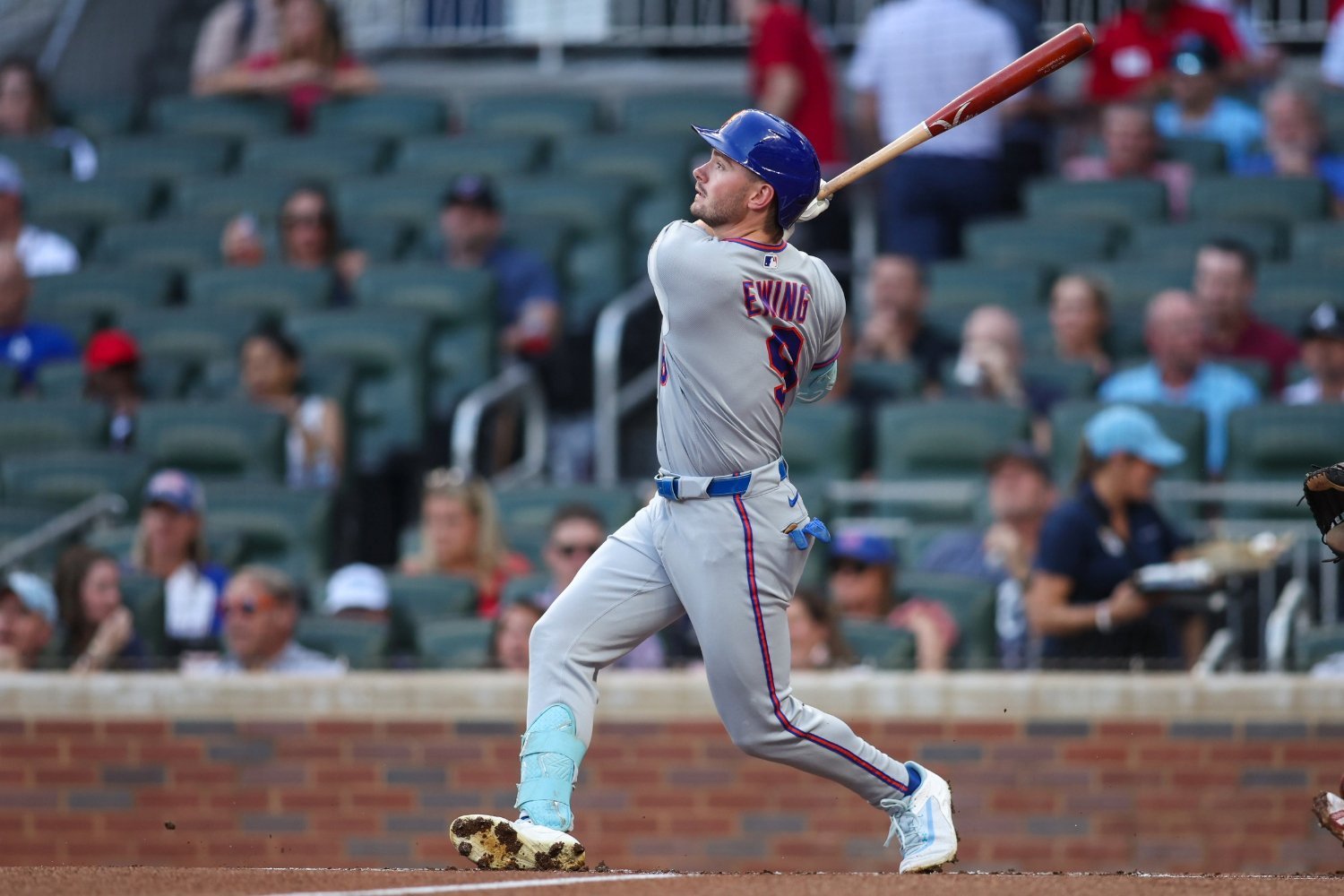 New York Mets rookie sensation A.J. Ewing has dropped to a 45 wRC+ in August, and though that might look like a reasonable slump for a rookie, the struggles actually began in July. After recording 1.0 fWAR and producing a 119 wRC+ between May and June, he has plummeted to a 74 wRC+ since last month. So, let's analyze what we should really worry about regarding the two versions of Ewing we have seen. Curiously, both halves of our sample consist of exactly 177 plate appearances each. Period WAR wRC+ O-Swing% Z-Swing% xBA xSLG Barrel% IdealAtkAng% MAY-JUNE 1.0 119 28.1% 63.4% .278 .426 6.3% 37.4% JULY-AUGUST 0.3 74 30.1% 71.0% .238 .388 9.8% 44.4% DIFFERENCES -0.7 -45 +2.0% +7.6% -.040 -.038 +3.5% +7.0% At first glance, two results stand out: Ewing is producing less, but several metrics show that he is making better contact. His Barrel% has increased by 3.5 percentage points, his ideal attack angle rate has also shown a very interesting improvement, and he has increased his swings at pitches inside the strike zone. Now, the concerning part is that Ewing has not been able to convert those improvements into actual results. And clearly, much of the problem has intensified during this month. Here are two key reasons: the drop in his power against fastballs, and his swing-and-miss rates against breaking balls. A.J. Ewing vs. fastballs Metric August 2026 xBA .311 .283 xSLG .233 .458 xwOBA .379 .367 Whiffs% 6.7% 15.1% Ewing has made a great improvement by reducing his whiff rate by 8.4 percentage points, but his drop from .458 to .233 in xSLG has been terrible. He is making contact, but pitchers are considerably limiting his impact. Here, you can see where the problem is concentrated inside and outside the strike zone. In nine of the 12 zones, his slugging has been almost nonexistent, especially up and on the inner half of the zone. Exit velocities haven't been the issue, but rather where a large portion of those balls in play are going. Those exit velocities in the strike zone have been great, but the location of the batted balls has stopped presenting a threat. This part of Ewing's problem ties into his struggles against breaking balls. Unlike the lack of production against fastballs, this month he is producing the best xSLG (.578) and highest average exit velocity (94.4) against any pitch group this year. However, his swing-and-miss issues have climbed back to their peak (38.2% whiff rate), just like they did in June. This trend becomes even more dangerous as pitchers succeed in neutralizing Ewing's impact against fastballs, and breaking pitches have once again caused his put-away rate (i.e., rate of being struck out on two-strike counts) to spike (25.9%). Let's analyze this interesting comparison here. On the left are Ewing's whiff rates during May and June against breaking pitches, while the right side shows the results from July to the present. Stability in the upper part of the zone has been maintained, but whiffs spiked in the lower zones and the outer edges. In short, pitchers are finishing at-bats against Ewing with more high fastballs and plenty of breaking pitches down, especially away. His season-long xSLG against fastballs leaves some hope if he manages to make adjustments to hit more consistently toward the pull side, but his situation against breaking balls poses a bigger problem. If he connects, Ewing destroys them. Too often, though, he fails to make contact at all. So, a large part of his struggles from July until now could turn around if he improves his swing selection. At just 22 years old, Ewing has shown enough talent to keep this slump from turning into a major problem. Seeing how he works to make adjustments to this newfound, exploitable weakness down this final stretch of the campaign will be one of the most interesting storylines within the Mets' disastrous season. View the full article
 -
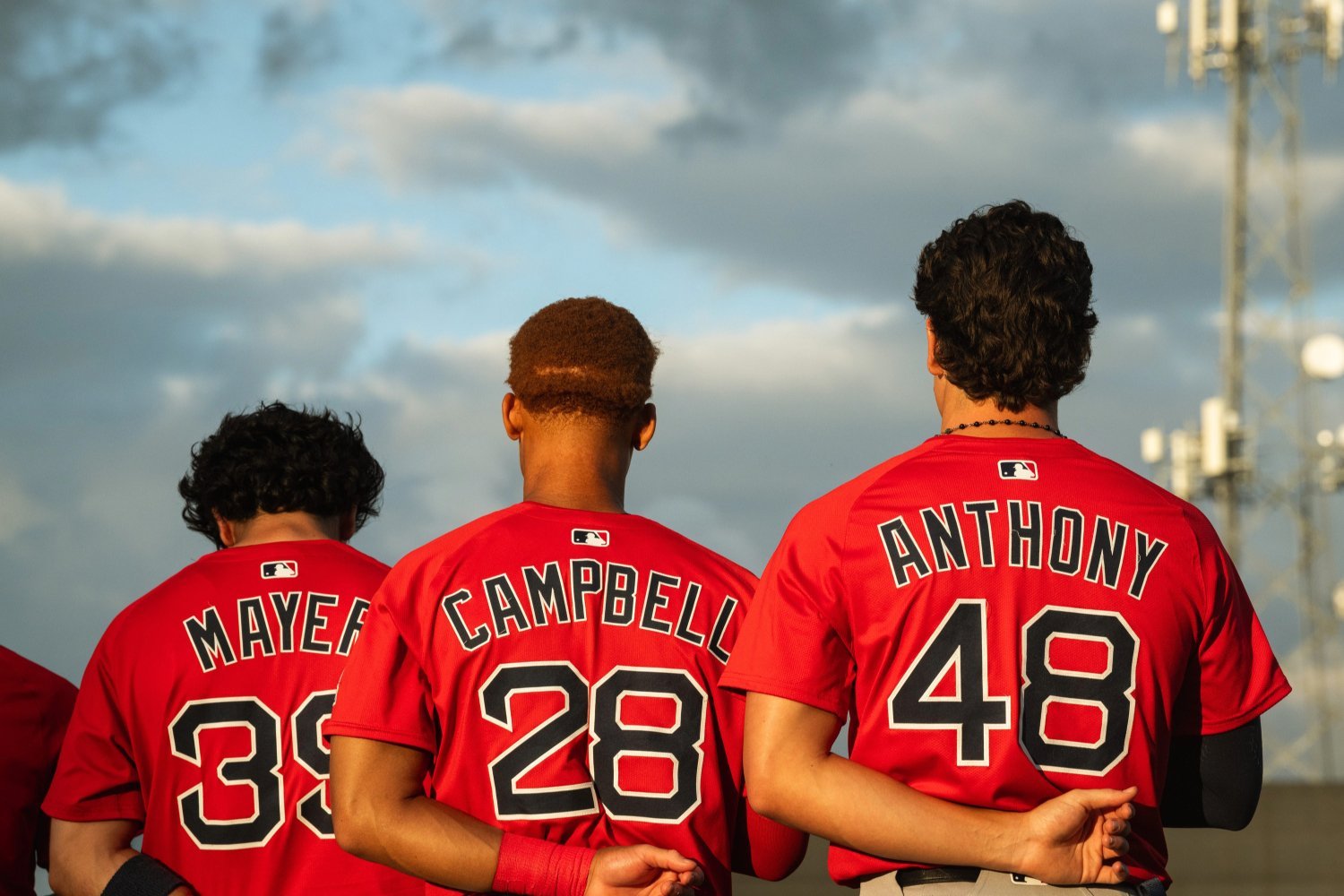 As the dust settled and the final reports came in on what the Boston Red Sox were sending back to the Baltimore Orioles in the jaw-dropping Adley Rutschman trade, the belief seemed to be a consensus one, especially among those who closely follow the prospect side of the game: “Wow did the Red Sox overpay in the deal!” That belief was justifiable with Boston sending their numbers two, four, and five prospects (Anthony Eyanson, Kyson Witherspoon, and Enddy Azocar) along with big leaguer Carlos Narváez, and a Player To Be Named Later who ended up being Harold Rivas, the Sox's No. 13 prospect. They would of course follow that up later in the day by sending out a former number one prospect in Marcelo Mayer to acquire San Francisco Giants lefty reliever Erik Miller. While fans will debate if too much was given up to secure Rutschman, or if the plug was pulled too quickly on Mayer, one question that should without a doubt be on fans minds is this: Did Craig Breslow’s aggressive approach signify a shift in the club’s philosophy to prioritize known commodities rather than banking on prospect potential? If that answer is yes… well then it’s about damn time. If you’ve followed the Red Sox since they drafted Mayer fourth overall in 2021, making him the highest pick in franchise history, there’s a phrase ownership has been preaching that looked to be setting up the foundation of the franchise for years to come: ‘The Core Four.’ That phrase of course refers to Boston’s quartet of highly glamorized prospects including Mayer, Kyle Teel, Roman Anthony, and at first Nick Yorke, but later transitioned to Kristian Campbell after Yorke was dealt to Pittsburgh in 2024. These four prospects were looked at as nearly untouchable early on, so much so that any trade talks involving Mayer were seemingly shut down, Anthony was granted an eight-year, $130 million extension just 46 games into his big-league career, and the Driveline darling that was Campbell earned an even more egregious eight-year, $60 million extension just eight games in. I say "nearly untouchable" because unfortunately for Teel, he was the odd-man out when the Red Sox first bit the bullet on trading prospects; they shipped him along with Braden Montgomery, Chase Meidroth, and Wikelman Gonzalez to the White Sox for Garrett Crochet in the winter of 2024. At the time of the deal, Teel ranked fourth in Boston’s system and 25th in all of baseball (per MLB Pipeline). Montgomery ranked fifth and 54th. Meidroth and Gonzalez were 11th and 14th on the Red Sox's top 30. Surely, another trade that stung at the time for those who prospect watch, but the need of a true ace for the staff was glaring and the addition of Crochet more than filled that hole. Fast-forward two years post-trade and barring the injury to Crochet, it doesn’t seem like a deal that either team has lost sleep over. Crochet pitched to a runner-up finish in the 2025 Cy Young voting and dominated in Boston’s only Wild Card series win in the Bronx versus the Yankees. On the White Sox's side, Teel has been a little difficult to evaluate with just 97 games played in a season-plus. He missed 78 games at the start of this season with a hamstring injury and after just 19 games played, found his way back to the IL where he’s been since July 21 with an ankle sprain. All things considered, when he has been out there he has looked like a promising young player, owning a 110 OPS+, 114 wRC+ and a 21.3% caught stealing percentage. Montgomery, meanwhile, has been on the streakier side since his call-up, which featured a walk-off home run in his debut and not much else of note since with just a .230/.317/.372/.689 line. When it comes to Meidroth, he has been the definition of a solid, league-average player, owning a career .263 average, 4.1 WAR, 97 OPS+ and 100 wRC+ through 235 career games. And as for Gonzalez, while he shined in a relief role in 2025 with a 2.66 ERA, .178 average against, and 28.7 strikeout percentage in 16 appearances, elbow and lat injuries have not only cut into the last two seasons, but may have also been the cause of his surprise DFA by Chicago on August 8. No longer the ‘Core Four’, the focus seemed to shift to who some called the ‘Big Three’ of Mayer, Anthony, and Campbell as the trio that the organization would build around. Ushering in the next golden age of Red Sox baseball, harking back to the memories of other notable young players who became integral pieces of championship clubs like Dustin Pedroia, Jacoby Ellsbury, and Xander Bogaerts. After the trade deadline, however, it may be safe to say that hope of leaning all in on the prospects was a mistake that needed correcting with a philosophy shift more toward known and established commodities. At the start, the returns on Campbell and Anthony looked great. Campbell began his 2025 rookie campaign as one of Boston’s best hitters through March/April slashing .301/.407/.495/.902 with a wRC+ of 150. As for Anthony, he was the spark the Sox rode for the 71 games he played last year, hitting .292 with eight homers, 32 RBI, and wRC+ and OPS+’s of 140. Then, things rapidly fell apart for Campbell, who after that first month plus saw his line drastically fall to .159/.243/.222/.218 with a wRC+ of 30 and strikeout and walk percentages of 28.6% and 7.1%. That earned him a demotion to Worcester, where he has since been buried with no clear shot at a path back to the majors. As for Anthony, injuries have derailed his strong start with 25 games missed last year due to an oblique strain and nearly another 100 and counting missed from a combination of back soreness and a wrist sprain, leading many to question his durability. In the case of Mayer, there never came that moment where things seemed to fully click, leading some to wonder if he’ll go down as one of, if not the, most-overhyped prospects in Red Sox history. In just 114 games, Mayer accumulated a 0.3 WAR, slashed .223/.278/.346/.625 with seven homers, 32 RBI, a 70 wRC+ and career strikeout and walk rates of 23.4% and 6.6%. Along with his offensive woes, his defensive prowess never really hit its projections either, with negative-3 Defensive Runs Saved and only plus-2 Outs Above Average during his time split across third, short, and second. Then of course, there are the much talked about maturity, work ethic, and durability concerns he faced, as he ended up missing 102 games (playoffs included) due to various injuries over the last two seasons—not to mention the number of minor-league stints he had cut short due to injuries as well. Obviously, Red Sox fans will never get the chance to see firsthand if the Eyanson, Witherspoon, Azocar trio lives up to their projected hype, or if they underperform like the last ‘Big Three.' But in a 2026 season where the Sox find themselves in the midst of an epic turnaround and push for a playoff spot, the decision to move their chips into the center of the table and go get a bonafide bat in Rutschman and lockdown southpaw in Miller, as opposed to the waiting-and-seeing approach with Mayer and the kids, has to be looked at as the right one. Like Crochet did before in filling the ace vacancy, Rutschman does the same in providing a bat to deepen the Red Sox’s relatively top-heavy lineup. His career 16.8 WAR, 115 OPS+ and wRC+ and 15.8 strikeout and 11.7 walk rates gives the lineup a professional approach at the plate night after night, and his 24.4% caught stealing rate and 38 DRS gives them an elite option behind the plate. Now I might just be crazy, but those numbers sound like they could be pretty beneficial to the here and now rather than waiting to see what Eyanson, Witherspoon or Azocar have to offer in the 2027 and 2028 ETAs that MLB Pipeline has proposed for them. When it all comes down to it, you’re most likely never going to get the entire fanbase to agree to a consensus on these trades, and that’s okay. It’s more than respectable to be one of the people who wants to build through the draft and produce homegrown talent to try and win that way. It’s also just as respectable to want the organization to not only evaluate the prospects they see as part of the future, but also those who aren’t and act accordingly. Identifying external pieces they believe can help win both now and in the future and jumping at the chance if/when they become available is a part of team-building as well. That is what Craig Breslow did when he acquired Rutschman and Miller. There's no guarantee that this gambit will pay off, but the team's championship hopes over the next few years improved because of it. That's a philosophy shift worth lauding. View the full article
 -
Exclusive Interview: Red Sox 2026 Draft Pick Alex Kranzler
DiamondCentric posted an article in Talk Sox
 Drafted in the 17th round of the 2026 Draft out of Vanderbilt, Alex Kranzler is another exciting pitcher entering Craig Breslow's pitching lab. Sitting down with Talk Sox's Nick John, Kranzler discusses his time at Vanderbilt and pitching in the MLB Draft League for the Trenton Thunder, along with the preparations happening at Fort Myers to get not just himself but his fellow draft class members ready for professional baseball. View the full article
 -
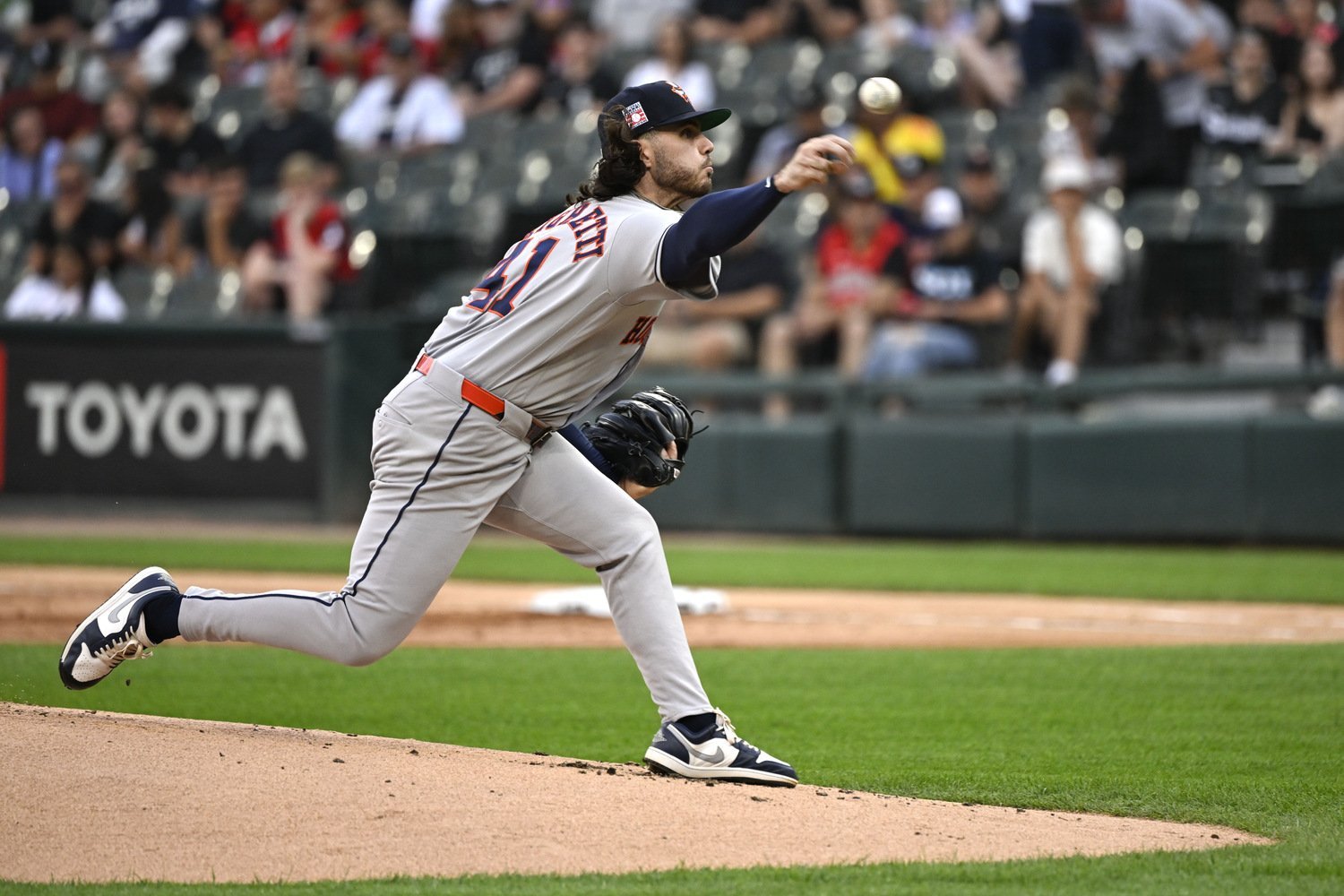 The Toronto Blue Jays acquired Spencer Arrighetti in the trade that sent Daulton Varsho to the Houston Astros. Arrighetti brings three years of MLB experience to add depth to the starting rotation. However, he has only started 52 games in that span due to multiple injuries. Last season, he missed nearly three months due to two different injured list stints: a fractured thumb and elbow inflammation. This season, he went on the IL on July 25 with a foot nerve injury, Morton's neuroma. It's an injury that causes nerve pain, which is concerning since it's in Arrighetti's push-off foot. The righty has made two rehab starts in August, throwing six combined innings and allowing two earned runs on three hits. He also struck out four but walked three batters. In his last start, he rolled through three innings before giving up a two-run home run in the fourth inning. Yet, Arrighetti showed a concerning sign: His fastball averaged just 90.5 mph. This is down from his major league average of 92.4 mph earlier this season. Hopefully, the drop is just him not getting his usual push off his right foot because of the immense pain he was experiencing, and not something more concerning. Shi Davidi of Sportsnet reported that Arrighetti would throw a side session yesterday (August 19), and then a decision would be made about where the righty's next appearance will take place. He also reported that Arrighetti changed the type of cleat he used, which had a new insole that reduced the pain. Depending on how the side session went, it's a possibility that Arrighetti's next start is with the Blue Jays. He'll need to prove he's pain-free and that the velocity decline was just a side effect of the pain he experienced. He last pitched August 16, so he could return as early as this weekend, possibly tomorrow, Friday, August 21, against the New York Yankees. (Sportnet's Arden Zwelling suggested that's likely the plan.) That is the next projected bullpen game, but it would only be on four days' rest for Arrighetti, so they may stick with a bullpen game and pitch him on the 22nd instead. That would push everyone else back a day as well. The Blue Jays have tried to go the route of using a six-man rotation to keep their starters healthy for the final stretch and a possible postseason run. However, the injuries to Trey Yesavage and Jameson Taillon derailed that strategy. So, Arrighetti would add depth to an injury-plagued starting rotation. However, he only threw 50 pitches in his last outing. That means the righty will be on a pitch count in his next start too, as he's still trying to ramp up to a full workload. It'll be nice to have an arm with Arrighetti's MLB experience while the team is fighting for the last Wild Card spot, and their schedule is perfectly aligned. Starting next week, all 10 of their remaining series are against teams under .500, and six of those are against teams the Blue Jays are battling for the final postseason berth. View the full article
 -
 Sal Frelick hits second rehab home run. Sawyer Strosnider won’t have to buy his first professional home run ball. Biloxi loses lucky 13th in a row. Transactions: Milwaukee Brewers optioned LF Brandon Lockridge to Nashville Sounds Norfolk (Baltimore) 7, Nashville 5 Box Score & Game Log Sal Frelick led the game off, yanking a slider down the rightfield line and sneaking out for a 323-foot homerun. The rehabbing Frelick finished 2-5 with the second home run of his rehab stint. That would be the last time the Sounds had the lead, starter Thomas Pannone gave up seven runs, four earned, in 2.1 innings and the road team couldn’t make up the deficit. Blake Holub pitched a clean eighth inning, striking out two. Ethan Murray hit a two-run home run in the sixth inning. Jeferson Quero went 2-3 with a walk, and Bo Naylor went 1-3 with two walks while serving as DH. Once again, we must provide a direct copy and paste to the Sounds' detailed recap: Sal Frelick Continues Rehab with Multi-Hit Night in Sounds Loss Four Unanswered Runs Come Up Short in Norfolk NORFOLK, VA – The Sounds dropped their second straight to the Norfolk Tides on Wednesday night at Harbor Park with a 7-5 loss. After Nashville scored first, the Tides scored seven straight runs to build their lead. The Sounds comeback bid fell short with four unanswered runs, but none after the sixth inning. Rehabber Sal Frelick got the scoring started with a leadoff home run three pitches into the game and his second home run of his rehab assignment. He added his second hit and RBI of the night in the fifth to finish the night 2-for-4 and recorded his first multi-hit game in eight games played with Nashville working his way back from a shoulder injury he suffered in mid-July. Left-hander Thomas Pannone got the start on the mound for Nashville and made quick work of the Tides in the first before running into trouble in the second. Three hits led to three runs and a Tides' advantage after the second. Things unraveled for Nashville in the bottom of the third inning with four errors in the frame as the Tides advantage grew to 7-1 on just two hits as Pannone exited the game after just 2.1 IP with seven runs (4 ER) charged on five hits, two walks, and four strikeouts for the southpaw. Lyon Richardson took over in relief and helped strand two on base. Richardson did not yield a hit over 2.2 scoreless innings out of the bullpen. The Sounds began to chip away in the top of the fifth after Brock Wilken and Eric Brown Jr. recorded singles to give Frelick the RBI chance in the inning to cut the deficit to 7-2. Three hits, including a RBI double for Akil Baddoo and a two-out, two-run home run off the bat of Ethan Murray followed in the sixth as Nashville put themselves within striking distance heading to the later innings. Following Murray's home run, Nashville drew two walks in the top of the seventh but left both stranded. A leadoff walk in the top of the eighth was erased on a double play as the Sounds sent just three batters to the plate in the inning. Bo Naylor collected the 11th and final hit of the night for Nashville with a two-out single off former Columbus teammate Codi Heuer, who was dealt to Milwaukee along with Naylor before eventually getting moved to Baltimore just two days later. Heuer collected his seventh Triple-A save of the season, allowing just the one hit over two scoreless innings for Norfolk. Kaleb Bowman (2.0 IP, H, K) and Blake Holub (1.0 IP, 2 K) covered the final three innings on the mound for Nashville out of the bullpen. The trio of Nashville relievers combined to allow just the one hit over the final 5.2 IP without a run. The series continues on Thursday morning with first pitch scheduled for 11:05 am CT as the Sounds and Tides will play some afternoon baseball in game three of the series. RHP Coleman Crow (7-1, 3.39 ERA) will look to get the Sounds back on track. POSTGAME NOTES: BETTER CALL SAL: Sal Frelick continued his rehab assignment with his first multi-hit game in eight games played with the Sounds, and first overall since July 9 on the road in St. Louis with the Brewers. Frelick has a hit in six-of-eight games played during his rehab assignment with now two home runs, two doubles, five RBI, and six runs scored after hitting a leadoff home run Wednesday night. It's the first leadoff home run the Sounds have hit since June 20 in Memphis when Akil Baddoo started the game off with a trip around the bases. It was the fifth career leadoff home run for Frelick and first in Triple-A. He owns three career leadoff home runs in the big leagues with his most recent coming on July 2, 2025, against the Mets on the road. Frelick's only other career leadoff homer in the minors came on August 13, 2021, with Low-A Carolina. OUT IN A MURRAY: Ethan Murray hit his first home run since June 18 on the road in Memphis with a two-run home run in the top of the sixth inning on Wednesday night against the Tides. Murray has five career Triple-A home runs in 112 games played with the Sounds and all four this season have come away from First Horizon Park. Murray now has home runs in Memphis, Louisville, Charlotte, and Norfolk. He has a hit in nine of his last 12 games played and has recorded multi-RBI performances in three of his last five after finishing Wednesday night 1-for-4 with the 2 RBI and a run scored. GIVE IT A BLAKE: Blake Holub turned in another scoreless relief appearance out of the Nashville bullpen Wednesday night against the Tides. The right-hander hasn't allowed an earned run in any of his last five appearances (5.0 IP) and has just one earned run allowed in each of his last 12 appearances. Over his last 31 appearances since the start of May Holub has surrendered just four earned runs across 31.1 IP and carries a 1.08 ERA. Over the same span, he has struck out 43 batters with just nine walks allowed but is 3-3 and taken the loss in two of his last three appearances. He leads the team in appearances this season with 42 despite missing nearly three weeks on the injured list from June 4-23. He set a single-season career-high with 48 appearances during the 2023 season between High-A West Michigan and Double-A Erie in the Tigers system. He worked in 45 games during 2024 between Nashville and Biloxi in his first season in the Brewers farm system. Biloxi pre-game media notes Rocket City (Angels) 5, Biloxi 4 Box Score & Game Log Payne, Pena Pick Up First Double-A RBIs, Shuckers Walked Off by Trash Pandas - Biloxi Loses Unlucky 13th Straight Game in Rocket City The Shuckers lost their thirteenth straight game on Wednesday! Maybe it will be lucky 13? Braylon Payne and Luis Pena both had their first Double-A RBIs and both continue to have a hit in every game they’ve played at the level. Jesus Made went 1-4, while Dylan O’Rae had two hits and a walk. Wisconsin pre-game media notes Wisconsin 5, Lake County (Guardians) 3 Box Score & Game Log New Guys Propel Rattlers Past Lake County NOTE: Be sure to catch the individual clips within the game summary in addition to the full package below. Sawyer Strosnider hit his first professional home run and his dad caught it! Strosnider also had a double and a stolen base in the game and is now hitting .333 in his first seven games with Wisconsin. The T-Rats had 12 hits in the game, and Strosnider was joined by Daniel Dickenson, Tayden Hall, and Blayberg Diaz with two each. Dickenson added two stolen bases, taking his season total to 48. Eric Bitonti hit his 20th home run of the season and could potentially be the second player this season to break the T-Rats single season record if he can hit four more. Bray Ebel was 1-5 with an RBI and strong defensive work at shortstop. Josh Knoth had a solid if somewhat wild outing, pitching five innings with four strikeouts, while allowing 1 ER, on 3 hits and 4 walks. Postgame Podcast with Manager Nick Stanley, Sawyer Strosnider, & Eric Bitonti Wilson pre-game media notes Salem (Red Sox) 8, Wilson 0 Box Score & Game Log Warbirds Blanked in Second Straight Loss - Antunez Records Only Hit A bleak game for the Warbirds. Brailyn Antunez singled in the first inning and that would be the only hit of the game for Wilson. First round pick Trey Ebel committed his second error with Wilson at SS. Nashville begins our Thursday at 11:05 AM Central. You will notice on the linked schedule below that DSL Brewers Gold begins pool play with a record of 0-0, yet the notation is "Game Two". For Gold, this is indeed Game One. Be aware that the statistics from DSL pool play games will not be included in the regular season stats for the players, and box scores will reflect that. Organizational Scoreboard including starting pitcher info, game times, MiLB TV links, and box scores Current Milwaukee Brewers Organization Batting Stats and Depth Current Milwaukee Brewers Organization Pitching Stats and Depth View the full article
