


DiamondCentric
-
Posts
2,631 -
Joined
-
Last visited
Never
Content Type
Profiles
Forums
Events
MLB News, Rumors & Analysis
DiamondCentric Tutorials & Help
Major League Baseball Videos
MLB Fan Guides & Resources
Store
Downloads
Gallery
Everything posted by DiamondCentric
-

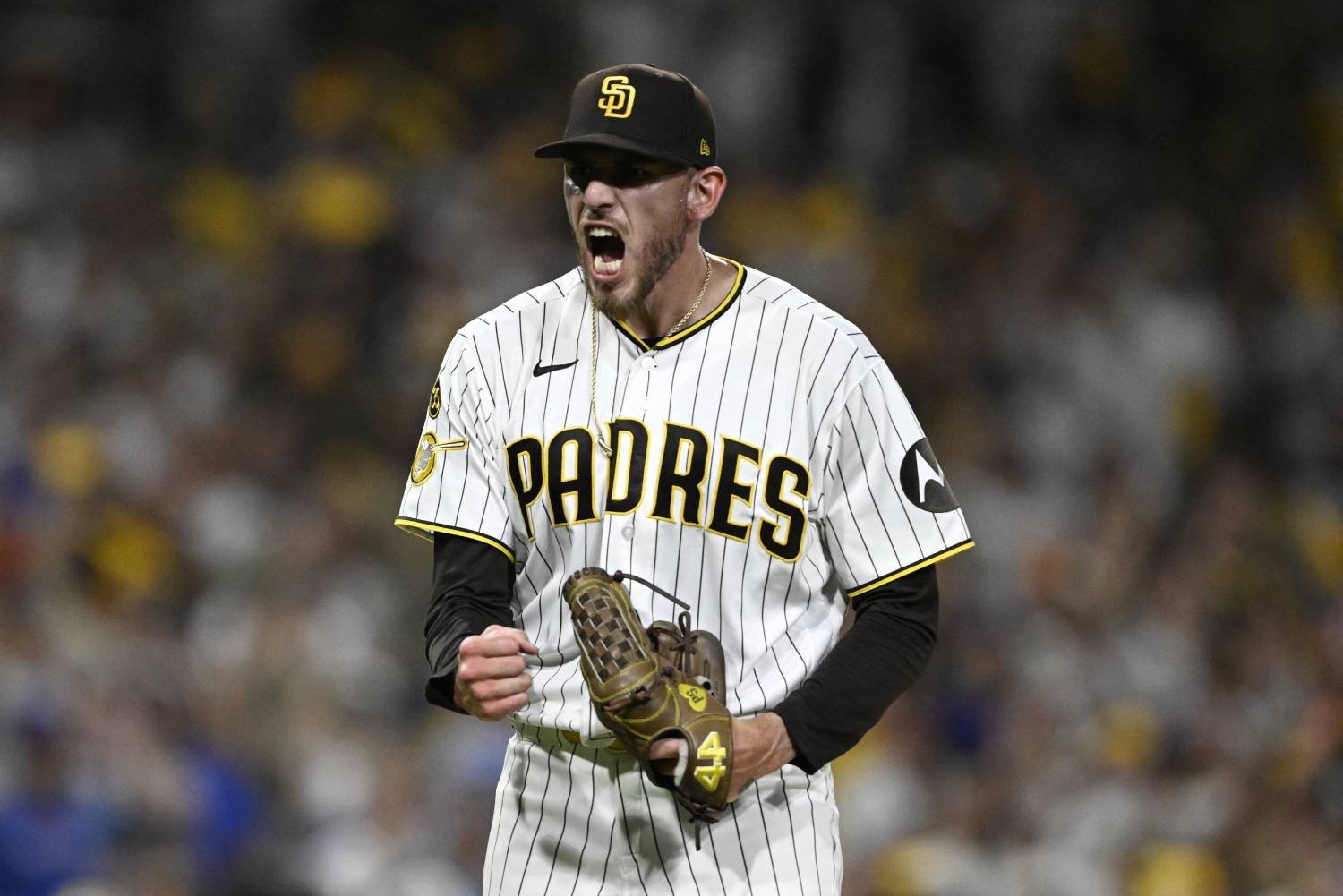 The scene felt like it was out of a movie. Fans had been chanting for the hometown guy in the previous innings. There was a buzz that went through at least a portion of Petco Park when he took off his hoodie and began to get loose. When the bullpen door opened and "Vampire" from San Diego's own Tribal Seeds, the 47,084 Friar Faithful rose as one to welcome Joe Musgrove back. For the first time in almost exactly two years from the time he got hurt, the right-hander from Grossmont High School in La Mesa, the El Cajon native who authored the historic first no-hitter in San Diego Padres history, was jogging to the Petco Park mound to throw a pitch. It wasn't an ordinary regular-season game. It was Game 1 of the NL Wild Card Series vs. the Chicago Cubs. The situation was a soft landing for the 33-year-old. The Padres had an 8-0 lead and it was the ninth inning. It wasn't the best of innings for Musgrove, but it was good enough in this scenario. There was a strikeout, there were two hits, there was a walk, there was a visit from pitching coach Ruben Niebla. Even Mason Miller was starting to stir in the Padres' bullpen if things started to spiral. This was a playoff game, after all. But as Musgrove had done during his longer-than-expected rehab that encountered two significant setbacks, he found a way through. He got a popout to second base, then a called strike three to end the game. It was a very cool scene. But that was a showcase experience. Manager Craig Stammen had a scenario in mind in which to use Musgrove, a key member of the starting rotation in previous seasons. But Tommy John surgery changed that. His recovery from his last rehab start didn't go well, so the Padres decided to try Musgrove in shorter stints to see if he would be effective as a reliever. That did go well, which led to Tuesday's appearance. Now, the Padres have swept the Cubs and another team is waiting. That would be the Milwaukee Brewers, who will host the Padres in Game 1 of the best-of-five NL Division Series on Saturday (5:30 p.m., FS1). The return has happened and Musgrove now must fit a role in the bullpen if the Padres are to advance to the NL Championship Series for the first time since 2022. There might be a soft landing spot for another appearance, but Musgrove could also find himself in a key situation. With the four high-leverage arms the Padres have in Mason Miller, Adrian Morejon, Bradgley Rodriguez and Jason Adam, Musgrove won't sniff action in a close game probably from the sixth inning on. Extra innings is a different case. Musgrove is ideal to give a couple innings if a game goes beyond the ninth. But in regulation, Musgrove is more likely to get a clean inning after a starting pitcher is removed for one reason or another. The situation—and how Musgrove is throwing—will dictate how long he goes. Based on his rehab setback in August when it appeared he was ready to rejoin the rotation, Musgrove won't go beyond two innings. He will fill a role similar to Randy Vasquez, another right-handed starter shifted to the bullpen. The trust in Musgrove will grow as he performs. It is a five-game series, so Musgrove might only have two opportunities, three at the very most. Early-game scenarios will be the best situations for Musgrove. View the full article
-
 It's not quite as dramatic as the MLB postseason, but there's October baseball for Miami Marlins fans, too. Ely Sussman discusses each of the organization's Arizona Fall League selections and explains why we could be treated to a unique international winter ball season. You can find Fish Unfiltered and Fish On First LIVE on the Fish On First YouTube channel, Apple Podcasts, Spotify or wherever else you get your pods. The following Marlins prospects will be playing in the AFL as members of the Glendale Desert Dogs: Dillon Lewis (#6 on the Fish On First Top 30), Max Williams (#22), Carter Johnson, Tristan Stevens, Emmett Olson, Samuel Carpio, Alex Williams and Brayan Mendoza. All fall league games are free to stream at mlb.com/afl. View the full article
-
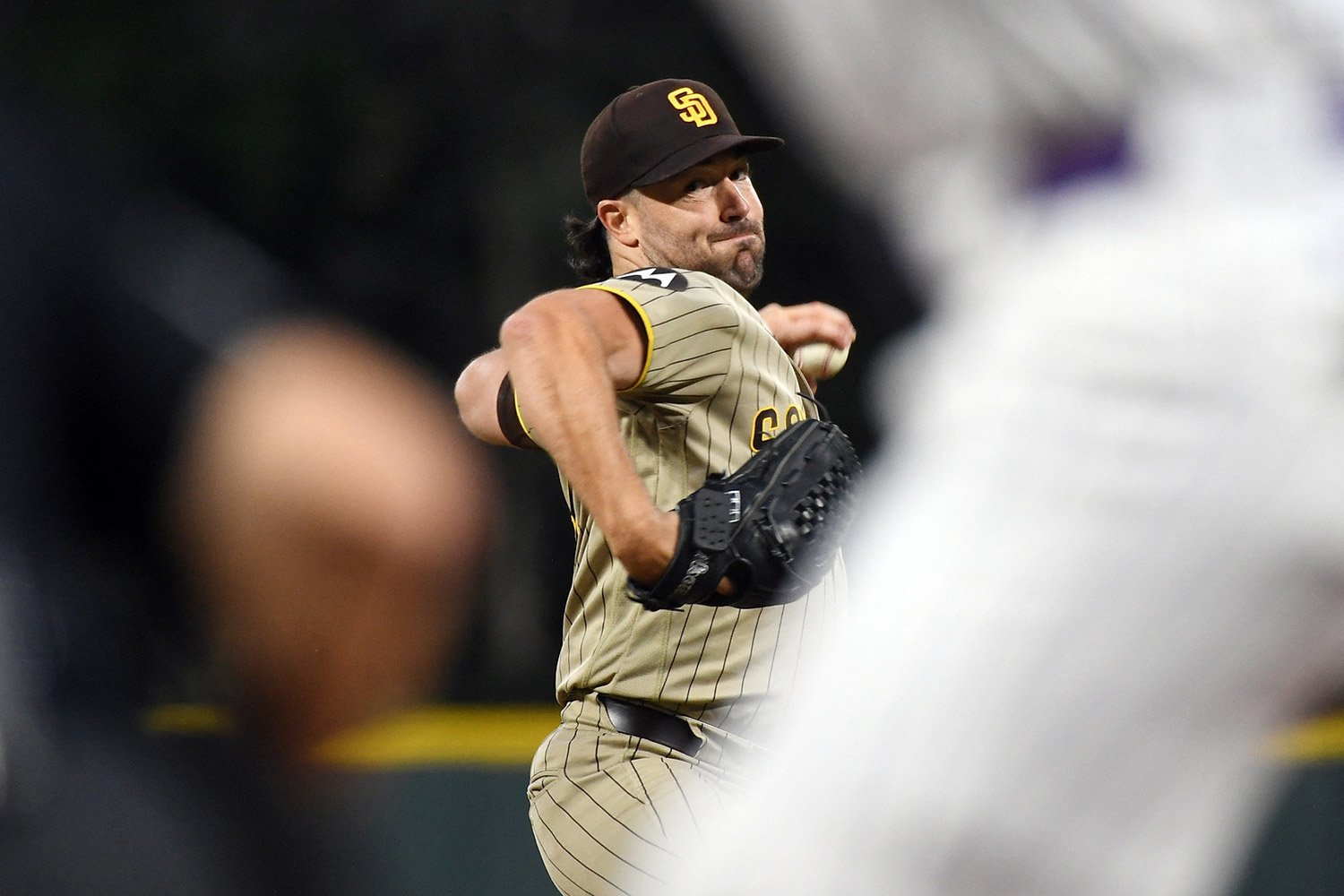 When the San Diego Padres acquired veteran left-hander Robbie Ray at the trade deadline, they did it thinking about October, so this is the moment when they need his contribution the most: Game 1 of the NLDS against the Milwaukee Brewers, the most consistent team in baseball this season. Ray arrives with a negative experience under the October lights, pitching to a 0-3 record with a 7.43 ERA in six postseason appearances, only two of them as a starter. His 13 innings pitched have come over a span between 2017 and 2022, with the terrible memory of allowing a walk-off home run by Yordan Alvarez in the ninth inning on Oct. 11, 2022, when the Seattle Mariners needed one out to win 7-5. His last outing was also in relief in the 18th inning, three days later in Game 3, when Seattle lost 1-0 and ended up being swept in the ALDS. Now Ray has a new opportunity for redemption after that nightmare in October, but he will have to overcome what could be considered his worst moment of this campaign. His performance in the second half of the season in San Diego fell somewhat short of expectations, although, overall, Ray remained the pitcher who had finished the first half with the San Francisco Giants. His xFIP rose from 4.87 to 4.98 since the All-Star break, and hitters considerably increased their BABIP from .238 to .298. Even so, I would say that Ray’s biggest problem continues to be his inconsistency in preventing runs, as his left-handed profile continues to present control problems and more vulnerable points against right-handed hitters. Season Handedness O-Swing% Z-Swing% Swing% O-Contact% Z-Contact% FastSw% K-BB% Barrel% HR OPS 2026 vs L 27.7% 66.9% 44.7% 53.8% 83.6% 23.3% 11.9% 3.8% 2 .680 2026 vs R 28.5% 71.1% 46.7% 61.5% 88.5% 30.8% 6.5% 9.6% 20 .719 Right-handed hitters have recorded similar swing rates to left-handed hitters, against pitches inside and outside the strike zone, but the impact of the contact is different, producing 20 of the 24 home runs Ray has allowed all year. In a certain way, it seems like a strange combination, since left-handed hitters have a high strikeout-to-walk rate, but improve those dividends with more BABIP (.333 vs. .231 against right-handed hitters). In any case, these trends bring us to two points that could be key in Game 1: how much Ray can dominate the left-handed hitters the Brewers put in the lineup, and whether he can avoid his regular-season collapse when right-handed hitters hit him hard. There is a number in the table that sounds very revealing: the 7.5% difference between the FastSw% of right-handed hitters and left-handed hitters, which clearly reveals the aggressiveness and determination with which they look for his pitches when they choose to swing. So, now an important part of the matchup enters the conversation, and the historical matchup of Ray against the hitters on this Brewers offense. Ray pitched only once in 2026 against Milwaukee; it was this past Aug. 12, and he recorded a short start of 84 pitches in only four innings. He allowed two earned runs and a home run for the third consecutive start against the Brewers, although the previous two were last year, pitching with the Giants. However, the recent numbers from those starts do not tell the whole story of Ray’s success against Milwaukee, although he has allowed seven runs, 13 hits and three home runs over 14 innings in his last three starts. Milwaukee hitters have produced a line of just .194/.306/.323, with two home runs — both by Gary Sanchez — five RBIs, 15 strikeouts and 10 walks in 72 plate appearances. Even allowing a home run in each of his last three starts, the Brewers have combined for less than a .200 BA, a .305 on-base percentage and a slugging percentage below .325. That sounds good, and in 72 plate appearances there are some interesting points there. Player PA Pit/PA HR K% BB% xOBP xSLG xwOBA Whiff% Hard Hit% Ortiz, Joey 3 6.0 0 33.3% 33.3% .362 .044 .260 25.0% 100.0% Bauers, Jake 2 6.0 0 0.0% 50.0% .525 .076 .376 20.0% 0.0% Contreras, William 10 5.3 0 20.0% 40.0% .468 .184 .354 27.3% 25.0% Sánchez, Gary 9 4.6 2 22.2% 11.1% .337 .910 .496 36.4% 50.0% Yelich, Christian 6 4.2 0 0.0% 16.7% .449 .696 .477 33.3% 60.0% Turang, Brice 7 3.9 0 28.6% 0.0% .282 .447 .311 31.3% 60.0% Chourio, Jackson 5 3.8 0 0.0% 0.0% .364 .548 .391 12.5% 60.0% Lockridge, Brandon 6 3.7 0 50.0% 0.0% .119 .231 .147 54.5% 66.7% Frelick, Sal 5 3.4 0 0.0% 20.0% .546 .480 .458 14.3% 0.0% Hamilton, David 2 2.5 0 0.0% 0.0% .232 .313 .233 0.0% 0.0% Ray has been a strikeout pitcher against Brewers hitters, with a swing-and-miss rate above 25% against six of the 10 hitters on the list. But, if you look, at the same time, he allows 50% or more Hard Hit% against six of them. Yelich and Turang appear among the left-handed hitters who have hit him the best, while Sanchez, Chourio and Lockridge lead the impact from the right-handed hitters. The strikeouts have been there once Ray has been able to get ahead in the count, but he has also run the risk of walking hitters or ending up giving up a pitch in a count with an advantage for the hitter. I don’t know what feeling you get when analyzing all these trends, but they describe perfectly to me what Ray has been at least since he arrived in San Diego: at times, some flashes of the intelligent left-hander who could surprise hitters with pitches on the corners and in the upper third of the strike zone, but often, inconsistent in throwing quality strikes, maintaining his command and resolving game situations without wearing himself out so much. Look at one more detail, and it is that half of the hitters have seen him average at least 4.2 pitches per plate appearance, and the lowest average on the entire list is David Hamilton, with 2.5. With the great bullpen San Diego possesses, it's unlikely Ray will be on the mound for very long, especially if he cannot dominate left-handed hitters and gets into trouble early. View the full article
-
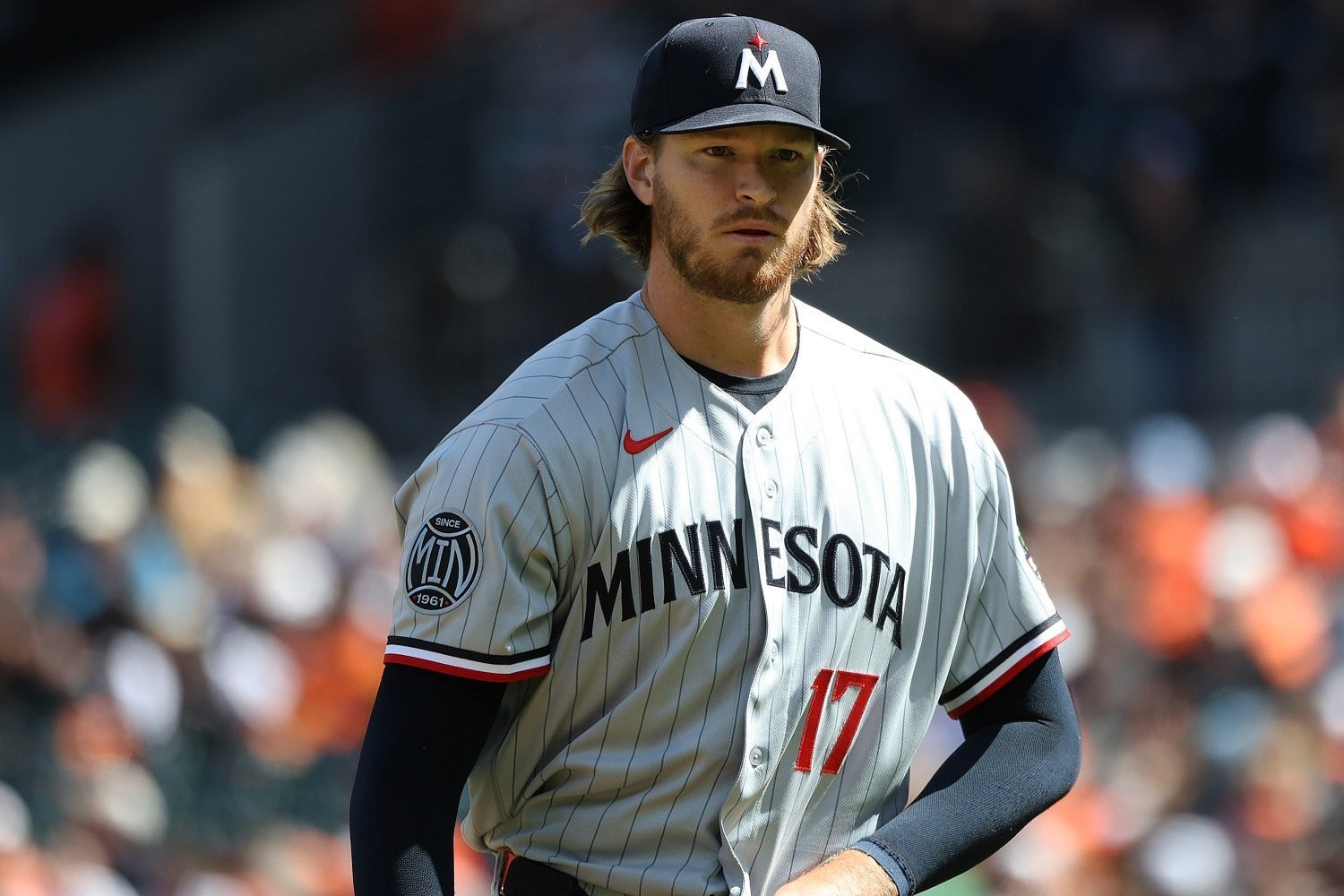 The Minnesota Twins have a lot of questions to answer this offseason. The starting rotation is one of them. There is plenty of uncertainty surrounding the group heading into 2027. Pablo López is working his way back from elbow surgery. Joe Ryan could be a trade candidate. Younger pitchers like Connor Prielipp and Zebby Matthews are trying to establish themselves as long-term rotation pieces. Then there is Bailey Ober. Ober entered the 2026 season looking to rebound from the worst season of his career. He struggled through velocity concerns and inconsistency in 2025, posting a 5.10 ERA across 146 1/3 innings. His 2026 campaign was better, but it still didn't resemble the version of Ober who looked like a dependable mid-rotation starter in previous seasons. Ober finished 2026 with a 4.47 ERA over 25 games and 131 innings. He struck out 96 hitters while posting a 1.30 WHIP. Now the Twins have to determine whether to tender Ober a contract for 2027. Technically, this is a non-tender decision rather than simply "offering arbitration." Ober remains under team control and is entering his third and final year of arbitration eligibility. He made $5.2 million in 2026 and would become a free agent after the 2027 season. That makes this a fascinating decision for Jeremy Zoll and the Twins. The Pros of Tendering Bailey Ober The biggest reason to keep Ober is simple: He has already demonstrated that he can be a quality major-league starter even with his diminished velocity. The 2026 season wasn't great, but it was an improvement over 2025. More importantly, Ober's track record includes a 2024 season in which he made 31 starts, threw 178 2/3 innings and struck out 191 hitters. He posted a 3.98 ERA and a 1.00 WHIP that season. Ober also finished 2026 healthy enough to make 25 appearances, despite missing time earlier in the year with right elbow inflammation. The Twins shut him down in May, but an MRI showed that the UCL graft from his previous Tommy John surgery remained intact. There is also the matter of the current rotation depth. Even with López expected back and several young arms in the major league mix, the Twins can't assume every pitcher will remain healthy or take the expected developmental step. Ober gives Minnesota another experienced option. His 2027 salary is likely to be higher than the $5.2 million he made this season, but the organization should have a pretty good idea of the range before making its decision. MLB Trade Rumors estimates he will receive around $6.9M. That's far from exact - last year they estimated he would make $4.6M and he ended up making $5.2M - but it's in the ballpark. That makes the potential cost increase worth considering, especially for a pitcher who has already provided nearly 750 major-league innings in his career. The Cons of Tendering Bailey Ober There is a legitimate argument for moving on. Ober has now experienced two consecutive seasons that fell well short of his early career performance. His 5.10 ERA in 2025 was a career high, and his 4.47 ERA in 2026 still left him well above the level he established from 2022 through 2024. The underlying concern goes beyond his ERA. Ober's strikeout rate dropped considerably as his velocity declined. His fastball averaged 91.7 mph in 2024 and had greater deception due to his elite arm extension (97th percentile). His fastball only averaged 88.0 mph this year, and that isn’t sustainable for a big-league pitcher. He went from 26.9 K% in 2024 to 19.2 K% in 2025, and only 17.1 K% in 2026. His strikeout rate fell to 6.60 per nine innings this year, compared with 9.62 in 2024. That is a significant change. Then there is the way the Twins used him late in the season. After returning from the injured list, Ober made 11 starts, but six came with at least six days of rest. He also made the first relief appearance of his career and was placed on relatively short leashes during his final stretch of starts. This unusual usage could indicate that his future with Minnesota is uncertain. The financial side matters, too. Ober is entering his final arbitration year, meaning Minnesota would be paying a raise for a pitcher who could leave as a free agent after 2027. The Twins could decide that the money is better spent elsewhere, particularly if they believe their younger pitchers can fill Ober's innings. That doesn't mean Ober has no value. It means the Twins have to determine how much that value is worth in a season where every dollar may matter. What Would the Timeline Look Like? The Twins don't have to make this decision immediately. Ober's contract decision will come during the early portion of the offseason, when Minnesota has a chance to evaluate its entire pitching situation. The club can look at the health of López, the potential for a Ryan trade, the development of its younger starters and the rest of the free-agent pitching market before making its final determination. The key deadline is the non-tender date. Under the current collective bargaining agreement, clubs must tender contracts to arbitration-eligible players by the last Friday before Thanksgiving, which is November 20th. A player who isn't tendered becomes a free agent. This offseason comes with an additional wrinkle. The current collective bargaining agreement expires on December 1, 2026, which could affect the offseason calendar. That makes the period leading up to the tender deadline even more important. The Twins could also explore a trade before deciding to non-tender Ober. An arbitration-eligible starting pitcher with a history of major-league success could have more value on the trade market than he would simply being released. Minnesota could find a club willing to take on Ober's arbitration salary while getting something back. That would give the Twins another option besides keeping him or cutting him loose. Ober's situation isn't nearly as straightforward as it appeared a couple seasons ago. At one point, Ober looked like one of the safest starters in the Twins' rotation. His 2022-24 seasons provided plenty of evidence that he could handle a substantial workload while missing bats and limiting baserunners. The last two seasons have changed the conversation. Ober struggled badly in 2025, improved in 2026 and still finished the year with questions surrounding his role. The elbow inflammation adds another consideration, though the Twins received encouraging news when his UCL graft was found intact. Now Minnesota has to put a price tag on the next chapter. Tender Ober, and the Twins get another opportunity to see whether he can rediscover the pitcher he was as recently as 2024. Non-tender him, and the organization creates another opening in a rotation that already has plenty of uncertainty. There is also a third path: tender Ober and explore the trade market. That might be particularly interesting if another organization believes it can get more out of him than Minnesota did during the past two seasons. The Twins don't need to decide whether Ober is the pitcher he was in 2024 or the pitcher he has been over the last two seasons. They need to decide whether they believe the pitcher capable of producing those 2024 results is still worth paying for one more season. That will be one of the more interesting calls of the Twins' offseason. Should the Twins non-tender Ober? Can he help the rotation in 2027? Leave a comment and start the discussion. View the full article
-
Walker Buehler Placed On Paternity List By Padres
DiamondCentric posted an article in Padres Mission
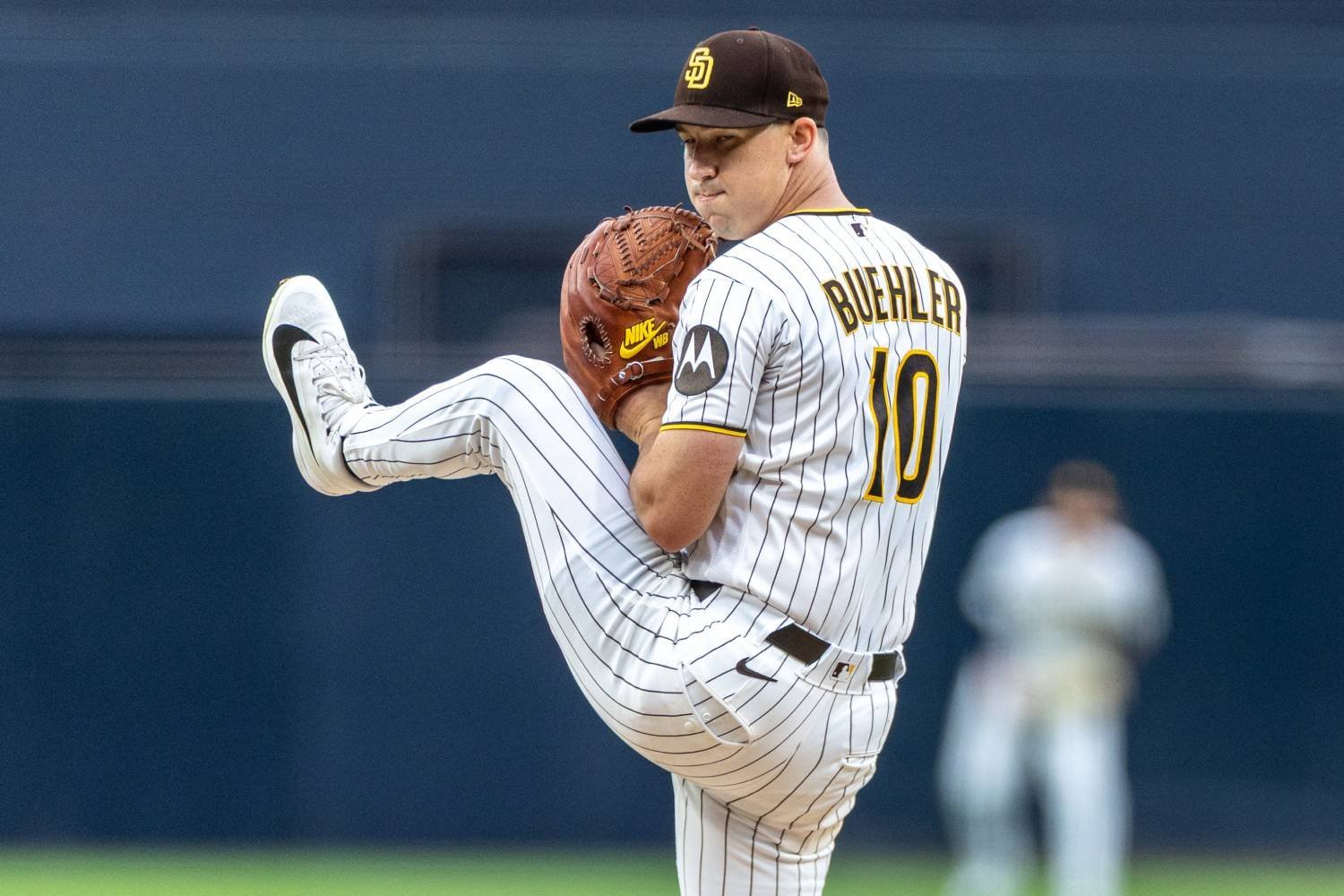 Shortly after announcing their 26-man roster for the NL Division Series, the San Diego Padres revealed a change. Right-hander Walker Buehler, who had been in consideration to start Game 1, went on the paternity list before Saturday's opener against the Milwaukee Brewers. Right-hander Randy Vasquez was added to the roster in Buehler's place. The paternity list allows for a player to be away from the team for up to three days. That would mean Buehler could rejoin the team in time for Game 3 back at Petco Park. Buehler's wife, McKenzie, was expected to give birth to the couple's second child Saturday. View the full article
-
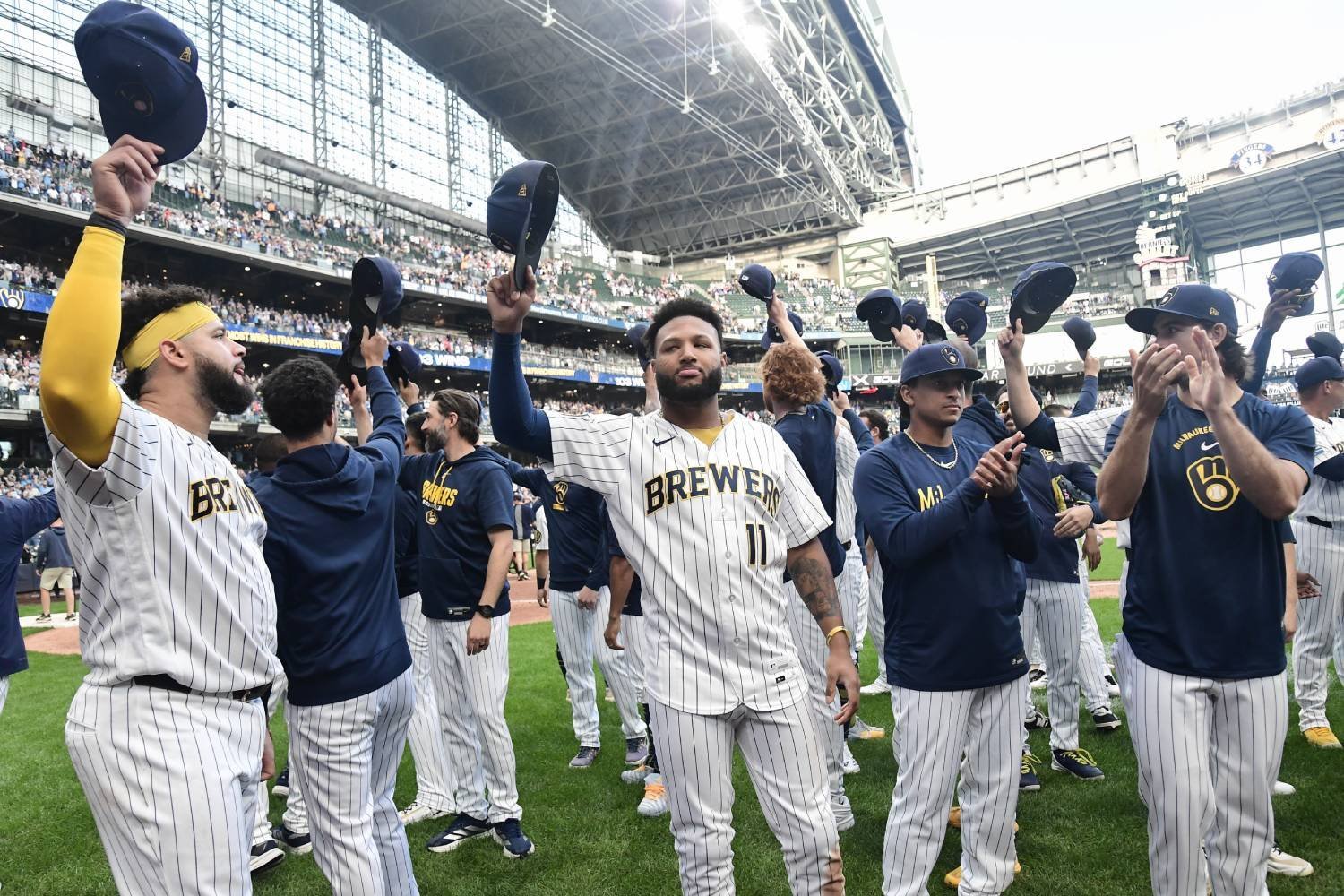 The Milwaukee Brewers are going conventional when it comes to their 26-man postseason roster. While some teams carry an extra position player or two in the early rounds of the playoffs, the Brewers split their 26-man roster evenly with 13 pitchers and 13 position players for the NL Division Series against the San Diego Padres. The teams open the best-of-five series Saturday with Brewers right-hander Jacob Misiorowski facing Padres left-hander Robbie Ray. First pitch is 7:30 p.m. Perhaps the only surprising inclusion was left-hander Kyle Harrison, whose struggles knocked him out of the starting rotation. But he showed the Brewers enough in the final two weeks of the regular season in a relief role to be on the playoff roster. First baseman Andrew Vaughn had been activated from the 10-day injured list after he dealt with an illness at the end of the regular season. View the full article
-
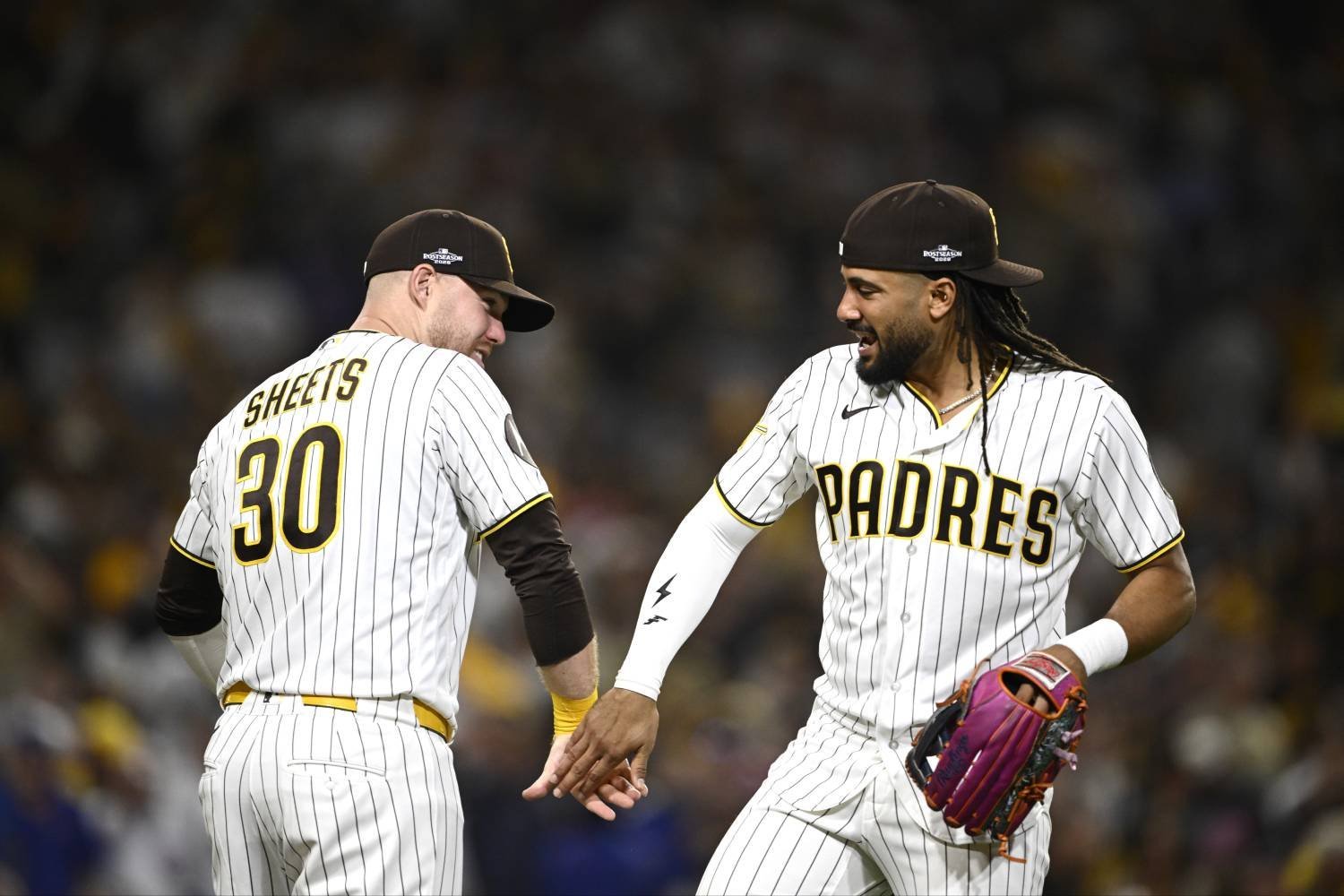 It worked so well in the first round that the San Diego Padres are sticking with it in the next round. In revealing their roster for the NL Division Series, the Padres will carry the same 26 players as they did for the NL Wild Card Series vs. the Chicago Cubs. Game 1 of the NL Division Series against the Milwaukee Brewers is Saturday at 5:30 p.m. Left-hander Robbie Ray starts for the Padres against Brewers right-hander Jacob Misiorowski. The only surprise, then, is that right-hander Randy Vasquez is not included on the roster. Vasquez was not on the Wild Card Series roster after pitching six innings in the regular-season finale against the Arizona Diamondbacks. Everyone from president of baseball operations to manager Craig Stammen had indicated that Vasquez would be back for the Division Series. View the full article
-
How Will Padres Hitters Fare Against Jacob Misiorowski?
DiamondCentric posted an article in Padres Mission
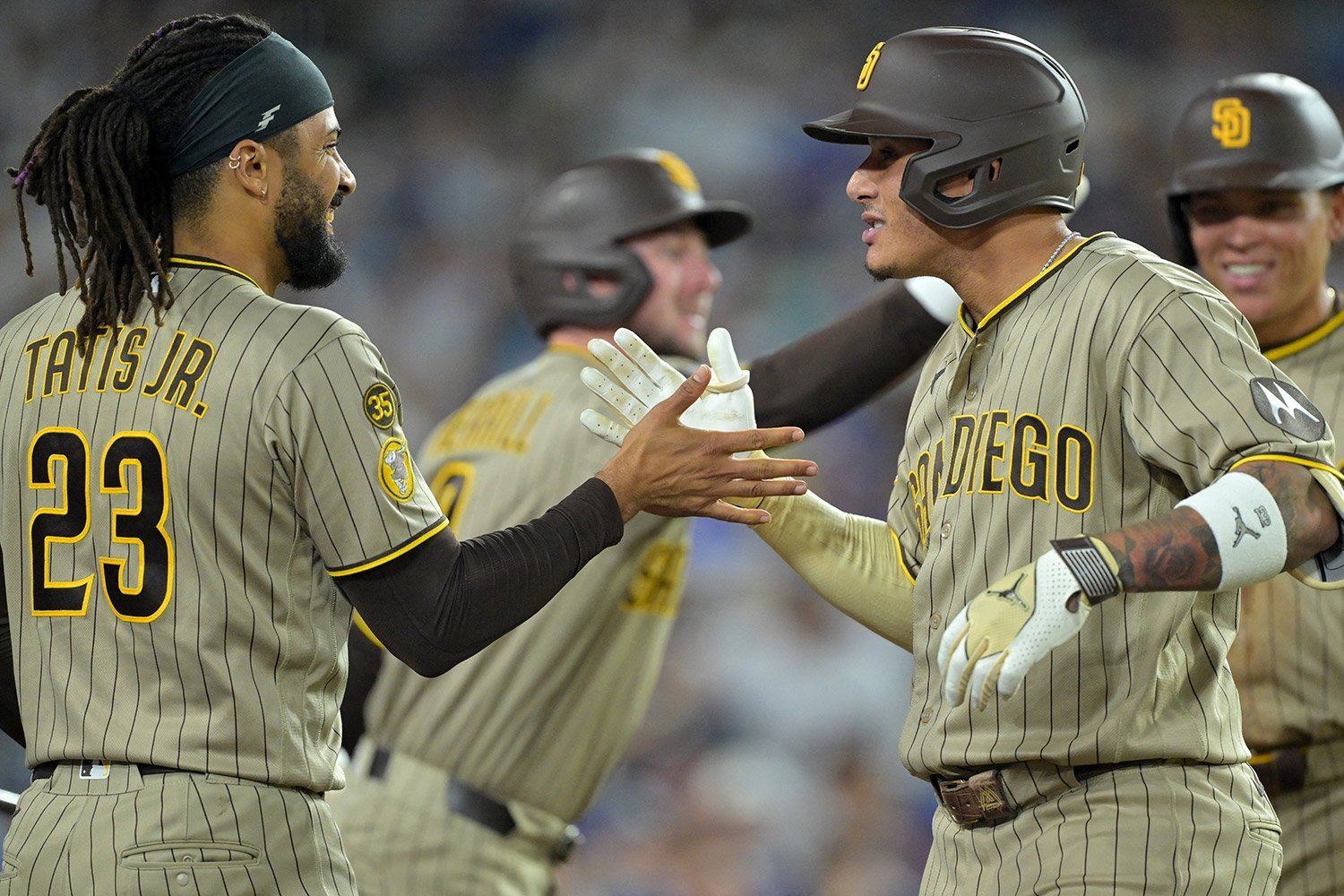 The San Diego Padres will have to face Jacob Misiorowski and the Milwaukee Brewers in Game 1 of the NLDS, in what will be the second matchup of the year against the fastest and most dominant starter in baseball. Miz received special attention against the Padres on May 13 at home, with 10 strikeouts in seven innings without walking a batter and with only four singles allowed. He threw 93 pitches, and 40 of them were fastballs of at least 100 mph that averaged 101.3. San Diego finished with a swing-and-miss rate of 52.4%, and they put only one ball in play with an exit velocity above 100 mph, a 105.5 mph line-drive single that Gavin Sheets hit in the top of the second inning. Only 12 of those batted balls reached an exit velocity above 85 mph, and the average distance traveled was 155 feet. Something I love about Miz is that, when he starts moving forward, he does not tire easily. He goes through the path being as aggressive as he is devastating, without the slips of the typical strikeout pitcher who sometimes escapes too much from the strike zone, losing command, or needs many pitches to finish off opponents. In 18 of his 30 starts, he threw 90 or more pitches and, even so, in 14 he managed to secure at least six innings, with a minimum of seven strikeouts in 12 of them. Although Misiorowski will probably make some adjustments to offer more room to his curveball against lefties and the slider against righties, especially in two-strike counts, the Padres know that most of the time they will see many fastballs over 100 mph, most of them in the upper third of the strike zone. We do not need to remember how difficult it was for the league to hit Misiorowski’s pitches, but there is an interesting point here that perhaps could make the difference in this second matchup of the year. Let’s analyze for a moment this collection of graphs about Miz’s performance when he threw his fireball fastball against San Diego last May. The highest percentage of pitches was again present in the upper third of the strike zone, looking for that difficult spot where it is much harder for hitters to get to the barrel, although he also located a good portion of his fastball on the outer corner to right-handed hitters. The highest swing-and-miss percentages are also in those areas, as are the higher bat speeds. The results of the three balls put in play that you see were singles, two weak batted balls and Sheets’ line drive. This will be the biggest challenge for the Padres throughout the entire postseason, and there is a possibility that they will have to face Misiorowski twice. But there is a little bit of comfort here, and it is reasonable, since there is no fastball as dominant throughout the league as Miz’s, but there you can see how there are several Padres hitters who have been successful against that type of pitch. There are five hitters with an xSLG above .450, led by Fernando Tatis Jr. and Xander Bogaerts, who were surpassed only by James Wood (.775) of the Nationals. Rk Player B PA AB H 2B 3B HR RBI BB SO BA OBP SLG OPS SH SF IBB HBP GIDP 1 Xander Bogaerts R 3 3 0 0 0 0 0 0 1 .000 .000 .000 .000 0 0 0 0 0 2 Austin Hays R 3 3 2 0 0 0 0 0 0 .667 .667 .667 1.333 0 0 0 0 0 3 Manny Machado R 3 3 0 0 0 0 0 0 0 .000 .000 .000 .000 0 0 0 0 0 4 Jackson Merrill L 3 3 0 0 0 0 0 0 2 .000 .000 .000 .000 0 0 0 0 0 5 Gavin Sheets L 3 3 1 0 0 0 0 0 0 .333 .333 .333 .667 0 0 0 0 0 6 Fernando Tatis Jr. R 3 3 2 0 0 0 0 0 1 .667 .667 .667 1.333 0 0 0 0 0 7 Ty France R 2 2 1 0 0 0 0 0 1 .500 .500 .500 1.000 0 0 0 0 0 As you can see here, there are four hitters with at least one hit among the seven active players on this postseason roster who have faced Misiorowski, including Hays and Tatis Jr. going 2-for-3. Manny Machado is the only one who has struck out a couple of times, and the entire lineup combines for a .300/.300/.300 line, with no extra-base hits, five strikeouts and no walks. The past sample is small, and the challenge in this Game 1 is immense, so we will see if the Padres can have a chance against Misiorowski and change the dominant story from the regular season. View the full article
-
The Brewers' Recipe for Success in Game 1 Against the Padres
DiamondCentric posted an article in Brewer Fanatic
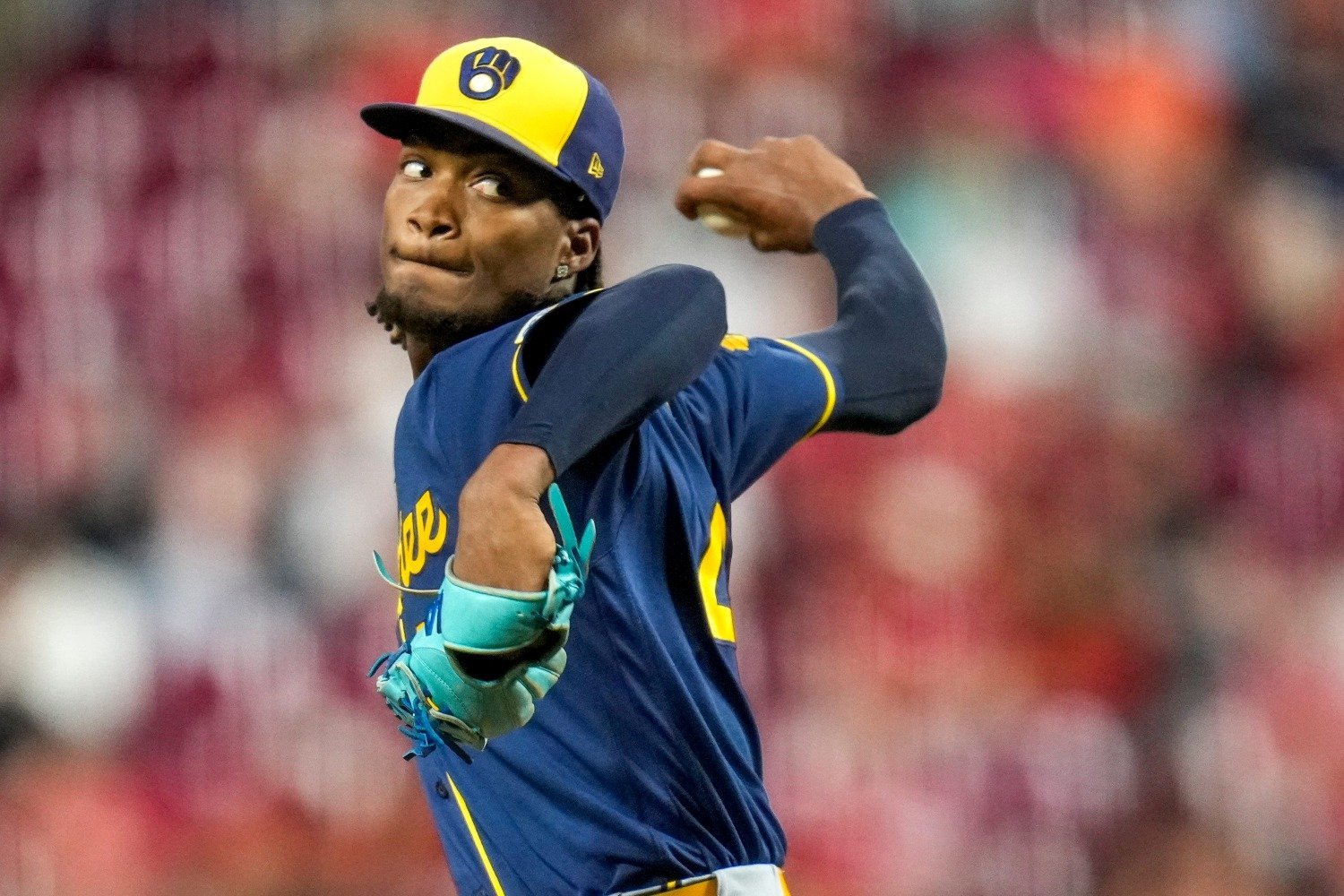 We’ve officially made it. Game 1 of the National League Division Series between the Milwaukee Brewers and San Diego Padres is right around the corner, and the importance of getting off to a strong start can’t be overstated. Whichever team comes out on top will capture some early momentum in the series, while the losing team will immediately find itself playing from behind. Neither club wants to put itself in that position. It can be nigh impossible to recover from an early deficit in a short playoff series. The Padres are coming off a dominant Wild Card performance and played excellent baseball down the stretch. Meanwhile, the Brewers are well-rested after earning a bye through the first round and will be looking to take advantage of that extra time off. If Milwaukee is going to get the job done in Game 1, this is how it might go.. 1. Let Jacob Misiorowski Do His Thing Obviously, it starts with Jacob Misiorowski. The soon-to-be NL Cy Young winner gives Milwaukee a huge advantage on the mound, and if he pitches anything like he did during his previous matchup against San Diego, the Brewers will have a great chance to take Game 1. Misiorowski made one start against the Padres during the regular season, taking the mound against them on May 13. He threw seven scoreless innings while striking out 10 batters, completely shutting down San Diego’s lineup. Of course, replicating that kind of performance against the same team in the postseason is easier said than done. The Padres have plenty of talented hitters, and they'll have another opportunity to make adjustments after seeing Misiorowski earlier in the year. Still, if there’s any pitcher capable of putting together another dominant performance, it’s him. His last start came on Sunday, meaning the extra time off during the Wild Card round shouldn't disrupt his normal routine. He should be well-positioned to take the ball and give Milwaukee a strong start, and presumably, there will be fewer constraints on him in terms of in-game workload now that the stakes have risen. The Brewers don't need Misiorowski to throw a complete game, but getting six or seven strong innings out of their ace would put them in position to win. If he can keep the Padres' offense quiet early, Milwaukee can focus on finding a few timely runs and letting its pitching staff do the rest. 2. Manufacture Some Runs, the Good Ol' Fashioned Way Because Misiorowski is on the mound, I think Milwaukee's offensive approach could look a little different in Game 1. In theory, this shouldn't be a game where the Brewers need to score a ton of runs to win. Obviously, that depends on how he performs, but if he's able to deliver the kind of outing we're expecting, a few runs could be enough to get the job done. Because of that, I wouldn't be surprised to see Milwaukee lean into a small-ball approach and look for ways to manufacture offense, rather than relying on extra-base hits. That could mean moving runners over with sacrifice bunts, being aggressive on the basepaths, or even breaking out a hit-and-run or squeeze play in the right situation. These aren't always the most exciting ways to score runs, but they can be extremely effective when every baserunner matters. Crucially, the Brewers have the personnel to make that approach work. Milwaukee laid down 37 sacrifice bunts during the regular season and stole 162 bases. Both marks ranked fifth in Major League Baseball, highlighting just how much this team can do to put pressure on opposing defenses. The Brewers have built an identity around being aggressive, creating opportunities, and forcing opponents to make plays. In a postseason game where one mistake can change everything, that style of baseball can be especially valuable. I'm not suggesting Milwaukee should abandon its usual offensive approach or start bunting every time somebody reaches base. However, if the Brewers have an opportunity to move a runner into scoring position or take an extra base, they need to be willing to make it happen. Pat Murphy should have plenty of confidence in his team's ability to manufacture runs, and Game 1 could be the perfect opportunity to lean into that strength. 3. Don't Be Afraid to Turn to the Bullpen The final piece of the puzzle is riding the hot hand on the mound. It's entirely possible Misiorowski shoves for seven or eight innings, giving Milwaukee exactly the kind of start it needs. It's also possible Murphy wants to be a little more cautious with his ace, keeping his workload in mind with the possibility of another start in Game 5 and the hoped-for eventuality of a start in the next round. Either way, the bullpen will play an important role in determining the outcome of this game. Fortunately for Milwaukee, its relievers should be well-rested after the bye in the Wild Card round. That gives Murphy some flexibility when it comes to navigating the later innings, especially if the Brewers have a lead to protect. Trevor Megill and Abner Uribe are obviously the biggest names to watch in high-leverage situations, but neither has been asked to work much more than an inning at a time during the regular season. That's understandable over the course of a 162-game schedule, but the postseason is a different animal. If Milwaukee needs six outs from one of their top relievers to secure a win, Murphy shouldn't hesitate to make that move. We saw the Philadelphia Phillies attempt a nine-out save with Jhoan Duran in Game 1 of their Wild Card series against the Atlanta Braves. That plan didn't work out, and I'm certainly not suggesting the Brewers need to push one of their relievers that far. However, there's a difference between overworking a bullpen arm and recognizing the importance of a particular game. While Game 1 isn't a must-win, it's absolutely a set-the-tone game, and Milwaukee should manage its pitching staff accordingly. If that means getting multiple innings from Megill, Uribe, or someone like Aaron Ashby, so be it. Murphy should be willing to ride whoever has the hot hand and give his team the best possible chance to close things out. The Brewers have the advantage of entering the series with a rested bullpen, and they should use that to their benefit. If the game is there for the taking in the late innings, Milwaukee can't afford to hold anything back simply because a reliever isn't accustomed to working more than three outs. This should be an extremely entertaining series between two red-hot teams, and it all starts with Game 1. The Padres are playing some excellent baseball, and Milwaukee will have their hands full trying to slow them down. However, the Brewers have the starting pitching, offensive versatility, and bullpen depth to make things difficult for San Diego. If Misiorowski can deliver a strong outing, Milwaukee can manufacture a few runs with its aggressive approach at the plate and on the basepaths, and Murphy can get the most out of his bullpen in the later innings, I like the Brewers' chances of coming out on top. It's not going to be easy, but that's the recipe for success in Game 1. View the full article
-
The Bright Spots: Four Moments That Made 2026 Worth Watching
DiamondCentric posted an article in Twins Daily
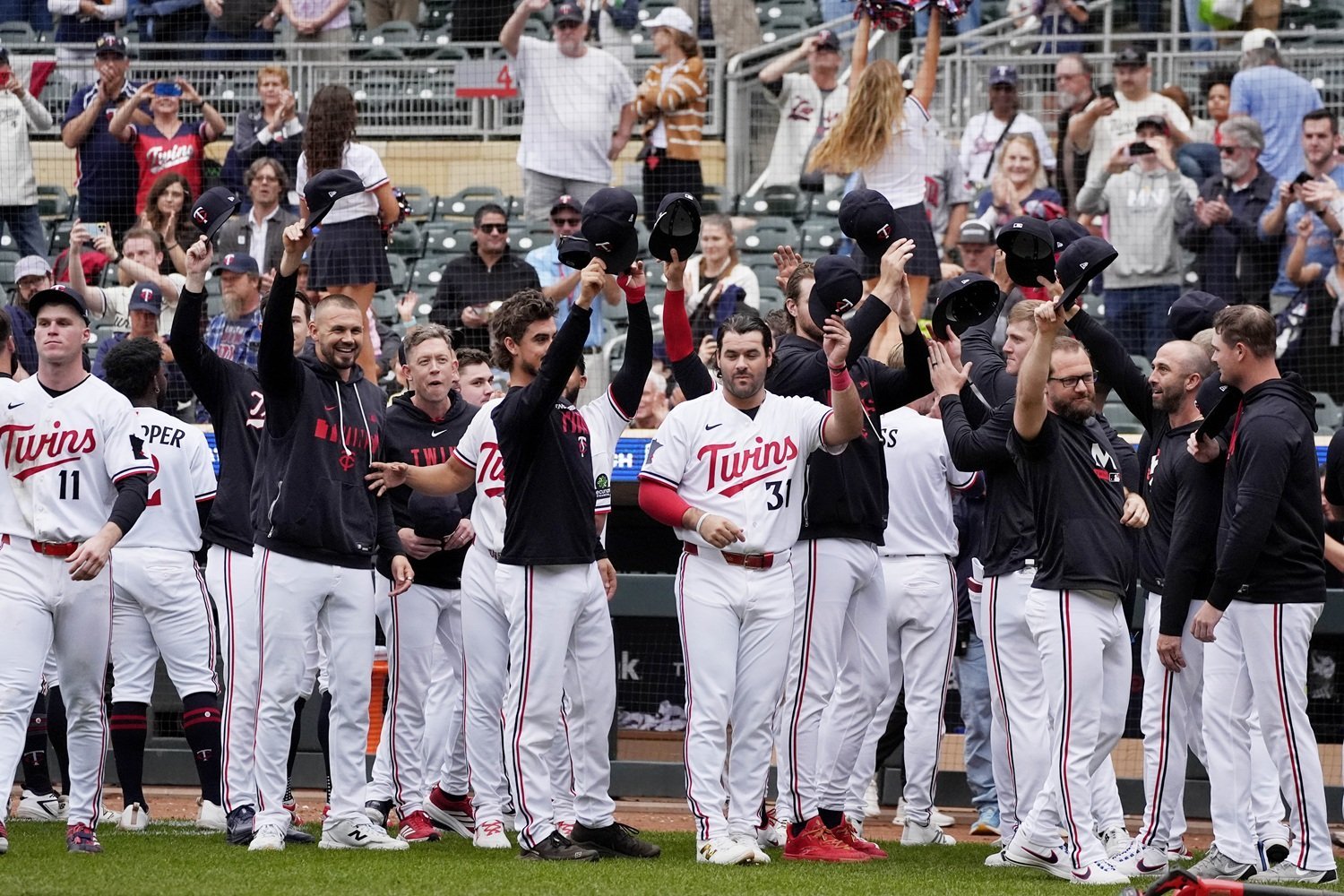 The 2026 season didn’t go the way the Minnesota Twins wanted it to. That doesn’t mean it was all bad, though. There were plenty of highs and a lot of fun, exciting moments for this team over the course of the year, and just because the full season wasn’t great doesn’t mean those moments are any less valuable. So, before we completely turn the page to 2027, let’s take a look back at some of the best moments from the Twins’ 2026 season. Brooks Lee Comes Through in the Clutch Let’s start way back on April 9. The Twins were sitting at 6-6 and taking on the Detroit Tigers in what had been a relatively uneventful game. It was tied 1-1 heading into the bottom of the eighth, but Minnesota suddenly found itself with the bases loaded and two outs. That brought Brooks Lee to the plate. Lee had been off to an ice-cold start to the season and wasn’t even in the starting lineup that afternoon. He entered the game in the top of the eighth as a defensive replacement, and given the way things had gone for him at the plate early in the season, it seemed like a pretty good opportunity for the Tigers to escape the inning. Lee had other ideas. He worked the count full before getting a fastball at the top of the zone, grounding it through the right side for a two-run single. The usually laid-back and reserved Lee was extremely fired up as two runs crossed the plate, and the Twins held on for a 3-1 victory. That moment seemed to help flip the script for Lee. He went on to finish the year with career highs across the board offensively, turning what had been a brutal start into a season that made him look like a much safer bet to remain a long-term piece of the Twins’ infield. Bailey Ober’s 89-Pitch Masterpiece Fast-forward to mid-May, when the Miami Marlins came to town for a three-game series. Bailey Ober took the mound for Minnesota in the opener and put together the most dominant start of his career. Ober threw a complete-game shutout, and he needed just 89 pitches to do it. He allowed only two hits and no walks while striking out seven batters, completely overwhelming the Marlins from start to finish. An absurd 72% of his pitches were strikes, while just five of the 22 balls put in play against him were hit hard. He also generated 14 whiffs, meaning pretty much everything was working for the giant right-hander. It was the kind of start that made it pretty clear just how dominant Ober can be when everything is clicking. Despite having just an 88-MPH fastball, he's capable of shutting down opposing lineups, and it'll be interesting to see whether or not the Twins bring him back this offseason. Alan Roden Walks It Off in His Season Debut Alan Roden's path to the majors in 2026 was certainly not a straightforward one. For much of spring training, Roden looked like a safe bet to earn an Opening Day roster spot. Instead, he was left off the roster, and things got even worse when he tore the labrum in his throwing shoulder in April, sidelining him for roughly two months. That didn’t stop him, though. Roden returned to St. Paul, continued to produce, and eventually earned a call-up to the majors in early July. He wasted absolutely no time making an impression. In a tie game against the Cleveland Guardians, the Twins loaded the bases in the ninth inning. With two outs, Roden stepped to the plate and proceeded to work a nine-pitch at-bat before getting a center-cut fastball. He smoked it. The ball went off the wall in right-center field, bringing home the winning run and giving Roden a walk-off single in his season debut. At the time, the moment had some significance in the standings, too. The win moved Minnesota to just one game below .500 and one game behind Cleveland in the AL Central. It ultimately didn’t matter much in the grand scheme of things, but it was a heck of a moment for a guy who battled his butt off to get there. Kody Clemens’ Ultimate Grand Slam And last, but certainly not least, there was Kody Clemens ’ grand slam against the Kansas City Royals. Except this wasn’t just any grand slam. It was an ultimate grand slam. The Royals had absolutely dominated the Twins that night, with starting pitcher Noah Cameron carving Minnesota up for eight shutout innings at Target Field. The Twins had no answers for him and entered the bottom of the ninth trailing 3-0. Kansas City turned to Lucas Erceg out of the bullpen, and he quickly recorded the first two outs of the inning. Then everything changed. Ryan Jeffers was hit by a pitch, Royce Lewis singled, and Josh Bell walked to load the bases. Kansas City then turned to left-hander Matt Strahm to face Clemens. Bad move. Clemens fell behind 0-2, but he got a hanging slider and absolutely crushed it over the wall in right-center field. Game over. The Twins went from an out away from being shut out to walking off with a 4-3 victory, all on one swing. It was just the 35th ultimate grand slam in MLB history. Of the 15 to occur since 2000, it was also the first to come with the batter trailing 0-2 in the count. That’s a pretty incredible way to end a game. There were obviously plenty of other memorable moments throughout the 2026 season, and these are far from the only ones worth remembering. So, what was your favorite Twins moment from the season? View the full article
-
 The Brewers and Padres are coming off very different regular seasons, but both are playing some of their best baseball at the perfect time. Here’s what to expect in the NLDS.View the full article
-
Padres-Brewers NL Division Series Game 1 Matchup By The Numbers
DiamondCentric posted an article in Padres Mission
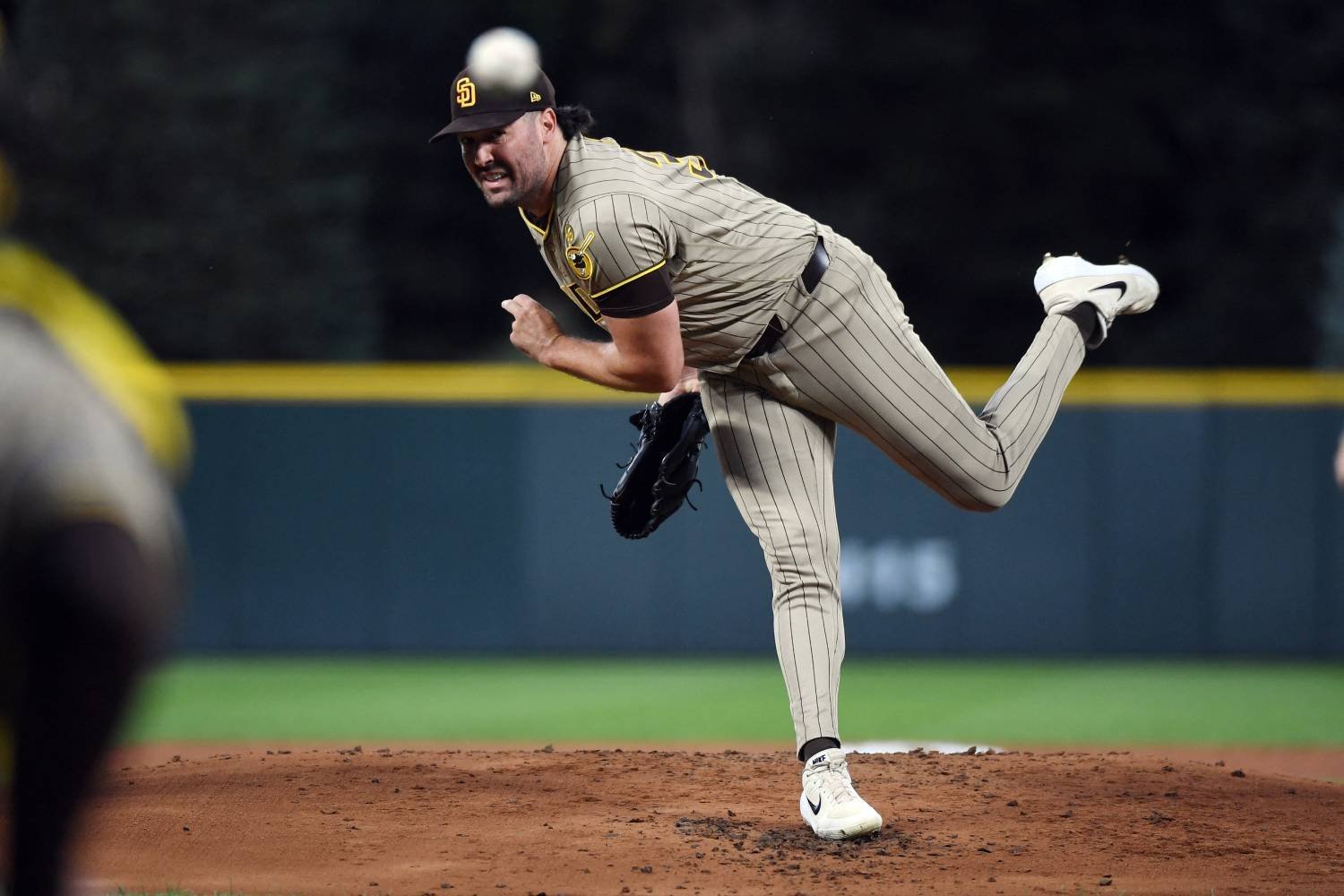 One of the two pitchers the San Diego Padres acquired at the trade deadline will get the start in Game 1 of the NL Division Series against the Milwaukee Brewers. Left-hander Robbie Ray has the Game 1 assignment as the Padres look to build on the momentum from their two-game Wild Card Series sweep of the Chicago Cubs. Ray did not pitch in that series, but does have recent experience against the Brewers. That came Aug. 12 at Petco Mark in Ray's second start after being traded from the San Francisco Giants. Ray went just four innings, allowing two runs on two hits with three walks and four strikeouts. He did give up a homer to backup Brewers catcher Gary Sanchez, who could very well be in the lineup as the designated hitter. Of all the Brewers hitters Ray has faced, Sanchez is the only one with a homer and he has two in 11 plate appearances. Ray has a 2.82 ERA in seven career appearances against the Brewers, which includes five runs in 5⅔ innings way back in 2016. No longer does Ray rack up the big strikeout totals, but the 2021 AL Cy Young Award winner with the Toronto Blue Jays still knows how to battle when a tight situation arises. He has faced plenty of those in his nine starts with the Padres, where he has a 5.64 FIP (5.02 ERA) with 27 walks and 33 strikeouts in 43 innings. The Brewers are a patient team, drawing the second-most walks in MLB, and will take whatever walks Ray will provide. The one, perhaps big, negative against Ray is his previous postseason outings. Ray has appeared in six postseason games, including just two starts, since 2017 and has a 4.58 FIP (7.43 ERA). In both of his starts, he allowed four runs and didn't make it out of the fifth inning. The Brewers don't have much of a track record vs. Ray and what there is isn't that good. But this is a Brewers team that was No. 2 in MLB in runs and led the league in run differential. They also don't need the long ball to win. They were the only team in MLB to post a winning record (35-30) when they didn't go deep. Robbie Ray vs. Milwaukee Brewers: Current Batters Table Rk Player B PA AB H 2B 3B HR RBI BB SO BA OBP SLG OPS SH SF IBB HBP GIDP 1 Christian Yelich L 18 16 4 1 0 0 1 2 2 .250 .333 .313 .646 0 0 0 0 2 2 Gary Sánchez R 11 10 2 0 0 2 2 1 4 .200 .273 .800 1.073 0 0 0 0 0 3 William Contreras R 10 6 1 0 0 0 0 4 2 .167 .500 .167 .667 0 0 0 0 0 4 Brice Turang L 7 7 1 0 0 0 1 0 2 .143 .143 .143 .286 0 0 0 0 0 5 Brandon Lockridge R 6 6 2 1 0 0 1 0 3 .333 .333 .500 .833 0 0 0 0 0 6 Jackson Chourio R 5 5 1 0 0 0 0 0 0 .200 .200 .200 .400 0 0 0 0 0 7 Sal Frelick L 5 4 1 0 0 0 0 1 0 .250 .400 .250 .650 0 0 0 0 0 8 Joey Ortiz R 3 2 0 0 0 0 0 1 1 .000 .333 .000 .333 0 0 0 0 0 9 Jake Bauers L 2 1 0 0 0 0 0 1 0 .000 .500 .000 .500 0 0 0 0 0 10 David Hamilton L 2 2 0 0 0 0 0 0 0 .000 .000 .000 .000 0 0 0 0 0 11 Bryse Wilson R 2 2 0 0 0 0 0 0 1 .000 .000 .000 .000 0 0 0 0 0 12 Antonio Senzatela R 1 1 0 0 0 0 0 0 0 .000 .000 .000 .000 0 0 0 0 0 Provided by Stathead: Found with Stathead. See Full Results. Generated 10/2/2026. Perhaps the biggest obstacle the Padres will face all postseason is Brewers ace right-hander Jacob Misiorowski, the front-runner for the NL Cy Young Award. The Miz led MLB in strikeouts (252 in 174⅔ innings), ERA (1.80), WHIP (0.80) and opponent average (.157). The 24-year-old Misiorowski, who just completed his first full MLB season, has faced the Padres once and it came this season at American Family Field. In that May 15 game, coming in the early stages of the Padres' two-month offensive funk, Misiorowski struck out 10 over seven innings, allowing four hits and no walks. However, the Friars would go on to win that game 3-1 as Gavin Sheets cranked a three-run homer in the top of the ninth off right-hander Abner Uribe, who at the time was sharing closer duties with right-hander Trevor Megill. Fernando Tatis Jr. had a pair of singles off Misiorowski in that game, while Austin Hays also has two singles against him, but in different games with different teams in different seasons (one last year with the Cincinnati Reds and one this year with the Chicago White Sox). Misiorowski did pitch for the Brewers in last year's postseason, but as a reliever. He struck out 16 over 12 innings in three appearances. Jacob Misiorowski vs. San Diego Padres: Current Batters Table Rk Player B PA AB H 2B 3B HR RBI BB SO BA OBP SLG OPS SH SF IBB HBP GIDP 1 Xander Bogaerts R 3 3 0 0 0 0 0 0 1 .000 .000 .000 .000 0 0 0 0 0 2 Austin Hays R 3 3 2 0 0 0 0 0 0 .667 .667 .667 1.333 0 0 0 0 0 3 Manny Machado R 3 3 0 0 0 0 0 0 0 .000 .000 .000 .000 0 0 0 0 0 4 Jackson Merrill L 3 3 0 0 0 0 0 0 2 .000 .000 .000 .000 0 0 0 0 0 5 Gavin Sheets L 3 3 1 0 0 0 0 0 0 .333 .333 .333 .667 0 0 0 0 0 6 Fernando Tatis Jr. R 3 3 2 0 0 0 0 0 1 .667 .667 .667 1.333 0 0 0 0 0 7 Ty France R 2 2 1 0 0 0 0 0 1 .500 .500 .500 1.000 0 0 0 0 0 Provided by Stathead: Found with Stathead. See Full Results. Generated 10/2/2026. View the full article
-
 The San Diego Padres took care of business in relatively easy fashion against the Chicago Cubs in the NL Wild Card Series. Next up is the Milwaukee Brewers. Randy Holt and Steve Drumwright take a look back at all the good things that happened in the Cubs series and what to expect in the NL Division Series against the Brewers, who had the best record in MLB this year. They also sort through what roster changes might be in store, go through the keys to the series and make their prediction on who will win the series. Listen on Apple Podcasts: https://podcasts.apple.com/us/podcast/padres-mission-podcast/id1896922834 Listen on Spotify: https://open.spotify.com/show/033xclmydmbLmEp0exYuYz Listen on iHeartRadio: https://www.iheart.com/podcast/1333-padres-mission-podcast-336930560 Watch on YouTube: https://www.youtube.com/@padresmission View the full article
-
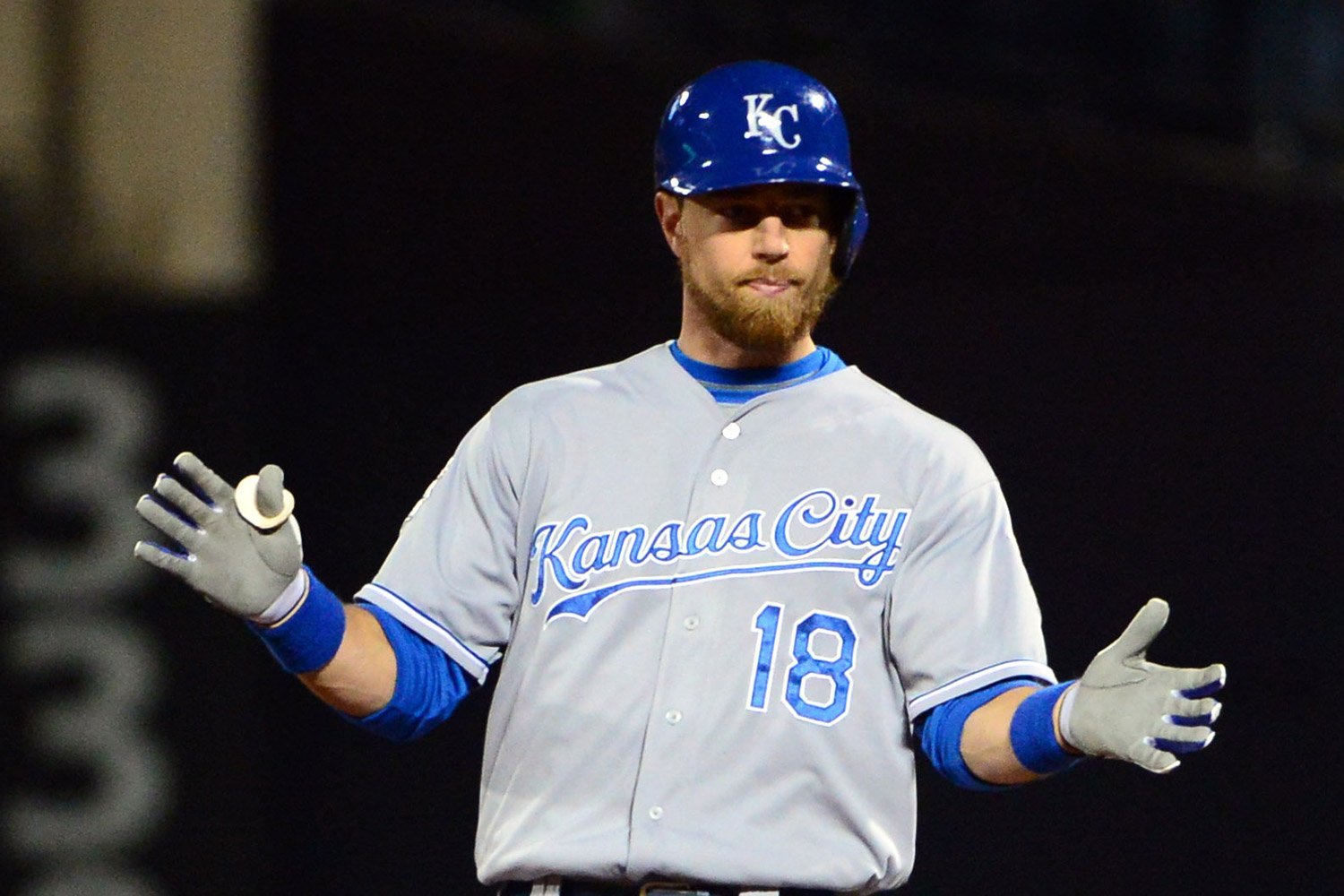 When you think of great players in Royals history, of course you think of George Brett and Salvador Perez and Amos Otis and Harmon Killebrew. Wait. What? Throughout their history, the Royals have had plenty of players who achieved most of their fame somewhere else. Some of them were brought to Kansas City for a playoff push, and some were just hoping to extend their careers a little. Here is the Royals’ “Wrong Uniform” All-Star lineup (as determined by, well, me). Catcher: Benito Santiago (2004) Santiago burst on the MLB scene with his Rookie of the Year campaign in 1987, then won three Gold Gloves and four Silver Sluggers with San Diego before he began bouncing around the big leagues as a free agent, overcoming a severe car accident after the 1997 season. By the time he signed with Kansas City, he was about to be 39, although he could still hit a little and could still throw a lot. The Royals were looking to build on their surprising 2003 season, and needed a catcher after Brent Mayne and Mike Difelice were free agents. They also wanted someone to handle what was still a young pitching staff. Unfortunately, the 2004 season turned into a disaster as the Royals lost 104 games. Santiago was having a decent season, hitting .274/.312/.434 in 49 games, when he was hit on the hand by a pitch. The resulting broken hand ended his season, and he was traded to Florida after the season. First base: Harmon Killebrew (1975) One of the greatest sluggers in baseball history, Killebrew was a Minnesota Twins legend and a driving force in their 1965 AL pennant and 1969-70 AL West titles. But as he aged, Twins owner Calvin Griffith, always tight-fisted, became less enthused about paying him. Before the 1975 season, Griffith wanted Killebrew to be a player-coach or simply manage the Twins’ triple-A affiliate in Tacoma. When Killebrew said he wanted to keep playing, Griffith told him he was free to talk to other teams. The Royals, still trying to put together a contender to dethrone Oakland in the AL West, were happy to add a right-handed power hitter to the lineup. Killebrew hit the last 14 of his 573 home runs as a Royal, but his overall line of .199/.317/.375 in 106 games was something of a disappointment. With 70 strikeouts and 54 walks, Killebrew was a “three true outcomes” player before the term existed; roughly half of his 369 plate appearances ended without a ball in play. Killebrew retired after the season, in fifth place on the all-time home run list, and was inducted in the Hall of Fame in 1984. I don’t know why it took so long, either. Second base: Ben Zobrist (2015) This seemed to be the toughest spot to find a good candidate. But as the 2015 Royals steamed towards the playoffs, they had a couple of problems. Second baseman Omar Infante was not hitting; he would finish the year with an ugly .220/.234/.318 line. Even worse, left fielder Alex Gordon had suffered a groin injury in early July. General manager Dayton Moore made a trade deadline move to address both problems, bringing in the versatile Zobrist from Oakland for pitchers Aaron Brooks and Sean Manaea. Zobrist, who had starred for Tampa Bay for nine seasons before the Rays dealt him to Oakland in January 2015, was everything the Royals could have hoped for, playing left field until Gordon returned and then taking over at second base, hitting .284/.364/.453 in 59 games. He was also excellent in the postseason, hitting .303 and scoring 15 runs to help the Royals to their second World Series title. A free agent after the season, he signed with the Chicago Cubs and helped them break their World Series drought in 2016. Shortstop: Miguel Tejada (2013) The AL MVP with Oakland in 2002 and a six-time All-Star with the A’s, Baltimore, and Houston, Tejada was a free agent after the 2012 season. Actually, he was a free agent after the 2011 season, signed a minor-league deal with Baltimore, was released midway through the season, and went home to the Dominican Republic. During winter ball, the Royals saw that he still looked good and signed him to a minor-league deal, intending for him to be a utility player. It worked pretty well. At least for a while. Tejada hit .288/.317/.378 in 53 games as the Royals got their first taste of contention since 2003. But then he got hurt, suffering a calf strain in early August. It was sufficiently bad for the Royals to put him on the 60-day injury list, ending his season. A week or so later, MLB announced that Tejada was suspended for 105 games after twice testing positive for amphetamines (which apparently meant Adderall in this case). That ended his career. Third base: Terry Pendleton (1998) A mainstay with the Cardinals in the 1980s, Pendleton moved to Atlanta in 1991 and won the NL MVP Award as he helped the Braves go from worst-to-first in the NL East and reach the World Series. The mid- and late-1990s Royals loved nothing more than signing “veteran presence,” and that is why they added Pendleton before the 1998 season, especially since they had traded for Dean Palmer the prior season. Pendleton had long been considered a team leader and a good influence on younger players. The problem was that Pendleton had never really been a great hitter, although he was very good in 1991 and 1992. But now he was 37 and hit just .257/.299/.338 in 79 games. The Royals did win five more games than they did in 1997, so maybe his clubhouse presence helped a little? At any rate, Pendleton retired after the season. Left field: Orlando Cepeda (1974) Cepeda spent most of his Hall of Fame career with San Francisco, then some strong years with St. Louis and Atlanta. When the DH rule came into effect, Cepeda, who had missed most of 1971 and 1972 with a knee injury, had a new role he could fill. He had a good season for Boston, but the Red Sox released him just before the 1974 season, and he ended up playing in the Mexican League. The Royals, looking for offensive help as they tried to catch Oakland in the AL West, signed him in early August. But Cepeda hit just .215/.282/.290 and appeared in only 33 games for Kansas City, an unsatisfying ending to a terrific career. The Royals actually released him a few days before the season ended, at Cepeda’s request, as he had only played in nine games in September. Center field: Vada Pinson (1974-75) Pinson is an underrated player in my opinion, as he amassed 54.1 bWAR in an 18-year career, with 2,757 hits, a lifetime .286/.327/.444 line, a Gold Glove, and four All-Star appearances. Most of his fame came as a member of the Cincinnati Reds; unfortunately for Pinson, he was a center fielder in the NL in the 1960s, meaning he was overshadowed by Willie Mays. I’m not sure Pinson quite meets the Hall of Fame standard (if there is such a thing), but I also think he would hardly be the worst inductee. After Pinson had a subpar year with California in 1973, the Angels traded him to the Royals for pitching prospect Barry Raziano. Kansas City was hoping Pinson would solve their right-field problem and add some offense. And Pinson did that, hitting .276/.312/.374 in 115 games in 1974. But he slipped to .223/.248/.335 in 1975, and Kansas City released him after the season. He did sign with Milwaukee but was let go before the 1976 season, ending his playing career. Right field: Juan Gonzalez (2004) When the Royals surprised everyone by contending through the 2003 season, Royals general manager Allard Baird wanted to pry Gonzalez, a two-time AL MVP, away from Texas at the trade deadline. But Gonzalez suffered a torn calf muscle before a deal could be made. Baird got his man over the winter, though, signing the free agent to a one-year contract to shore up a lineup that featured Carlos Beltran, Mike Sweeney, and Joe Randa, but had also lost Raul Ibanez to free agency. Gonzalez would be one of the great free agent busts in team history. While he did hit .276/.326/.441, he only played in 33 games before hurting his back in late May. He was eventually diagnosed with a season-ending disk injury, meaning the Royals couldn’t even trade him at the deadline. Gonzalez would play one game for Cleveland in 2005 and then be done as a major leaguer. Designated Hitter: Chili Davis (1997) Davis, a longtime star for San Francisco, was coming off a productive four-year stint with California when the Royals traded Mark Gubicza for the impending free agent after the 1996 season. Kansas City was looking to improve an offense that hit a laughable 123 home runs and finished last in the league in runs scored. It was a good deal for the Royals; Gubicza would only pitch in two games for the Angels (ruining his Baseball Reference page in the process), while Davis hit .279/.386/.509 with 30 home runs. And the team did hit 158 home runs in 1997, and skyrocketed to 12th in the league in runs scored. Of course, Davis was a free agent after the season, and there was little chance the Royals would pay what he wanted after a season like that, so soon enough he was a Yankee. Davis would finish his career with two years in New York. Starting pitcher: Hideo Nomo (2008) Nomo was a sensation when he joined the Los Angeles Dodgers following a successful career in Japan; he was really the first Japanese star in MLB. After four seasons bouncing around the majors, he returned to the Dodgers in 2002 and spent three more seasons there. But he was plagued by shoulder troubles a couple of years later, and was out of the majors for the 2006 and 2007 seasons. The Royals signed him to a minor-league deal before 2008, intending to use him as a reliever. Nomo made it back to the bigs briefly in April of that season, but he pitched in three games and had no velocity left. Those three appearances were ugly, with an 18.69 ERA. A week after that last game, the Royals released him, ending his career. Relief pitcher: Al Hrabosky (1978-79) After eight years pitching in St. Louis and decades of broadcasting for the Cardinals, I think most people associate The Mad Hungarian with the Redbirds. But he was a Royal for two seasons in the late 1970s. After two seasons of losing to the Yankees in the ALCS, manager Whitey Herzog wanted to both upgrade and diversify his bullpen. Hrabosky fit the bill as a left-handed pitcher who could be trusted in the late innings. At the 1977 winter meetings, the Royals sent pitcher Mark Littell and catcher Buck Martinez across the state in exchange for Hrabosky, a colorful character whose long hair and mustache had irked Cardinals skipper Vern Rapp. The deal worked out well for the Royals, as Hrabosky notched 31 saves and 17 wins in two seasons with Kansas City. The Royals still couldn’t get past the Yankees in the 1978 ALCS, although Hrabosky pitched three innings and allowed just one run. After the 1979 season, Hrabosky was a free agent and signed with Atlanta, where he pitched the final three seasons of his playing career. View the full article
-
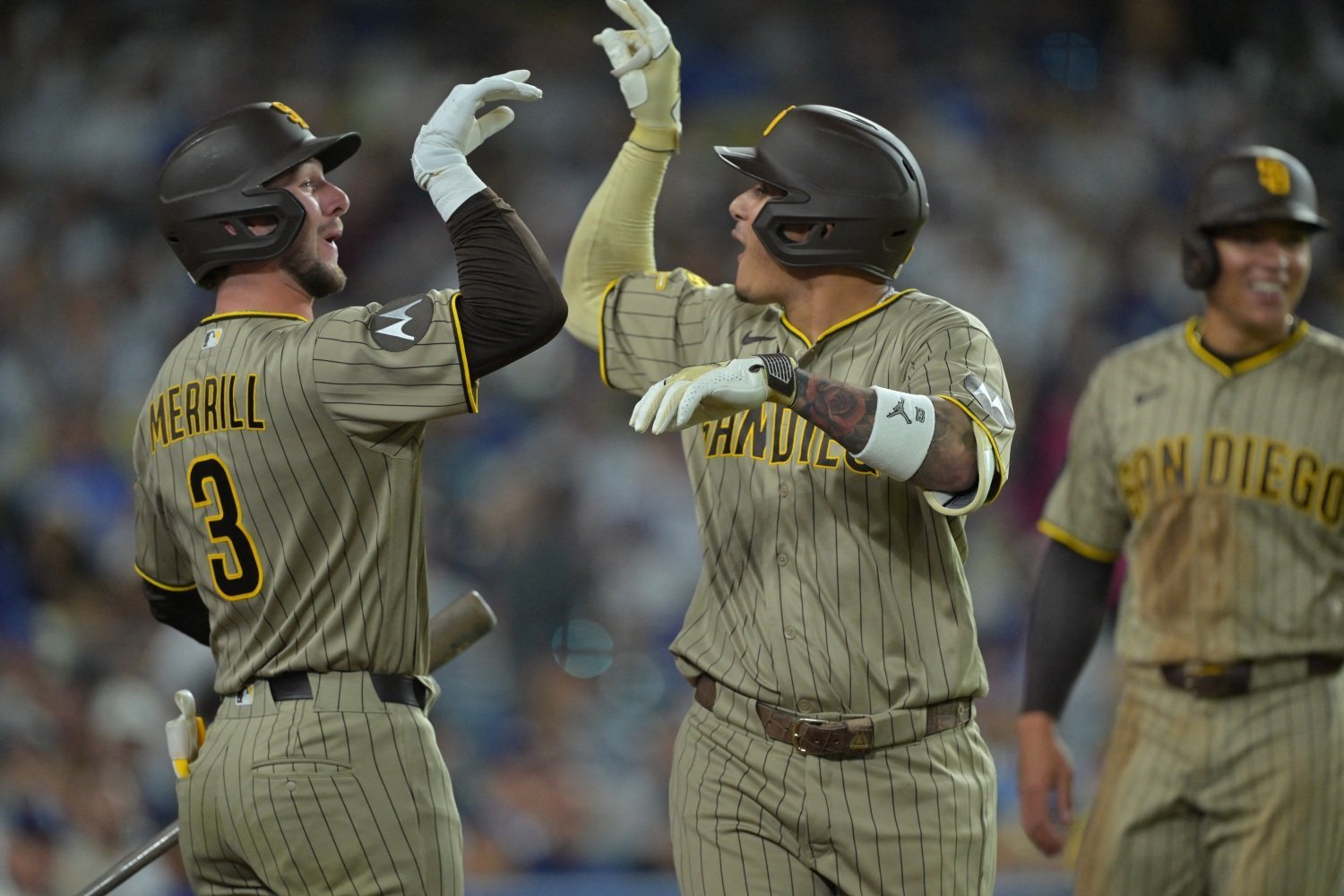 As we prepare for the Brewers' NLDS showdown with San Diego, we’ve covered how the Padres may look to silence the Brewers’ key hitters. Now, let’s turn the tables and review how the Brewers plan to get on top of their counterparts in the Padres’ order. Four sluggers are likely to pose the greatest danger. Since July 1, Fernando Tatis Jr. boasts a 157 wRC+. Ty France is the San Diego version of Jake Bauers, with a 147 wRC+. Jackson Merrill has a 141 wRC+, and Manny Machado (though not on the same level, as he begins to decline with age) is still capable of hurting you, with a 111 wRC+. Gavin Sheets has cooled off in a big way in the second half, but he still has the thump to change a game, as Abner Uribe saw in May and the Cubs saw on Wednesday night. Even Xander Bogaerts has been about a league-average hitter since July 1. This is a potent offense, and the top half of the order will have a huge say in how this series turns out. So, how do the Brewers go about slowing them down? Fernando Tatis Jr.: Keep The Rockets On The Ground Tatis has experienced a season of two halves. After inexplicably closing his stance in the first two months of 2026 and failing to hit a home run until May 30, Tatis reverted to his old setup and immediately took off. Since July 1, he's slashed .295/.372/.563, once again resembling the superstar and perennial MVP candidate of his younger days. (Of course, it's not like he's old; he won't turn 28 until January.) Pitching to Tatis is similar, in some ways, to pitching to 2018 Christian Yelich. He has prodigious raw power and great strike-zone coverage, with a slightly passive approach. When he inevitably smokes the ball, you have to hope it's on the ground and not pulled in the air. The one weakness in Tatis's profile is how he elevates the ball. He has a below-average launch-angle sweet-spot rate (i.e., how regularly a hitter finds the optimal launch angle for a batted ball), and keeping the ball on the ground is the best way to contain him. He will square up balls, but if you can keep those hard-hit balls in the dirt and out of the air, you have a chance to subdue the rest of this offense. How do you keep the ball on the ground? It sounds simple, but it may not be, especially for the Brewers' two front-line starters. Both Logan Henderson and Jacob Misiorowski build their arsenals around the high fastball. That's something Henderson may have to be a little more cautious about with Tatis. Typically, if you can encourage Tatis to swing at a pitch down in the strike zone, you have a just-under-60% chance of getting a ground ball. That has to be the aim. For pitchers with sinkers and cutters as their primary fastballs—especially right-handers—working down in the zone with those pitches is a great choice. Tatis has barreled up four-seam fastballs at an extremely high rate. However, that rate has dropped when facing sinkers and cutters, again pointing toward how much he enjoys the high fastball, in particular. He's likely to see plenty of those pitches in Games 1 and 2. The other weapon against Tatis is velocity. He has struggled with high-velocity fastballs, notably those above 98 miles per hour. He's still put the ball in play hard, but he's found himself late on those pitches to the point where he's pounding them into the ground, with an average launch angle of -3°. That should play into the hands of Misiorowski and the Brewers' late-inning bullpen arms. Here's how the Padres have fared as a team against pitches above 98 MPH since they turned the corner in July: Ultimately, there isn't some magic formula for slowing down Tatis. He'll take his hacks, and when he gets a pitch he can handle, he's capable of doing serious damage. For the Brewers, the key is limiting those opportunities. Keep the ball down, particularly with the sinker and cutter, and force Tatis to beat you on the ground. If you've got 98+ MPH in the tank, that's another weapon worth using, but the one thing Milwaukee can't afford is leaving pitches over the heart of the plate. Ty France: A Game Of Cat and Mouse Ty France hit .295/.363/.502 this season and has been one of the only Padres hitters to remain consistent throughout the year. As you can see from the leaderboard above, velocity is no problem for France. He has a short, compact swing with enough bat speed to get the barrel to the ball, and that ability to consistently find the barrel has been a big reason for his success. France has also been fortunate this season, though, with a 46-point difference between his actual and expected weighted on-base average (xwOBA), according to Baseball Savant, ranking him fifth in baseball in that regard. France is a free swinger. He will swing and miss, and he will chase, but that's the trade-off for catching the ball out in front with more regularity than most. The combination of consistent hard contact and an exceptional rate of finding optimal launch angles makes that approach dangerous. France starts his bat early, allowing him to catch up to high velocity quicker than most hitters. The key with France is exploiting that chase rate, something we saw happen more often down the stretch: Even when chasing, France does a good job of staying alive. He lets the ball travel more with two strikes, with a 2.4-inch difference in average contact point between early counts and two-strike ones that's much greater than the league norm. That's where the cat-and-mouse game comes in: you can get France to chase, but you still have to execute. Hang one, and he has the ability to crush it. Interestingly, four-seam fastballs are one pitch France has struggled to barrel—unlike much of the rest of this Padres offense—and he's shown some swing-and-miss up in the zone. Velocity doesn't trouble him in hittable locations, but if you can keep the four-seamer up, there's an opportunity to get him to chase or miss. The Brewers don't necessarily need to overpower France; they need to get him to chase pitches he can't do damage with. The challenge with France is that simply getting him to chase isn't enough. He has the barrel control to turn a lot of those swings into productive contact, even when he's reaching outside the zone. The Brewers need to be patient and precise: get France to expand the zone, particularly with pitches he can't drive, while using the four-seamer up when they have the right count and location. Give him something he can get the barrel to, and he'll make you pay. Get him chasing pitches he can't handle, and suddenly that free-swinging approach becomes a weakness you can leverage. Jackson Merrill: A Streaky Free Swinger Merrill is a more potent, more streaky version of France. One of the most frequent swingers in baseball, Merrill gets some advantages from that approach, catching up to velocity without much trouble and damaging baseballs with impunity when he's on time and swinging at the right pitches. The key with Merrill is to keep him off balance and be unpredictable, because (unlike France) he will swing and miss if you can encourage him to expand the zone. One thing is for sure: Merrill isn't at the plate to take a walk. He wants to slug. If you want to reduce that slugging output, pitching him inside and attacking the inner third of the plate is a good place to start. Four-seamers—especially on the inner third—have been very successful, and Merrill can swing and miss against them. There is a danger, though: if he's on time, he'll barrel that ball up. In that way, he's similar to the Brewers' Jackson Chourio. Cutters on the inner third have also been very effective against Merrill, while sweepers in and changeups away from right-handers have worked as he tries to sell out for the fastball. Taken together, Merrill is a dangerous hitter, but he's also one you can pitch to. Falling behind in the count is dangerous, but pitchers can't be afraid of walking him. Attack him inside with the fastball, and if you get ahead, attack him similarly to Yelich w,ith breaking balls down and in. Most importantly, be comfortable nibbling. Leaving anything over the meat of the plate, especially up, is asking for trouble. For the bullpen, being able to play the matchup against Merrill gives the Brewers another avenue. Against left-handed pitching, Merrill has performed better on the surface, but his overall ability to damage the ball in the strike zone falls off. Against southpaws, his expected slugging looks more like this: Merrill is probably the clearest example of a hitter where command will dictate the outcome of the at-bat. The Brewers don't need to be afraid of his swing, but they do need to make sure he's swinging at their pitches, rather than his. Get ahead, make him expand, and attack the areas where his long swing can be exploited. But miss over the middle, particularly up in the zone, and Merrill has the kind of bat speed and power to make one mistake hurt. It's a fine line, but if Milwaukee can stay on the right side of it, Merrill's aggressive approach can work against him. Manny Machado: Selling Out For Fastballs Machado has 84th-percentile bat speed, great zone coverage, and good bat-to-ball skills. He doesn't need to sell out for fastballs. Yet, that's exactly what he does, particularly preying on fastballs that aren't elite pitches on their own. You can see from the Tatis breakdown how much Machado struggles with elite velocity. He can still make contact, but the quality of that contact isn't great. Then again, you could say the same for most of Major League Baseball. Machado is likely to see plenty of that velocity in this series against the Brewers. In terms of hard-hit rates, there's a lot of blue on the right-hand side against anything that isn't a fastball. If it is a fastball, however, Machado can turn and burn with the best of them. How he approaches Henderson, in particular, will be fascinating, but also note the struggles in terms of barrel rate against sinkers—something I'll come back to in the next section. Machado is preying on four-seam fastballs and cutters, essentially daring pitchers to leave something he can handle in his wheelhouse and almost cutting his strike zone in half to do so: If the Brewers can consistently work Machado away, using a heavy diet of breaking pitches, they should be able to find some success against the veteran slugger. Like the hitters above, Machado is more than capable of making good contact even when he chases outside his comfort area. The more pitches he sees, the more likely he is to eventually get something in his wheelhouse, and that's Machado's goal in every at-bat. He knows his approach well, and the Brewers need to be disciplined, because he's another slugger who can punish even a small mistake. Force him to cover the outer third of the plate, make him do damage the other way, and the Brewers will be well on their way to containing Machado. Dustin May: The Right Arsenal For This Lineup One of the biggest questions about this series has been who should start for Milwaukee on the mound, beyond Misiorowski and Henderson. Maybe an unlikely answer lurks in the data. The Padres' run value per 100 pitches shows some intriguing differences compared with the Brewers. Most notably, San Diego has generated a lot of value against four-seam fastballs, while sinkers and cutters have caused them trouble. Negative scores are negative results; the dichotomy between how the Brewers have handled cutters compared with the Padres is particularly interesting. Add curveballs into the mix, and Dustin May could be a very interesting force in this series. May has faced the Padres twice this season—once with the Cardinals in May and again with the Brewers in August. In May, he went nine innings, allowing one hit and one walk while striking out nine. In August, he went seven innings, allowing four hits and two walks while striking out six. Across those 16 innings, he allowed just one earned run. The more interesting part for me is how May got those results. His start for the Brewers featured a lot of ground balls, with Padres hitters repeatedly swinging over the top of his sinker. That's exactly the kind of contact May wants to generate against this lineup. He's also featuring his curveball more in recent outings, giving him another weapon that plays into a weakness we've already identified. On paper, May presents a fascinating matchup for this Padres lineup. The Padres want to do damage against fastballs, while their hitters have struggled to consistently handle sinkers, cutters and breaking balls. May has already shown he can get this group to beat the ball into the ground, and if his sinker and curveball are both working, Milwaukee may have a pitcher whose strengths line up particularly well with San Diego's weaknesses. Ultimately, there isn't one way to attack this Padres lineup. Tatis needs to be kept on the ground, France needs to be coaxed into chasing without giving him something he can barrel, Merrill needs to be kept off balance, and Machado needs to be denied the fastballs he's looking to punish. That puts a premium on command and pitch selection for the Brewers. There will be plenty of swings and plenty of hard contact along the way, but if Milwaukee can consistently force these hitters away from their preferred areas, the individual strengths of this lineup become a little easier to manage. May has already shown what that can look like. Now, the Brewers need to find a way to replicate it in a playoff series. View the full article
-
Twins 2027 Arbitration Decisions: Who Stays, Who Goes?
DiamondCentric posted an article in Twins Daily
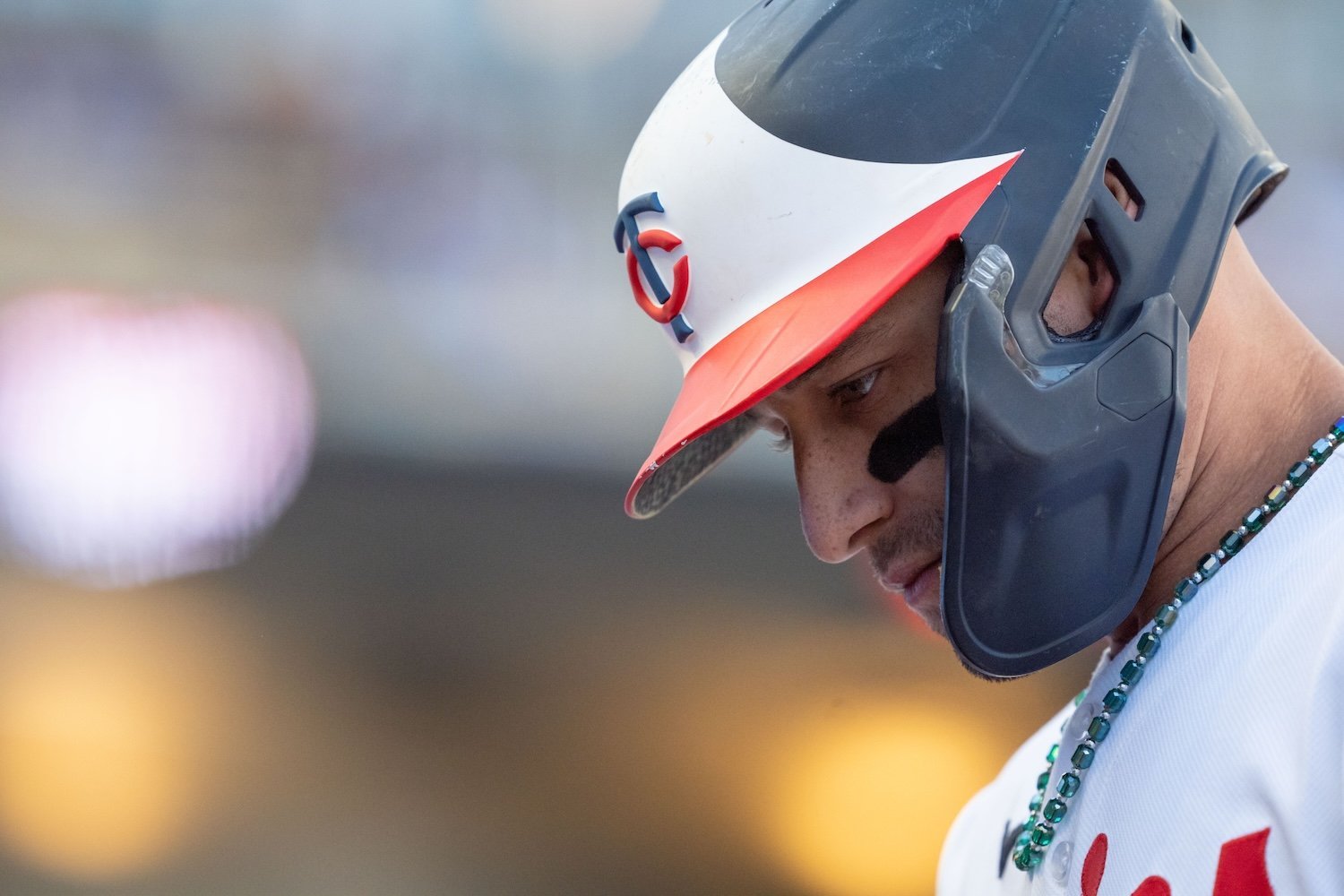 The Twins have 10 players eligible for arbitration this offseason, meaning those players remain under team control but the club must decide whether to tender them contracts at a potentially increased salary, or non-tender them and make them free agents. Notably, the deadline to tender or non-tender falls in late November, before the expected lockout commences on December 1st. In a winter where some decisions may be delayed, these ones will need to be made on time. Some are very straightforward, while others have plenty of room for debate. Here's a look at the 10 players the Twins will need to decide on, from most service time to least. For each, I included which year of arbitration eligibility they're in (i.e. how far away from free agency), their projected 2027 salary per MLB Trade Rumors, and the percentage of likelihood they'll be tendered a contract by the Twins. The last one is of course my subjective opinion, briefly explained for each, but I'd love to hear in the comments section if others have differing takes. Who stays and who goes for the Minnesota Twins in arbitration? Anthony Banda: Final year of eligibility MLBTR projection: $2.3M Likelihood of tender: 40% A borderline case, like many in the bullpen. Banda was rounding into form after a bad start before he went down with a season-ending lat injury. The 33-year-old's track record is unexceptional aside from a couple solid years with the Dodgers. The projected salary is not exorbitant, but not necessarily a great deal either. I see this as basically a coin flip, dependent on the front office's broader ambitions for upgrading the relief corps. Dean Kremer: Final year of eligibility MLBTR projection: $6.5M Likelihood of tender: 80% Not quite a lock but close. Kremer's one additional year of team control was part of the reason Minnesota parted with an intriguing prospect to acquire him at the deadline. He looked as good as they could have hoped after the trade. Bailey Ober: Final year of eligibility MLBTR projection: $6.9M Likelihood of tender: 30% I would view this as more likely if the Twins didn't add Kremer. As things stand, the two are pretty redundant as back-end veteran starters with similar price tags. Ober held his own this year but Kremer demonstrated a lot more upside in the second half. That said, we know the Twins like Ober, and keeping them both for $14 million is not totally outlandish — you can never have too much pitching depth. Joe Ryan: Final year of eligibility MLBTR projection: $9.6M Likelihood of tender: 100% No-brainer. The only way Ryan is not a Twin in 2027 is if he gets traded (which I consider a very real possibility). Notably, his contract does have a mutual option for $13 million, but I have to assume the Twins will decline and pay the $100K buyout to save a few million bucks. Trevor Larnach: Final year of eligibility MLBTR projection: $6.3M Likelihood of tender: 30% He was a borderline candidate last time at this year, and generally made the Twins look smart for it. Posted a career-high OPS that ranked third on the team. But with Walker Jenkins and Emmanuel Rodriguez having arrived, there's just no room for him in the Minnesota outfield. I can see a reasonable chance of a sign-and-trade situation, but the Twins have notoriously struggled to find a market for their lefty corner outfielders in the past. I don't think they want to head into the lockout with Larnach on the books for next year. Royce Lewis: Second-to-last year MLBTR projection: $5.1M Likelihood of tender: 60% The trickiest and most weighty decision among this group. The notion of simply letting Lewis go for nothing over $5 million coming off his healthiest season would've been incomprehensible a few short years ago, but it's where we are at. Money is not the issue. He's turned into a poor offensive first baseman on a team that needs to improve its lineup, and he finished the year looking as bad as ever. I think there's a slightly better than 50/50 shot of a tender because the Twins could probably get something in a trade, but from my view there's little chance of him being on this team next Opening Day. Cole Sands: Second-to-last year MLBTR projection: $1.3M Likelihood of tender: 30% Again: cost not an issue, but more so realistic upside at this point. Good as he looked in 2024, he has a 5.04 ERA since, and lost almost all of this past season to injury. You almost wonder if they could non-tender and re-sign him to a minor-league deal. Tommy Nance: Third-to-last year MLBTR projection: $1.2M Likelihood of tender: 50% The $1.2 million figure isn't much, but it's probably enough to pencil him into a role in the 2027 bullpen. Nance was fine but he's nothing special. If the Twins want to meaningfully invest as they claim, spending money to upgrade this spot feels like a clear opportunity. Then again, nothing wrong with keeping him around as an inexpensive lower-leverage option. Kody Clemens: Third-to-last year MLBTR projection: $3.6M Likelihood of tender: 100% He's got an argument for team MVP. There's no question he's coming back with that modest salary increase. This is Clemens' first year of arbitration eligibility, meaning he won't be a free agent until after the 2029 season. What a find. Taj Bradley: Third-to-last year MLBTR projection: $4.5M Likelihood of tender: 100% Next to Clemens atop the list of candidates for MVP of the 2026 Twins. Also three years away from free agency. Bradley has become a building block for the rotation. The only way he doesn't get tendered a contract is if he's already reached agreement with the team on an extension before then, which is on the table. One way or another, he'll be back. There are some easy calls here, but also a handful where reasonable minds can differ, especially with the Twins promising a more aggressive approach to improving the roster. Who would you tender, who would you cut loose, and where do you disagree with my percentages? Share your arbitration predictions in the comments. View the full article
-
Which NPB Stars Could the Blue Jays Target in Free Agency?
DiamondCentric posted an article in Jays Centre
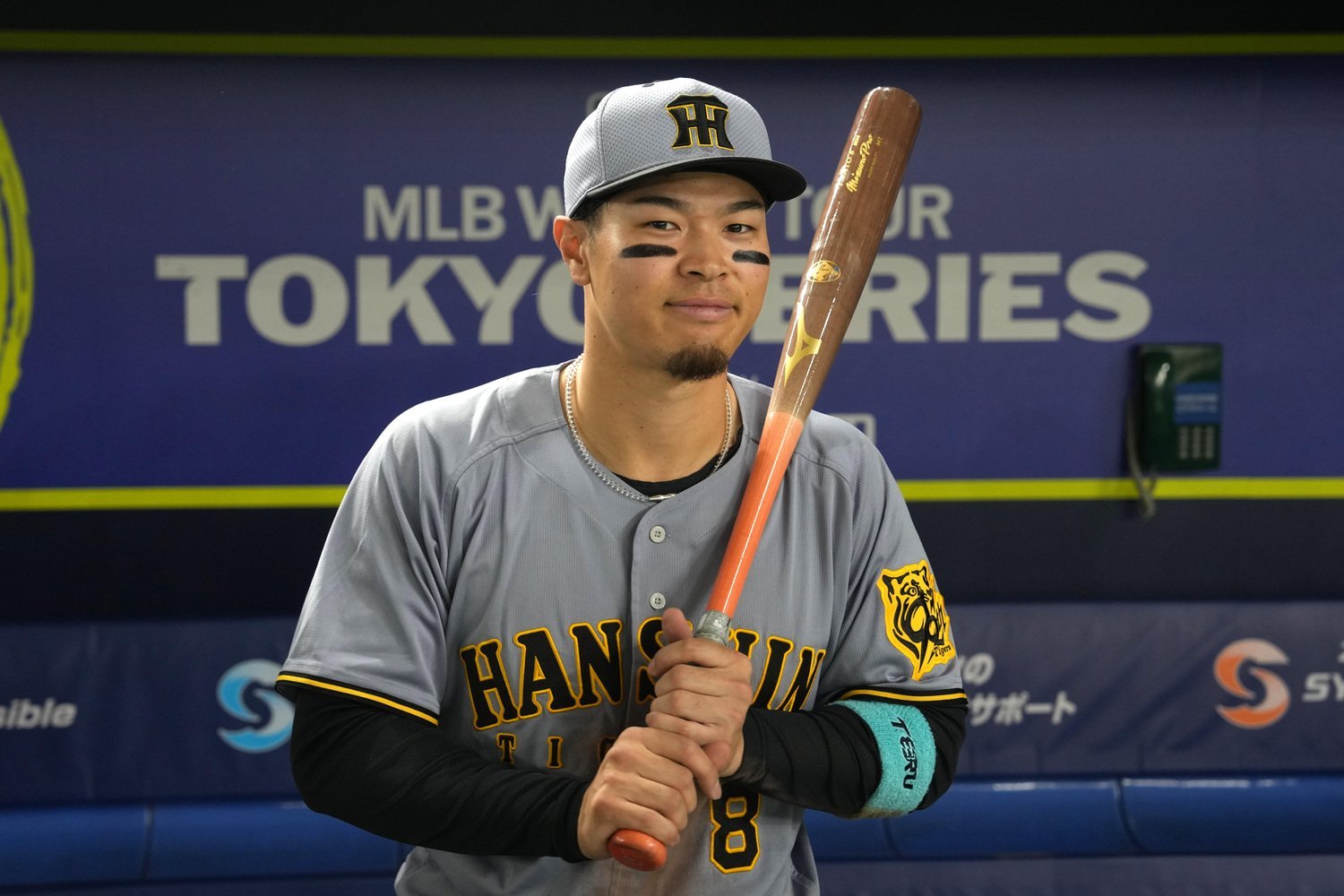 This offseason, the Toronto Blue Jays will take a close look at what went wrong in 2026. The offense lacked power drastically. They finished last in runs (648) and home runs (152) and finished 26th in slugging (.381). The starting rotation was pretty mediocre, ranking in the middle of the pack in major statistics. However, Dylan Cease was a major success, posting a Cy Young-worthy season and keeping the staff from falling further down the rankings. The bullpen started the season rough but became a strength in the second half. So, the Blue Jays could use improvements across the board. One direction the team could look toward for help is Nippon Professional Baseball. Three current NPB stars are likely to be posted this offseason, while a former NPB star is one of the best bats approaching free agency. Here’s how each of those players could impact the Blue Jays next season. Seiya Suzuki Seiya Suzuki has spent five seasons in MLB with the Cubs, posting solid power numbers and staying healthy. Over the last four seasons, he has played in at least 132 games, which would be a welcome asset after the Blue Jays' injuries all season. During Suzuki’s career, he has a slash line of .269/.351/.473 with 113 home runs, 374 runs, 382 RBIs, and an .823 OPS. His 4.6 fWAR this season would have led Toronto’s hitters by a wide margin, with Kazuma Okamoto finishing behind him at 3.0. The outfielder has been average defensively over his career, with a +1 OAA as his career high before improving significantly this past season to a +5 rating. The Blue Jays have outfielders Anthony Santander and Addison Barger returning from injury, but can the team trust them after two seasons of injuries and poor play? Barger can also play in the infield. The Jays had seven prospects make their MLB debuts in 2026 because position player injuries forced their hand. So, if there’s an opportunity to add a player of Suzuki's caliber, Toronto can’t pass that up. The free agent market for position players this offseason will be a weak class. Randy Arozarena, Ian Happ, and Brandon Lowe are some of the only potential free agents who measure up to Suzuki offensively. Teruaki Sato Since the number of offensively productive free agents available could be slim, the Blue Jays may need to look overseas to beef up their lineup. One player already connected to the Blue Jays is Teruaki Sato, who has played the last six seasons for the Hanshin Tigers. Over those seasons in NPB, he slashed .272/.339/.516 with 436 runs, 162 home runs, 514 RBIs, and a .855 OPS. Sato will be heavily sought after, given the success of Okamoto and Munetaka Murakami this season. Sato’s high strikeout rate is a concern, though; he posted a 26.6 percent rate this past season with the Tigers. This may scare teams away, since Murakami had the same concern last offseason and posted a 35 percent strikeout rate in his first season in North America. There are also concerns about where Sato would play. He’s predominantly played third base and outfield, but many MLB teams view him as a first baseman. If the Blue Jays pursued him, it would be to play outfield or DH if George Springer isn't re-signed, with Vladimir Guerrero Jr. and Okamoto handling the corner infield positions. Either way, the team found success with Okamoto carrying the load in the power department in 2026, which could make signing Sato a big win if it comes to fruition. Springer's 15 homers were the next closest to Okamoto’s 33, so more potential power has to be a priority for Toronto. Kaima Taira Kaima Taira is also drawing a lot of MLB attention. He has spent eight seasons with the Seibu Lions, posting an incredible 1.78 ERA over 592 innings. This past season was arguably the best of his career; the right-handed pitcher posted a 1.36 ERA in 146 innings, with a 141:45 strikeout-to-walk ratio and a 0.959 WHIP. Taira also has experience pitching in high-leverage late-inning situations. In 2025, he converted 31 saves over 52 2/3 innings and posted a 1.71 ERA. He has an eight-pitch arsenal that includes a four- and two-seam fastball, cutter, changeup, splitter, sweeper, slider, and curveball. Tairo has been labeled by many as the next-best option to Tarik Skubal for teams wanting a top-tier pitcher. The Blue Jays have a great trio to man the front end of their rotation with Cease, José Soriano, and Trey Yesavage. That means Taira would only need to be an end-of-the-rotation guy. He could also fill an Eric Lauer/Spencer Miles role, pitching in high-leverage innings out of the bullpen or occasionally being an opener. I'd say for Toronto he'd be a better back-of-the-rotation pitcher, considering his durability. Hiromi Itoh Hiromi Itoh has been a power arm for the Nippon-Ham Fighters’ starting rotation for six seasons. Over those seasons, he has thrown 1,000 2/3 innings, posting a 2.92 ERA, a 902:245 strikeout-to-walk ratio, and a 1.169 WHIP. The right-hander has a seven-pitch arsenal that includes a mid-90s four- and two-seam fastball, splitter, slider, sweeper, changeup, cutter, and curveball. A positive to adding Itoh is that he is a workhorse. He’s thrown at least 150 innings in each of the last five seasons. Given all the Blue Jays' injuries this year, a durable pitcher for the back of the rotation would be a welcome addition. At 29, Itoh is a little more than two years older than Taira, but each would be an intriguing option to add to a pitching staff. Both pitchers are on the shorter side, but they will hope to compensate for their smaller frames with deep arsenals. Taira can hit 100 mph with his fastball, while Itoh is better known for his command. ESPN's Jeff Passan expects Sato, Taira, and Itoh’s teams to start their 45-day posting window in early November. However, with the threat of a potential lockout, Passan believes the three NPB players will be signed by December 1, when the CBA expires. MLB teams may be unwilling to make other big moves until a CBA is agreed upon, which makes any posted overseas player an appealing target. View the full article
-
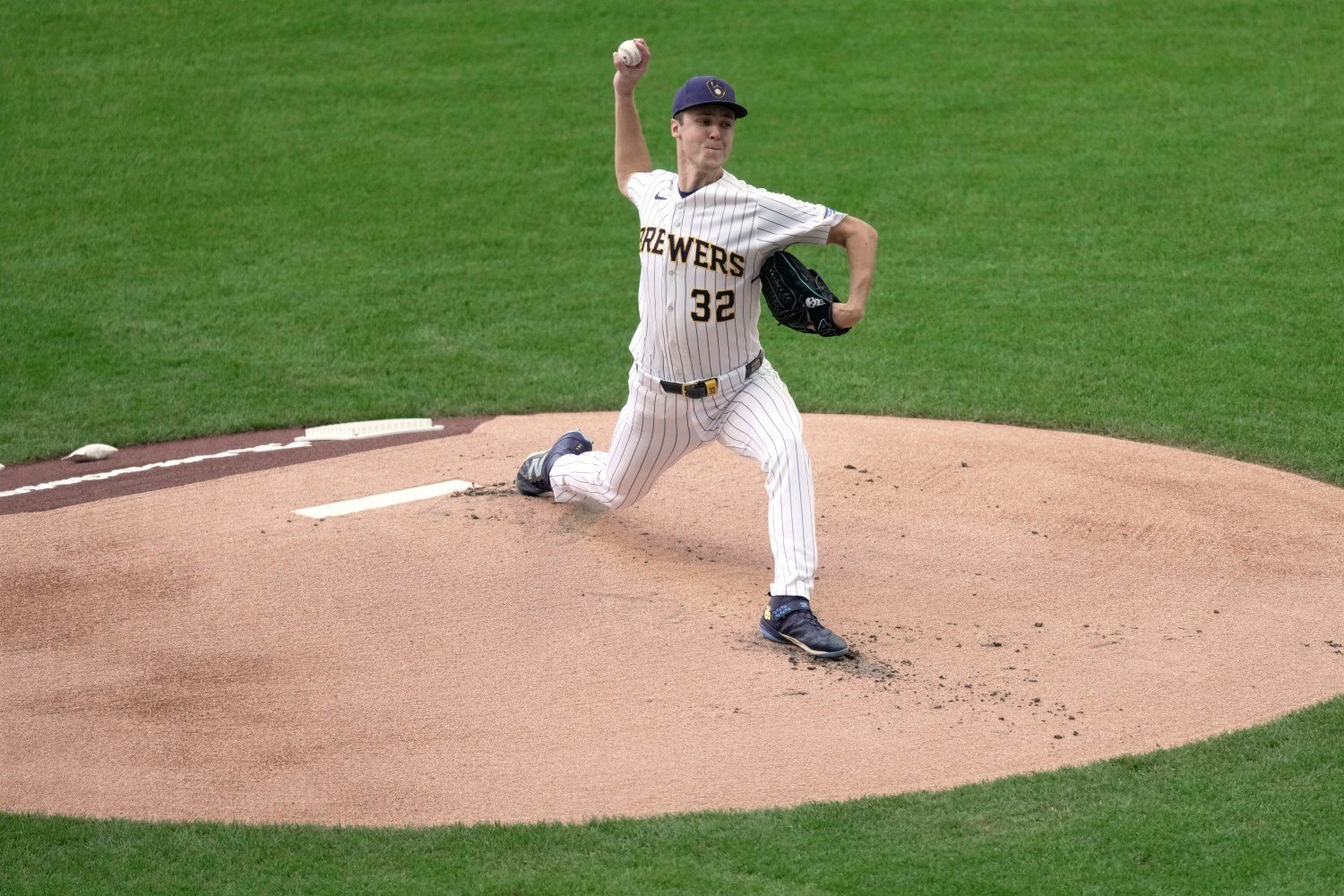 The Wild Card round of the playoffs is officially in the books. Now, the real fun begins. The Milwaukee Brewers earned a first-round bye, but their reprieve is all but over. They’ll be taking on the San Diego Padres in the NLDS beginning Saturday, and as rocky as the Padres' regular season was, they’re playing some awfully good baseball right now. San Diego went 20-6 in September, going from a team that may not even sneak into the postseason to hosting a Wild Card series. They dominated the Chicago Cubs this week, sweeping their way into the NLDS. This series is what postseason baseball is all about: a Brewers team that was the best in baseball during the regular season going up against a red-hot Padres team that has been, arguably, the best team in the league over the last month. So what should we expect in a best-of-five series between these two squads, and what does Milwaukee need to do to advance to the NLCS? Let’s start with the first part of that question. I think this has the potential to be a very low-scoring series. A lot of playoff series are low-scoring. Pitching tends to take over once the postseason begins and teams prune their decision trees to remove cancerous limbs (i.e., 5.50 ERAs), and both teams are going to be throwing their best arms out there. The Brewers’ pitching staff allowed the fourth-fewest runs in the league during the regular season. Jacob Misiorowski and Logan Henderson have been a truly elite 1-2 punch at the top of the rotation, while the bullpen posted a collective 3.40 ERA, the third-lowest mark of any team. In theory, that should give Milwaukee a huge advantage in this series. It's not that simple, though. San Diego’s bullpen is arguably the best in baseball, with Mason Miller and Adrián Morejón headlining a group that boasts underrated depth. As a team, they held the Cubs to one run over two games. Chicago's offense wasn't firing on all cylinders, but still, that's not easy to do. Neither team is going to have an easy time stringing together hits against these pitching staffs, which means every baserunner and every scoring opportunity will matter. We may see two very different offensive approaches throughout the series. Milwaukee drew the second-most walks in baseball during the regular season, with 668. This is a patient offense that wants to make opposing pitchers work, get into hitter-friendly counts, and eventually capitalize on mistakes. Famously, they swing less often than any other lineup does. Meanwhile, San Diego had more home runs than walks drawn during the Wild Card round. The Padres will certainly make Milwaukee’s pitching staff work, but they’re also ready to jump on a pitch over the plate. That was a big part of what made them so dangerous against the Cubs, and it’s something the Brewers are going to have to account for. The Crew likes to attack with fastballs; they have to execute properly to avoid having the Padres ambush them. So what do the Brewers need to do to advance? For starters, they need to win Games 1 and 2. Now, you may be thinking, “Duh.” But with Misiorowski and Henderson lined up to start those games (and with big questions about the rest of the rotation), Milwaukee needs to make good on its home-field advantage. If the Brewers can win both games at home, they’ll put San Diego in a difficult position heading into the rest of the series. If they go into the cauldron of yellow towels and noise that is Petco Park with the series level (or if the Padres lead it), the Brewers will no longer be the favorites. In any short series, much depends on how well a team converts chances into actual runs. That was a big part of why the Padres were so successful in the Wild Card round. They went 5-for-11 with runners in scoring position against the Cubs, taking advantage of the opportunities they had. They created runs in short sequences, via the homer and extra-base hits, as well as taking extra bases with their speed. The Brewers will have to match that execution and that capacity for pressing down when their foot is on the opponent's neck. They showed exactly that killer instinct in the games at American Family Field against the Cubs last fall, and they need to do it again. Pass information quickly. Take the extra base. Get bunts down, steal bases, and flip the script on a San Diego team that has felt comfortable and in-controil for weeks now. This should be a very entertaining series between teams playing extremely good baseball right now. It's going to be high-intensity, high-volatility baseball. The Brewers have to be the ones creating and managing the chaos. It's as hard as it sounds; that's October in a nutshell. View the full article
-
Was the 2026 Chicago Cubs Season a Success or a Failure?
DiamondCentric posted an article in North Side Baseball
 For decades, Cubs fans have been conditioned to believe that any appearance in the playoffs constitutes a successful season. I can remember all the playoff teams from my childhood—though, granted, only 1984 and 1989 apply, so it isn't hard. Even the collapse years of 1969, 1973 and 2004 hold fond places in some fans' memories. Any year in which they avoided that kind of embarrassment was automatically a winner. At long last, this seems to have shifted. The team has made the playoffs seven times since 2015, which is one more trip they booked from 1984 to 2014. Obviously, it's gotten much easier to make the playoffs over that time, but still, the fans now consider reaching the postseason to be a bare minimum—the first criterion of a successful year, but not a final or sufficient one. So, was the entire 2026 season a failure? If so, for whom? Was it Craig Counsell's folly? Can Jed Hoyer build a true contender? Is it that cheap billionaire, Tom Ricketts? All I know is that it's no longer a success to just get in the playoffs. That should have been clearly true beginning in the late 1990s, but it finally seems to have become true since 2016. Fans expect not only to reach October, but to succeed there. Of course, as the team was forcefully reminded in each of the last two years, there's no simple formula for winning in the playoffs. The only reliable way to do so is to get there a lot, in as strong a seeded position as possible. That they've only gone to the tournament at all in two of the last seven seasons is the biggest problem; that they haven't made it with an intact starting rotation or as a division winner with home-field advantage on their side in the Division Series is the second-biggest. Jed Hoyer did his best work this year, despite his admission of failure in constructing the bullpen. This was his masterclass, and it wasn't enough. The spending was there, led by a hefty investment in Alex Bregman. He tried to be more proactive about the pen, and he traded for Edwin Cabrera. Three top-100 prospects were moved in attempts to bolster the team for this season. His best effort? Eighty-nine wins, and another distant second-place finish in the NL Central. The season was both a success and a failure. For the players on the field, there really can be no quibbles. They were a perfectly fine, entertaining team to watch. It didn't take much watching of other games to recognize just how good the Cubs' defense was, and many drops of water have cooled internet servers writing about the incredible season that Pete Crow-Armstrong submitted. They were successful in the roles they were placed in. The failure is on the front office. They quite simply have not achieved their goals. They spent a lot of money to build this team initially and supplemented it with trade deadline acquisitions. Their spot in the playoffs was never in jeopardy. But even before they arrived in San Diego, it seemed clear they would run out of steam before reaching the World Series. Once they were in, they didn't have the ammunition to do anything. Their pitching had no chance of holding up through the Wild Card and two other NL Series, let alone the Fall Classic. With the lowest pitching WAR in baseball, they ran out of quality arms in August. It's time to ask if Jed Hoyer is the man to run the Cubs. As he admitted Friday in his end-of-year press conference, the organization needs to completely overhaul the way it scouts, acquires and develops pitchers, as well as how it tries to keep them healthy. Meanwhile, they also have to replace three key departing position players and virtually their whole pitching staff—not philosophically, but actually, and quickly, in an offseason that will be complicated by a work stoppage. It's going to be a huge job for Hoyer to replace everything, and it's fair to question if he should be able to do it. The Cubs are in a tougher situation going forward than most people have realized. Theo Epstein took four years and had a contender; Hoyer has had six and seems to be running out of runway, while still trying to get his team off the ground. Celebrate the players, but hold the front office's feet to the fire. It's not been what was promised: sustained contention. In fact, that feels a long way off—especially given the way Cubs fans now demand to define that phrase. View the full article
-
Padres Sign Roel Ramirez To Minor-League Contract
DiamondCentric posted an article in Padres Mission
 While the San Diego Padres are still in the middle of trying to win a World Series, they are also looking ahead to next season. Right-handed reliever Roel Ramirez signed a minor-league contract with the Padres on Thursday and was assigned to Triple-A El Paso. The 31-year-old has had two appearances in MLB, once in 2020 and another in 2021, both with the St. Louis Cardinals. Most recently, he was pitching for the Toros de Tijuana in the Mexican Baseball League. This past season, Ramirez had a 1.76 ERA and a 0.891 WHIP with nine walks and 63 strikeouts in 46 innings over 47 games. He also pitched in the World Baseball Classic for Mexico, appearing in two games for 2⅓ innings, allowing a hit and a walk while striking out three. Born in Laredo, Texas, Ramirez was drafted in the eighth round by the Tampa Bay Rays in 2013. In 10 minor-league seasons, he posted a 4.28 ERA. He was last in affiliated ball in 2023 with Atlanta. View the full article
-
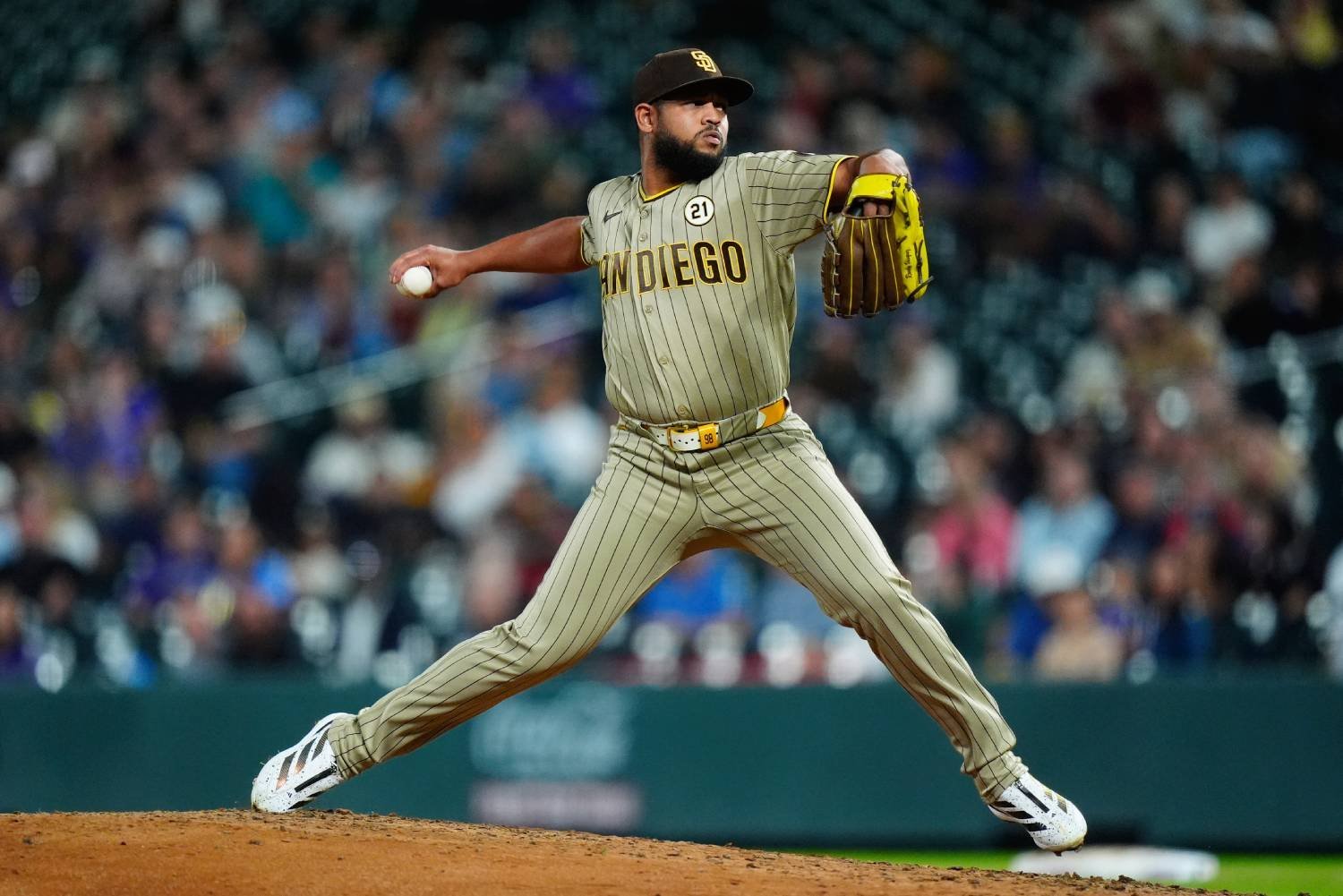 The NL Wild Card Series against the Chicago Cubs didn't test manager Craig Stammen too much, but it did get his feet wet. When he made the call to the bullpen to get Bradgley Rodriguez up in the third inning as Nick Pivetta was encountering trouble, he showed the right mentality. That will be needed against the Milwaukee Brewers throughout the NL Division Series. The Brewers are famous for exploiting the slightest of mistakes. The Padres' bullpen is extremely fresh, with the leverage arms pitching in Wednesday's Game 2, their only appearance since the next-to-last game of the regular season against the Arizona Diamondbacks. It was a little surprising, not much though, that the Friars went with 11 pitchers and 15 position players for the best-of-three series against the Cubs. With the Division Series a best-of-five, the Padres are likely to go up to 12 pitchers and 14 position players. We already know right-hander Randy Vasquez will be added, but do the Padres need to swap out another arm to face the Brewers? Who gets knocked out of the position players? I take another run at predicting the Padres' roster for the upcoming series. (How did I do on the Wild Card Series projection?) The official roster will be announced Saturday morning. Starting Pitchers (4) RH Michael King RH Nick Pivetta LH Robbie Ray RH Walker Buehler Analysis: This will not be the order these starters will be rolled out, but it will be the pecking order. Ray, who like Buehler and right-handed reliever David Morgan didn't pitch in the Wild Card Series, gets the Game 1 starting assignment. Depending on how deep—or, more appropriately, short—Ray goes, Buehler could be an early piggyback (think three innings for Buehler) to get to the leverage bullpen arms. This is just my theory, though. King will go in Game 2 and Pivetta in Game 3, which is back at Petco Park. Game 4 could be a replay of Game 1, with King set up for a potential Game 5. King will be counted on for another ace-like performance, although asking for another 6⅓ hitless innings would be a lot. Pivetta turned in the type of outing that was expected. Get to or through the fourth at a minimum, then turn it over to the relievers. Relief Pitchers (8) RH Mason Miller LH Adrian Morejon RH Bradgley Rodriguez RH Jason Adam LH Yuki Matsui RH Randy Vasquez RH Joe Musgrove RH David Morgan Analysis: After his six-inning start to end the regular season, Vasquez is back on the active roster for the Division Series. The decision with this group comes down to how many pitchers the Padres carry. Left-hander Wandy Peralta could be the odd man out as Morejon and Matsui are already in the bullpen, with Ray potentially being there for at least the first game or two. Not that Peralta is a bad option, far from it. The trust factor is just higher with others in this tremendous bullpen. Musgrove had an emotional moment when he returned after almost exactly two years out due to Tommy John surgery, but he likely won't have another soft landing in his next appearance. If he is right, which he still needs to prove, he adds yet another bullpen weapon. Catchers (3) RH Luis Campusano RH Freddy Fermin LH Ethan Salas Analysis: I will reiterate what I said in the Wild Card Series roster prediction. Salas will be the primary catcher for every starter but King, who has been caught by Campusano for much of the season. But it was also interesting to see the quick hook that Stammen had with Salas in Game 2, bringing in Fermin defensively in the fifth inning after Salas was pinch-hit for. With the Brewers having an excellent running game just like the Padres, the Friars can't afford a track meet. Salas was 0-for-6 in the regular season on stolen-base attempts, which belies his strong arm. Infielders (5) RH Manny Machado RH Xander Bogaerts LH Jake Cronenworth RH Ty France LH Gavin Sheets Analysis: No changes from what the Padres had on their roster here. I had Sung-Mun Song making the roster, but the Padres felt comfortable without Song as a defensive safety net, which is likely to apply to this round, too. Bogaerts went 4-for-8 with a homer in the Wild Card Series, which is a nice turn following his regular-season performance. Outfielders (6) RH Fernando Tatis Jr. LH Jackson Merrill LH Dustin Harris RH Miguel Andujar RH Samad Taylor RH Jase Bowen Analysis: Austin Hays started both games at designated hitter in the Wild Card Series. Andujar's return and now having an at-bat in Game 2 should set him up as the better option at DH, at least against left-handers and Hays is too similar to Andujar to carry both when an extra pitcher is needed. Also, Hays went 0-for-5 with two strikeouts vs. the Cubs. Depending on how the Padres feel about the matchups, Sheets could get the DH starts in Games 1 and 2, with Andujar in Game 3 against Gasser. Tatis makes this team go. Watch out on the first pitch. If a 13th pitcher is needed, which I don't think will happen, you have to wonder if Taylor's roster spot is on the line. View the full article
-
Does Sandy Alcantara have a future in Miami beyond 2027?
DiamondCentric posted an article in Fish On First
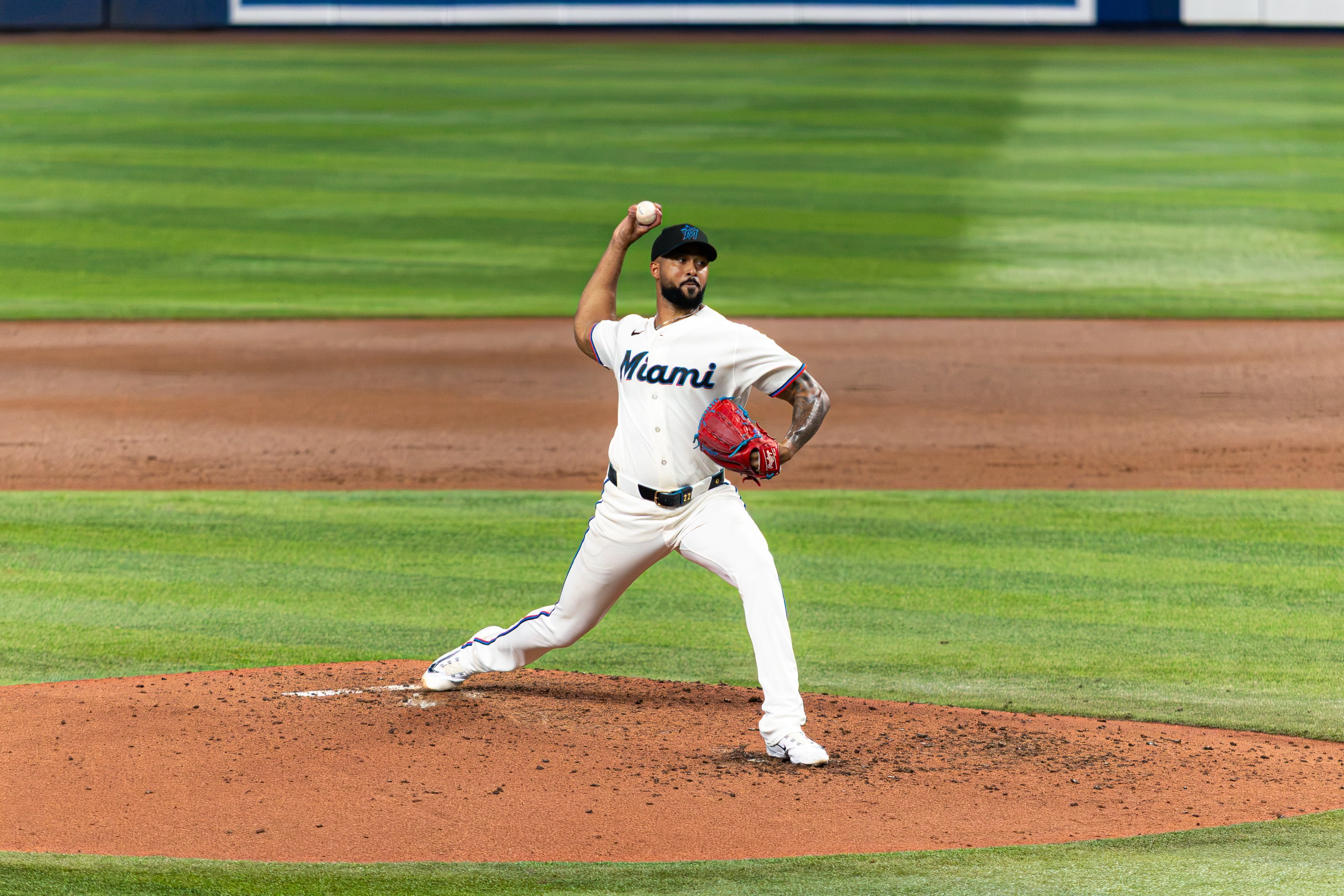 Sandy Alcantara will go down as one of the best, if not the best pitcher in Miami Marlins franchise history. He became their first National League Cy Young winner in 2022 and has since set franchise records for career innings pitched, starts and strikeouts. Alcantara has also been receptive to change. The Marlins have operated much differently since Peter Bendix took over as president of baseball operations three years ago. Traditional bullpen sessions have been replaced by "pitch design" sessions and pitch calls are now being relayed from the dugout. Then, during the final month of the 2026 season, he was used as Miami's closer on three separate occasions, nearly nine years removed from the last time he came out of the bullpen as a member of the St. Louis Cardinals. Alcantara has put his trust in the organization and their process, regardless of the results. Overall, Alcantara had a successful season, leading Major League Baseball with 214 innings pitched. His 3.87 ERA and 4.08 FIP were close to his career averages, though he also had a career-low 6.43 K/9. "He is so meaningful to this organization and that's not lost on me," Bendix said about the right-hander during Tuesday's press conference. "Another incredible season. Really fun to watch him pitch, his leadership in the clubhouse, the way he handles himself and the way he sets an example for the rest of the team." Now, will Bendix put his words into action and commit to Alcantara long term? It's been nearly five years since the last time that the Marlins have handed out a contract extension to any of their players. There is some urgency in Alcantara's case because he has a $21 million club option for the 2027 season and will then be eligible for free agency. Bendix wouldn't even confirm that his option will be exercised, but that is considered a lock. "We will be here if that is what God wants," Alcantara said following Sunday's season finale. "That is also if the organization gives me an opportunity to continue playing here not just for the 2027 season, but for the remainder of the my career. I am always going to be grateful for this organization and I hope that in 2027 it will be a very different year for everyone in here and the organization." Bendix has already announced that Clayton McCullough will remain Miami's manager. There is little doubt that having Alcantara anchoring the starting rotation would make McCullough's job easier. "It's hard to fully state the value that Sandy has," Marlins manager Clayton McCullough said. "He's earned to be the face of this franchise. There were times when we were getting very creative with what we were doing with the pitching, especially in the summer months, and Sandy's ability to go deep into games and cover a lot of innings provided me a lot of flexibility and optionality in some of those other days...Going into 2027, we'll very much continue to count on Sandy to be able to provide us real high-quality length." Marlins chairman and principal owner Bruce Sherman has been with Alcantara throughout his entire tenure with the franchise. Sherman is not one to meddle in baseball operations moves, but he has voiced a strong preference for holding onto Alcantara even as other teams have inquired about trading for him through the years. "Sandy is special," Sherman told Fish On First earlier this season. "I made those comments with a lot of thought in them. We understand all the economics and Sandy is special. He believes in this organization a lot on the field and off the field. Just look at what Sandy has done. I flew with him to the Dominican Republic. He's a mentor to Eury (Pérez) and to young pitchers. He's a leader. We need that kind of presence in the clubhouse and we need that kind of person." It may be tempting for Alcantara to let his current contract play out and test free agency for the first time at age 32. On the other hand, when you have spent almost your entire career with the same organization and have mutual respect for each other, that lays the groundwork for a new deal. Since Alcantara's last extension kicked in, he has posted a 3.80 ERA in 802 innings pitched. During that span, his production is very comparable to Luis Castillo, Merrill Kelly and Seth Lugo, who each made between $20-25M in salary this past season. A deal of four to five years with an average annual value in that range feels appropriate. Regardless of what happens, Alcantara will most likely take the mound as the Marlins Opening Day starter in 2027, whenever that may be. Fans will be locked in for another season of "El Caballo," but extending the franchise icon beforehand would ramp up their excitement to a whole new level. View the full article
-
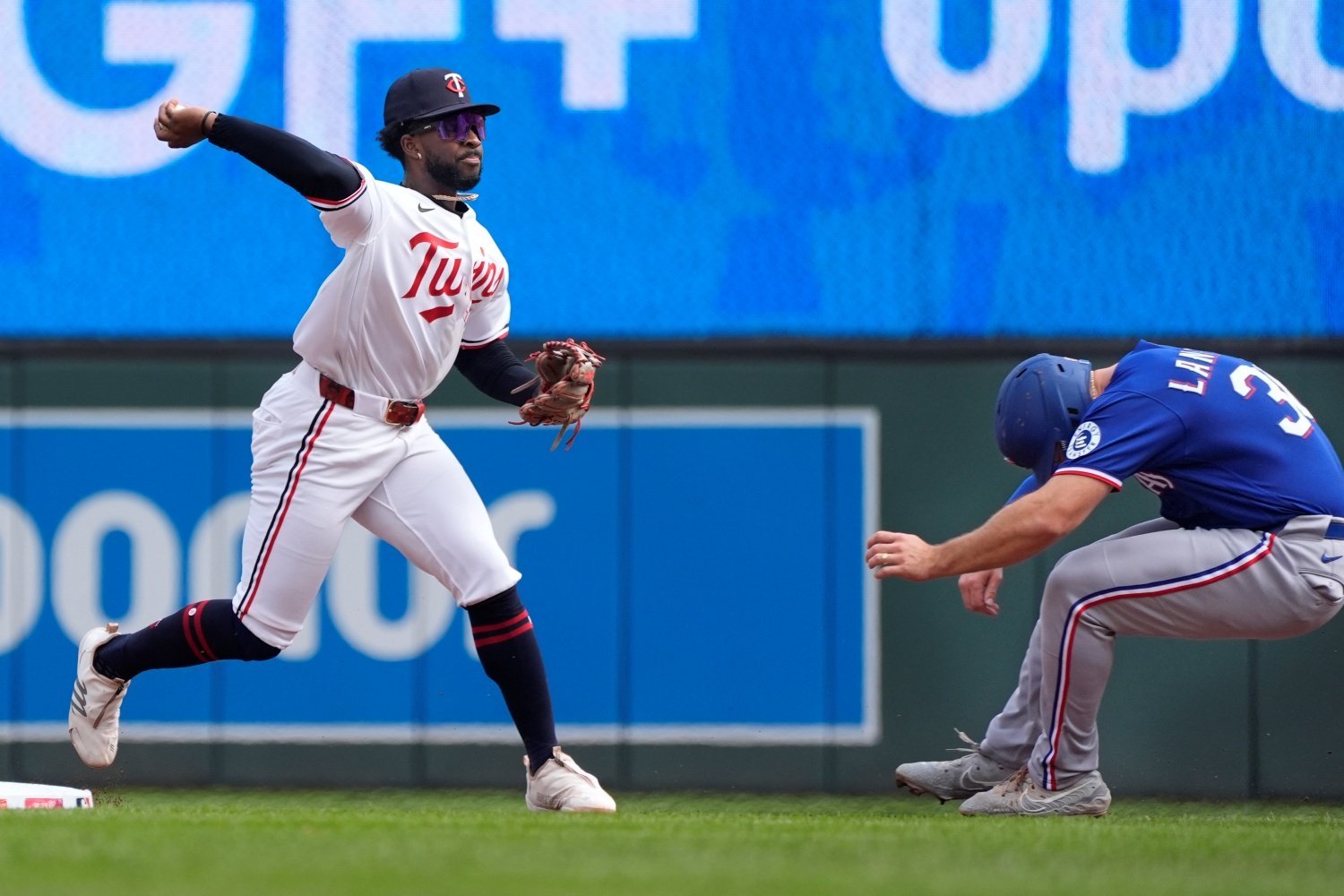 When the Twins called up Kaelen Culpepper to take over as their shortstop on August 7, one of the noteworthy things about the decision was that they forfeited an (admittedly remote) shot at scooping up some significant future value. Because Culpepper came up with 52 days left in the season, he was all but guaranteed to exceed the thresholds that exhaust a player's rookie eligibility: 130 at-bats, or 45 days on the active roster. That meant Culpepper would not be eligible for the 2027 Rookie of the Year Award, and that he could not net the team a prospect promotion incentive (PPI) draft pick by winning that honor or finishing well in MVP voting over the first two or three years of his career. For most players, this is a minor consideration, but it was a major talking point. Some fans believed the Twins were holding Culpepper and Walker Jenkins back from being called up purely to preserve the possibility that they might someday net them a draft pick. Calling up Culpepper just a week before the date at which they could have done so without compromising that chance was another indication that the organization felt a sense of urgency to win in 2026, adding to the indications they'd given by being moderately aggressive at the August 3 trade deadline. Then, something a little funny happened. On September 15, on a ground ball to shortstop, Culpepper came up limping slightly. He left that night's game against the Yankees, and the next day, the Twins placed him on the 10-day injured list with a left hamstring strain. By then, it was abundantly clear that the team was not going to make the playoffs, so it was equally clear that Culpepper's rookie season was over. Or was it? "I think it’s one of those situations that we think it’s best for him to make sure" it doesn't become a bigger issue, Shelton told reporters that day. “Now, on the flipside, there is a possibility he could come back with two games left. Our goal right now is that. Now, if it doesn’t happen, obviously, we will make those kind of arrangements. But the goal we’ve had for him, because it is a mild strain, is to see if the last two games are available.” In a vacuum, that was very, very strange. It jibes a bit with Shelton's unusual approach to managing the team and the clubhouse, but even taking that into account, it was strange. Teams don't bring back injured players who are important to the long-term outlook of the organization for a couple of games at the end of the season. At the time, it felt like Shelton was merely paying lip service to that option, as a way of underscoring how mild the strain was. It still seemed extremely unlikely Culpepper would play again before the year was over. He did. Throughout his minimum-length stay on the shelf, the team and the player were unwavering in their belief that he would return, and he played the final two games of the season, despite the Twins having been officially eliminated from playoff contention the previous weekend. He finished the season with a .274/.328/.393 line in 117 at-bats. He also finished, thanks to that 10-day stay on the IL, with 42 days of active roster time. Culpepper will appear on top prospect lists this winter, and he'll be Rookie of the Year- and PPI-eligible next season, after all. There is no chance—none whatsoever; do not take this to Conspiracy Theory Town—that Culpepper was not actually injured, or that the Twins acted improperly by putting him on the IL in the wake of his hamstring tweak. Now, though, I think we can safely say a couple of things: "Tweak" is a better word for it than "strain". It was as mild an issue as a high-level athlete is ever likely to have with that muscle, which is always so troublesome. If the Twins had still been in serious contention when he got hurt, Culpepper would have played through the problem. Baseball people are fond of reminding everyone that no one is 100% healthy in September, at the end of a grueling 162-game season. This is the kind of injury to which they're alluding, and it's one players push through all the time. Culpepper could have pushed through this one, too. If that weren't true—if it were actually an injury severe enough to unequivocally require 10 days off—there is no chance he would have come back for the two meaningless games at the end of the year. This highlights something that's good to keep in mind, anyway, when it comes to injuries in sports: there's almost always ambiguity. There are often perfectly sound cases for or against any particular course of action, from a routine day off to an IL placement to surgery. Health is a skill for big-league athletes, made up of two component skills: avoiding injuries, and playing through ones minor enough to permit that. The former has much to do with one's genetics, conditioning and playing style. The latter depends on those things, too, but it's a tricky needle to thread. One must be careful not to increase the chances of a more severe injury, without losing time that doesn't need to be lost. Culpepper was never going to push through this particular injury, extremely mild though it clearly was—not because he couldn't have or didn't want to, but because once that issue arose, the Twins saw an opportunity. It's unlikely that Culpepper wins an award or garners enough MVP votes to earn them a PPI draft pick someday, but it's not impossible. Why foreclose the possibility, when you've been given a sudden and unexpected chance to maintain it? The Twins didn't fudge anything or make any unethical choices; they didn't have to. This was just a very fortuitous hamstring tweak, as well as a very mild one. It gave them a chance to add a bit of value to their long-term portfolio, and while they're unlikely to realize any actual value from it, it cost them nothing to take the opportunity. Culpepper could, perhaps, have learned a little about playing through mild injuries by staying on the field for those 10 days, but that's the kind of thing you'd rather have players learn when it's necessary—when the stakes are much higher, that is. Besides, that would have involved some risk of worsening the injury. They minimized any chance of having to worry about Culpepper's legs going into the winter, and they gave him a slightly greater chance to make extra money next season (there are bonuses for Rookie of the Year Award vote-getters, as well as value going to the winner's team in the form of a future pick) while helping themselves. They even got him back onto the field to enjoy a few last cheers from the fans at Target Field, before the campaign ended—though if those two days had tipped him over to no longer being rookie-eligible, it feels safe to guess that his hamstring issue would have been season-ending, after all. View the full article
-
Gleeman & The Geek: Twins' Key Players: Staying Or Leaving?
DiamondCentric posted an article in Twins Daily
 You can listen by downloading us from: iTunes, Spotify, YouTube, iHeartRadio, Stitcher, GleemanAndTheGeek.com, or by clicking this link, or by watching/listening below. 0:00 Intro: Black Stack beer and the end of the Twins season 1:16 Twins finish 77-85: met expectations, but the third straight late-season collapse 3:43 Offseason preview: key dates, the Pohlad press conference, and who's staying or leaving 4:41 Thank you, listeners: Aaron Gleeman's year leaving The Athletic and going independent 7:03 John Bonnes on independent publishers and the G&TG community 13:17 MLB offseason schedule: free agency opens after the World Series 13:47 Qualifying offer deadlines and how a QO affects a free agent's market 15:46 Arbitration tender deadline: keep or cut for Royce Lewis, Bailey Ober, Trevor Larnach 17:11 MLB lockout on November 30: no winter meetings, no Rule 5 draft? 18:50 Flashback: the 2021 lockout day, Byron Buxton's extension and Dylan Bundy 19:59 If a lockout cancels 2027, what happens to Pablo Lopez's contract? 22:52 GM meetings in November could replace the winter meetings 24:47 Both Gleeman and The Geek heading to the GM meetings? 32:10 Twins end-of-season press conference with Tom Pohlad, Jeremy Zoll, Derek Shelton 33:06 Pohlad skips the spin: "Our roster wasn't built for a 162-game season" 34:37 Pohlad backs Zoll and Shelton, blames the ownership mess 35:40 Could the Twins have made moves last winter? 37:40 Pitching coach Pete Maki fired 39:31 Twins payroll: Pohlad won't commit to a number or even a range 41:06 The baseline: why the first $105 million is already spoken for 42:58 Why the Twins should level-set payroll expectations with fans 44:40 Pohlad's words sound good, now he has to back them up 47:02 A one-month window and a weak free agent class 49:01 Is Jeremy Zoll more aggressive than Derek Falvey? 51:27 The lockout doesn't stop moves: lessons from the 2021 November frenzy 55:34 Staying or leaving: rating the Twins players whose futures are in doubt 57:36 Byron Buxton is staying (stop asking) 58:33 Ryan Jeffers: free agency and the qualifying offer decision 1:03:20 Why a qualifying offer to Jeffers is a low-risk move 1:09:02 Josh Bell: good bat, but no fit at first base or DH? 1:12:18 AJ Minter: the best fit of the Twins' free agents 1:19:05 Taylor Rogers: end of the line for a Twins bullpen great 1:21:25 Trevor Larnach: the left-handed logjam and an $8 million arbitration raise 1:29:23 Bailey Ober: the velocity is gone and the strikeouts are falling 1:34:38 Joe Ryan: trade him now with one year left, or keep him? 1:39:53 Pablo Lopez returning from Tommy John surgery 1:40:23 Royce Lewis: two and a half years of struggles at the plate 1:43:56 John and Aaron disagree: is Royce Lewis staying or leaving 1:49:55 Austin Martin and Matt Wallner 1:50:27 Wrap-up: Patreon mailbag next week View the full article
-
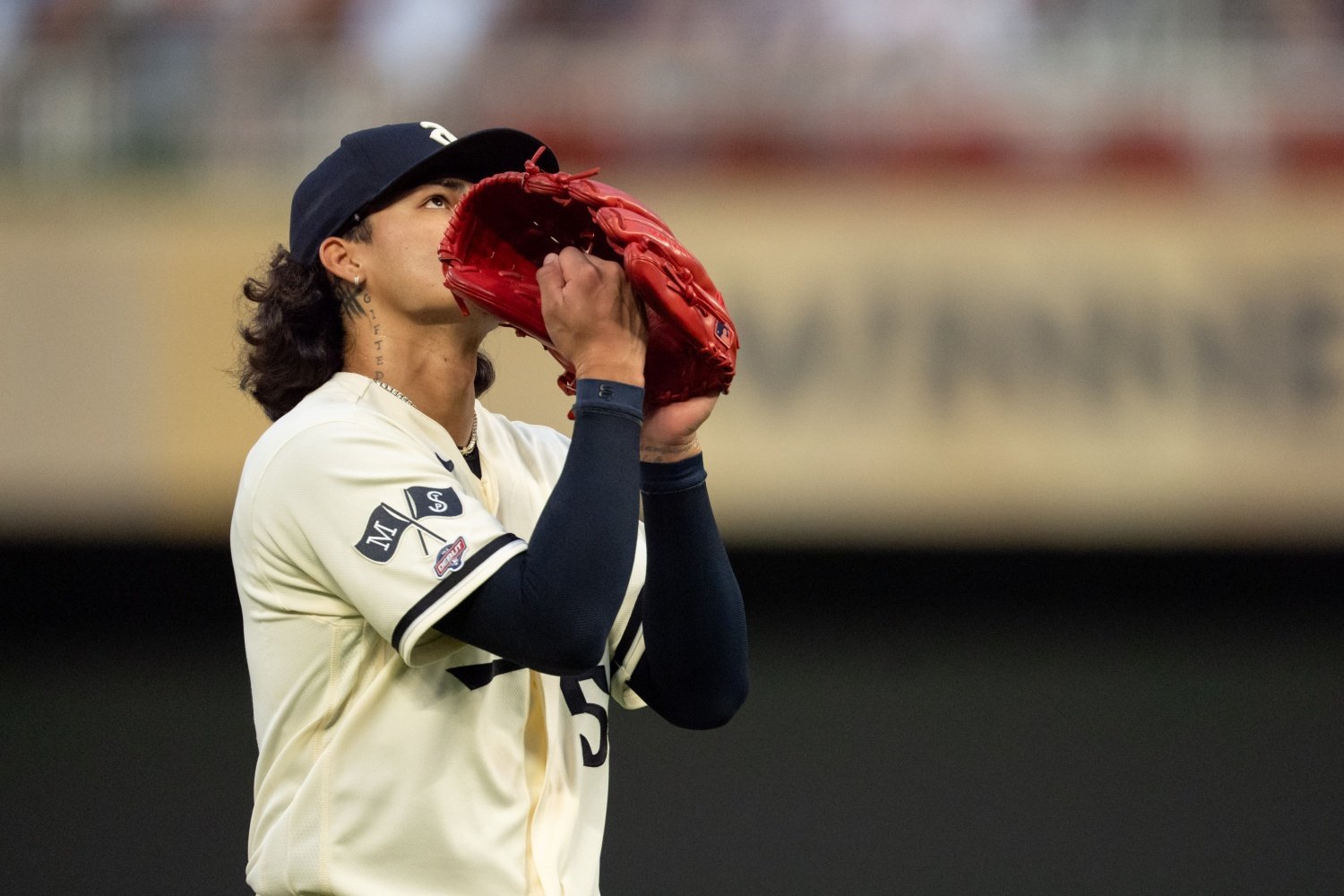 The Minnesota Twins’ farm system looked a lot different at the end of 2026 than it did at the beginning. A number of top prospects made their way to Target Field this season, with names like Walker Jenkins, Kaelen Culpepper, and Emmanuel Rodriguez all reaching the majors. There was also plenty of movement throughout the organization, as players climbed levels, battled through injuries, and either strengthened or weakened their standing within the system. With all that movement came changes in the Twins’ prospect rankings. Let’s take a look at a couple of the biggest risers and fallers in the organization over the course of the year, starting with the risers. Hendry Mendez Mendez entered the season ranked as Twins Daily’s No. 16 prospect, but he now sits all the way up at No. 7. It’s easy to see why. Across 102 games between Double-A Wichita and Triple-A St. Paul, Mendez slashed .281/.374/.430, good for an .804 OPS. While the power numbers don’t immediately jump off the page—he hit 12 home runs and recorded just 31 total extra-base hits—power has never really been the main selling point of his game. Instead, Mendez has built his profile around making consistent contact and controlling the strike zone, and those skills took a noticeable step forward this season. His 91.4% zone contact rate is excellent, and his 23% chase rate points to a hitter who understands the strike zone and rarely expands it. That combination is a strong foundation for offensive success, especially for a player who already puts plenty of balls in play. There’s a very good chance Mendez makes his major-league debut in 2027, and if those bat-to-ball skills translate the way the Twins hope they will, he could make an impact fairly quickly. Riley Quick Quick entered the year as the Twins’ No. 11 prospect and now finds himself firmly inside the top five. Considering the questions surrounding him entering the season, that’s a significant jump. The Twins selected Quick 36th overall in the 2025 draft, but there was understandable uncertainty due to his limited collegiate workload and previous Tommy John surgery. This year didn’t erase every concern, but it answered quite a few of them. Quick threw 81 2/3 innings across Low-A, High-A, and Double-A, striking out 110 hitters in the process. His 30.6% strikeout rate showcased exactly why the Twins were so intrigued by his upside in the first place. The swing-and-miss stuff was obvious. That said, there’s still work to do. Quick posted a 13.4% walk rate, and command remains the biggest hurdle standing between him and the major leagues. He also struggled after reaching Double-A, finishing with a 6.68 ERA at the level. Still, those concerns shouldn’t overshadow the overall picture. For a pitcher making his first full season of professional starts after Tommy John surgery, this was a successful year. And with a strong 2027 season, Quick could find himself pitching at Target Field sooner rather than later. It was an encouraging year for Mendez and Quick, but unfortunately, it wasn’t all good. Let’s take a look at a couple of fallers. Eduardo Tait Tait entered the season as Twins Daily’s No. 4 prospect, but he’ll finish the year at No. 8. That drop stands out even more when considering that Connor Prielipp, Dasan Hill, and Kendry Rojas — three of the four players ranked immediately behind him entering the year — all lost their prospect eligibility. Even with openings near the top of the rankings, Tait slid four spots. Over 116 games with High-A Cedar Rapids, Tait slashed .221/.281/.418, producing a .699 OPS. Those are underwhelming numbers for one of the organization’s top offensive prospects, but there’s also reason to believe the season wasn’t quite as disappointing as the stat line suggests. His strikeout rate improved slightly compared to 2025, and his walk rate moved in the right direction as well. Tait also finished with a .243 BABIP, which suggests he may have suffered from some poor batted-ball luck. With a few more balls finding grass, his season could have looked considerably different. Still, prospect rankings are heavily influenced by production, and Tait’s overall numbers simply weren’t strong enough to maintain his previous standing. Marco Raya Raya entered the season ranked as the Twins’ No. 15 prospect, but despite making his major league debut this year, he now sits outside the organization’s top 20. He did pitch well in his brief time with the Twins, allowing two earned runs over six innings, but his Triple-A season told a different story. Across 64 1/3 innings with St. Paul, Raya posted a 5.32 ERA while allowing 14 home runs. It marked the second straight season with an ERA north of five, and that's started to reshape what his future role looks like. That doesn’t mean there weren’t positives. Raya improved his strikeout rate from 22.6% in 2025 to 27.8% this year, and his walk rate dropped from 12.6% to 9.1%. Those are meaningful steps in the right direction. But keeping the ball in the park remains a major issue. At this point, it’s still very possible that Raya can carve out a role in the Twins’ bullpen, and there’s enough arm talent to believe he can contribute in the majors. However, the hope of him developing into a quality starting pitcher has faded considerably. That makes 2027 an important season for Raya, and in many ways, for several players throughout the system. Prospect rankings can change quickly. One strong season can send a player soaring up the board, while one disappointing year can create new questions. The Twins saw plenty of both in 2026, and the answers those players provide next season will go a long way toward shaping the future of the organization. View the full article
